
How do I drift a Jaguar XF?
How do I drift in a Jaguar XF with the traction control turned off?
Abdullah Al-barakat (Oman, Muscat)Feb 2012 Filed under: miscellaneous
Expert answer
Hi Abdullah,
It's not the usual kind of question we get and obviously you should only do such things on a private piece of land! Assuming you've properly disengaged the traction control (you have to hold down the button for 10 seconds), put the transmission into manual control so you change gears with the paddles behind the steering wheel. Drifting is all about the initiation and without a mechanical handbrake or clutch you'll need a combination of power and momentum (depending on the model you have).
Until you're comfortable with it, it's best to start off slow. Approach the bend, brake so that the weight transfers to the front tyres, release the brakes and start to turn. As soon as you do, get on the throttle and be ready to feather it and add some opposite lock. You will need to be in a low enough gear for the engine's torque to overcome the rear tyres, but not so low that you run out of revs early.
This is only one way of doing it. There's no substitute for practice, so get yourself along to a Mondello Park test day and experiment in a safe environment - and never practise on the public road.
Final word: don't expect to be able to drift for very long if you have a diesel XF. Most diesel cars have a very narrow power band that makes them tricky at the best of times.
Have fun...
Why is my Passat's fuel consumption worsening?
I have a Volkswagen Passat BlueMotion with just 4,000 miles on the clock. The fuel consumption is increasing and has gone from 53mpg average in October to 48mpg now. Dealer says he can find no fault on electronic test rig. Any ideas please? Previously got over 60mpg on same journey now getting 48-49mpg and seeming to be dropping. Variables like fuel etc. all same as is possible and driving style not changed. Best regards and Happy New Year to all.
Richard Paterson (Solihull)Expert answer
Hi Richard,
Lots of potential reasons for this. Very first thing I'd look at is tyre pressures. Are they all even and to spec? Are there any other issues with the tyres you can see? Uneven wearing, etc. If no problems with pressures I'd suggest getting the alignment checked. If it gets knocked out (relatively easy to do with a pothole or kerb) then there could be more friction causing heavier fuel consumption.
Come back to us when you've checked that.
What tyres should I go for on my Mazda?
I put new tyres on my car about six months ago, but just got cheap ones as cash was a bit tight. I have never been happy with them. The car (Mazda3 saloon) hasn't handled the same since. The slightest bit of moisture and there is very little grip at all. And with the cold weather lurking I am not looking forward to driving in ice and snow with them. So, basically, I am going to get new (better) tyres in the next few days, but I am not sure what to get.
I don't mind spending a few euro on them. I'd rather do that and feel safer. Should I be looking at winter tyres, or will this mean forking out more money in spring for regular tyres again? Or is there an all-weather option that would see me safely through the winter but wouldn't need to be taken off in a couple of months?
Thanks, Rob
Rob Davis (Dublin)Dec 2011 Filed under: tyres
Expert answer
Hi Rob,
It's tempting to save money on tyres, but it's impossible to understate how important they are. As you've found out for yourself!
Personally I like the security of having winter tyres on at this time of year. I acknowledge that there are extra costs involved, plus some inconvenience in terms of changing them twice a year and storing the other tyres. However, I was converted last year when I experienced the difference first hand.
Saying all that, and despite two bad winters, the statistics still say that Ireland's climate is too mild to warrant having winter tyres on for a long period. If we do get heavy, sustained snow then snow socks will get most people out of a tricky situation at low speeds, but they have limitations.
So, assuming you'd rather not fork out on two sets of tyres in the next few months, what are your options? Well Bridgestone offers a good compromise called the A001 All Weather tyre. Sounds like it'd be perfect for you? I spoke to Bridgestone and there are limitations on the size they do - or have in stock - but take a look for a stockist though www.bridgestone.ie and take it from there.
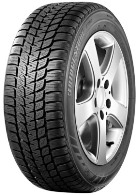
Hope that helps
What tyre pressure shuold I inflate my Citroen's tyres to?
What tyre pressure should I inflate to on my 1999 Citroen Xsara VTR 1999, engine size 1,800cc?
Cheers
Alison Hurley (Kilnaboy)Nov 2011 Filed under: tyres
Expert answer
Hi Alison,
The recommeded pressures should be printed in your car's manual and also on a plate, usually located on the door frame when you open one of the front doors. Sometimes it's inside the fuel filler cap too.
Based on the information you've given, we'd assume that you have 185/65 R14 tyres. If so, the fronts should be 2.3 bar/34psi and the rears should be 2.1 bar/31psi.
If you can't find the recommended values on the car and we have the tyre size wrong come back and let us know.
Are winter tyres worth fitting?
What is the difference between winter tyres and snow tyres and is it worth fitting winter tyres?
Noel Clarke (Drogheda)Oct 2011 Filed under: winter driving
Expert answer
Hi Noel,
Depending where you are in the world people refer to winter tyres as that or snow tyres. However, there are also more extreme tyres available specifically for driving on snow and ice that have metal studs in them.
Winter tyres that are suitable for Irish roads could be used all year around, though they do wear quicker in warmer weather. Likewise, in warmer weather they have less grip than a normal tyre. However, they come into their own in temperatures below +7 degrees centigrade (yes, that warm), as they don't harden. That means they're of use even if you're on a bone-dry road in low temperatures. On top of that they have 'sipes' cut into the rubber that massively increased grip on snow and ice.
Whether it's worth fitting them in Ireland is up for debate. Historically we only have a few days a year in which these tyres would be the best option, but the past two years have certainly increased the perception that we have cold, snowy winters. They are invaluable in such circumstances. Not only do they enhance traction to make it easier to climb hills, they also make it safer and easier to turn and stop.
A good value alternative to have in the boot that'll keep you going (at lower speeds) is snow socks.
Hope that helps.
Can I fit steel wheels to a BMW 116?
Hello the better half has a 2005 BMW 116, which has 16-inch alloy wheels. These are very badly buckled and have run flat tyres. Is it possible to fit ordinary 16-inch steel wheels and ordinary tyres on it and would any 16-inch wheel do the job i.e. VW Golf steel wheels?
Thanking you.
Ruairi Mc Carthy (Mullagh Co Cavan)Sep 2011 Filed under: tyres
Expert answer
Hi Ruairi,
Hi Ruairi, with regard to this we received some good advice from The Automotif Centre on the Kinsale Road in Cork, who said "The BMW 116 hub is 72.5, PCD is 5x120. The suspension is designed for runflats. Steel wheel bolts are shorter & 12x1.5."
Should I buy all-weather tyres ?
Expert answer
Hi John,
We asked Colm Conygham from Bridgestone tyres to explain the benefits. "Yes, all-weather tyres are a good option for Irish motorists as our weather remains unpredictable with temperatures fluctuating above and below seven degrees even in the coldest months. All-weather tyres give the benefits of a summer tyre above 7 degrees but will perform well as low as -15 degrees. Bridgestone offer the A001 all-weather tyre in selected sizes. They can be purchased from First Stop Tyre Centres and key Bridgestone dealers nationwide."
What are my Toyotas worth on trade-in?
What trade-in value would I get for a 2008 Toyota Avensis petrol with low mileage? Also would a garage take two trade in cars, against the purchase of one new car? If so would you give me the approximate value of a 2008 Toyota RAV4 with petrol, low mileage too?
Barbara Spain (Co Dublin)Jan 2011 Filed under: used car values
Expert answer
Hi Barbara,
It is always hard to give a proper price estimate on a car without knowing the mileage and condition but you should expect to be offered around €12,000 for the Avensis depending on the condition and the dealer you go to.
The RAV4 would probably be worth around €14,500 as a trade-in. It is not unheard of for two cars to be traded-in, but you generally have to find a pretty understanding dealer or one who really wants the cars you have to trade-in. Remember that a dealer has to service your trade-in, perhaps put new tyres on it and add a warranty, so this all adds cost.
I hope this helps.
What new Skoda models are on the way?
Hi!
Could you please tell me what plans Skoda has for new /replacement/updated models. I believe this information was given in the Sunday World on 26 December (in the write up on the Skoda Yeti), but I missed it.
Noel Clarke (Drogheda)Jan 2011 Filed under: future cars
Expert answer
Hi Noel,
Two new models have been launched in the Skoda Yeti range and these make up part of a strong model line-up for 2011, which will include a new 4.9 per cent finance offering on Yeti models. Skoda, as part of the Volkswagen Group, will offer finance through its own bank.
The two new models in the Skoda Yeti range are a 1.6-litre TDI Greenline that has 105hp and replaces the 2.0-litre 100hp diesel. It has emissions of 119g/km, which means it sits in motor tax band A.
The car features stop-start technology, low-rolling resistance tyres and brake energy recuperation. Prices start at €23,165 for the Greenline Active, €24,125 for the Ambition model and €26,035 for the Experience.
Also on offer for the first time is the 4x4 version. It comes with a 2.0-litre diesel engine putting out 170hp and with emissions of 155g/km it sits in motor tax band C.
There are Ambition and Experience specifications available for this model and prices are €29,545 for the Ambition and €31,480 for the Experience.
Skoda sold 775,000 cars worldwide in 2010, but has ambitions to sell 1.5 million by 2015. It will launch several new models to the line-up between now and then.
A small A-segment car that will take on the Ford Ka and Toyota iQ will go on sale in 2013, followed by a replacement to the Skoda Octavia that same year. A new version of the Skoda Roomster comes in 2014 and that same year a new version of the Fabia will arrive.
The new Yeti models are now in dealerships.
Hope that helps
How do I cope with the slippy conditions in my two-wheel drive SUV?
Can you recommend any budget all-wheel drive SUV or estate car? I tow a caravan for a couple of weeks over the summer and live on a road that occassionally floods so four-wheel drive could be useful. I have a Hyundai Sante Fe with two-wheel drive at moment and it is particularly poor in snow or slippy conditions. Would you have any recommendations?
William Neale (Dublin)Dec 2010 Filed under: tyres
Expert answer
Hi William,
We'd be only too happy to help you choose a new car if that's the route you want to go down, but one suggestion we'd have that could save you the cost of changing cars is to change the tyres on your Santa Fe to winter tyres.
Many people think that winter tyres are only of use in snow and ice, but that's far from the case. Regular tyres begin to go hard (and hence lose grip) at just seven degrees Celsius. That's regardless of how wet or dry the road surface is. Winter tyres, however, do not go hard at these temperatures and hence retain much higher levels of grip.
It's often said that a two-wheel drive car on winter tyres is better in slippery conditions than a four-wheel drive car on regular tyres.
I have first-hand experience of using winter tyres over the past week and I can confirm that they really make a huge difference. Bear in mind that they help with braking and turning, as well as traction.
You may have heard people say that winter tyres wear out quicker, but actually that's not the case at this time of year. When the temperatures are low, regular tyres wear quicker than winter tyres.
Admittedly, winter tyres wear quicker and their braking performance isn't as impressive as a regular tyre's in warm weather.
There's no doubt that winter tyres are more expensive to buy, but it'd be cheaper than changing your car.
If, however, you want to change your car regardless, come back to us and we'll help you through it.