


Exterior & design of the 2026 Opel Frontera
- Similarities to the Citroen C3 Aircross
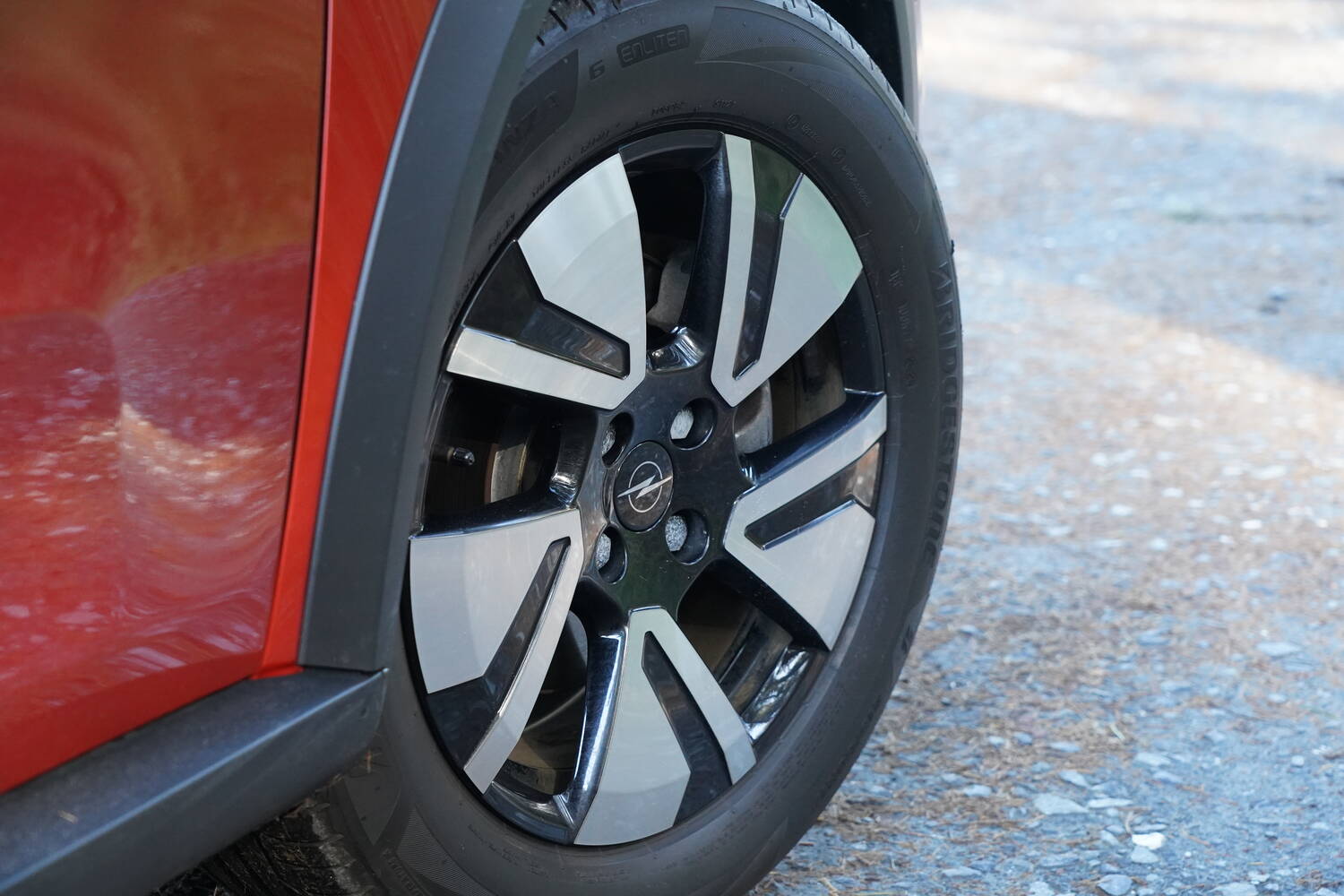
- Fabulous steel wheel design
- Affordable paint options
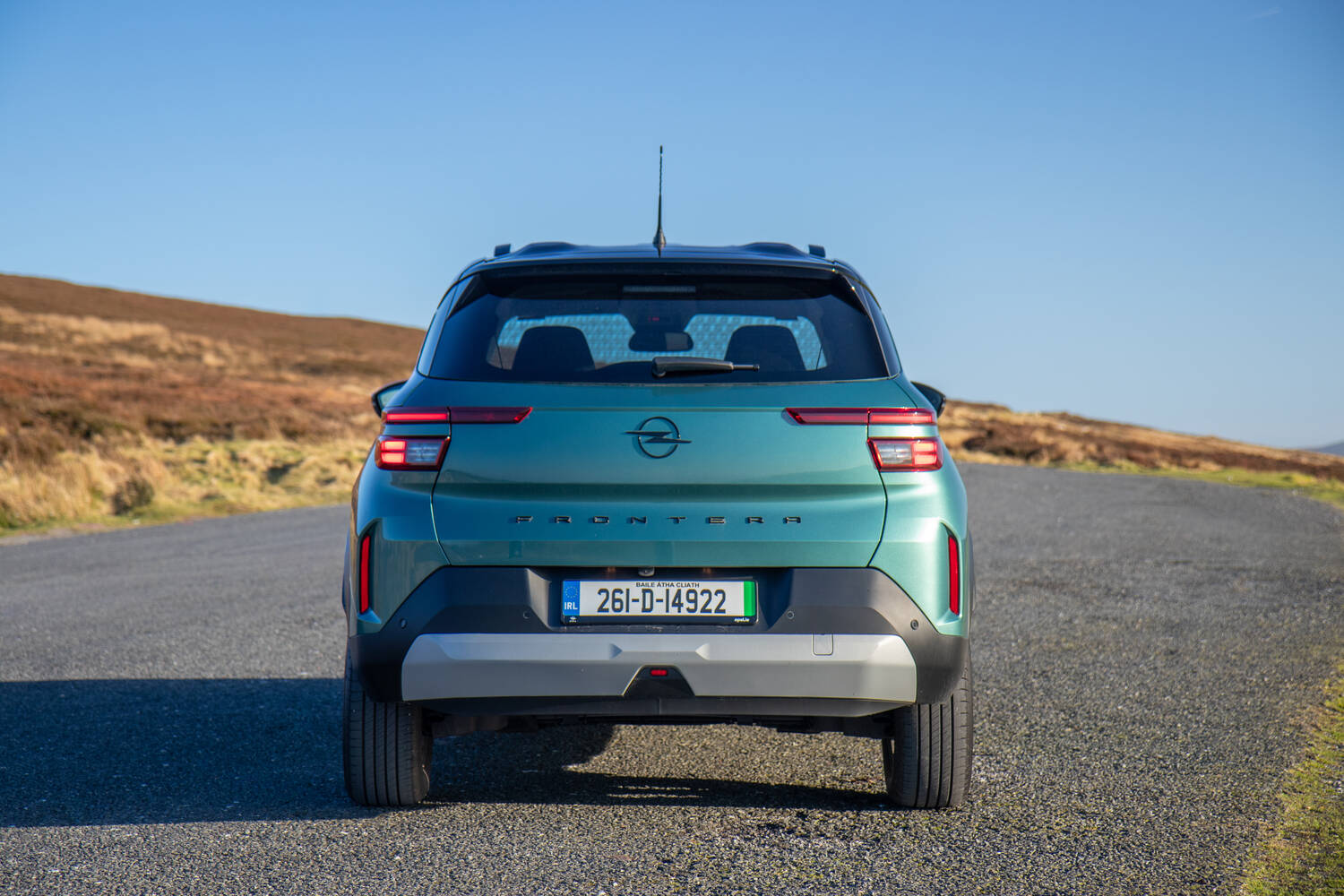
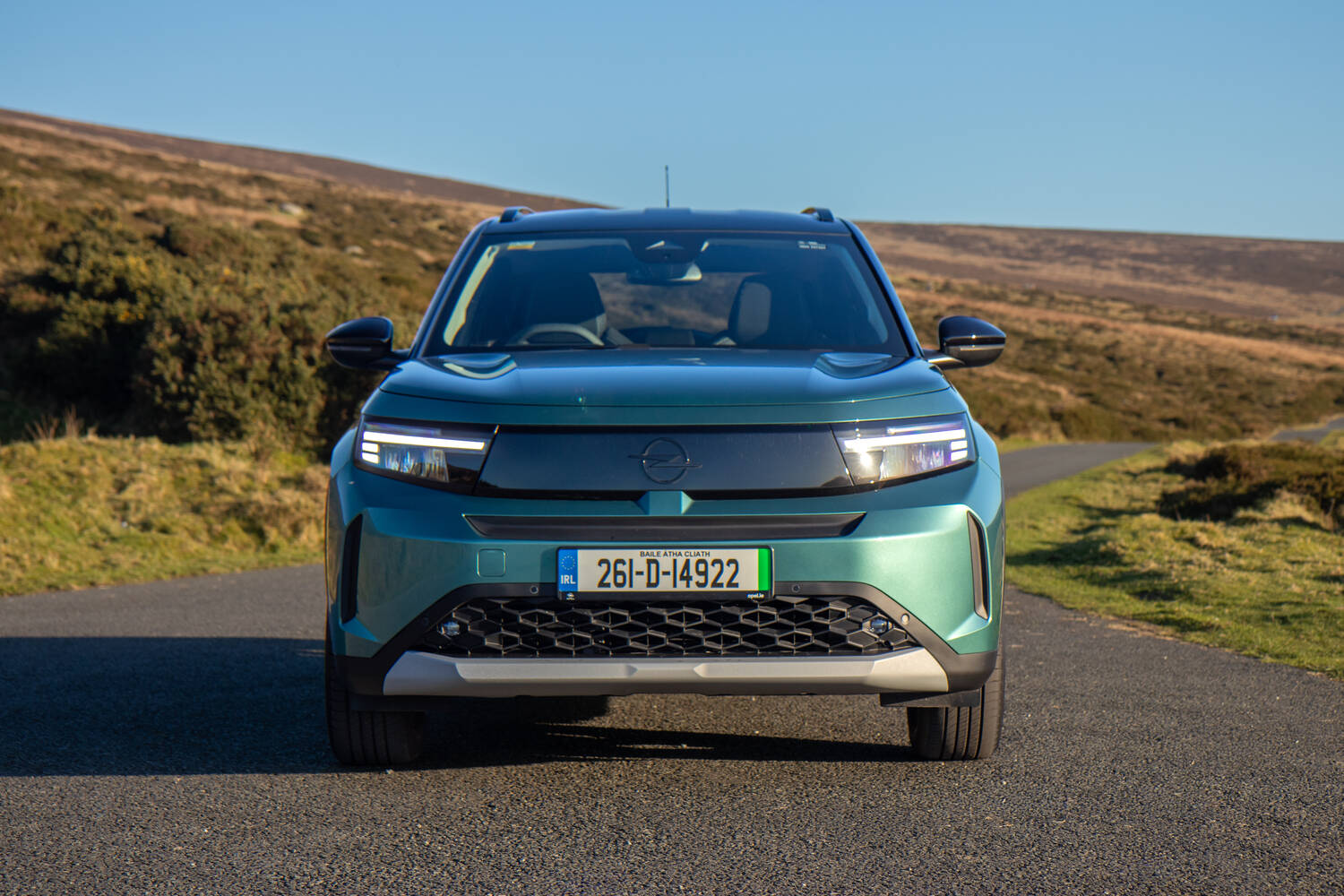
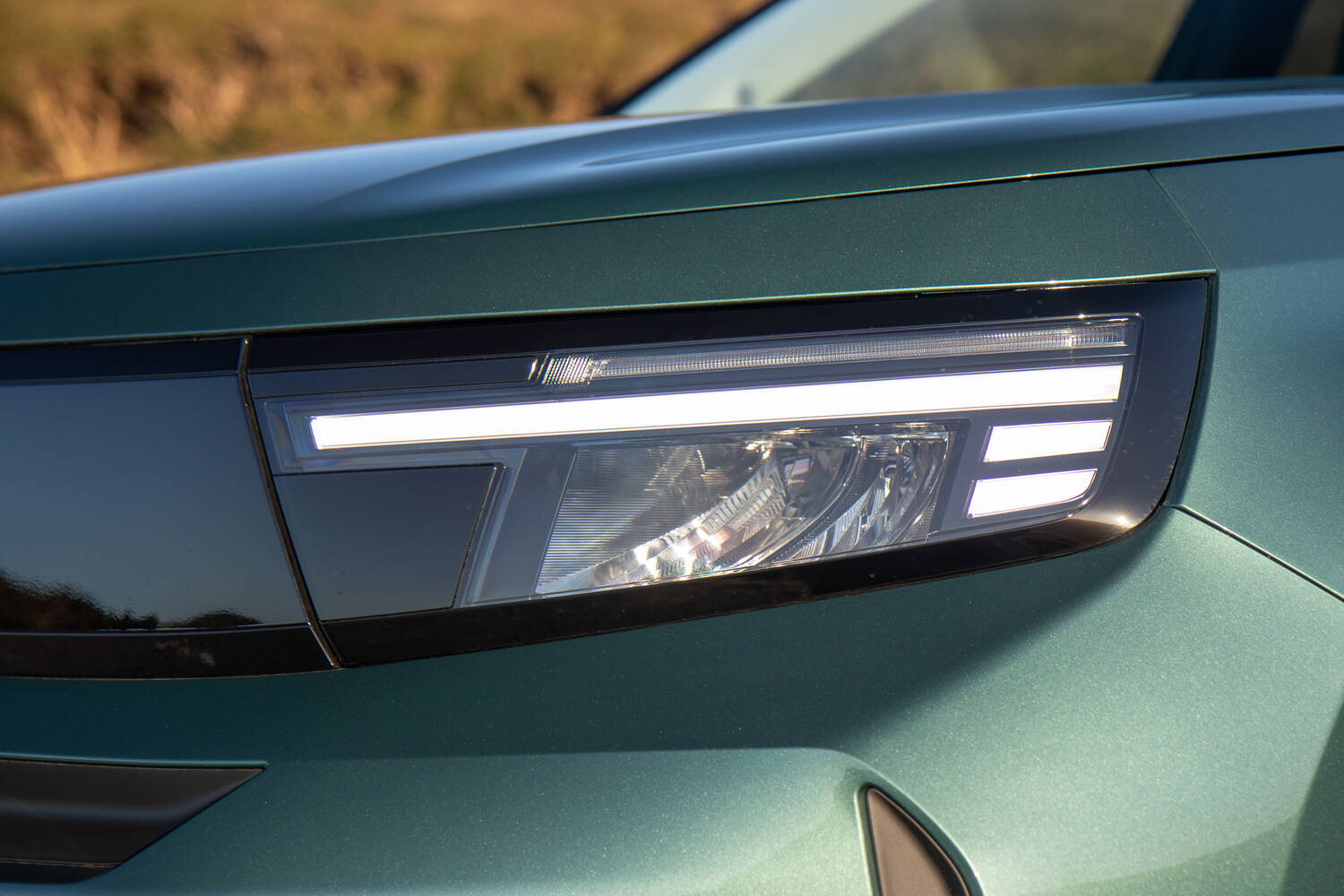
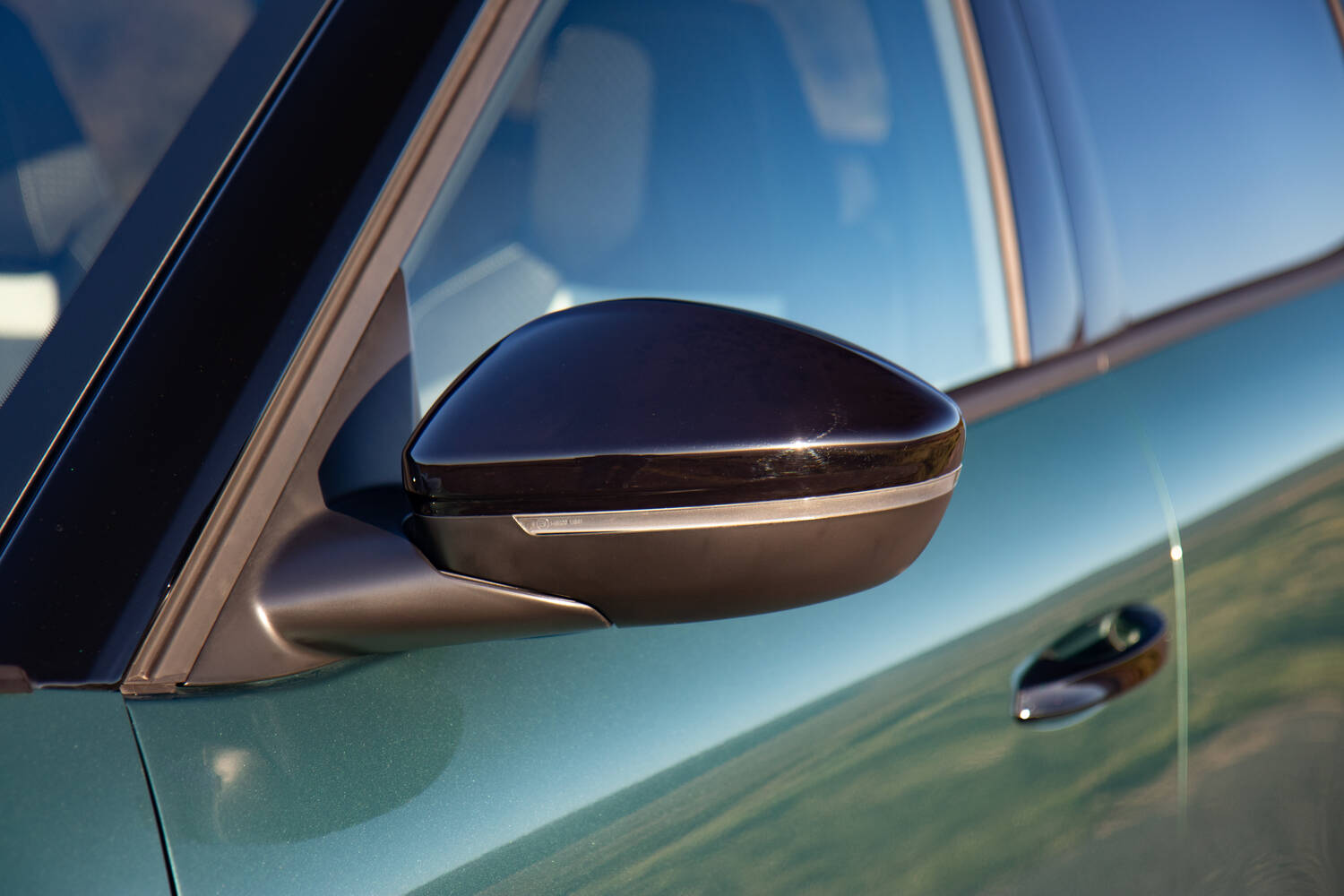
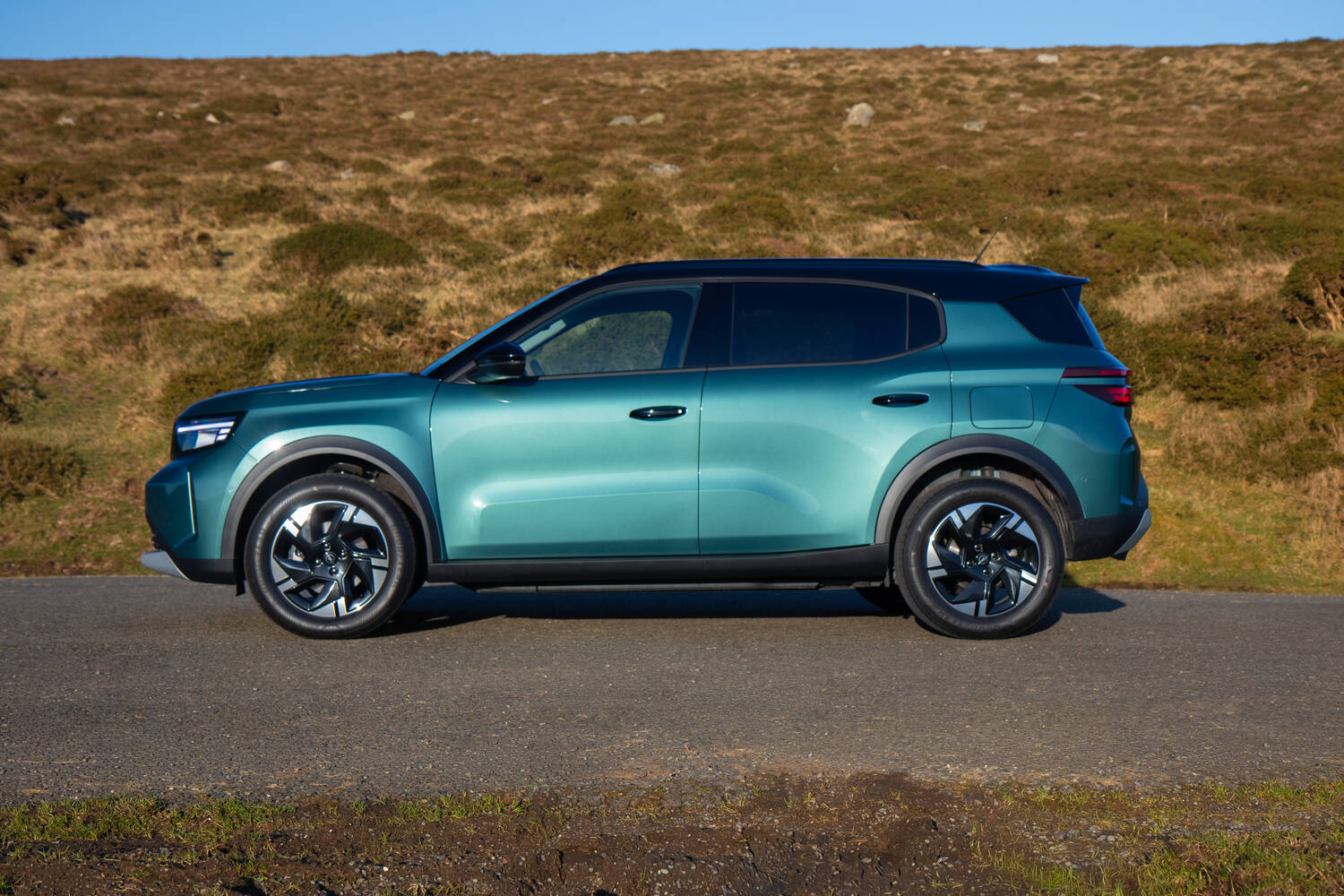
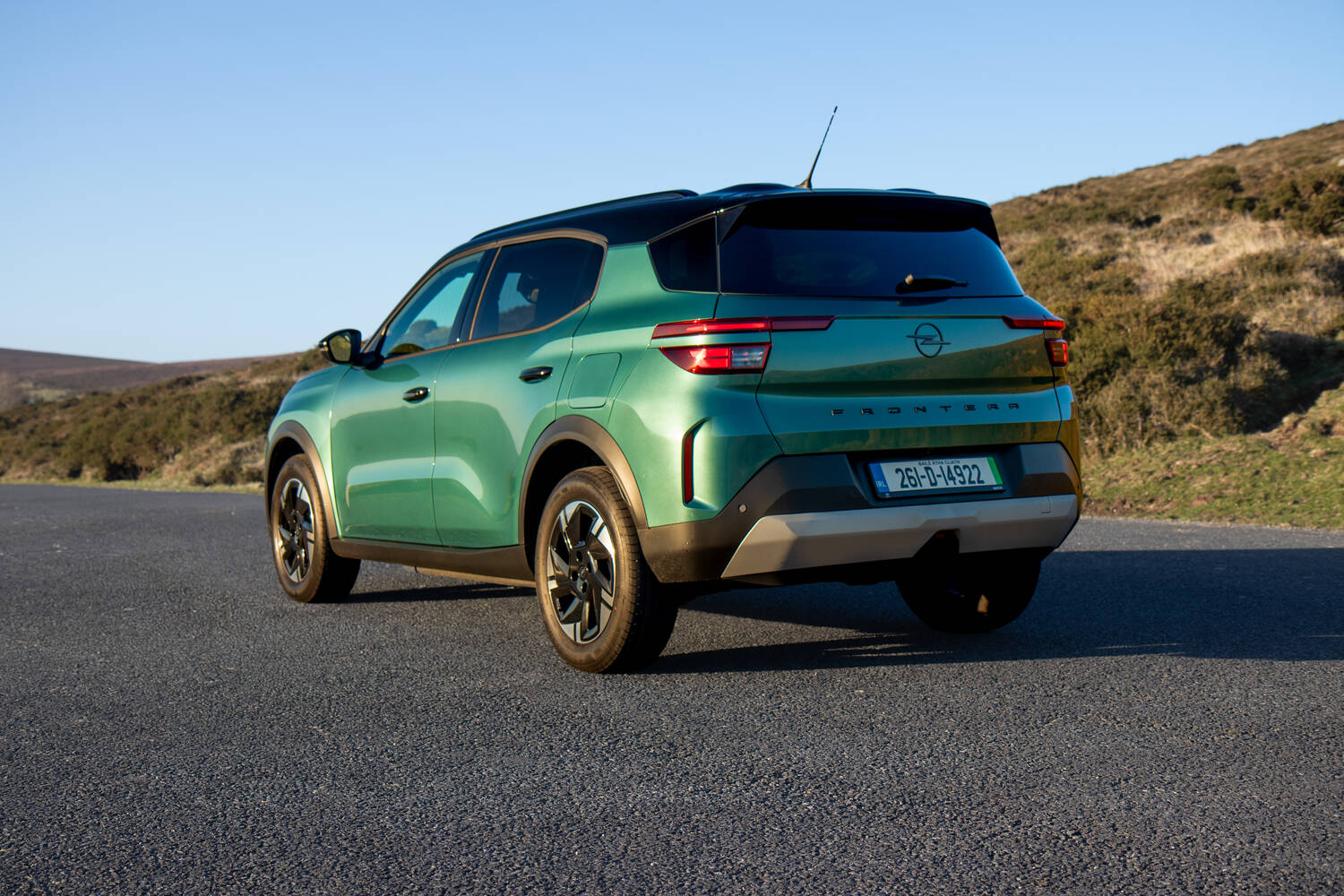
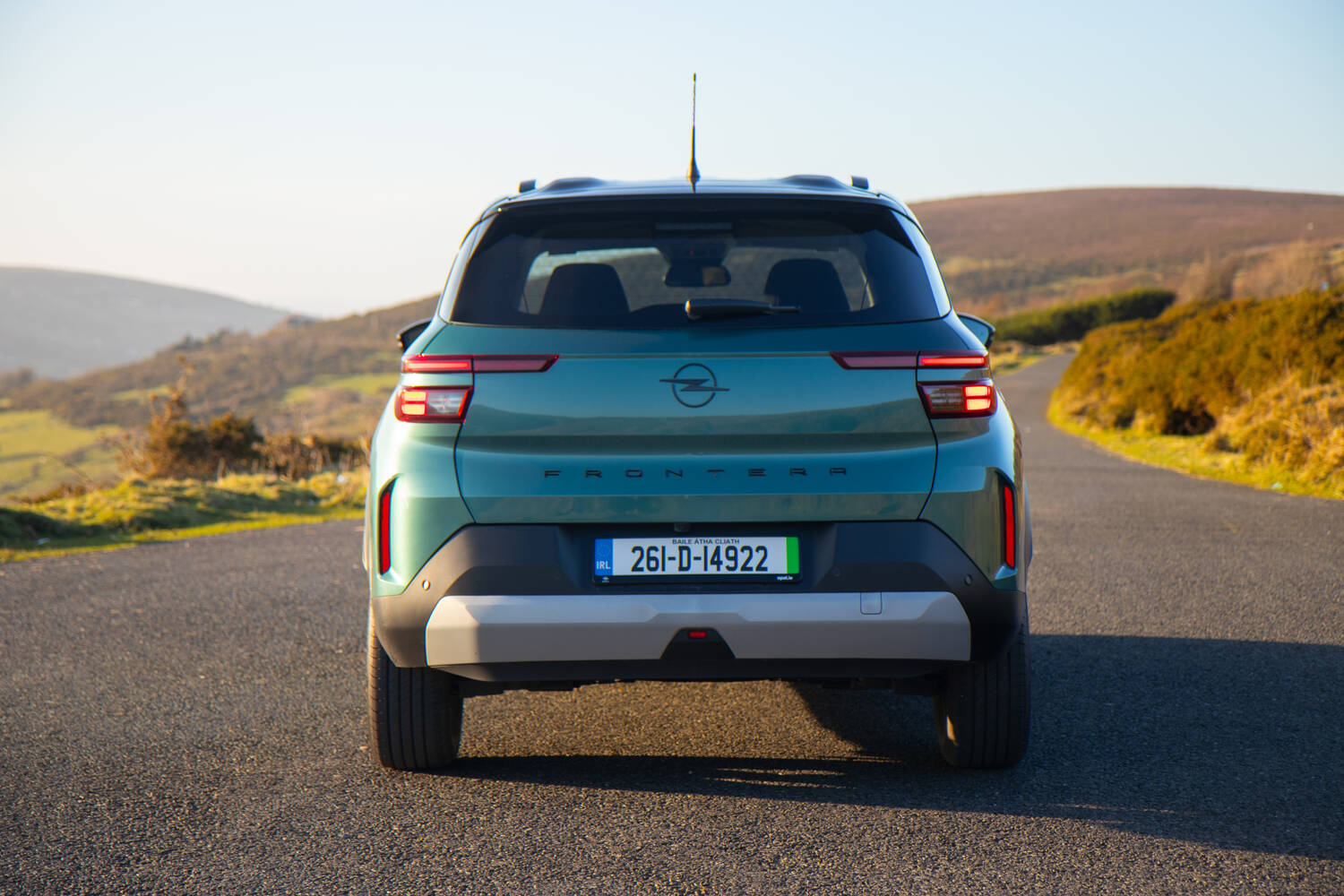
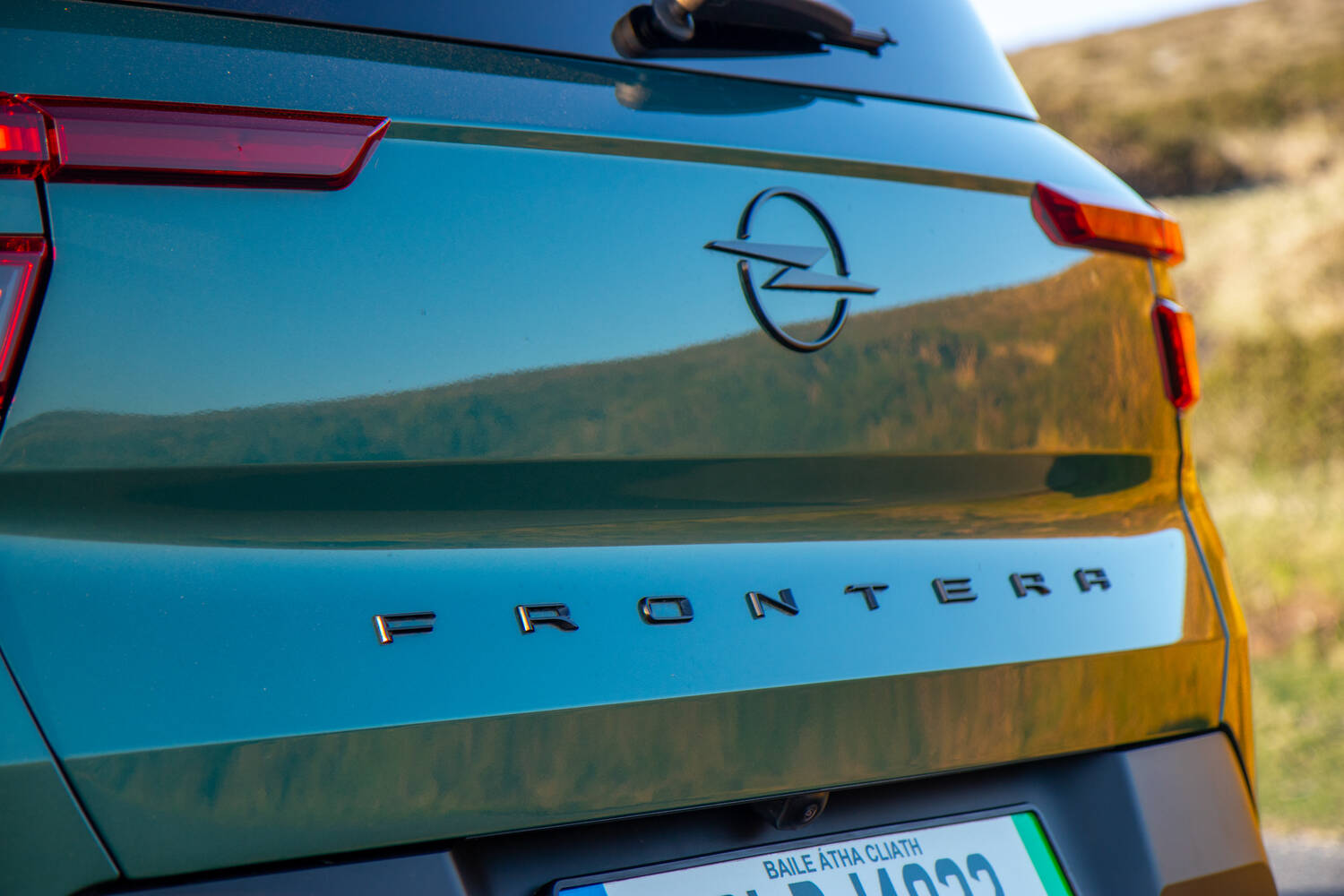
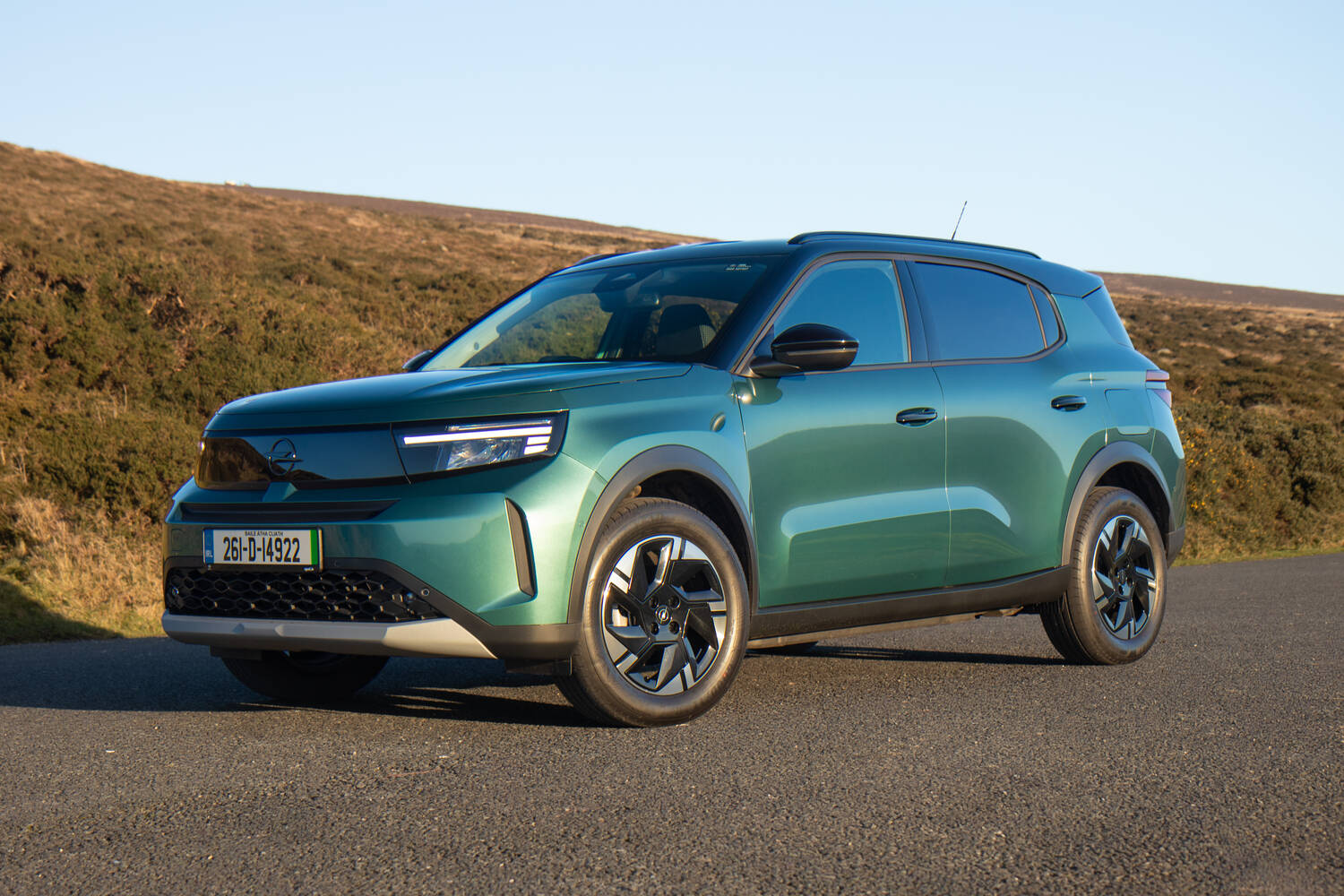
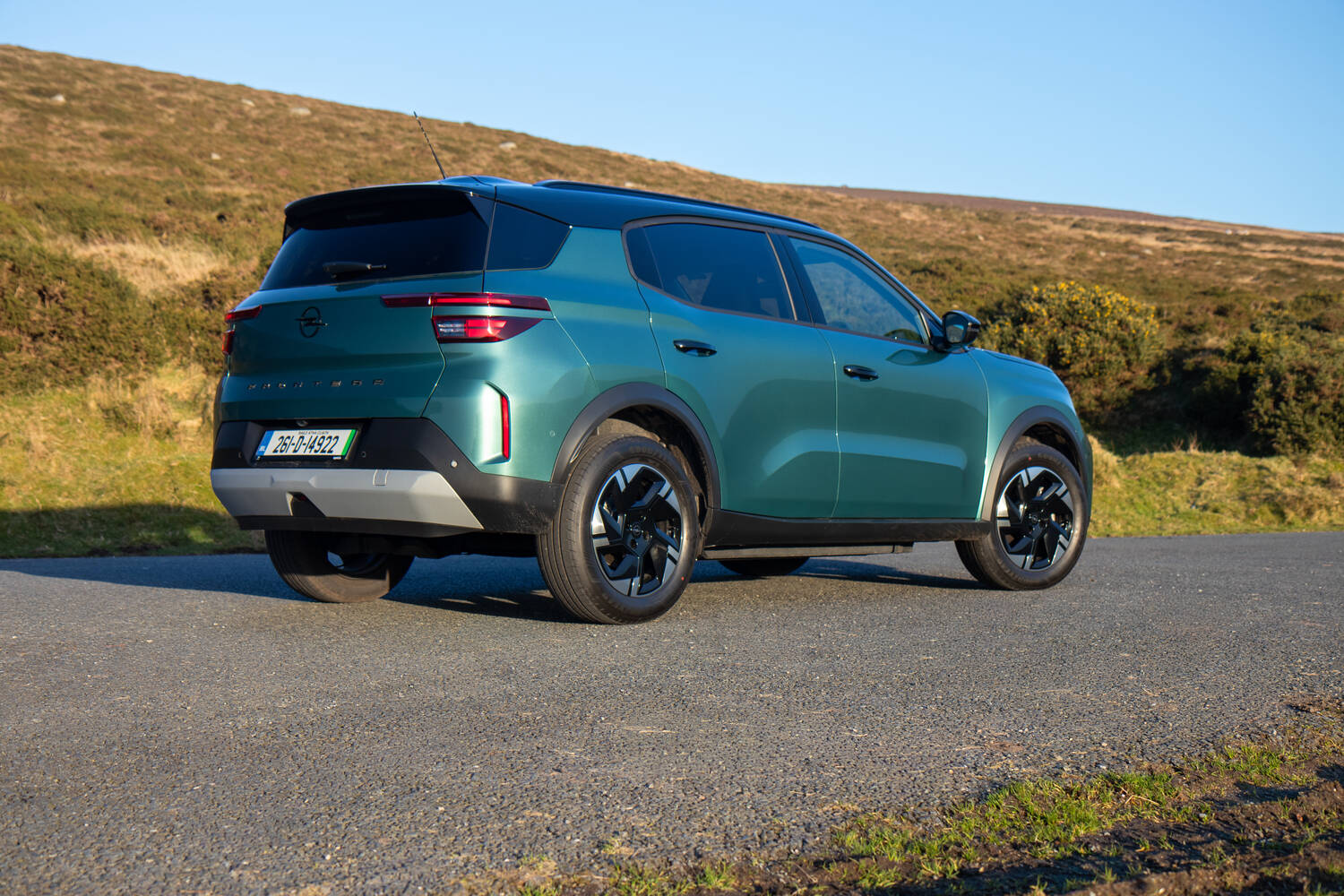
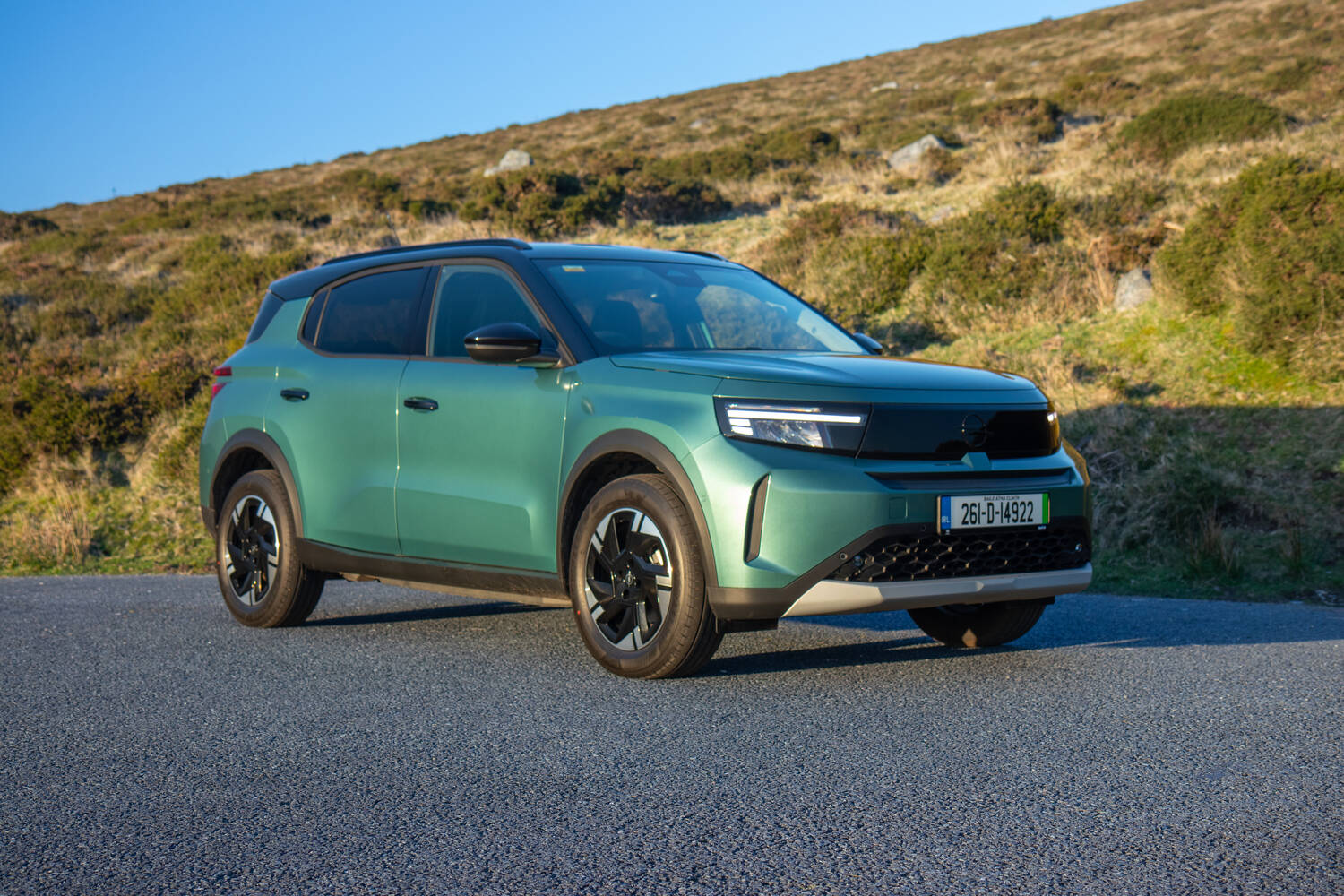
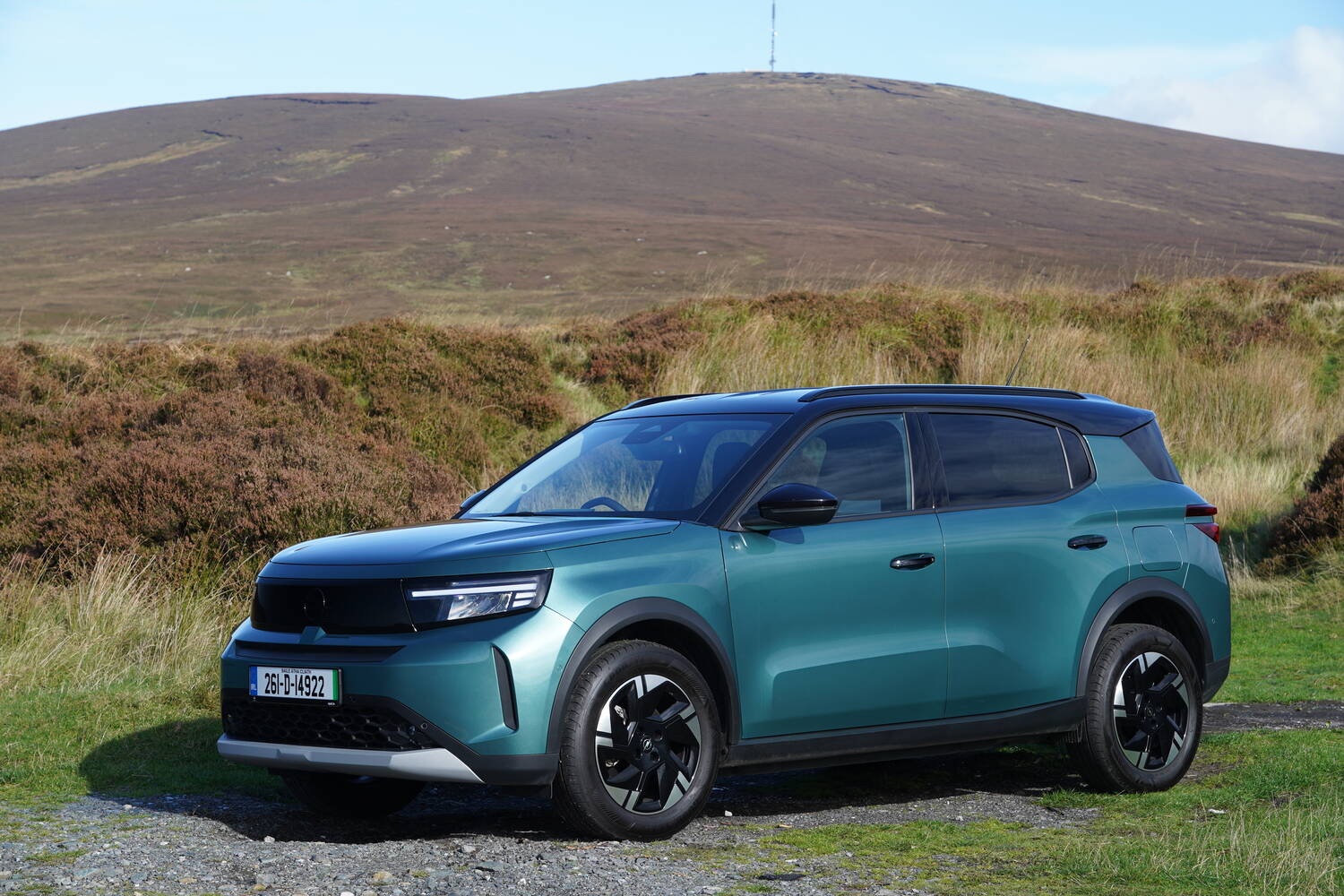
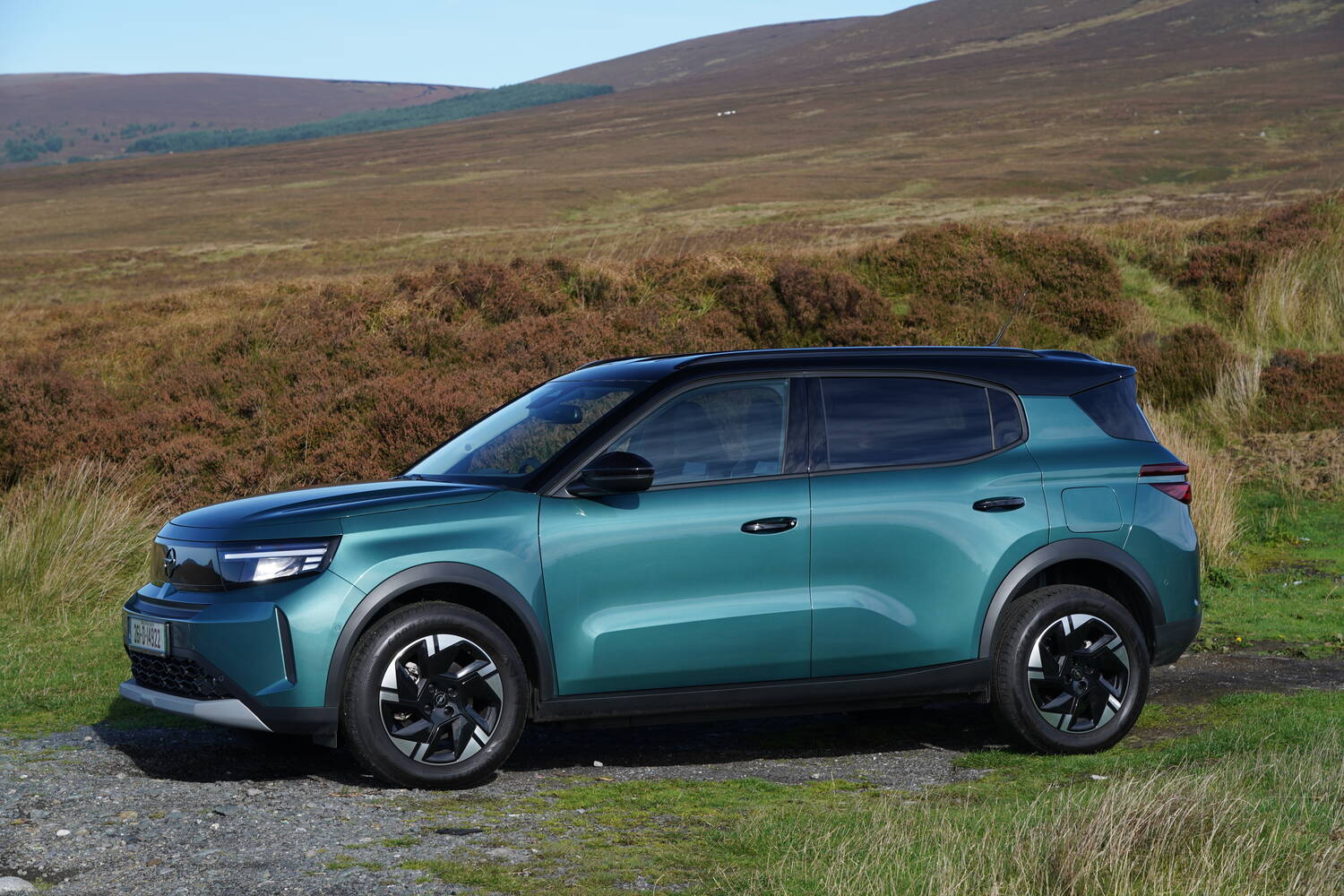
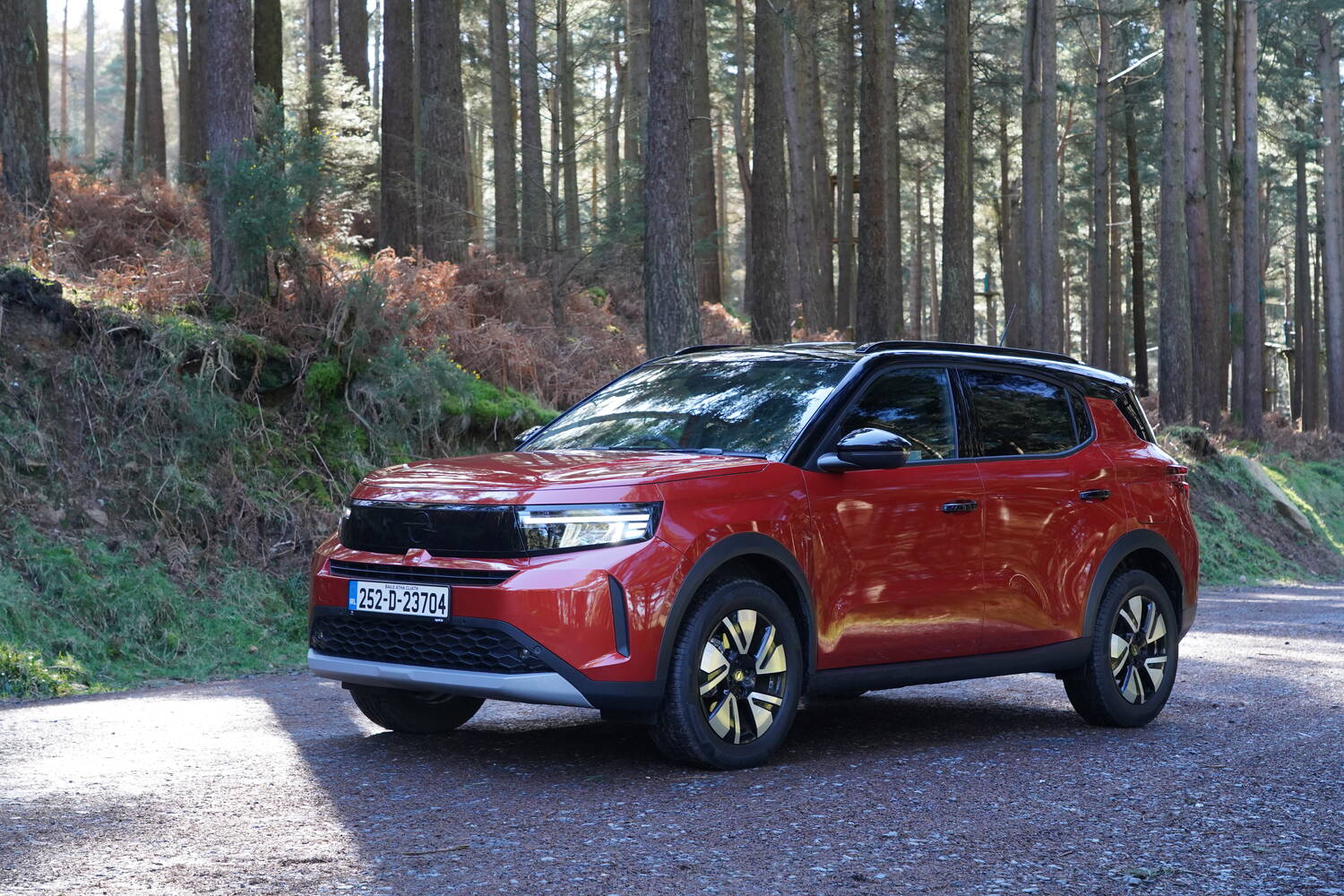
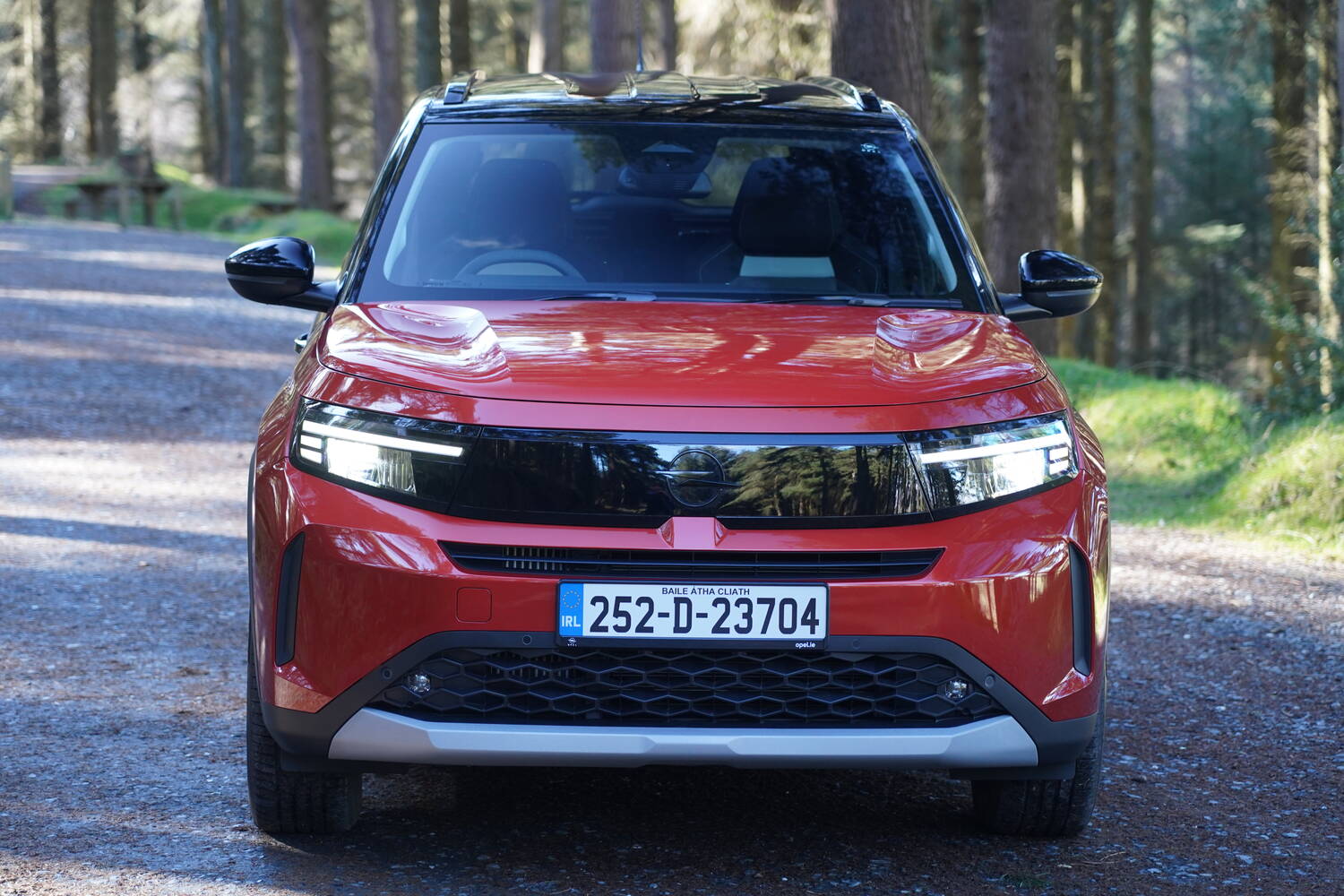
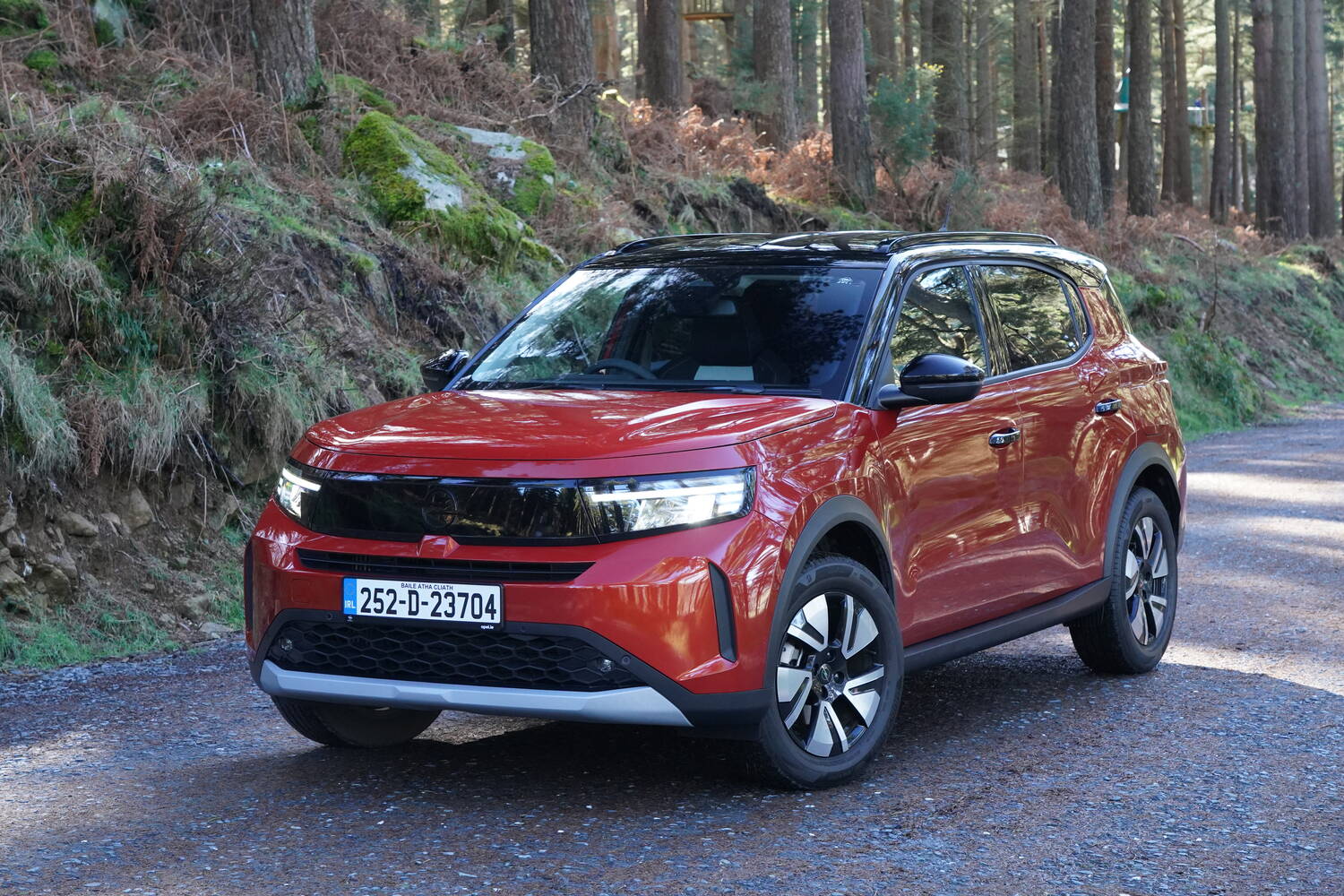
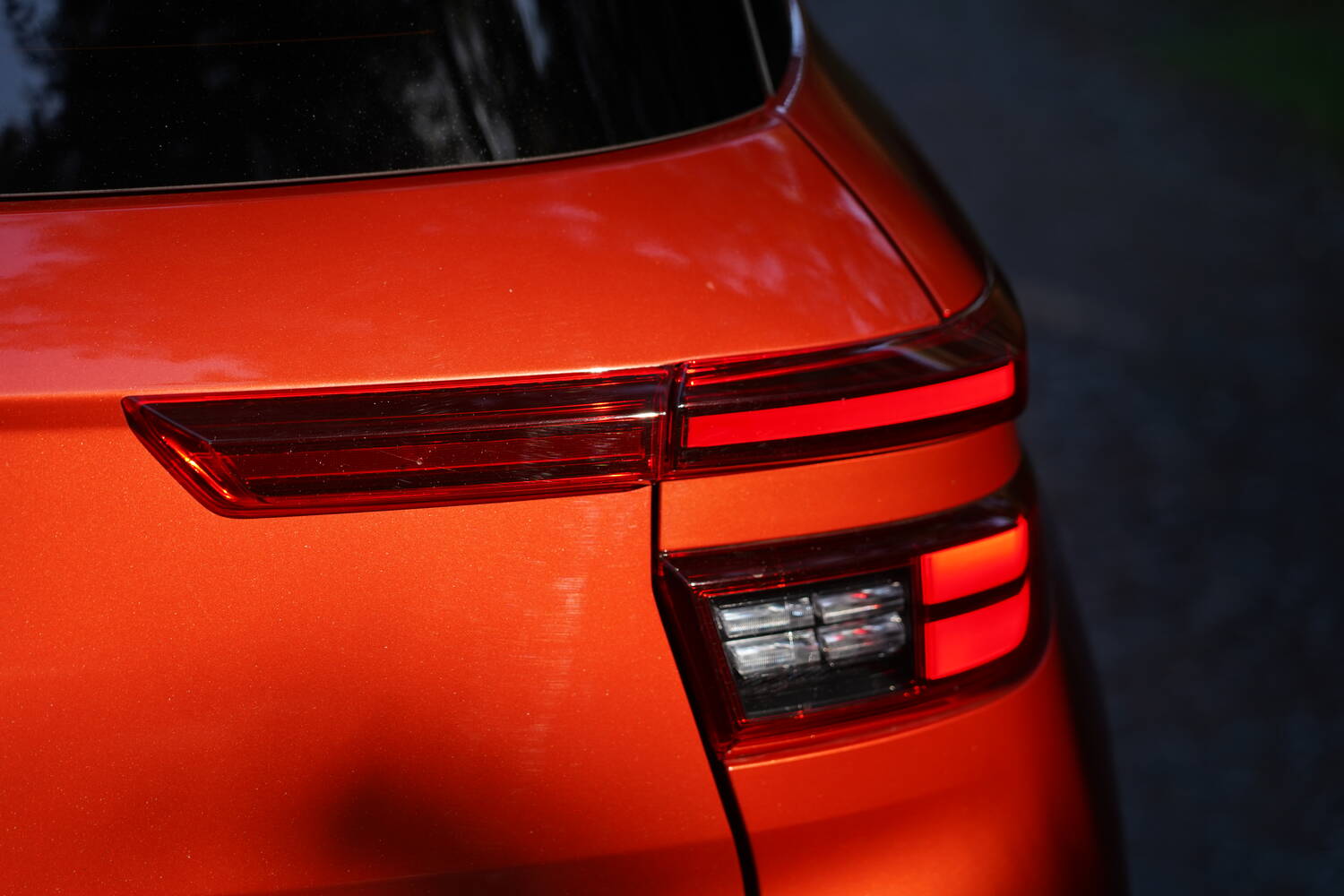
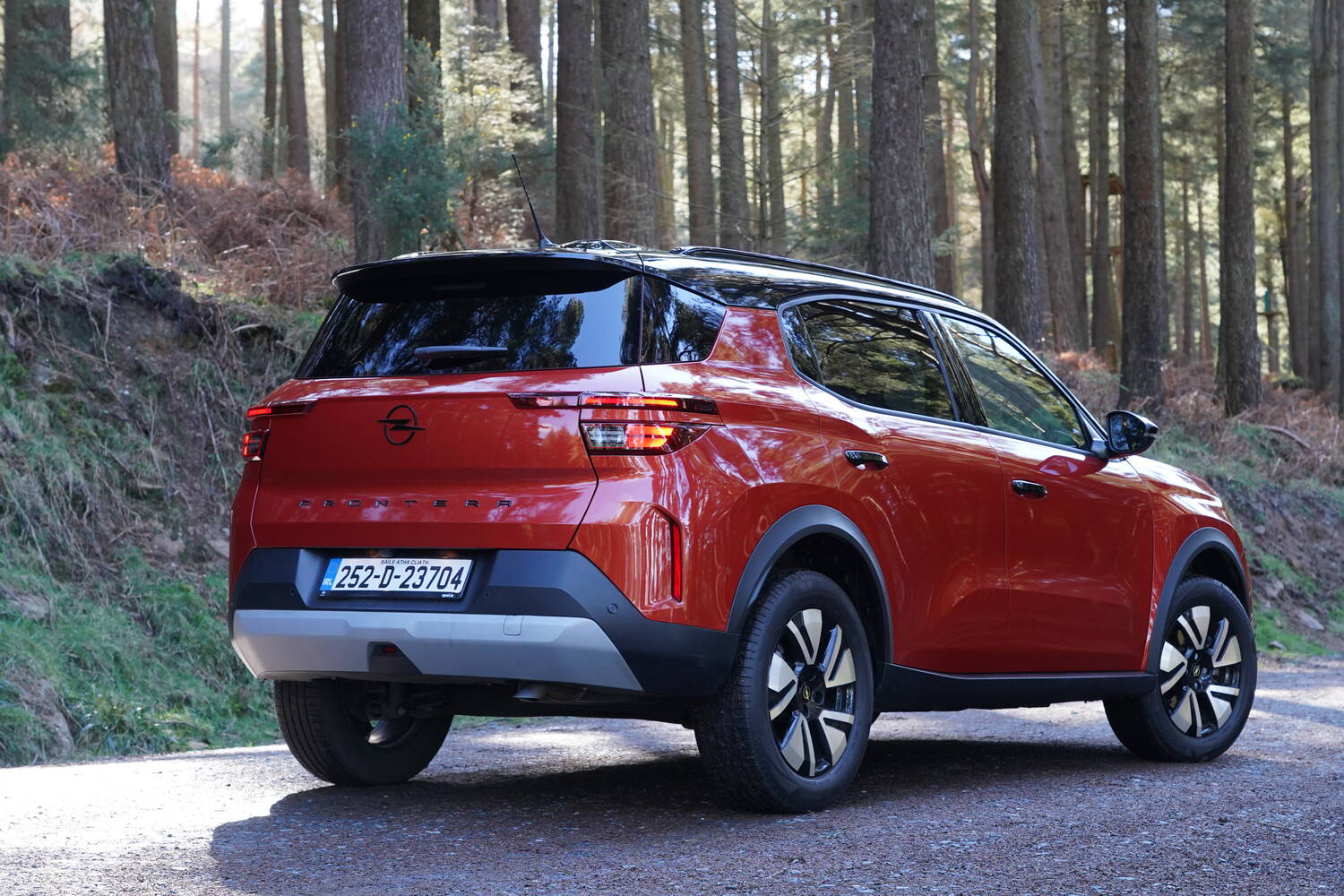
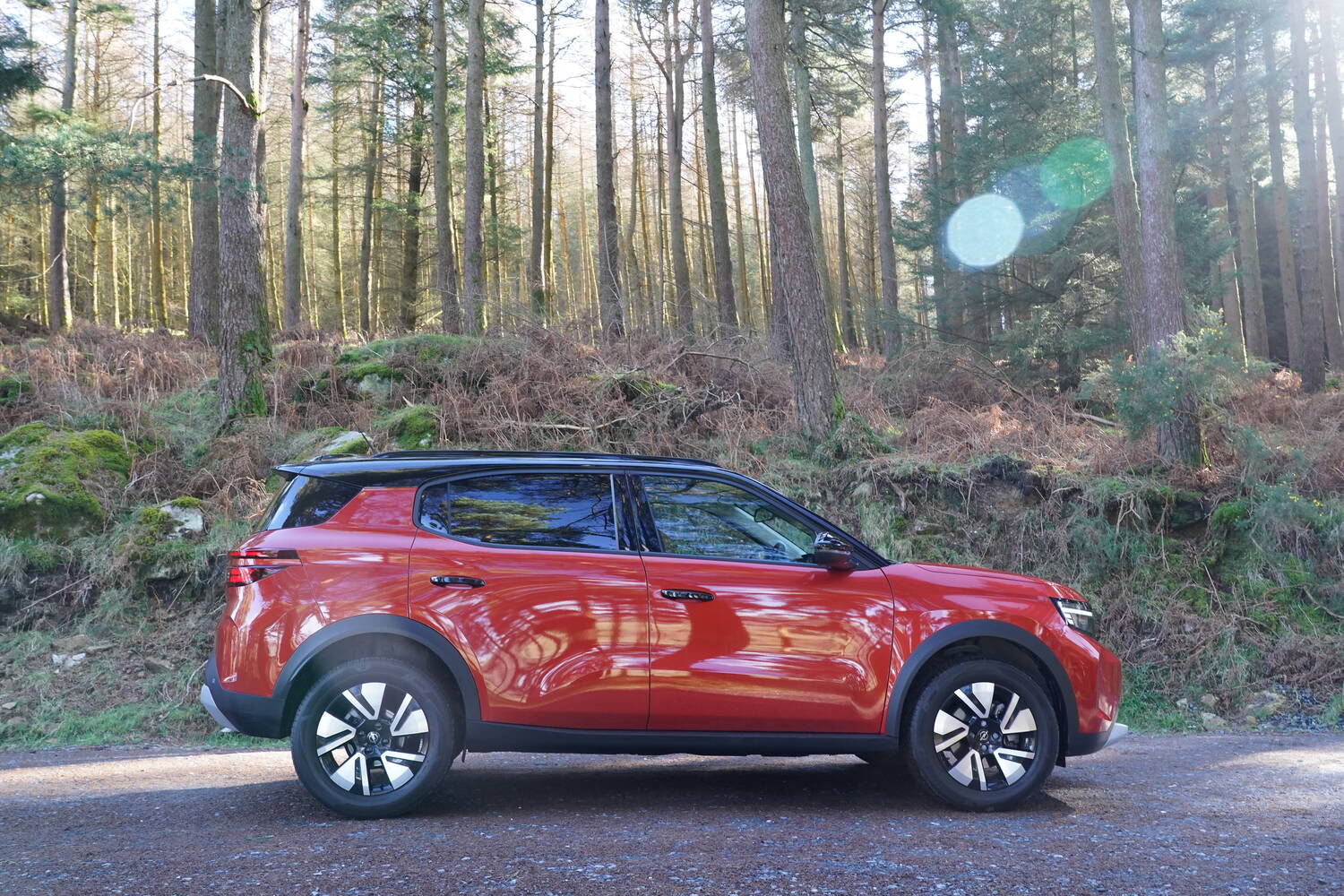
The Frontera is not a car that's ever going to sell on its looks. It's certainly not ugly, but it lacks a bit of distinctiveness and looks far too similar to the Citroen C3 Aircross, with only really the 'Vizor' grille and slimline headlights to set the Opel apart.
Whatever about the stylistic closeness to the Citroen, it is the cool-looking Fiat Grande Panda that really shows the Opel up for being unadventurous in its design, and shows what was possible with the same basic building blocks.
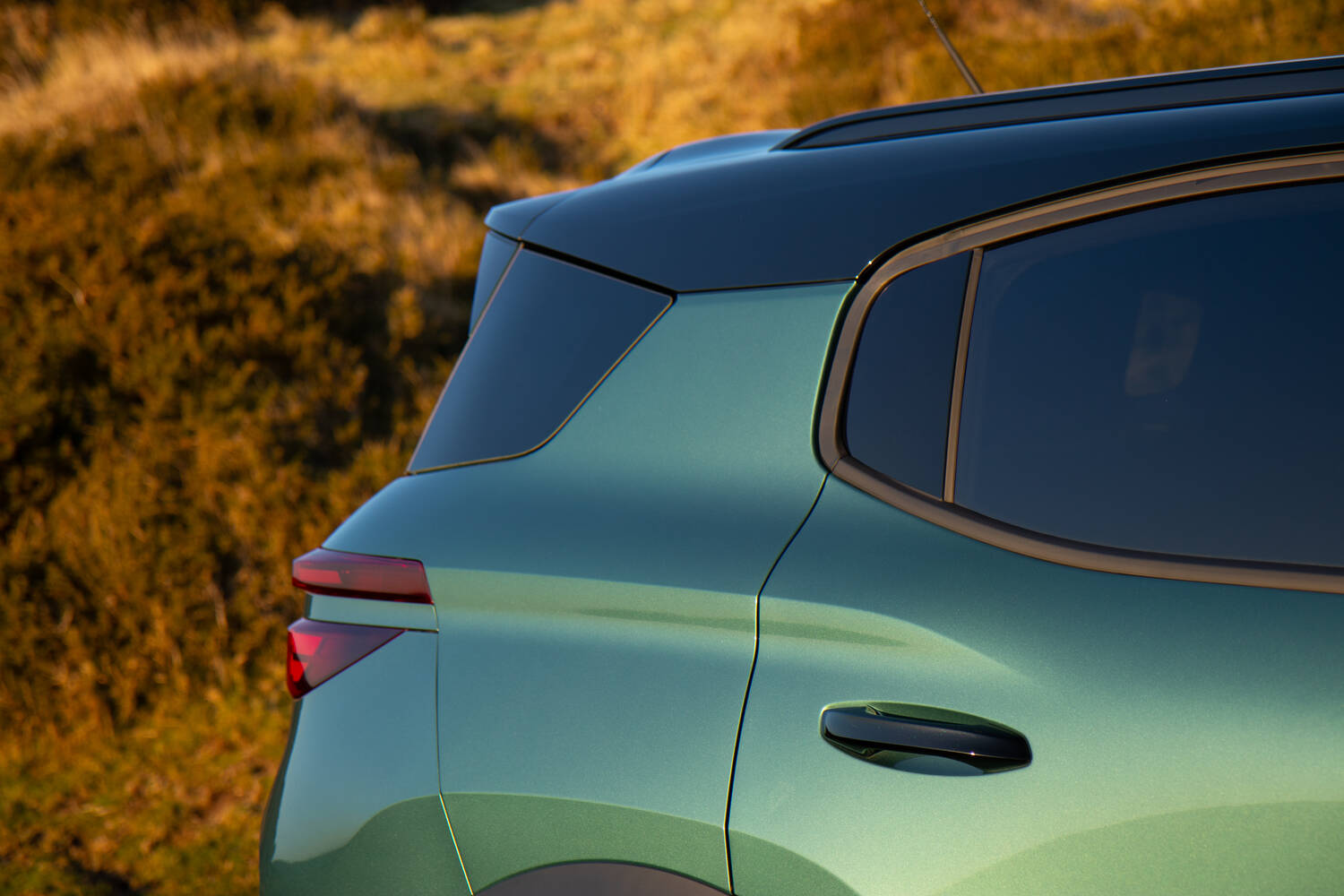
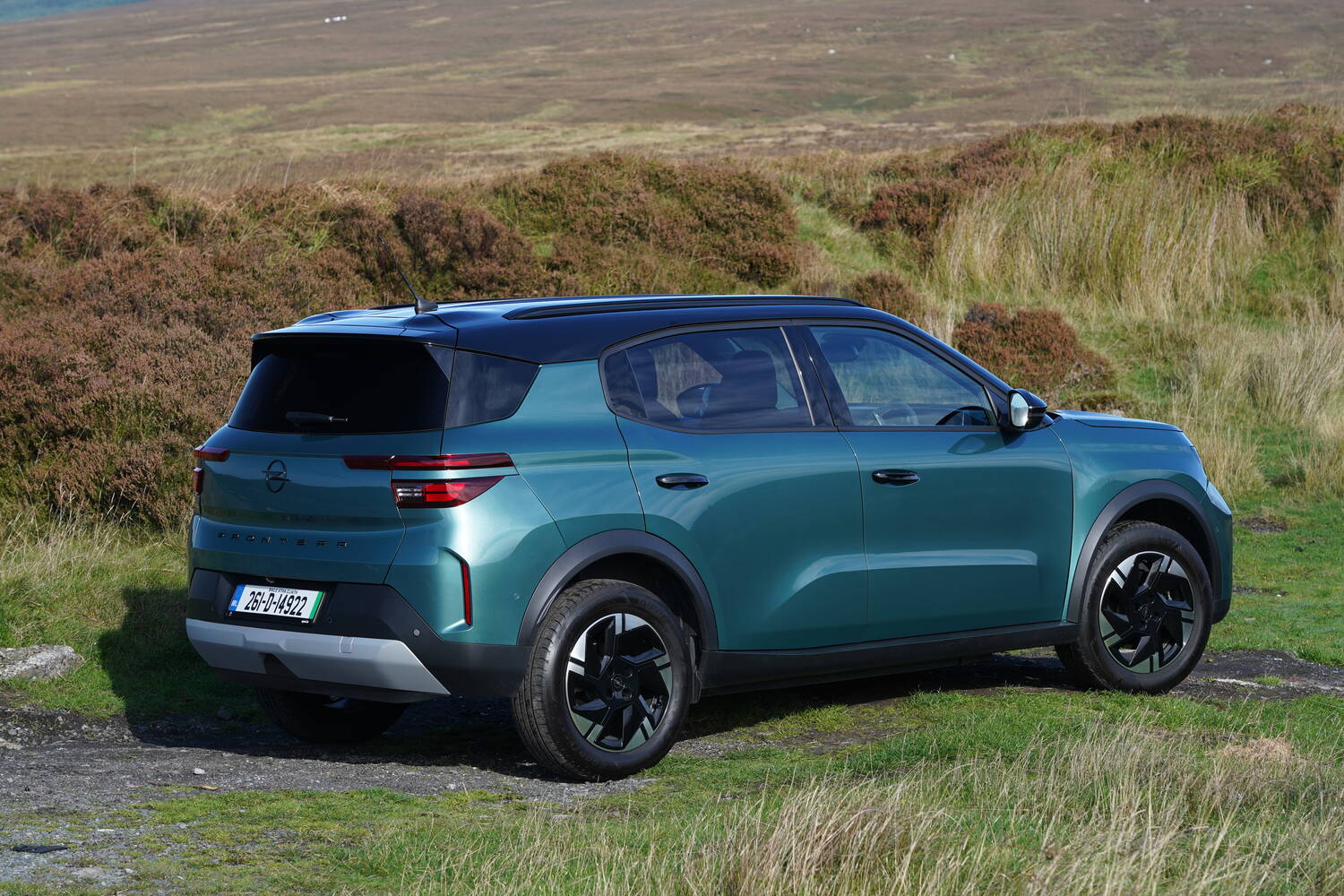
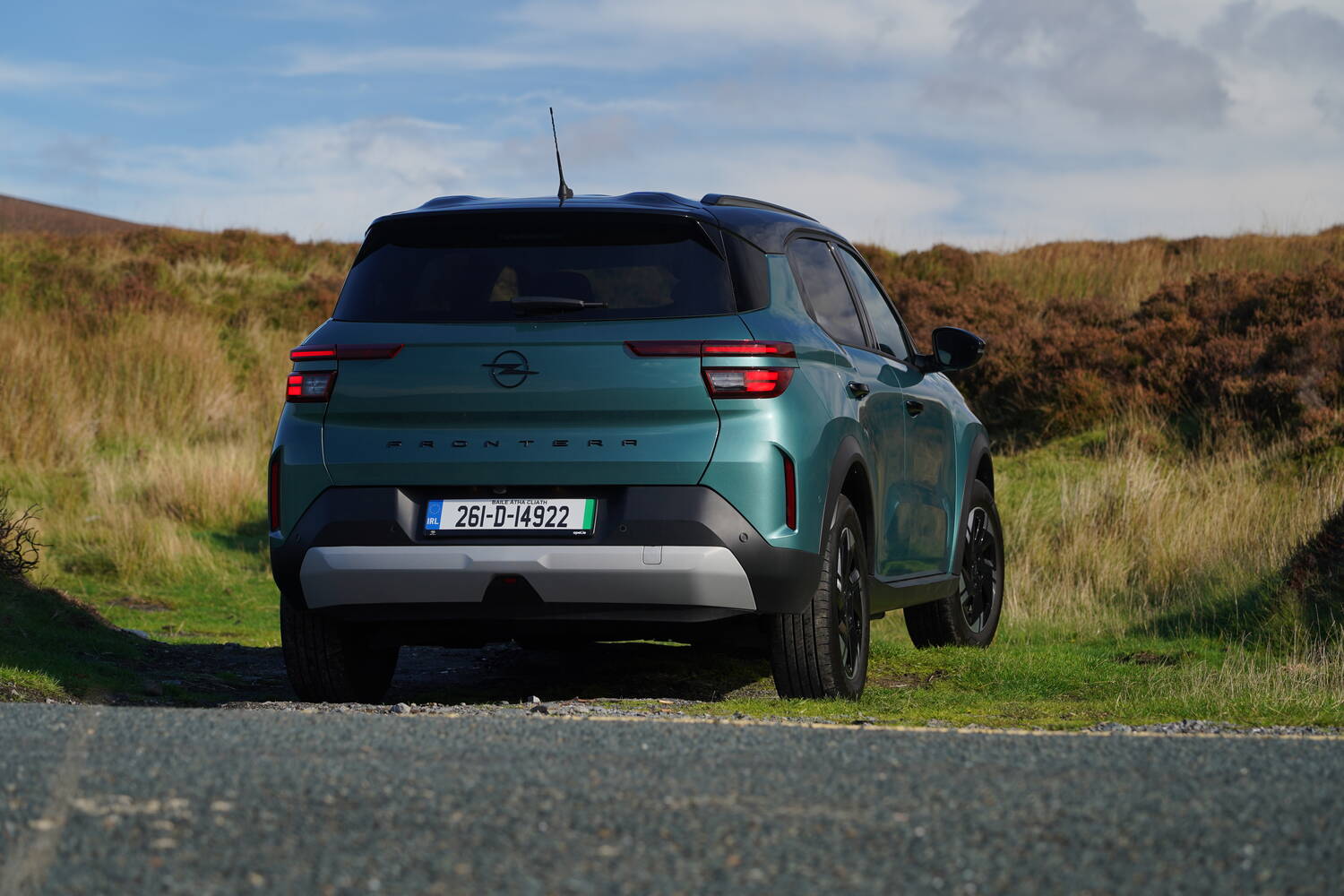
It doesn't help that the way the rear pillar meets the roof looks like it could be one of two or three other cars, not just the Citroen, but also the original Fiat 500L and even the early versions of the MINI Countryman. The Opel is generic in the extreme.
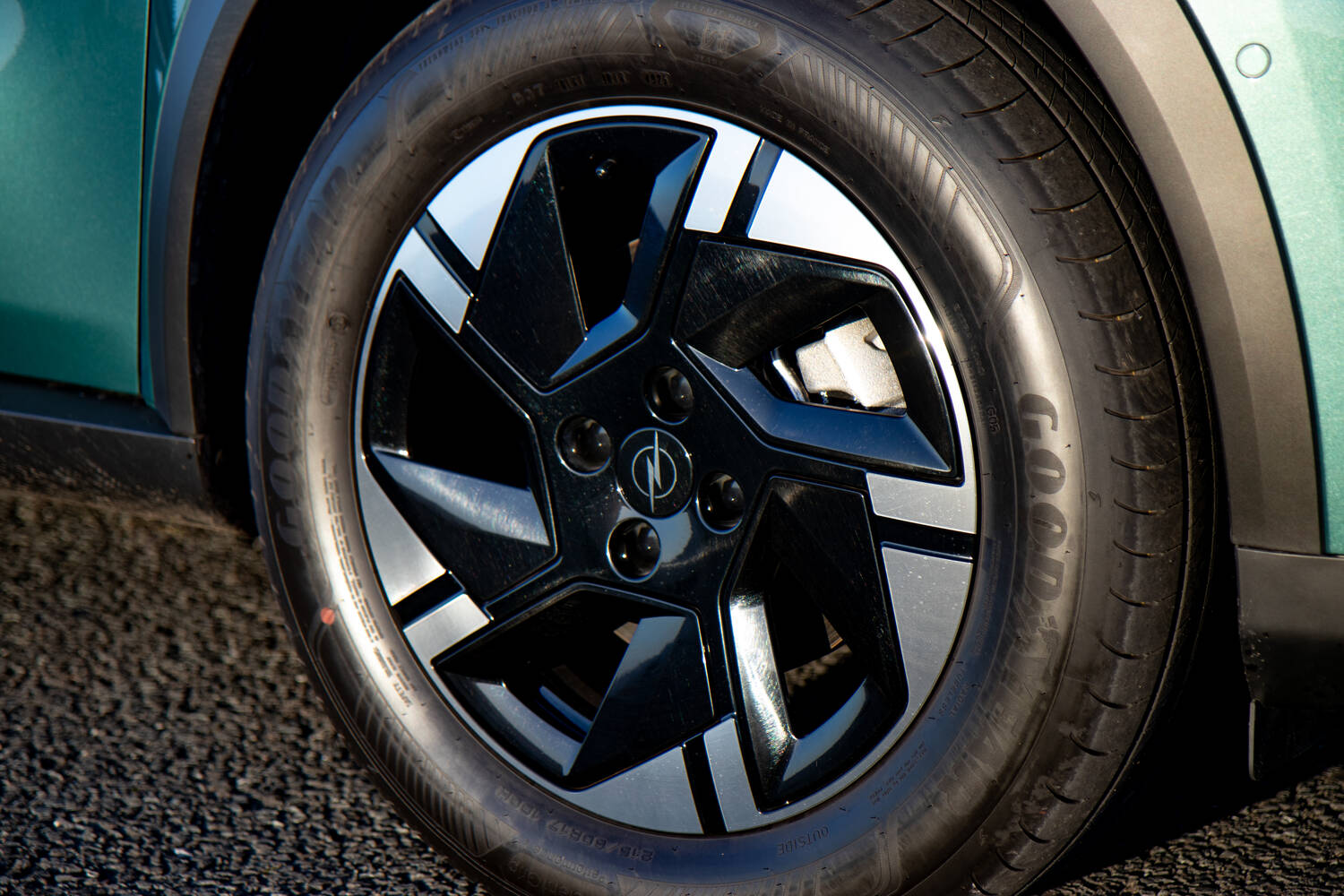
That said, the Frontera has a chunky handsomeness about it, and there are some nice exterior options such as a contrast colour roof and, better yet, steel wheels in a 16-inch diameter which, frankly, are a must-have.
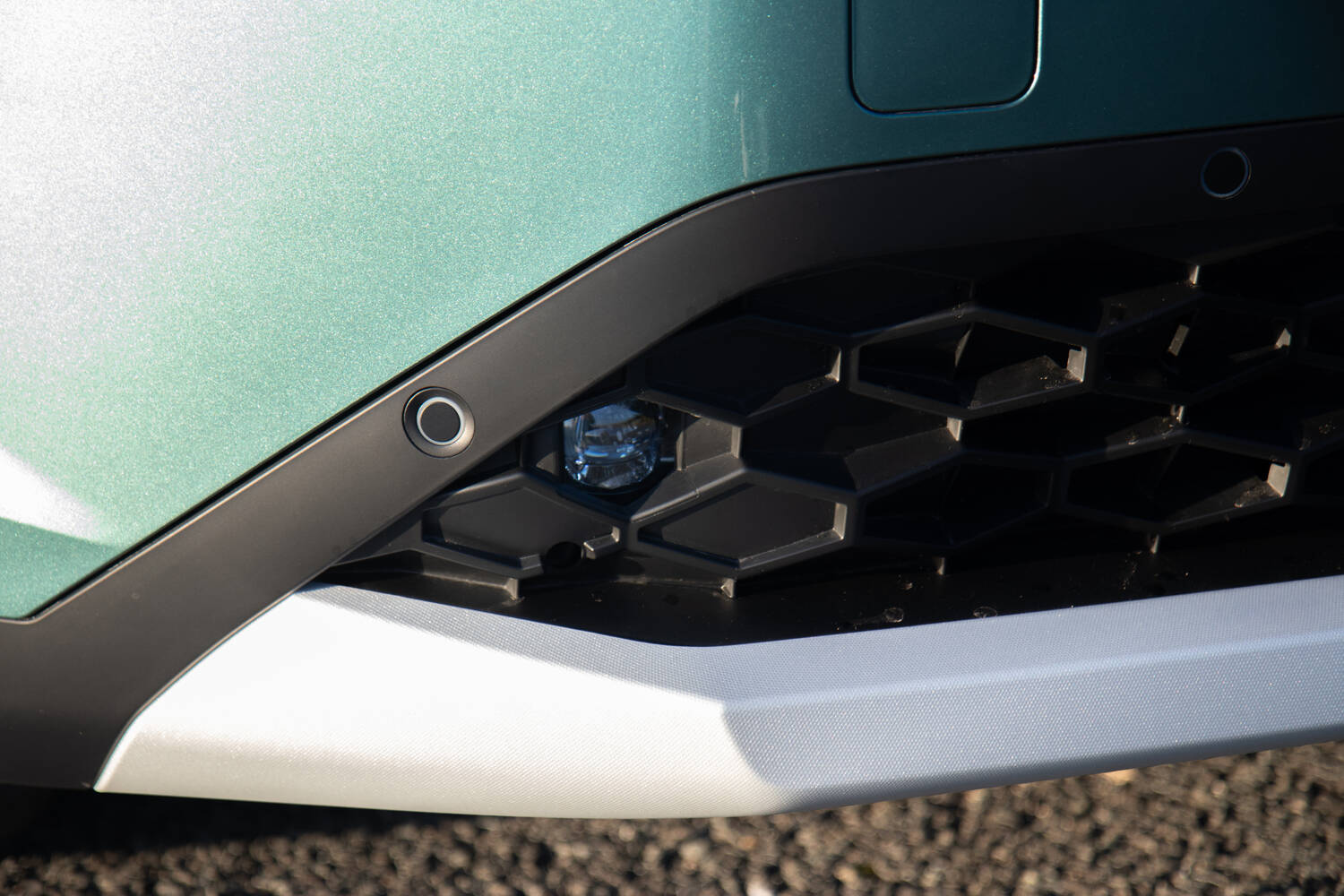
The best bit of the styling is the square-jawed front bumper, jutting forwards from under that Vizor face.
Dimensions of the 2026 Opel Frontera
- Length:
- 4,385mm
- Width:
- 1,795mm (mirrors folded)
- Height:
- 1,655mm
- Wheelbase:
- 2,670mm
Paint colours for the 2026 Opel Frontera
As standard, the Frontera comes in a no-cost solid white called Arctic White, which we would normally say looks too cheap, but given the Frontera's multiplicity of black exterior trim sections, doesn't look too bad.
There are five other paint options, all metallic, and all costing €800 - Kanyon Orange (quite nice); Khaki Green (very nice); Crystal Silver (classy); Effect Blue (nice); and Carbon Black (too plain). GS models get a standard contrast black roof.
Interior, practicality, tech & comfort of the 2026 Opel Frontera
- Cheap plastics everywhere
- Excellent optional seats
- Useful practical touches
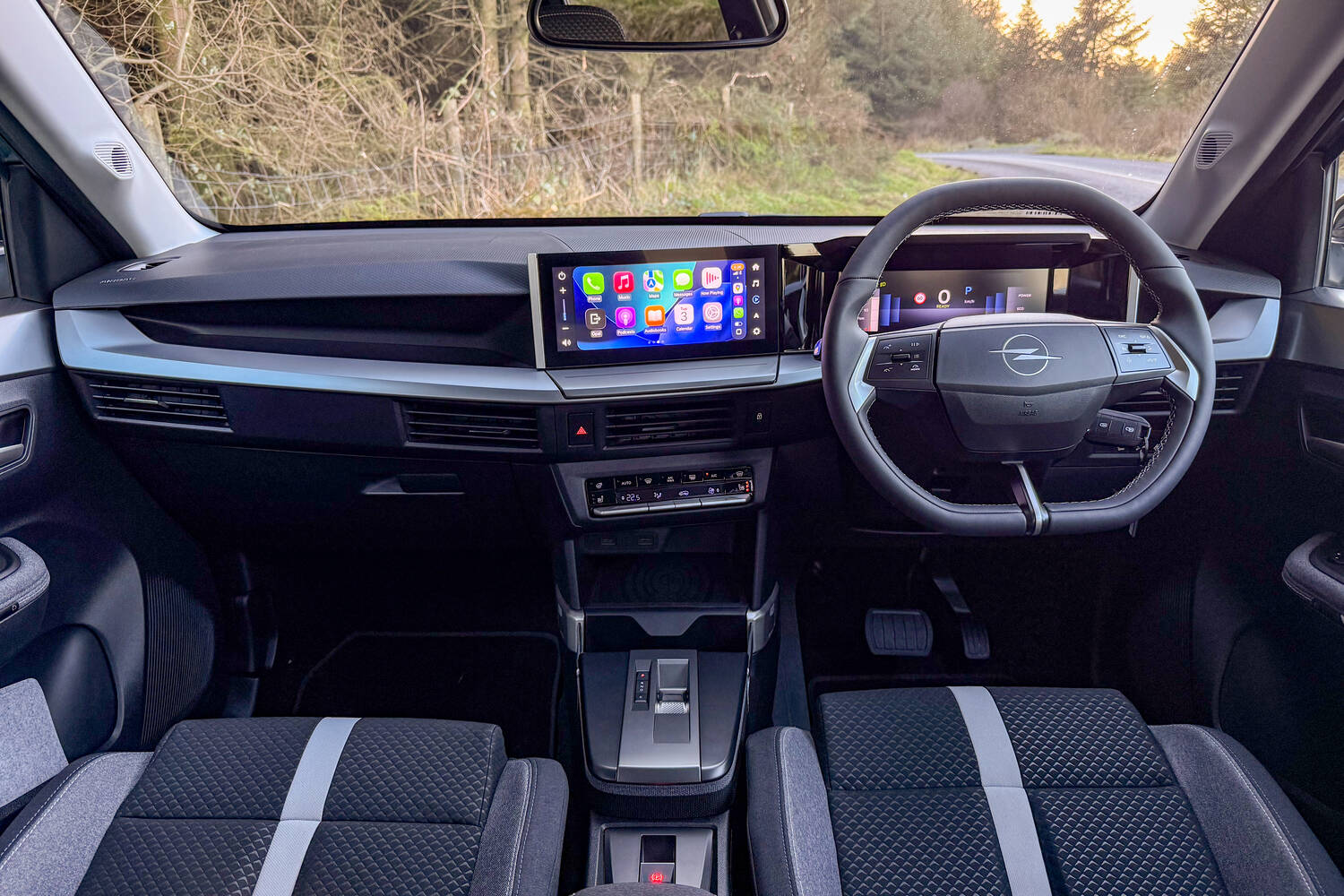
You can tell that the Frontera has been designed to be a rival to the hugely successful likes of the Dacia Duster, because it follows Dacia's lead in filling the cabin with cheap, but rugged - and likely long-lasting - plastics.
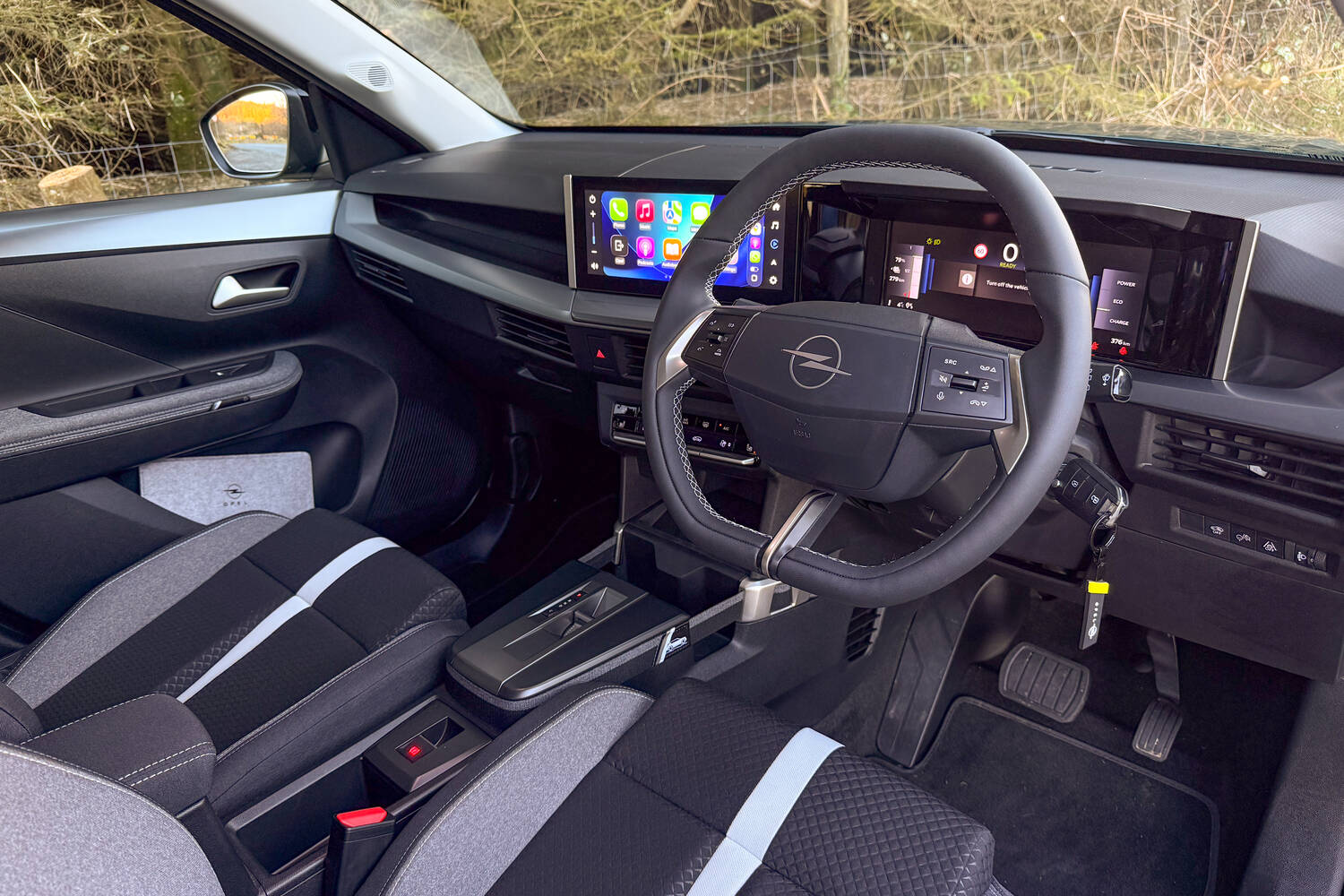
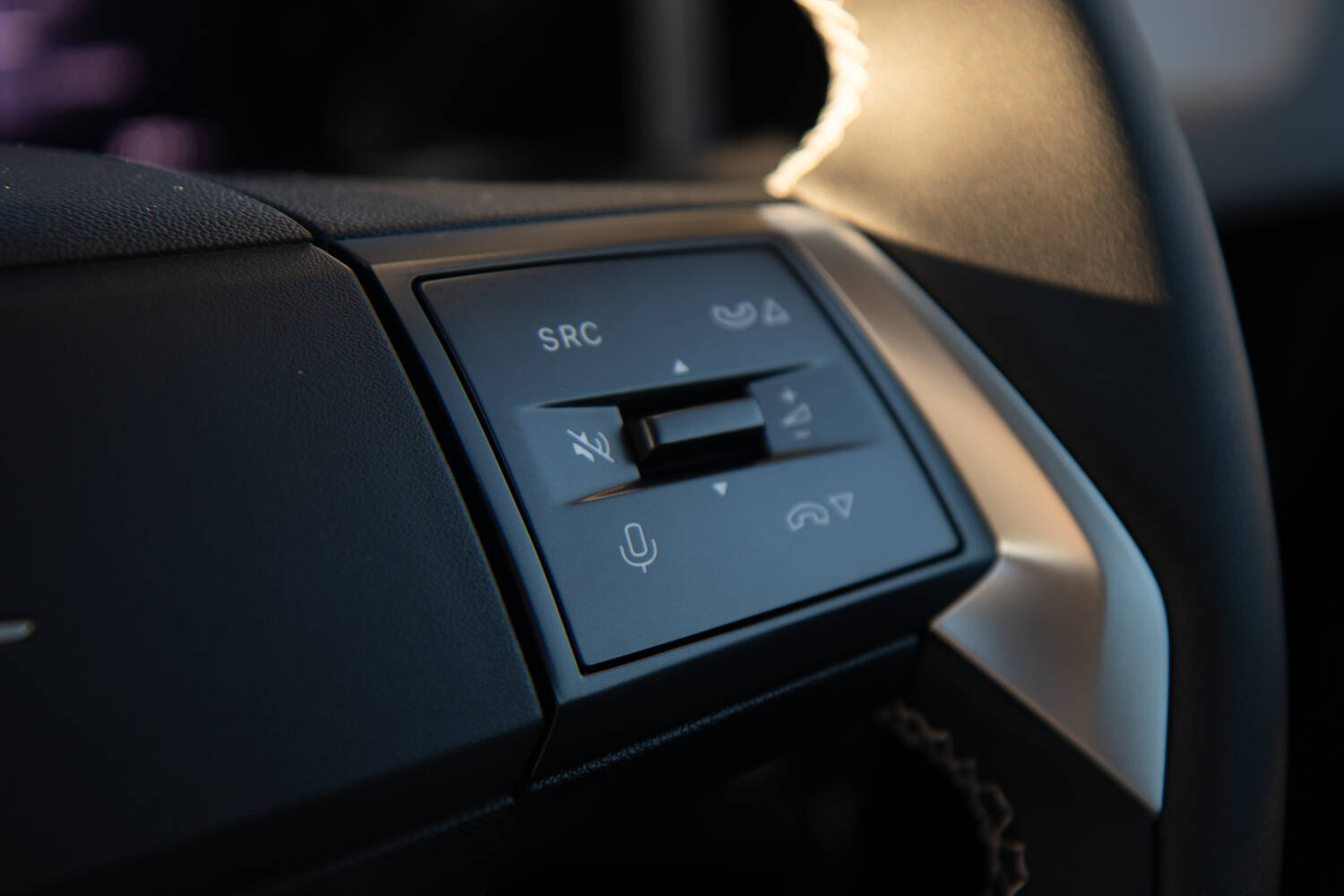
In our GS-spec test car there were some nice silver-painted highlights, which did lift the overall ambience a bit. Also coming in for praise is the neat three-spoke steering wheel, which is slightly squared-off and which as standard comes with a leather-wrapped rim.
It feels good to hold and gives a faint hint of extra classiness to an otherwise plain cabin.
Getting comfortable in the driver's seat
How comfortable you get behind the wheel of the Frontera depends a bit on which model you go for. In all versions, there's plenty of fore-aft and up-down adjustment in both the seat and steering wheel for anyone of any size to be able to find a decent driving position.
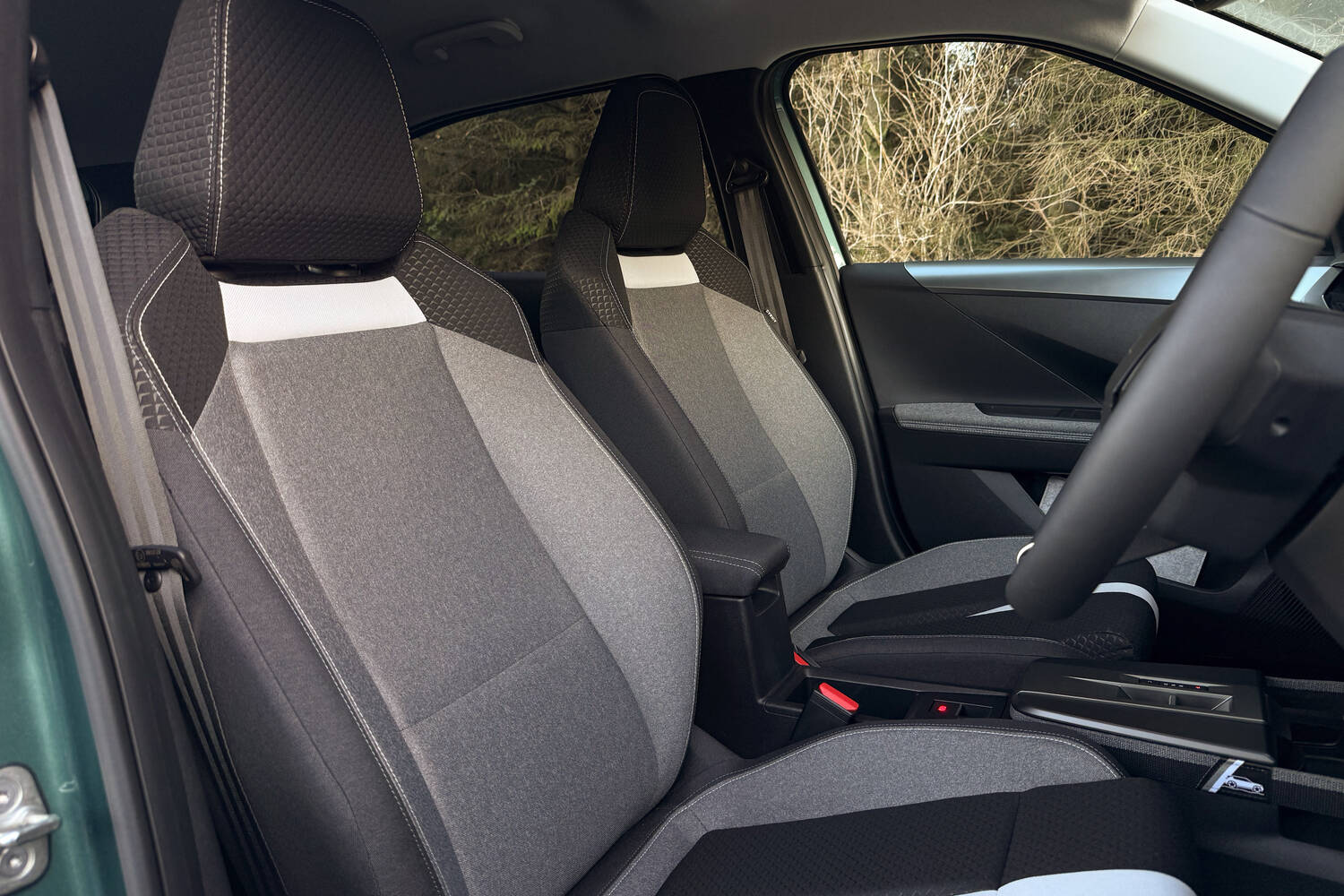
But it's well worth remembering that the most basic Frontera comes with cheap 'black fabric comfort seats' while the Elegance and GS versions come with 'Intelli-Seats.'
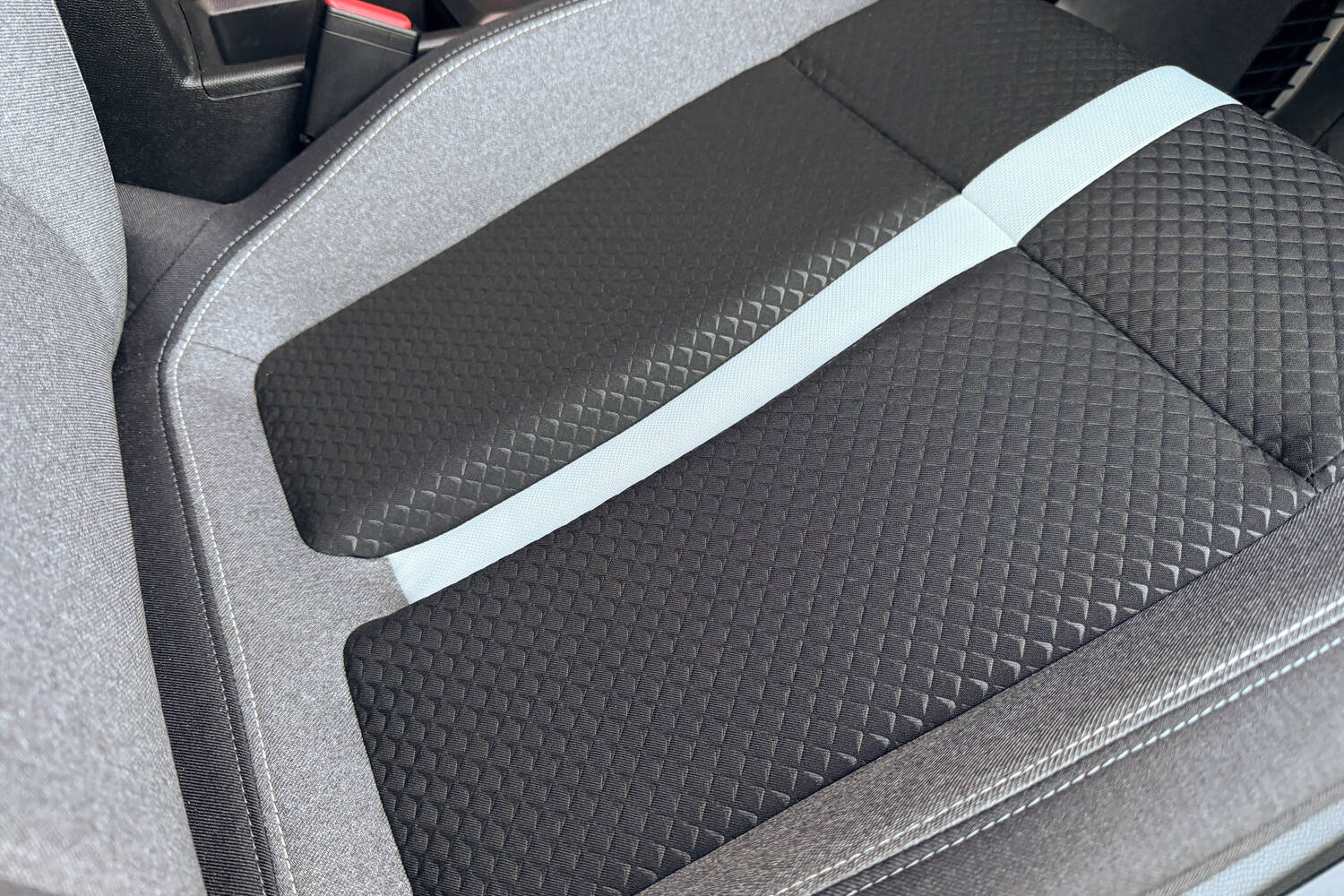
These have been designed in conjunction with Germany's AGR - or Aktion Gesünder Rucken, the national association for bad backs - and they have different layers and thicknesses of foam in different sections for maximum support and comfort.
They even have a split seat base, with a distinct cleft between two sections of the cushion right where your own... err... cleft would be. I'm not going to suggest that this 'lifts and separates' in the manner of a Wonderbra for your bum, but I'm also not going to not suggest that, if you see what I mean.
Certainly, the Intelli-Seats are well worth the cost of the upgrade all by themselves.
Infotainment and technology
In its most basic SC spec, the Frontera doesn't have a touchscreen and follows Dacia's lead with a clamp on the dashboard for your mobile phone, plus a USB socket and the MyOpel smartphone app so that you can use your phone as an integrated touchscreen.
It works quite well to the point where you start to wonder why every car doesn't just use this instead of having a massive, distracting screen in the centre of the dash.
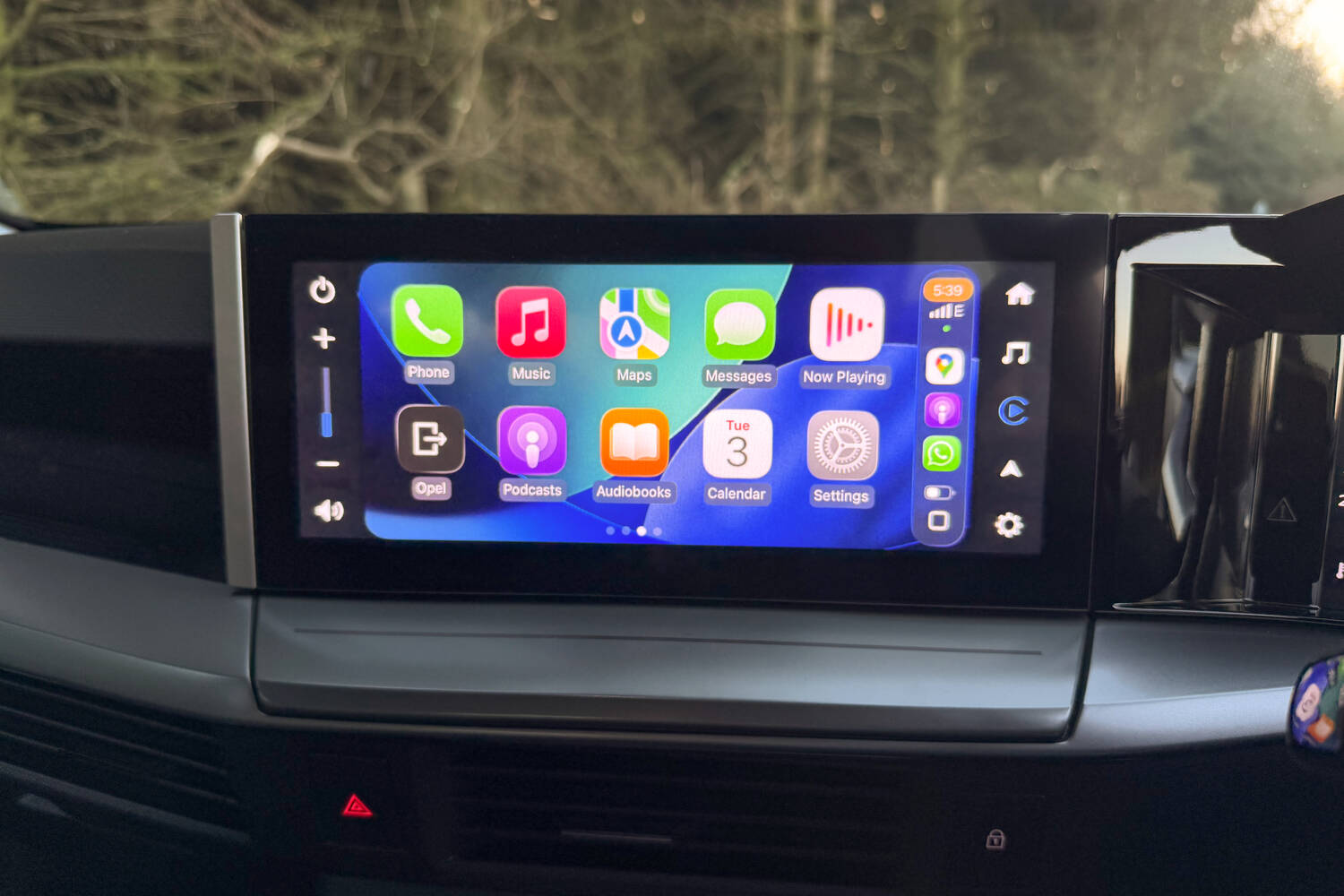
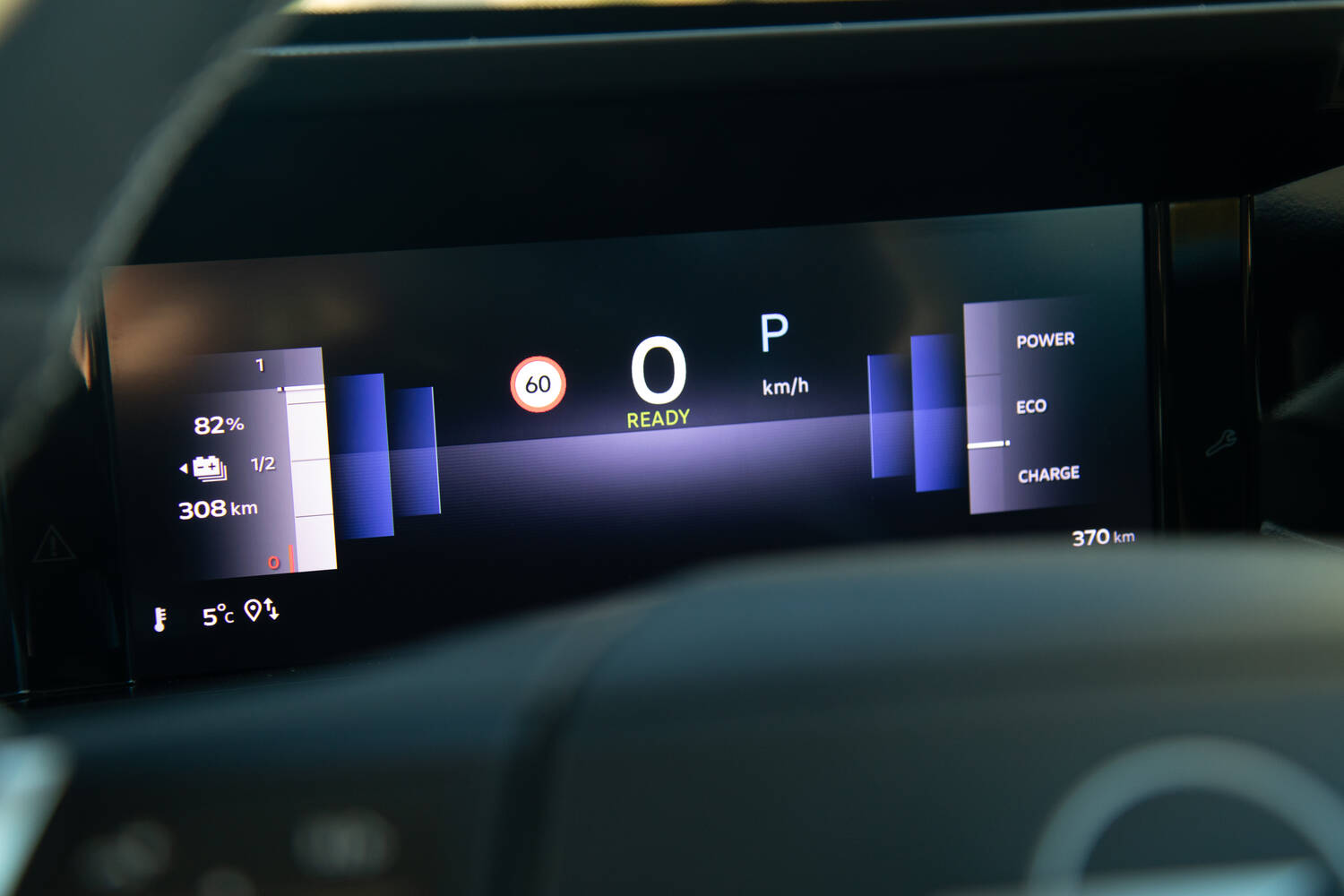
Of course, if you want that, then Elegance and GS models have it, borrowing the twinned ten-inch screens (infotainment and instruments) from the Opel Mokka and the Astra.
These are fine to use, if a touch plain in their designs, and the infotainment menu can occasionally have you wandering in circles looking for the precise function you need, which is no one's idea of a good - nor safe - time.
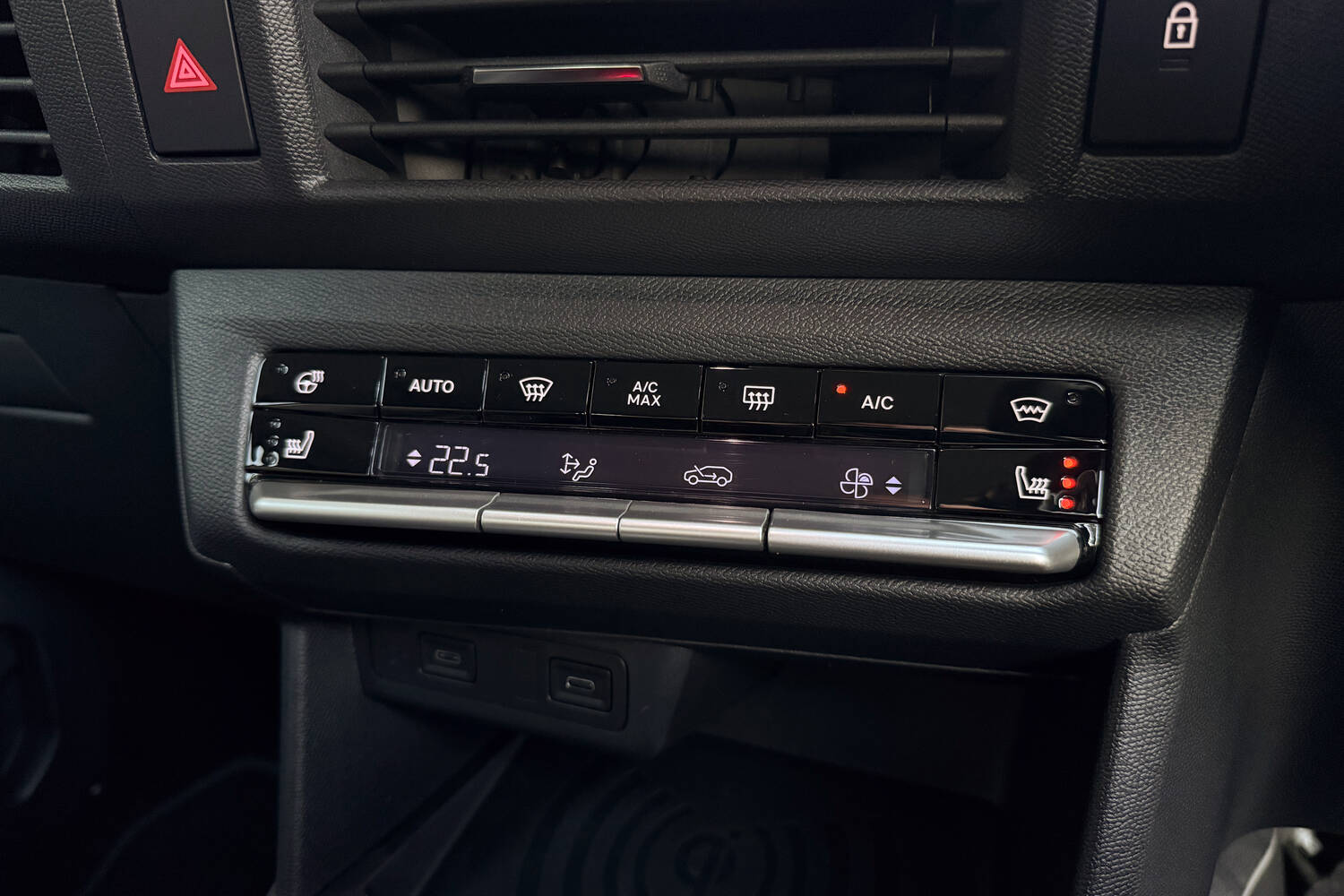
Thankfully, Opel is a sensible enough brand that it sticks with physical buttons to control heating and air conditioning, and there are also proper switches for the heated seats and steering wheel (standard on all but the basic model).
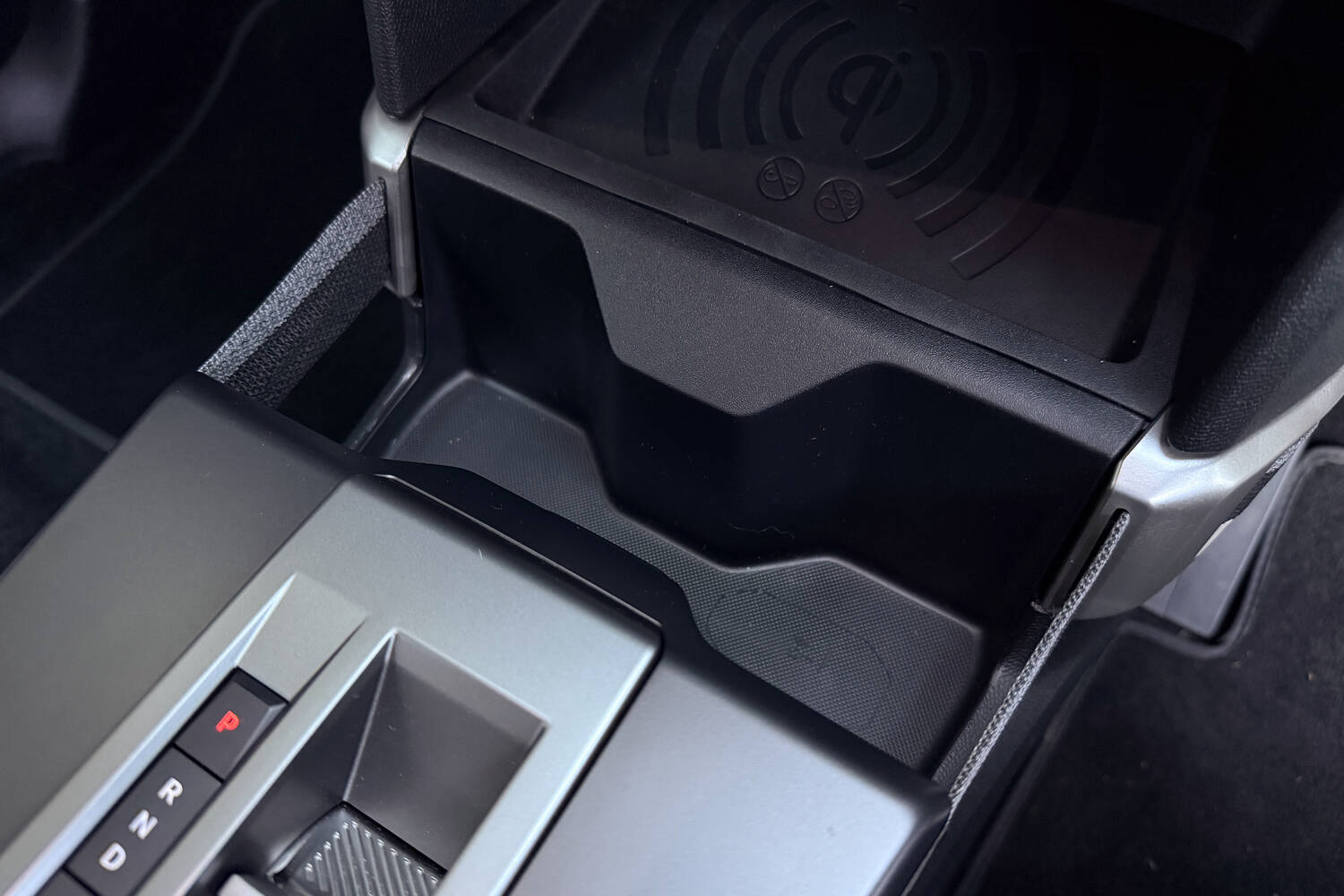
You also get two USB-C sockets up front, and in Elegance and GS models, a wireless phone charger.
There's also Opel Connect as standard for Elegance and GS models, which includes remote smartphone connectivity allowing you to manage charging sessions for the electric versions, look up your car's status and health reports, directly connect to service booking or breakdown assistance and send navigation instructions from your phone to the car's built-in navigation.
Practicality around the cabin
Opel has clearly gone for a bit of Land Rover inspiration in the layout of the Frontera's storage areas, as there's a large, open shelf built into the dashboard, just above the glovebox on the passenger's side, which gets a rubber coating so that items won't slide around in it too much.
Oddly, that storage area is repeated on the driver's side, but because of the instrument panel, it's reduced to tiny proportions, and doesn't get a rubber lining. I reckon you could get a 2000s Motorola Razr flip phone in there, but it would come sliding out at the first enthusiastically taken corner...
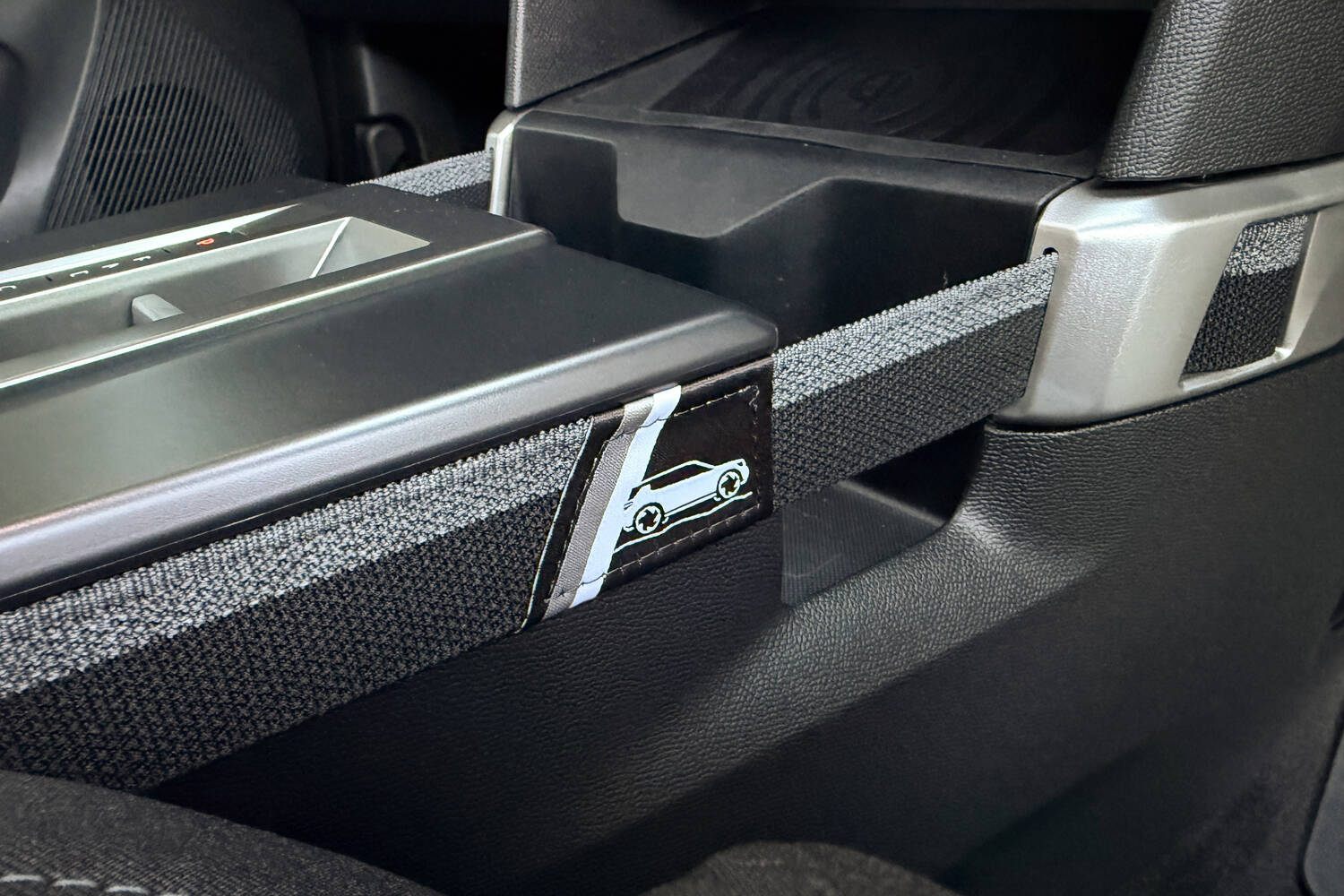
Down on the centre console, there's a pair of large cupholders, which are surrounded by an elastic fabric strap that can be used to hold something like a small laptop or a tablet in place if you need to.
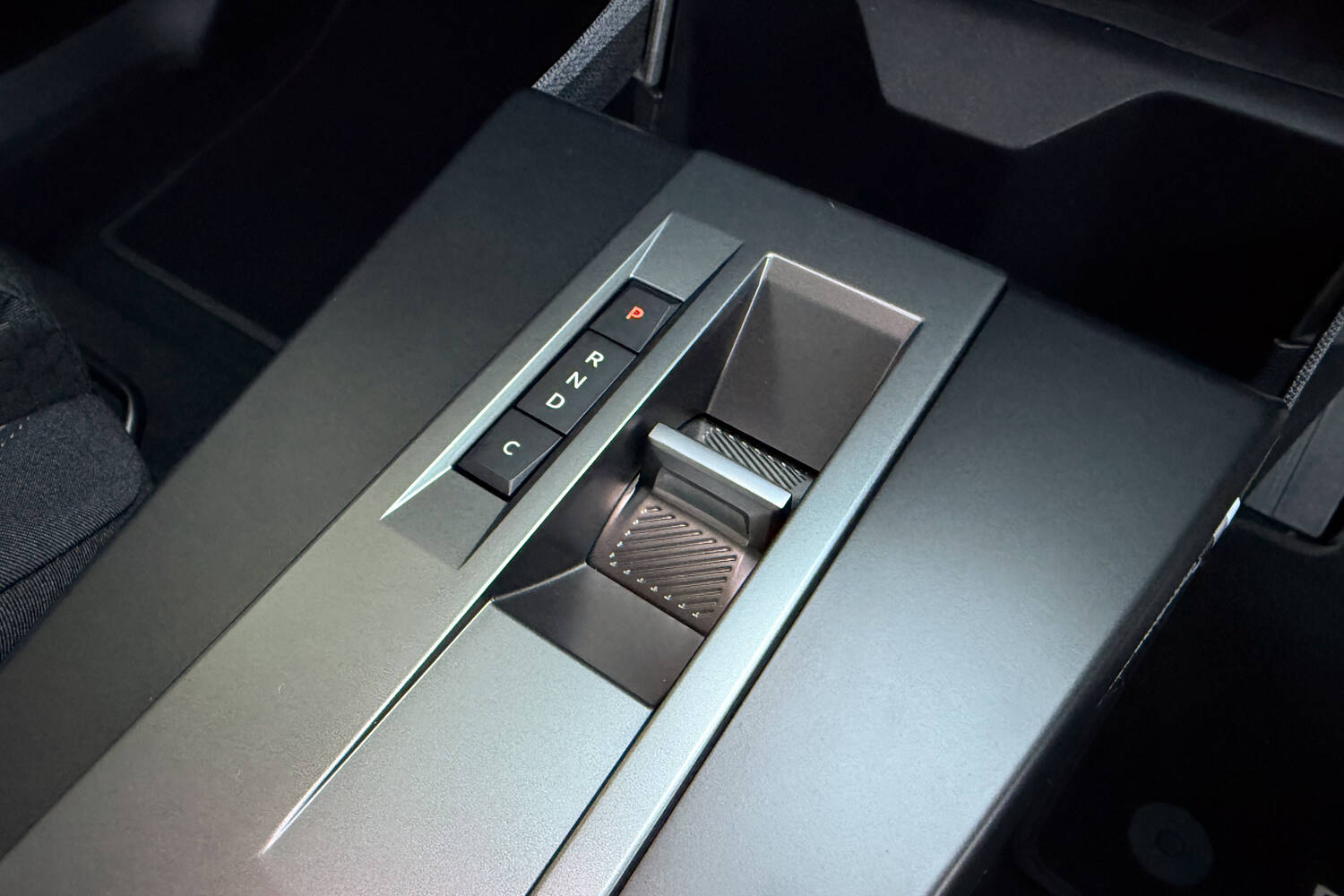
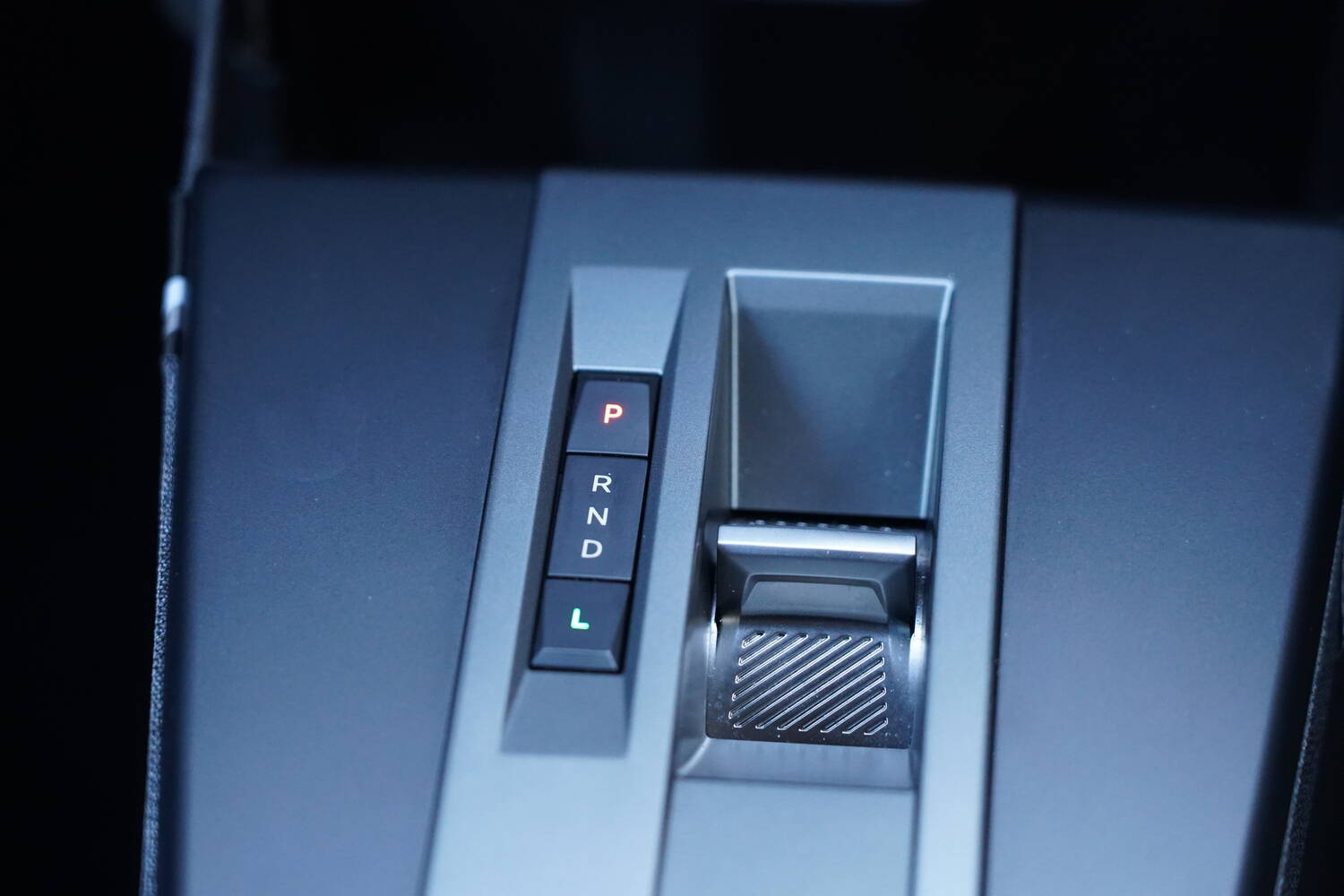
There's a shallow, open storage area just behind the drive selector toggle switch, and an open space at the base of the centre console where you'll find the wireless phone charger in higher spec versions.
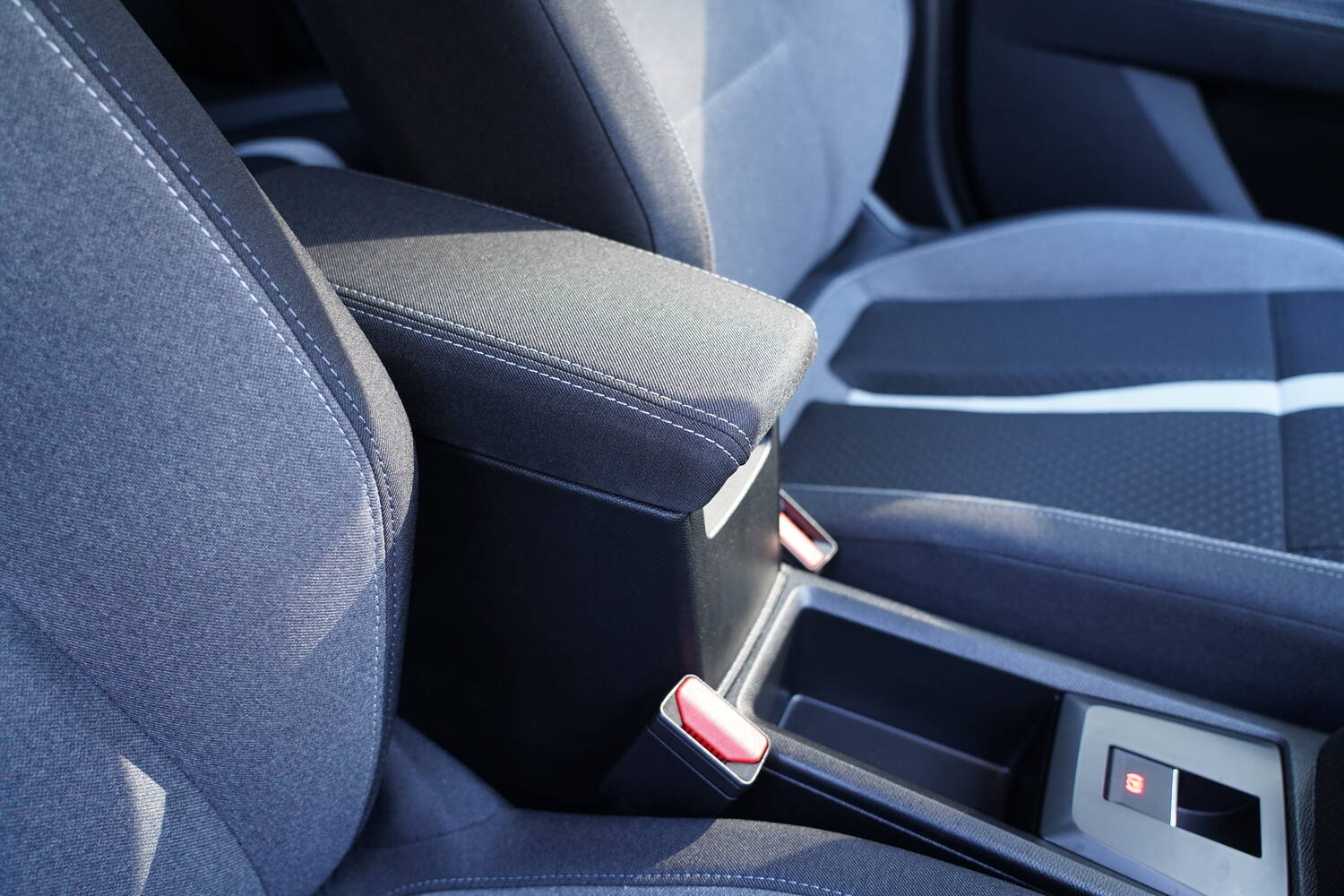
There's also a storage box under the front-seat armrest, but because the Frontera is quite a narrow car, this - and the door bins - are on the small side. The glovebox is so small as to be essentially useless.
Rear-seat passenger space
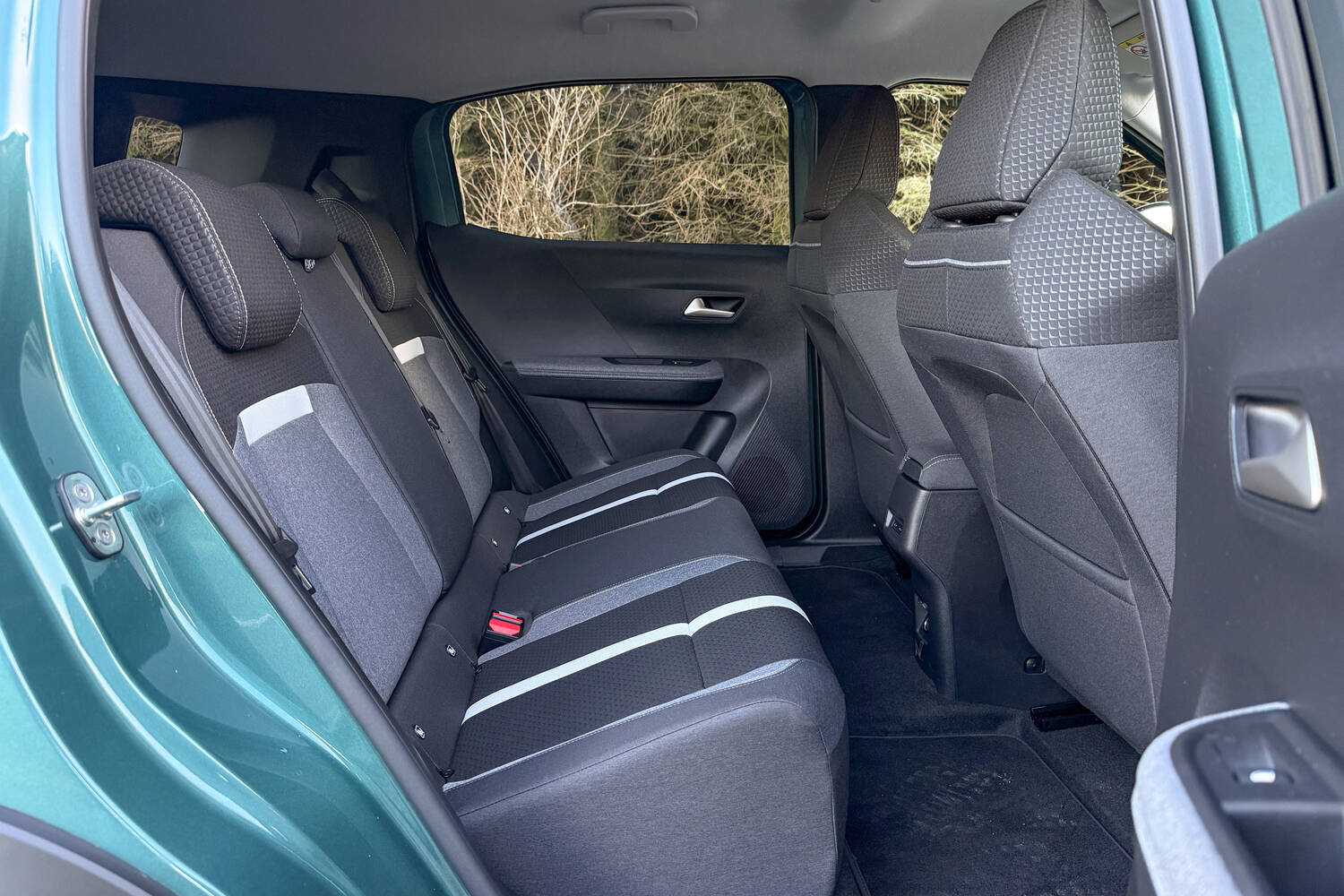
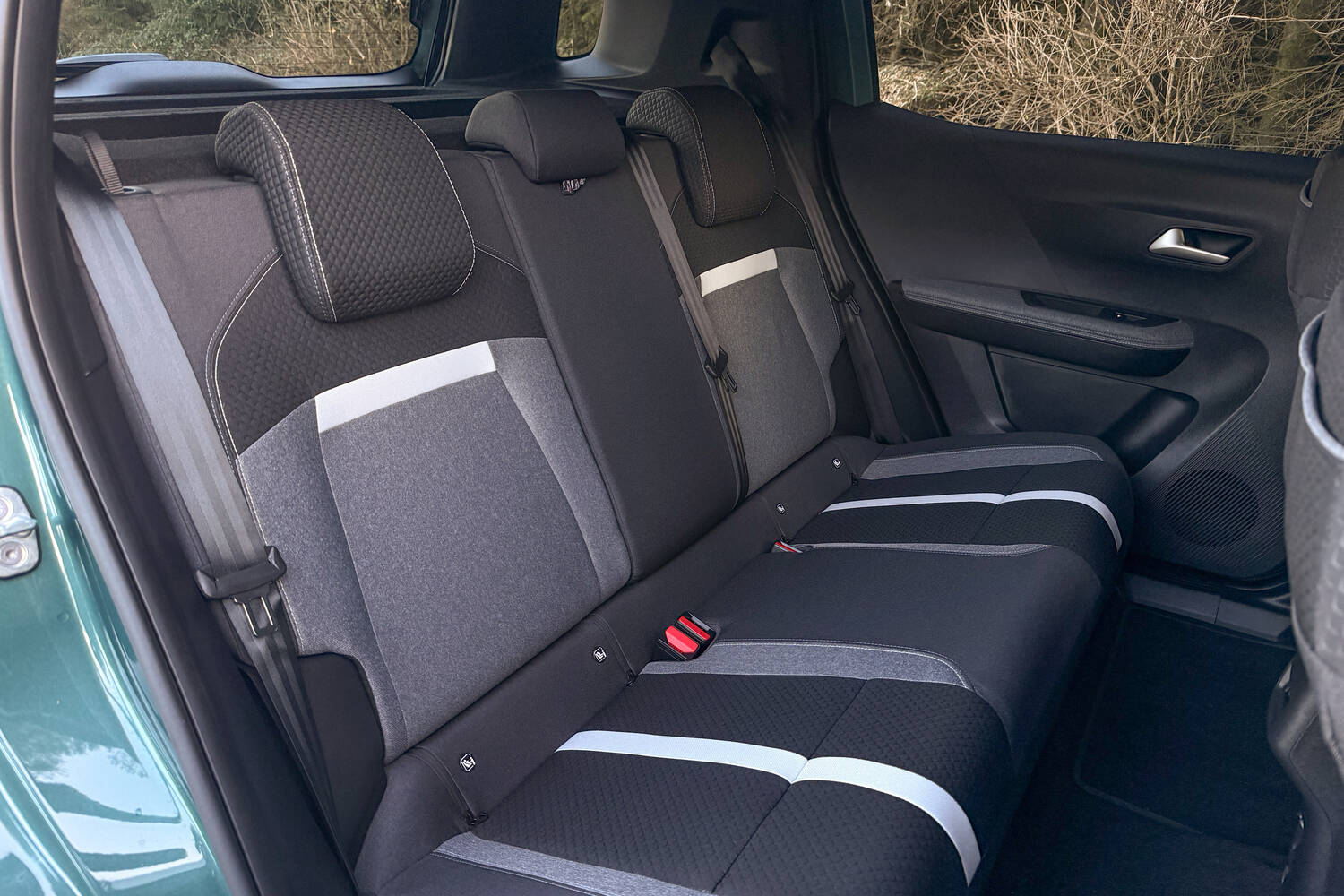
That physical narrowness means the centre rear seat is also quite narrow, so bear that in mind if you need to use the Frontera to its full five-seat capacity.
There is plenty of space in the back though, with copious legroom even for taller passengers, and an equal amount of rear headroom.
The rear seats are also notably firm and supportive, so long journeys shouldn't be too taxing on those sitting in the back.
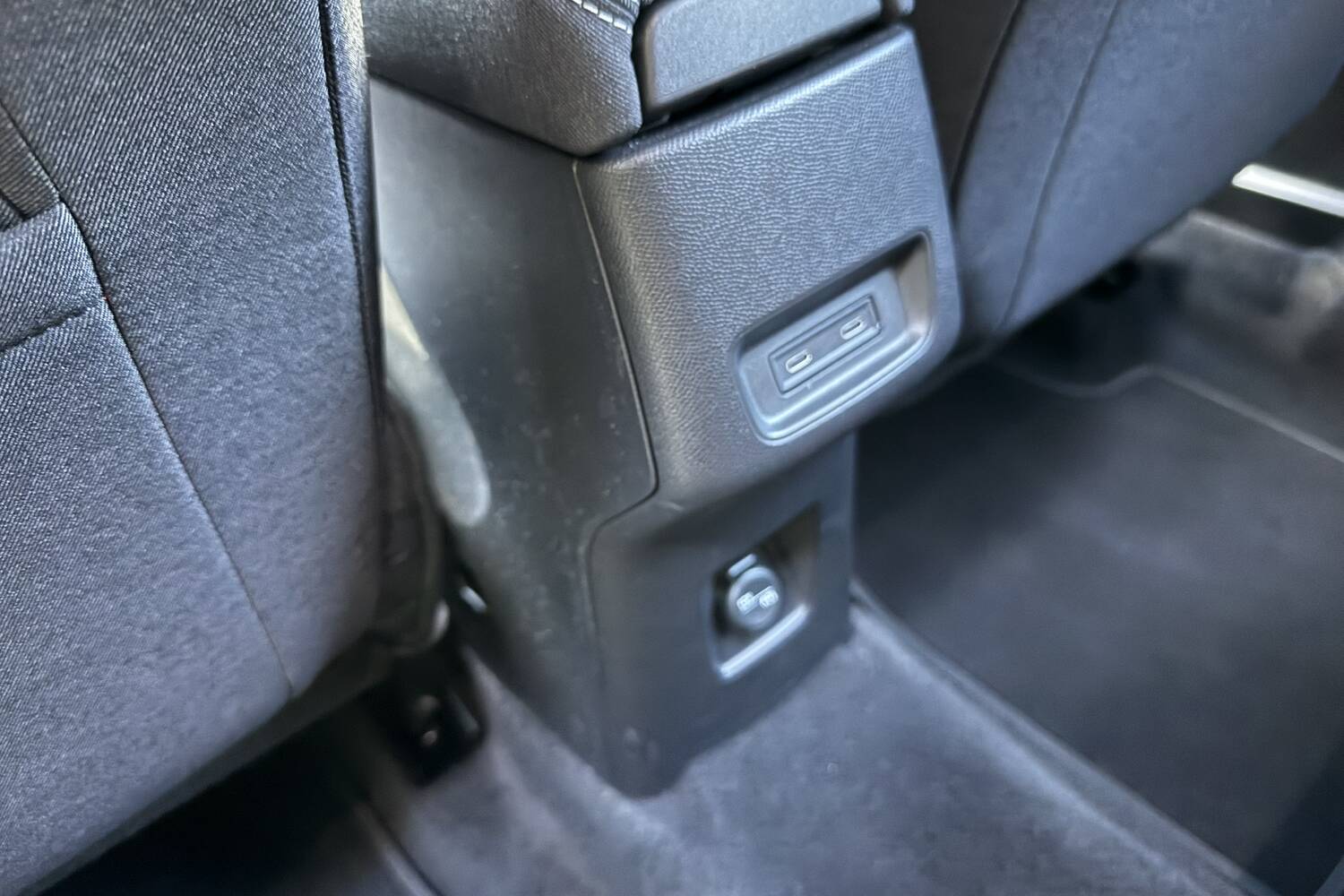
There are handy seatback pockets too, and two more USB-C sockets, along with a 12-volt socket.
There is a seven-seat Frontera option, although it's only available in GS trim (the top spec) and only with either the 110hp or 145hp hybrid - you can't have an electric seven-seat Frontera.
It's effectively a €1,500 option and it's highly debatable as to whether it's worth having the extra seats, as they really are tiny.
Adults simply won't fit, tall teens will complain and only smaller children will be anything like comfortable back there, but there's no room to install bulky child seats or boosters. A definite case of try before you buy.
Fitting child seats to the Opel Frontera
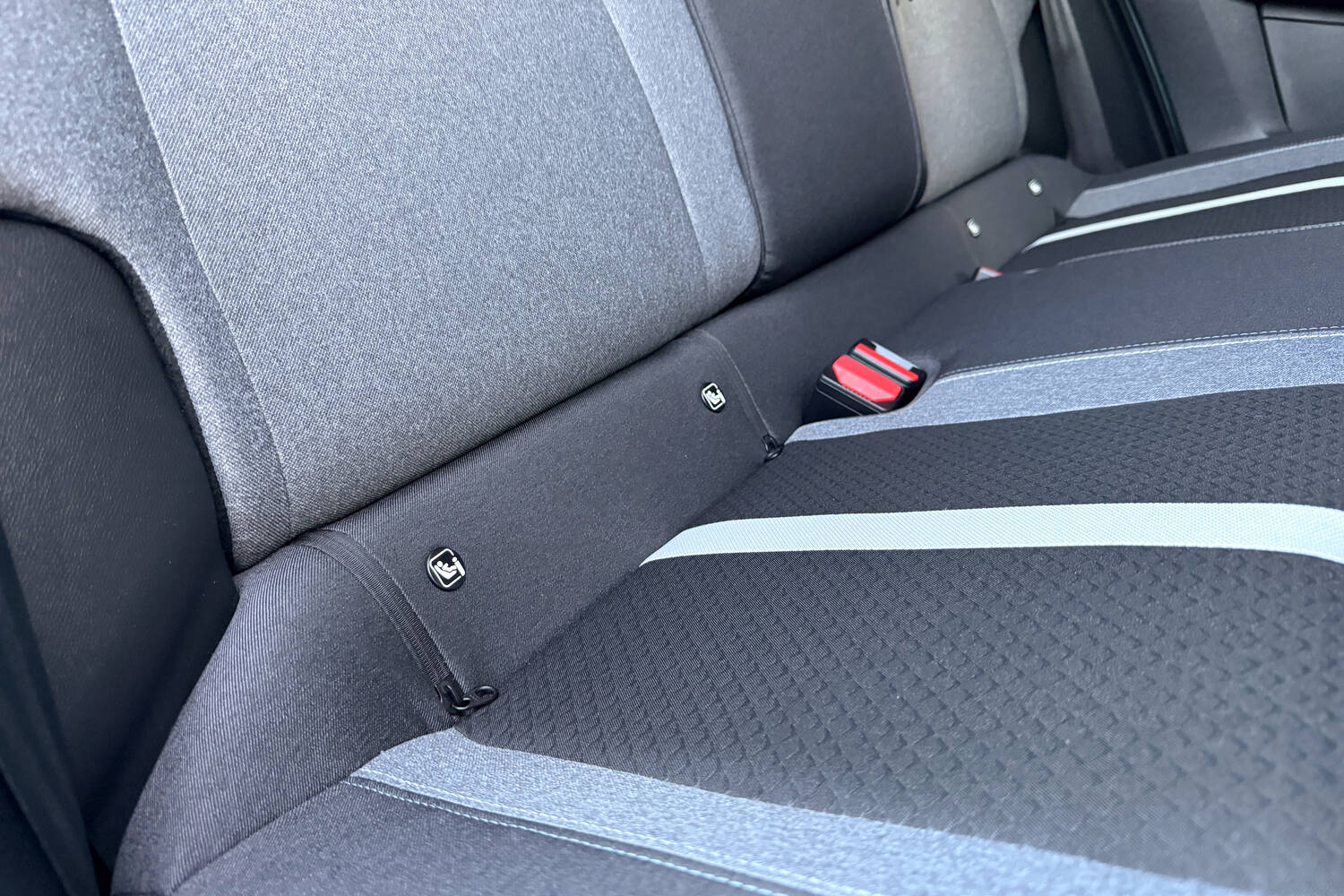
No matter how many seats you have in your Frontera, there are only ever going to be two ISOFIX anchor points, in the outer rear seats (or middle row seats if we're talking about the seven-seat version).
Thanks to the Frontera's roomy rear compartment, fitting even large rear-facing seats shouldn't present a challenge, but just bear in mind that the ISOFIX points are behind fiddly zip-up covers.
Boot space in the Opel Frontera
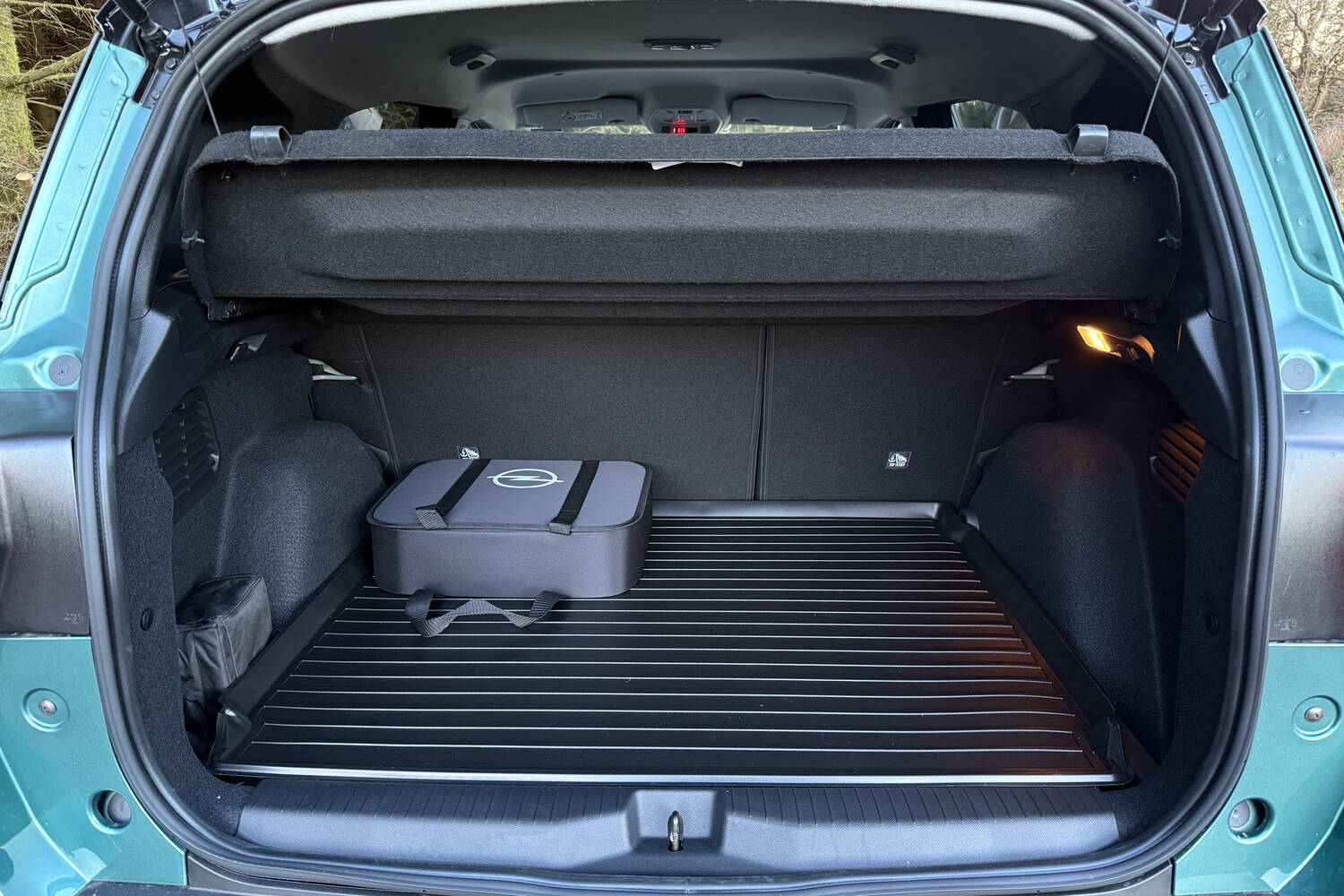
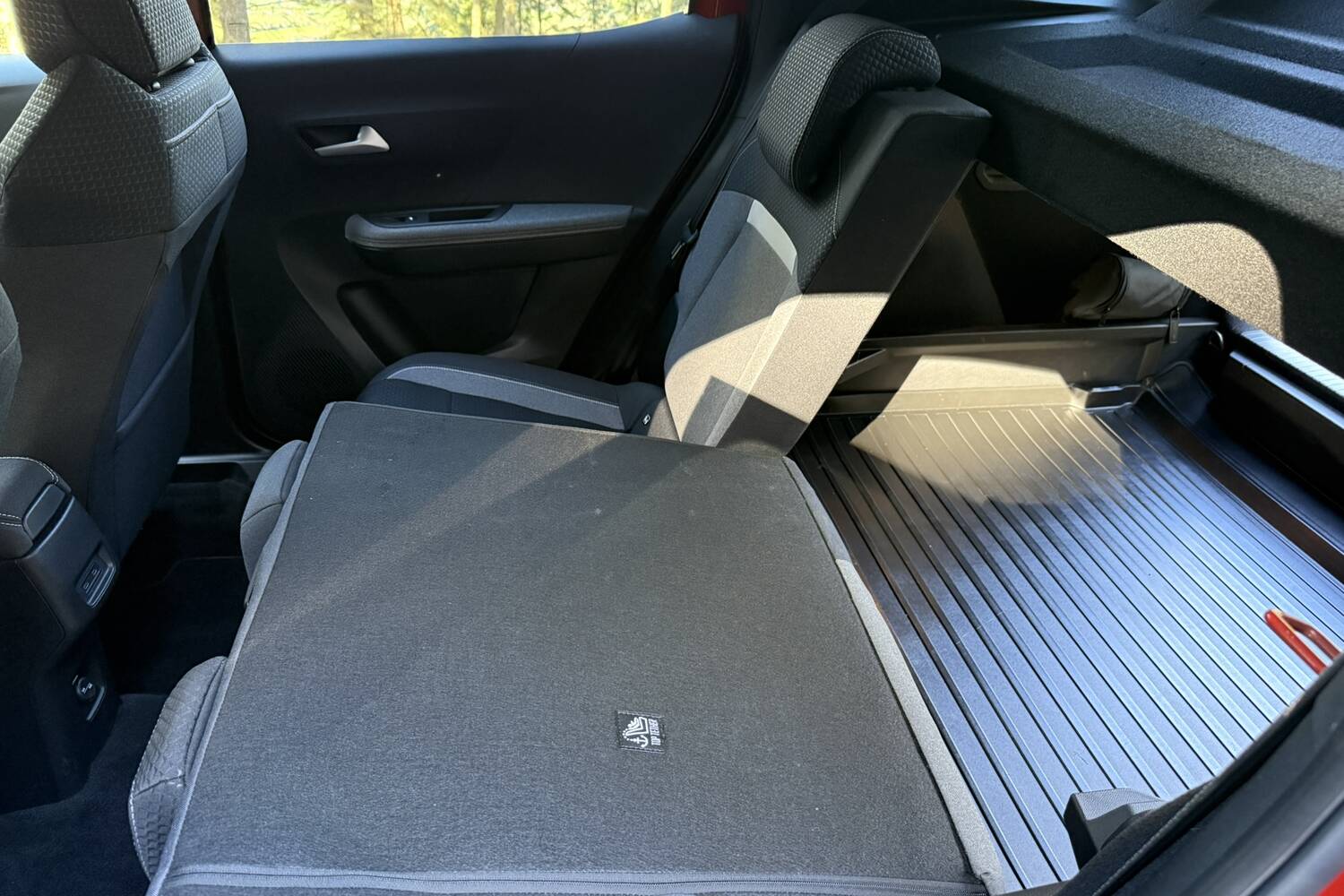
The Frontera's boot space depends on which version you've bought. Both the five-seat fully electric and hybrid versions have the same boot capacity of 460 litres up to the luggage cover, and 1,600 litres if you fold down the back seats.
However, the seven-seat hybrid models have a reduced capacity, with 370 litres up to the luggage cover with the third row folded down, and 1,400 litres with all the rear seats folded flat. With all seven seats in use, boot space falls to a vestigial 40 litres.
In the five-seat versions, the boot floor is adjustable, so you can raise it up to have no loading lip or drop it down to open the full available space. There are some handy moulded-in shopping bag hooks on either side, and some shallow storage areas on each side too.
Towing with the Opel Frontera
The electric Frontera isn't rated for towing, but the hybrid versions can tow up to 1,250kg in five-seat form, or 1,050kg as a seven-seater.
Safety in the Opel Frontera
The Frontera hasn't been assessed for safety by Euro NCAP, and neither have its close cousins from Fiat nor Citroen, so it's a bit hard for us to offer any objective assessment of its safety levels.
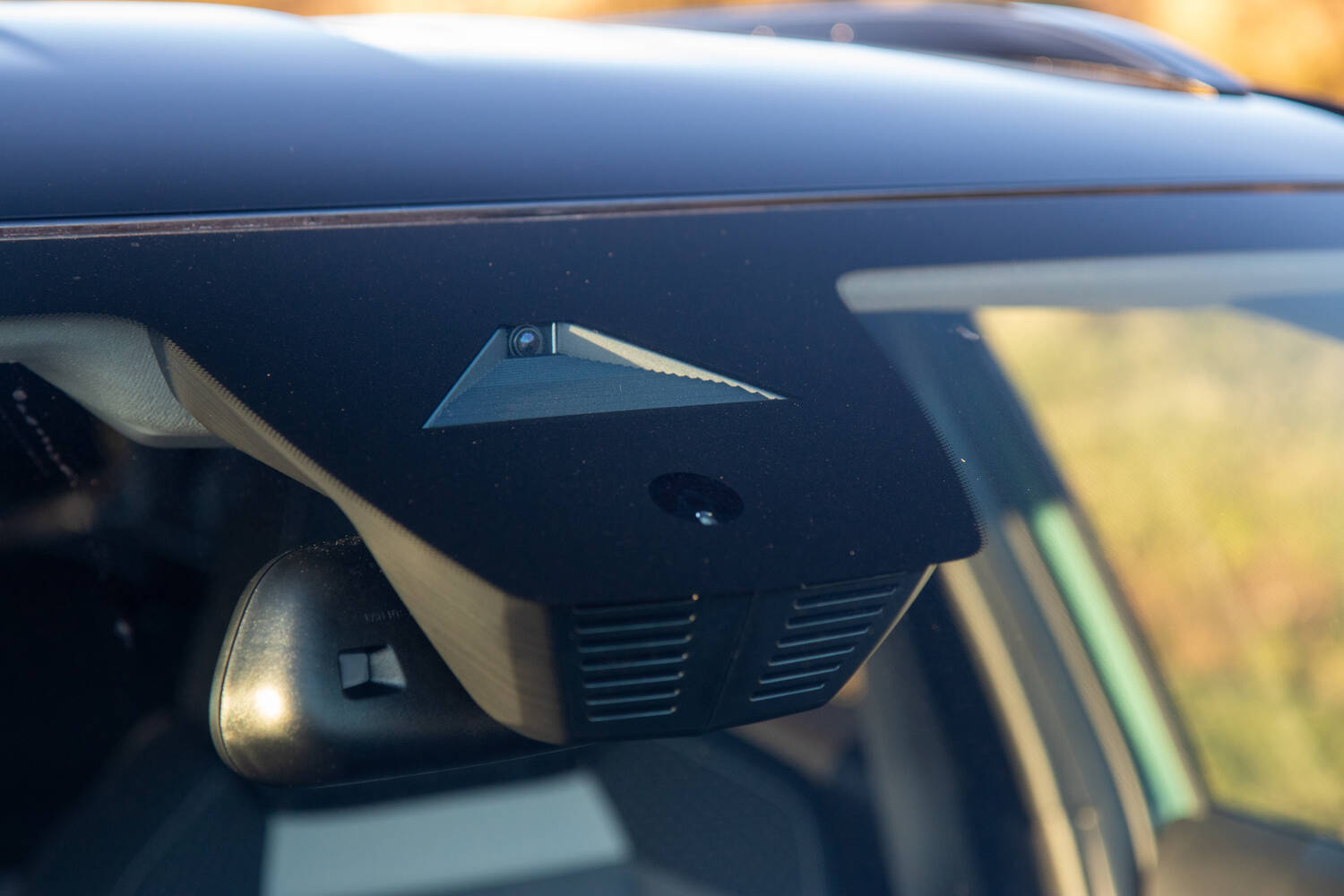
As standard the Frontera comes with rear parking sensors, hill assist, lane keep assist, driver monitoring, cruise control, autonomous emergency braking and speed sign recognition, while a rear-view camera is standard on Elegance and GS versions.
Performance of the 2026 Opel Frontera
- Electric or hybrid options
- Hybrid engine feels a bit wheezy
- Electric model has reasonable range
The Frontera, in electric form, has a mere 113hp from its electric motor which gives only adequate performance. That makes the choice of 110hp or 145hp hybrid better all-rounders in performance terms but as we shall see, there are issues with which to deal there too.
Driving the Opel Frontera Hybrid 145 on Irish roads
Words by Neil Briscoe on 10 November 2026
Of the three cars so far launched on this 'Smart Car' platform from Opel, Citroen and Fiat I reckon that the Frontera is the best of the bunch to drive.
Opel's engineers have excelled themselves on what must have been a tight budget to deliver a car that feels surefooted and reasonably agile, with well-balanced steering.
The Citroen feels looser and less well tied down, while the Fiat has a rougher ride quality (although all three fidget around a bit too much at low speeds). Opel has found the Goldilocks zone for this platform.
However, while the comparison is good for Opel, the rest of the performance isn't so great in broader terms. The Frontera is almost surprising in how dynamically good it is by cheap car standards, but it's still lacking anything in the way of driver engagement or enjoyment, so longer journeys are dull in the extreme.
Equally, this 1.2-litre hybrid engine is rapidly approaching its sell-by date, with a wheezy, gruff noise under acceleration. The 145hp version's power output feels less smothered in the relatively light Frontera than it does in the bigger Opel Grandland, but even so it's not what you'd call rapid, and there is an occasional, but distinct, 'shunting' sensation as the Frontera's electronic systems juggle petrol and electric power, not helped by the hesitant responses of the six-speed automatic gearbox.
For a basic car, the Frontera is perfectly OK to drive, but it's not going to light anyone's fire, and the engine itself is a definite weak point.
Driving the Opel Frontera Electric 54kWh on Irish roads
Words by Shane O' Donoghue on 10 November 2026
As Neil alluded to, the Frontera drives better than expected, certainly at the price point. That carries through to the electric model as well, which initially feels like it has steering that's too heavy, but on the open road it works well.
The chassis itself deals well with poor Irish road surfaces and bumps, too, and is generally quite composed. Sure, it's not particularly interesting to drive, but neither is it a damp squib of a car. For its place in the world, it's better than adequate, that's for sure.
Now, the body control isn't amazing on really undulating country roads, but the suspension is notably absorbent, which makes the Frontera really comfortable no matter what's going on down at the tyres' level.
On the flip side, there is quite a bit of road noise and wind noise, and you do sense that the car isn't as well-isolated from the outside world as more expensive cars might be, but I guess there has to be some payback for the low price.
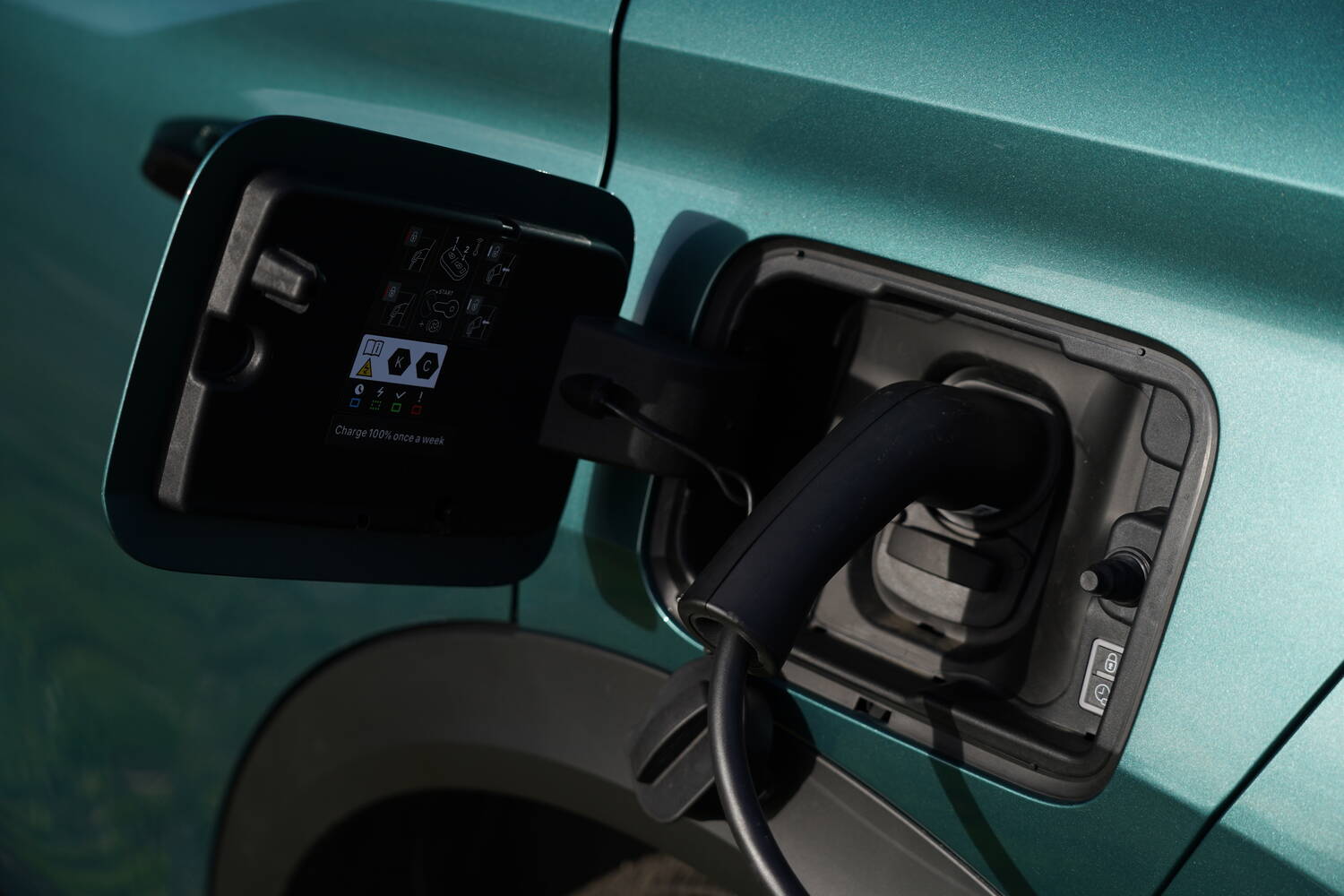
Likewise, we're used to seeing various drive modes to choose from in virtually all new cars, but the Frontera has none. The one adjustment available is to the strength of the brake energy regeneration. Press the "C" button next to the drive selector and it reduces the effect, perhaps standing for "coasting". I certainly prefer that setting as it feels more natural.
The GS-spec car I drove had the same excellent seats and steering wheel that Neil describes, and they're worth the upgrade for sure.
Fuel economy, electric range, and running costs of the 2026 Opel Frontera
- Hybrid can be thirsty
- Decent real-world electric range
- Needs bigger battery option
The Frontera range is divided, simply, in two with two electric options on one side - medium range and longer range - and two hybrid options on the other - lower power and middling power.
Official emissions, electric range, efficiency and fuel economy
Officially, both the 110hp and 145hp versions of the Frontera's 1.2-litre hybrid petrol engine return the same fuel consumption on the WLTP test - 5.3 litres per 100km - and are separated by a single gramme per kilometre in terms of emissions at 119g/km and 120g/km.
The electric versions use two different batteries. The basic models use a 44kWh lithium-iron phosphate (LFP) battery for an official range of up to 303km, while the longer-range version uses a 54kWh nickel-manganese-cobalt (NMC) battery for a range of up to 408km.
The smaller battery has quoted energy consumption of 18.3kWh/100km, while the larger battery manages a better 16.1kWh/100km.
Real-world fuel economy and range of the 2026 Opel Frontera
Real-world economy in the Frontera hybrid is only average. While that official 5.3 litres per 100km is achievable if you're really careful, anything like enthusiastic driving, or long motorway runs, will soon see that on the less-than-sunny side of 6.0 litres per 100km.
In our test we averaged 6.4 litres per 100km overall, which isn't great for what is quite a compact car, designed for families buying on a budget.
The electric versions of the Frontera fare better. The smaller battery should give you a real-world 250km of range, although that will be affected by colder weather, while the bigger battery version should push that useable day-to-day range north of 300km.
Charging up the Opel Frontera Electric
Neither of the electric versions of the Frontera has what you'd call exceptional charging abilities. The maximum DC charging rate is 100kW, although thanks to the compact sizes of the two batteries, that should mean you need no more than 24-28 minutes for a 20 to 80 per cent top-up.
On a home charger, you'll need between six and seven hours for a full charge, making the Frontera potentially very night-rate friendly.
The maximum AC charging speed is a useful 11kW allowing you to make best use of three-phase kerbside charging points.
Servicing the Opel Frontera
Opel recommends a first-year inspection of the Frontera after 12,500km and then a service every two years or 25,000km.
Opel warranty
The Frontera comes with an impressive five-year, 200,000km warranty as standard, and the electric versions come with an additional eight-year, 160,000km warranty for the battery pack, guaranteeing it against a drop below 70 per cent of its original charging capacity in that time.
There's also a three-year, 100,000km paint warranty, and a 12-year unlimited mileage warranty against corrosion and perforation.
Interestingly, Opel also specifies a five-year, 60,000km warranty on wearing parts such as shock absorbers and the clutch for manual models, alongside a 24-month warranty for the 12-volt starter battery, and a 12-month warranty for the teeny-tiny battery in the key fob. There's also three years of breakdown and roadside recovery.
Irish pricing & rivals to the 2026 Opel Frontera
- Electric versions the best-priced
- Highest-spec takes the Frontera to €35k
- Good value, but rivals offer more style
That the Frontera is well-priced is an unavoidable fact. For the €24,606 asked - inclusive of incentives - for the basic 44kWh electric model in SC spec, you're getting a lot of car with lots of space and just-about enough useable daily range.
However, in SC form you're also getting a very basic car indeed - no touchscreen, no heated seats or steering wheel, no wireless phone charging, no rear-view camera, no rain-sensing wipers, basic seats, basic air conditioning, not even a front seat armrest.
To get any of those items, and more, you need to upgrade to the Elegance or GS models, and that quickly pushes the entry price up to €27,136 for the small-battery electric Frontera in Elegance form, or €29,197 in GS trim.
The most affordable hybrid version, with 110hp, is €27,995 in SC form, €31,195 in Elegance and €33,395 in GS spec, with a €1,000 step-up for the 145hp hybrid.
The most expensive Frontera you can buy is a €35,895 GS 145hp hybrid with seven seats, at which point the Opel is starting to look like poor value.
As far as rivals are concerned, obviously the closest rival is the Citroen C3 Aircross and electric e-C3 Aircross, which is mechanically identical under the skin, and which has similar pricing.
You could take the Fiat Grande Panda as a rival too, but that's a smaller car related to the more hatchback-like Citroen C3, a car for which Opel currently has no match. Fiat's incoming Grizzly SUV will be a more direct competitor from within the Stellantis group.
Looking outside, there's kind of a three-way battle between the Frontera and about half the Dacia range. The compact Duster is a rival to the cheaper five-seat Frontera, the seven-seat Jogger takes on the seven-seat Opel, and the impressive Bigster is a rival to higher-spec models (although currently Dacia has no answer to the all-electric Frontera).
MG's sharply priced ZS Hybrid+ is also a strong competitor in this segment, while more compact (and less roomy) electric cars such as the Kia EV2 and Renault 4 E-Tech could also be taken as rivals.
Verdict - should you buy the 2026 Opel Frontera?
The Frontera is a solid enough car if what you need is maximum space at an affordable price. If you're not ready to go electric, then the hybrid versions offer a useful alternative, but just be aware of the price gap between the electric and hybrid models.
The Frontera isn't what you'd call an inspiring car - it barely qualifies as interesting - but it's a decent value-based choice for families on a budget.
FAQs about the 2026 Opel Frontera
What Frontera powertrains are available?
The Opel Frontera comes with a choice of electric power (either a 44kWh battery with a 303km range, or a 54kWh battery with a 408km range) or a hybrid 1.2-litre petrol engine, which comes with either 110hp or 145hp.
What's the real-world range and charging speed of the electric Frontera?
Depending on whether you go for the small or bigger battery, the Frontera has a real-world range of between 250km and 300km, while its 100kW DC charging capability means you can top it up from 20 to 80 per cent in under 30 minutes, theoretically.
How big is the Frontera's boot?
There's up to 460 litres of luggage space in the Frontera, and 1,600 litres if you fold the back seats down, although the seven-seat versions have slightly less capacity.
Want to know more about the 2026 Opel Frontera?
If there's anything about the new Opel Frontera we've not covered, or you'd like help in choosing between it and other cars, you can avail of our expert advice service via the Ask Us Anything page.