

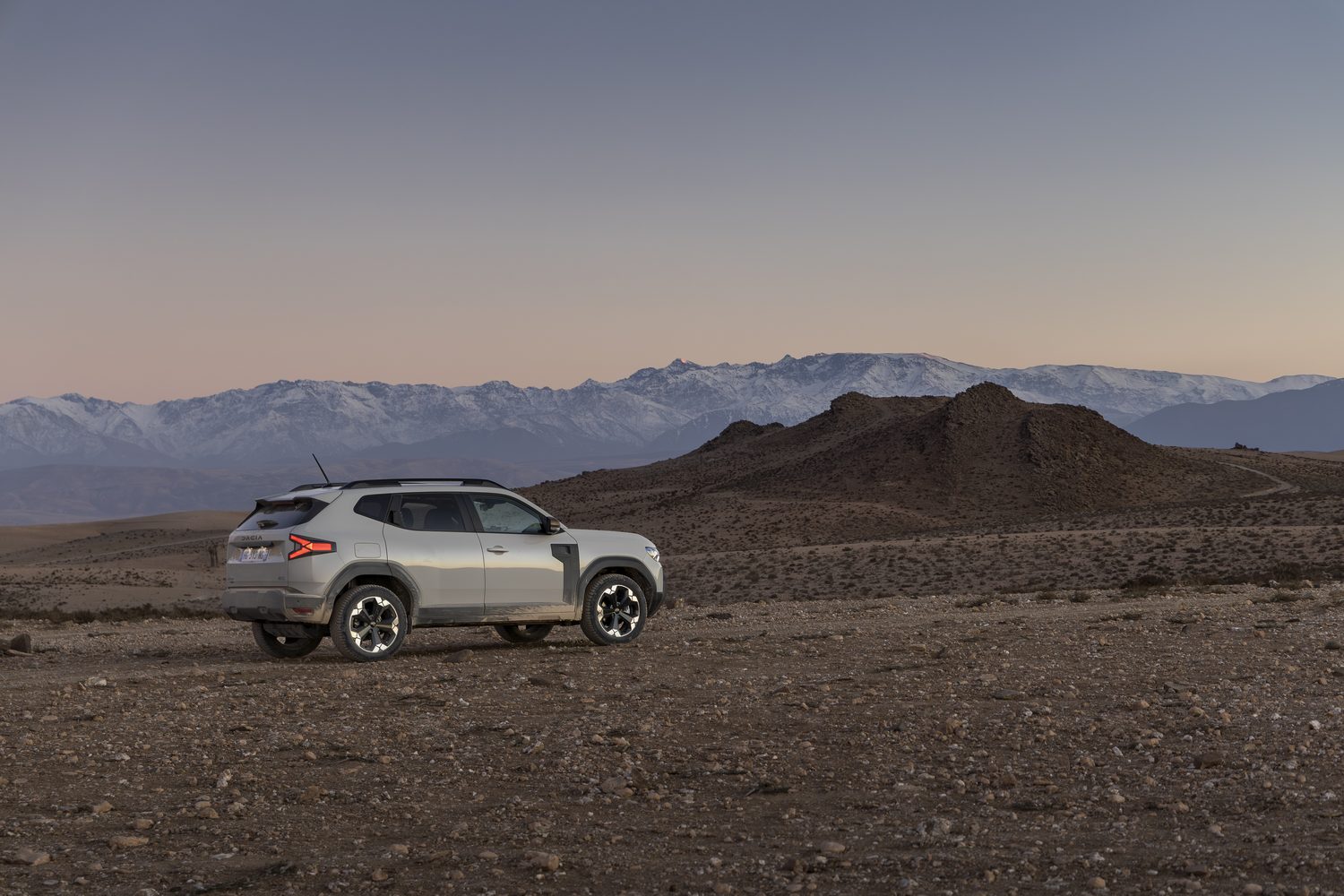


Exterior & design of the 2026 Dacia Duster
- Extreme spec gets a different bumper
- Smart roof rail system
- 'Starkle' plastic cladding

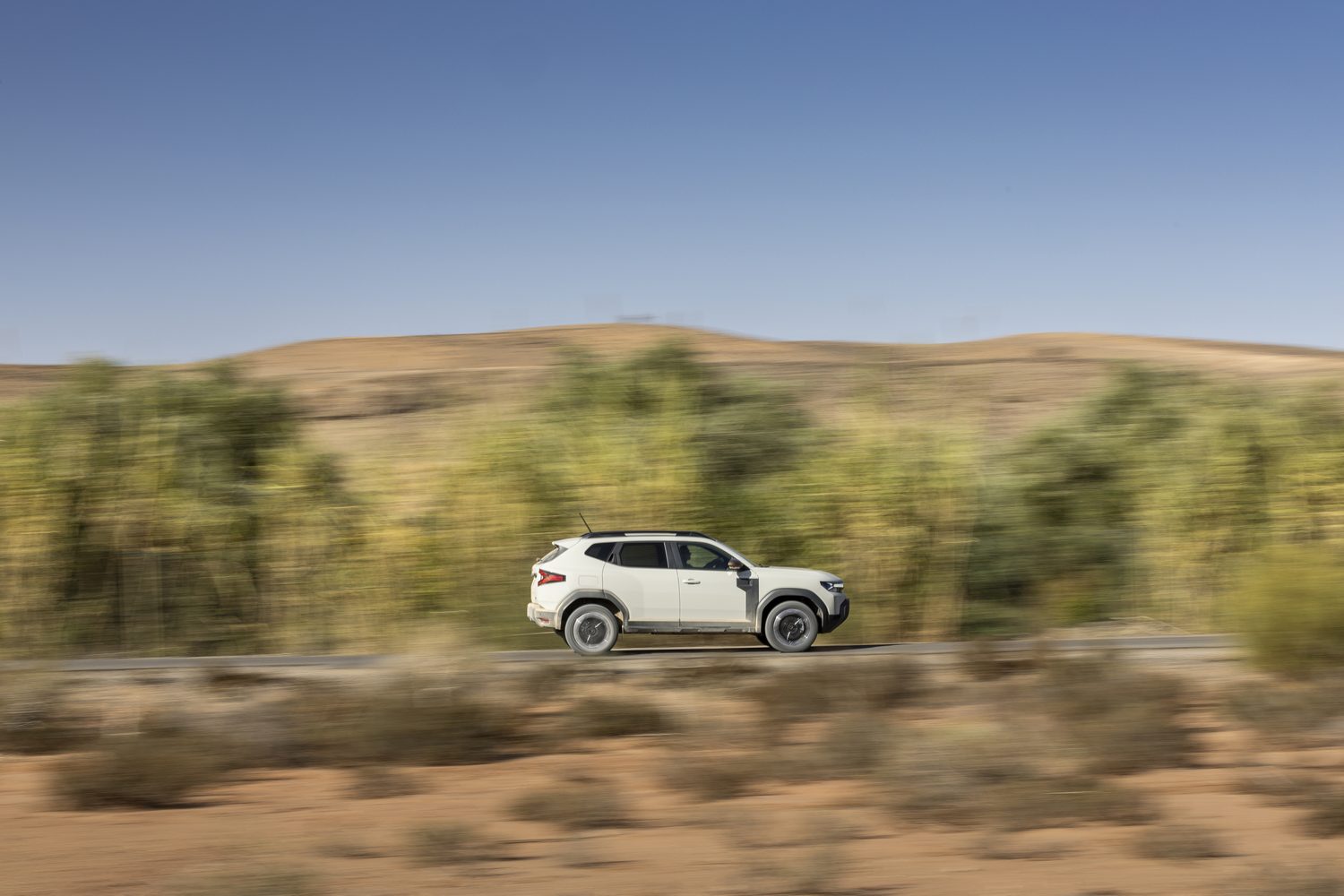
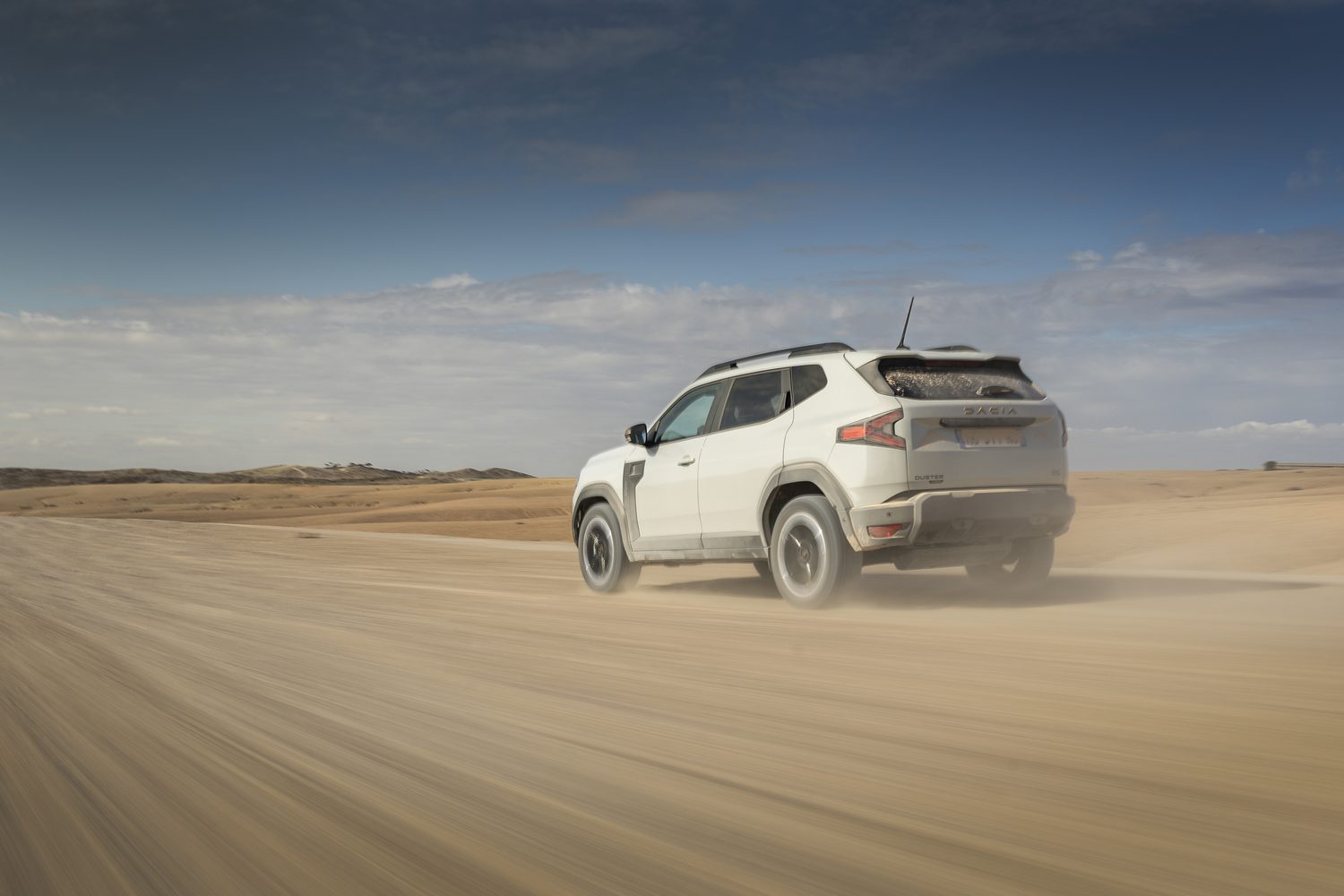
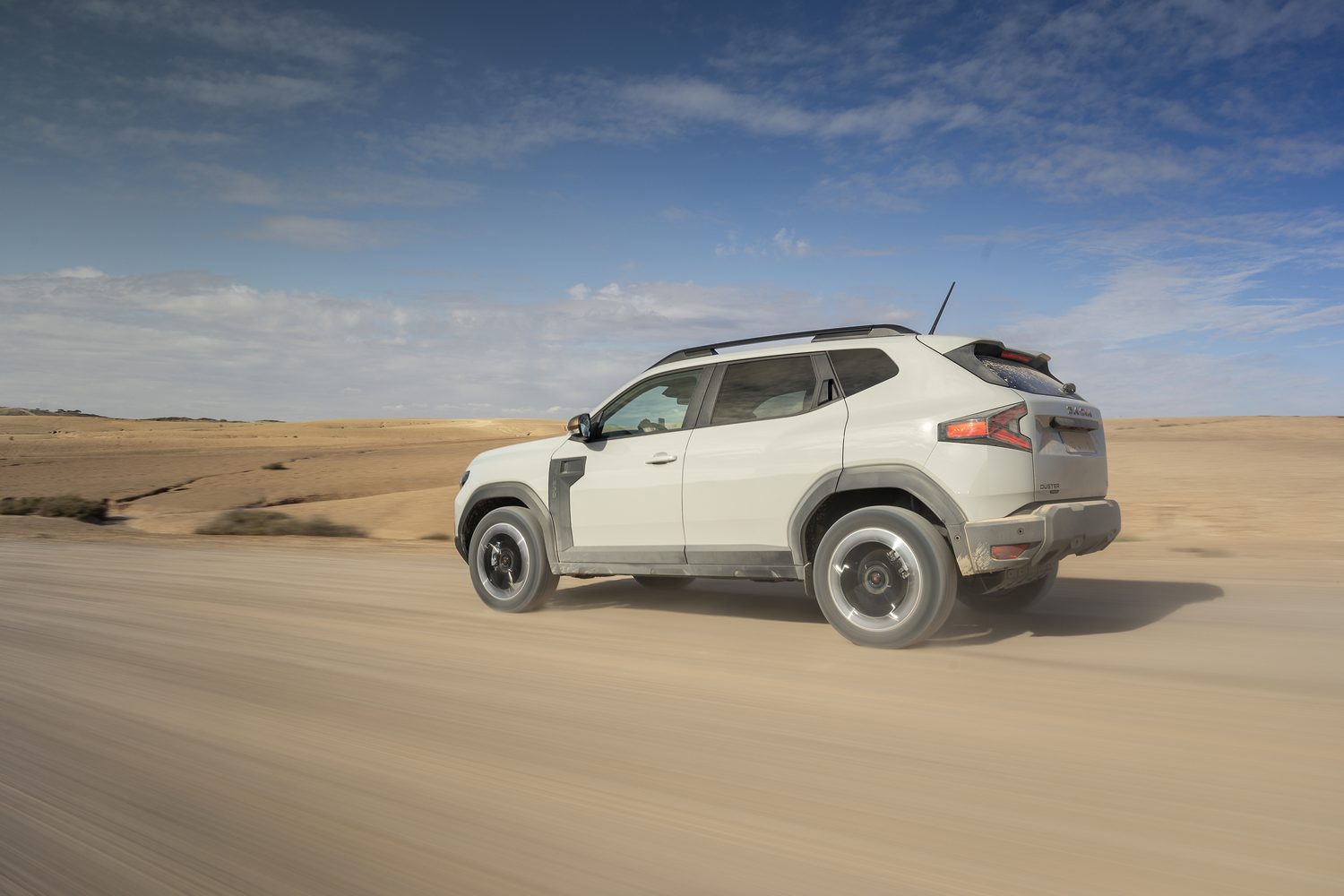
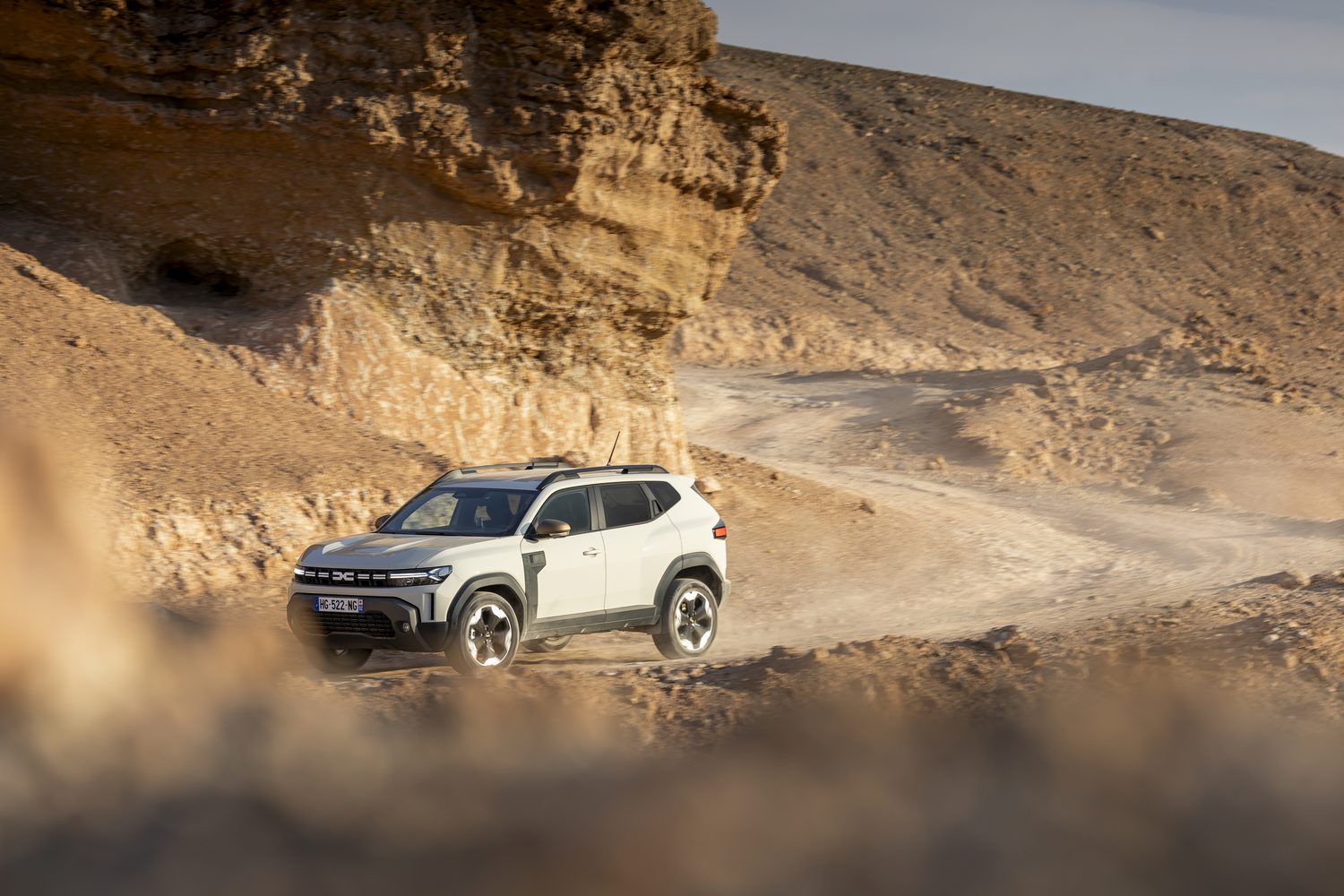
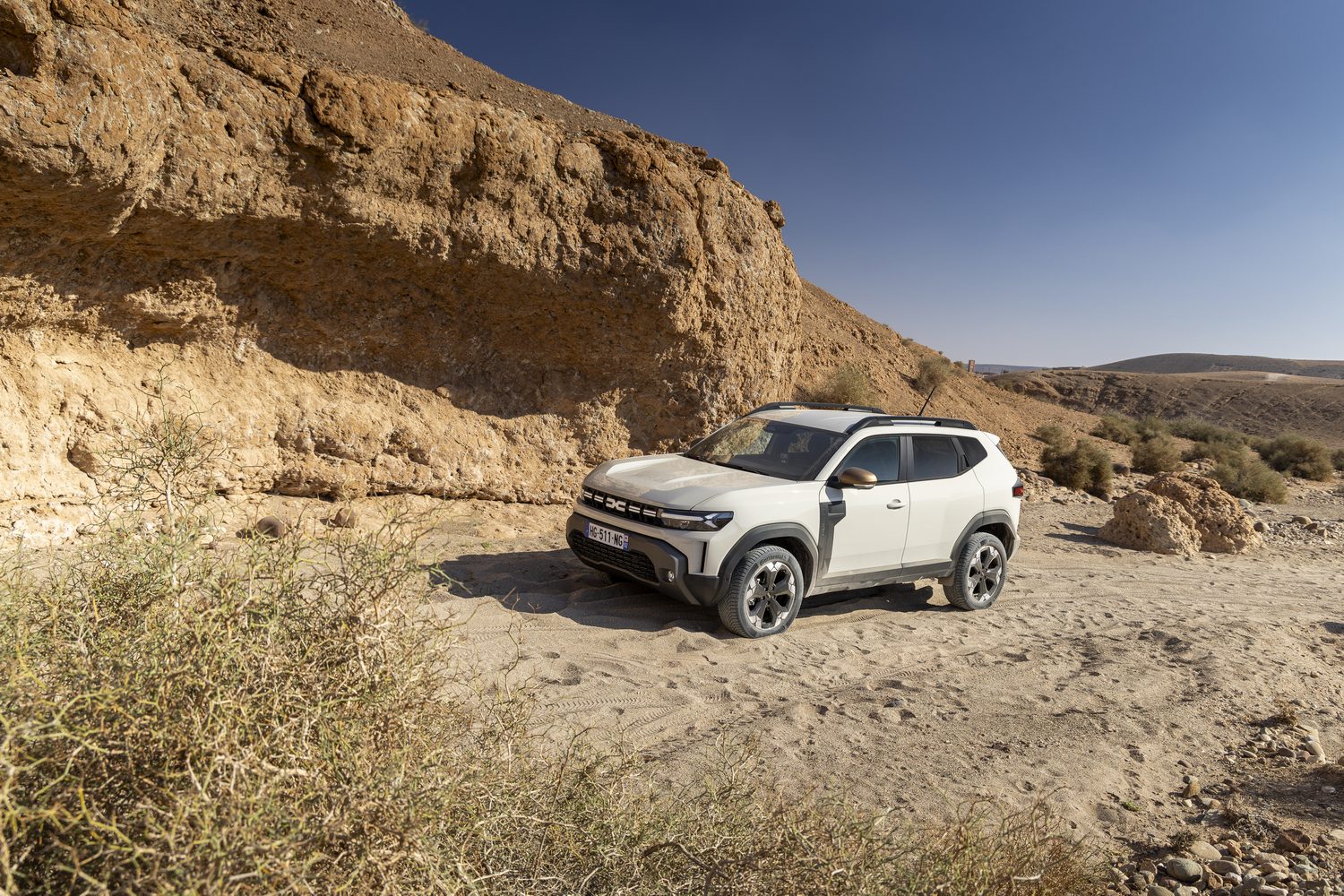
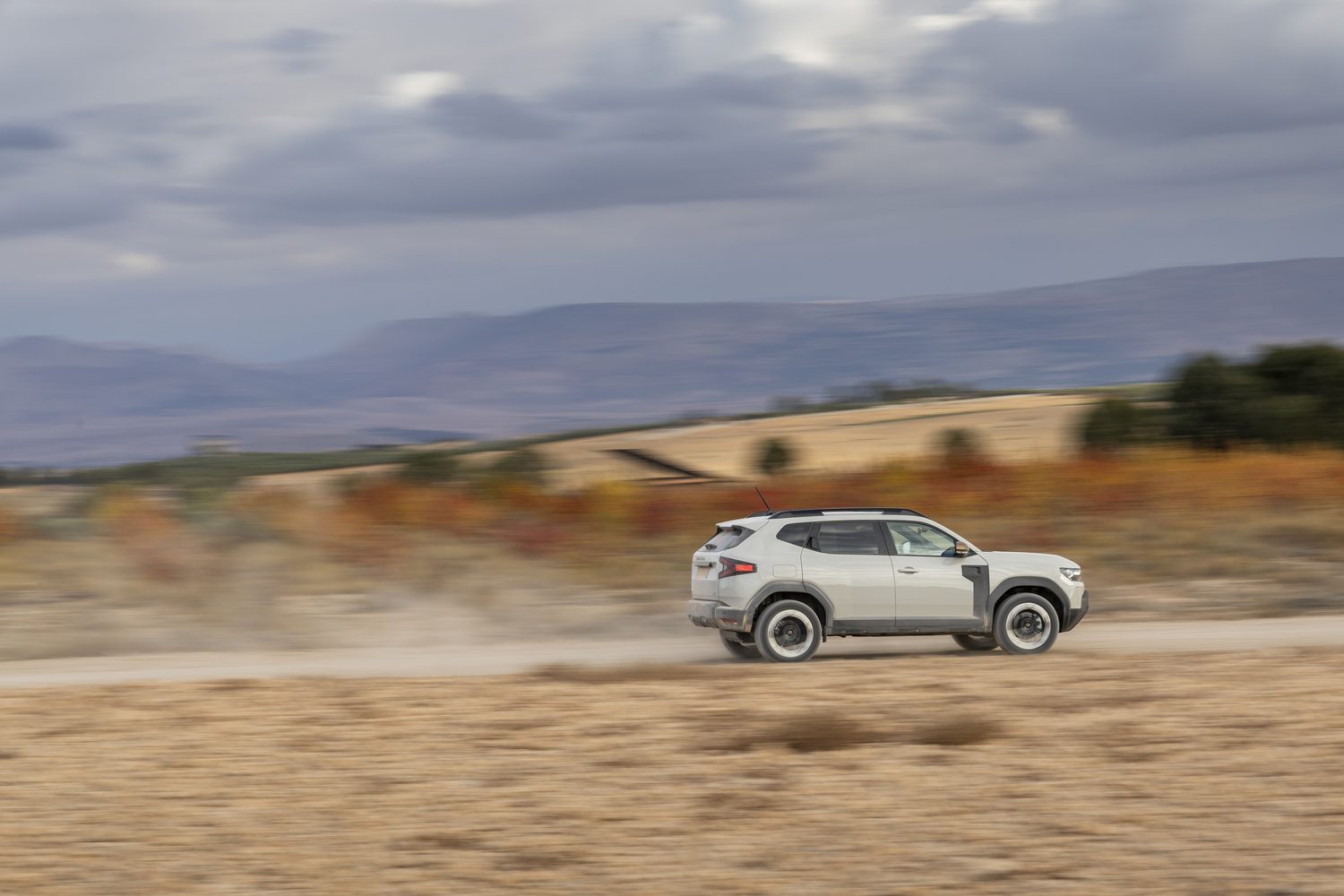
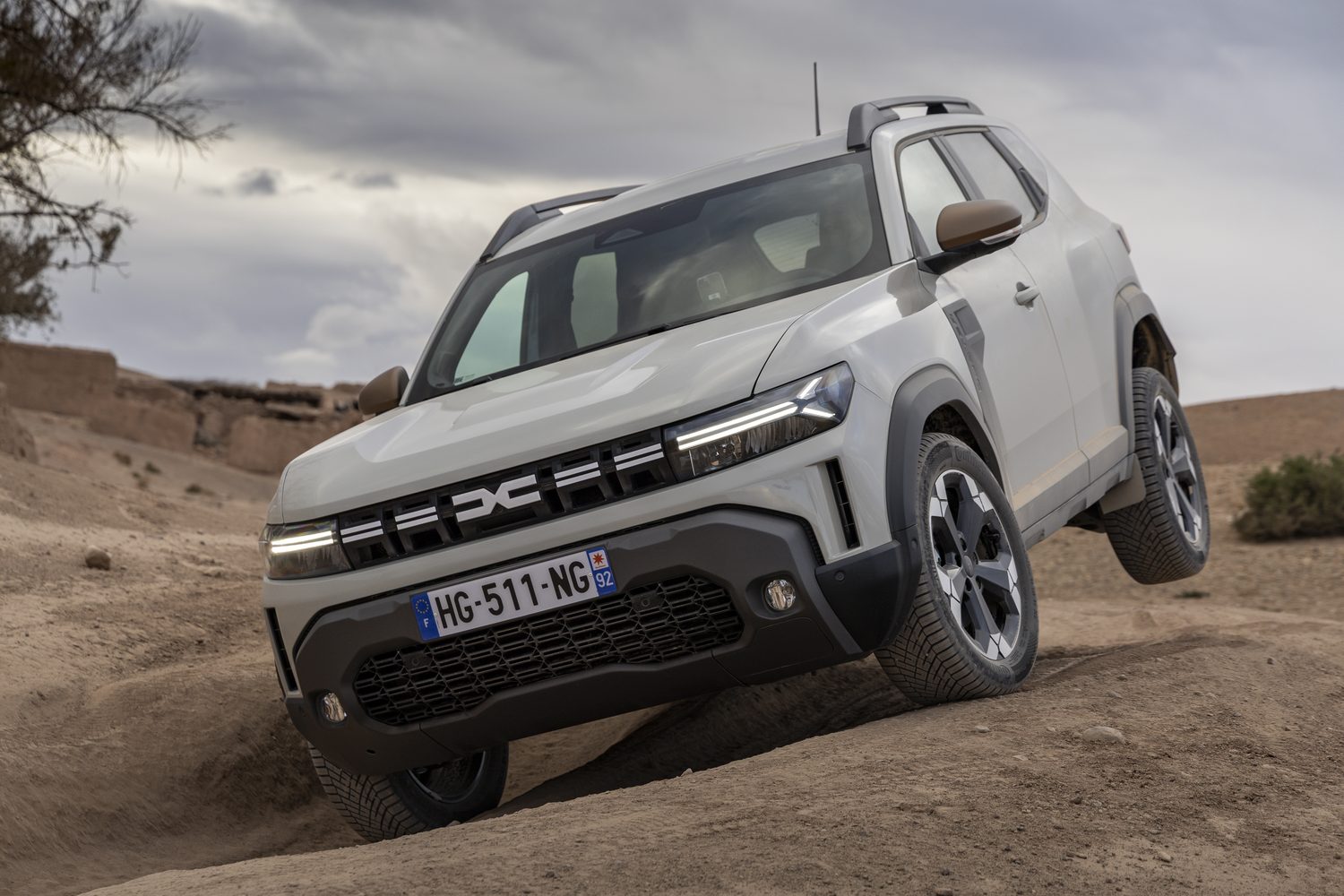
Over successive generations, the Duster has gone from a barebones, simple-looking SUV to one with a more purposeful, rugged appearance.
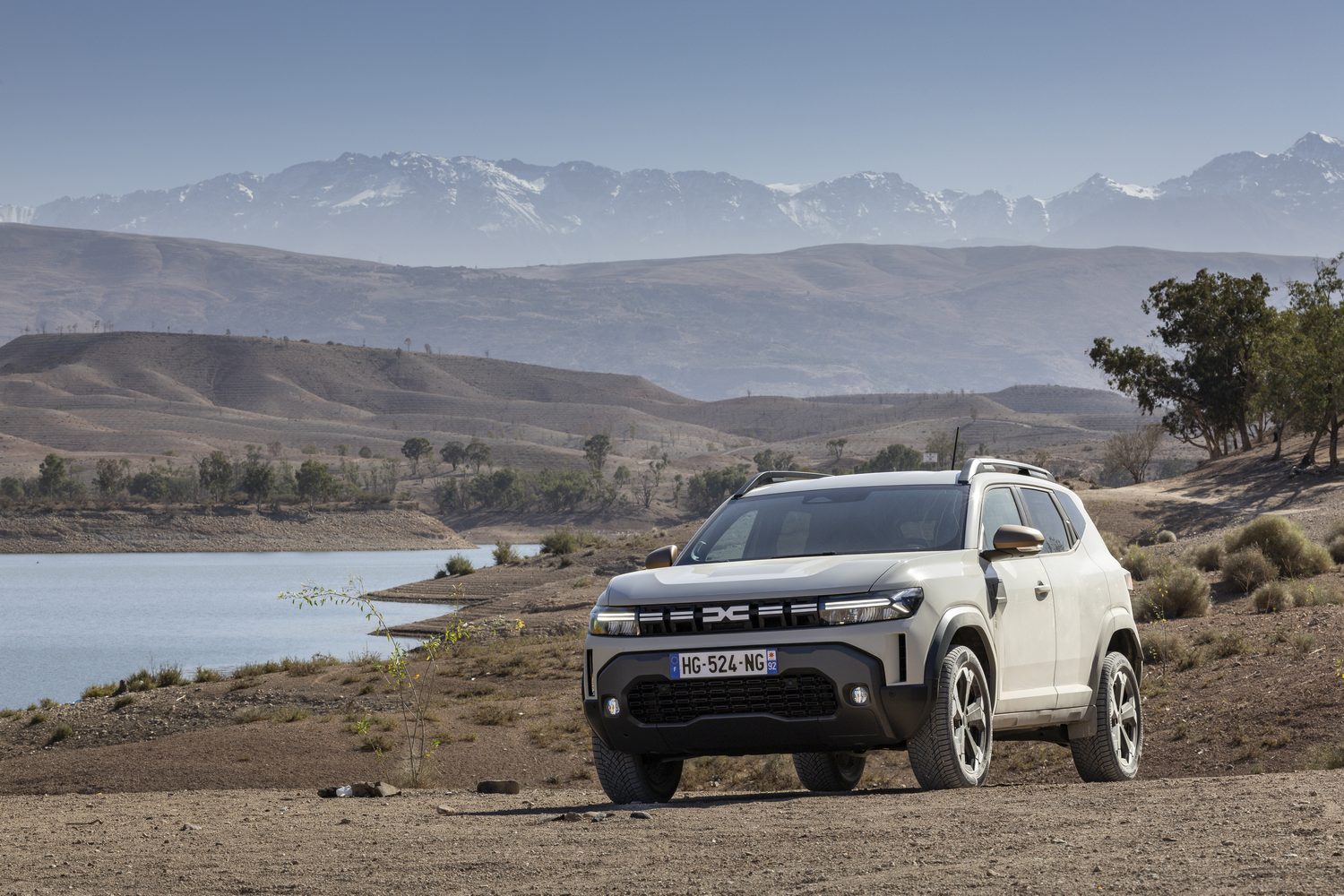
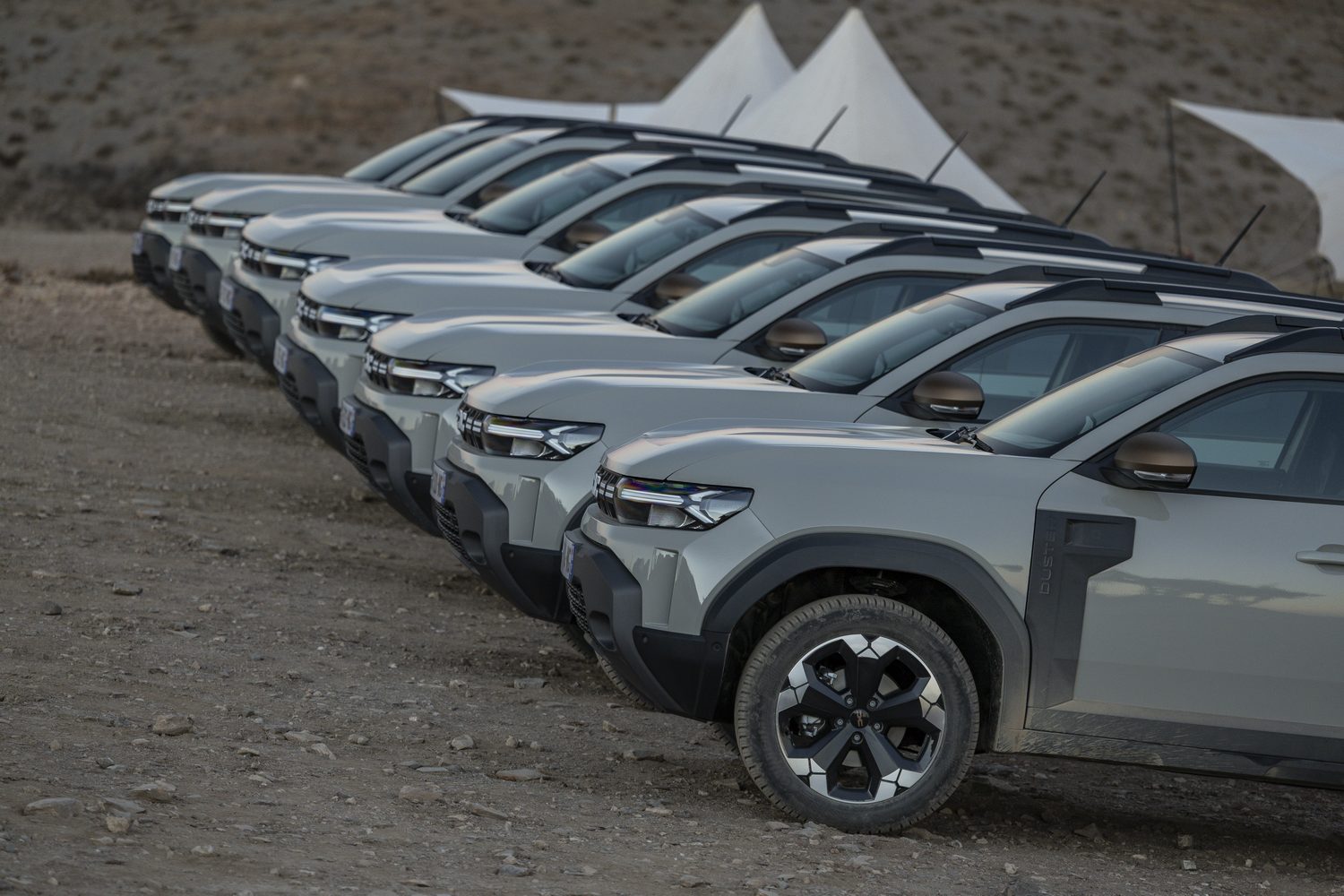
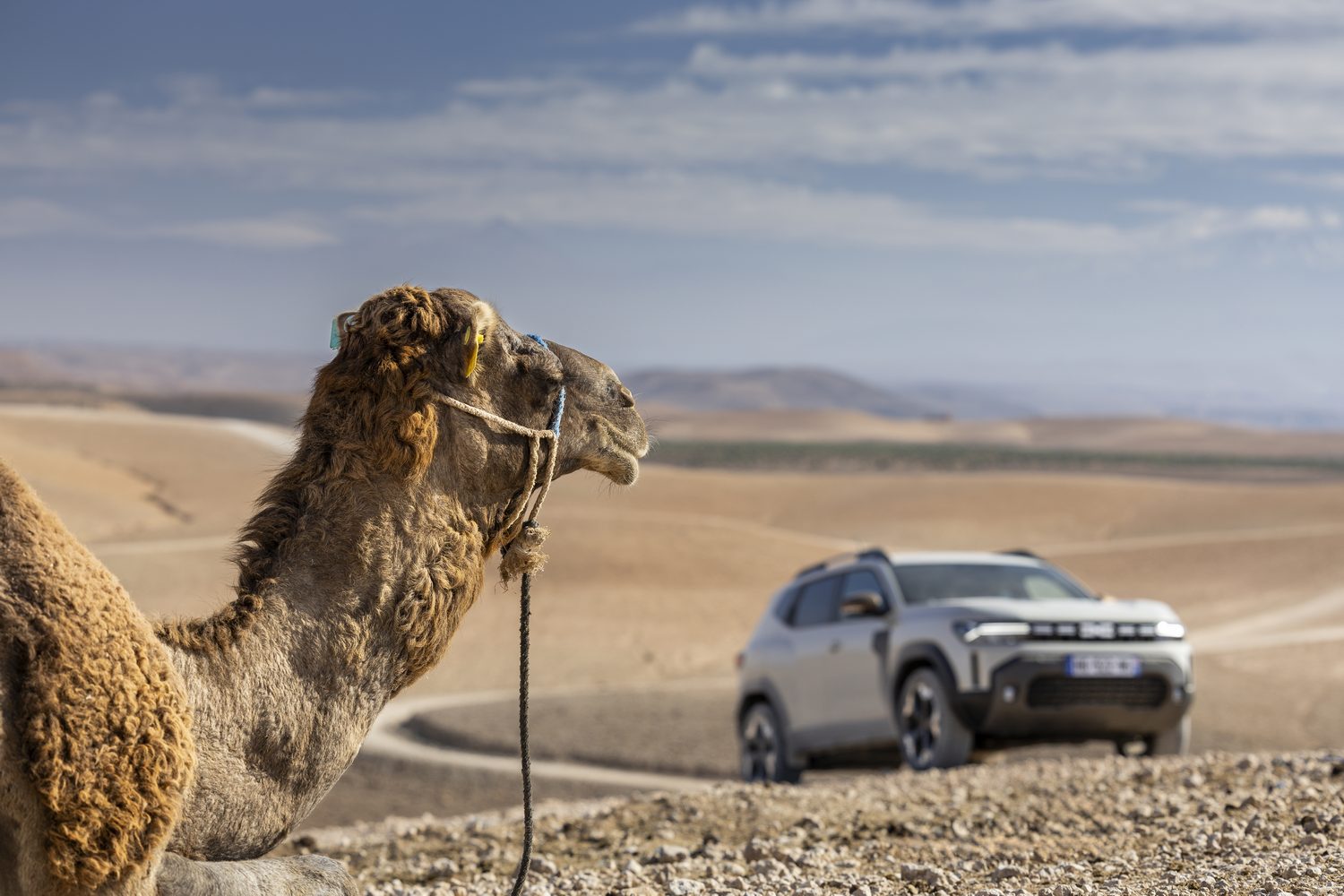
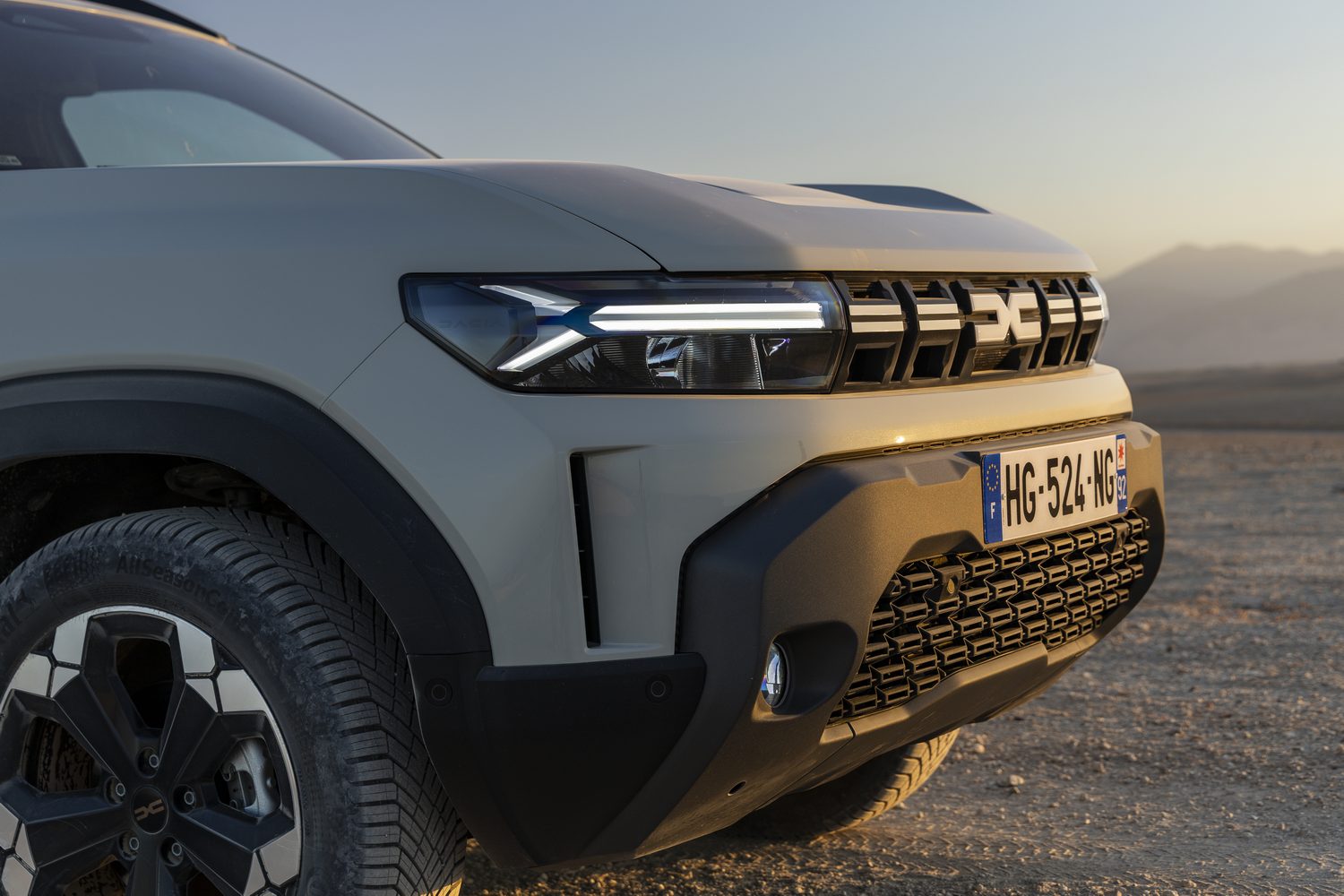
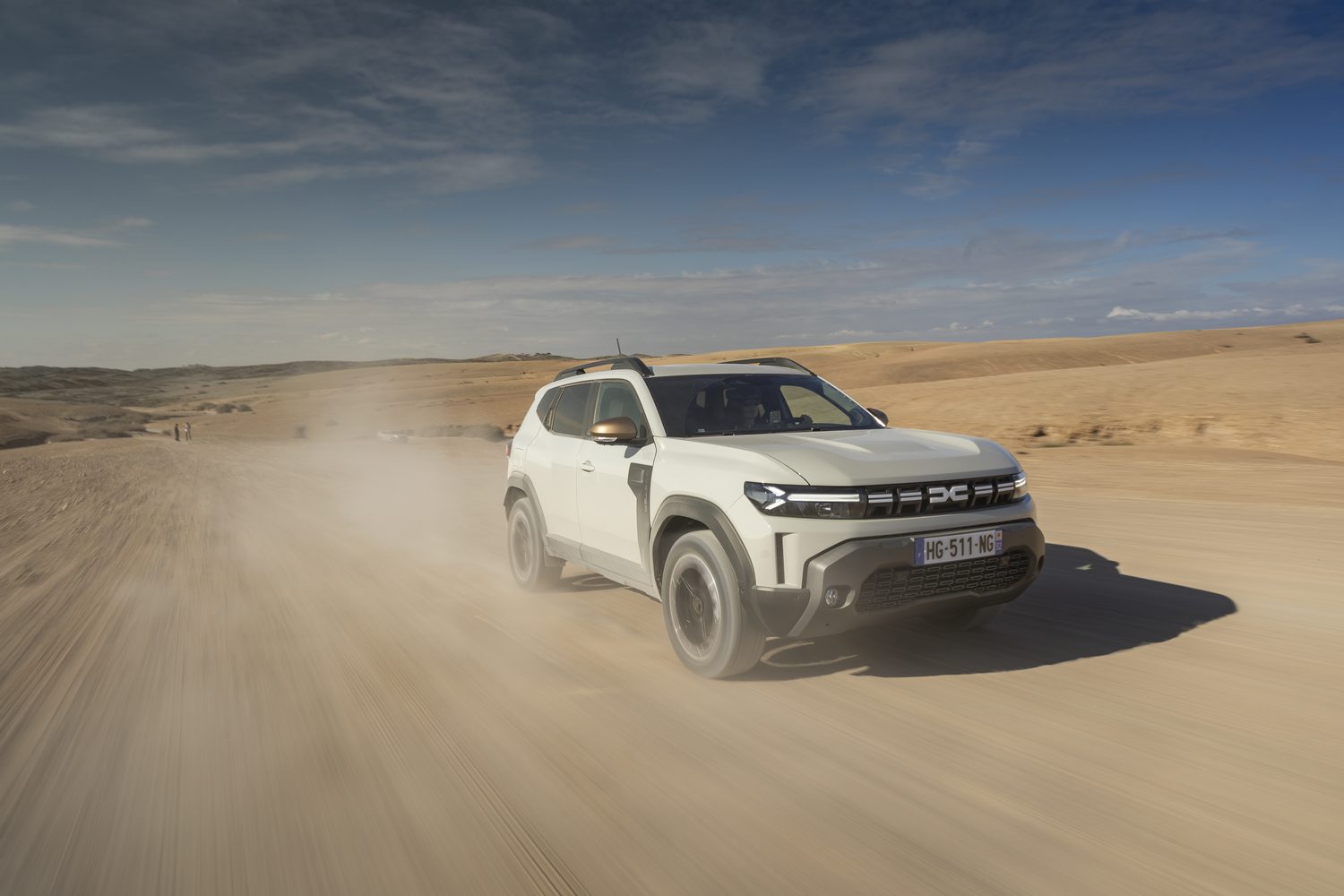
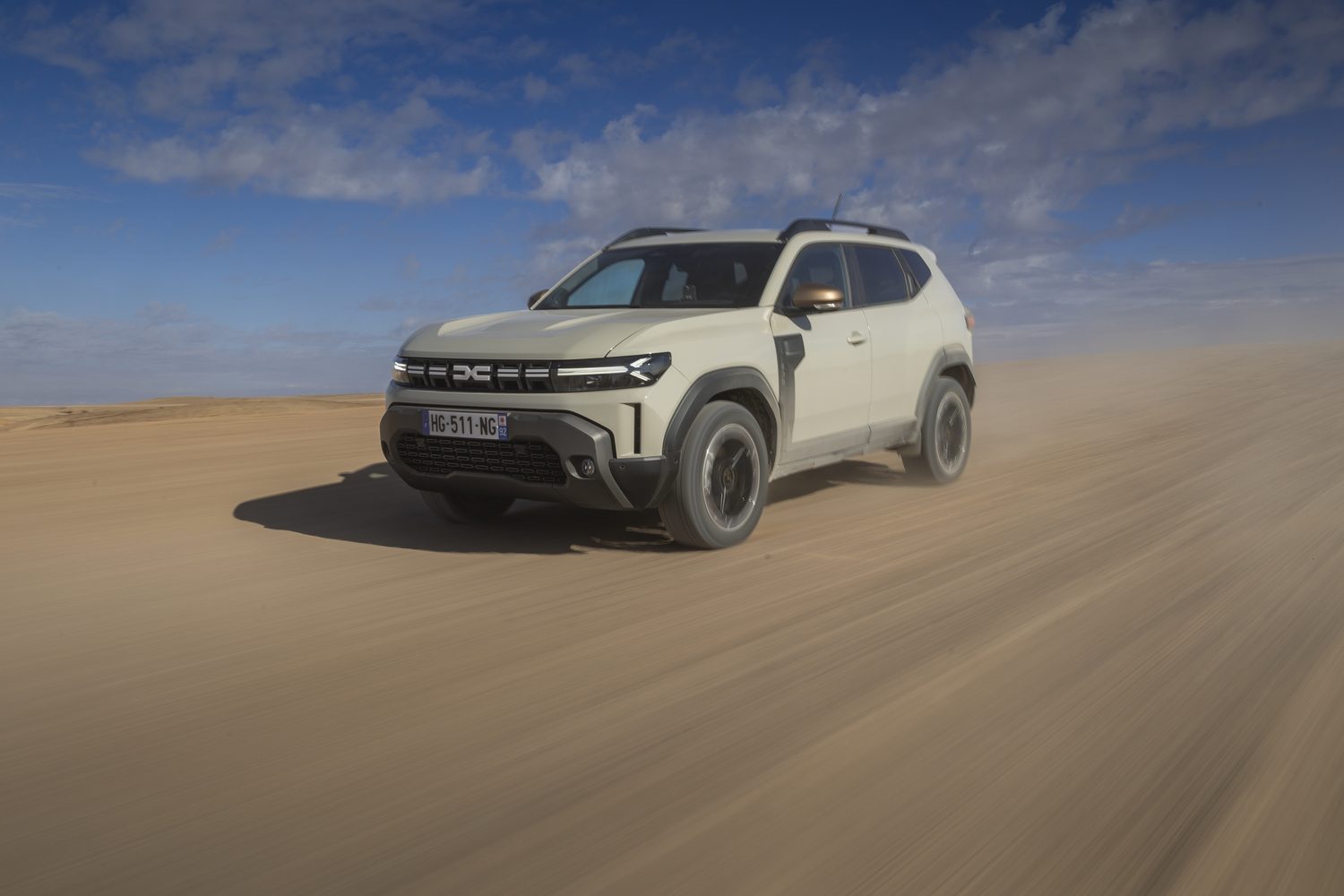
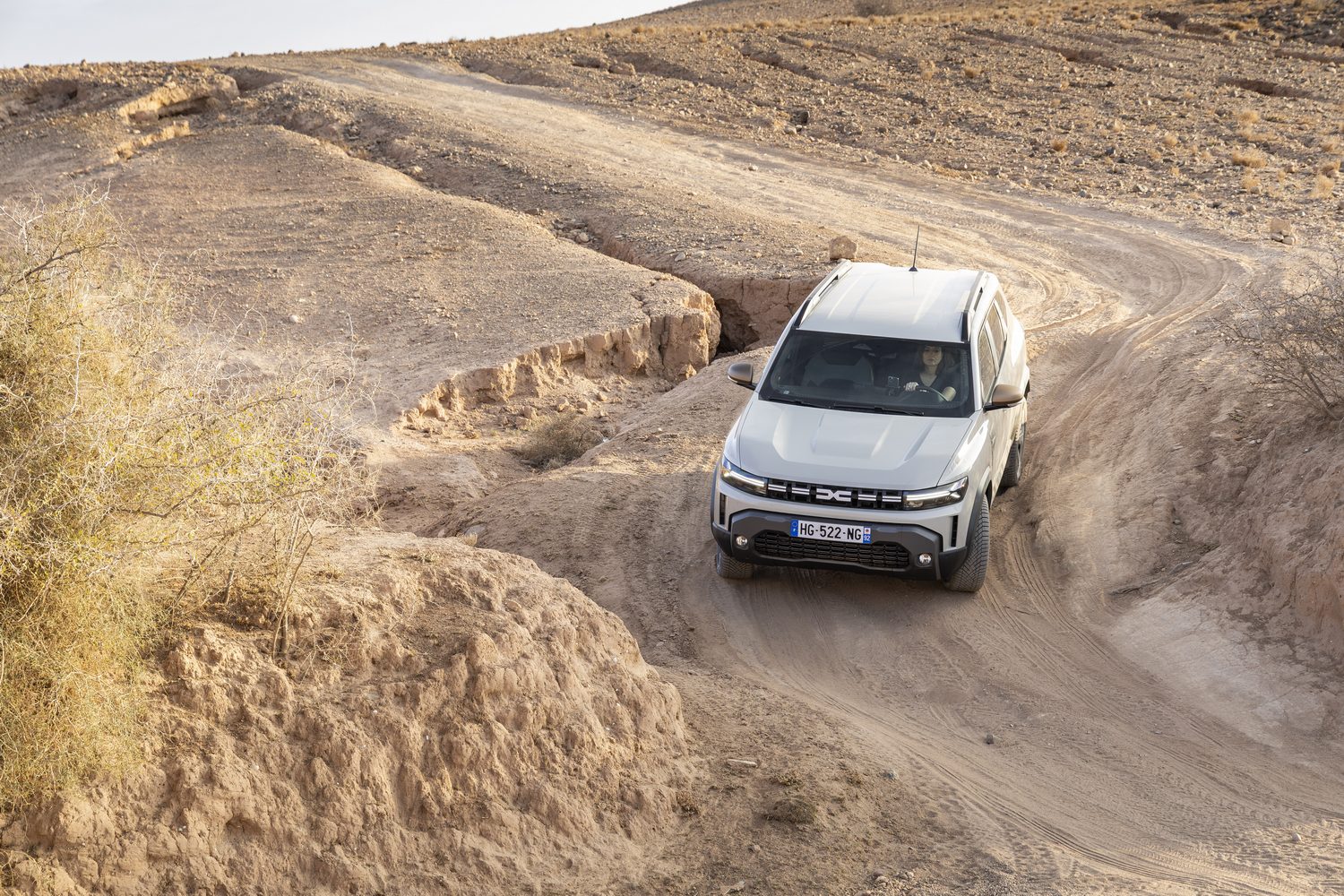
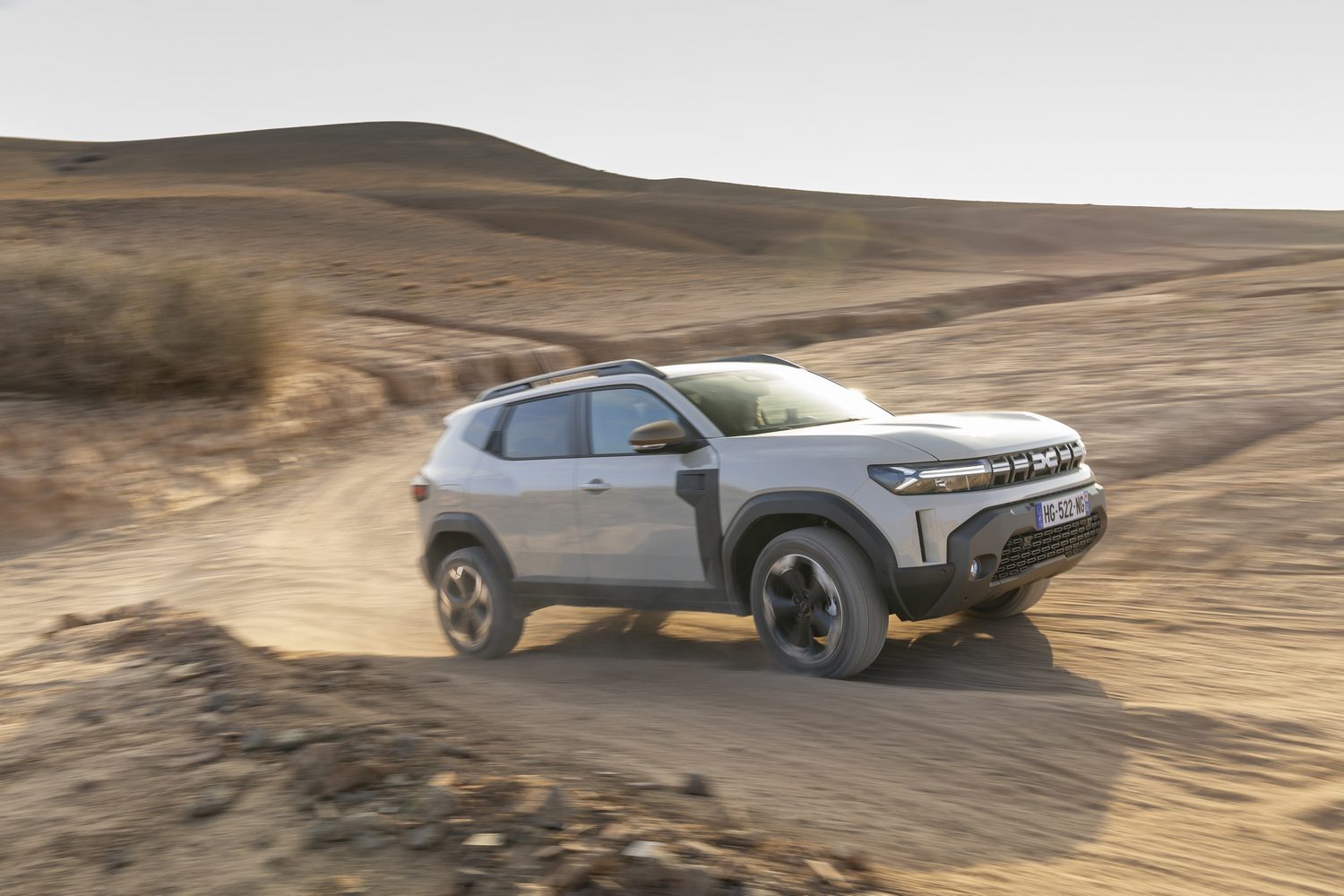
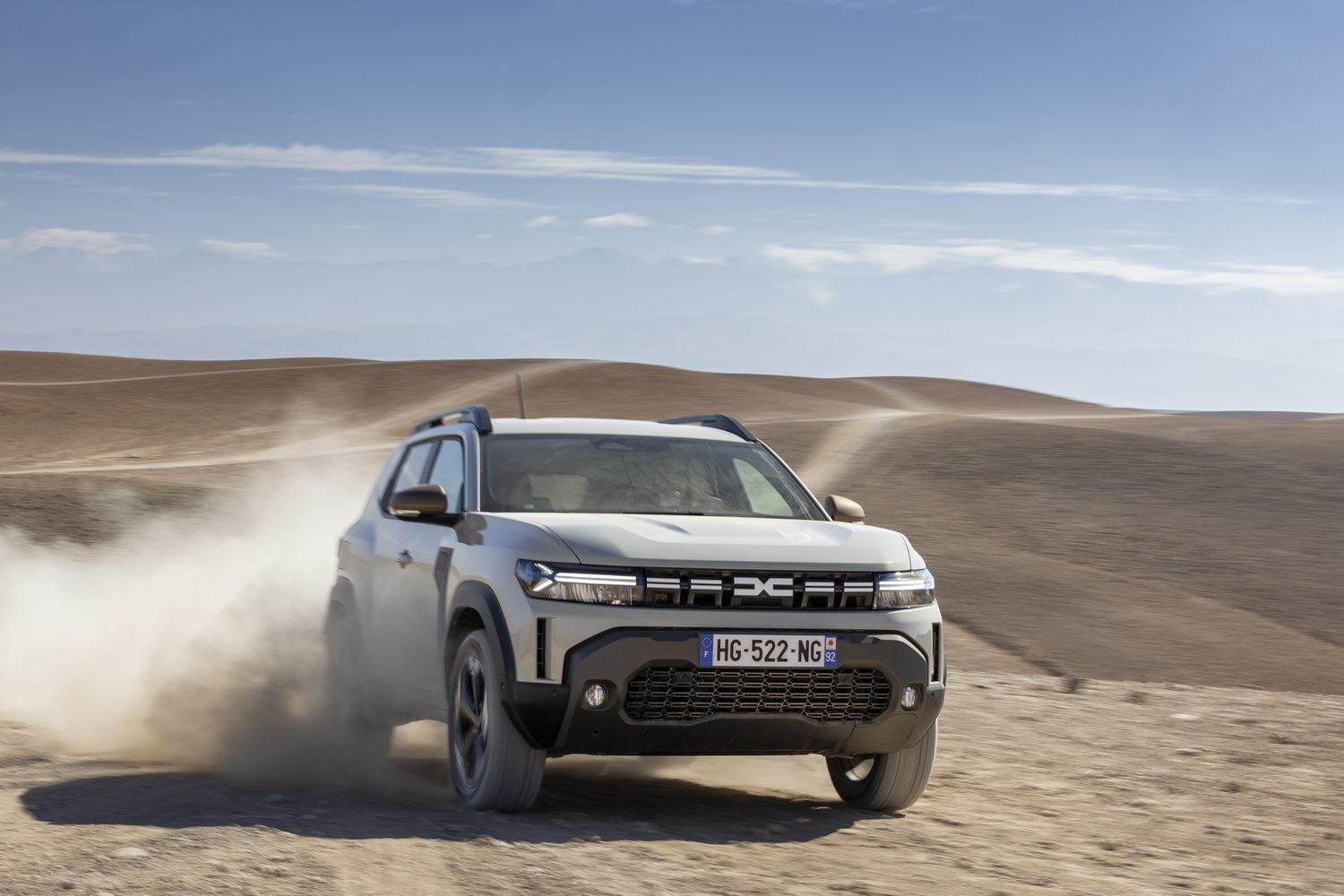
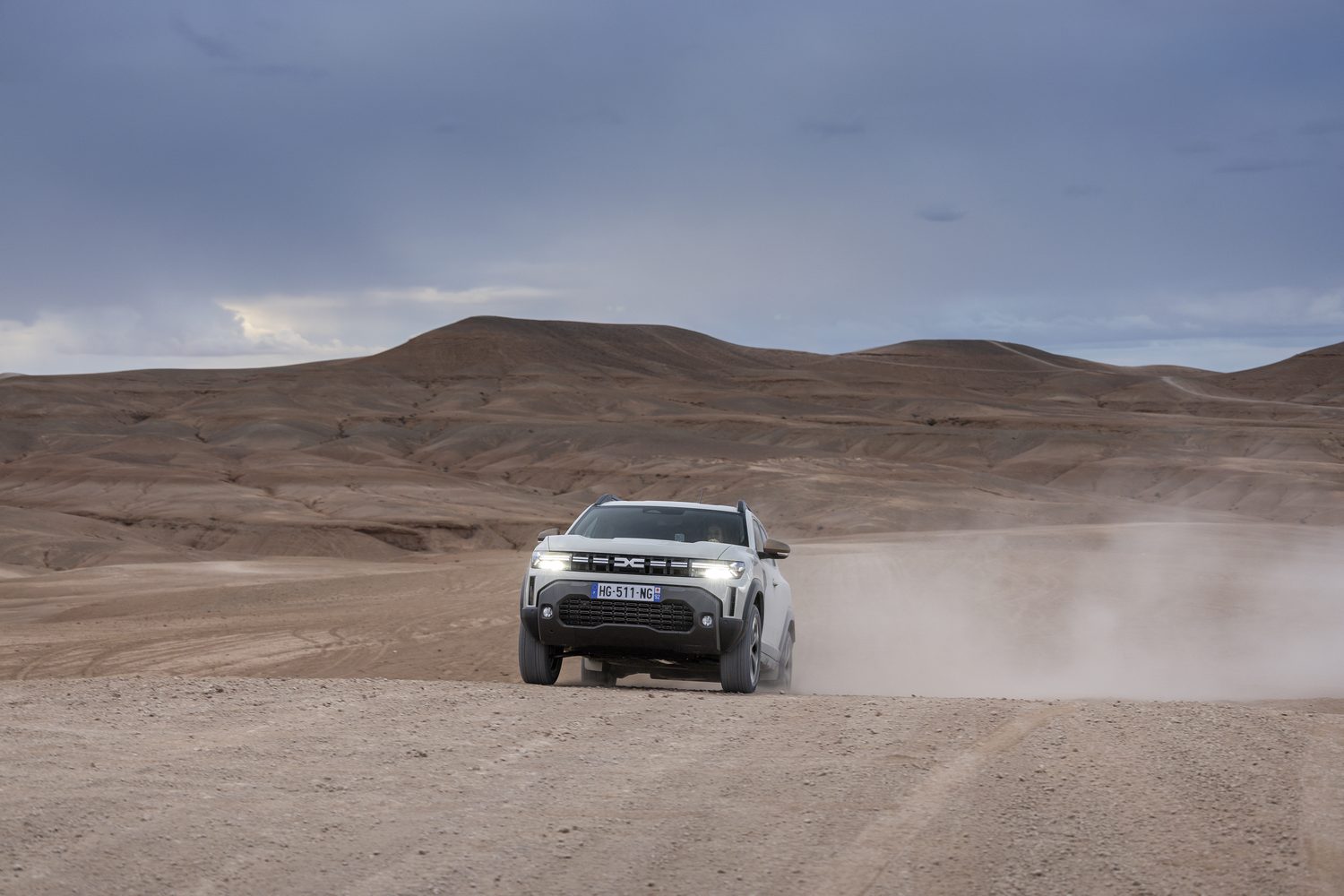
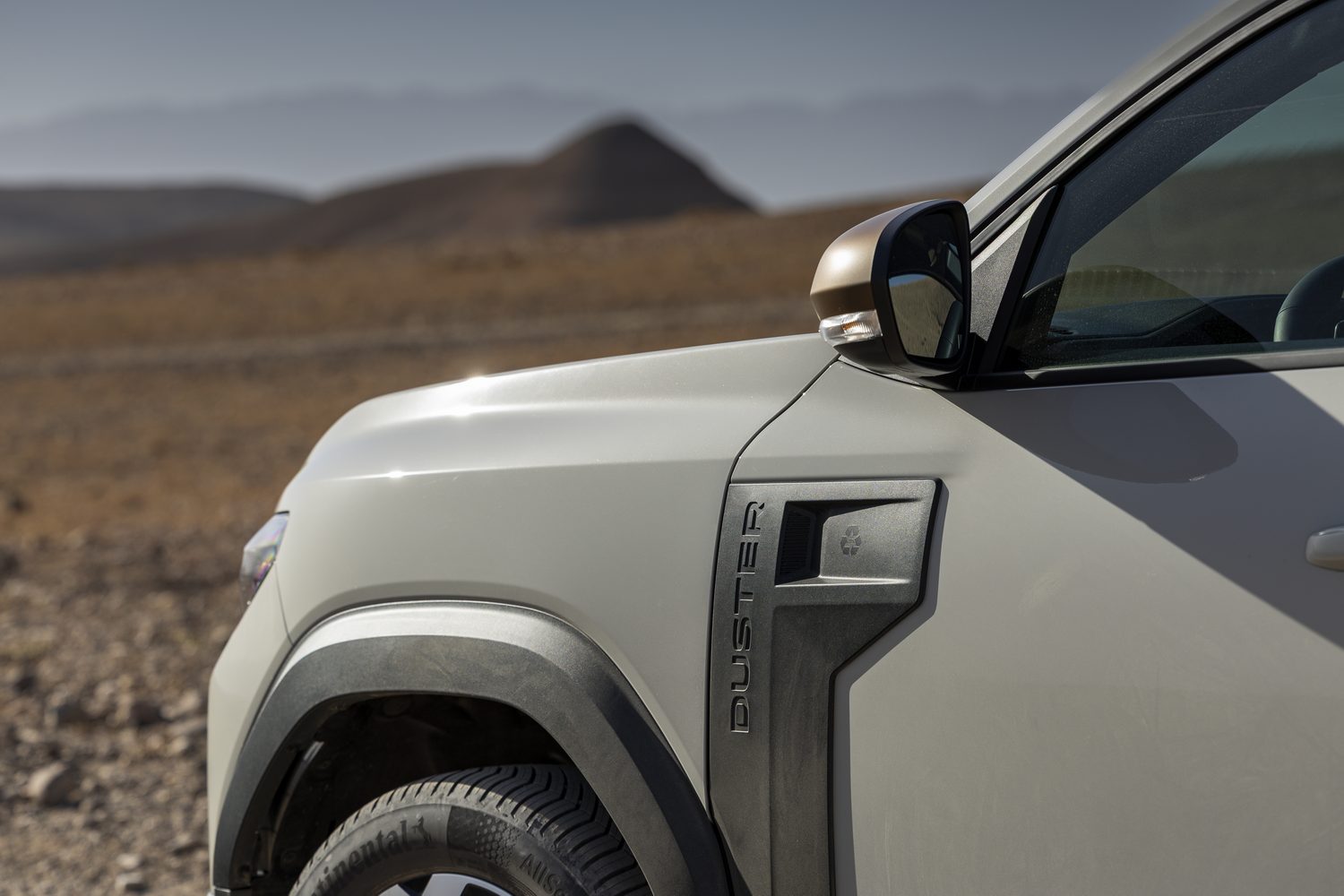
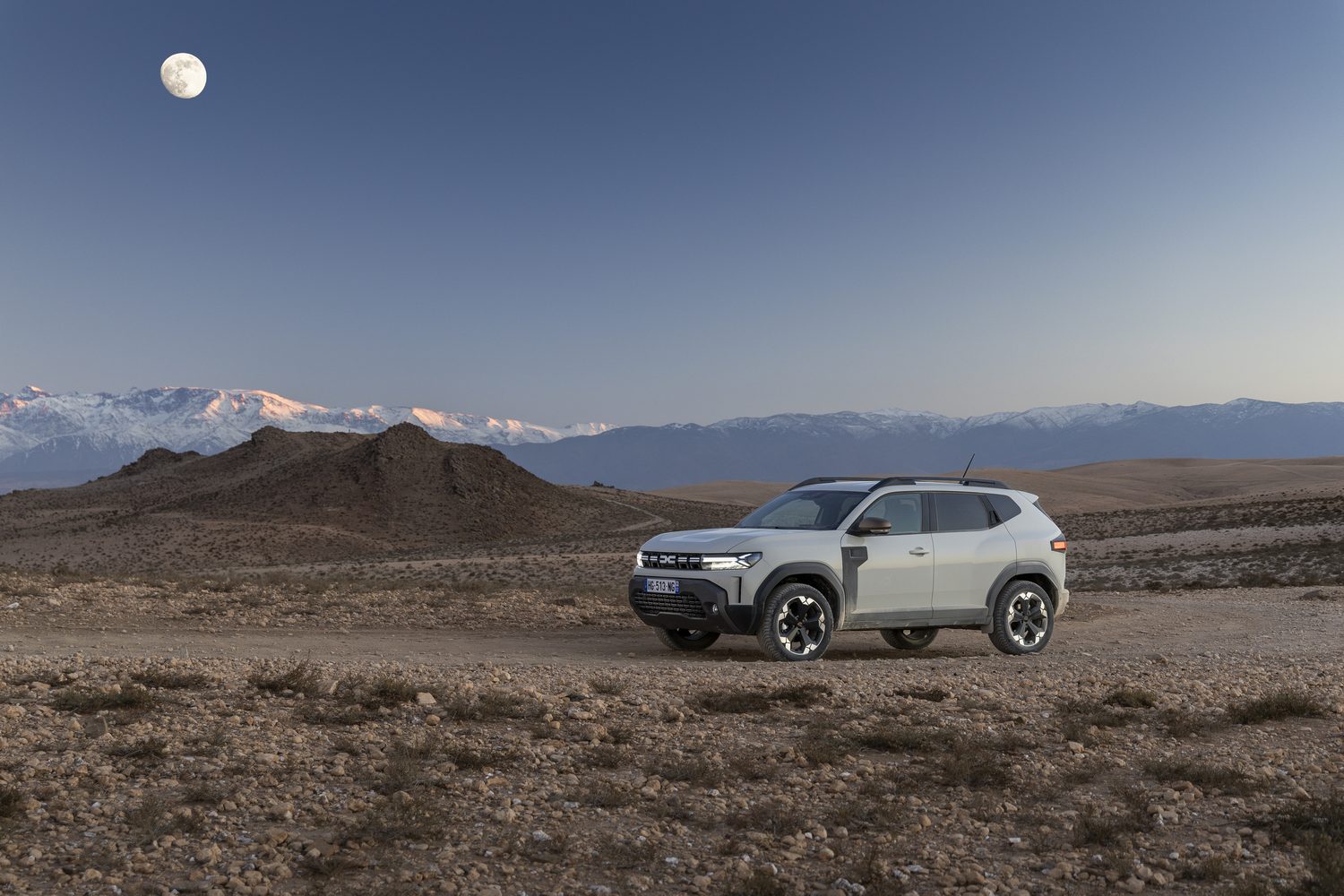
That off-road-ready image is emphasised in the Extreme specification (easily spotted by copper-coloured door mirrors), which gets a slightly reprofiled front bumper to increase its approach angle.

Knowing that the Duster is seen by many as a tool, Dacia's designers have taken a sensible approach in creating the plastic cladding, opting to retain a raw, mottled appearance, which results from its production process and construction from recycled materials. It's called 'Starkle'.
Sections that appear painted have the colour impregnated into the plastic, thus mitigating the visibility of scratches should they occur. The brand's logo, finished in white, is flanked by horizontal details that extend into the slim headlights to form the daytime running light signature.
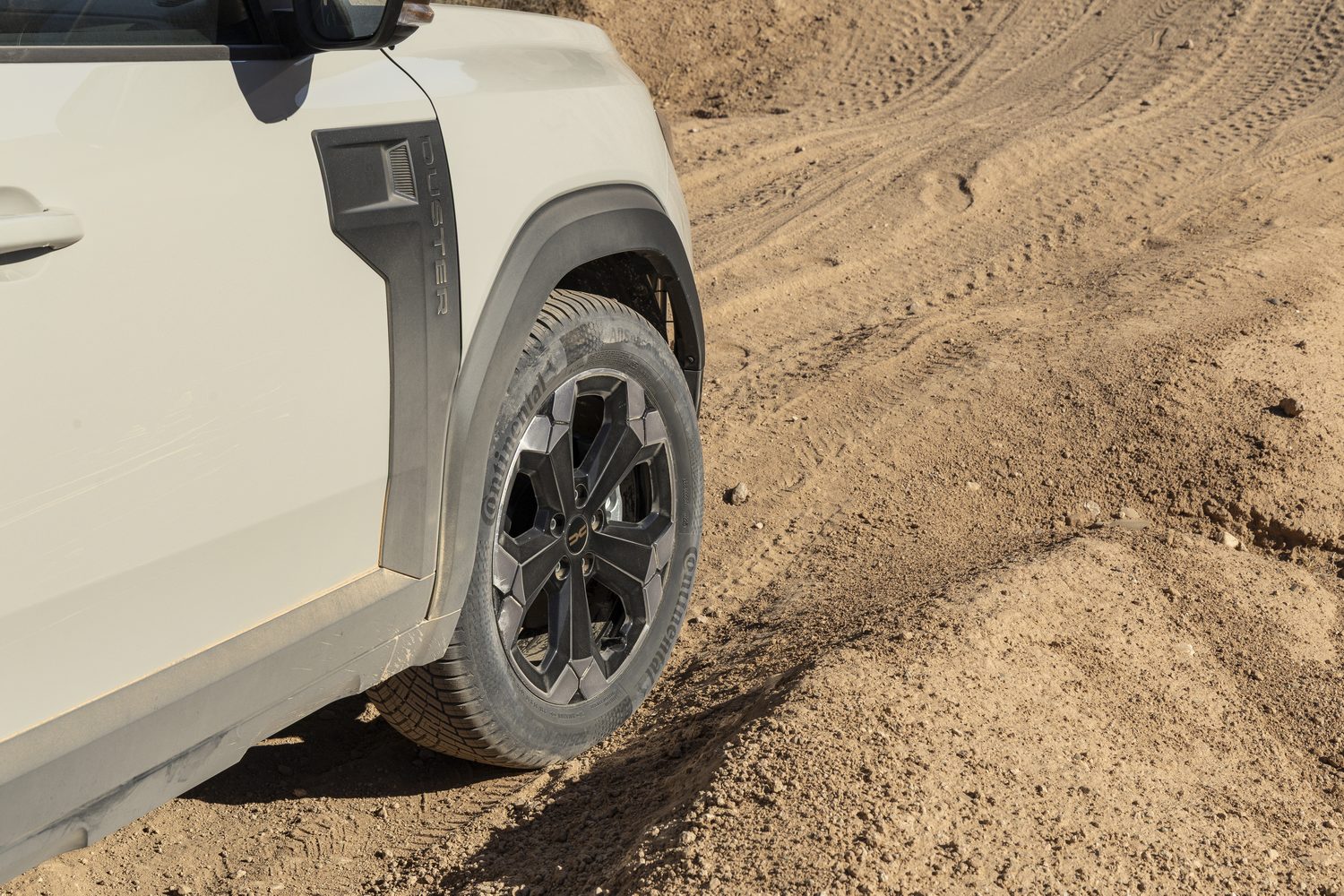
In terms of wheels, the most basic is a 16-inch steel design, while there are 17-inch alloys and higher-grade models get 18-inch rims.

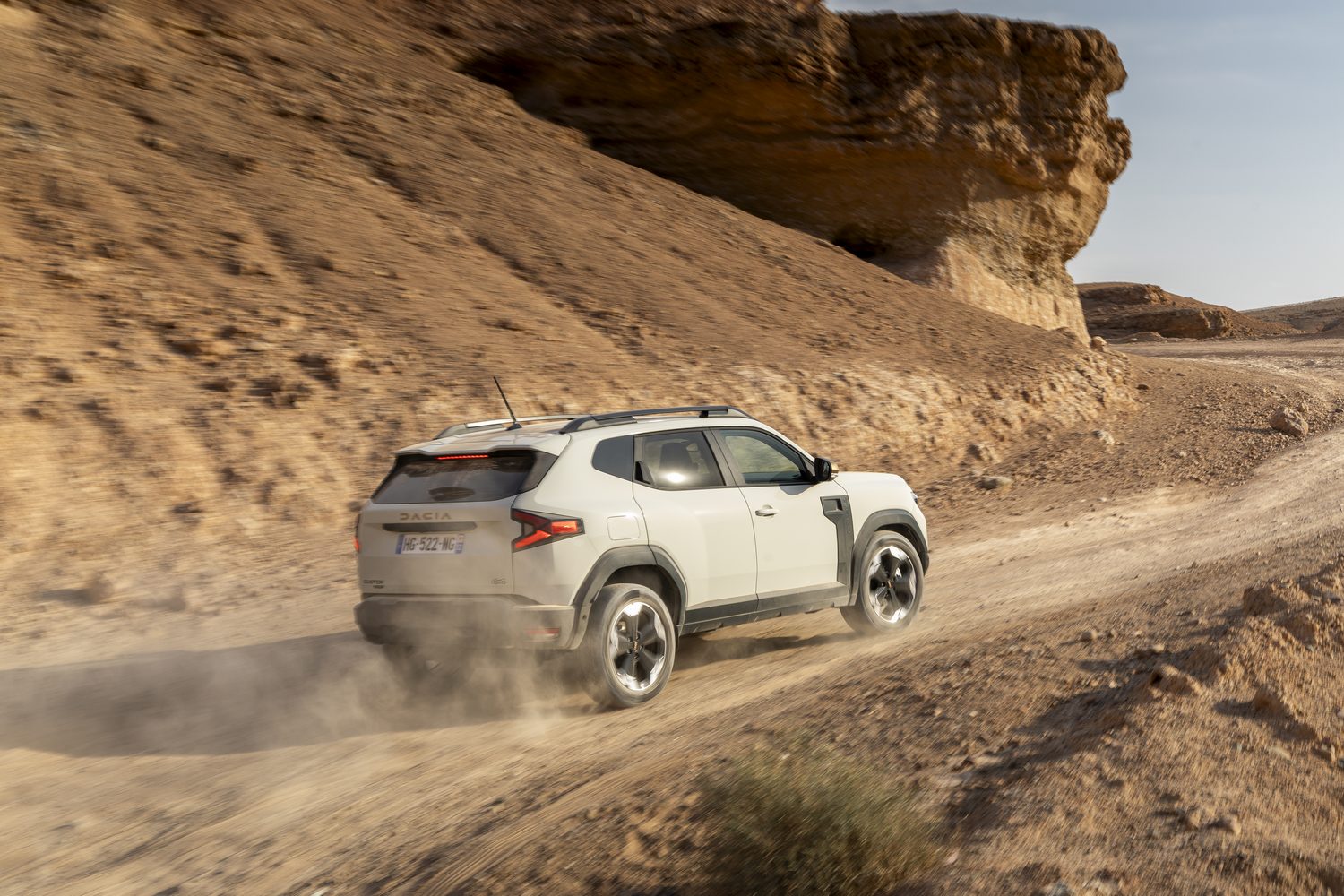
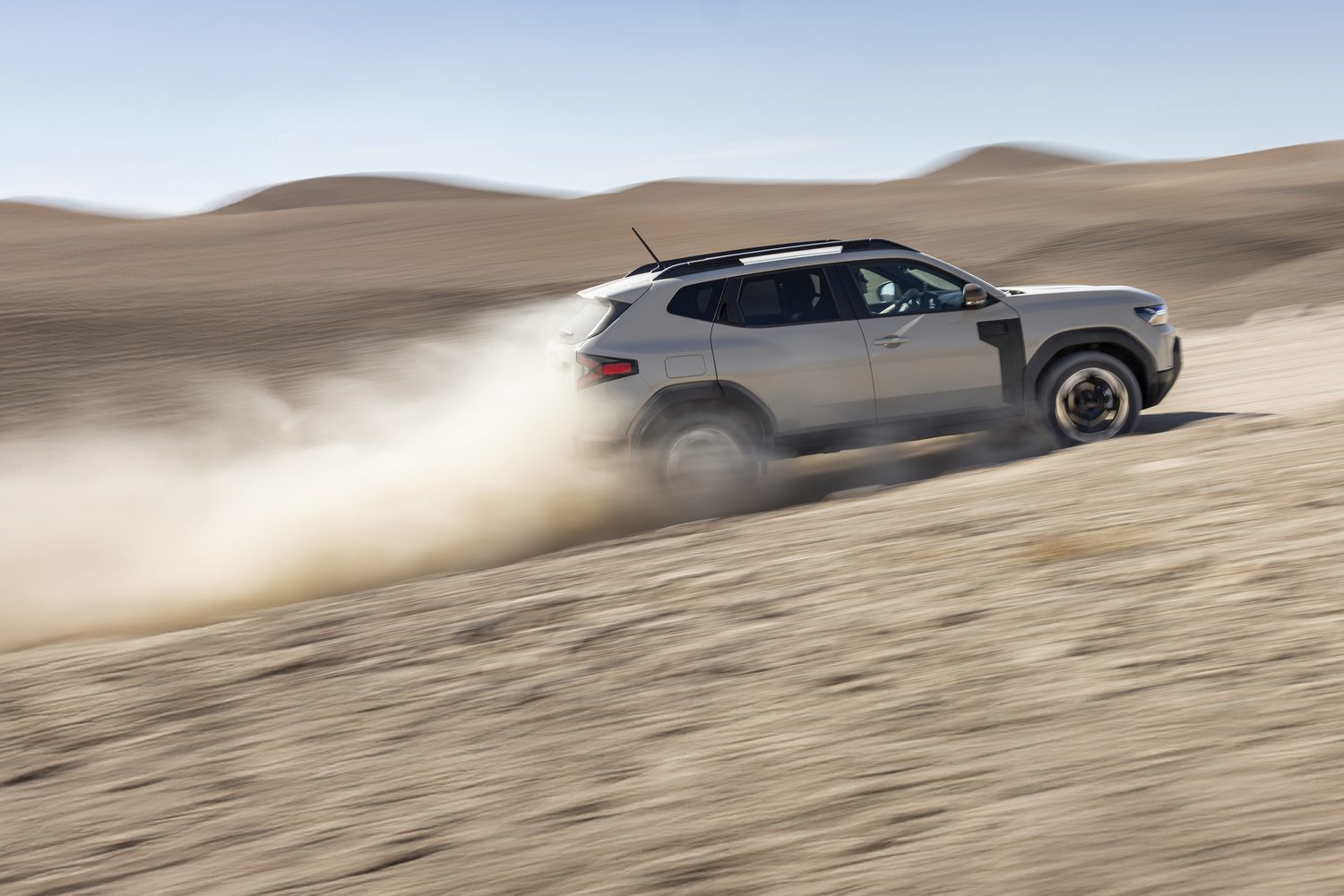
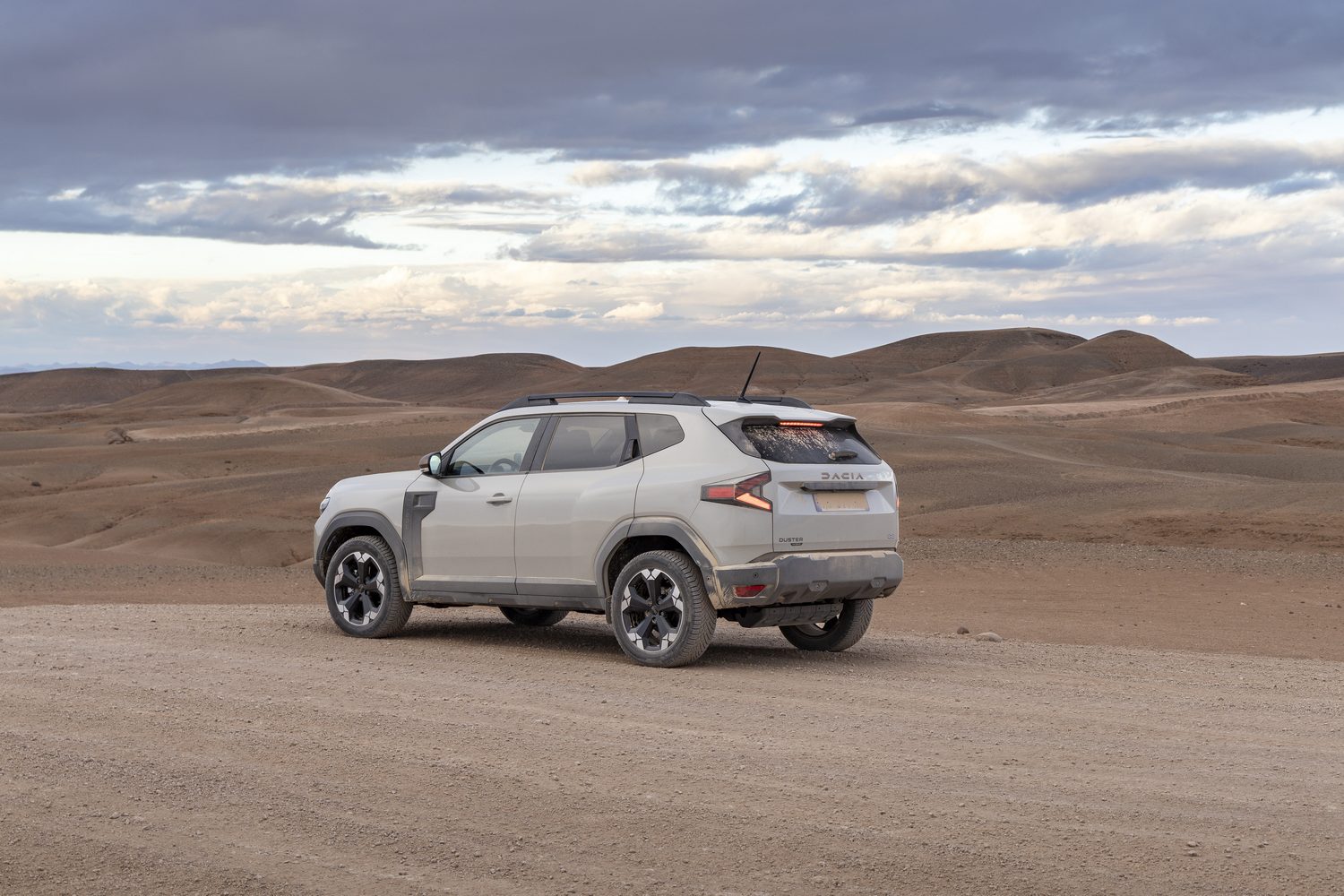
One of the Duster's clever features is the design of its roof rails, which can be turned through 90 degrees for easy fitment of a bike carrier or roof box.
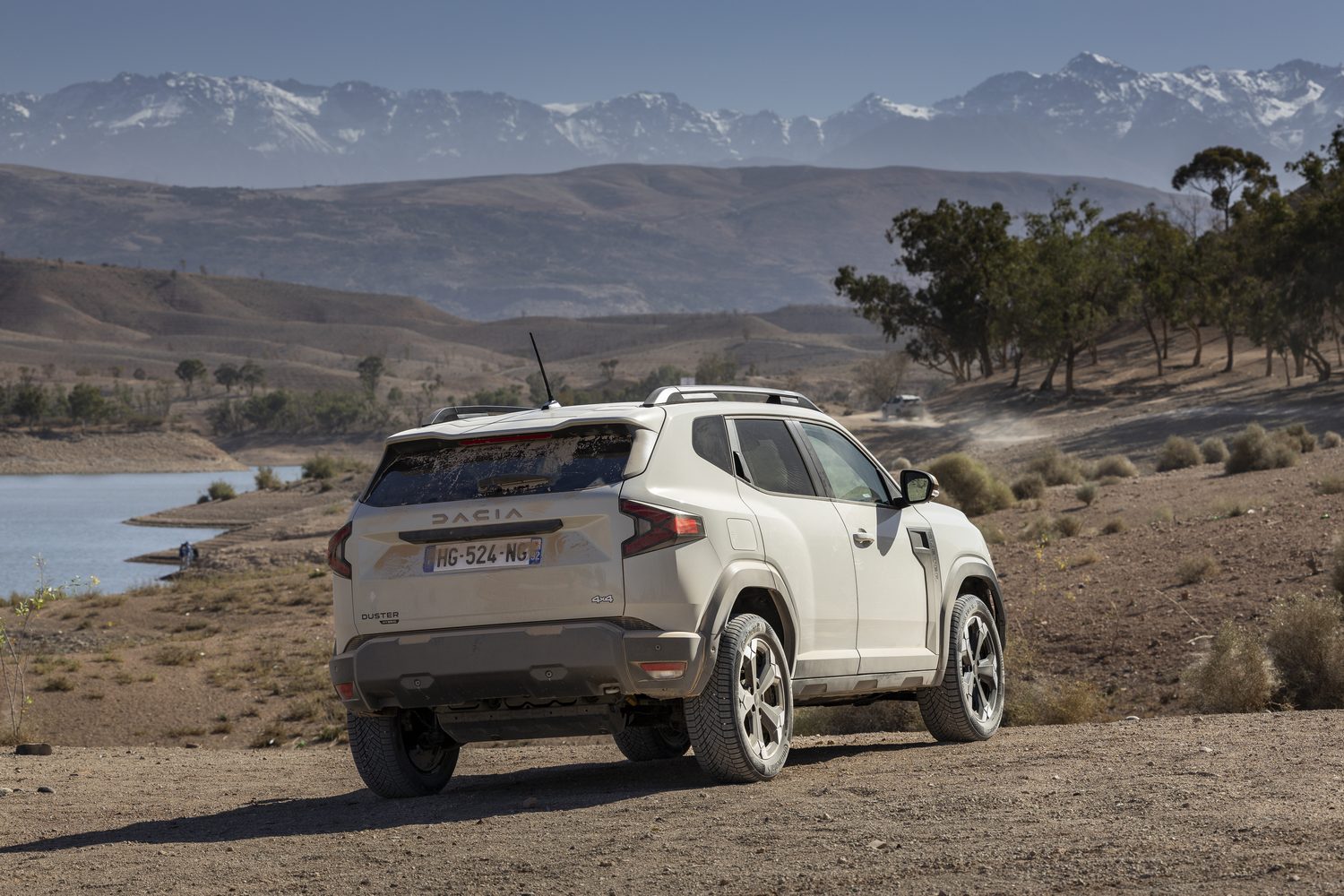
Giving the side profile a cleaner look, the rear door handle is integrated into the door frame. One minor gripe is that the doors don't extend all the way down to cover the sills, so if you've been driving through muddy conditions, you need to ensure you don't dirty the backs of your legs as you get out.
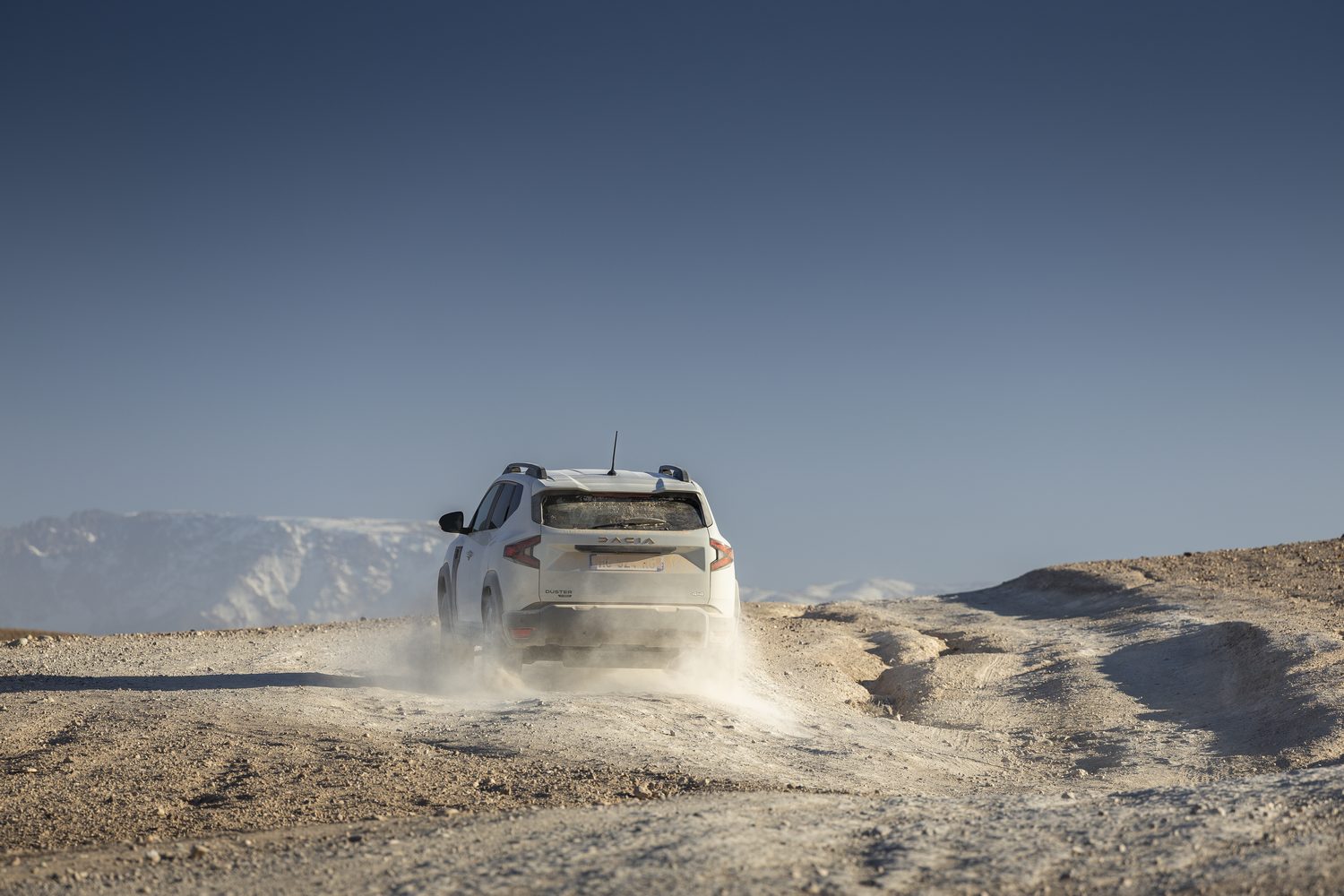
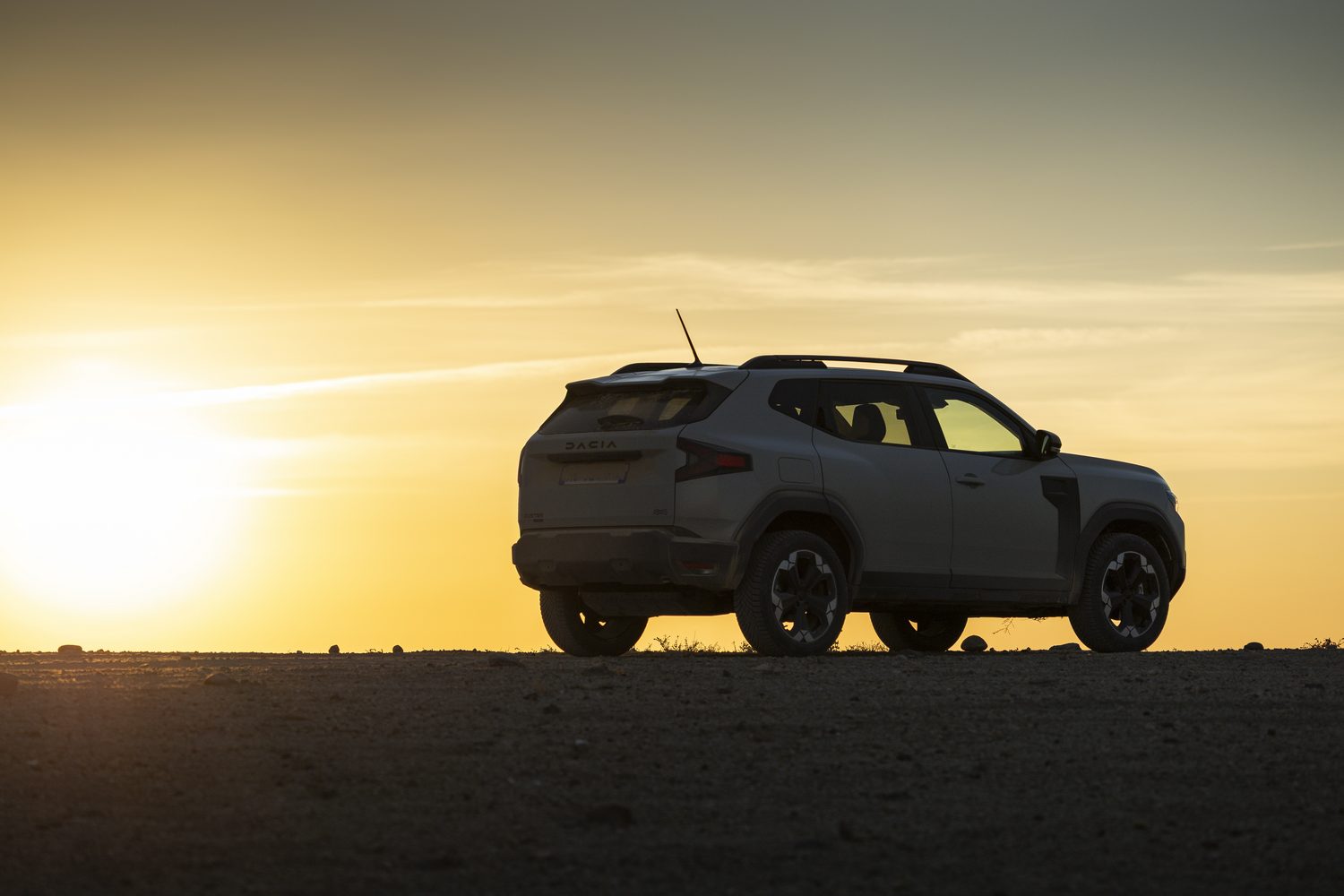
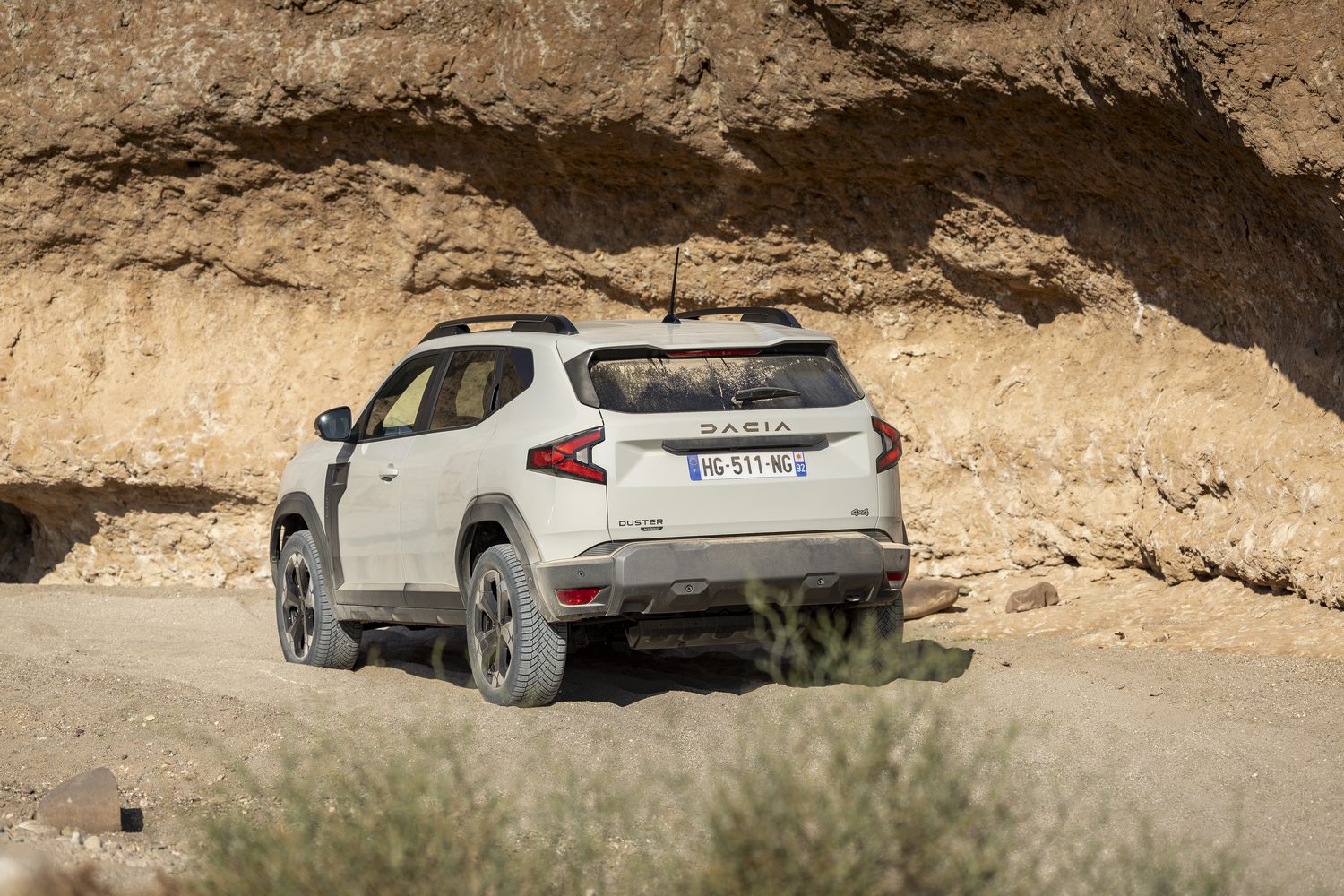
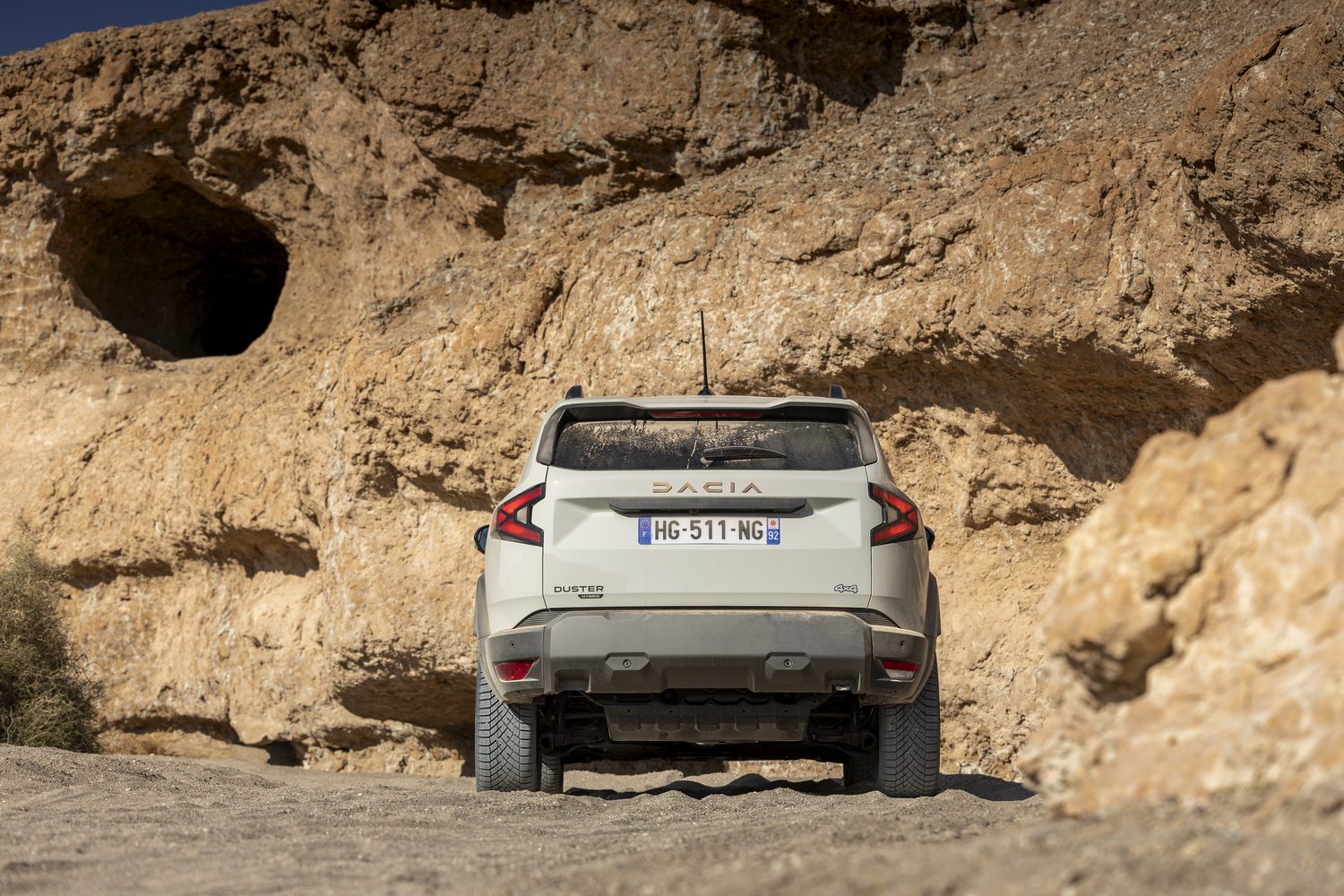
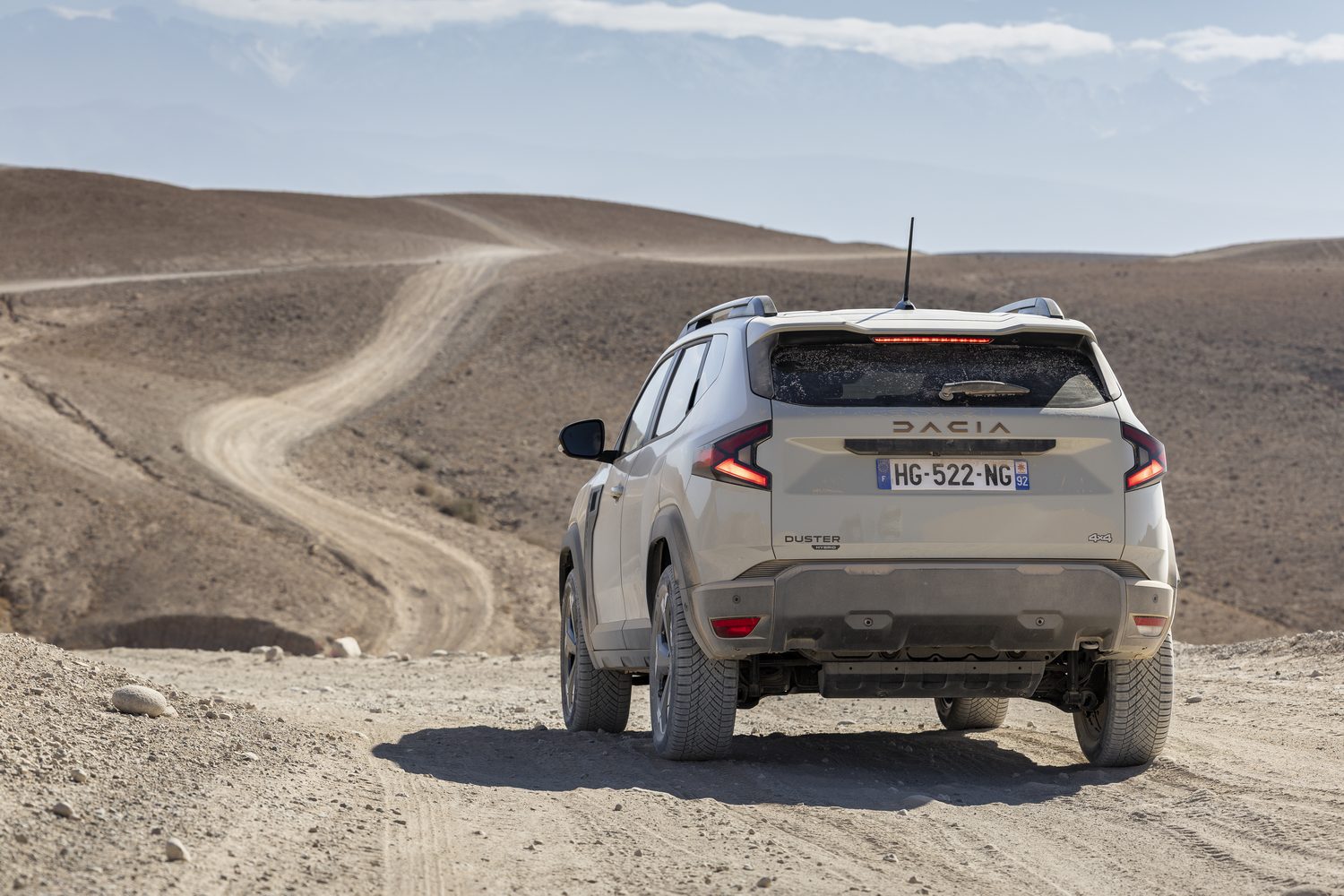
The Duster's back end gets a large spoiler that encloses some of the sloped glass. Its Y-shaped lights wrap around to the sides, and the manually operated tailgate lifts to reveal a functional, square aperture.

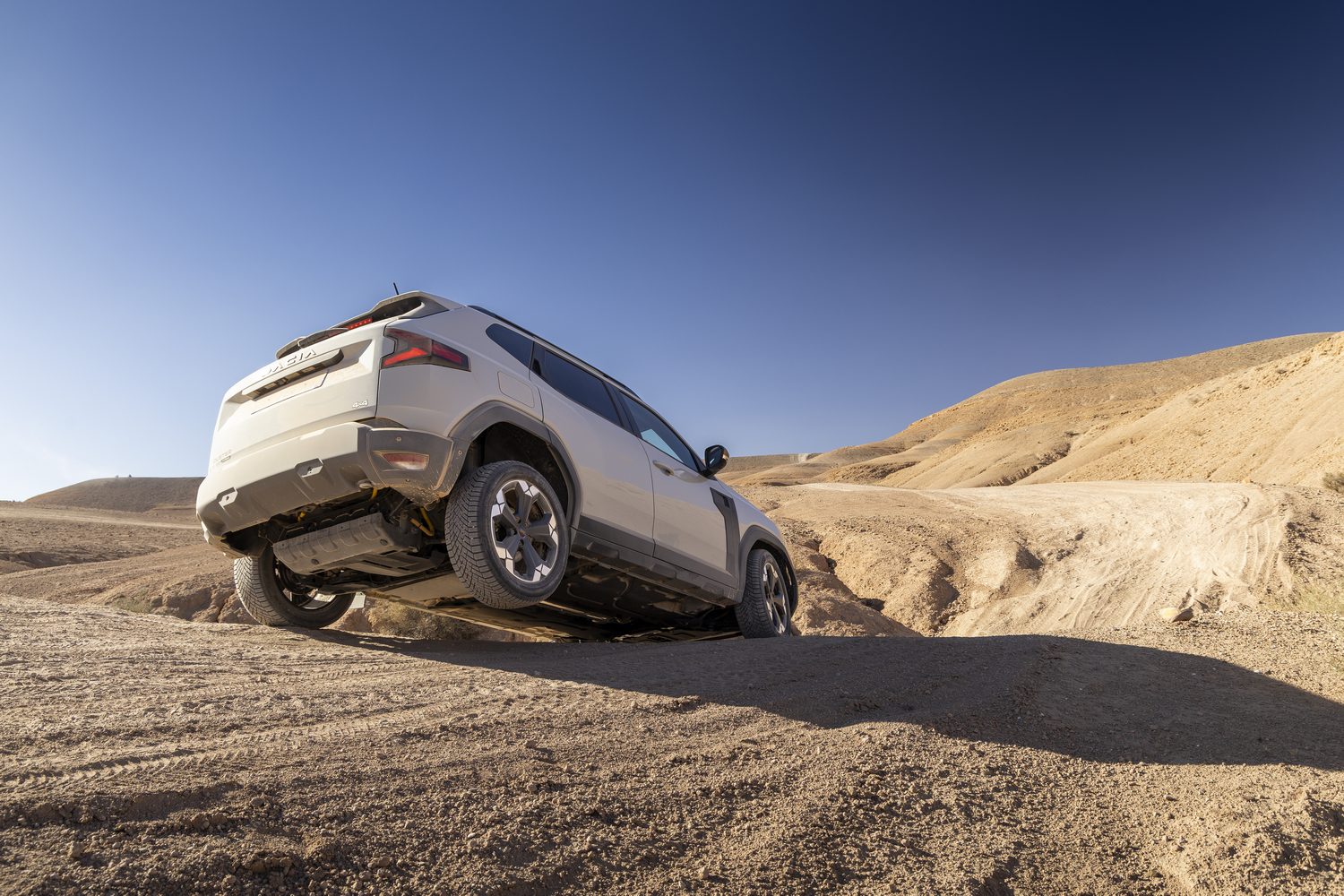
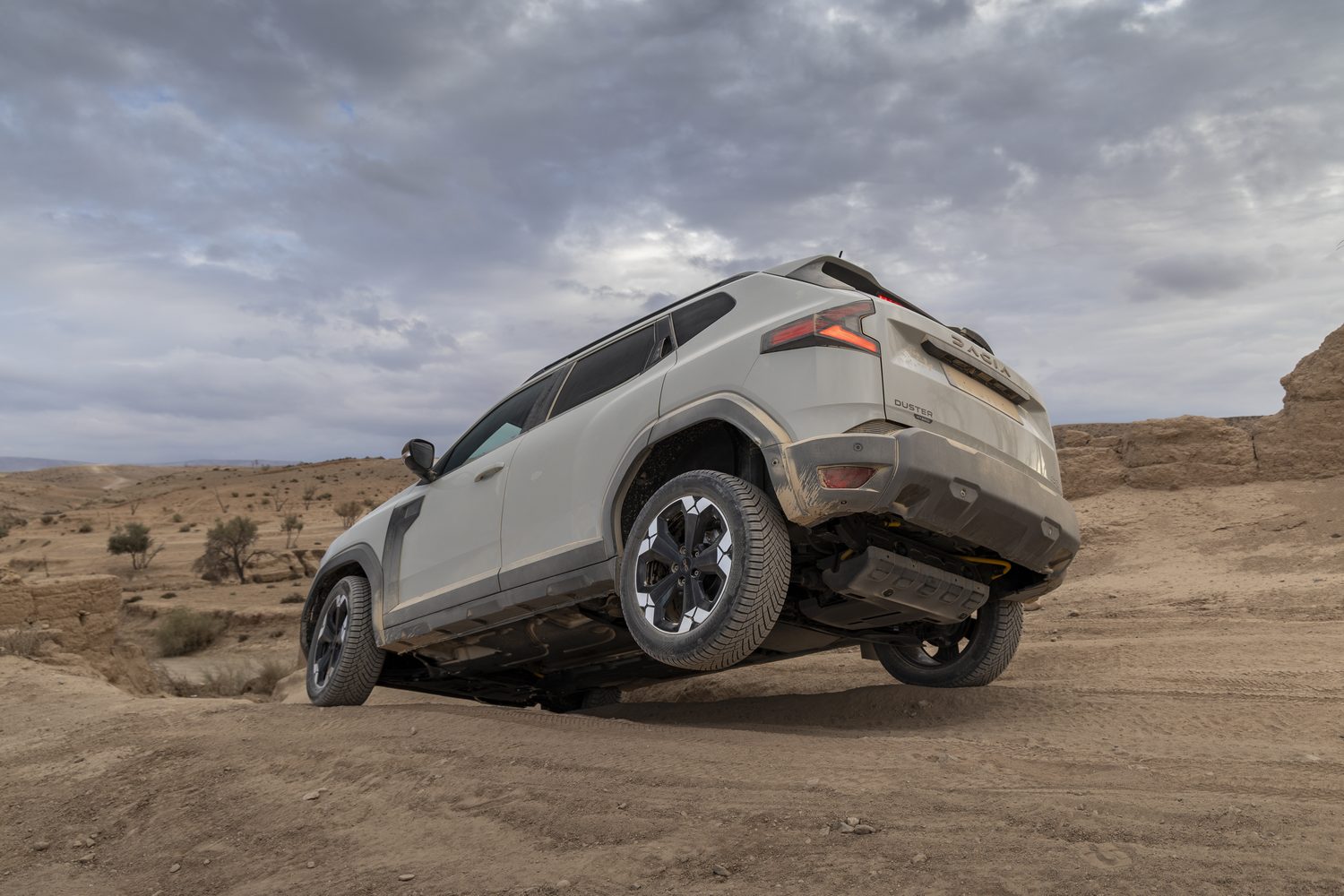
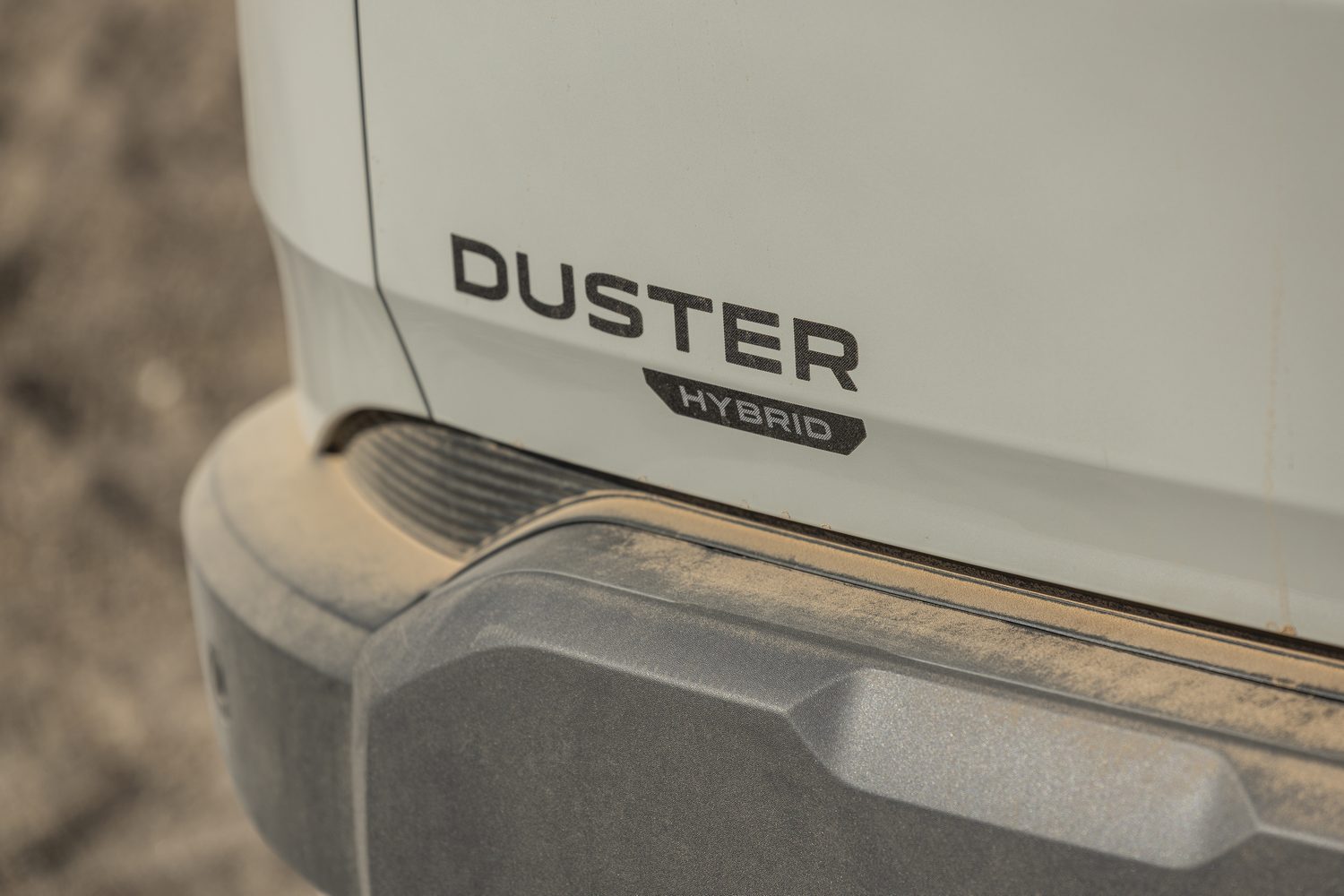
The rear overhang is kept to a minimum to improve the car's departure angle. Underlining Dacia's pragmatic approach, both the Duster Hybrid and the 4x4 identifications are stickers rather than proper badges, but the Dacia wordmark above the registration plate is a more permanent fixture.
Dimensions of the 2026 Dacia Duster
- Length:
- 4,343mm
- Width:
- 1,813mm
- Height:
- 2,095mm
- Wheelbase:
- 2,658mm
Paint colours for the 2026 Dacia Duster

There are seven exterior colours available for the Dacia Duster, reflecting the brand's colour palette. They are Sandstone, Dusty Khaki, Terracotta, Glacier White, Shadow Grey, Pearl Black and Cedar Green.
Interior, practicality, tech & comfort of the 2026 Dacia Duster
- Reasonably roomy inside
- Sensible layout
- Several practical touches

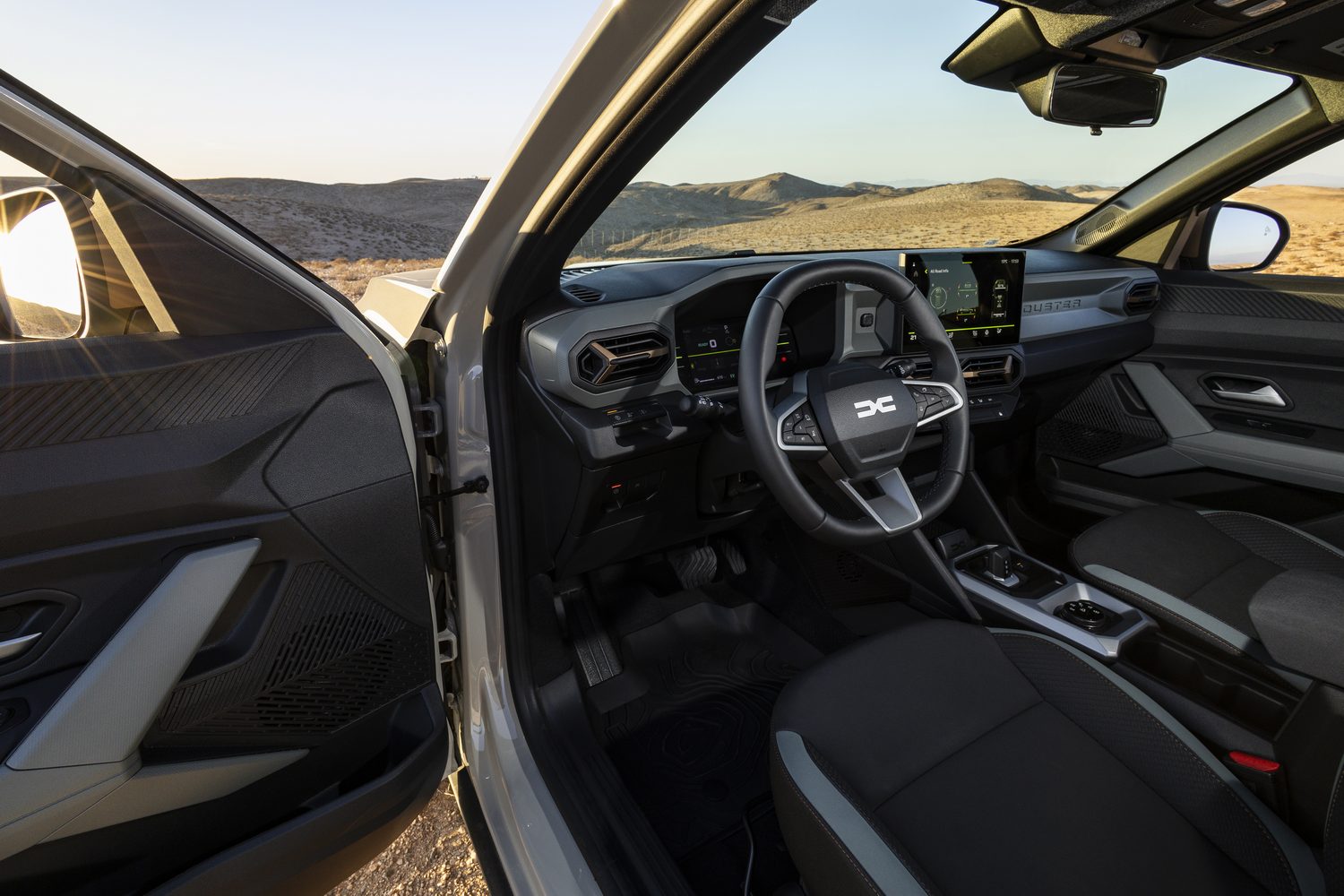
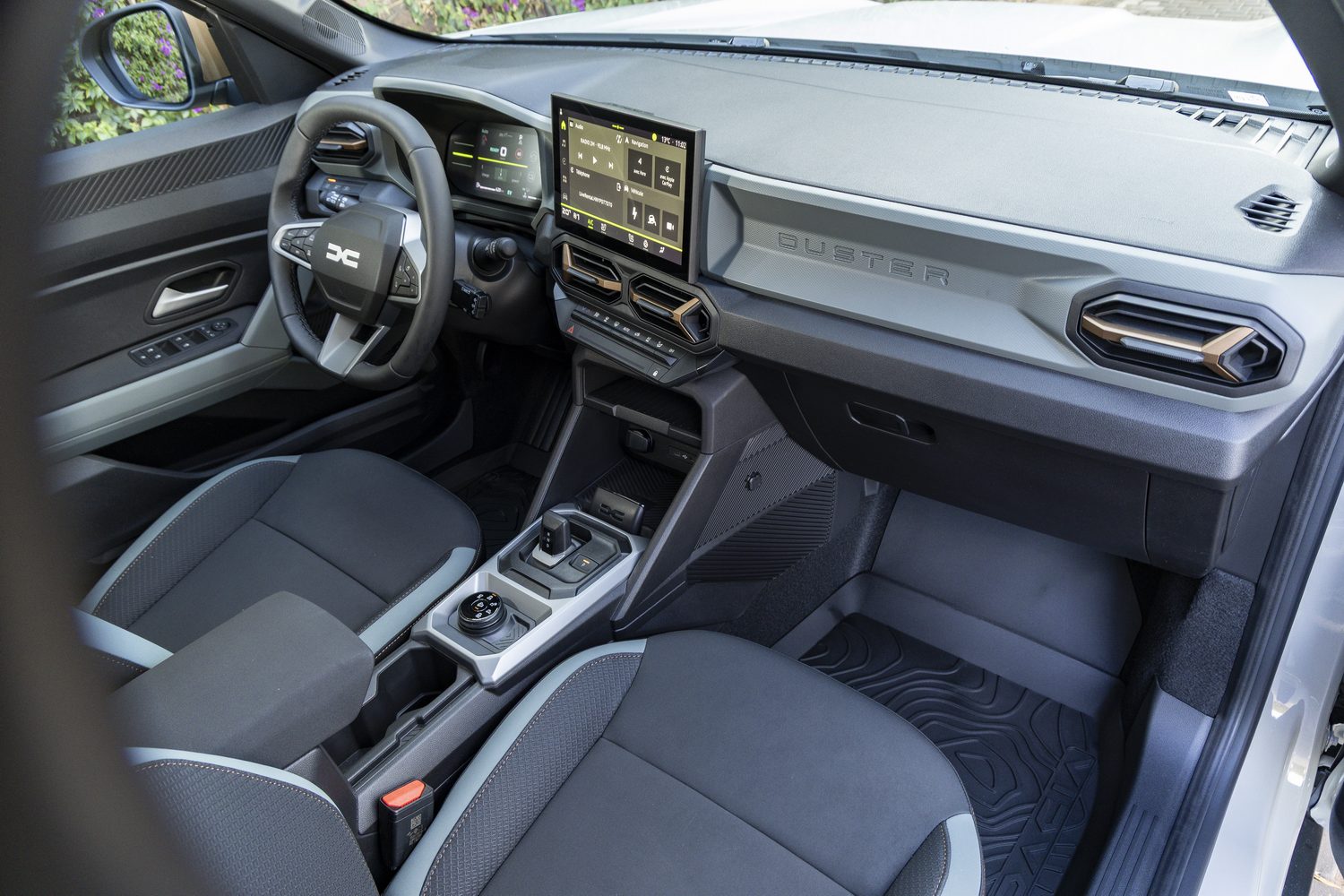
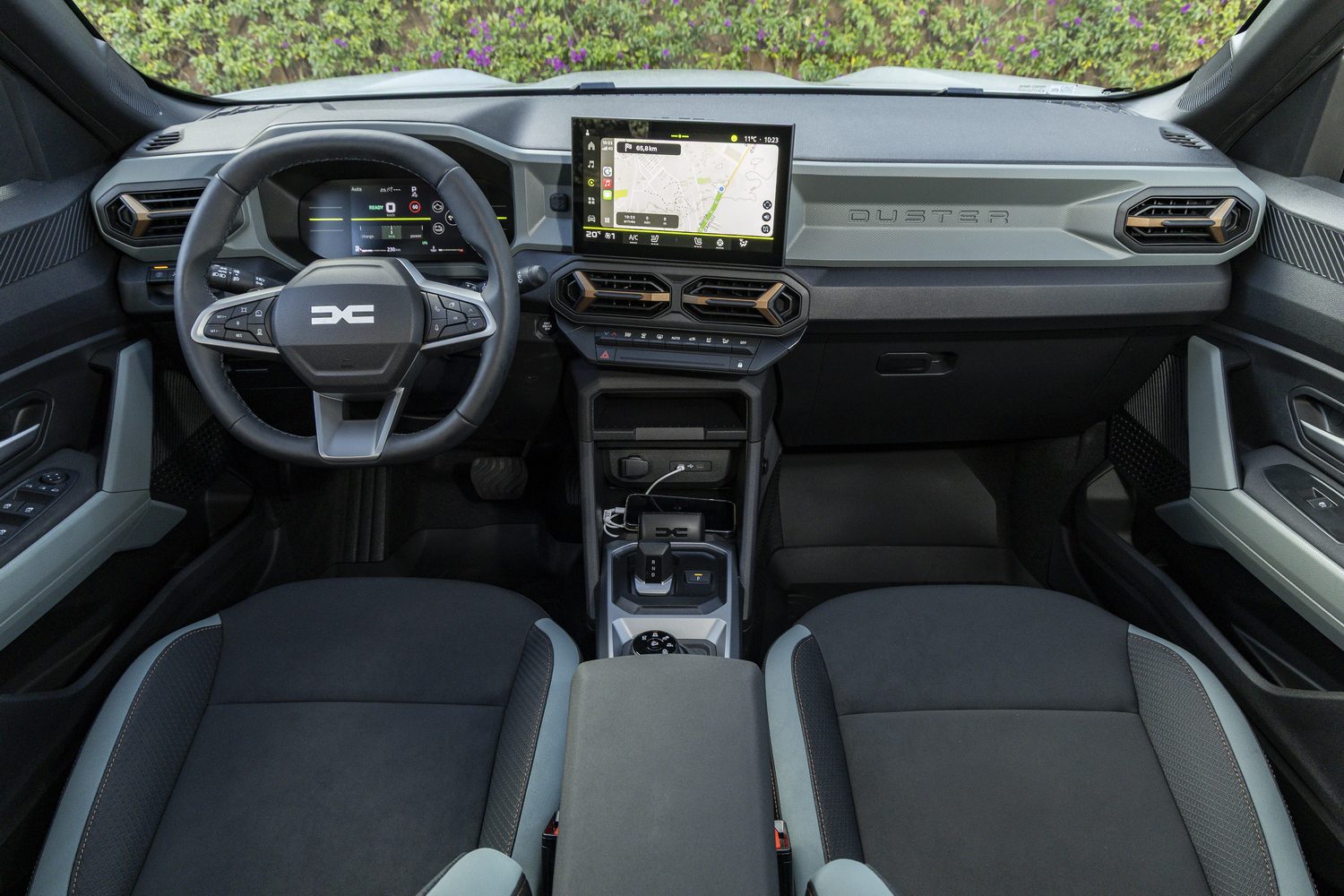
While the Duster isn't the largest car in its segment, the interior feels decently roomy, and the layout of everything, including the upright dashboard fascia and low centre console, contributes to that.
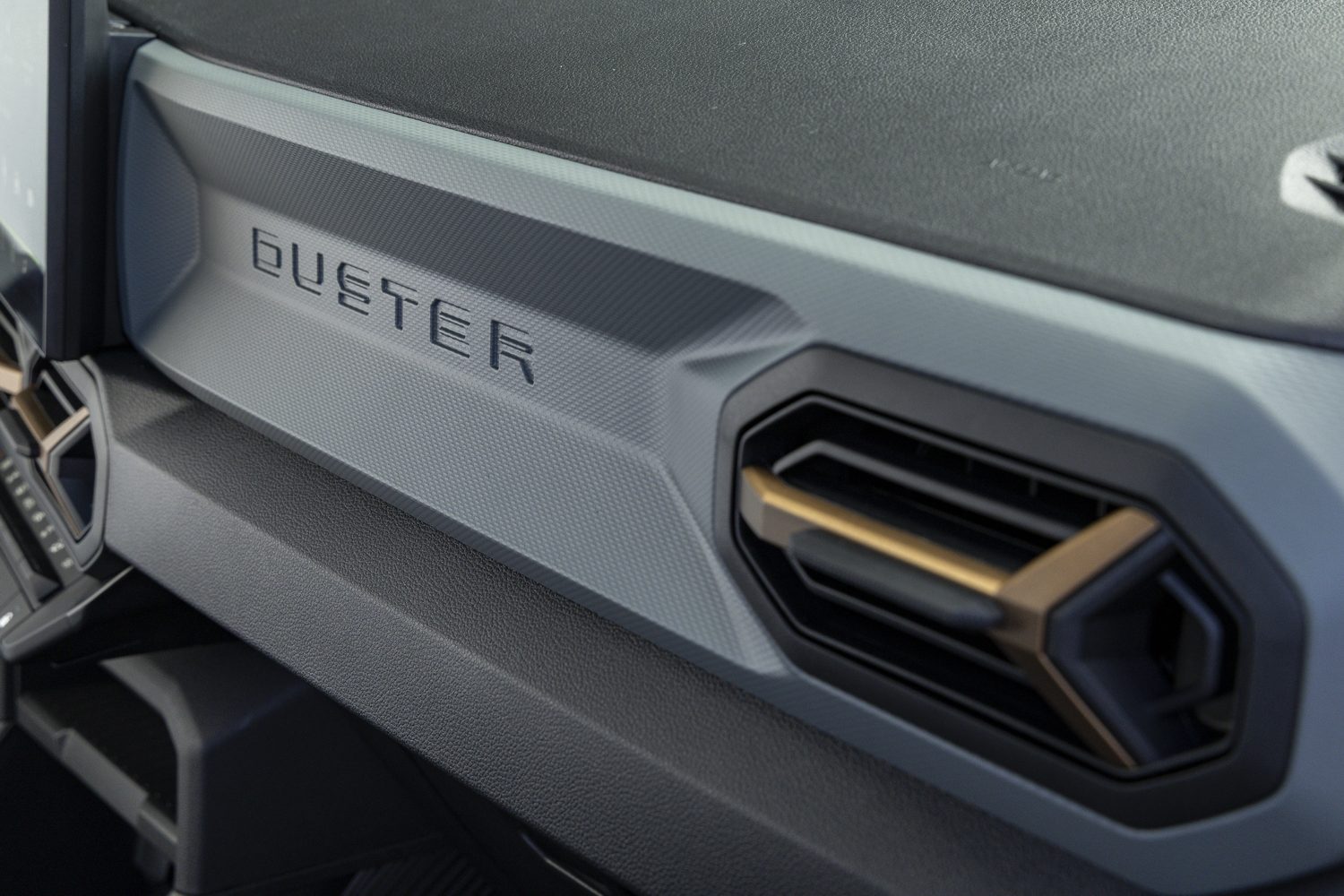
Similar to the exterior, the inside has a rugged look, and although there are lots of hard-wearing plastics, their look and feel are much improved over previous generations of Duster.
Getting comfortable in the driver's seat
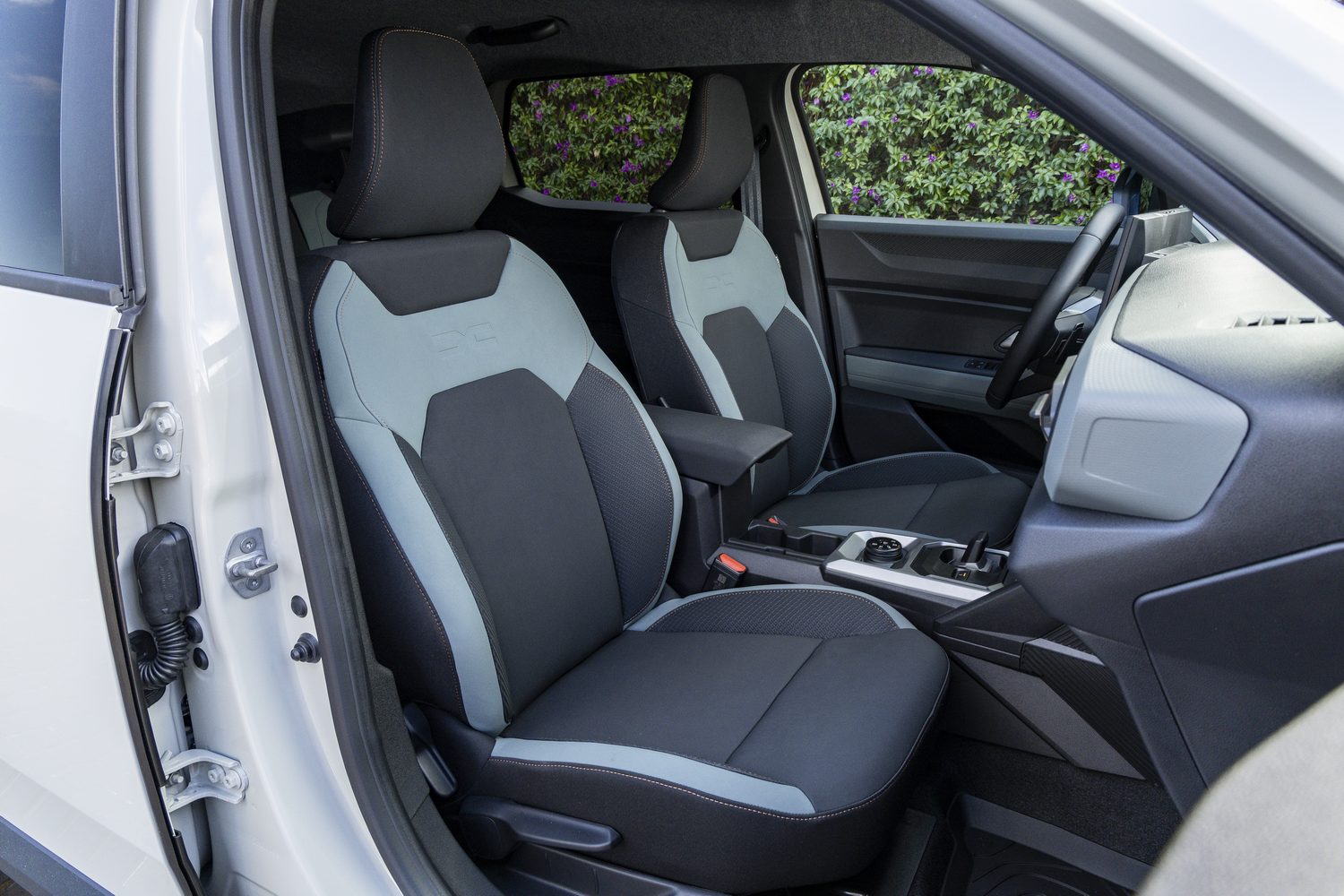
The Duster's front seats are fairly comfortable and provide reasonable amounts of support in all the right places. They are manually adjustable as Dacia forgoes some upmarket features, such as electric seats, to manage costs. Manual adjustment of the steering column for reach and rake makes it easy for the driver to find a suitable seating position.

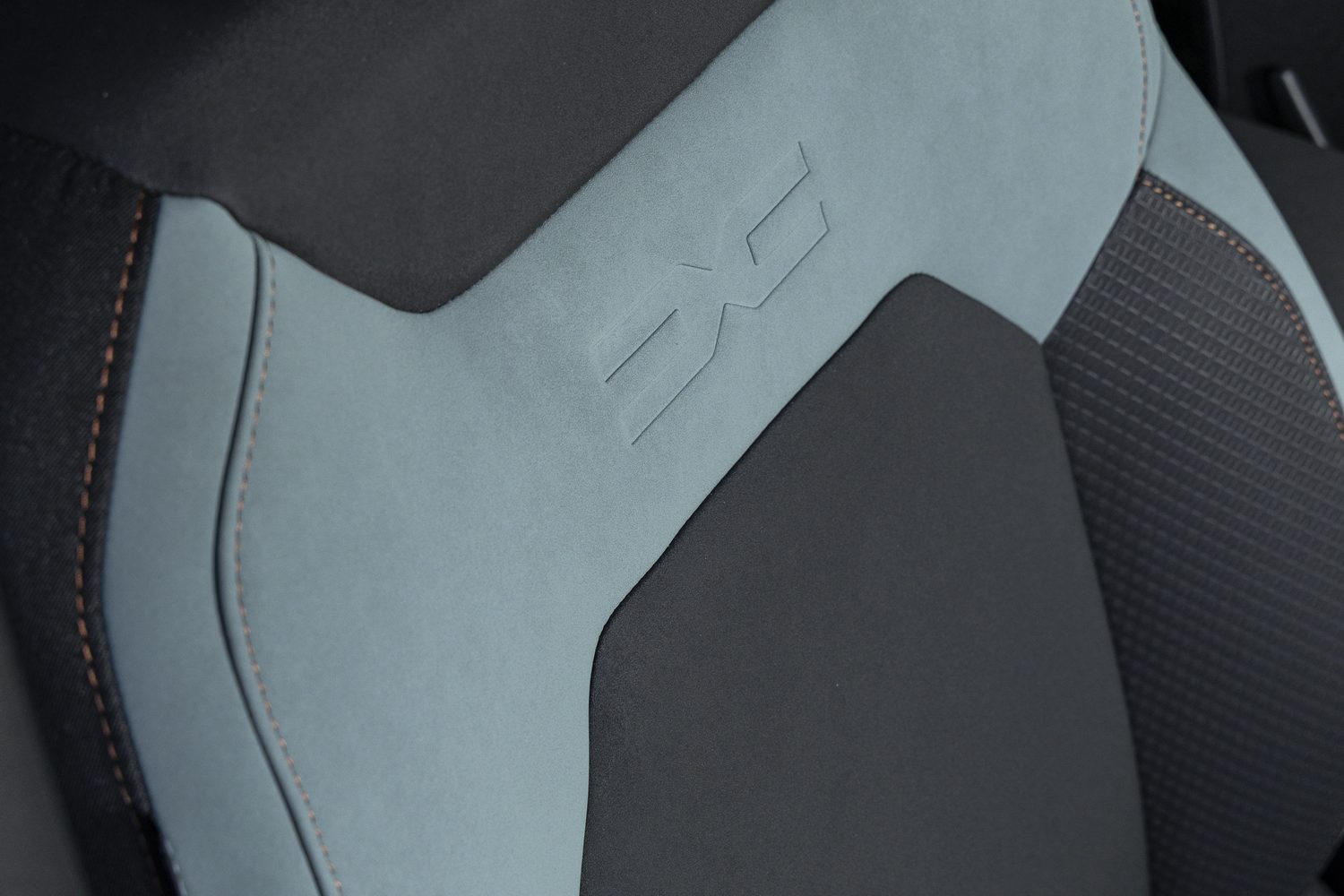
Different upholstery options are available for the Duster depending on the grade. It starts with a simple dark grey fabric on Essential trim, with mid-grade Expression and Journey models getting a denim-like upholstery that includes a reflective Dacia logo on the seatbacks.
The Extreme version gets different upholstery: it's a plastic-coated textile designed to be easy to clean. However, during warmer weather, this material can be a bit unpleasant to sit on for long journeys because it isn't very breathable.
Infotainment and technology
One of the original selling points of the Dacia brand was its simplified, stripped-back interiors, and the Duster is still available as an entry-grade model with analogue dials and a holder that lets you use your mobile phone as the infotainment system.

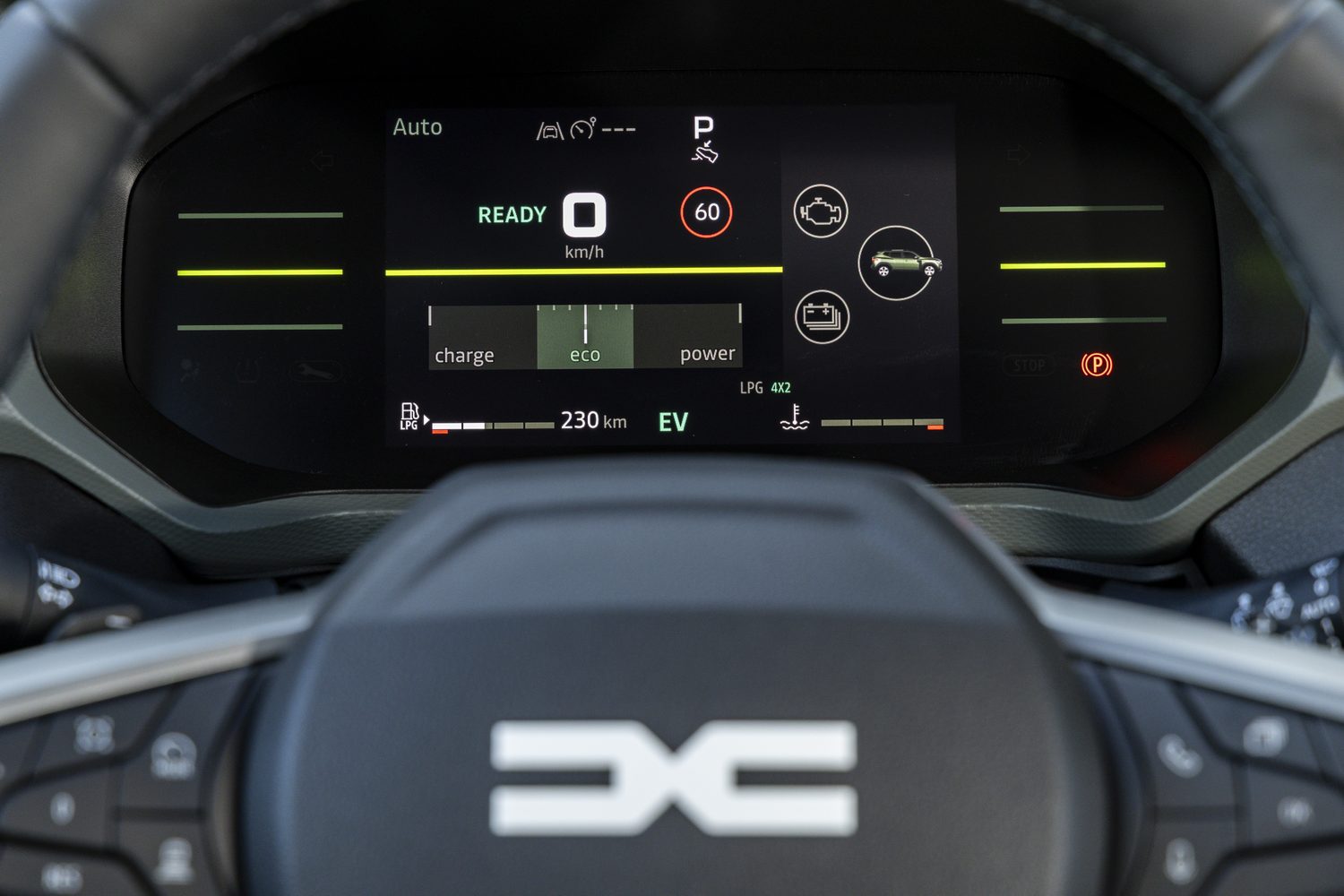
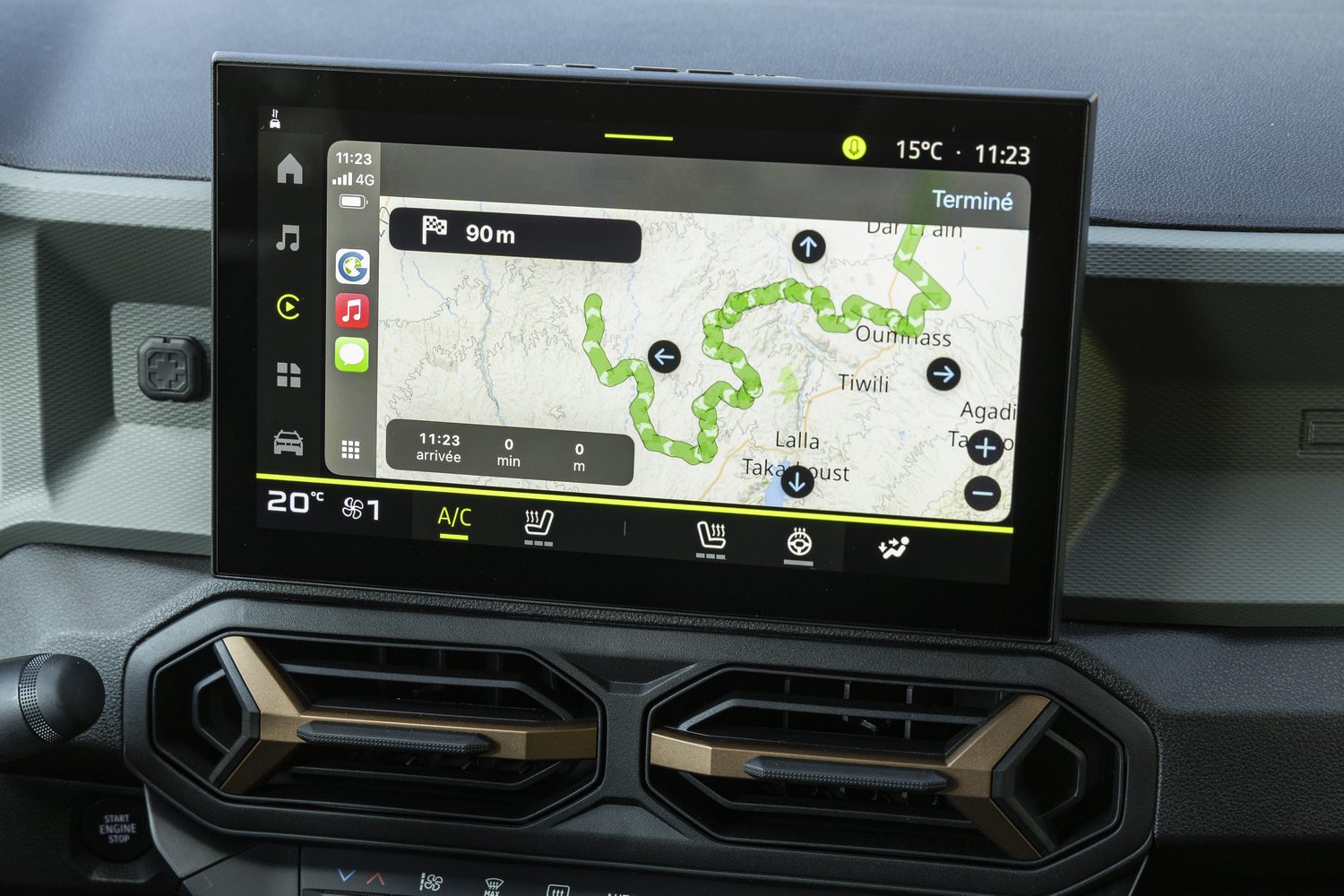
While this is refreshingly simple, we expect most people to opt for the models that feature a seven-inch customisable instrument display and a 10.1-inch touchscreen infotainment system.
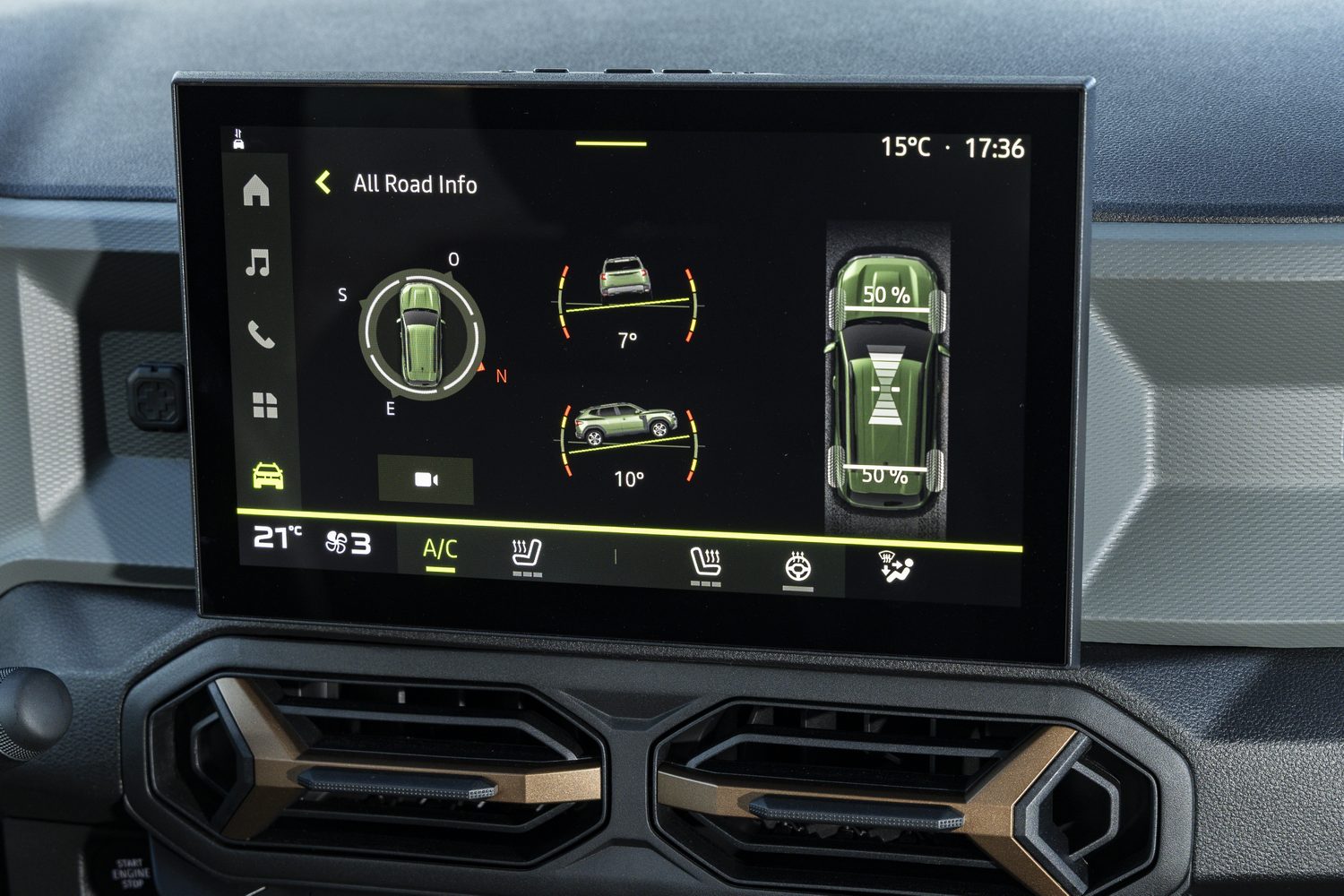
By today's standards, the latter has a simple menu system to navigate, and the display also features a permanently displayed lower section dedicated to the heated seats and heated steering wheel controls, showing the cabin temperature.

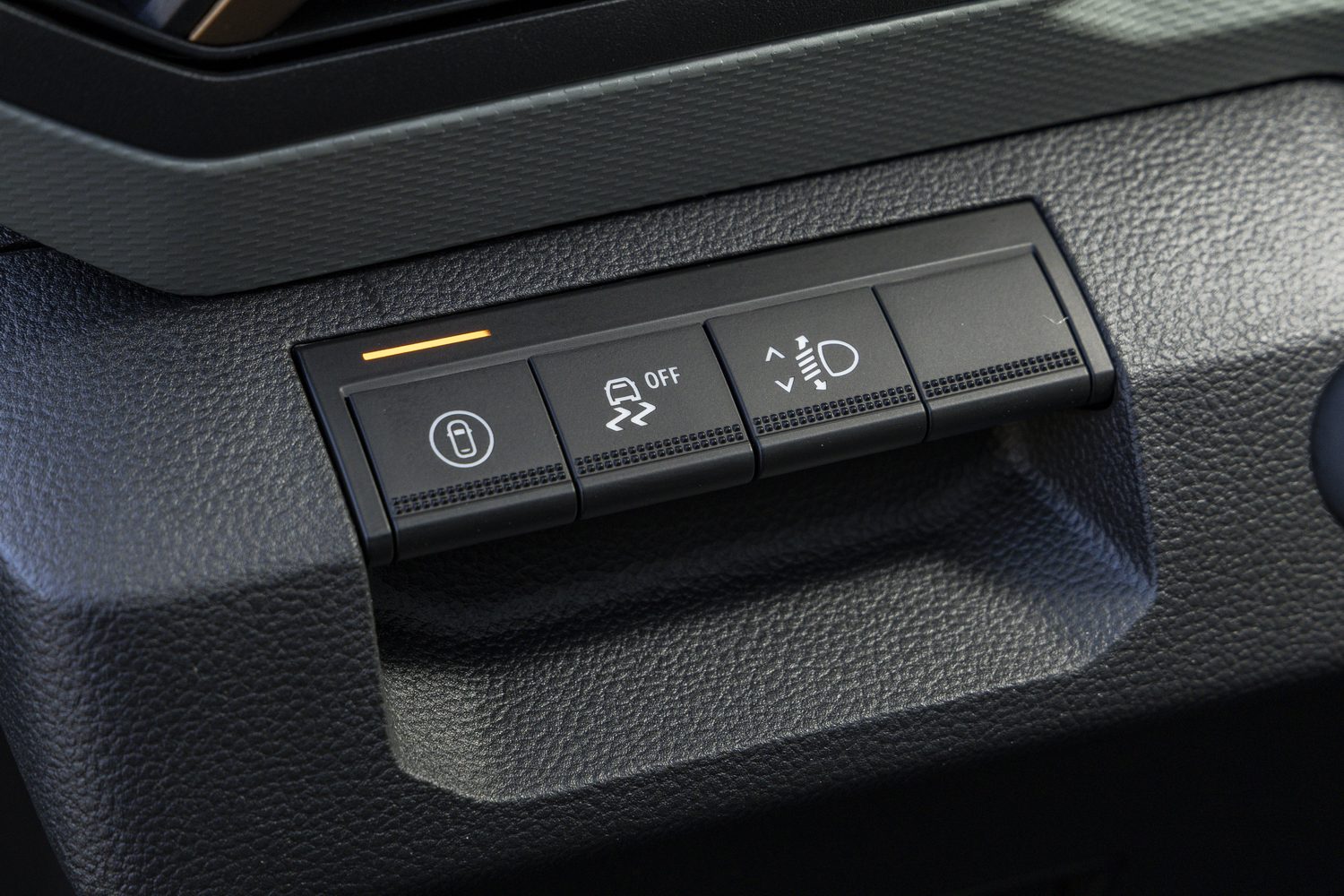
However, adjusting the temperature is done via a rocker button below the central vents, which is part of a bank of physical switches for window clearing and central locking.
Smartphone mirroring is available via Wi-Fi or a USB cable, and there are USB-C ports in the front and rear of the cabin.

A wireless charging pad is also available and is standard on higher-grade models. If a car has a touchscreen then it also has a reversing camera.
Practicality around the cabin
Unique to Dacia is the 'YouClip' system. Square attachment points are located throughout the interior and allow simple accessories to slide onto them, including a phone holder, a torch light for the boot, cup holders and bag clips.

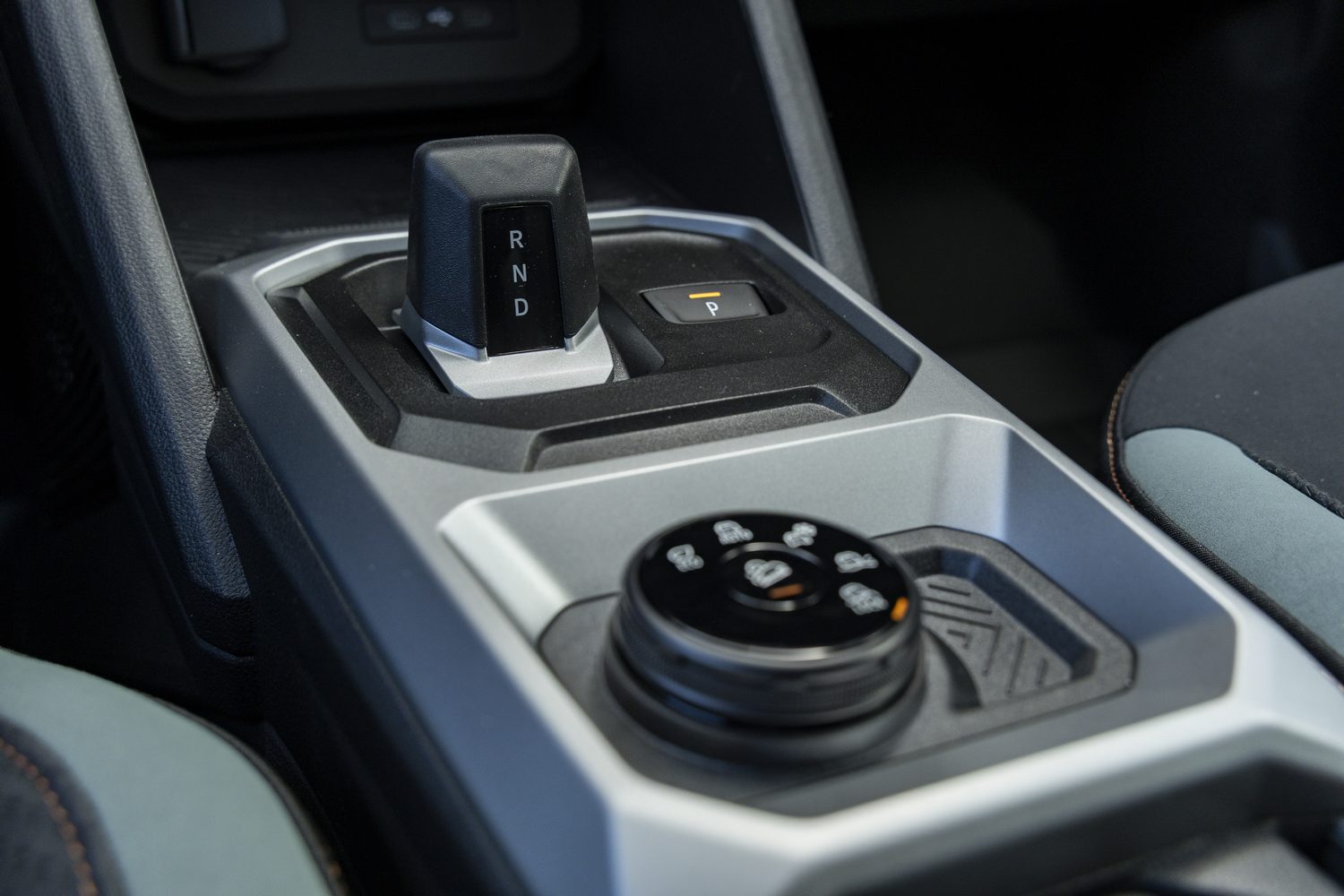
Besides the door bins that are large enough to carry small drink bottles, there's shelf space on the centre console, a larger space below that including the wireless charger and, if you opt for the automatic transmission, more space around the centre console. Two cup holders further back are on ok size too.
Rear-seat passenger space
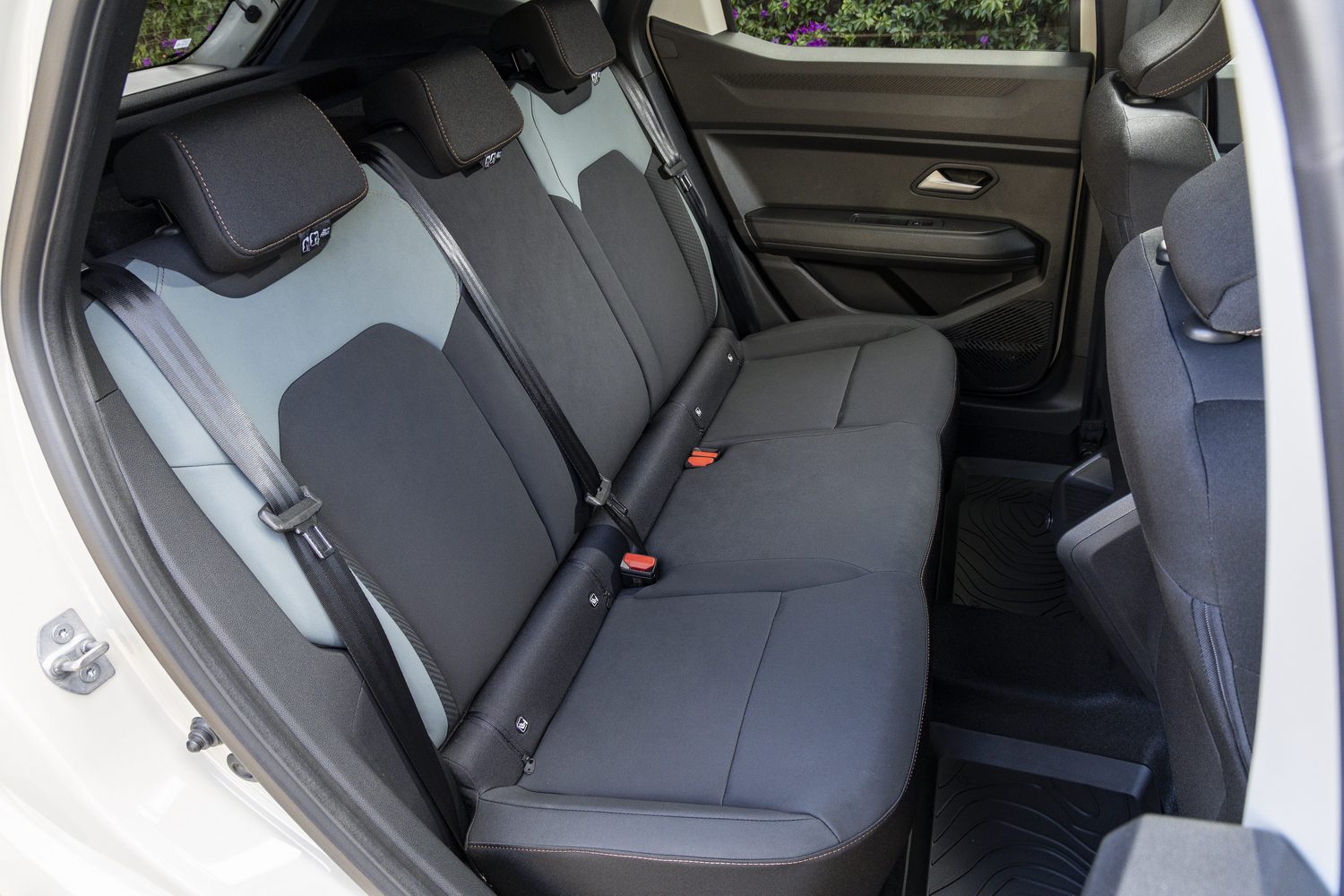
Space in the rear of the Duster is good with sufficient knee room and headroom for adults in the outer seats. The seat bases extend enough for some thigh support, and the front seats have enough space under them for rear passengers to stretch their legs out a bit and get their feet underneath, depending on how the seat is set.

The central position is more limited for space due to a small hump in the floor and the back end of the centre console, which eats into the knee room.
Fitting child seats to the 2026 Dacia Duster
There's good access to the rear thanks to how far the doors swing open, and the elevated seat base means that most parents won't have to bend down that much when getting child seats in and out. ISOFIX anchor points are fitted to each of the outer rear seats, and these also include top-tether anchors.
Boot space in the 2026 Dacia Duster Hybrid-G 150 4x4
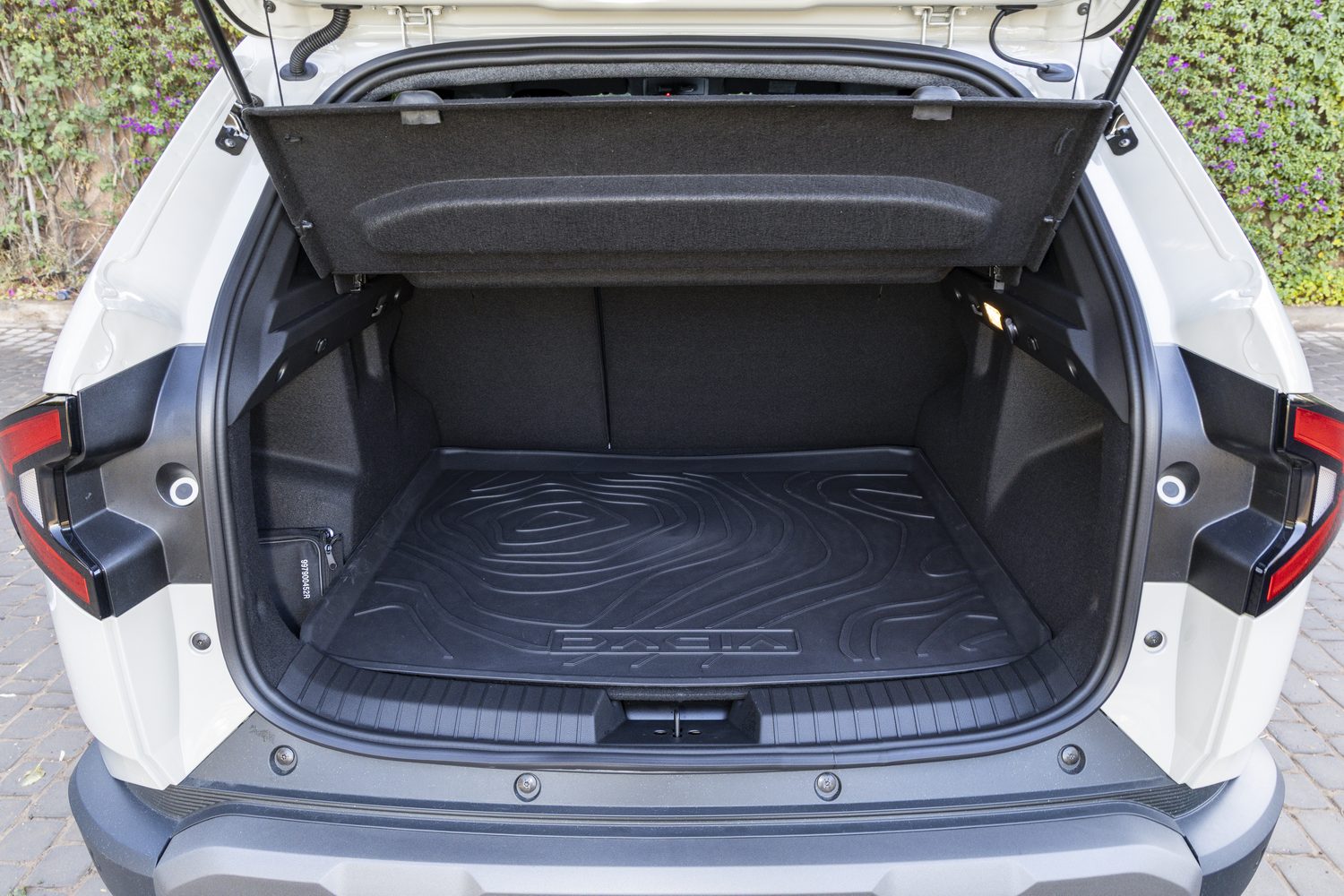
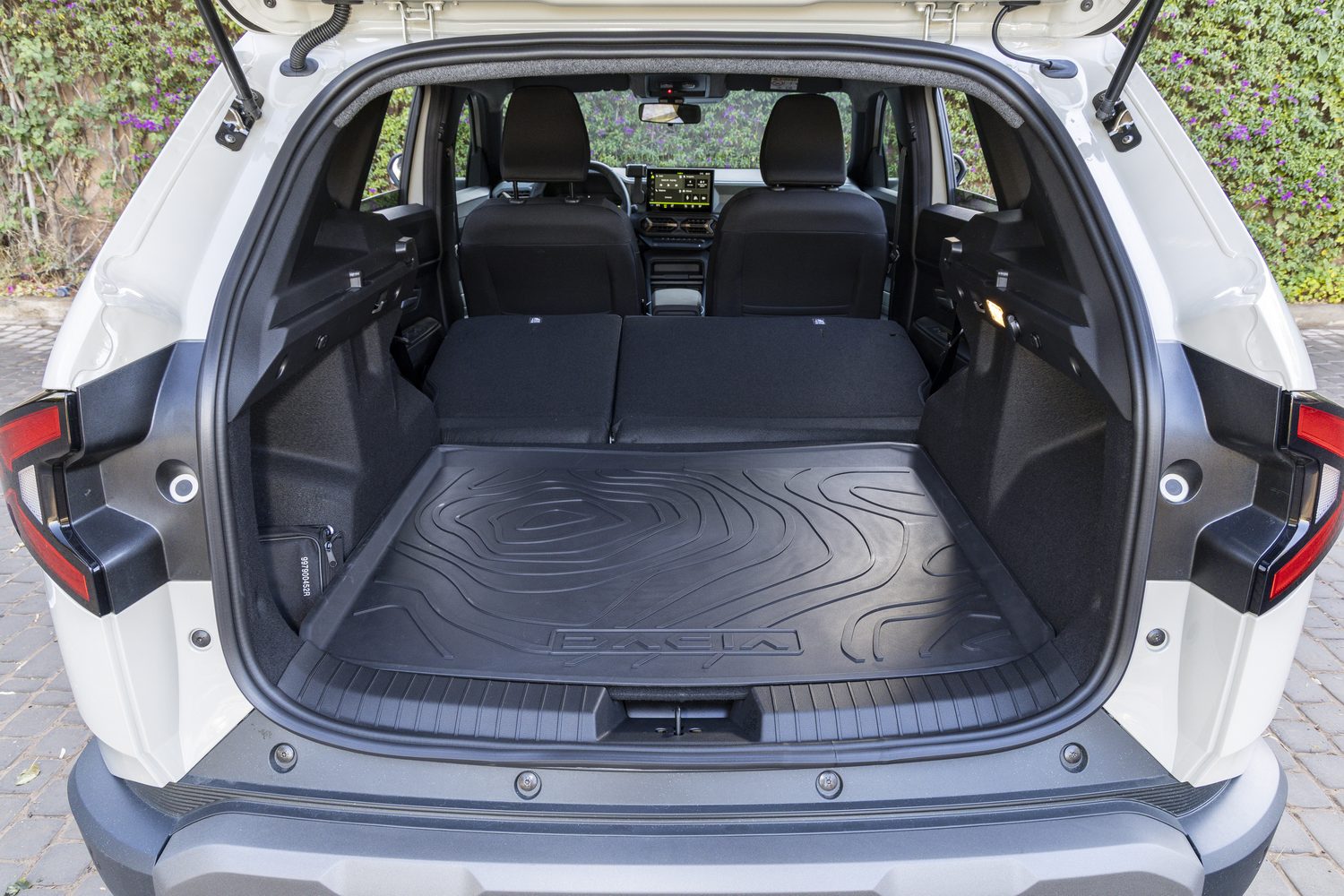
Because of the new rear axle design, the Duster Hybrid-G 4x4's boot space decreases slightly from the standard car to 400 litres as standard, which can increase to 1,527 litres with the back seats folded.

The bi-fuel version doesn't get a spare wheel, as that's where the LPG tank is, but those who opt for the petrol-only hybrid will get one.
Towing with the 2026 Dacia Duster
Similar to other vehicles in this segment, the Dacia Duster is rated at a maximum towing capacity of 1,500kg for a braked trailer. The maximum unbraked towing capacity is 750kg.
Safety in the 2026 Dacia Duster
The Dacia Duster has a three-star Euro NCAP safety rating, with 70 per cent for adult passenger protection and 84 per cent for child occupant protection. Where it doesn't perform as well is in the protection of vulnerable road users, where it achieved a 60 per cent score, and safety assist, where it scored 57 per cent.
This a lot to do with Dacia not making some of the more advanced safety systems standard in the Duster. It does get front, side and curtain airbags but doesn't include knee airbags for front occupants, nor a central airbag or side pelvis airbags. Other features that lose the Duster marks with Euro NCAP include not having child presence detection in the rear seats, an active bonnet and cyclist detection.
Performance of the 2026 Dacia Duster Hybrid-G 150 4x4
- Bi-fuel model offers a long range
- Short electric stints possible
- Sufficient power for its size

Powering the Dacia Duster Hybrid-G 150 is a turbocharged three-cylinder petrol engine equipped with a starter-generator for smooth starting. This engine has an output of 140hp and drives the front wheels via a six-speed dual-clutch automatic gearbox.
On the rear axle, a 48-volt, 23kW (31hp) electric motor uses its own two-speed gearbox and draws energy from a 0.8kWh battery. In total, the maximum power output is 154hp with 230Nm of torque from the petrol engine and 87Nm from the rear electric motor.

Driving the 2026 Dacia Duster Hybrid-G 150 4x4 on and off-road in Marrakech - Dave Humphreys
Though the Dacia Duster is very much pitched as an affordable and simple SUV, it's not exactly a no-frills car these days, and, impressively, it drives with a reasonably good degree of quality given its remit.

The hybrid powertrain is largely positive, and the 48-volt element means that when it switches between its electric motor and the petrol engine, the transition is generally smooth enough to go unnoticed.
Admittedly, the 1.2-litre three-cylinder isn't a very potent engine but if you're mostly sticking to urban driving with lower speeds and no real need for sudden bursts of acceleration, then it's fine.

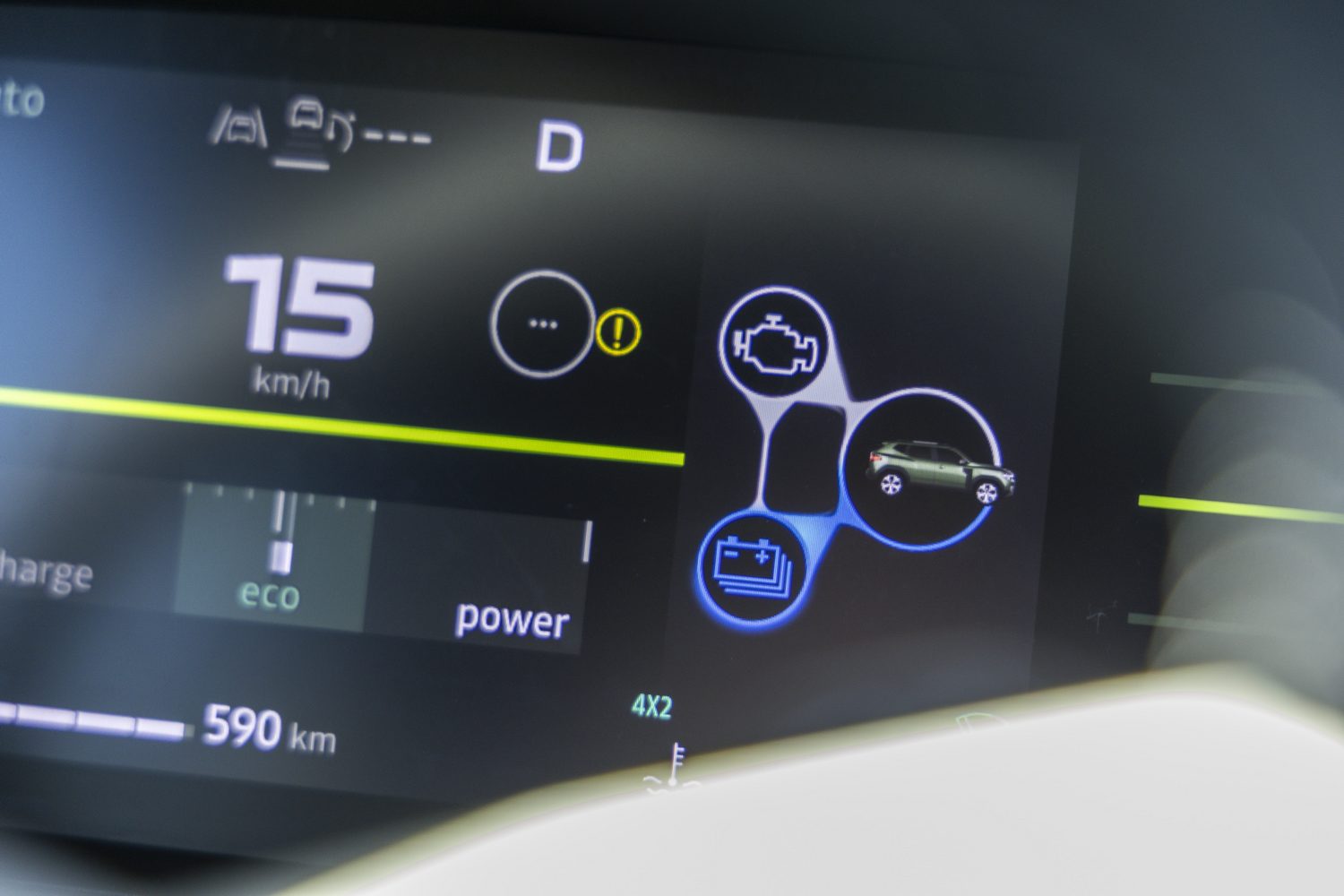
The mild-hybrid battery isn't especially large in terms of capacity but in said urban situations the Duster will make quite good use of its energy and spend a useful amount of its time driving with the rear axle's electric motor active. Doing so results in a smoother, quieter drive and can help save a bit of fuel, while also reducing local pollution.
Any sudden demand for performance sees the petrol engine activate without hesitation, though under harder acceleration, it does sound a little coarse. Drivers can either let the six-speed automatic gearbox do its thing or change gears manually via the paddles on the back of the steering wheel.

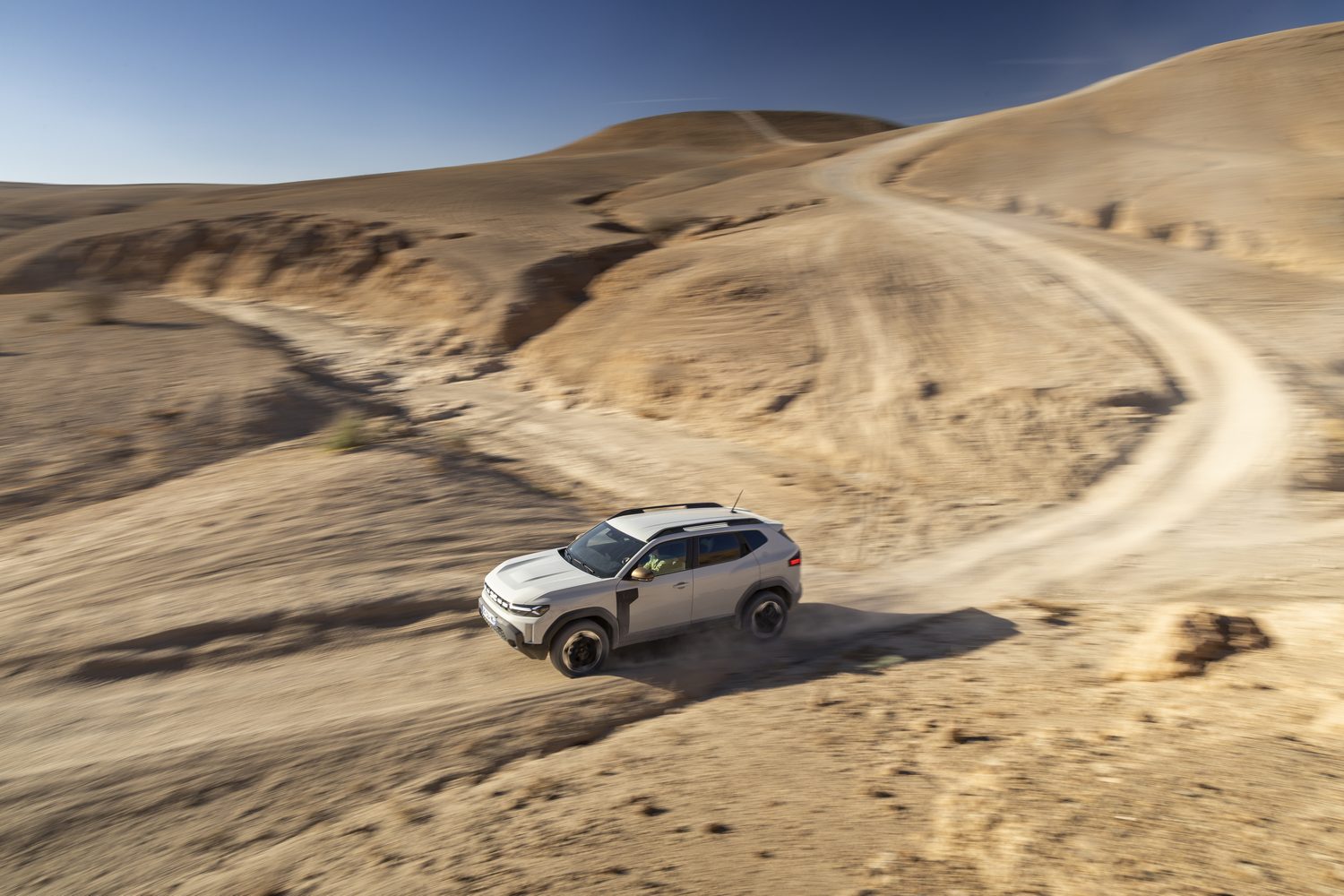
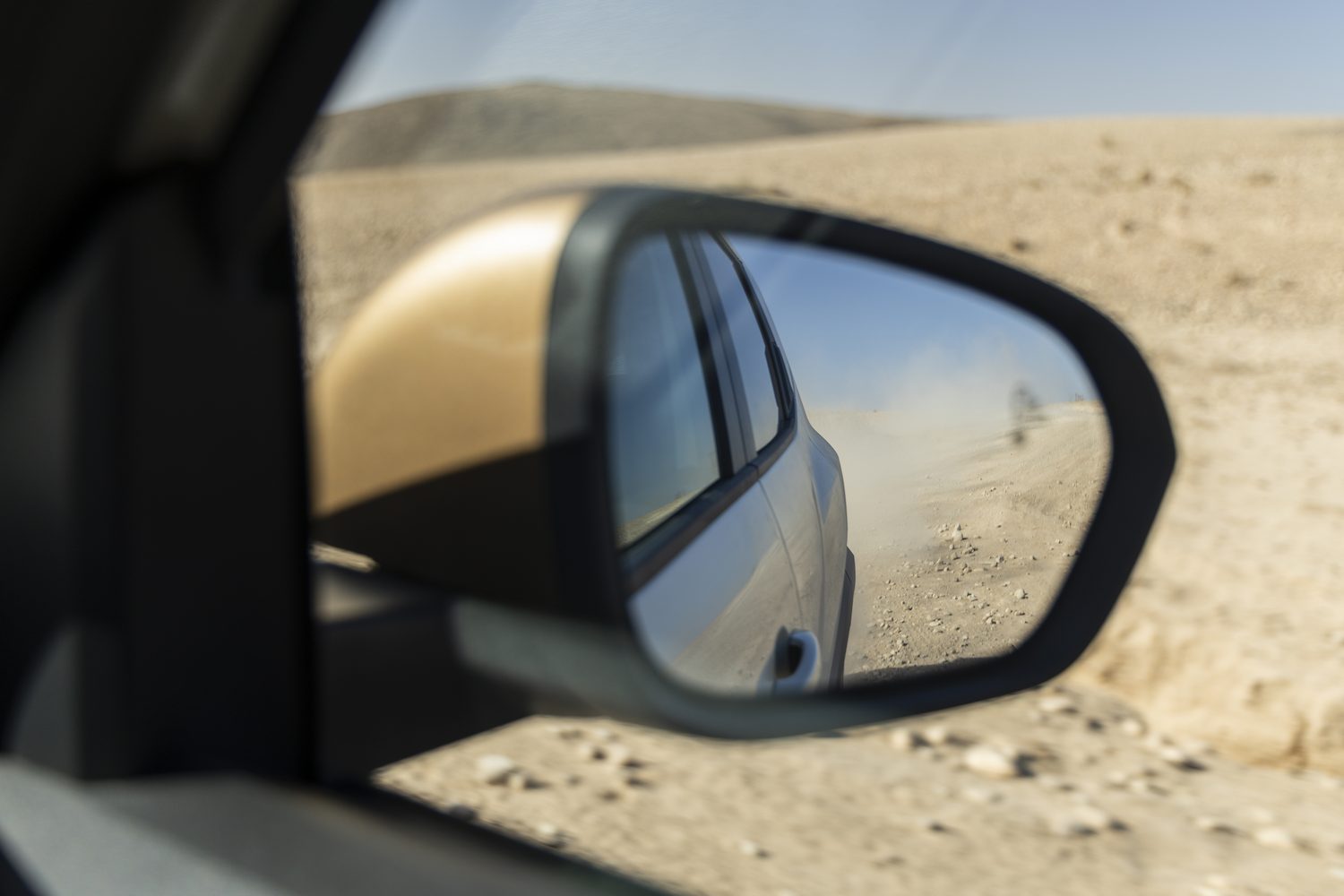
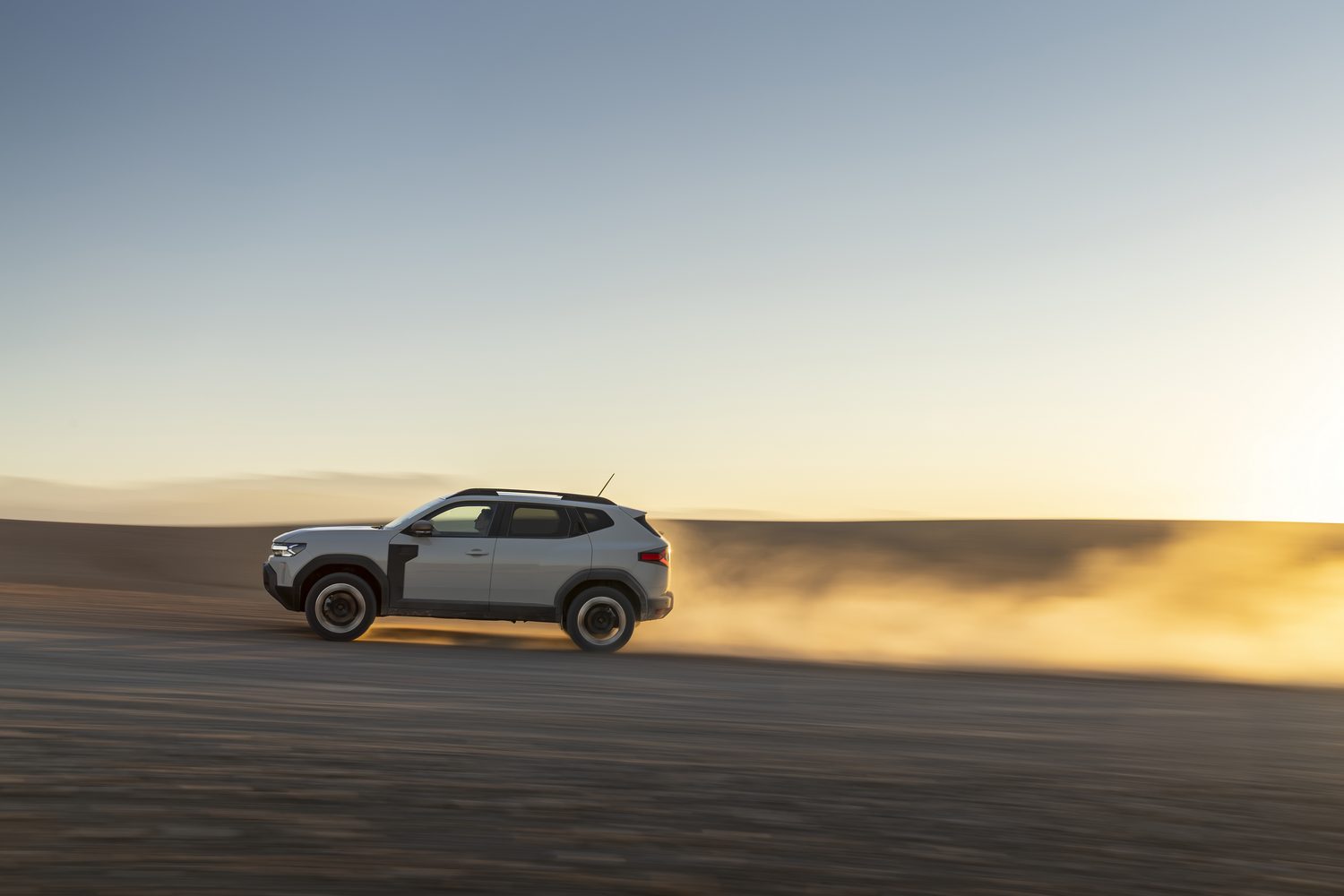
Being in Morocco allowed us to see how the Duster performs in more challenging off-road conditions. Granted, most buyers are unlikely to drive in the desert, but there are plenty of situations back home in Ireland where grip can be limited, so exploring the all-wheel-drive setup's capability was useful. In most situations, the Duster drives using the wheels with the most grip to optimise efficiency.
It's an easy car to drive, and the dual-clutch automatic transmission contributes to that. General refinement is good, and the whole cabin feels well-made and solidly built. There's not an excessive amount of road or wind noise from it, even at higher speeds, though, as already mentioned, the engine can be loud at times.

At slower speeds, even off-road, the Duster can drive in electric mode, and the rear motor's instantaneous torque is obvious. It feels easy to modulate, while lowering the windows to listen to the sound of off-roading using silent electric propulsion is a novelty.
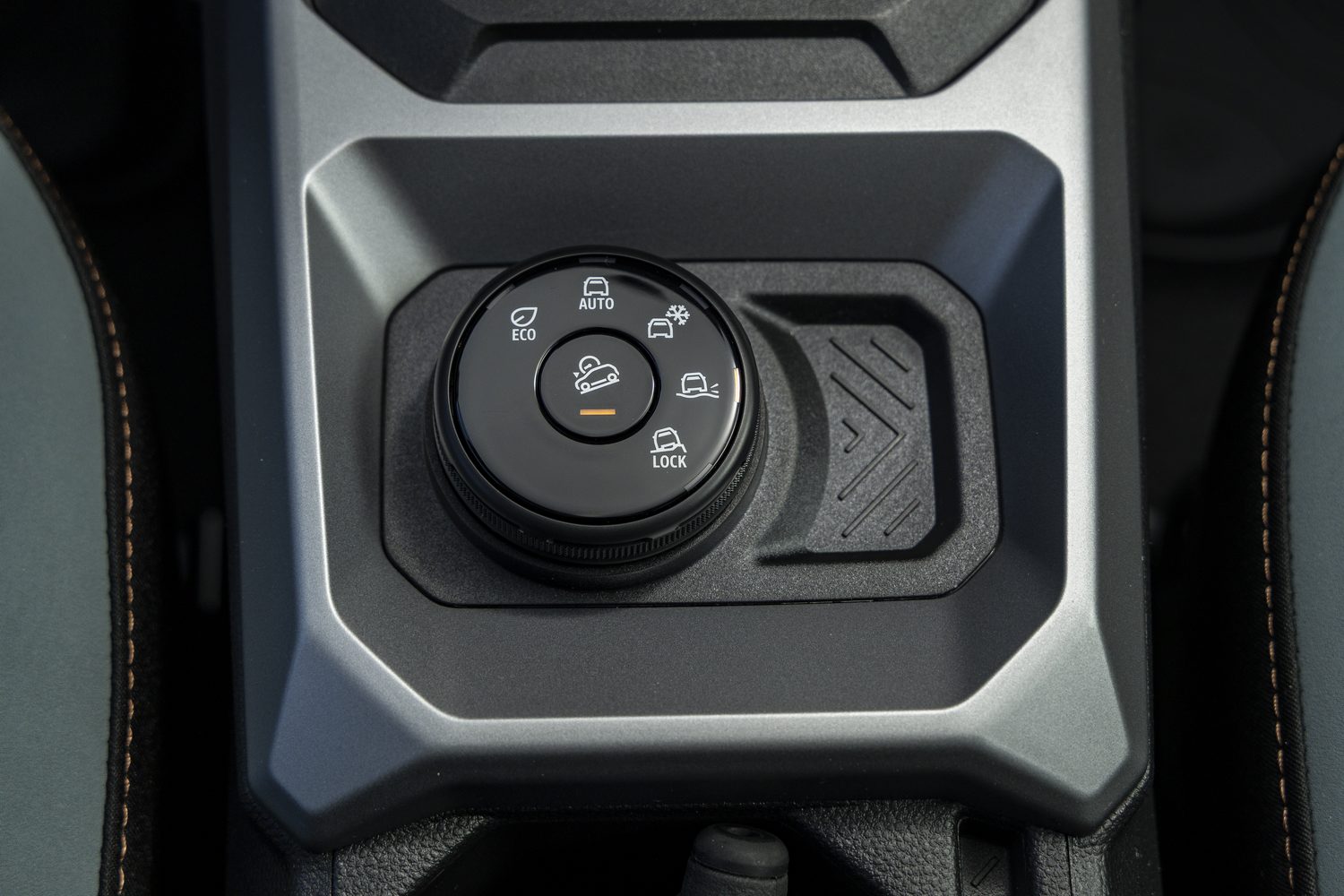
On trickier terrain, switching to the 'Mud and rock' mode will also adjust how the Dacia's traction control functions, permitting more wheel spin at times and alternating drive between the axles.

The Extreme specification of our car also sees a different front bumper fitted that increases the approach angle. Throughout our drive, we only detected grounding once, and that was during an especially steep descent.
For those who might lack confidence off-road, the Hill Descent Control function, activated by pressing the centre of the rotary drive mode controller, effectively manages the vehicle's speed on steep hills, even on loose surfaces.

Back on the tarmac, we also spent some time experimenting with the LPG system. It has a 50-litre tank to complement the 50-litre petrol tank, and switching between the two is as simple as pressing the LPG button on the dashboard; the icon in the digital display switches to show the tank being used.
You can't notice the change taking place, and you don't need to slow down or stop to make it work. It's possible to switch between the two frequently or run one whole tank down before switching over.
Fuel economy and running costs of the 2026 Dacia Duster Hybrid-G 150 4x4
- LPG boosts range, but hard to find
- Hybrid means modest fuel savings
- Long service intervals

The bi-fuel setup of the Dacia Duster Hybrid is quite an interesting option, and the only one of its kind, but LPG has limited availability in Ireland.
Official fuel economy and emissions of the 2026 Dacia Duster Hybrid-G 150
Being a bi-fuel setup means there are two sets of official fuel consumption figures for the Duster Hybrid-G 150. When running on LPG, the Duster uses between 7.1 and 7.2 litres/100km and emits 116- to 118g/km, while on petrol it uses 5.5 to 5.6 litres/100km and emits 124- to 126g/km. The combined totals quoted by Dacia are 135g/km and 6.0 litres/100km, but these are subject to final validation.

Real-world efficiency of the 2026 Dacia Duster Hybrid-G 150 4x4
Our time behind the wheel of the Duster included some fun (but not-so-efficient) off-road driving, so the overall figure we achieved may not be representative of what most drivers will get. During purely road driving on the flat, surprisingly well-paved roads of Morocco, we achieved 4.8 litres/100km with the petrol-hybrid setup.

Servicing the Dacia Duster
Dacia recommends servicing either once a year or every 20,000 kilometres, whichever comes first.
Dacia Duster warranty
All new Dacia models in Ireland are covered by a three-year or 100,000-kilometre warranty that starts from the date of registration.
Irish pricing & rivals to the 2026 Dacia Duster Hybrid-G 150 4x4
- Hybrid pricing to be confirmed
- Extreme spec tops the range
- LPG may be offered

It's still too soon to confirm the Irish pricing for this new hybrid powertrain, as it's not due to arrive until later in 2026. Dacia Ireland may offer the bi-fuel system as an option, though most buyers are more likely to choose the pure petrol-hybrid version.
Verdict - should you buy the 2026 Dacia Duster Hybrid-G 150 4x4?
This new hybrid setup is quite innovative and serves as a showcase of how 4x4 systems can evolve in the future, while slightly reducing emissions and improving fuel economy. It makes this the most capable Duster yet, and even if you aren't planning to go off-road much, the electric rear axle's enhanced traction in all conditions makes it worth considering.
FAQs about the 2026 Dacia Duster Hybrid-G 150 4x4
Is there a plug-in hybrid option?
Dacia doesn't offer any plug-in-hybrid versions of its models, mainly because plug-in-hybrid technology is more expensive and doesn't fit with the brand's ethos.
Want to know more about the2026 Dacia Duster?
If there's anything about the Dacia Duster we've not covered, or you'd like help in choosing between it and other cars, you can avail of our expert advice service via the Ask Us Anything page.