
Exterior & design of the 2026 Lotus Emeya
- Sharp-edged looks are striking
- It's a very long car
- Wheels range from 20 to 22 inches
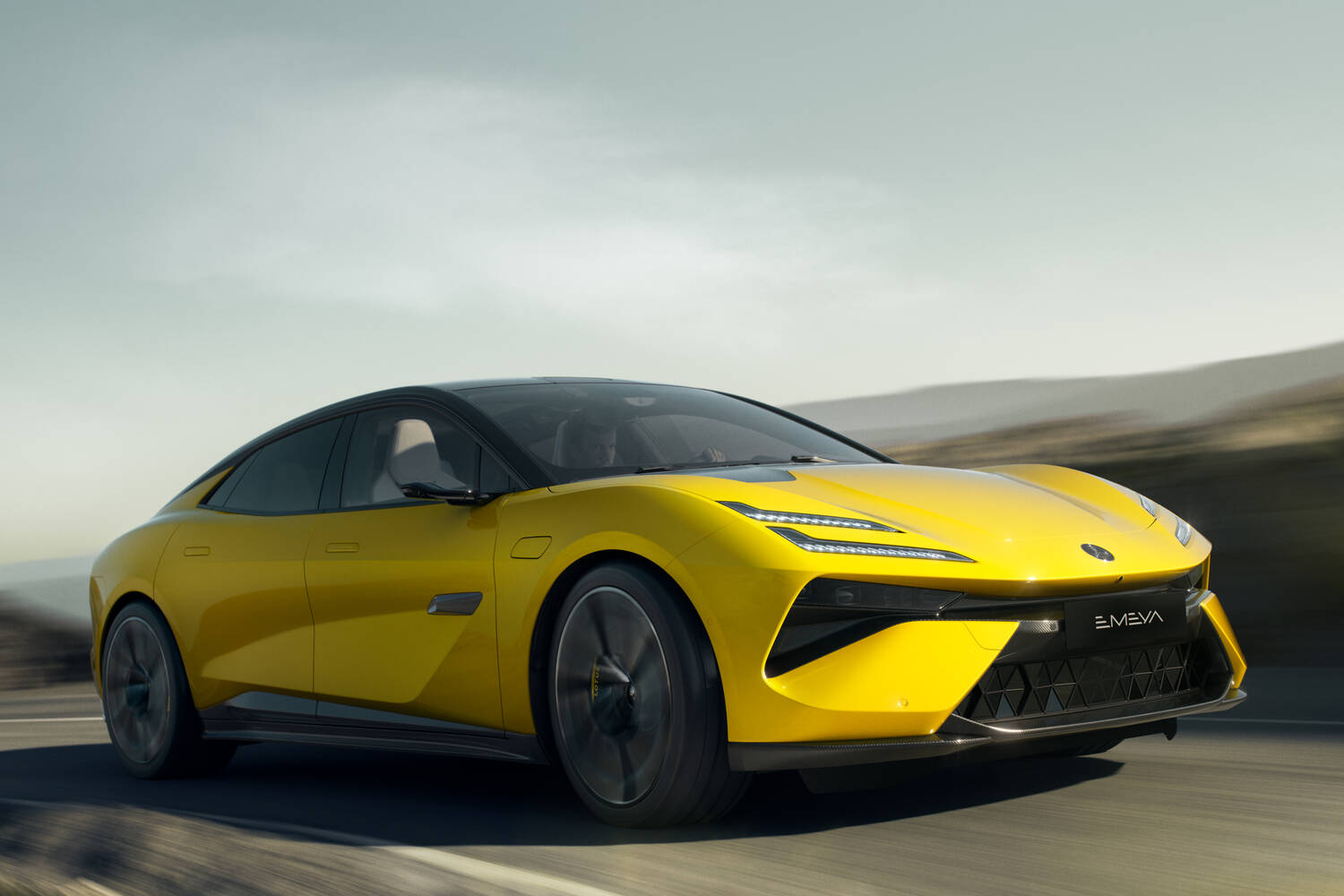
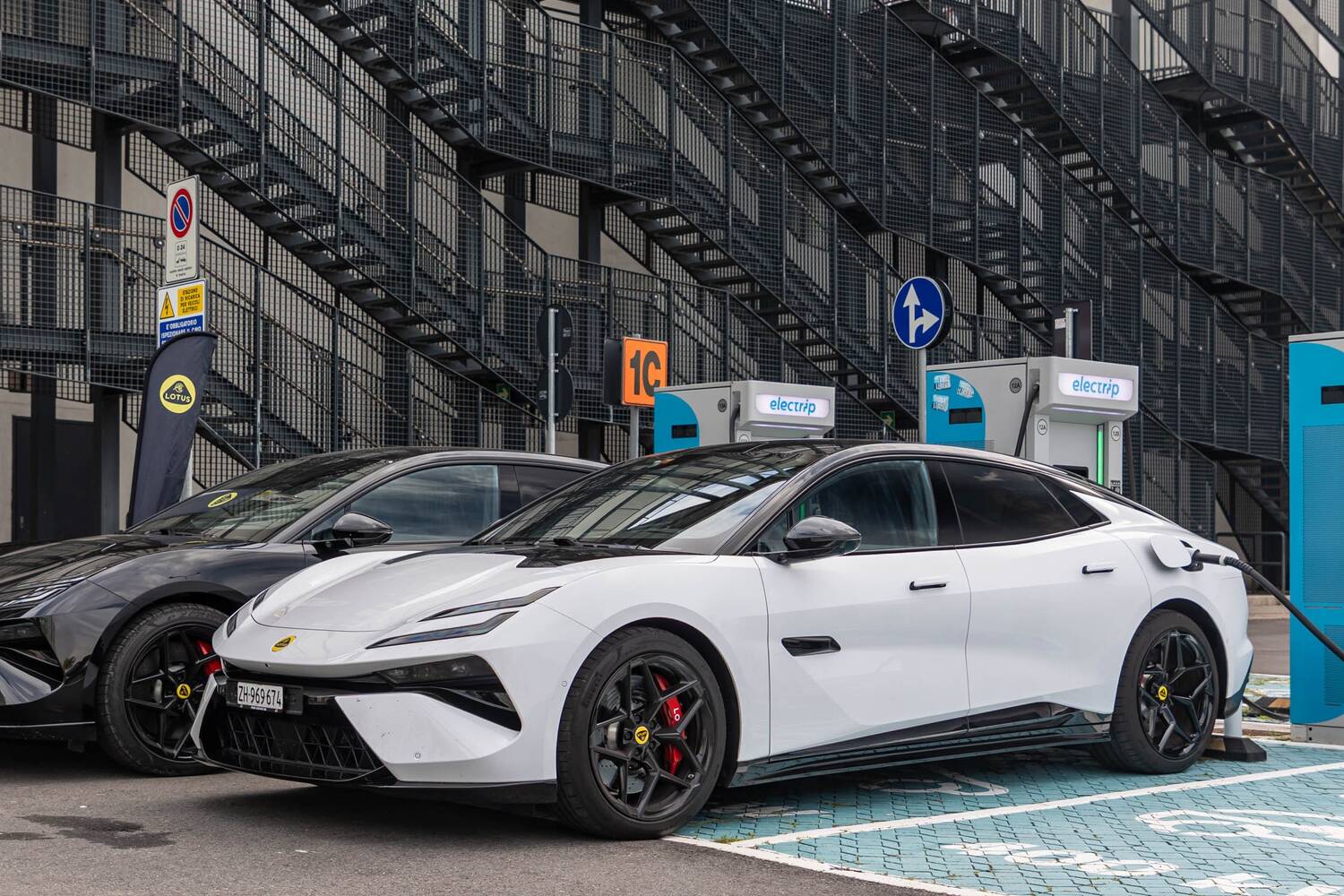
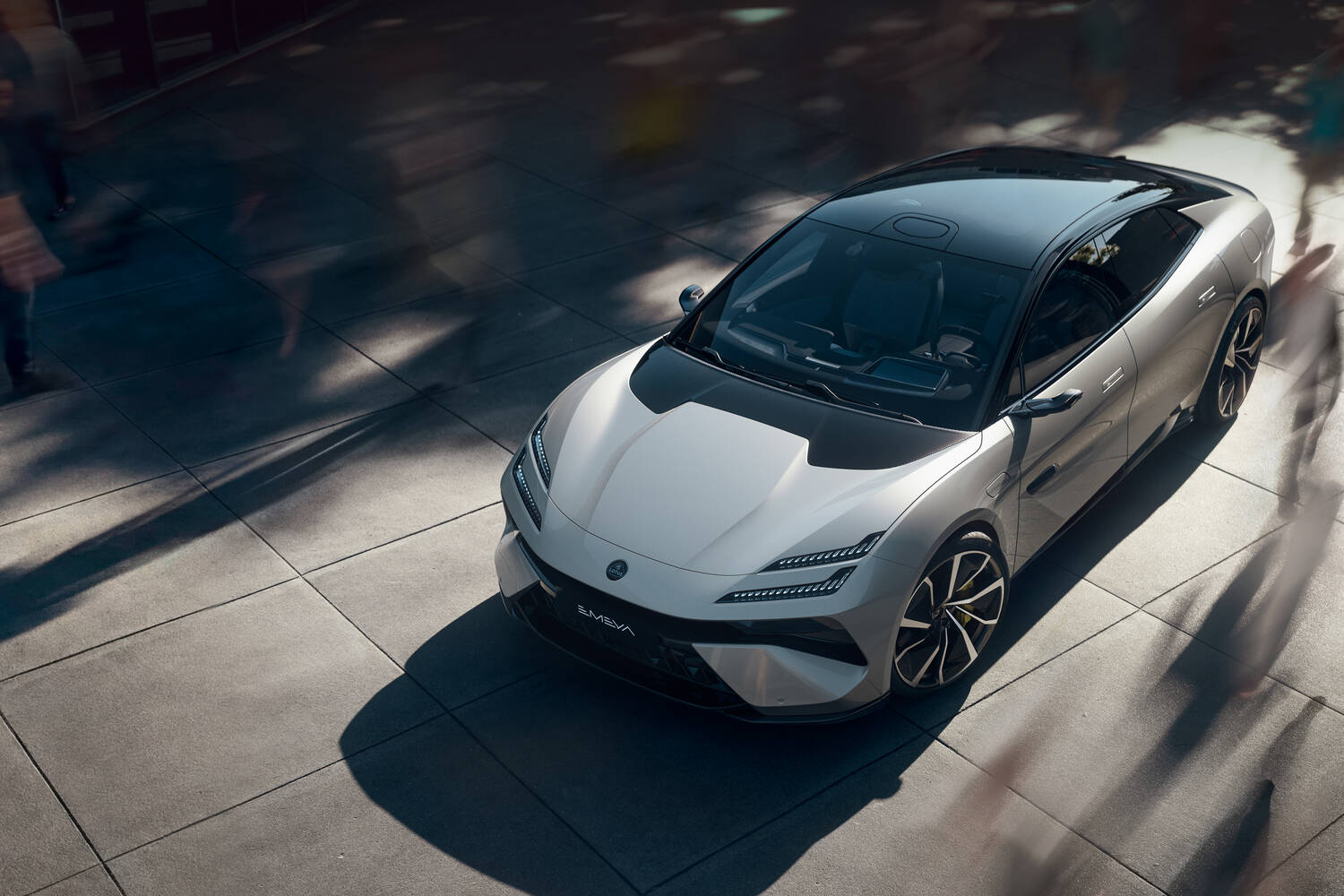
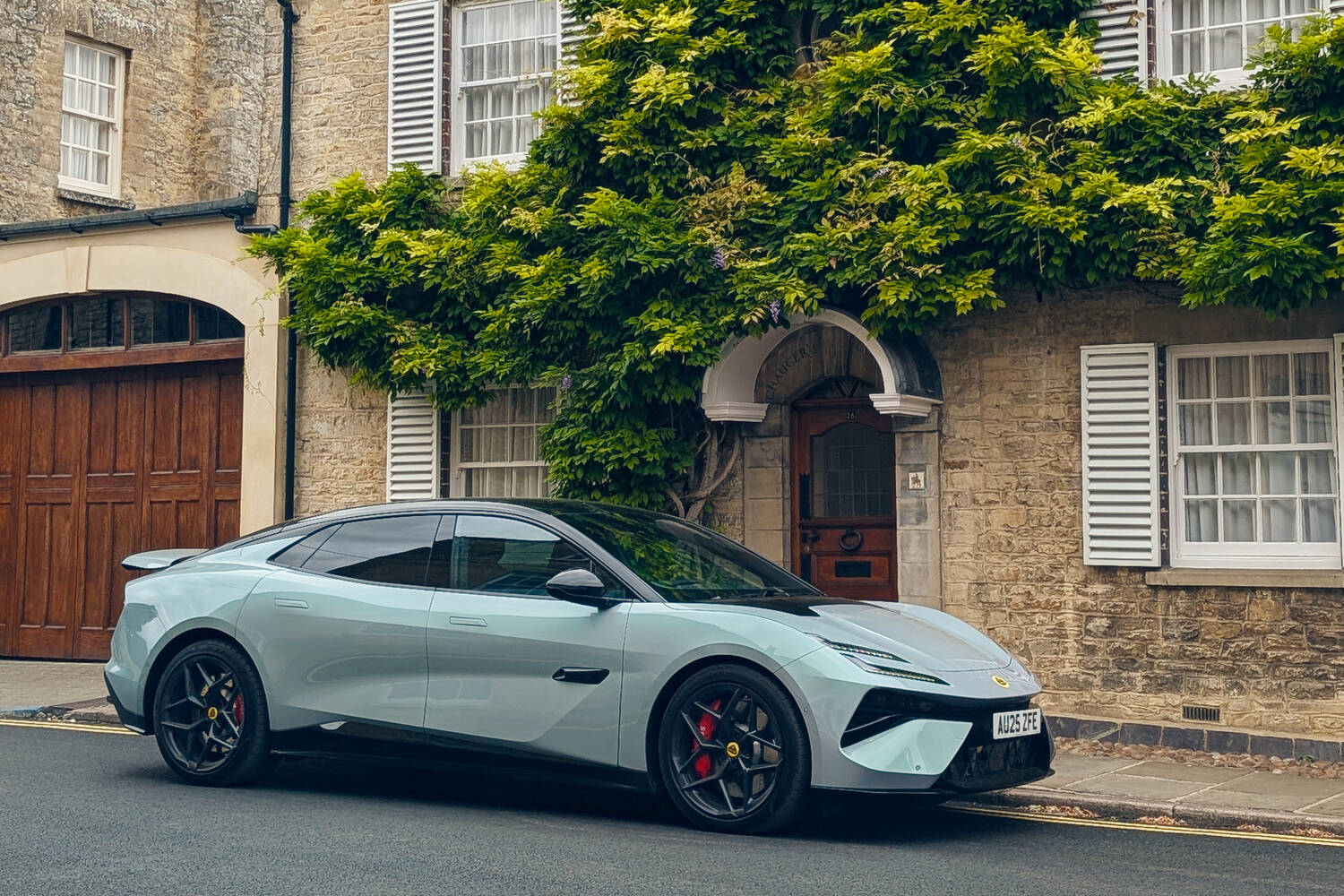
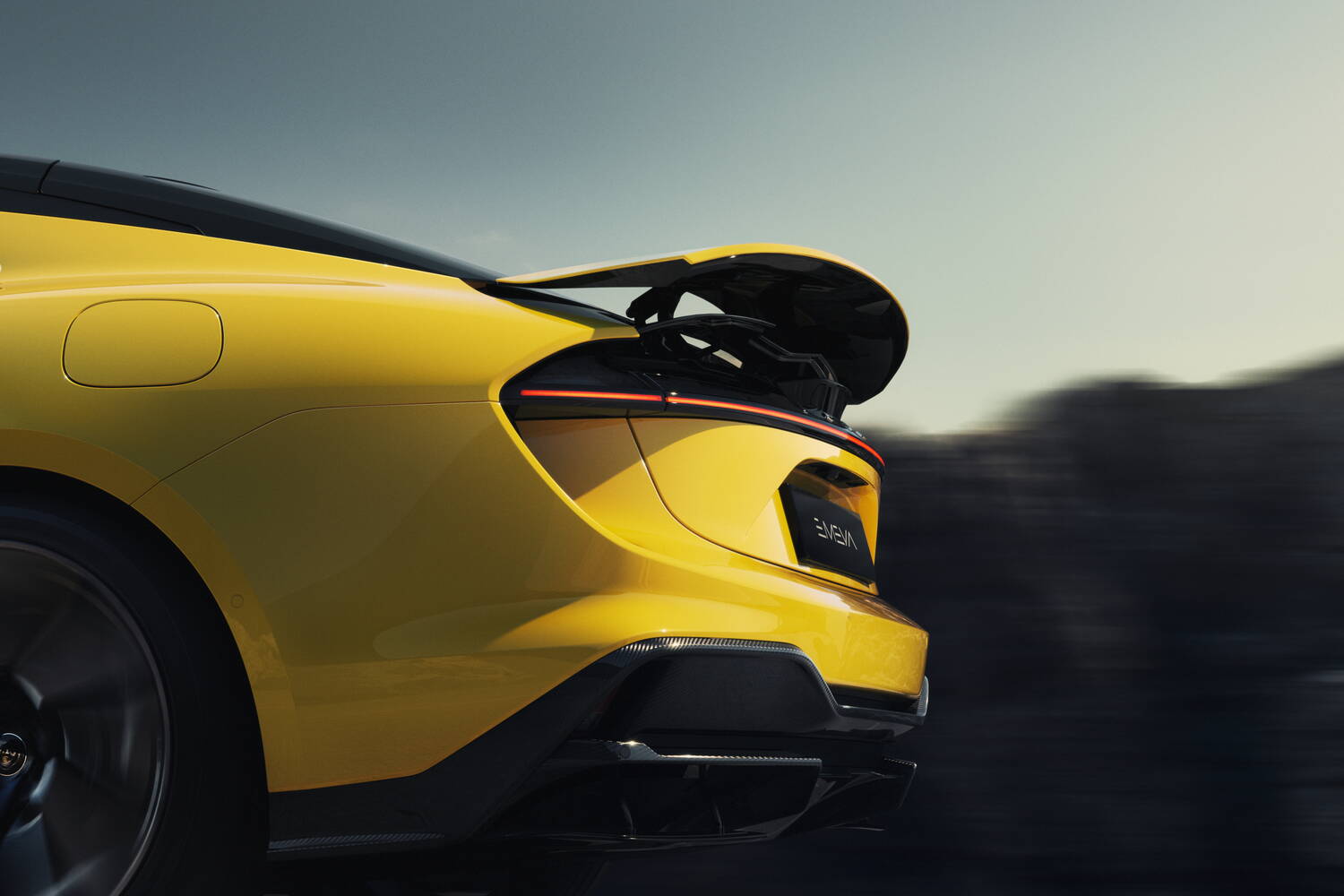
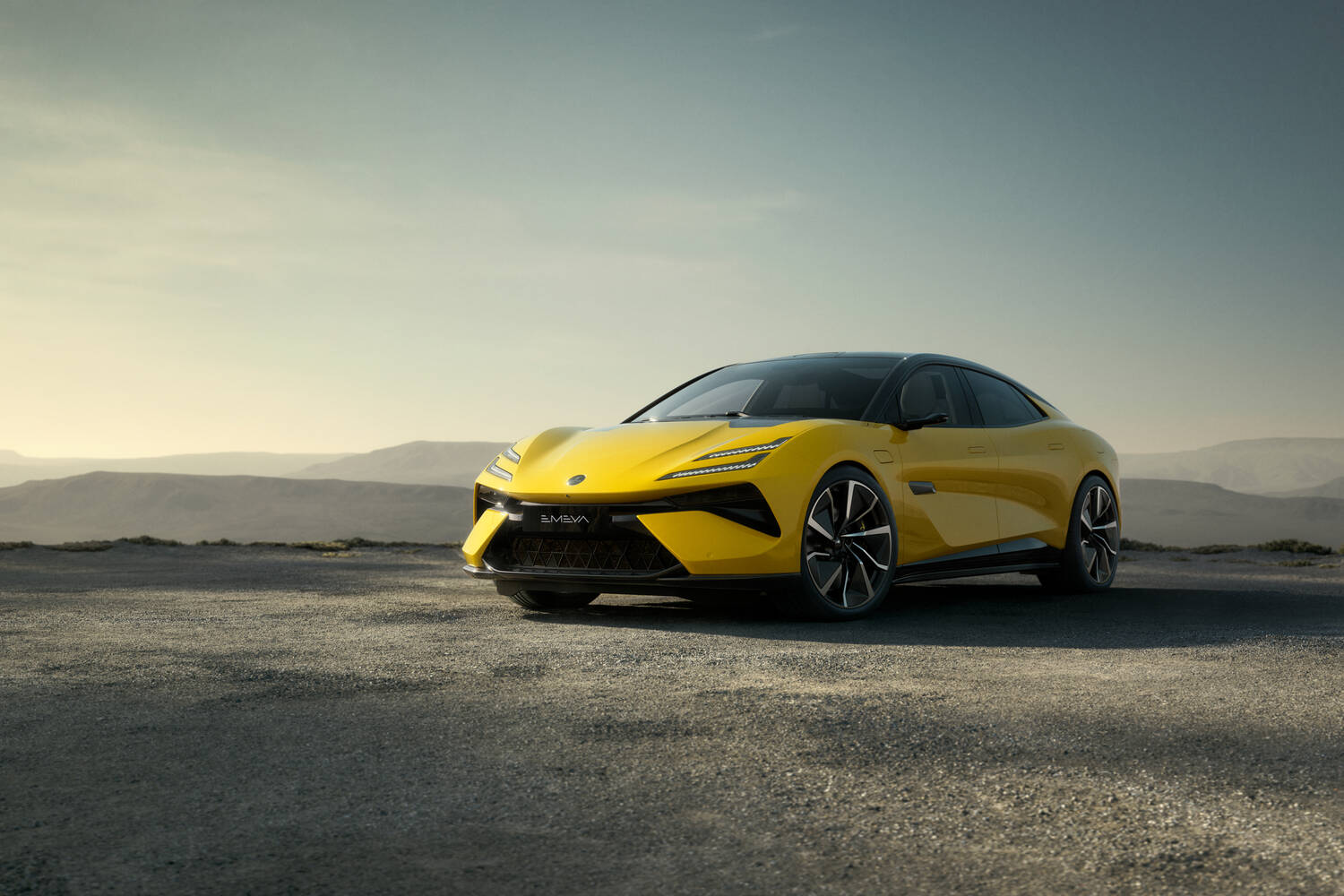
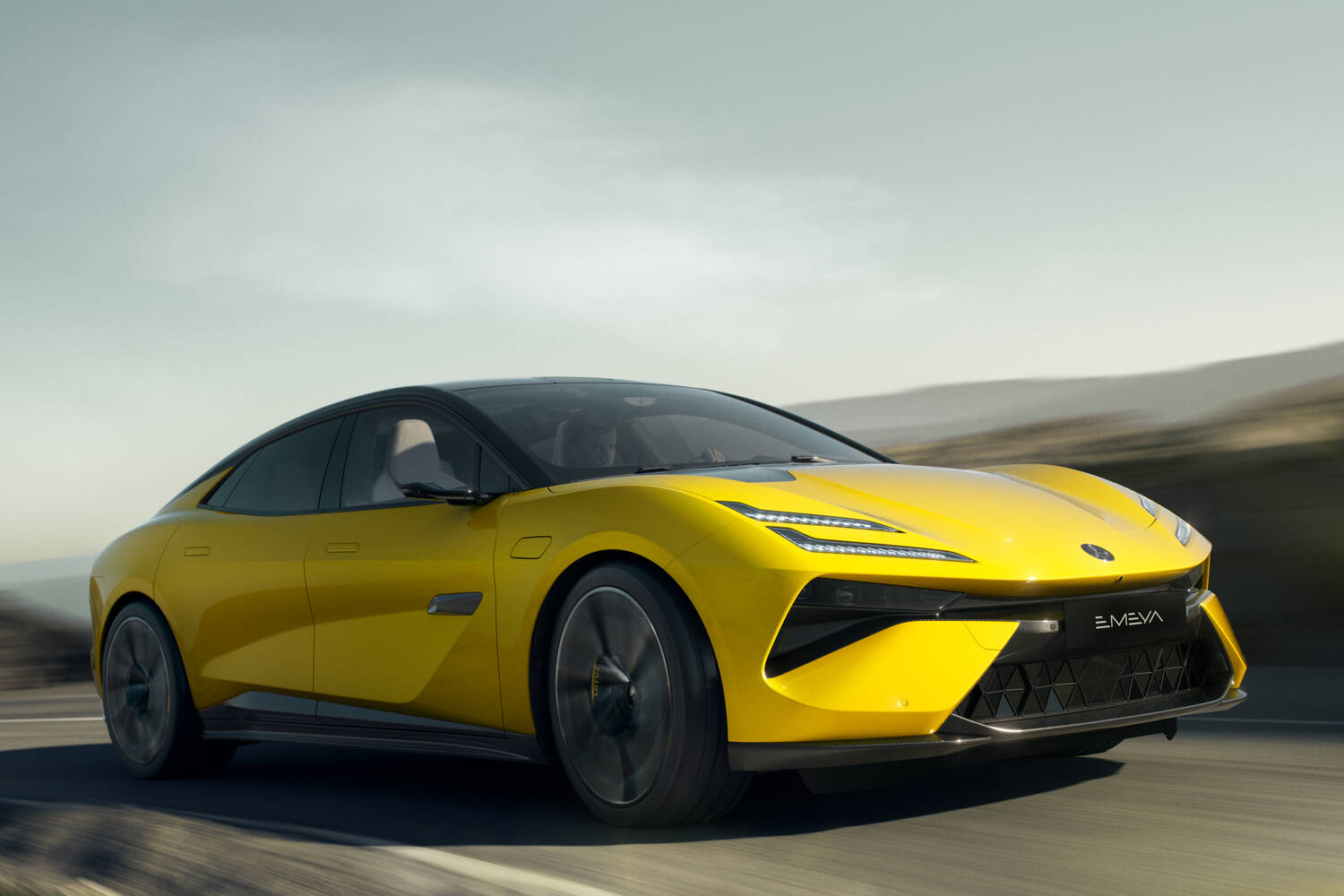
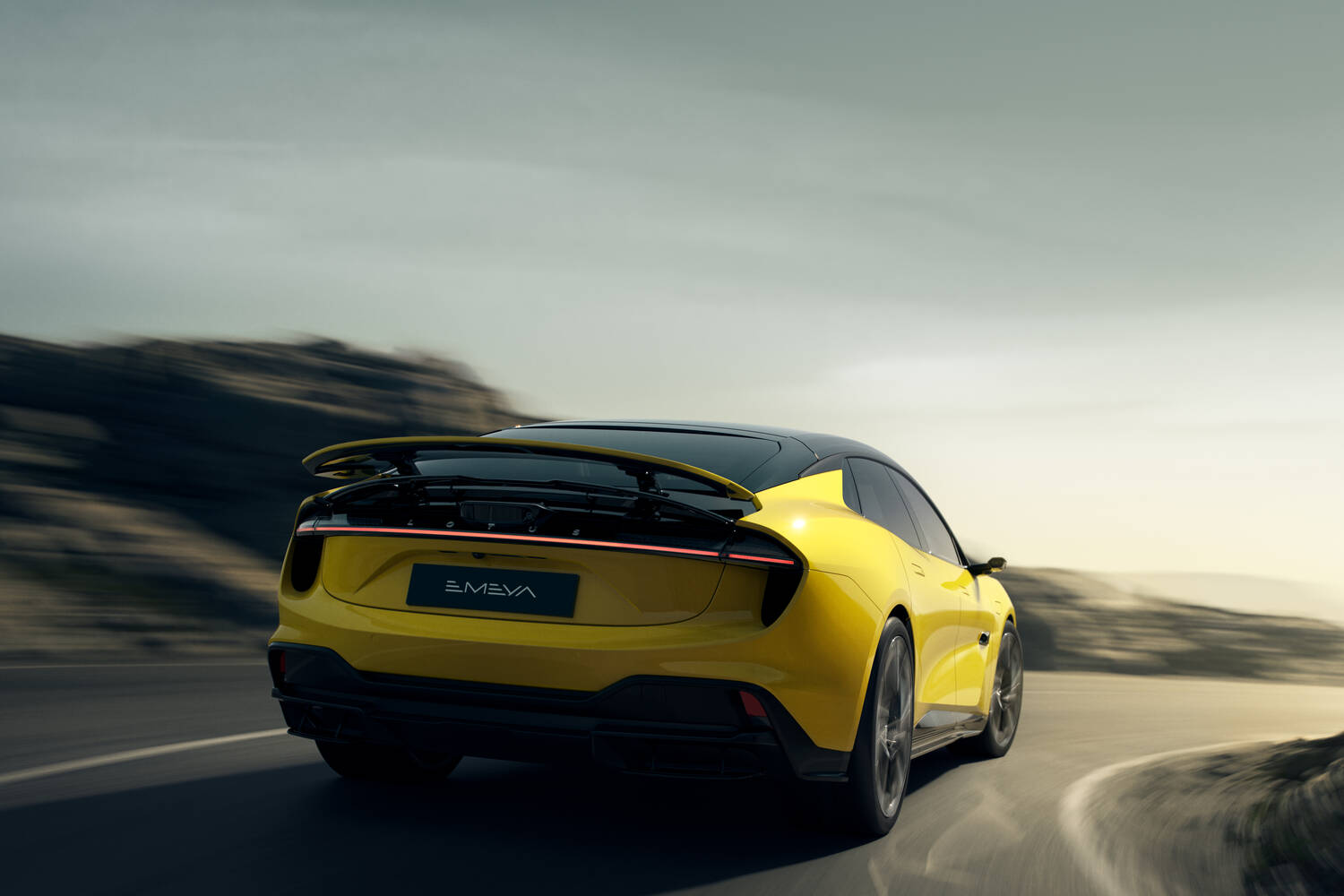
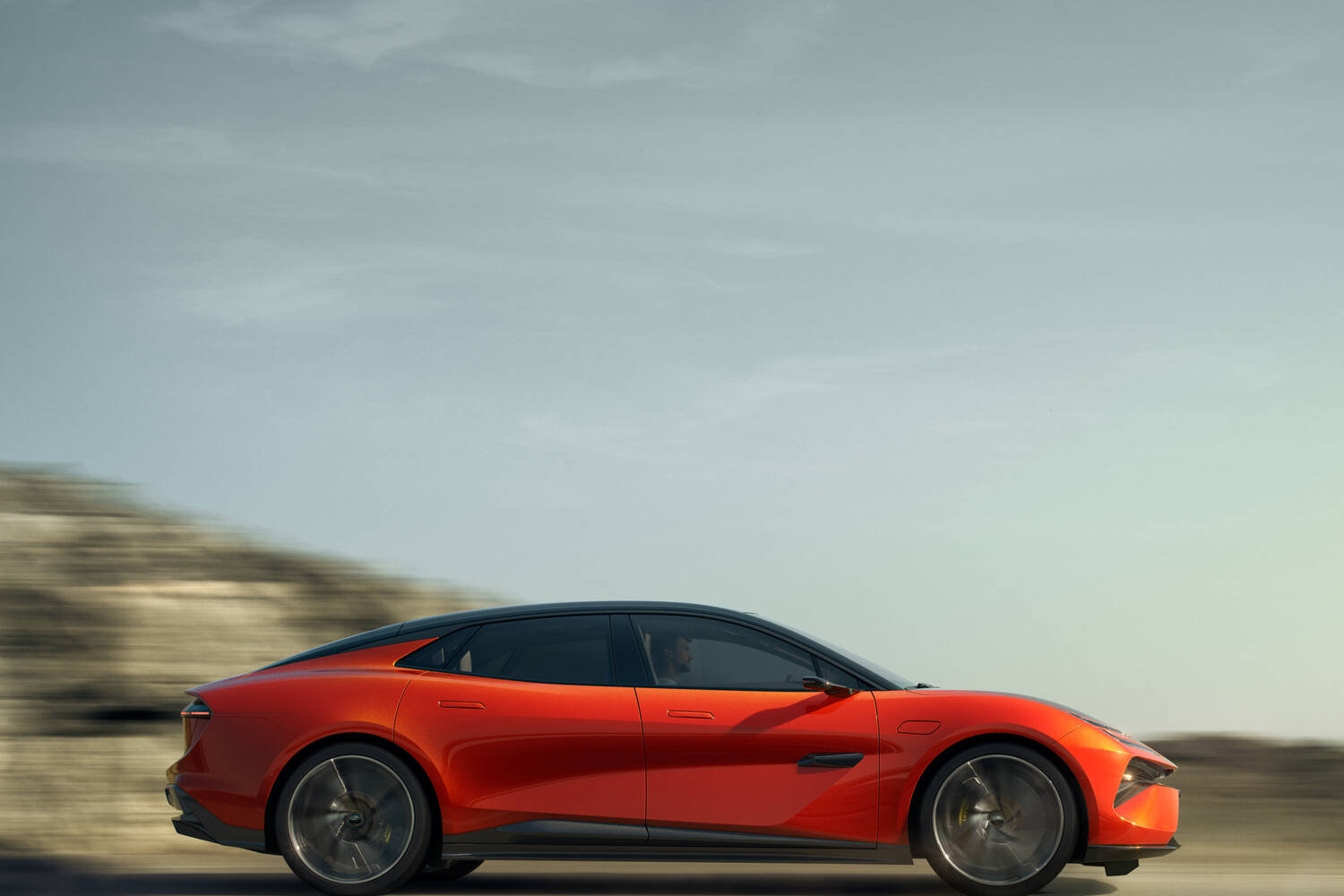
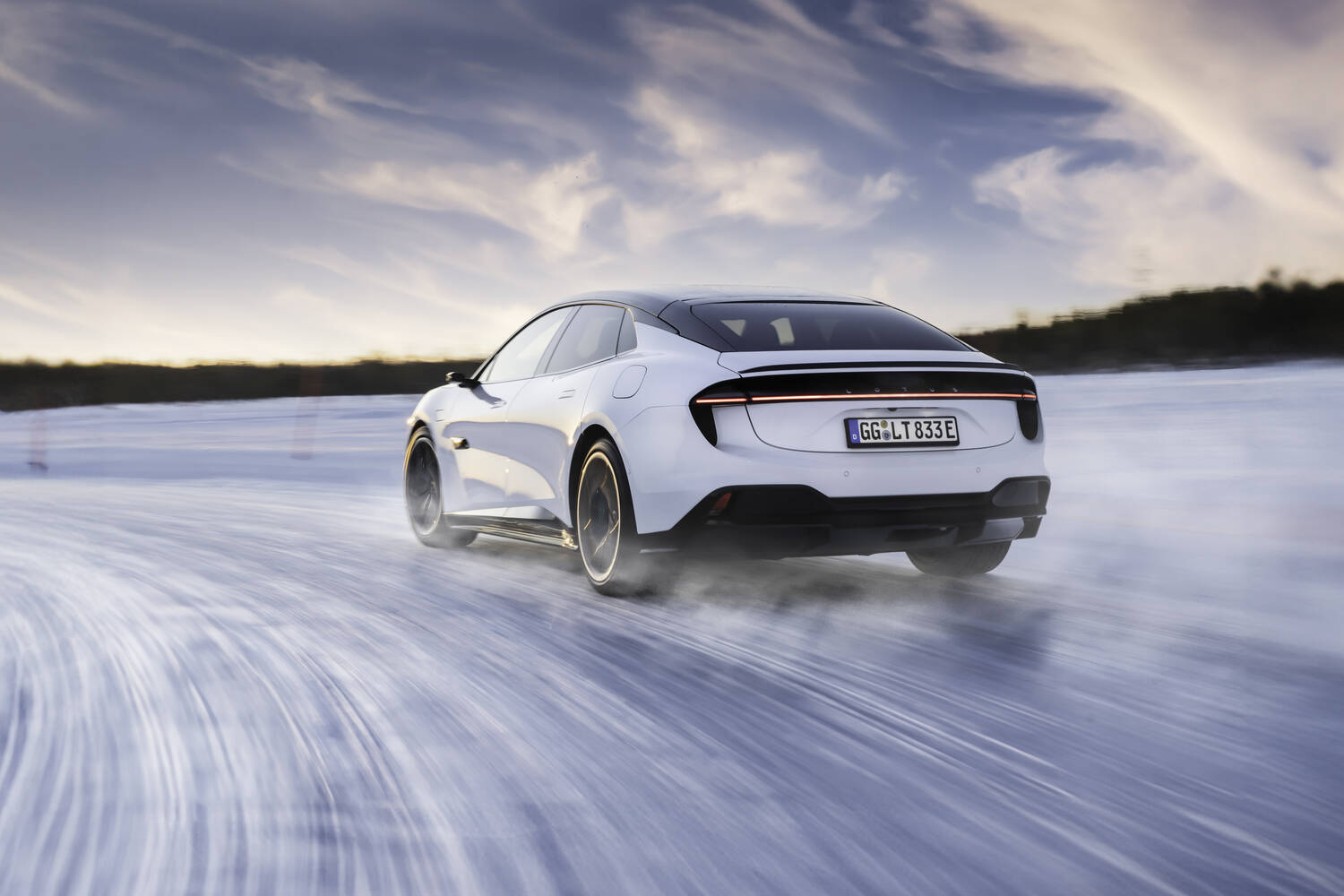
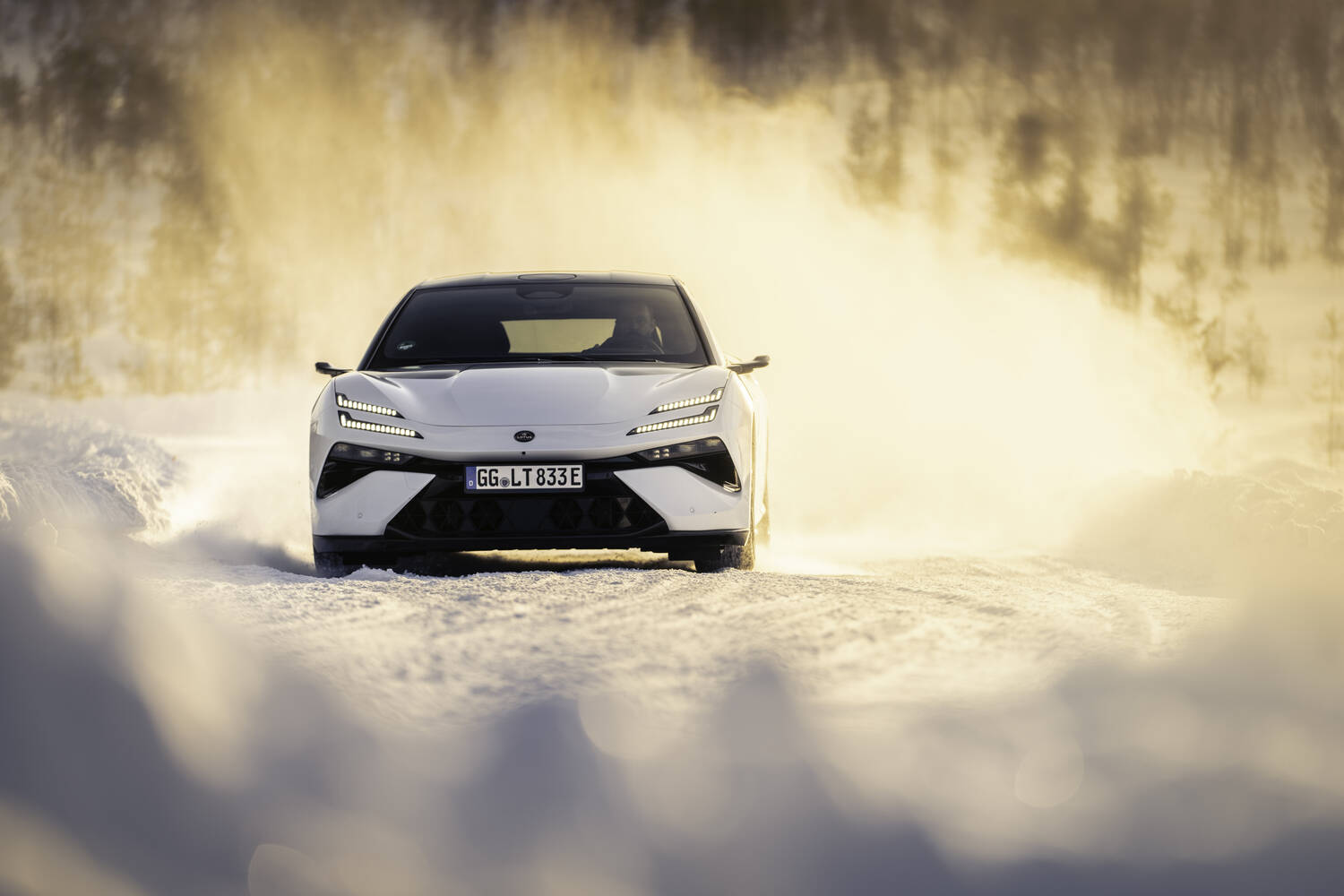
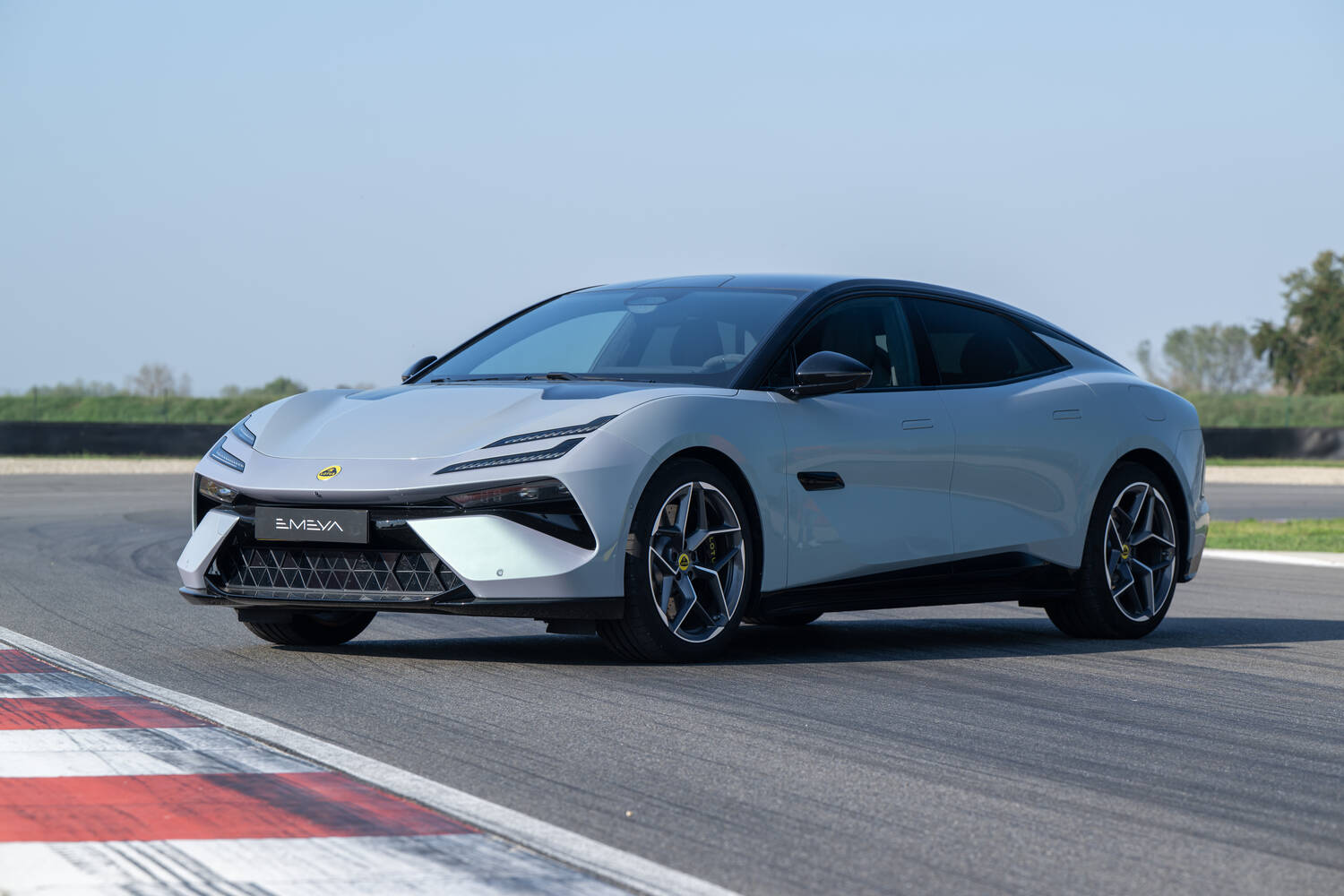
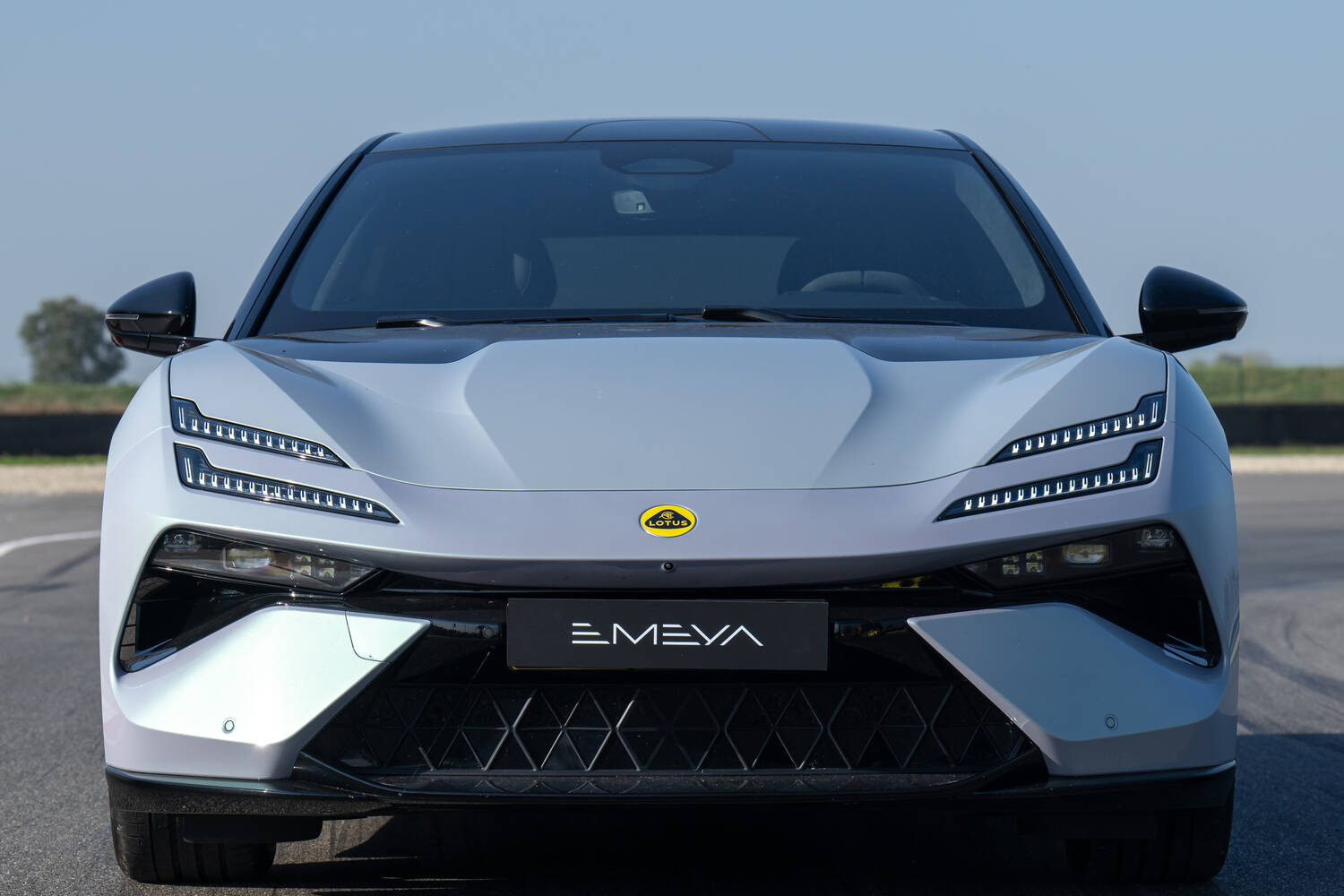
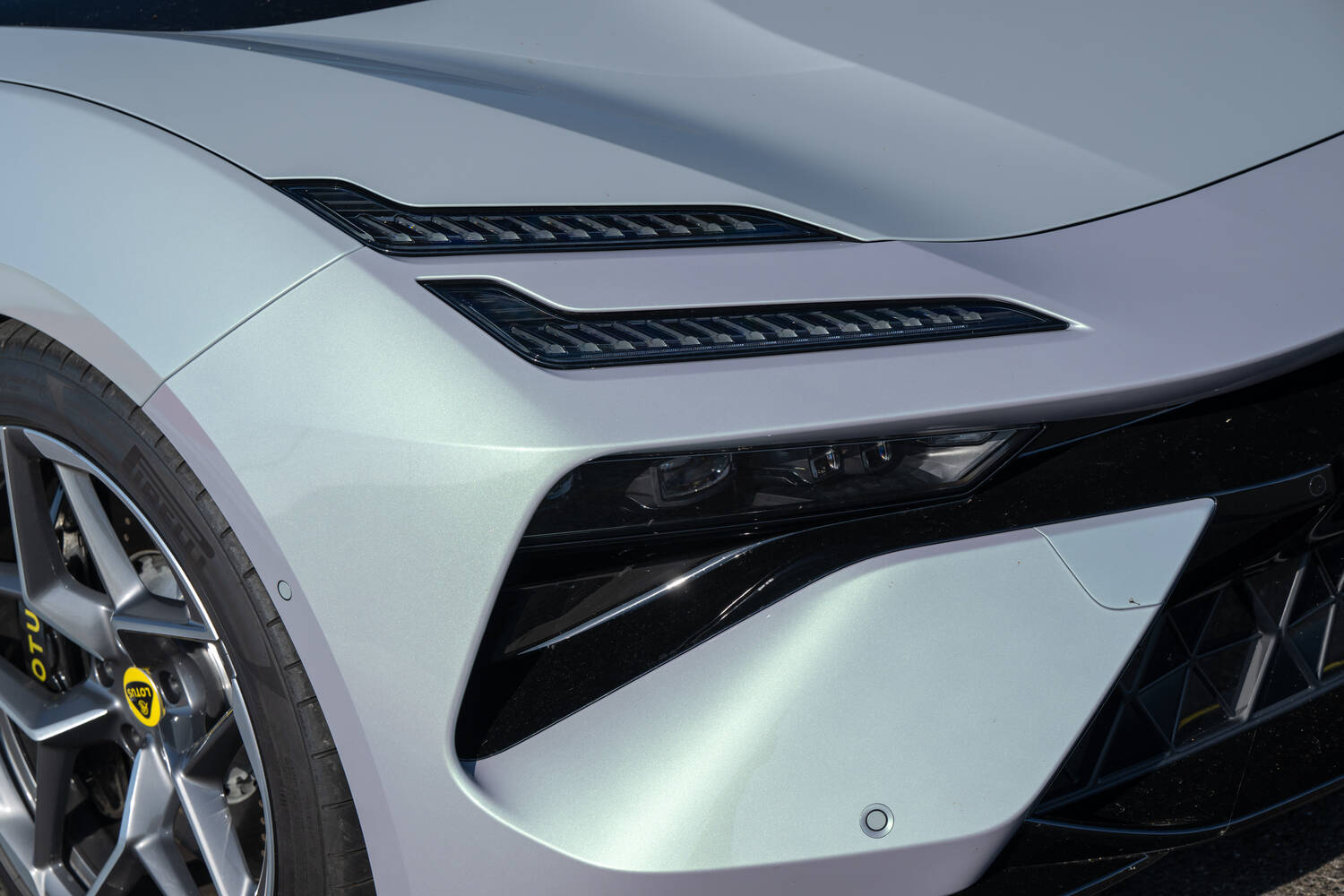
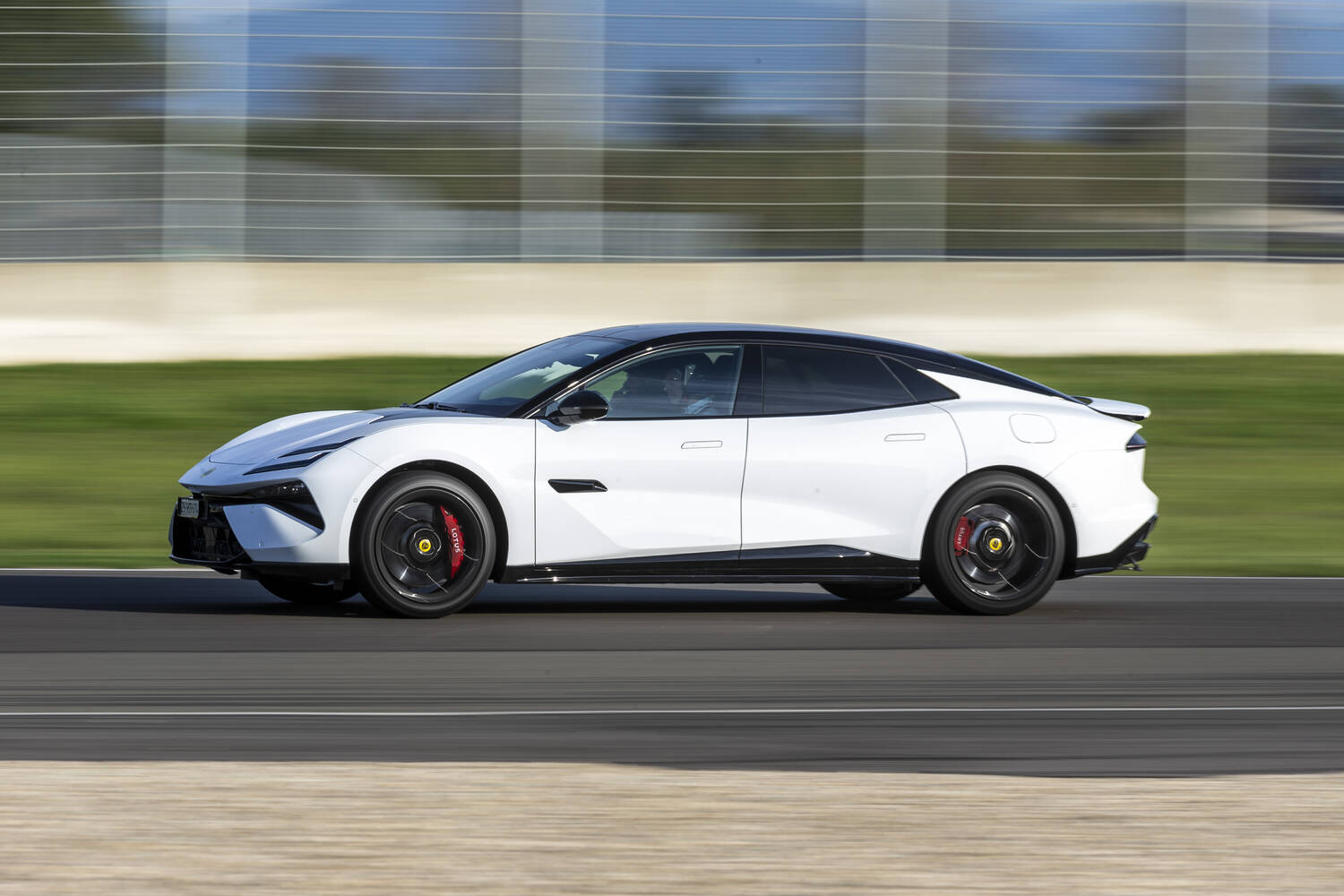
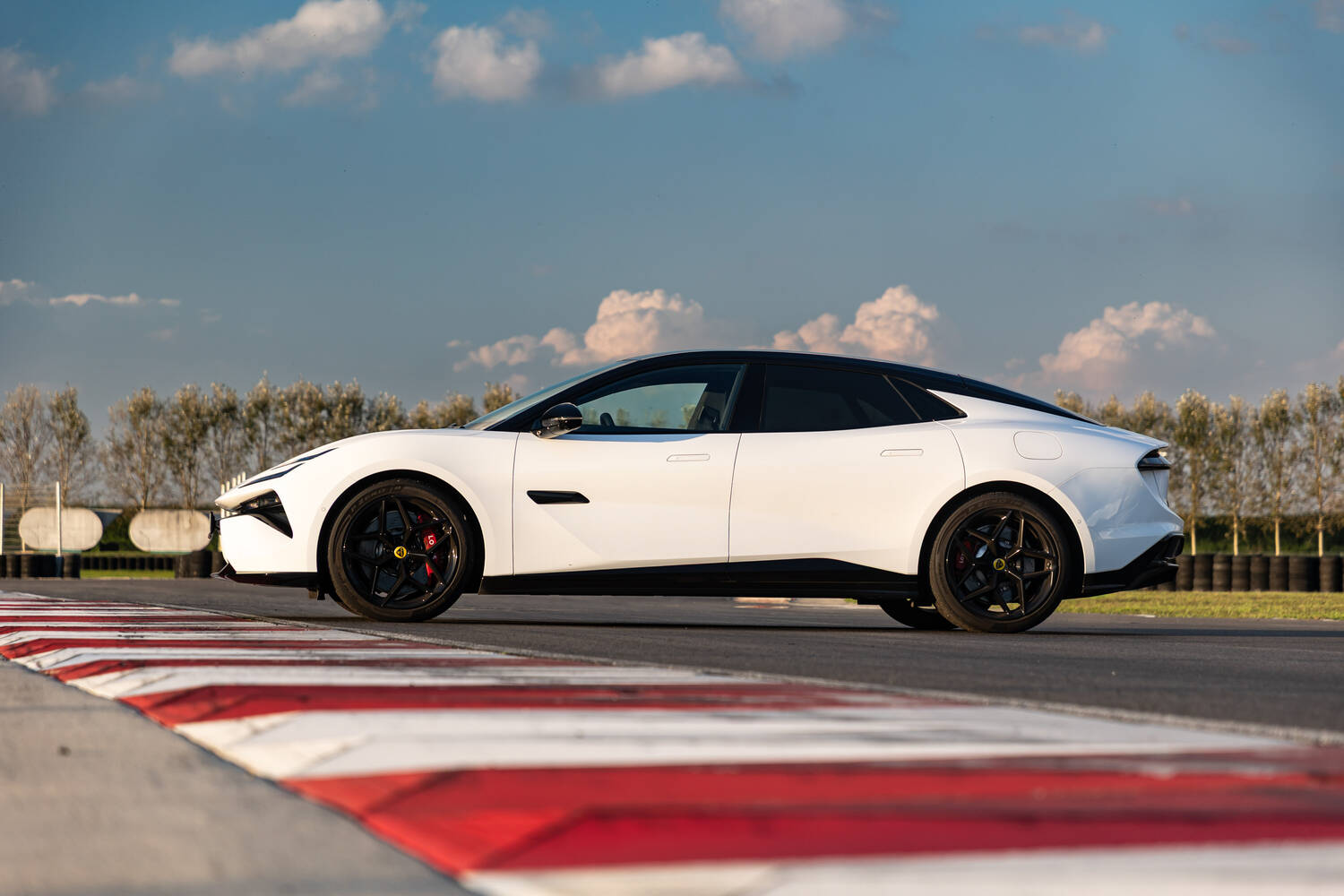
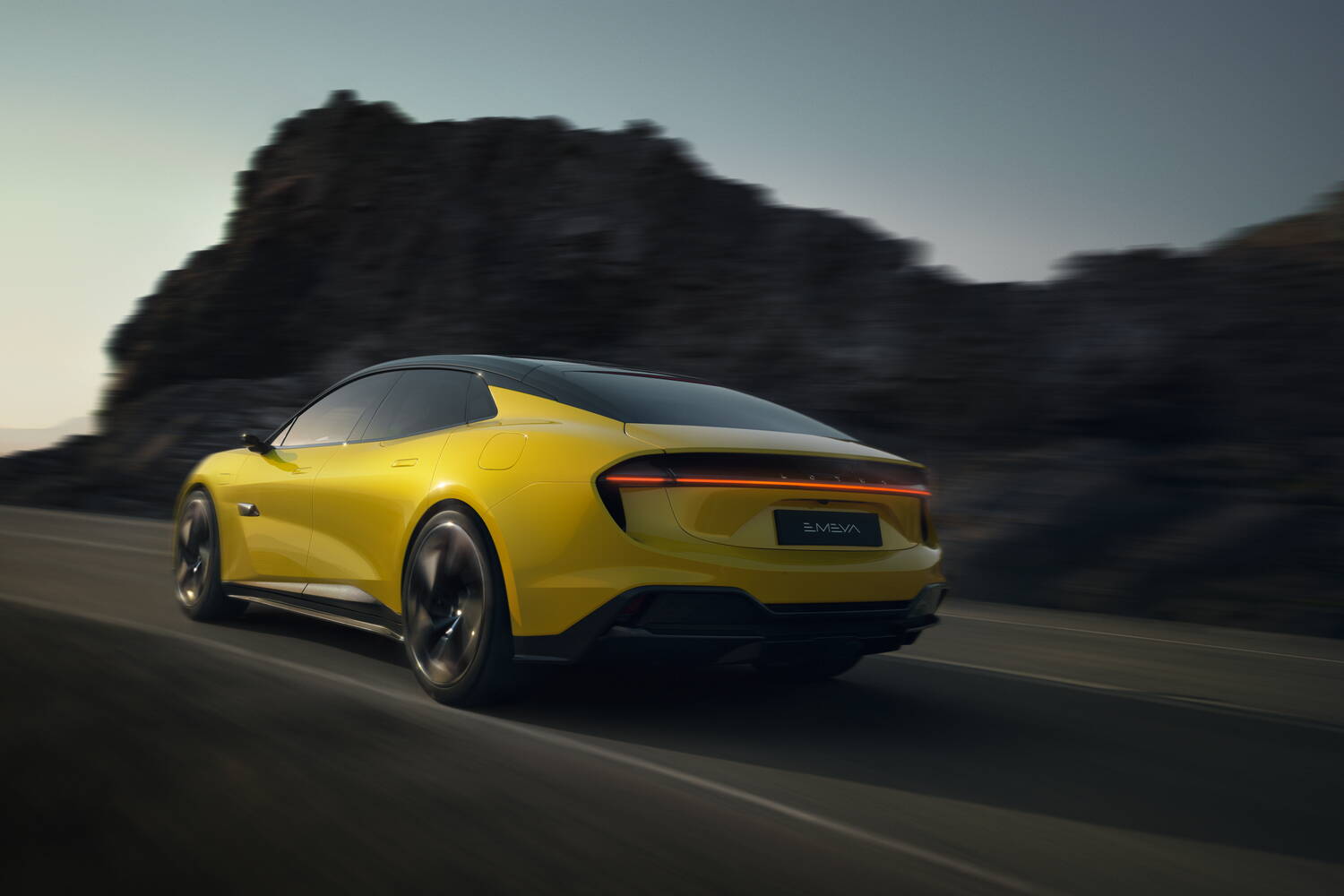
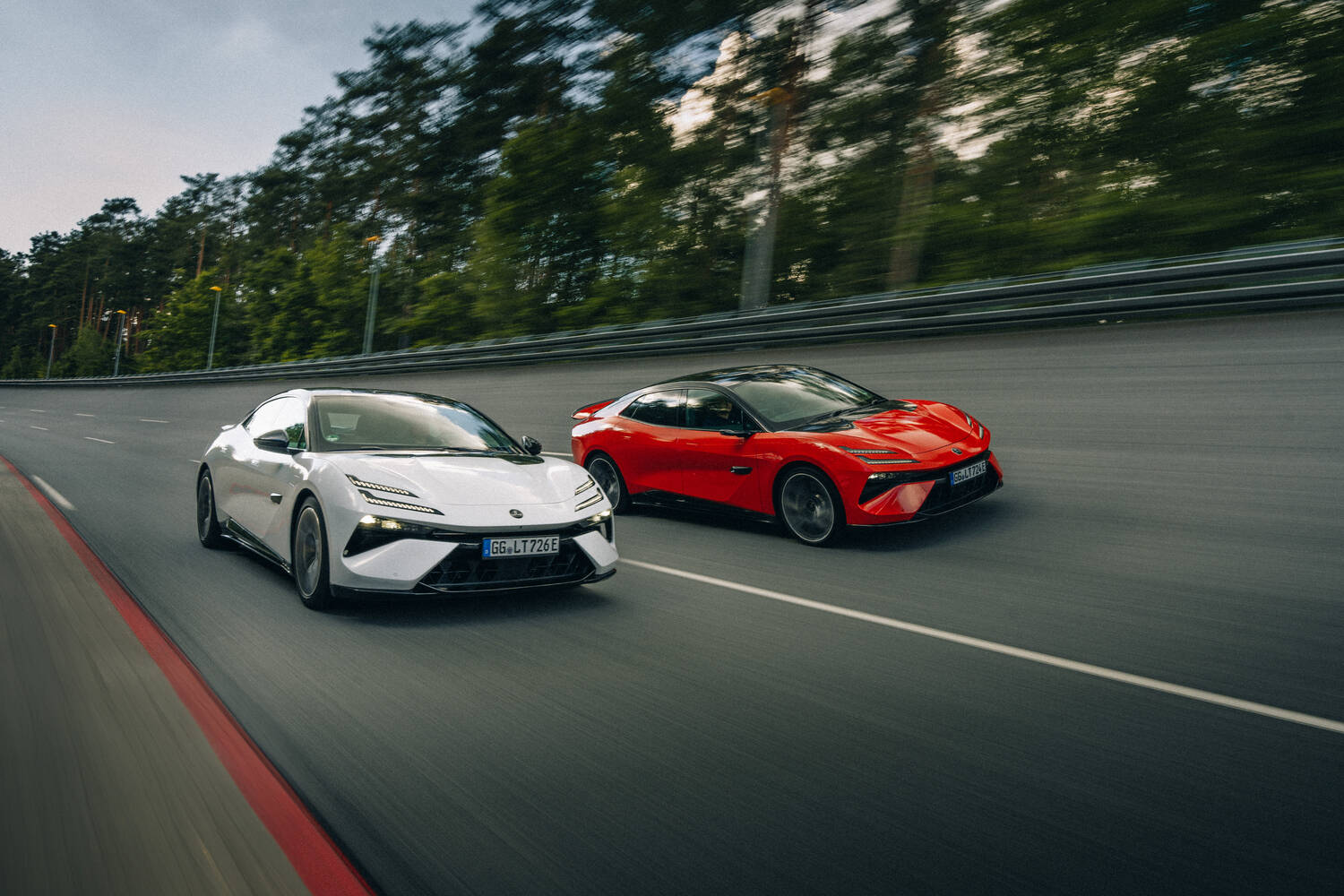
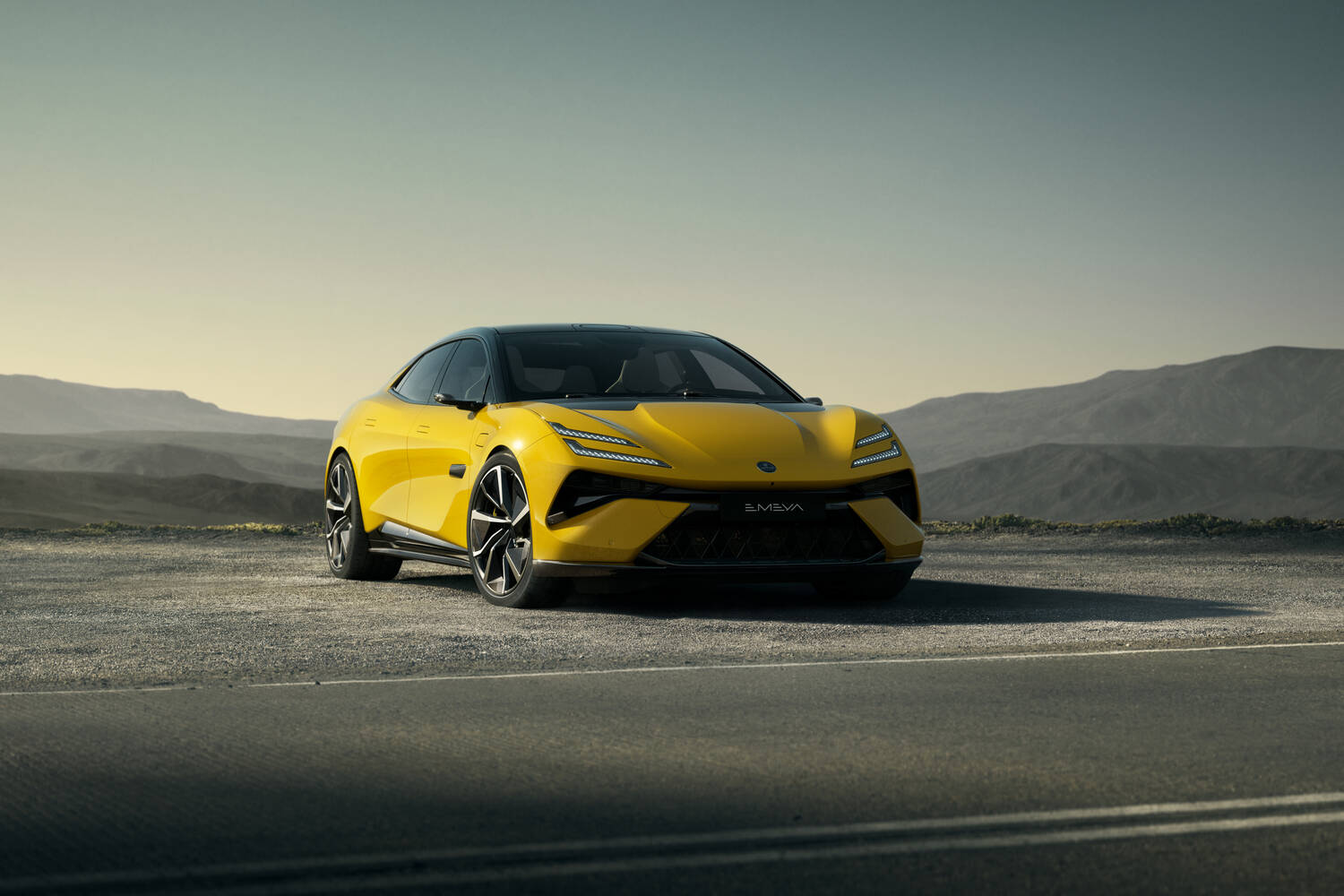
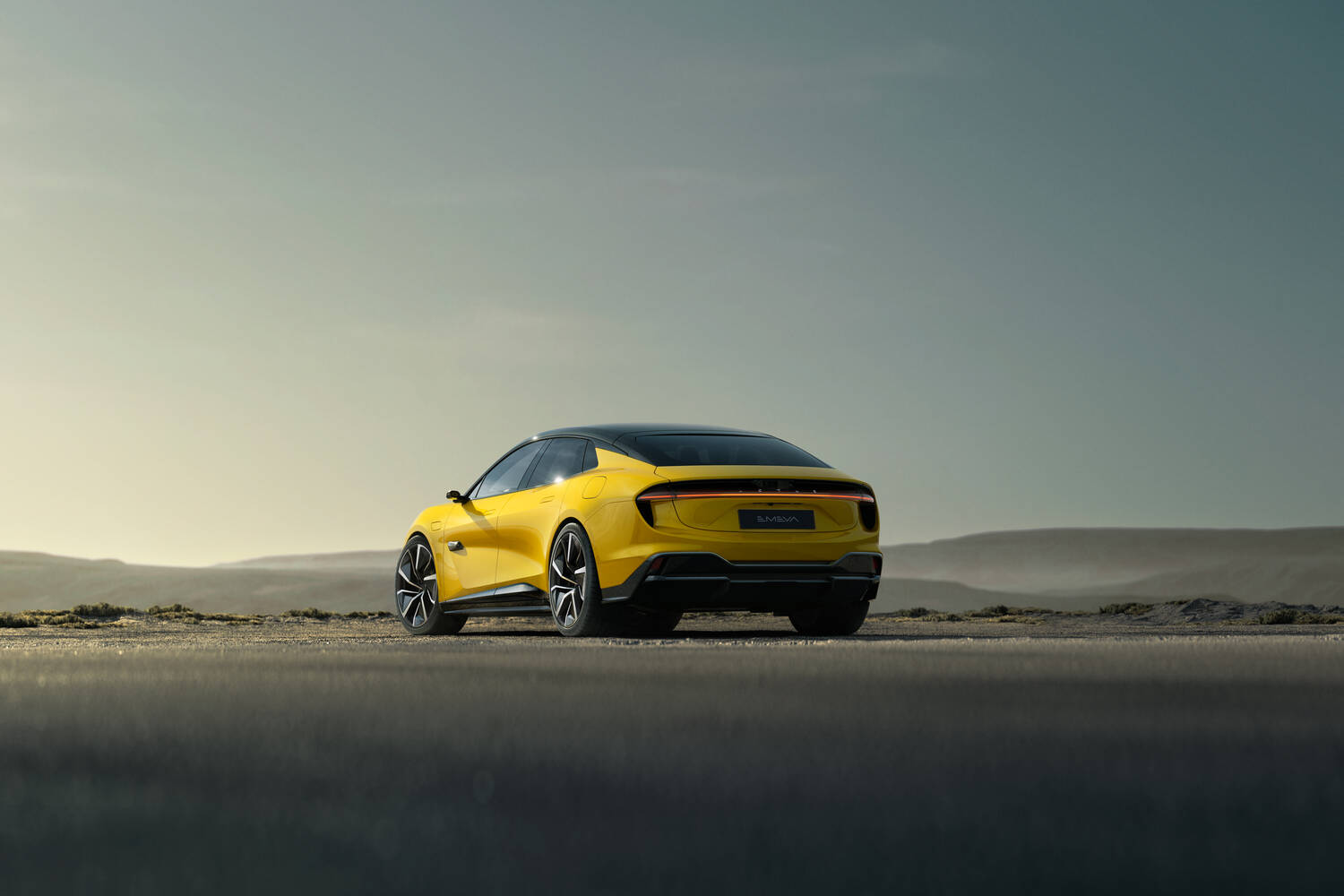
Angular and eye-catching double lamp clusters at the front, a full-width light strip and air channels through which you can see the back tyres at the rear, and the sort of swooping, attractive lines that define top-end cars all add up to the Lotus Emeya qualifying as a thoroughly handsome machine.
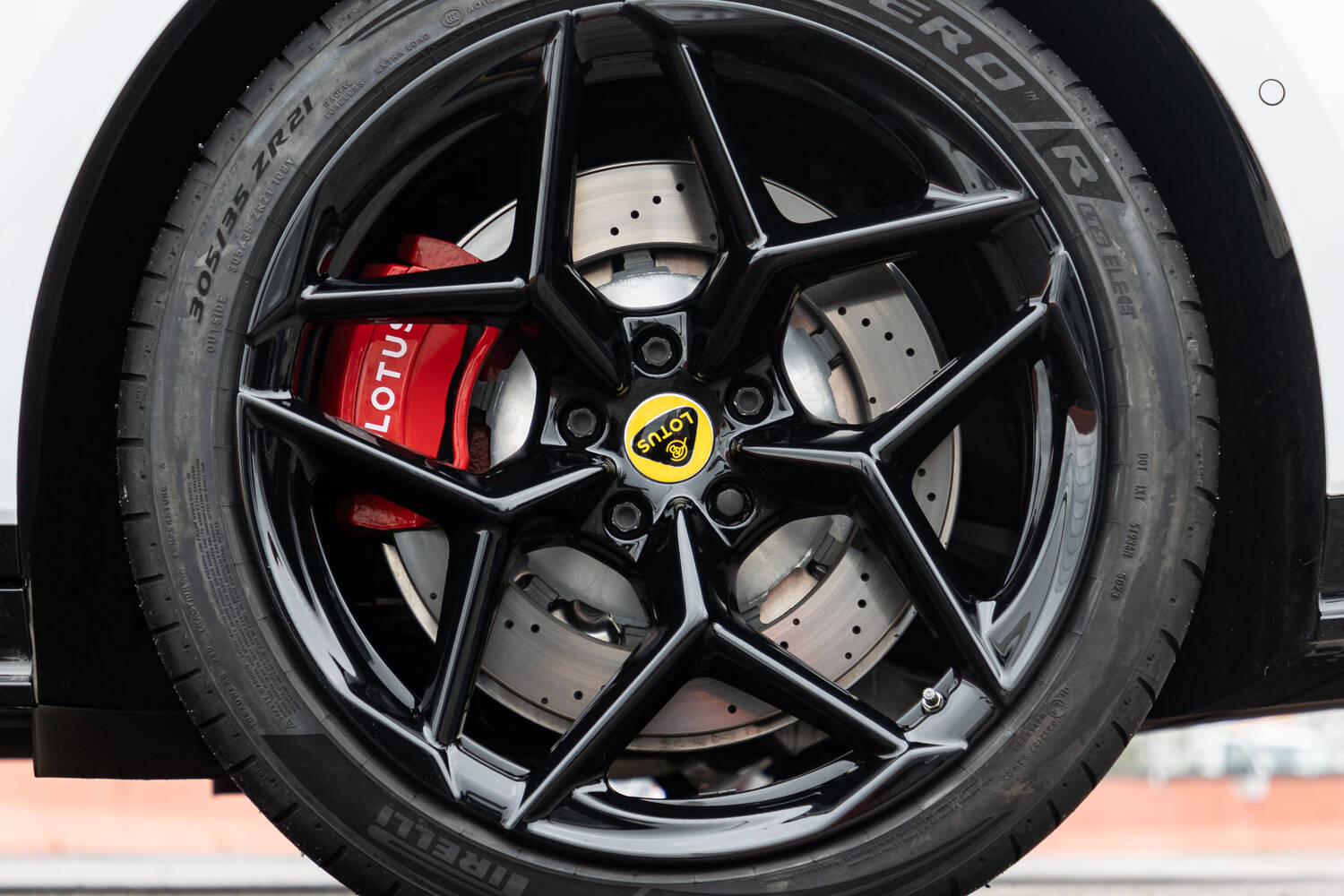
It looks good in any of its available body colours, even the duller options like grey, and it sits on a range of alloys starting at 20 inches and then climbing to 22-inch rims.
It is big, though. Like, huge. At more than 5.1 metres long (of which in excess of three metres is taken up by the wheelbase) and 2,241mm wide with its mirrors out, the Emeya is not going to be the easiest car in the world to slot into a tight urban parking space or reverse into a compact domestic garage - so bear that in mind before selecting it.
Two final details on the exterior: for the highest trim level of the 600 model, as tested here, the brake callipers are red as standard, a unique feature; and it was also fitted with the optional Active Aero package, including a deployable rear spoiler that, as part of the whole set-up, contributes to an ultimate 215kg of downforce.
Dimensions of the 2026 Lotus Emeya
- Length:
- 5,139mm
- Width:
- 2,005mm (excluding mirrors)
- Height:
- 1,459mm
- Wheelbase:
- 3,069mm
Paint colours for the 2026 Lotus Emeya
There are seven colours for the Lotus Emeya. These are Zenith White, Stellar Black, Akoya White, Kaimu Grey, Solar Yellow, Borreal Grey and Fireglow Orange.
Which ones you can choose, though, and which ones come 'free' depends upon the model you select. The basic Emeya 600 only has access to four of these paints (the two whites, black or grey), while at the other end of the scale the Emeya 900 cannot be specified with Akoya White at all, and is Solar Yellow by default from the factory.
For the regular 600, plus the GT and GT SE, Zenith White is the standard paint. The mid-grade 600 GT and GT SE have Solar Yellow added to their palette for an optional fifth hue, but the 600 Sport SE is the only car with all seven colours open to it - and its standard finish is Akoya White, rather than Zenith White.
Interior, practicality, tech & comfort of the 2026 Lotus Emeya
- Wonderful material quality
- What few buttons there are work well
- Rear-seat headroom is average
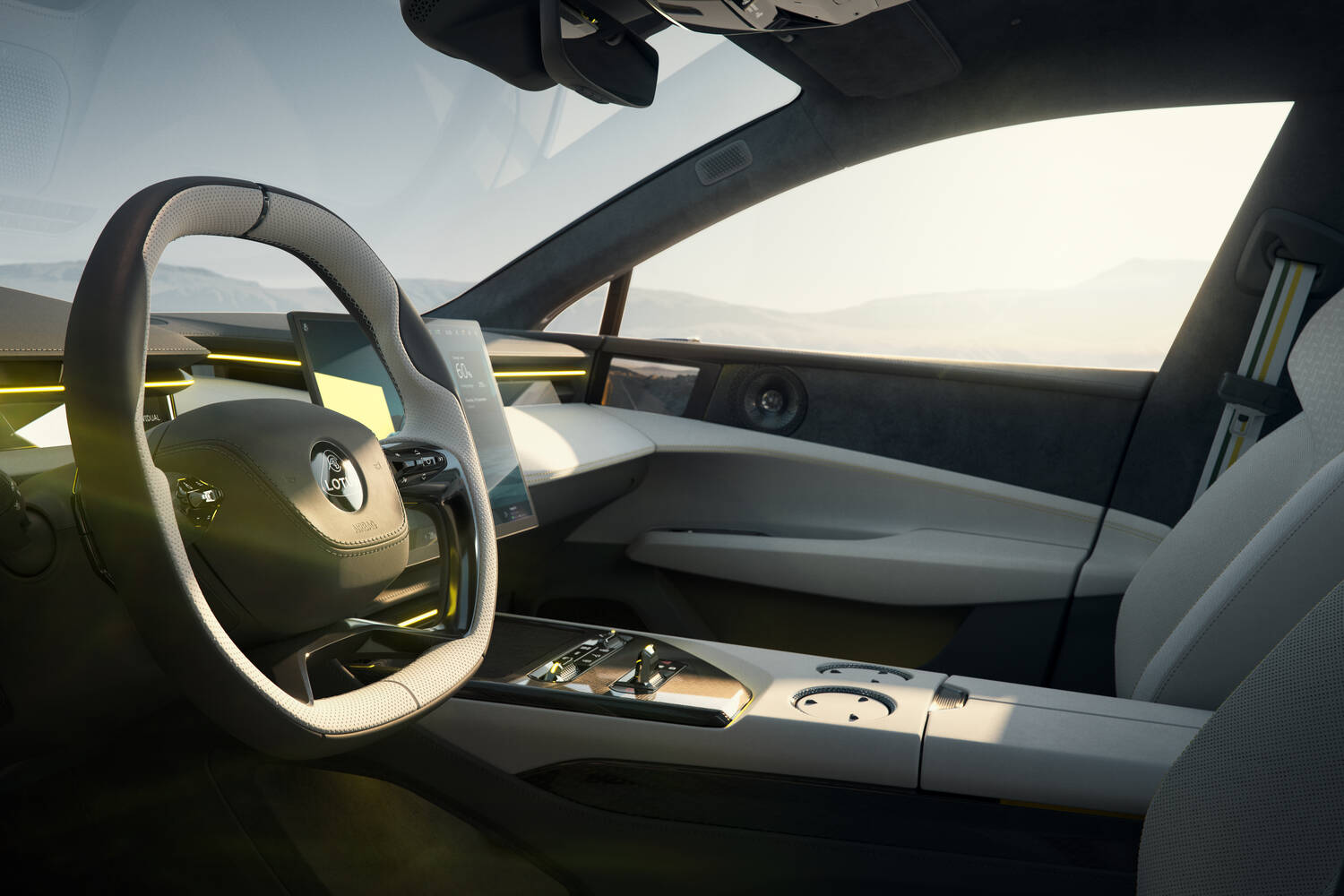
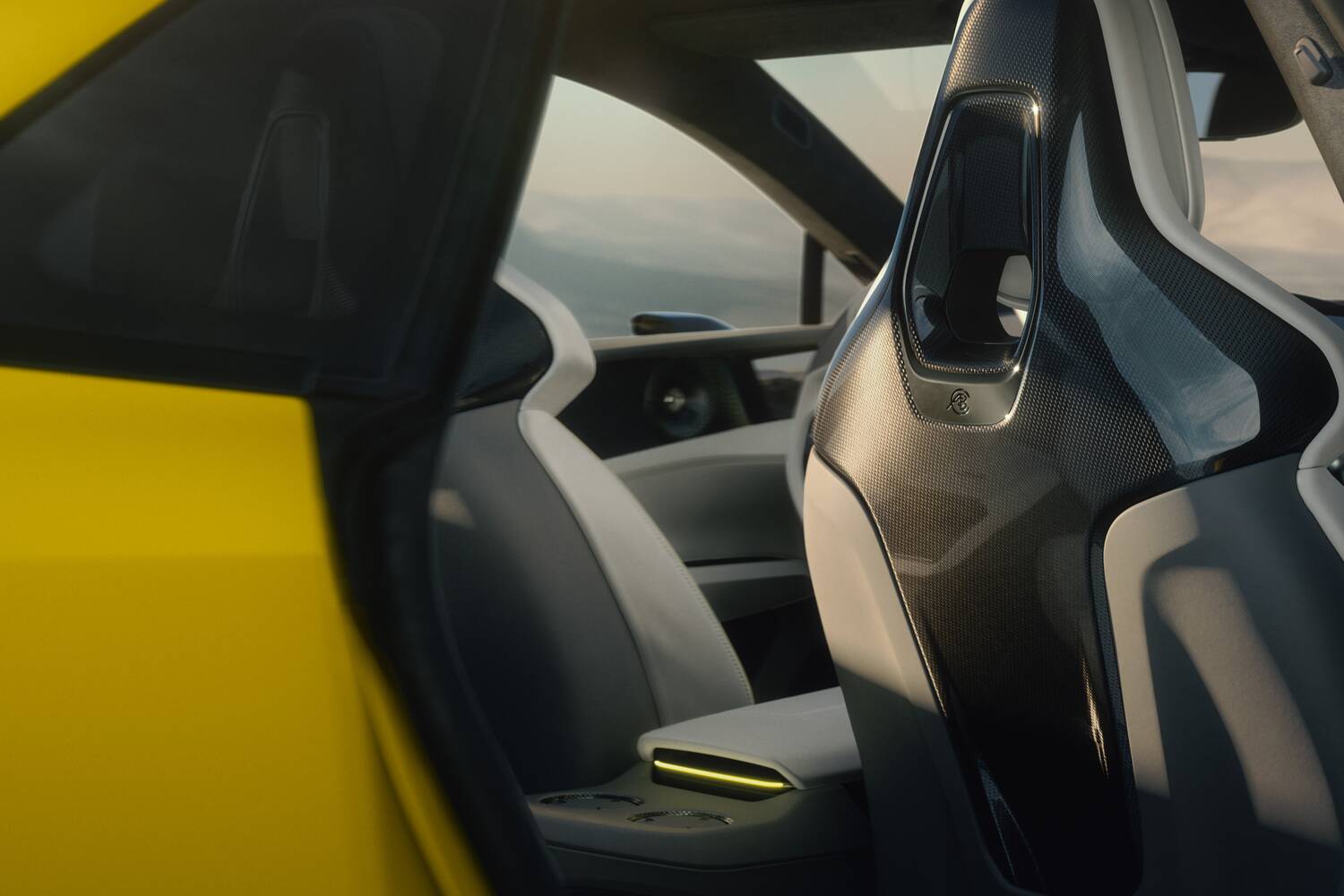
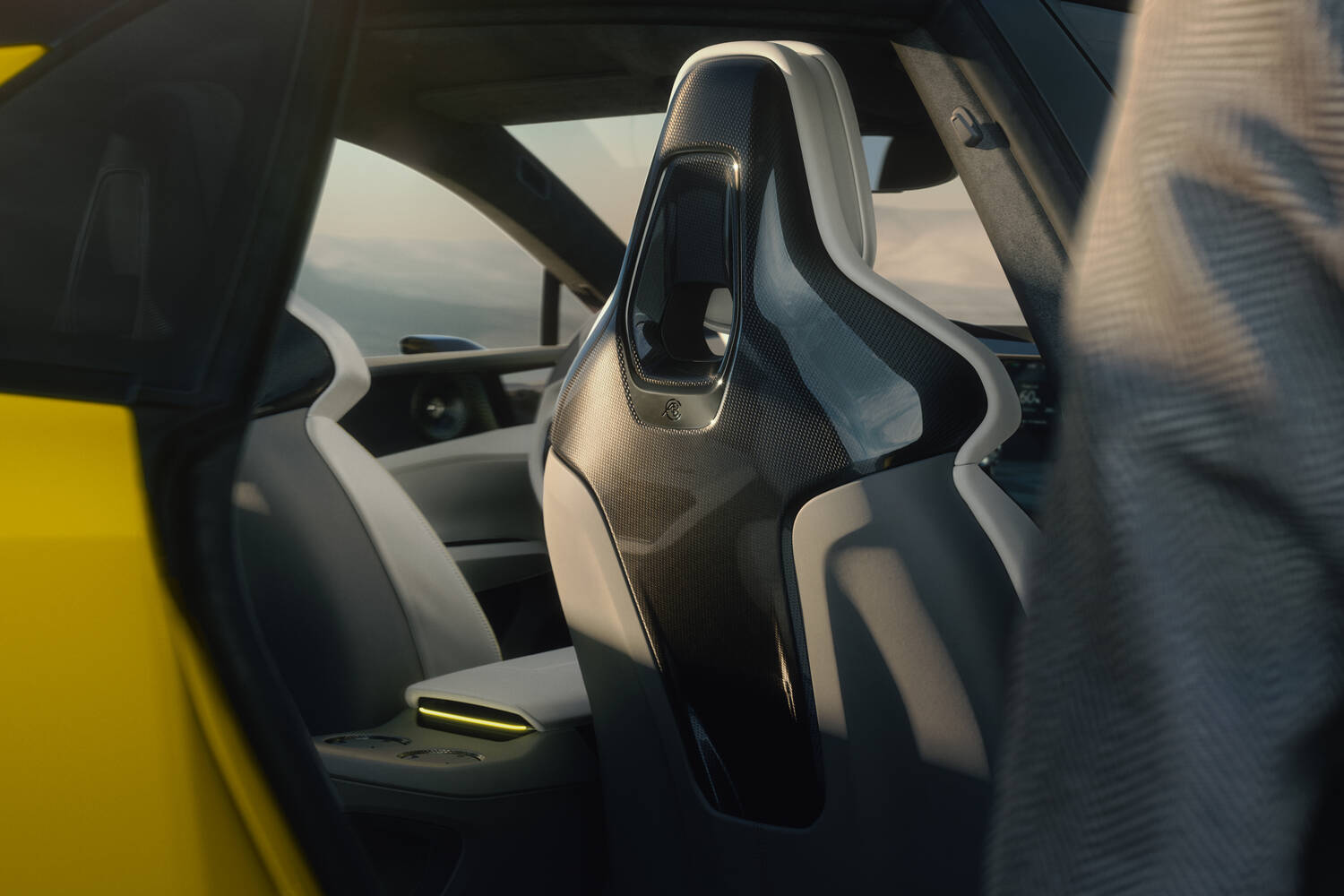
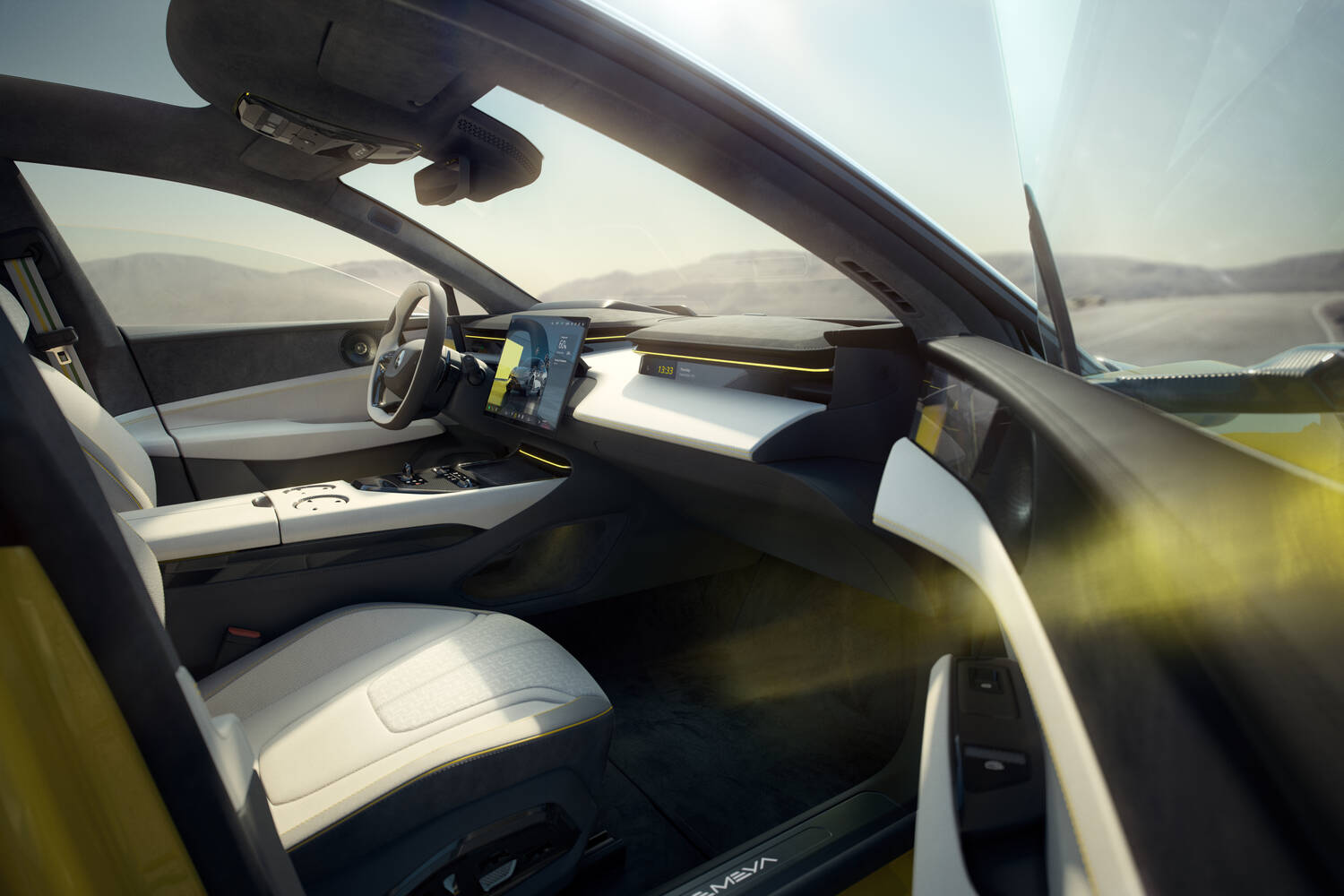
Material quality is not something Lotus was traditionally known for excelling at, but both the Emeya and its Eletre SUV relation demonstrate a cabin ethos that is quite startling in how majestically sophisticated it is.
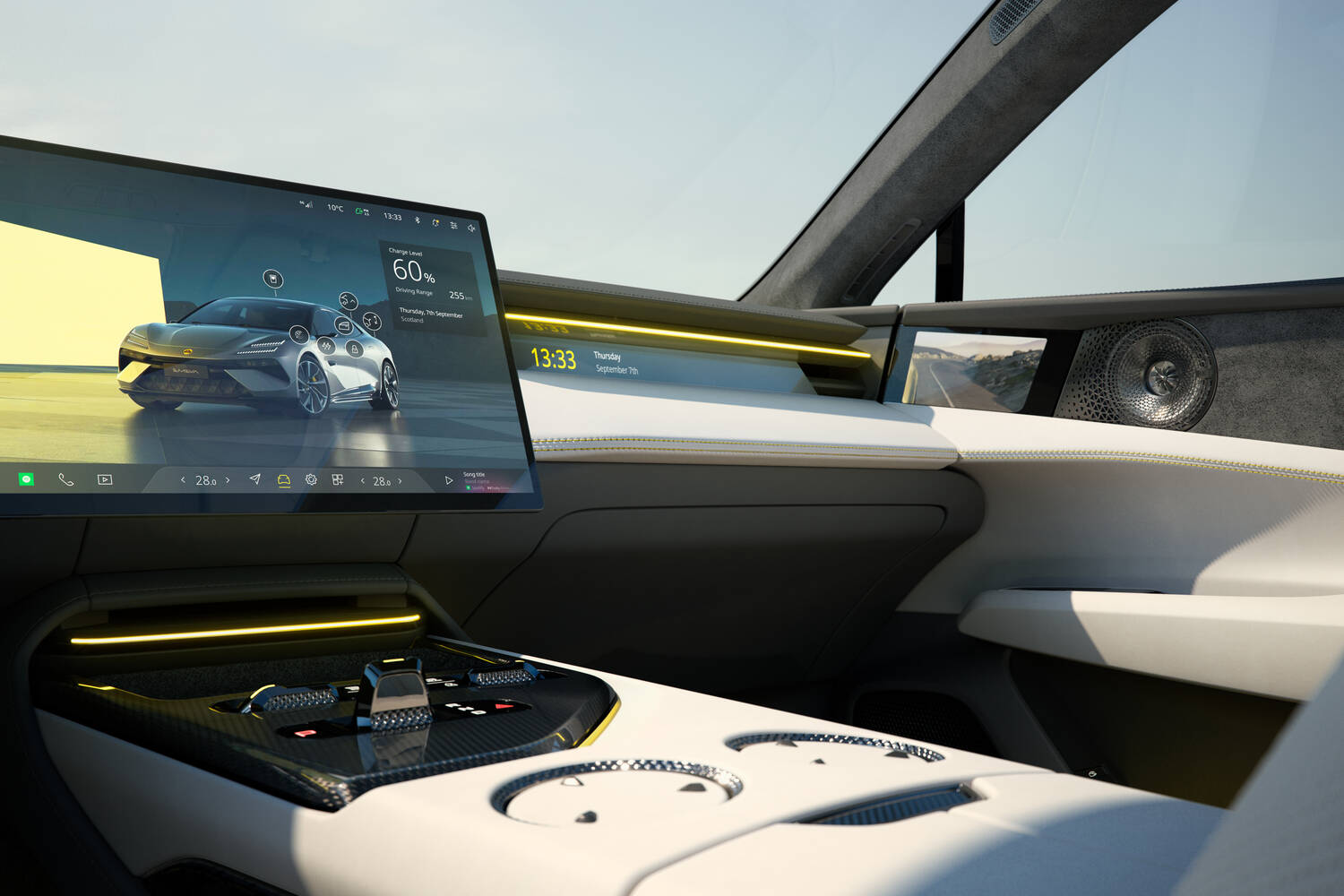
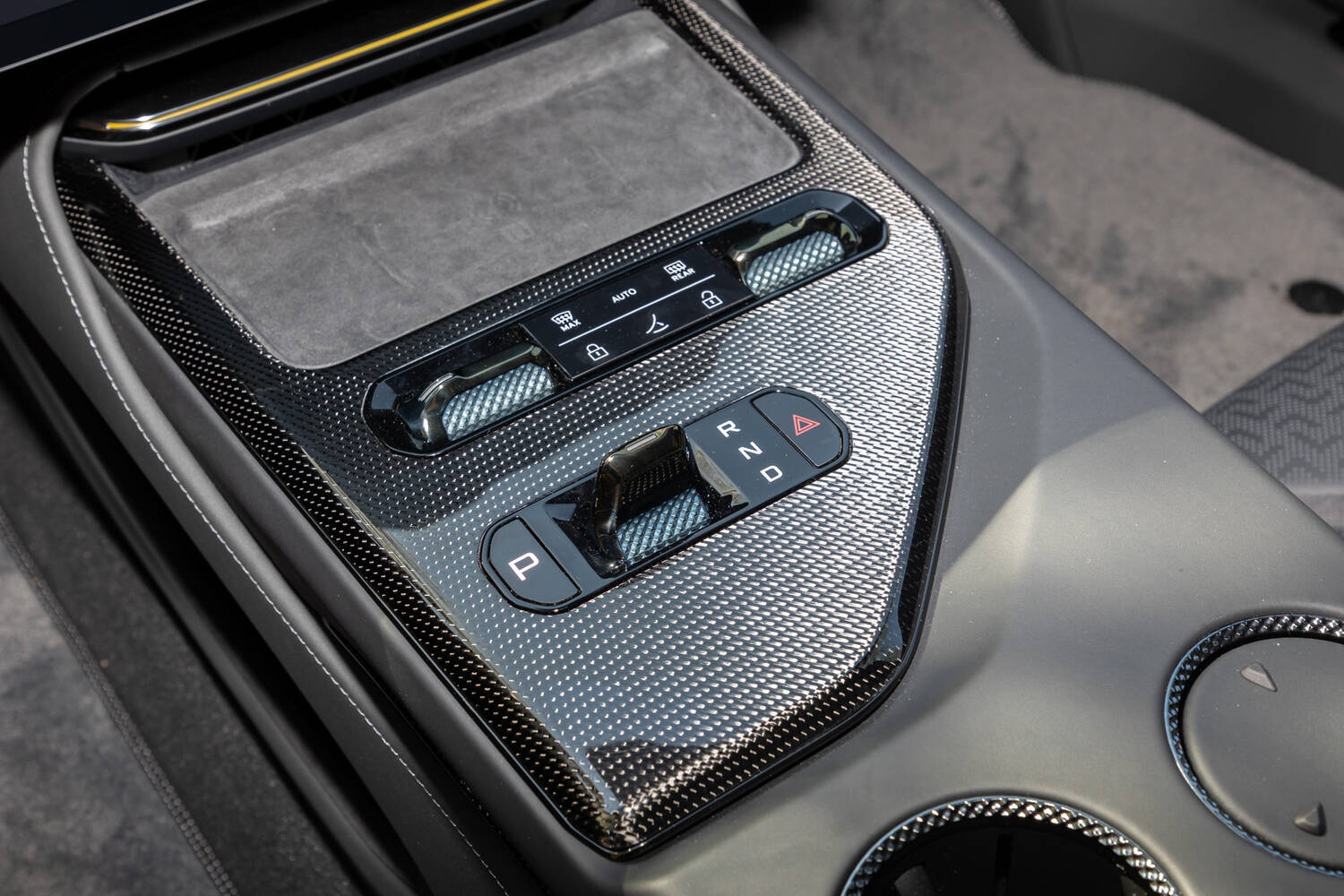
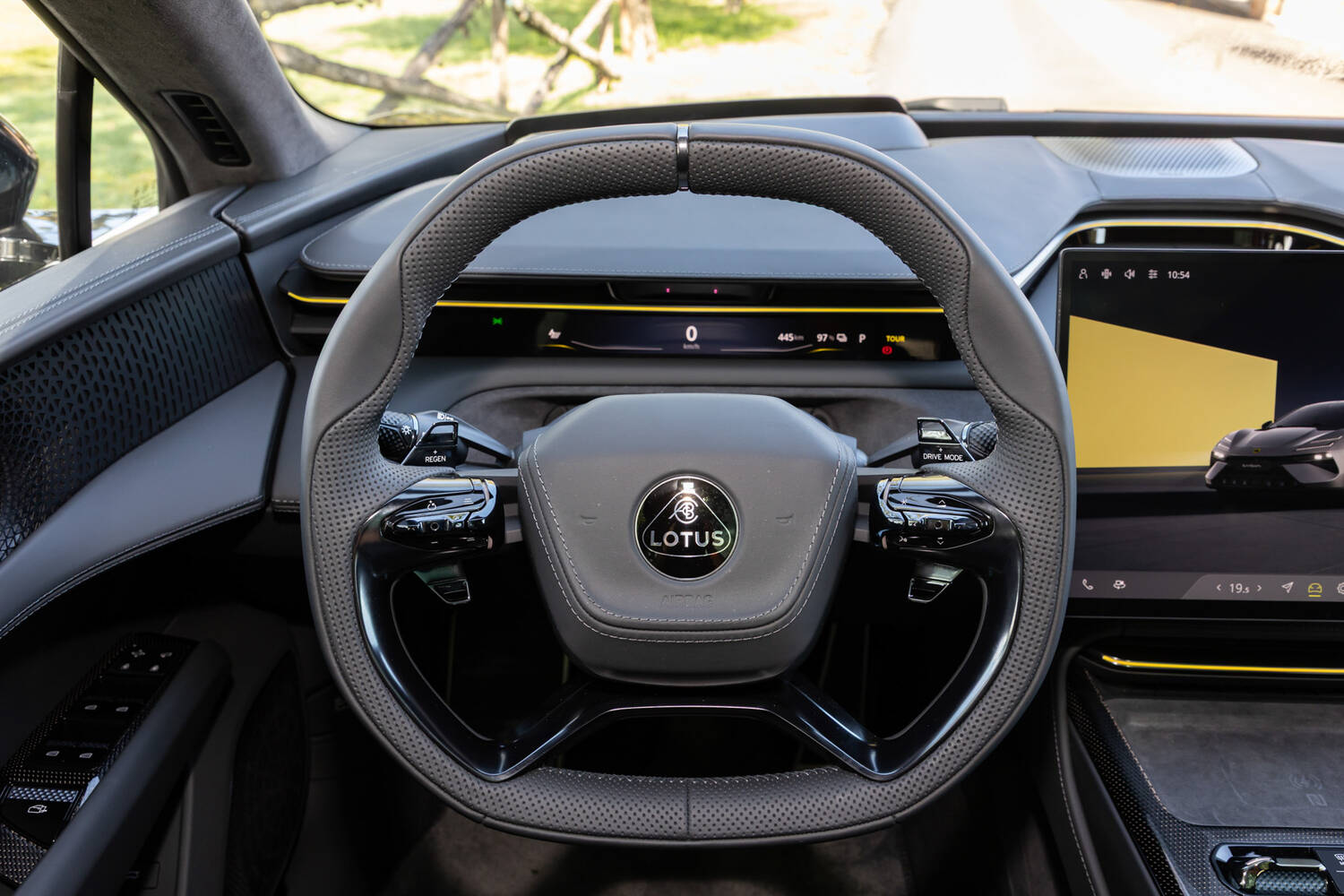
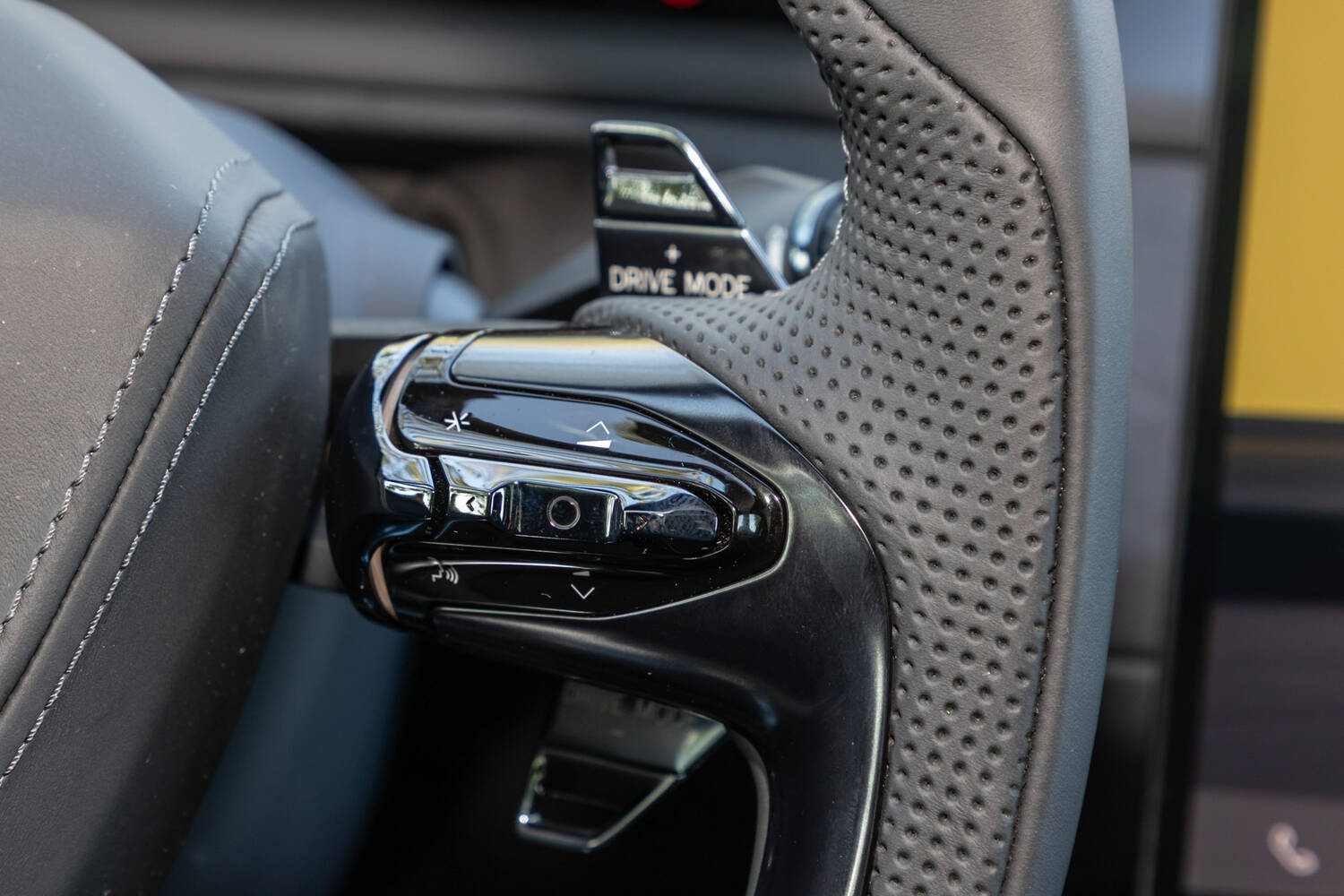
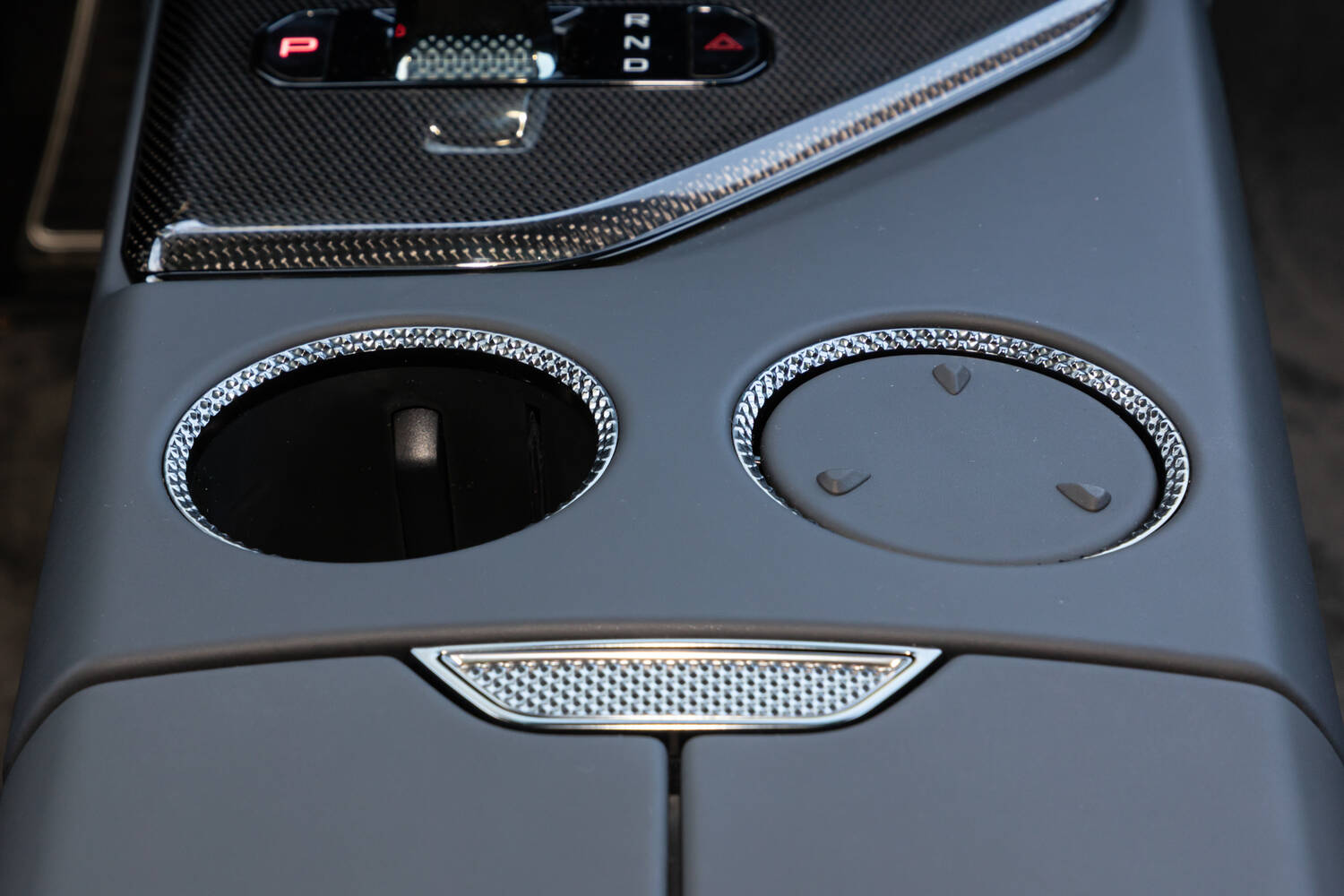
The metallic controls down on the tunnel are deeply satisfying in their tactility. The buttons on the steering wheel need a little familiarisation, but they make operating the Emeya's main interface quite straightforward once you're used to them.
The column stalks are beautifully knurled and feel expensive. The paddle shifts, laterally split behind their spokes, are a delight to deal with.
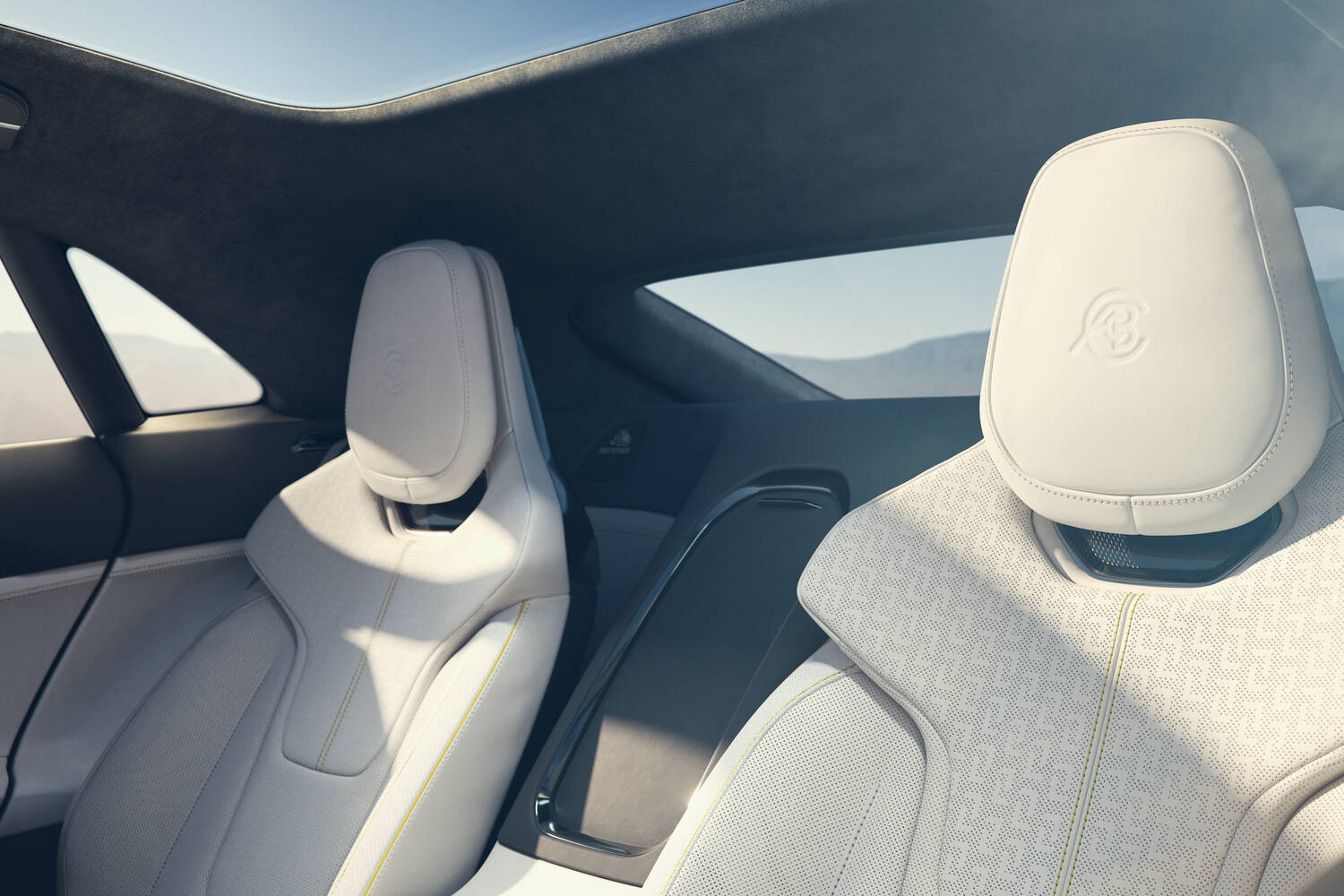
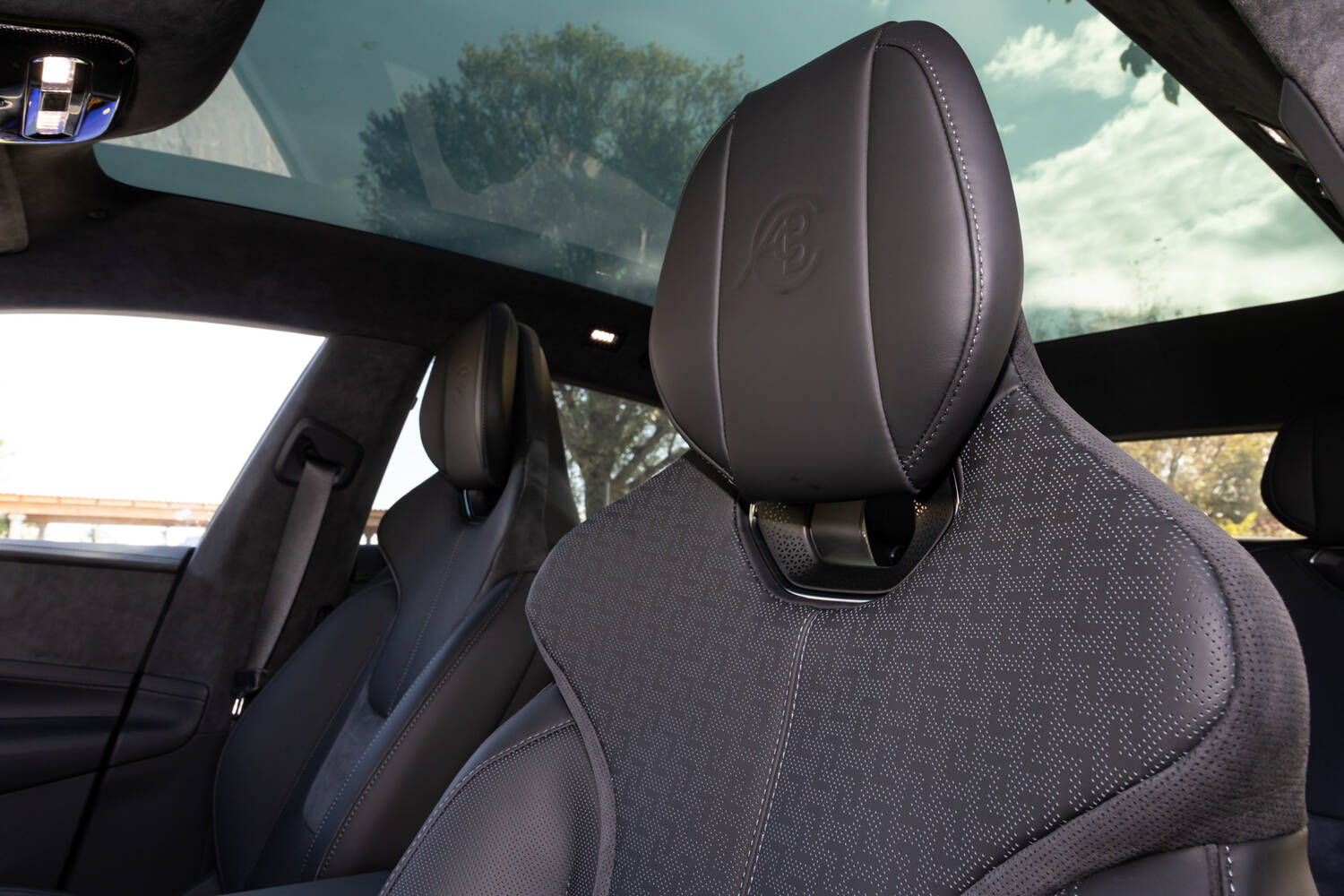
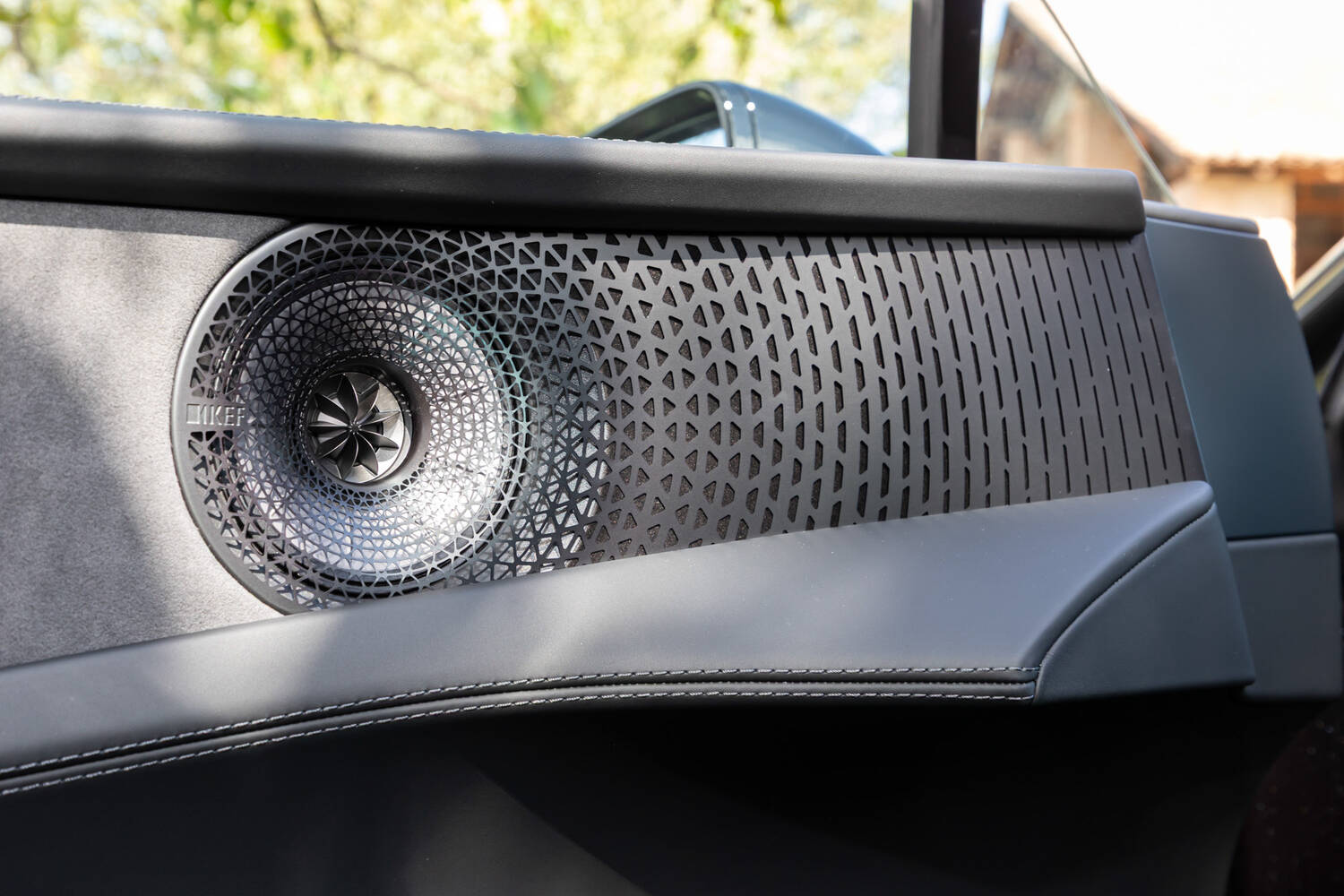
The speaker grilles for the KEF system are metal. The seat upholstery, the door cards, the upper surfaces and the steering wheel feel marvellous to the touch.
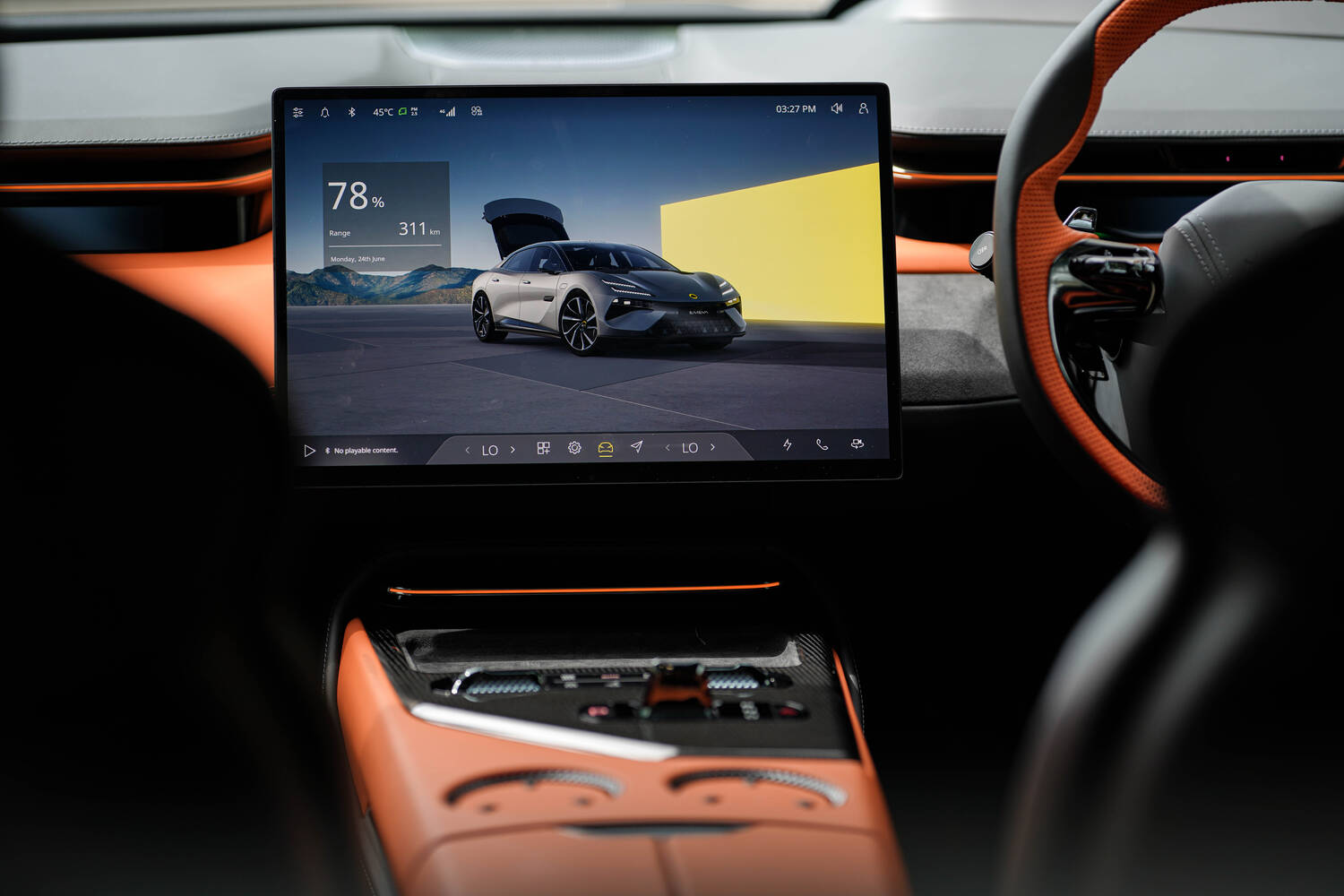
It is one of the most bespoke yet excellent car interiors we've sampled in a while, and kudos to Lotus for getting a touchscreen infotainment system to work well, too.
The only slight grumble about the Emeya is that those sitting in the second row won't quite be as generously accommodated as those up front.
Getting comfortable in the driver's seat
All models of the Emeya come with a 12-way electrically adjustable driver's seat and a four-way electrically adjustable steering column too, both of which have a healthy range of movement available to them.
Aside from a slightly pinched aspect to the rear-view mirror's scope, there are no complaints with the Lotus' outward visibility, either.
Infotainment and technology
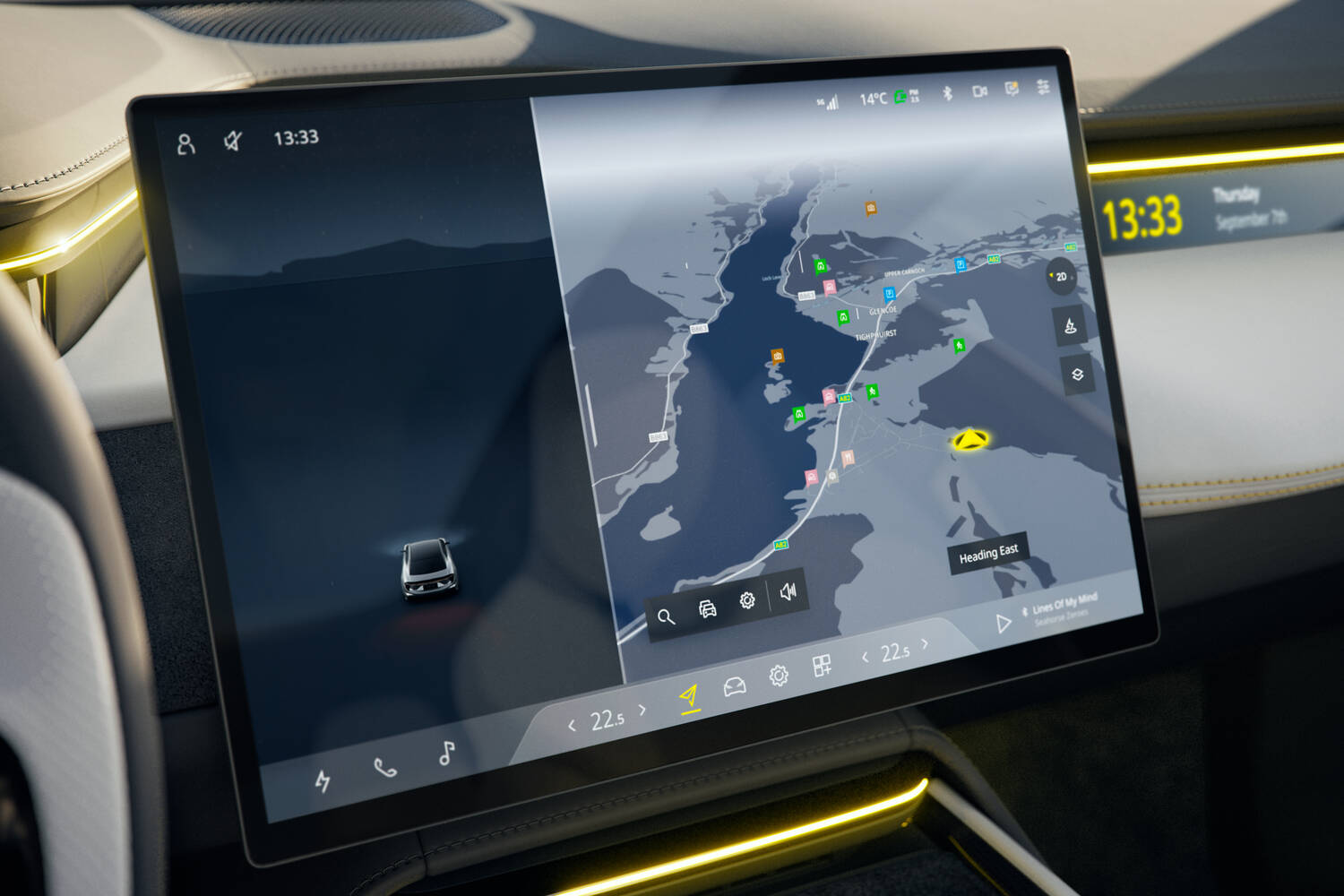
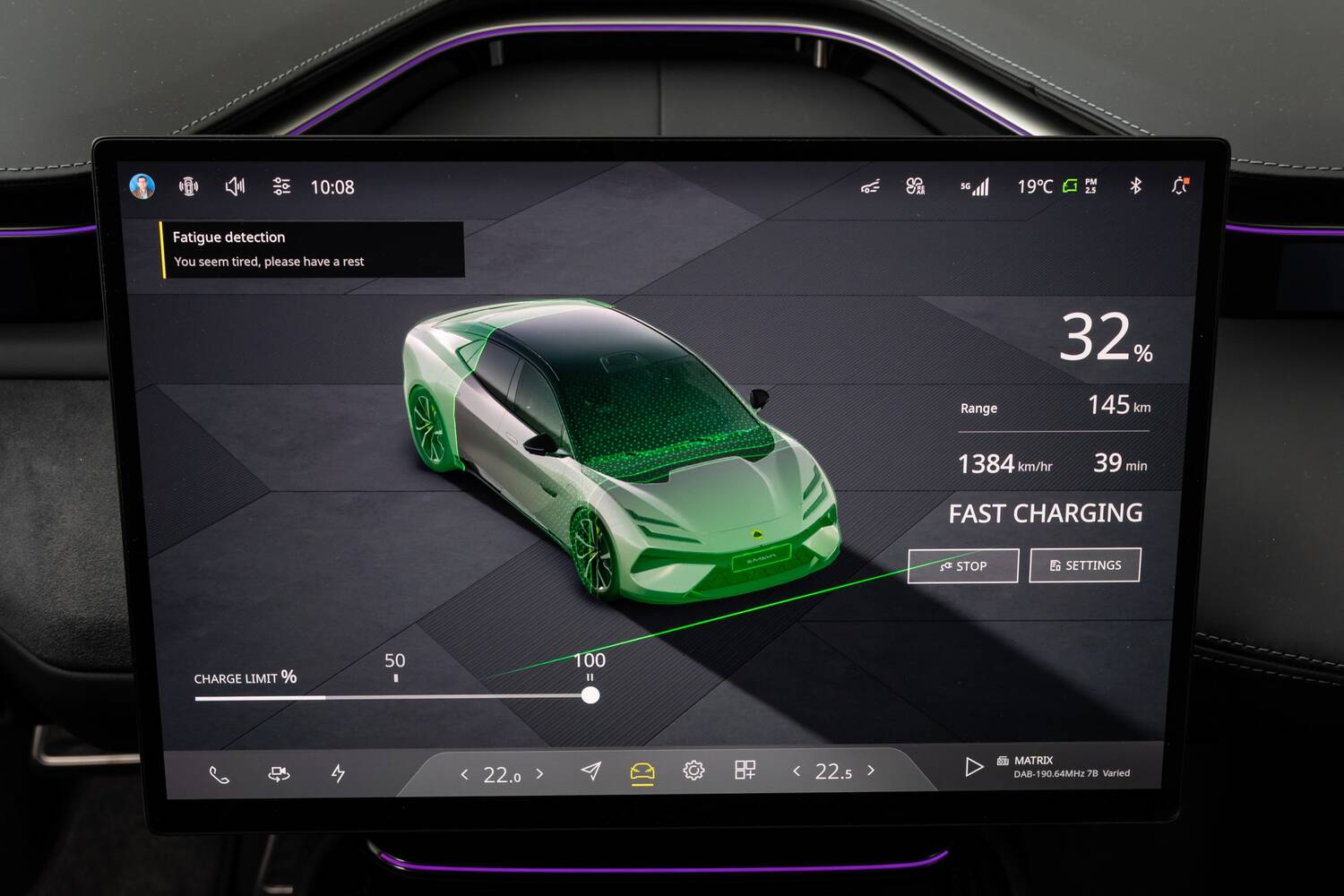
Lotus equips the Emeya with a 15.1-inch OLED touchscreen display running its Hyper OS software, all powered by a pair of Qualcomm Snapdragon 8155 chips.
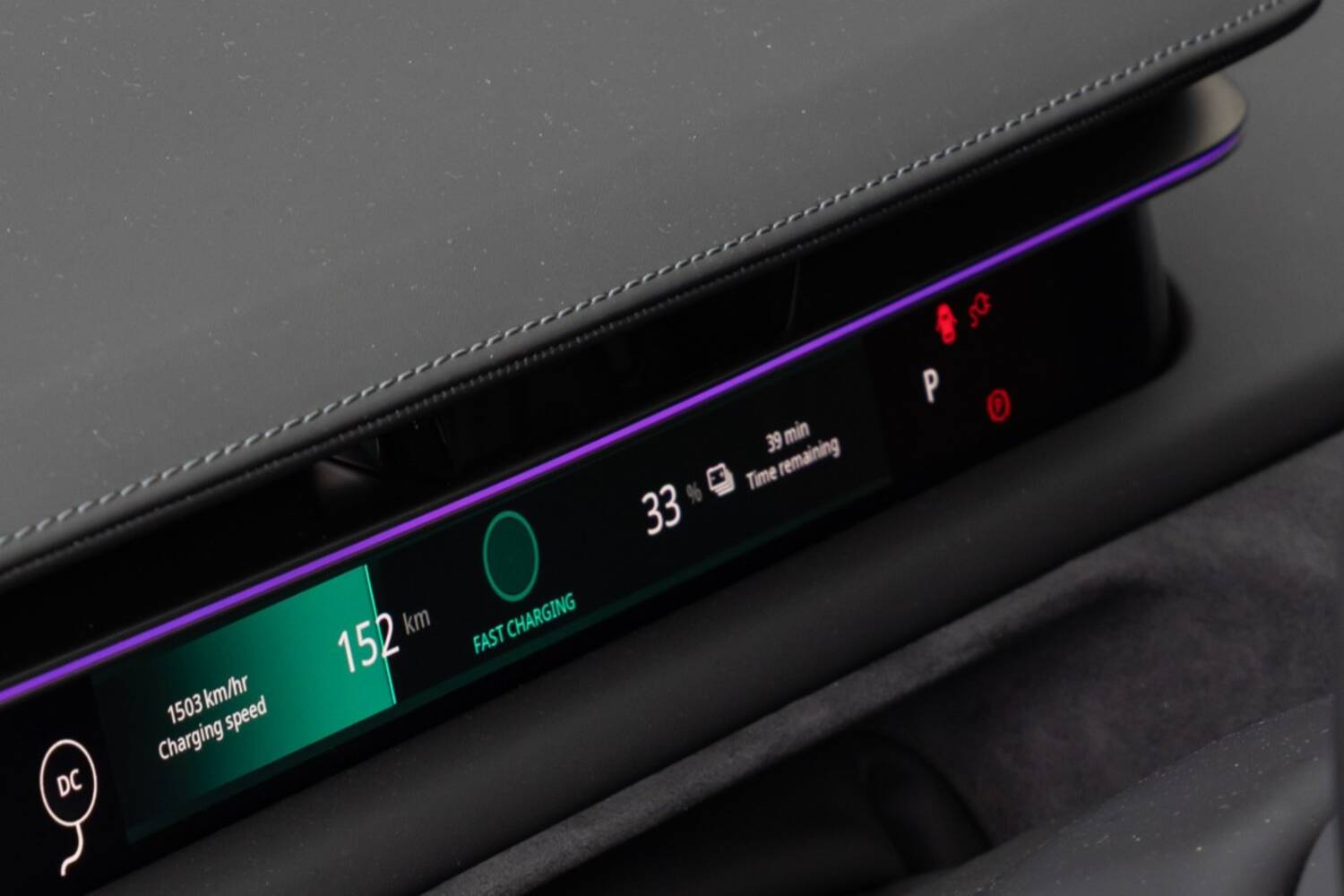
This central panel is flanked by a slim digital strip which spans the dashboard, providing 12.6-inch screens for both the driver's cluster and the passenger's amusement.
The person behind the wheel also enjoys a projected head-up display of an effective 51 inches. All of these systems work brilliantly, though, with pin-sharp graphics and rapid response rates.
Yes, almost all the climate controls are on the central screen, but there are exquisite temperature rocker switches and some key shortcut features down on the tunnel, so you find the Lotus' infotainment is always intuitive and rarely infuriating.
Every Lotus Emeya comes with at least a heated steering wheel and heated front seats, four-zone climate control, adaptive cruise control, a powered tailgate, keyless entry and go, Adaptive Matrix LED headlights and a 1,380-watt, 15-speaker KEF premium audio system.
Grander variants like the 600 Sport SE are further equipped with configurable ambient cabin lighting, a hands-free tailgate function, a glass roof with individually dimmable triangular panels and soft-close doors.
These also have access to a 23-speaker upgrade for the KEF set-up, for a fee.
Practicality around the cabin
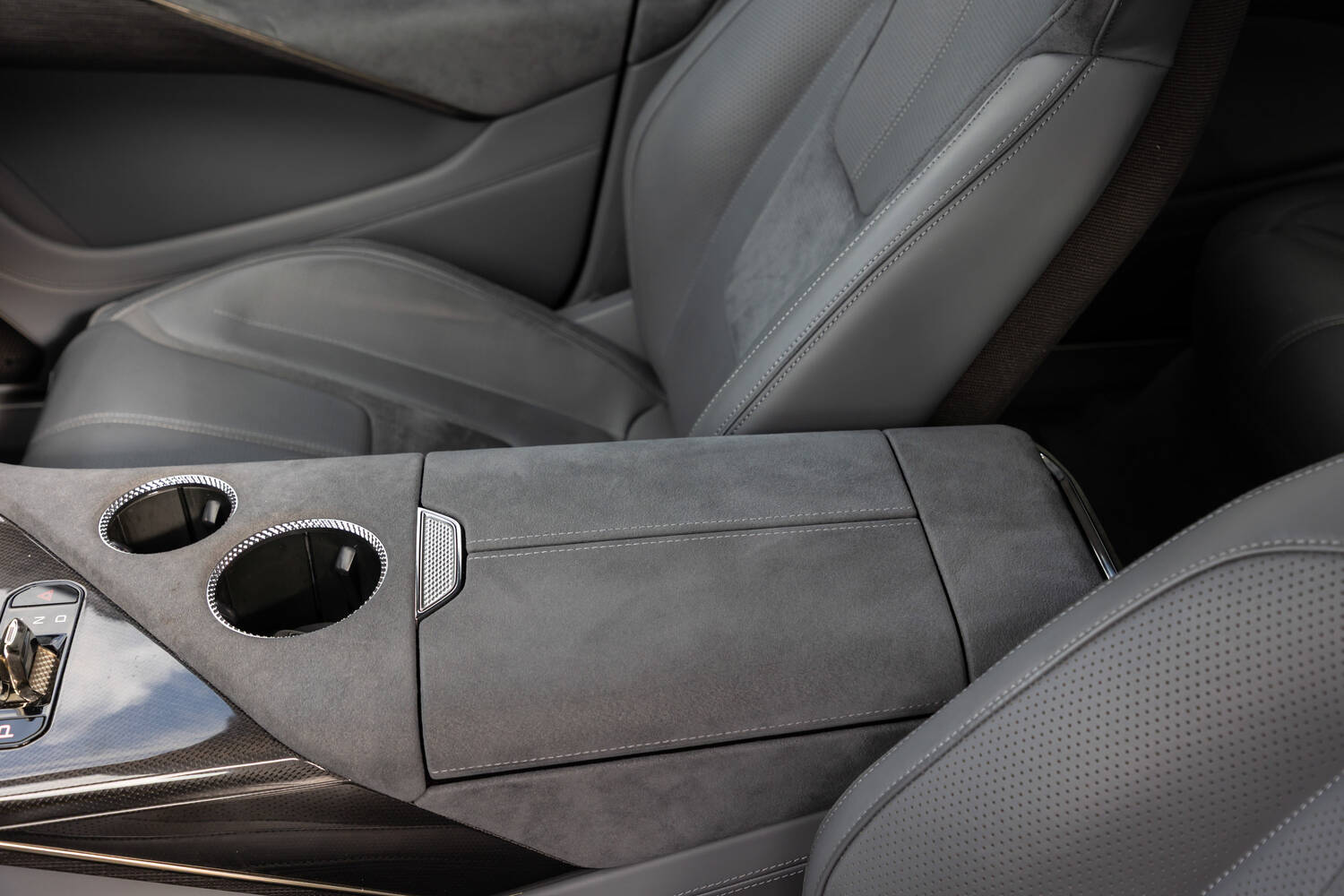
This is another area where Lotus doesn't ordinarily garner plaudits, but of course the Emeya is a different type of Lotus. So, there are plenty of useful storage solutions, including an under-dash area with USB ports, good-sized door pockets, a decent glovebox (which is opened electrically, but it at least has a dedicated button down on the central tunnel for this process) and one of those large stowage cubbies beneath a split armrest.
Our favourite feature, though, is the Emeya's twin pop-up cupholders. These are lovely in action and make the car appear much neater if you're not carrying a drink on board and they're sitting flush with the console.
Rear-seat passenger space
There's masses of legroom in the back of the Lotus Emeya, thanks to the car's long wheelbase, while the floor is almost flat across its complete width in the rear and there is a trio of three-point seatbelts in the back too.
With the sheer breadth of the Emeya's body, the idea of seating three across the bench isn't beyond all reason.
However, the rakish looks of the car do limit headroom in the back of the Lotus if you're taller, while the high floor means there isn't a huge amount of space to put your feet under the front seats, especially if occupants sitting up there have lowered their chairs to the deck.
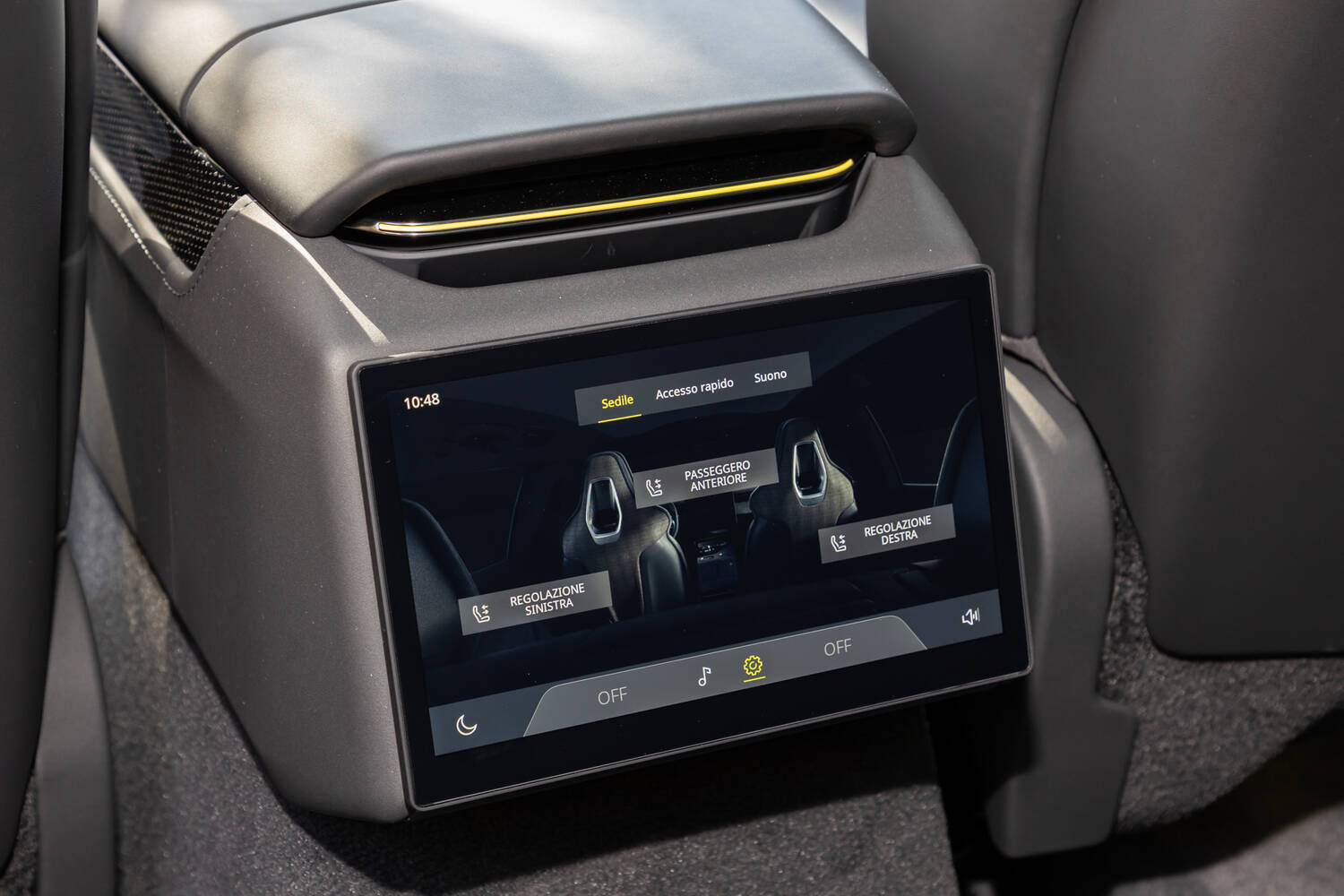
Useful door bins can be found in the second row of the Emeya, while there's a digital control panel sited on the back of the centre console, through which rear-seat occupants can oversee many of the in-car comfort and infotainment features.
Fitting child seats to the Lotus Emeya
Lotus provides two child-seat ISOFIX fixing positions in the back of the Emeya, which also has large rear doors to make the loading and unloading of sizeable child seats as easy as it can be with this type of car.
Boot space in the Lotus Emeya
As we said in the intro, although Lotus calls the Emeya a 'four-door GT' and a 'saloon', it is in fact a fastback, with a top-hinged tailgate giving superb access to a 509-litre boot with all seats in use.
Fold the 40:20:40 split bench down and up to 1,388 litres of space becomes available, while a 46-litre 'frunk' under the bonnet further bolsters the Emeya's cargo capacity.
Safety in the Lotus Emeya
No Lotus model, Emeya included, has ever been tested by Euro NCAP, but it has a solid, advanced structure and a wealth of advanced driver assistance systems (ADAS) fitted as standard - including, but not limited to, lane keep assist, autonomous emergency braking, adaptive cruise control, side-view cameras, autonomous parking, highway assist and evasive steering support.
Performance of the 2026 Lotus Emeya
- Two power outputs: very fast, or ridiculous
- Twin-chamber air suspension standard
- Good to drive, but not a Lotus masterpiece
All versions of the Lotus Emeya are twin-motor, all-wheel-drive electric cars, and they are fitted with two-chamber adaptive air suspension across the board.
The opening powertrain is the 600, with a pair of motors delivering 450kW. This translates to 612hp, allied to 710Nm of torque, and it allows the 'basic' Emeya to run 0-100km/h in just 4.1 seconds before topping out at 250km/h.
Above this sits the mighty Emeya 900. It gains a more powerful rear motor, as well as an attendant dual-speed reduction-gear transmission (the 600 retains a single-speed unit), bumping its peak output to 675kW.
This equates to a colossal 918hp and 985Nm, reducing the 0-100km/h time to 2.8 seconds yet only increasing the (completely irrelevant anyway) top speed marginally to 256km/h.
One thing is that, despite the use of plenty of aluminium in its construction, the Emeya is a hefty old thing - the stated kerb weight of the car is 2,550kg, which is more than an Exige Sport 390 Final Edition (1,138kg) and an Evora GT410 (1,368kg) put together.
Driving the Lotus Emeya 600 Sport SE on UK roads
Words by Matt Robinson on 6 October, 2026
The only minor black mark we'd put on the Emeya's report card here is that you can really sense that Lotus is adapting to how it damps 2,500kg-plus of electric car.
Given the heaviest car we drove in the 'old' era of the company was the Evora GT410, you're talking about the electric model being a whopping 86 per cent beefier.
In general, on its standard-fit 21-inch wheels, the Sport SE is smooth and quiet to travel in. It's even better at higher speeds, suggesting the air suspension and Continuous Damper Control (CDC) shocks have been optimised for the 100-120km/h cruising zone.
But at times on poorer tarmac at lower speeds, there were a few too many audible and physically discernible thumps, thuds and bangs from the Emeya as it traversed pockmarked terrain.
Our test car was, however, fitted with the optional Lotus Dynamic Handling Pack, which includes four-wheel steering and active anti-roll bars.
Its gorgeous steering, impeccable body control and general sense of agility combined did their best to mask the Emeya's considerable weight. It's not quite as good in the corners as a Porsche Taycan, and some distance from the firm's glittering old guard like the Elise and Exige, but the Emeya isn't far off feeling like a 'proper' Lotus from behind the wheel.
Fantastic brakes and well-judged variable regen, too, although we were irked by the fact the car wouldn't 'remember' your previously chosen setting in this regard, defaulting to the maximum level of deceleration every time you start it up.
Still, you can't complain about either pedal feel or outright stopping power in the Lotus, so that's a major positive.
We'd also suggest the 900 model is superfluous. There's a slice of the automotive community that somehow now thinks a four-second 0-100km/h time is bordering on slow, but that's a farcical proposition to anyone who hasn't been exposed to 612hp and 710Nm in operation.
The Emeya 600 is more than quick enough for anyone's rational requirements. It makes some interesting noises as it goes through its motions and it's effortlessly muscular without sacrificing a load of driving range in the process.
In summary, the Emeya doesn't feel like Lotus' second-ever go at a format which is completely alien to its oft-quoted company motto. In fact, it's so polished and capable that we adored it, despite the occasionally brittle ride.
Give Lotus a bit more chance to get to grips with this level of damping, though, and we predict its near-future electric cars will ride every bit as well as its magical sports cars used to do, back in the pre-Geely Automotive ownership days.
Range, battery, charging and running costs of the 2026 Lotus Emeya
- One huge battery size
- Impressive range of up to 610km
- 800-volt architecture for fast charging
There is just one battery size for the Lotus Emeya, but it's thankfully a large pack for admirable driving range. Also, the car's 800-volt architecture results in DC charging speeds which are among the fastest in the EV industry.
Battery options and official range
CATL supplies the 102kWh gross, 98.9kWh usable nickel-manganese-cobalt (NMC) battery which is used in every variant of the Lotus Emeya.
In the 600 on 20-inch wheels, Lotus says it can do up to 610km between charges.
Fitting the 600 with the more-desirable 21- or 22-inch rims, which come on every other trim grade does reduce this to 580km, which remains commendable.
Choosing the brutality of the 900, though, severely impacts the Emeya's range, as this car can theoretically only manage 485km between charging cycles.
Real-world range and efficiency of the Lotus Emeya
We drove the Lotus Emeya more than 775km across 11 days in our care, on a variety of roads. At its best, it was displaying around 20.7kWh/100km, although the overall average consumption ended up at 22.9kWh/100km.
In its defence, we did enjoy the 600's potent performance on a regular basis, but even so this level of depletion should reduce the real-world range to 430km or thereabouts.
Charging up the Lotus Emeya
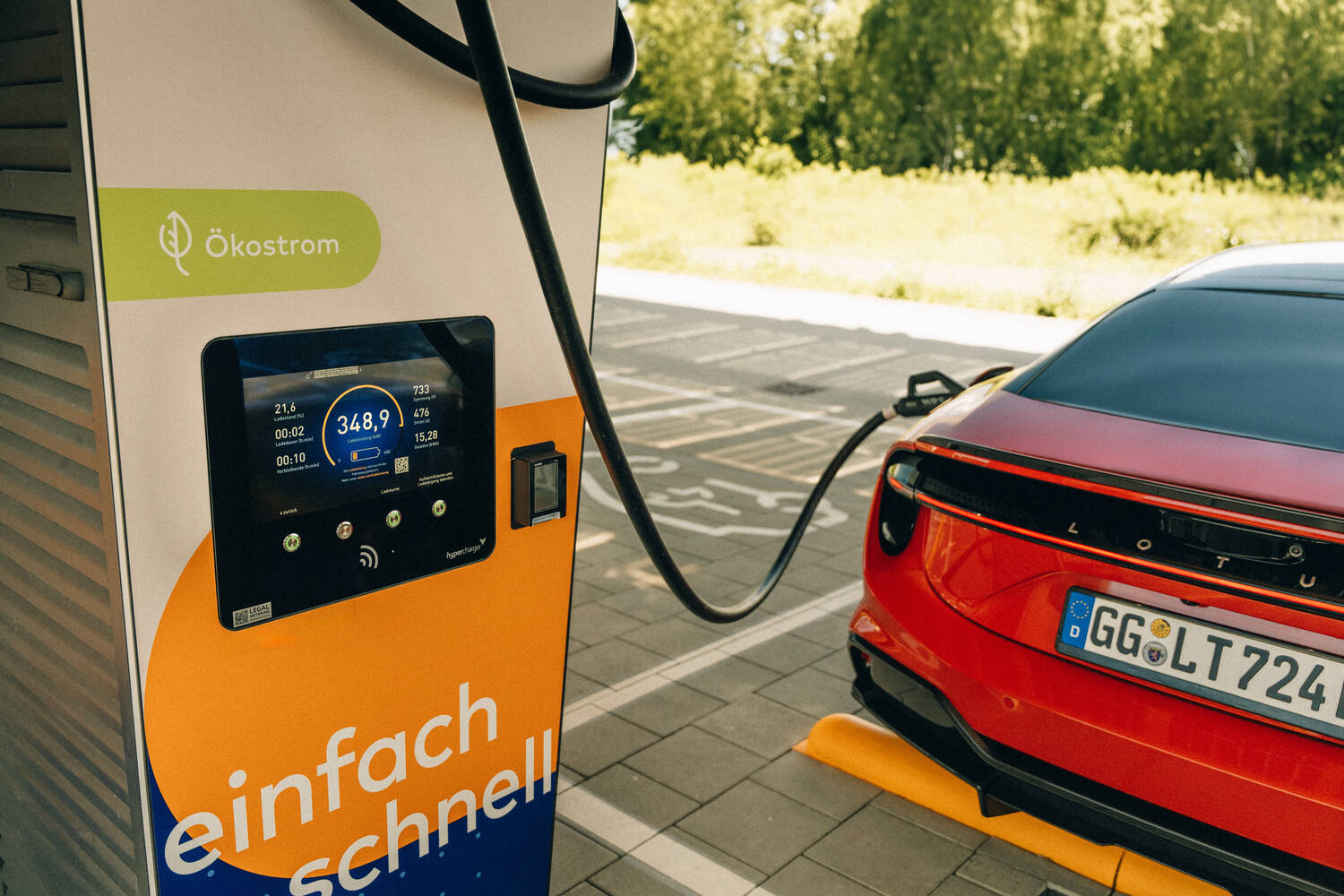
Until related firm Geely eclipsed it, the Lotus Emeya's 420kW maximum DC-charging speed was the fastest in the EV world. If you could find a charger which would supply that power, the company reckons a 10-80 per cent charge would need just a quarter of an hour.
Even at the more easily located 350kW DC points, the Emeya should perform 10-80 per cent in 18 minutes.
It has a 22kW onboard AC charging function, at which speed Lotus says a 10-100 per cent top-up would take around six hours. It'd be more like 10 hours or so at 11kW, while a typical 7.4kW domestic wallbox would need 15 hours for the same job.
Servicing the Lotus Emeya
Lotus recommends the Emeya is checked over annually, although as it is an electric car the schedule for these services tends to be lighter than for a combustion-powered car. The company also offers tailored servicing for its electric cars, or fixed-price service plans for up to five years' worth of maintenance.
Lotus Emeya warranty
The Lotus Emeya is covered by a five-year, 160,000km warranty, while its high-voltage components are covered for eight years or 200,000km.
Irish pricing & rivals to the 2026 Lotus Emeya
- Not officially sold in Ireland
- Likely to be well into six figures imported
- Comes with healthy amount of kit
Although Lotus has no official presence here in Ireland (though there is a dealership in Belfast), it obviously sells cars in its homeland, where it is priced about on a par with the middle grades of the likes of the Porsche Taycan and Audi e-tron GT.
As in, it's not inordinately expensive, but it's not a conspicuous bargain either.
There are four trims for the Emeya 600: the regular car, then GT, GT SE and finally Sport SE - while the Emeya 900 has just two specifications, Sport and Sport Carbon.
Every variant of the Lotus comes with at least 20-inch alloy wheels, keyless entry and go, an electrically operated tailgate, Adaptive Matrix LED headlights, the full three-screen digital interface with HUD and wireless Apple CarPlay/Android Auto, adaptive cruise control, adaptive air suspension with Continuous Damper Control (CDC) and four-zone climate control, among more.
Verdict - should you buy the 2026 Lotus Emeya?
You shouldn't avoid the Lotus Emeya, because an extended period with the 600 Sport SE started well and only got better from there. It's not quite perfect - the underlying feeling is that Lotus, the doyens of damping, are still grappling with how to properly suspend 2.5 tonnes of bulk, while the rear-seat headroom isn't winning any awards - but, minor concerns put to one side, this is a mighty impressive all-rounder from Lotus which can stand defiantly tall among some seriously talented opposition at this prestigious end of the electric-car market.
FAQs about the 2026 Lotus Emeya
Is the Lotus Emeya four-wheel drive?
Yes, all versions are dual-motor cars with Lotus' permanent torque-vectoring all-wheel drive. There are no single-motor versions of the Emeya.
Can the Lotus Emeya tow anything?
Yes, surprisingly, it is rated to tow - up to 2,250kg of braked trailer, depending on its exact specification.
Where is the charging port on the Lotus Emeya?
It is on the nearside-rear (passenger-side) wing, just above the back wheel - in the location you'd often find a fuel tank filler on a combustion-engined car.
On the Emeya, it is powered, and you can activate it either by tapping the cover flap itself (and then a button inside near the charging socket to close it again), or you can do it through the central touchscreen in the car's cabin.
Want to know more about the 2026 Lotus Emeya?
If there's anything about the Lotus Emeya we've not covered, or you'd like help in choosing between it and other cars, you can use our expert advice service via the Ask Us Anything page.