
Introduction to the 2026 Polestar 5
The Polestar 5 tops the Swedish firm's lineup of electric cars, not just in terms of price, but also performance, mixing supercar pace with long-distance GT driving comfort in one especially easy-on-the-eye package. It's an alternative to the Porsche Taycan and Audi e-tron GT twins, in essence.

Pros & cons of the 2026 Polestar 5
Pros:
• Stunning design
• Superb to drive
• Well-priced
Cons:
• No rear window
• Boot isn't massive
• Relies on touchscreen
Exterior & design of the 2026 Polestar 5
• Looks like Precept concept car
• Longer than a Porsche Taycan
• Supercar proportions

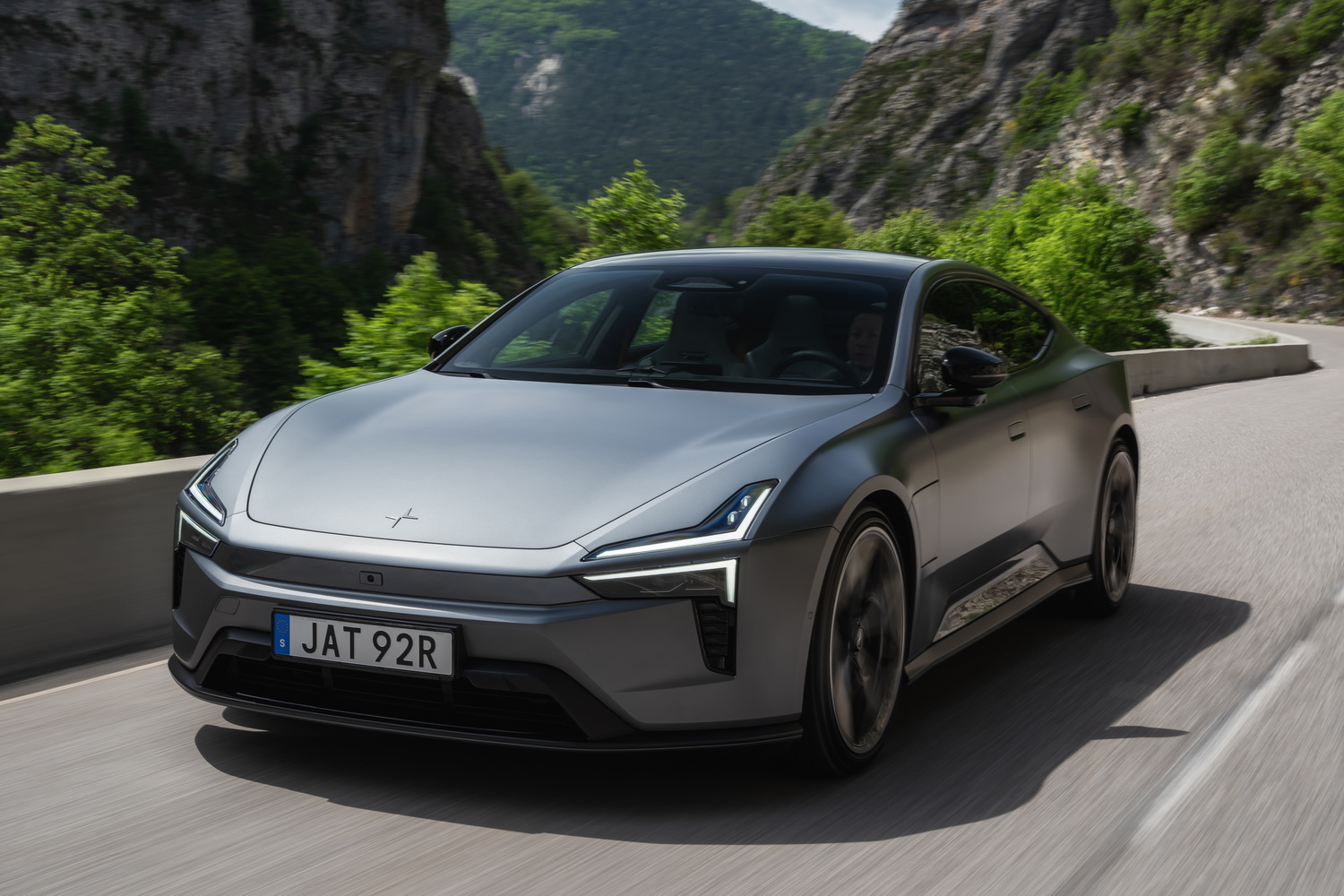
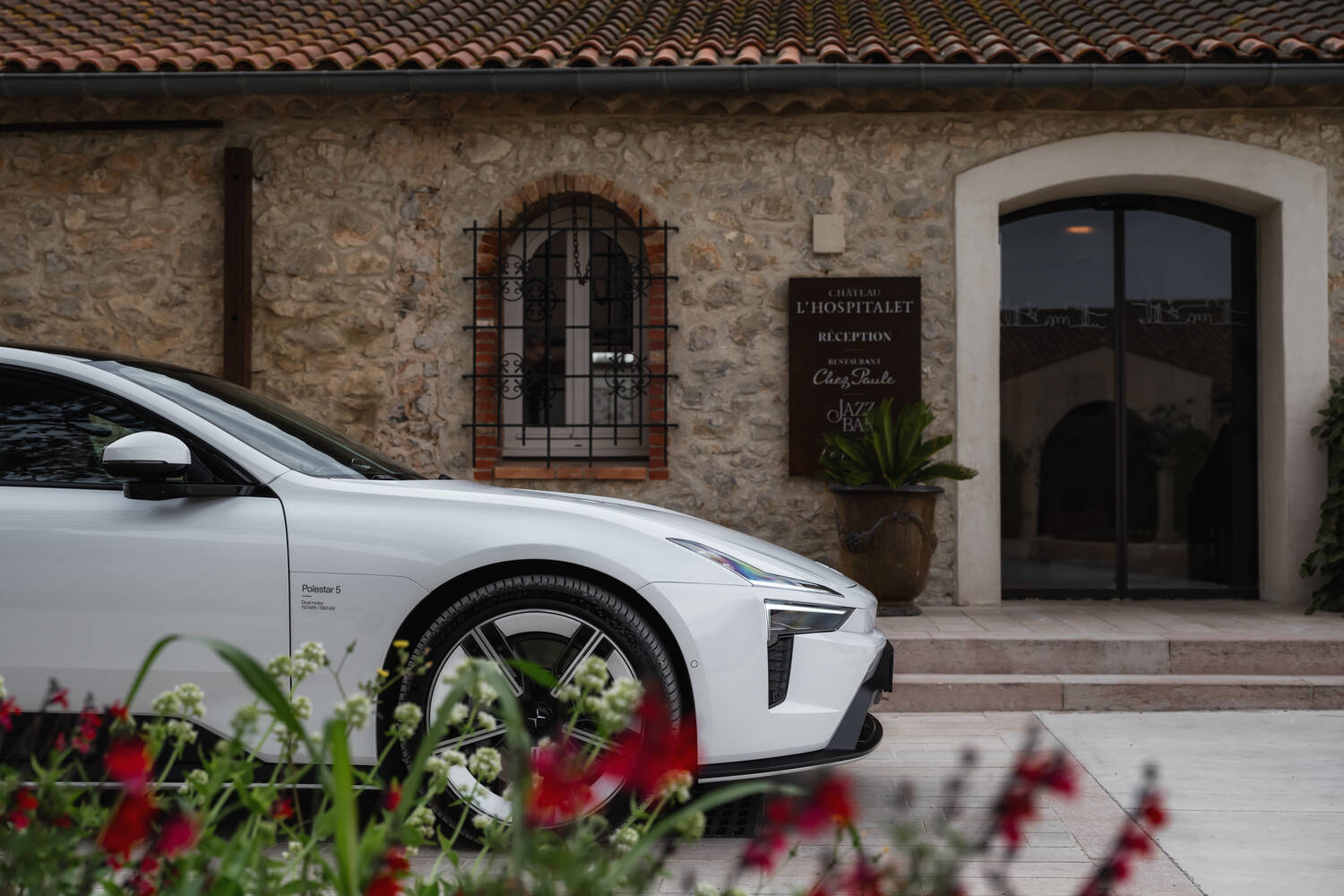
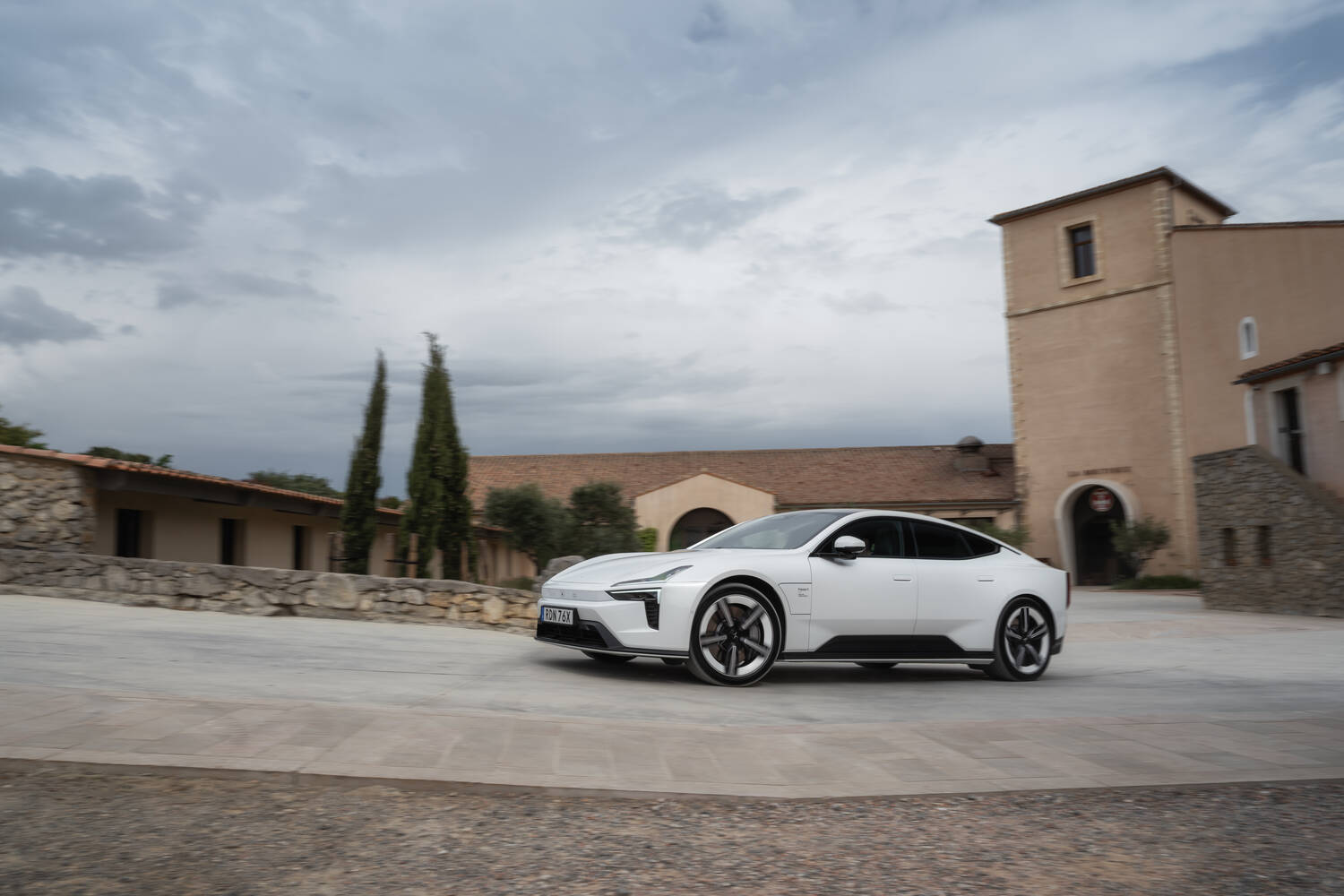
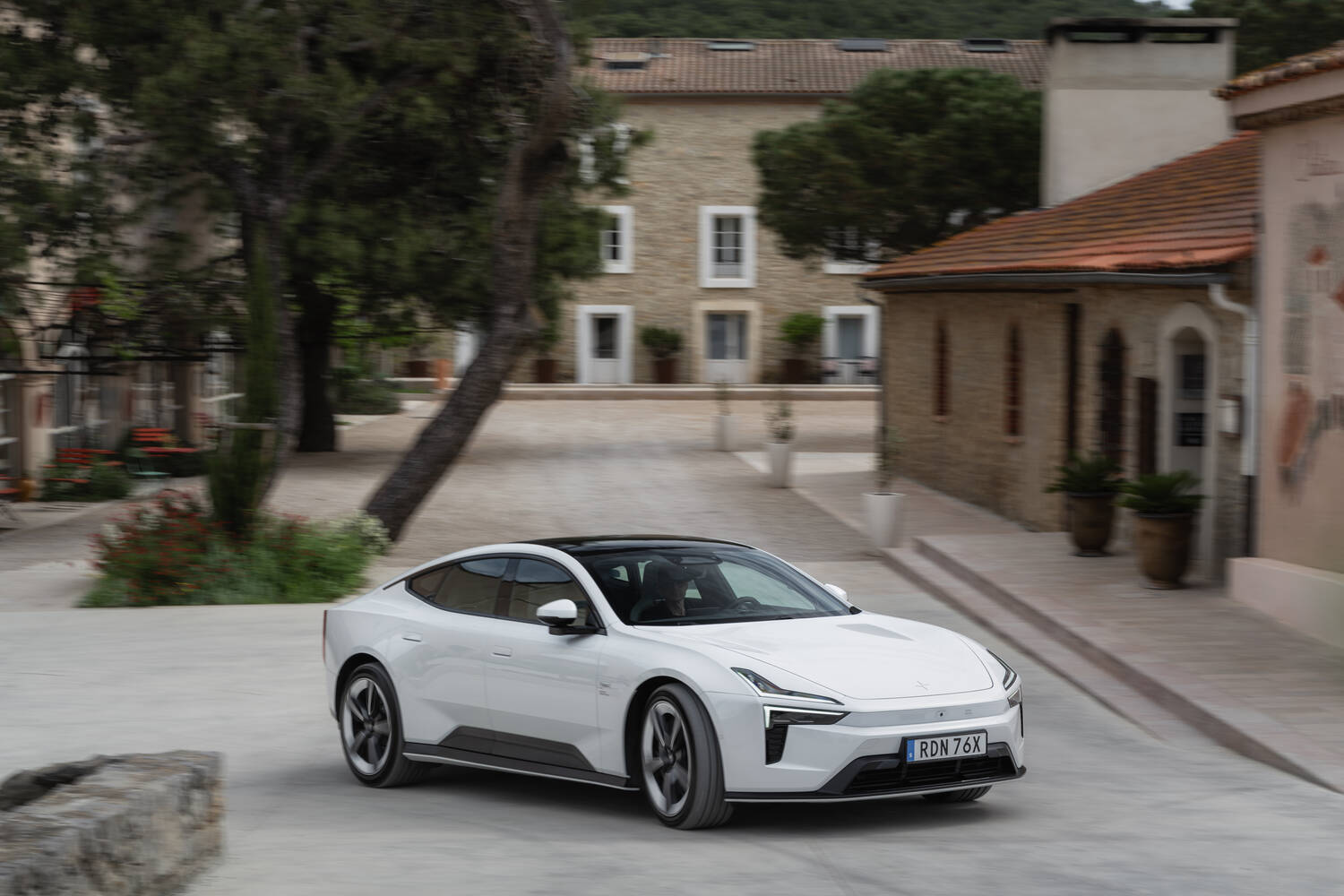
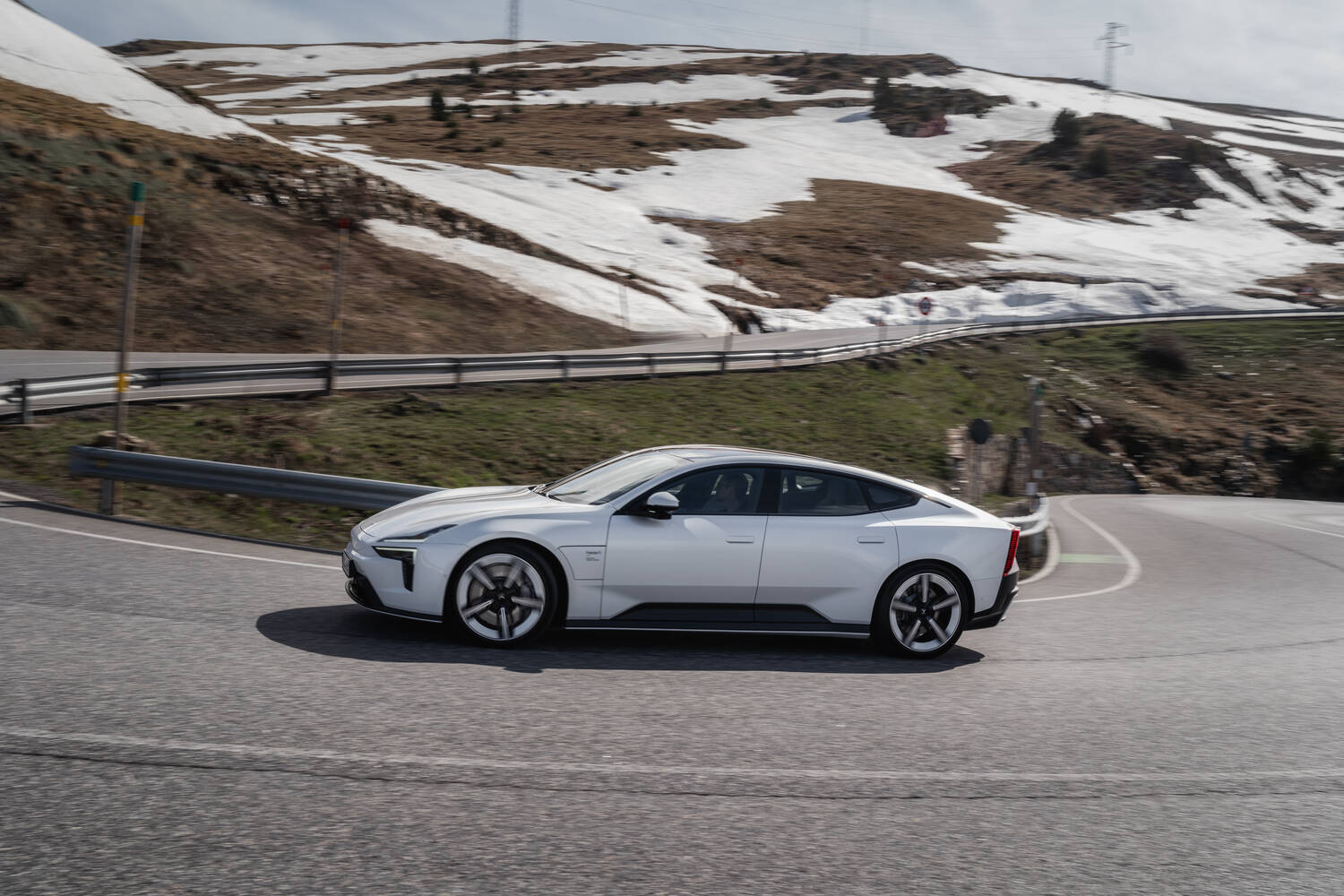
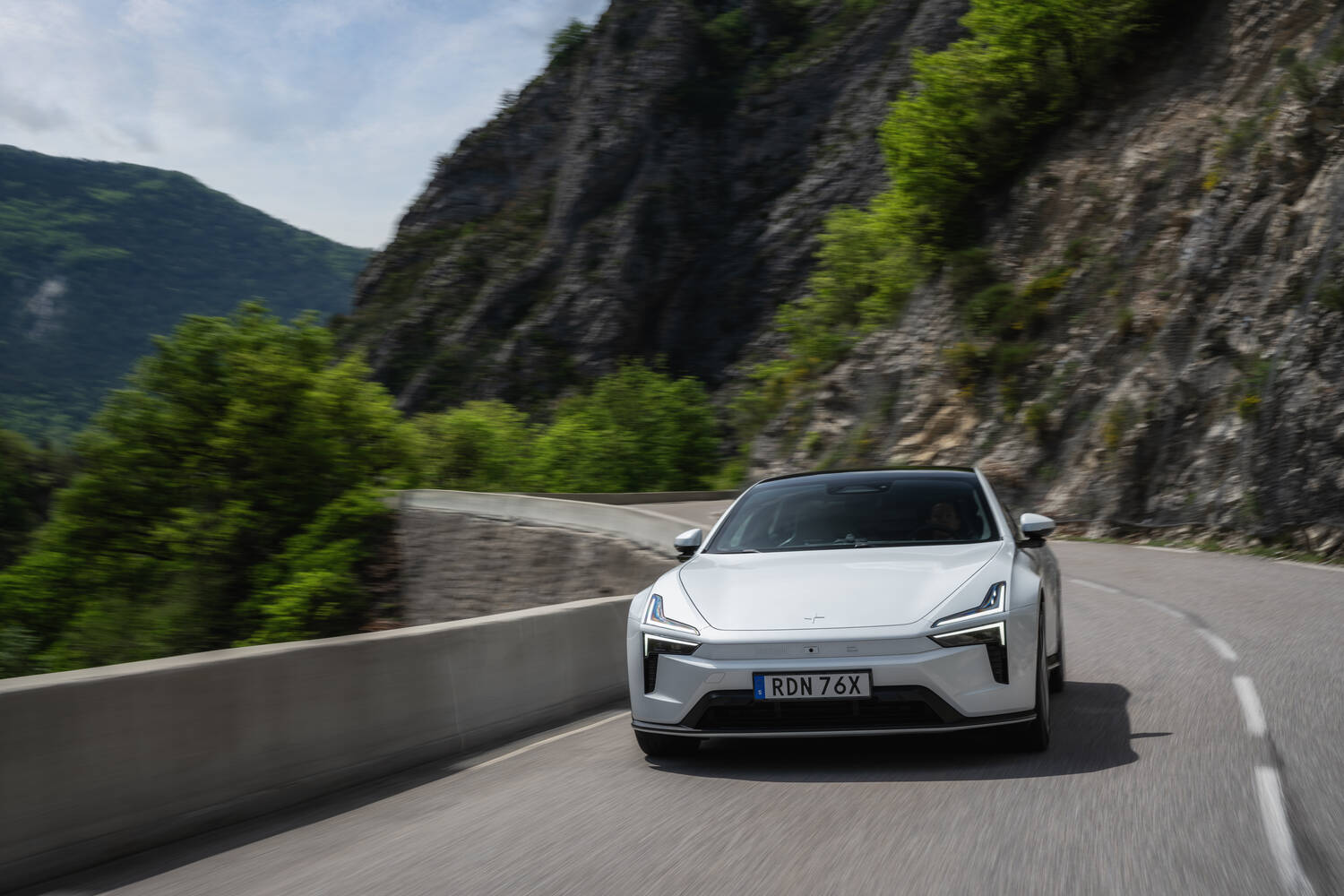
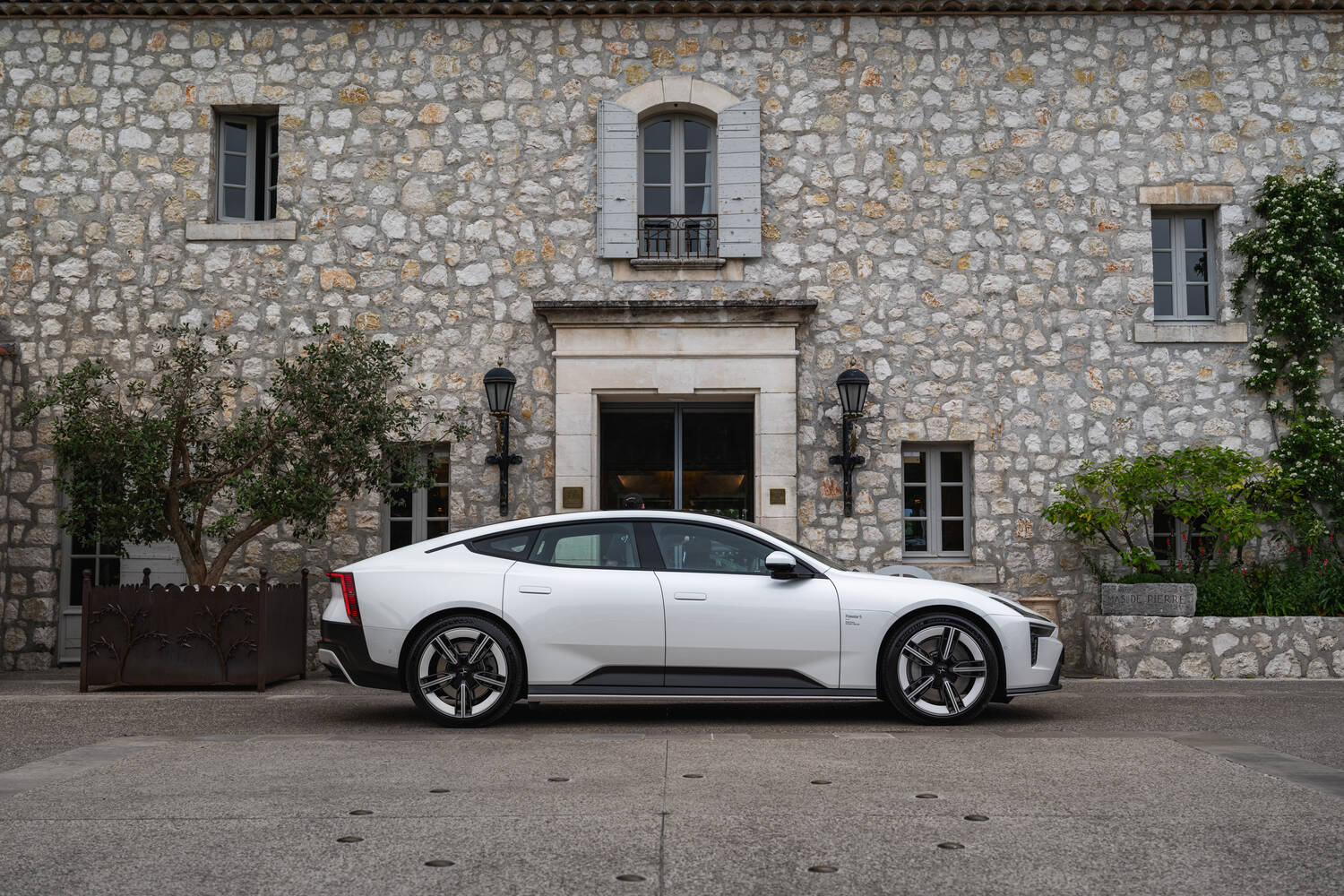
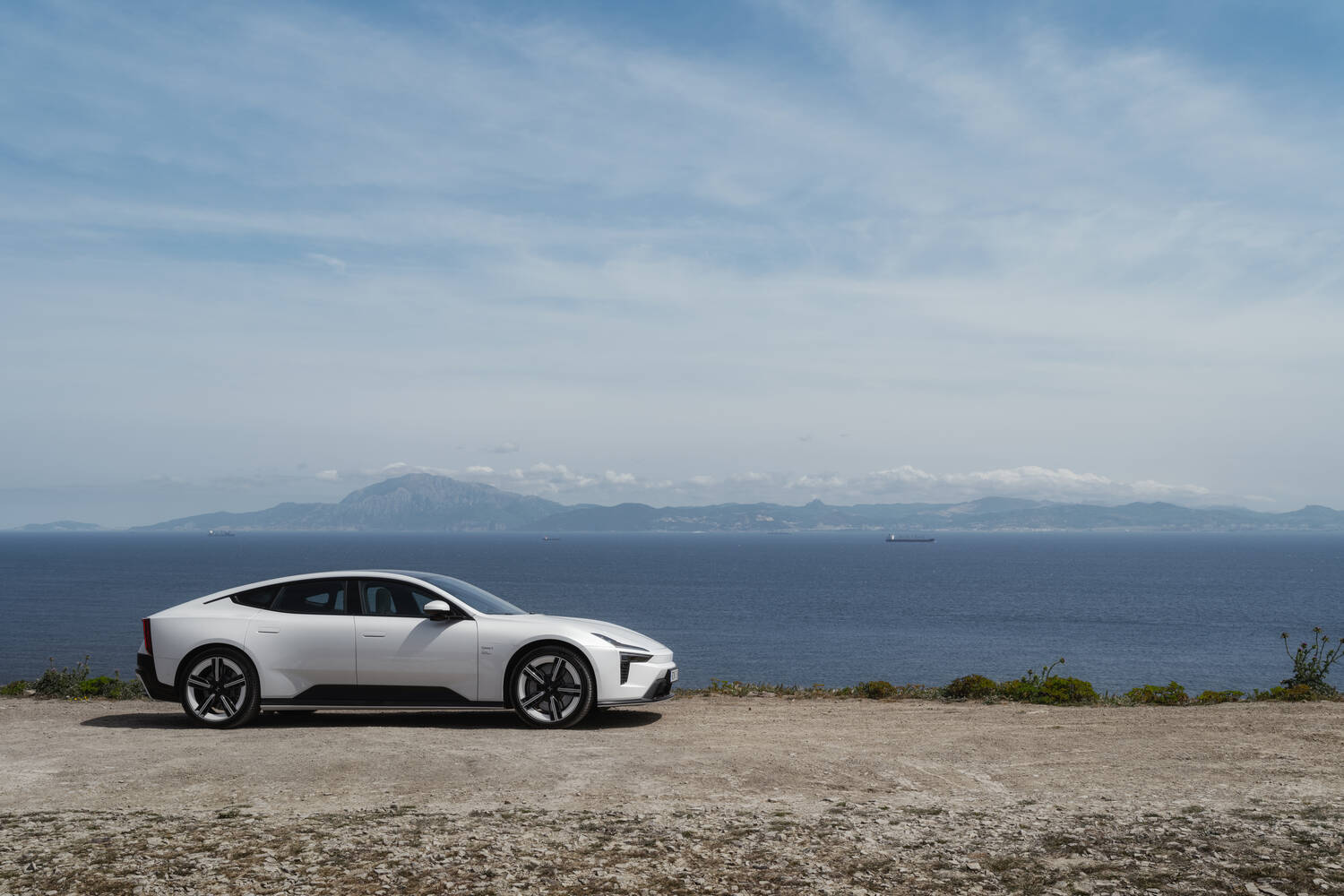
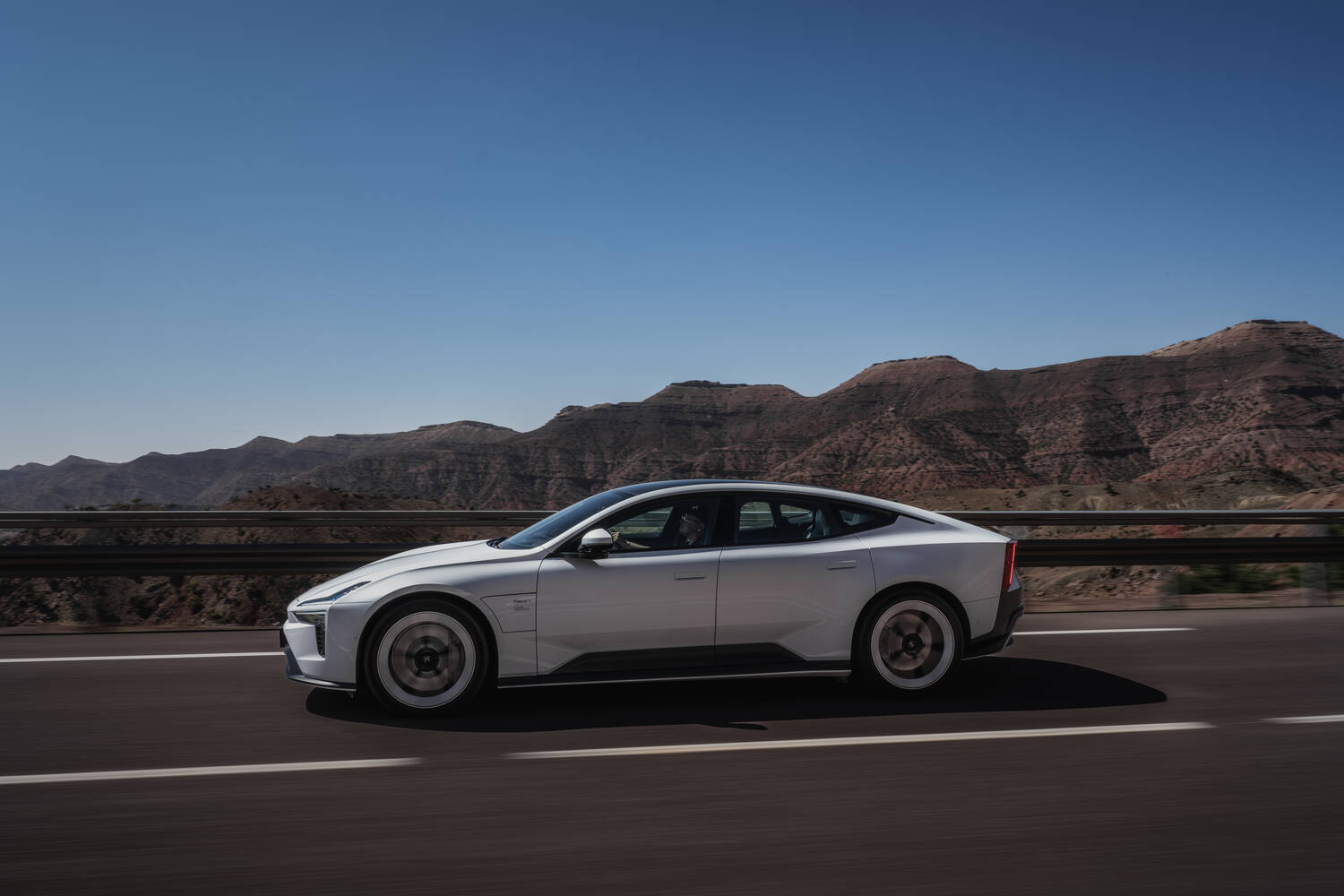
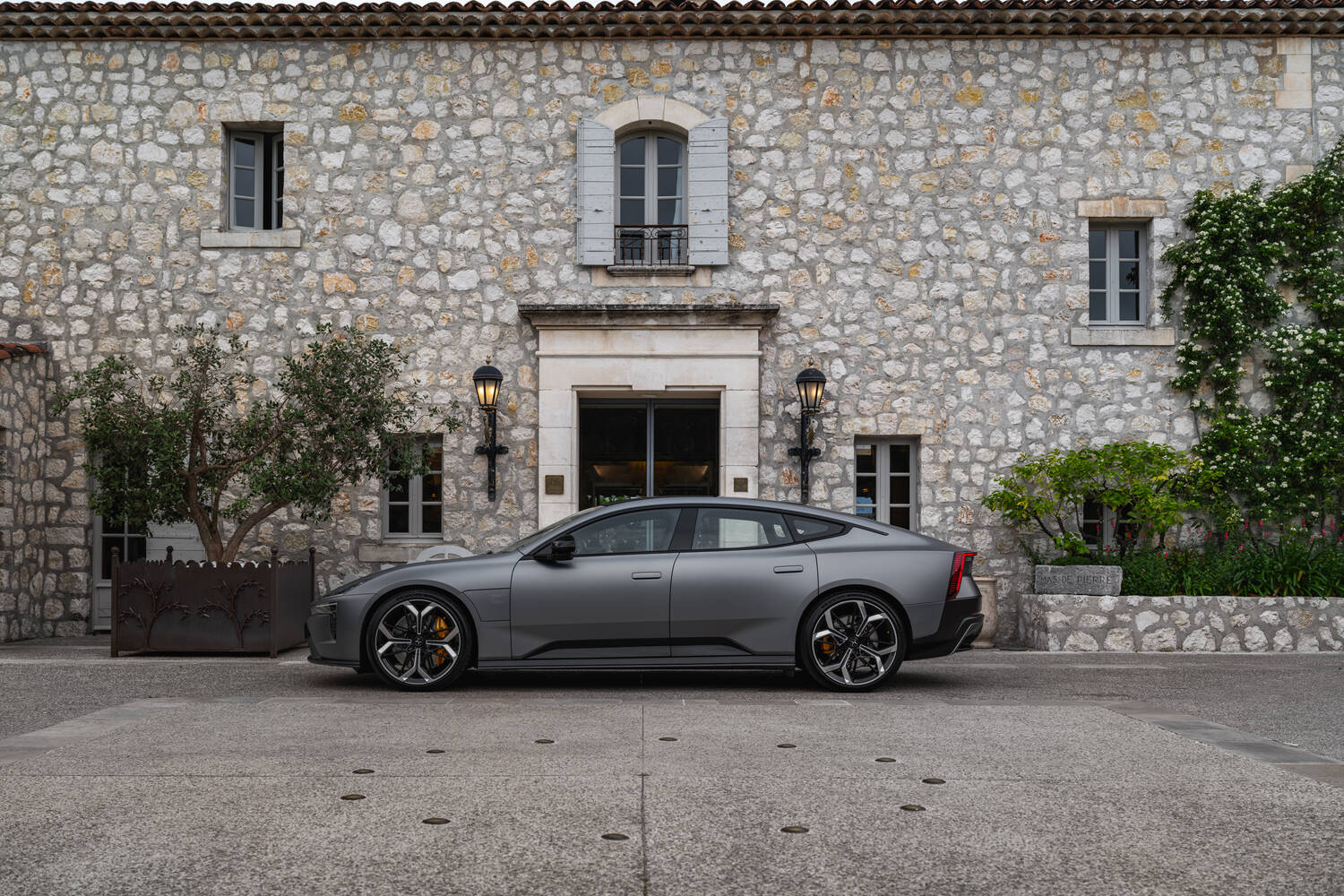
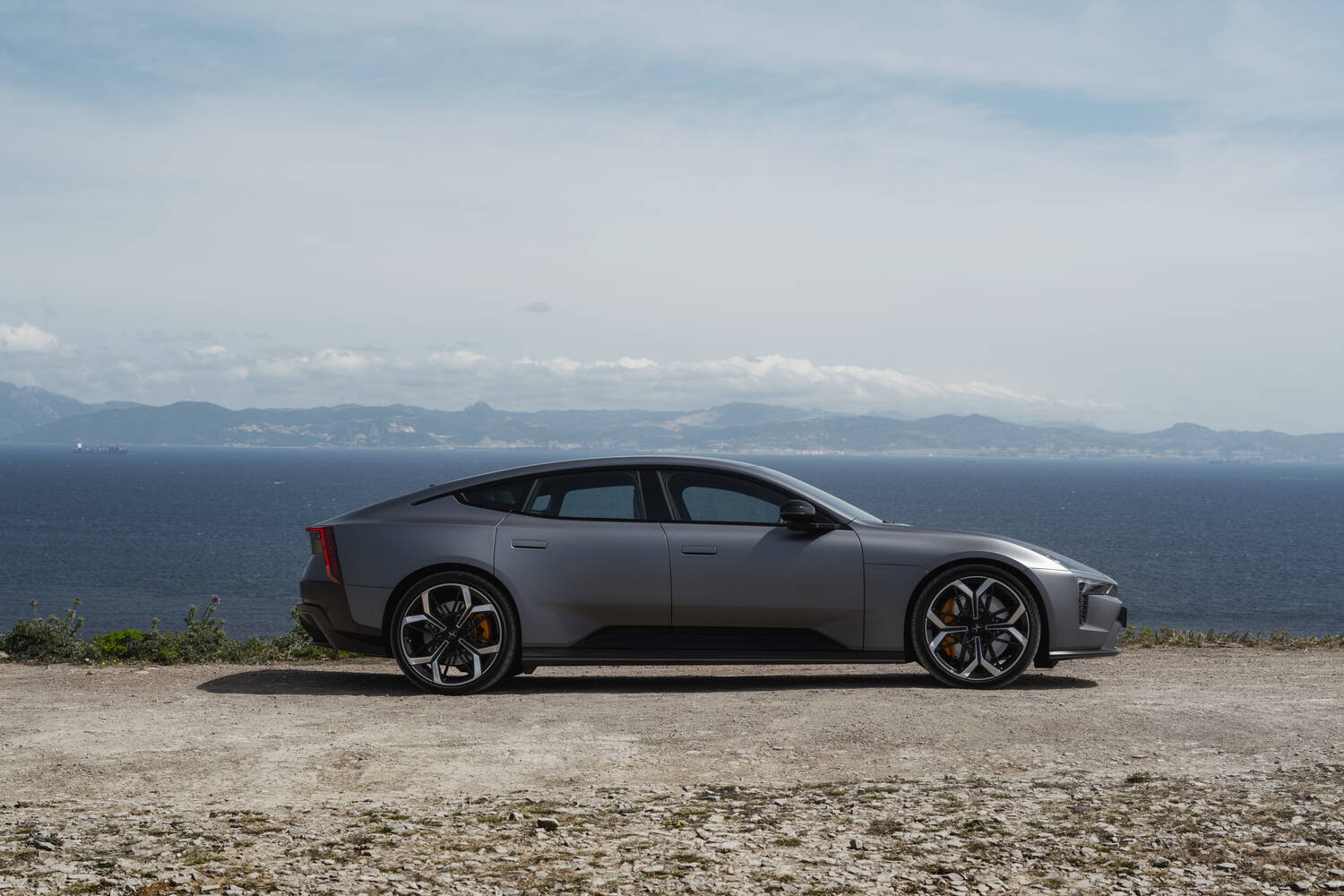
The dimensions say the Polestar 5 is a large car, at over five metres long and two metres wide, but its exceptionally row roof fools you into thinking it's quite compact when you're standing up close to it.
That and the exquisite proportions and detailing, and this is undeniably a beautiful-looking car, drawing more than a little inspiration from the Precept concept car of a few years ago.

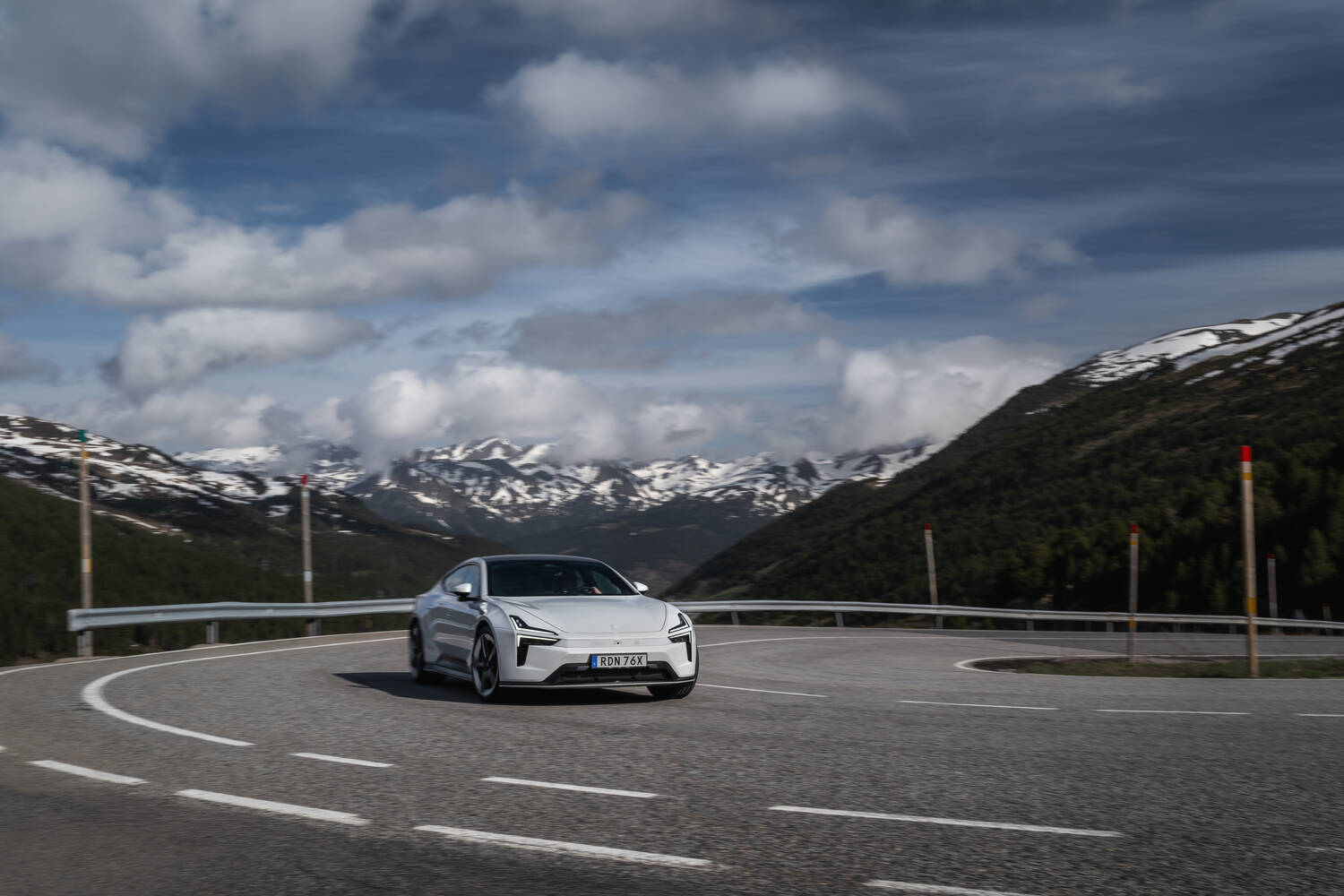
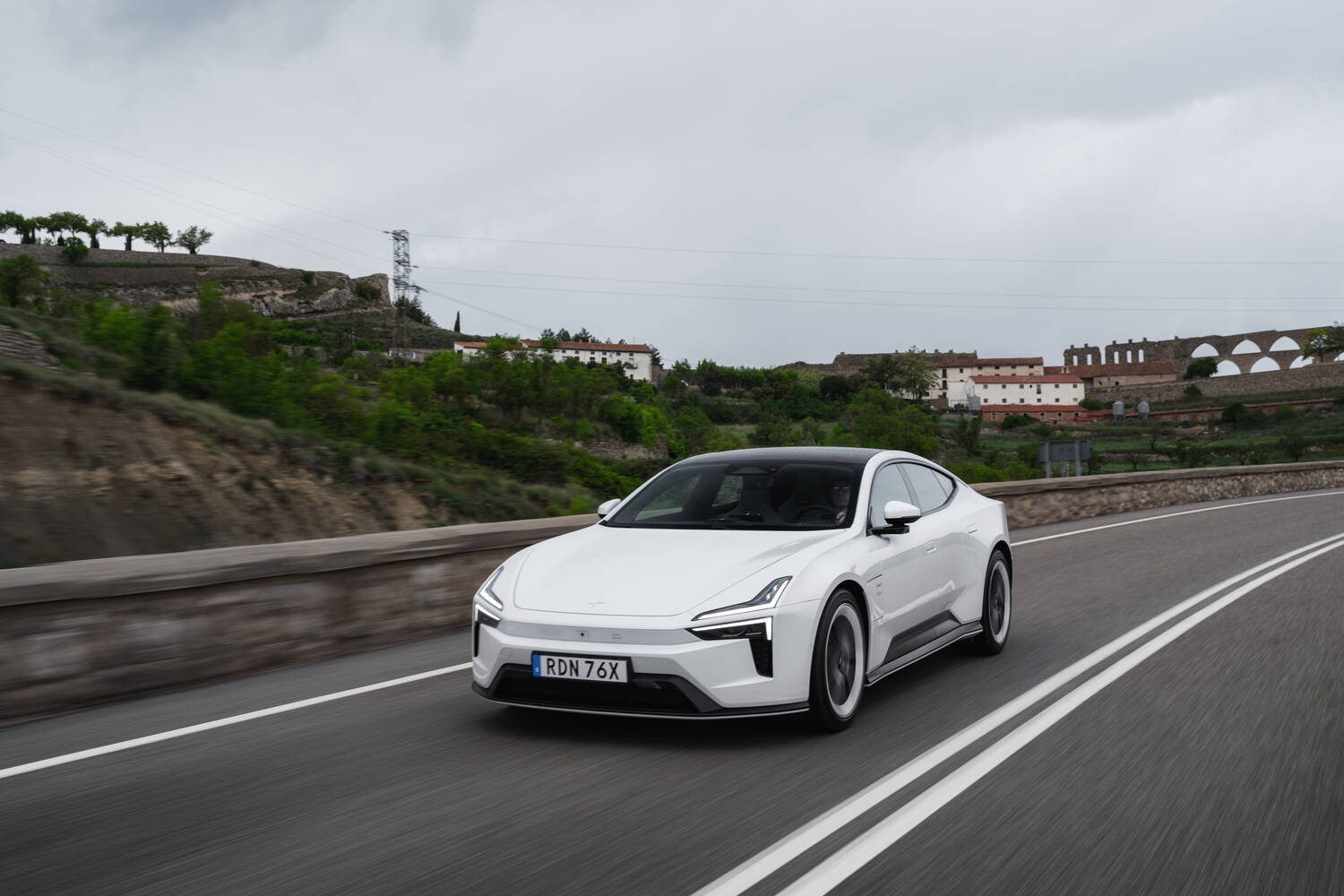
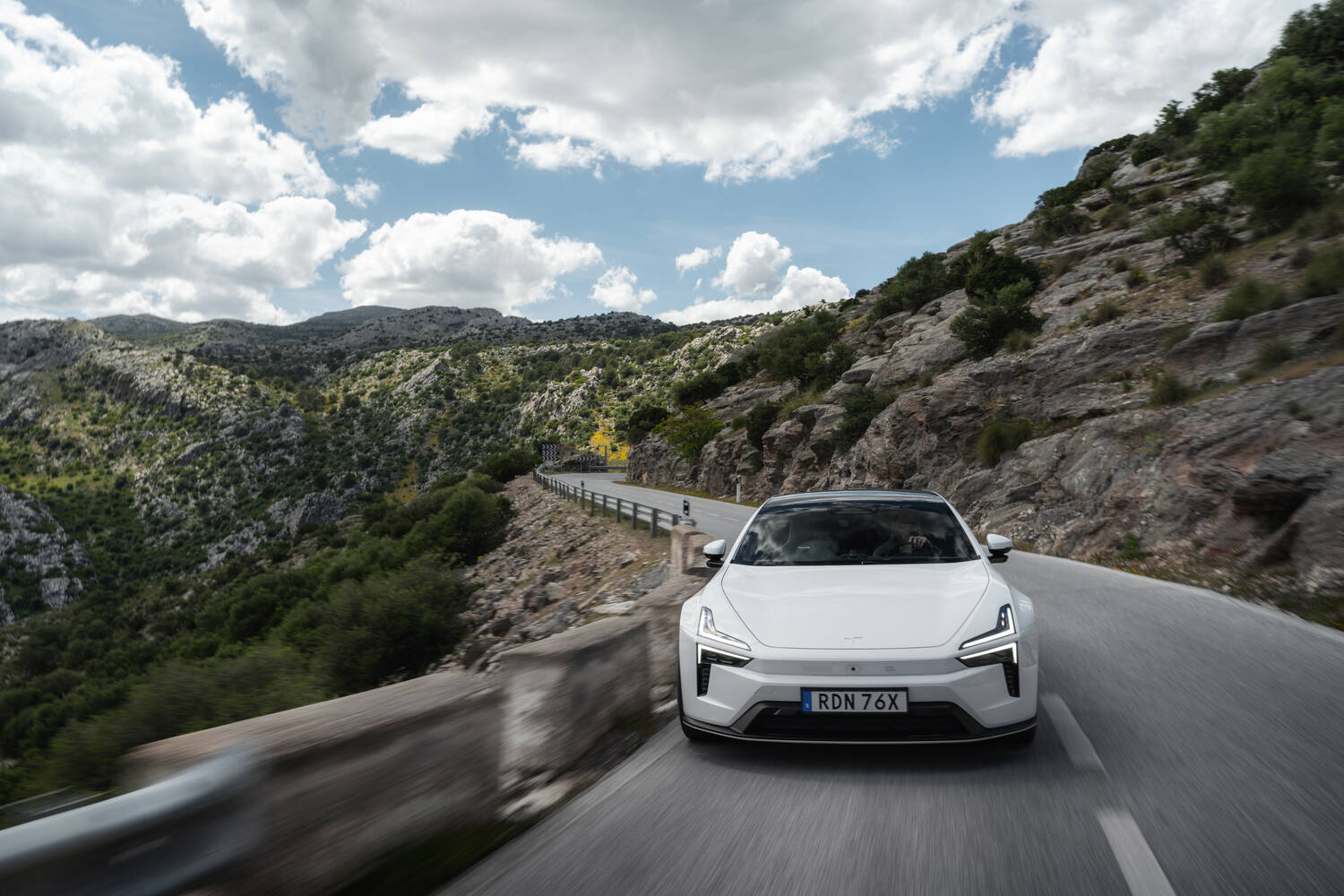
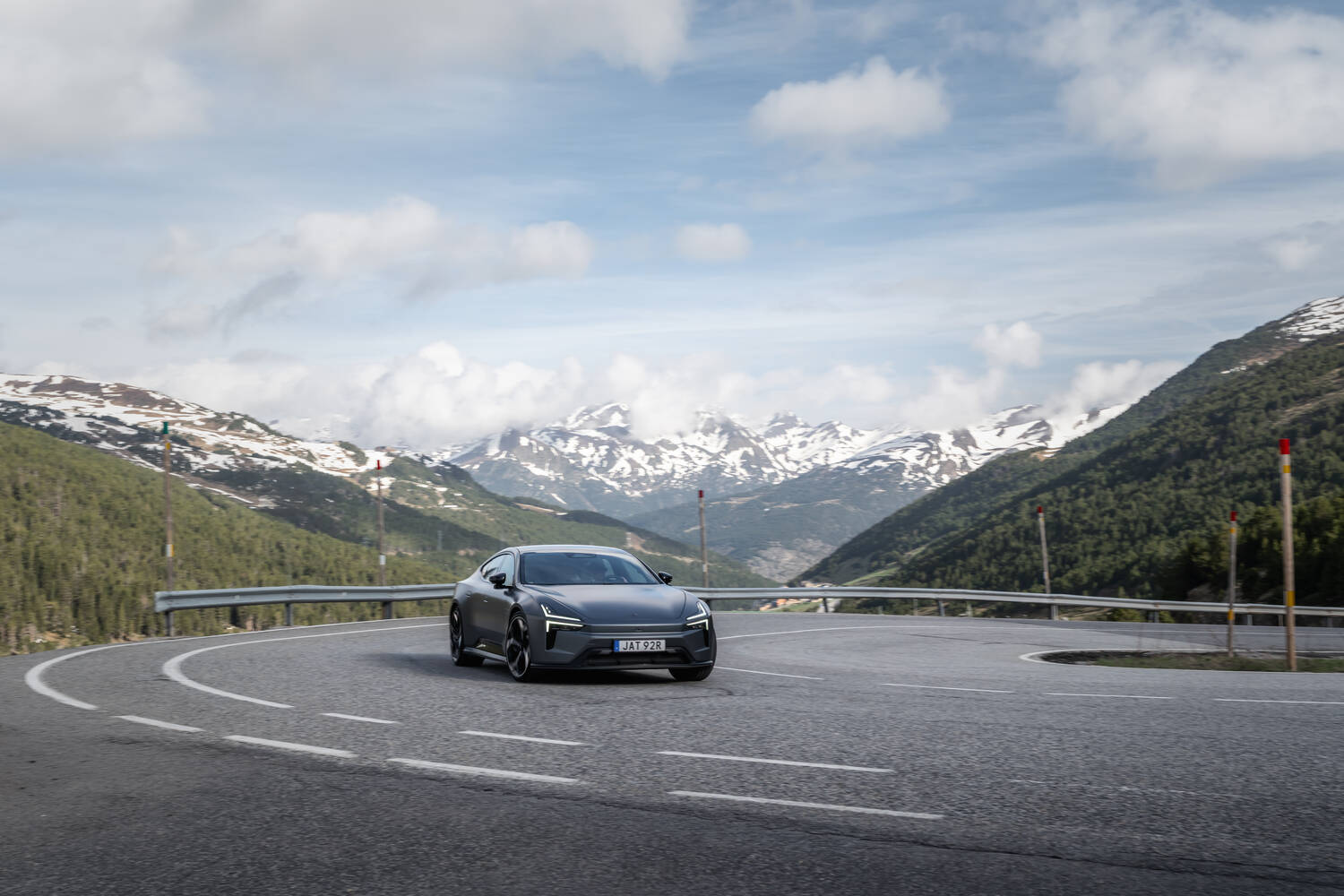
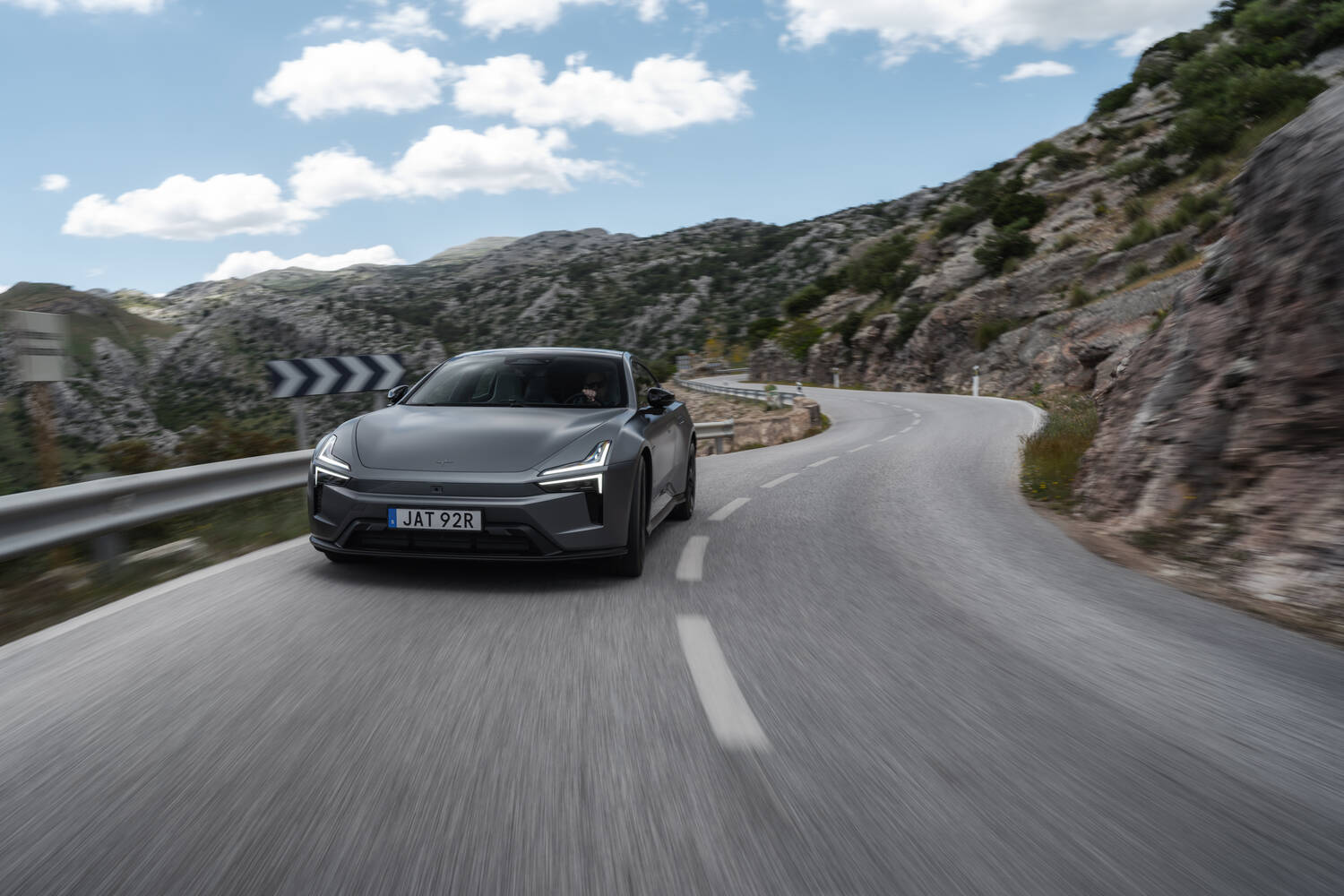
Given that vehicle was unveiled before most other Polestar production cars we know today, it should be of no surprise that the Polestar 5 manages to retain a familial look, certainly around the low nose with its split lighting style.
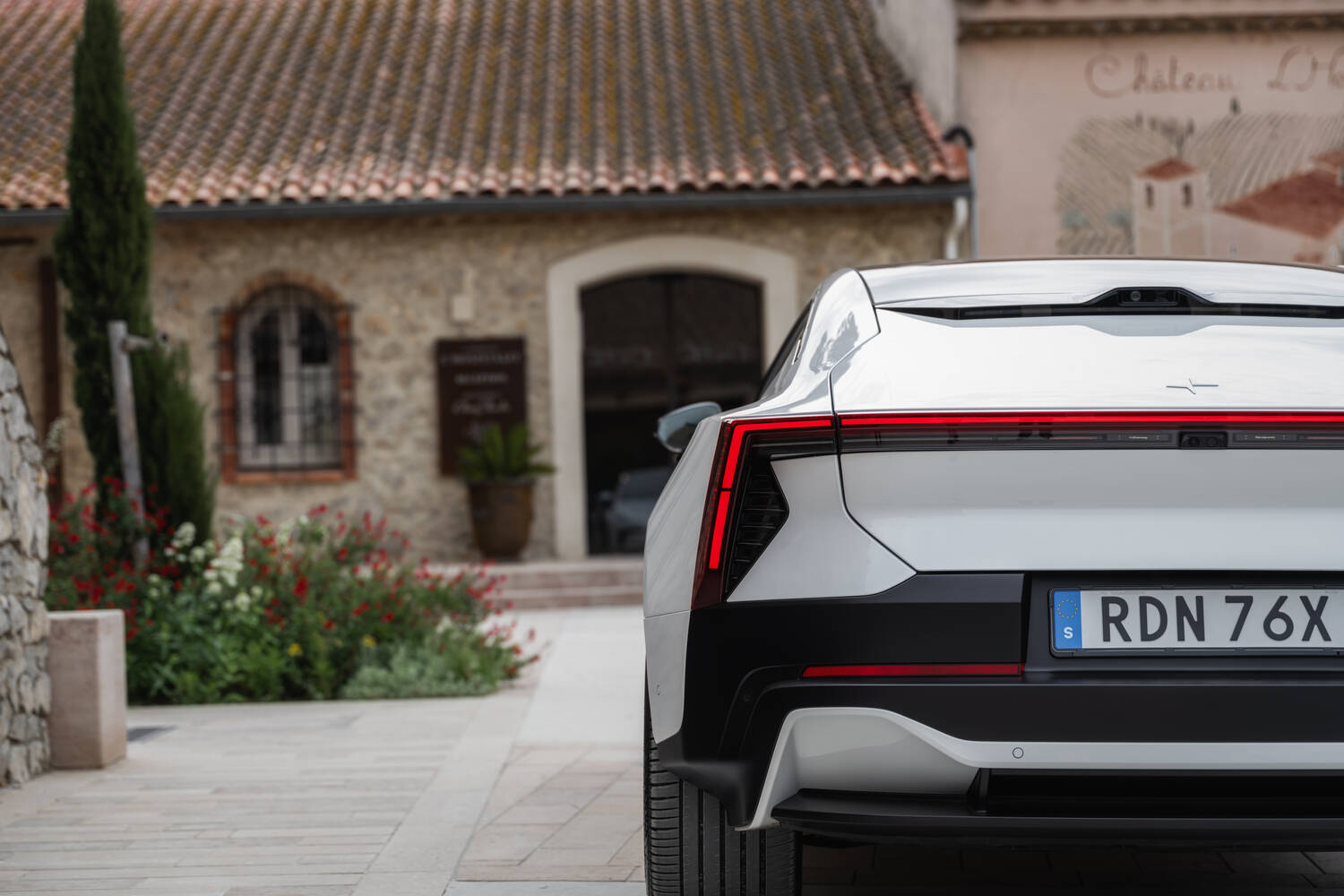
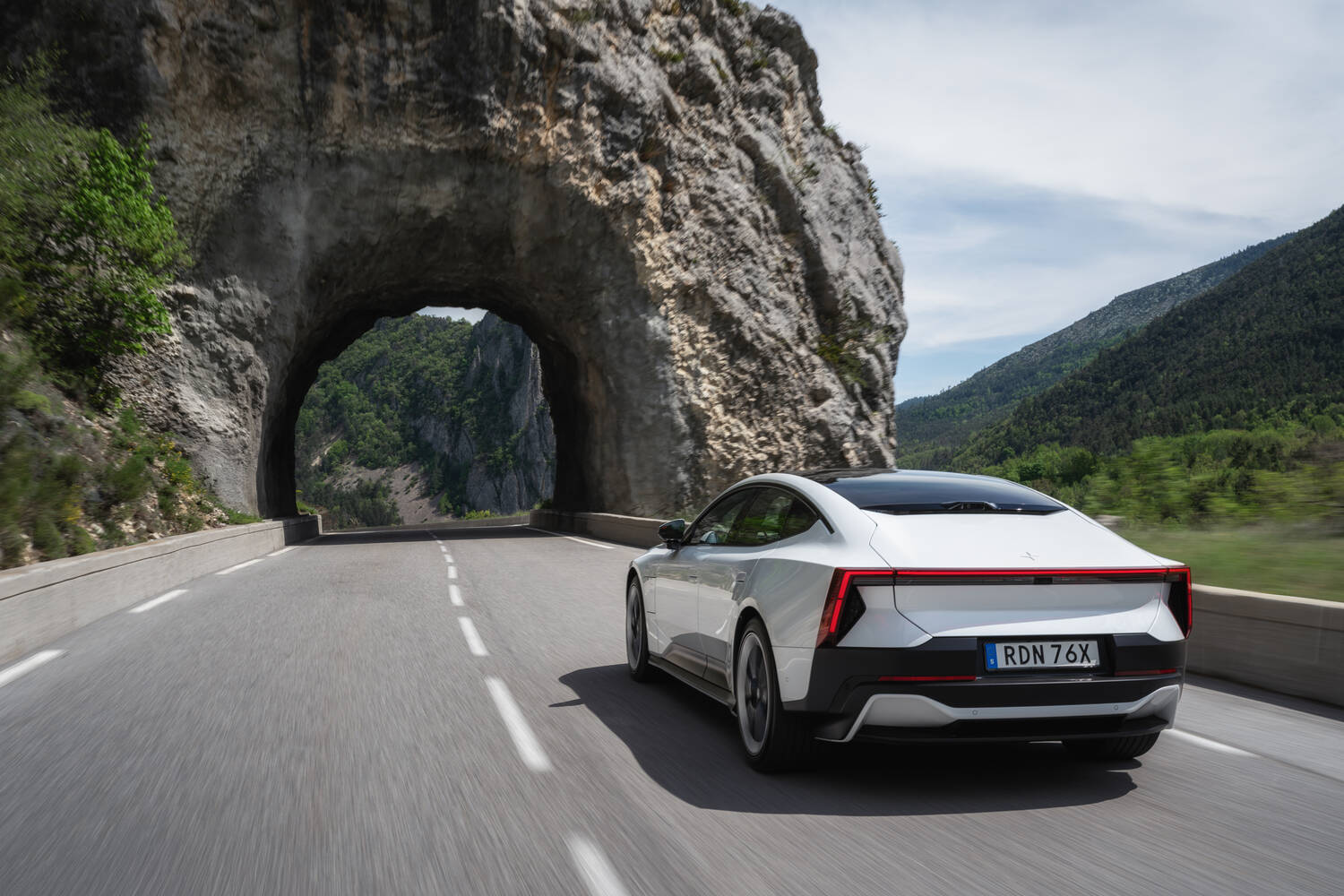
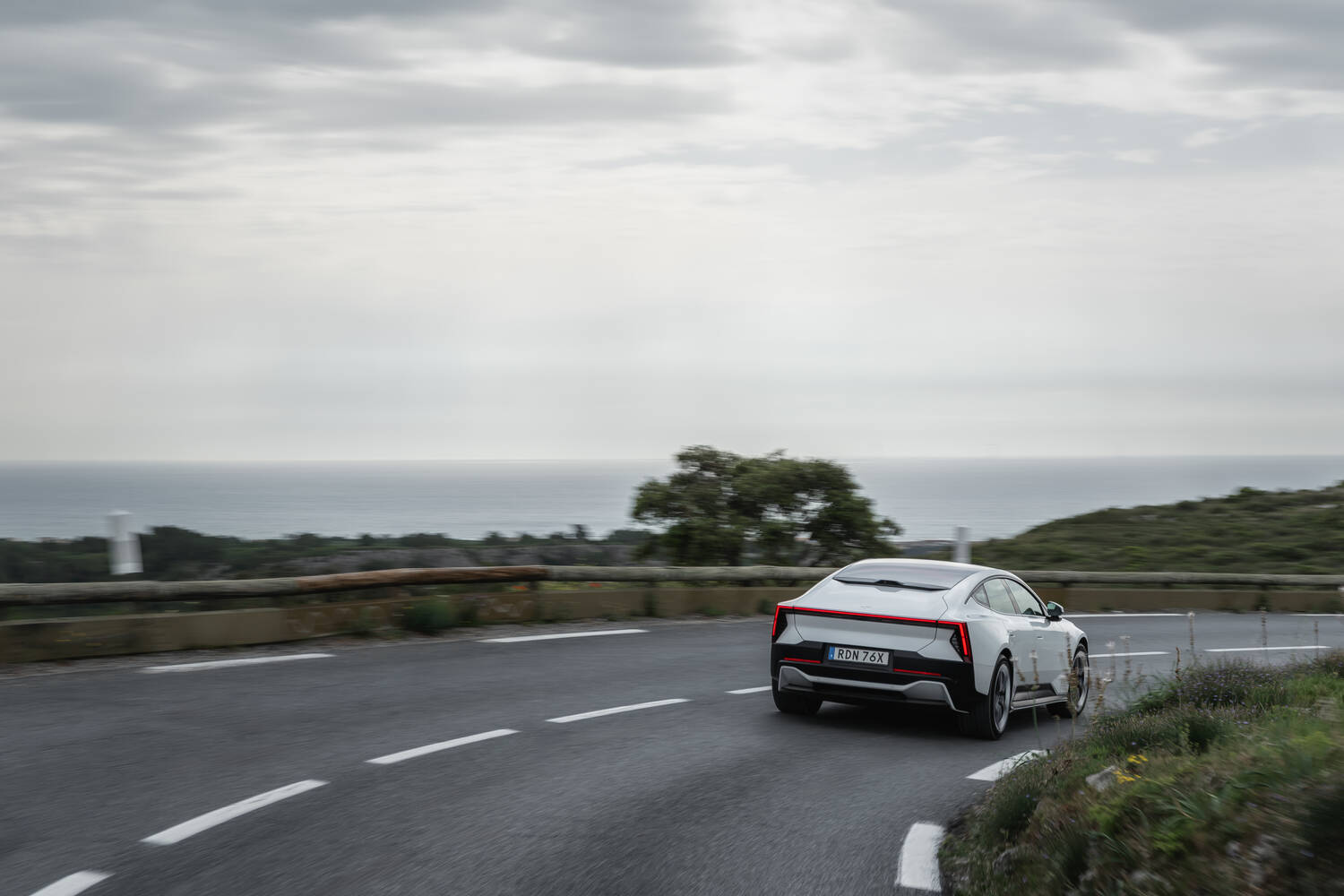
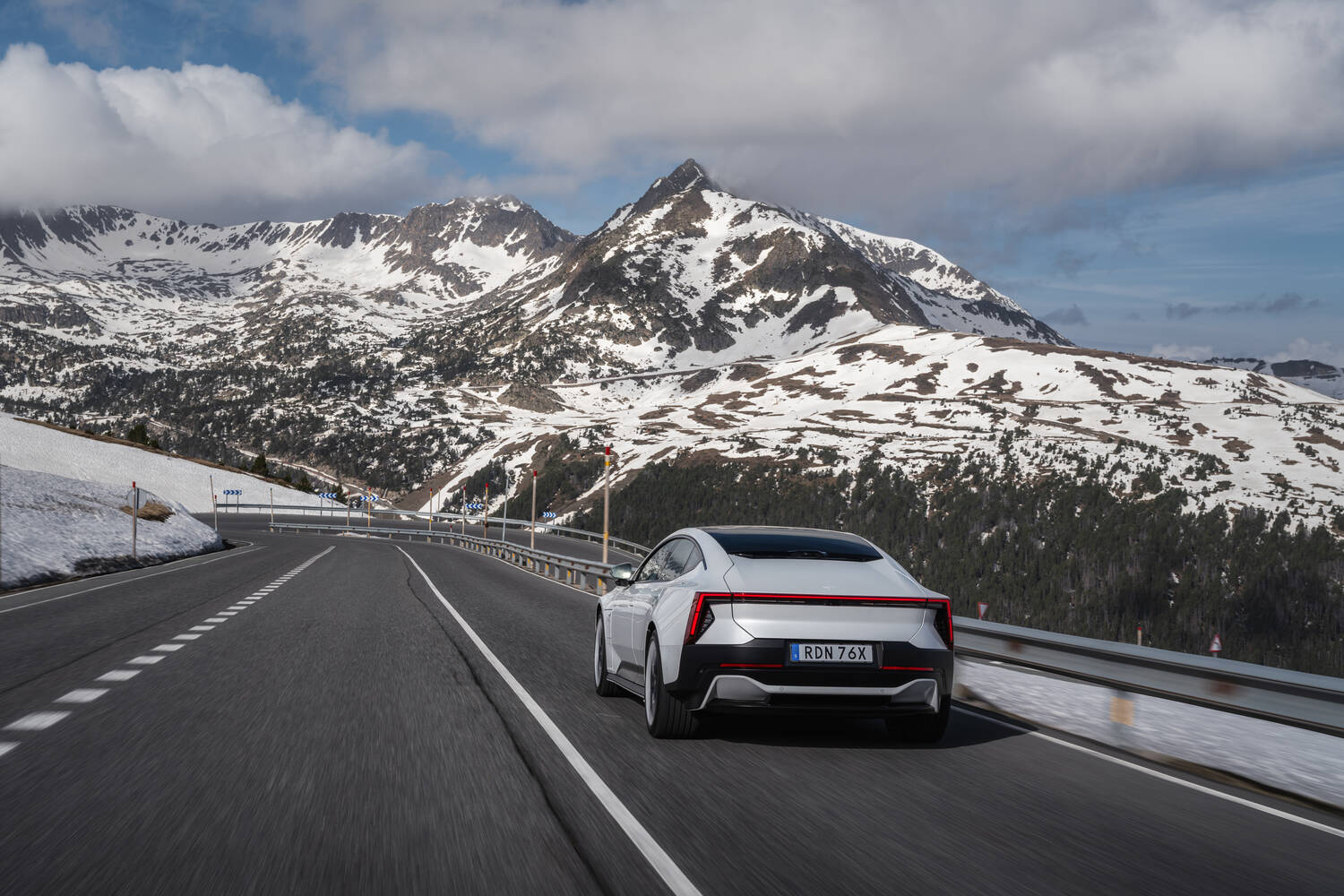
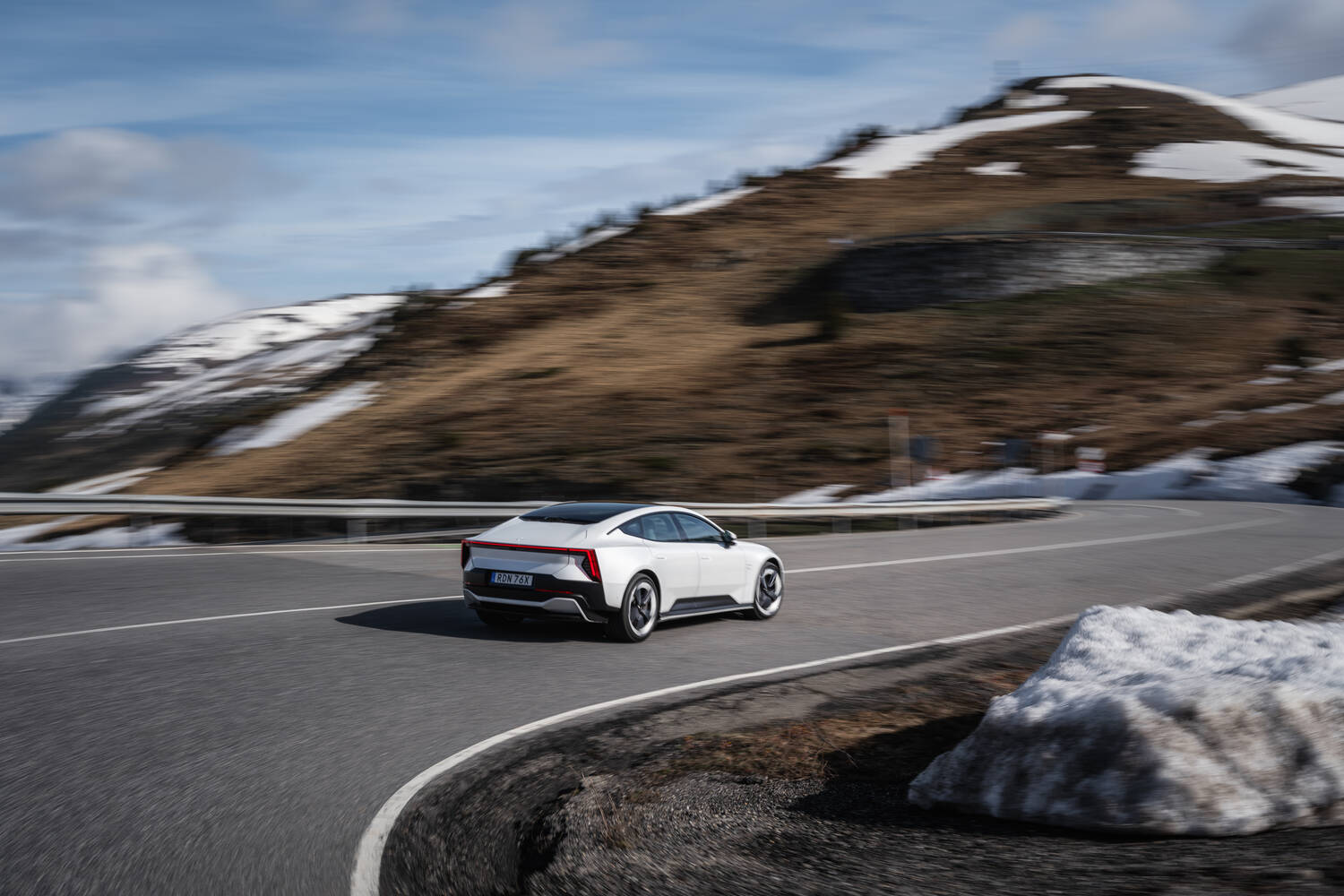
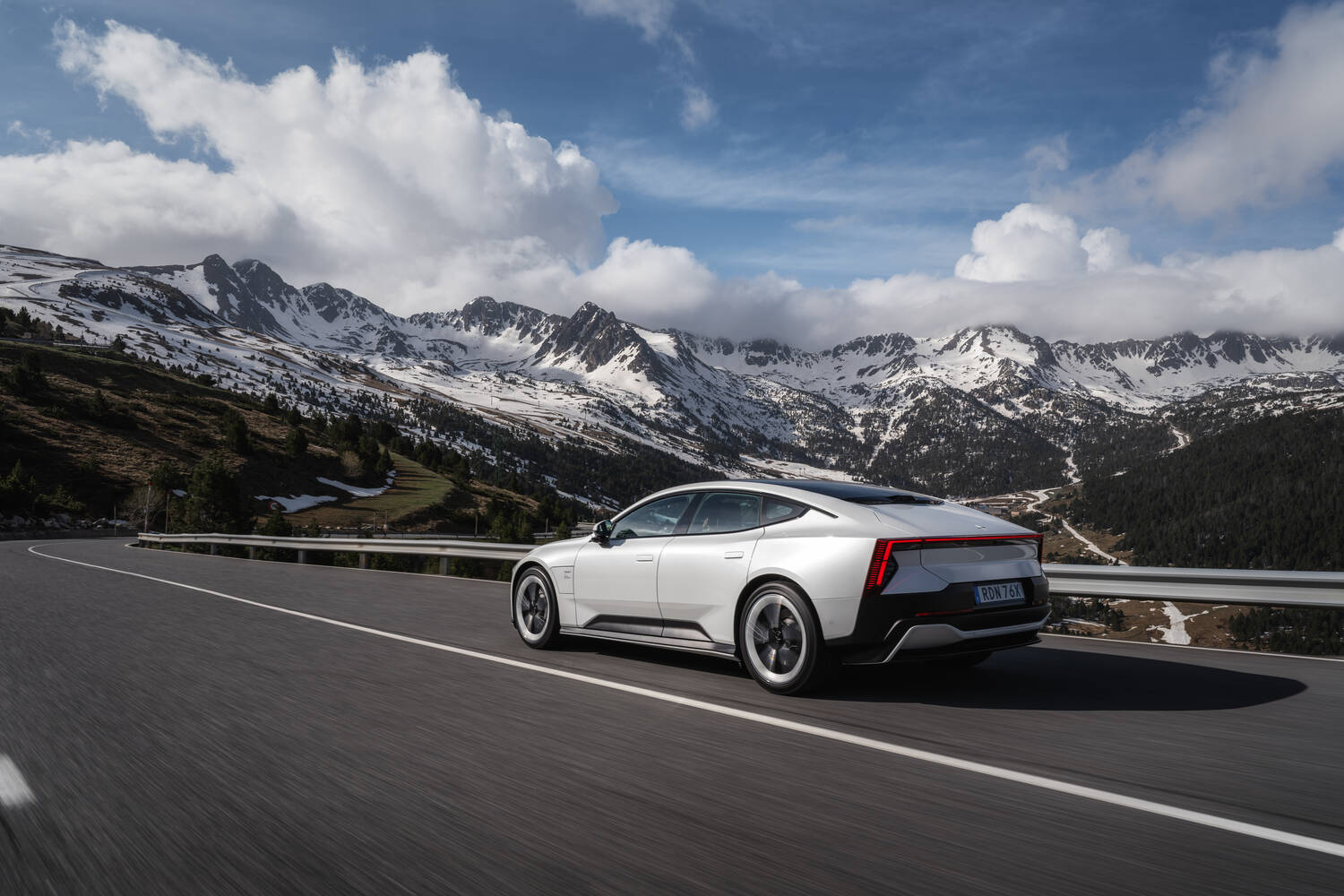
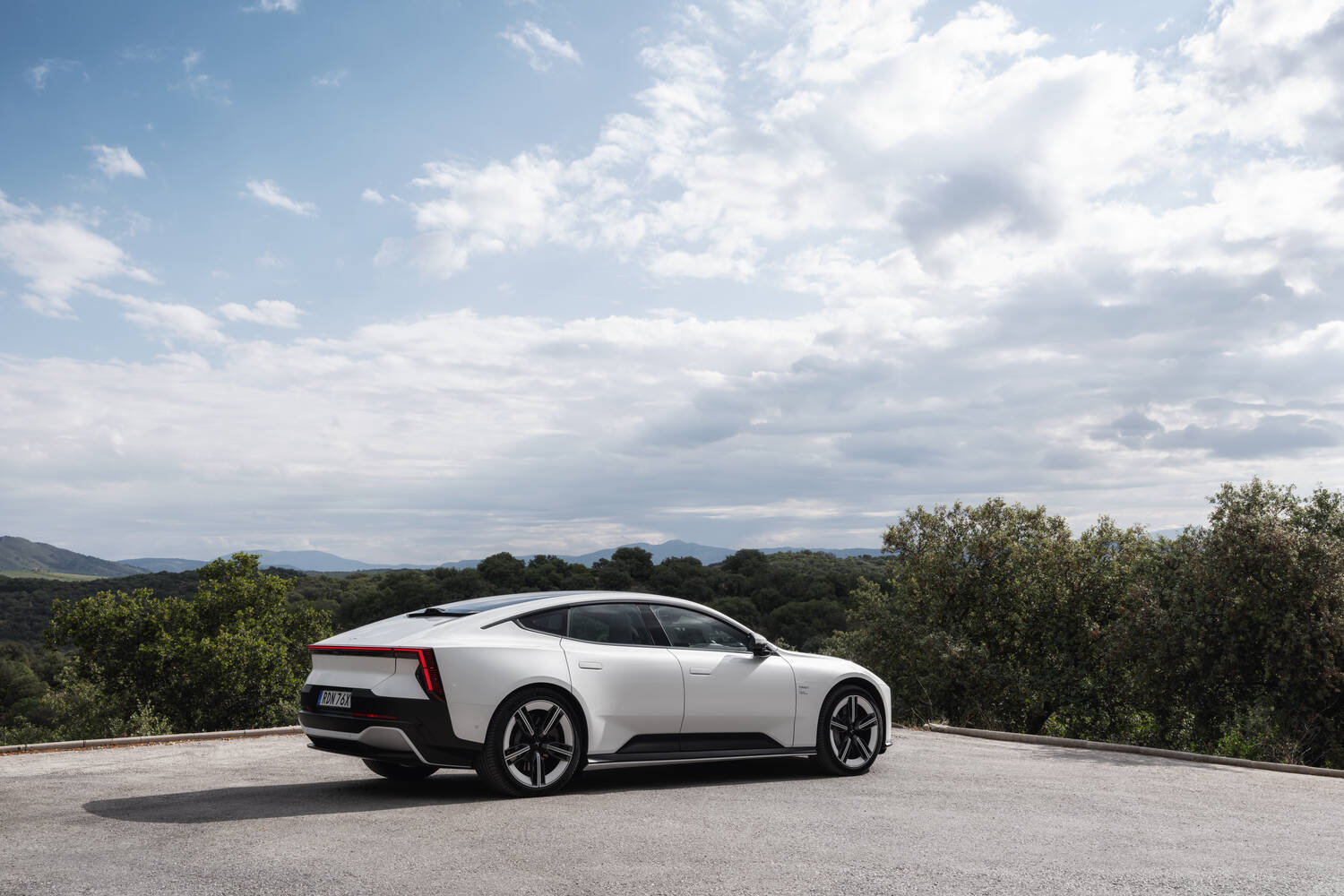
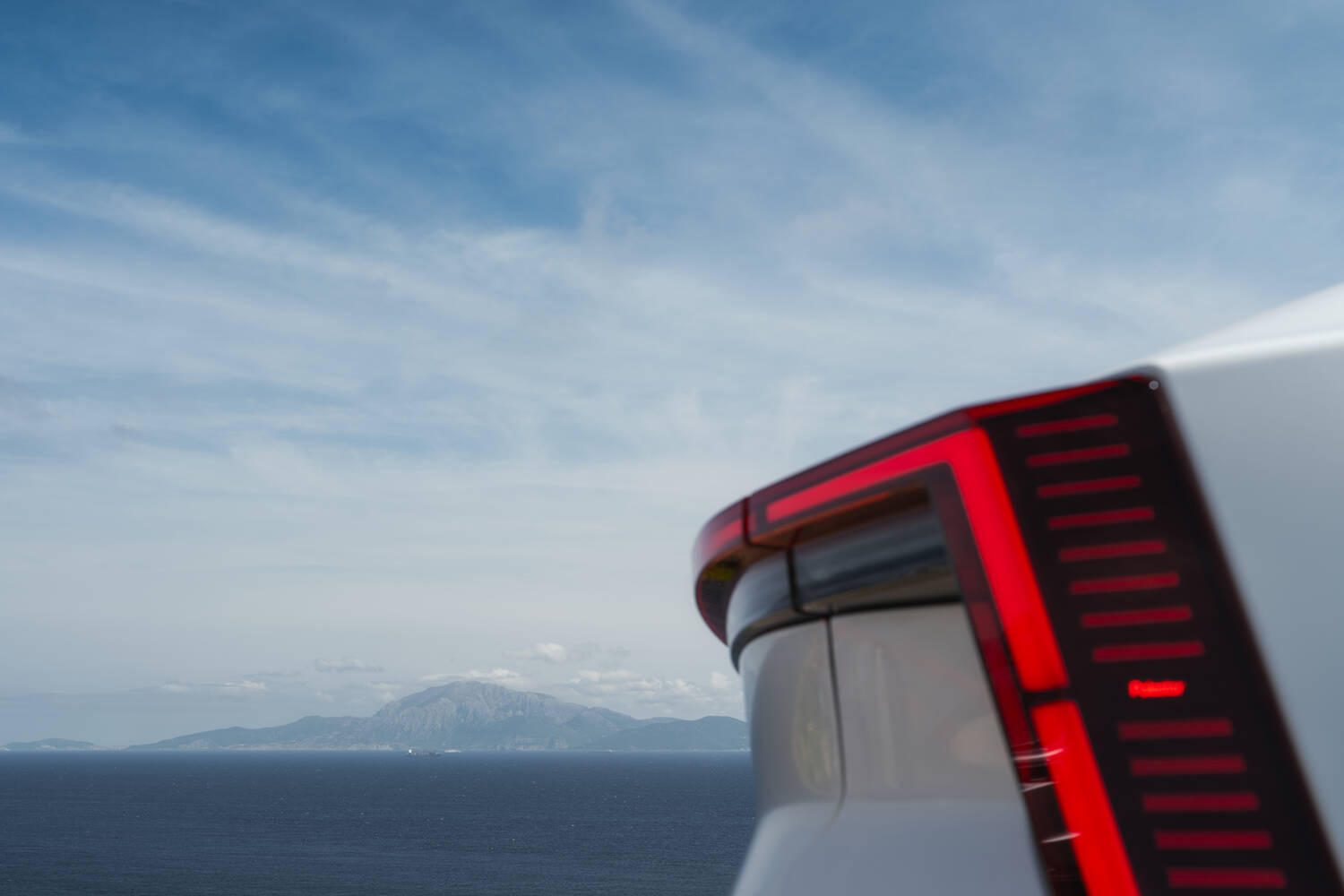
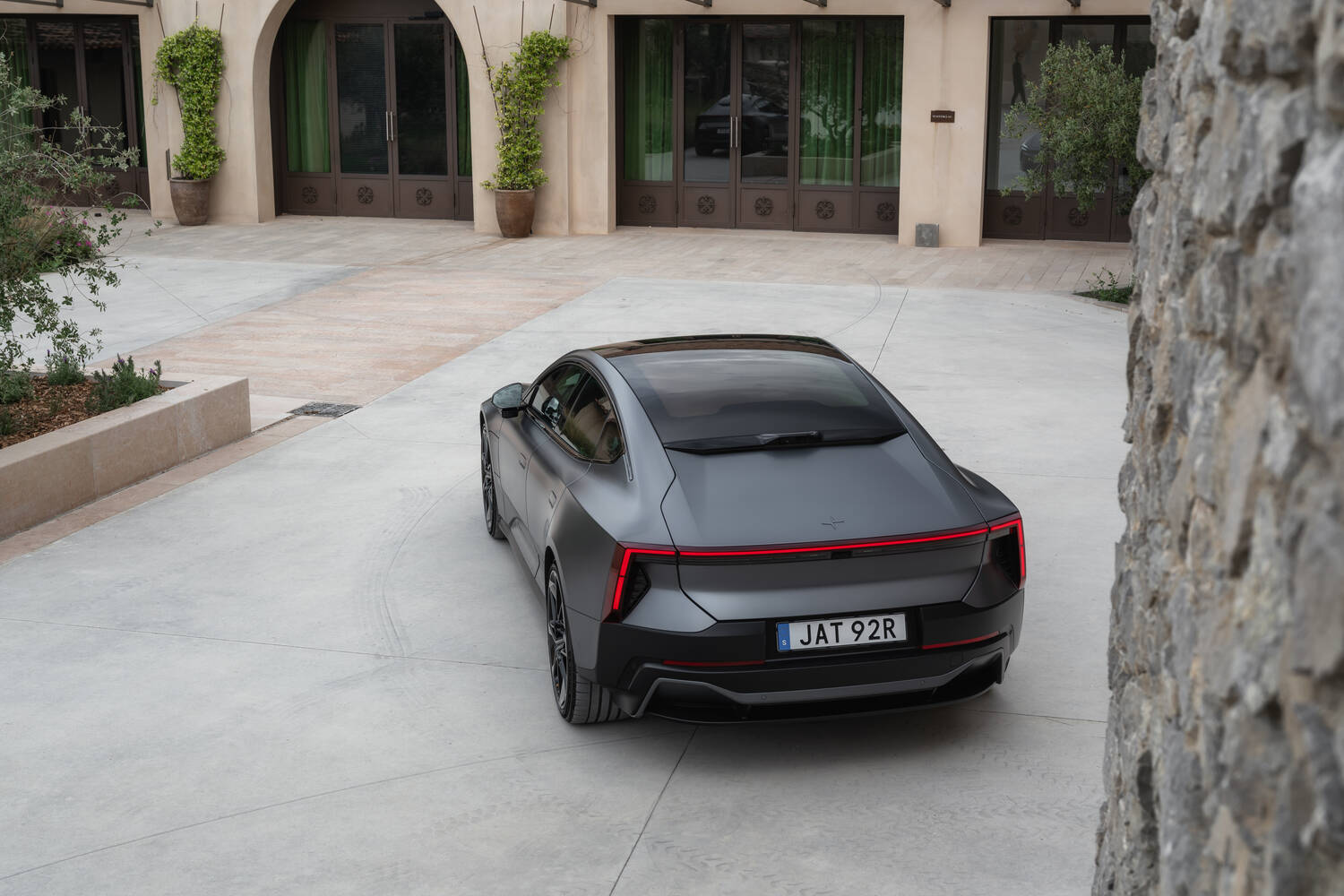
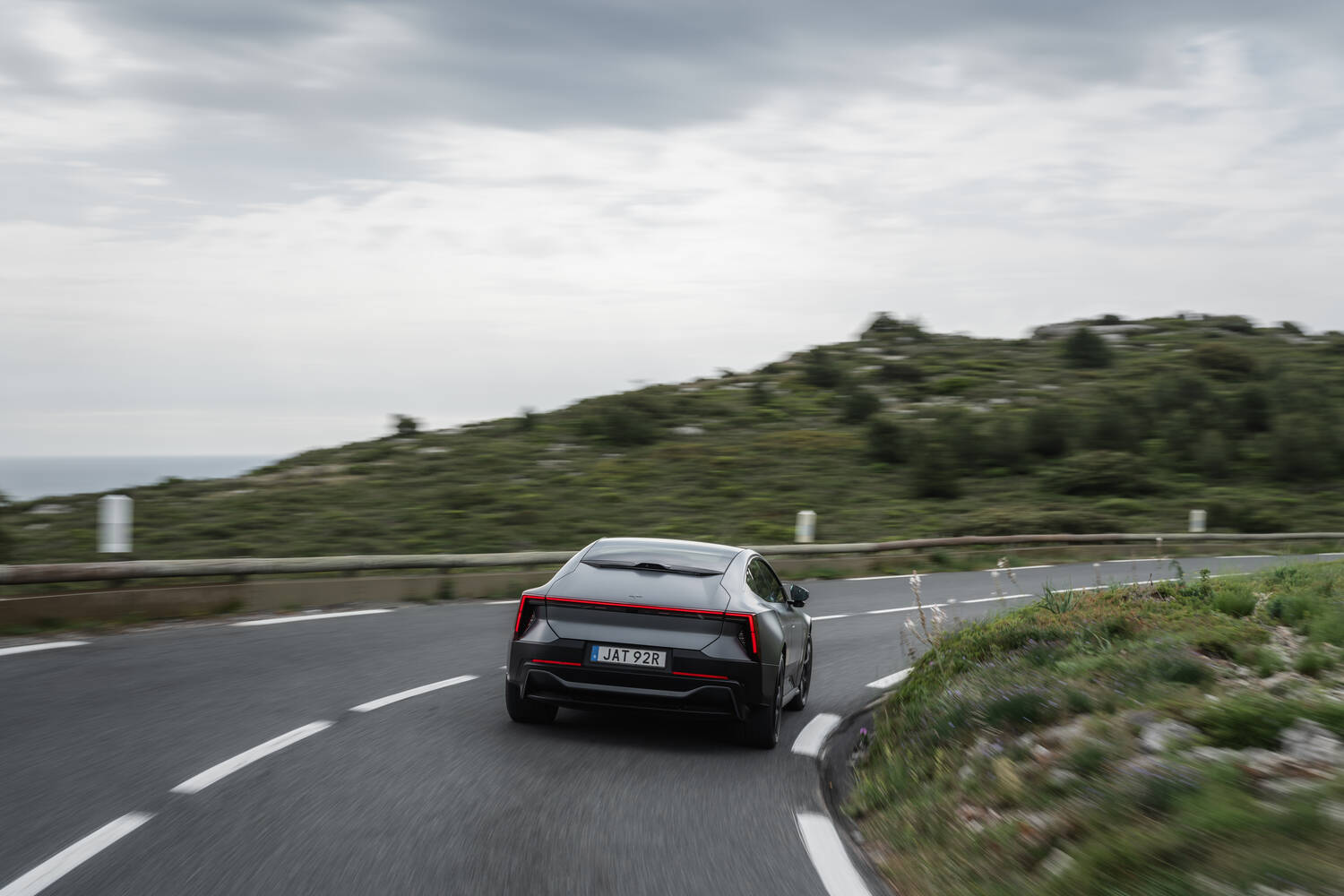
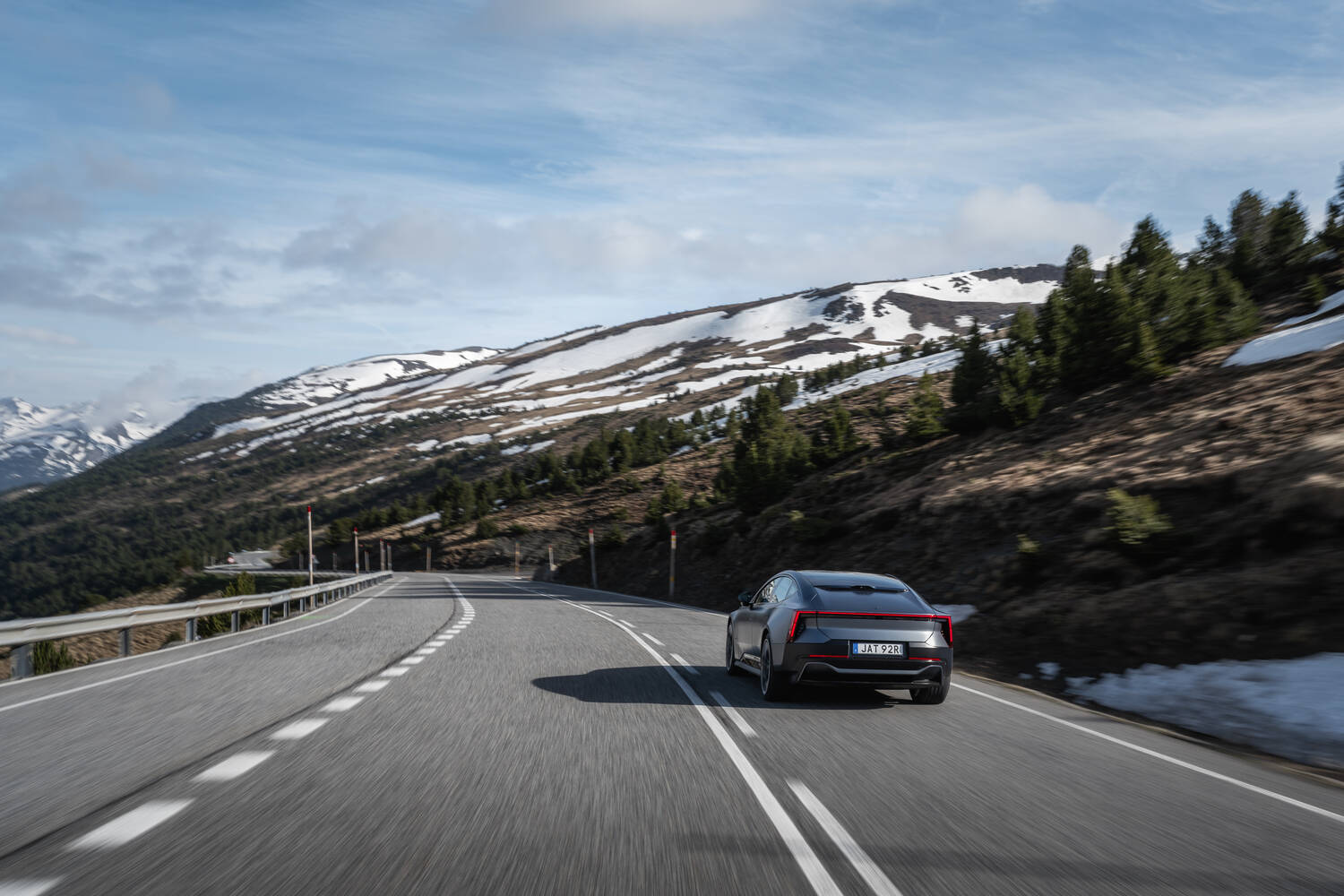
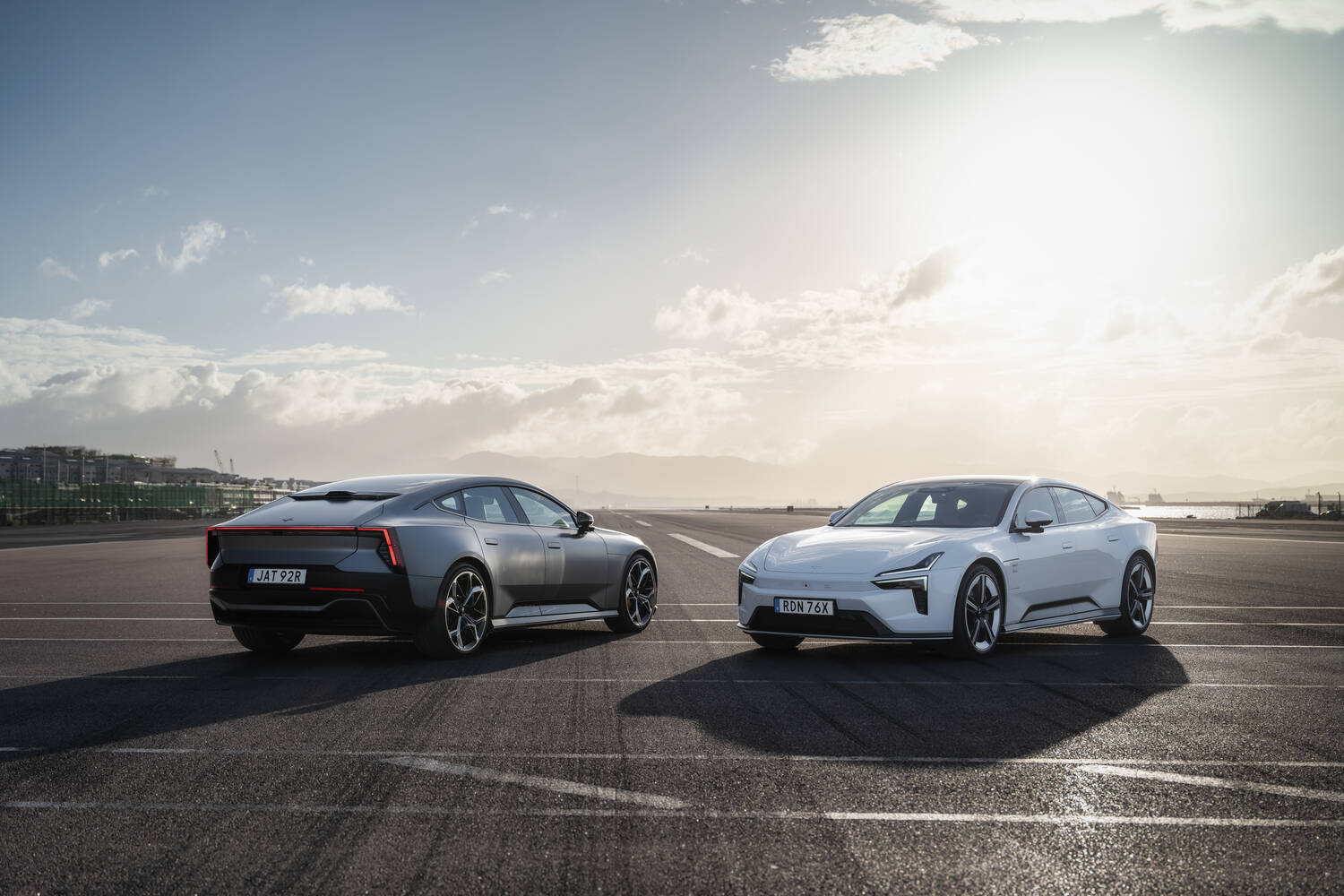
The rear view is our favourite, accentuating the wide and low nature of the car, helping it look like something far more expensive than it actually is.

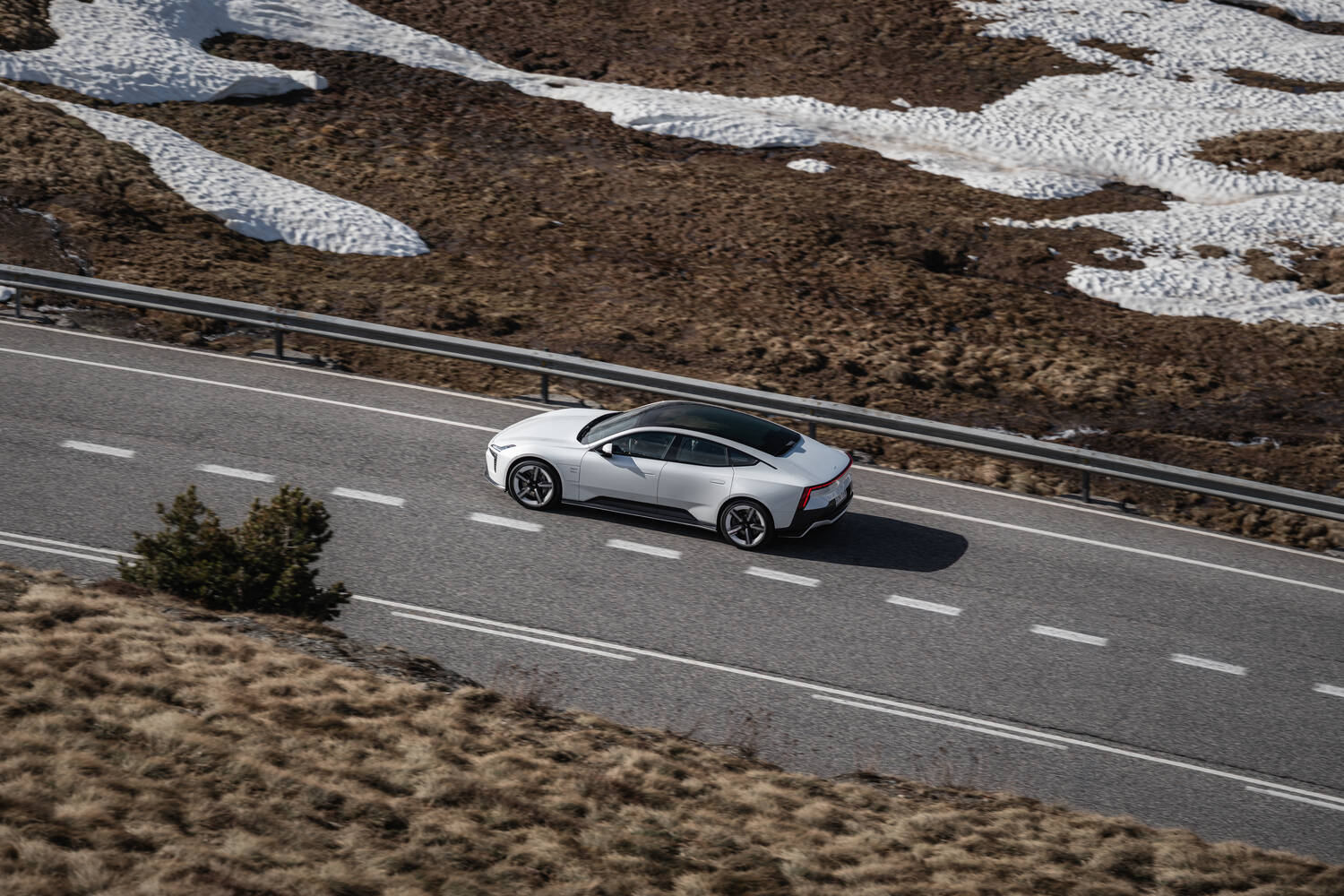
Depending on the paint colour, it may take you a moment to realise that there's no back window. Instead, the panoramic glass roof extends deep into the rear deck, punctuated by a prominent camera. It's unusual to look at, but not unattractive, and in our time with the car it only received positive feedback from the public.
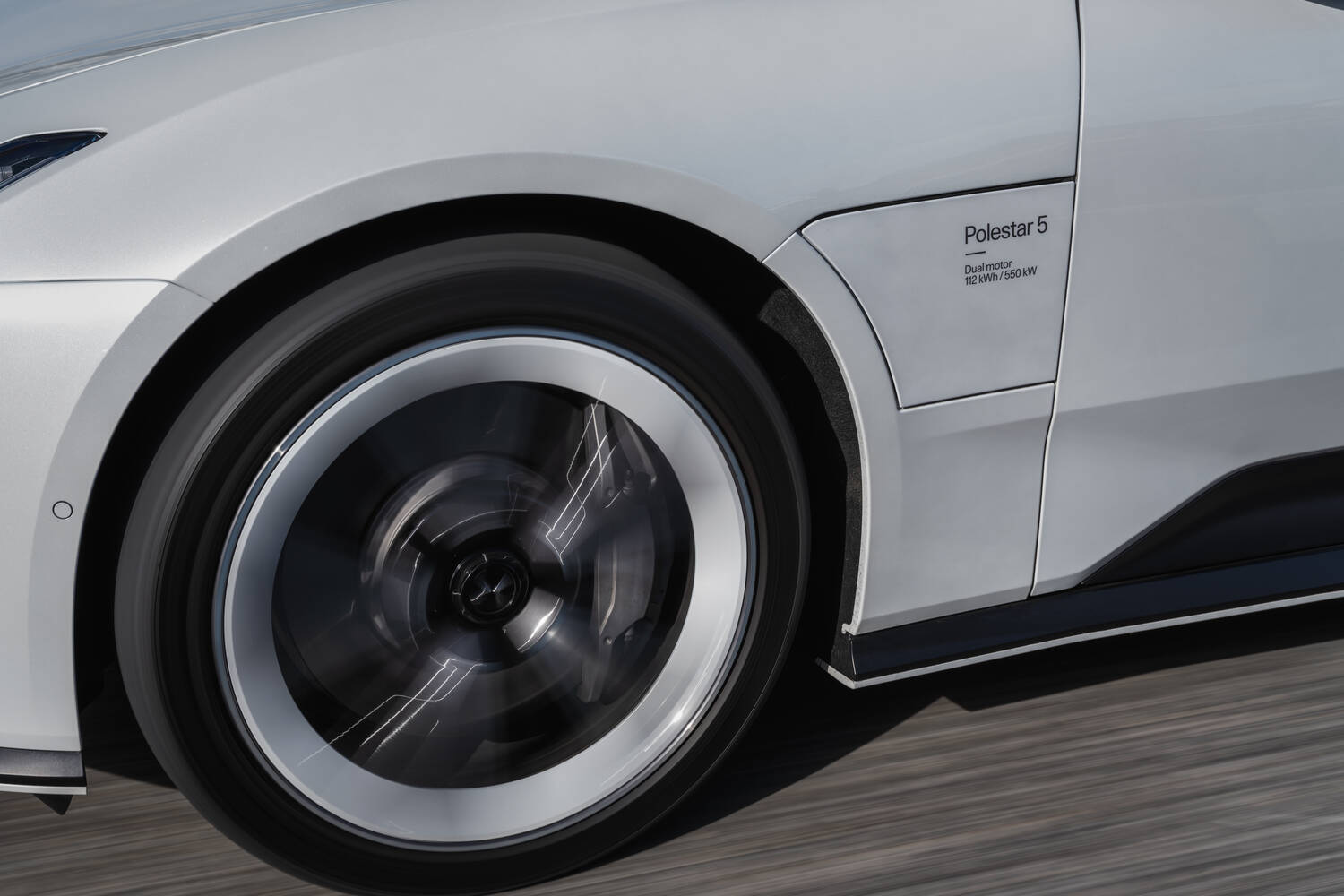
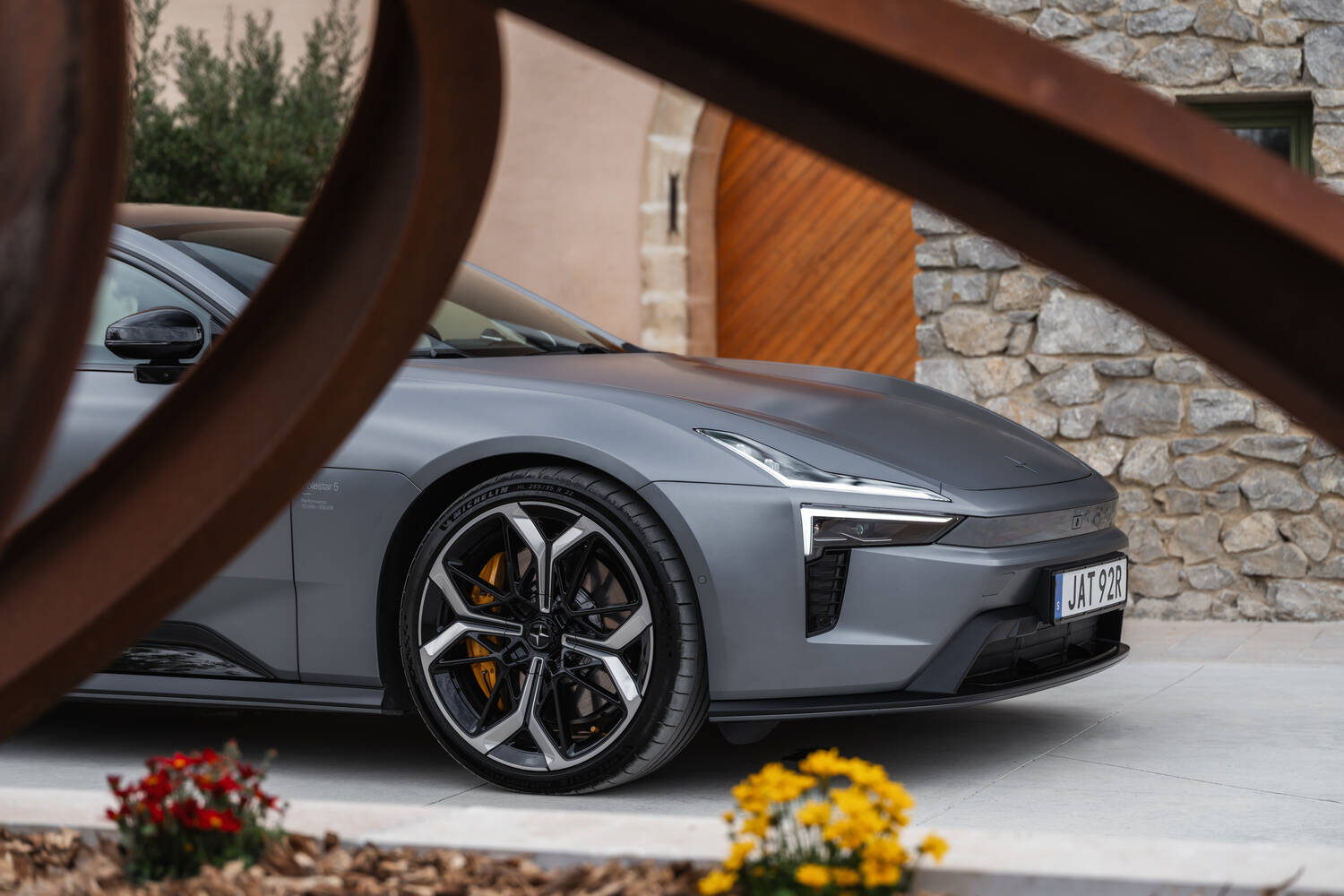
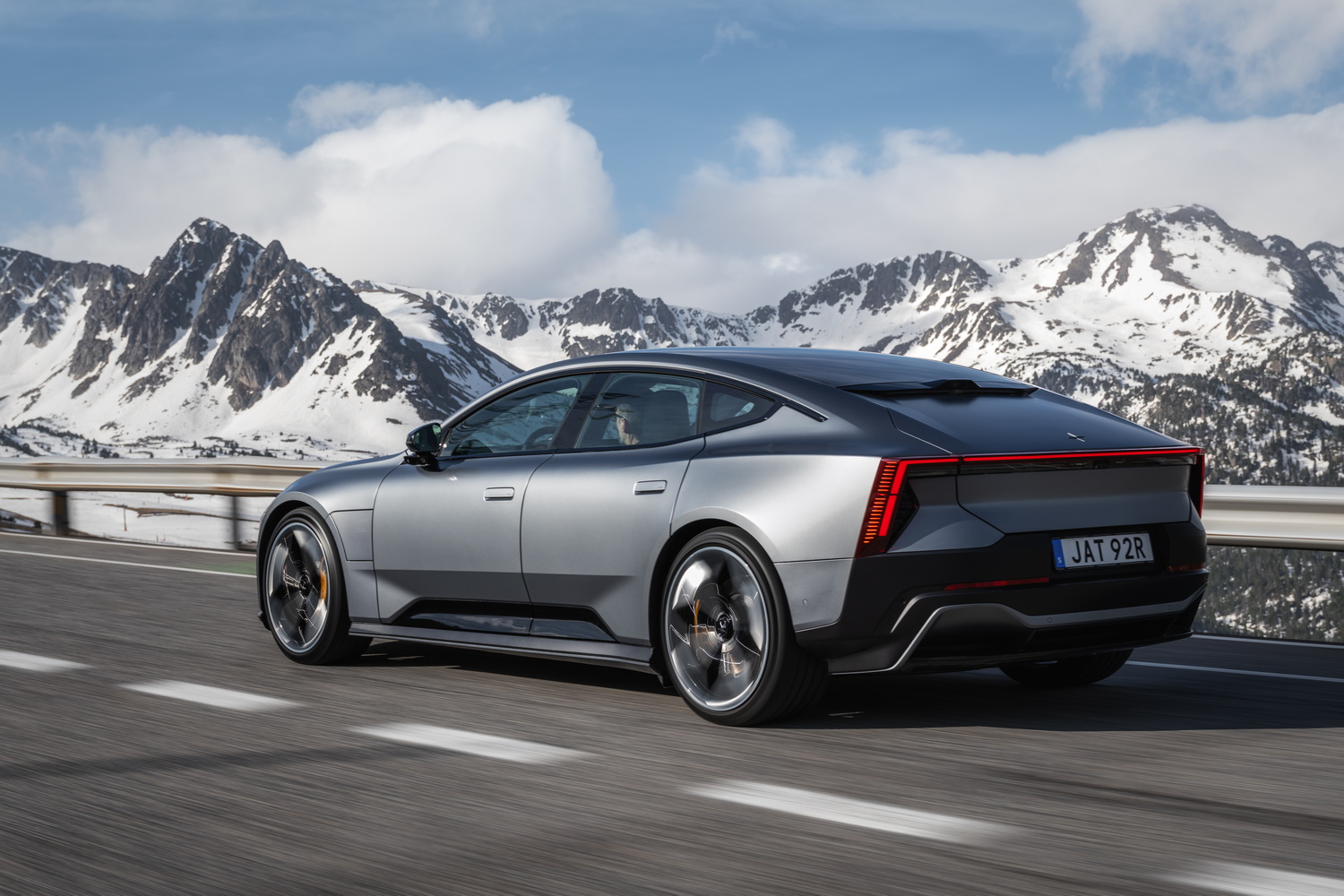
The Dual Motor model gets a set of 20-inch 'Aero' wheels as standard so stick with those for maximum comfort and range, but the car looks even more impressive on the larger, optional 21-inch rims.
Those fitted to the test car at the launch (a 21-inch forged alloy design) can be uniquely had with the 'Snow' paint colour and we reckon they look superb.

The Polestar 5 Performance is fitted with 21-inch wheels of a unique design by default. They're forged and laser-etched, as are the upgraded 22-inch option. The open design of these wheels really highlights the 'Swedish Gold' Brembo brake callipers behind.
Dimensions of the 2026 Polestar 5
Length: 5,087mm
Width: 2,015mm (mirrors folded)
Height: 1,425mm (Performance model is 1,419mm)
Wheelbase: 3,054mm
Paint colours for the 2026 Polestar 5

Polestar's colour palette is quite subdued, starting with a kind of milky-grey called Magnesium, the only free option. Storm (dark grey) and Space (black) are €1,500 apiece, while Snow (white) is €2,000.
Both Magnesium and Storm can be had with a gorgeous matte-effect as well, priced at €5,000.
Interior, practicality, tech & comfort of the 2026 Polestar 5
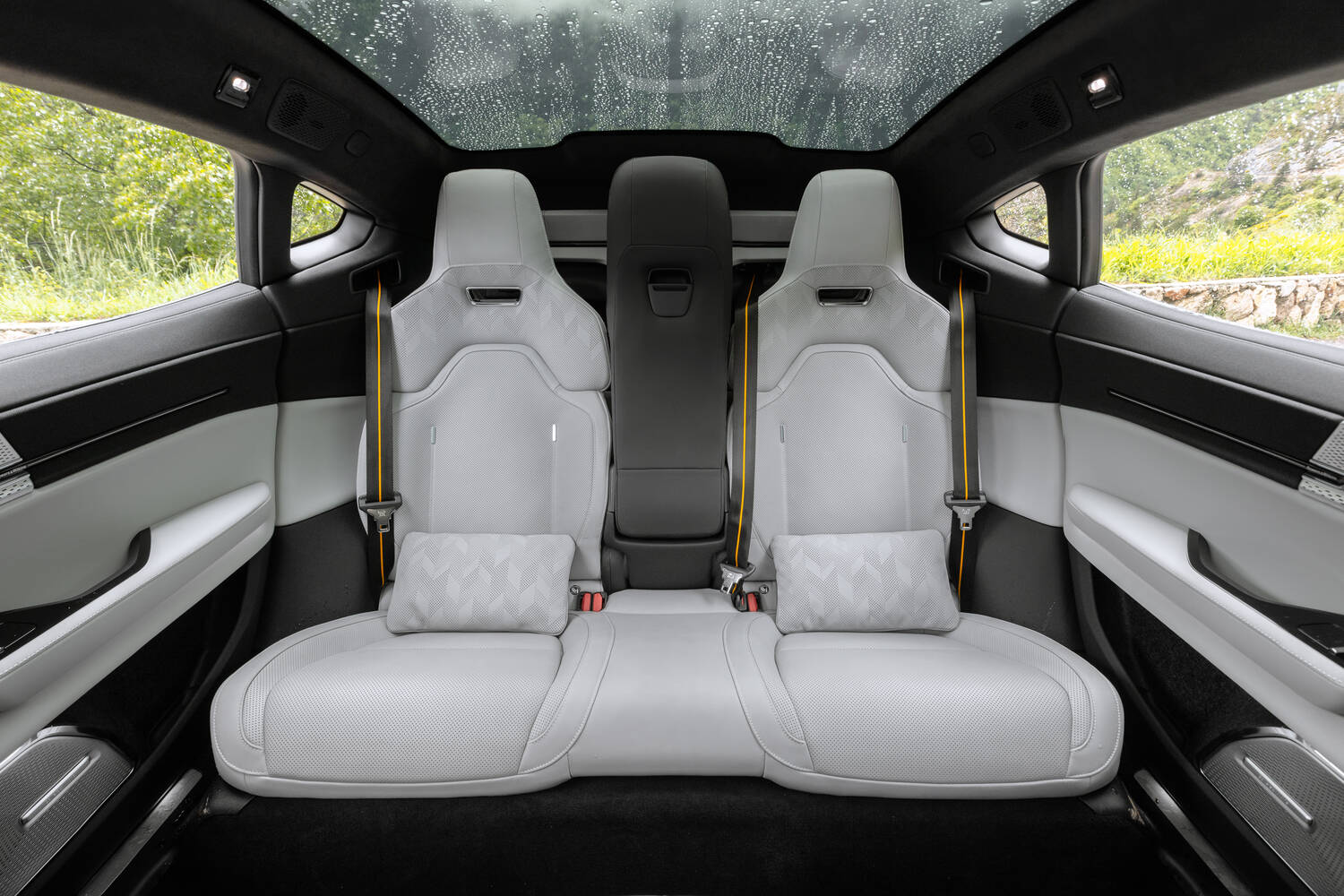
• Electric bucket seats in back
• Five seatbelts, but...
• Google built-in

The low-slung cabin of the Polestar 5 has been made possible by the creation of a new bonded-aluminium architecture, designed from the outset to accommodate a large battery pack yet also allow for low seating.
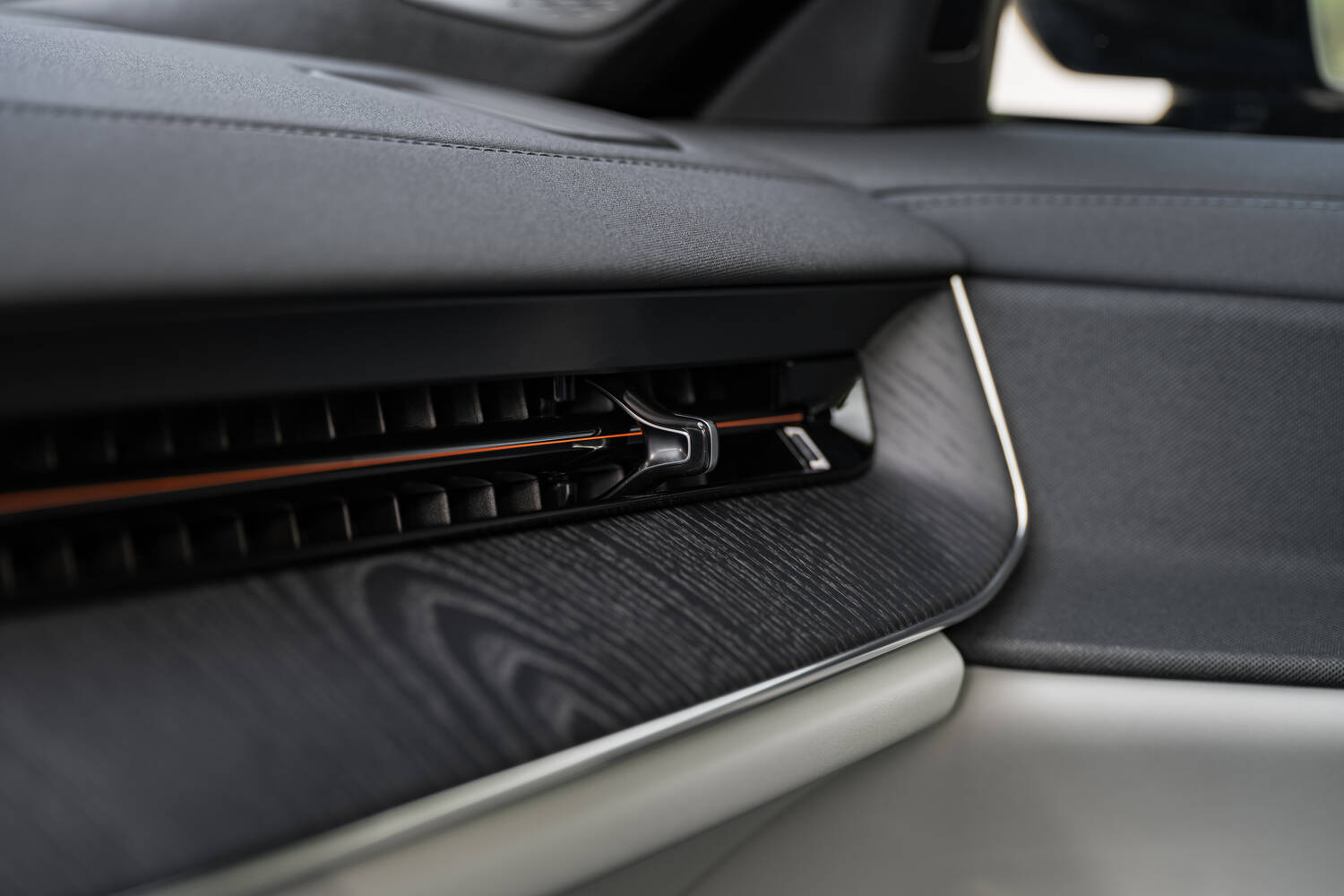
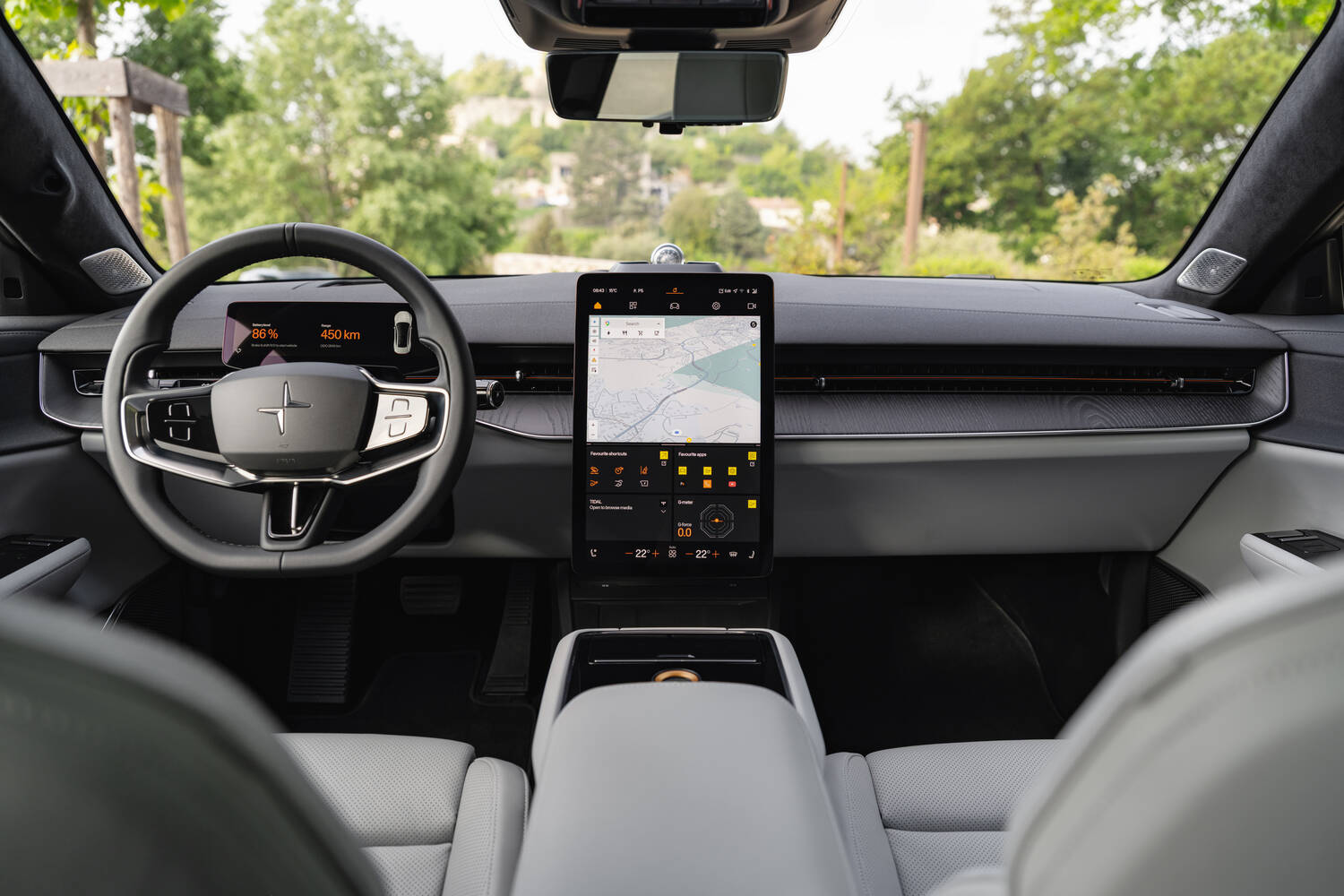
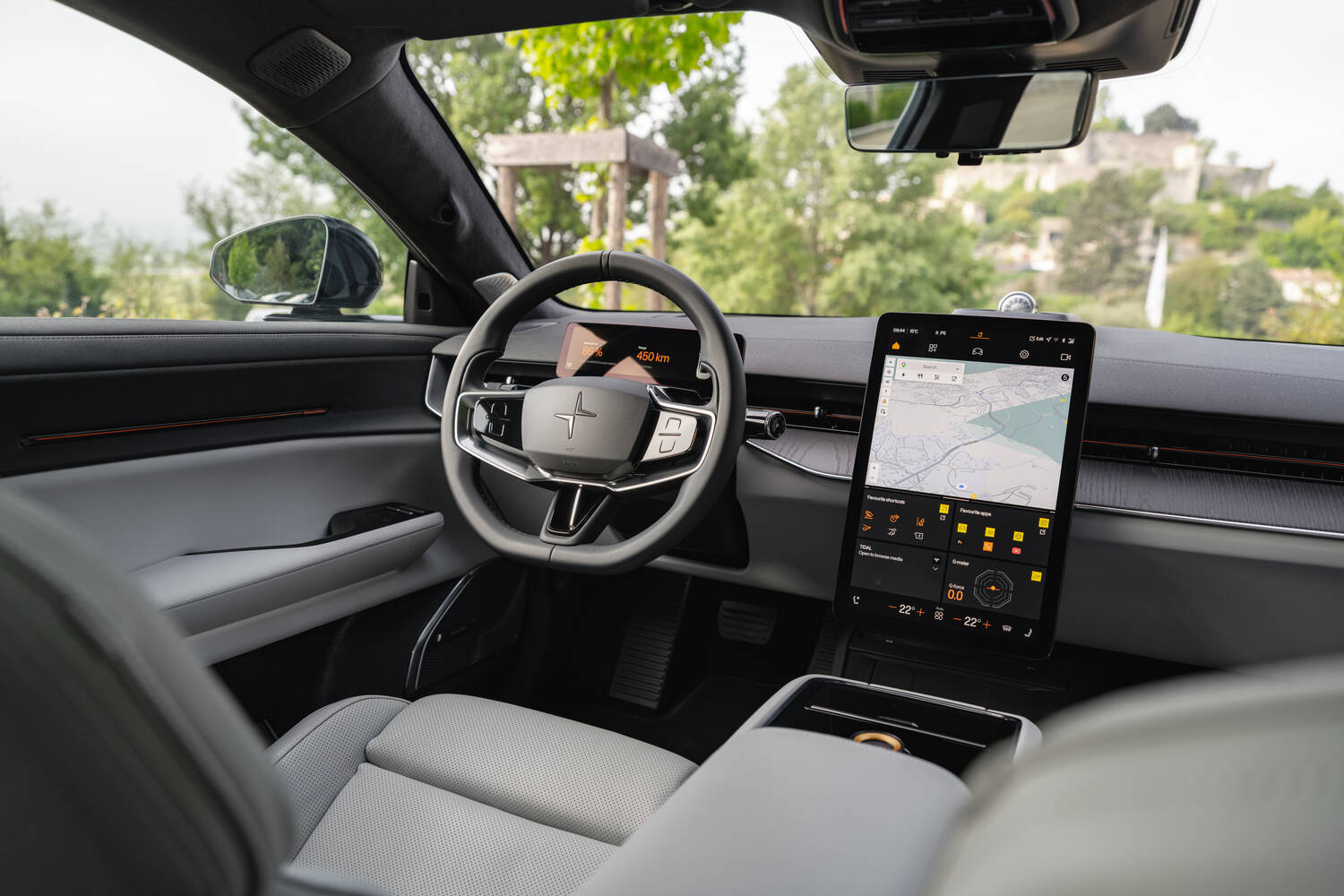
Style-wise, the Polestar 5's cabin follows the same playbook as any other modern car from the brand, with a minimalist approach to switchgear, relying heavily on the central touchscreen.

Aside from that, the interior feels of exceedingly high quality, with tactile materials and exemplary fit and finish.
Getting comfortable in the driver's seat
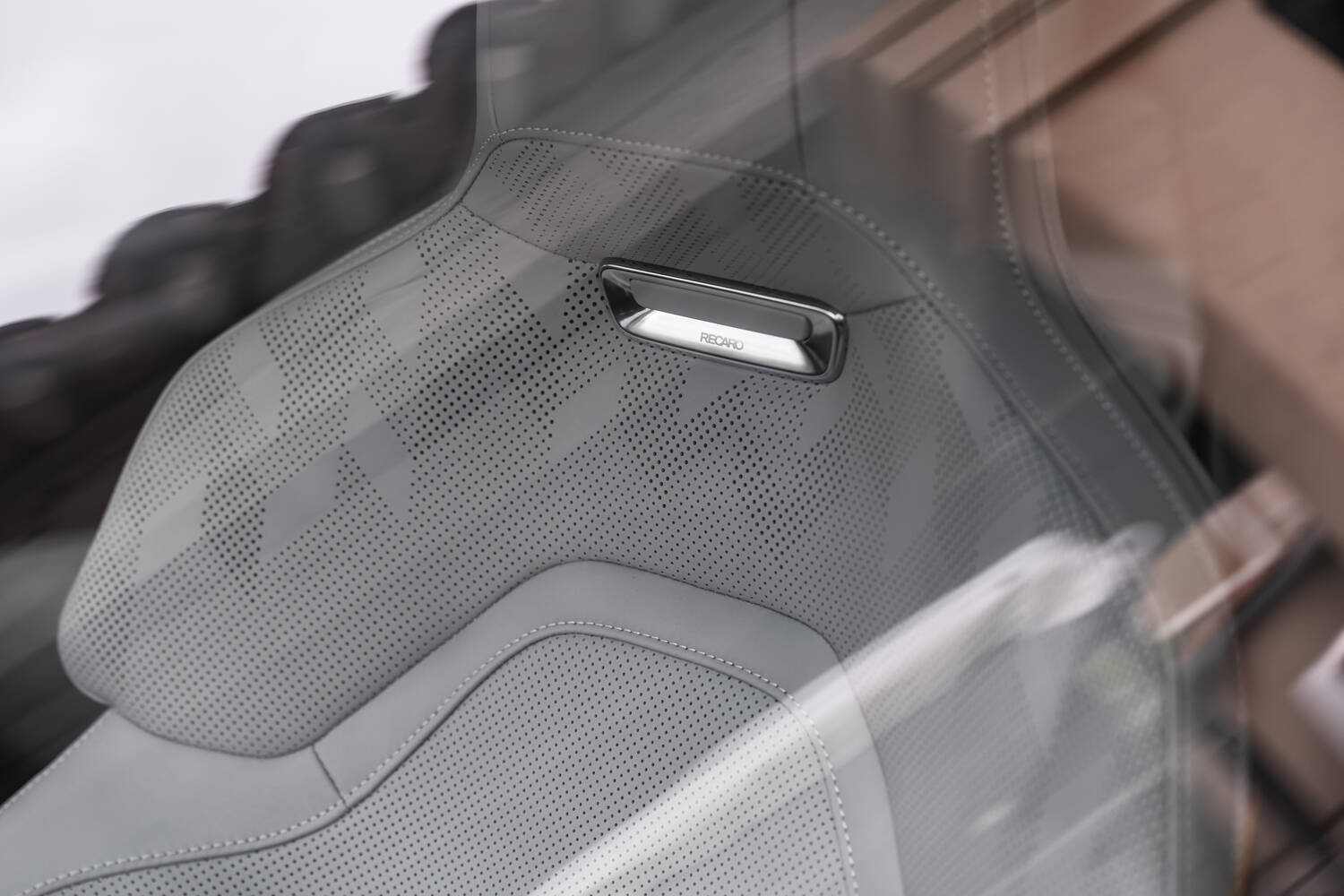
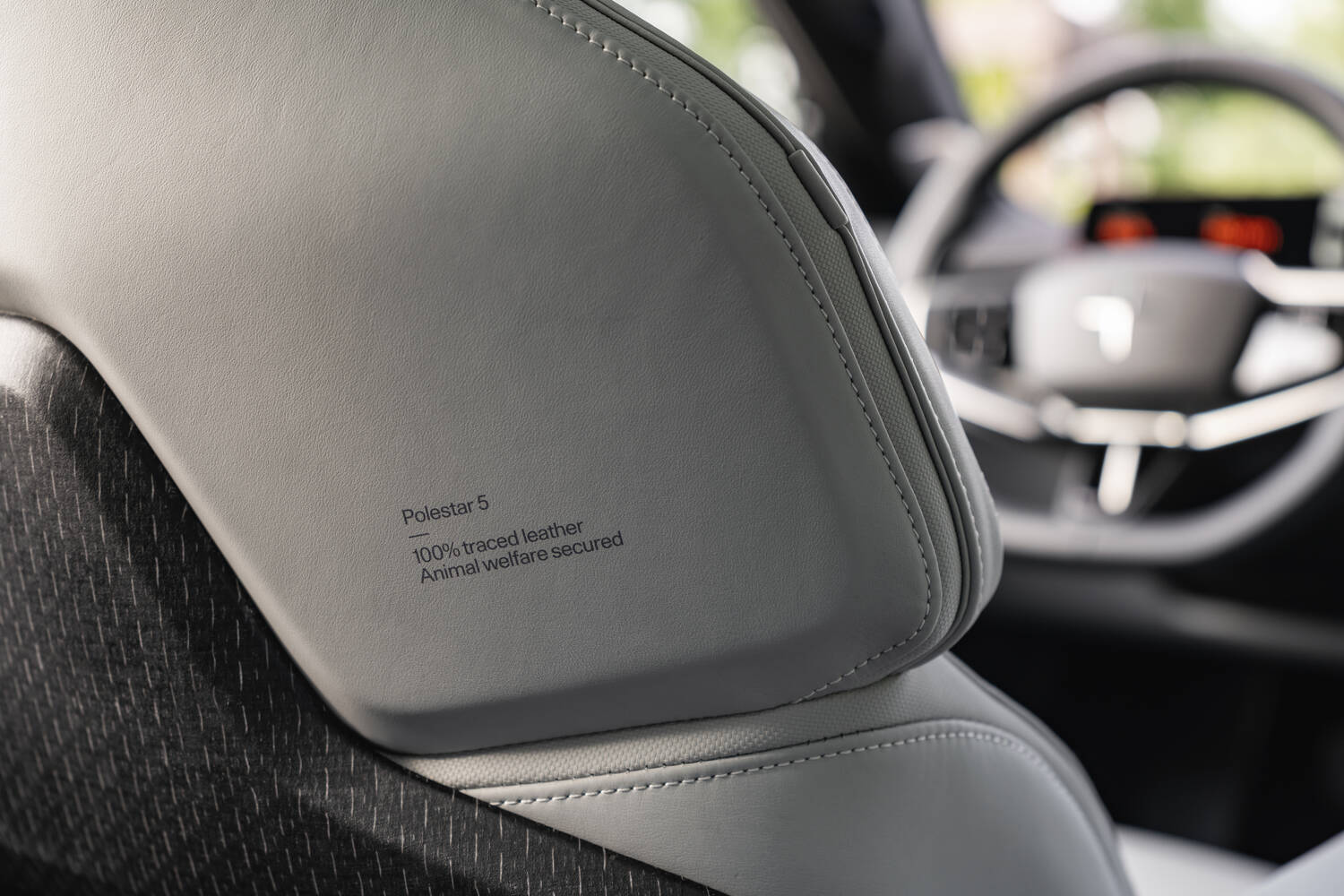
Polestar is aiming to be a responsible carmaker and so it never fits its models with leather as standard. Hence, if you don't tick any option boxes, the Polestar 5's upholstery is a sustainable 'MicroTech' material in charcoal grey, contrasting with aluminium interior trim.

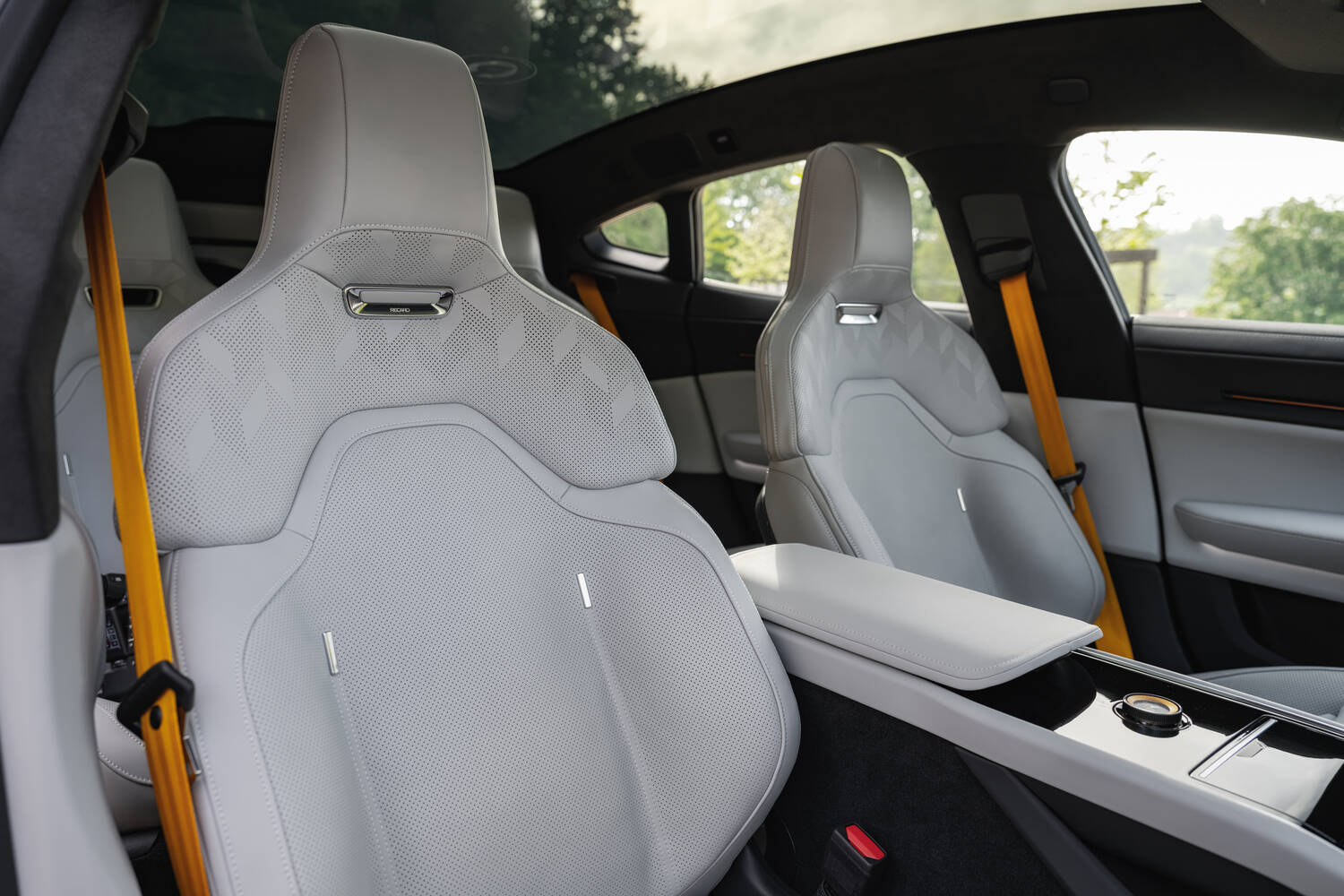
It's fine, but the €6,500 Nappa upgrade to Bridge of Weir leather is worth considering. Not only does it mean beautifully supple leather on the seats, but also ventilation for the fronts, massage function for four seats and even four-way lumbar support for the outer two back seats. The cabin trim is swapped to classy stained black ash at the same time.
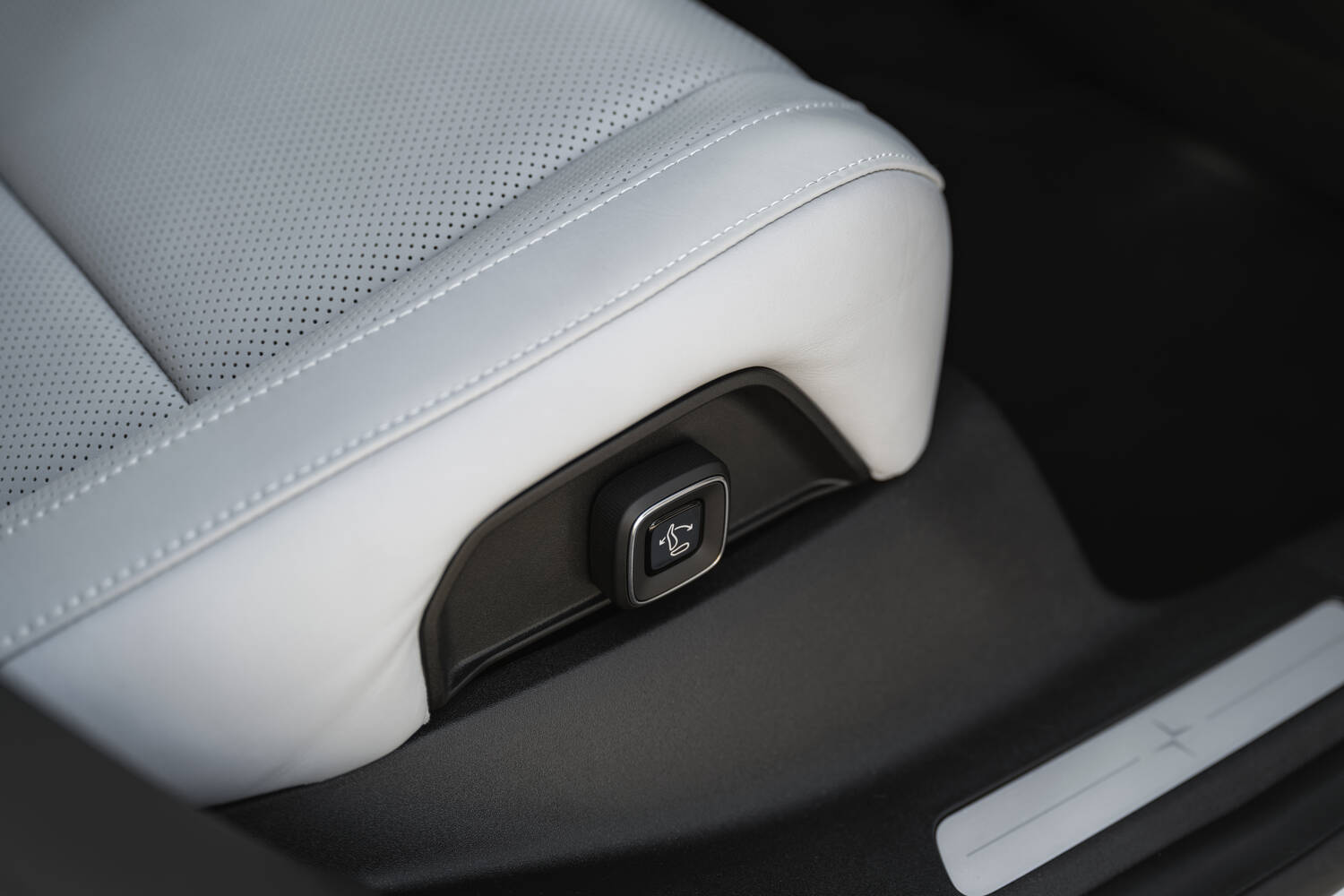
Over two long days of driving, we found these seats exceptionally comfortable. There are physical controls to adjust them on the sides of the seats, though usefully, the adjustment is illustrated on the touchscreen at the same time, so you know what you're tweaking.

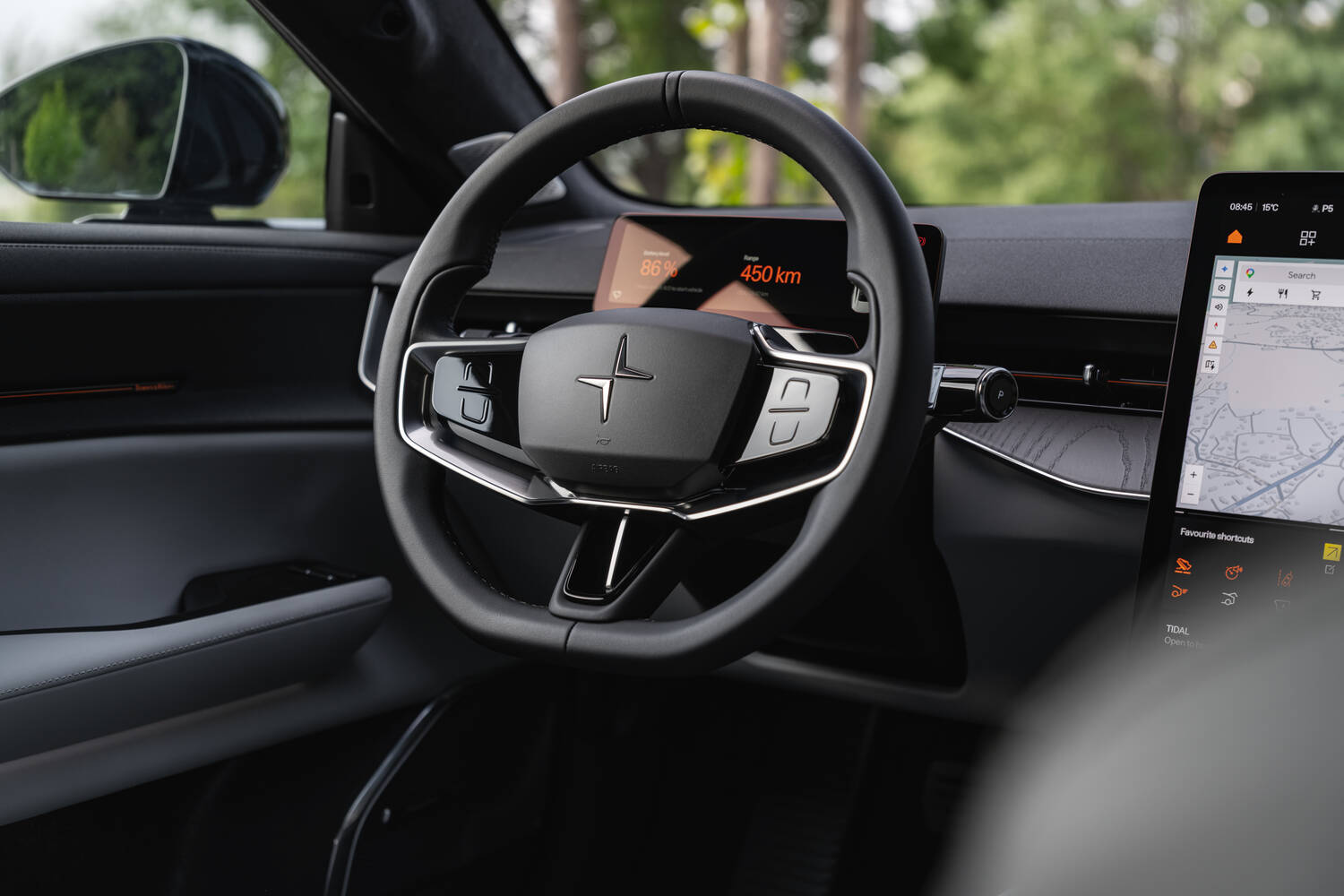
It is a shame that the door mirror and steering column adjustments are through a combination of that screen and buttons on the steering wheel, even if they're not something most owners will change often.
On the subject of mirrors, it's good to see that Polestar has listened to early feedback on the Polestar 4's digital rear-view mirror, as the focal distance on the 5's is different and we found it very natural and easy to use without your eyes having to refocus every time you glance at it. Incidentally, you can switch it to an actual mirror to see what your rear-seat passengers are up to.
Infotainment and technology

The large, upright central touchscreen doesn't dominate the dashboard as it might be expected to. It measures 14.5 inches across the diagonal, but the rich-looking graphics break it up nicely and much of the display is often black, lending it a high-tech edge.
It's built on Android Automotive OS and has Google built-in for seamless integration with the rest of your Google-related online life and access to lots more apps from Google Play. The Polestar 5 comes with 'Connected services plus' for 12 months, which can be renewed for a fee after that.
Thankfully, you don't have to look at the central screen for important driving information, as there's both a nine-inch digital instrument screen and a head-up display projected on the windscreen.

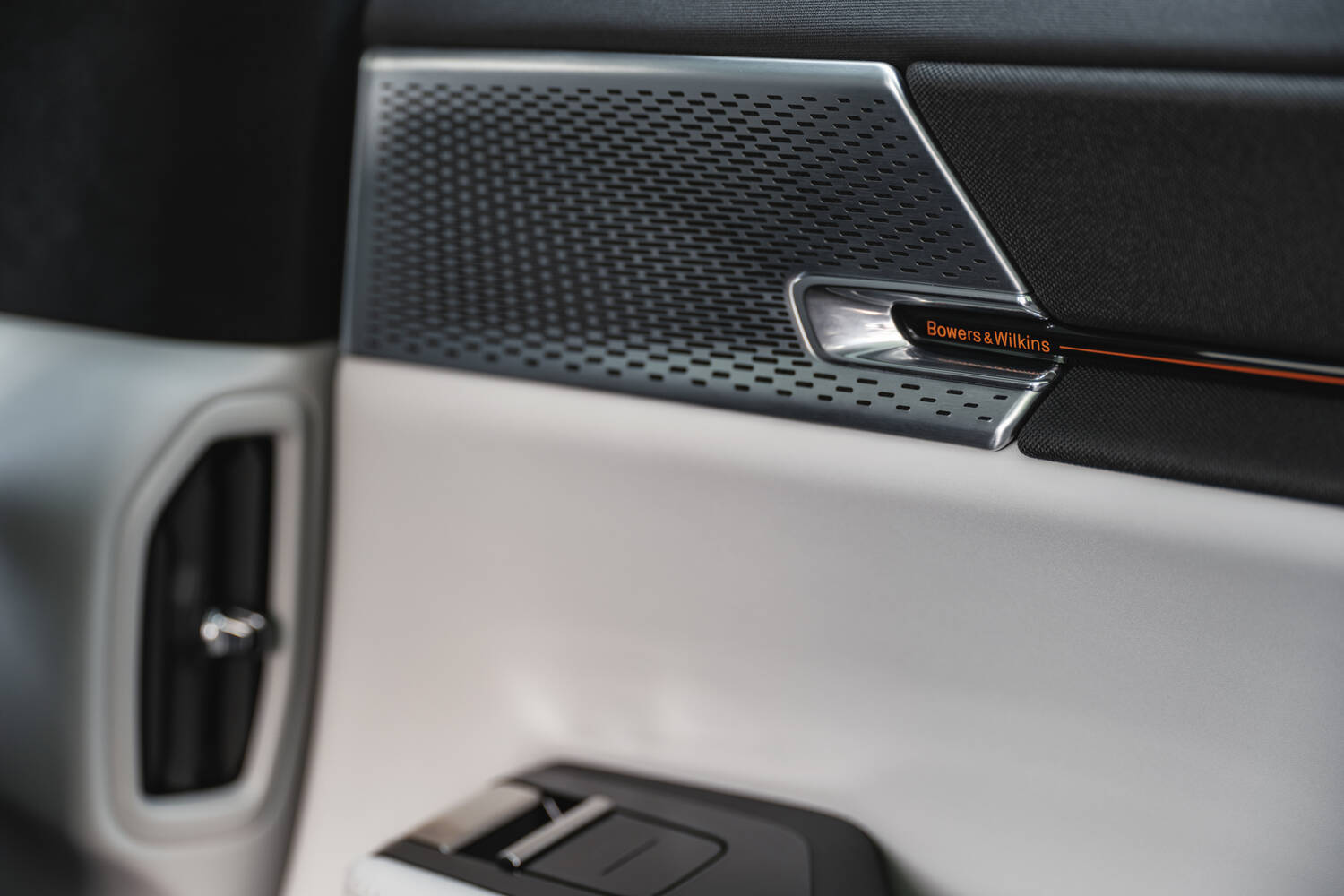
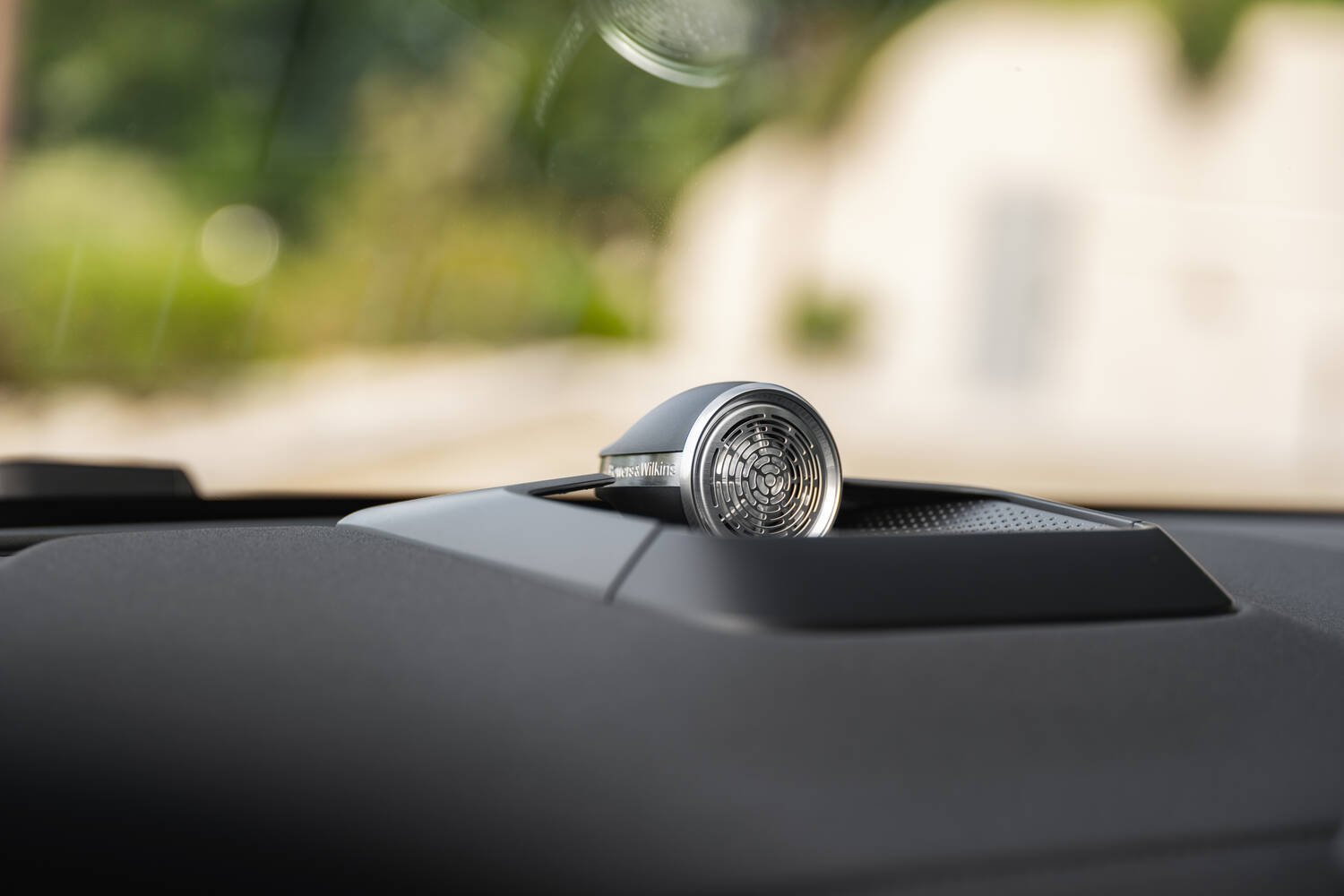
Audiophiles won't thumb their noses at the 300-watt, 10-speaker sound system in the Dual Motor car, but the Bowers & Wilkins system is notably superior with 1,610-watt output and 21 individual speakers, including a "fresh-air subwoofer" whatever that is. This setup is standard on the Performance car, otherwise an eye-watering €4,400 option.
Practicality around the cabin
The Polestar 5 has all the expected storage areas dotted throughout the cabin, though none of them are massive. There's a glovebox up front, ok door pockets and plenty of room under the central armrest.

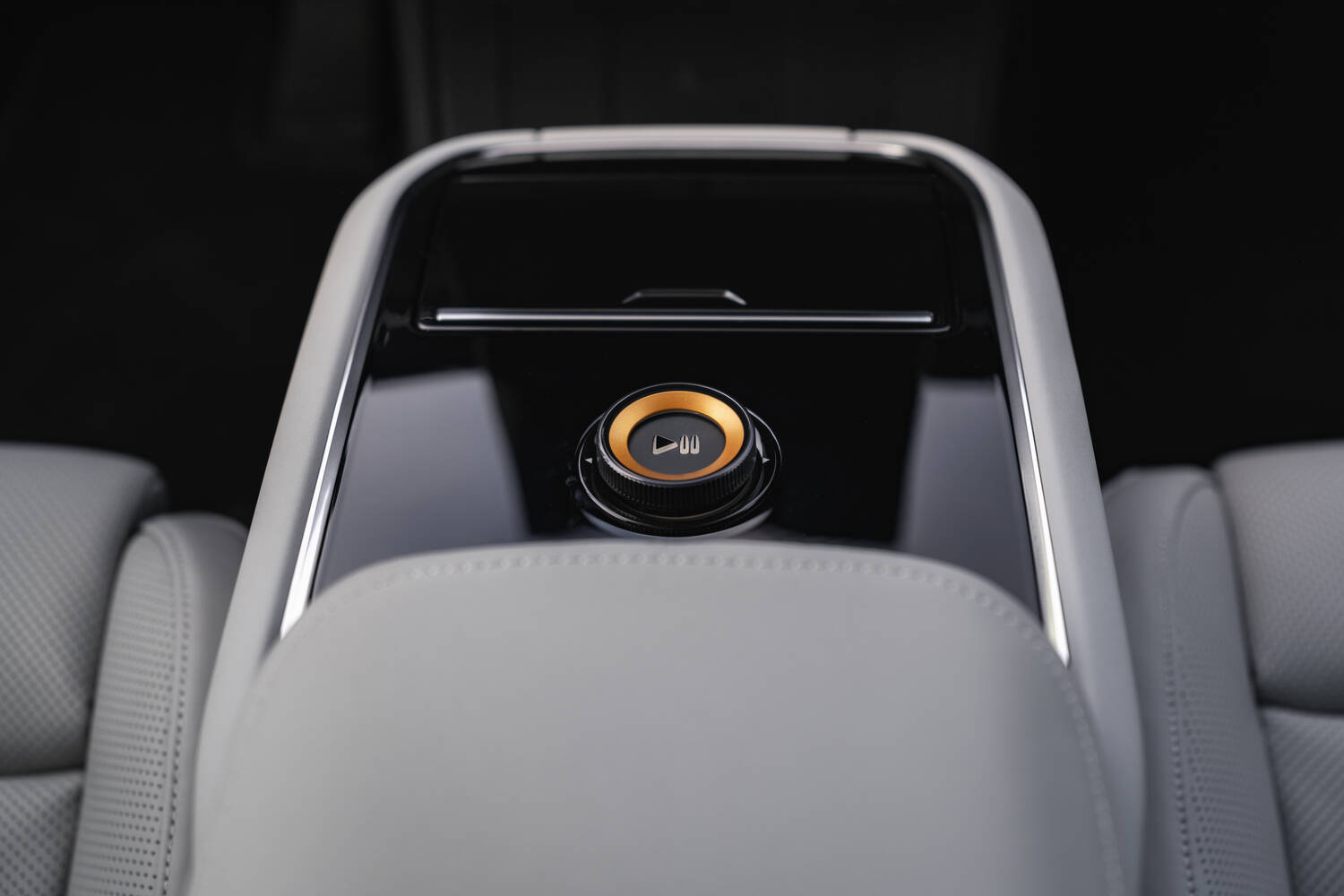
Ahead of that - and the lovely gold-rimmed volume control - is a pair of covered cupholders and USB-C ports. A lower level has space for two large smartphones if required.
Rear-seat passenger space
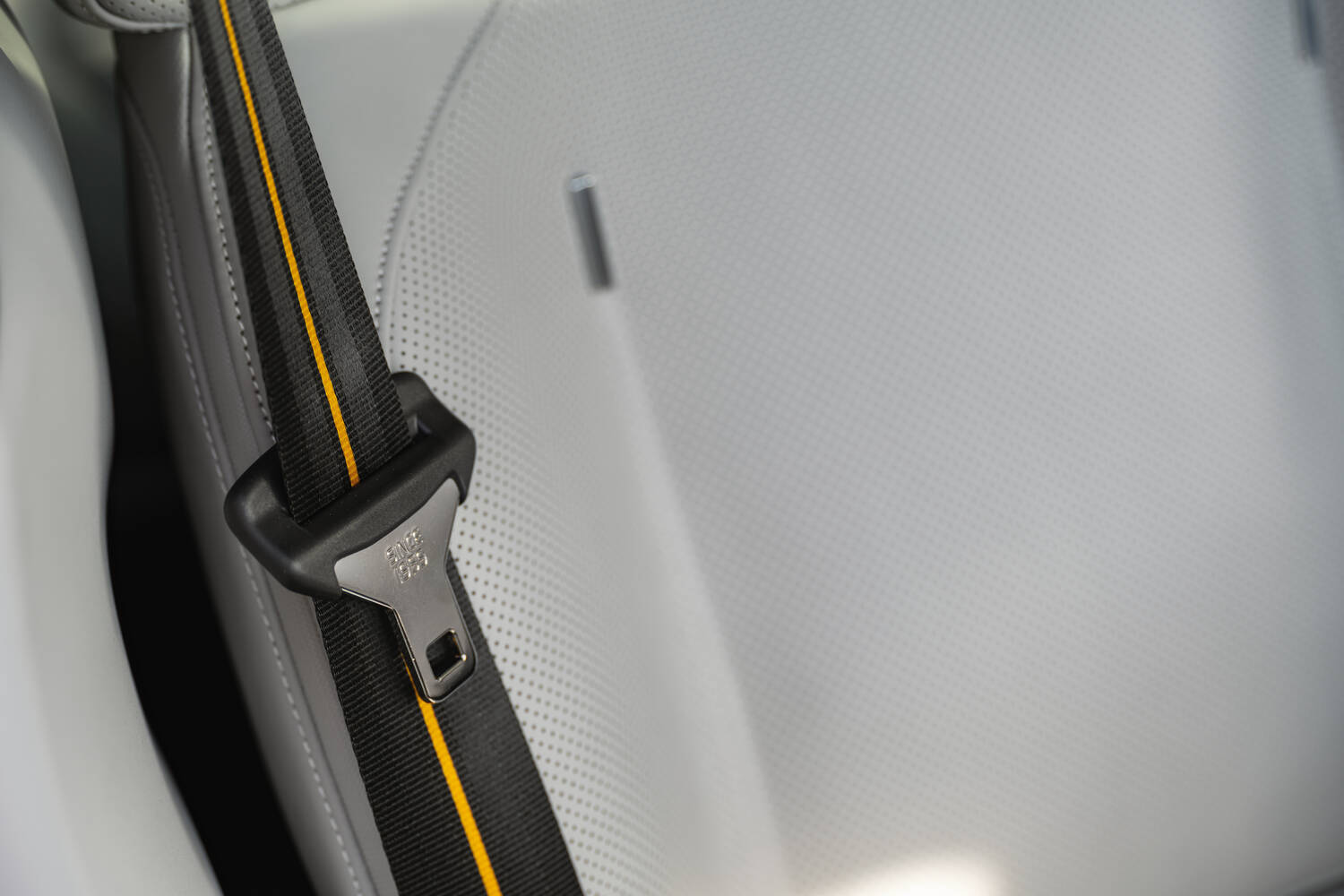
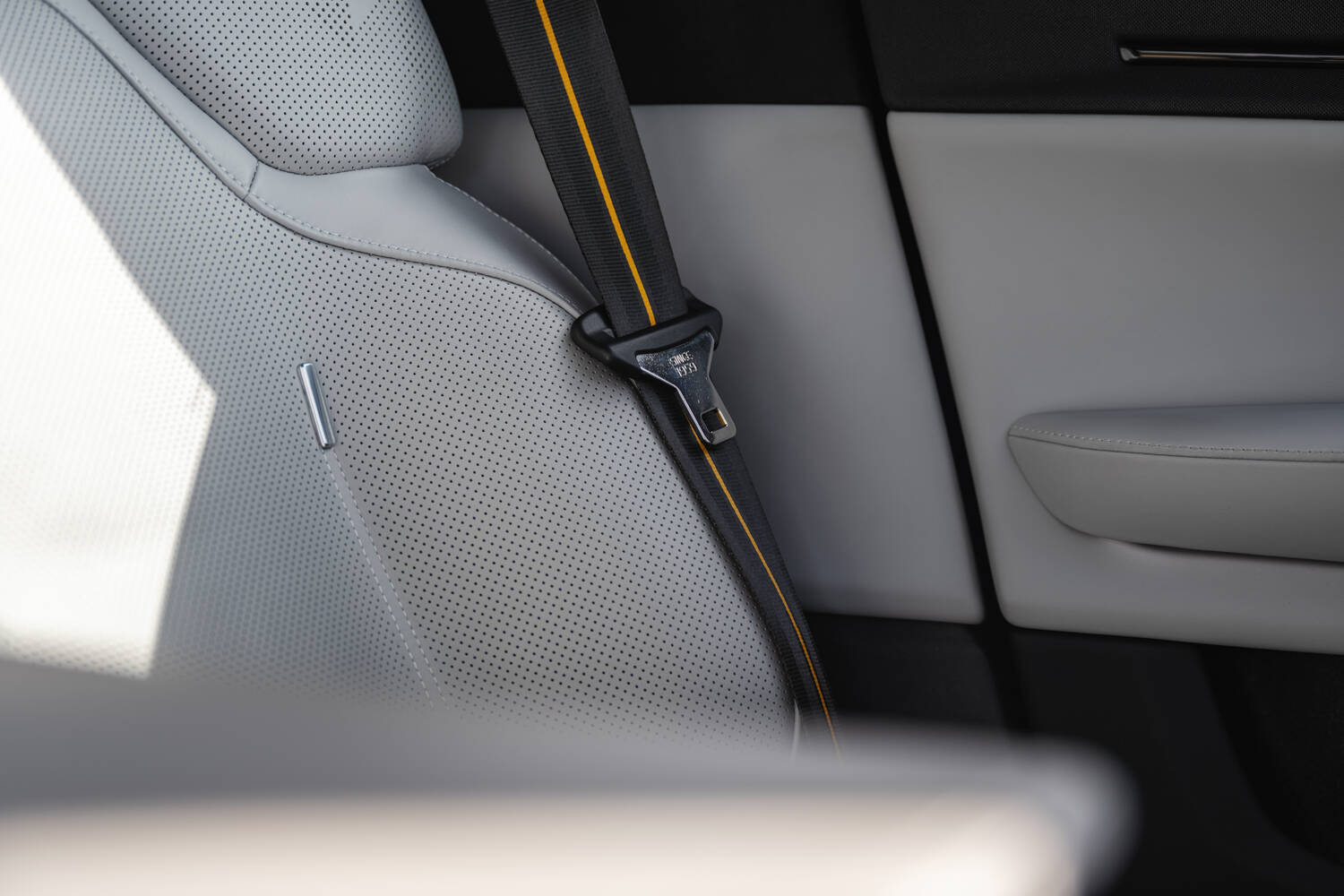
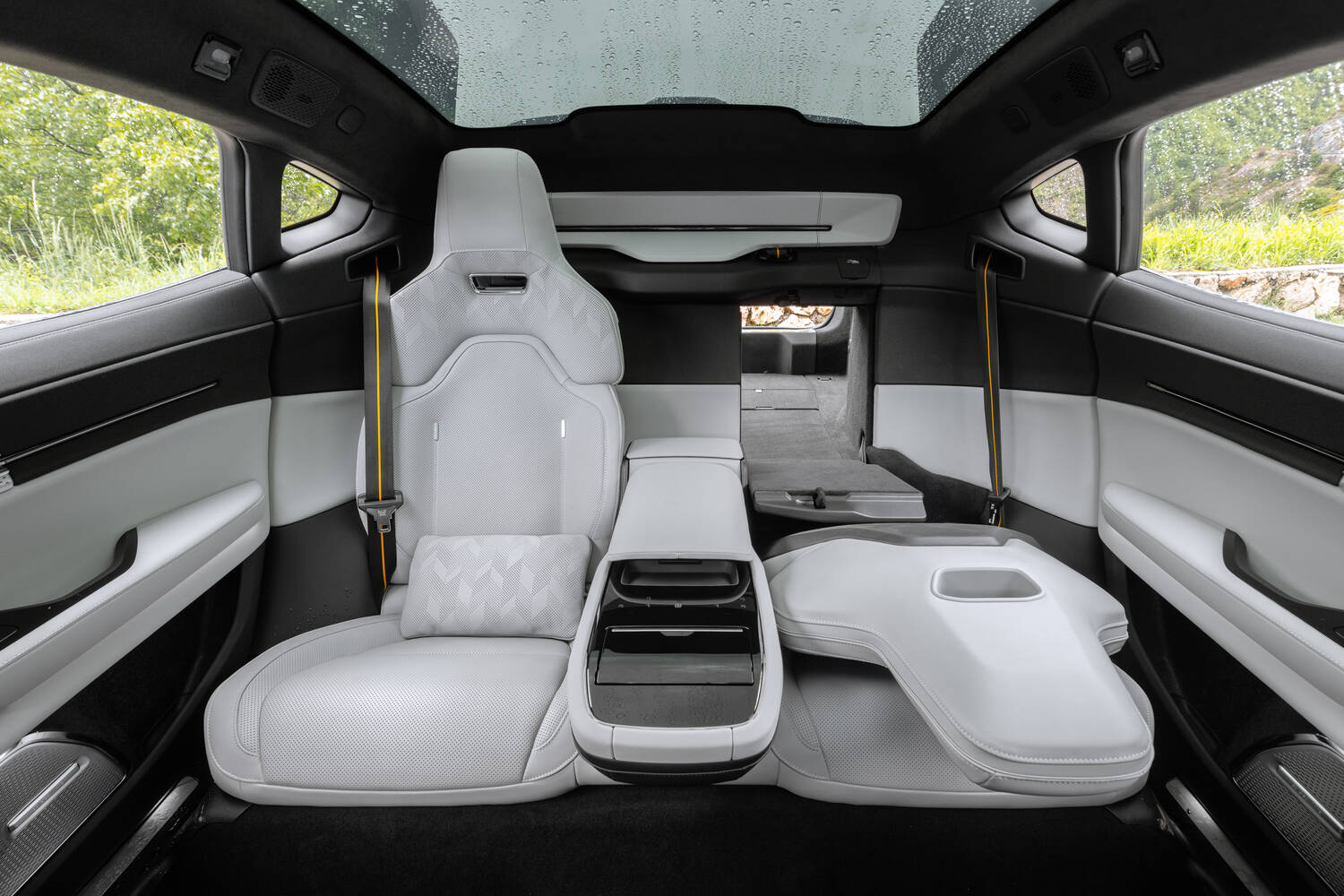
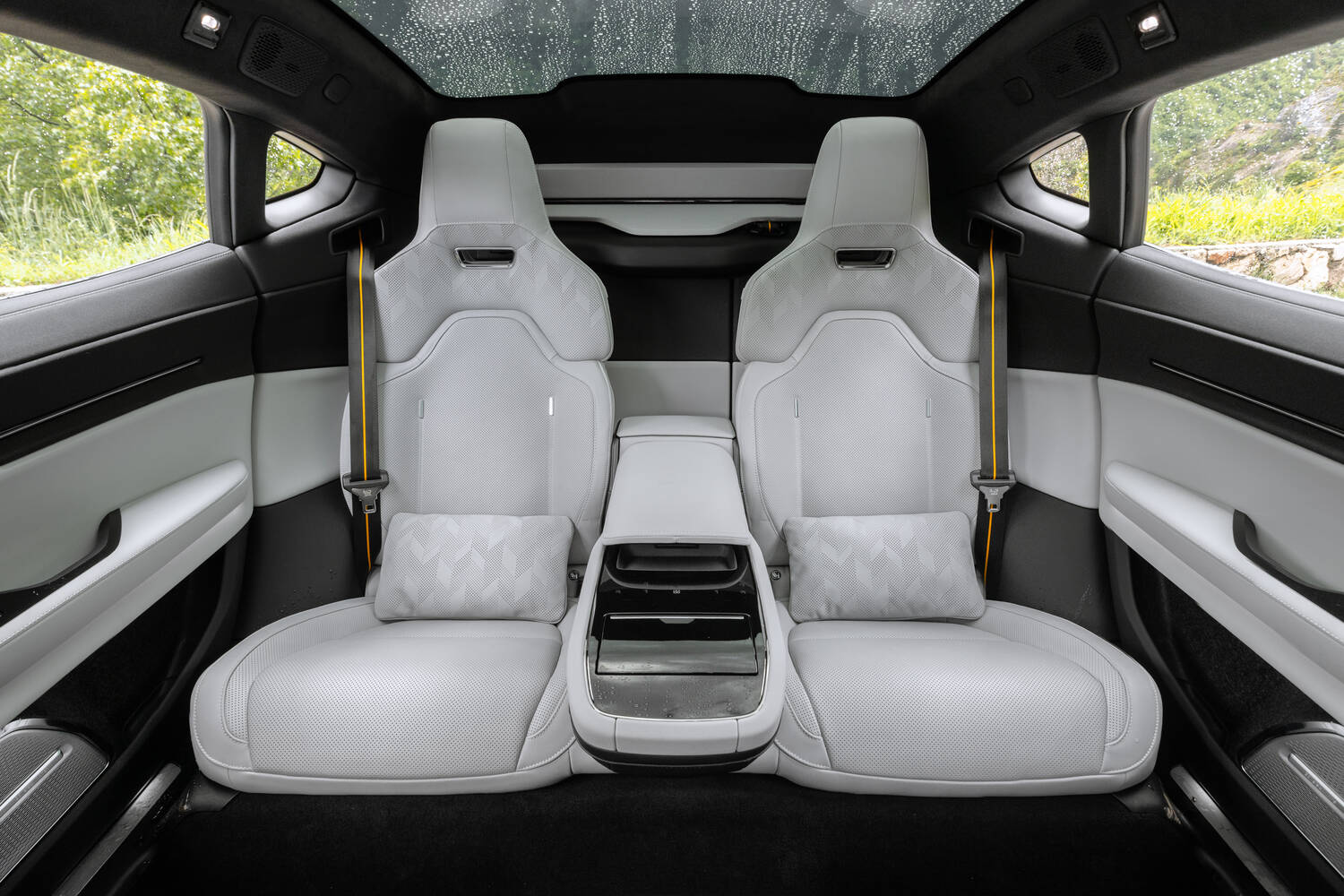
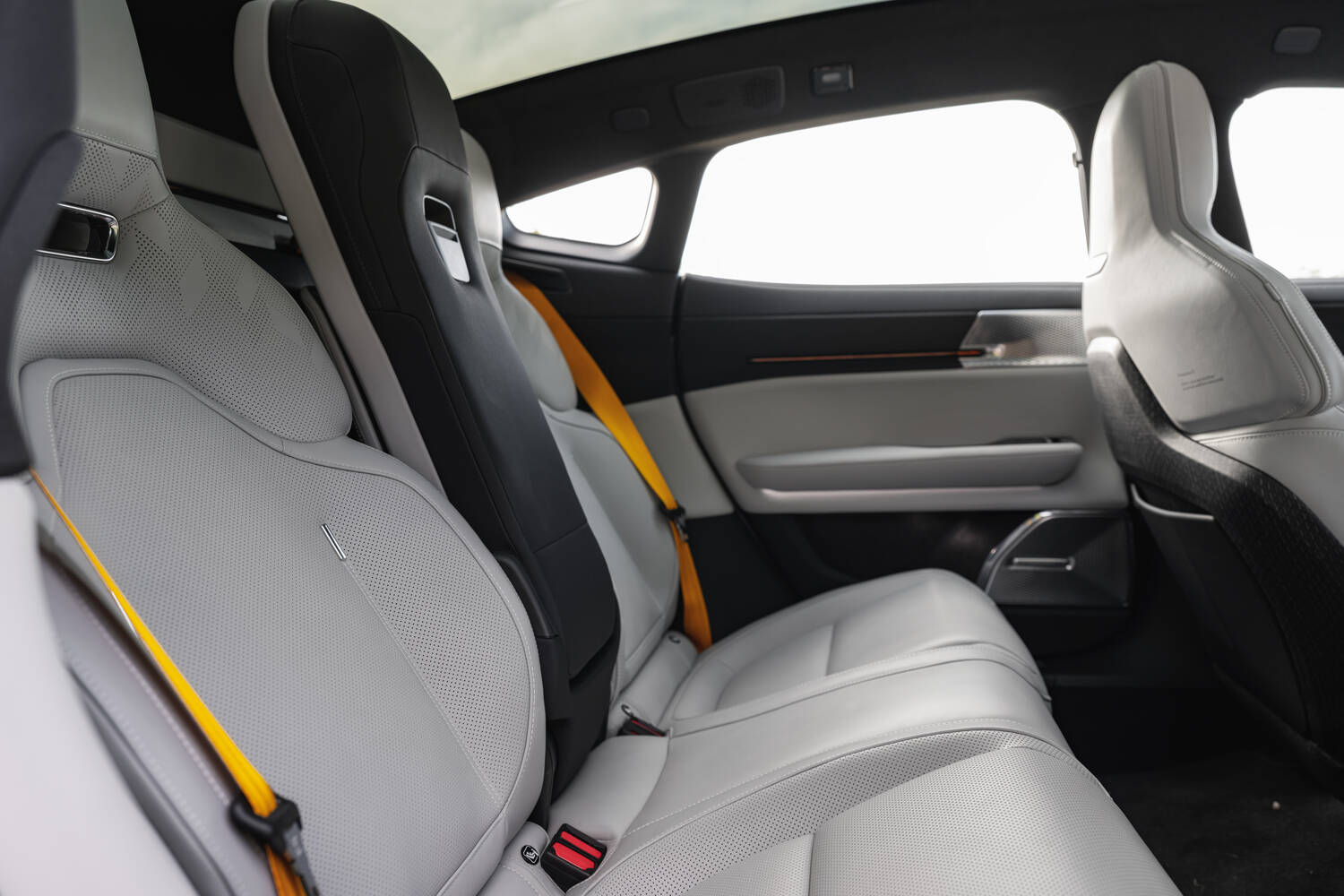
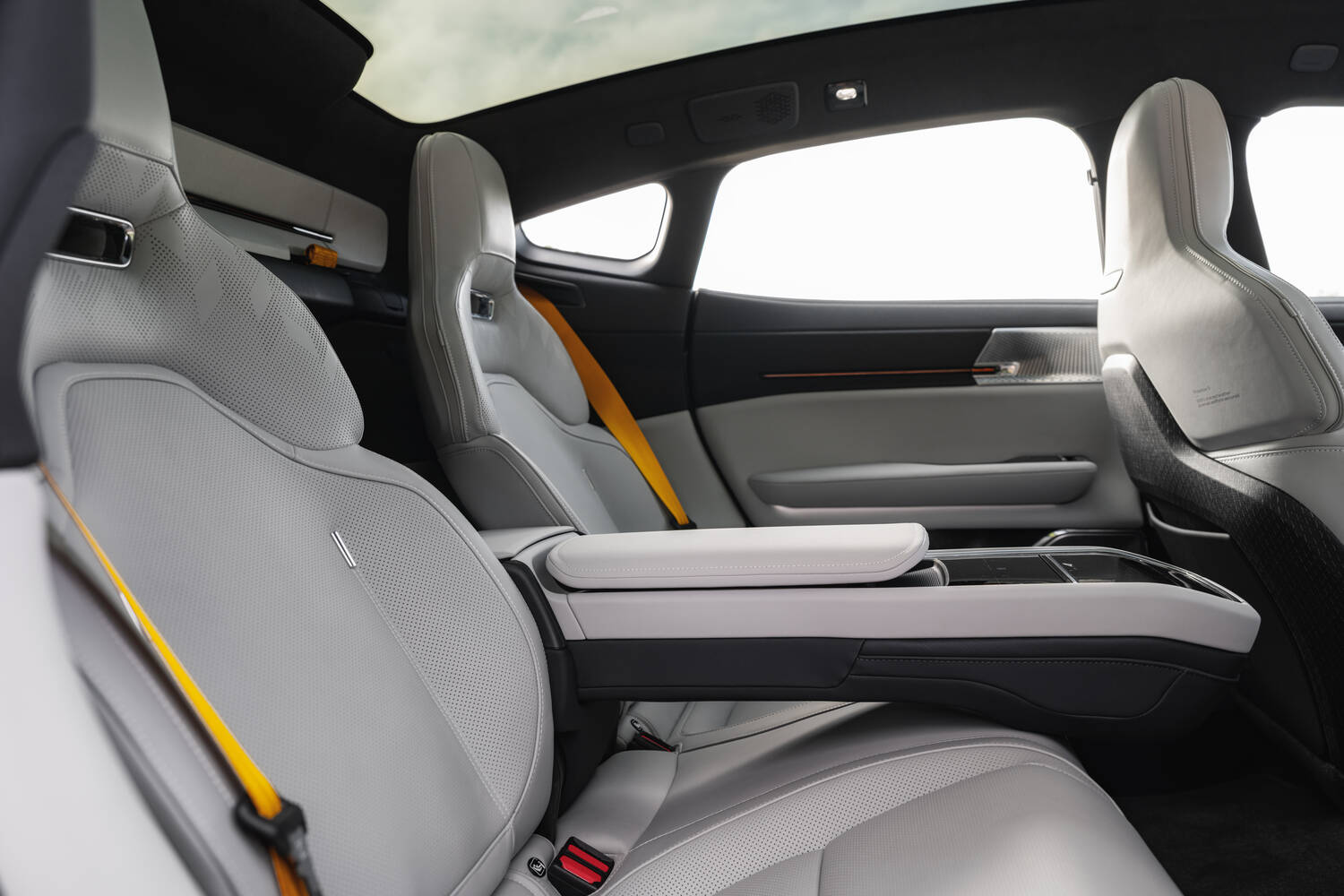
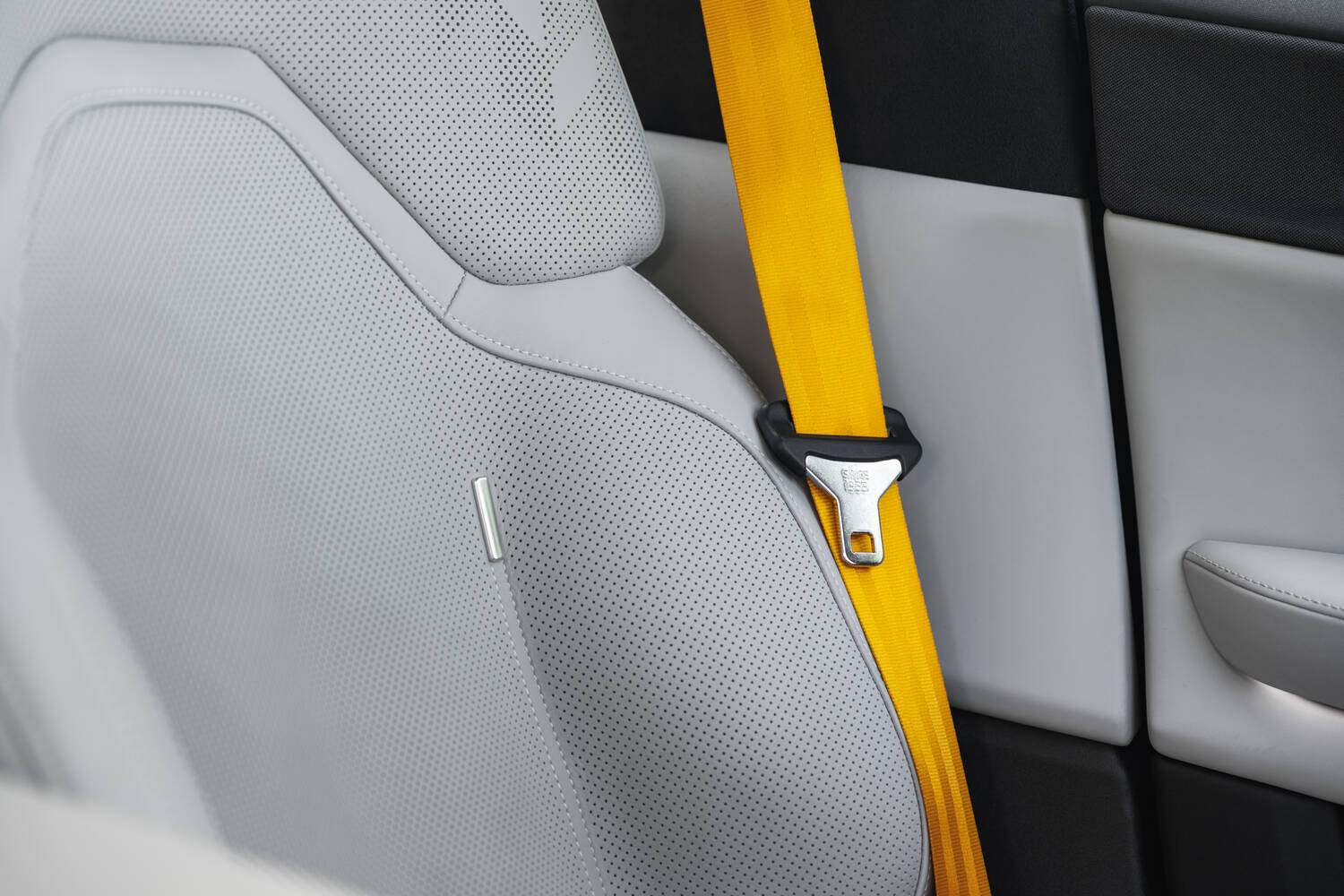
Rear-seat passengers are almost as well-catered for as those up front in the Polestar 5. Well, so long as nobody has to sit in the vestigial middle seat. There is a seatbelt and buckle there, but the squab and backrests are clearly designed with just two rear-seat occupants in mind.

The outer seats can be reclined electrically and they're wonderfully comfortable. There's plenty of legroom and headroom in these positions, too, with the huge expanse of glass roof extending behind their occupants' heads hiding the lack of a rear window.
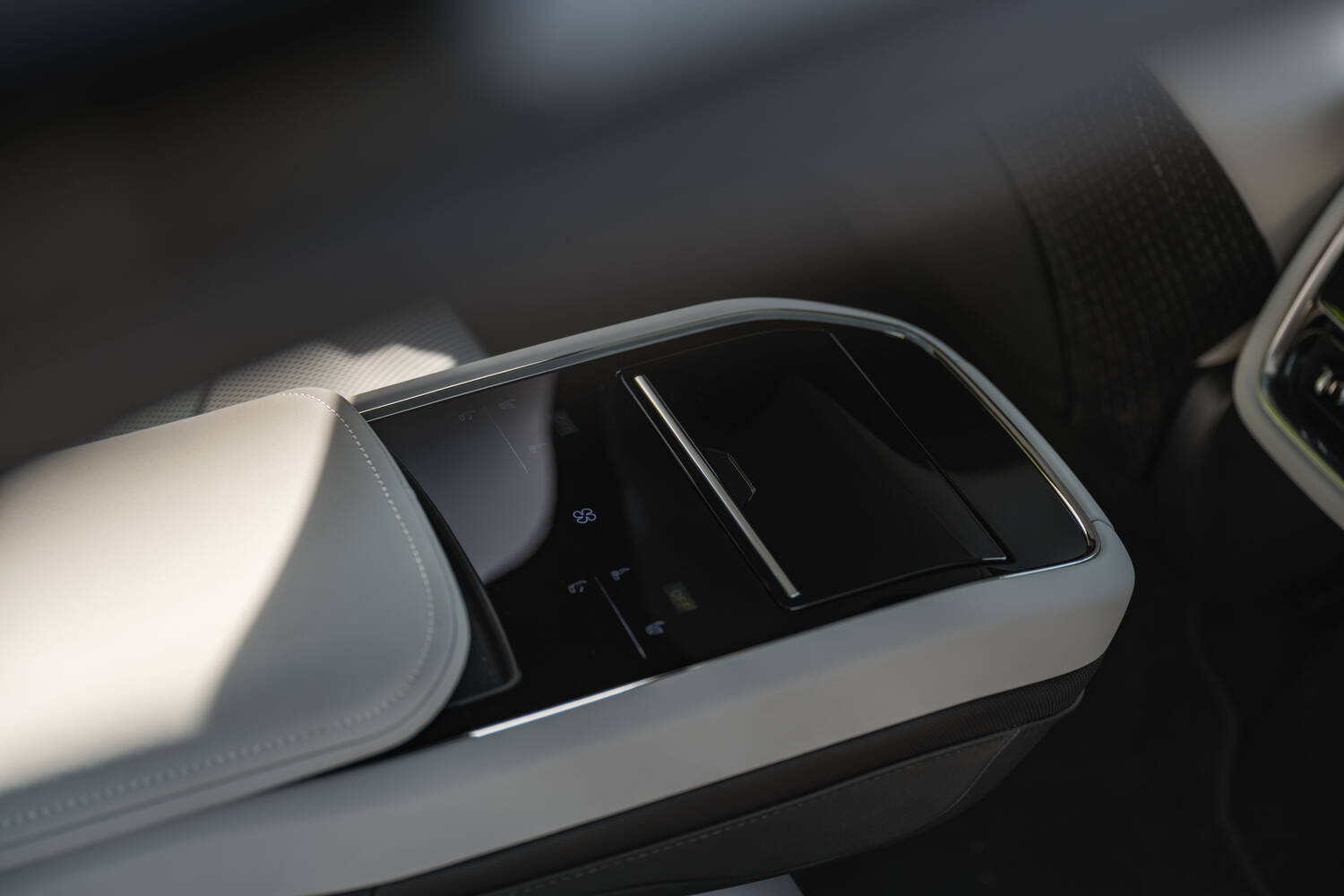
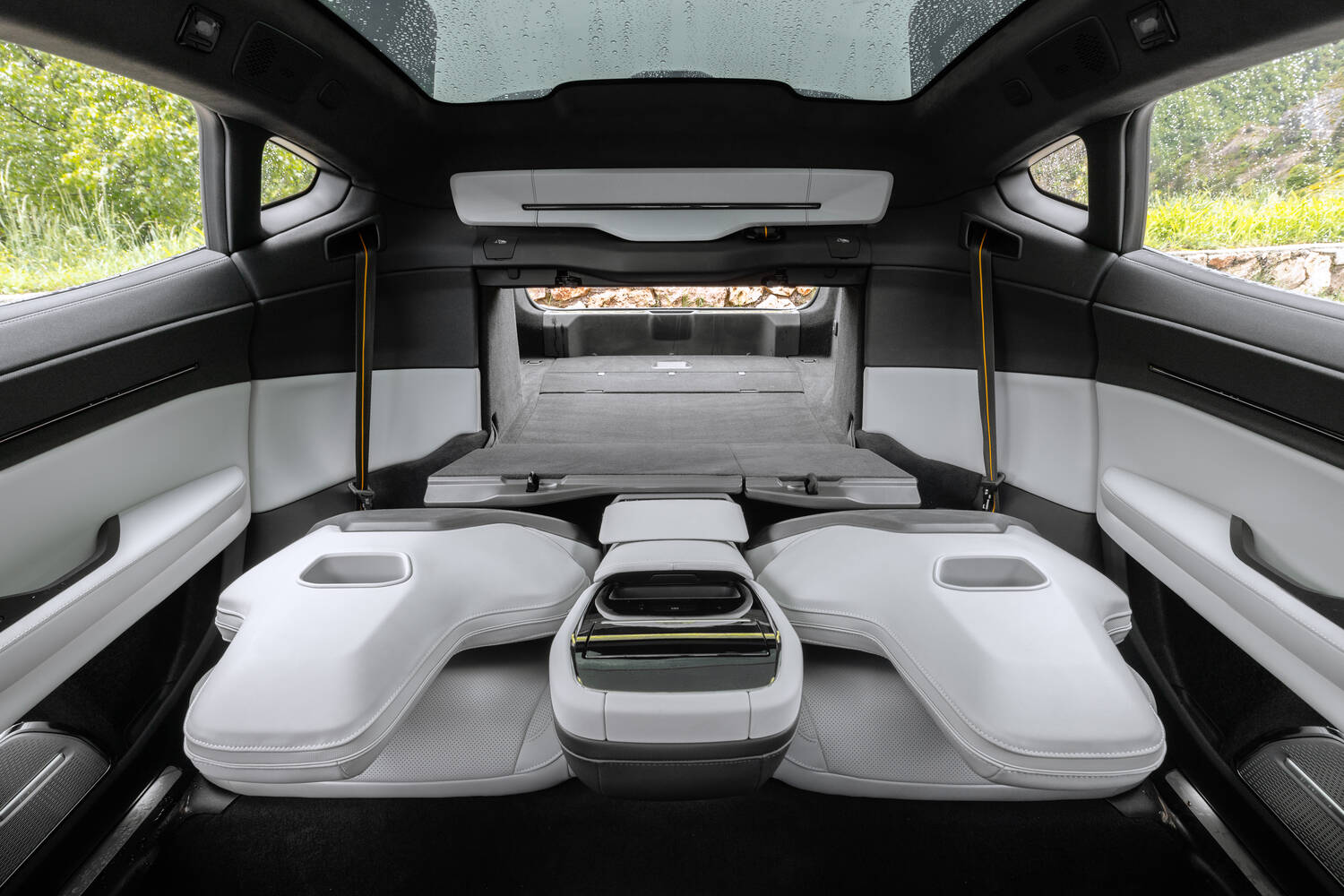
If the middle seat is not in use, fold down the console that comes with extra storage, cupholders and even controls for the heating, ventilation and massaging of the rear seats.

Fitting child seats to the Polestar 5
With the included ISOFIX points or not, it wouldn't be difficult to fit large rear-facing child seats to the back of the Polestar 5 in the two outer seating positions. Forget using the middle seatbelt for anything though.
Boot space in the Polestar 5

Polestar quotes a boot volume of just 365 litres for the 5, with 52 litres of that hidden under the floor. Access is easy thanks to a wide-opening electric tailgate and if you need to fit longer loads in, the rear seat backs electrically fold down flat, as does the bulkhead behind them. That opens up a quoted 1,128 litres of luggage space.
Up front under the low bonnet is a 52-litre frunk, large enough to be considered an extension of the boot, not just for charging cables.
Safety in the Polestar 5
The Polestar 5 has not been assessed by Euro NCAP, though all the company's products tested by the organisation to date have achieved the full five stars. Along with eight airbags to protect occupants if a crash did occur is a wealth of technology designed to prevent such a thing happening in the first place.
Externally, the Polestar 5 has 12 ultrasonic sensors, four short-range cameras, seven HD cameras in various positions and a mid-range, forward-facing radar. Inside is a driver-monitoring camera as well.
Performance of the 2026 Polestar 5
• Two motors for all models
• Searing acceleration
• Passive suspension is excellent

Both versions of the Polestar 5 use the same core electric powertrain with a motor on each axle for all-wheel drive, with the potential for the front motor to be decoupled in the name of efficiency.
The Polestar Dual Motor's peak power and torque figures are 748hp and 812Nm of torque, resulting in a rapid 0-100km/h time of 3.9 seconds.
Using the same hardware, the Performance variant can produce up to 884hp and 1,015Nm of torque, dropping the benchmark sprint time to just 3.2 seconds. Both cars can top 250km/h.

While the two models use the same electric motors, their suspension are quite different. The Dual Motor car has a passive setup, which might be surprising, with coil springs. However, the dampers do mechanically adapt to high-frequency bumps to soften out the ride, and there are hydraulic rebound stops as well.
The Polestar 5 Performance, meanwhile, features Magneride dampers, with adjustable and adaptive damping over three selectable baselines. This car sits six millimetres closer to the ground, too, reducing the centre of gravity.
Driving the Polestar 5 Dual Motor from France to Andorra
Words by Shane O' Donoghue on 1 June 2026

Pleasingly, the first thing you notice about the Polestar 5 when you get in is that the seat is nice and low, setting the tone for the driving experience. Simply press the brake pedal, tug the drive selector on the right of the steering wheel down into Drive and you're away, noiselessly, seamlessly.
It's immediately obvious that the outside world is kept at bay, and dropping the side windows reveals the thick acoustic glass. That proves highly effective when speeds increase later in the day, but for now it gives the Polestar 5 the feel of a luxury car.

And the Dual Motor's passive suspension backs that up by being supple and comfortable, even over poorly surfaced roads and speed bumps. Anyone looking at the performance stats and assuming the Polestar 5 will be a rigid-riding sports car needs to adjust their thinking.
Even before the roads turn interesting it's clear that the Polestar 5's steering is a highlight of its dynamics. It's direct, but not hyperactively so, and the best way I can describe it is "clean," making it a cinch to place the car with confidence no matter the speed. There are three different settings for the power steering weighting and, though there's not a drastic difference between them, I certainly favoured the default middle level.

Likewise, I soon turned the brake energy regeneration down to its lowest, making the car feel far more natural and the brake pedal more consistent. In this setting, it's a brilliantly judged setup, with reassuring pedal resistance that's easy to modulate and serious stopping power on tap when you need it.
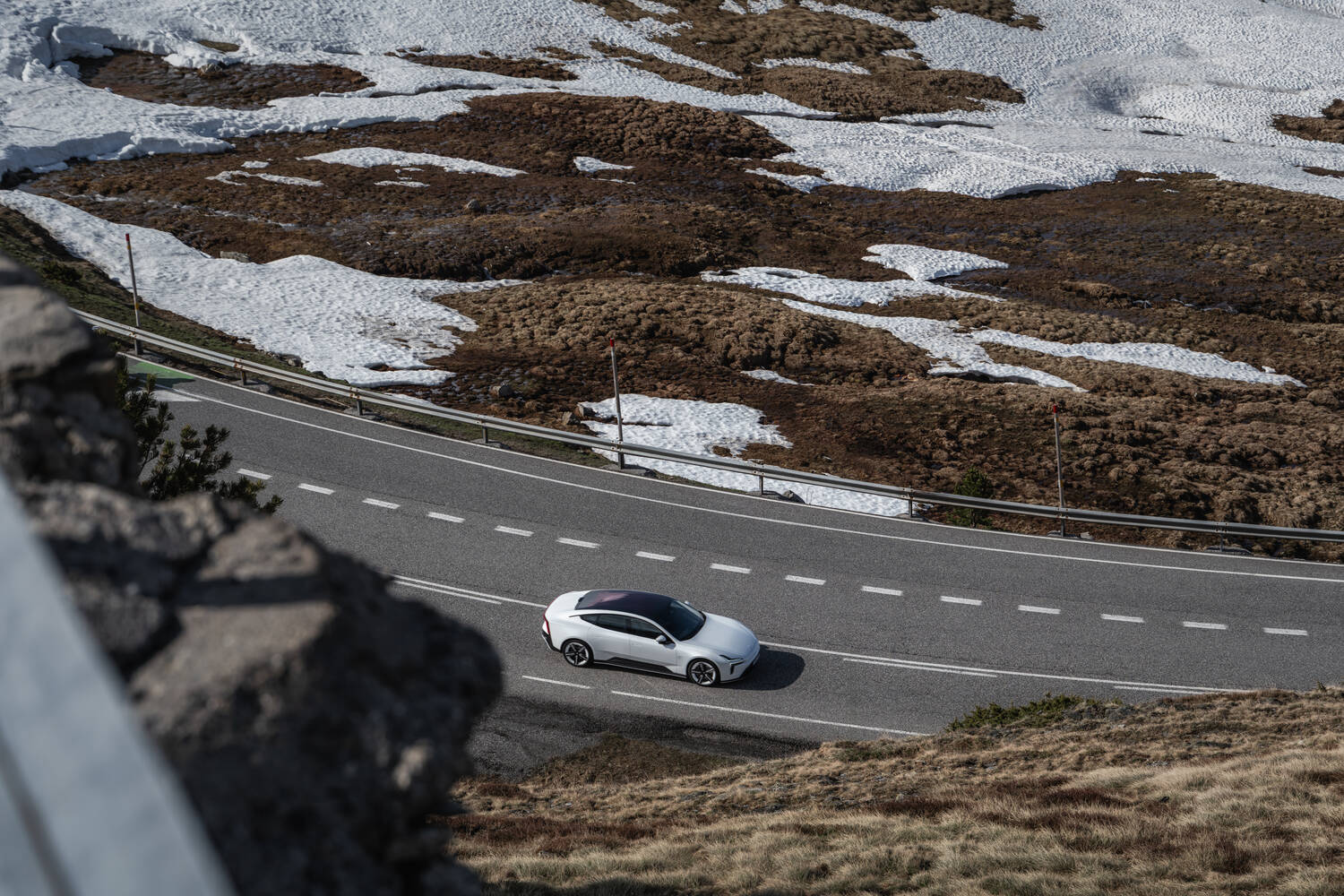
And we certainly needed it on the entertaining driving route Polestar devised through the French countryside and up into the Pyrenees, where wide, flowing roads made way for steep climbs and a seemingly endless series of well-sighted hairpins.

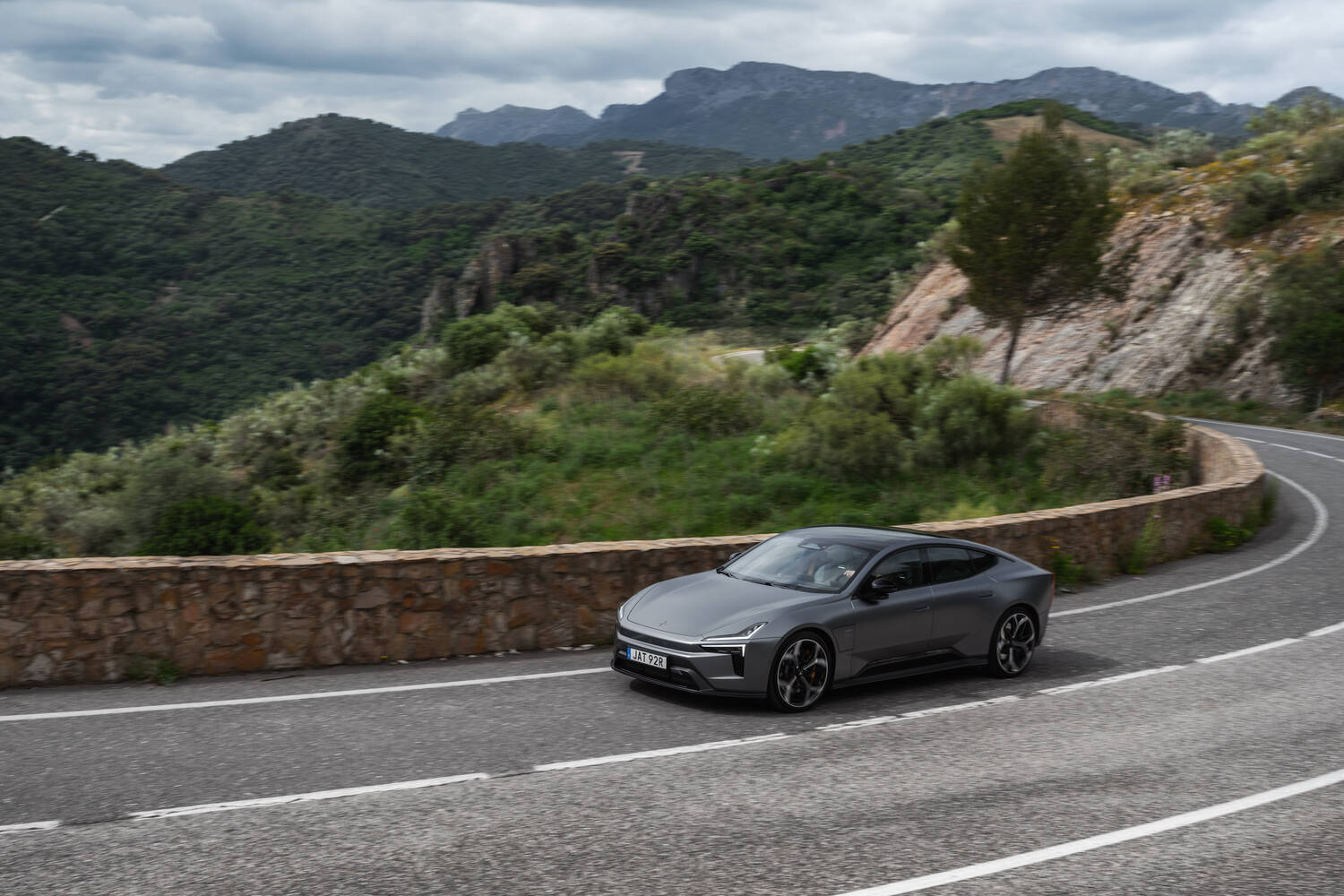
The Polestar 5 lapped it all up. Until that point, it felt like a composed, stable and refined GT capable of ferrying four people in comfort across Europe. But when presented with an interesting road, it played the sports car role convincingly, too.
Despite the pliant suspension, body control is excellent, with just enough lean through the corners to communicate to the driver where the limits are. There's also real feedback through the chassis allowing you make the most of the considerable grip on offer.

Emboldened by the empty roads and the warm conditions, we explored the limits, with our exuberance soon reined in by the quick-thinking stability control system. A scan through the driving settings revealed the ESC Sport option and with that enabled, a little more slip at the rear of the car was allowed before the electronics stepped in.
It should be noted that, despite the massive output of the electric motors, it takes a lot of provocation with the accelerator and steering to elicit any kind of grip loss in the dry, but what this silliness did show was that the Polestar 5 has tremendous balance and it's easy to control even when the limits of adhesion are eventually broken.

That bodes well for driving it in less favourable road conditions, where it should prove to be trustworthy no matter what the skill level of the driver, yet engaging enough to keep keener owners entertained. Through it all, the car is remarkably agile, too.
Driving the Polestar 5 Performance from Andorra to Barcelona
Words by Shane O' Donoghue on 1 June 2026

On day two of the launch, we readied ourselves for the Performance model, wondering how it could possibly improve on the Dual Motor car, which, I might add, already has ample performance for anyone.
Sure enough, the Performance car does feel appreciably quicker, with the ability to make unsuspecting passengers feel unwell if you deploy maximum acceleration from a standstill. Thankfully, there's so much more to this car.

Although Polestar had to recalibrate the steering to suit the Magneride setup, there's barely any difference detectable between the two cars' helms. That's a good thing.
Oddly, the Performance model feels heavier on the road though Polestar quotes the same 2,500kg weight for each. This is likely to be due to the Magneride suspension and how it damps out body movements as you drive along.

There's undeniably a little more firmness to this version's setup no matter which of the three levels of damping you choose. It rides on lower-profile tyres of course, which will also affect the comfort. Not that it's uncomfortable, but you feel more surface imperfections at lower speeds than you do in the Dual Motor car.
Up the pace and the sophisticated dampers certainly live up to their billing, keeping a stronger hold on the body movements so there's even less lean in corners and dipping under heavy braking. The differences between the cars on these fronts aren't night and day, but those that enjoy driving for the sake of it will certainly notice.

Similarly, the more powerful electric motor on the back of the Polestar 5 Performance allows a little more playfulness at the limit. Again, you need to use the ESC Sport mode to fully appreciate it, but even in the dry it's possible to provoke the rear into a momentary slide on the exit of a tight corner.
Admittedly, this extreme driving feels outside the remit of the Polestar 5, as much fun as it is and as capable as the car is in the situation. It goes to show that this big GT can cope with whatever any driver will throw at it, without compromising on everyday usability.
Range, battery, charging and running costs of the 2026 Polestar 5
• One battery pack available
• Officially up to 678km range
• Fast charging at up to 350kW

Just a single large battery pack is available in the Polestar 5, enabling a usefully long range between charges - so long as you can resist the allure of its considerable performance. Thankfully, recharges won't take long on public chargers either thanks to the car's high-voltage electrical architecture.
Battery options and official range of the Polestar 5
The sole battery available is a nickel-manganese-cobalt (NMC) lithium-ion unit of 112kWh gross capacity, spread over eight separate modules and a total of 192 cells. The usable energy capacity is 106kWh.
For the Dual Motor car, Polestar quotes a WLTP range of 678 kilometres, while the Performance model's figure is 558km.
Real-world range and efficiency of the Polestar 5

Depending on specification, the Dual Motor's official energy consumption figure is 17.8-18.3kWh/100km, and the Performance uses 21.2kWh/100km.
Most of our driving was carried out with two people on board, the air conditioning blasting and - shall we say - enthusiastic use of the Polestar 5's ample performance. After the climb up into Andorra, for example, we saw a shocking 35kWh/100km consumption figure, though it seemed to hover around the 15kWh/100km mark when ambling around at slower speeds.
Charging up the Polestar 5
Thanks to its 800-volt system, the Polestar 5 can be charged at up to 350kW on suitably powerful DC chargers. That means a 10-80 per cent charge in 22 minutes.
The Polestar 5 has 11kW AC charging as standard, too, which is useful for three-phase outlets.
Servicing the Polestar 5
Polestar recommends you service the 5 every two years or 32,000km, whichever arrives sooner.
Polestar 5 warranty
The standard new-car warranty on the Polestar 5 is for three years or 100,000km - whichever comes first. There's a 12-year corrosion warranty on top of that, while the drive battery comes with its own guarantee, for up to eight years or 160,000km.
Irish pricing & rivals to the 2026 Polestar 5
• Two Launch Edition cars at first
• Better value than Porsche Taycan
• Save some money for options

Given the name of the "Launch Editions" listed on Polestar Ireland's website, you'd have to assume that the lineup and specification will change within a year of the Polestar 5's introduction, but for now it means a generous level of equipment no matter which of the two versions you go for.
The Dual Motor car is €129,200 - or from €1,776 a month on hire purchase finance. The Polestar 5 Performance is €144,200, which doesn't seem like a big premium given it gets bigger wheels, the upgraded suspension and sound system, plus a few other niceties. Not to mention the increased performance.
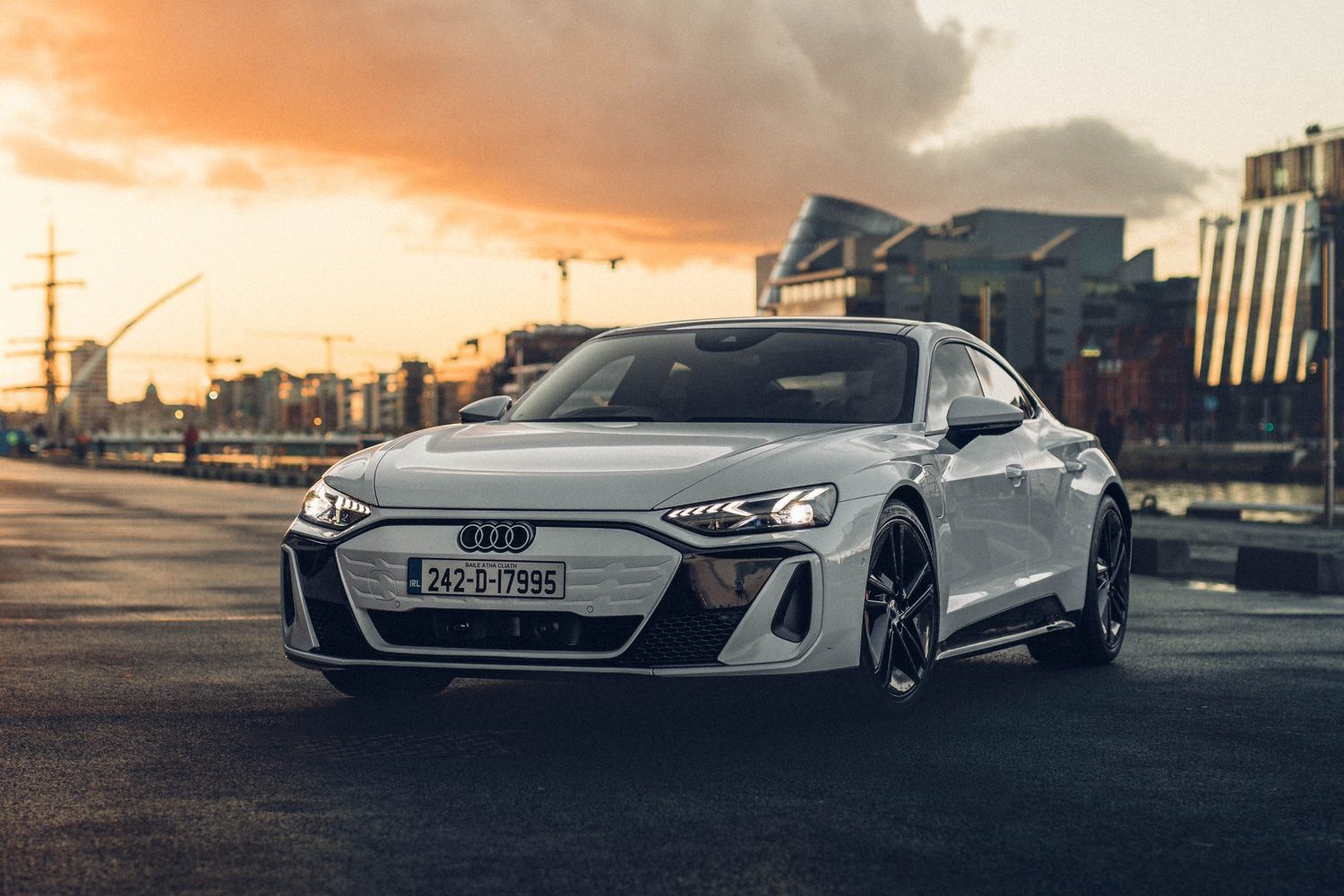
In Ireland, the only direct rivals are the related Audi e-tron GT and Porsche Taycan. The entry-level Audi e-tron GT quattro undercuts the Dual Motor at about €123k on the road but is significantly less powerful. Only the Audi RS e-tron GT performance betters the Polestar 5 Performance on that score yet is about €30,000 more expensive.

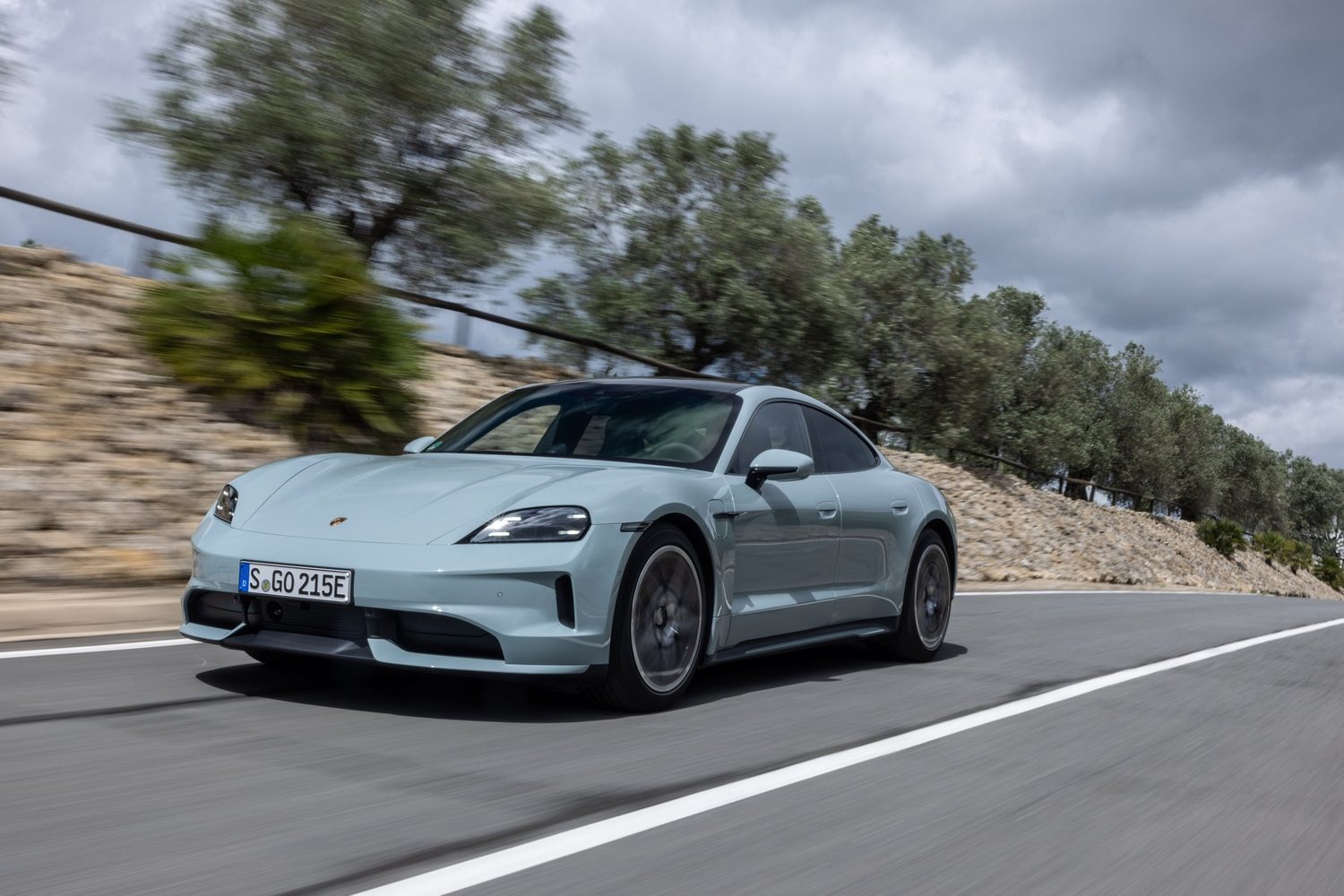
It's a similar story in the Taycan lineup, where the base car is 'just' €111k. That's for a rear-drive model with much less performance than either Polestar. The Taycan 4S makes for a good comparison at €132,185 as, while its peak power is 'only' 598hp, it can do 0-100km/h in 3.7 seconds and has a 644km range.
You'll need one of the Taycan Turbo variants to match the power output of the Polestar 5 Performance, and nigh on €200k.
Verdict - should you buy the 2026 Polestar 5?

The pricing and stats throughout this review indicate that the Polestar 5 is not the direct rival to the Porsche Taycan it was initially assumed to be, and that's a good thing.
Polestar has gone its own way with this car, making it a fabulous thing to look at, sit in and use on an everyday basis, while somehow also giving it an almost-organic driving experience and capabilities that'll really endear it with those that love driving. As a manifesto for the brand, it couldn't be much better.
FAQs about the 2026 Polestar 5
Talk us through the Polestar naming...
Polestar's numbering system made sense at first, naming its cars in order of their introduction rather than their hierarchy. The Polestar 1, a gorgeous plug-in-hybrid coupe, was its only non-EV. Next up, logically, came the Polestar 2, then the Polestars 3 and 4 in quick succession before this Polestar 5 hit the market.
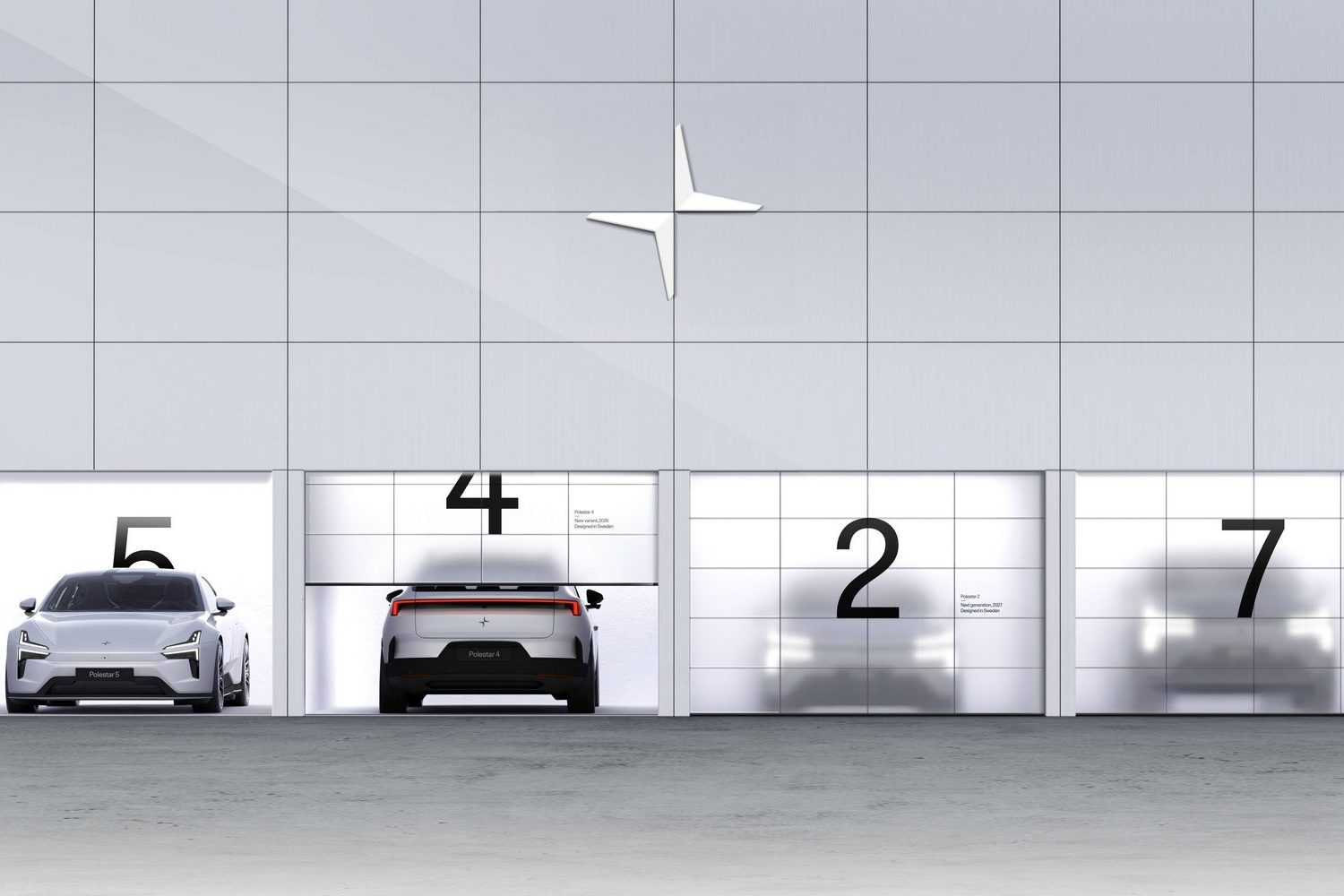
It should be the Polestar 6 next, right? Except that number has been reserved for an open-topped sports car from the brand and it looks like we'll actually get the Polestar 7 SUV next. But just to confuse things, the 7 will sit below the Polestar 3 in the lineup. Oh, and there's an all-new Polestar 2 arriving in 2027 as well, retaining that name.
What's the Polestar Precept concept?
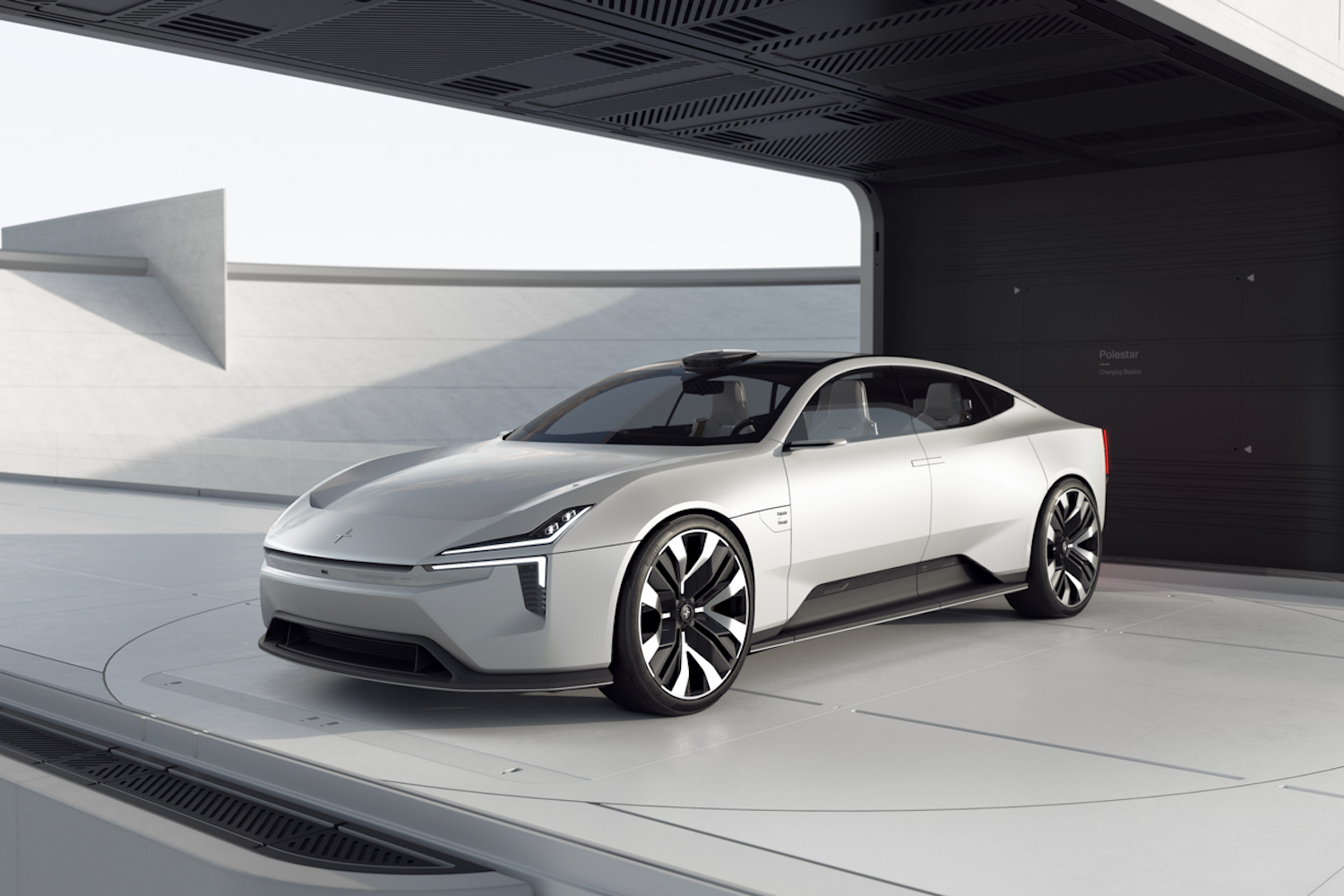
The Precept concept was unveiled in 2020, before the Polestar 2 even hit the road. Its sleek design, sharply drawn rear end and overall shape have made it through astonishingly unchanged to the showroom-ready Polestar 5.
Want to know more about the 2026 Polestar 5?
If there's anything about the Polestar 5 we've not covered, or you'd like help in choosing between it and other cars, you can avail of our expert advice service via the Ask Us Anything page.