

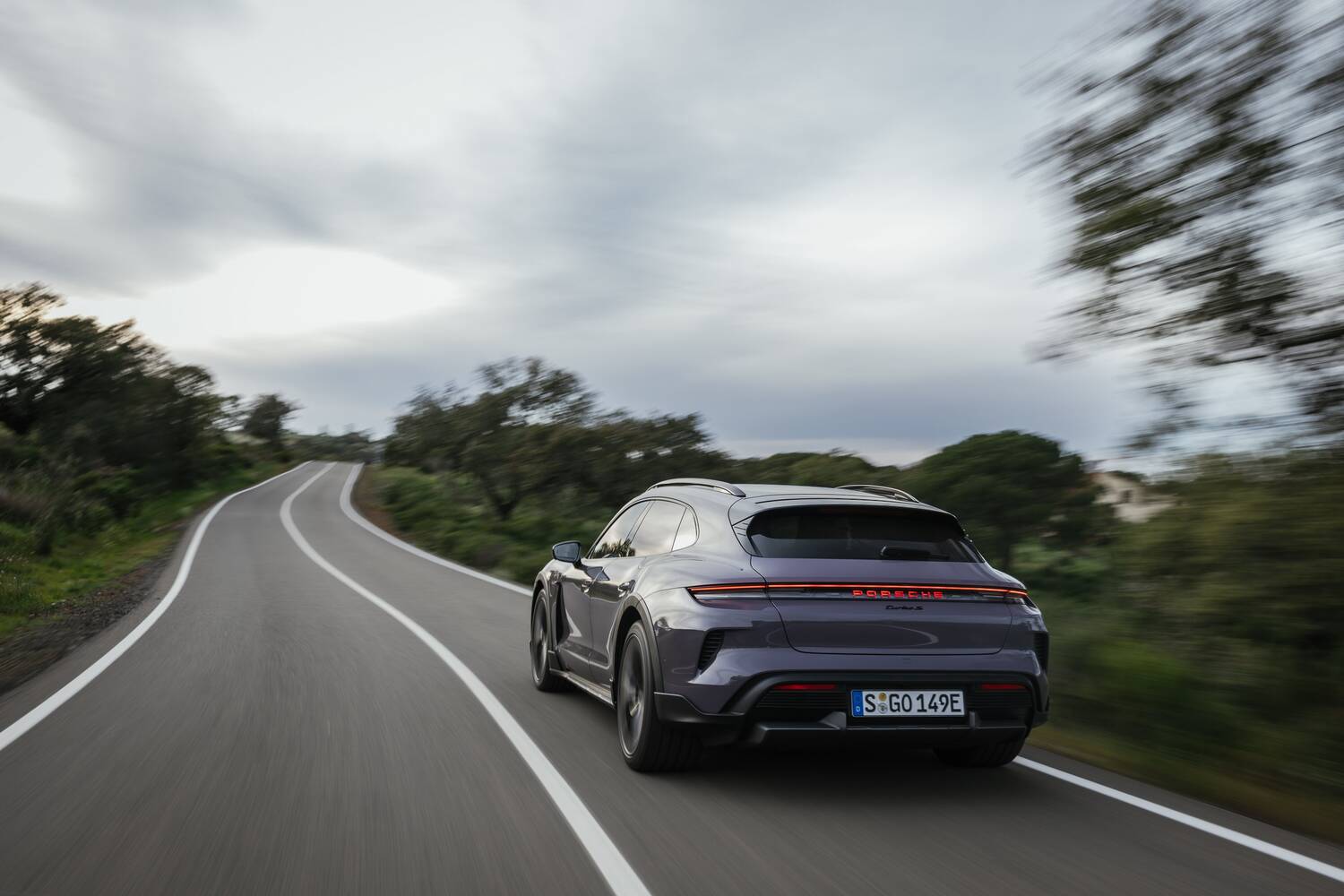
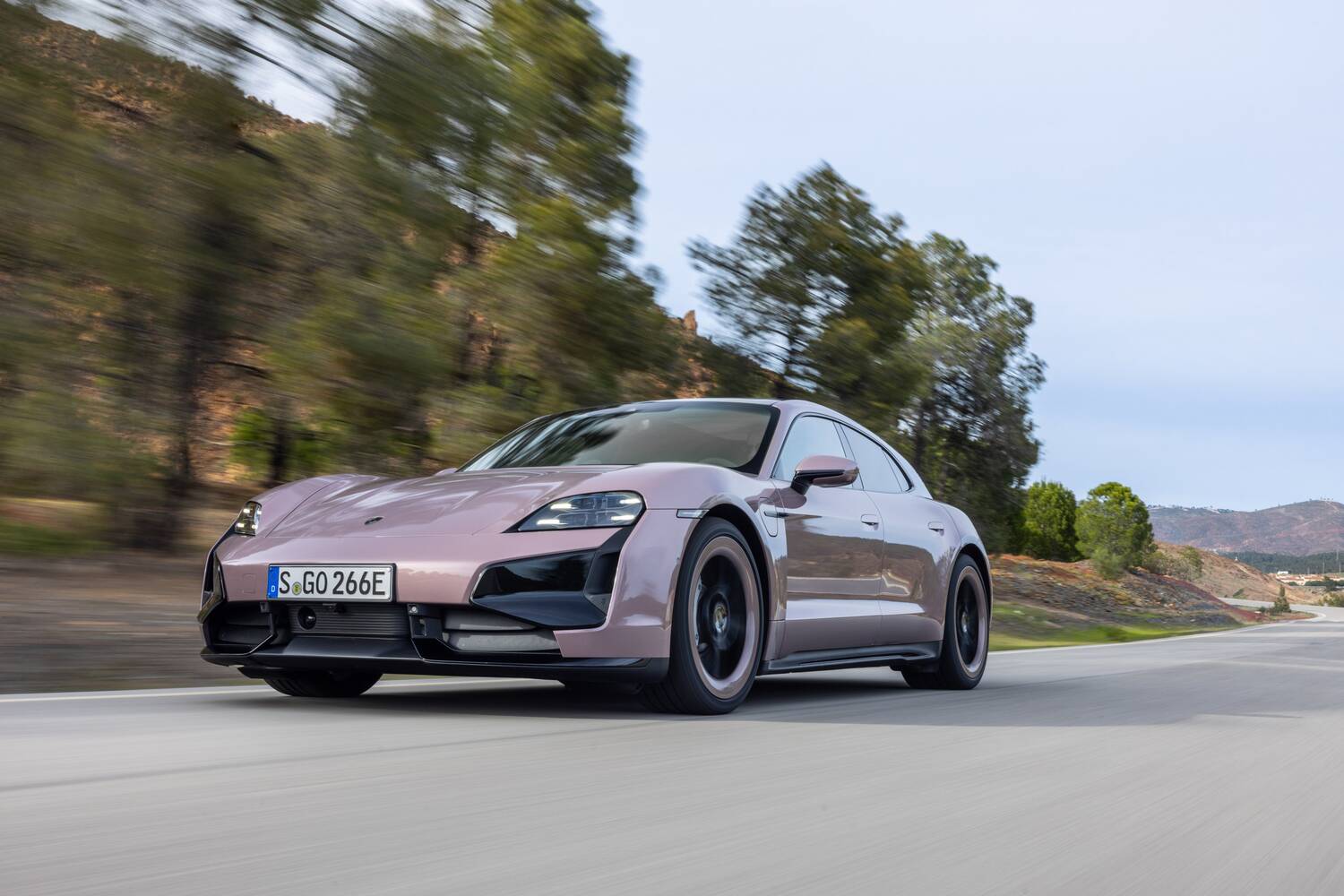
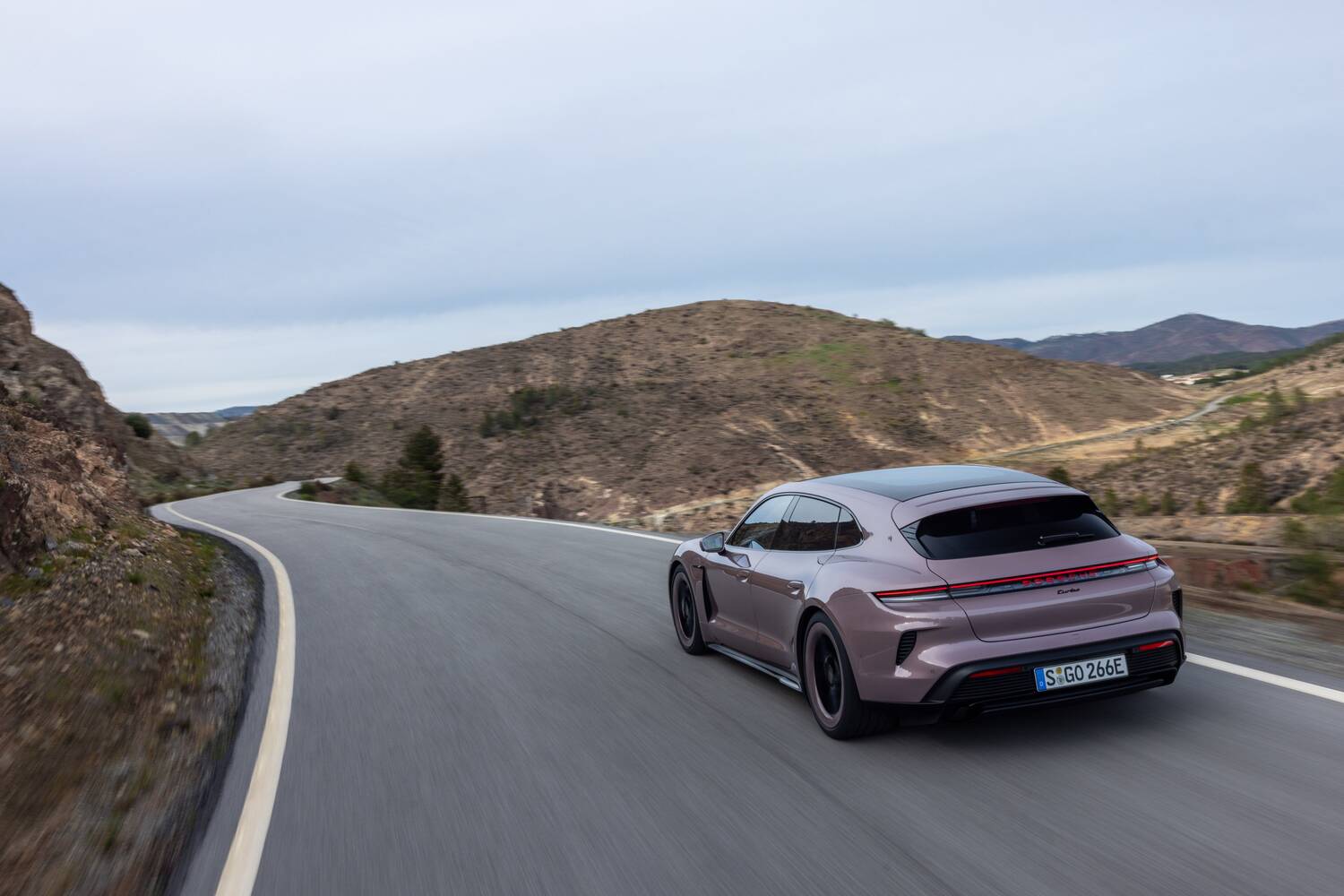
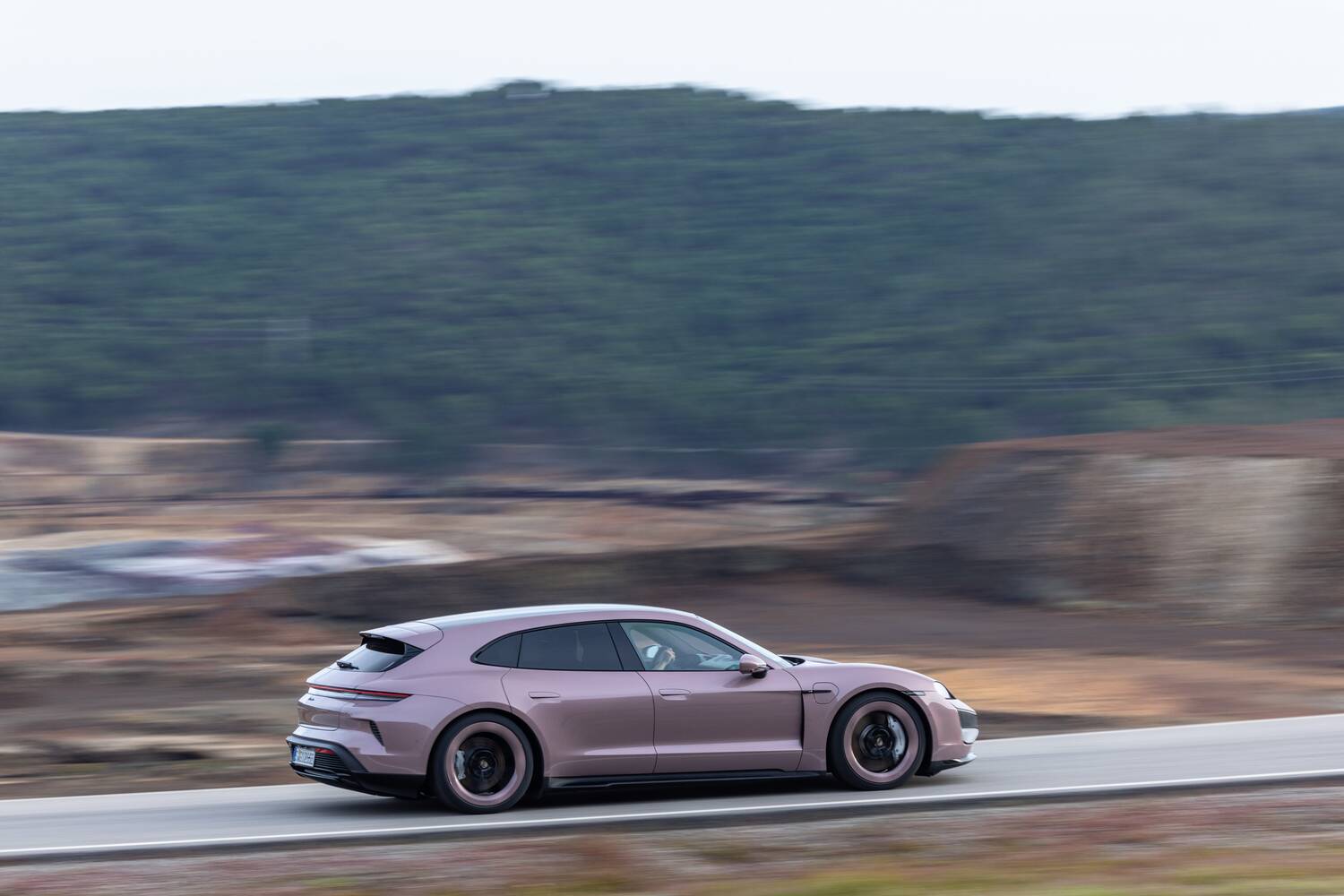
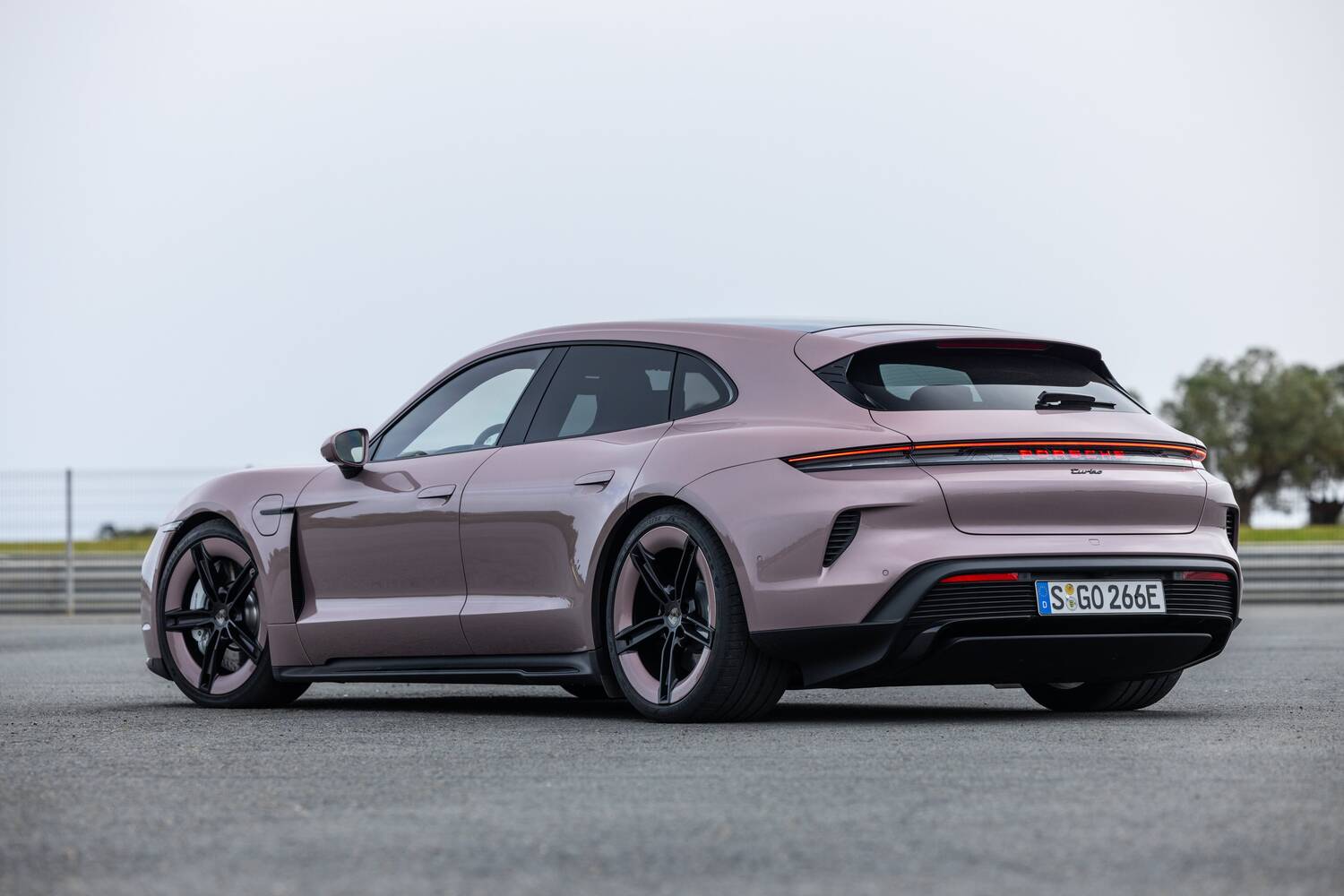
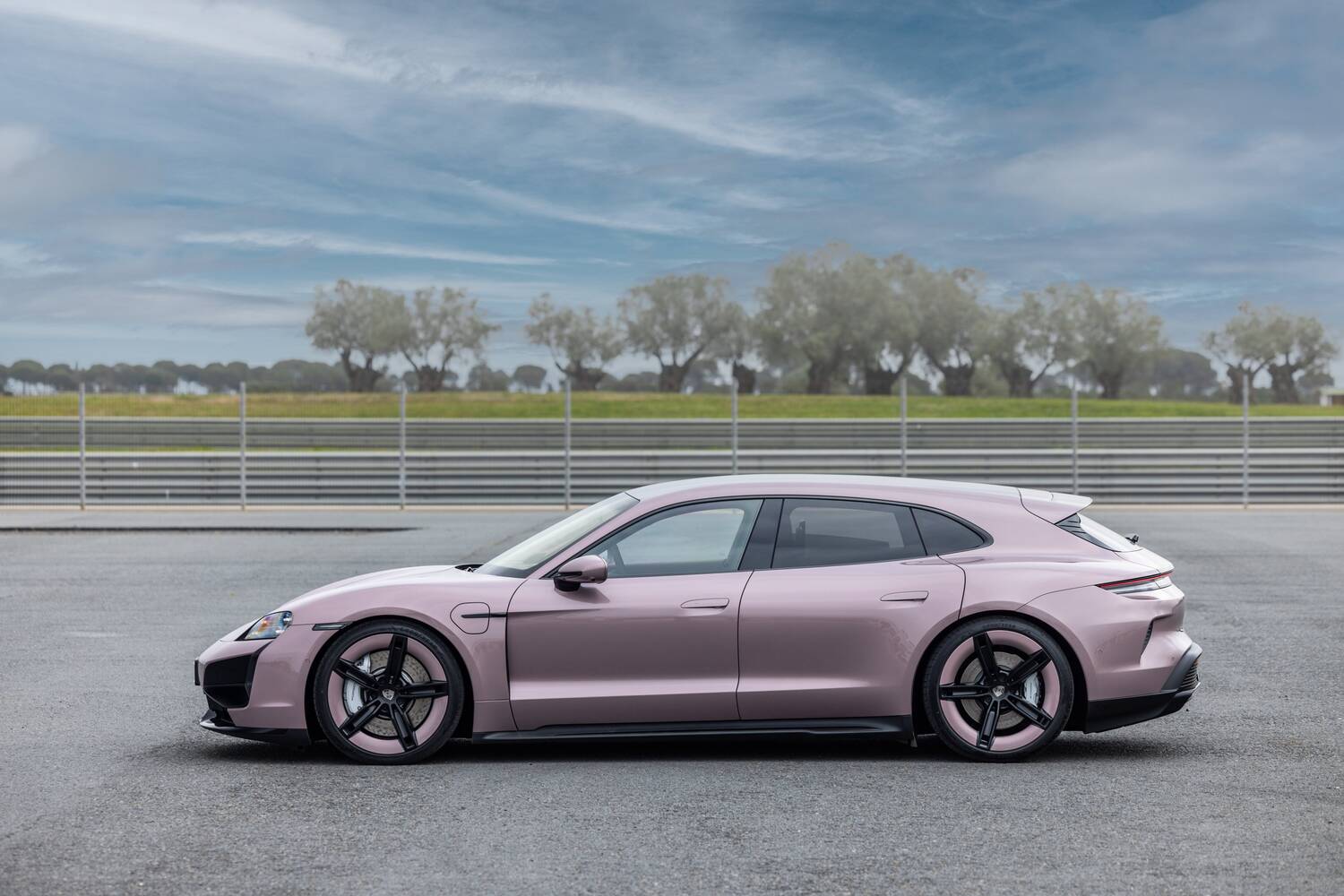
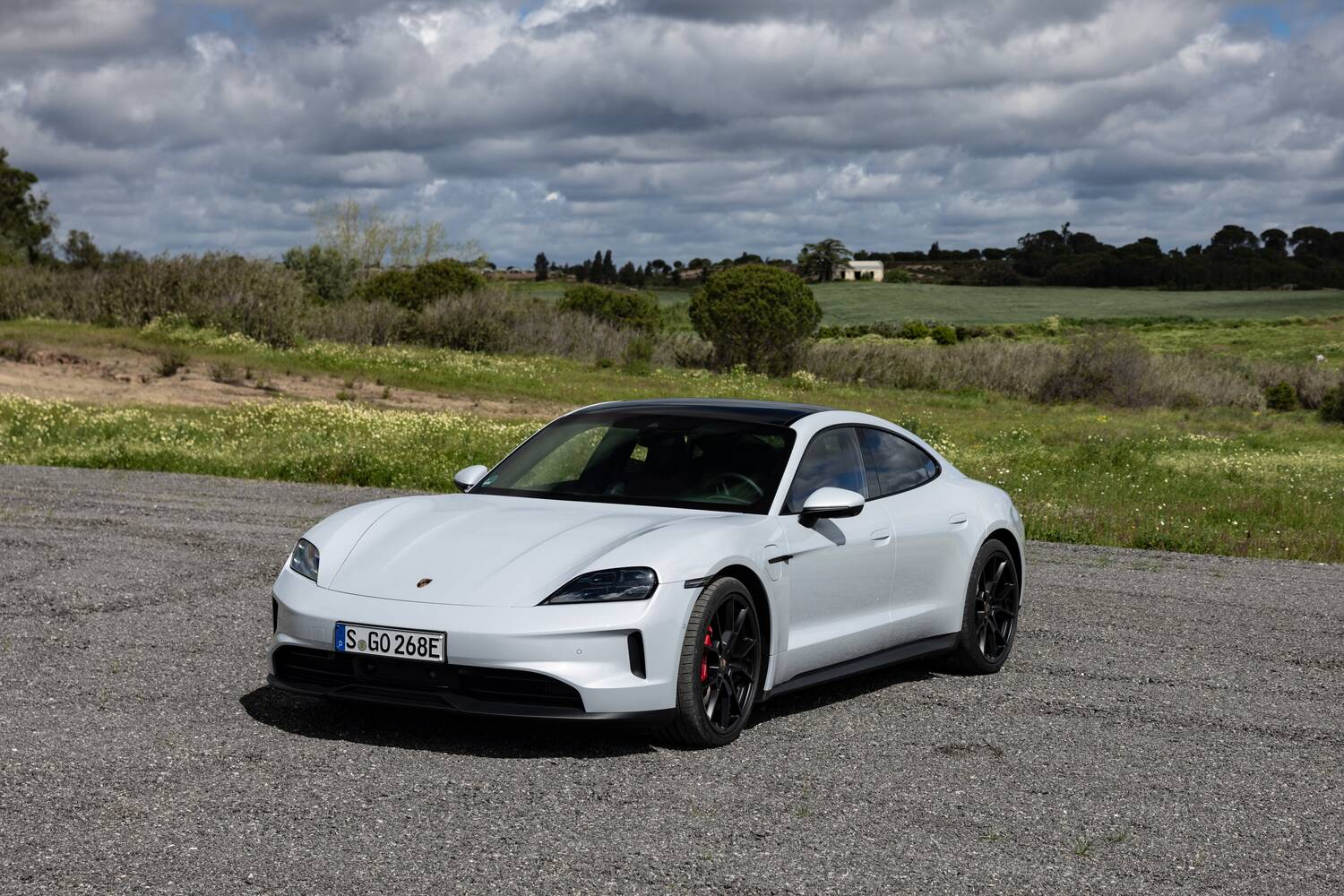
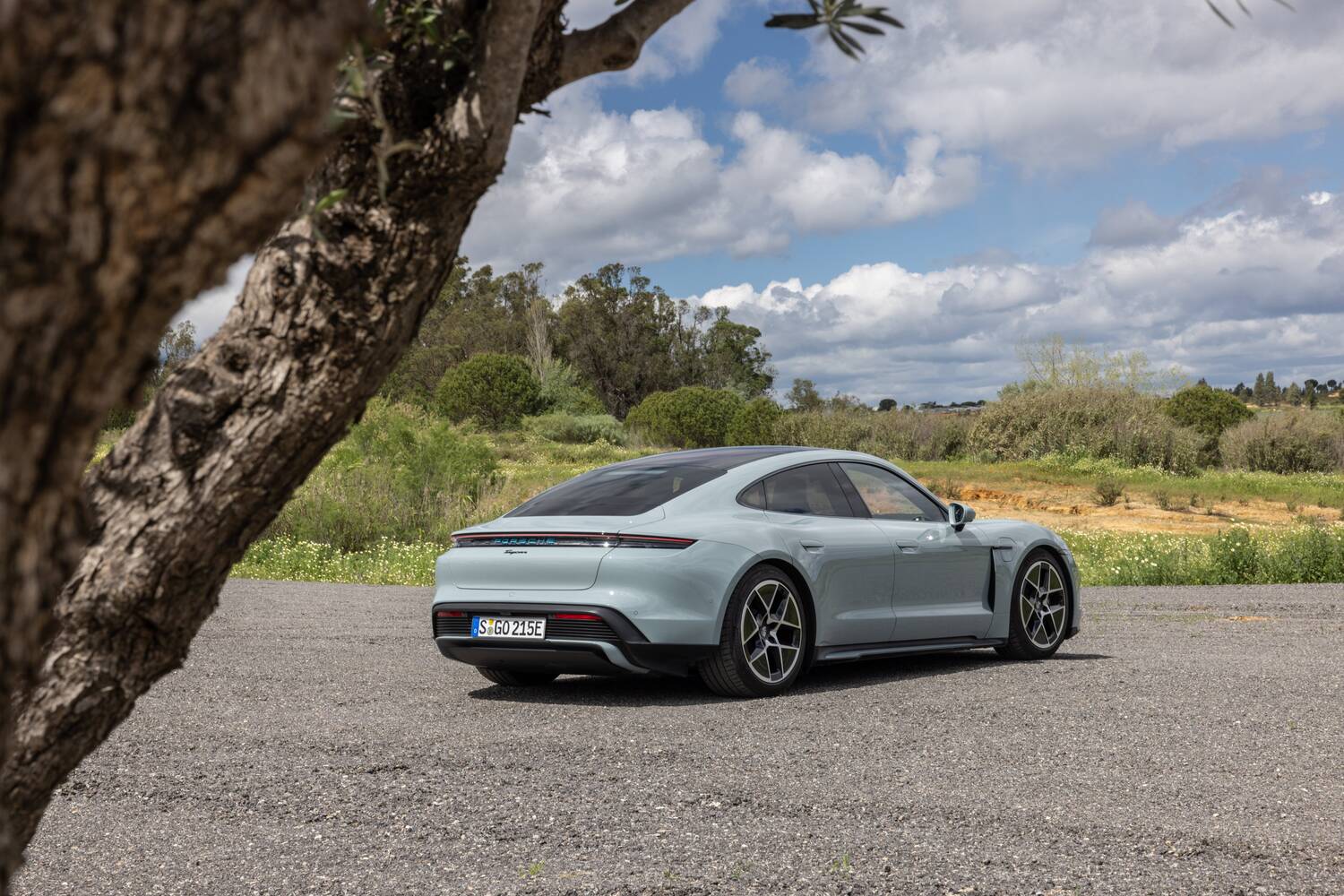
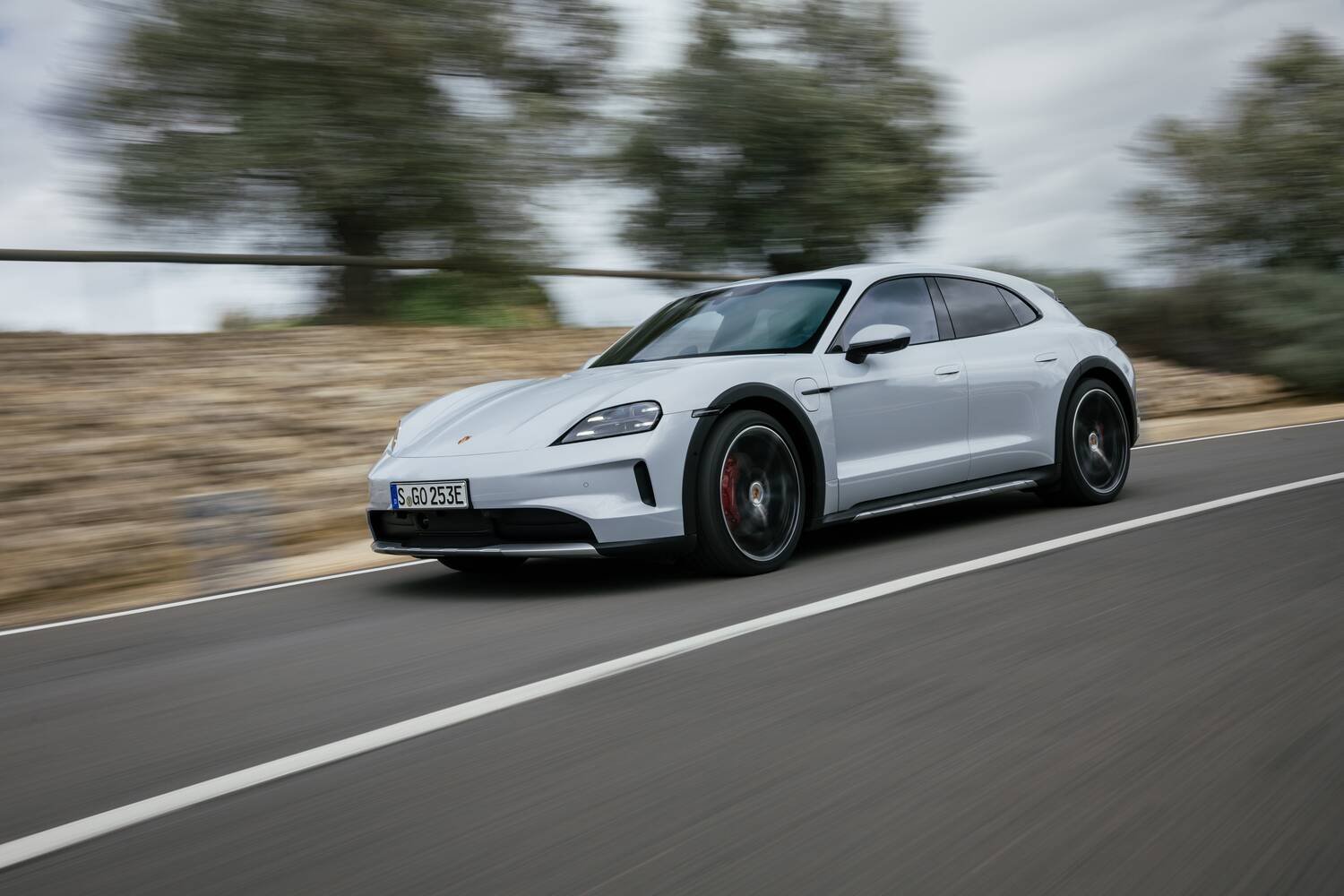
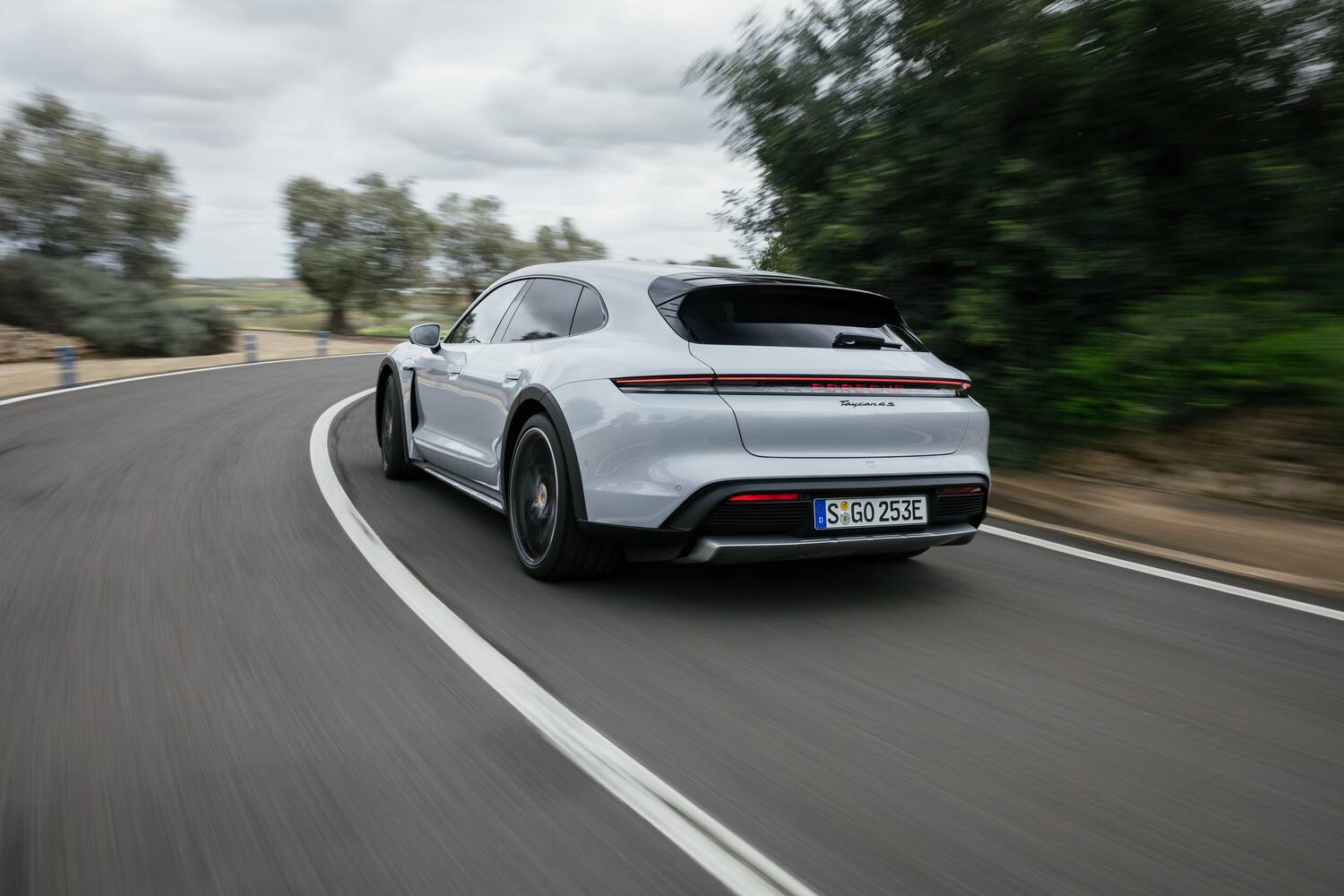
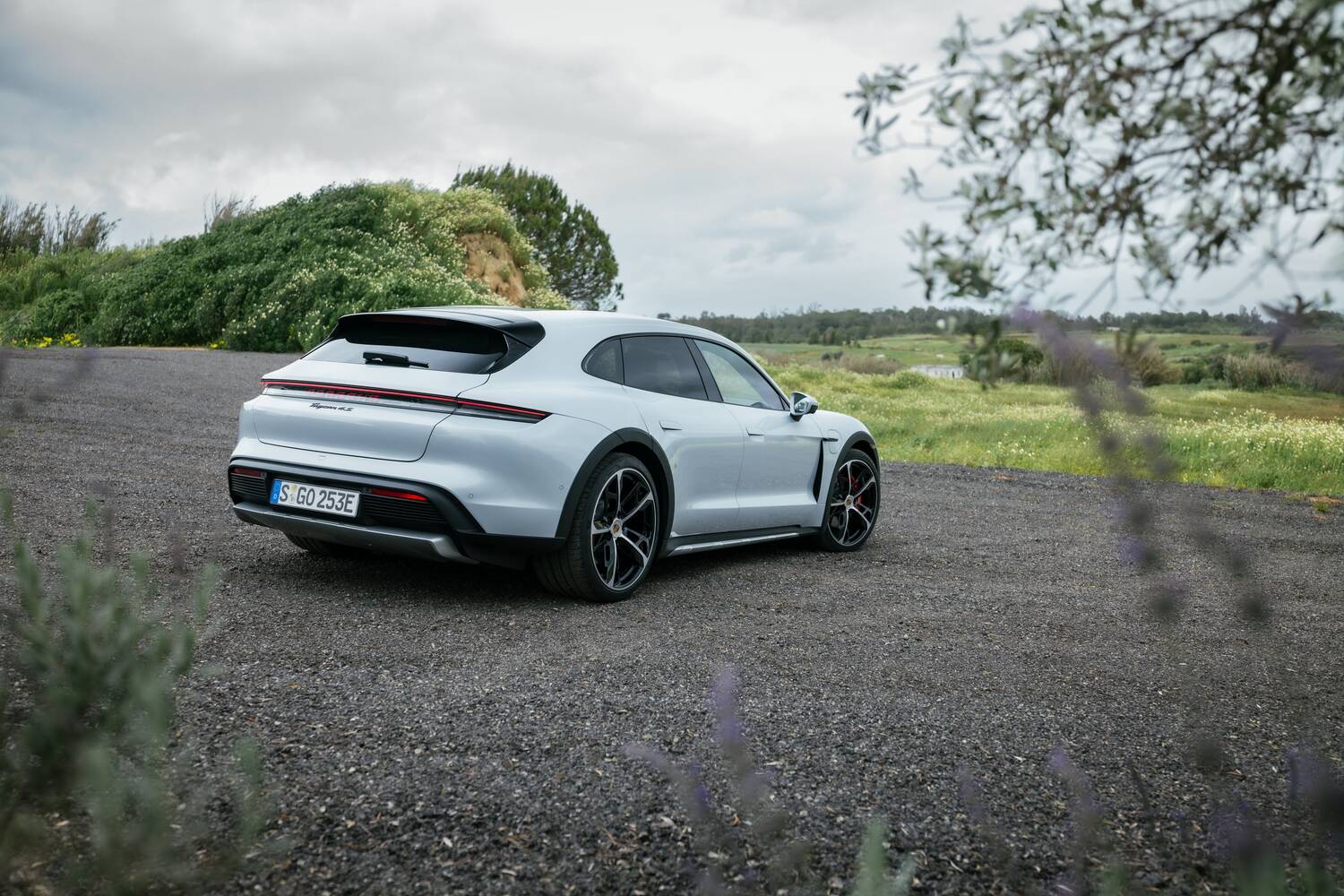
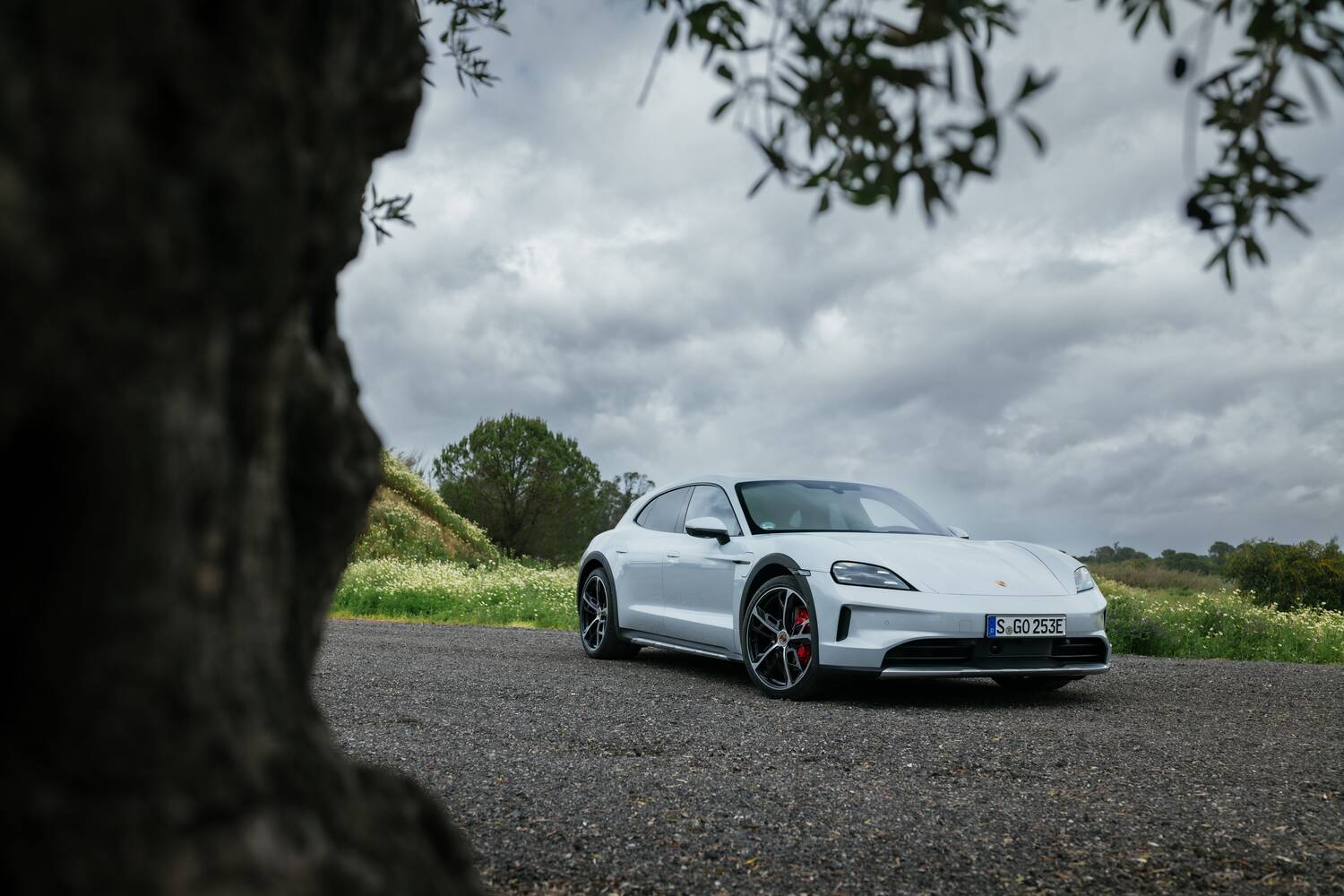
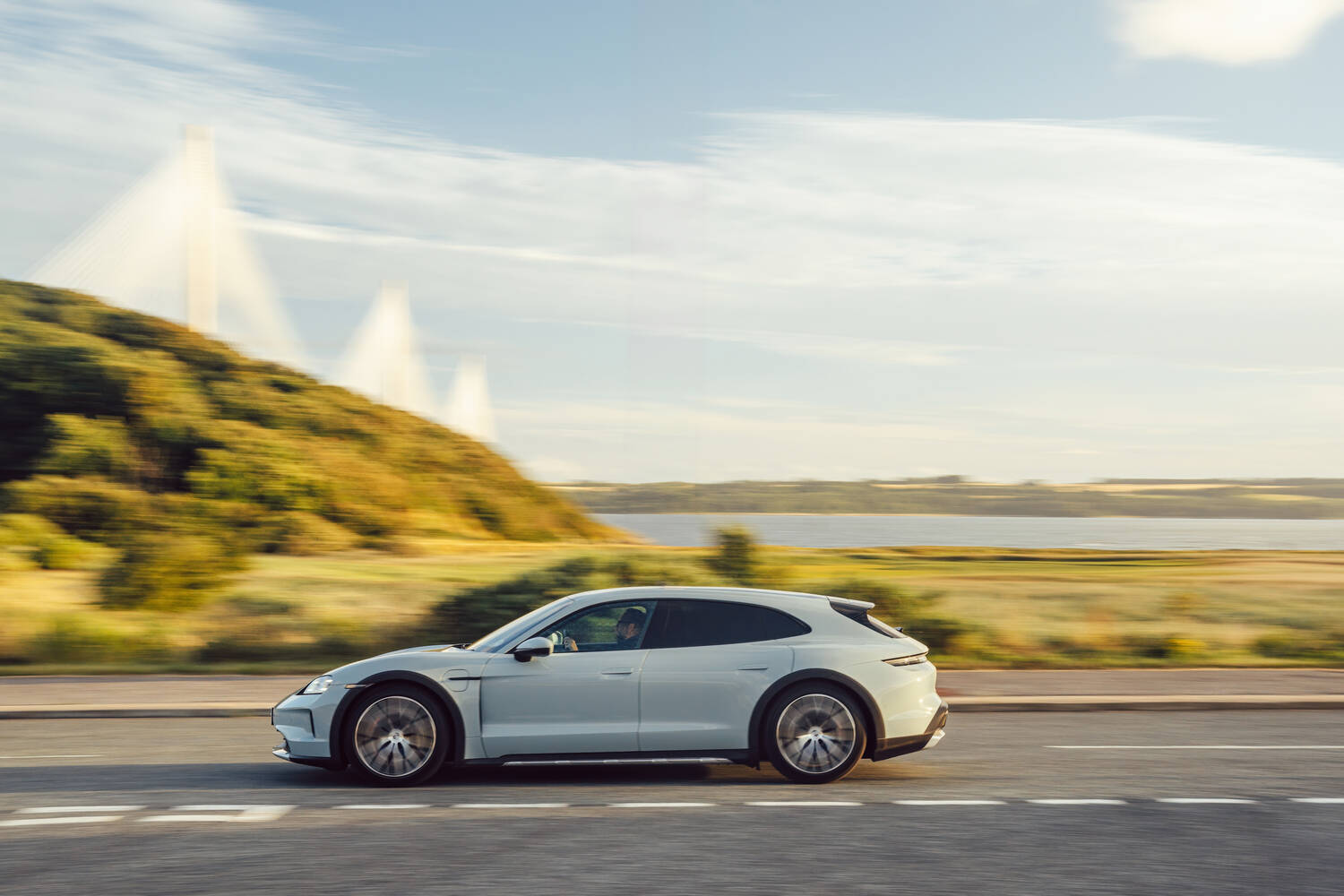

Exterior & design of the 2026 Porsche Taycan
- Three body styles to choose from
- All look sleek and aerodynamic
- 19- to 21-inch alloy wheels offered

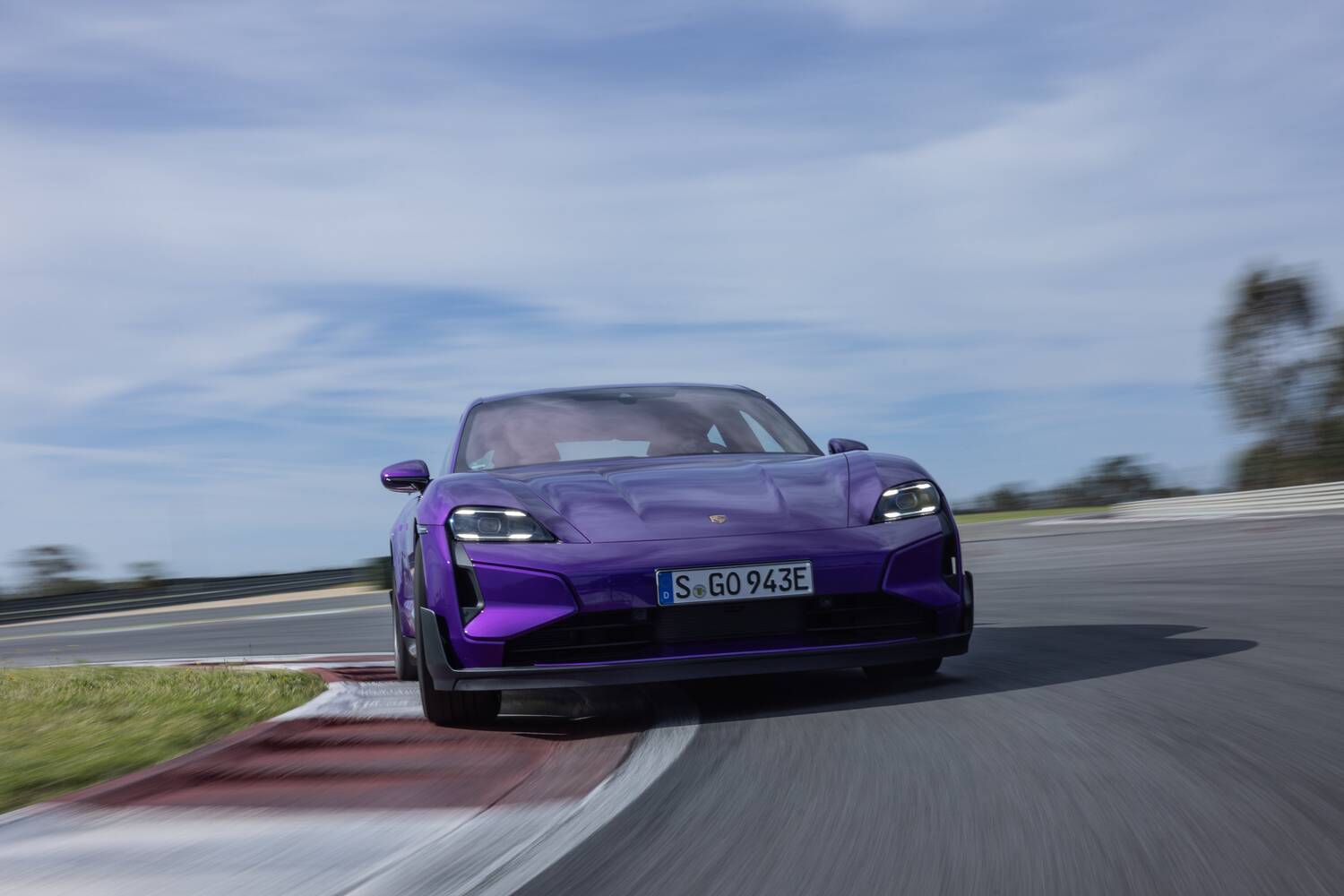
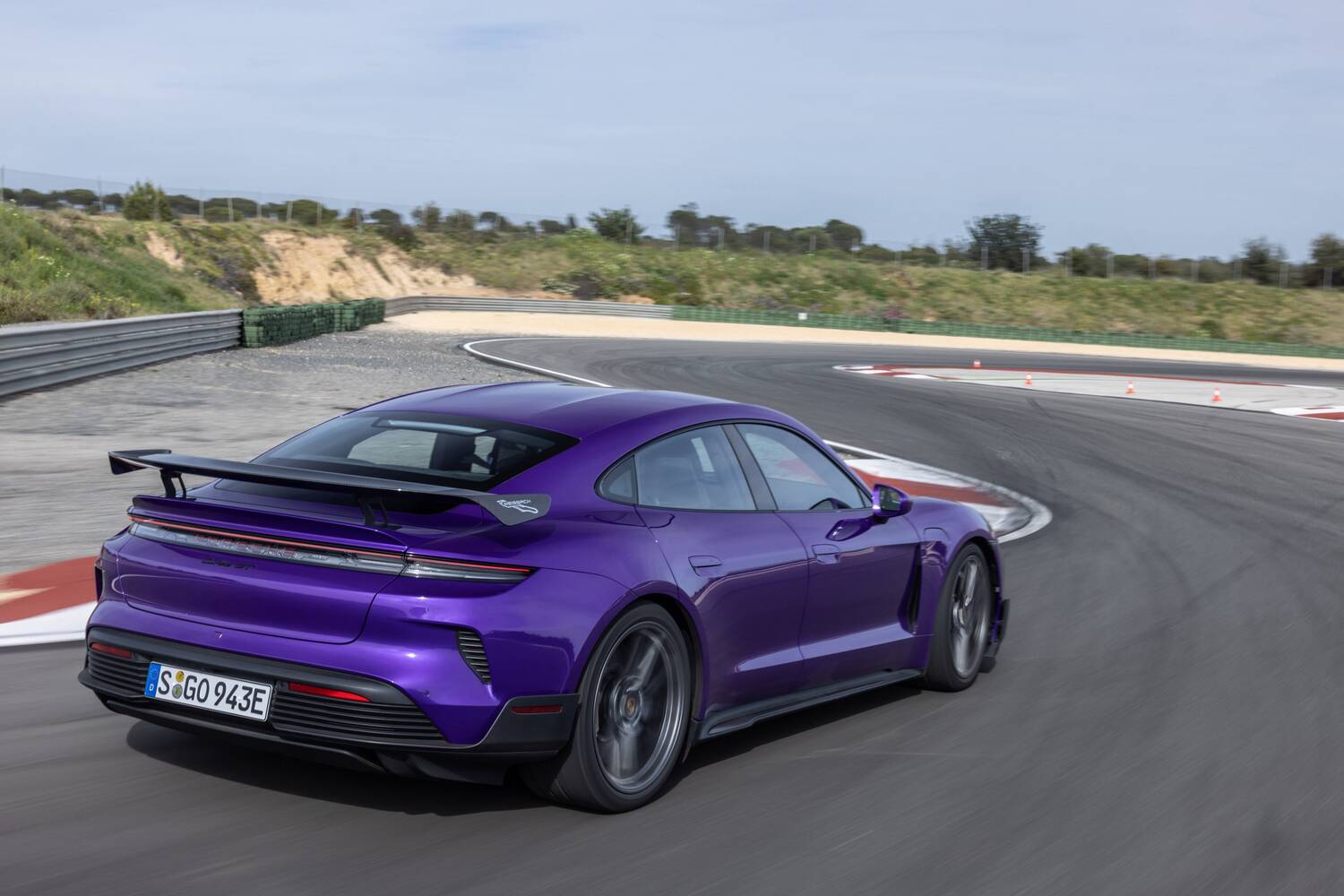
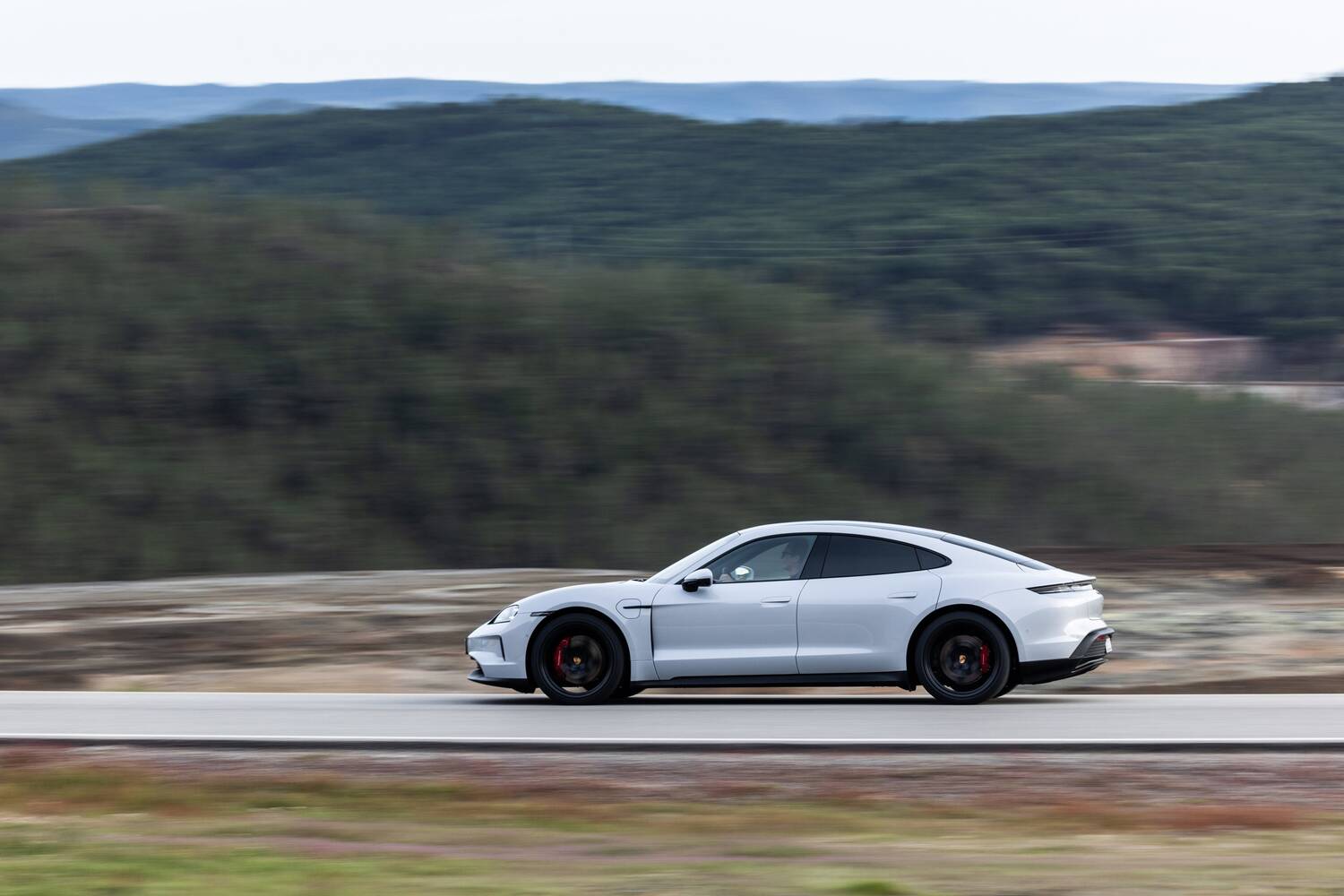
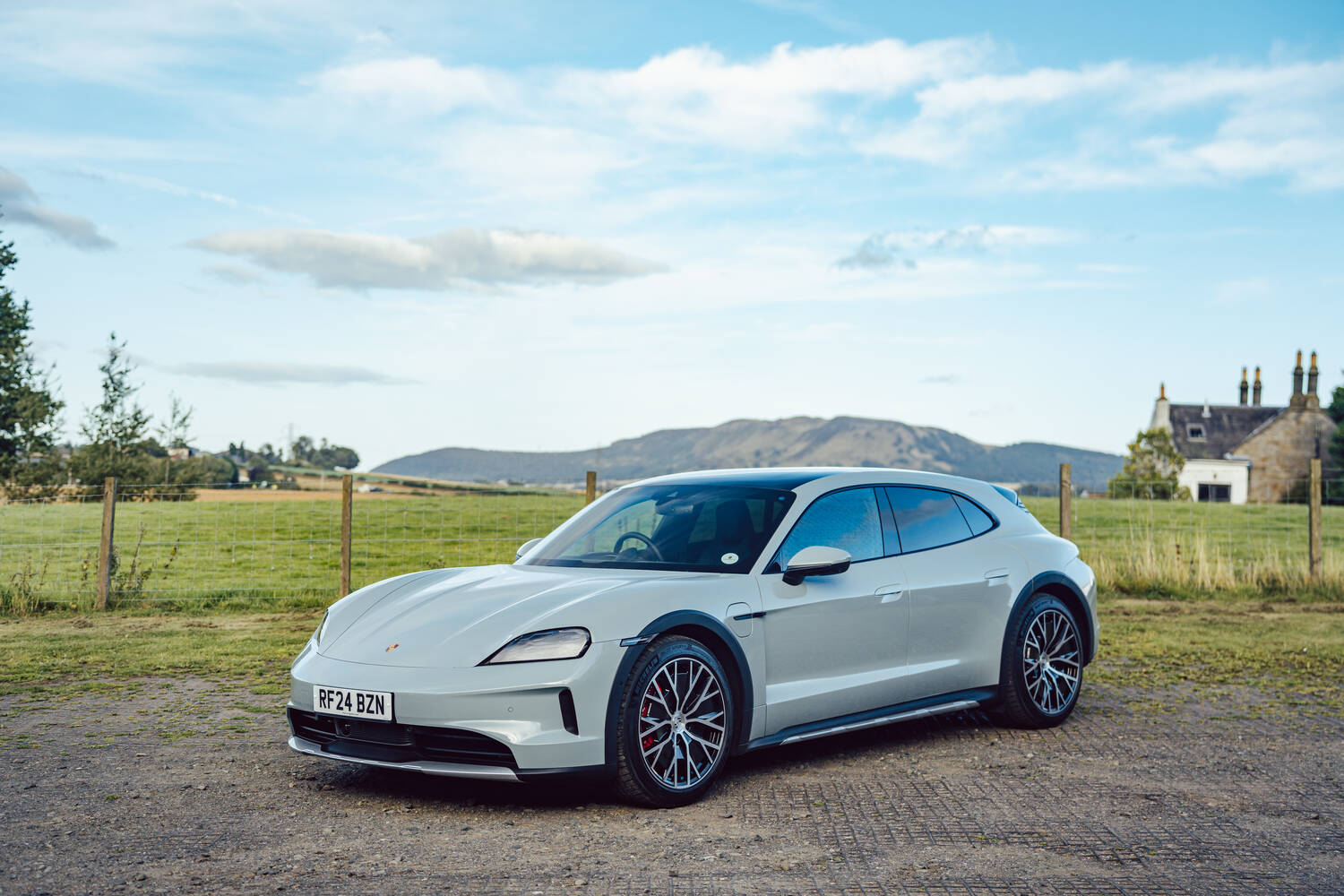
The appearance of the Porsche Taycan was inspired by the Mission E concept car, and it has gone on to inform the firm's subsequent electric models, the Macan Electric and Cayenne Electric SUVs, which have appeared since the Taycan's launch.
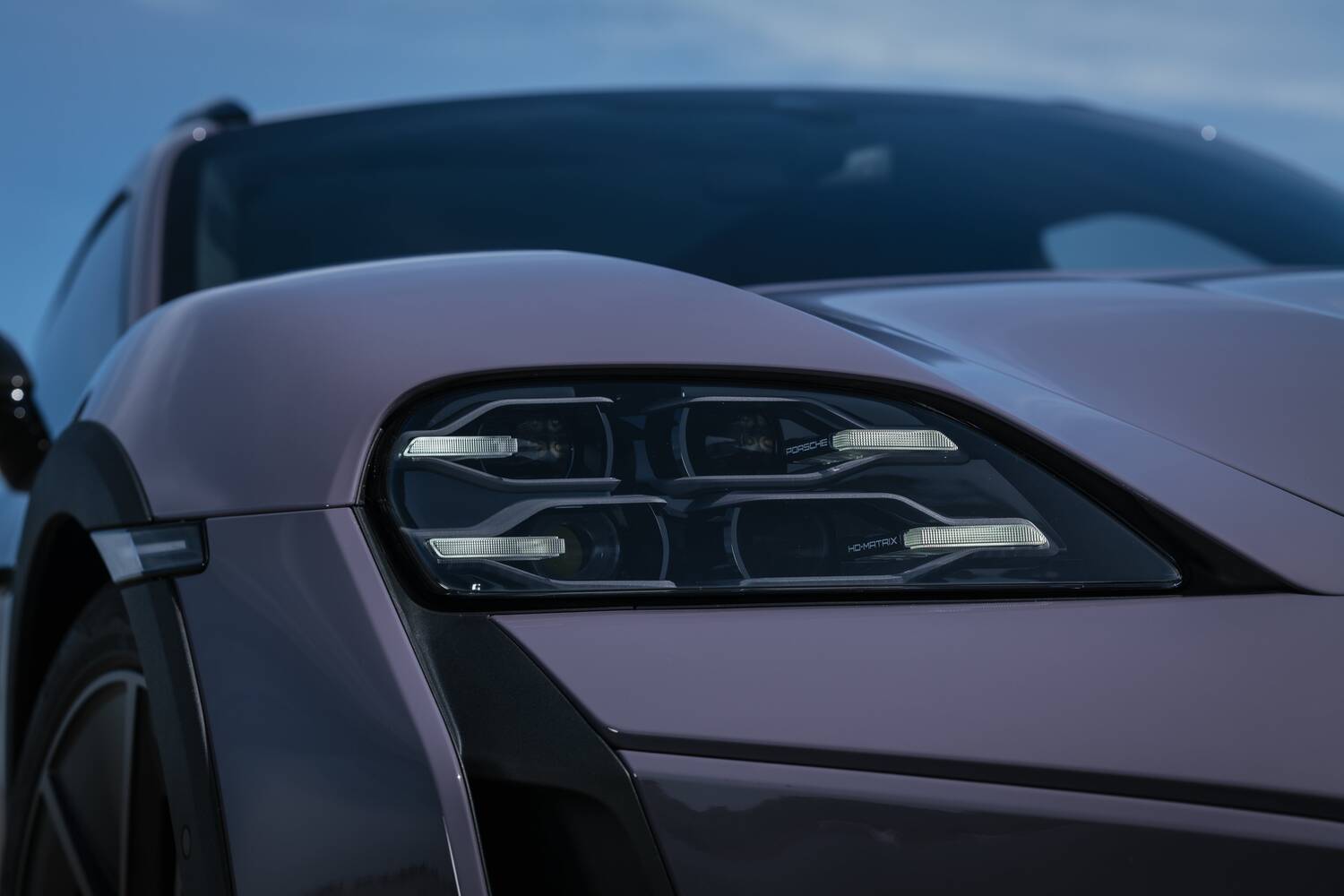
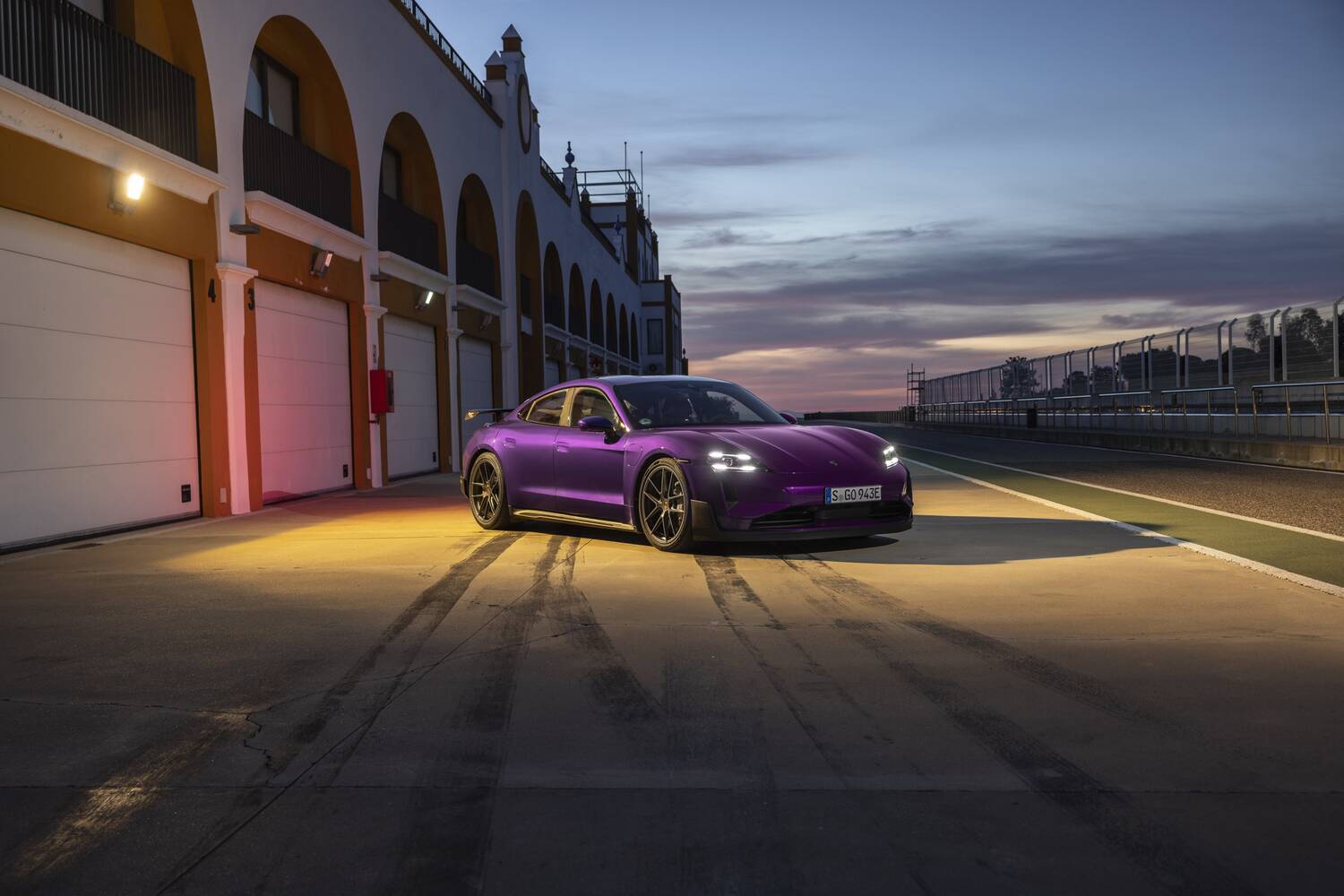
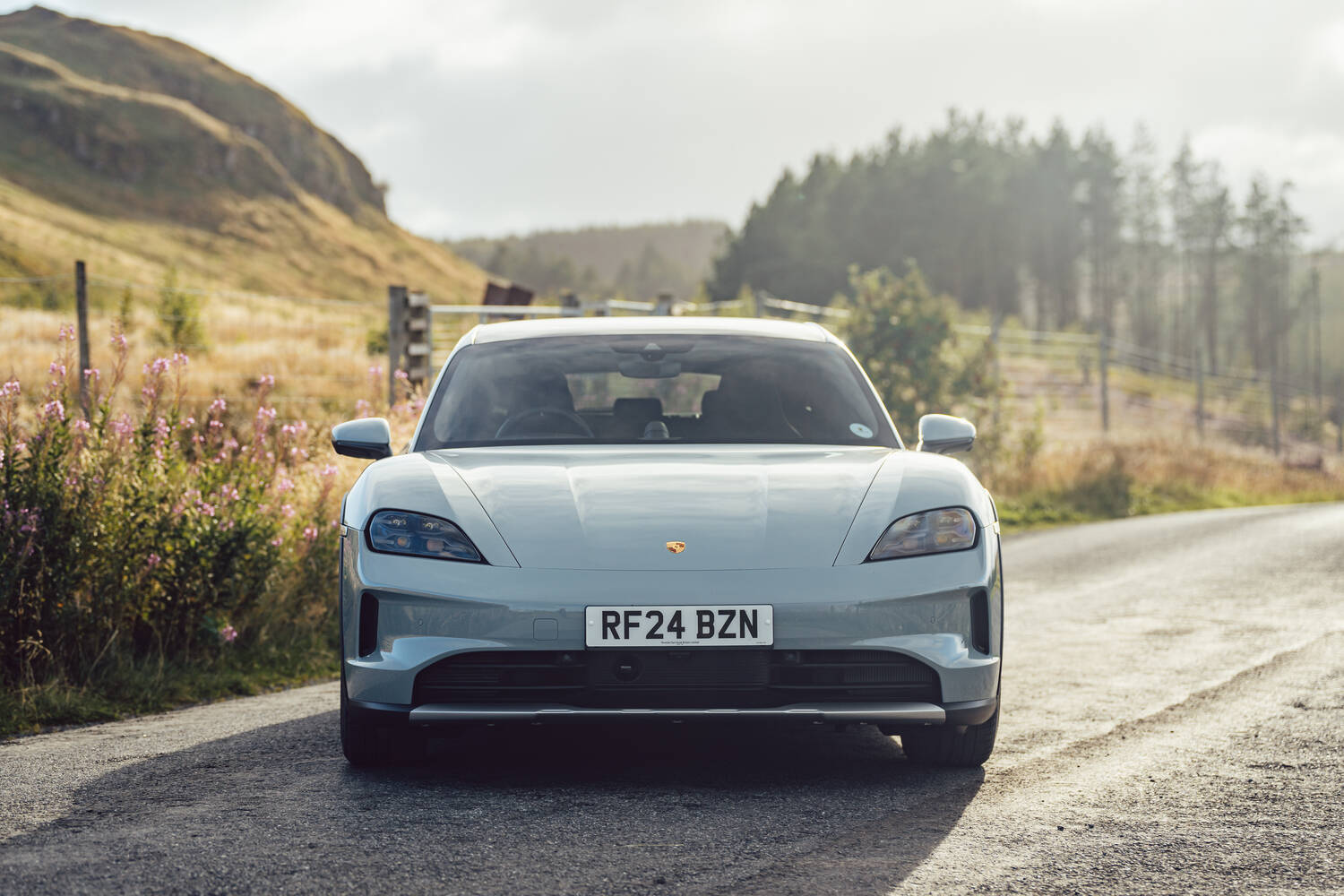
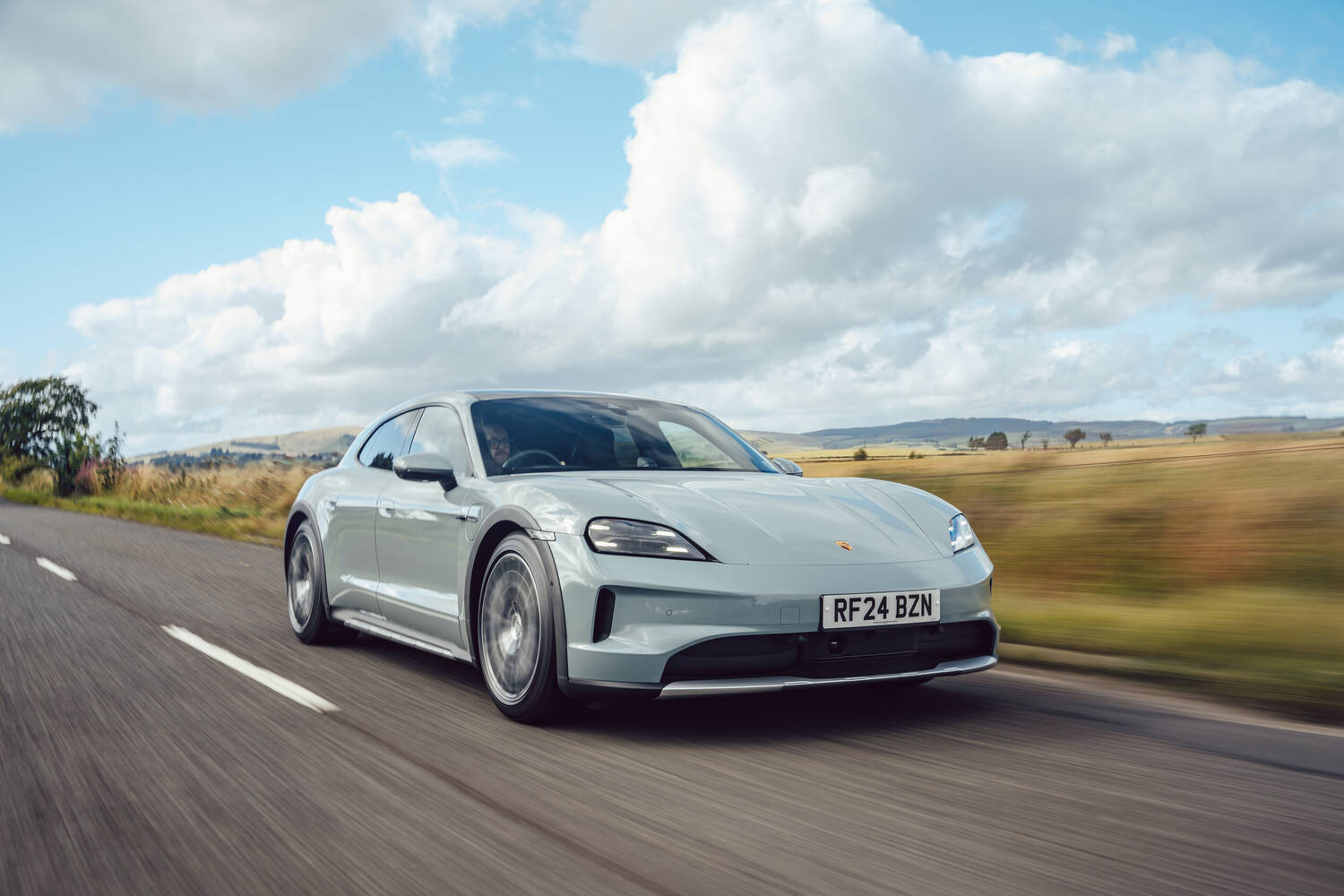
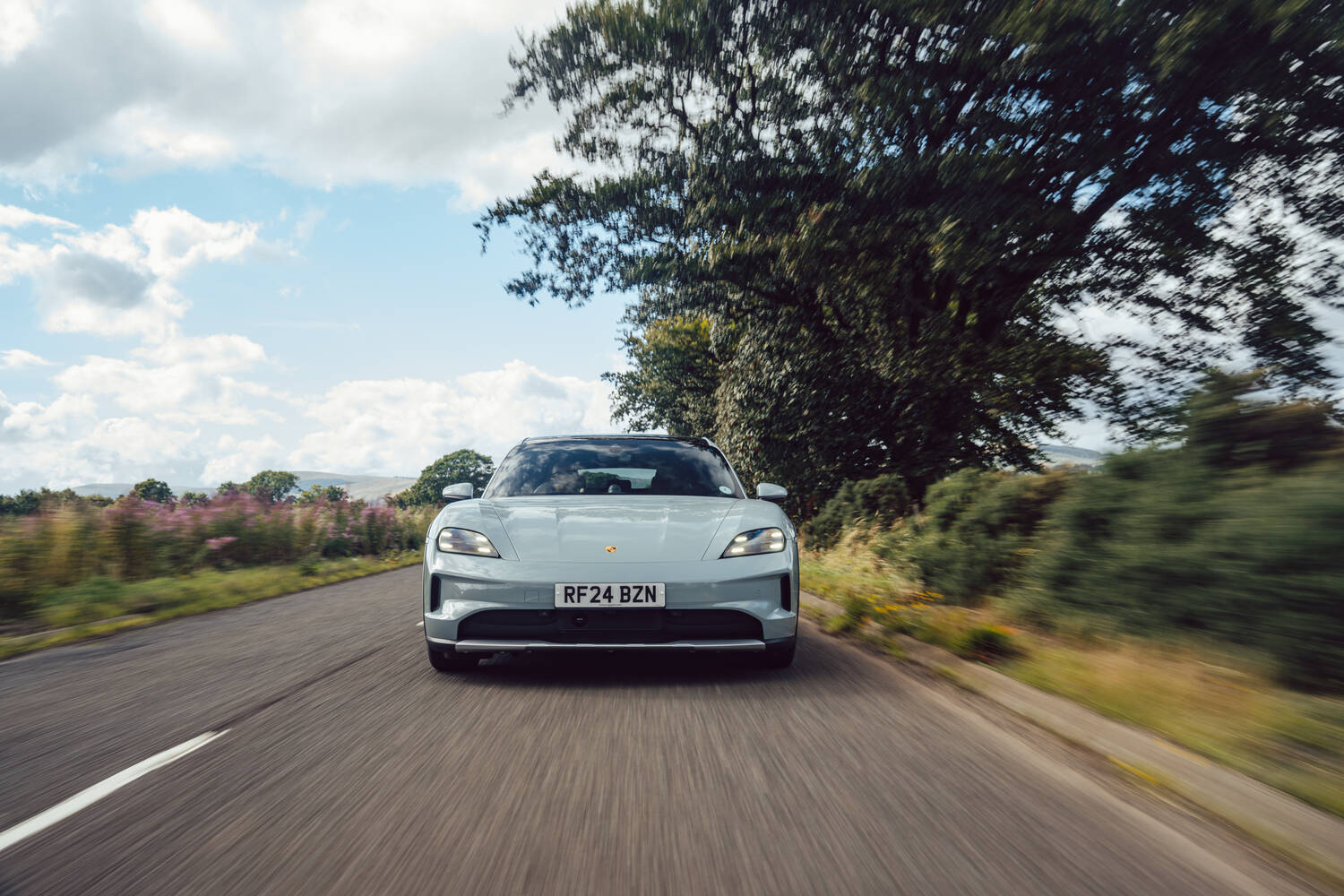
The defining feature is a smoothed-off nose framed with squarer, flatter headlamp units than those found on combustion-powered Porsches, which tend to have round lights instead.

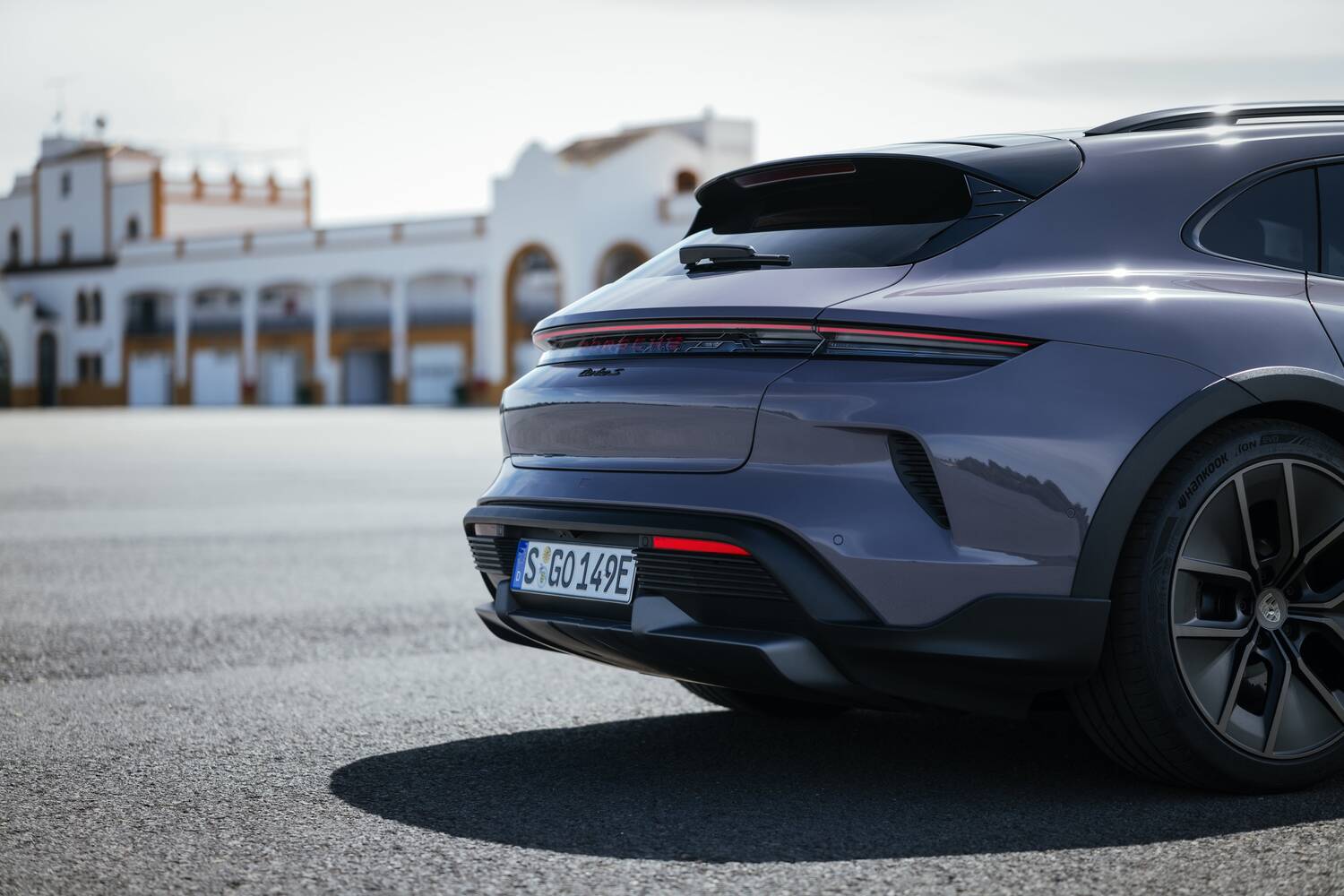
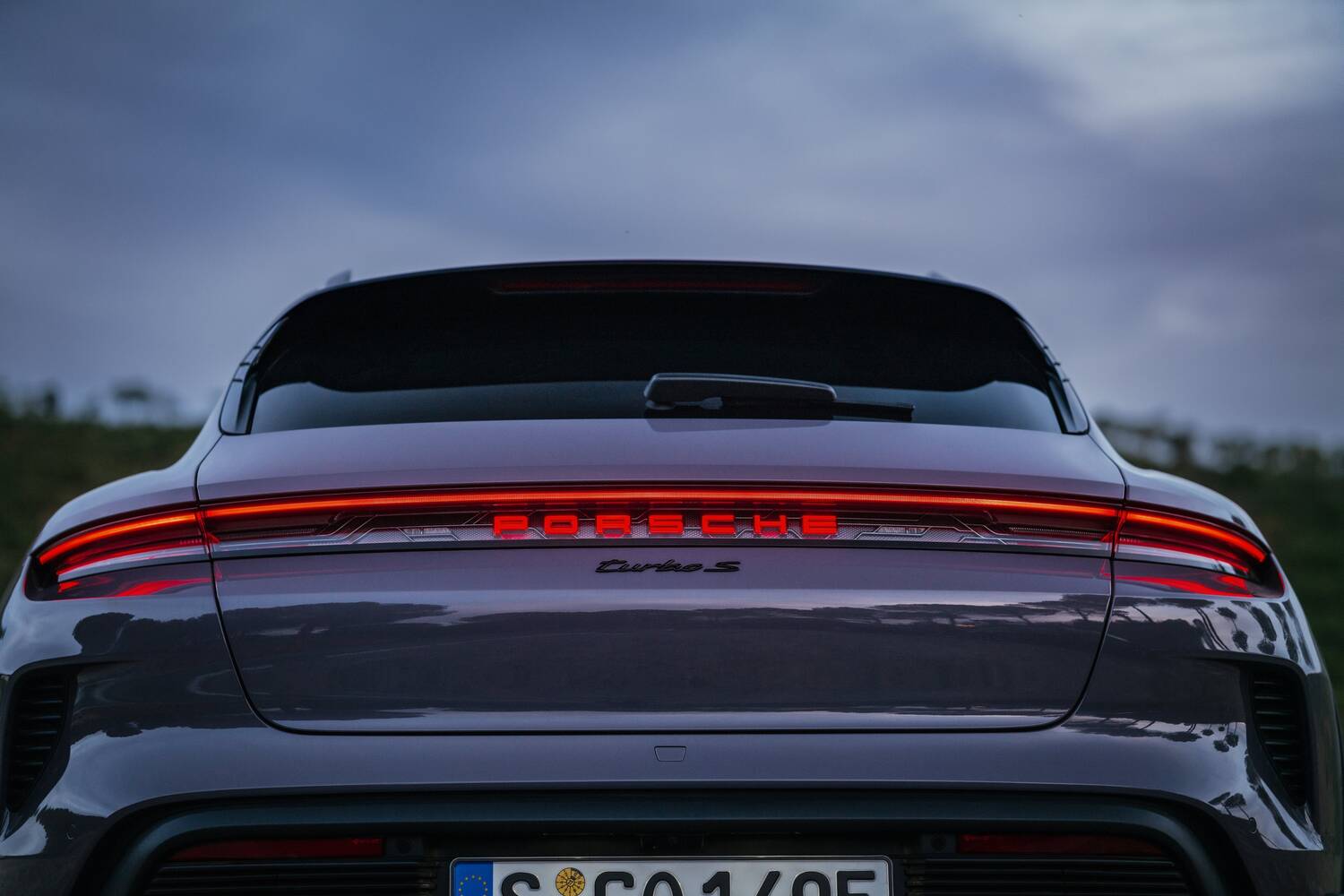
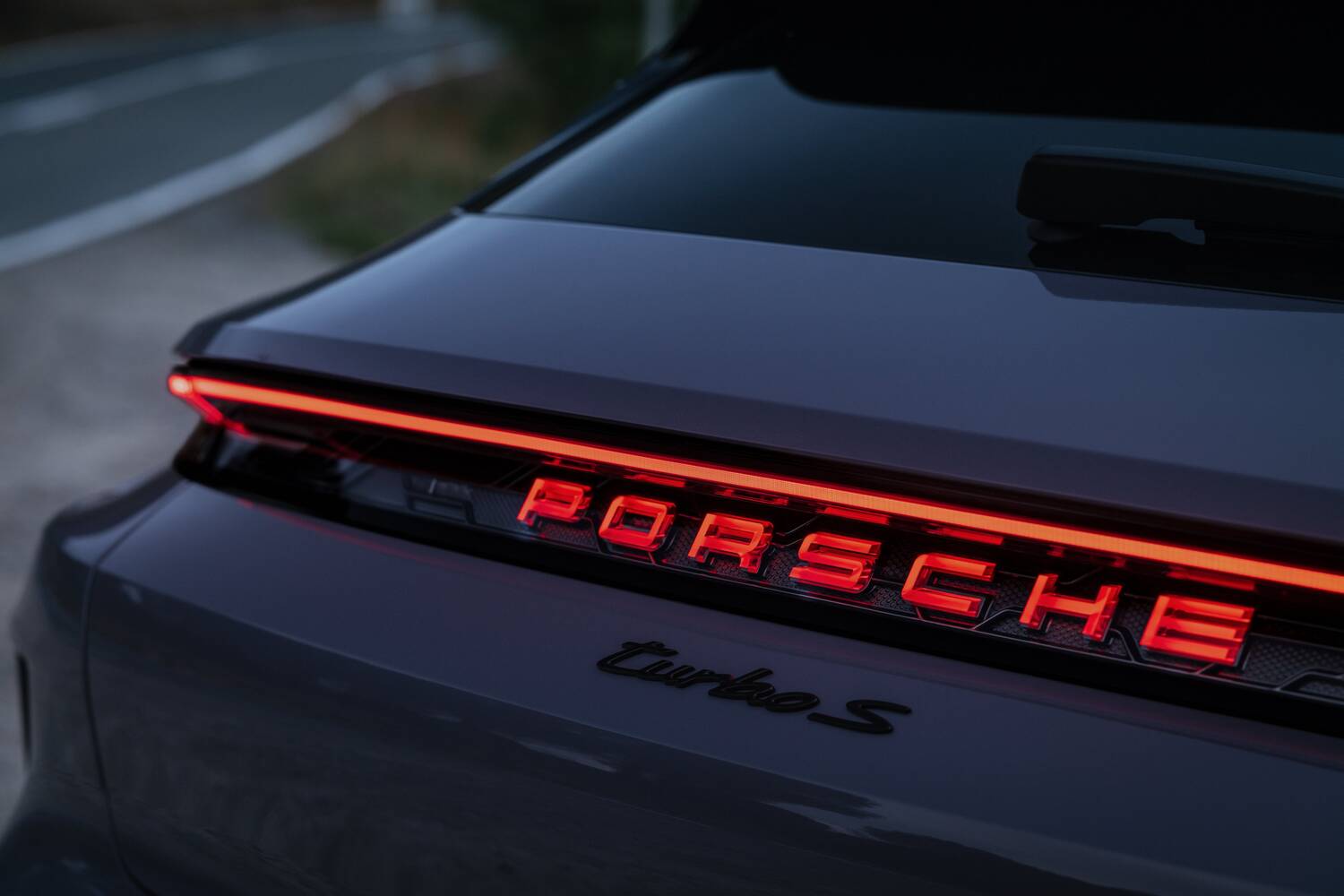
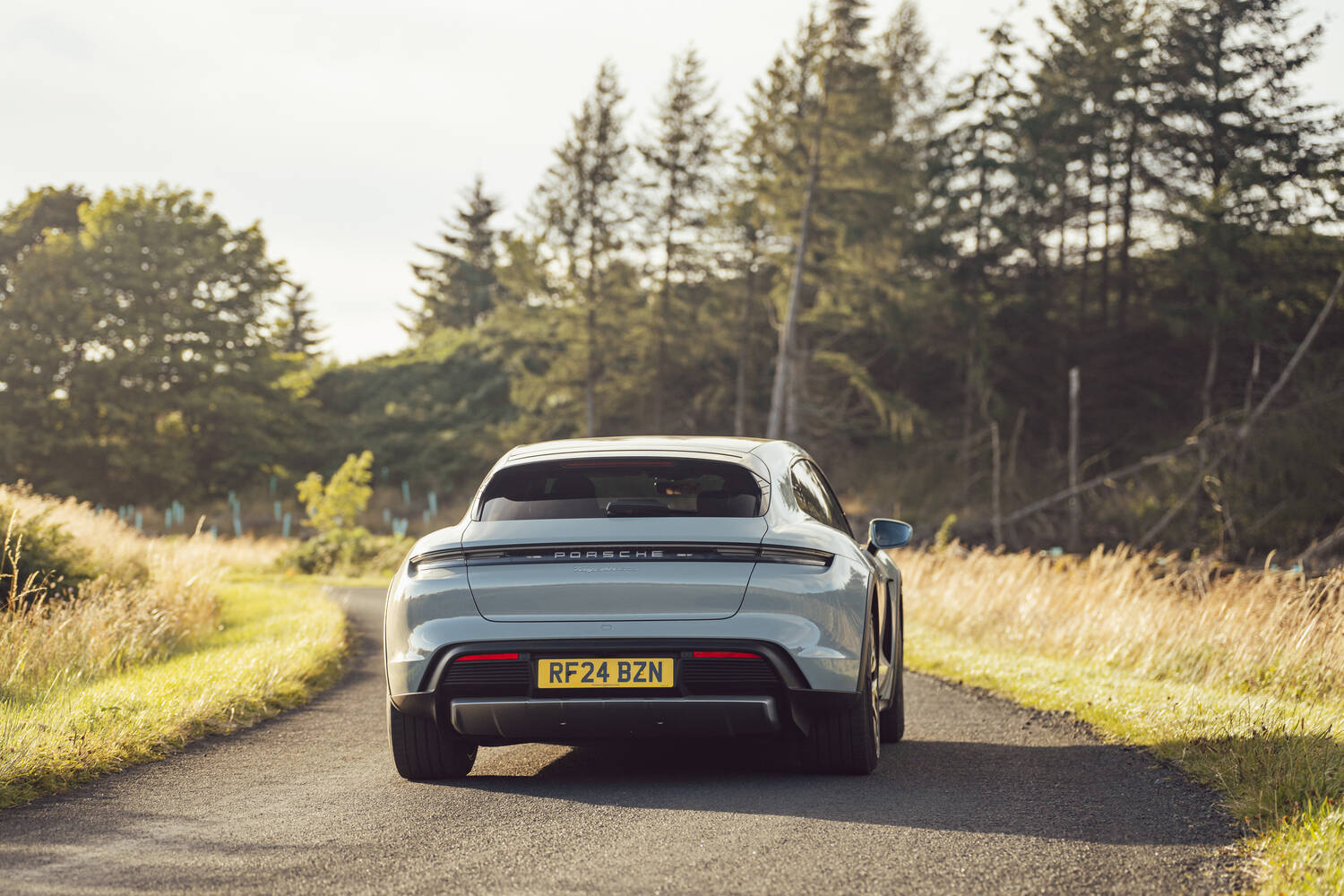
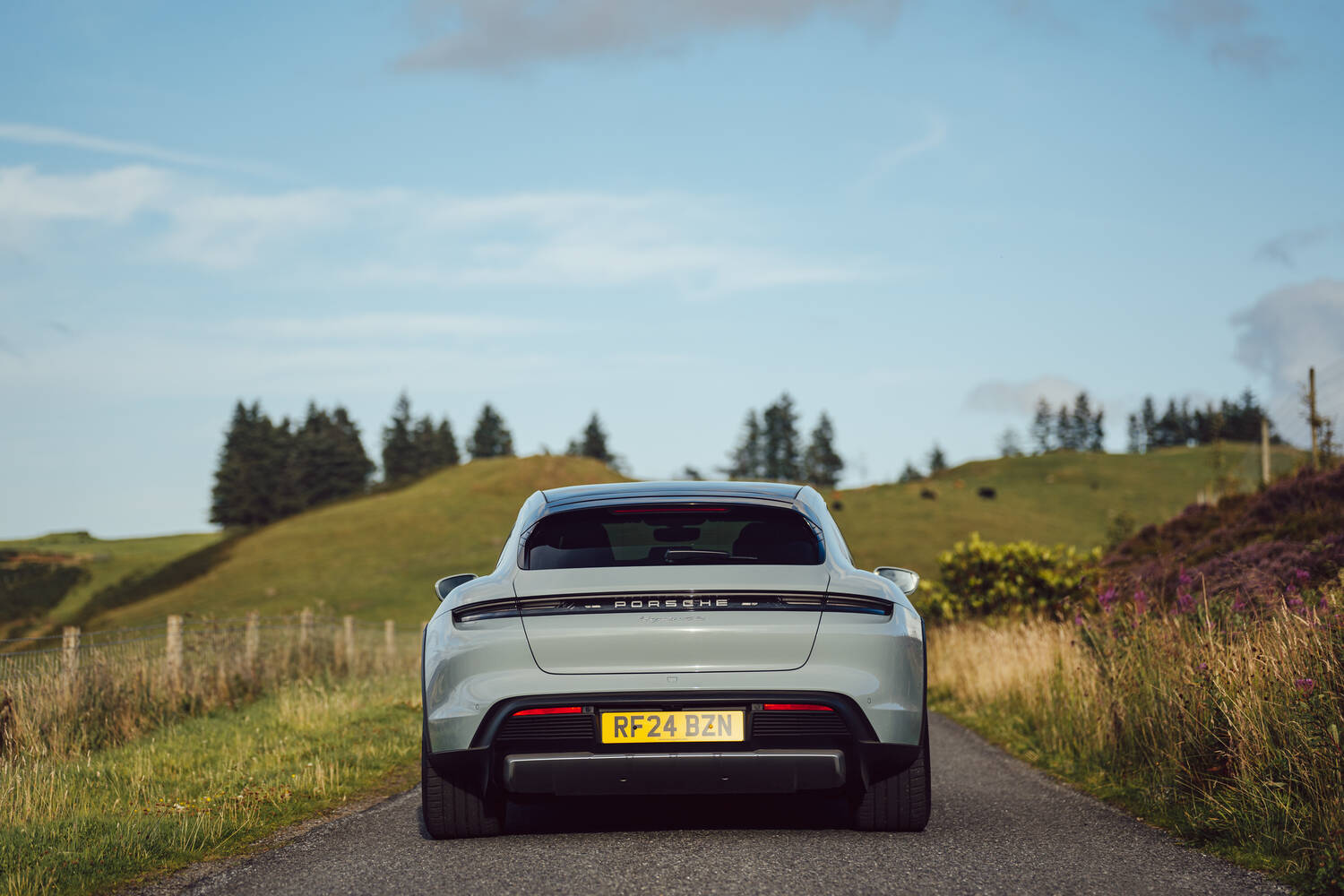
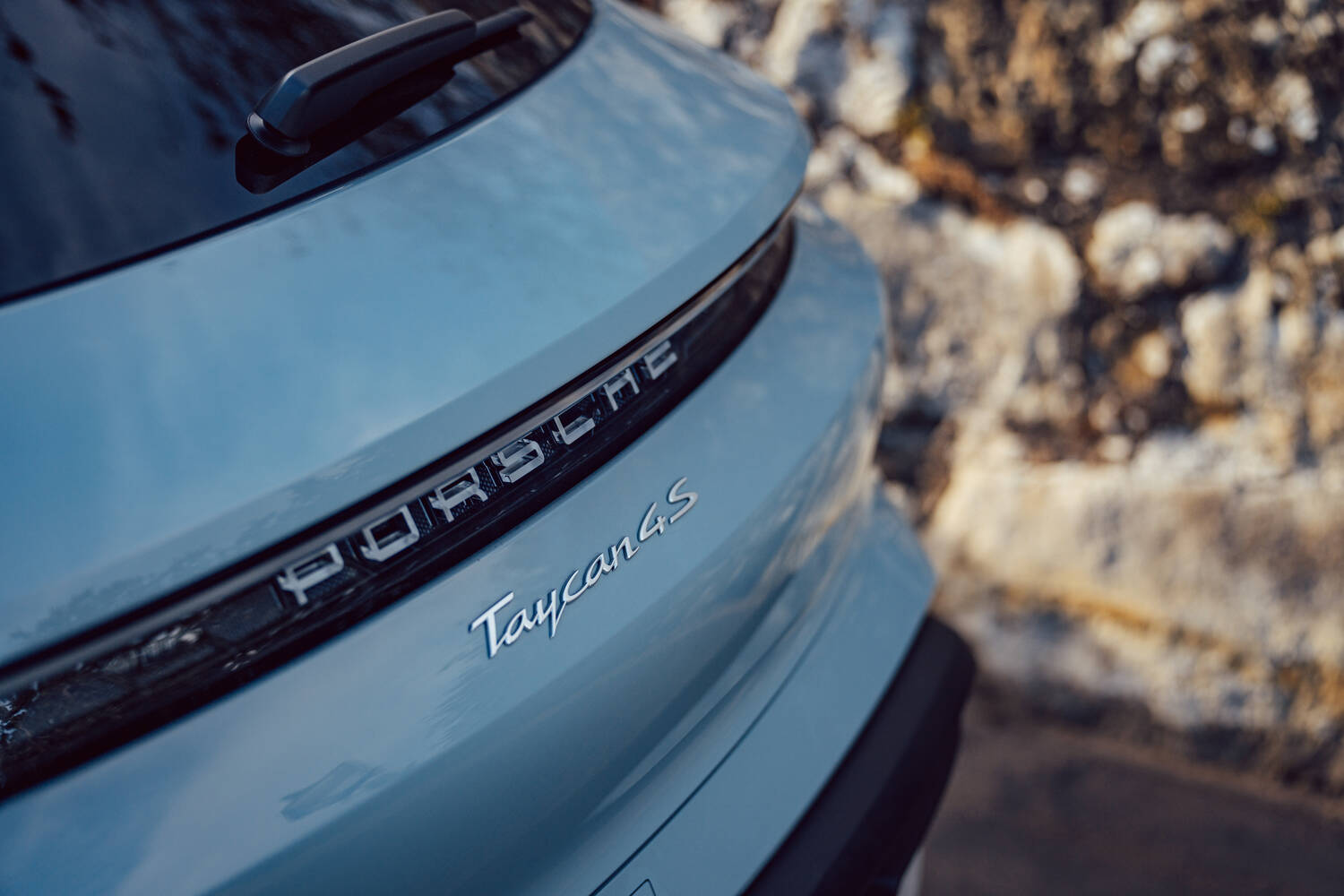
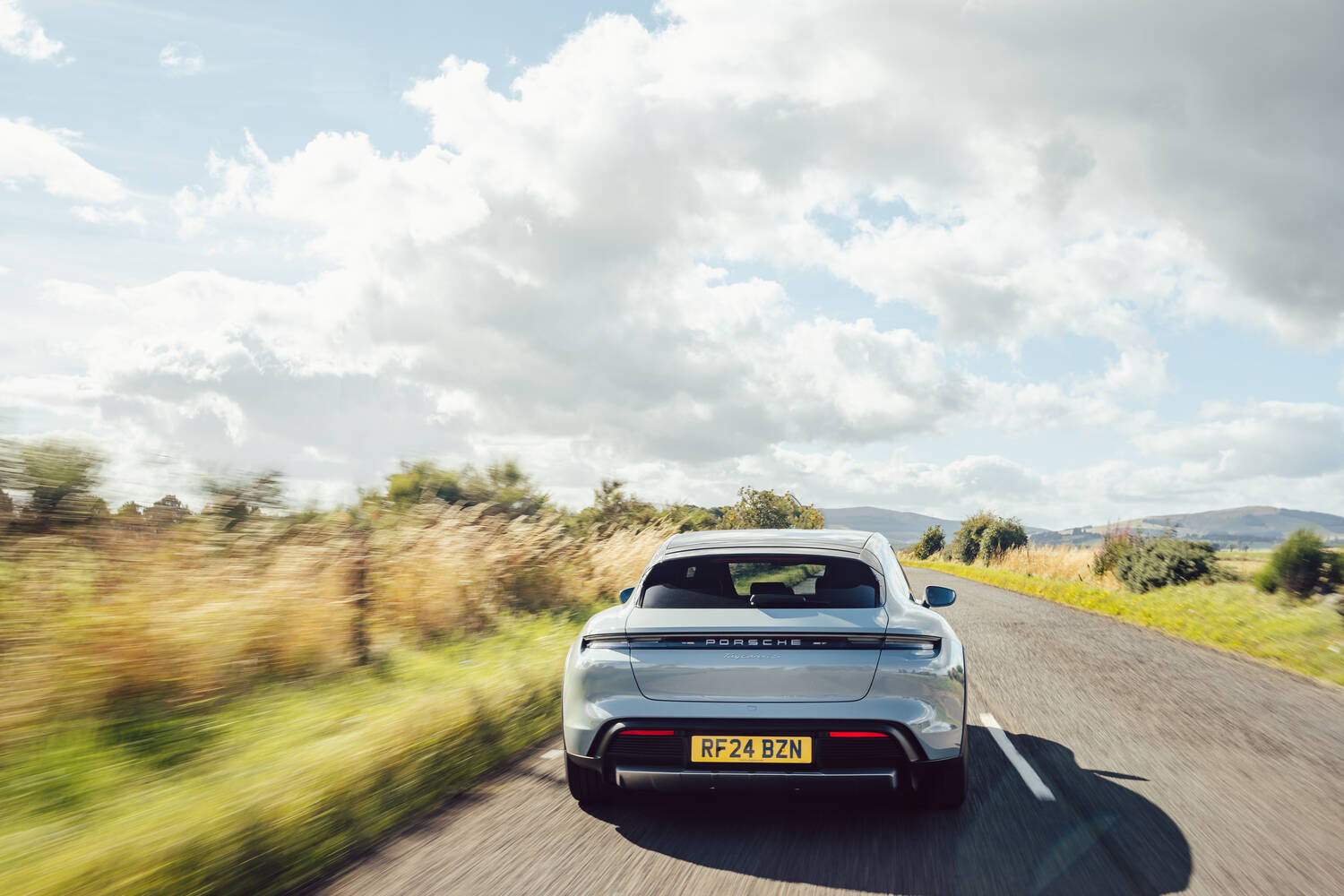
Around the back is a full-width light strip and all versions of the Taycan are designed to be aerodynamically efficient. With a best coefficient-of-drag figure of 0.22 for the Saloon, the Taycan is the slipperiest car Porsche makes.
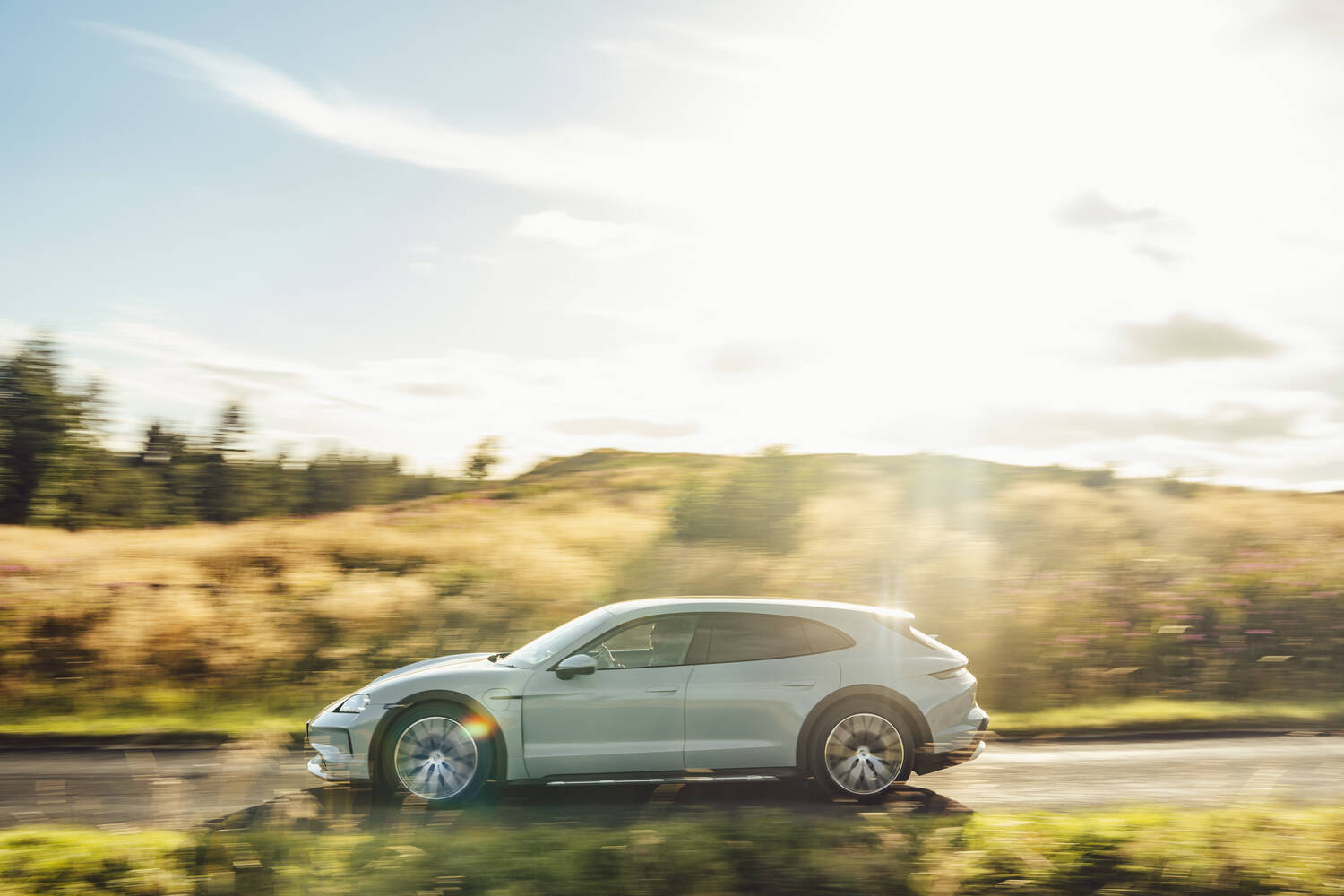
The three base body styles are the regular four-door Saloon, the five-door Sport Turismo - with its elongated roof, essentially an estate version of the original Taycan - and the Cross Turismo.

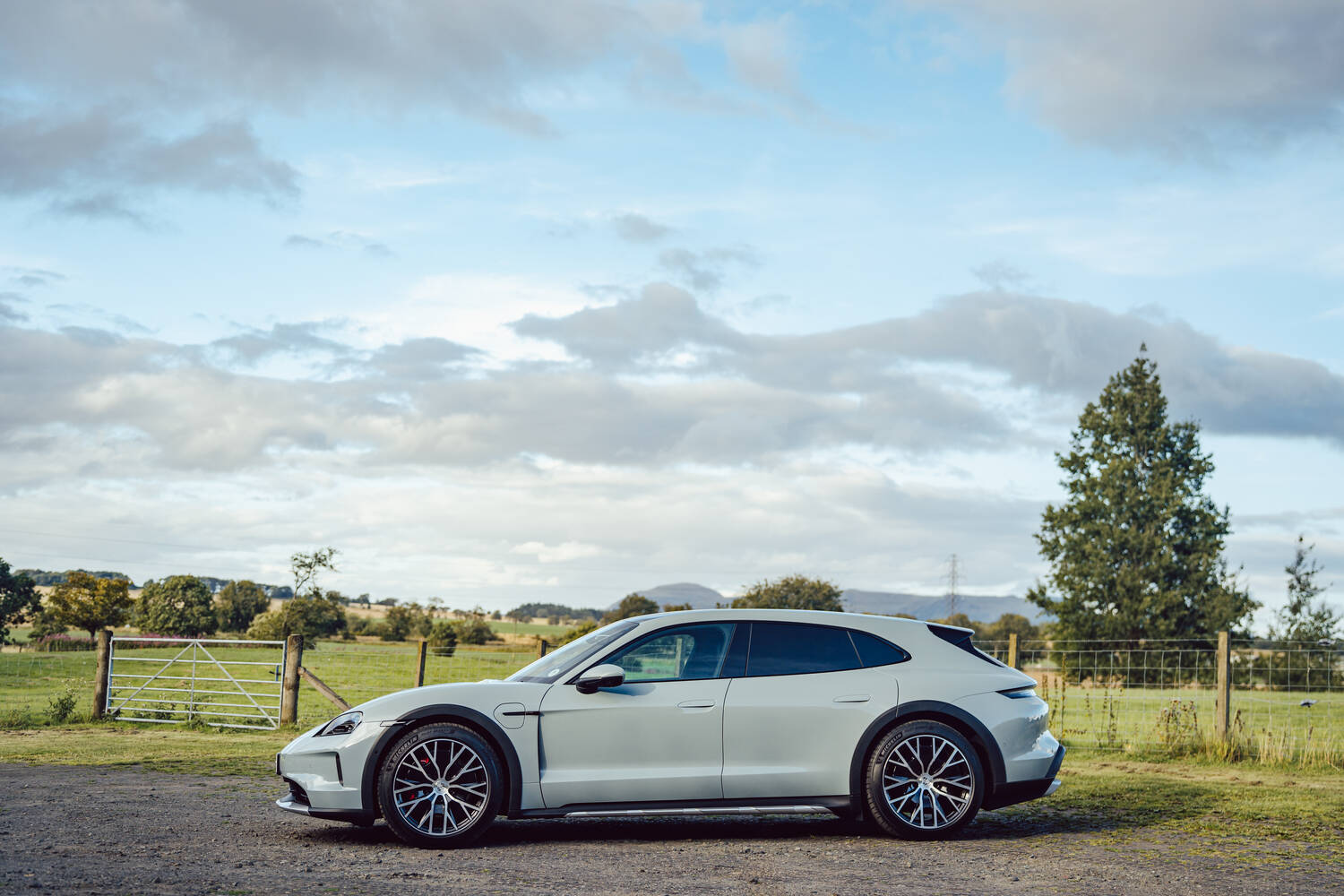
The latter is the easiest to define, as it stands 20mm taller than a Sport Turismo, comes with roof rails as standard - they are optional on the Sport Turismo - and has black-plastic lower cladding to give it an SUV-like lifestyle flavour.
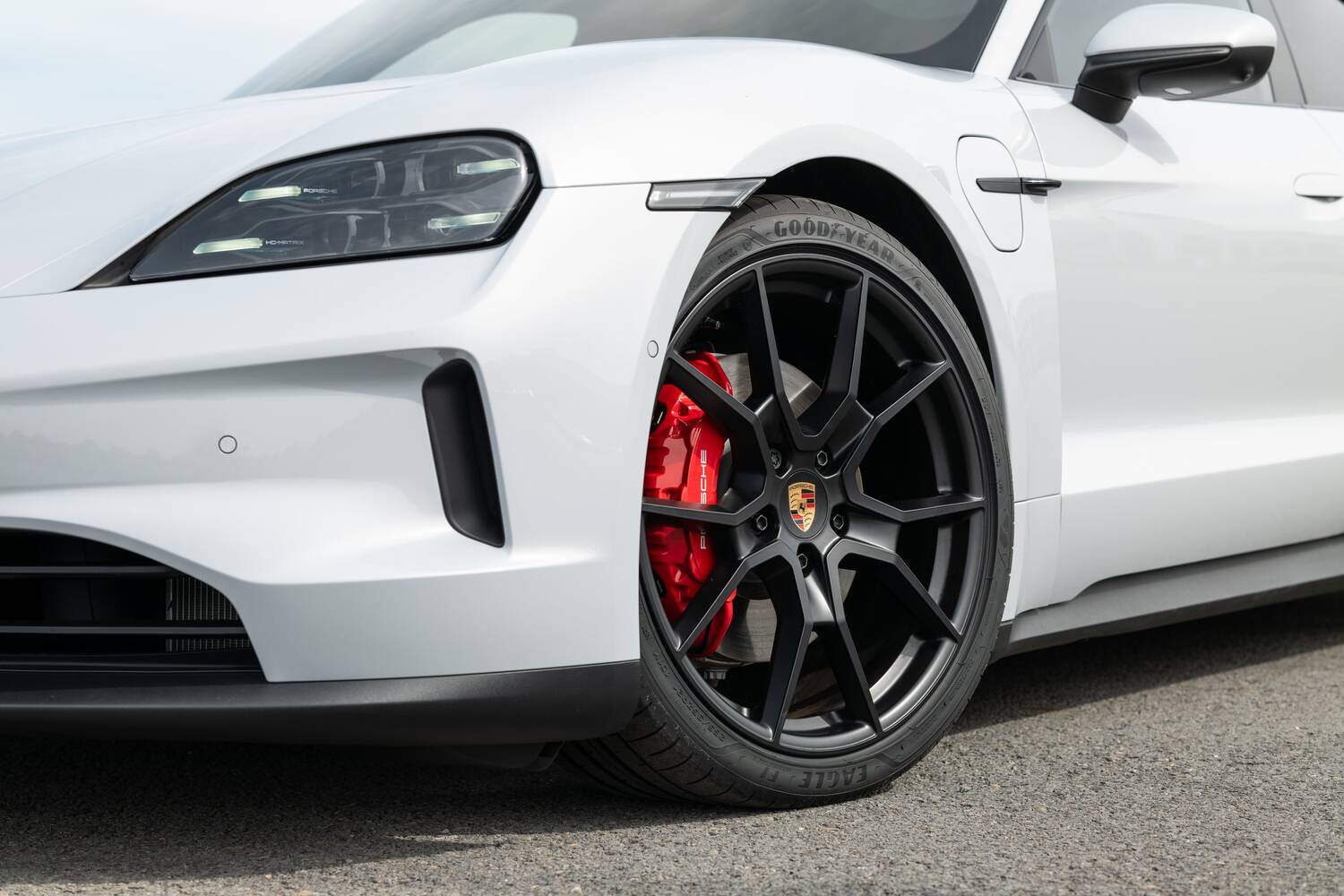
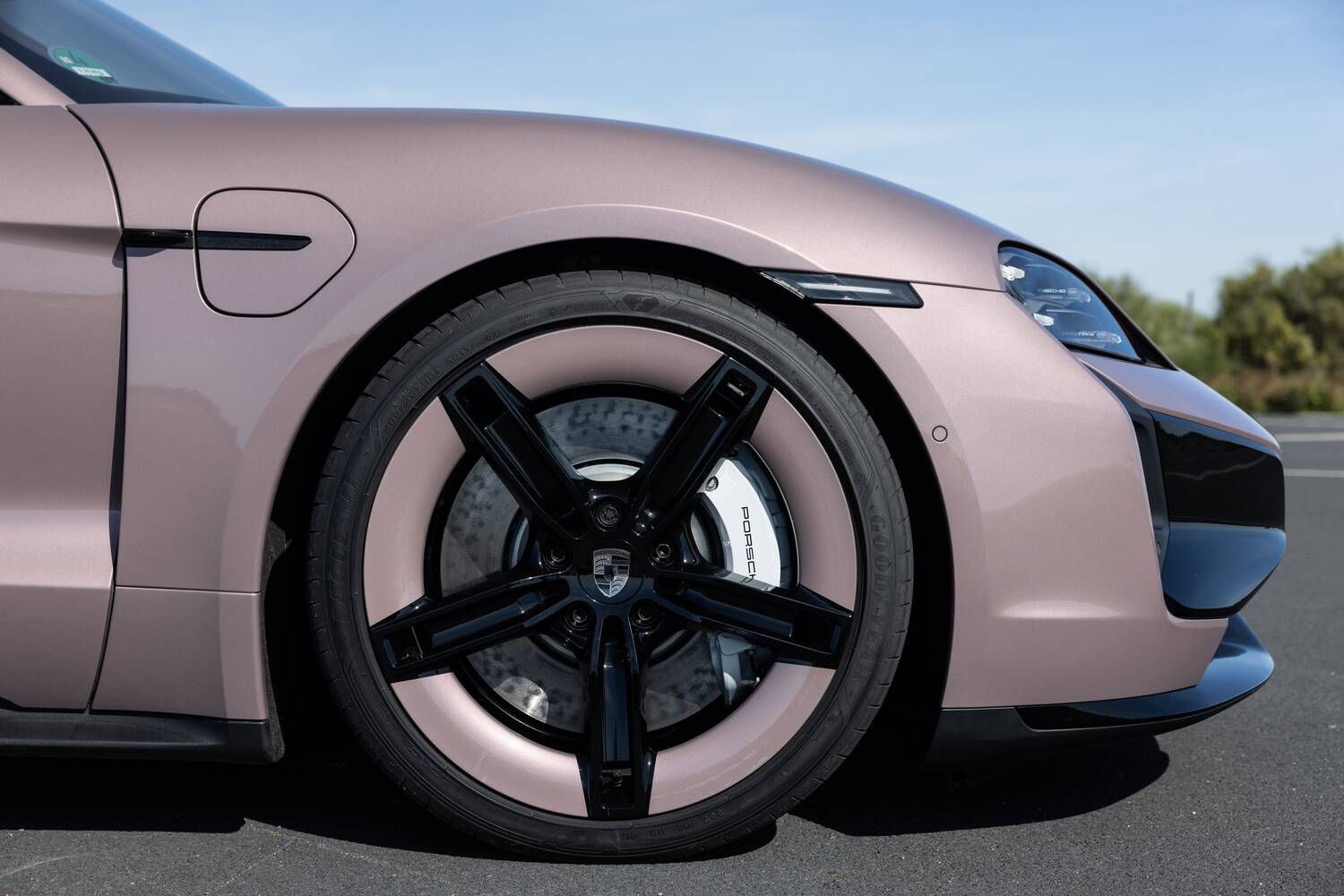
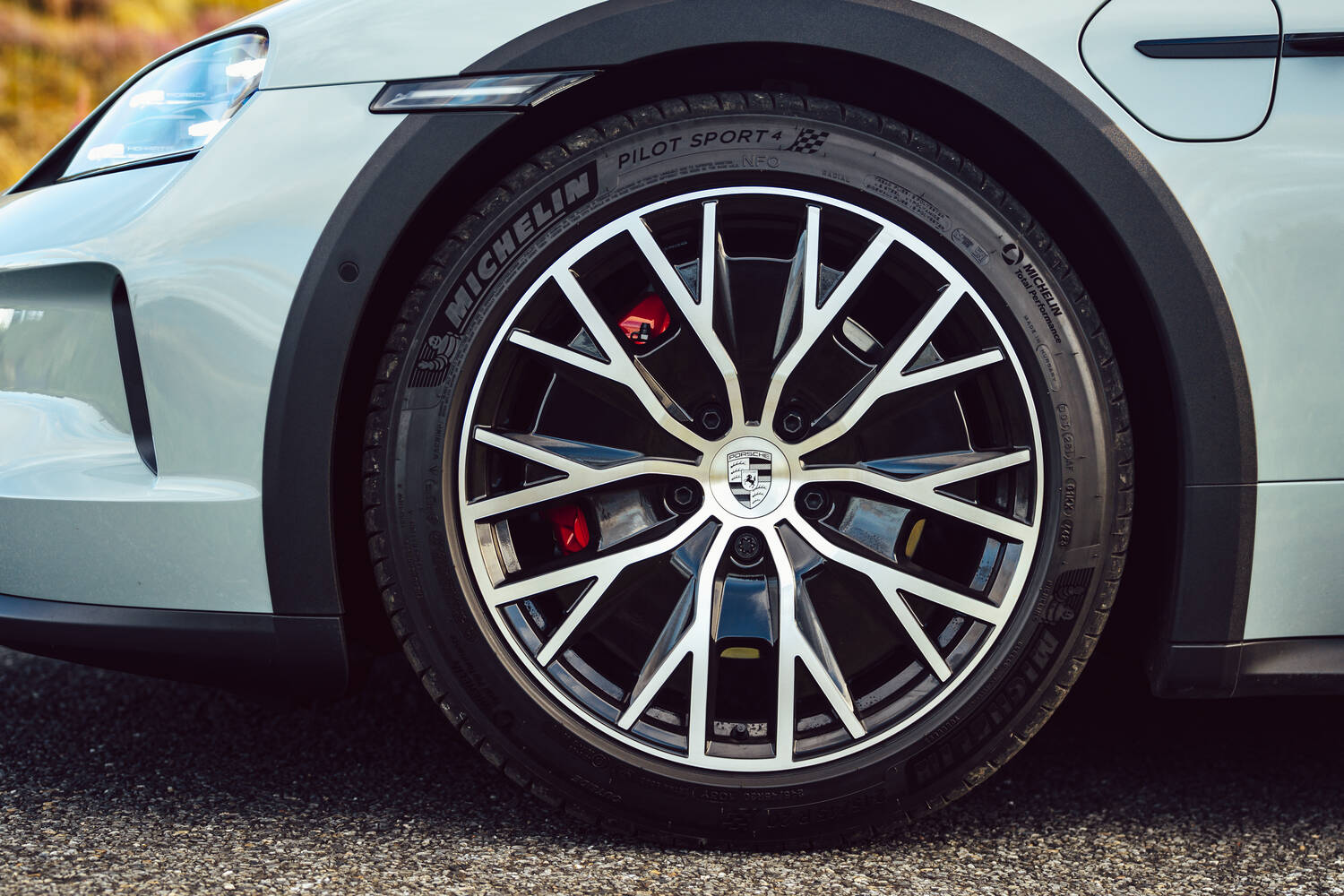
Across the range, 19- to 21-inch wheels are used on the Taycan, depending on the powertrain selected, and almost all designs are aerodynamically optimised to match the sleek bodywork.
The Saloon and Sport Turismo share their alloy wheel designs and option prices, but the Cross Turismo has two alloy-wheel styles of its own.

Dimensions of the 2026 Porsche Taycan Saloon
- Length:
- 4,963mm (4,968mm for Turbo GT)
- Width:
- 1,966mm (1,998mm for Turbo GT)
- Height:
- 1,378-1,381mm (varies according to air-suspension ride height)
- Wheelbase:
- 2,900mm
Dimensions of the 2026 Porsche Taycan Sport Turismo

- Length:
- 4,963mm
- Width:
- 1,966mm
- Height:
- 1,407-1,410mm (to roof rails, varies according to air-suspension ride height)
- Wheelbase:
- 2,900mm
Dimensions of the 2026 Porsche Taycan Cross Turismo
- Length:
- 4,974mm
- Width:
- 1,967mm
- Height:
- 1,425-1,430mm (to roof rails, varies according to air-suspension ride height)
- Wheelbase:
- 2,904mm
Paint colours for the 2026 Porsche Taycan
There are 18 basic colours to choose from in the Taycan family, sorted into four palettes: Contrasts (€0 each), Shades ( €1,095 each), Dreams ( €1,749 each) and Legends ( €3,331 each).

For almost all models, only the Contrasts finishes are free, although the Black Edition cars can also be specified with the quartet of Shades paints for no extra cost. Turbo and Turbo S variants get 13 of the 18 hues free of charge, with only the Legends incurring any additional expense.
The two flat Contrasts colours are plain white or black. For Shades, choose from Jet Black metallic, Ice Grey metallic, Volcano Grey metallic or Dolomite Silver metallic.
In Dreams, the choices amount to Gentian Blue metallic, Carmine Red, Provence, Neptune Blue, Frozen Berry metallic, Frozen Blue metallic or Purple Sky metallic.
Finally, in Legends, there's Oak Green Neo metallic, Pale Blue metallic, Shade Green metallic, Slate Grey Neo or Crayon.
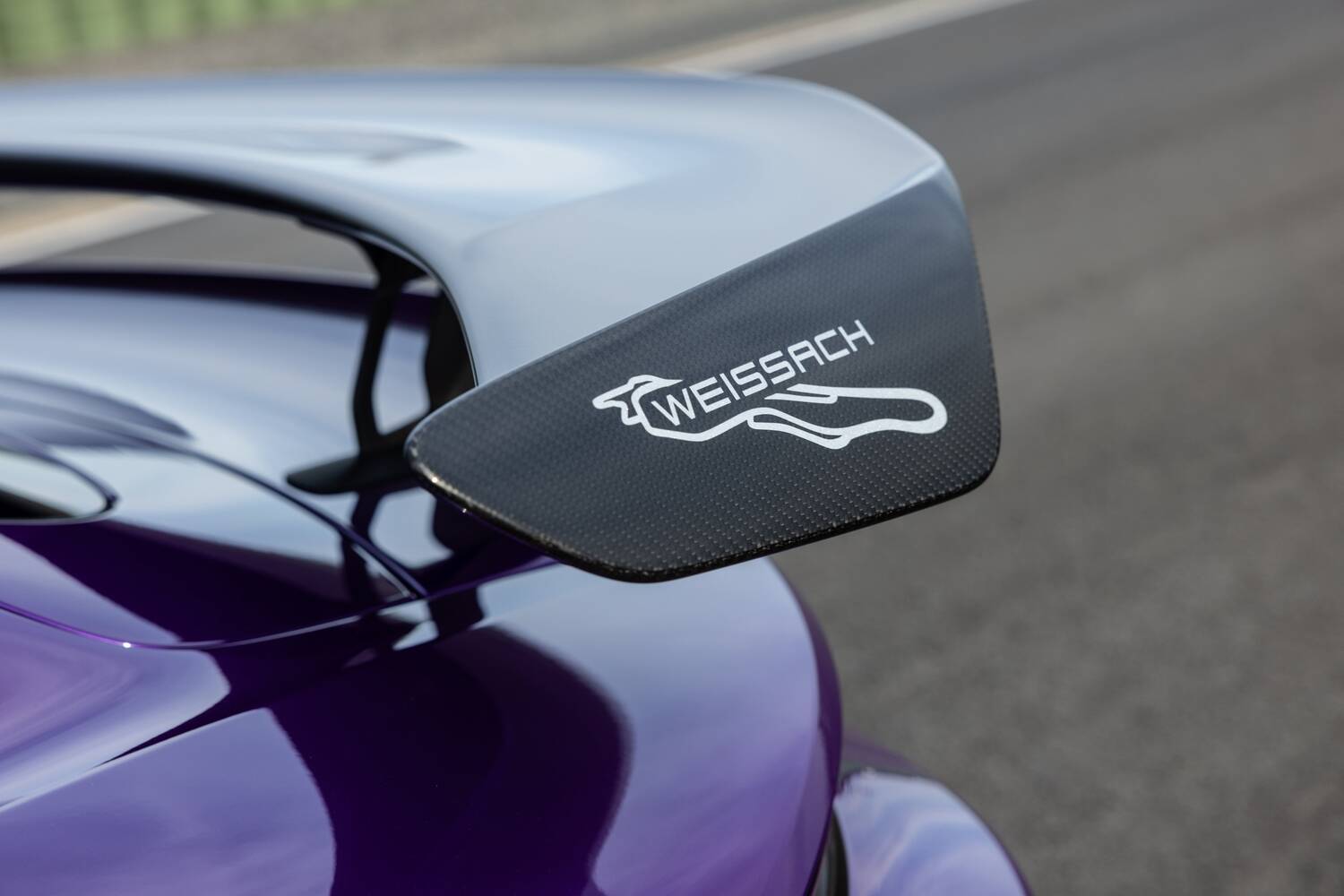
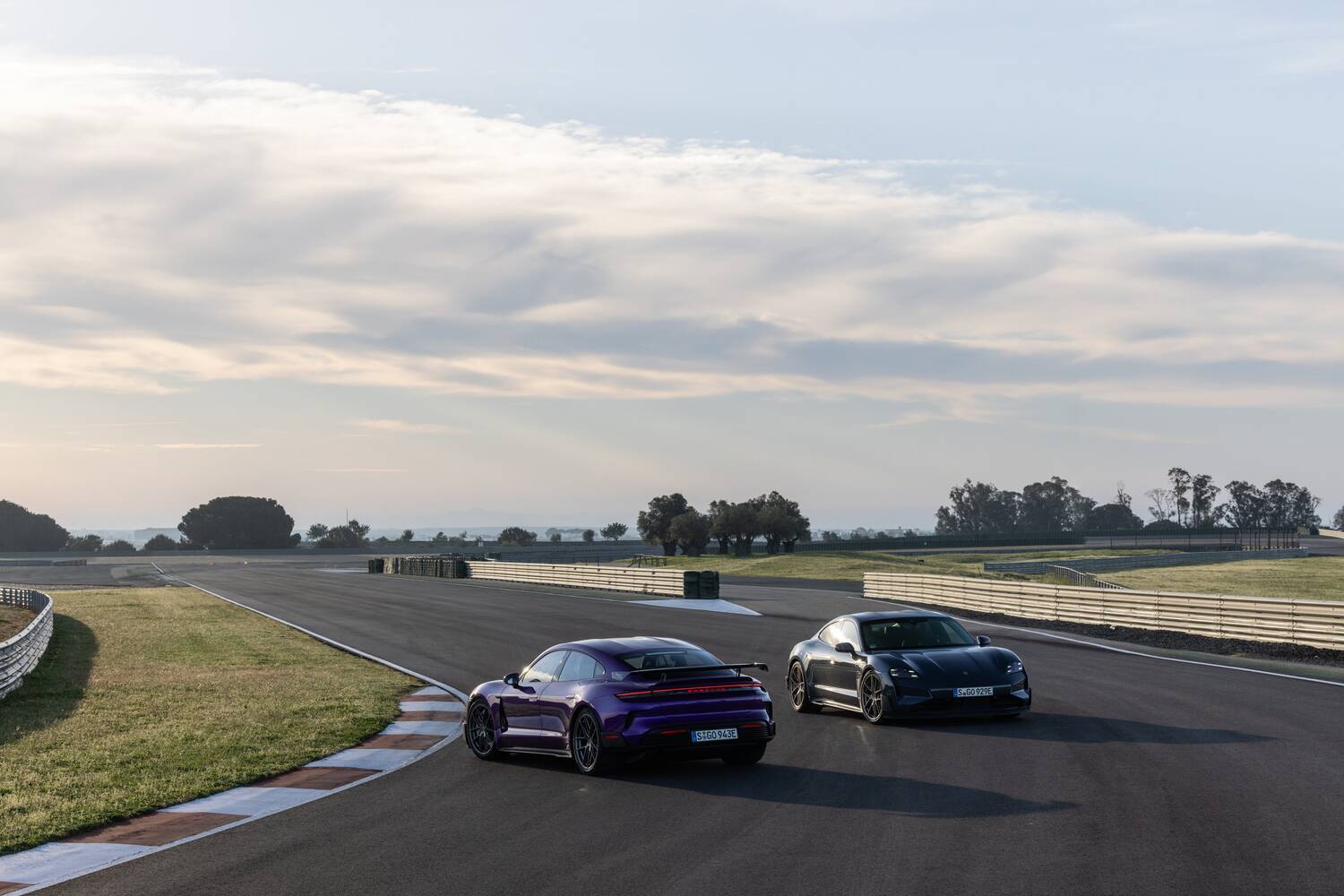
The sole exception to this availability is the Turbo GT Saloon, either with or without the Weissach Package. It is only offered in six of the above colours: White, Black, Volcano Grey, Purple Sky, Pale Blue and Shade Green, with only the latter two incurring a fee.

Porsche will charge €9,192 to dip into the Paint To Sample palette, which provides 146 historic colours from the company's back catalogue as options. Beyond that, the Sonderwunsch (Special Wishes) Paint To Sample Plus programme is on offer, allowing customers to bring any colour sample, or combination of colours, to the manufacturer and have the Taycan painted in that. This costs €20,991.
Interior, practicality, tech & comfort of the 2026 Porsche Taycan
- High-tech cabin is of high-quality
- Four seats as standard
- Neither estate is massively voluminous

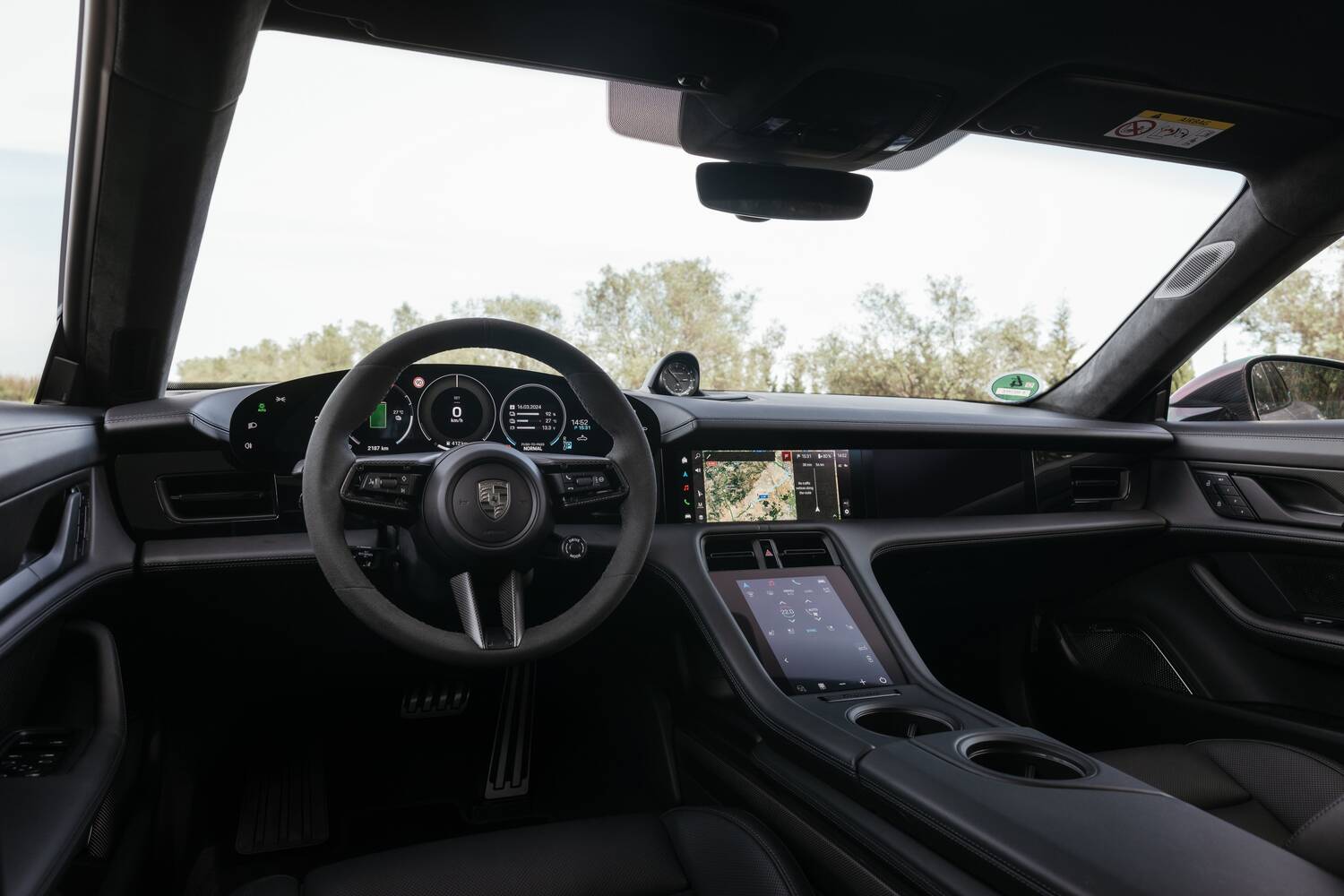
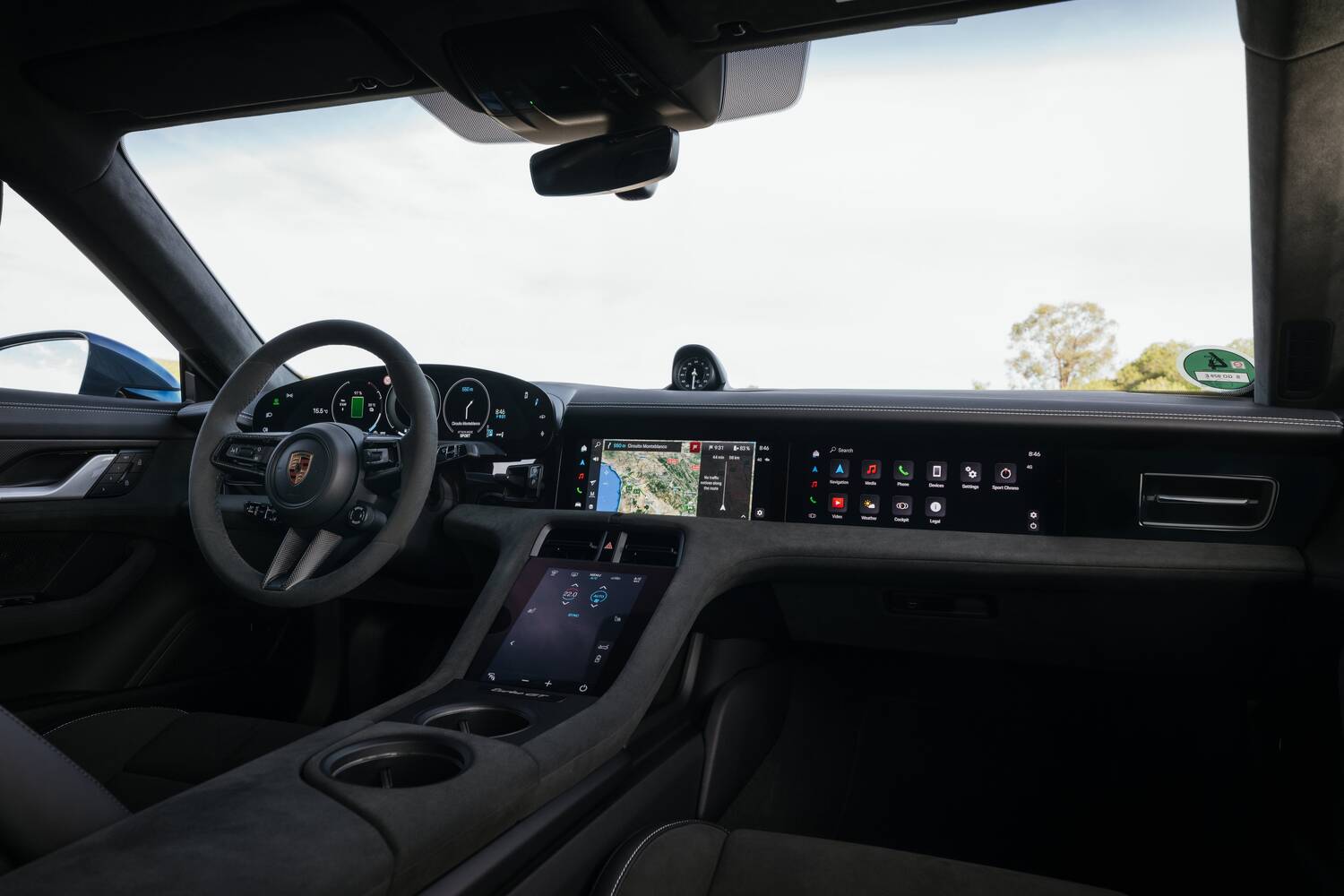
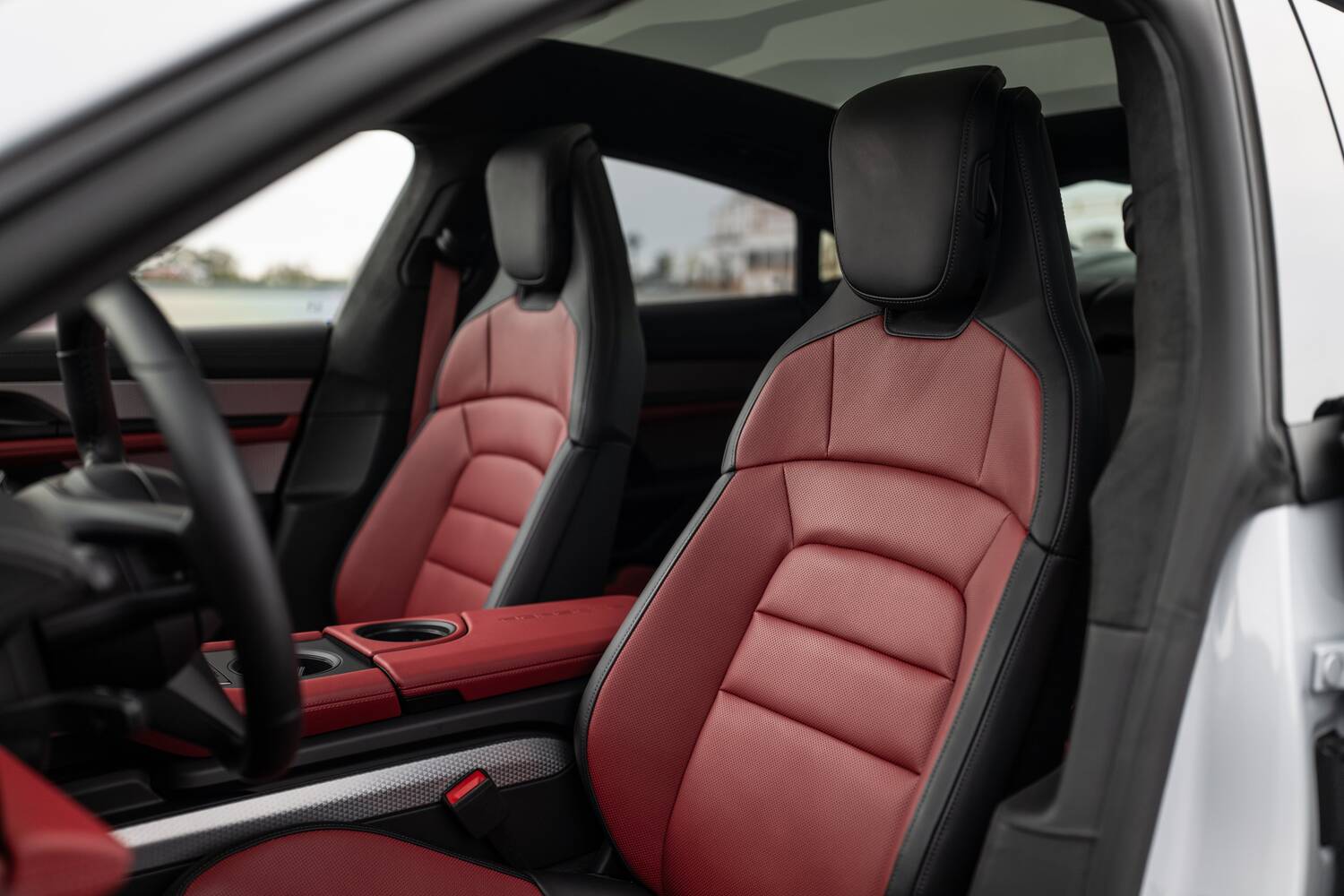
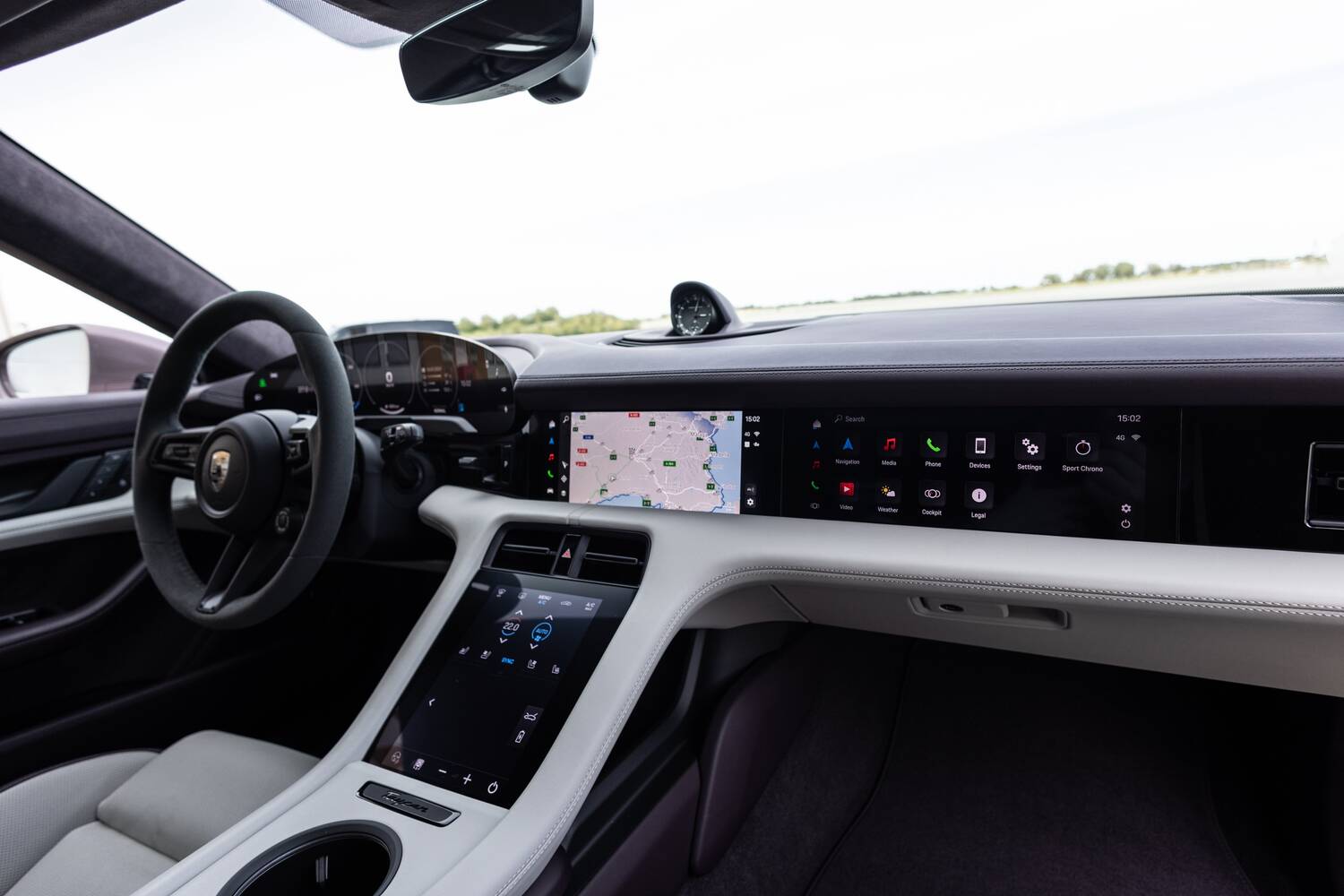
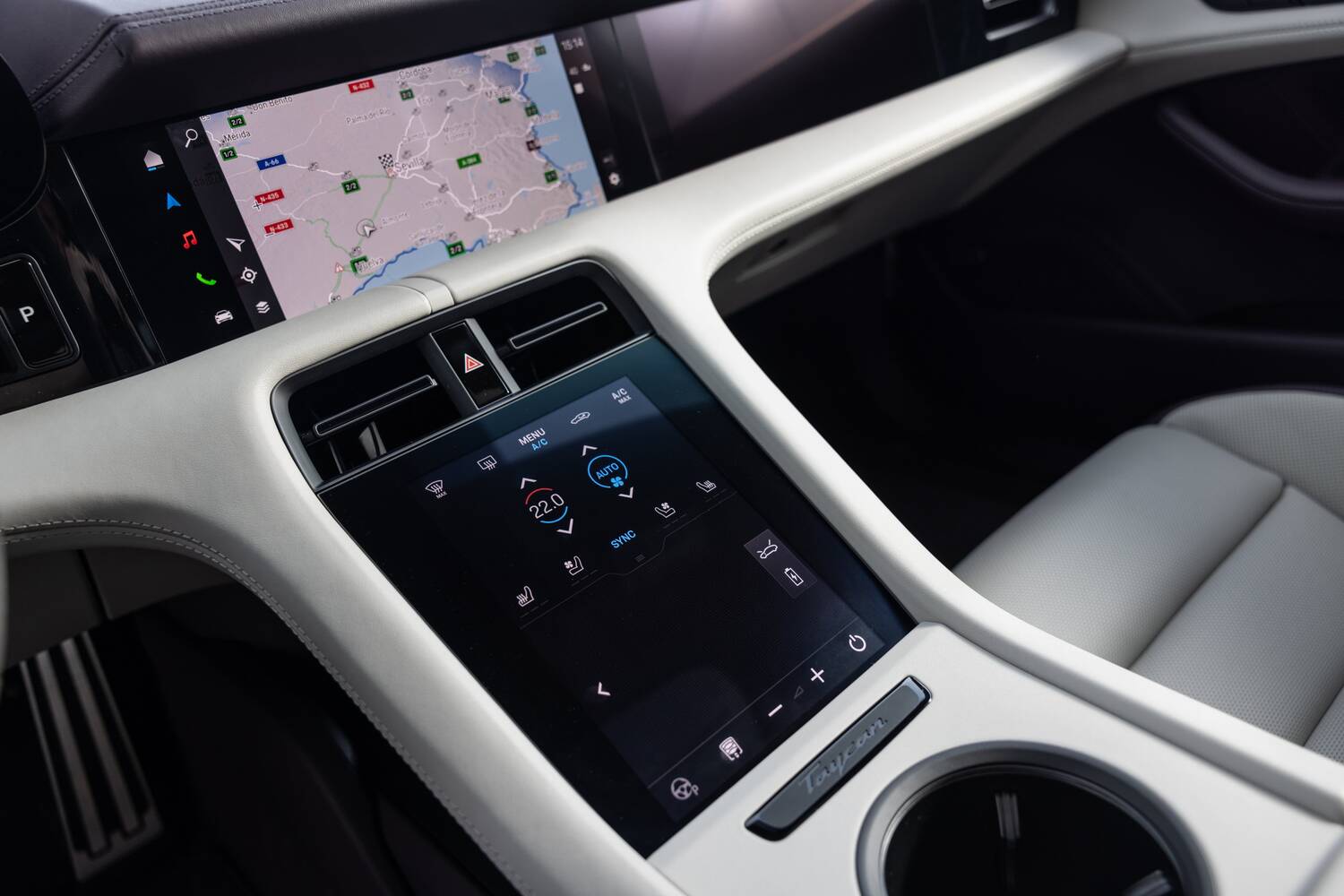
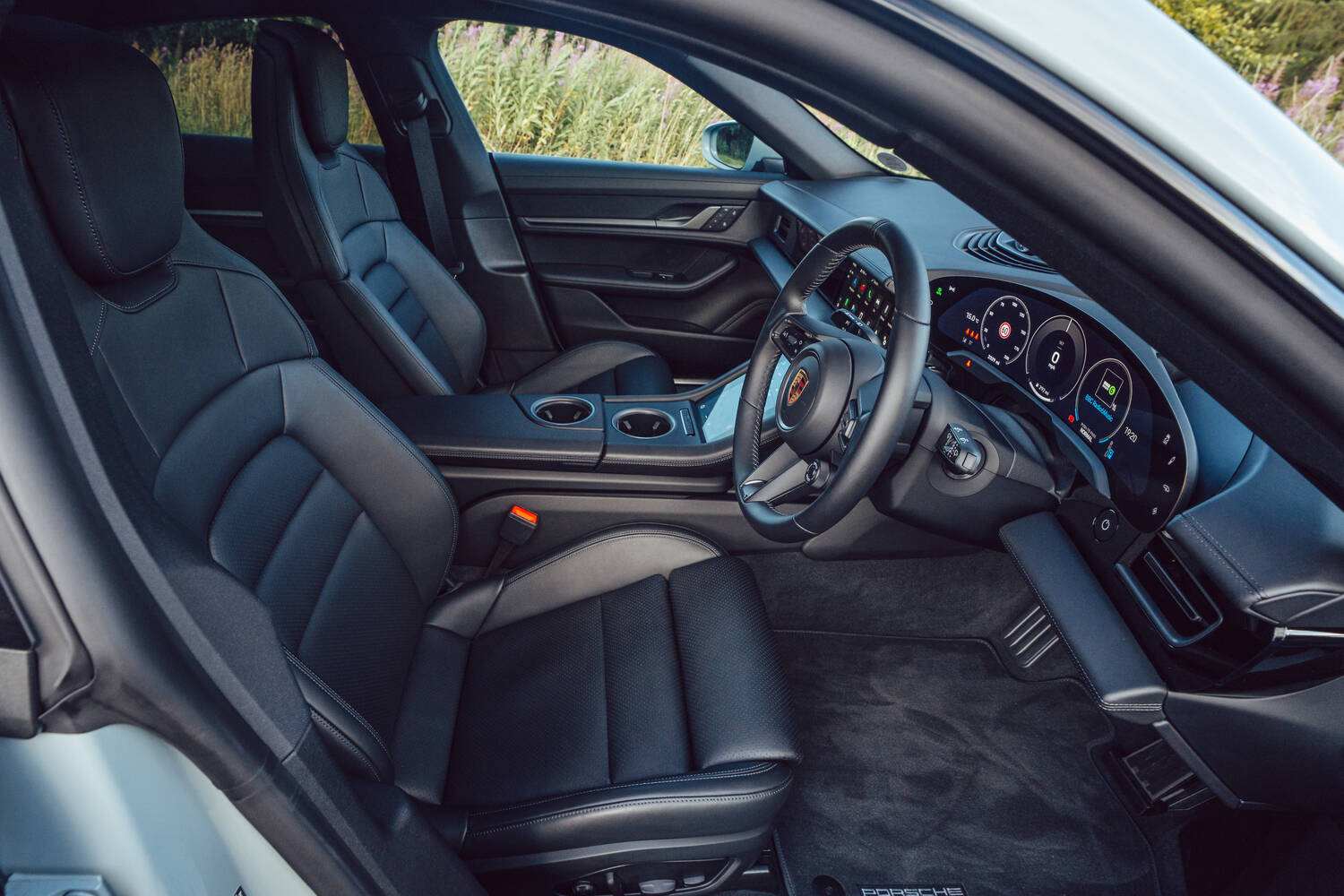
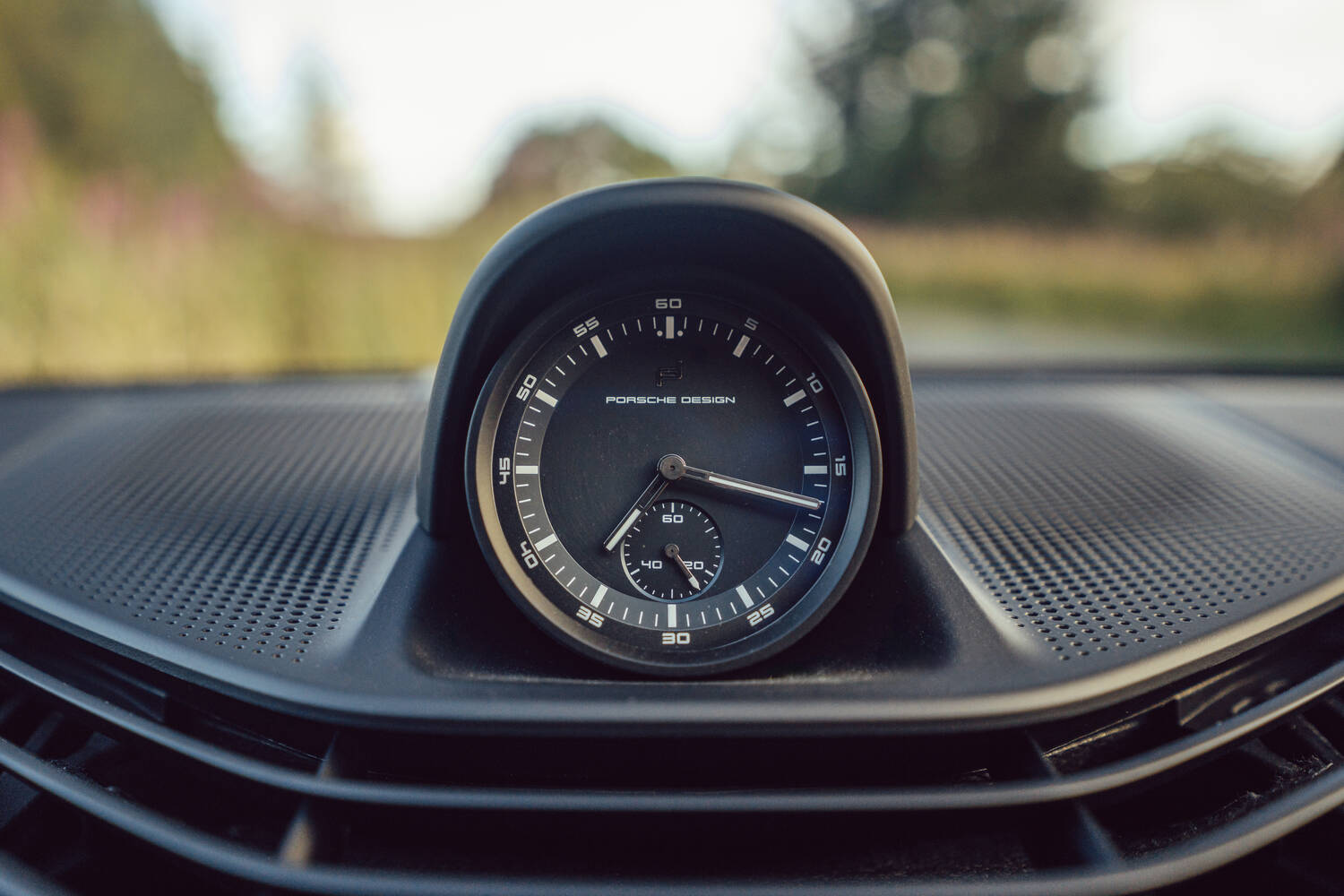
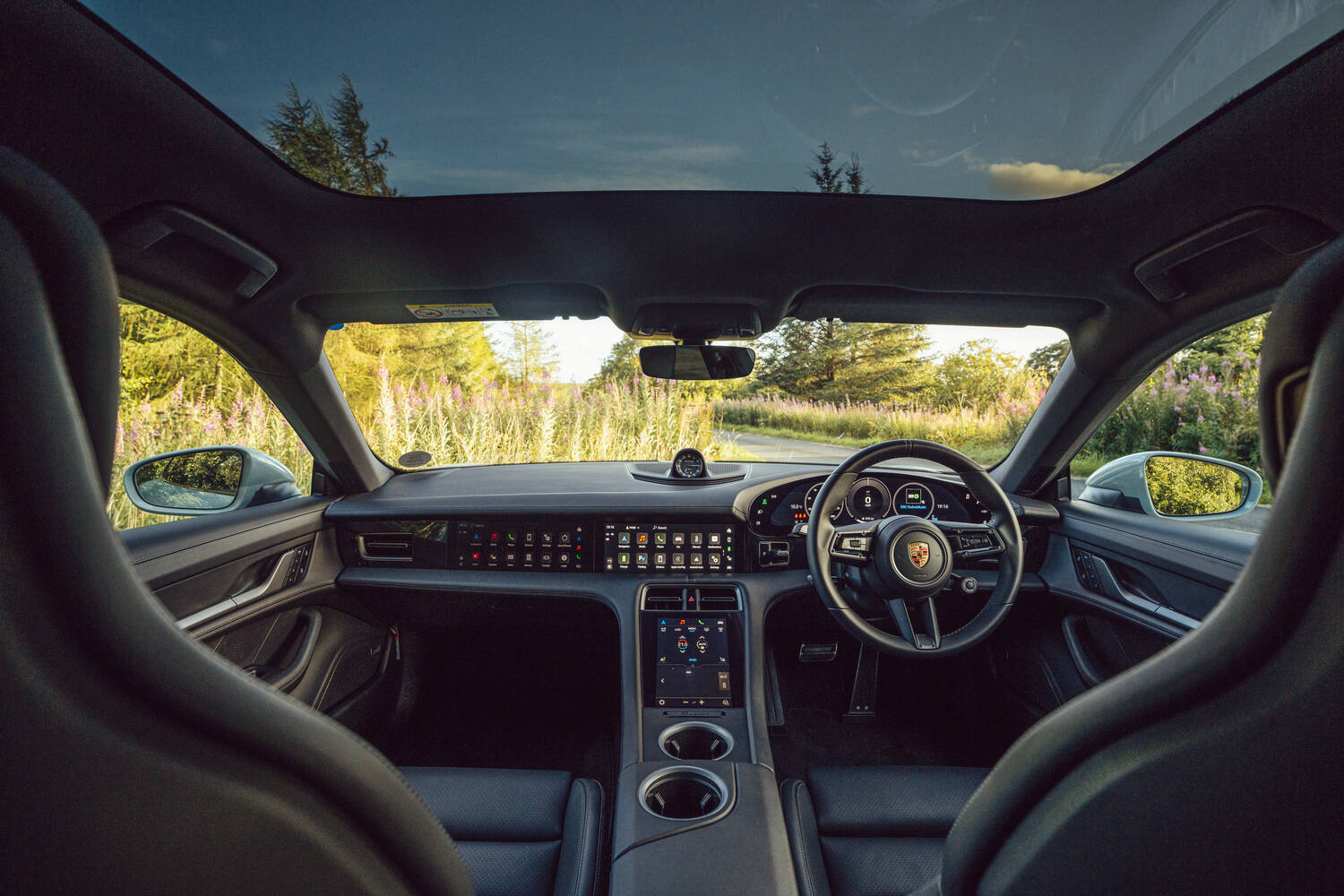
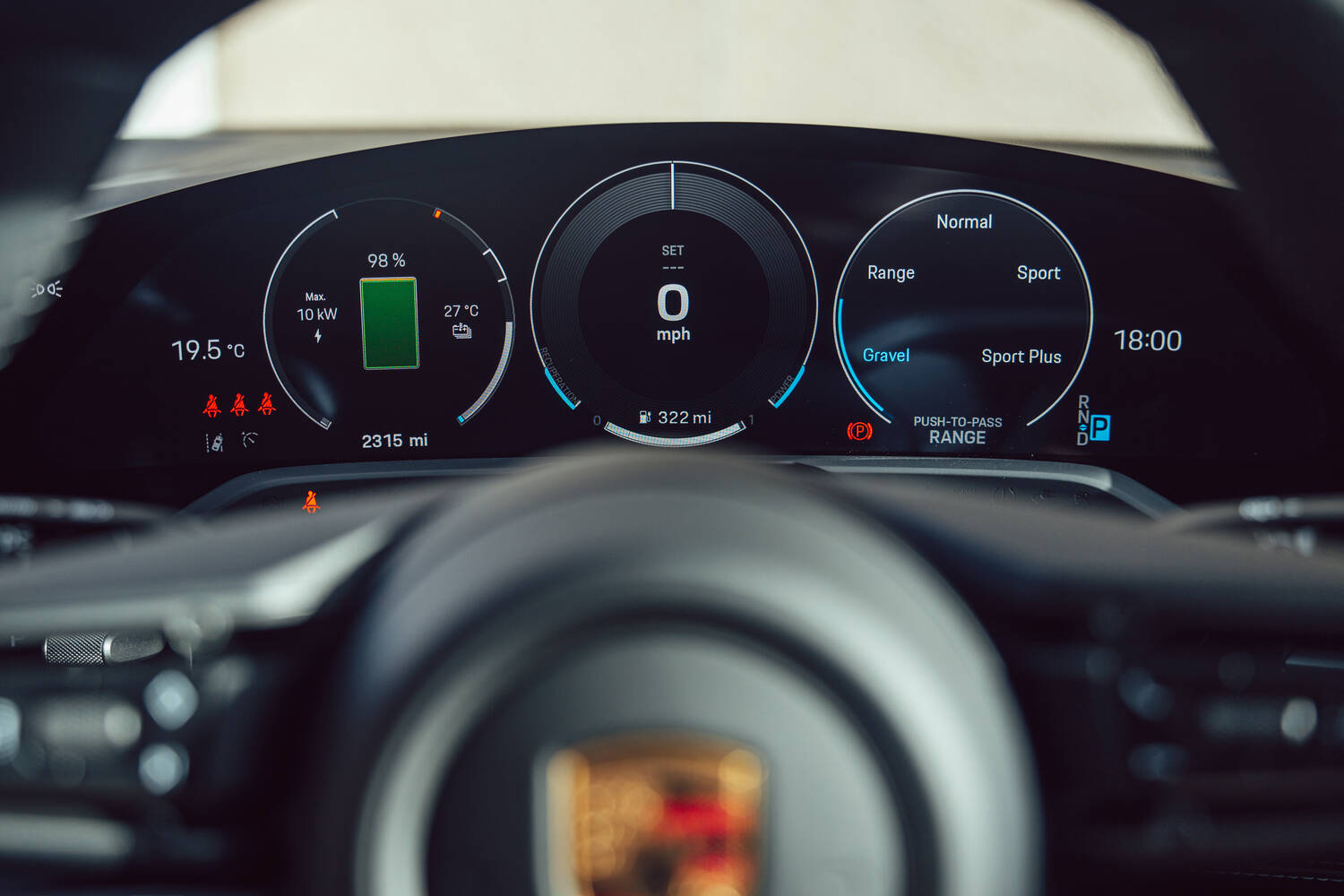
Porsche's interiors are normally made of high-quality materials and have spot-on ergonomics, and the Taycan's is no exception. It was the first Porsche to get the 'Curved Display' digital instrument cluster, and it also features some high-tech items such as air vents with no physical controls - they are adjusted through the touchscreen.
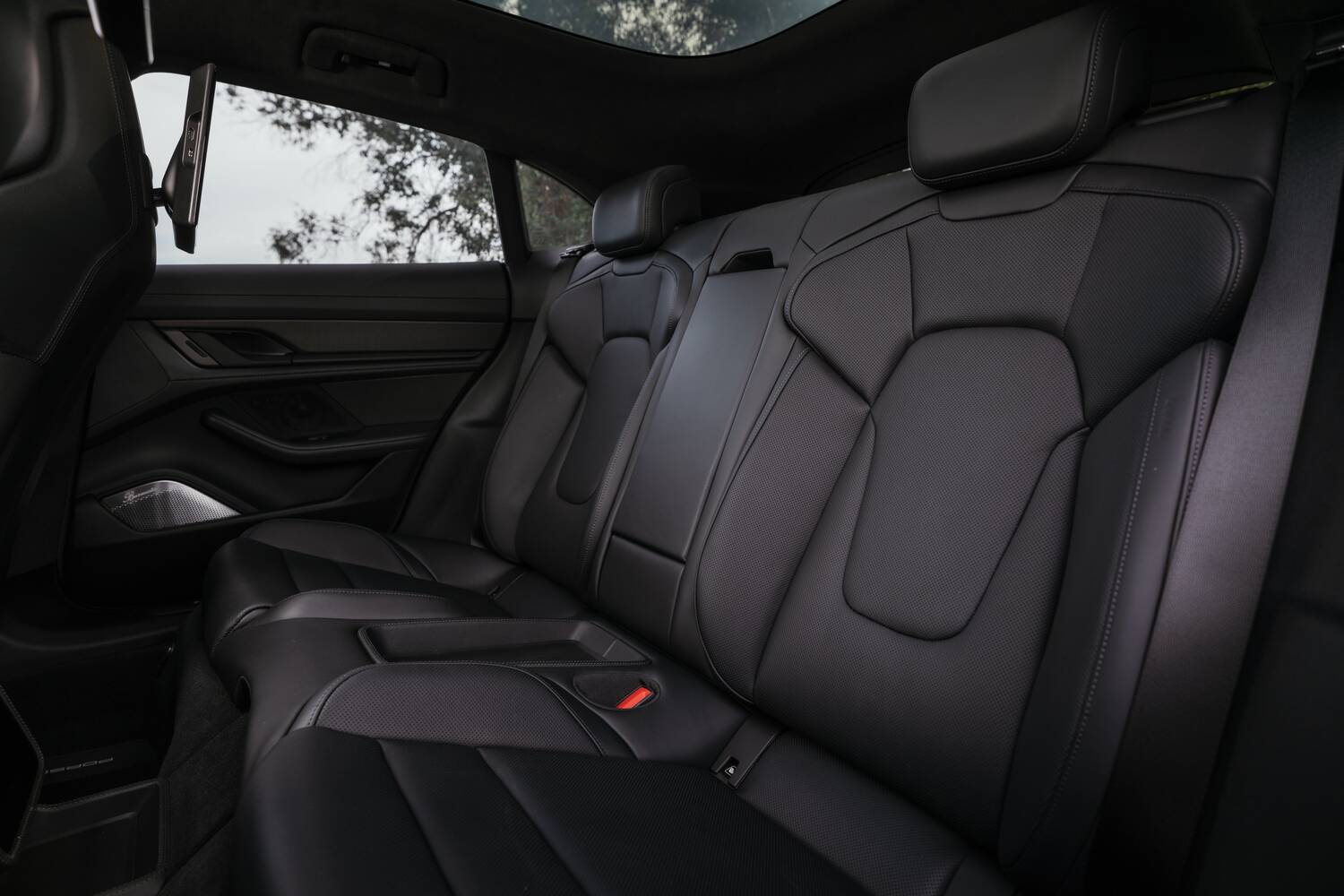
Bear in mind the Taycan only comes with five seats as a cost option, and even then it is known as '4+1' by Porsche. It is best to think of it as a four-seater.
Getting comfortable in the driver's seat

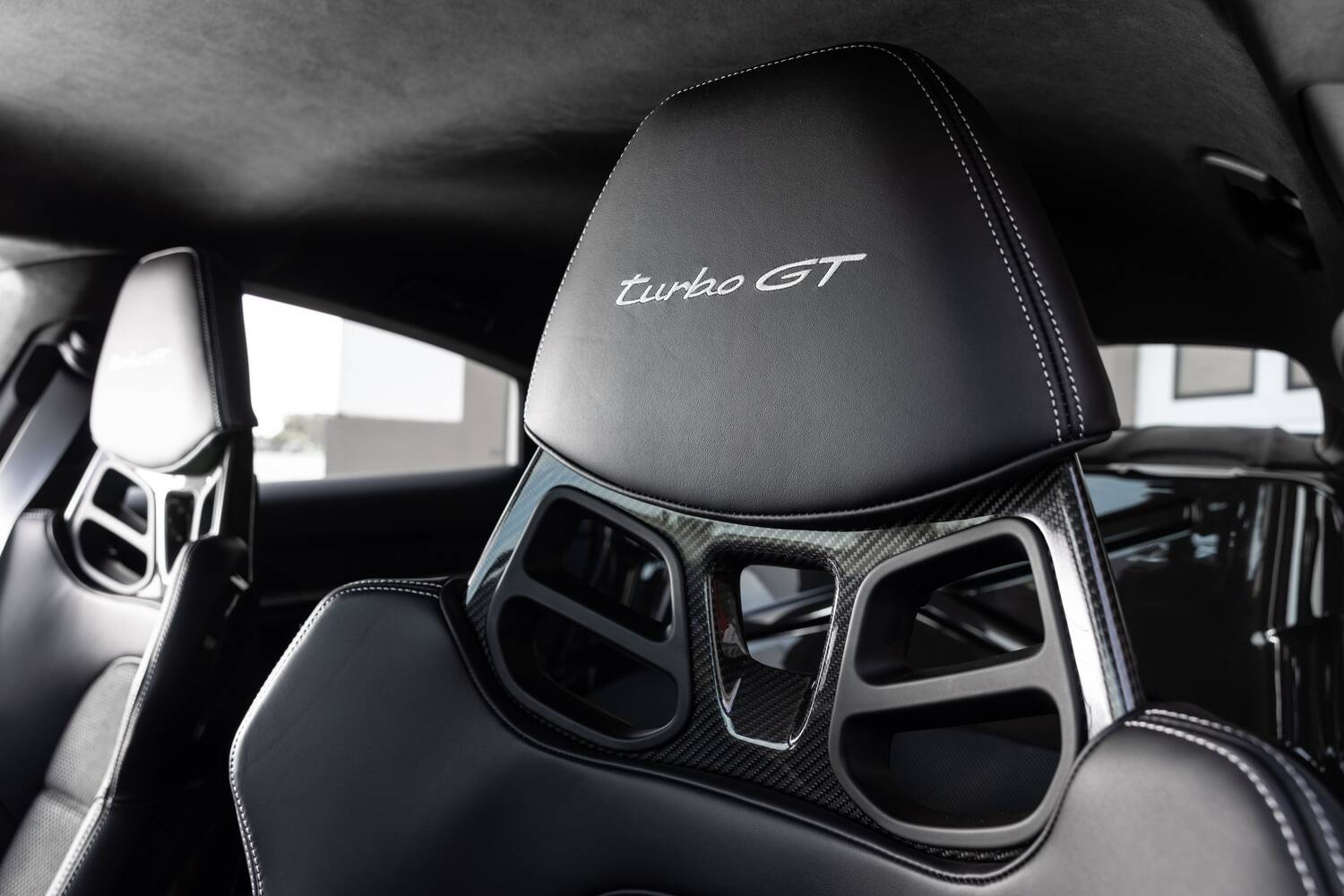
All versions of the Porsche Taycan have electrically adjustable front seats. They are eight-way items at base level, rising to 14-way Comfort chairs higher up and then 18-way Adaptive Sports seats near the top of the tree.
The steering column, meanwhile, is manually reach-and-rake adjustable at base level, but an electrically powered example appears higher up the trim-grade tree.

However you adjust it, the driving position in the Porsche Taycan is exceptional. You sit low in the car, like a true sports car, but visibility out of the cabin is very good in all directions, while all the controls are within easy reach and simple to operate on the move.
The steering wheel itself - in terms of diameter, rim thickness and tactility - is close to perfection.
Infotainment and technology

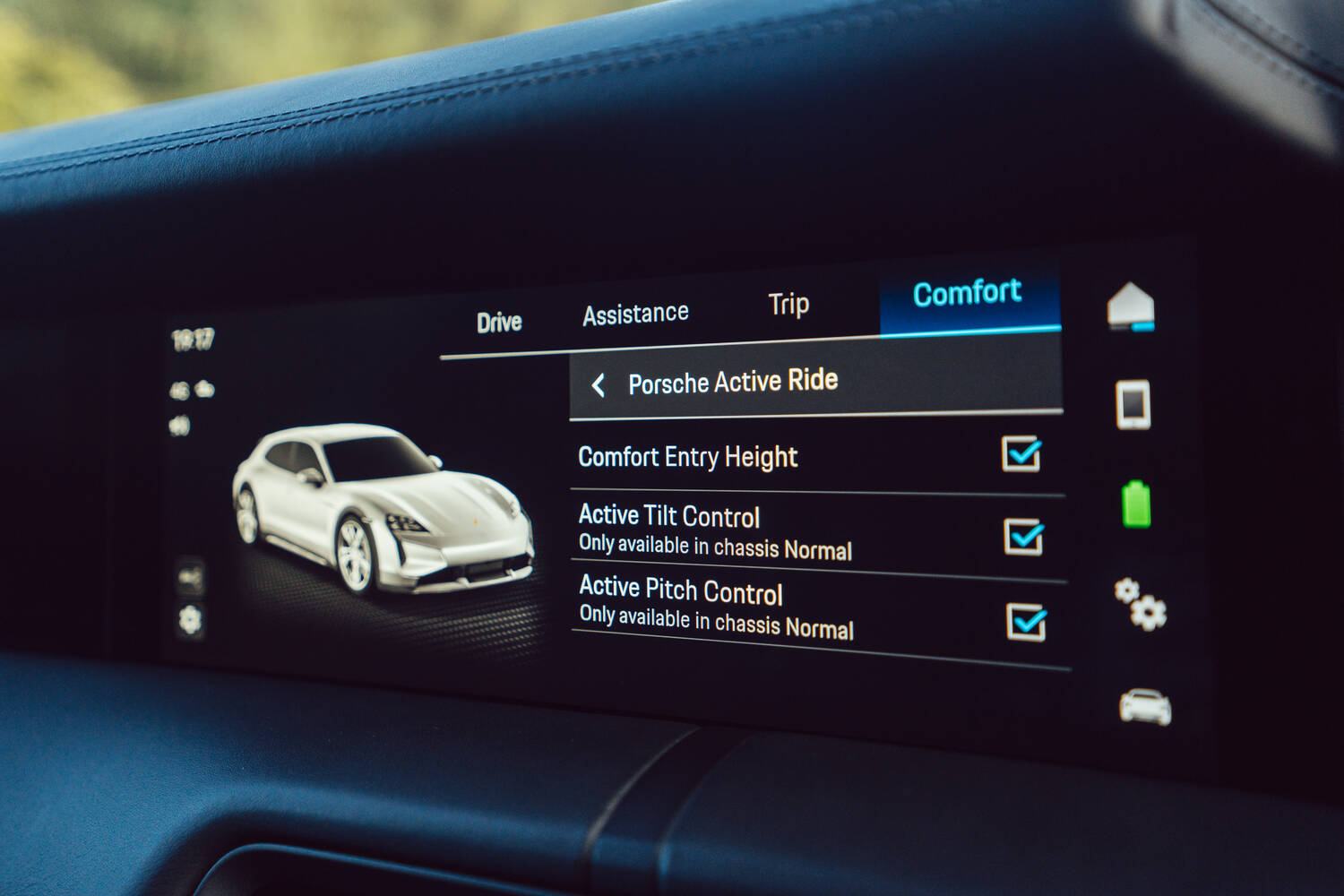
As standard, every car in the Taycan family comes with at least a 16.8-inch Curved Display instrument cluster and a 10.9-inch Porsche Communication Management (PCM) touchscreen.
Both are graphically superb and intuitive to operate, and the tech can be expanded from there with a 10.9-inch Passenger Display screen in the dash and a head-up display for the driver.
Audiophiles will want to investigate the Bose (€1,332) and Burmester (€5,685) upgraded sound systems, but the standard set-up is already a ten-speaker, 150-watt array.

Further standard tech highlights include 25-watt wireless smartphone charging, Matrix-LED headlights, adaptive cruise control, dual-zone climate control and keyless entry-and-go.
Practicality around the cabin

There is a covered compartment underneath the central armrest in the Porsche Taycan, which includes two USB-C ports, the wireless charging pad and some stowage space.
In front of that are a pair of staggered cupholders, while both the door pockets and the front glovebox are adequately capacious. Behind the sloping panel that forms the climate controls lower on the fascia, there is an under-dash storage area as well.
Rear-seat passenger space

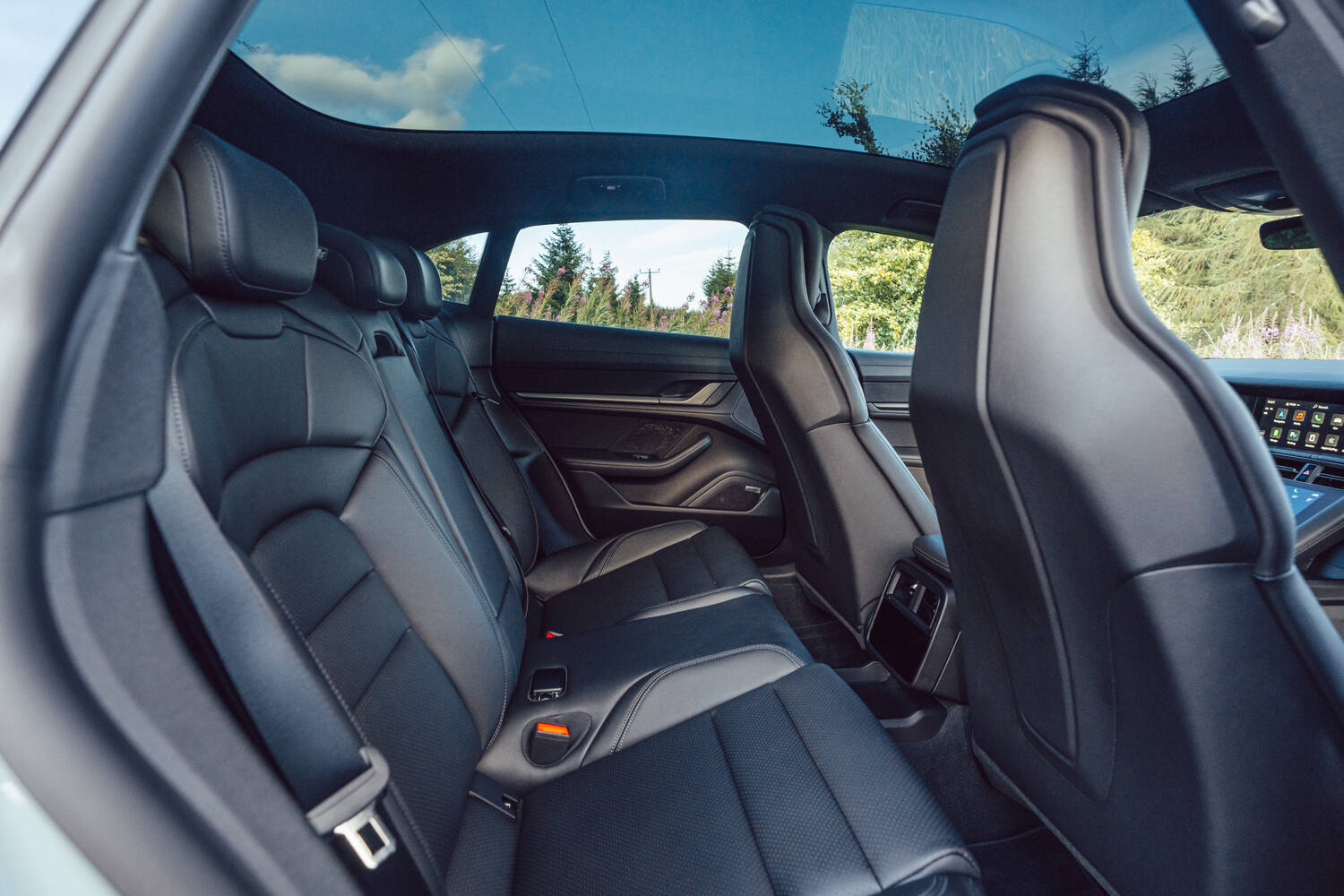
With its 2.9-metre-long wheelbase, there is plenty of legroom in the back of the Porsche Taycan, although headroom can be limited for taller occupants.
Similarly, there are only two seats as standard, and optioning up the 4+1 rear bench does little for the car's practicality, as there is a pronounced hump in the centre of the back footwell.
Fitting child seats to the Porsche Taycan
There are two ISOFIX positions in the outer locations of the rear bench in the Porsche Taycan. With a good amount of legroom and reasonably sized door apertures at the back, even larger child seats should be easily mounted in the second row.
Boot space in the Porsche Taycan

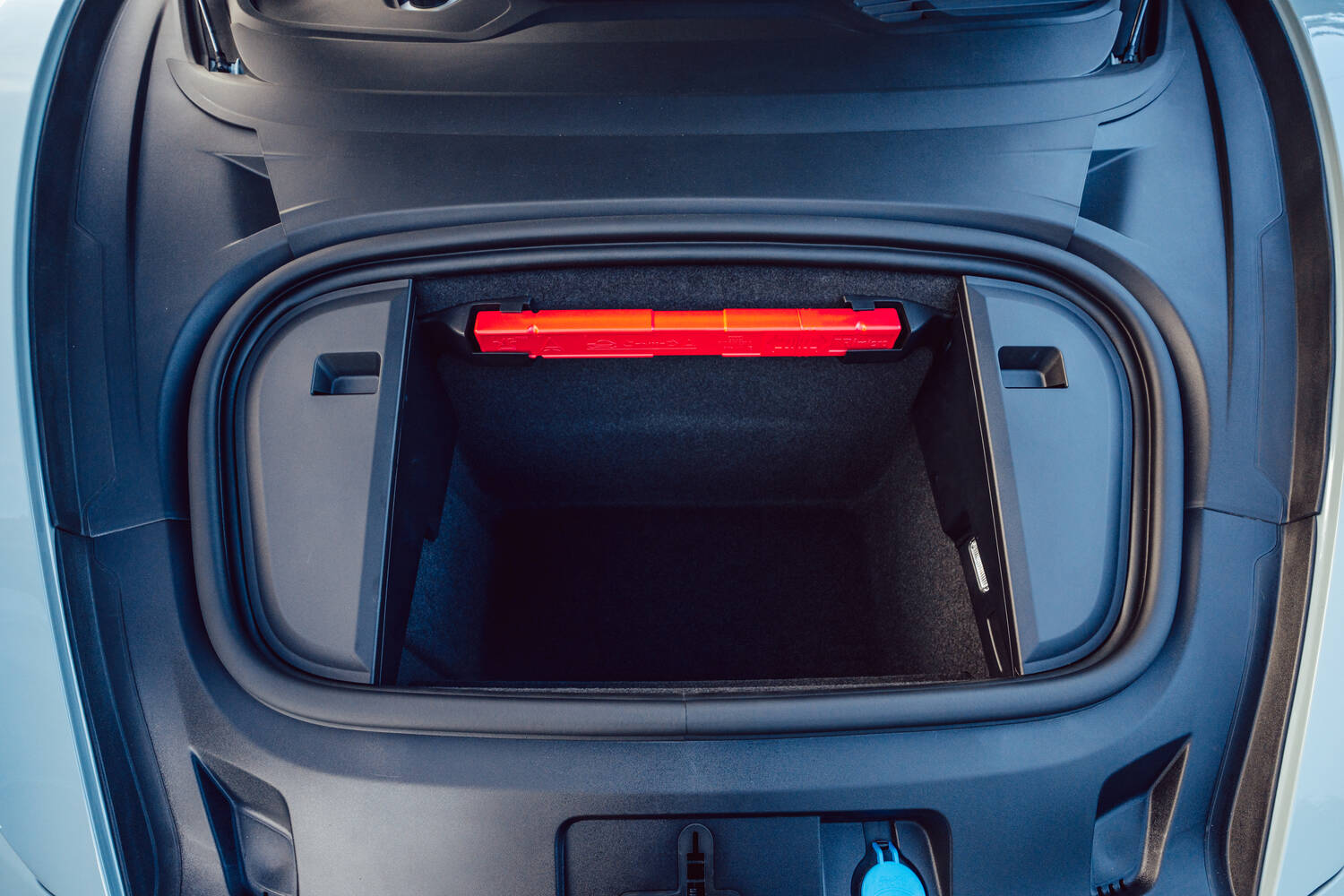
Every variant of the Porsche Taycan has an 81-litre front boot, useful for storing charging cables and other odds and ends. From there, though, capacities vary by body style and by model.
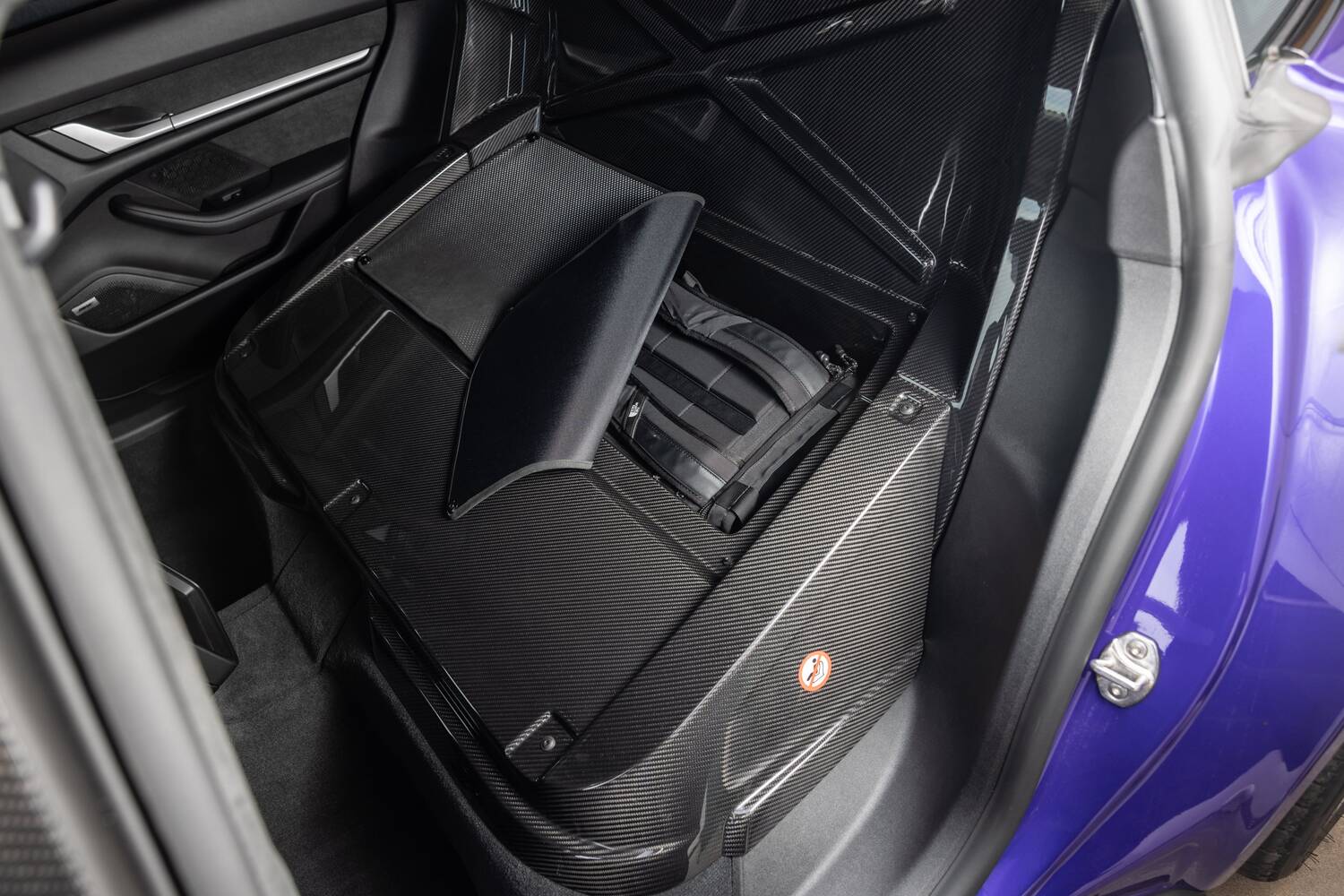
Regular Saloons have 407 litres of cargo space, but this reduces from the GTS model upwards as the enhanced rear motor cuts into volume, bringing it down to 366 litres. The Turbo GT without the Weissach Package has the smallest boot of any Taycan at 326 litres.
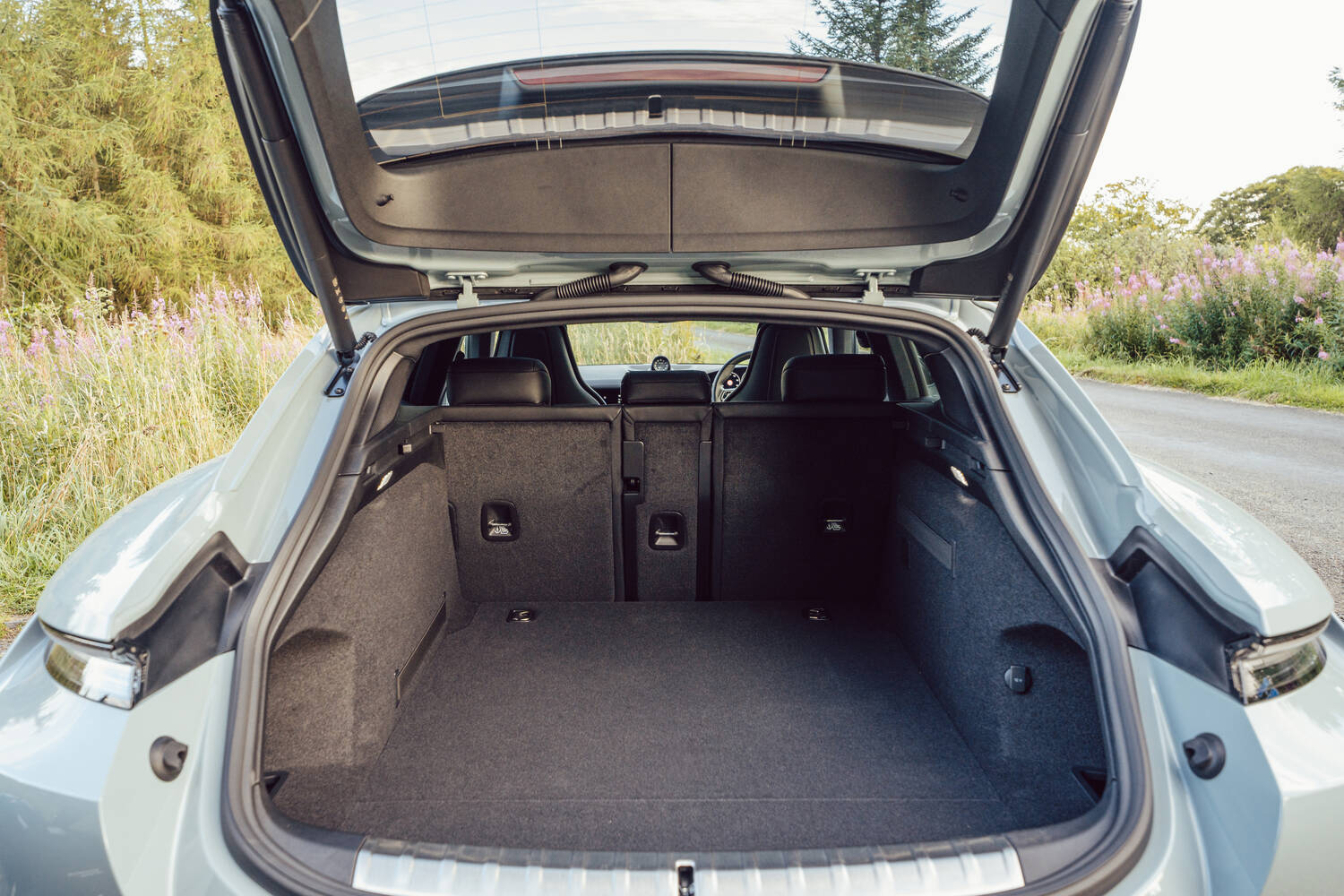
Moving to the wagons, there is no difference in space between the Sport Turismo and Cross Turismo cars. Up until GTS/Turbo level, that means 446 litres with all seats in use, rising to 1,212 litres with the second row folded down.
In four-seat format, that means a 60:40 seatback split, but it switches to 40:20:40 in cars with the 4+1 arrangement.

After that, both Sport Turismo and Cross Turismo cars have 405 litres with all seats in use and 1,171 litres with the rear bench folded down. As estate cars go, the Taycan wagons are not the most capacious load-luggers in the world.
Safety in the Porsche Taycan
Euro NCAP, the independent safety body, has put the Porsche Taycan through its paces, whereupon it picked up a five-star overall rating, with subdiscipline scores of 85, 83, 70 and 73 per cent for protection of adult occupant, child occupant, vulnerable road users and safety assist respectively.
That said, the Taycan was tested back in 2019, and Euro NCAP's tests have become considerably tougher since then. You can read the full report on the Taycan here.
Performance of the 2026 Porsche Taycan
- Fast, faster and faster still
- All-wheel drive on most models
- One of the best-handling EVs

There are many powertrains in the Porsche Taycan line-up, so we will attempt to keep this brief. The entry point is a single-motor, rear-wheel-drive car with up to 435hp and 420Nm, which is capable of 0-100km/h in 4.8 seconds. This is used in the base-level Saloon and Sport Turismo cars, and their Black Edition spin-offs.
The Cross Turismo instead kicks off with a dual-motor arrangement because it is supposed to be the off-road-biased model, with a bespoke 'Gravel' drive mode for instance, and so it requires all-wheel drive.
Power and torque are the same, but its four-wheel traction means it completes the sprint slightly quicker than the rear-wheel-drive cars, at 4.7 seconds.

From there, shared drivetrains across all three models are identical, but there are two fewer options for Sport Turismo buyers and just three further selections in the Cross Turismo hierarchy. Every variant from here on is dual-motor and all-wheel drive.
The next level up is the 4S. This has peaks of 598hp and 710Nm and can do 0-100km/h in 3.7 seconds, or 3.8 seconds as a Cross Turismo. Both the Saloon and Sport Turismo have a Black Edition upgrade of this powertrain as well.
After that comes the driver-focused GTS, though this is not available in the Cross Turismo family. It delivers maximums of 700hp and 790Nm, and does 0-100km/h in 3.3 seconds.
Then we are into the Turbo models, although as electric cars, no Taycan physically has a turbocharger, obviously.

Things begin with the 884hp/890Nm Turbo, which will do 0-100km/h in 2.7 seconds for the Saloon/Sport Turismo cars, or 2.8 seconds as a Cross Turismo.
There's an S-enhanced version of this powertrain for all three body styles, the Turbo S serving as the pinnacle of the Sport Turismo and Cross Turismo lines. Here, you get 952hp and 1,110Nm of torque, for 0-100km/h in 2.4 seconds (2.5 seconds in the Cross Turismo).
Finally, and offered in the Taycan Saloon only, there is the Turbo GT and the Turbo GT with Weissach Package. Both have monumental outputs of up to 1,034hp and 1,240Nm, allowing the first car to do 0-100km/h in just 2.3 seconds.

The Weissach goes even further, as its rear seats are stripped out to save weight, so it trims the time to 2.2 seconds overall. That is hypercar-rivalling pace in a four-door saloon.
We do not normally talk about top speeds, but for reference, the rear-wheel-drive Taycans are limited to 230km/h, the 4S and GTS cars to 250km/h, the Turbo and Turbo S twins top out at 260km/h and the Turbo GT can go all the way to 290km/h.
The Weissach is even quicker, with a V-max of 305km/h, making it one of the fastest electric cars in the world.

The Cross Turismo, meanwhile, has a 10km/h lower top speed than its equivalent Saloon or Sport Turismo relation, spec-for-spec.
All Taycans use a two-speed reduction-gear transmission on the rear axle, allowing for faster acceleration in the shorter 'first' and more efficient high-speed cruising in the longer 'second'.
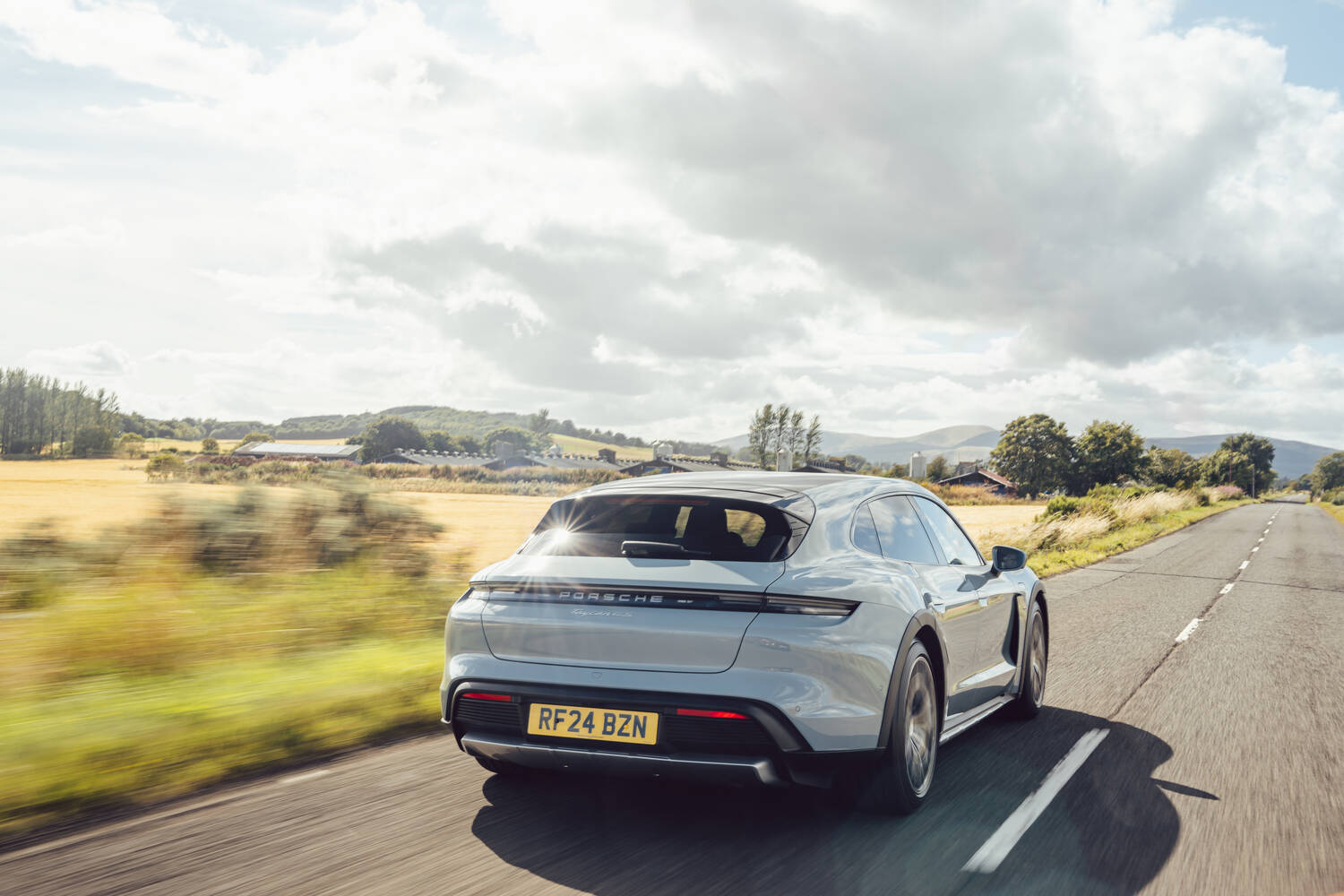
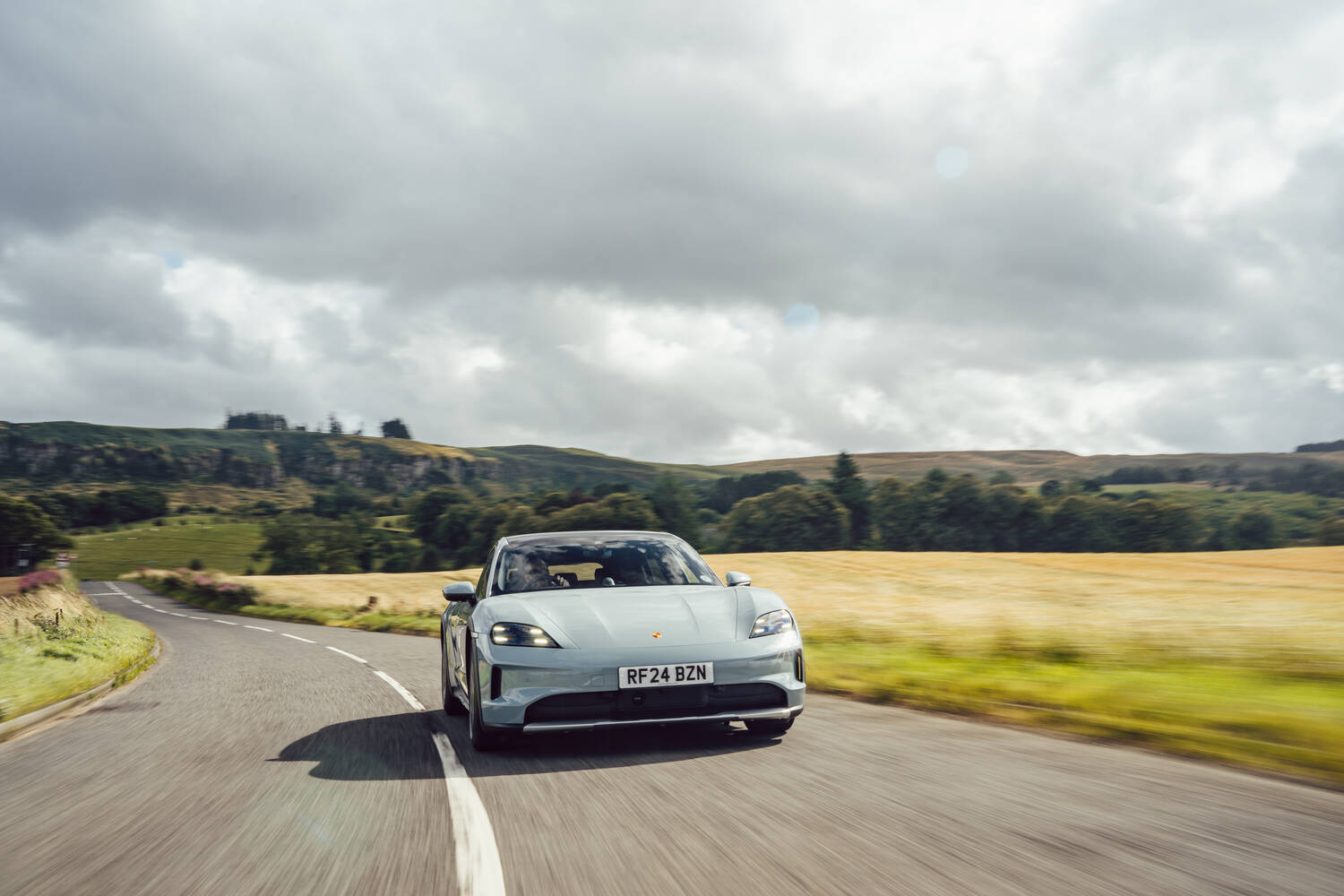
Driving the Porsche Taycan 4S Cross Turismo on UK roads
Words by Matt Robinson on 17 July 2026
With 20mm-taller suspension that is just a little softer in tune, this car's shining strength is its excellent rolling refinement and provision of unruffled ride comfort.

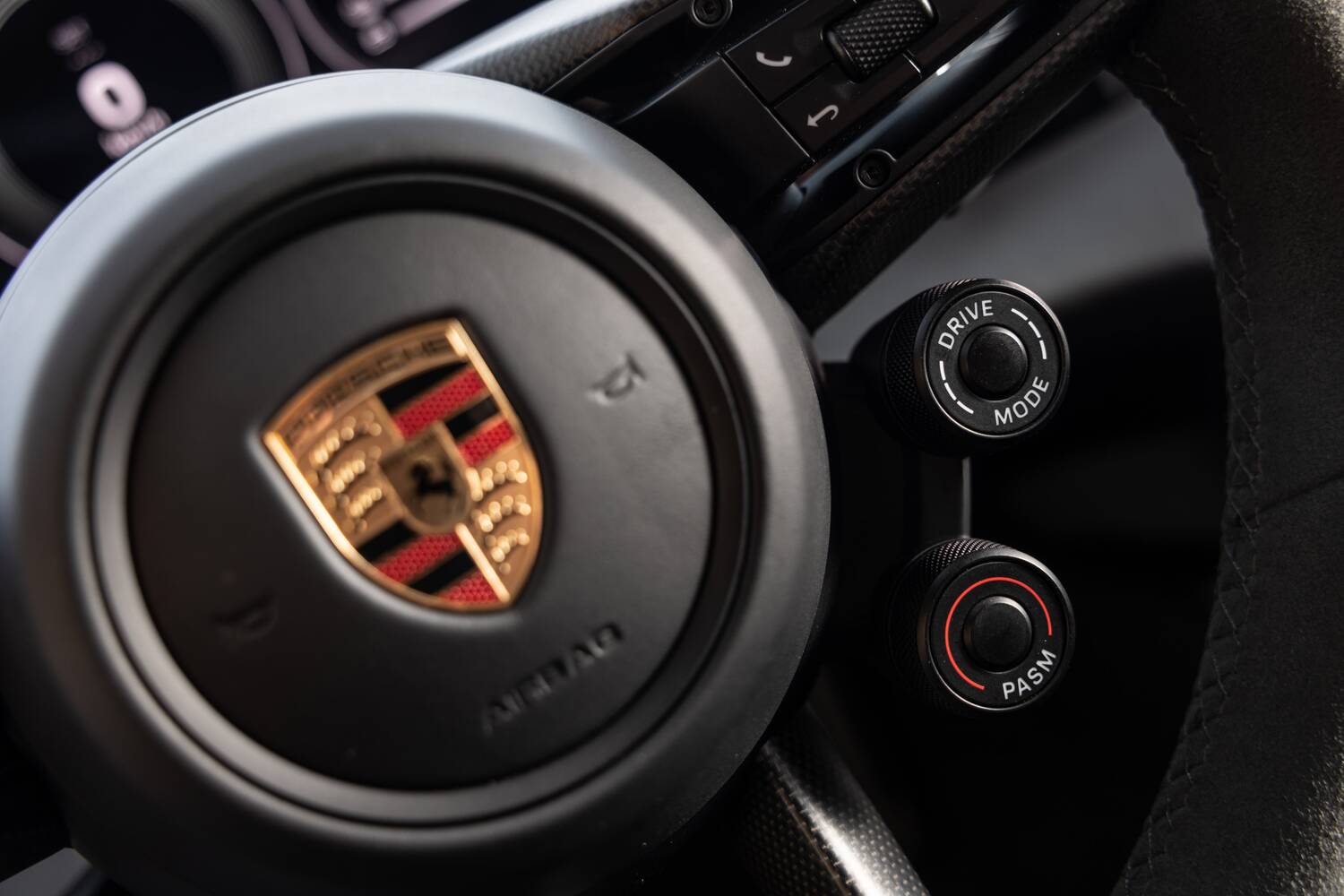
Since the 2025 update, all Taycans come on air suspension with two-valve Porsche Active Suspension Management (PASM) dampers as standard. However, our test car also had Rear Axle Steering (RAS), the electronically controlled Porsche Torque Vectoring Plus (PTV Plus) limited-slip differential on its rear axle and the ultra-clever Porsche Active Ride (PAR) self-levelling and anti-roll system fitted.
None of those options is inexpensive, but the results are impressive. In terms of covering kilometre after kilometre in effortless luxury, the Taycan 4S Cross Turismo is a seriously hard car to surpass.
It minimises tyre and wind noise, soaks up even the worst imperfections in the road and filters their impacts out within the complex suspension systems below the passenger compartment.

We have nothing to fault about the way the Porsche conducts itself in day-to-day driving. It is the sort of car that can take the stress out of heavy traffic and long journeys.
And do not worry about the performance. Second-lowest in stature the 4S may be, but a peak of 598hp and a substantial 710Nm of instant torque have no trouble shifting 2,355kg with startling alacrity.
With smooth delivery, beautifully calibrated accelerator and brake pedals, and no physical sense of the Taycan switching from its shorter reduction gear to its longer one, everything about the Cross Turismo's performance is a delight.
Well, save for the Porsche Electric Sport Sound (PESS). This system essentially enhances the car's own electric-motor whirrings, then amplifies them through the sound system.

It is still a good noise, a baritone and rich booming sound unlike any combustion-powered car, which should please those who dislike ICE mimicry by electric models.
However, Porsche has shown with the newer Cayenne Electric that it can simulate V8-esque noises in its zero-emission machines without them coming across as trite.
Happily, Porsche moved to address this with the Taycan later in 2026, adding another technical update that can perform mock 'gearchanges' and a different tune of PESS to involve the driver more in the Taycan's physical exertions.
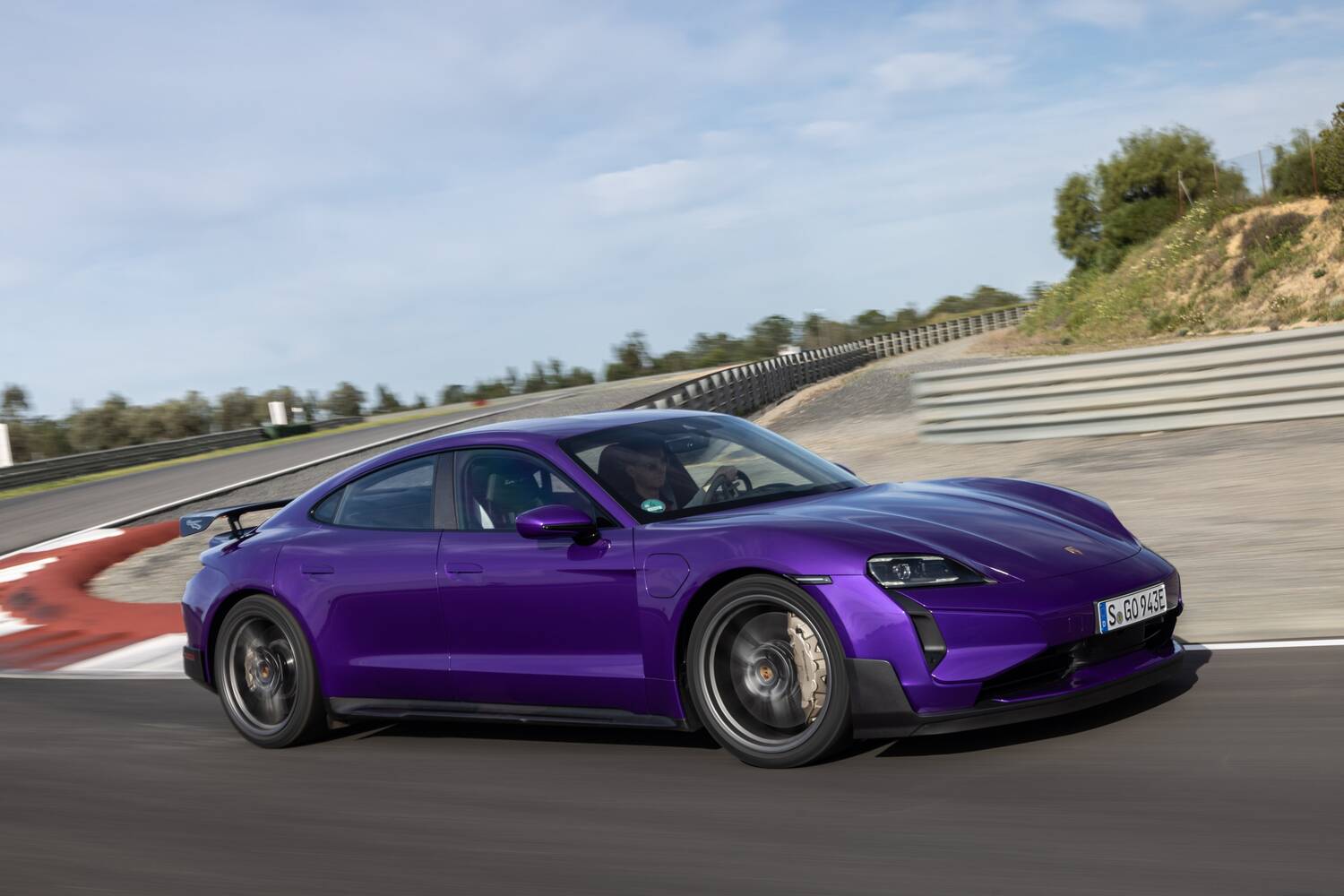
The keenest handling enthusiasts might want to avoid the Cross Turismo, however. Do not misconstrue us - this is still a fabulously sharp car to drive, operating at a dynamic level well above most other electric cars on sale.
Its highlights are the exquisite steering feel and the way Porsche has softened off the PAR system to make it feel more natural than it did in its earlier Panamera applications.
It still keeps a remarkable level of pre-emptive control on pitch, dive and lean, but it does not feel like a car simulator in the way the system could in the Panamera.

Nevertheless, there were a few occasions where the PAR, RAS, PTV Plus and soft suspension of the Cross Turismo combined to create strange mid-bend yaw moments, where it almost felt as if the car was edging towards unwanted oversteer.
This was infrequent, but it was enough to suggest the Cross Turismo is not quite as tied down in the corners as its lower-riding Saloon and Sport Turismo siblings.
You can, of course, firm it up in Sport and Sport Plus modes, yet we think the Cross Turismo's raison d'etre - beyond its obvious off-road leanings - is as the supreme-comfort model of the Taycan family.
So if you want the most invigorating version of Porsche's pioneering electric car, pick a GTS Sport Turismo or one of the Turbo GT saloons.

Otherwise, the Cross Turismo turned in a near-faultless display across multiple days of testing and proved that, while Porsche has brought newer EVs to the fore in the form of the Macan and Cayenne Electric SUVs, the sublime Taycan remains one of the very best zero-emission cars.
Range, battery, charging and running costs of the 2026 Porsche Taycan
- One 97kWh battery offered
- Rapid charging via 800-volt tech
- Range from 554-678km

As part of the update in late 2024, Porsche enlarged the battery size of the Taycan and decided to use it across every model in the range. Before the facelift, there was a smaller-battery choice, but that has now been deleted.
Its 800-volt architecture remains among the most advanced of its type in the world and allows for ultra-rapid DC charging.
Battery options and official range
The 'Performance Battery Plus' (PBP) pack in the Porsche Taycan is a 105kWh gross, 97kWh usable nickel-manganese-cobalt (NMC) lithium-ion battery, and it is used in all 20 derivatives in the line-up.
Aside from five models, every Taycan has an official range in excess of 600km. The best is the single-motor Saloon, said to be capable of up to 678km between charges if you keep it on its default 19-inch Taycan S Aero alloys; that figure reduces slightly if you want the Sport Turismo wagon equivalent, which tops out at 650km in the same spec.
For the Cross Turismo, the longest-legged model is the base 4, which can do up to 613km to a charge.

The only Taycans that cannot officially breach the 600km barrier are the Turbo and Turbo S variants of the Cross Turismo (594 and 595km respectively), the GTS Sport Turismo (599km) and the Turbo GT Saloons (554km without the Weissach Package, or 555km with it equipped).
Real-world range and efficiency of the Porsche Taycan 4S Cross Turismo
First things first, with the optional and very attractive 20-inch Offroad Design alloys fitted to our 4S Cross Turismo, along with a load of other weight-adding equipment extras, its official range is not the 609km peak of this derivative, but 578km.
That is still excellent for a near-600hp, 2.3-tonne-plus wagon like this, and the car's real-world efficiency was close to what Porsche says it should achieve.

On motorway runs, without having to hypermile it or drive behind a HGV at 80km/h with the air conditioning switched off, the 4S Cross Turismo regularly hit anything between 20-23kWh/100km. That was just using it as a normal car and not making any driving-style concessions for its electric nature.
Overall, after 785km of driving on all roads, the Taycan's indicated efficiency was a still-impressive 22.2kWh/100km. That means something approaching 450km to a charge from the Taycan 4S Cross Turismo should be possible all year round for drivers who are good at reading road conditions.
Achieving a realistic 500km at a time should also be possible with careful modification of driving behaviour.
Charging up the Porsche Taycan
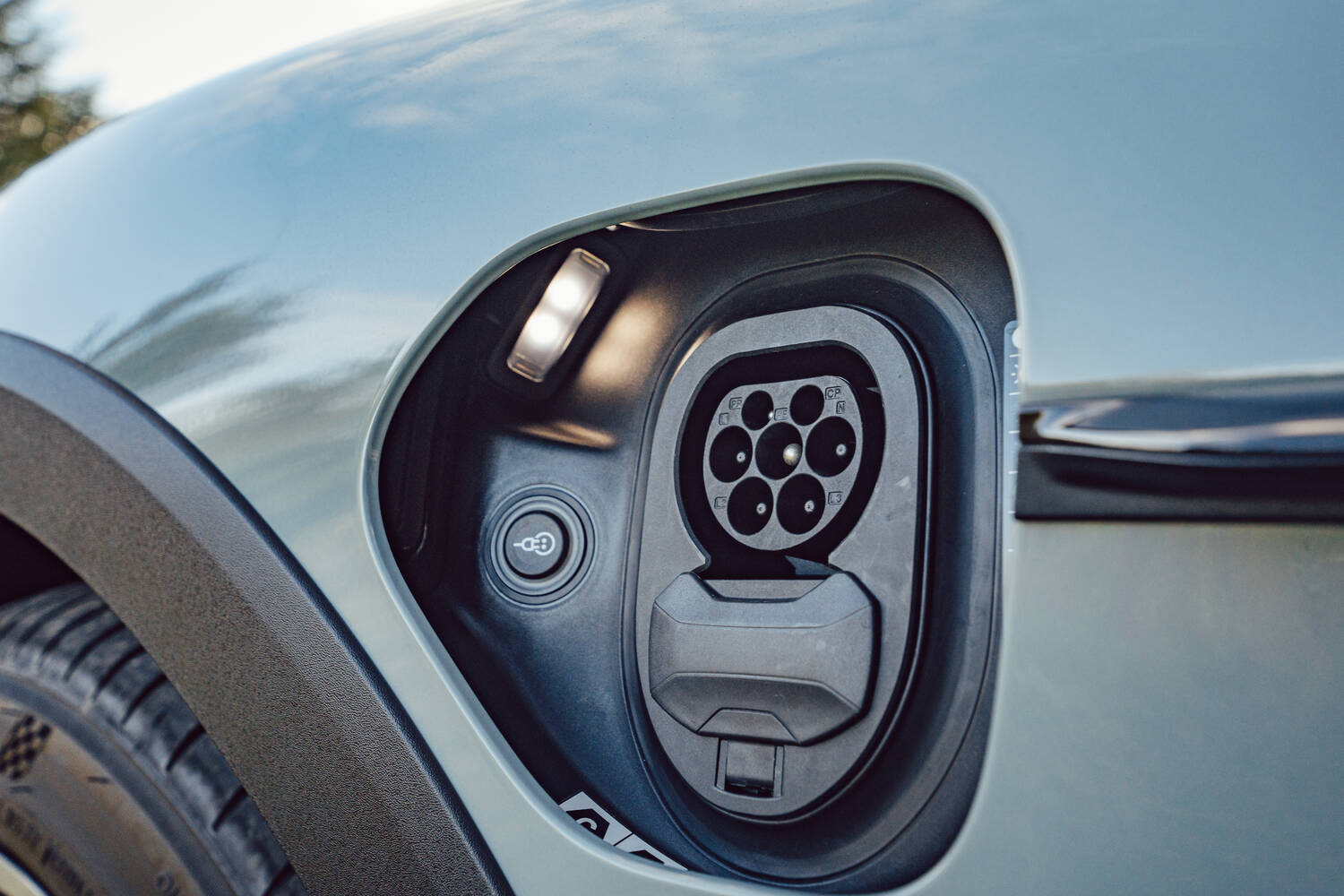
As part of the technical update, Porsche upgraded the Taycan's peak DC charging rate from 270kW to 320kW for 2025. That means a 10-80 per cent charge at its fastest will take just 18 minutes, a clear advantage of its 800-volt architecture.
Porsche used to offer 22kW charging on AC for the Taycan, but reliability issues with that onboard control unit meant it has standardised its three-phase AC capability to 11kW on all electric models.
At such a speed, the company says the 97kWh battery will take 11 hours to go from 0-100 per cent, although a more typical 7.4kW domestic wallbox would require more than 13 hours to perform the same task.
At its fastest rate of replenishment a mere ten minutes of hook-up will add anything between 279 and 326km of range to the car, depending on the model.
Servicing the Porsche Taycan
Porsche recommends a service interval of 24 months on its electric vehicles, including the Taycan family.
Porsche Taycan warranty

In Ireland, the standard new-car warranty from Porsche is for three years and with no distance cap. This can be extended, however, for a modest annual fee on any vehicle that is up to 15 years old, although the company then imposes a 200,000km limit of usage on that extended cover.
The high-voltage battery pack in the Taycan has its own level of guarantee, which is for eight years or 160,000km, whichever comes sooner.
Irish pricing & rivals to the 2026 Porsche Taycan
- All versions start well into six figures
- Lots of very pricey options
- Many rivals, few peers

No Porsche is cheap, but the Taycan is one of the company's more advanced and powerful models. Therefore, the Saloon kicks off at €111,246, the Sport Turismo from €112,271, and the Cross Turismo begins at €123,597. Remember, the latter comes as a dual-motor only, hence this elevated price compared to the other two.
The two wagon lines top out with their Turbo S derivatives, but the most expensive Taycans are the Turbo GT Saloons. With the Weissach Package fitted, it's actually a tiny, tiny bit cheaper at €266,245, while the four-seat model of the same thing comes in at €266,280.
Even an entry-level Taycan has 19-inch alloys, eight-way Comfort electric front seats with heating elements, a heated multifunction steering wheel, Matrix-LED headlights, cruise control, dual-zone climate control, adaptive air suspension with PASM and much more.
As you climb up the powertrain ladder, a greater level of standard equipment comes to the fore - so a 4S has more gear than a rear-wheel-drive car, and a GTS more than a 4S, and so on.

Yet even on the range-topping Turbo S and Turbo GT models, there is still a long and costly options list available to Porsche buyers that can quickly elevate any version of the Taycan to new and ludicrous heights. Go carefully with the options boxes at ordering time.
The main rivals include the Audi e-tron GT, which shares much of the underlying hardware of the Taycan, plus the BMW i5, Mercedes EQS and the Polestar 5.
Some of these can match the Porsche's range, and even square up to or exceed its comfort levels, but none of them drives with quite the verve of the Taycan or offers the spread of body styles it does, so it is a tough car for competitors to beat.

Verdict - should you buy the 2026 Porsche Taycan?
Years after it first launched, a series of technical updates has kept the Porsche Taycan right at the forefront of the top-end electric-car game. There are few cars, zero-emission or otherwise, that can serve up the same breadth of talent. It is one of the best long-range electric cars in real-world usage, and its immense appeal is hard to beat. If you can afford it, a Taycan remains a deeply convincing choice.
FAQs about the 2026 Porsche Taycan
Is the Porsche Taycan all-wheel drive?
In almost all variants across the 20-model full line-up, it is - for example, every version of the off-road-biased Cross Turismo comes with a dual-motor set-up and four-wheel drive accordingly.
However, in both the Saloon and Sport Turismo branches of the Taycan, there is a single-motor, rear-wheel-drive entry-level version, which can be had in regular specification or as a Black Edition for a little more money.
How fast is the Porsche Taycan for acceleration?
It is anything from supercar-quick at base level to one of the fastest-accelerating production cars on the planet at the pinnacle of its line-up.

The slowest Taycans, and remember that is a relative term, are the rear-wheel-drive versions, which take just 4.8 seconds to run 0-100km/h.
Every dual-motor version, however, can achieve the same benchmark sprint in less than four seconds, and then there are the 1,034hp Turbo GT cars. These do the run in just 2.3 seconds in four-seat format, or 2.2 seconds as the lighter, more-focused Turbo GT with Weissach Package.
Is the Porsche Taycan rated to tow anything?
It is not officially rated to tow anything, although a towing hitch is on the options list. That is more for mounting a bike rack than towing loads behind the car.
Want to know more about the 2026 Porsche Taycan?
If there is anything about the Porsche Taycan we have not covered, or you would like help in choosing between it and other cars, you can avail of our expert advice service via the Ask Us Anything page.