Introduction to the 2026 Mercedes-Benz VLE
When it comes to moving lots of people, the van-derived MPV is the most efficient ways of doing so, and for a number of years Mercedes-Benz has offered both practical and more luxurious solutions to this with cars derived from its Vito van.
The electric variant was called the EQV but that was replaced by the Mercedes VLE. Built on the 'VAN-EA' platform architecture that will also underpin a commercial van family, the VLE is nonetheless more passenger car than van-based derivative. There are numerous seating configurations to choose from, various electric powertrains and even two different wheelbase lengths.

Pros & cons of the 2026 Mercedes-Benz VLE
Pros:
• Stylish design
• Useful driving range
• Luxurious interior
Cons:
• Only comes with an electric powertrain
• Larger wheel sizes detract from ride comfort
• Digital dashboard isn't ideal in use
Exterior & design of the 2026 Mercedes-Benz VLE
• Smooth lines, not so van-like
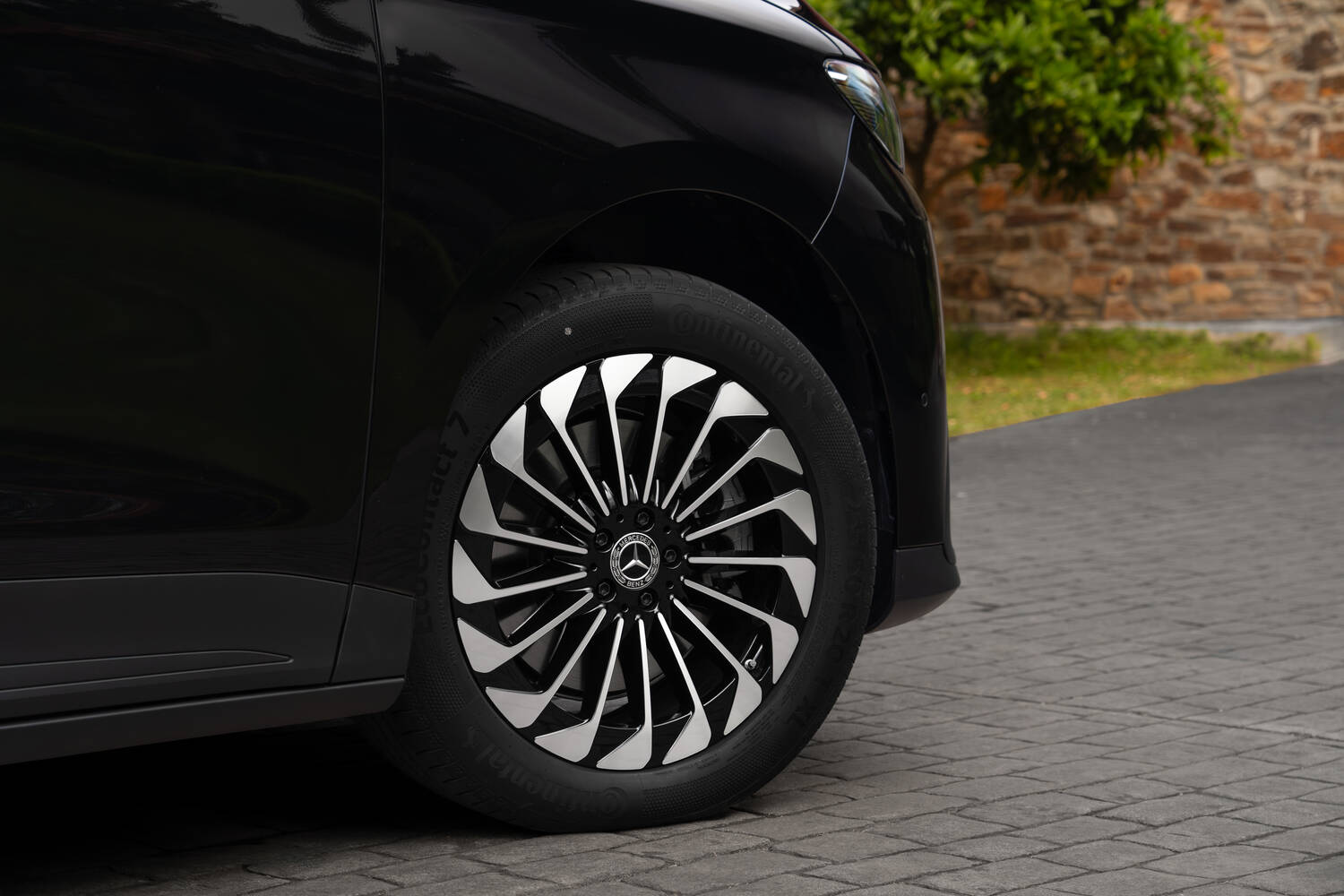
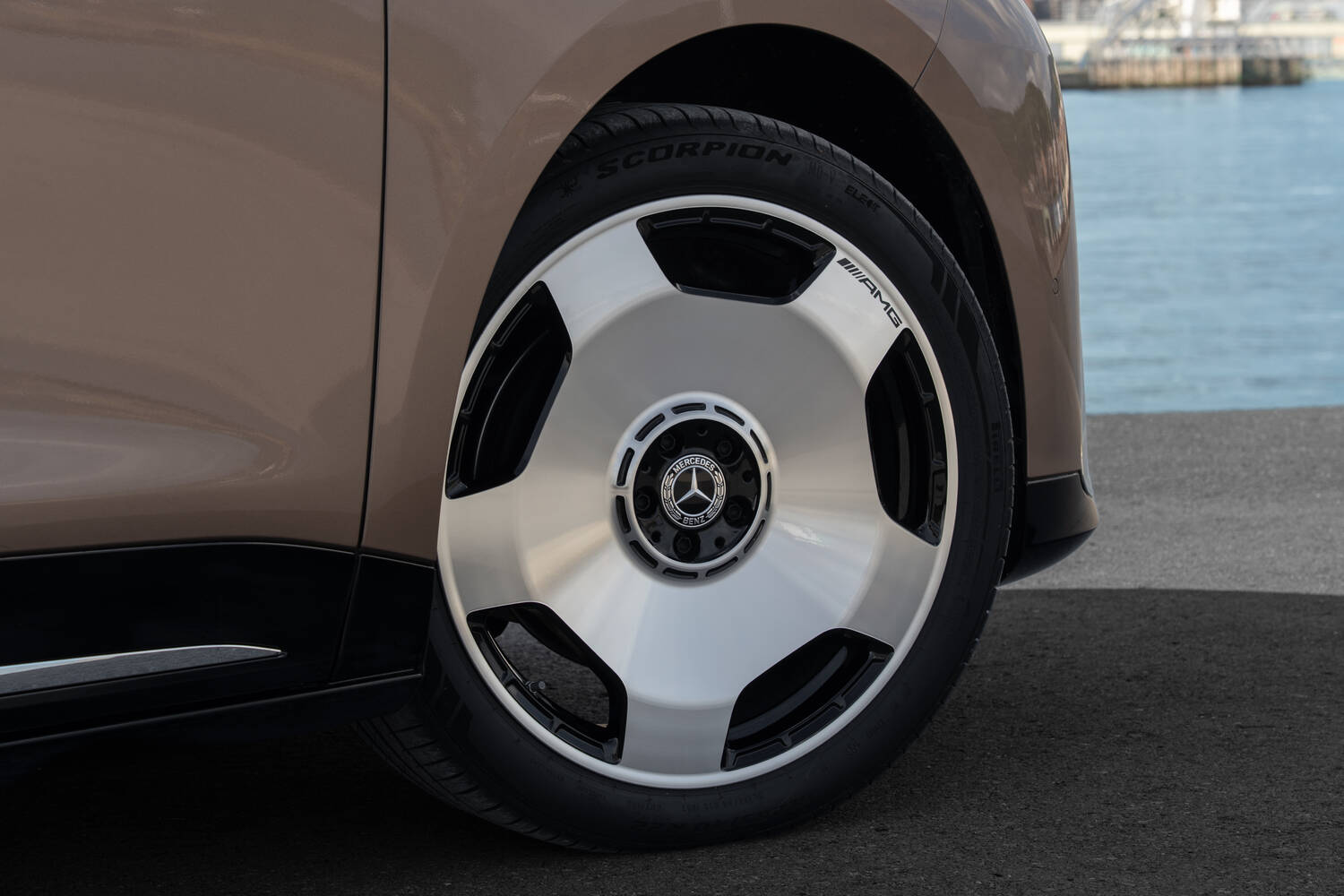
• Up to 22-inch wheels
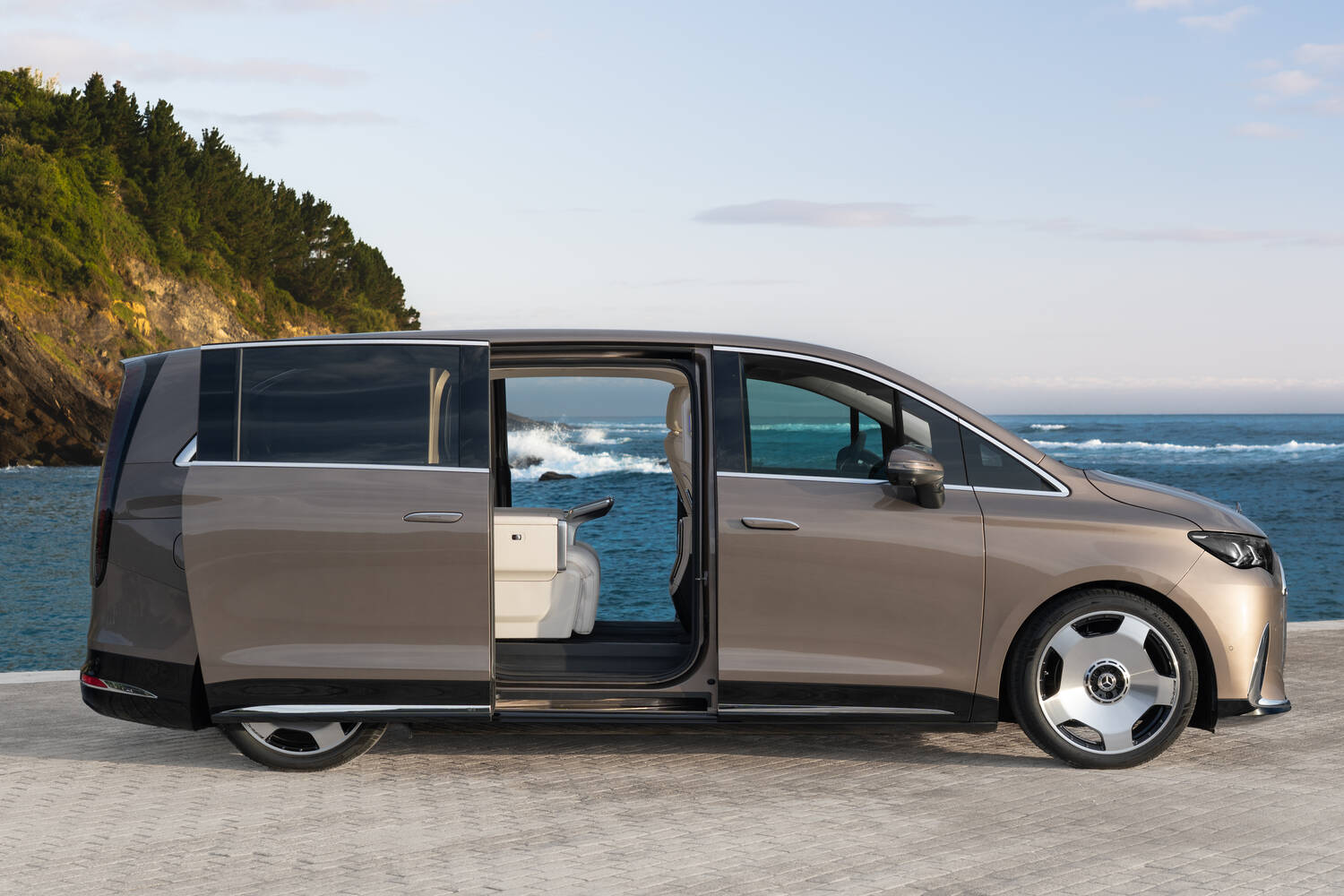
• Electric sliding doors as standard

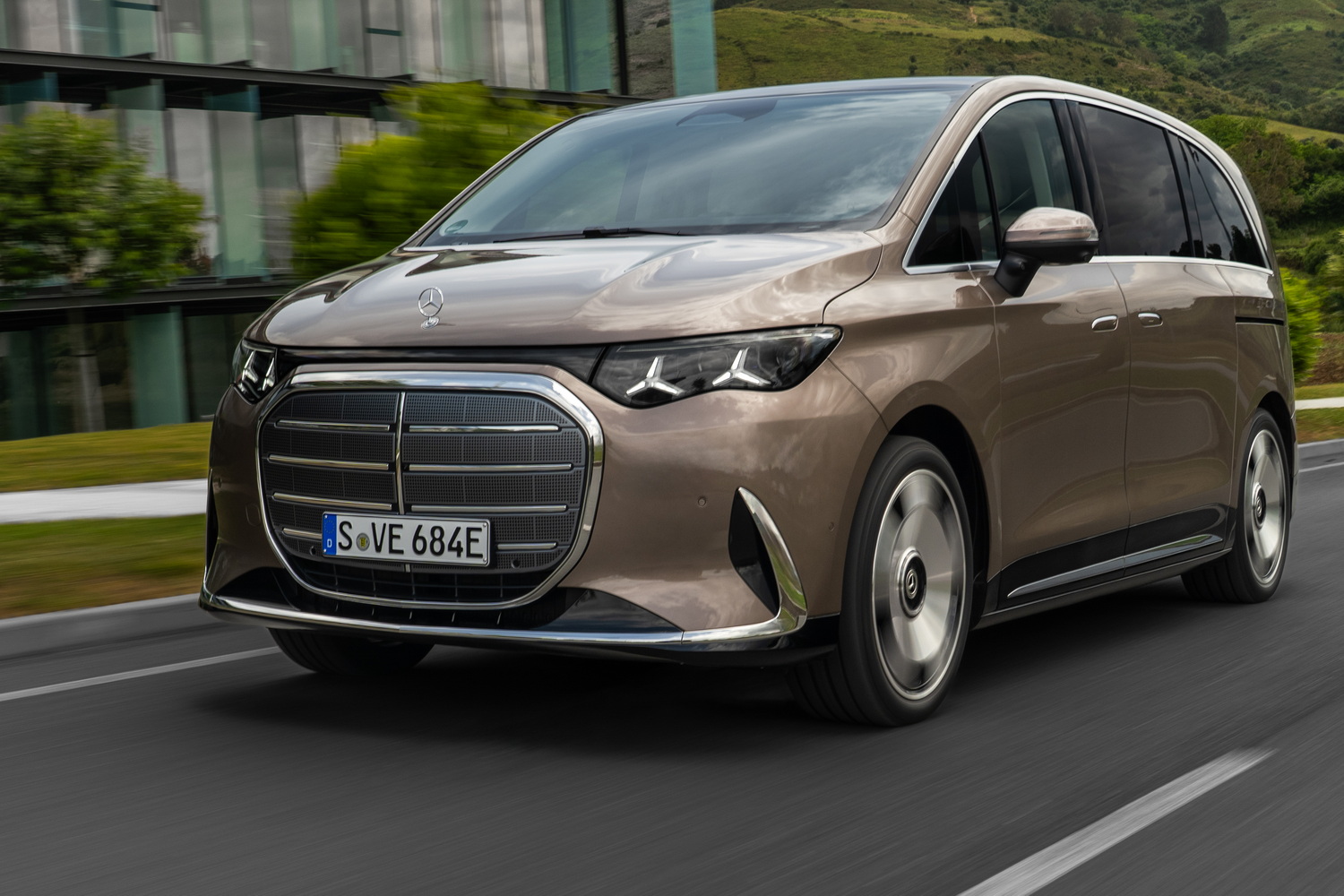
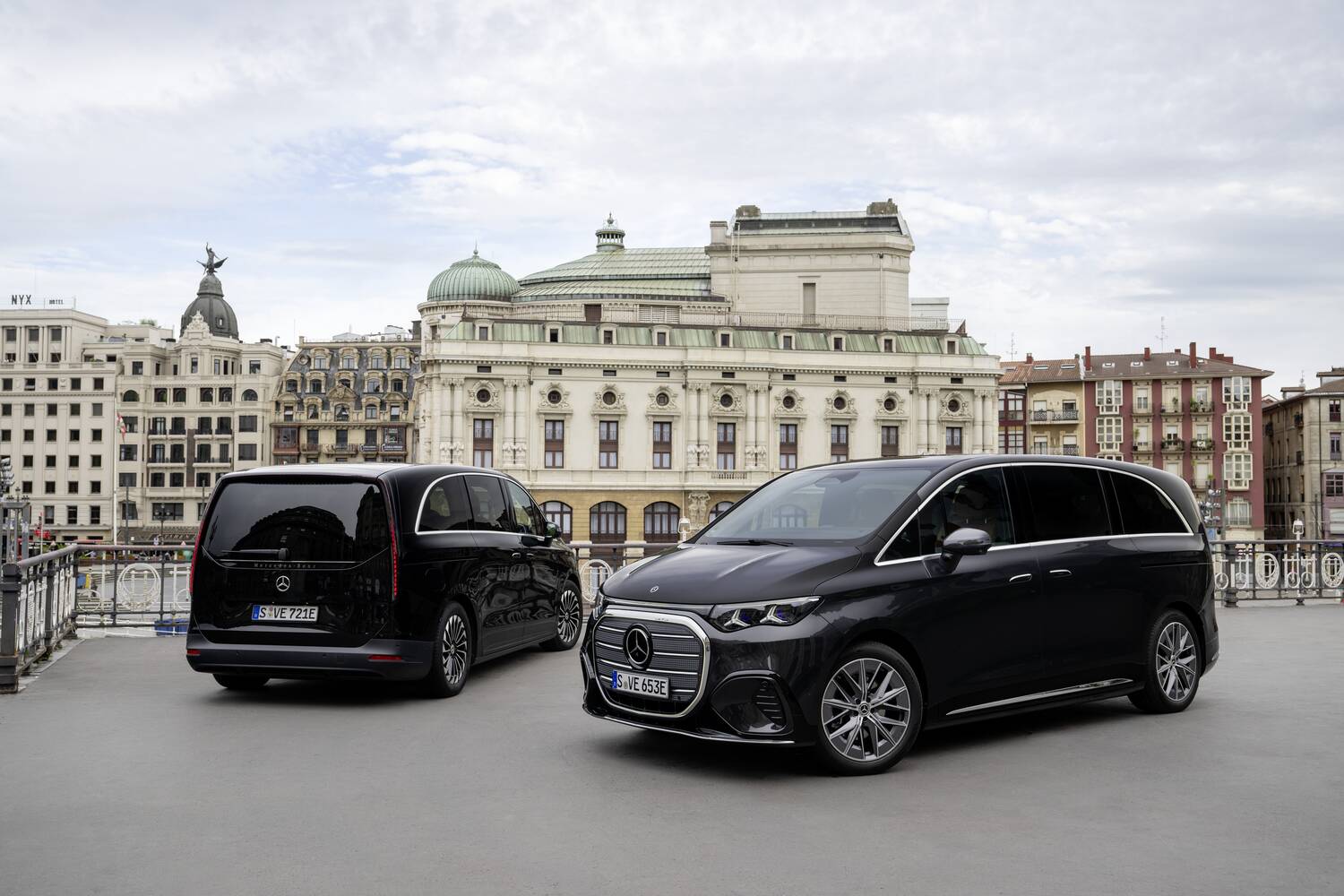
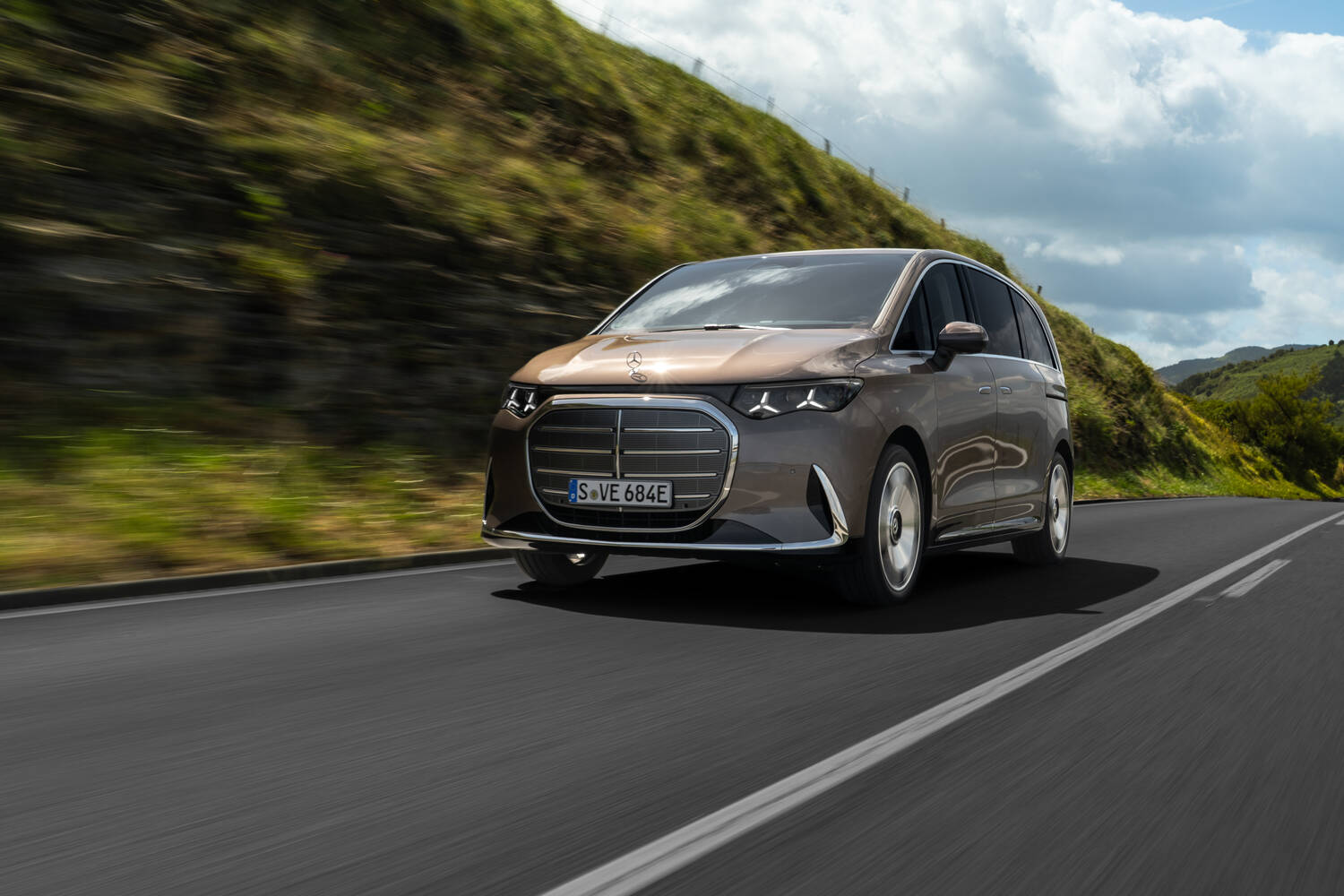
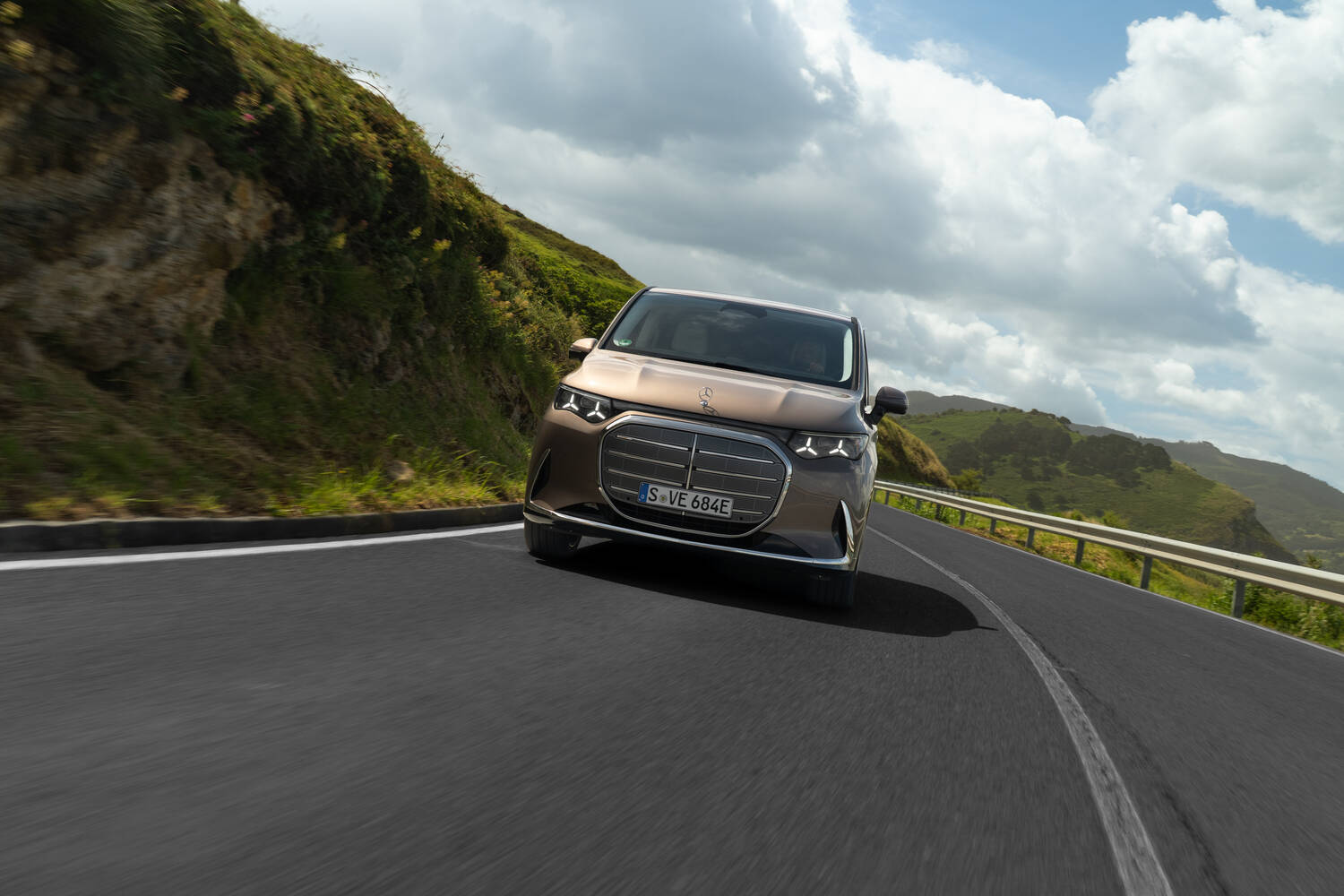
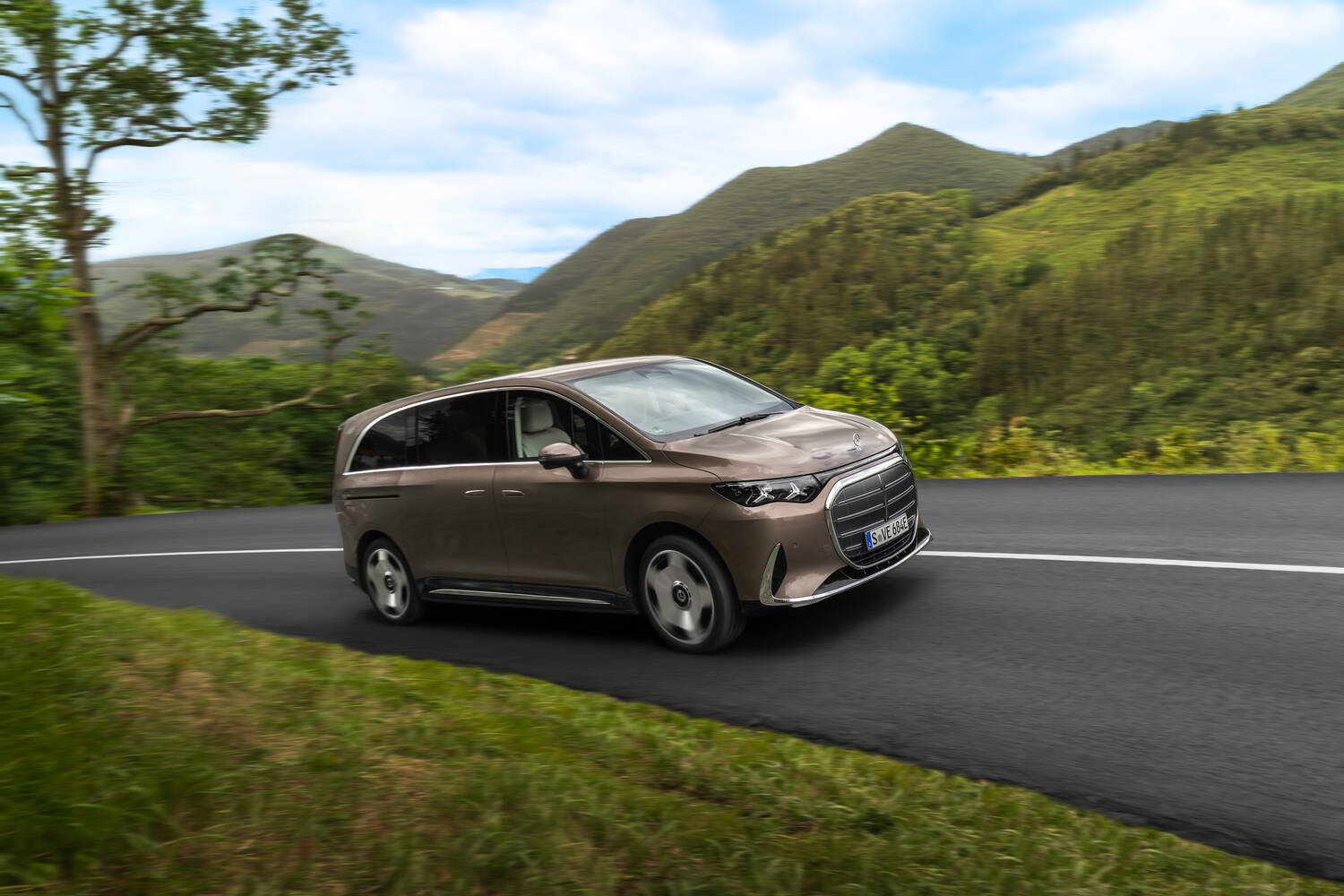
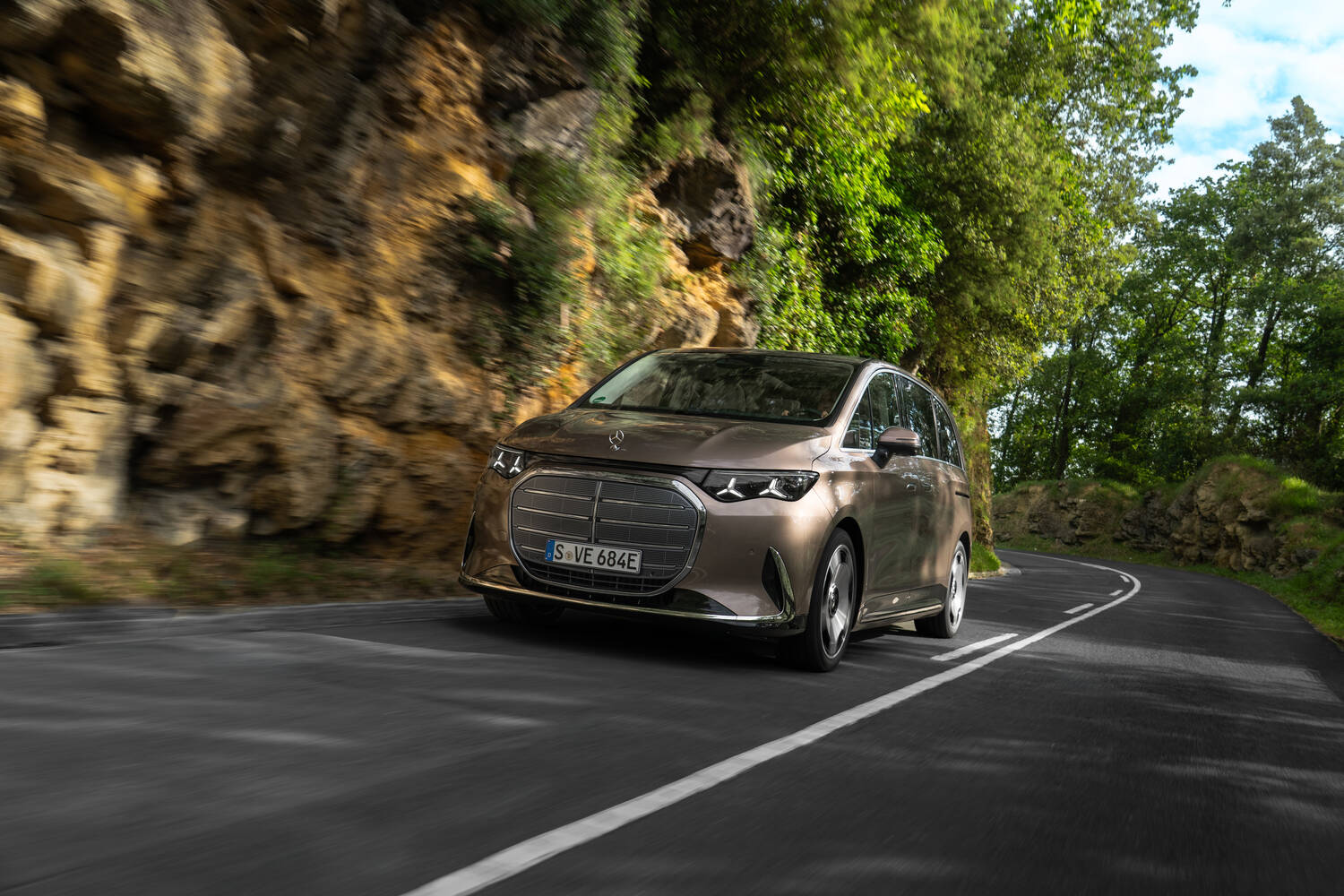
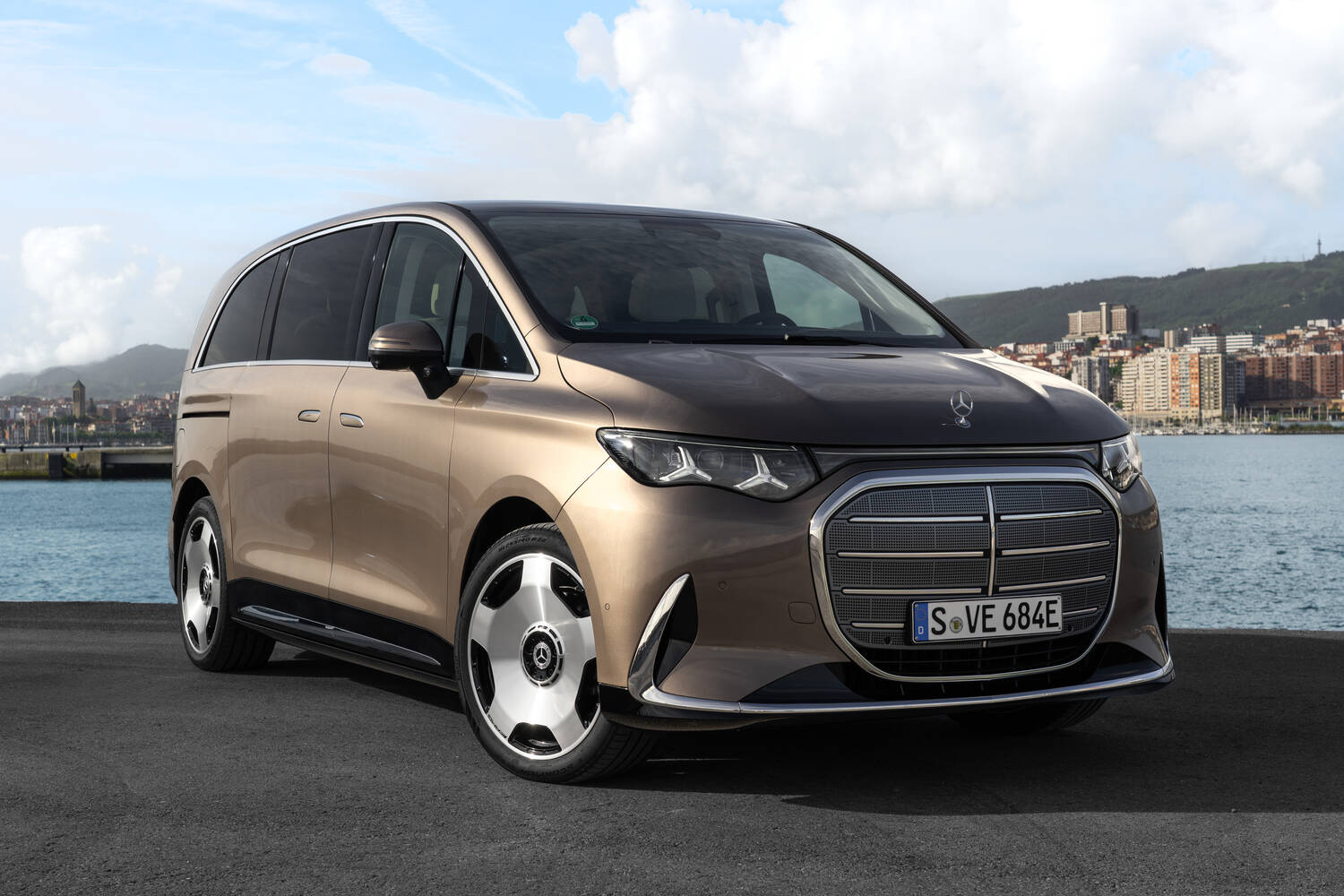
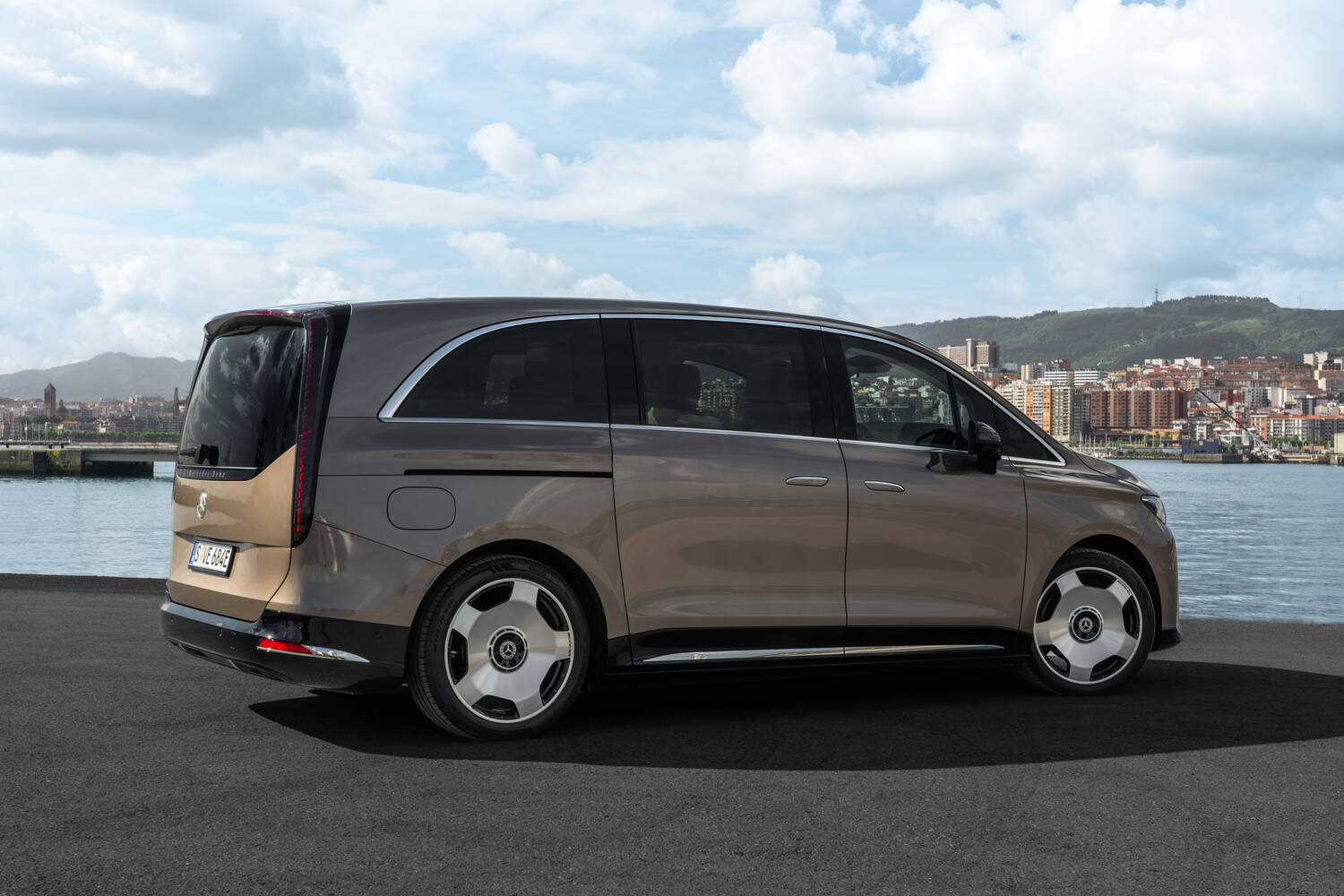
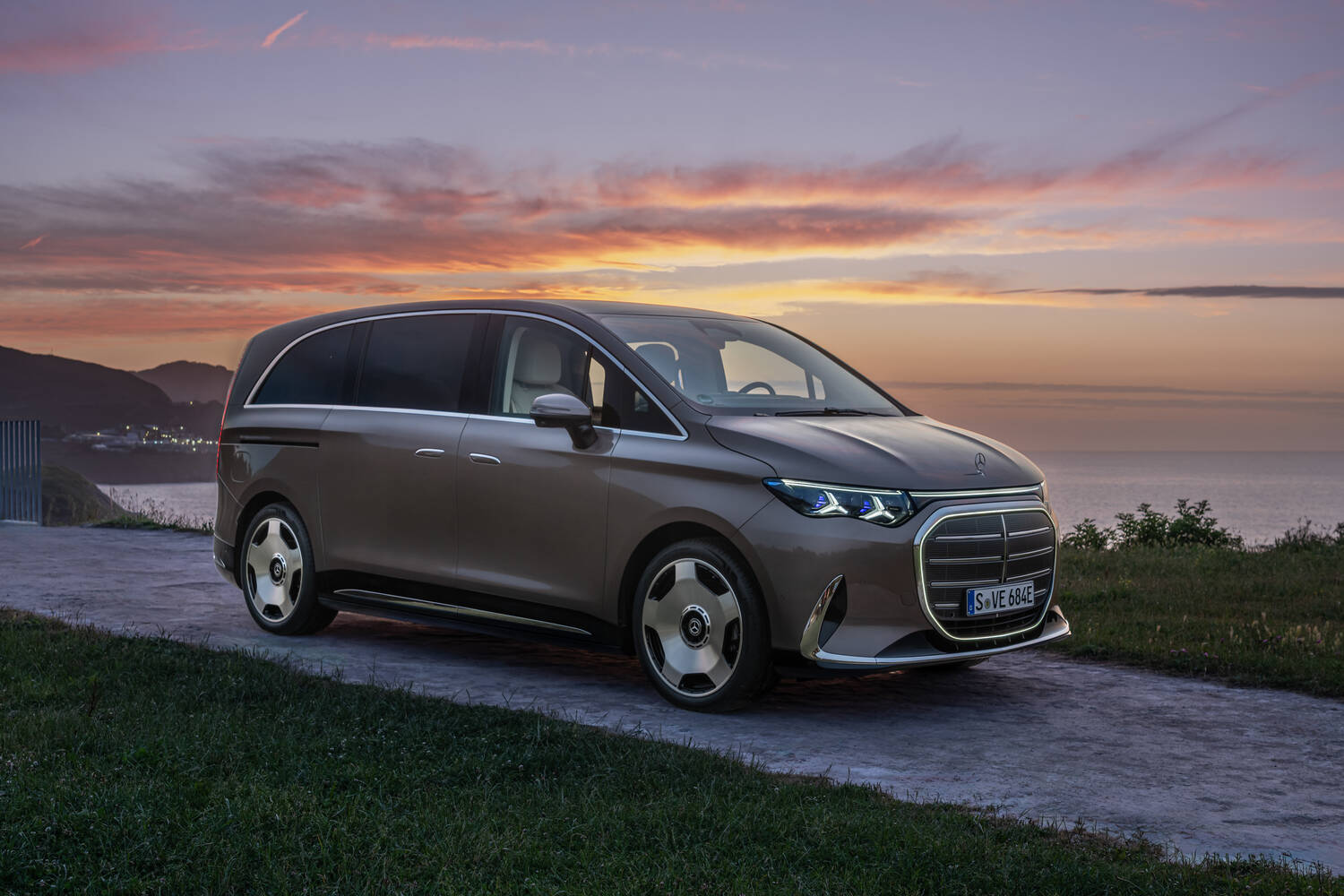
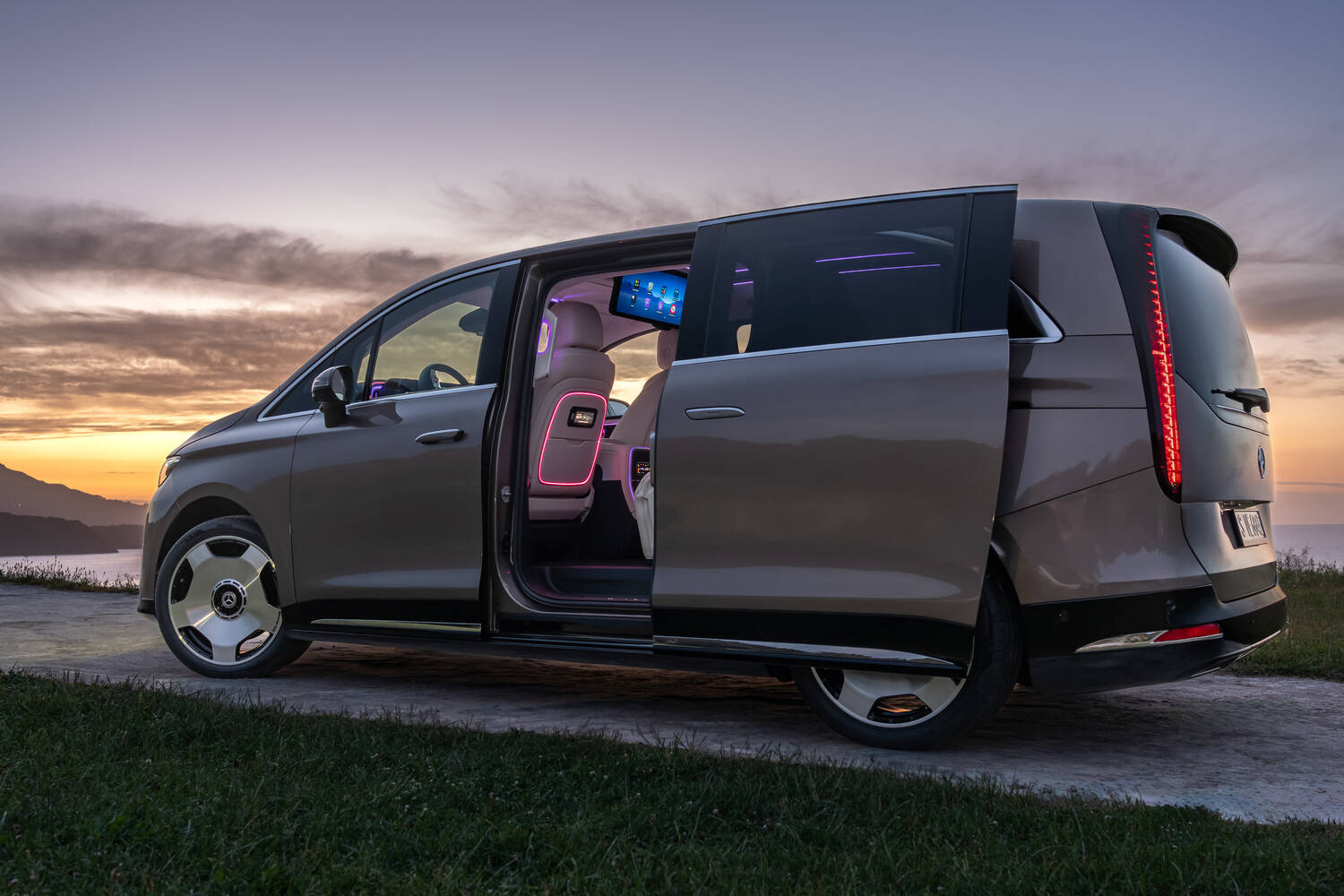
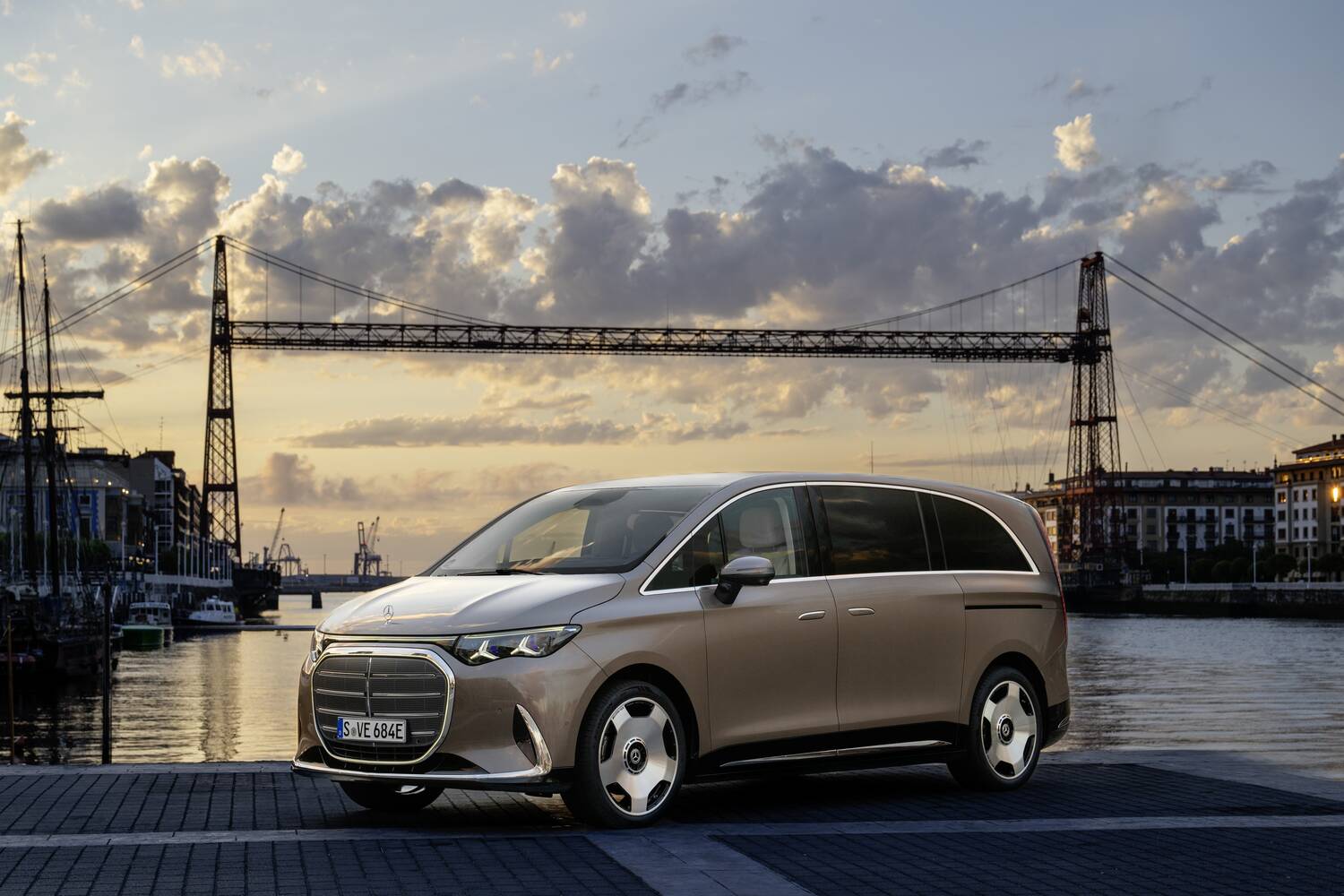
While the Mercedes-Benz VLE still has the silhouette of a van, it wears much softer lines and detailing overall. Those that recall the Mercedes Vision V concept vehicle of 2025 will be impressed by how true to that design study the production vehicle has remained. Its softer lines are as much about making it appeal to non-professional buyers as they are about enhancing the car's aerodynamic properties.
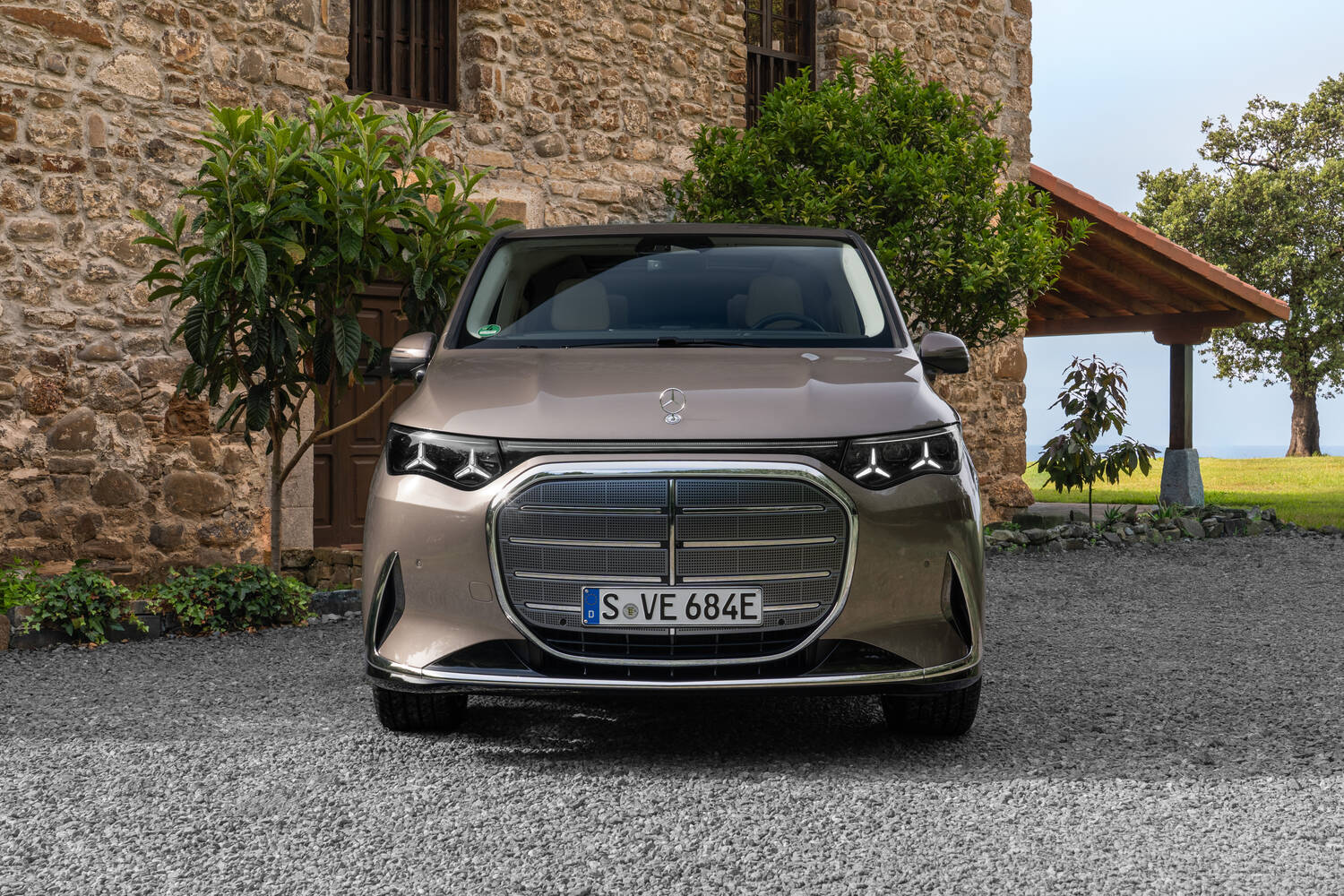
A large grille element is more about design than function on account of the VLE's electric powertrain, but it's in keeping with other models from Mercedes, such as the GLC and C-Class.

The VLE is arguably the one car where this grille design - complete with thin illuminated surround - appears in proportion with the rest of the vehicle.
The headlights carry a double set of three-pointed star daytime running lights and - depending on specification grade - you can still have a star emblem sitting atop the heavily sloped bonnet.
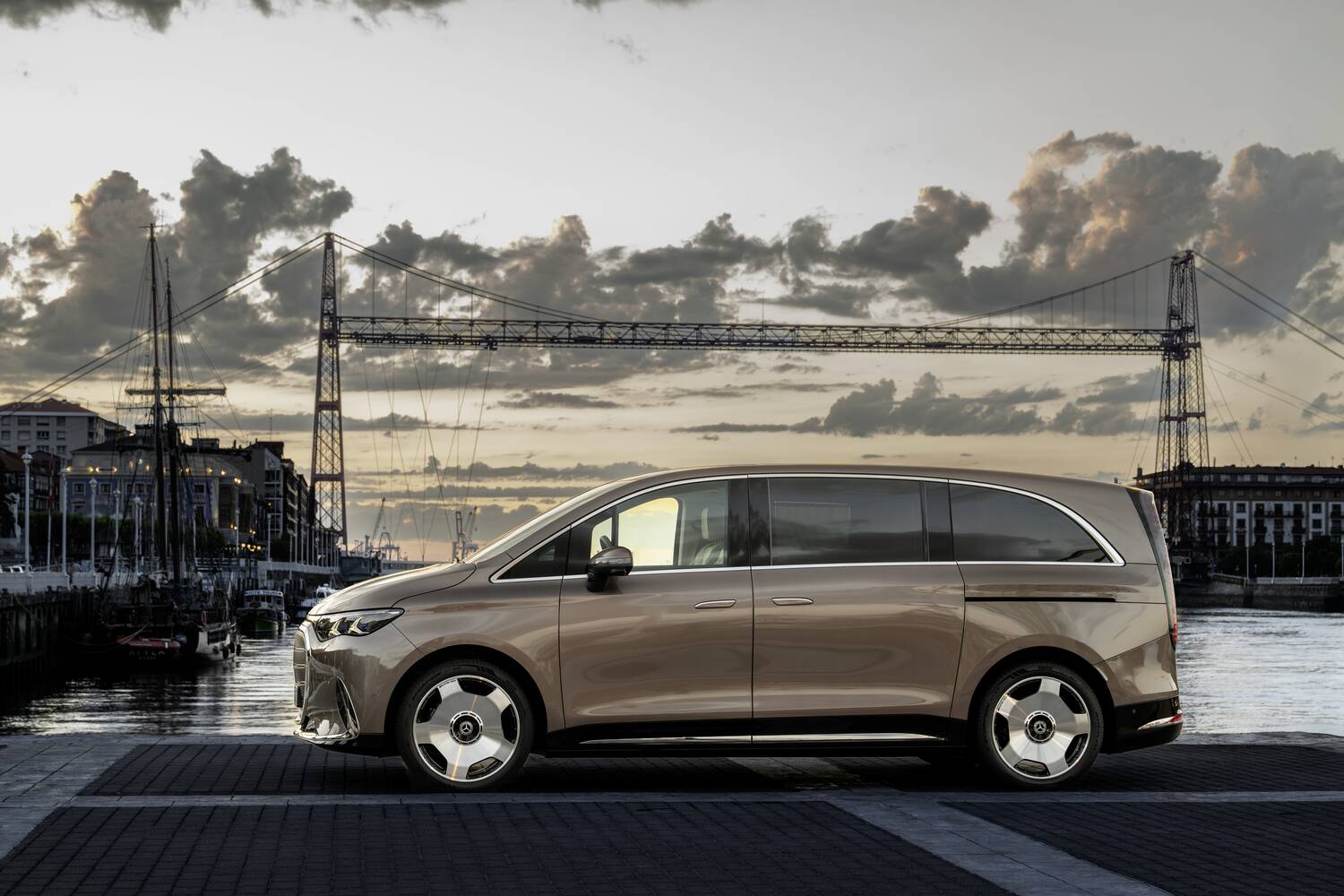
Its form doesn't leave much scope for interesting sheet metal surfacing, though while there's a sizeable battery sandwiched into the floor, the designers have done a reasonable job of not leaving it appear too slab-sided.

A contrasting panel along the base of the doors helps to visually lift the car as does a slightly tall beltline below the windows.
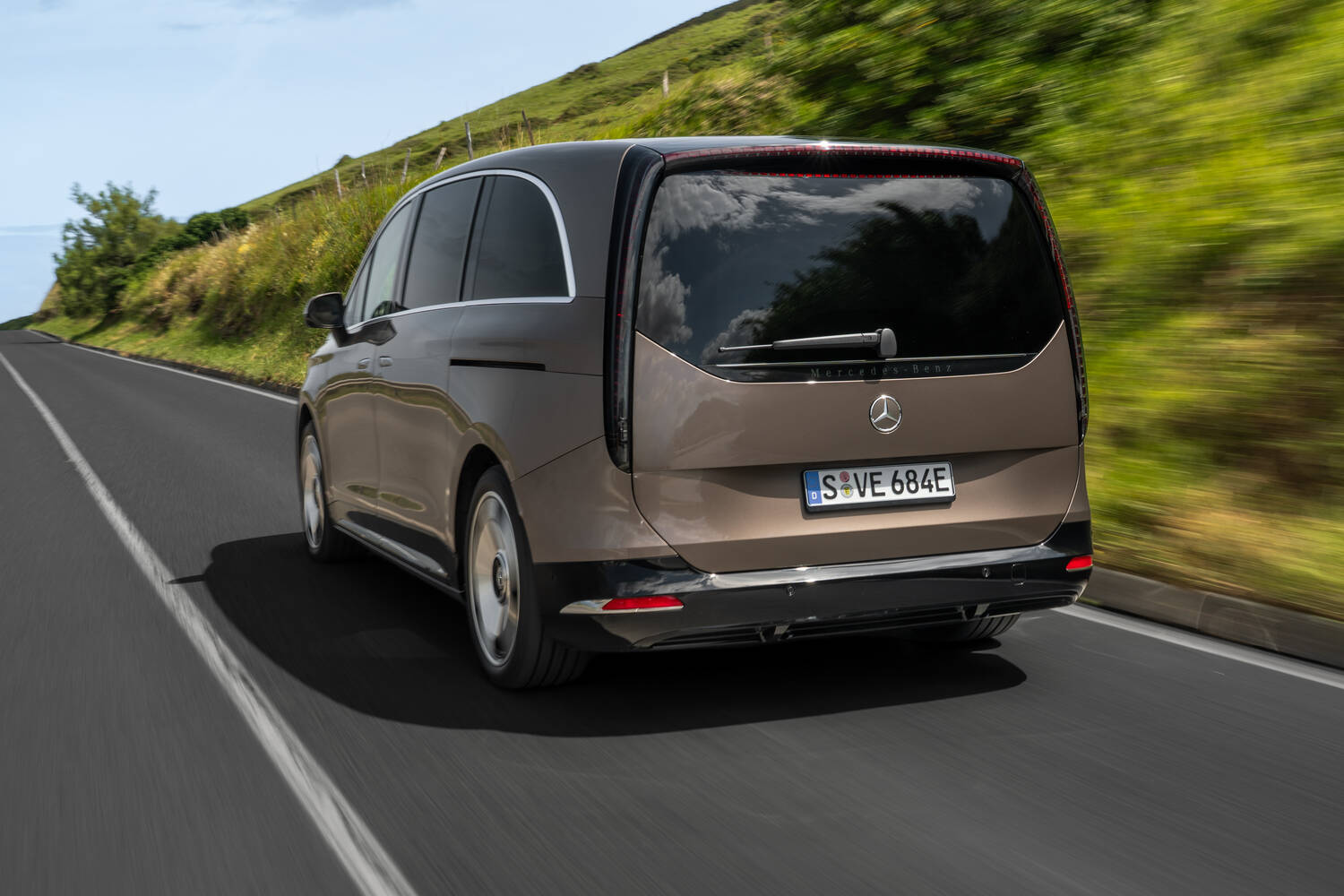
The glass area is expectedly large but the way it curves down at the C-pillar is a bit different to design norms in this segment.
The rear design is a break from the usual Mercedes look as well, and the rear light unit which wraps all the way around the tailgate is a touch reminiscent of the Hyundai Ioniq 9's.

One detail we like is that the rear window can be opened independently of the tailgate, making it easy to throw a small bag in without having to open the whole thing.
Dimensions of the 2026 Mercedes-Benz VLE
Length: 5,309mm
Width: 1,999mm
Height: 1,943mm
Wheelbase: 3,342mm
Paint colours for the 2026 Mercedes-Benz VLE

There are five metallic paint colours for the Mercedes-Benz VLE, most of which are subtle, though the Velvet Brown that our test car wore is a little different. The other colour choices are Nautical Blue, Graphite Grey, Obsidian Black and High-tech Silver.
Interior, practicality, tech & comfort of the 2026 Mercedes-Benz VLE
• Triple-screen dashboard
• Multiple seating configurations
• Optional 31-inch rear display

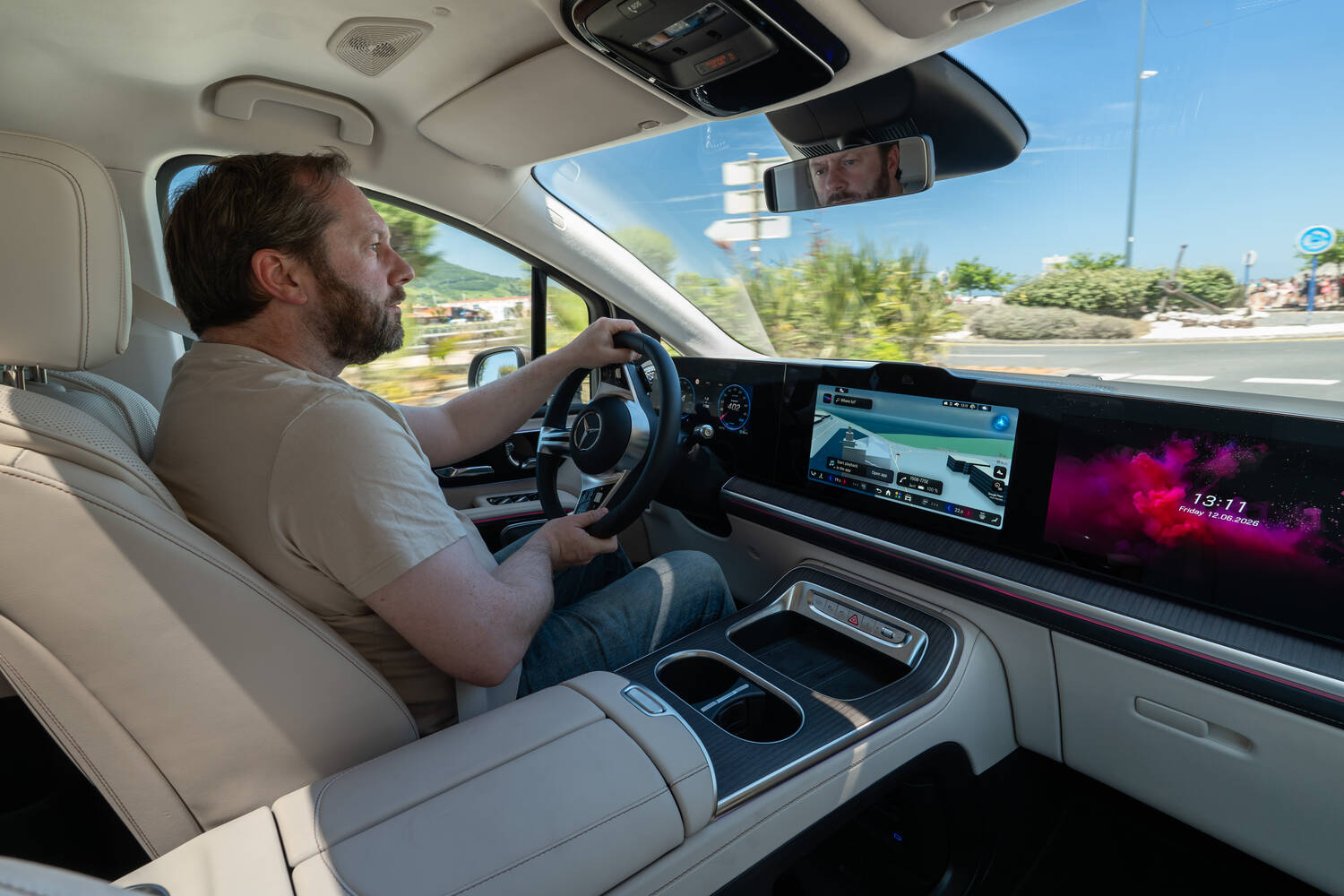
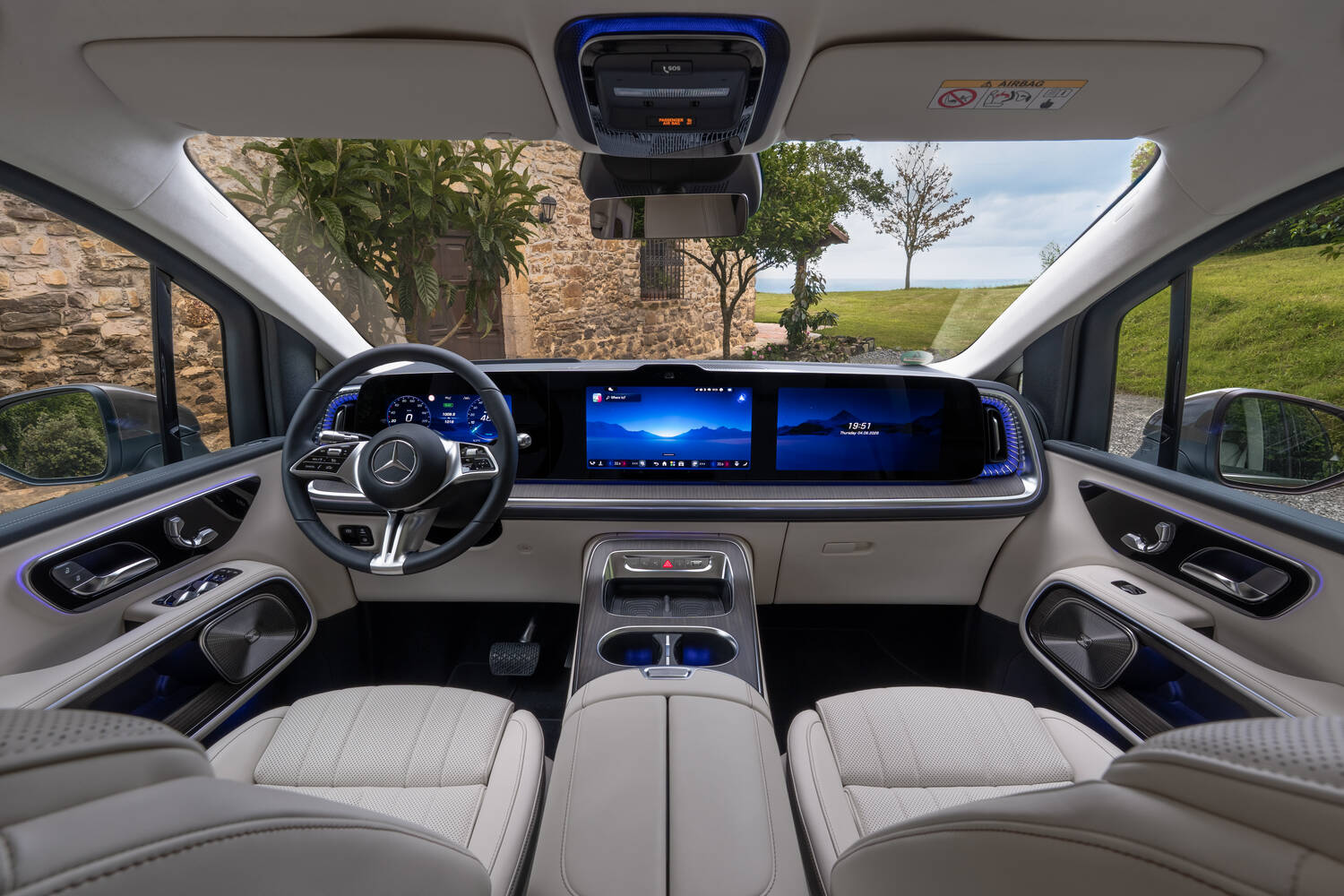
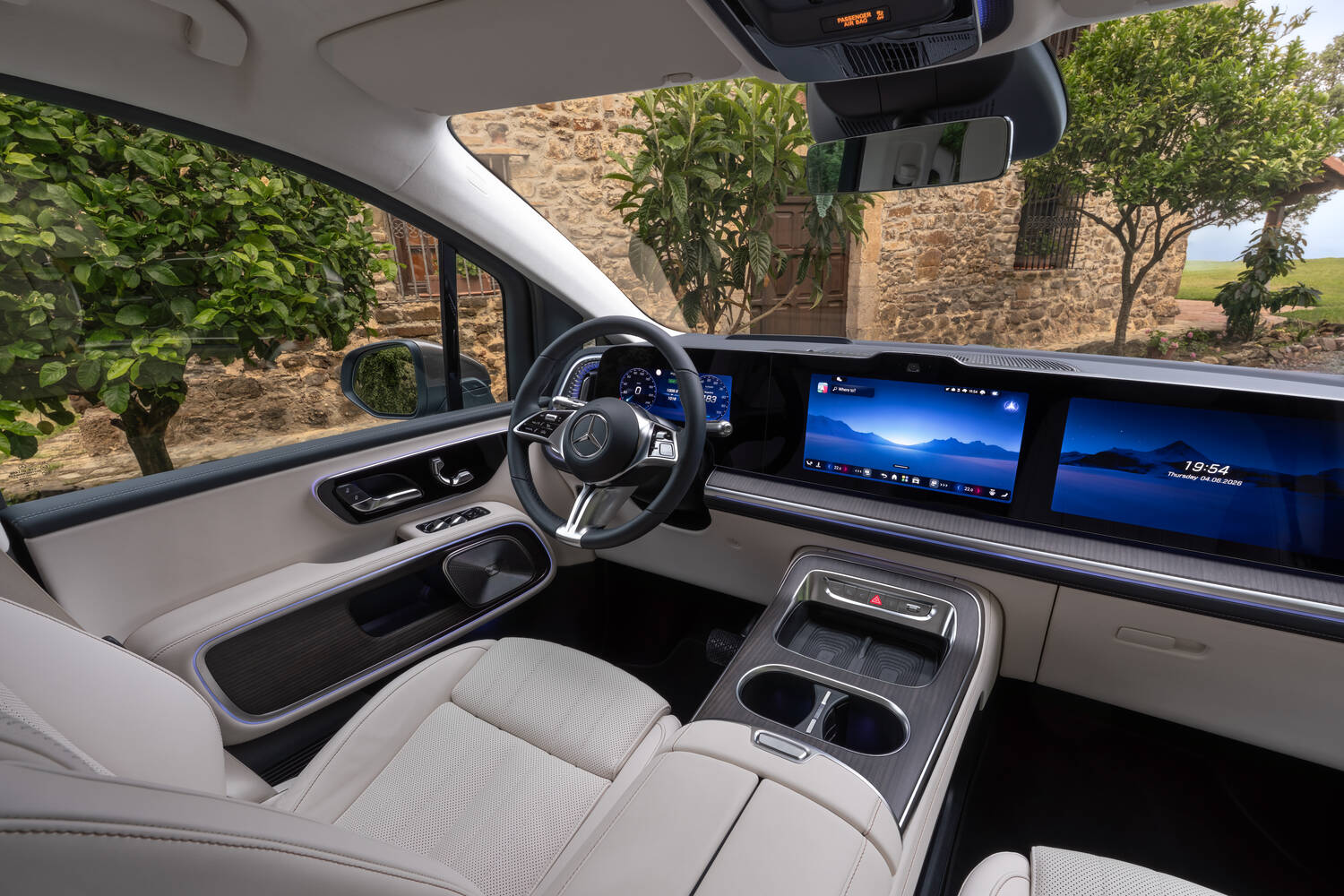
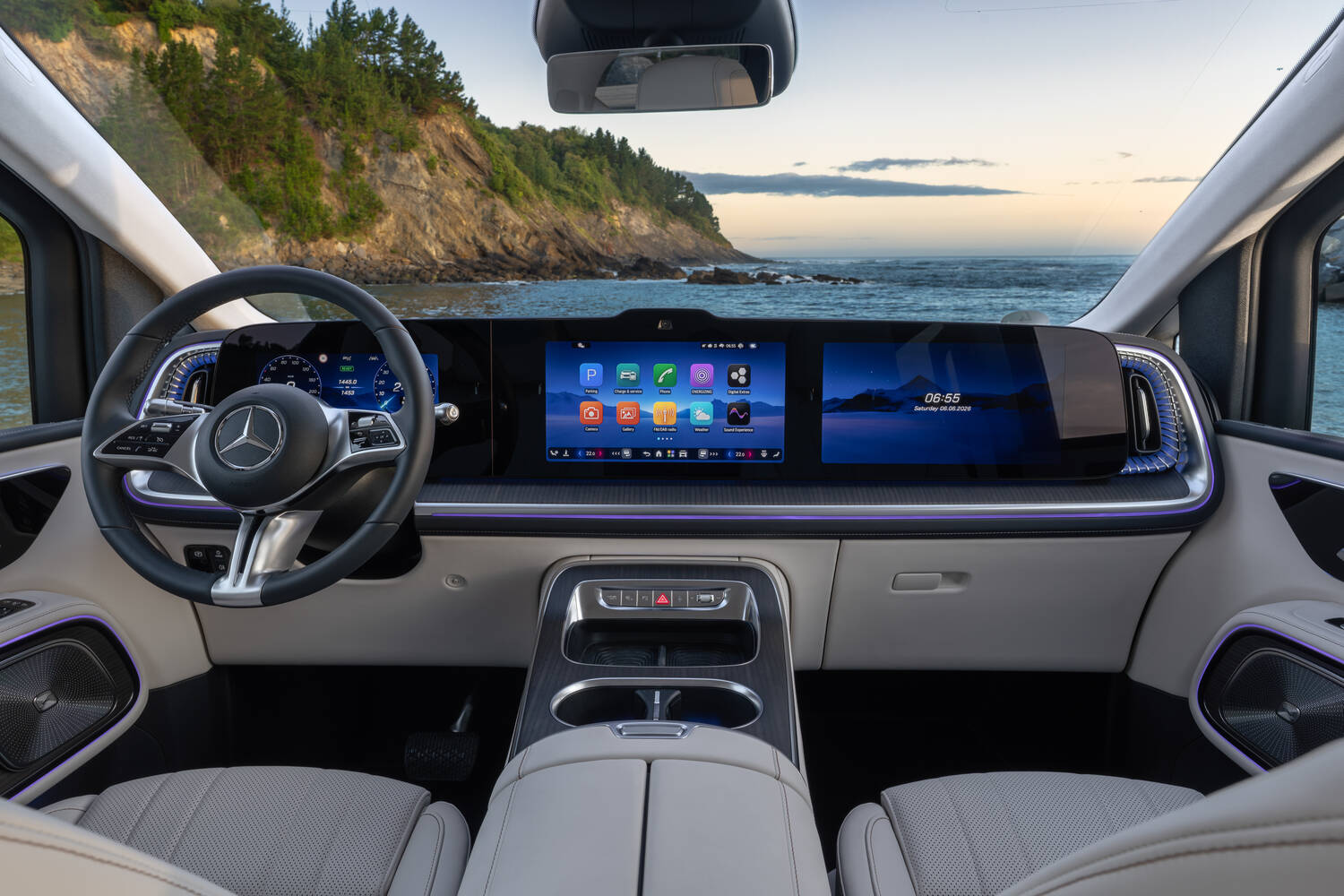
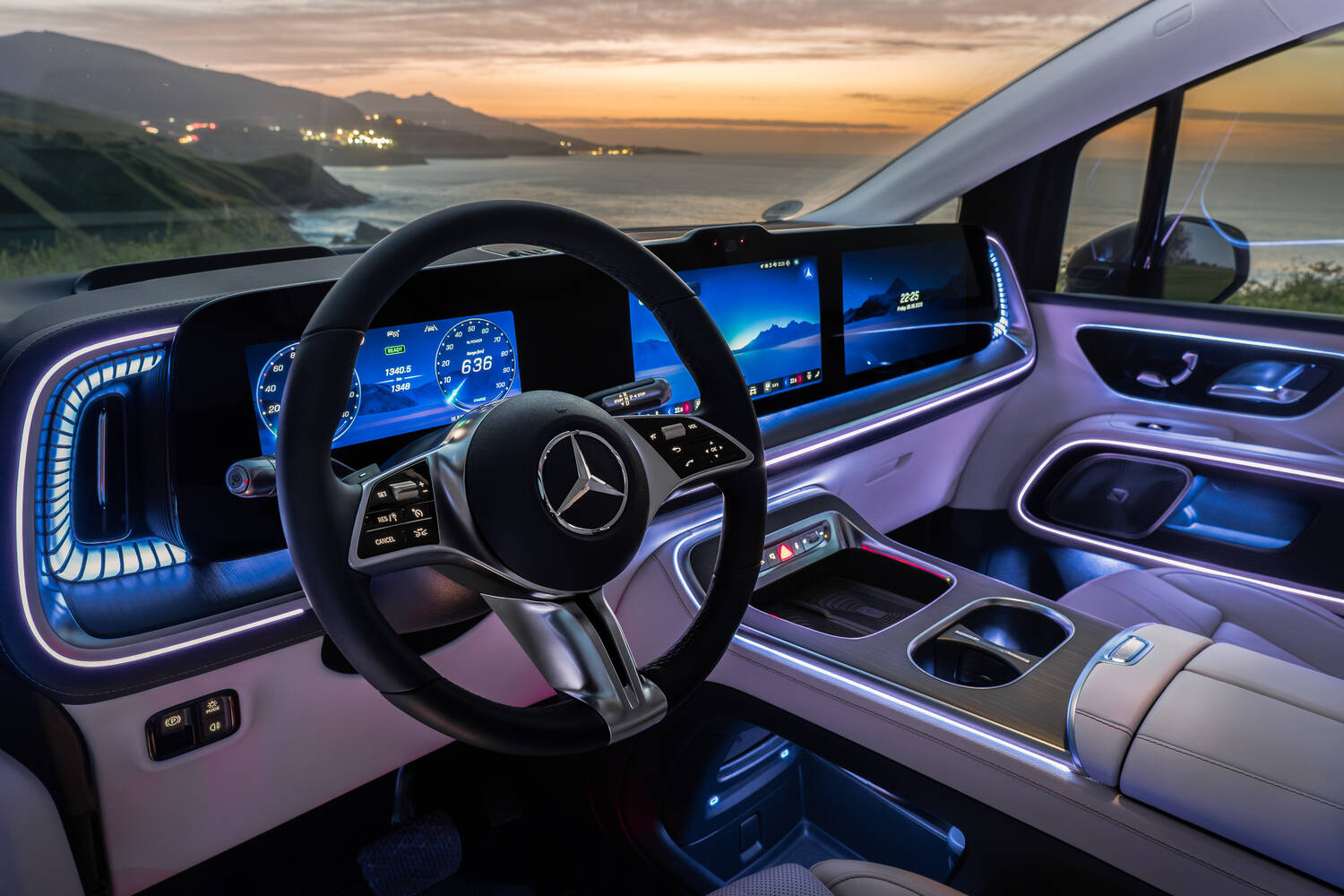
Up front the dashboard uses a single panel that houses a number of digital displays. This setup is framed by a surrounding panel that adds vertical air vents at either end and a handy base to rest your wrist on.
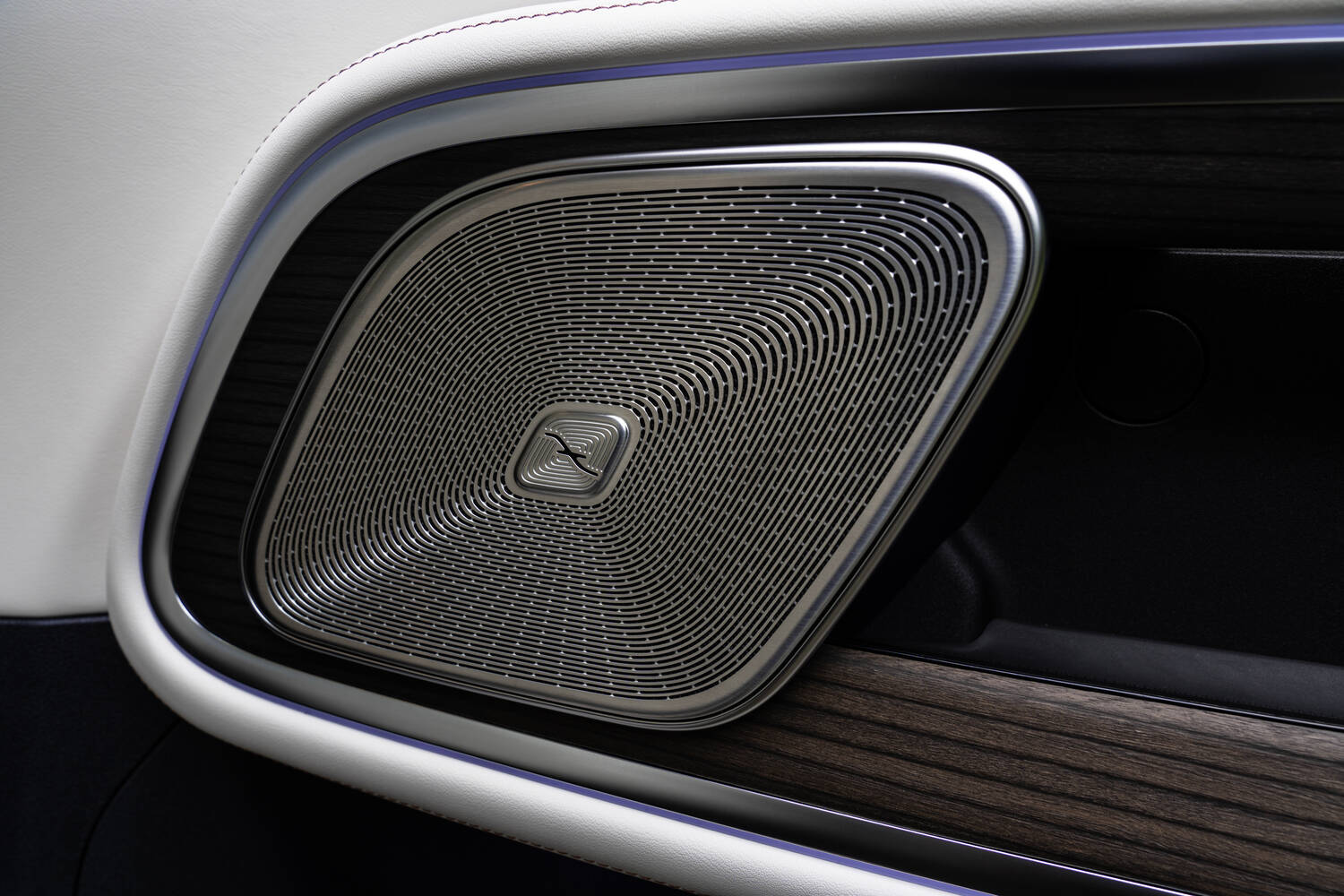
Pleasingly, Mercedes has mostly ditched the use of glossy black plastics in favour of more upmarket materials inside, including open-pore birch wood and brushed aluminium.

You do get an abundance of ambient lighting, though this can be toned down and the upholstery options are in keeping with what you'd find in a large Mercedes saloon or SUV.
Getting comfortable in the driver's seat
One neat trick that the VLE can do thanks to its air suspension is to hunker down to make getting in (and out) that bit easier for both driver and occupants.

You do still step up into the driver's seat, and this is quite a comfortable seat to be in with all the usual levels of electric adjustment - plus heating and ventilation in our Exclusive model.
The seating position is van-like, and the steering wheel can (electrically in the Exclusive version) be adjusted for reach and rake.
Mercedes has reverted back to using physical switchgear on the steering wheel, but there are also some touch-sensitive controls. Paddles on the back of the steering wheel enable adjustment of the energy recuperation levels but it's a pity that these are made from cheap plastic given their prominent location.

Between the elevated driving position and short bonnet, outward visibility is generally good, but thick A-pillars do create a noticeable blind spot at junctions.
Infotainment and technology
A full-width dashboard panel houses what the company calls its MBUX Superscreen. This digital interface is made up of a 10.25-inch instrument display in front of the driver and can be supported by an optional colour head-up display. In the middle is a 14-inch touchscreen that runs the latest Mercedes-Benz Operating System (MBOS) that includes AI assistance built-in.

The infotainment system is easy to navigate and has a smartphone-like look and layout. There are numerous connected services available including video streaming with Disney and YouTube, along with online gaming (for when you're parked, obviously).
An optional second 14-inch display can be added for the front-seat passenger, which gives them control of their own infotainment system.
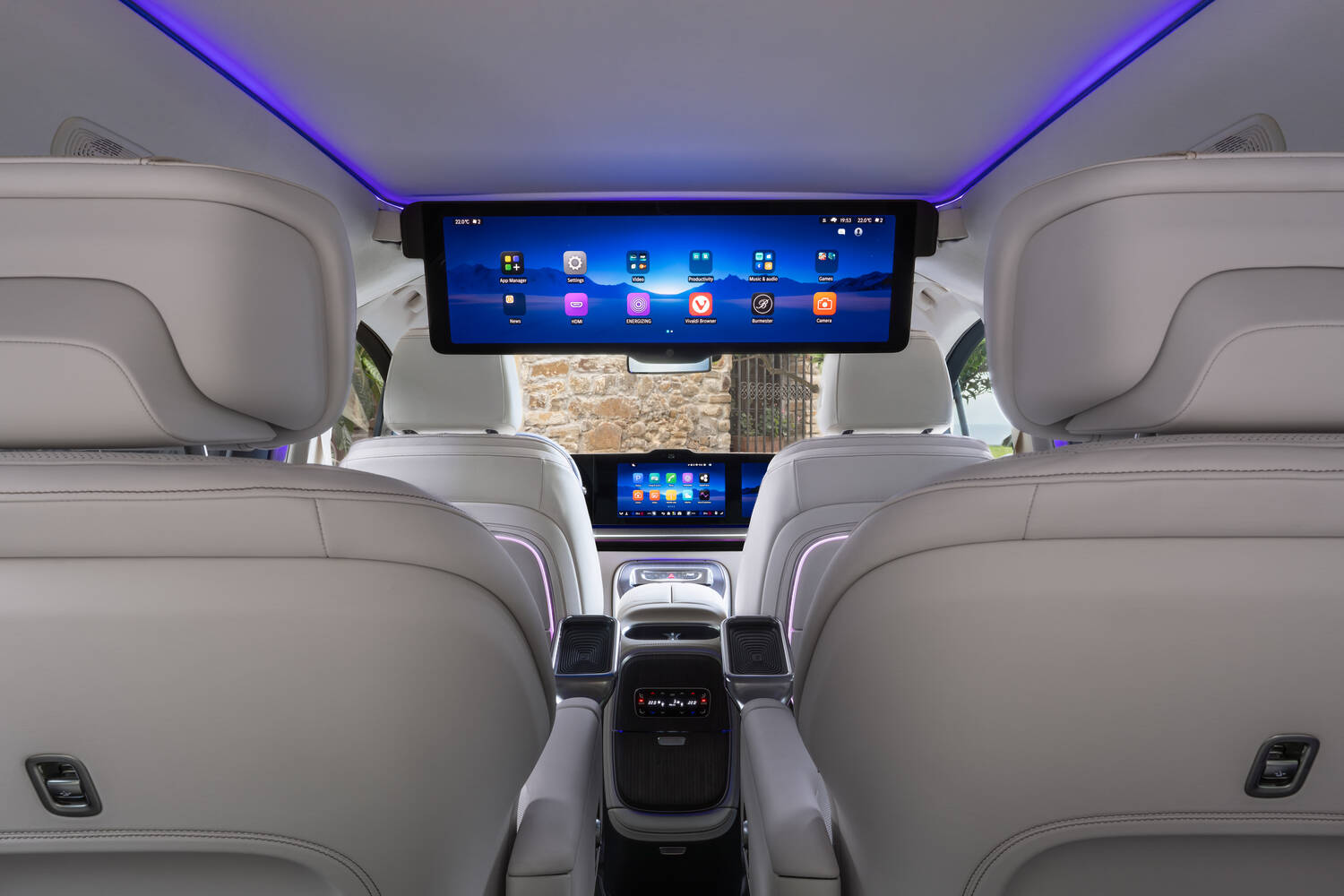
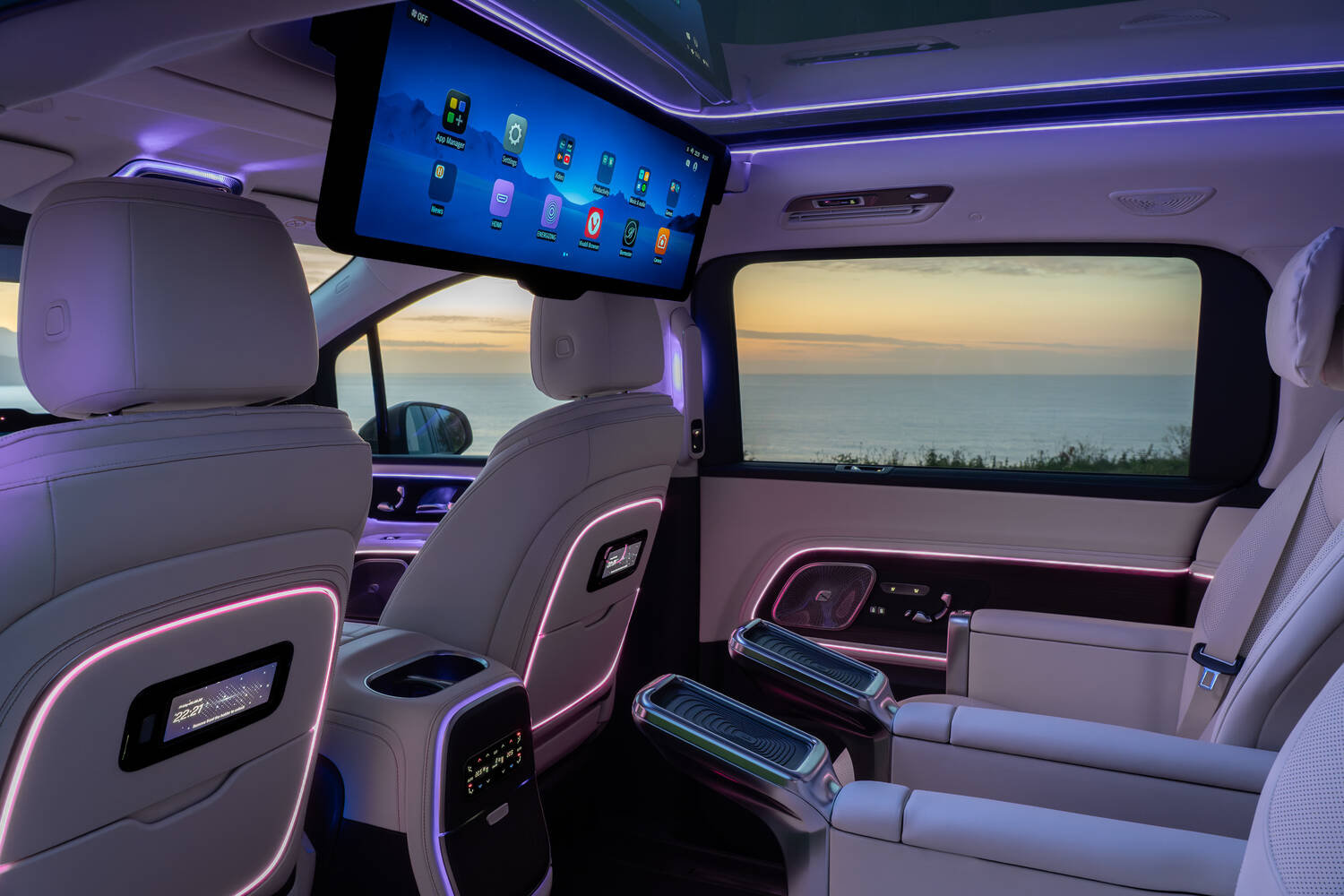
In the rear, besides the optional luxurious seating arrangements, it's possible to add a 31-inch display screen that quickly slides out and down from the roof panel, at the same time raising the side window blinds and closing the panoramic roof blind.

Separate to the streaming services, this screen can be connected to external media players via HDMI.
Practicality around the cabin

Surprisingly for such a large vehicle there isn't a huge amount of storage space throughout the cabin. Yes, you get the usual cup holders and charging ports, and some pockets in the seats, but don't expect to find much more.
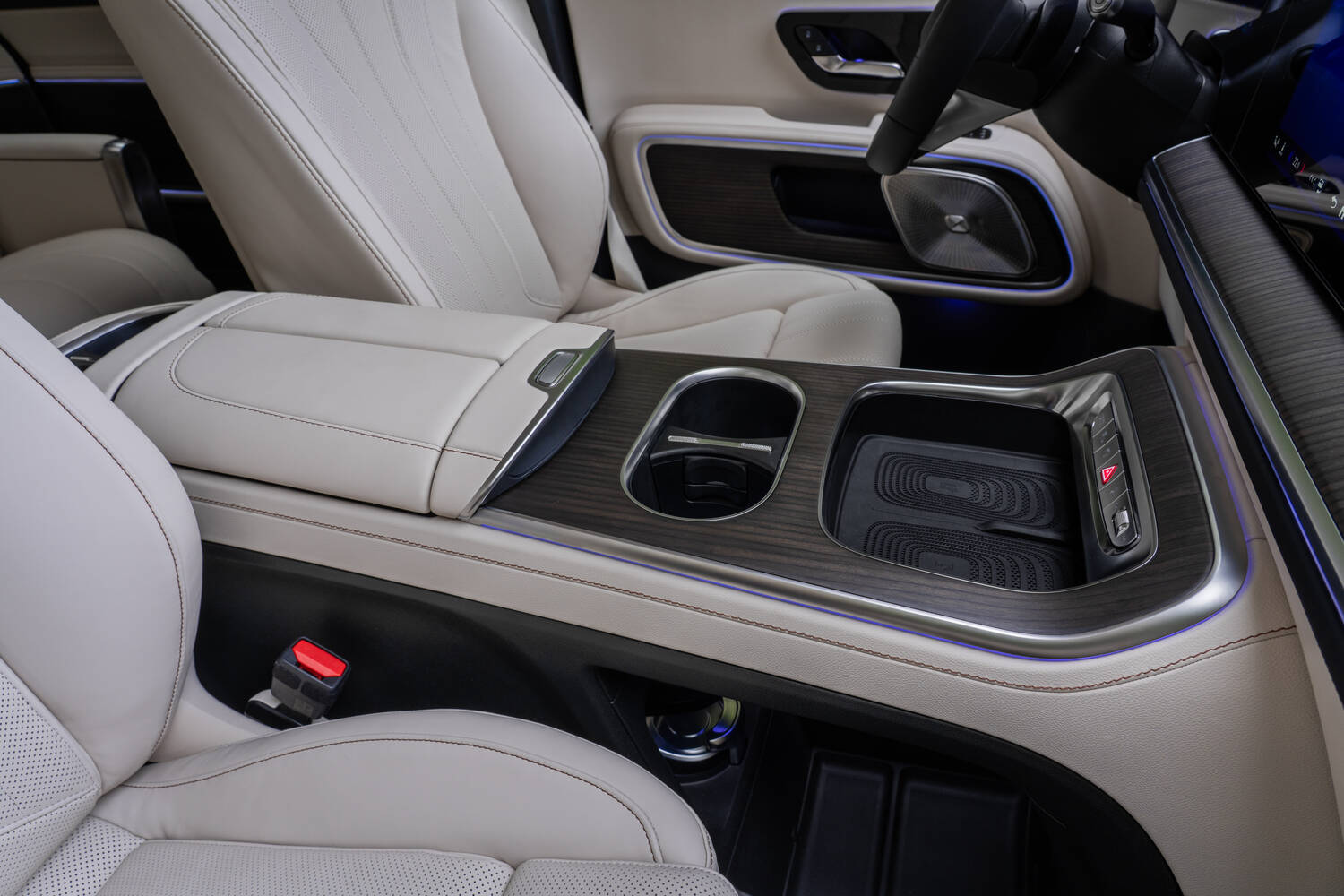
In the front there is enough storage for oddments and buyers can choose from three different centre consoles, which can include two wireless charging pads or one that is equipped with two refrigerators for the front and rear occupants.
Rear-seat passenger space

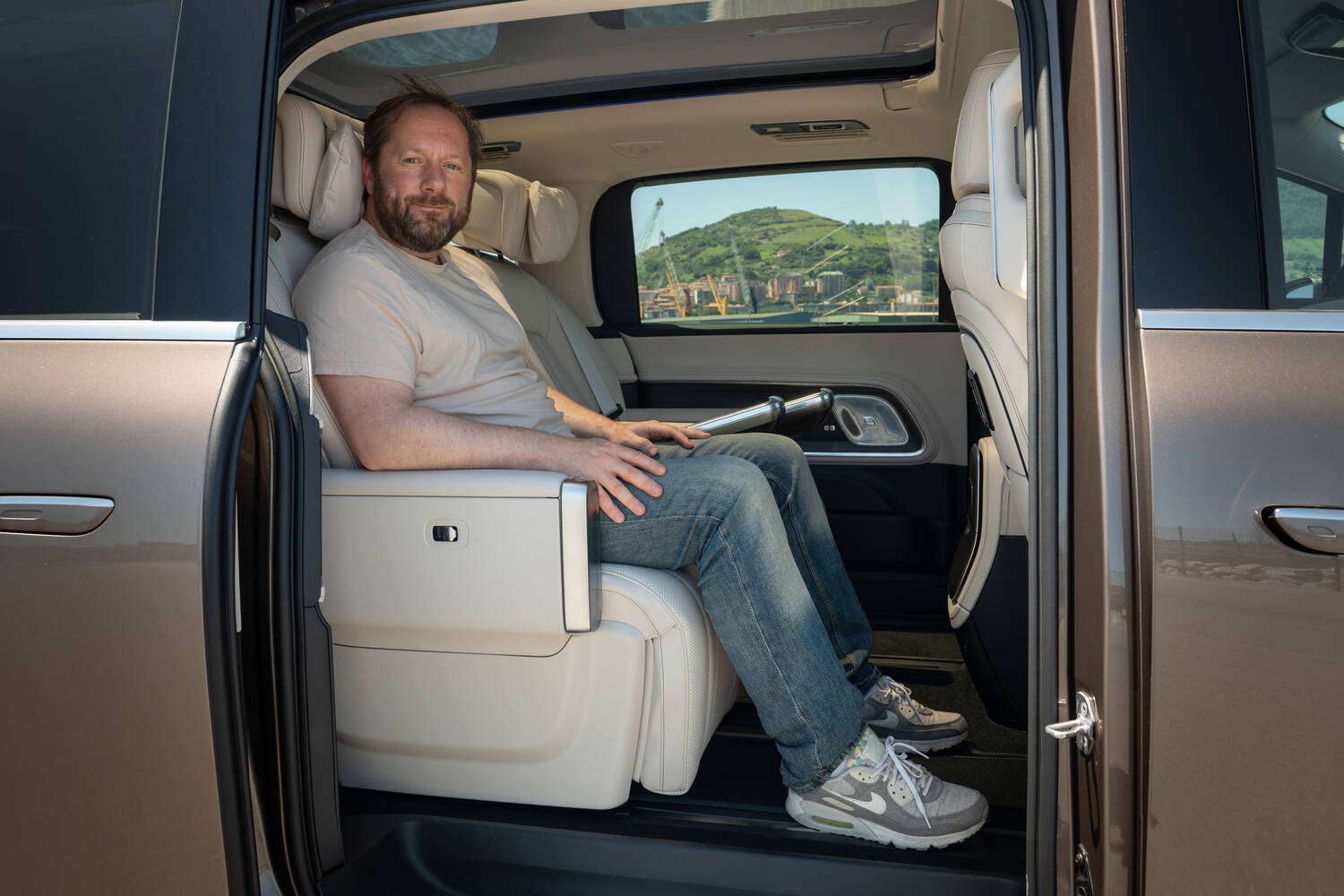
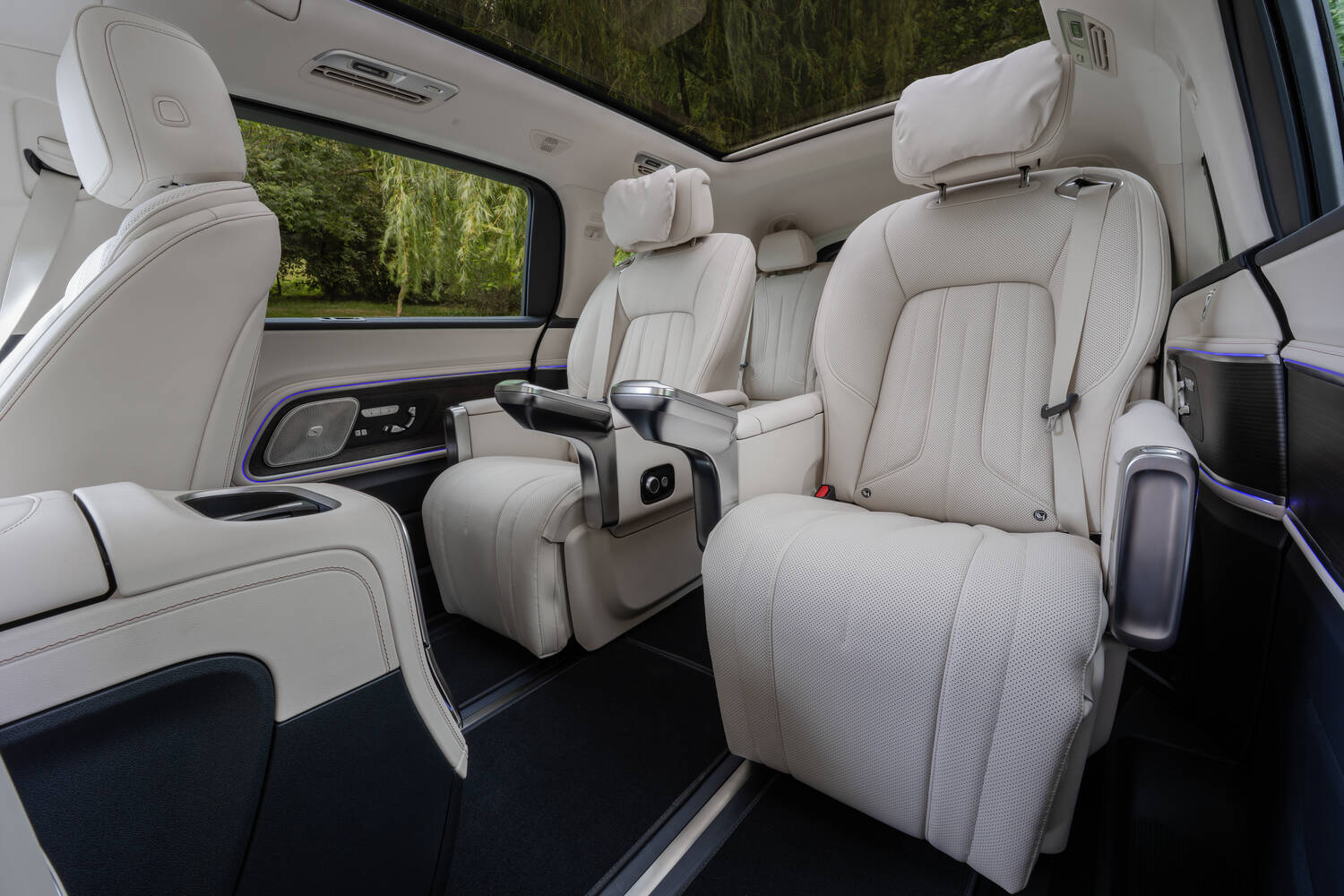
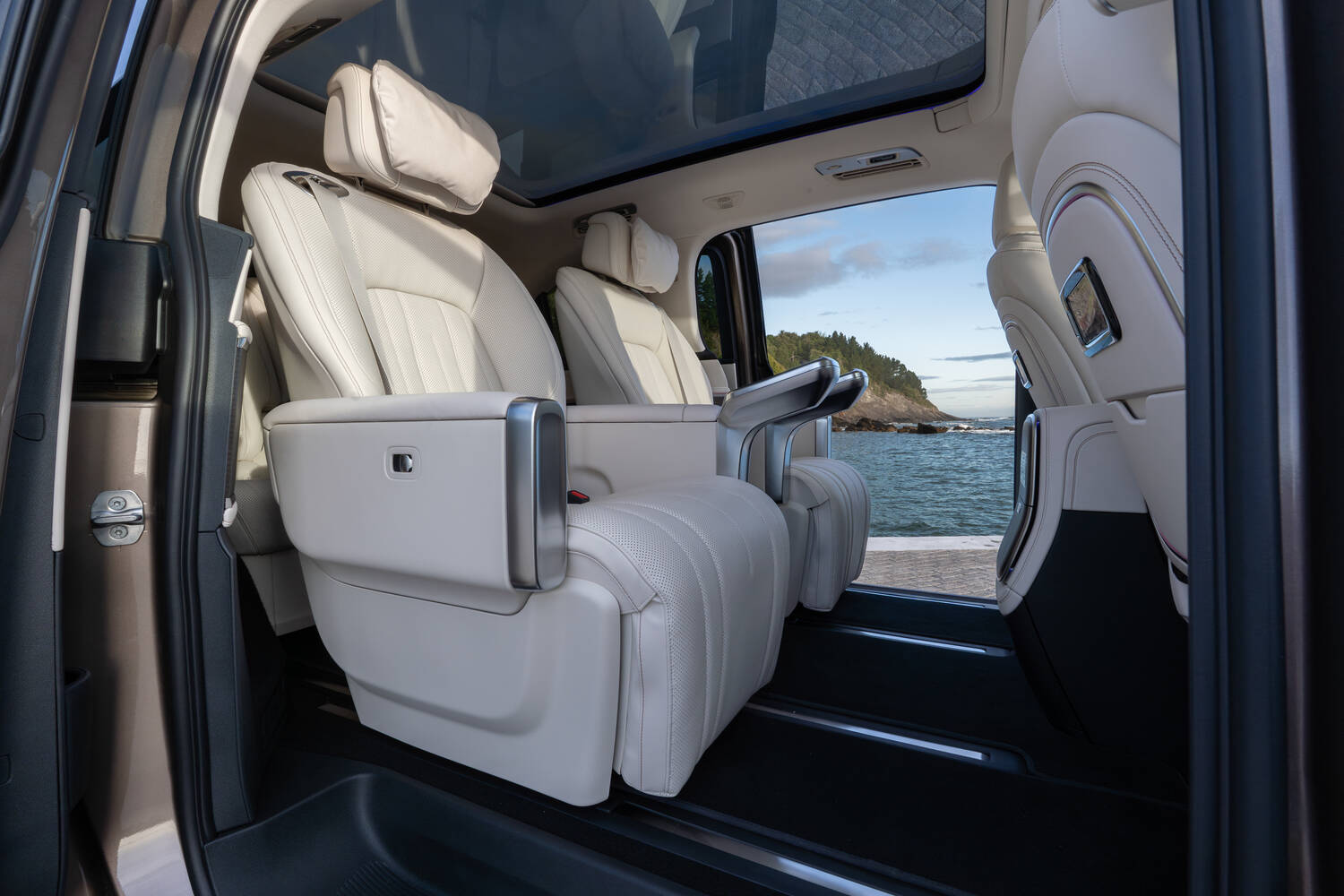
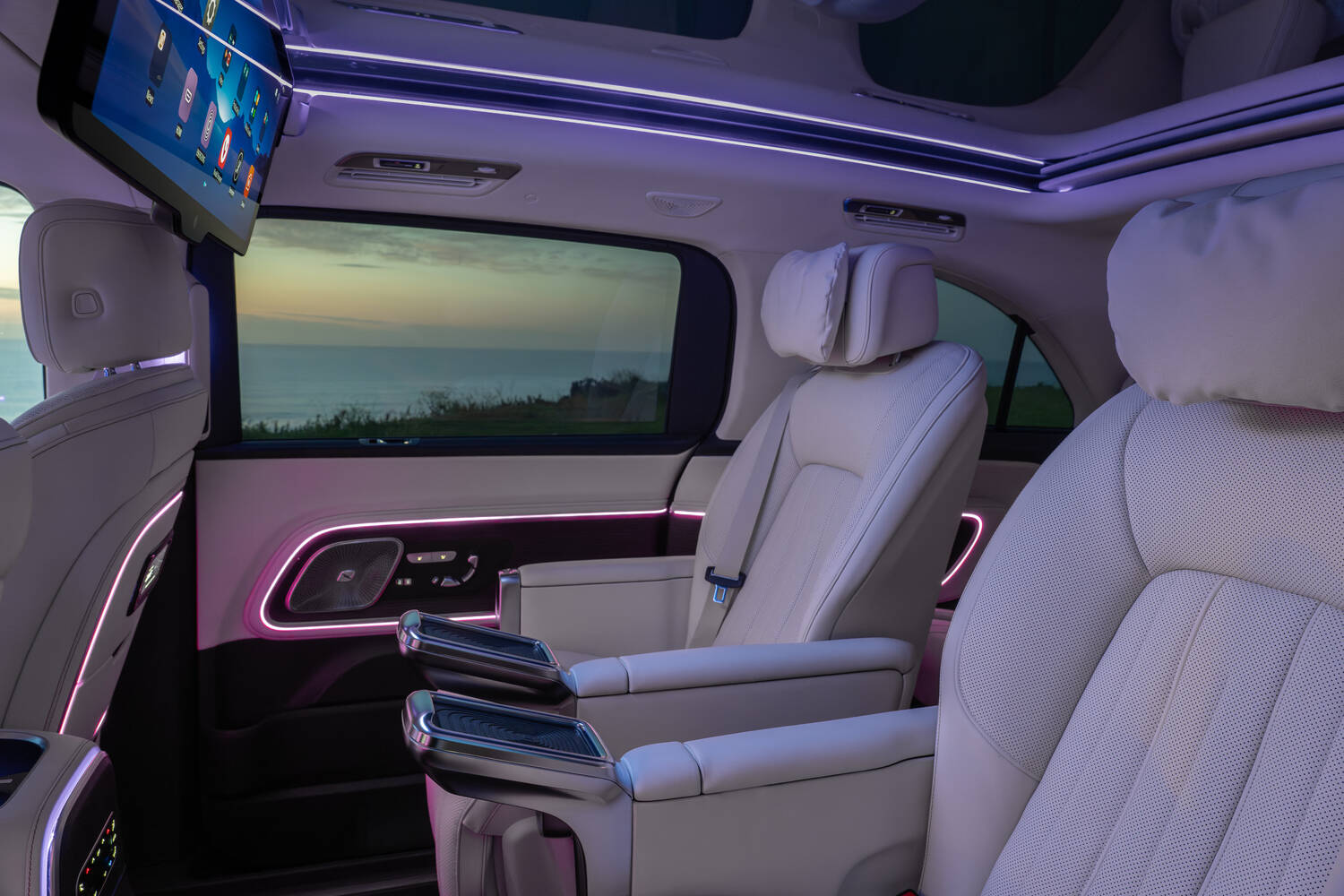
The rear passenger experience is very dependent on the model variant and also which seat you get to use. In the Exclusive specification grade of our test car, there are two captain's chairs in the second row and a third row of three seats in a more typical bench style.
These rear-most seats are comfortable and can accommodate three adults, but it's the electrically controlled armchairs in row two that you really want to be sitting in.

More akin to what you might see on a private jet, the 'Grand Comfort Seats' feature hard sides with built-in armrests containing individual wireless charging pads and cupholders.
Passengers can adjust the seat either by a selection of buttons on the sliding door or via a pop-out remote control that's more like a smartphone. Each seat gets its own and these are docked in the back of the front seats. These seats can slide forward and back to create more space and even recline and raise an ottoman for your legs.

In the more conventional six-seat setup the chairs are still very comfortable and having the space to walk between row two to get to the third row makes life that bit easier for passengers.
Thanks to the clever floor system these seats can be adjusted by the driver through the touchscreen or via an app, making it easier to pre-configure before passengers get in.
The base-level model is one of the most versatile and the simpler seats can quickly and easily be removed. Weighing 27kg each, most people will be able to lift them out with a bit of effort as required and they also feature a clever lighting system with a small green LED on the base that lights up to signify the seat is correctly installed.

Fitting child seats to the Mercedes-Benz VLE
The rear seats in the Mercedes VLE can each take an ISOFIX-mounted child seat but in the case of the Exclusive, which has three rear seats together, you may need to check the size of the child seat to see if they can all be used. Surprisingly, even the Grand Comfort reclining seats are fitted with ISOFIX points, though the front passenger seat is not.
Boot space in the Mercedes-Benz VLE
Mercedes understands that people often come with luggage, and so the VLE can take up to 795 litres when the seats are still in use, but with such variable seating layouts, that figure is as moveable as the seats themselves.
One upshot of the VLE is that it can double up as a van by removing the back seats entirely, and that will leave you with 4,078 litres of cargo volume.
Towing with the Mercedes-Benz VLE
There is a maximum towing capacity of 2,500kg in the Mercedes VLE, in connection with a braked trailer.
Safety in the Mercedes-Benz VLE
The VLE is equipped with up to 11 airbags as well as adjustable head restraints and seat belts, in addition to a suite of driver and safety assistance systems.
As yet there is no independent safety rating for the Mercedes-Benz VLE from Euro NCAP, though given the level of safety equipment onboard, and going by the company's past performance with the testing body, we would expect this to achieve a very high score.
Performance of the 2026 Mercedes-Benz VLE
• Front- or all-wheel drive
• Good performance and efficiency
• Class-leading comfort

The Mercedes-Benz VLE 300 is fitted with a 115kWh battery and a 276hp electric motor driving the front wheels. Although the company hasn't revealed a complete set of performance figures for the VLE as yet, we found it to be more than brisk enough for this type of vehicle.
A dual-motor version called the VLE 400 4Matic produces 421hp and can go from 0-100km/h in 6.5 seconds.
Driving the Mercedes-Benz VLE in Bilbao, Spain
Words by Dave Humphreys on 19 June 2026

Reluctantly we skipped past the sumptuous rear seats and got behind the wheel of the VLE, and the driving experience turned out to be quite the revelation.
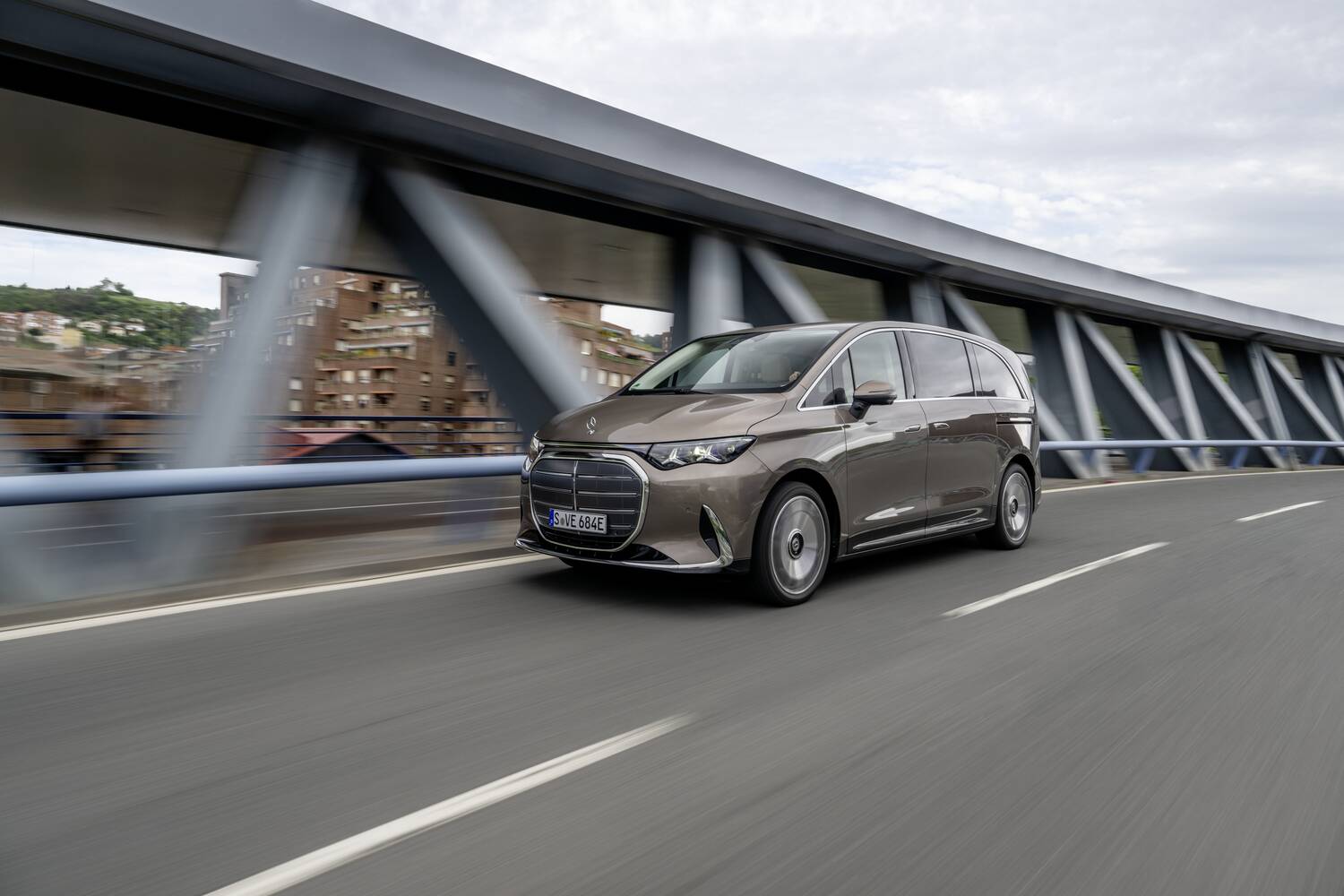
The lofty viewing angle from behind the wheel is mostly good, other than the chunky A-pillar, and the silky-smooth power delivery makes it effortlessly easy to move away from the VLE's berth and begin a journey.
Once moving the VLE masks its weight extremely well, though it helps that so much of it is placed lower down. Rear-wheel steering that moves up to seven degrees shaves an appreciable amount off the Mercedes' turning circle. It isn't like a London Black Cab in that way, but the system certainly adds to its agility at lower speeds.

The 22-inch wheels with their Monobloc design look superb but the low-profile tyres do highlight bumps and increase road noise in comparison to the 20-inch wheels we sampled in another version. Choose carefully.
At two metres wide the VLE is a large vehicle though it remains reasonably easy to place on the road and on smaller rural roads it rarely felt cumbersome or unwieldy. The suspension soaks everything up well and has the right balance between shock absorbency and damping - your passengers will appreciate it.
There's ample torque, even though Mercedes hasn't put an exact figure on it yet, and it delivers its performance in an easy fashion. You can pick up the pace but there are no sudden jolts of acceleration. This isn't the machine for that.

Leading onto the motorway the VLE gets up to speed without any hesitation yet remains impressively hushed inside. As mentioned, the larger wheels do generate a bit more tyre roar, but it's still easy to hold a conversation with anyone sitting in the rear seats.
Braking performance is good but better is the energy recuperation. The latter includes an Intelligent mode that takes into account a number of external factors including road layout and topography and applies more or less recuperation to keeps things optimal.
It generally results in a decent amount of braking when you need it, and there's still a separate Strong mode that gives you a one-pedal feel all the time.
Range, battery, charging and running costs of the 2026 Mercedes-Benz VLE
• Large 115kWh battery at first
• Driving range is up to 713km
• DC charging rate is 300kW

The VLE launched with one of the largest battery packs in any EV. That, depending on the model specification, provides up to 713 kilometres of driving under WLTP conditions. DC charging is particularly fast, which is just as well given the size of the battery.
Battery options and official range
The VLE 300 is equipped with a 115kWh battery and Mercedes quotes a range above 700 kilometres, but the exact figure will vary depending on specification. For example, our test car was equipped with the heavier seating package and larger wheels, so it manages 659 kilometres, but up to 713 kilometres is possible in other variants.
A more affordable 80kWh LFP battery is being added in 2027 and while that will have a shorter driving range, it should still be more than adequate. This model will be called the VLE 250 and is likely to only come as a five-seater.
Real-world range and efficiency of the Mercedes-Benz VLE
During our time driving the Mercedes VLE, there were no more than two people onboard, but nevertheless we managed to record an energy consumption of 19.2kWh/100km over a mixture of driving roads, including some steep elevations and even some motorway driving.
That's better than the combined WLTP figure, though we would expect energy consumption to climb were all the seats occupied. Even so, that's not too bad for a vehicle of this size and weight.
Charging up the Mercedes-Benz VLE
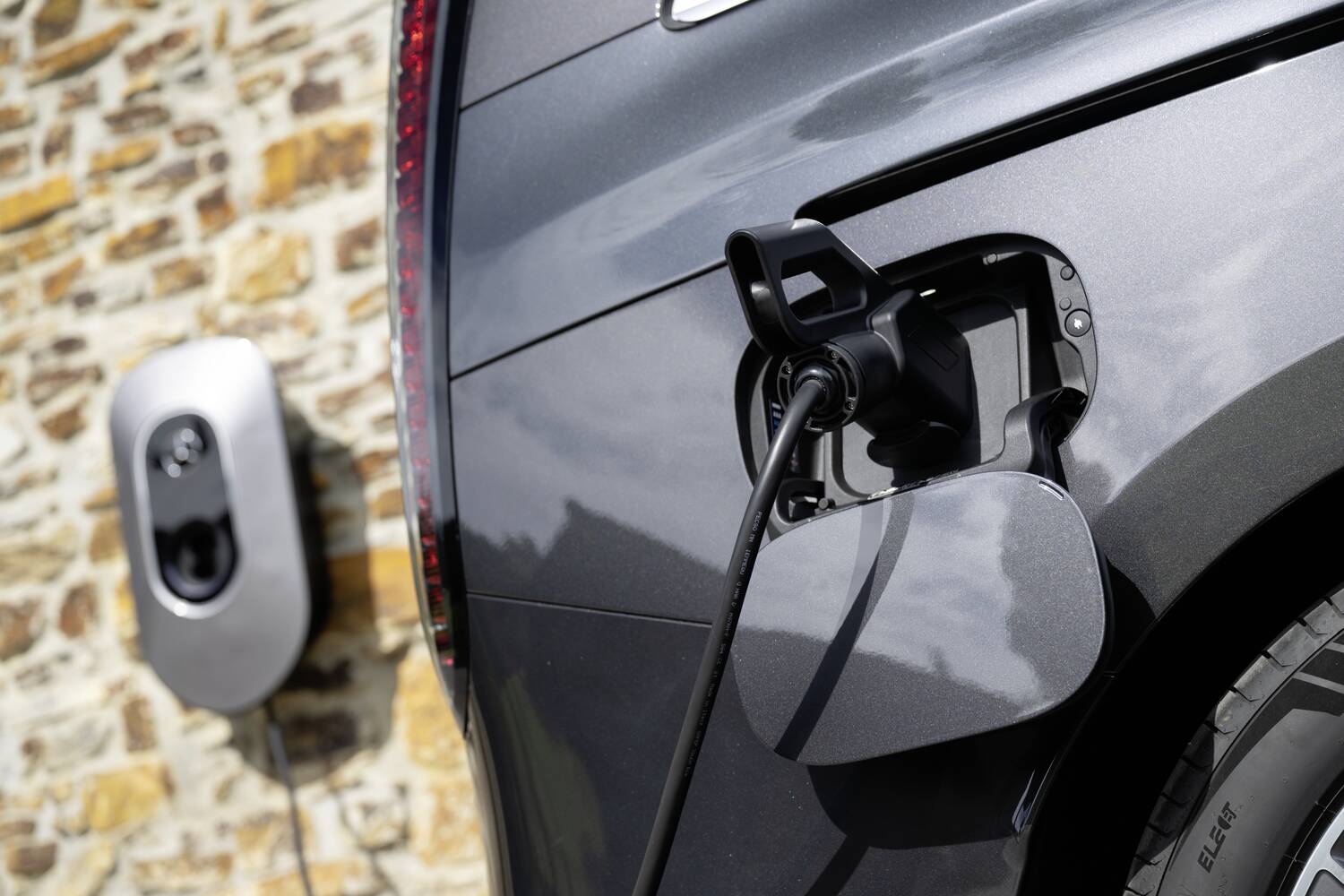
As standard the VLE can charge at up to 11kW on AC. Thanks to its 800-volt electrical architecture, the VLE supports 300kW DC charging as well, which means it can add 355 kilometres of driving range in 15 minutes.
Servicing the Mercedes-Benz VLE
The service interval on all electric Mercedes-Benz vans is once a year or every 40,000 kilometres, whichever comes first.
Mercedes-Benz VLE warranty
All new Mercedes-Benz vehicles are accompanied by a two-year unlimited mileage warranty. Additionally, a 10-year or 250,000-kilometre warranty applies to the high-voltage battery.
Irish pricing & rivals to the 2026 Mercedes-Benz VLE
• Similar price to EQV expected
• Multiple trim levels
• More affordable battery coming

Mercedes-Benz has yet to announce the pricing details for the VLE in Ireland, but it is expected that it will have a similar level to the existing EQV. However, there will be more luxurious trim levels available in the VLE and that will be reflected in the pricing, which should run well beyond €100,000.
Verdict - should you buy the 2026 Mercedes-Benz VLE?

The most stand-out feature of the Mercedes-Benz VLE is not its impressive range or luxurious interior, rather it's how unlike a van it is to drive. The air suspension transforms the driving experience and makes it all the more pleasant for passengers in the rear. Performance is sufficient and the ability to charge at high rates makes it a much more viable option for those in the professional market. A gamechanger for the segment.
FAQs about the 2026 Mercedes-Benz VLE
Will there be any other versions of the Mercedes-Benz VLE?
Mercedes has confirmed that it will add a range-topping ultra-luxury variant called the Mercedes-Maybach VLS, but this will have a petrol engine and may come with a four-seat option. While that will be targeted at the ultra-wealthy, it does open the door for a combustion engine to potentially be added to the VLE range, perhaps as a PHEV.
Want to know more about the 2026 Mercedes-Benz VLE?
If there's anything about the new Mercedes-Benz VLE we've not covered, or you'd like help in choosing between it and other cars, you can avail of our expert advice service via the Ask Us Anything page.