


Exterior & design of the 2027 Volkswagen ID. Tiguan
- Less curvy, more SUV-like
- Up to 21-inch alloy wheels
- Pull-type door handles
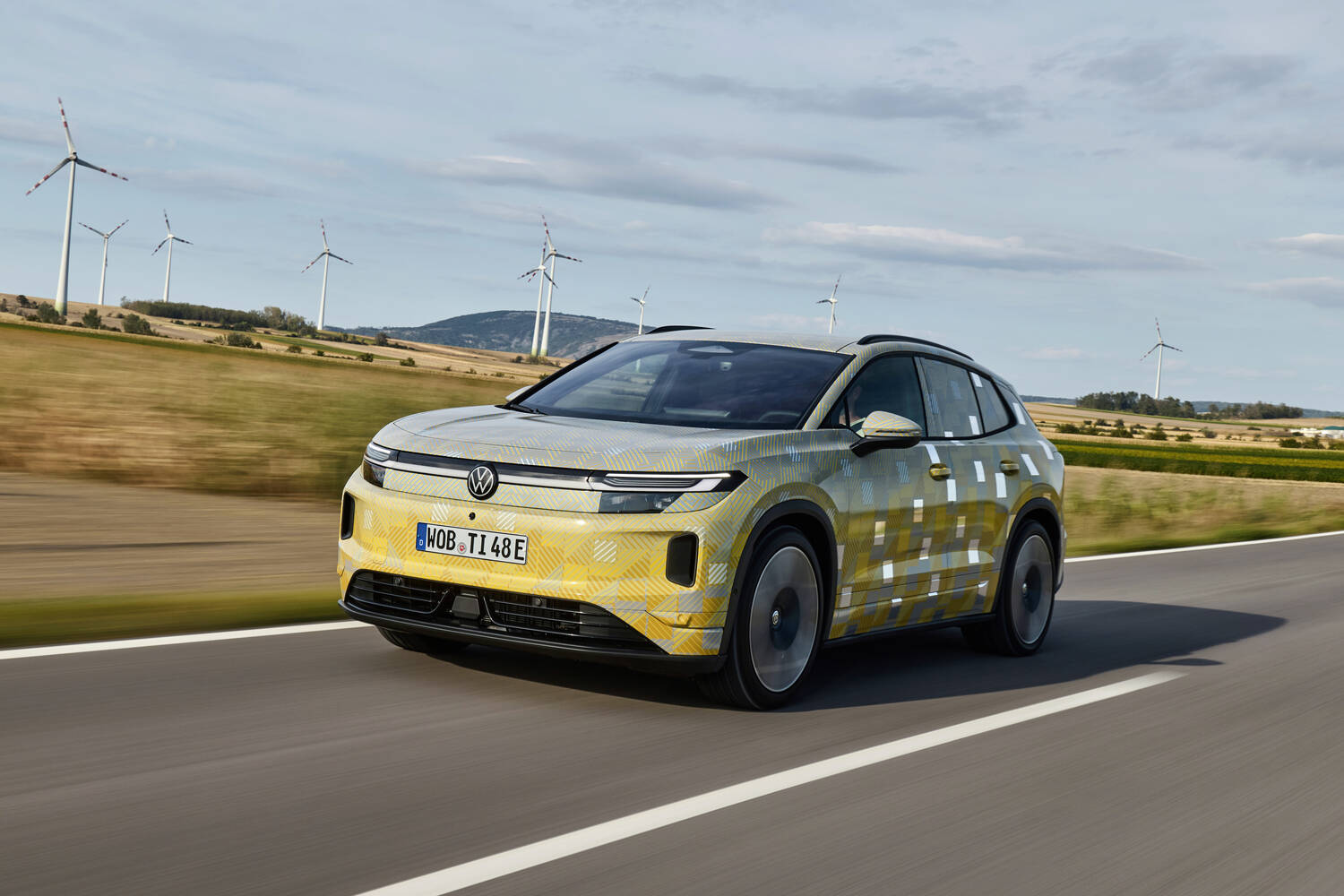
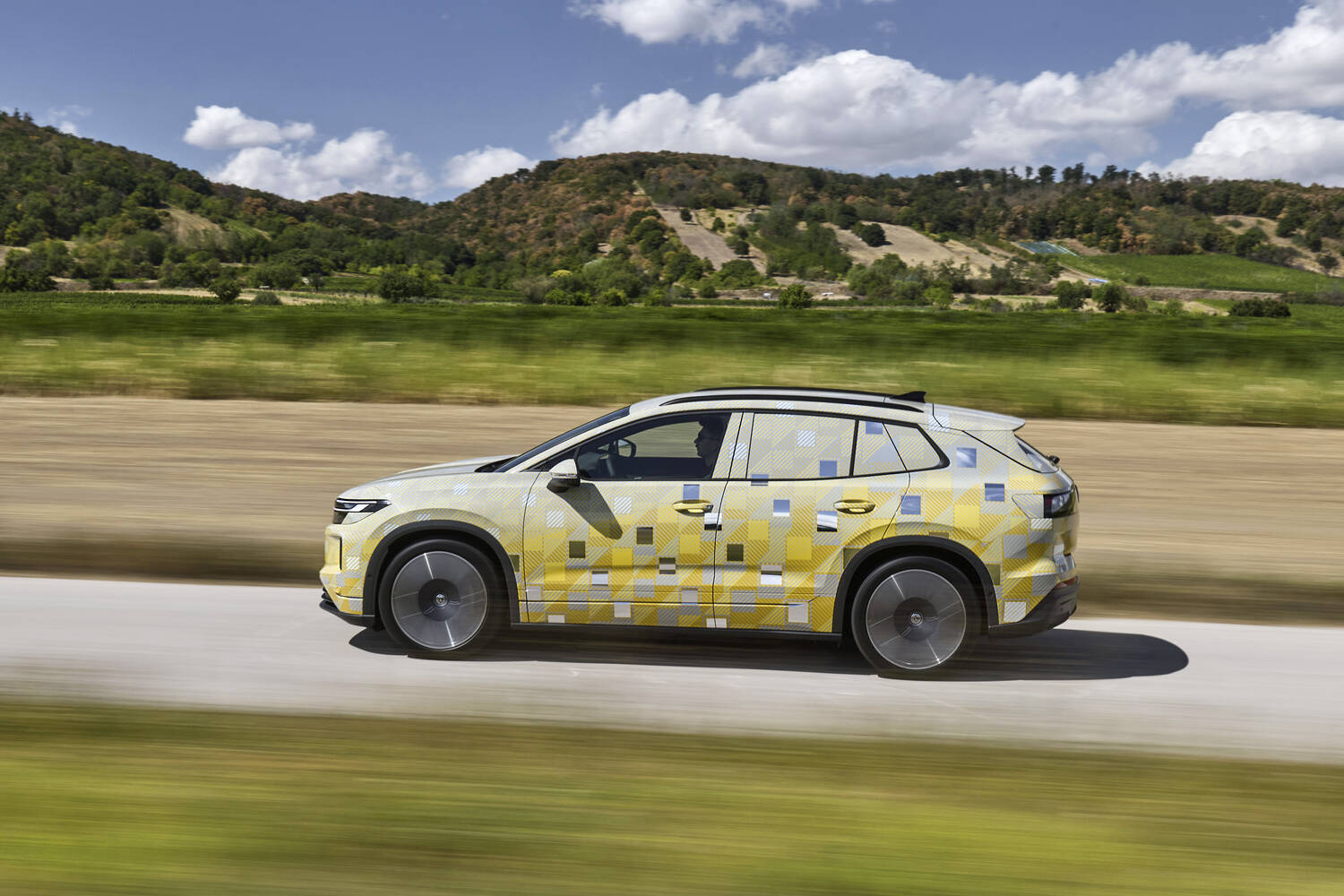
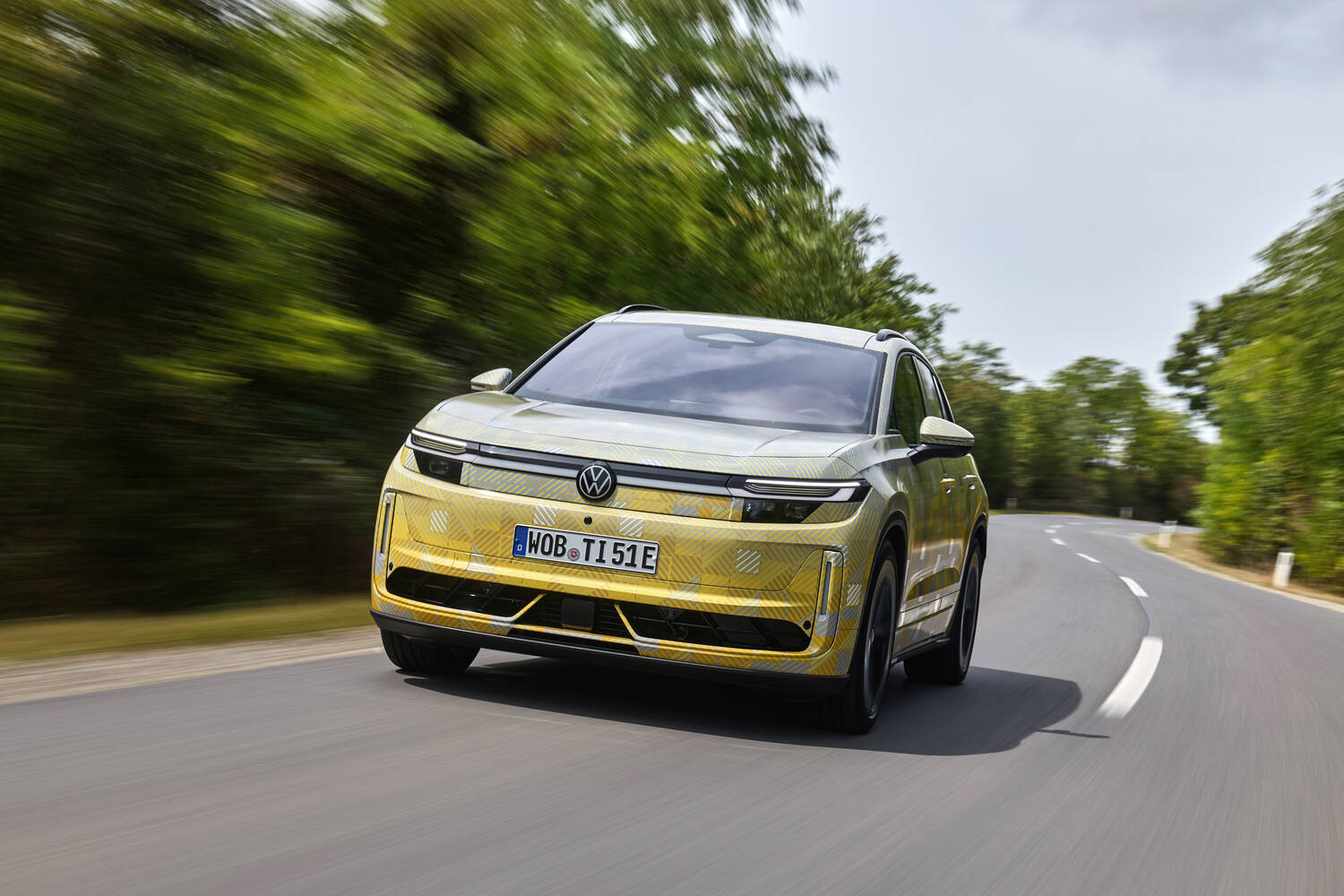
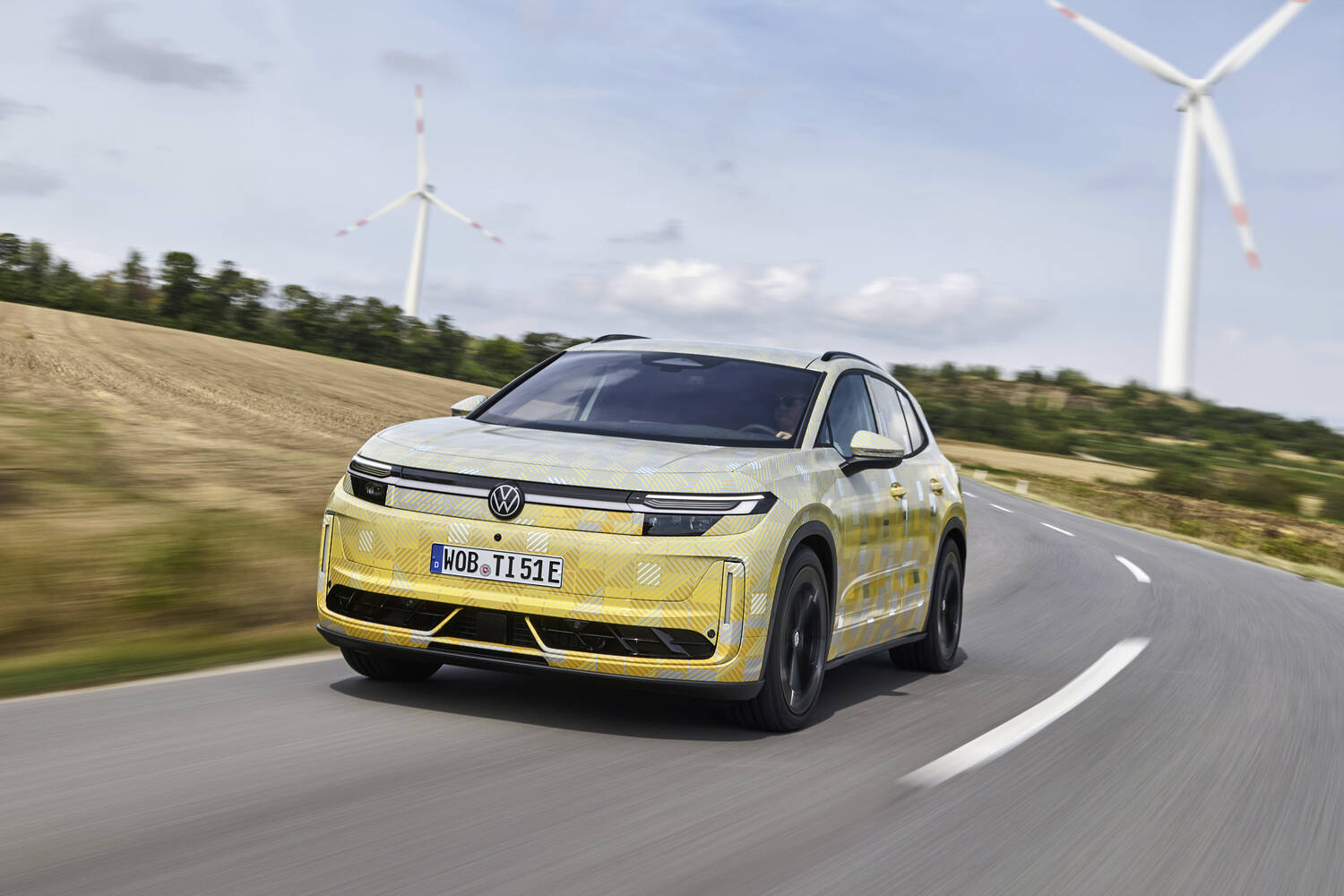
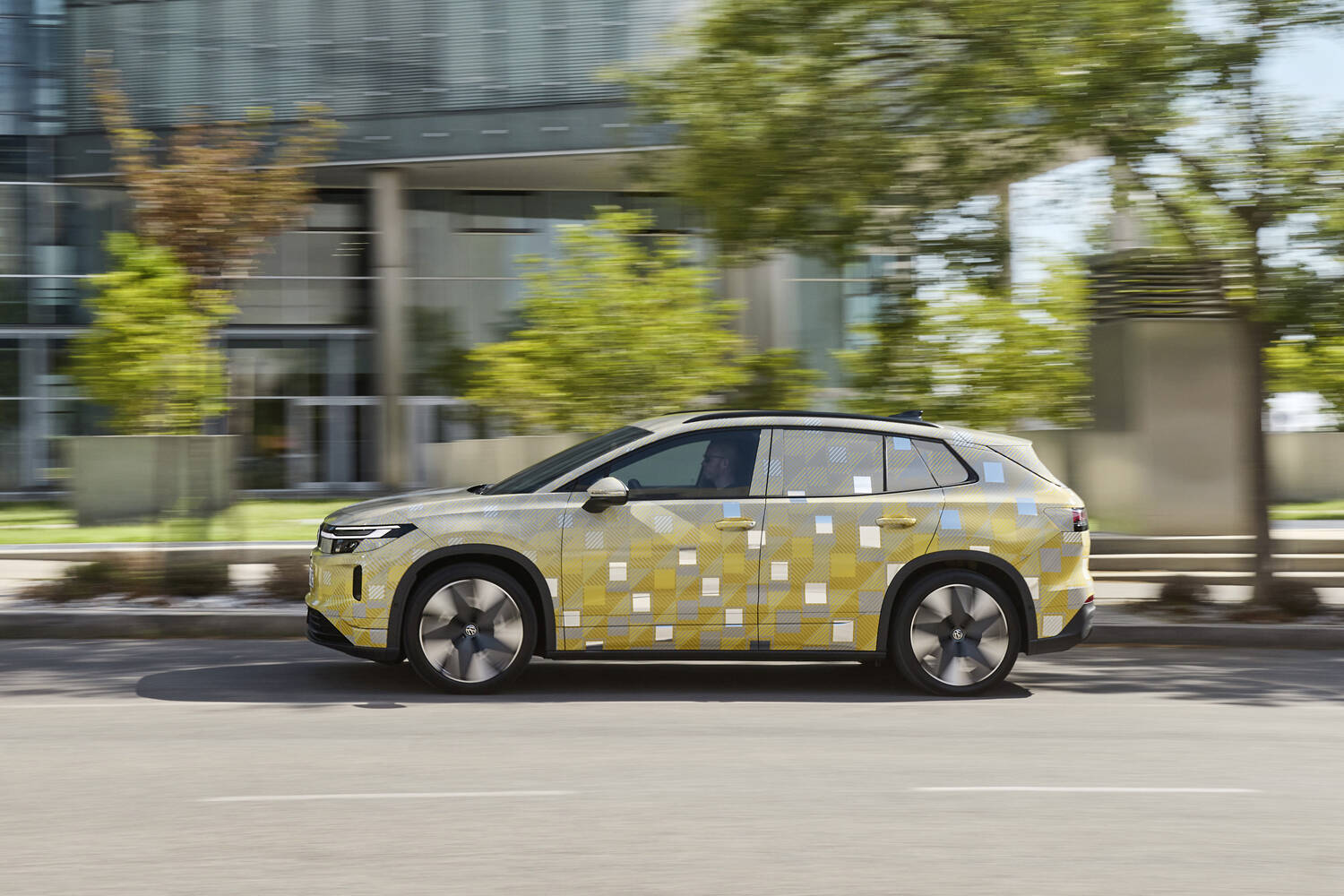
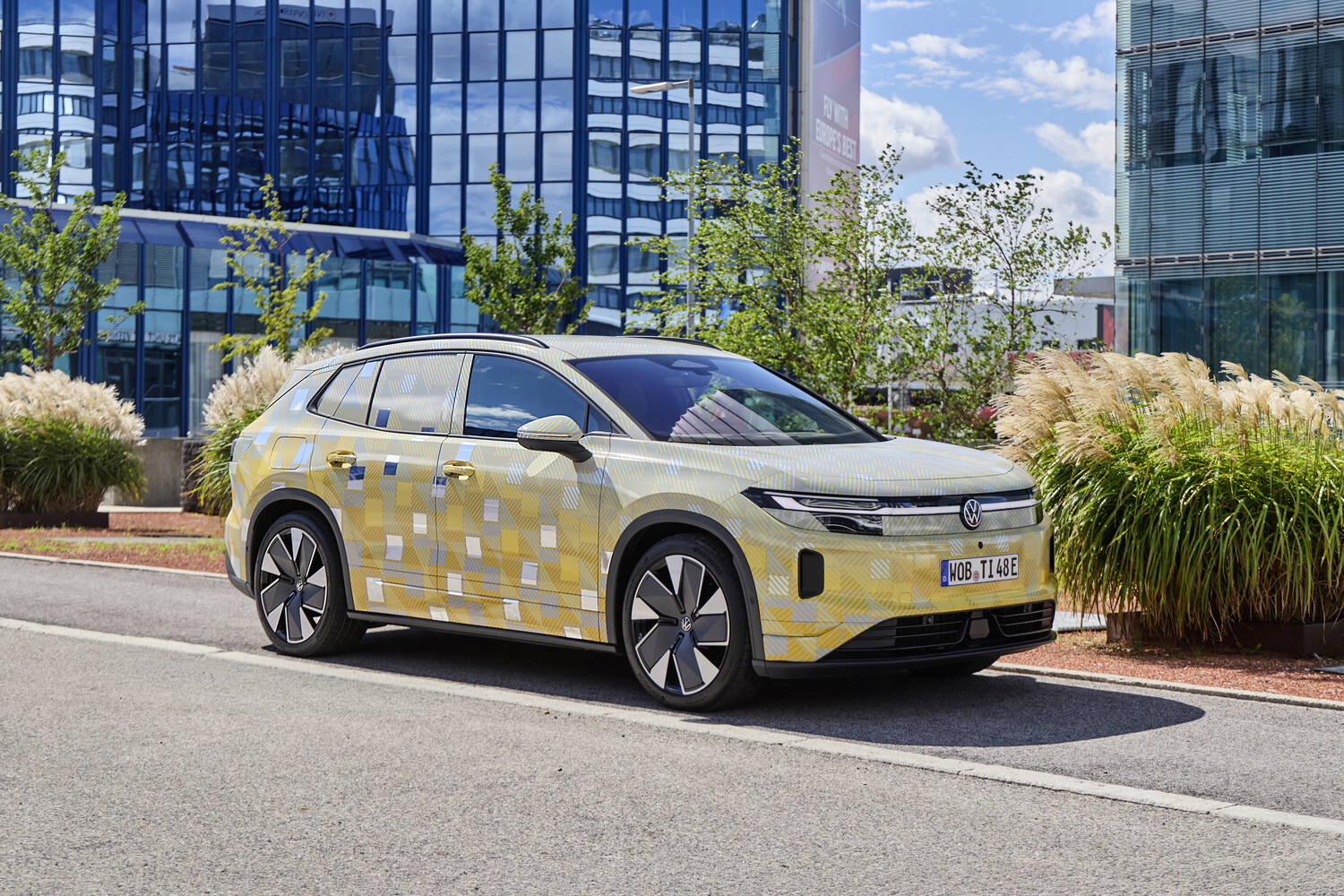
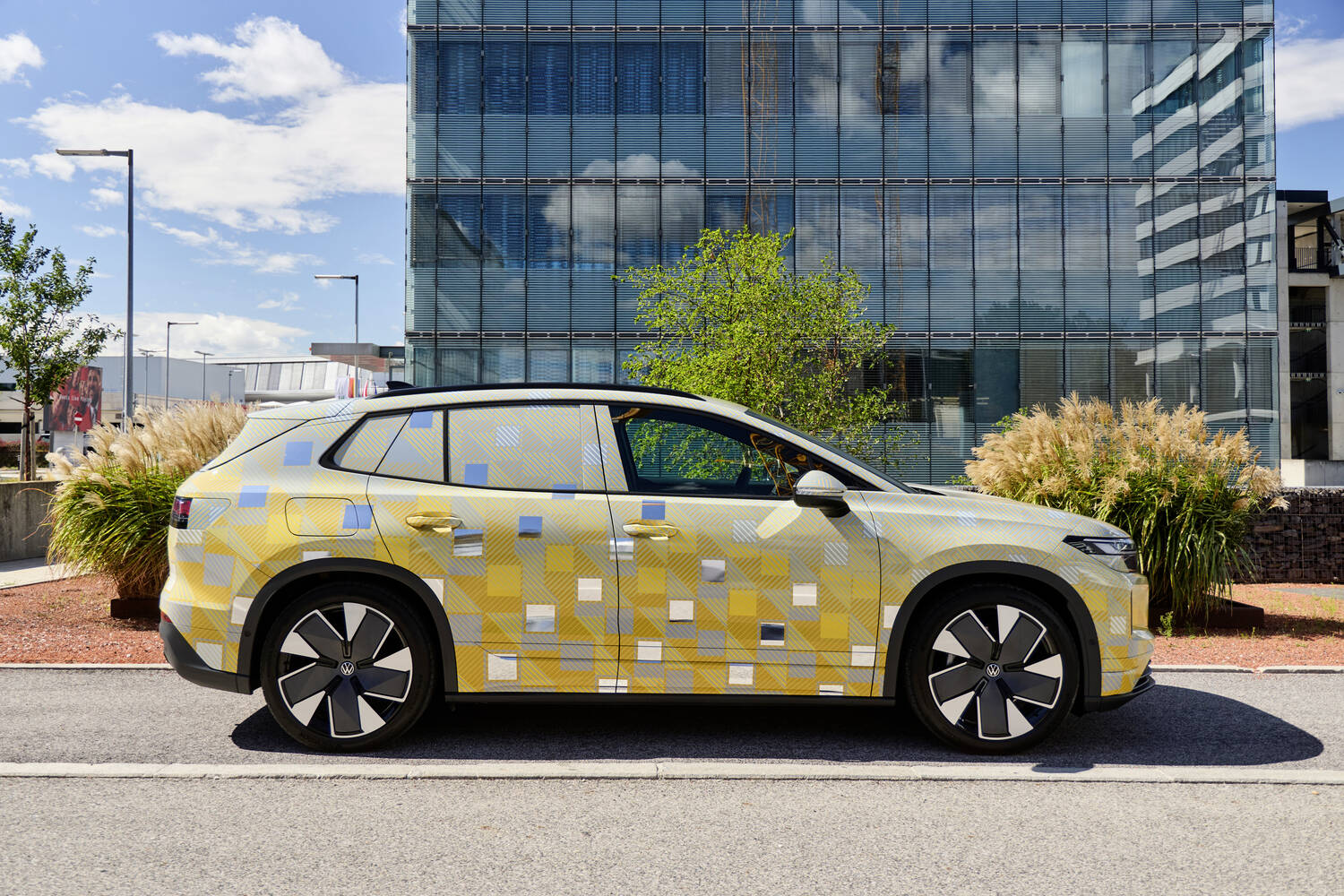
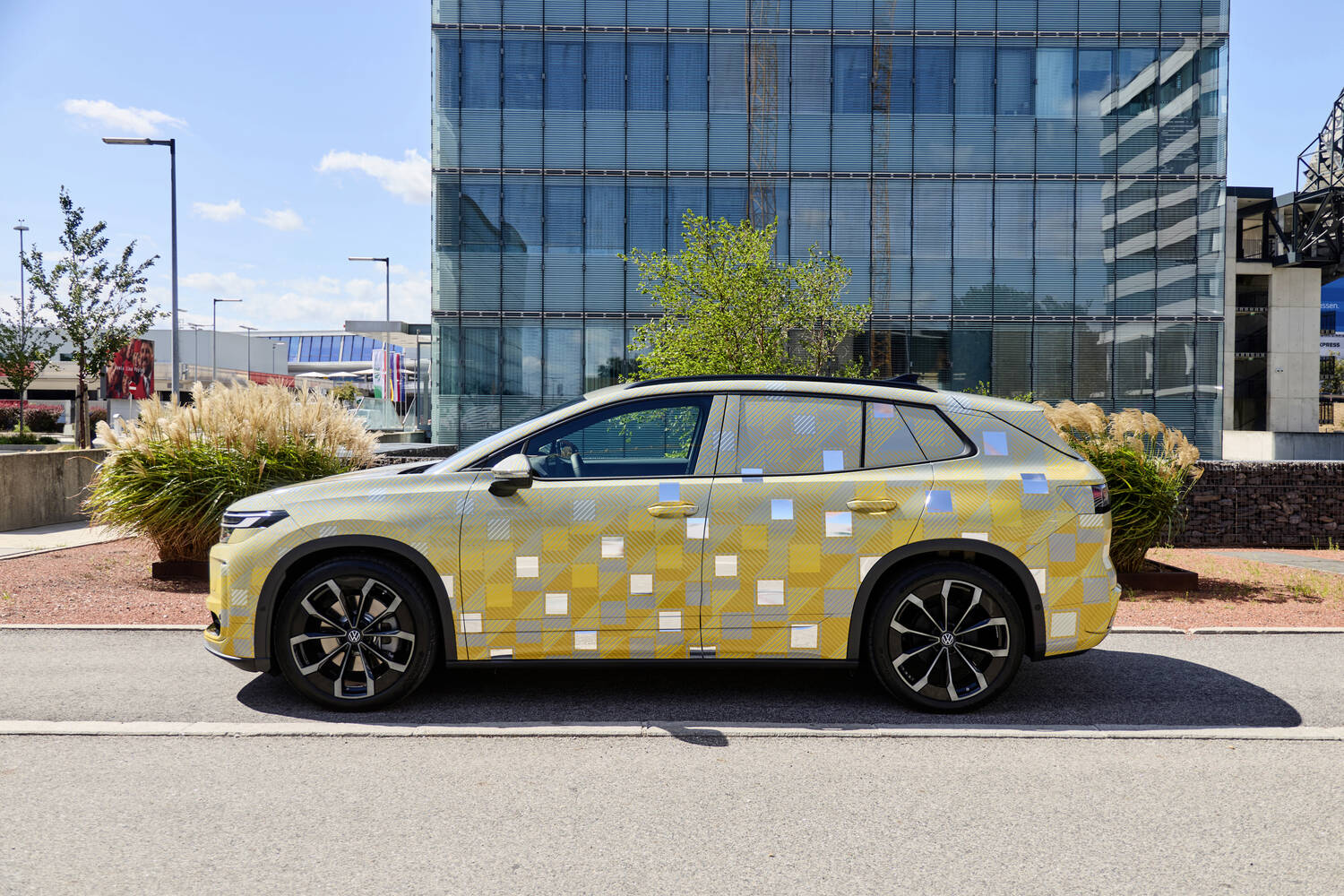
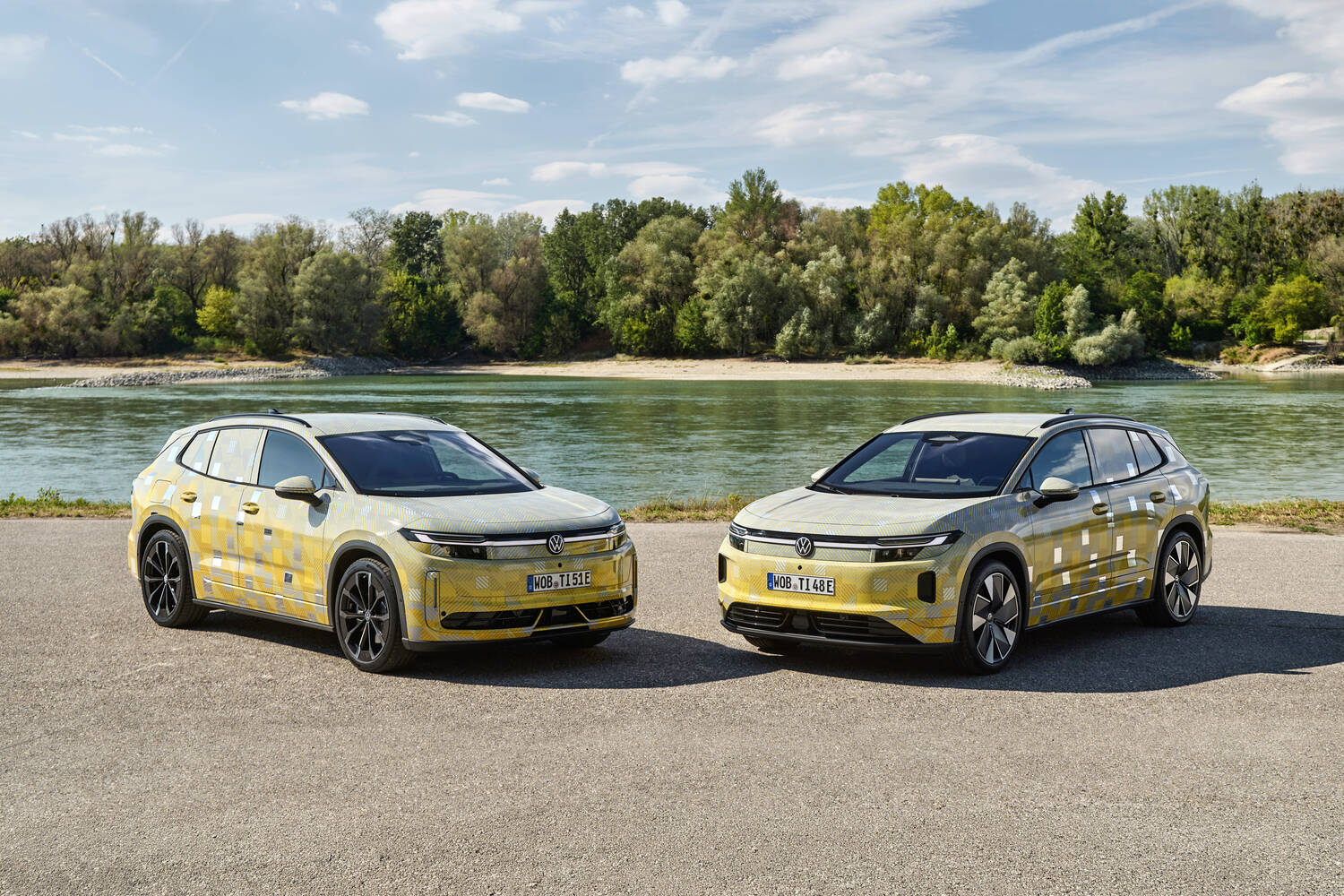
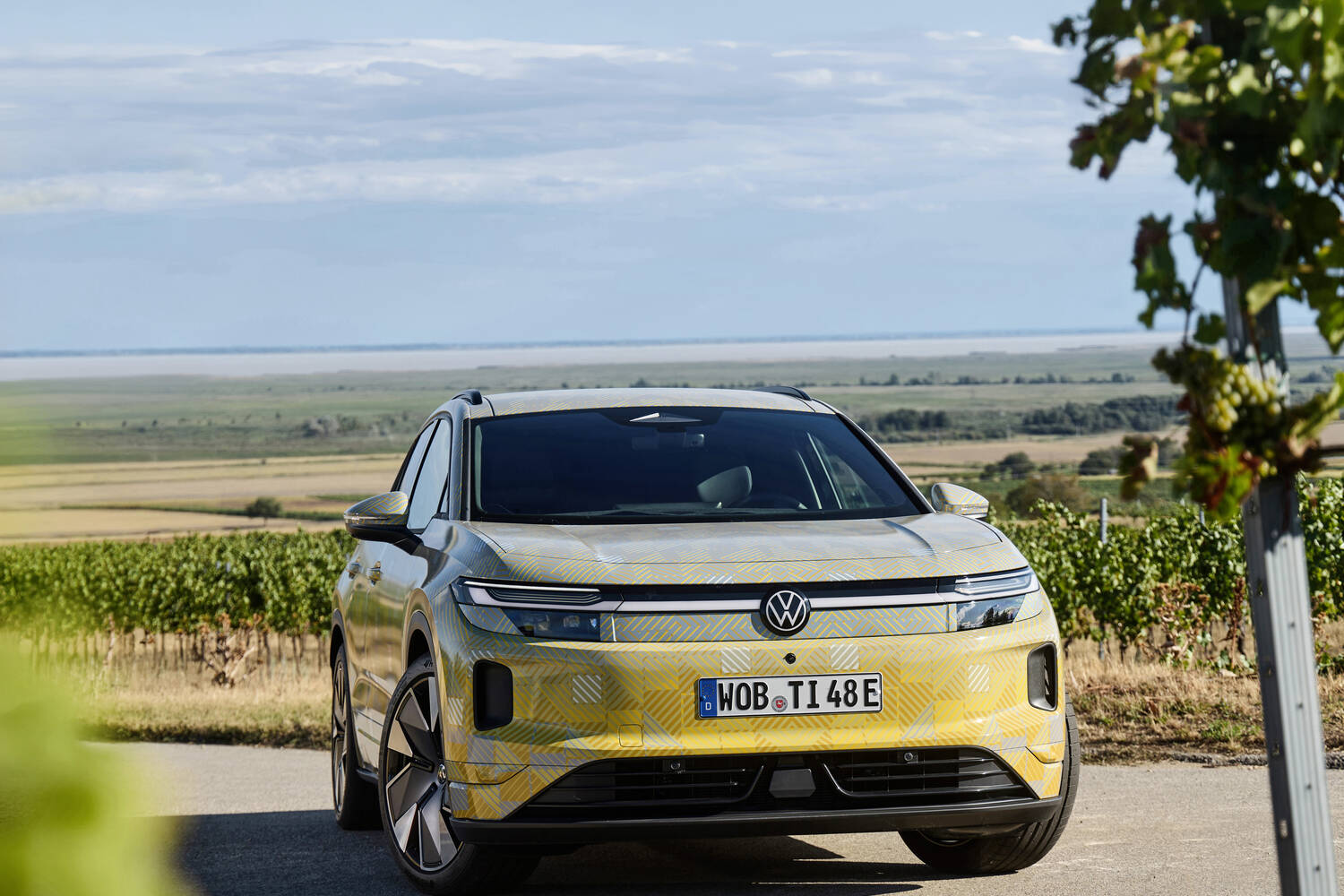
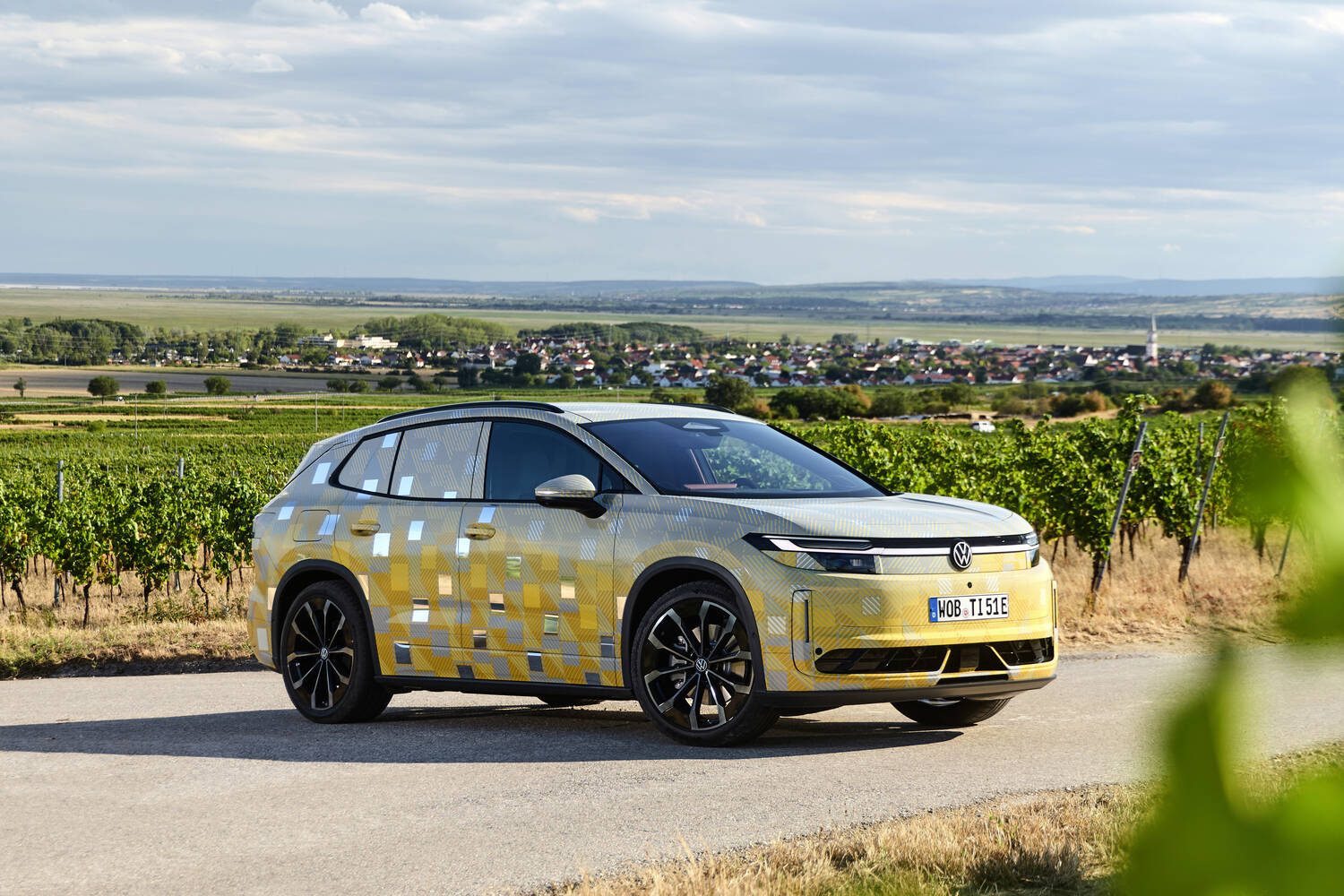
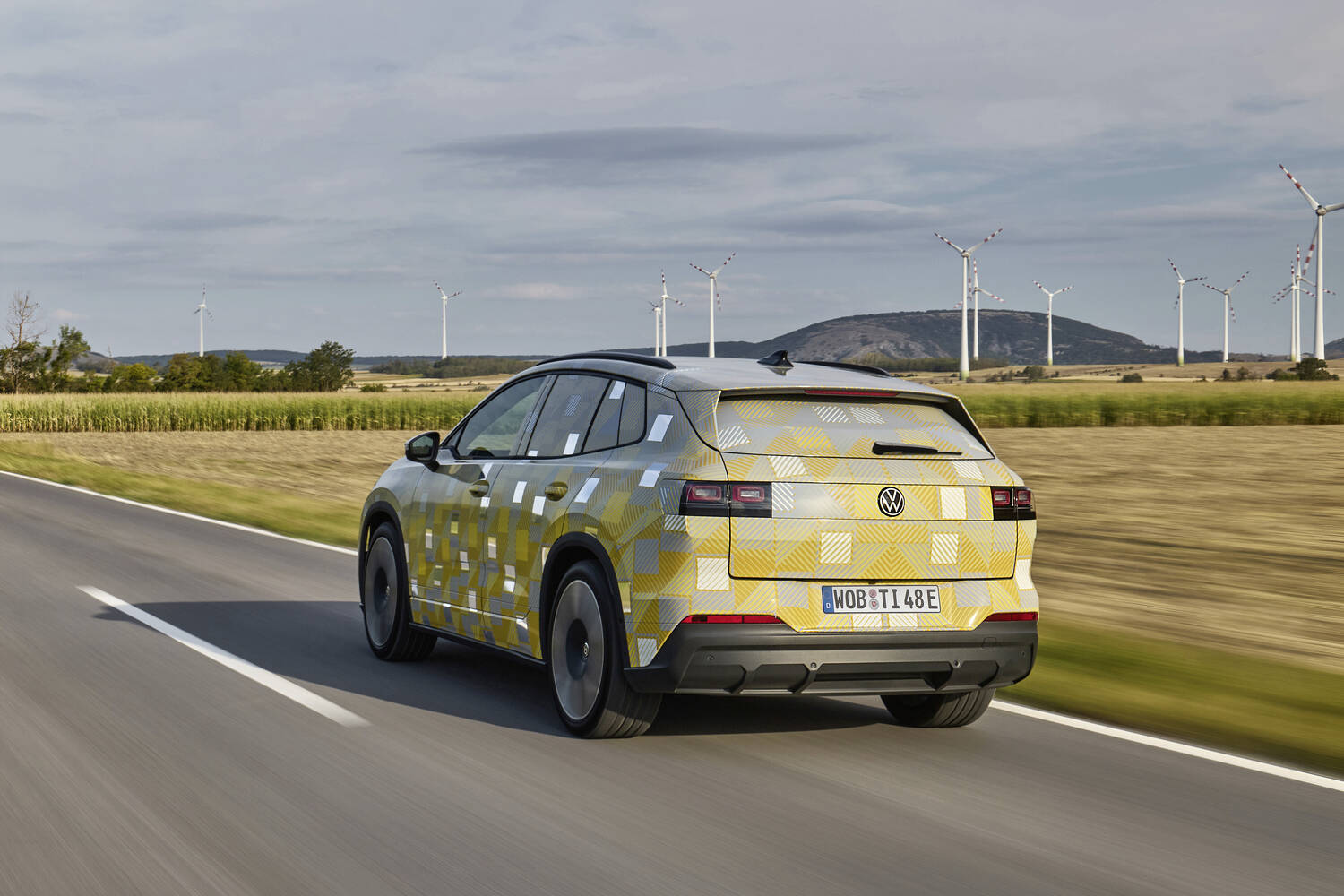
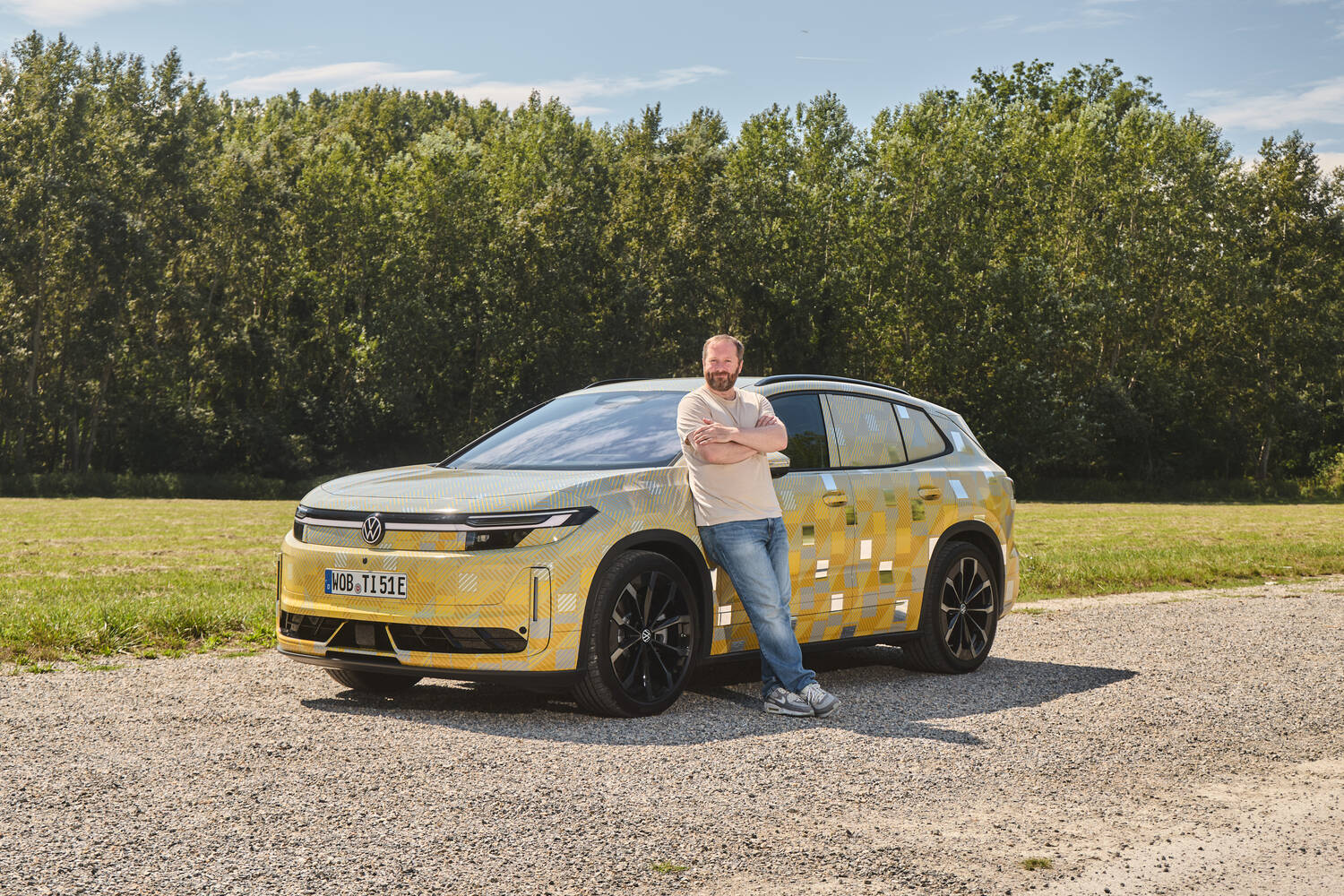
The light disguise on the Volkswagen ID. Tiguan prototype we drove does little to hide how much its exterior has changed in comparison with the ID.4.
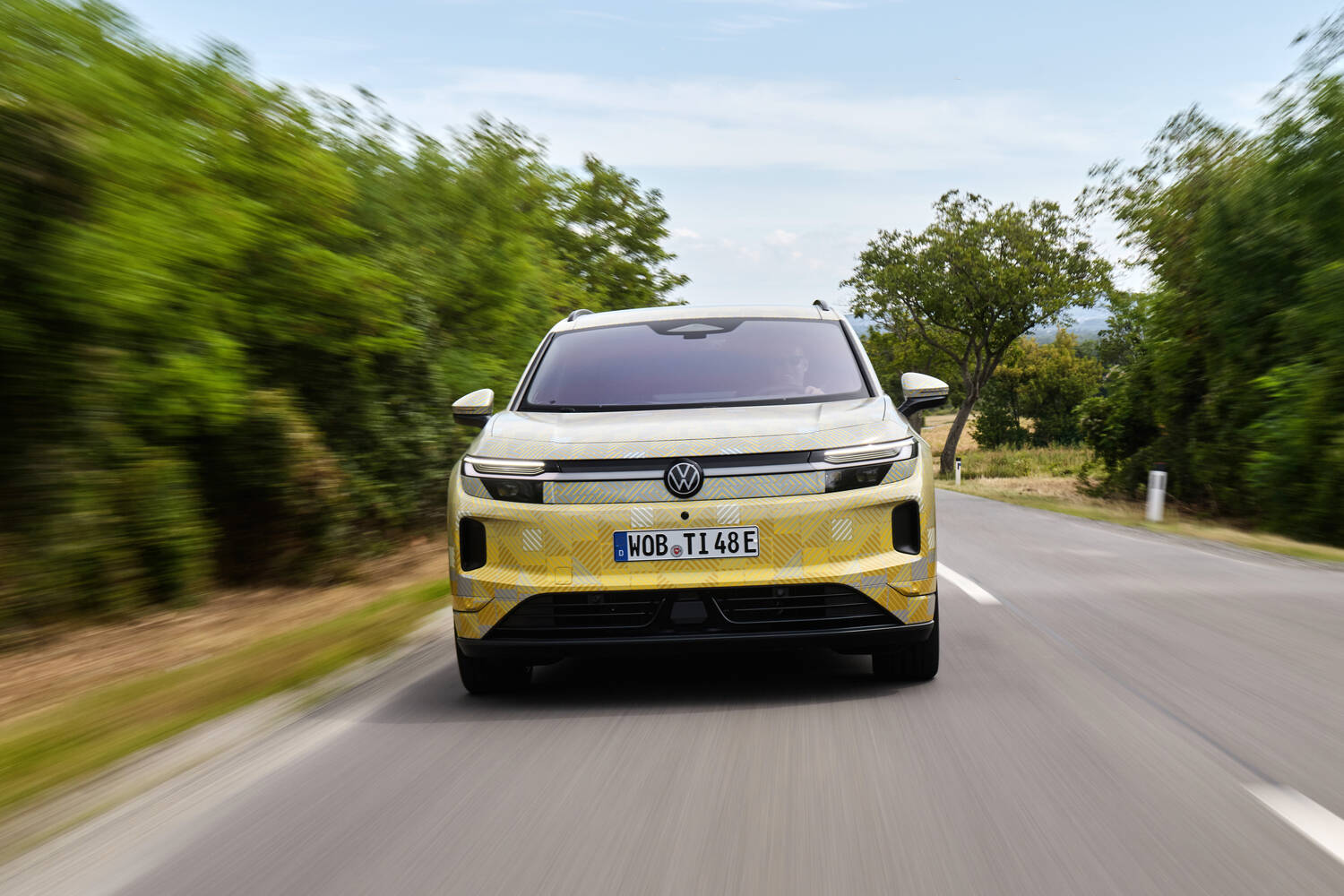
Every visible exterior body panel is different, giving the ID. Tiguan a more square and SUV-like appearance.
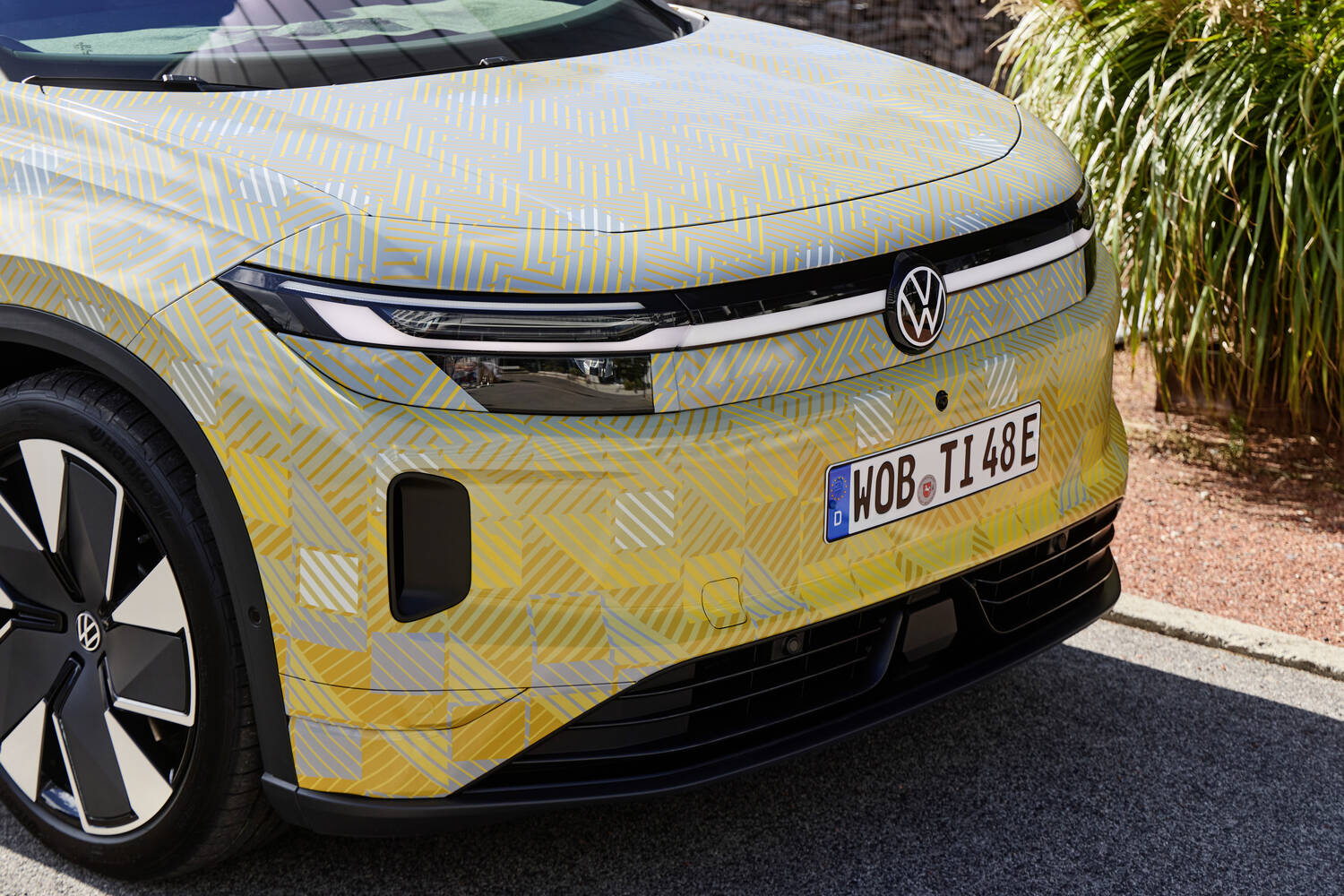
The front end is more upright and, while we can't see it in full, looks to feature a full-width light bar that links the LED headlights. More pronounced 'air curtains' form vertical slots on either side of the front bumper, emphasising the car's width and giving it a more planted stance.
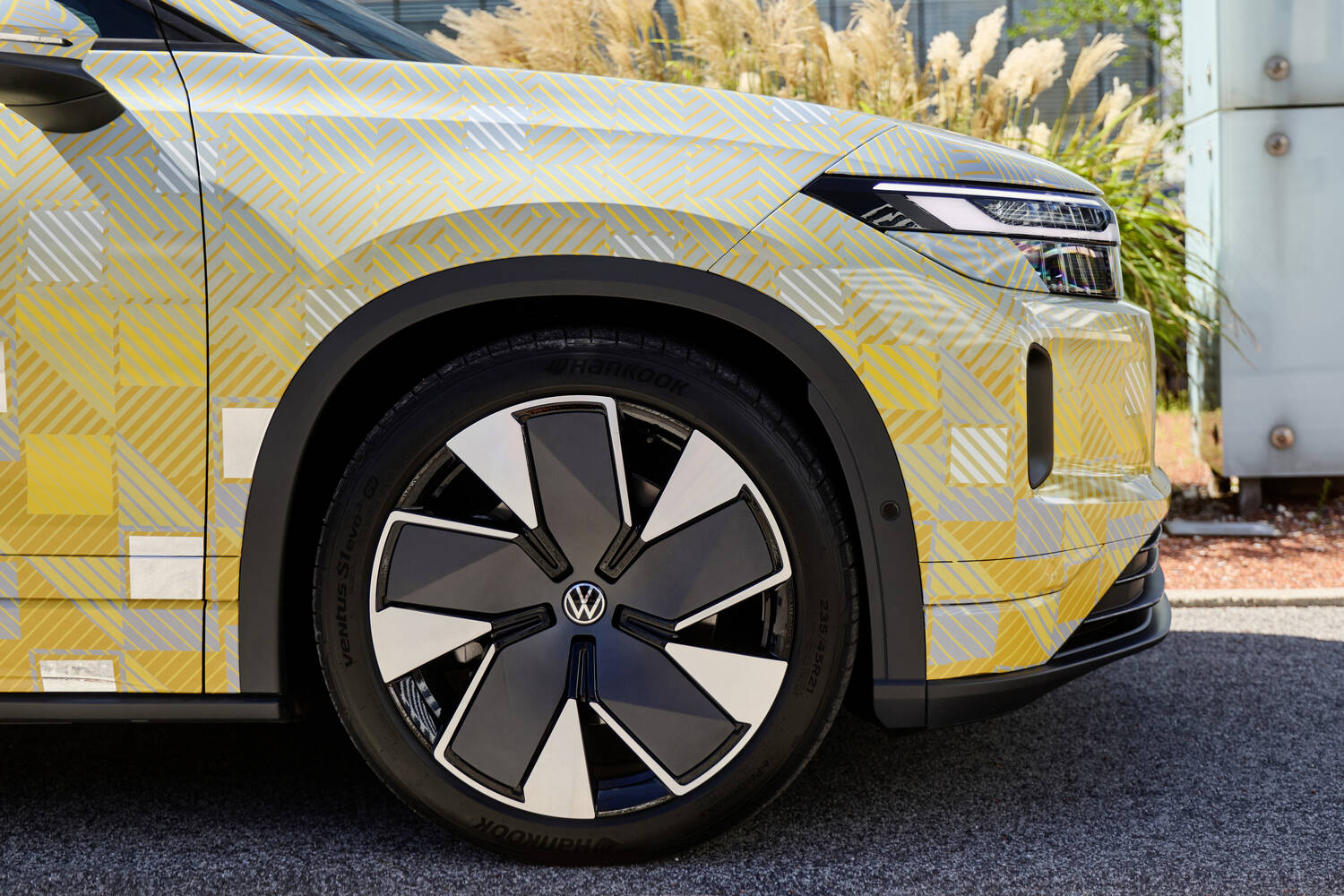
Large wheel arches house 21-inch alloys in this instance, and these have a more open design than the ID.4's, but they've been designed to still takes aerodynamic optimisation into account. You can see more of the brakes behind them, though.
Those wheel arches are slightly squared and feature black plastic cladding around them, again underlining the car's SUV nature.
As we've seen already on the Skoda Peaq, the wheel arches are asymmetrical to reduce wind turbulence inside the wheel housing.
The raked windscreen is similar to those of the VW ID.4 and ID.5, and the door mirrors sit away from the front quarter-light. A new design reverts to pull-type door handles rather than the smoother touch-sensitive ones of its predecessor.
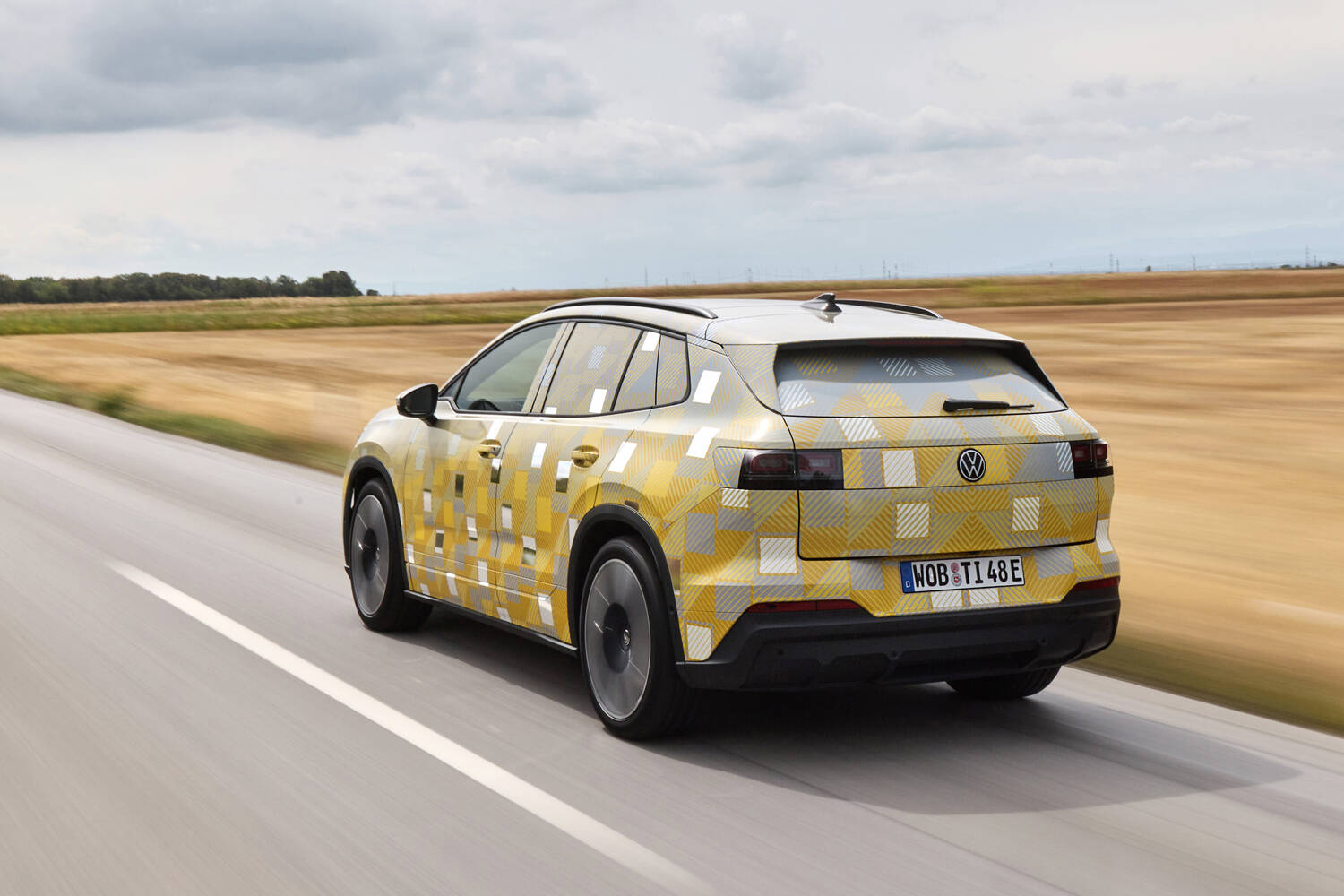
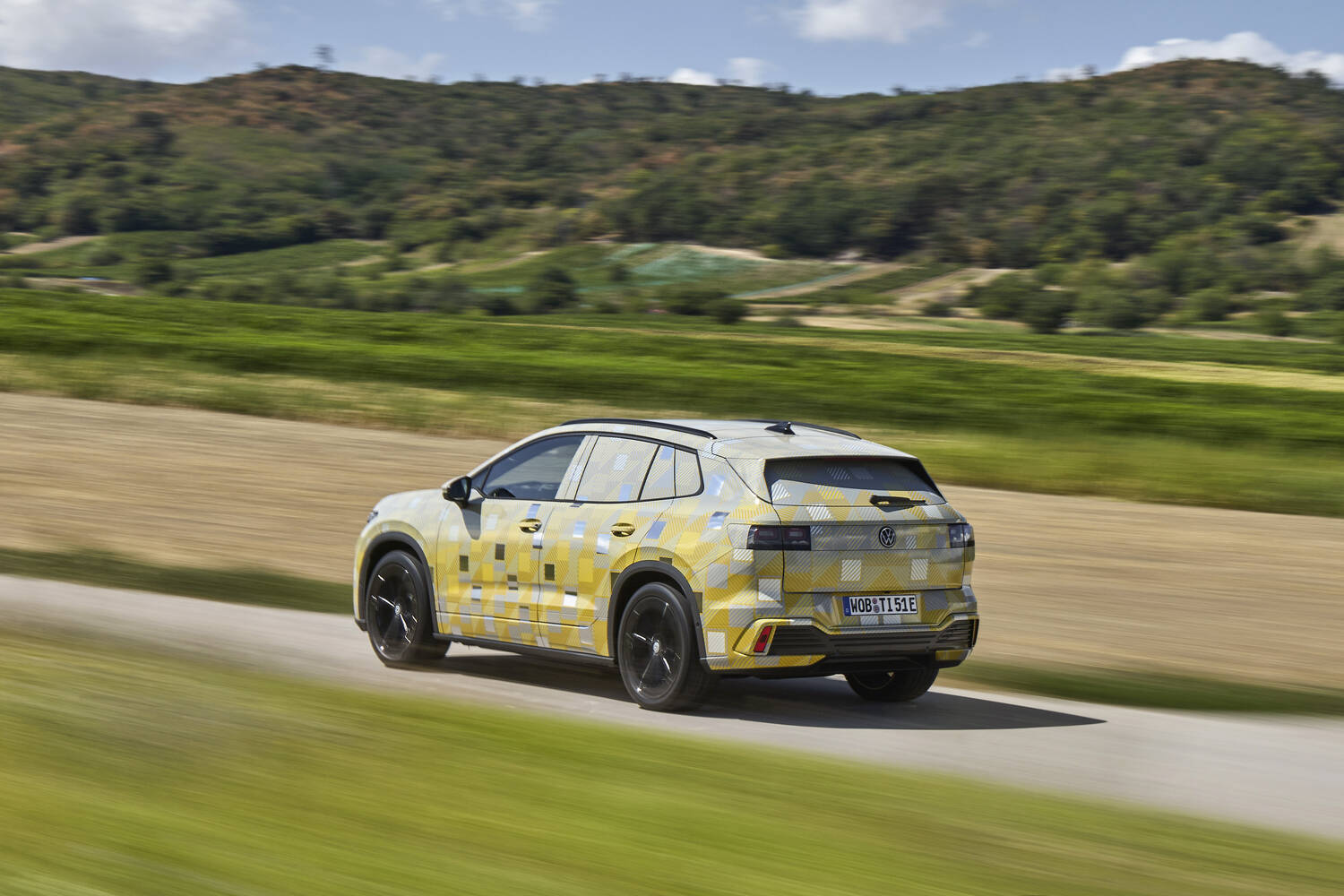
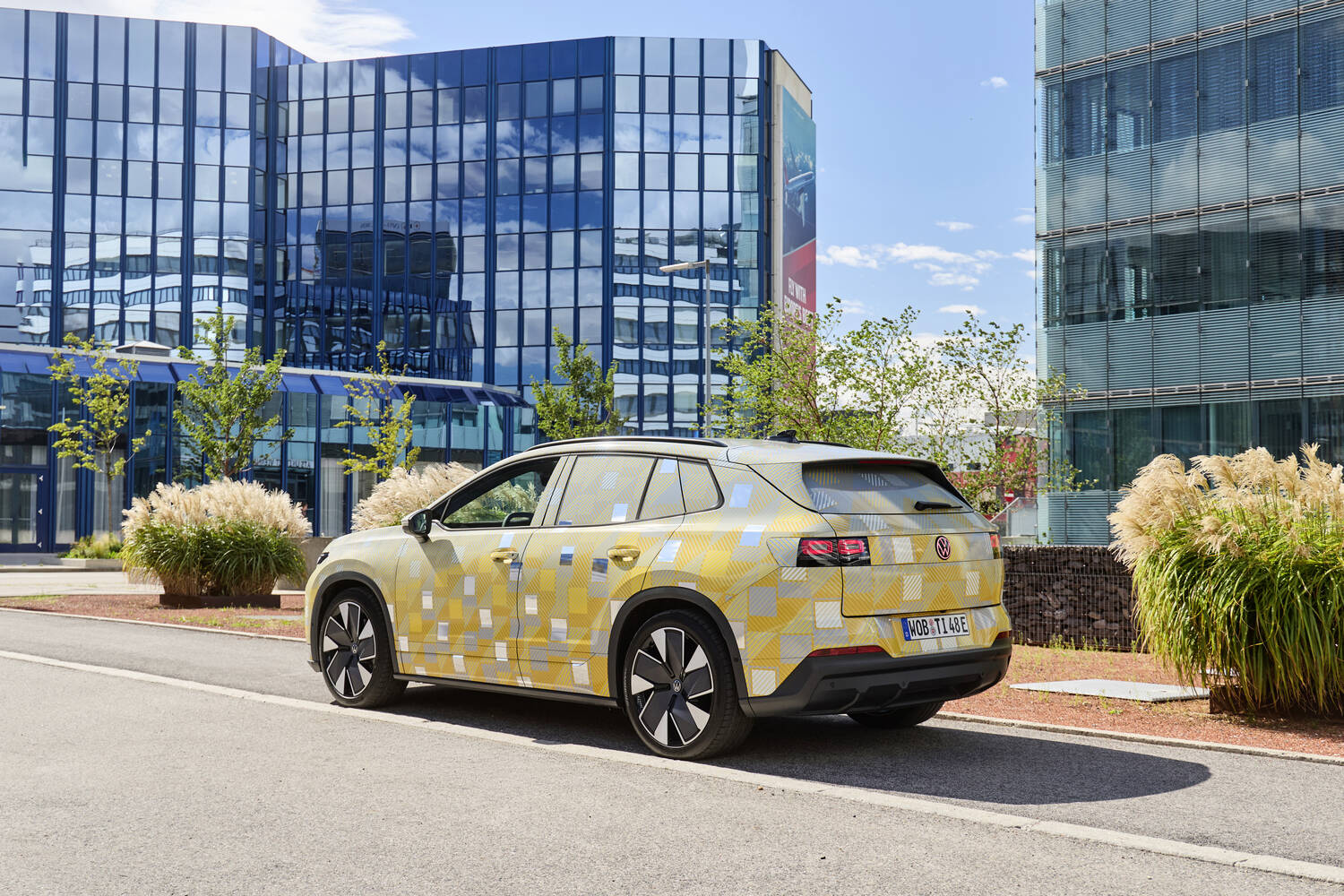
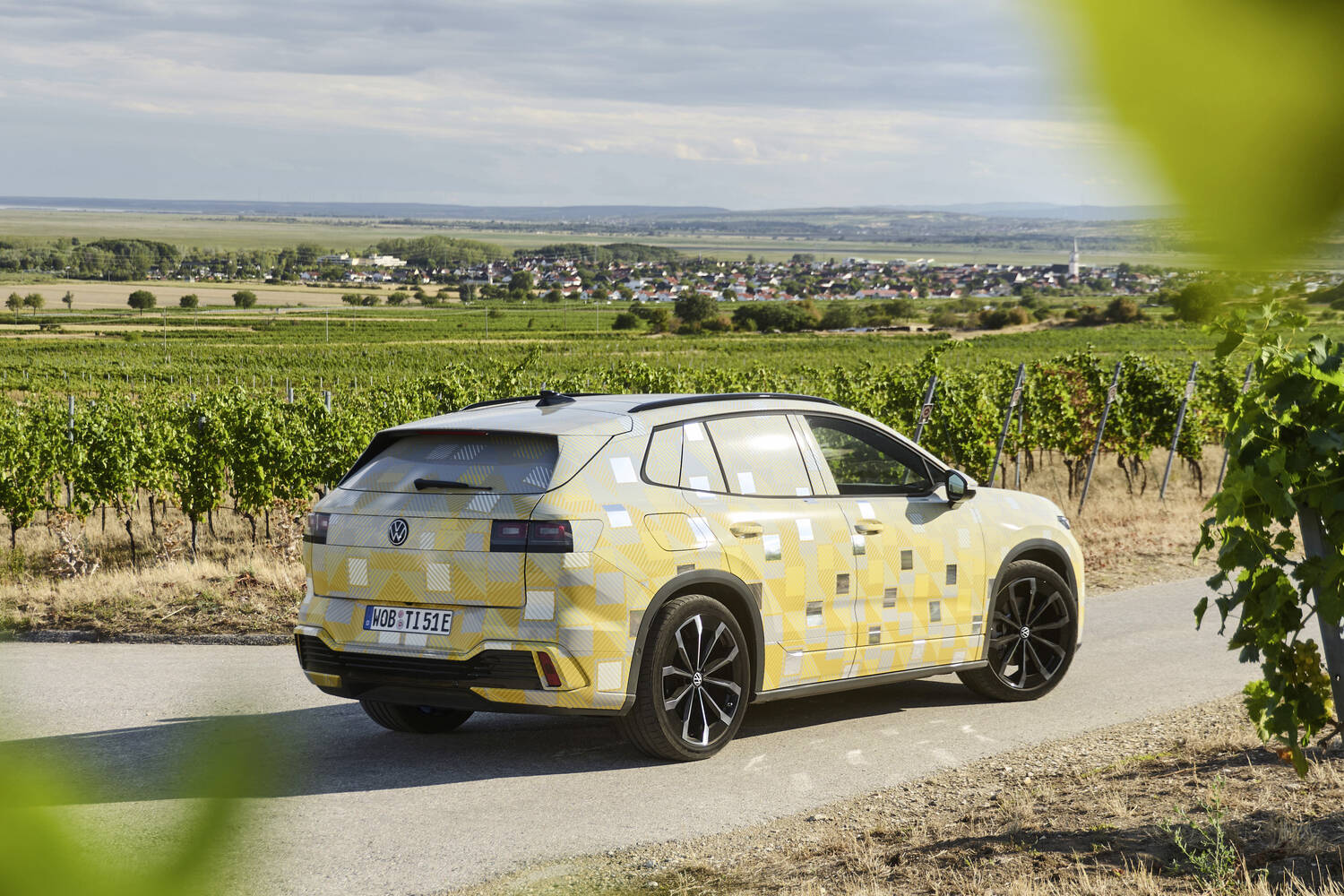
The ID. Tiguan looks most changed around the rear quarter, especially at the C-pillar, which has a sharper beltline running through it that starts at the headlight. The panel kicks upwards and forwards, similar to Volkswagen's combustion-engined SUV models.
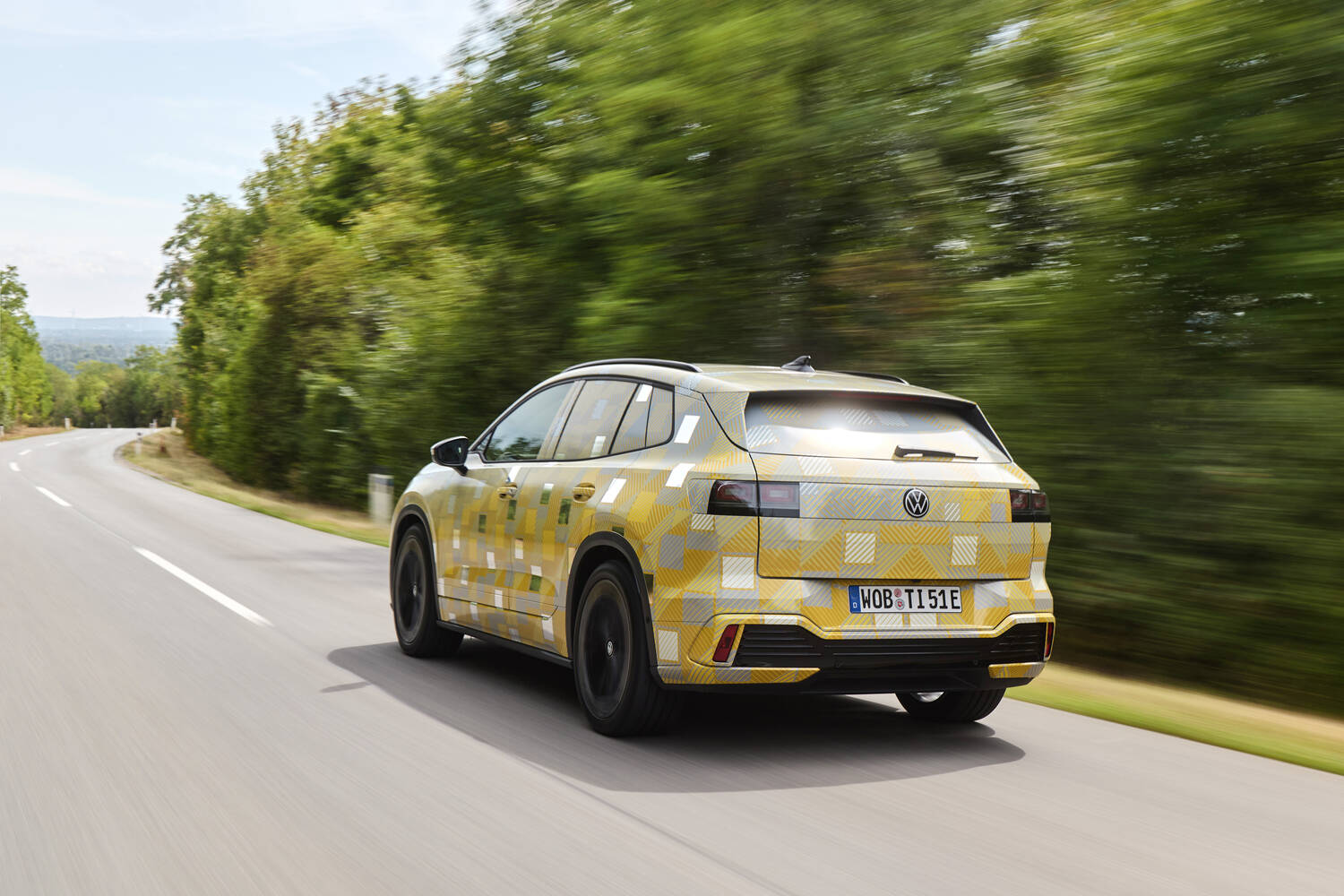
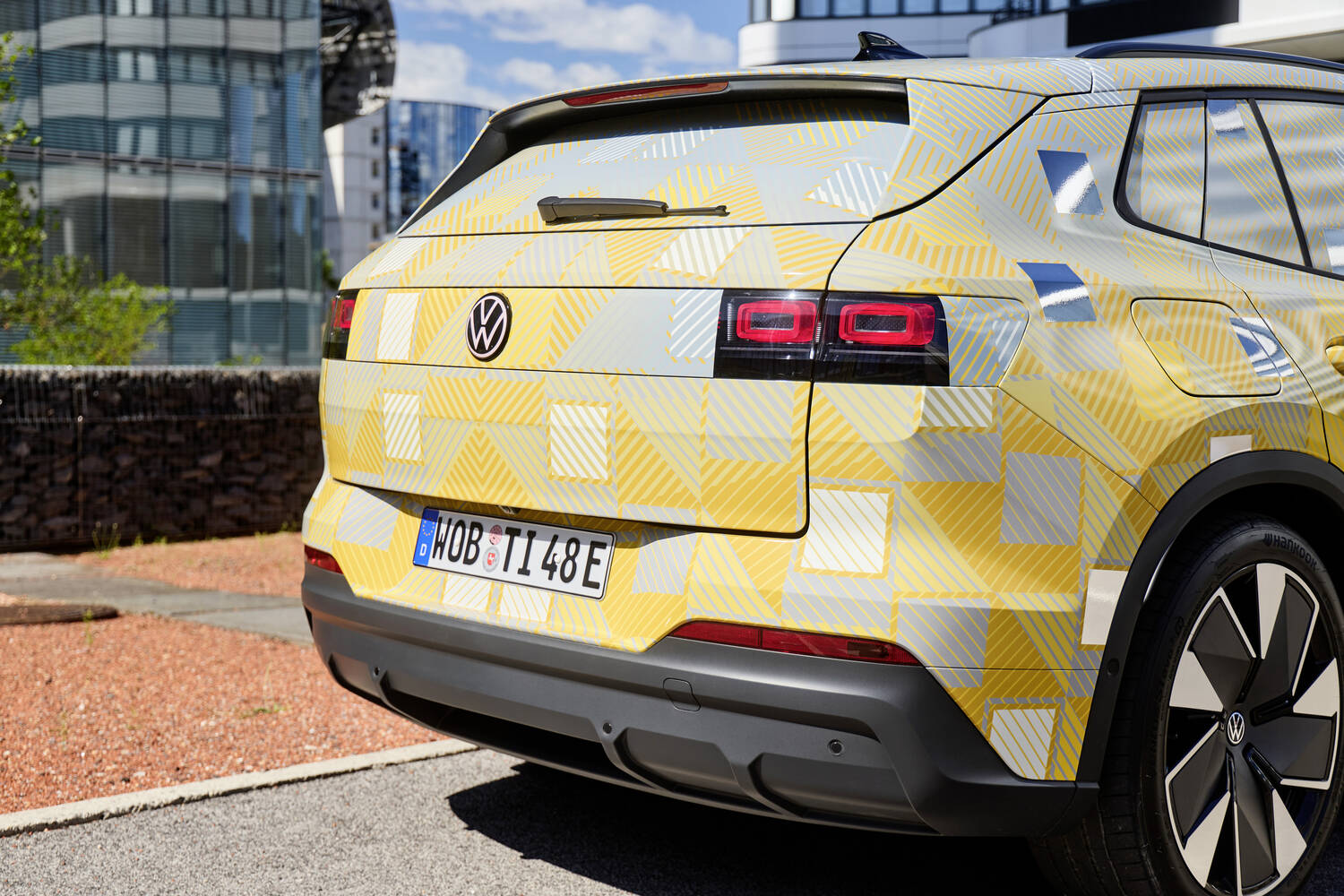
The back end draws influence from the ID. Polo, with an obvious light panel spanning the tailgate and wrapping around the sides.
A large spoiler covers much of the raked rear window, and we expect different rear bumper treatments depending on the specification grade, with R-Line models getting a more pronounced or sportier look.
Paint colours for the 2027 Volkswagen ID. Tiguan
You'll have to wait until the car's world premiere to see what colour options will be available, but it's encouraing to see that Volkswagen has recently begun offering a wider palette of colour choices in its cars.
Interior, practicality, tech & comfort of the 2027 Volkswagen ID. Tiguan
- Plenty of connectivity
- Family-orientated design
- A better mix of interfaces
Volkswagen has been shifting away from relying on touchscreens and haptic buttons in its latest cars, and although the cabin was still covered in our test vehicle, we expect the ID. Tiguan to continue this trend.
That's not to say display sizes will shrink, but don't be surprised to see them supported by physical buttons for functions such as setting the cabin temperature.
Getting comfortable in the driver's seat
Our car was equipped with electrically adjustable seats while the steering wheel was manually adjustable for reach and rake.
Combined, these make it quick and easy to find a comfortable driving position in the ID. Tiguan, and the vast majority of drivers should fit comfortably.
Rear-seat passenger space
As the ID. Tiguan uses the same platform architecture as its predecessor, the amount of rear passenger space feels virtually identical to that of the ID.4. That's a positive, as the ID.4 already had a reasonable amount of room in the rear.
Fitting child seats to the Volkswagen ID. Tiguan
There will be two ISOFIX anchoring points in the rear seats of the ID. Tiguan. We did not detect any major hardware changes to the design of the rear doors, so we expect access through them to be largely unchanged from the ID.4. There is also an ISOFIX point on the front passenger seat.
Boot space in the Volkswagen ID. Tiguan
The boot space in the ID. Tiguan appears almost identical to its predecessor's, and an electrically operated tailgate is available.
A generous aperture and relatively low loading height make it easy to get bulkier items in and out, and the 60:40 split-folding rear seats can be dropped to boost luggage capacity.
There is also a ski hatch in the rear seat to load longer items through. For reference, the ID.4 had a boot capacity of 543 litres with all seats in use, increasing to 1,575 litres with them folded down.
Towing with the Volkswagen ID. Tiguan
We expect the ID. Tiguan to be capable of towing reasonably substantial weights, and this will be confirmed at the car's launch.
Performance of the 2027 Volkswagen ID. Tiguan
- Similar to ID.4
- Rear- or all-wheel-drive options
- Solid performance
The Volkswagen ID. Tiguan will be available with several powertrain options, with two battery sizes and rear- or all-wheel-drive configurations. The exact outputs and range will be announced at the car's launch.
Driving the Volkswagen ID. Tiguan prototype in Austria
Words by Dave Humphreys on 28 September 2026
The opportunity to drive the Volkswagen ID. Tiguan ahead of its world premiere in October is a welcome one, but the time available to us was as light as the disguise that our pre-production car was wearing.
As it uses much of the same underpinnings as the car that went before it, we weren't massively surprised to find that there wasn't a great deal of difference in how the car drove.
While exact technical details are still under wraps, performance was plentiful for a car of its size and the power delivery came in the usual Volkswagen fashion: linear and progressive.
A few driving modes were available to select and they made the expected changes to the car's characteristics, but the reality is that the difference between them is subtle to the point that it's unlikely most drivers will notice or bother to switch between them in search of more driving excitement.
The passive suspension does feel positively sorted, and there's a consistent, well-damped action to it. This gives the ID. Tiguan a polished feel and, even on the 21-inch alloy wheels of our test car, the ride was comfortable and quiet for the most part.
We found the steering to be quite neutral, neither too light nor burdened with excessive artificial weight or heft, though we feel it could offer a bit more feedback about what the front end is doing. Admittedly, this isn't always something buyers of such cars seek as a priority, but some may appreciate having more of it.
Other aspects we liked included the brake pedal feel and the way the car recuperates energy back into the battery. There's a natural feel to the pedal and no noticeable transition when it goes from energy recuperation to friction braking. A stronger one-pedal driving mode would improve the experience overall, though.
Range, battery, charging and running costs of the 2027 Volkswagen ID. Tiguan
- Two battery options likely
- Range could exceed 600 kilometres
- DC charging unlikely to be class-leading
Details have yet to be announced, but Volkswagen has previously confirmed that the ID. Tiguan will utilise both LFP (lithium-iron-phosphate) and NMC (nickel-manganese-cobalt) battery chemistries.
Battery options and official range
The use of LFP should be reflected in keeping a competitive pricing structure for the SUV, and even though these tend to be lower energy capacity batteries, they can be charged to 100 per cent on every cycle, so users can at least get the most from them at all times.
The NMC option will be the one that provides the longest range, when paired with a single-motor setup.
Charging up the Volkswagen ID. Tiguan
Volkswagen has never been at the top of the charging-rate charts with its electric cars, preferring to have a more consistent charging curve during the process, and we don't expect that to change with the ID. Tiguan.
The usual 11kW limit on three-phase AC chargers is sure to remain, but we don't foresee a major jump in DC charging speeds. Still, that should mean under 29 minutes for a 10 to 80 per cent charge with either battery option.
Servicing the Volkswagen ID. Tiguan
If the ID. Tiguan follows the same service schedule as the ID.4, it will require a workshop visit every two years with no mileage limit, though the car's service interval display may suggest sooner.
Volkswagen ID. Tiguan warranty
All new Volkswagen cars in Ireland are covered by a three-year or 90,000-kilometre warranty from the date of first registration.
Irish pricing & rivals to the 2027 Volkswagen ID. Tiguan
- Pricing to be announced following launch
- Expect a slight increase over ID.4
- A sporty R-Line model will be available
The Volkswagen ID. Tiguan will make its debut in early October, and there may be indicative pricing announced then. There should be several equipment levels available, with the range topped by an R-Line variant.
However, there could be room in the range for a higher-performance version, potentially using the GTI name rather than GTX. Either way, it enters a packed segment with a lot of very competitive rivals including the Kia EV5, Renault Scenic E-Tech electric, Hyundai Ioniq 5, BYD Sealion 7 and Tesla Model Y.
Verdict - should you buy the 2027 Volkswagen ID. Tiguan?
As initial first impressions go, the Volkswagen ID. Tiguan makes a positive one in general. Its outward appearance seems to be a progressive move, and that should give it further appeal, while the interior is as practical as ever. The driving experience is also well judged, with enough to satisfy most tastes and keep Volkswagen just on the edge of what could be considered premium.
FAQs about the 2027 Volkswagen ID. Tiguan
Can I fit three car seats in the back of the Volkswagen ID. Tiguan?
You may be able to fit three child seats across the back, but it will very much depend on the seats you're using. The outer seats are equipped with ISOFIX anchoring points, and the front passenger seat is too.
Want to know more about the 2027 Volkswagen ID. Tiguan?
If there's anything about the Volkswagen ID. Tiguan we've not covered, or you'd like help in choosing between it and other cars, you can avail of our expert advice service via the Ask Us Anything page.