
Does the BMW X3 have full-time four-wheel drive?
Hi,
Is the 2005 BMW X3 2.0-litre diesel permanent four-wheel drive or not? If it is would it be very hard on tyres and suspension?
Patrick Ryan (Tipperary)Feb 2012 Filed under: tyres
Expert answer
Hi Patrick,
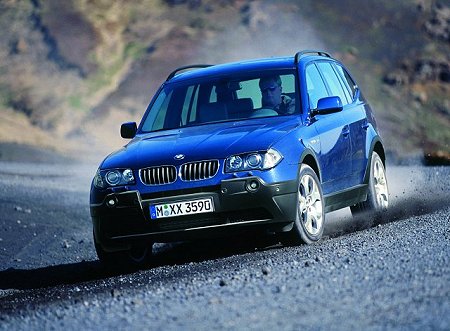
It does indeed have full-time four-wheel drive. It's called xDrive and in normal use the power is split 68:32 rear to front but this can be varied to as much as 100% rear-wheel drive.
Larger cars like SUVs are always a little harder on tyres, but the X3 is not unusual in that regards. It has a good reputation for reliability with no known suspension problems.
Hope that helps.
Hyundai Santa Fe or Toyota RAV4 for towing?
I want to buy a 2005 Toyota RAV4 4x4 2.0 D-4D (for lower tax). Are they underpowered with this engine? I need it to tow a large caravan. What do you thunk of these cars? I was also thinking of a 2006 Hyundai Santa Fe, but I have heard they can give terrible expensive clutch/flywheel trouble.
With regard to the RAV4, because they are permanent four-wheel drive (as opposed to part-time in the Santa Fe) would they be more expensive on tyres, tracking, suspension, etc?
Patrick Ryan (Tipperary)Feb 2012 Filed under: towing
Expert answer
Hi Patrick,
On its own, the RAV4 2.0 D-4D is a fine car, with loads of power. It has plenty of low-down torque for towing too, though how heavy is your caravan? The manual Santa Fe has a higher towing capacity and it's a heavier car too, which will help in certain situations. Added to that, the Hyundai has more power and torque - (assuming you're talking about the newer 2.2-litre model) though obviously you pay for that with fuel consumption and tax.
Both cars have a good reputation for reliability though in fact it's the Toyota that has some history of issues - particularly with RAV4s used as tow cars. Apparently early versions (pre-2003) had transmission problems, though we'd hope the 2005 model is better.
Still, based on what you've said, we reckon the Santa Fe is the better bet in this instance, especially the newer model launched in 2006.
Let us know how you get on.
How do I drift a Jaguar XF?
How do I drift in a Jaguar XF with the traction control turned off?
Abdullah Al-barakat (Oman, Muscat)Feb 2012 Filed under: miscellaneous
Expert answer
Hi Abdullah,
It's not the usual kind of question we get and obviously you should only do such things on a private piece of land! Assuming you've properly disengaged the traction control (you have to hold down the button for 10 seconds), put the transmission into manual control so you change gears with the paddles behind the steering wheel. Drifting is all about the initiation and without a mechanical handbrake or clutch you'll need a combination of power and momentum (depending on the model you have).
Until you're comfortable with it, it's best to start off slow. Approach the bend, brake so that the weight transfers to the front tyres, release the brakes and start to turn. As soon as you do, get on the throttle and be ready to feather it and add some opposite lock. You will need to be in a low enough gear for the engine's torque to overcome the rear tyres, but not so low that you run out of revs early.
This is only one way of doing it. There's no substitute for practice, so get yourself along to a Mondello Park test day and experiment in a safe environment - and never practise on the public road.
Final word: don't expect to be able to drift for very long if you have a diesel XF. Most diesel cars have a very narrow power band that makes them tricky at the best of times.
Have fun...
Help me choose a 4x4 for up to €7,000.
Which used 4x4 should I buy? I have between six and seven thousand euro to spend on an SUV not more than 2.0-litre diesel for medium tax. I had in mind a Hyundai Santa Fe 2.0-litre diesel 4x4, but I have heard mixed views on these - some good some bad.
What should I look out for in these cars? I have heard of diesel pump/injector trouble and gearbox/clutch problems. Have the Hyundai Tucson and Kia Sportage 2.0 diesel 4x4s the same problems?
Also I have considered a Toyota RAV4 2.0 D-4D 4x4. Would these be underpowered in 2.0 D-4D form? I understand these are full-time 4x4 as opposed to part-time 4x4 in the Santa Fe. Would this make the RAV4 more expensive to mantain with regards to tyre wear, tracking, suspension wear etc? What are all of the above vehicles like to drive on poor roads? Would be open to your views on other 4x4s in this category.
Thank you for your time
Patrick Ryan (Tipperary)Feb 2012 Filed under: choosing used car
Expert answer
Hi Patrick,
That's a lot of questions! Let's start with the Santa Fe. Your budget is likely to limit you to the last of the older generation. It's a tough piece of kit, but not great on the road in terms of comfort. It's reliable, though expensive enough to maintain. Early versions had clutch judder, but this should have been fixed in later versions with a new flywheel. We've not heard about diesel pump and injector trouble.
Given that budget we'd rather the Hyundai Tucson. There are plenty of them about and it's much nicer to drive on the road. Saying that, it's a good deal smaller than the Santa Fe. It's not as expensive to service however. It's the same story with the older Sportage, though we'd prefer the Tucson.
The RAV4 is a fine choice all-round. It's generally reliable and good on the road. I wouldn't be very worried about extra wear and tear in the driveline.
Don't forget about the Nissan X-Trail, Honda CR-V and Suzuki Grand Vitara. All worth a closer look.
Has that helped you create a shortlist?
How much to replace a tyre on my BMW X5?
Hello, I would like to know how much it would cost to replace one standard size tyre on 2010 BMW X5 please.
Mary Murphy (Cork)Jan 2012 Filed under: tyres
Expert answer
Hi Mary,
I'm afraid you've not given us enough information to answer that properly. We'd need to know the exact size and ideally the version of the X5 you have. Expect not far off €300, but again that'll depend on the brand.
Come back to us with more details and we'll get a few prices for you.
What should I look out for when buying a Renault Laguna?
I am thinking of buying a 2004 Renault Laguna Estate 1.8 petrol, with 125,000 miles on the clock. What are the main things I should look for, considering the Laguna has such a bad reputation for reliability?
Dave Clarke (Carrigaline, Co. Cork.)Jan 2012 Filed under: choosing used car
Expert answer
Hi Dave,
This Laguna has a bad reputation, as you said. The two largest customer and reliability surveys in this part of the world consistently put it near the bottom in its class, which is not great, especially if you're considering a high mileage example.
However, because of all that the prices are low and I am guessing that you've got a bargain.
So, first thing to look at is if the car has had all its recall work done. Call a Renault dealer with its chassis number to confirm, as there were several recalls that applied to this car.
As with any used car check that every switch and control is working as expected and that all the warning lights come on when you turn on the ignition and go off again when the car is started.
Apparently the tyre pressure sensors are inaccurate as well, so check the pressures with a gauge for yourself.
Best of luck
Why is my Passat's fuel consumption worsening?
I have a Volkswagen Passat BlueMotion with just 4,000 miles on the clock. The fuel consumption is increasing and has gone from 53mpg average in October to 48mpg now. Dealer says he can find no fault on electronic test rig. Any ideas please? Previously got over 60mpg on same journey now getting 48-49mpg and seeming to be dropping. Variables like fuel etc. all same as is possible and driving style not changed. Best regards and Happy New Year to all.
Richard Paterson (Solihull)Expert answer
Hi Richard,
Lots of potential reasons for this. Very first thing I'd look at is tyre pressures. Are they all even and to spec? Are there any other issues with the tyres you can see? Uneven wearing, etc. If no problems with pressures I'd suggest getting the alignment checked. If it gets knocked out (relatively easy to do with a pothole or kerb) then there could be more friction causing heavier fuel consumption.
Come back to us when you've checked that.
Skoda Superb, Saab 9-5 or Volvo S80 - all diesel - which one?
Hi lads,
Question for you: 2009 Skoda Superb 1.9 TDI, 2008 Saab 9-5 1.9 Tid or 2008 Volvo S80 2.0 D: all similar price. Safety, reliability and economy are what's important and in that order!
Thanks
Justin McElwee (Galway)Dec 2011 Filed under: choosing used car
Expert answer
Hi Justin,
Let's break it down into chunks. First of all, safety. Here are the crash test results from Euro NCAP:
Skoda: five stars on new system
Saab: five stars on old system
Volvo: four stars on old system
Looks like the Volvo loses out there, though it's a safe car by most standards.
In terms of reliability, the Skoda has no reported issues. The Saab doesn't fare so well, with plenty of electrical issues and problems with the suspension. Check for uneven tyre wear and that all the switches are working - every single one. The Volvo is a little better, but has a few known problems, with random electrical gremlins and several recalls. If you're serious about that one get confirmation that the recall work has been completed. Also, it should have its timing belt, tensioners and pulleys changed every four years so best to check that it has been done.
Assuming you're looking at the 105hp Superb, then the combined cycle consumption was quoted at about 5.7 litres/100km (50mpg) and it is a frugal car. The 150hp Saab uses a fraction more fuel (5.8 litres/100km) on the combined cycle, while the 136hp Volvo also uses 5.7 litre/100km.
So in summary, for us it would be between the Skoda and the Volvo. They're both comfortable and spacious, though we'd trust the reliability of the Superb more given the data.
Hope that helps.
What tyres should I go for on my Mazda?
I put new tyres on my car about six months ago, but just got cheap ones as cash was a bit tight. I have never been happy with them. The car (Mazda3 saloon) hasn't handled the same since. The slightest bit of moisture and there is very little grip at all. And with the cold weather lurking I am not looking forward to driving in ice and snow with them. So, basically, I am going to get new (better) tyres in the next few days, but I am not sure what to get.
I don't mind spending a few euro on them. I'd rather do that and feel safer. Should I be looking at winter tyres, or will this mean forking out more money in spring for regular tyres again? Or is there an all-weather option that would see me safely through the winter but wouldn't need to be taken off in a couple of months?
Thanks, Rob
Rob Davis (Dublin)Dec 2011 Filed under: tyres
Expert answer
Hi Rob,
It's tempting to save money on tyres, but it's impossible to understate how important they are. As you've found out for yourself!
Personally I like the security of having winter tyres on at this time of year. I acknowledge that there are extra costs involved, plus some inconvenience in terms of changing them twice a year and storing the other tyres. However, I was converted last year when I experienced the difference first hand.
Saying all that, and despite two bad winters, the statistics still say that Ireland's climate is too mild to warrant having winter tyres on for a long period. If we do get heavy, sustained snow then snow socks will get most people out of a tricky situation at low speeds, but they have limitations.
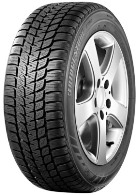
So, assuming you'd rather not fork out on two sets of tyres in the next few months, what are your options? Well Bridgestone offers a good compromise called the A001 All Weather tyre. Sounds like it'd be perfect for you? I spoke to Bridgestone and there are limitations on the size they do - or have in stock - but take a look for a stockist though www.bridgestone.ie and take it from there.
Hope that helps
What tyre pressure shuold I inflate my Citroen's tyres to?
What tyre pressure should I inflate to on my 1999 Citroen Xsara VTR 1999, engine size 1,800cc?
Cheers
Alison Hurley (Kilnaboy)Nov 2011 Filed under: tyres
Expert answer
Hi Alison,
The recommeded pressures should be printed in your car's manual and also on a plate, usually located on the door frame when you open one of the front doors. Sometimes it's inside the fuel filler cap too.
Based on the information you've given, we'd assume that you have 185/65 R14 tyres. If so, the fronts should be 2.3 bar/34psi and the rears should be 2.1 bar/31psi.
If you can't find the recommended values on the car and we have the tyre size wrong come back and let us know.