
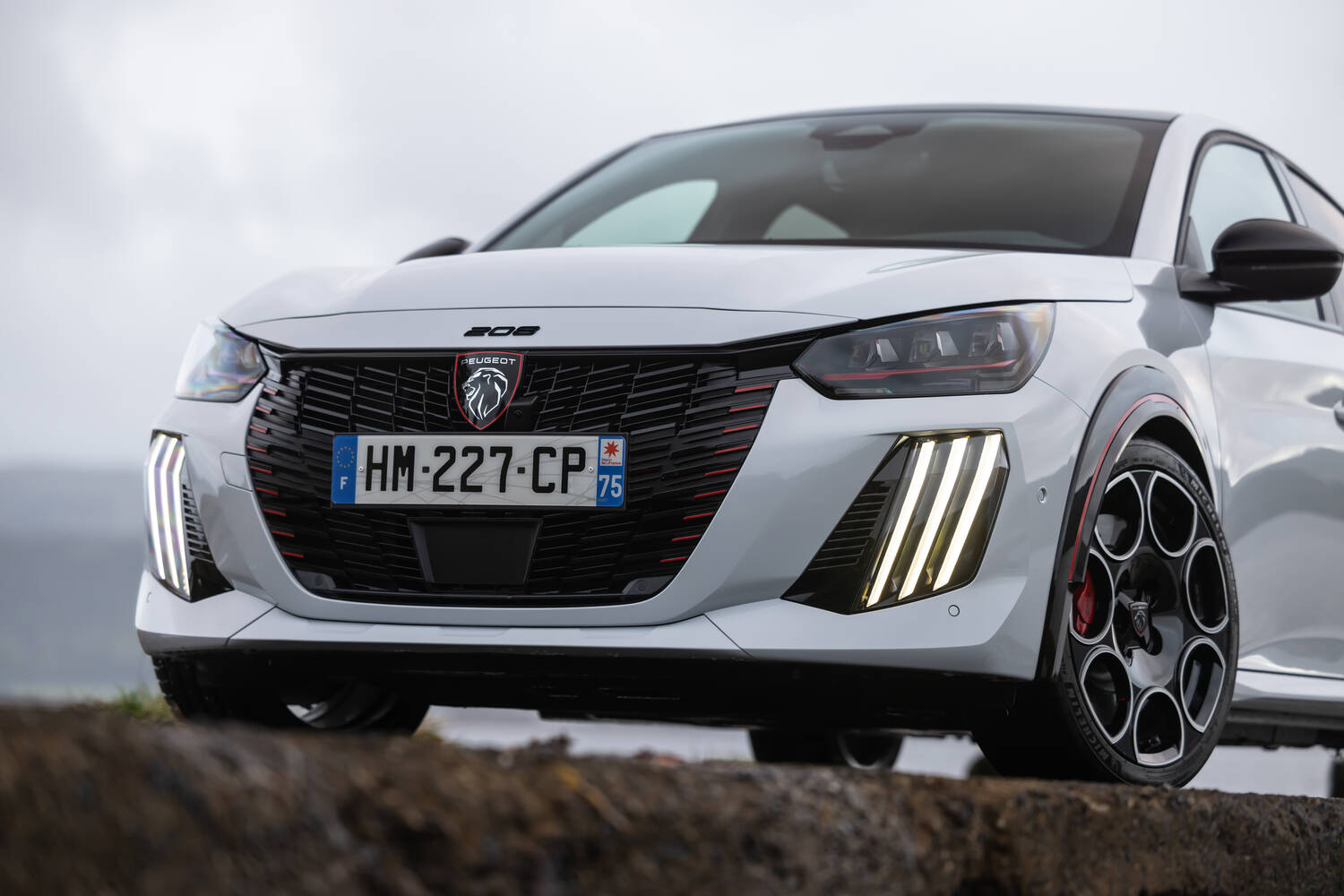

Exterior & design of the 2026 Peugeot E-208 GTi
- Lower ride height
- Gorgeous alloy wheels
- Lots of references to 205 GTi
Any new Peugeot wearing a GTi badge - electric or otherwise - is going to get compared to the classic, original Peugeot 205 GTi. Arguably the greatest of the original wave of 1970s and 1980s hot hatches, and indeed arguably the greatest of all time (although the Renault Clio Williams and VW Golf GTI would like a word...), the 205 GTi set the template for generation after generation of high-performance hatchback, and that's as much visually as in any engineering or performance sense.
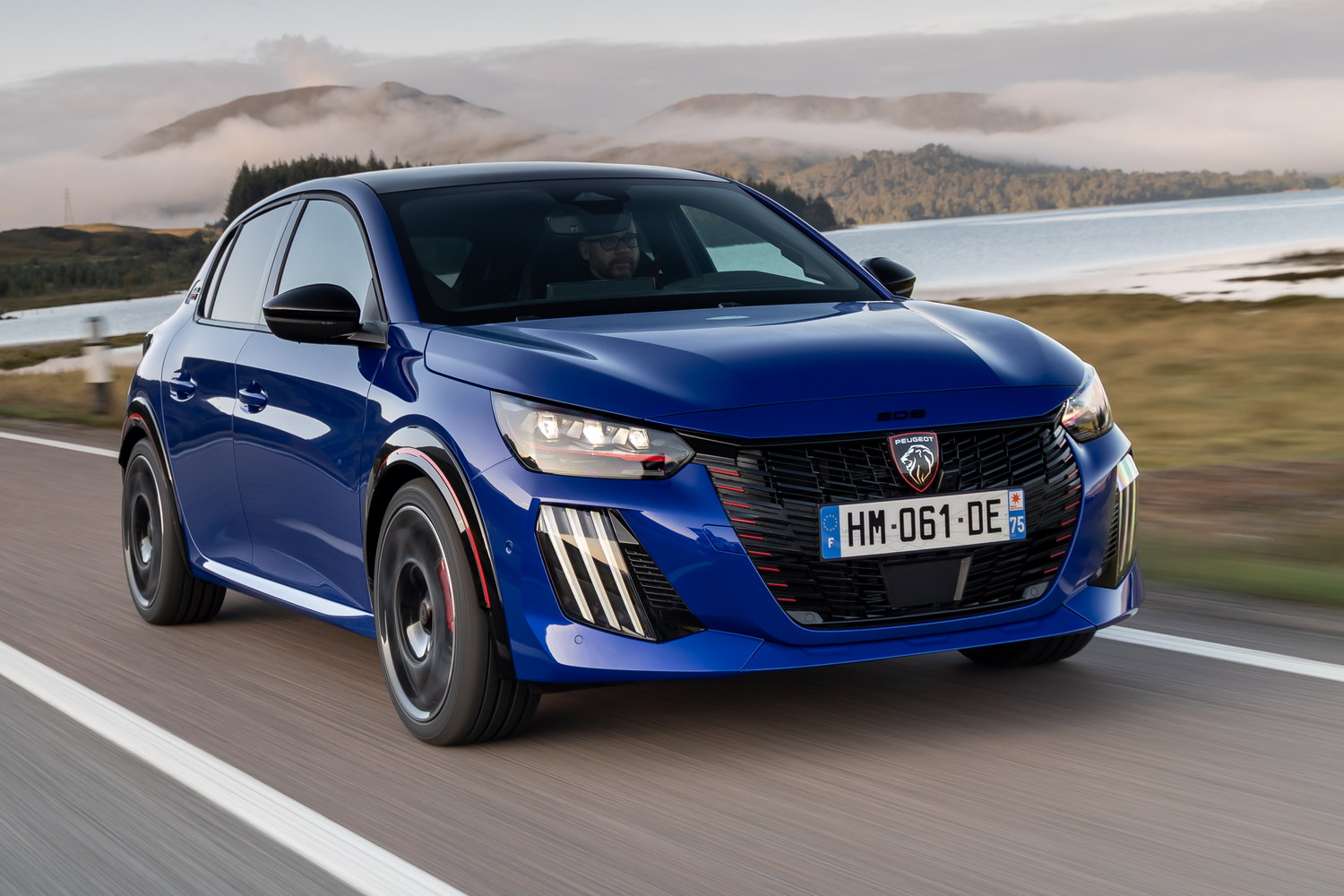
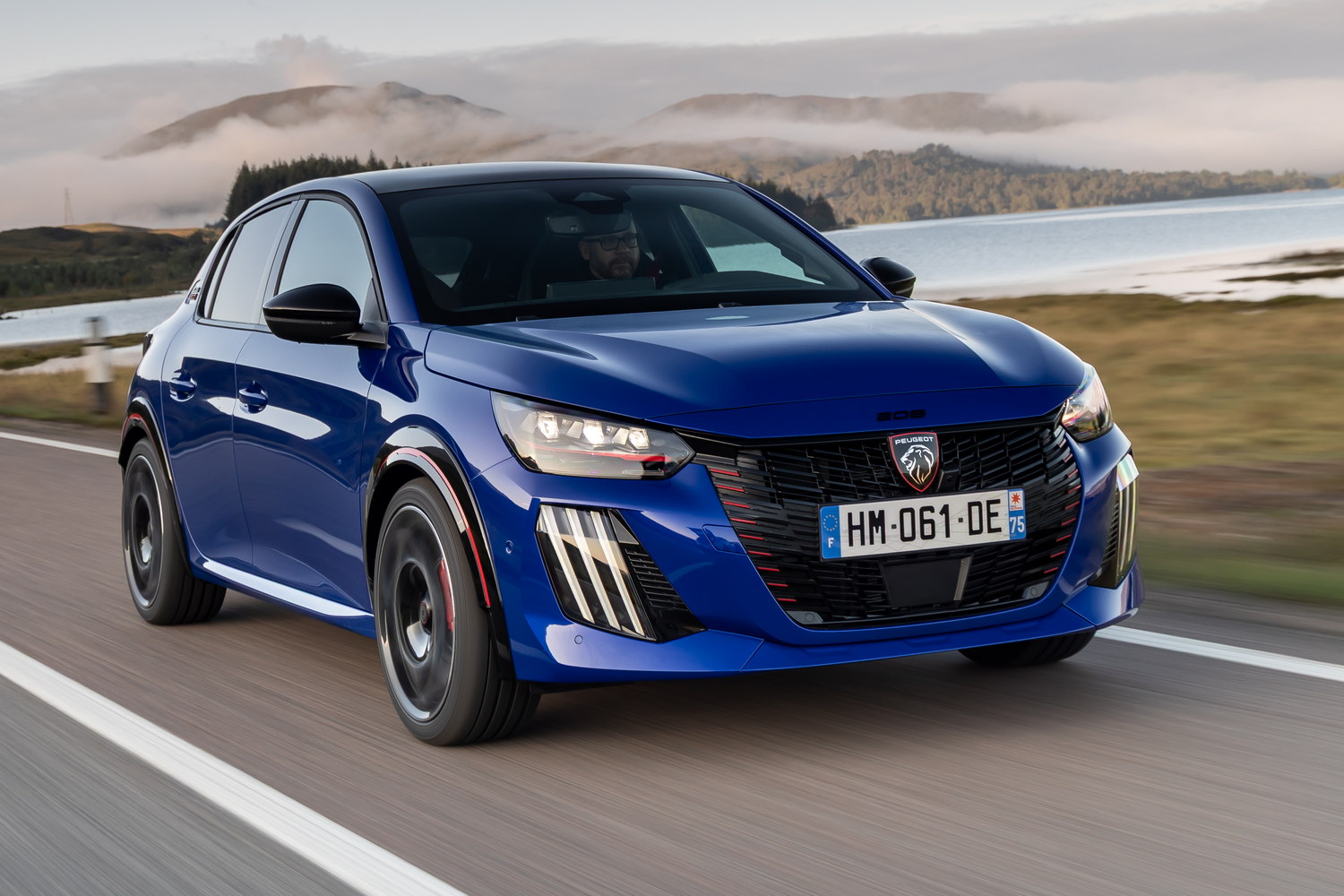
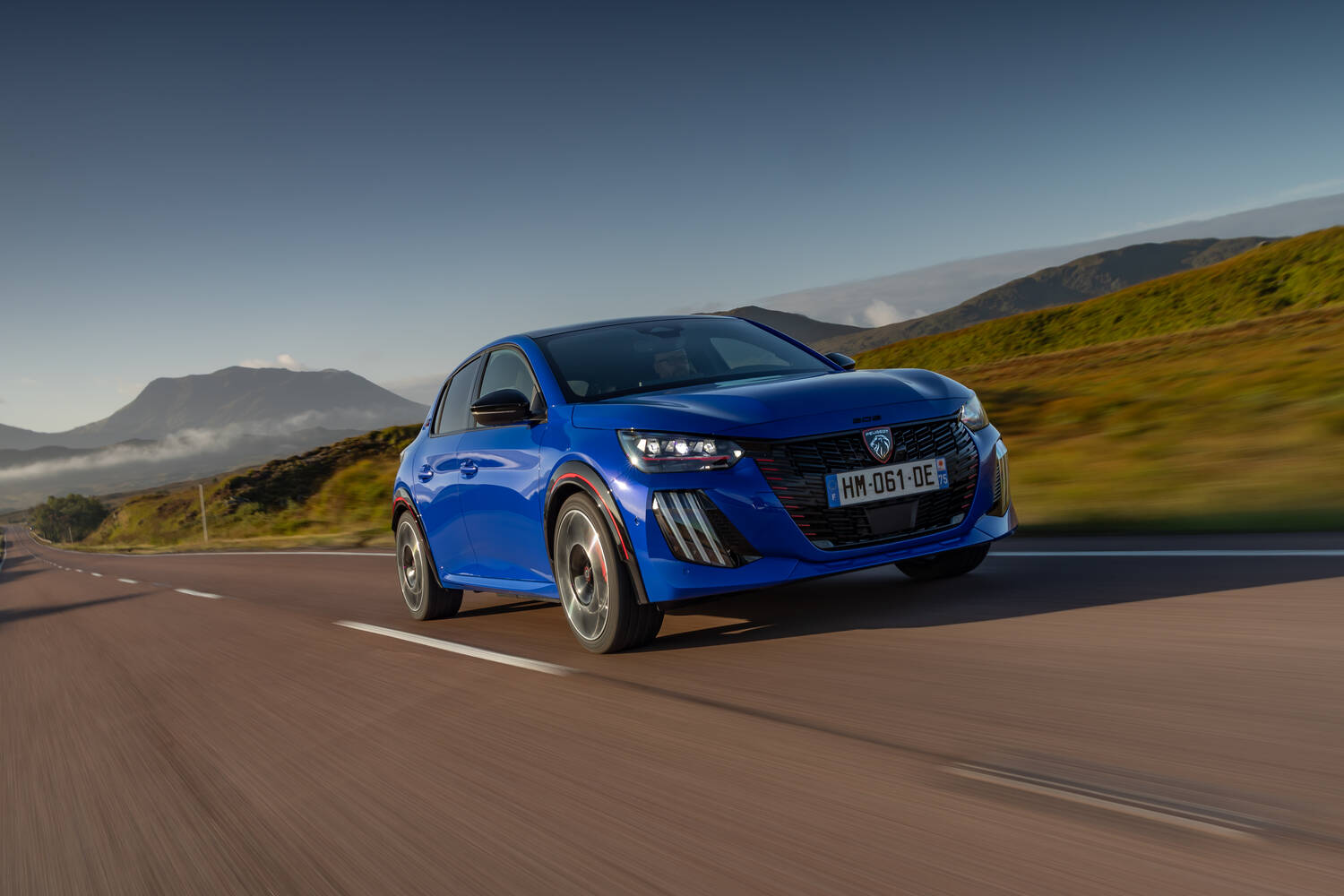
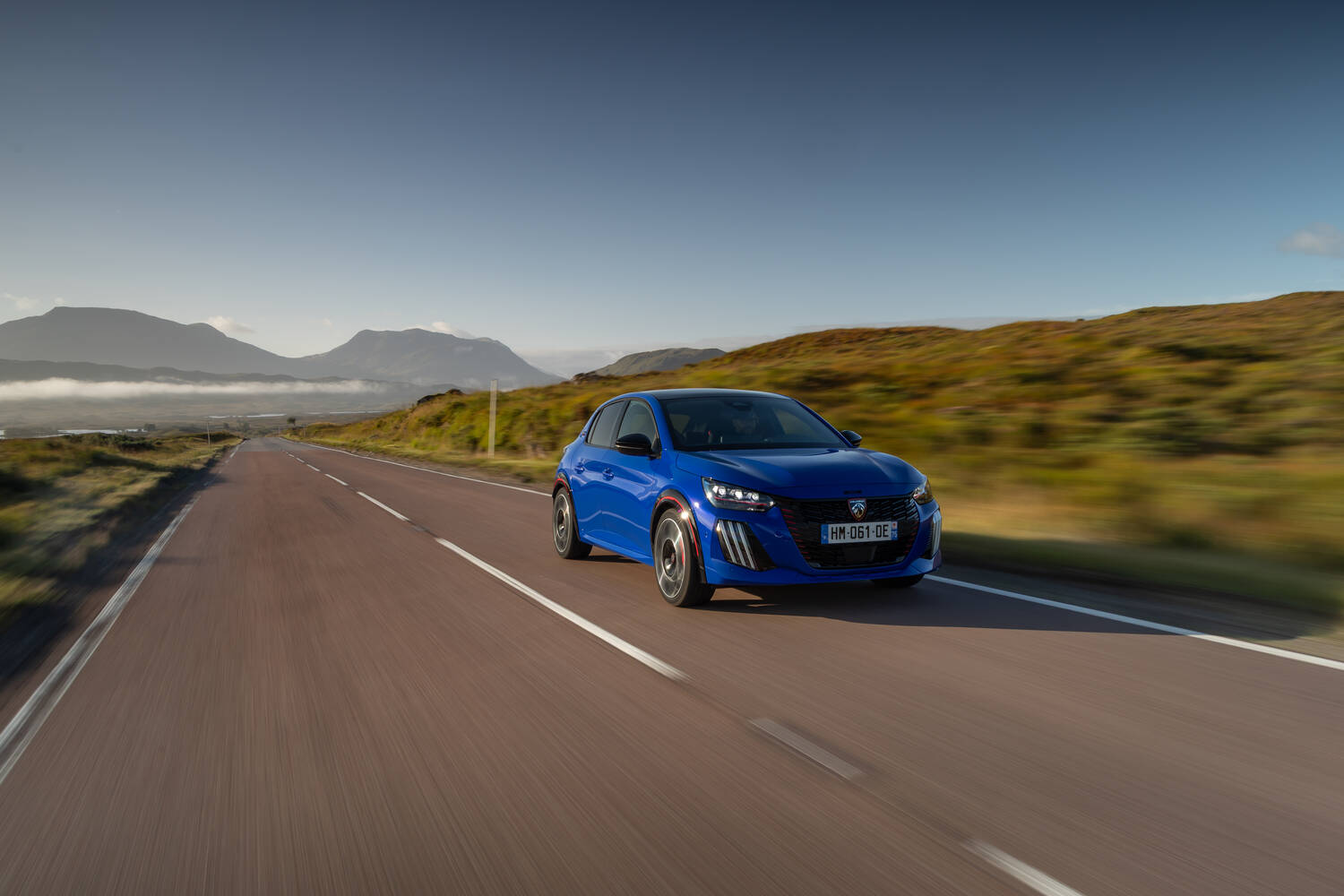
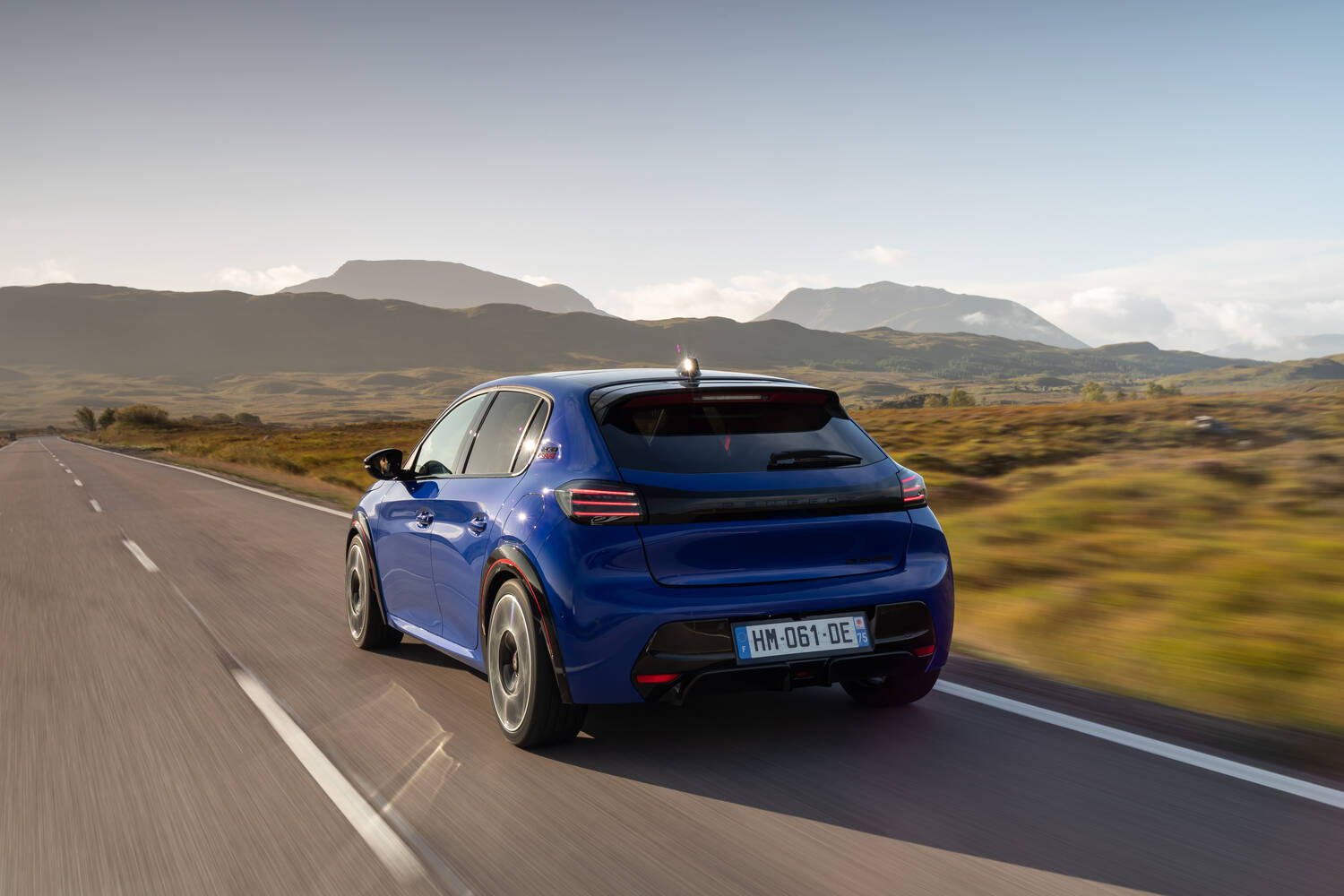
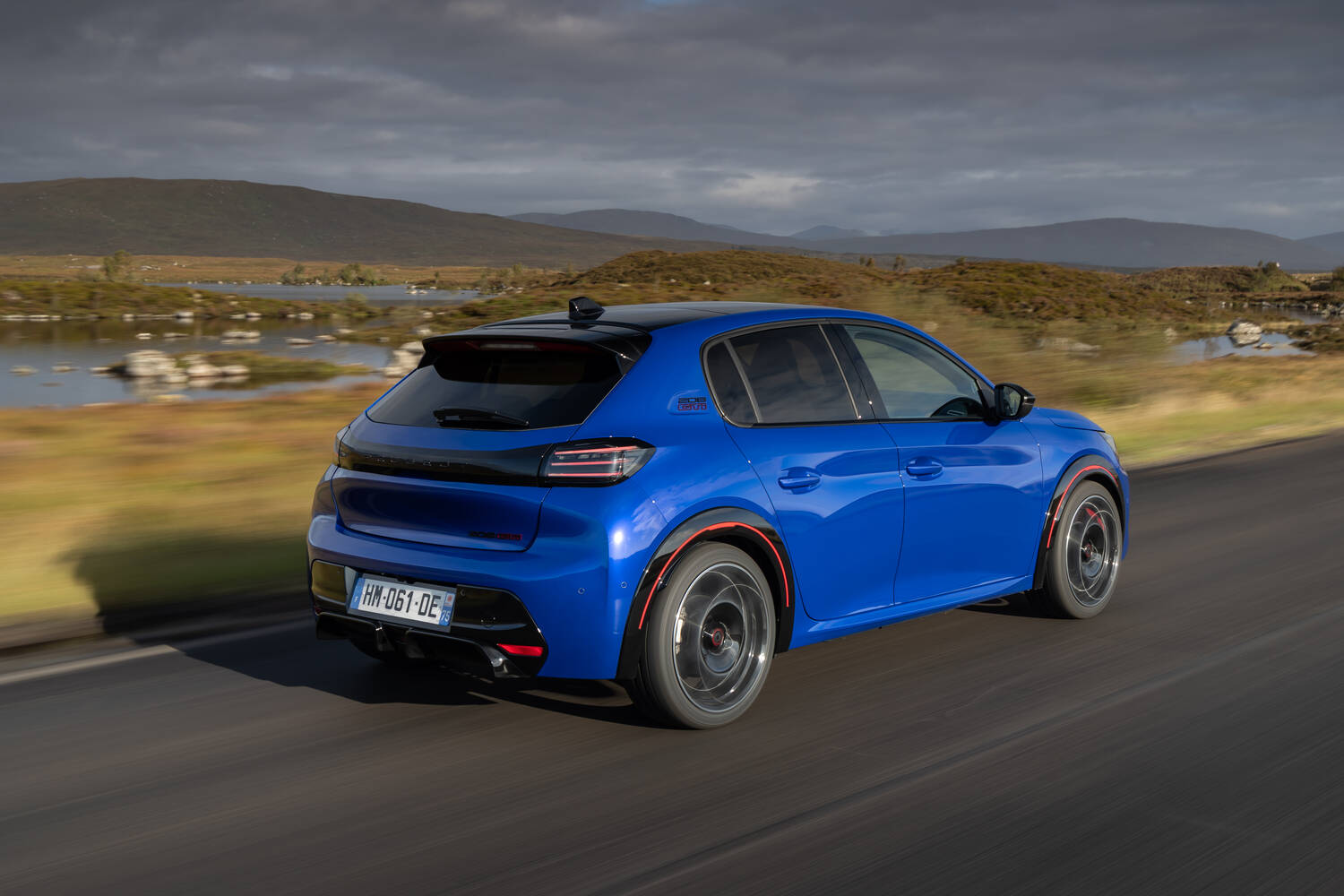
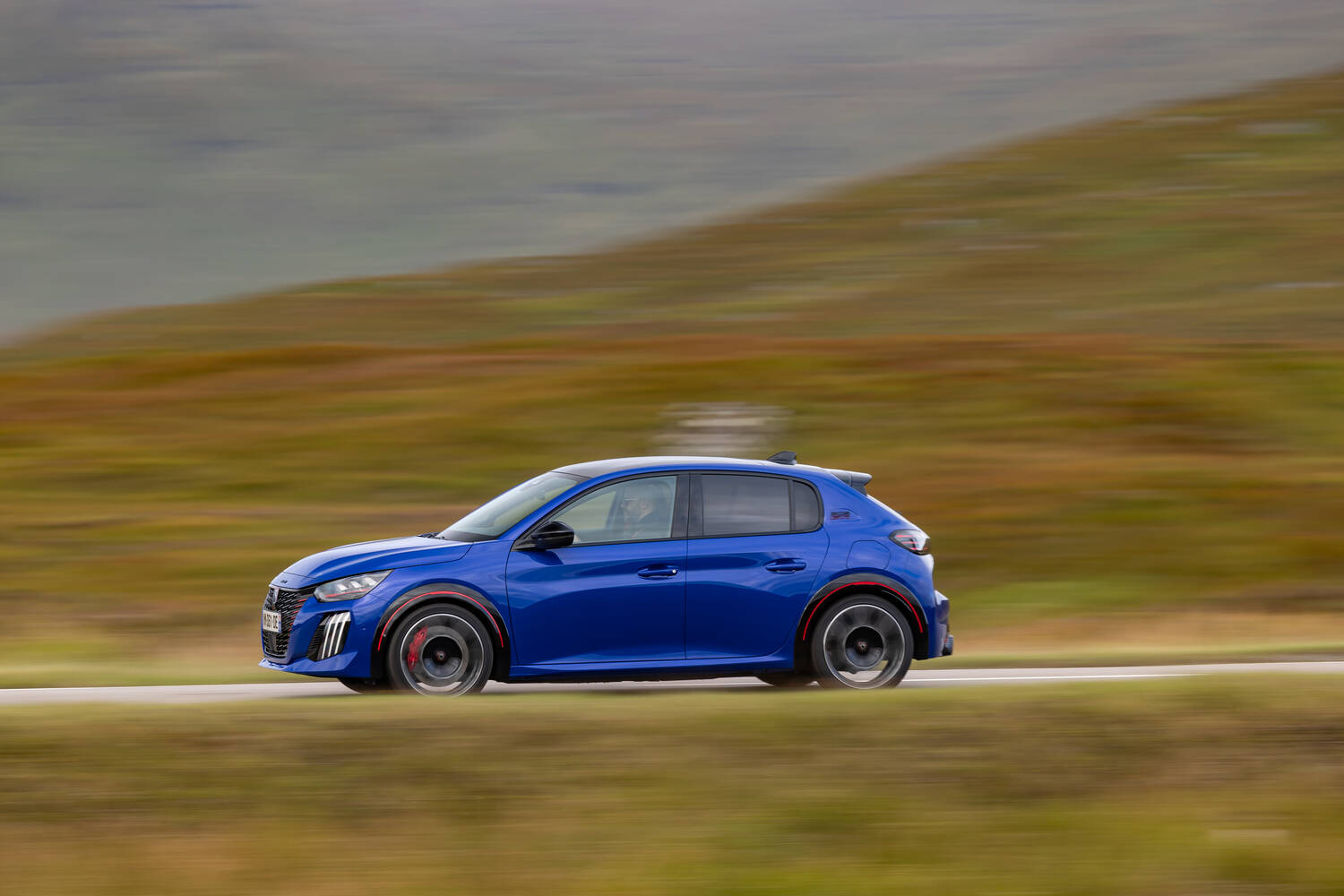
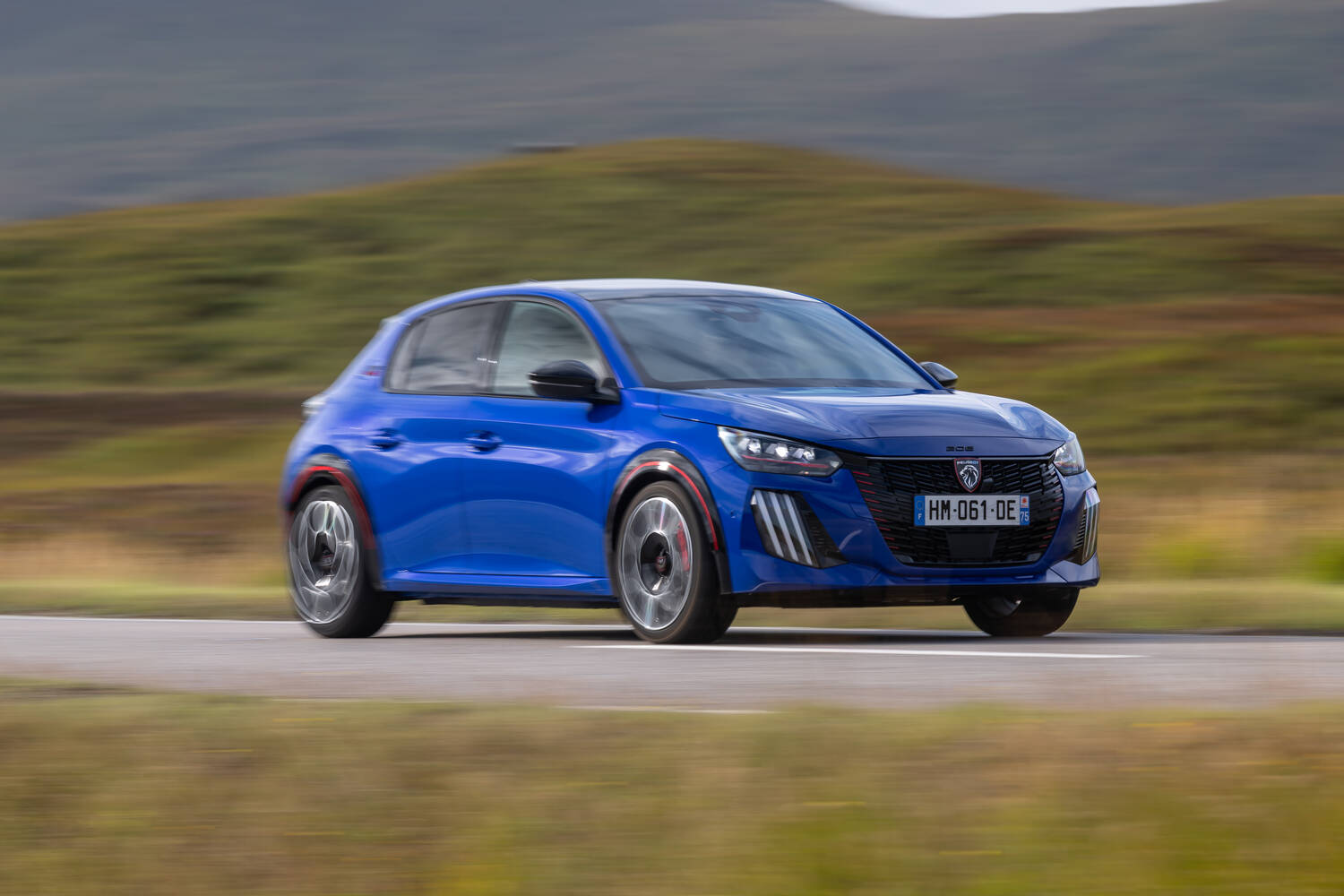
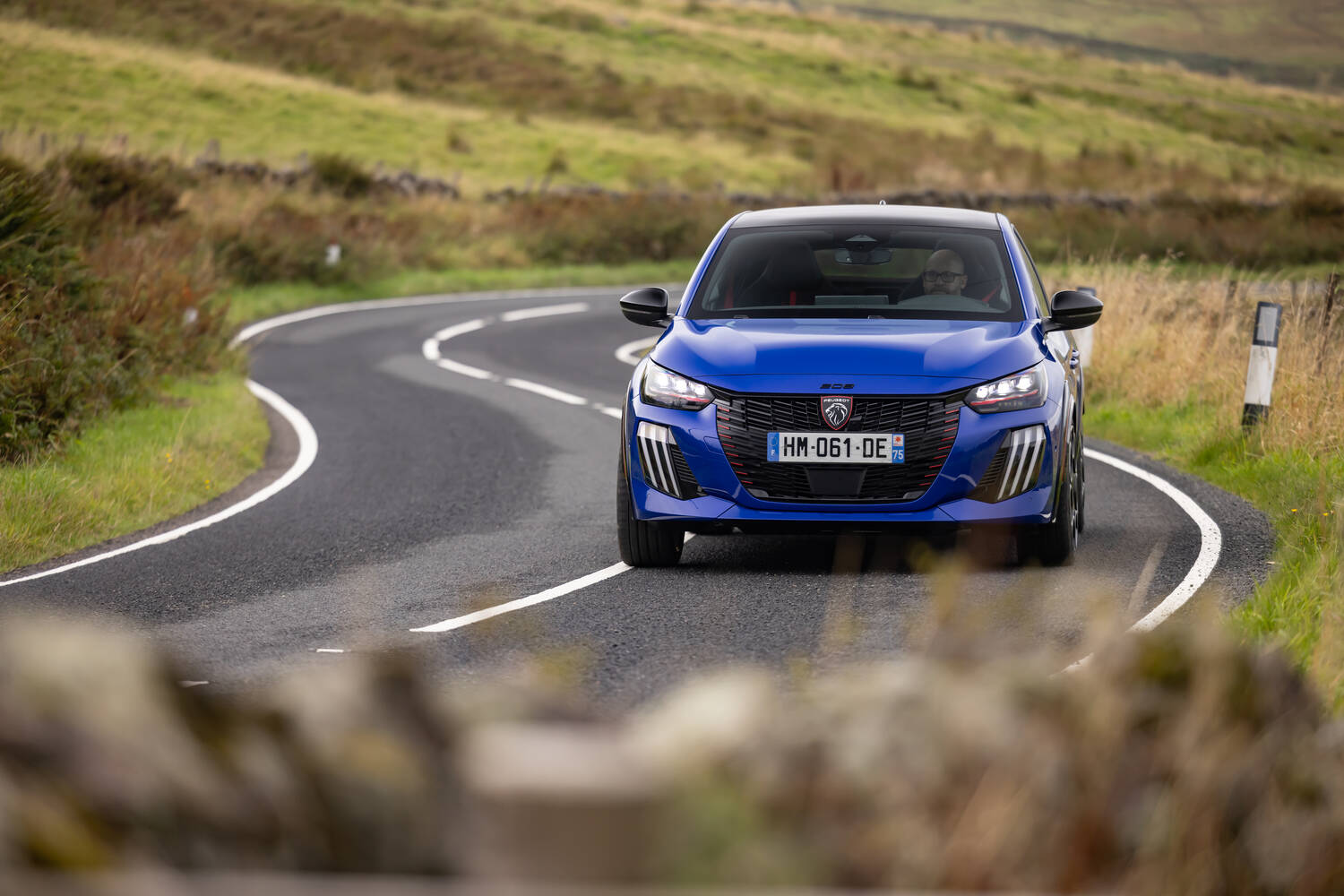
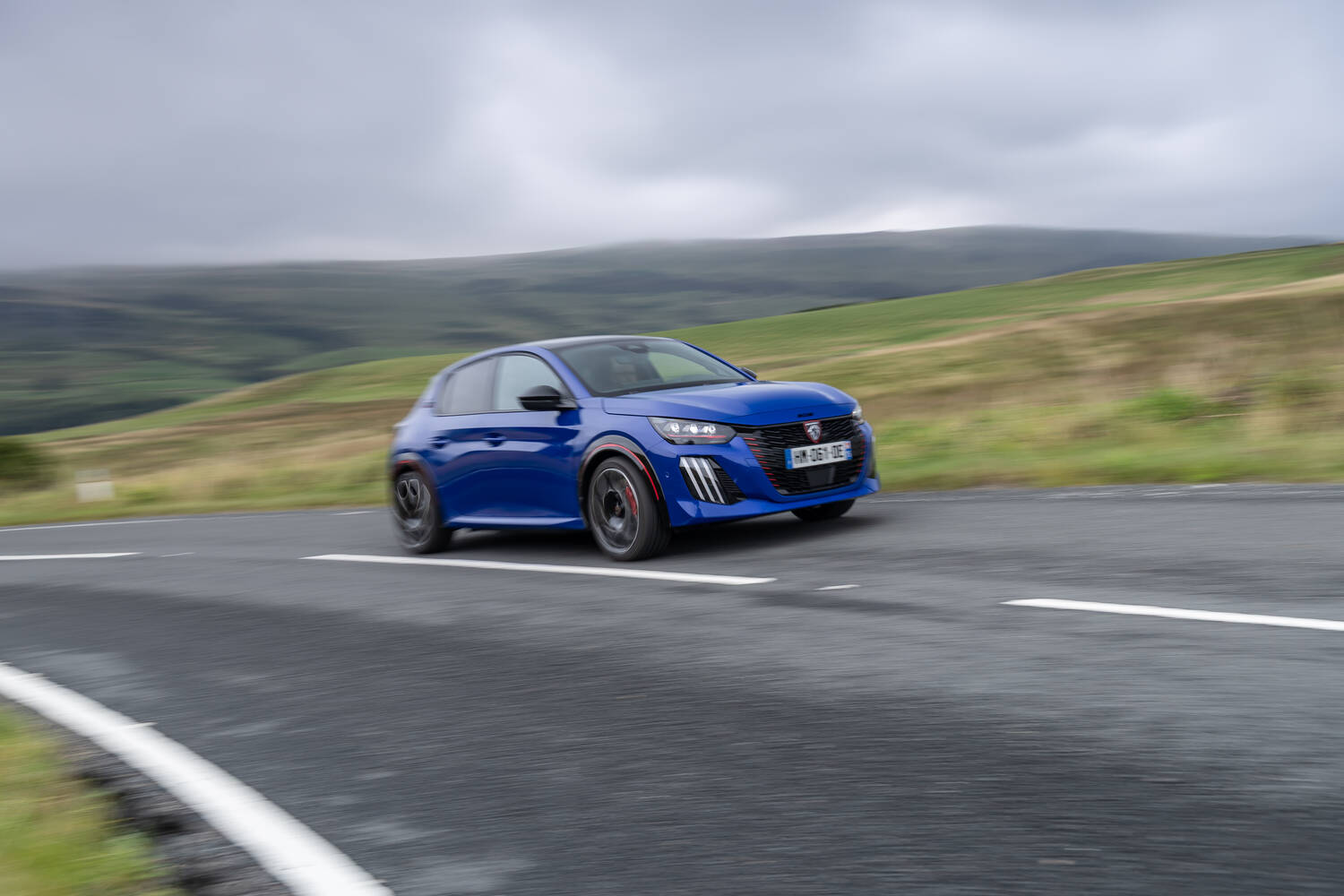
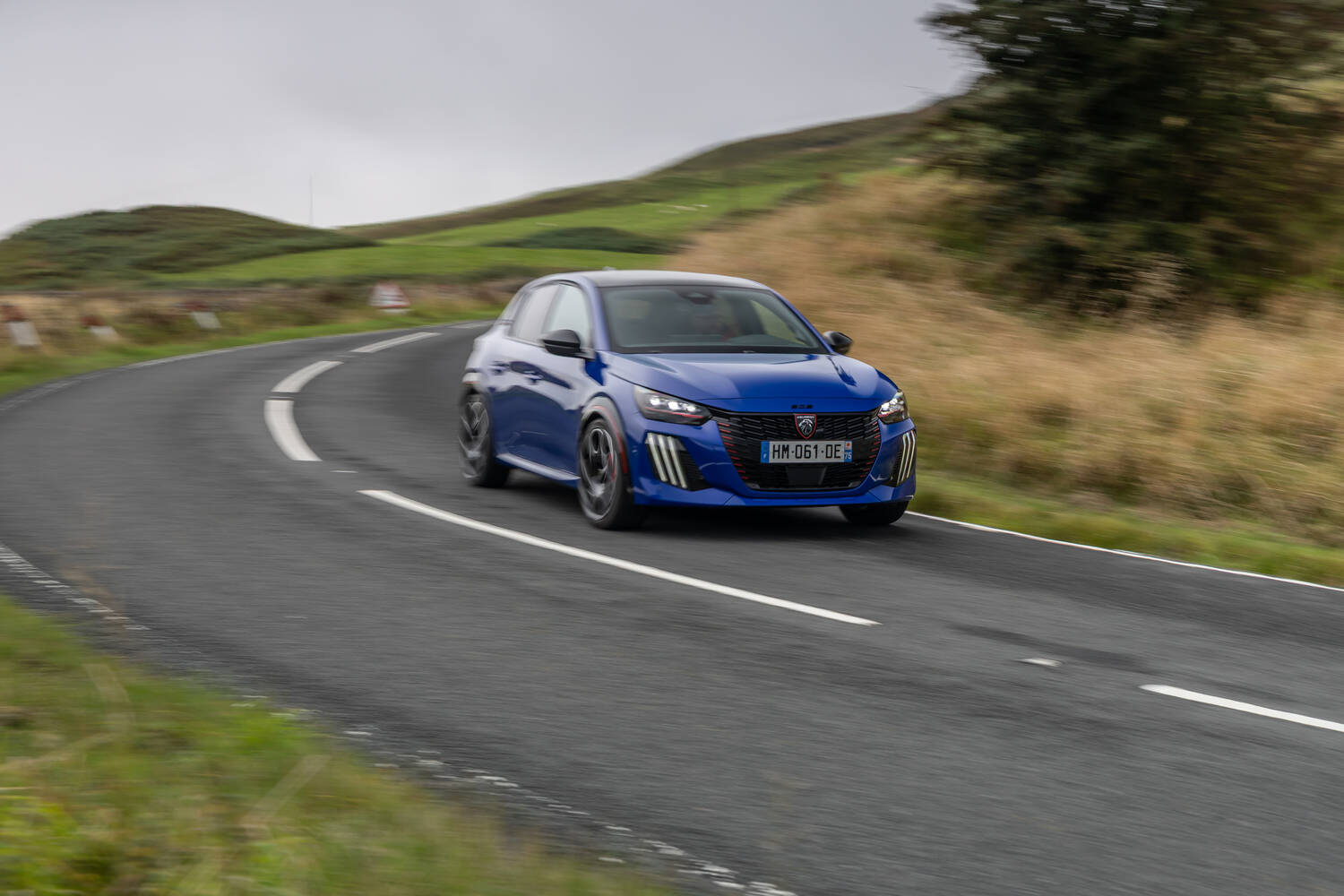
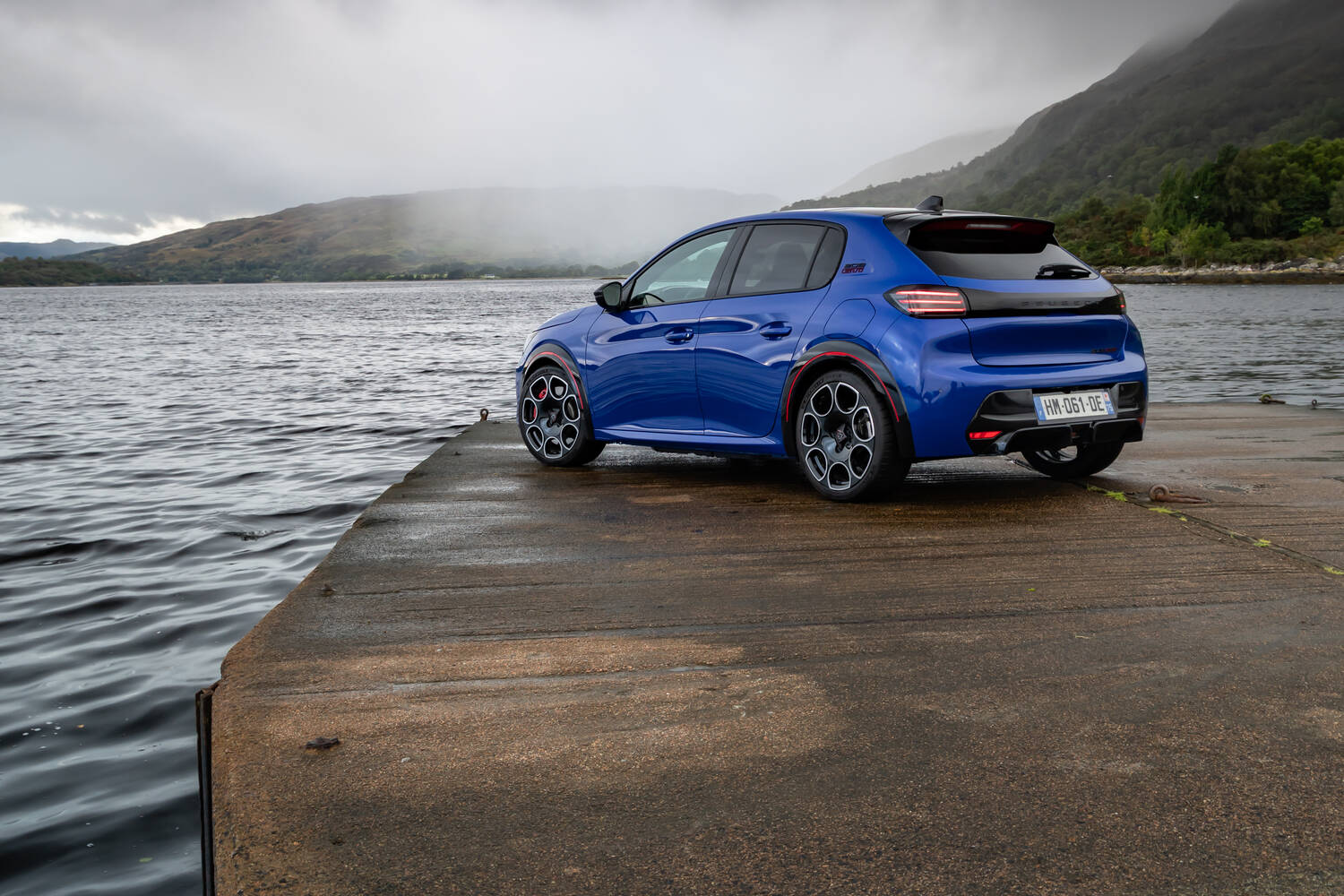
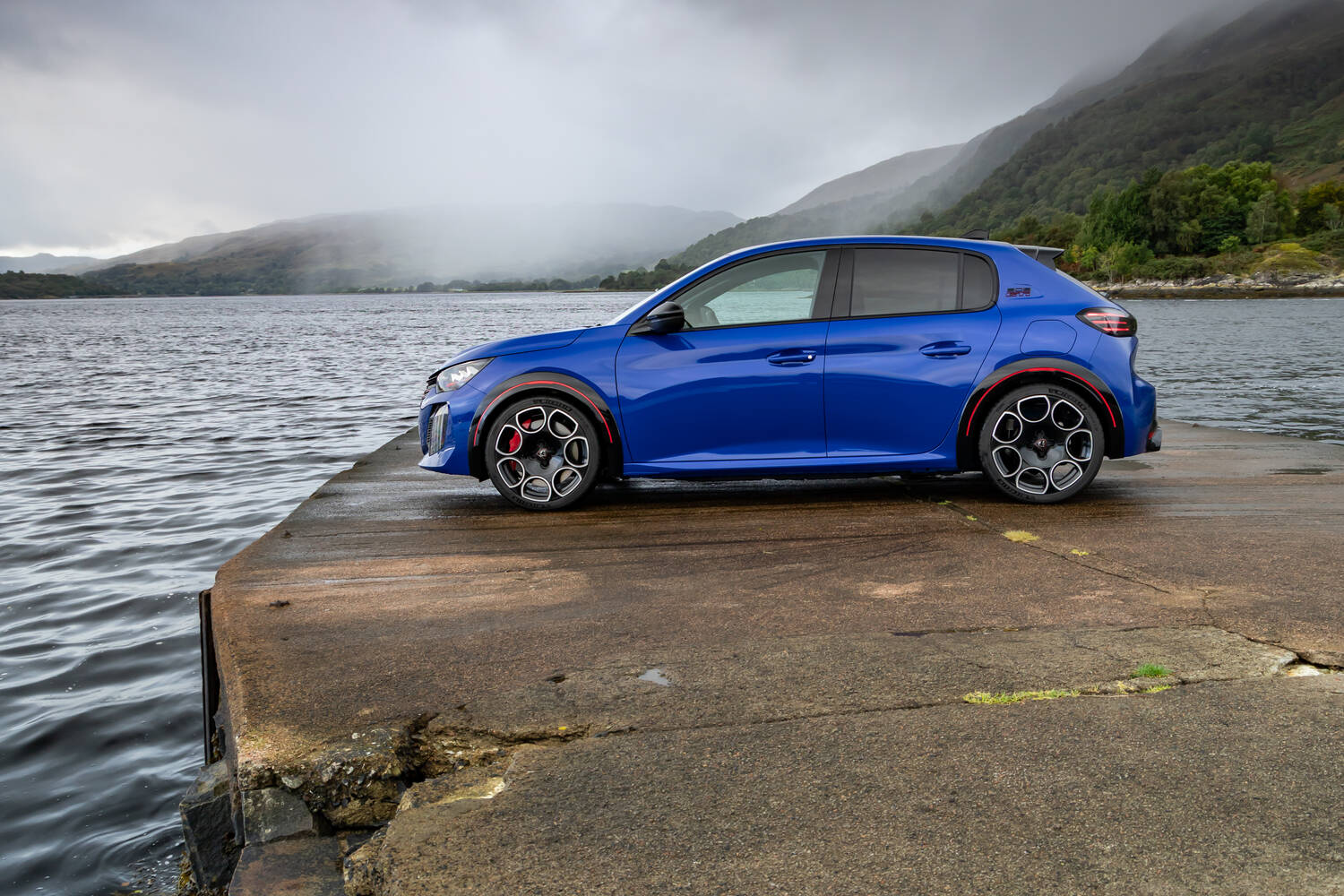
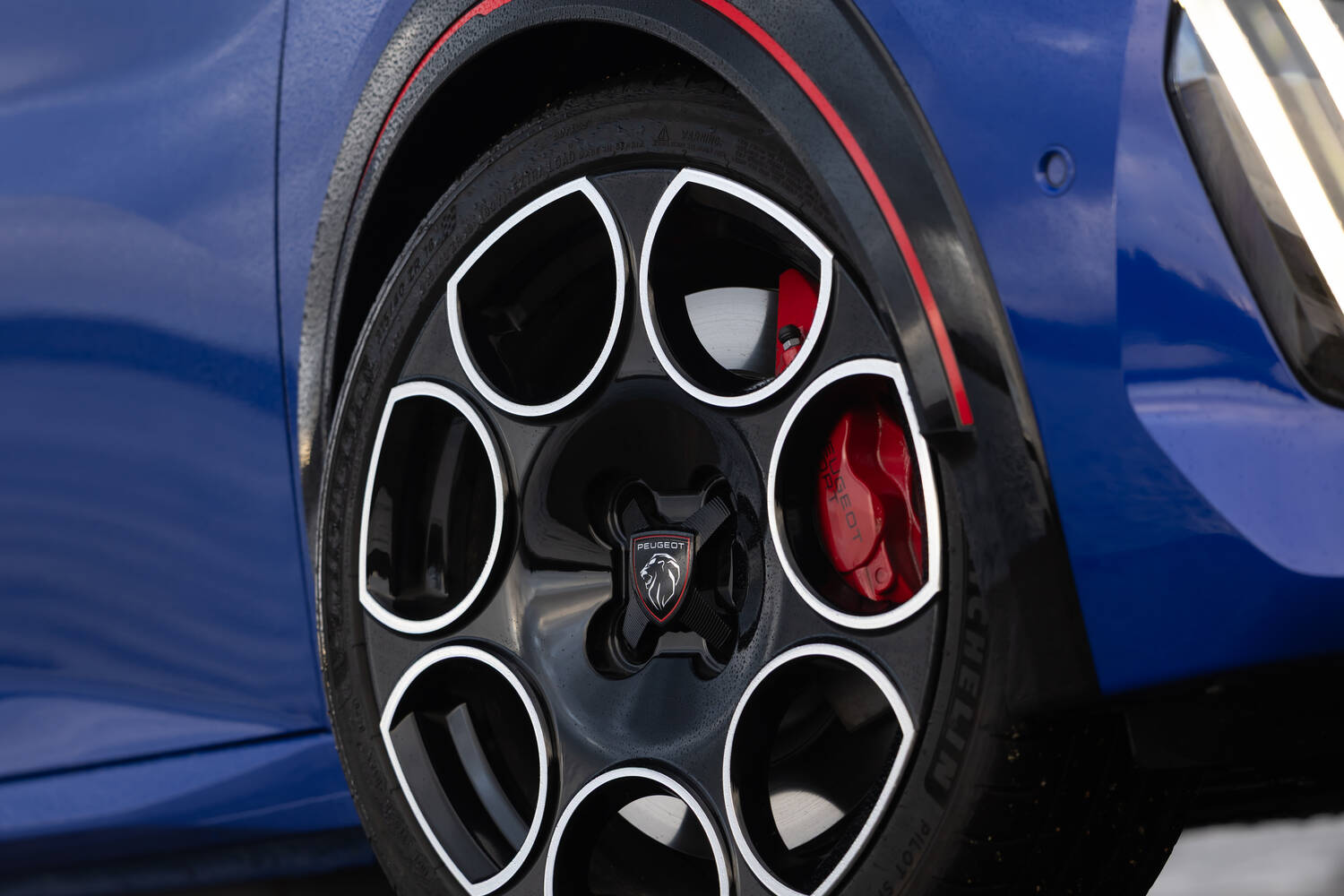
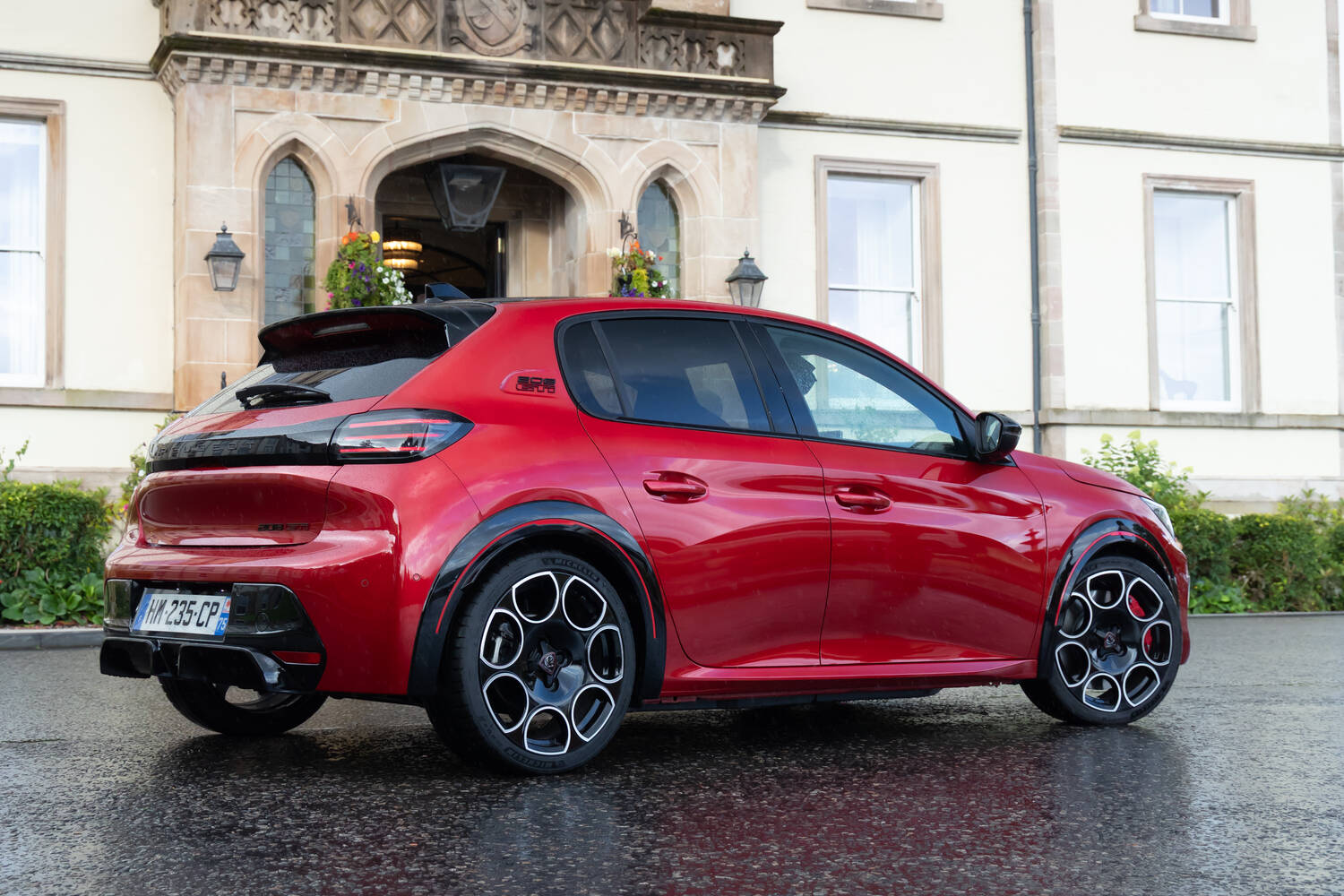
So, it should come as little surprise that the E-208 GTi doesn't veer much from that visual template. It really helps that the GTi's suspension sits some 25mm lower than that of a standard Peugeot E-208, as it helps the 18-inch alloy wheels - rather gorgeous as it happens, with more than a hint of Alfa Romeo's 'teledial' about them - fill out the extended wheelarches.
The track has also increased by 56mm at the front and 28mm at the rear, so the wheels really do stretch out to fill the body properly now.
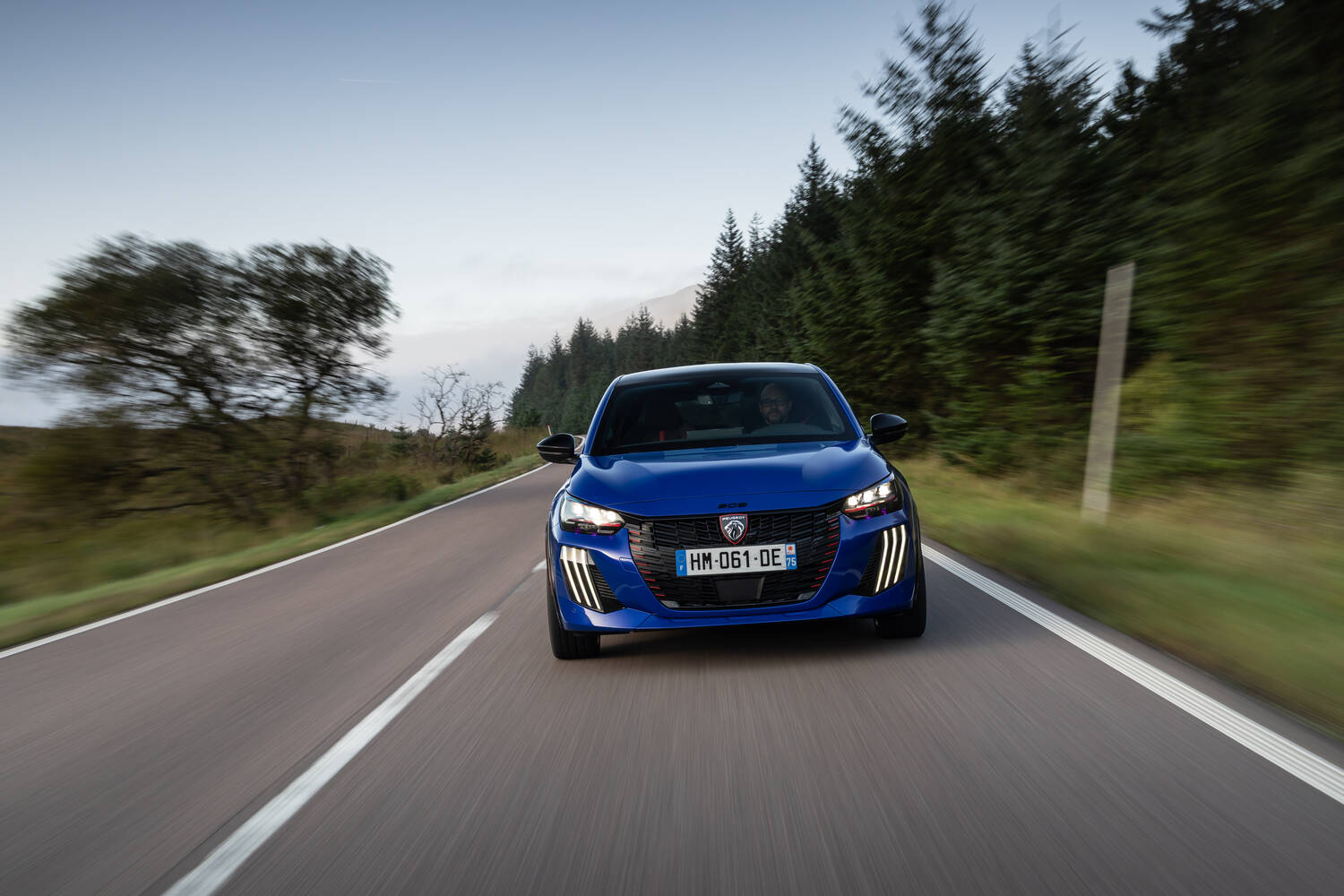
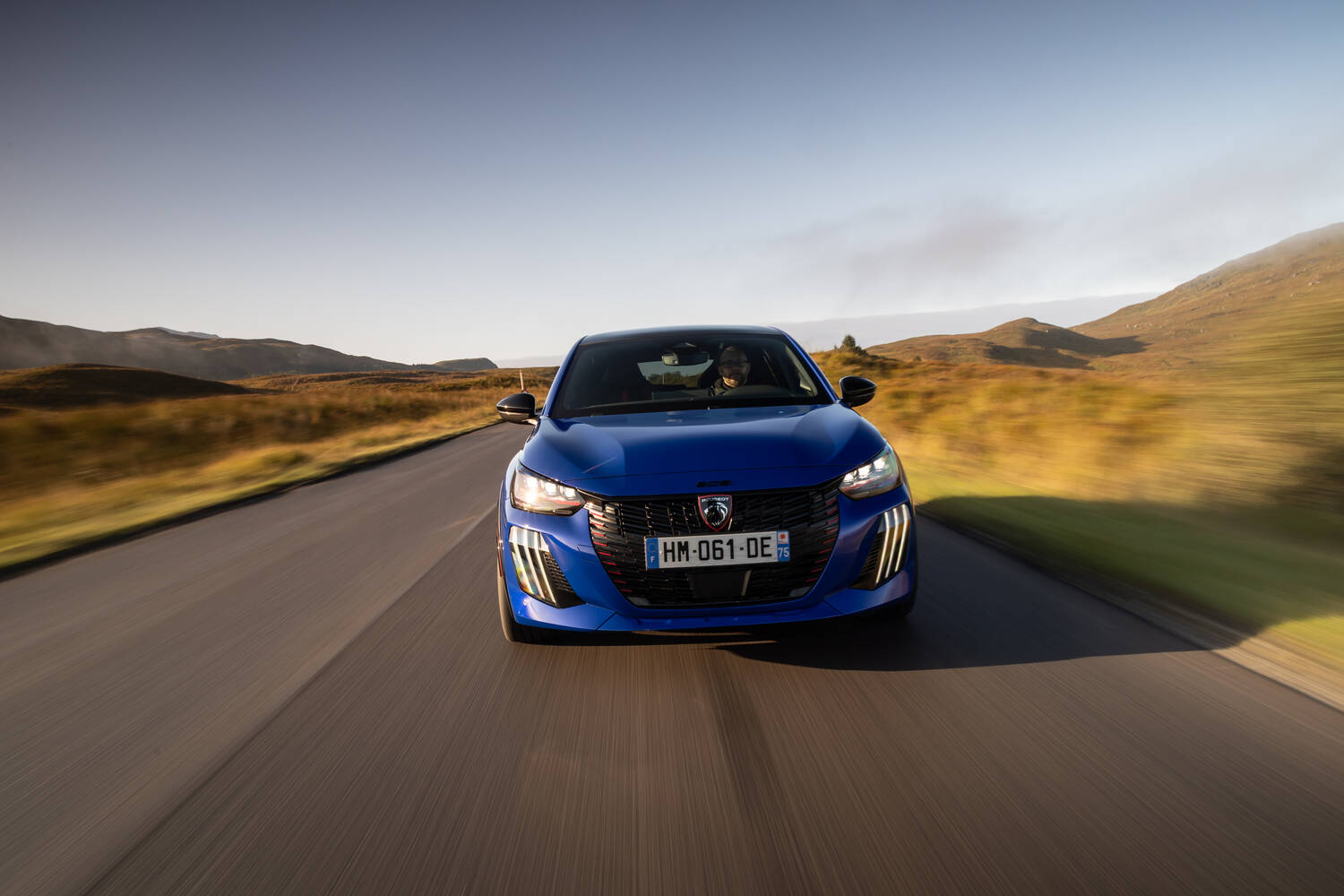
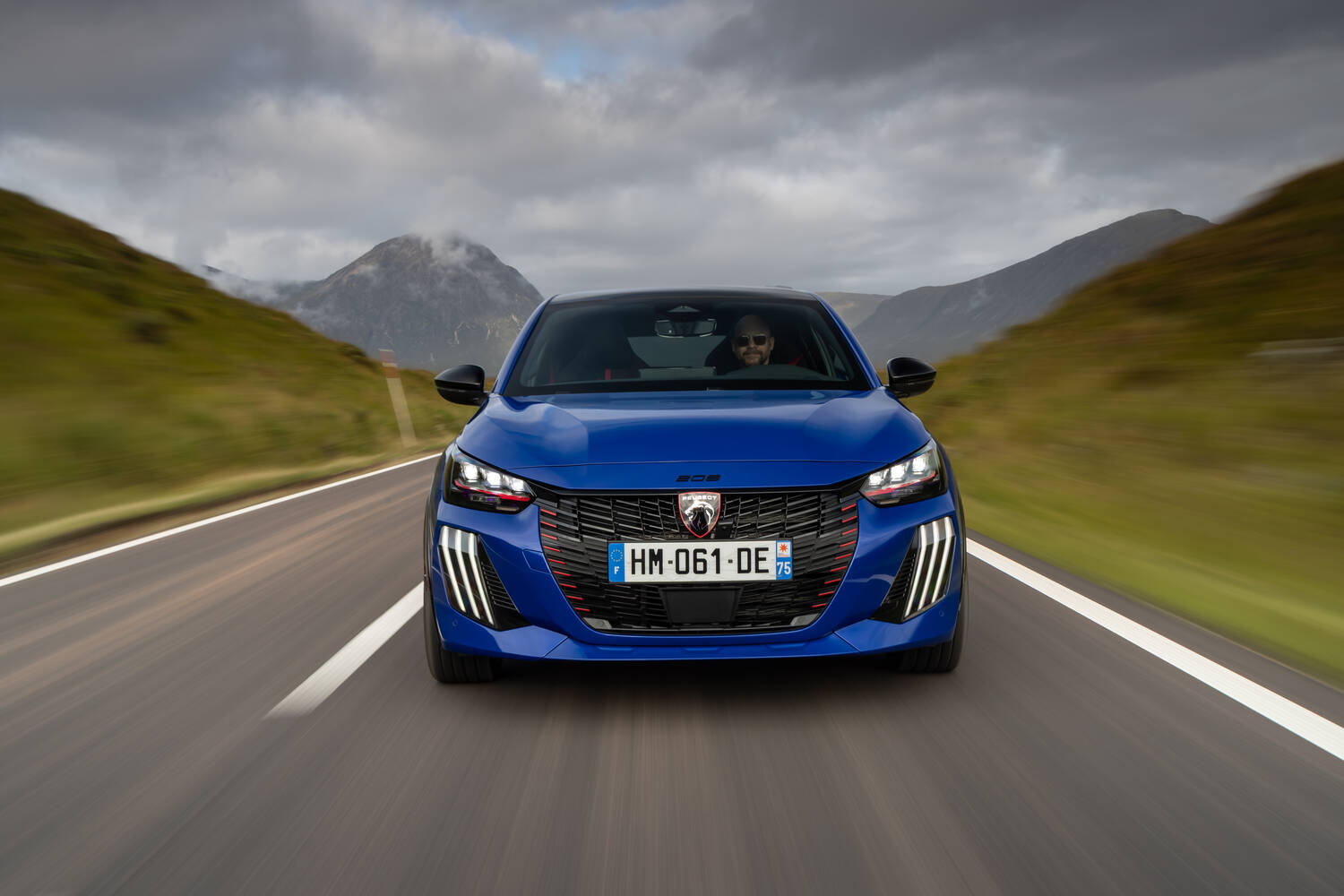
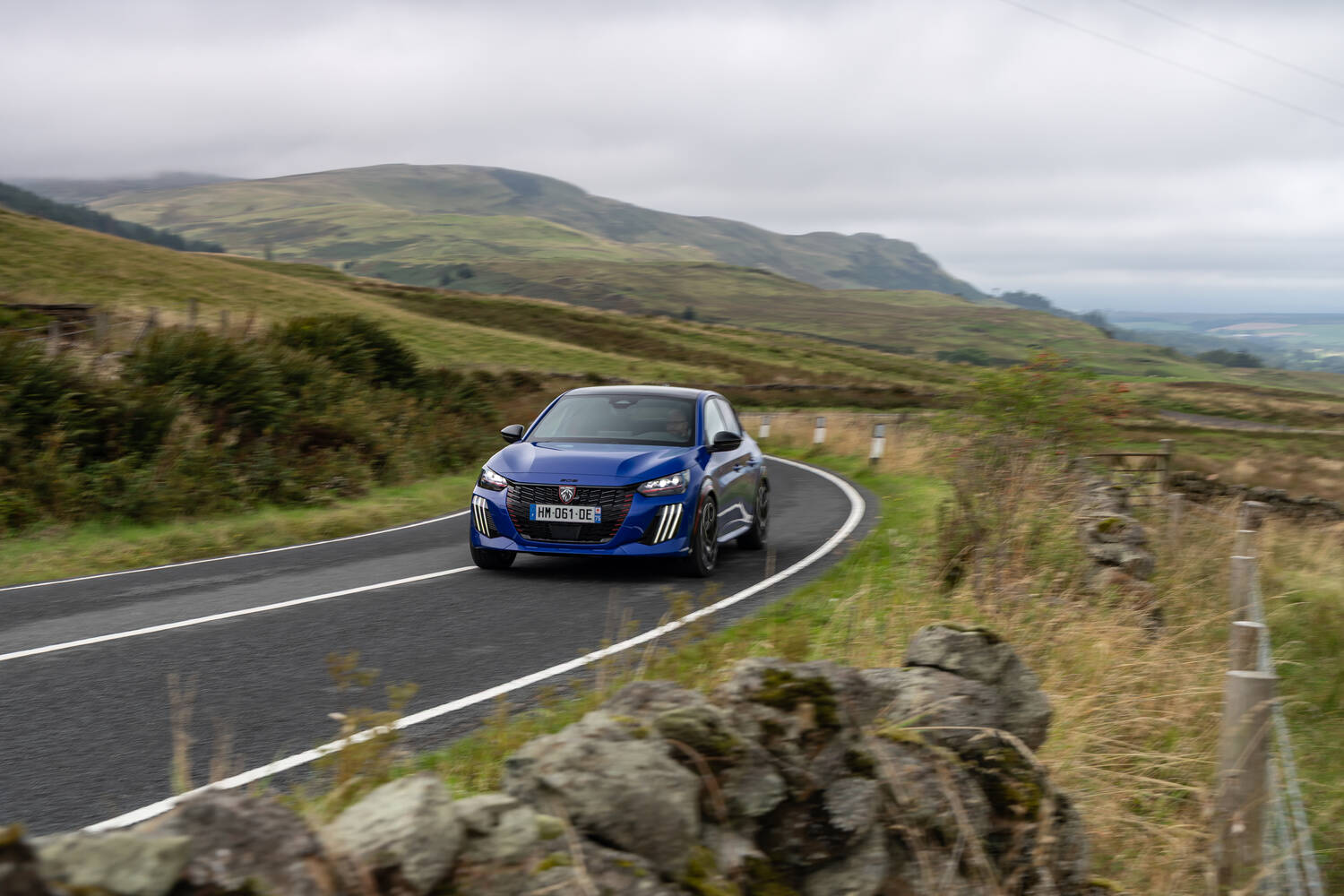
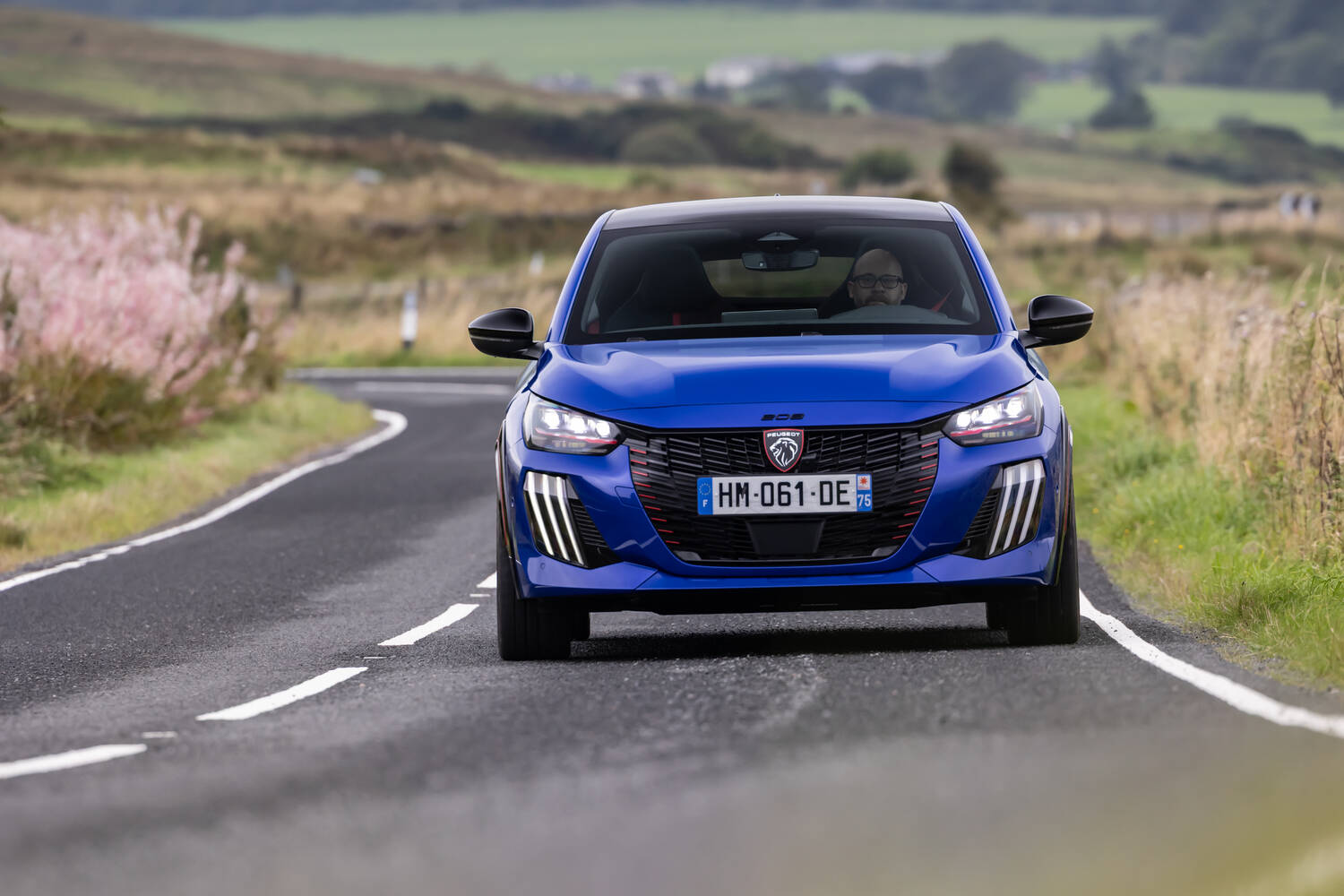
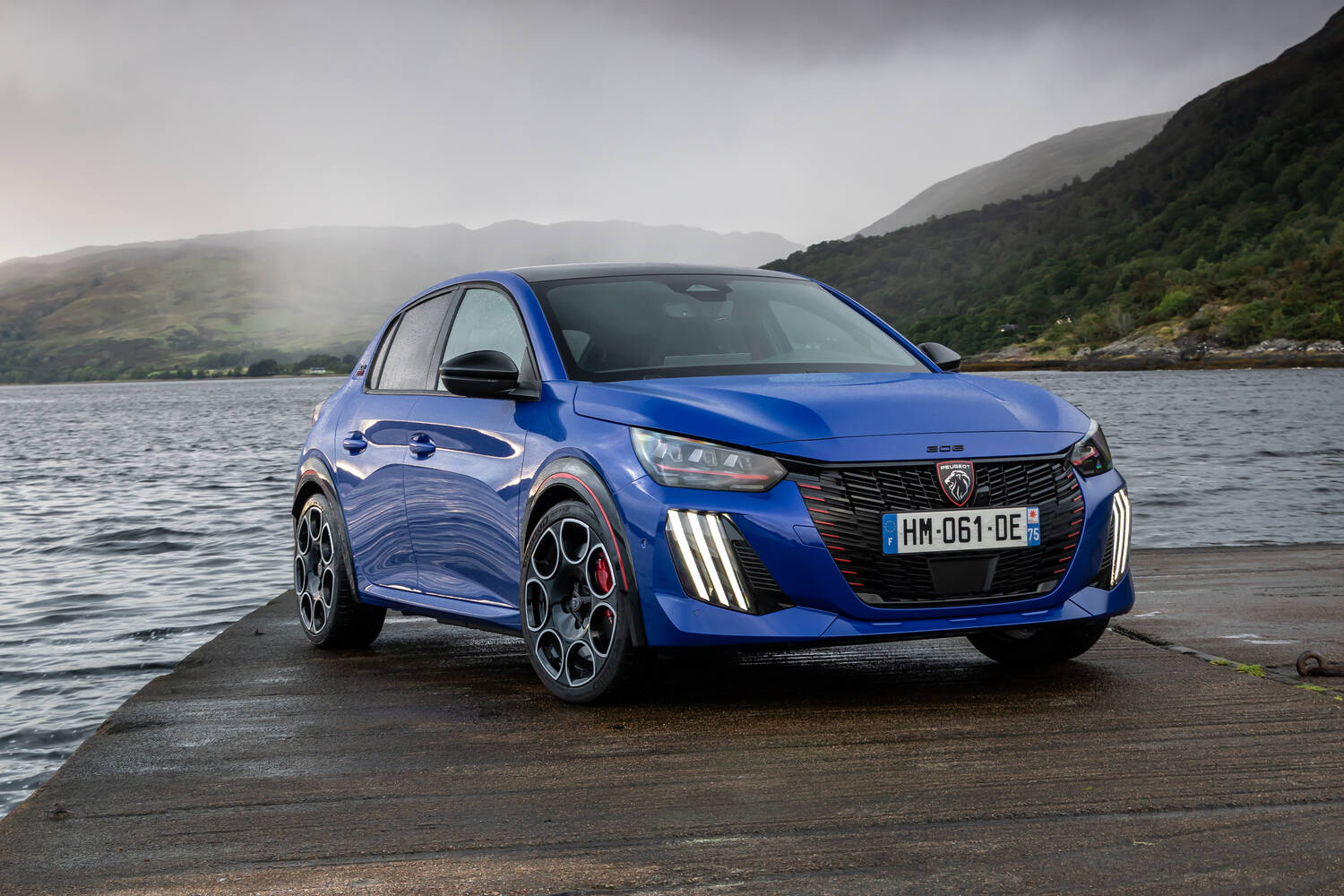
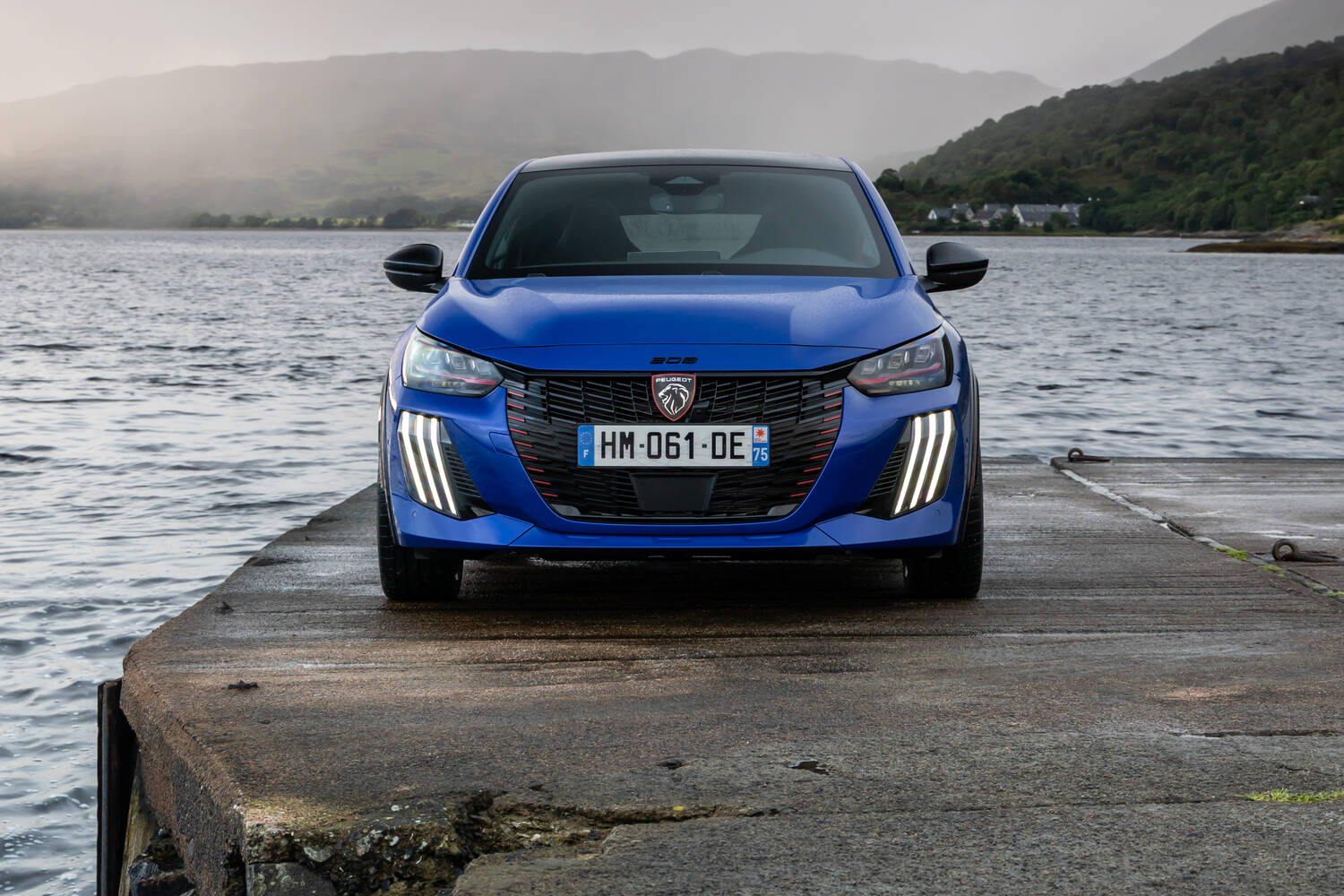
The lips of the wheelarches are painted in a gloss black with red pinstriping - that pinstripe effect harks back to the 205 GTi, and it's repeated under the black-background headlights and around the edges of the (largely superfluous) grille. The Peugeot lion head badge also gets a slim red surround.
It's all appropriately sporty, but still subtle enough that the uninitiated would pass by one without a second glance, which is of course the true hot hatch way.
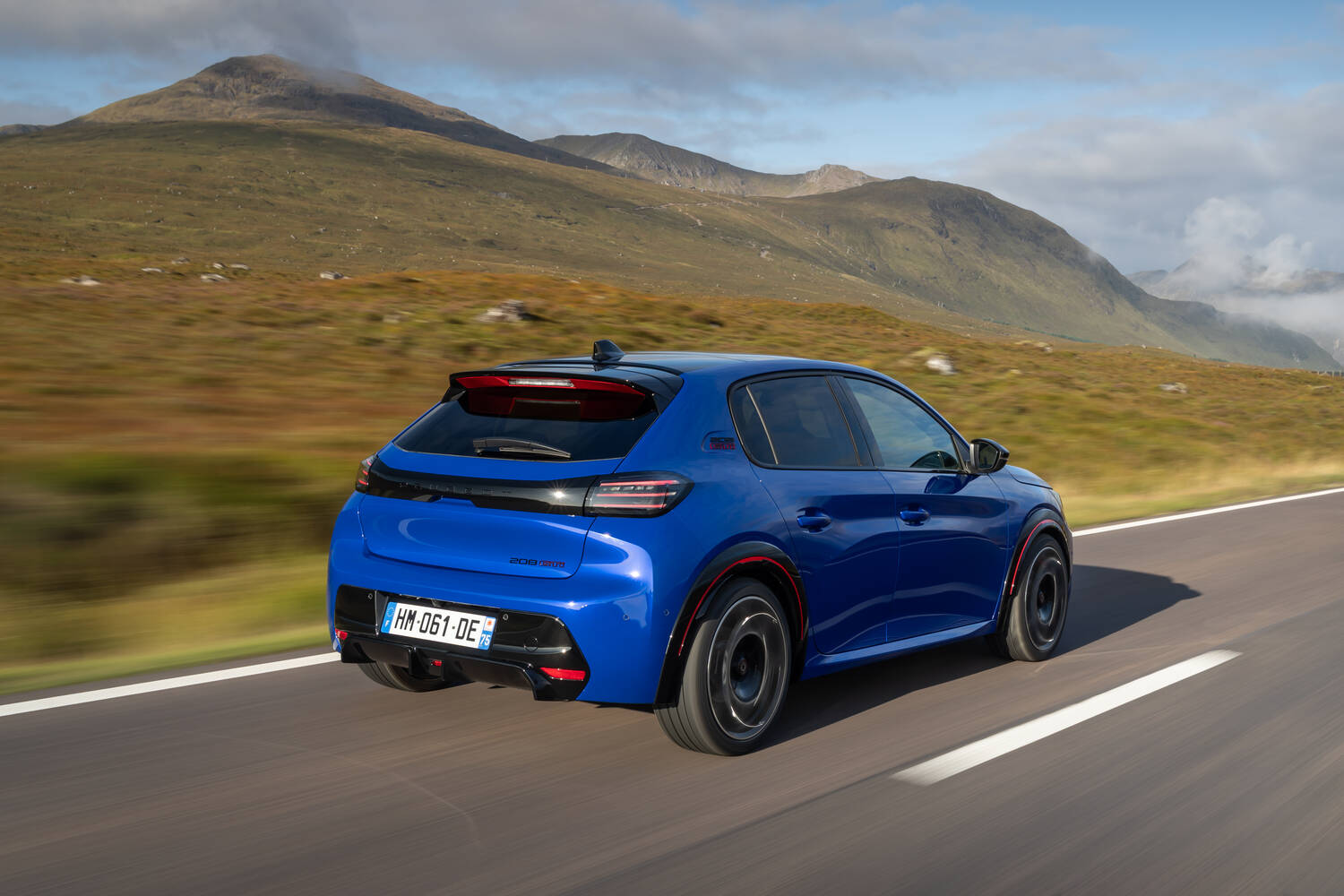
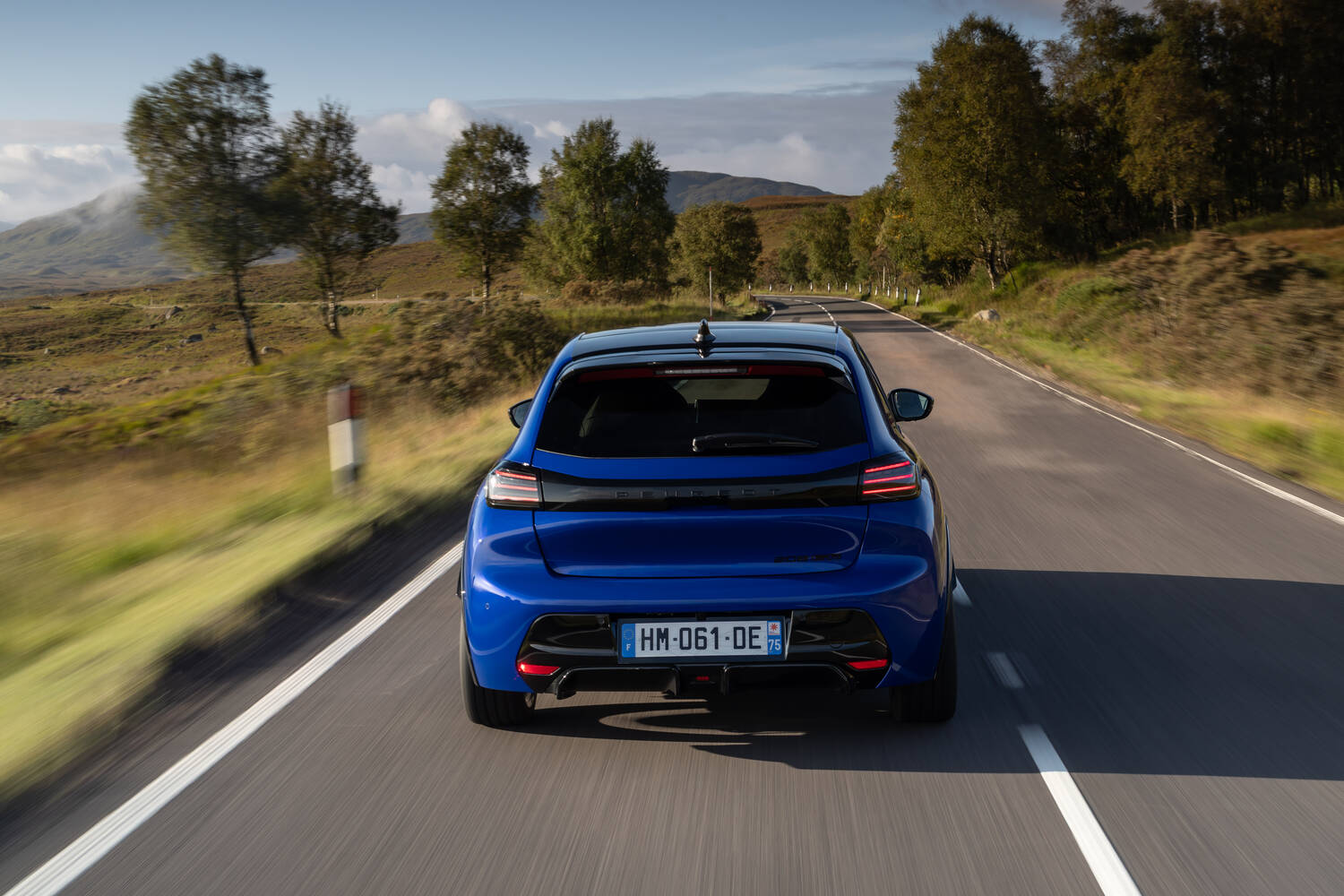
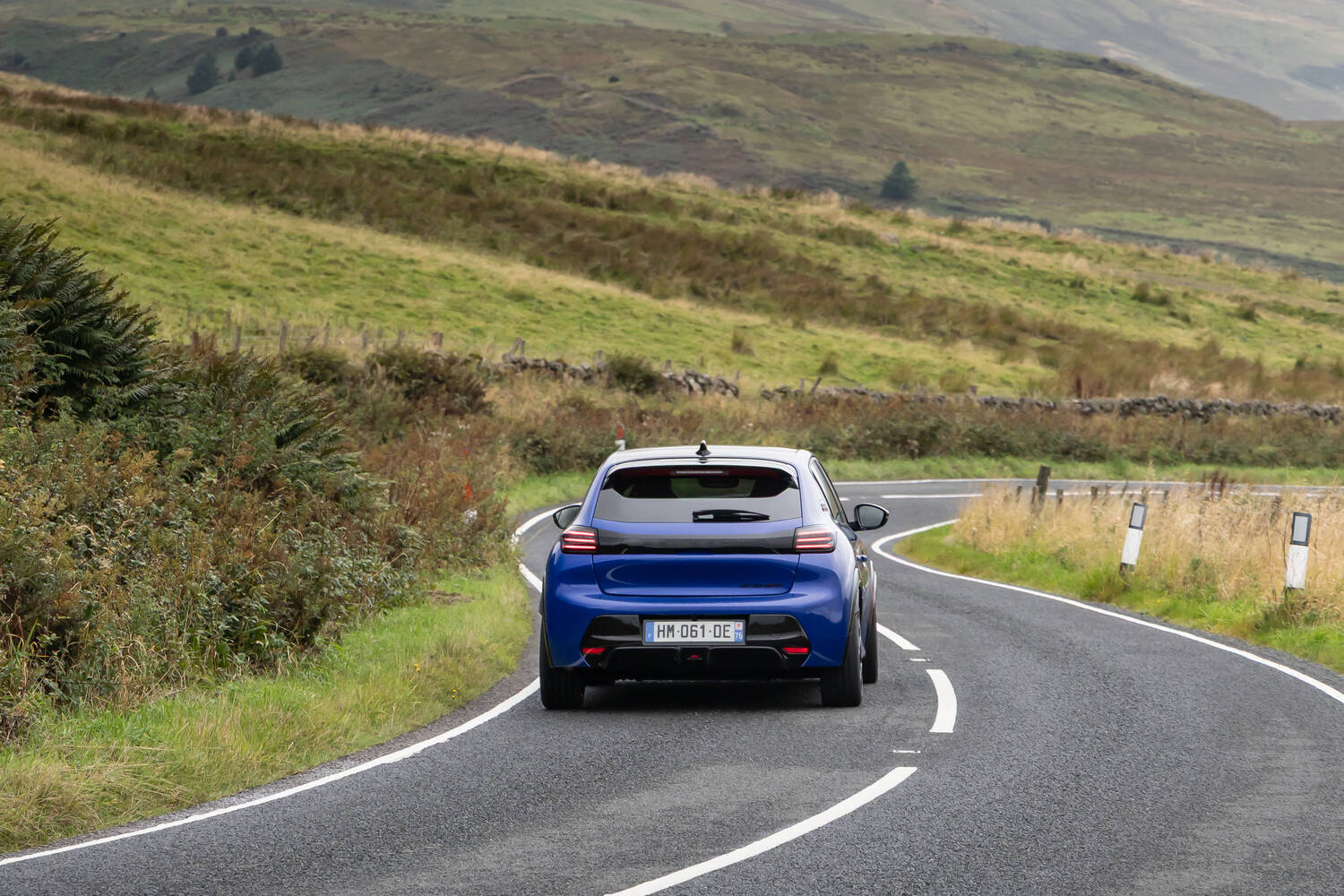
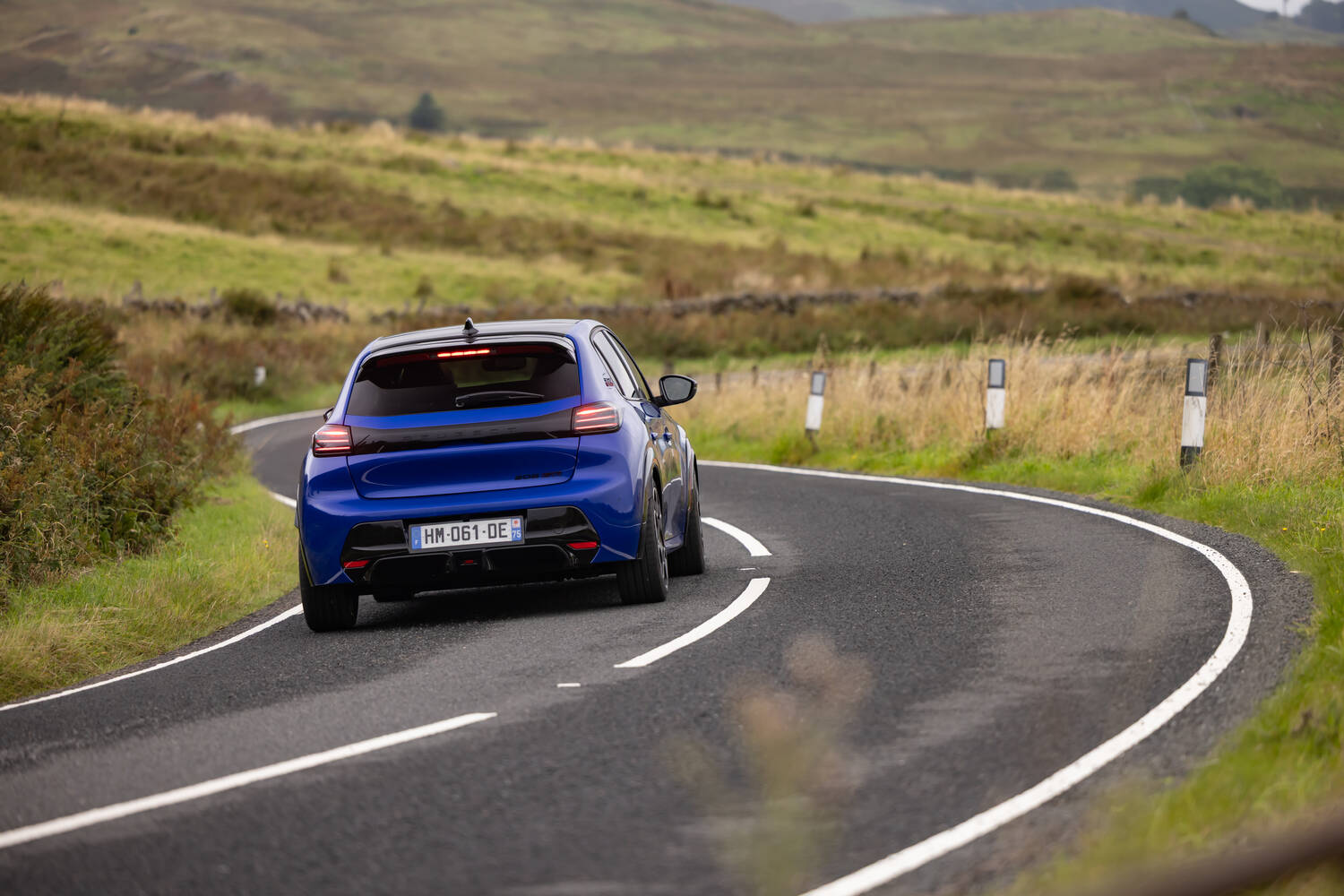
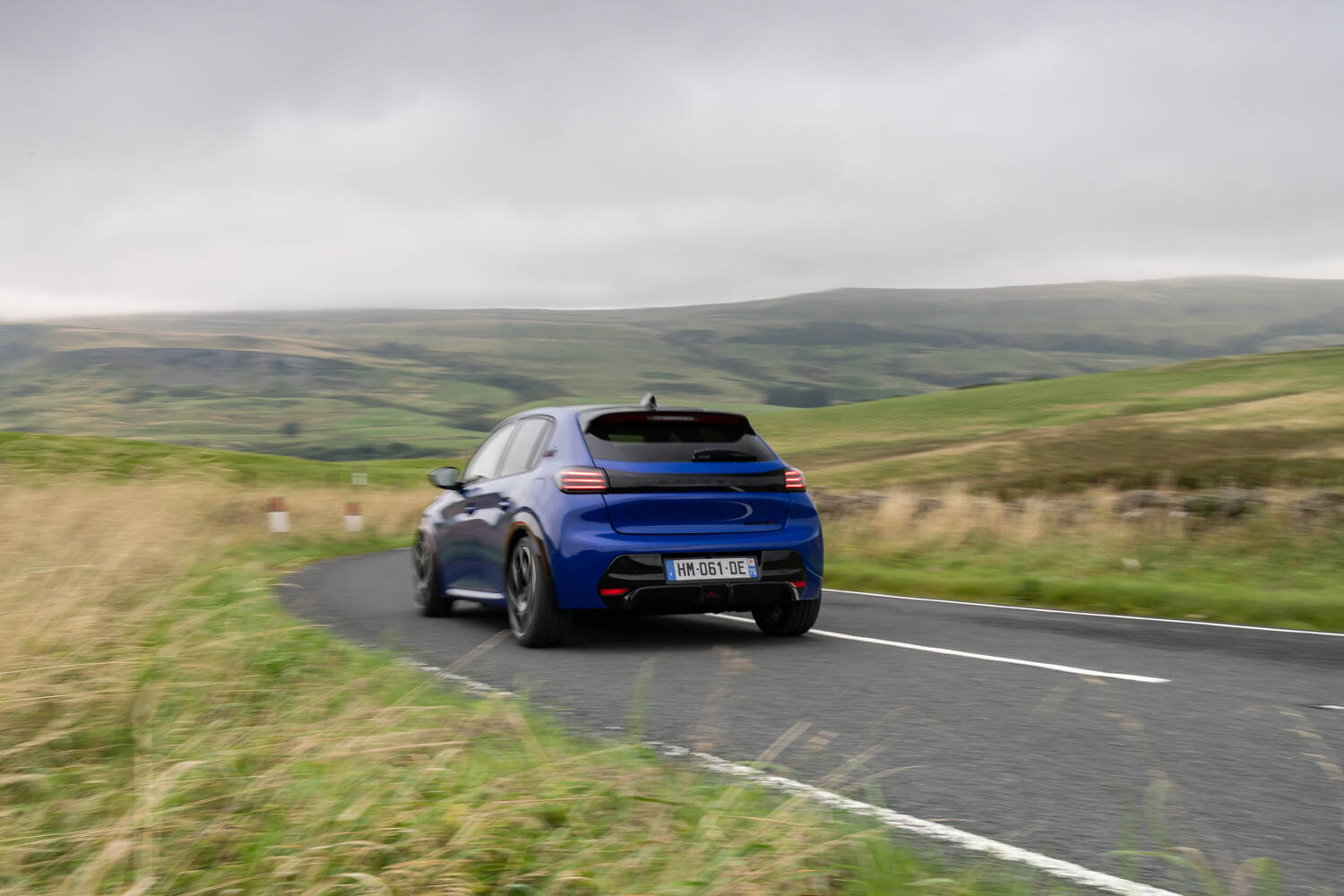
At the rear, there's a pronounced spoiler above the glass, and that's balanced out by a hefty-looking aerodynamic diffuser under the bumper.
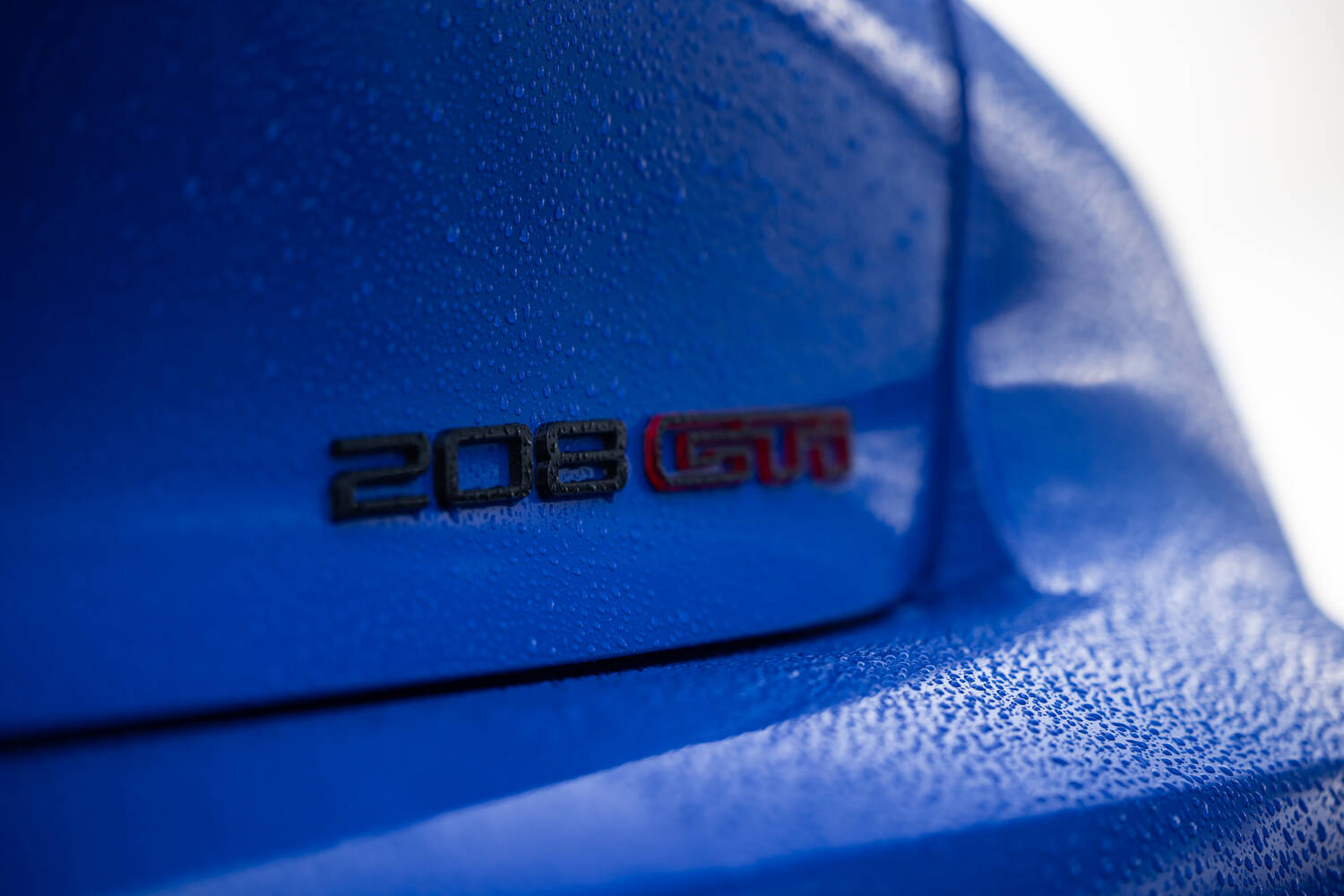
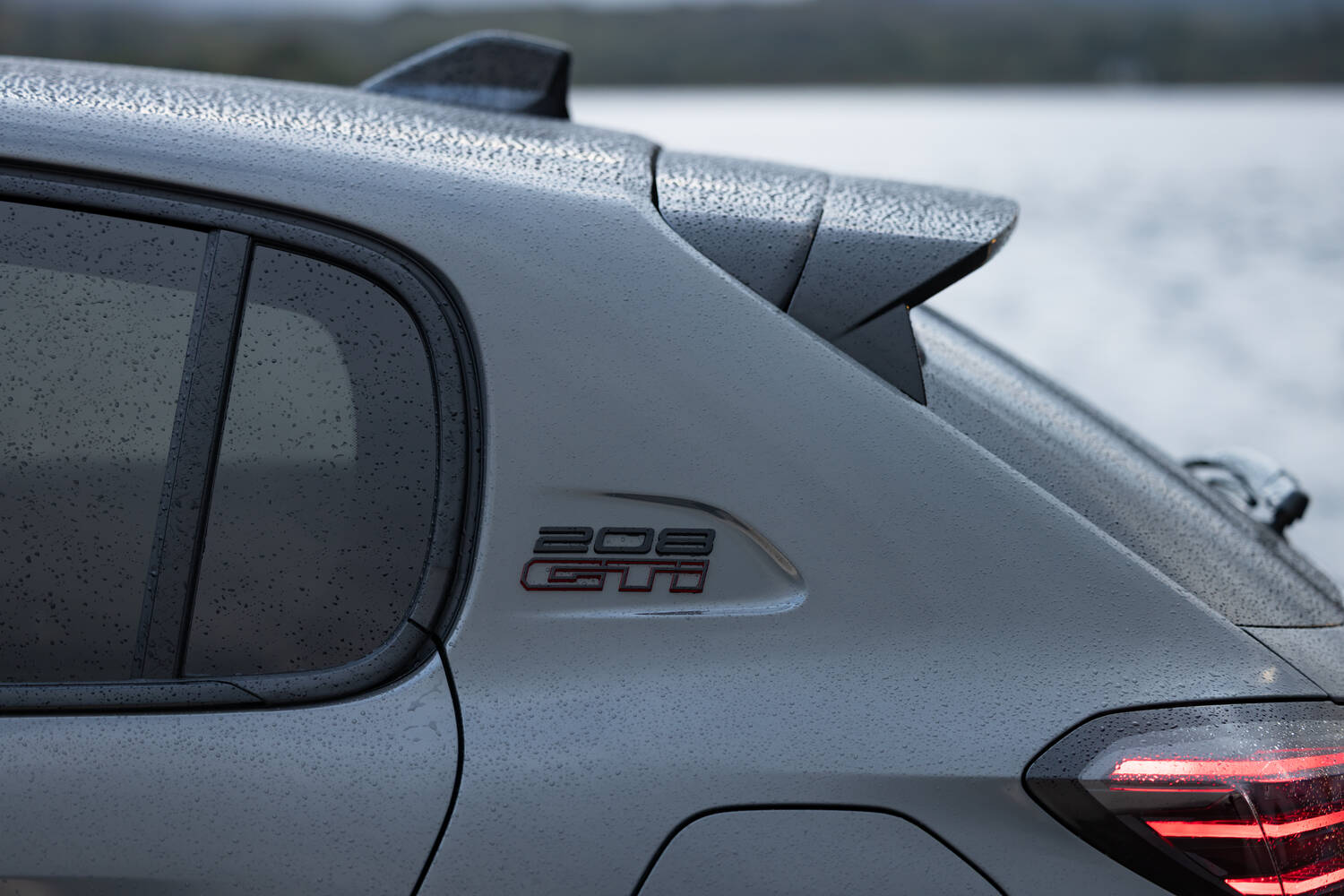
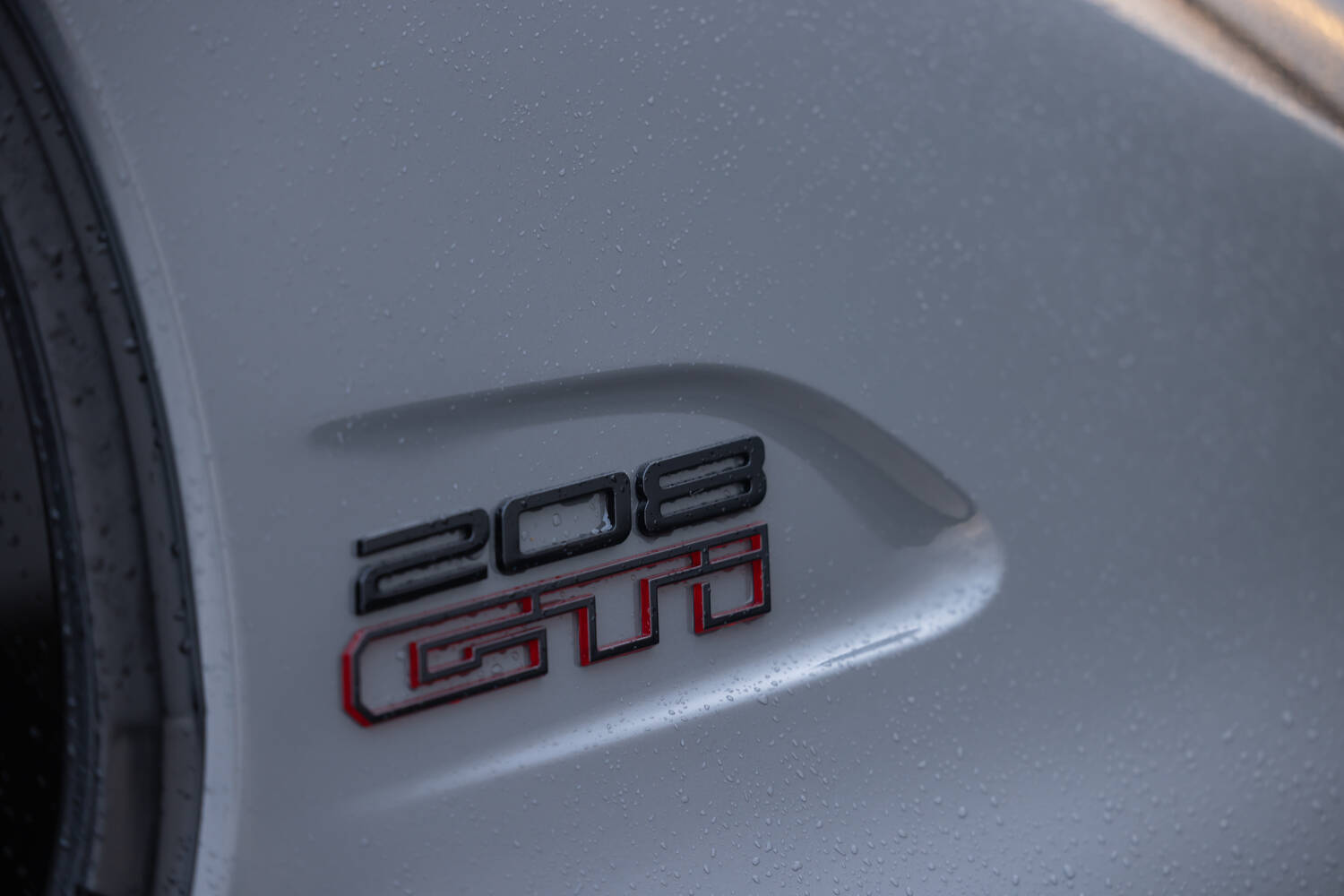
On the rear pillar, you can see 208 GTi spelled out in outlined letters, which is of course an homage to the badging of the 205 GTi.
The Peugeot 208 itself is, in standard form, an arrestingly good-looking car, and the GTi add-ons have amplified that, and turned it into something that looks properly desirable. You just instantly want to get in and drive, and that surely is the point.
Dimensions of the 2026 Peugeot E-208 GTi
- Length:
- 4,100mm
- Width:
- 1,771mm
- Height:
- 1,403mm
- Wheelbase:
- 2,550mm
Paint colours for the 2026 Peugeot E-208 GTi
Peugeot offers a basic Okenite White as the E-208 GTi's sole no-cost paint option, which normally we'd overlook about but in this case, it works well.
White was, of course, a classic 1980s hot-hatch colour, and on the E-208 GTi it helps to show off the contrast-black exterior trim and red pinstriping nicely.
All the other colours are cost extras (we're waiting for Peugeot Ireland to announce its pricing for the E-208 GTi) and they include Agueda Yellow (possibly a bit much...), Miramar Blue, Nera Black (which hides all of the black exterior trim), Cumulus Grey (which is a warm silver), Selenium Grey (which is a darker grey) and Elixir Red (the perfect colour - no notes).
Interior, practicality, tech & comfort of the 2026 Peugeot E-208 GTi
- Solid cabin quality
- Excellent bucket seats
- Lots of red highlights
The cabin of the Peugeot E-208 GTi is familiar, but while it can feel a little old-school in some places, it's a welcoming environment with decent quality.
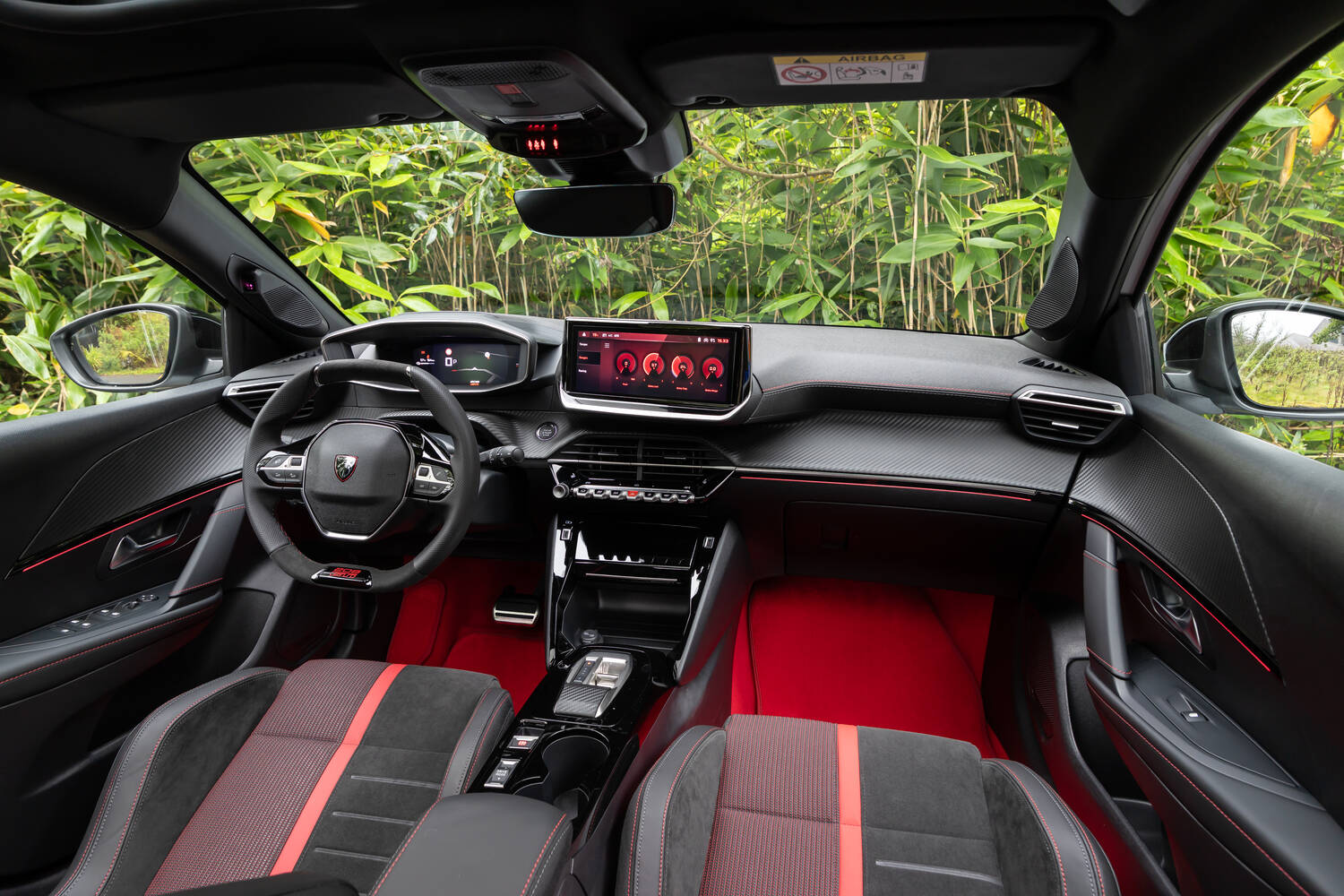
Most of the plastics used are of a high grade, and some touches - such as the imitation carbon-fibre trim on the dash and doors - are downright luxurious.
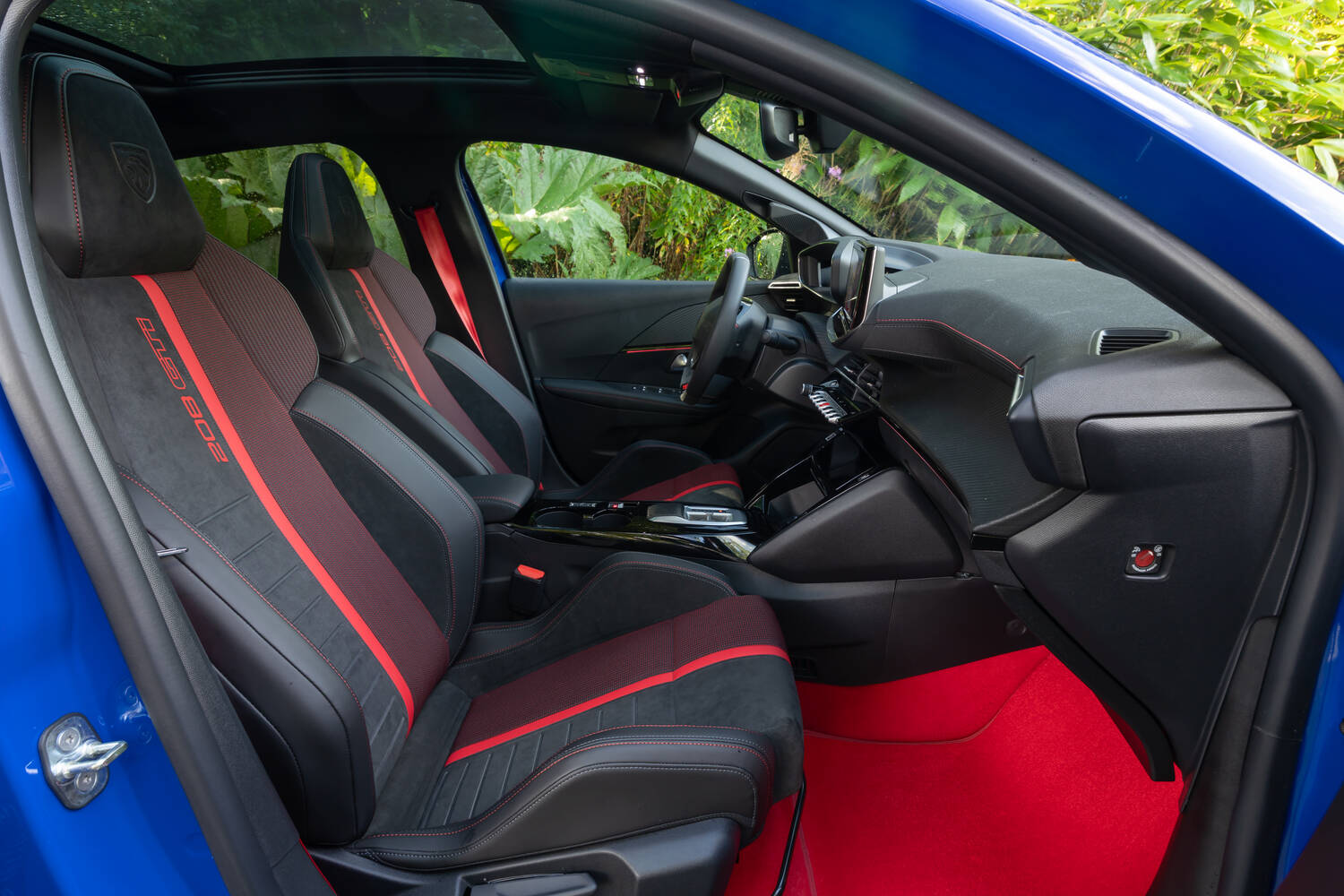
That goes double for the bucket seats, which are a high-backed 'tombstone' design, and which are exceptionally comfortable, supportive and just the right side of snug.
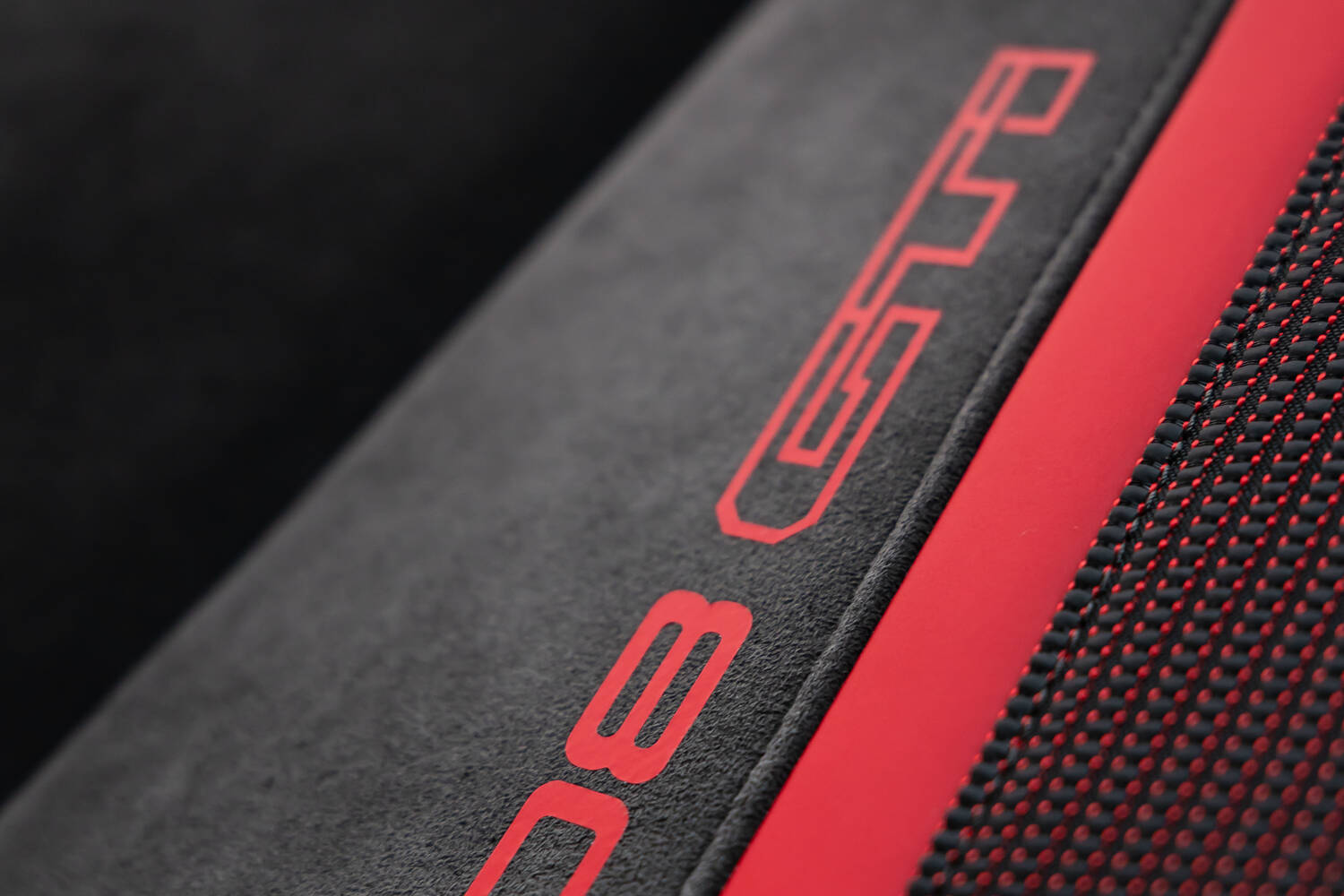
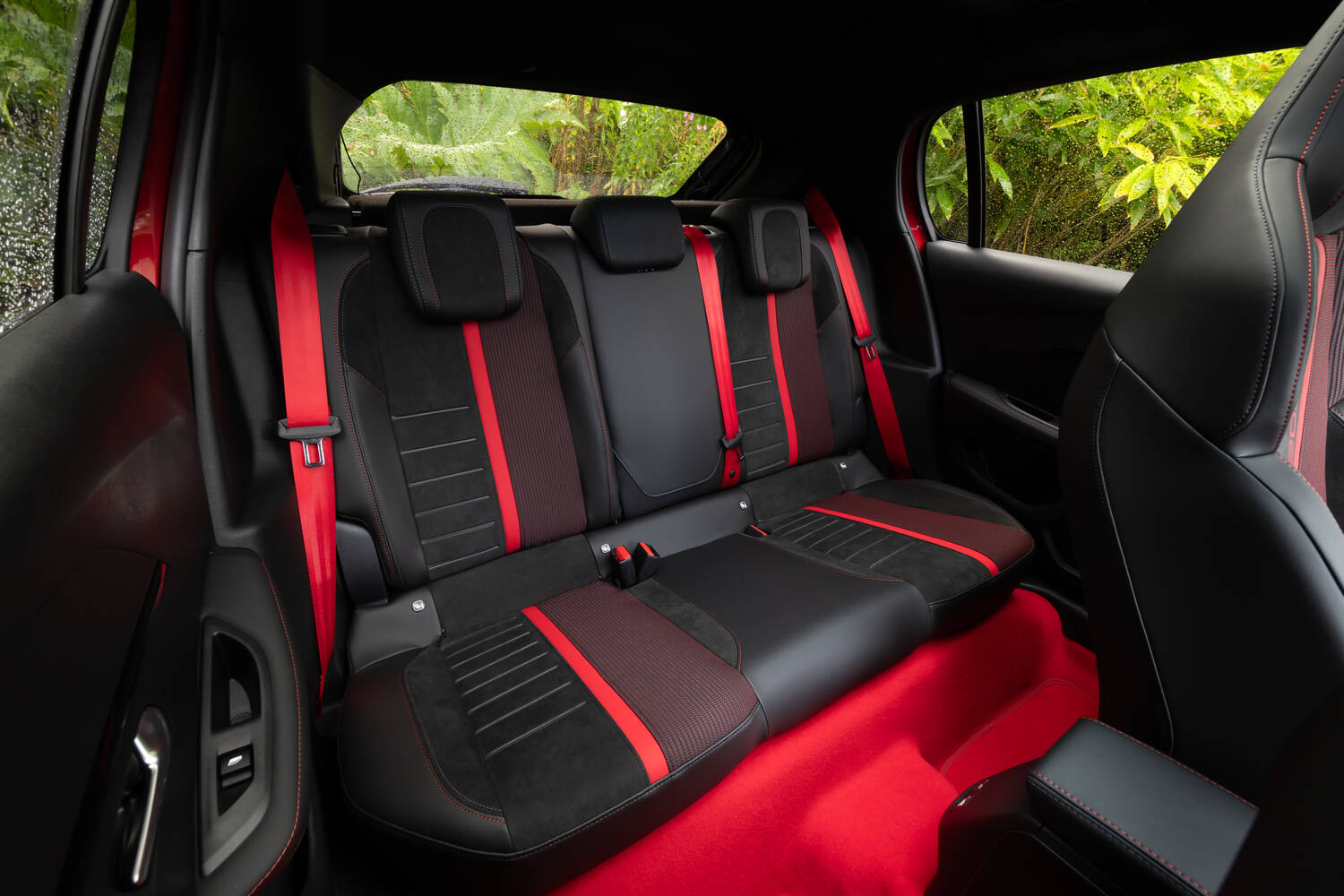
They are part of a GTi-flavoured uplift for the cabin, which starts with lots of red highlights and contrast stitching, extends to red stripes and panels in the seats and which is topped off by bright red carpets front and rear, a clear reference to the 1980s 205 GTi and something that really lifts the cabin ambience (although they do get mucky very easily).
Getting comfortable in the driver's seat
As mentioned, the bucket seats are exceptionally comfortable, so as soon as you sit behind the E-208 GTi's wheel, you feel right at home and at one with the car.
The driver's seat is set almost surprisingly low for an EV, and you definitely feel as if you're sitting in, and not on, the car.
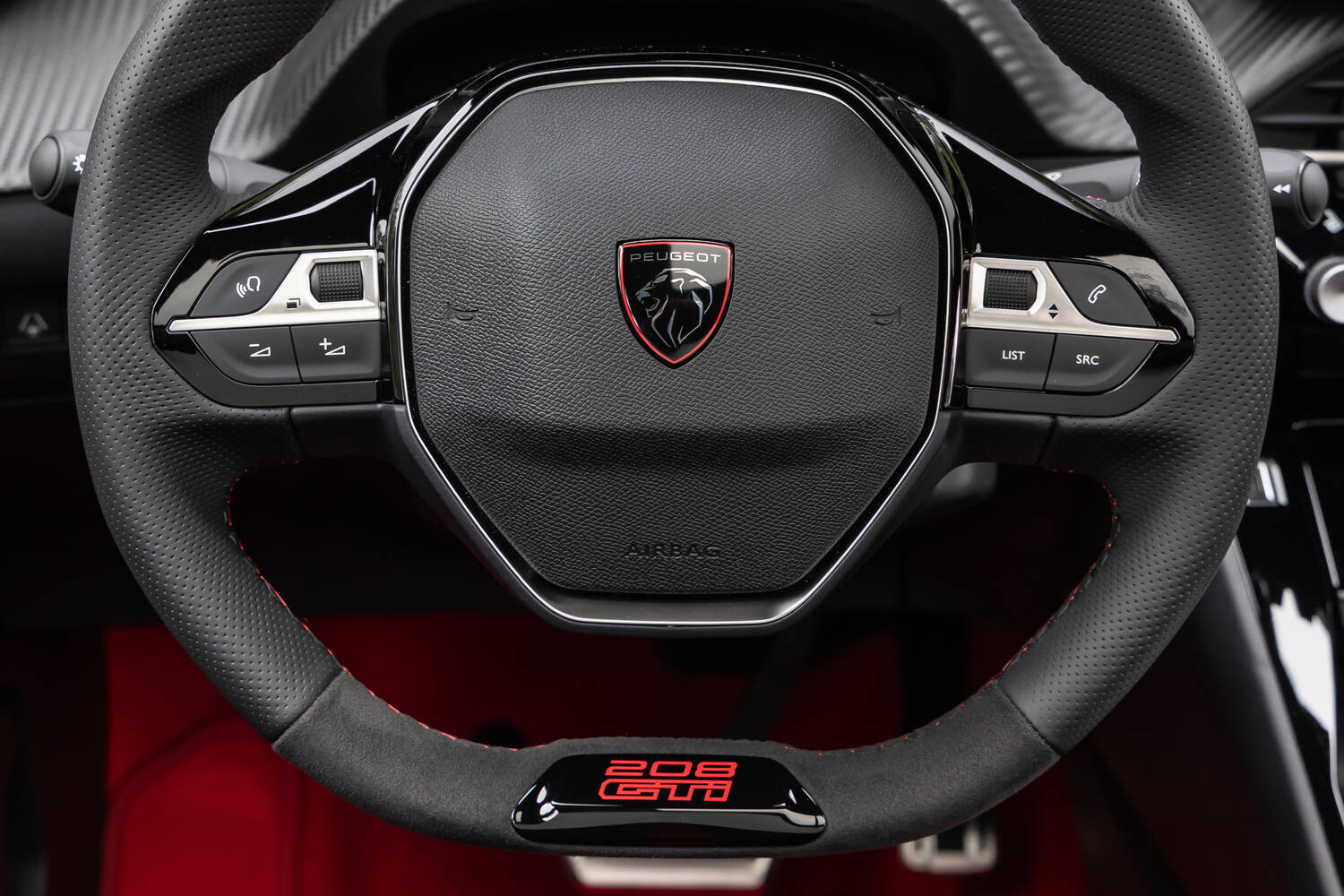
However, the driving position won't suit everyone because of Peugeot's 'i-Cockpit' layout which puts the small, hexagonal steering wheel down low, while the main digital instrument binnacle sits up higher, viewed above the upper rim of the wheel.
Some people can't get on with this layout, but for what it's worth I've always found it to be quite comfortable and natural. There's decent reach and rake adjustment in the steering wheel, and good adjustment in the seat too, although the rotary controller for the driver's backrest is a bit of a long way back, and awkward to reach.
Infotainment and technology
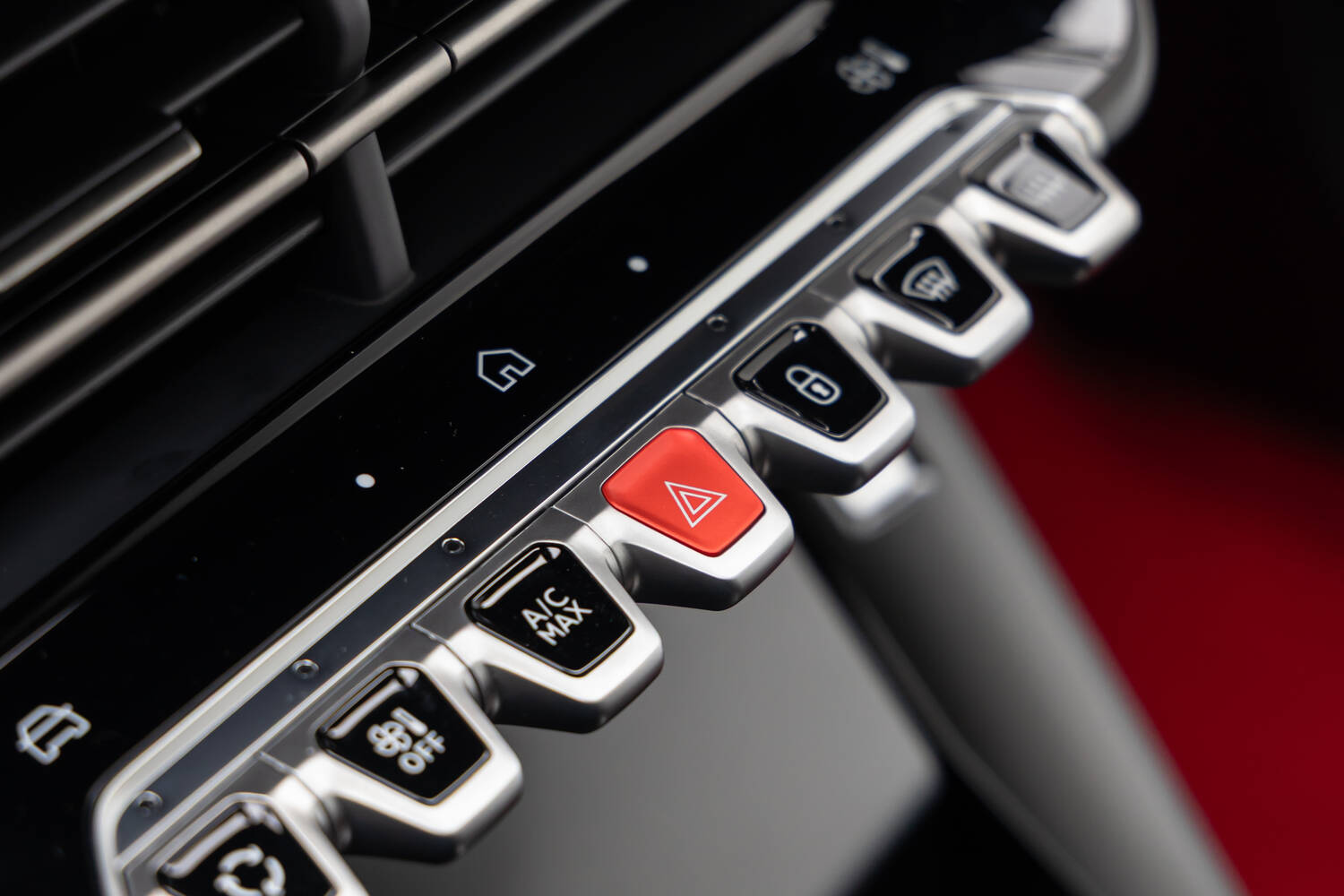
The Peugeot E-208 GTi sticks with the standard 10-inch touchscreen from the regular 208, which sits up high on the dashboard. There are some physical buttons for shortcuts - to quickly get to the home screen or to the air conditioning controls, for example - but the software on the screen is a touch reluctant to respond at times, which can be frustrating, while the built-in navigation is graphically a step behind the best.
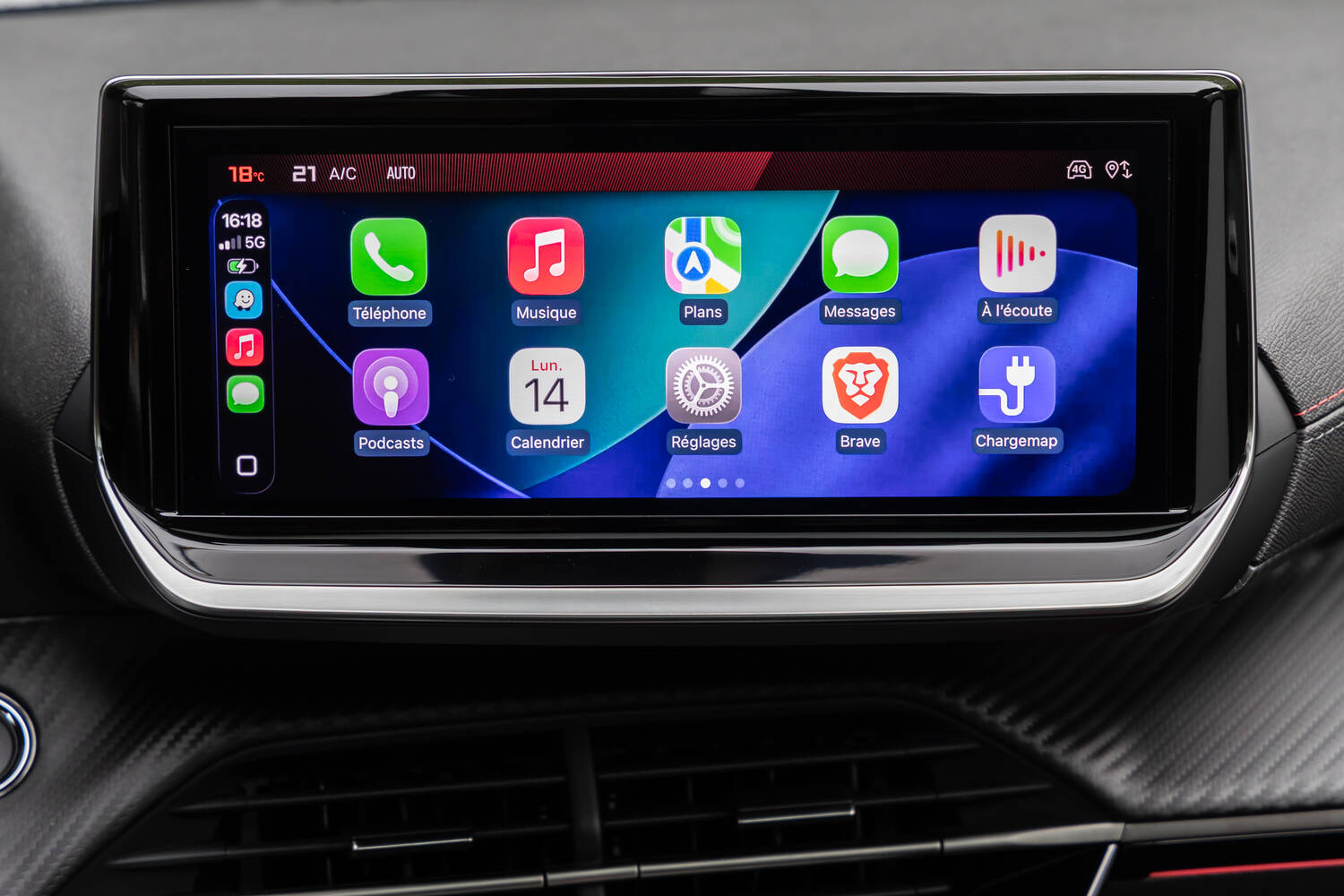
Better by far to plug in your phone and use Apple CarPlay or Android Auto and their built-in navigation software.
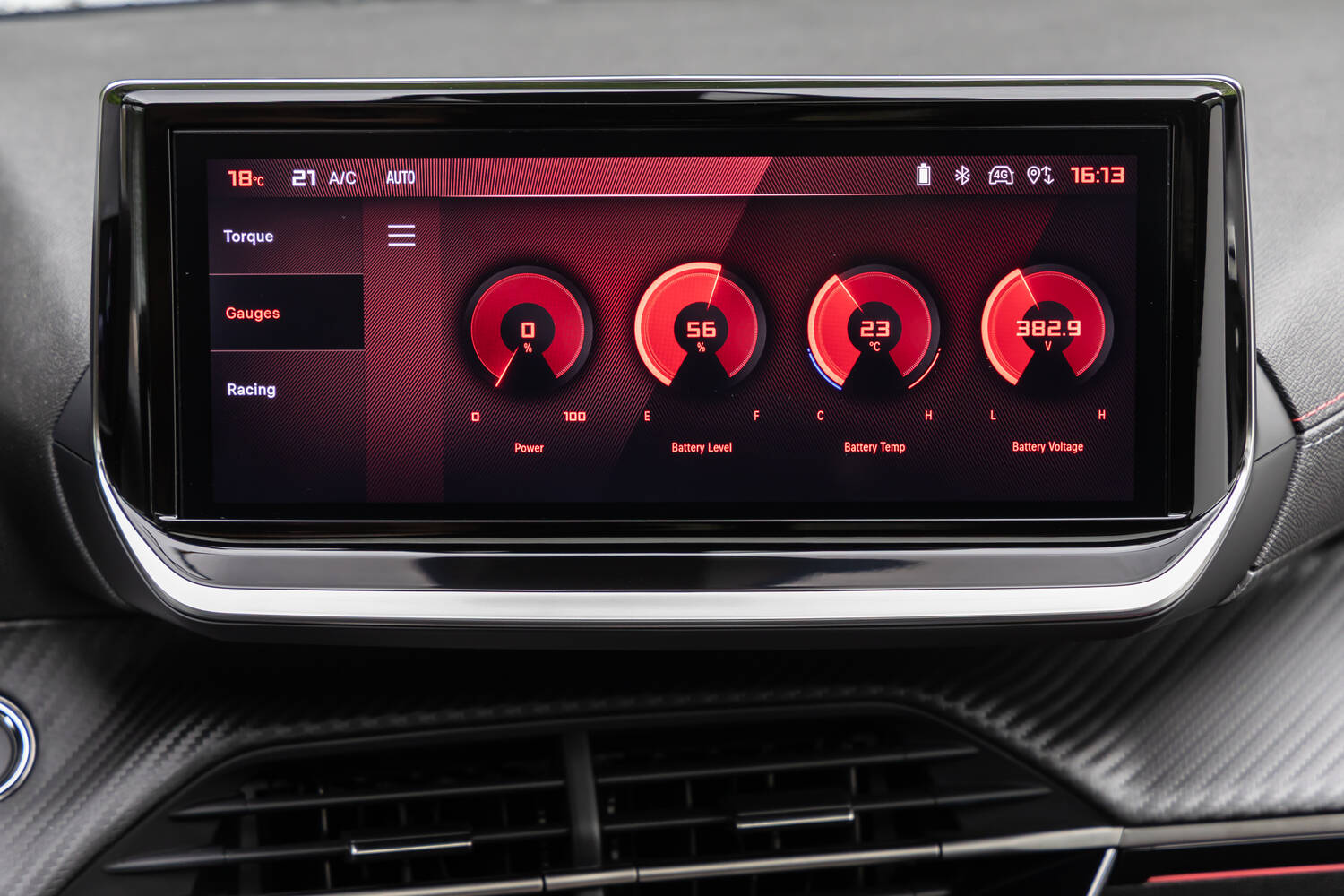
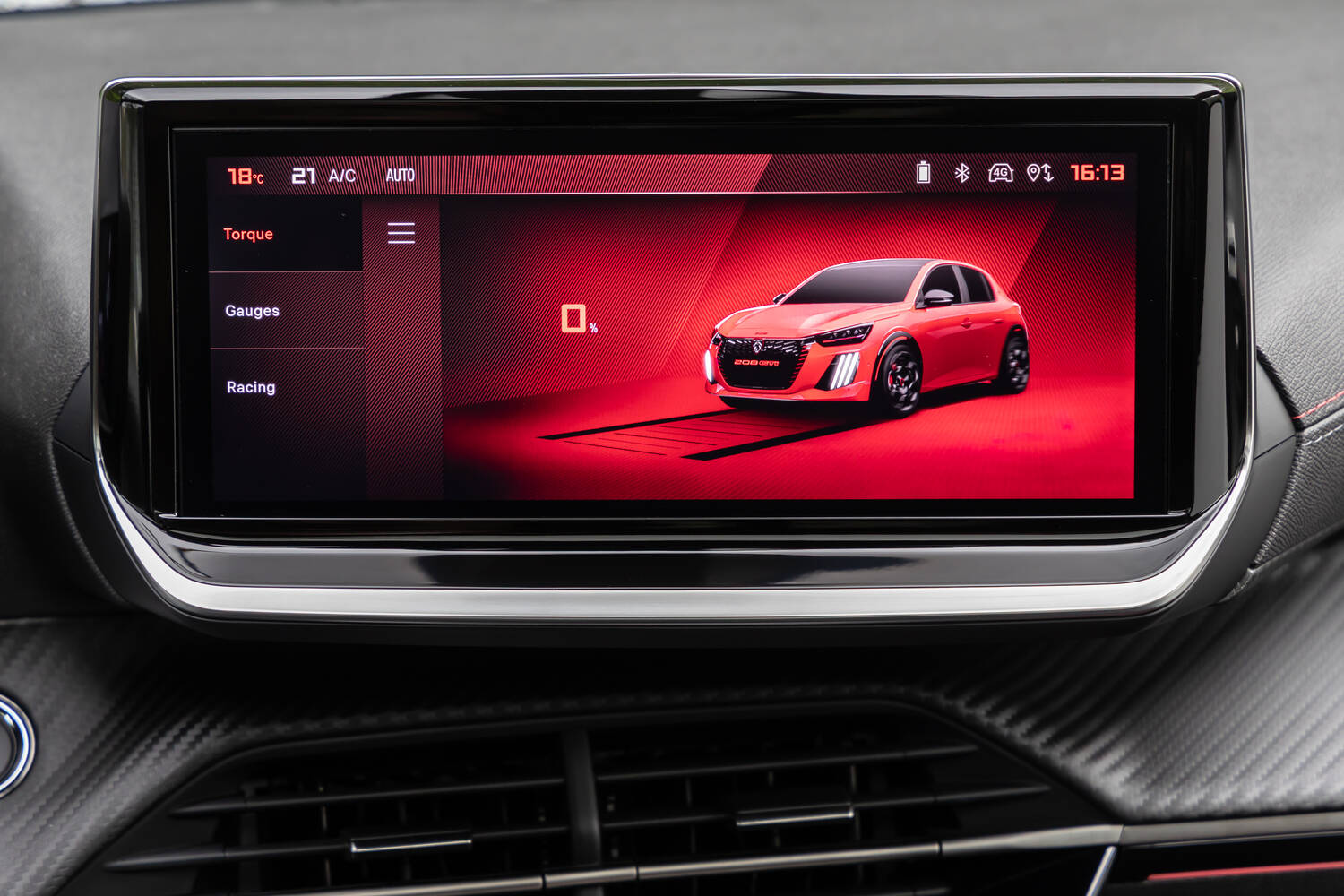
A nice touch is that there is a Performance menu, specific to the GTi, which gives you extra readouts that measure such parameters as battery temperature and voltage, the car's G-loading and much else besides.
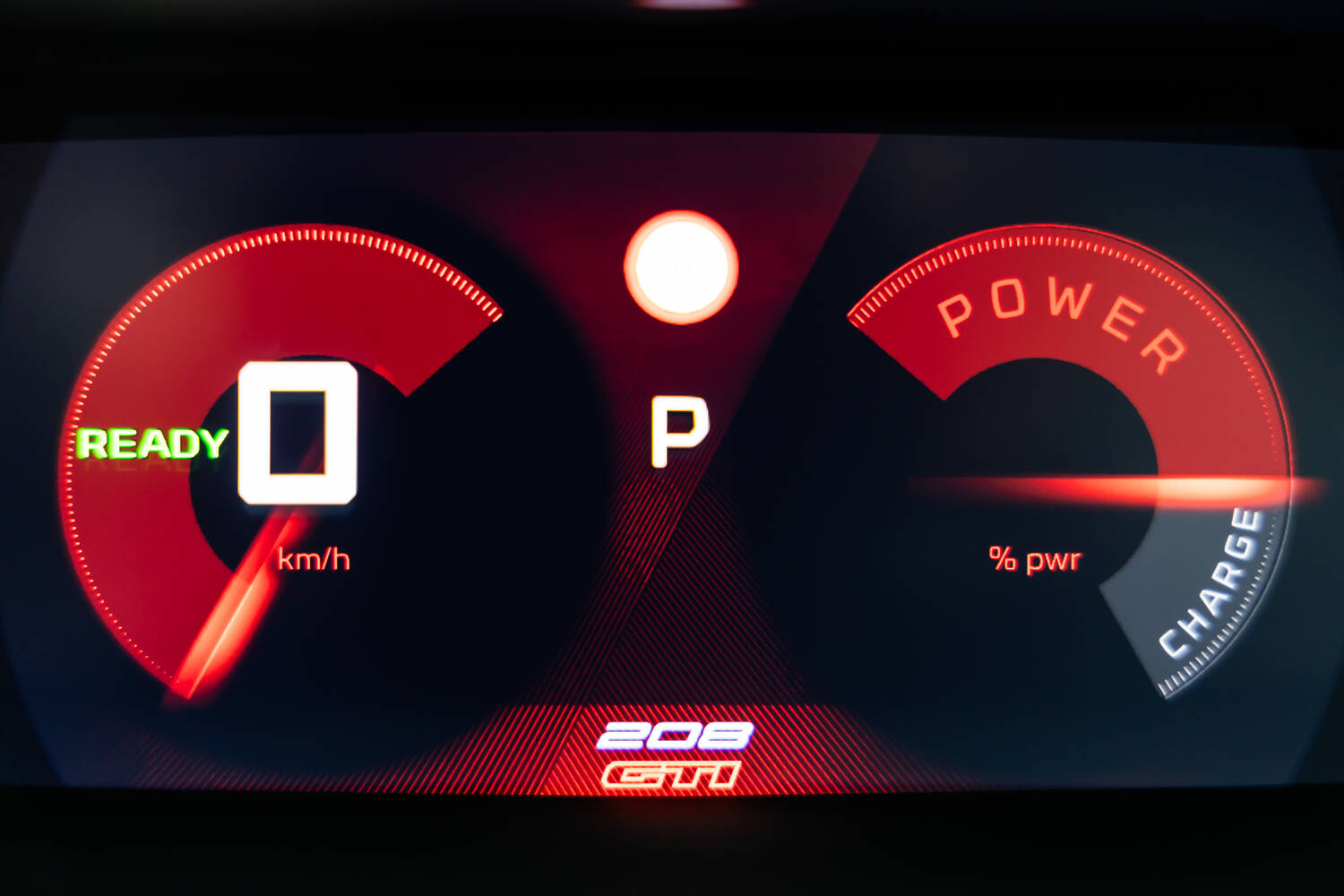
The main instruments are fully digital and mounted within a neat binnacle above the small steering wheel. They're looking a bit old-fashioned now, with their layered '3D' effect, but they're clear to read and simple to set up according to your taste. Up front, you get two USB-C sockets, with two more in the rear.
Practicality around the cabin
For a small car, the E-208 GTi is quite practical in the front of the cabin. There are two storage areas at the base of the centre dashboard, one uncovered, and one with a sprung lid that also contains the wireless phone charger.
There are also two cupholders, and a useful storage box under the front-seat armrest. The door pockets are useful too, although they're made of unlined plastic, so beware of rattles. The glovebox is quite small, though, and not much use for anything more than a couple of neatly folded reflective vests.
Rear-seat passenger space
Rear-seat space has never been a 208 strong point, and in the GTi it's reduced further by the chunky bucket seats up front. There's just about enough space for a six-foot adult to get into the back, but they'll have to splay their knees either side of the front seatback.
Headroom is also quite tight, thanks to the space taken up by the glass sunroof and its sunblind. At least rear-seat passengers also get the nice bright red carpets, and the same bright red seatbelts as those in the front, and there are map pockets and some handy door bins.
Fitting child seats to the Peugeot E-208 GTi
There are two ISOFIX anchor points in the E-208 GTi's rear seat, which is par for the course in this market segment. There's no ISOFIX in the front passenger seat, but you can deactivate the front passenger airbag and fit a seat using the seatbelt. The centre rear seat is going to be too narrow for an additional booster cushion.
Boot space in the Peugeot E-208 GTi
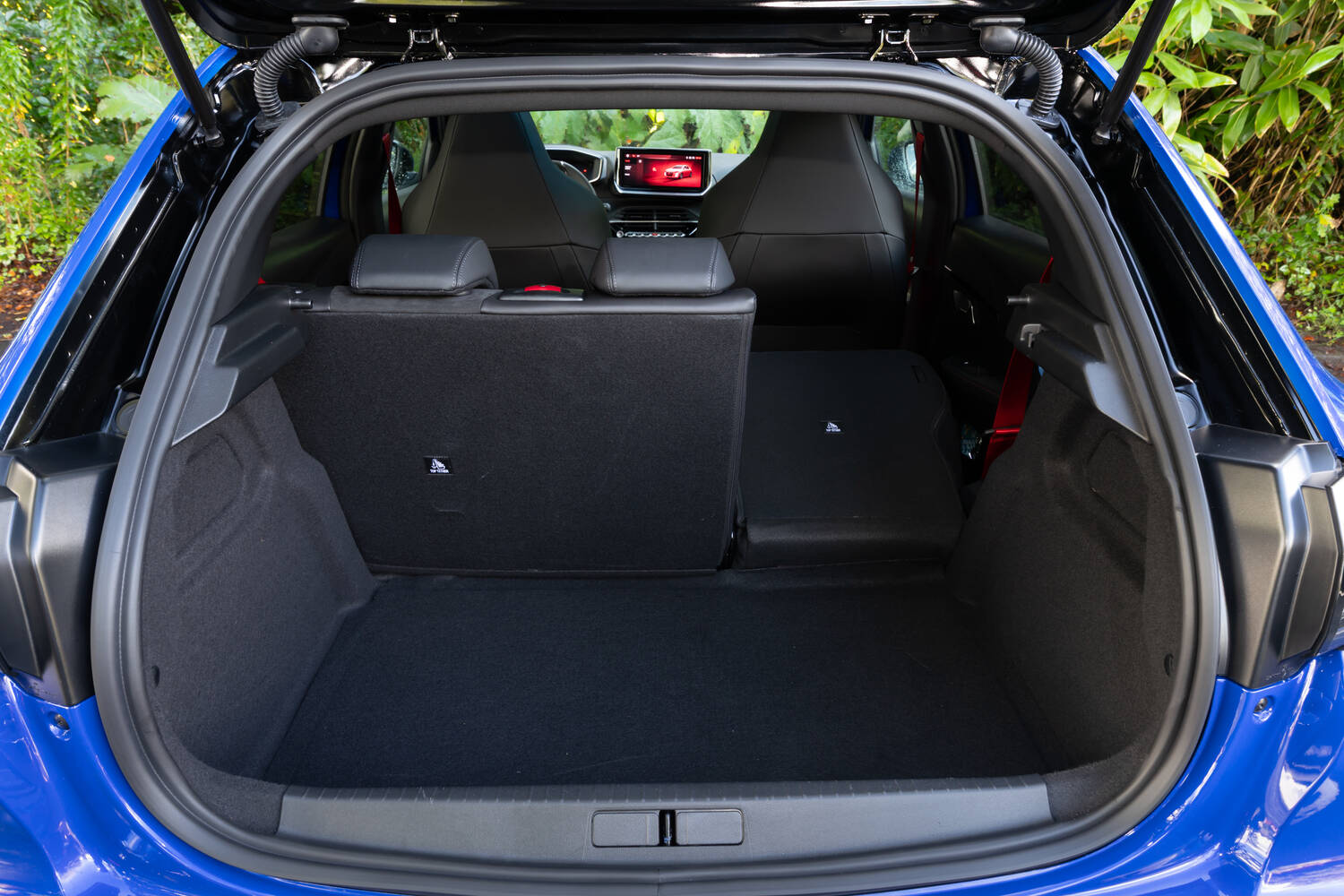
The E-208 GTi has a 309-litre boot, which isn't massive, but it is competitive. There's a bit of a loading lip, and you only get one bag hook, moulded into the right-hand side of the boot. The rear seats split and fold 60:40, but they'll leave a substantial step up from the boot floor if you're loading large objects. The total luggage capacity of 1,118 litres is quite impressive, though.
Towing with the Peugeot E-208 GTi
You can't - the E-208 GTi does not have a towing rating.
Safety in the Peugeot E-208 GTi
The GTi specifically hasn't been assessed for safety by Euro NCAP, but it should be more or less the same as the standard Peugeot 208, which was evaluated in 2019. The 208 in standard form scored four out of five stars, with a 91 per cent adult occupant protection rating, 86 per cent for child occupants, 71 per cent for electronic safety assistance and 56 per cent for vulnerable road user protection.
Performance of the 2026 Peugeot E-208 GTi
- More than enough power and torque
- Aggressive front differential
- Chassis by Peugeot Sport racing team
Prodigious power isn't a prerequisite for a hot hatch. That original 205 GTi made do with 130hp in its lairiest 1.9-litre form, so the E-208 GTi's 281hp seems entirely adequate. Better still, when you convert that to kW, it comes out at 205kW. Perfect.
There's plenty of torque, too - 345Nm - and a seriously trick front differential which helps to sniff out extra grip like a greyhound on the scent of a squirrel.
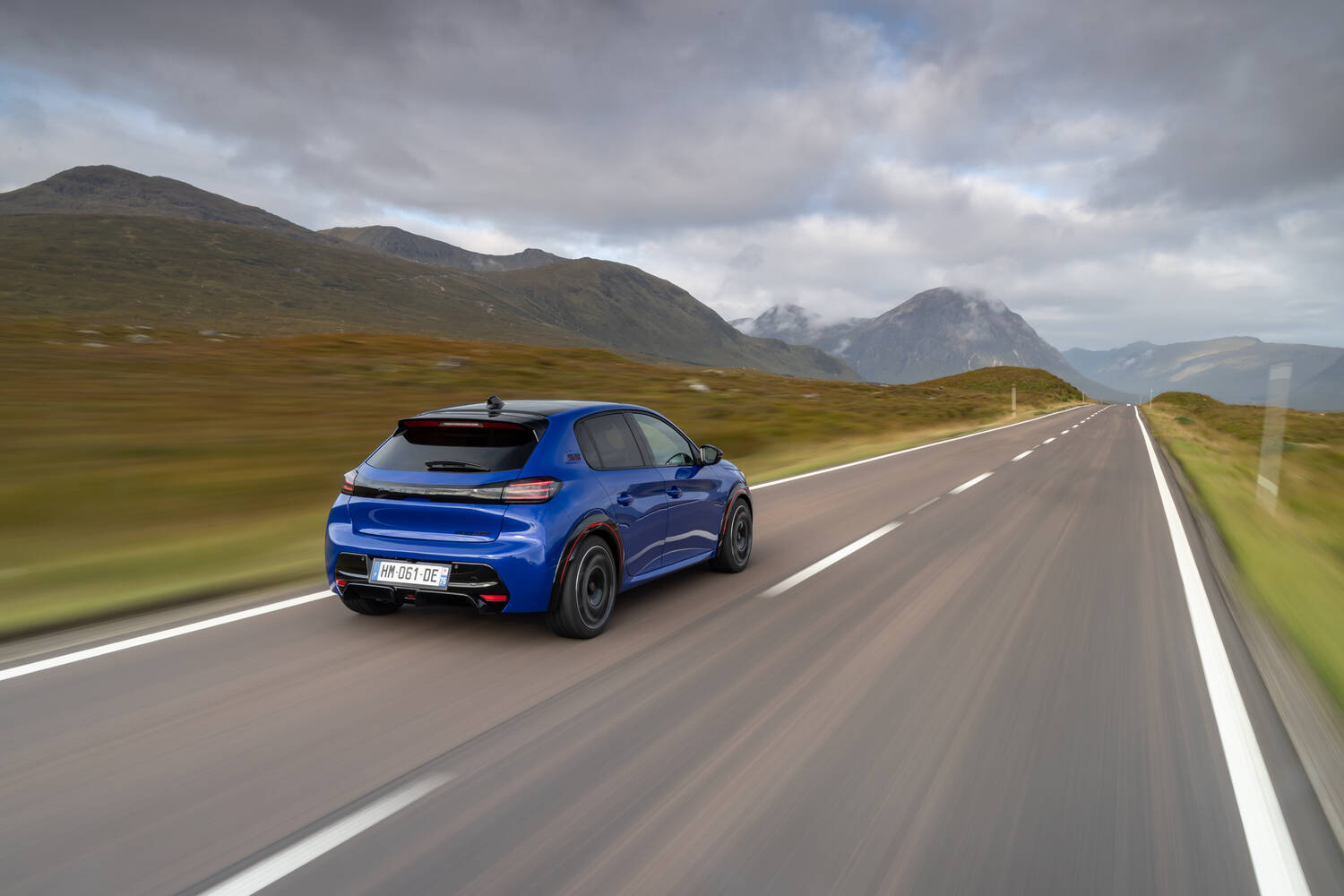
Driving the Peugeot E-208 GTi on Scottish roads
Words by Neil Briscoe on 29 September 2026
Electric car performance - that sudden thump of all-or-nothing torque that kicks in from a standstill - is thrilling at first but quickly becomes tiresome and one-dimensional. Bravo then to Peugeot for calibrating the 281hp electric motor with a progressive power delivery that builds and builds as you squeeze the firmly sprung accelerator pedal, giving you a sense of both power progression and control. It's well judged.
Equally well judged are the brakes. There is regenerative braking, of course, but in Sport mode (and why would you drive in any other setting in this car?) this is turned off, bar a small bit of lift-off 'engine braking' for a more natural feel. The brakes are easy to tune into.
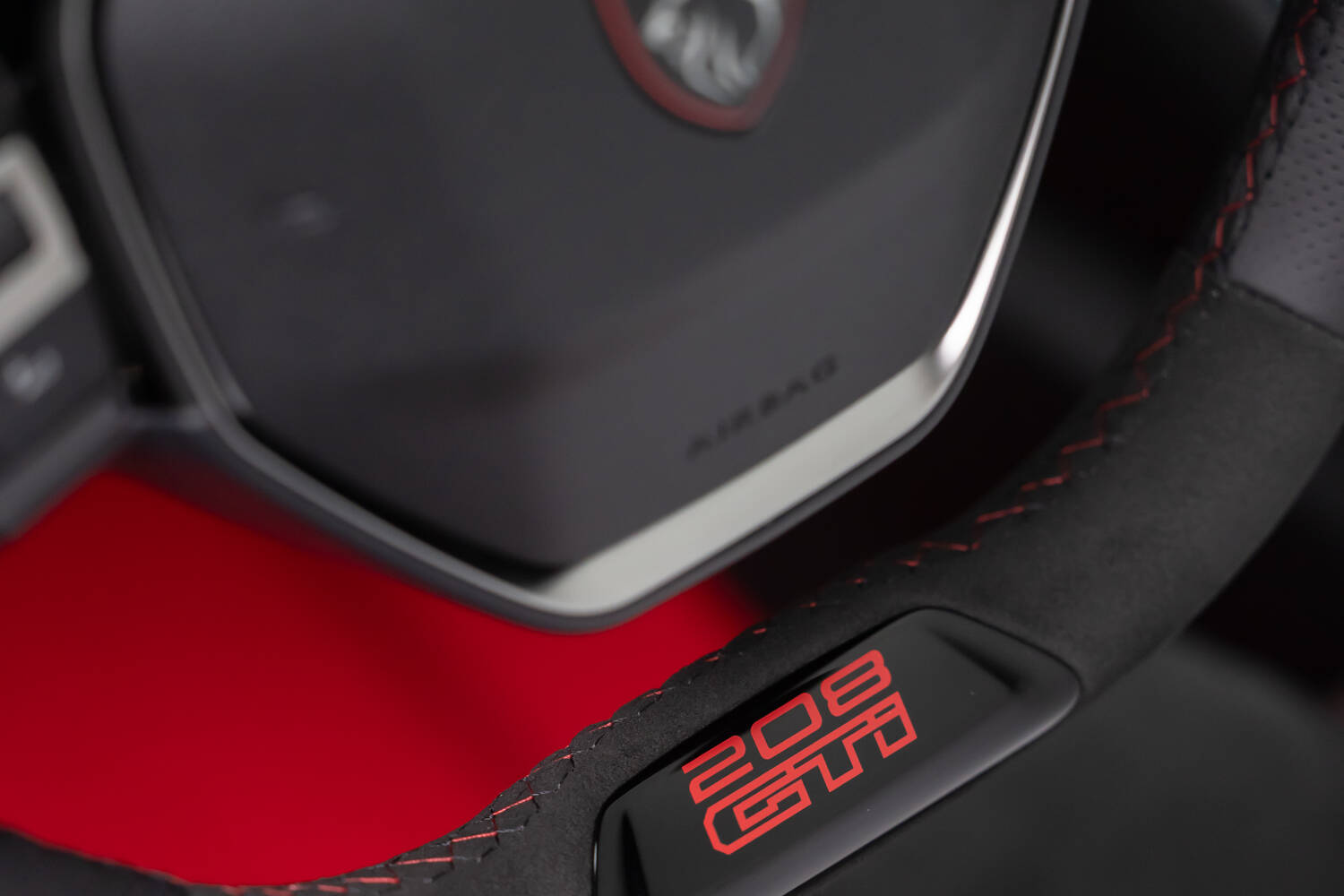
You'll also feel in tune with the steering, which is relatively light in its weighting, but which again feels natural and realistic in its feedback and its tuning. Actually, the small wheel really comes into its own here, as not only does it feel great to hold (with Alcantara panels top and bottom framed by perforated, contrast-stitched black leather on the sides) but small movements can whip the E-208 GTi's nose through and around all but the tightest hairpins.
That's in large part because the front differential, a limited-slip unit, has been very carefully tuned by the experts at Peugeot Sport. As used in related products such as the Opel Mokka GSE, that diff can be aggressive, tugging at the wheel, but in the Peugeot, that doesn't happen, and the diff's actions are much more progressive and - that word again - natural, but you feel its effects in the way that the E-208's nose tucks tightly into a corner and stays there even as you feed the power back in.
There's a faint degree of understeer in the E-208 GTi, against which you can comfortably lean on the way into fast, open corners. Meanwhile, in tighter turns, you can just pick your line and the combo of diff, wide-track suspension and sticky Michelin tyres means that the Peugeot will follow around faithfully.
There's a wonderful fluidity to the way the GTi tackles a series of tight turns in sequence - it's a car that never seems to stop finding ways to paint a smile on your face.
Even the manufactured engine note is helpful. Usually these are among the first things I turn off in a car, but in the E-208 GTi, the sound is more realistic and it actually helps you keep track of what the car is up to, while you concentrate on other tasks.
The ride comfort is slightly variable. The E-208 GTi runs on passive dampers, but it does borrow the hydraulic bump stops from Peugeot's cousins over at Citroen, so in extremis the ride quality, in spite of the lower, stiffer springs and the thicker rear anti-roll bar, never becomes overly harsh.
That said, rough surfaces at low speed, especially around town, will certainly make themselves felt and heard, and there's quite a bit of tyre noise.
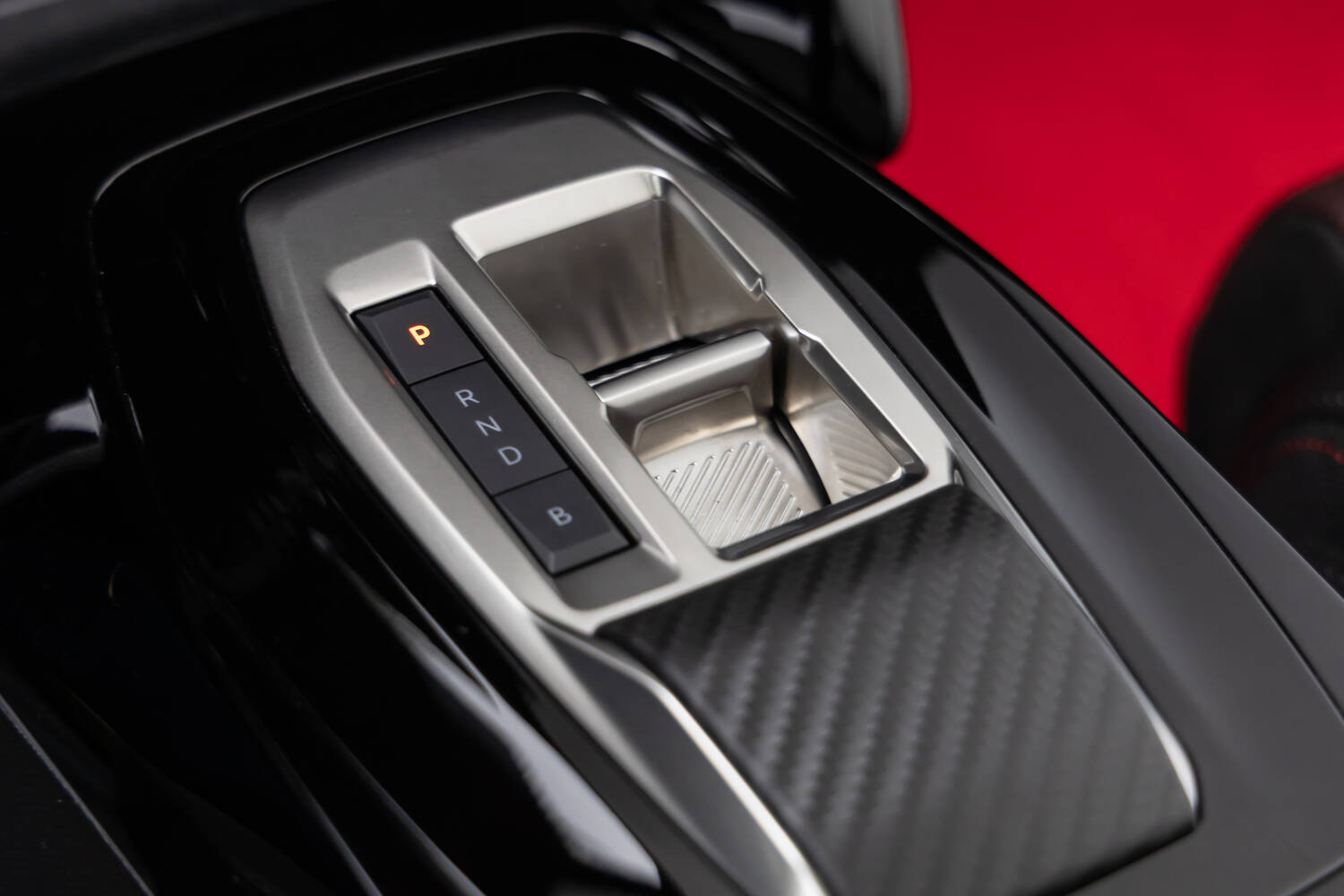
It would also be nice to have paddles behind the steering wheel to adjust the regenerative braking on the fly - instead, you just have the 'B' button down by the drive selector which gives you a higher level of regen braking.
Tiny gripes aside, this is a compact electric car which proves that those clinging to combustion power because they think it's inherently more fun and more engaging are missing out. This battery-powered GTi is seriously good to drive.
Range, battery, charging and running costs of the 2026 Peugeot E-208 GTi
- Same battery as standard E-208
- Decent official range number
- Range depends on tyre choice
The Peugeot E-208 GTi uses the same battery that you'll find in the standard, 156hp, E-208 hatchback. This helps when it comes to keeping the car's price and weight down to reasonable levels, and it's not as hobbled for real-world range as you might expect.
Battery options and official range
There's only the one battery option for the Peugeot E-208 GTi, and it's the same nickel-manganese-cobalt (NMC) battery, with a 51kWh usable capacity, as found in the standard E-208 hatchback.
According to the official WLTP test, that - at a quoted efficiency of 15.9kWh - gives the E-208 GTi a range of 375km, which is fine. Except it's a little more complicated than that.
You see, the E-208 GTi only hits that range on the WLTP test when it's fitted with the no-cost-option Hankook Ventus S1 Evo3 tyres. Those are designed more for efficiency and range than the standard-fit Michelin Pilot Sport 4S, which are - appropriately - more focused on grip, traction and handling but which have a range penalty. The Michelins drop the E-208 GTi's range to 352km.
Real-world range and efficiency of the Peugeot E-208 GTi
The E-208 GTi doesn't do as badly as we thought it might in terms of real-world efficiency. Which sounds like damning with faint praise, but in this case it's genuine praise.
Clearly, a relatively small 51kWh battery and a powerful 281hp motor were never going to make for ultra-long range, but in our hands, over a mixed route of main, mountain and country roads in Scotland, the E-208 GTi was on track to return 333km on a full charge.
And that's on its less-efficient Michelin tyres, spending most of our time in Sport mode, driving it as a GTi ought to be driven.
Sure, observed energy consumption of 20kWh/100km isn't great, but we reckon you could get closer to 17kWh/100km without too much effort. It helps that, as well as being responsible for the suspension, brakes and steering, the motorsport experts at Peugeot Sport also worked on the battery and motor.
That was in part to improve battery cooling and management so that there wouldn't be a drop-off in performance, but what's done for performance is - when done well - often also good for efficiency.
Charging up the Peugeot E-208 GTi
As standard, the E-208 GTi has peak charging ratings of 11kW on three-phase AC power, and 100kW on DC fast charging. The latter figure allows Peugeot to claim a reasonable 20-80 per cent top-up in under 30 minutes.
There's V2L (vehicle-to-load) capability as well, so you can use the E-208 GTi's battery as a mobile power bank for other electrical devices.
Servicing the Peugeot E-208 GTi
Peugeot says that the E-208 GTi will need a service only every two years or 25,000km but we'd suggest that a high-performance car like this deserves at least an annual check-up, just for peace of mind.
Peugeot E-208 GTi warranty
Peugeot Ireland gives all its cars a very impressive five-year, unlimited mileage warranty, covers the paint for three years and against perforation for 12 years. As with most electric cars, the E-208 GTi's battery is covered by a separate, eight-year, 160,000km warranty.
Irish pricing & rivals to the 2026 Peugeot E-208 GTi
- Only 40 will come to Ireland
- Price circa €40,000
- Lays the ground for future electric GTis
We don't yet have a confirmed price tag for the Peugeot E-208 GTi in Ireland, but it's a moot point as only 40 are set to be allocated to our market, and those will be quickly snapped up.
A price of around €40,000 is likely, which may sound quite steep compared to the likes of the Alpine A290 and the Cupra Born VZ, but then both of those have less power than the E-208 GTi, and arguably neither has the same image nor the same baked-in appeal with car enthusiasts as the Peugeot.
Verdict - should you buy the 2026 Peugeot E-208 GTi
The E-208 GTi is a massively enjoyable car to drive, with fluent, fluid handling and steering and a genuine sense of fun. It also brings back the iconic Peugeot GTi badge for the electric age and hopefully means that more such models are on the way.
It doesn't have the longest electric range ever, but it's the right side of useable and is almost sure to paint a smile on your face. If you can get your hands on one of the few that are coming to Ireland, snap it up.
FAQs about the 2026 Peugeot E-208 GTi
Does the Peugeot e-208 GTi have a 'frunk'?
No, the E-208 GTi is too small to have a frunk, as the nose of the car is entirely taken up with the electric motor and various control units. There's just the 309-litre boot if you want to carry luggage or shopping.
Is the Peugeot E-208 GTi all-wheel drive?
No, in classic Peugeot GTi style, it's front-wheel drive only.
Are Peugeots reliable?
Yes, Peugeot has been doing well of late in major reliability surveys, and all the E-208 GTi's major components - battery, motor etc - are shared with other models in the Stellantis group, so they're well proven already. Plus, there's a very decent five-year unlimited mileage warranty.
Want to know more about the 2026 Peugeot E-208 GTi?
If there's anything about the new Peugeot E-208 GTi we've not covered, or you'd like help in choosing between it and other cars, you can avail of our expert advice service via the Ask Us Anything page.