Review status:
- Prototype drive of Cupra Raval VZ first published on November 28, 2025, by Matt Robinson
- Updated on May 22, 2026 following drive of production-ready Cupra Raval VZ, by Neil Briscoe
Introduction to the 2026 Cupra Raval
Cupra took the lead on the Volkswagen Group's family of smaller and more affordable EVs, resulting in the Raval, developed on the front-wheel-drive MEB+ platform and built at its Martorell plant in northern Spain.
As Cupra is the sporty one of the group, can such a thing live up to the image?

Pros & cons of the 2026 Cupra Raval
Pros:
• Superb balance of fun and comfort
• Brakes are best in the EV business
• Makes appealing noise in sportier modes
Cons:
• No frunk up front
• DC-charging speeds only OK
• VZ gets lower range
Exterior & design of the 2026 Cupra Raval
• More hatchback than crossover
• Expensive-looking paint options
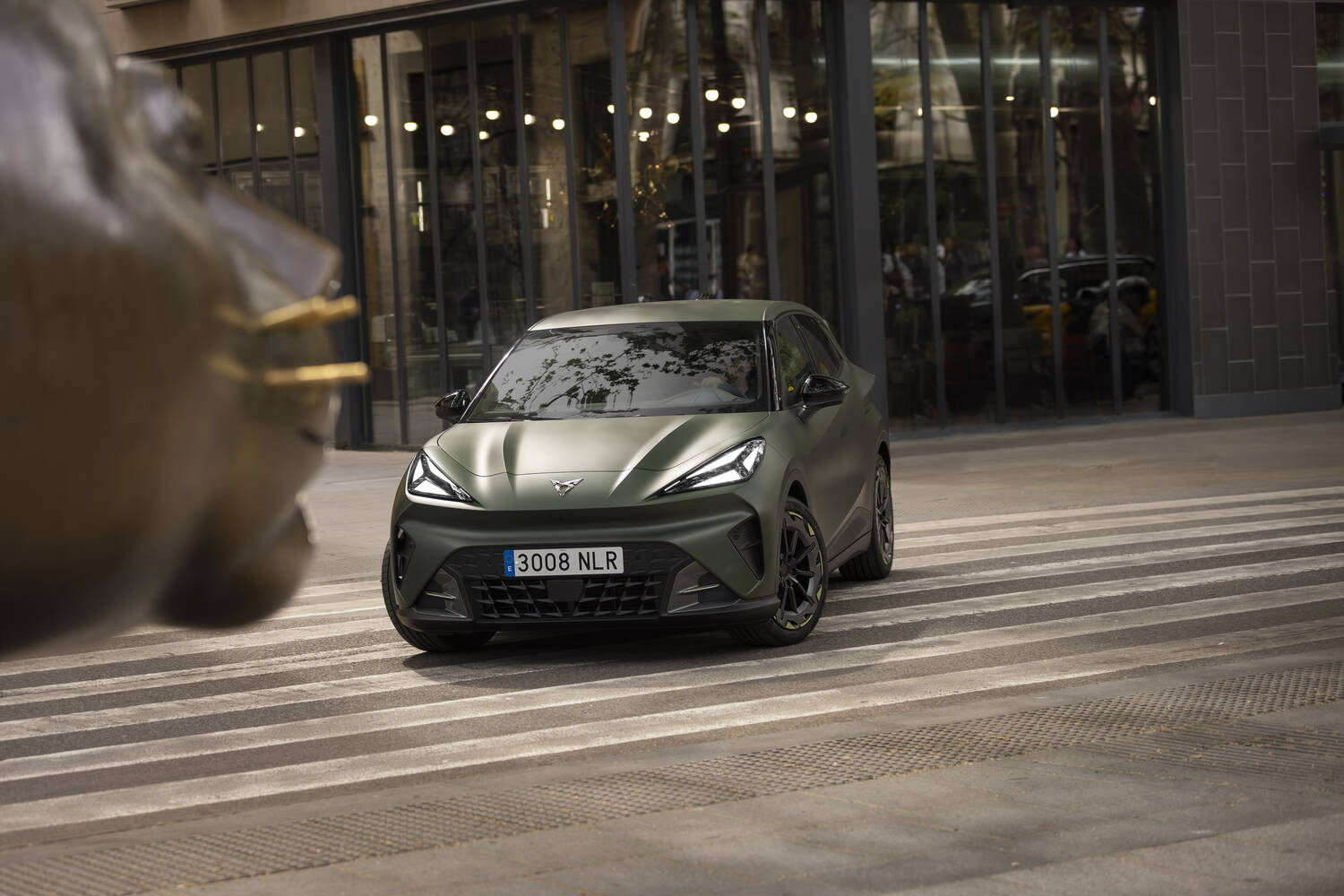
• Divisive-looking headlights

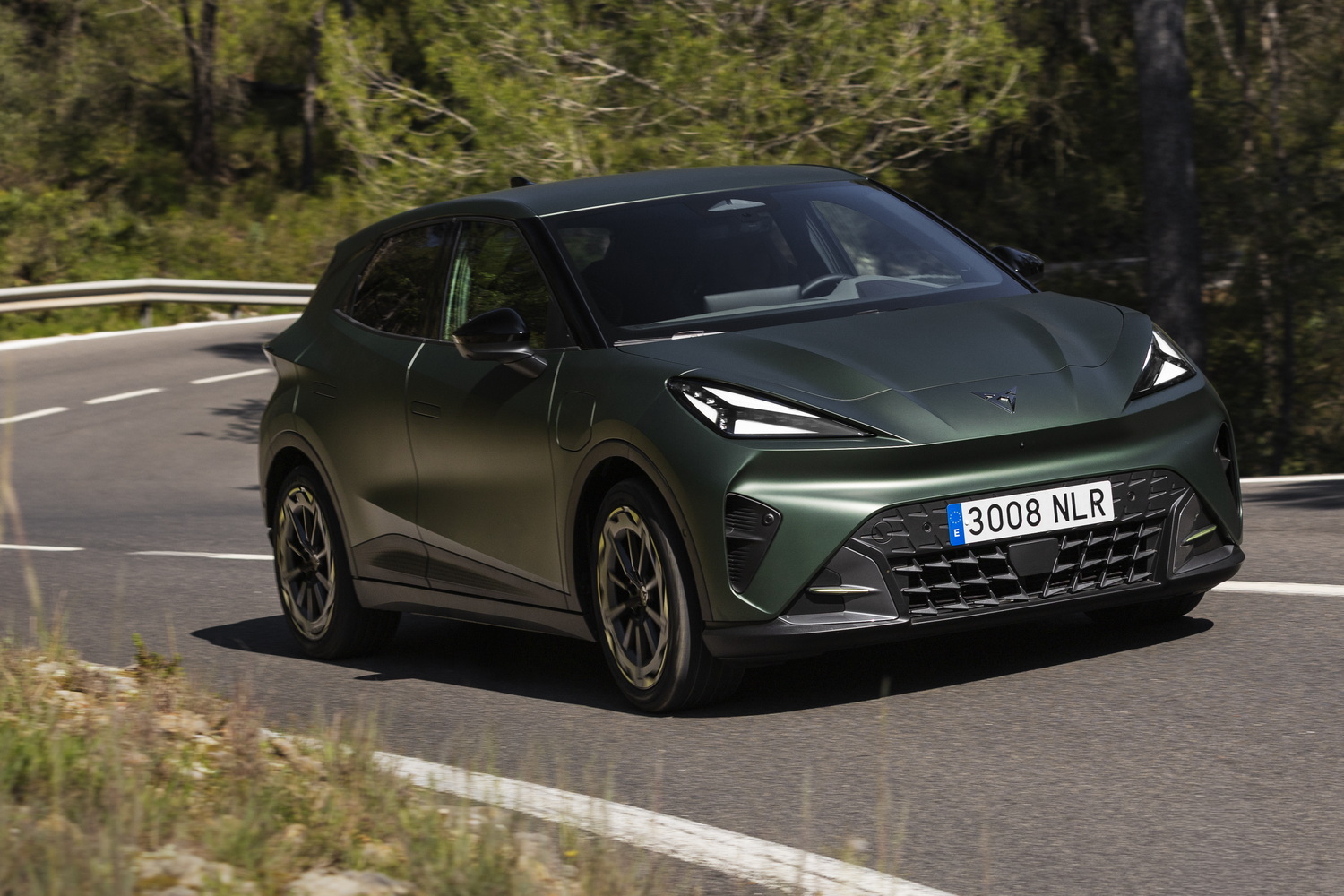
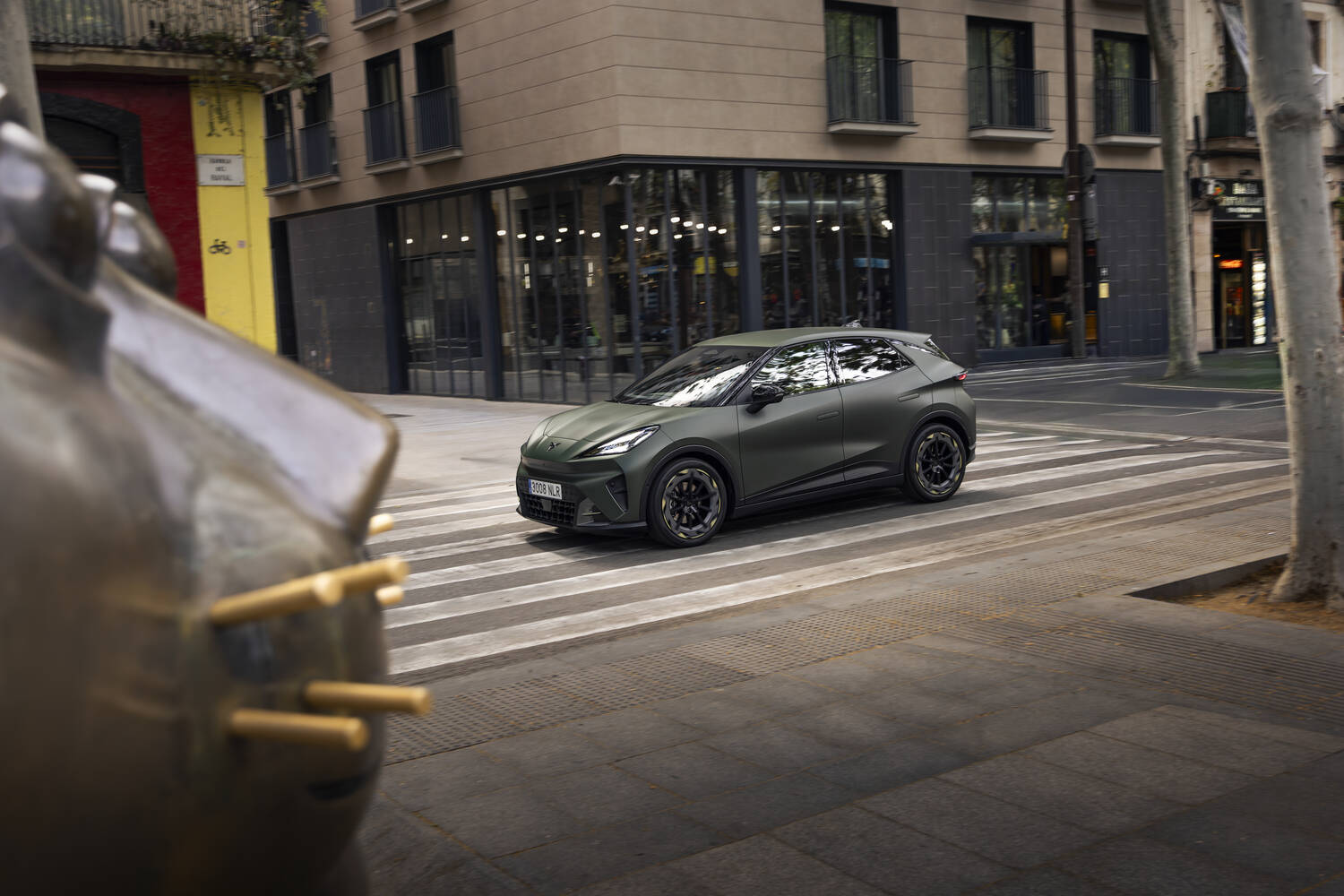
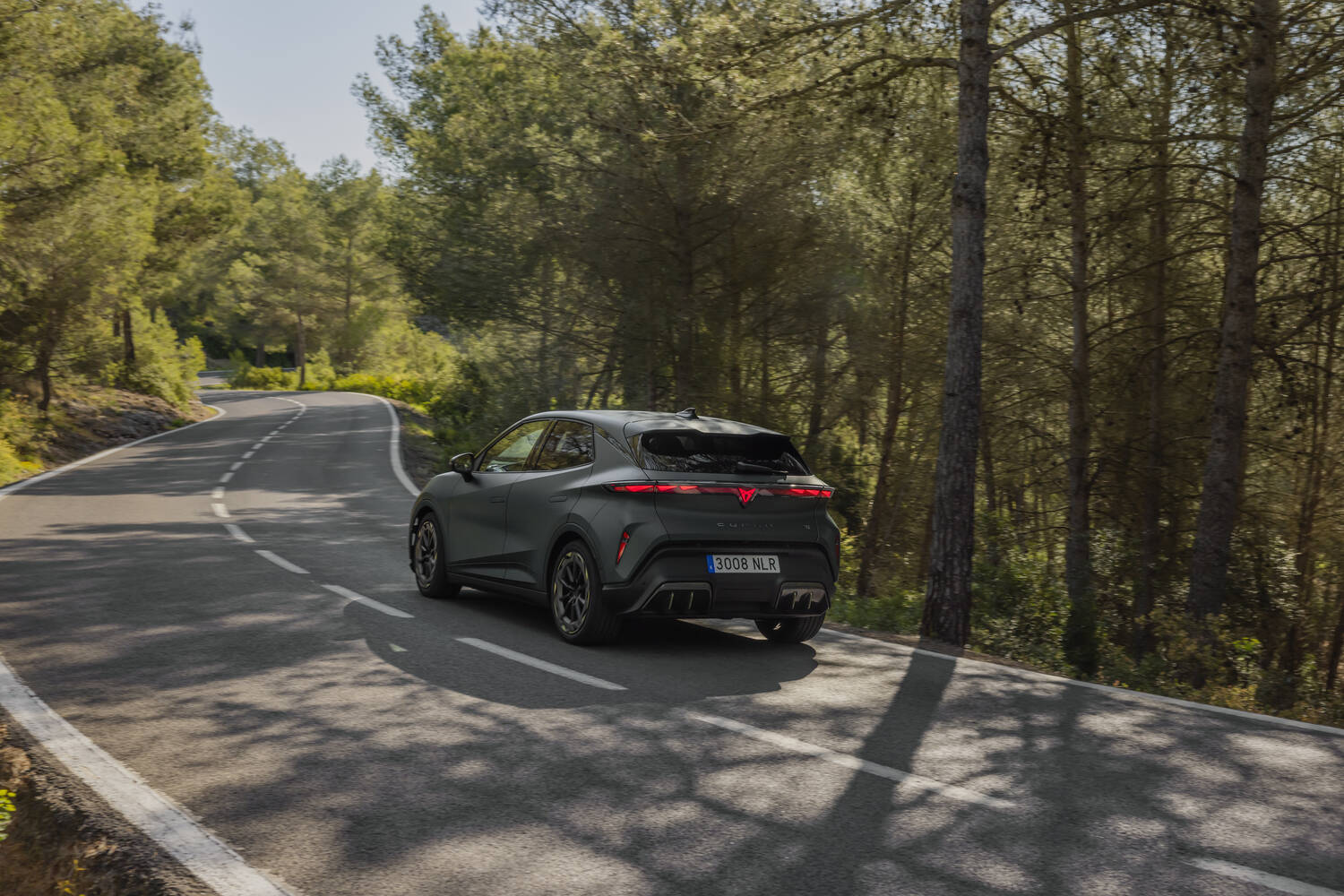
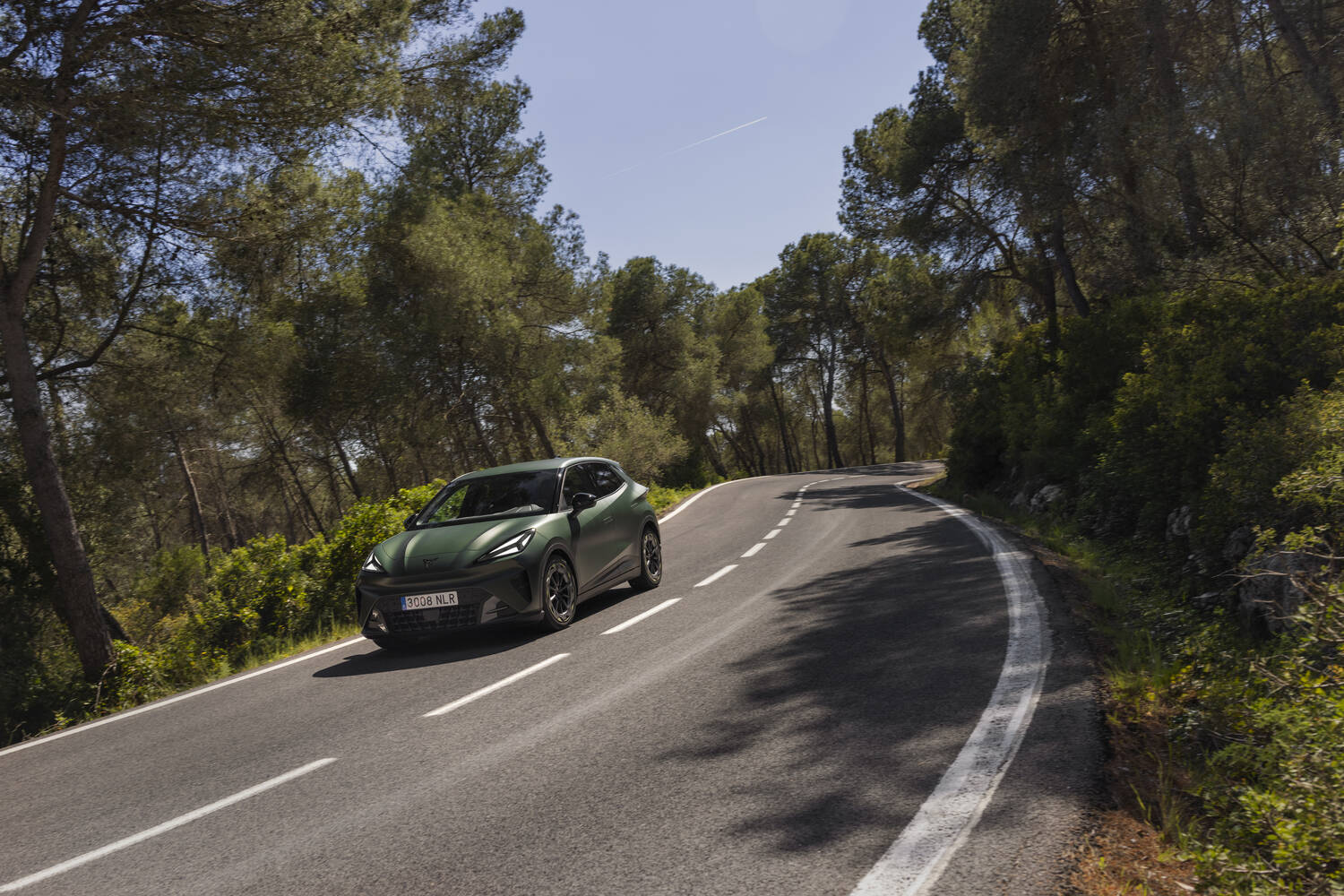
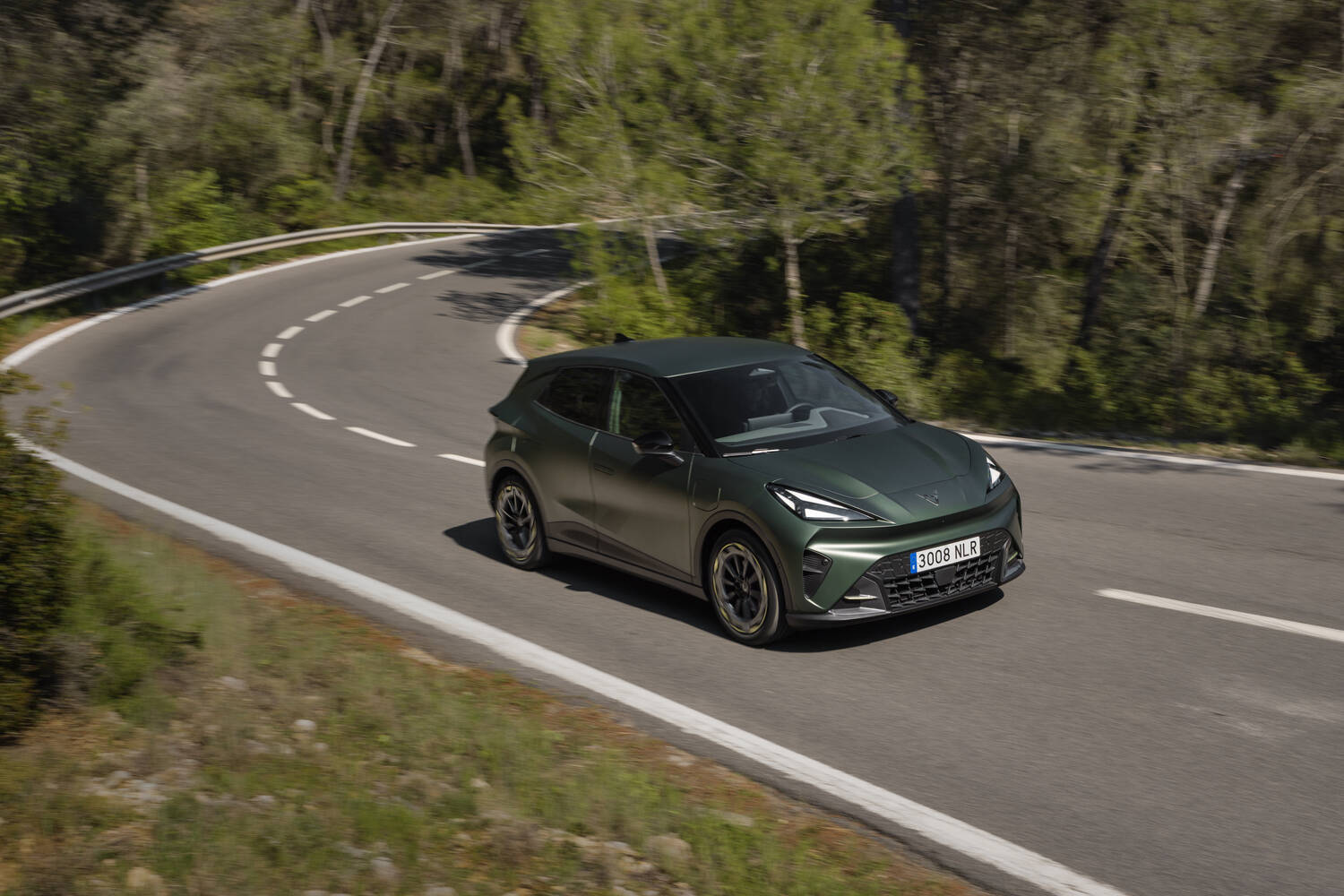
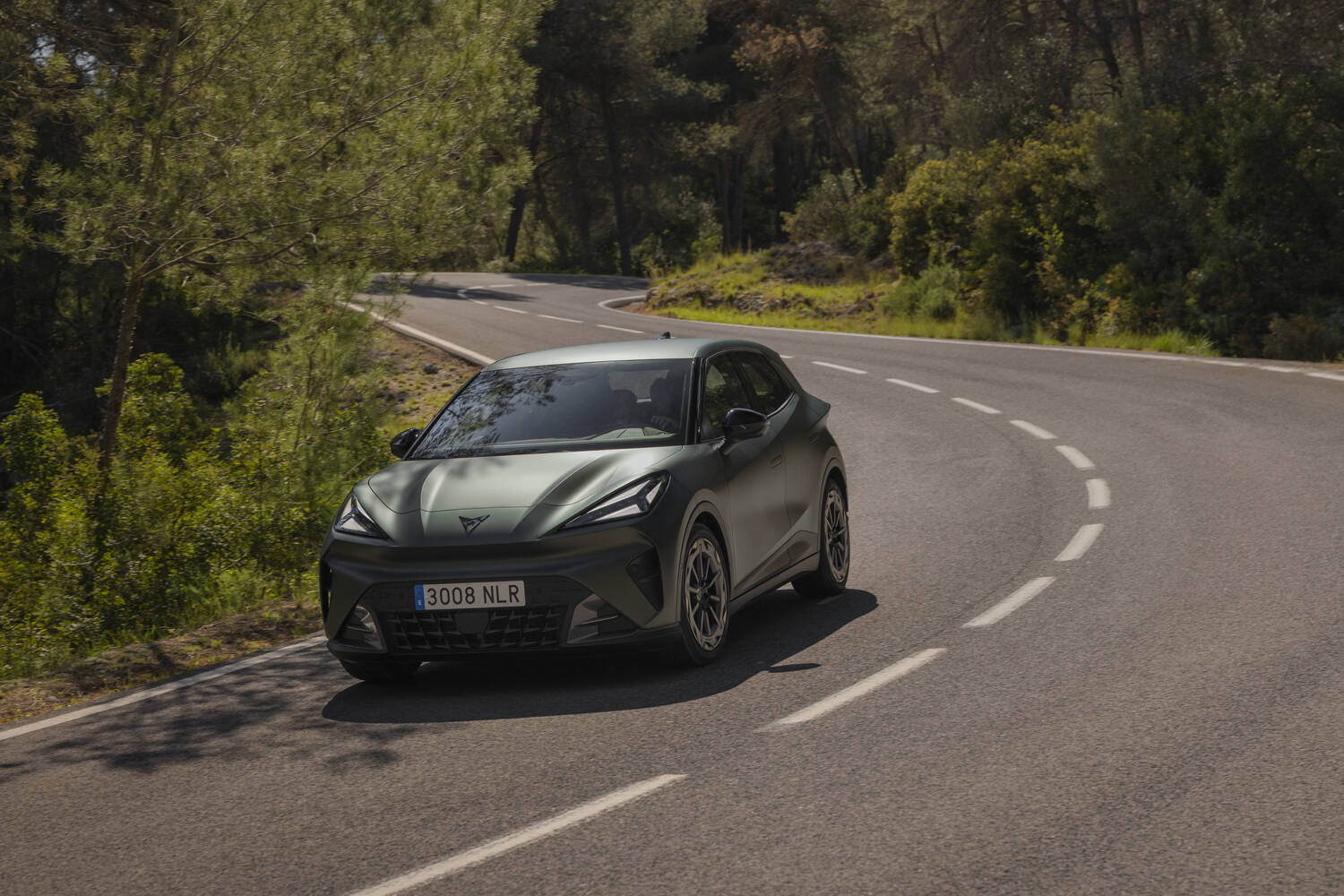
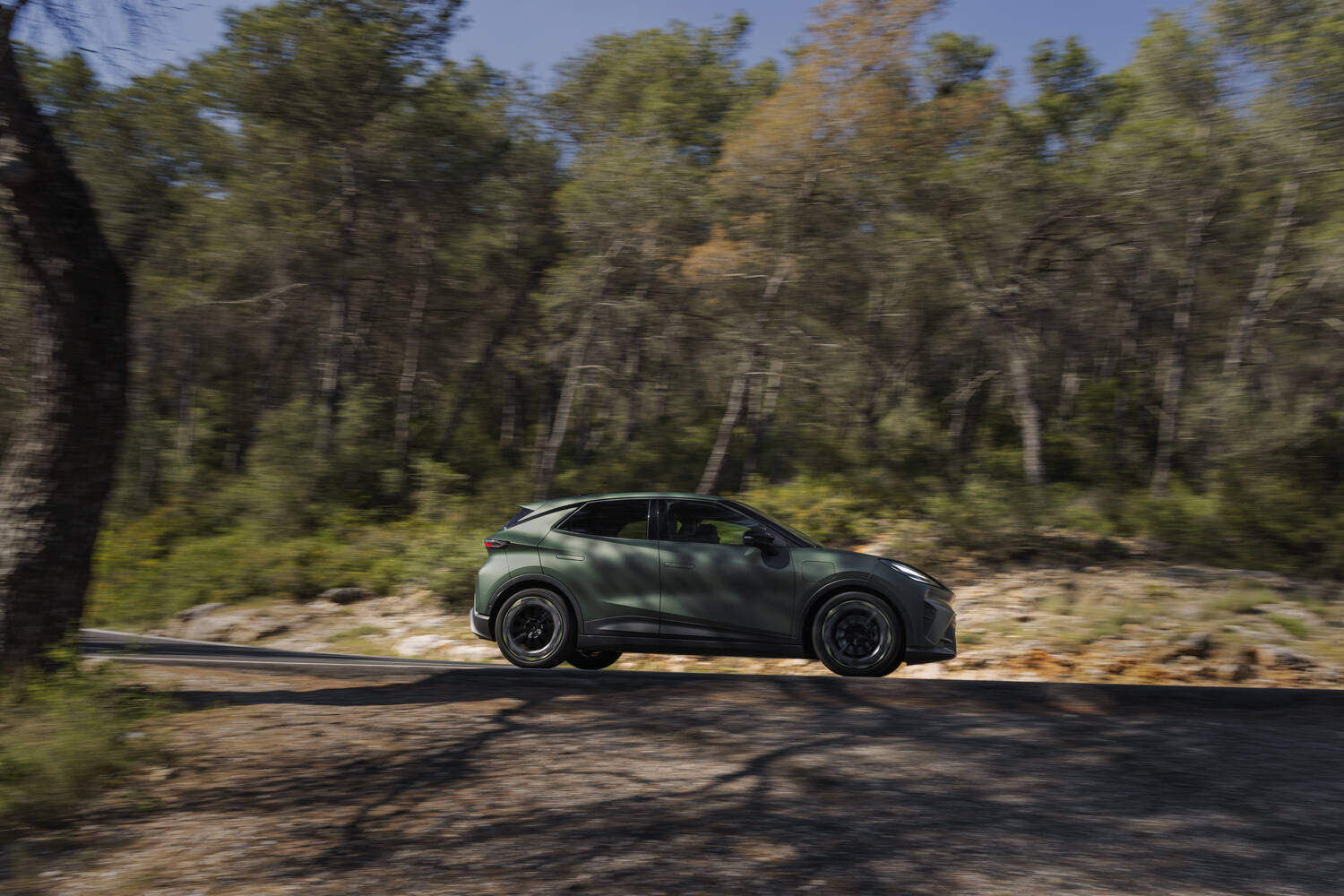
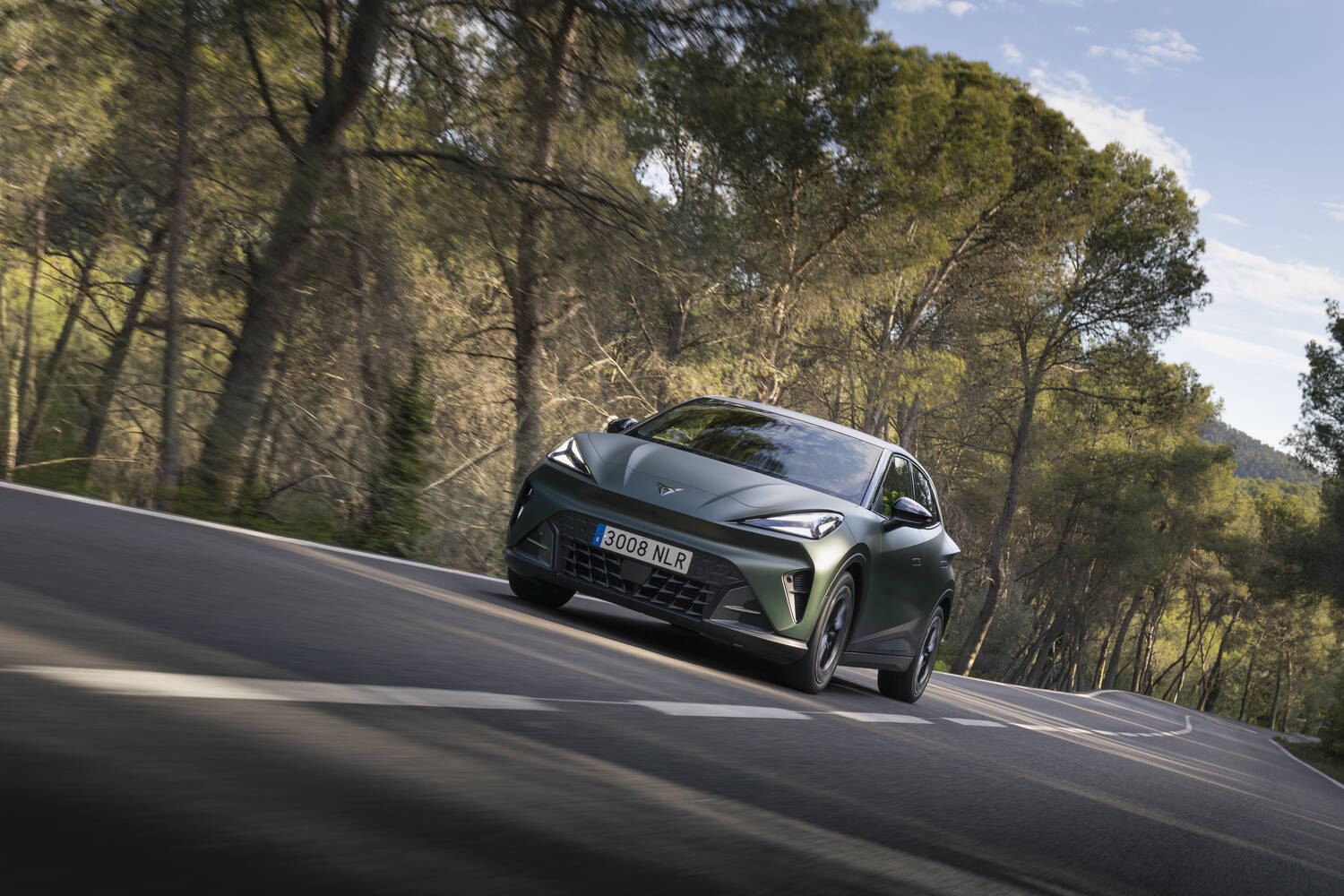
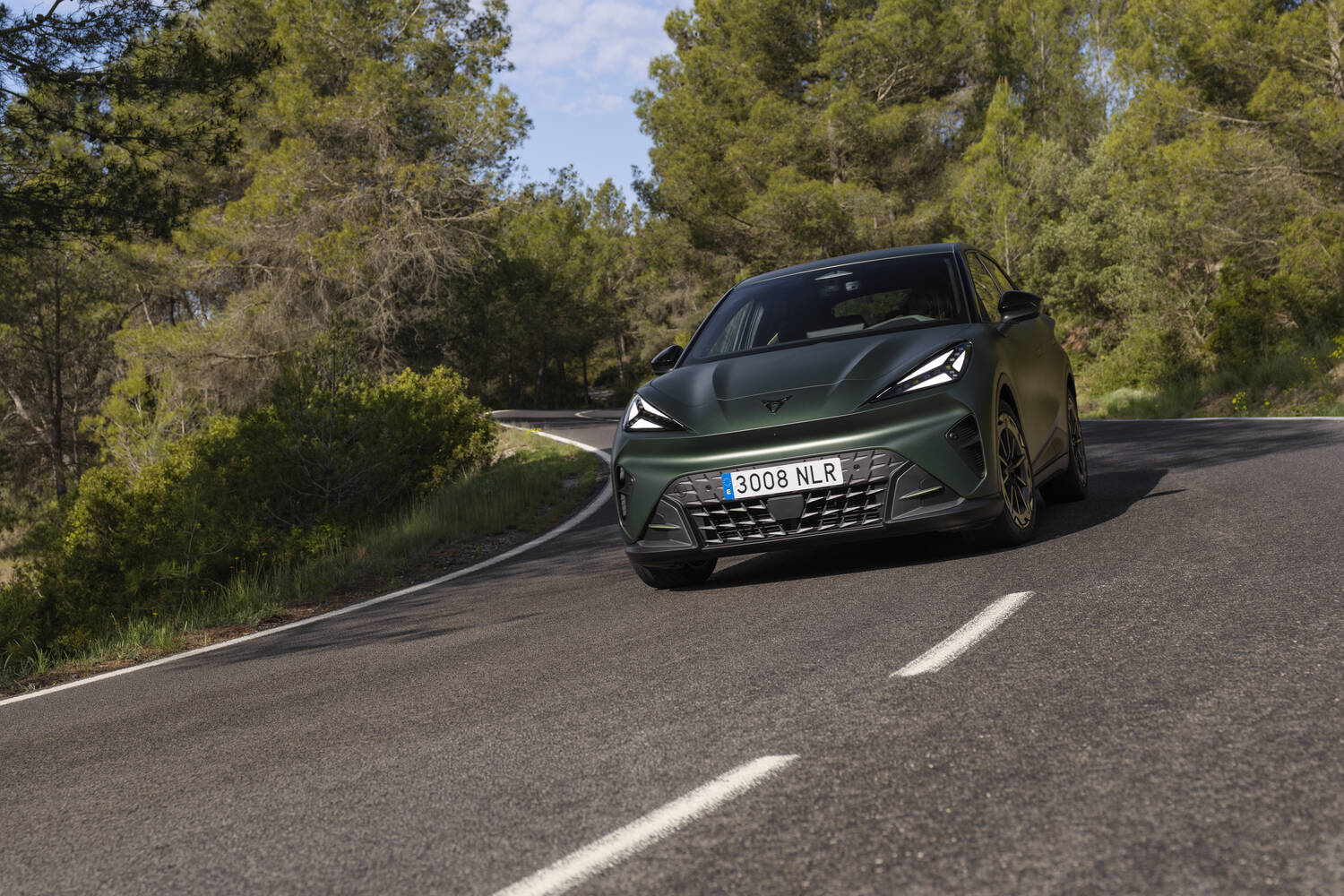
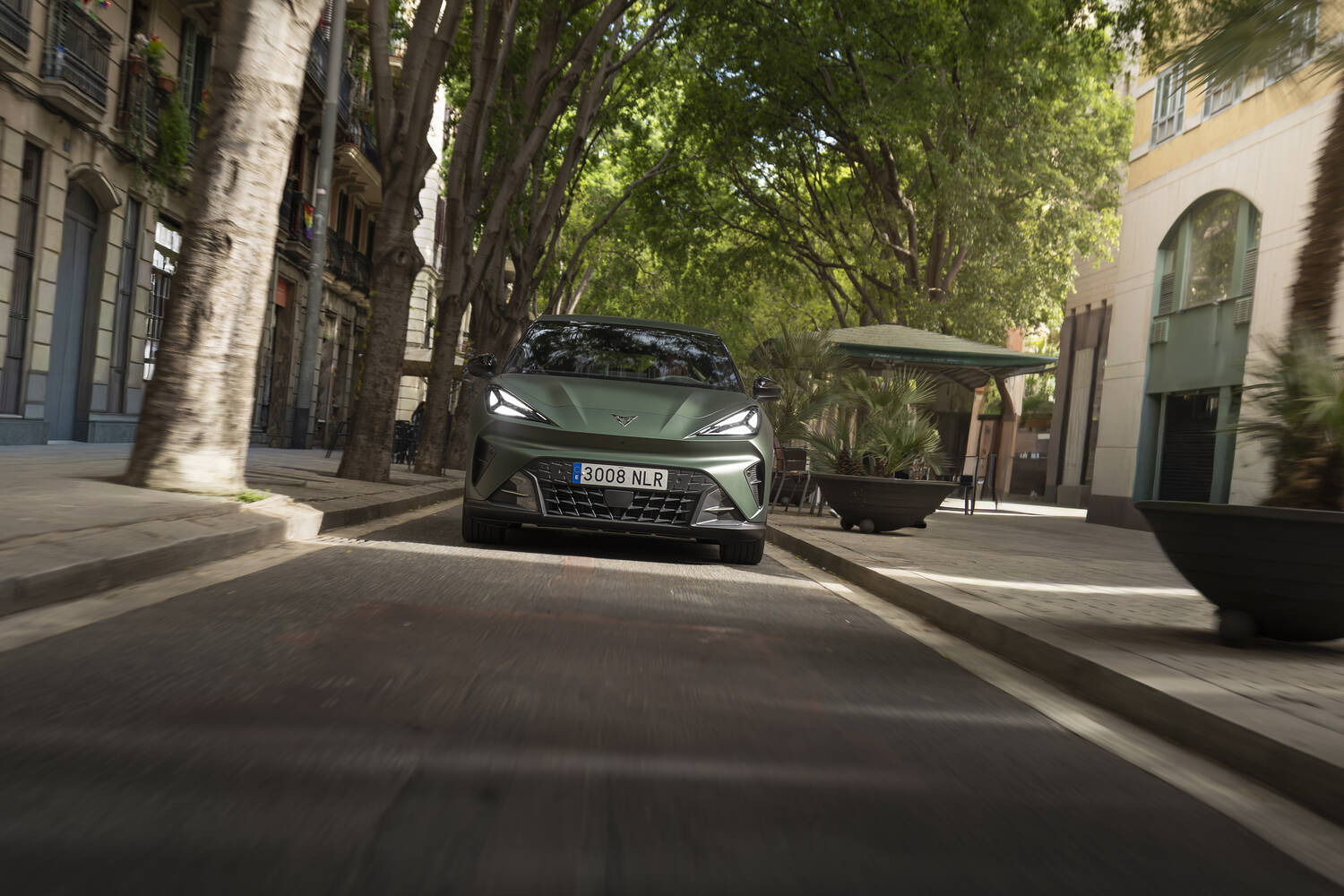
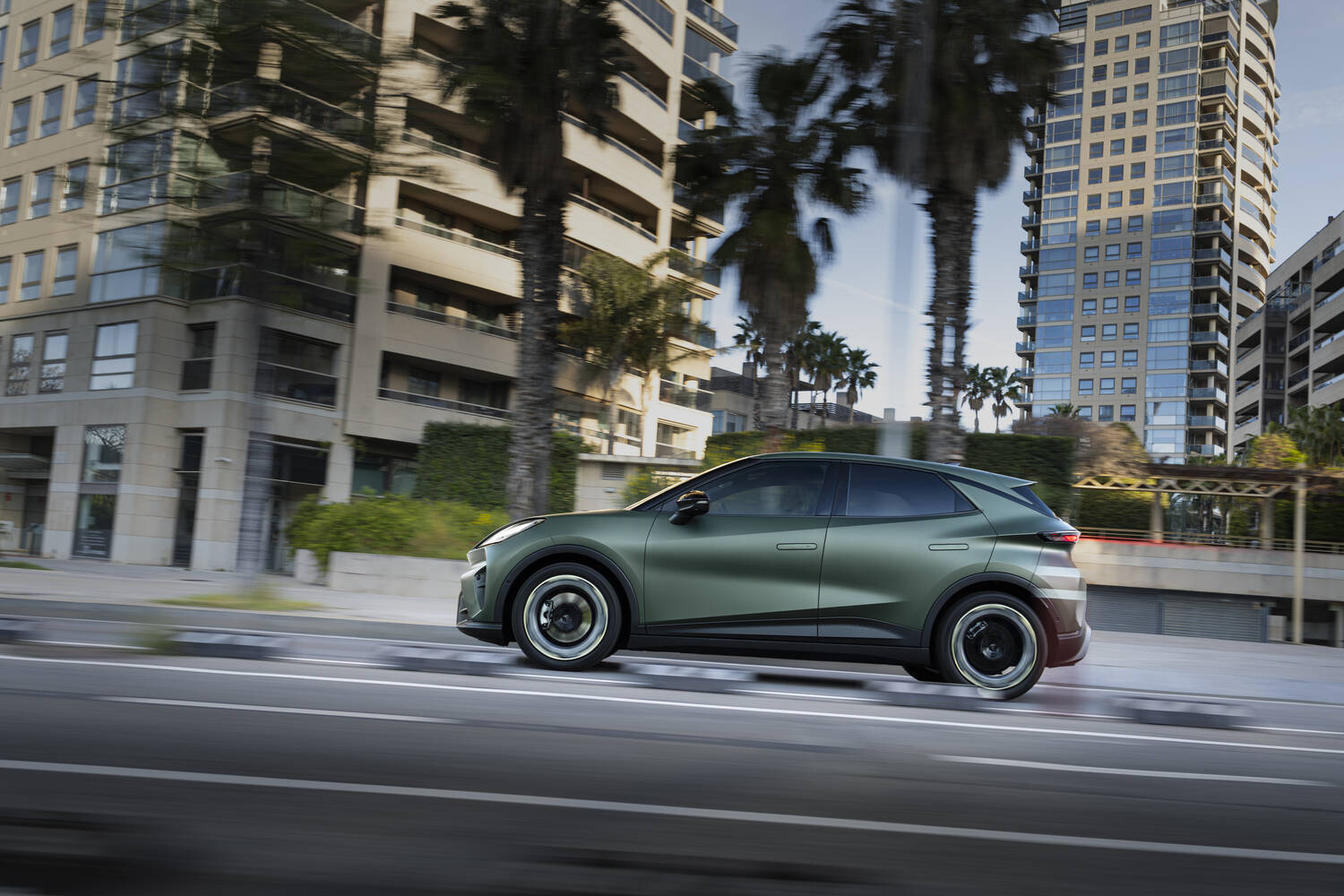
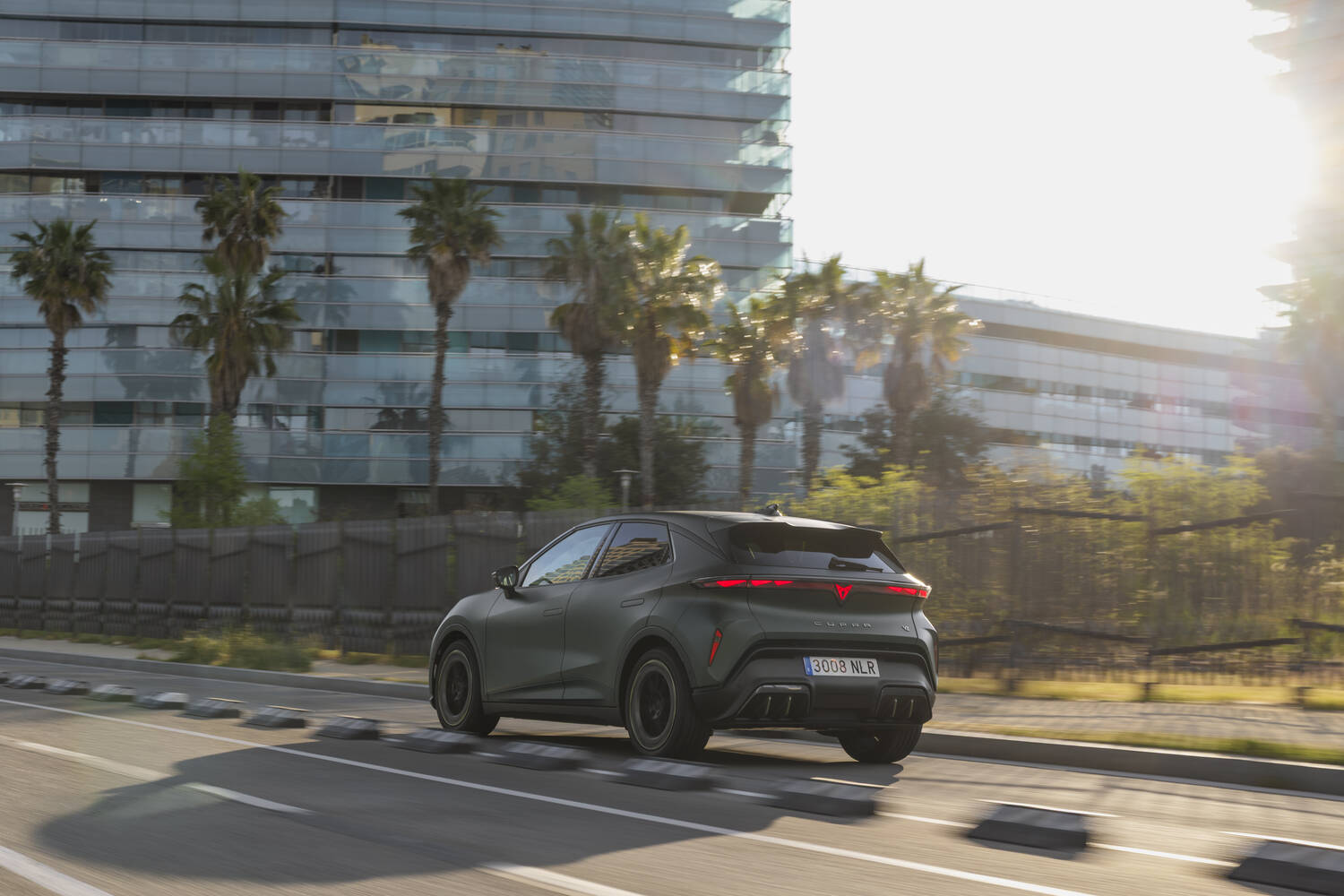
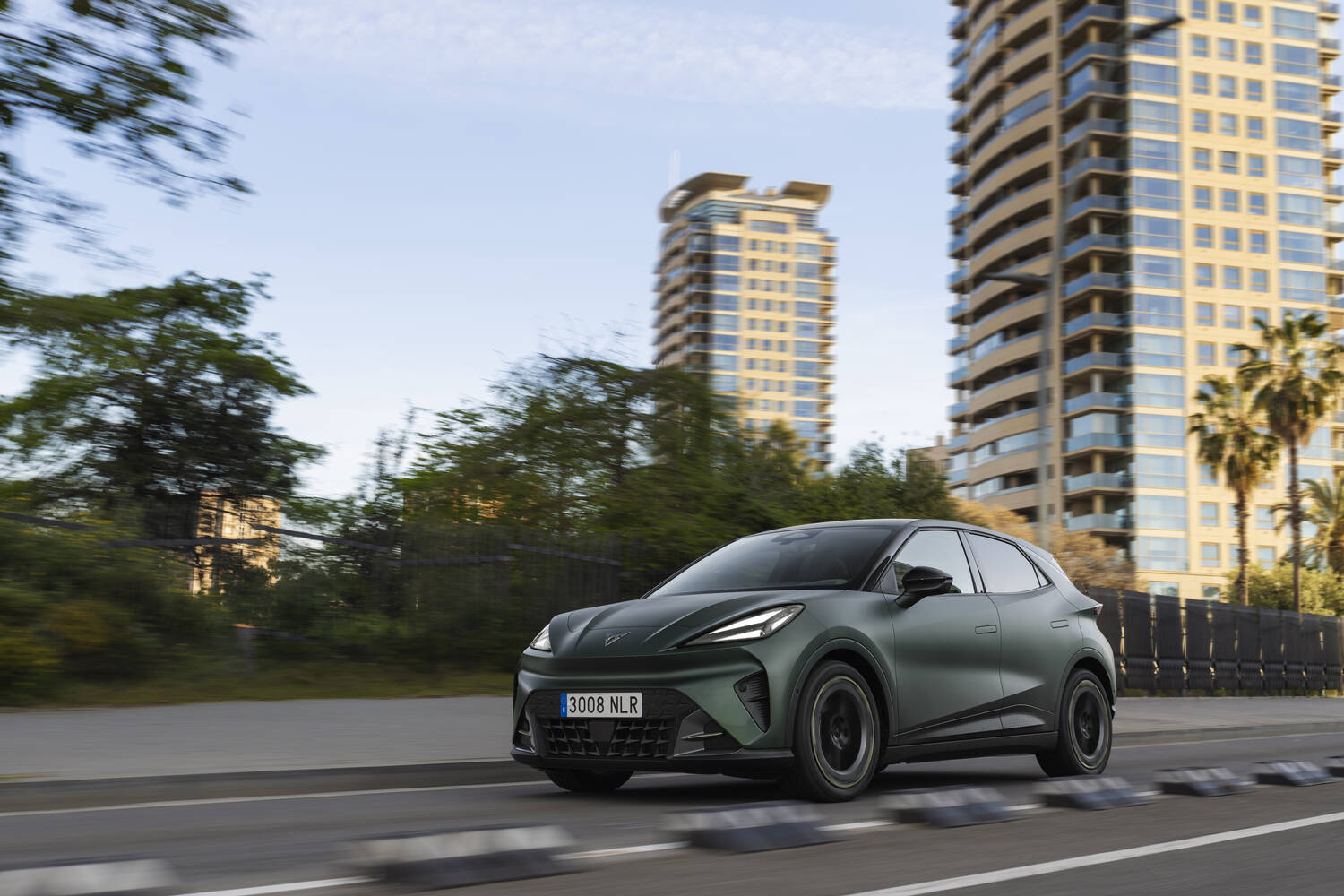
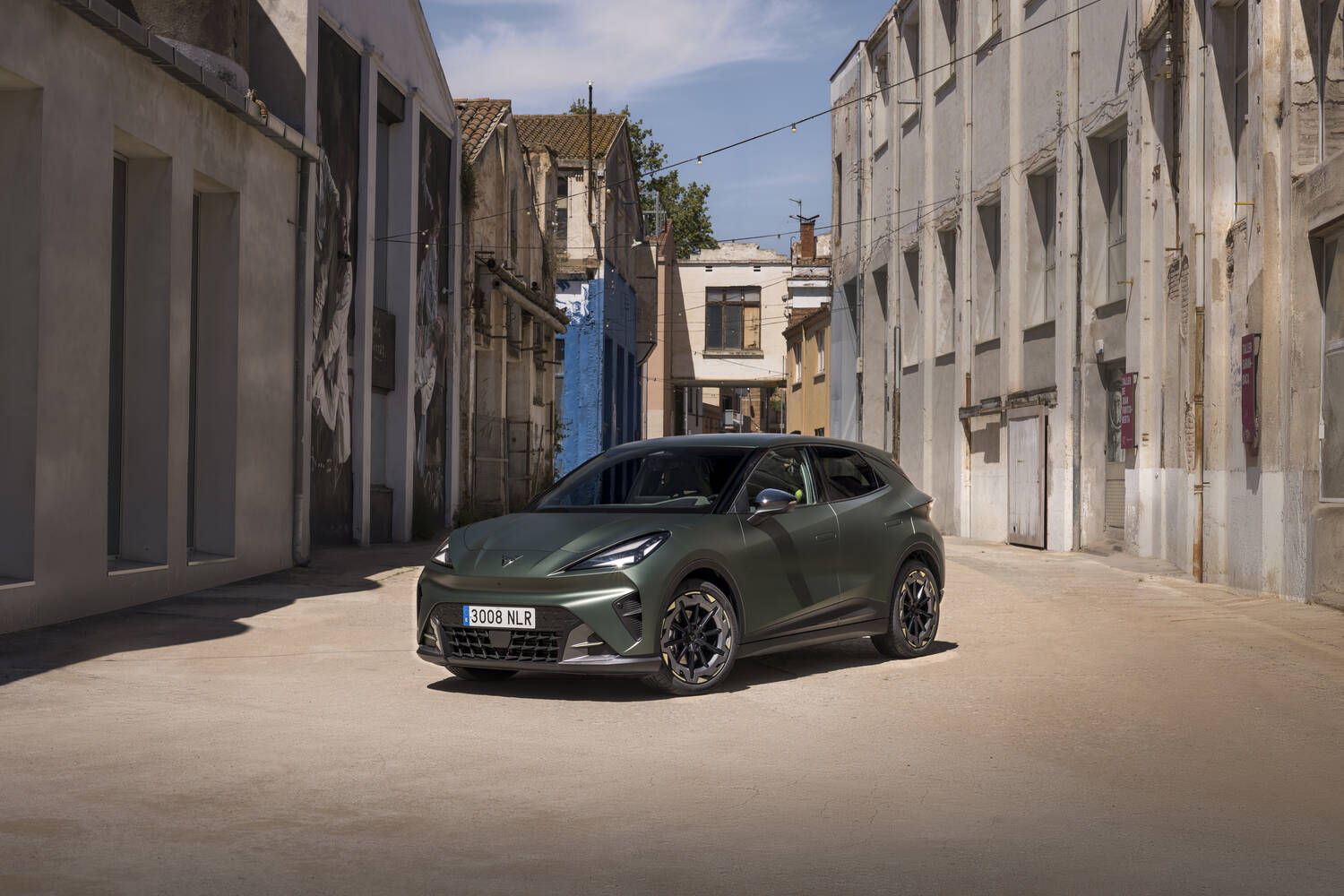
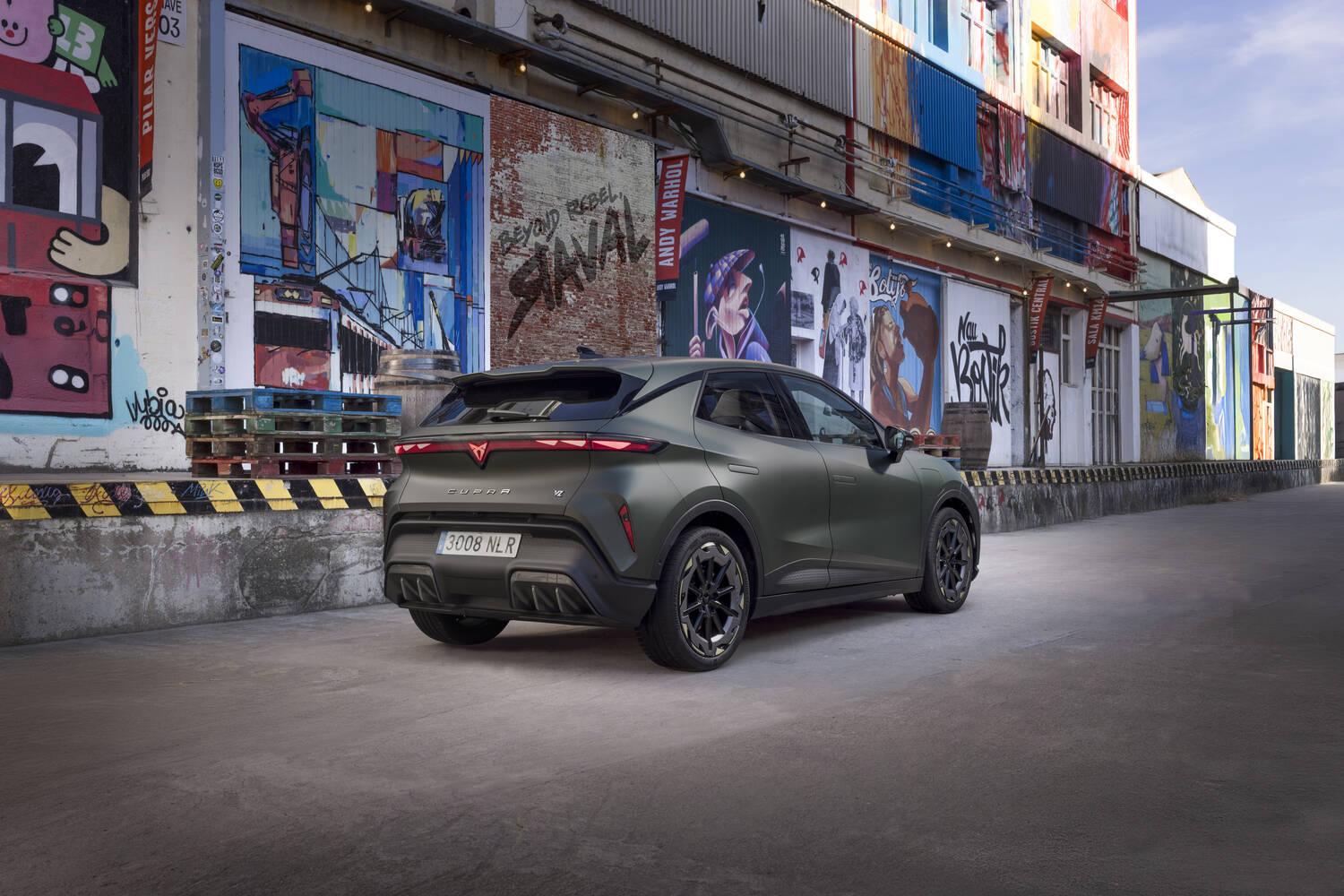
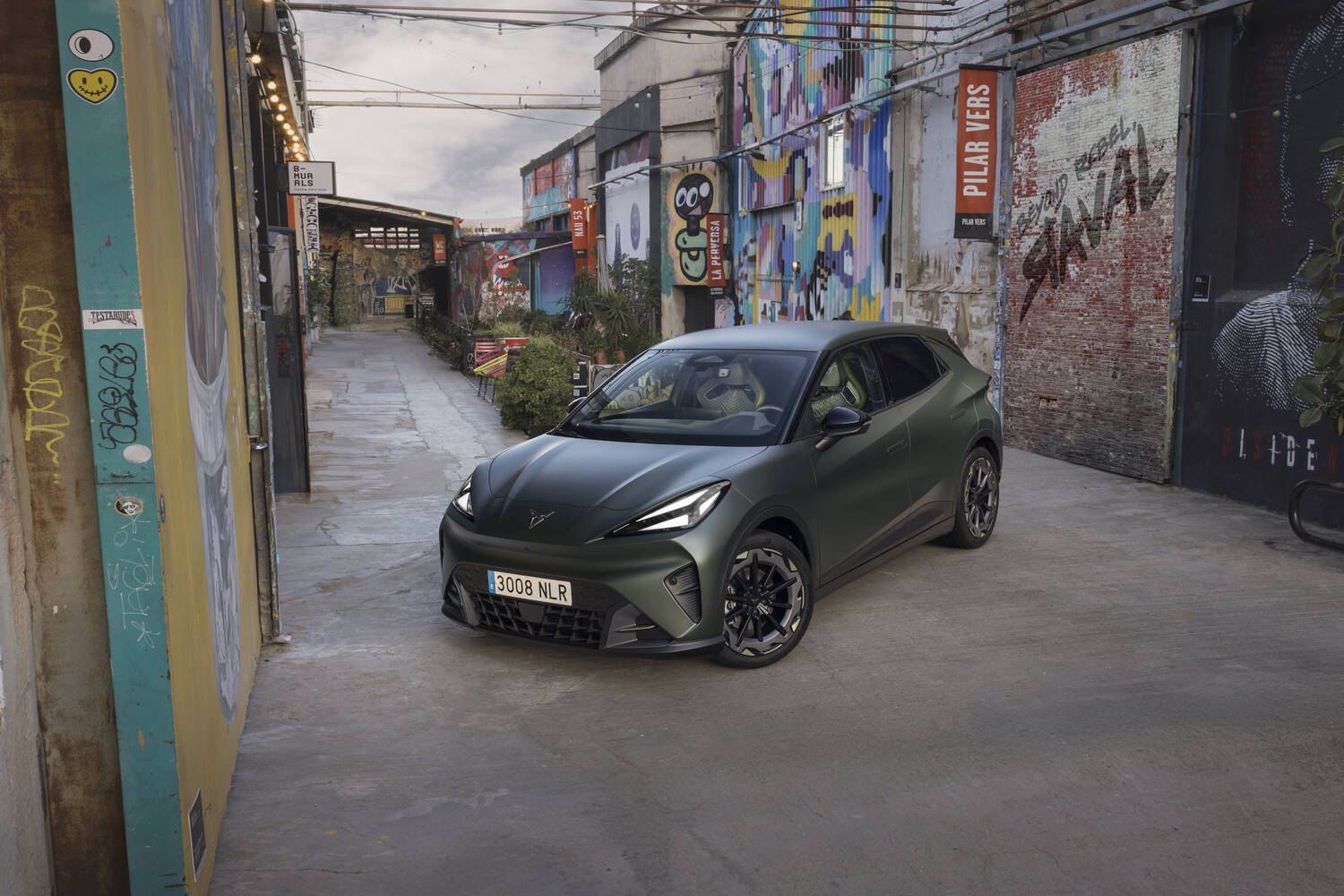
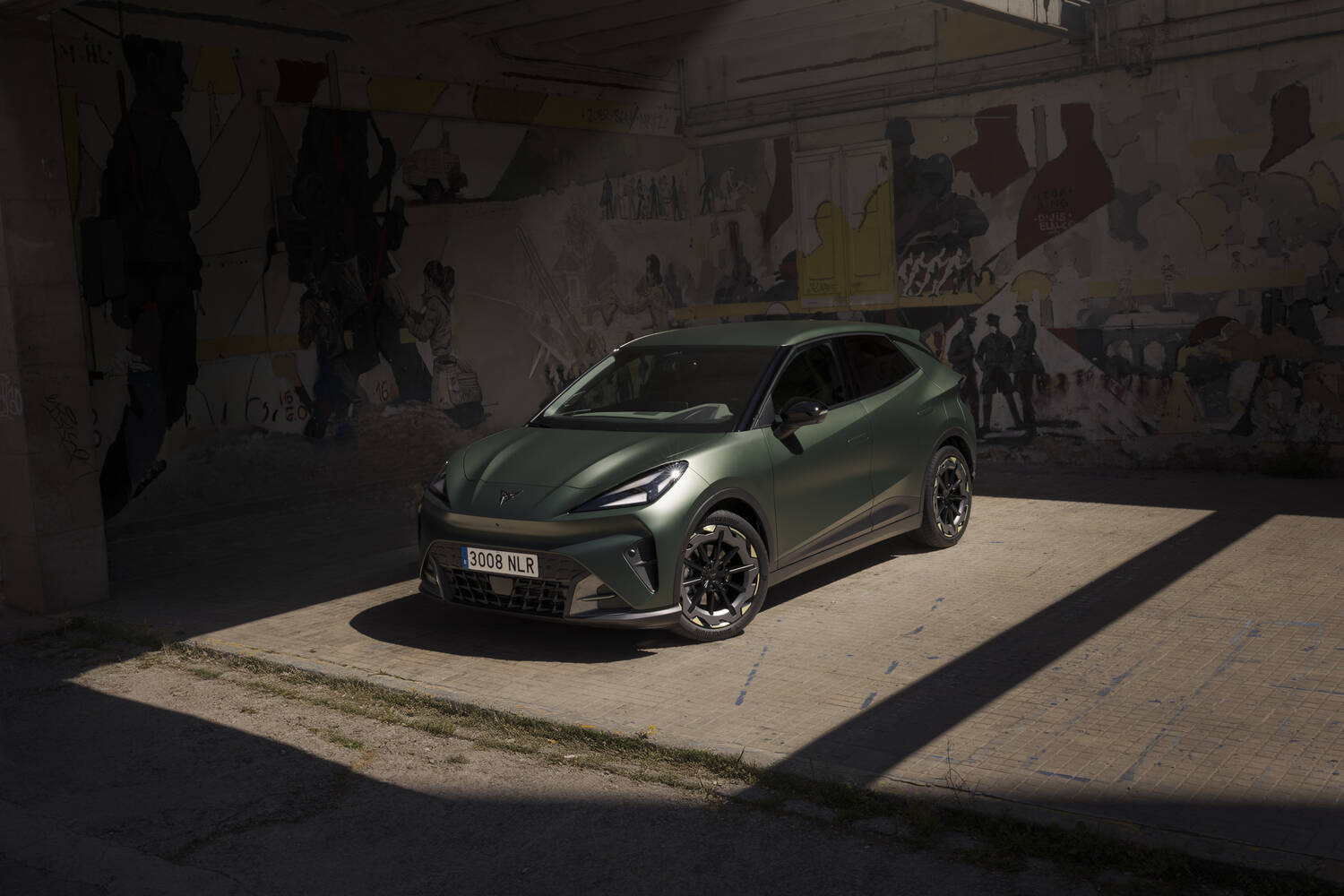
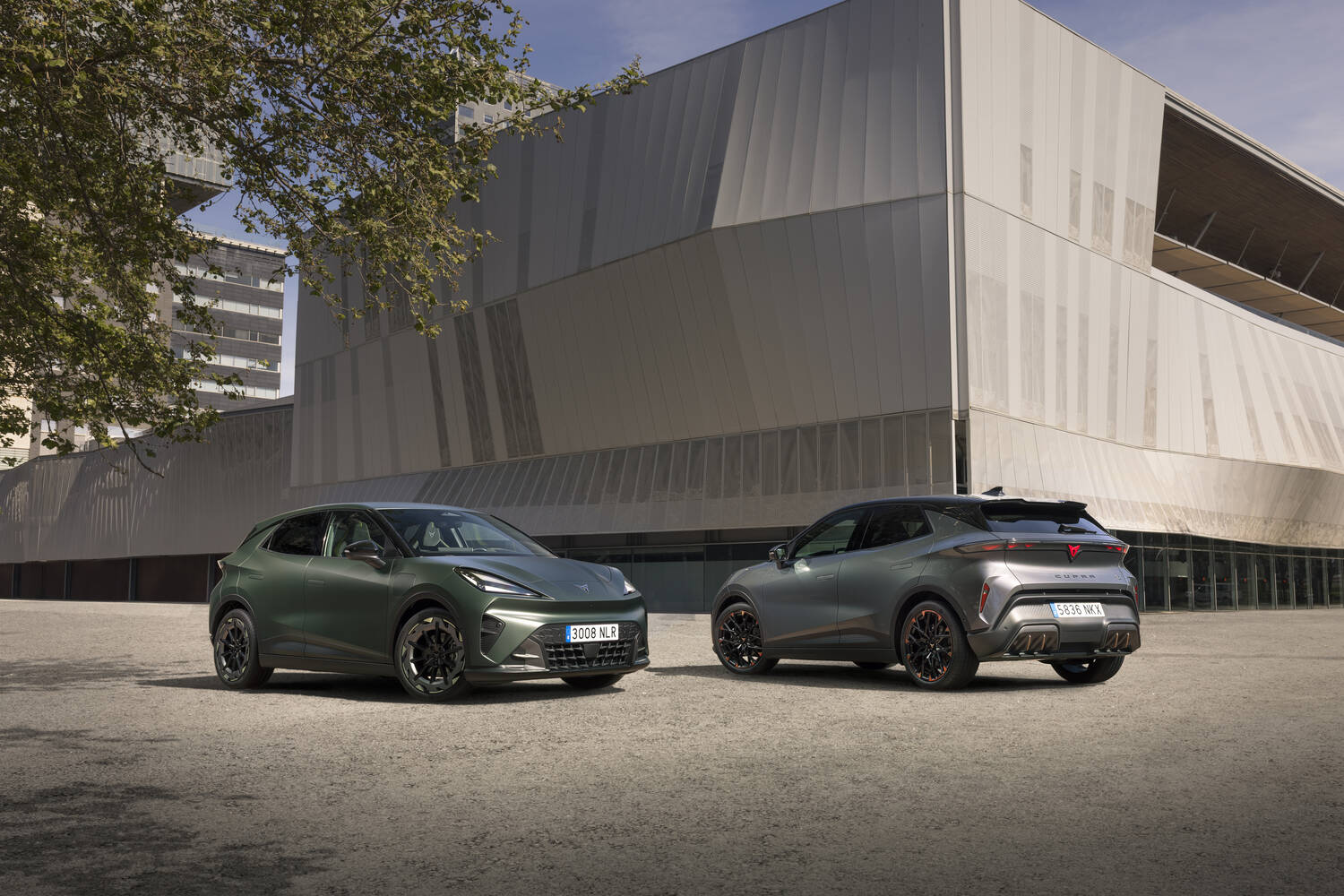
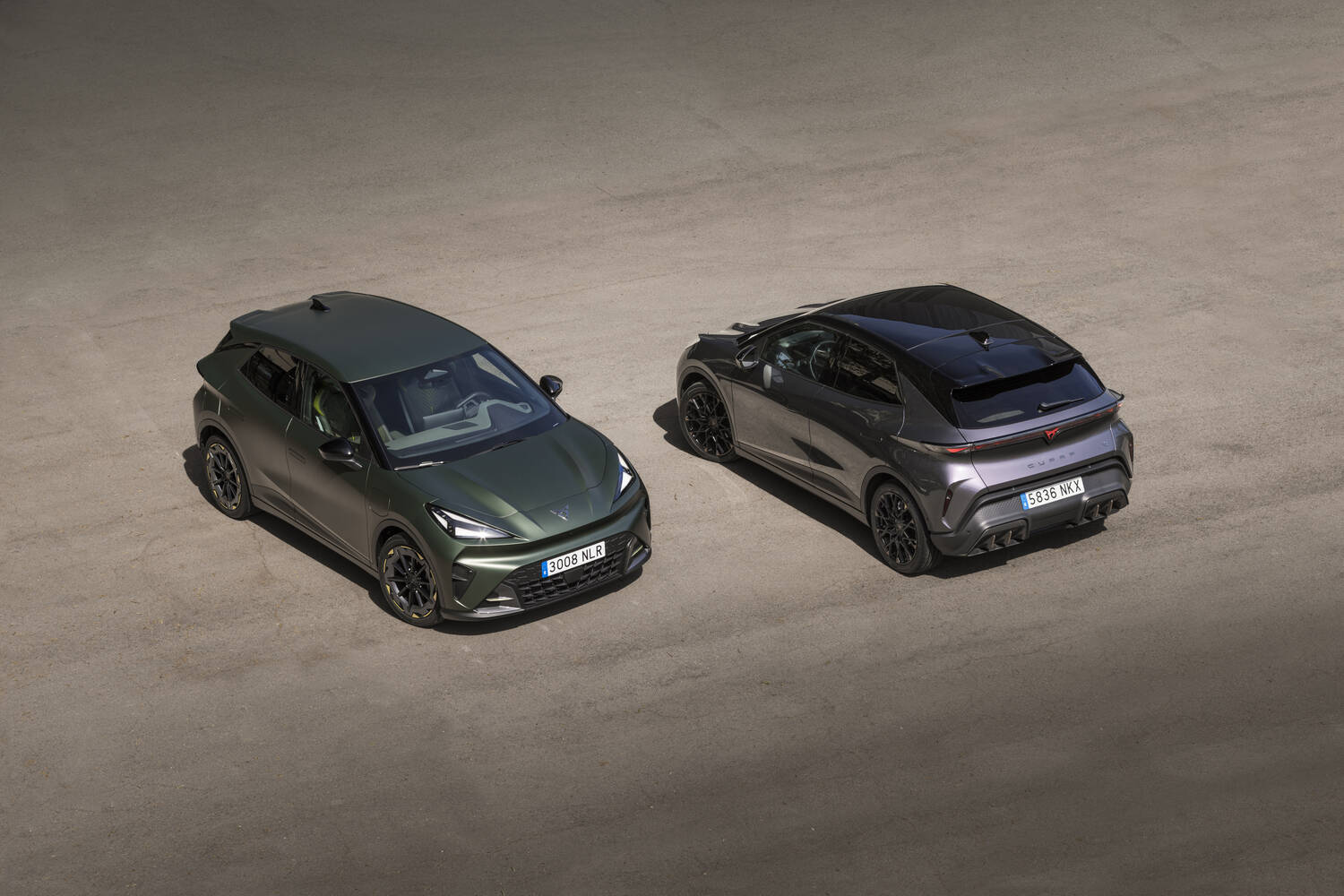
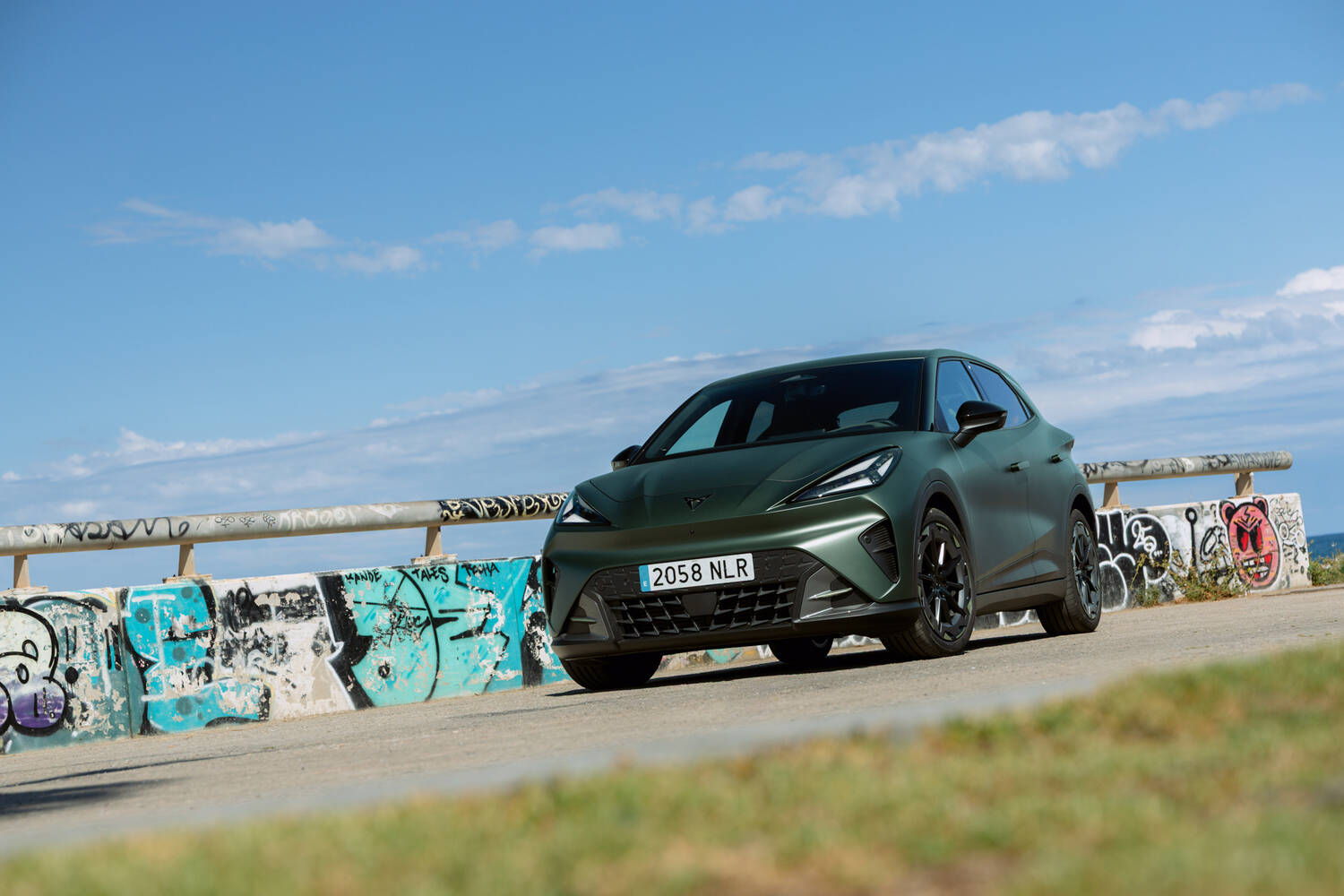
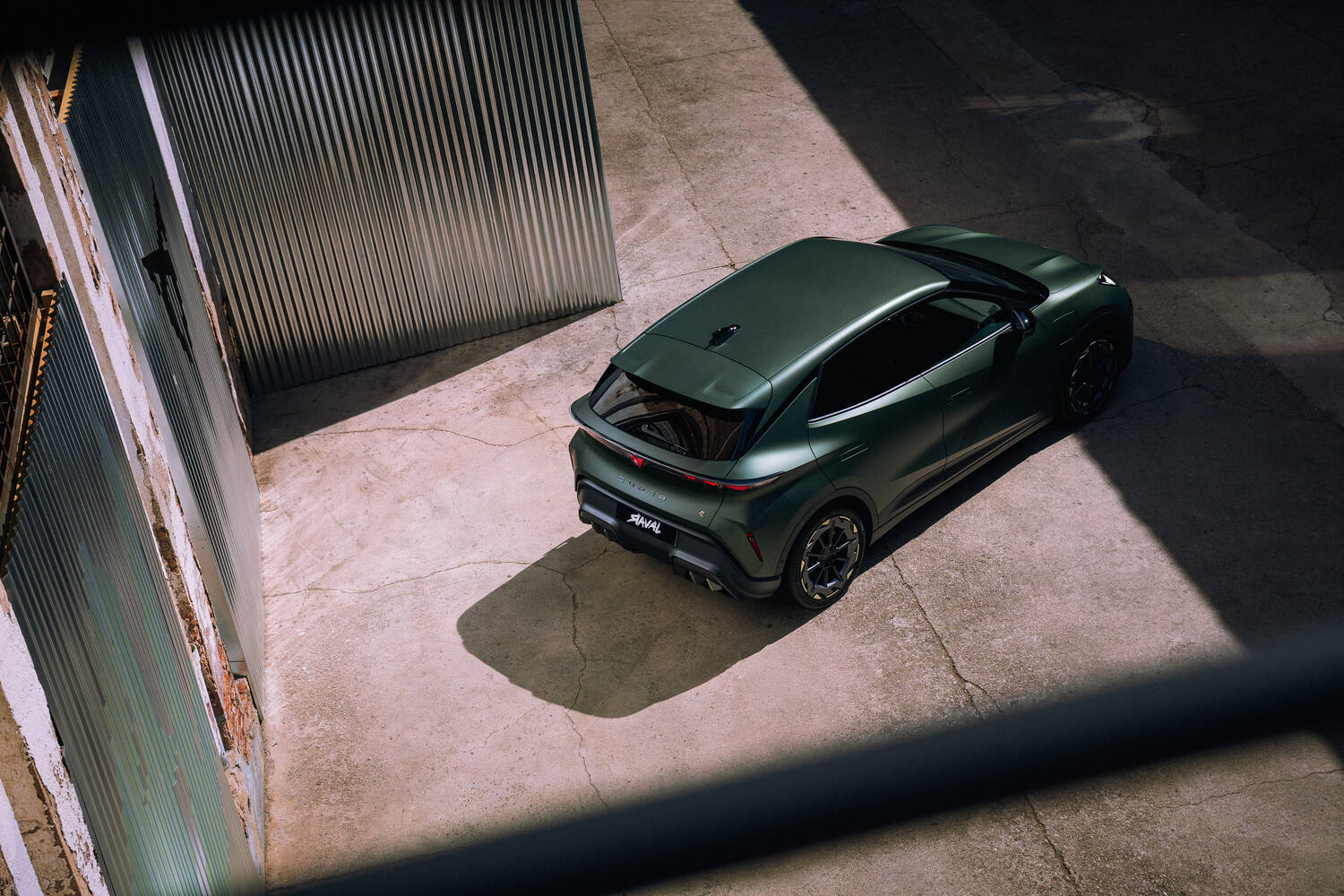
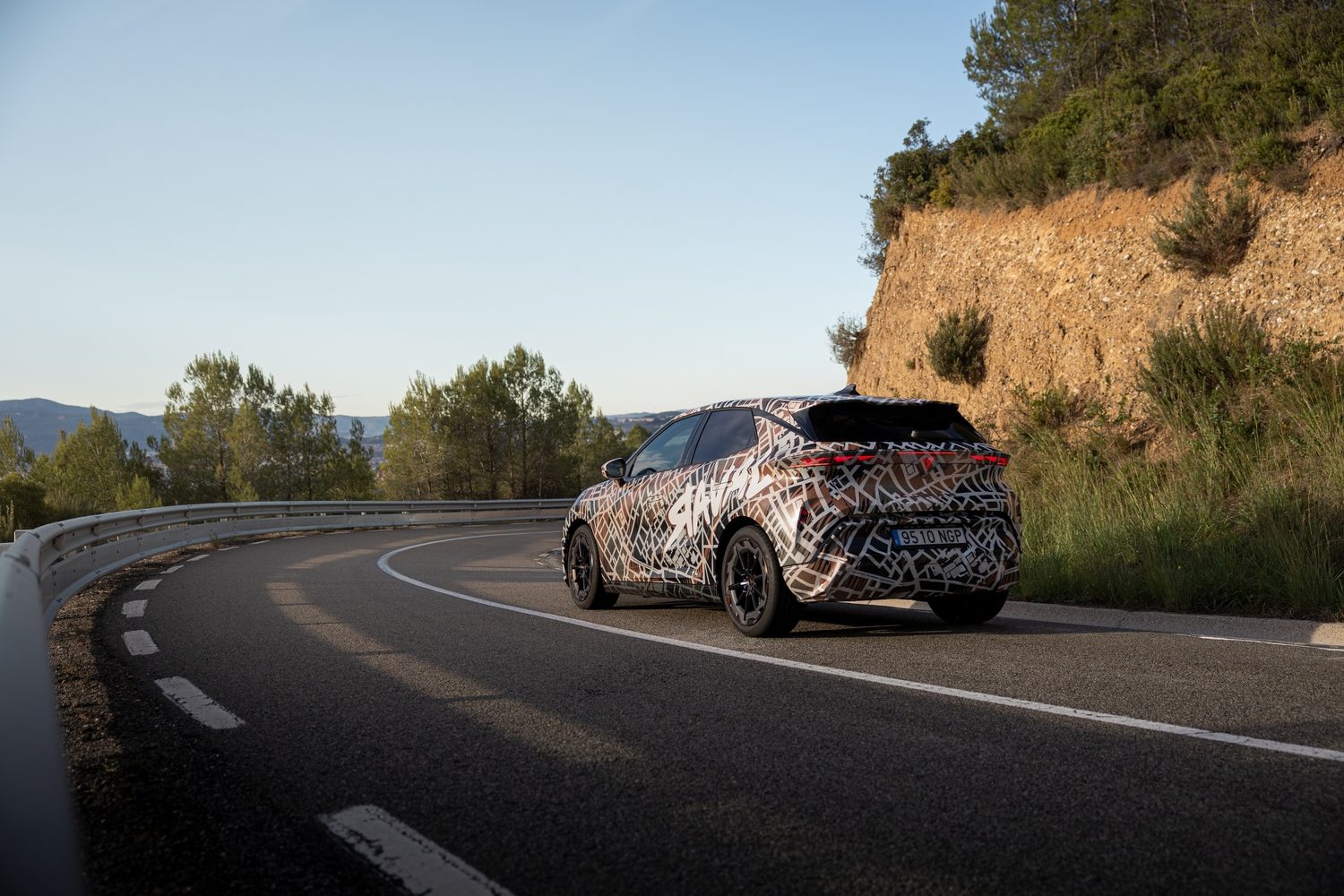
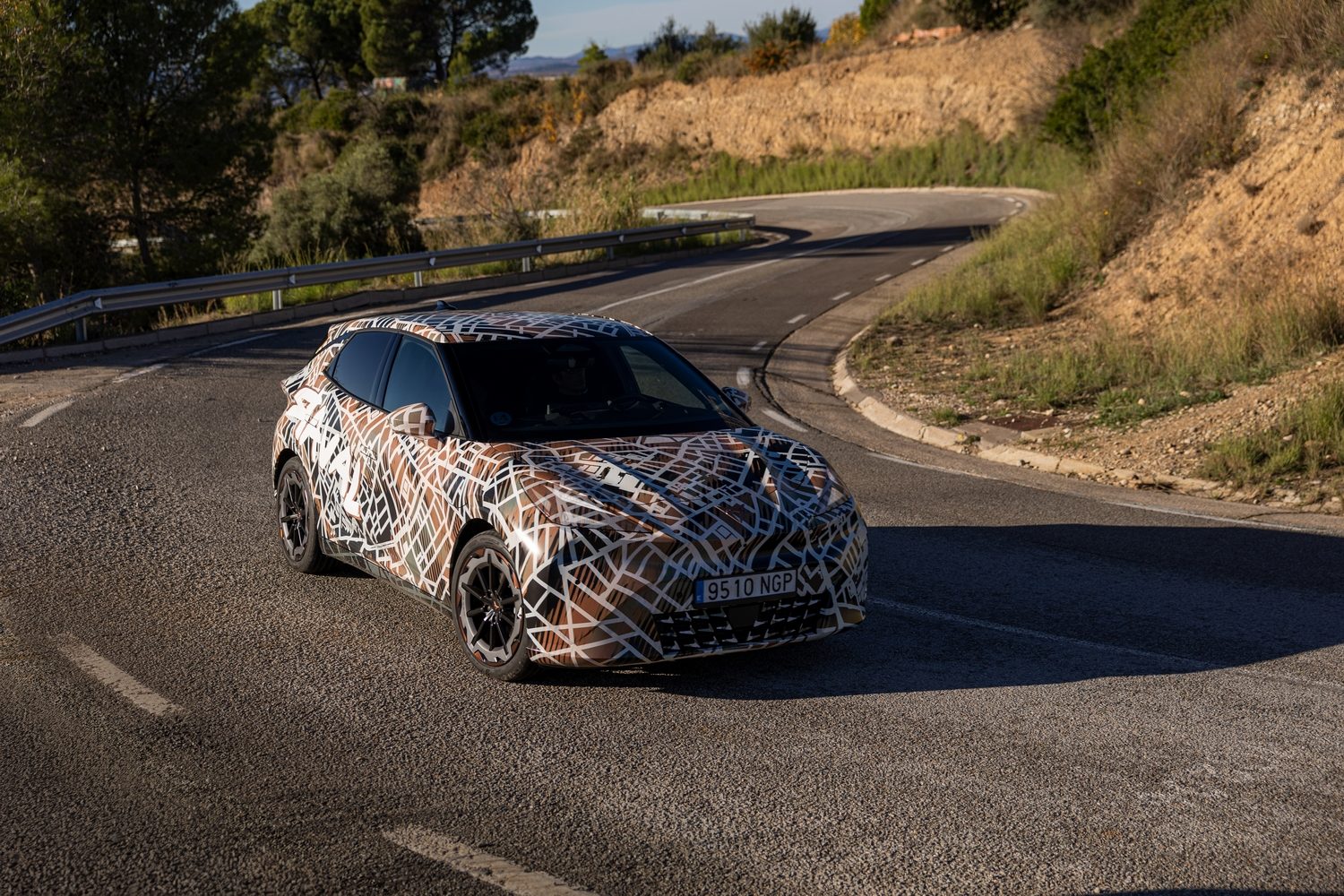
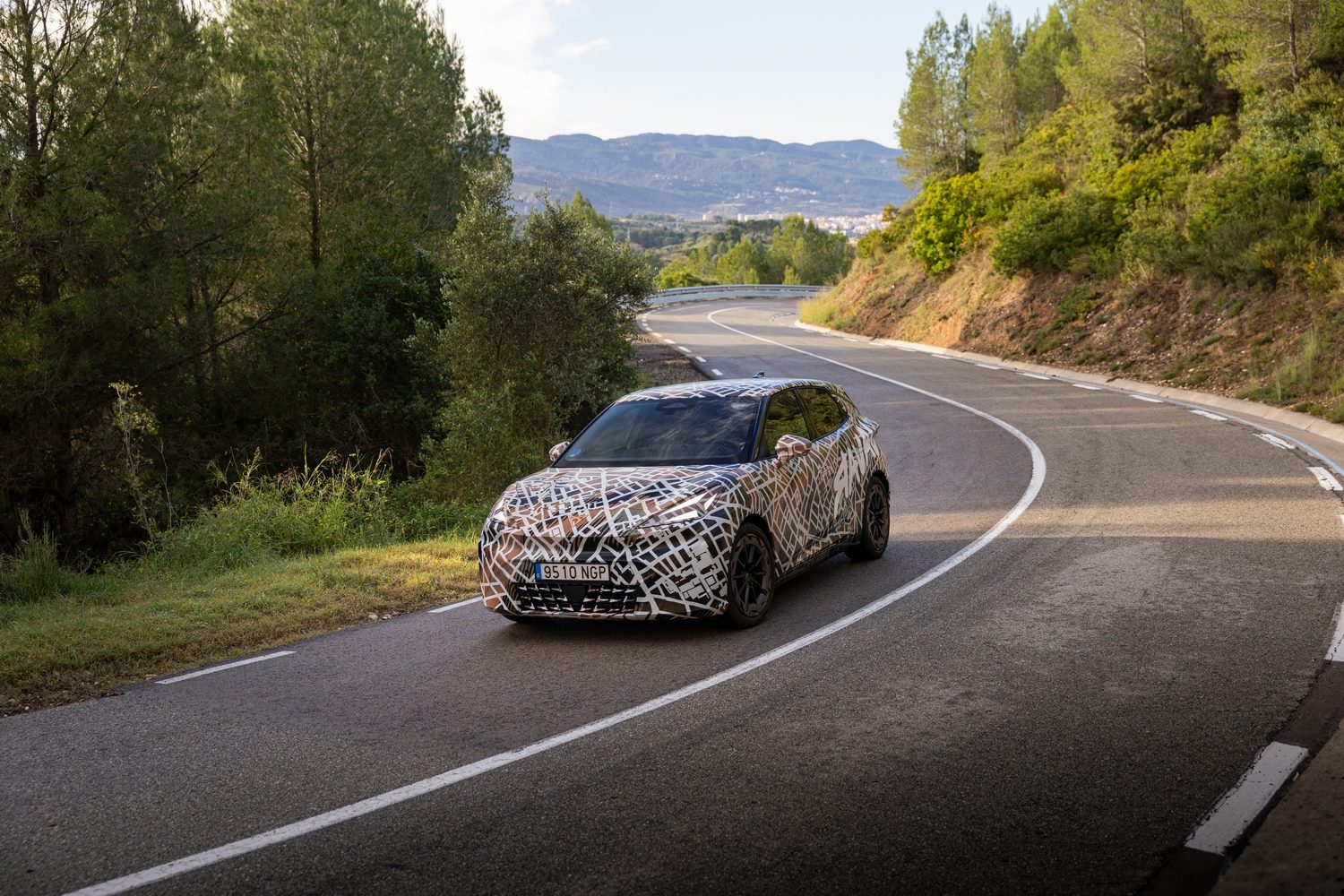
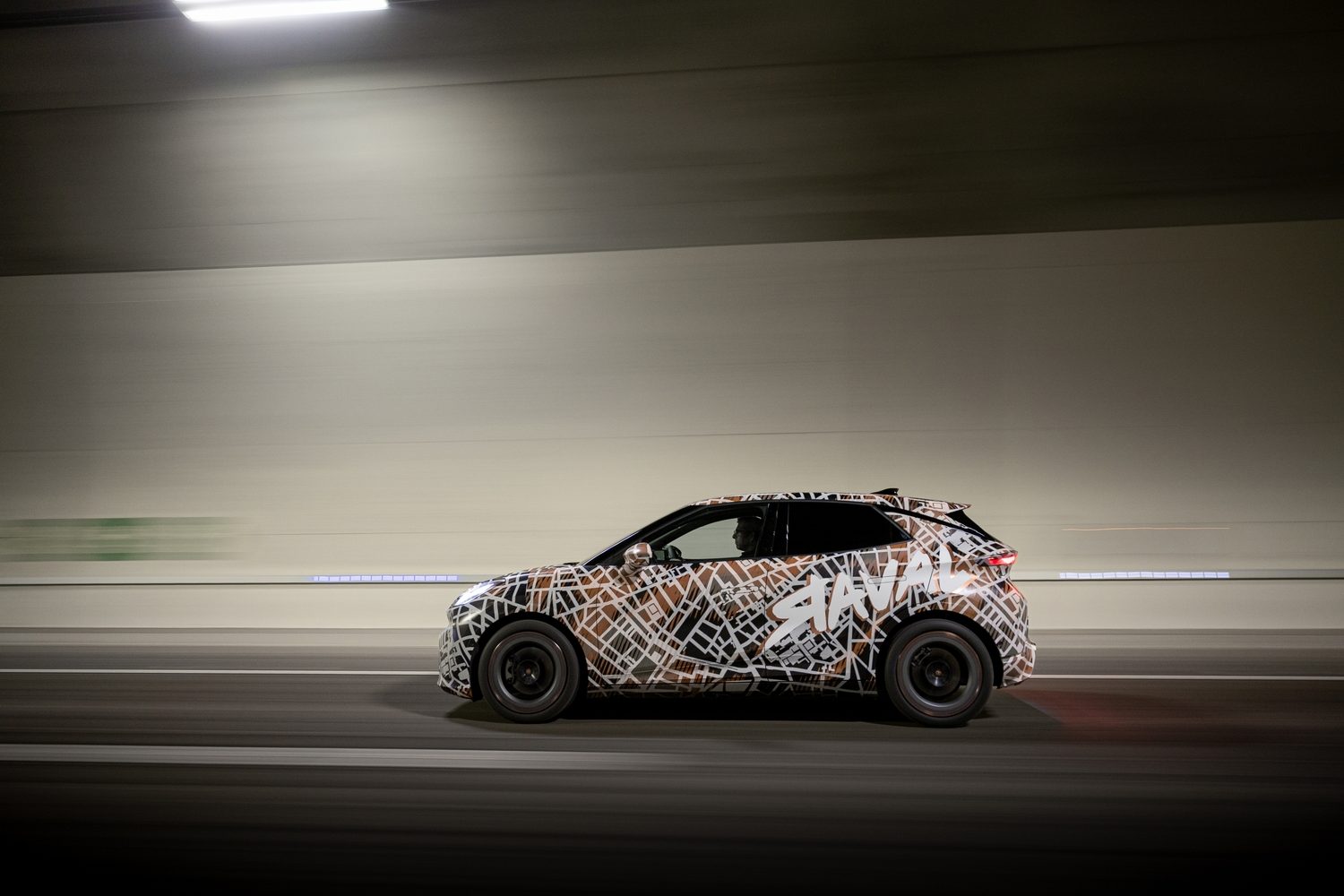
The Raval was originally billed as a compact urban crossover, but once you see it up close, it's much more hatchback-like than you expect, and that's very definitely a compliment.
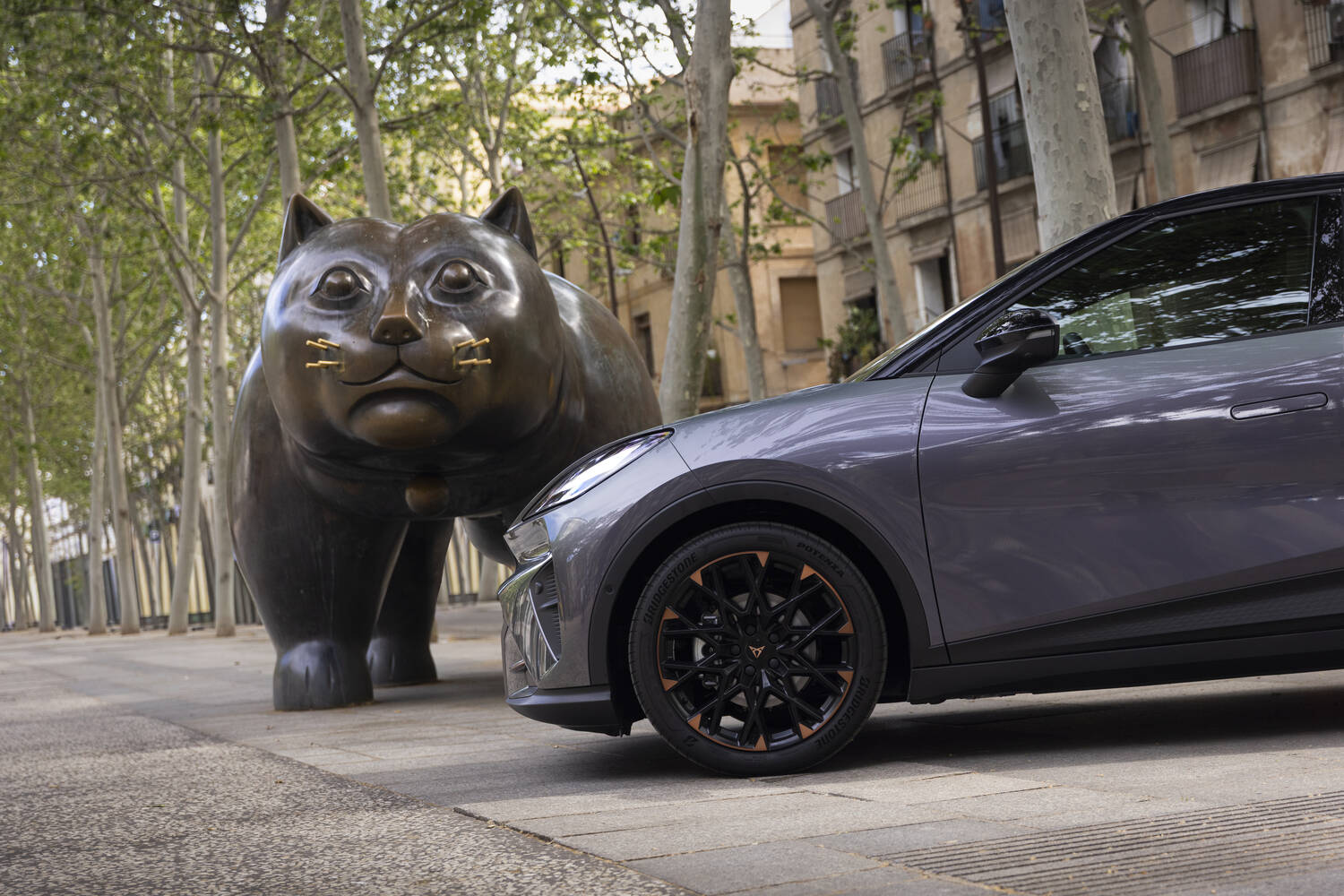
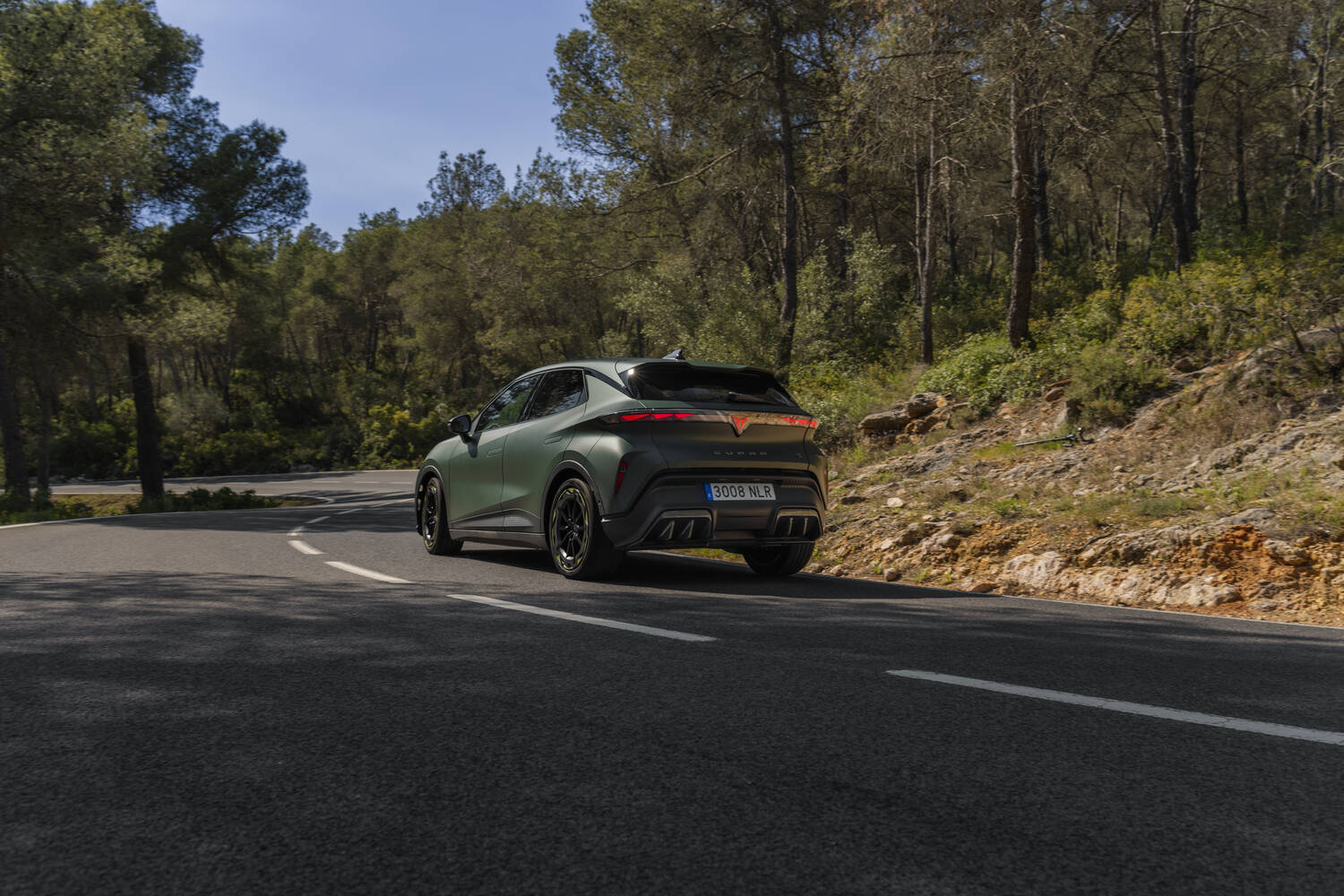
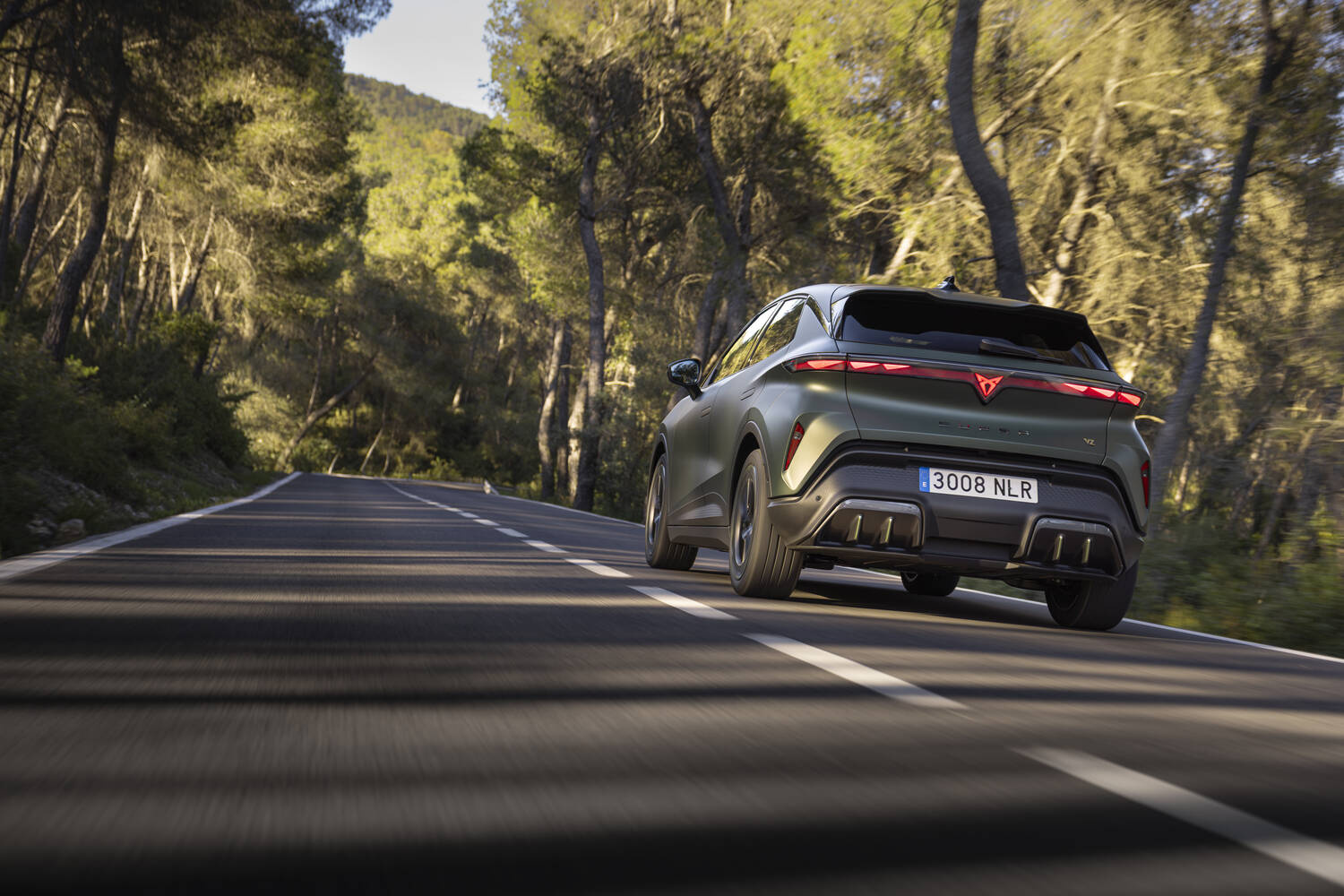
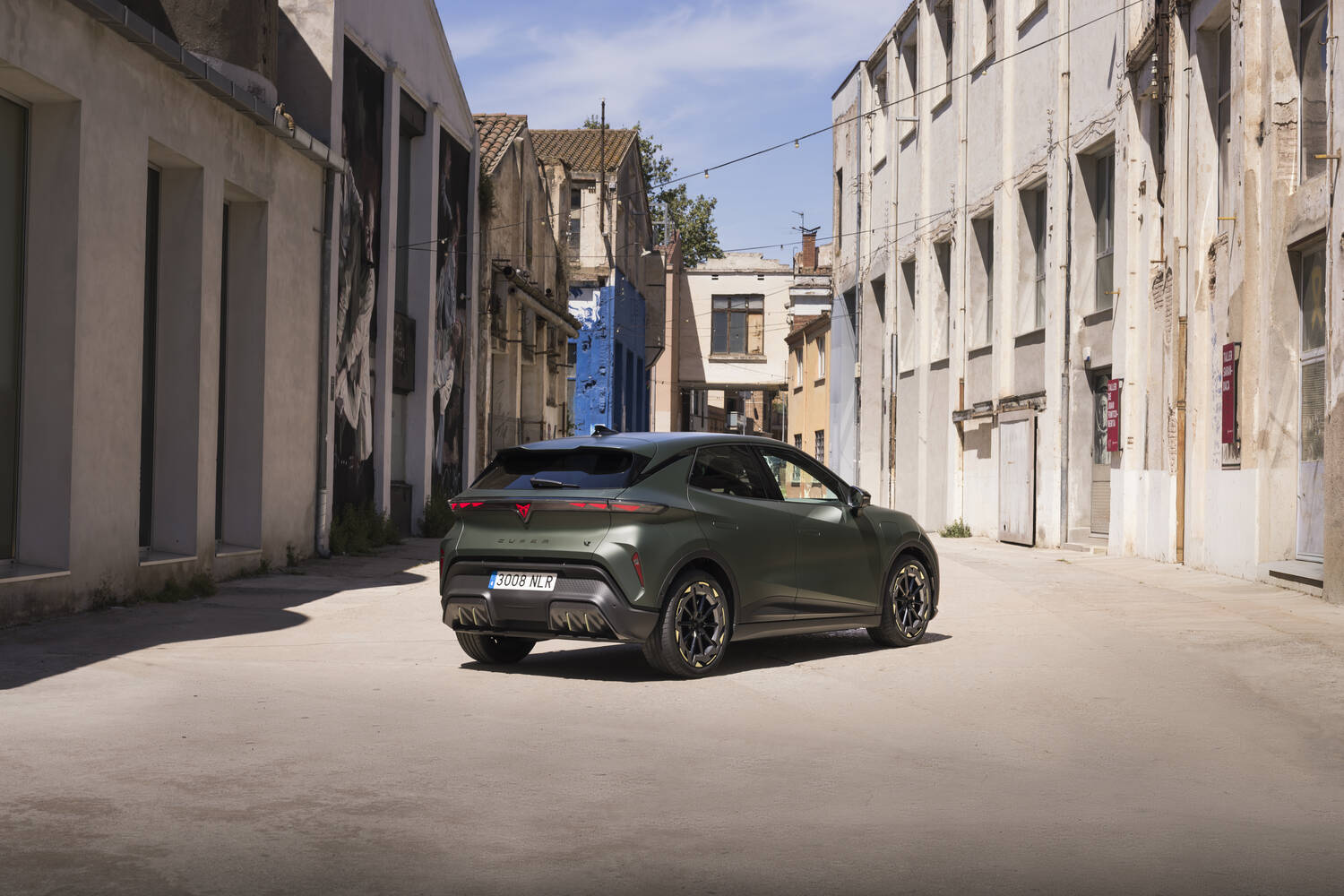
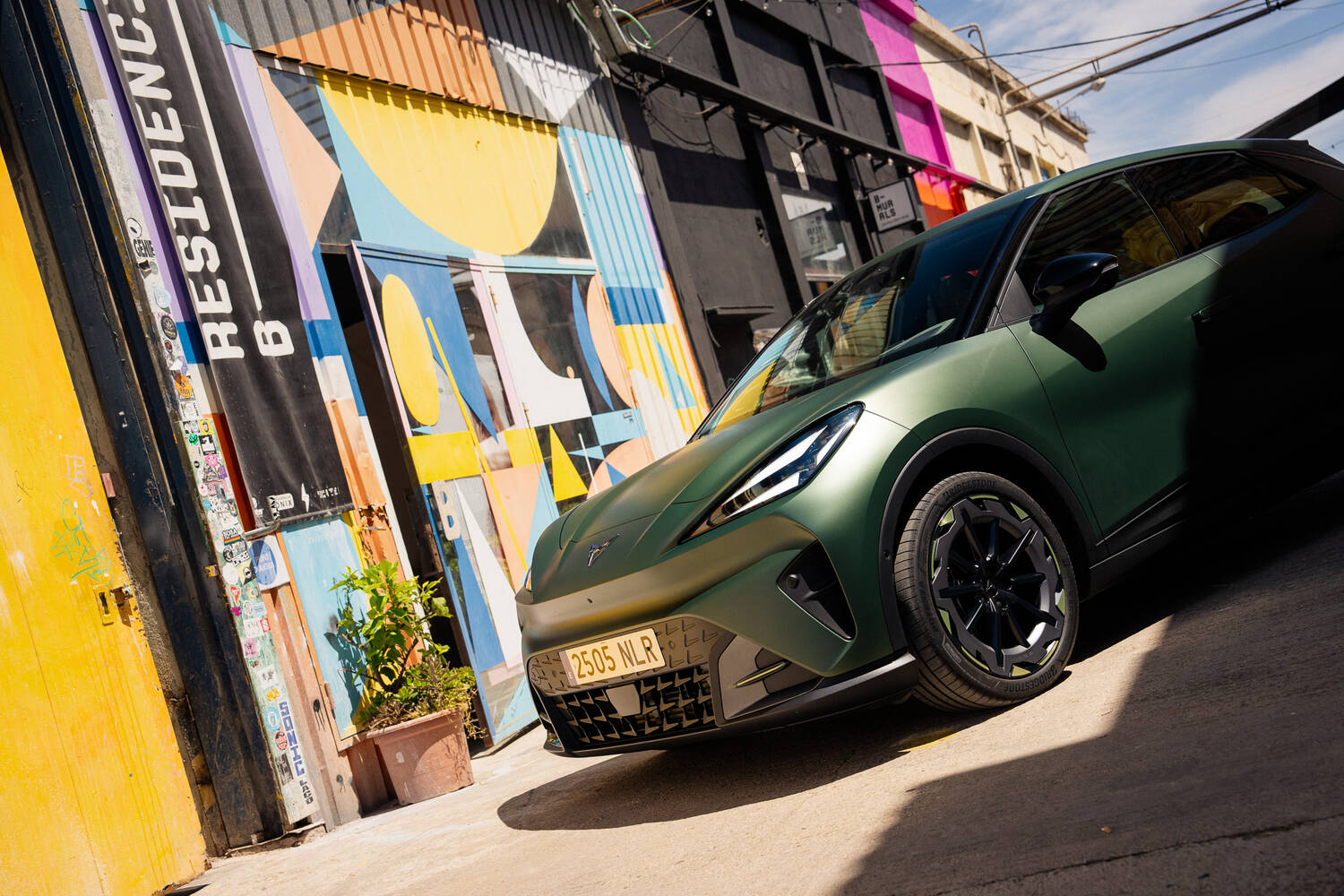
True, the chunky wheelarches, filled with the 19-inch rims of our VZ test car, have an SUV-like quality to them, but the rest of the Raval's bodywork seems impressively taut, from a beak-like nose to the nicely angular rear.

The roof seems to wrap quite tightly over the bodywork, again emphasising the Raval's compact dimensions. This is not a bulky car, and it's all the better for it.
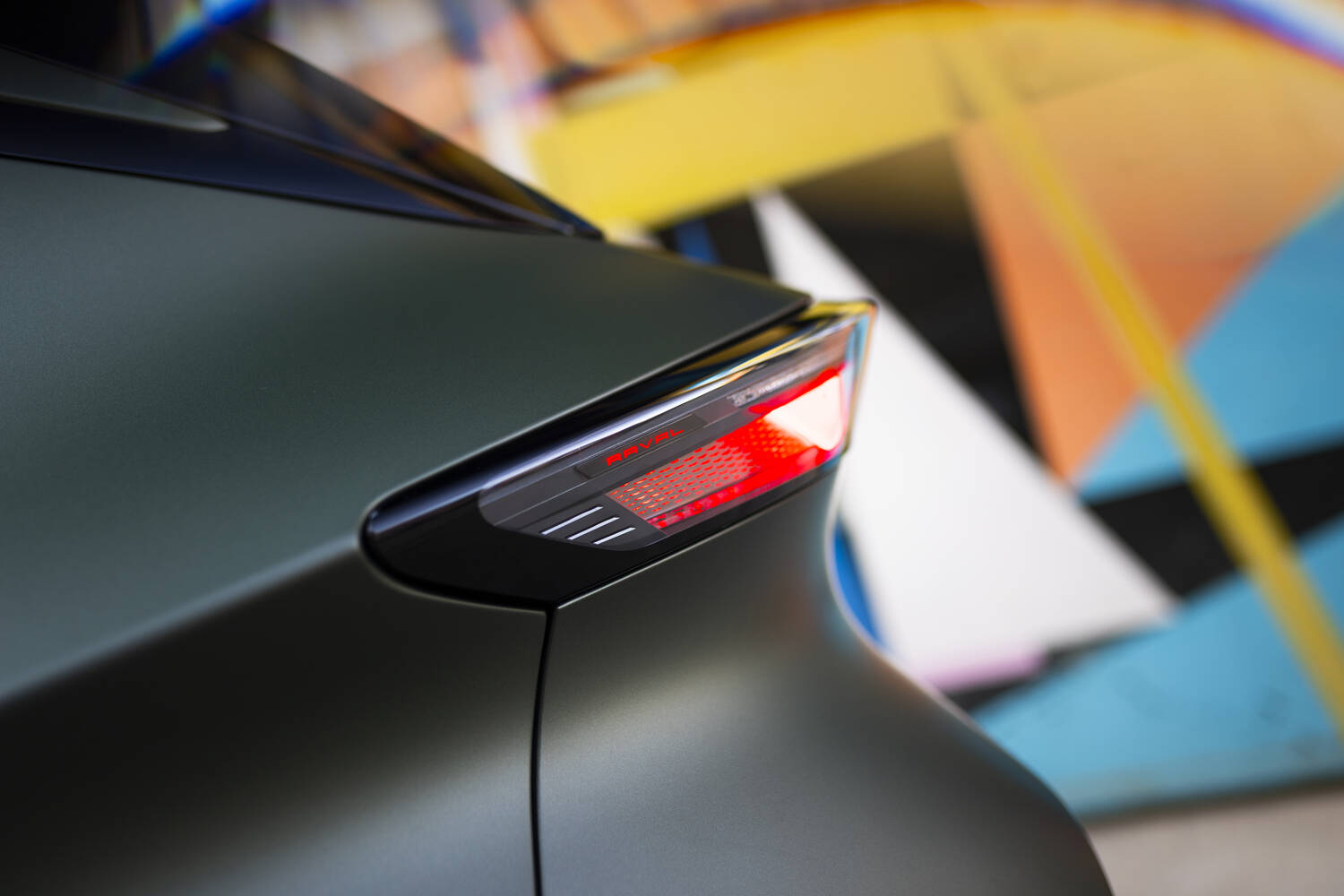
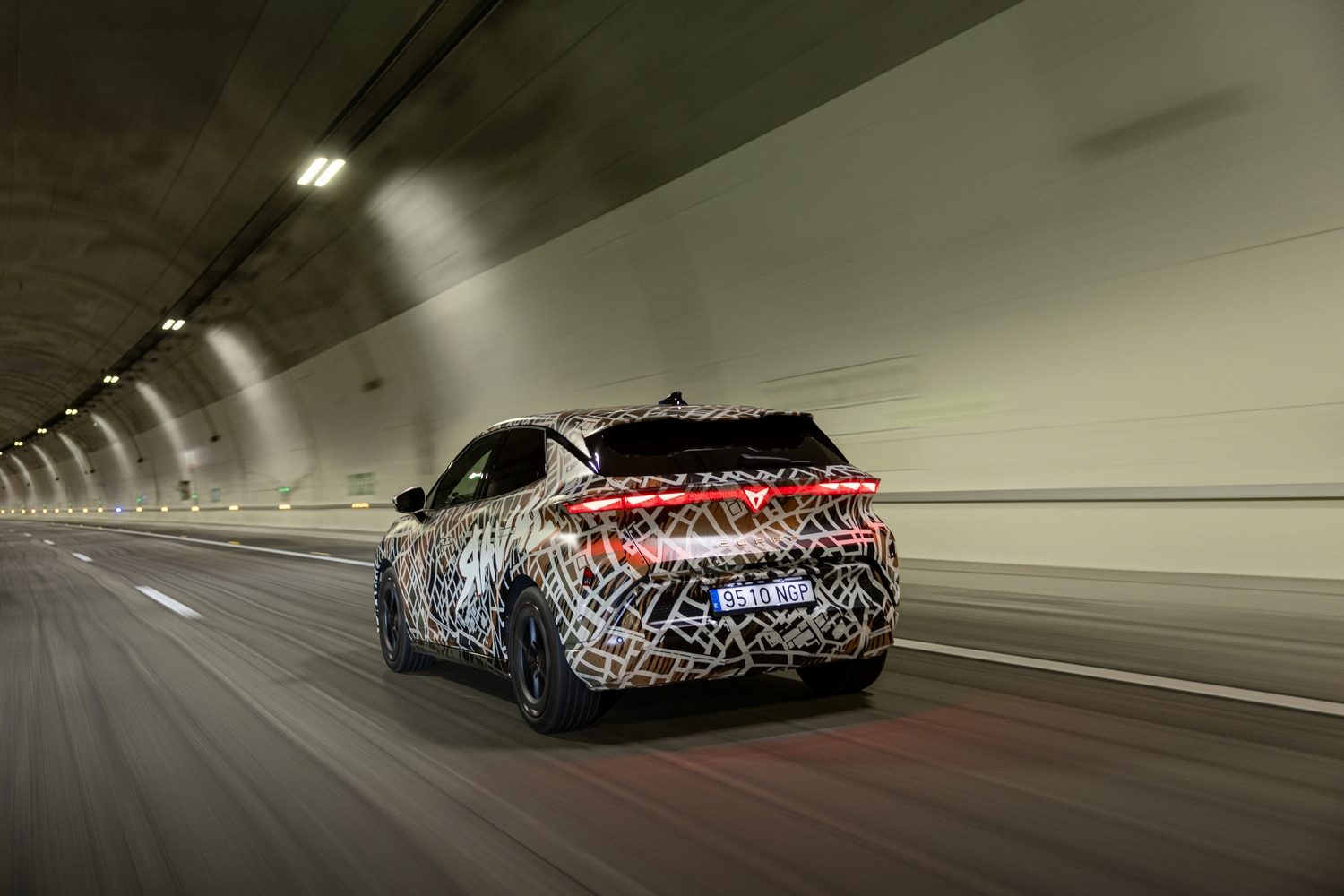
The rest of the Raval looks great, with smooth surfacing all around, nice detailing in the alloys (you don't have to have the traditional Cupra copper highlight colours, but they work well) and brake lights that integrate with a full-width LED light bar which manages not to look tired and hackneyed.

It's just a very handsome, neat-looking car with more than a little touch of purposefulness.
Dimensions of the 2026 Cupra Raval
Length: 4,046mm
Width: 1,784mm (excluding mirrors)
Height: 1,518mm
Wheelbase: 2,600mm
Paint colours for the 2026 Cupra Raval
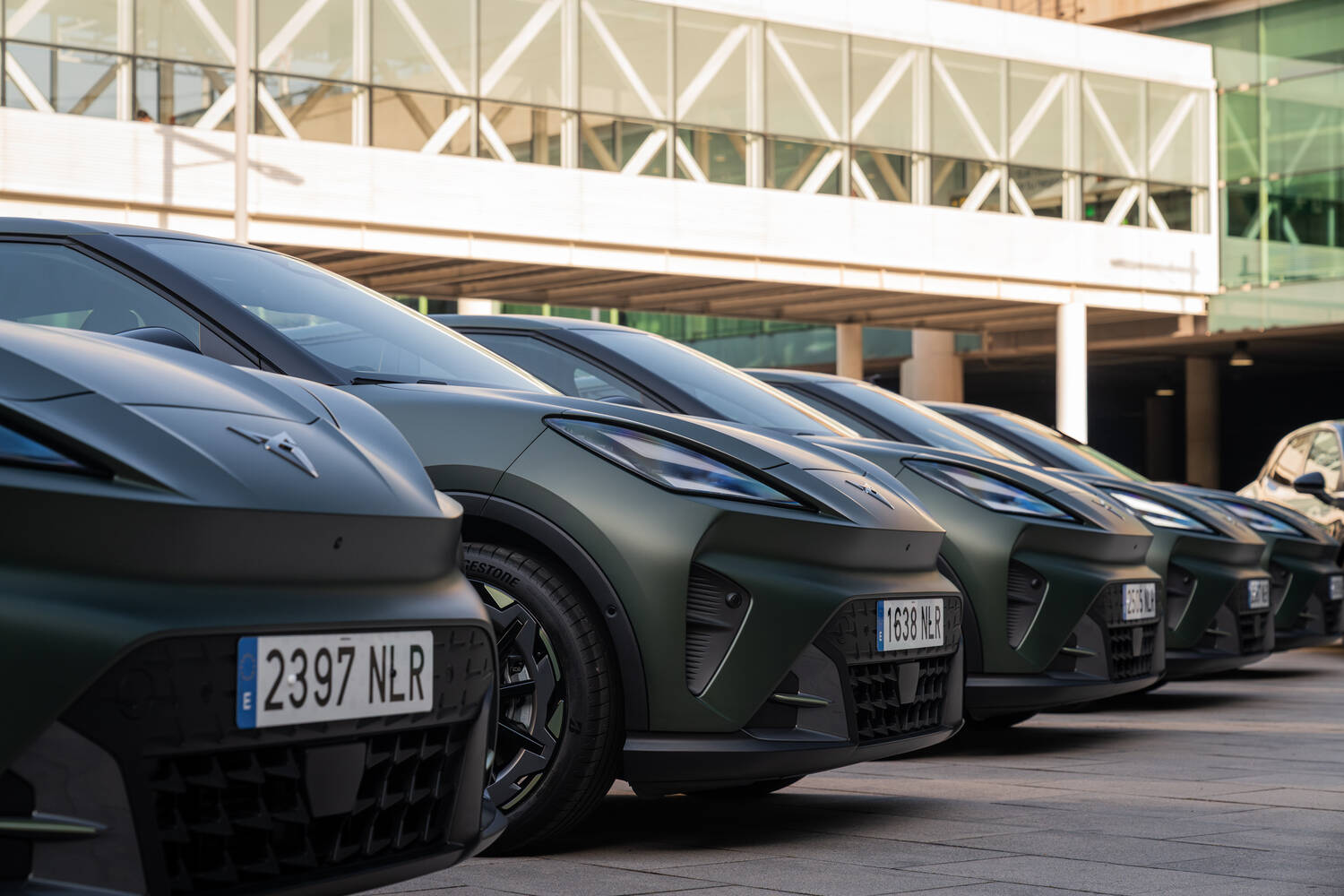
While others might offer a lively red or a shiny blue, Cupra wants to have all its cars in darker, moodier shades, many of them with a matt finish.

Paint option prices haven't been announced yet, but we're going to assume that the no-cost colour option will be Glacial White Metallic. Other options include Manganese Green Matt (very nice indeed), Century Bronze Matt (bronze always seems to look good on Cupras); Magnetic Tech Metallic (aka dark grey - a bit predictable), Midnight Black Metallic (ditto...), Fjord Blue Soft (quite nice) and Iridescent Plasma Special (a deep, rich grey which reveals purple, gold and red undertones depending on the light).
Interior, practicality, tech & comfort of the 2026 Cupra Raval
• New generation of digital screens
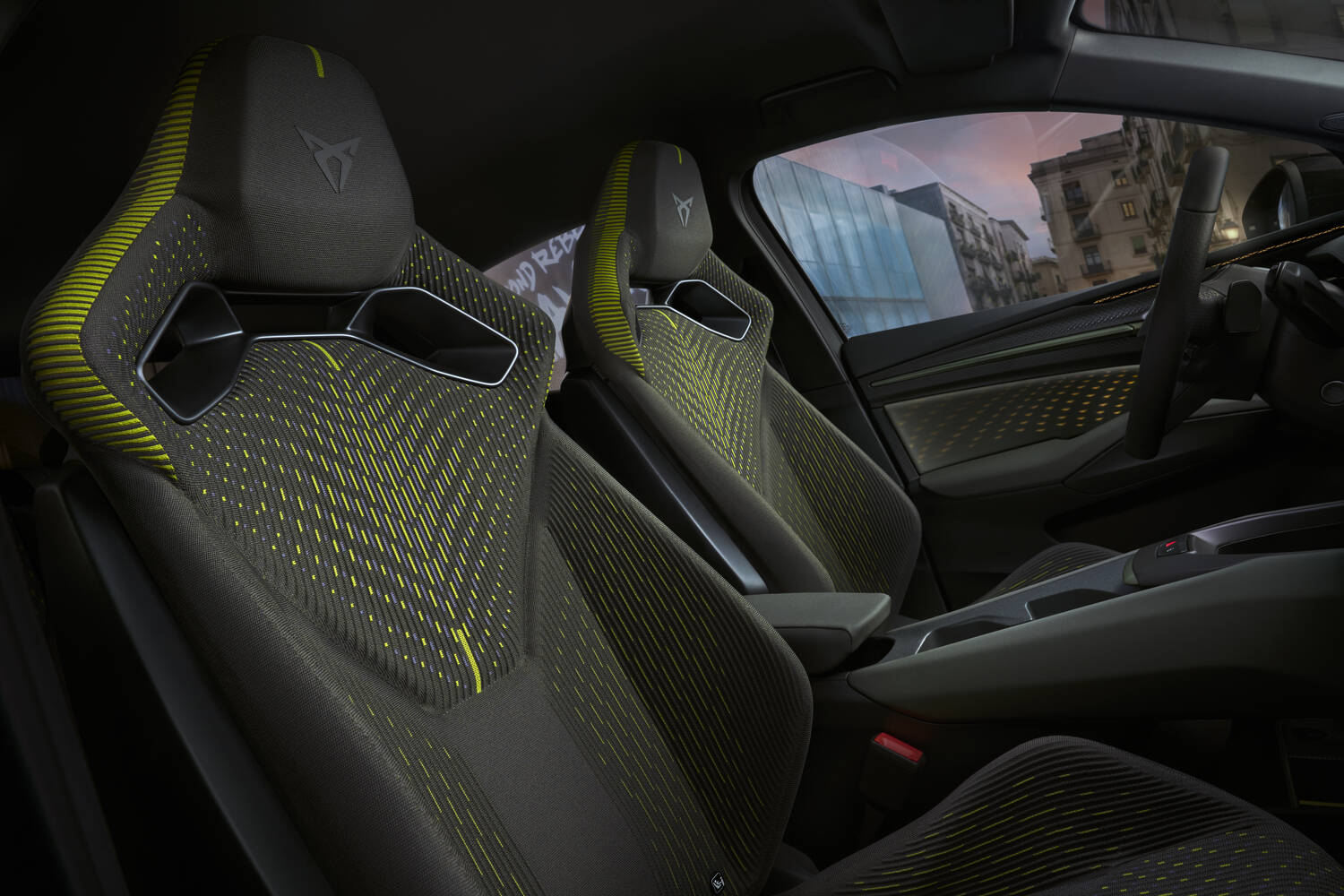
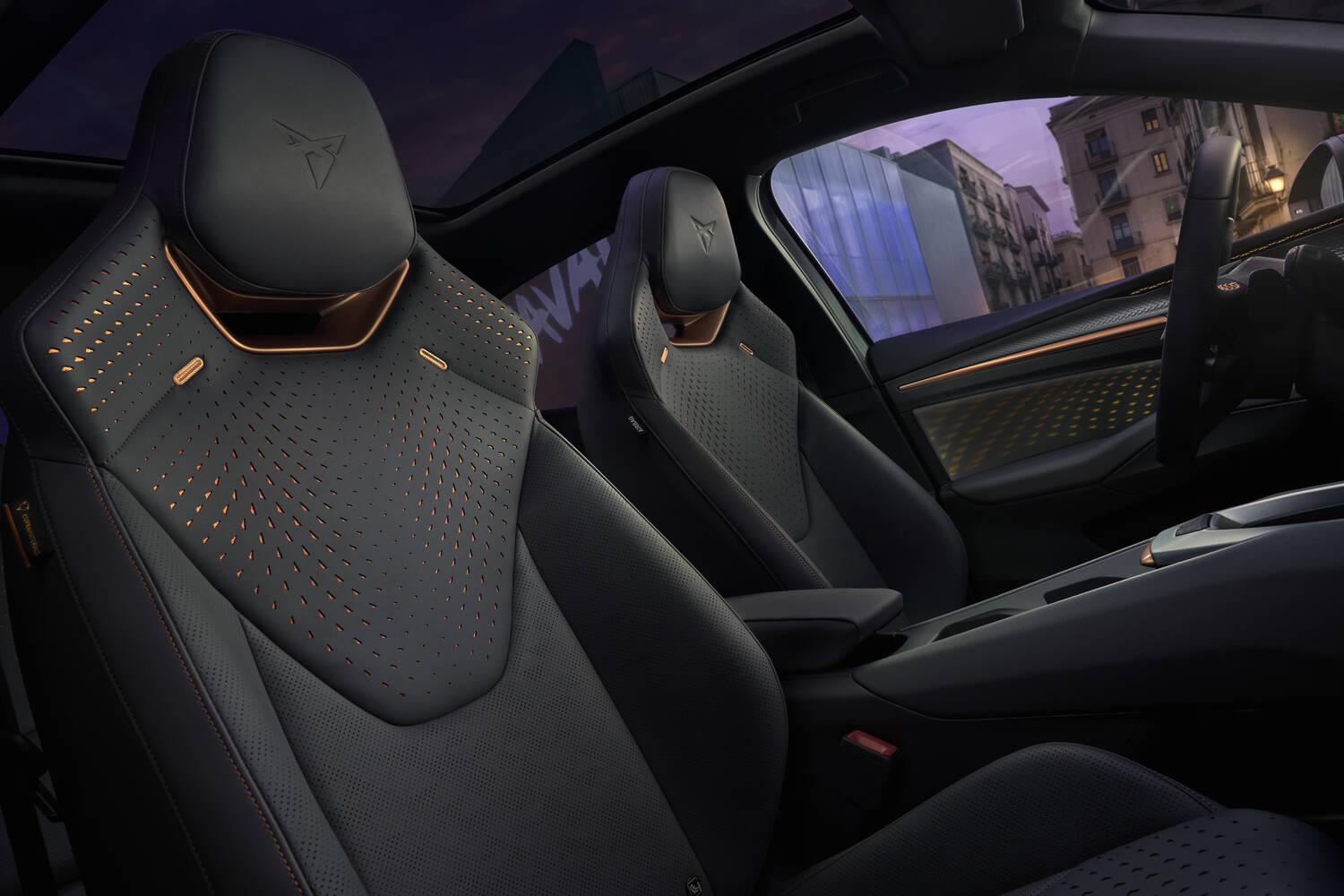
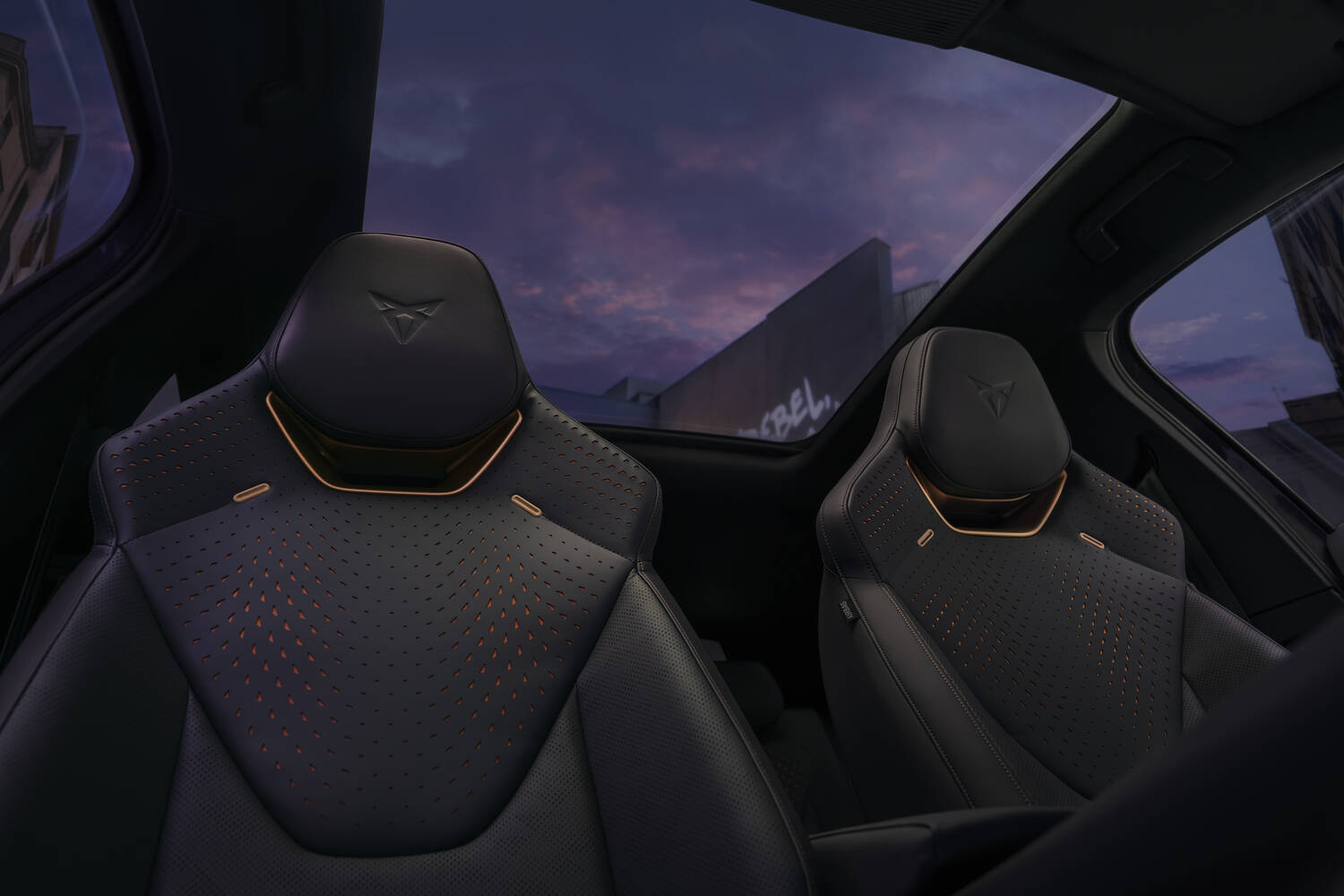
• Cup bucket seats for VZ Extreme
• Still uses touch-sensitive controls

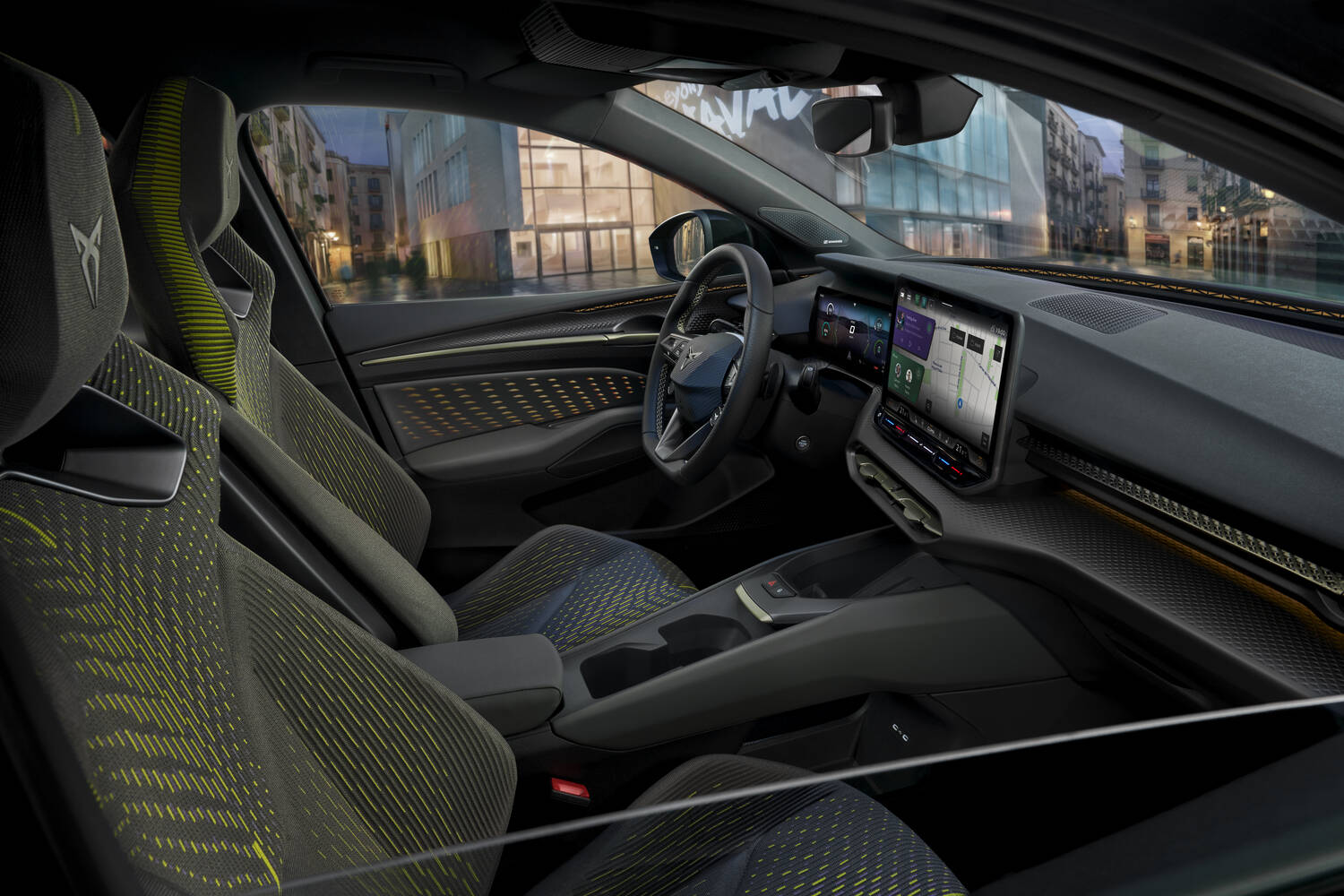
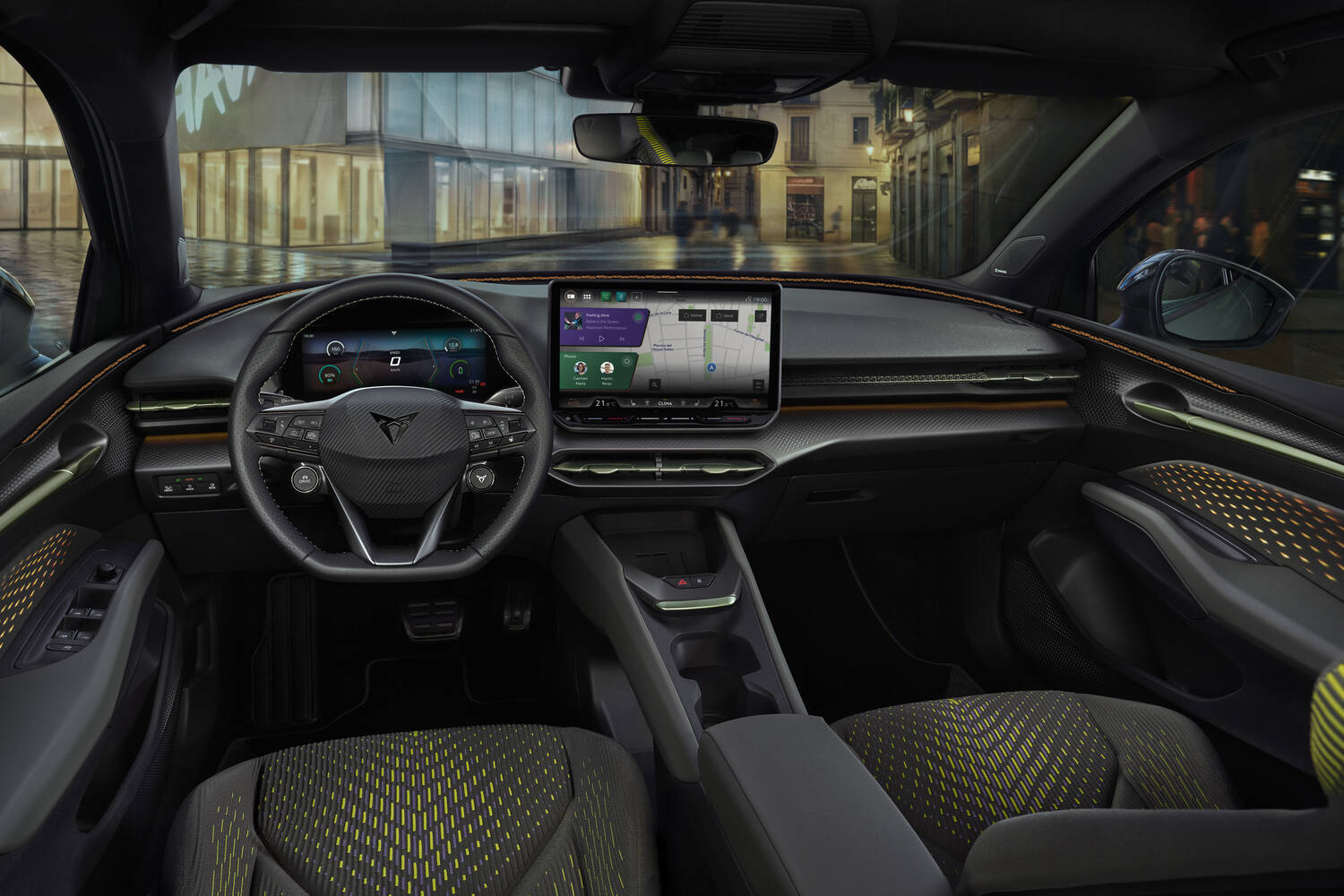
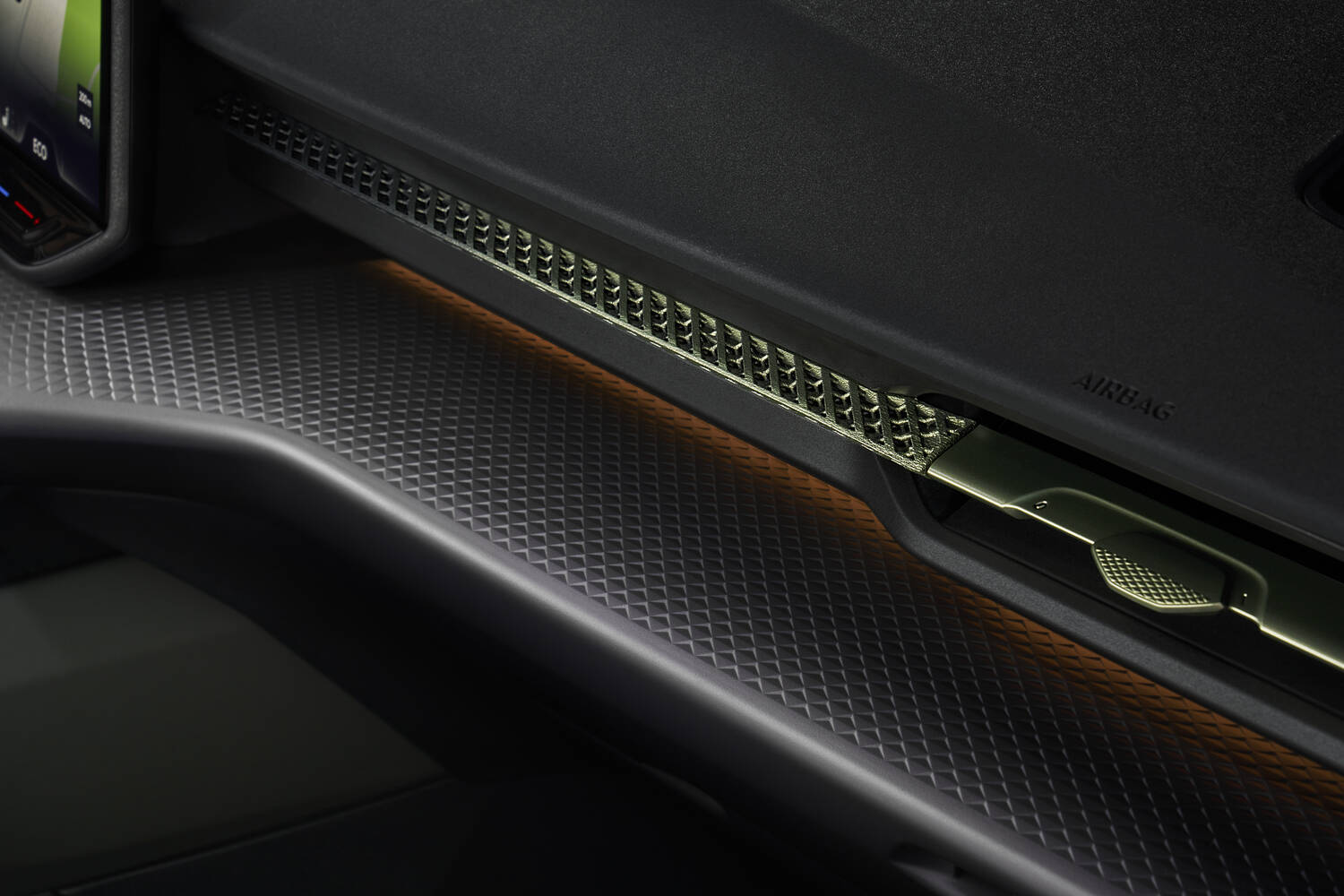
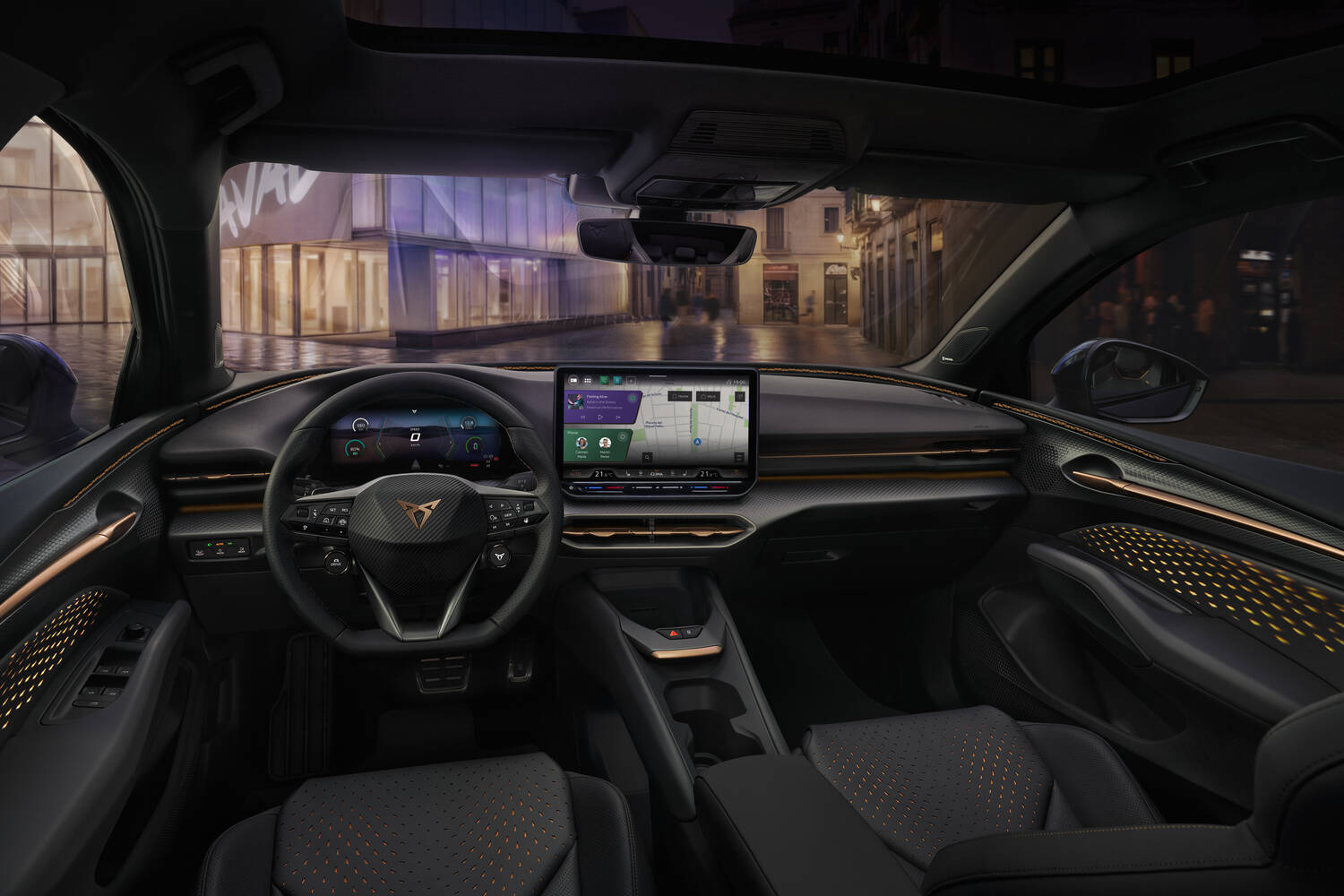
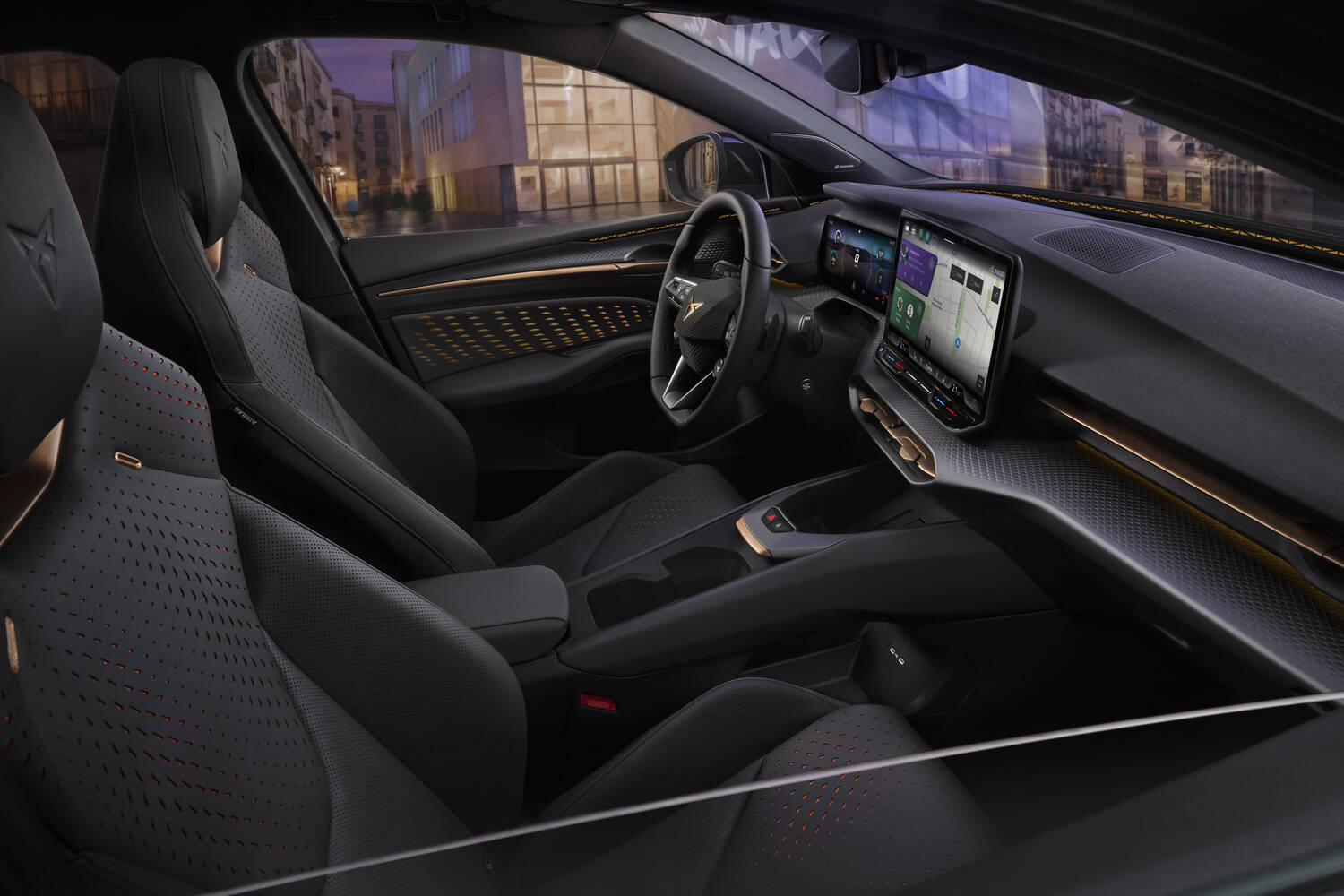
The Raval's interior mixes the familiar (lots of carry-over from the likes of the Cupra Born and Tavascan) with some pleasing touches of its own (such as reflected - rather than direct - cabin lighting, and its own software for the touchscreen).
Getting comfortable in the driver's seat

As a VZ Extreme, our car had the top-of-the-range Cup bucket seats with a healthy range of electrical adjustment, and the chairs themselves are lovely and supportive, as well as being mounted at a decent height to provide a nice, sporty driving position.
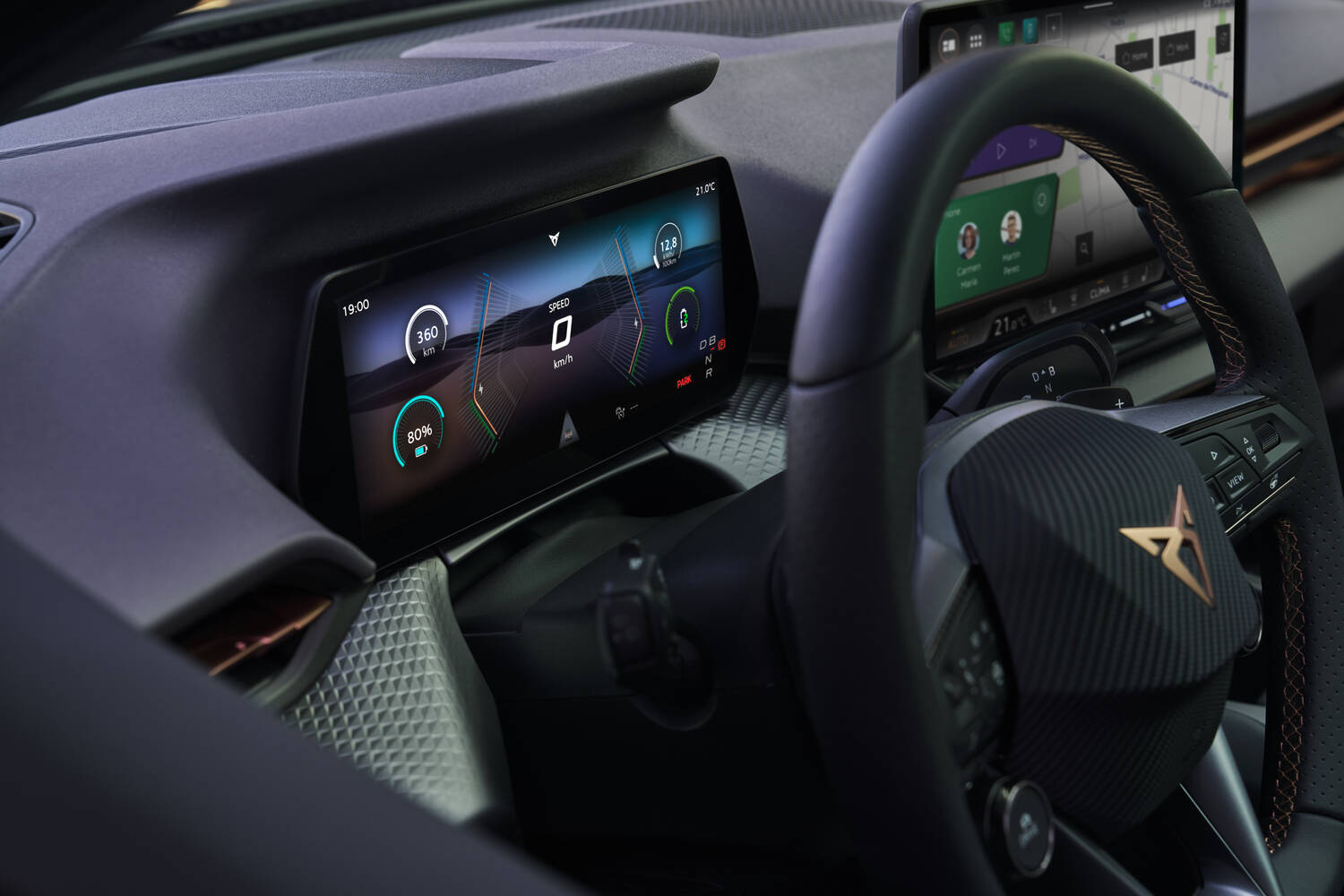
Furthermore, the steering wheel is an excellent size and feels great to hold, while it is equipped with physical buttons rather than any of the less-pleasant haptic controls that have been foisted on some Volkswagen Group machines in recent years.

Incidentally, the Raval Dynamic and Dynamic Plus will still get bucket seats in the front, but they won't be the Cup items of the VZ - they will, however, be clothed in upmarket Dinamica microfibre, due to Cupra's corporate identity of catering to driving enthusiasts.
Infotainment and technology
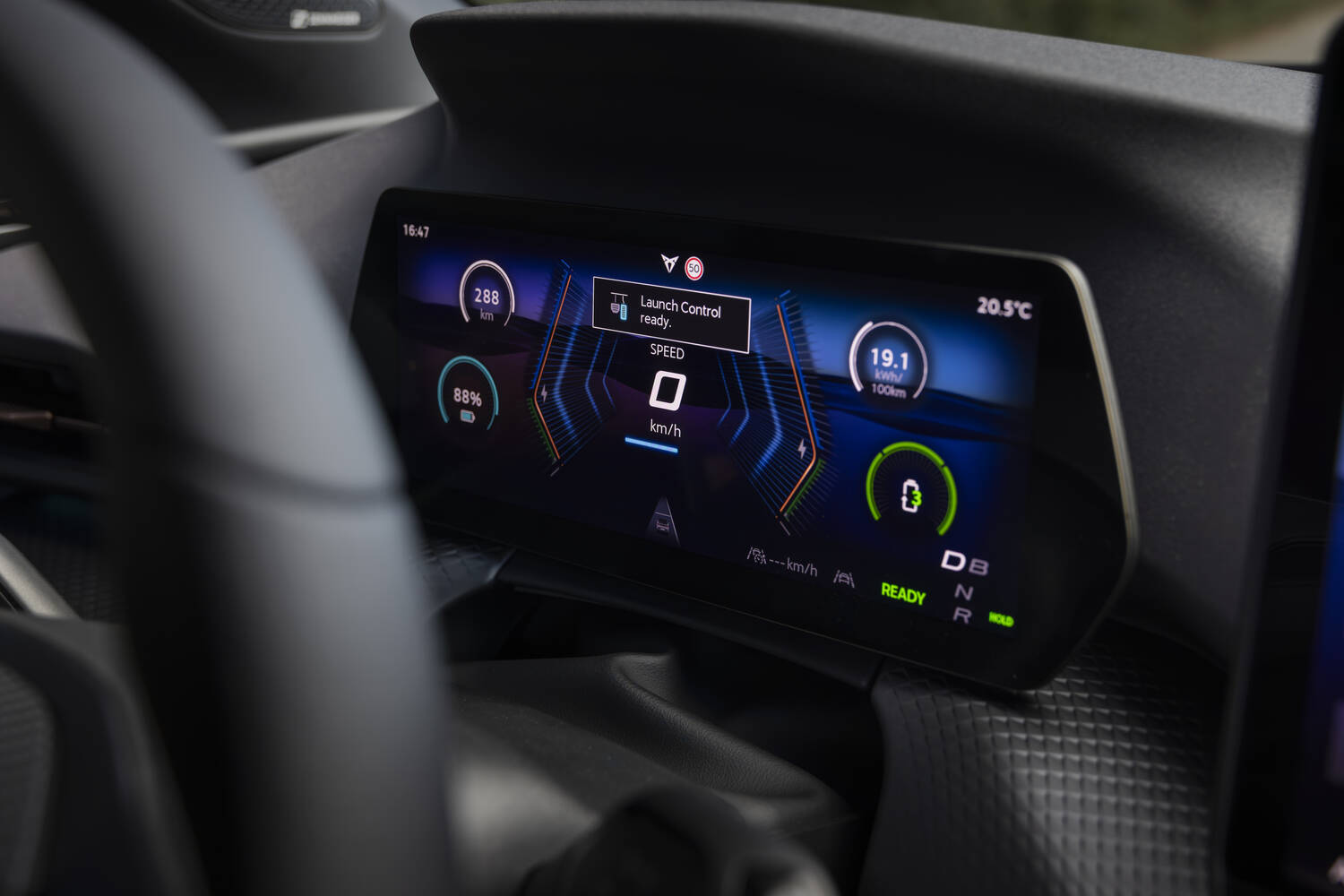
The 12.9-inch touchscreen and 10-inch digital instrument screen found in the Raval will be familiar if you've checked out our test drive of the updated Cupra Born (see more on that here).

The driver's display is a definite improvement on the older, smaller 5.3-inch screen that was common to all Volkswagen Group electric cars (and which you can still find in some). That smaller display had simple clarity on its side, but this new one looks more expensive, has enjoyably rich-looking graphics and has a reasonable level of customisation when it comes to setting the screen up the way you want it.
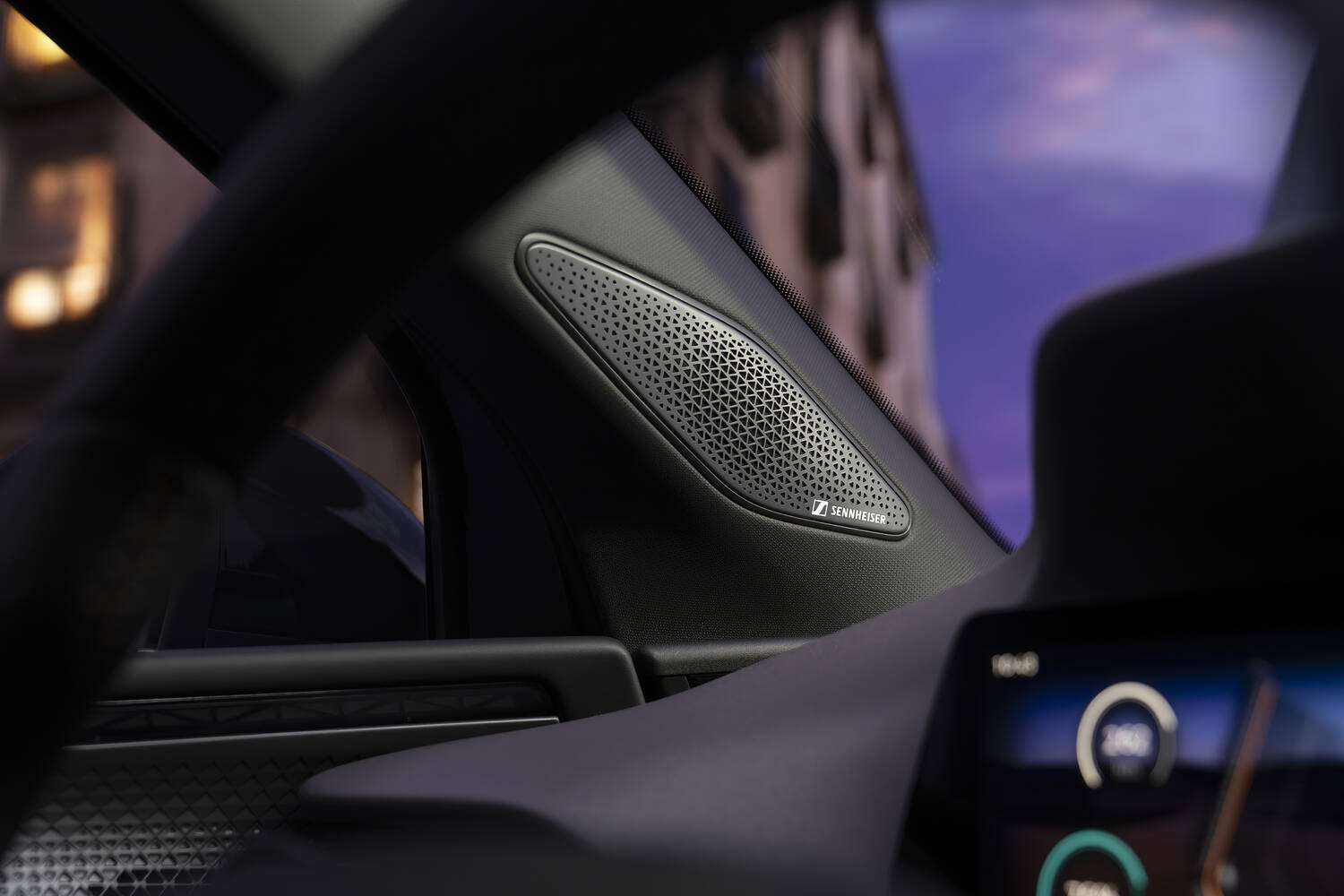
The central infotainment screen benefits from Volkswagen Group's switch to Google Android-based software, and it's considerably easier to use and more responsive than previous setups.
The screens are, like the car's paint scheme, sometimes a bit dark and moody (there's a junior Audi vibe about the Raval in general, in this sense) but as far as big in-car screens go, it works well.
Practicality around the cabin

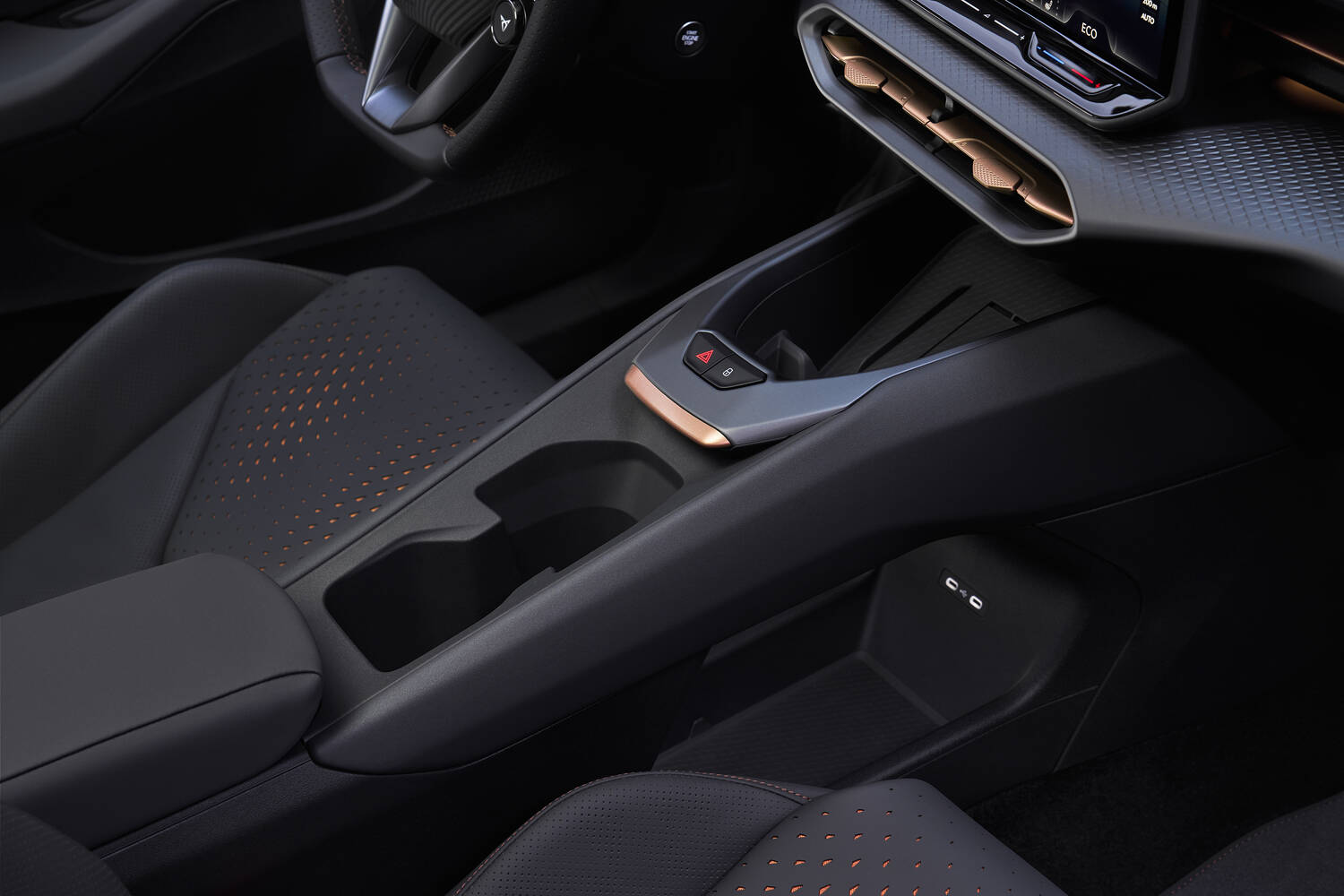
For a compact car, there's good storage space in the front of the Cupra Raval, with two deep cupholders, a wireless phone charging tray on top of the centre console and more open storage underneath.
There's storage - narrow but deep - under the front-seat armrest, and usefully large door bins. The glovebox is somewhat small, but handy enough.
Rear-seat passenger space
Rear-seat space is decent in the Raval, as befits its positioning as a compact crossover, rather than a more traditional hatchback.

Six-foot passengers will fit quite comfortably back there, even with a tall driver up front, but as with many EVs, the high-set floor means that taller peoples' knees are raised, which isn't ideal on a longer journey.
Even so, headroom is adequate, and there are handy seatback pockets and small, but useful, door pockets too. The Raval isn't cavernous or anything, but it's certainly roomier than the rival Alpine A290.
Fitting child seats to the Cupra Raval
You get three ISOFIX anchor points in the Raval; two in the back, and one in the front passenger seat - clearly, Cupra has put some thought into this car's family-friendliness.
The rear seat isn't really wide enough for a third child on a booster cushion in the middle though, and it's worth remembering that this VZ model's big front bucket seats do rob a bit of space when it comes to fitting a bulky rear-facing seat in the back.
Boot space in the Cupra Raval

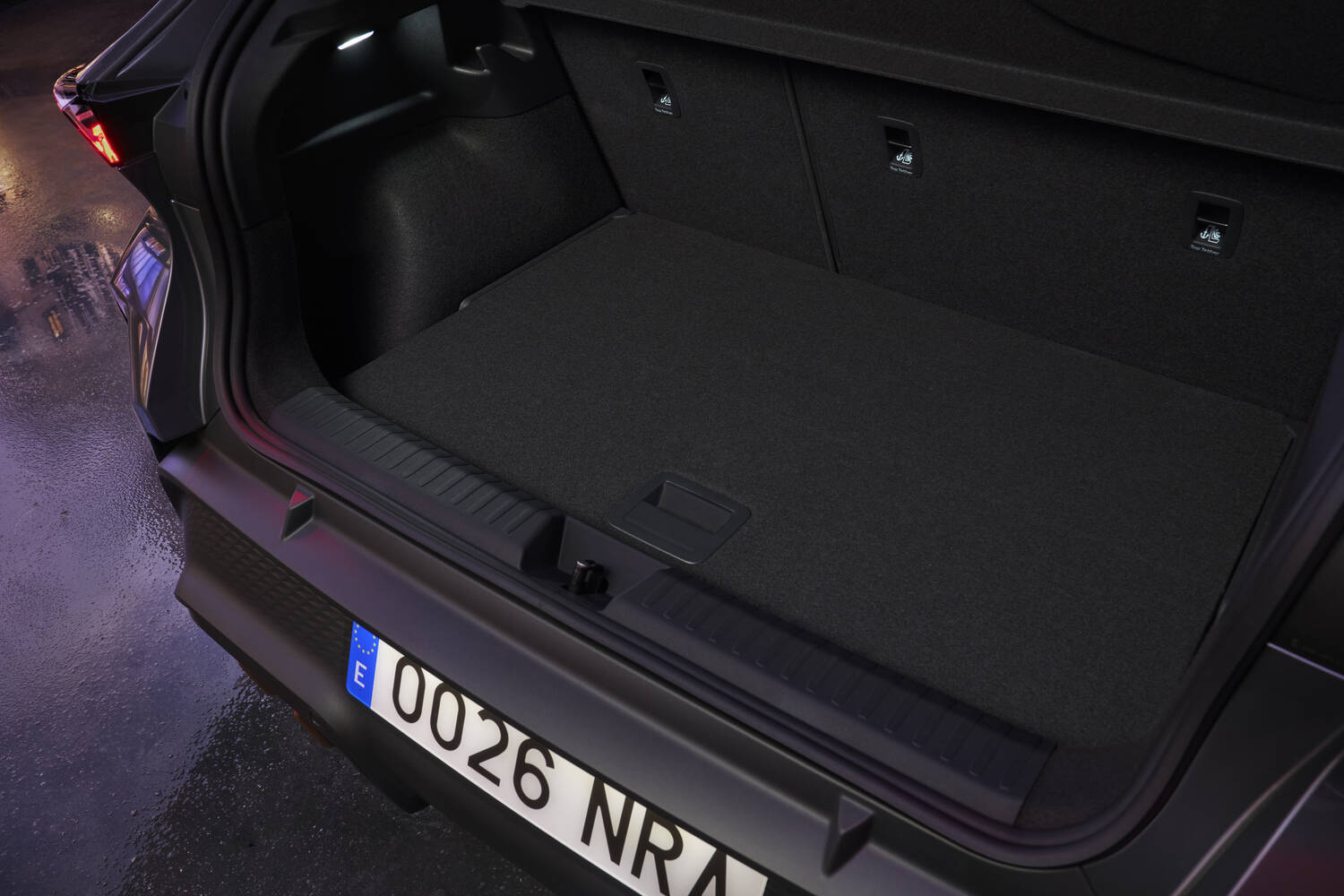
The Raval's 441-litre boot space matches that of its sibling from Volkswagen (but not Skoda, as the Epiq manages 475 litres), and the Hyundai Ioniq 3.
There's an adjustable boot floor that can either give you a flat load lip, or a deeper space with a consequently deeper load lip, depending on what you need to carry. Even with the boot floor on its lower setting, there's still some under-floor storage, which is ideal for charging cables.
This is a very practical car. You can fit a surprising amount of luggage in - we managed to fit a large 20kg check-in wheelie bag, plus three carry-on-sized wheelie bags in the back of the Raval, for example.
Cupra hasn't quoted an official seats-down load capacity, but it should be around 1,300 litres.
Towing with the Cupra Raval
On a braked trailer, the Cupra Raval can tow up to 1,200kg, which is an extremely useful weight for a compact model such as this.
Safety in the Cupra Raval
The Raval hasn't been assessed by Euro NCAP yet but given the MEB+ platform on which it sits, we'd be surprised if it doesn't get a full five-star rating.
There's some impressive safety tech, including the Travel Assist 3.0, which combines adaptive cruise control and lane-keeping steering, and which features a forward-facing camera that can react to red traffic lights and stop signs.
The optional Matrix LED headlights should help on dark Irish country roads too, although we haven't had a chance to put those to the test yet.
Performance of the 2026 Cupra Raval
• All models are front-wheel drive
• Power outputs range from 116hp to 226hp
• Rear disc brakes for all

The Raval lineup is divided by battery capacity, with the smaller battery getting lower-power motors, and the larger pack getting more power.
Driving the Cupra Raval in Spain
Words by Neil Briscoe on 22 May 2026
The Cupra Raval is not just fun to drive by electric car standards, but is also just plain, flat-out, no excuses fun to drive. It is, in every measure, a proper hot hatch.

The steering is the starting point, and the wheel - flat at the bottom and with a faux-carbon-fibre boss in our test car - feels great to hold. Thankfully, it also feels great in how it connects to the front wheels, which it does so with a sense of ideal weighting and good feedback.
It's not as chatty a steering system as, say, an old Ford Fiesta ST, but that's an extremely high bar. By any current standard, the Raval's rack is deeply impressive, and it gives you great confidence with which to enjoy a challenging stretch of road.

Better yet, the brakes are right up there with the Renault 5 and Alpine A290 GTS in their feel, firmness and retardation. If the steering inspires confidence, then the brakes copper-fasten it, and you can brake firmly, but progressively, right down to a tightening apex with total security.
The transition from energy-recovery braking to physical discs and pads isn't so much well-managed as apparently not there at all - you just squeeze, and the Raval gives you exactly the proportionate amount of braking you asked for.
Once you've got your braking and steering done, the electronic differential between the front wheels takes over and allows you to apply power smoothly and seamlessly, keeping the nose tucked in tight to your cornering line even on the way through and out of tricky mountain hairpins, with just the faintest hint of traction loss hovering at the edge of the steering feel.

It's immersive, impressive and addictive. I can give the Raval no higher praise than that when we came to the end of one section of mountain road, we stopped, turned around and did it all again. It's one of the only cars we've driven so far this year which has made us do such a thing.
The Raval's comfort is also good, although that comes with the caveat that our experience so far has solely been with a car fitted with DCC adaptive dampers.
When you've finished with Cupra mode in the mountains (bringing with it ultra-sharp throttle response, perhaps too sharp, and a fake driving noise that gets a little wearing after a while, but you can switch it off in Individual mode) simply select Comfort or Range modes, and everything calms down.

The steering weight decreases a little, but not its accuracy nor fidelity. The ride softens out nicely, although there's still a firm edge to it, especially over short, sharp bumps.
However, what the Raval presents almost perfectly is that classic hot-hatch mix of talents - fast and fun when you want it to be; relaxed and cosseting when you don't.
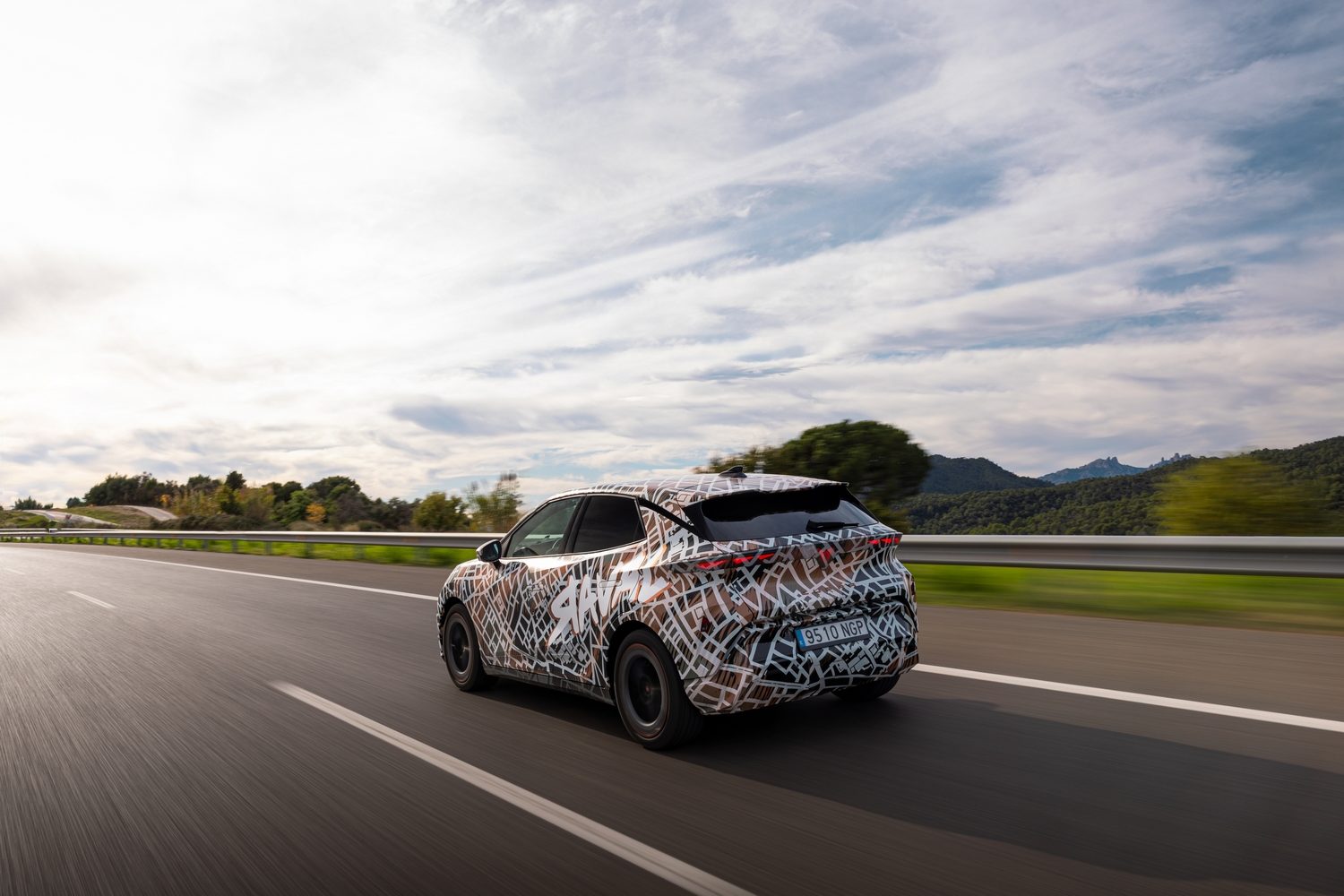
Driving the Cupra Raval VZ Extreme prototype
Words by Matt Robinson on 28 November 2025
We were given good time behind the wheel of the VZ Extreme, with a Cupra engineer in the passenger seat for our drive, on hand to answer questions and guide us as to any issues with the car.

Usually, in these kinds of 'pre-drive' events, there can be little foibles with the way the vehicle drives because the development team behind the scenes still has a bit to work on, some final fine-tuning to do. And in that vein, Cupra said the same of these Ravals and invited our honest feedback at the end of the drive, to take on board some last critical points from independent observers that could be incorporated into the final production version.
Well, here's our considered opinion, Cupra: change nothing. Because you appear to have got the Raval about as spot on as spot on can be, first time out of the gate.

Even in pre-production-prototype format, the Cupra Raval is one of the most enjoyable EVs we've driven in recent years. It sits on the 'MEB+' platform and, unlike other single-motor Volkswagen Group EVs, it is not rear-wheel drive but instead propelled from the front.
To help with distributing the power and torque the Raval's motor can generate, it has an electronic form of a limited-slip differential, too.
There's even bigger news on the rear axle, because this is the first Volkswagen Group EV to come with disc brakes at the back of the car, rather than drums. It's a move that has solely been done to promote a more organic-feeling brake pedal than you'd normally get in zero-emission machines, which must blend friction stopping power with regenerative decelerative forces from the motor.

Then there's the chassis tune itself. As the Raval is the first of a group of four affordable EVs all based on the same platform, then when Cupra's engineers say this car "sits 15mm lower than the platform and fitted with a 10mm-wider track too", what they mean is that the Raval is inherently a sportier piece of kit than the ID. Polo, ID. Cross and Skoda Epiq will be.
Naturally, there's a good bet the GTI version of the ID. Polo will have the same lower, wider stance as the Raval VZ Extreme, but in general the Cupra line is designed to better reward keener drivers than any of the other product families.
Other gems of the Raval VZ Extreme's specification are 'progressive' steering (that means variable-ratio) with a sports tune, a more relaxed sport mode of the ESC stability control and 15-mode Dynamic Chassis Control (DCC) damping, with three main overarching settings of Comfort, Performance and Cupra.

All of this adds up to a small supermini that drives in an enthusiastic, engaging and downright likeable manner, of a kind we've not enjoyed since the poor old Ford Fiesta ST departed this mortal realm.
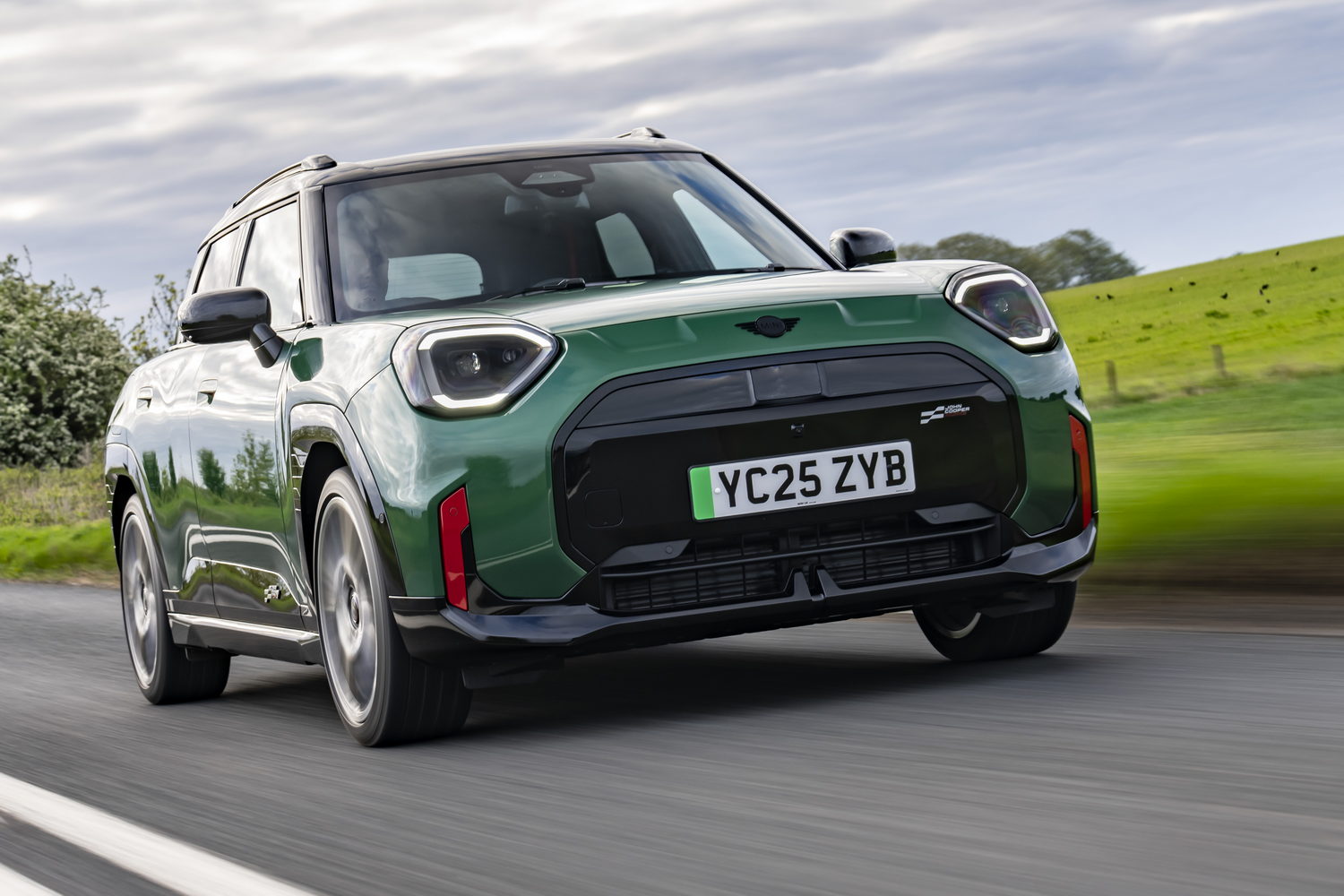
The Raval's suspension and the 19-inch wheels of the VZ provide an underlying firmness to everything it does, so that it permanently reminds you that the car is supposed to be fun to drive, but at no point does the car have the nervous, fidgety nature that can befall some smaller vehicles fitted with firm springs and dampers. The MINI Aceman could learn a thing or two here.
Instead, the Raval manages to breathe with the road surface, even on lumpier tarmac, yet when the corners come, its body and wheel control are of such an exemplary level that the car doesn't noticeably lean into turns.

Rather, it has a super-keen front end, a feeling of agility and lightness that's at odds with most EVs (admittedly, the Cupra is only likely to have a battery in the 50-60kWh range to keep weight down, but still), and wonderful bite, heft and informative feel to its steering.
Dolloped on top of that, the fact that when you get on the power in sharper bends then the electronic diff works its magic and hooks the Raval's nose further towards the inside of the road, instead of spewing wide in thrill-sapping understeer, means you soon realise this little Spanish EV is a genuine delight to drive. An electric hot hatch worthy of the name, we feel.
The main praise, though, must be for the brakes. Which are, in our humble opinions, the best of any EV we've driven, at any price. They're the most natural-feeling, progressive and enjoyable brakes you could wish for on any small, feisty hatchback, so fitting them to an affordable EV like the Raval is nothing short of a stroke of genius on Cupra's part.
As to the speed, it's wonderfully tailored to the Raval's size and class. This is not an uncomfortably quick EV, with 226hp and 290Nm, but it's more than swift enough for most people's needs - the way it hauls easily to 100km/h when on the move is quite splendid.

We'd estimate it's the sort of car that'll be able to put in a sub-seven-second sprint for 0-100km/h, but (quite rightly) it won't deliver monster acceleration from that sort of pace upwards.
Oh, and last point: in both Performance and Cupra driving modes, the Raval generates a noise as it accelerates to further involve the driver in the process. This is a sound that is obviously from an electric car rather than anything with a combustion engine and we're sure some people will despise it on principle, but we thought it was rather well-judged and, because it doesn't in any way seek to emulate a piston engine or try and simulate gearchanges, we'd consider it a success.
Mainly because a) it's a bit quieter and less domineering in Performance than it is in Cupra, and b) it fades right off into silence as soon as you're on a trailing 'throttle' - so the car isn't constantly booming a fake electronic note into your ears. It simply enhances the way the Raval VZ accelerates, so bravo to Cupra for including it.
Range, battery, charging and running costs of the 2026 Cupra Raval
• Choice 37kWh or 52kWh batteries
• Up to 448km of range
• VZ cuts range to 400km

The Cupra Raval's battery lineup is very much a game of two halves...
Battery options and official range
The Cupra Raval comes with a 37kWh lithium-iron-phosphate (LFP) battery for the more affordable models, which come with a choice of 116hp or 135hp electric motors.
Or you can trade up to the larger NMC (nickel-manganese-cobalt) battery with 52kWh of net capacity.
The smaller battery manages 318km of range with the 116hp motor, or 323km of range with the more powerful 135hp option (thanks to that motor's greater ability to recoup energy during braking).
The 52kWh battery will take you for up to 448km with the 211hp electric motor, and that version also gets vehicle-to-load charging for when you need to power something external to the car.
The VZ model, with its 226hp motor and more aggressive aero, loses quite a bit of range, topping out at 394km officially.
Real-world range and efficiency of the Cupra Raval

Overall, we averaged a decent 18kWh/100km in our time with the Raval, but that comes with what I shall refer to as a couple of notes.
The most important note is that for much of our drive, we were... how can I put this... driving enthusiastically on roads which could have been lifted from the Rally Catalunya.
Up there in the mountains, in Cupra mode, we were averaging more like 25kWh/100km, unsurprisingly. The average came back down to more respectable levels once we hit the stop-start traffic of downtown Barcelona.
It's a bit difficult to divine a real-world range from this test, but I reckon the Raval VZ will do an average of around 320-350km on one charge.

It means that the Endurance model, with its 210hp motor and official 448km driving range, will be the better choice for most buyers, but we'll have to see if it can match up to the VZ in entertainment terms.
Charging up the Cupra Raval
The Raval runs a 400-volt electrical architecture, and the smaller 38kWh battery is most definitely not a fast-charger. With the 116hp motor, it can cope with 50kW of DC fast charging, while in the 135hp model that steps up to 88kW.
The larger 52kWh battery can manage up to 105kW of DC charging and is designed to charge from 10-80 per cent in just 24 minutes, which isn't bad going. All Ravals will charge at up to 11kW on three-phase AC power, and if you're charging at home with a 7.4kW charger, you'll need around five hours for a full charge of the smaller battery, and seven hours for the bigger one.
Servicing the Cupra Raval
Cupra says that the Raval will need a service every two years, or 20,000km. Cupra Ireland offers a three-year inclusive service plan for €359, or you can bump that up to €935 if you want inclusive tyre changes too.
Cupra Raval warranty
Cupra's warranty is impressive - five years or 100,000km - and there's the usual eight-year, 160,000km warranty for the battery. There's also three years of paint cover, and 12 years of anti-corrosion warranty. The five-year warranty also comes with standard roadside assistance, including European driving cover.
Irish pricing & rivals to the 2026 Cupra Raval
• Pricing starts at under €25,000
• VZ is likely to be around €36,000
• Lots of rivals on the way

While the Raval is sort of in the same sector as the new VW ID. Cross and Skoda Epiq, those on the lookout for small, fun-to-drive EVs will also be comparing it with the VW ID. Polo GTI and the Peugeot E-208 GTi.
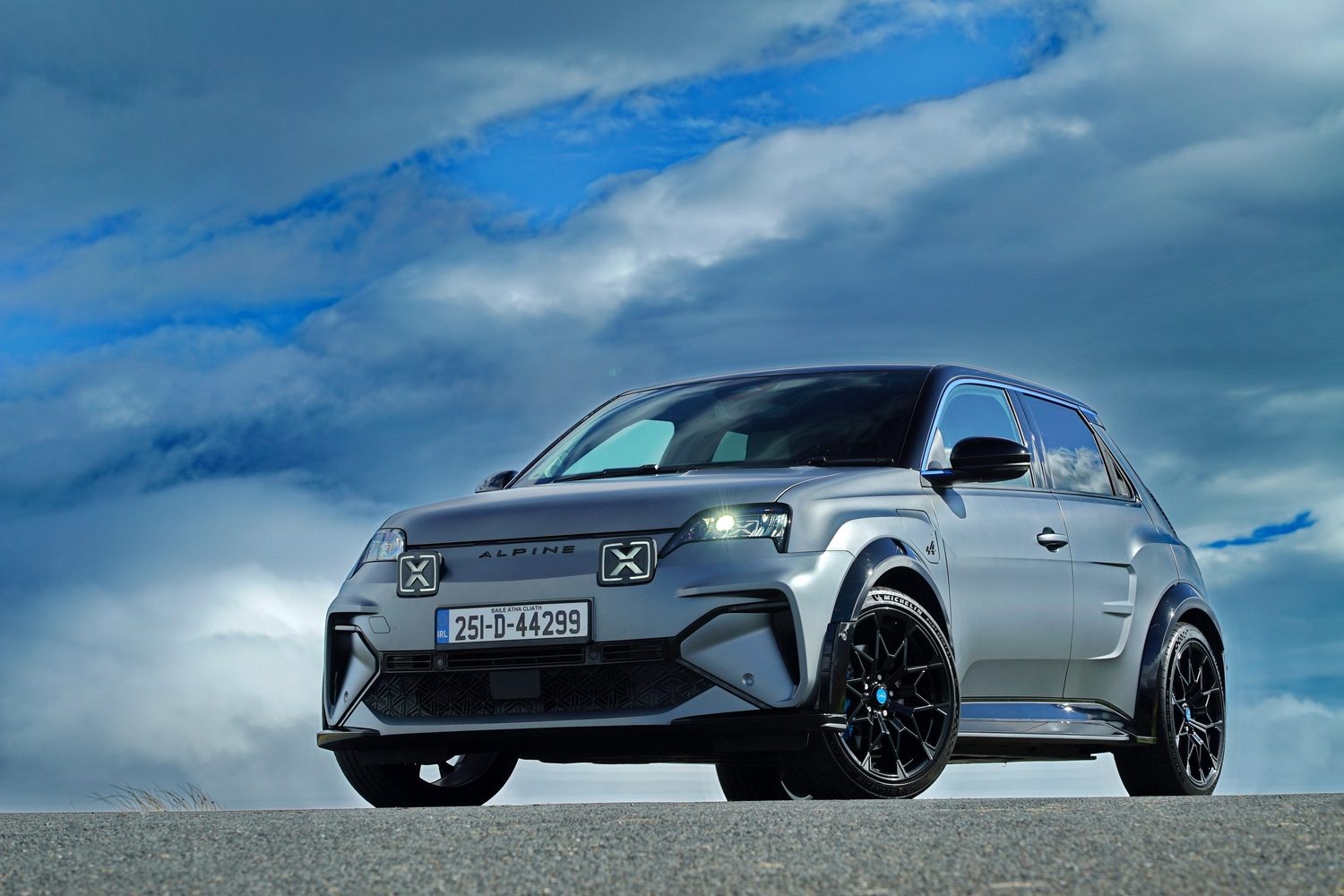
Of course, there are also the Renault 5 E-Tech, the Nissan Micra and the overtly sporty Alpine A290 to consider, all of which can offer some solid rivalry to the Raval, but the Spanish car has an edge in terms of interior space and useable range compared to those three.
Irish specifications will be decided closer to the September on-sale date, as will the full pricing lineup.

Verdict - should you buy the 2026 Cupra Raval?
This is such a brilliant little car. It's fun, it's roomy, it's practical, it's relatively affordable (and potentially incredibly affordable to run if you can charge at home) and - in VZ spec - it feels like a proper hot hatch should, with or without an engine. If anyone tries to tell you, after this, that electric cars have no character and can't be fun, ignore them - they're talking out of their hat.
FAQs about the 2026 Cupra Raval
Does the Cupra Raval have a 'frunk'?
No, although it might do eventually. Cupra's sibling brand across the hall at the Volkswagen Group, Skoda, offers an accessory - a clip-in 25-litre tray that slots under the bonnet to form a simple frunk. Right now, that's not available in the Raval, but it may be offered in due course.
What is the maximum range of the Cupra Raval?
With the 210hp electric motor and the 52kWh battery, the Raval has a one-charge range of 448km. The VZ model reduces that to 394km, and in real-world conditions will be closer to 350km.
Where is the Raval made?
The Cupra Raval is built in the Cupra-SEAT factory in Martorell, a town just outside Barcelona. The Skoda Epiq and VW ID. Polo will also be made in this factory.
Are Cupras reliable?
Yes, and the Raval should continue that tradition. Cupras (and SEATs) have always been among the better-built cars you can buy and have an excellent reputation for reliability.
Does the Cupra Raval qualify for the SEAI grant?
Yes, it gets the full €3,500 SEAI grant and also qualifies for the maximum level of VRT rebate.
Want to know more about the 2026 Cupra Raval?
If there's anything about the new Cupra Raval we've not covered, or you'd like help in choosing between it and other cars, you can avail of our expert advice service via the Ask Us Anything page.