

Exterior & design of the 2026 Defender Trophy
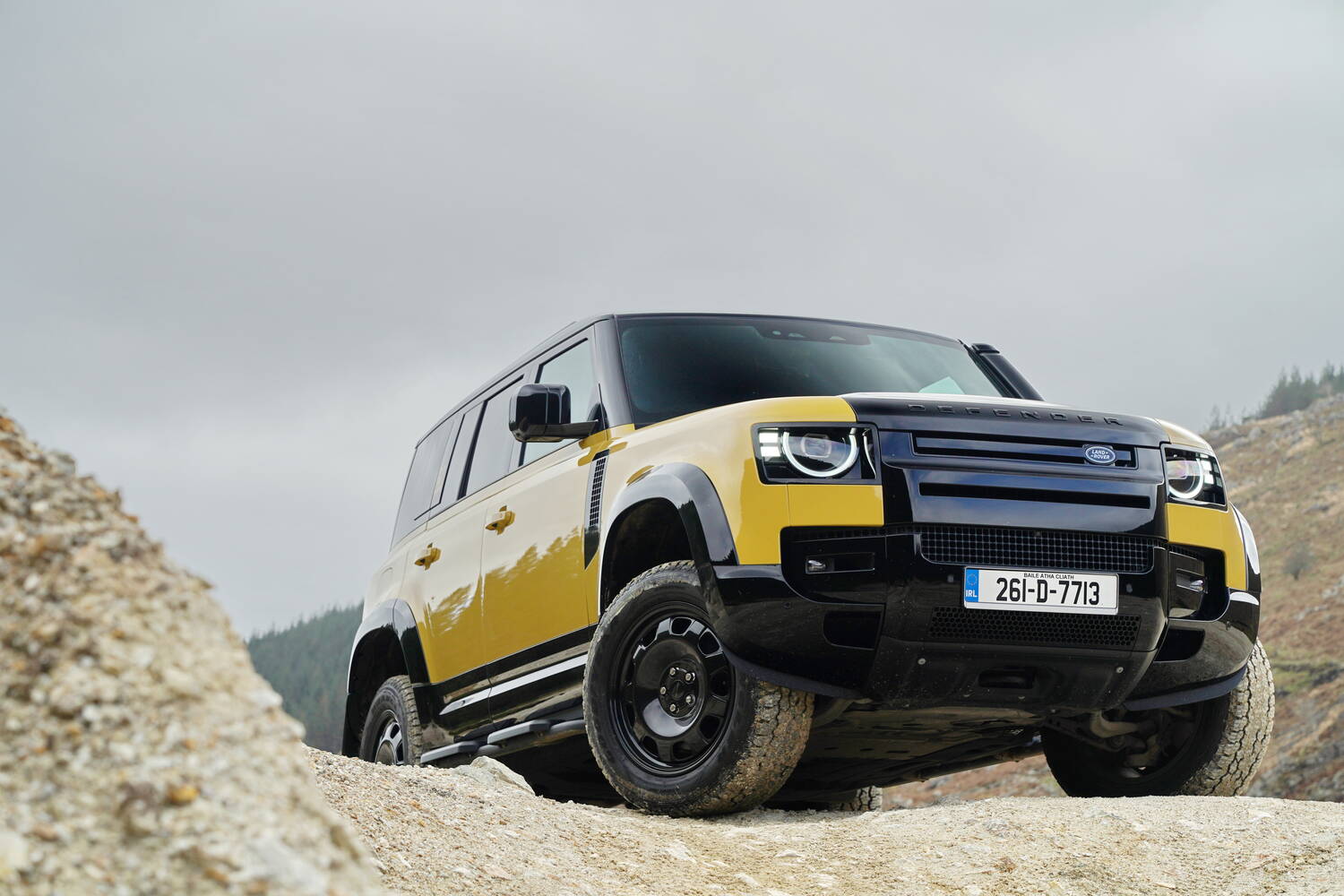
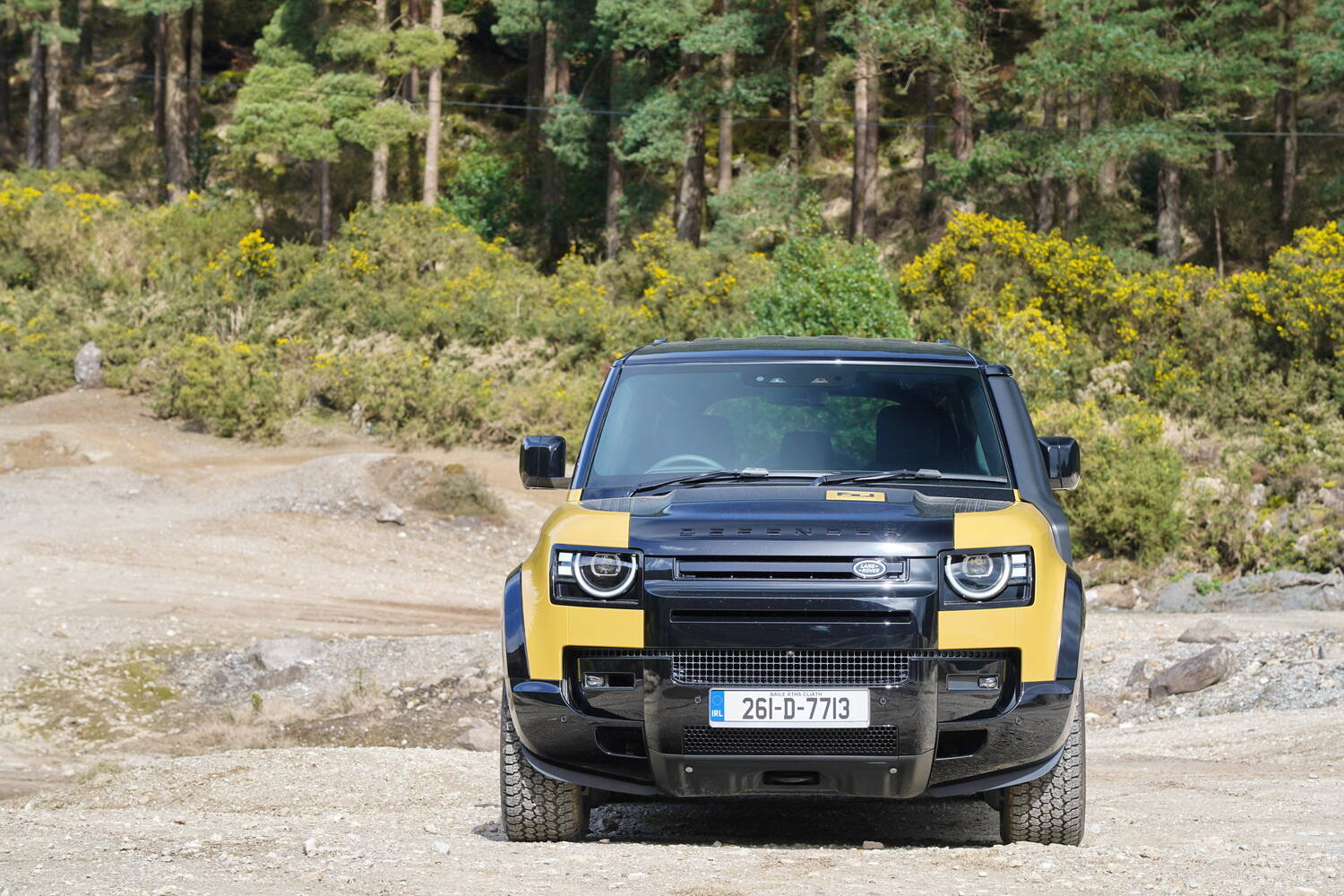
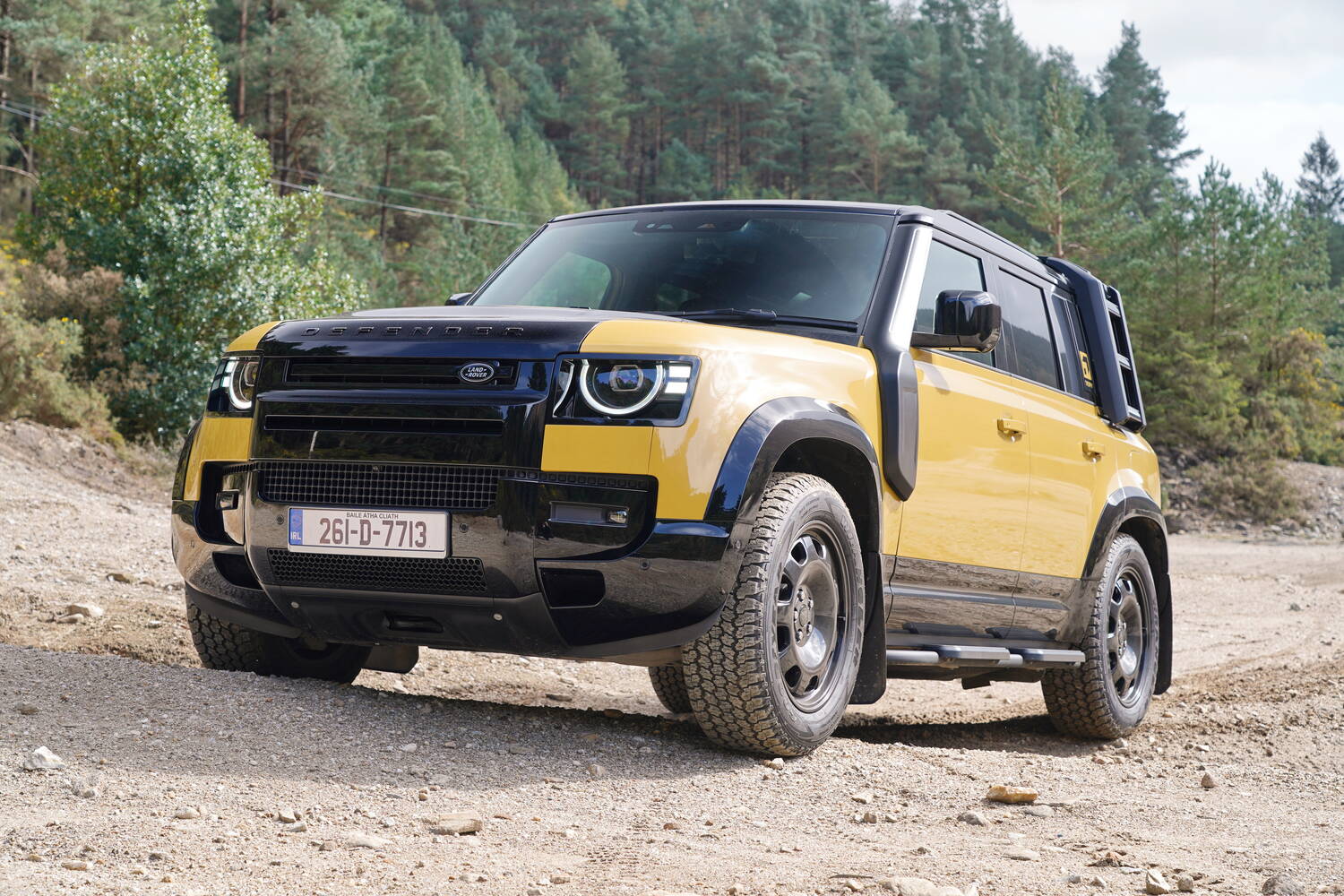
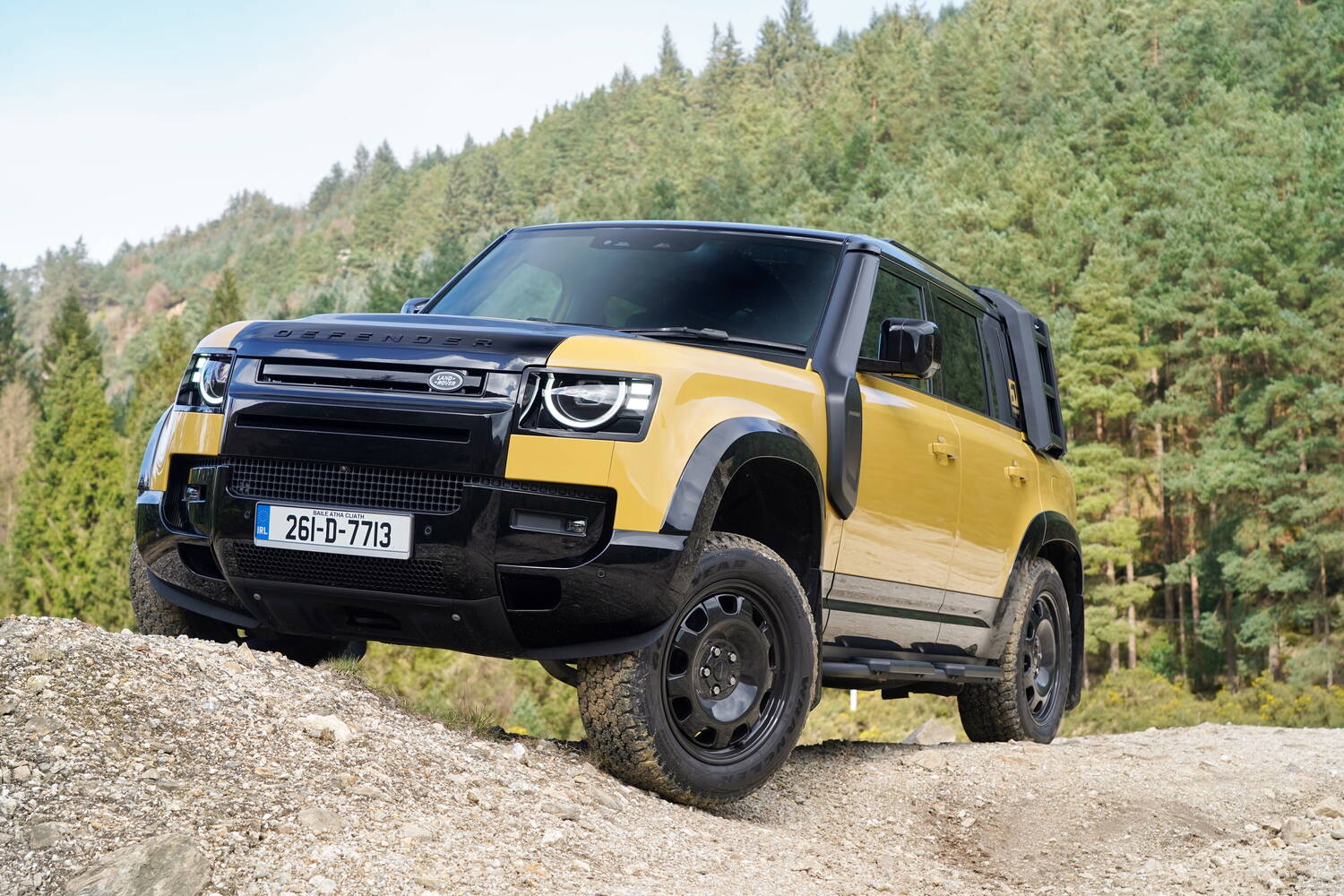
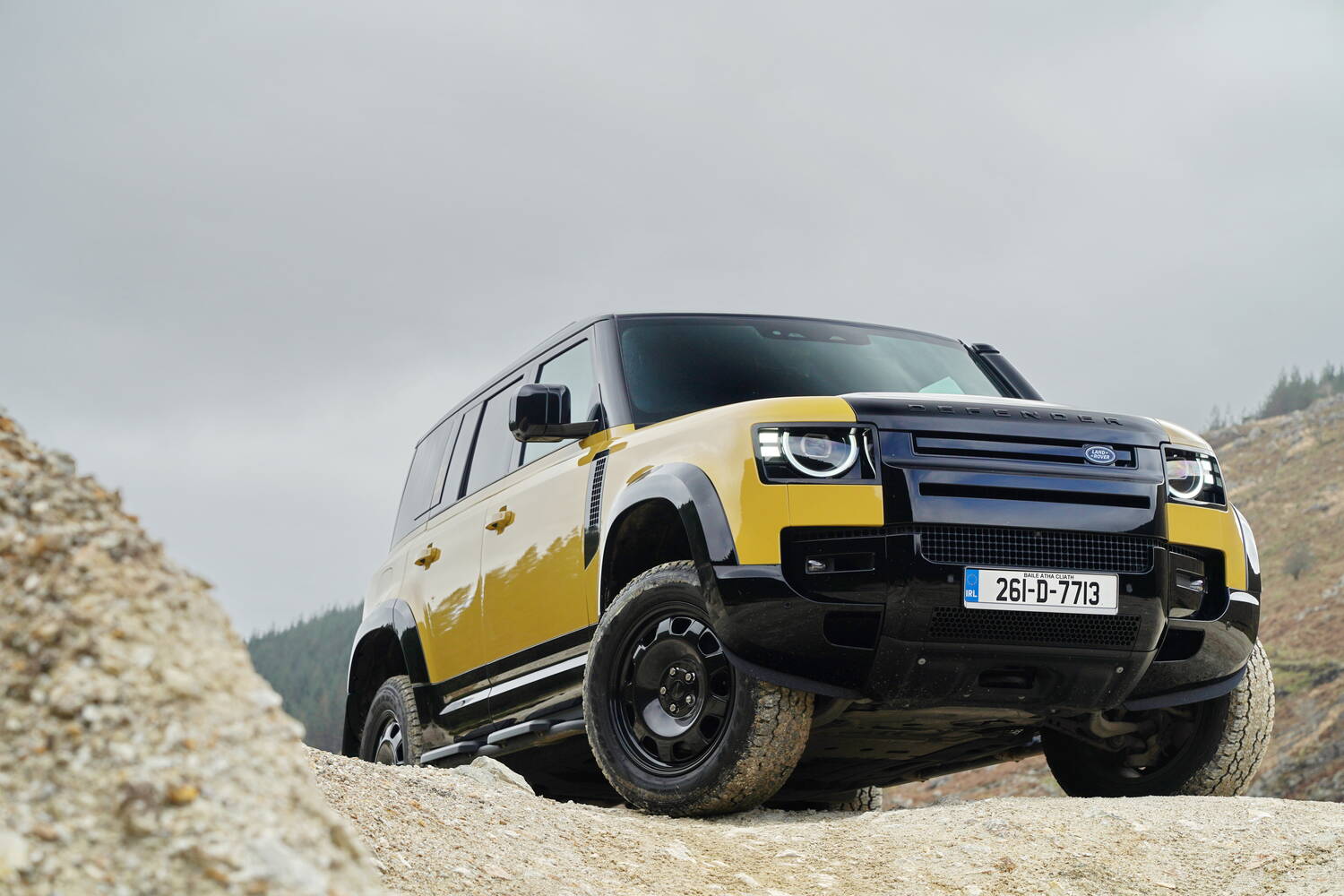
- Glowering looks at the front
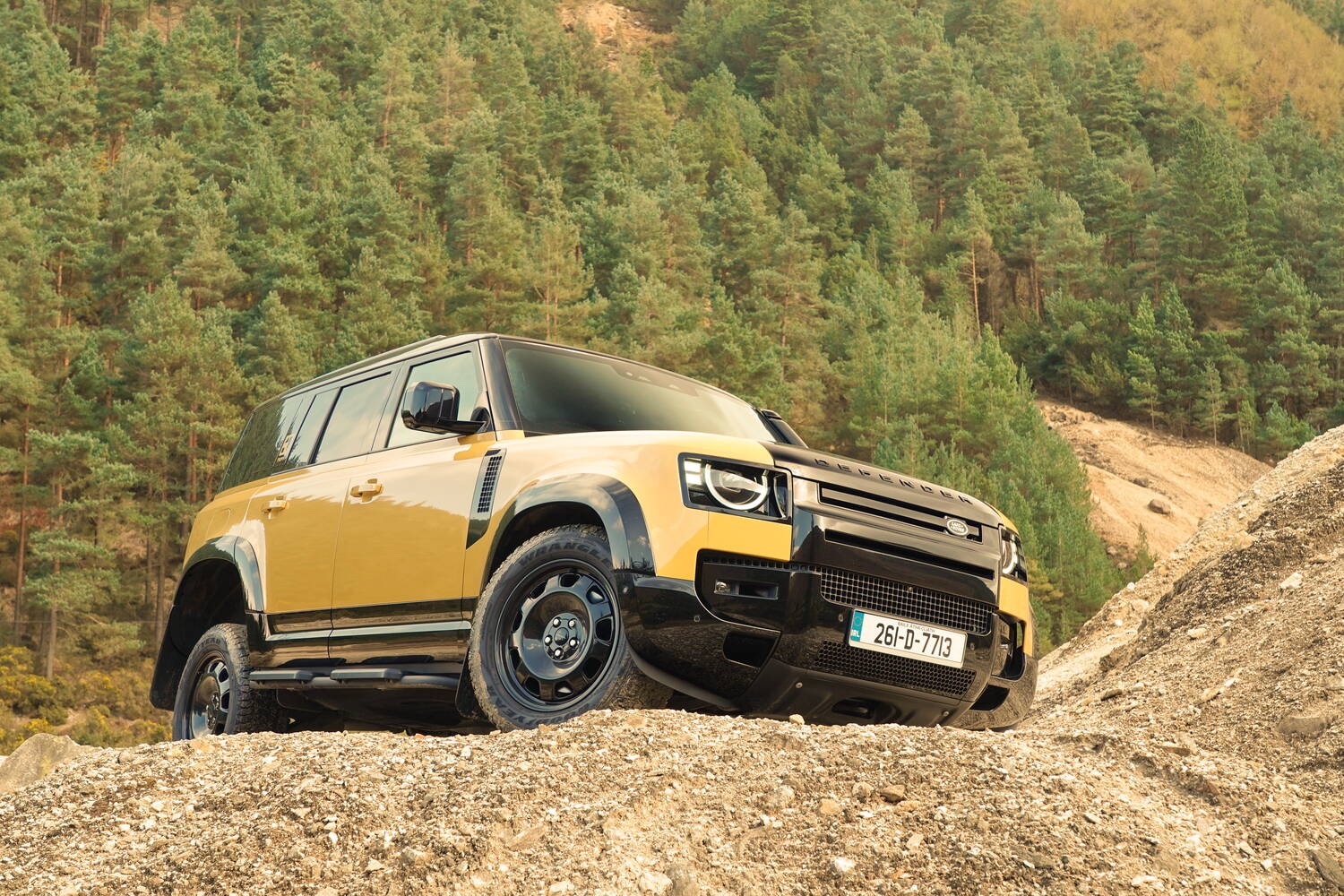
- Special paint options available
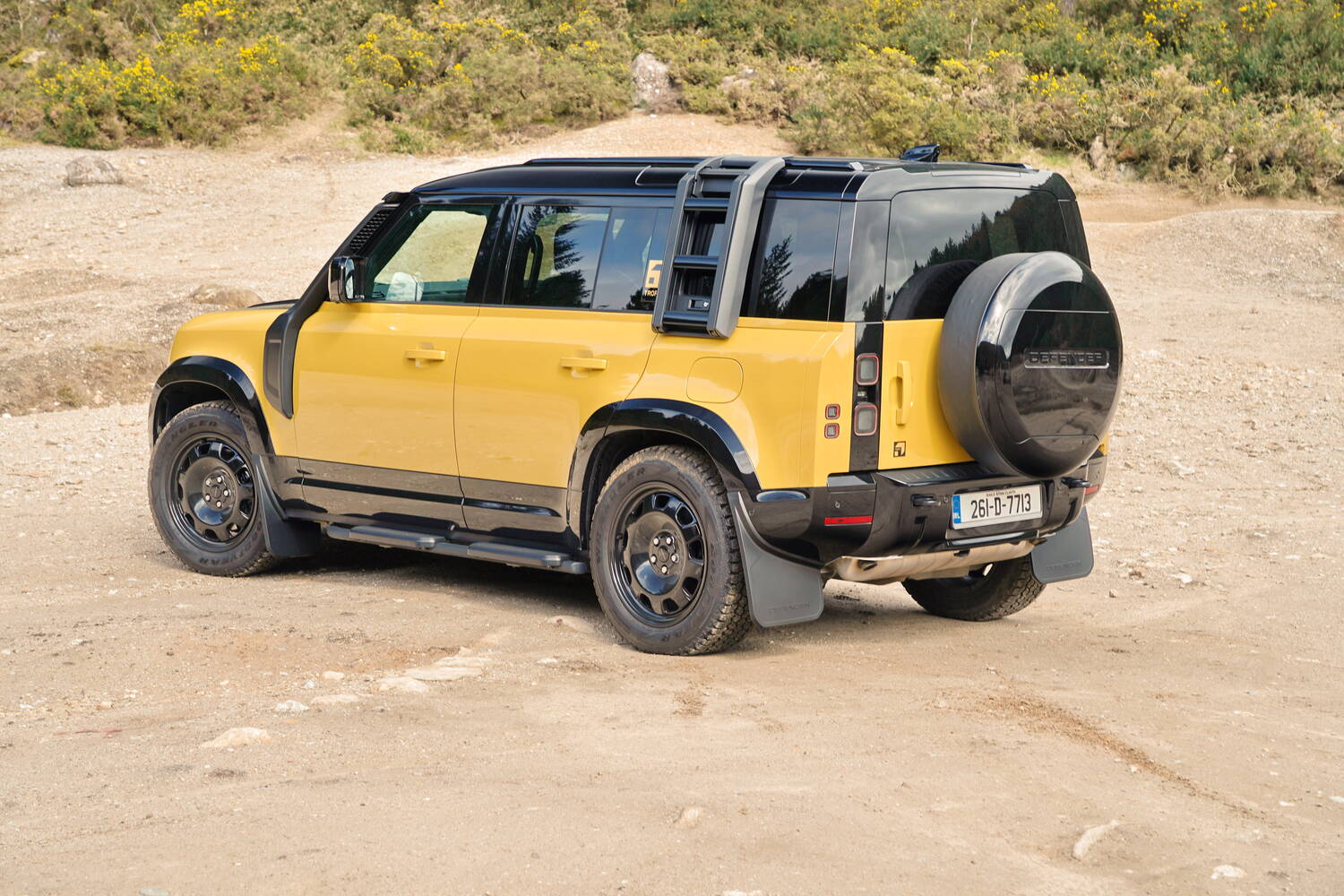
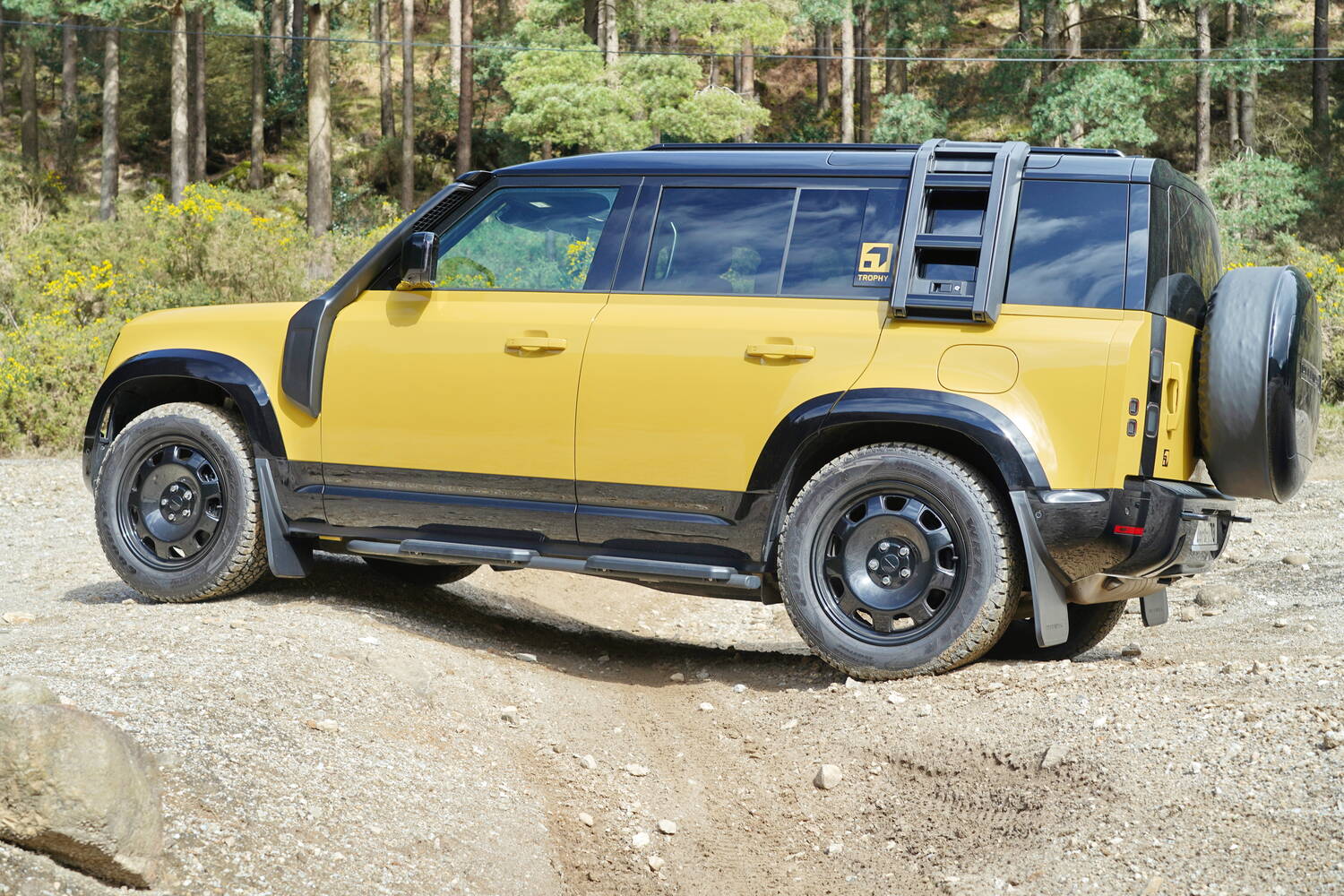
- 'Steel' wheels look awesome
I can remember, twenty-odd years ago, having a conversation with Andy Wheel. Nowadays in charge of production design at Jaguar Land Rover, back then Wheel had just been handed the task of reinventing the Defender for the modern world and, frankly, he was worried.
How could you take this icon of the motoring world and translate it into something modern? Well, Wheel - and others at Land Rover - did the job beautifully.
There isn't a panel on the current Defender that looks anything like one from the rectilinear original, but there's unquestionably the spirit of that original imbued in the steel and aluminium.
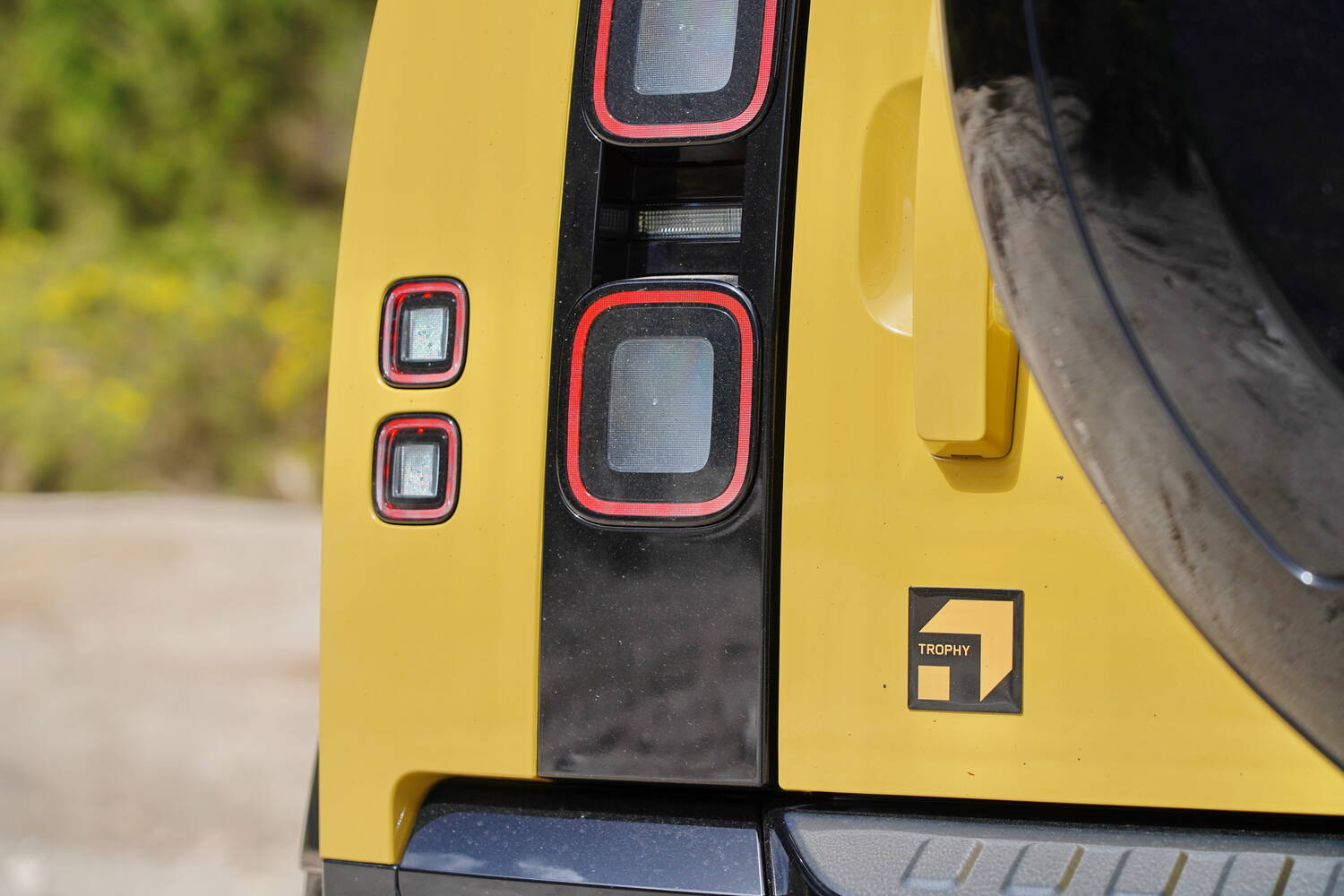
The 'face' of this Defender is a more aggressive-looking thing than the open, round-headlight expression of the classic one, but it's certainly handsome and lantern-jawed, while the fabulous, minimal, brake lights do a jewel-like impression of the tiny round lenses of the 1948 Land Rover.
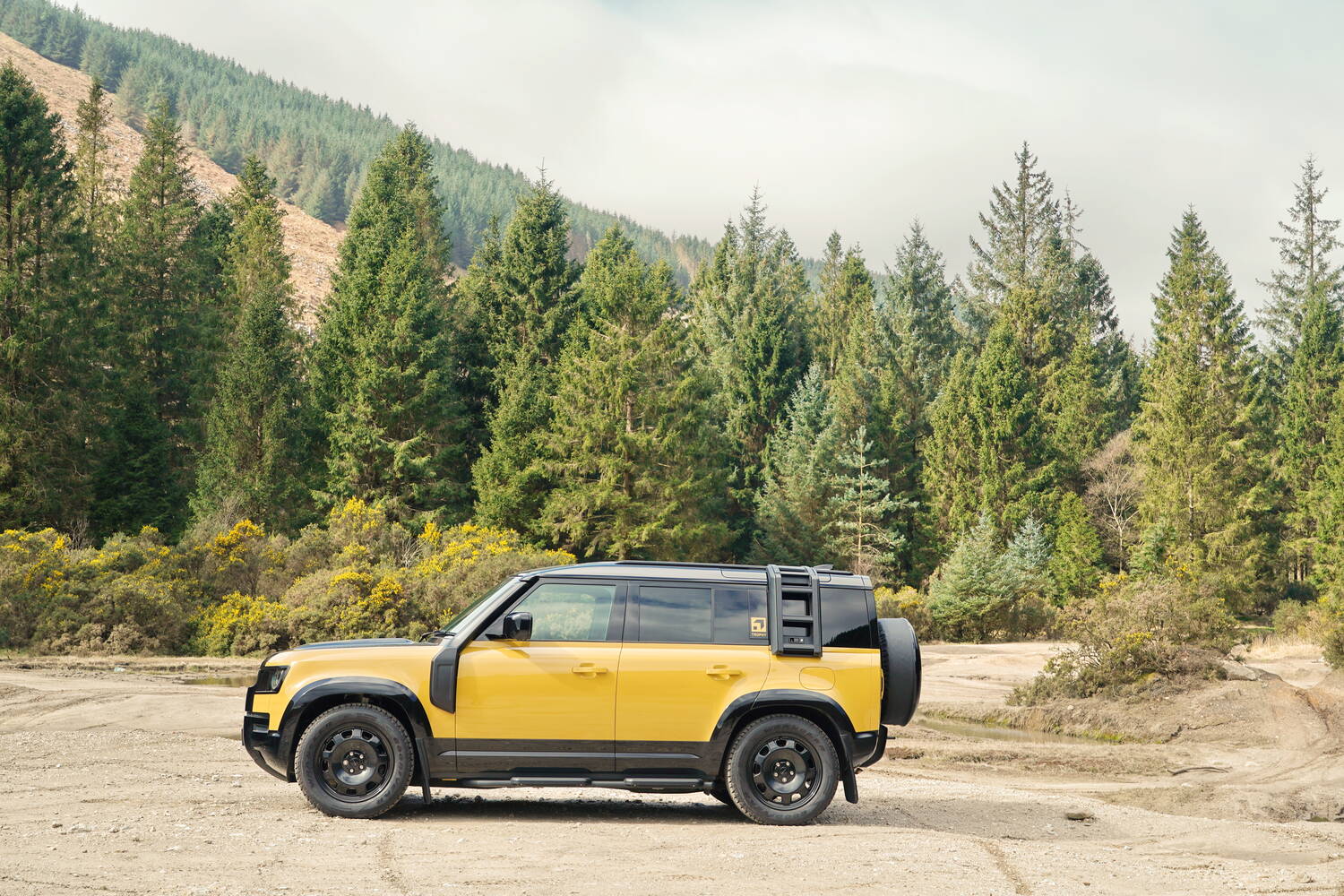
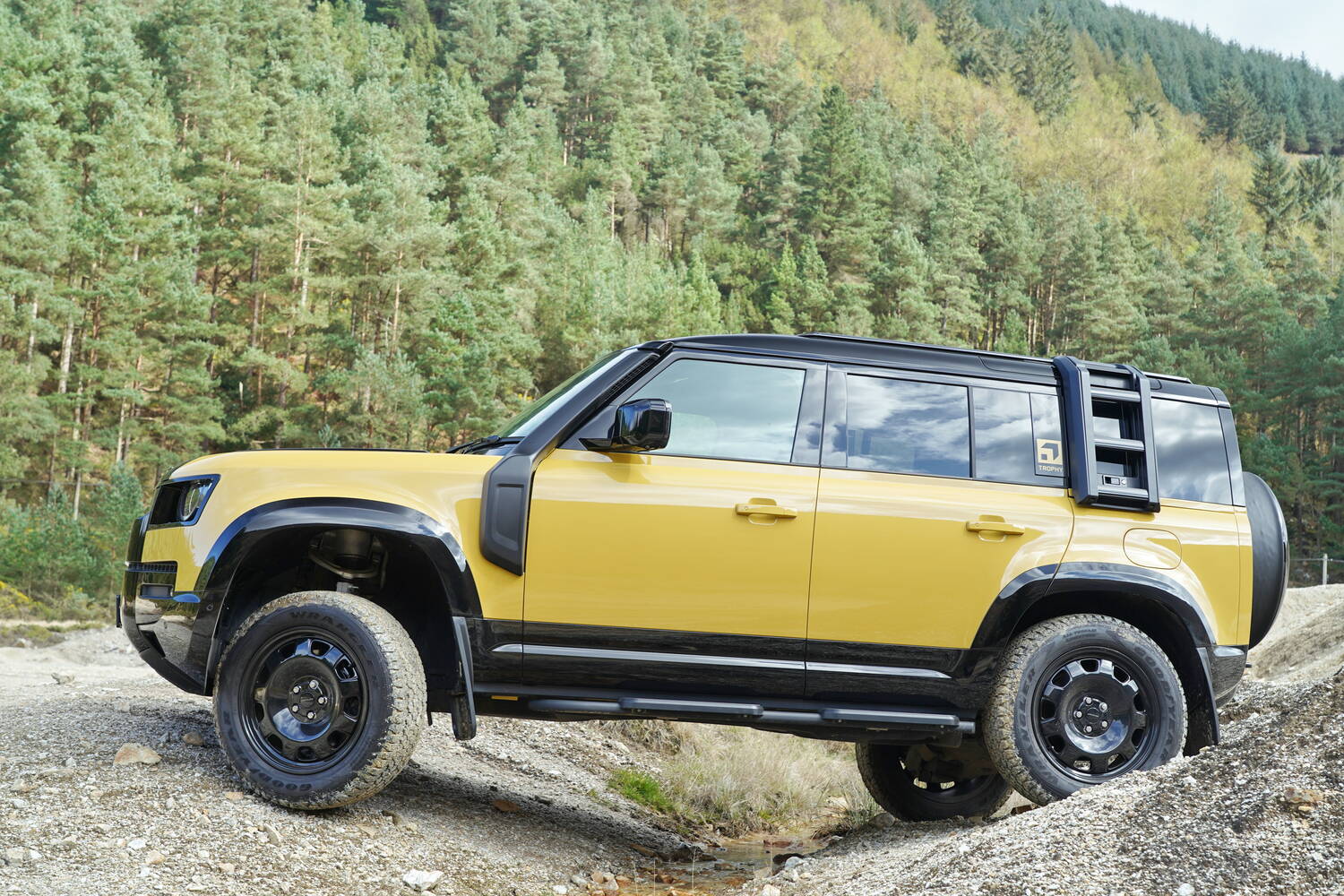
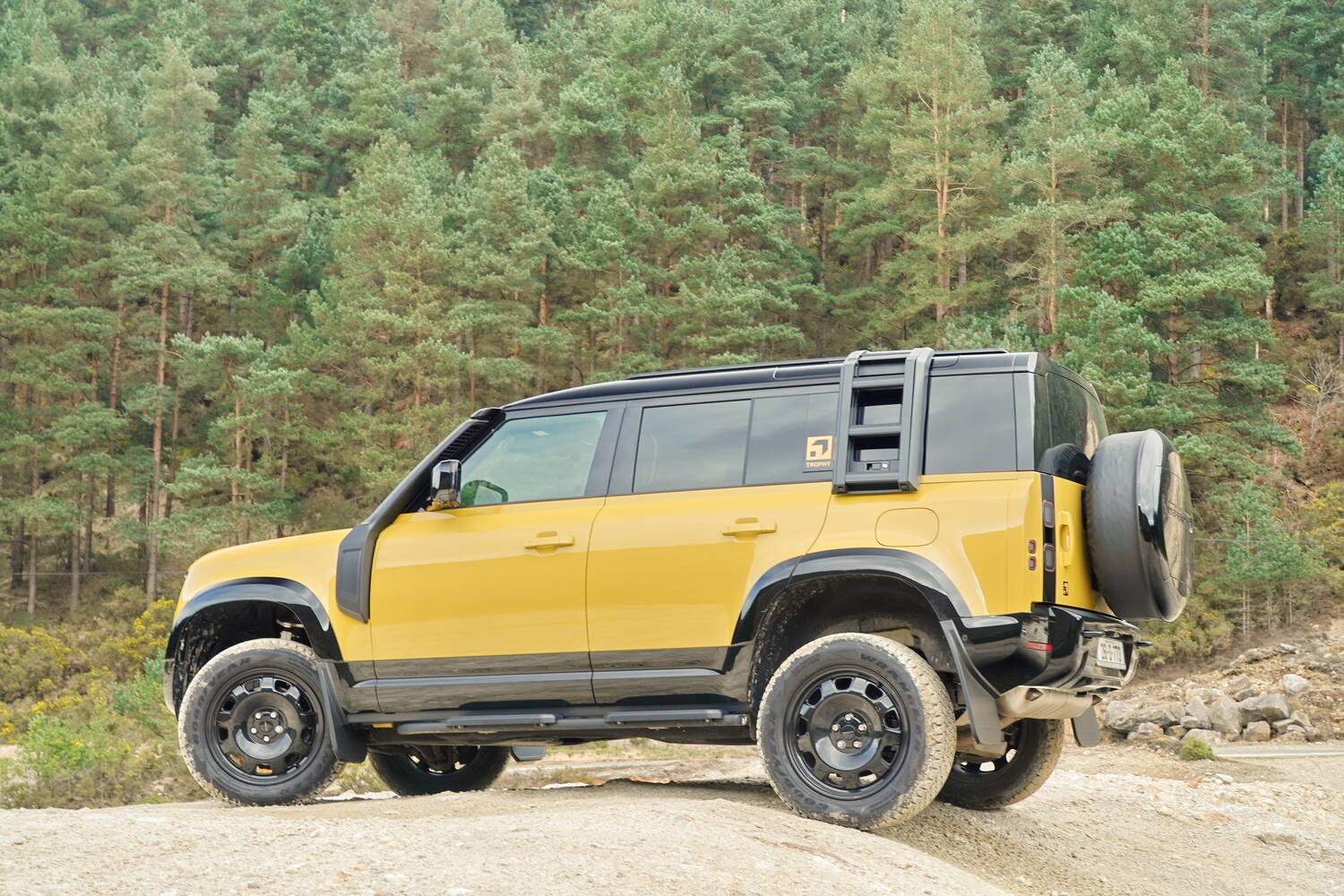
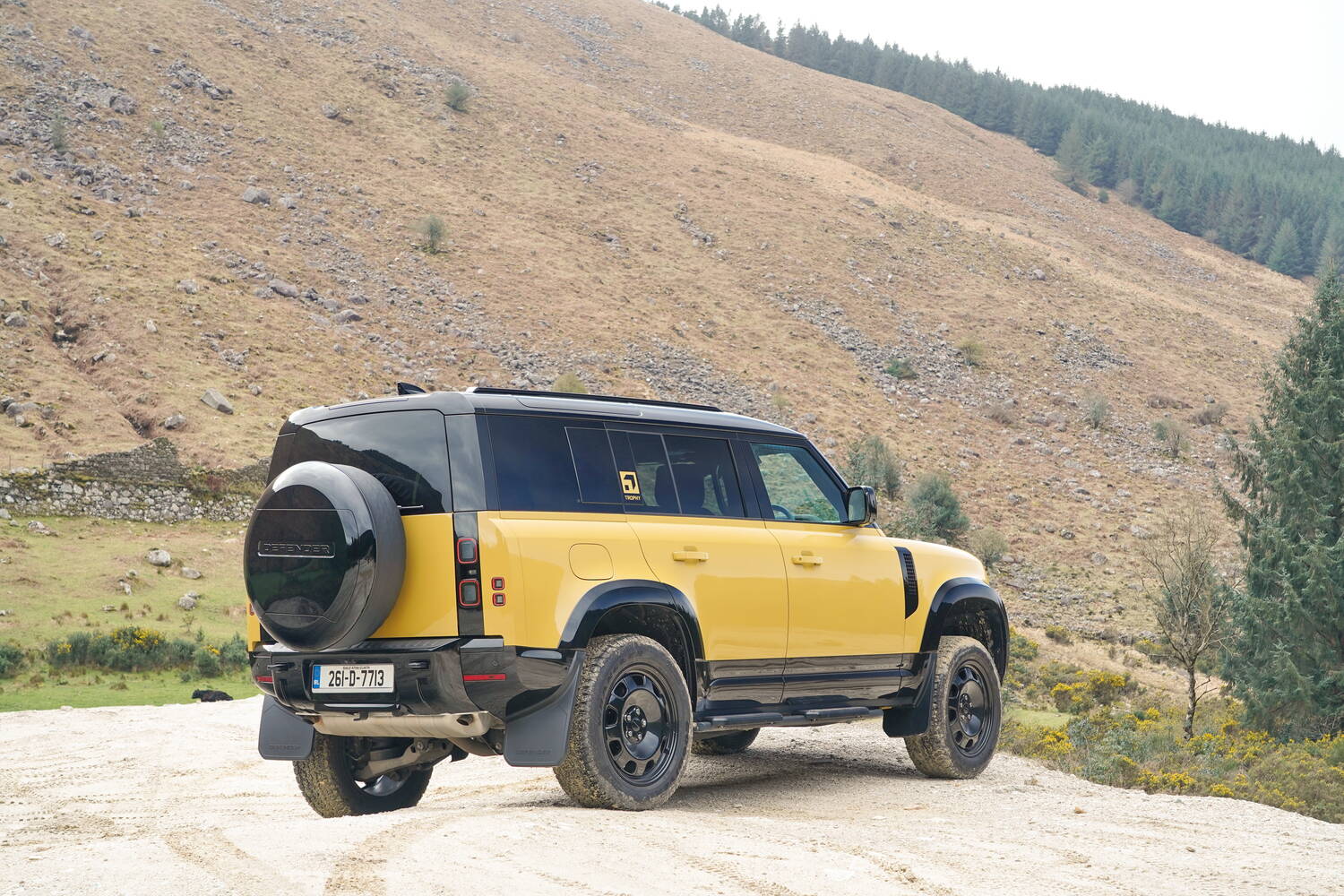
This 110 version - the middle of three possible body lengths - arguably looks the most balanced of all Defenders.
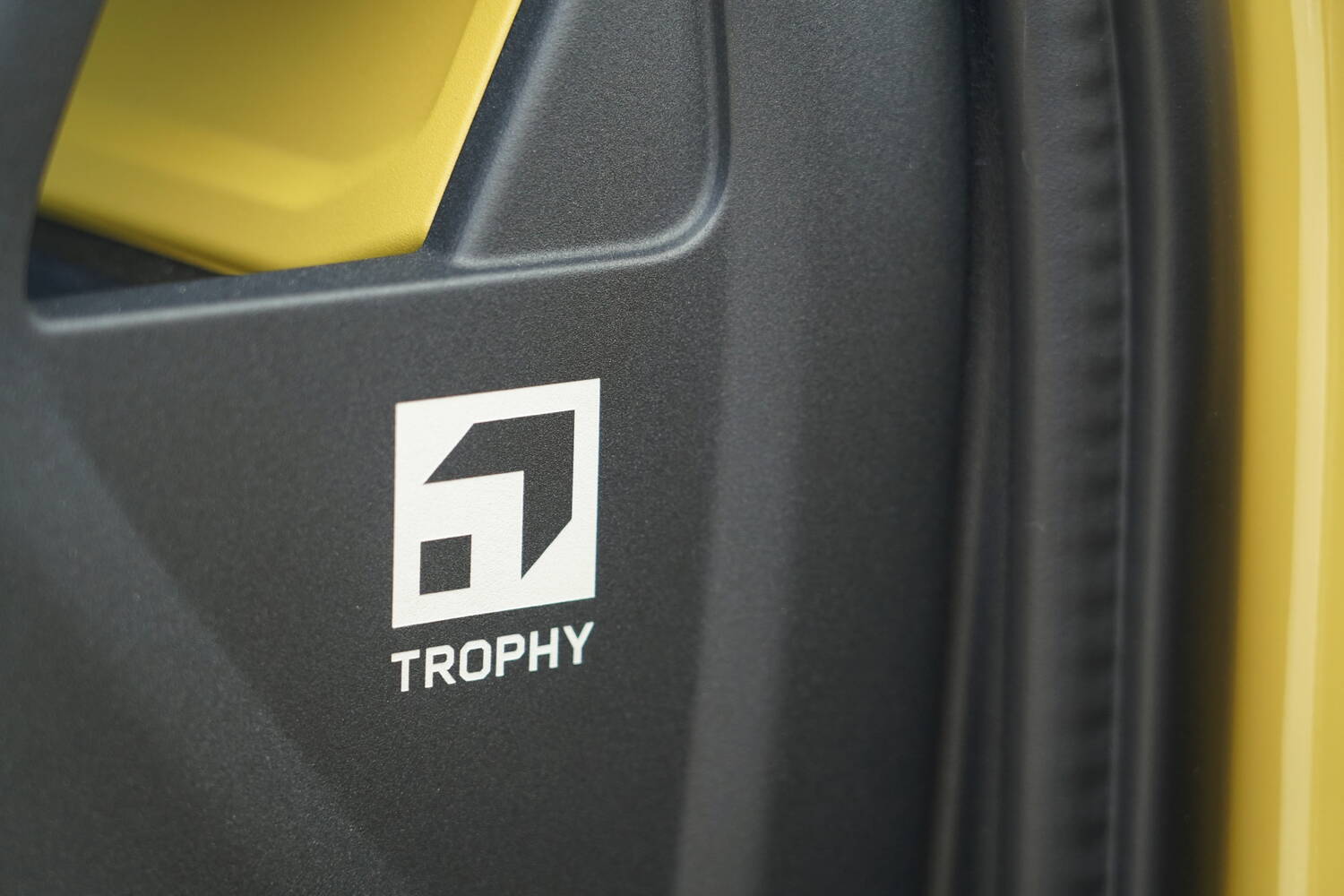
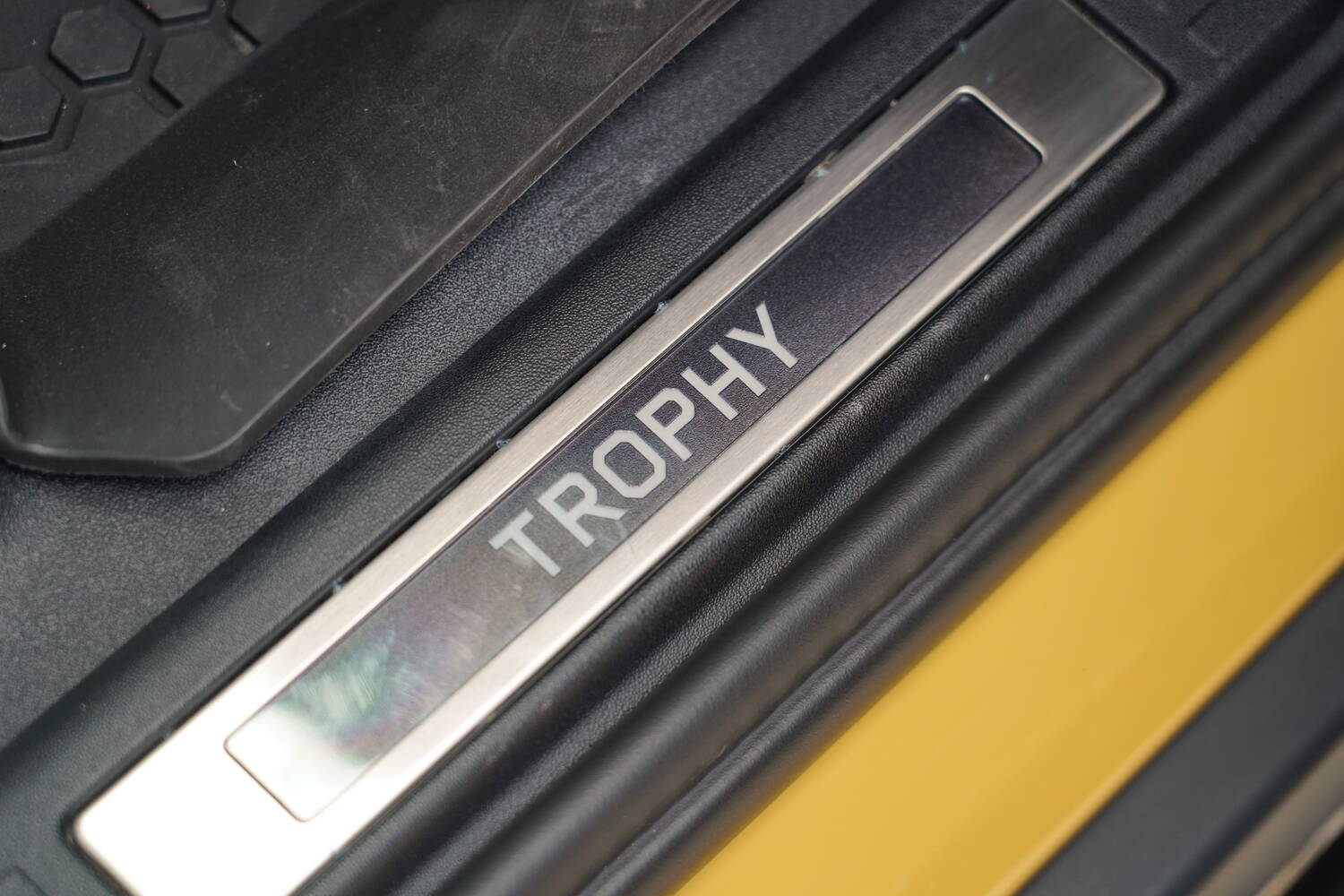
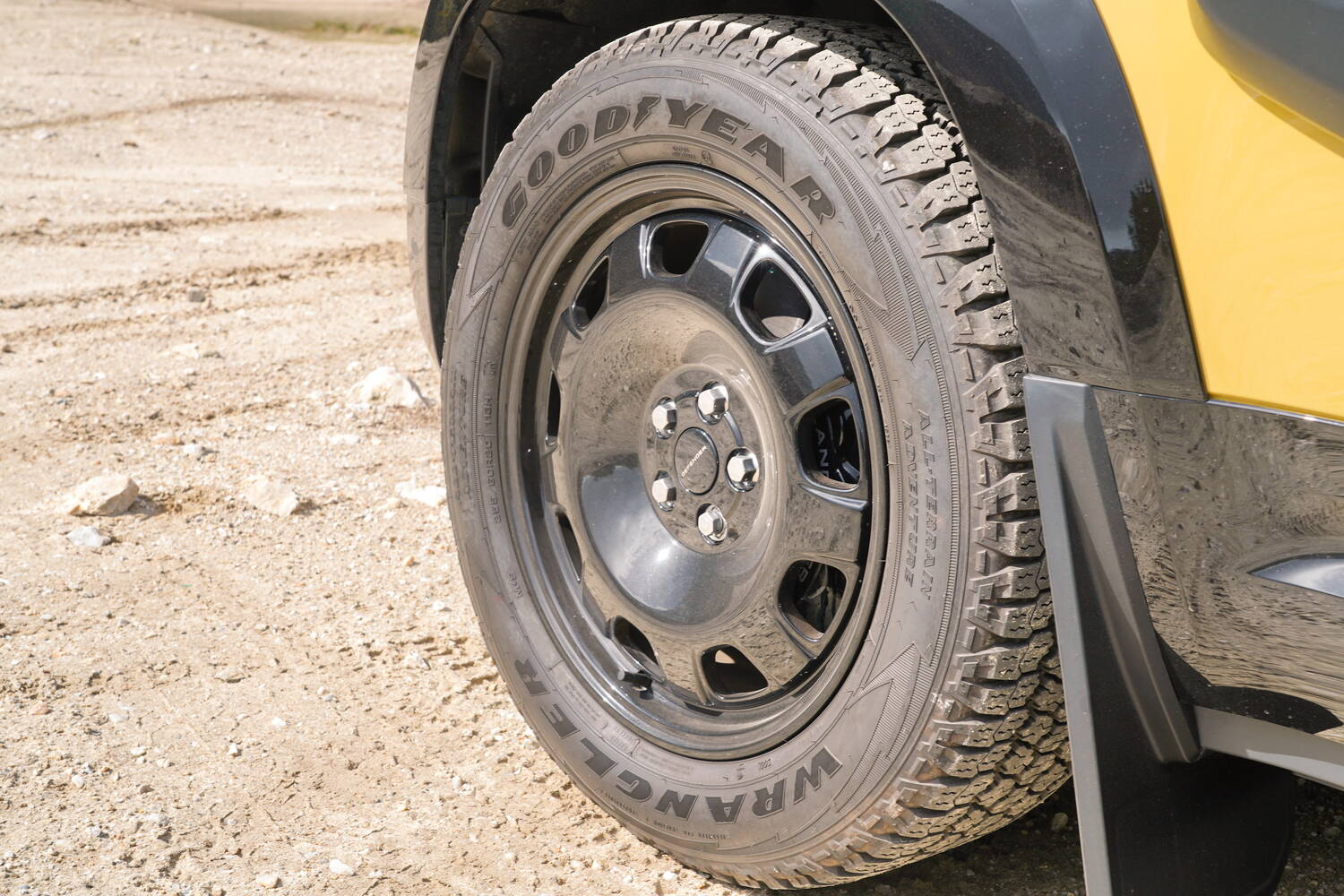
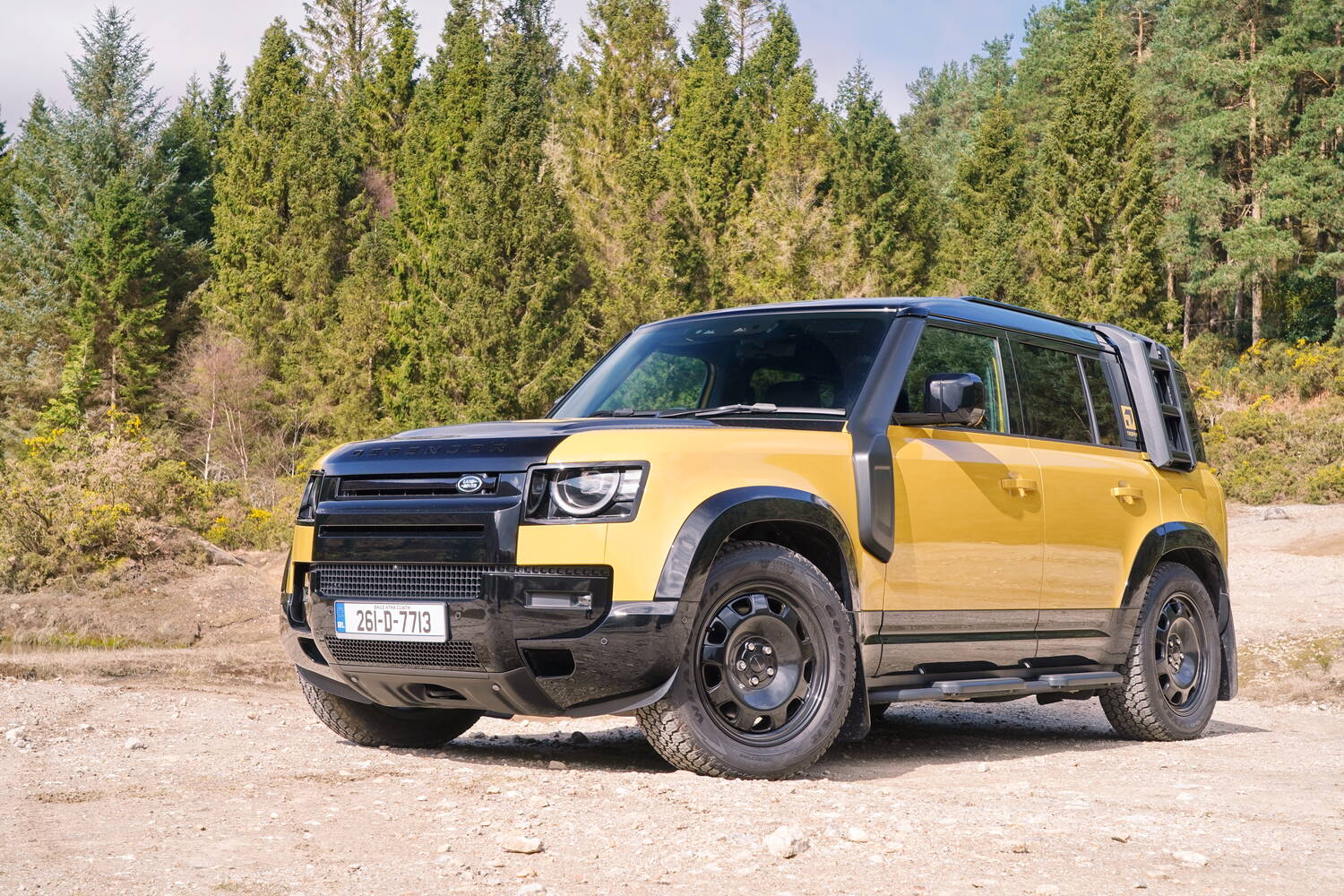
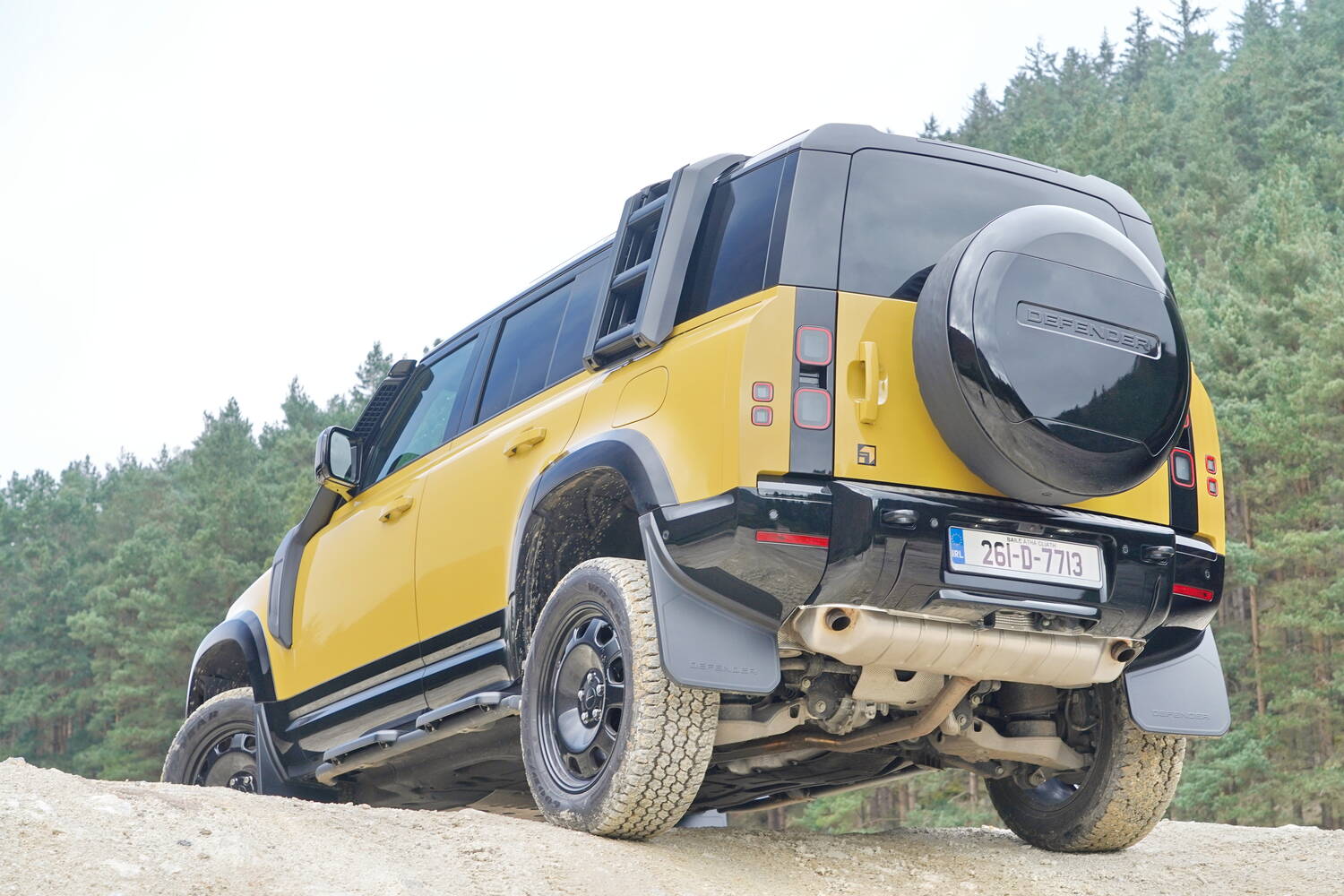
Trophy spec includes some special decals, including a blacked-out bonnet panel (ostensibly to cut down on glare from a low sun), and the coolest set of alloy wheels we've seen in a long time.
These 20-inch rims look like classic steel wheels, but they are actually alloy and were shod with all-terrain Goodyear tyres on our test car.
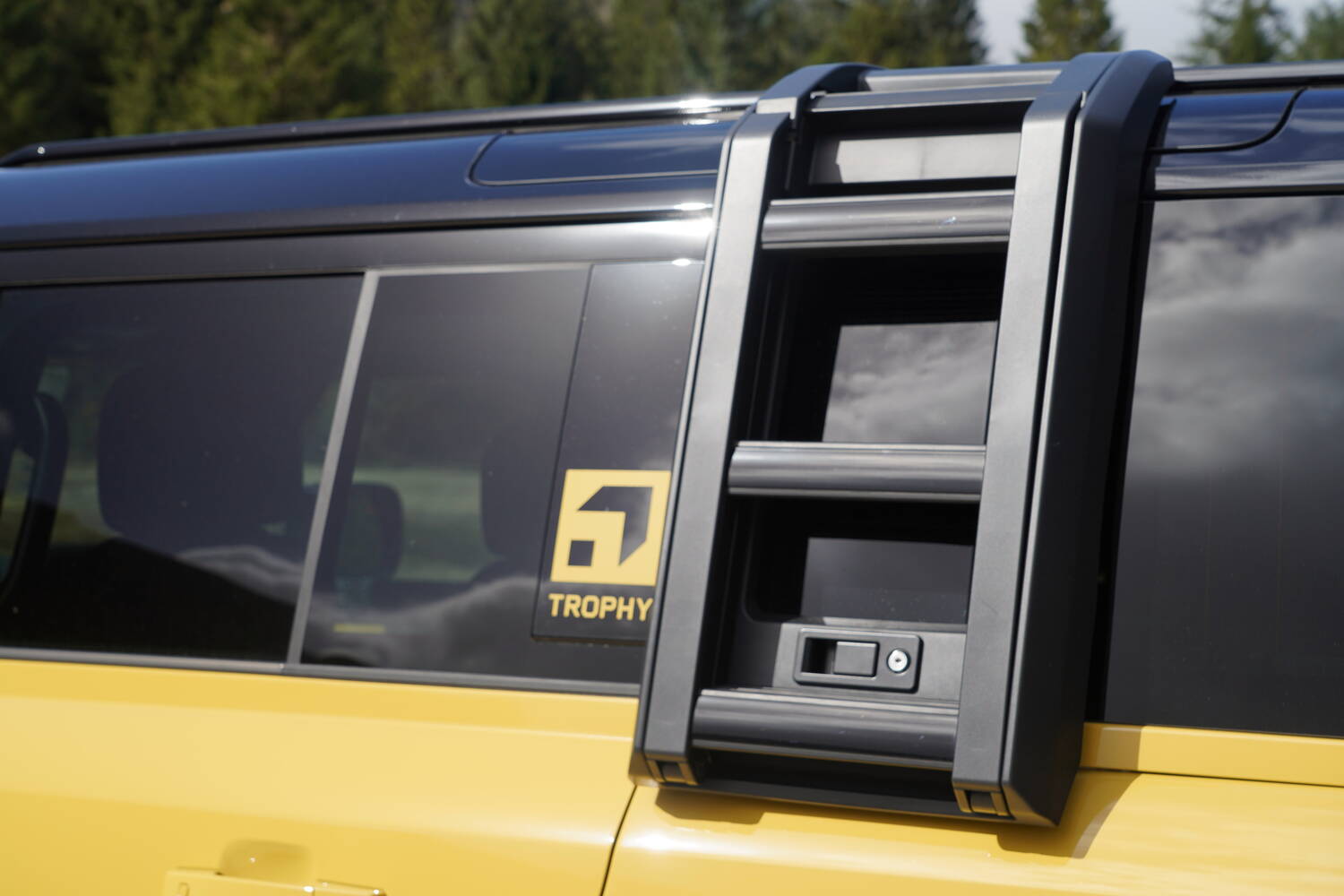
Trophy spec also means that the Defender comes with a snorkel-style air intake on the left-hand side of the windscreen (ideal for dusty or sandy conditions) and attachments at the rear of the roof for items such as a folding ladder or a dangling storage pannier.
Dimensions of the 2026 Defender Trophy 110
- Length:
- 5,018mm
- Width:
- 2,008mm (mirrors folded)
- Height:
- 1,967mm (standard height on air suspension)
- Wheelbase:
- 3,002mm
Paint colours for the 2026 Defender
Fuji White is the Defender's sole no-cost colour, so you'll have to pay €1,465 extra for Santorini Black, Borasco Grey, Gondwana Stone (brown to you or me), Tasman Blue, or Woolstone Green.
Carpathian Grey is €3,320 extra, as is Namib Orange. Those prices will vary slightly from model to model - for instance, X-Dynamic models come with a contrast black roof, which pushes the paint options up to €1,905 or €4,310, while a gloss or matte protection film for the paint is €8,585 extra.
Other model variants have inclusive metallic paint options, such as the Defender X, for which you only have to pay €1,885 extra for Carpathian Grey or Namib Orange.
Equally, our Trophy test car comes with, as standard, Deep Sandglow Yellow paint, a nod to the colour scheme worn by the Camel Trophy cars. You can also have all-over Santorini Black for your Trophy, and other paint options can also be specified if you like.
Interior, practicality, tech & comfort of the 2026 Defender
- Oodles of space
- No seven-seat option for PHEV
- Excellent touchscreen
The Defender is designed to be rugged and hardworking, but that doesn't mean you can't enjoy a touch or two of luxury inside.
Getting comfortable in the driver's seat
The Defender can, thankfully, crouch down on its adjustable air suspension (which is almost, but not quite, standard across the lineup) to make access to the cabin a little easier.
It's still a step up, even if you're tall, but the protruding side-steps on our test car were, as they tend to be, less of a help than you might think.
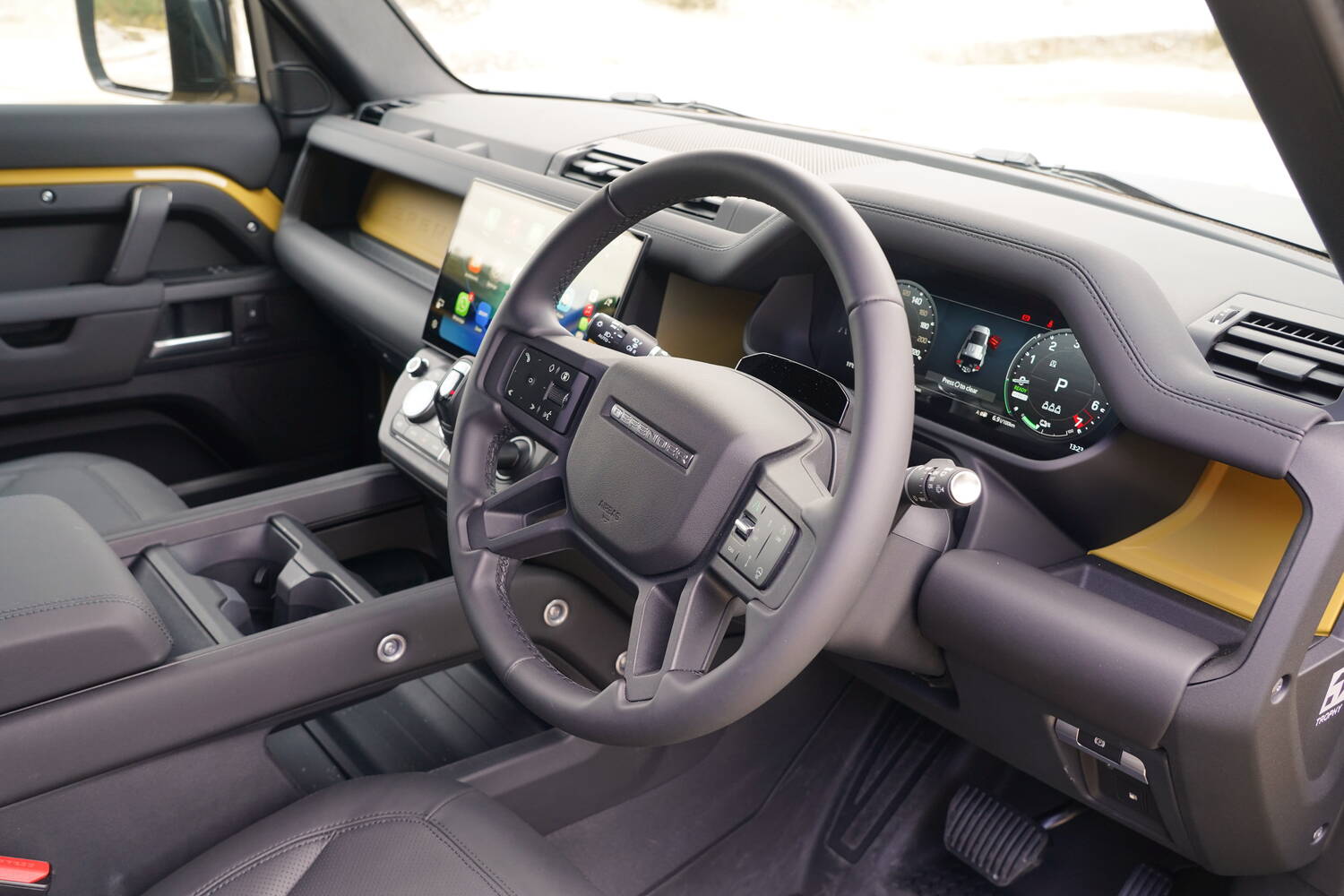
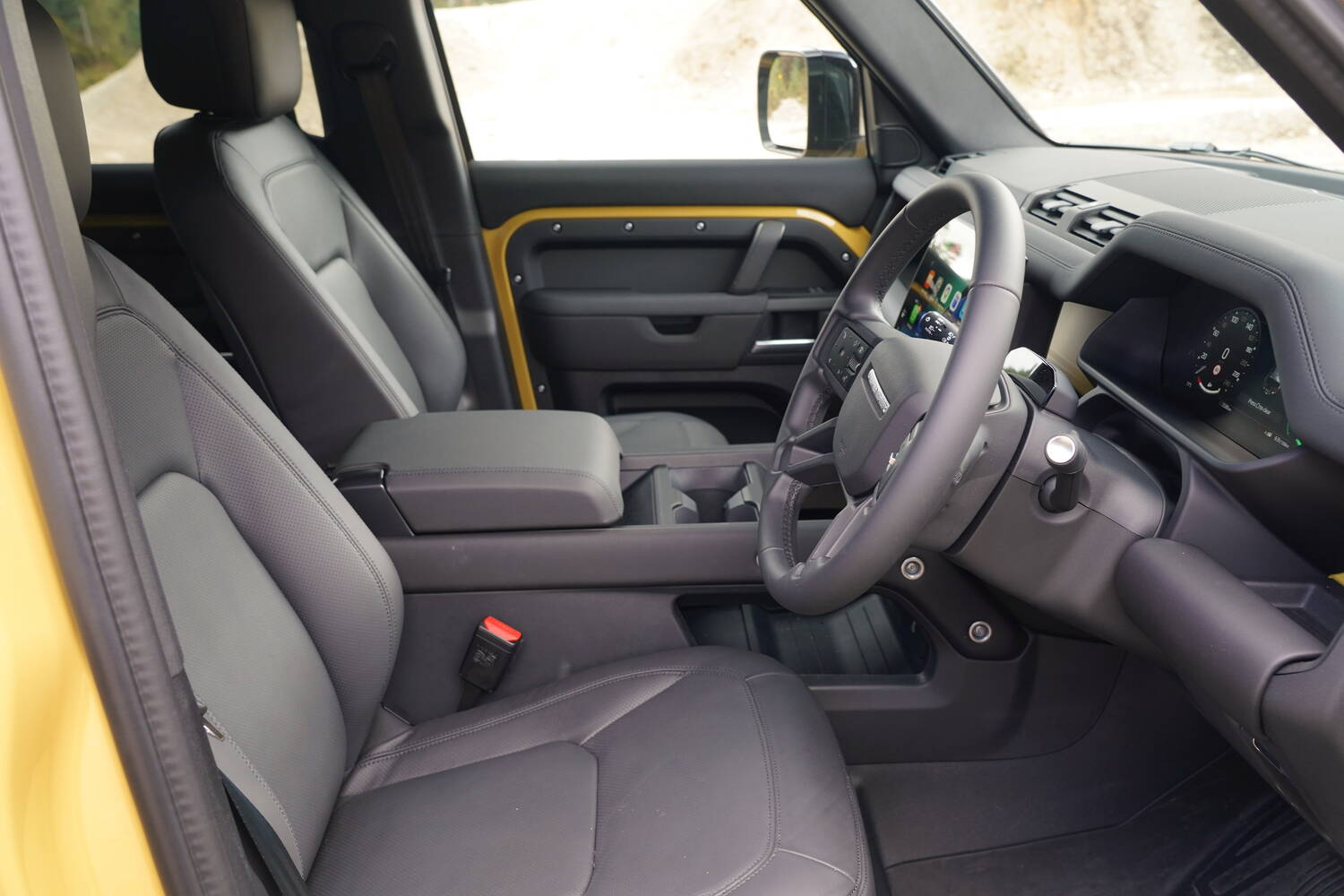
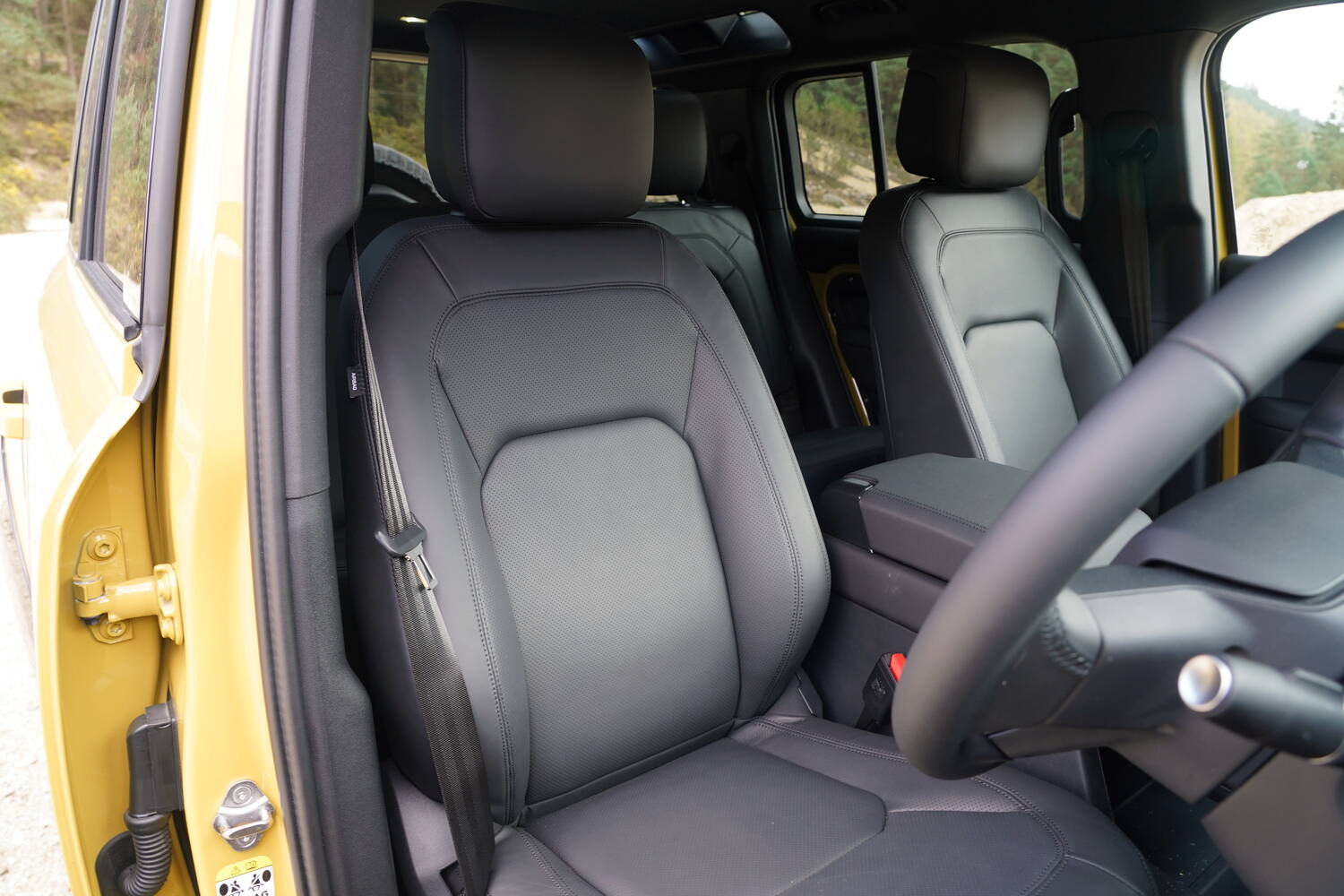
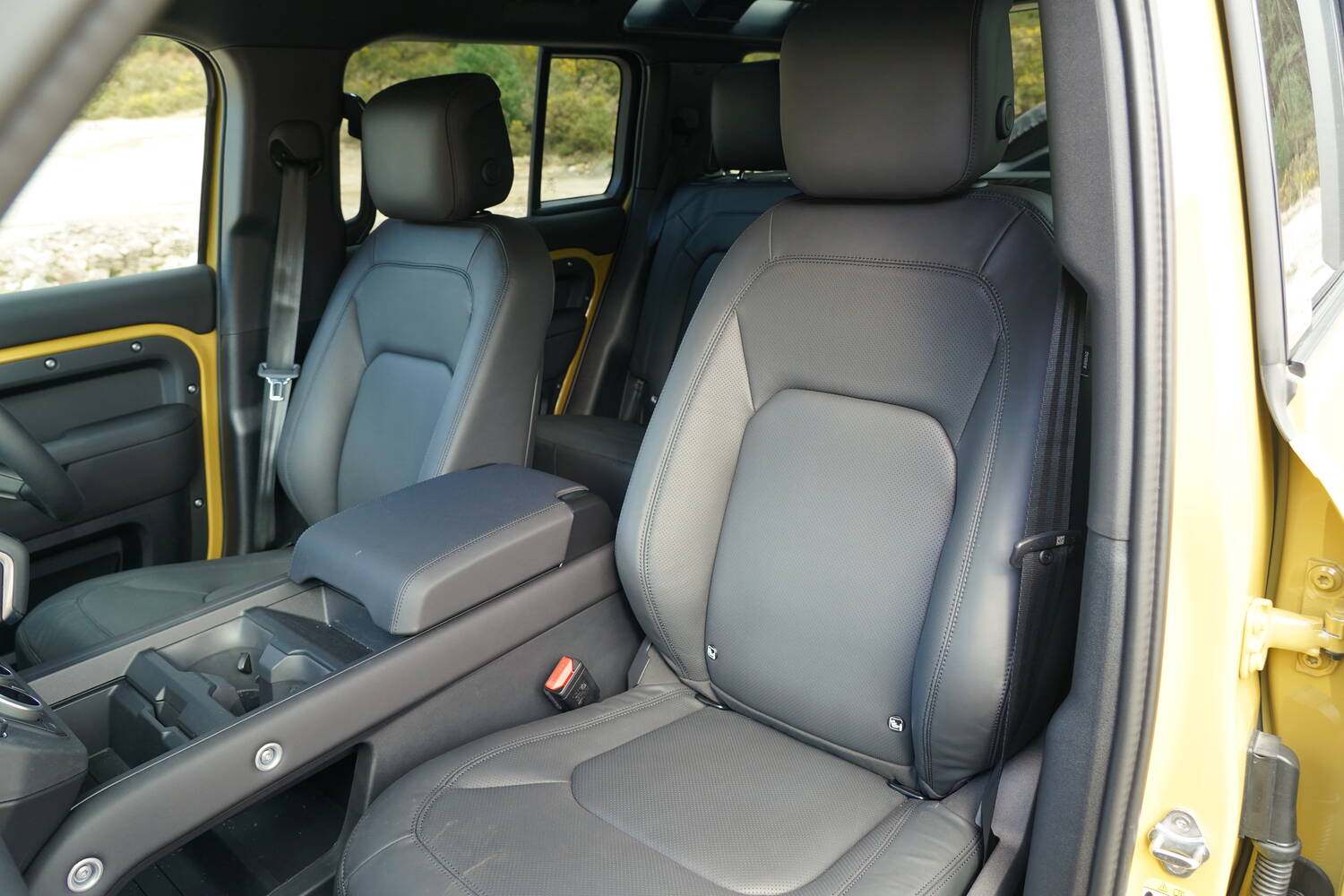
Once you're in, the driver's seat is spectacularly comfortable, even on very long journeys, and the big four-spoke steering wheel has lots of adjustability built into it.
Trophy models get adjustable side bolsters, which can squeeze you in a little tighter if you fancy, but height adjustment is standard, so you can lift yourself up a touch for the classic high-up Land Rover 'command' driving position.
All-round visibility is excellent (especially if you flip the rear headrests down) aside from the fact that, if you're tall, the top of the windscreen feels a little bit low.
Infotainment and technology
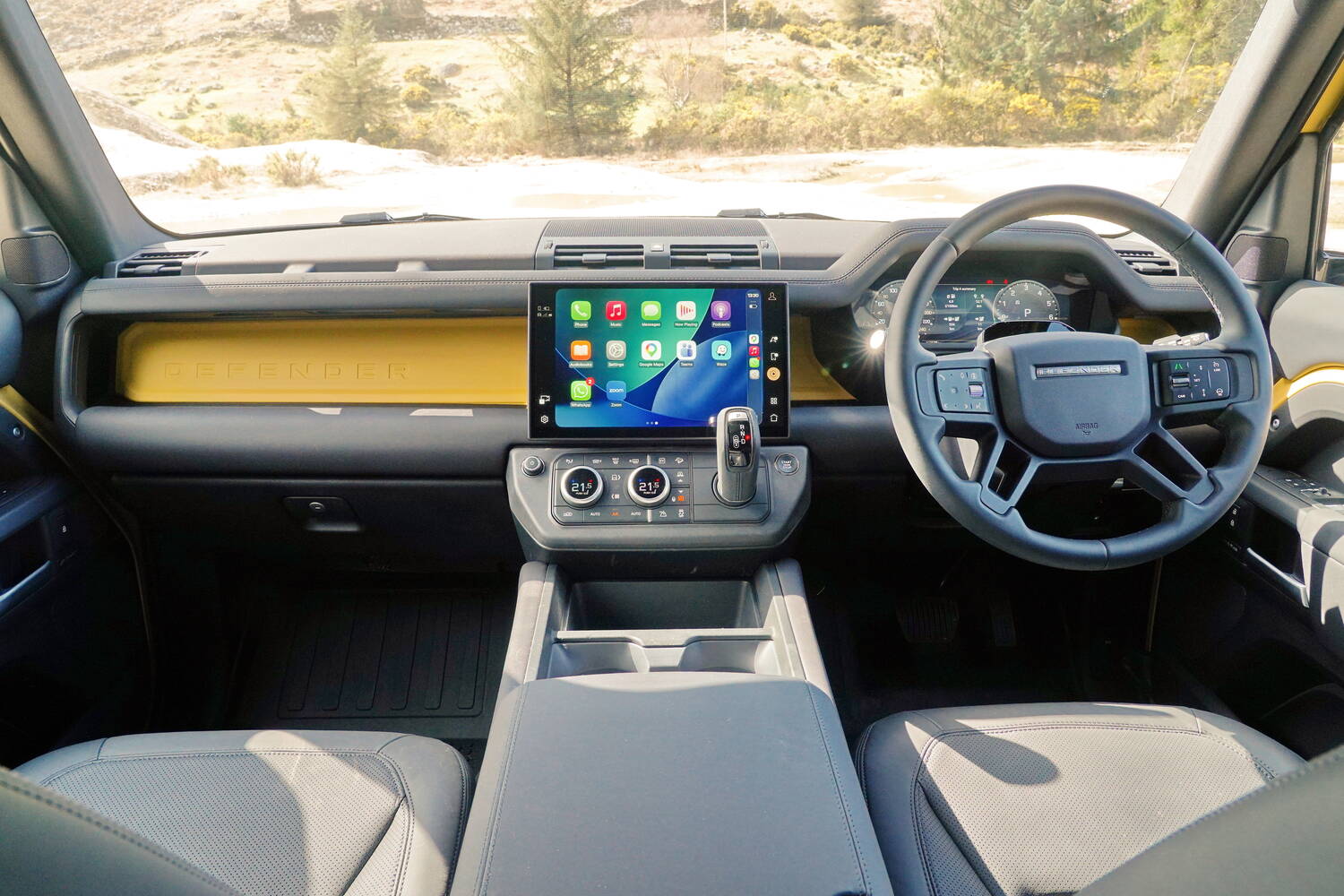
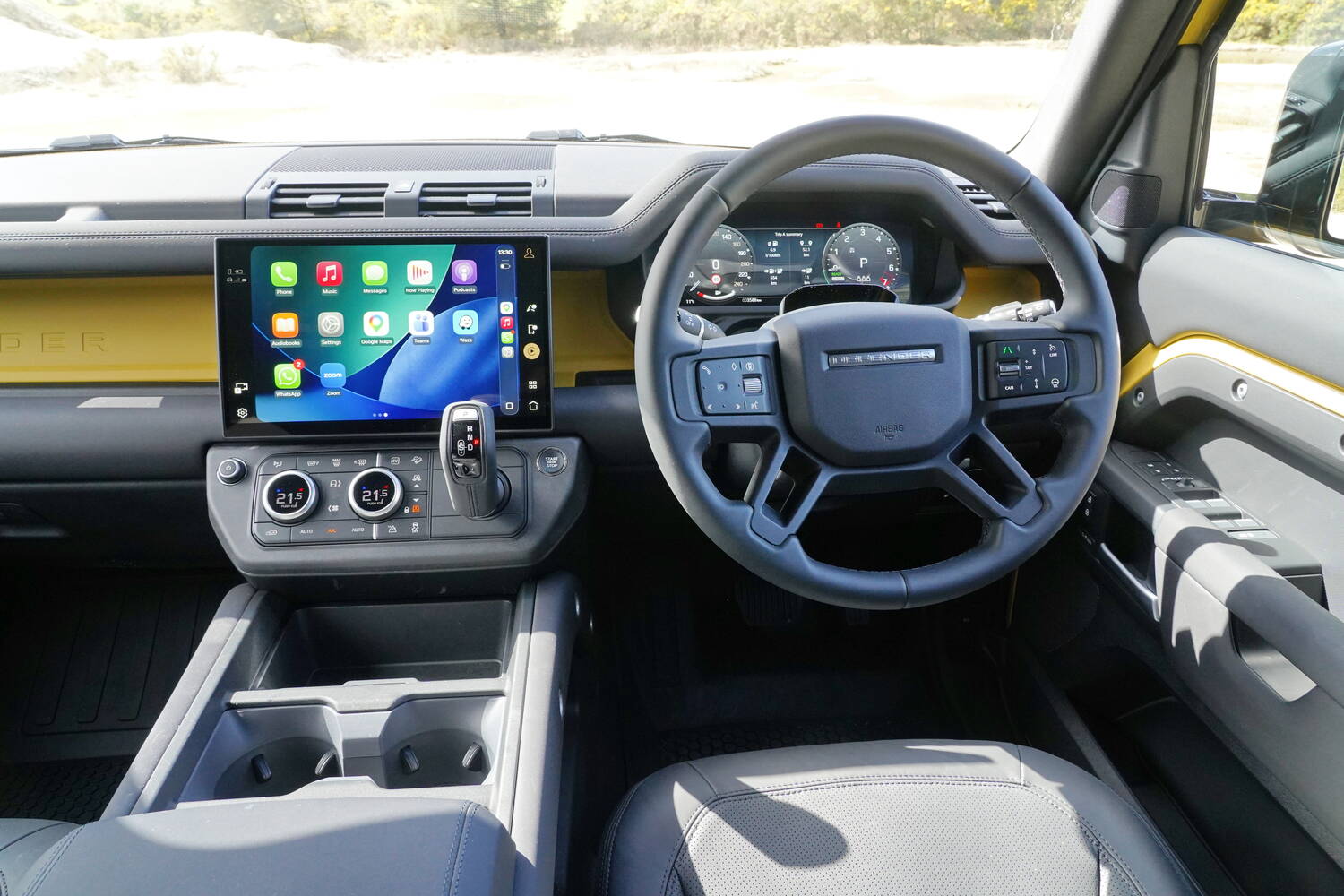
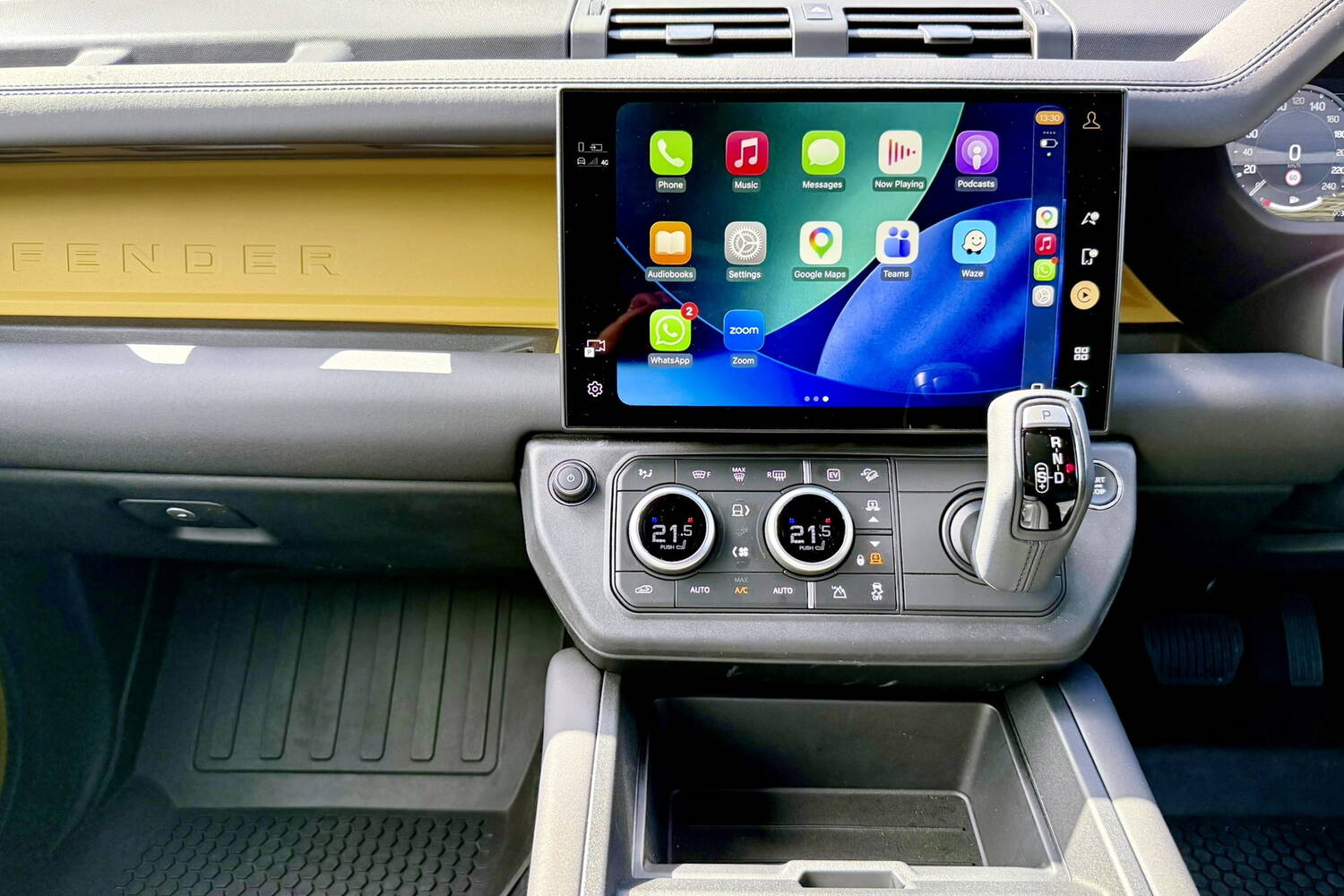
The Defender's 13-inch touchscreen might have an odd name - Land Rover refers to it as the 'Pivi Pro' system - but it's actually pretty good to use.
The software has impressively expensive looking graphics and, while one or two of the on-screen menus are a little confusing, for the most part it's easy to get to where and what you need.
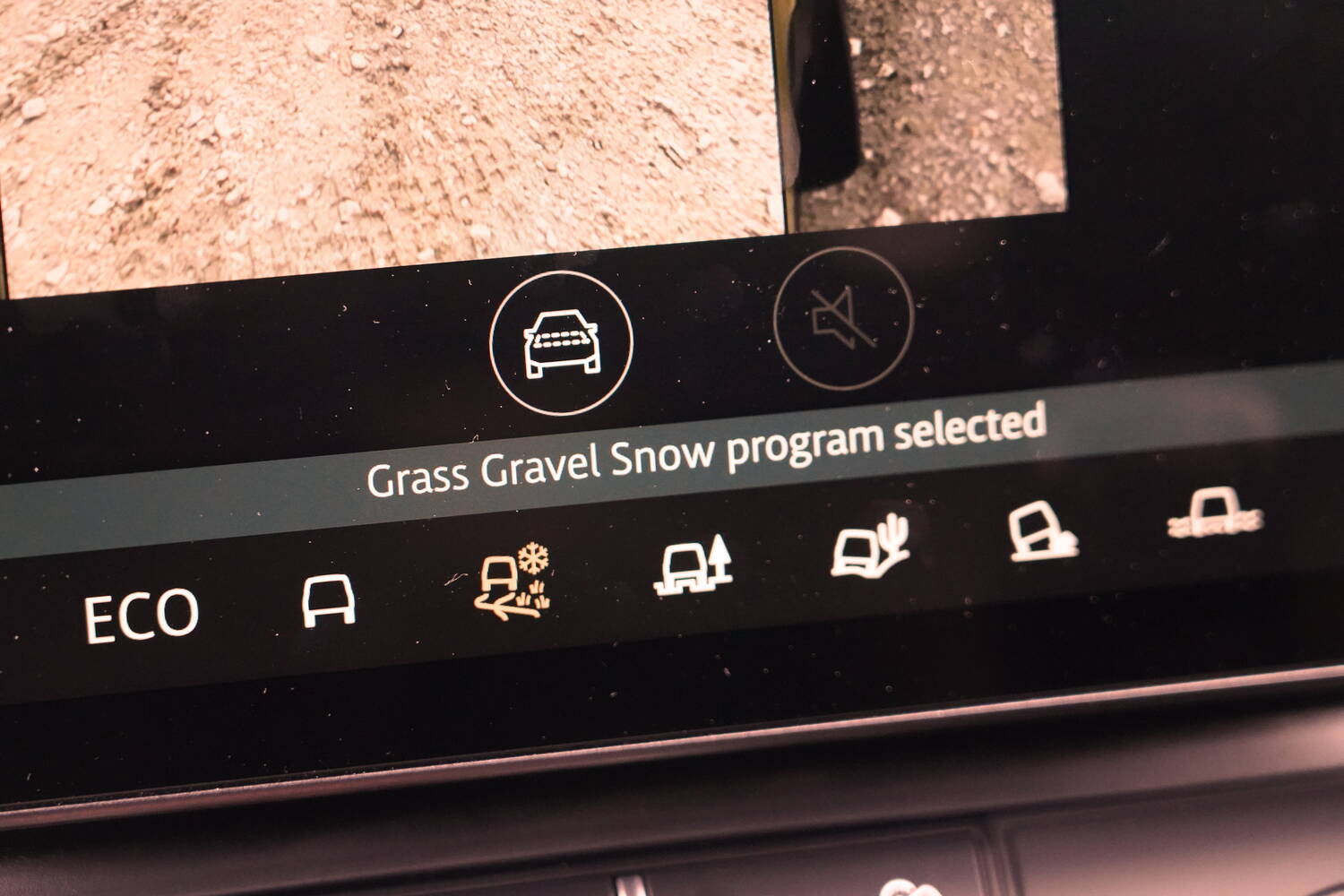
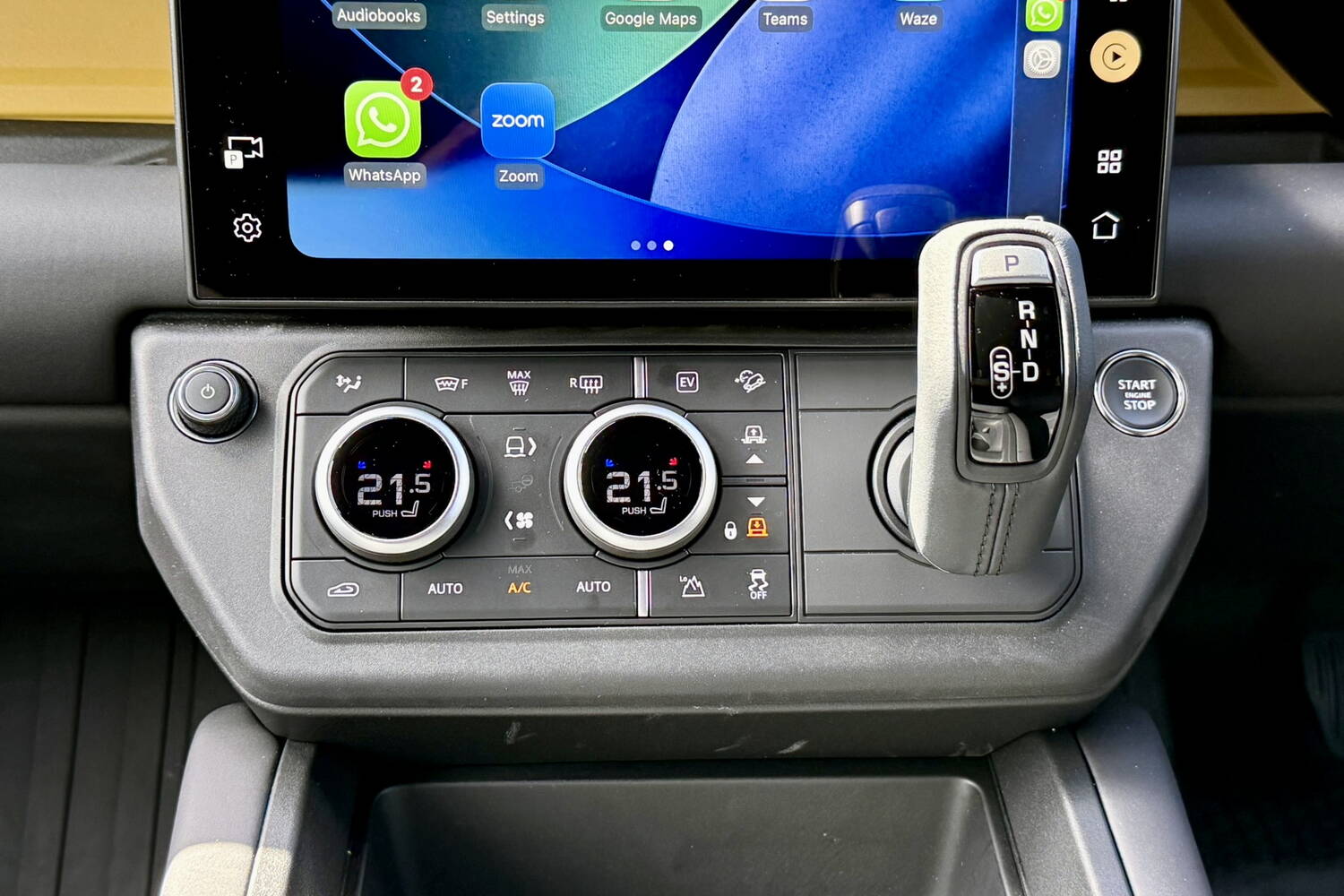
It helps massively that the Defender still uses plenty of physical buttons, including rotary controllers which not only allow you to simply and easily adjust the cabin temperature, but which also - with an extra press - allow you to turn on the heated and ventilated front seats, or access the driving modes (you can choose from Eco, Sport, Grass/Gravel/Snow, Mud Ruts, Sand or Rock Crawl).
It takes a lot of strain off the touchscreen and makes life much easier, especially when trying to find functions on the move.
The main instrument display has some useful customisation options for the layout and the information it displays, and it's all nice and clear, while the steering wheel buttons are physical items that are pleasingly clicky to use (although the on-wheel volume control is a bit too slack in its action, and the volume knob on the centre console is too much of a stretch away).
One thing to note is the design of the gear selector, which means that as you reach for it, your fingers kind of naturally squeeze the selector release 'trigger' which means that, when negotiating a tight three-point turn for example, you're not left hanging between gears, wondering why reverse or drive hasn't engaged.
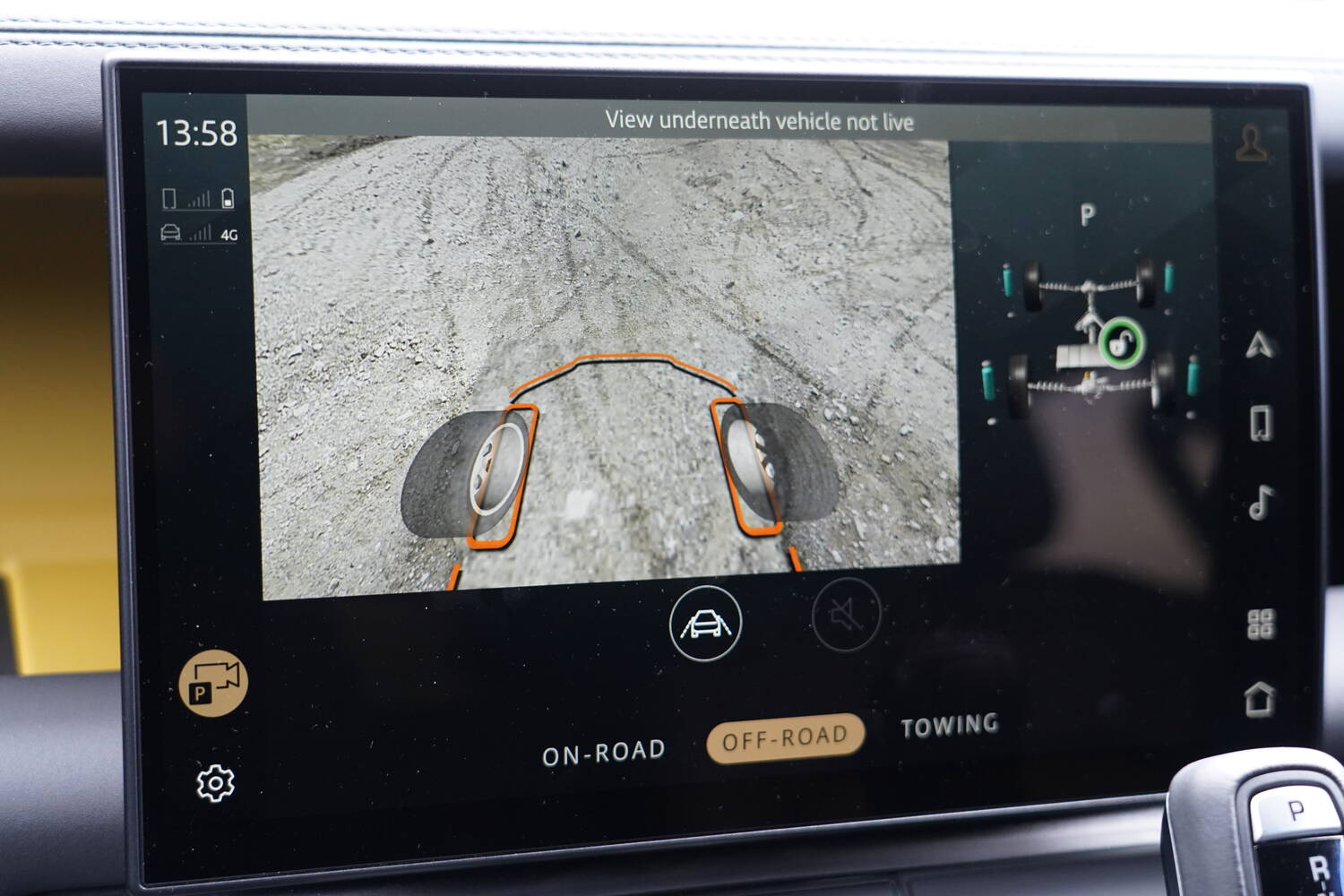
The 360-degree camera system which includes a new 3D view, is inestimably useful for parking too (and the Defender actually fits into tighter spaces than you might think).
Plus there's lots of off-road displays, including suspension articulation, whether or not the diffs are automatically locking, a display that shows the height of the car at the various air suspension levels (critical information when entering multi-storey car parks) and of course the wade sensing screen.
This uses the parking sensors to detect how close you're getting to the standard 900mm water wading depth.
Practicality around the cabin
The front of the Defender's cabin is massively practical, as you might expect. Under the armrest is a large, square storage area which can be optionally equipped with a cool box.
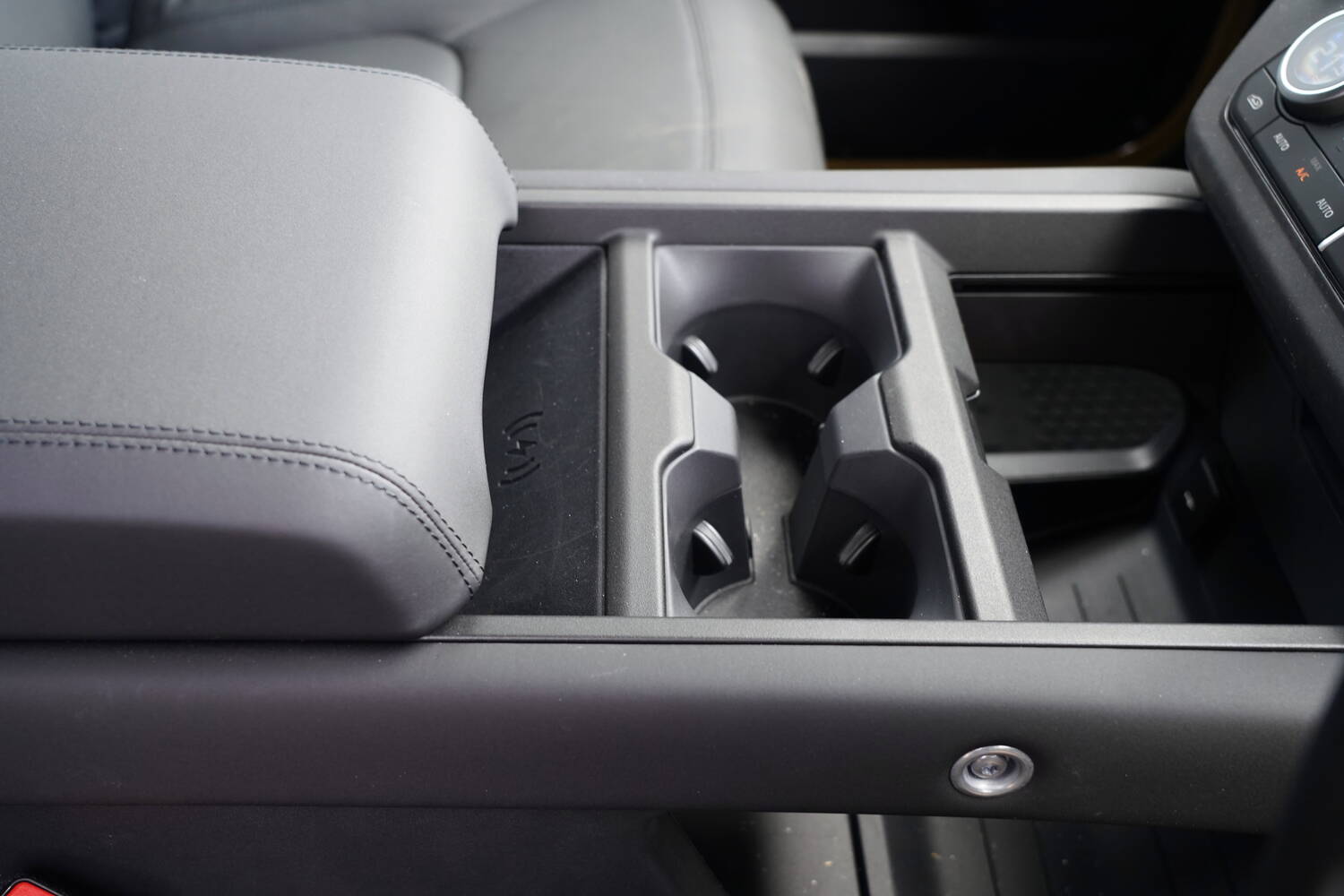
There are two large cupholders on the centre console, and in front of those is a deep, open storage tray. Better yet, that tray is actually a drawer, which slides forward to allow easy access to the open storage area under the console, where you'll also find the USB-C and 12-volt power connections.
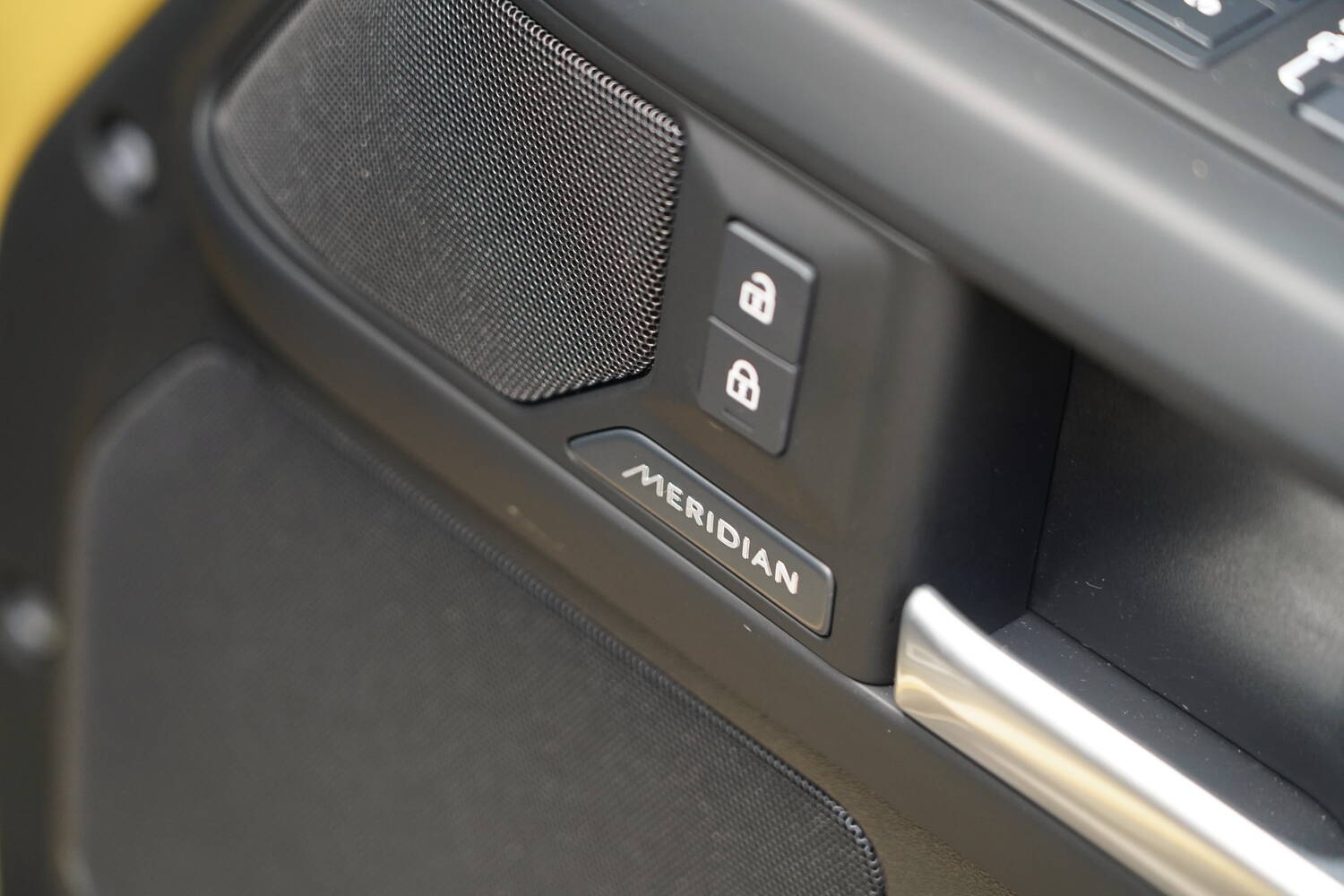
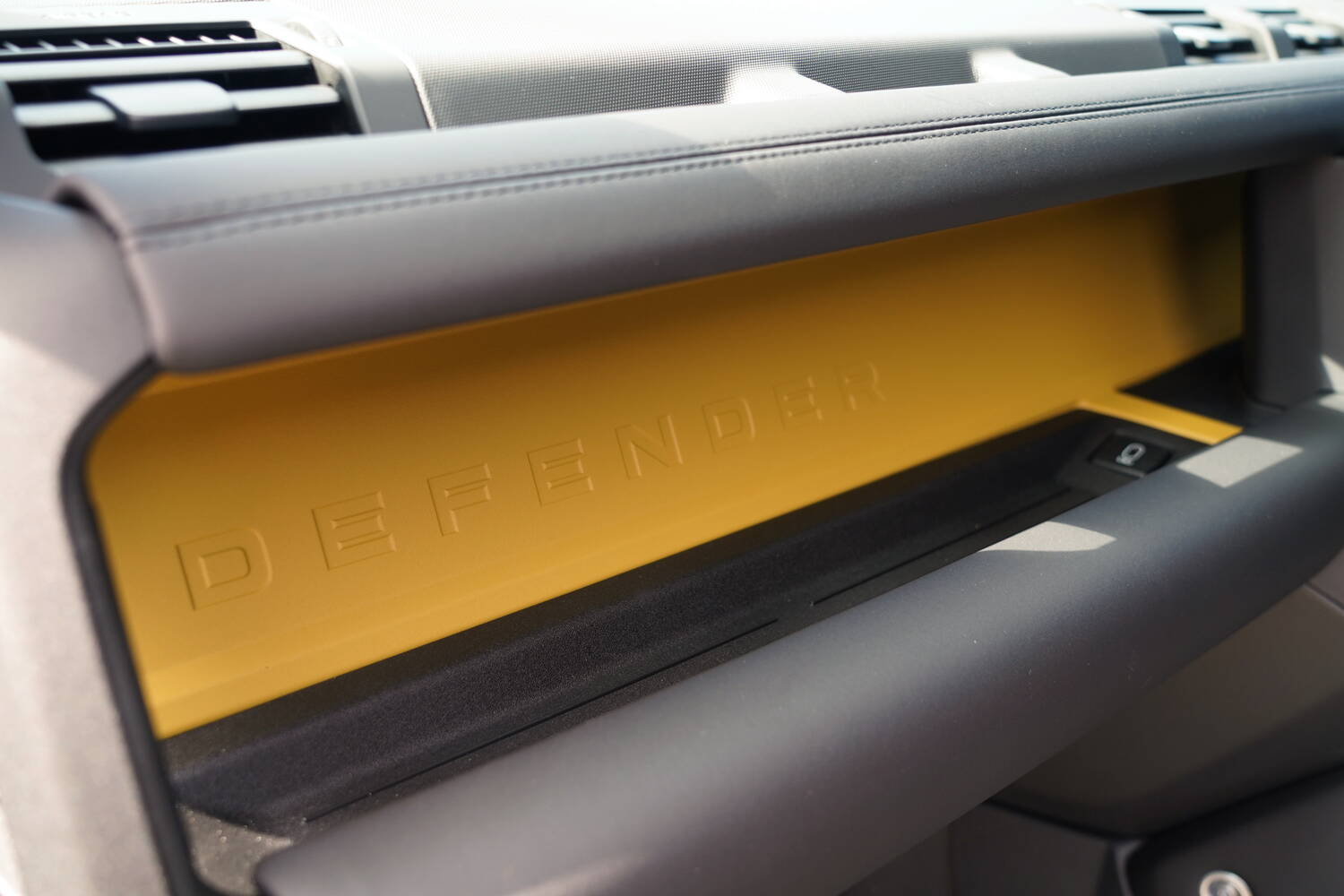
The glovebox is also a good size, and that's backed up by useful door bins. The dashboard itself is of an open shelf design, with neat powder-coated surfaces for that rugged feel, but also with rubber lining so that objects won't rattle nor slide around. There are more USB-C sockets here too.
Rear-seat passenger space
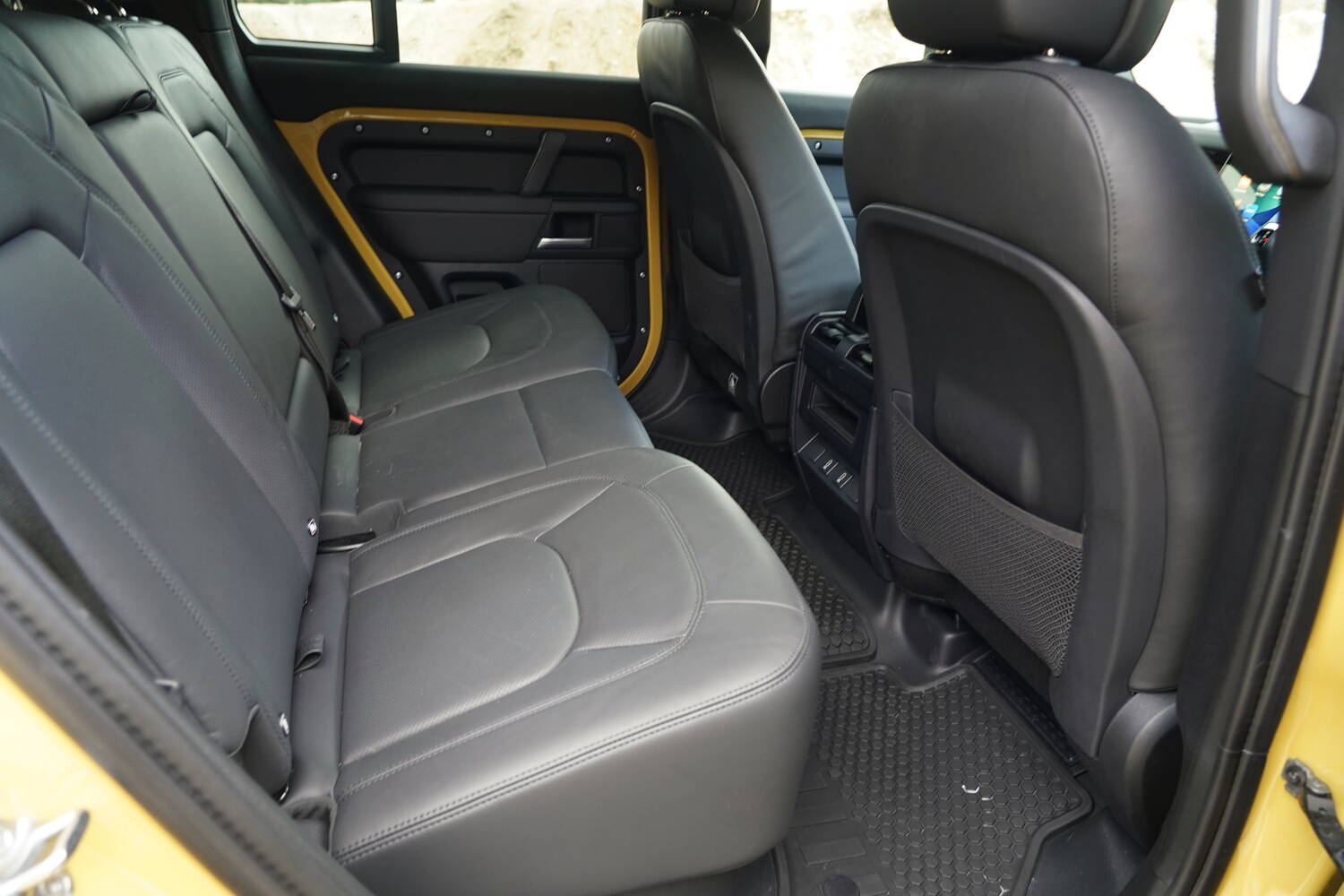
Space in the back of the Defender is excellent, with plenty of legroom and masses of headroom. In the 110 model, there are also 'Alpine Light' windows in the roof which let in a bit of extra light, while rear-seat passengers get seatback storage nets, a small storage shelf, door bins, USB-C sockets and some air vents too.
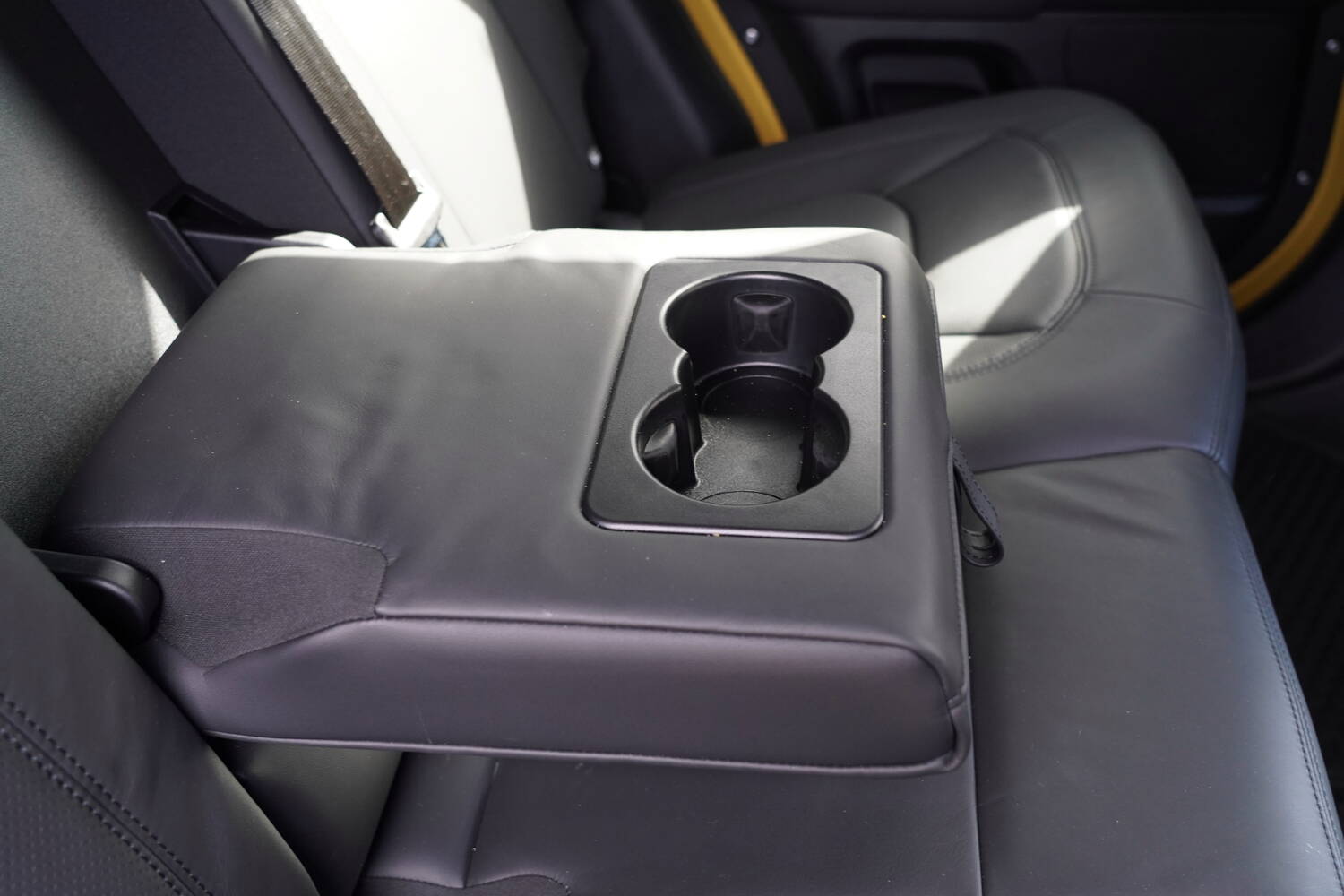
Better still, the middle rear seat is actually useable - not as comfortable as the outer two, obviously, but sufficiently wide for even an adult to fit.
The only downside is that if you've gone for the plug-in hybrid, as most Irish buyers will do, then the battery takes up the space that would normally allow for folding third-row seats to be fitted, so in this form the Defender is strictly a five-seater.
Fitting child seats to the Defender
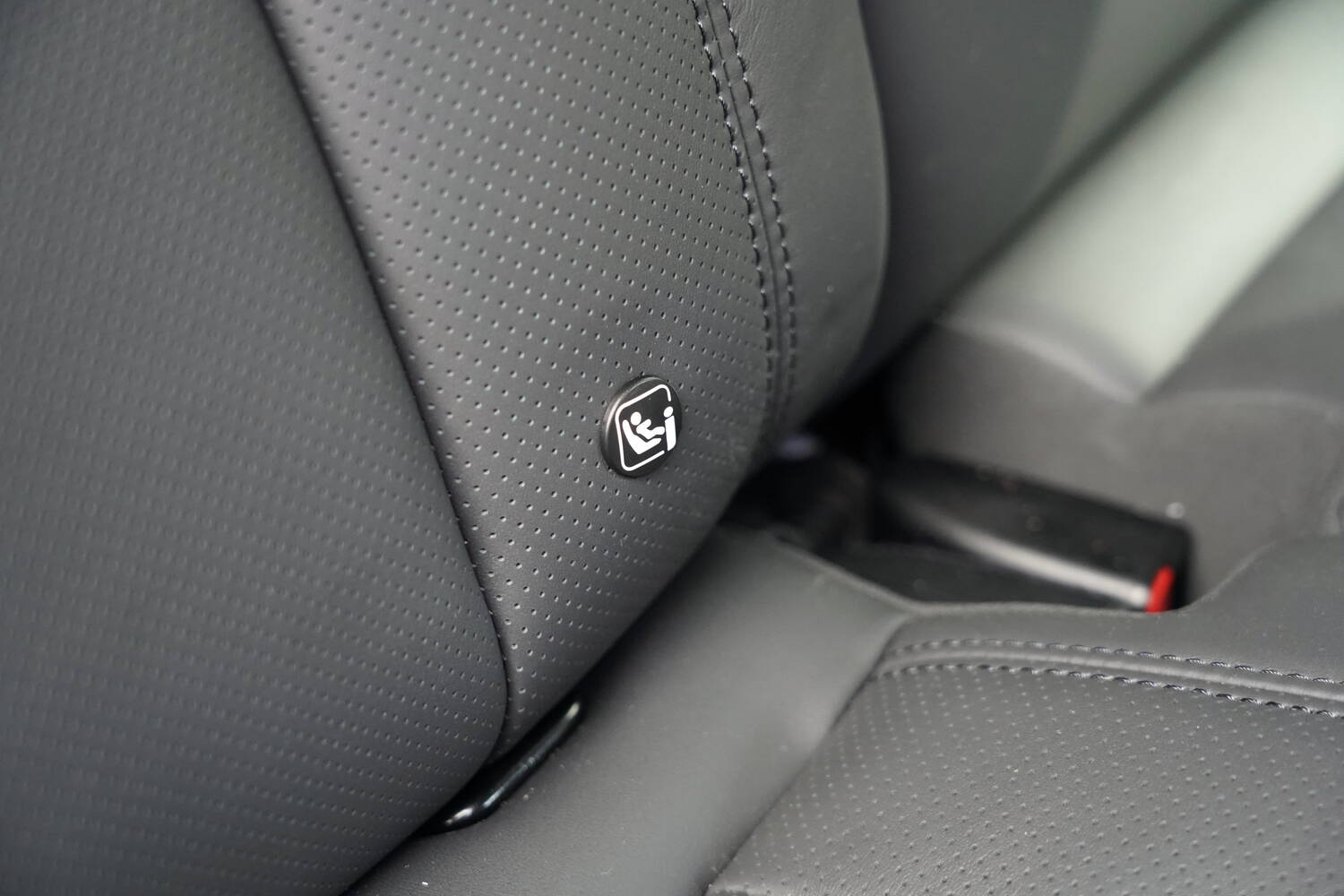
It may only be a five-seater (in PHEV form), but the Defender does make up for that a bit by featuring three ISOFIX anchor points - two in the outer rear seats, and one in the front passenger seat.
There's enough space that fitting even the bulkiest rear-facing seat shouldn't be a struggle, and the rear doors open nice and wide to make that even easier. That wide middle rear seat means that there's a good chance you can fit an extra booster cushion for an older third child in the back too.
Boot space in the Defender
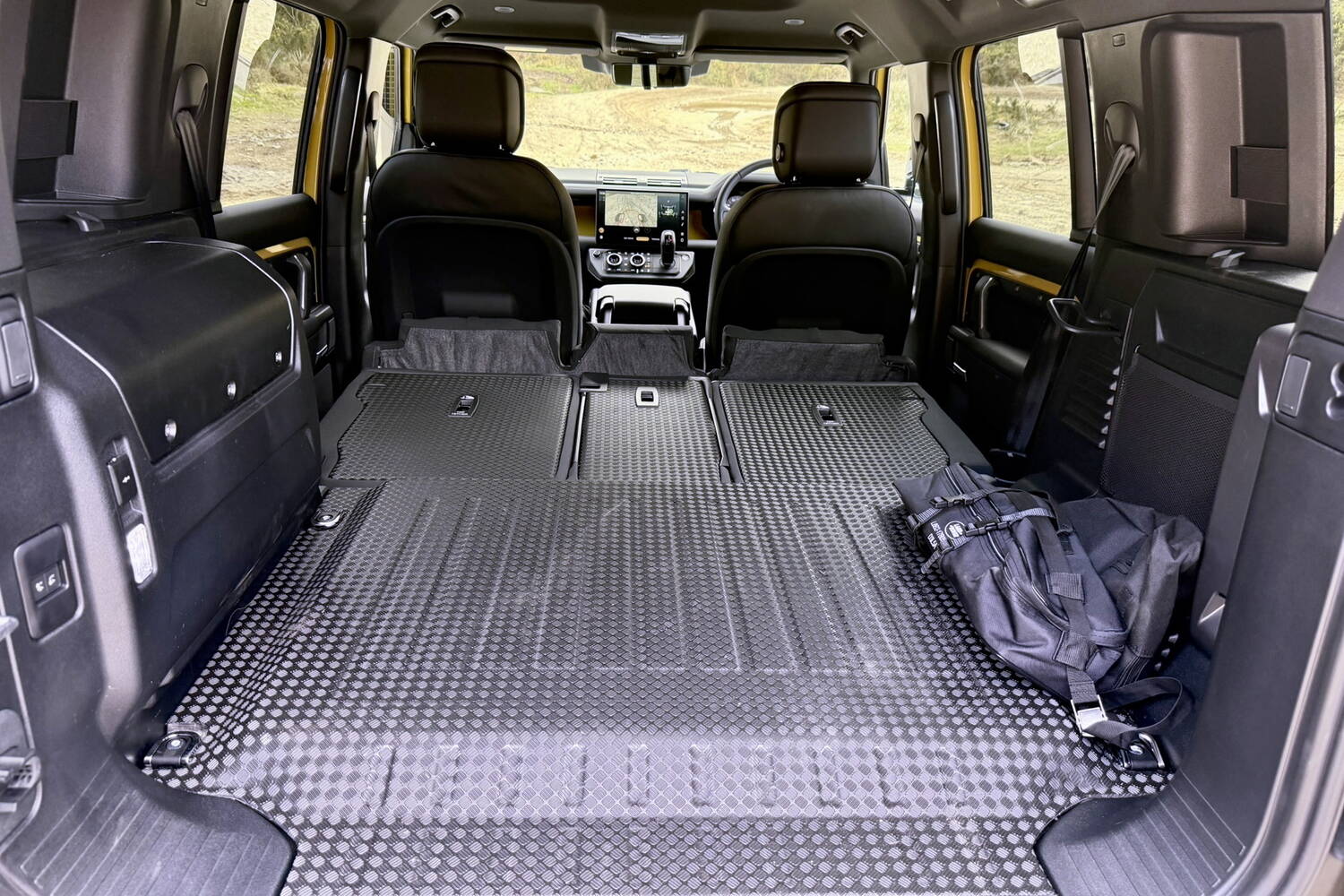
There's another compromise forced on the Defender by the plug-in hybrid powertrain, and that's when it comes to boot space.
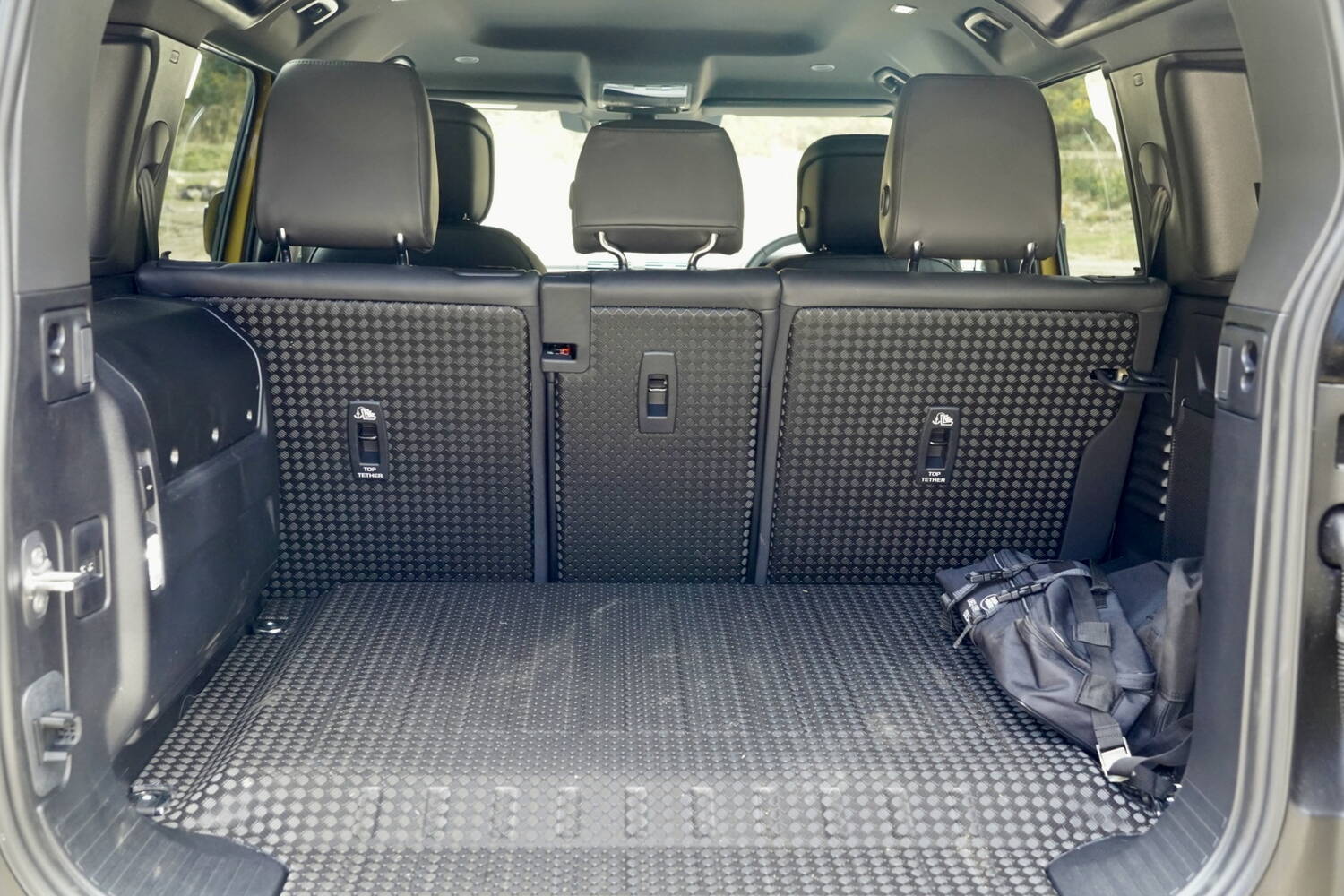
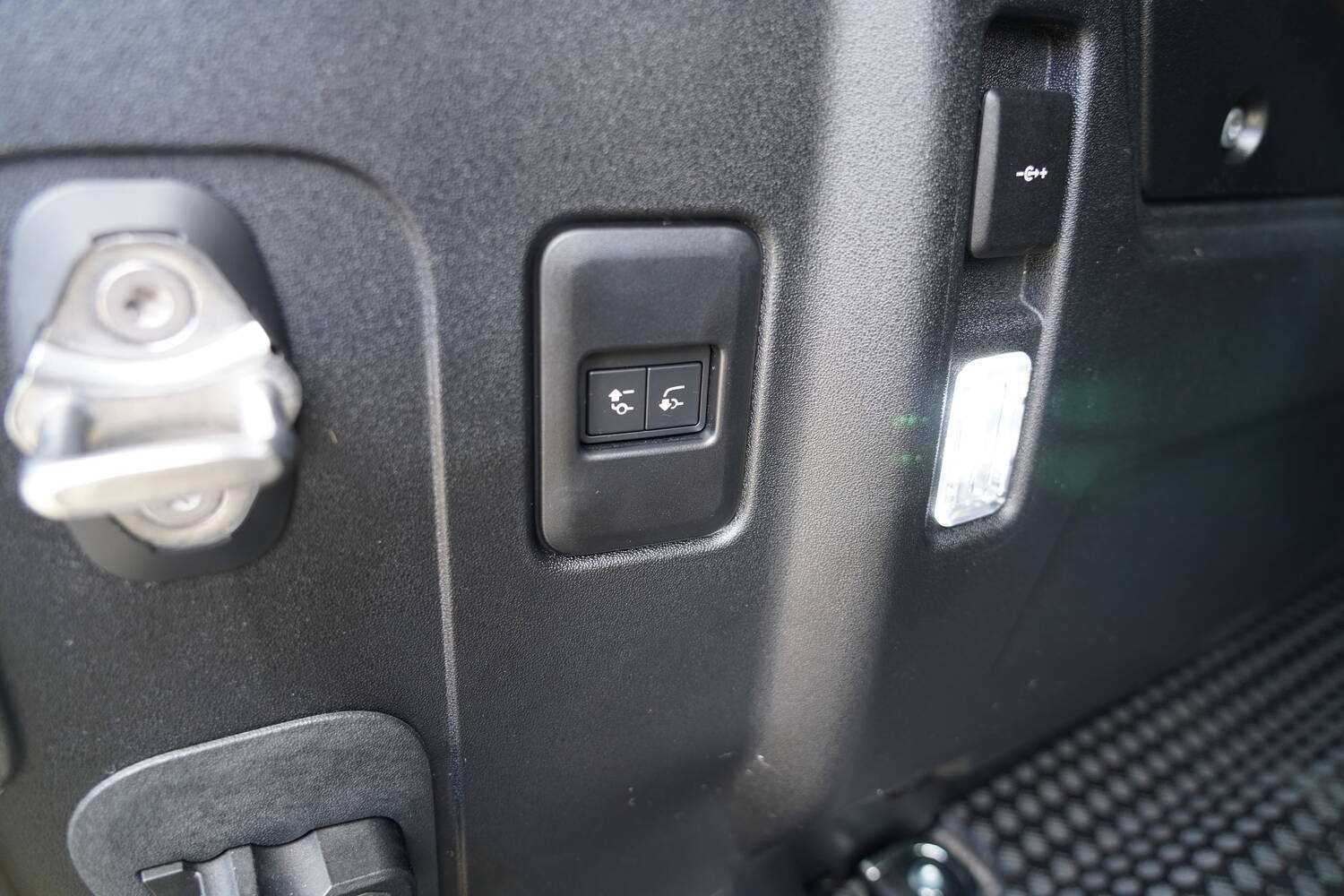
Open the huge side-hinged tailgate (it's hinged on the right, and the parking sensors can tell you if you're getting too close to an obstacle behind to be able to open it) and you'll notice the distinct hump in the floor, under which lies the hybrid battery and the 90-litre fuel tank.
It's a bit of a shame, but Land Rover still quotes an impressive 835 litres of boot volume. Now, it's worth remembering that Land Rover always quotes its boot volume as loaded to the roof, so under the fabric luggage cover (which is handily just attached elastically to the sides of the boot, and so can be easily folded away and stashed when you don't need it) there's around 500 litres of space, which is decent, but hardly mind-blowing. At least you get a full-size spare wheel, dangling off the back of the tailgate.
Towing with the Defender
While diesel and petrol versions of the Defender get the 'full monty' 3,500kg braked trailer towing limit, the plug-in-hybrid P300e must make do with 'just' 3,000kg. There's lots of electronic assistance built into the Defender, to help you reverse, hitch up and keep any trailer under control while driving.
Safety in the Defender
There's something surprising lurking in the Defender's Euro NCAP test results. The five-star rating you might expect, and the 85 per cent protection results for both adult and child occupants are also very good.
But the vulnerable road user protection score, of 71 per cent, seems high for a car that's generally viewed as a dangerous thing for other road users. But, according to Euro NCAP, the Defender performs very well, via its electronic safety aids, when it comes to keeping itself away from veering cyclists or children running out from behind parked cars.
That's reassuring, as is the 79 per cent score for the overall driver assistance systems. There's a handy two-click button on the steering wheel, too, which allows you to pre-select custom settings for the safety kit so that, for instance, you can have a visual reminder of the speed limit without the audible warnings. Equally, the speed limiter is handy for keeping to 30km/h limits around town.
Performance of the 2026 Defender
- Diesel, mild-hybrid, PHEV and storming V8 options
- Almost all Irish buyers go for the PHEV
- Thirsty, but not as bad as you might think
You can choose a Defender with a mere 200hp from its six-cylinder diesel engine, or you can get one with a wild, snarling, twin-turbo V8 developing a massive 635hp. Most Irish buyers, though, go for the 300hp plug-in-hybrid P300e.
Driving the Defender Trophy P300e on Irish and UK roads
Words by Neil Briscoe on September 17, 2026
The Defender really is intimidatingly big when you first approach it, and I say that as a guy who's 185cm tall and weighs... well, never mind what I weigh but the Defender and I share a certain chunkiness. It probably didn't help that I'd just stepped out of the low, sleek, agile Mazda6e. The comparison was, shall we say, stark?
However, as soon as you're rolling, the Defender reveals itself to be the cuddliest of teddy bears. The good all-round visibility and the excellent camera system mean that even narrow in-town spaces aren't as much of a challenge as you might think, and the precise steering really helps too.
The Defender's steering wheel is kind of massive compared to those of most other cars, and the steering feels initially a bit slow, but you soon realise that there's some genuine feel hiding just under the relatively light power assistance, and that bluff nose responds with almost perfect precision to each input.
The last time we drove a Defender it had the older 'P400e' plug-in-hybrid system, which was basically identical, but which had an extra 104hp and 15Nm torque. To be honest, you don't really miss the extra top-end power as the torque is what you mostly drive on.
True, the 0-100km/h time has gone up by two seconds, but the fill-in torque of the electric motor means that the Defender still reacts sharply at low speeds.
Under electric-only power, the Defender is as smooth and quiet as you'd expect, with decent power for urban driving, and when the petrol engine does kick in, it's quite hushed, only really feeling strained when you ask for long, high-revving motorway acceleration. At a 120km/h cruise, the whole car is exceptionally quiet.
What's really surprising about the Defender is that it kind of makes you a better driver. You're never unaware of the height, bulk and weight and so you find yourself taking extra care at junctions, checking much more frequently around you for approaching cyclists and pedestrians, and just generally trying to be a little more thoughtful and considerate of other road users. It's not a bad habit to cultivate, and you get to your destination just as quick, really.
That's true too on the open road, where you find yourself taking a more relaxed attitude to driving, allowing more space for braking (mindful of the Defender's 2.6-tonne weight) and driving in a style that's closer to ambling than it is to rushing.
Mind you, find a twisty mountain road spearing through the Scottish lowlands - as we did at one point - and the Defender steps up. That slightly slow steering becomes somehow sharper, and while of course there's copious body roll, the Defender never feels untidy nor roly-poly, even when pushed.
In fact, it's kind of good fun to press on a bit on a clear, curving road, using your height above the hedgerow to keep a wary eye on the road ahead.
The downside is that the ride comfort occasionally lets the side down. Having big, heavy wheels and tyres at the end of the suspension arms, which needs enough stiffness to keep that hefty body under control when cornering, means that inevitably there's some wheel bobble and fidget at times, especially on really broken tarmac.
The rest of the time, the Defender just kind of lopes easily along, and it makes a staggeringly good long-distance driver.
Fuel economy and running costs of the 2026 Defender Trophy P300e
- Usable electric range
- Thirsty, but not excessively so
- Fast charging at up to 40kW
The P300e will be the key powertrain choice for the Irish market, at least until an all-electric Defender appears (which it won't with the current generation - we'll have to wait for the next one for a Defender EV).
Official emissions, electric range and fuel economy
The P300e has some impressive on-paper figures, with official WLTP fuel consumption as low as 2.5 litres per 100km. The CO2 emissions are slightly higher than for many rival plug-in hybrids, though, at 59g/km.
That means that you jump a tax band relative to many competitors, but it's only an extra €10 a year, so if you're able to manage the purchase price, it's not going to trouble you too much.
Real-world fuel economy of the 2026 Defender Trophy P300e
That 2.5 litres per 100km figure is only really going to be achievable if you charge the Defender up absolutely religiously between each journey and hardly ever awaken the petrol engine.
That said, the electric range is quite usable, even if it can't match the longer battery legs of the likes of the Range Rover and Range Rover Sport with their bigger electric storage capacity.
Around town, you should be able to get 40-45km, especially if - as we did - you cross London (from Southwark to Wembley) with a full charge on board and stick to the 30km/h limit. On faster roads, the electric range will be closer to 25-30km.
Overall fuel consumption worked out at 10.8 litres per 100km which is, yes, thirsty, but seen in the context of lots of long motorway journeys (Belfast to London via Dublin and Holyhead, and home via Cairnryan) isn't too shabby and isn't much worse than you would manage with the basic diesel engine (and petrol is much cheaper than diesel).
Charging up the Defender Trophy P300e
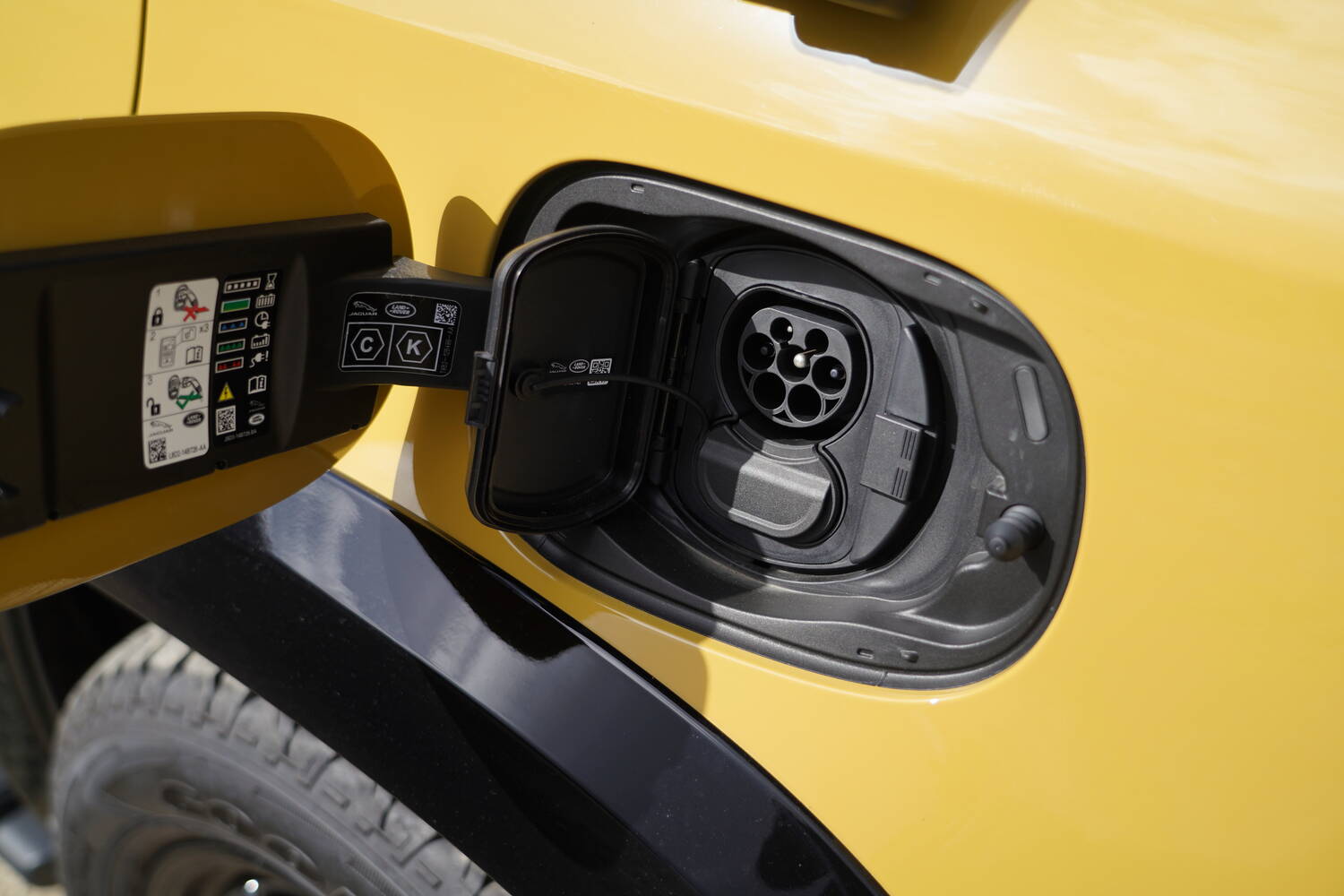
On a home 7.4kW charger, it should take around two and a half hours to fully charge the P300e's battery, or around five to six hours if you're hooking it up to a domestic socket.
Thankfully, Land Rover has also fitted this Defender with DC fast charging, at up to 40kW, which allows an 80 per cent charge in around 30 minutes if you're on a long run and you plug into a fast charger.
Servicing the Defender
Land Rover recommends a minor service every year or 16,000km, with a major service every two years or 30,000km.
Defender warranty
Land Rover offers an impressive five-year, 150,000km warranty for the Defender, which might allay some of those old worries about reliability (which has improved massively in recent years).
There's also an automatically activated roadside assistance package, which sets you up for another year, up to ten years, with each main-dealer service. The corrosion warranty lasts for six years, with no mileage limit, and there's no upper limit on the paint warranty at all.
Irish pricing & rivals to the 2026 Defender Trophy P300e
- Very much not cheap
- Options list is lengthy
- Still better value than its biggest rival
At €128,910 this Defender Trophy is very much in the 'not cheap' category. True, you could spend vastly more - the options and accessories list is long and ruinous, or you could just spend the full-fat €300,000-odd on the high-performance V8 Defender Octa. However, there is something that makes the Defender look like decent value - the Toyota Land Cruiser.
The Defender and Land Cruiser have been rivals since the sixties, but the current Land Cruiser pricing - if you want a passenger version, rather than a commercial model - is a bit wild, at €147,165 for the single-spec Platinum model.
Now, we love a Land Cruiser, and its reliability is not to be sniffed at, but this high-spec Defender Trophy is the guts of €10,000 cheaper and comes with a plug-in-hybrid system against the Land Cruiser's old-school four-cylinder 2.8-litre diesel. Value is where you find it.
Verdict - should you buy the 2026 Defender Trophy P300e?
My general derision for SUVs is well known, but the Defender isn't really an SUV in the strictest sense of the word. This is a proper, hard-working, 4x4 tool - a machine for getting into and out of some of the most rugged and inaccessible places on the planet.
So its buying arithmetic is rather different. A conventional SUV is much like an estate car or a hatchback, but worse because it's taller, heavier and less efficient. But the Defender is taller and heavier because that's how you engineer in its incredible off-road ability and agility. It is as close to unstoppable as a vehicle can be. If you don't need that kind of capability, perhaps don't buy one. If you do, though, there's little else like it.
FAQs about the 2026 Defender Trophy
Is the Defender Trophy a limited edition?
It depends on which one you mean. Previously, Land Rover's classic department created a strictly limited run of original Defender 'restomods' with uprated everything and V8 engines, called the Defender Trophy. This Defender Trophy is a trim level and isn't limited in number at all.
How often do Defenders need servicing?
Land Rover's recommendation is a minor service every year, or a major service every two years.
Want to know more about the 2026 Defender Trophy?
If there's anything about the Defender Trophy we've not covered, or you'd like help in choosing between it and other cars, you can avail of our expert advice service via the Ask Us Anything page.
If there is anything about this car we have not covered, or you would like help choosing between it and other cars, you can avail of our expert advice service via the Ask Us Anything page.