
Exterior & design of the 2027 Audi Q7
- Slightly shorter than its predecessor
- Styling apes smaller Q3 and Q5 SUVs
- 20- to 23-inch wheels on offer
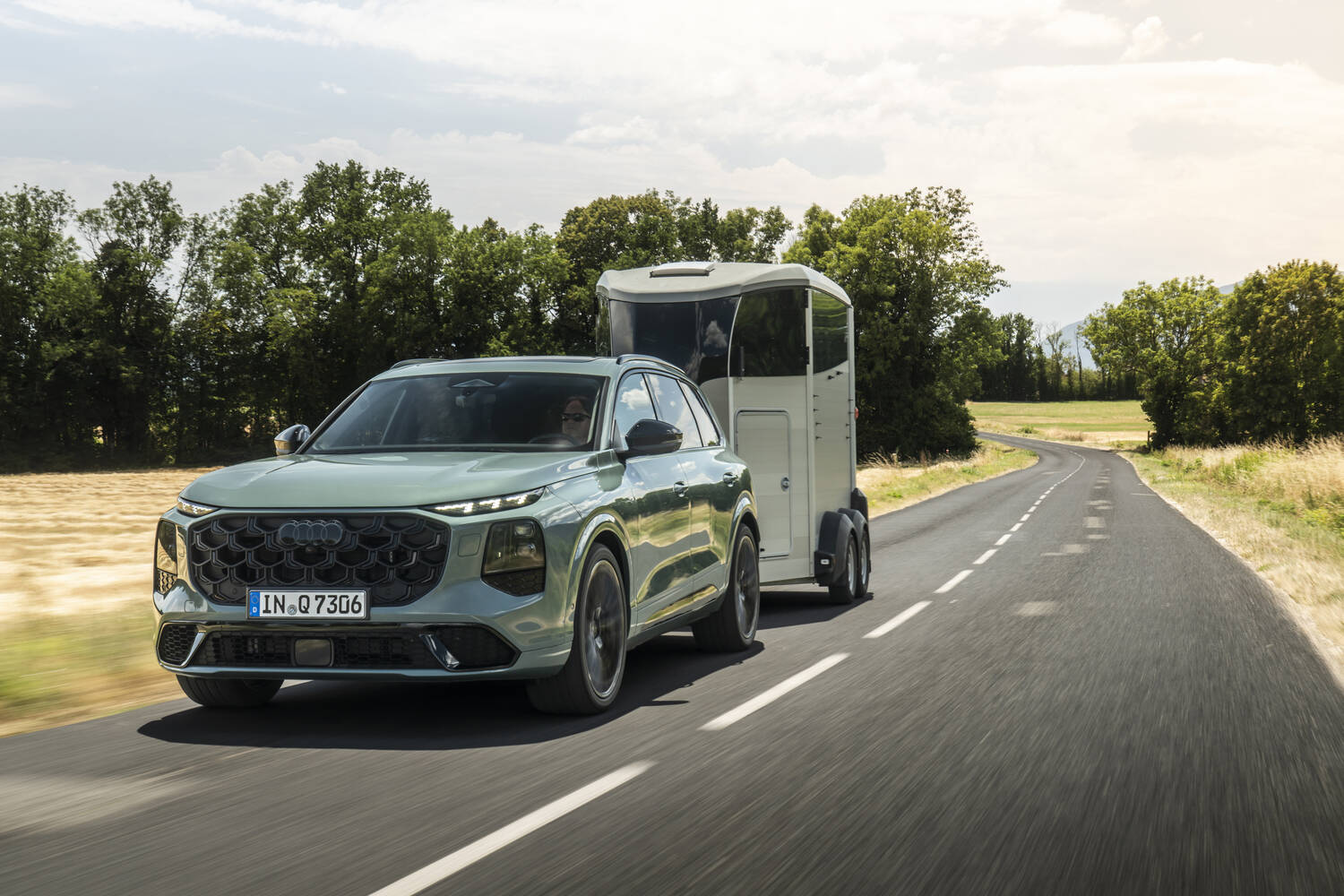
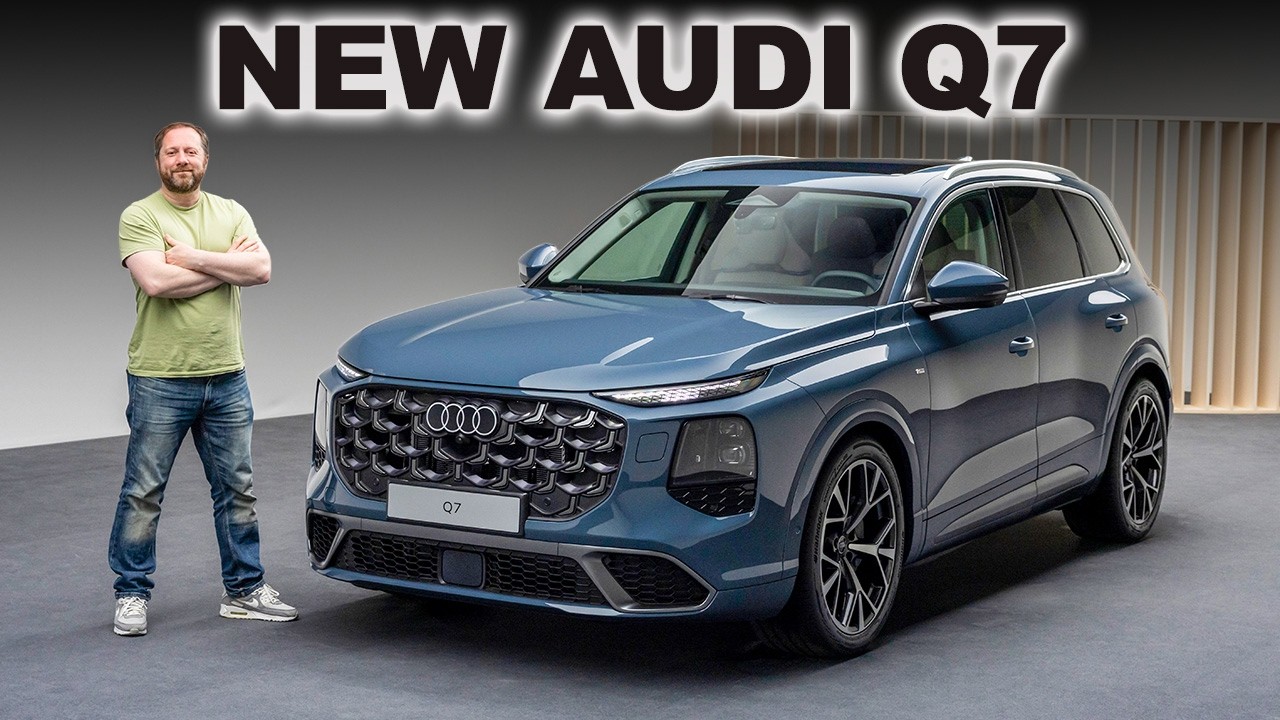
The third-generation Audi Q7 has grown in all dimensions compared with its immediate predecessor, except for one - length.
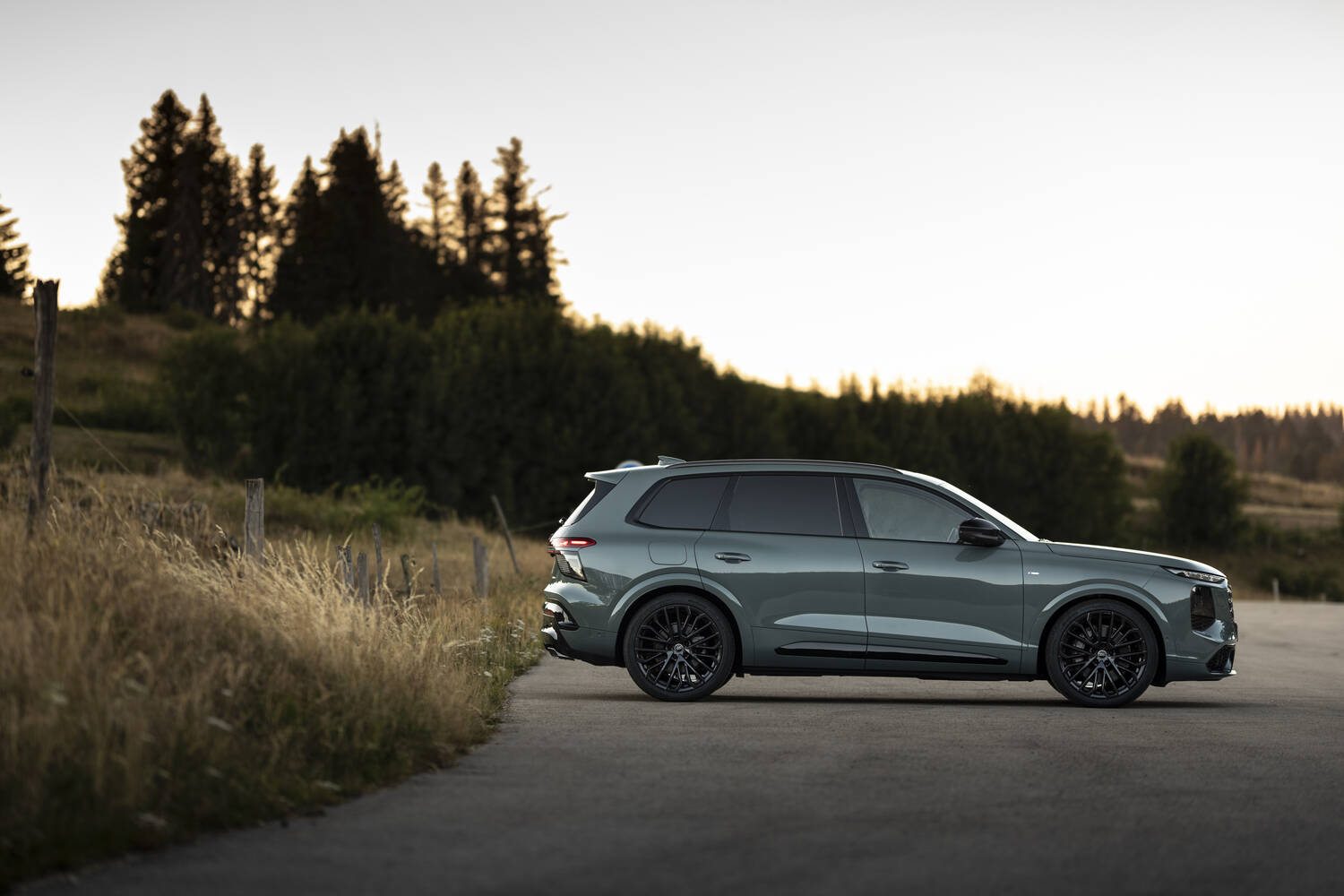
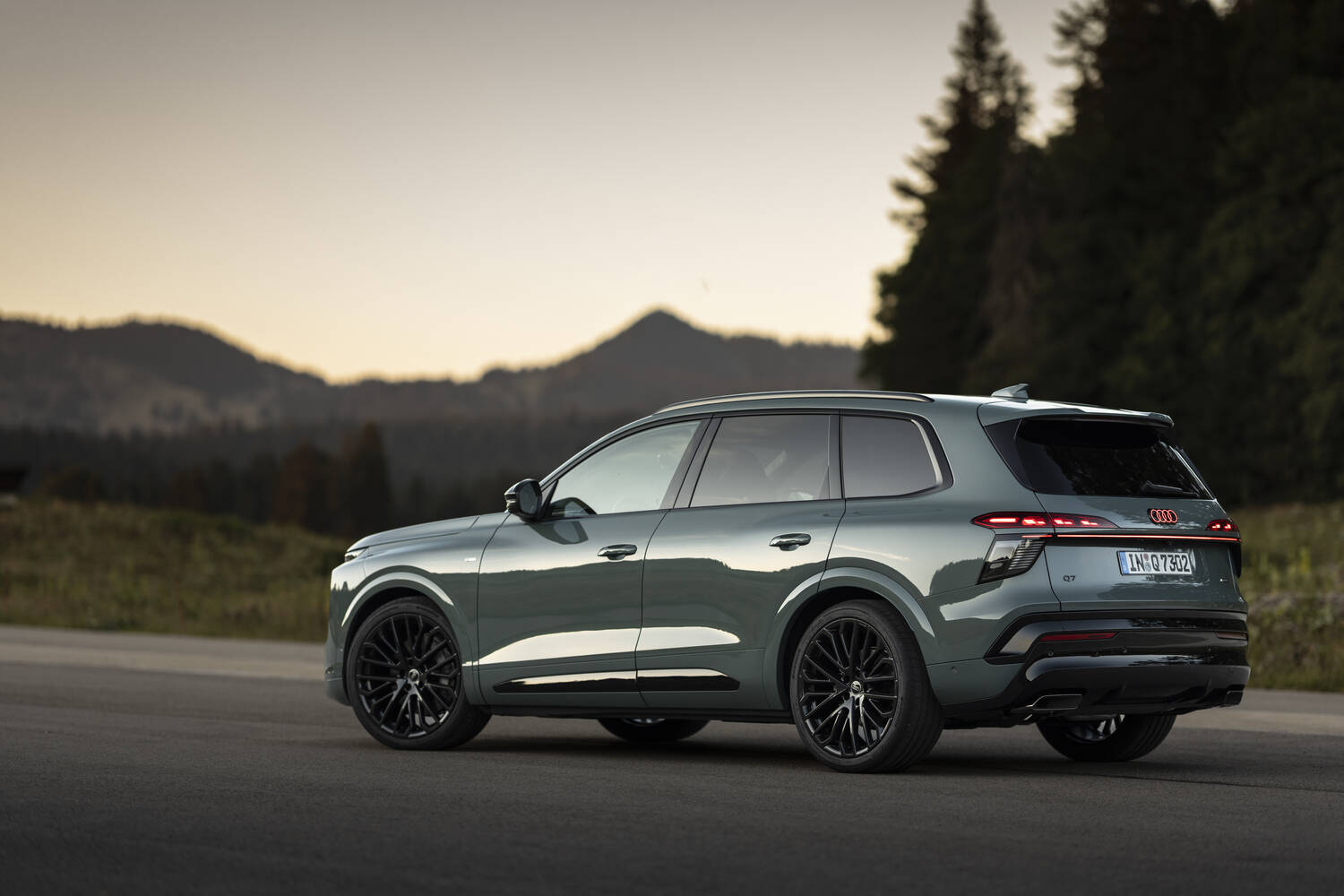
At 5,056mm, it is 11mm shorter than the Mk2 it replaced, but it is also 40mm wider (more than two metres across the beam, excluding mirrors) and around 66mm taller, depending on the air suspension's ride height. The wheelbase (space between the axles) has also grown to exceed three metres, although only by 2mm.
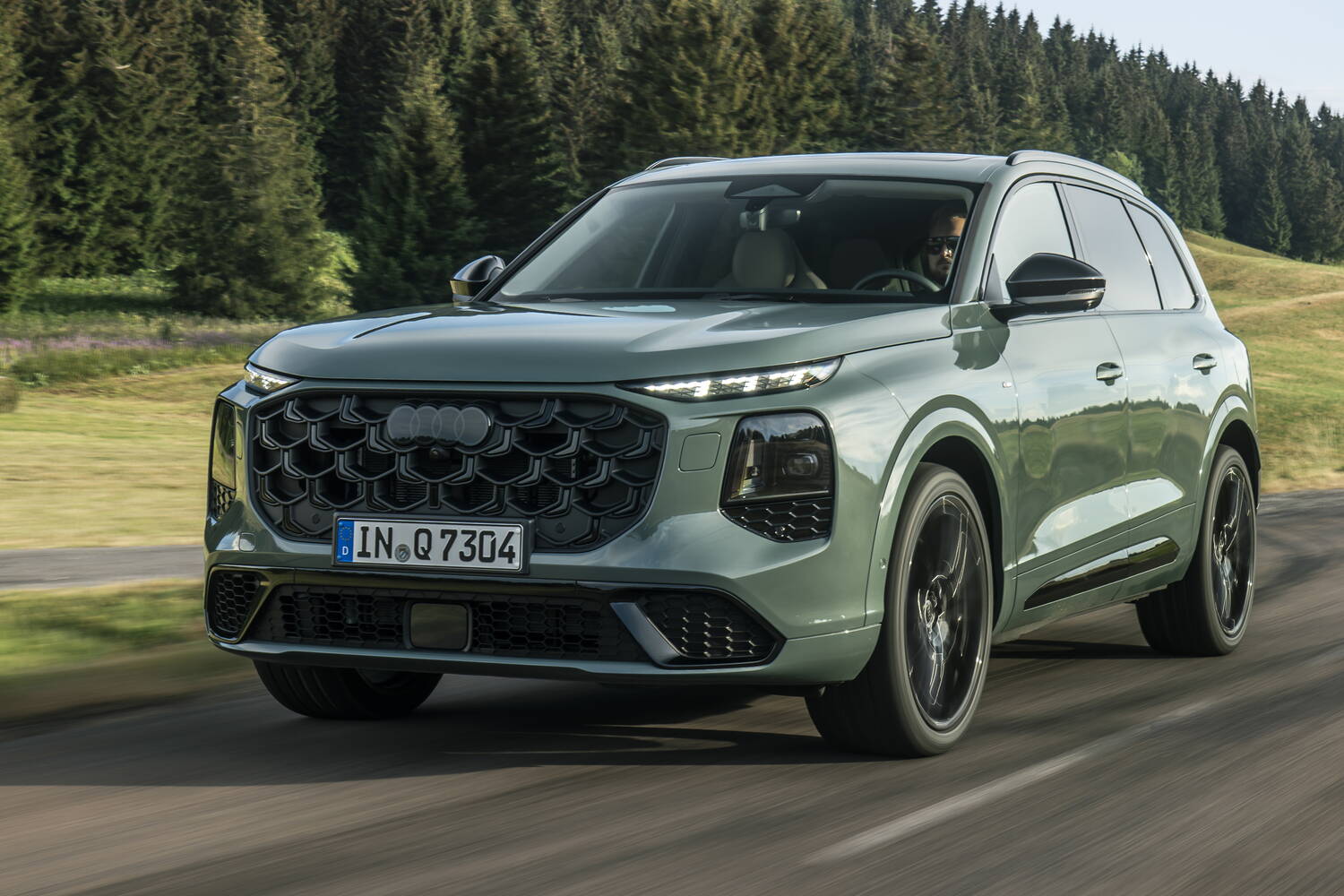
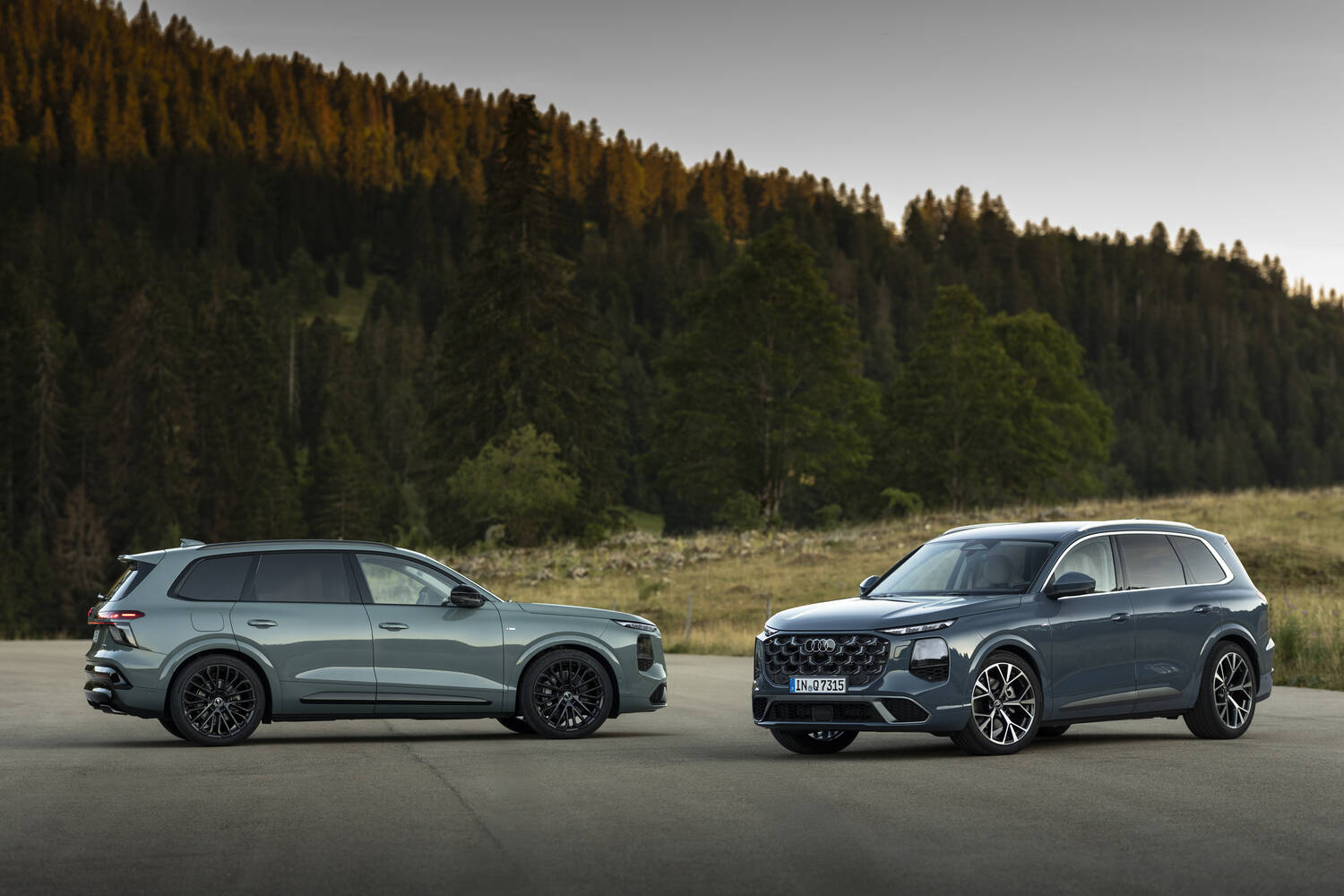
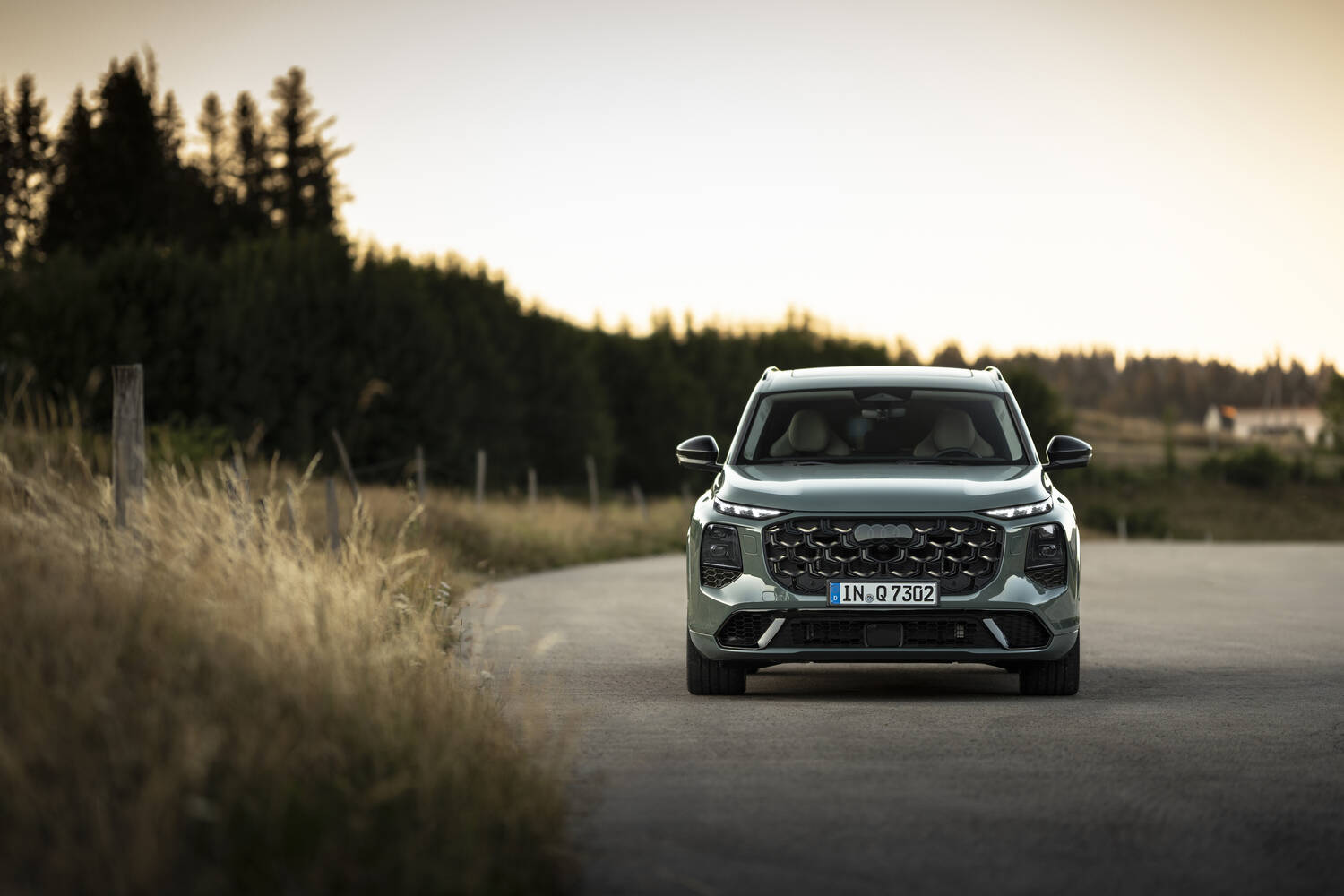
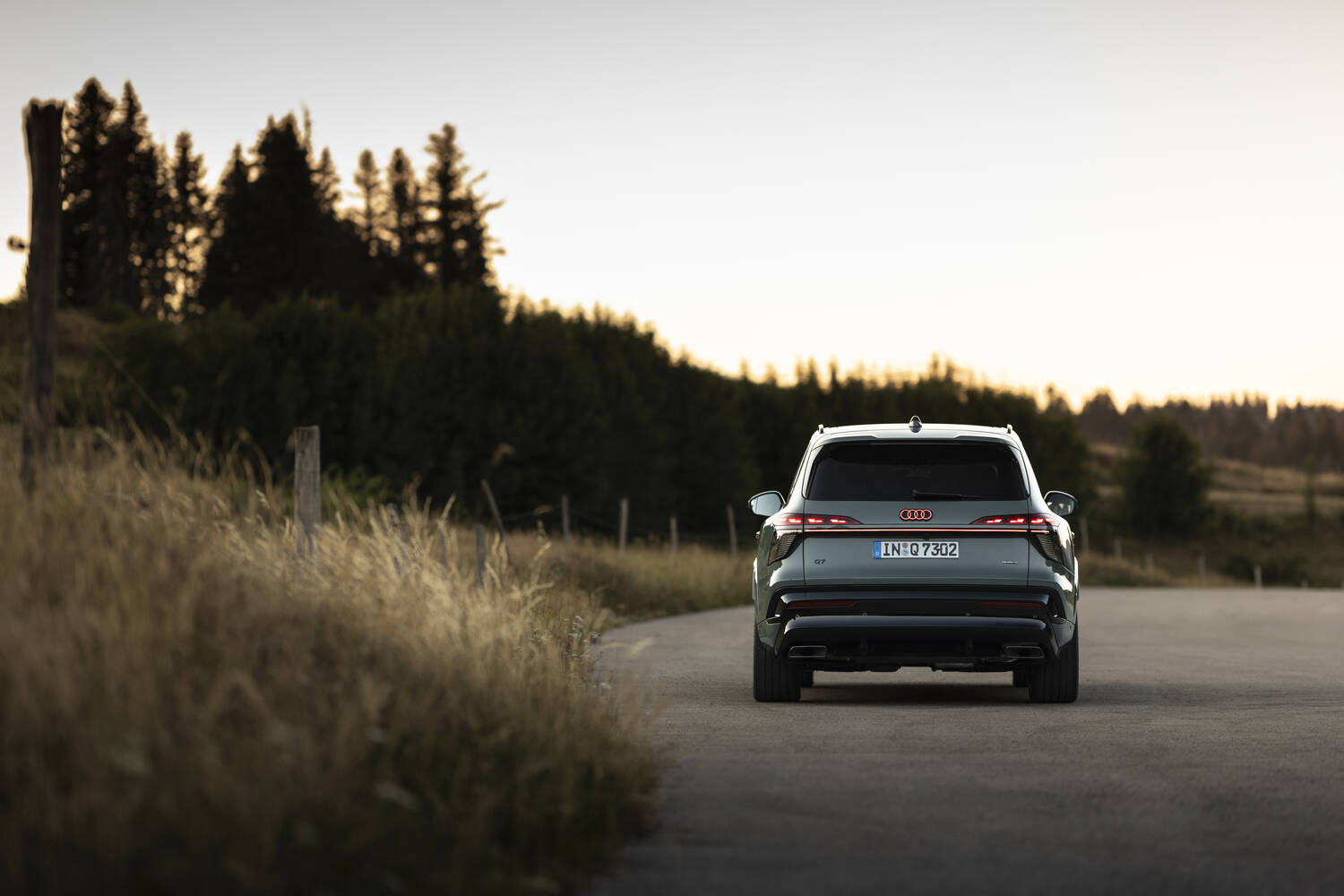
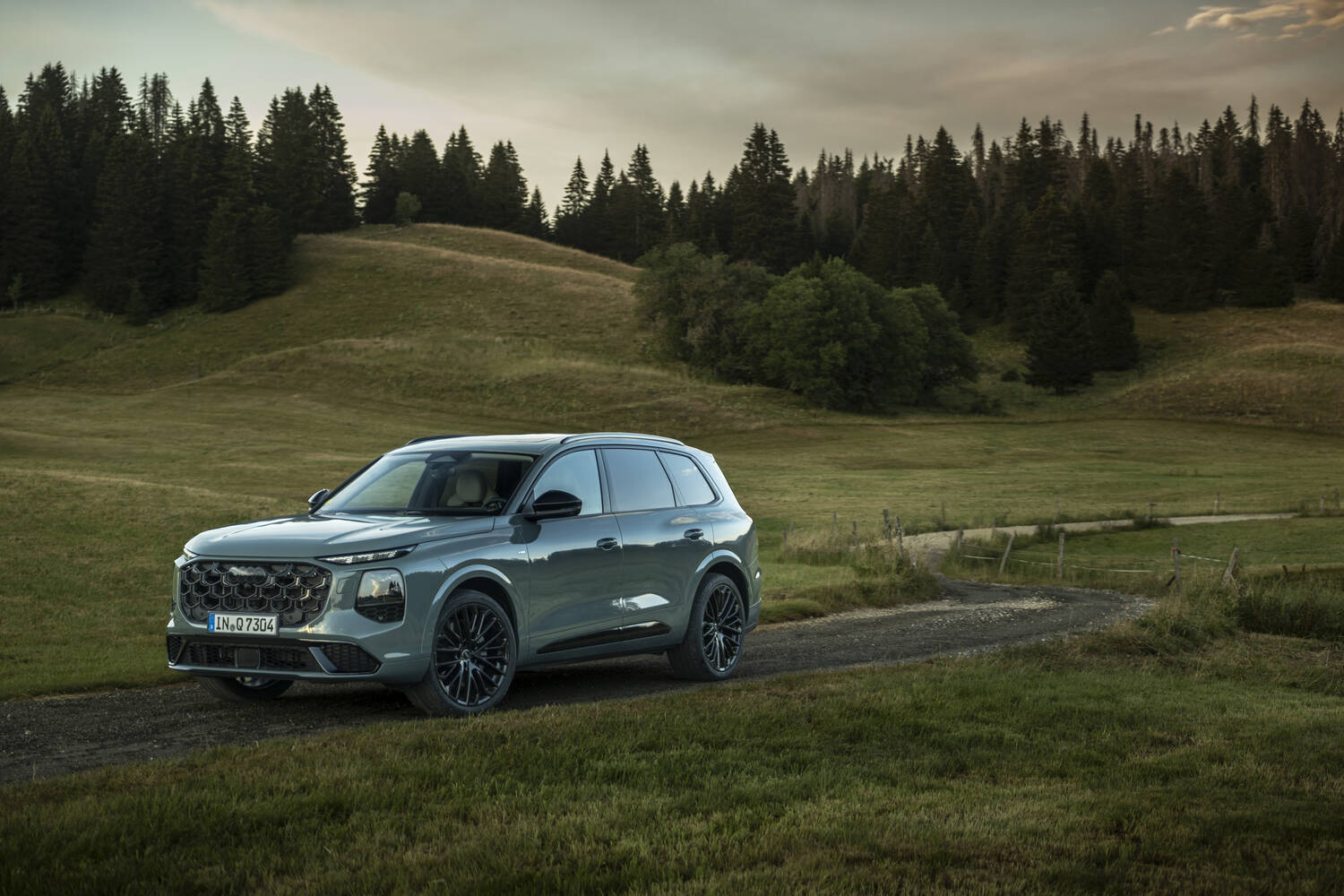
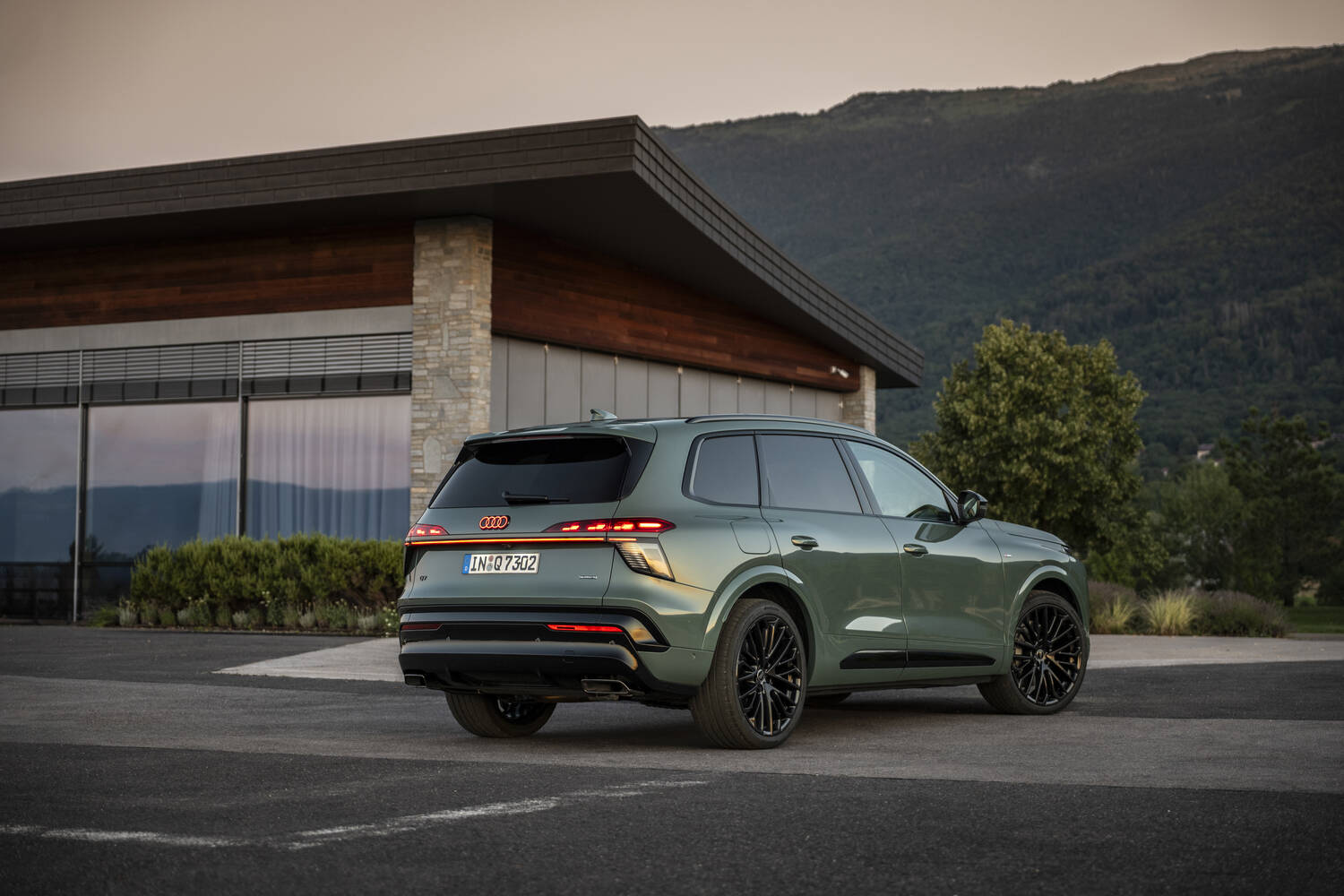
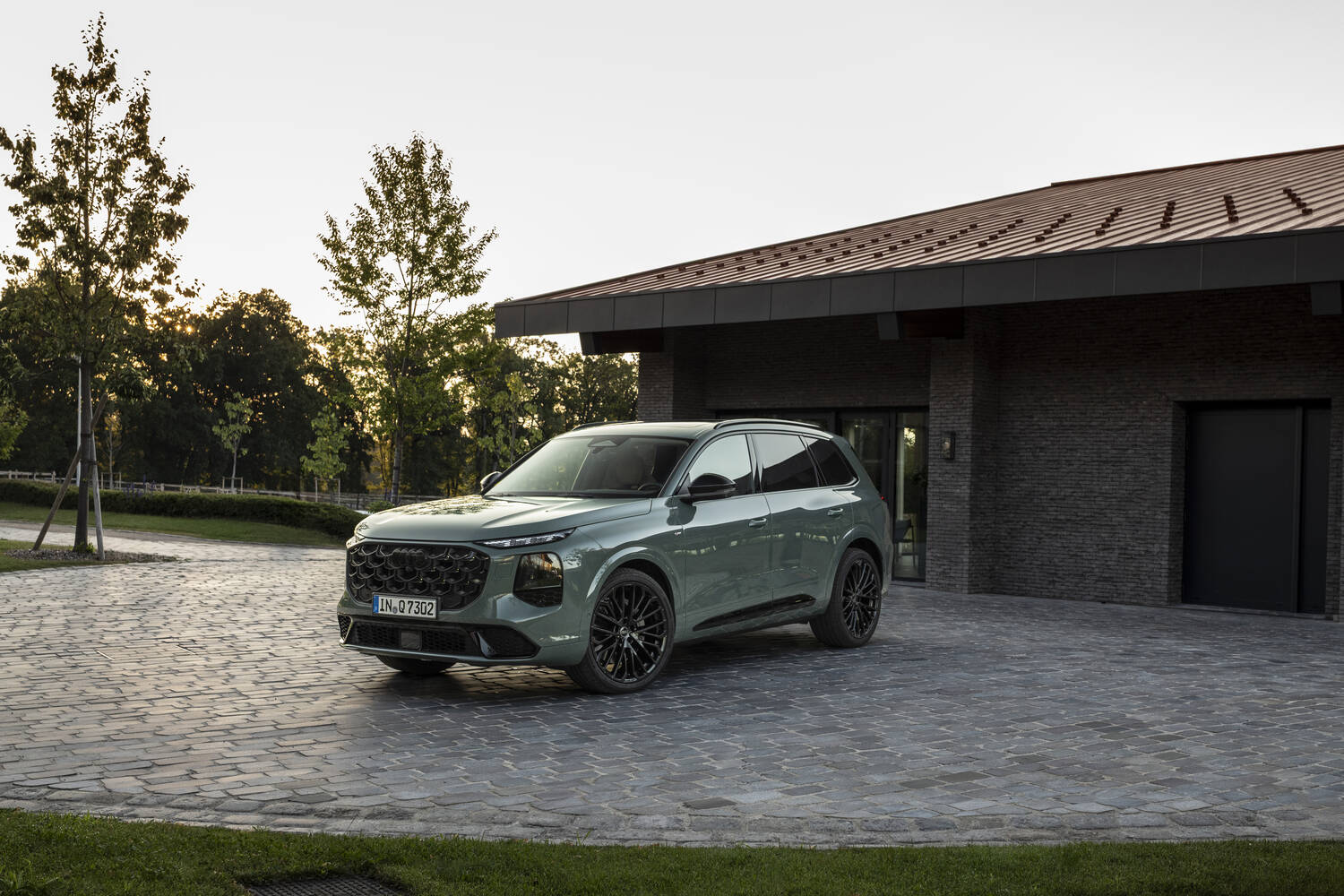
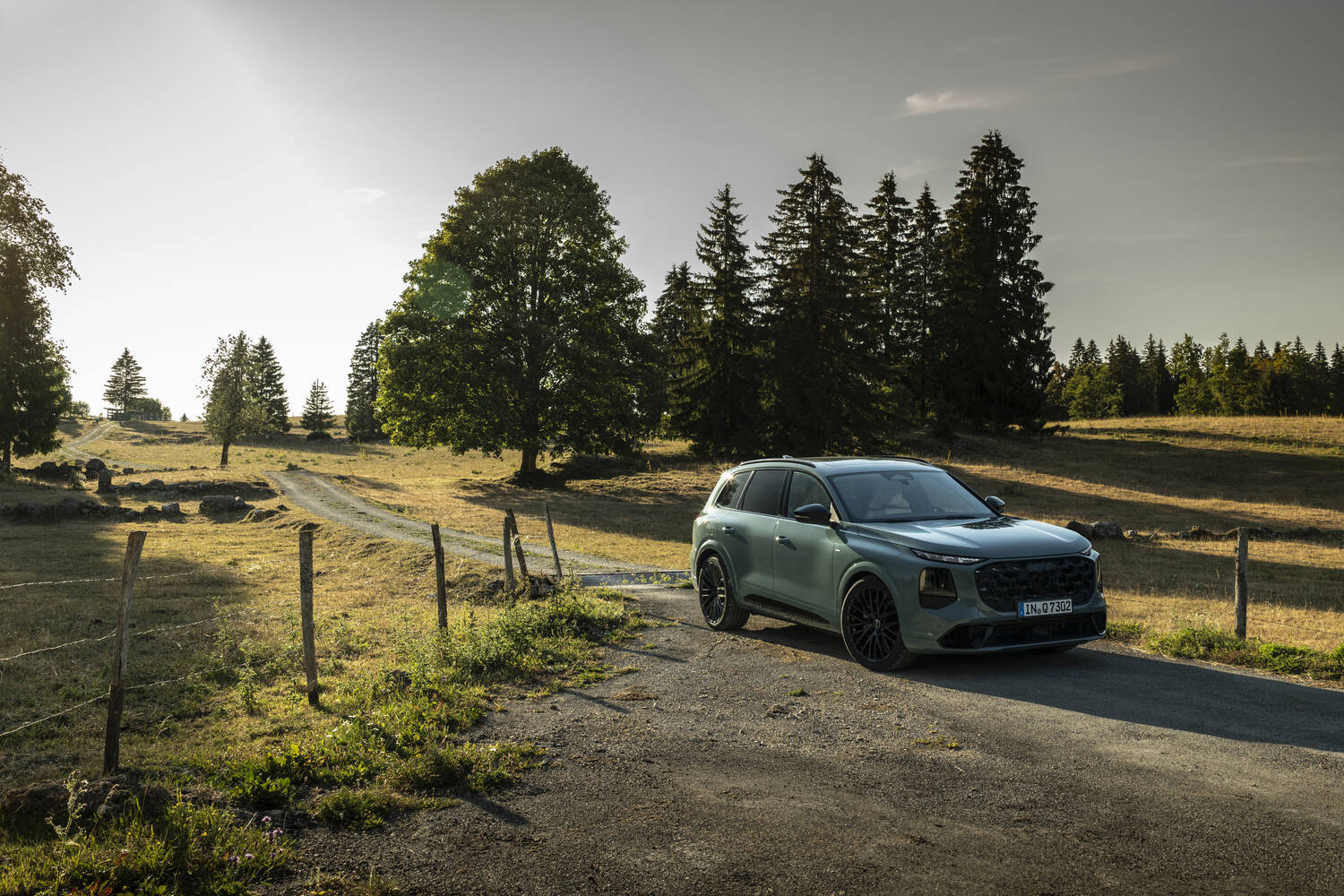
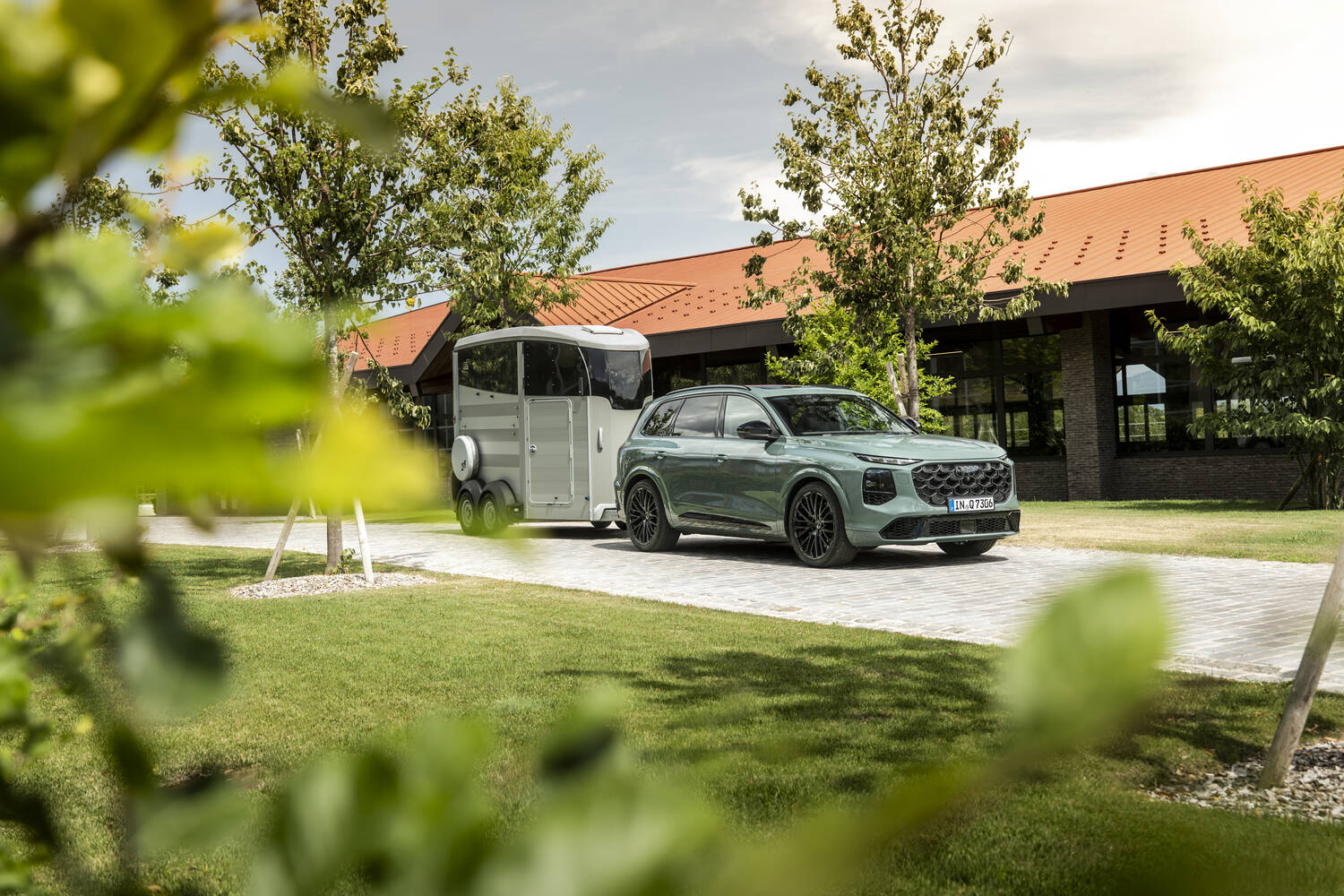
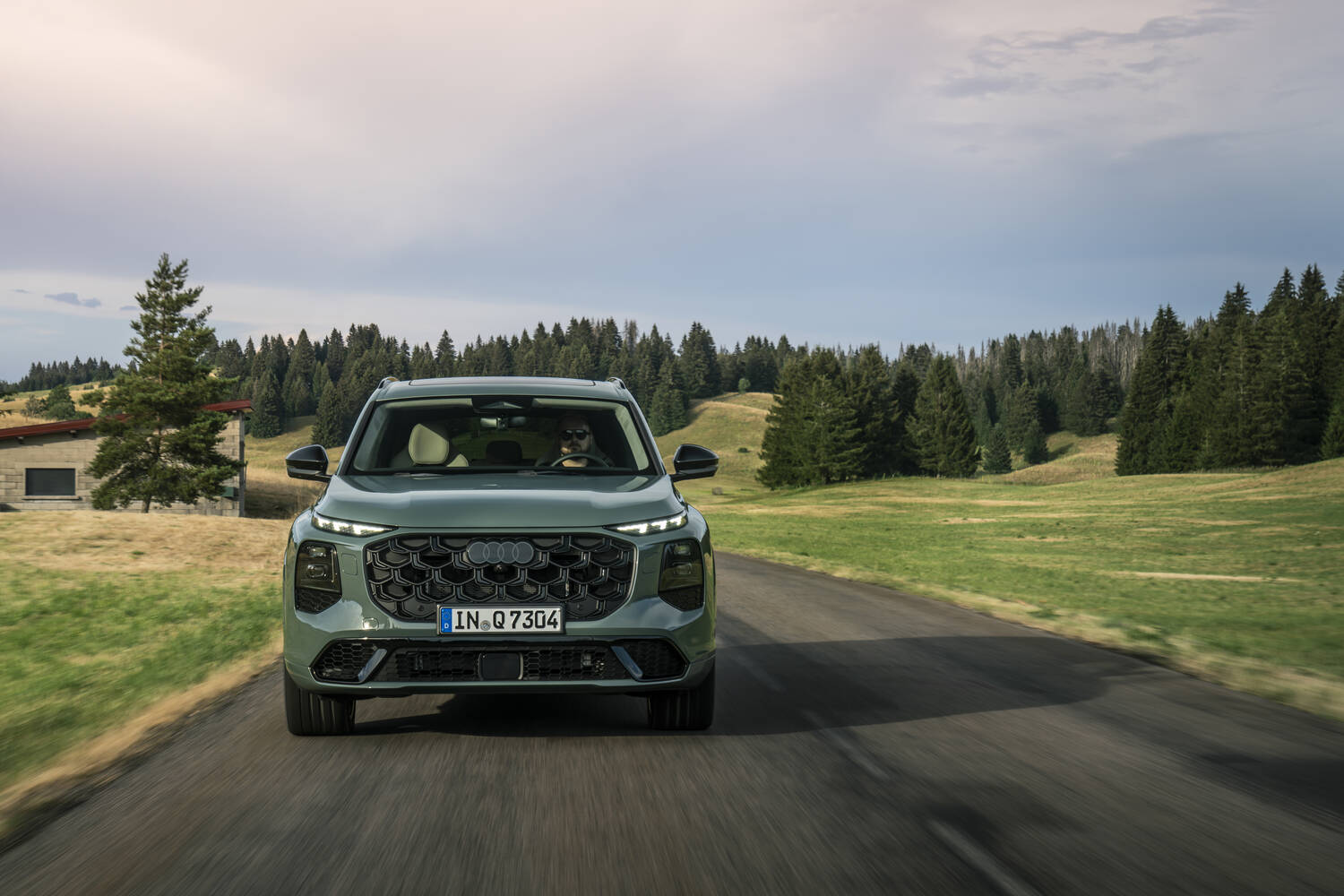
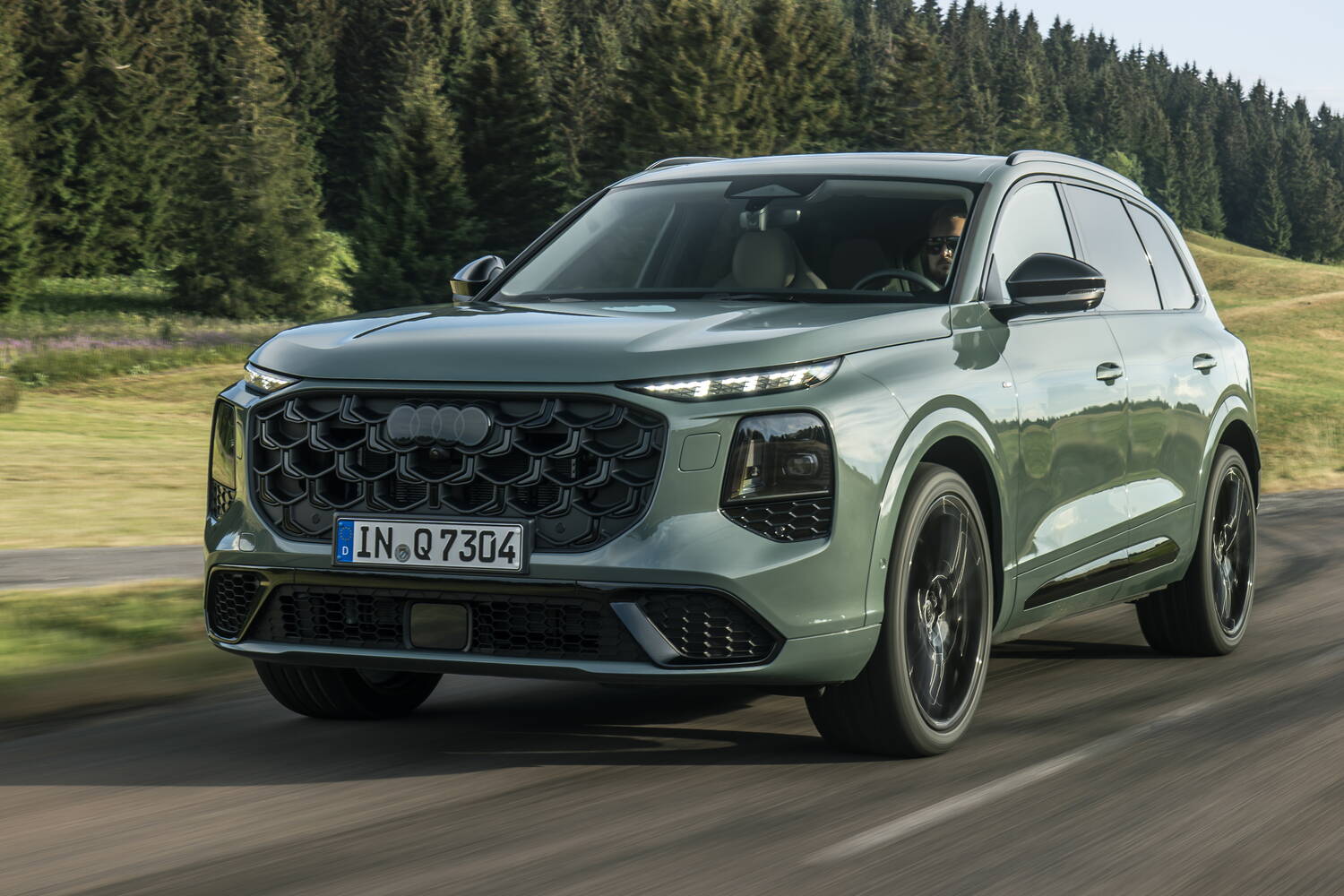
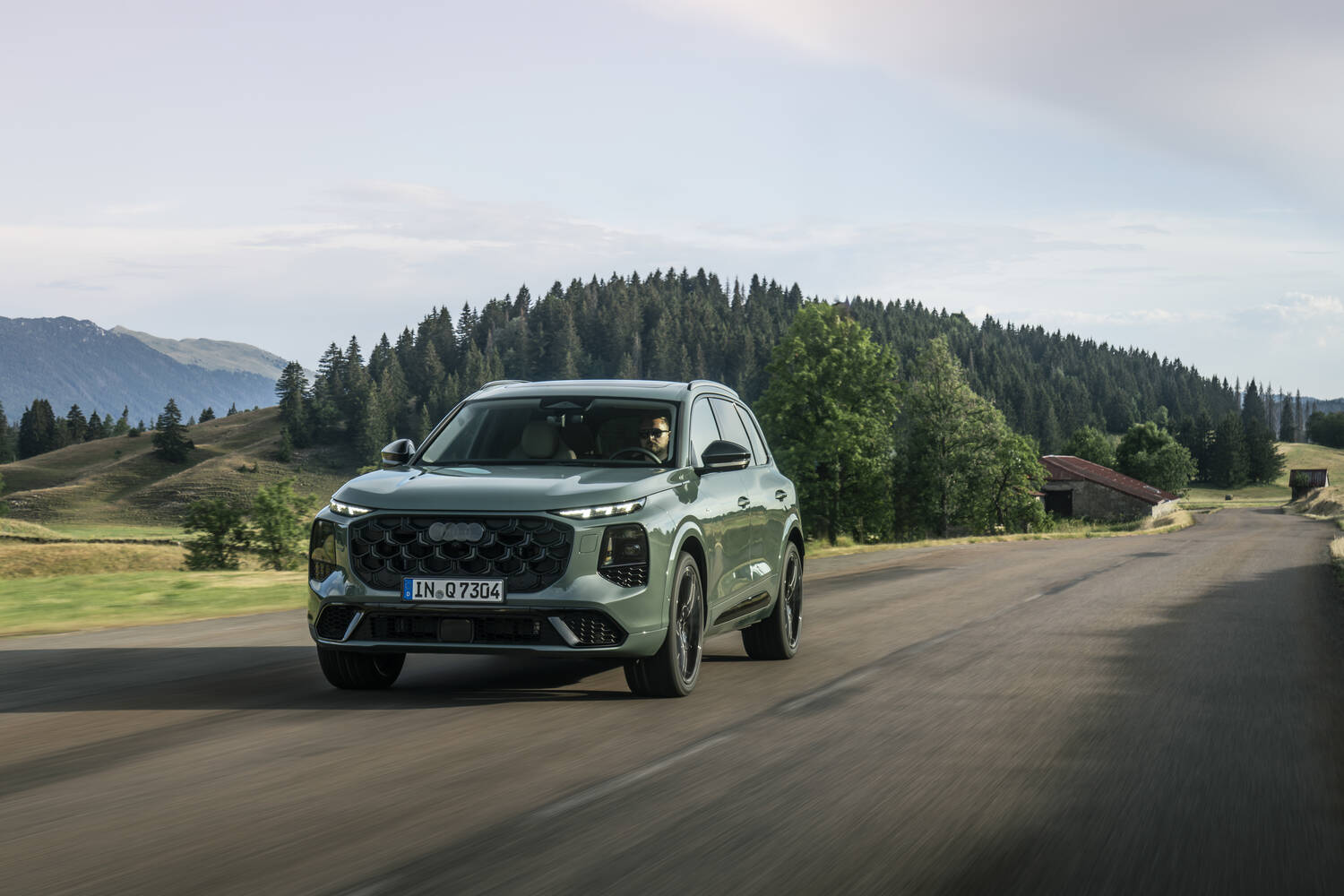
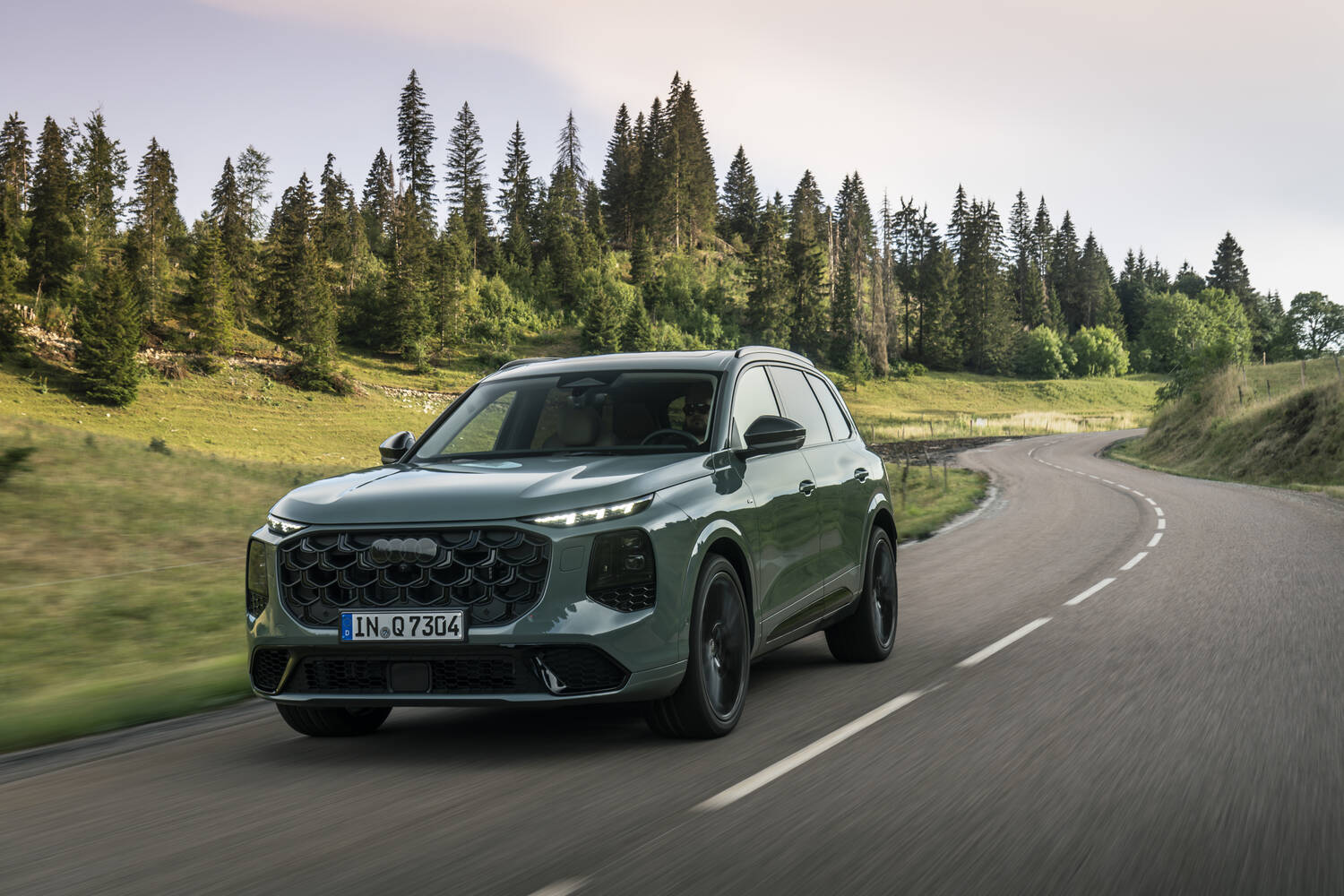
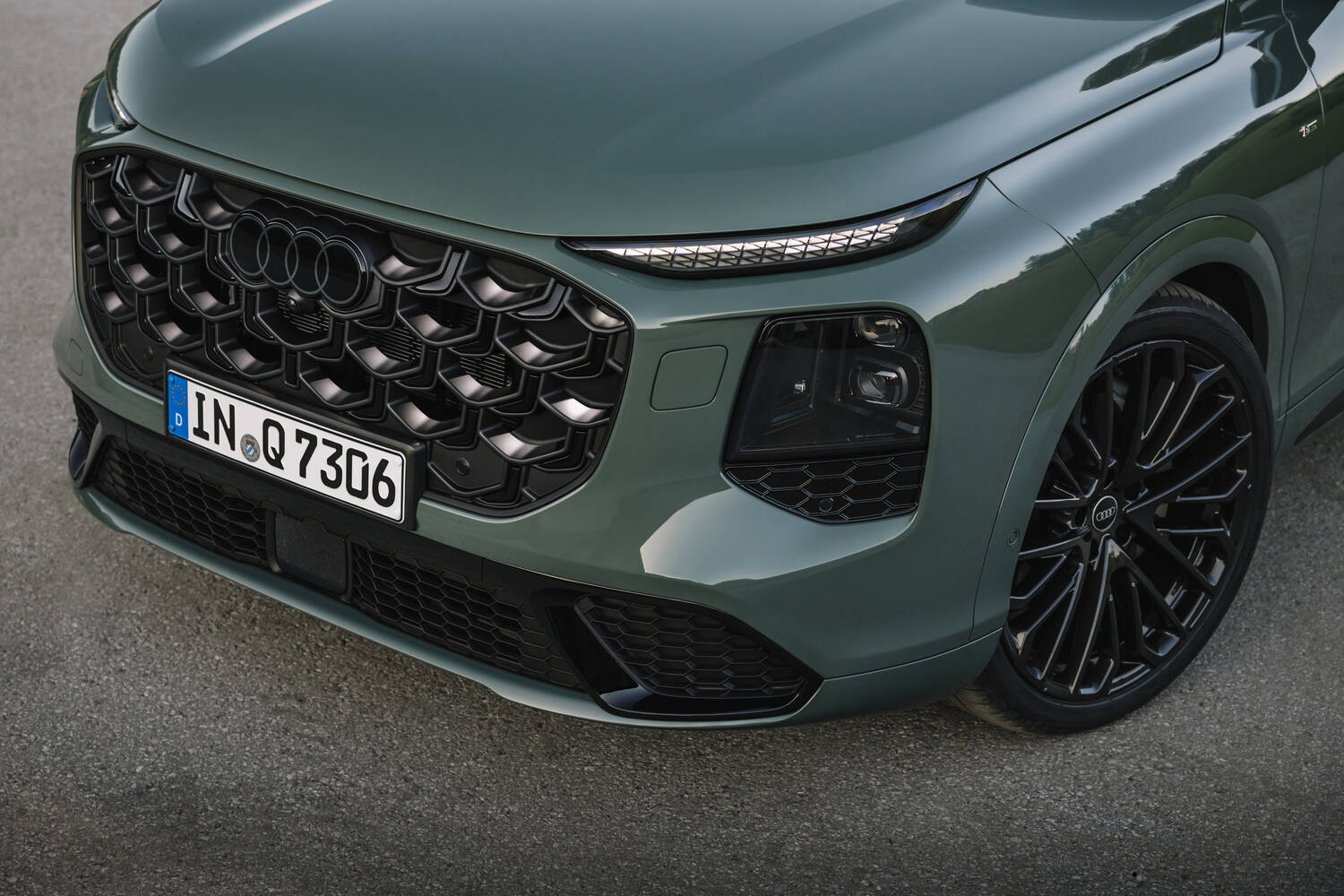
What you end up with is a piece of car design that's bound to split opinion. Audi's current corporate styling, seen on the likes of the A6 e-tron and, more pertinently with reference to the Q7, the smaller Q3 SUV, features small, slim, high-set daytime running lights, whopping 'Singleframe' grilles and chunky front air dam and bumper sections.
Whether you like this kind of squinting, lantern-jawed look will of course be entirely subjective, but for our money we can't unequivocally call the Q7 an attractive thing.
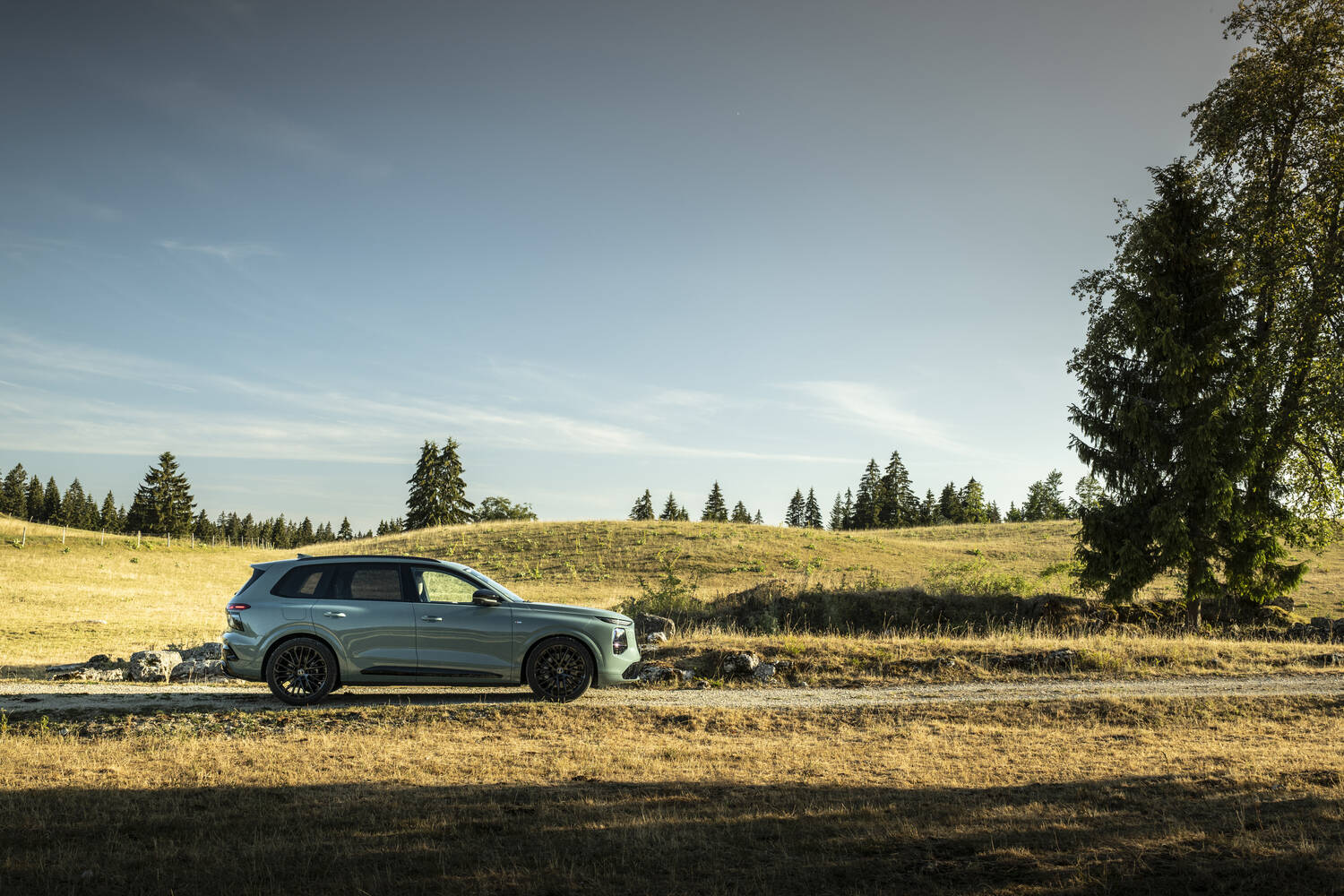
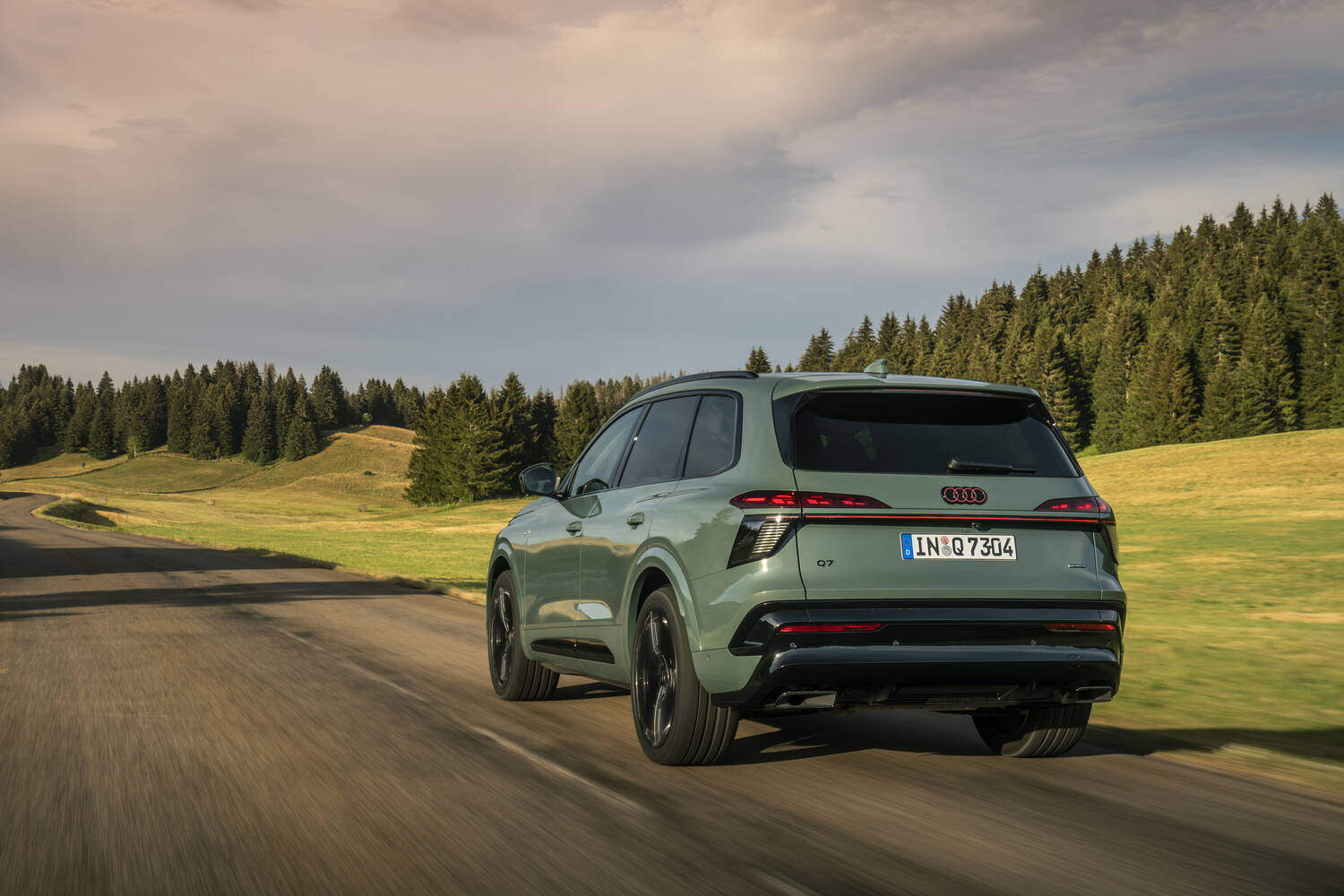
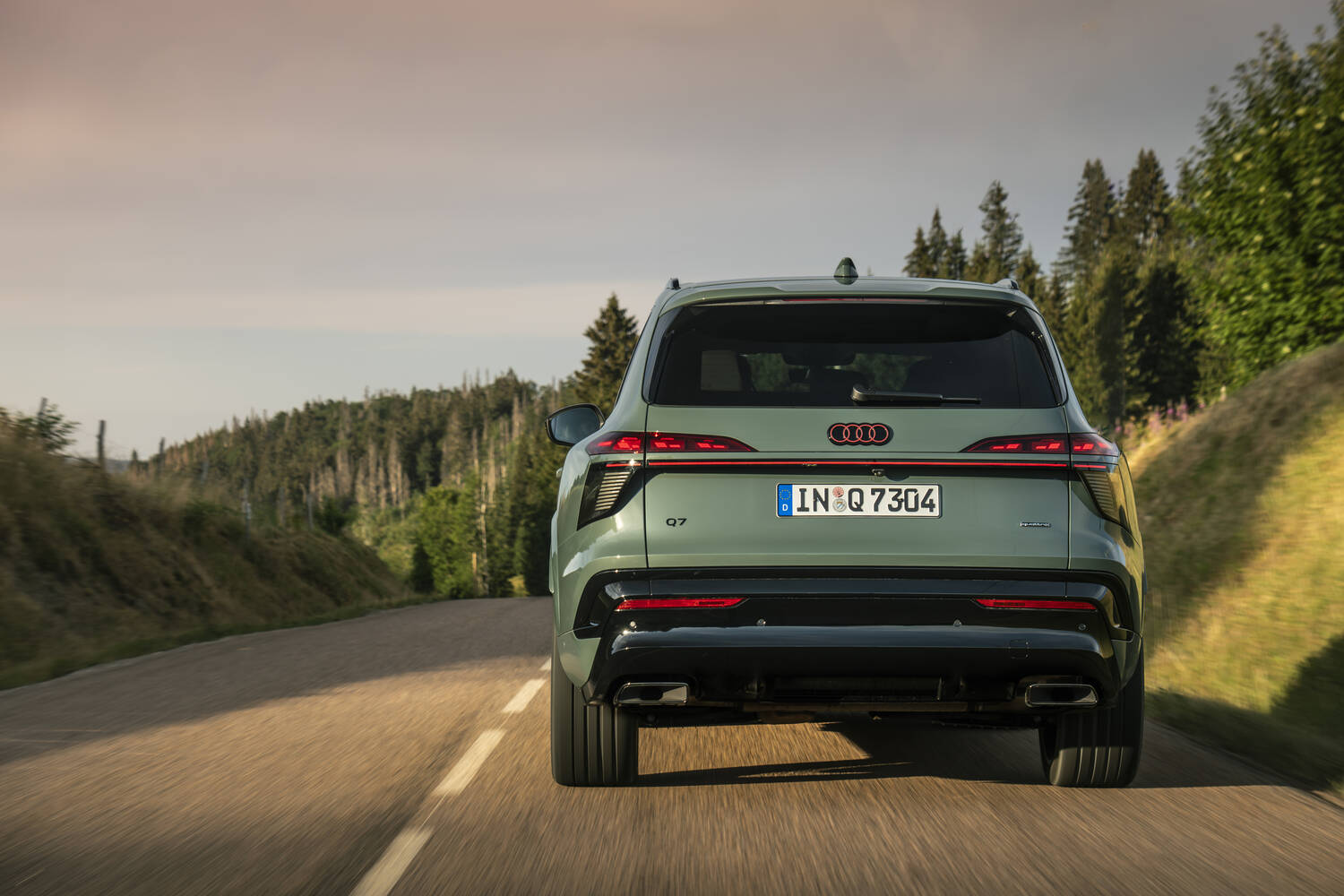
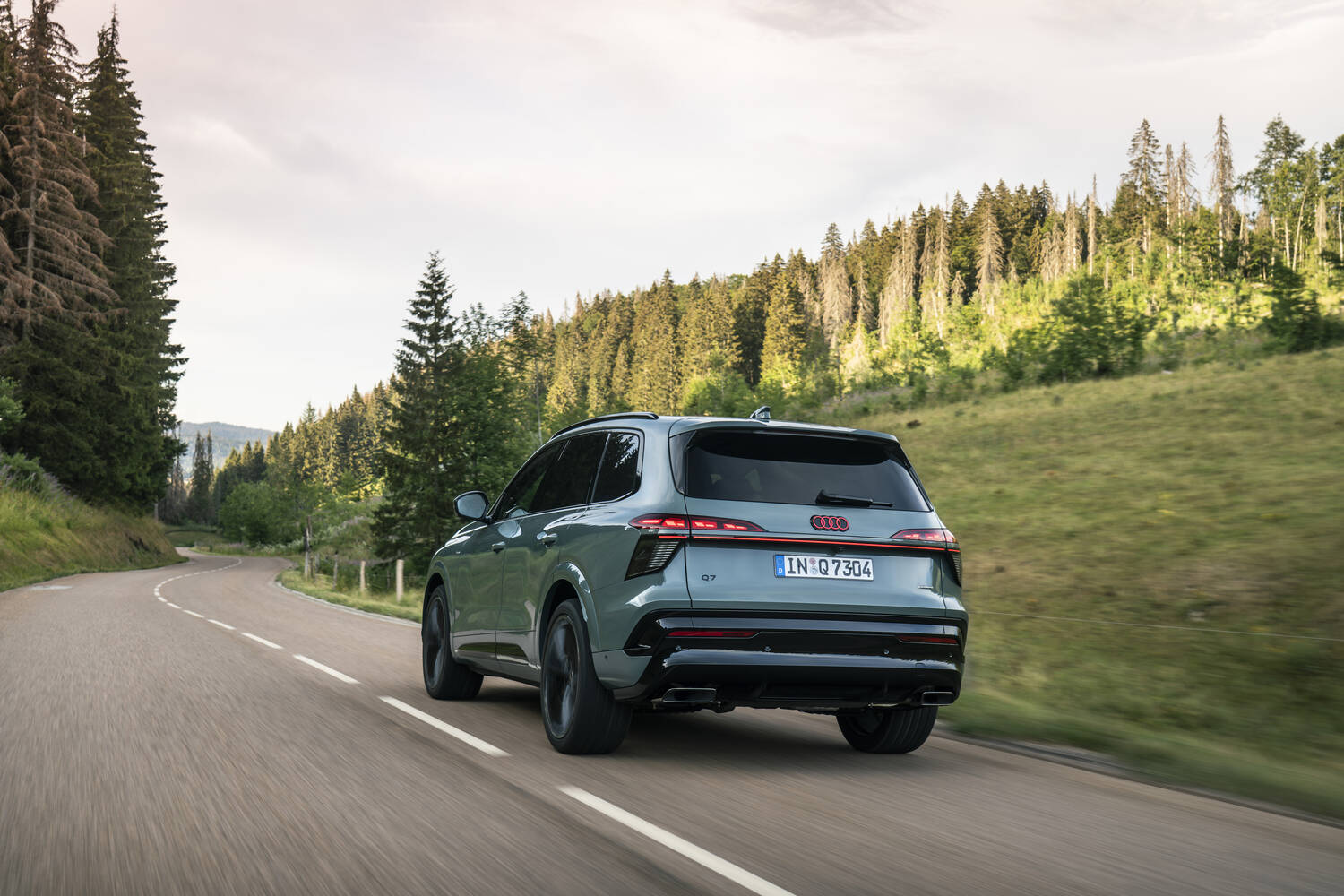
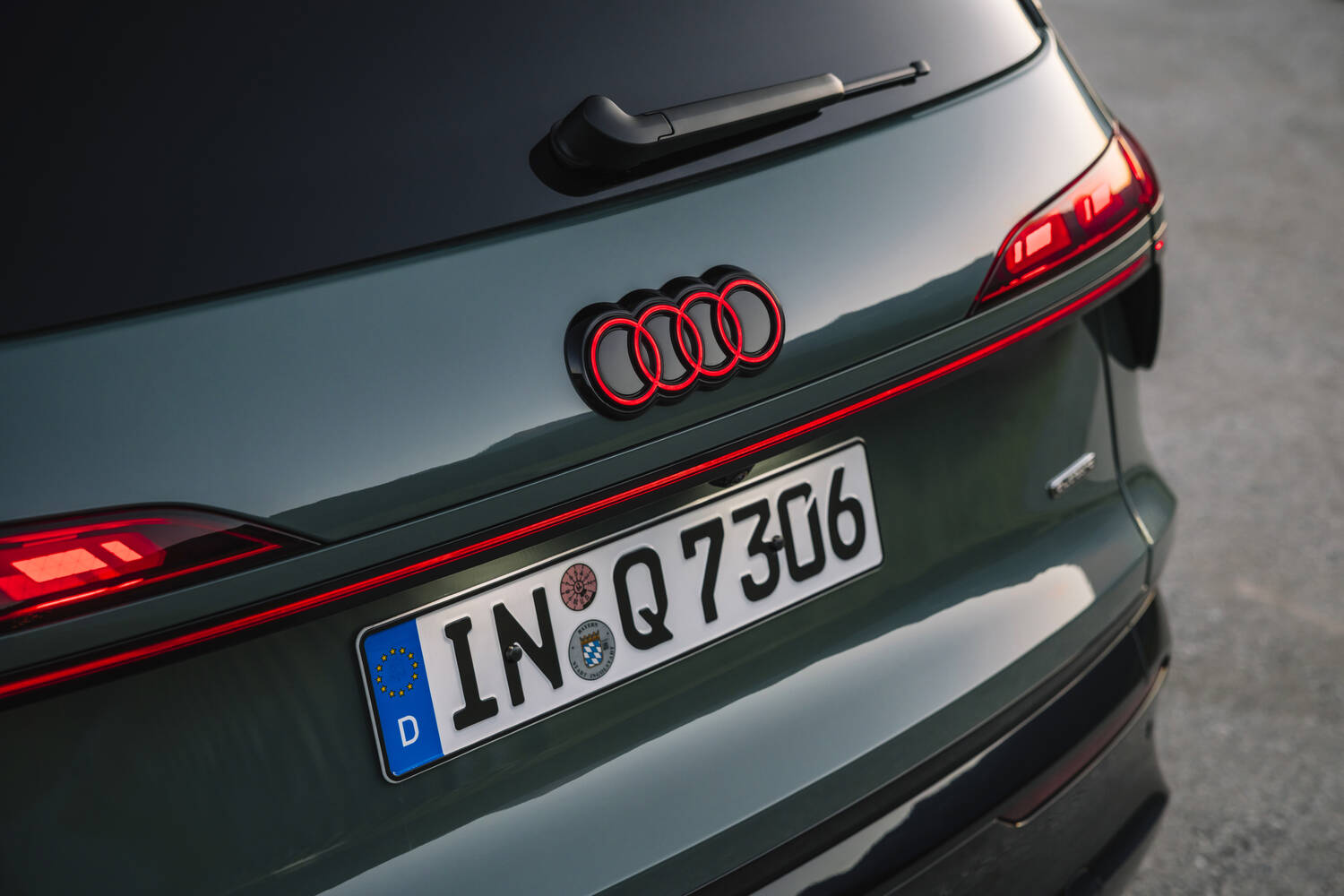
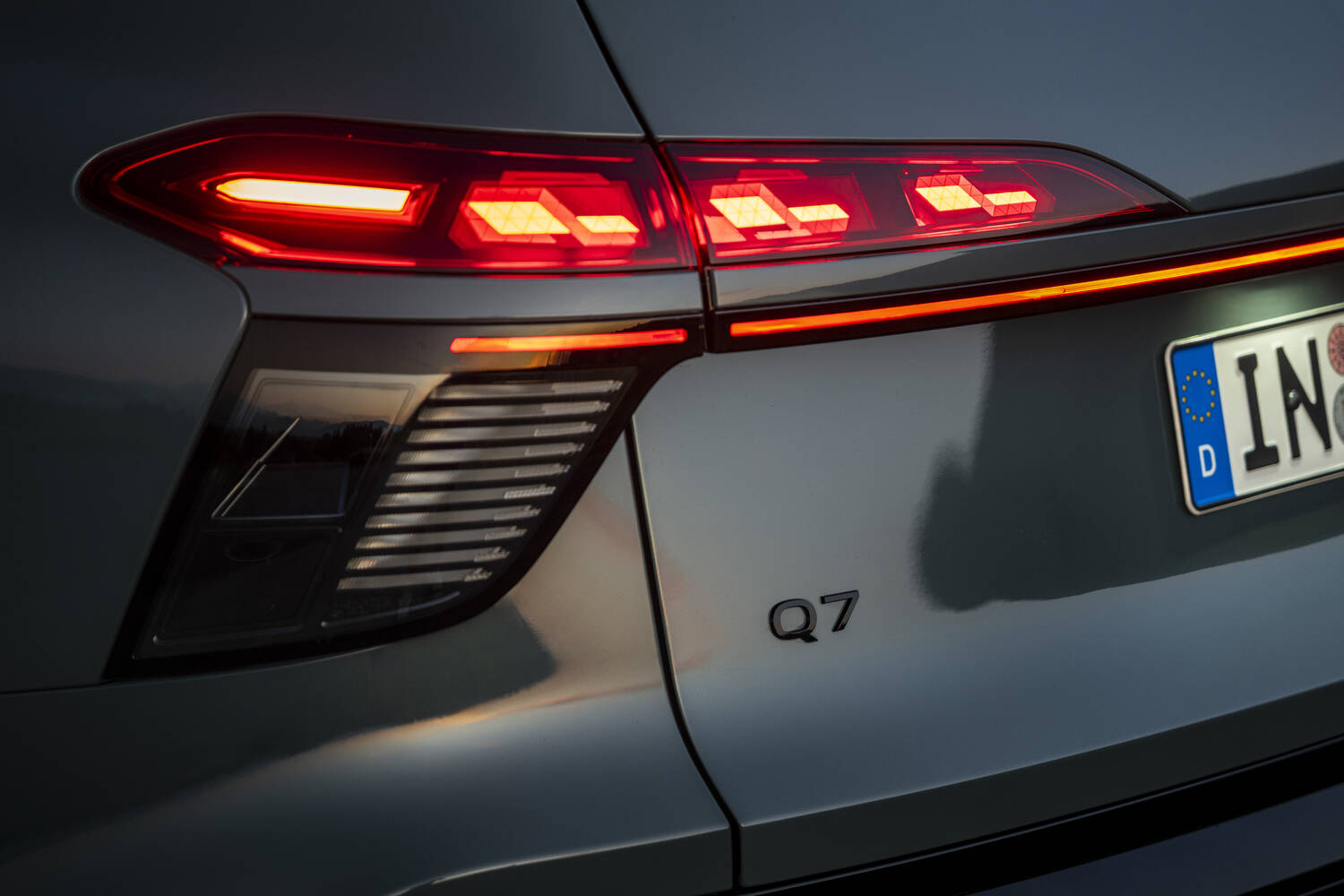
It's a touch slab-sided and hefty-looking down the flanks, too, while the rear light clusters are perhaps overly fussy and the front overhang juts out in profile.
Still, many will love its inherent smoothness and futuristic vibe, and the fact it doesn't simply slavishly copy either of its ancestors.
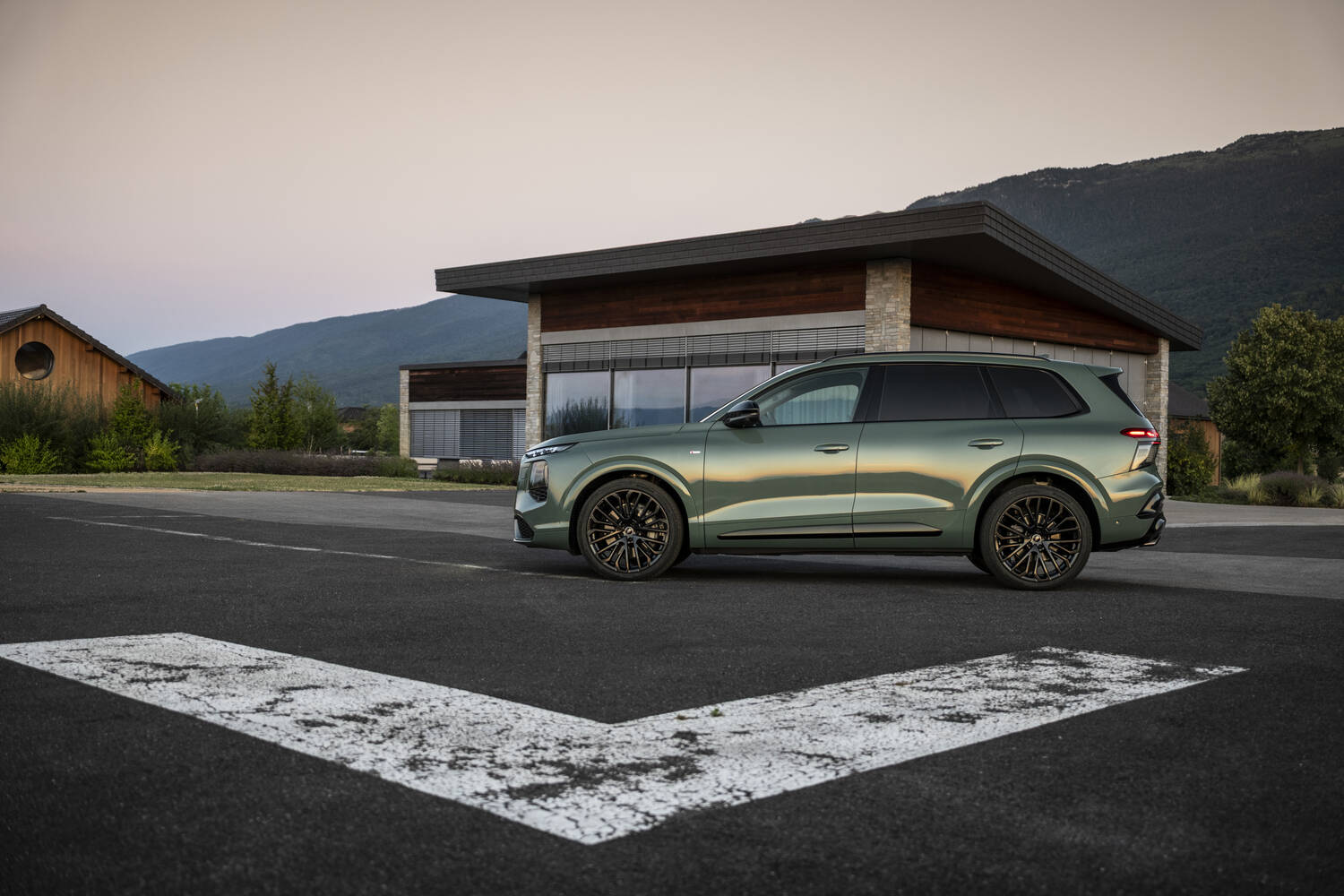
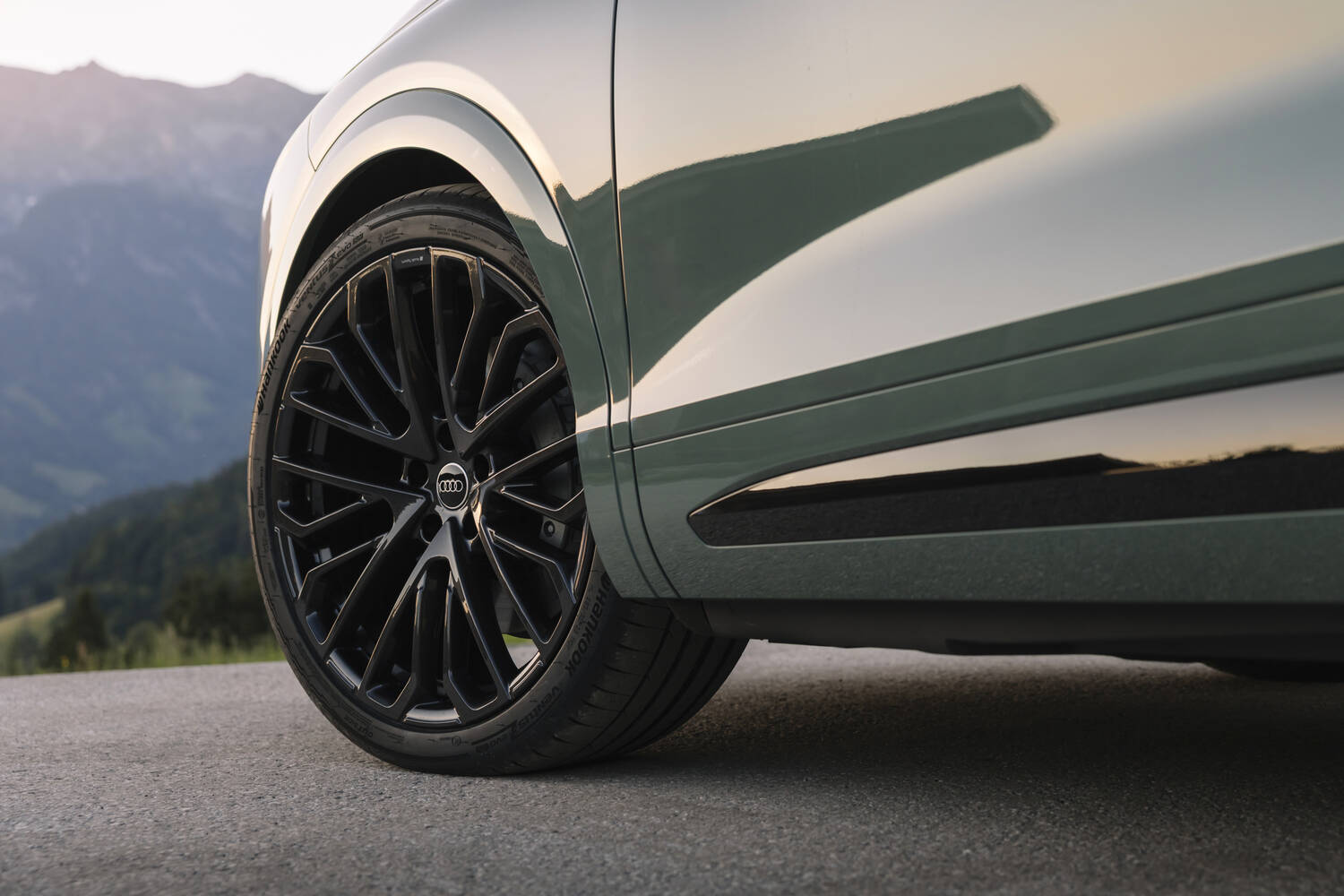
To ensure it never looks under-wheeled, there are some gigantic wheel options, starting with 20-inch alloys and running all the way to three designs of enormous 23-inch rims.
Dimensions of the 2027 Audi Q7
- Length:
- 5,056mm
- Width:
- 2,010mm (excluding mirrors)
- Height:
- 1,757-1,820mm (depending on air suspension ride height)
- Wheelbase:
- 3,002mm
Paint colours for the 2027 Audi Q7
Irish buyers of the Audi Q7 get a choice of eight paint colours: Carrara White (solid), Glacier White, Mythos Black, Waitomo Blue, Alopias Blue, Agave Green and Midnight Green (all metallic), plus Daytona Grey (pearl effect).
Of these, Carrara is the only standard, free shade, with all the rest costing €2,119 apiece except for Alopias Blue, which is €3,468.
There are nine further paints in the Exclusive palette, but these are an expensive choice at €11,367 a pop. There are three metallics - Shiraz Red, Java Brown and Karat Beige - and six pearlescent options: Night Blue, Nimbus Grey, Arrow Grey, Oak Green, Morning Dew Green and Panther Black. If that's not enough, for the same money there's access to a paint-to-sample scheme for the Q7 as well.
Interior, practicality, tech & comfort of the 2027 Audi Q7
- No questioning the build quality
- Or the tech count - it's high
- Row three not the most spacious
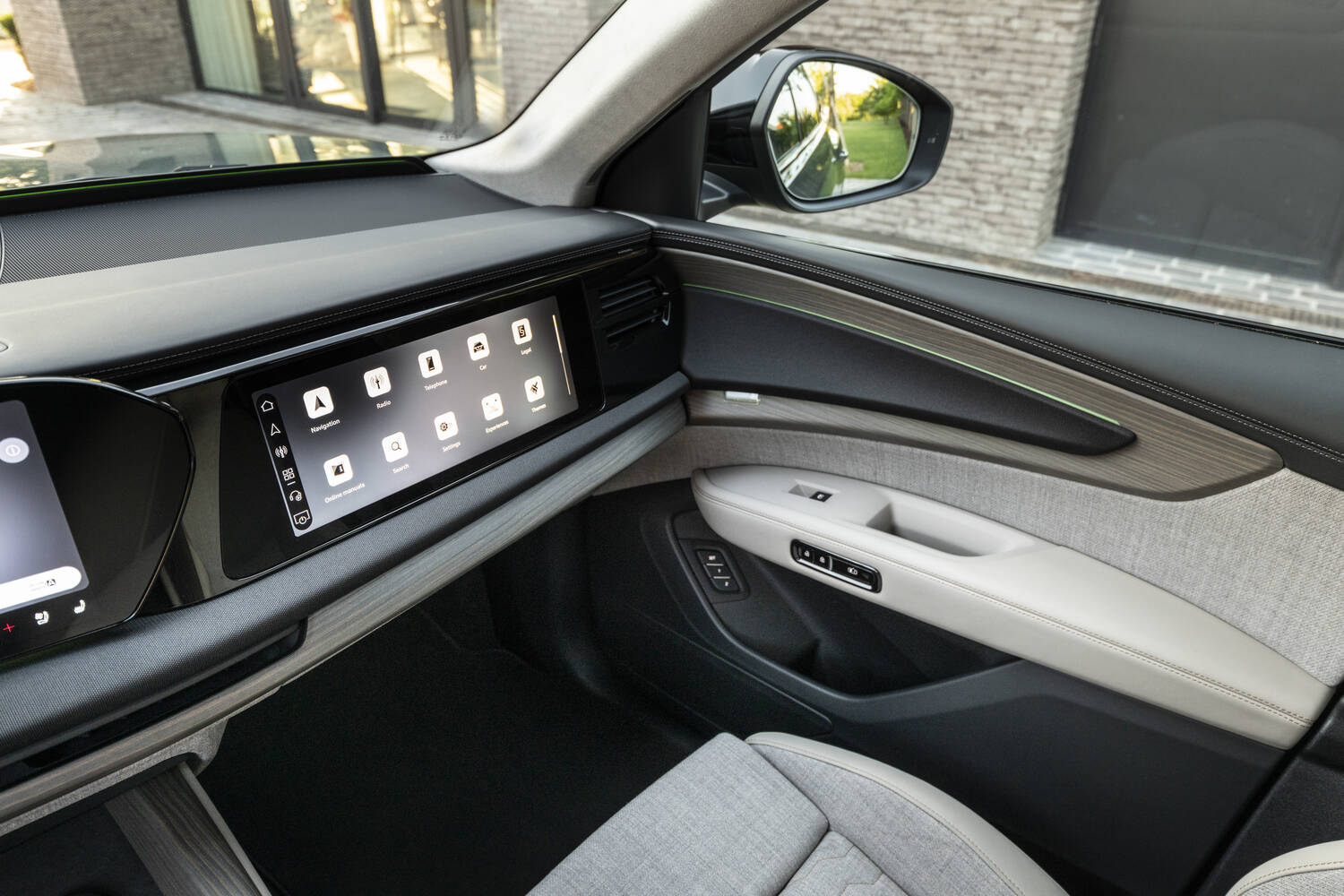
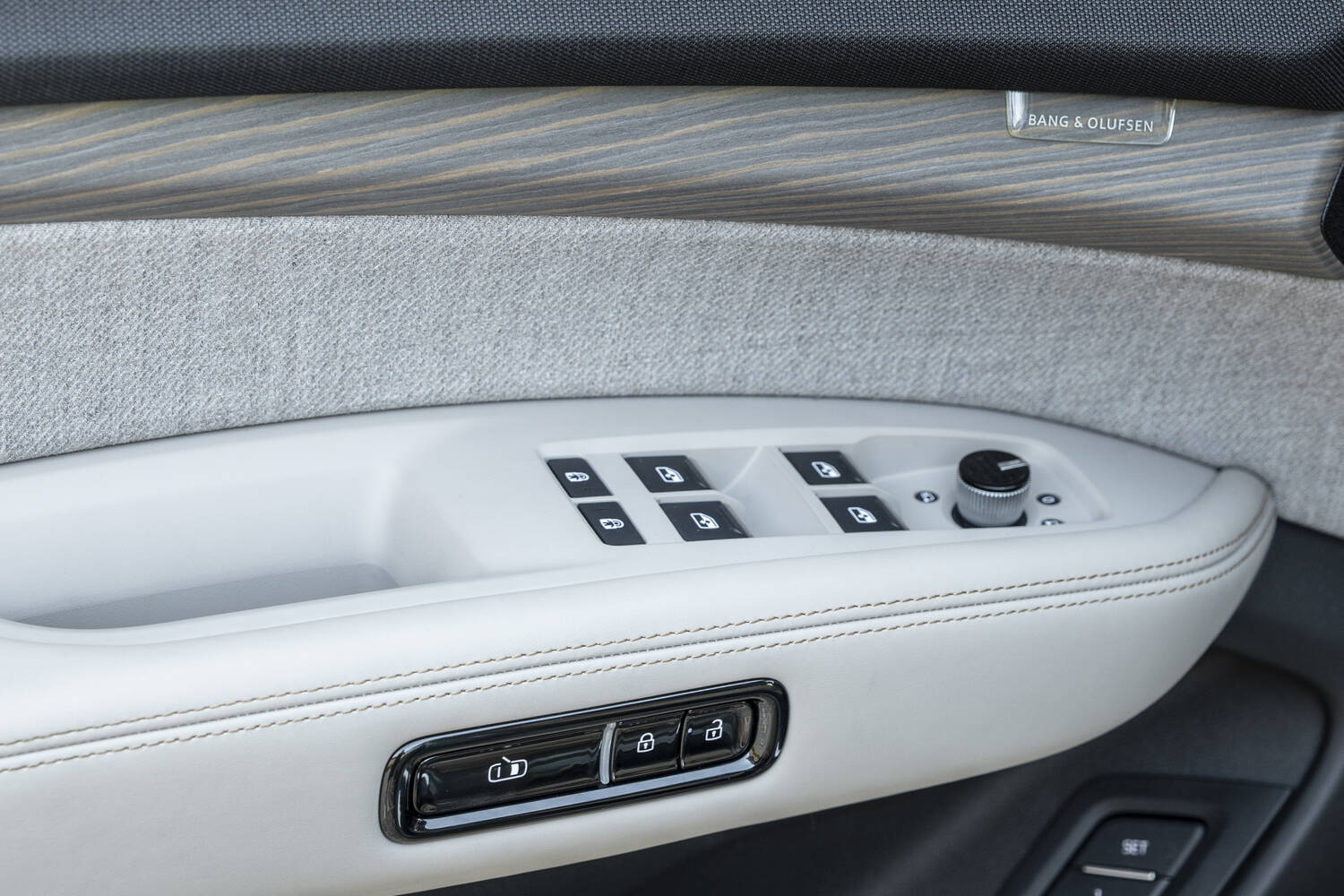
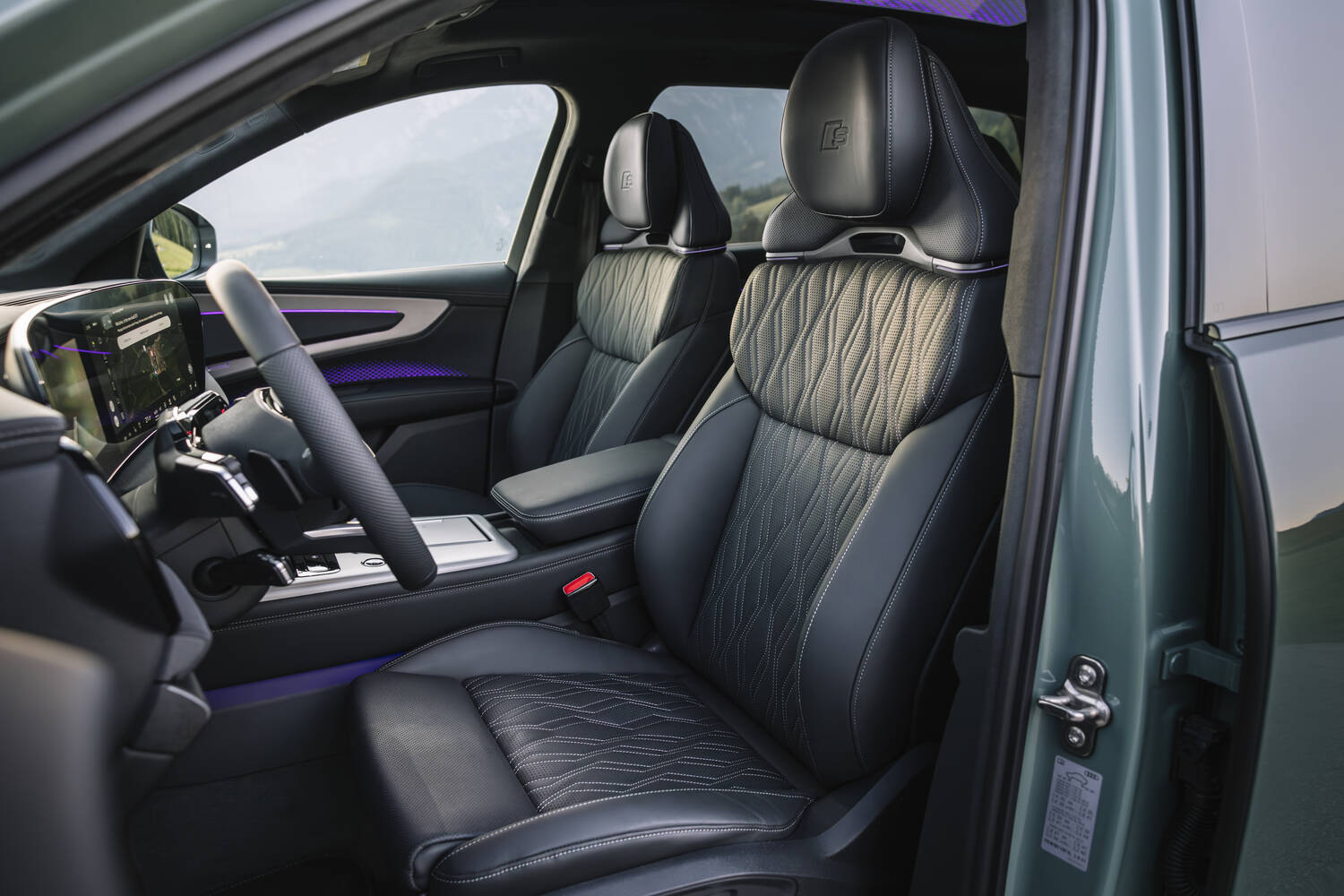
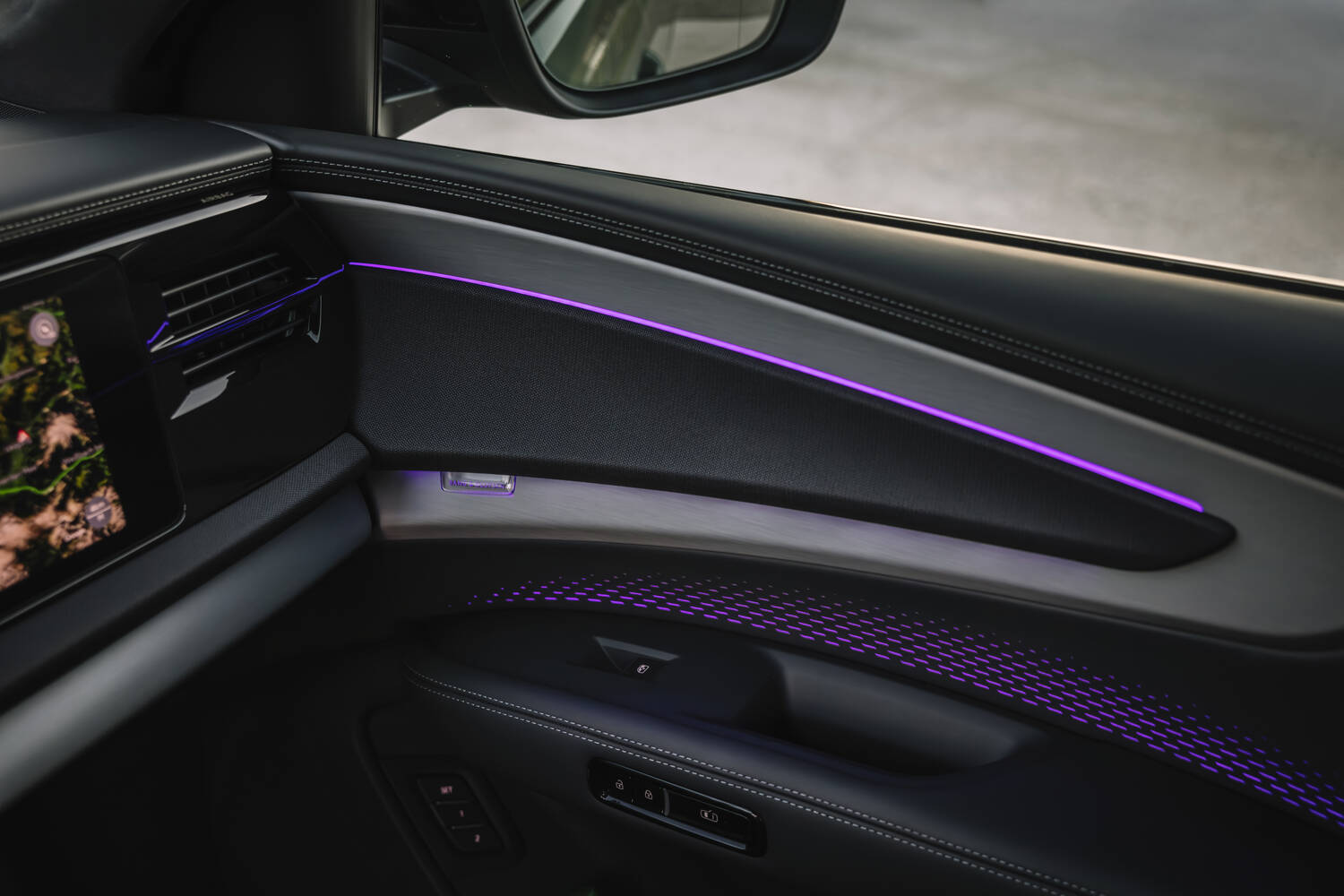
Audi has long made solid, top-notch cabins and the one inside the Q7 is no exception. There are some lovely material finishes, including real blond wood, which lift the ambience, and everything feels stoutly put-together.
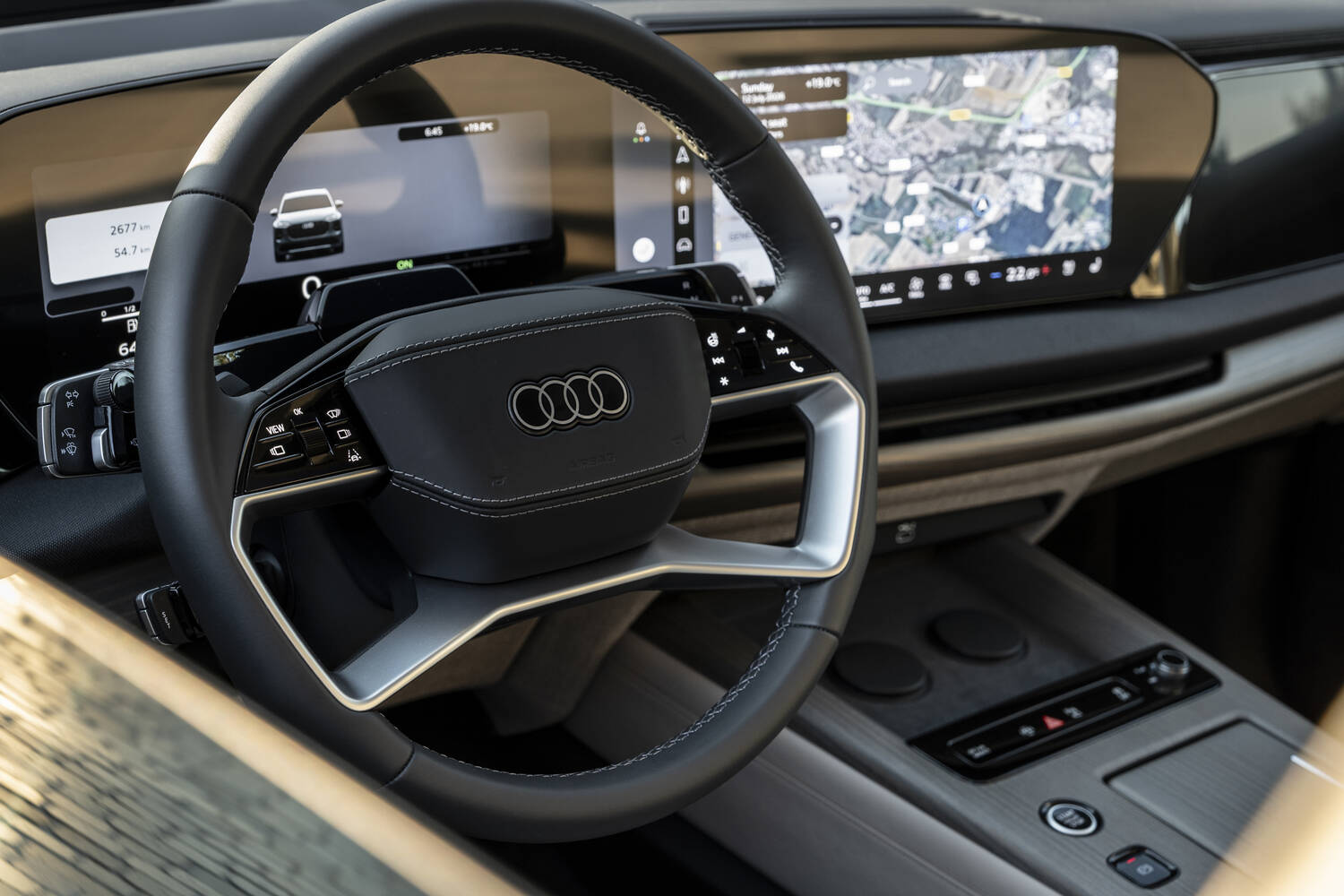
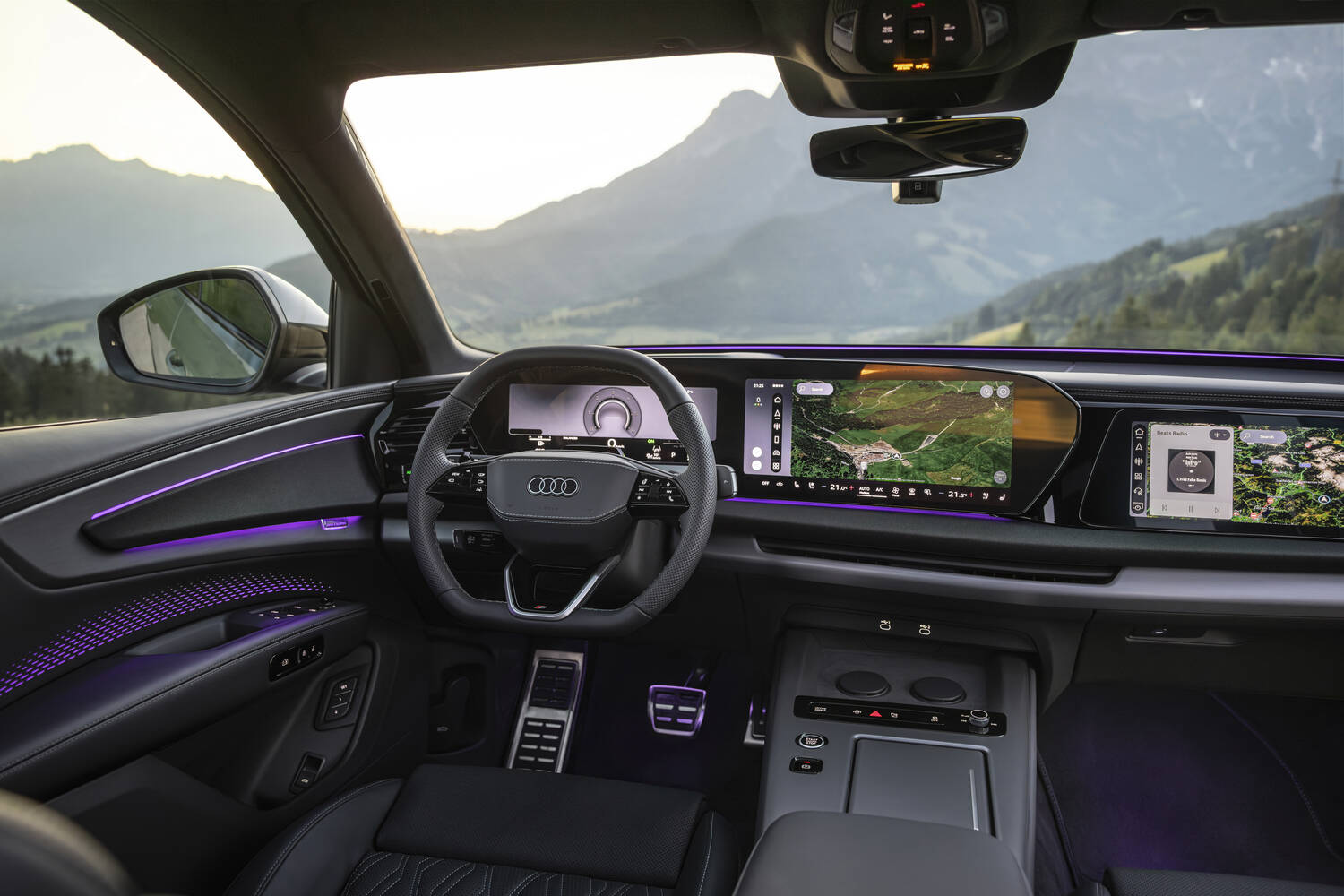
What has increased within the SUV is the technology quotient, as not only is there a forest of digital screens for the Q7's main fascia and interface system, but you can even specify automatic-opening-and-closing doors if you want - although we'd advise against them, as they're needlessly ponderous in action.
Getting comfortable in the driver's seat
Both the driver's seat and steering column are electrically adjustable on the Audi Q7. Thus, the driving position attainable in the SUV is great, as it offers a high, commanding view of the road ahead, without you feeling like you're perched too loftily in the vehicle's body.
People of varied physiques therefore ought to be easily able to get on with the Q7's driver's seat.
Infotainment and technology
Even as standard, there are three large screens: the 14.5-inch touchscreen, the 11.9-inch 'Audi Virtual Cockpit Plus' cluster and the 12.3-inch passenger touch display.
On top of that, you can add a driver's head-up display, if that's not enough digital real estate for you.
It all looks supremely crisp and cutting edge, and it works intuitively - even if the climate controls are on the screen and not their own physical panel (they are always presented in a strip across the bottom of the main display, however).
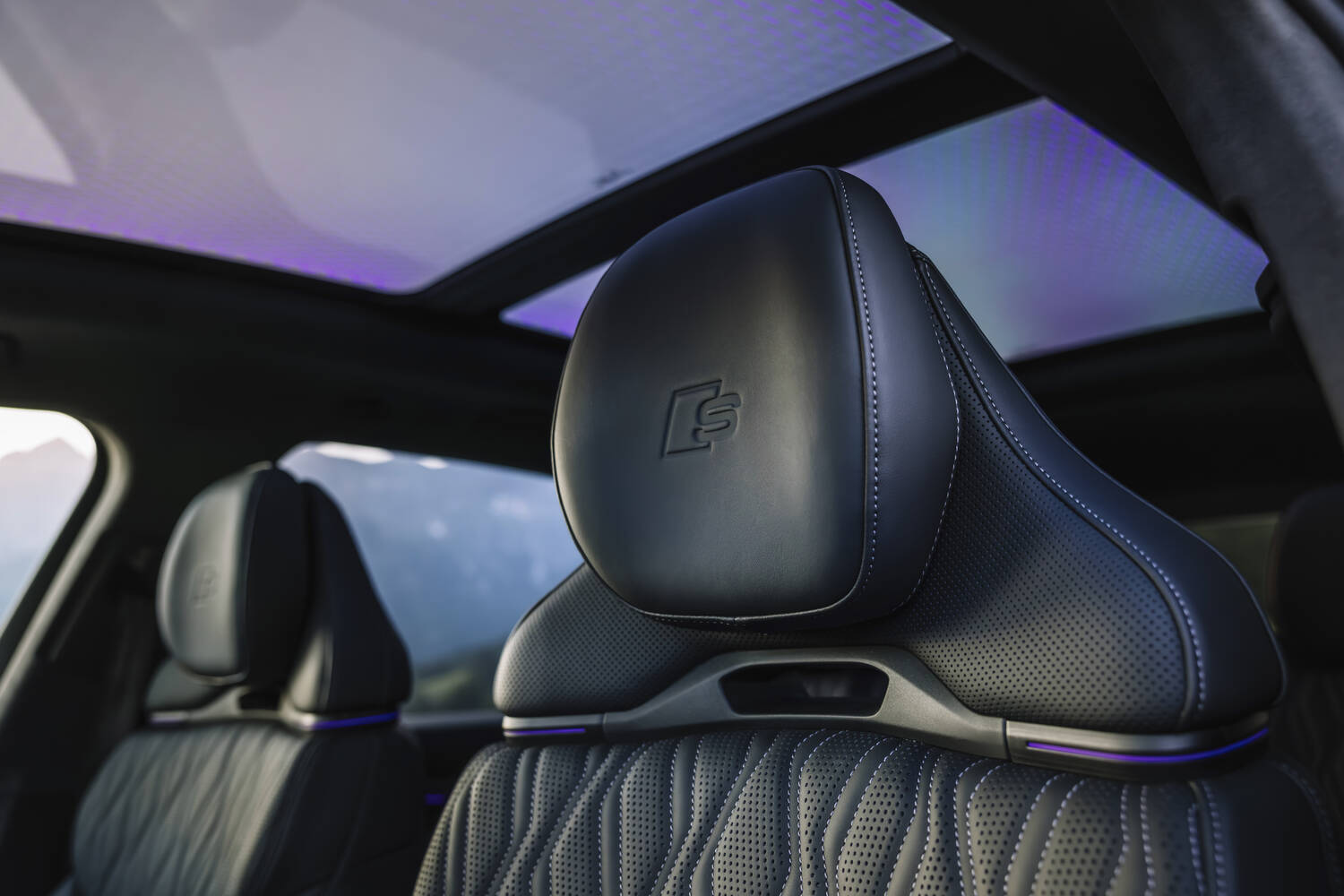
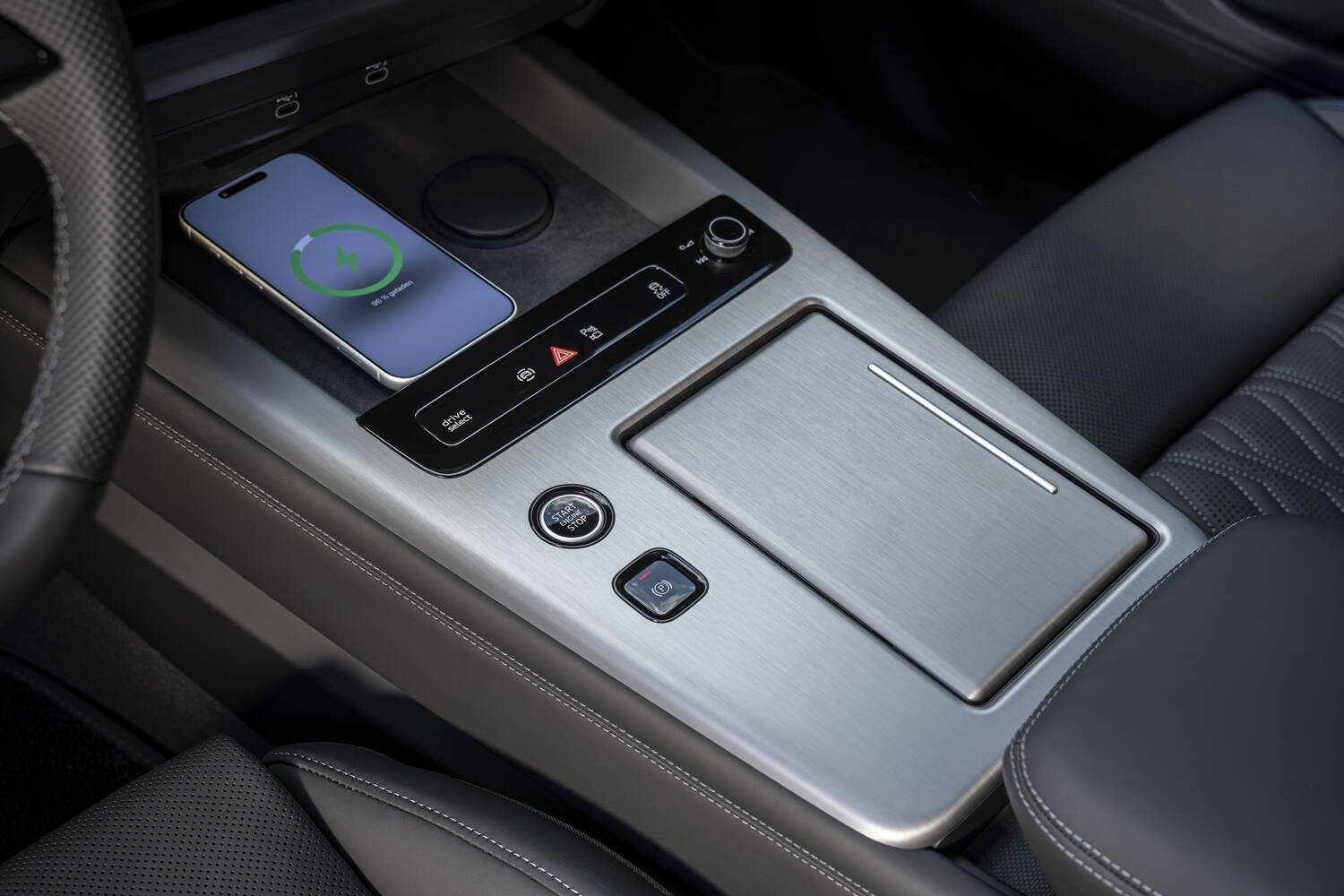
There's more to the Audi than just a computer-heavy dashboard, however. Other tech, either offered as standard or on the options list, includes up to four-zone climate control, twin 25-watt inductive-charging pads for smartphones, partial electric adjustment for all seats in the cabin, a 360-degree camera system, heated seats in all three rows, advanced exterior lighting including selectable LED/OLED signatures, a panoramic sunroof and even a 22-speaker Bang & Olufsen Premium Sound system - complete with front-seat bass actuators that vibrate in time with the music.
Practicality around the cabin
At the front of the Audi Q7's cabin are door pockets shaped to accept water bottles, a good-sized glovebox, a lidded storage cubby underneath the central armrest, the wireless smartphone charging area on the tunnel, two USB-C sockets and a couple of cupholders, with the latter beneath a side-hinged lid on the flat centre-trim area.
Rear-seat passenger space
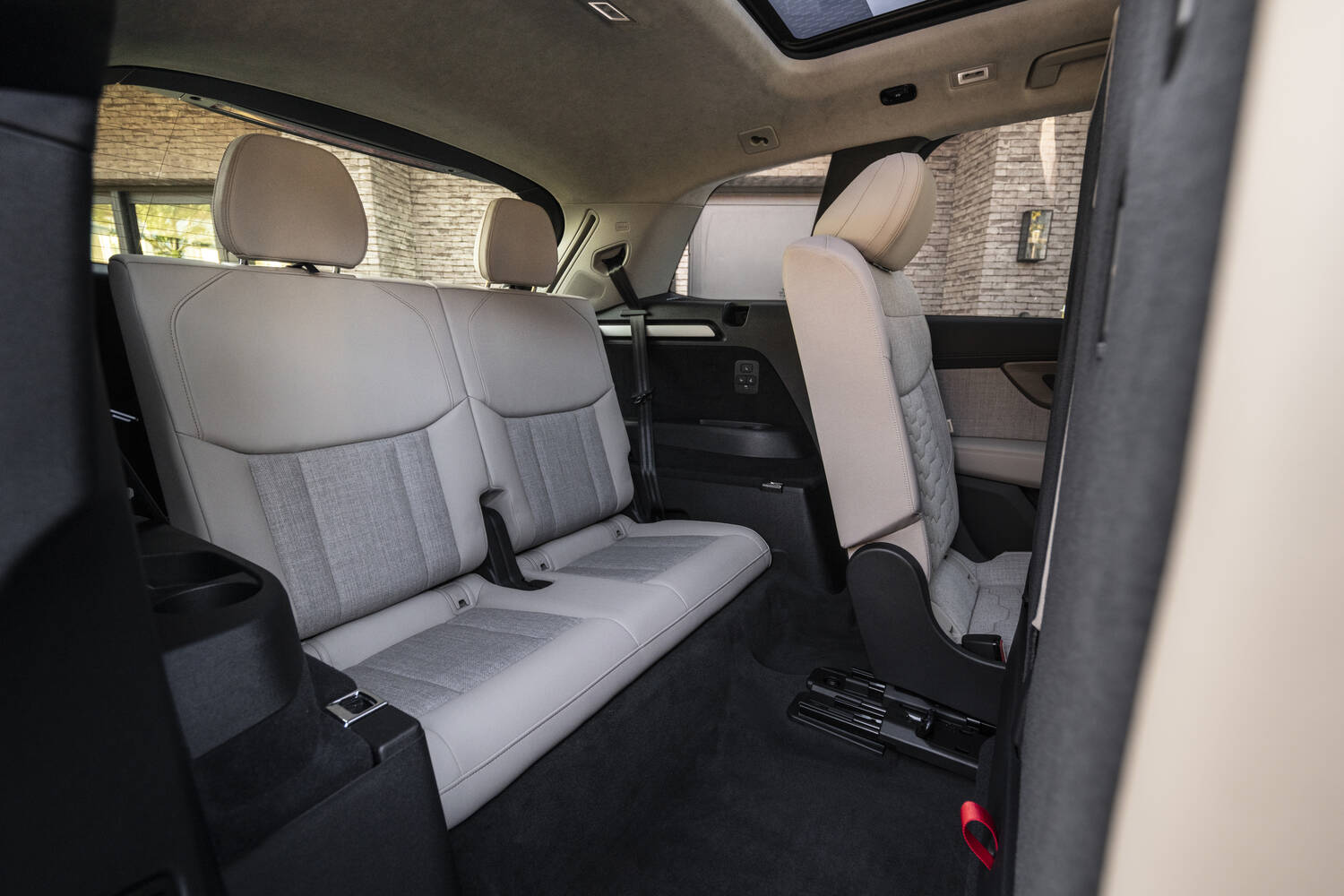
There's good news and not-so-good news. Audi has developed this Q7 in five-, six- and seven-seat configurations, but the latter is largely the reason you're buying this SUV in the first place - so we'll focus on that.
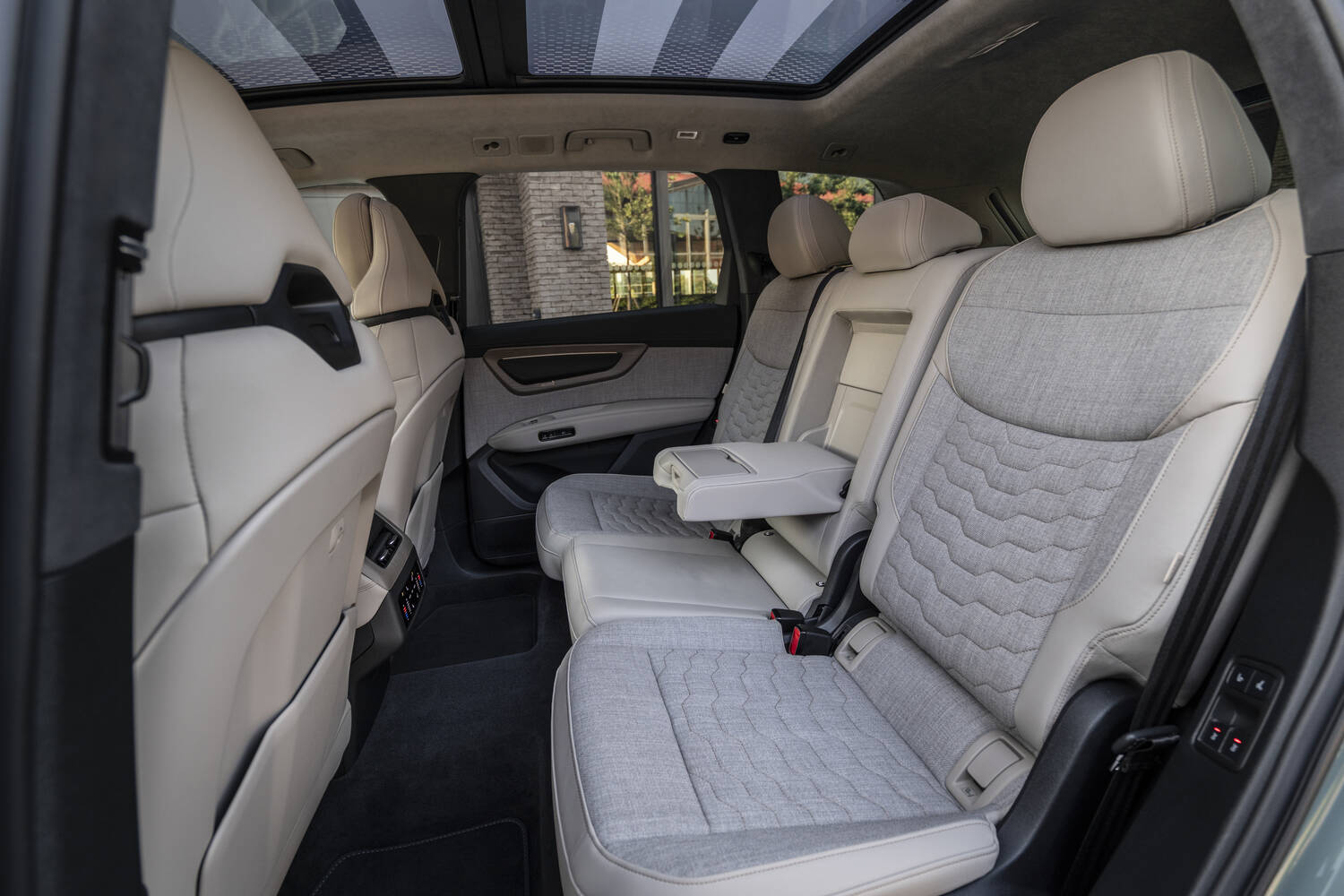
With the second row in its default position, there's ample leg- and headroom, even for taller people, in the middle of the Audi's cabin.
The problem is that the third-row seats are rather cramped, so you'll have to juggle the SUV's interior around a bit to seat seven occupants comfortably.
Even so, we'd suggest that only adults of about five-foot six, maximum, will be happy right at the back of the cabin.
More frustrating than that is how long it takes the electrically operated seats to move. If you decide to drop the third row, for instance, to liberate more boot capacity, then you have to wait a long time while the Audi's onboard software determines if there's enough room for them to fold down behind the middle row.
If there isn't, then the middle row slowly slides forward to an appropriate position until the rear-most seats can eventually lethargically slump down into the Q7's floor.
We know powered seats seem premium and they can be a boon to parents with their hands full, but reconfiguring the SUV's layout would be so much quicker if the seats all tumbled and raised manually.
At least there are plenty of nice accoutrements for passengers in the back of the Q7 to play with. In the middle row, there are two vents, climate controls, heated-seat switches and two USB-C sockets on the rear of the front-centre armrest construction.
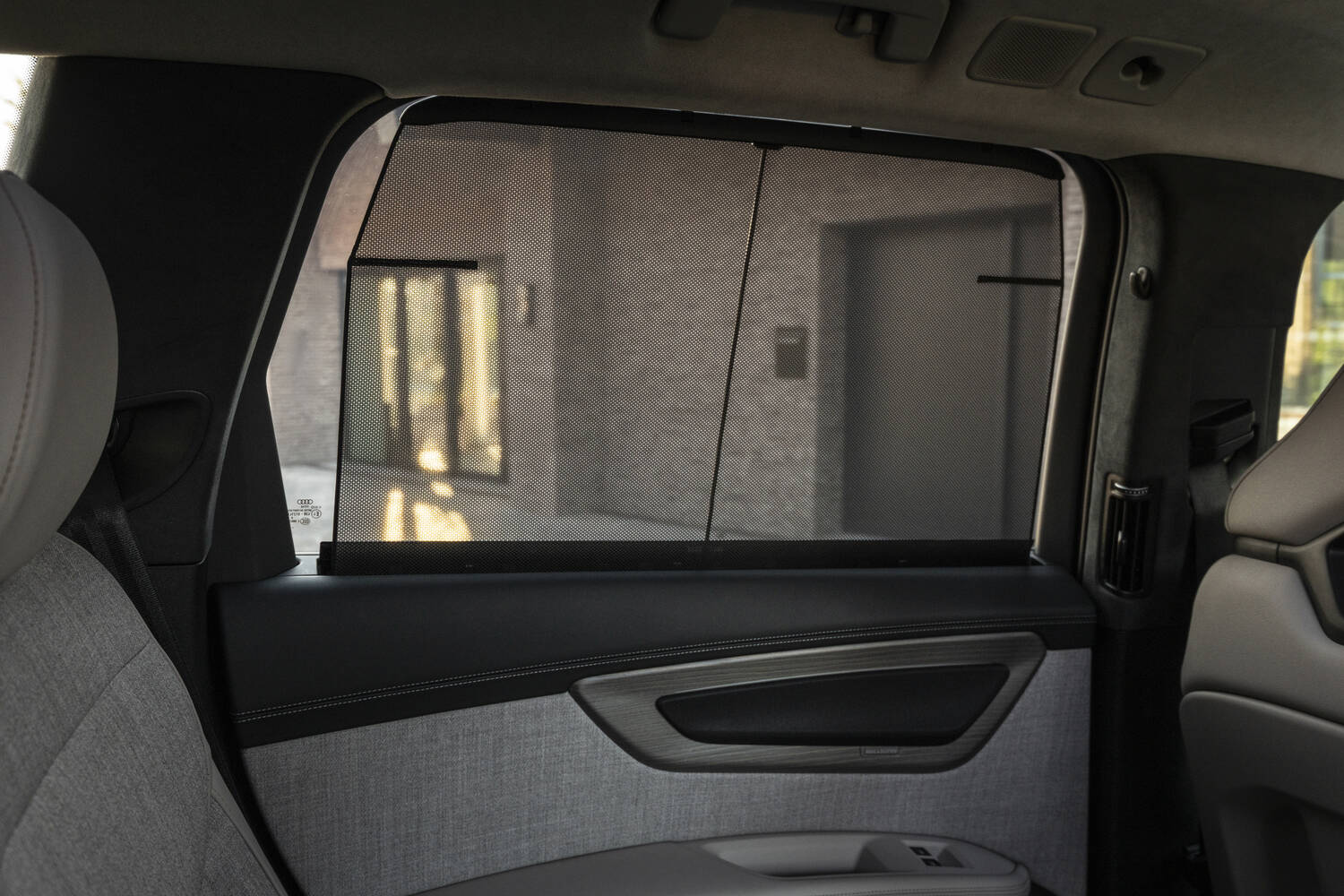
That's as well as a fold-down armrest with two cupholders, elasticated map pockets on the rear of the front seats, sunblinds for the windows, and more vents plus coat hooks on the backs of the B-pillars.
Moving to the third row, moulded armrests at the sides of the Audi's cabin include a single cupholder each, while there are heated-seat switches as well.
Fitting child seats to the Audi Q7
This is a vehicle aimed squarely at parents. There are ISOFIX points on all of the passenger seats - which means six in total.
Thus, the Audi Q7 is one of the few cars where you can theoretically get three child seats side-by-side on the central bench in the cabin and, given the car is more than two metres wide, then this shouldn't be too tricky a task.
The rear doors of the Q7 open wide and are huge, so with those and the amount of legroom on offer - plus the higher hip-point of an SUV in the first place - loading child seats into the second row of the Audi should be no drama at all.
It might not be so simple nor quick, thanks to the glacial electrically folding chairs, to get bulkier items into the third row for fixing into place, however.
Boot space in the Audi Q7
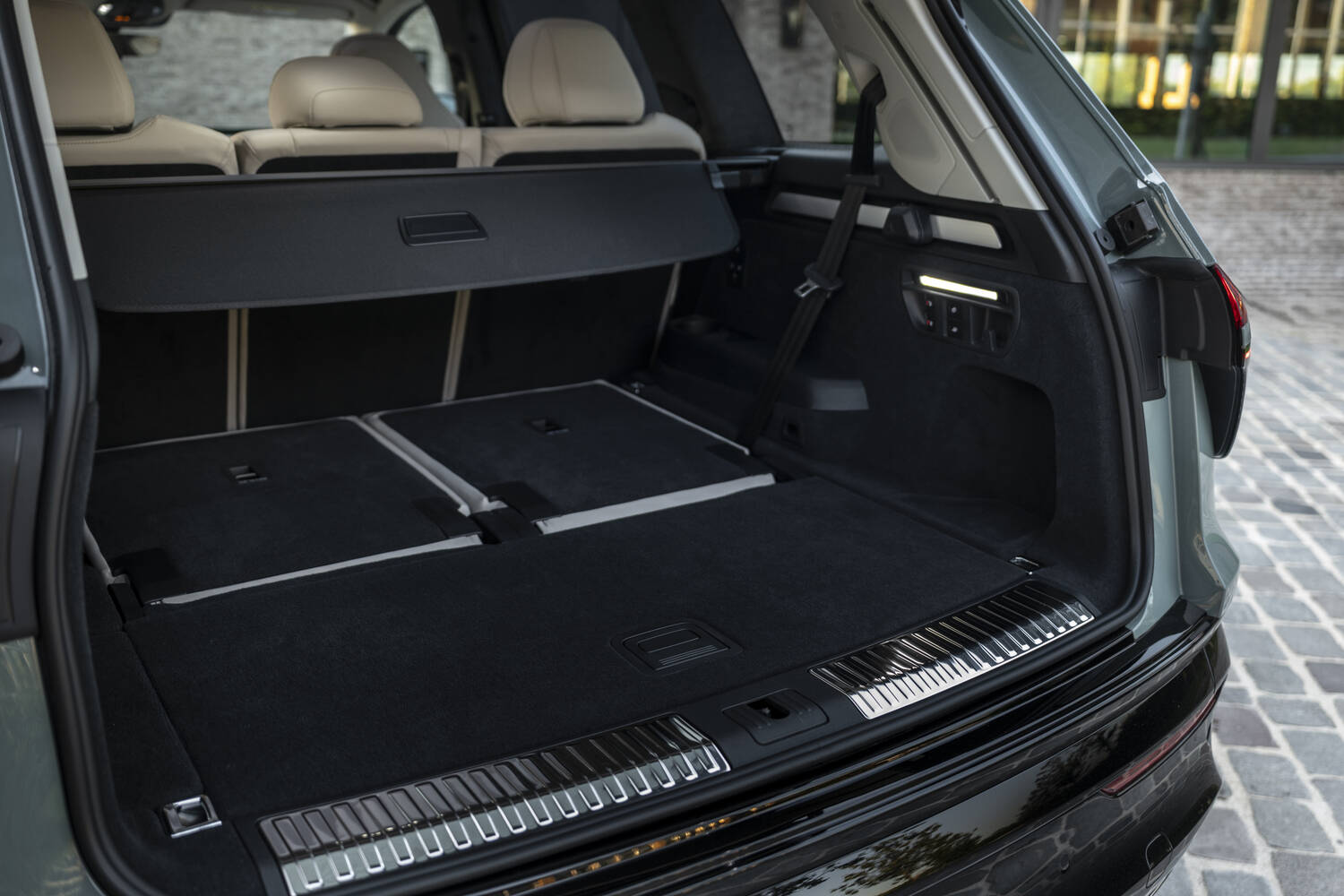
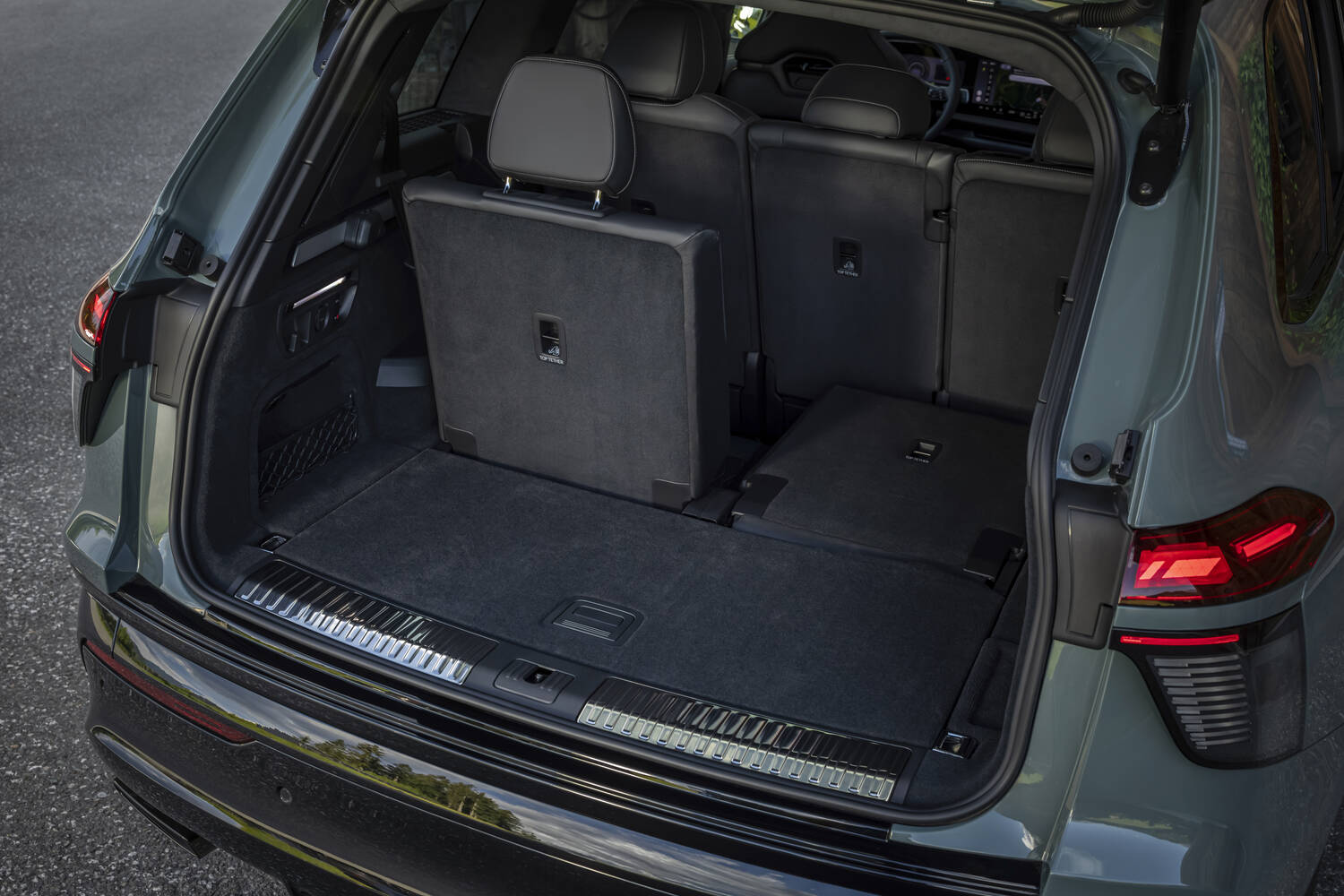
Even with all seats in position, there's a usable bit of cargo capacity at the very rear of the Audi Q7's cabin. At 210 litres.
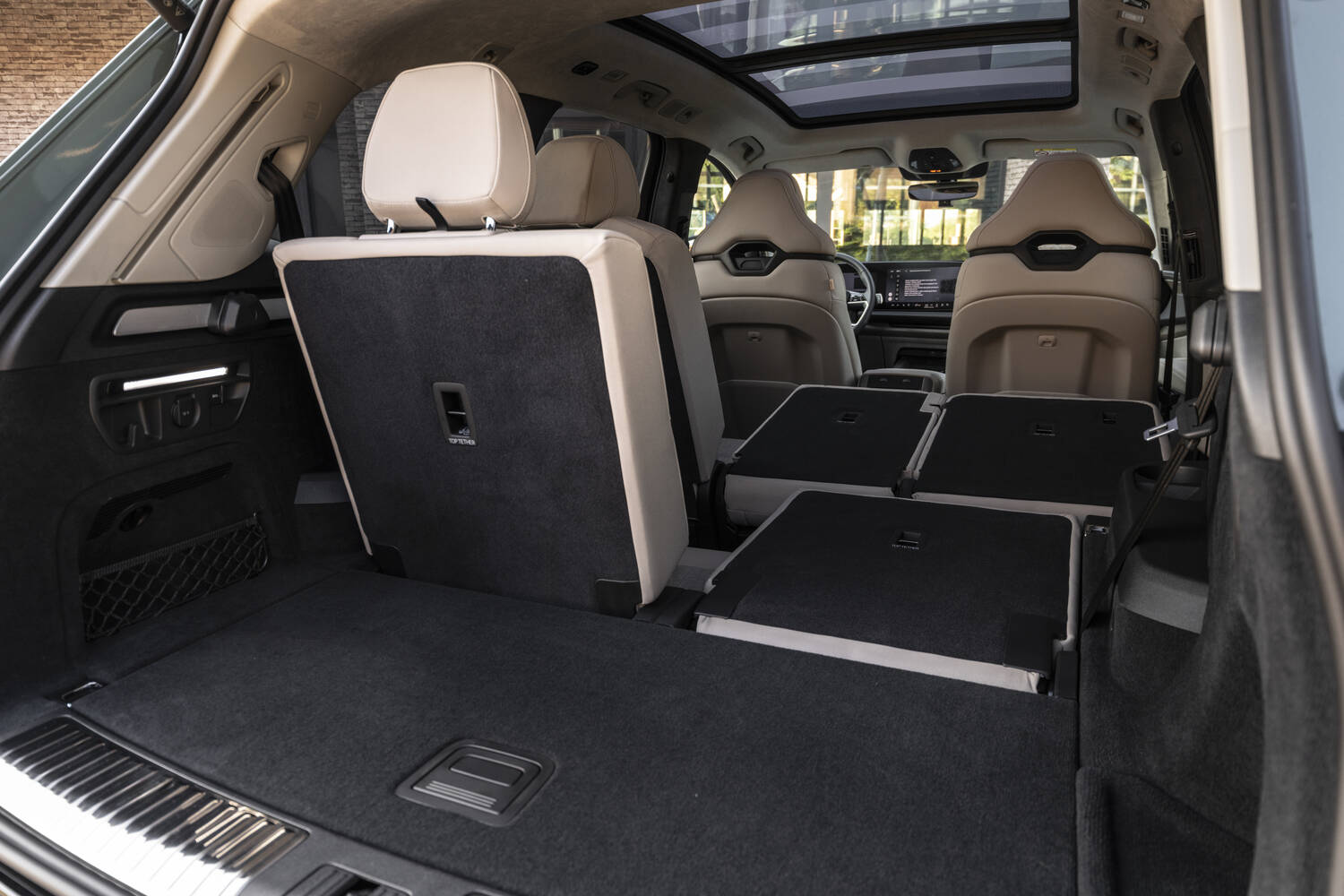
However, drop the sixth and seventh seats away, and up to 722 litres of space is revealed. Put the middle bench down too, and that figure rises to a huge 1,980 litres.
It's even better news if you opt for the five-seat model, which increases the above figures to 806 and 2,075 litres respectively - simply vast amounts of space.
The rearmost seating row of the Q7 folds down in a 50:50 split, while the middle bench has a 65:35 ratio - although there's a manually opening through-load hatch in the larger portion of that bench, which effectively converts the seats into a 35:30:35 arrangement.
Items such as underfloor stowage, a side cargo-net area, buttons to raise and lower the rear air suspension of the SUV, buttons to raise and lower the rear seats in the cabin, yet more buttons to deploy the towing hitch if fitted, lashing eyes and a 12-volt socket can all be found in the boot area of the Audi, making it a versatile load bay, as well as a huge one.
Safety in the Audi Q7
This generation of Audi Q7 has not yet been assessed by independent safety body Euro NCAP. It is, however, equipped with a wide range of advanced driver assistance systems (ADAS).
Performance of the 2027 Audi Q7
- Launches with V6 turbodiesels
- Plug-in hybrid to join the ranks
- Majors on ride comfort and rolling refinement
Audi has confirmed a petrol plug-in hybrid for the range, but at launch the big SUV arrives with just a pair of 3.0-litre V6 turbodiesels.
Both of these TDI powertrains are enhanced with a 48-volt mild-hybrid (MHEV) system, incorporating a small lithium-ion battery, an 18kW integrated powertrain generator (providing up to 24hp and 370Nm of additional assistance) and an electrically powered compressor (EPC), which functions as a kind of second turbo.
They also both employ an eight-speed Tiptronic torque-converter automatic gearbox, driving all four wheels through a quattro system with a limited-slip centre differential (Torsen) incorporating a preload function.
The opening Q7 choice is a slightly less powerful variant with 245hp and 500Nm, which will run 0-100km/h in 7.2 seconds in five-seat trim and 7.4 seconds as a full seven-seater.
Above that is the 299hp/630Nm derivative, which trims the corresponding 0-100km/h times to 6.0 and 6.2 seconds, respectively.
Driving the Audi Q7 TDI quattro MHEV S line on French roads
Words by Matt Robinson on 11 August 2026
Our test car for this run was the higher-powered TDI as a seven-seater, complete with adaptive air suspension and four-wheel steering, both of which are standard equipment on the big SUV.
What this MHEV technology, plus the quattro all-wheel drive, does for the Audi Q7 is quite remarkably mask its weight. Somehow, this seven-seat, five-metre leviathan never quite feels as big or as bulky as it truly is.
The tricks begin with somewhat light steering. It's perfectly accurate and nicely consistent off the dead-ahead, with the front of the Q7 responding keenly to significant steering inputs from the driver, but in gearing it to make the whole vehicle appear delicate on its feet, we feel Audi has robbed the set-up of a few degrees of feel and feedback.
Nevertheless, with the easy, effortless and low-down grunt of the MHEV-enhanced turbodiesel powertrain, along with the Tiptronic, which is almost imperceptible in its part-throttle shift patterns, the Q7 consummately conveys the air that it is a class act from metre one of driving the thing.
Proper praise must go to the air suspension, which is one of the best applications of this kind we've sampled.
It doesn't matter whether you opt for your SUV on a set of demurer 20s or the full-whack 23-inch rims instead, the ride comfort is always exemplary, and the associated rolling refinement is outstanding.
With the quiet background burr of that V6 engine rumbling away up front, just ambling around in the big Audi is a thoroughly feelgood experience.
If there's any issue with the Q7's dynamics, it comes down to the handling. In the wider scheme of things and accepting that seven-seat diesel SUVs are rarely geared up to be demons in the corners, the clean and unflustered way the Audi handles a twisting road is rather impressive.
It puts on the sort of foursquare, assured performance you'd expect of something with a quattro drivetrain, and it can certainly hustle along at a decent pace if you want it to.
It's just that, as a result of all the mechanical grip it has on the road, it never emotionally grips you to anything like the same extent as a driver.
Blame the overly light steering, which only weights up marginally (and a tad too artificially) in Dynamic mode, as it denies the driver a clear line of communication to the Audi's chassis.
And while the SUV corners with minimal lean for something so weighty, it doesn't have a playful bone in its body. You won't get anything out of the Q7 TDI, save for crushing competency and a vague sensation of kinematic aloofness.
We'll also finish with one reservation that may well have something to do with our senses being skewed by the era of high-torque EVs we're now living in, and it's this: the 299hp/630Nm Q7 TDI doesn't feel that quick.
On anything up to half-throttle, it feels pretty lively and muscular, but if you delve deeper you'll find the acceleration doesn't become markedly stronger towards the top end than it is wafting around in the midrange.
As a very rough barometer, we did a couple of timed 0-100km/h runs in Dynamic mode in the Audi, and in neither instance did the Q7 manage to get close to cracking seven seconds, never mind being in the region of six.
In fact, it was nearer eight seconds on one occasion. Something about the way the Tiptronic and MHEV gear all hook up seems to bring a kind of hesitance and turbo-lag-like delay to the Audi getting off the line - funny, as that's precisely what the 48-volt system and EPC are designed to eradicate.
Generally, we like the elegant way the Q7 drives and it is truly lovely to have a rich, silken V6 turbodiesel still in action in this day and age. But something-and-nothing steering, a buttoned-down chassis and the apparent lack of oomph from a 3.0-litre part-electric powertrain are minor demerits that take the final gloss off the Audi's otherwise excellent overall showing.
Fuel economy and running costs of the 2027 Audi Q7
- Clean for a big-capacity turbodiesel
- But still comes with high tax
- Question marks over real-world efficiency
Audi's fitment of the MHEV gear is intended to reduce the Q7 TDI's fuel consumption and emissions, but while it does trim both compared with a 3.0-litre V6 turbodiesel without electrical assistance, the SUV will still be comparatively expensive to run next to a plug-in hybrid or electric rival.
Official CO2 and fuel economy figures
Audi's WLTP figures state that the 299hp Q7 TDI can achieve fuel consumption of as low as 7.4 litres/100km (38.2mpg), emitting 194g/km of CO2.
While that latter figure is commendably below 200g/km for a large-capacity diesel in a sizeable SUV body, it still means an annual motor tax liability of €790.
If you specify the biggest wheels and additional equipment, emissions can rise beyond 200g/km, resulting in an increased annual motor tax rate of €1,250.
Real-world efficiency of the Audi Q7
Well, what we will say in the Q7's defence here is that the road routes laid on by Audi in the very eastern bit of France, fringing Switzerland, were pretty convoluted and twisty, and went through mountainous terrain - so there were lots of small villages to slow down, stop and then idle in (when the engine was still running, although often the MHEV tech precluded that), while the Q7 spent a lot of its time climbing and on the throttle, rather than steady-state motorway cruising (which is where it would be at its most efficient).
Despite all this mitigation, though, there's not much we can do to present a day-one economy figure of 13.8 litres/100km (20.5mpg) across 60km of testing in a good light.
On day two and a slightly more genteel circuit, the Q7 did improve to 12.1 litres/100km (23.3mpg), but either consumption rate shows that if you use the Audi SUV in congested, slow-moving and urban conditions, it's not going to be that efficient a machine at all.
Servicing the Audi Q7
Audi has two main service programmes, which depend on how you drive your car. The first is called the Fixed Service Schedule. If you drive less than 30,000km per annum and your motoring mainly consists of short journeys in and around towns and cities, then the manufacturer recommends that oil-change services are fixed to an annual or 15,000km cycle, while main inspection services take place every two years or 30,000km.
However, those who do more than 30,000km per annum go onto the Flexible Service Schedule, which keeps the same frequency for inspection services, but increases the oil-change interval to 30,000km or two years.
Naturally, you can see the issue here - if you do 30,000km a year, you're still going to have an oil service every 12 months. But we think what Audi is saying is that those who drive in a low-speed, short-distance manner, which places more stress on the engine, gearbox and exhaust system, will need more regular maintenance than those who spend the vast majority of their time behind the wheel at motorway speeds.
Audi Q7 warranty
Audi Ireland does not have the most comprehensive warranty in the world. It runs for three years, which is fine, and while it has no distance limit for the first 24 months of this period, for the third and final year, a 90,000km cap comes into effect.
Furthermore, while there's an eight-year, 160,000km level of cover on the high-voltage batteries in PHEVs and EVs in the product portfolio, the 12- and 48-volt batteries used in mild hybrids such as the Q7 TDI are explicitly excluded from that and instead revert to the standard 36-month warranty outlined above.
Irish pricing & rivals to the 2027 Audi Q7
- Starts from €122,050
- Two trim levels, SE and S line
- PHEVs will be cheaper in 2027
With the price of any model of Audi Q7 starting well into six figures, this is not a cheap way into seven-seat SUV ownership. As a TDI diesel, the base SE model costs €122,050, while the more powerful one is €127,050.
Interestingly, until the e-hybrid PHEVs arrive, the S line diesel Q7 will be offered in discounted 'Launch Edition' specification for only a fiver more than the equivalent SE model.
In its favour, the Q7 is a more recent design than the Volvo XC90 and the Mercedes GLE. Volvo also offers the all-electric EX90, though. And there's an all-electric BMW iX5 as well.
There are also some worrying signs of manufacturers previously not thought of as being as 'premium' as Audi pushing up from sectors below, with quality efforts such as the plug-in-hybrid Hyundai Santa Fe and all-electric Kia EV9.
Not to mention keenly priced, three-row Chinese alternatives on the horizon, such as the Chery Group's Tiggo 9 and Jaecoo 8.
Verdict - should you buy the 2027 Audi Q7?
Large, prestige models from Audi such as the Q7 rarely need any over-the-top encouragement from critics like us to sell, so we expect this status-symbol SUV to be a showroom hit. And rightly so - it's a cultured, refined and enjoyable thing to travel in, replete with some top-level tech and a gloriously rich turbodiesel drivetrain.
Admittedly, it won't be cheap to buy or run in Ireland, and there are some minor marks on its report relating to the straight-line performance, real-world economy, lightweight steering and stolid chassis balance.
With the exception of the fuel consumption, though, the rest of these 'issues' may not matter to the vehicle's likely buyers. As fuss-free and desirable transportation for larger families, the Audi Q7 is one of the best of the breed.
FAQs about the 2027 Audi Q7
Is the Audi Q7 all-wheel drive?
Yes, all models use a quattro all-wheel-drive system, complete with a torque-sensing, limited-slip centre differential.
Is the Audi Q7 rated to tow anything?
It most certainly is and it sits among the most capable towing machines in the industry - the TDI versions of the Q7 have a maximum braked towing capacity of 3,500kg.
How many child seats can I fit in an Audi Q7?
Incredibly, the Audi offers ISOFIX positions on all six of its passenger seats, including three abreast across the middle row of the vehicle.
Is the Audi Q7 available as an EV?
No, it isn't. Audi will sell a plug-in-hybrid version of the third-generation SUV, though.
Want to know more about the 2027 Audi Q7?
If there's anything about the Audi Q7 we've not covered, or you'd like help in choosing between it and other cars, you can avail of our expert advice service via the Ask Us Anything page.