


Exterior & design of the 2026 KGM Musso
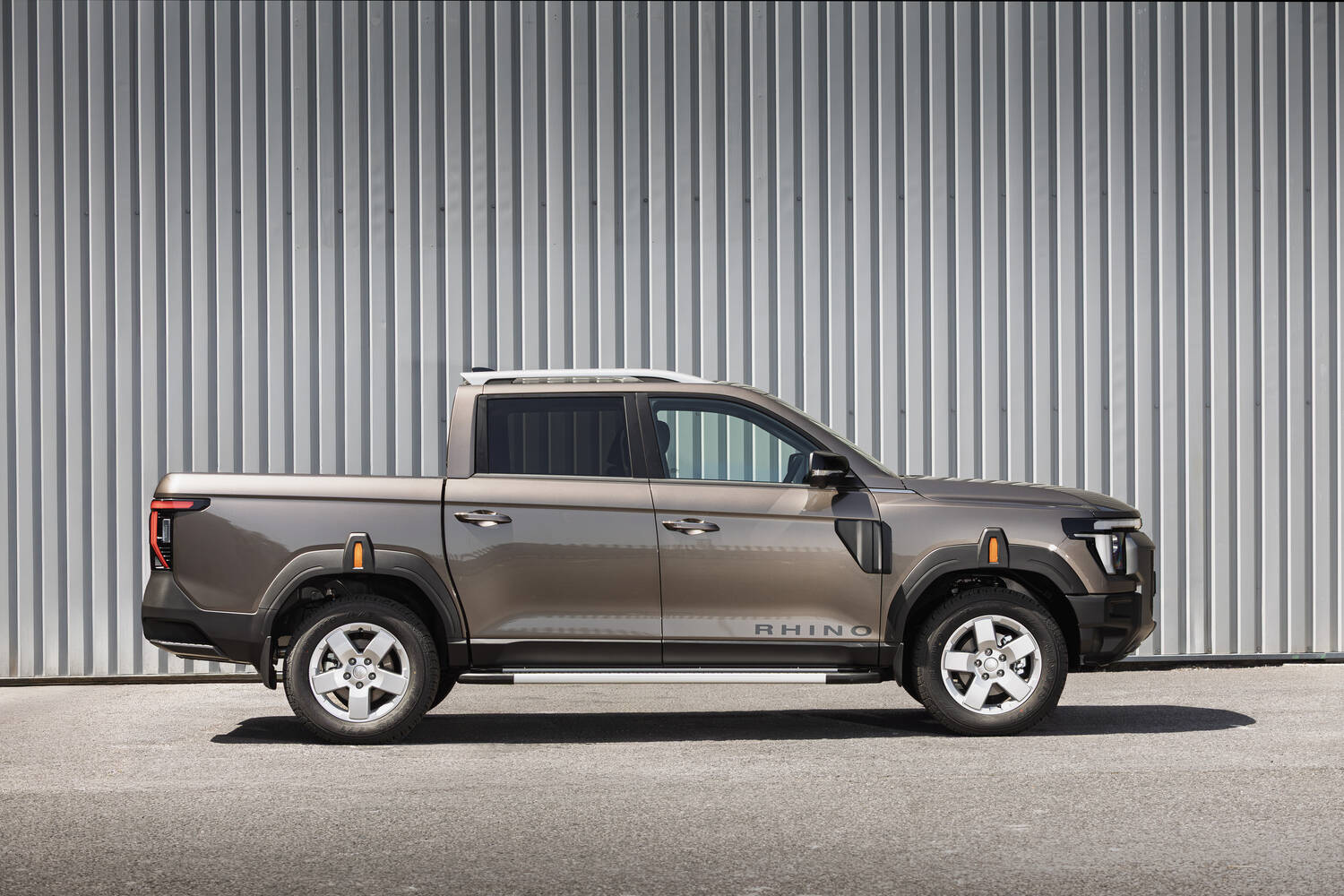
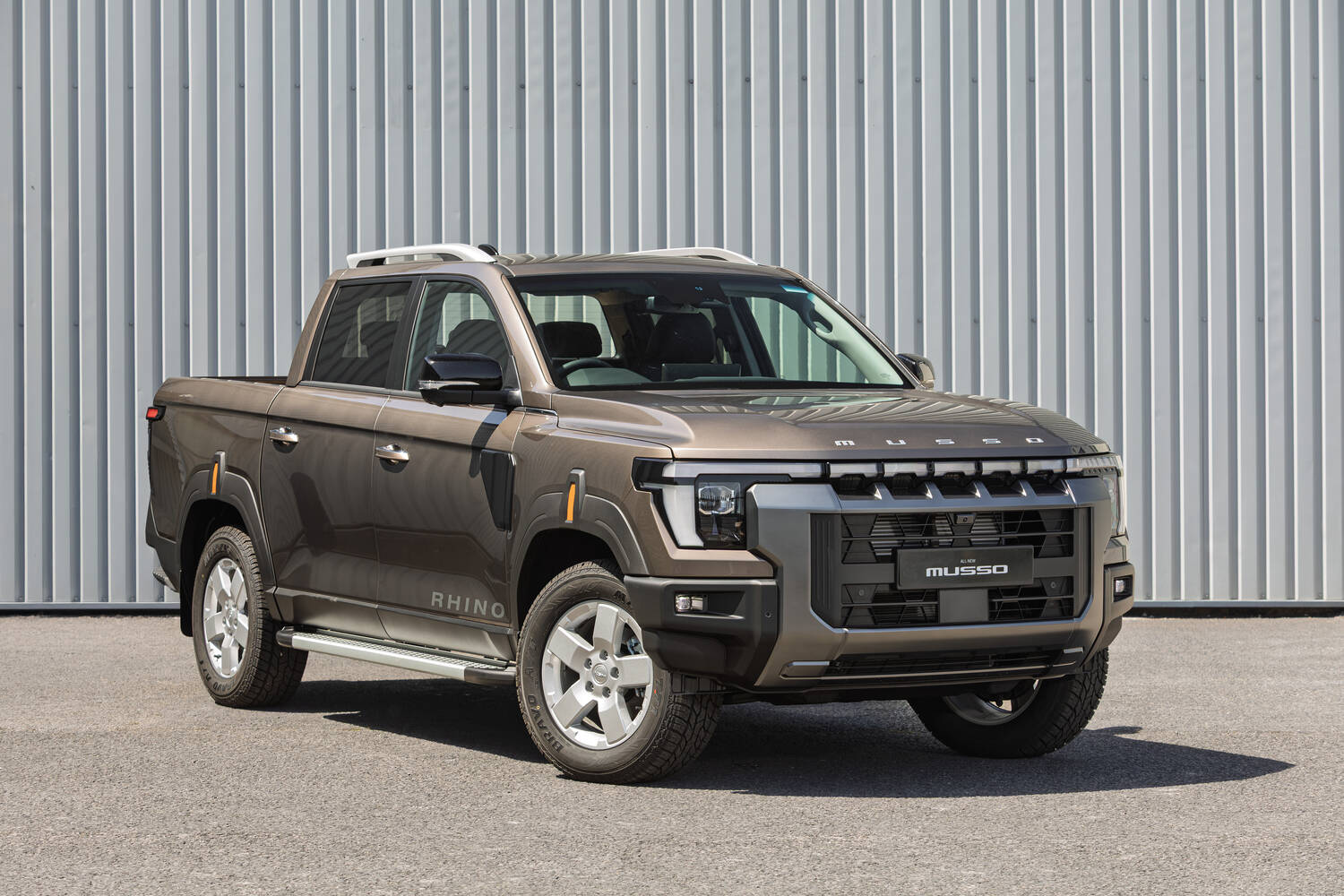
- Distinctive front styling on both
- Rhino looks the more purposeful
- Different wheels for each

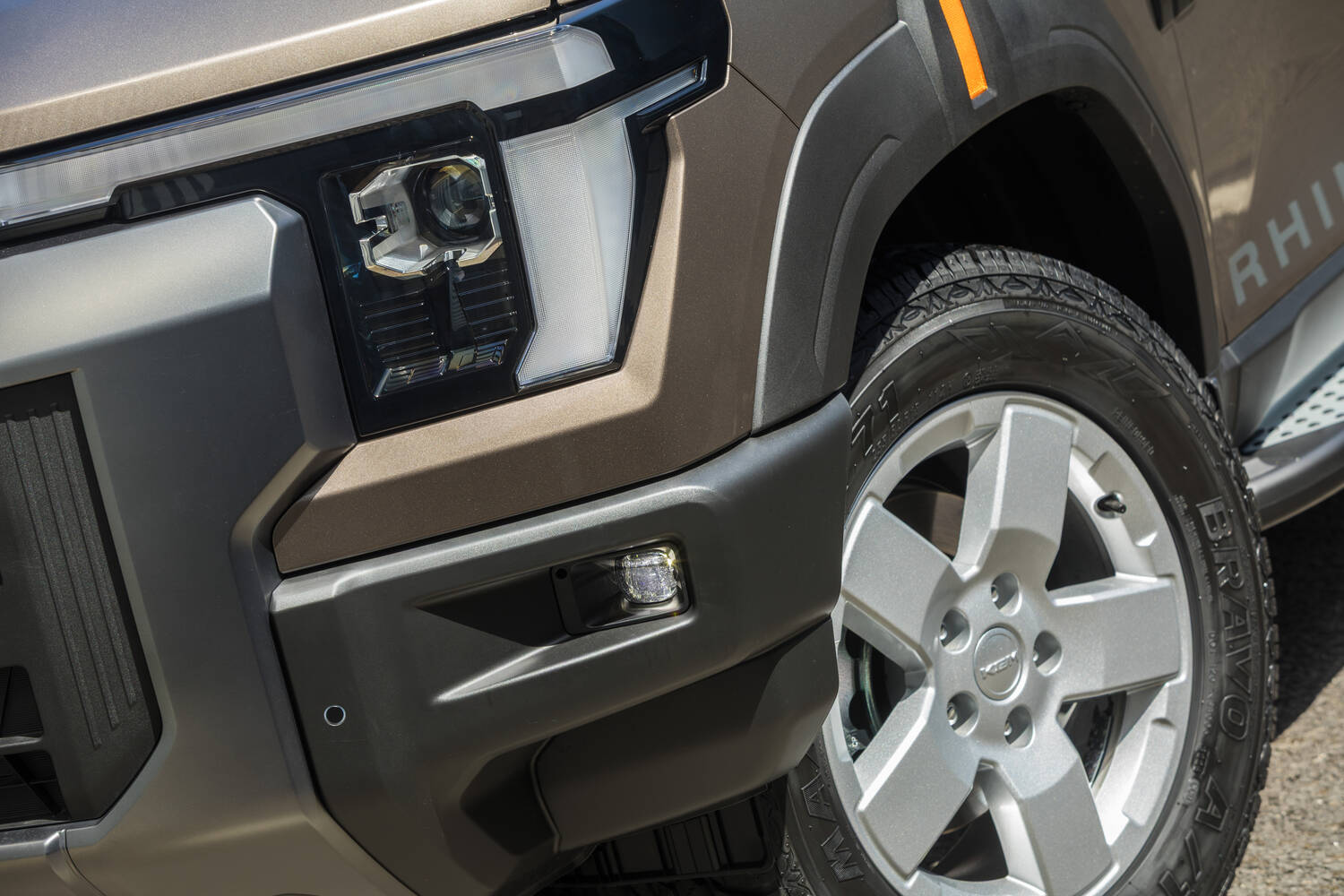
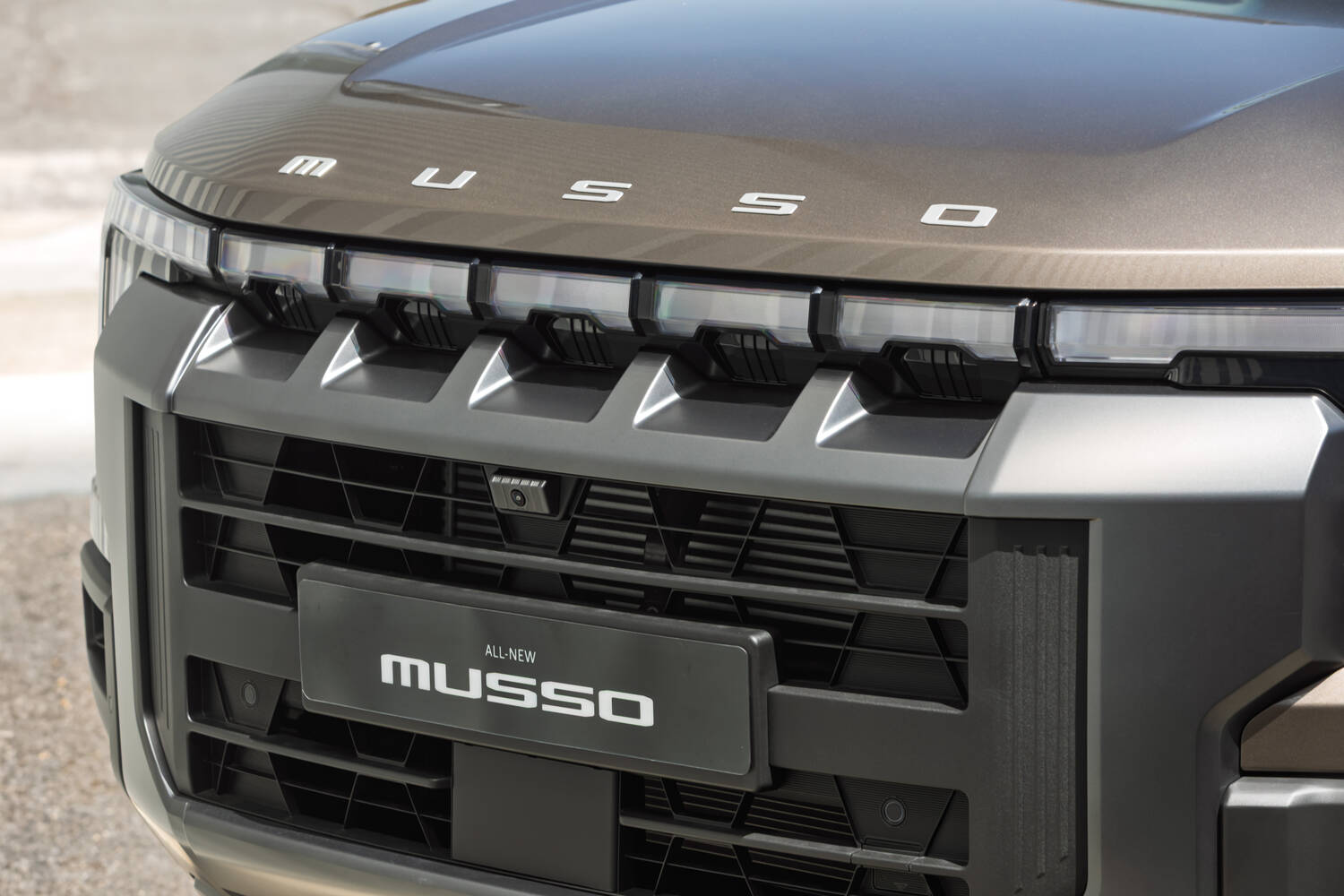
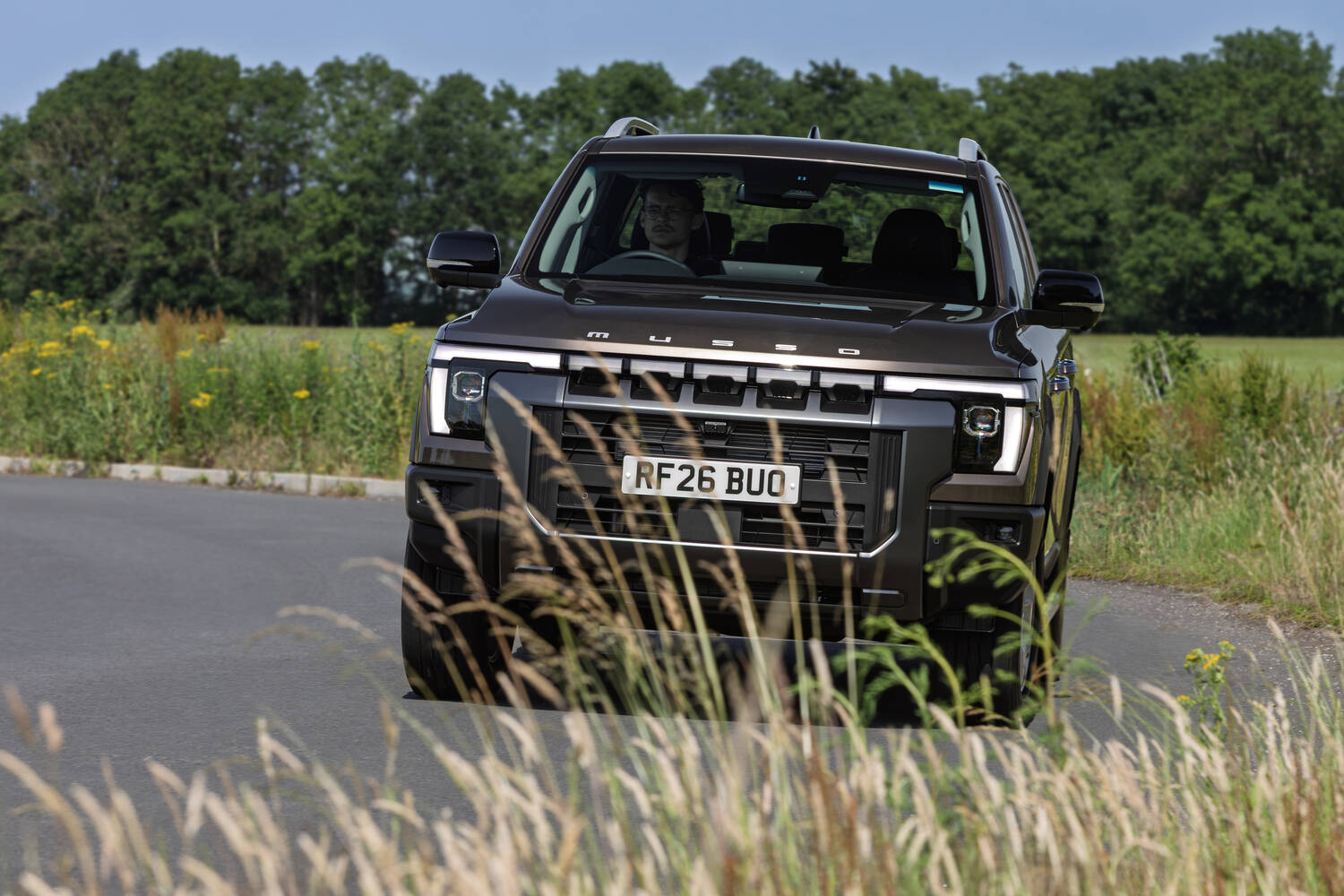
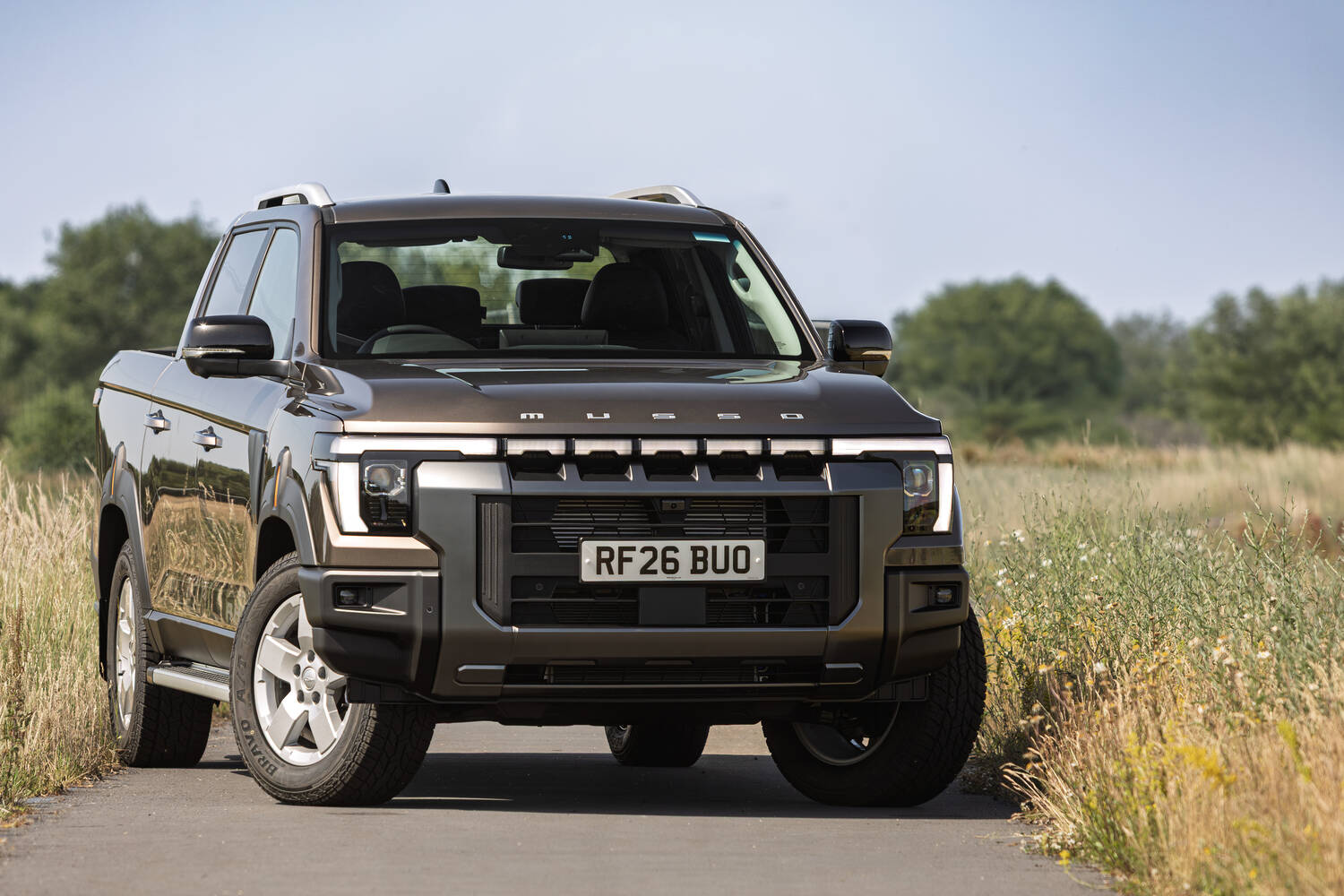
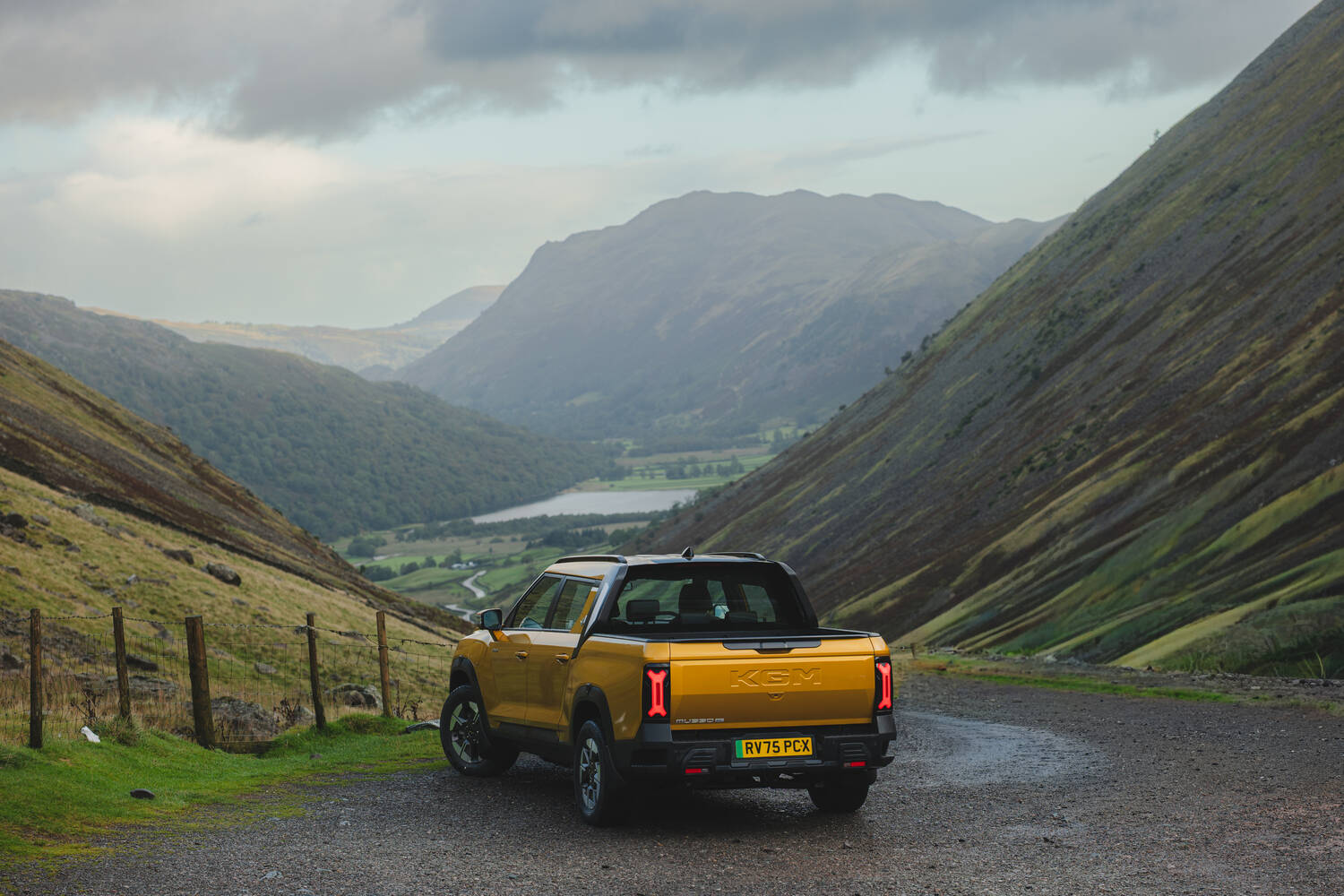
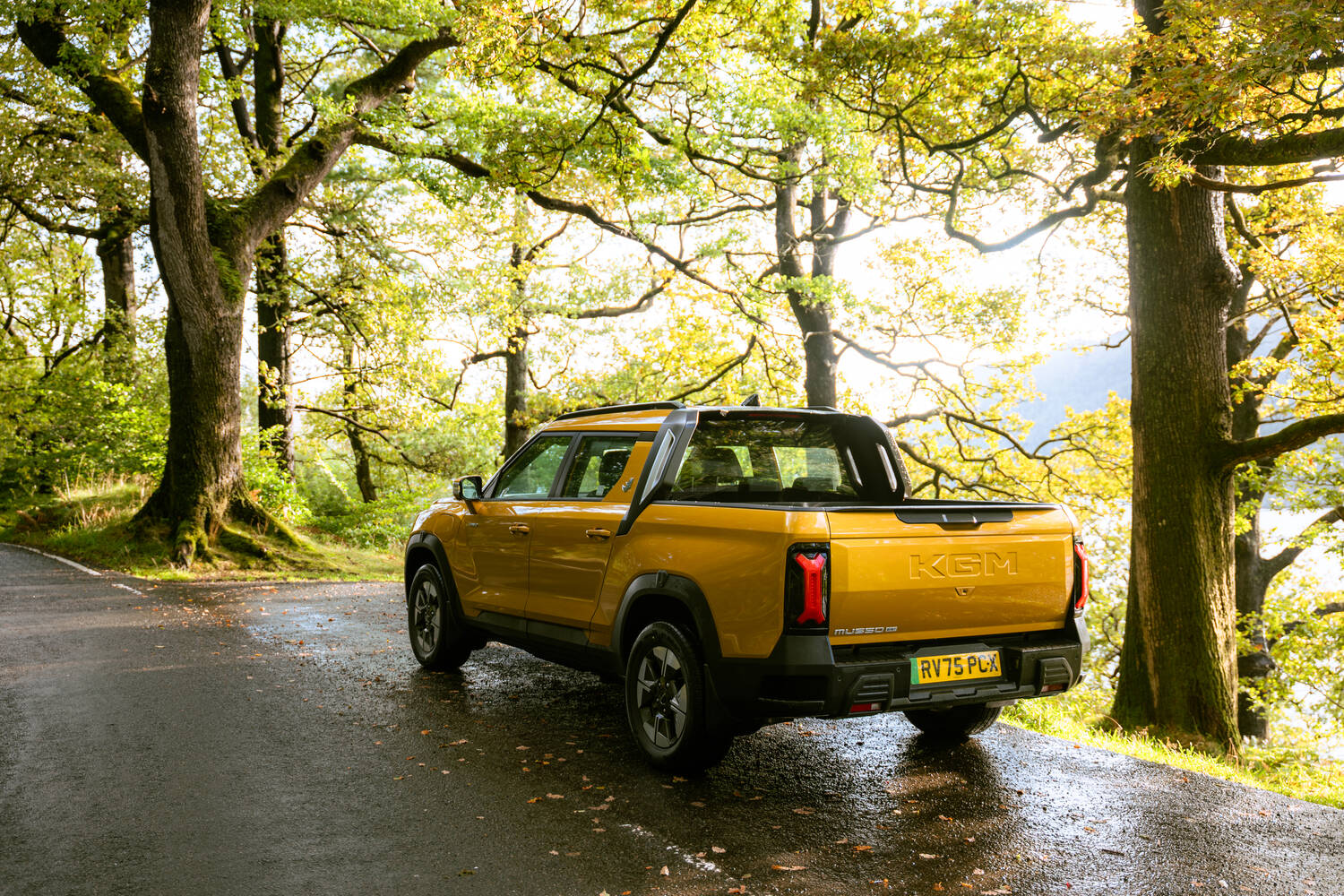
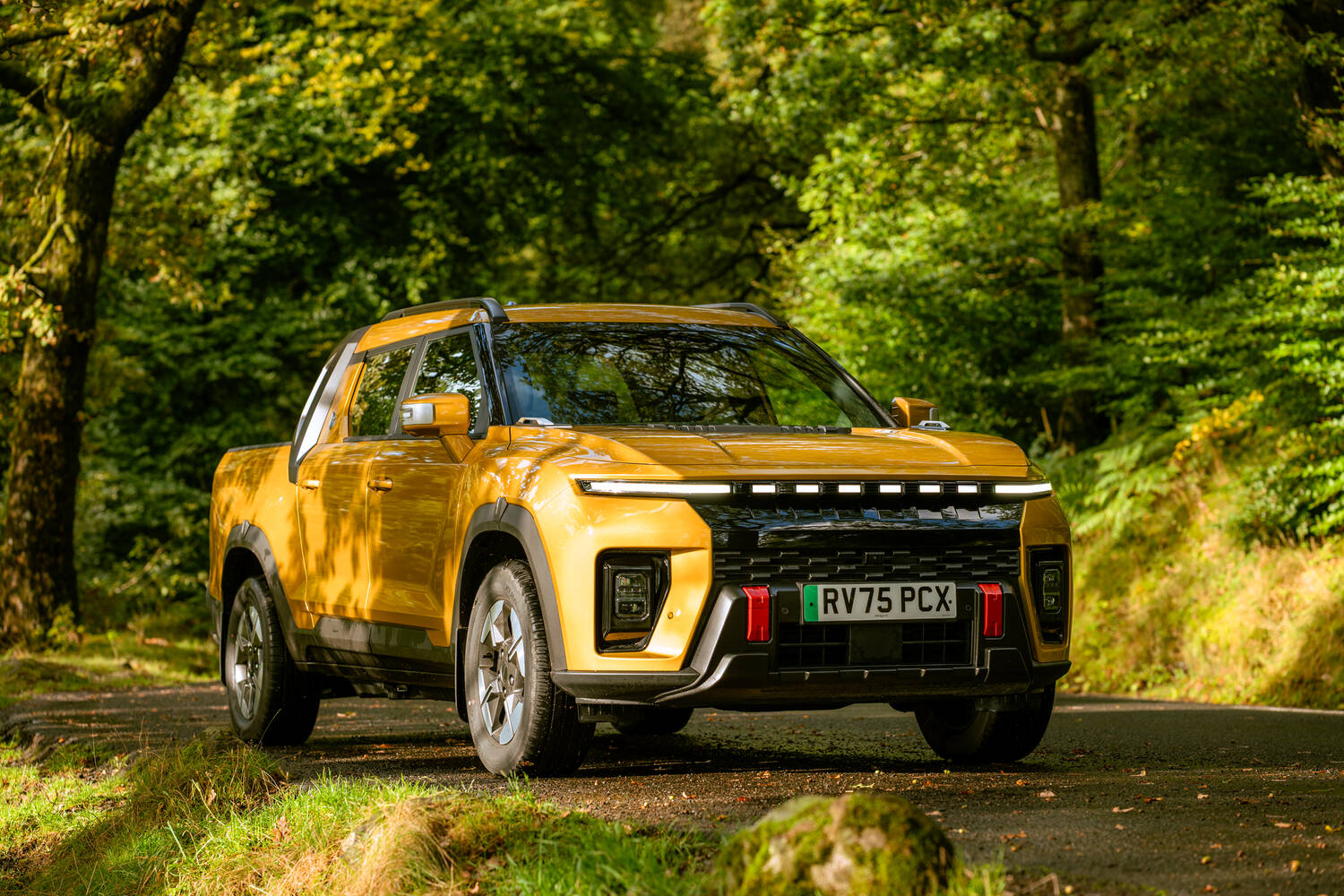
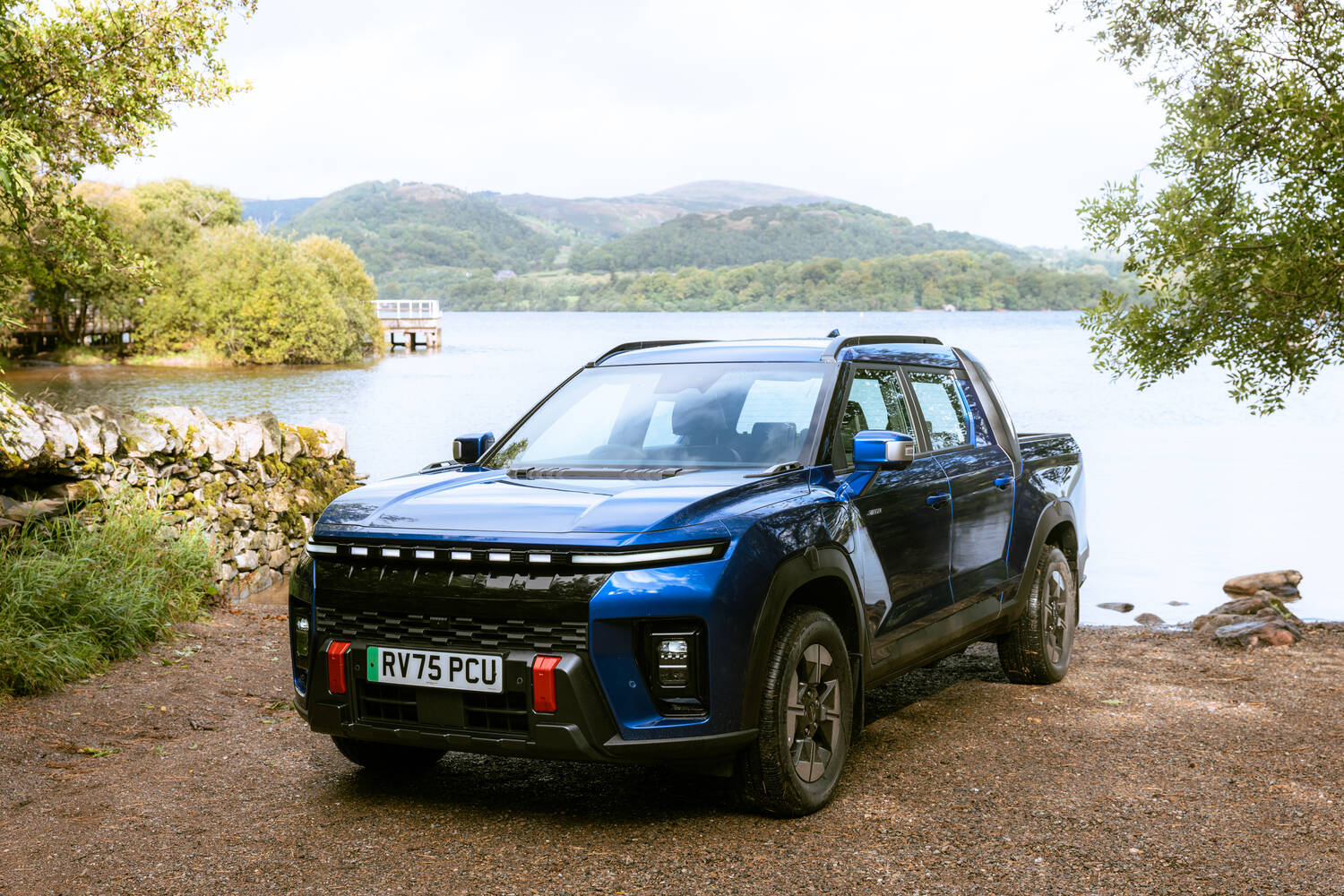
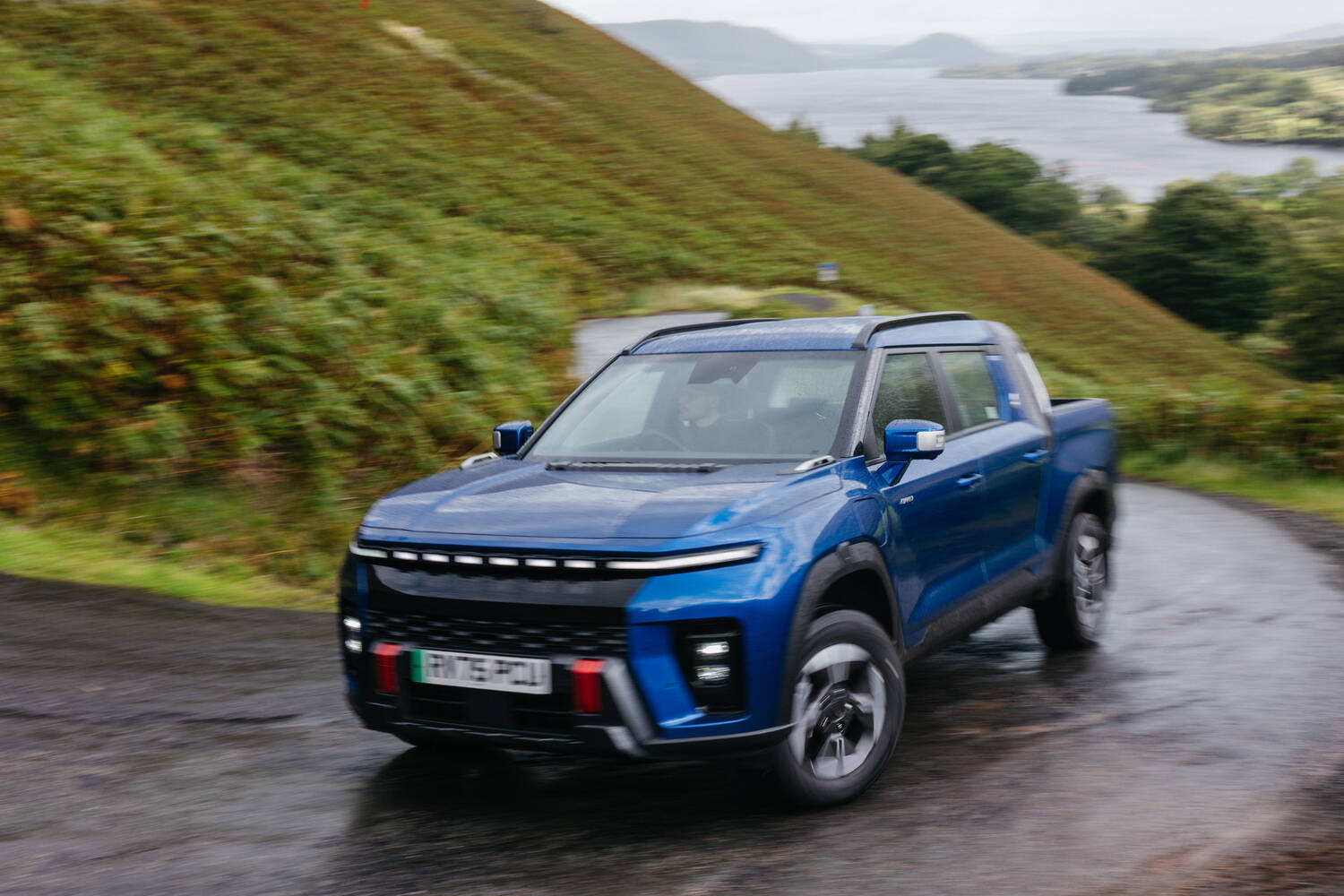
The Rhino and Rhino+ are the latest versions of the long-serving Musso line, although they clearly take their front-light signatures from the Musso EV, which is in turn based on the electric KGM Torres.
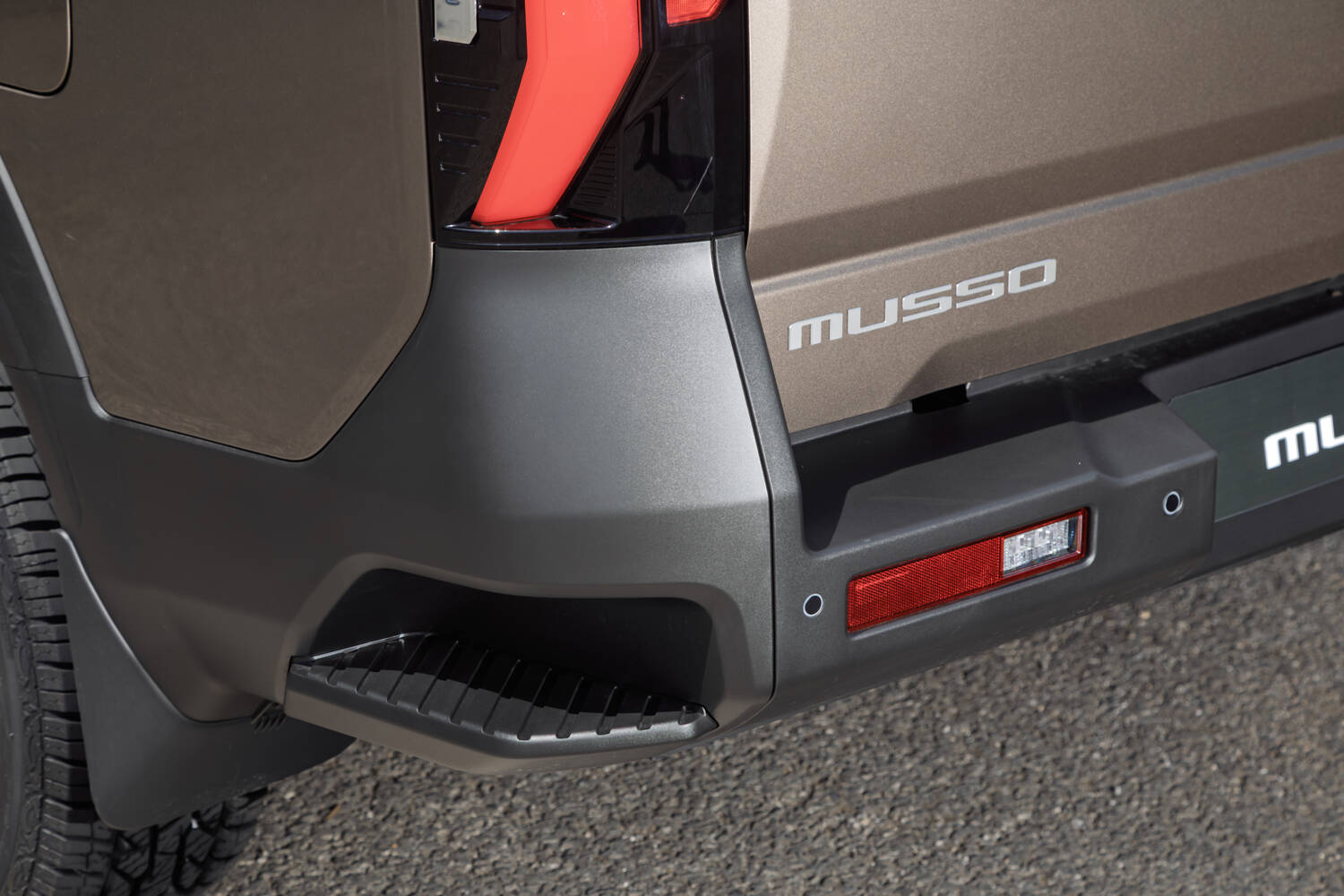
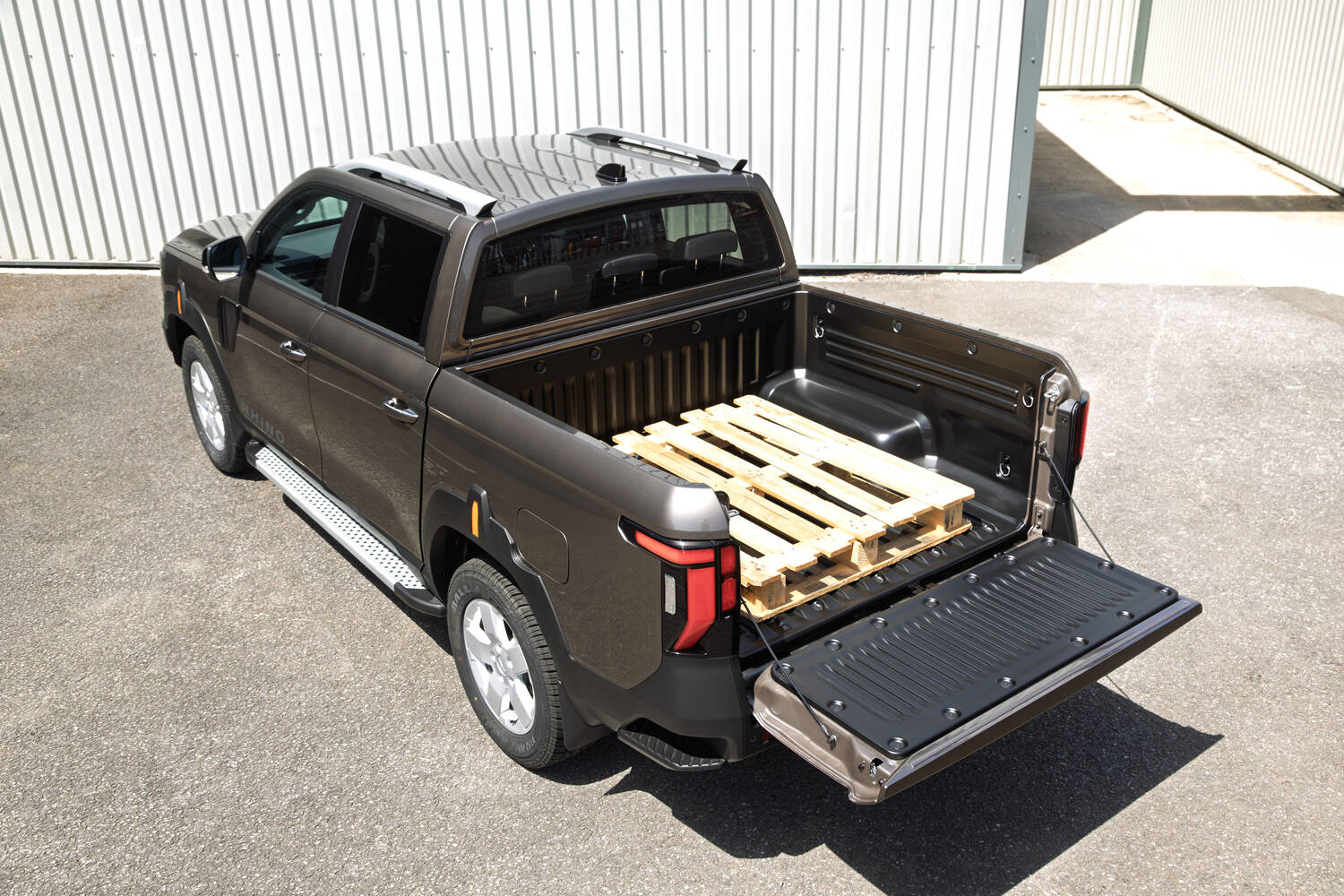
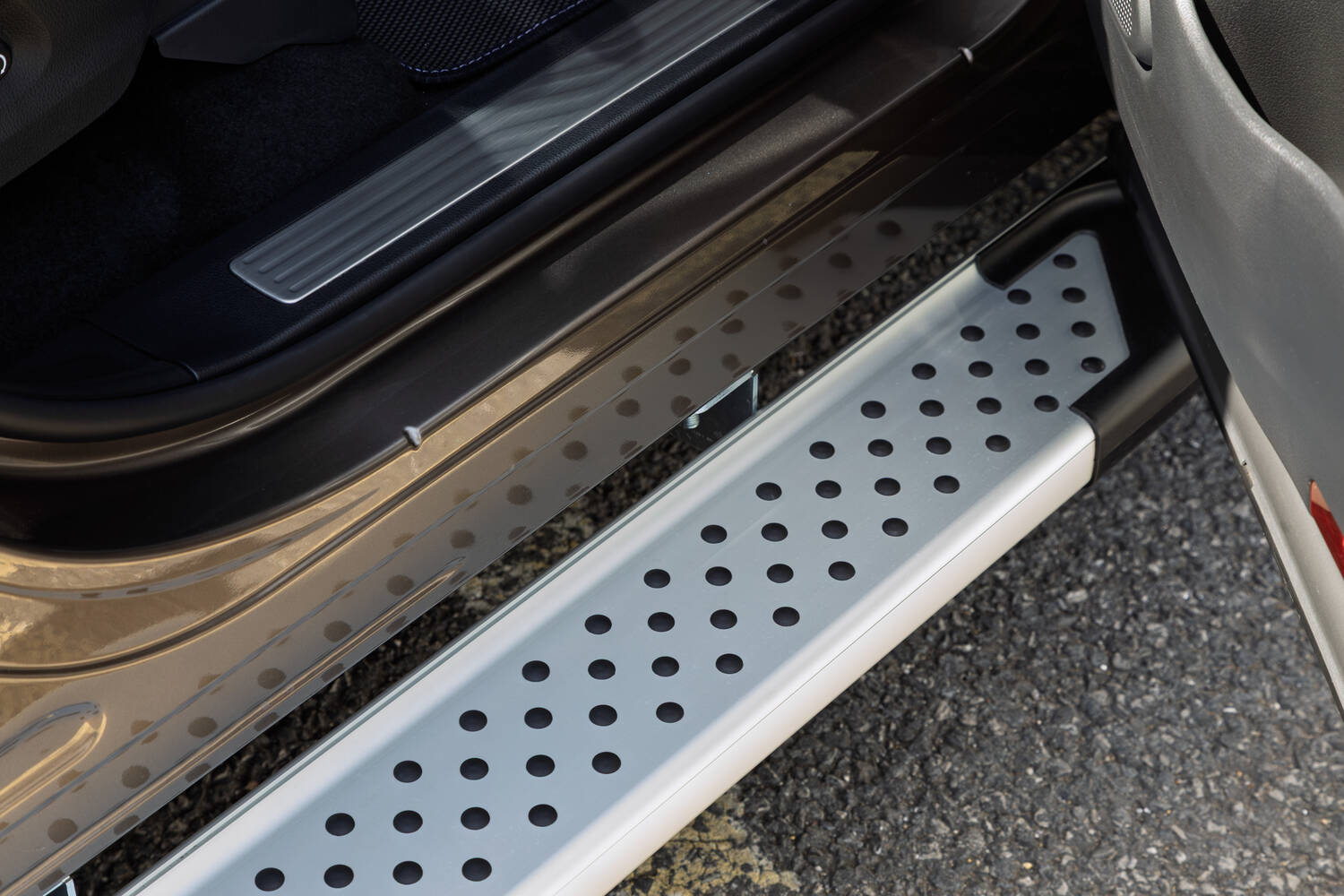
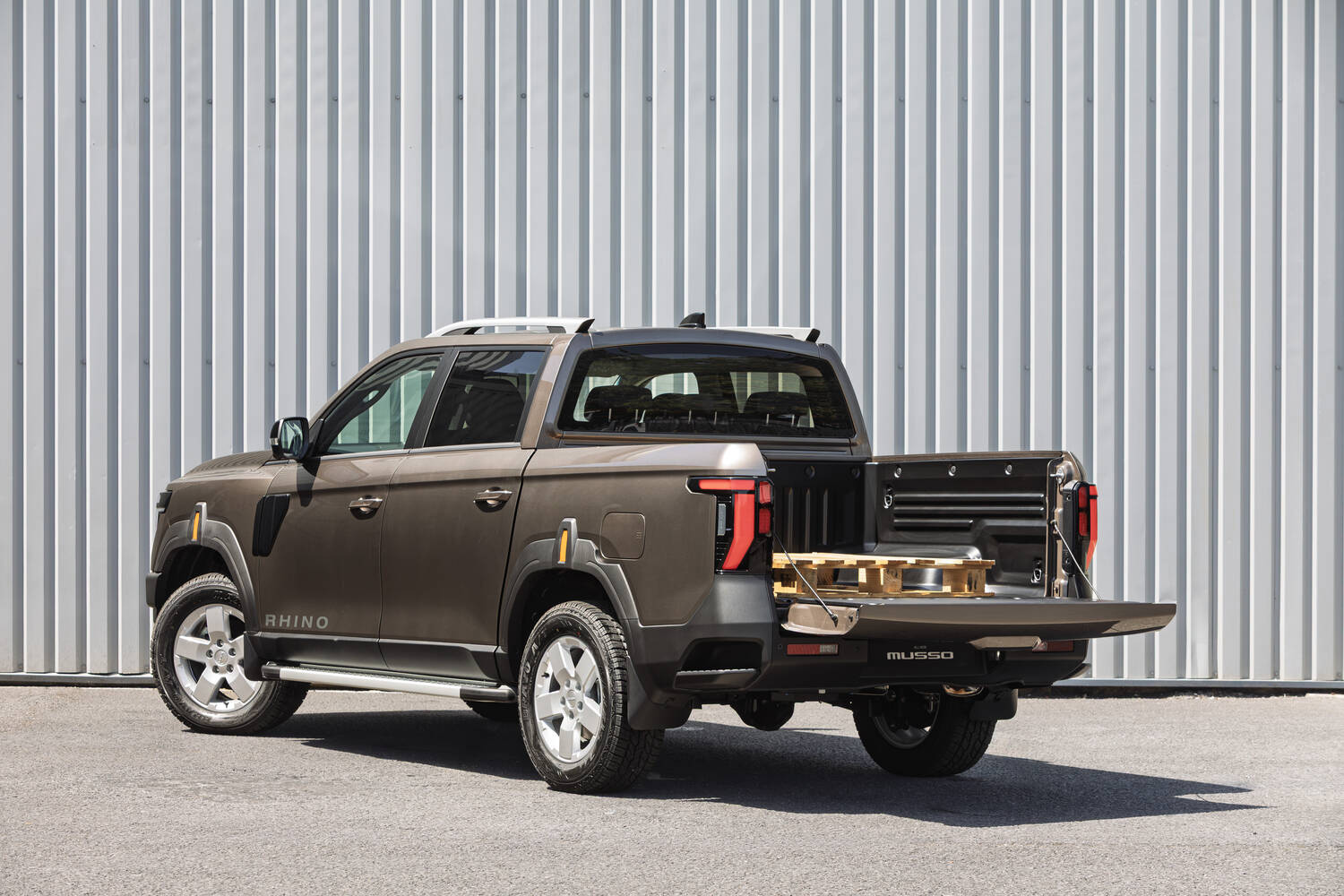
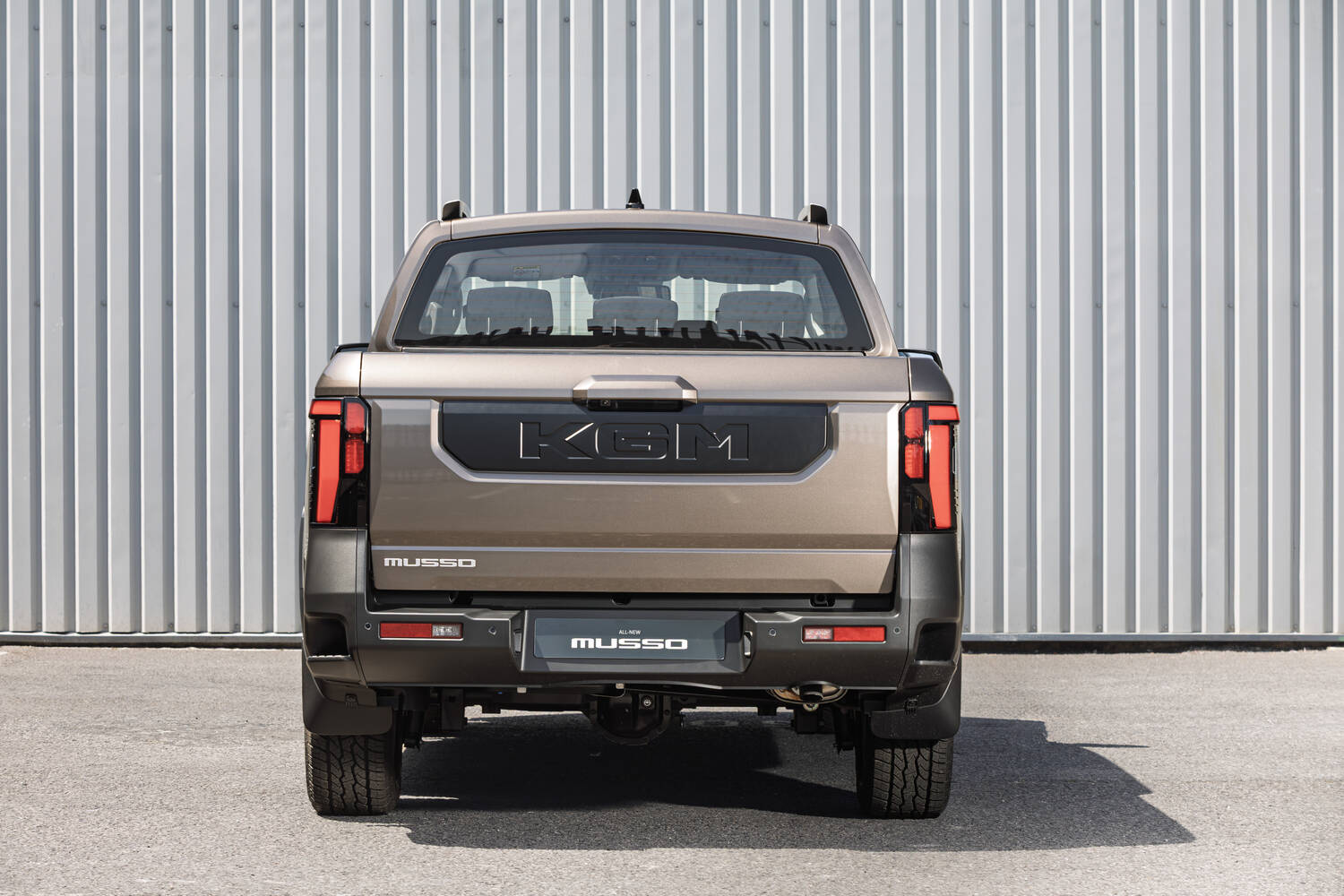
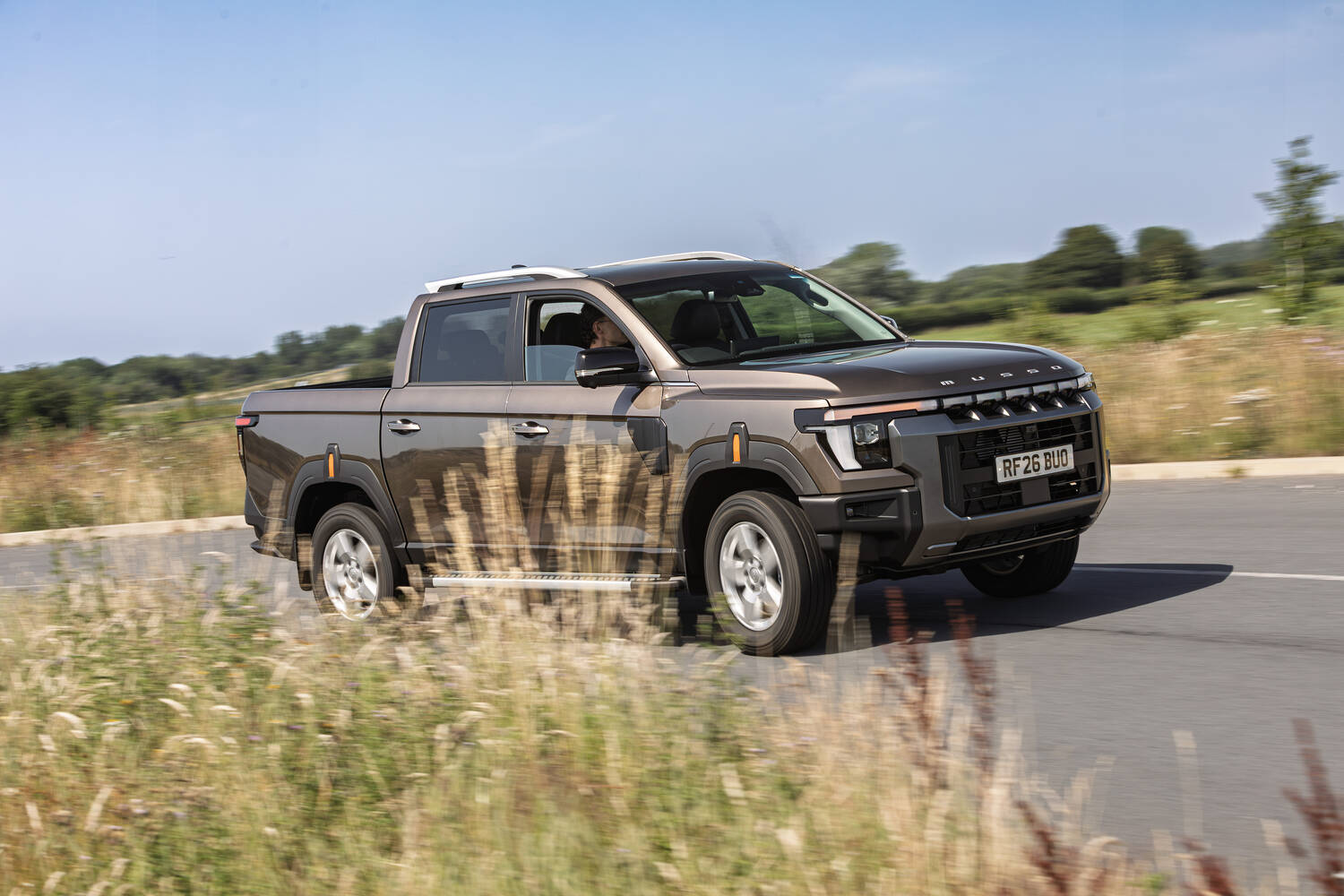
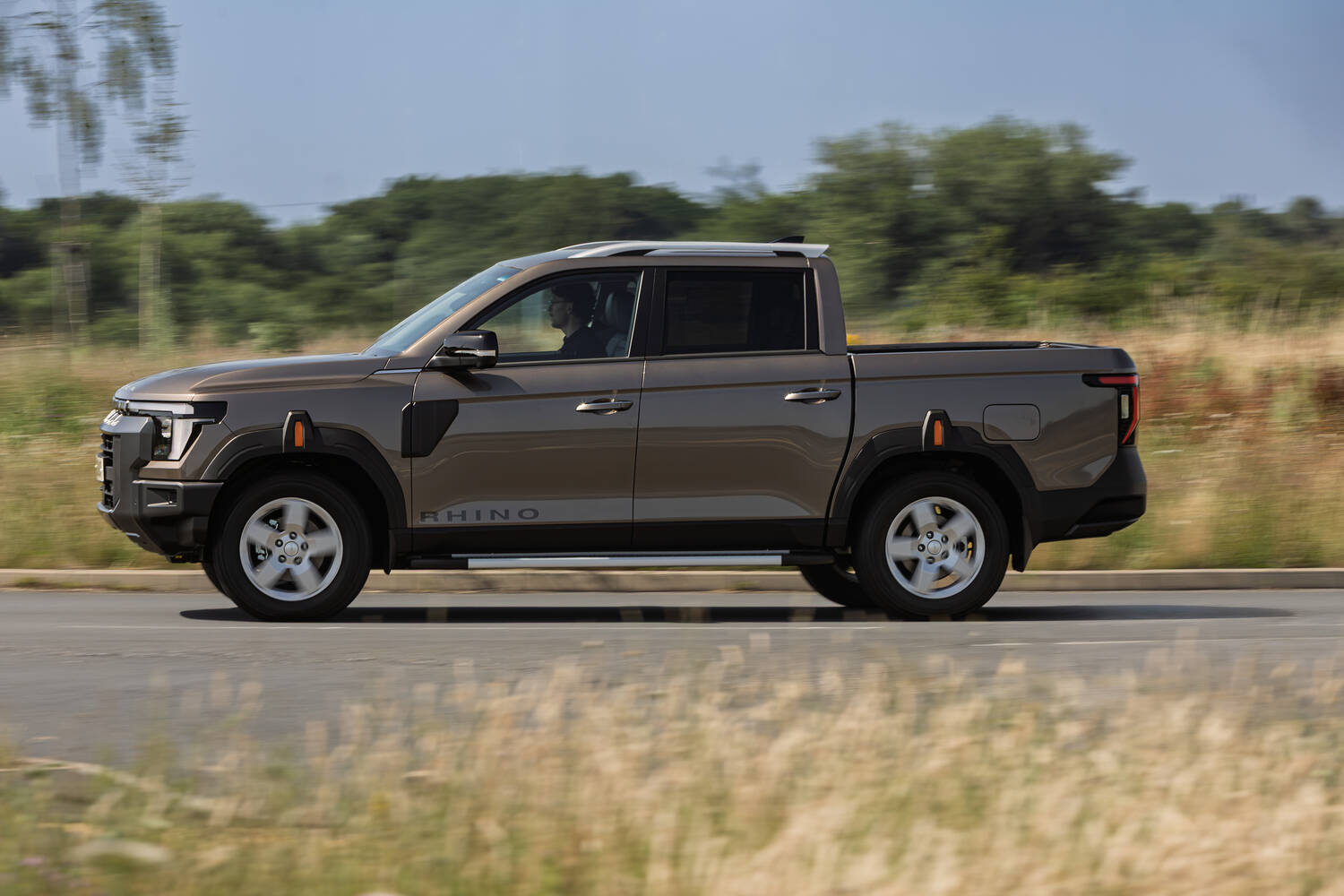
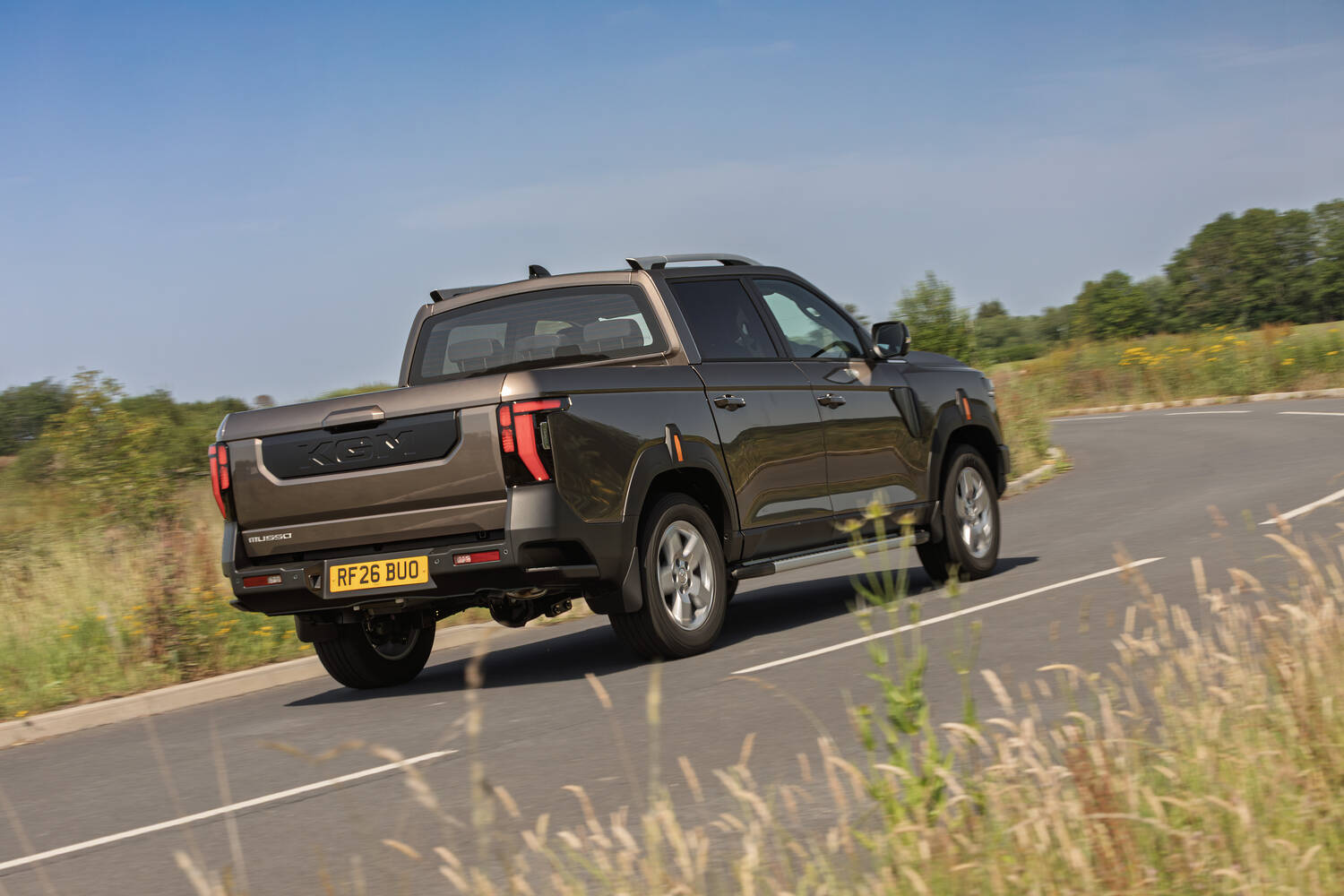
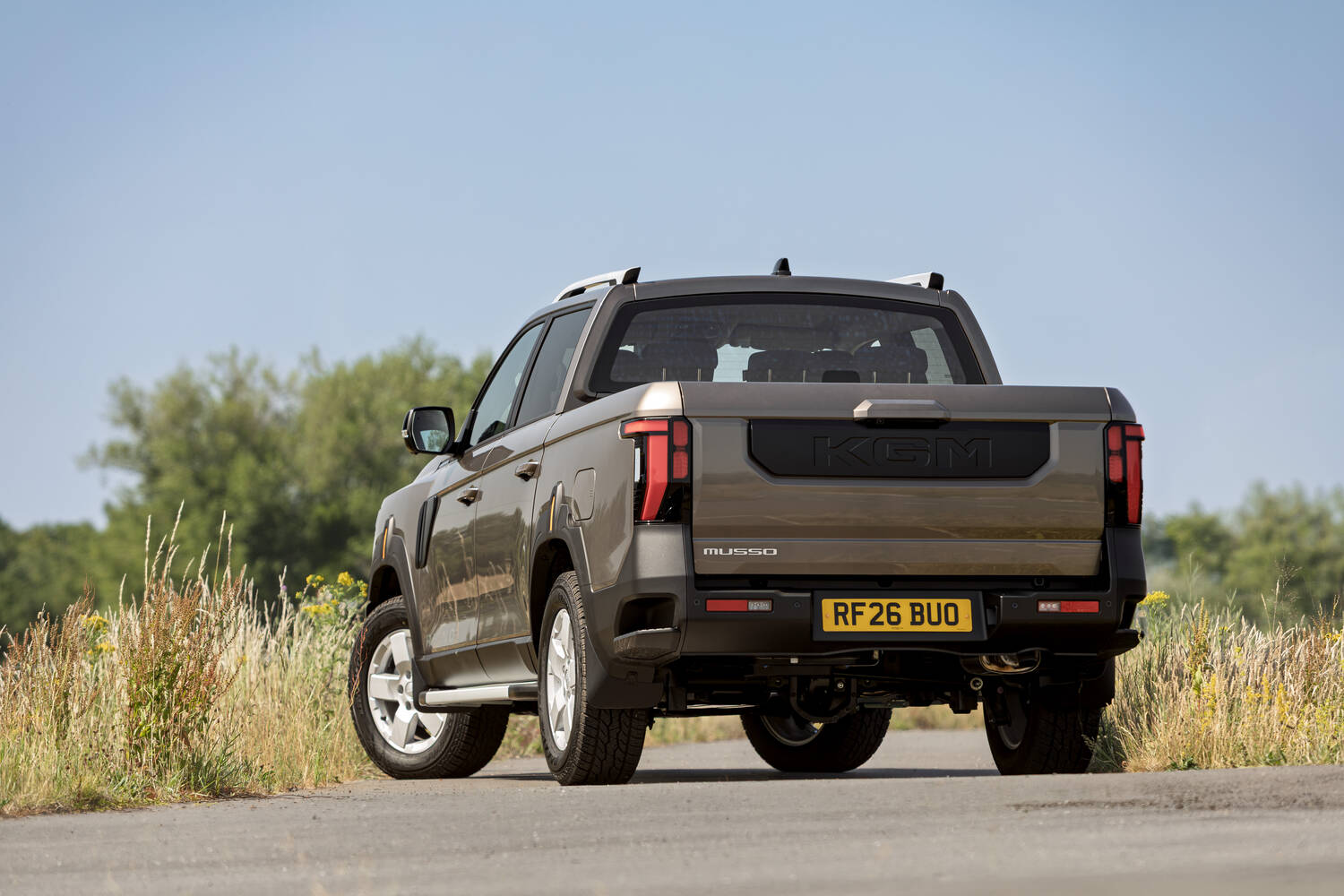
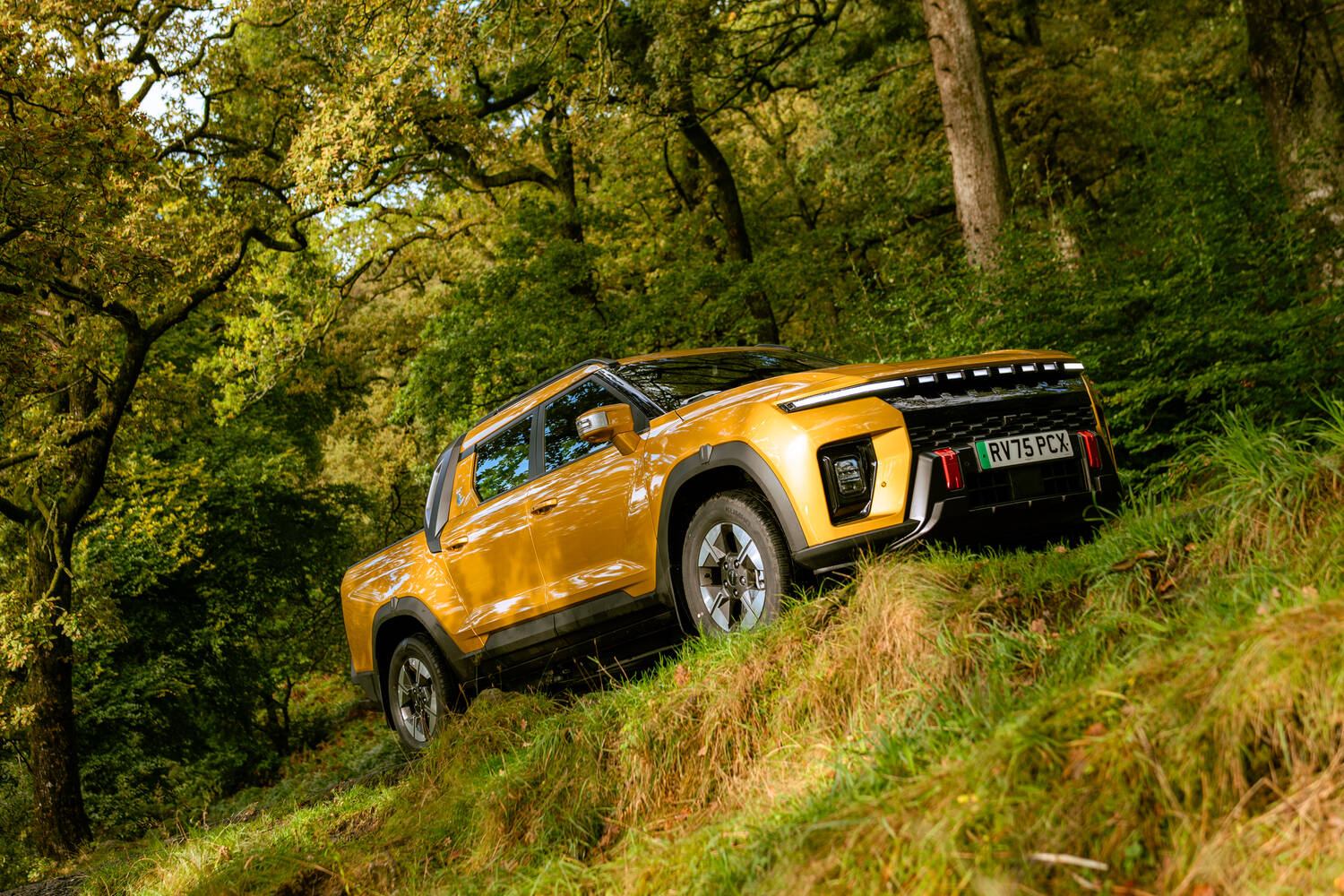
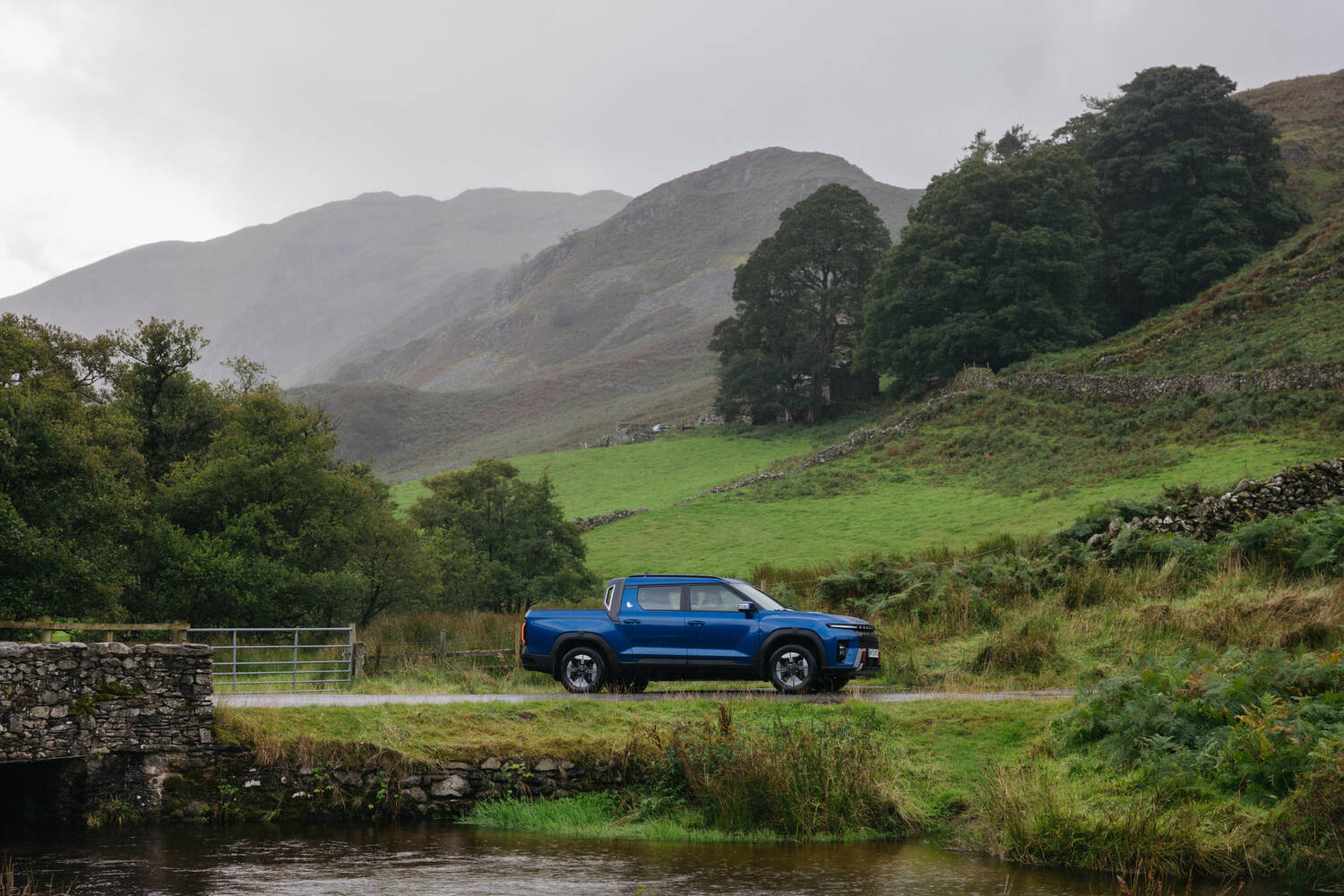
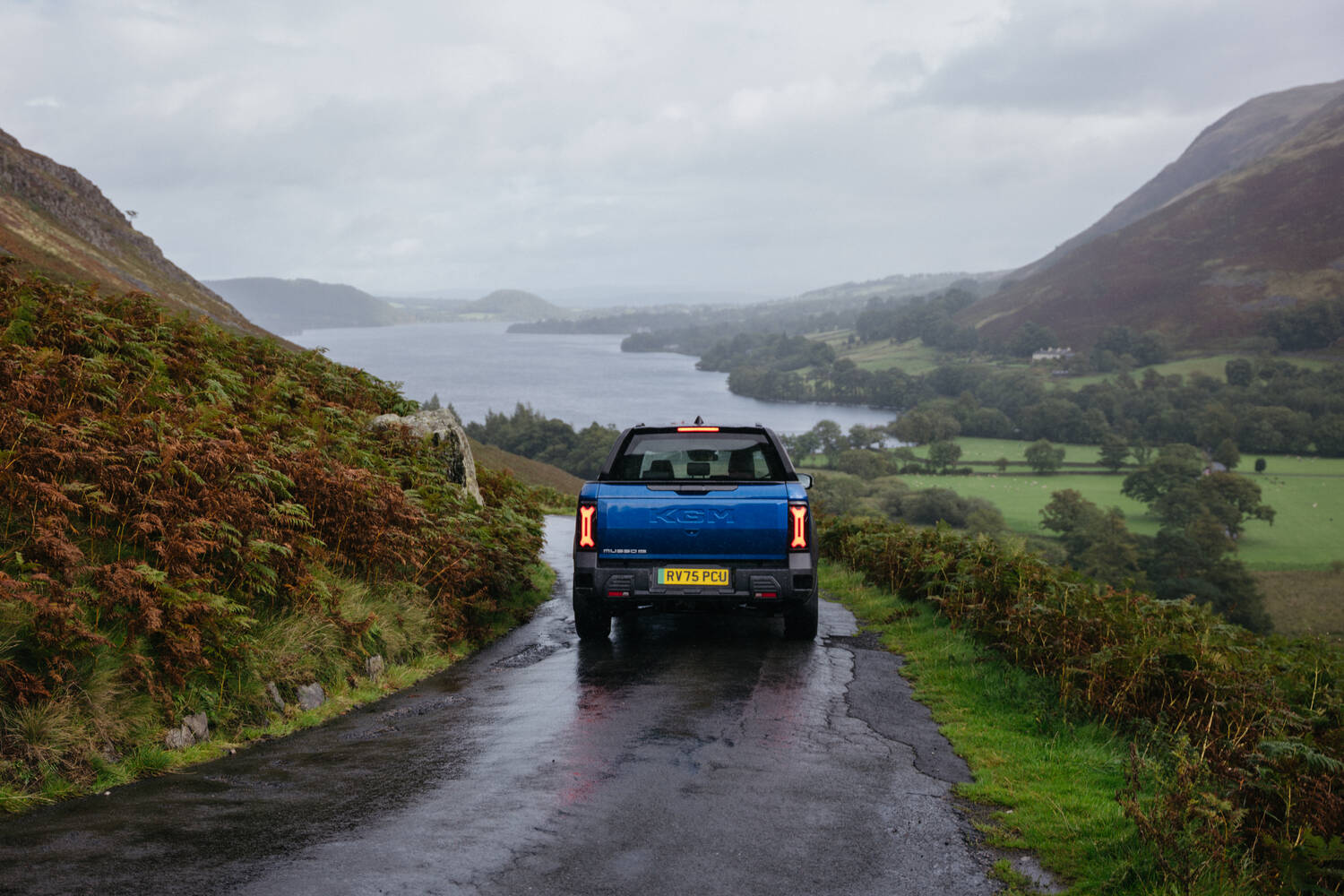
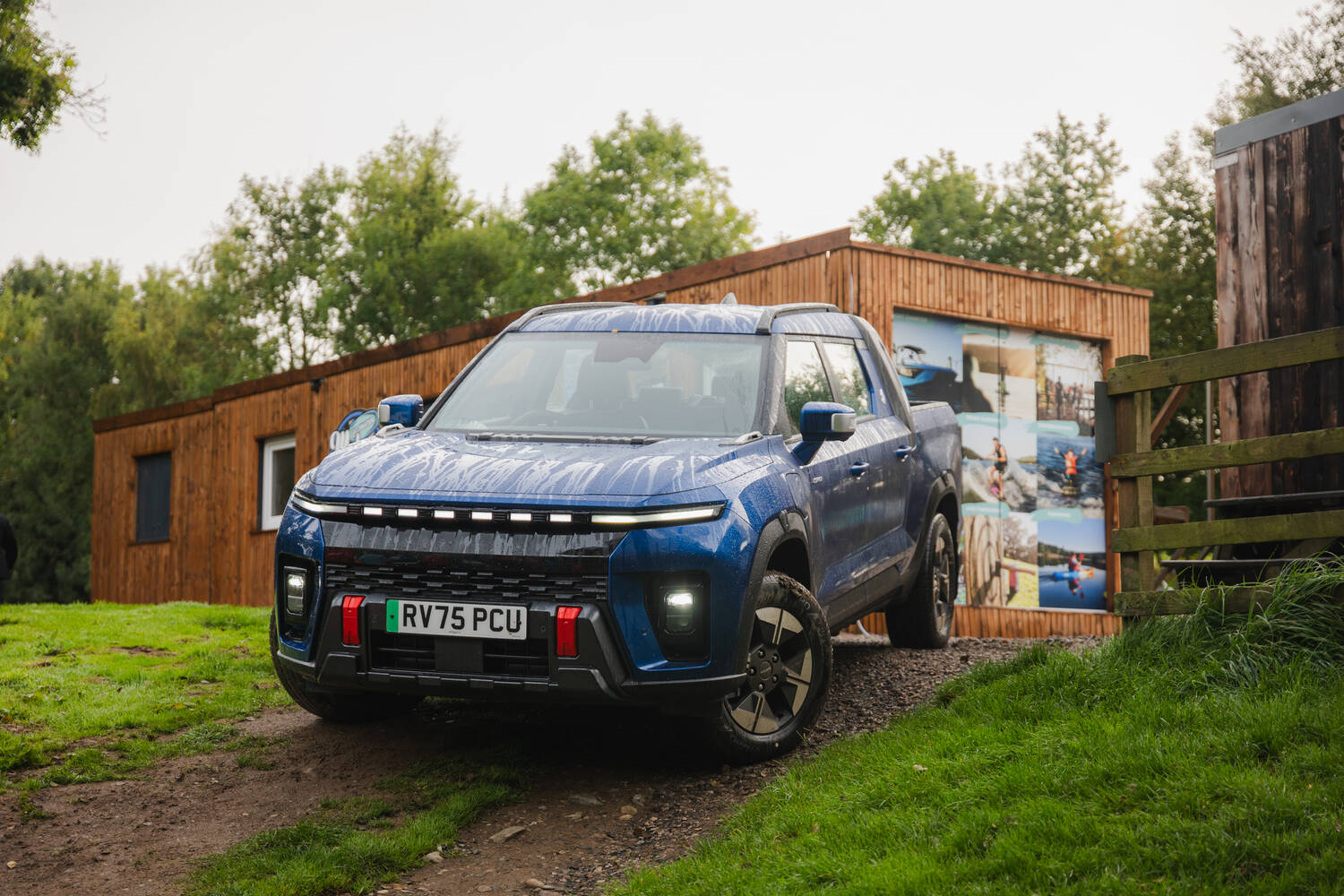
With linked light clusters in the nose, a large and gaping grille, big side steps, roof rails and lots of black plastic body cladding, complete with little reflector uprights at the apex of each wheelarch's protection, the Rhino looks like it means business.
For those who want it, there's a long-wheelbase Rhino+, which might only put an extra 110mm of metal between the axles of the KGM Musso, but it also adds another 200mm to the load-bed area.

It can therefore carry more in its rear cargo bay, although it measures nearly 5.5 metres long in this format as a result of its 310mm overall stretch.
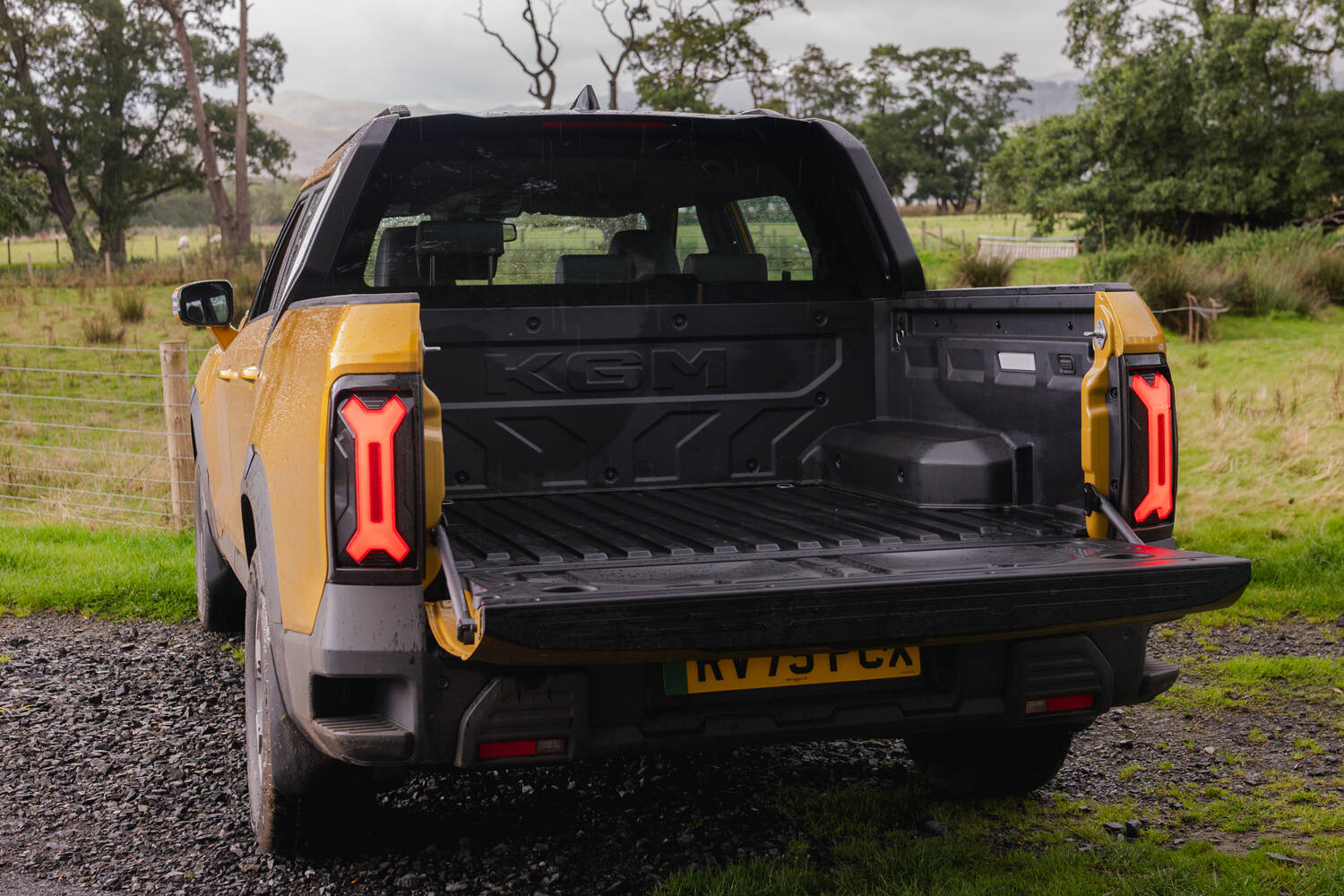
It's not that the Musso EV lacks kerb appeal next to the Rhino (in fact, it could be argued that it's the more attractive machine, especially in the signature metallic yellow paint that's specific to the zero-emission KGM), but it's more than 100mm lower overall and almost 65mm closer to the ground than the Rhino, so it looks more SUV-like, despite its load bed sticking out at the rear.
For reference, the EV has a handsome set of 17-inch alloys available to it, while the Rhino runs on one of three designs of 18-inch wheels.

Dimensions of the 2026 KGM Musso Rhino
- Length:
- 5,150mm (Rhino+ 5,460mm)
- Width:
- 1,950mm
- Height:
- 1,865mm (Rhino+ 1,875mm)
- Wheelbase:
- 3,100mm (Rhino+ 3,210mm)
Dimensions of the 2026 KGM Musso EV
- Length:
- 5,160mm
- Width:
- 1,920mm
- Height:
- 1,750mm
- Wheelbase:
- 3,150mm
Paint colours for the 2026 KGM Musso
Both versions of the KGM Musso have six paint colours available, four of which are shared: Grand White, Marble Grey, Amazon Green and Space Black, with white the standard finish.

There's then a very subtle difference between a blue shade offered on both, called Marine Blue on the Rhino and Ultra Marine Blue on the EV; the latter is just a bit darker than the former.
Finally, there's a specific colour for each powertrain that can't be optioned on the other. For the Rhino diesel, it's Smoke Taupe, while for the EV there's the eye-catching Blazing Gold. On any model of the KGM pick-up, all colours except white incur an upgrade fee.
Interior, practicality, tech & comfort of the 2026 KGM Musso
- EV has more advanced cabin
- Rhino's interior is more ergonomic
- Rhino looks and feels old-fashioned

The different source platforms for the two trucks sold under the same KGM Musso banner reveal a schism inside these vehicles.
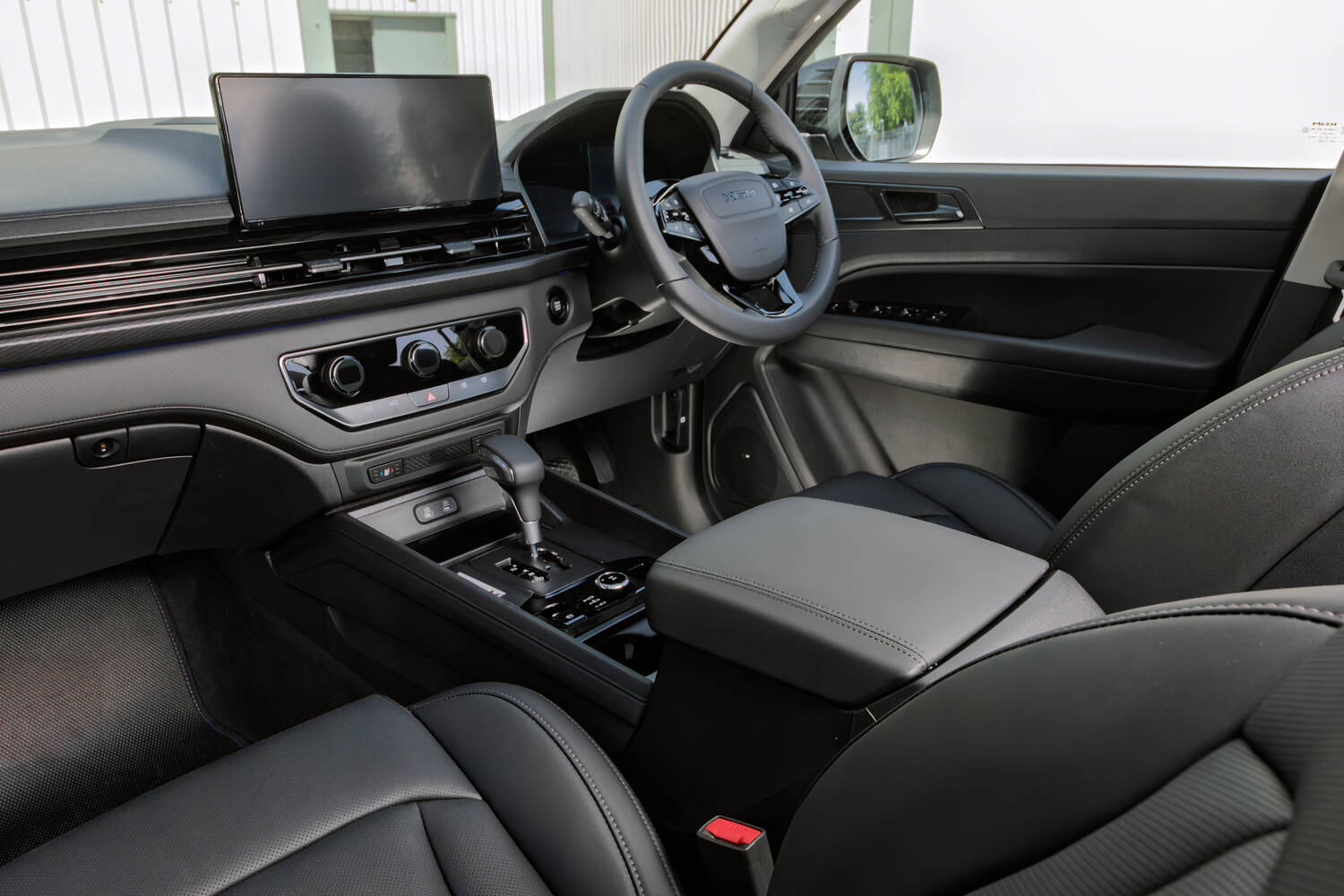
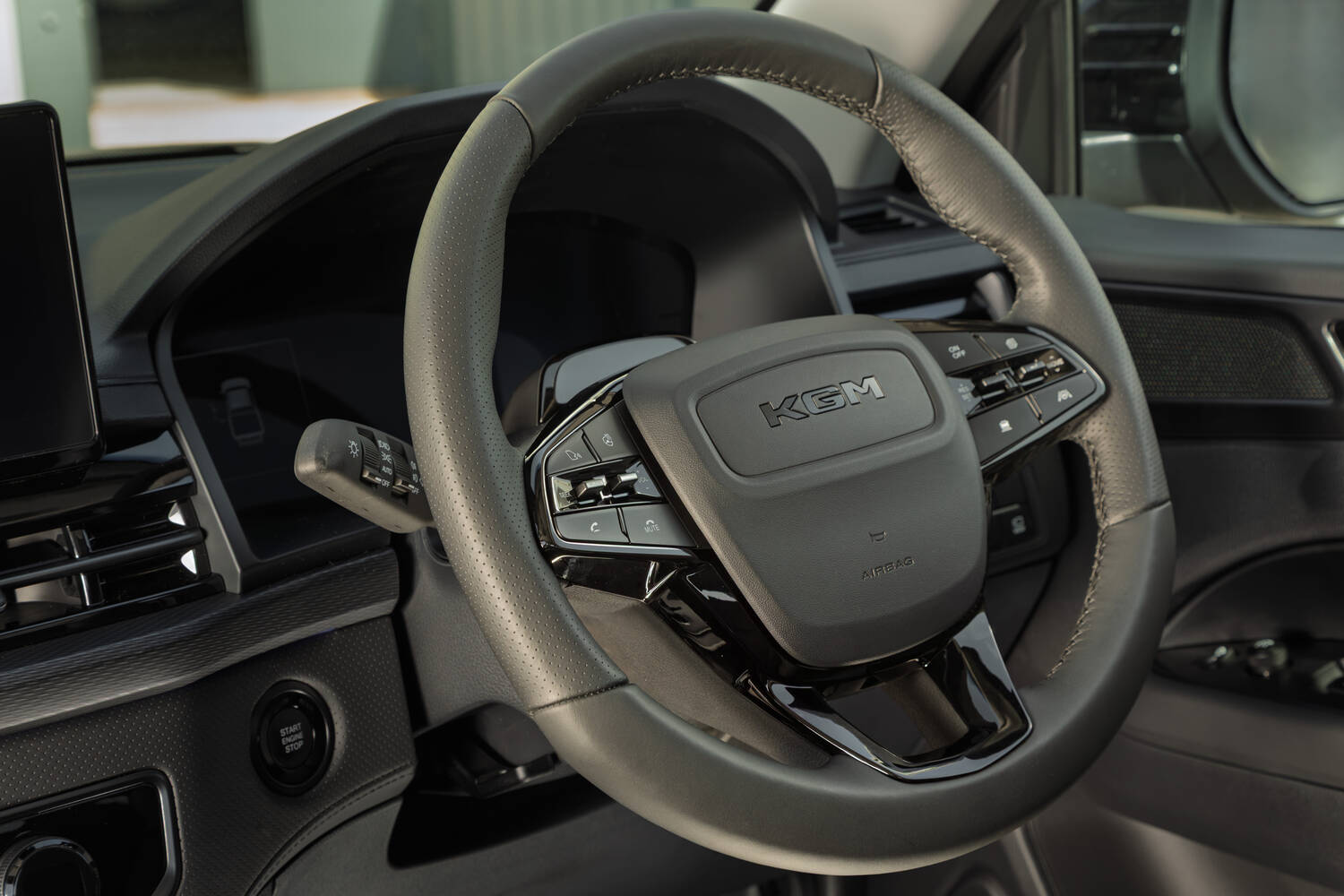
While there are screens in both, in the Rhino and Rhino+ they feel plonked in like afterthoughts, two beacons of tech floating in a sea of rather basic and old-fashioned grey plastics and dull dashboard design.
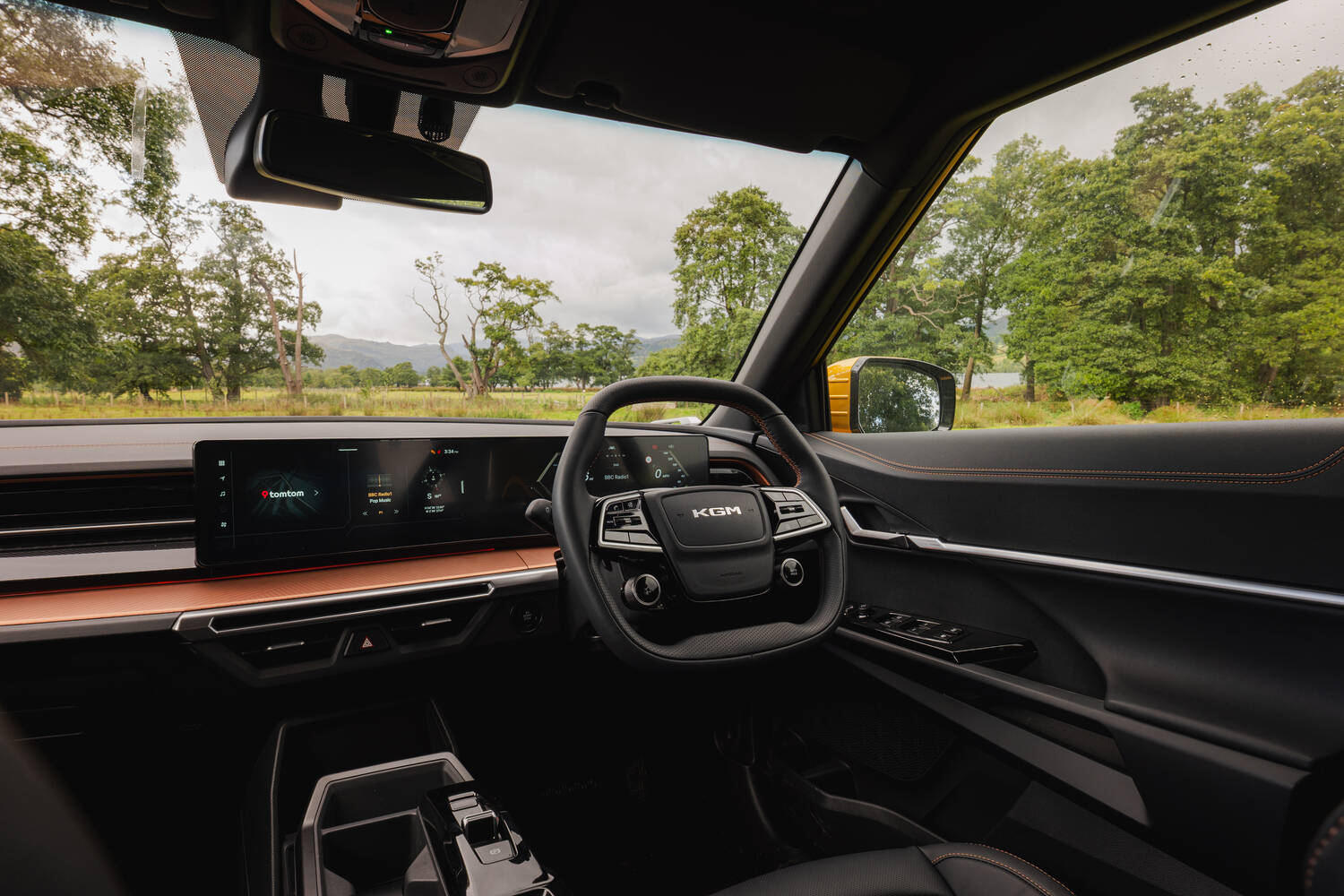
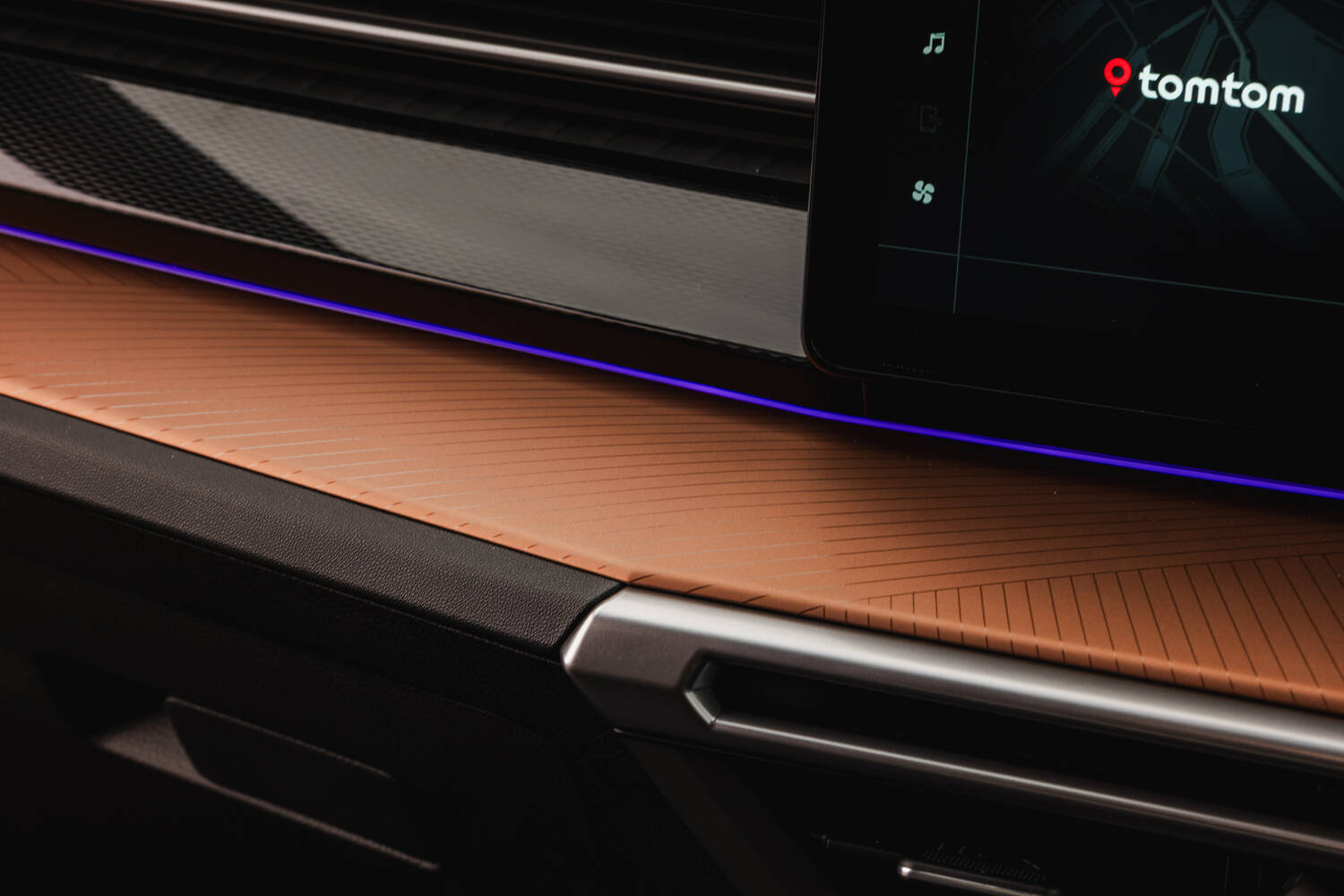
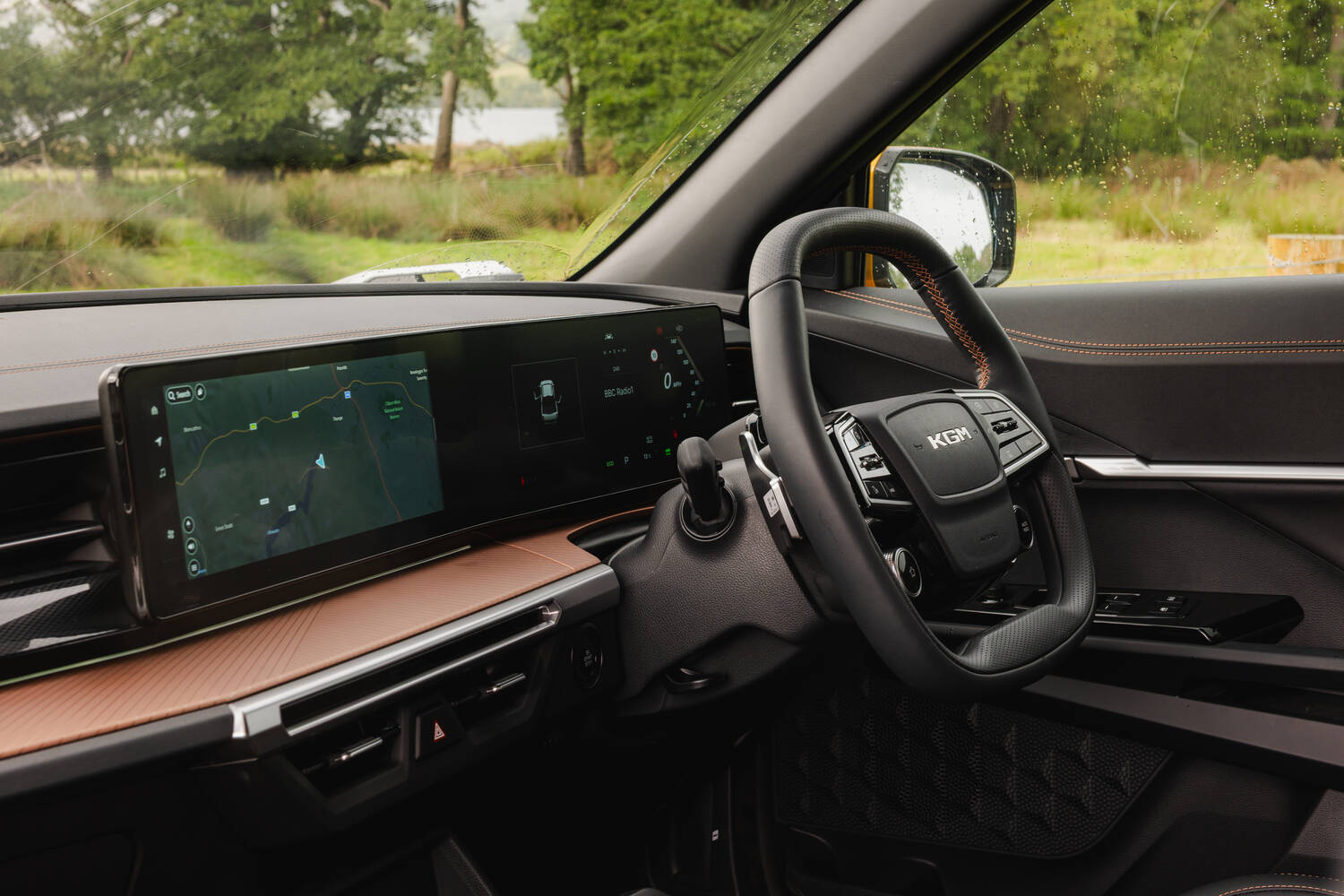
The Musso EV, meanwhile, has a copper-coloured fillet of trim in its fascia and a much neater integration of its big, crisp digital displays, while material quality generally feels more upmarket thanks to its SUV leanings.

However, the pay-off for the newer tech is a dearth of physical buttons, whereas the Rhino has a proper, dedicated panel of climate controls and switches for its heated and ventilated seats - making it easier to use if, for example, you're wearing gloves, something quite likely for drivers of pick-ups.
Getting comfortable in the driver's seat

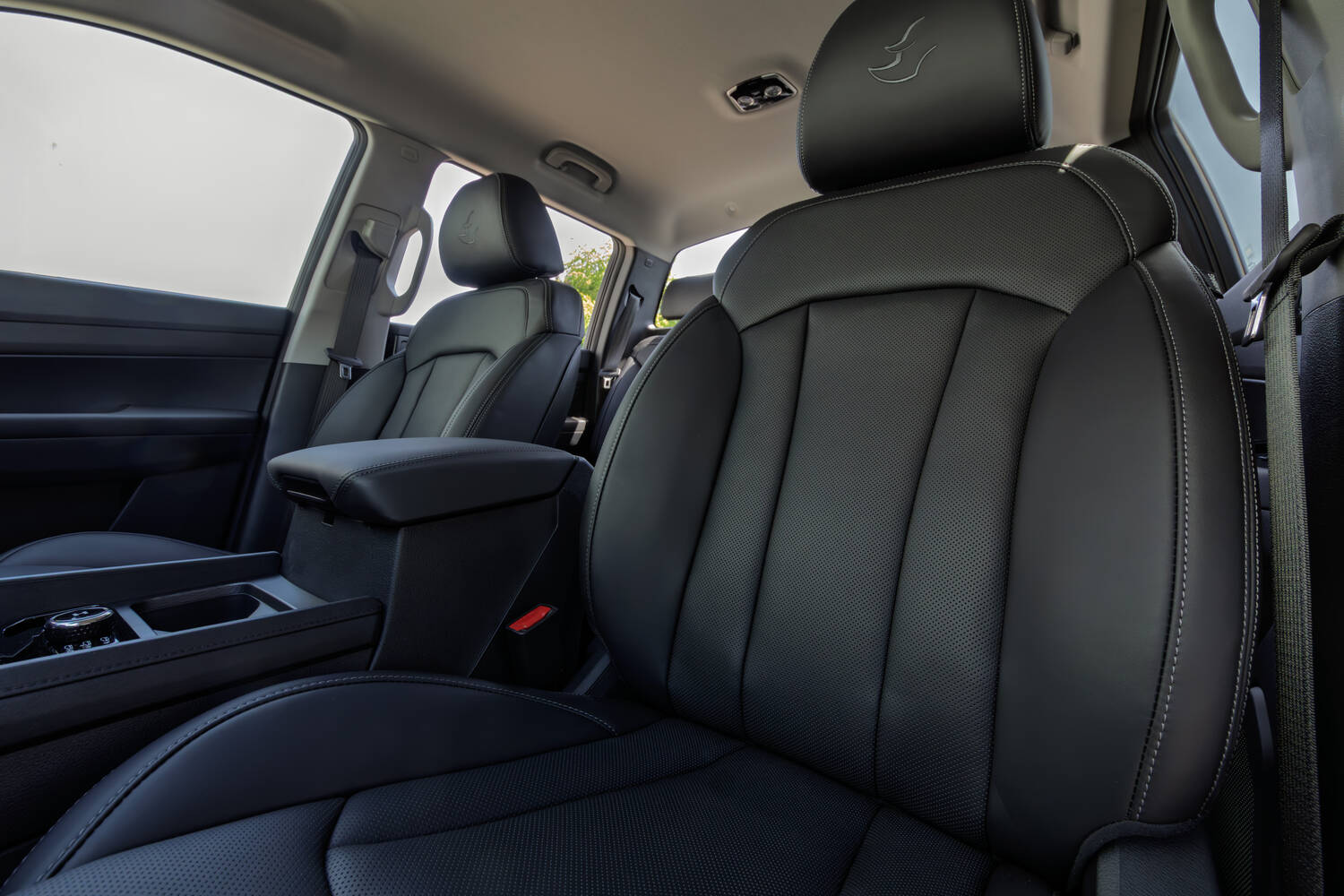
Whether diesel or electric, the KGM Musso has an eight-way power-adjustable driver's seat, with a steering column that can be manually tailored for reach and rake.
The only difficulty with attaining a great driving position is climbing into the cab in the first place if you're short of leg, as the hip point is pretty lofty.
But once you're in, the resulting seating position offers a commanding view out of the cab of either KGM pick-up, while there are no real problems with offset pedals or unusually shaped steering wheels, either.

Infotainment and technology
Both KGM Mussos have twin 12.3-inch screens, one for the instrument cluster and one for the central infotainment, but how these are presented is markedly different.
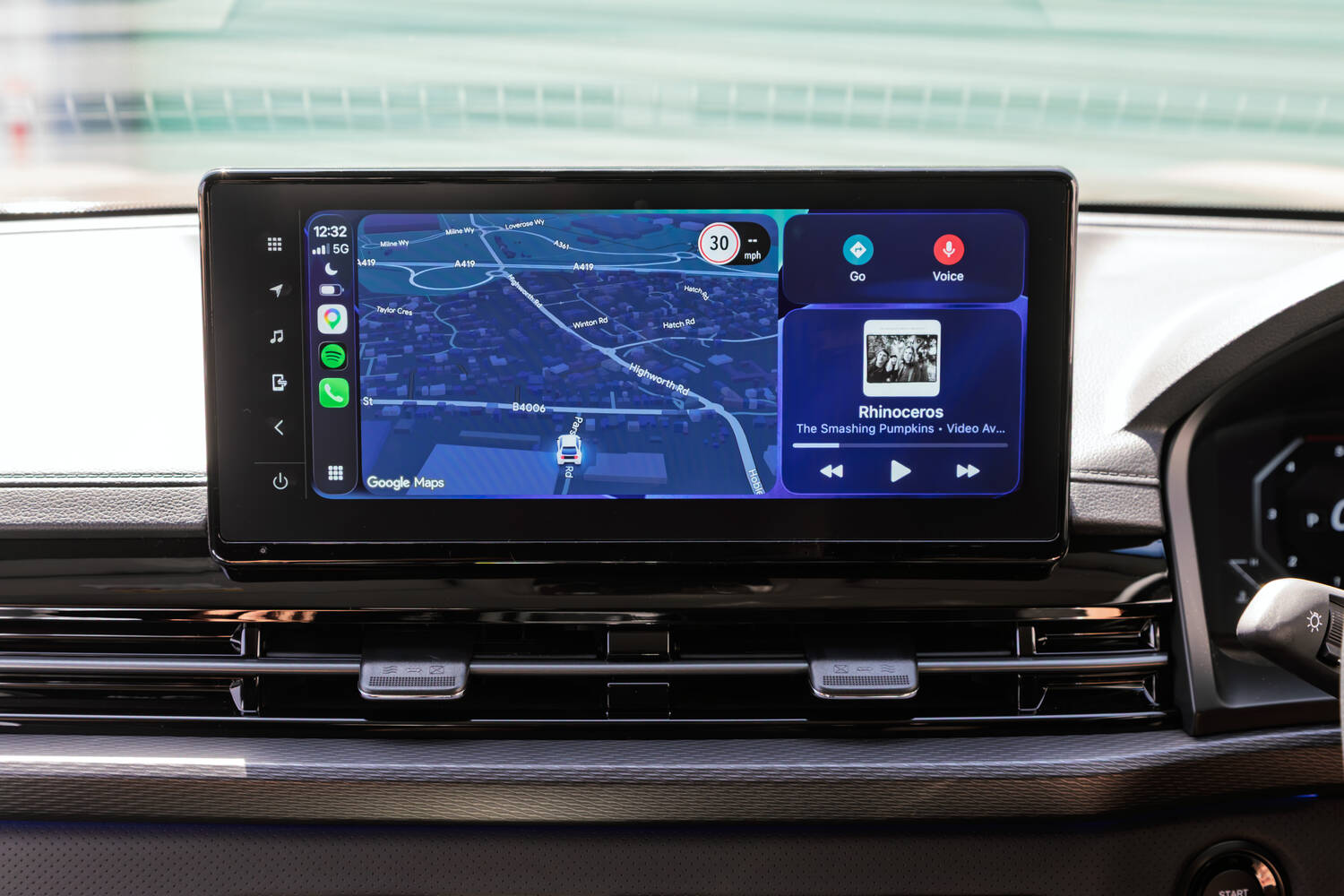
In the Rhino, the infotainment screen - which wirelessly supports Apple CarPlay and Android Auto - sits high and solitary on the centre stack, while the cluster is sheltered beneath a traditional binnacle.
But the Musso EV instead brings its two displays into one panoramic widescreen construct, although its interface does without any physical climate controls.

Which one you prefer will depend on how much you want to tap at a touchscreen to operate ancillary items in the truck, but neither system is what we'd call cutting-edge in-car tech.
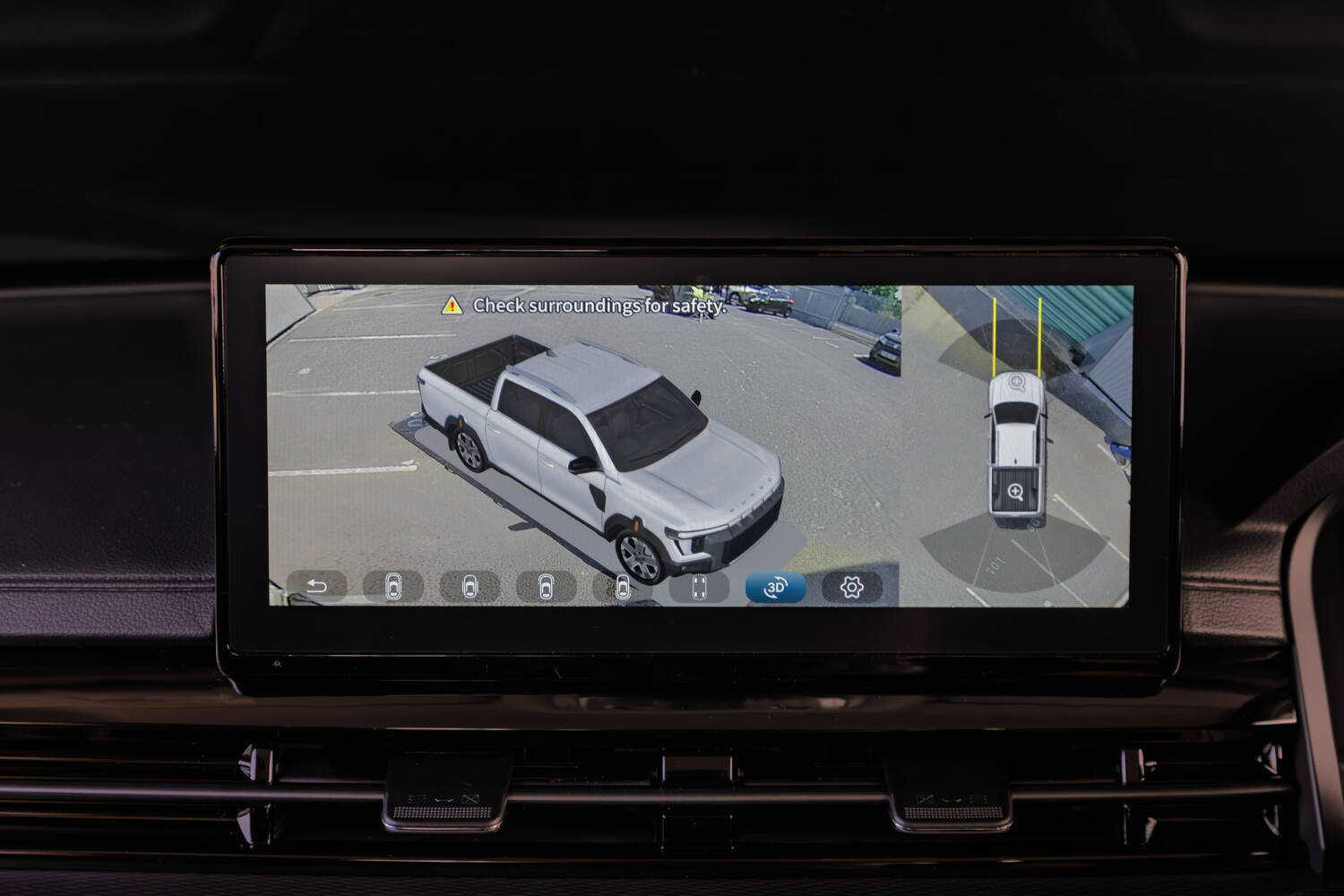
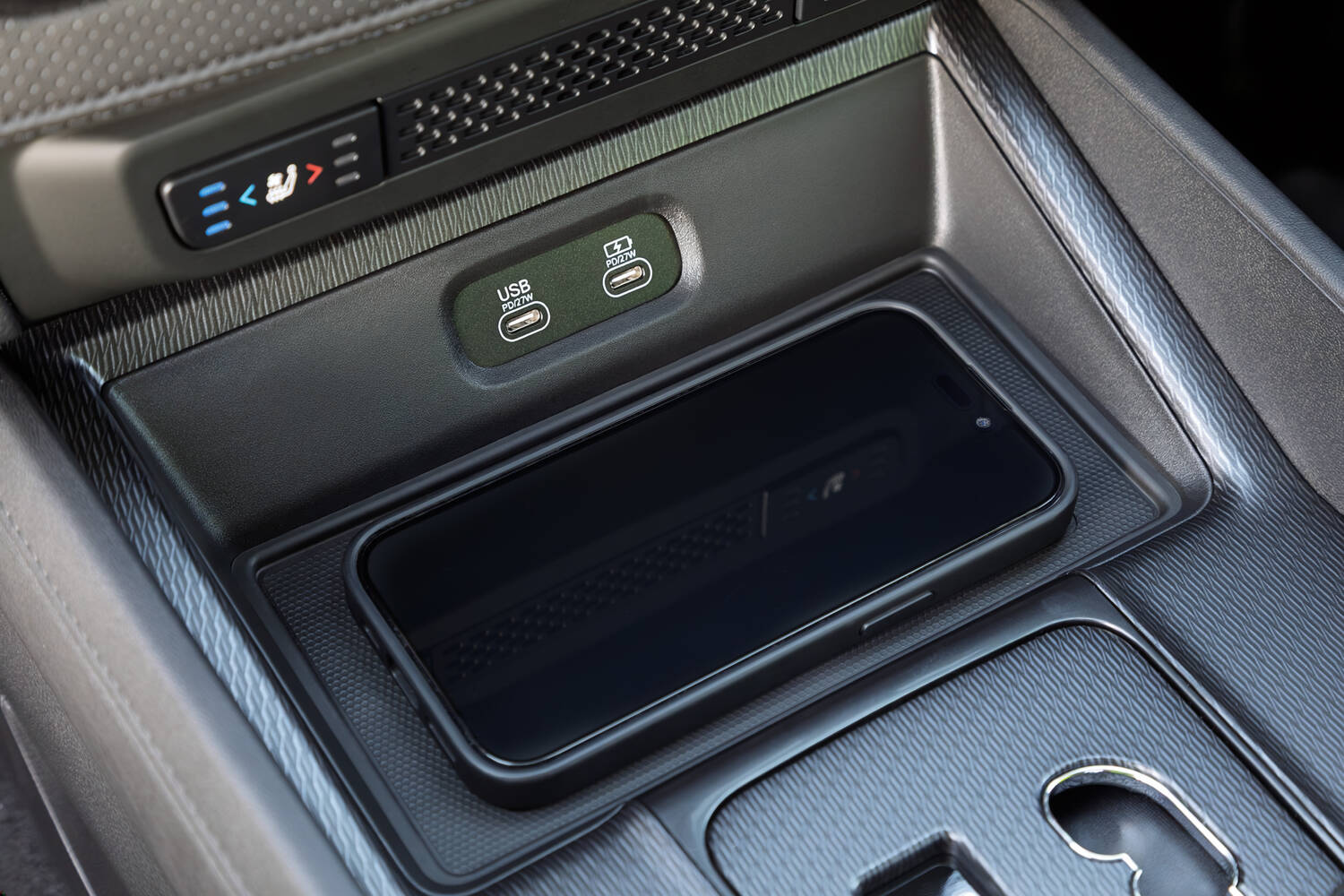
Other equipment shared by both trucks includes a wireless smartphone charging pad, adaptive cruise control, front and rear parking sensors with a 3D surround-view camera system, heated and ventilated front seats, heated rear seats and a heated steering wheel, among other items.
Practicality around the cabin
Again, there's a lot of commonality here, even though the two KGM Mussos are different vehicles.

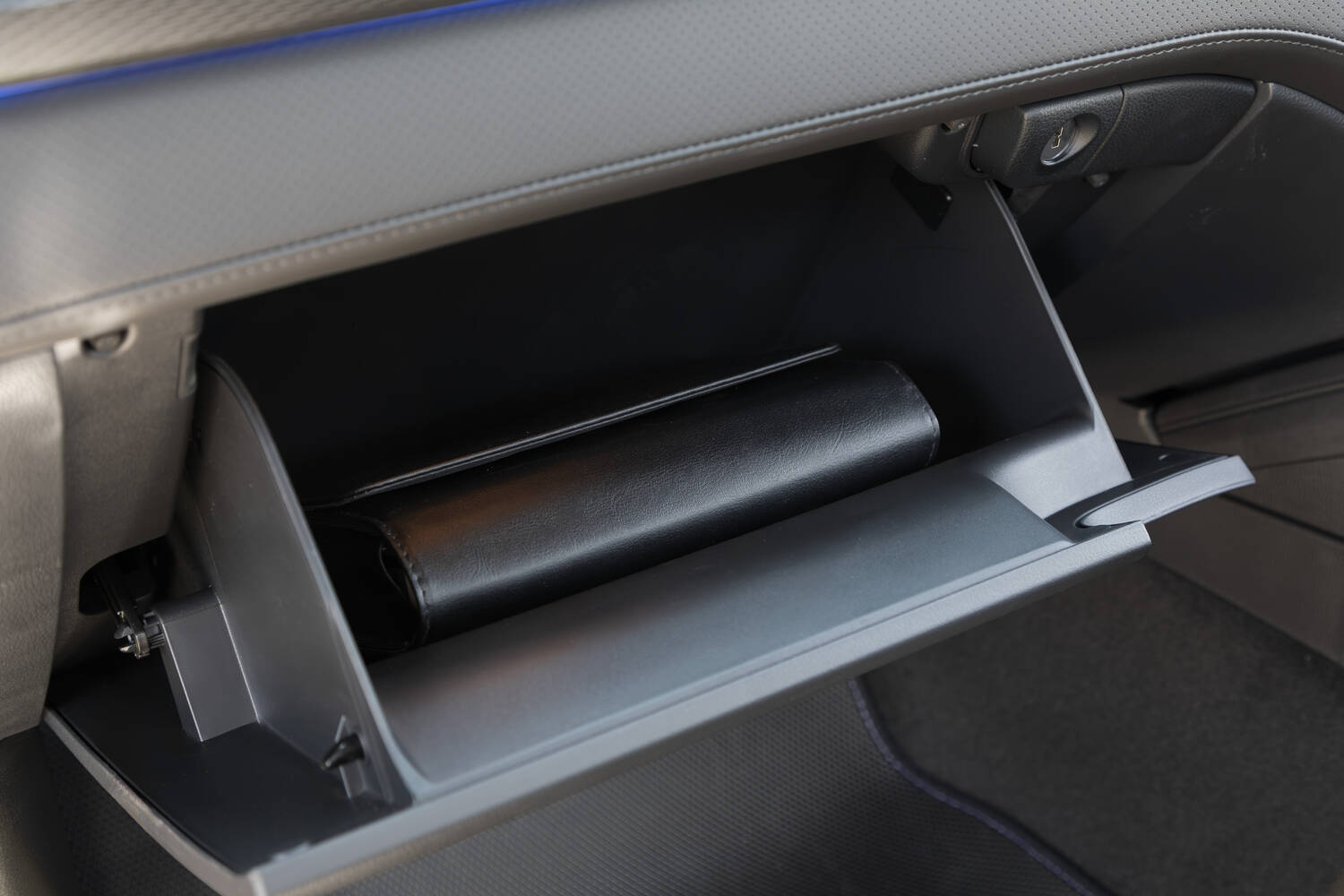
They both have big, capacious door pockets, a decent glovebox, a lidded cubby between the seats that also serves as an armrest and a couple of cupholders on the centre console.
But because they have different transmission-lever areas, these items are longitudinally arranged in the EV and laterally in the Rhino, while the zero-emission model also has an under-dash storage zone.
In the Rhino, the front-mounted USB-C sockets are much more accessible at the bottom of the centre stack, just ahead of the wireless smartphone charging pad (an item located in the under-armrest area in the EV, incidentally).

Rear-seat passenger space
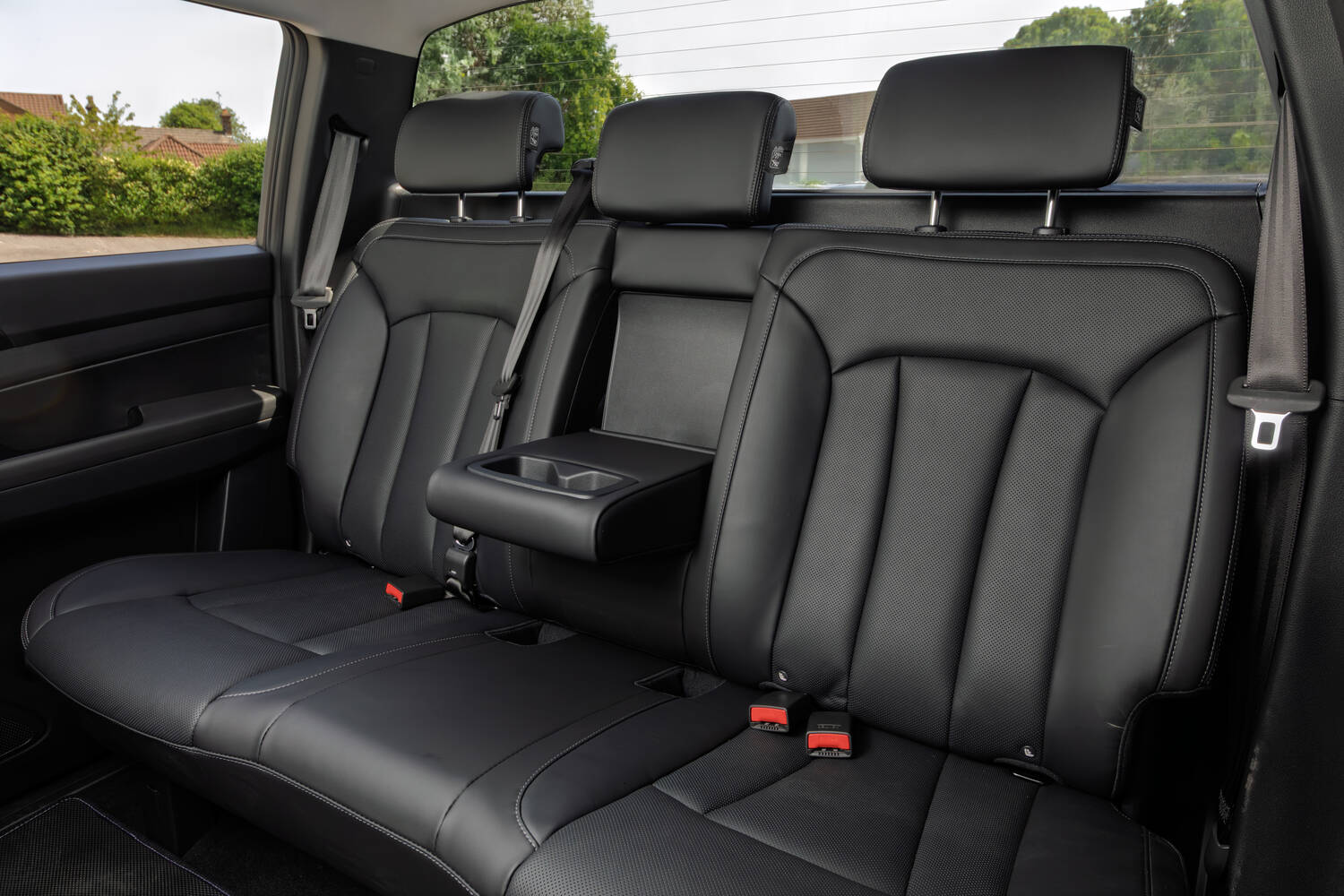
As pick-up trucks go, these KGMs offer comfortable accommodation in the second row. The floor is almost flat in the back of both variants, so potentially seating three across the rear bench doesn't look like an impossibility.

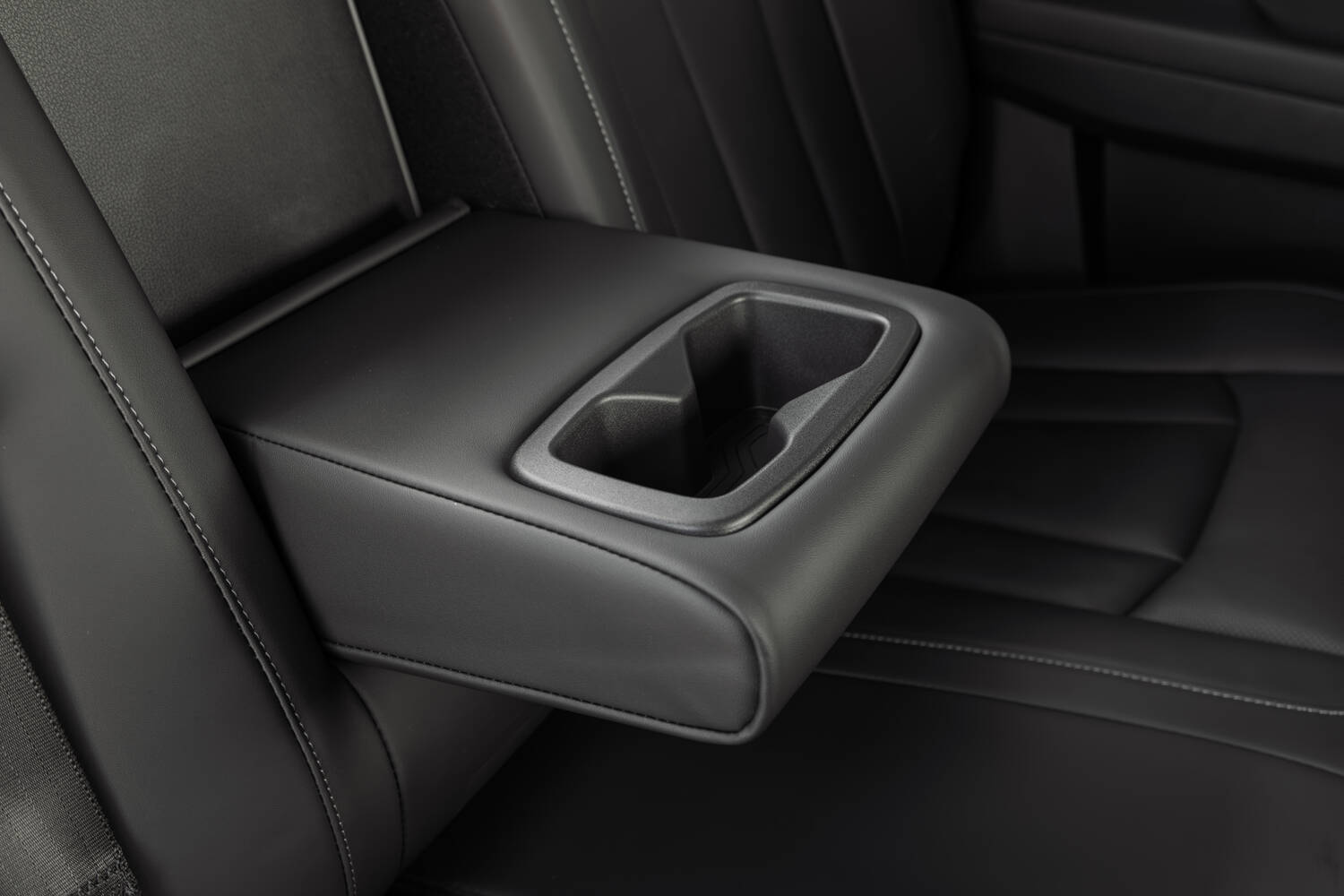
There are some creature comforts back there, including two USB-C ports underneath a lifting flap, map pockets on the rear of the front seats, a central fold-down armrest with two cupholders within, sizeable door pockets with sculpted-out bottle holders and even rubberised tray bases in the door-pull handles for the stowage of coins.
Fitting child seats to the KGM Musso
There are two ISOFIX mounting points in the back of both the KGM Musso Rhino and the Musso EV, and the rear doors are a good size and open fairly wide - plus the bench is mounted high, so parents don't have to bend down too far to secure child seats into the back of the pick-ups.
Load-bed space and capacity in the KGM Musso

The KGM Musso EV still has a physically large load bed. In fact, it's a bit longer than that in the standard Rhino, measuring 1,345mm, but it's also narrower (1,515mm) and shallower (510mm).
That leads to a quoted capacity of 1,039 litres, which is slightly ahead of the standard-wheelbase Rhino, but the payload is much lower - you're looking at a maximum weight of 690kg.
The Rhino's load bed measures 1,300mm long, 1,570mm wide and 570mm deep, creating 1,011 litres of space and a maximum payload of 1,090kg.

Should you need more, the Rhino+ and its extended load bed (length increased to 1,610mm, all other dimensions the same) result in 1,262 litres of capacity and a maximum payload of 1,200kg.
Safety in the KGM Musso

No KGM has ever been put forward for testing by Euro NCAP, so we can't give an overall rating for this section. What we can say is that an extensive range of advanced driver assistance system (ADAS) safety equipment is fitted to both Rhino and EV models of the KGM Musso.
Performance of the 2026 KGM Musso
- Straightforward diesel or electric choices
- All models have all-wheel drive
- EV rides more smoothly and quietly

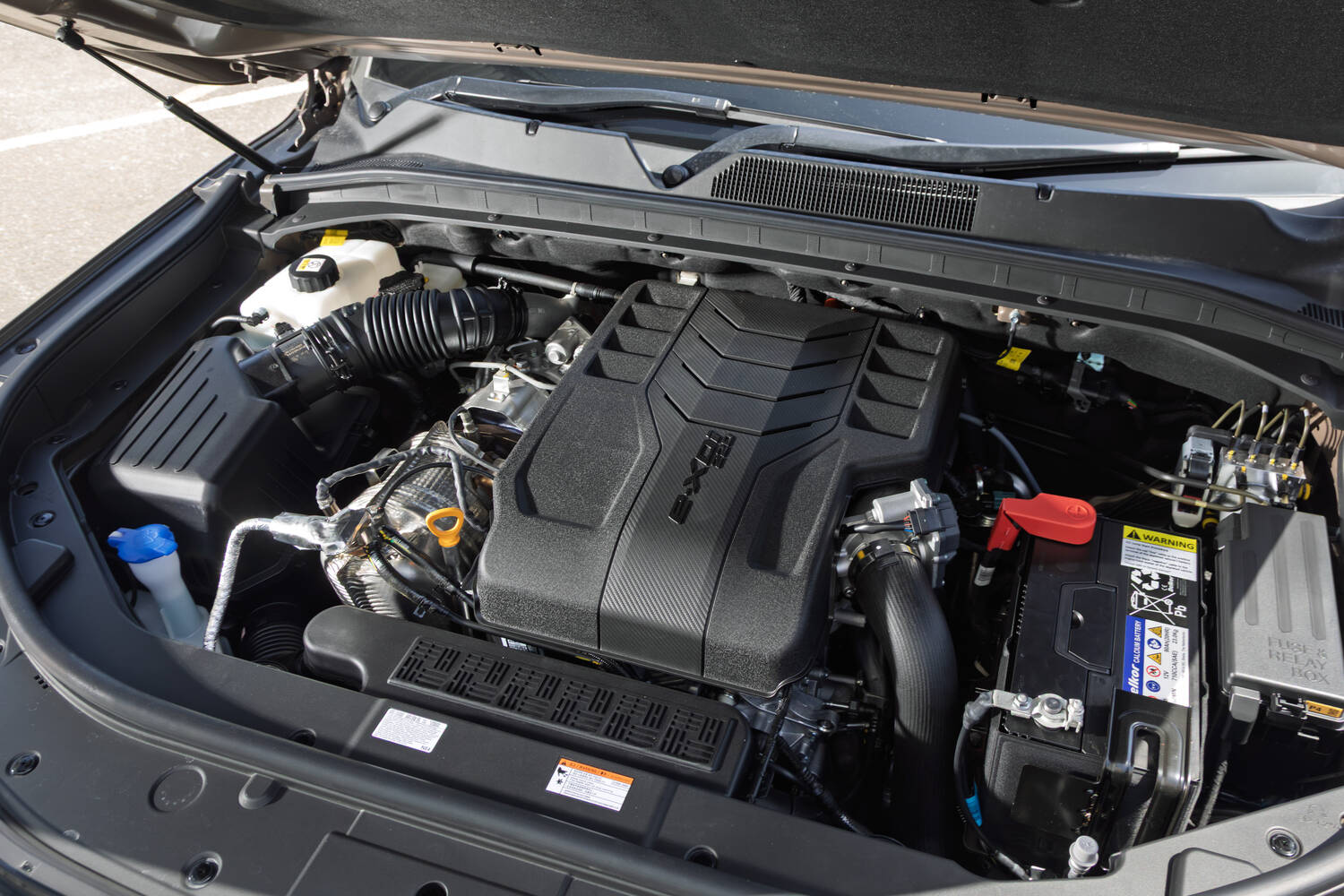
The KGM Musso Rhino and the long-wheelbase Rhino+ use the same turbocharged 2.2-litre four-cylinder diesel engine and six-speed Aisin automatic gearbox as the company's older pick-ups.
In this application, the engine makes 202hp and 400Nm, and while there's no official 0-100km/h time, the sprint is said to take around 12 seconds.
Weighing in the vicinity of 2.2 tonnes in either specification, the diesel Rhinos are a bit lighter than the Musso EV, which comes in at 2,360kg.
But with the EV's dual motors producing 237hp, single-speed reduction-gear transmission and instant 339Nm of torque, KGM does quote a 0-100km/h time for this one - and it's quite a bit brisker, completing the sprint in just under eight seconds.
Driving the KGM Musso Rhino on- and off-road in the UK
Words by Matt Robinson on 16 July 2026
If you've ever driven what are known as 'one-tonne pick-ups' (i.e. the ones that can carry more than 1,000kg in their load beds), then you'll know that when they are running light - as in, they are unladen with nothing in the back and just one occupant up front - they can be particularly uncomfortable.

There's a shimmy and a bounce that manifests from their simplistic rear suspension, which makes them feel far rougher around the edges than contemporary SUVs.
To be fair, some of the better, newer models - like the Ford Ranger and VW Amarok - do a much better job of masking this jittery behaviour, but our early impressions of the KGM Musso Rhino are not that favourable.
The first thing we noticed was that the KGM press team had put six bags of sand into the back of the Rhino, always a bad sign, as it shows it was trying to tie down what might otherwise be uncontrolled suspension.

But even with this partial payload, the Musso Rhino still rides poorly. There's a lot of background shudder and thumping from the load-bed area despite the use of a live axle with coil springs.
It hasn't worked at calming things down, though, as the comfort levels of this truck are behind the curve in this class. You'll want to be carrying something like the maximum payload in it all the time to make it more bearable, we reckon.
Coupled to this is a particularly agricultural, rowdy and slovenly drivetrain. The 2.2 is reasonably quiet at a cruise and the gearbox is passable if you don't rush it, but if you ever demand full acceleration from the truck then the responses are almost comically slow, the gearbox feels glacial and the noise from the four-cylinder turbodiesel is raucous.
Handling is never something you really test on a pick-up truck, unless it's a Ford Ranger Raptor, but in the KGM's defence it seems to have some of the better steering of any of these diesel-powered machines.
It's not as dim-witted as other set-ups we've tried, although by the same token it's also not the best arrangement either - and predictably, given its SUV DNA, the Musso EV eclipses it.
We did get to take the Musso Rhino on an off-road course for an hour or so, but the tinder-like conditions Europe had been experiencing meant the entire route was baked rock-hard and dusty.

So while the KGM had no problems whatsoever picking its way over rubble, stones and ridged ruts that were once deep muddy trenches, we suspect that most higher-riding vehicles would have got through the test without recourse to low-range gearboxes or hill-descent control.
There was also one smaller hump on which our Rhino grounded its differential as it crawled up, causing our off-road specialist in the car to ask us to back down the slope to protect the underpinnings.
It's the short-wheelbase Rhino that has the best approach/breakover/departure angles of any KGM Musso, at 30.9, 20.3 and 27.8 degrees respectively.
It has marginally less ground clearance than the long-wheelbase Rhino+ model (248mm), but that longer truck obviously pays for its size with slight reductions to the figures, at 30.6, 20 and 24.5 degrees accordingly.

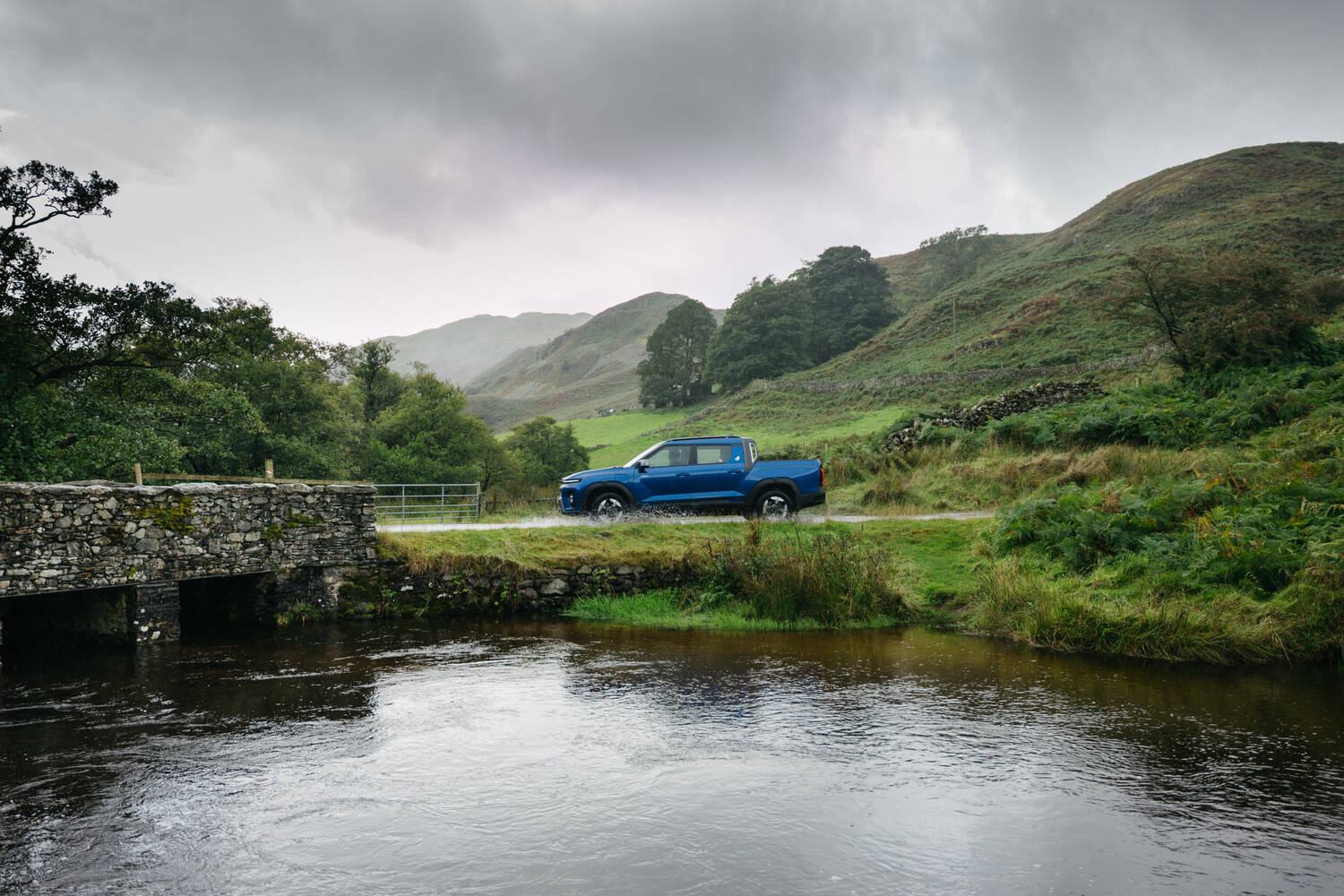
No Musso, whether electric or diesel, short-wheelbase or long, has a good wading depth: they're all limited to just 300mm. Most alternatives can handle much deeper water.
Driving the KGM Musso EV on-road in the UK
Words by Matt Robinson on July 16, 2026.
First things first: we didn't drive the EV off-road, but that's probably for the best because it is considerably less capable in the rough stuff than the Rhino models.

Not only does it lack proper locking differentials and a high/low-range transmission, for obvious reasons, but its approach/breakover/departure angles are all substantially reduced (at 20.2, 15.1 and 24.3 degrees), while its floor-mounted battery pack reduces ground clearance to a little more than 181mm.
It should be OK away from the tarmac for most lifestyle-related needs, however, if perhaps not quite as go-anywhere as the Rhino, but it's several leagues nicer to drive on the public highway.
It has a multilink rear axle and the sort of direct, well-weighted steering that makes it feel far more car-like in its responses, both facets of its behaviour that hint at its derivation from an SUV, rather than a commercial vehicle.
The Musso EV is also quite rapid out on the road, making a mockery of its mass that approaches 2.4 tonnes by picking off overtakes with an ease that is completely beyond the tortured noise of the Rhino at full throttle.

The zero-emission KGM feels stable and assured at motorway pace, cruises quietly and smoothly when you want it to and it can maintain its cultured ride composure even when it is picking its way around cratered tarmac at town speeds.
In fact, it's probably the most convincing electric truck we've tried yet; certainly, it handles lumps and bumps far better than the Hilux BEV, which was the last one we sampled before the Musso, and it performs strongly in a straight line too.
The EV is a much more likeable thing for regular, everyday road-based users, but then that kind of defeats the point of a pick-up truck. And makes you wonder why you wouldn't buy a KGM Torres, or indeed any other electric SUV, instead.
Range, battery, charging and running costs of the 2026 KGM Musso
- Big battery delivers almost 400km
- DC charging speed is adequate
- Diesel uses around 10 litres/100km

As we've said throughout this piece, the KGM Musso Rhino is a traditional diesel pick-up, while the Musso EV has a large battery pack and some of the best range of any electric truck on sale, although by wider electric-vehicle standards its peak DC charging rate and charging times are nothing special.
Battery options and official range of the KGM Musso EV
KGM sources its batteries from Chinese company BYD, so in the chassis of the Musso EV is an 80.6kWh 'Blade' battery using lithium-iron-phosphate (LFP) chemistry.
That makes it one of the biggest in this sector, save for the huge unit in the bottom of a Maxus eTerron9, so the Musso's 380km range with all-wheel drive is pretty good.
For reference, the Maxus goes 429km between charges, but both the Isuzu D-Max EV (262km) and the Toyota Hilux BEV (257km) are some way off the Korean machine's capabilities.
Real-world range and efficiency of the KGM Musso EV
We drove the KGM Musso EV for 40km on a very hot day (approaching 30 degrees Celsius), mainly sticking to 80km/h on two-lane routes but with some cruising at 110km/h-plus mixed in towards the end of the trip.
The climate control was running constantly, so in such conditions an indicated energy consumption figure of 20kWh/100km is not only impressive, it's actually better than the official figure of around 21.2kWh/100km.
If you could get that sort of economy from the KGM Musso EV regularly, you could in theory just about surpass 400km on a single charge.
Charging up the KGM Musso EV
At its fastest, on any public DC charger capable of delivering more than 120kW, the KGM Musso EV will achieve a 10-80 per cent top-up of its battery pack in 36 minutes.
That's not bad, certainly by electric pick-up standards, but in the wider electric-vehicle market, 120kW does not set any new yardsticks.
On its fastest three-phase AC connection of 11kW, a complete 0-100 per cent charge would need 10 hours and 20 minutes. You'd therefore be looking at something more like 12 hours on a commonly found 7.4kW domestic wallbox.
Official CO2 and fuel economy figures for the KGM Musso Rhino

Moving to the Musso Rhino diesel, the CO2 figures are set at 252g/km for the short-wheelbase and 261g/km on the Rhino+, while the official fuel consumption figure is competitive with other diesel trucks in the 200hp ballpark - 9.5 litres/100km (29.6mpg).
Real-world efficiency of the KGM Musso Rhino
Again, kudos to the KGM pick-up for matching its on-paper figure, but we would say that - while returning along the same 40km route we'd earlier driven the Musso EV on - we dug into the throttle of the Rhino far less frequently than we did in the electric truck (mainly because the former is so sluggish), and diesels are far less susceptible to fluctuations in their economy due to outside temperature or use of the climate control than electric vehicles.
Nevertheless, we just matched the official figure of 9.5 litres/100km on the rather gently driven test route, for what it's worth.
Servicing the KGM Musso
KGM recommends an annual or 16,000km service interval for its vehicles, and that applies equally to both the Musso Rhino diesel and the Musso EV.
KGM Musso warranty
There's a seven-year, 145,000km warranty on all new KGM models sold here, while the EV also gets a deeply impressive 10-year or 1,000,000km (whichever comes sooner) level of cover for its high-voltage battery pack.
Irish pricing & rivals to the 2026 KGM Musso
- Rhino expected near the €50,000 mark
- EV starts at €45,390
- Rivals come from varied sources

Either version of the KGM Musso comes well equipped, so you're unlikely to be left wanting for luxury items for your money. Value is what KGM hopes will be its unique selling point.
When it comes to traditional competitors for the Musso Rhino and Rhino+, you've got the Maxus T60 Max, the Isuzu D-Max Double Cab, the Toyota Hilux, the Ford Ranger and the related Volkswagen Amarok to choose from.
Most of these start in the €50,000-€55,000 ballpark, with the exception of the VW, which looks pricey at €70,990. With the outgoing Musso coming in at €49,940, we're hoping the new Rhino will be in and around this zone.
All of these rivals can tow up to 3.5 tonnes of braked trailer and all but the Amarok can carry more than one tonne of payload in their beds; the Volkswagen peaks at 959kg.
Electric trucks are a more recent addition to the pick-up scene, but they're starting to filter in. The three principal adversaries are the Maxus eTerron9, the Isuzu D-Max EV and the Toyota Hilux BEV.
However, the Musso EV has them beaten in one key regard or another - the eTerron9, for instance, is almost double the basic price of the KGM (at €86,086), while both the Isuzu and Toyota are capable enough, yet their official ranges are well below 275km in each instance, whereas the Musso EV will go up to 380km on a single charge with all-wheel drive.

Verdict - should you buy the 2026 KGM Musso?
A difficult one to call, as the KGM Musso Rhino is a solid, dependable workhorse for the rough stuff, but it feels primitive and agricultural both for its on-road driving manners and the standard of its interior finishing.
Meanwhile, the Musso EV is a much more palatable thing for highway duties, but it sacrifices towing, off-road and payload capabilities for its fancy rear suspension.
In the end, the EV shades it for us as the more pleasant thing to travel in, and both Mussos are intriguing alternatives in an increasingly competitive and crowded pick-up truck sector. But there's a suspicion the Musso EV is nothing more than a very oddly shaped electric SUV, rather than an out-and-out vehicular labourer that will satisfy business customers.
What may save these KGMs, however, is the fact that they're both good-value offerings in their subsectors of the market.
FAQs about the 2026 KGM Musso
Is the KGM Musso AWD?

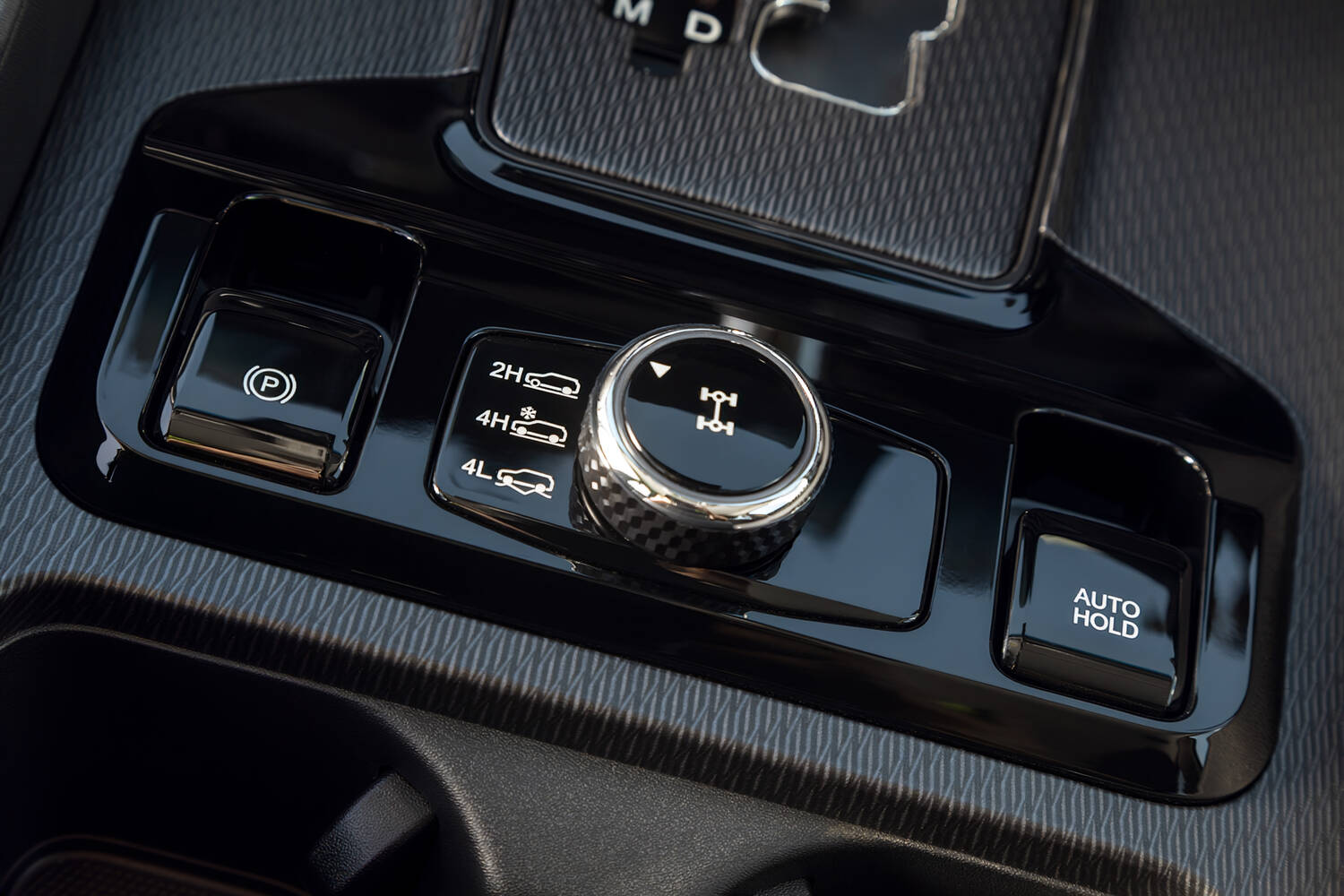
Yes, the Musso Rhino has switchable all-wheel drive and can run in two-wheel-drive mode to save fuel. Meanwhile, the dual-motor Musso EV has permanent all-wheel drive, with no way to decouple either motor.
Is the KGM Musso available as an electric vehicle?
Yes, as its name gives away, the KGM Musso EV is a rarity in the pick-up world as it's a pure-electric variant. However, it shares much with the civilised Torres SUV underneath, so don't expect it to be the hardiest machine in the world.
Is the KGM Musso rated to tow anything?
Yes, both diesel versions of the Musso Rhino and Rhino+ can tow the maximum of 3,500kg of braked trailer. The Musso EV isn't quite as strong, but its 2,300kg braked towing capacity puts it ahead of the Toyota Hilux BEV (1,600kg), if some way behind the Maxus eTerron9 and Isuzu D-Max EV, both of which will pull 3.5 tonnes.
What does Musso actually mean?
Rather strangely, it is the Korean word for 'rhino'. This means that, technically, we have a nomenclature tautology on our hands with the diesel version - it's effectively the KGM Rhino Rhino. So good, they named it twice...?
Want to know more about the 2026 KGM Musso?
If there's anything about the KGM Musso we've not covered, or you'd like help in choosing between it and other cars, you can avail of our expert advice service via the Ask Us Anything page.