


Exterior & design of the 2026 Toyota Hilux
- Sharp-looking styling
- Only sold as Double Cab nowadays
- Subtle visual differences for BEV

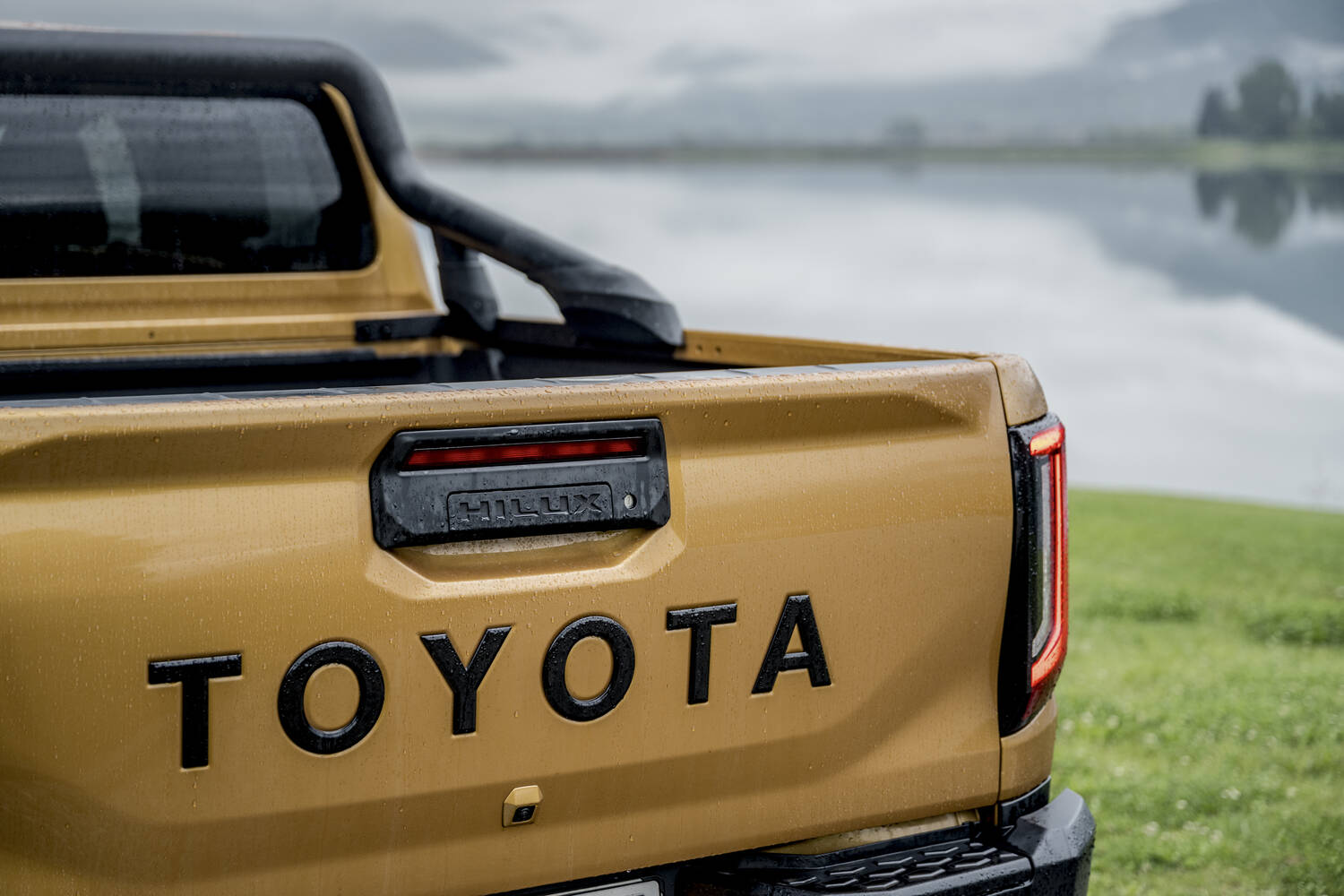
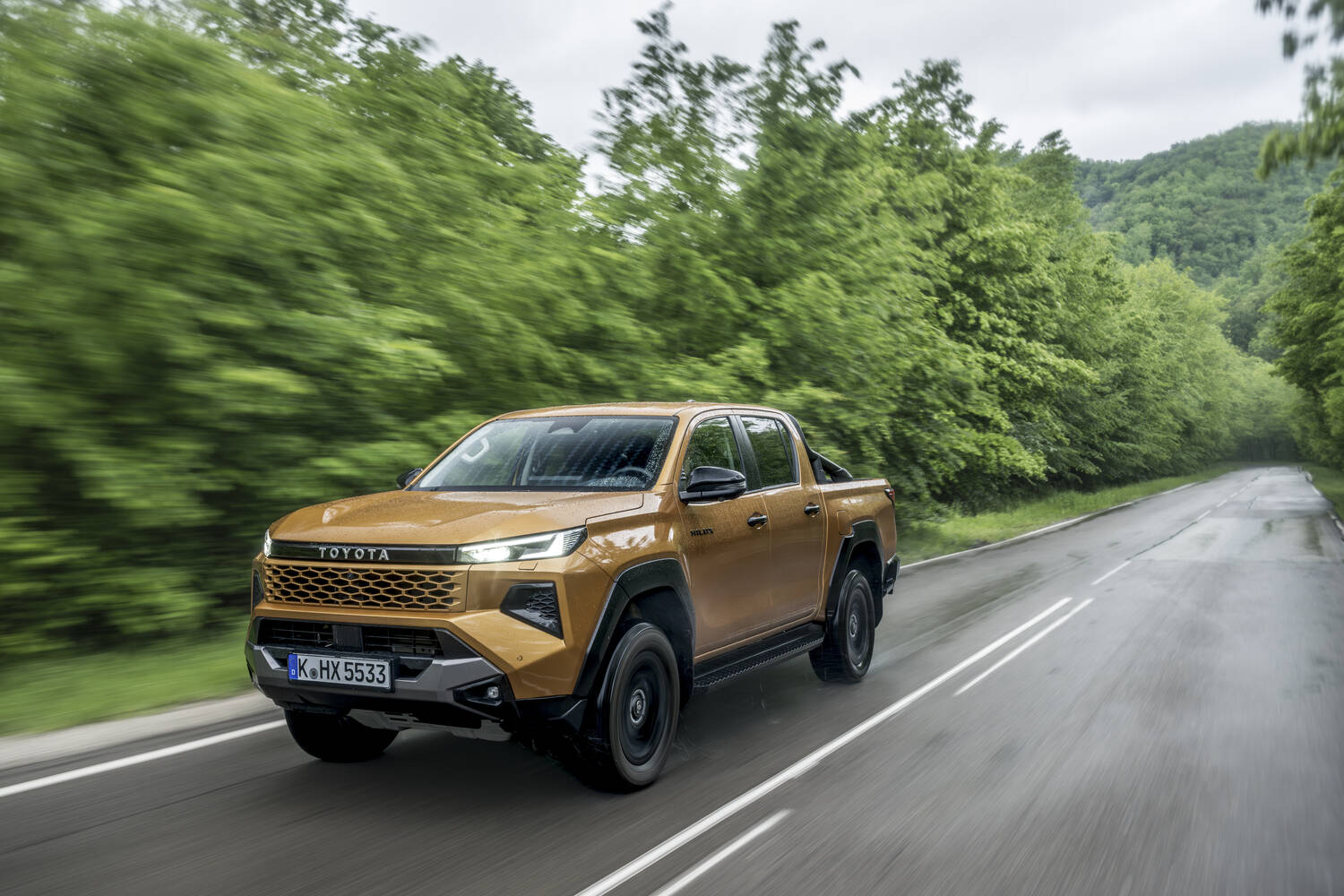
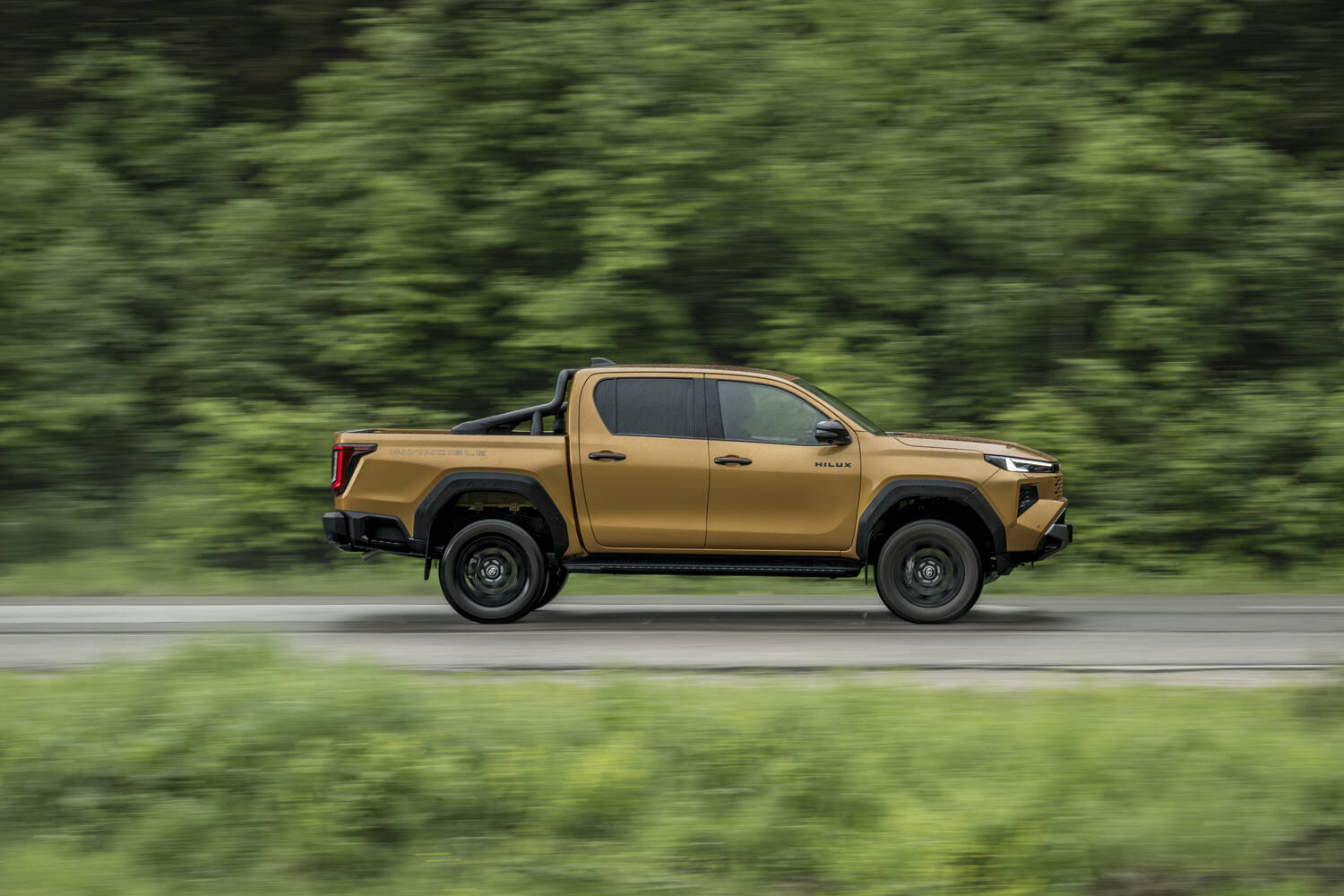
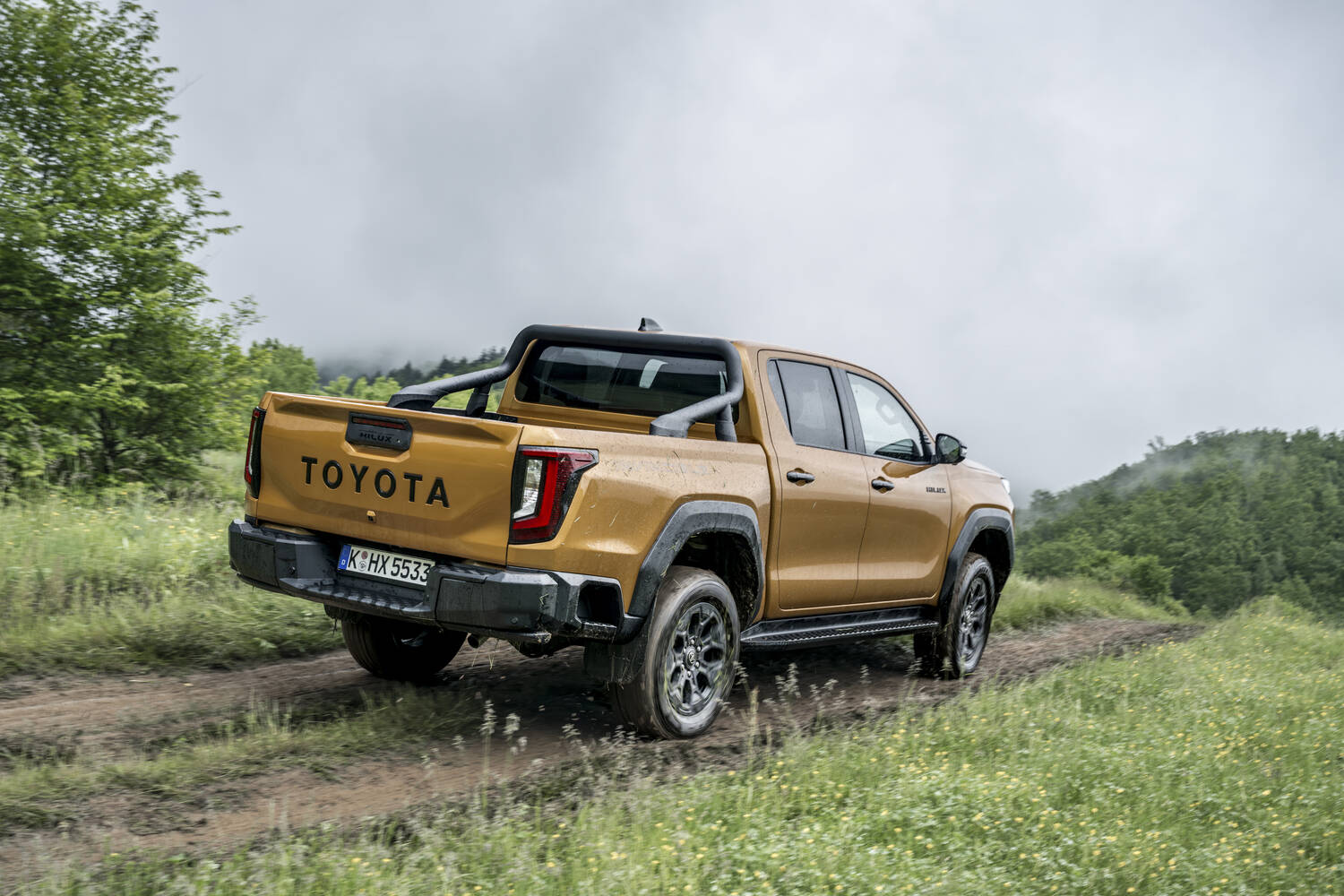
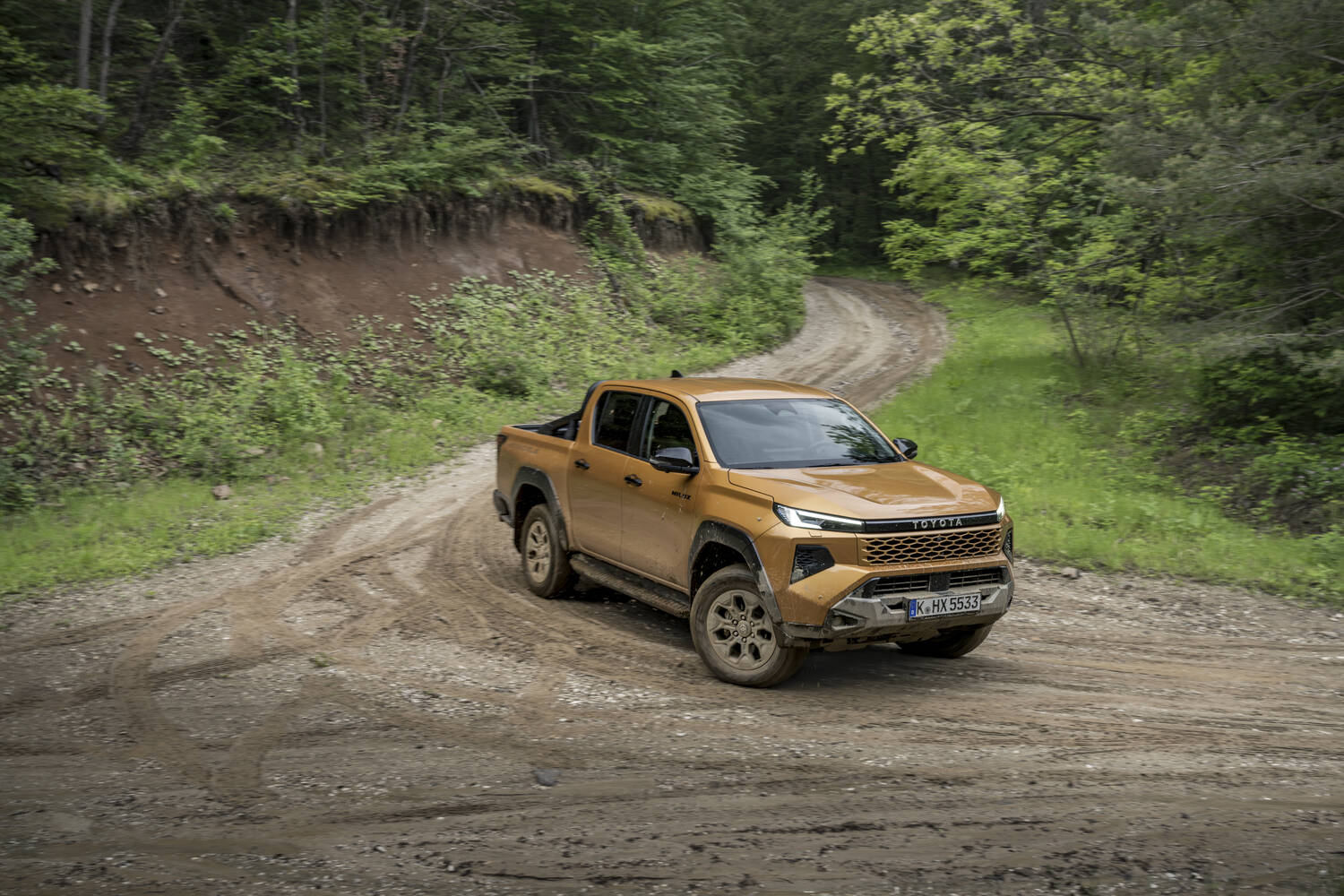
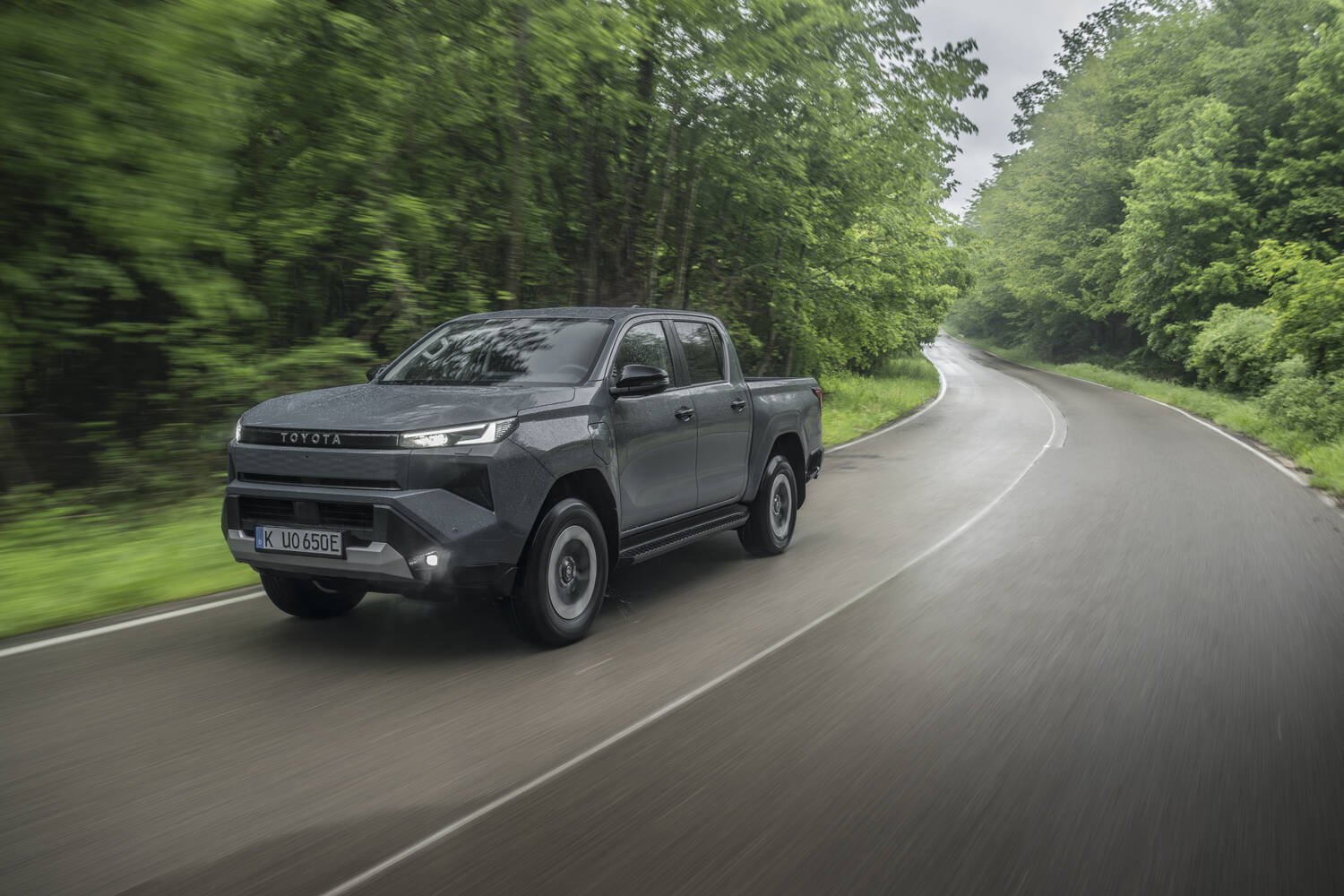
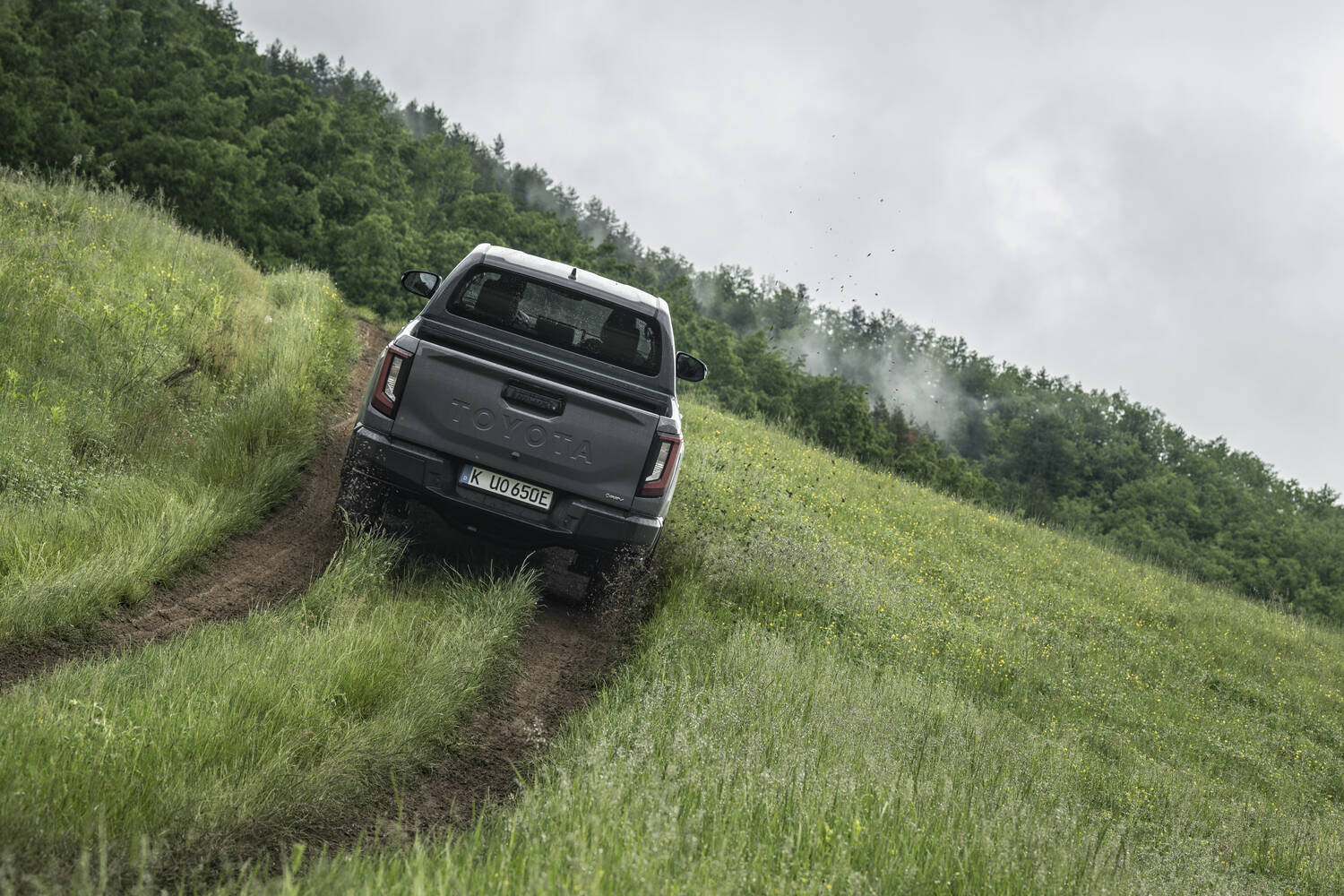
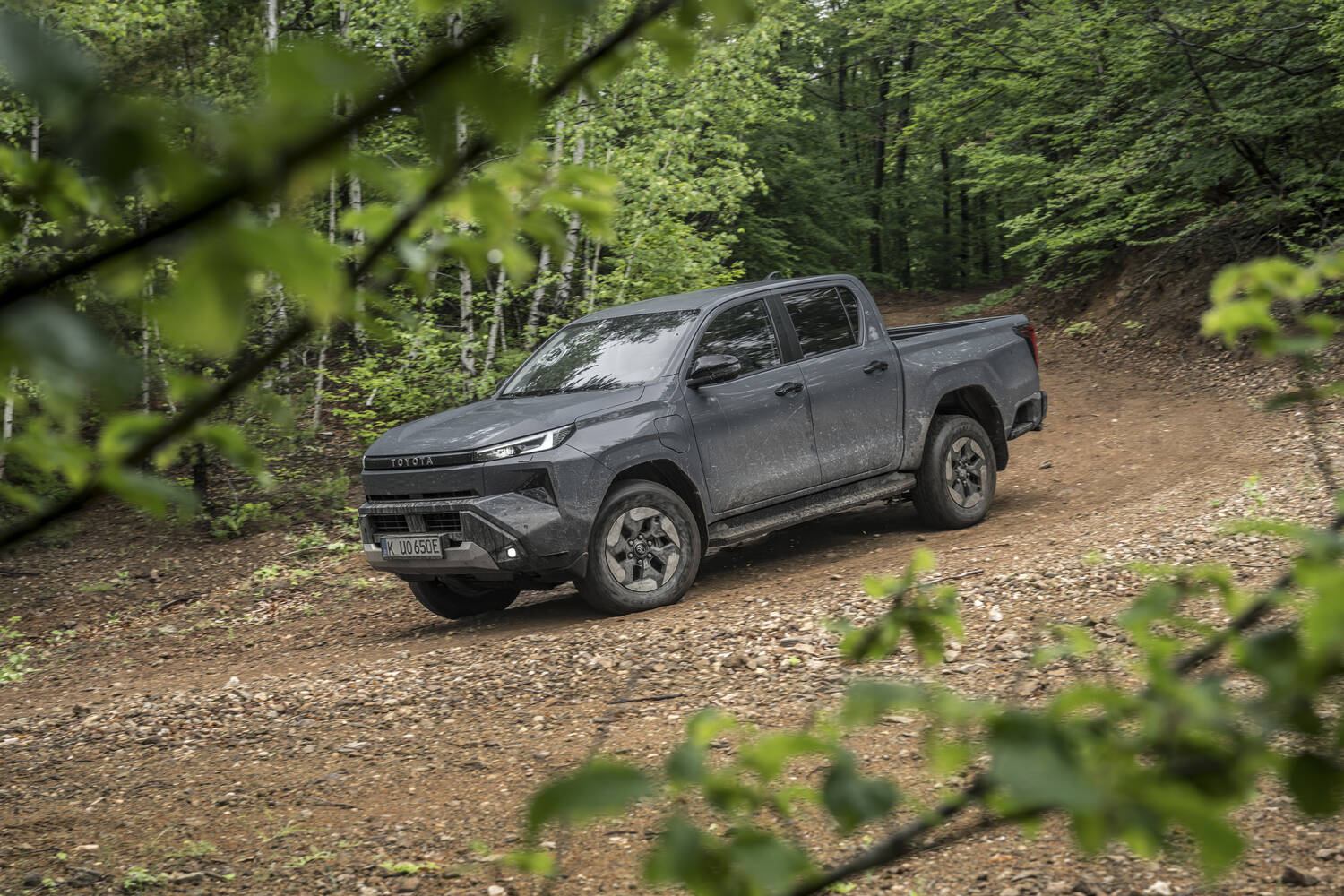
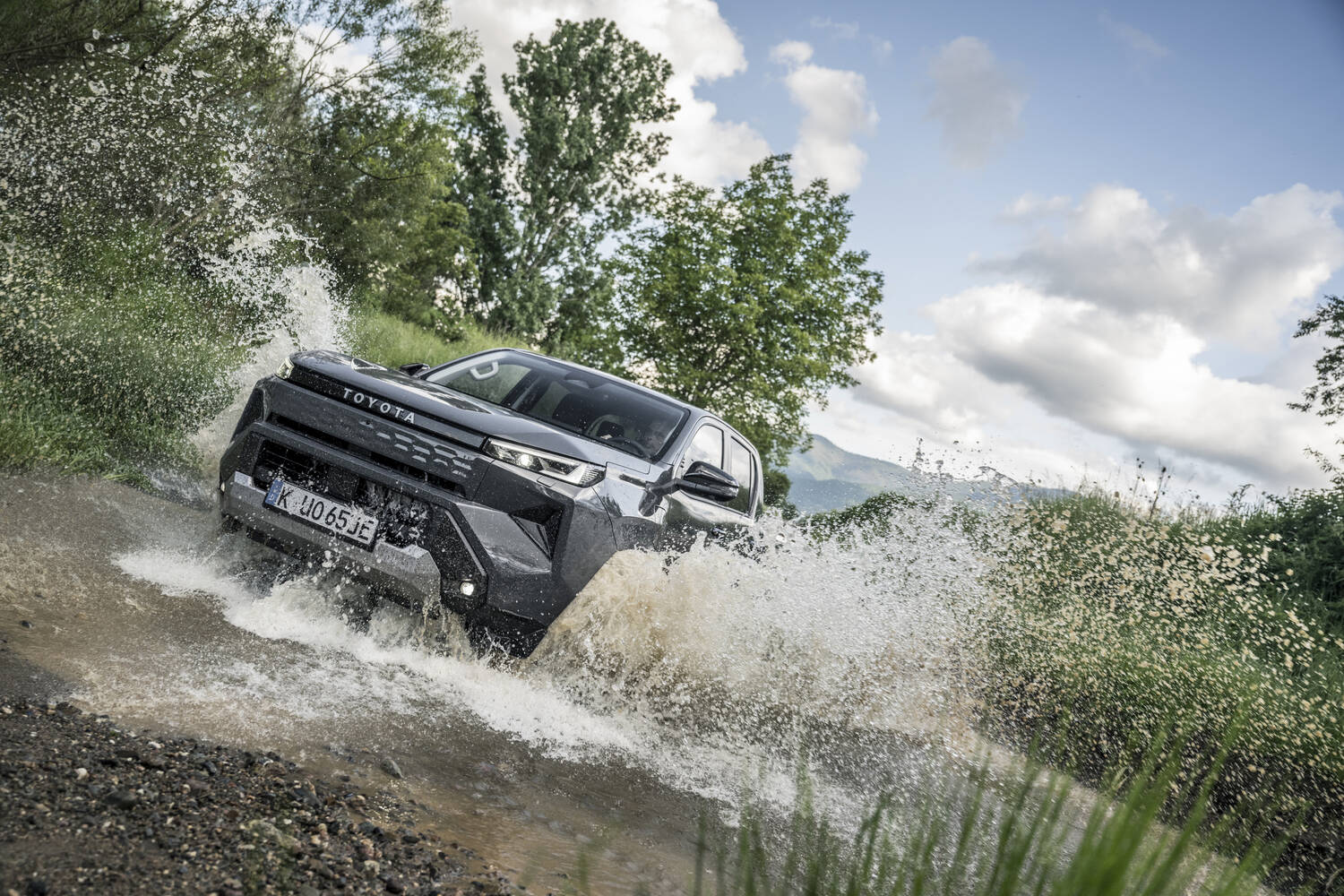
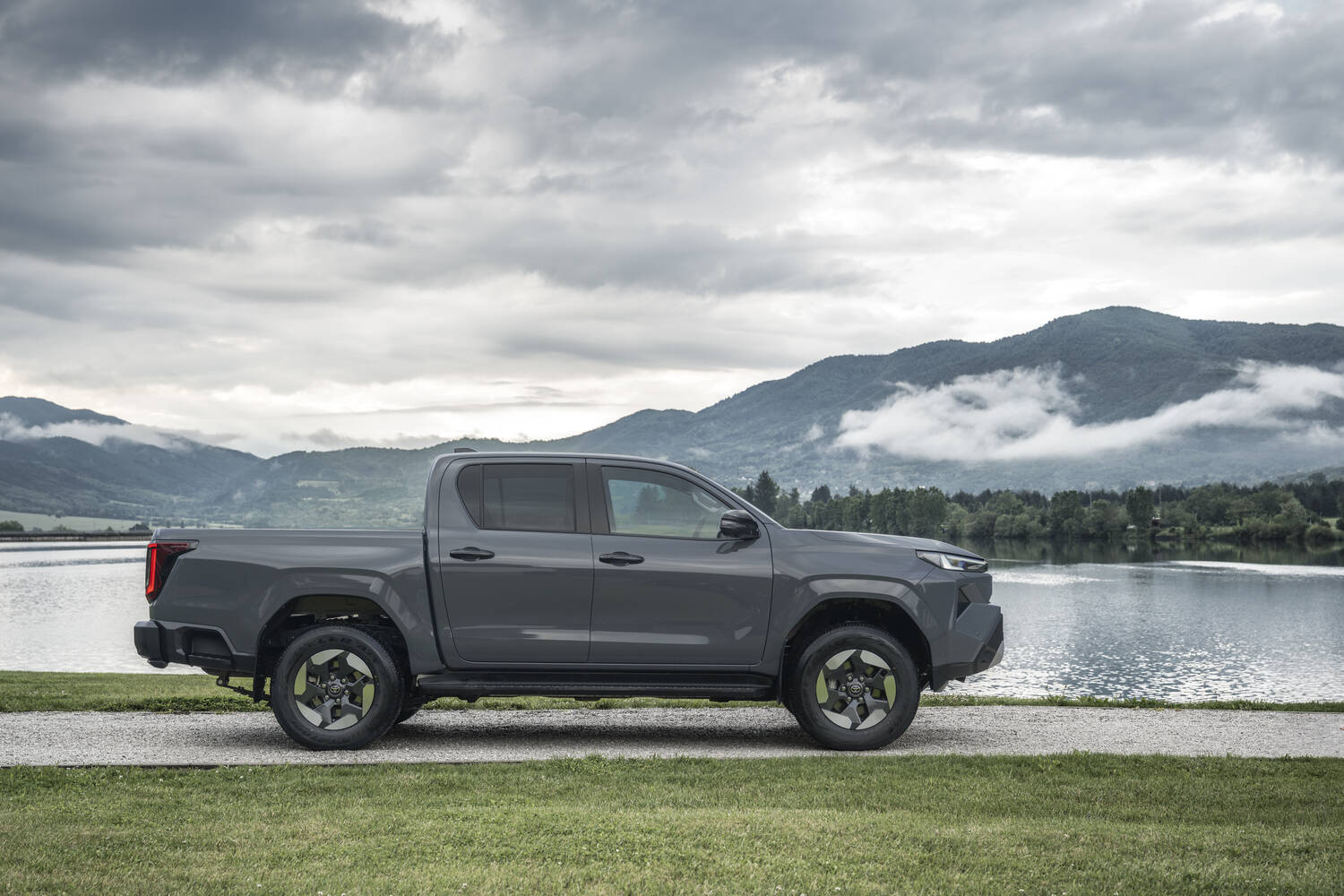
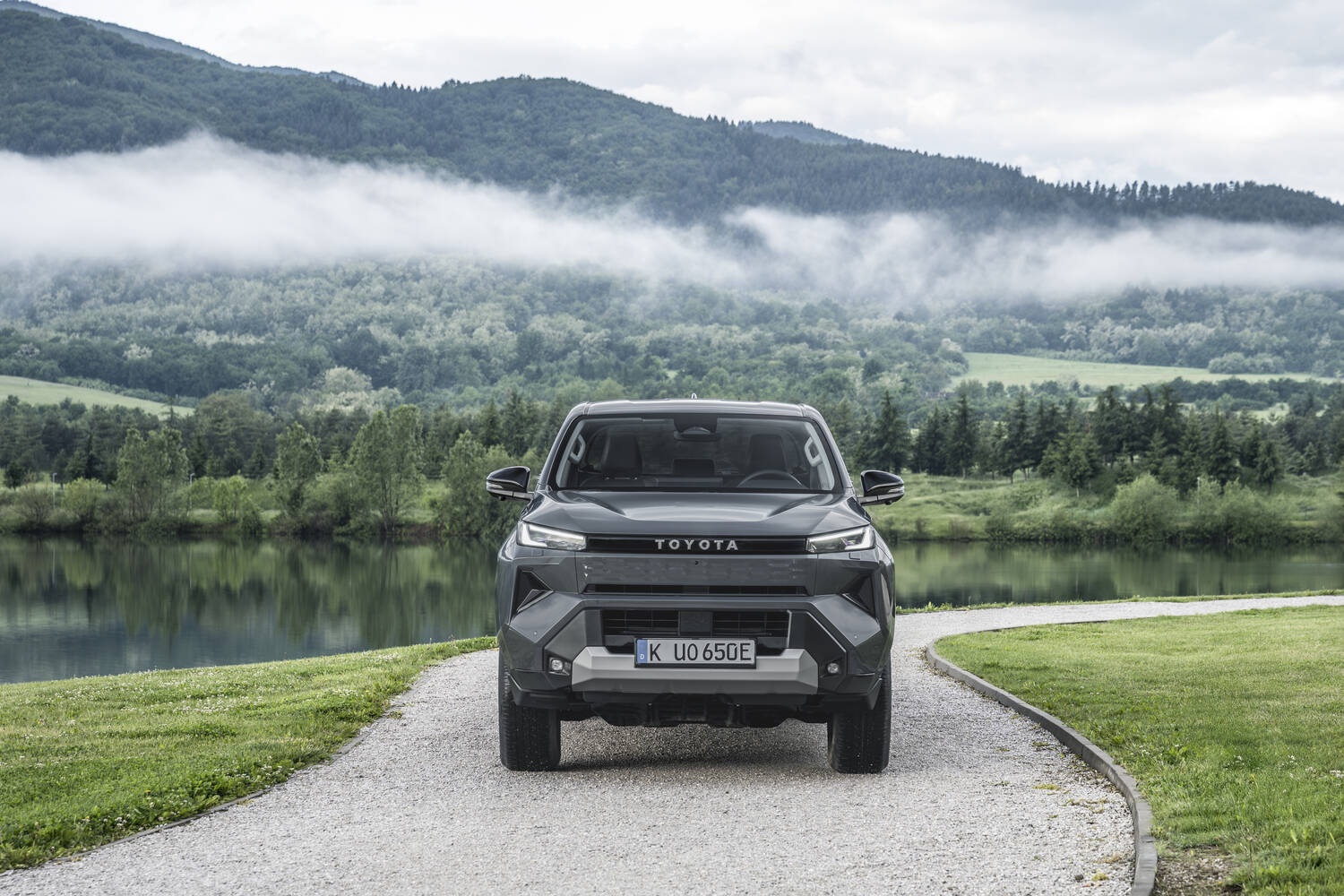
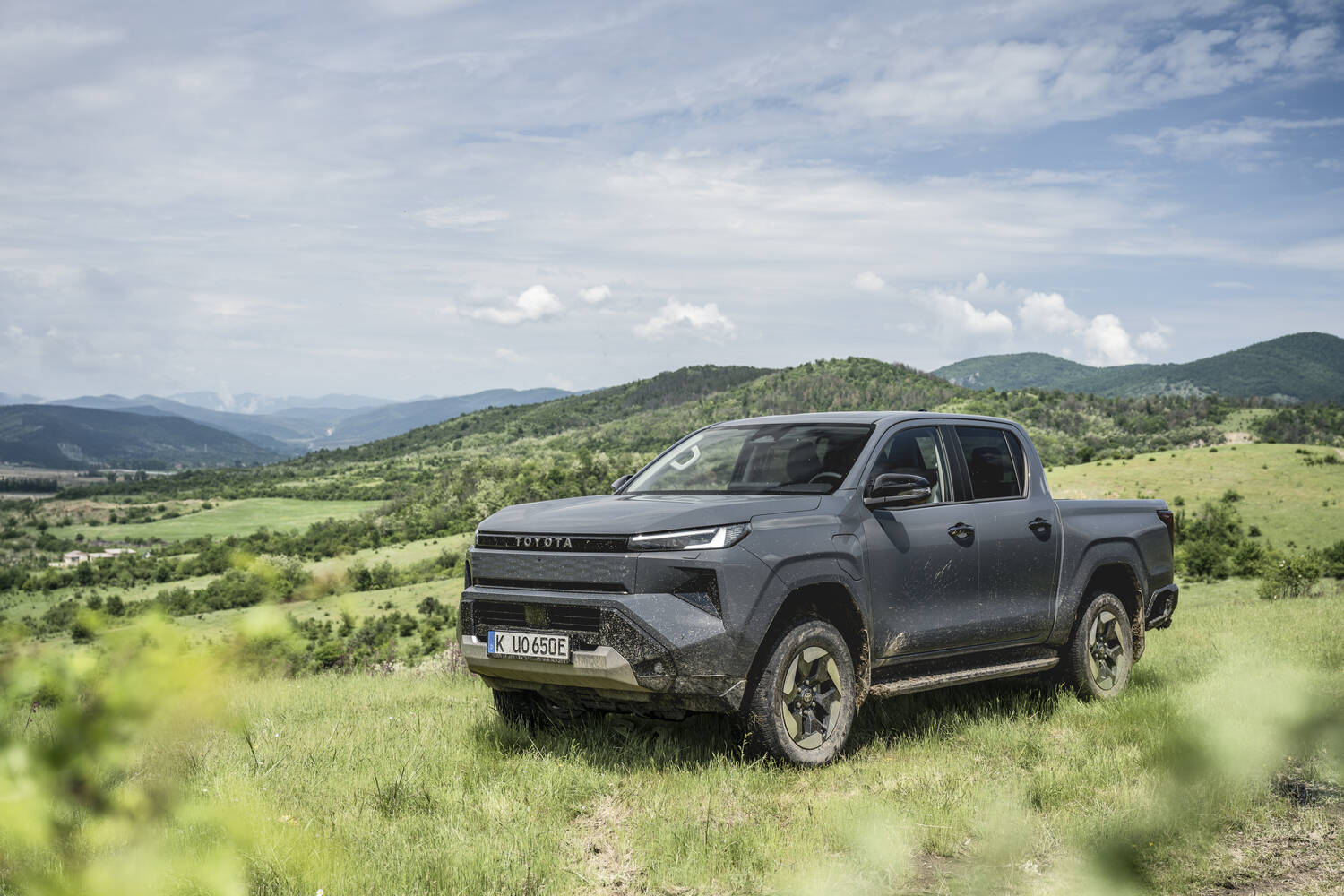
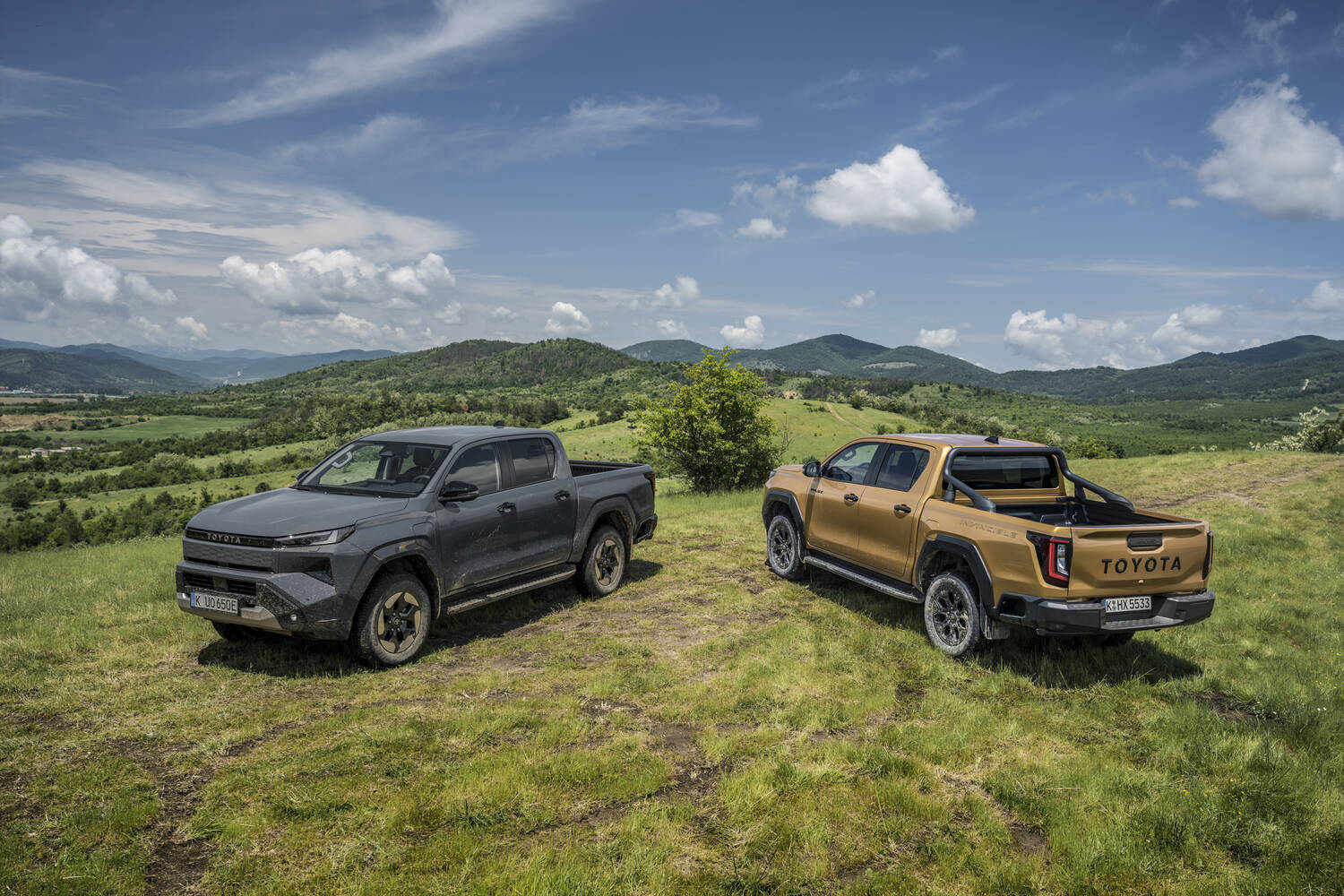
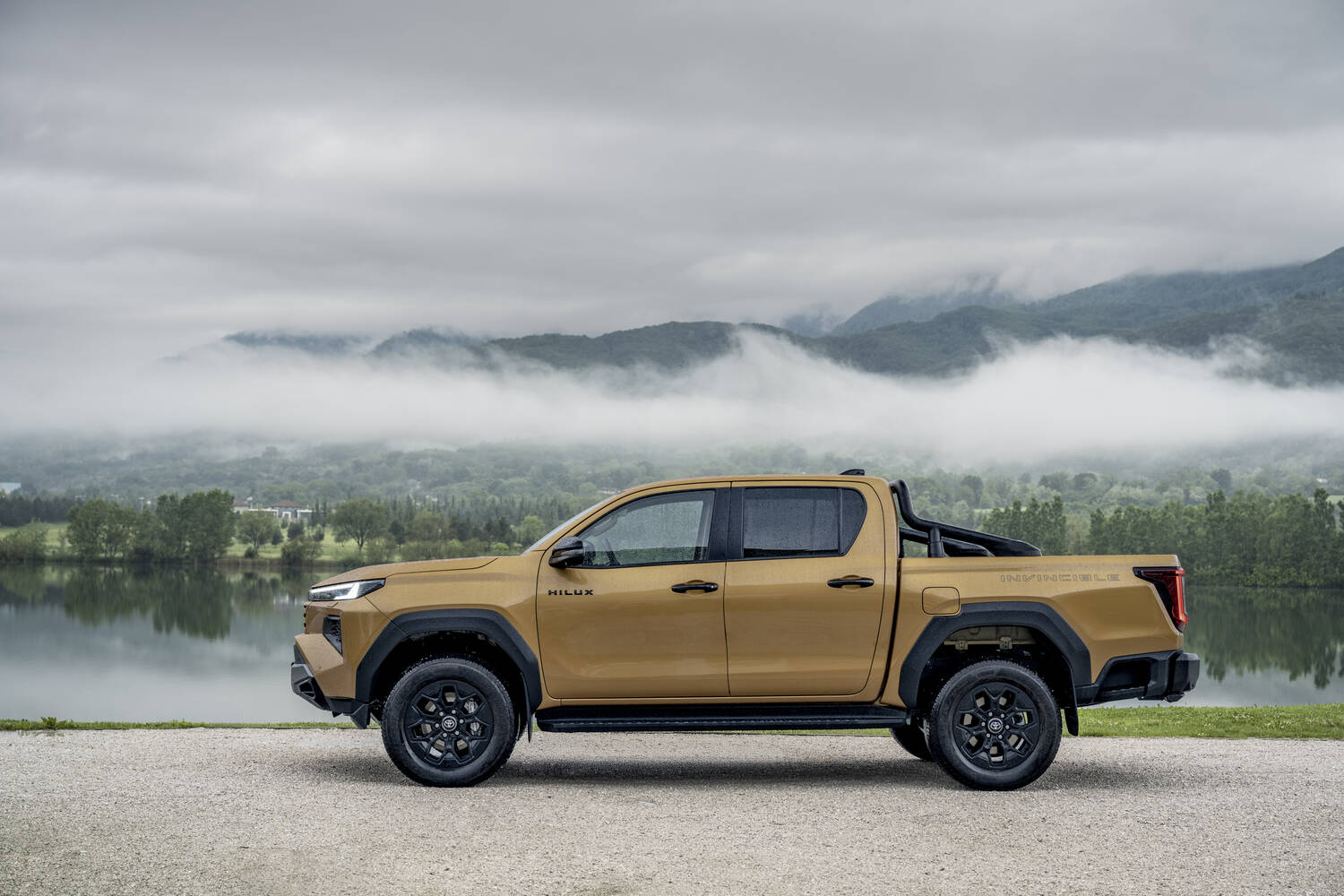
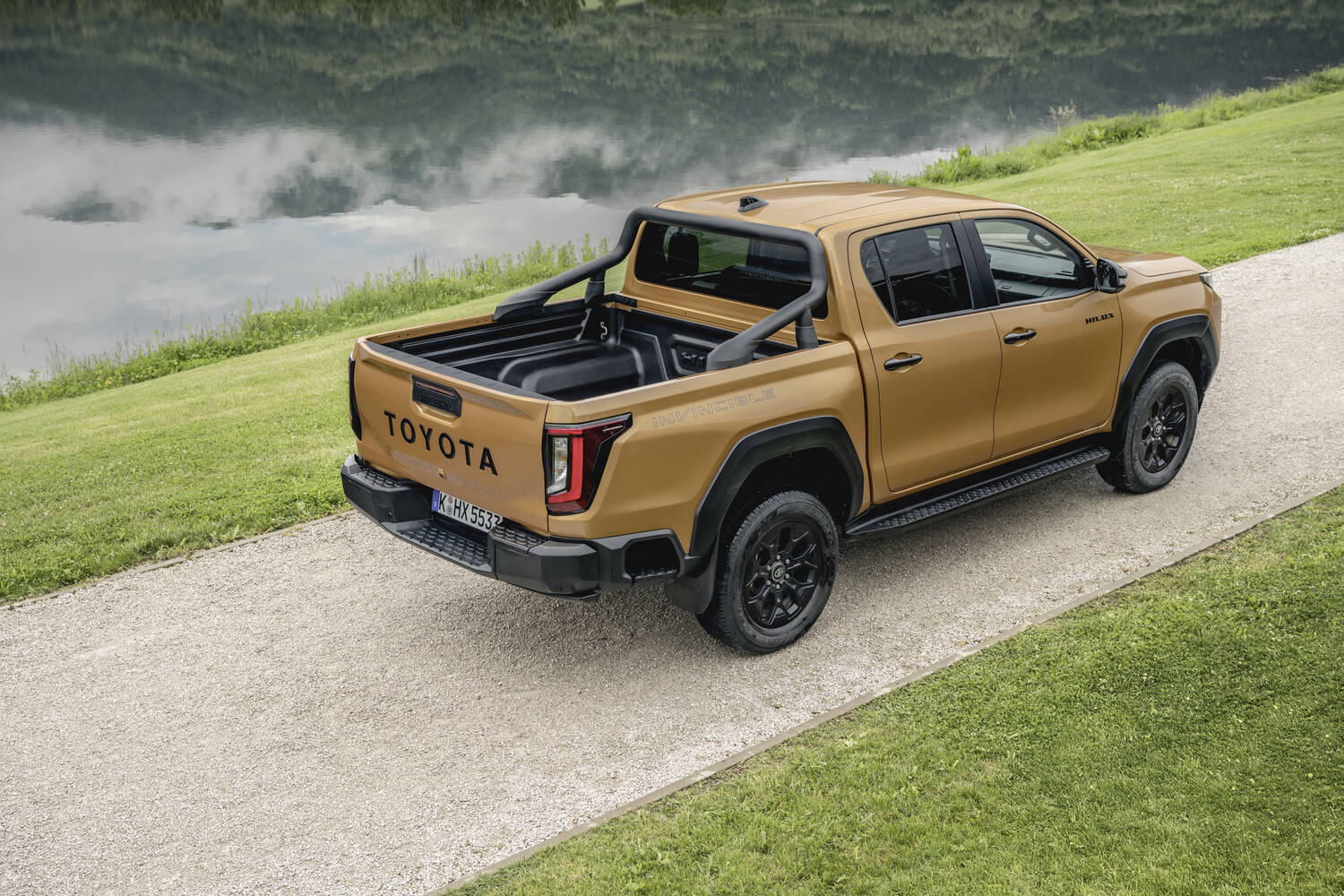
While its overall form is familiar, the ninth-gen Toyota Hilux has a sharper, more angular appearance than its immediate predecessor.
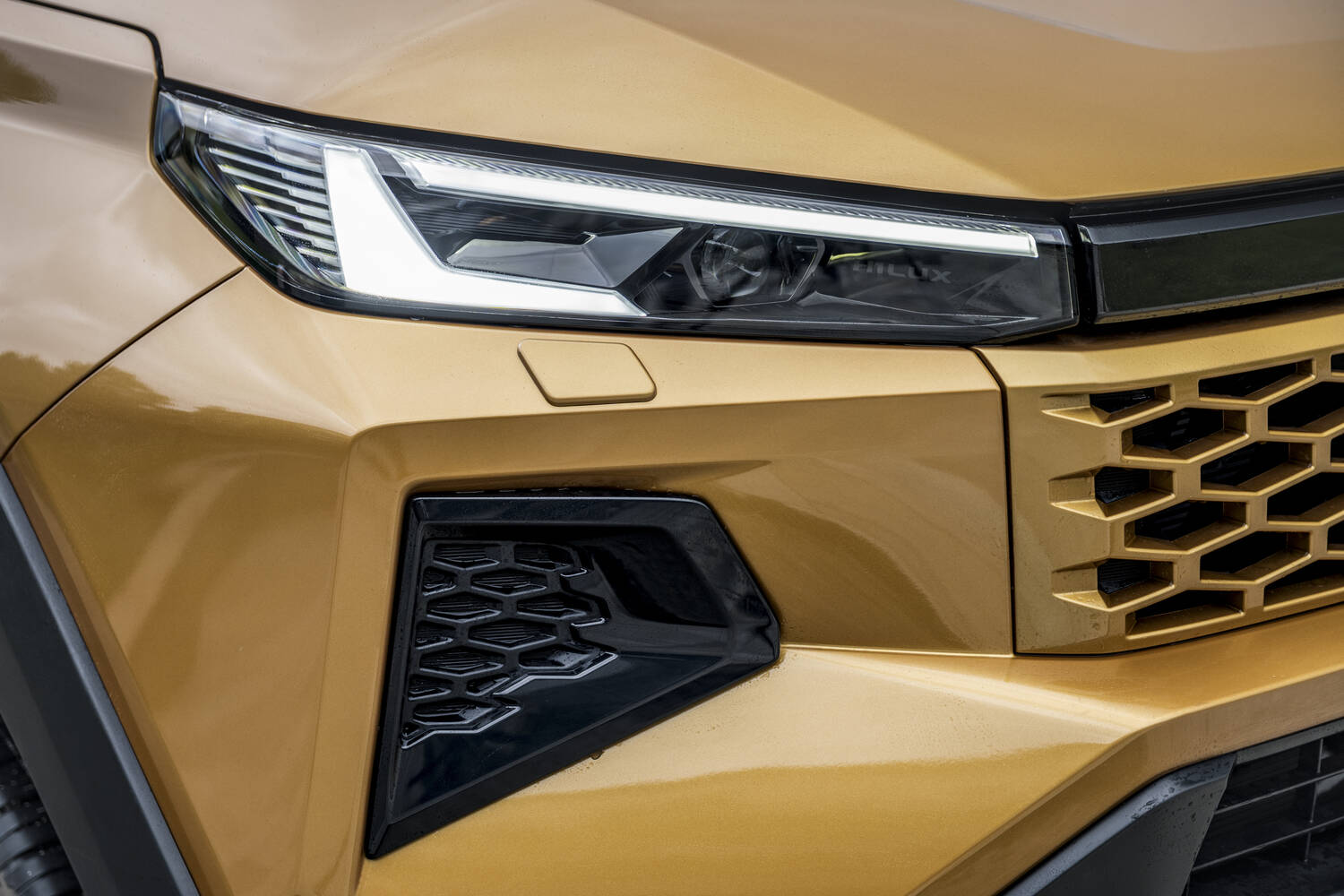
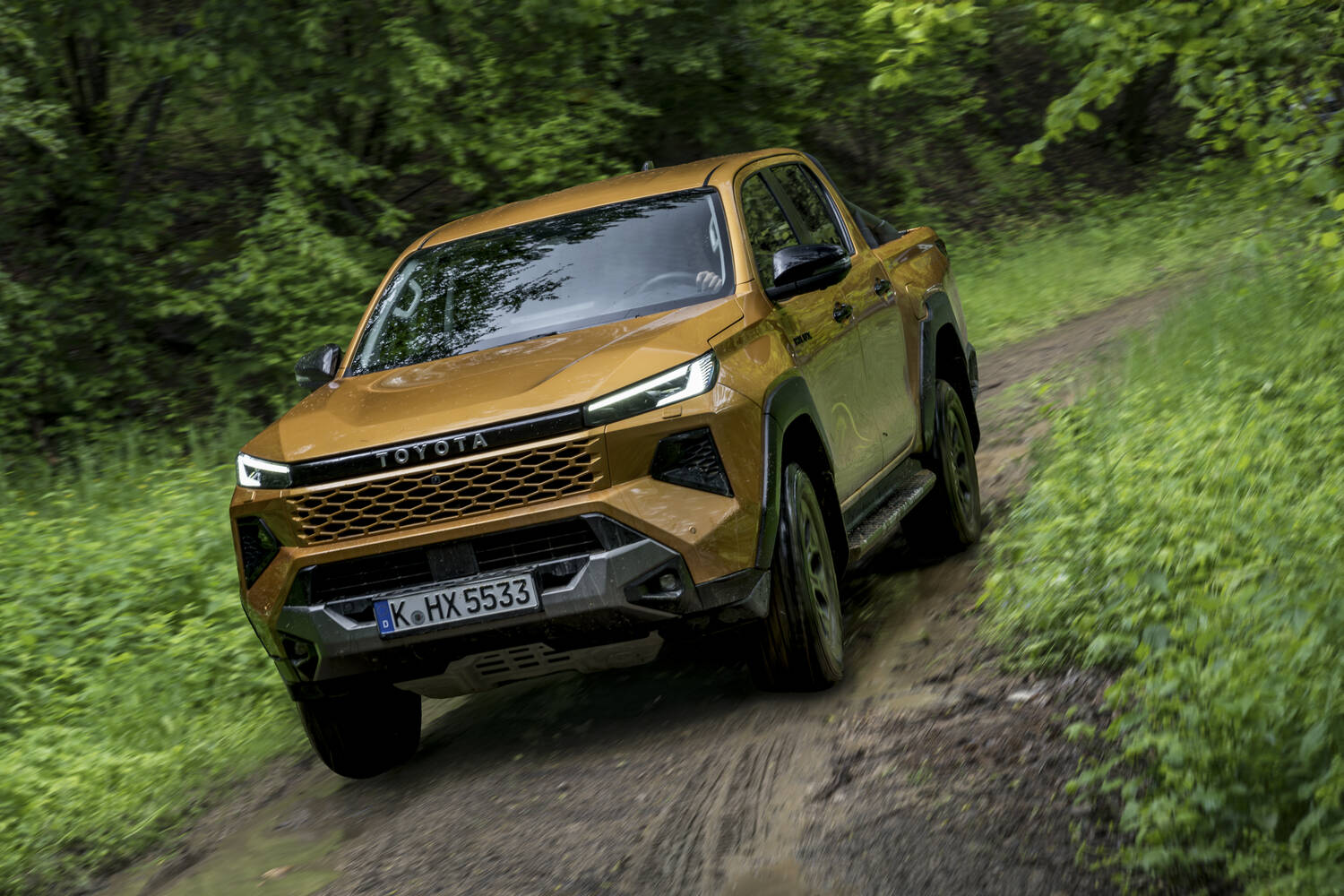
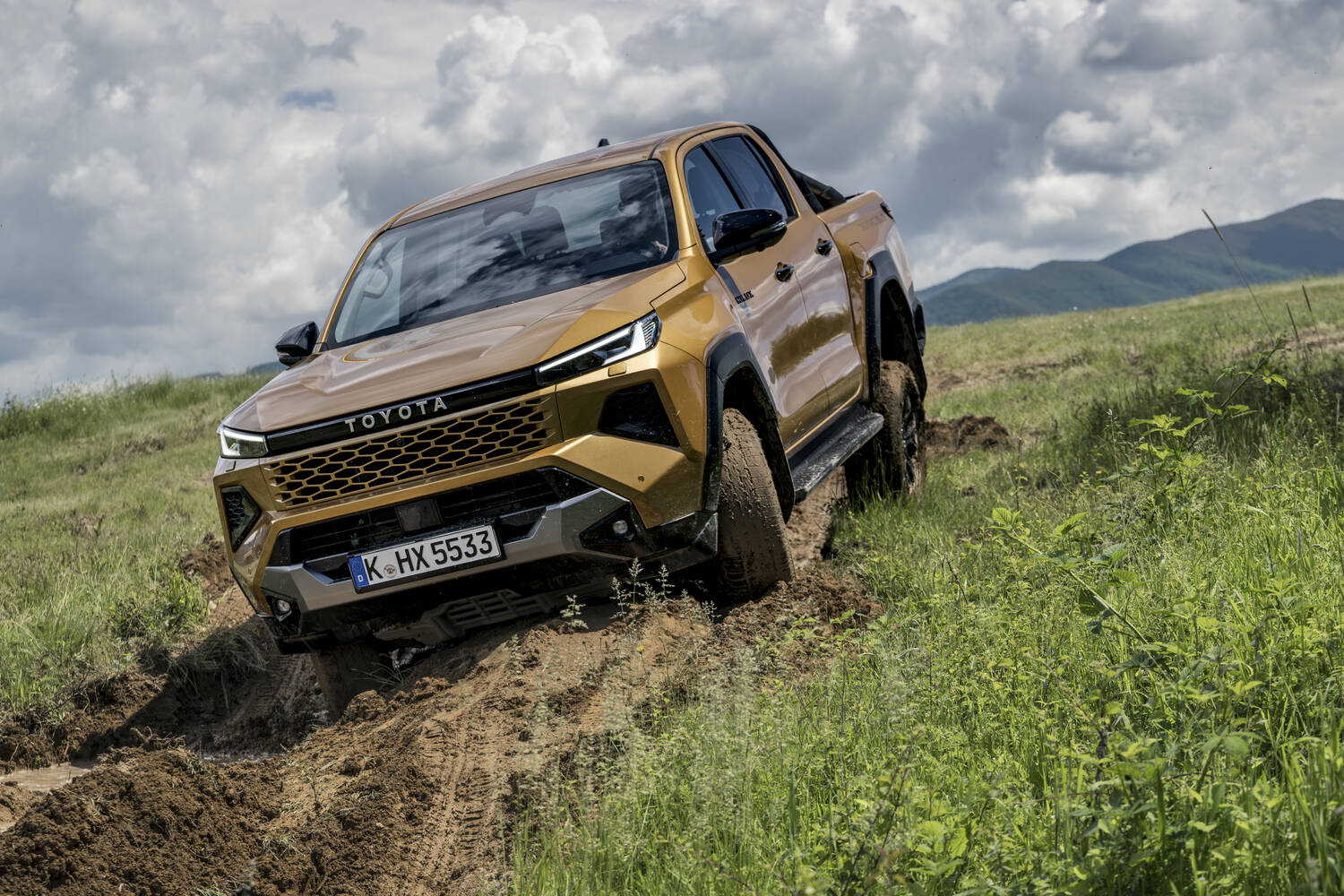
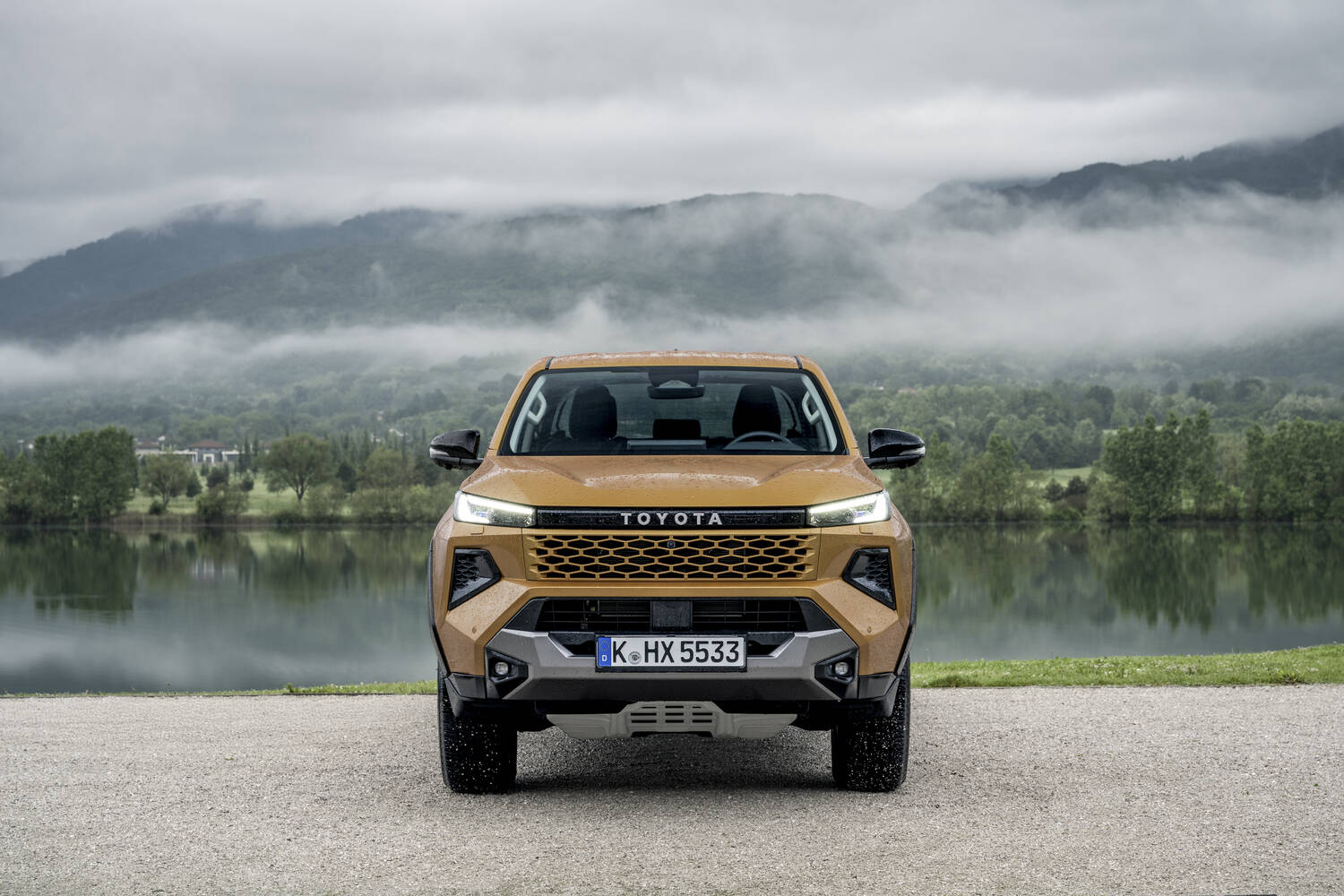
This is most readily denoted by the upright, chunky front end, complete with slim light clusters and the Toyota wordmark between them.

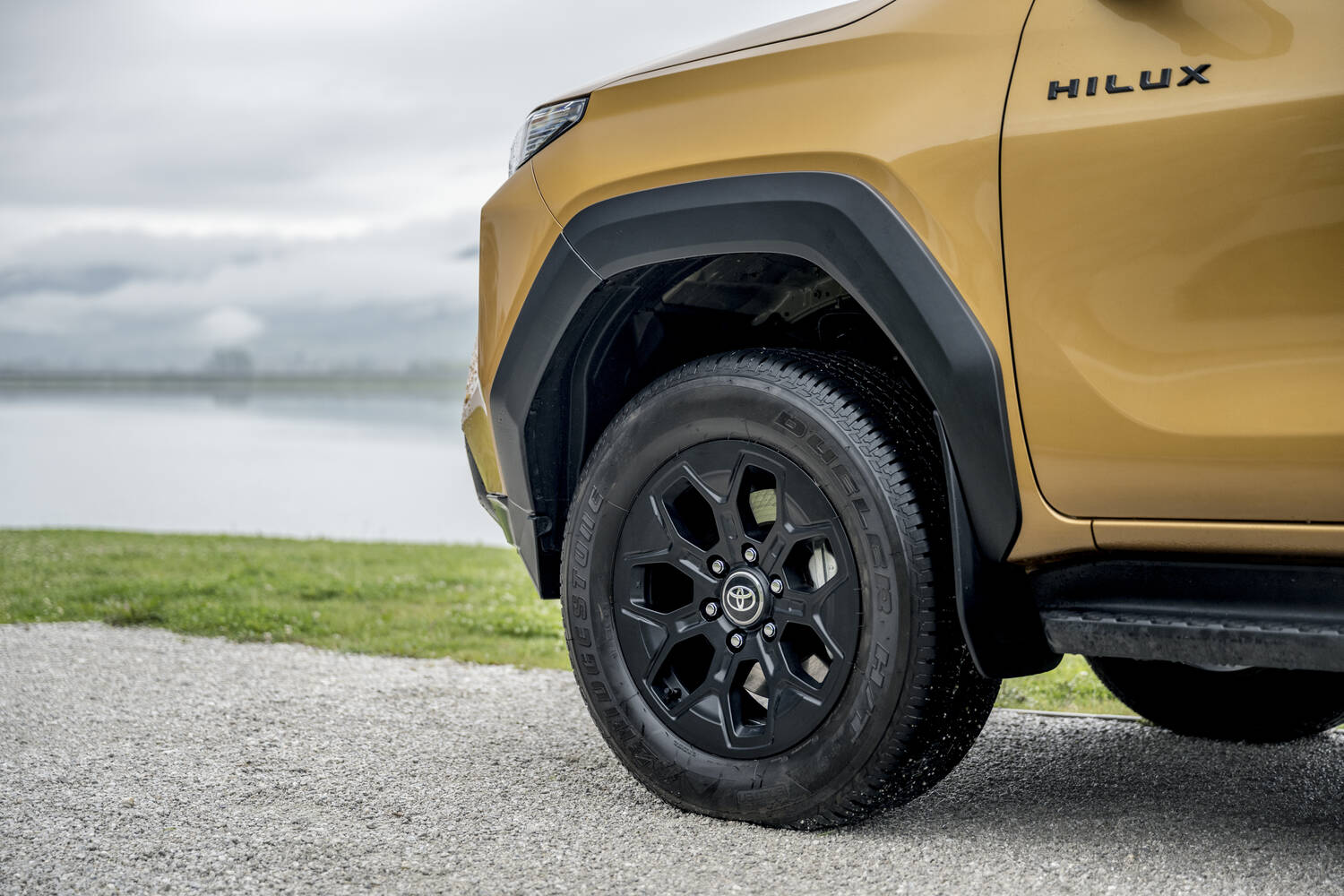
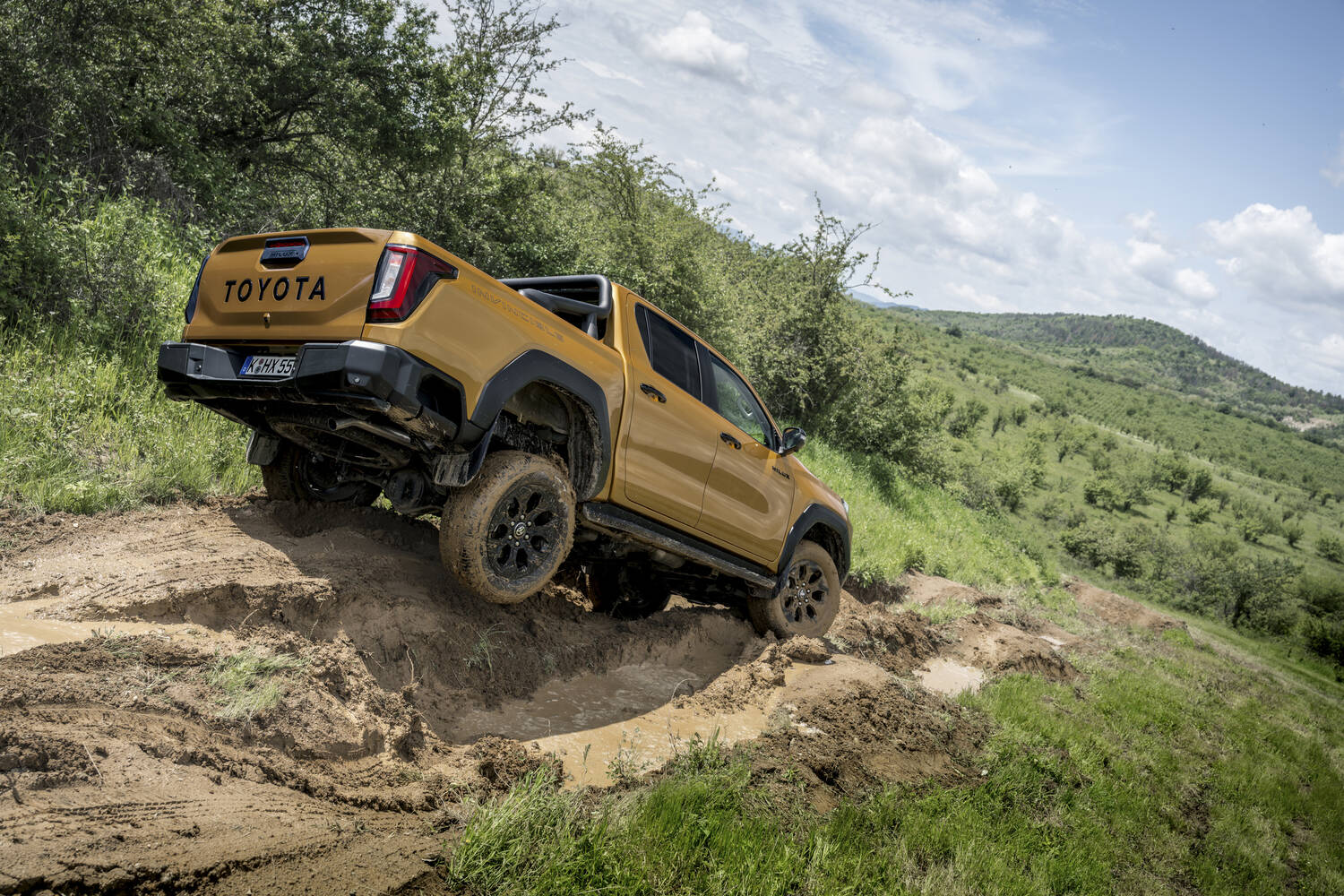
Elsewhere, skid plate protectors, solid-looking bumpers and side steps - and wheelarch cladding on the diesel - give the Hilux plenty of presence.
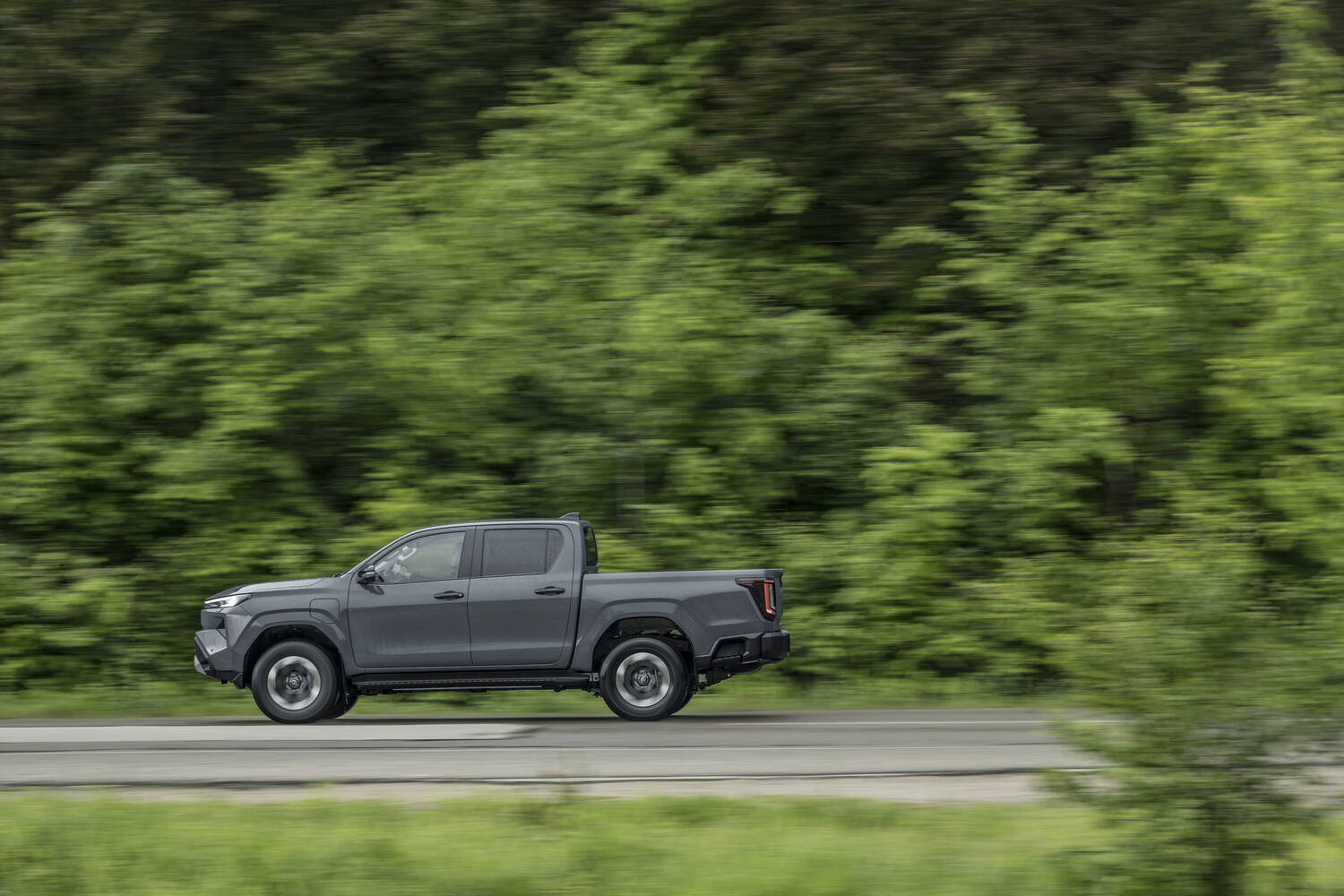
As if it needed it, because the Toyota is only sold in hulking four-door Double Cab format these days and so it's more than 5.3 metres long from end to end.

For those wanting to spot the electric derivative, there are some subtle signifiers. At the front, the panel directly beneath the Toyota wording is smooth and closed-off, whereas there are hexagonal vent holes in this location for the grille of the diesel.
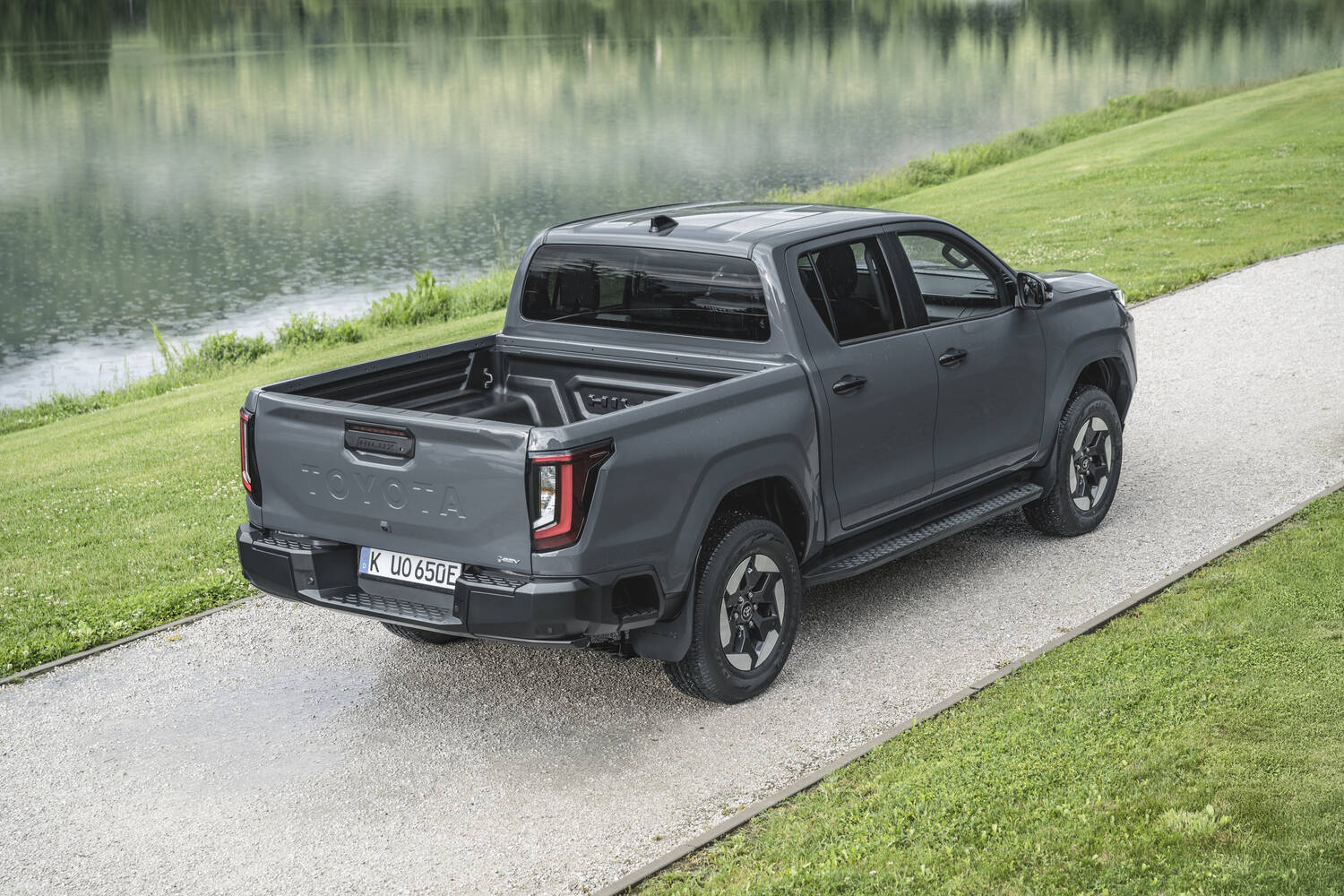
The charging port is on the electric model's front wing, whereas the fuel-filler cap for the mild-hybrid sits further back. There are also no black-plastic over-arch protection trims on the BEV, a decision made for aerodynamic purposes.

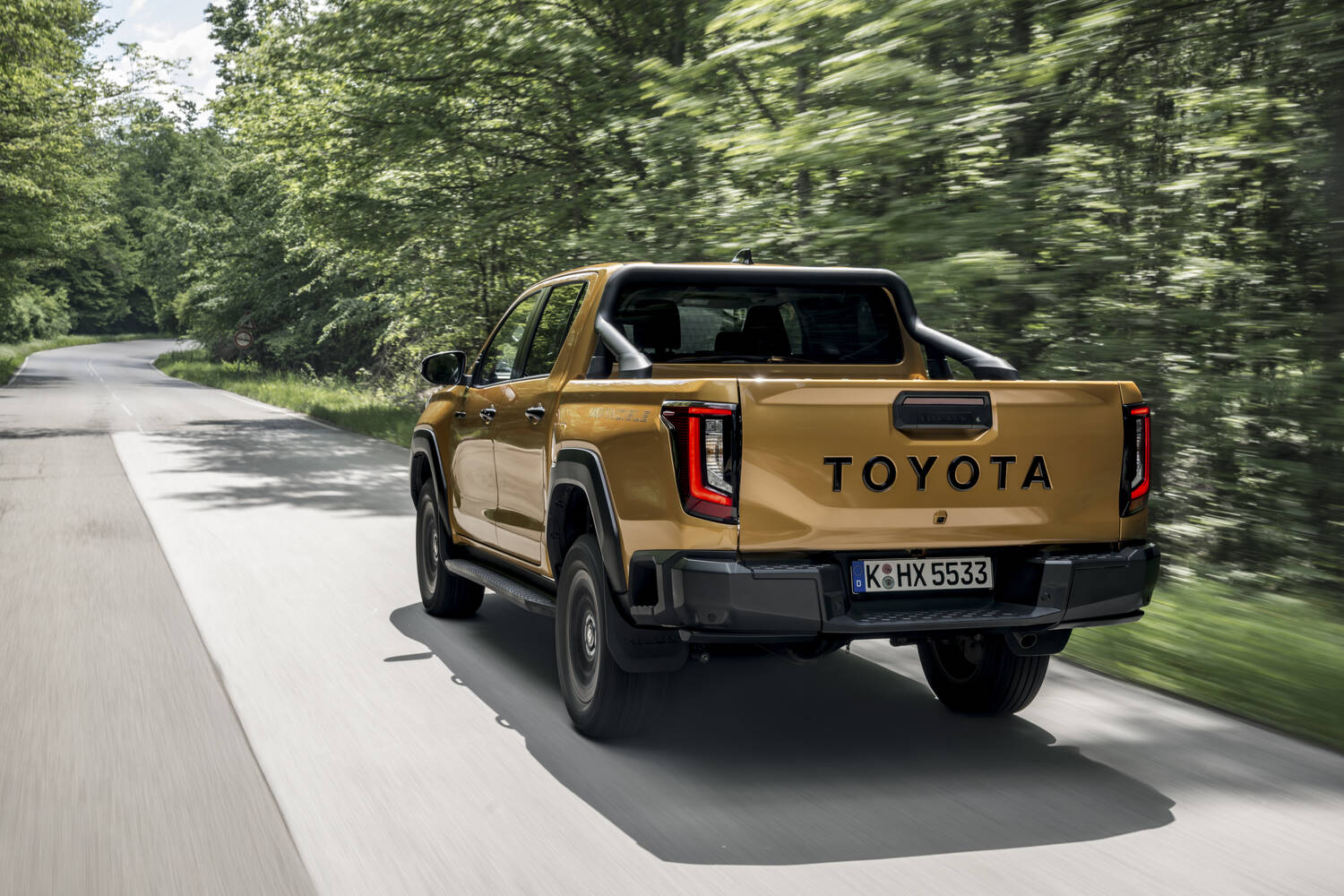
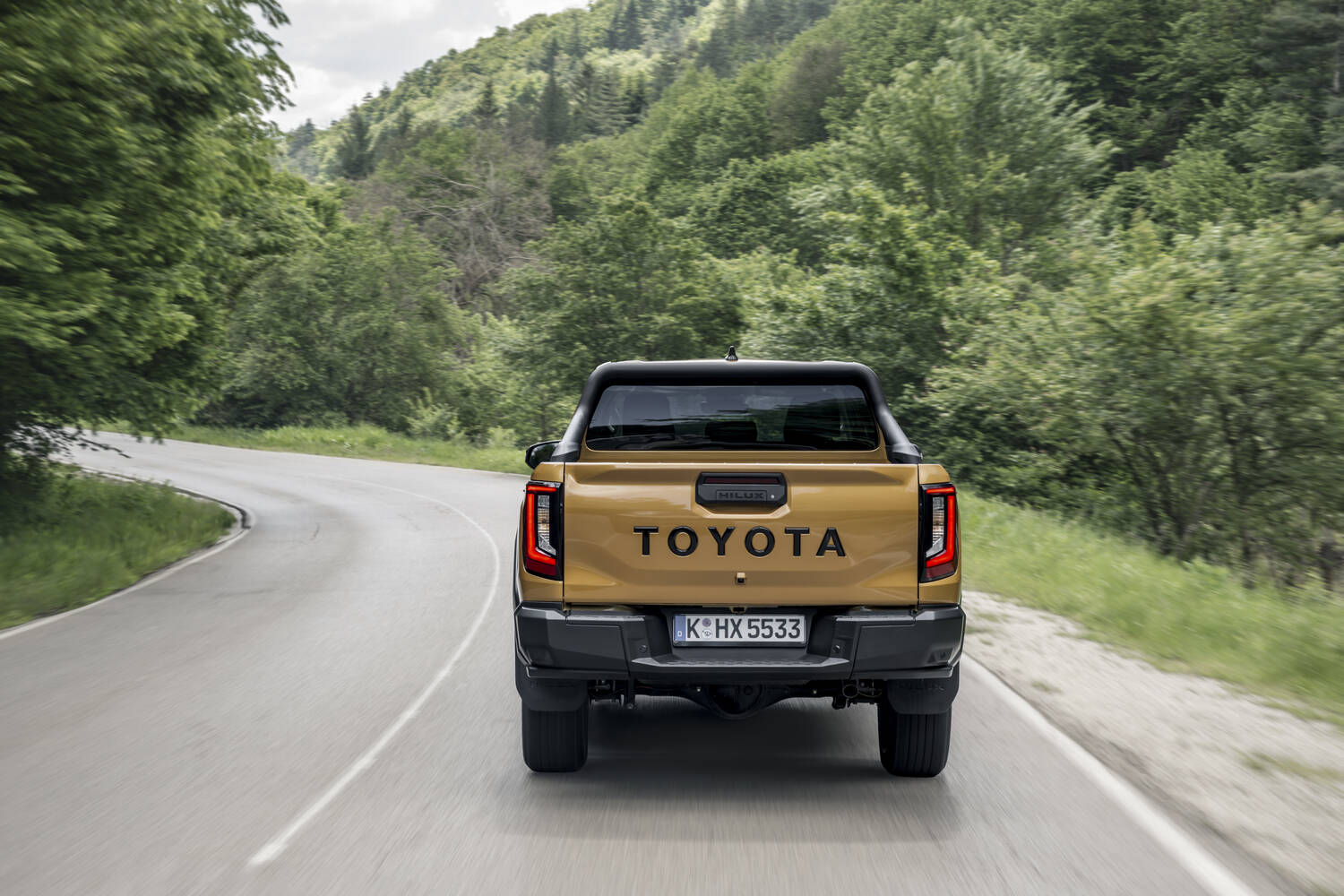
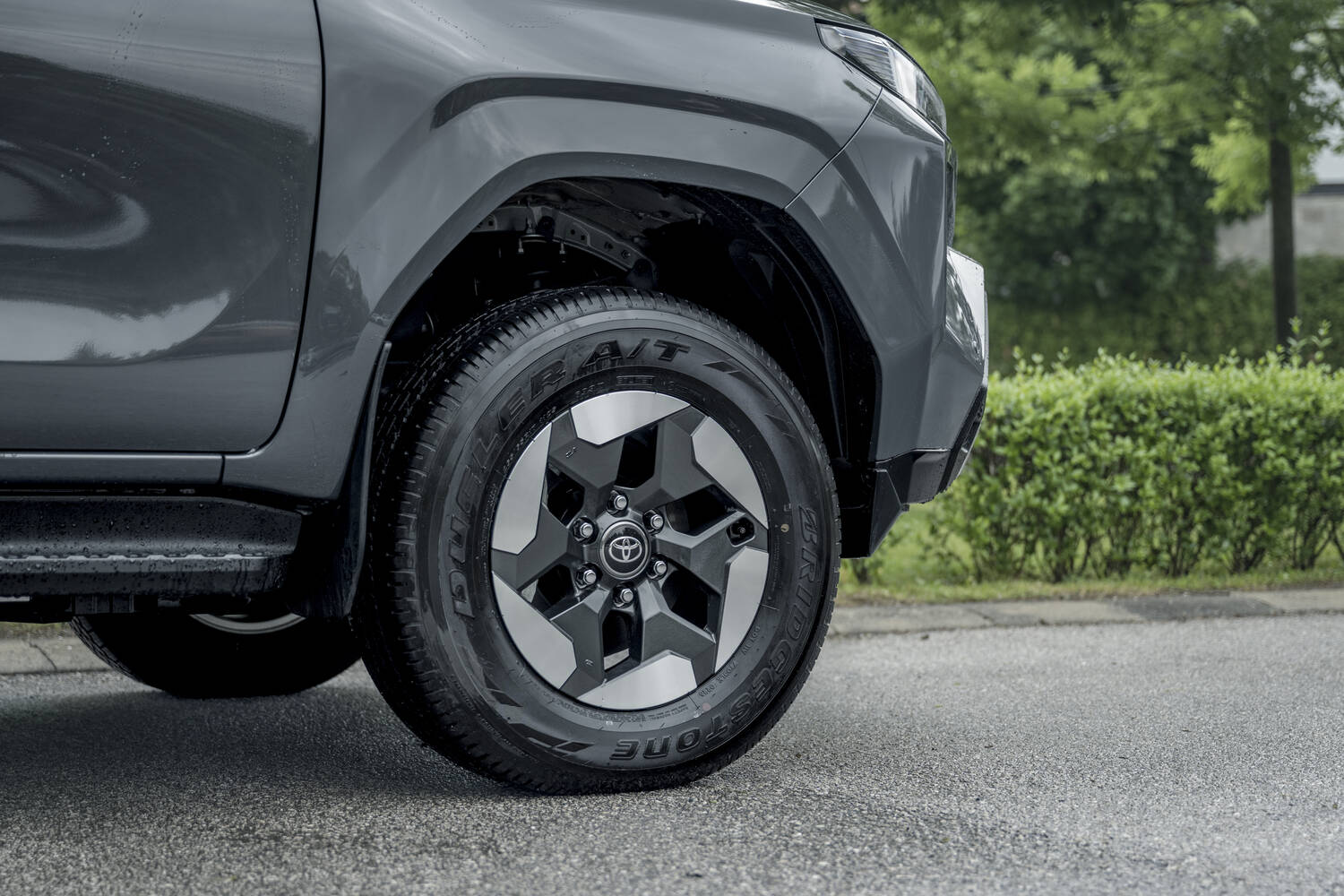
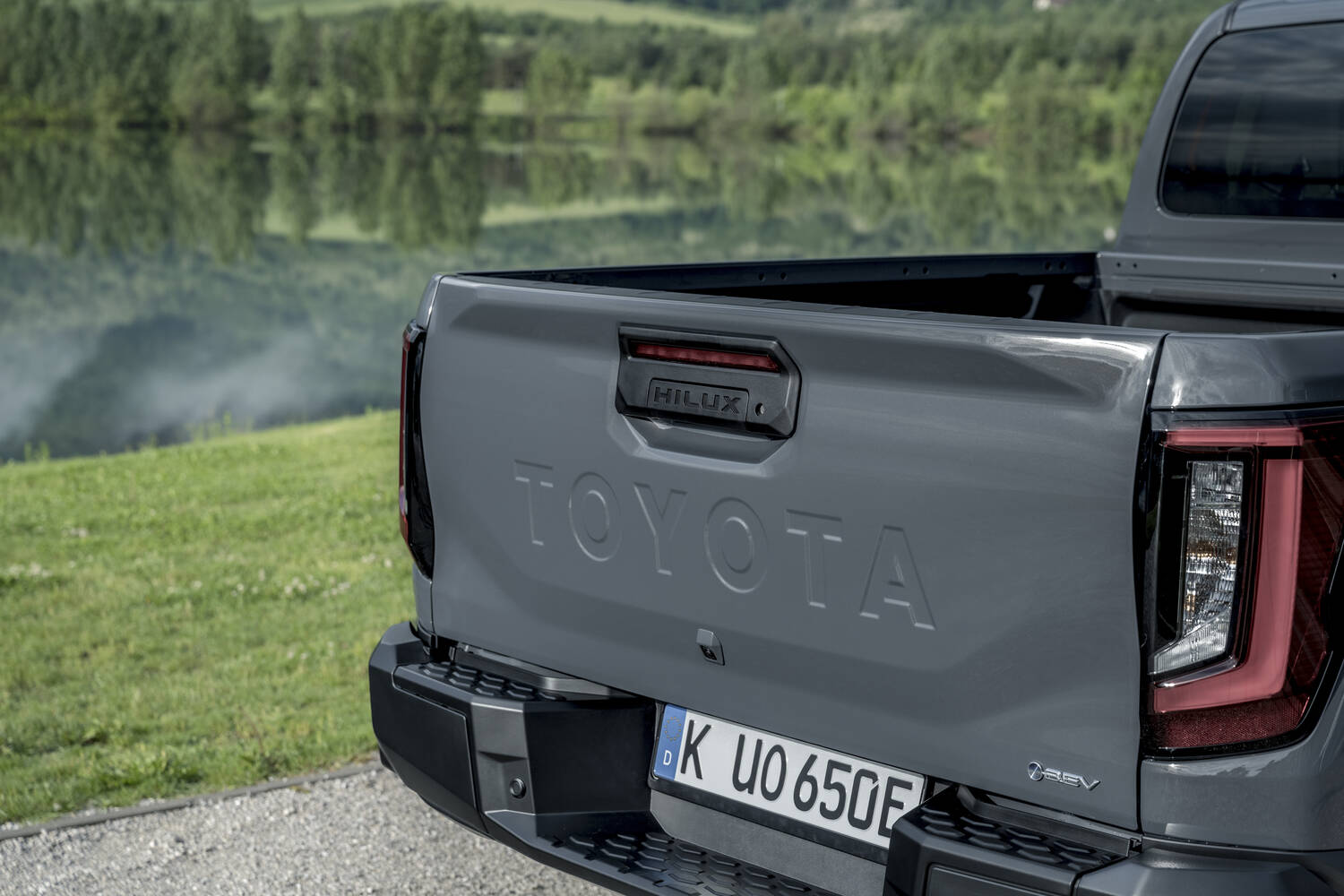
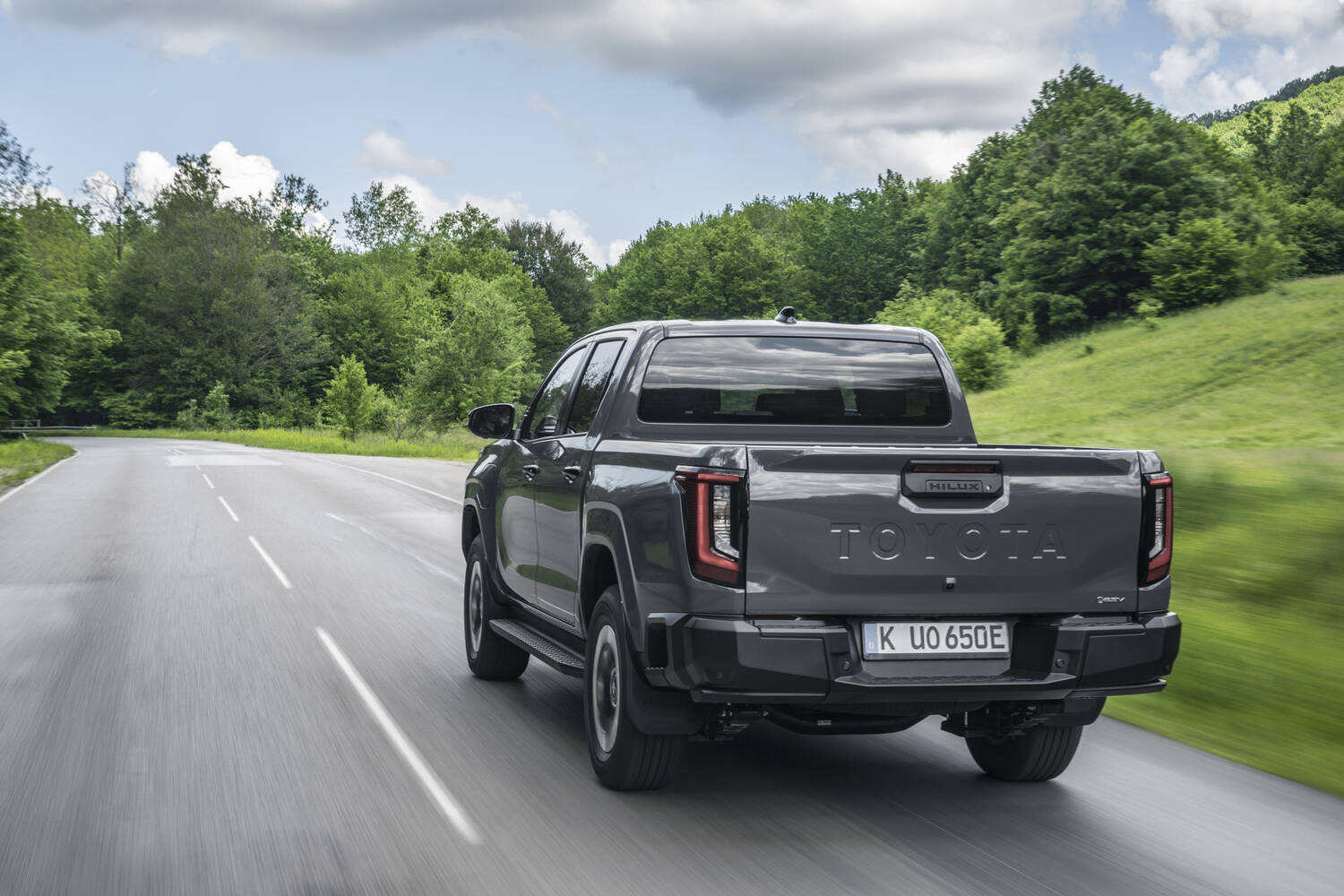
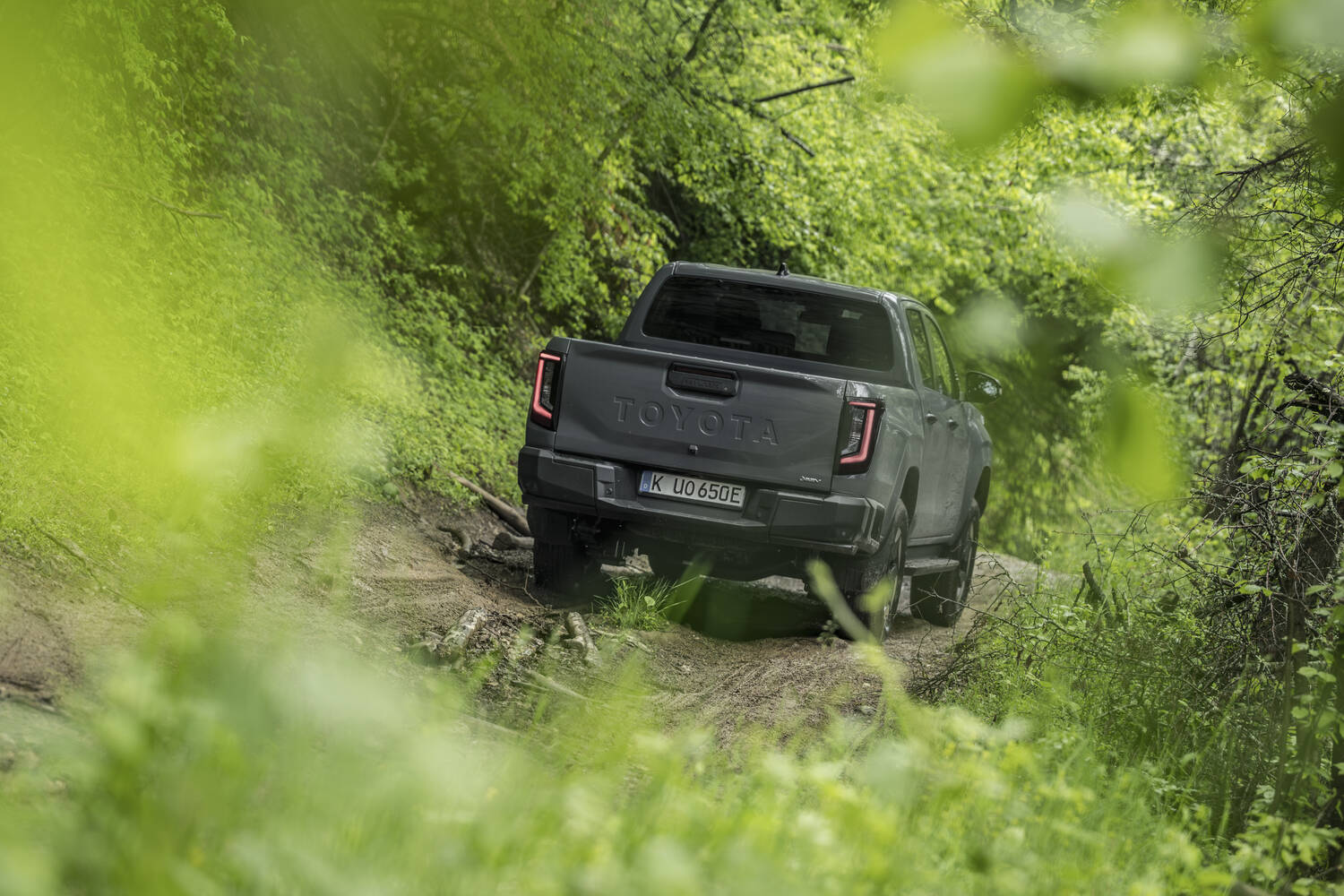
At the rear, there's a small 'BEV' badge (it means Battery Electric Vehicle) on the tailgate and no exhaust poking out to the right-hand side of the vehicle, while in the arches are BEV-specific, aerodynamically optimised 17-inch alloys.
The diesel also uses 17s as standard, with 18-inch rims an option, but the designs of these are not aero-specific or directional, as they are on the BEV.
Dimensions of the 2026 Toyota Hilux
- Length:
- 5,320mm
- Width:
- 1,855mm BEV, 1,885mm diesel (excluding mirrors)
- Height:
- 1,845mm BEV, 1,865mm diesel
- Wheelbase:
- 3,085mm
Paint colours for the 2026 Toyota Hilux

In total, there are eight paint finishes available for the Toyota Hilux as a diesel. The only no-cost colour is the solid hue of Pure White, while the six metallic coats of Silver Blade, Storm Grey, Galaxy Black, Crimson Spark Red, Titan Bronze and smashing Sulphur Yellow should all command a reasonable upgrade fee. The remaining paint, Platinum White Pearl, will likely be the most expensive finish for the Hilux.
However, for the BEV, the options are reduced to just three of these shades - Pure White, Storm Grey and Platinum White Pearl.
Interior, practicality, tech & comfort of the 2026 Toyota Hilux
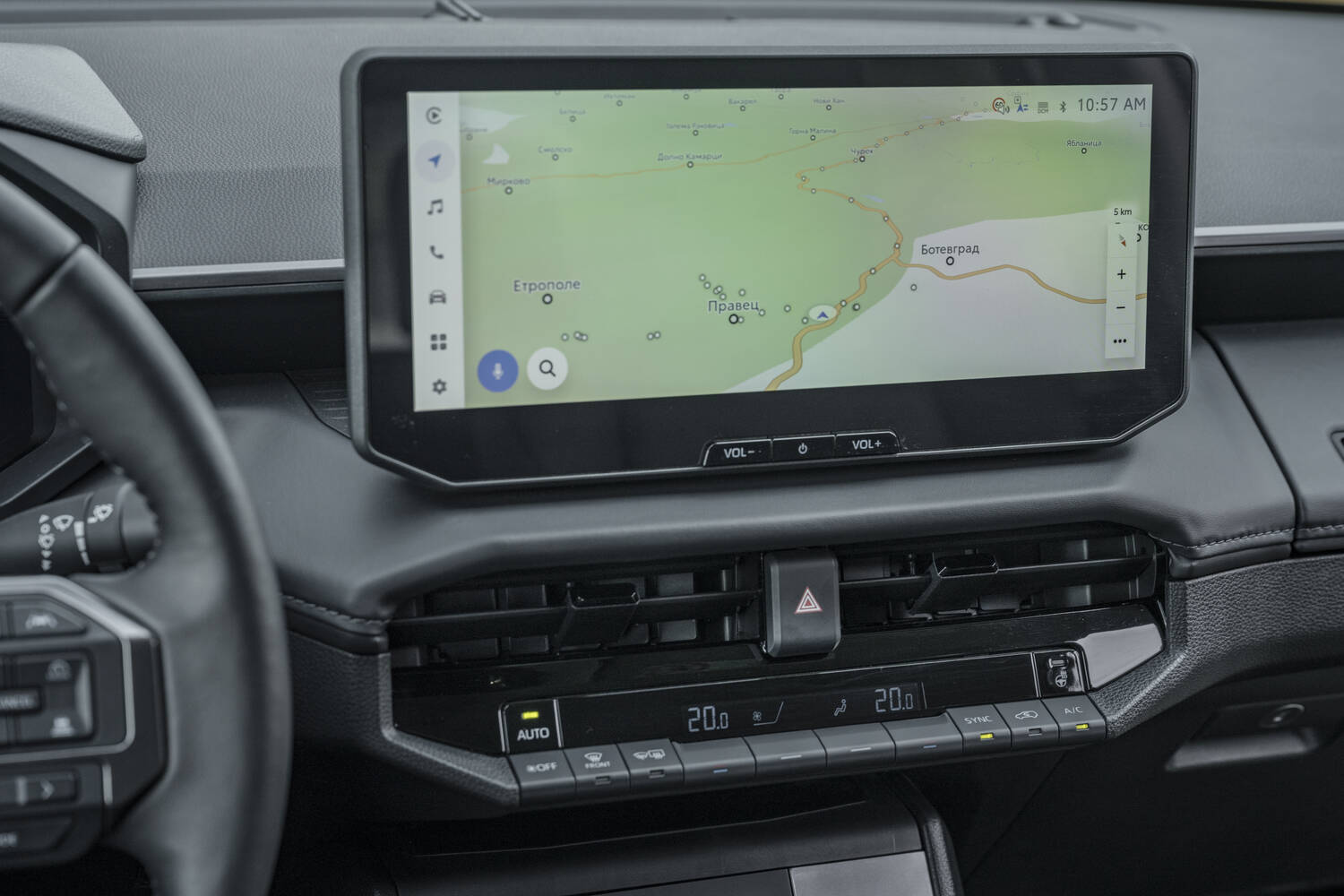
- Twin 12.3-inch screens
- New design of steering wheel
- Five seats in all versions

As commercial vehicles, the basic architecture of any pick-up truck's passenger compartment is designed to be durable and easy to clean, so there are some plastics in the Toyota Hilux which can feel sub-par if you're coming to the truck's cabin from the civilian sector of motoring.
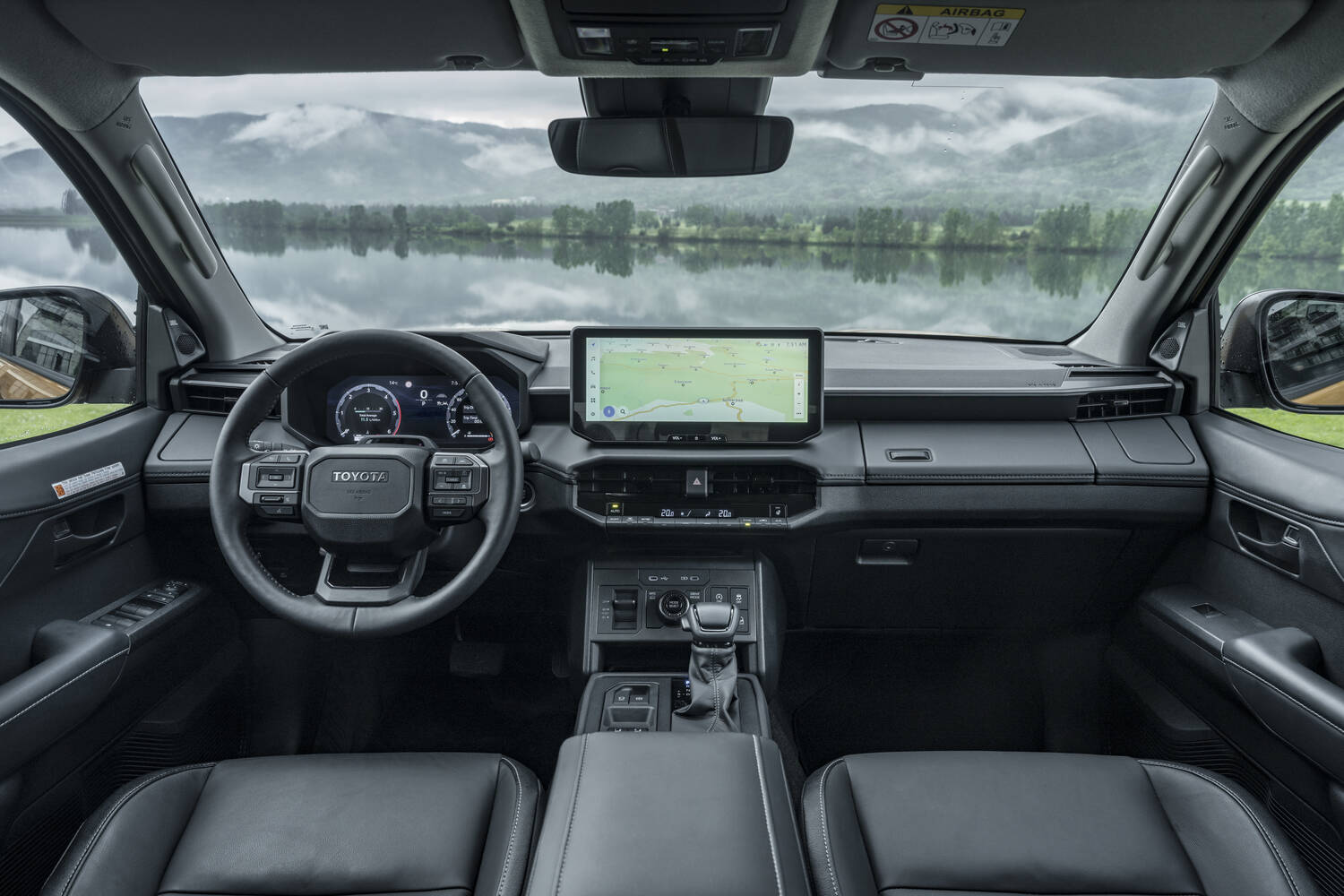
That said, efforts have been made by the manufacturer to improve the quality feel of the interior, while the technology and ergonomic layout of the Hilux's dash are both to be commended.
Getting comfortable in the driver's seat

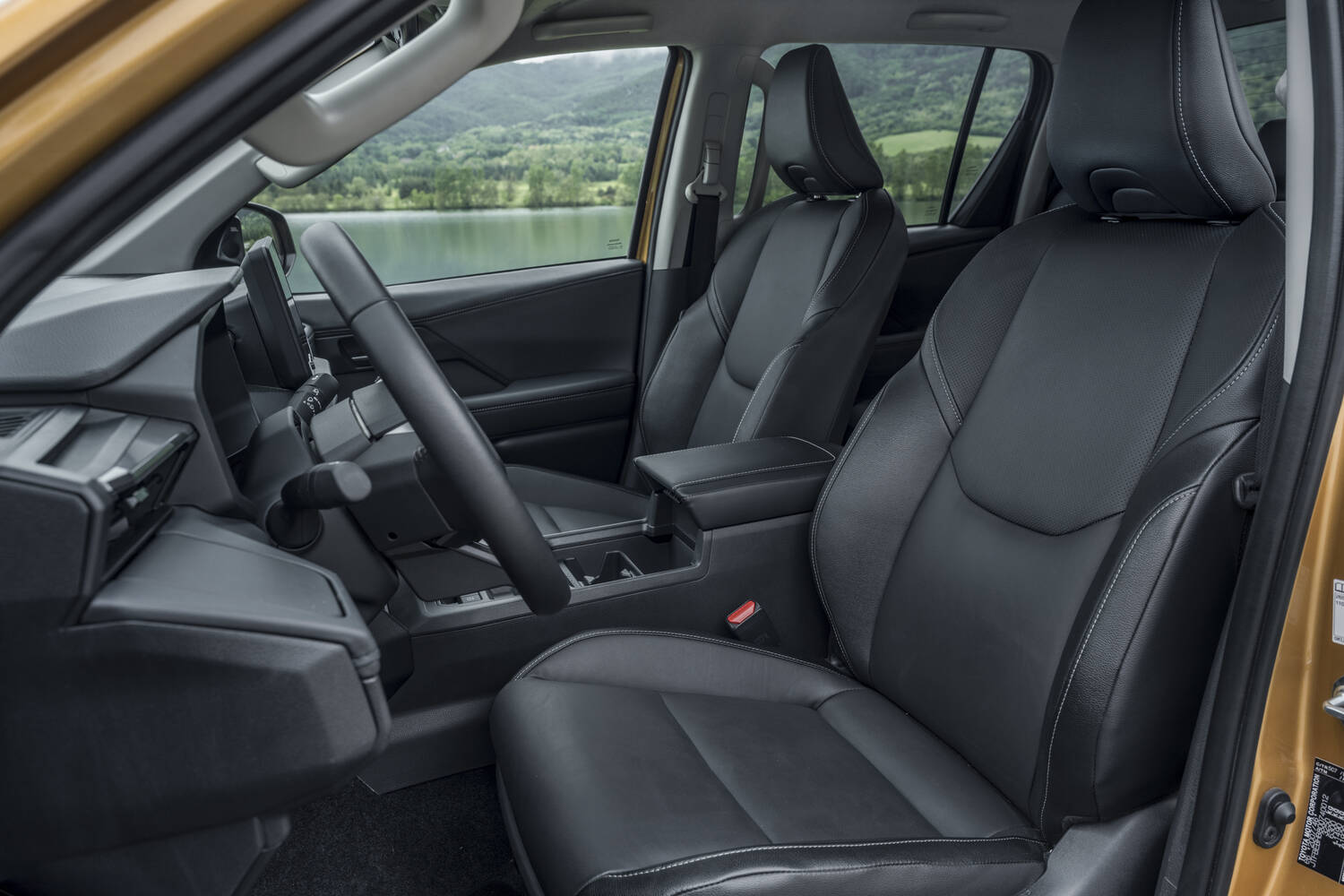
There's a reach-and-rake-adjustable steering column and a height-adjustable driver's seat on all models of the Toyota Hilux, but these are manual unless you fork out for the higher-spec trims - where the driver's chair at least gains power assistance.
Nevertheless, there's a great range of adjustment, while the resulting seat height relative to the road is imperious and visibility out in all directions superb.
Infotainment and technology

The most basic model of the Toyota Hilux family comes with a seven-inch instrument cluster, a nine-inch Toyota Touch 3 multimedia screen and a four-speaker sound system.
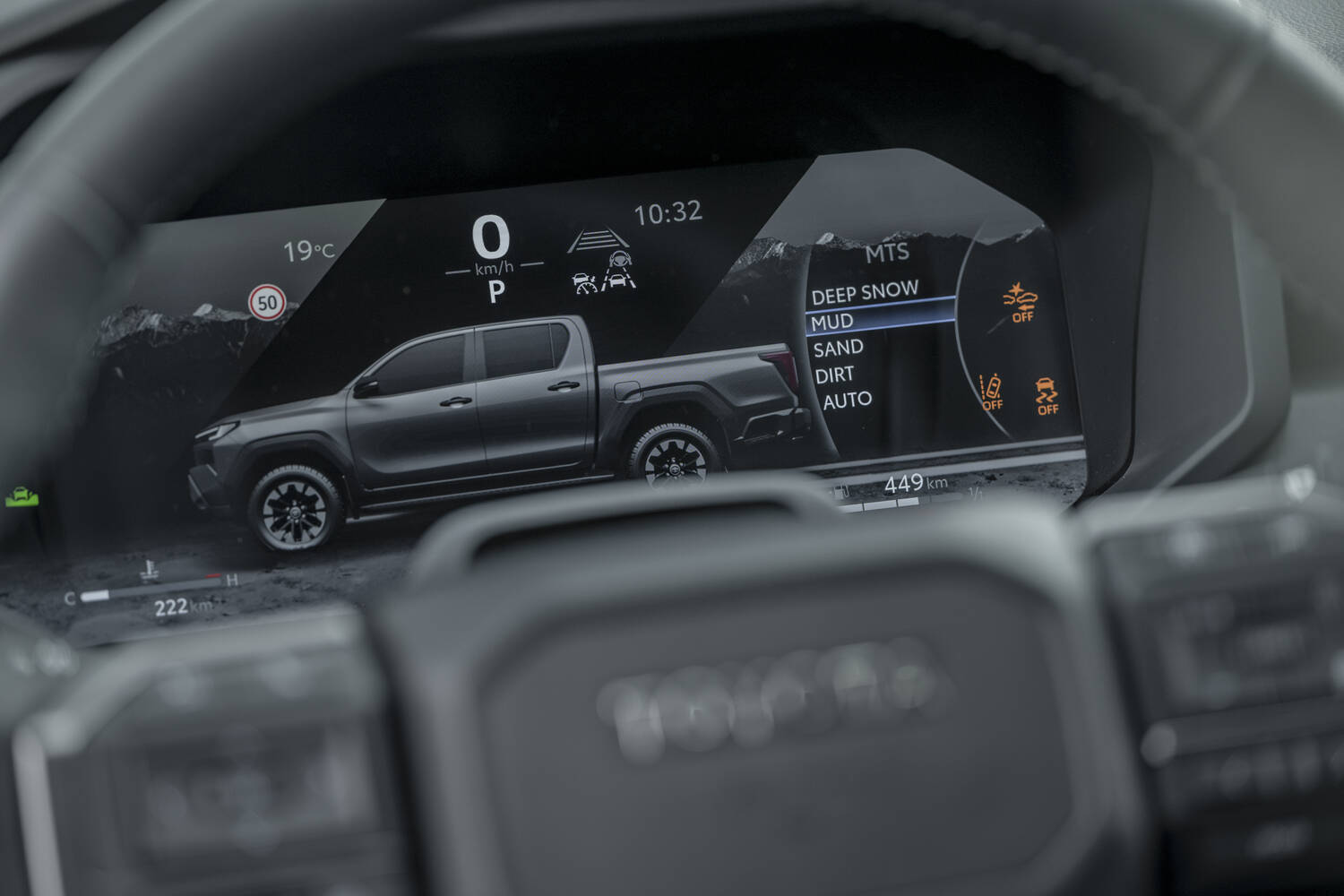
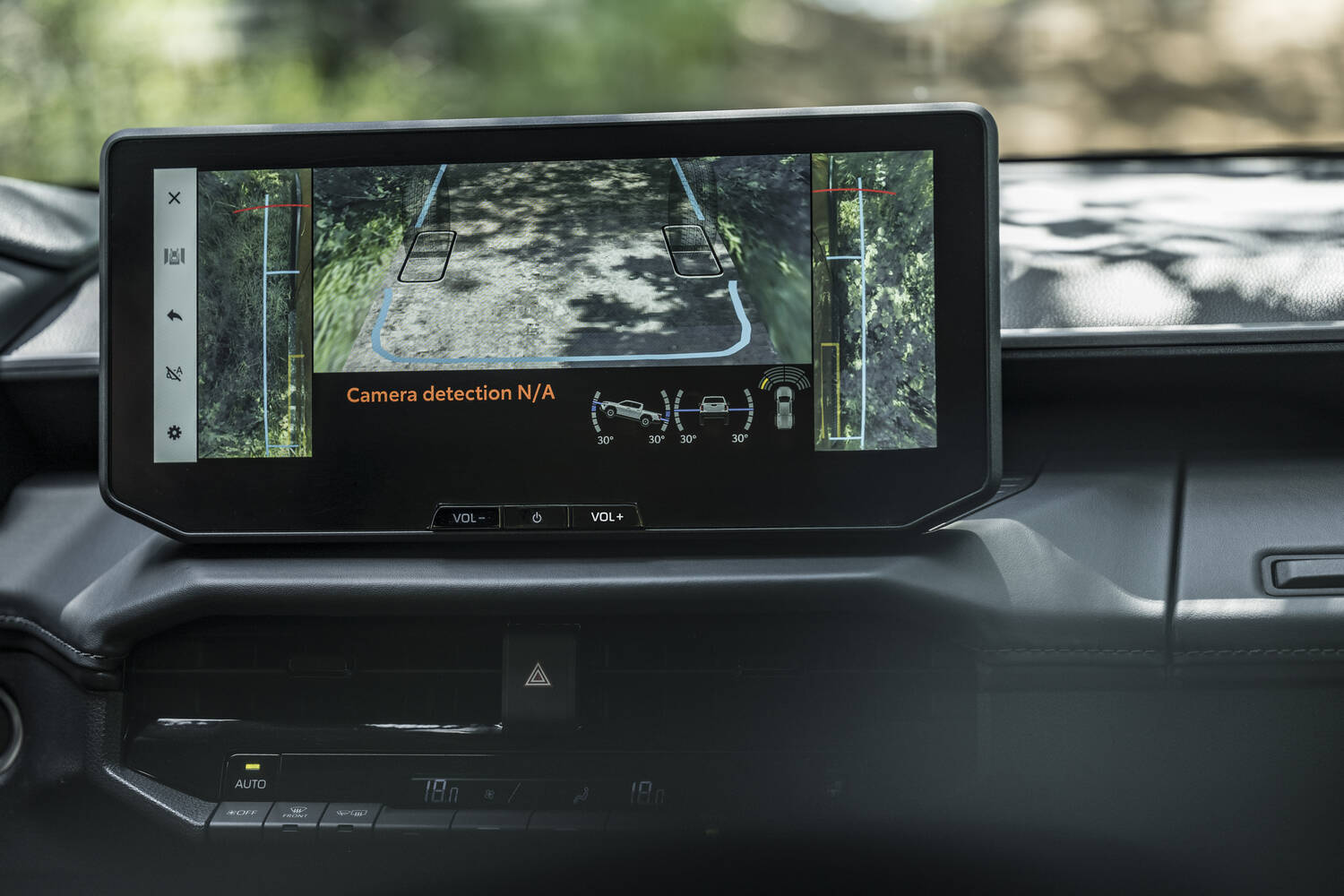
Every other variant from there upwards is then equipped with at least an eight-speaker stereo and the fancy 12.3-inch Toyota Smart Connect+ infotainment set-up, but for the glitzy 12.3-inch fully digital driver's cluster and a nine-speaker JBL premium audio installation, you've got to be looking at a top-end Hilux.

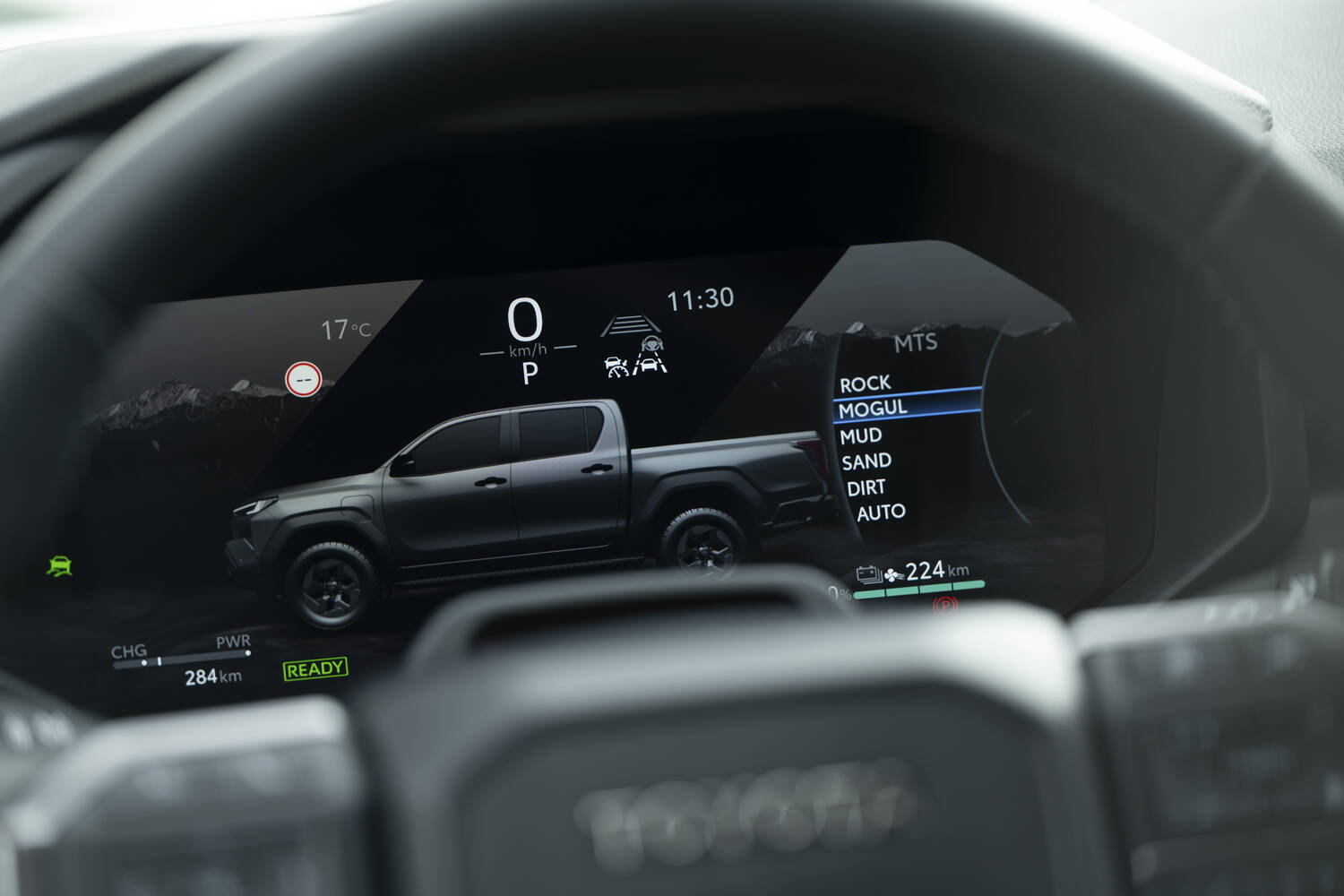
The cars we tried in Bulgaria had these dual 12.3-inch screens and very well they worked too. Smartphone integration via both Apple CarPlay and Android Auto is available on all models of the Toyota, but a wireless charging pad for such devices is not offered on the entry-level truck.
Practicality around the cabin
Up front in the Toyota Hilux are four cupholders - two fixed centrally and open, and then a solitary lidded item for each side of the main fascia.
There's also a capacious glovebox, an upper-dash storage compartment, an under-armrest cubby hole and big door pockets, plus a couple of USB ports as well.
Rear-seat passenger space

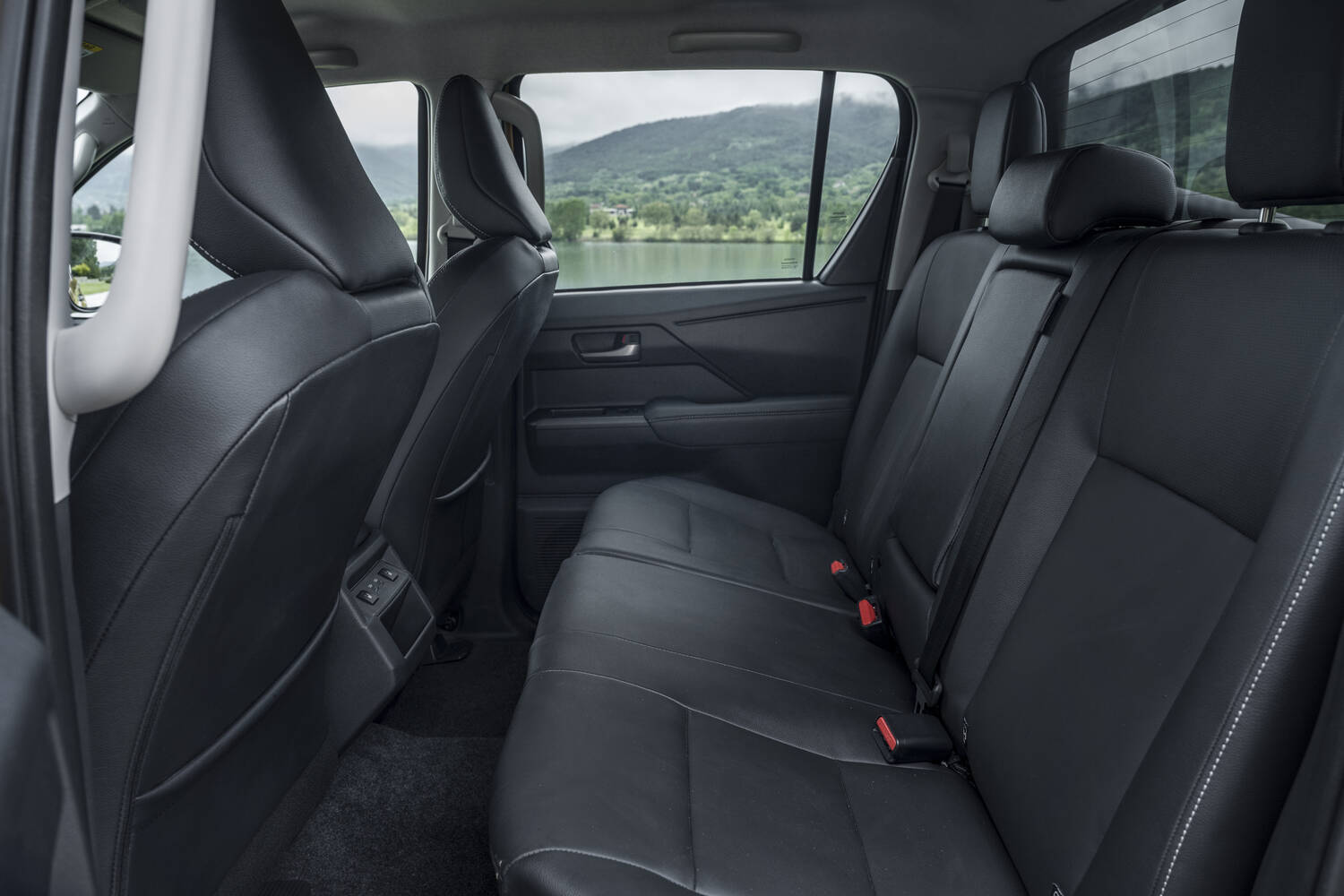
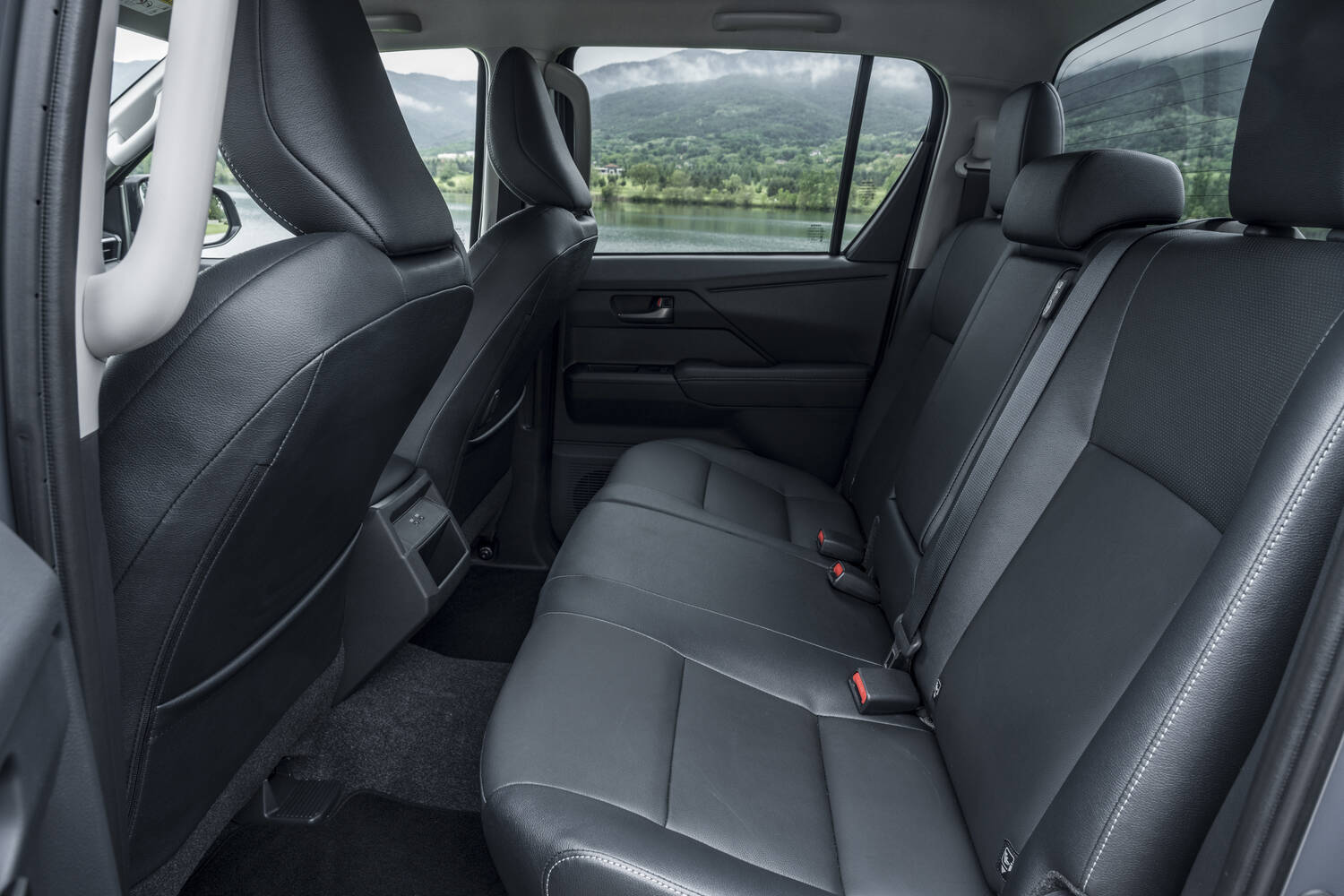
Room in the back of the Double Cab Hilux is pretty generous and there is a full three-seat bench complete with seatbelts in all positions - but the large transmission tunnel in the centre of the footwell means anyone sitting in the middle won't be very comfortable for long distances.
Other features in the back include a couple of USB-C ports and, in the top-spec model, buttons for the heated seats, as well as an open storage tray in the back of the centre console, door bins moulded for drinks bottles, a fold-down armrest incorporating another pair of cupholders and elasticated map pockets on the backs of the front seats.
Fitting child seats to the Toyota Hilux
There are two ISOFIX positions with top tethers in the back of the Toyota Hilux, while there is also a top tether for the central seat which is mounted to the vehicle's frame. Accessing the top tethers requires folding the 60:40 split rear seats forward a little, but it's not too tricky a job.
The rear doors, meanwhile, are fairly large and open quite wide, so loading in child seats shouldn't be a nightmare - especially as the height of the Hilux means less bending down to the squab-level of the rear bench.
Load-bed space and capacity in the Toyota Hilux

The load bed measures more than 1.5 metres long and wide, and 480mm deep, and it is lined with hard-wearing, corrugated plastic that means the metal body of the truck is protected from damage.
There is a difference in payload between the two powertrains of the Hilux, though. Those wanting the full 'one-tonner' experience must choose the diesel, as that can carry up to 1,065kg in its rear bed; the BEV is limited to 715kg.
Safety in the Toyota Hilux
Although Euro NCAP hasn't tested the ninth-gen Toyota Hilux, related crash-test body ANCAP in Australia has - and the truck picked up the full five-star overall rating, along with subdiscipline scores of 84, 89, 82 and 82 per cent respectively for protection of adult occupant, child occupant, vulnerable road users and safety assist. You can read the full ANCAP report right here.
Furthermore, every item of advanced driver assistance systems (ADAS) that is available on the Hilux, bar two technologies, is fitted to every single model - and the pair which isn't on the base Toyota come into play just one trim grade up (they're Downhill Assist Control and Emergency Driving Stop System, in case you're wondering).
Performance of the 2026 Toyota Hilux
- Choice of diesel or electric power
- Both models have 4WD
- Great off-road, but uncomfortable

There are two flavours of the Toyota Hilux truck. The first is more familiar, as it's essentially a turbodiesel powertrain - a 2.8-litre four-cylinder engine, which was already in service in the previous-gen Hilux, but which here is augmented by a 48-volt mild-hybrid assistance system. In this way, the Hilux mirrors the Toyota Land Cruiser, which has the same arrangement.
Peak power and torque are rated at 204hp and 500Nm, respectively, going to all four wheels via a six-speed automatic transmission. The diesel Hilux has a switchable all-wheel-drive system, complete with low- and high-ratio transfer case, locking differentials and a two-wheel-drive mode for better fuel economy.

The more interesting model, though, is the Hilux BEV. While there are plenty of hybrid and plug-in-hybrid pick-ups available elsewhere, fully electric derivatives are much rarer.
This Toyota uses two 'eAxles', which are an 80kW/205Nm electric motor up front and a 128kW/269Nm rear item. Their maximum combined output isn't 208kW, though, but 144kW, which results in 196hp of peak power; Toyota doesn't publish a maximum torque figure for the BEV's drivetrain.
The electric Hilux has permanent four-wheel drive as a result, due to its dual-motor arrangement, but it doesn't have all the fancy four-wheel-drive hardware of the diesel.
It does, however, benefit from the Multi-Terrain Select (MTS) system, while - like many EVs of all shapes and sizes - the transmission is a single-speed reduction-gear unit.
Driving the Toyota Hilux 48V Diesel on- and off-road in Bulgaria
Words by Matt Robinson on 8 June 2026

There's quite a lot of rumble and whooshing from the four-cylinder combustion engine up front, but the company has worked hard to quell the volume of the diesel in action and has done an excellent job of things, all told.
It feels torque-rich and responsive, and there are regular occasions while approaching slow-speed corners where you suddenly realise the engine has shut down and the Hilux is rolling to the apex on its electric power alone.

Further, the six-speed automatic gearbox is pleasant and slick in action, and all models of the Hilux use electric power steering, which has got rid of the slow and dim-witted affair you used to have to put up with on older pick-ups.
There's much more positivity and weight in the helm of the Hilux these days, which makes it a more civilised thing to drive on the road.

Speaking of which, the handling is OK for a truck like this, but then that's not really this vehicle's forte. Instead it's the rolling refinement and generally impressive ride comfort that we like most of all about the Hilux.
However, there's a caveat here: in the diesel we were driving, there was a huge waterbag sitting in the load bed of our demonstrator. This is a trick to tie down the leaf-sprung rear suspension and improve the ride; it worked, but we'll come back to this point with the BEV impressions below.
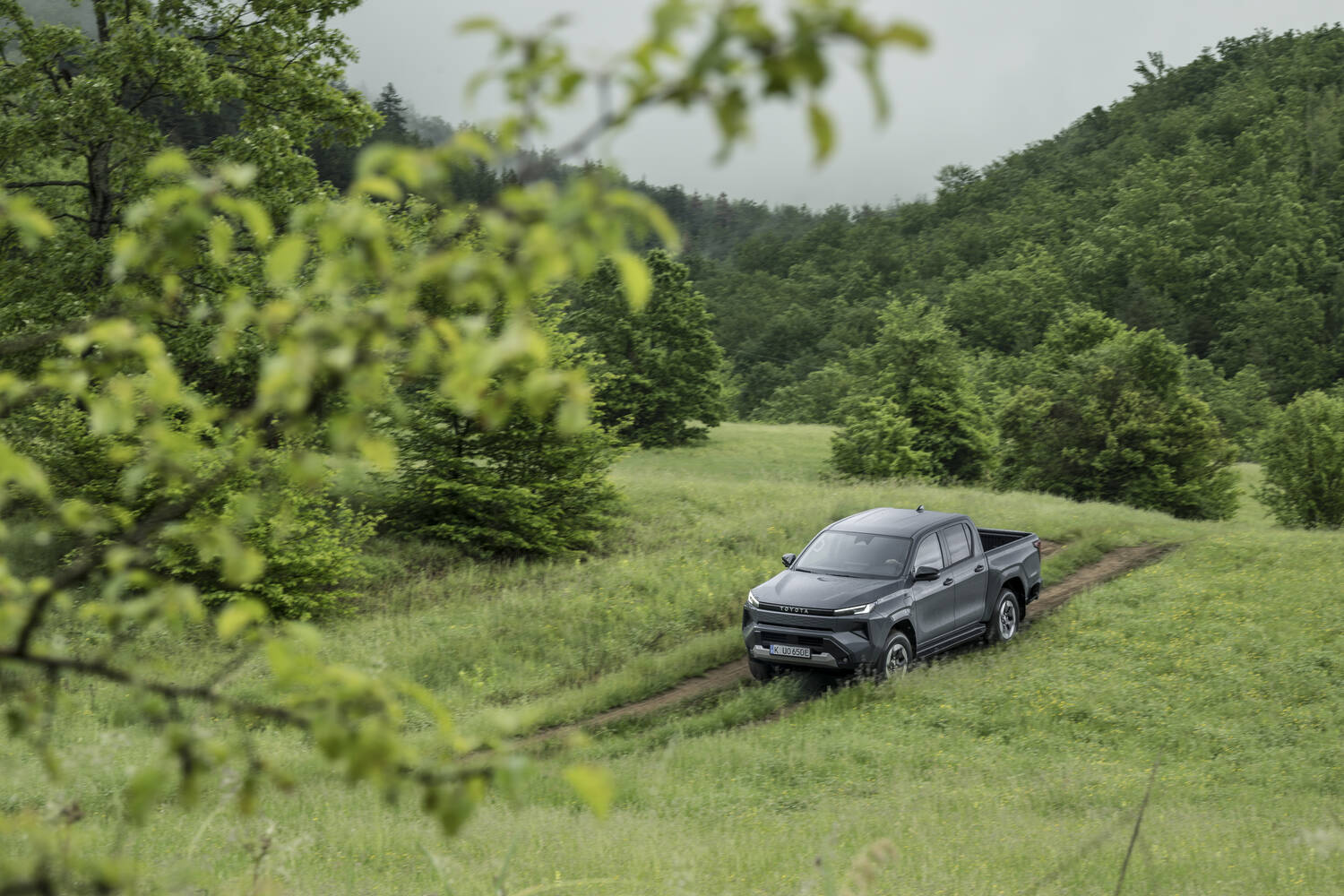
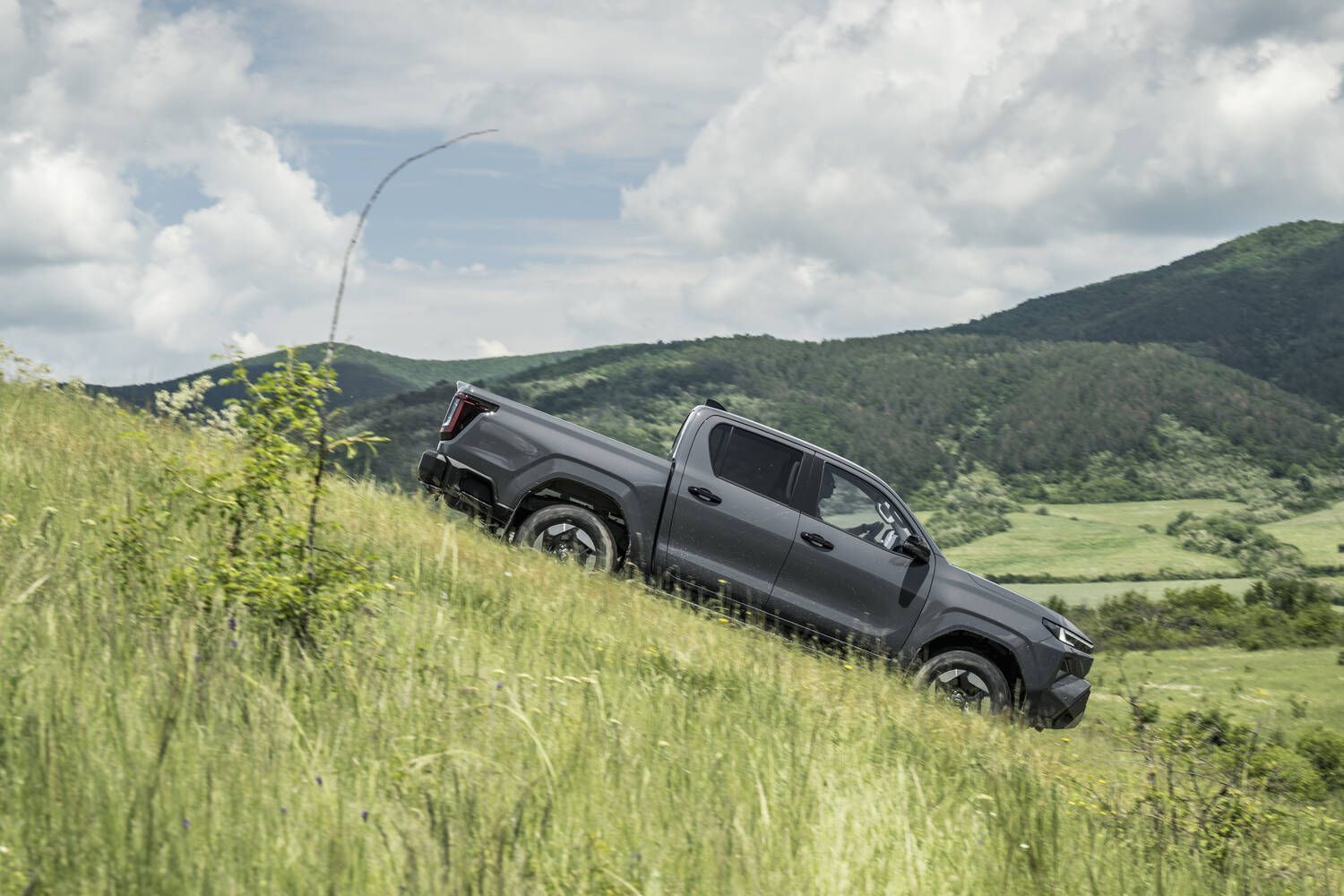
Off-road, the Hilux feels as unstoppable as ever. With MTS, Downhill Assist Control, 2Hi/4Hi/4Lo settings and the ability to lock the differentials if needed, it'll be rare the landscape which brings the Toyota truck to a shuddering halt.

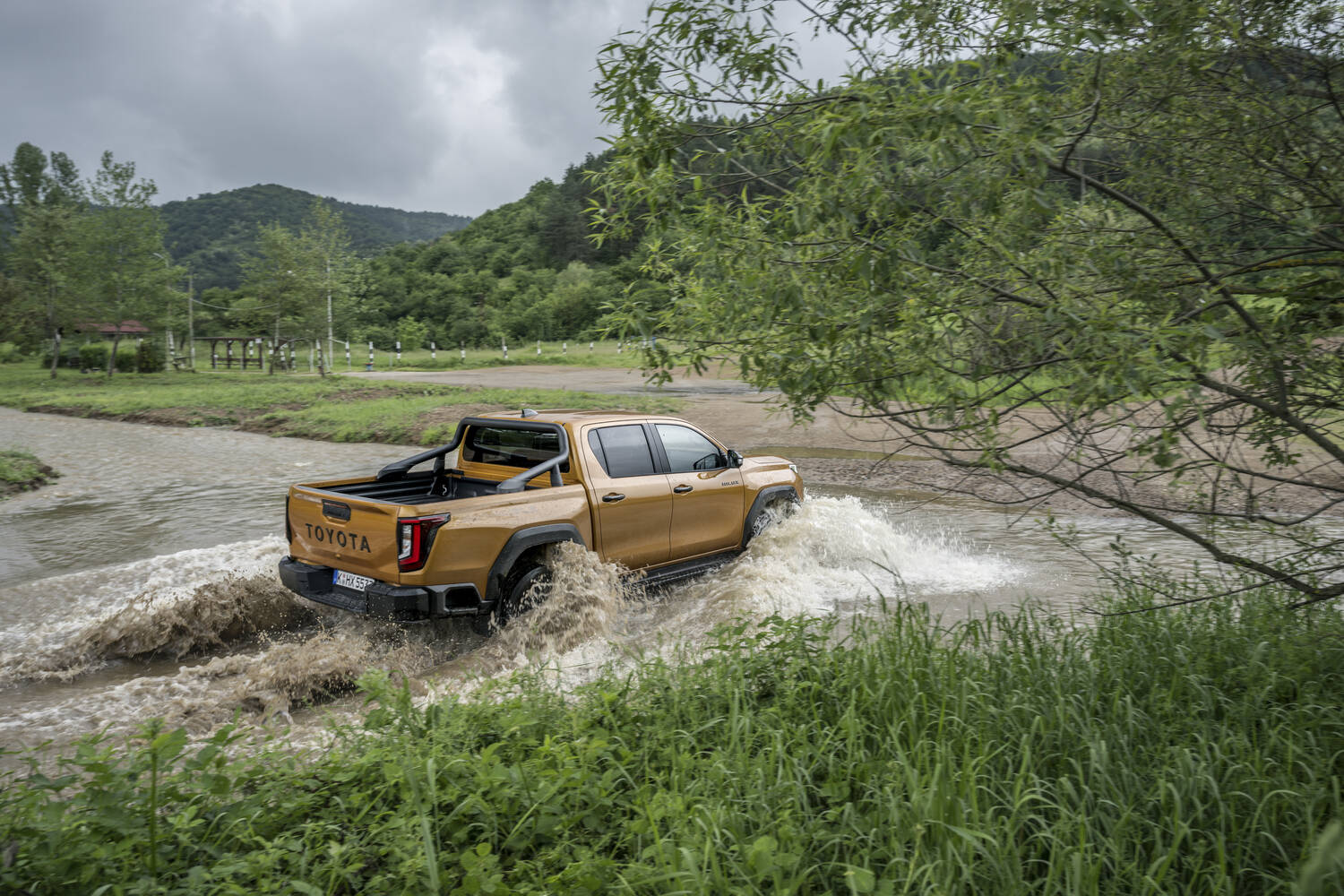
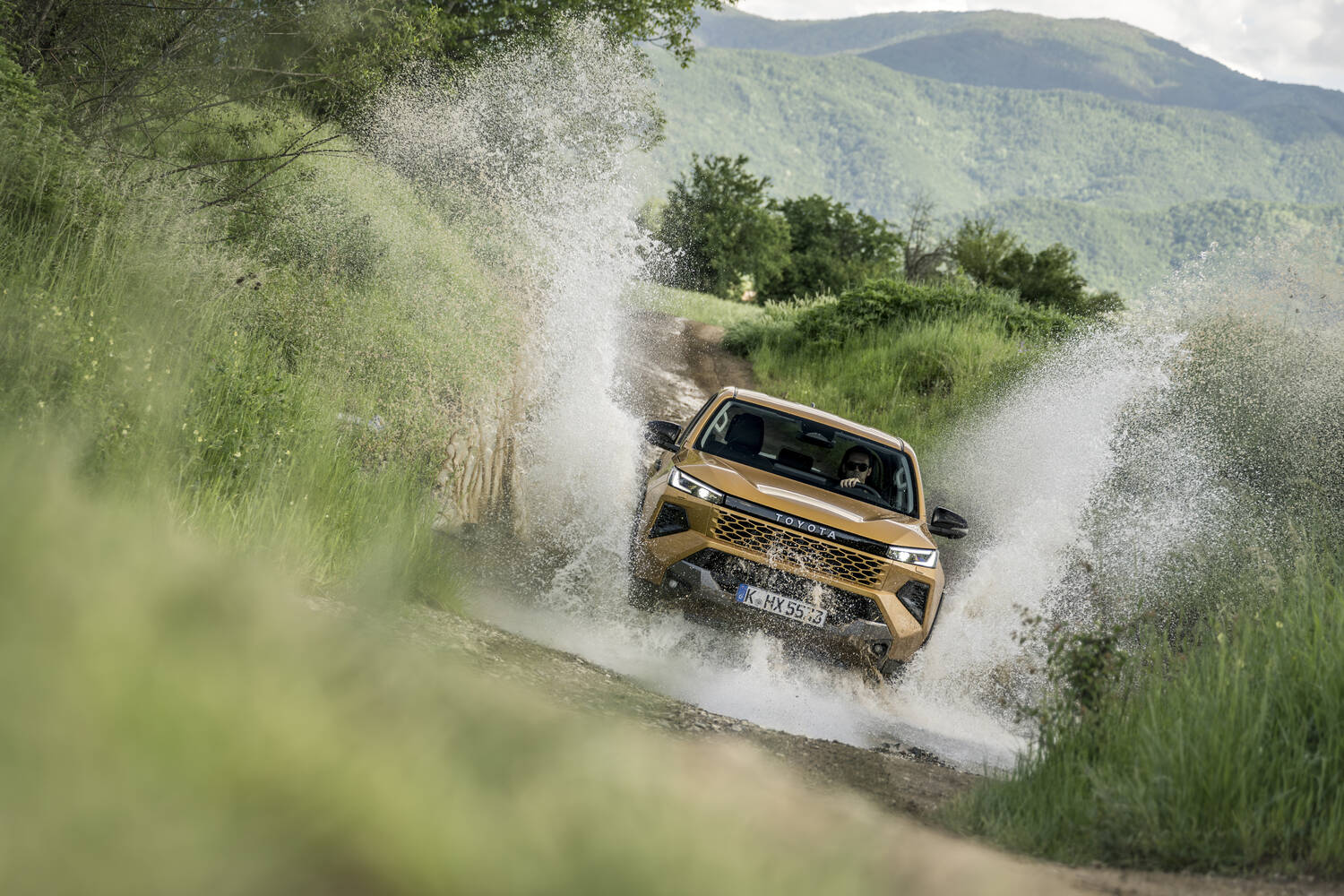
Huge axle articulation, the ability to ford deep water and that minutely controllable steering plus well-calibrated throttle and brake pedals allowed us to scamper up vertiginous mountain trails and boggy forest tracks in the Toyota as if we were just popping down to the local shop for a pint of milk.
Driving the Toyota Hilux BEV on- and off-road in Bulgaria
Words by Matt Robinson on 8 June 2026

There's a good case to be made that the Hilux BEV is the 'easier' off-roader of the two. While it still has MTS, through which you can cycle through terrain modes such as mud, sand, dirt and rock, all you really do is choose the best setting of these, click it into D and away you go. There's no faffing with transfer boxes and automatic transmissions here.
Again, beautifully judged throttle and brake calibration means that precisely controlling the big truck on ultra-steep, rubbly ascents is a doddle.
On the road, it's eerie to experience one that whistles quietly down the street without the racket of an internal-combustion engine overlaying its every move. So on that note, the Hilux BEV beats the diesel for refinement.

Where we were less impressed with the electric model was with its ride comfort - every unladen pick-up truck is somewhat bouncy, but the BEV felt particularly brittle and lead-footed over low-speed lumps and bumps in the tarmac.
In its defence, it did without the waterbag of the turbodiesel Hilux, so a bit of load in its bay might settle things down, but it's a shame as it is otherwise a highly polished thing.
Kudos, too, for the power delivery; while Toyota doesn't quote 0-100km/h times for the Hilux twins, nor will it give an overall torque figure for the BEV, it's clear the heftier zero-emission model is less powerful than the diesel, but it doesn't feel massively slower in practice.
And once it has a bit of speed under its wheels, or the standard of the tarmac improves, then even the ride settles down to something more bearable.

Therefore, if you do want an electric pick-up truck, it's hard to imagine that any of the few rivals (only Maxus and Isuzu have electric alternatives right now) will do things better than the Toyota.
But we must end with a few caveats - you have to remember that the BEV is less capable than the diesel. It can't tow anything like as much braked trailer (1,600kg versus 3,500kg), its maximum payload is reduced by 350kg (to a peak of 715kg) and it has marginally reduced breakover angles and ground clearance (20 degrees as opposed to 24 for the former, and down almost 100mm on the diesel to 212mm with the electric for the latter) as a direct consequence of its battery placement under the chassis.
Range, battery, charging and running costs of the 2026 Toyota Hilux
- BEV aimed at low-mileage users
- Battery of only 54kWh
- Diesel is better all-rounder

Traditional businesses that need a heavy-duty, long-legged pick-up truck will continue looking at the Toyota Hilux 48V Diesel - that's the one which'll go much further on a tank of its fuel.
The BEV is designed for a specific set of end users, so don't be surprised by its very modest range and relatively slow charging speeds.
Battery options and official range of the Toyota Hilux BEV
The battery pack in the Toyota Hilux BEV is a nickel-manganese-cobalt (NMC) lithium-ion item with a gross capacity of 59.2kWh, of which 54kWh is usable.
This results in a low range of just 257km on the WLTP test, although if you can crawl around a building site or woodland in the truck at city-like speeds, then this distance increases to 380km according to Toyota.
Real-world range and efficiency of the Toyota Hilux BEV
We drove the Hilux BEV for 42km on a motorway, urban roads, country lanes and fully off-road gravel-and-rock trail, with the latter section representing a 66 per cent portion of the entire loop.
And while it wasn't the highest outright trail of four that Toyota had laid on in Bulgaria, it was the one with the steepest ascent - climbing from around 300m above sea level to 758m in less than five kilometres, on loose surfaces with little grip.

The temperature was hot, 24 degrees C, and so the truck's climate control was running for the duration of the trip. And using lots of accelerator control to perform tough off-roading tasks meant that the Hilux BEV ended the test showing an indicated 31.4kWh/100km.
Not brilliant, and that would discharge the battery in something like 172km, rather than 257km - and remember the Toyota was one-up and unladen for this trip.
Charging up the Toyota Hilux BEV
The quoted peak rates for the Toyota Hilux BEV are 125kW on DC and 10kW on AC. On the former of these, the company says a 10-80 per cent top-up will take 30 minutes, while on a three-phase AC connection, 10-100 per cent should be done and dusted in 6.5 hours.
It'd be something more like eight hours, or even in excess of that, on a typical 7.4kW wallbox - but the idea is that the businesses that use a short-range commercial EV like this will keep the vehicles on-site, so that they can be charged overnight to be ready for work the next day.
Also, starting from fully charged and having been driven like this, the trip computer in the BEV at the end of the circuit reckoned it could still go up to 179km on the remaining 73 per cent of battery power it had left, so more gentle, reasonable usage not involving Bulgarian mountains ought to deliver more than 200km to a top-up, we feel.
Official CO2 and fuel economy figures - Toyota Hilux 48V Diesel
Moving to the 48V Diesel, its official figures state 254-262g/km of CO2 and fuel consumption approaching 10 litres/100km. But with an 80-litre fuel tank, even at that level of economy the four-cylinder Toyota Hilux should manage something like 800km before needing to visit the pumps.
Real-world efficiency of the Toyota Hilux 48V Diesel
The more popular off-road route on the Hilux launch, used by the majority of attendees, was the one we took the 48V Diesel on, and it had a greater percentage of time away from tarmacked surfaces. It also had a higher elevation than the BEV's trek, clambering from just above 400m to 969m at its peak - but it did this ascent over a greater distance, of almost 10km.

The surfaces were more varied here, with muddy tracks through a forest and then hard, compacted gravel trails up on the high plains, but conversely the 48V Diesel had the heavy waterbag in its load bed so was lugging more ballast; although the 250kg weight difference between the two trucks (in favour of the diesel version) would have offset this somewhat -and we don't know how much the bag weighed.
Anyway, across 35km of this treatment and driven with a little more gusto than the BEV on the earlier route, the 48V Diesel used an indicated 14 litres/100km. That's not an appalling return for a pick-up doing such tricky work.
Servicing the Toyota Hilux
The service interval for the 48V Diesel Toyota Hilux should be every 12 months or 15,000km, whichever comes sooner. Typically, this manufacturer doesn't extend that schedule for its EVs, so the Hilux BEV will probably fall under the same pattern.
Toyota Hilux warranty
All new Toyotas, the Hilux included, come with a basic three-year, 100,000km warranty - but this can be extended on a service-activated basis for up to ten years and 185,000km, as long as you have the truck maintained at an official main dealer.
Meanwhile, Toyota's 'Battery Care' programme guarantees at least 70 per cent of the original capacity for up to ten years or 1,000,000km, subject to an annual EV health check at an authorised Toyota centre - and the Hilux BEV is covered by this guarantee too.
Irish pricing & rivals to the 2026 Toyota Hilux
- Prices yet to be confirmed
- More choice with 48V Diesel
- Few direct electric competitors

Prices and specs for Irish-market Toyota Hilux models have yet to be confirmed, so we will bring you details on those - with and without VAT - as soon as we can. What we do reckon is that, similar to other markets, there will be more trim specifications for the diesel than there will be for the BEV.
One-tonne pick-ups have been thinning out over recent years, but extant competitors include the Ford Ranger, the Volkswagen Amarok, the Isuzu D-Max and the Maxus T60. Of these, presently only the Isuzu and the Maxus have fully electric variants available as alternatives to the Hilux BEV.

Verdict - should you buy the 2026 Toyota Hilux?
In its electrified formats, the Toyota Hilux remains one of the strongest competitors in its field. And the fact that you can now have it in more traditional diesel guise or as a zero-emission BEV only widens this long-serving truck's appeal. Save for a slightly brittle low-speed, unladen ride and some hose-down plastics dotted about the cabin, there's much to like about the Toyota Hilux.
FAQs about the 2026 Toyota Hilux
Is the Toyota Hilux AWD?

Yes, both versions of the Hilux have four-wheel drive. In the 48V Diesel, it is switchable to 2Hi (rear-wheel drive), but for the BEV the system is permanently operating as it uses a motor on each axle.
Is the Toyota Hilux available as an electric vehicle?
Yes, that's the big talking point of the ninth-generation truck. This is the first Hilux in history that has been sold with a fully zero-emission powertrain, with the model simply called the BEV.
Are there multiple body styles for the Toyota Hilux?
No, this iteration of the truck is sold purely as a Double Cab, with four doors and five seats within. Later in 2026, a two-seat option is being mooted, but this will keep the four doors and replace the rear bench with a lockable storage chest instead.
Is the Toyota Hilux rated to tow anything?
It sure is. Those with the heaviest trailers will want the 48V Diesel, as this can lug up to 3,500kg of braked trailer. The BEV is less capable in this regard, but a towing capacity of 1,600kg is still not to be sniffed at.
Want to know more about the 2026 Toyota Hilux?
If there's anything about the Toyota Hilux we've not covered, or you'd like help in choosing between it and other cars, you can avail of our expert advice service via the Ask Us Anything page.
Toyota Hilux history
Few nameplates in the automotive industry can trace their lineage back to 1968, but that's how long the Hilux has been in service. Since then, more than 27 million examples have been purchased worldwide.
Over the years, the Hilux has come in all shapes and sizes, but they have mainly been powered by petrol or diesel engines. It was only towards the end of the Mk8's life that the Hilux received a lightly hybridised powertrain, and the 2026-launched Mk9 is the first to introduce a full EV variant known as the BEV.
If there is anything about this car we have not covered, or you would like help choosing between it and other cars, you can avail of our expert advice service via the Ask Us Anything page.