

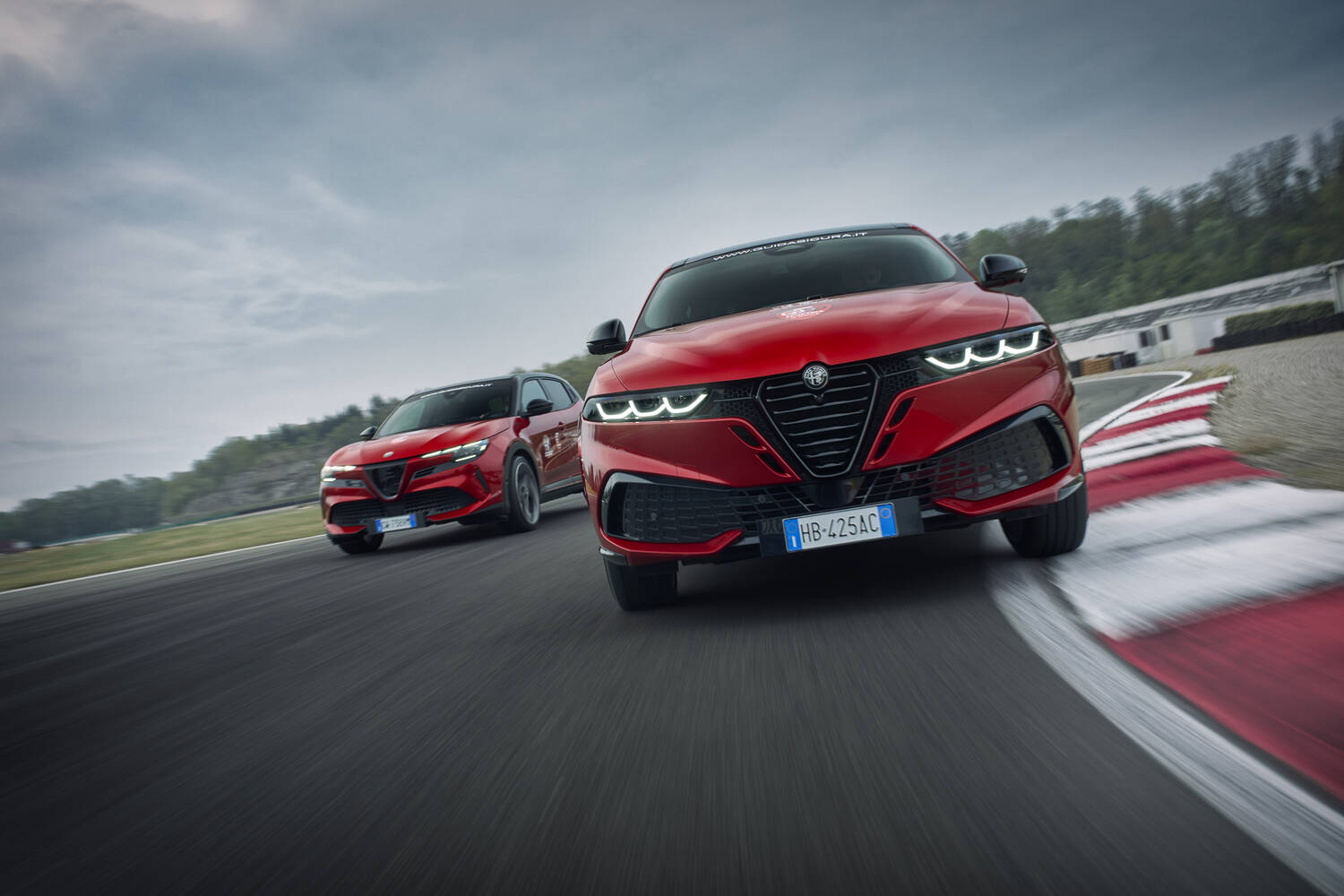
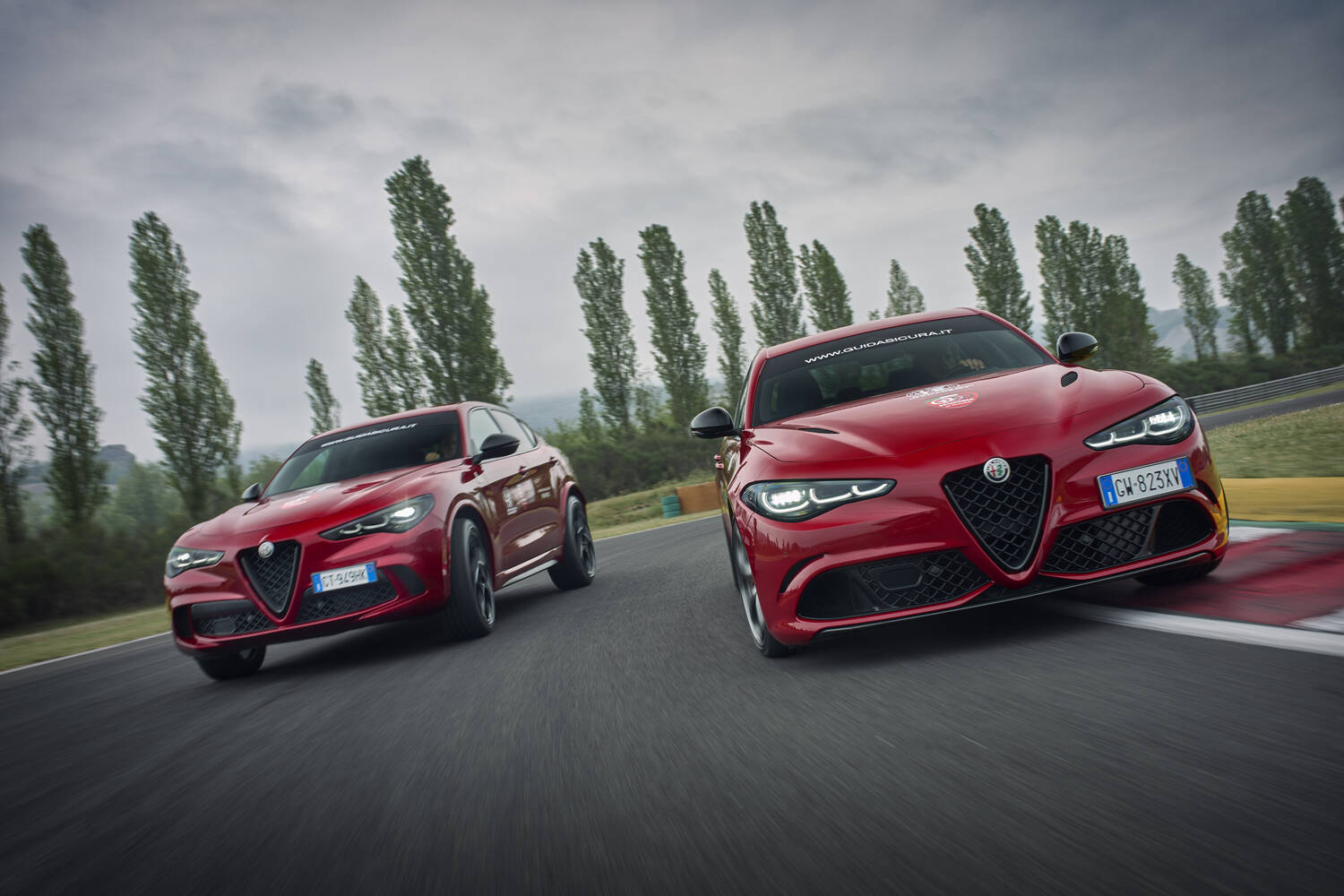
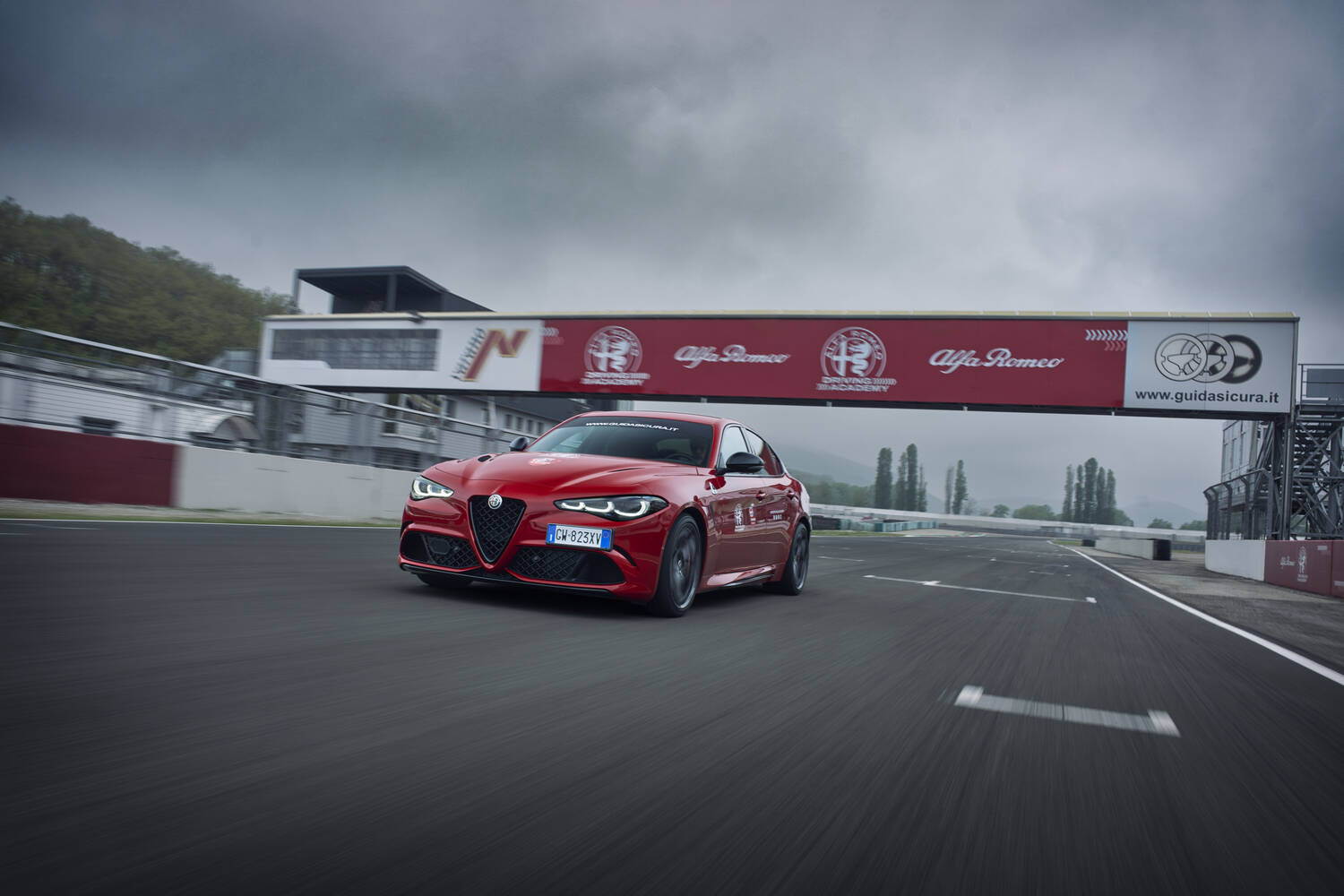
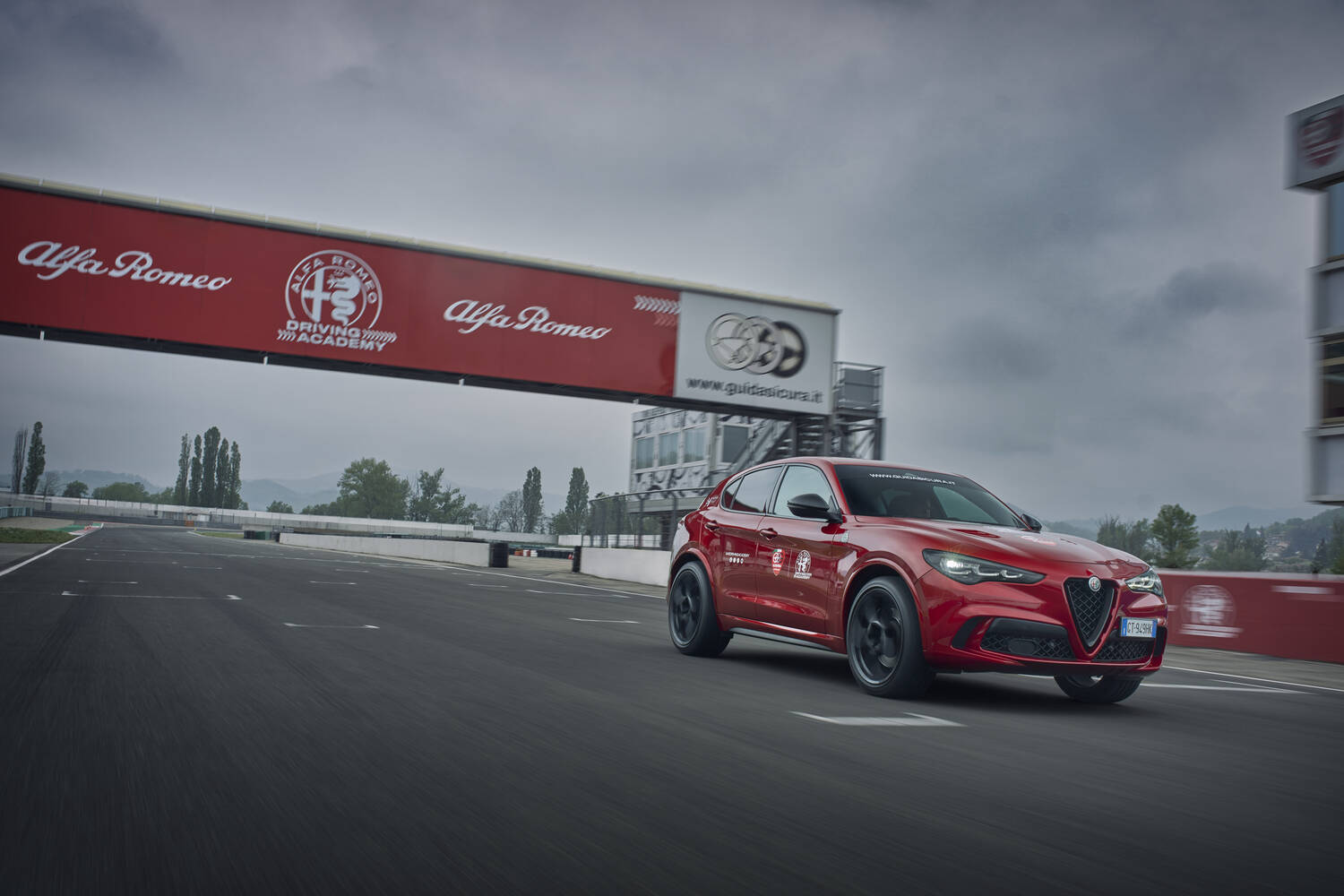
Best laid plans...
It's expected that customers will have options in terms of how they get to the home of the Alfa Romeo Academy, the Autodromo Riccardo Paletti in Varano de' Melegari in Italy. The track, regularly referred to as simply 'Varano', is about a two-hour drive from Milan or Pisa, or an hour and a half from Bologna airport.
To get the most of the experience, they should stay in Italy for a few days to really steep themselves in the culture. We did just that, with an overnight stay in a hotel about an hour away cross-country, over some great driving roads.
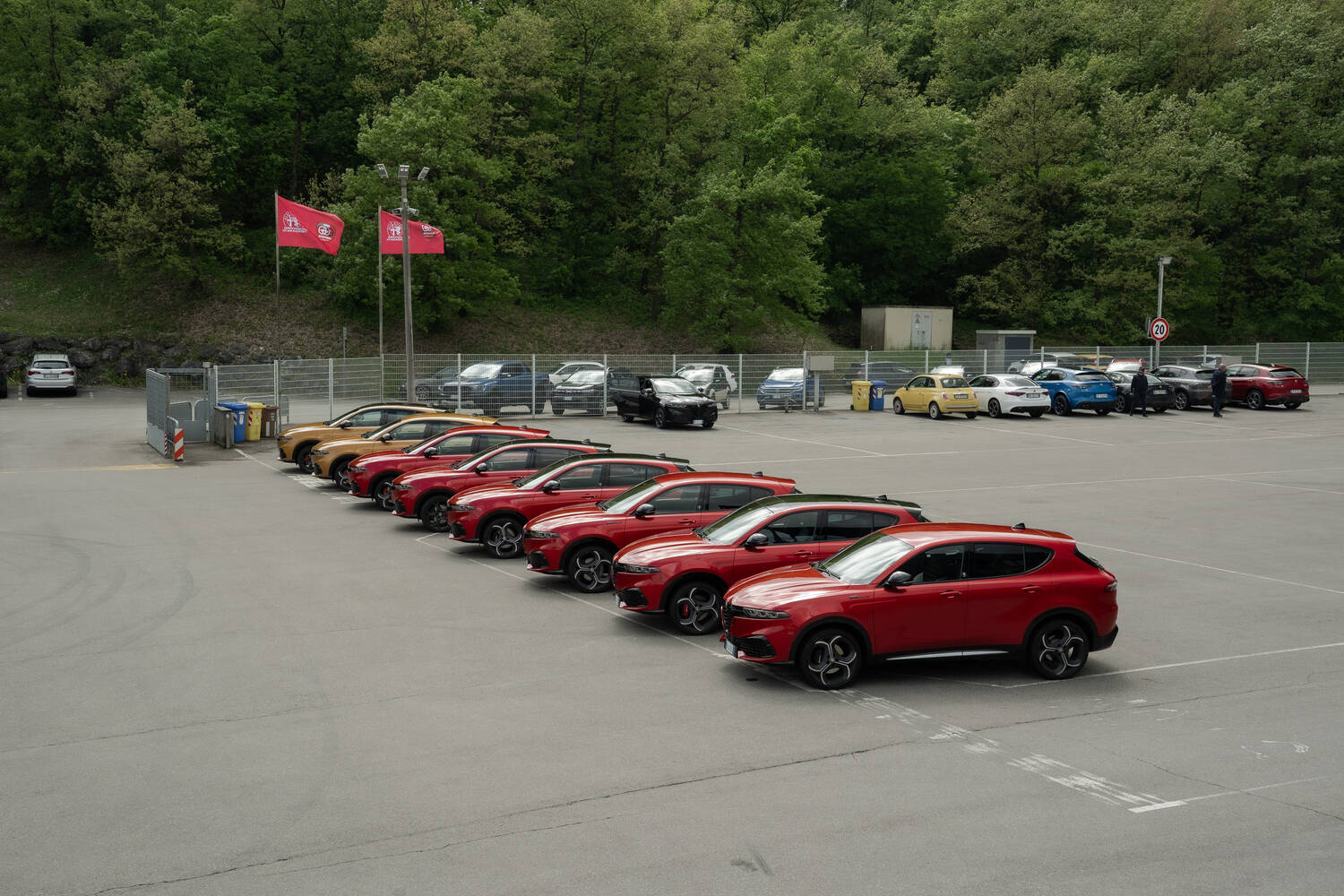
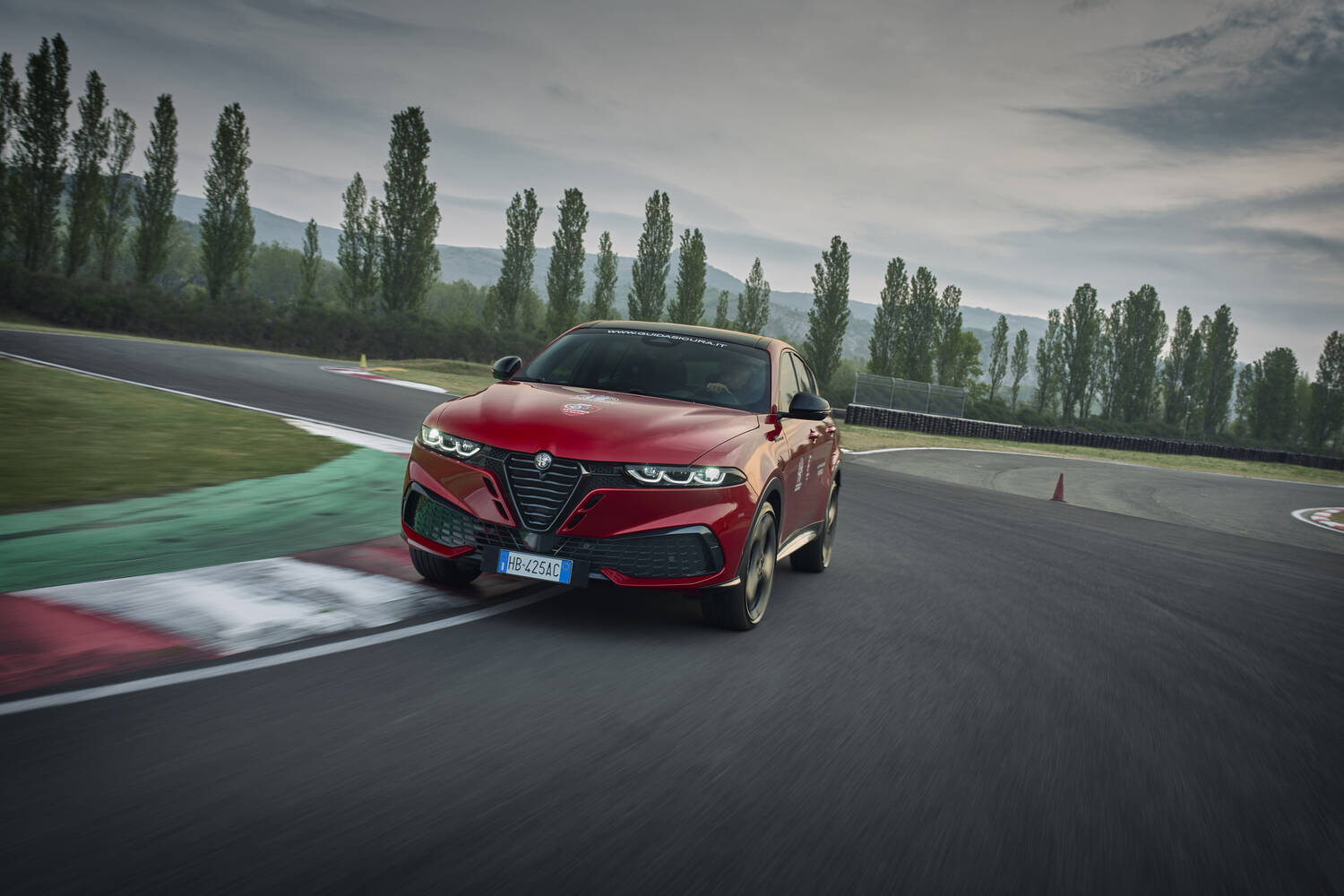
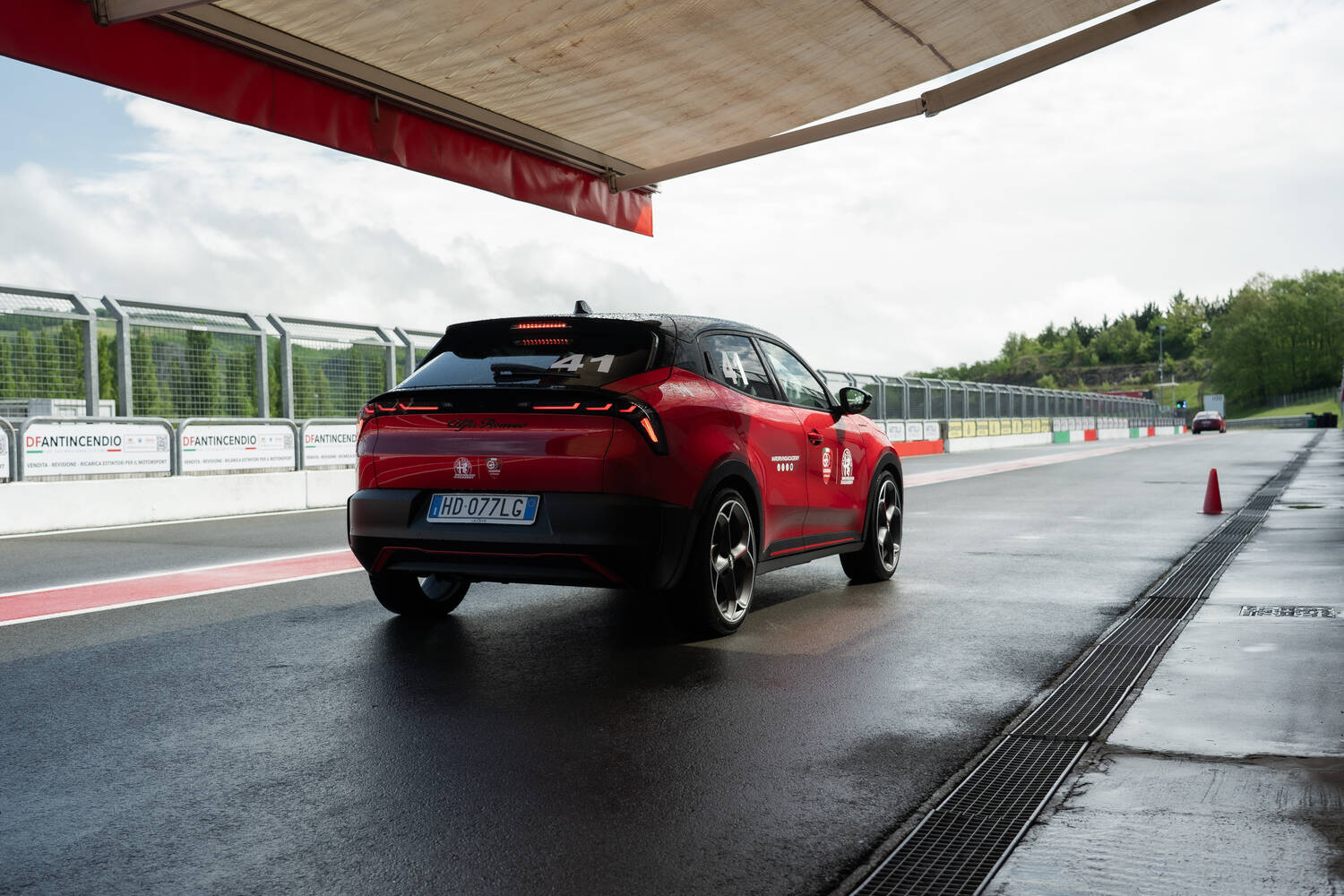
Unfortunately, we woke to grey skies and lashing rain, dampening the mood somewhat. Saying that, the enthusiasm with which the convoy of Alfa Romeo Tonale PHEVs was driven over the challenging, pockmarked and now soaking wet road to the circuit suggested the day was far from ruined. Or maybe the excellent cappuccino had something to do with it.
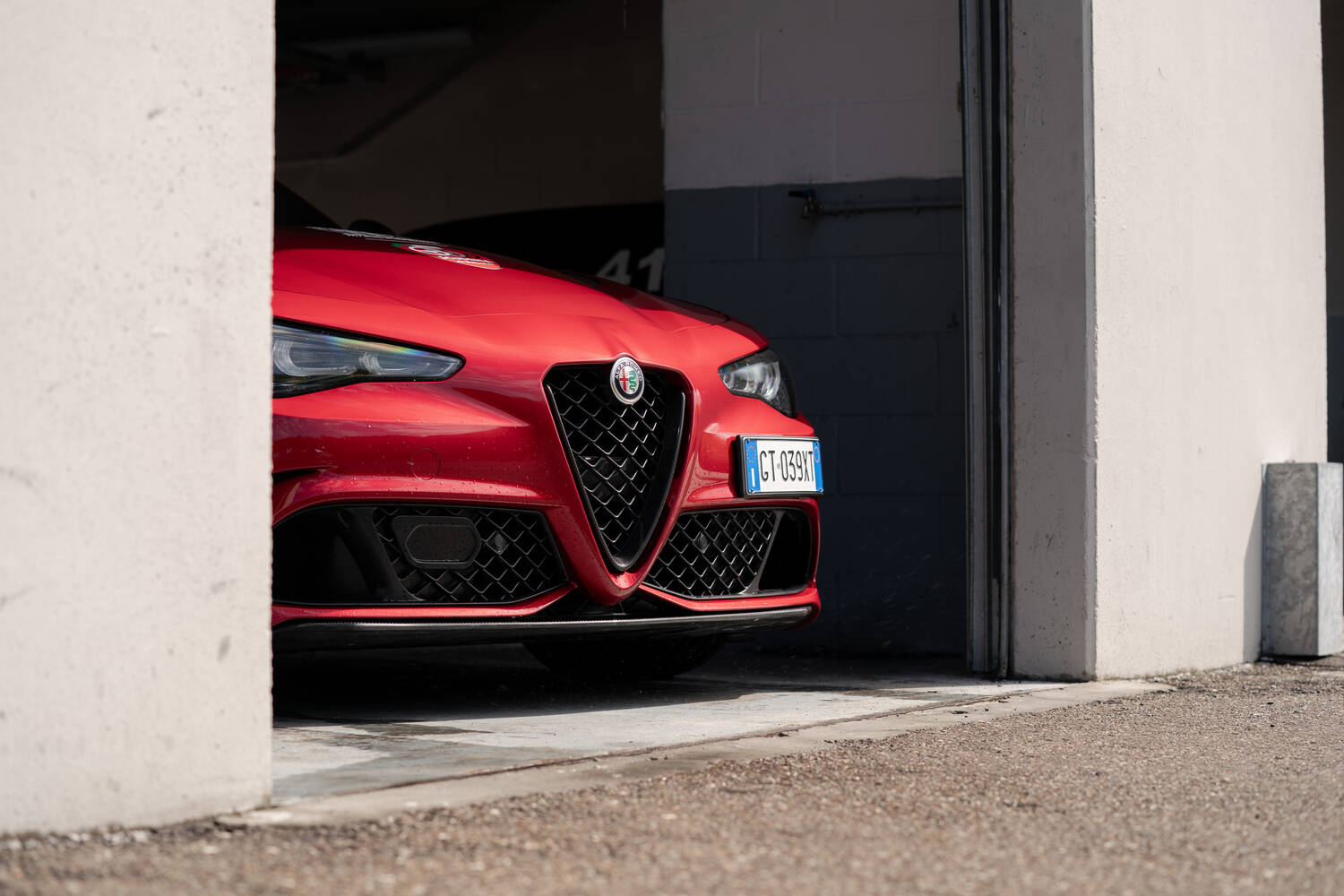
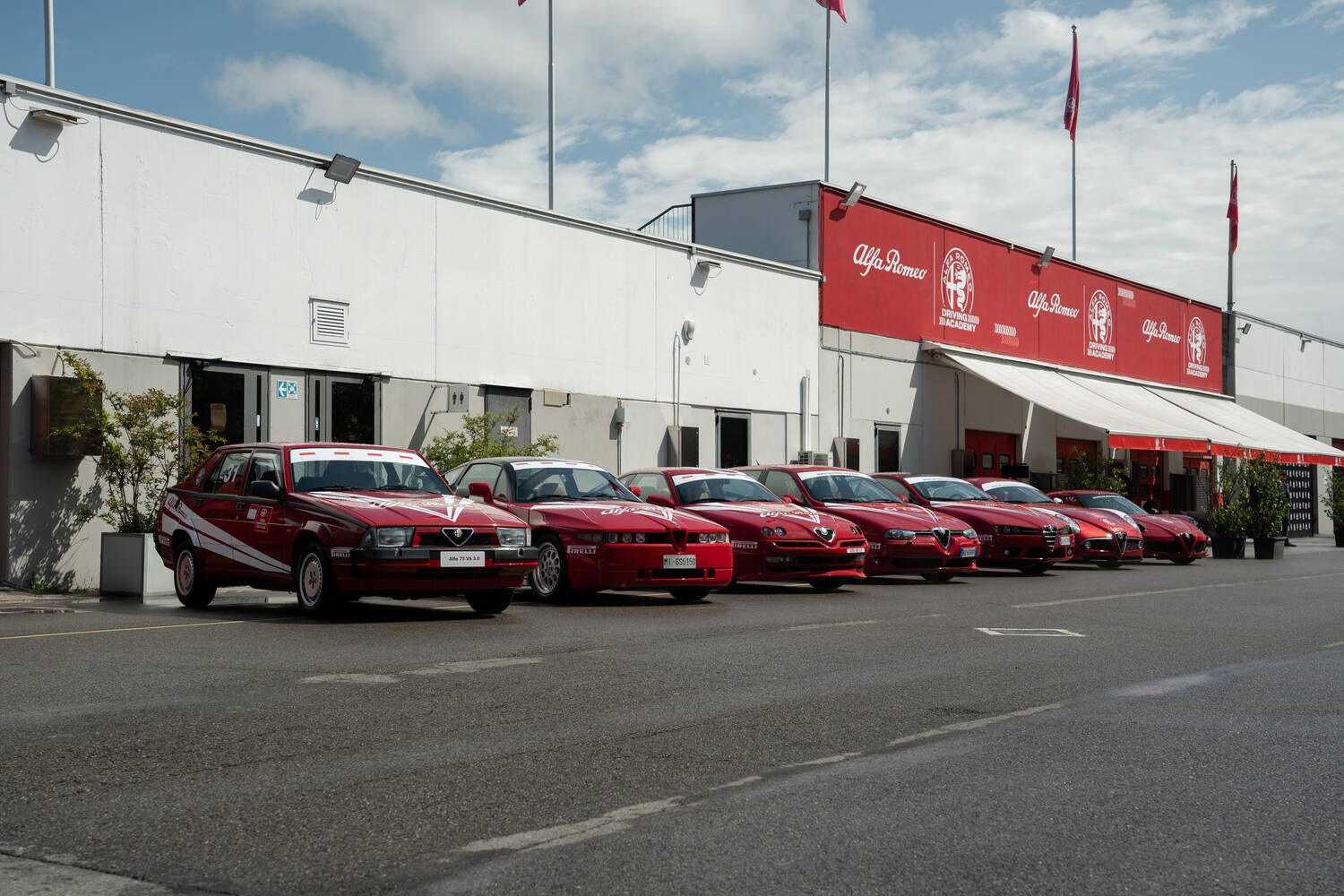
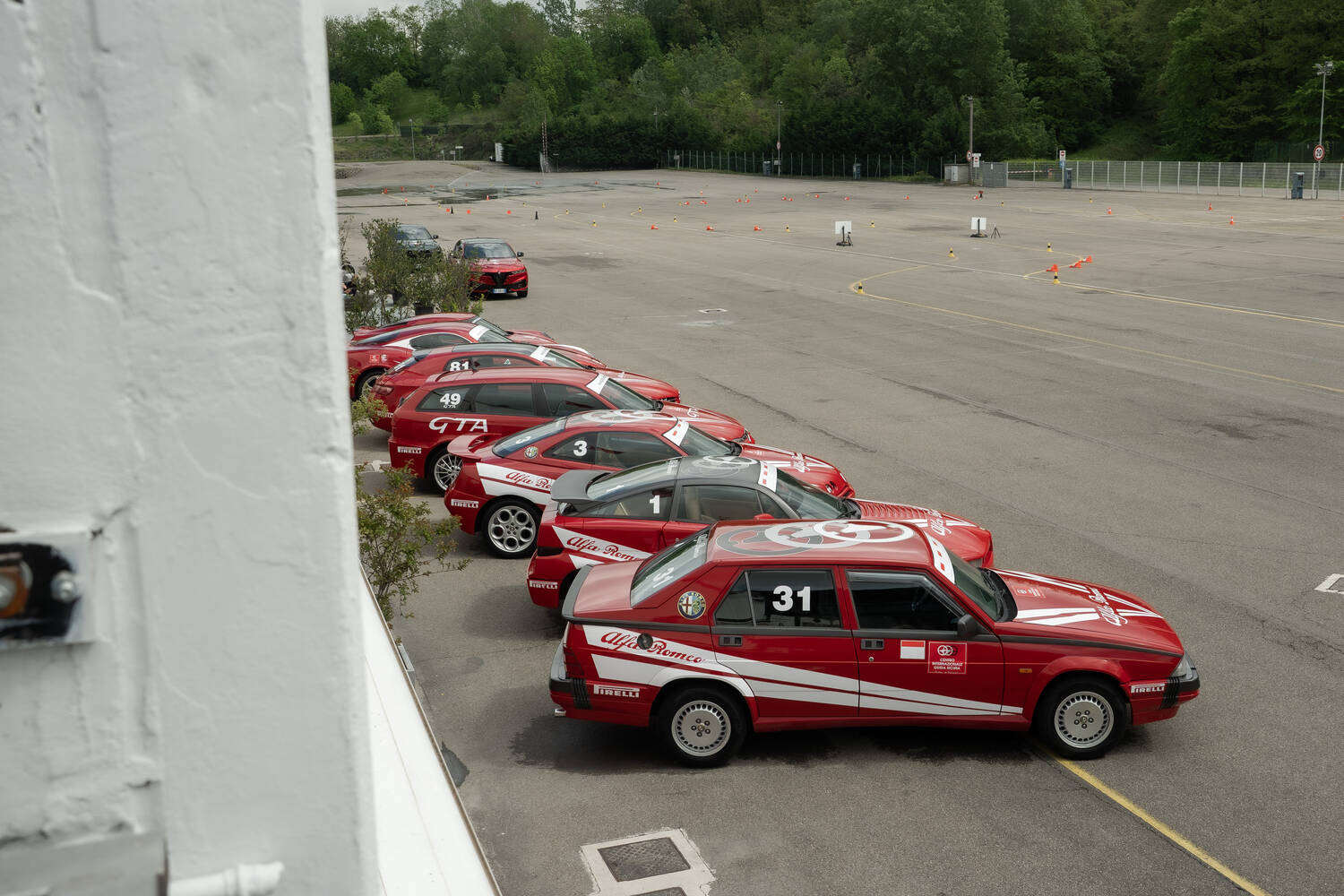
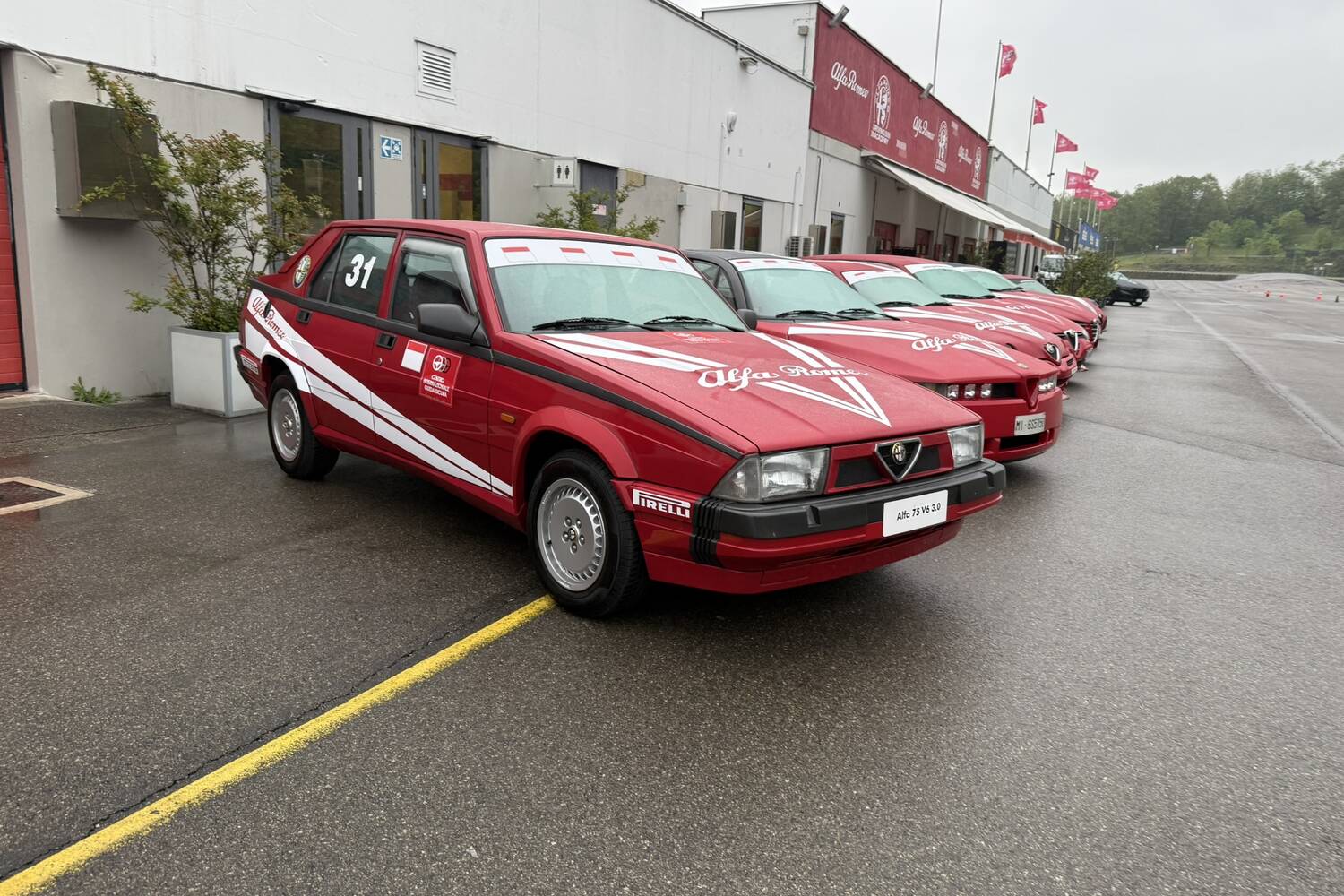
No caffeine was needed to lift the spirits further on arrival at the track, as we were greeted with a lineup of classic Alfa Romeos designed to make enthusiasts of the brand drool and giggle, including the Brera, GTV Cup, 156 Sportwagon GTA, 8C and then the stars (which I'm not open to debating): an Alfa Romeo 75 and an SZ.
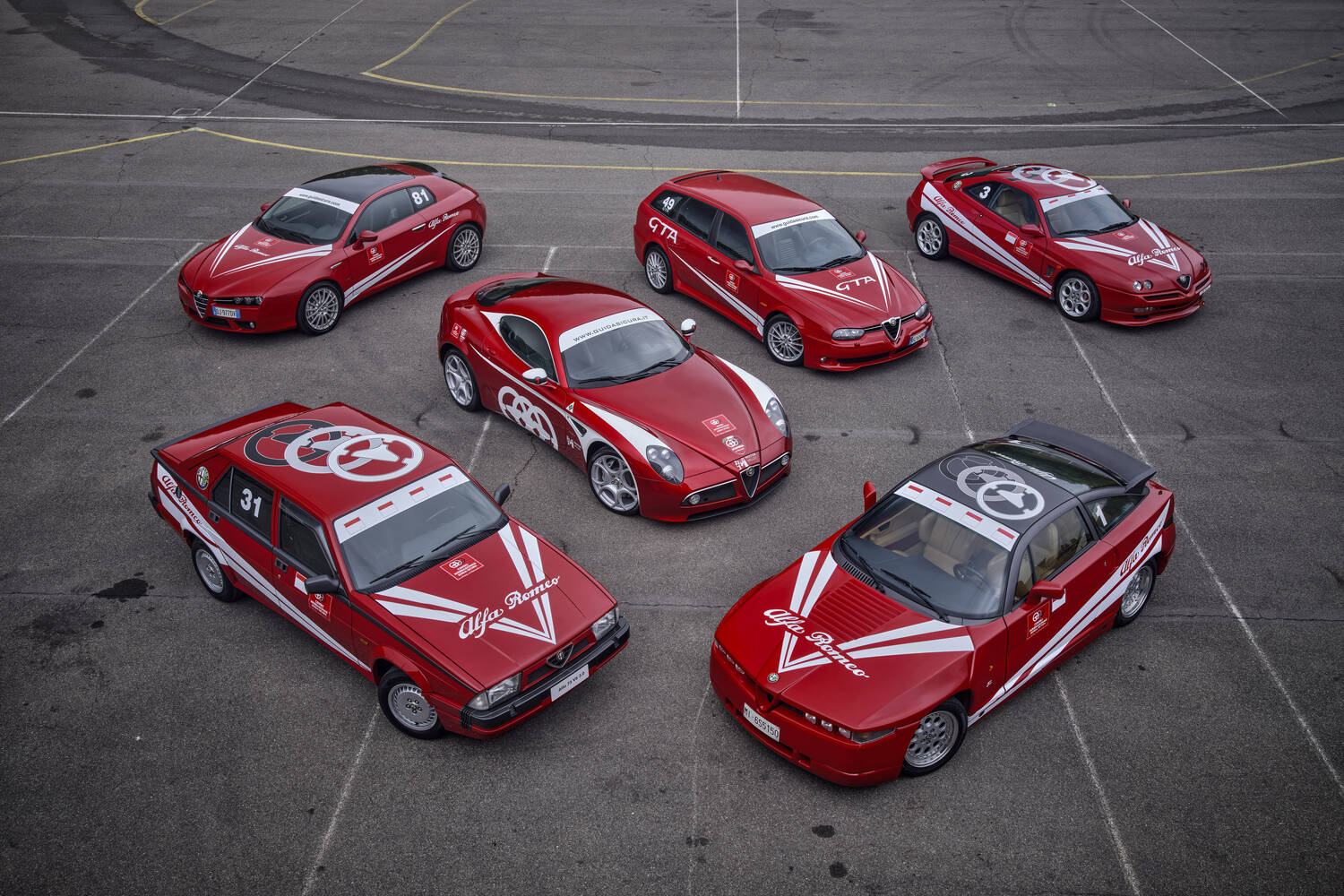
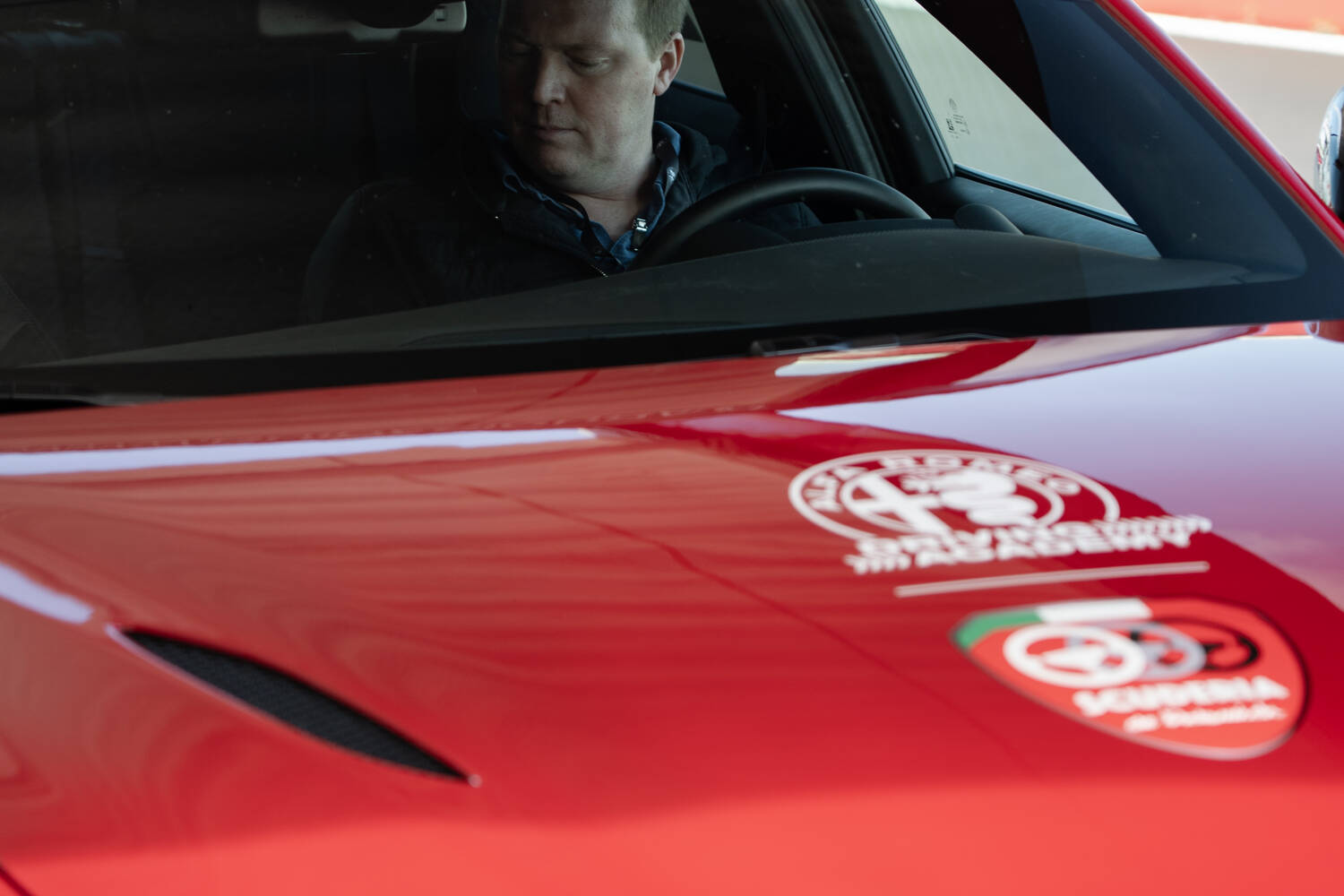
All of these bore the livery of the Scuderia de Adamich, owner of the Varano track and an experienced company in the field of driver training and automotive events. Sadly, this formation of cars was a bit of a tease, as they were not for us to drive. And we don't believe they form part of the various Alfa Romeo Academy courses that can be booked.
Standard Italian carpark driving
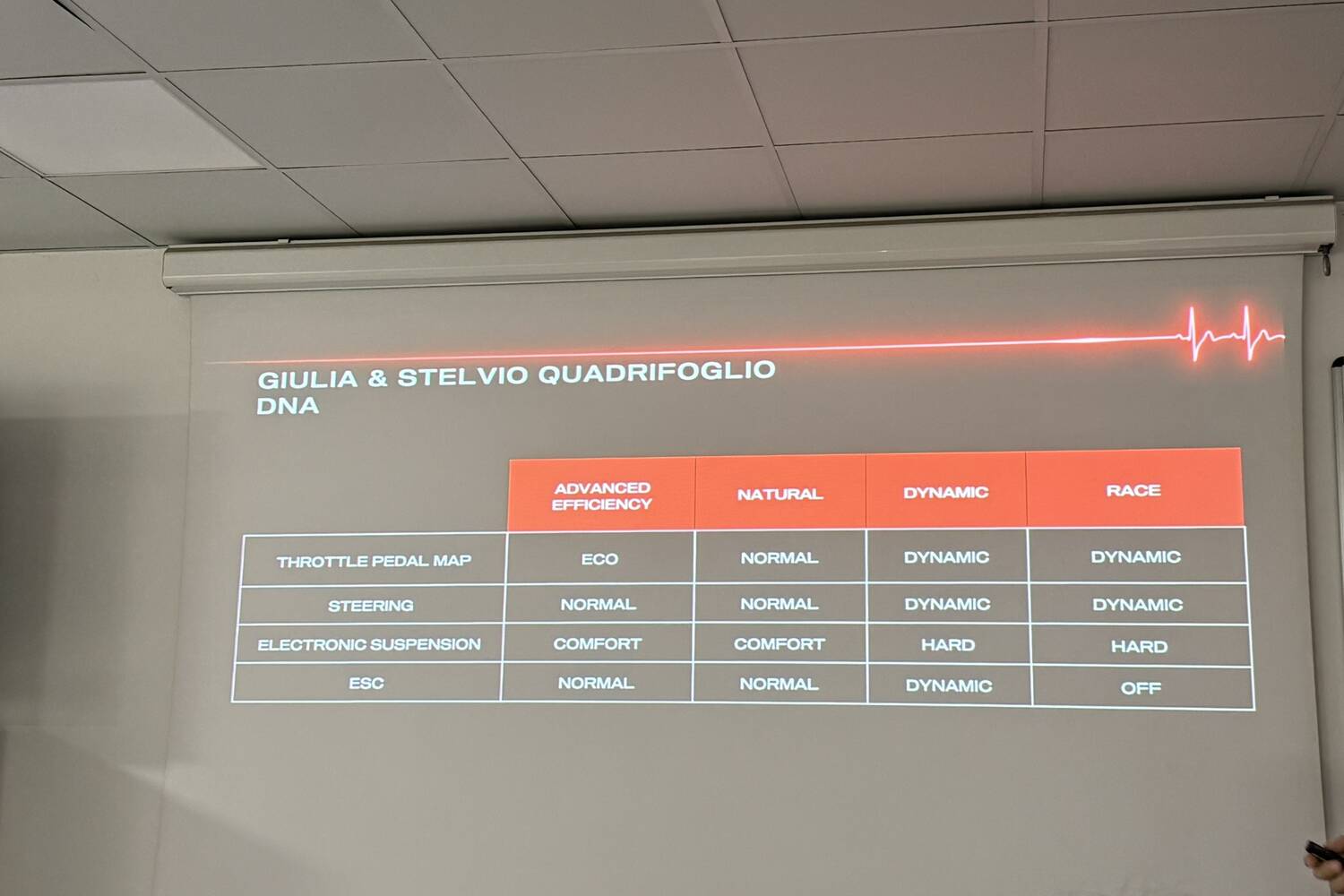
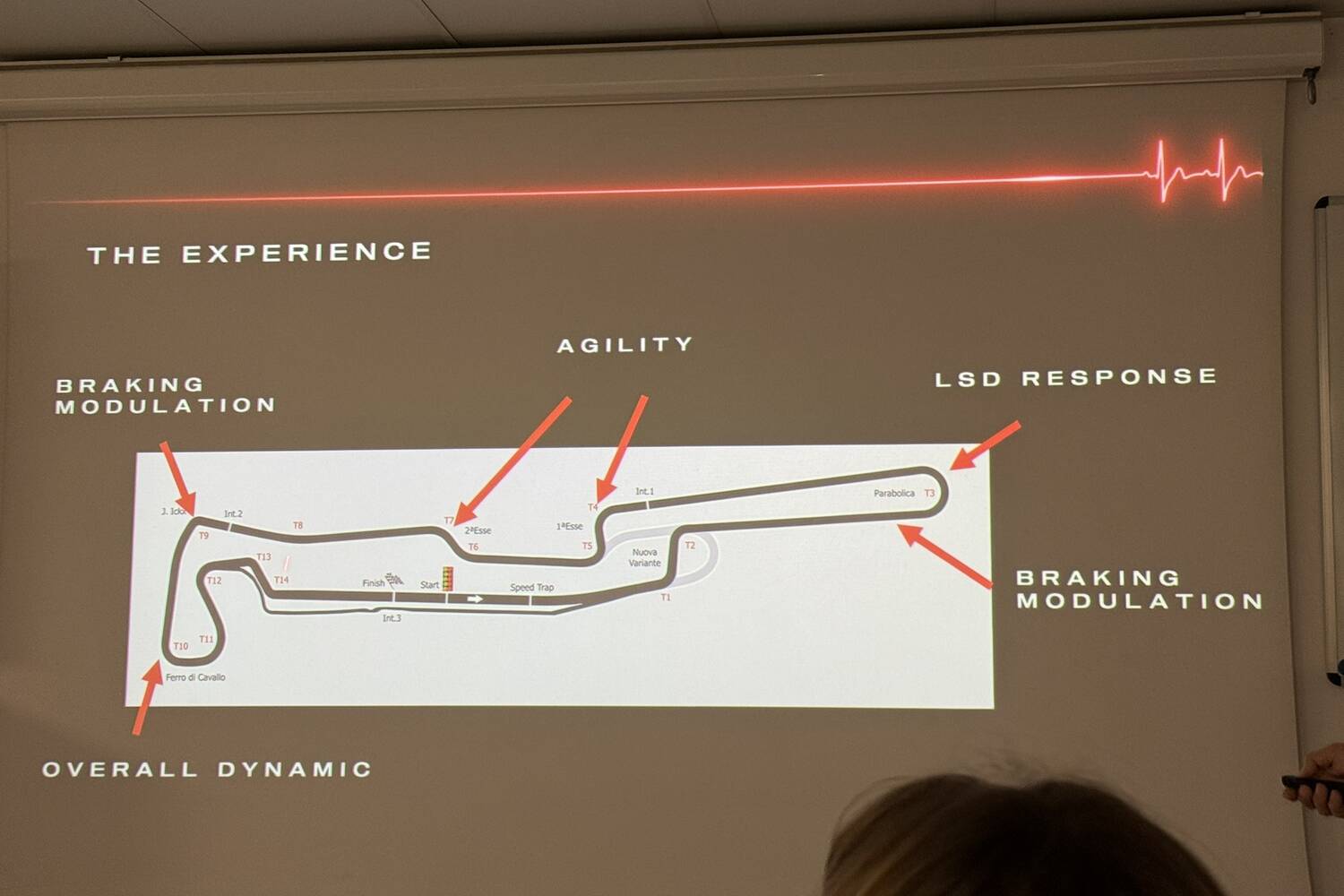
With our expectations dashed, we listened to an introduction to the day, including a little light marketing of the Alfa Romeo models and aligning the cars' technology with parts of the racetrack.
But that was interspersed with a proper driver briefing, covering a wide range of topics including seating position and the correct racing line to use on the track. But first, it was time for some hooliganism in the carpark. Following an espresso of course (as it was too late for another cappuccino at this stage and we didn't want to insult the locals).
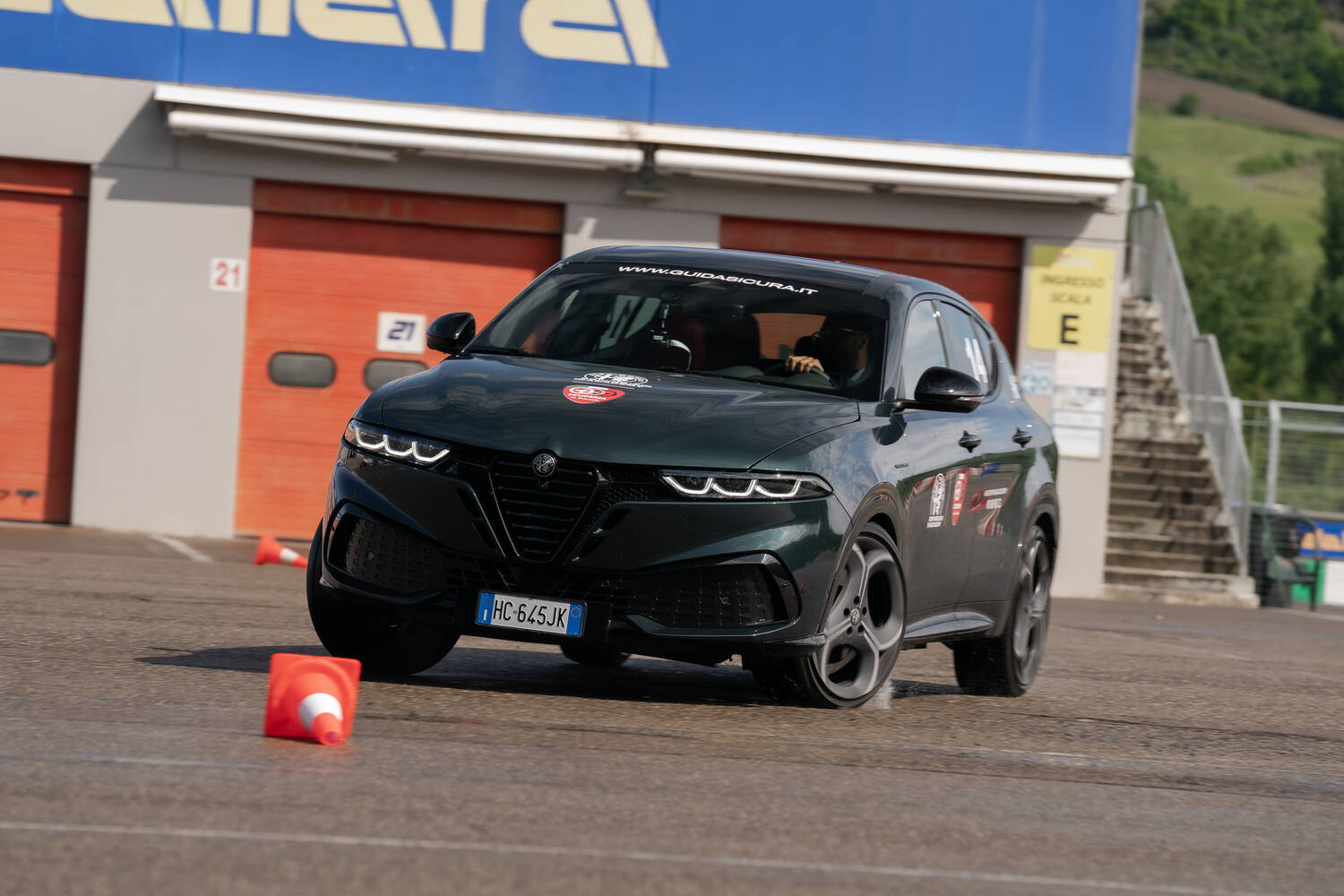
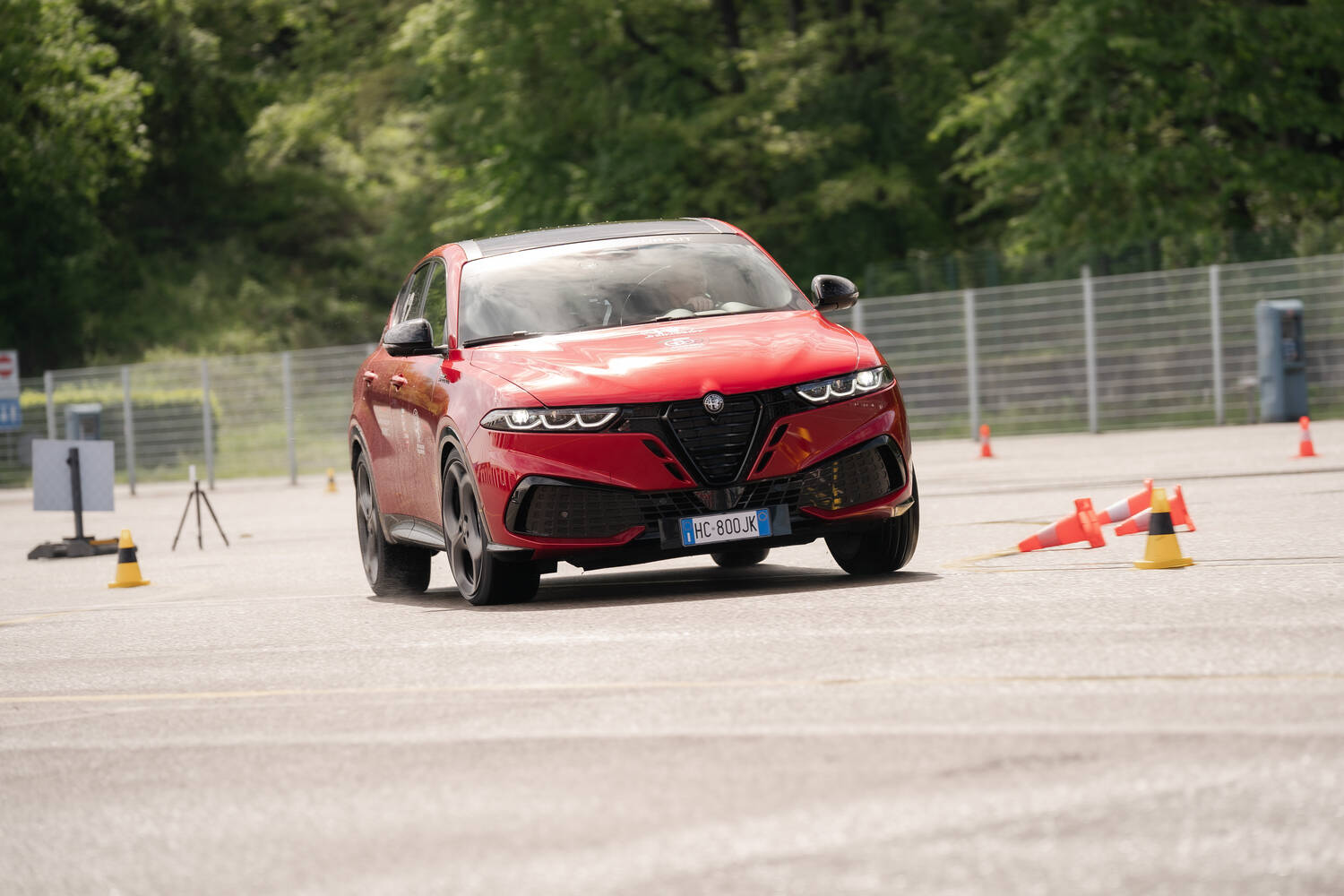
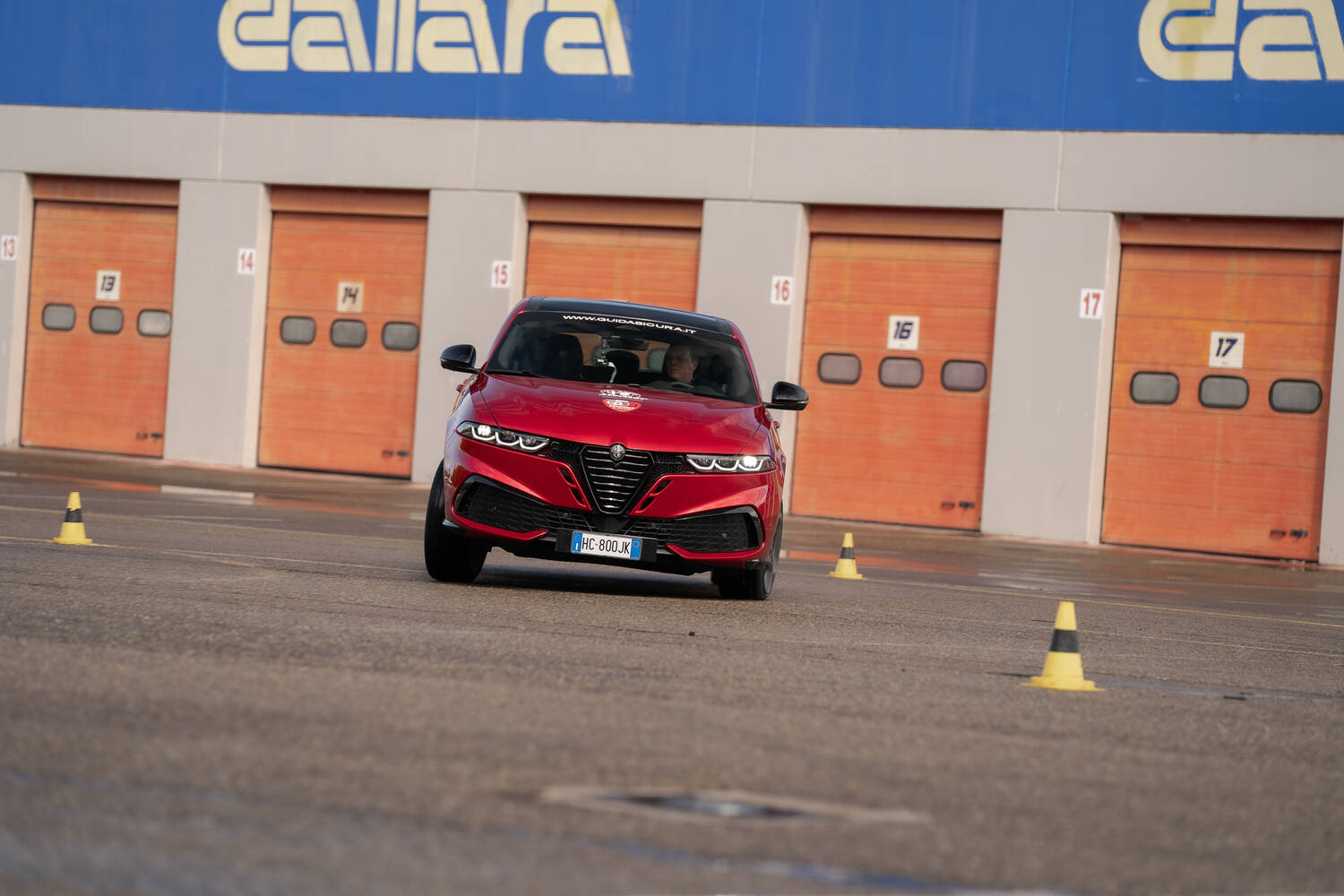
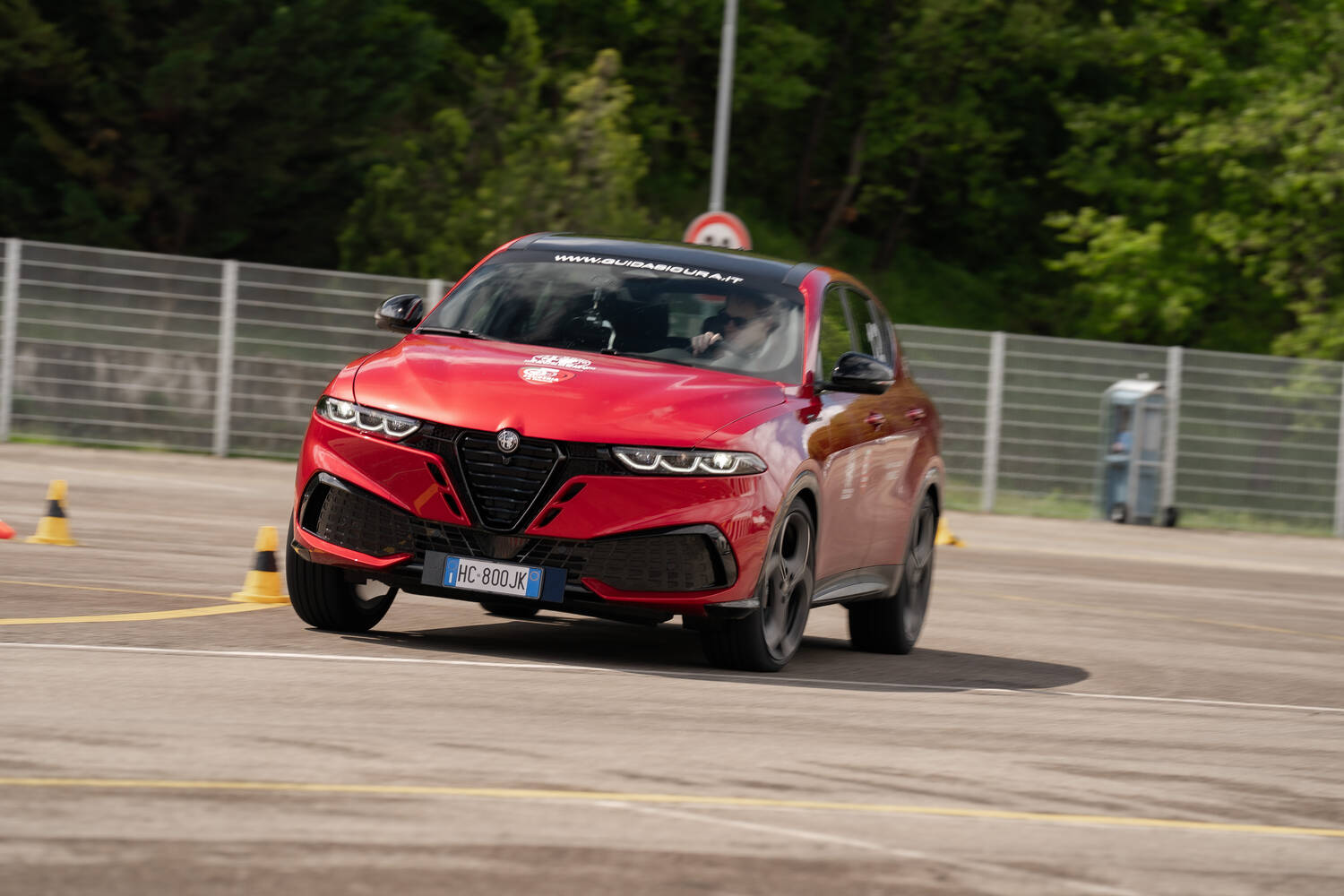
What initially appeared to be a fiendishly complicated track marked out by cones of various colours made sense as soon as we got behind the wheel of the poor unsuspecting Alfa Tonale. Actually, an instructor took the wheel first, with us clinging on for dear life in the passenger seat. It didn't go unnoticed that they exited the car and stood well back when it came to our turn.
Using a two-way radio, the instructor then talked us around the track as we drove, making suggestions for improvements and shouting enthusiastically while gesticulating wildly. To make things interesting, our lap times were recorded. In the interest of fairness, I'd like to point out that I was one of the first people to do this on the day, with the rain still falling, while others later in the day had a dry carpark and sunshine. Just saying. Oh, I seem to have misplaced my lap time...
Time to put on the big boy pants
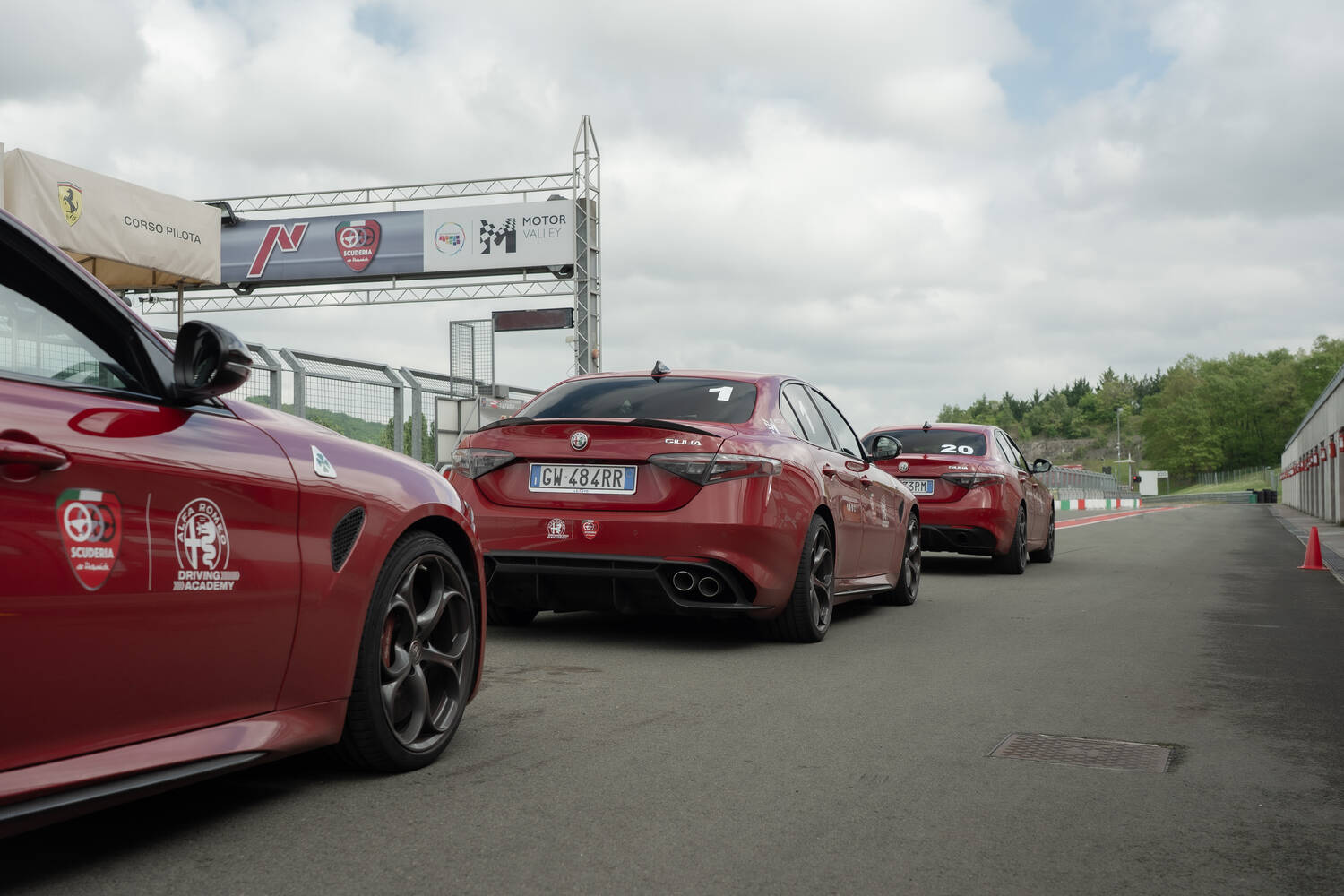
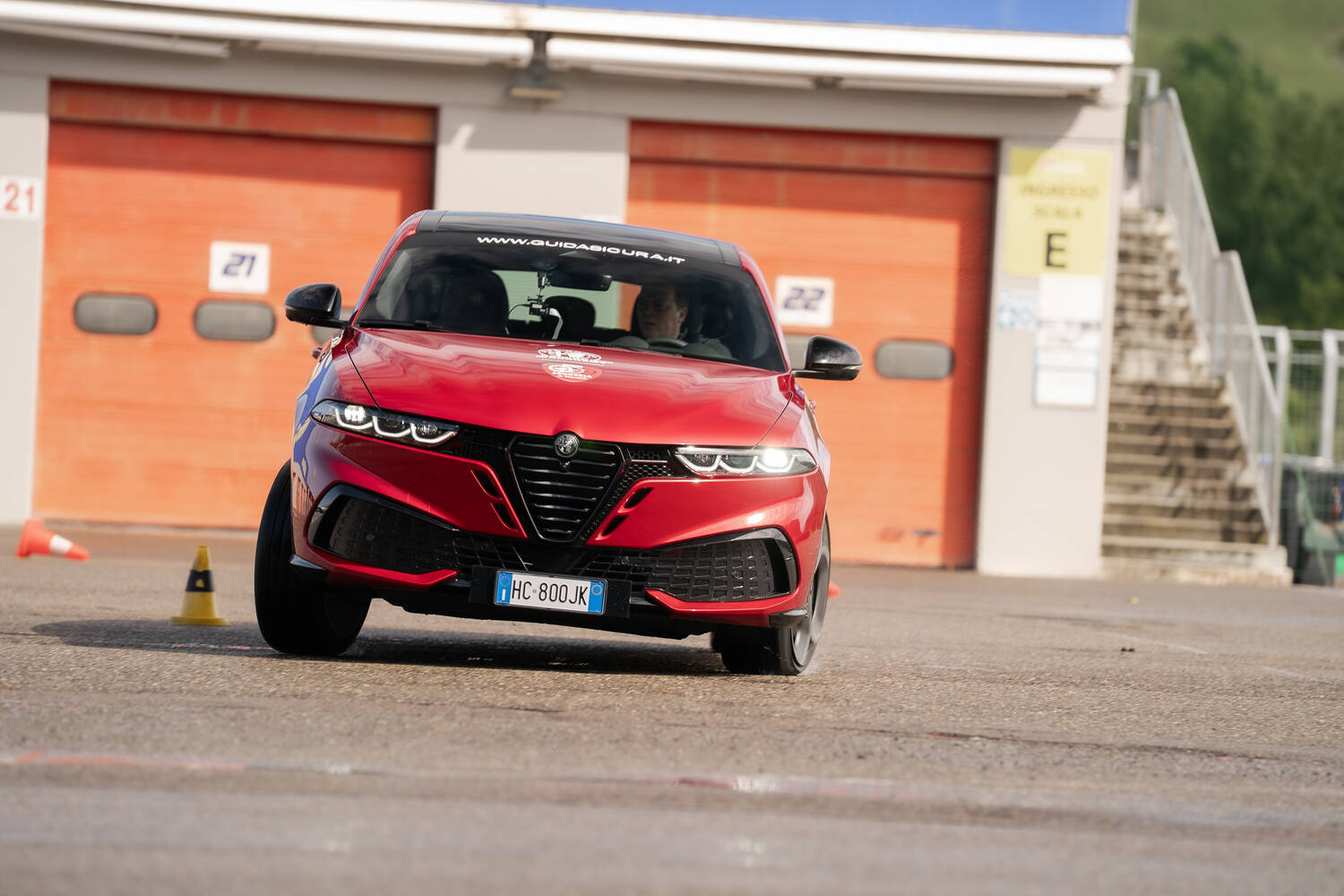
Adrenal gland suitably prepared, we downed another espresso and headed out to the pitlane proper. And sure, our first steed was a four-wheel-drive version of the diesel-engined Alfa Romeo Giulia saloon, but the track was still soaking wet, and the speeds significantly higher than we had yet attained that day.
Nevertheless, the instructors were excellent, allowing everyone to get up to speed at their own pace, and adapting their teaching to the ability of the driver. These early laps were made easy by the mild manners of the Giulia, but even in this guise it's a lovely car to drive.
The Varano circuit has many different layouts, and we were using the longest, at 2.35 kilometres long. You accelerate out of the pitlane to the right of the track before braking for the 'Nuova Variante', a relatively fast left-right. When up to full speed, braking for this corner is full on as it comes after the main straight.
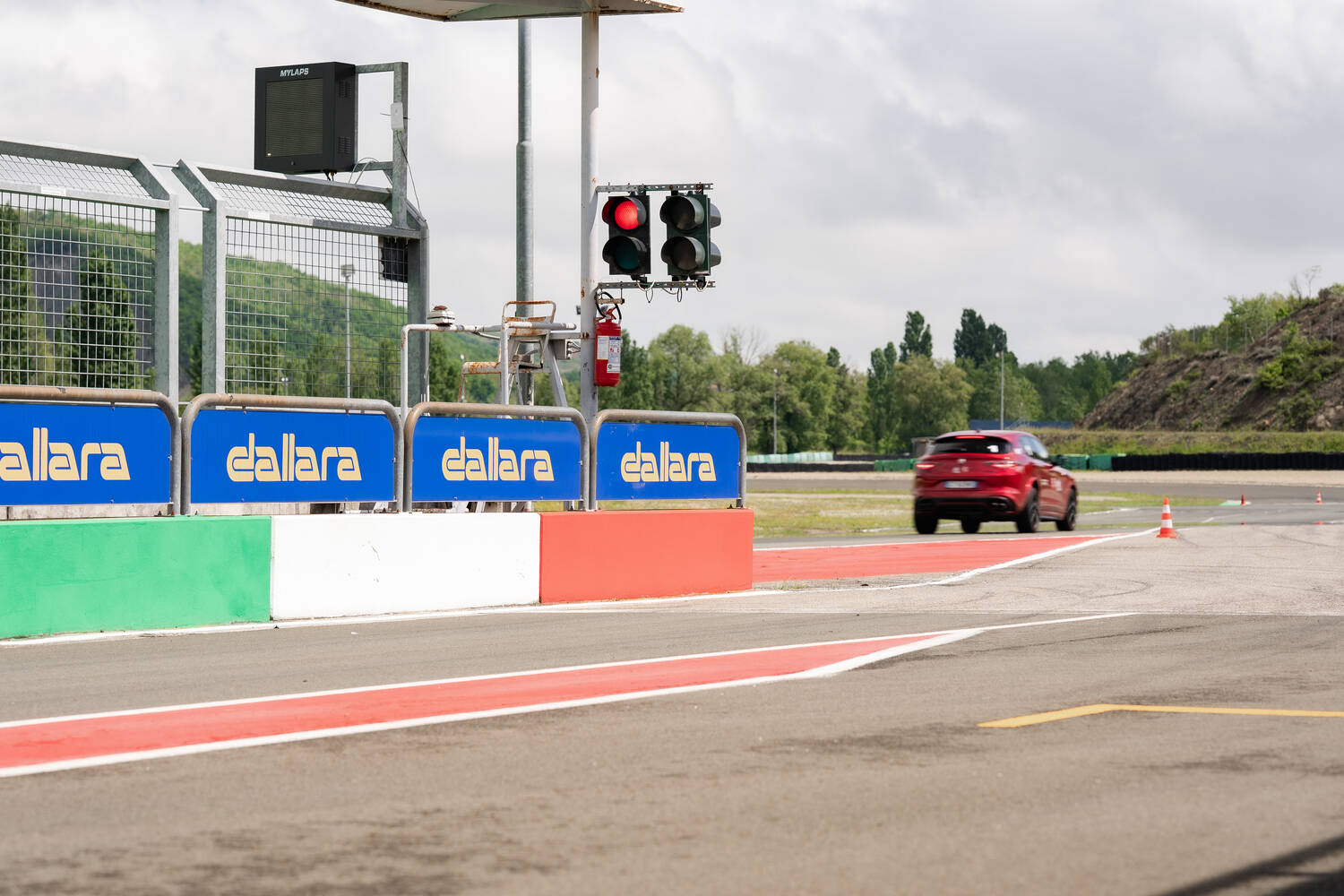
Opening up on exit, it's satisfying to leave the car ease out to the edge of the track as you accelerate once more, this time with another big braking zone ahead of the 'Parabolica', which turns back through more than 180 degrees.
This requires an impossibly late turn-in point because of the length of the corner and by the end of the session, we're trail-braking almost to the apex before easing back on the power. The effectiveness of this technique becomes apparent as we need to adjust our braking point for the following tight '1st Esse' as our pace increases.
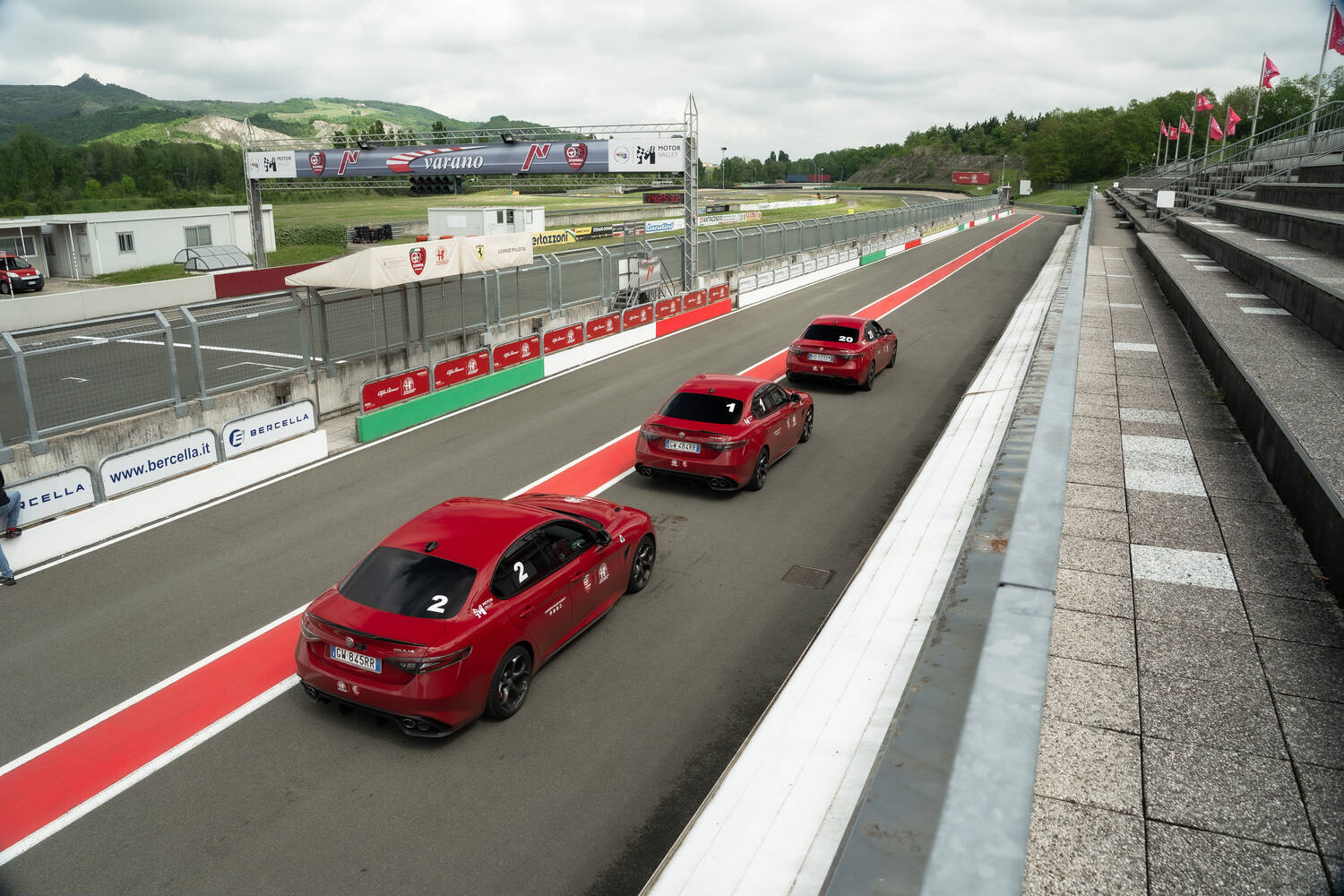
Arrive at this too fast and you compromise the exit speed, which affects your time through the upcoming '2nd Esse' and the flat-out 'T8' kink right before you hit the brakes and trail-brake again into the 'Jacky Ickx' corner, a 90-degree left.
The next section is the most technical and requires serious patience with the throttle, as it's all about getting onto the main straight in a manner that maximises speed.
First up is the 'Ferro di Cavallo' (that means 'horseshoe' in Italian), but it's not as simple a shape as that suggests and yet we're told to keep the same steering angle throughout, modulating the line with the accelerator. Then resist the urge to speed up through the right-right-left that precedes the start-finish straight, as that can result in a slower top speed further down.
Divine intervention
Several stints later, we're familiar with the track, the instructors know what we're capable of and the sun has even come out.
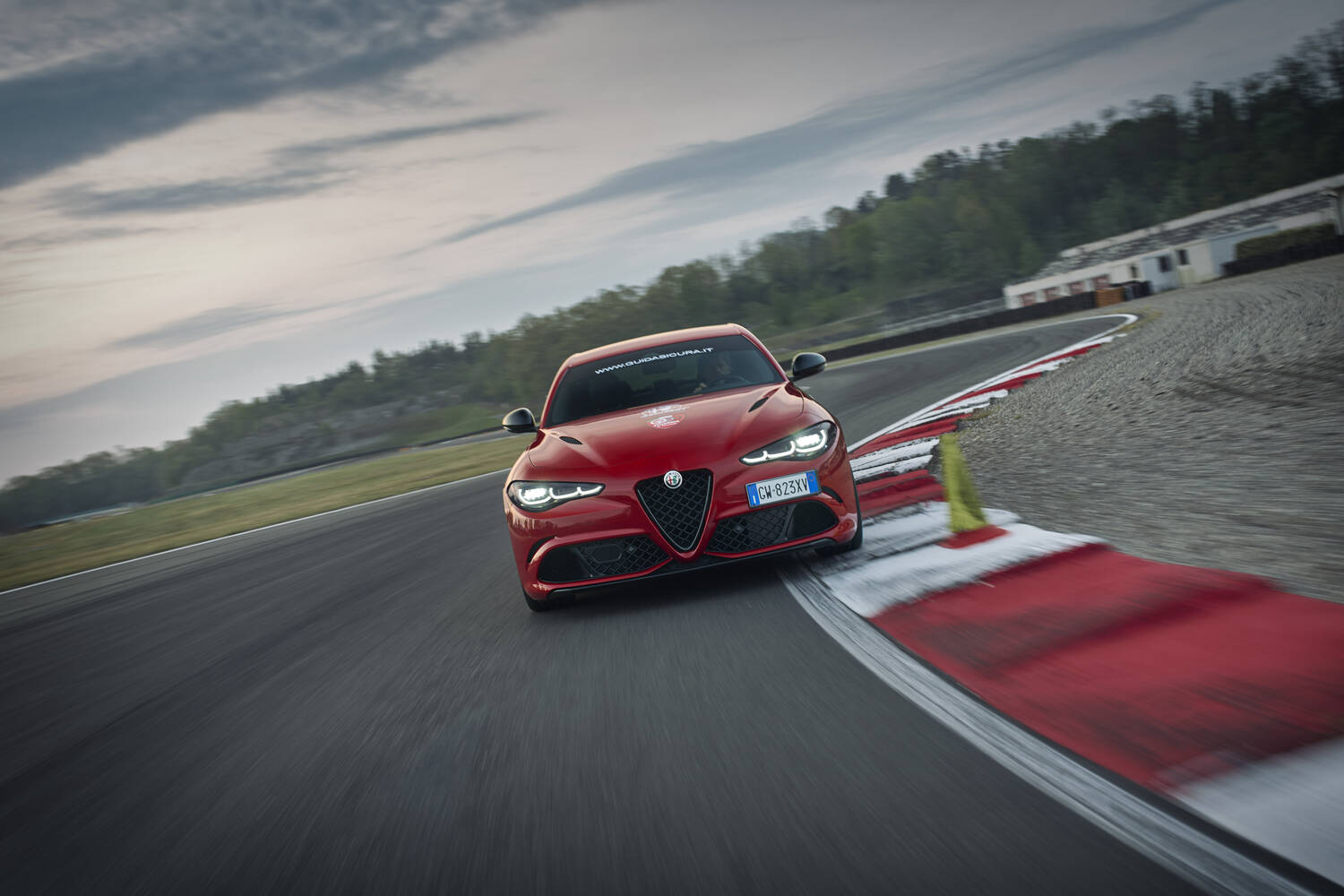
Before it does, we get behind the wheel of the Alfa Giulia Quadrifoglio, a 520hp saloon powered by a glorious, twin-turbocharged, 2.9-litre V6 petrol engine. It sounds every bit as good as that description suggests it will.
This model was updated in 2024 to include a mechanical limited-slip differential, which, in conjunction with a set of high-performance Hankook tyres, makes the car very lively on a wet track. But also a lot of fun to get to grips with.
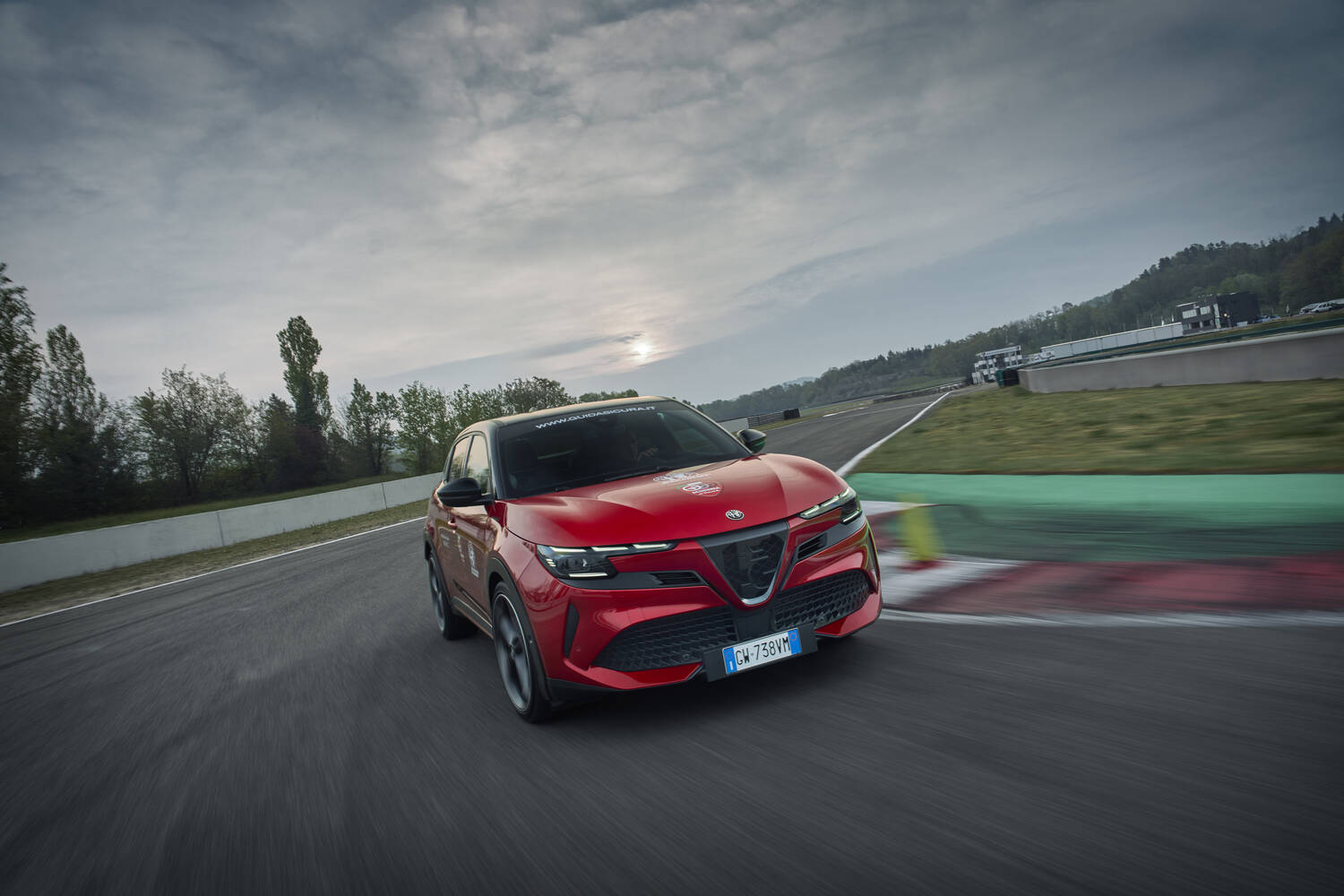
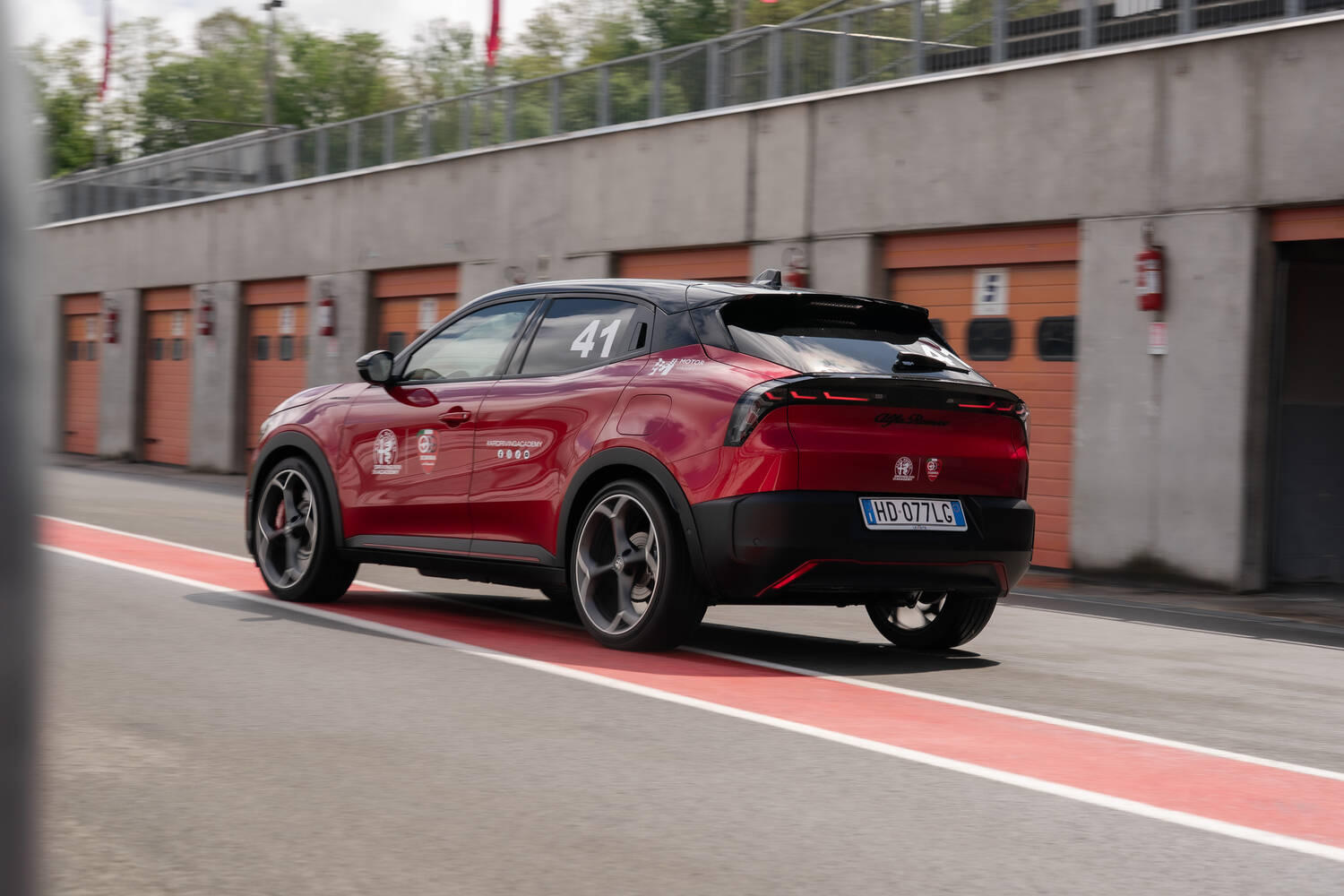
Remarkably, one of the cars we were least excited about driving on the circuit turned out to be one of the most impressive, as the Alfa Junior put in a good account of itself in the conditions.
Admittedly, it was the 280hp Veloce model we had access to, but it wasn't the outright speed so much as its ability to tackle a proper racetrack such as this that impressed us. It's a front-wheel-drive car, but it also features a limited-slip differential, and this is remarkably effective in helping it blast out of slower corners, wet or dry.
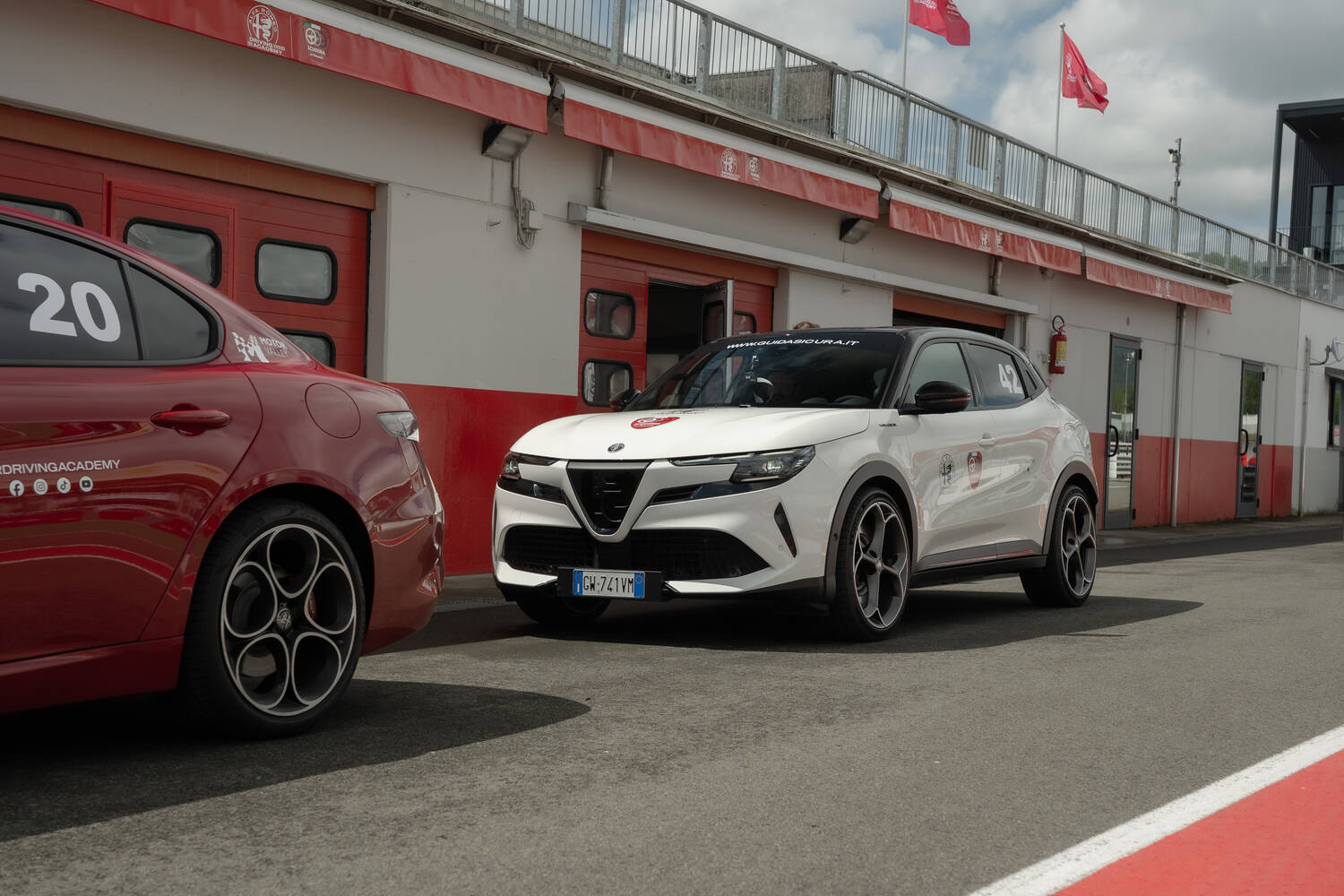
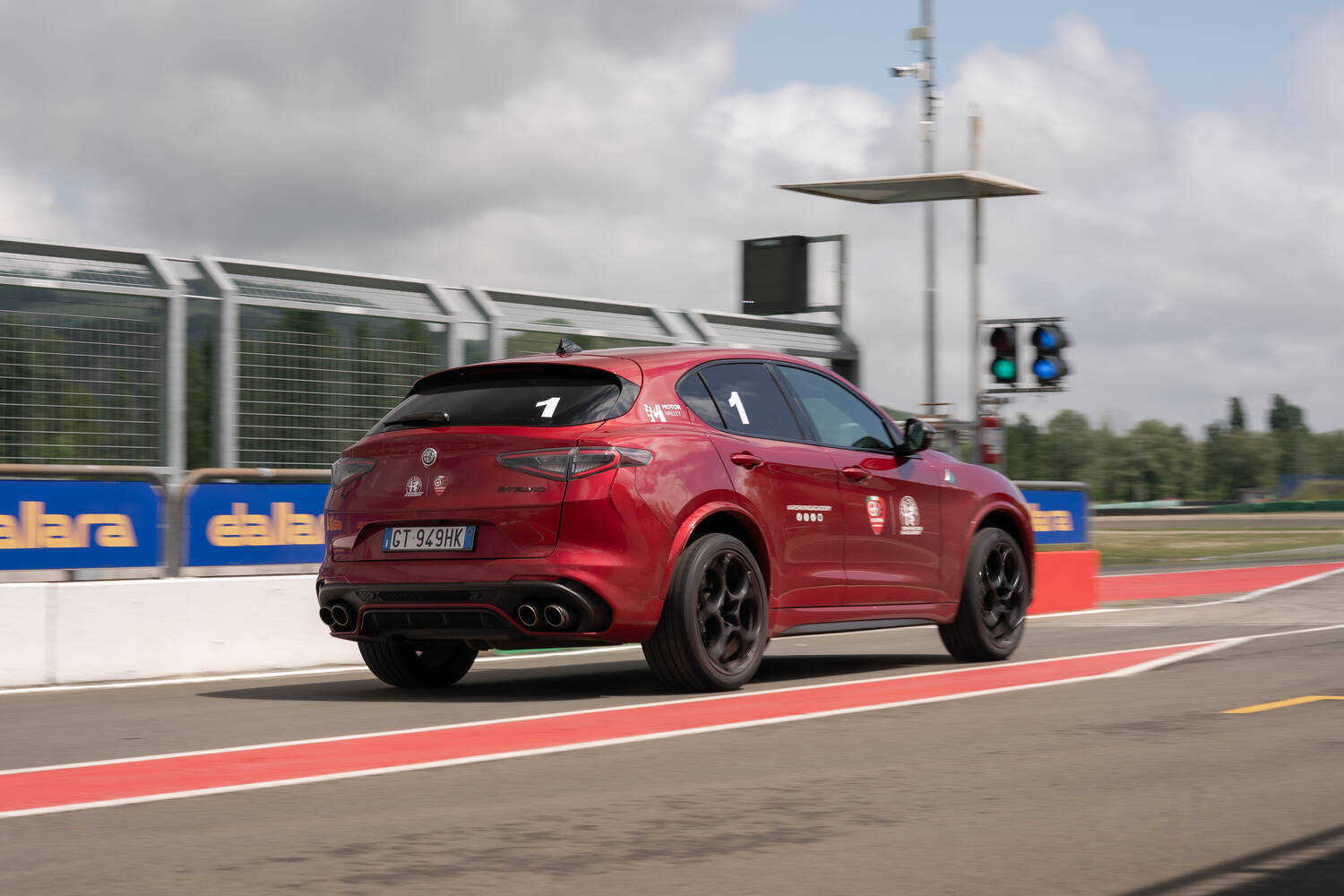
On a fully dried track, our last drive of the day was in the Stelvio Quadrifolgio. This SUV shares the Giulia's V6 but pairs it with Alfa's 'Q4' all-wheel drive instead. Don't assume it's a lesser driver's car, as it really is one of the most engaging-to-drive SUVs on the market.
Using its full potential on track, and exploring all of its driving settings, was one of the highlights of the day.
Friendly, fun, but with a competitive edge
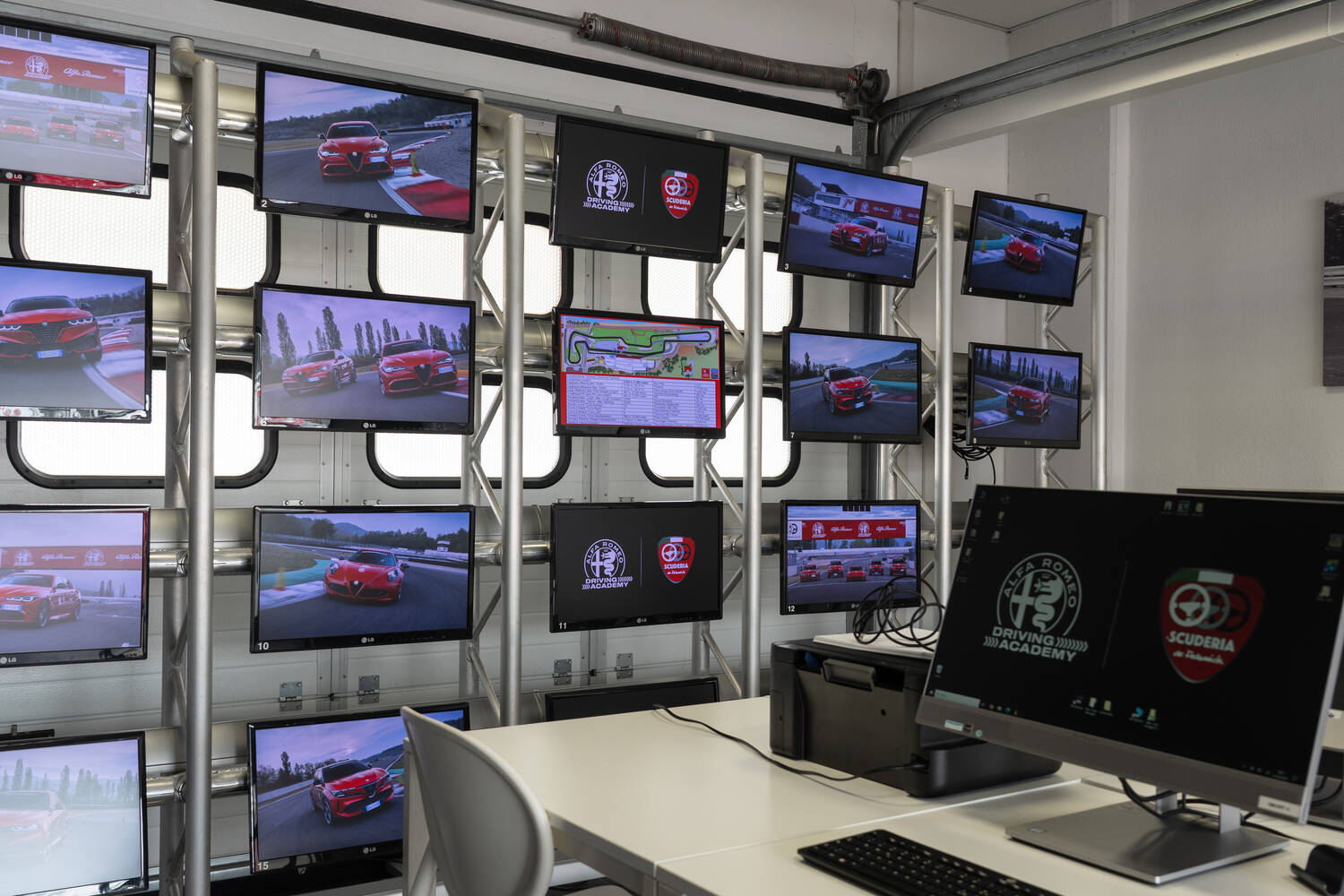
Throughout out morning in Varano, we were ushered from car to car with plenty of breaks in between for cannelloni and coffee. This time is well used, with the option to chat through any aspect of the cars or the driving with instructors.
Included in the course is one-on-one session with your own 'race engineer' to go through actual telemetry from your time on track and compare it with the data taken when a professional racer is doing the same thing.
And yes, I have a list of excuses lined up if anyone is interested. So regardless of what the data is saying, I clearly should have been a Formula One driver.
Time to look at the damage
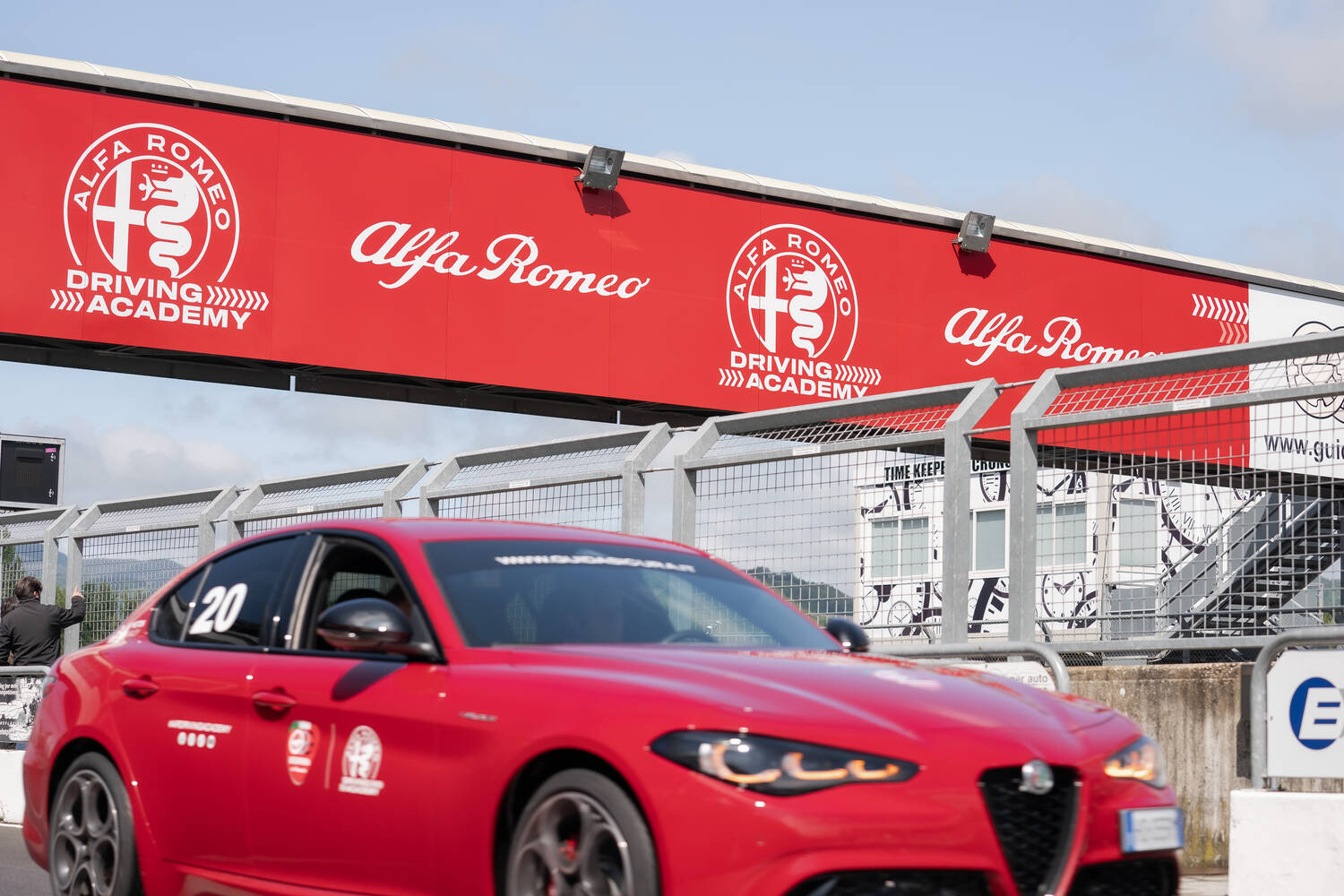
The Alfa Romeo Academy has corporate packages available, while the private options are split into four courses: Safe Driving, Evolved Driving, Sports Driving and Advanced Driving. The latter is the only two-day course while the others start at 8:45am and finish at 5:30pm.
Safe Driving costs €790 plus taxes and does include plenty of track time with an instructor, but it doesn't include driving any of the high-performance models and is designed as a first foray onto track by the look of it.
Evolved Driving is €900 plus taxes and adds time on a skidpan, including timed laps. This - and all the other courses above it - feature time in both the Alfa Romeo Giulia Quadrifoglio and the Alfa 4C sports car.
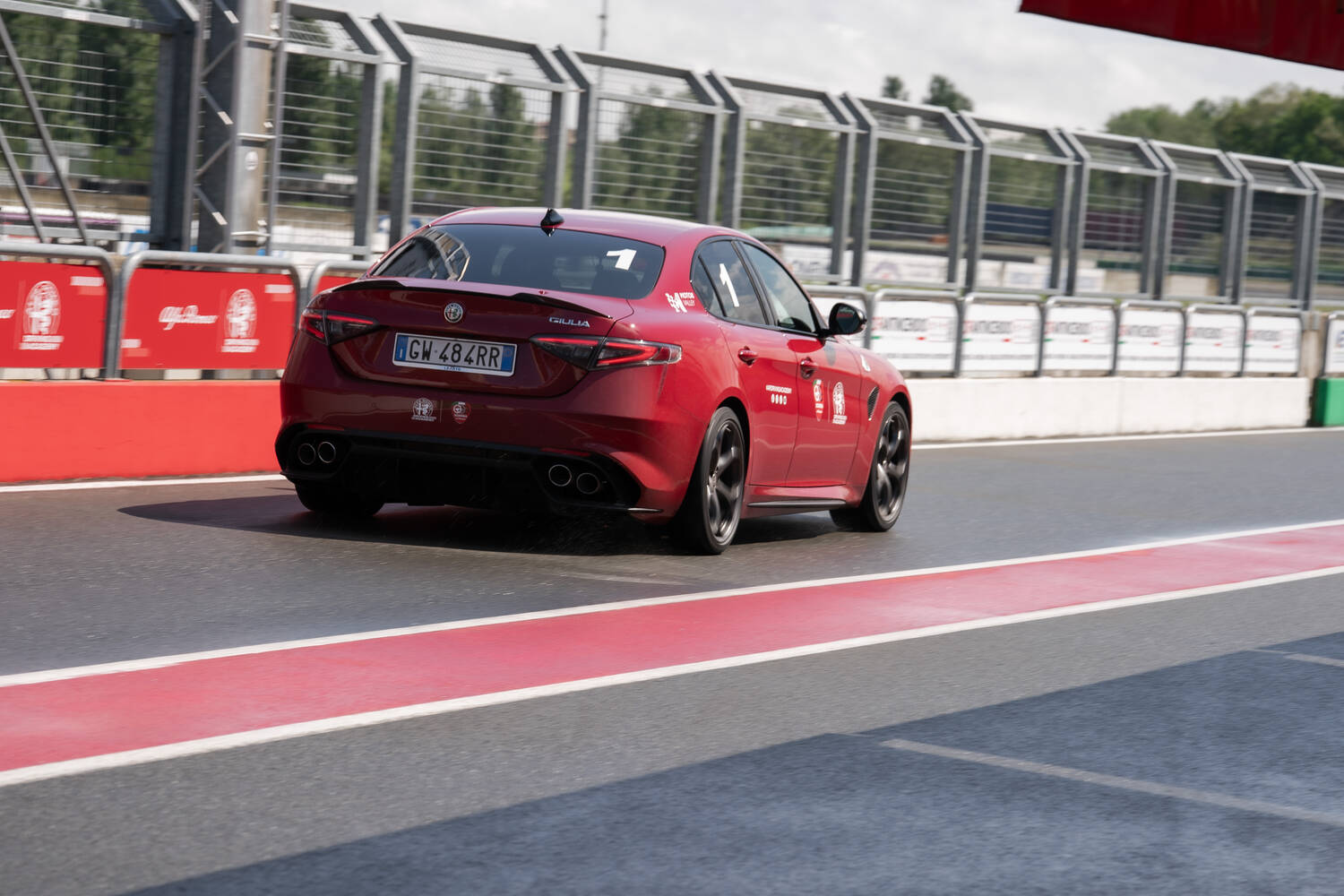
Sports Driving (€1,015 plus taxes) is designed for drivers that have attended the other courses already or have some experience on track, while the two-day Advanced Driving option encompasses all of the courses in one, for a sum of €2,000 plus taxes.
Throw in some sight-seeing and a few delicious meals and that's not a bad way at all to spend a few days in Italy. Just pray for better weather than we had...
If there is anything about this story we have not covered, you can avail of our expert advice service via the Ask Us Anything page.