
Introduction to the 2026 Range Rover
There are other posh SUVs which are larger, which are faster, which are fancier. You can choose from a Lamborghini Urus or a Rolls-Royce Cullinan or a Mercedes-Maybach GLS or even, with a bit of personal importation, a Cadillac Escalade.
However, none of these cars can truly hold a candle to the Range Rover. The Range Rover may not be as huge nor as expensive as some of those, but it remains the gold standard for premium SUVs - understated (despite its size), luxurious (but not ostentatious) and supreme when it comes to off-roading.

Pros & cons of the 2026 Range Rover P460e
Pros:
• Looks the business
• Impressive hybrid setup
• Imperious driving experience
Cons:
• Relies on a touchscreen
• People will hate you for driving one
• Needs lots of space for parking
Exterior & design of the 2026 Range Rover
• Ultra-clean styling
• Subtly different to the Sport
• Demure paint options

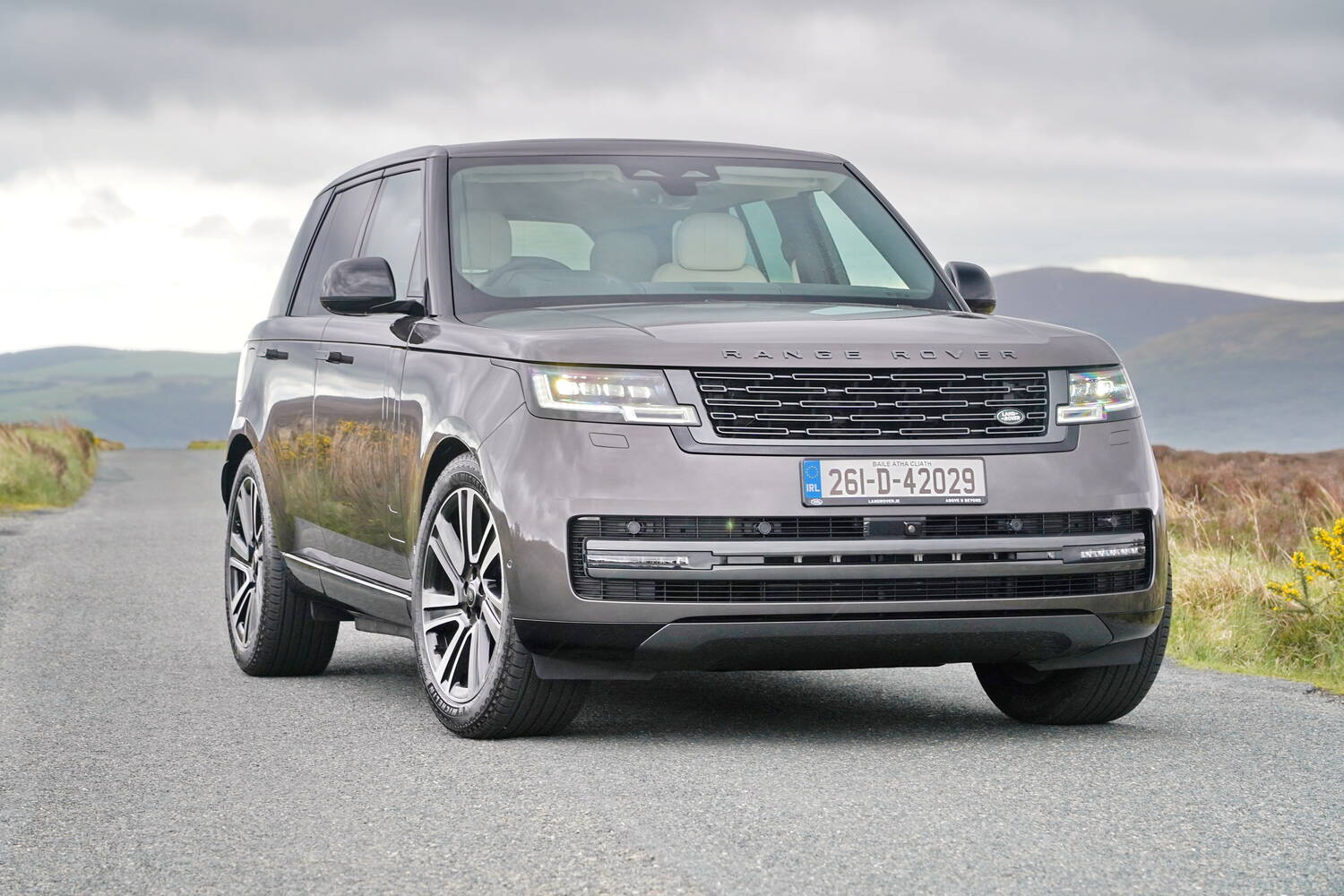
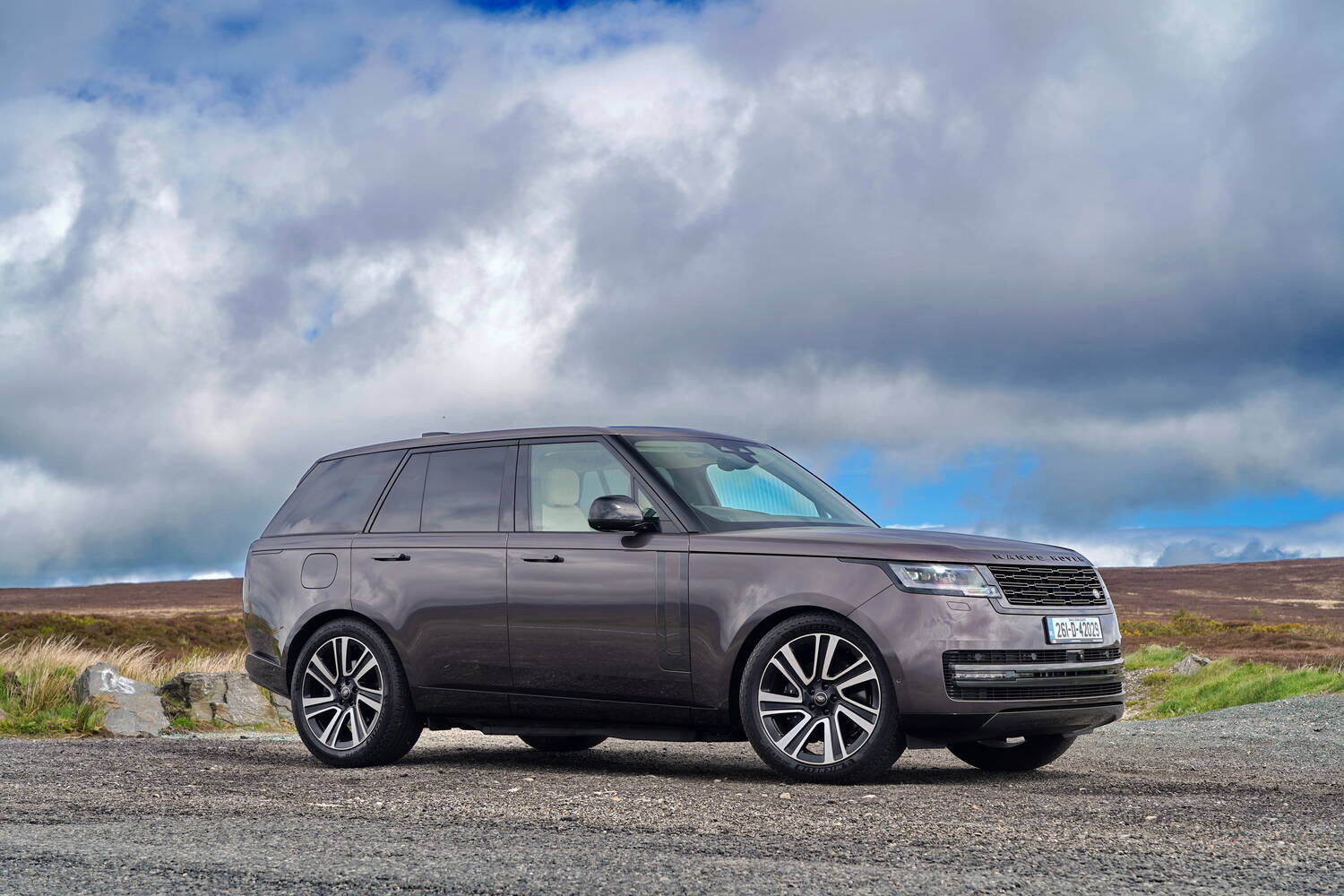
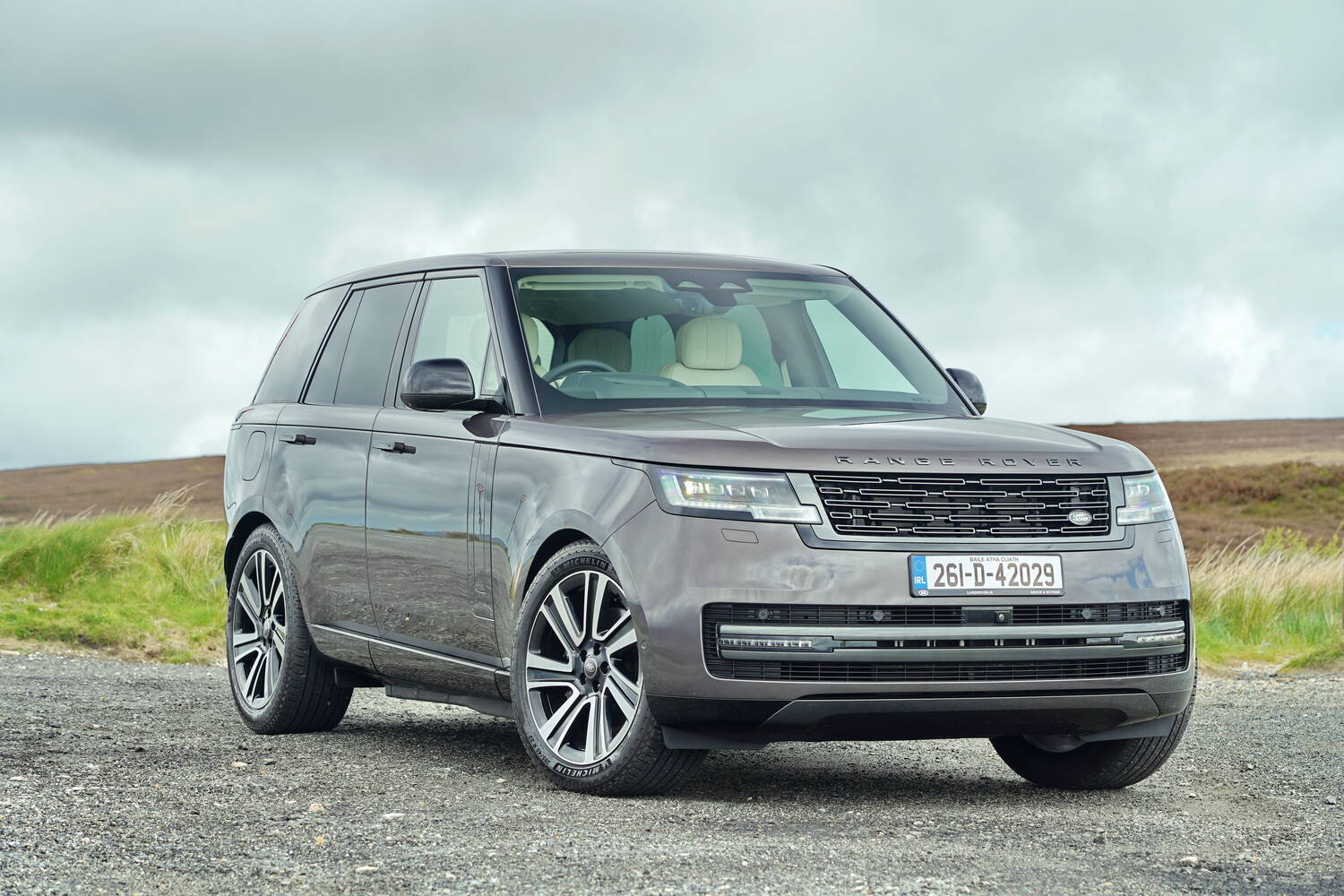
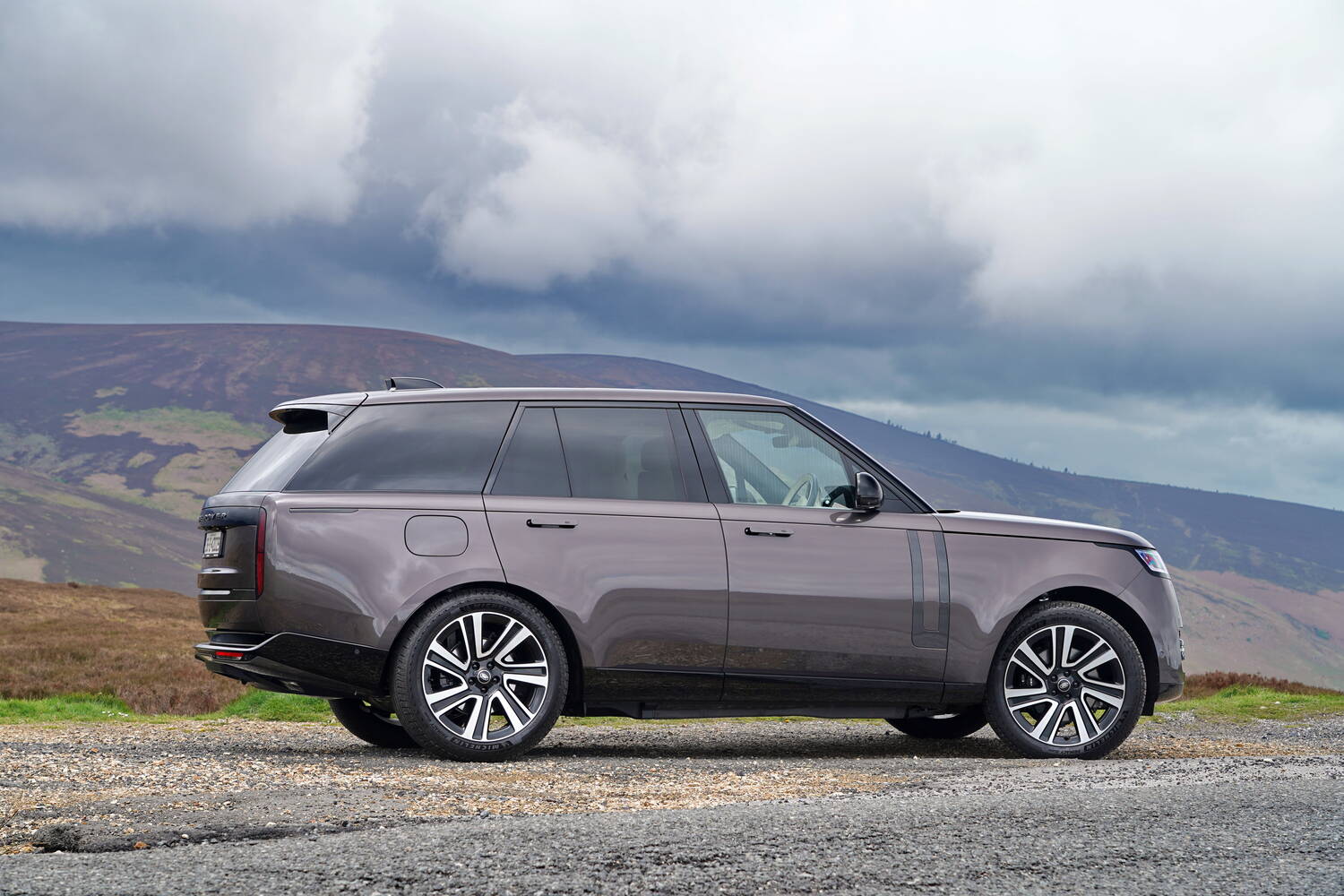
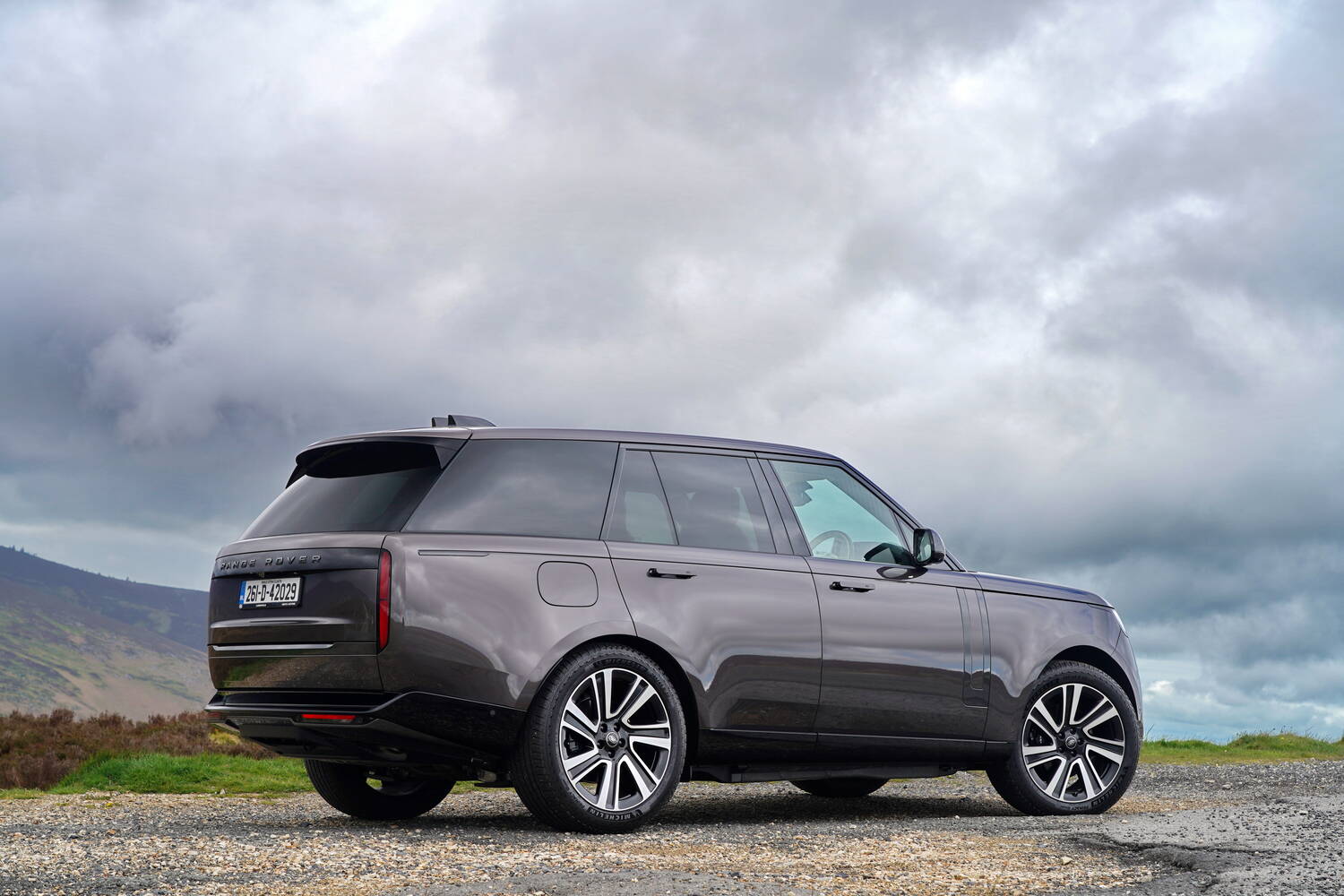
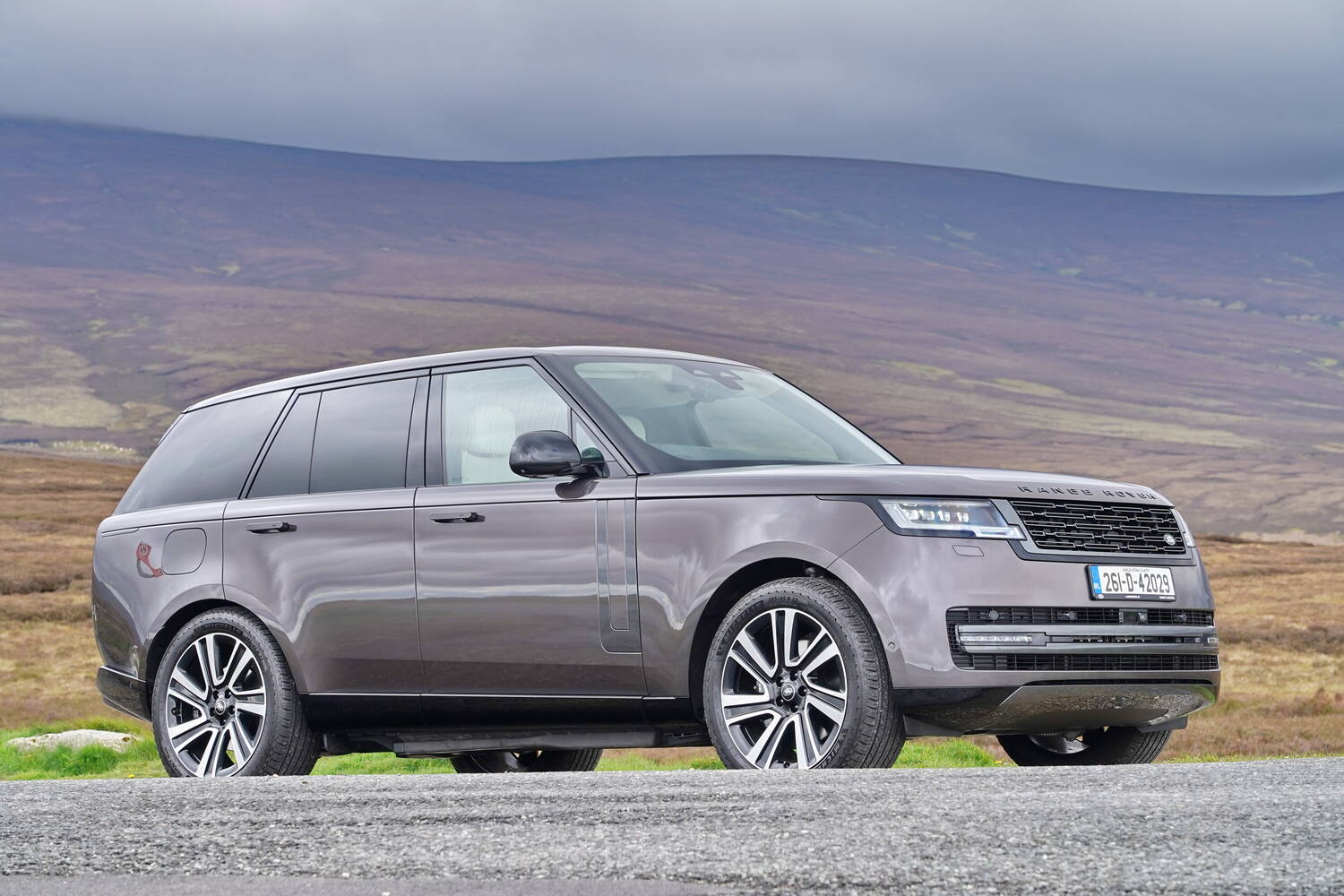
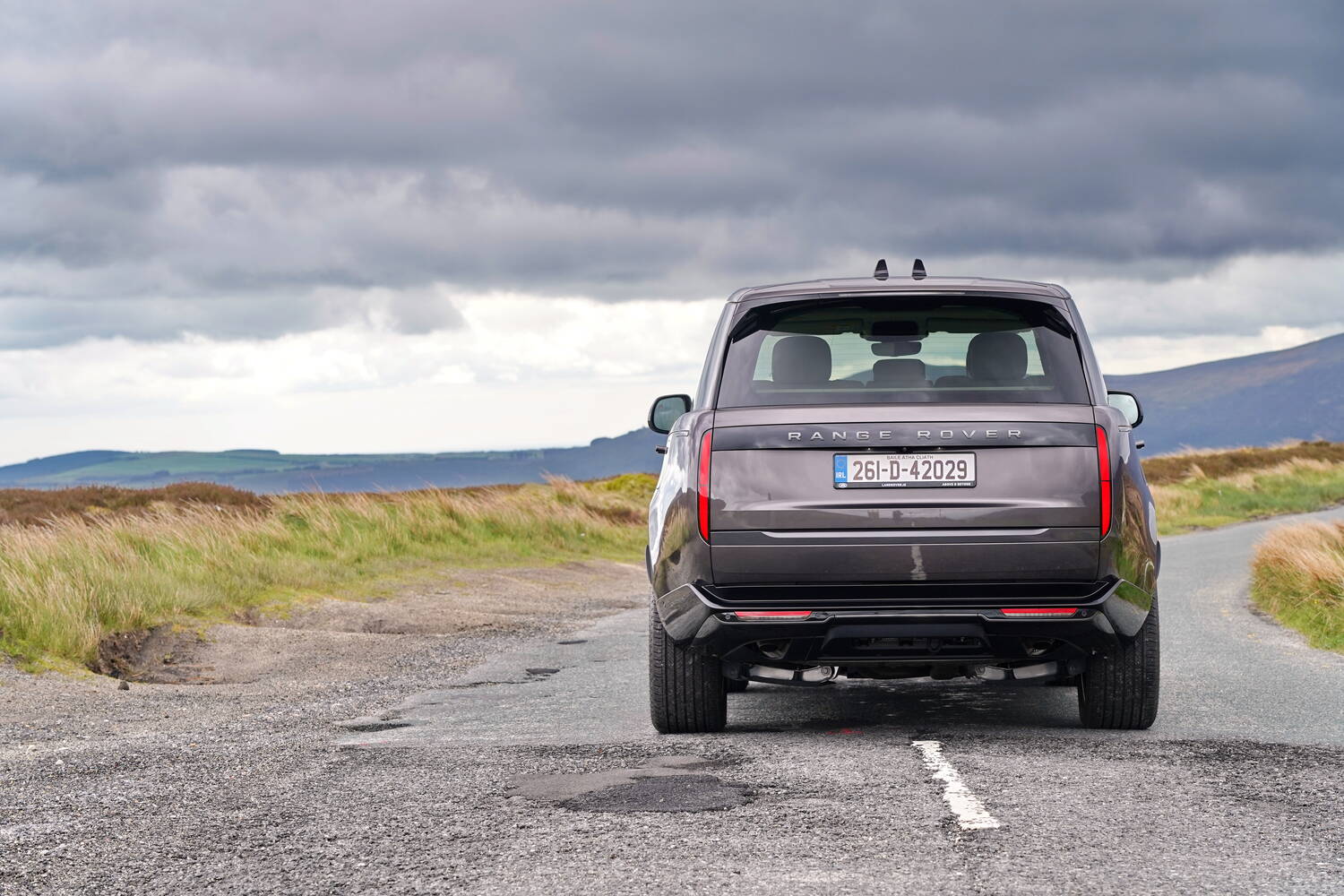
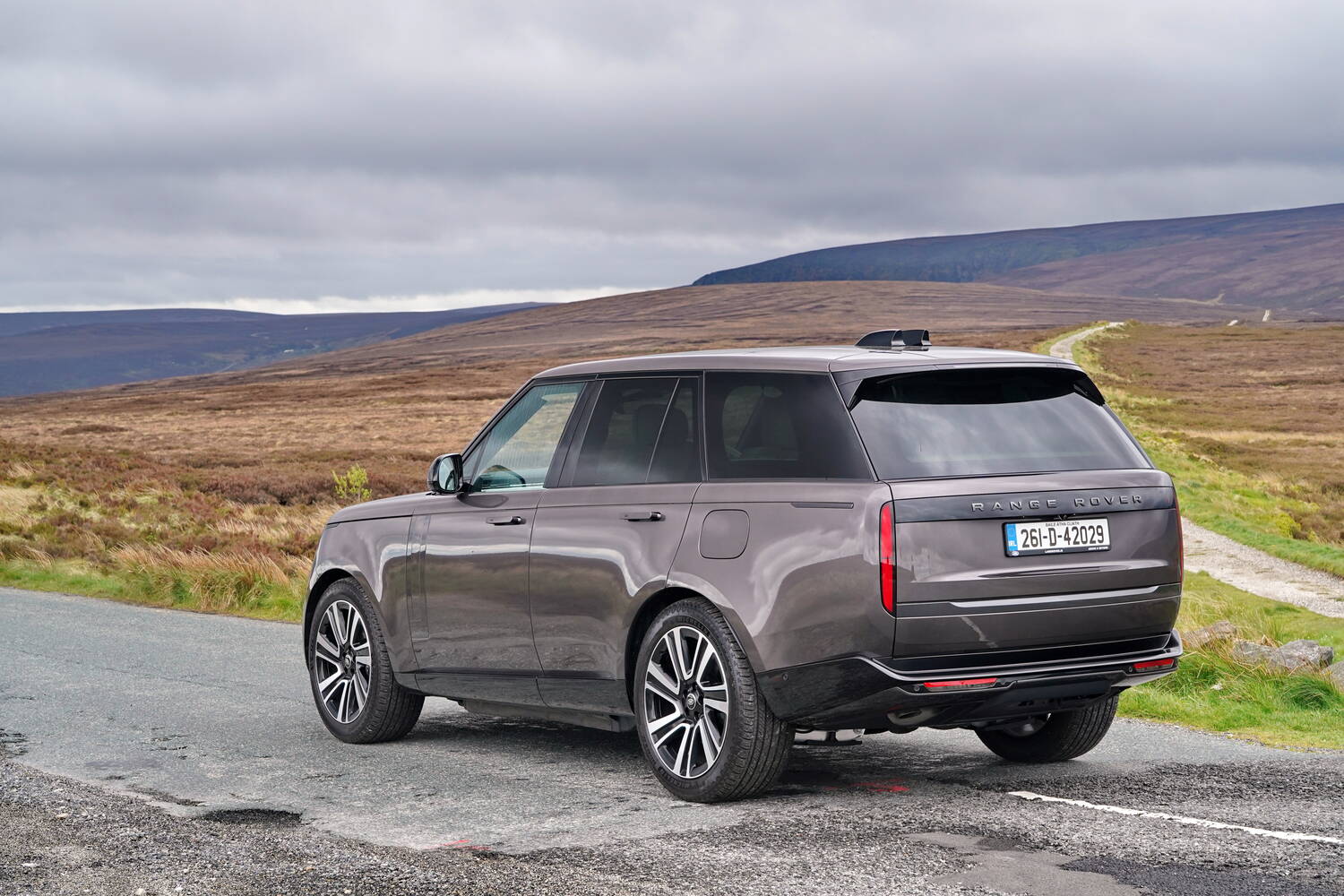
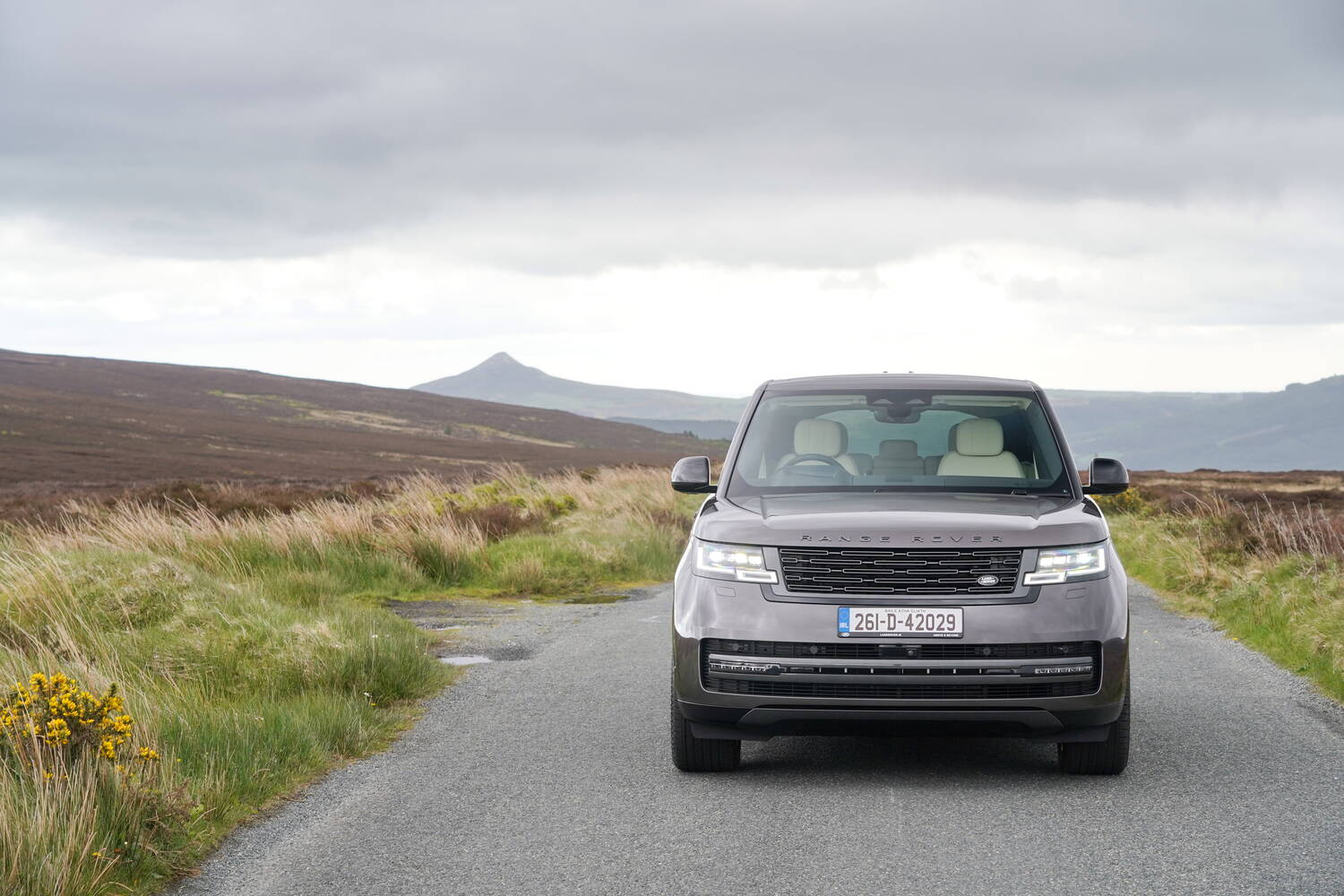
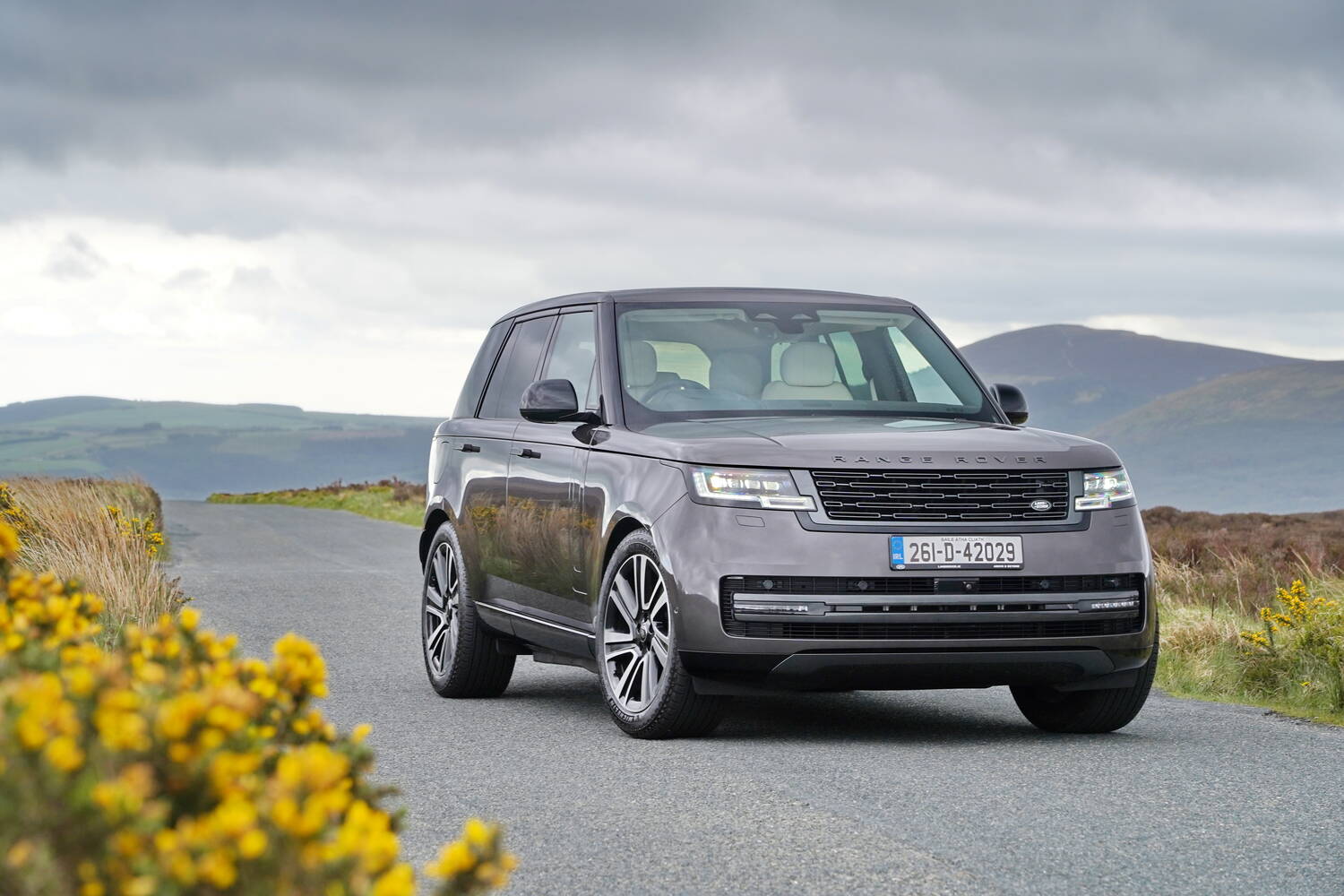
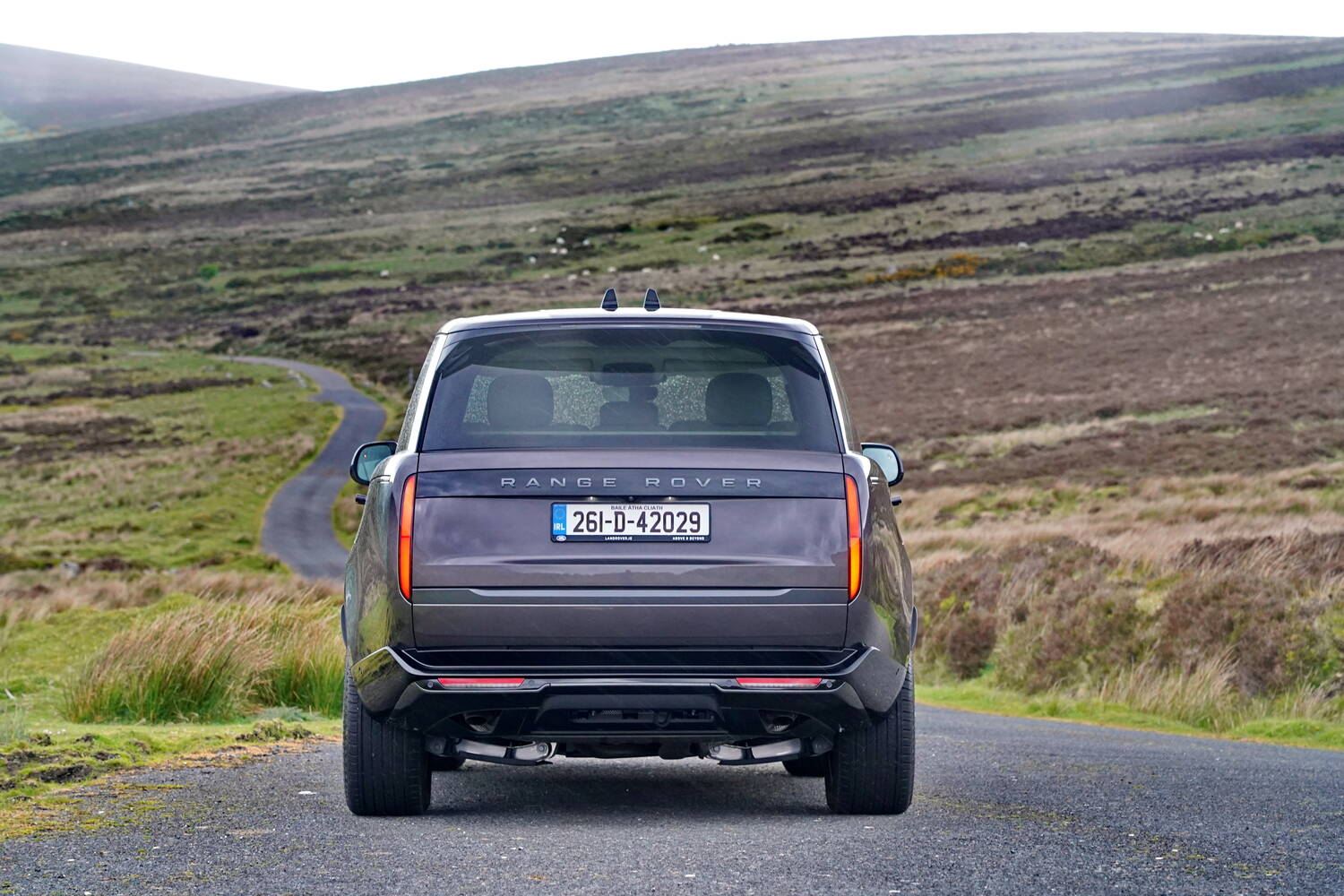
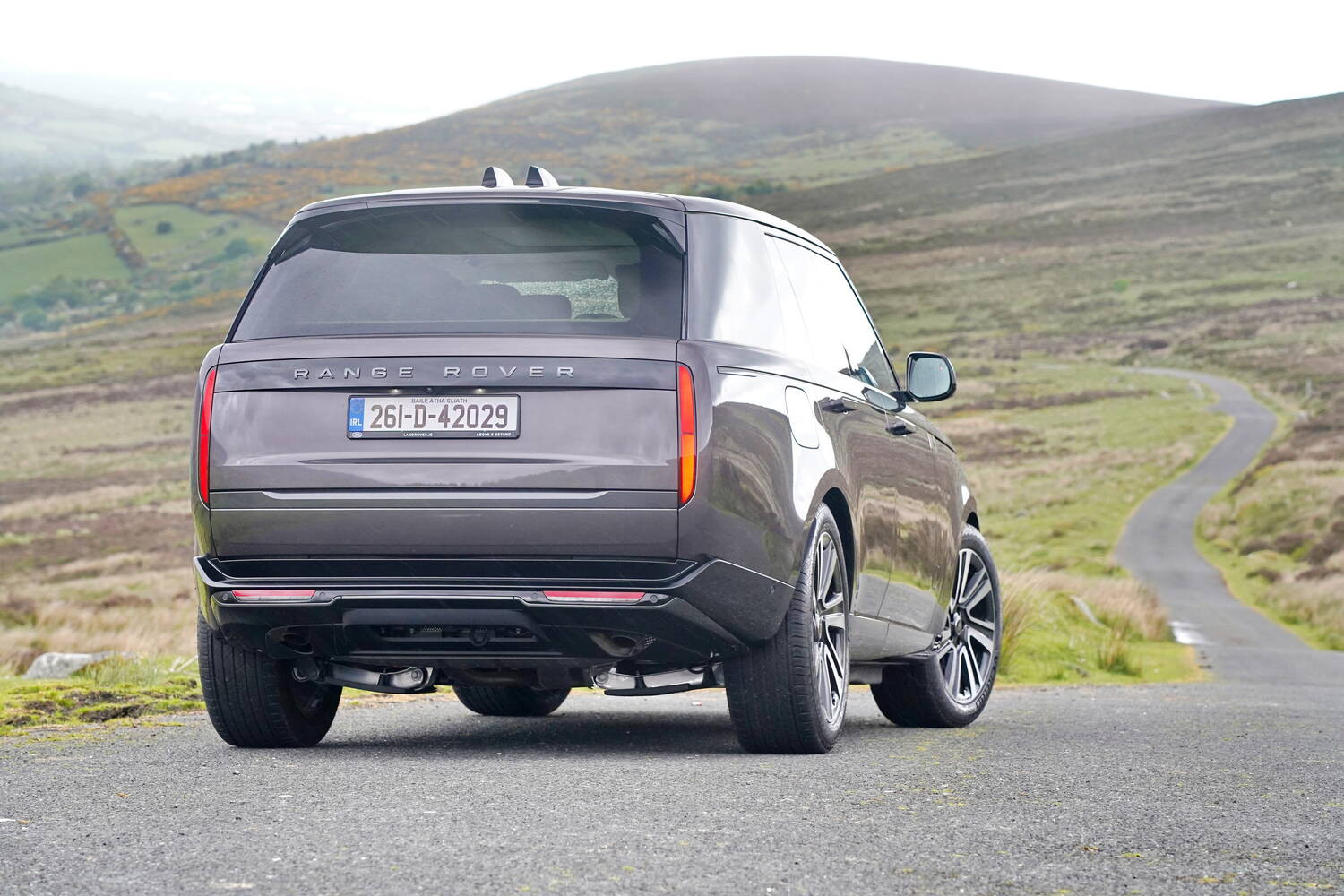
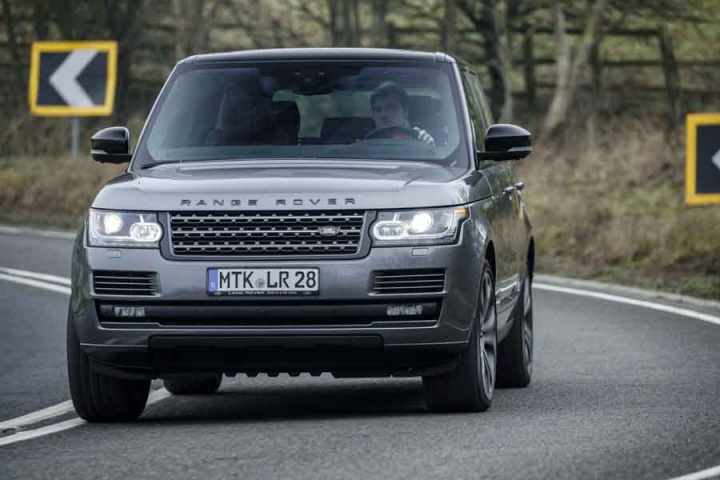
While some previous versions of the Range Rover were dripping with ornamentation, the current one is resolutely clean, simple and devoid of pointless visual gewgaws.
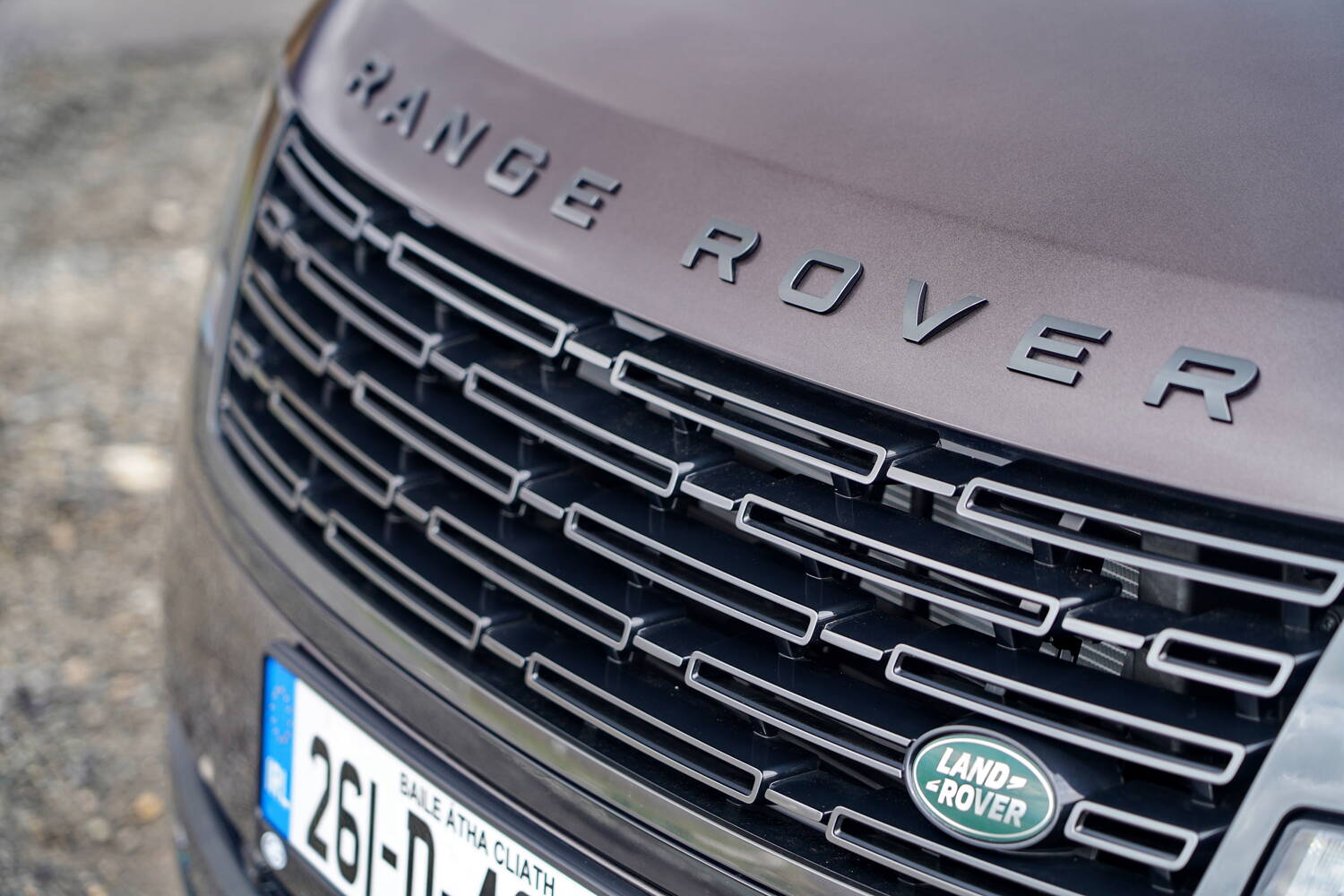
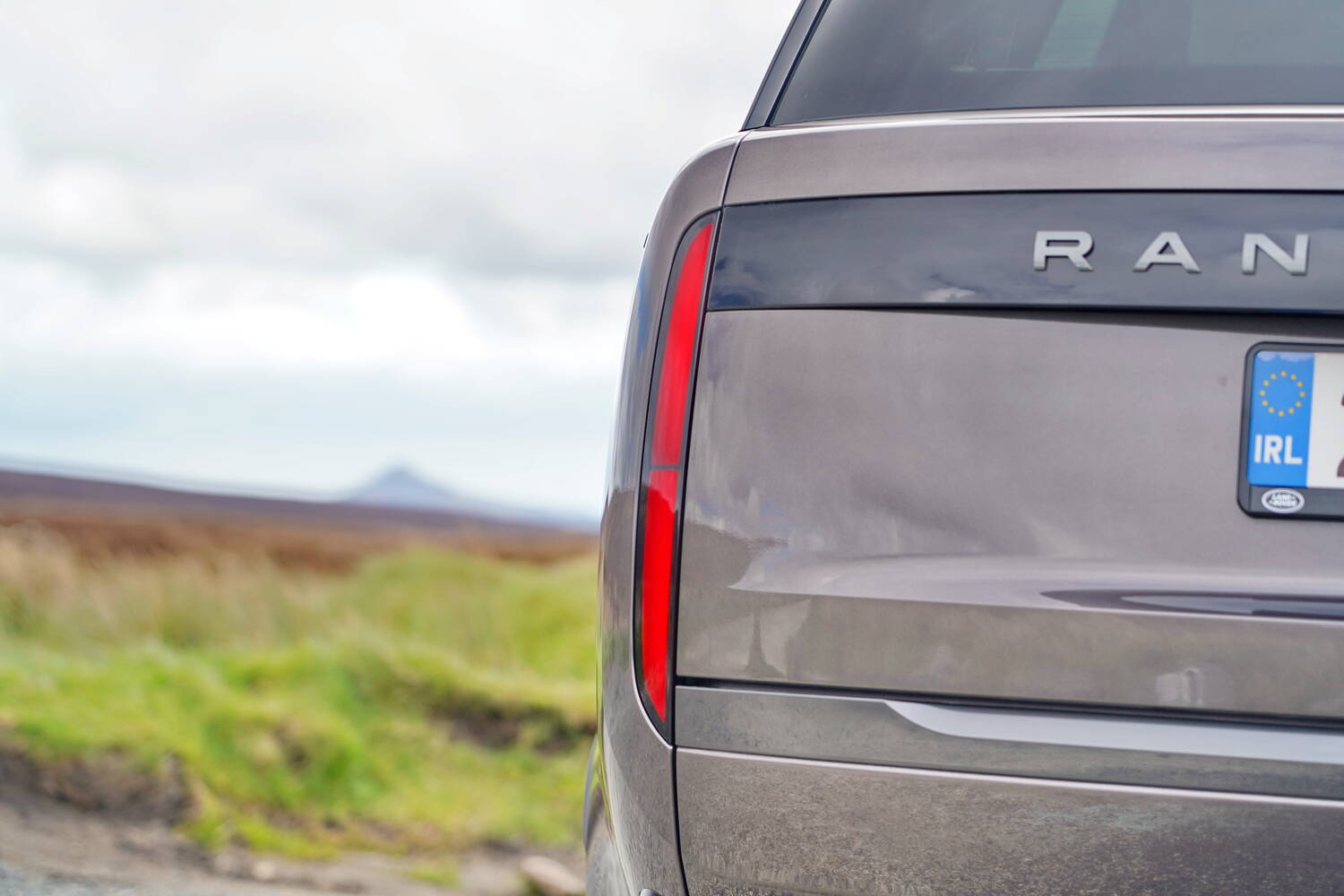
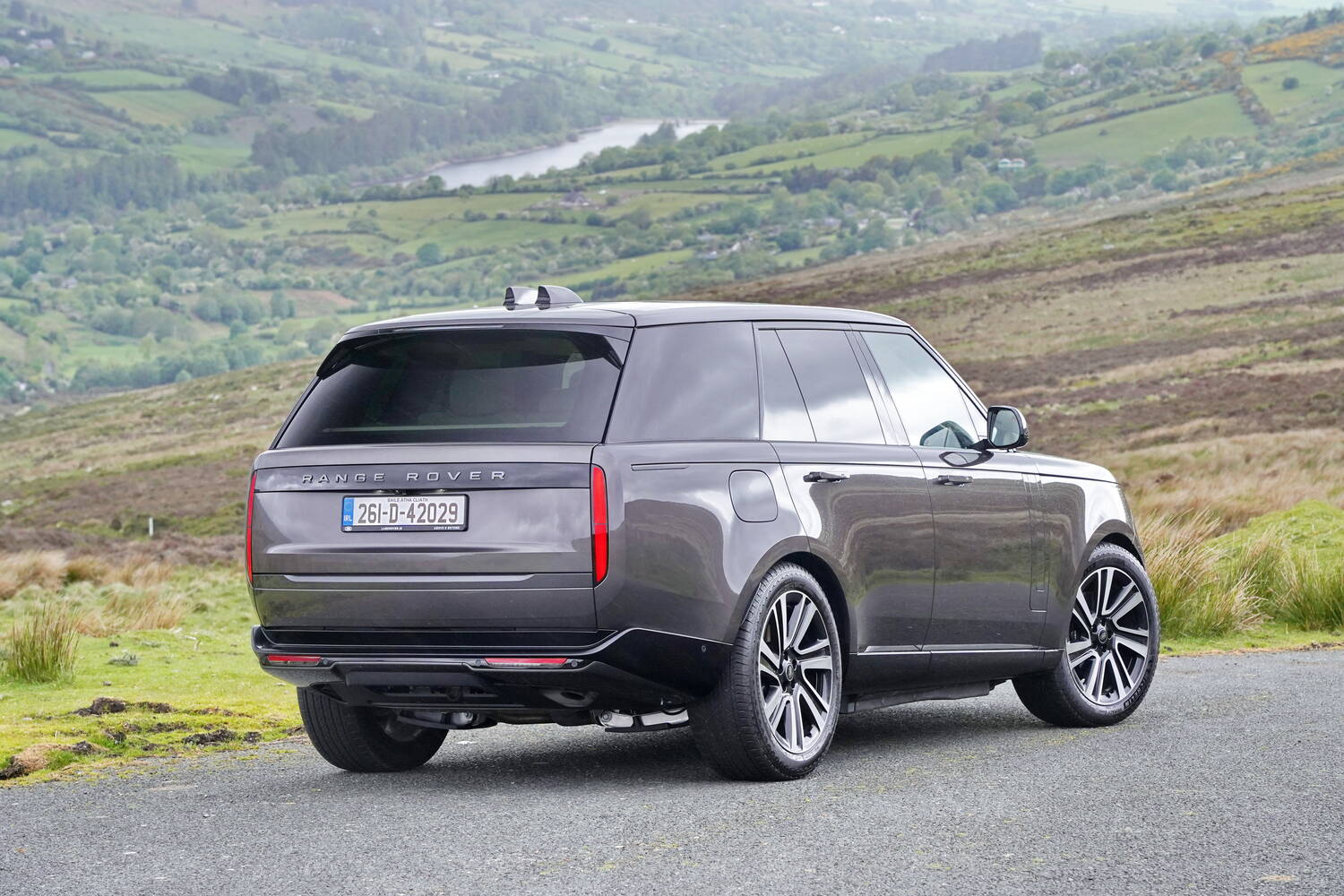
OK, so there's still a vestigial fake vent behind the front wheel arch, but that aside this is an exceptionally handsome car, from the understated grille to the incredibly slim, vertical brake lights that only glow when they're needed.

Certainly compared to some others, this massive, 2.8-tonne SUV cuts a far more subtle dash, and while you will still sometimes get the look of death from jealous pedestrians, the Range Rover remains aloof and cool, and above the normal fray.
Abridged version: it's a fantastic-looking car, and utterly desirable.
Dimensions of the 2026 Range Rover
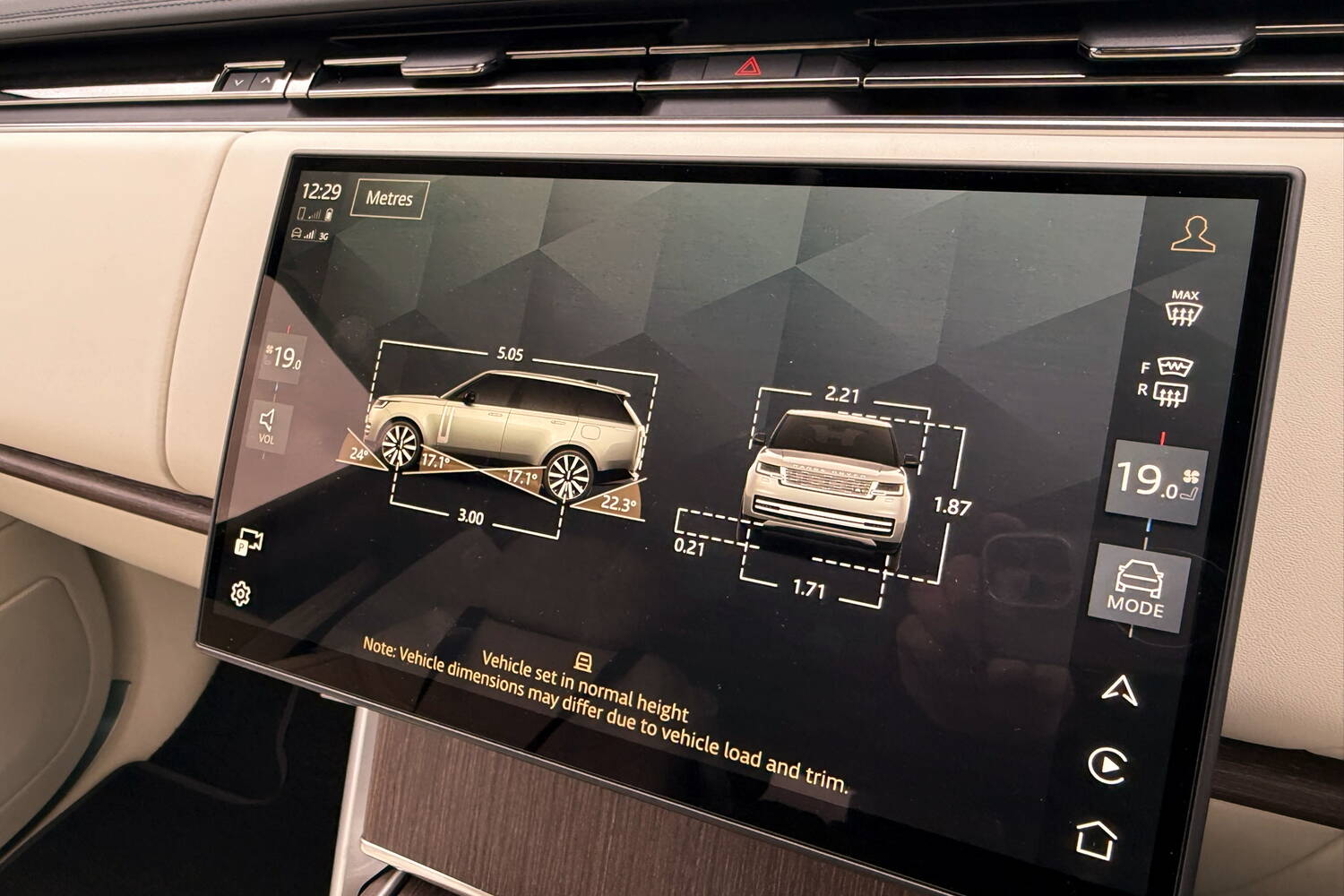
Length: 5,052mm
Width: 2,047mm (mirrors folded)
Height: 1,870mm
Wheelbase: 2,997mm
(These are the figures for the standard wheelbase model)
Paint colours for the 2026 Range Rover
Fuji White is the only no-cost colour option for the Range Rover, but to our eyes it looks a bit too 'Dubai spec' in white, and who wants that?
You can pay an extra €1,495 for gloss metallic paint in Santorini Black, Eiger Grey, Belgravia Green (nice), or Varesine Blue. Or there's a series of 'premium' gloss metallic options for €2,905 including Ostuni Pearl White, Carpathian Grey, Batumi Gold (more subtle than it sounds) and Charente Grey (a brownish hue, the colour of our test car).

There's more. For €11,800 you can have one of the SV Bespoke Ultra Metallic paints - chose from British Racing Green, Ethereal Frost Silver, Velocity Blue, Ionian Silver, Sunset Gold, Amethyst Grey Purple, Petrolix Blue, Tourmaline Brown, Sunrise Copper, Obsidian Black, Constellation Blue, or Flux Silver.
Not happy with those? OK, so how about an SV Bespoke Special Effect paint, in Icy White, for €14,290?
If even that doesn't satiate your paint tastes, there's the optional SV Bespoke paints in a satin metallic finish, for €14,290, coming in British Racing Green, Flux Silver, Velocity Blue, Ethereal Frost Silver, Ionian Silver, Sunset Gold, Tourmaline Brown, or Obsidian Black. Want Icy White in a satin finish? That'll be €16,775.
Interior, practicality, tech & comfort of the 2026 Range Rover
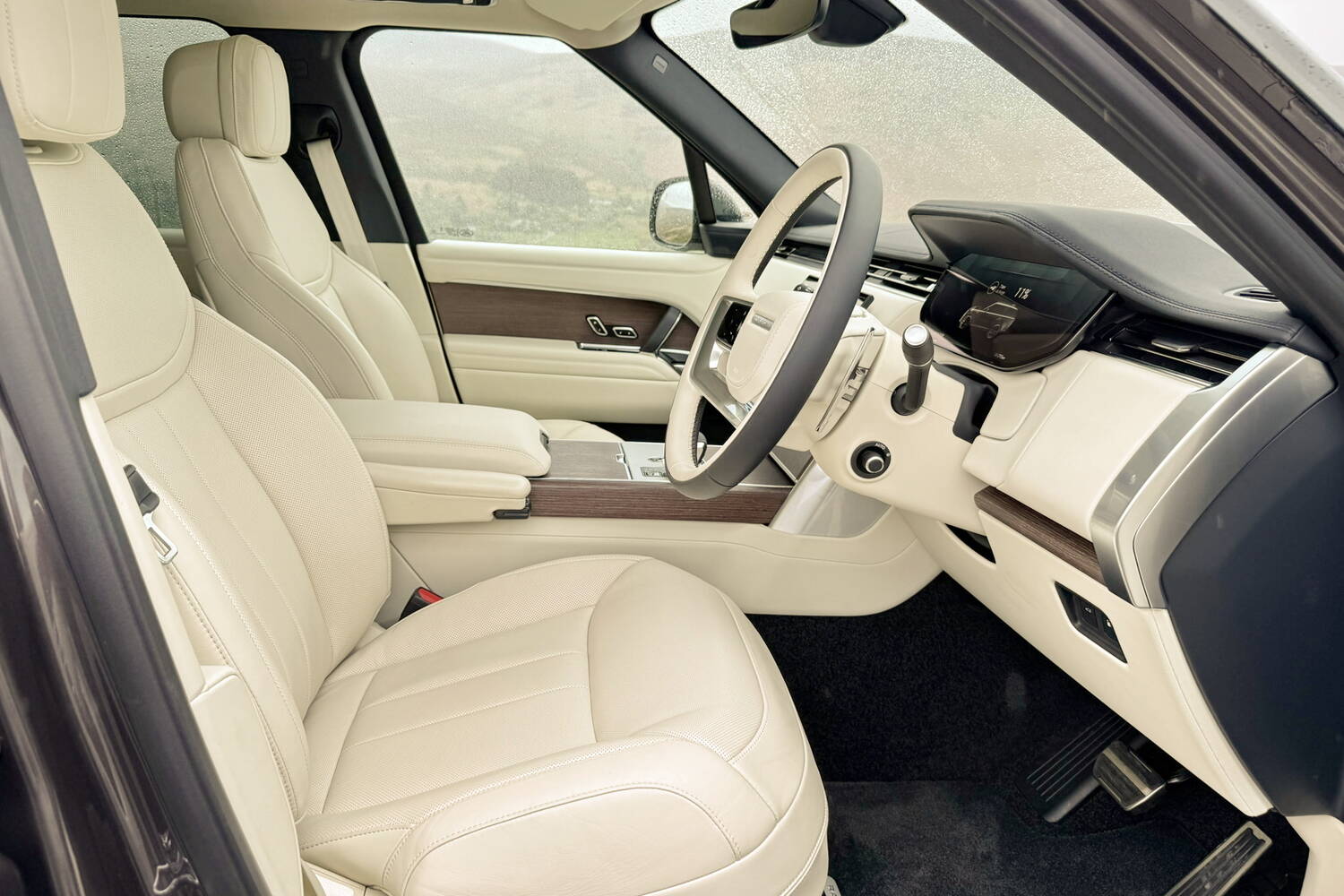
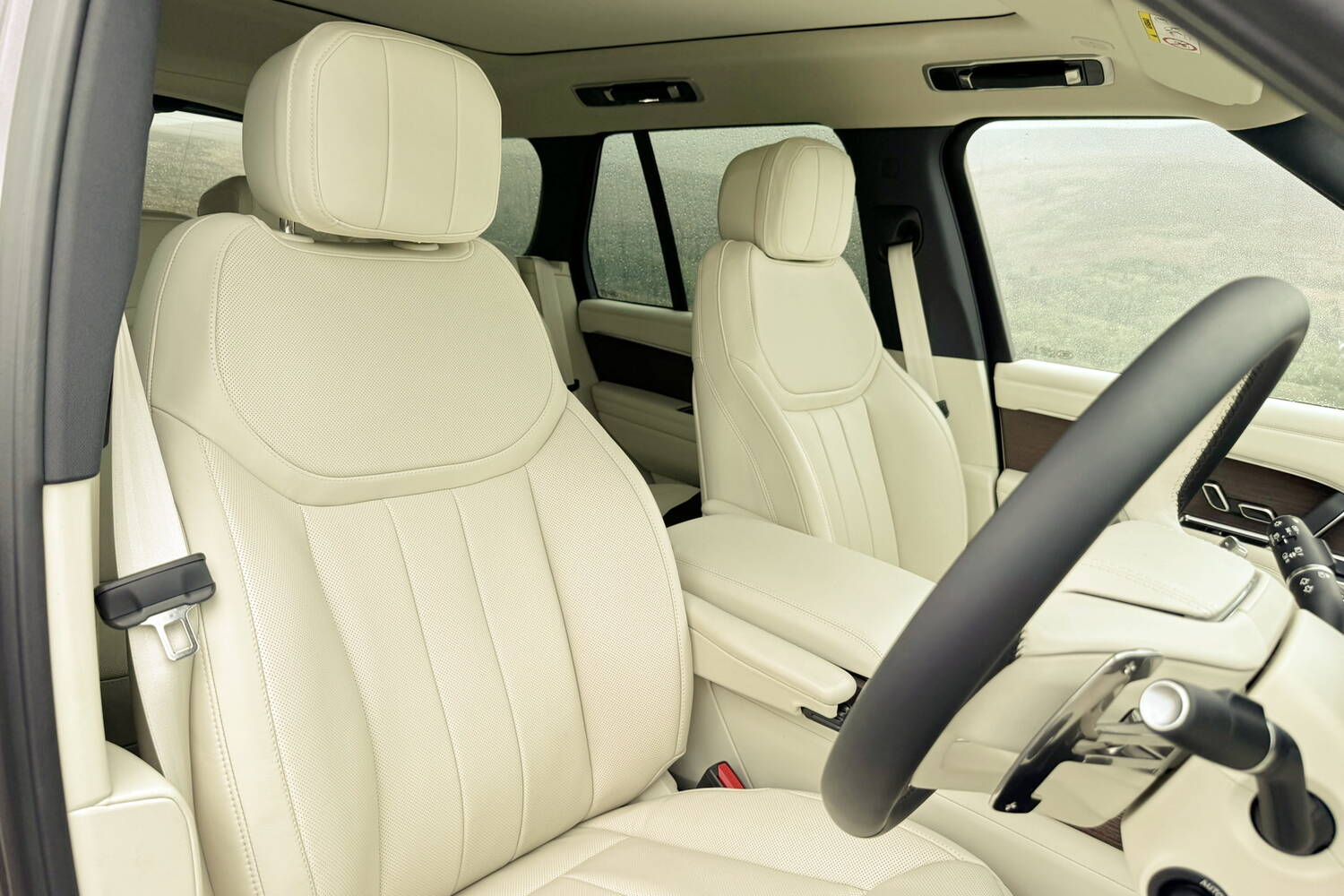
• Stunningly comfortable
• High quality throughout
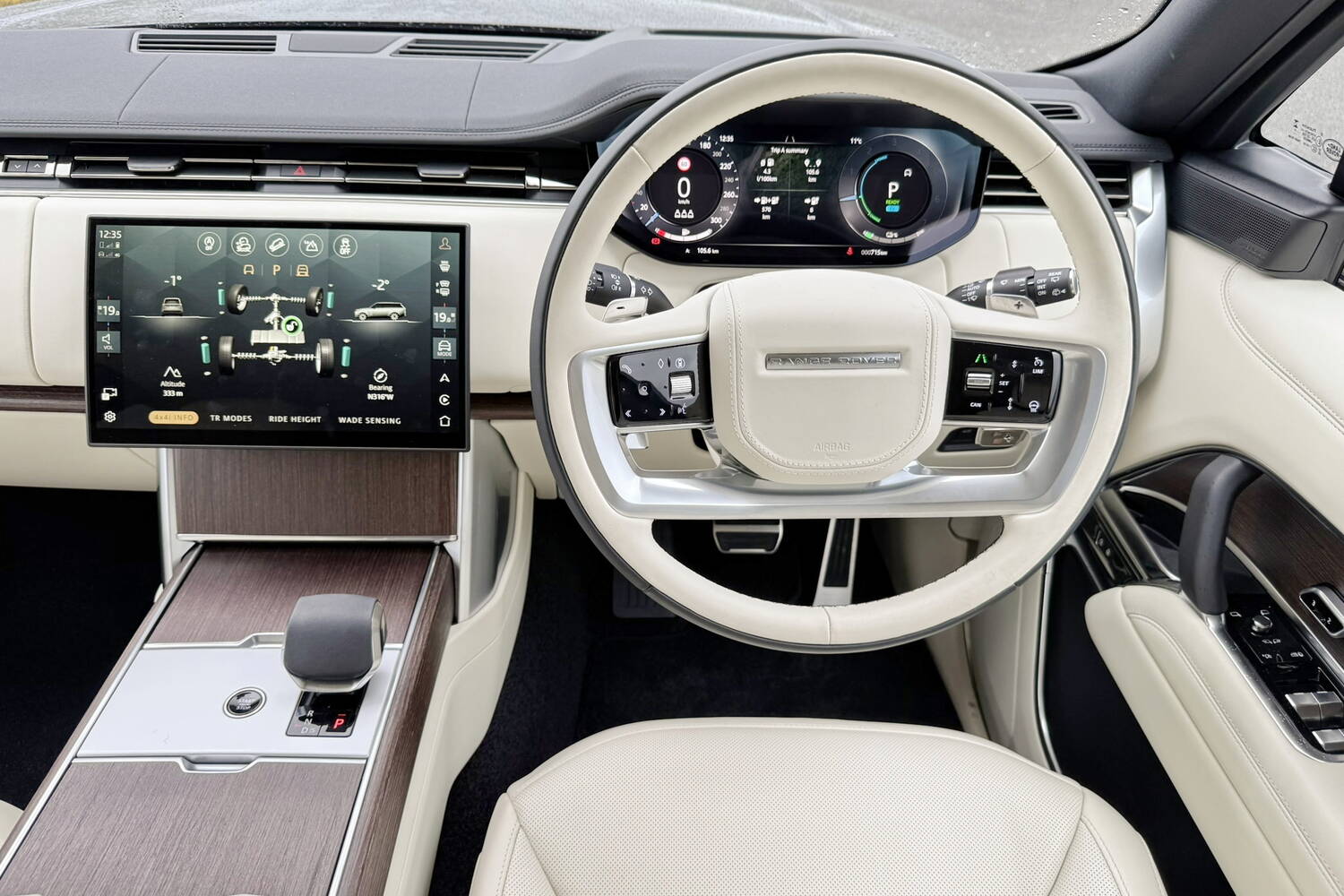
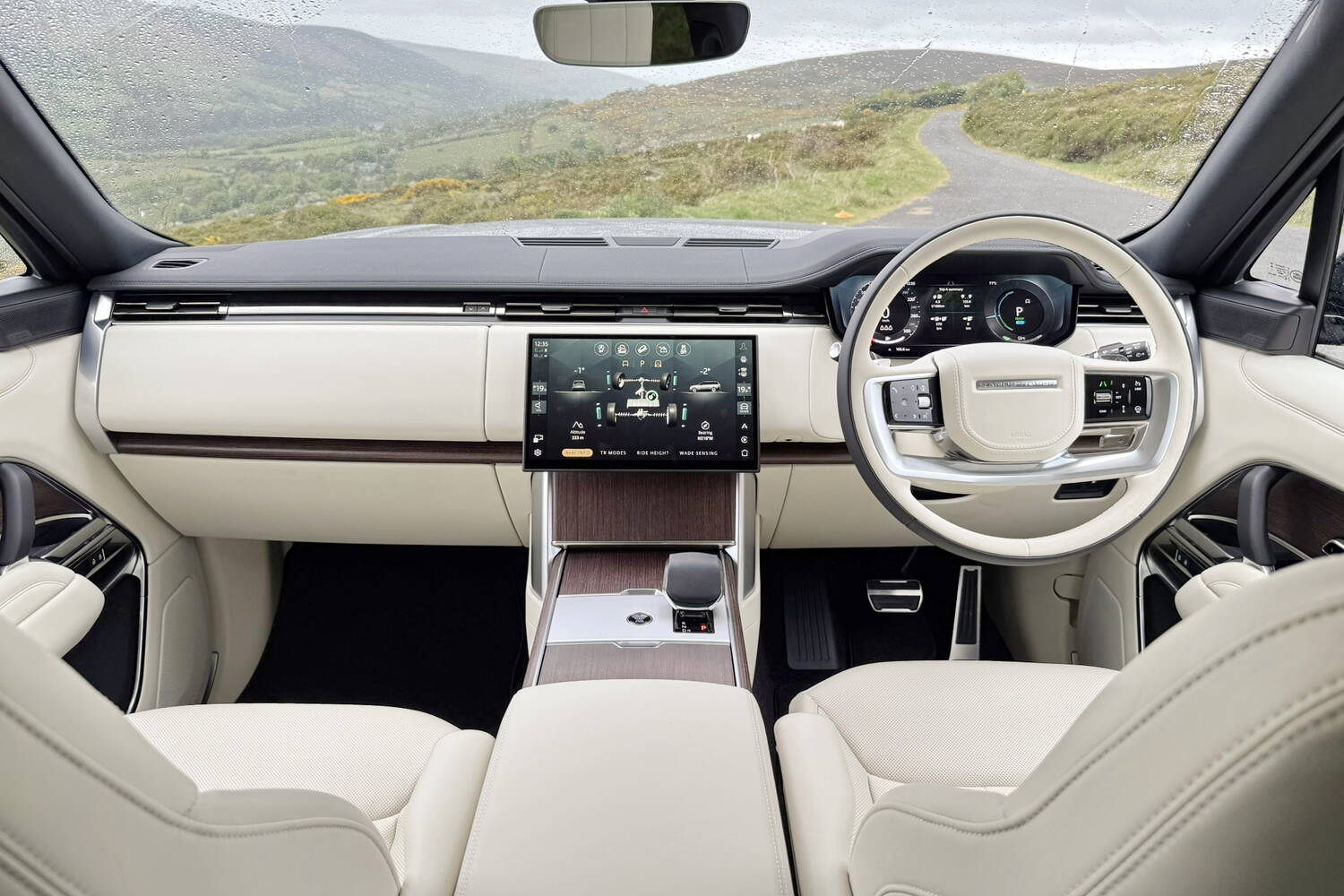
• Almost no physical buttons

The Range Rover doesn't just tackle mountains; it also offers exceptional levels of comfort and refinement.
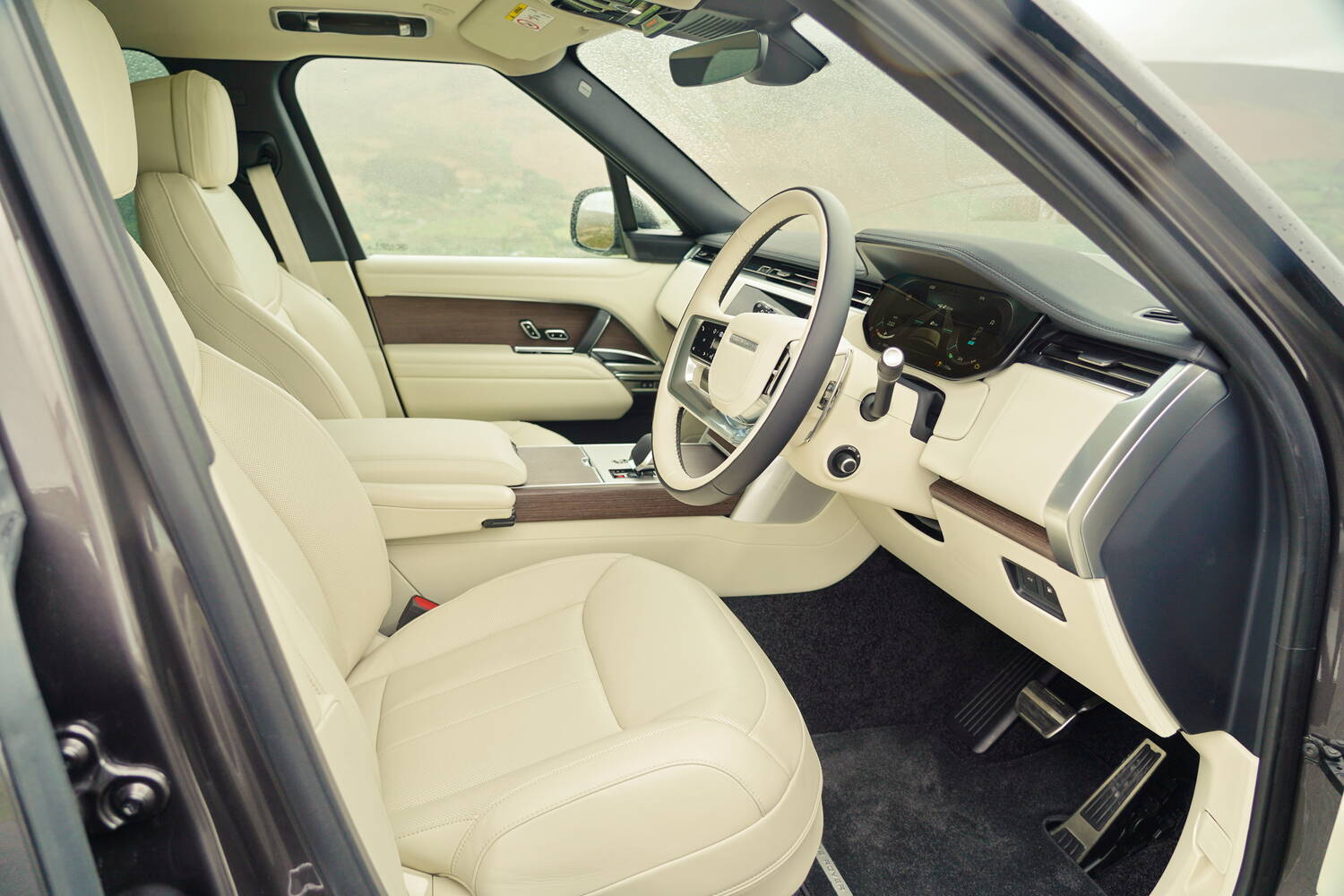
Getting comfortable in the driver's seat
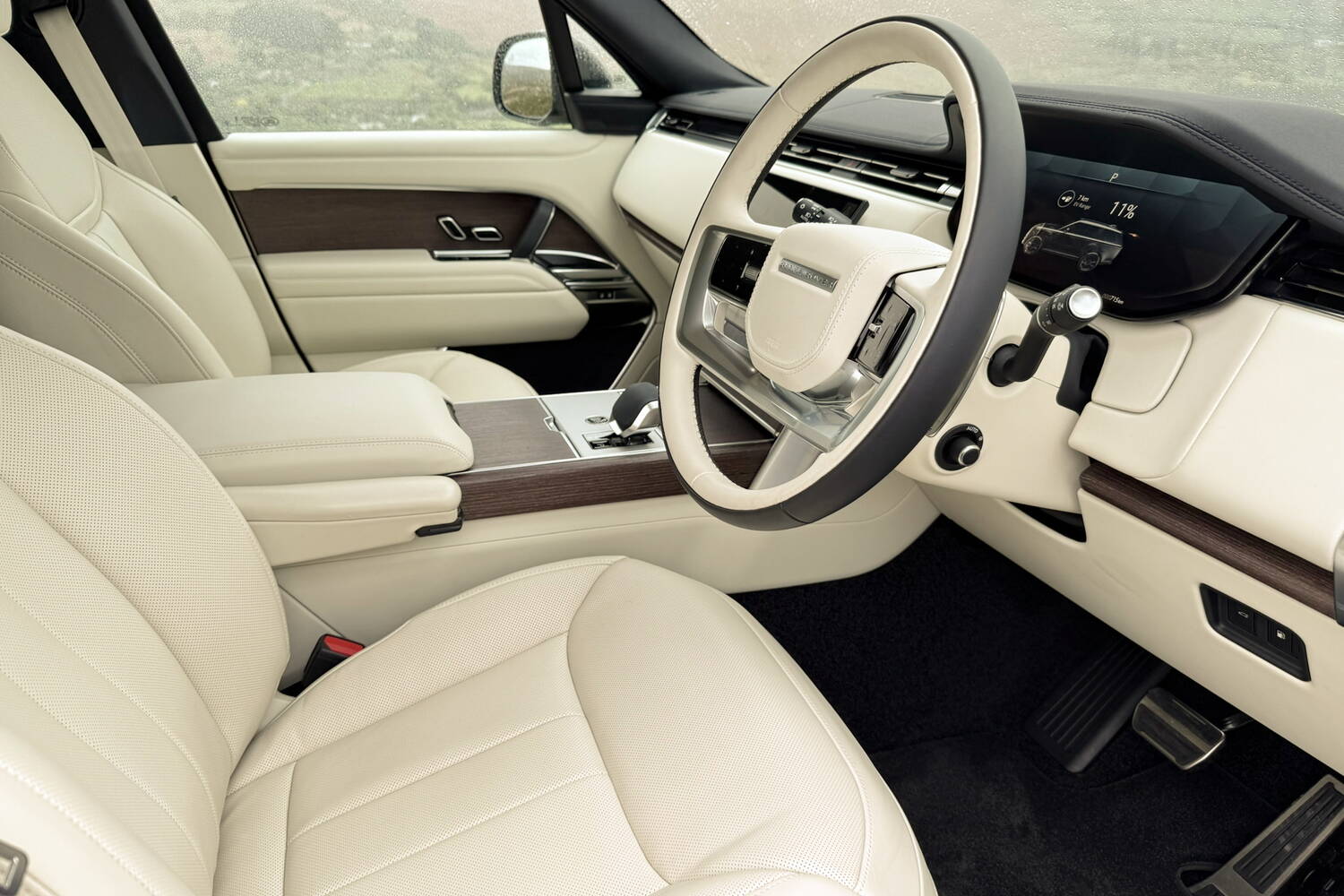
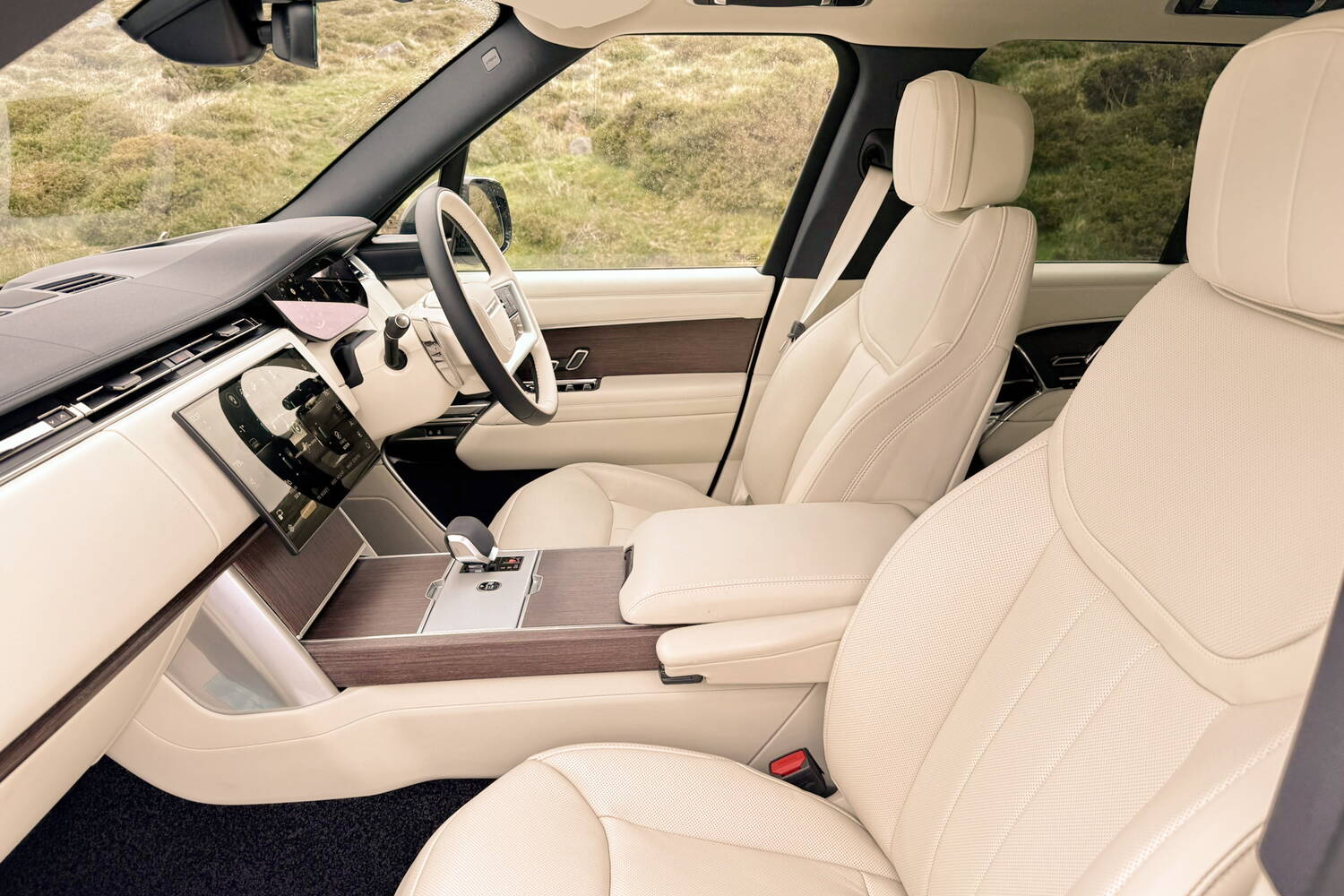
If you're wealthy enough to own a Range Rover, then you, probably have a sofa or armchairs in your house that can equal the front seats of this car in terms of comfort.

Unfortunately, the front seats of this car make the sofa and chairs in my house look and feel like bare wooden boards. Even my bed isn't this comfortable.
The big driver's seat is both squashy and supportive, and comes with two adjustable armrests, although the door-side one tends to get in the way slightly too much and is a bit redundant as you can just rest an elbow on the door itself.

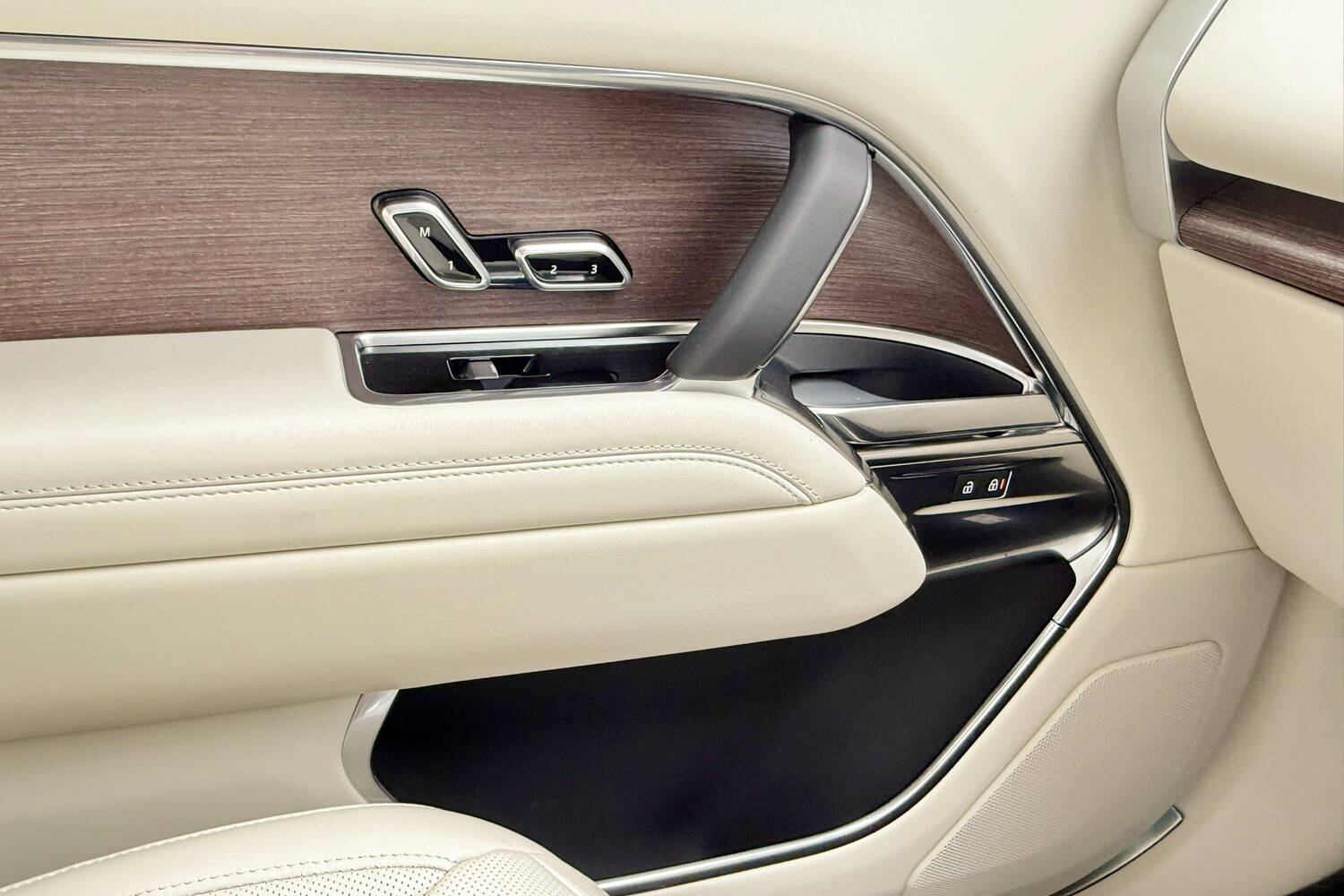
The seats are adjusted by large buttons mounted on the door and have a simply gigantic range of adjustment, as does the power-adjust steering wheel (which is notably large of diameter, but which feels fantastic to hold).
The visibility from the Range Rover's 'command' driving position is spectacular. If only all cars had all-round views as good as this.
Infotainment and technology

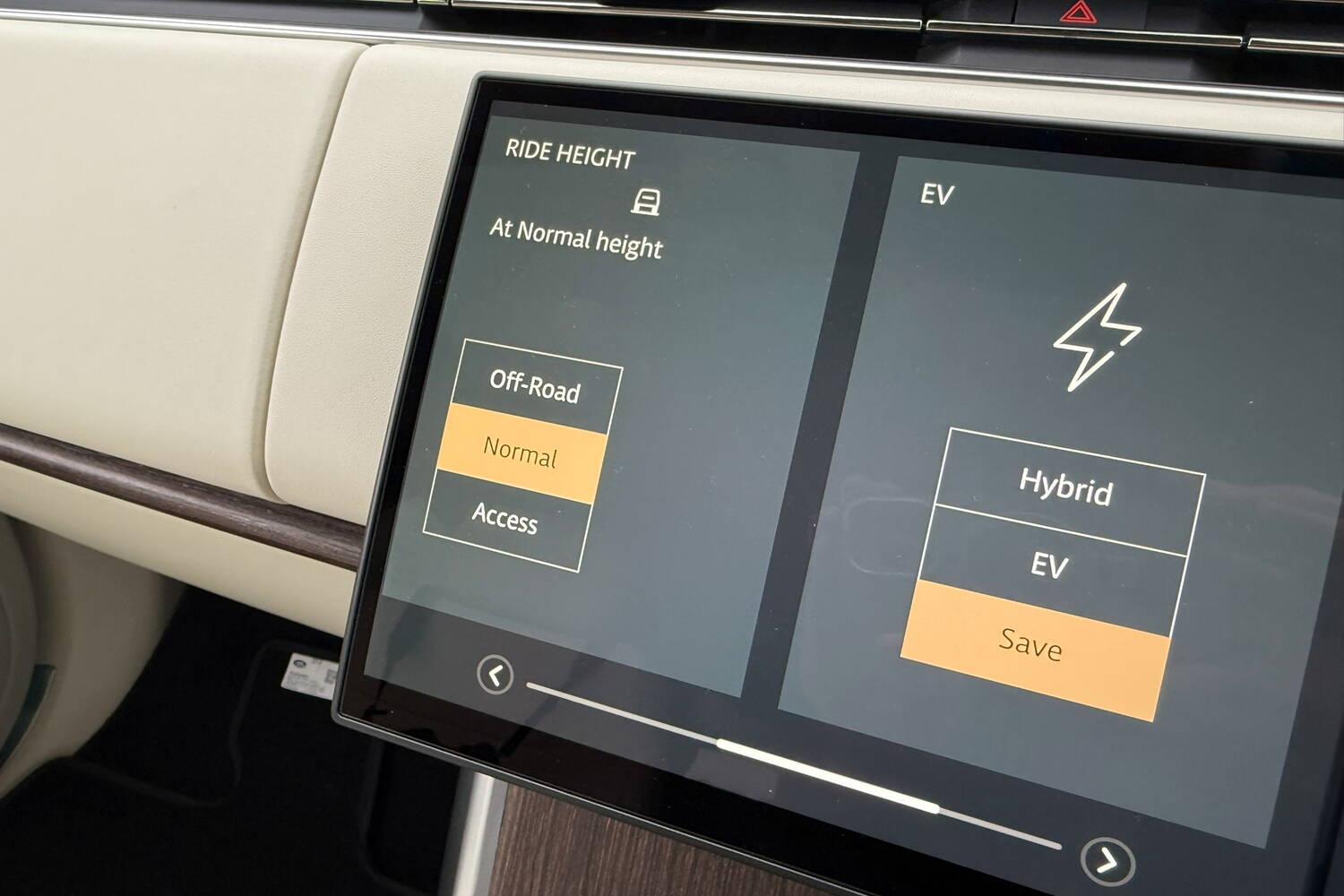
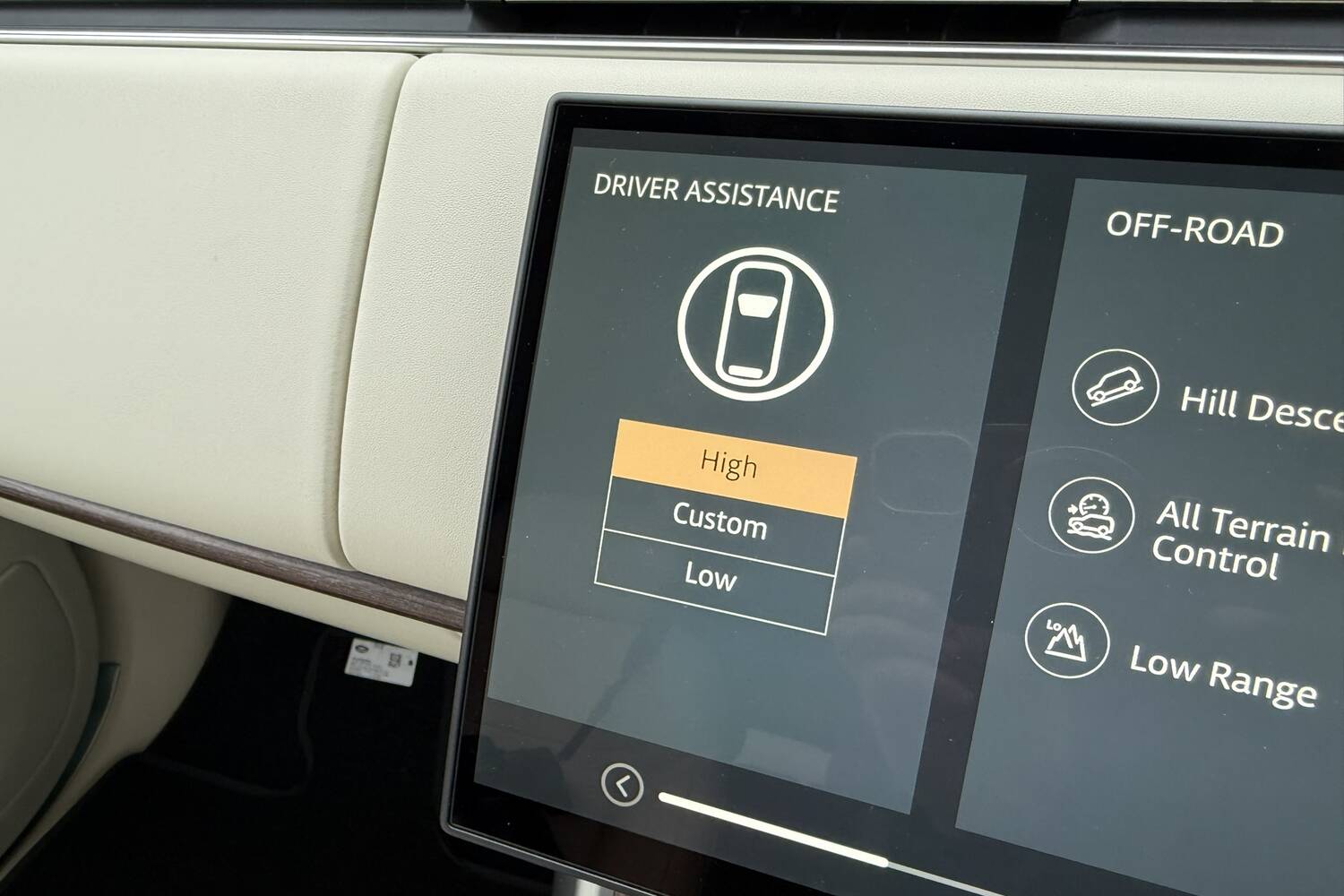
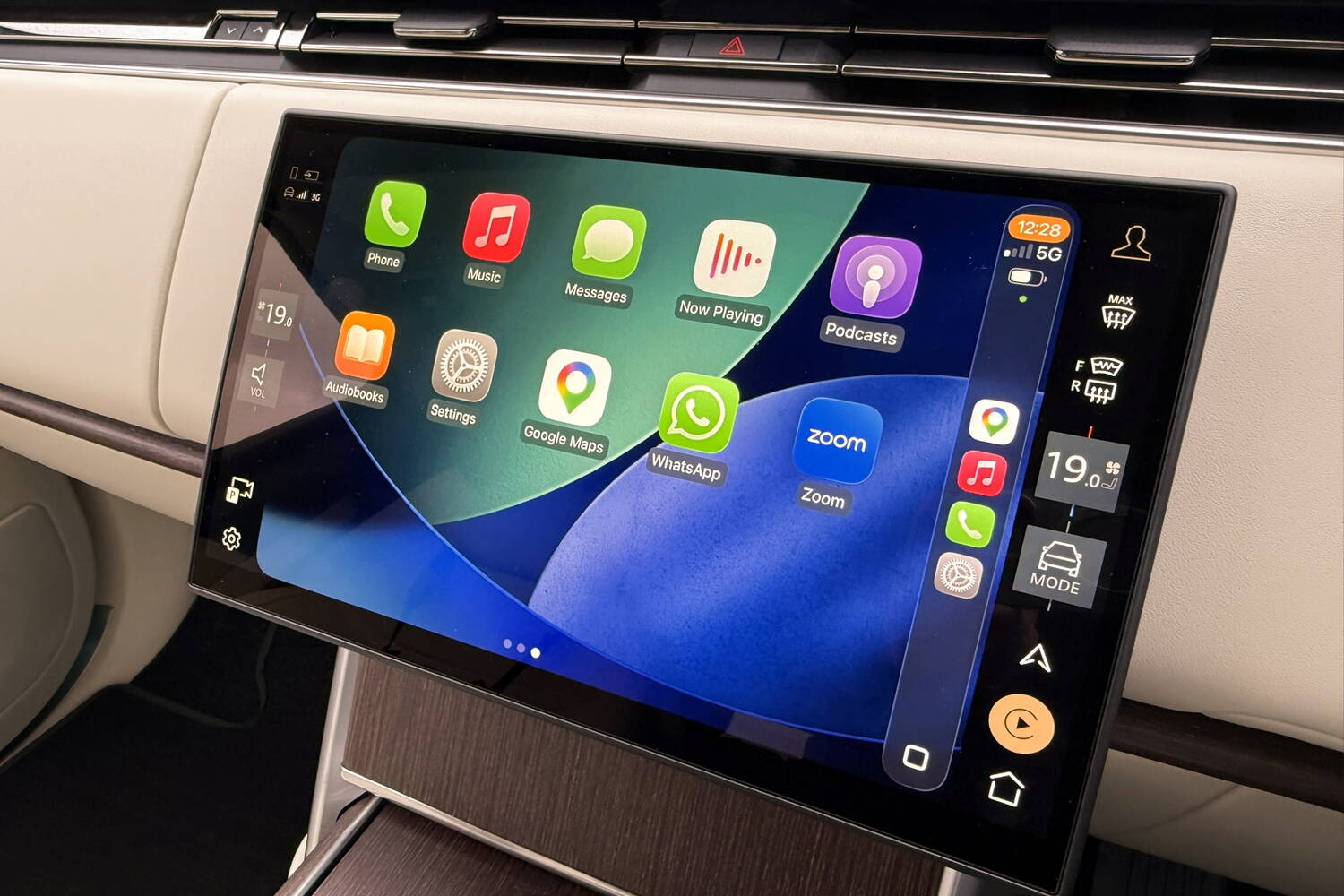
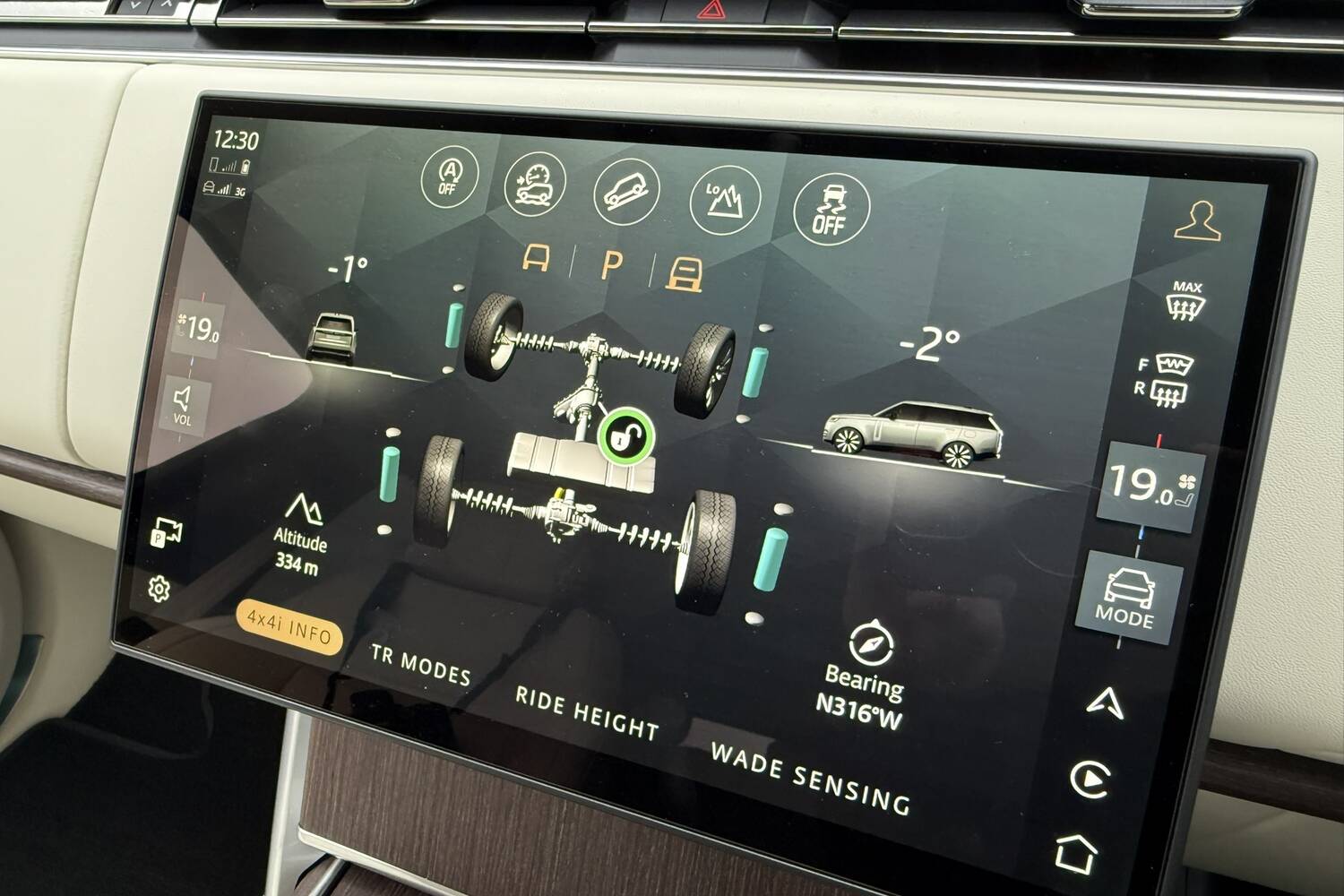
Range Rover's oddly named 'Pivi Pro' software, which runs on the big 13.1-inch touchscreen that dominates the Range Rover's dashboard, is surprisingly good. I say 'surprisingly' because this is a system which doesn't get the same kudos as those used by Range Rover's German rivals, but it's responsive, has explicable menu layouts and looks smart.
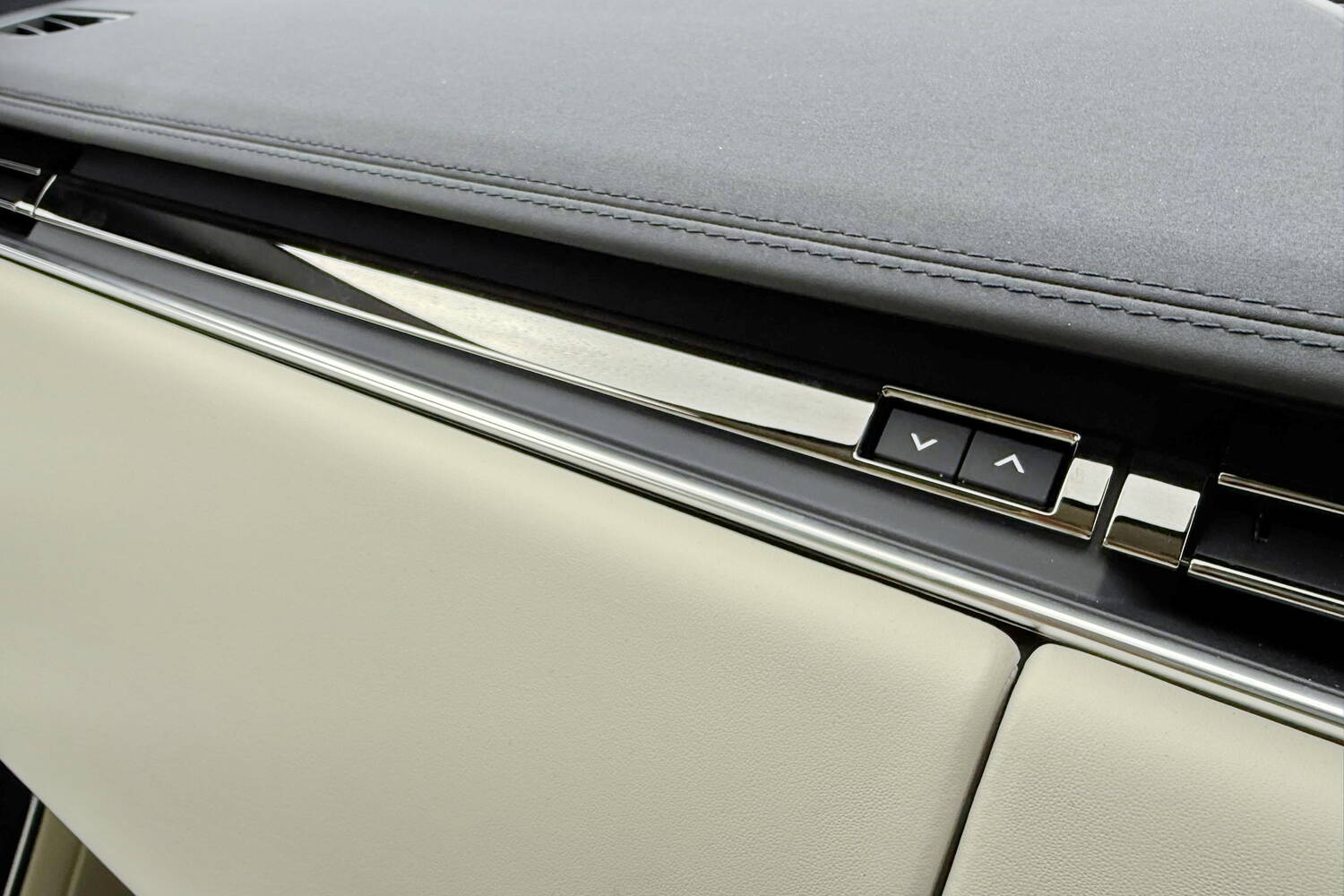
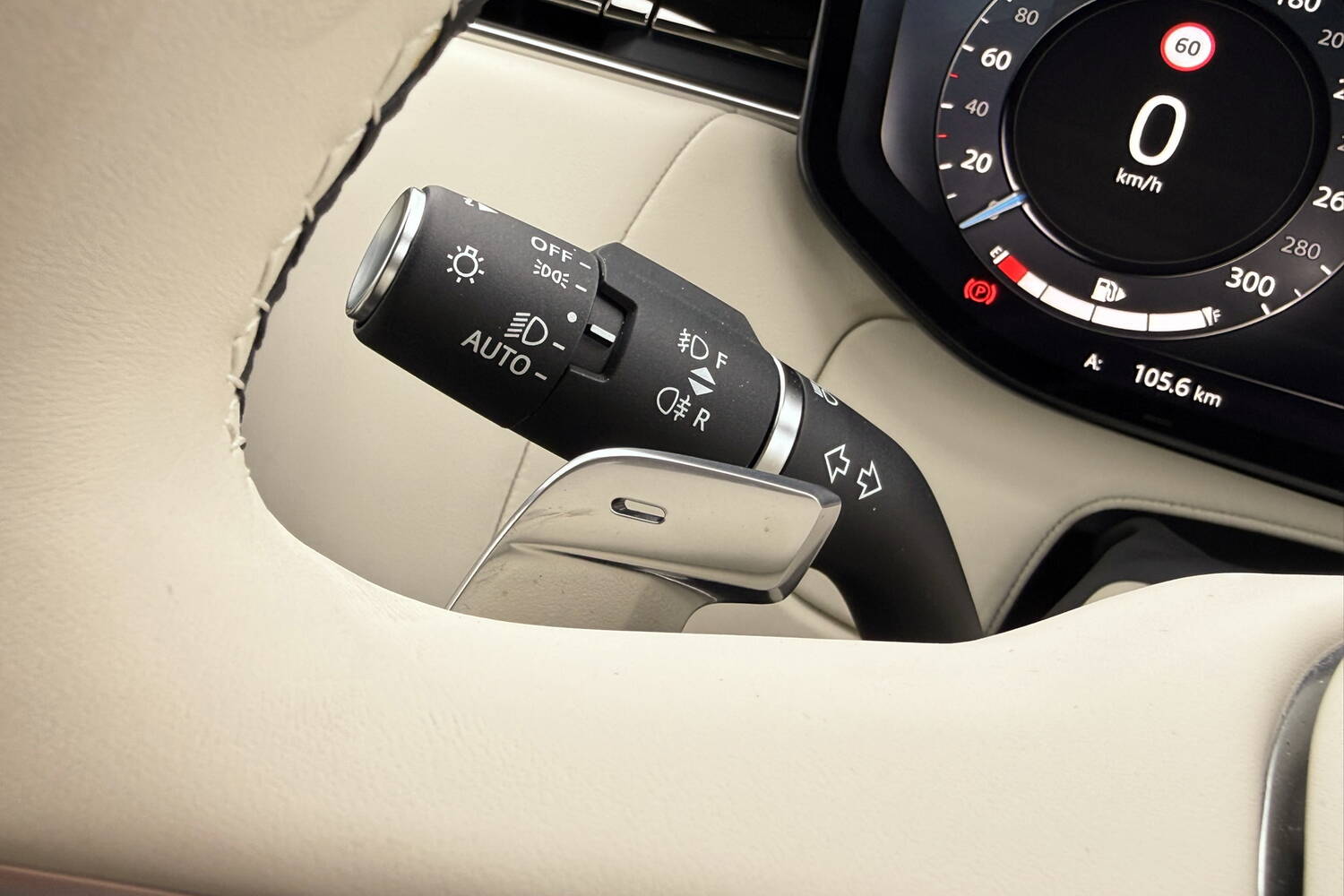
The only downside is that Land Rover's designers have taken away almost all the physical buttons from the cabin. Previously, there was a climate control panel beneath the screen which had handy multi-functions rotary controllers which were really good to use. Those have now gone, but thankfully it looks as if physical switches will make a comeback in future Land Rovers.

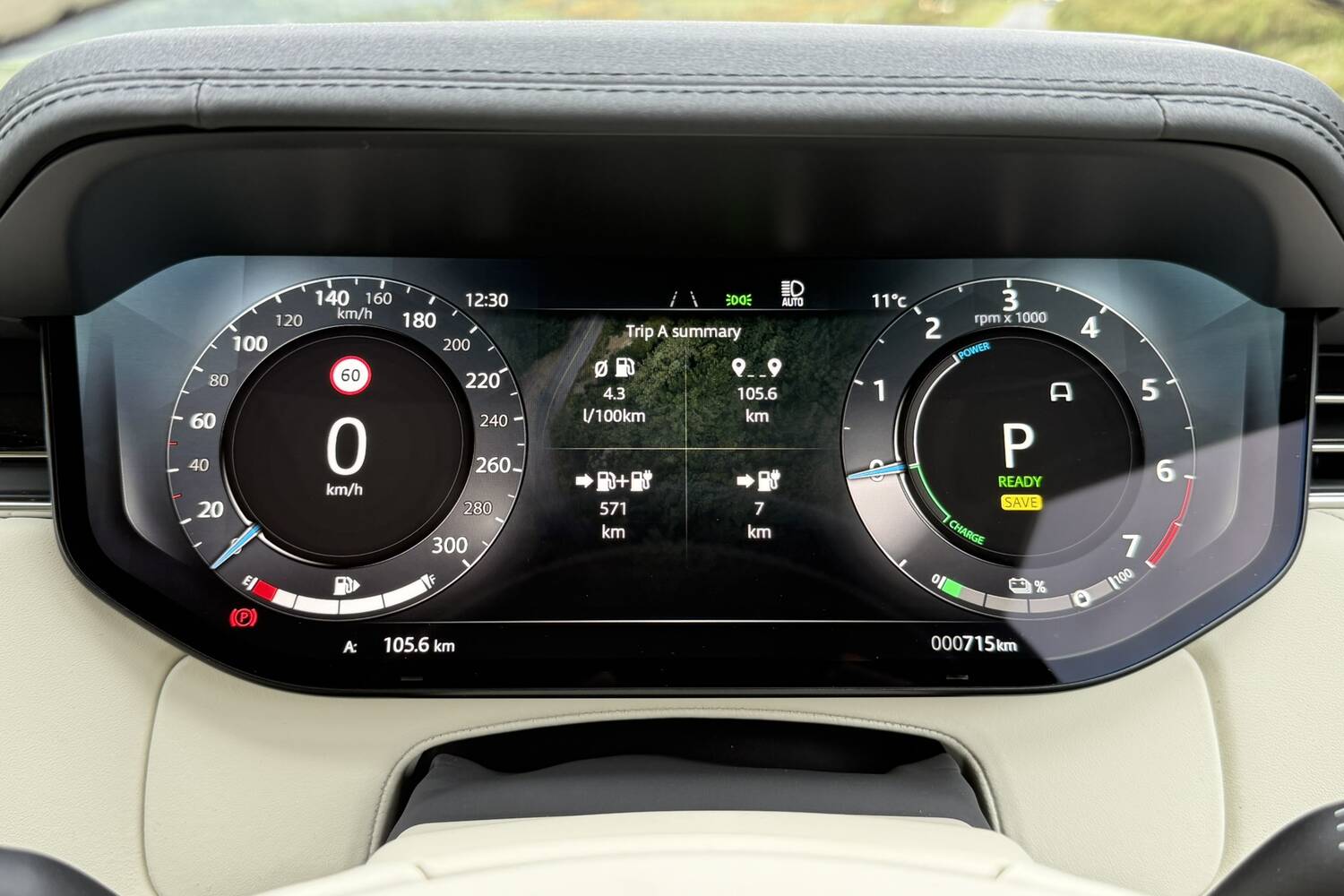
Equally, the touch sensitive pads on the steering wheel are too easy to accidentally activate as you twirl the wheel, while the little physical scrollers are imprecise to use. The digital instruments are better; they're large and clear, and easy to customise to your preferred layout.
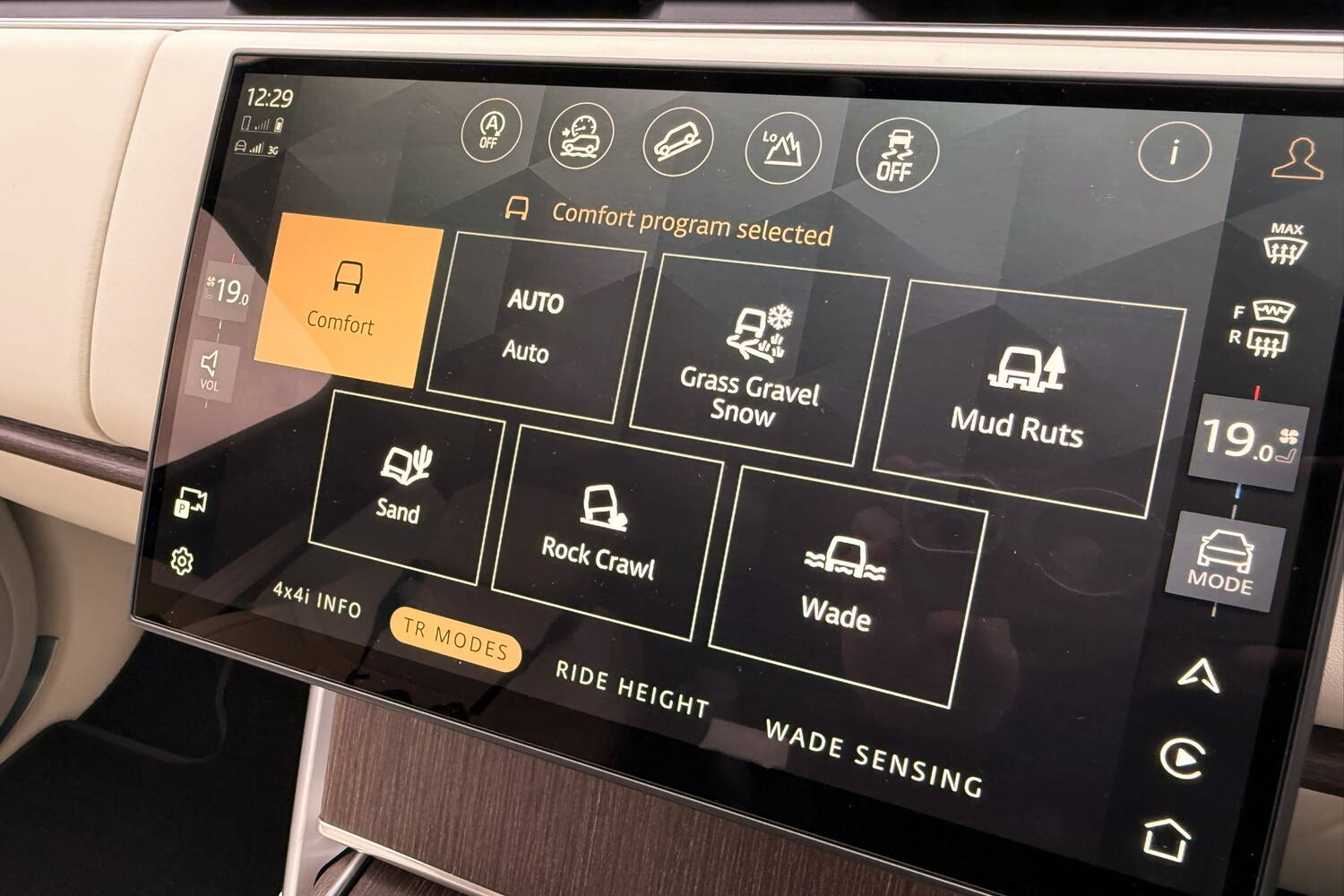
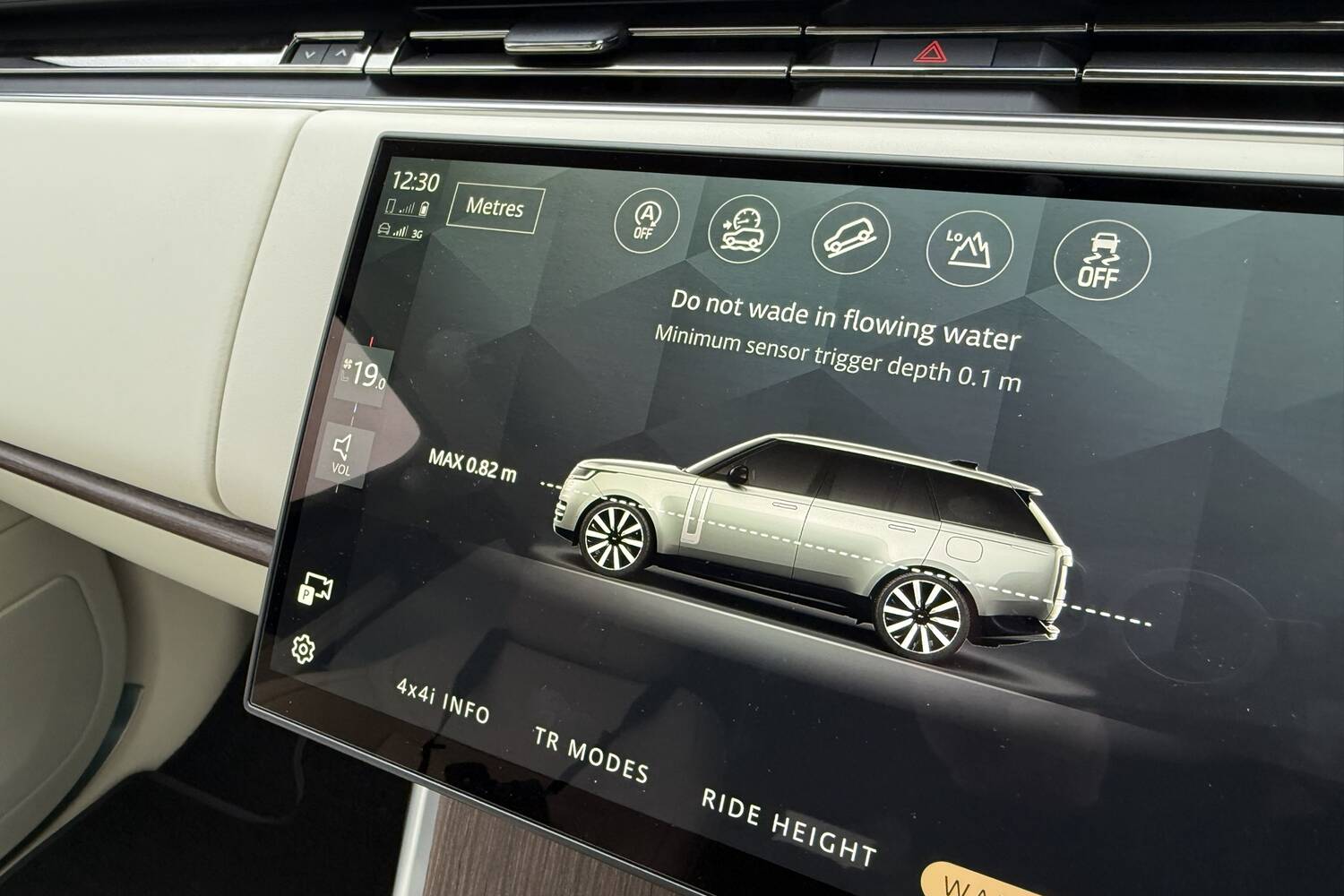
Back on the big screen, there are some neat Range Rover specific functions. There's a whole medley of off-road menus and info available, but the most obviously useful are the wade-sensing mode, which uses the parking sensors to tell you if the flood you're about to drive into is too deep (not likely - the Range Rover can wade through almost a metre of standing water), and even more useful is the section that tells you the car's dimensions, which is handy if you're unsure of the height when entering a multi-storey car park.

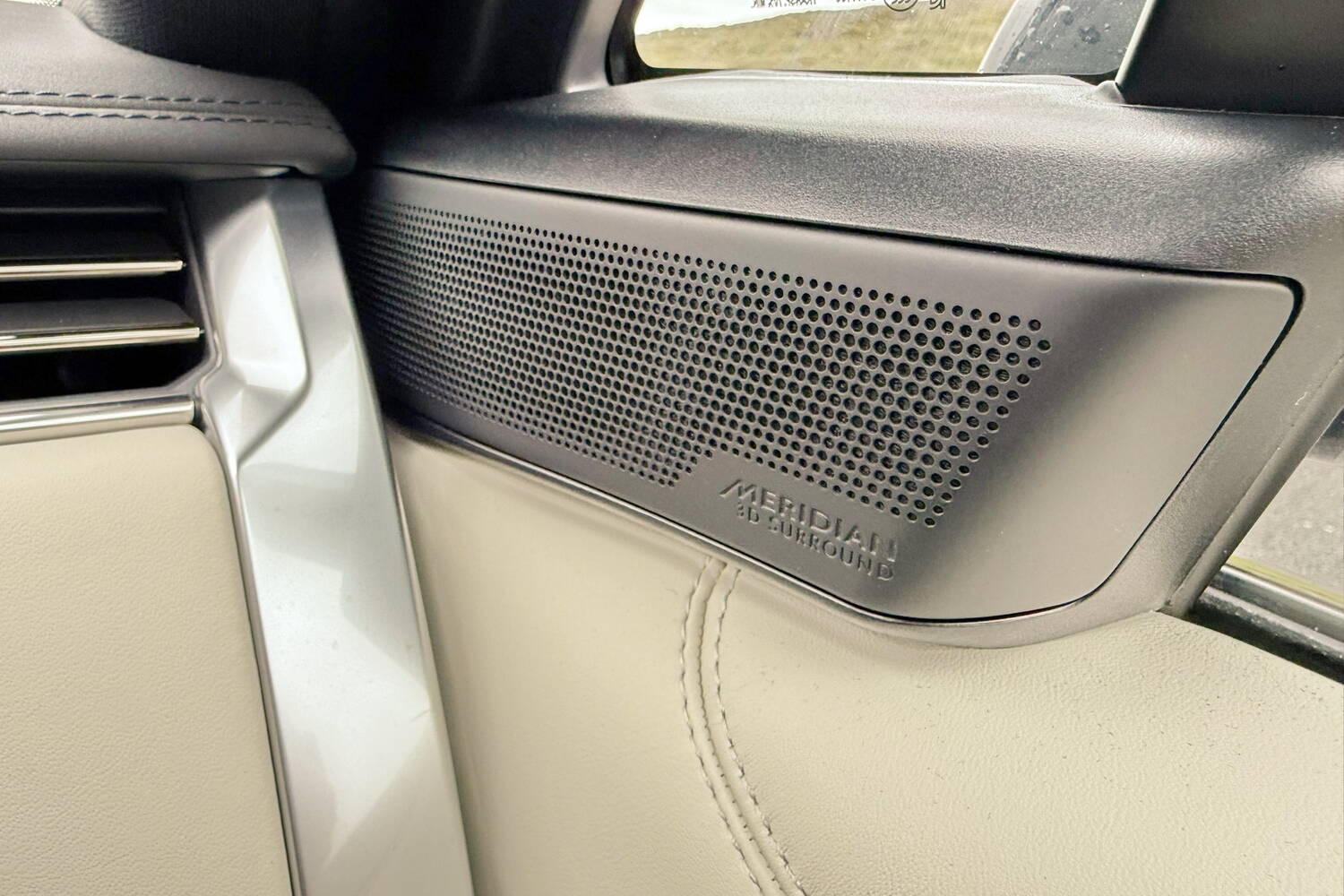
Also worth a mention is the excellent Meridian sound system, which comes as standard in HSE models, and which should loosen the old ear wax nicely.
Practicality around the cabin
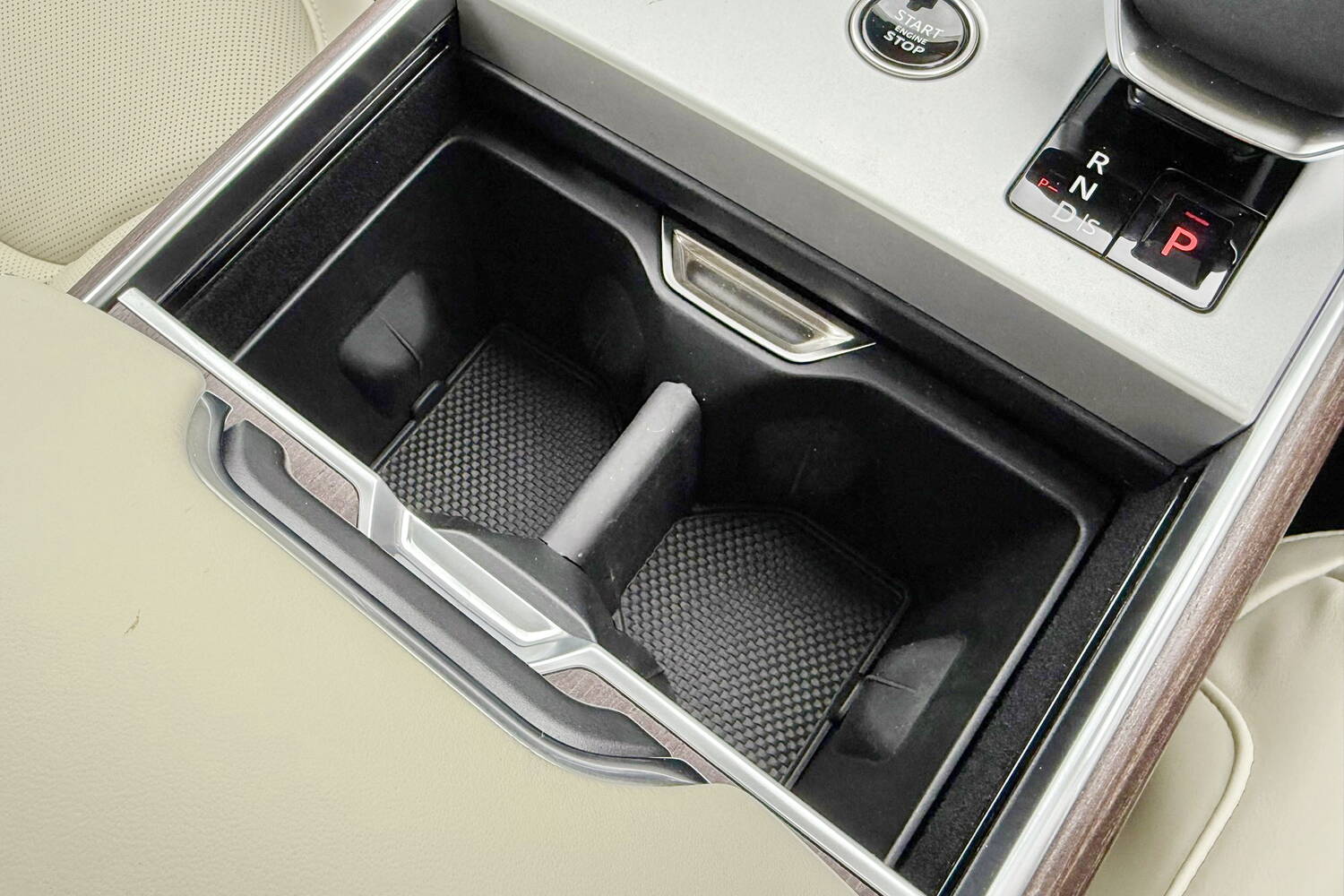
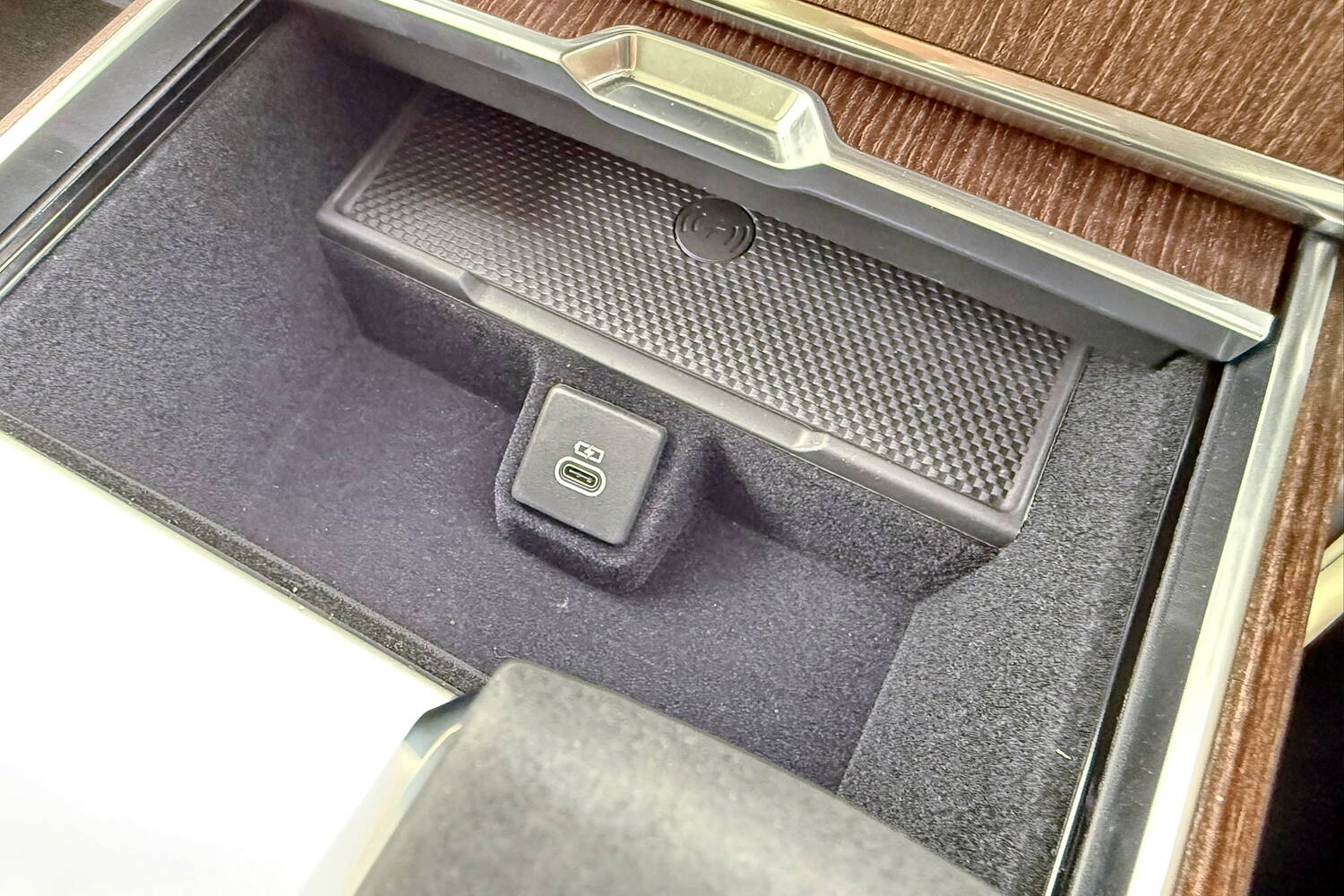
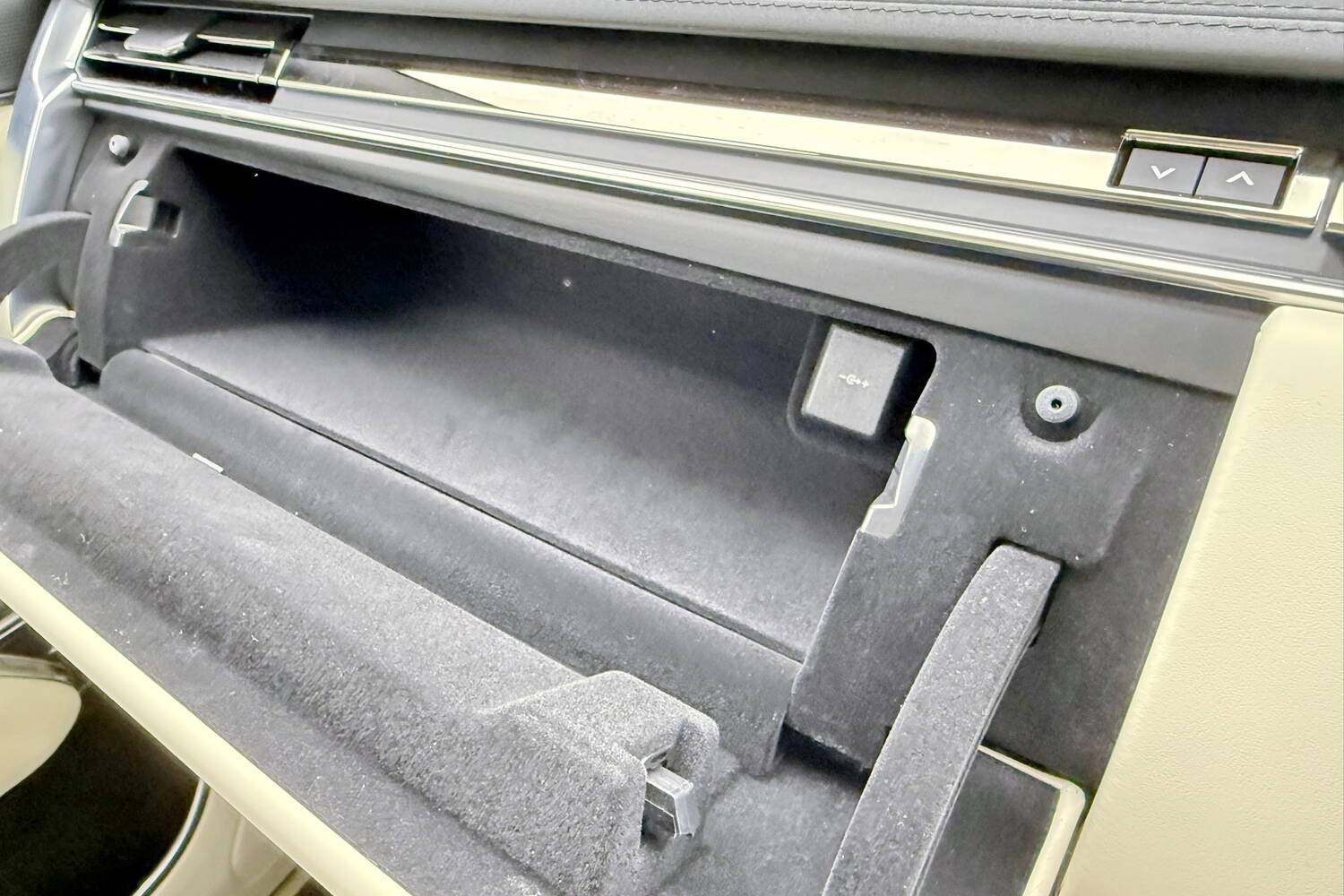
The Range Rover's door bins are enormous - I think you could fit a slim briefcase in there - and they're backed up by deep lidded storage areas in the centre console, including some large cupholders and an optional cool box under the armrest.

Rear-seat passenger space
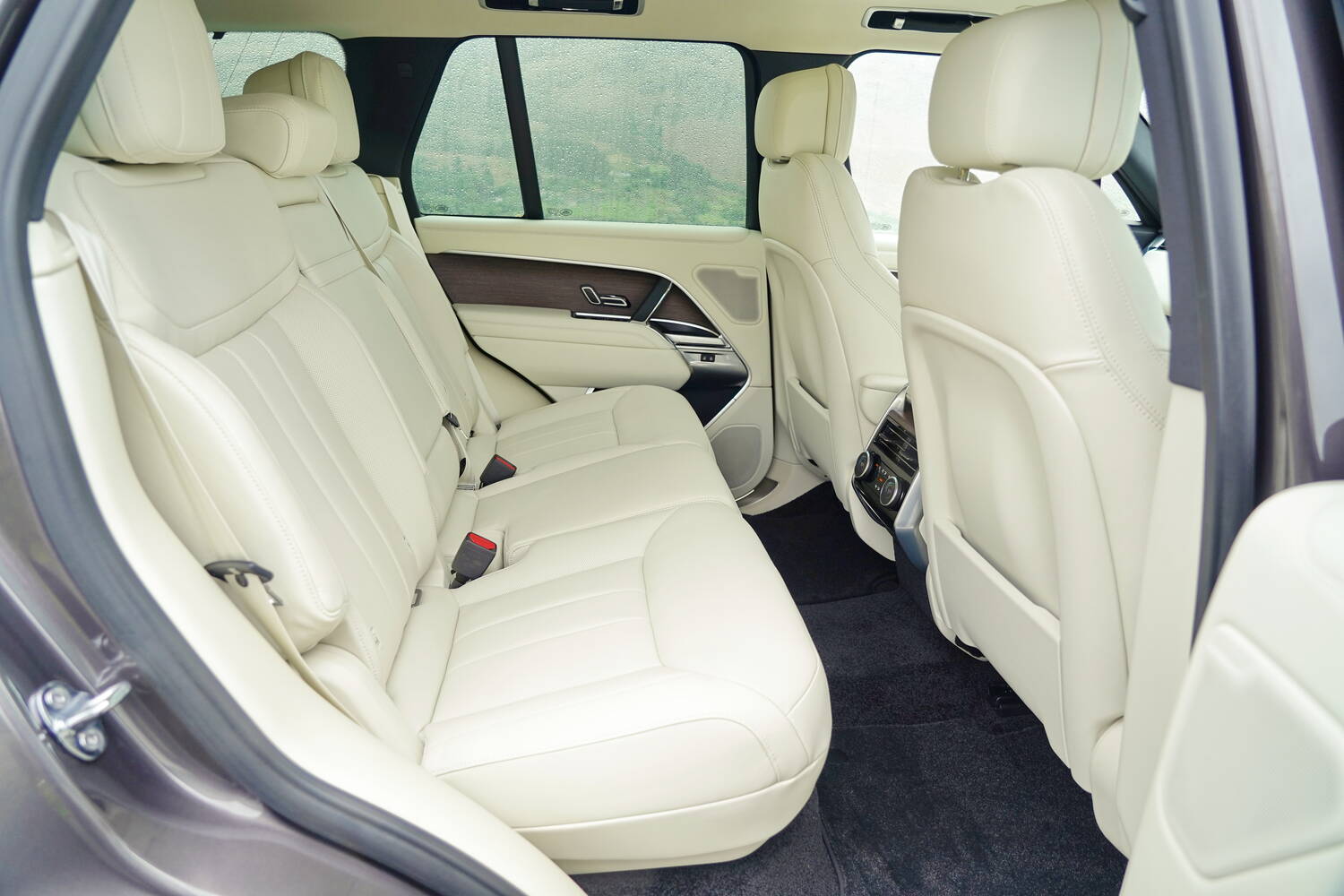
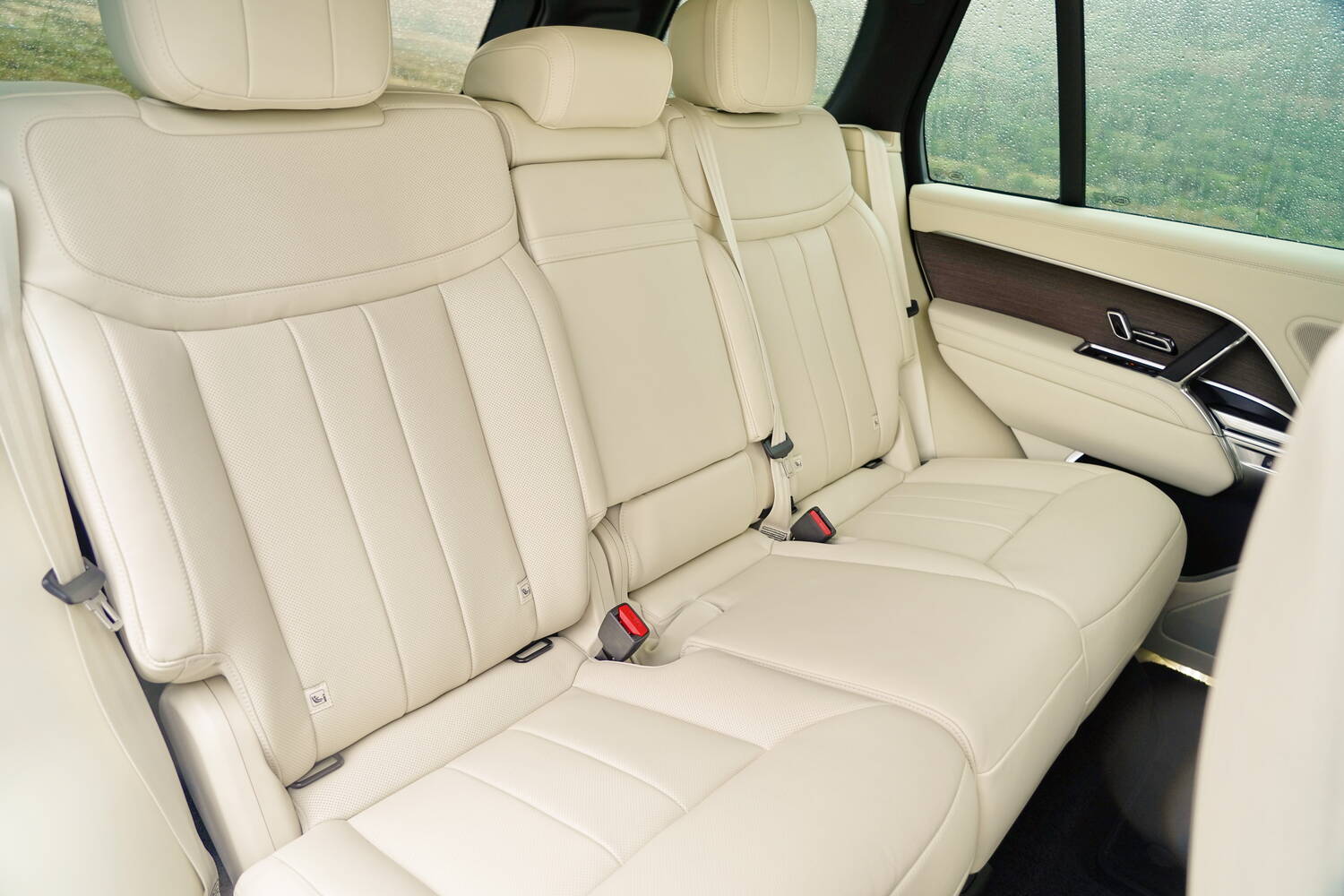
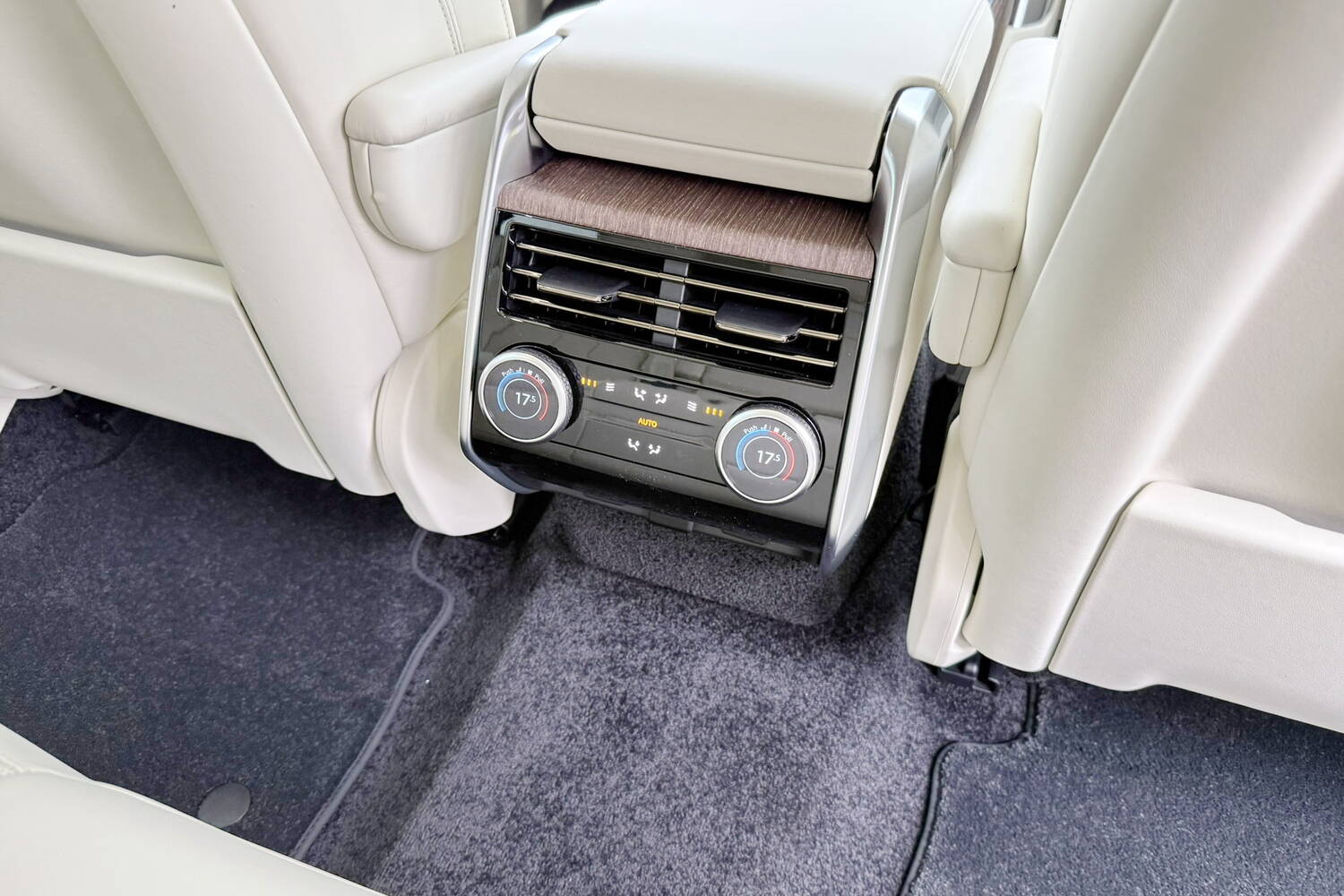
Our test car was a standard-wheelbase Range Rover, and while you wouldn't call rear legroom exactly sumptuous (well, you have to leave the long-wheelbase model some kind of an advantage) it's certainly more than adequate, and there's enough room to get four large adults very comfortable in the cabin.

Headroom, even with the large panoramic glass sunroof, is also very generous, as you might expect of a car this tall. The rear seats electrically recline as well.
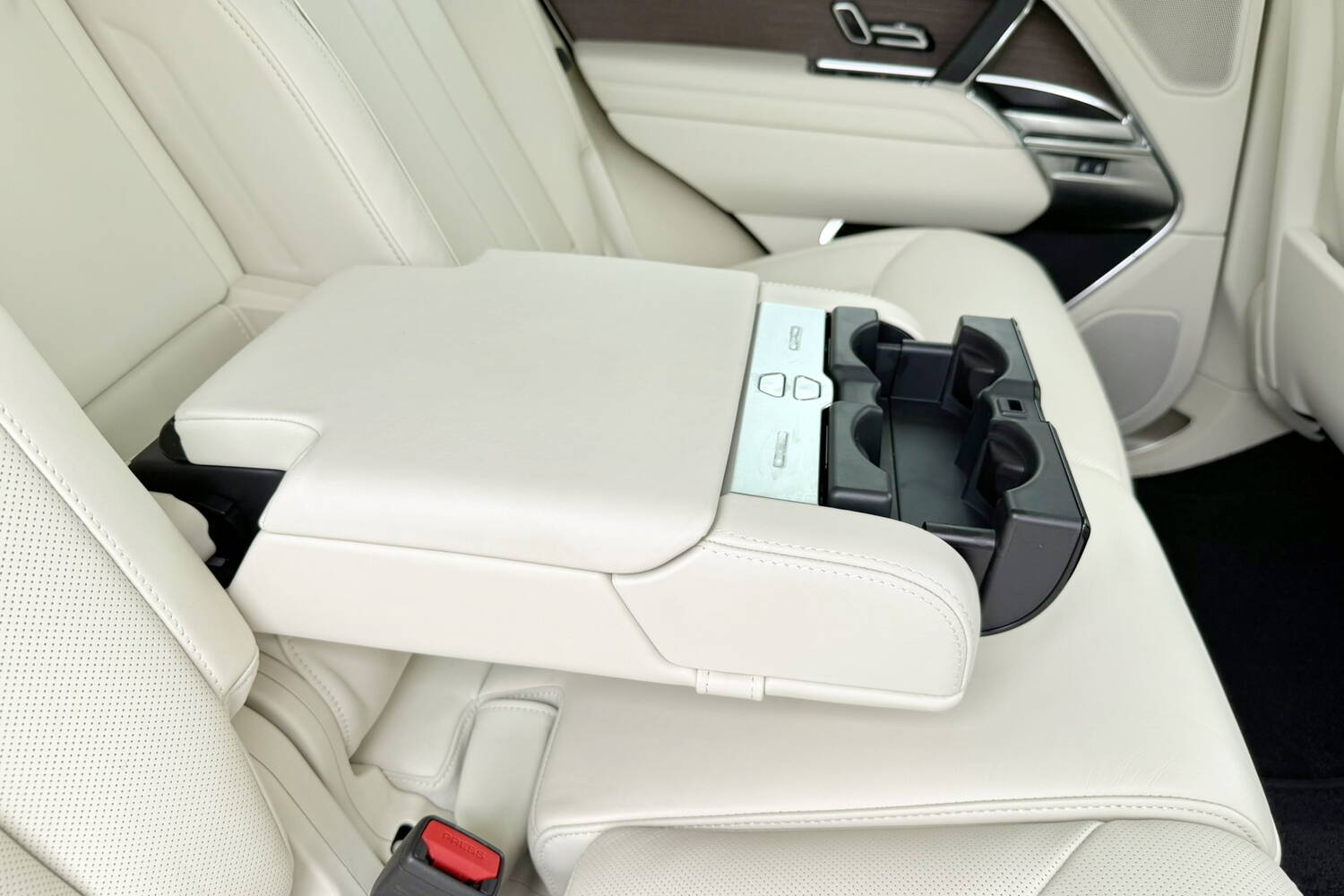
The centre armrest comes with lidded cupholders and a shallow covered storage area, and the rear side windows are enormous so the view out is spectacular.

The middle rear seat is harder and narrower than the outer two, so only put someone you don't like in that one, and their feet are going to be obstructed a little by the transmission tunnel.
Fitting child seats to the Range Rover
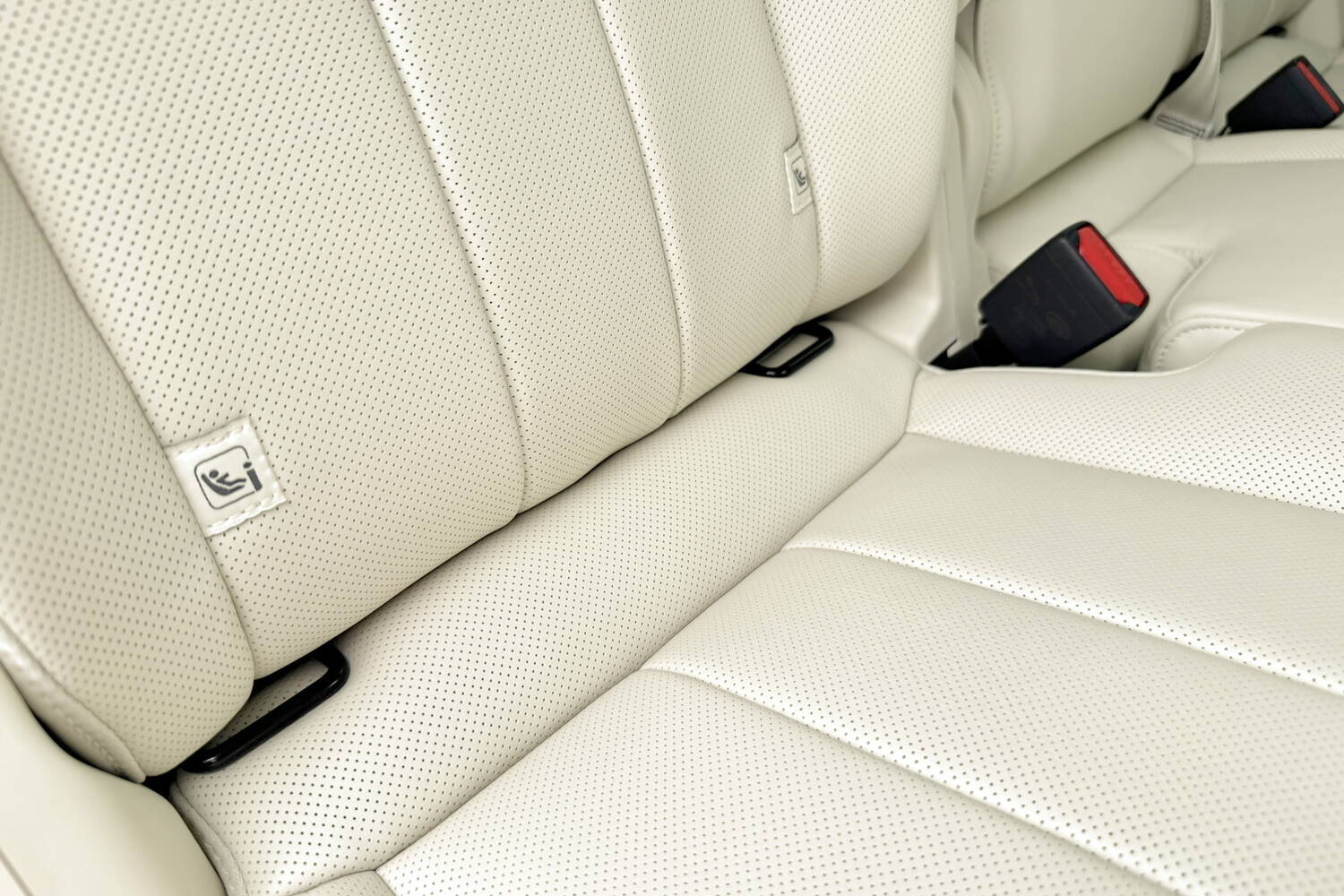
The Range Rover only gets two ISOFIX anchor points, in the outer rear seats, which might be seen as a bit of a disappointment, but surely the days of a Range Rover been seen as a genuine family car are long gone?

There is the option of a longer-wheelbase model which comes with seven seats, but again you're limited to just the two ISOFIX points in that version.
Boot space in the Range Rover

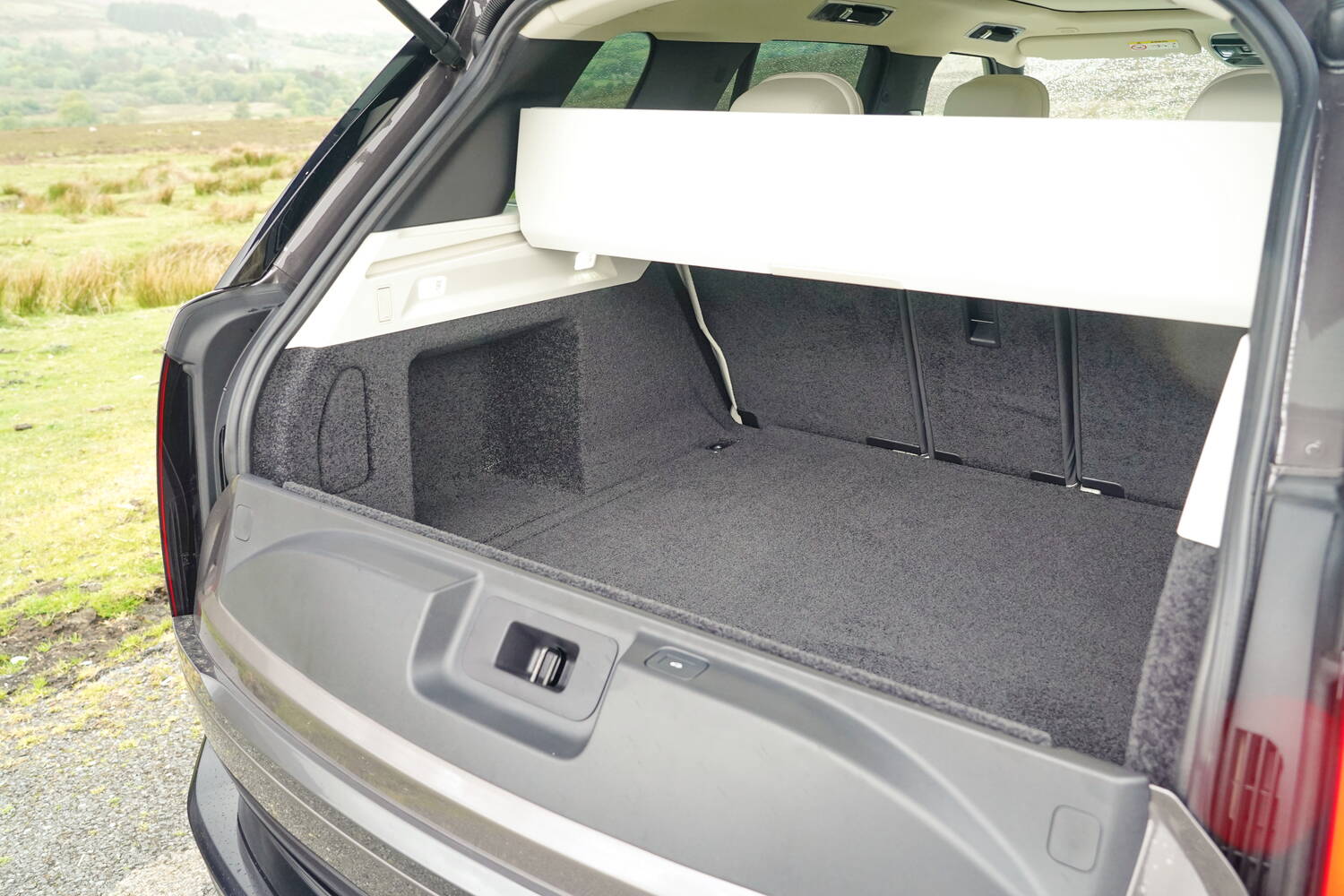
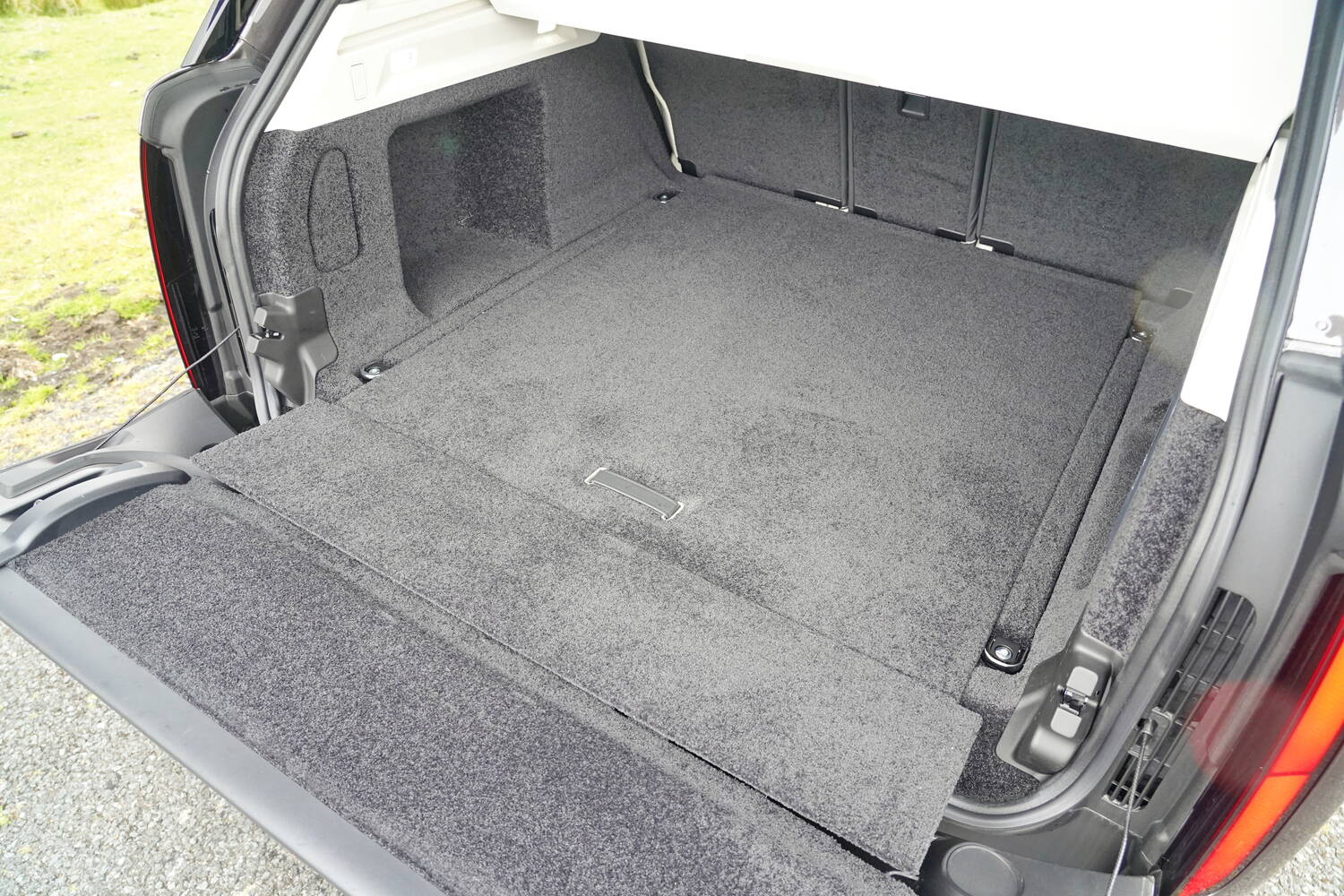
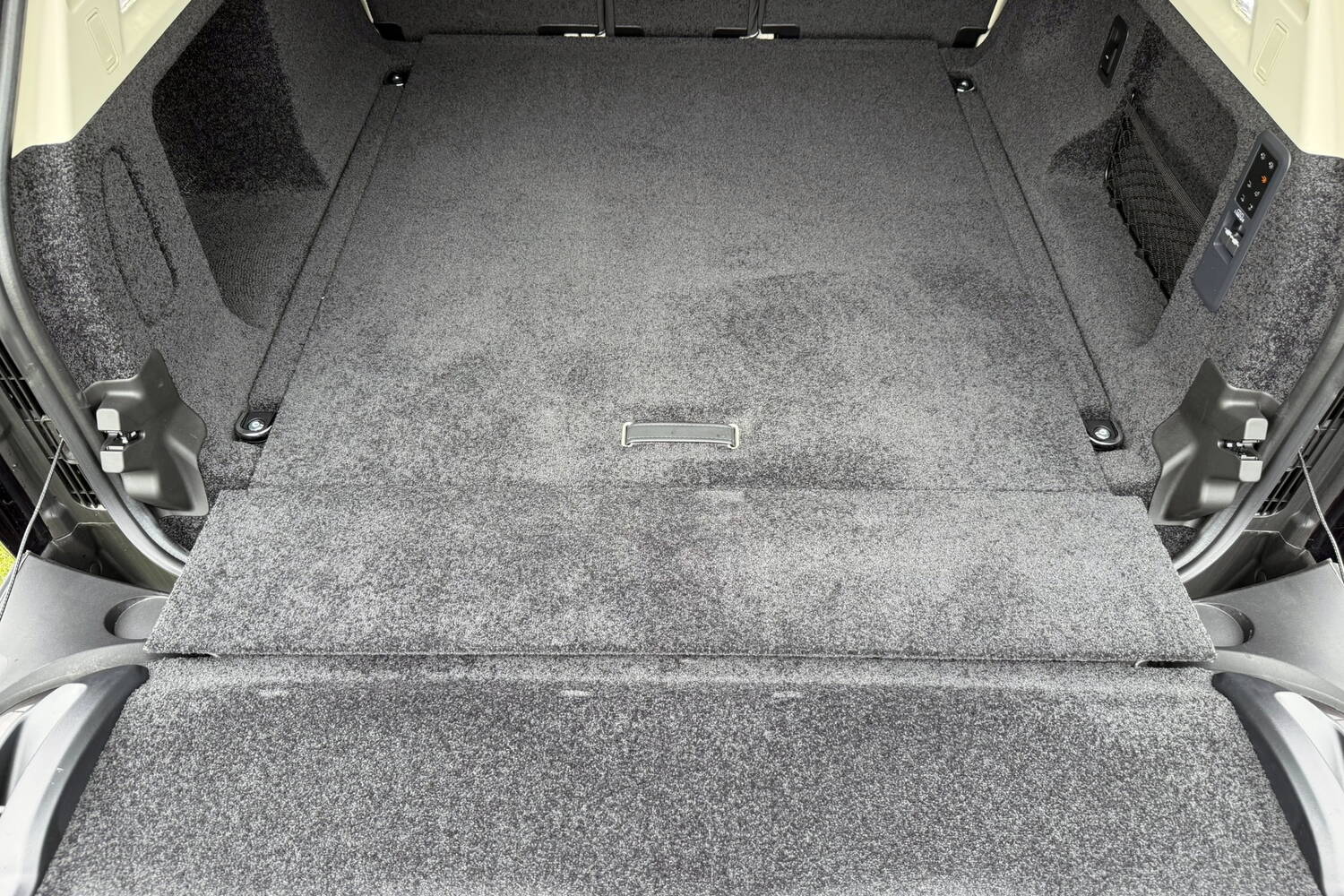
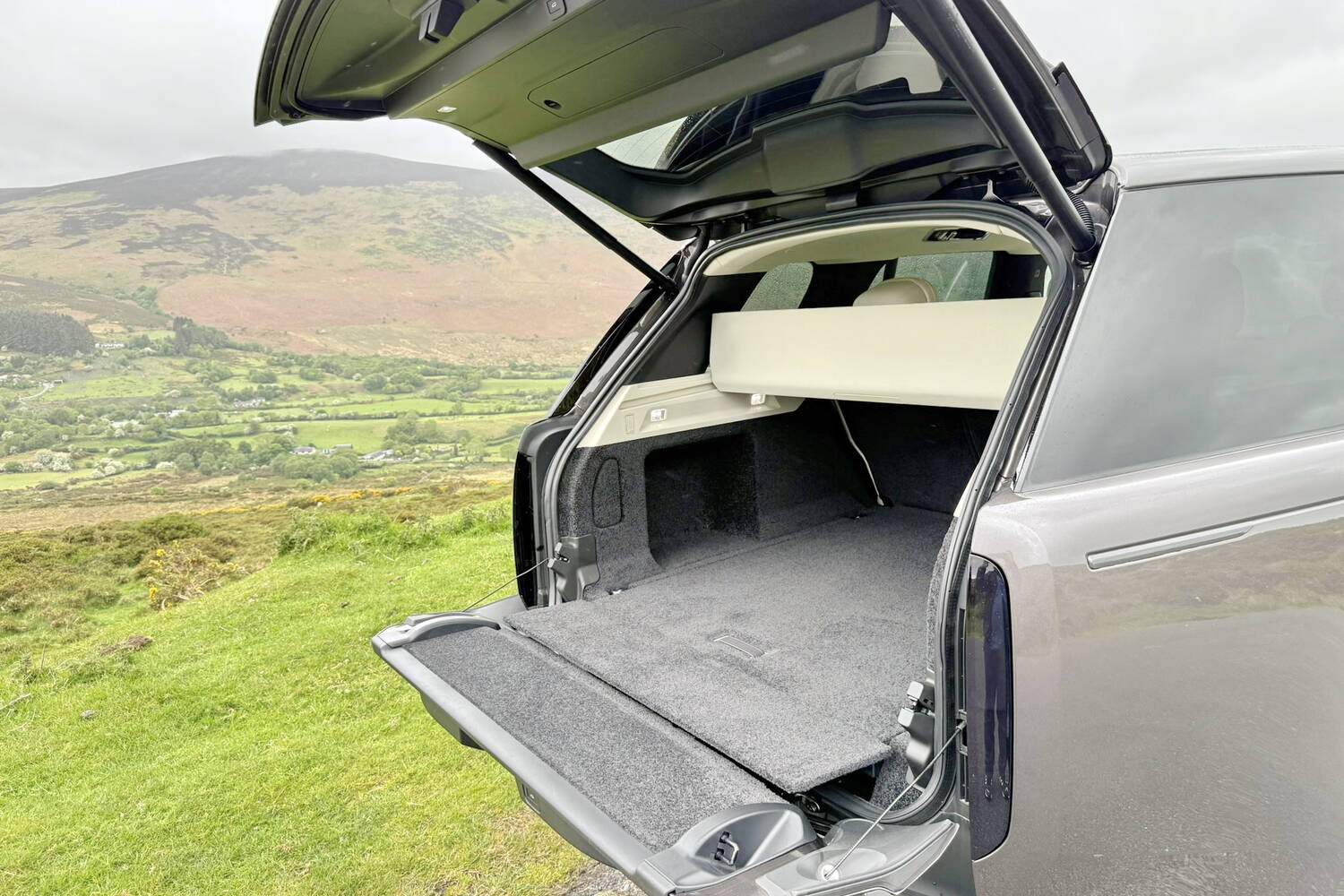
The Range Rover's boot is accessed, as tradition dictates, via a split tailgate, with the upper and lower sections electrically deployed.
You can, of course, use the lower tailgate as a handy picnic bench if you like. Land Rover quotes 818 litres of luggage capacity. Now, that sounds enormous, but Land Rover's habit is to quote the boot volume as being stacked to the roof, rather than up to the luggage cover as is the case for most competitors.
I'd take a guess at the below-cover space being around 500 litres, which is still decent. Better yet, even in the plug-in hybrid model, there's no impact on boot capacity, which is most certainly not the case for most PHEV rivals.

The luggage cover itself is somewhat awkward - it's a rigid cover that concertinas up as you slide it forwards, which isn't always the most practical layout, and you can't store it in the car when it's not in use. Equally, the pale colour of the luggage cover could be prone to marks.
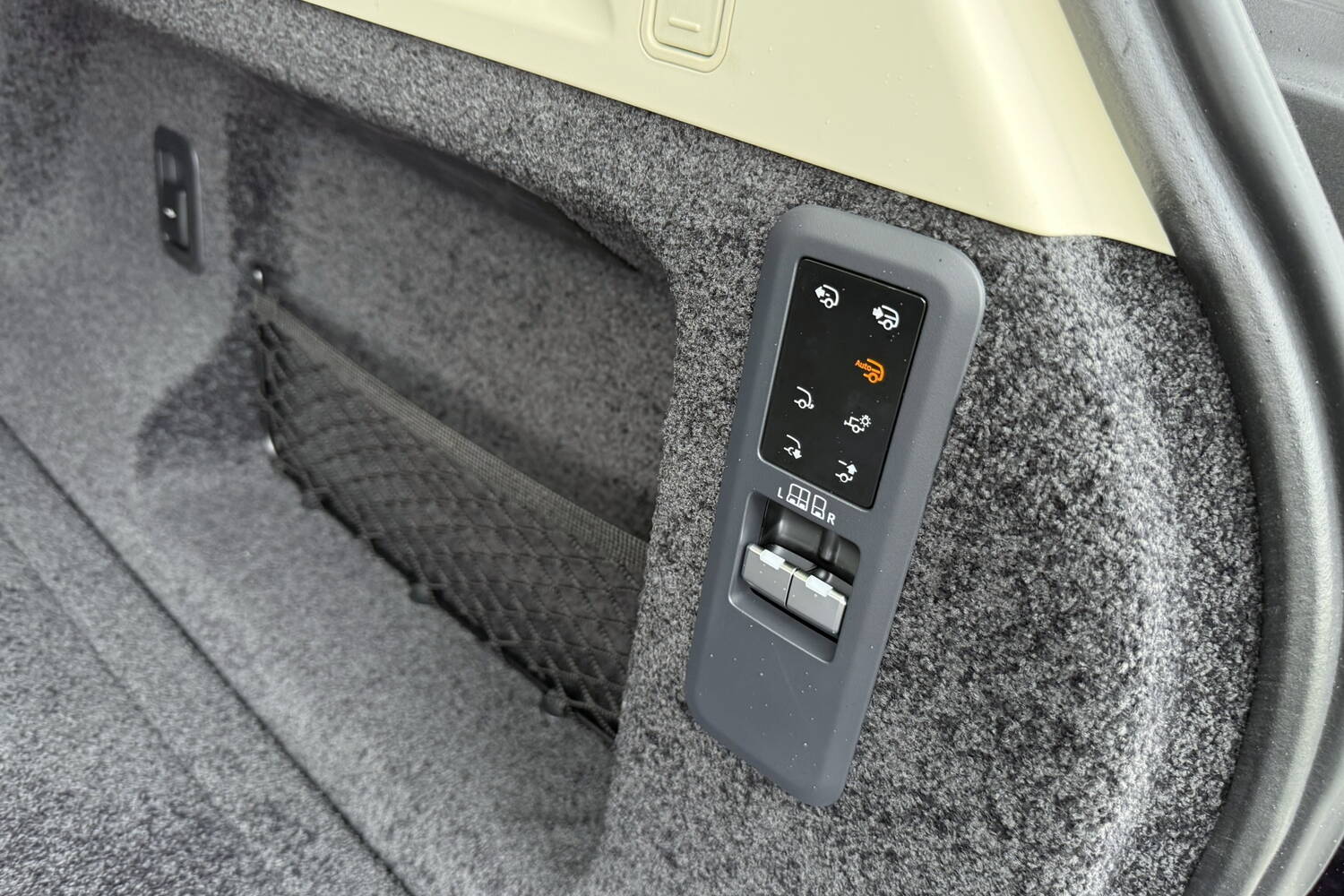
There are handy pop-out shopping bag hooks, a 12-volt socket and some shallow under-floor storage, plus a netted area to one side of the boot. Thanks to the Range Rover's air suspension there's also a button in the boot that allows you to lower the rear of the car, making it squat like an obedient camel, for loading heavier objects, while there's also electric rear-seat folding to open out the maximum load capacity to more than 2,100 litres.

It's a long way from the original 1970 Range Rover's boot which was specifically designed to carry a bale of hay, or one adult sheep.
Towing with the Range Rover

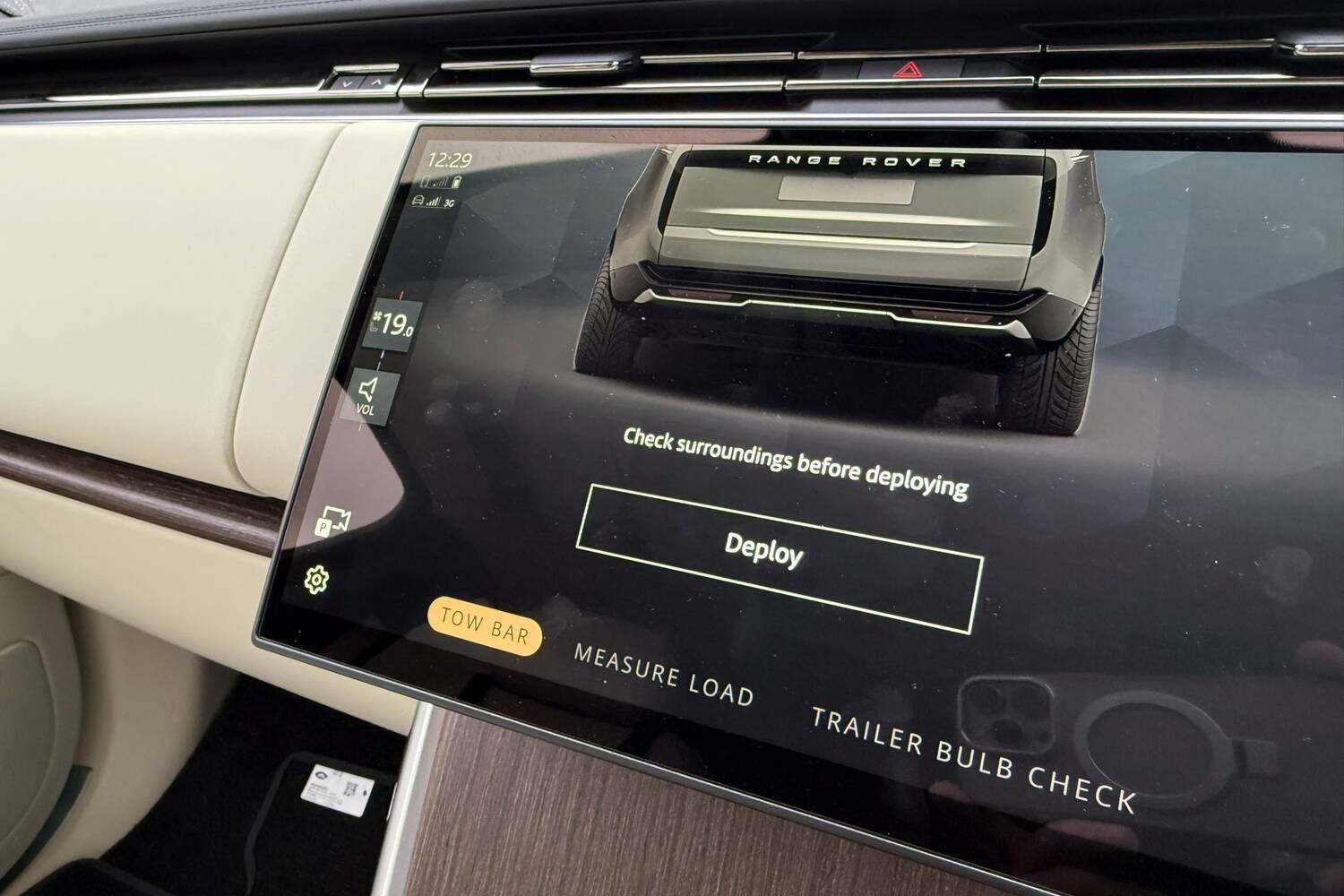
The Range Rover comes with a 3,500kg maximum braked trailer towing weight and a clever system that can measure the weight so you know you're within the limit. The towbar is electrically deployed from within the cabin or via the control panel on the side of the boot.
Safety in the Range Rover
The Range Rover was last assessed in 2022 by Euro NCAP, and it scored a maximum five stars, with an 84 per cent adult occupant rating, 87 per cent for child occupants, 72 per cent for vulnerable road users and 82 per cent for its electronic safety systems.
Performance of the 2026 Range Rover
• Vast range of engine options
• Irish buyers favour the PHEV versions
• Impressive all-round fuel economy

You can choose from a bewildering lineup of engines for the Range Rover, from diesel and petrol mild-hybrids, to the two plug-in hybrids that dominate the Irish market, all the way to turbocharged petrol V8s with more than 600hp, and there's a fully electric version waiting in the wings.
Driving the Range Rover P460e on Irish roads
Words by Neil Briscoe on 4 June 2026
The P460e was updated in 2026, but do you notice the extra 20hp and 60Nm? Not especially, although it always feels like something of a special event when you unleash the full power of the combined six cylinders and batteries, see the bonnet rise majestically ahead of you, and surge down the road. It's a smooth engine, but one that growls pleasantly when pressed.

Performance is genuinely astonishing. This is a 2.8-tonne SUV we'd remind you, and one designed for both maximum interior comfort, and maximal terrain-covering ability, and yet if you push that organ-style throttle pedal hard enough, the Range Rover P460e will accelerate from 0-100km/h in just 5.7 seconds.
You can go faster in a Range Rover. The more powerful P550e plug-in hybrid can do the same sprint in 5.0 seconds, and if you want to go the whole hog, the top-spec P615 V8 model will do it in - gulp - 4.5 seconds.
Quite why you'd want to do that baffles us a touch, and the P460e is certainly quick enough for any mere mortal.
The Range Rover has some other surprises. It's set up with softness in mind via the air springs and adaptive dampers, but even though there's plenty of body lean, the Range Rover never feels boat-like in corners - the precise, beautifully weighted steering keeps you fully informed and engaged in the process too.

Select Sport mode and some of that lean disappears, and you might even start to describe the Range Rover as agile. Well, for something this big anyway.
It's even good in town. Now, there will be a certain type of person who will fume at the very suggestion of using a behemoth like this in an urban setting, but the fact is that the Range Rover can not only cope, but it can also excel.
Part of that is down to the precise steering, the excellent visibility and the all-round camera system. The absorption of the air suspension when dealing with cratered urban tarmac is a boon too.

Best of all, though, is the rear-wheel steering. This cuts the Range Rover's turning circle to just 10.95 metres, which is only fractionally more than that of a VW Polo.
It means that this massive car can be swung easily into and out of even tight car parks, hunching down on the height-adjustable suspension as it does so.
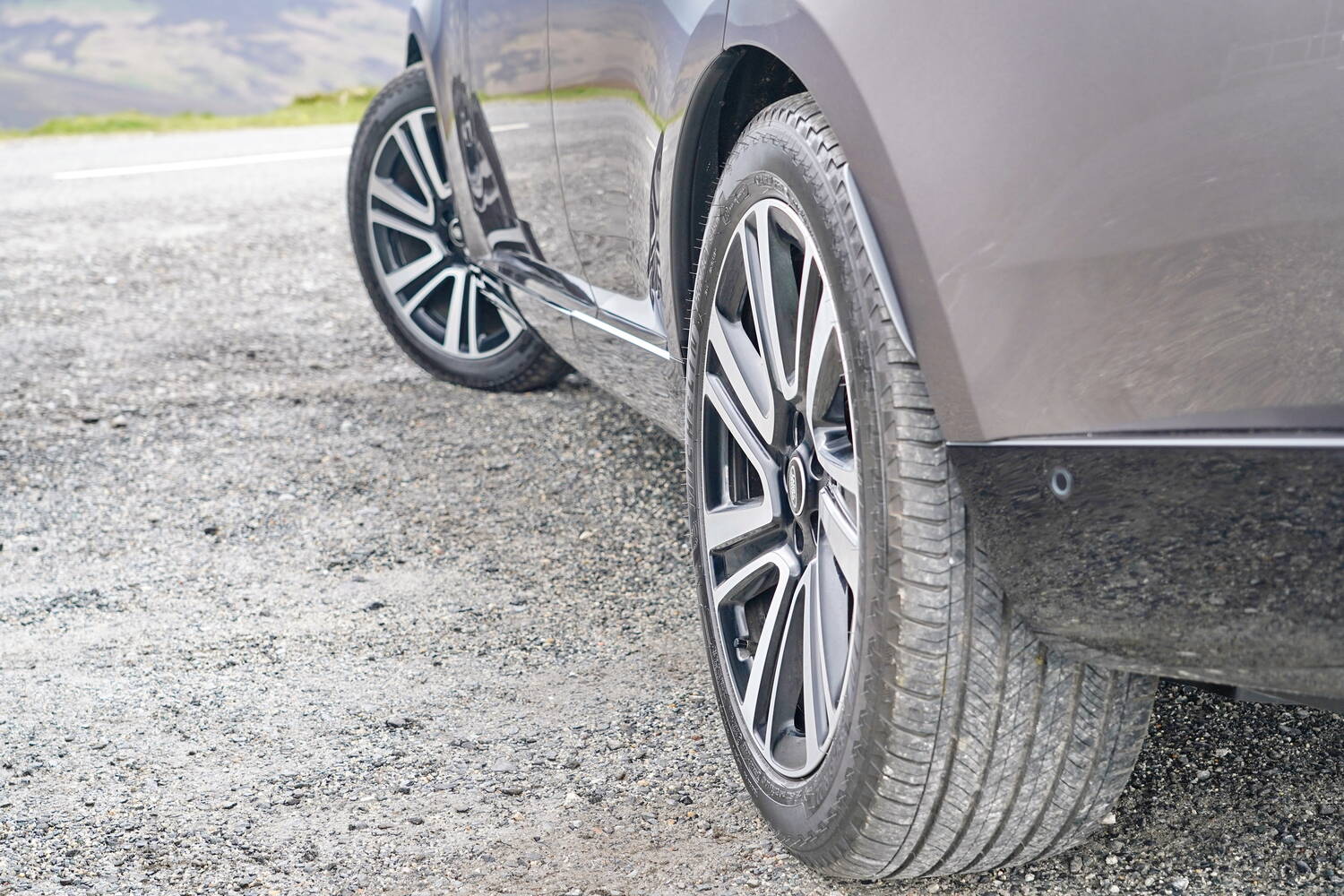
Then, of course, there is the off-roading prowess. That adjustable air suspension works both ways, stretching upwards to open as much as 295mm of ground clearance, with a 34.7-degree approach angle, 27.7-degree breakover and 29-degree departure angle. If there's somewhere you can't reach with one of these, you probably need to get a helicopter involved.

Fuel economy and running costs of the 2026 Range Rover P460e
• Generally excellent economy
• Useful electric range
• Fast charging capability
The Range Rover's broad engine lineup effectively distils down to two options for the Irish market, at least in realistic terms, and those are the P460e and P550e plug-in hybrids.
Official emissions, electric range and fuel economy
Range Rover's official figures say that the P460e plug-in hybrid scores a WLTP fuel consumption figure of 0.8 litres per 100km, and an electric range - with a full charge of the massive 31.8kWh nickel-manganese-cobalt battery - of up to 121km. Hence an incredibly low CO2 rating of just 16-19g/km and ludicrously low motor tax.
Real-world fuel economy of the 2026 Range Rover P460e
You're never going to get near the official 0.8 litres per 100km figure (that's 353mpg...) but the good news is that the P460e is far from disastrously thirsty.
Drive the Range Rover on a long-range run, and it's actually very economical. Starting with a fully charged battery, at one point I was able to cover 225km in one go at an average of 5.7 litres per 100km, although doing a long journey on a flat battery will result in more like 9.0 litres per 100km.
Somehow, Land Rover has managed to squeeze impressive efficiency out of a 2.8-tonne super-luxury SUV.
The real-world electric range seems to hover at around 90km, so if you're being diligent with your charging at home, you should be able to cover lots of kilometres electrically.
Charging up the Range Rover P460e

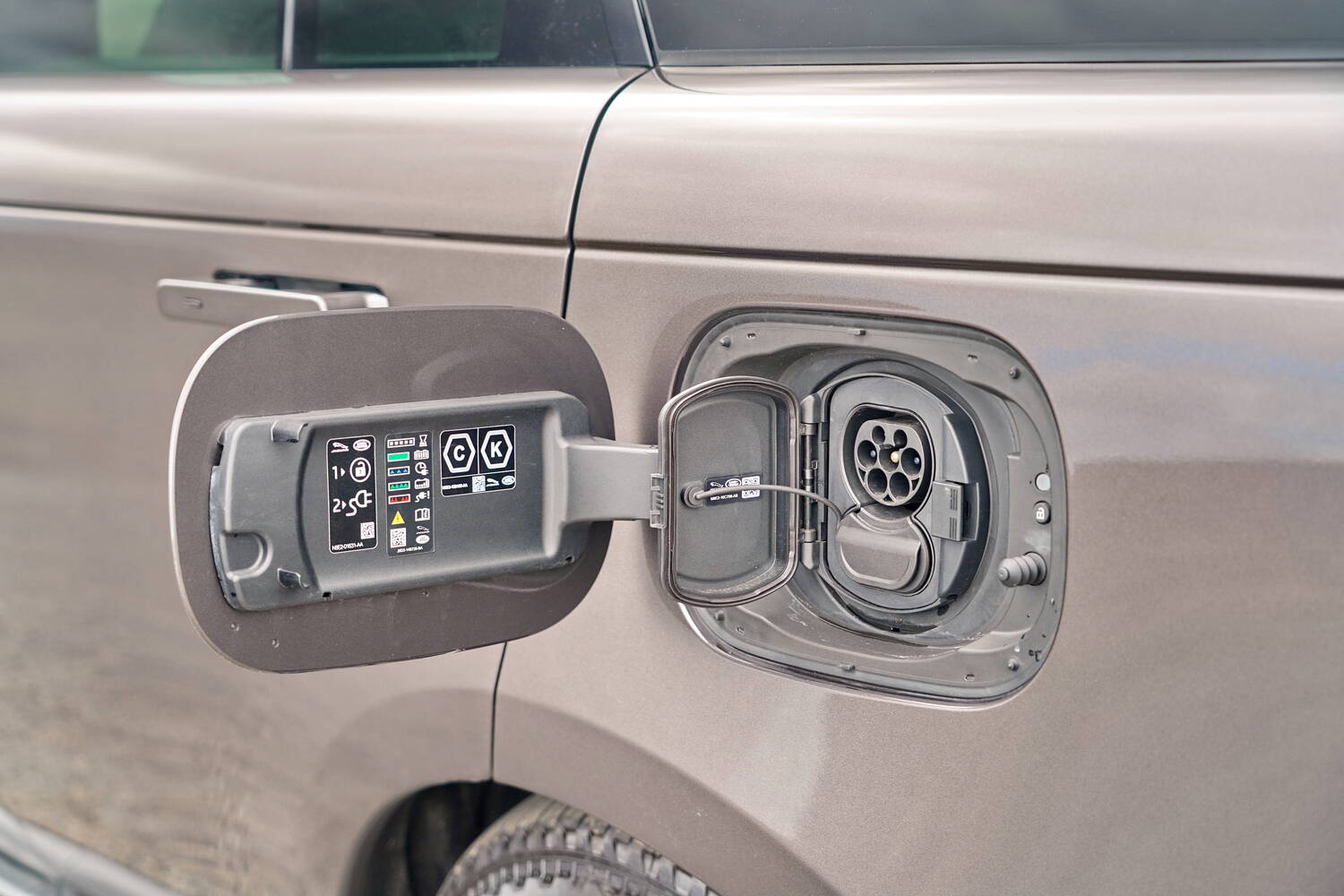
On a 7.4kW home charger, it should take around five hours to fully charge the P460e's battery, or around 15 hours if you're hooking it up to a domestic socket. Thankfully, Land Rover has also fitted this Range Rover with DC fast-charging, at up to 50kW, which allows an 80 per cent charge in around 40 minutes if you're on a long run.
Servicing the Range Rover P460e
Land Rover recommends a minor service every year or 16,000km, with a major service at two-year, or 30,000km intervals.
Range Rover warranty

Land Rover offers an impressive five-year, 150,000km warranty for the Range Rover, which should deflate some of the old prejudices about Range Rover reliability. There's also an automatically activated roadside assistance package, which sets you up for another year - up to ten years - with each main-dealer service. The corrosion warranty lasts for six years, with no mileage limit, and there's no upper limit on the paint warranty at all.
Irish pricing & rivals to the 2026 Range Rover
• Hugely expensive, of course
• Yet still offers better value than some
• Range Rover Sport is more affordable
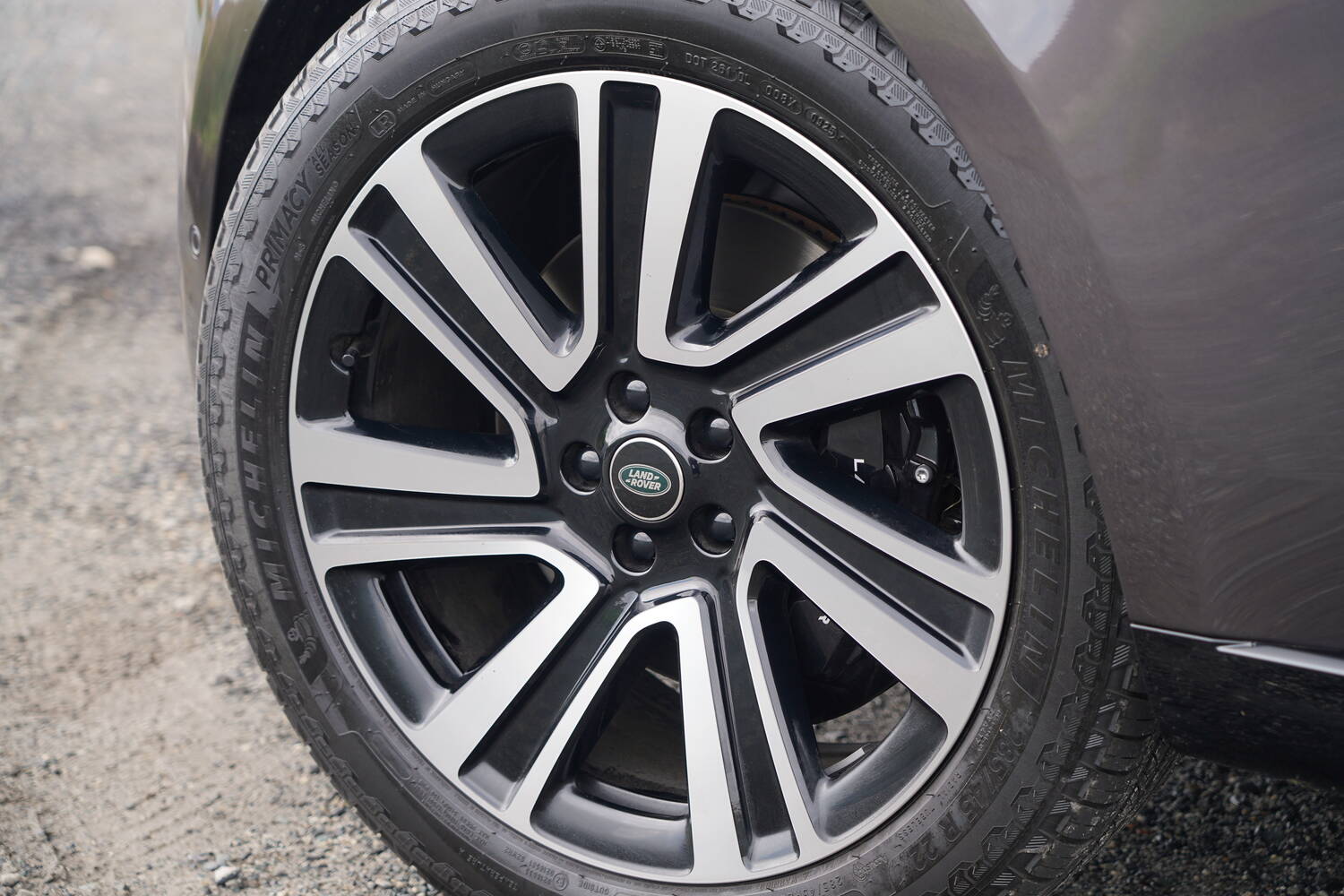
Basic SE models of the Range Rover come as standard with 21-inch alloy wheels, Pixel LED headlights, a panoramic roof, 'Windsor' leather seats, soft door close and heated seats front and rear, among much more besides.

Our HSE test car added to that the Meridian sound system, four-zone climate control, the 'Atlas' exterior pack, cooled and massaging front seats and a sliding panel for the panoramic roof.
With a starting price of just over €151,000, the Range Rover, in any form, is not cheap. However, that doesn't make it bad value.
As previously noted, you can spend multiples of that figure on the likes of a Bentley, Lamborghini, or Rolls-Royce SUV, and yet none of the Bentayga, Urus, nor Cullinan have the effortless classiness of the Range Rover. In that sense, it could be considered a bargain. Sort of.
You could also consider a Range Rover Sport, which takes the Range Rover's mechanical package and squeezes it into a slightly smaller, slightly more affordable body, but the Sport just lacks that last nth degree of the appeal of the big Range Rover.
You could also consider a Land Rover Defender - even more capable off-road, and barely any less refined on it, and better value all-round.

Verdict - should you buy the 2026 Range Rover
It's an unkind world out there, and if you buy a big Range Rover, you're going to suffer some social jealousy and the occasional look of hatred. Ignore them all - this is a fabulous car, with exceptional abilities, not least of which are that it's surprisingly economical and doesn't feel monstrous in town. Classy beyond belief, the Range Rover remains the reference point for all luxury SUVs.
Want to know more about the 2026 Range Rover?
If there's anything about the new Range Rover we've not covered, or you'd like help in choosing between it and other cars, you can avail of our expert advice service via the Ask Us Anything page.
Range Rover history
The original SUV? Well, not quite. The first generation Range Rover came along in 1970, as the Rover Car Company (by then part of the doomed British Leyland conglomerate) sought to create a vehicle as rugged as a Land Rover Series model, but with comfort and style that would make it a viable weekend or long journey car.
The group - led by legendary engineer Spencer King, and designer David Bache - struck gold by taking the rugged chassis of a Land Rover and adding to it long-travel coil springs and the brilliant 150hp 3.5-litre V8 petrol engine that Rover had bought the rights to from its original designer, Buick.
That light, alloy-block engine had power, torque, smoothness and reliability (well, mostly) on its side and so the first Range Rover, made with three doors, an interior clad in waterproof vinyl and a boot shaped for a sheep, a storming success.
Farmers loved it, but so too did celebrities, well-heeled city types and the occasional Arctic explorer. That sense of ruggedness combined with genuine off-roading prowess gave the Range Rover the same sort of appeal as a Rolex Submariner watch. Few would use it to its maximum abilities, but it looked great on the wrist. Or the driveway.
In the 1980s, a five-door version finally appeared, along with the use of one for a fashion shoot by Vogue magazine, which would end up lending its name to a Range Rover trim level. The interiors became steadily posher, especially with the addition of the 'soft dash' look in the late 1980s, and there was at last a diesel version, although those early Italian-made VM engines had mediocre performance.
Just before the original shape Range Rover was replaced by the P38 version, along came a long-wheelbase model, and air suspension for the first time.
From 1994, the blockier P38 ruled the roost, and it was the first Range Rover to use BMW engines, with a new family of inline-six diesels living alongside the long-serving Rover V8, which had now been expanded as far as 4.6 litres.
The P38 wasn't the best-made Range Rover, but it soldiered on until 2002, when it was replaced by the now-legendary L322 version, developed by BMW (and equipped with BMW inline-six diesel and V8 petrol engines).
BMW didn't get to enjoy the Range Rover, though, as by then the company had been sold to Ford, who paired it up with Jaguar, the embryo of the today's Jaguar Land Rover group. The BMW engines were eventually replaced by Jaguar V6 diesel and V8 diesel and petrol engines.
The L322 set new standards for cabin design and quality, and its off-road ability was unimpeachable. It was also the first Range Rover that was genuinely great to drive on the road.
Subsequent restyles added more in the way of exterior bling, to the detriment of the L322's clean original styling, and it was replaced in 2012 by the L405.
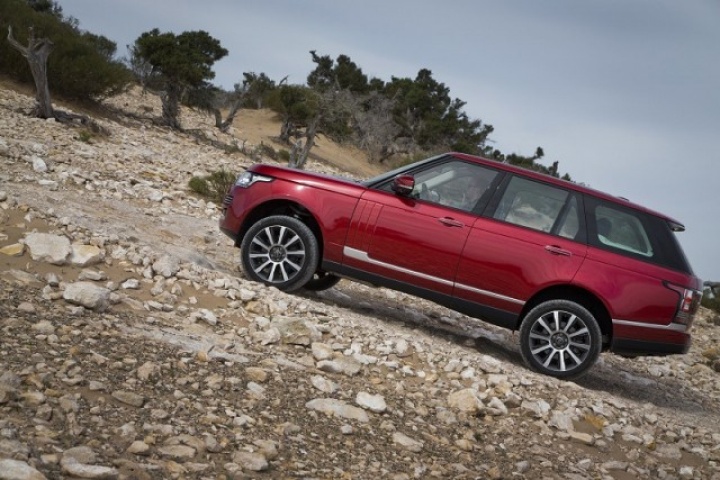
This was the first Range Rover made by an independent Jaguar Land Rover (owned, as it is today, by the Indian Tata Group) and it was an evolutionary car, although it did make some advances, by introducing the first plug-in-hybrid models, as well as the first of the then-new inline-six 3.0-litre engines.
It was also the first Range Rover to share its entire structure with the smaller Range Rover Sport (the previous Range Rover Sport had used a Land Rover Discovery chassis).
Speaking of Sport, the L405 saw the introduction of the wild supercharged V8 SV Autobiography model, but the long-mooted two-door body style, shown in concept form, never quite got over the line and into production.
This fifth-generation Range Rover, the L460, was introduced alongside a new Range Rover Sport in 2022, and brought back some of the L322's clean lines, along with a seven-seat layout (previously reserved for the RR Sport) for the first time.
Plug-in-hybrid models were equipped with long-range batteries, and Land Rover began to use BMW engines once again, with the Range Rover's 4.4-litre V8 engine bought in from Munich.