



Exterior & design of the 2026 Polestar 3
- A truly handsome and low-slung SUV
- Optional 'Jupiter' paint is lovely
- We love the neat nose wing

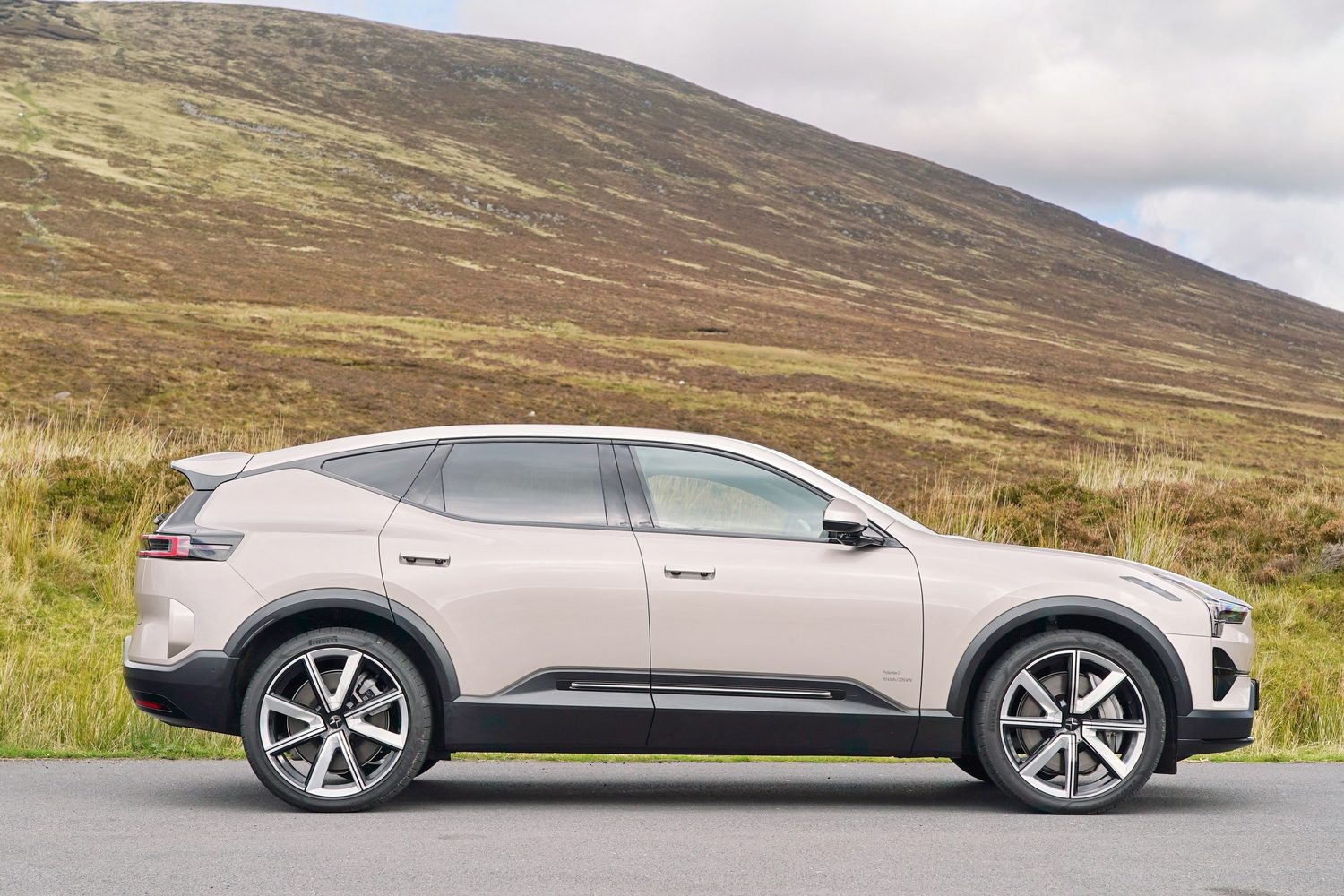
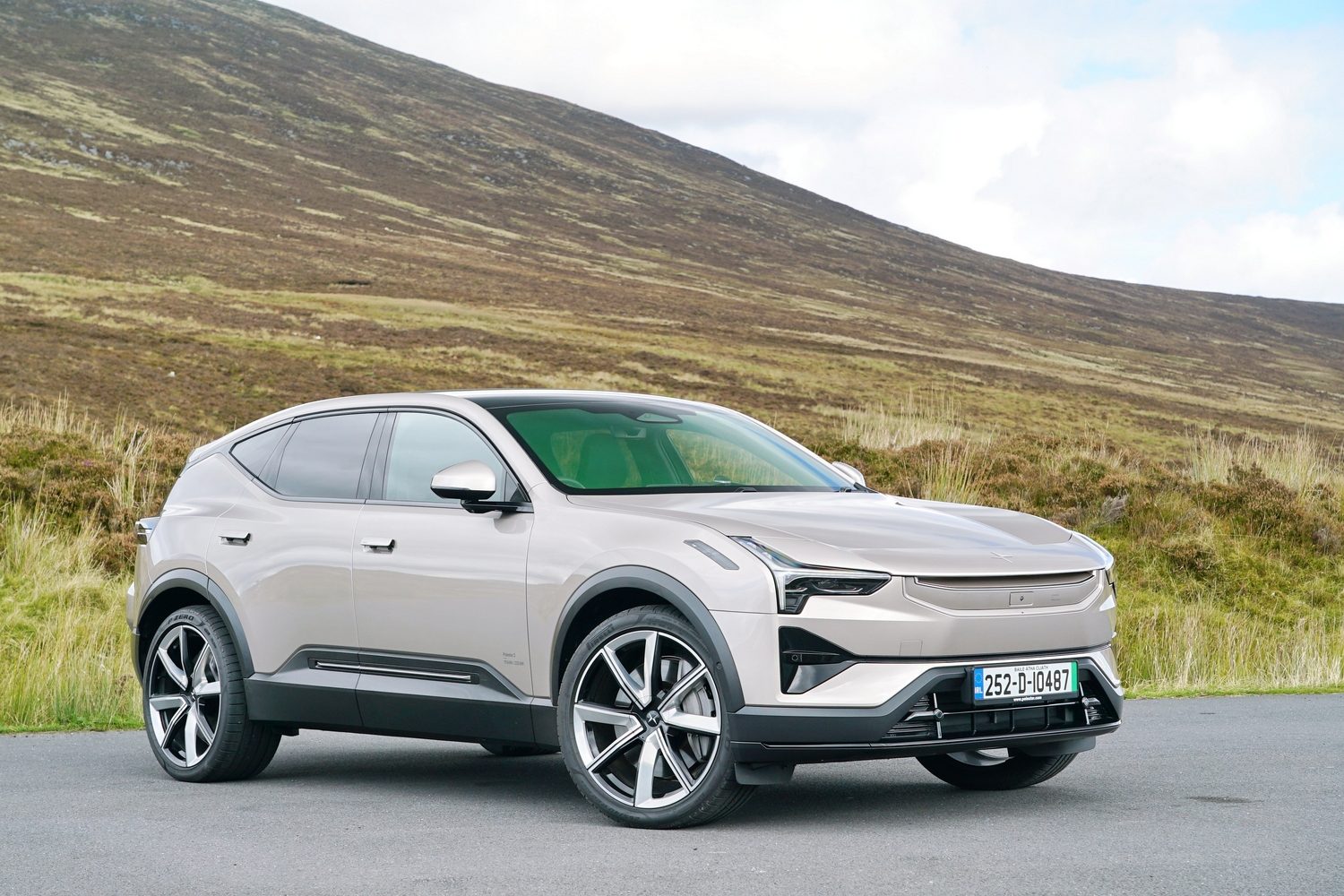
The Polestar 3 is proof that you can have a big, spacious, comfortable SUV with seats for five, and it doesn't have to look big and bulky.
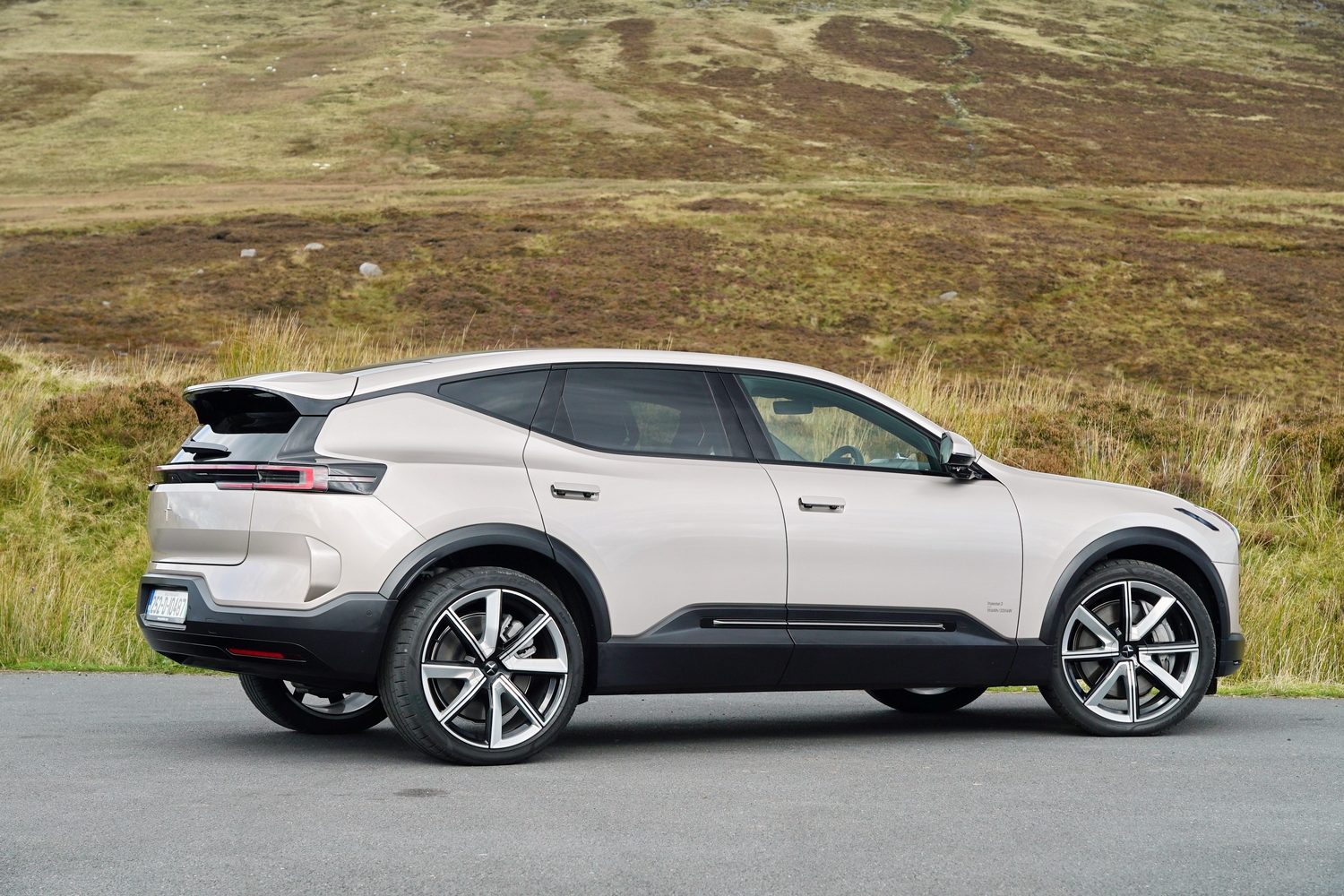
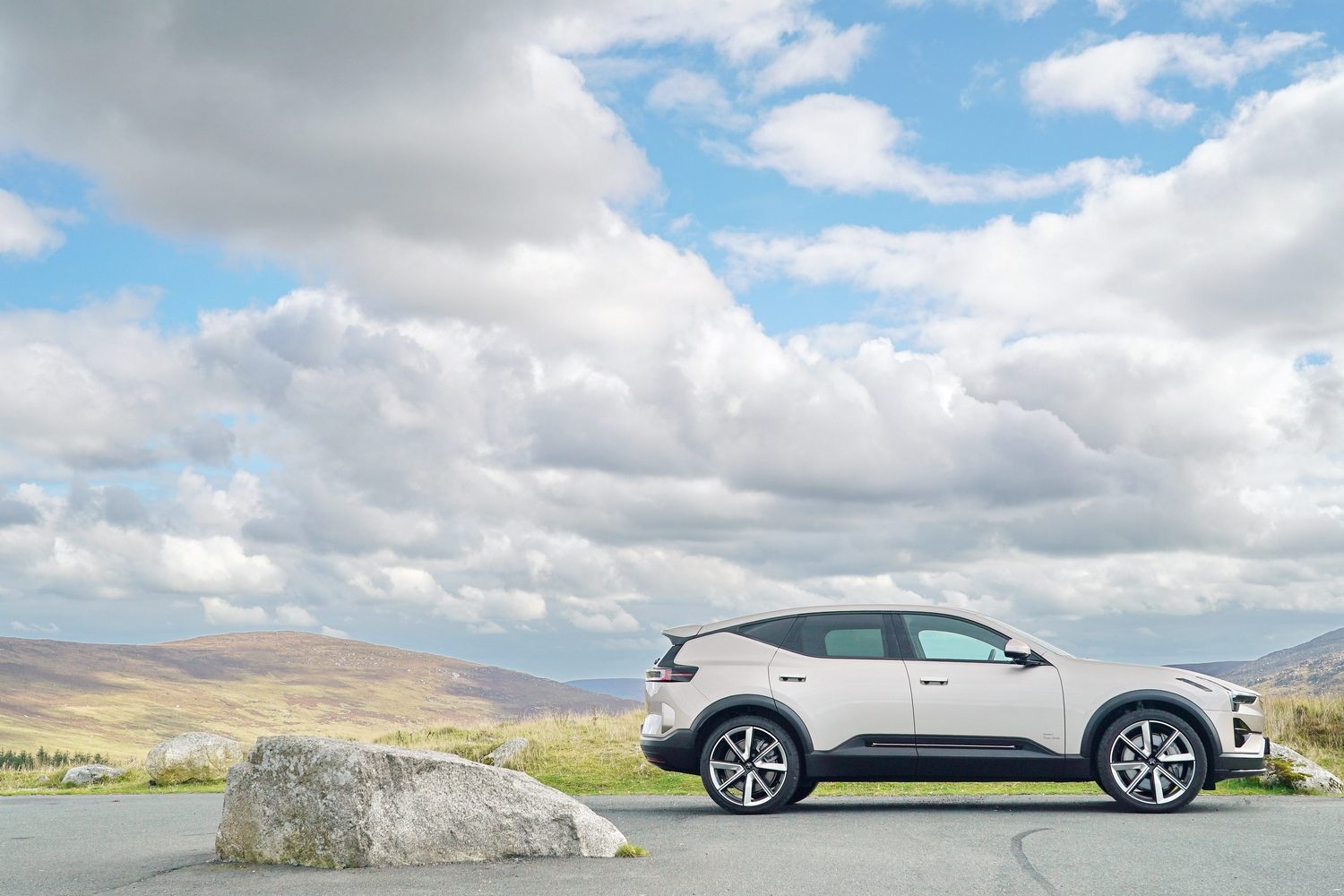
It stands a mere 1,618mm high at the highest point of the roofline, making it considerably lower-slung than a BMW iX or Mercedes EQE SUV, the difference being around 70mm.
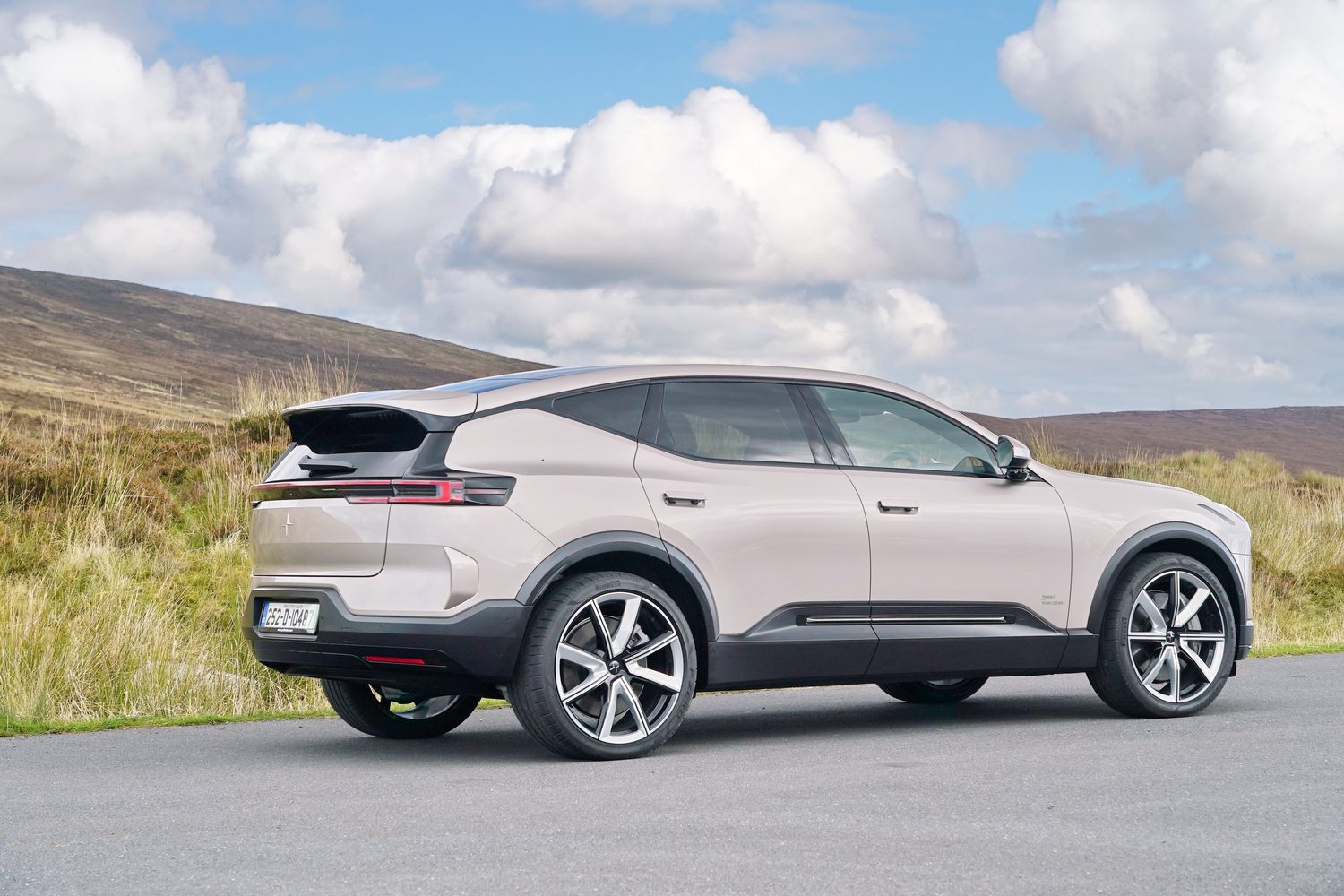
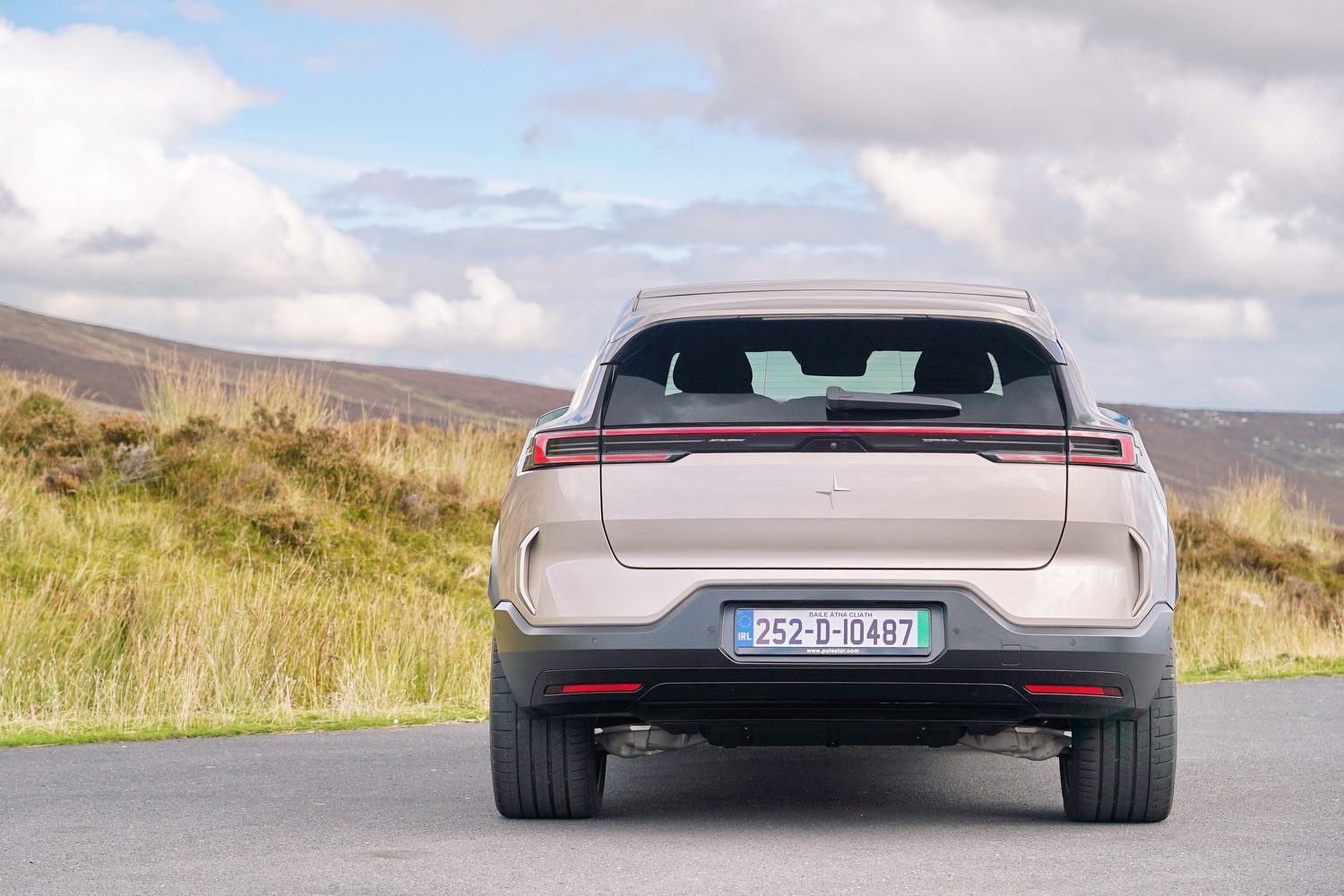
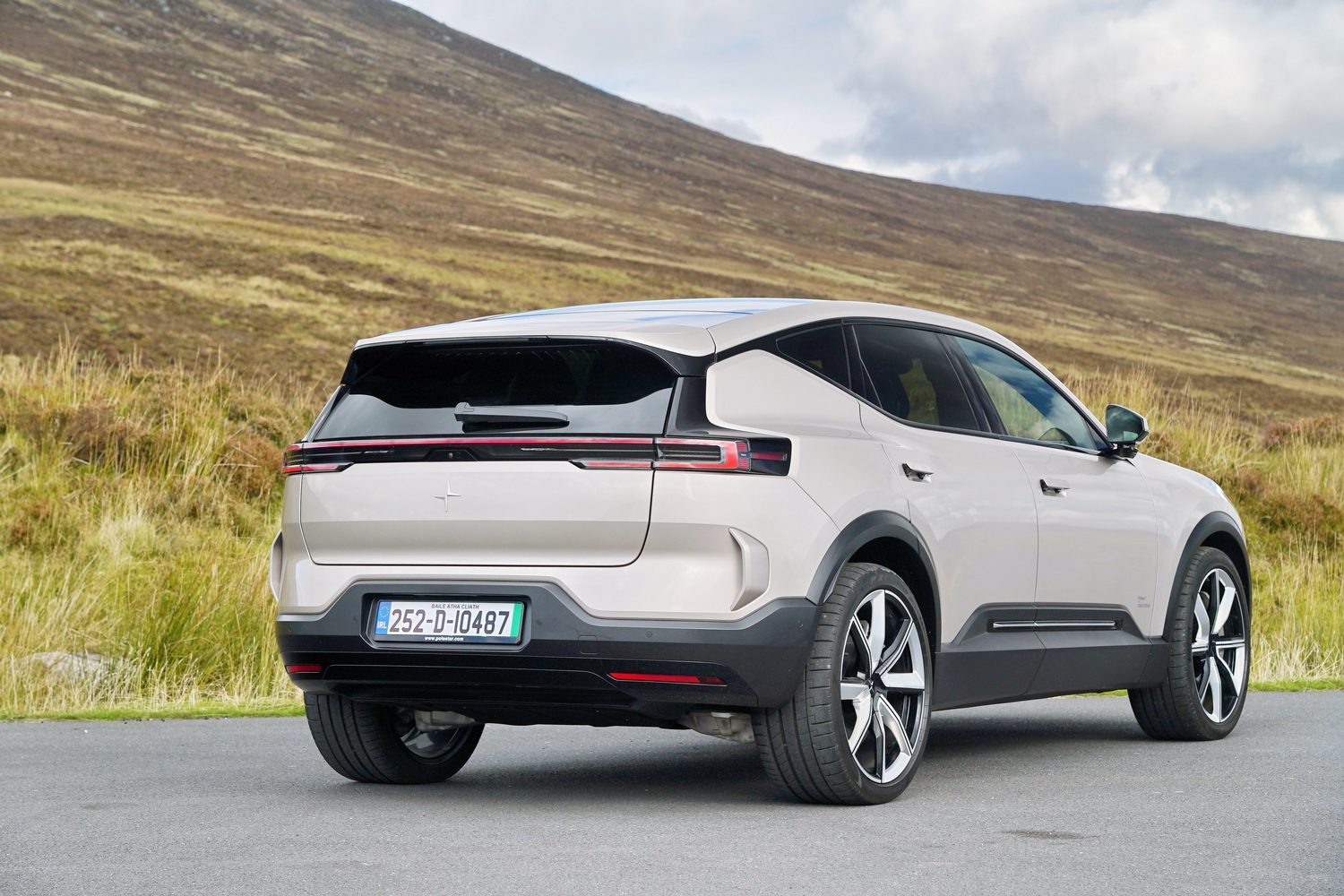
Polestar has done this by positioning the rear roof supporting structure backwards, behind the rear-seat occupants' heads, so that it can sit lower, making the car sleeker, which is as good for efficiency as it is for aesthetics.

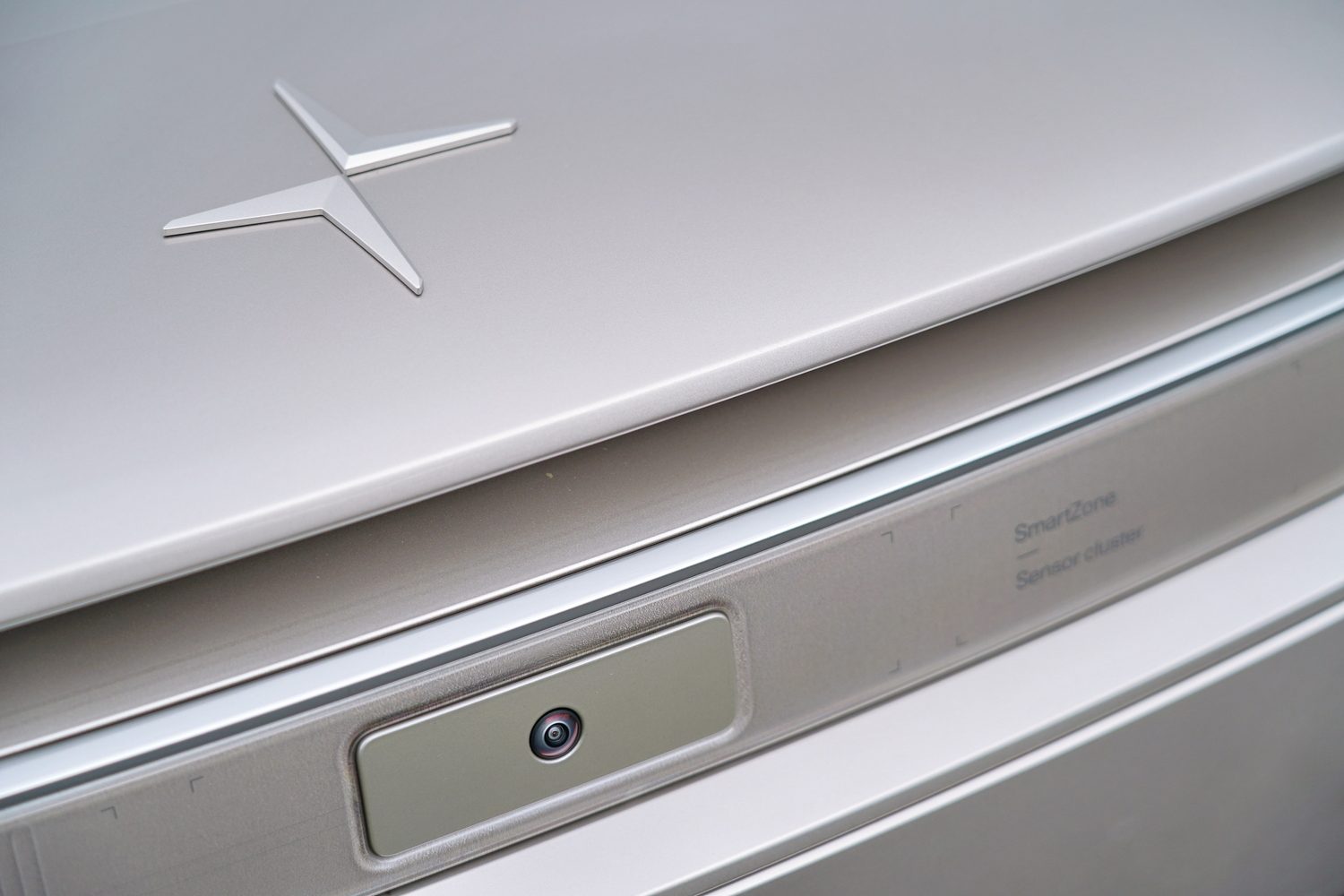
Such aerodynamic cleverness is further set off by the neat spoiler mounted at the leading edge of the bonnet, which blends in with the bodywork, but which is a genuine wing, open underneath, to help funnel air smoothly up along the bonnet, the windscreen and over the roof towards the rear aero package.
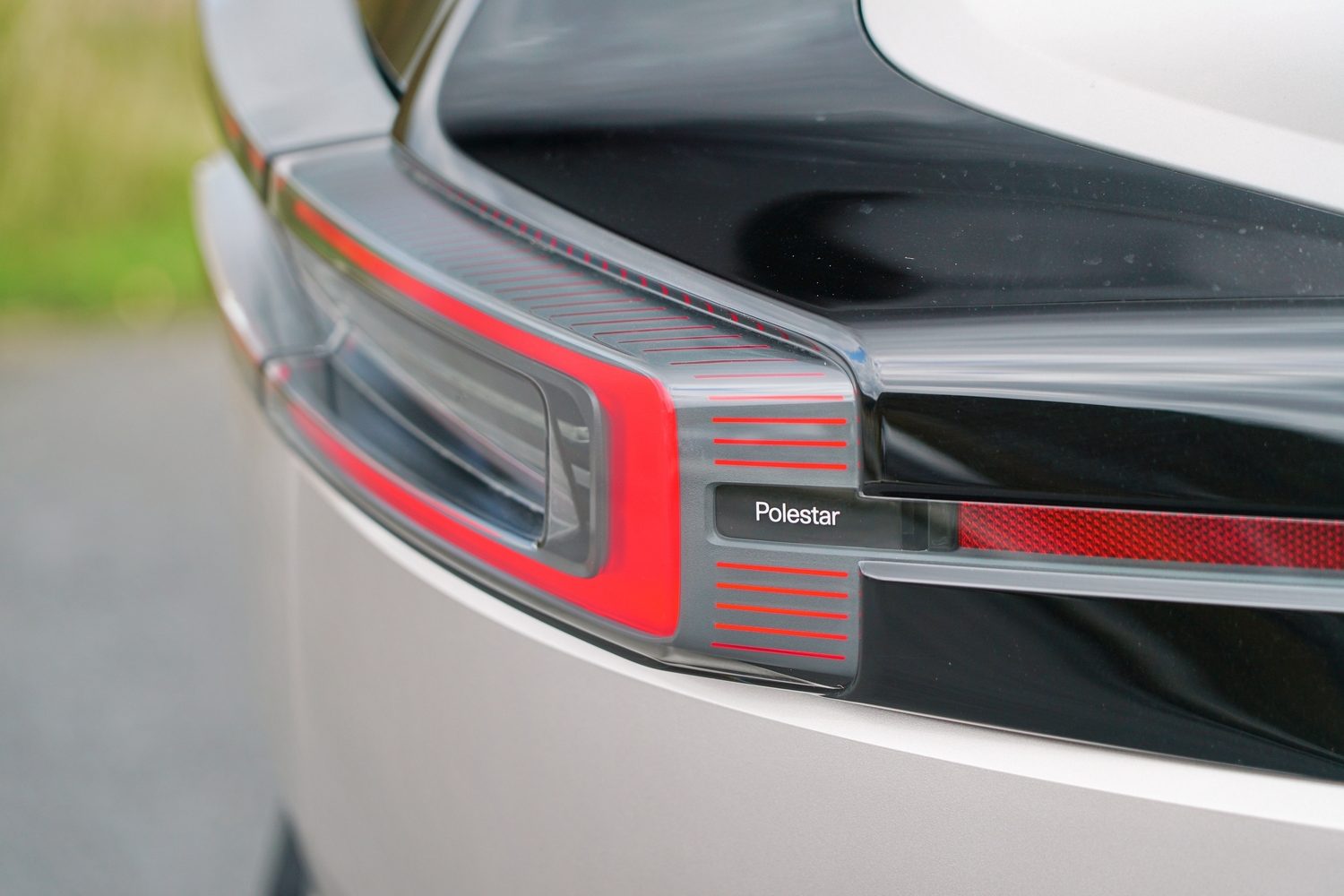
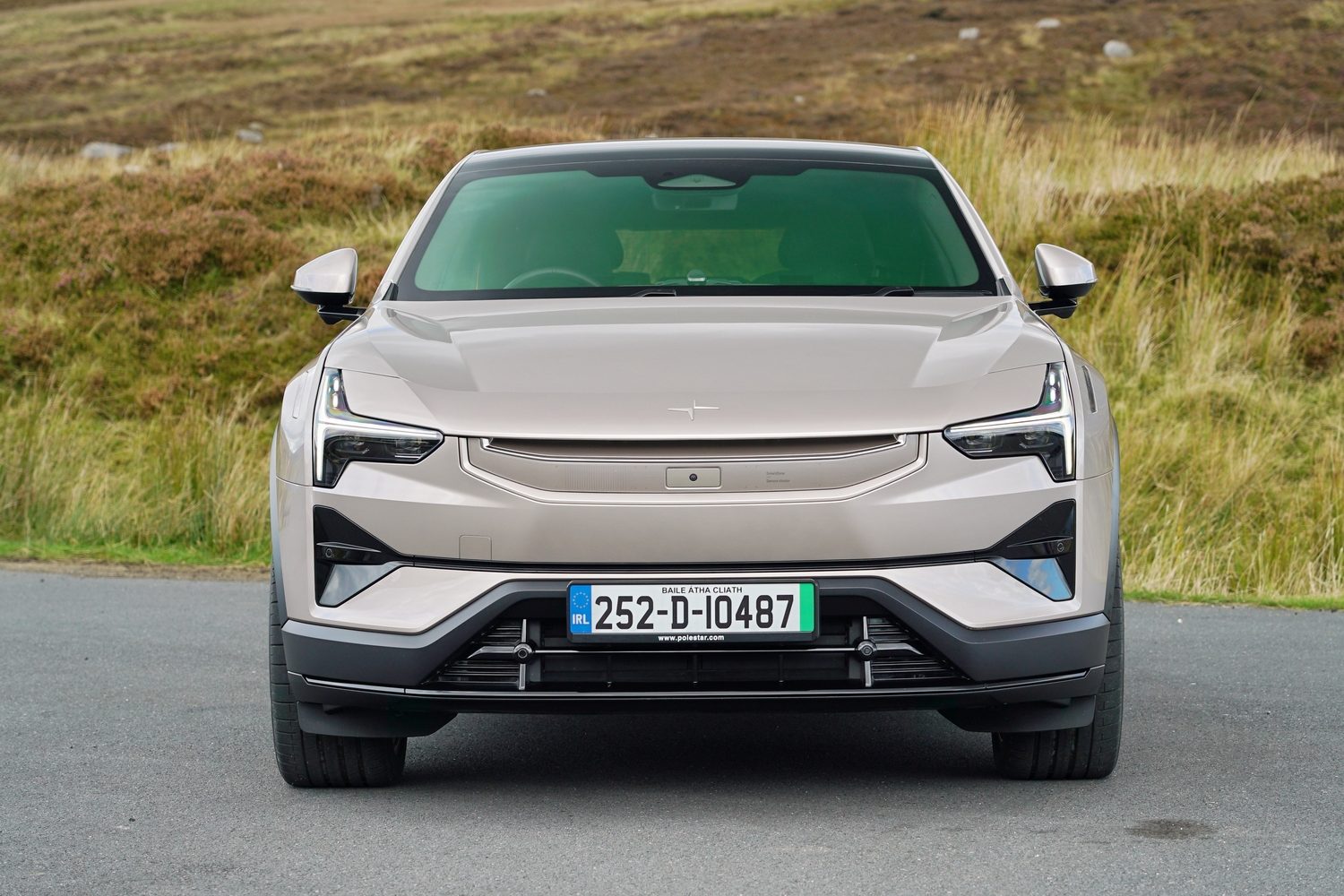
Combined with the slim headlights and the plain 'grille' panel that's home to the car's front-facing safety sensors, it makes the Polestar 3 look uncommonly handsome, not least when it's ranged against its rival German products, all of which look as if they're trying a bit too hard.

The Polestar 3's lines are also very sleek indeed, with minimalist bodywork that seems to be stretched taut over the car's hard points, again in stark contrast to the bulky look of most rivals.
Dimensions of the 2026 Polestar 3
- Length:
- 4,900mm
- Width:
- 2,120mm (mirrors unfolded)
- Height:
- 1,618mm
- Wheelbase:
- 2,985mm
Paint colours for the 2026 Polestar 3
As standard, the Polestar 3 comes finished in a metallic silver called Magnesium, and that's the only no-cost colour. You'll have to pay €1,200 extra for either Thunder (metallic dark grey), Midnight (metallic dark blue), or Space (metallic black). There's also a pricier colour called Snow, which is a pearlescent white. However, we'd happily spend €1,200 on the Jupiter hue of our test car, which is kind of metallic beige, but it's a shade that the Polestar 3 really manages to pull off, and it looks very classy indeed.
Interior, practicality, tech & comfort of the 2026 Polestar 3
- Lots of space inside
- Excellent cabin quality
- Touchscreen not perfect

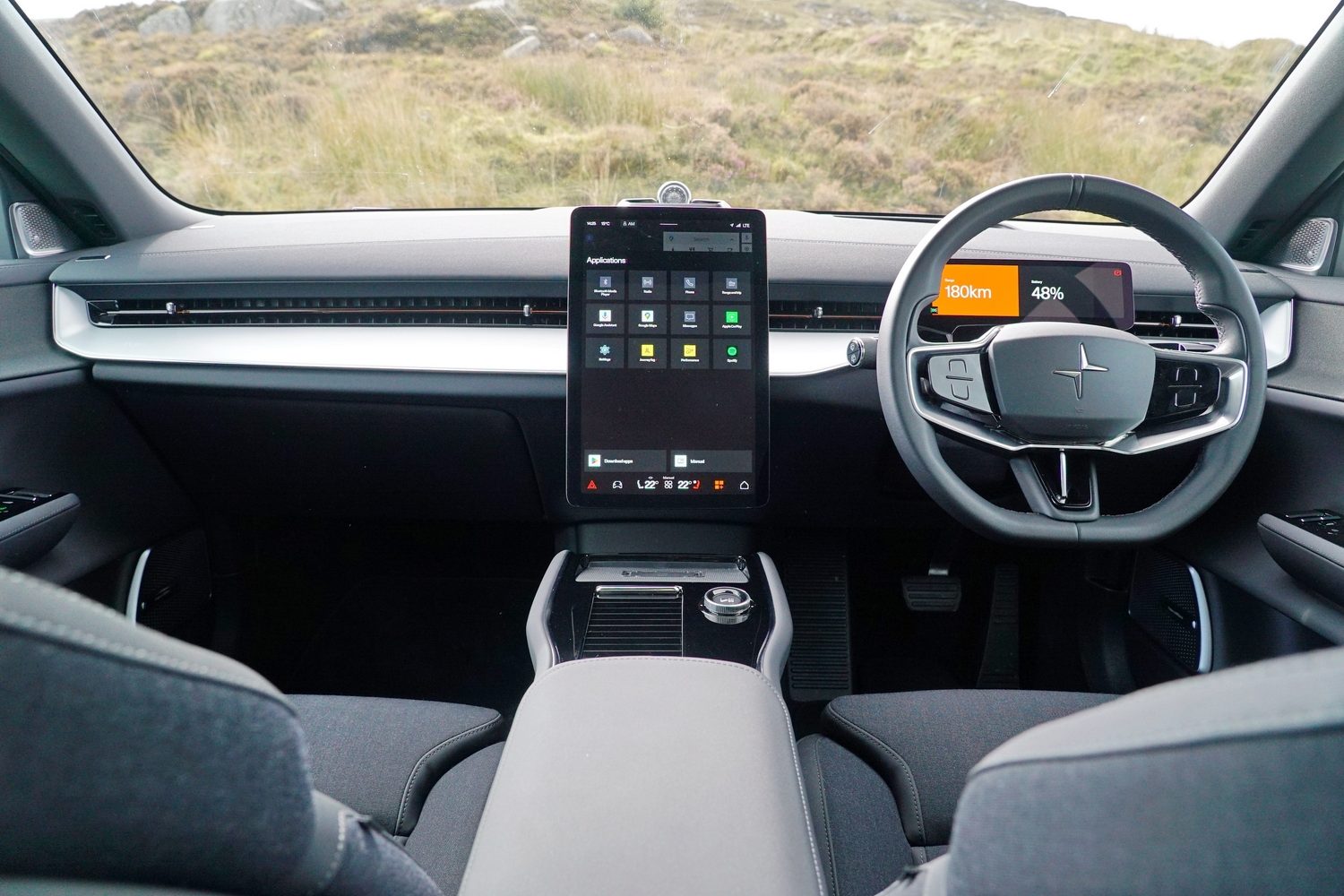
The Polestar 3 makes great play of its recycled cabin materials - which are classier than the average - and its interior is seriously well-built, high in quality and massively roomy.
Getting comfortable in the driver's seat
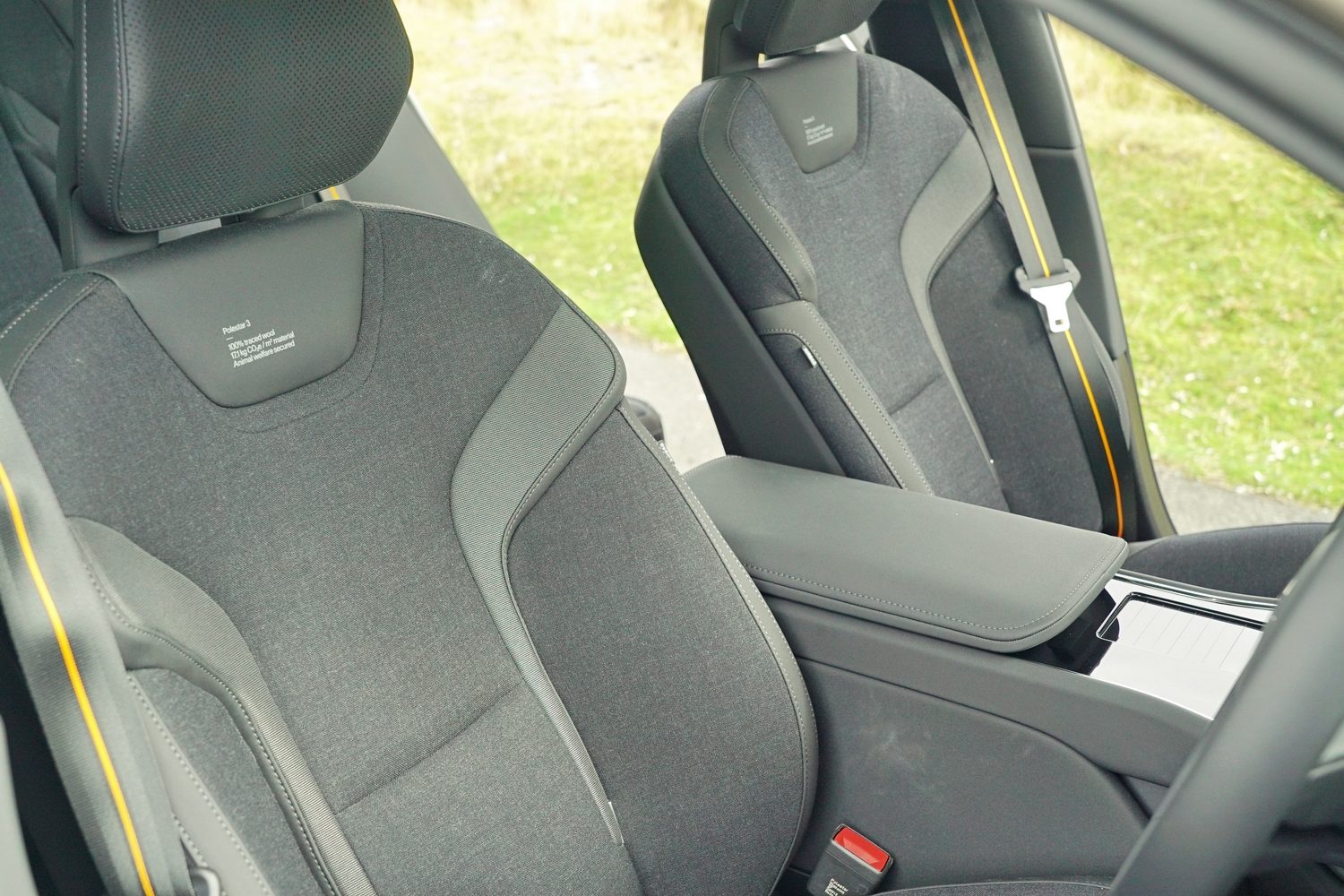
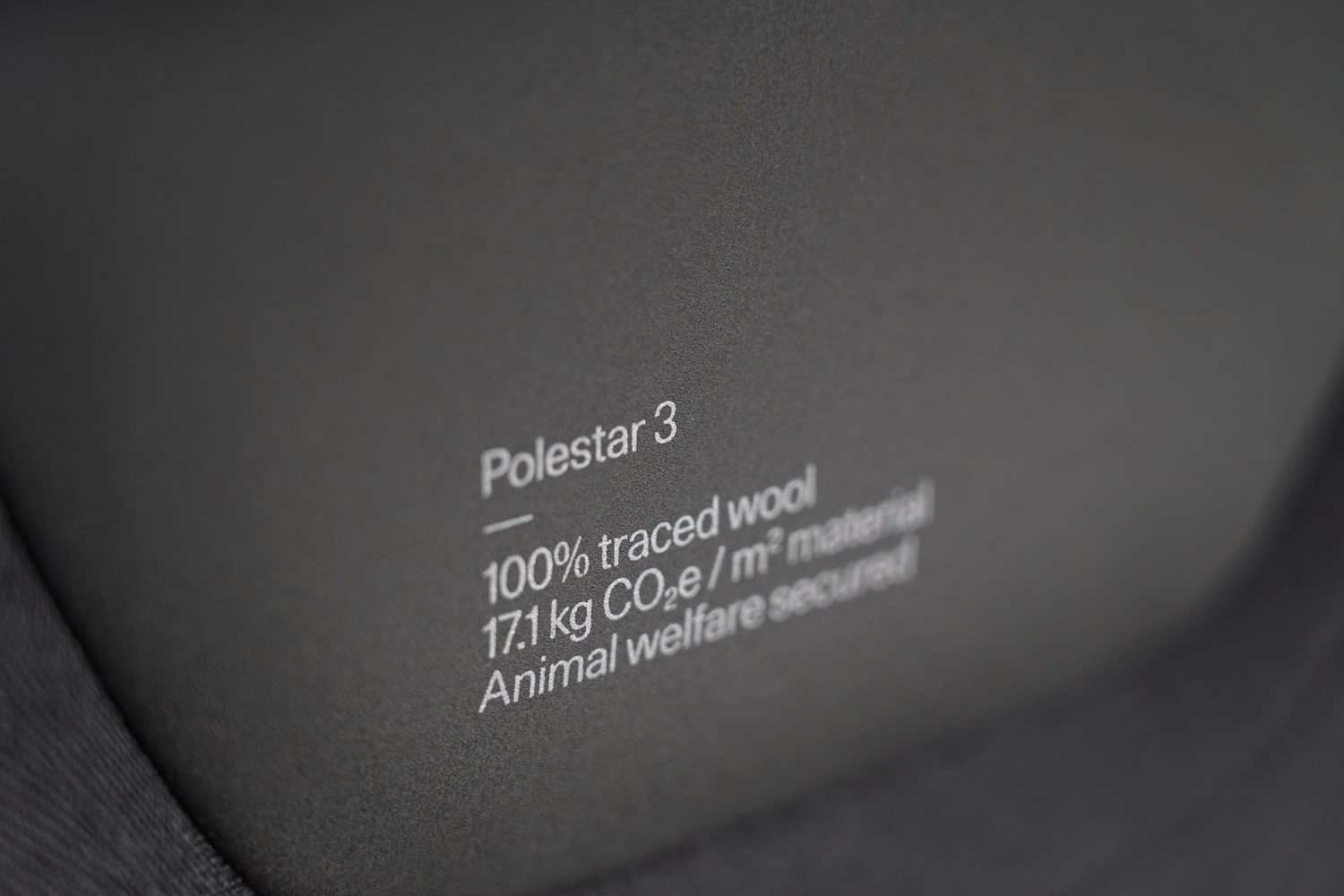
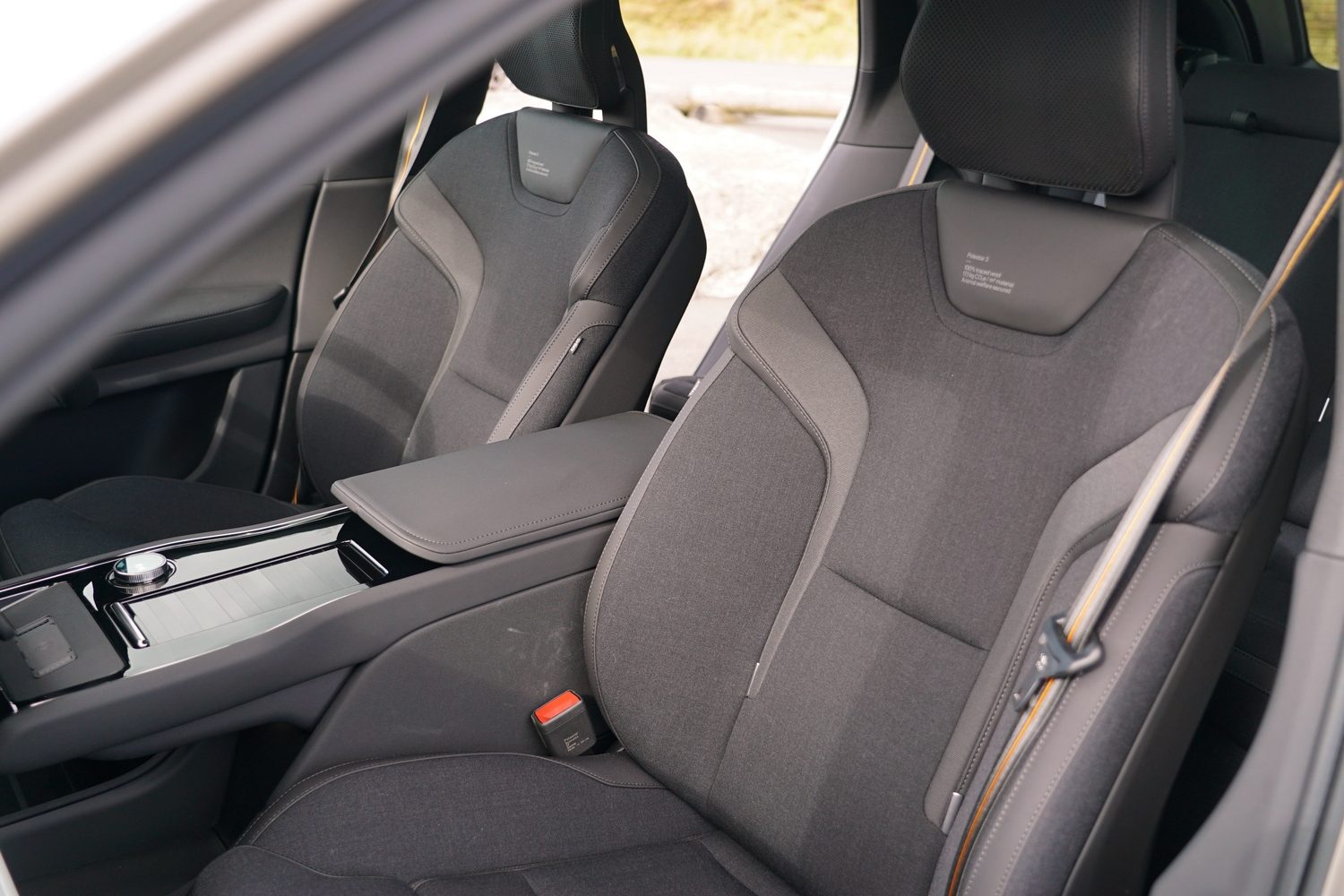
First off, the Polestar 3 has wonderful seats. In our Long Range Single Motor Plus test car, they were wrapped in a wool material that the company says is 100 per cent traceable, and which comes from sheep with high standards of care and welfare.

You can have a fully synthetic plant-based equivalent to leather if you prefer, or there's real Nappa leather - again from high-welfare herds of cows - but that's a whopping €6,200 option. Polestar's logic is that you can have the Nappa if you want it, but you have to make a conscious - and expensive - decision to.
We'd skip the leather and have the wool. It looks and feels incredibly classy, and it's really comfortable, especially when you first sit into the car on a chilly day. The seats themselves are electrically adjustable, although the controls require a rather fiddly touchscreen-based system that changes the parameters of the little lozenge-shaped adjuster on the side of the seat.

The extending bolsters under the backs of your legs (they're manually adjustable, thankfully) are wonderful for a bit of extra support, and while the seats feel quite firm at first, you'll be amazed how comfortable and supportive they are on a long run. All car seats should be this good.
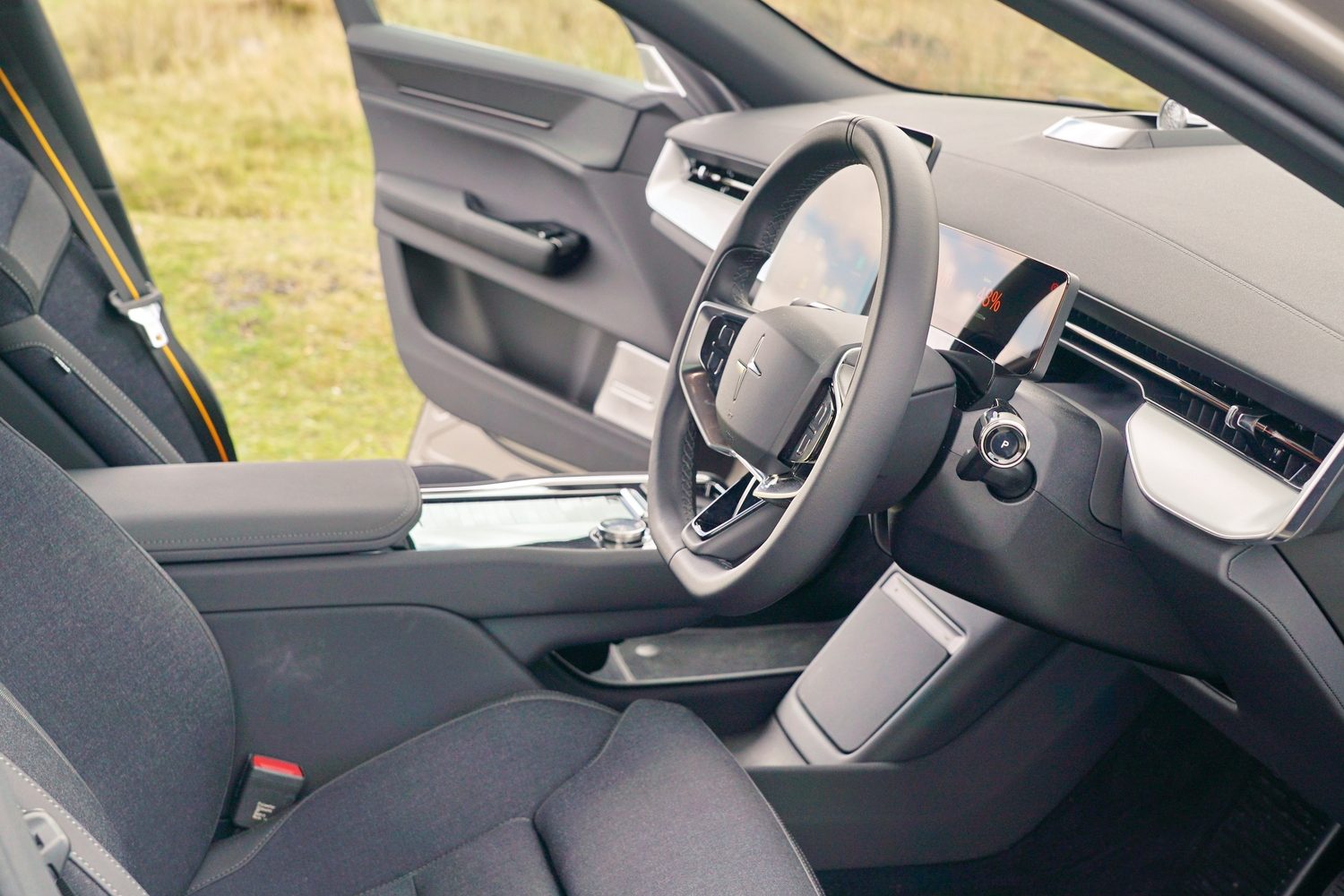
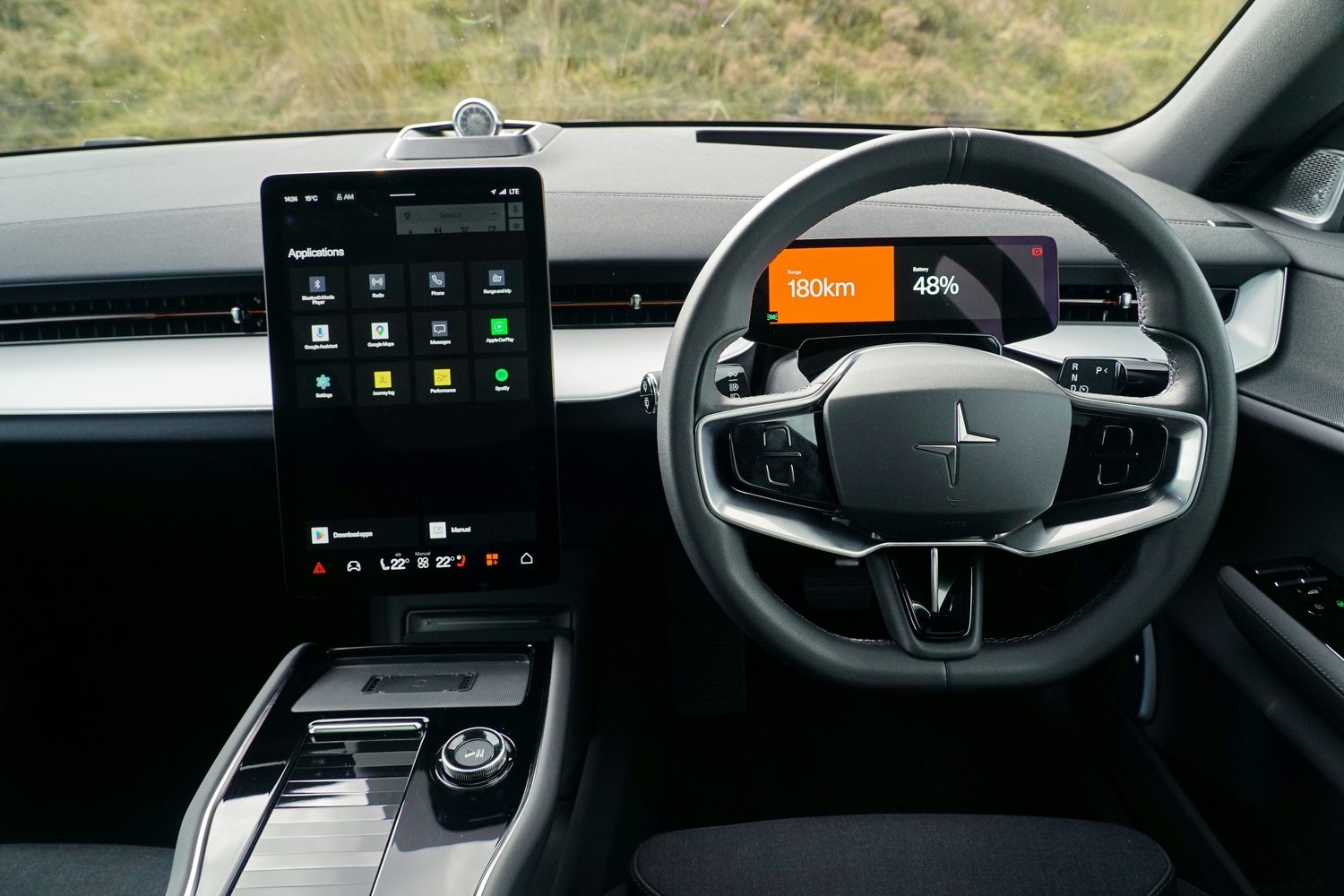
The driving position itself is excellent. Height adjustment means you can get the seat and wheel nice and low if you want to, and the driver's display screen is attached to the steering column, so that's always visible.
The steering wheel itself has plenty of adjustment in all planes, but you have to wade through touchscreen menus to get to the steering adjustment page, and then use the on-wheel buttons to adjust it - it's the same for the door mirrors, which seems both unnecessarily fiddly when you want to make a small adjustment to the mirrors when parking, for example.

Infotainment and technology
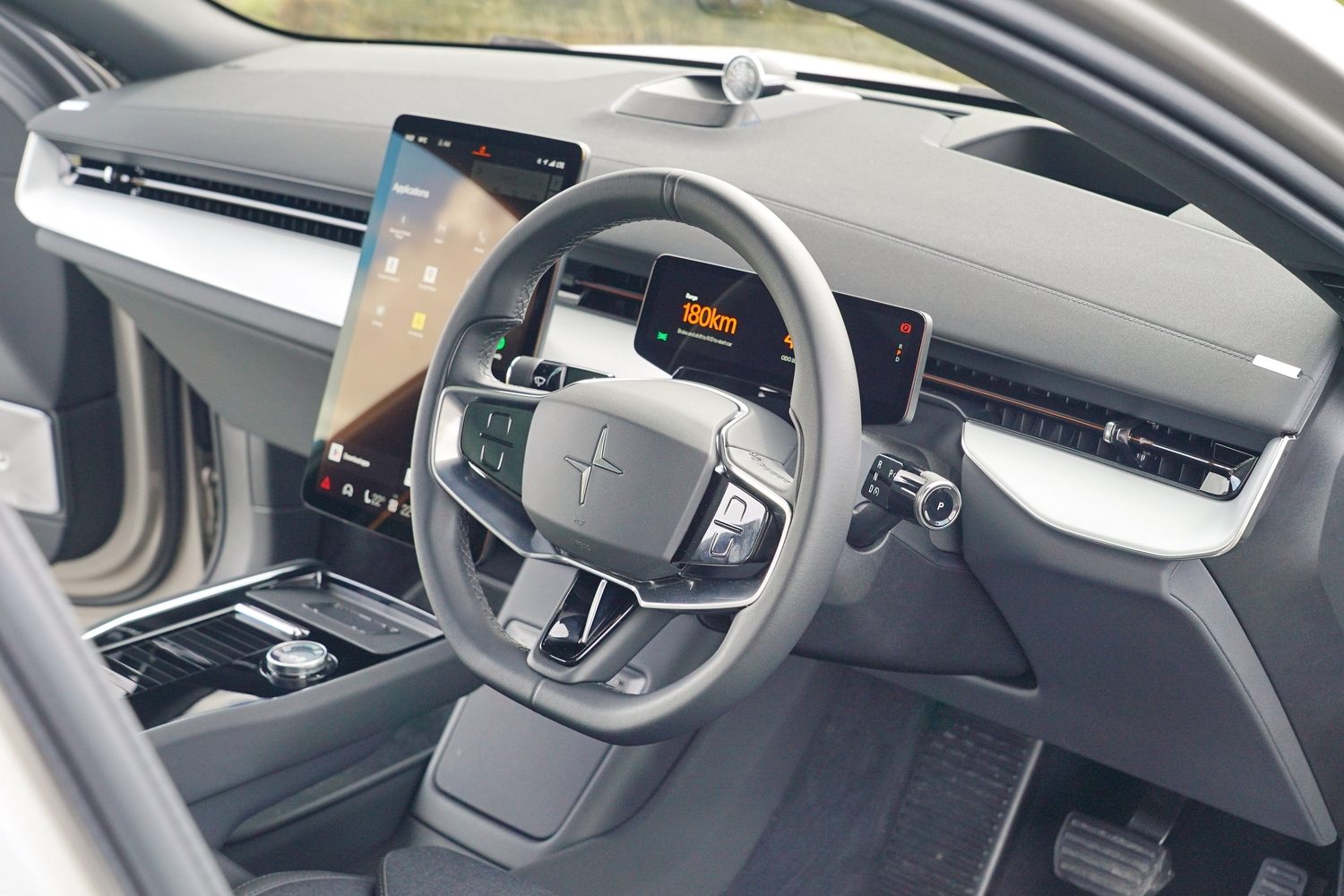
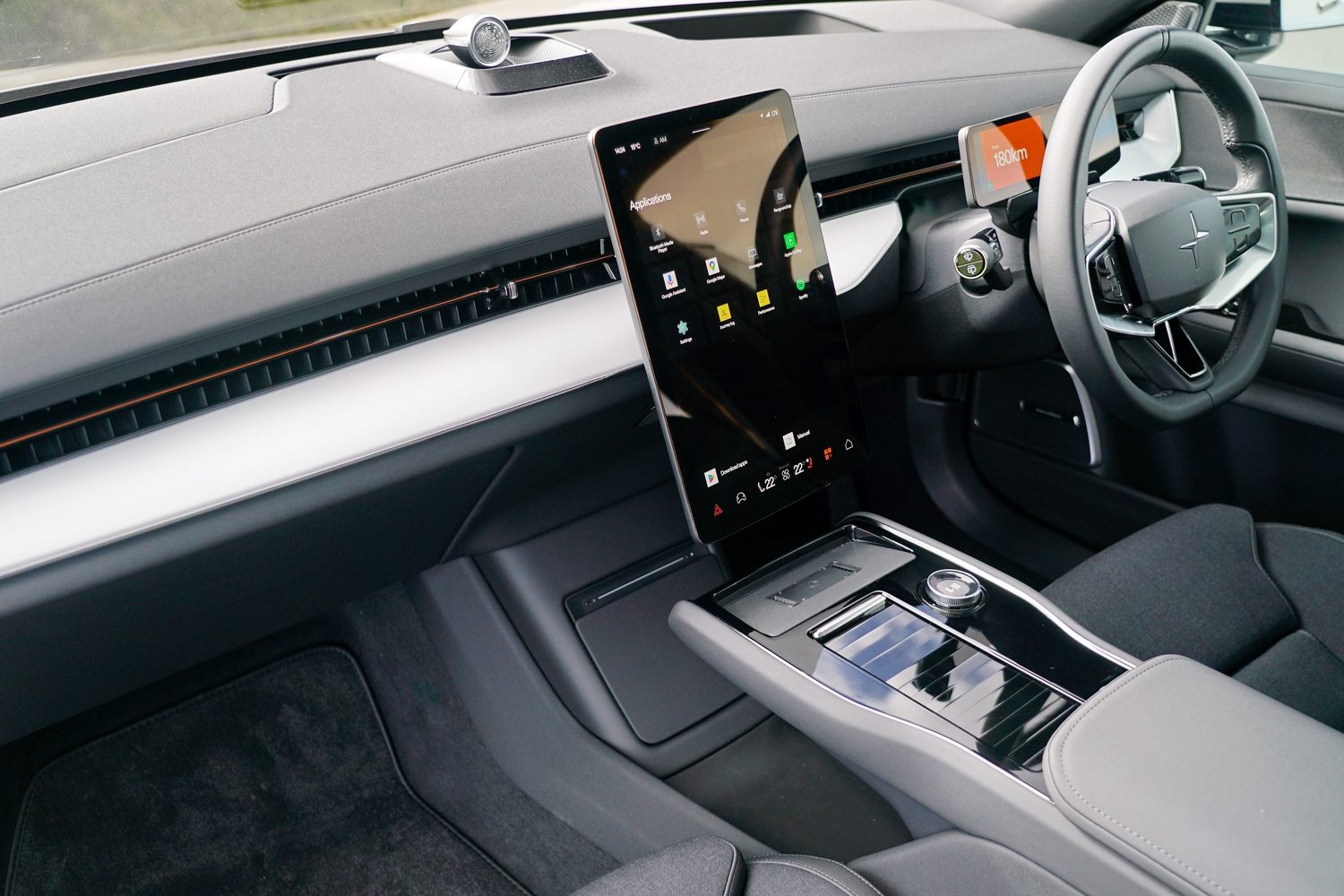
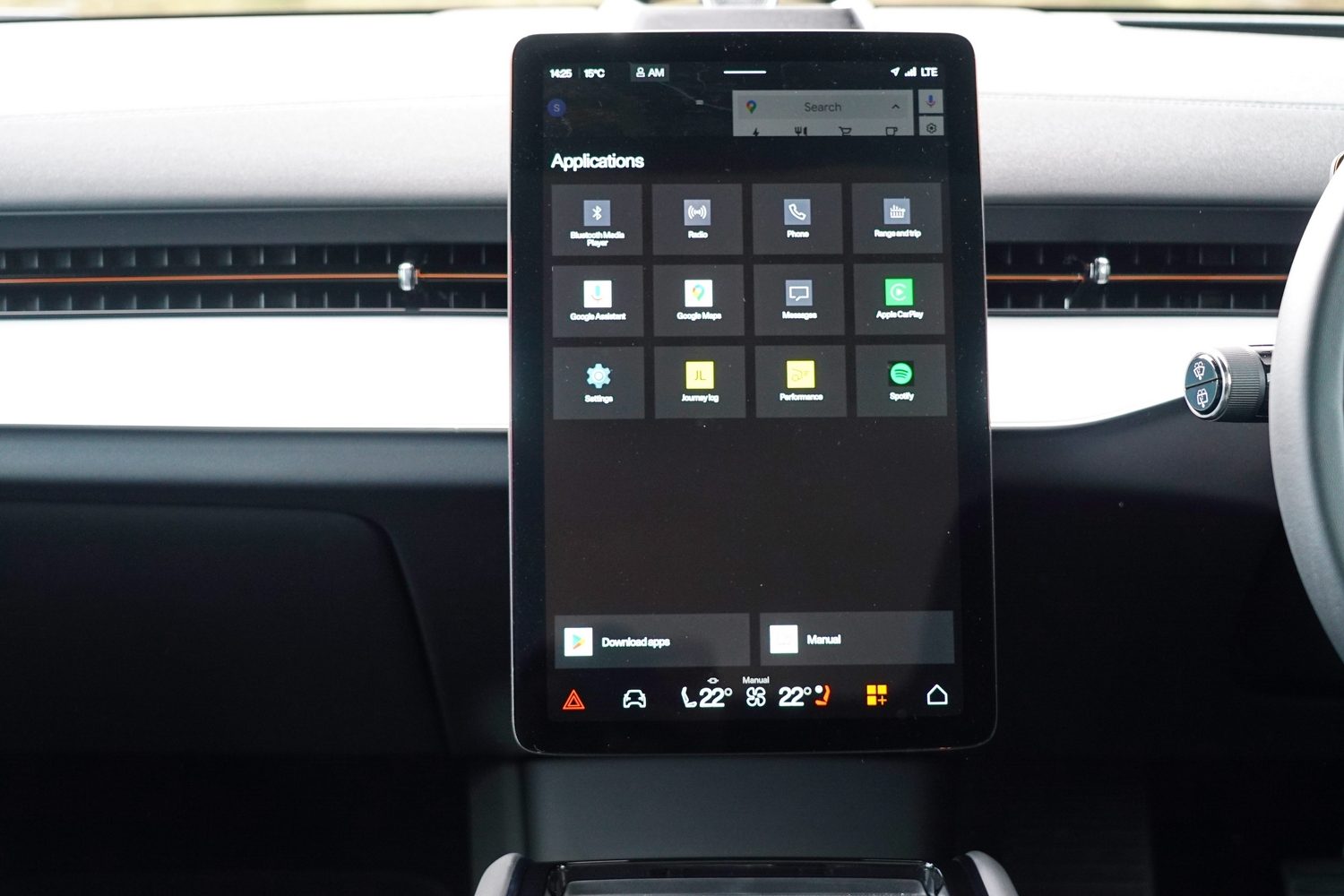
The Polestar 3's 14.5-inch infotainment screen is far from the biggest available, but it still manages to look impressive in the centre of the clean, uncluttered dashboard.
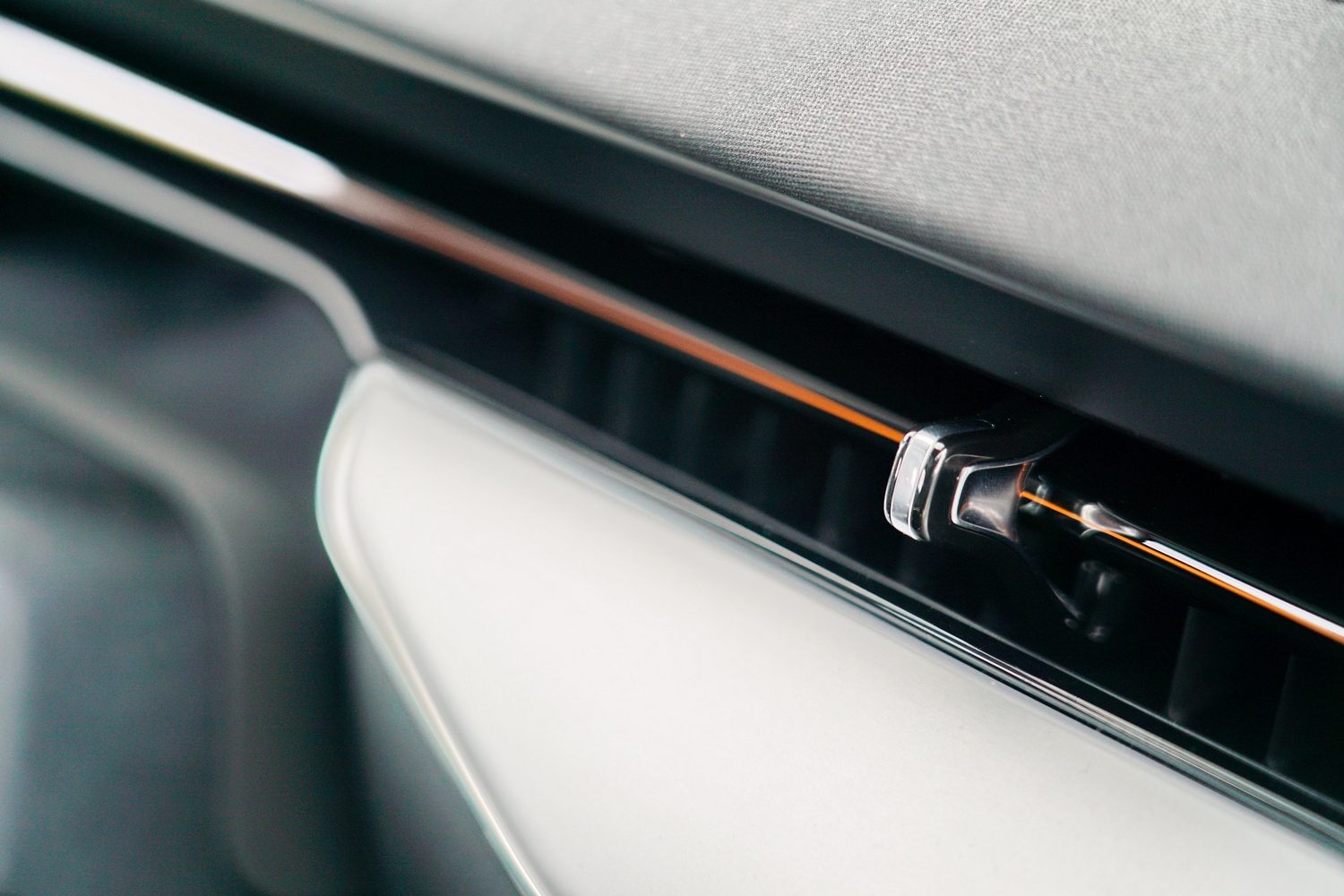
The sleek Scandinavian design isn't just present in the cabin's ultra-sleek physical structures, it even extends to the font used on the screens - Polestar's own creation, called Unica, which is sharp, simple and very clear. The mixture of orange and white lettering is also great for visibility.

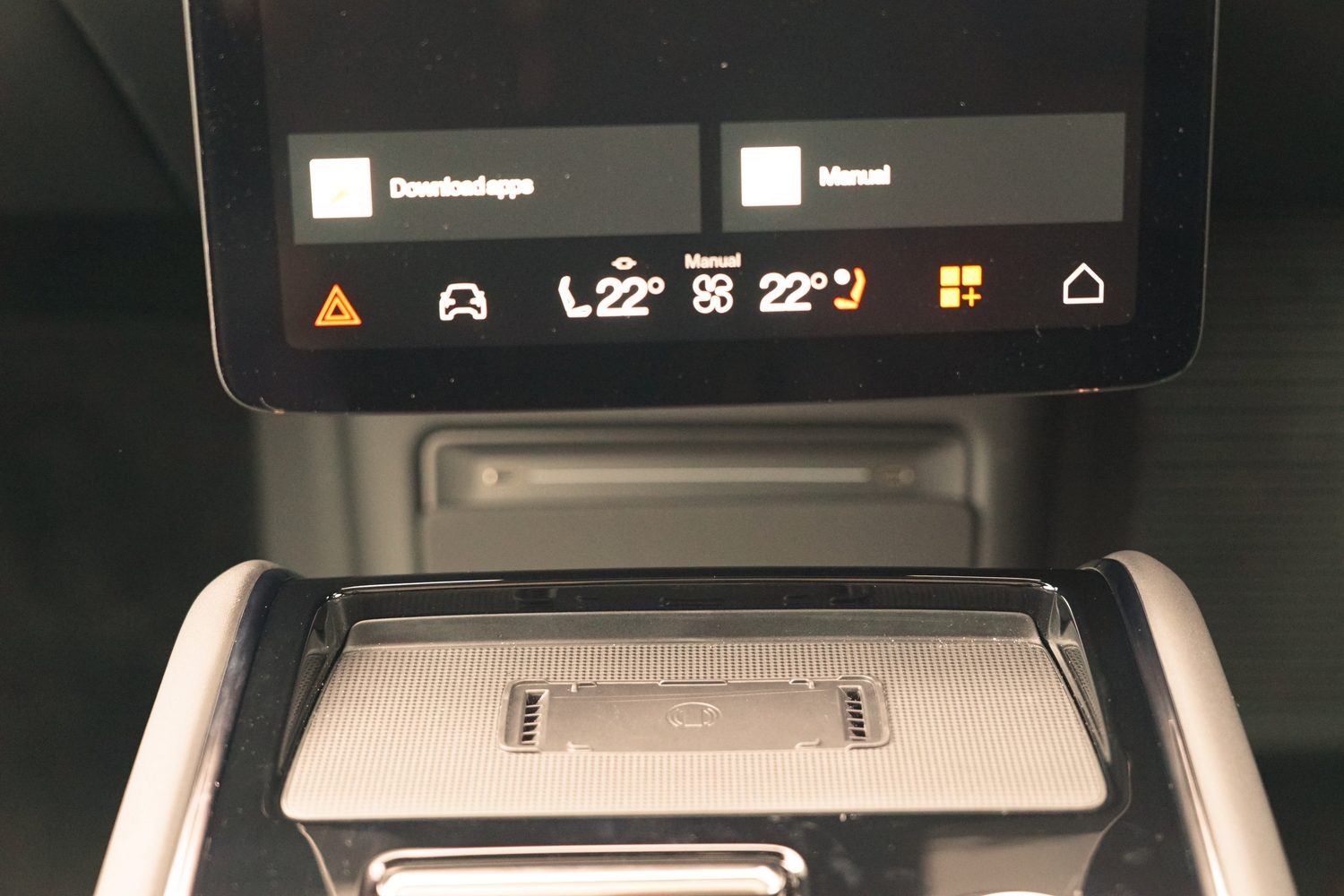
In general, this is an excellent screen - fast, responsive, with relatively sensible layouts. The climate controls, including the heated seats and steering wheel, are 'always on' at the base of the screen which helps, and there's a shortcut bar just above those which changes depending on what you're doing: when you're driving, it highlights items such as the button for Apple CarPlay or Android Auto, along with trip computer information, and when you come to a stop it'll switch to a boot release button and another for opening the glovebox.
There is a downside, though, and that's the lack of physical buttons elsewhere in the cabin.
The entire system is based on Google software, so Google Maps is built in, and you can log in and have all your previous and favourite destinations at your fingertips. The mapping includes the location of public chargers (and usually whether the ones nearby are free or not) and the system can automatically route you to the best chargers on a long journey, as well as instructing the battery to pre-condition for optimal charging times.

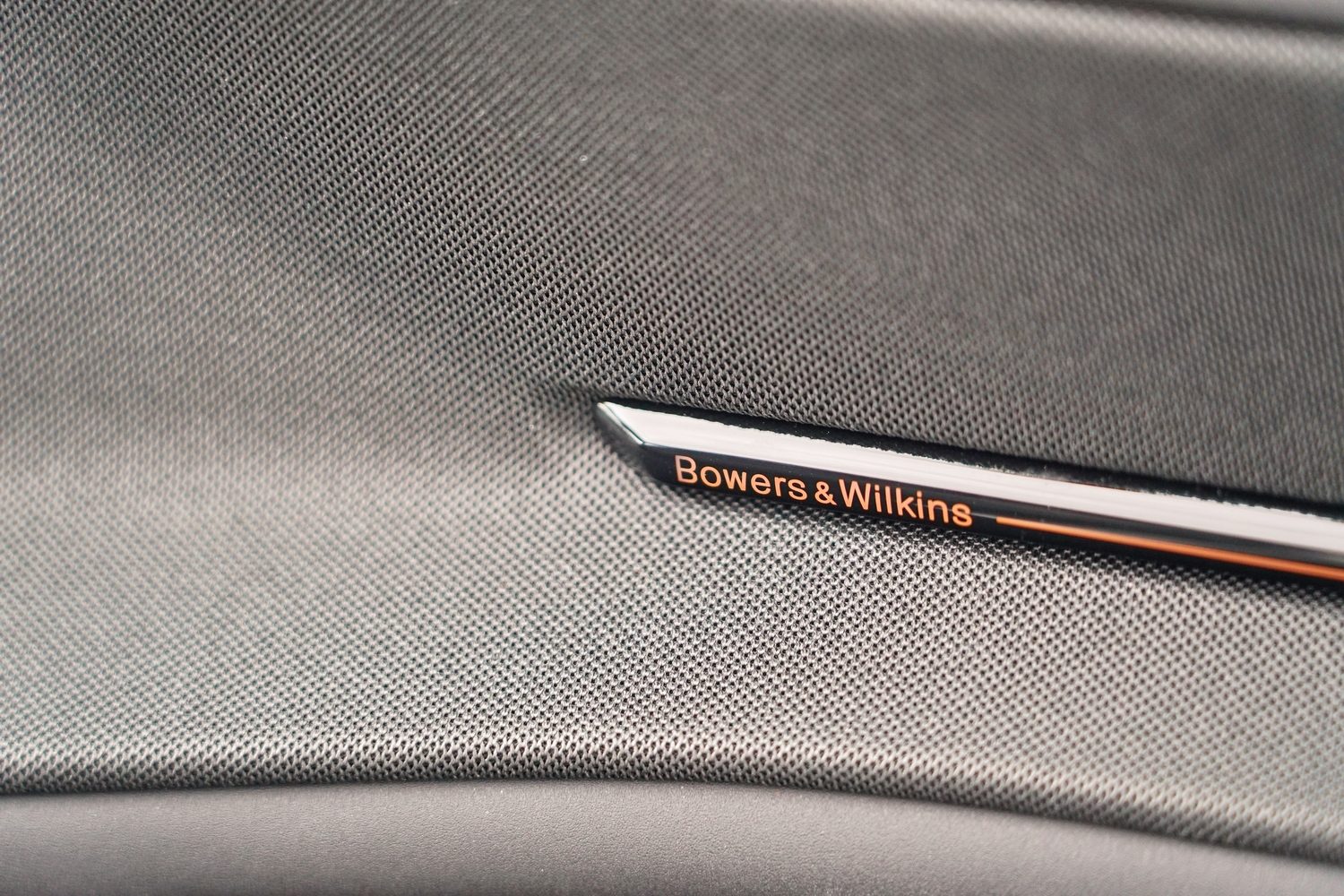
There's a real highlight in the sound system - Polestar has inherited its cousin Volvo's predilection for fitting seriously good stereos. Our Plus model came with a 25-speaker, 1,610-watt Bowers & Wilkins stereo, which not only sounds amazing, but which comes with software (and the necessary Dolby Atmos surround sound) to replicate the effect of sitting in the legendary Abbey Road recording studio. Put on The White Album and sit back in astonishment.
Practicality around the cabin
The Polestar 3 has plenty of space in the front of the cabin. Polestar's interior design language is all about scooping out panels for extra room, making the most of 'negative' space, so although the interior colour scheme of our car was dark grey, the cabin still manages to feel airy and spacious.
There's a large, square, storage box under the front-seat armrest and in front of that, on the centre console, are two large cupholders with a sliding lid.

The door pockets are very wide, but slightly shallow, and while the glovebox is a decent size, we'd rather open it with a physical button than have to use the touchscreen to do so.
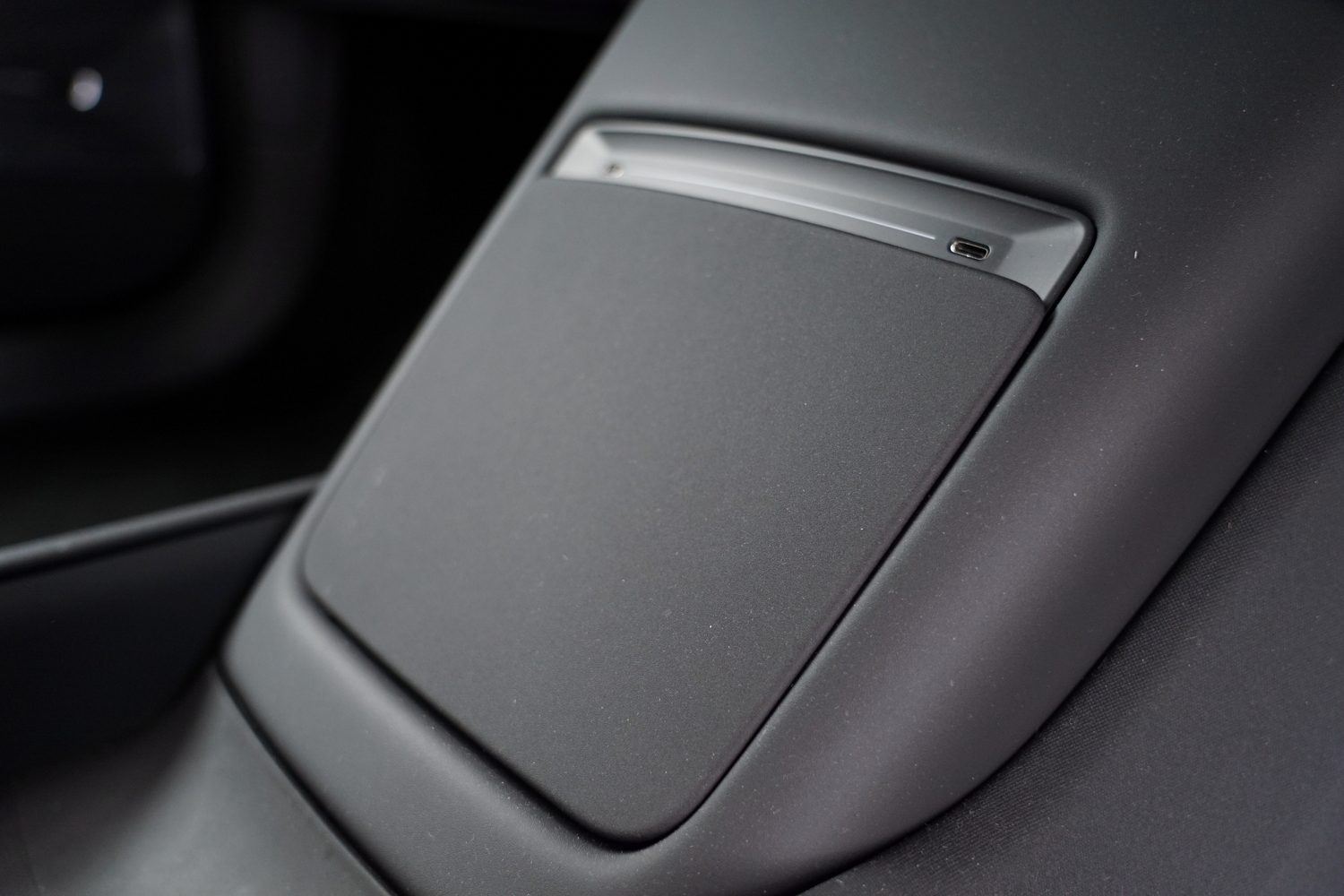
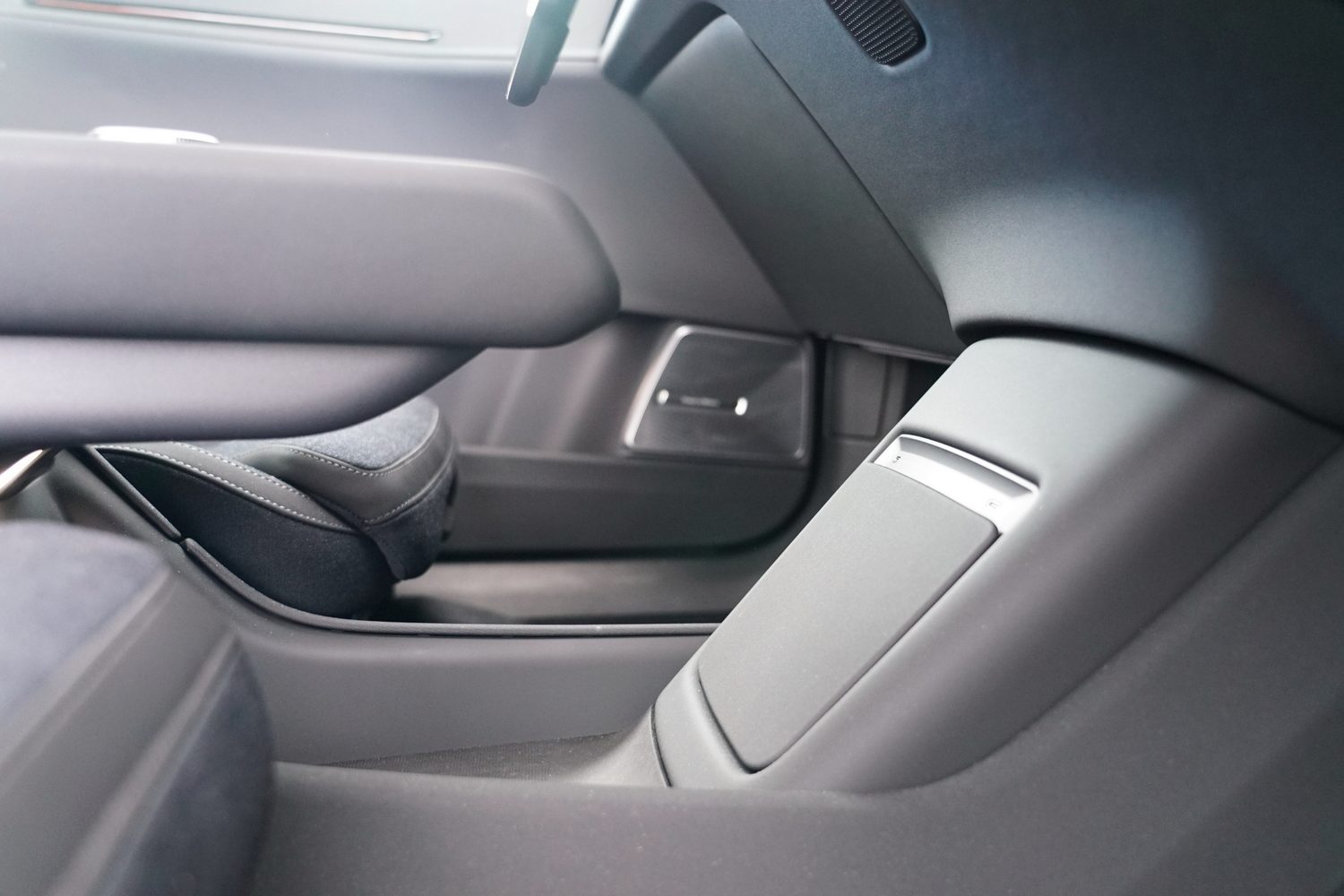
The centre console stops before it reaches the dashboard, leaving a big open storage space, and if you look down below the level of your knees, you'll find two USB-C sockets and a storage area that's almost like a small seatback pocket, with an elasticated 'lid' which is useful for holding mobile phones, tablets, or even a magazine or two in place. There's also a wireless charging pad on the centre console.
Rear-seat passenger space

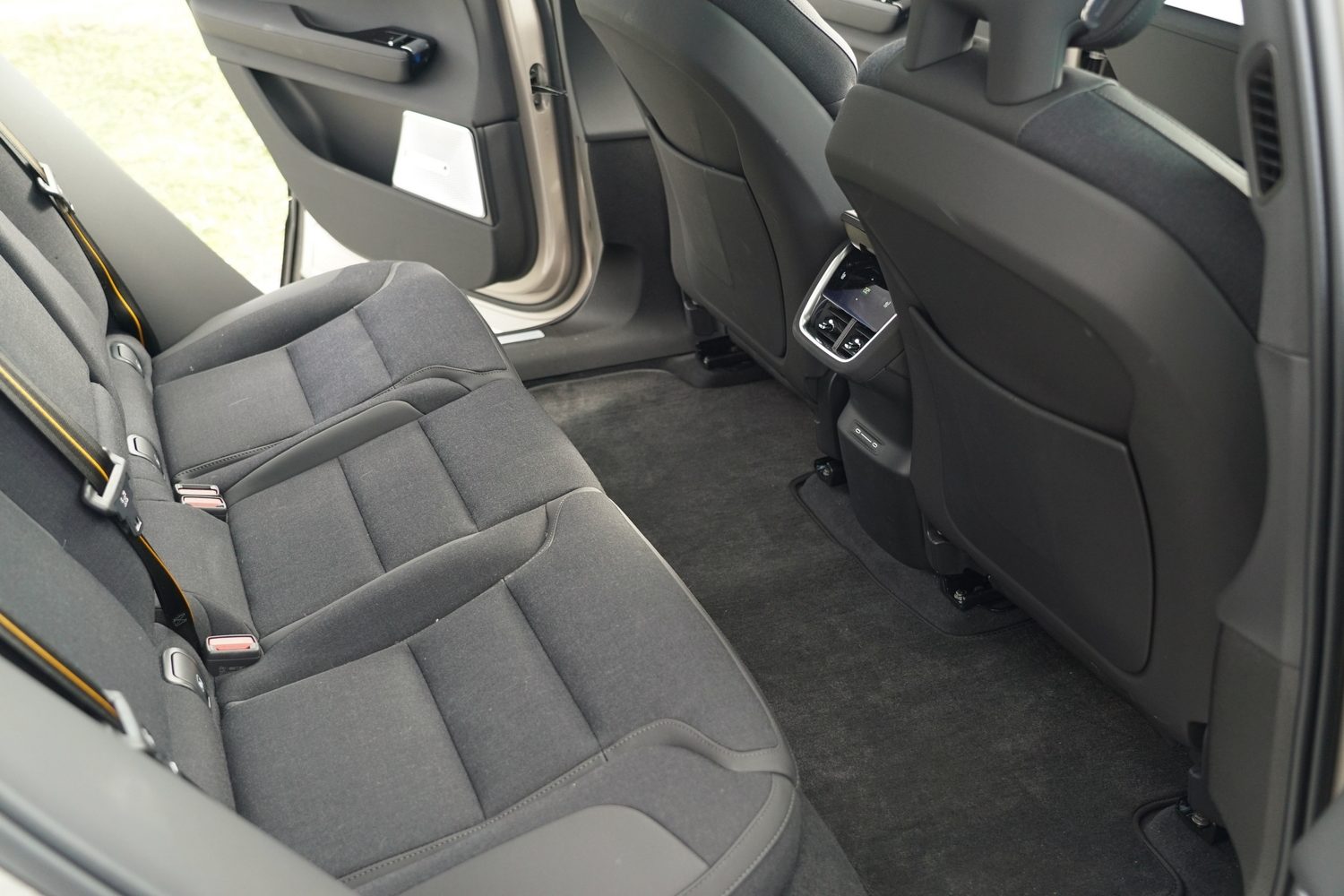
Rear-seat space in the Polestar 3 is simply colossal. By moving the roof structure further back, Polestar has not just optimised the car's aero package, it has also maximised cabin space, as the rear seat can be fitted further back and lower down.
Legroom is simply not going to be an issue, and at my 185cm height, my knees had acres of empty air between them and the back of the driver's seat, set for my driving position.

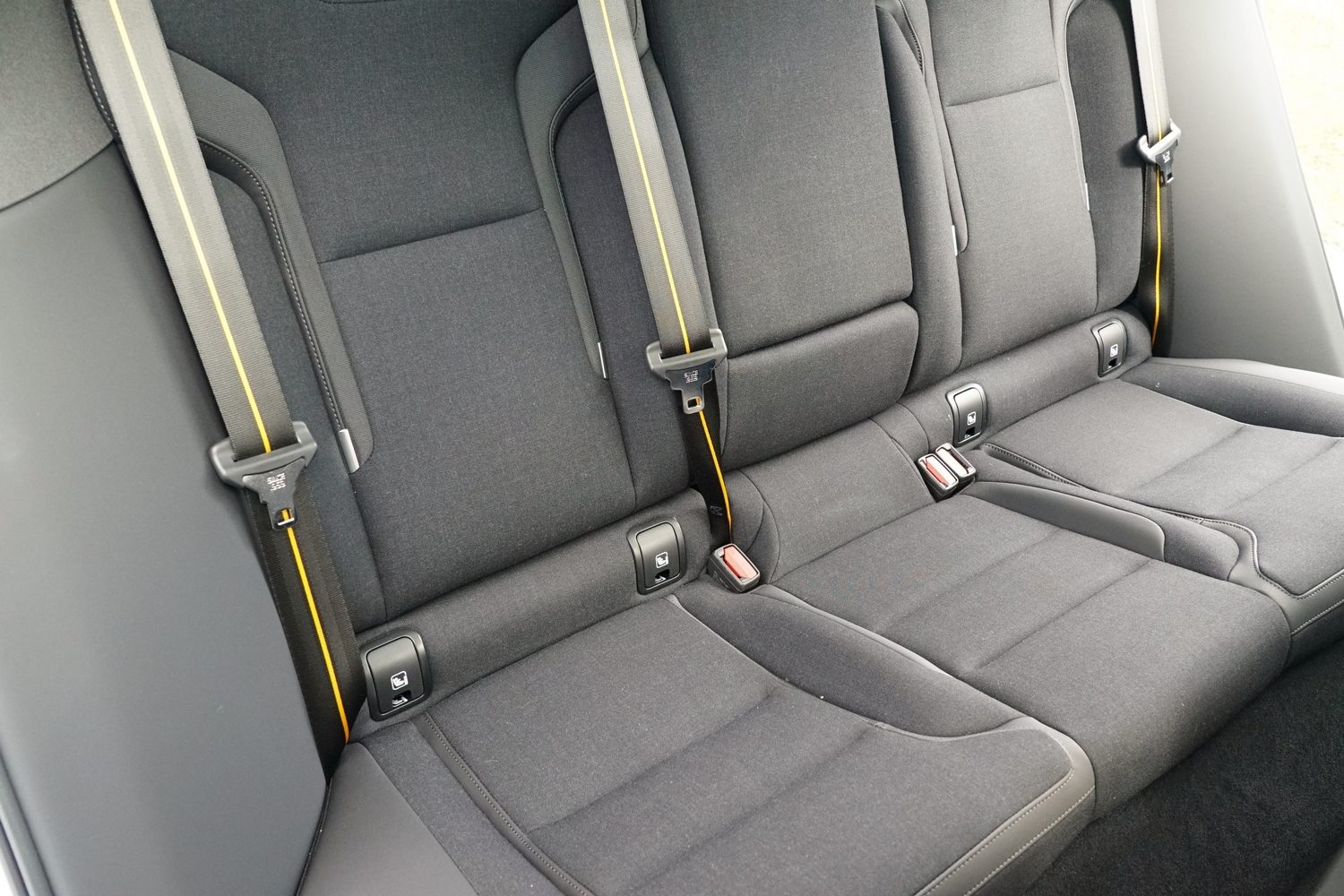
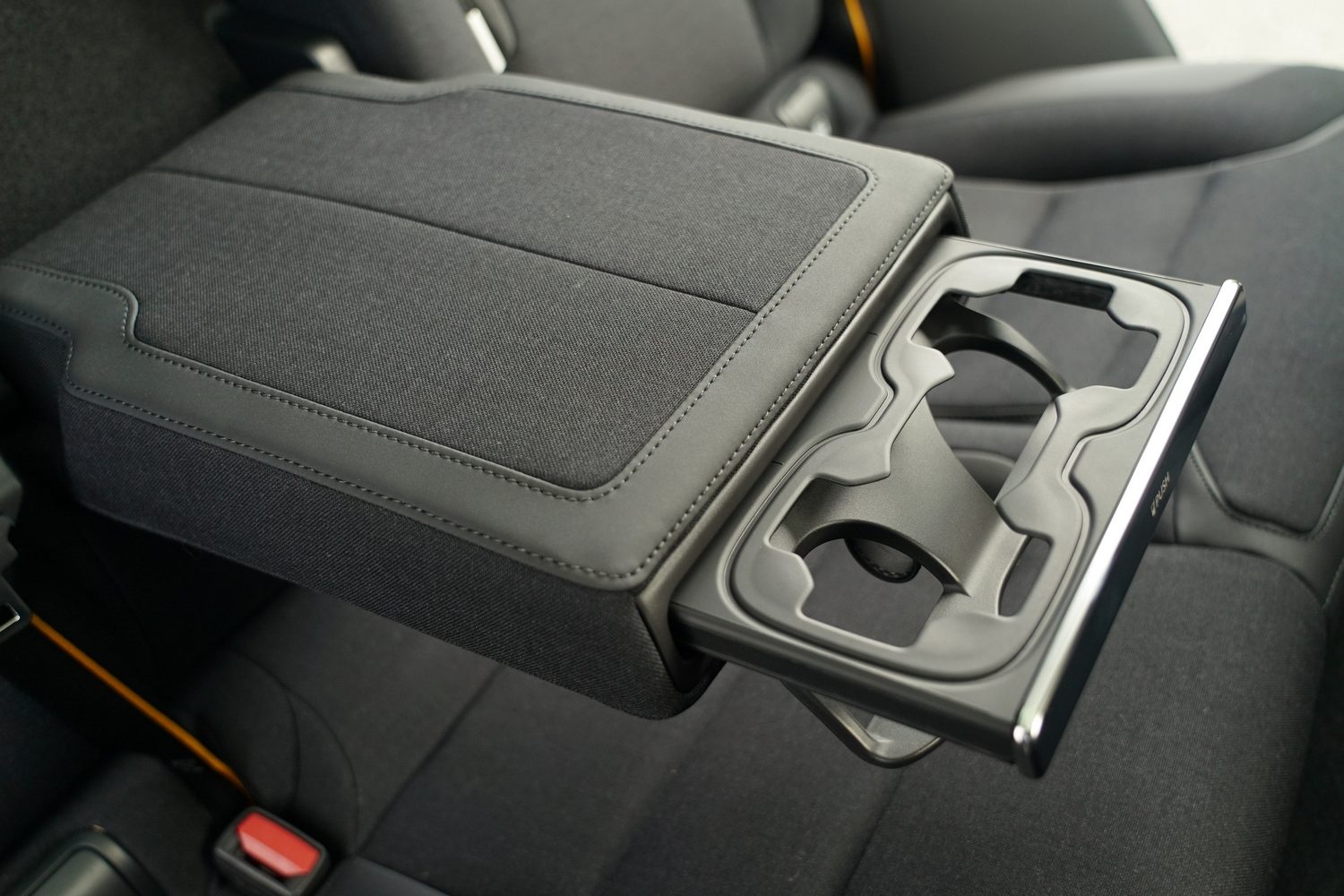
The rear seat is also exceptionally comfortable and doesn't suffer much from the 'knees-up' seating position that often afflicts EVs. Rear-seat passengers in this Plus model get their own climate controls, heated seats, elasticated seatback pockets, two USB-C sockets and a neat foldaway armrest which is plushily upholstered - and which has slide-out cupholders.
Fitting child seats to the Polestar 3

The Polestar 3 has only two ISOFIX anchor points, in the usual outer rear seat positions. On the upside, the centre rear seat is surprisingly wide, and so it should accommodate a booster cushion between two bulkier child car seats in the outer anchors. Equally, the rear legroom is so vast that it's hard to imagine even the biggest rear-facing seat not fitting in easily. The rear door openings are a touch shallow, but that's really picking nits.
Boot space in the Polestar 3
Here's where we find the compromise for that huge rear legroom - boot space, up to the luggage cover, is quoted as only 484 litres.
There are some mitigating factors though. First off, there's a large underfloor storage area, which is very useful, and which is shaped so that you can stash the retracting luggage cover under the floor. Do that, and fold down the back seats (they split-fold 60:40) and there's 1,411 litres of space, and the seatbacks do fold pretty much completely flat, which is helpful.
Incidentally, Polestar quotes a figure of 597 litres of boot space if you're prepared to sacrifice rear visibility and load it to the roof, which is good to know.
The 3 is also pretty versatile in the boot, with a neat adjustable floor that can be clipped into an upright position which both divides up the boot into sections and also includes two robust bag hooks. There are more hooks moulded into the sides of the boot, plus a 12-volt socket, and a handy elastic strap for holding upright items.
There's also a load-though flap in the rear-seat armrest for longer loads, and there's a 32-litre 'frunk' storage area in the nose, which is great for stowing charging cables.
Towing with the Polestar 3
The Polestar 3, in the Single Motor Long Range form, is rated to tow up to 1,500kg on a braked trailer. That's 700kg less than the towing weight of the all-wheel-drive versions, but still a useful weight.
Safety in the Polestar 3
When tested by Euro NCAP in 2025, the Polestar 3 scored the maximum five-star rating, with a 90 per cent score for adult occupant protection, 93 per cent for child protection (one of the highest-ever scores in that category), 79 per cent for vulnerable road users and 83 per cent for its active safety assist systems.
As you'd expect, the latter includes the likes of adaptive cruise control, emergency braking, lane-keeping aid, speed limit warning, driver-attention monitoring, blind-spot monitoring, rear collision warning and mitigation, and in-house 'run off road' protection, which tries to prevent the car swerving off the road if you've fallen asleep.
If all else goes wrong it tightens the seatbelts and generally prepares the car for an impact, while the seats are designed to minimise shocks to the spine and back if the suspension becomes fully compressed.
All of which is great, but let's not forget some of the more physical safety attributes, such as the ten airbags, the boron-steel safety cage that forms the main upper structure of the car and the fantastic brakes, developed by Brembo.
Performance of the 2026 Polestar 3
- Searingly fast four-wheel-drive versions
- Single-motor model is plenty brisk enough
- Ultra-sharp steering in all

The Polestar 3 was originally introduced as an overt high-performance car, with dual-motor, all-wheel-drive versions including the 517hp Performance model, and seriously quick 0-100km/h times. The fact is, though, that the Long Range Single Motor model, with its 299hp, provides plenty of performance and arguably feels better balanced overall.
Driving the Polestar 3 Long Range Single Motor Plus on Irish roads - Neil Briscoe
The first thing you notice about the Polestar 3's dynamic performance is its steering. Never mind 'for an SUV' qualifications; this car has super-sharp, super-quick steering by any standards, and when you dive into the on-screen menu and select the heaviest steering mode, it all tightens up to an almost outrageous degree.
Actually, what it reminds me of most is an early-2000s Subaru Impreza Turbo in its weight and feel - something that will no-doubt delight Polestar's chassis engineering chief, Joakim Rydholm, who's a keen amateur rally driver, and who regularly hangs around with 1980s rally god, Stig Blomqvist.
If anything, the steering can feel a bit too hyperactive at times, certainly in the context of a big, 2.4-tonne SUV, and you might find yourself turning into corners a bit too aggressively until your wrists and inner-ear acclimate to the roll-rate of the rack.
After that, it just becomes a total delight, and there's always the 'Light' setting for the power assistance in the screen menu if you want it.
The Single Motor version of the Polestar 3 does without the clever torque-distributing rear axle of other versions, so in very wet conditions the rear can squirm about a bit under sharp accelerator applications but that aside you'll not much miss it.
For what is a big, heavy car the Polestar 3 really is exceptionally agile, and properly good fun to drive. If only every EV maker was as good at making its cars so entertaining.
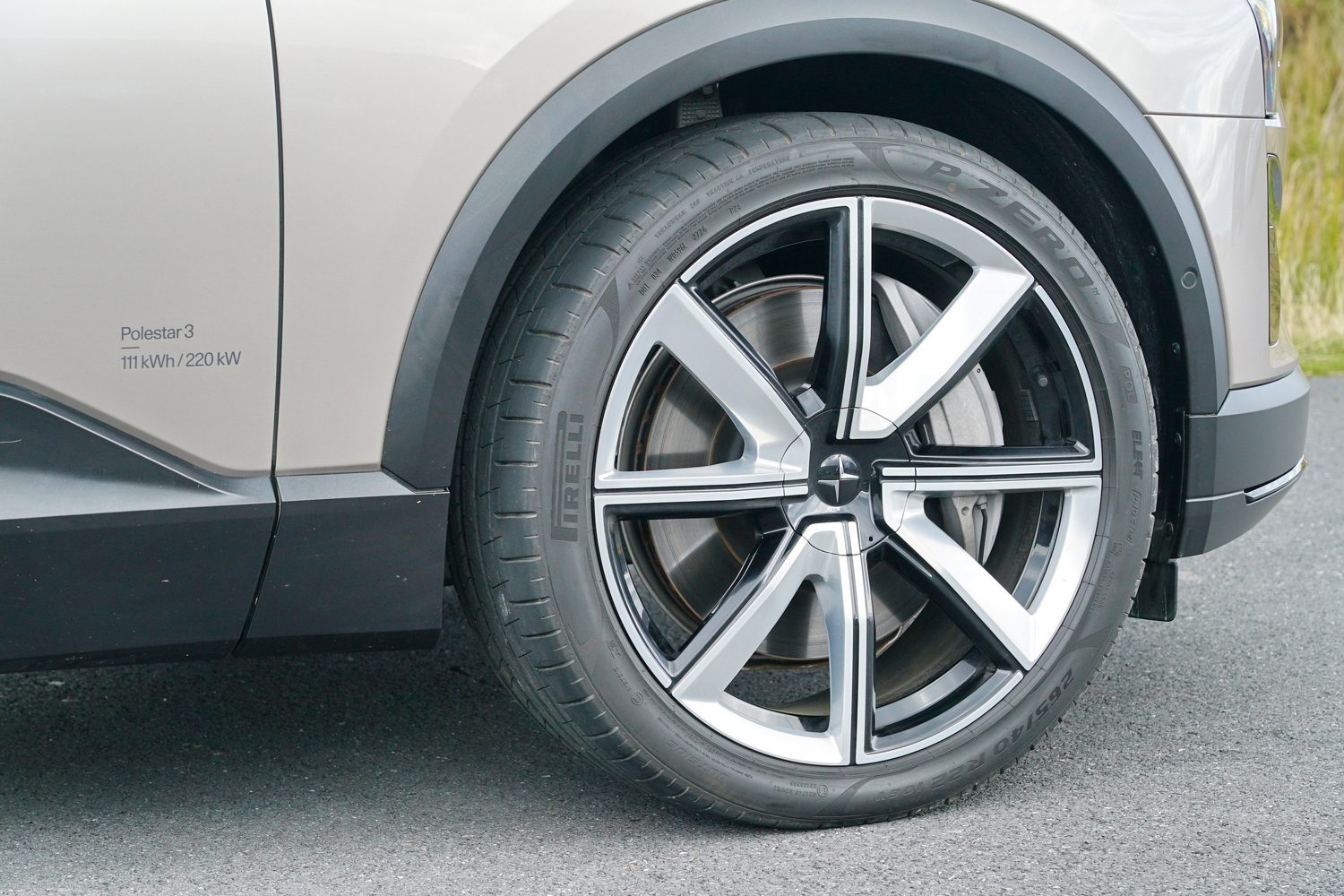
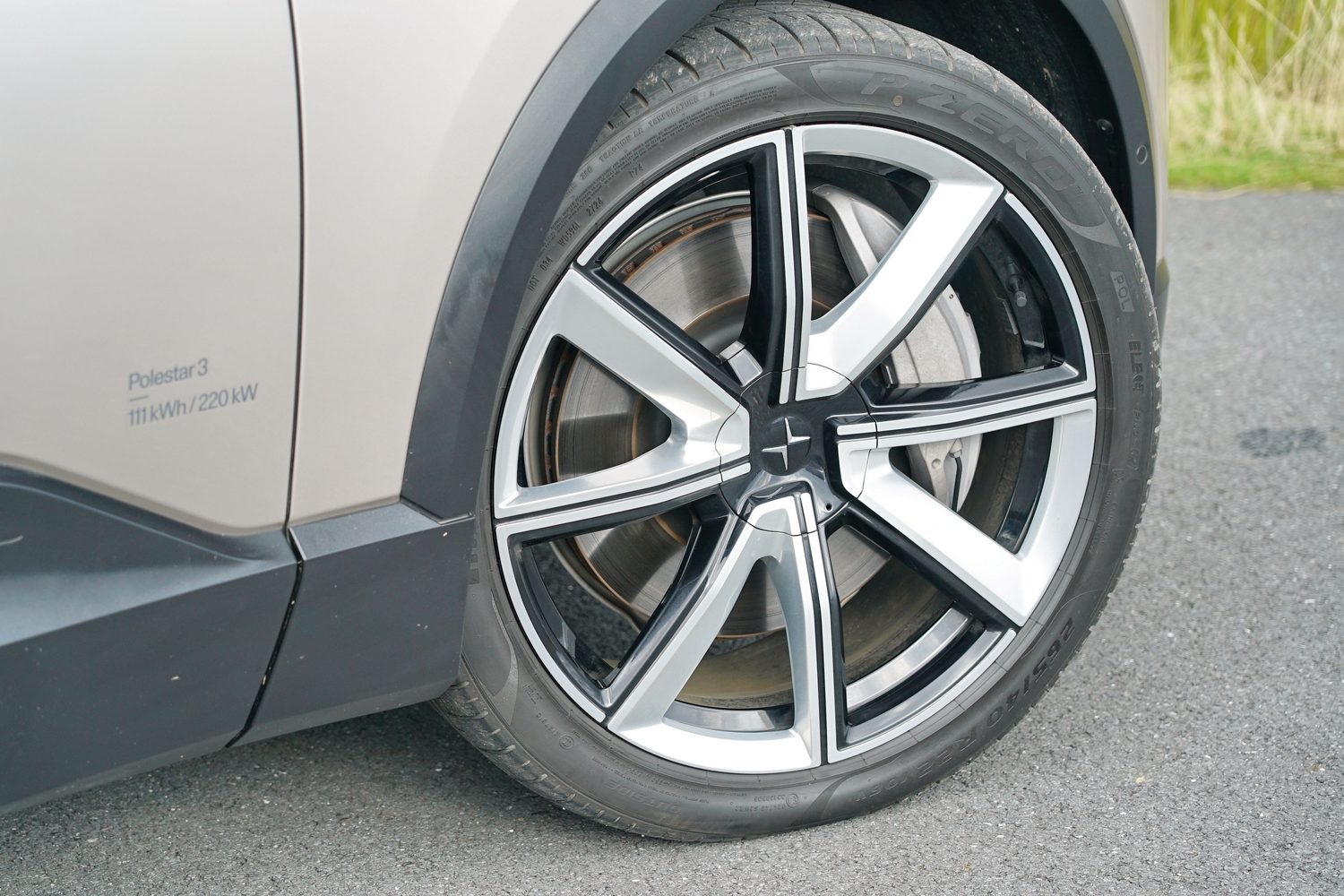
There is a small penalty, and it's in ride comfort. The Long Range Single Motor also does without air suspension, relying on steel springs and some expensive dampers from suspension specialist BWI. The combination works really well, and the Polestar 3's body control is exceptionally taut, but it does occasionally allow its big 22-inch alloys (21-inch wheels are standard on the non-Plus model and worth sticking with if comfort is your priority) to thump into obstructions. It's more stiff than harsh, though, so you'll not be too upset, in either sense.
Range, battery, charging of the 2026 Polestar 3
- Massive 107kWh battery
- Official range over 700km
- Real-world efficiency could be better
Polestar has taken the Route One method of delivering a big range figure - stuff a massive battery between the axles...
Battery and official range

The Polestar 3's battery is a whopper, a 107kWh (net) nickel¬-manganese¬-cobalt (NMC) lithium-ion affair with 204 prismatic cells in 17 modules, all stuffed into an aluminium battery case with some of the same boron steel reinforcement that makes up the car's larger safety cage.
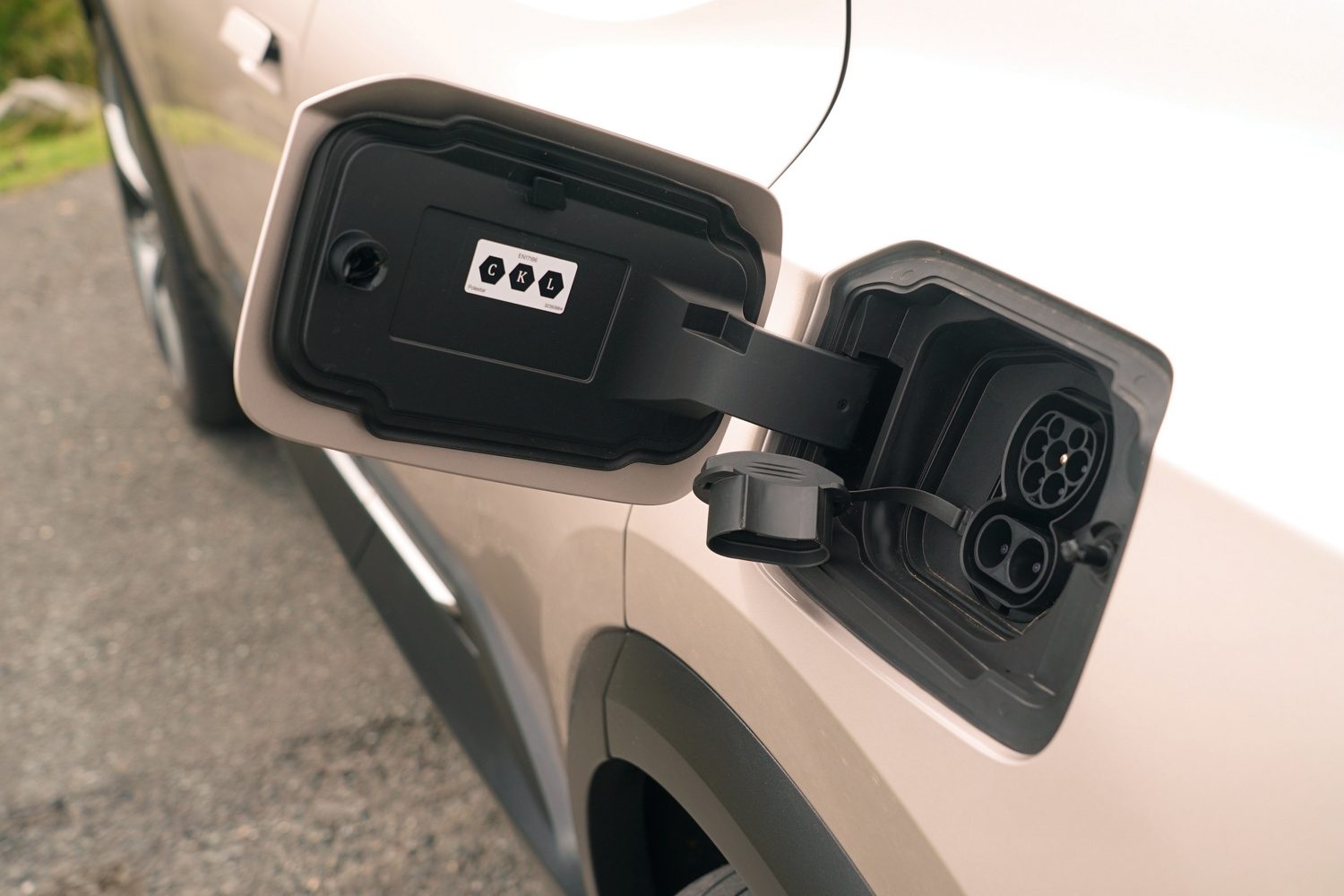
It's a rapid charger, capable of dealing with up to 250kW on a DC charger, although it'll only do 11kW on three-phase AC power.
At that 250kW DC-charging speed, a 10-80 per cent charge takes a claimed 30 minutes. For this Long Range Single Motor model, the WLTP range is 706km, which is a useful gain over the Dual Motor Long Range's 632km, and the Performance model's 560km.
Real-world range and efficiency of the Polestar 3 Long Range Single Motor
In terms of real-world range, our average energy consumption over a week worked out at 25kWh/100km, which would suggest a real-world range of around 400km.
What were the extenuating circumstances? Well, for a start all of our driving was done in low-single-figure temperatures, which doesn't help matters much, and I can't charge at home, which means I can't pre-condition the cabin, so the first several minutes of any journey are spent munching through battery power to warm things up.
We reckon with a bit of pre-conditioning and maybe spending a bit less time on fast motorways, we'd have gotten that average consumption down to maybe 20kWh/100km and a useable range of more like 500km, which is much more acceptable.
Servicing the Polestar 3
A Polestar 3 will need servicing only every two years, or every 30,000km. Helpfully, given that Polestar has only the one official dealership in Dublin, you can have your Polestar 3 serviced at one of the 11 Volvo main dealers nationwide.
Polestar 3 warranty
As standard, Polestar offers a three-year, 100,000km warranty, to which is also added an eight-year, 160,000km warranty for the battery, which covers it dropping below 70 per cent of its original charging capacity. There's also a 12-year anti-corrosion warranty.
Irish pricing & rivals to the 2026 Polestar 3
- Single-motor model is most affordable
- Competes with smaller premium German cars on price
- Some tempting expensive options

The arrival of the Single Motor Long Range model of the Polestar 3 brought its price down dramatically compared to the Dual Motor versions, with a starting price of €72,290 for the Business Edition, rising to €82,390 for our Plus test car.
The Plus's extra equipment includes the desirable Plus Pack, which comes with a brilliant stereo and with the 22-inch alloy wheels, while the awesome wool upholstery is a costly - but worth-it - option at €1,200.
In terms of rivals, the Polestar 3 is on somewhat interesting ground. With that entry price, it competes with smaller rivals such as the BMW iX3, while actually being more a head-on competitor for the larger BMW iX. Ditto the Mercedes EQE and the GLC EQ, while the Q6 e-tron is really Audi's only direct rival to the Polestar 3. Let's not forget the Porsche Maca, either, which, like the Q6, is actually a bit smaller than the Polestar.

Verdict - should you buy the 2026 Polestar 3?
Once you get used to maximising its efficiency, the Polestar 3 is one of the best-looking cars on the road (let alone one of the best-looking SUVs), has a brilliant interior and is quite exceptionally good to drive. It's a car that deserves a much wider audience.
FAQs about the 2026 Polestar 3
What's the range of the Polestar 3?
The Polestar 3, in Single Motor Long Range form, has a WLTP range of 706km. The longest-range dual-motor version manages 632km.
Who makes Polestar?
Polestar is technically its own company, but it started life as an independent racing team, which eventually became Volvo's in-house high-performance brand, and which was then promoted to stand-alone brand status. It's part of the same Geely Group as Volvo, Lotus, Proton and others, and the Polestar 3 itself is made in Chengdu in China, and in South Carolina in the US.
Want to know more about the 2026 Polestar 3?
If there's anything about the new Polestar 3 we've not covered, or you'd like help in choosing between it and other cars, you can avail of our expert advice service via the Ask Us Anything page.