


Exterior & design of the 2026 Opel Astra Hatch
- Updates for 2026 include illuminated logo
- Bi-tone colour options available
- 16- to 18-inch alloy wheels offered

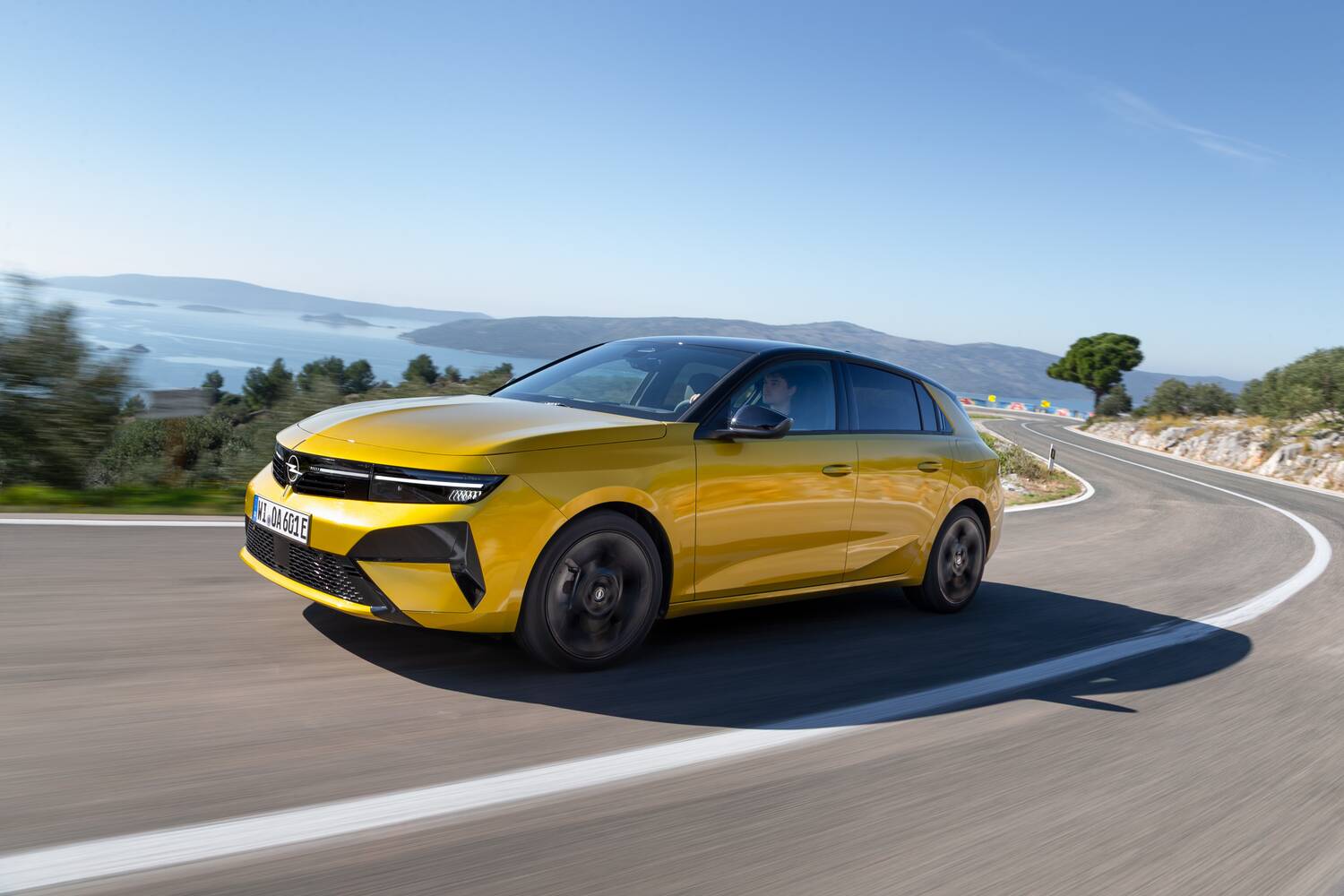
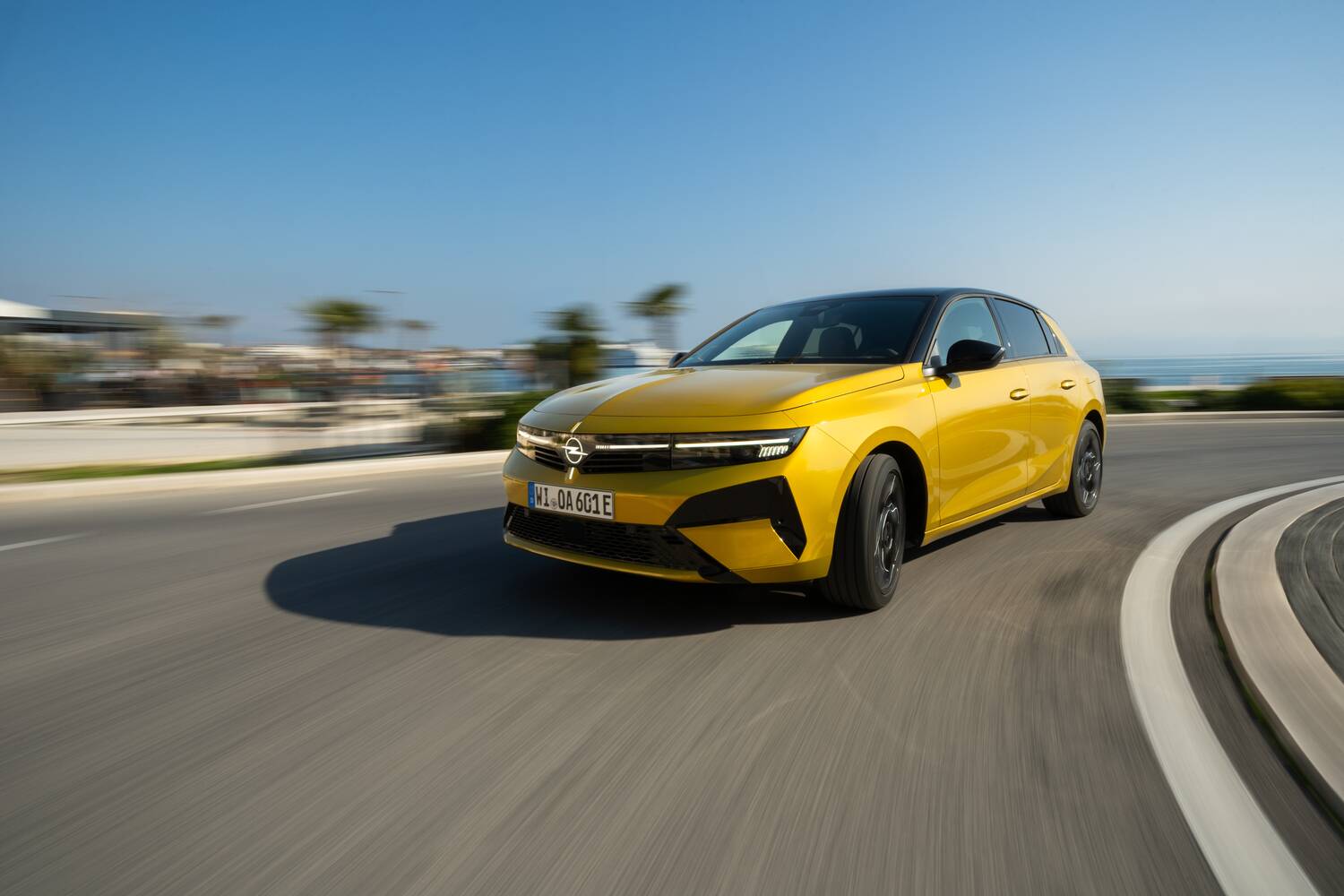
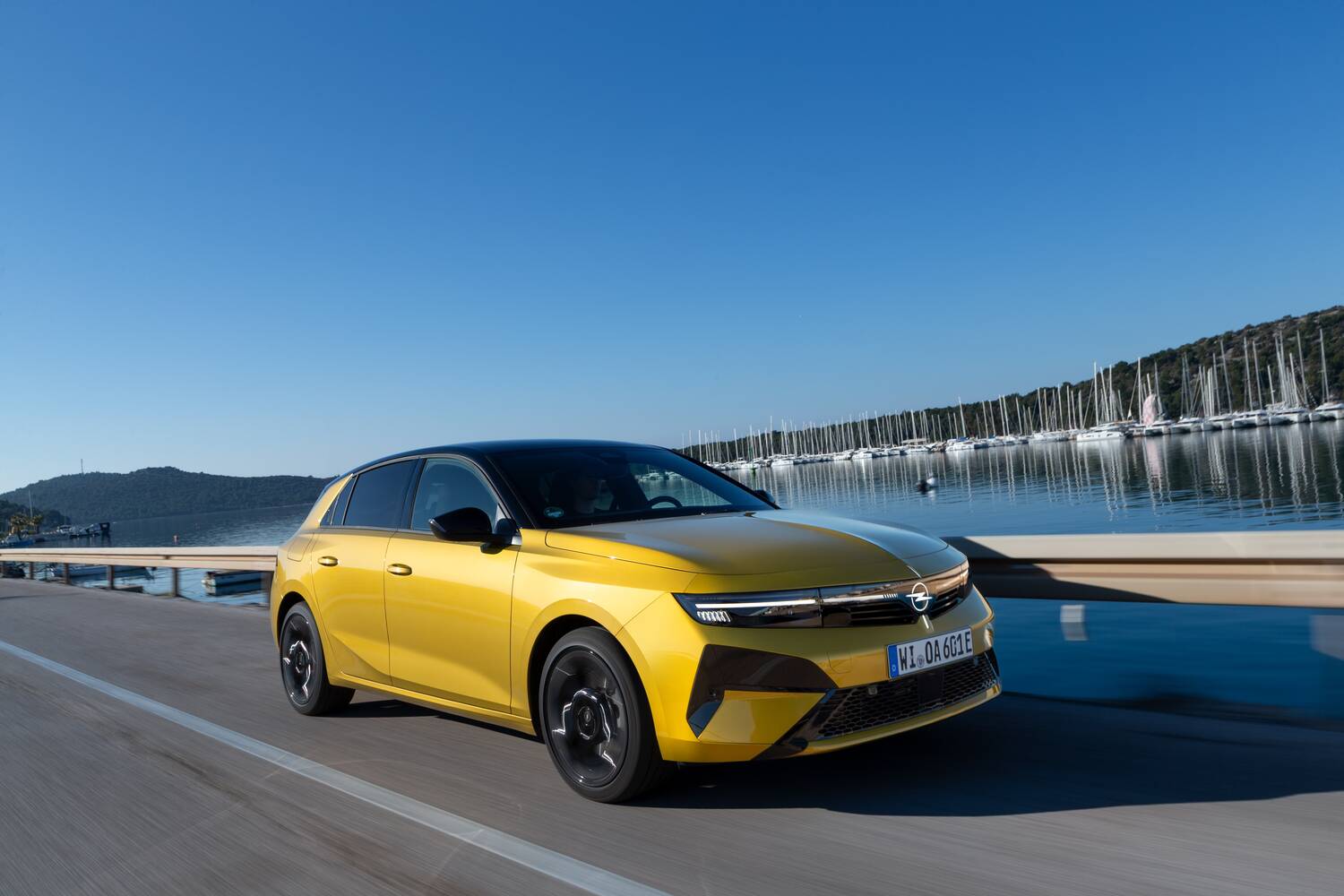
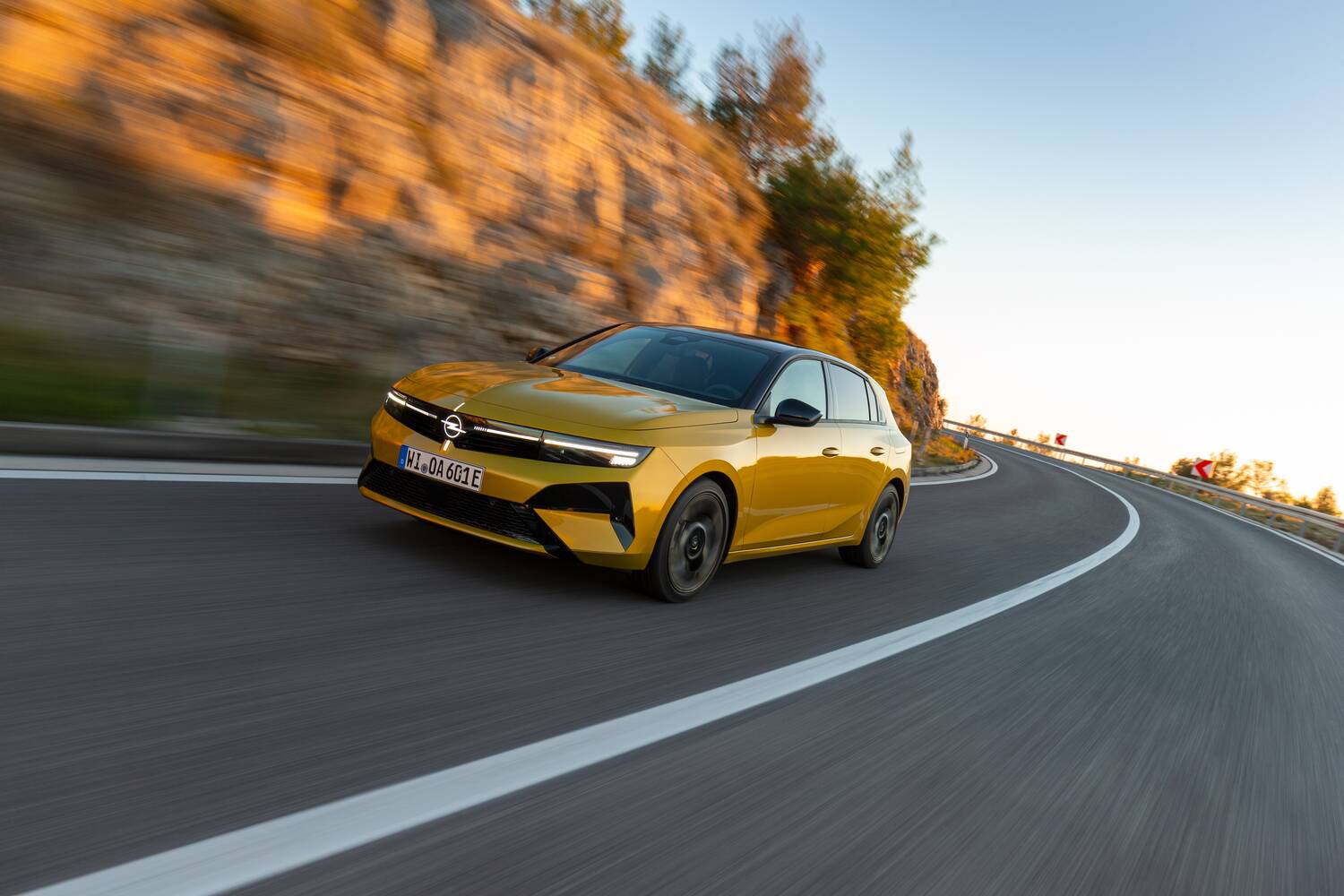
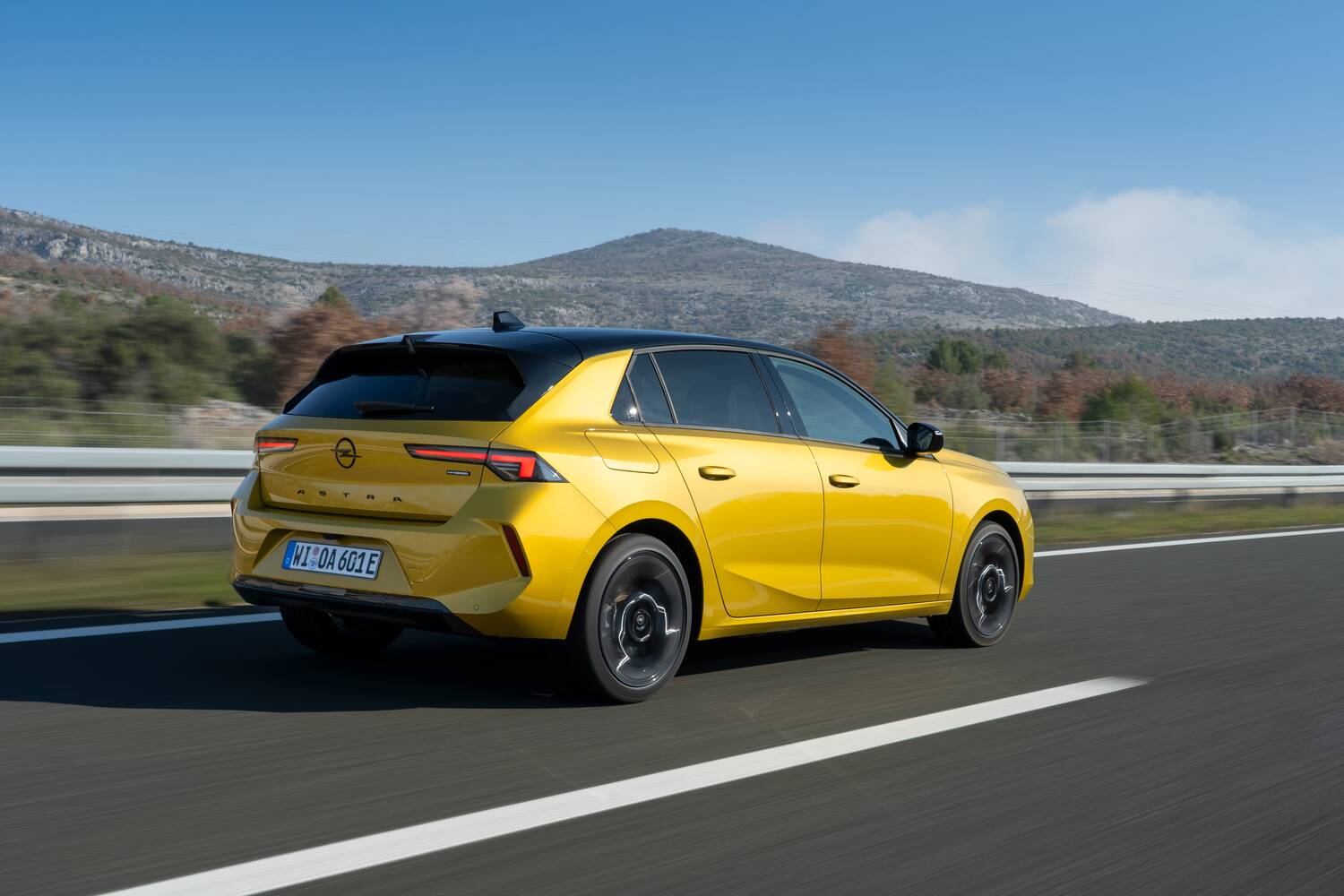
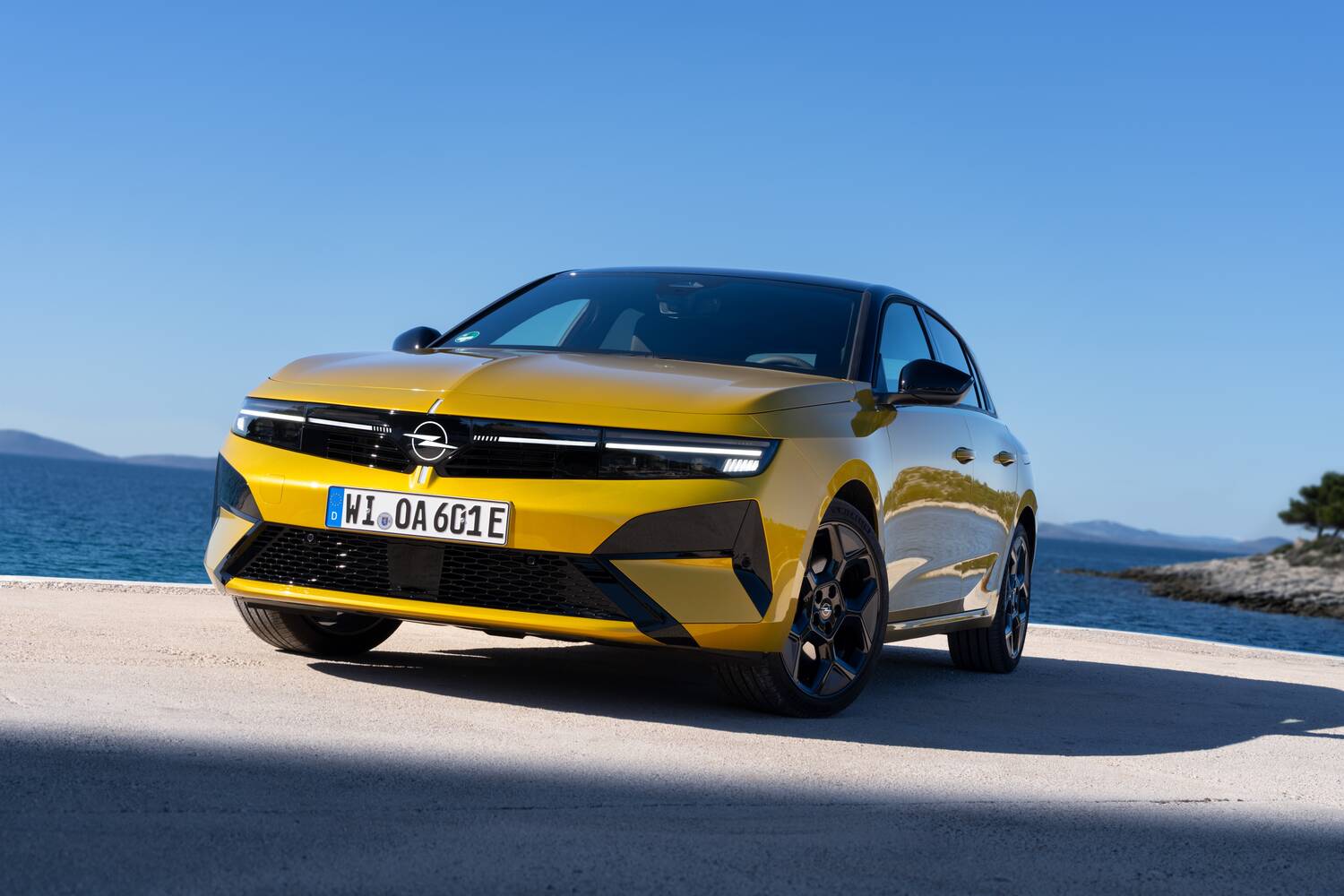
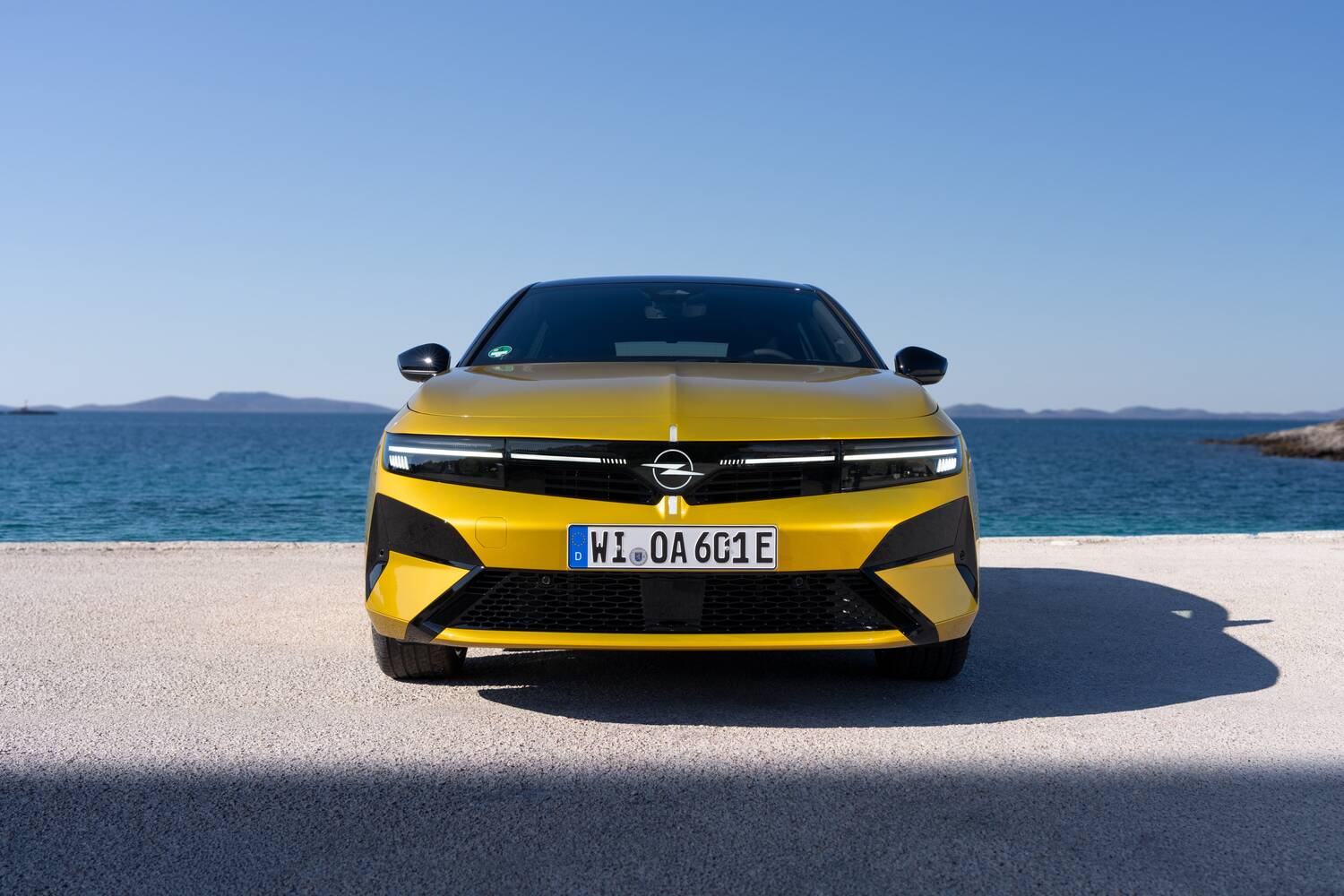
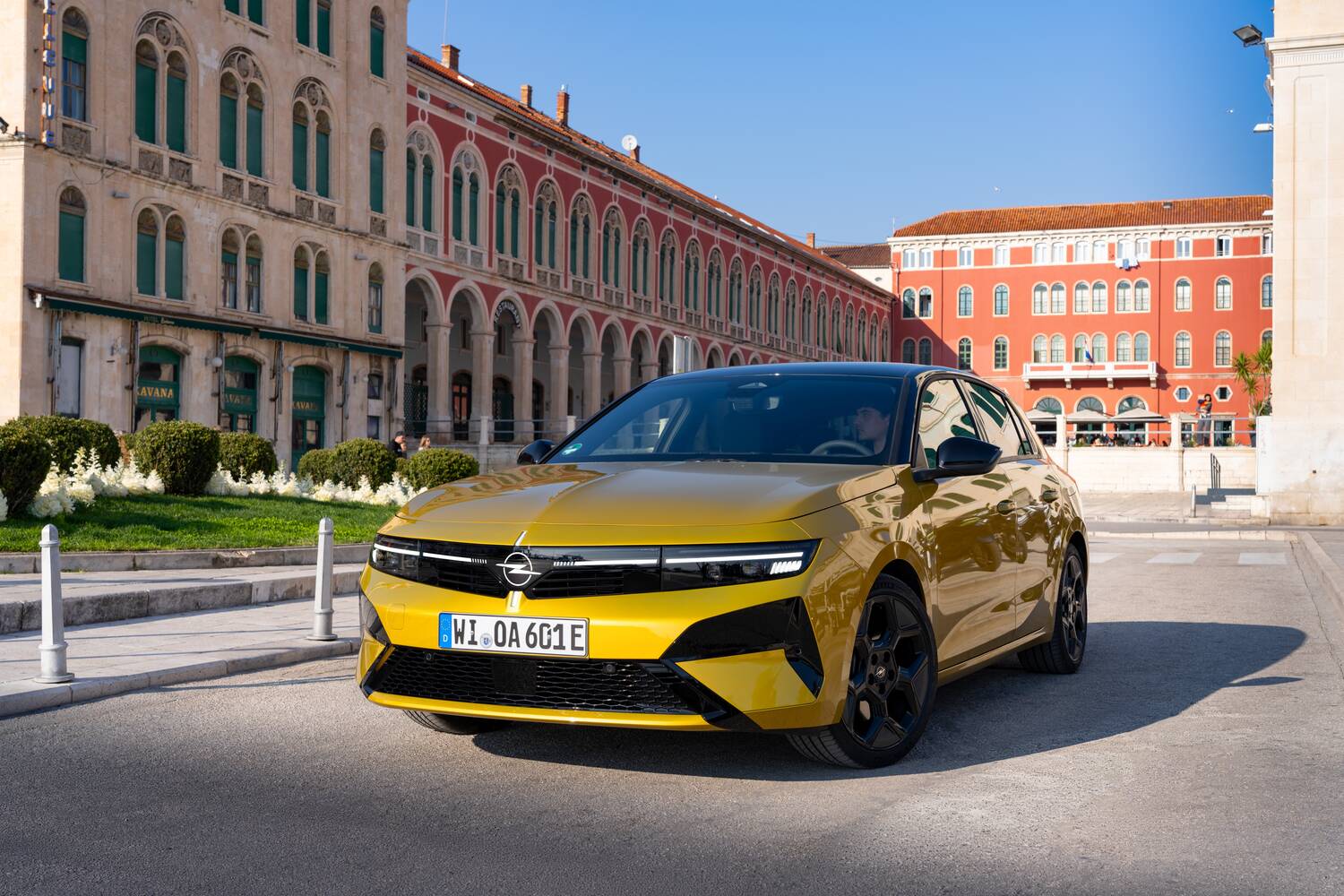
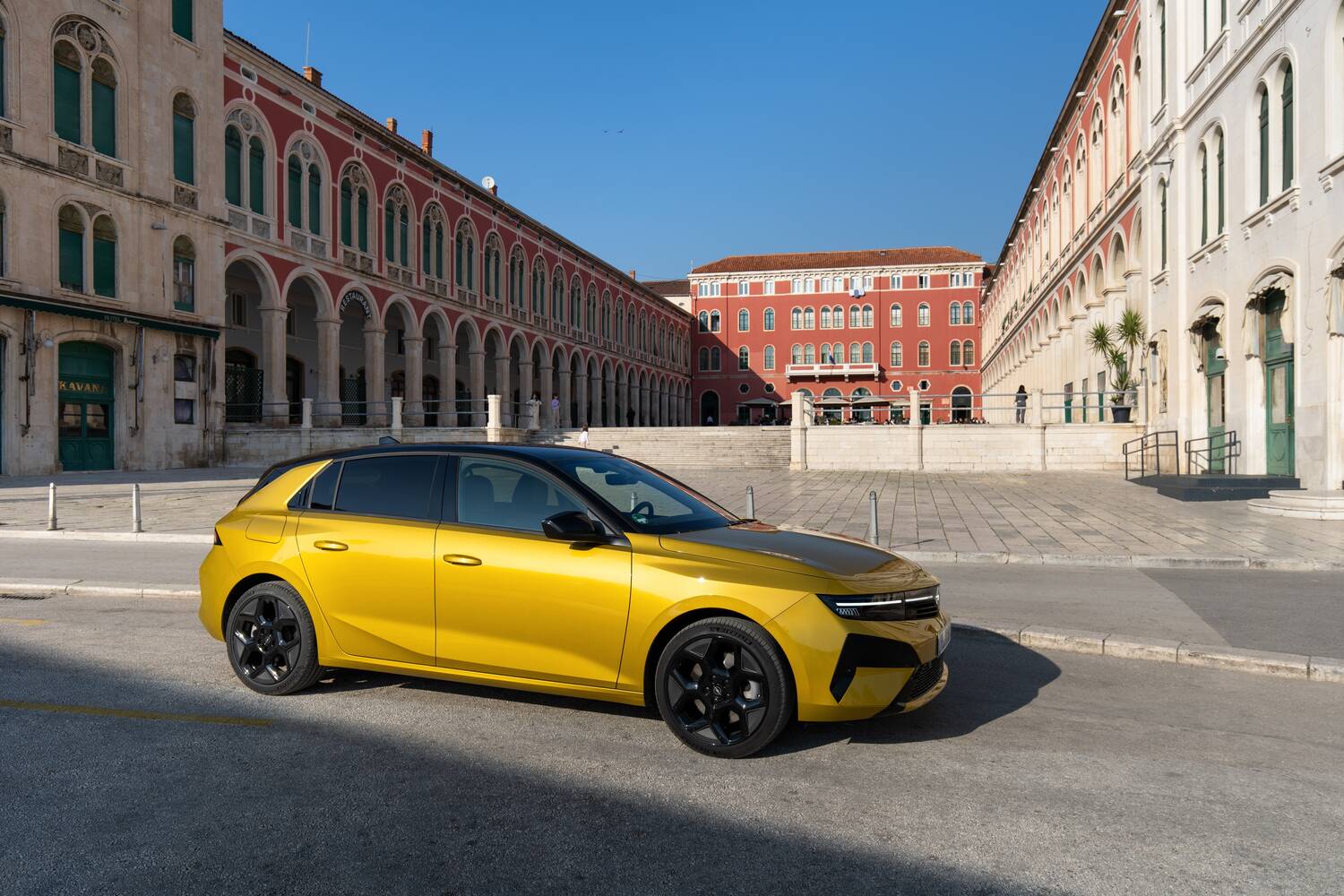
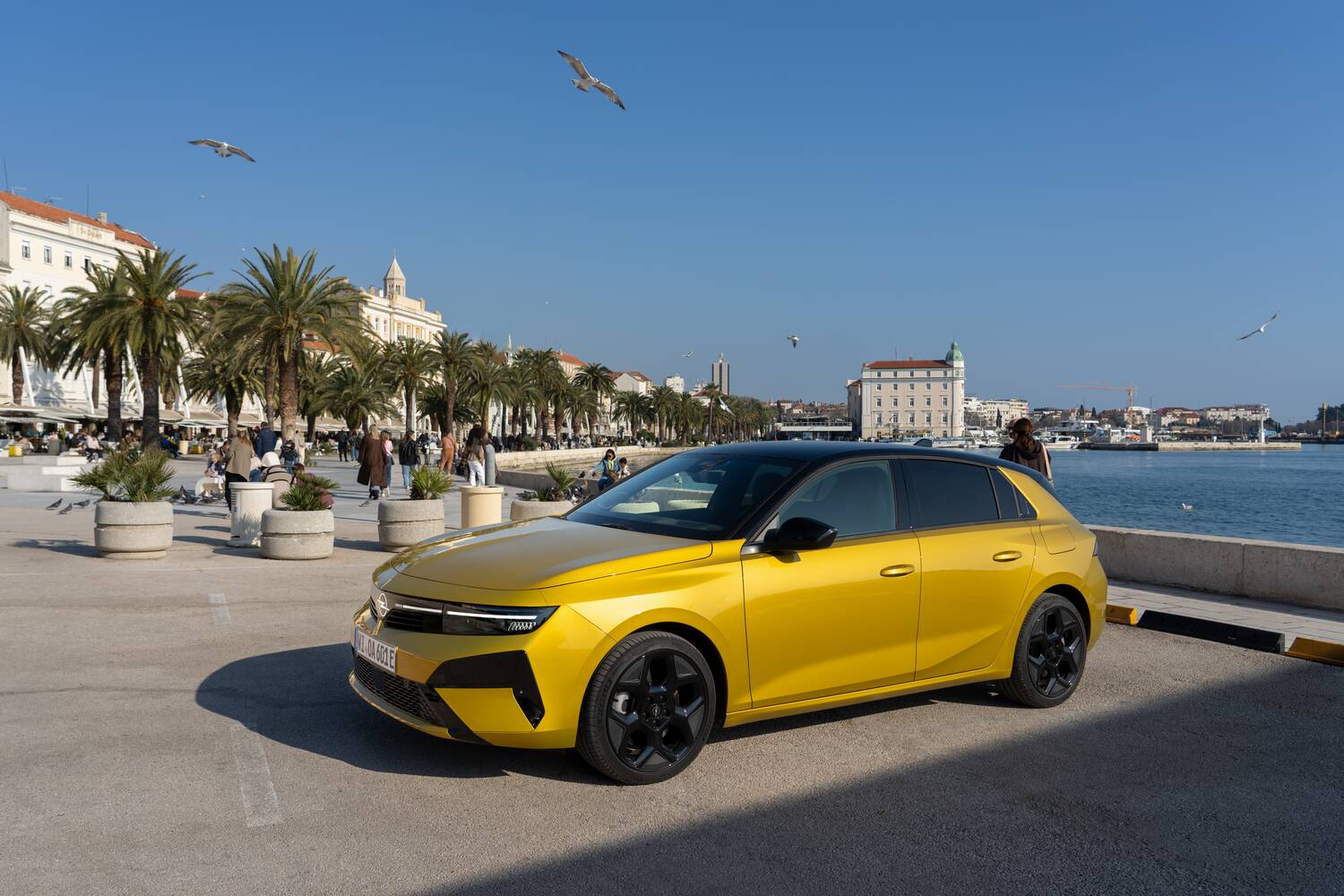
Since it first appeared in 2022, the Mk8 Opel Astra has always been a good-looking thing, with an angular appearance and pleasing proportions.
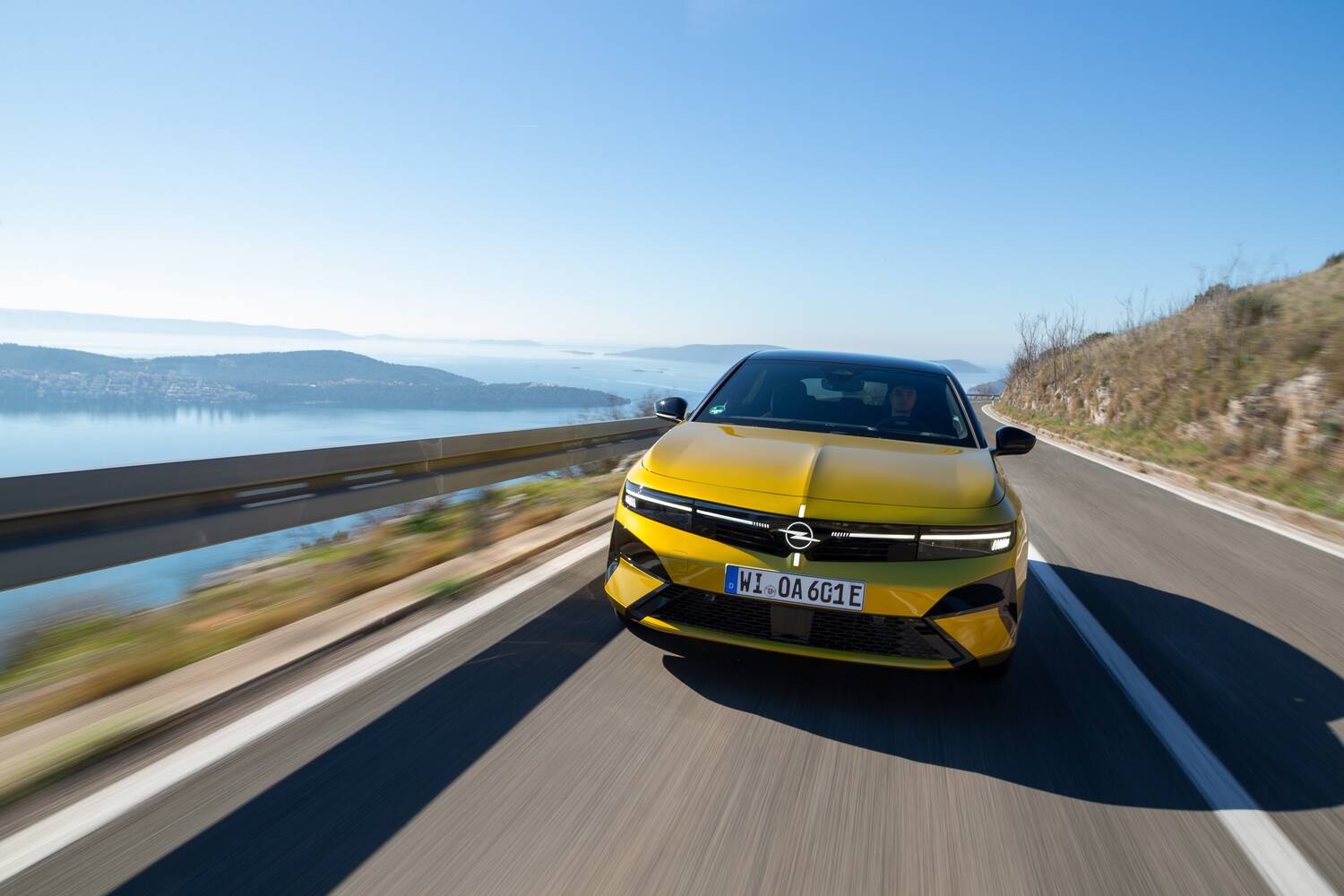
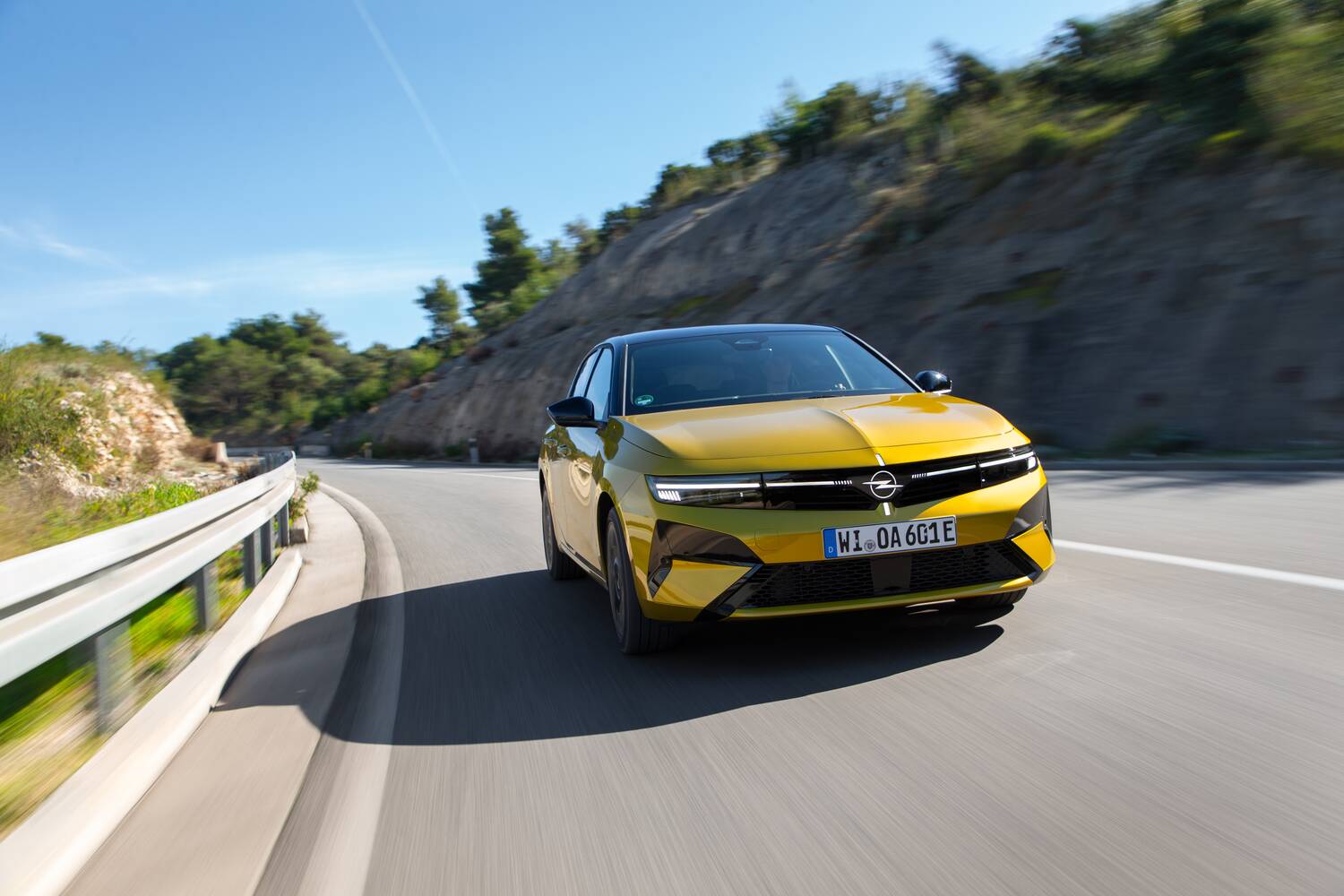
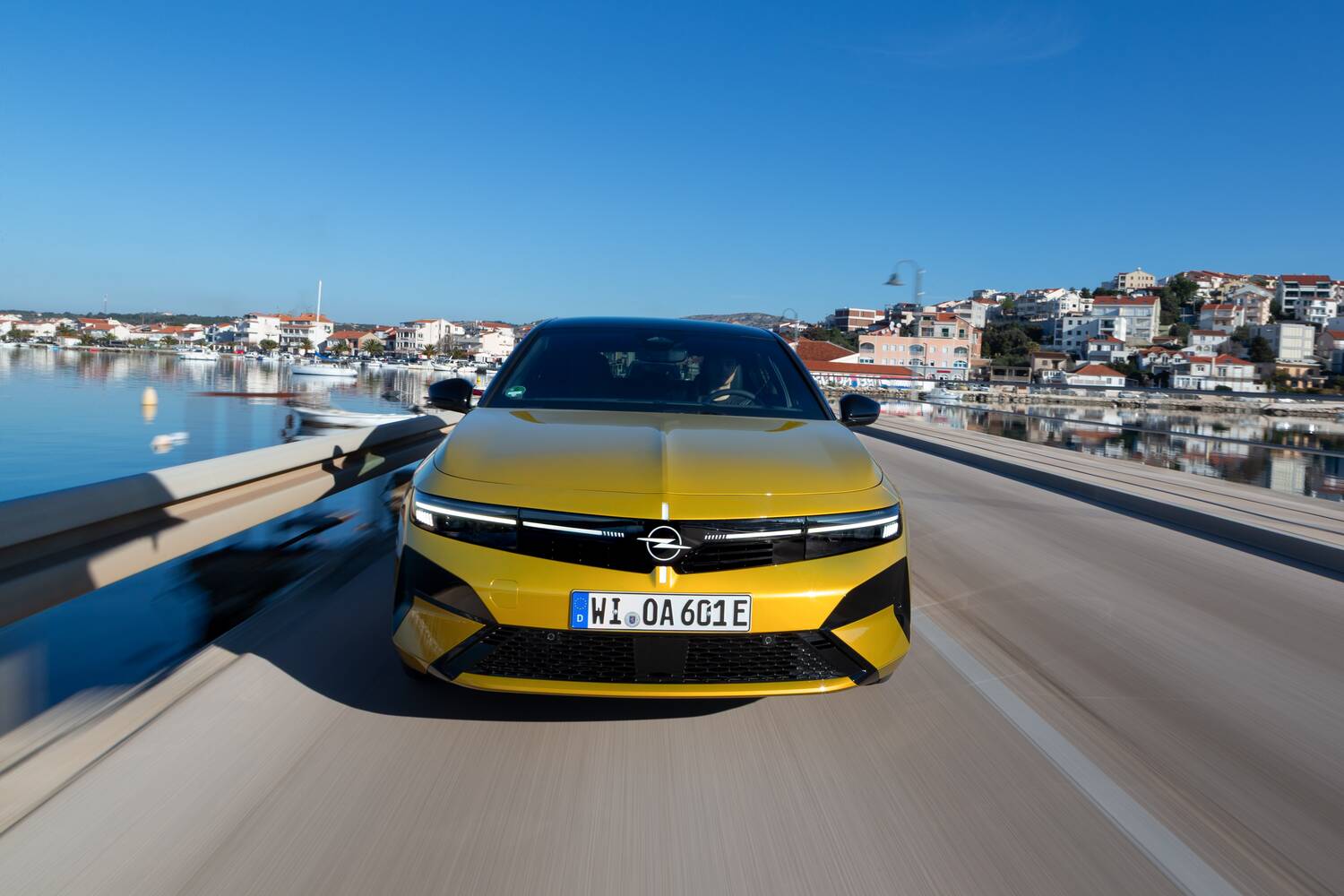
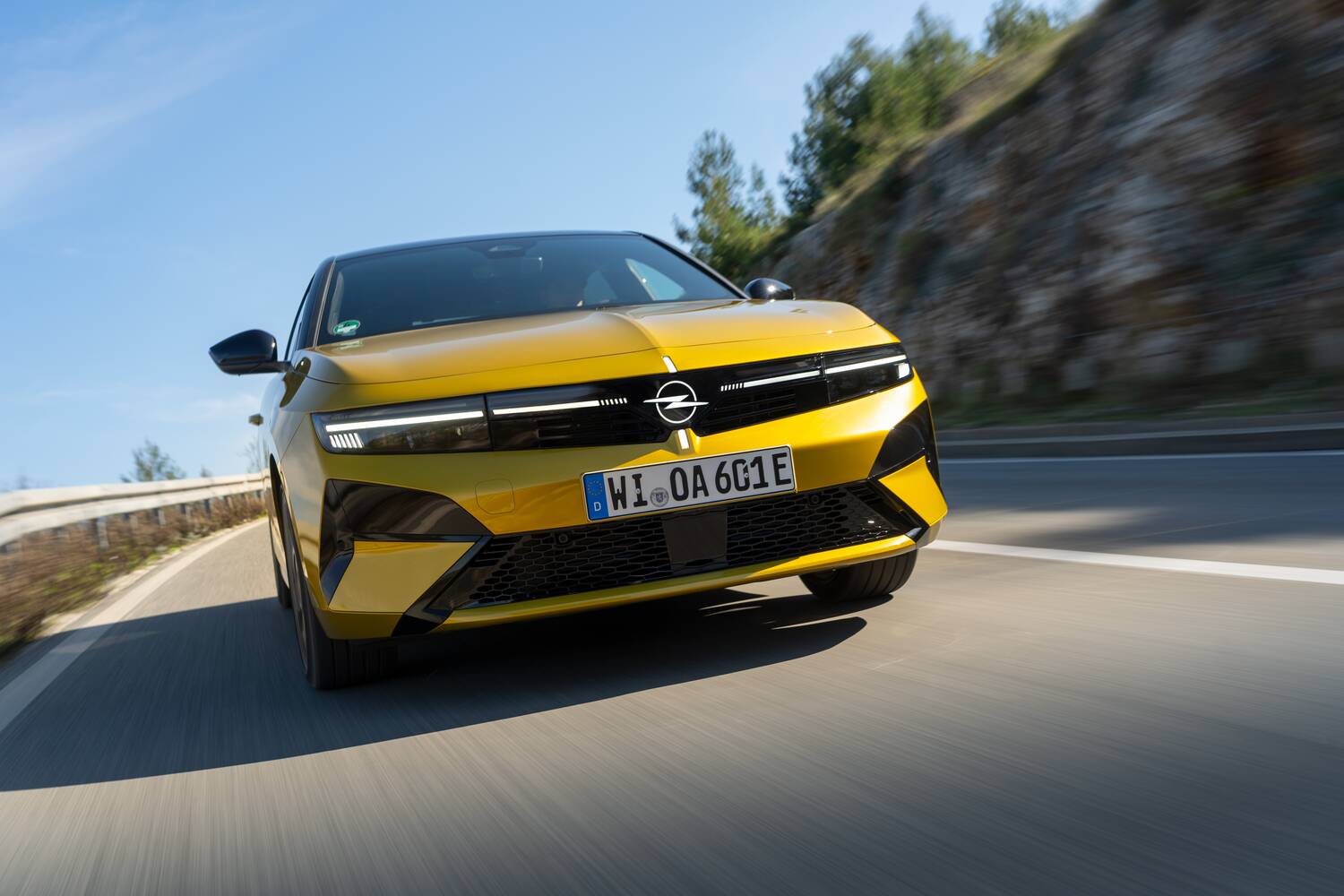
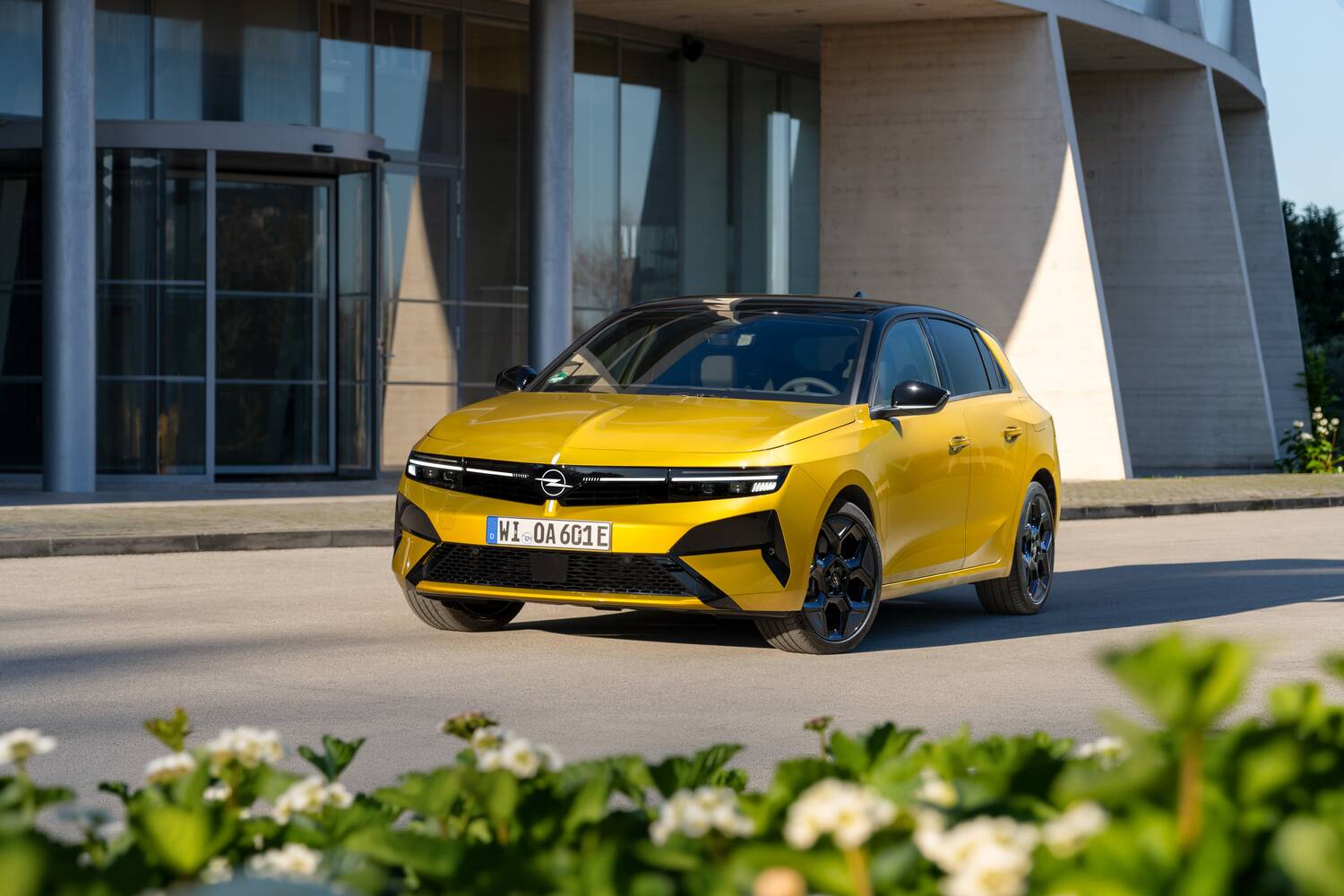
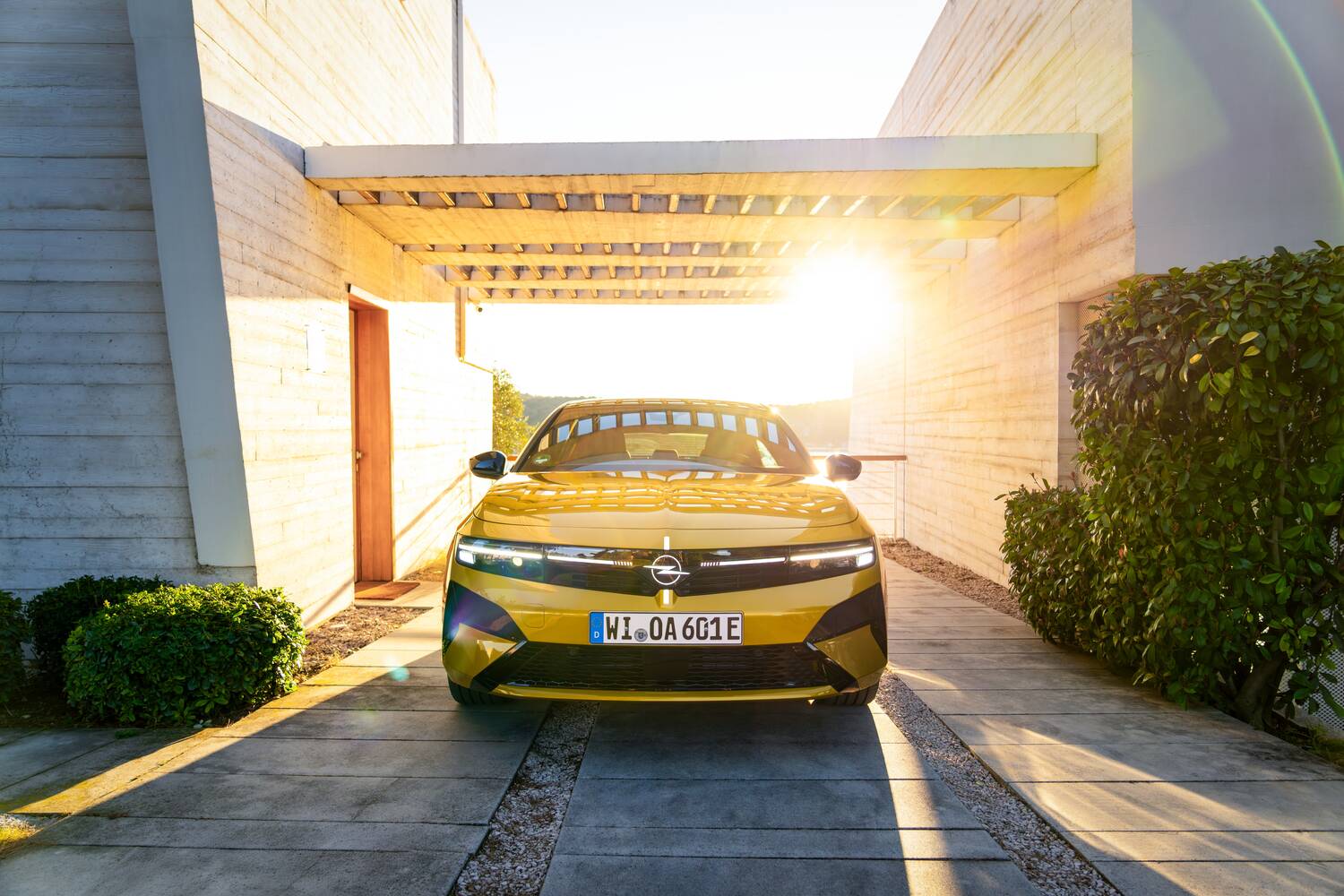
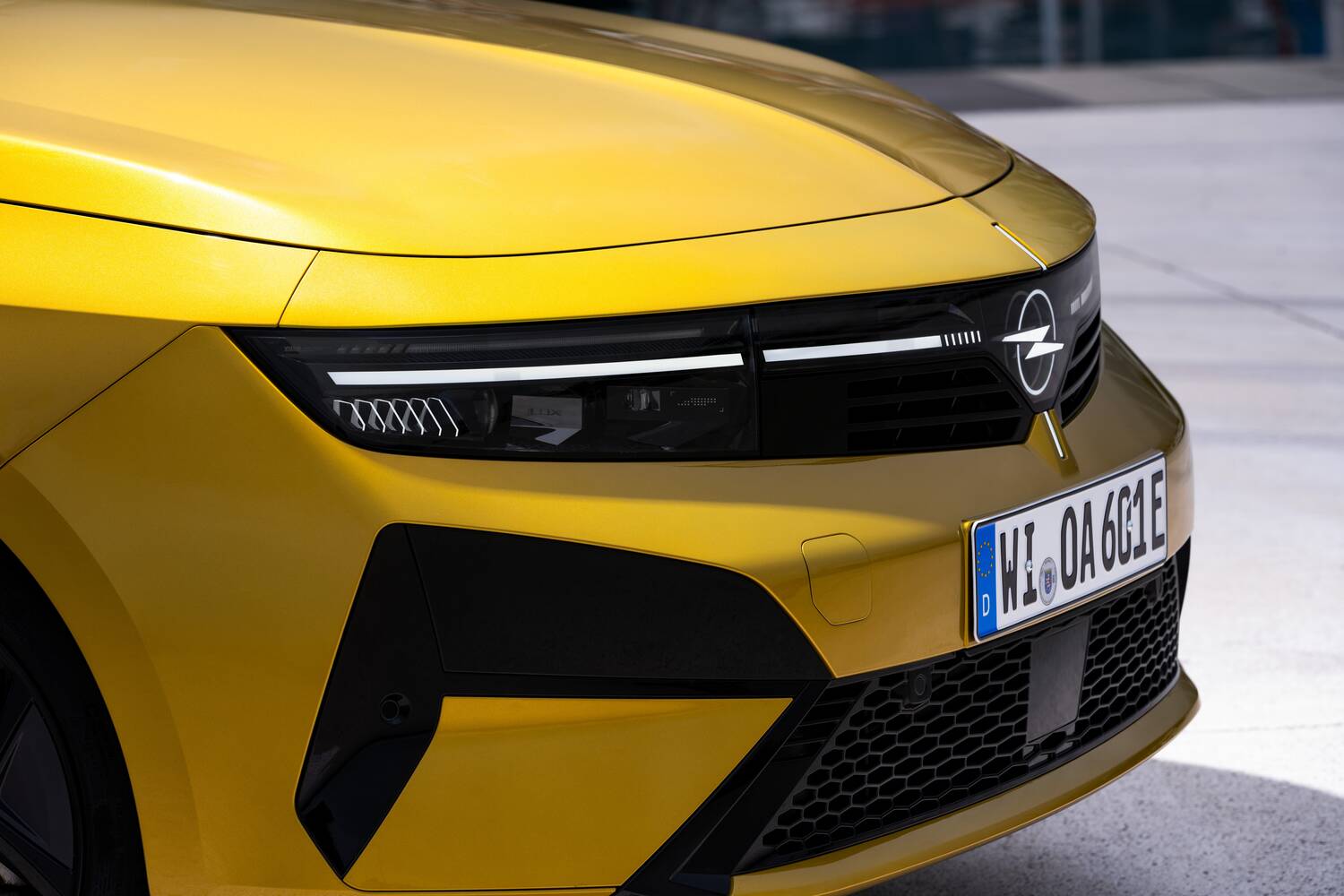
The midlife update for the car therefore did precious little to the Opel's aesthetics, with the main talking point being an illuminated logo in the nose and the adoption of the 'Compass' light signature for the front end of the Astra - in that there's a small vertical line which sits centrally and at 90 degrees to the main horizontal running-light bar, giving the impression of the compass points on the front of the car.

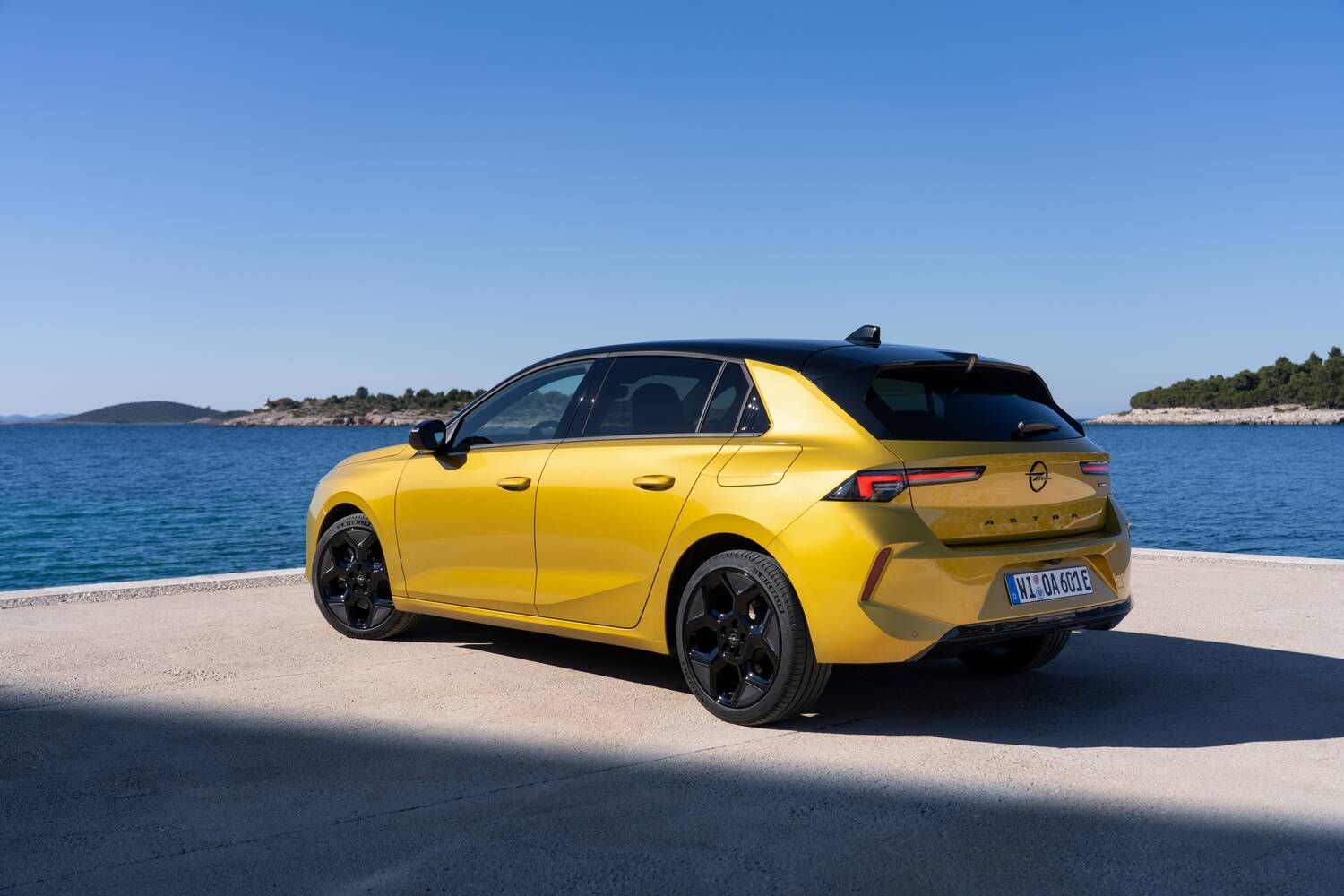
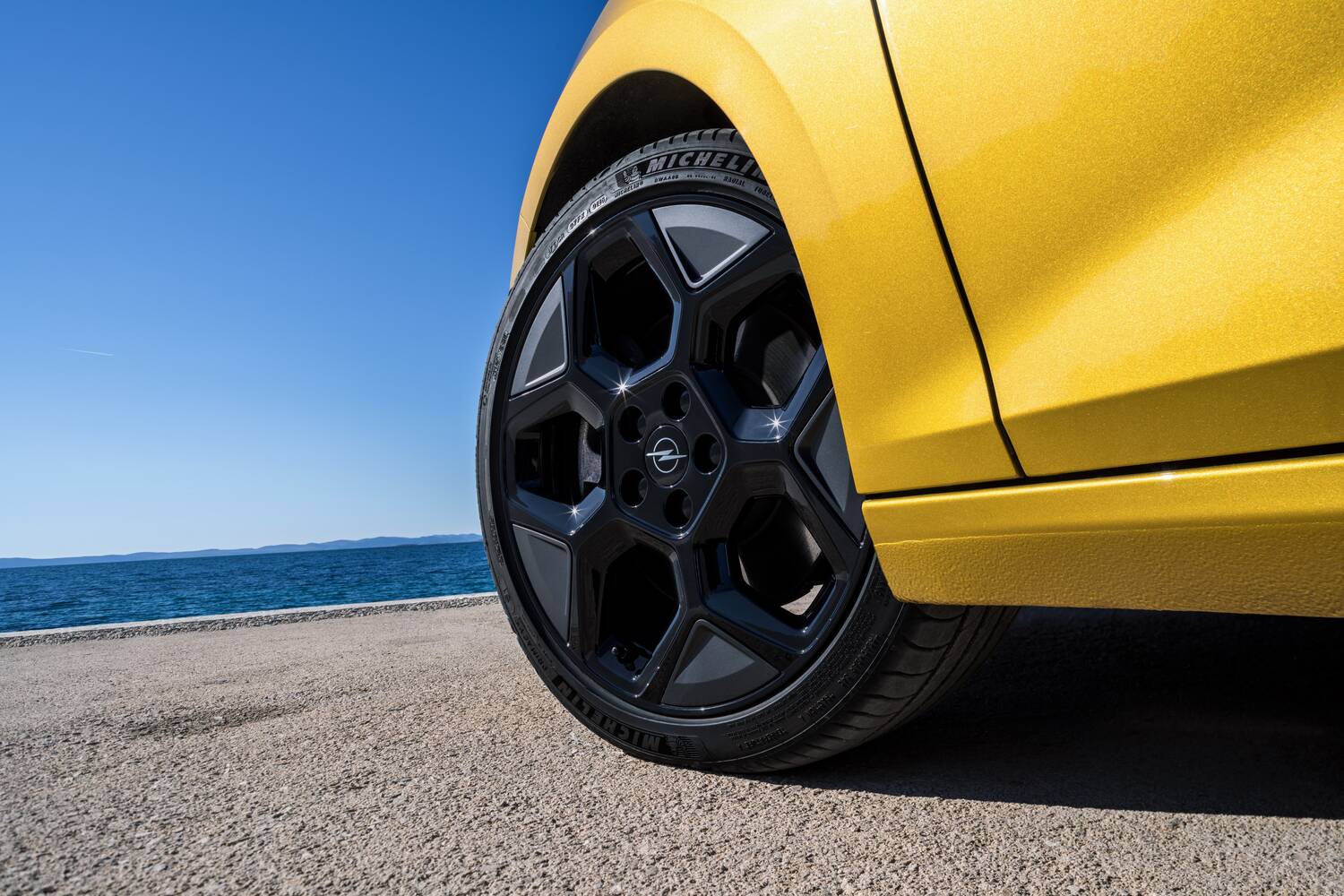
Aside from that, little else changed as part of the update, aside from the inclusion of a few fresh colours in the paint palette and a new design of 18-inch alloy for the Electric model, which has the word "Astra" written on one of its aerodynamically optimised spokes.
Wheel sizes are 16-inch alloys on the base-grade SC, 17-inch as standard with the option of 18s on the mid-level Elegance and then 18-inch items from the off for the range-topping GS.

Dimensions of the 2026 Opel Astra Hatch
- Length:
- 4,374mm
- Width:
- 1,859mm (excluding mirrors)
- Height:
- 1,488mm
- Wheelbase:
- 2,675mm
Paint colours for the 2026 Opel Astra Hatch
Opel offers seven colours for the entire Astra family, although one of the additional finishes from 2026 on - Clover Green - is exclusively for the Sports Tourer estate, so not applicable to the Hatch.

There's another colour blended into the palette for the facelifted cars, which is known as Contour White in Opel's homeland, and which should replace the pre-existing finish of Jade White.
Beyond these choices, the alternatives are Cobalt Blue, Crystal Silver, Perla Black and Grafik Grey, while the Astra Hatch has its own body-specific colour of Yellow Amber. If the facelifted car follows its predecessor's pattern, it'll be the yellow which is the standard, free colour on the Hatch, with all the others commanding an upgrade fee of some kind.
Interior, practicality, tech & comfort of the 2026 Opel Astra Hatch
- Twin 10-inch screens
- Reasonably spacious
- But why does it look so boring inside?

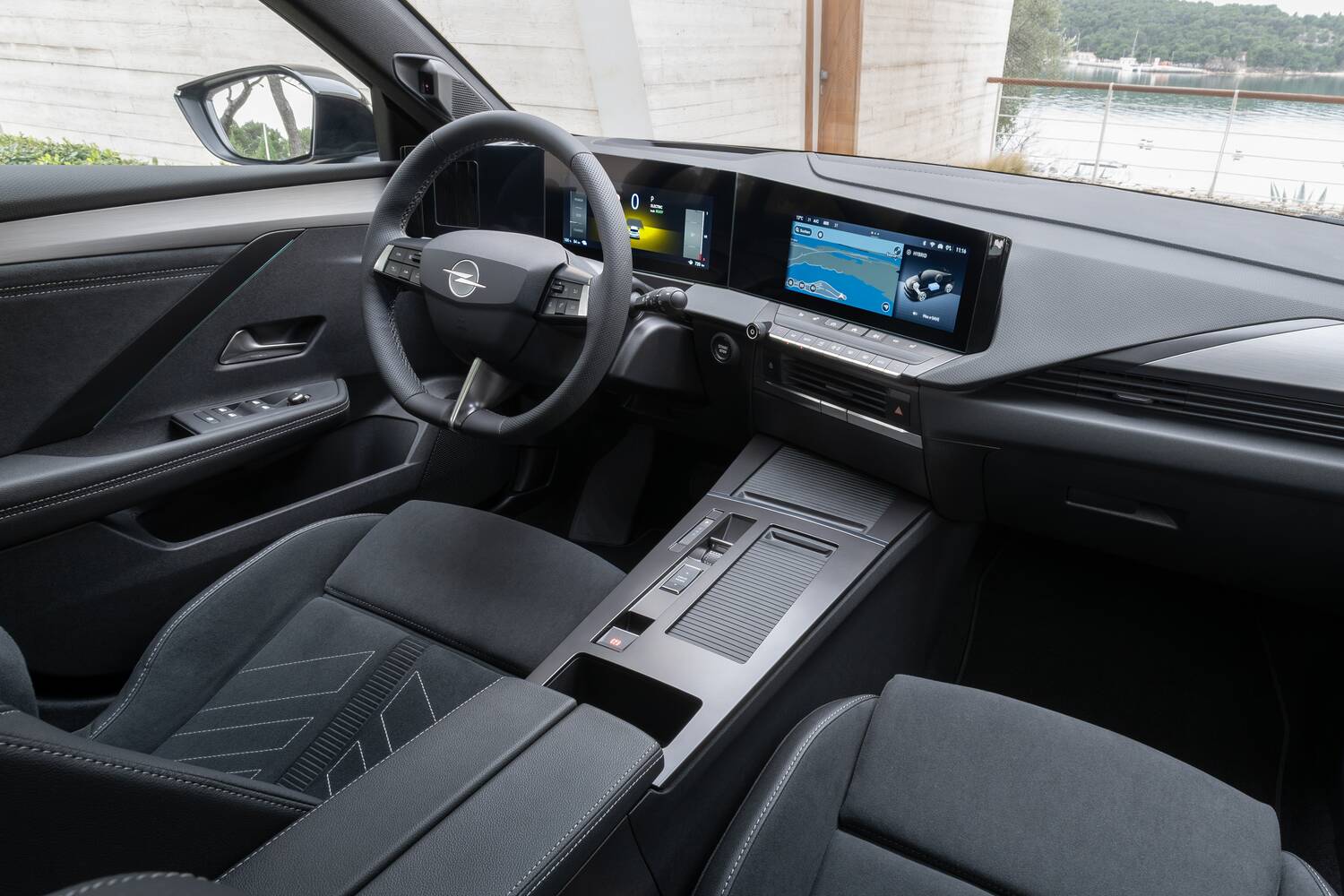
Opel says the midlife upgrades for the Astra family for 2026 included better interior material finishing, but we're not entirely sure where these take effect.
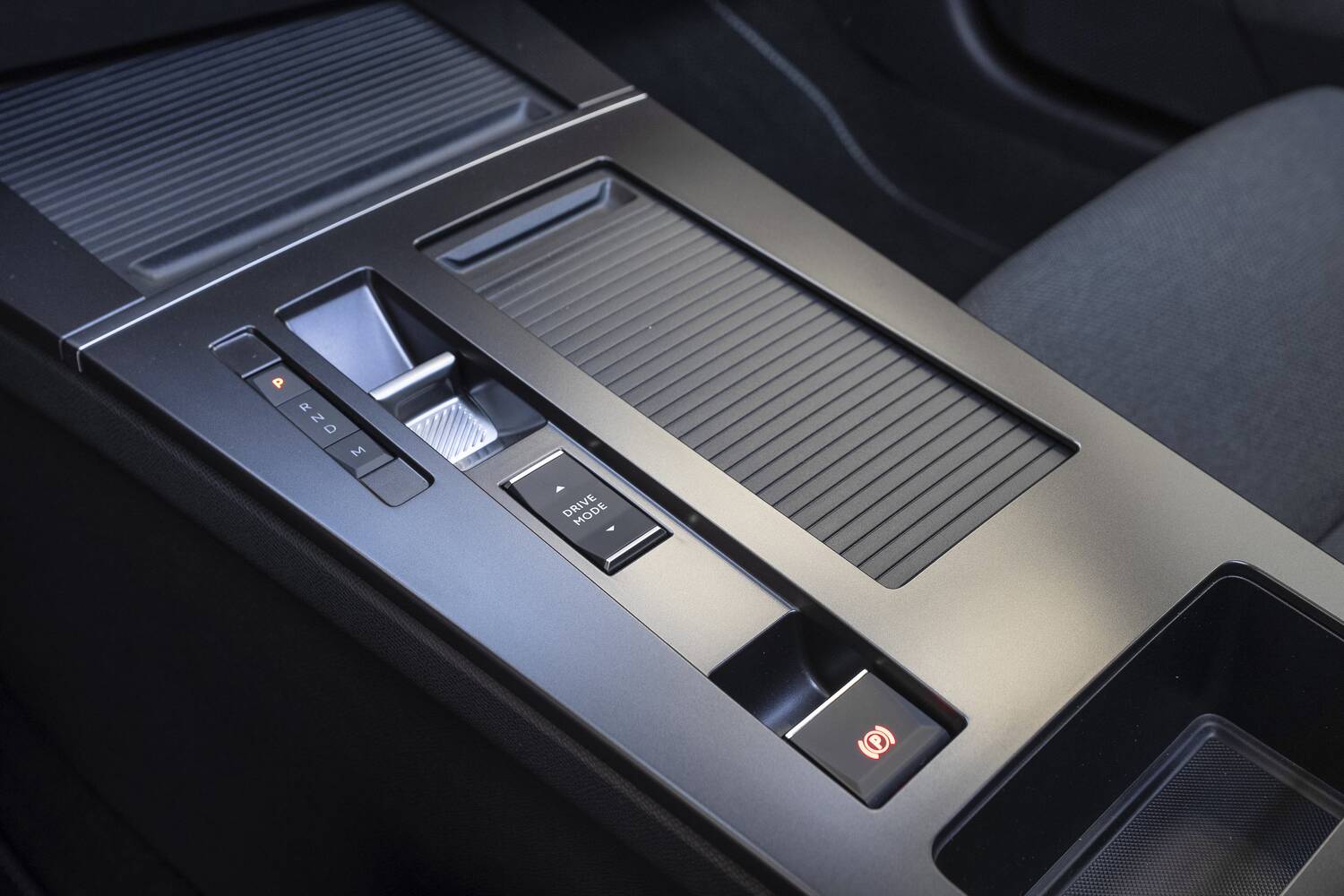
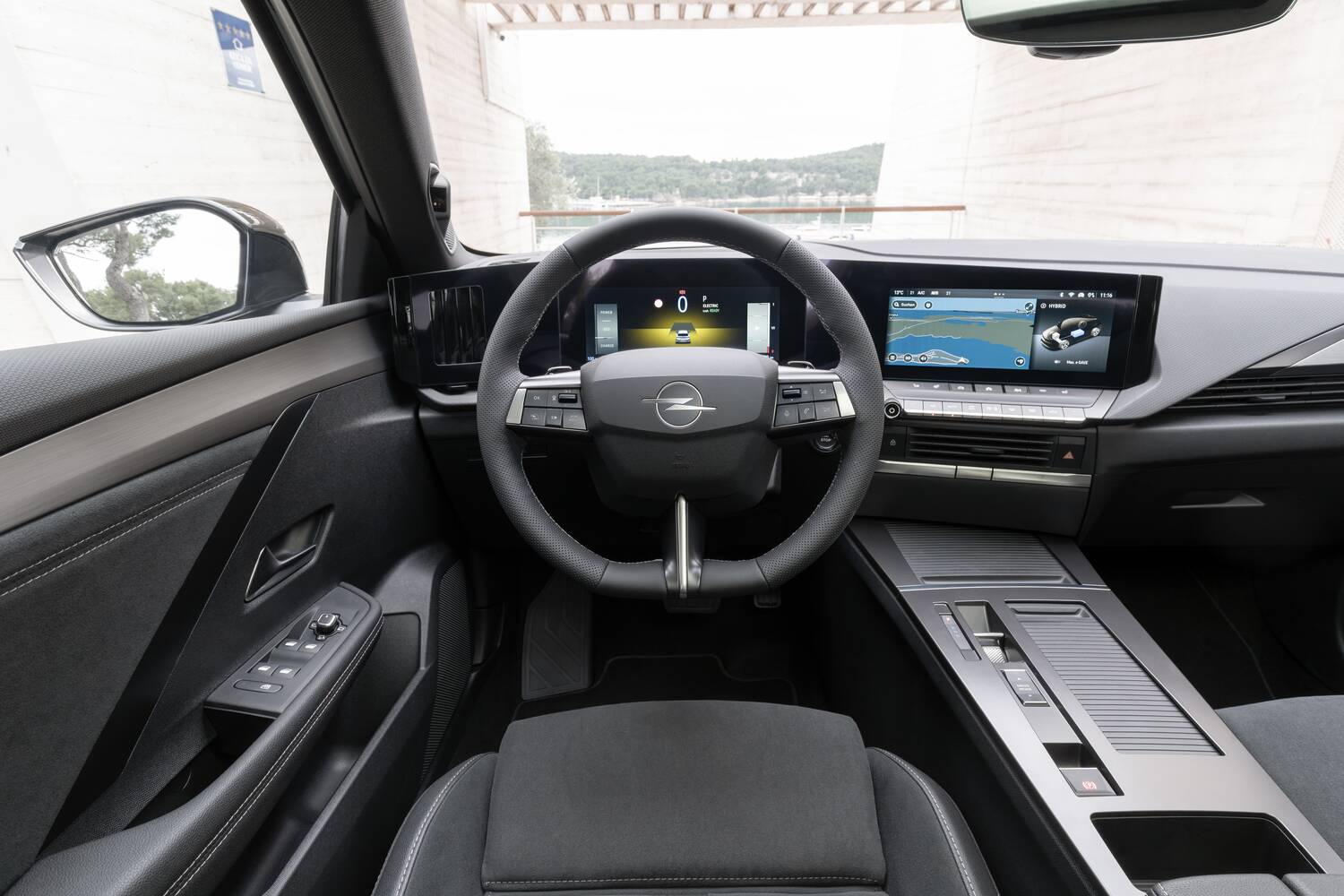
The problem with the Astra's cabin is that, while it's all perfectly well-built and sensibly laid-out, including plenty of positive physical switchgear on the centre stack - it's all so staid to look at.

This generation of Astra is related to the Peugeot 308 and, if you've ever sat in the French car, or you go to see one in a showroom while considering it as an alternative purchase to the Opel, you'll notice the 308 has a far nicer-looking interior - even if the Astra has a more conventional steering wheel.
Getting comfortable in the driver's seat
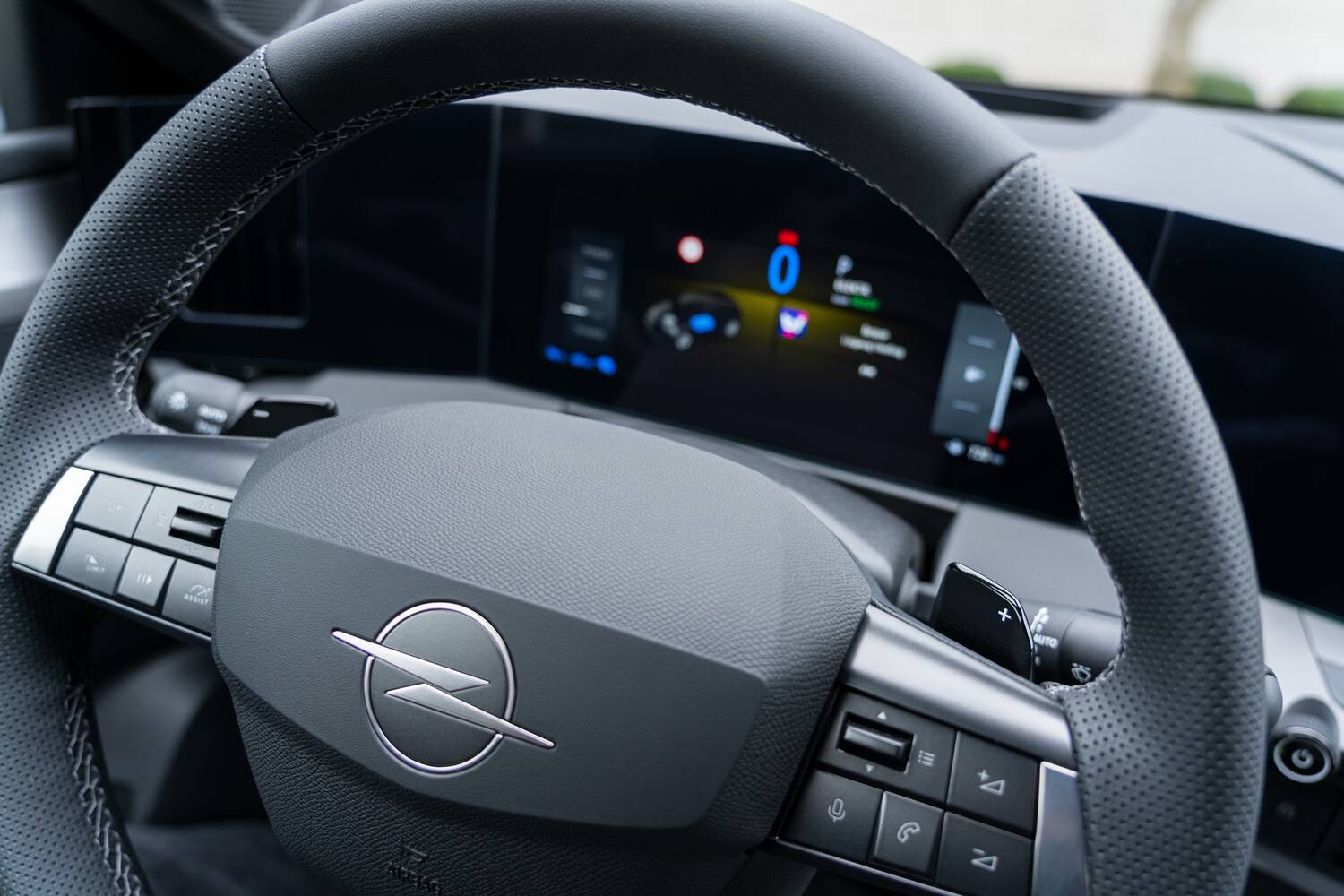
To be fair to the Opel, while the Astra's steering wheel looks pretty mundane, it's of a normal size and shape, while the column it is mounted on adjusts for rake and reach.

On top-grade Astras, electrically controlled front seats are provided, but even with manual adjustment a good driving position is available in the hatchback, with decent visibility out of the car in all directions.
Better yet, all Astras are fitted with 'Intelli-Seats', featuring a design based on the saddles of bicycles that reputedly relieves pressure on the driver's tailbone (i.e. the coccyx) during long-distance driving.
Infotainment and technology
All versions of the Opel Astra come with twin 10-inch displays formed into one large dashboard-wide contrivance the company calls 'Pure Panel'.
It should be fitted to even base-spec SC Astras, but from Elegance level and above it morphs into 'Pure Panel Pro', which only really means these screens are now covered in edge-to-edge glass to make them look a little neater on the fascia.

These work pretty well and the graphics were tidied as part of the midlife updates, although you can use either Apple CarPlay or Android Auto wirelessly if you prefer, while the driver also benefits from a clear head-up display.
Other tech includes wireless smartphone charging and an uprated sound system, but these will likely only come into play on the mid-grade Astra.
Practicality around the cabin
The Astra's interior has reasonable stowage and storage solutions up front - including decent door pockets, a fair-sized glovebox, a deep cubby beneath the split-lidded central armrest and a couple of cupholders moulded into the transmission tunnel.

Rear-seat passenger space
Passenger space in the outer two positions of the Opel Astra's second row is fine, although headroom is better in the back of the Sports Tourer version of the car than it is in the Hatch.
The centre-middle seat of the rear bench is slightly more 'bijou' and occasional-use in outlook, but it should suffice for smaller adults and children on short journeys.
Other creature comforts in the back include two air vents and a USB port plus a small storage pocket on the rear face of the centre console, a fold-down armrest containing two cupholders and capacious door bins too.
Fitting child seats to the Opel Astra Hatch
There are two ISOFIX positions with top tethers on the outer seats of the Opel Astra's rear bench, while the rear doors open to an accommodating angle. It therefore shouldn't be too hard to fit child seats in the second row, even if they're larger and heavier items.
Boot space in the Opel Astra Hatch
The hybrid has the most boot space of any Opel Astra Hatch, accommodating 422 litres with all seats in use and 1,339 litres with the rear backrests folded down.
This is more than the Astra Electric, which loses a little capacity due to the placement of its battery pack - its equivalent data 352-1,268 litres.
Another plus point for the Sports Tourer over the Astra Hatch here: the wagon has 40:20:40 split-folding rear seats, but the hatchback has to make do with a 60:40 configuration. To make up for that, it has a through-load ski-hatch function to help with its practicality.
Safety in the Opel Astra Hatch
The Opel Astra only scored a four-star Euro NCAP rating back in 2022, and the test has only got harder since then. Individual scores of 80, 82, 67 and 66 per cent for adult occupant, child occupant, vulnerable road users and safety assist, respectively, are nothing to shout about, either. If you want to drill down further into the Astra's report, then you can do so, right here.
Performance of the 2026 Opel Astra Hatch
- Petrol, diesel, hybrid and electric options
- None of them very rapid
- Shame the ride isn't brilliant

We're expecting Opel will choose to carry over the drivetrains the Astra had prior to its facelift for the 2026-on cars, which means the plug-in-hybrid option is seemingly denied to us in Ireland.
The opening Astra salvo is therefore the 130hp 1.2-litre petrol model, which comes with either a six-speed manual or an eight-speed automatic transmission, though this latter gearbox will probably only be available on the top GS specification.
There's an alternative in the form of the 130hp 1.5-litre turbodiesel. Should it continue, the diesel only uses the automatic gearbox.

The main change comes with the Astra Electric, which has a different battery chemistry and a bigger capacity to go with it, too. Power remains unchanged though, with a peak of 156hp only available with the EV in Sport mode.
It, like almost every other zero-emission vehicle on sale today, deploys a single-speed reduction gear transmission - i.e. it's fully automatic.
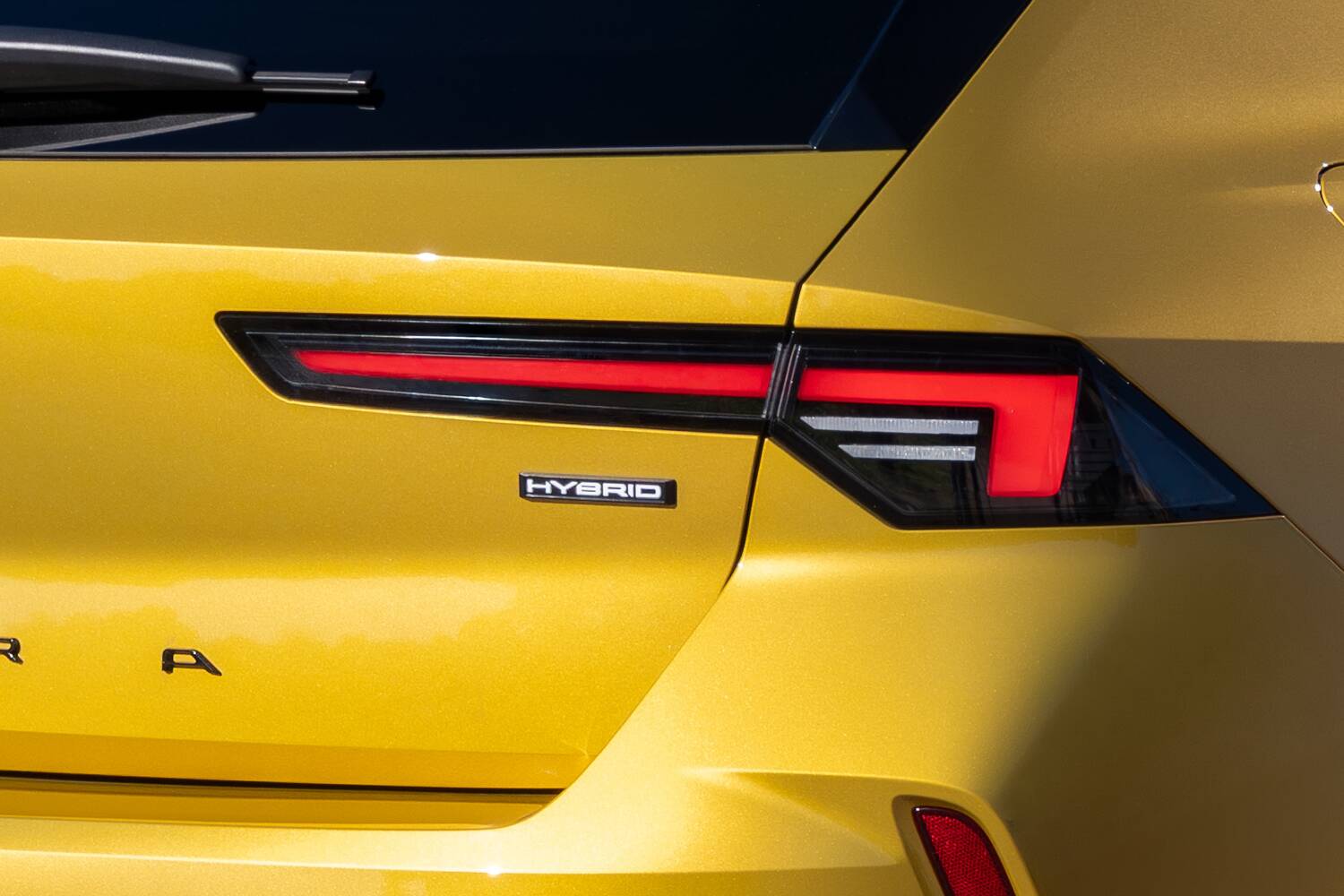
That leaves the Astra Hybrid, which uses the 1.2-litre three-cylinder engine from the base petrol car, but adds to it with a 21kW electric motor and small battery pack. The combined outputs of this drivetrain are 145hp and 230Nm, with power going to the front wheels through a six-speed dual-clutch automated transmission. It's the swiftest Astra sold in Ireland for 0-100km/h, recording a time of bang on nine seconds.
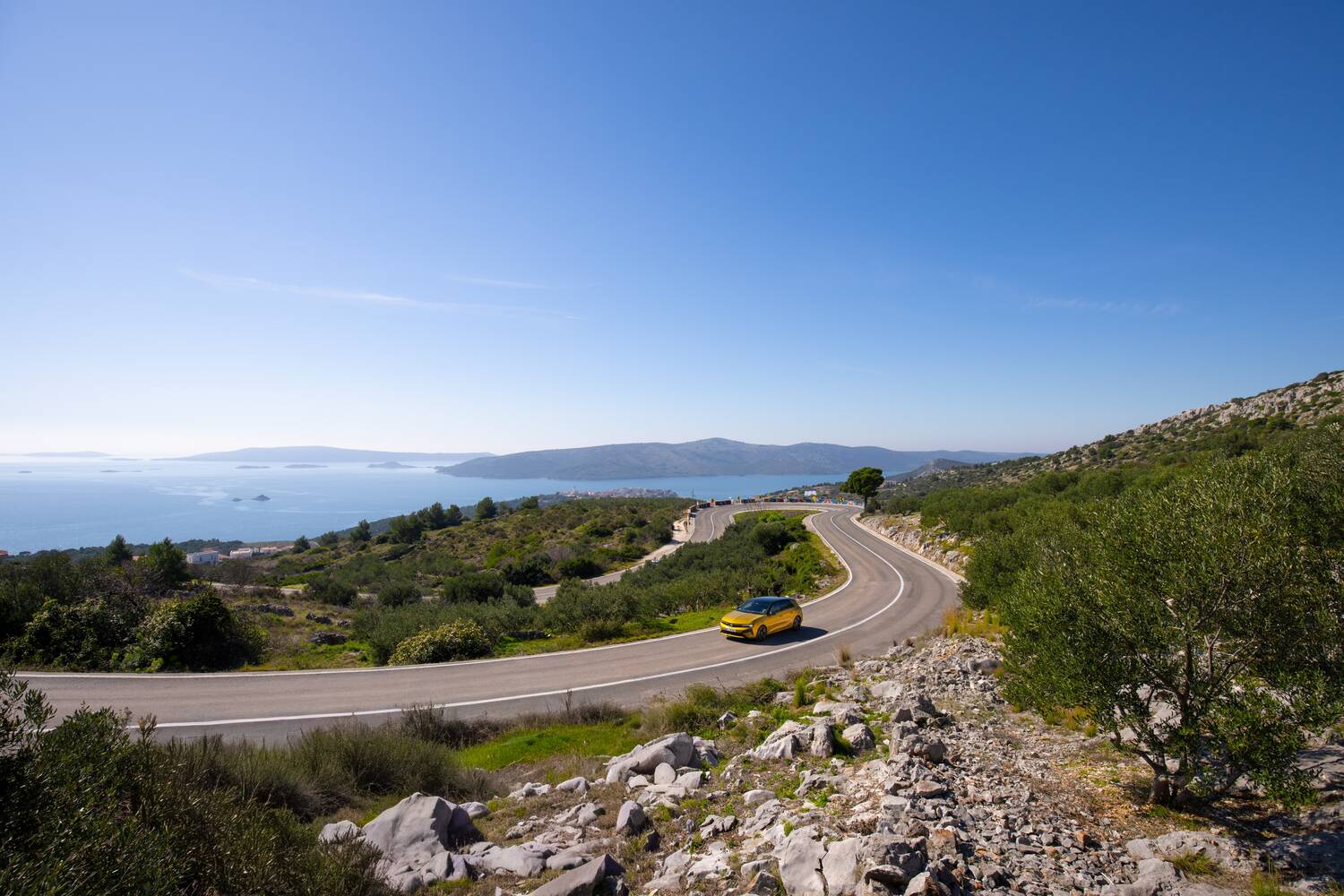
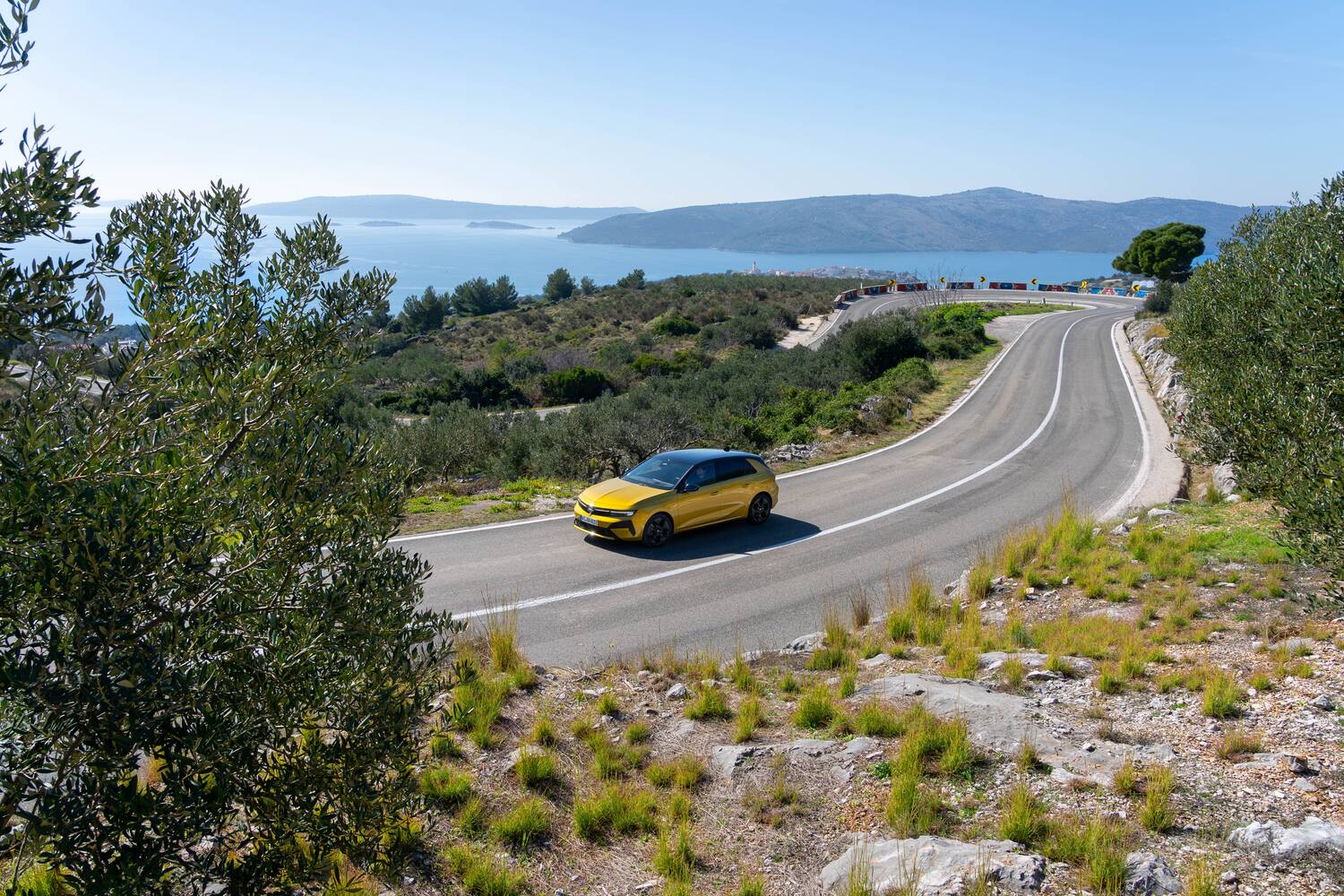
Driving the 2026 Opel Astra Hybrid in Croatia
Words by Matt Robinson on 25 March 2026
Dynamically, the Astra doesn't do anything particularly wrong. But, crucially, it does nothing shiningly brilliantly, either. It's all very safe. It's all fine.

Sure, lots of everyday, run-of-the-mill hatchbacks drive in a buttoned-down and uninvolving fashion, but there's usually something which elevates them or turns out to be the strong peg that you could hang a purchasing recommendation on.
The Astra, though, seems to be caught in two minds between attempting to be sporty and trying to be luxurious. And it succeeds convincingly at neither. The problem is that its ride and refinement are off the pace compared to the very car with which it shares so much, the Peugeot 308, which simply is more comfortable when it's covering lumps and bumps in the tarmac, while it also seems to be quieter when travelling at speed too.

In the Opel's defence, it's much better for refinement in the lightest Hybrid format, because it's a good 230-280kg lighter than either the Astra PHEV or the Electric, and while extra weight can sometimes benefit a car's ride comfort by tying its suspension down to a greater degree, in the Astra Electric on the 18-inch wheels the Opel just feels leaden and stiff-legged.
The Hybrid is by no means perfect, nor near the front of the class in this department when compared to its plushest rivals, but it is better on rougher tarmac than its stablemates.

No Astra is a hoot in the corners, though, so we're not sure what this slightly brittle suspension set-up is really meant to achieve. The Opel is capable enough on a twisty road, sure, and isn't blighted by the same sort of understeer that used to plague the cars of the past from this manufacturer.
Yet the steering is devoid of any meaningful interaction, and the body control is only above average, rather than brilliant, which couples to a chassis that comes across as completely inert.

Again, the Hybrid edges its heavier siblings with a superior sense of agility, but all benefits are relative. Plainly, there are better cars for keener drivers in this class - the Peugeot 308 being, painfully for Opel, one of them.
At least all the powertrains in the Astra are smooth, with reasonably well-calibrated throttle and brake pedals. The PHEV's engine is noisy when revved out, though.
The Electric is fine, but a moderate 9.3-second 0-100km/h time tells its own story about the rigours 156hp and 270Nm face when being tasked with shunting nearly 1.75 tonnes of overweight hatchback about the place.
Hence why we like the Hybrid so much in the Astra powertrain line-up. It's not perfect though as not everyone gets on with the noisy thrum of a three-cylinder engine at higher revs (although we think it's the most characterful propulsion system in the Opel's family), and neither is the six-speed dual-clutch transmission a paragon of slick-shifting, ultra-responsive glory. Yet the Hybrid is comfortably the most likeable Astra to drive.
Range, battery, charging and running costs of the 2026 Opel Astra Hatch
- Electric model gains bigger battery for update
- Range now up to 452km
- Charging tops out at a modest 100kW
Accepting that the Hybrid will do around 5.6-6.0 litres/100km without even trying too much, we'll focus on the Astra Electric for this portion of the review because it is the model which saw the most significant update for 2026.

Battery options and official range
A change in the Opel Astra's battery chemistry to nickel-manganese cobalt (NMC) has seen the capacity of the unit increase around 4kWh as part of the facelift, to 58.3kWh gross and 55.4kWh usable.
This, in turn, has increased the official range from 418km previously, to 452km now, which is a handy increase but not one which transforms the Astra into a segment-leading EV for long-leggedness.
Real-world range and efficiency of the Opel Astra Hatch
We drove both the Opel Astra Electric and the Hybrid in Croatia, so we'll cover both here. The EV managed an indicated 16.6kWh/100km on a 90km route in the countryside outside Split. The trek did include a couple of climbs but was mainly on the flat and conducted in warm weather, with the car's climate control system running to keep the cabin cool.
We also didn't drive the route particularly fast, as an average speed of just 52km/h would indicate, and so if owners could match that in cooler climes, they'd be looking at a realistic range of around 335km.

The Hybrid did a much better job of getting close to its official 5.0 litres/100km (56.5mpg) figure, recording 6.8 litres/100km (41.5mpg) when driven on a shorter, slower-speed 31km loop with lots of urban driving - not a petrol-powered car's forte, remember.
We therefore think it'll be a lot easier to get near something like 5.6 litres/100km (50mpg) from the Astra Hybrid in regular usage outside of towns and cities, making it a more practical choice than the Electric for longer-distance drivers.
Charging up the Opel Astra Hatch
The battery might have increased in size, but the Astra Electric's charging speeds have not improved. This means it still peaks at 11kW for AC and just 100kW on DC, a number which was perfectly acceptable about four or five years ago, but which now feels a bit feeble in an age when plenty of newer, 400-volt EVs can get much closer to 200kW in the right circumstances.
Opel, resultingly, claims a series of charging times which don't exactly stand out in the modern EV era. At its very fastest, 20-80 per cent would require 32 minutes with a 100kW DC connection, while the same top-up cycle would take three hours 20 minutes at an 11kW AC outlet and five hours on a domestic 7.4kW wallbox.
No 10-100 per cent figures were quoted by Opel but reckon on a total replenishment of the Astra Electric's battery cells requiring something like eight hours and more at 7.4kW.
Servicing the Opel Astra Hatch
Opel generally recommends an annual servicing schedule, or every 30,000km, whichever comes sooner, and the Astra Hatch should fall under the same sort of cycle of maintenance.
Opel Astra Hatch warranty
One of the benefits of buying the Astra is that Opel Ireland has one of the more comprehensive levels of warranty on its passenger cars - it's a substantial five-year, unlimited-distance provision of cover from the German firm.

Irish pricing & rivals to the 2026 Opel Astra Hatch
- Hopefully, a competitive opening price
- Generous equipment spec-for-spec
- Lots of alternative vehicles out there
We haven't got confirmed Irish prices for the updated Opel Astra Hatch range, although we would expect that it will continue in SC, Elegance and GS specifications.
Figure on it not progressing much from the old car's €32,695 entry-level ticket, with that amount being for the 130hp petrol model.
We predict that every version of Opel Astra, even the SC, comes with the twin 10-inch screens inside, at least 16-inch alloy wheels on the outside, plus single-zone climate control, front and rear parking sensors and rain-sensing wipers among more.
Moving up to an Elegance brings in desirables such as a heated steering wheel and front seats, a reversing camera, wireless smartphone charging, keyless entry and go, a glossier installation of the Pure Panel Pro infotainment, 17-inch alloys, privacy glass and an uprated six-speaker sound system.

The GS tops all this off with the bi-tone exterior appearance, 18-inch alloy wheels, a 360-degree panoramic camera system and dual-zone climate control.
When you're talking about family-friendly cars in the €30,000-€40,000 bracket, there's a simply baffling array of options available. Your money could get you a premium compact crossover from the B-segment, an electric hatchback from the C-segment, or even an aggressively priced Chinese SUV with D-segment proportions muscling in on the territory.
So it's a tough world out there for the Opel Astra, but if we only confine it to mainly combustion-powered hatchback rivals, then the three alternatives we've listed on this page provide some stern opposition to the German car - and that's saying nothing of the Volkswagen Group triumvirate of the VW Golf, Cupra/SEAT Leon and Skoda Octavia, either.
Verdict - should you buy the 2026 Opel Astra Hatch?
The Opel Astra Hatch is not a terrible car - it is very, very far from it. Our issue with it, though, is that it feels a bit earnest and forgettable, and they are dangerous qualities to flirt with in this current age, with the traditional motoring segment under almost daily siege from an influx of affordable Chinese newcomers.
The Astra Hatch looks nice on the outside, but its cabin is dour, the performance is mediocre, its handling is OK but nothing more, and the ride comfort could - and should - be better than it is.
However, as it is fairly spacious, well-equipped and ought to be priced at an acceptable level, there's still enough about the Opel Astra to continue recommending it as a solid option.
FAQs about the 2026 Opel Astra Hatch
Is there an electric version of the Opel Astra Hatch?
Yes, this is one of the key selling points of the Opel - unlike many manufacturers, who have distinct models for combustion and electric power operating in the same class, the Astra combines all its disparate powertrains into the same product line instead.
This means an Astra Electric looks very similar to a 1.2-litre petrol version, and some buyers really do like the conventional approach to EV styling, rather than something weird and wacky in the visual department.
Is there a four-wheel-drive variant of the Opel Astra Hatch?
No, all the models in the range are front-wheel drive, with the majority of them deploying an automatic gearbox of some sort. There is a manual gearbox available with the 1.2-litre, 130hp petrol engine.
Want to know more about the 2026 Opel Astra Hatch?
If there's anything about the new Opel Astra Hatch we've not covered, or you'd like help in choosing between it and other cars, you can avail of our expert advice service via the Ask Us Anything page.
Opel Astra history
This is going to be a confusing one. Effectively, the Opel Astra lineage starts in 1991, making the current car technically the sixth generation of the model. However, the Astra name itself dates back two generations before that and originates in the UK, where the Vauxhall Astra first appeared in 1980.
However, what were the Mk1 and Mk2 variants of the Astra over the water were sold here as Opel Kadetts, before General Motors as a whole decided to follow the UK's lead and adopted the Astra name 11 years after it first appeared.
Muddying the waters further is that the Kadett name goes back a heck of a long way further than Astra, the nameplate debuting in the dim and distant automotive past of 1936.
Nevertheless, most people would accept that the present Kadett/Astra dynasty began in 1962 with what was known as the Kadett 'A' (the letter simply meaning Mk1) - and that hangover continues to this day, because the Mk1 Vauxhall Astra did not start again at the beginning of the alphabet; it was called the Astra 'D', to tie it in with the Kadett generations.
So the 1991 car which unified the Astra name the world over was in fact the Astra 'F' - the Mk6 of the Kadett line, the Mk3 of the Astra hierarchy.
Following this? No? Confused? Yes, we said you would be.
Anyhow, for reasons of simplicity, and because the Kadett C was really the last car where Vauxhall deviated from the Opel norm, the long and short of all this is that we're calling the current Astra the Mk8, despite the fact Opel itself refers to it as the Astra L to continue the now-defunct Kadett line, and you could argue it's just the sixth iteration of a car physically, undeniably given the two names 'Opel Astra'.