

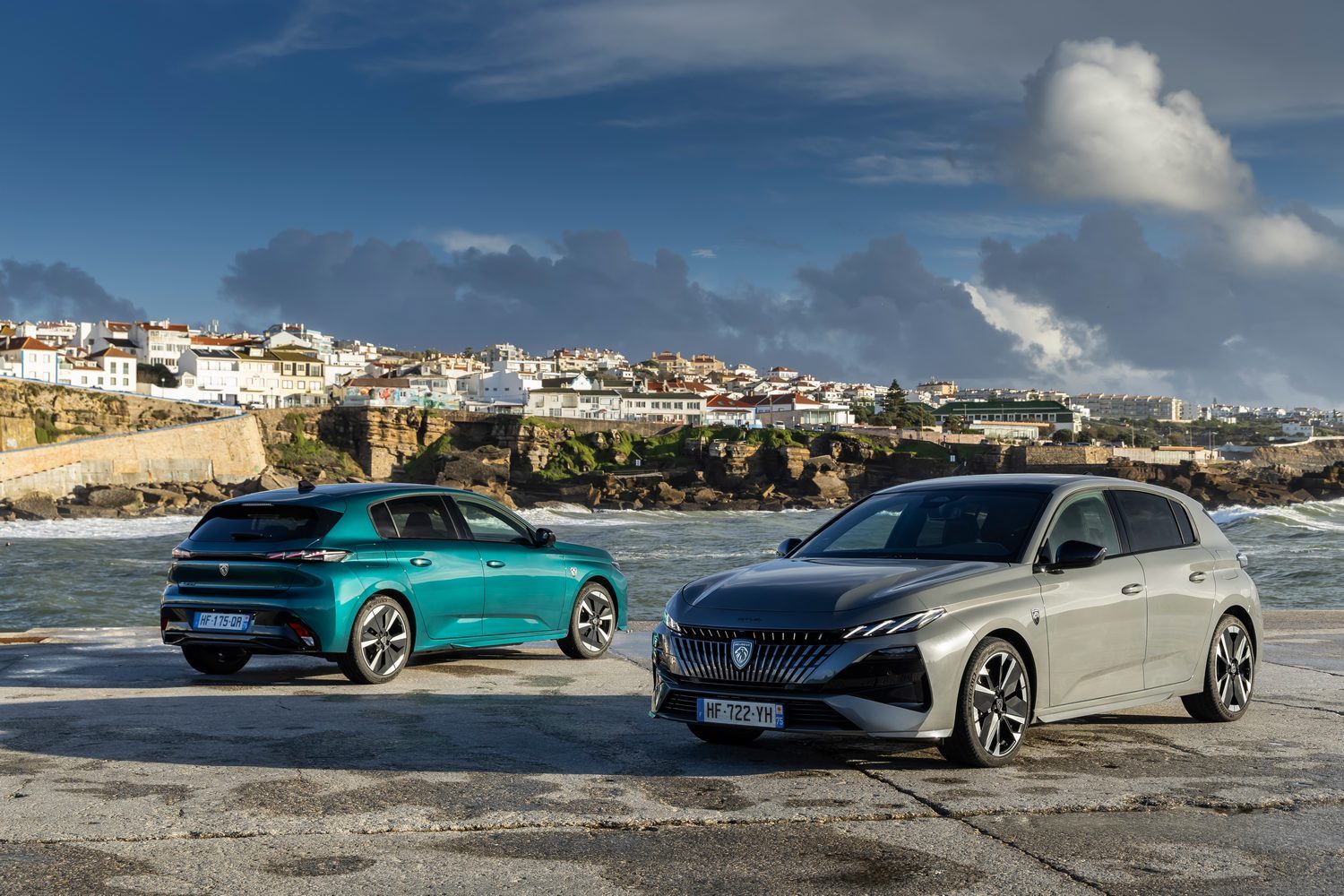
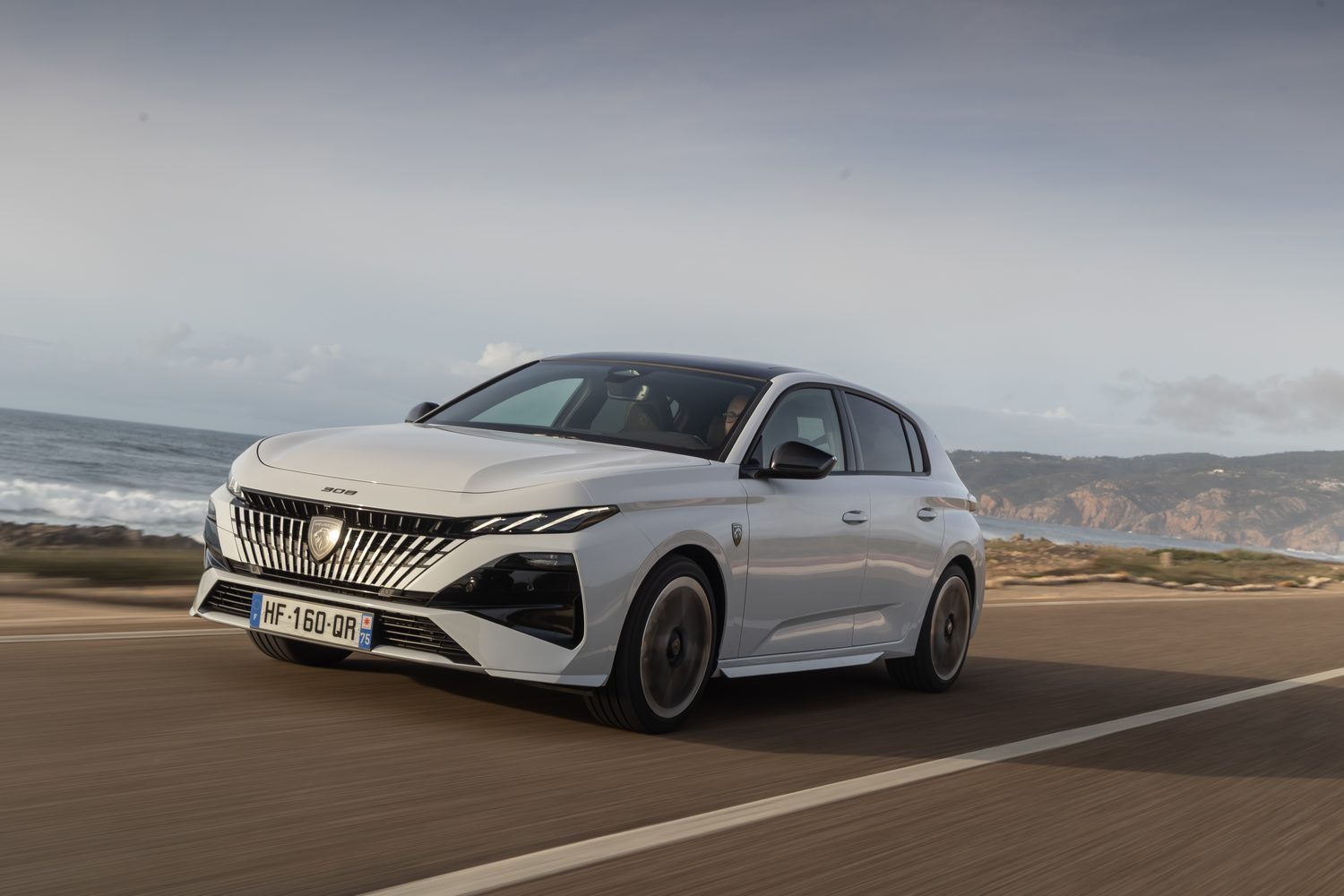
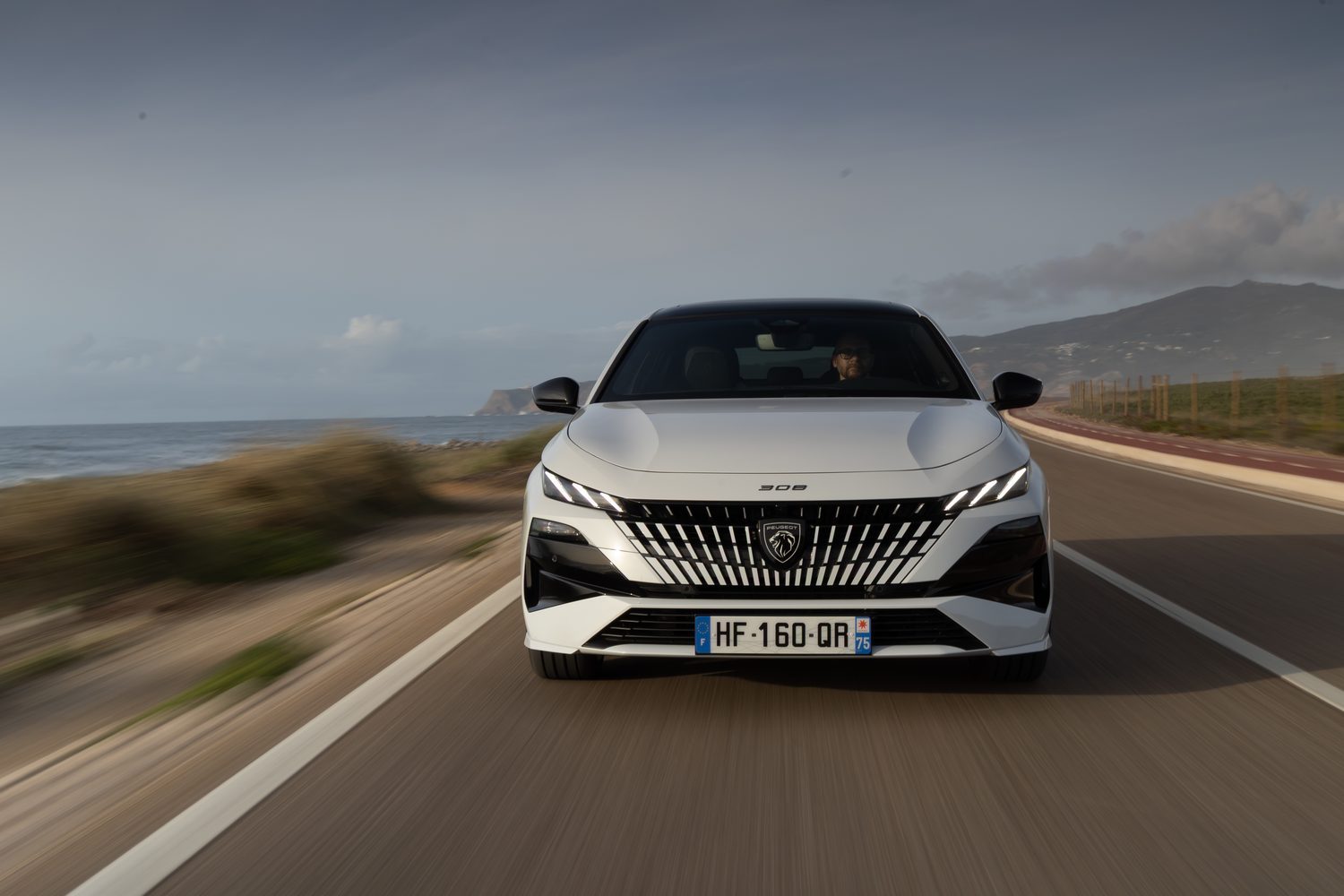
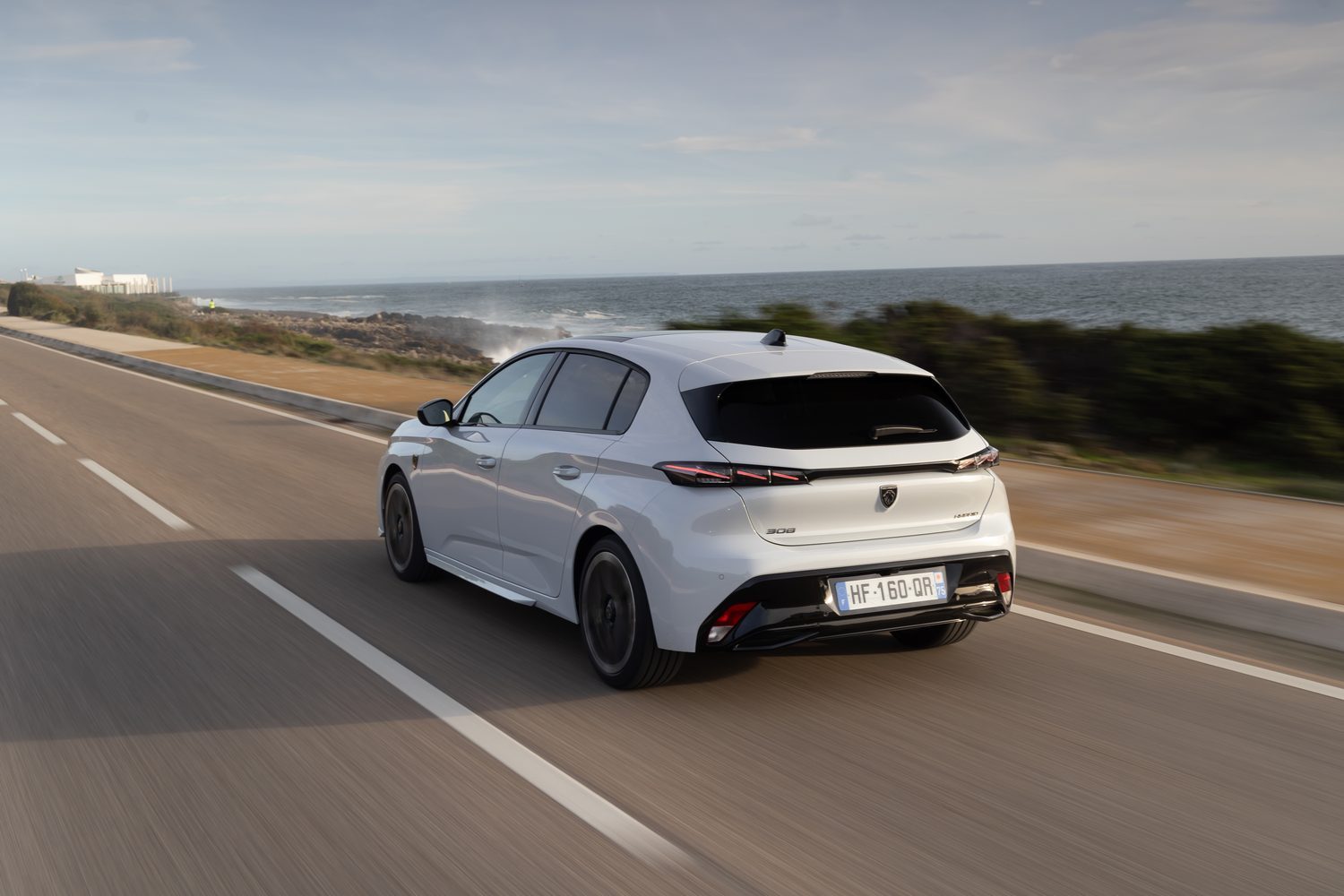
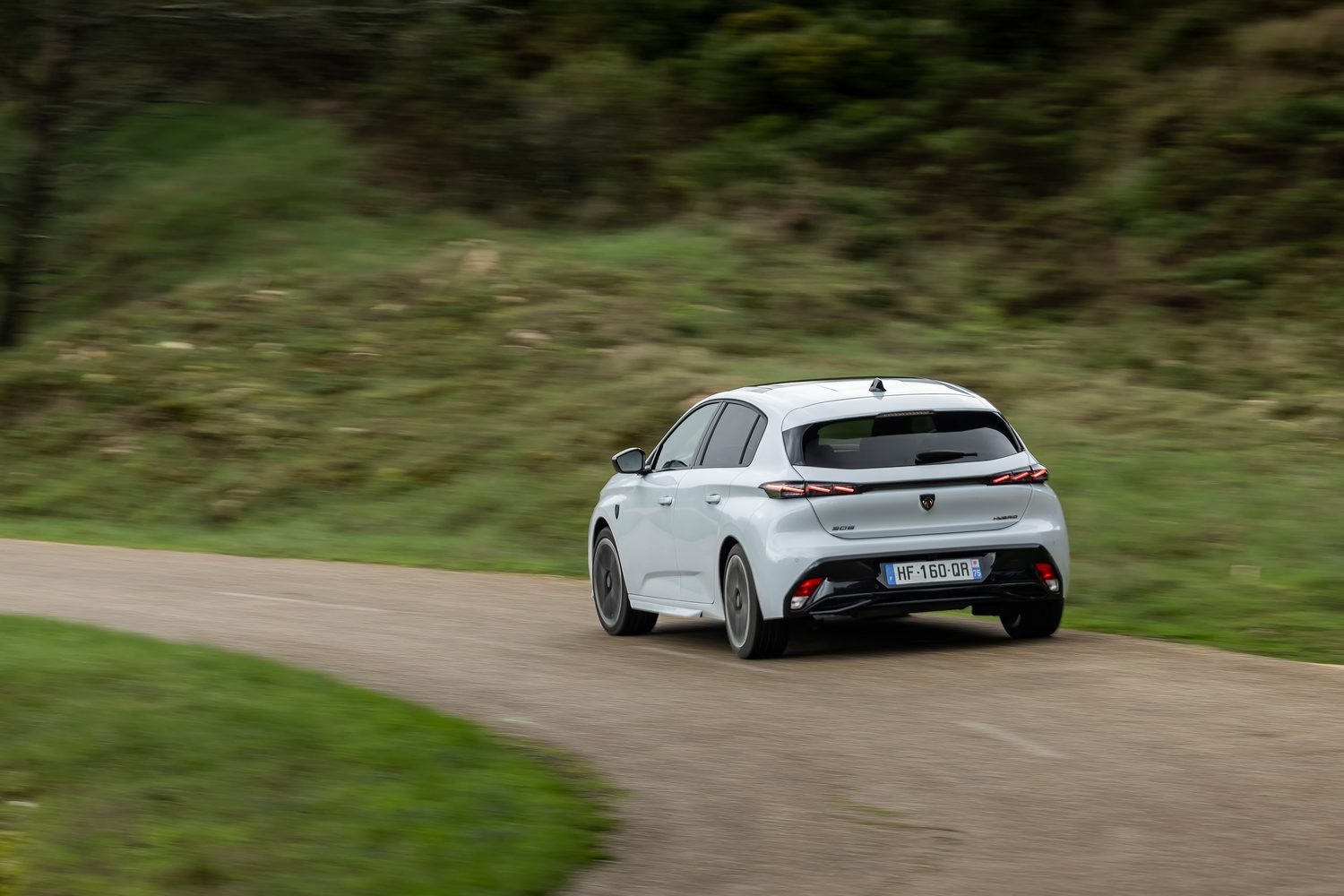
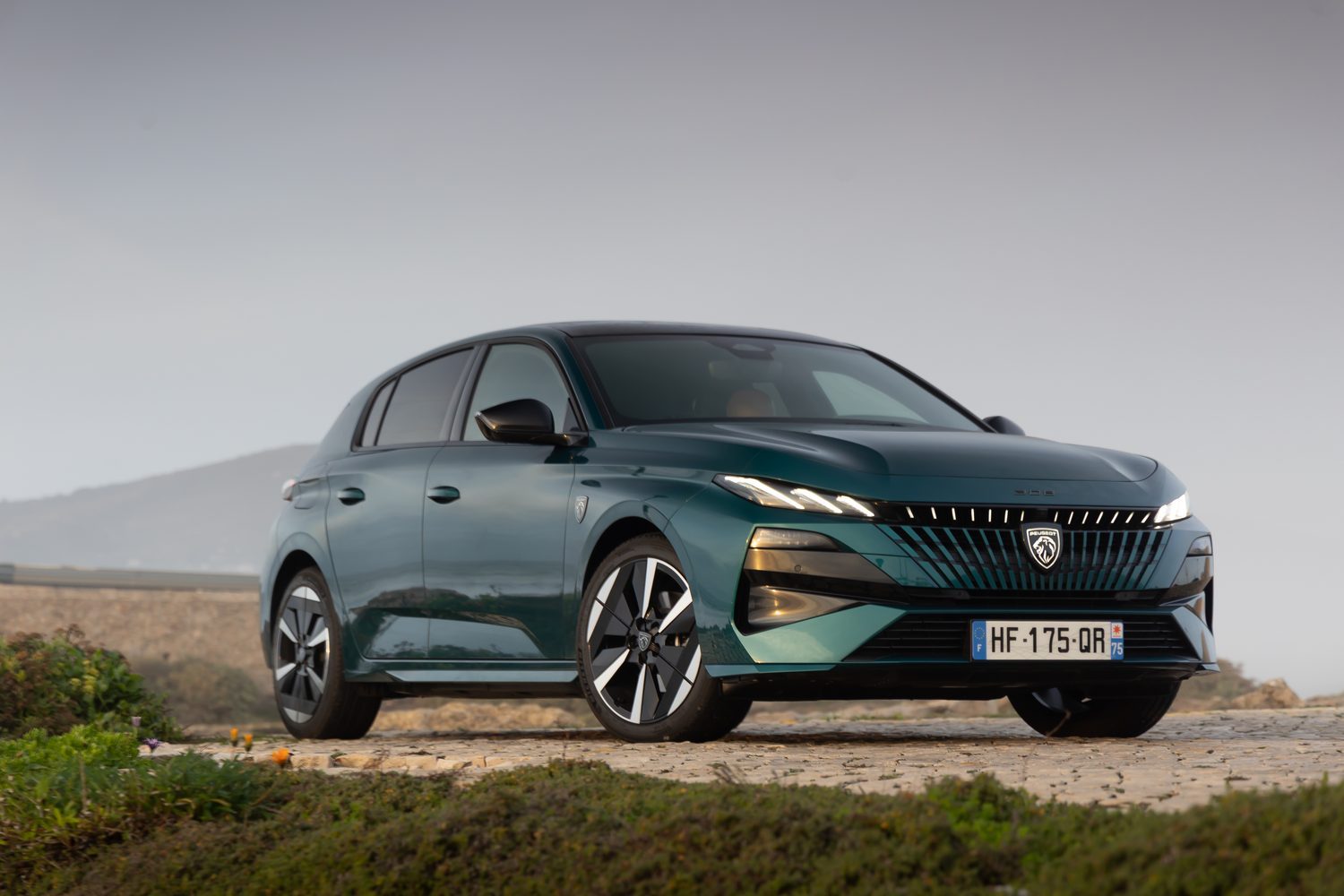
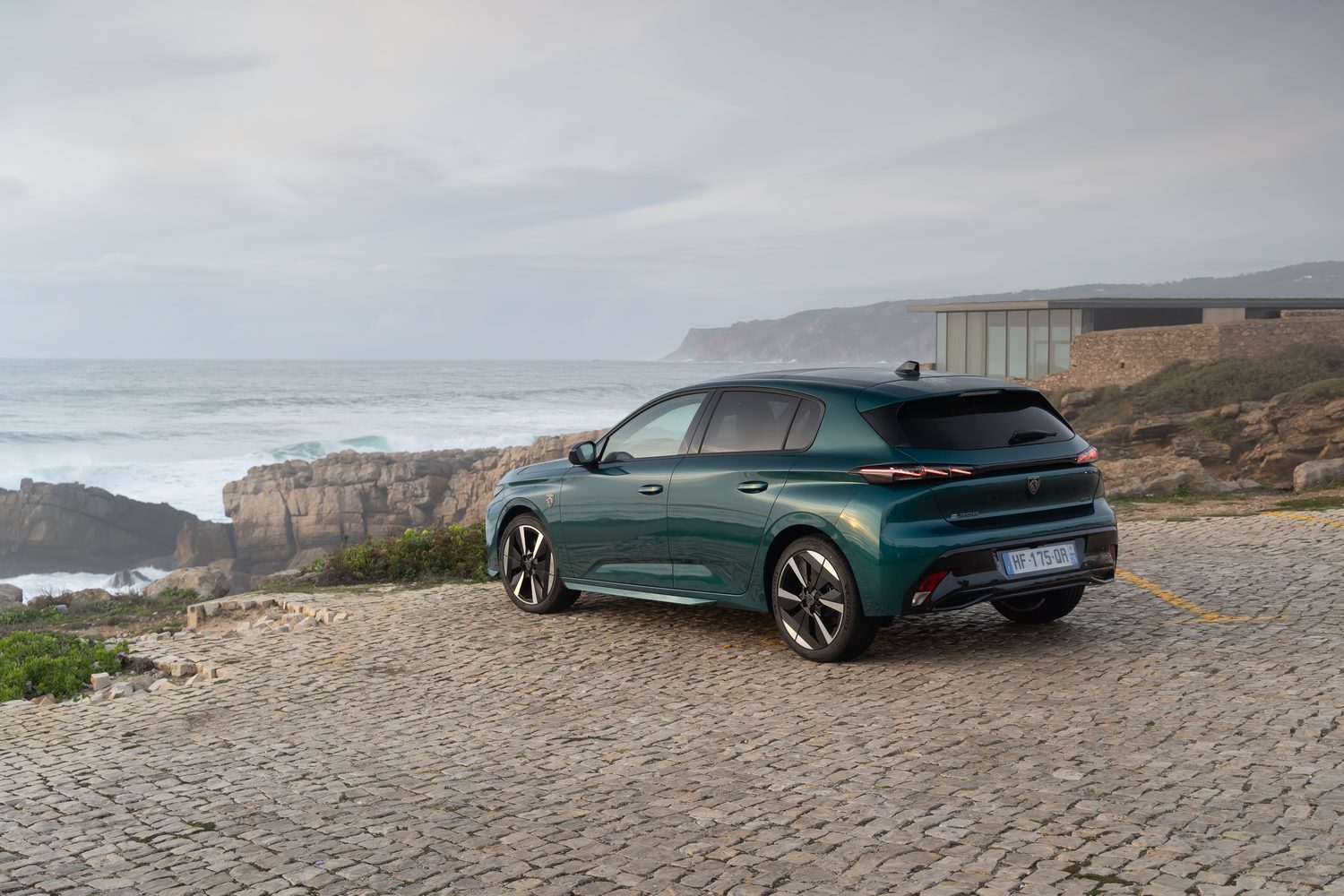
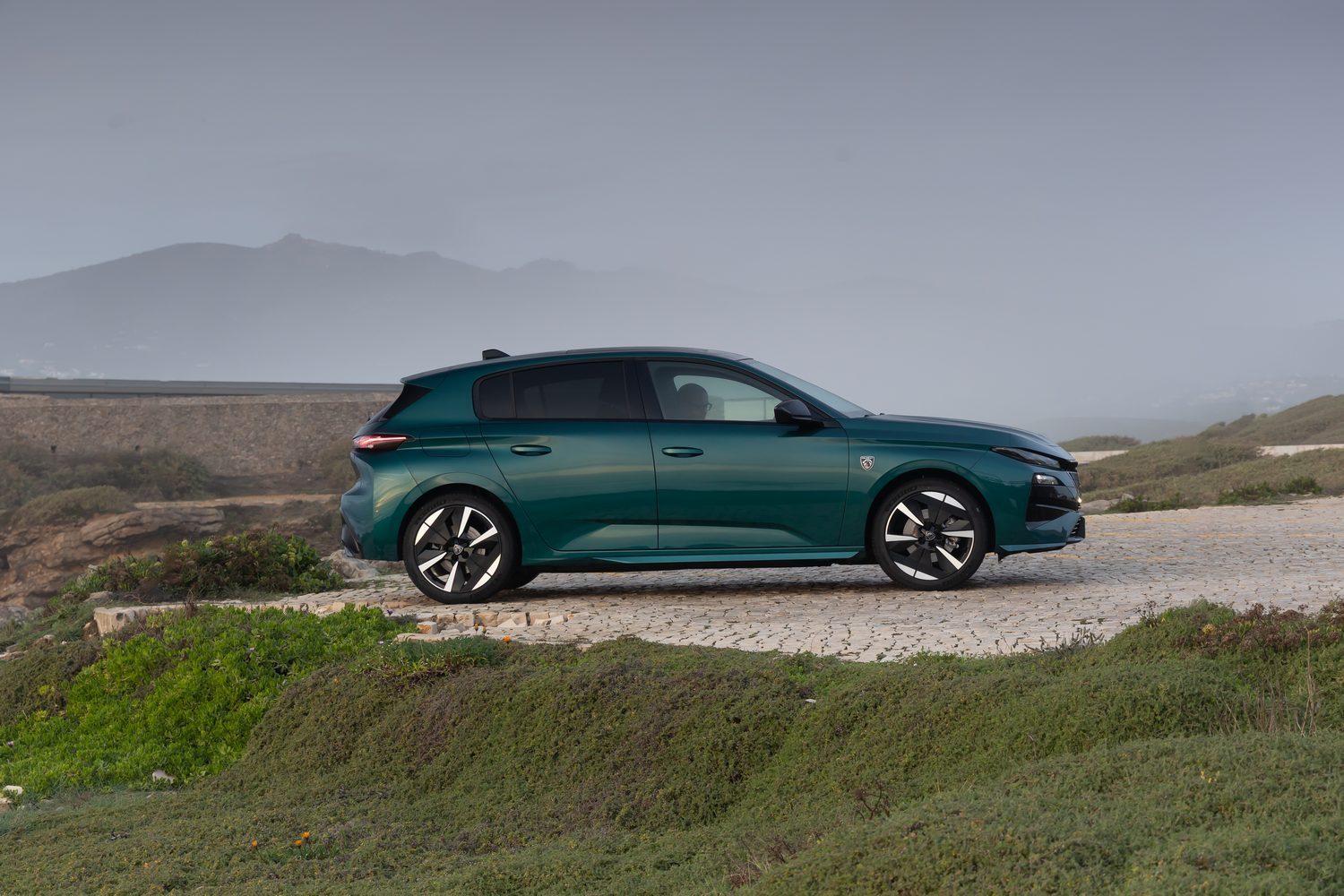
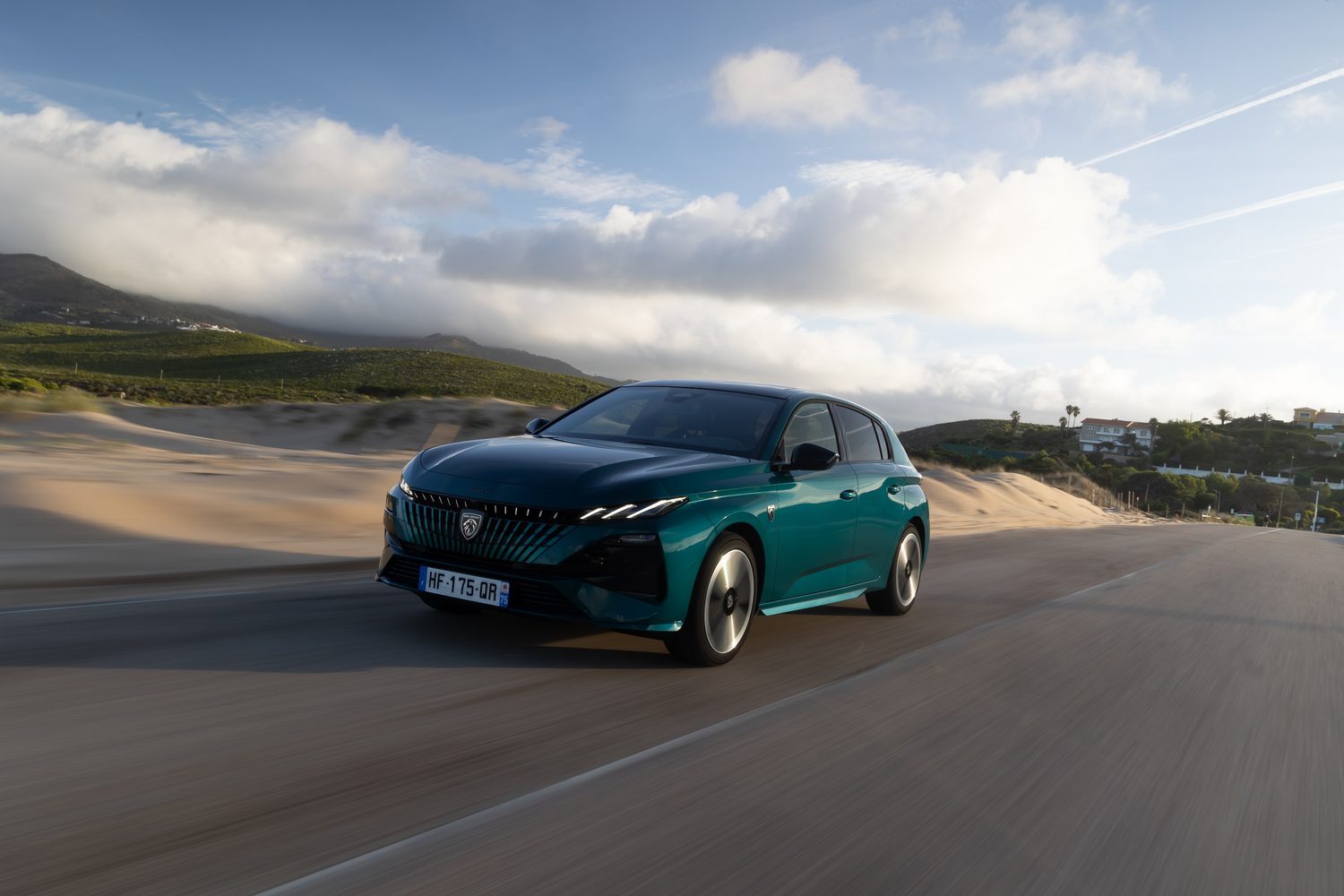
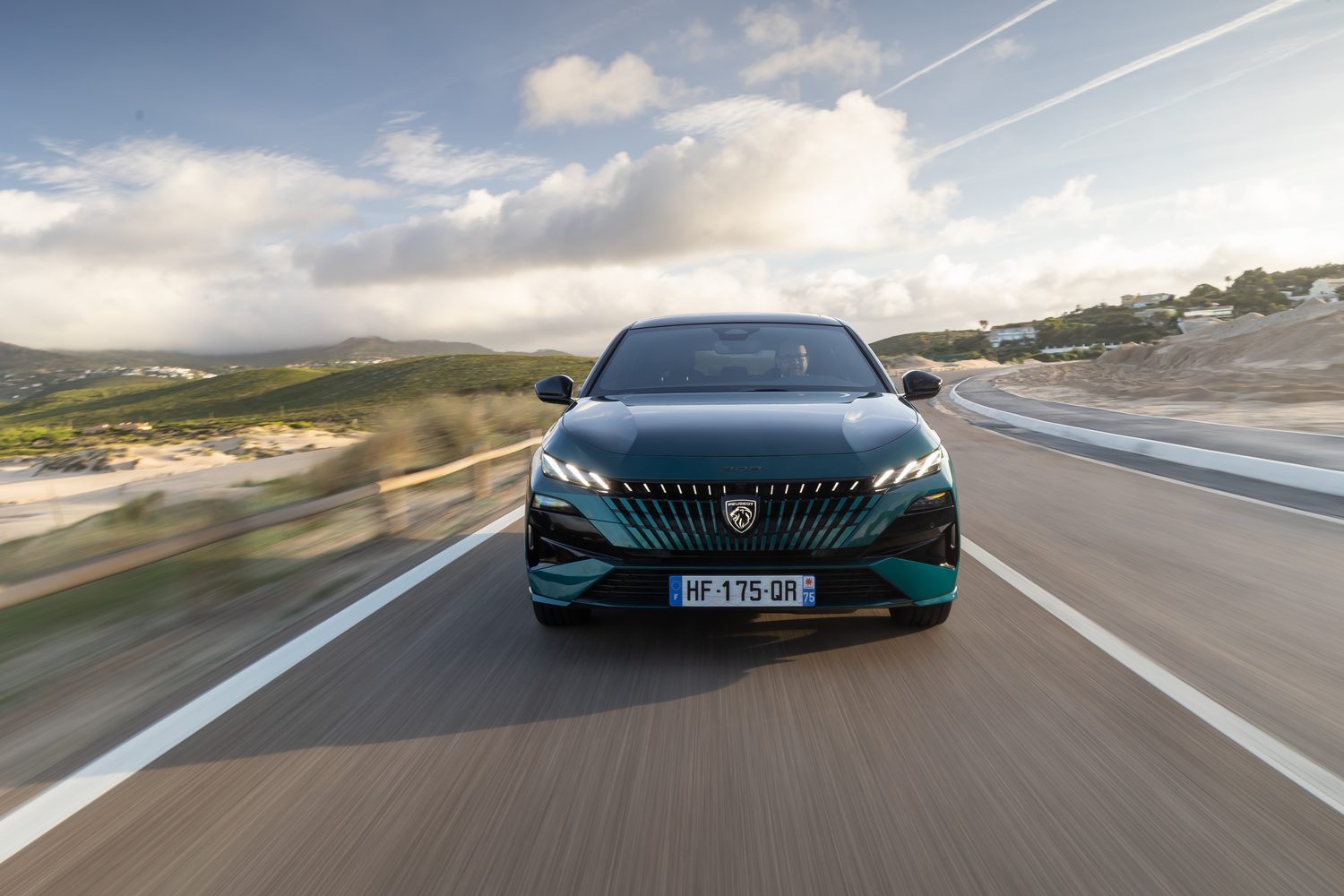
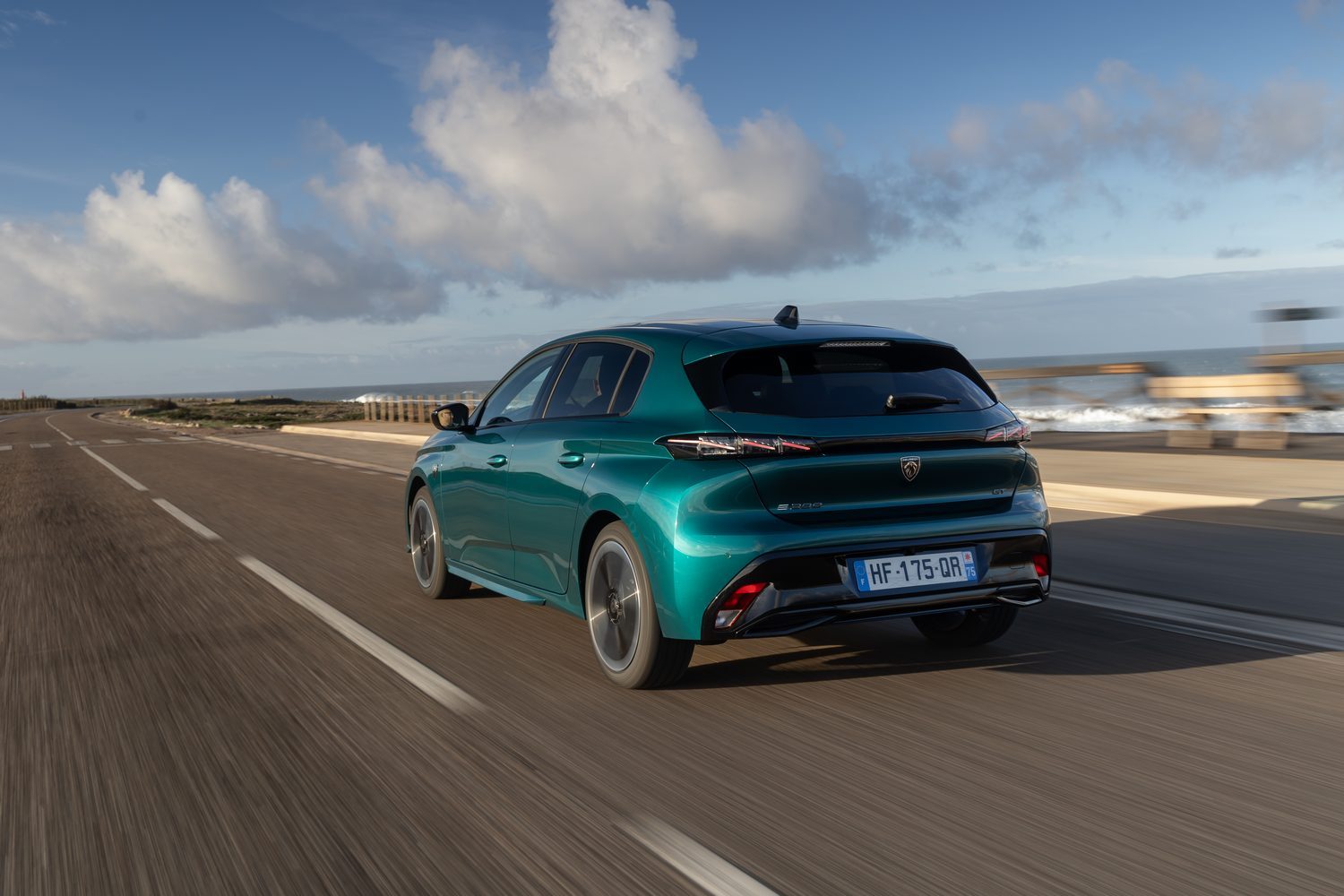
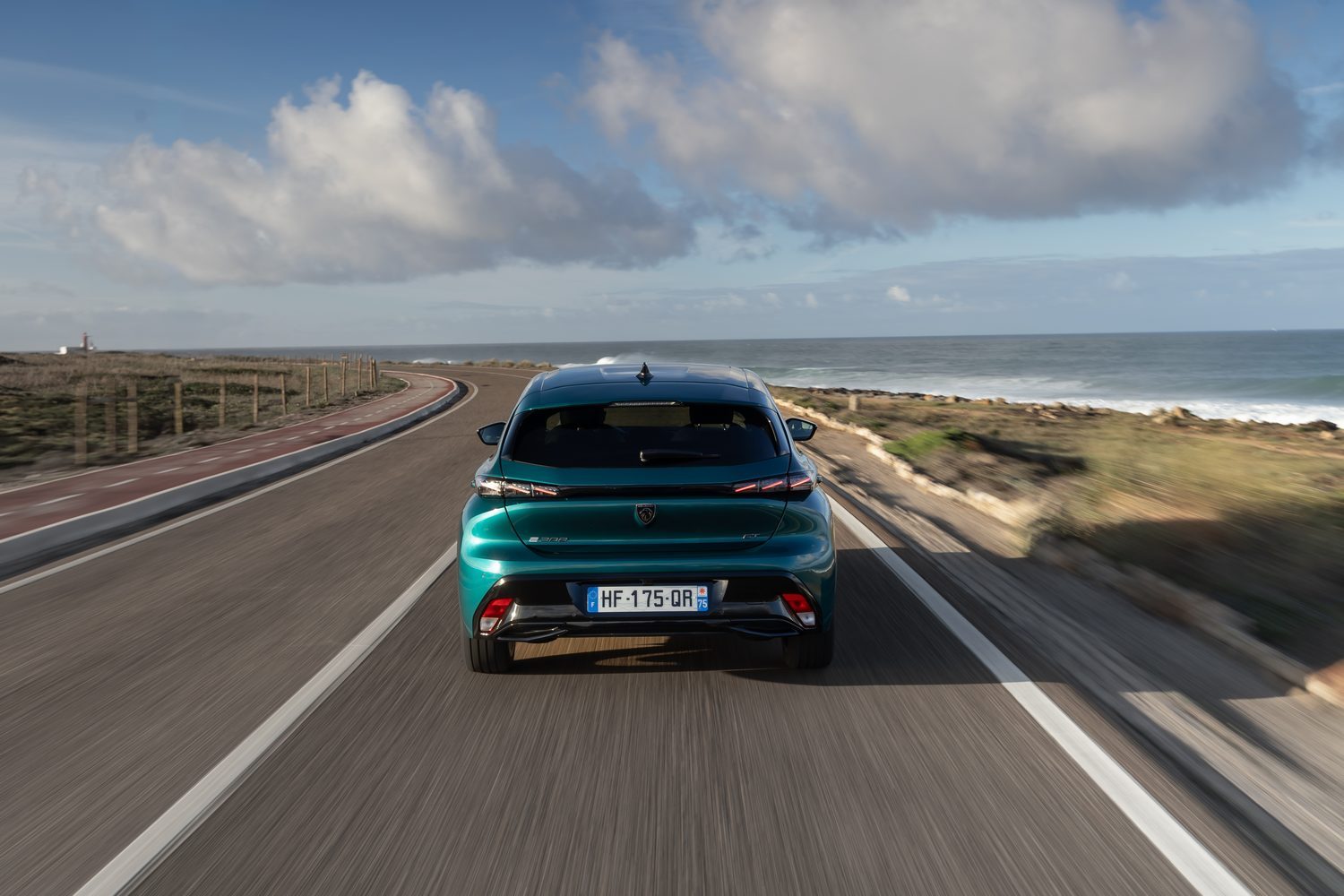
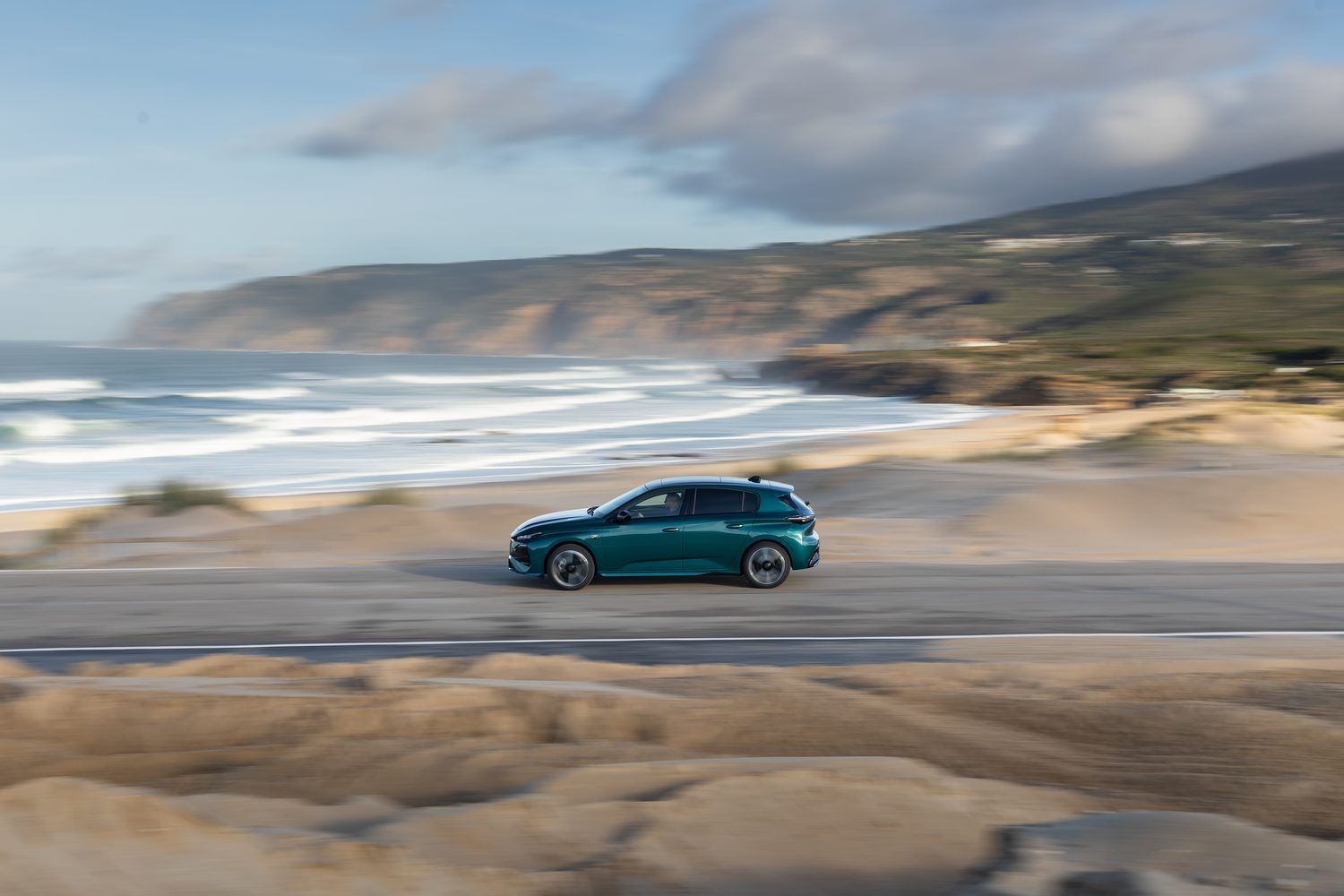
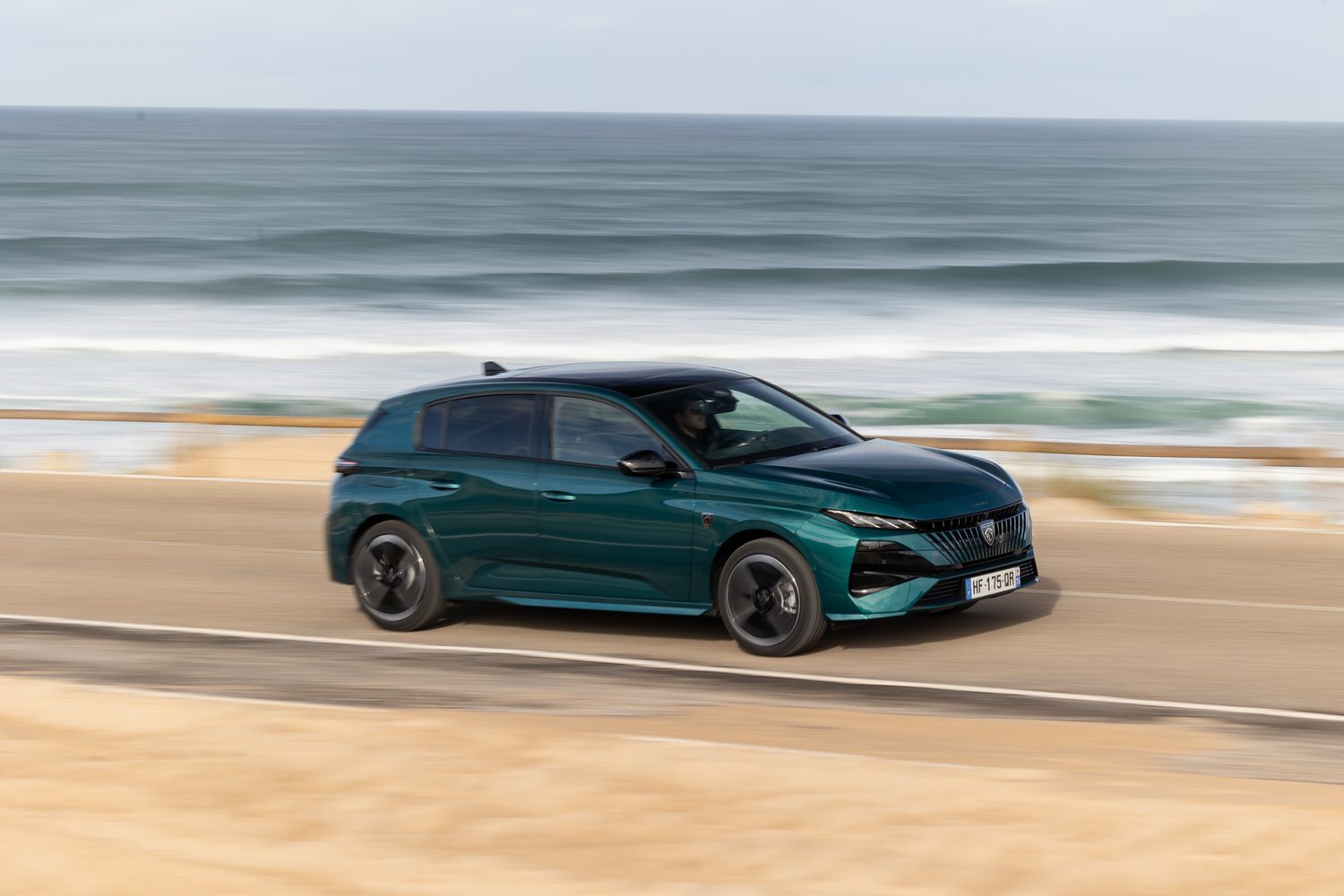
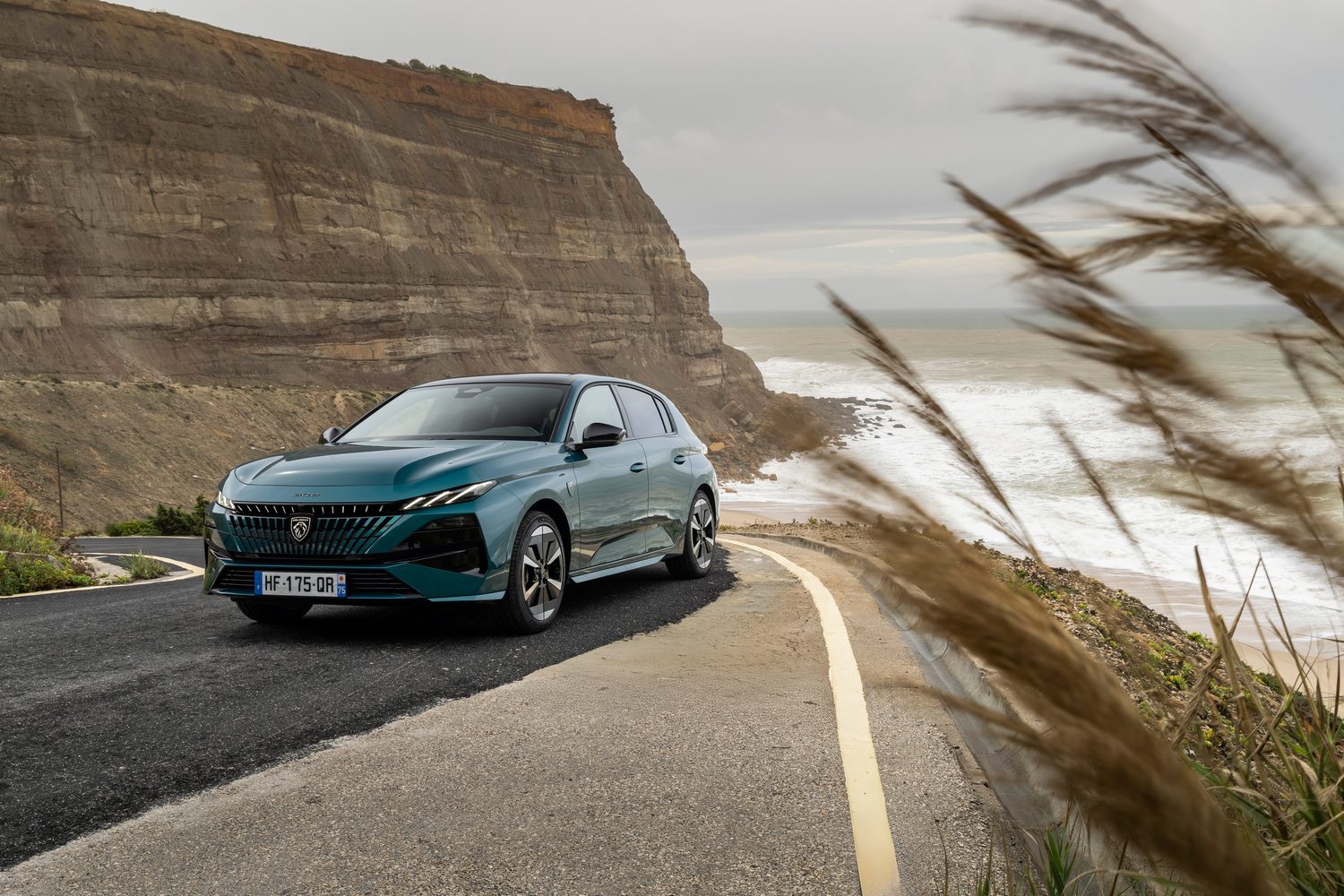
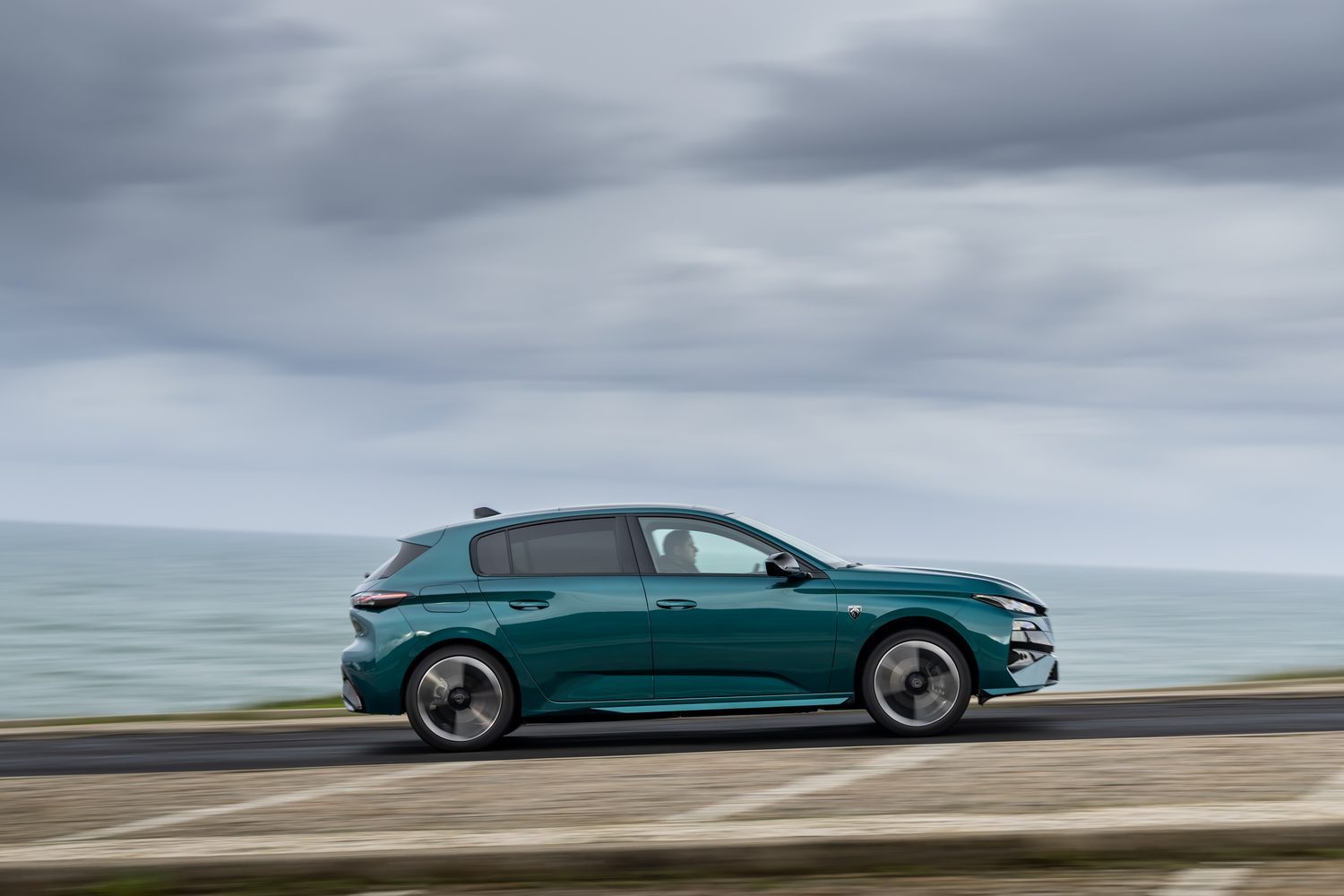
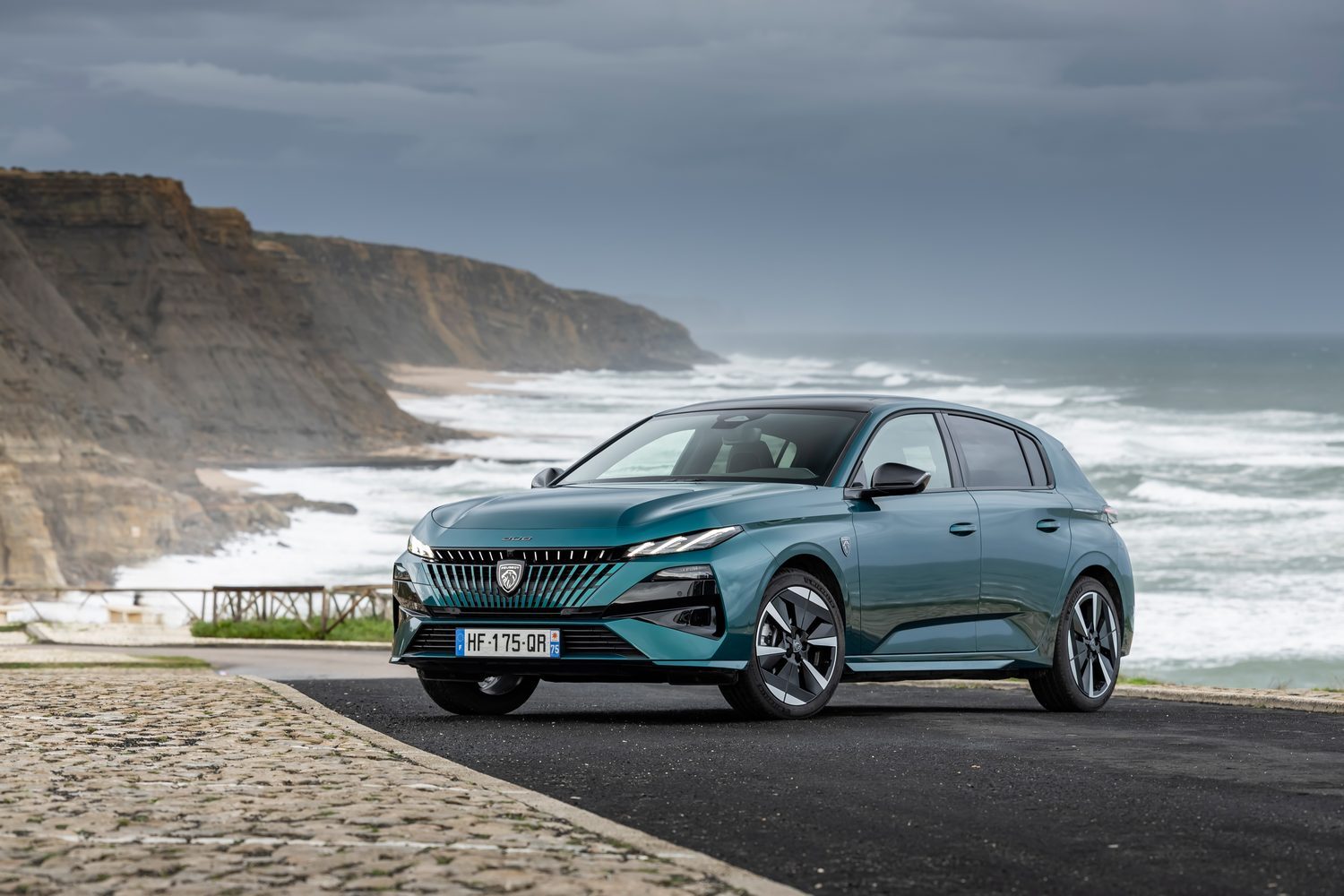
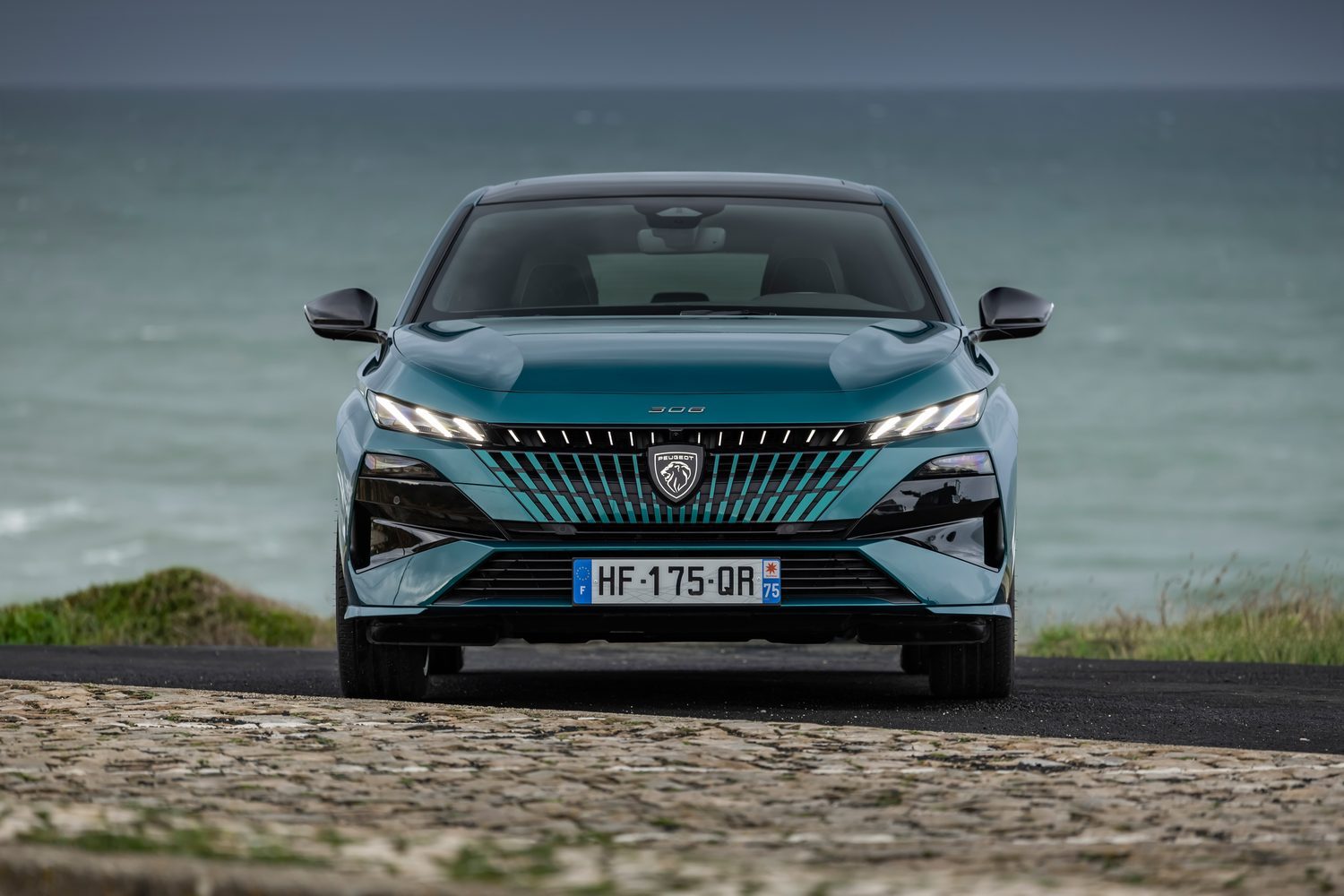
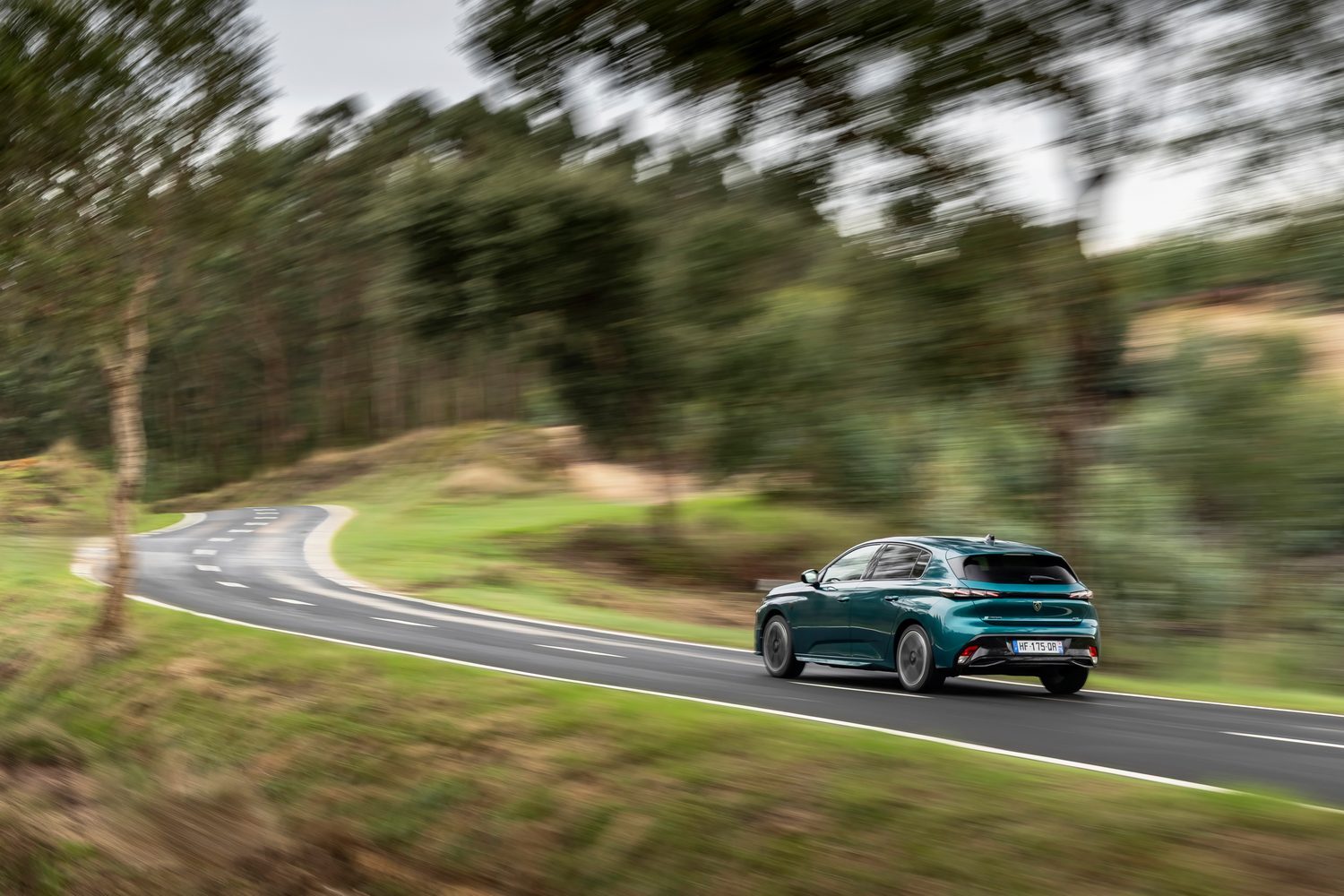
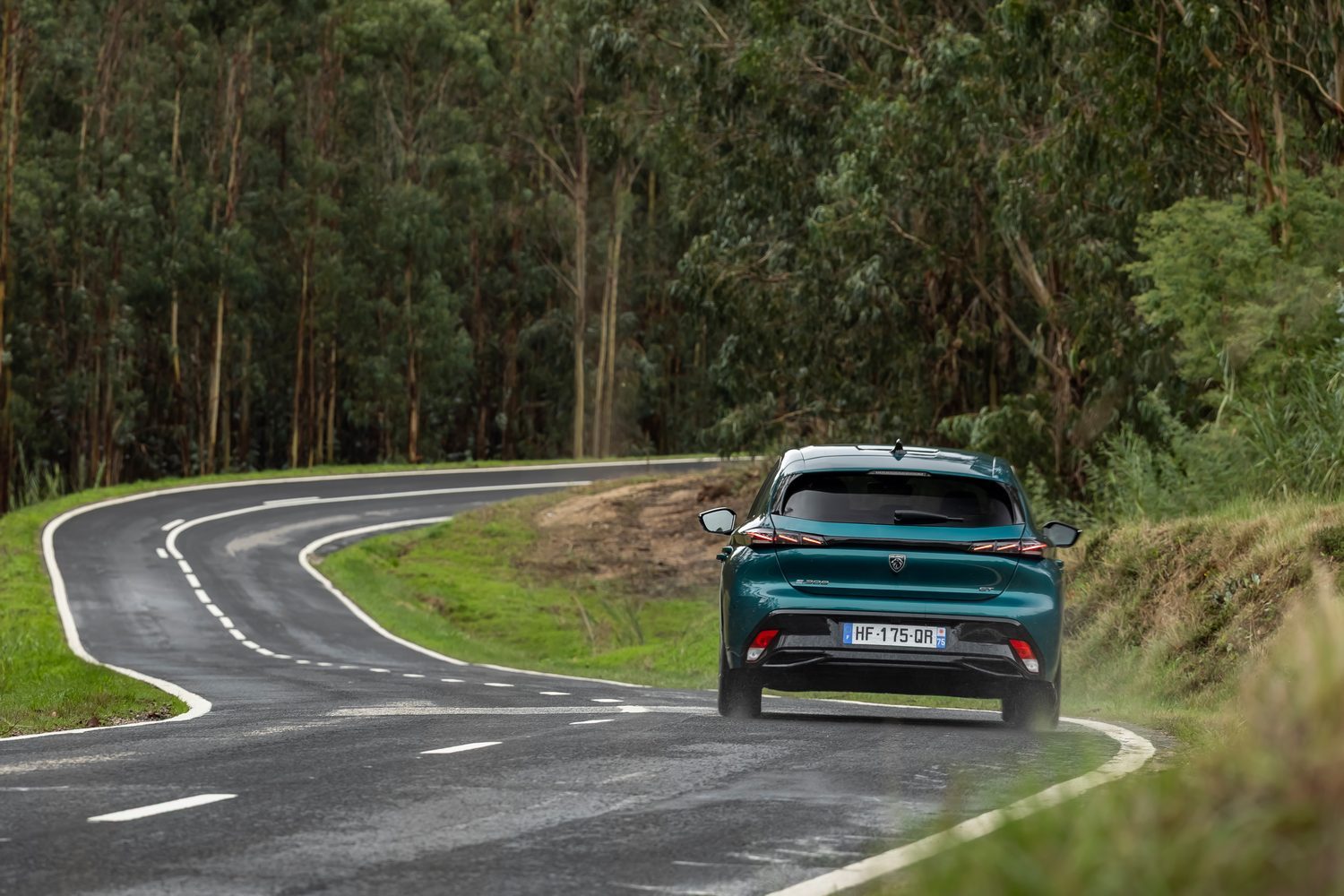
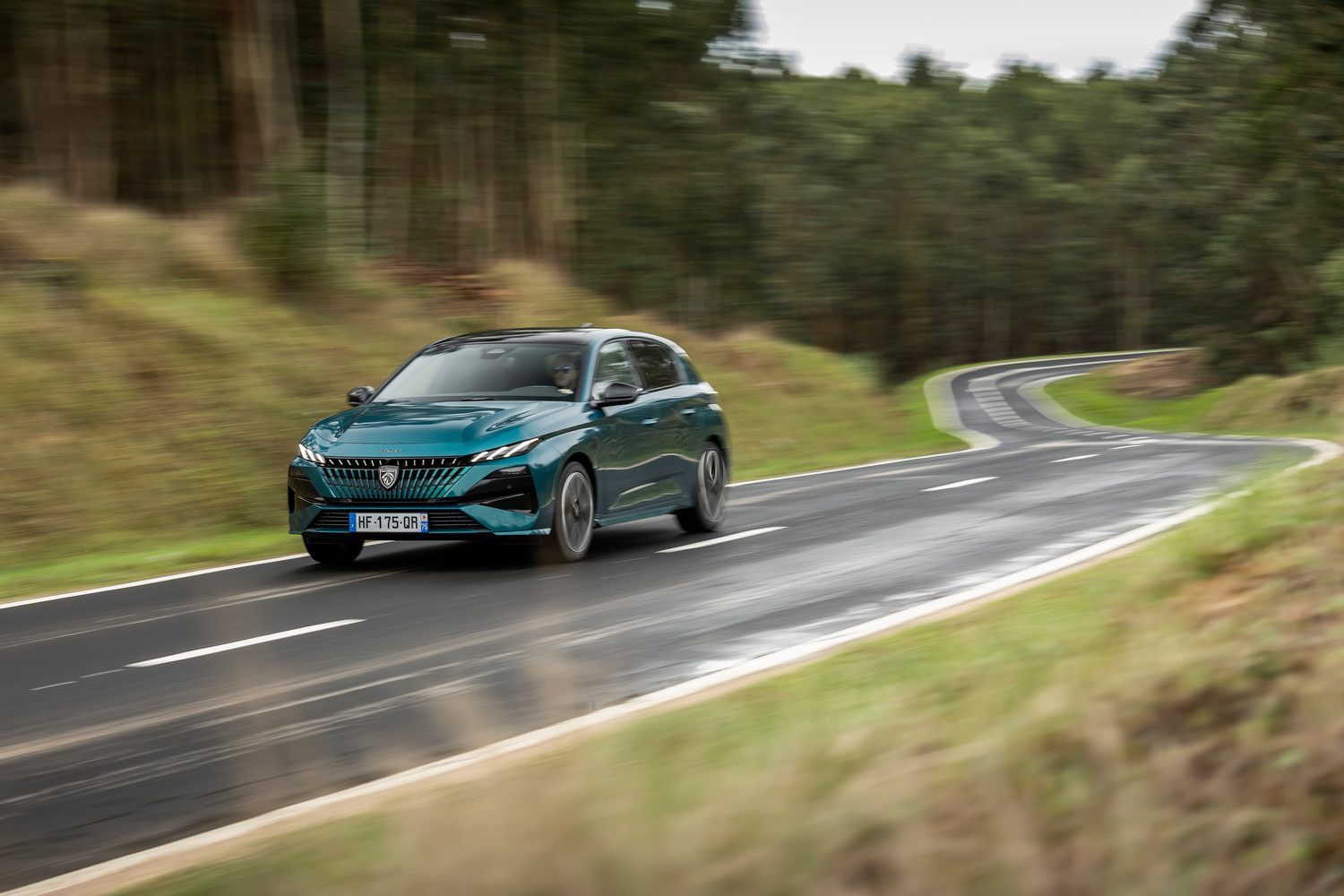
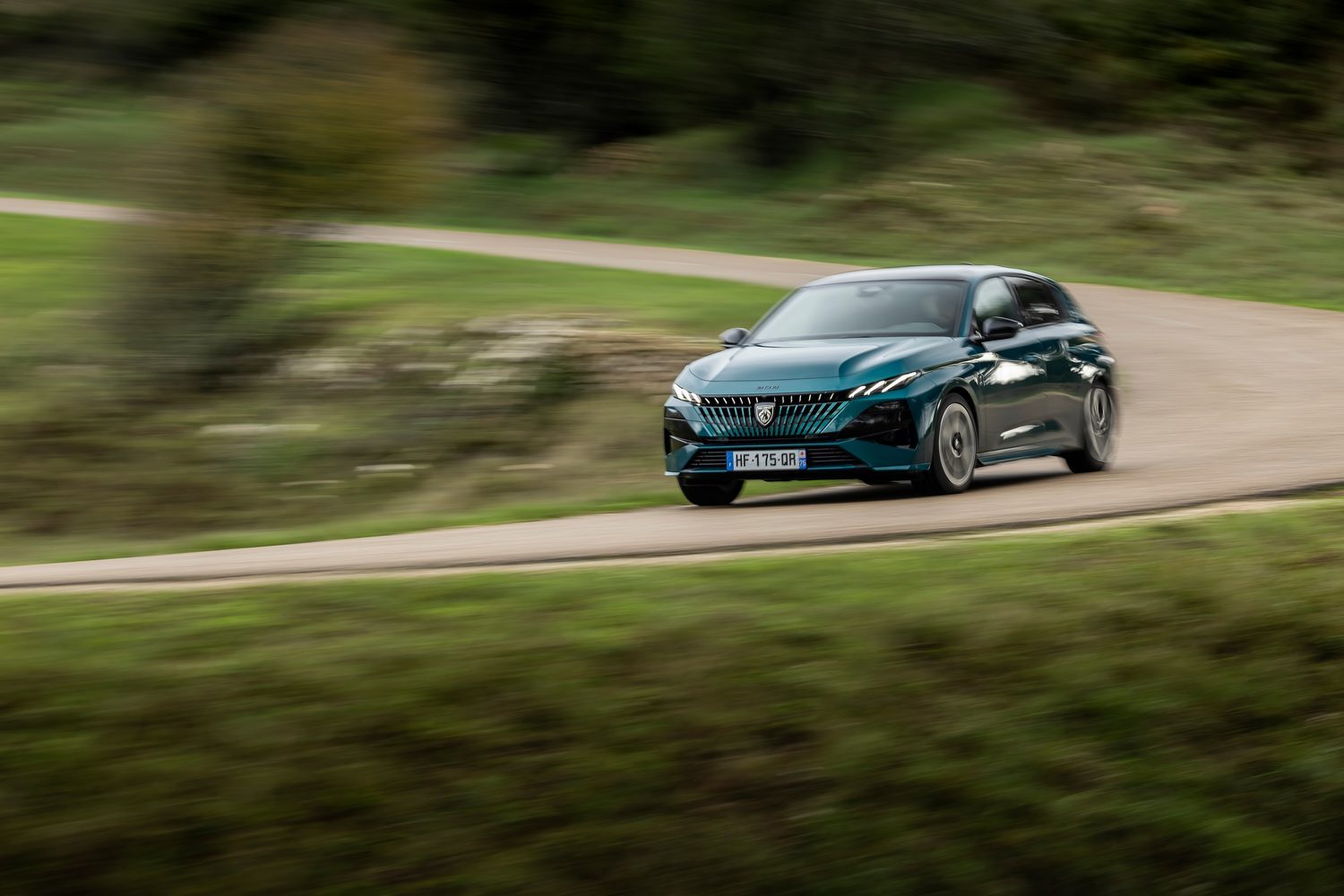

Exterior & design of the 2026 Peugeot 308
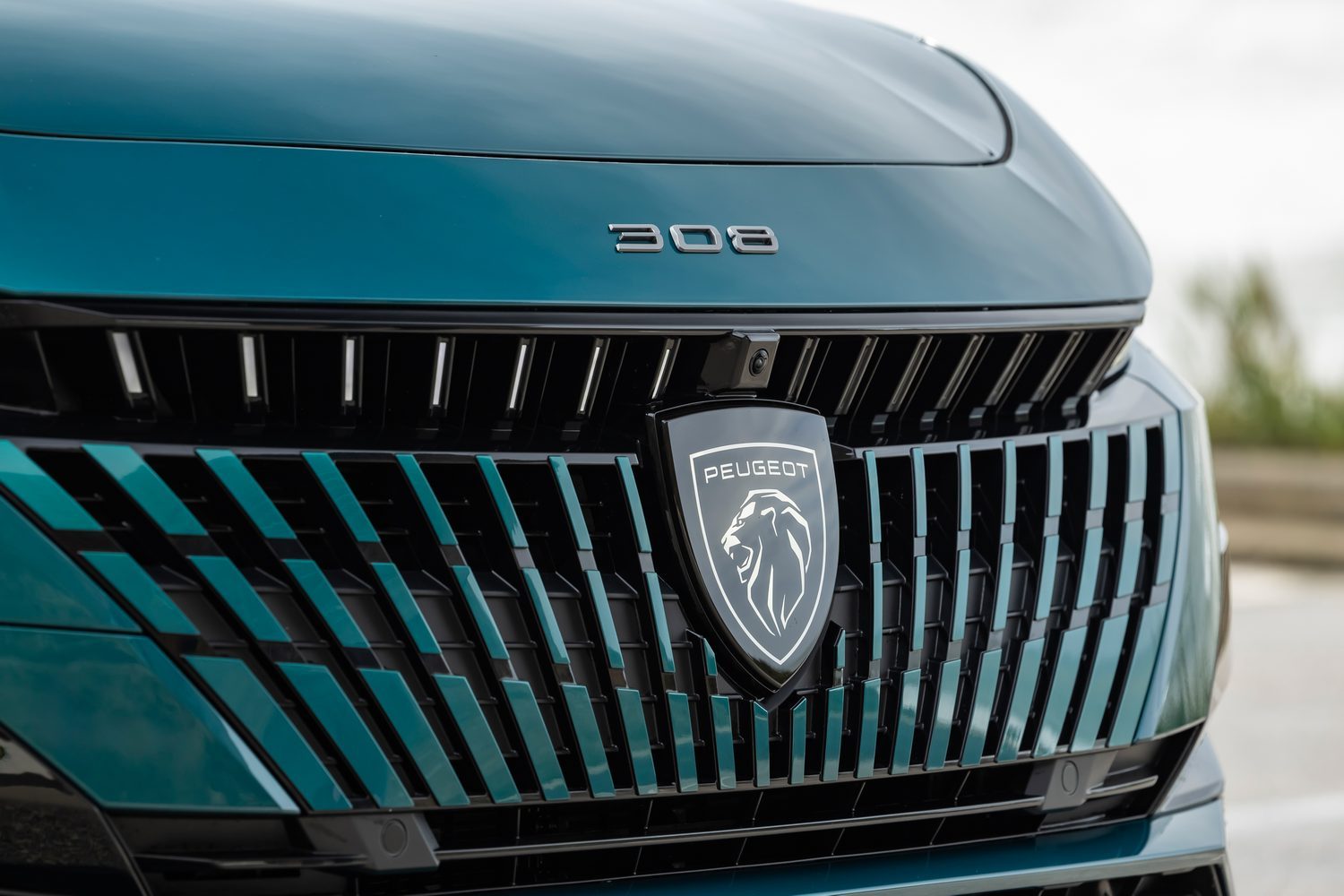
- Illuminated grille and logo denote facelift
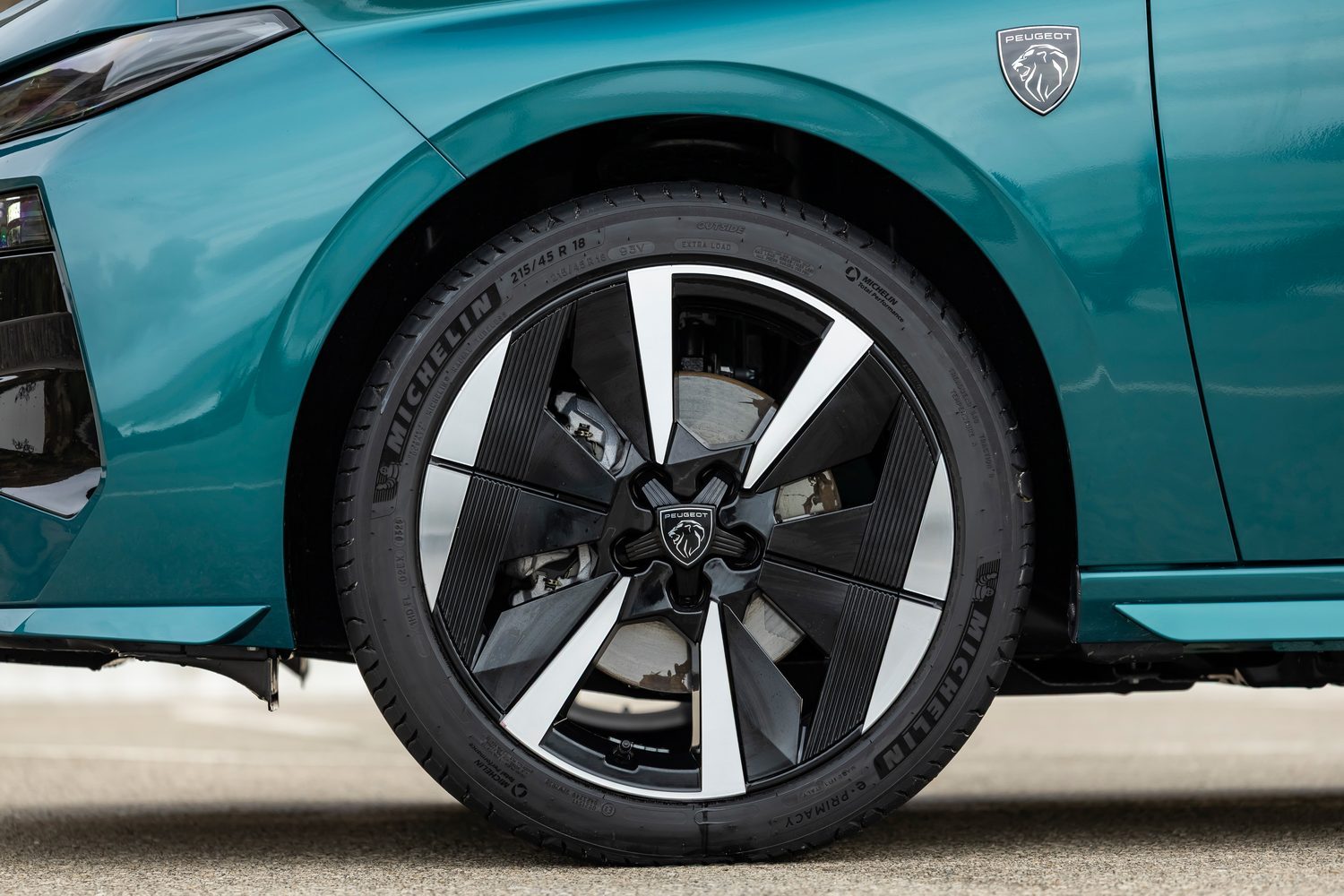
- Fresh colours and alloy wheels added
- Choice of two body styles

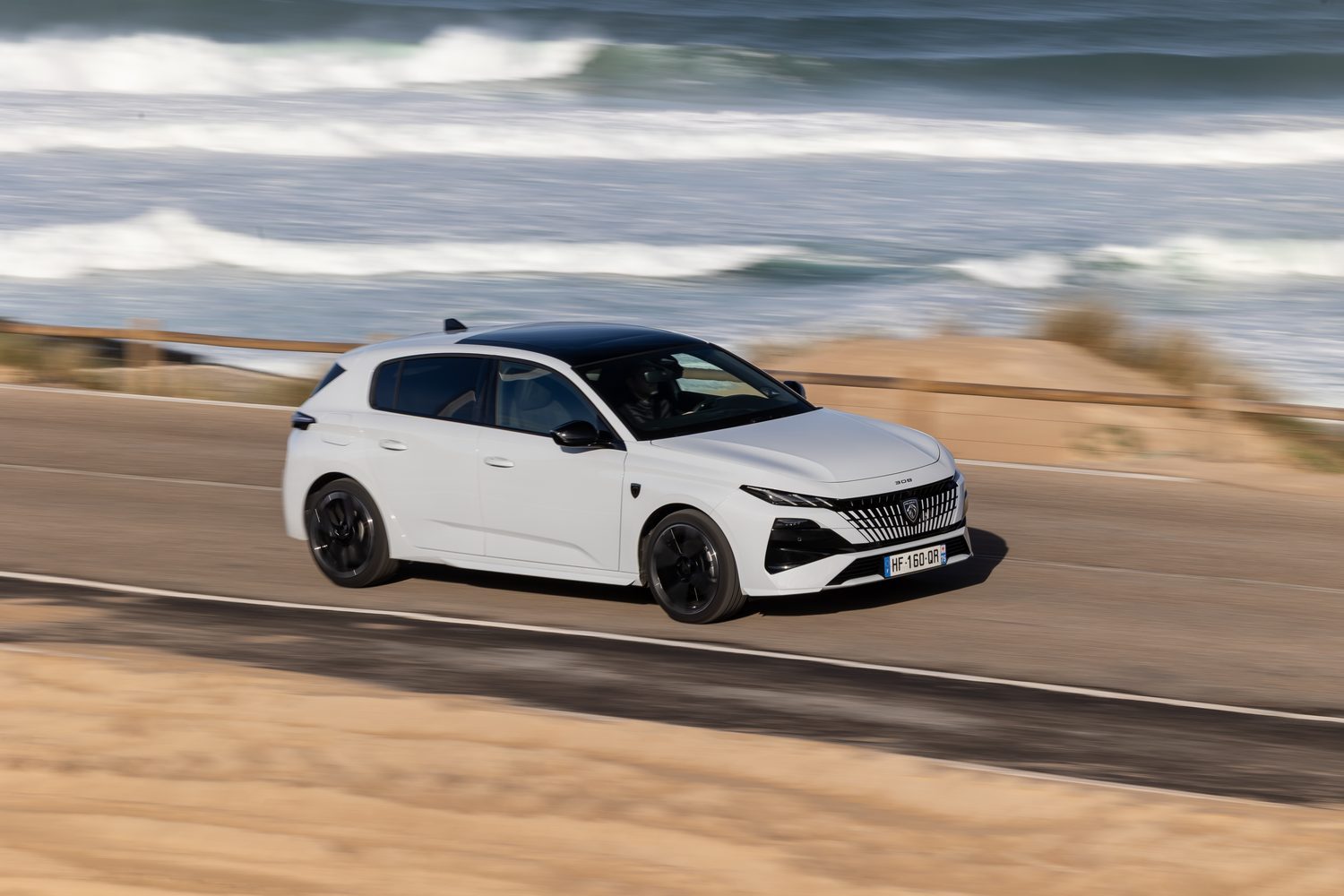
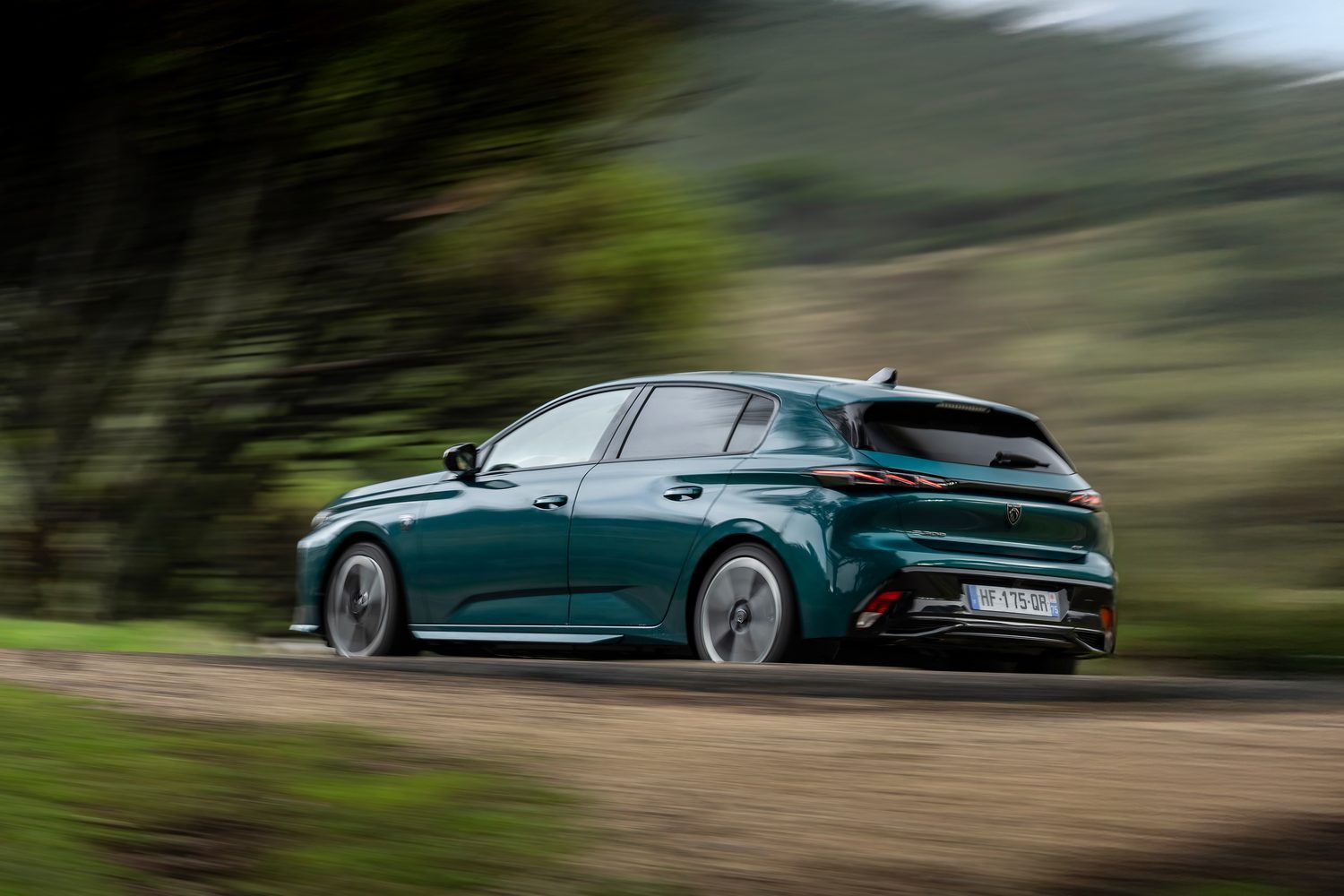
Modern-era car facelifts can sometimes be so subtle that they're next to impossible to discern, and if you don't actually focus on the latest 308's face then that would be the case here.
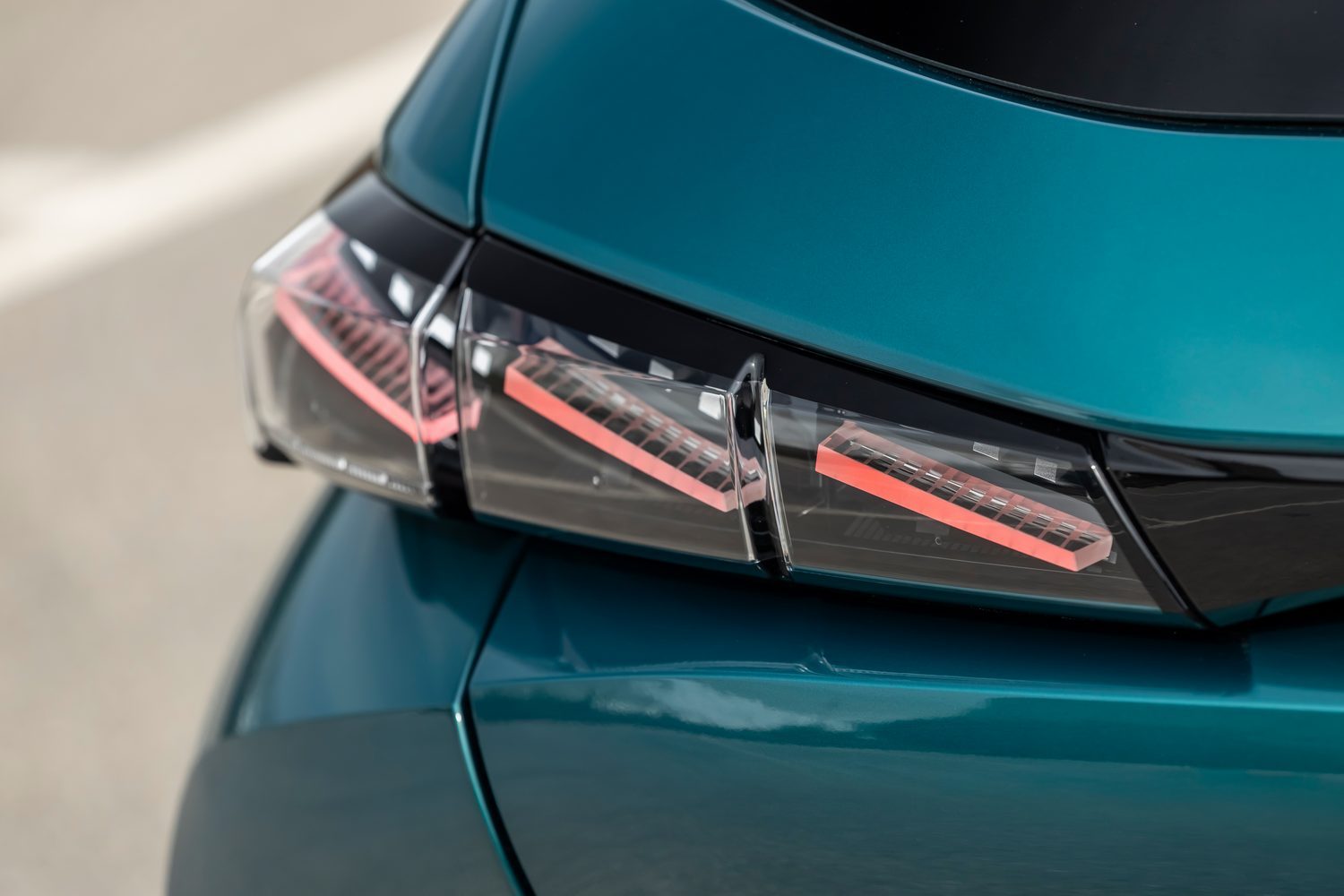
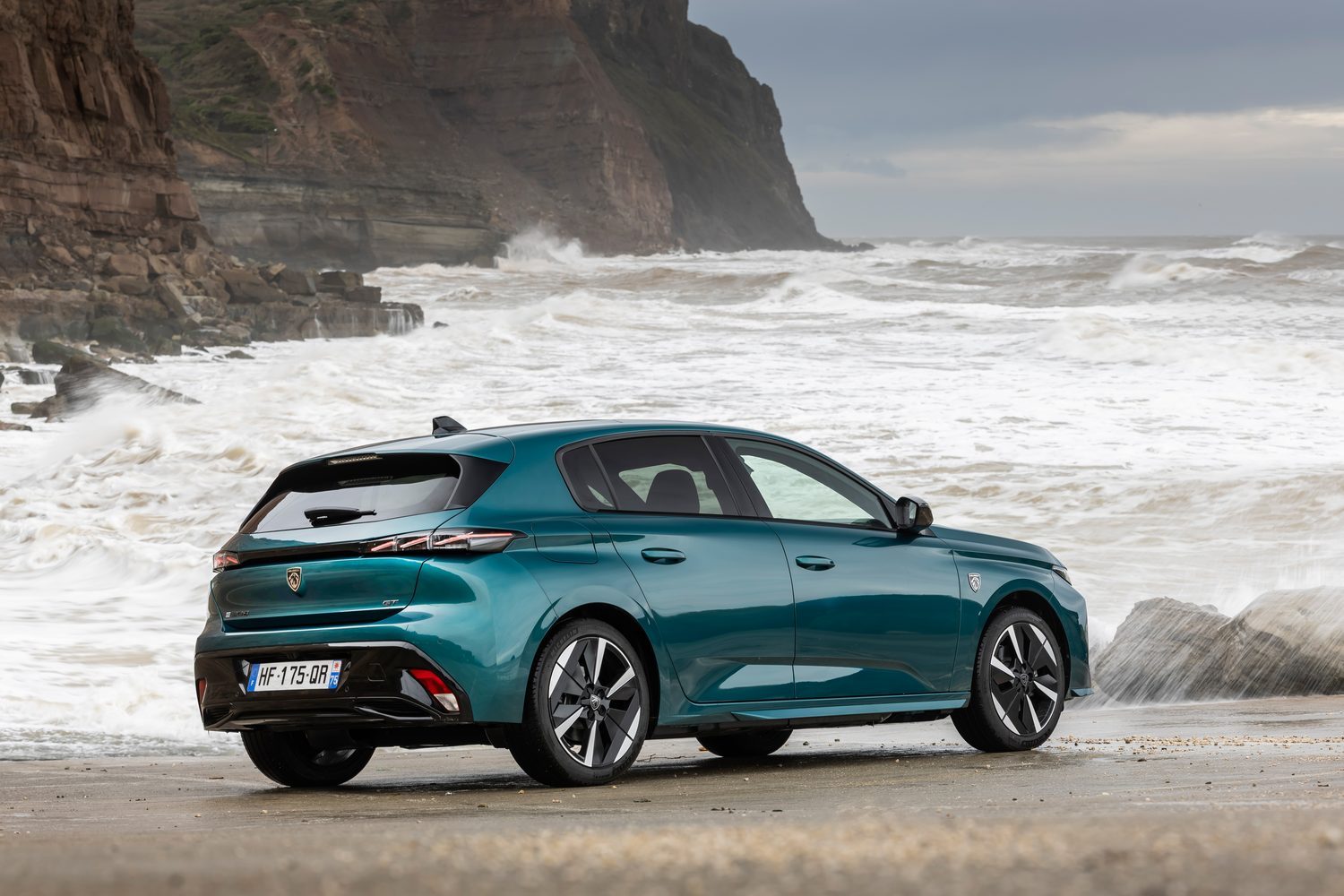
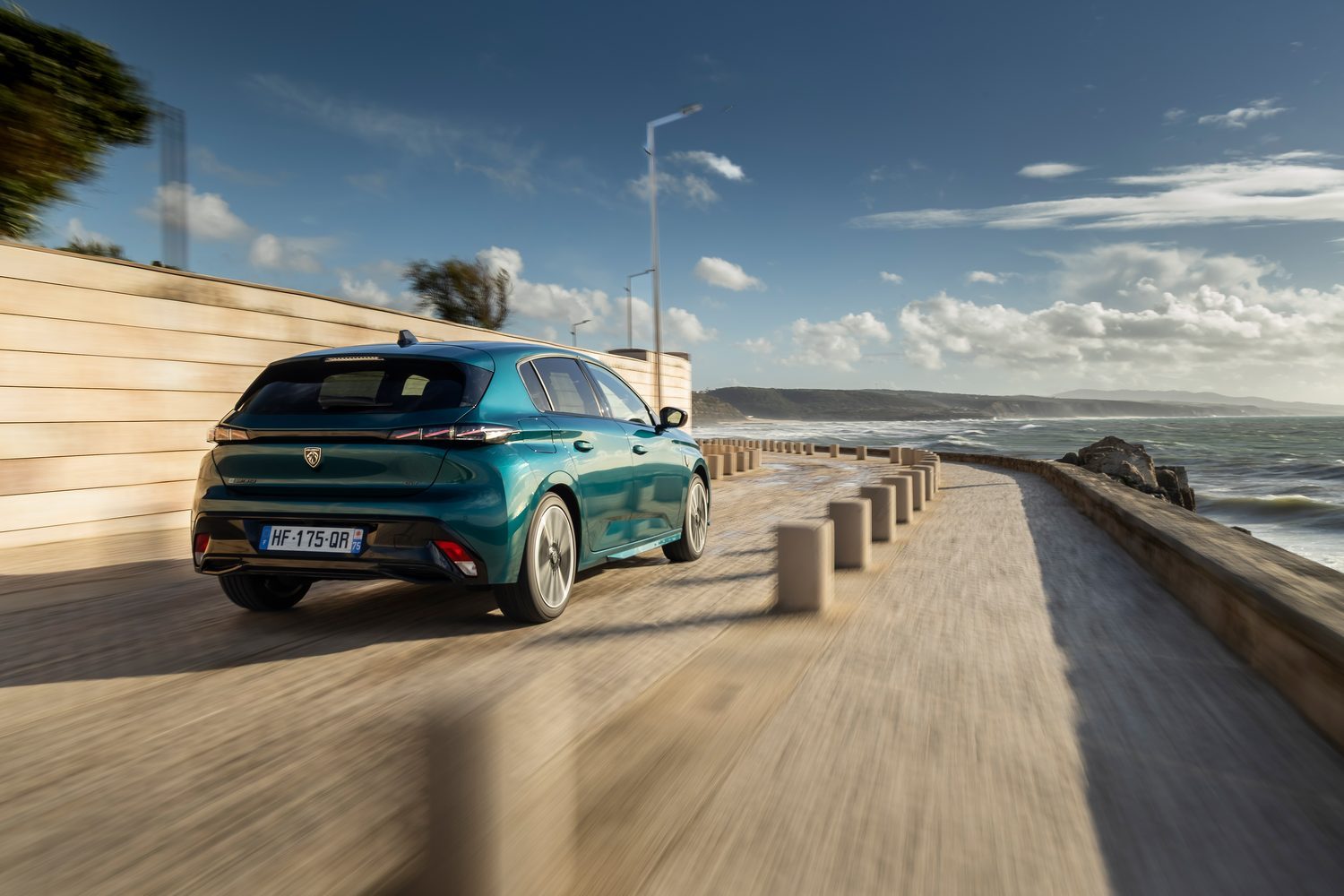
Aside from fresh colours and alloy wheels, at the back of the car there are just new 'triple-claw' taillights and revised exhaust surrounds in a black-panelled section of the bumper to pick out.

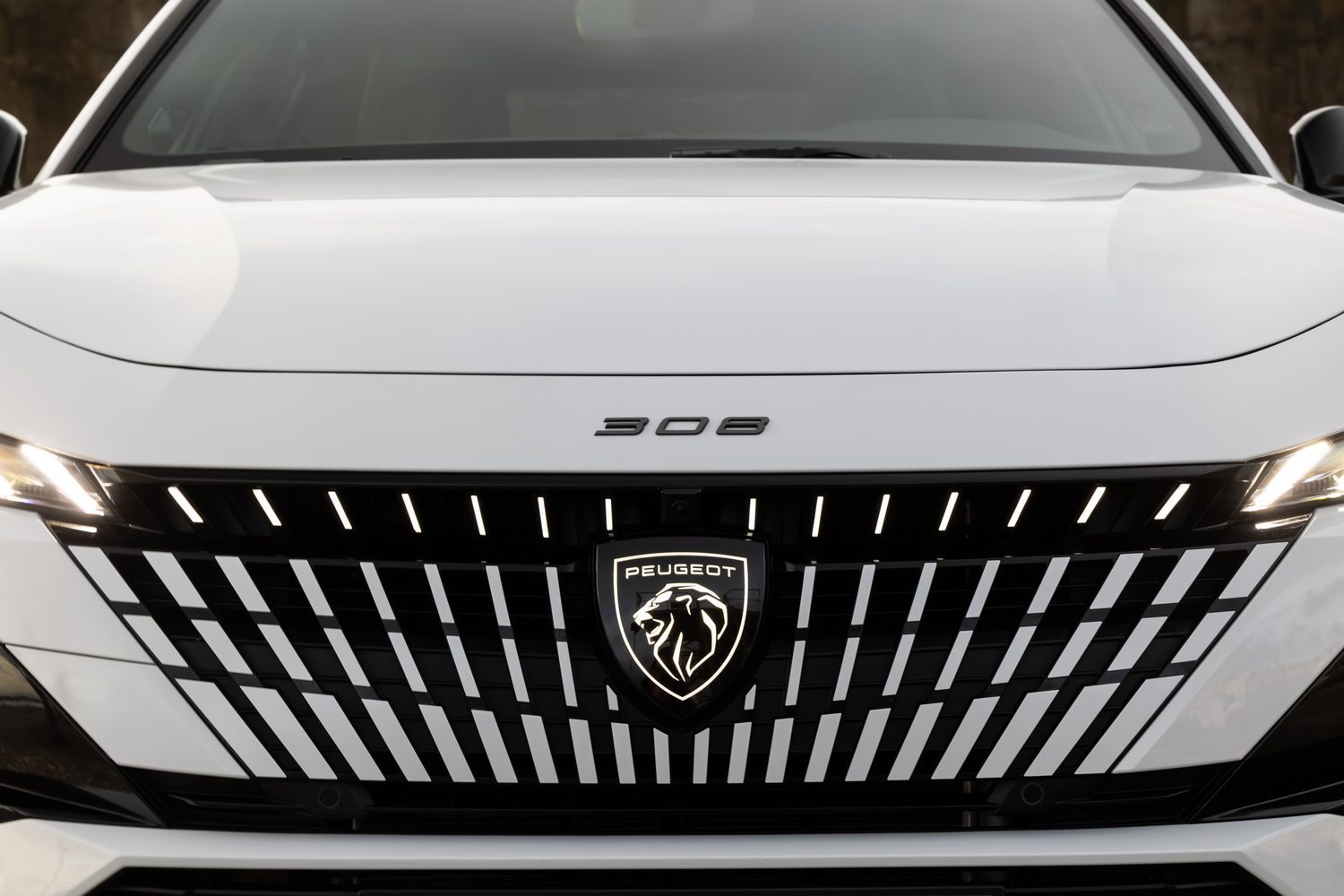
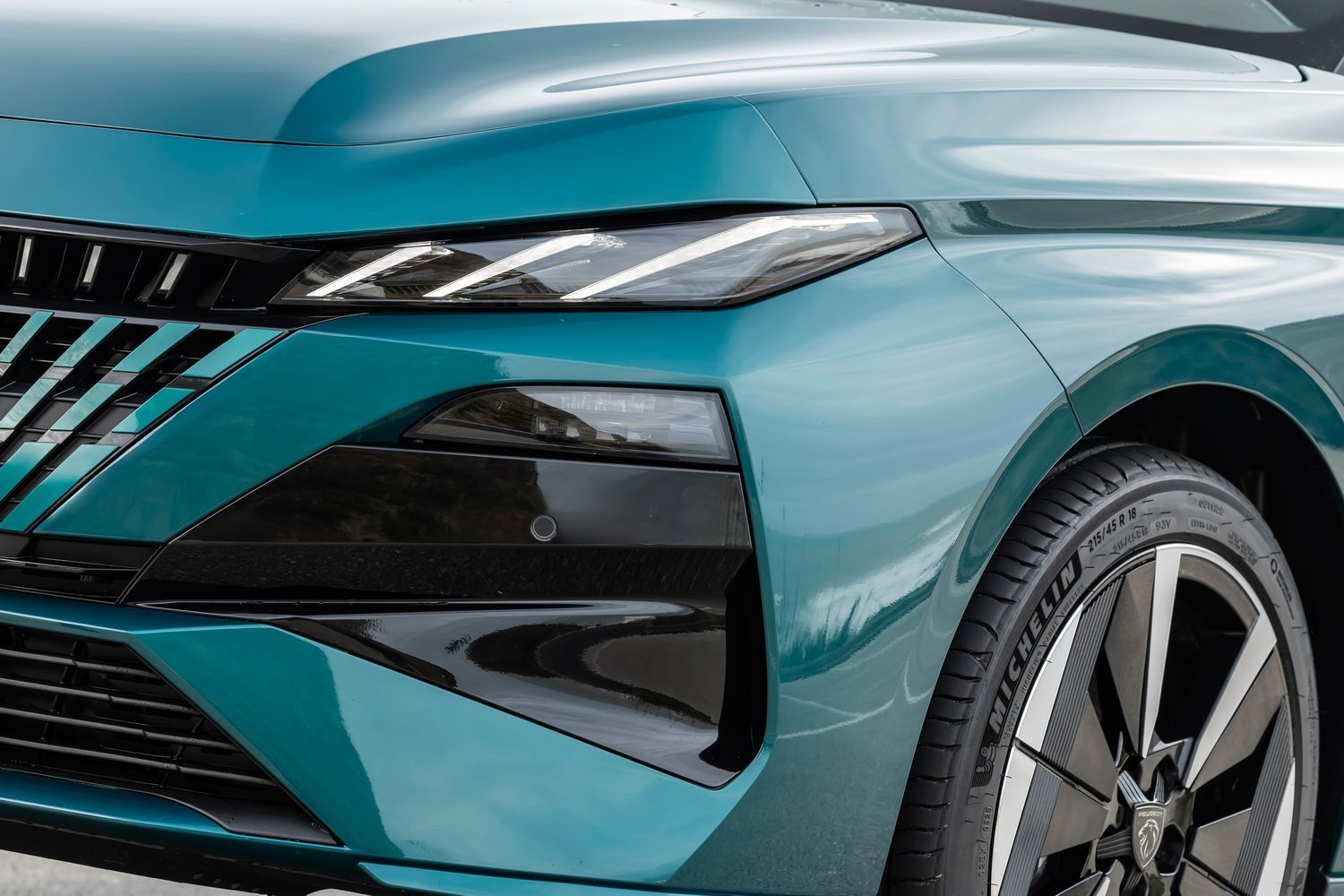
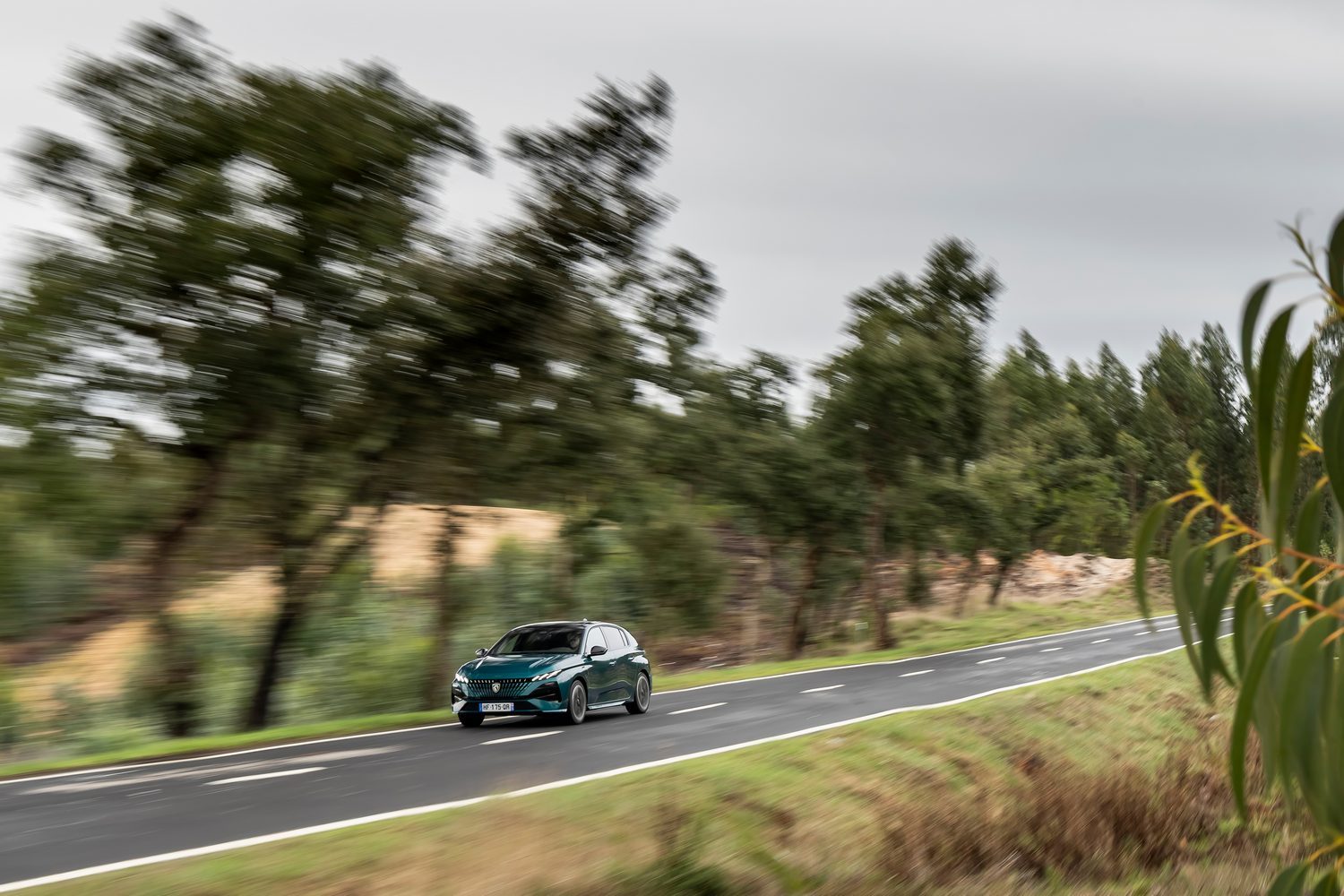
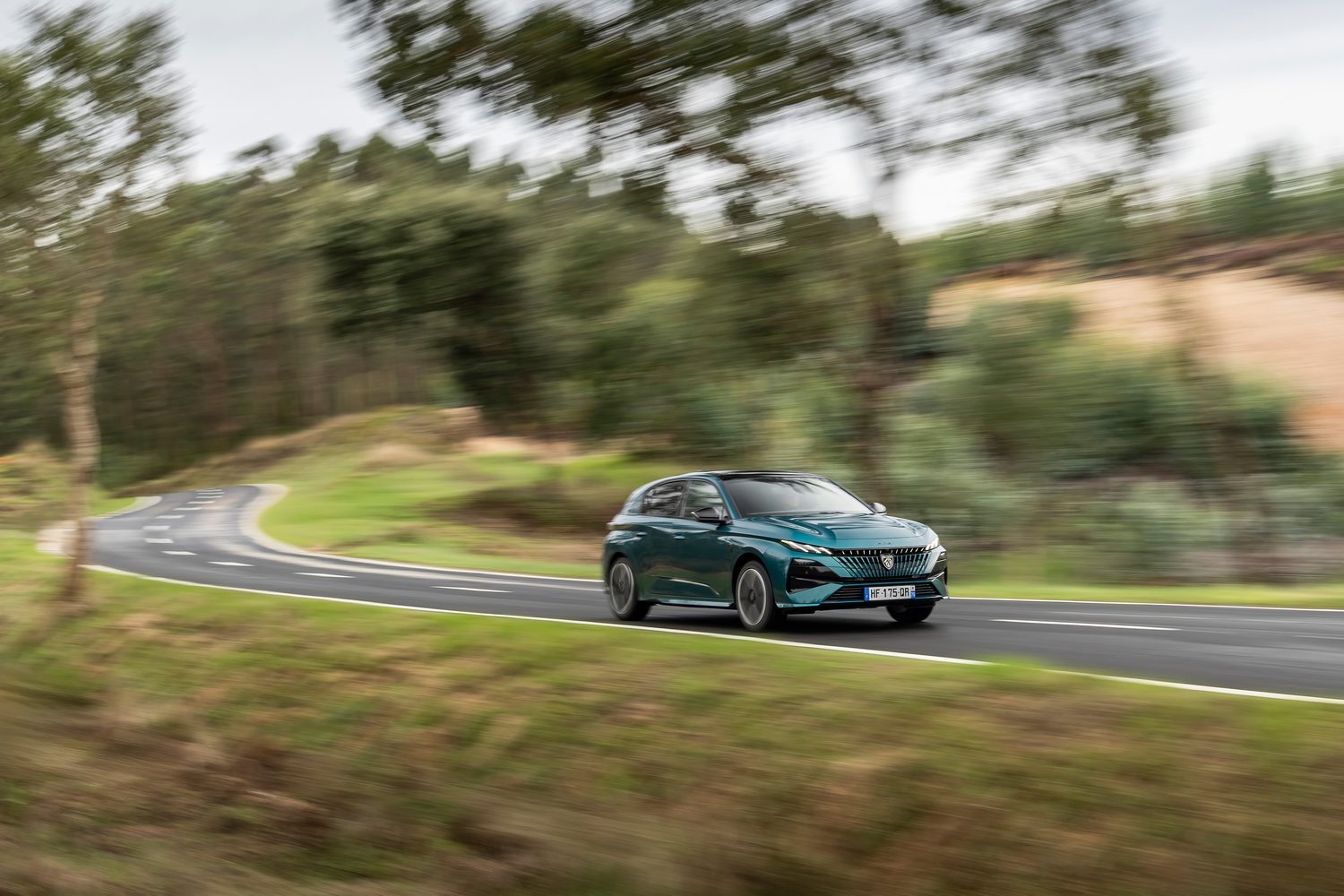
Up front, though, it's a very successful update by Peugeot's designers. There's a more eye-catching radiator grille and the deletion of the old 'fang' lamps which ran down either side of the 308's nose, but for those worrying about glitzy automotive lightshows then fear not - there's now an illuminated strip which runs the full width from three-claw headlamp to three-claw headlamp, and furthermore the Peugeot shield emblem at the front glows at night; the first time this has happened within the manufacturer's portfolio.
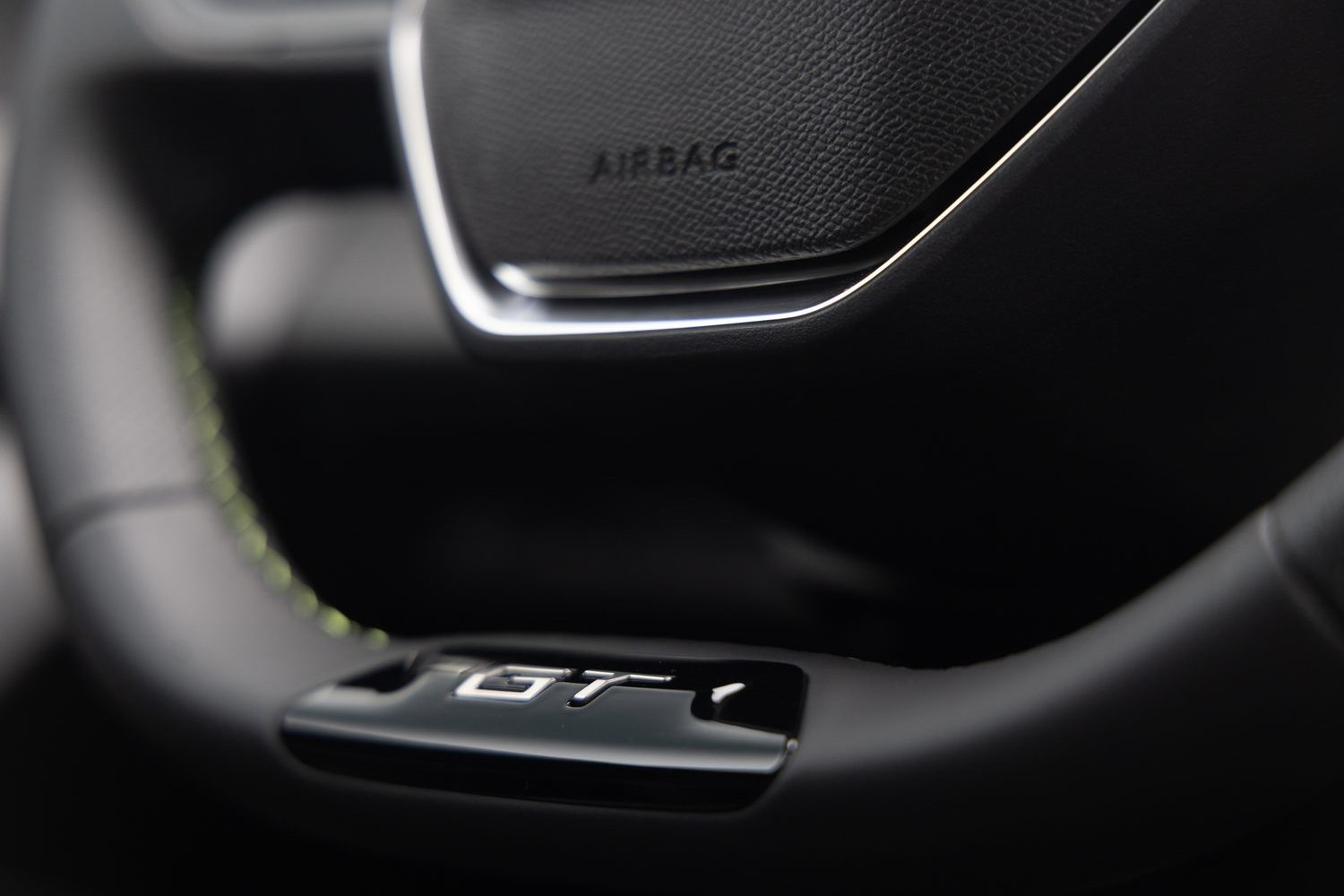
The end result is a handsome vehicle, although bear in mind the illuminated grille and 'Lion' logo are only on the higher GT-spec cars - the Allure models do without all this fanciness.

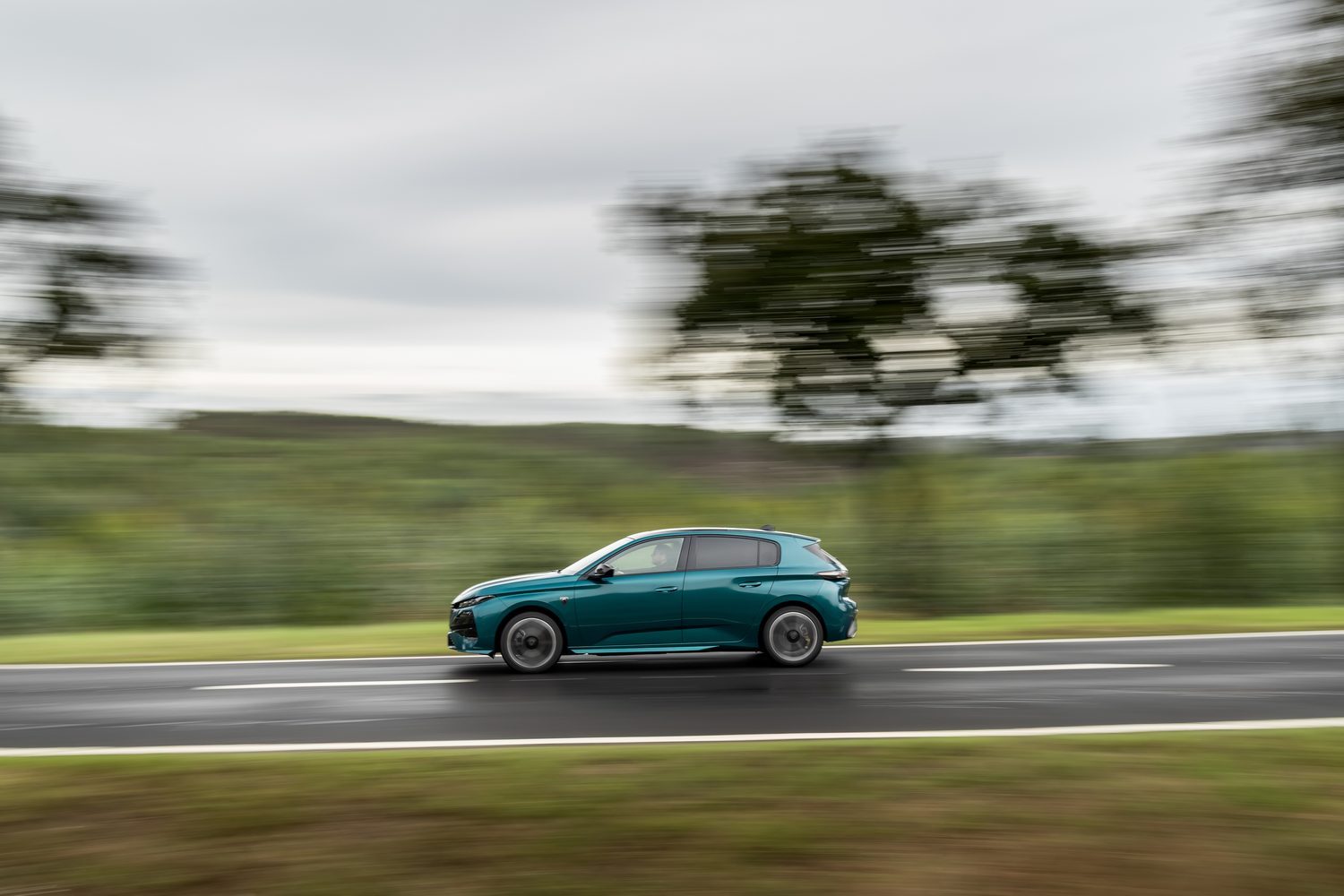
As to wheels, there are 17-inch 'Bangkok' alloys on Allure cars and 18-inch 'Helsinki' rims for the GT, although that only applies to the Hybrid. The electric E-308 sits on its own design of 18-inch 'Seattle' (aerodynamically optimised) wheels, in all specifications, and all three of these alloy designs are diamond-cut in finish.
Dimensions of the 2026 Peugeot 308
- Length:
- 4,367mm
- Width:
- 1,852mm (excluding mirrors)
- Height:
- 1,454mm
- Wheelbase:
- 2,675mm
Paint colours for the 2026 Peugeot 308

The two additional colours introduced for the facelifted Peugeot 308 family are both blues - they're called Lagoa and Ingaro, although the latter is more blue-green than out-and-out blue.
Interestingly, Lagoa is exclusively for the hatchback body style while Ingaro is reserved for the 308 SW estate, and where it's available, Lagoa Blue is the only free, standard colour.

Other options include Nera Black, Okenite White, Selenium Grey or Cumulus Grey, all of which are €900 apiece, or the 308's most striking finish of Elixir Red - although that'll set you back €1,200.
Interior, practicality, tech & comfort of the 2026 Peugeot 308
- Idiosyncratic iCockpit layout
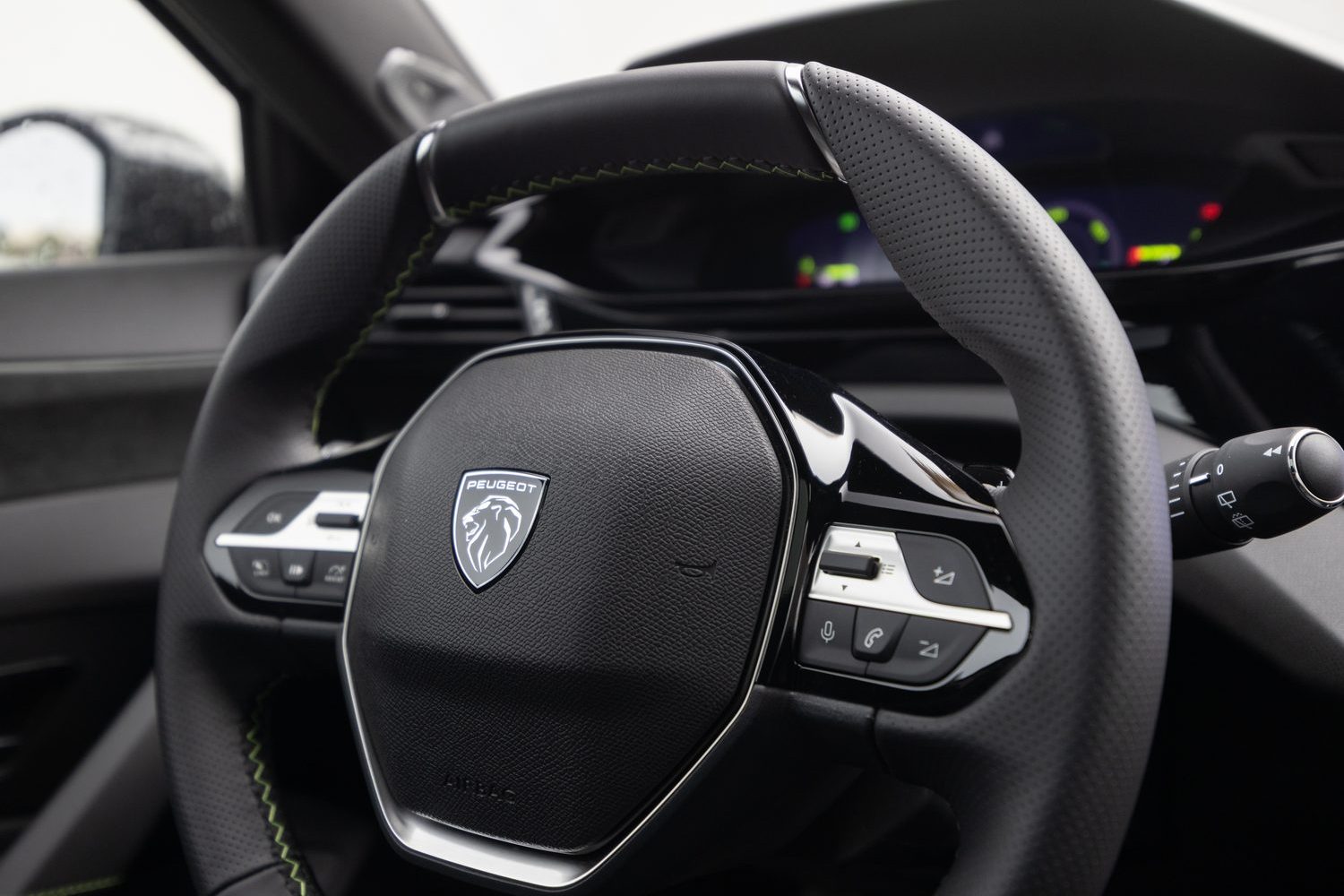
- Small steering wheel, high-set cluster
- Quality and ambience not to be faulted

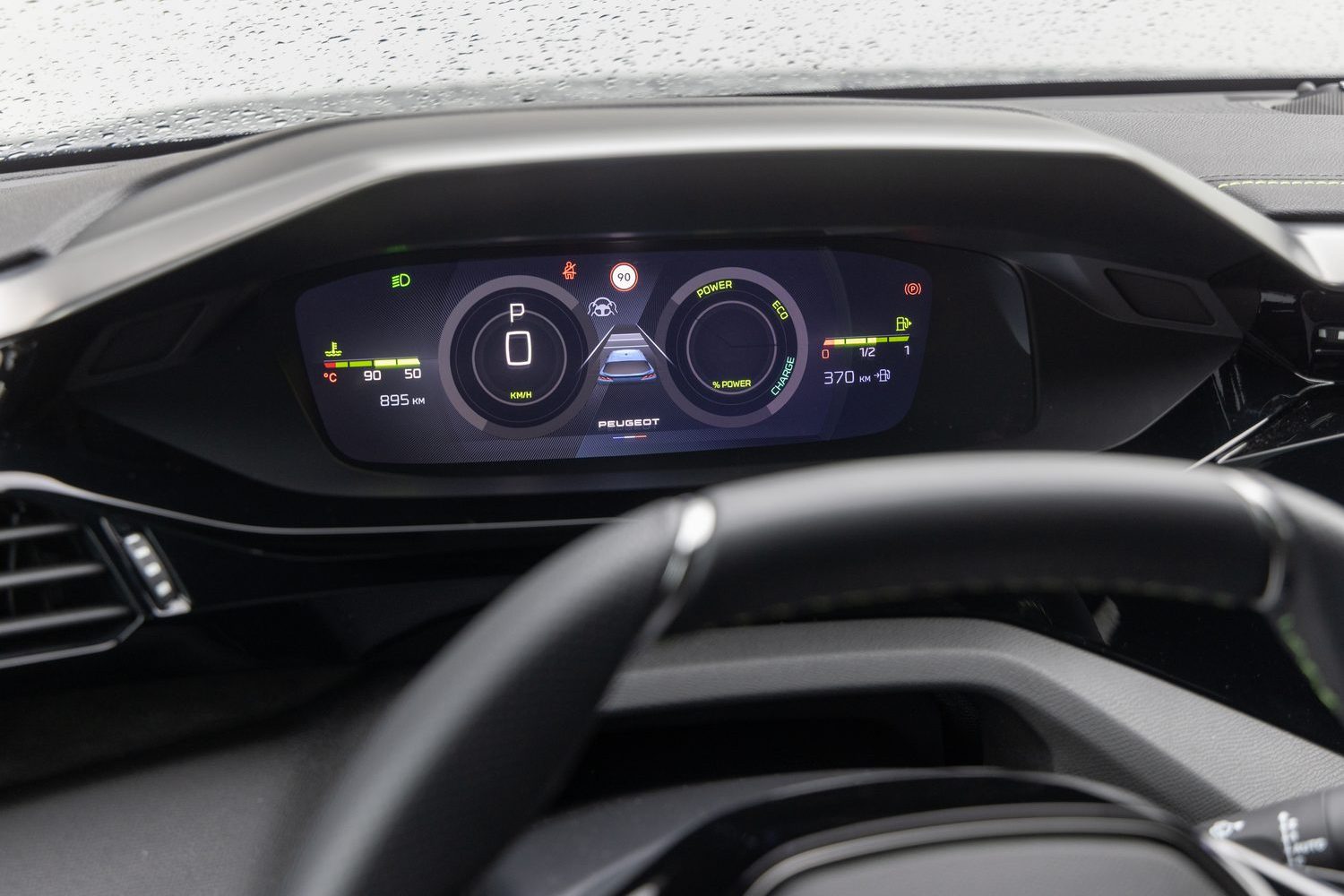
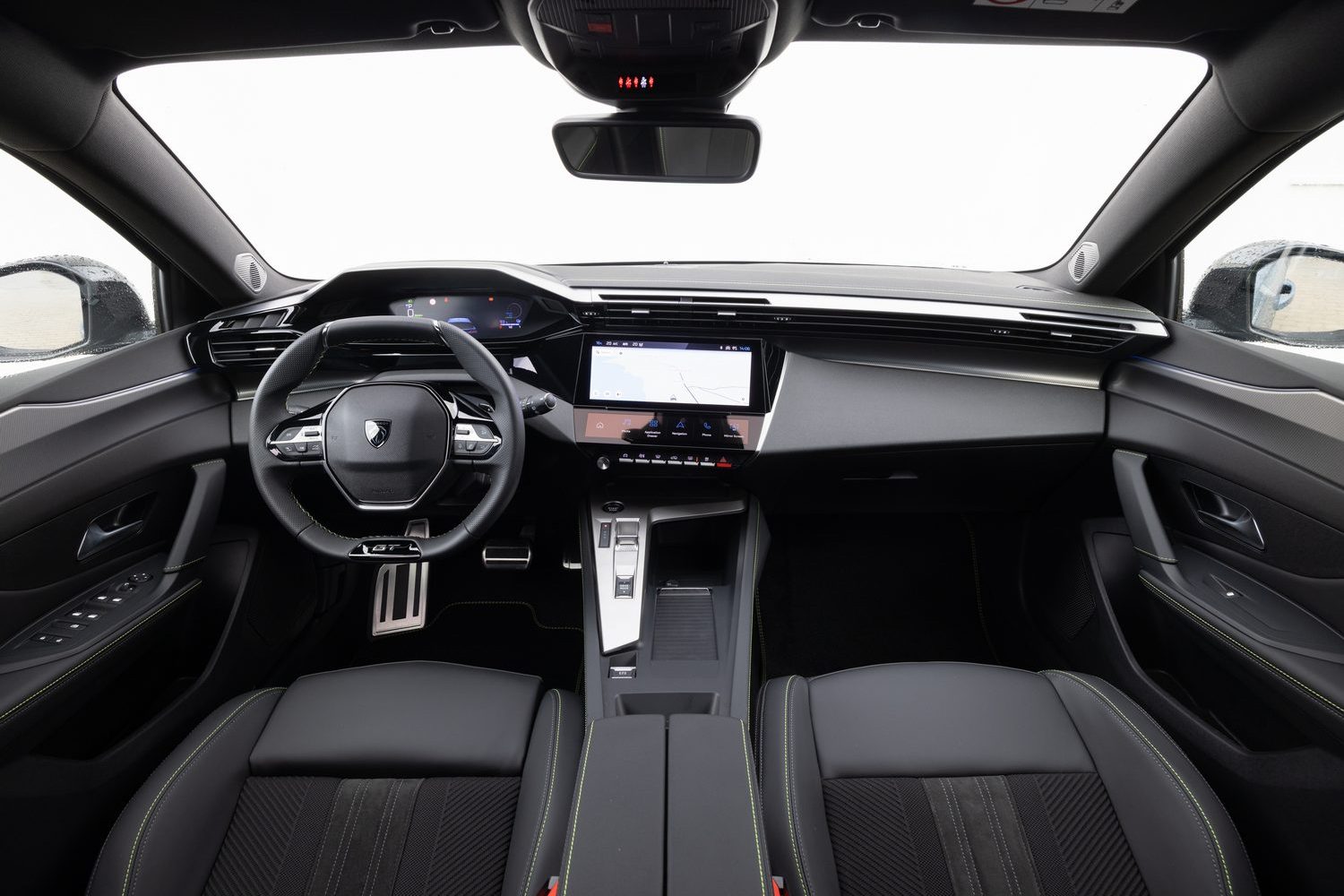
Peugeot didn't make any significant changes to the interior of its 308 family in the latest round of updates, save for sharpening up the graphics in the driver's instrument cluster.
This means the 308 has one of the classiest, well-built cabins going in this segment, although bear in mind that not everyone gets on with its unique driving position layout, nor is it the roomiest car in the world for rear-seat passengers.
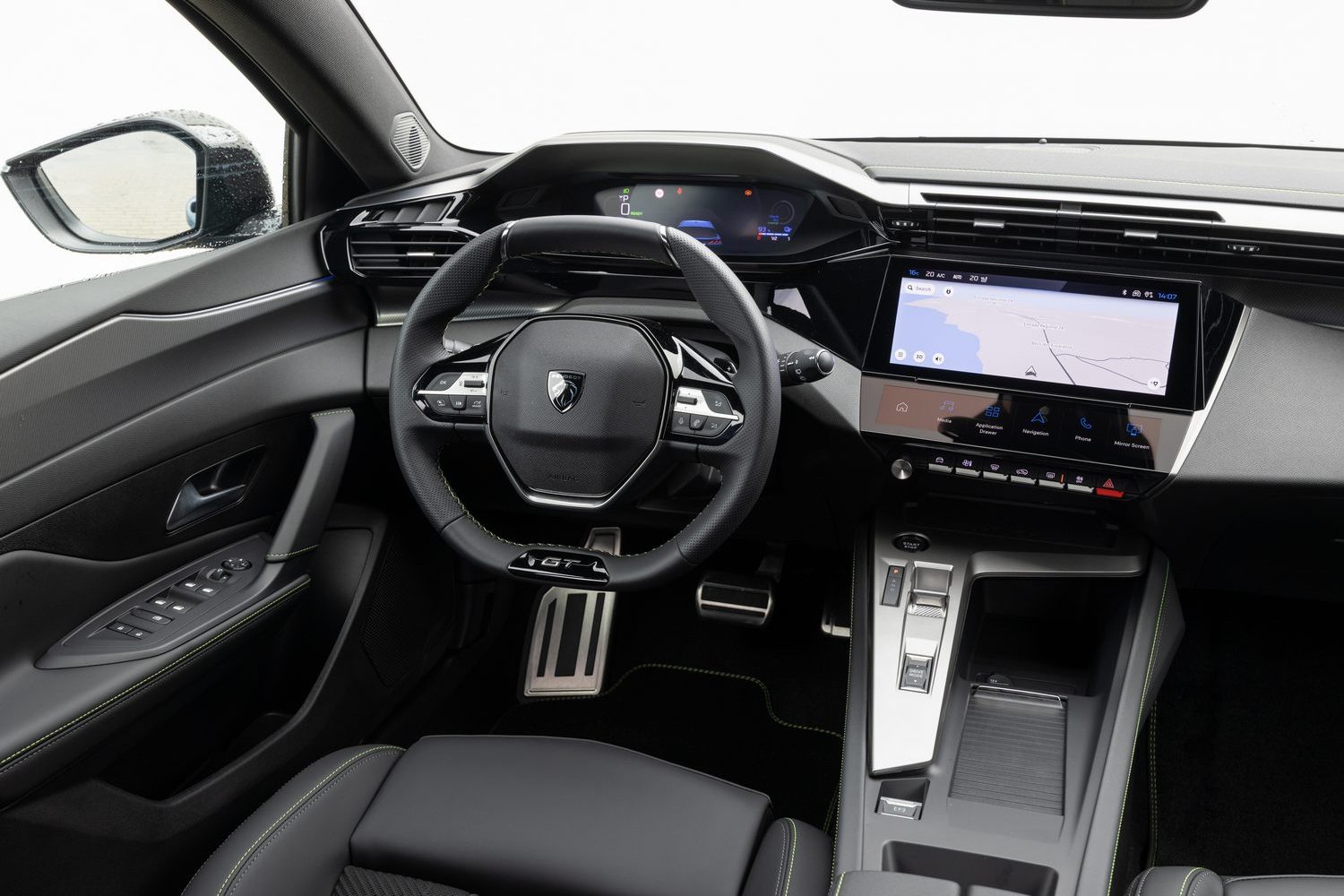
Getting comfortable in the driver's seat
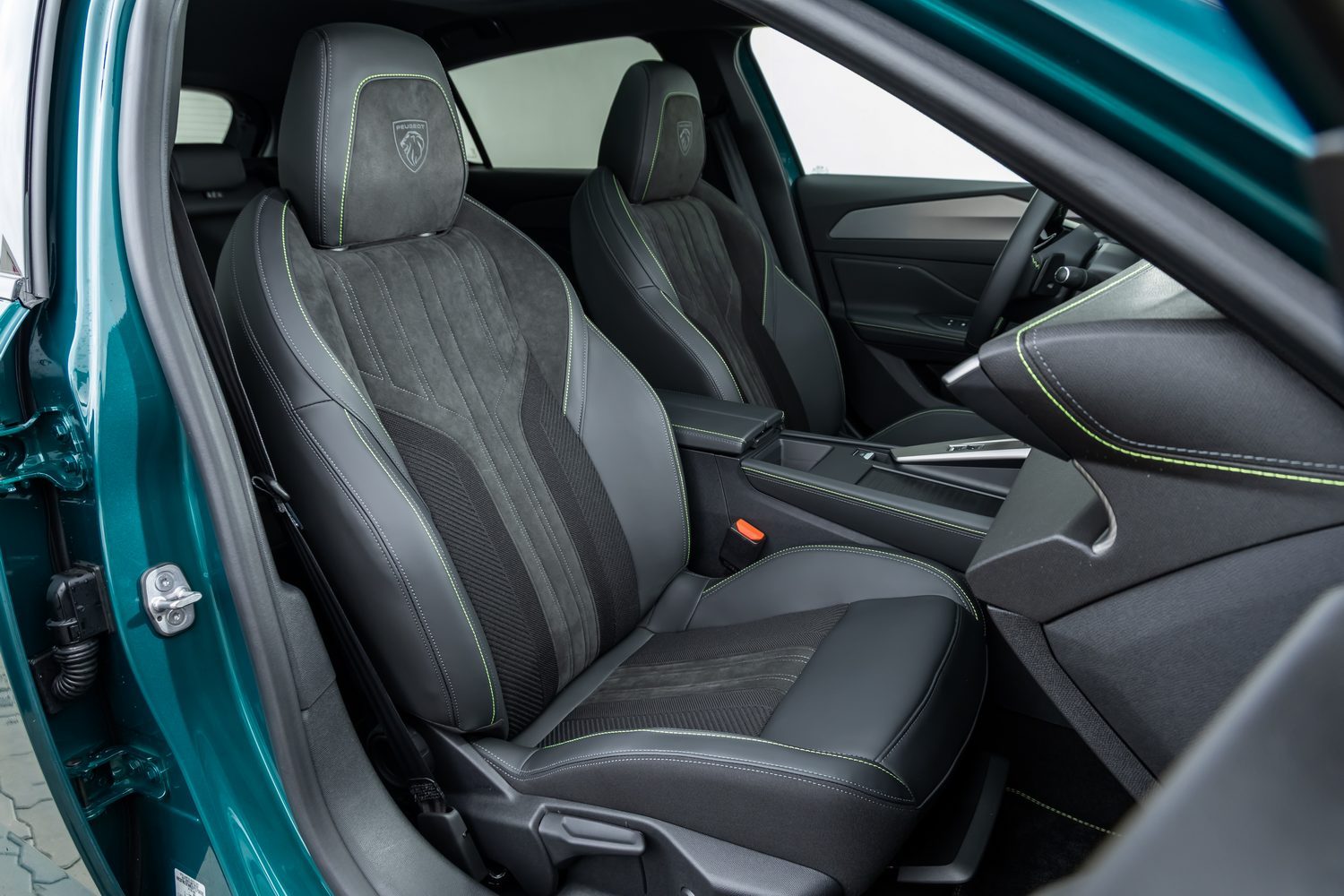
On a GT-spec 308, the seats are electrically adjustable and have an extendable thigh support too, so there's a healthy range of movement and fine-tuning available to hopefully accommodate drivers of all shapes and sizes.

The tiny, low-set steering wheel adjusts manually for reach and rake too, although the way the Peugeot's cabin is laid out means that drivers at the extremes of height - either very tall or very, um, vertically challenged - often report that they cannot see various readouts in the cluster as they're blocked by the steering wheel's rim.
We're not among that number, though, and have always liked the way the iCockpit set-up works. Beyond that, visibility in most directions, save through the somewhat pinched rear-mirror view, is generally excellent, while the bucket-like sports seats of the GT are approved by Aktion Gesunder Rücken, an independent German body which promotes good back health.

Thus, unless you're six-foot-eight, the Peugeot ought to offer a pleasing and comfortable driving position for you.
Infotainment and technology
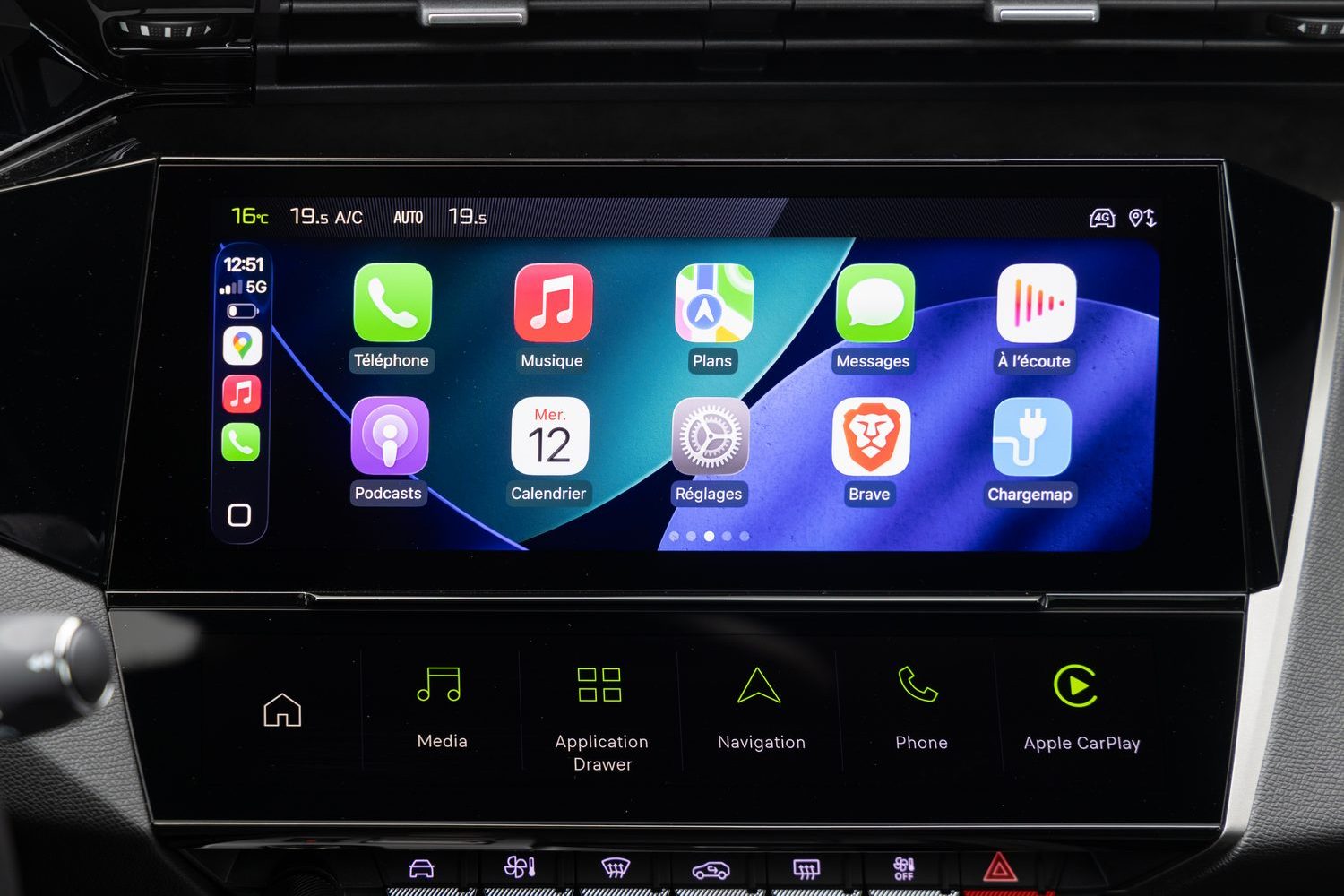
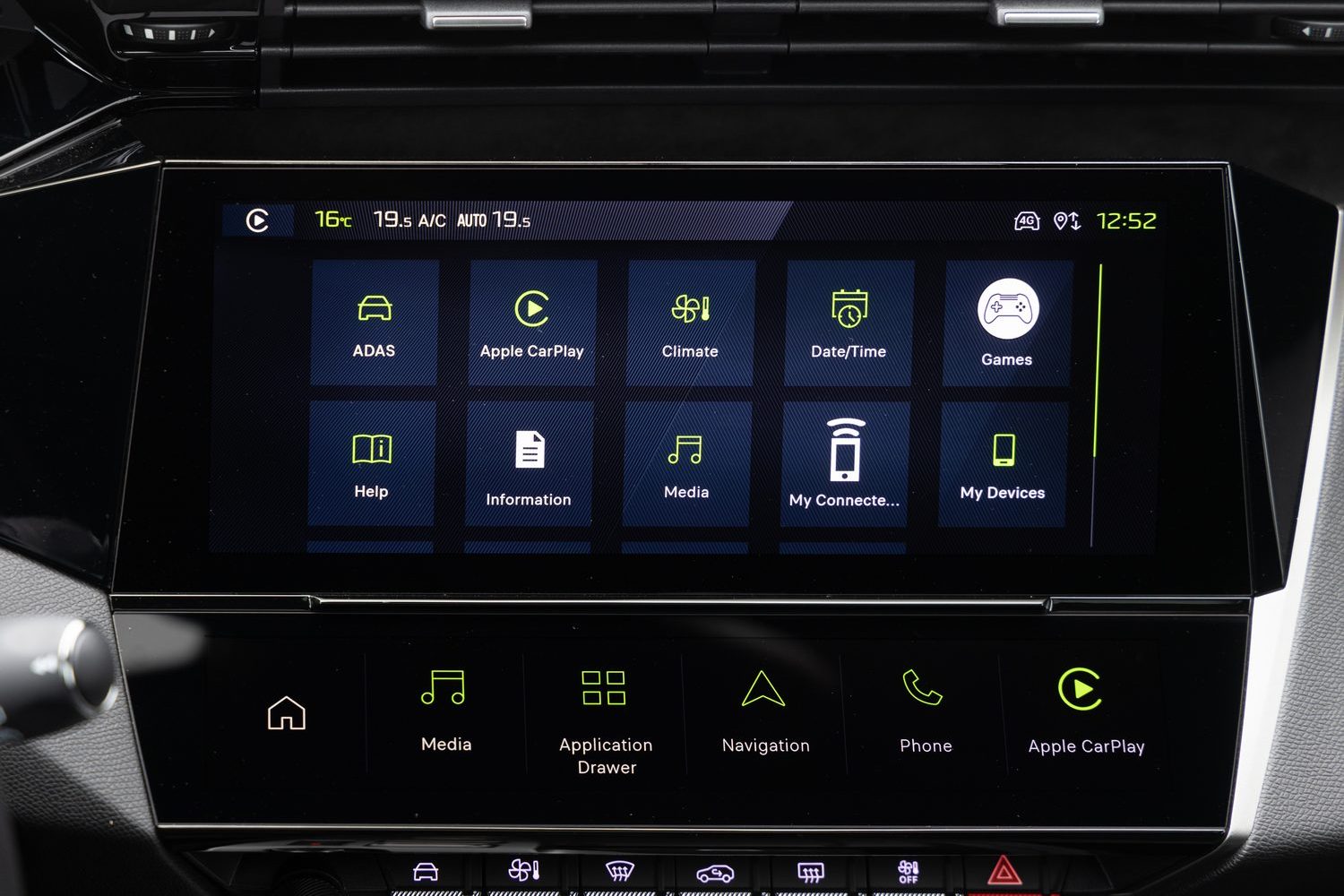
There's a 10-inch main infotainment touchscreen, complete with five configurable 'iToggle' digital shortcut panels beneath and then some physical switchgear sitting below that.

This is complemented by the high-mounted 10-inch instrument cluster, albeit with crisper, slicker graphics as part of the 2026 updates, especially in the models with the 3D display.
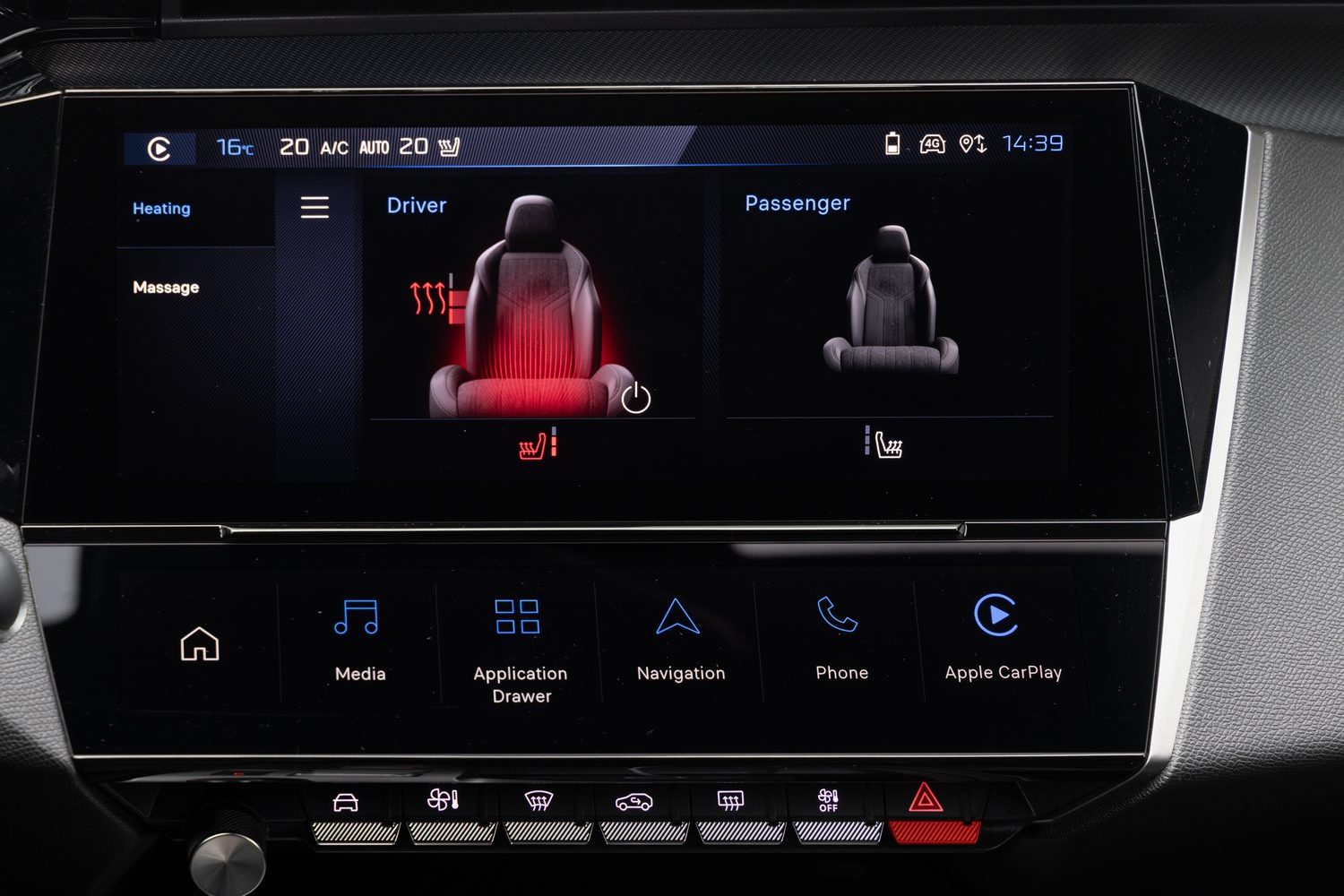
Mostly, this all works well enough, but despite those configurable iToggles and switches on the centre stack, you still have to use the central touchscreen just to do things like turn your heated seats on/off/to a lower setting - which means dropping out of whatever navigation you're using (either proprietary, or through wireless Apple CarPlay and Android Auto). We'd rather a dedicated set of heated-seat and steering wheel buttons.

Other tech includes a 15-watt wireless smartphone charging pad, eight-colour ambient lighting and an upgrade to the standard six-speaker sound system in the form of a high-power Focal audio set-up.
Practicality around the cabin
The Peugeot 308 has plenty of helpful touches throughout the cabin to assist with the rigours of daily usage, such as decent-sized door bins, some central stowage solutions, a fair glovebox and various pockets and USB sockets here and there.
Rear-seat passenger space
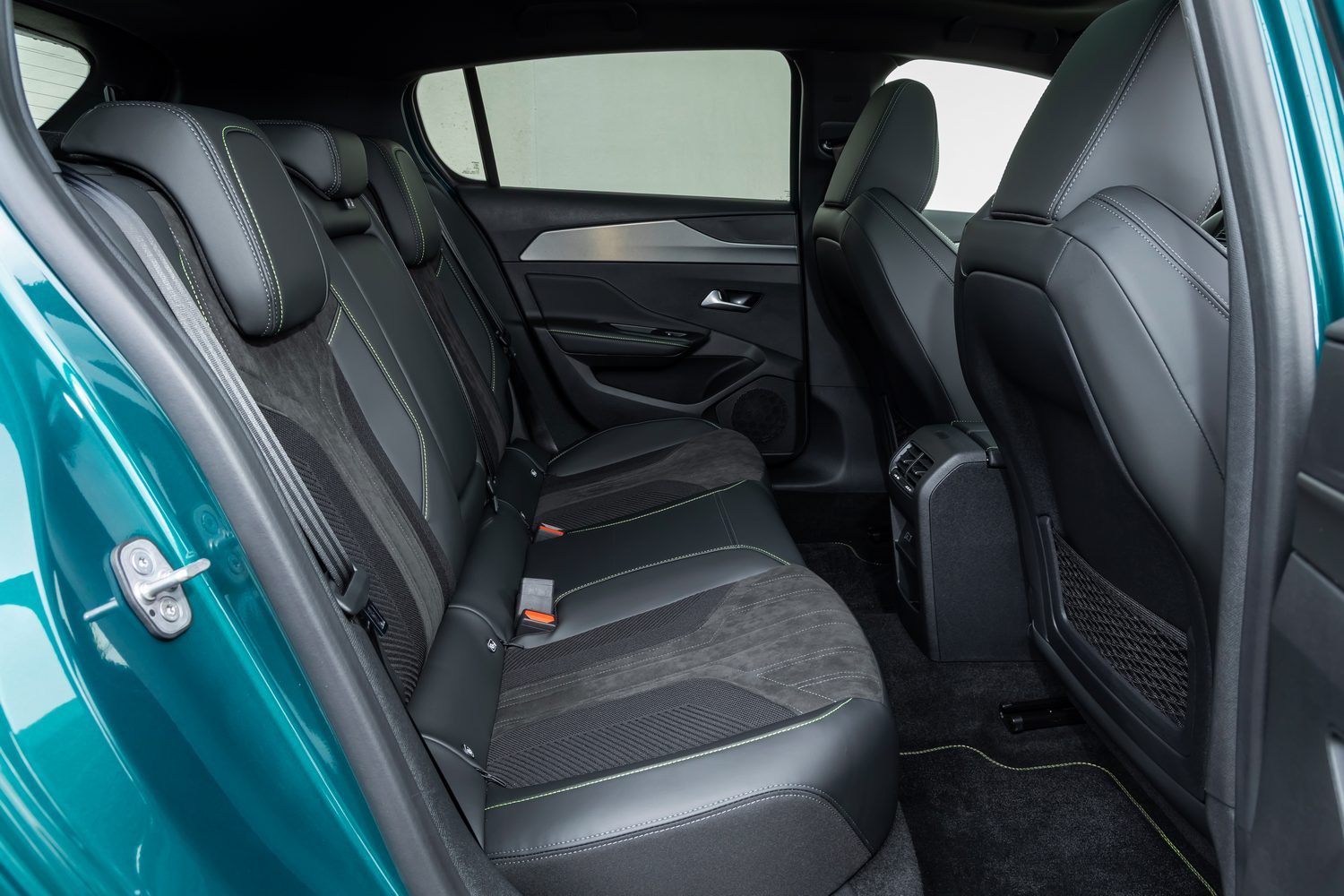
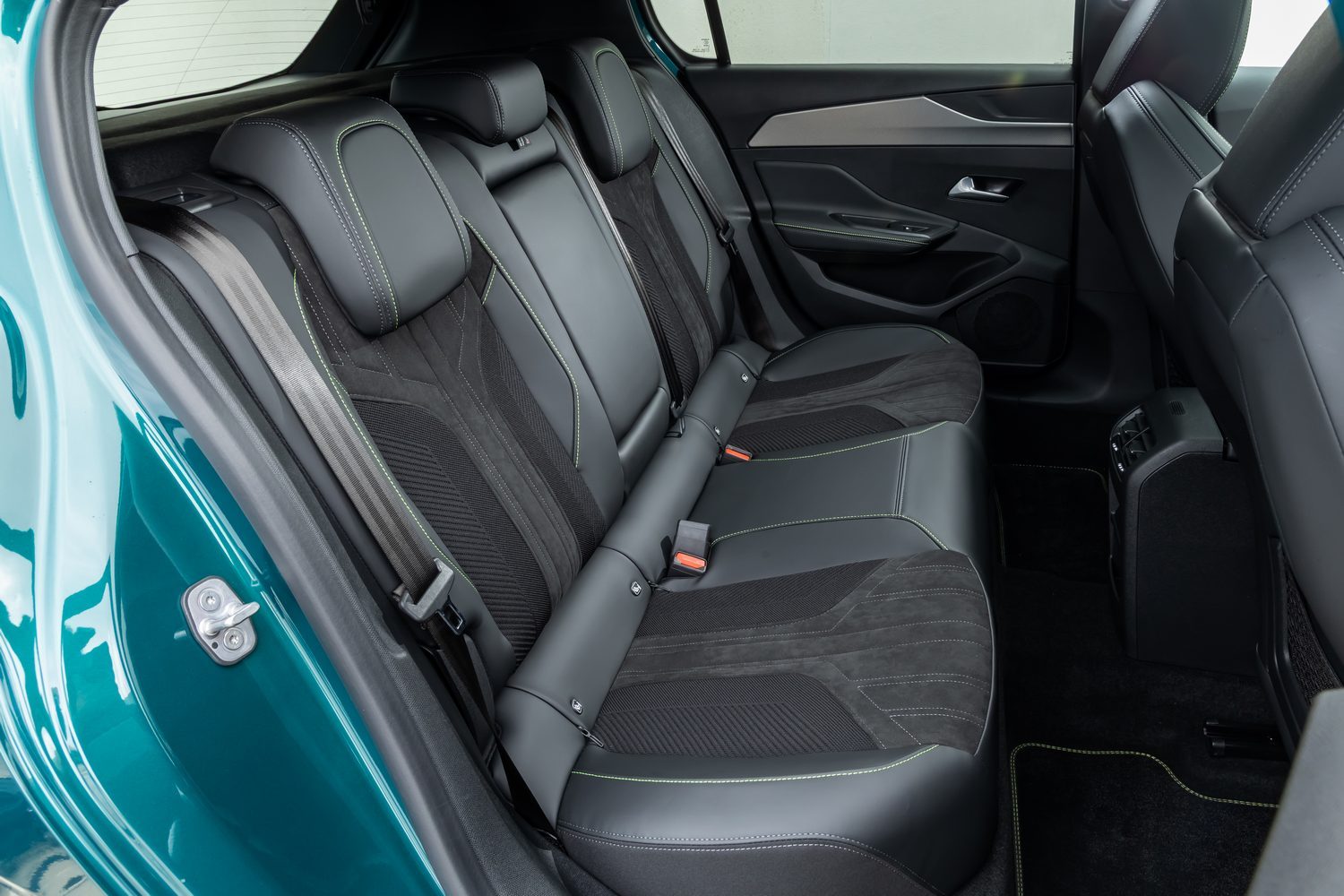
Due to a shortish wheelbase (the distance between the front and rear wheels) on the outside, the Peugeot 308 is not one of the roomiest cars in the second row. It's fine back there, as long as you're not very tall, whereupon you might find head- and legroom are limited.

Rear-seat passengers do get some well-sized door pockets, two air vents and a pair of USB sockets, though.
Fitting child seats to the Peugeot 308
There are two ISOFIX mounting points in the back of the Peugeot 308, complete with top tethers, with the base clips hidden behind zip-up panels. This keeps things neat when the ISOFIX is not in use.
Also, given the cosiness of the second row in the Peugeot, and how wide its rear doors open, fitting big and bulky child chairs might not be the work of a moment. Nevertheless, the 308 scored high in its 2022 Euro NCAP test for child occupant safety, recording an 84 per cent rating.
Boot space in the Peugeot 308

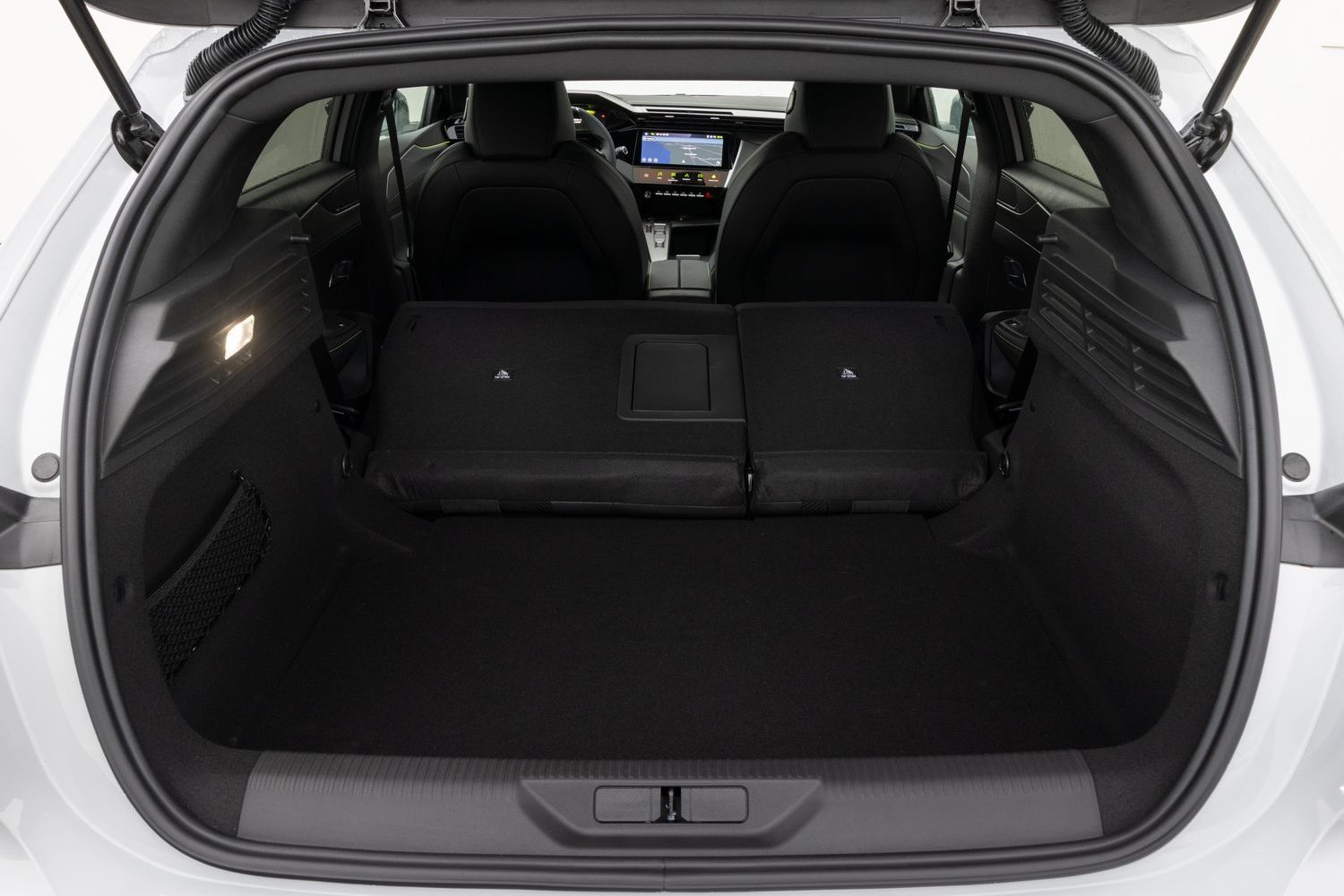
The E-308 has less boot space than a 308 Hybrid hatch. The latter can lay claim to 412 litres with all seats in use and 1,323 litres with the rear seats folded down (in a 60:40 configuration). But the E-308's numbers are down to 361 and 1,258 litres, respectively.
Towing with the Peugeot 308
If you choose the E-308, it has no towing rating whatsoever, while the 308 Hybrid has a modest limit of 720kg of braked trailer.
Safety in the Peugeot 308
In 2022, the Peugeot 308 picked up a four-star Euro NCAP rating, recording 76, 84, 68 and 65 per cent for the four sub-disciplines of the test accordingly. The most surprising thing about this is that last score of 65 per cent for 'Safety Assist', because even a base-spec 308 Allure is fitted with a wealth of advanced driver assistance systems (ADAS), while the GT ramps things up further by adding a couple of key items.
There are also a number of safety and assistance technology bundles on the options list for the 308, so it shouldn't be considered an unsafe car by anyone's rational measure.
Performance of the 2026 Peugeot 308
- Hybrid and electric powertrains
- EV has more power, hybrid is swifter
- Every version has automatic gearbox

In other markets, there's a choice of four powertrains, including a turbodiesel and a plug-in hybrid, but here in Ireland we have a straightforward choice of the Hybrid 145 or the E-308 EV.
The former of these two uses a turbocharged 1.2-litre three-cylinder petrol engine, allied to a 21kW electric motor and a tiny 0.9kWh battery under its front passenger seat.

Drive goes to the front wheels through a six-speed dual-clutch transmission called the e-DSC6, with the system delivering peak power of 147hp and torque of 230Nm. Those numbers are enough to punt the sub-1.4-tonne Hybrid from 0-100km/h in 8.8 seconds.
The E-308, meanwhile, has system maximums of 156hp and 270Nm, so it's ostensibly the range-topper - except a kerb weight of approaching 1.7 tonnes means it is fully 287 kilos portlier than the Hybrid.

Concomitantly, it's slower for 0-100km/h, recording a 9.3-second sprint - although once it's rolling the E-308's stronger torque does make itself felt over the Hybrid, as from 80-120km/h its 6.1-second time is three-tenths quicker than that of the petrol car.
Driving the E-308 GT Premium on Portuguese roads
As long as you remember that to get the maximum drivetrain outputs of the Peugeot E-308, you need to be in Sport mode (it drops both peak power and torque a little when you step it into Normal mode, and dips even further for the battery-saving Eco setting), then this electric French hatchback drives in a lovely, accomplished and amenable fashion.

It's not a massively swift car, as you expect from the stats, and it won't ever whoosh forward in the dramatic fashion that some people seem to love in EVs, but the E-308 is more than swift enough for anyone's daily-driving needs, while both the accelerator pedal and the brakes - blended as they are with both regen capabilities and friction-stopping power - have a nice, organic feel in their operation.
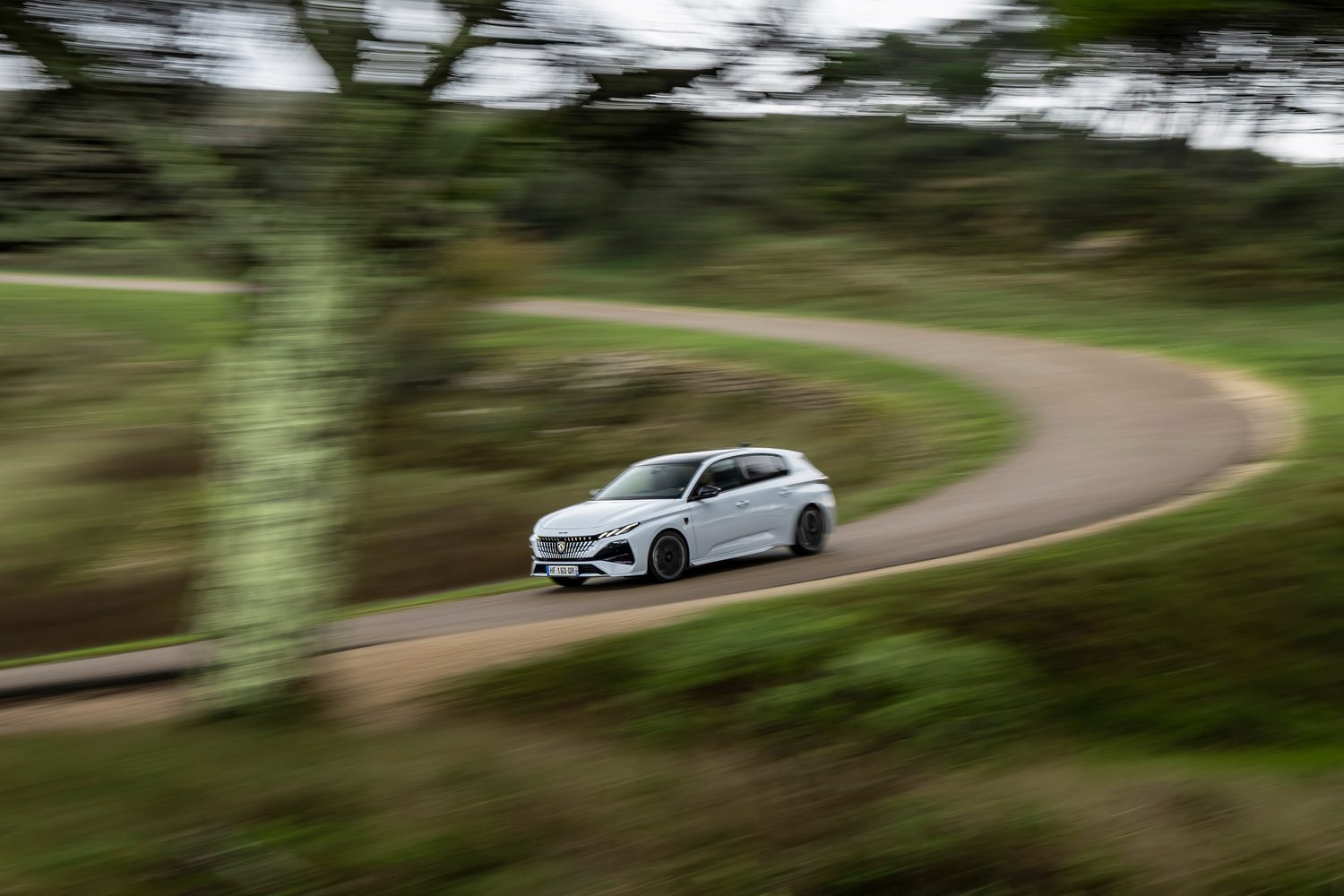
Therefore, the Peugeot's dynamic strength is not that it's some sort of zero-emission hot hatch in disguise - although its handling is still very sweet and quite enjoyable - but rather that it's a highly refined, comfortable and supple vehicle to travel in.

The E-308 has exceptionally good ride quality for a car of this size and type, and it excels at smothering out the worst imperfections in the road surface whether it's driving around a city, operating at higher pace out of town, or heading along a motorway at 110km/h and more.
It's also remarkably quiet, as you'd expect of an EV, but even by the standards of cars without internal-combustion engines, the E-308 still isolates its occupants better from road, wind and suspension noise than some of its key rivals.

In short, few cars of this type feel as straightforward, as sorted and as satisfying to drive as the Peugeot.
Driving the 308 Hybrid GT Premium on Portuguese roads
Switching into the Hybrid, the first thing that strikes us is the enhanced agility. As good as the E-308 is in the corners, an extra mass of almost 300 kilos is always going to make itself felt in the end, and as such the 308 Hybrid is considerably lighter on its feet if you're on the right sort of road and you want to have a bit of fun.

It has more naturalistic steering weight and feedback too, in either Sport or Normal modes.
It doesn't sacrifice much on the refinement front, either. The Hybrid remains as sophisticated and hushed at speeds as the E-308, while it's supreme on the motorway - with a real big-car sensation to its stability and unwillingness to be deflected from its path.

While weight can often improve a car's ride quality as it better ties down the suspension, the lighter Hybrid doesn't appear to have obviously suffered in this regard in comparison to its electric sibling.
It is, of course, noisier than the E-308 if you start working the engine hard, but because it's a three-cylinder engine then the Peugeot's voice is actually quite appealing and, even if you rev the little 1.2 right to the redline, it remains pleasing on the ear, and smooth in terms of the vibrations it transmits into the cabin.

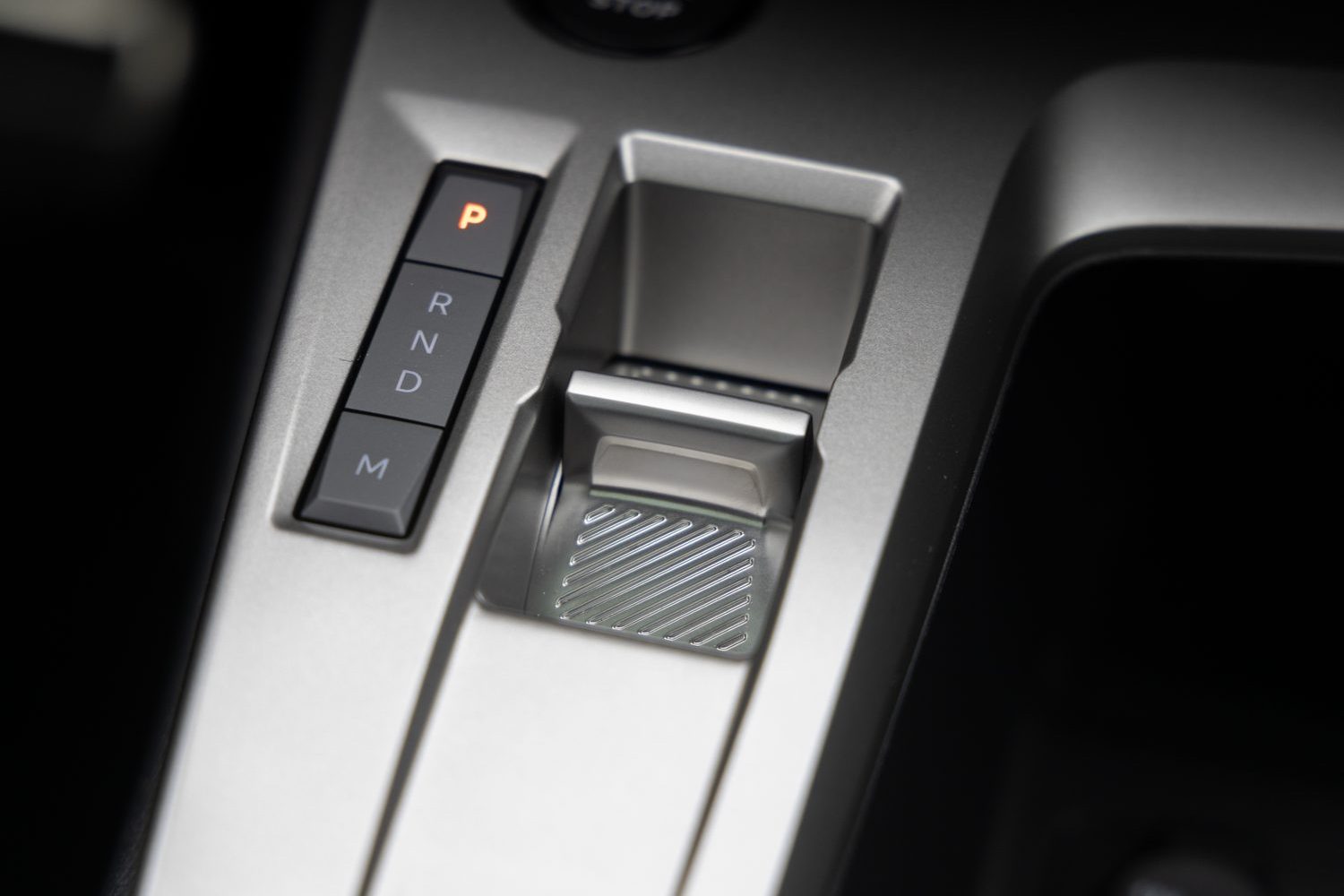
The only drawback of the Hybrid is its six-speed transmission. Peugeot, and indeed the wider Stellantis Group it is part of, has worked on refining and improving this gearbox over the years, but it still remains some distance from a paragon of its dual-clutch type.
Specifically, it can behave quite hesitantly and indecisively in full auto mode to inputs of about half-throttle, where it can hang onto a gear for far too long at times, or take a veritable age to shift down a couple of cogs.

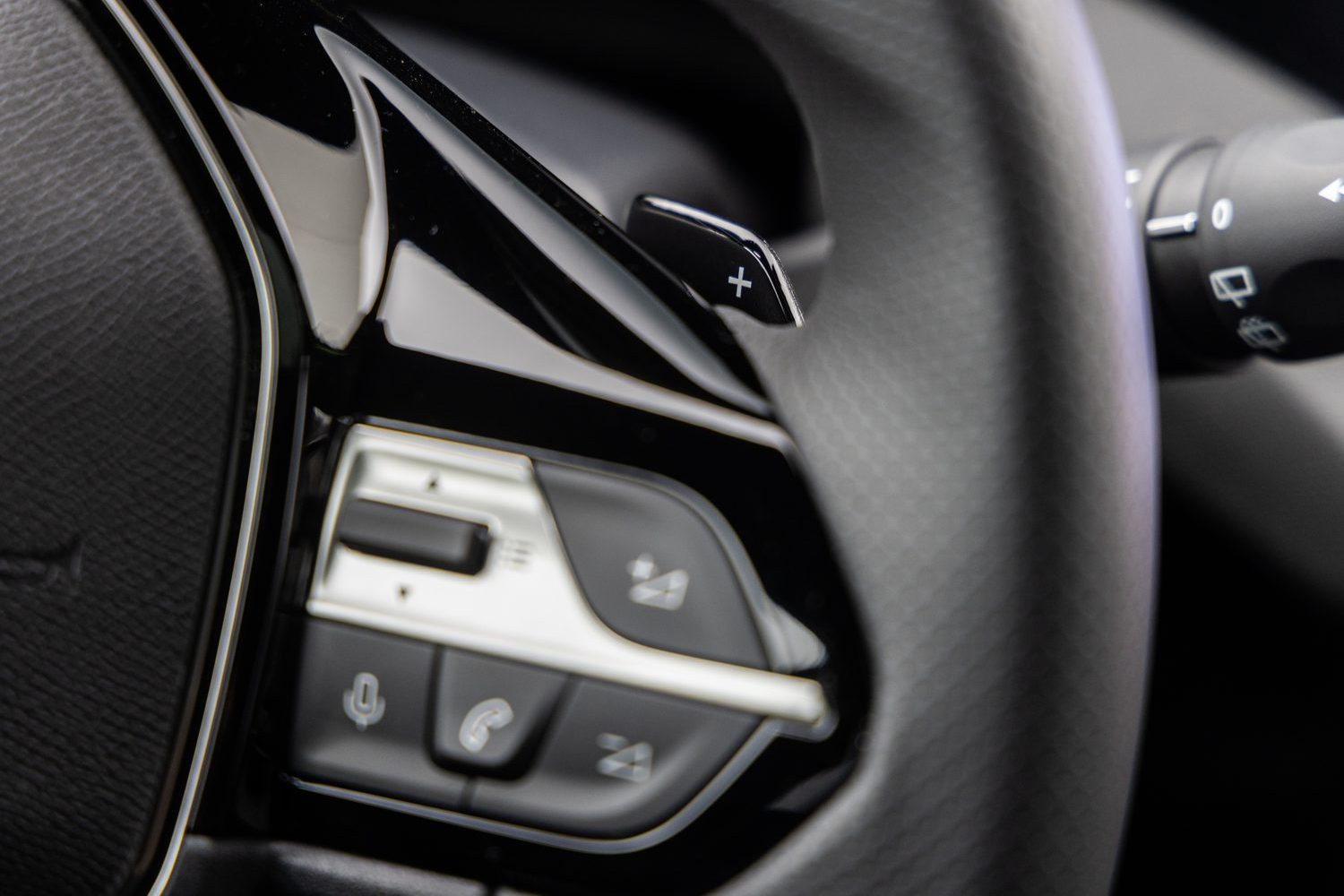
It's also not much better when using the paddles behind the steering wheel, where occasionally it will baulk a perfectly reasonably requested up- or down change from the driver. Keep the gearbox well within itself and it's fine: unobtrusive and generally smooth.
Range, battery, charging and running costs of the 2026 Peugeot E-308
- Larger battery pack part of 2026 updates
- Range now at 452km
- Peak DC charging speed could be higher
The E-308 will be the least-expensive model to own, and it has longer legs now, as Peugeot marginally enlarged its battery pack as part of the latest round of updates.

However, the car's peak DC charging speed is starting to look a bit slow in the current era, while there are still many rival EVs that'll go considerably further to a single charge of their battery packs than even the enhanced E-308 can manage.
Battery options and official range
The battery pack fitted to the Peugeot E-308 is a nickel manganese cobalt (NMC) lithium-ion unit with 58kWh gross capacity, and a usable figure of 55.4kWh. That's up from the old 54kWh power pack, of which 51kWh was usable - and it sees the Peugeot E-308's official range climb 41km from its predecessor's maximum to a new peak of 452km.
Real-world range and efficiency of the Peugeot E-308
To gain the 450km-plus range of the Peugeot E-308, you'd need to be achieving an impressive 12.3kWh/100km. We drove the car for around 25km on what we'd describe as urban and back roads, in Portugal's warm weather and with very few electrical drains switched on in the cabin.

We were piloting the E-308 a little more swiftly than it might ordinarily be driven, but even so we saw a final figure of 17kWh/100km - and that would result in something like 327km to a charge.
Charging up the Peugeot E-308
At a home AC wallbox, where most EV owners do most of their charging at 7.4kW, a 20-80 per cent charging cycle of the E-308 would require five hours and five minutes. On an 11kW AC connection, on a so-called 'destination charger' for example, the same task would take three hours and 35 minutes of hook-up, while at its fastest speed of 100kW on a rapid DC charger, a Peugeot owner would be sitting at a public charger for at least 32 minutes.
Servicing the Peugeot 308
Peugeot recommends a service at least every two years or 25,000km for the E-308, due to the fact it has fewer moving parts to look after or which can go wrong, whereas the Hybrid will be subject to an annual or every 20,000km cycle.
Peugeot 308 warranty
In Ireland, Peugeot offers a five-year warranty on all its vehicles with a 100,000km distance cap on that period. The high-voltage traction battery in all electric and plug-in-hybrid Peugeots further has an eight-year, 160,000km guarantee covering it - although whether the Hybrid's small under-seat battery qualifies for this same warranty is unclear.
Irish pricing & rivals to the 2026 Peugeot 308
- Entire range starts from €33,995
- Just two trims offered - Allure and GT
- Wide array of petrol, hybrid and electric rivals

Peugeot considers itself a premium brand these days and the pricing of the 308 family backs that up. However, for what you're getting, it doesn't seem so unreasonable.
The Hybrid 145 costs from €33,995 as an Allure and €38,495 in GT trim. The E-308, in the same two specs and with the SEAI grant and VRT rebate applied, comes in at €36,390 and €39,190, respectively.
There's plenty of kit on the base Allure, but many will want to go for the GT for its higher specification - including the illuminated grille which is the hallmark of the 308.

As to competitors, there's a broad spread for both drivetrains of the 308. The Hybrid will face down cars like the Toyota Corolla, Honda Civic, Volkswagen Golf, Skoda Octavia and SEAT Leon, as well as its own 'in-house' relations in the form of the Opel Astra and Citroen C4.
Electric versions of those two (the latter called the e-C4) also stack up against the E-308, which also must see off the Kia EV4, Volkswagen ID.3, Cupra Born and Renault Megane E-Tech, among more.
Verdict - should you buy the 2026 Peugeot 308?
The Peugeot 308 looks sharp, has a high-quality interior and drives in a refined and comfortable manner, which are all solid reasons to buy it. Sure, the hatchback isn't massive in the back, and it's not the cheapest thing in the world, but there's still plenty enough in the Peugeot's locker that should ensure you don't just default to an SUV instead of carefully checking this charming car out instead.

FAQs about the 2026 Peugeot 308
Does the Peugeot E-308 have a 'frunk'?
No, it does not. There's componentry under the bonnet of the E-308, so no front-boot provision has been factored in as a result.
Is the Peugeot 308 all-wheel drive?
No, every model in the line-up is front-wheel drive. There is, for instance, no dual-motor variant of the E-308 with AWD.
Does the Peugeot E-308 qualify for the SEAI grant?
Every version of the Peugeot E-308, trim or body style included, costs between €42,695 and €46,695 before subsidies, so they qualify for the SEAI grant and VRT rebate which brings their prices down to €36,390 for an Allure hatch to €40,145 as a GT SW.
Has the Peugeot 308 been assessed for safety?
It has, garnering a four-star overall rating when tested in 2022. It did OK for adult occupant safety and best in child occupant safety but was fairly average in the departments for vulnerable road users and safety assist. If you want to delve into this in more detail, you can read its full Euro NCAP report right here.
Want to know more about the 2026 Peugeot 308?
If there's anything about the new Peugeot 308 or E-308 we've not covered, or you'd like help in choosing between it and other cars, you can avail of our expert advice service via the Ask Us Anything page.
Peugeot 308 history
The 308 can trace its lineage right back to the Type 57 of 1904, and then a series of pre- and interwar cars that ran Bébé (1905), Quadrilette (aka, the Types 161 and 172, from 1921), the 5CV (also a Type 172, 1925), and then the Type 190 (1928).
The Peugeot descendants which used the more familiar 'number-zero-number' model badging we all know today began in this series with the 201 of 1929, and then ran 202, 203, 204, 304 and finally 305, the latter spanning much more modern decades from 1977 into the 1980s.
But a lot of these cars were saloons, with modern hatchbacks not coming into vogue until the 1980s. Therefore, the most realistic ancestor of the current 308 was the 305's five-door replacement of 1985, the 309. From there, the numbers went 306 (1993), 307 (2001) and then hit 308 in 2007.
However, as Peugeot had already done 309, and as the number '8' is lucky in China, a decision was made to freeze the model designations from that point onwards. Hence, the current car is the third generation of Peugeot 308, following on from that '07 original and a Mk2 (2013) sandwiched in between.
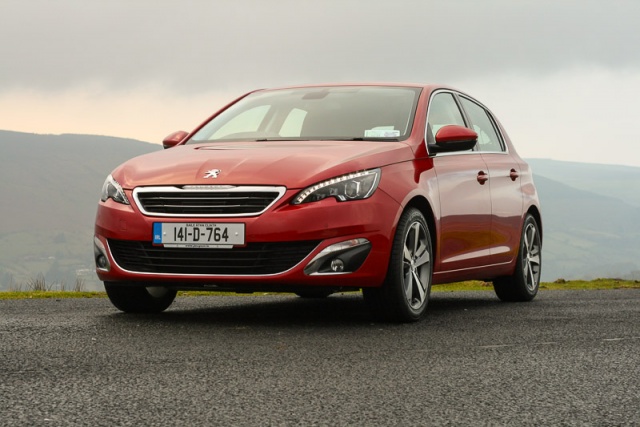
In its three generations so far, the 308 has been offered as a three-door hatch, a five-door hatch, a five-door estate (known as the SW), a four-door saloon and even a two-door coupe-convertible with a folding metal roof - but only the Mk1 308 offered all five of these body styles.
By the Mk2 of 2013, the three-door hatch and open-top derivatives had bit the dust, and this Mk3 from 2021-onwards has only ever been sold as either a five-door hatch or the SW. It is also the Mk3 which debuted the all-electric version, which goes under slightly different badging of E-308.