Introduction to the 2026 Mercedes GLB
While the original Mercedes GLB sired an all-electric model called the EQB, the second-generation EV, launched in 2026, sticks with the GLB badge like the rest of the range.
This means buyers have a choice of petrol and hybrid models as the GLB, with three EVs simply referred to as the GLB Electric - though the word 'Electric' does not appear on the cars.
Anyway, the electric GLB represents one of the few ways of buying a seven-seat SUV that doesn't have an internal-combustion engine of any sort onboard.

Pros & cons of the 2026 Mercedes GLB
Pros:
• Plenty of electric choice
• Three rows of seats
• Boxy styling leads to practical interior
Cons:
• Needs the upgraded suspension
• Rear-most seats are cramped
• Expensive for what it is
Exterior & design of the 2026 Mercedes GLB
• Not huge on the road
• Emphasis on three-pointed-star
• 18- to 20-inch wheels offered

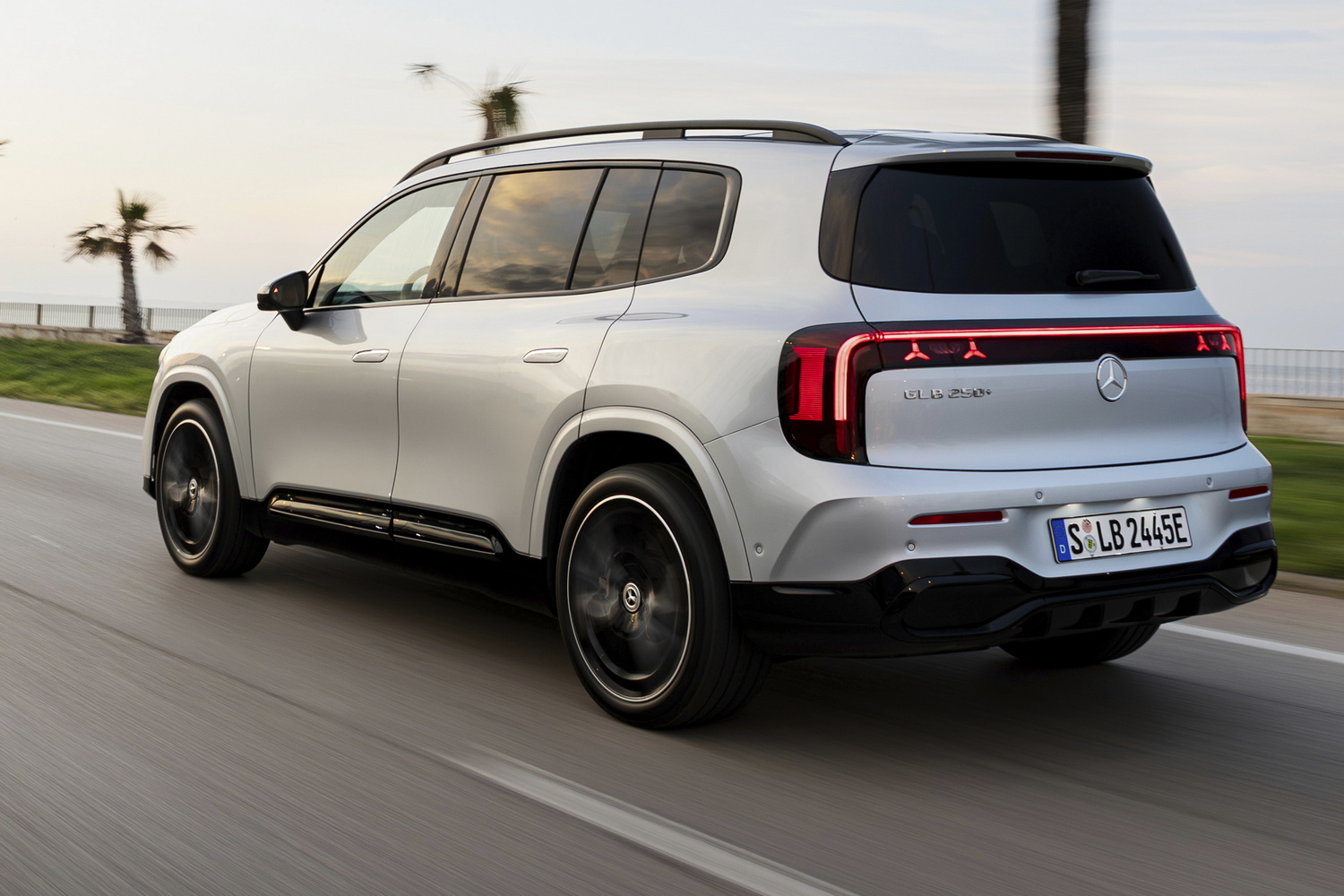
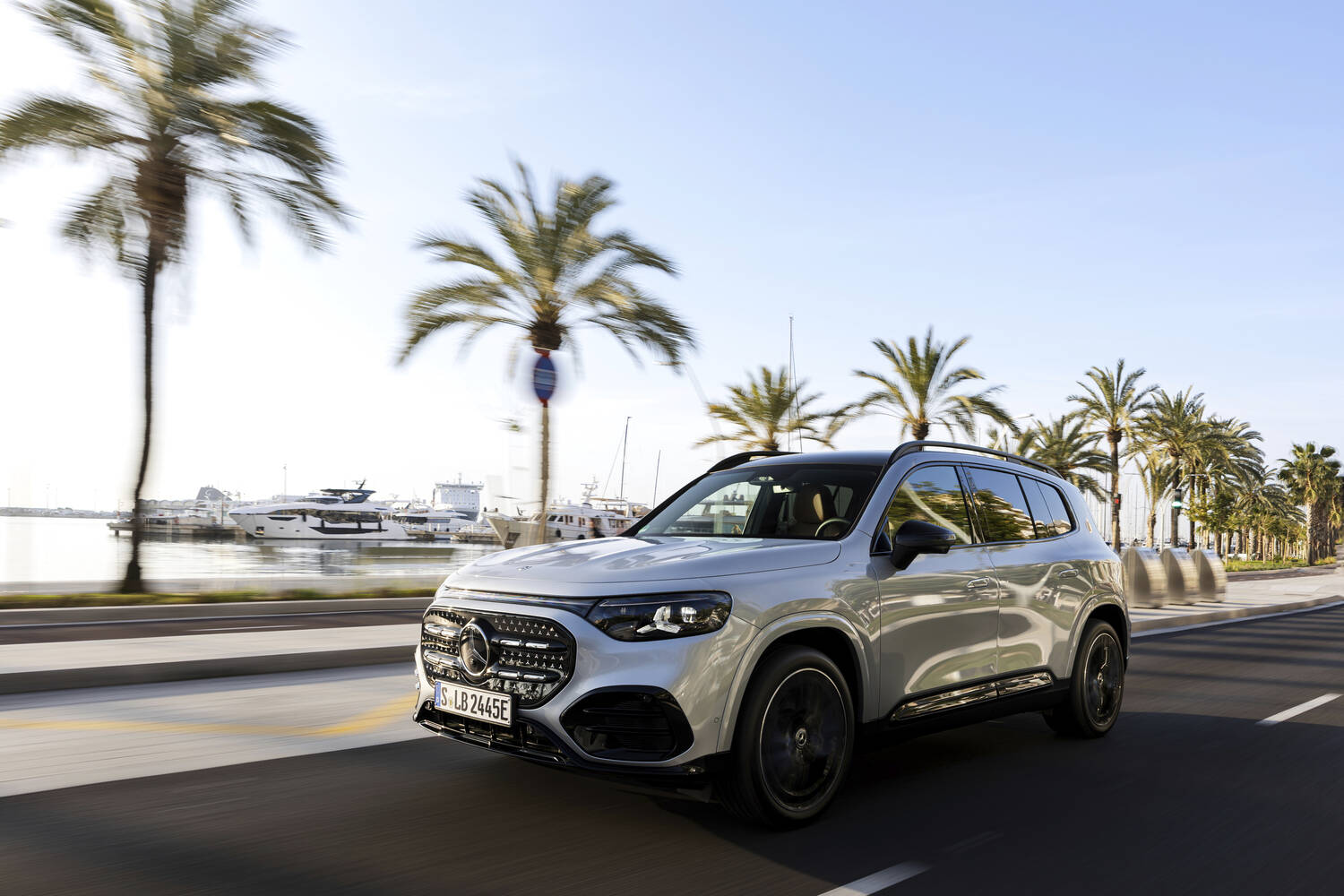
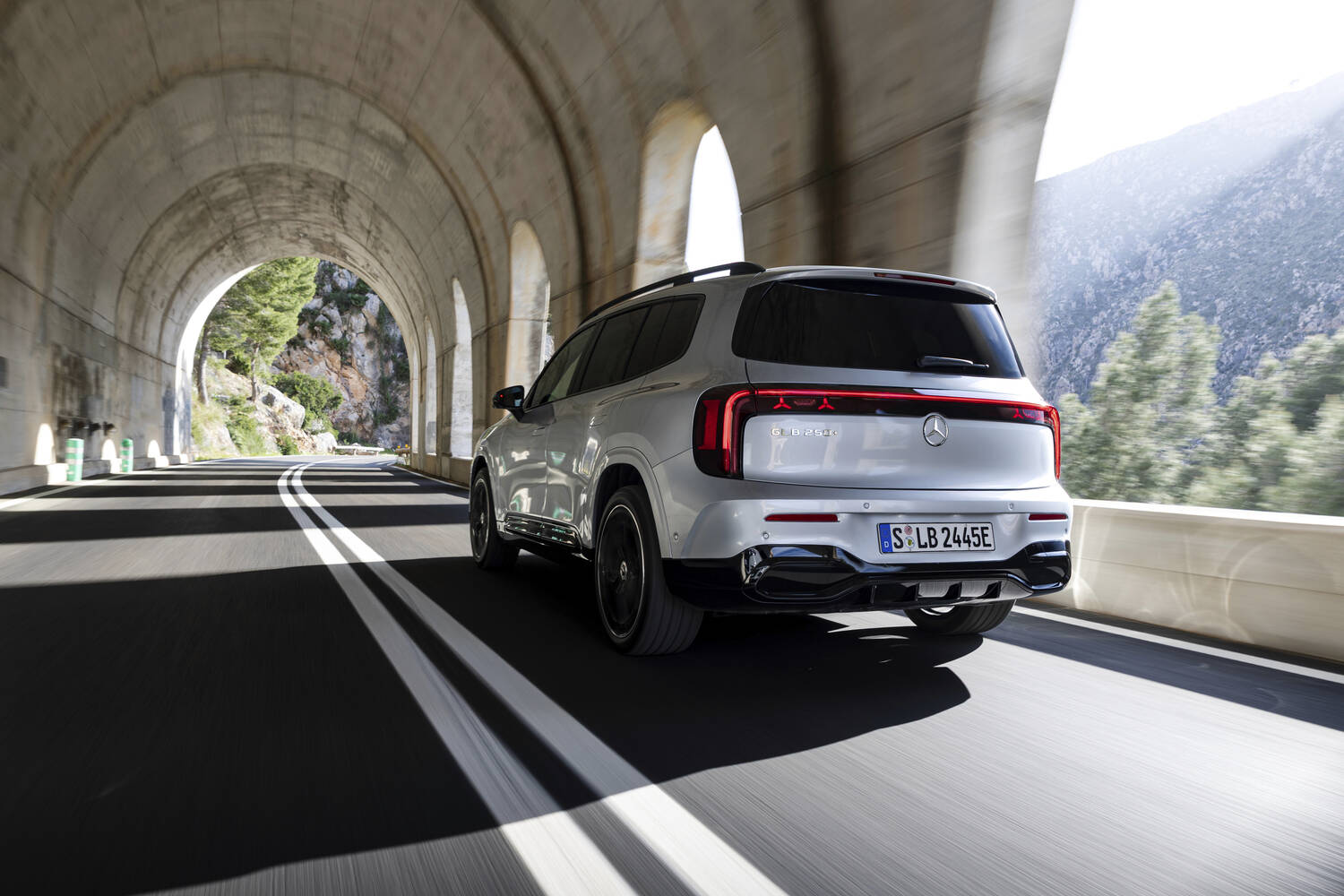
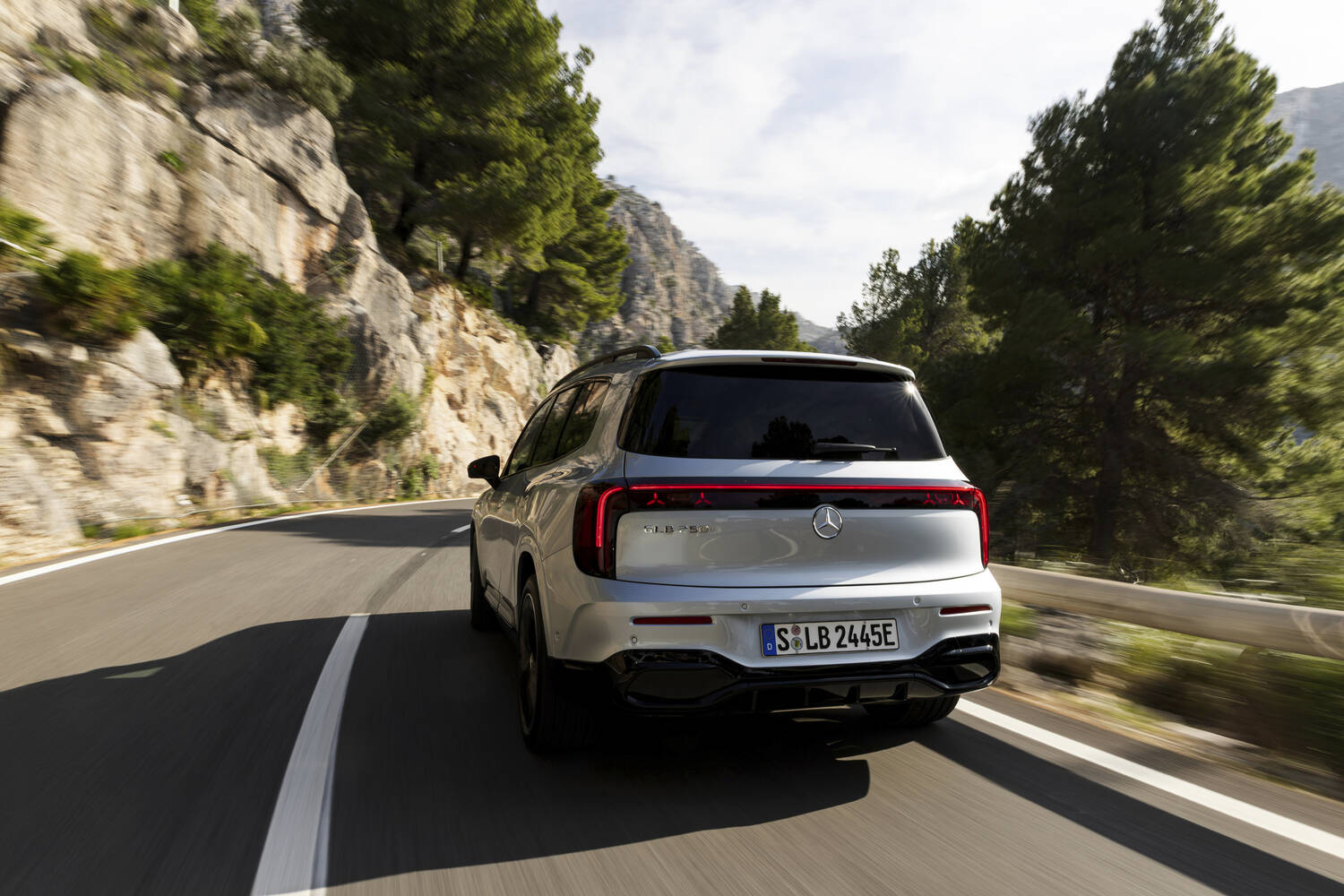
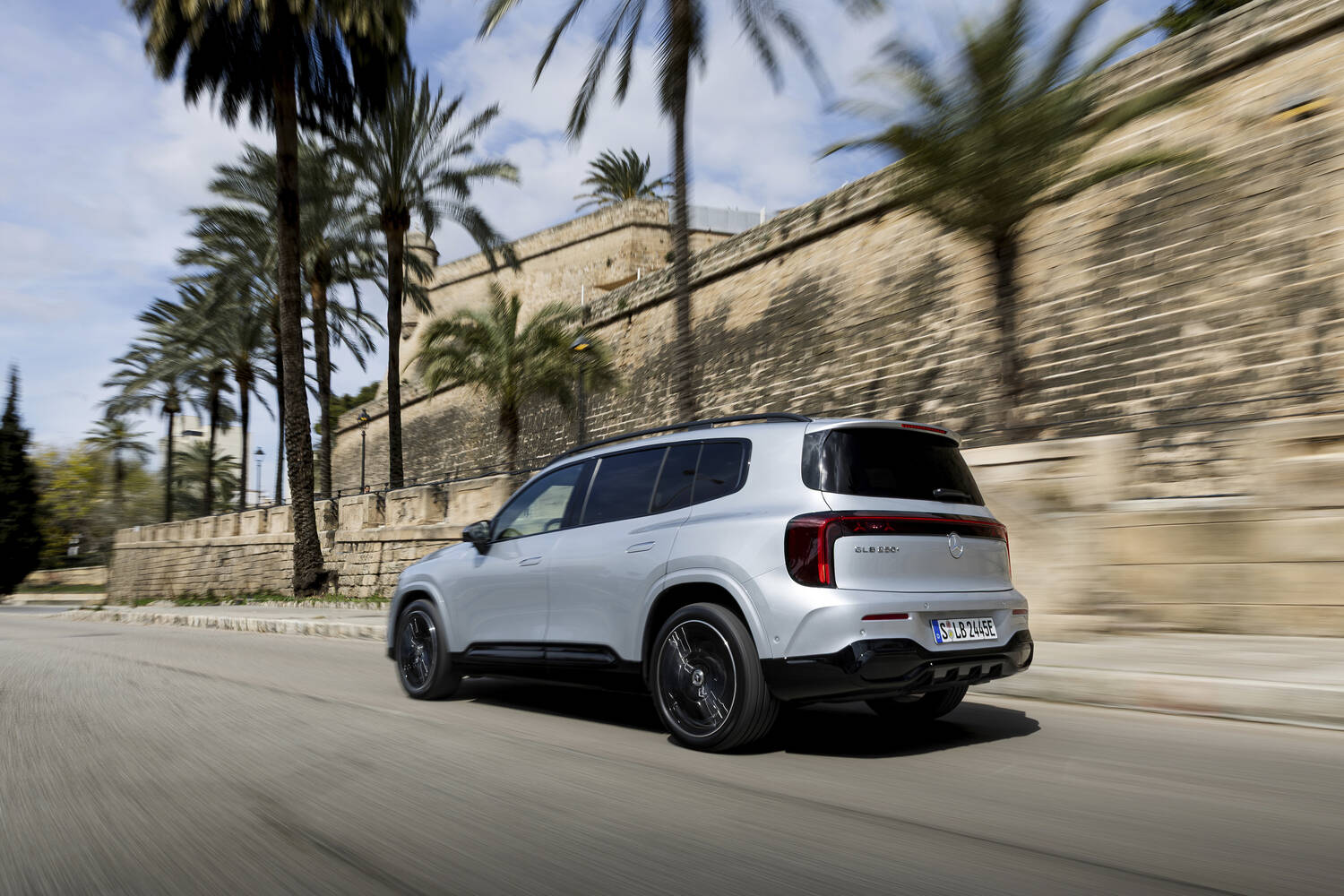
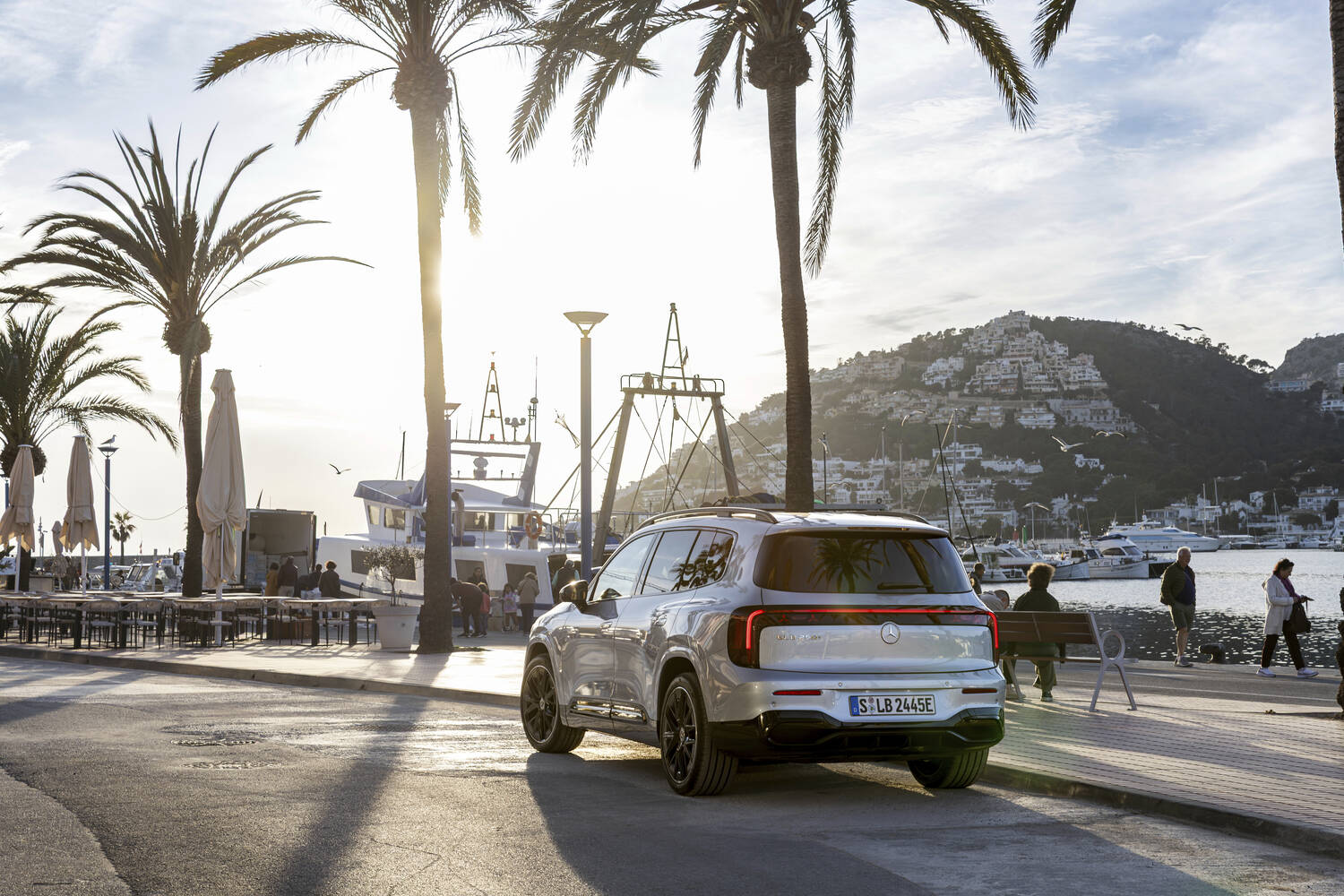
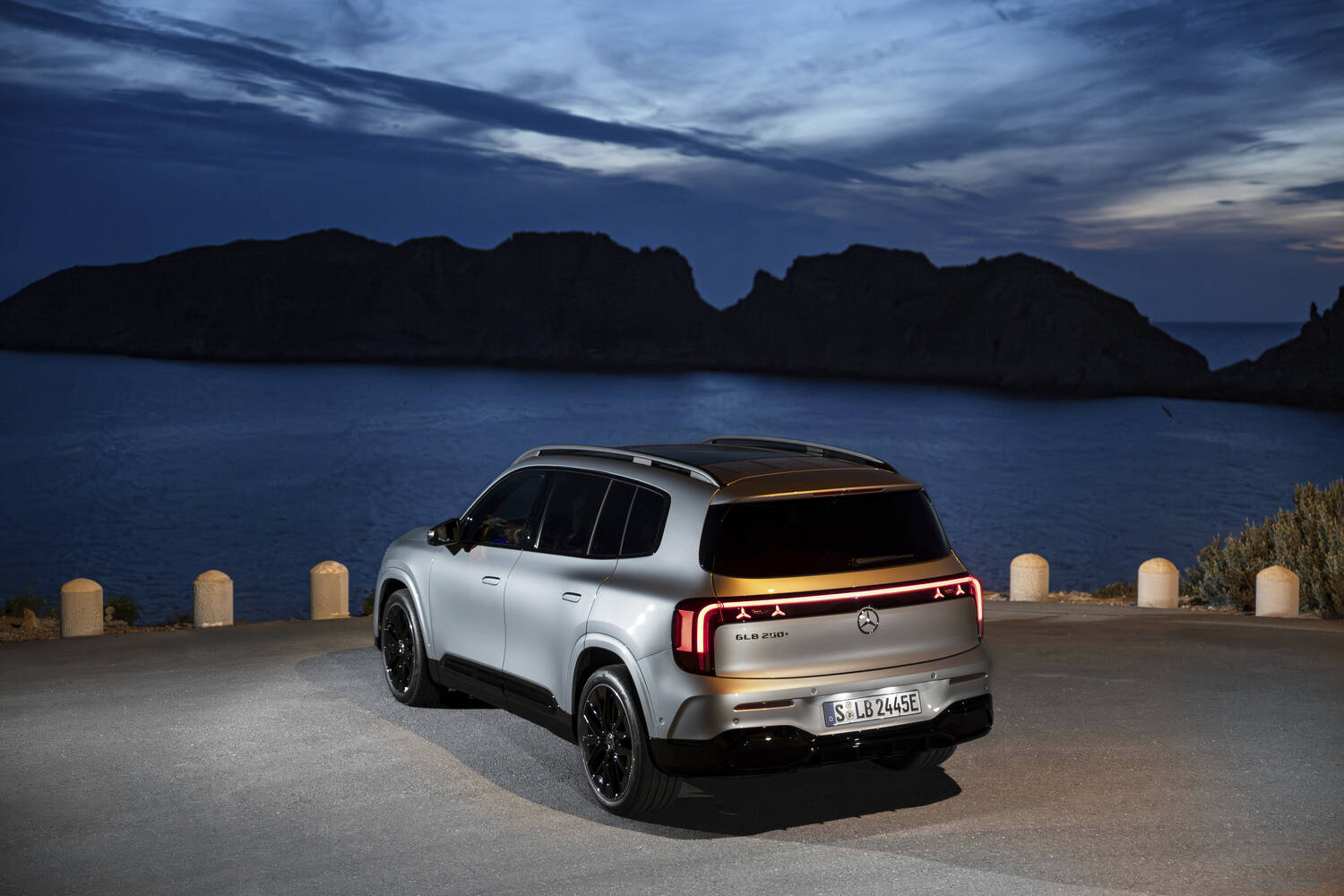
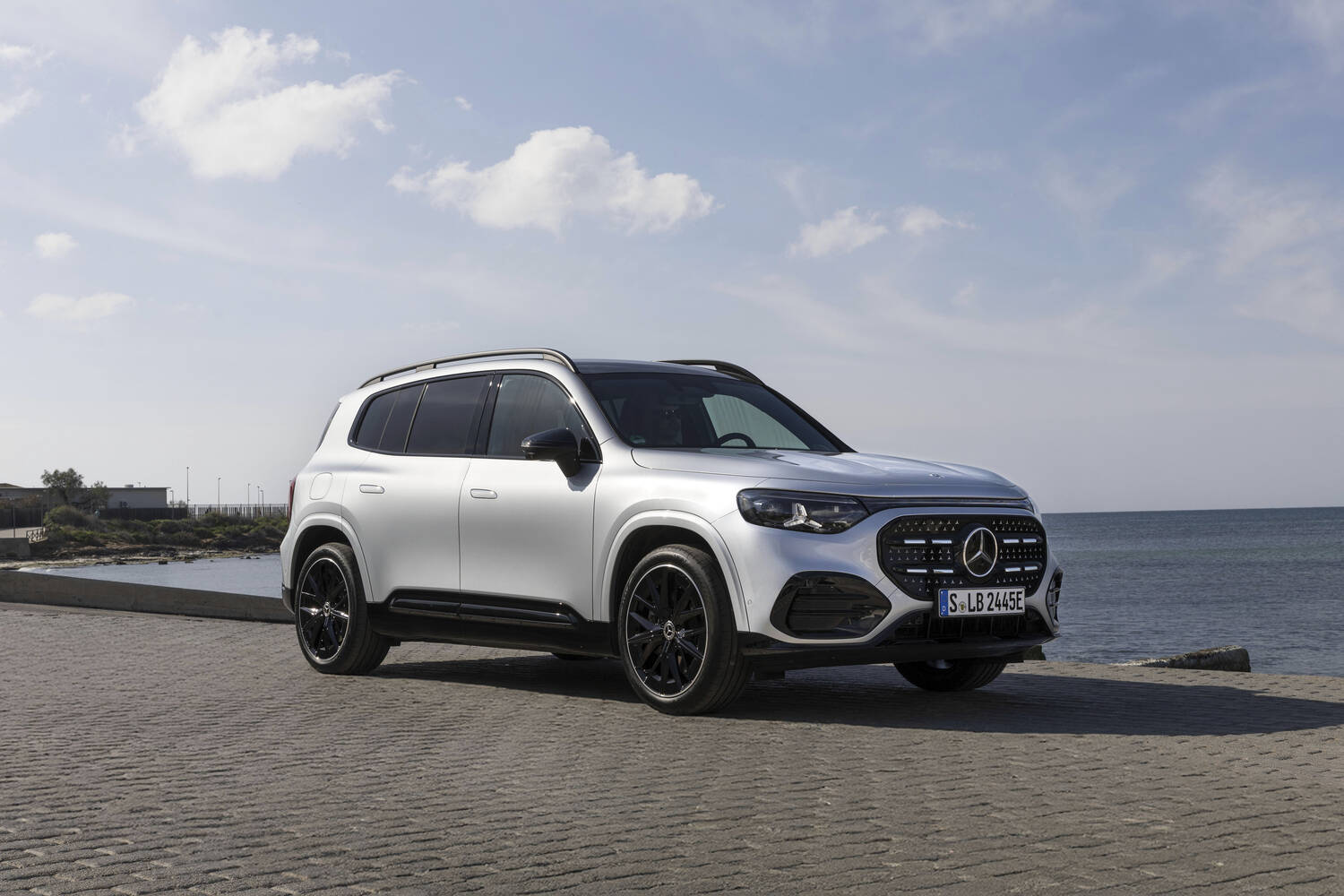
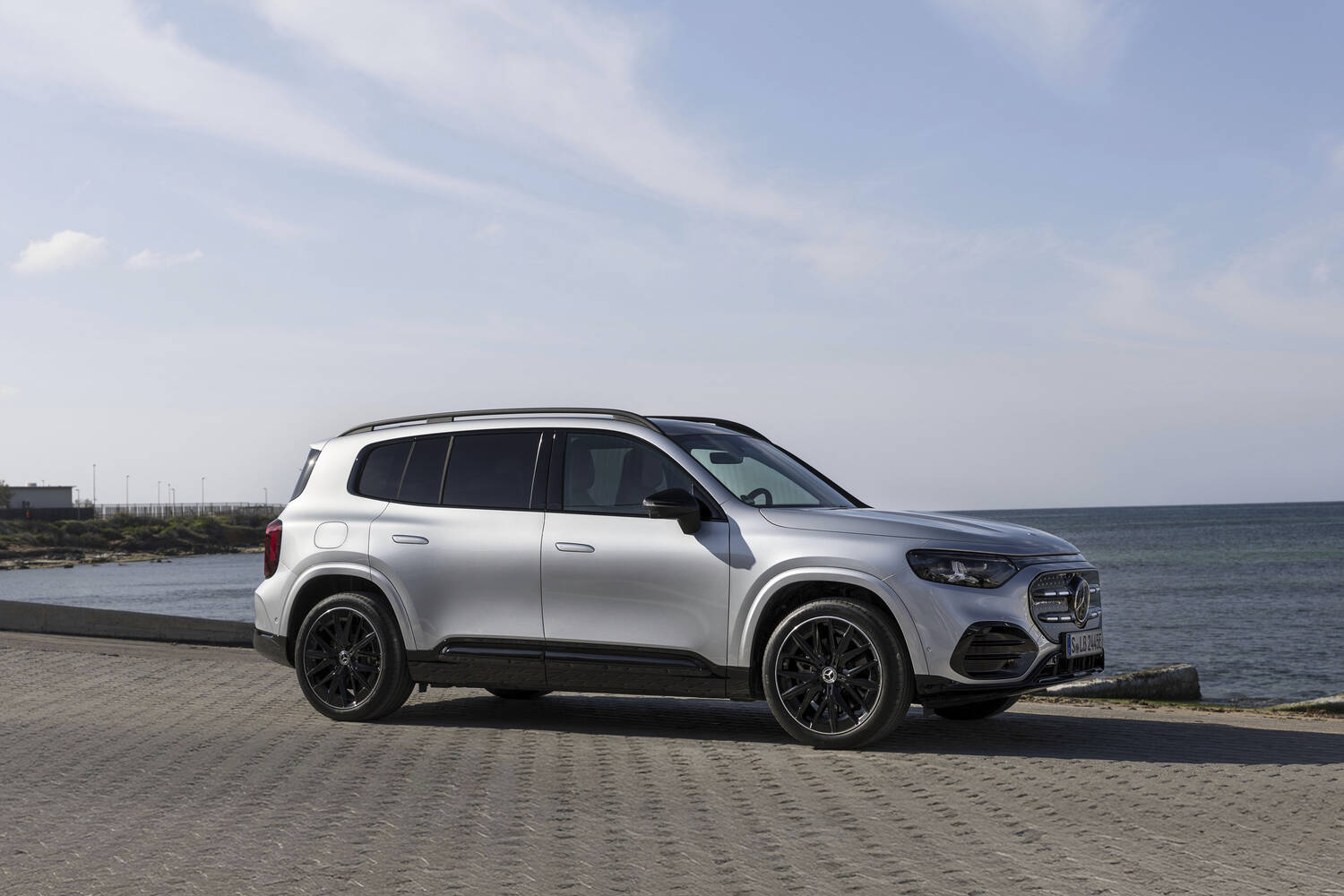
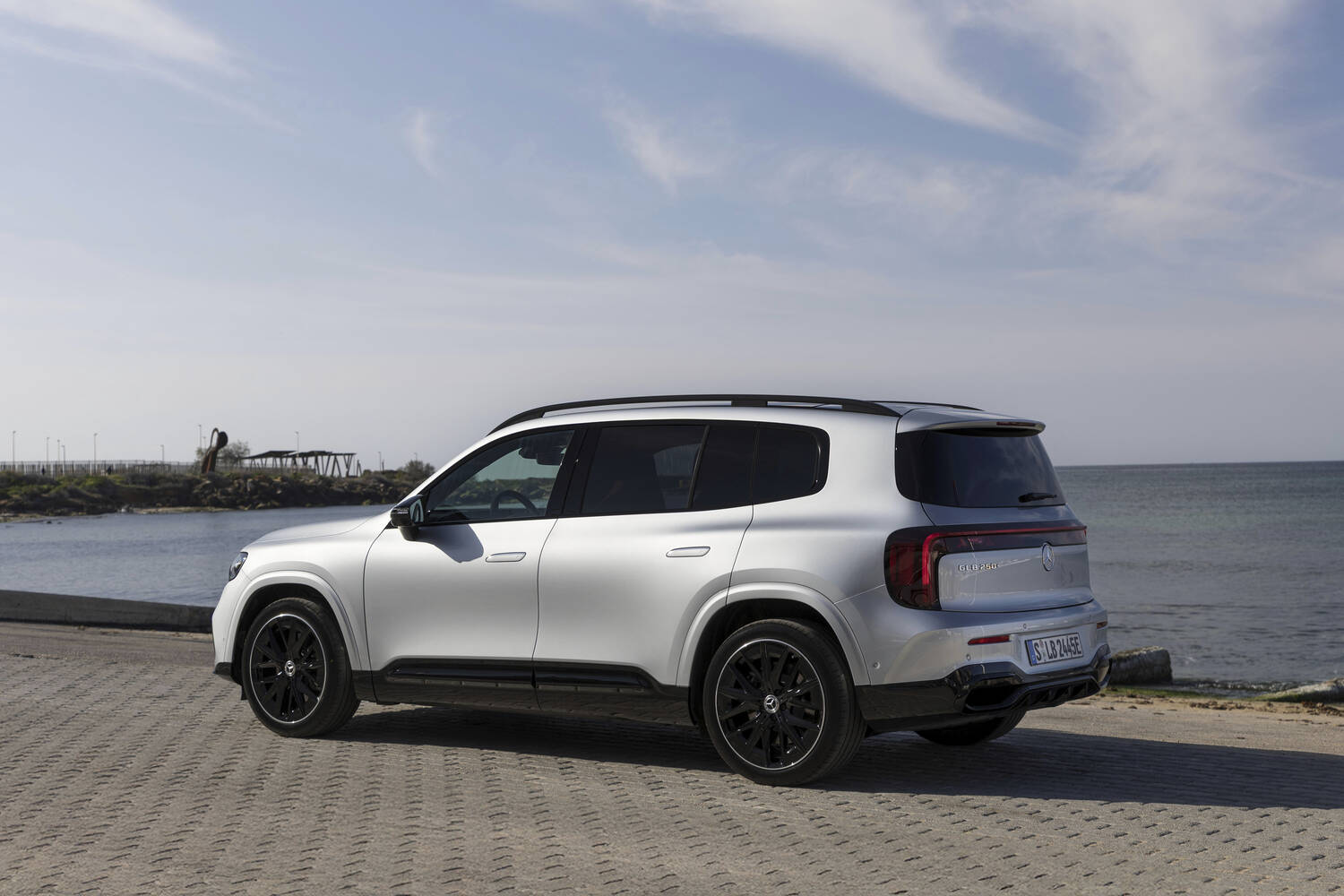
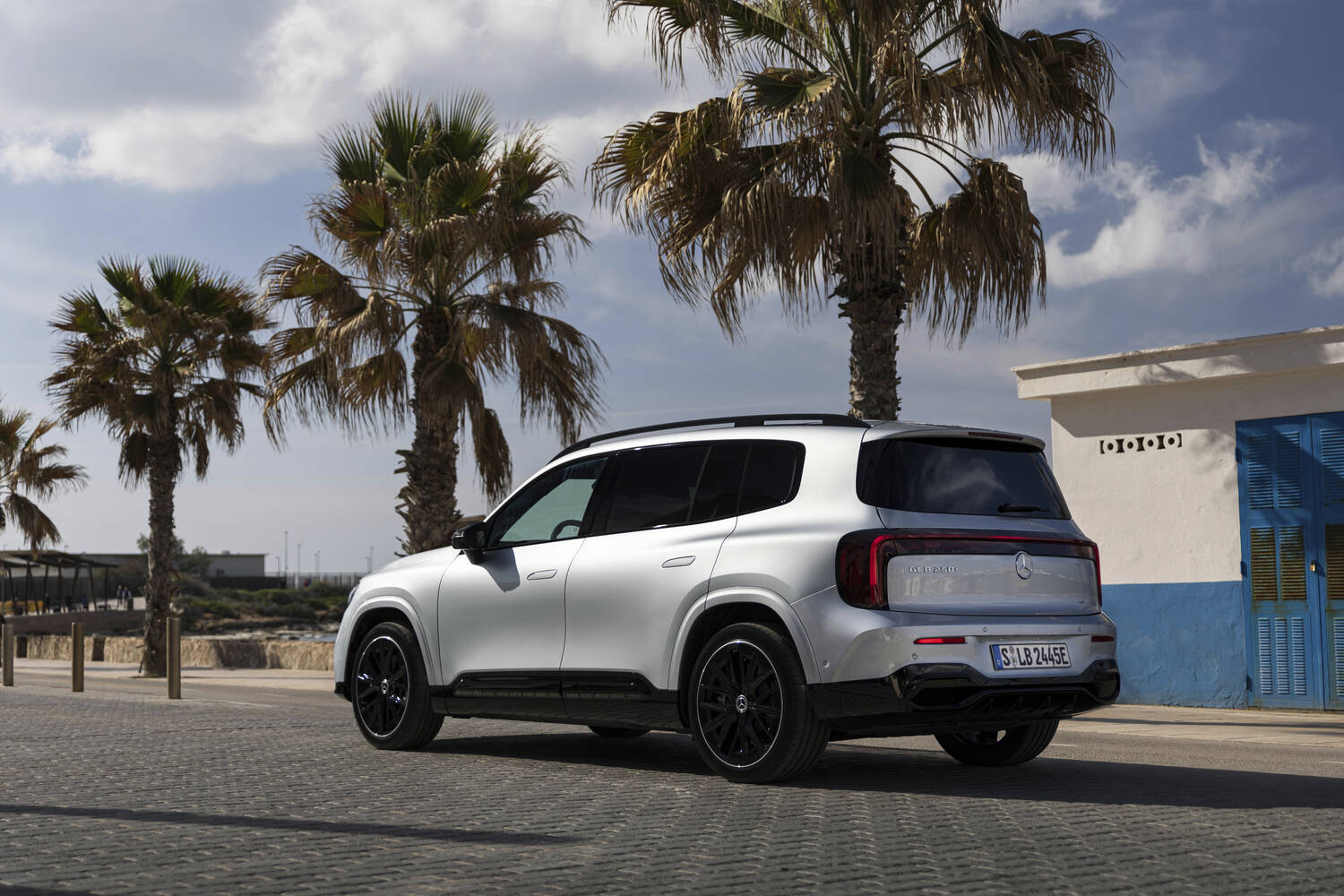
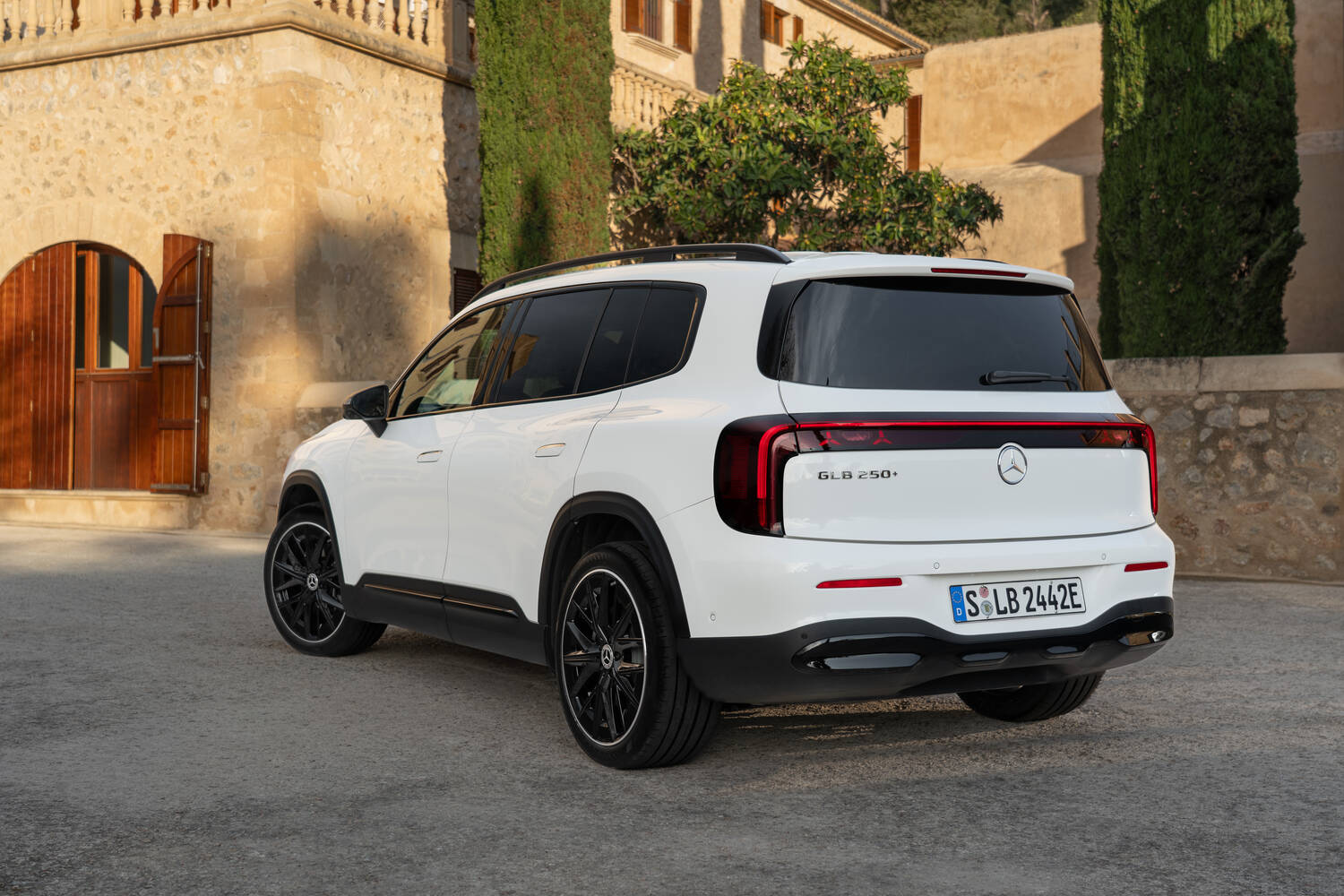
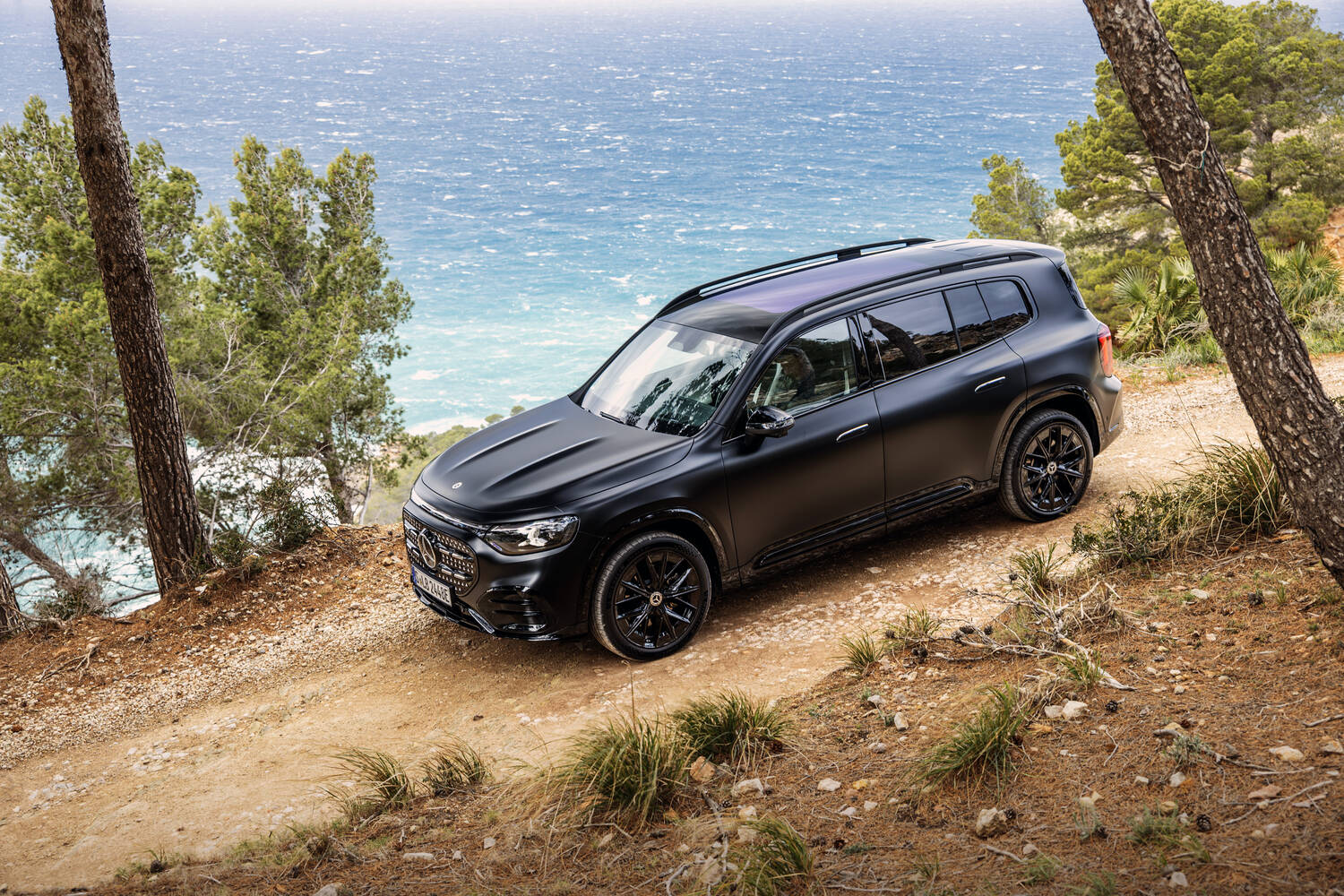
The Mercedes has a boxy appearance, complete with a vertical tailgate, chunky flanks and an upright windscreen leading to a high roof, standing almost 1.7 metres off the ground.
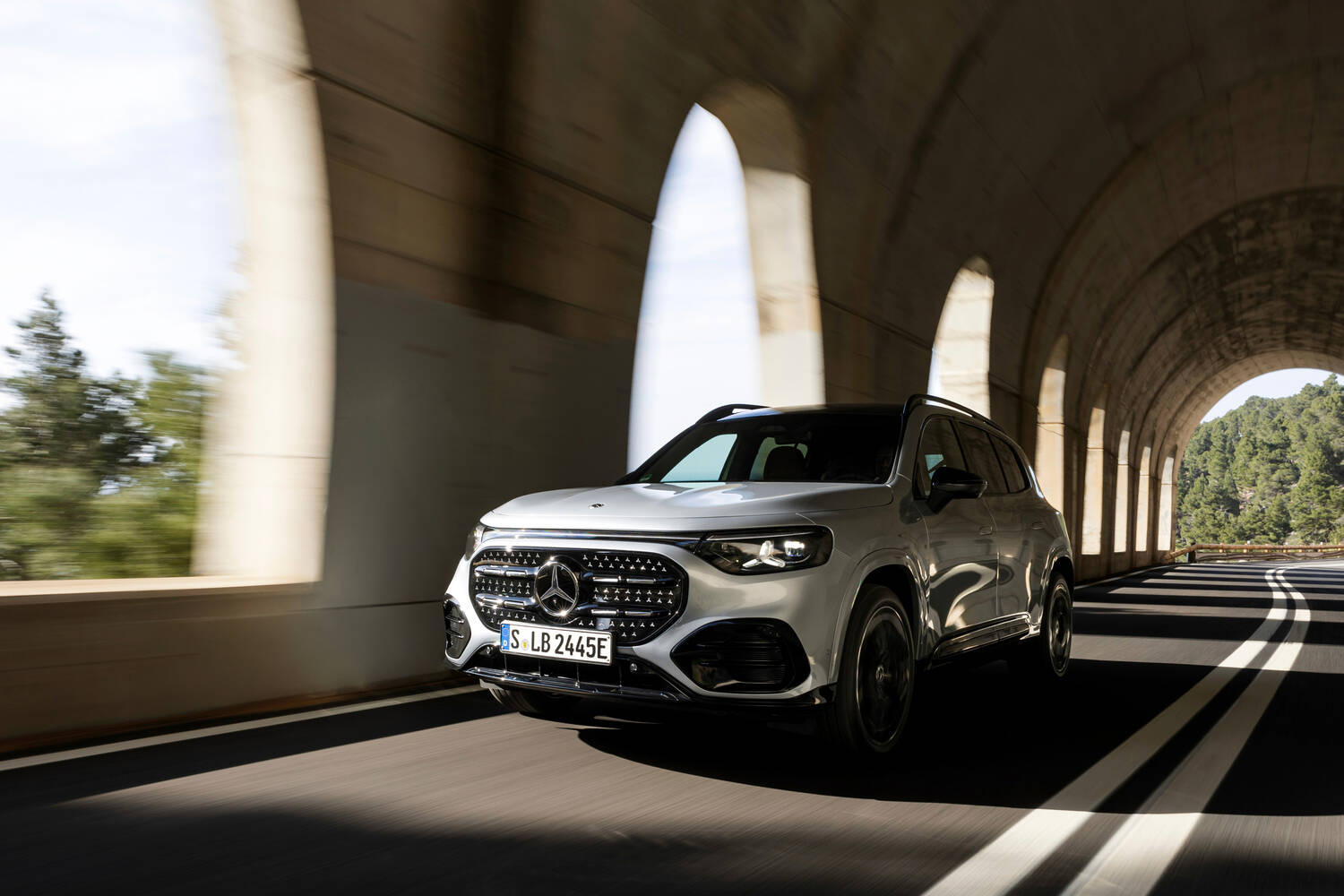
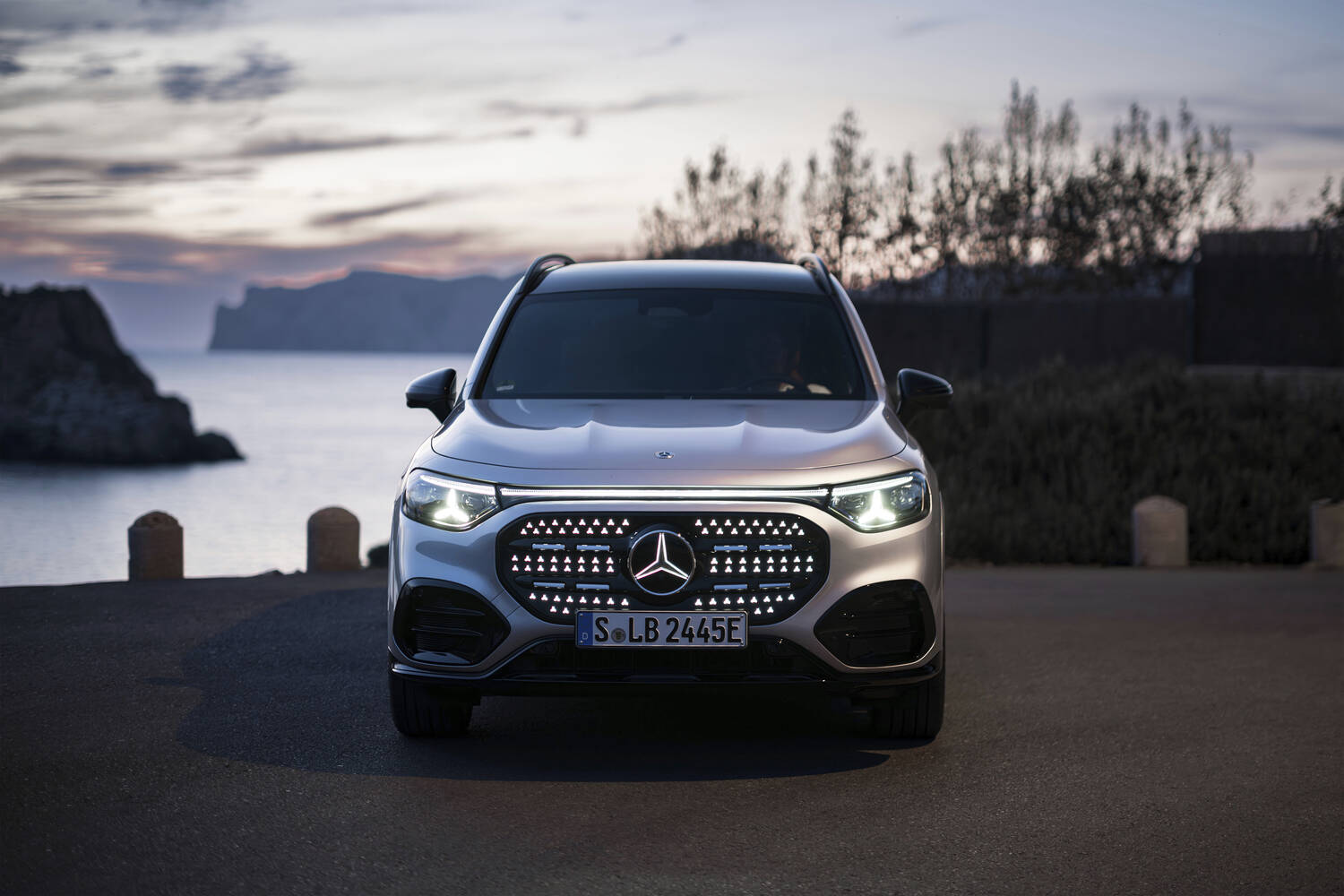
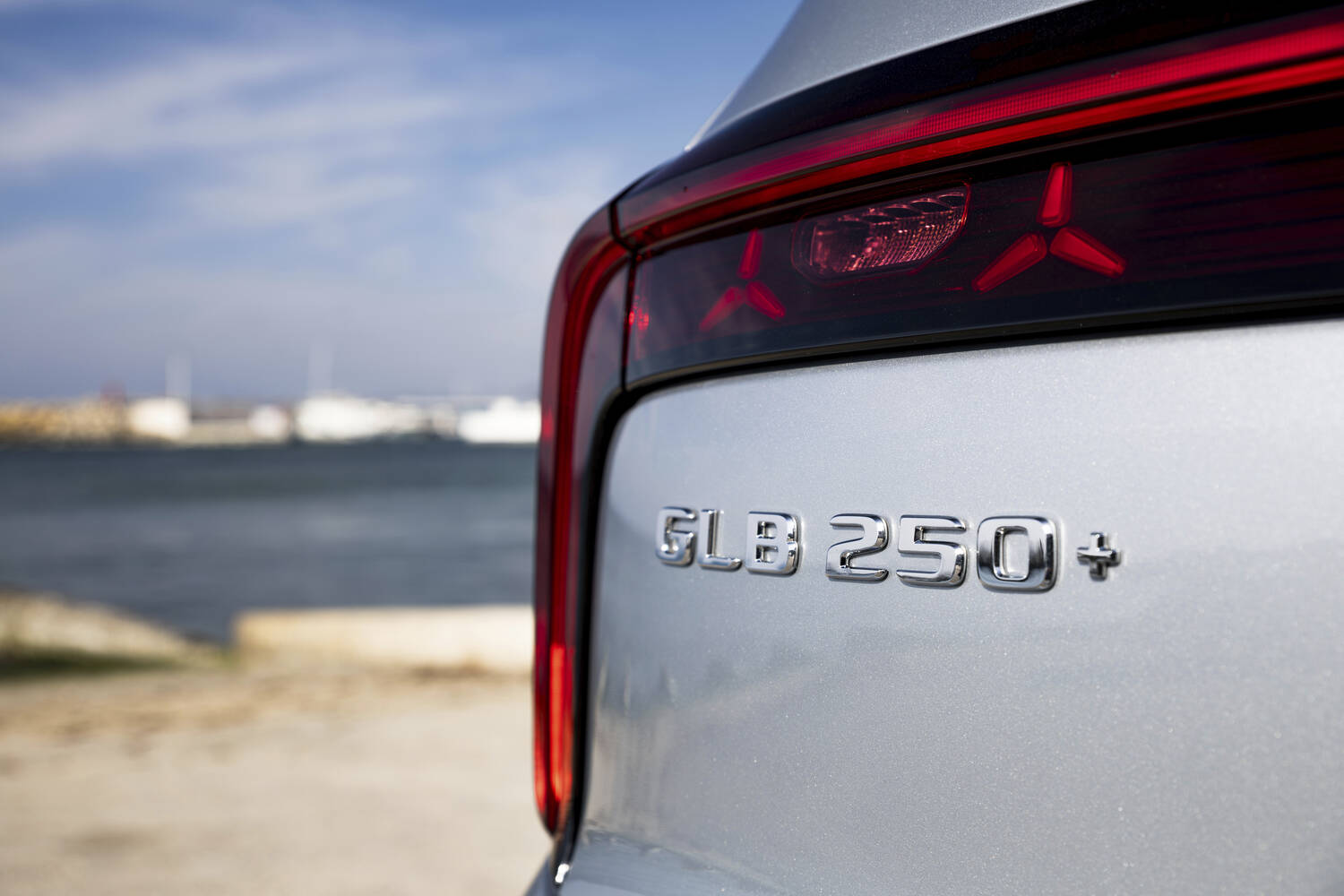
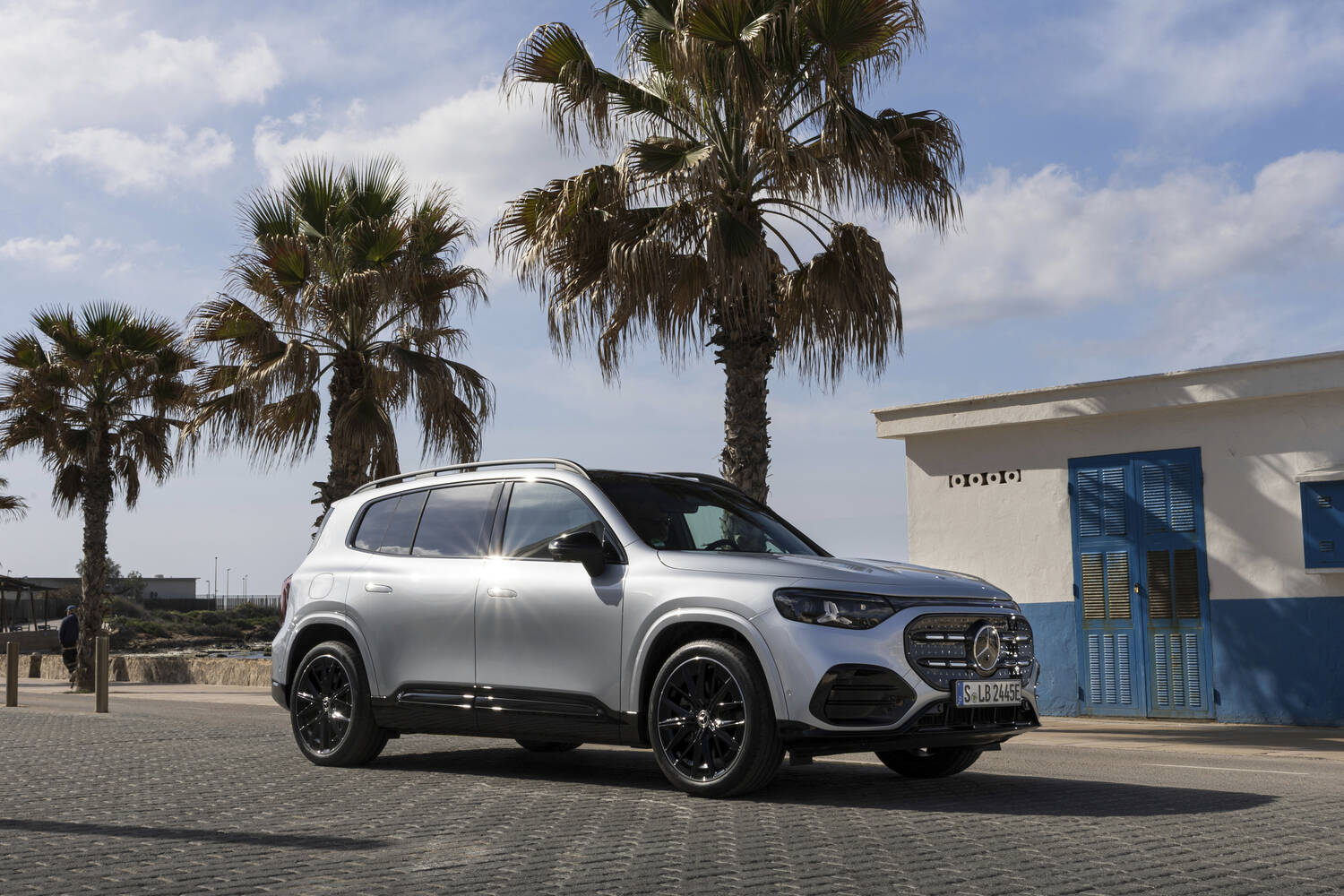
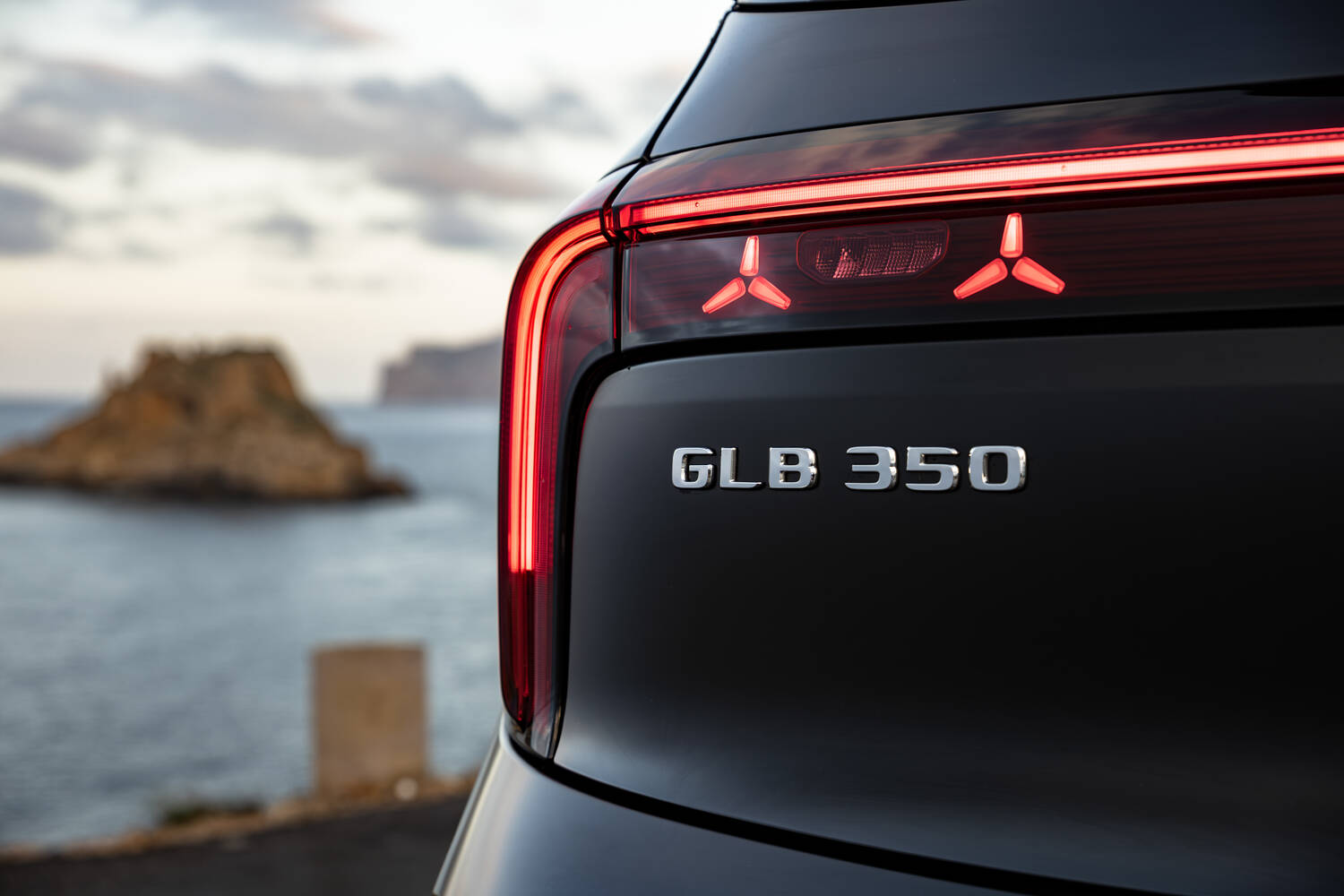
All versions of the GLB feature full-width lighting front and rear, which used to be a signifier of the Mercedes EQ brand, and it is - like so many Mercedes cars - absolutely festooned in three-pointed stars.

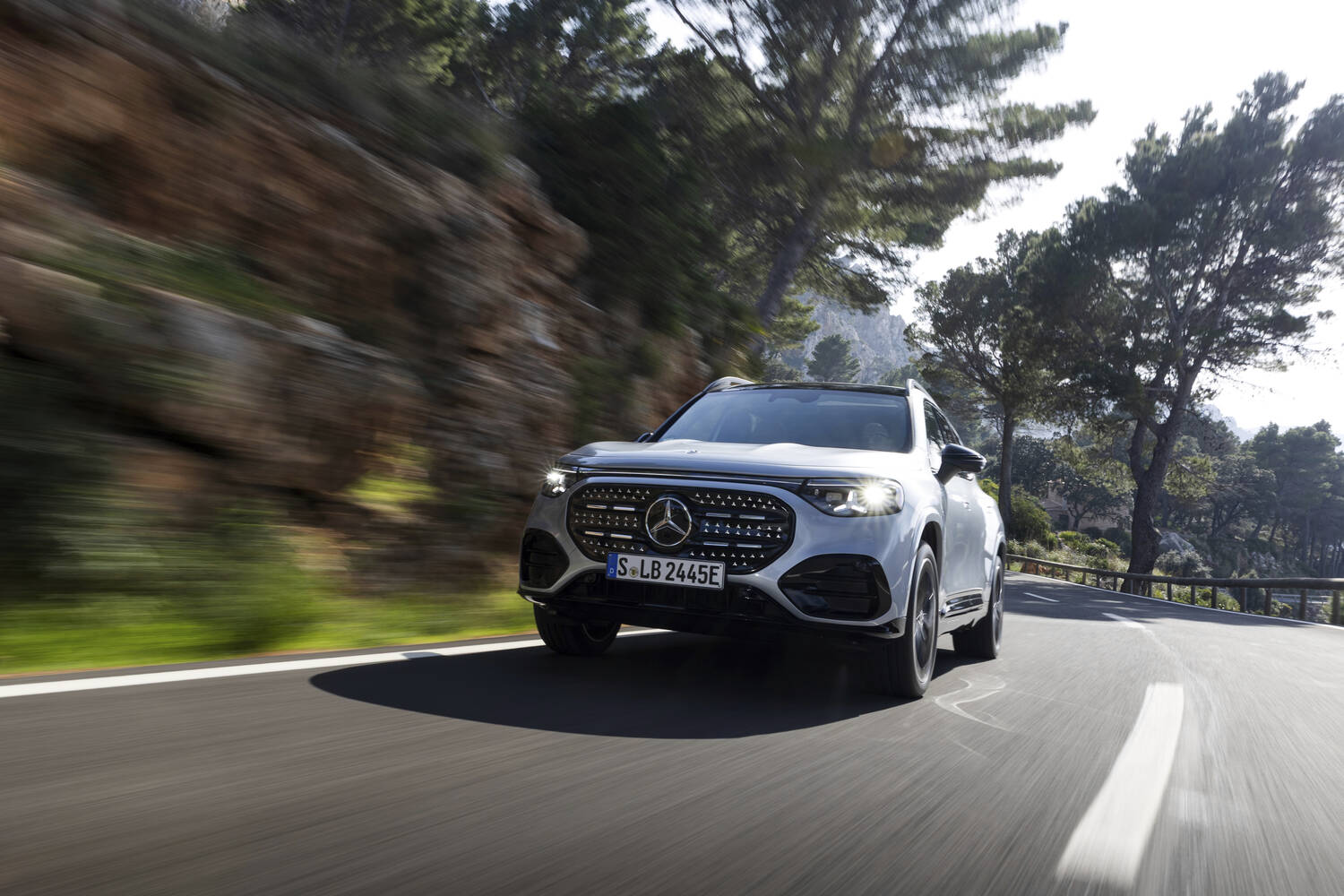
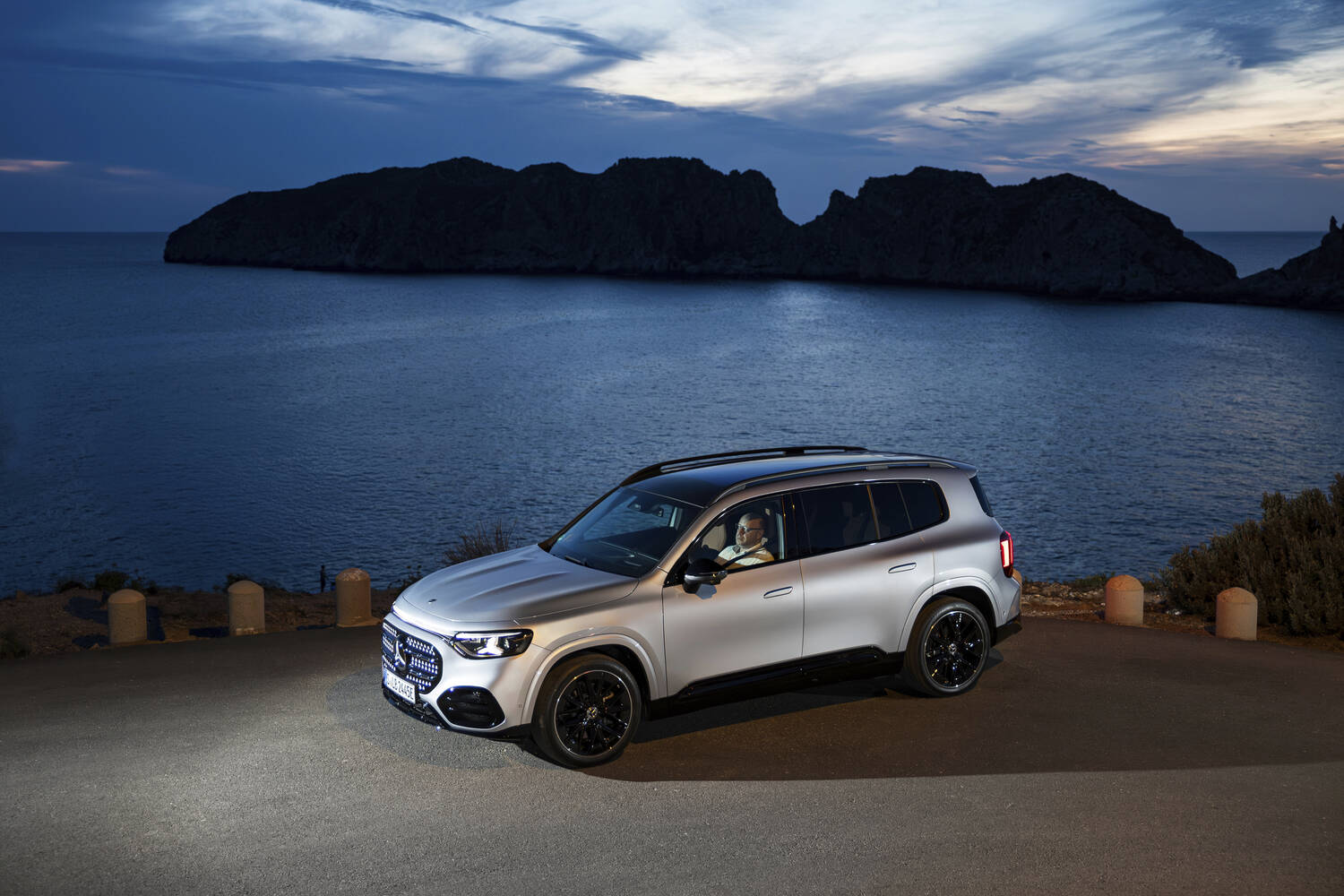
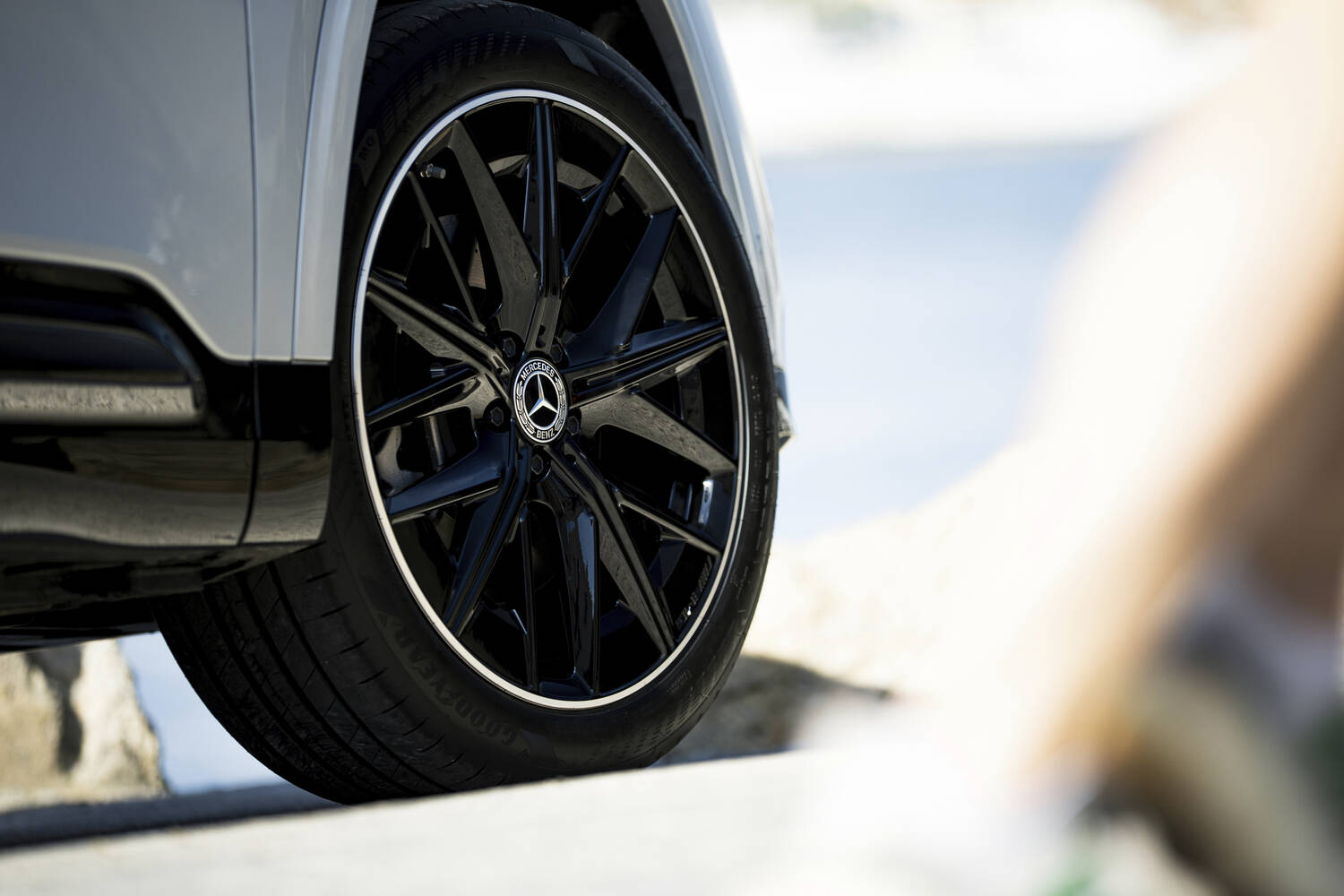
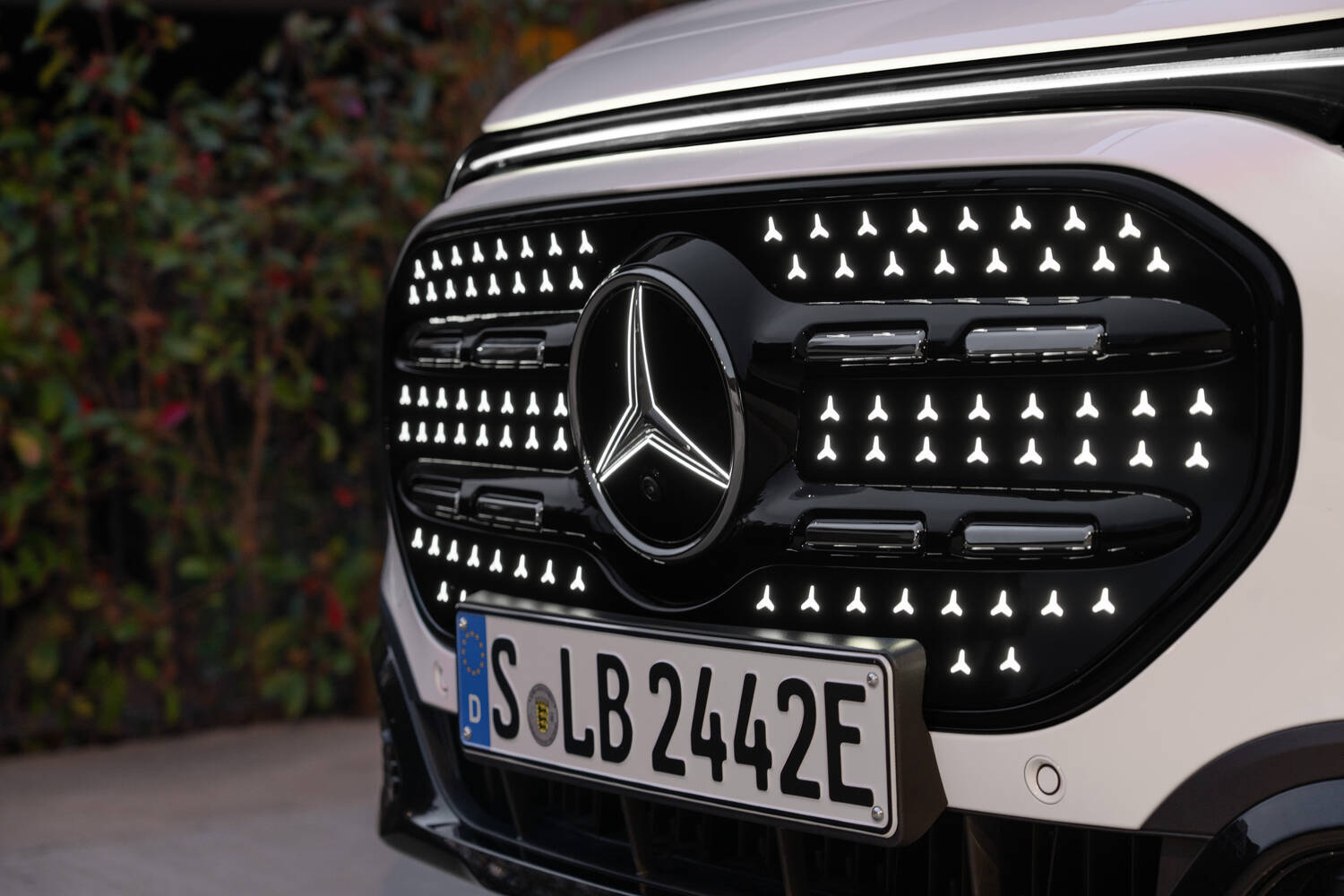
We're not just talking about the badgework which you'll find on the boot lid, bonnet and front grille (the latter emblem of which is utterly vast), or for the centre caps of the alloy wheels; no, we're talking about ranks of little stars studded into what would otherwise be the cooling apertures of that grille.
We're talking about them even appearing in the rear lamp clusters and as the GLB's daytime running-lamp signatures in the nose. Three-pointed stars, everywhere.
Aside from that, a set of roof rails up top and alloy wheels ranging from 18 to 20 inches in diameter are on the cards for the GLB, and overall it's a handsome-enough thing.

Further, while we say it's a relatively compact SUV on the outside for a seven-seater, the key word there is 'relatively' - it's still a fairly long car in isolation, going beyond 4.7 metres.
Dimensions of the 2026 Mercedes GLB
Length: 4,732mm
Width: 1,861mm (excluding mirrors)
Height: 1,687mm
Wheelbase: 2,889mm
Paint colours for the 2026 Mercedes GLB
Mercedes offers nine different paint finishes for the GLB, starting with both non-metallic Jet Black and Manufaktur Cosmos Black Magno, either of which are 'free' - although the latter requires certain equipment upgrades in order for it to be available.

Moving up, both Polar White and Aqua Mint are solid colours requiring a €437 fee, while three metallic hues - Cosmic Black, Clear Blue and High-Tech Silver - all command €1,189 apiece. The two most expensive paints for the Mercedes GLB are Manufaktur Patagonia Red Bright, at €1,587, and Manufaktur Alpine Grey Solid for a hefty €2,459.
Interior, practicality, tech & comfort of the 2026 Mercedes GLB
• Seven seats inside
• Third row is tight
• Massive digital interface

The GLB's party trick has always been that it offers seven seats in a vehicle which sits between the GLA and GLC within the foothills of Mercedes' mountainous range of SUVs of all shapes, sizes and powertrains.
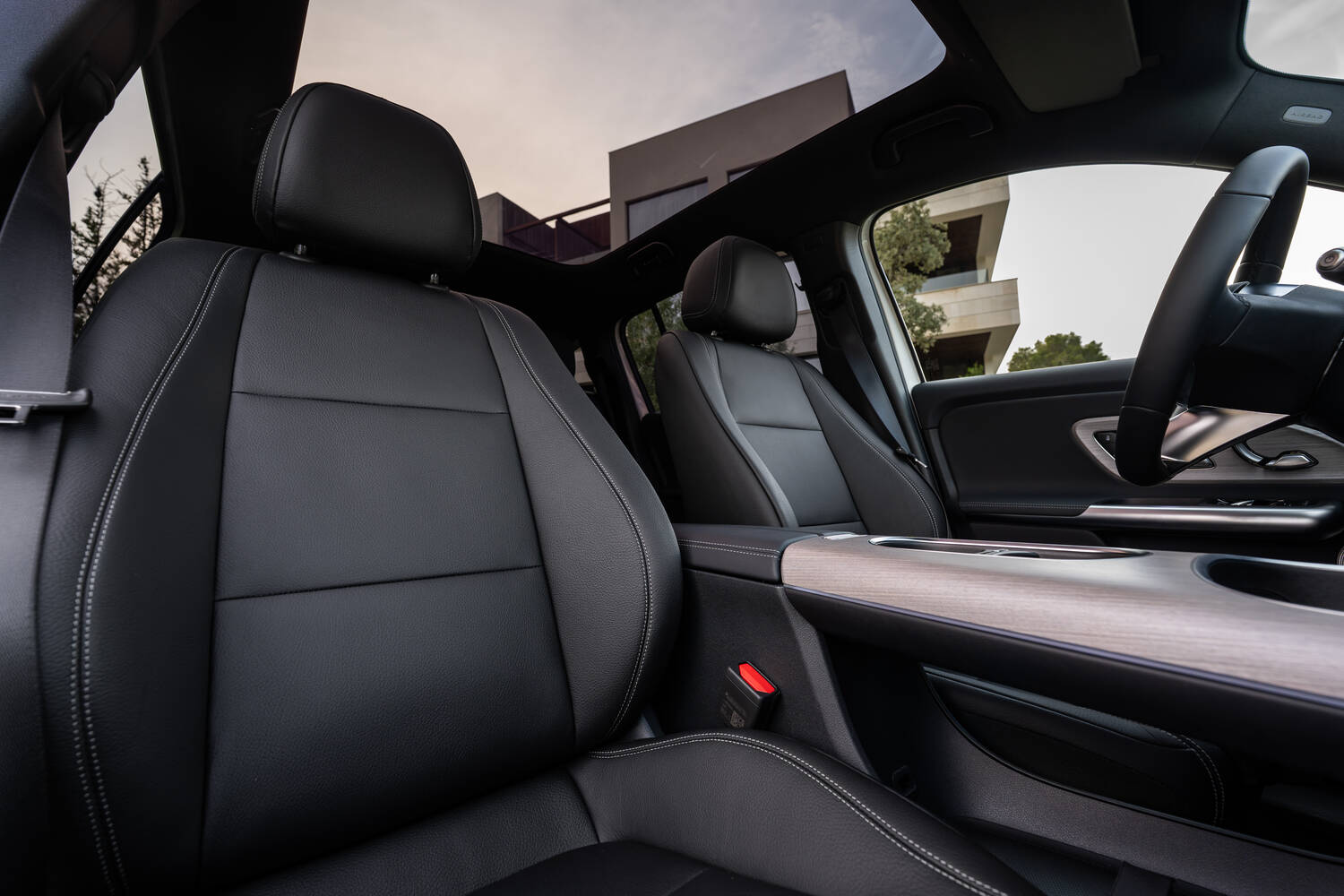
Material quality in the Mercedes is impressive, even if we're not sure about the optional light-coloured, striped trim which has deliberately mismatched panels; it looks like someone has installed half of them back-to-front.

Beyond that, the GLB's cabin is dominated by its extensive tech in the fascia, while we'd sound caution about treating this as a full seven-seater, no matter what Mercedes claims - you'd be better off considering it as a '5+2' SUV.
Getting comfortable in the driver's seat
There is electrical adjustment of the seats in the range-topping specification, although in our 250+ test car, both the driver's seat and the reach-and-rake steering column had to have their positions tweaked manually.

Nevertheless, a comfortable driving position is possible and due to the GLB's large, airy glasshouse and tall stance, the visibility out of the car is excellent in all directions and the view of the road ahead is commanding.
Infotainment and technology
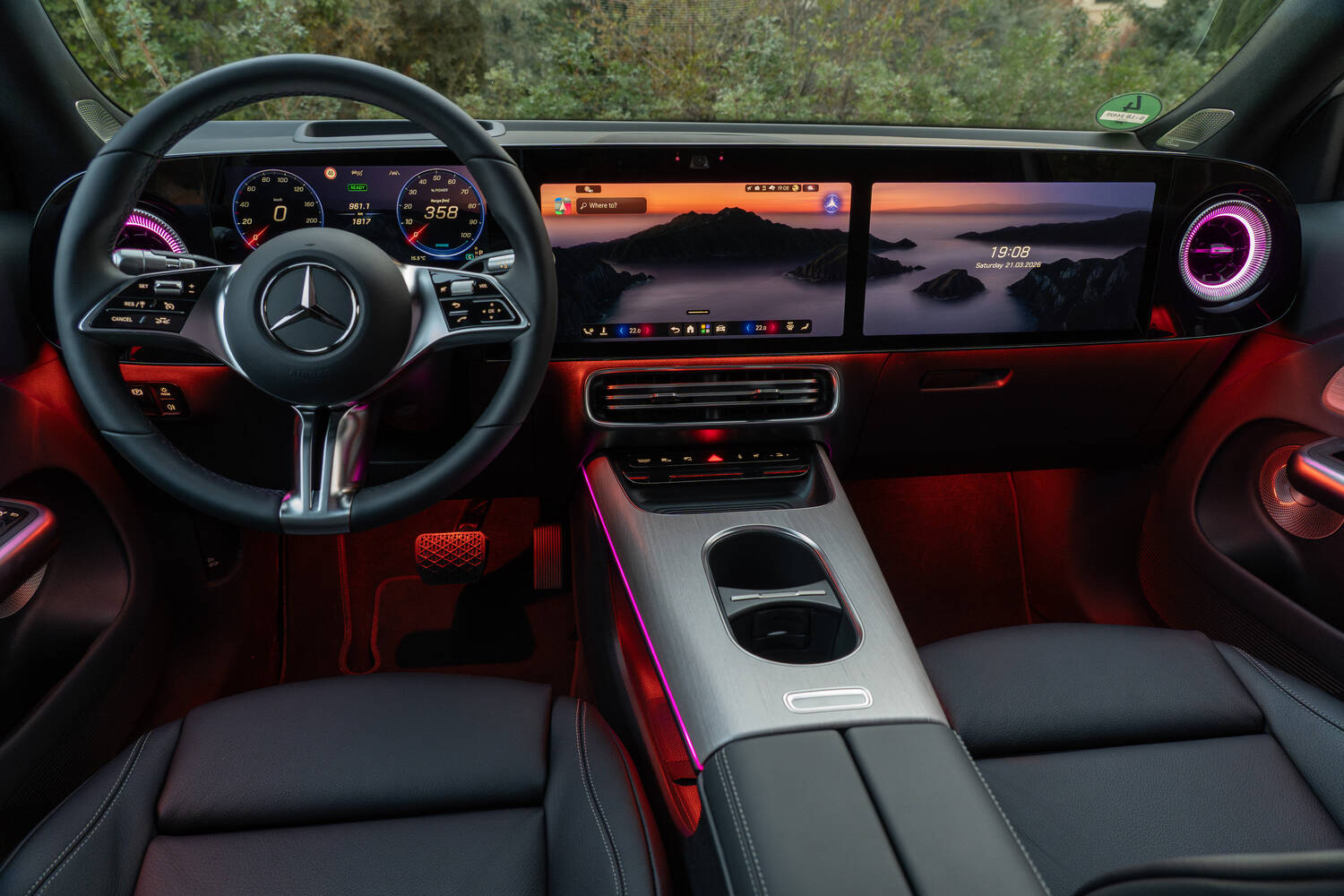
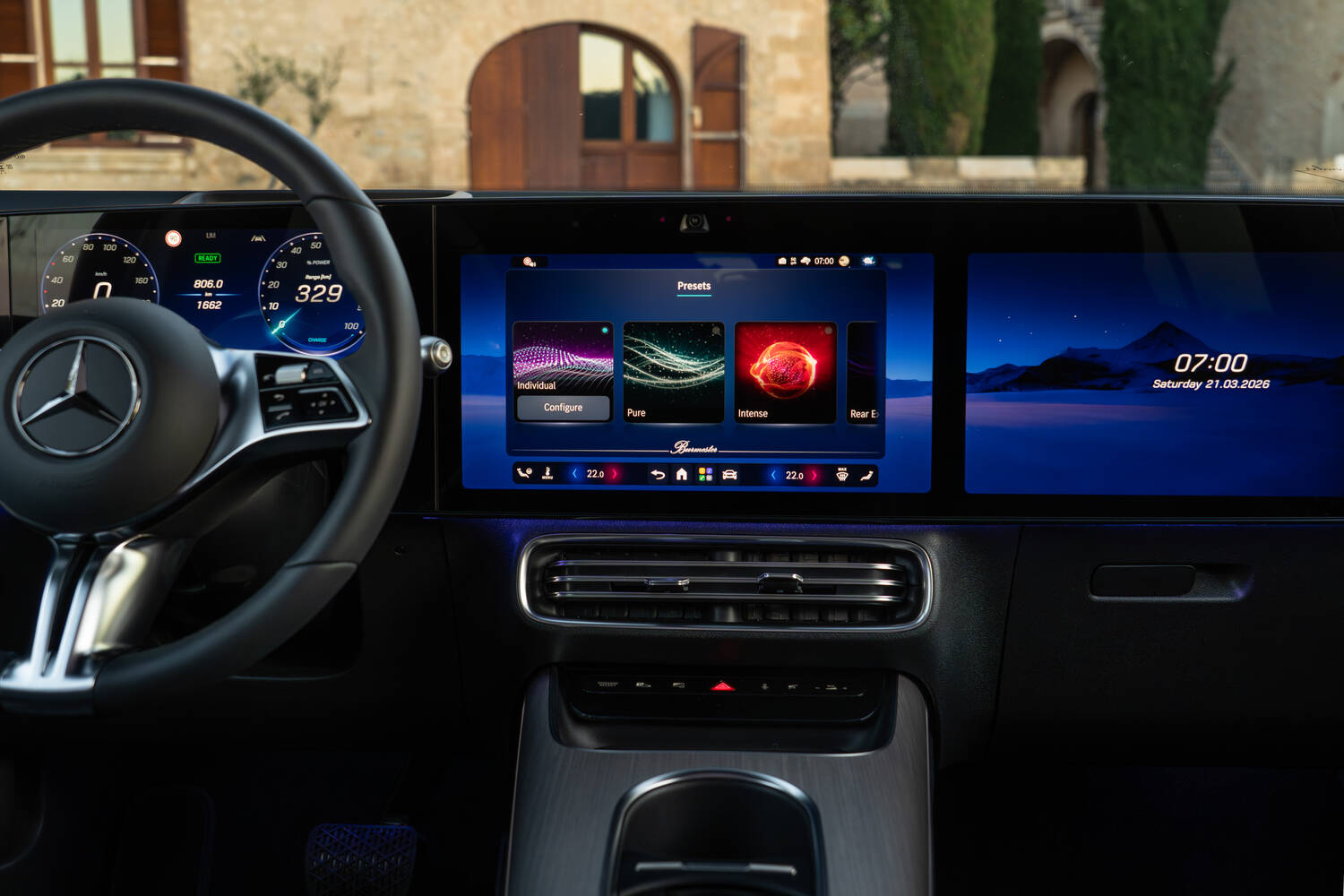
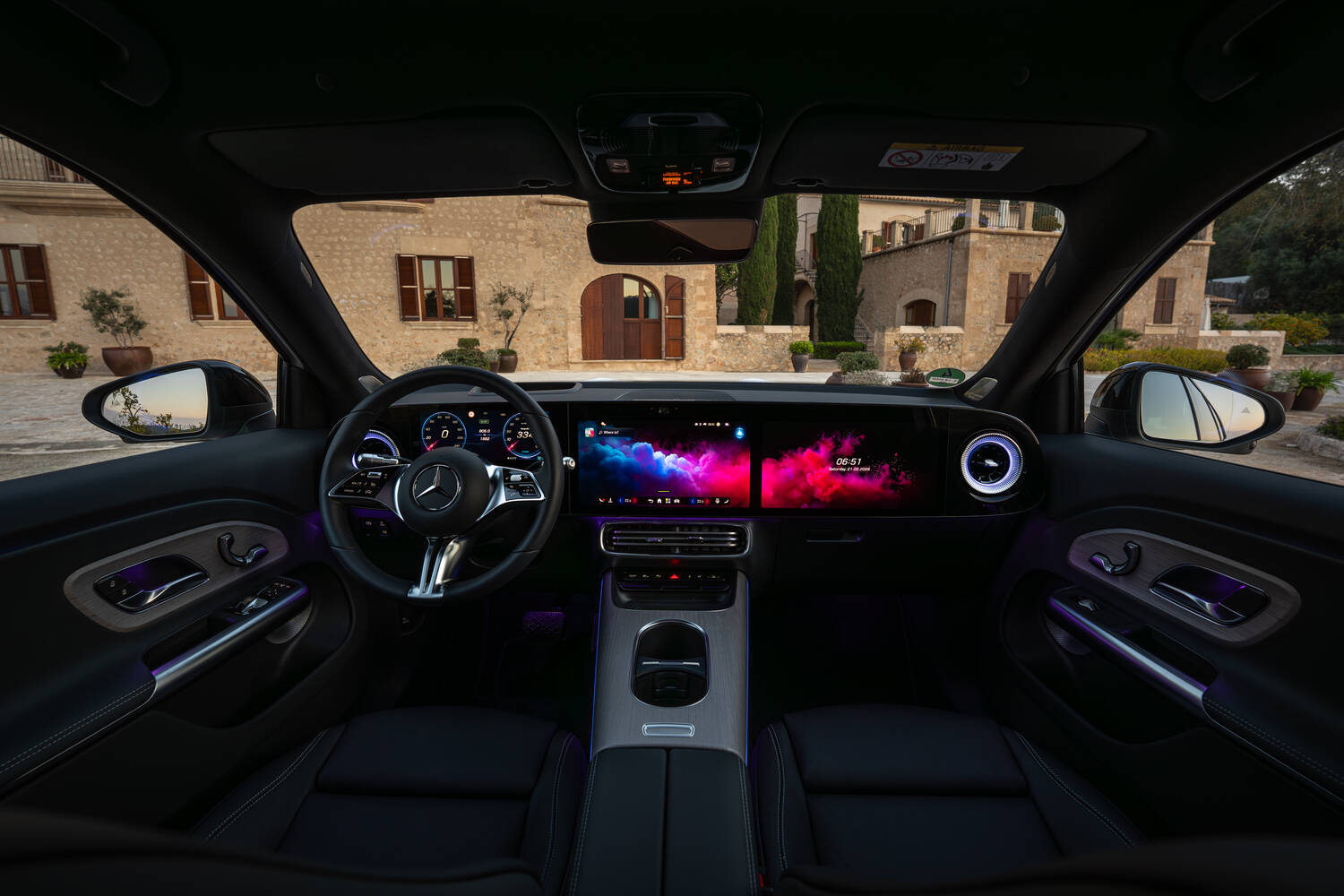
There's plenty of top-end technology available in the GLB, both as standard on lesser trim grades, fitted to the grander-spec models, or on the options list, but the dominating feature of the GLB's cabin is the Superscreen dashboard.

A set-up it shares with the Mercedes CLA on the same platform, at its most opulent this sites a 10.25-inch driver's digital cluster alongside a pair of 14-inch displays - one in the centre for the 'MBUX' infotainment and another in front of the passenger for their own amusement on longer journeys. And, as if that weren't enough, there's a head-up display (HUD) available with another effective 12.2 inches of digital real estate.
Even in lesser cars which make do without the passenger screen, the GLB's massive slab-faced fascia really does draw the eye to its presence, all the time.

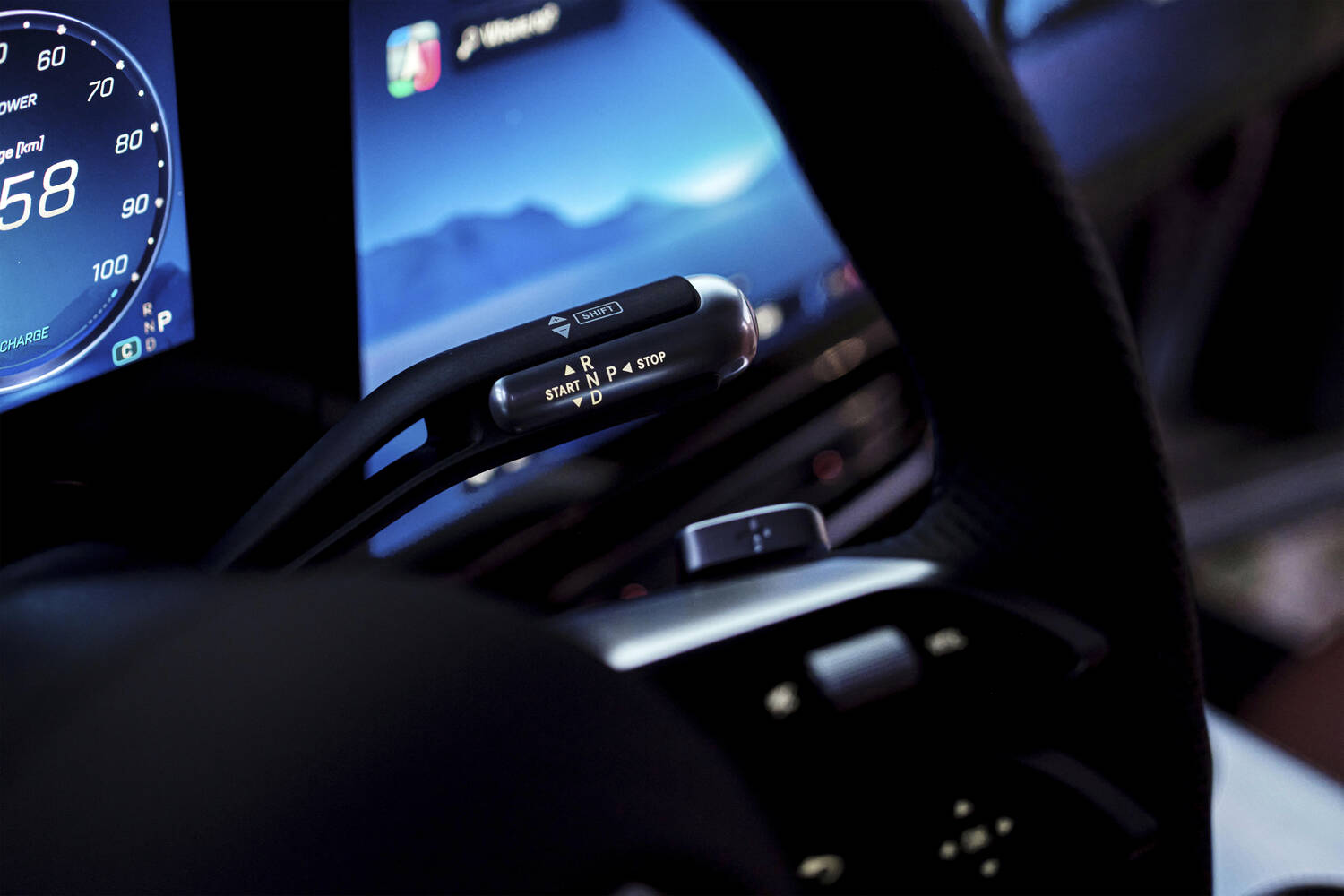
In fairness to Mercedes, the screens work slickly and are graphically superb, but there's an over-reliance on all this glitzy high-tech interface as there are almost no physical buttons in the GLB's cab. Whether you get on with that will, largely, be down to personal preference.
Practicality around the cabin
The door bins up front in the Mercedes GLB are substantial items, which gets the car off to a good start, in terms of practicality.
There's also a reasonable glovebox, an under-dash storage zone with two USB-C sockets housed within, a couple of cupholders on the central tunnel and a lidded cubby just behind them, which doubles as a shared armrest for front-seat occupants.
This last item is not as large and voluminous as it tends to be in similar electric SUVs, which have no transmission gear running through their tunnels; in the GLB, the central stowage bin is quite narrow.
Rear-seat passenger space
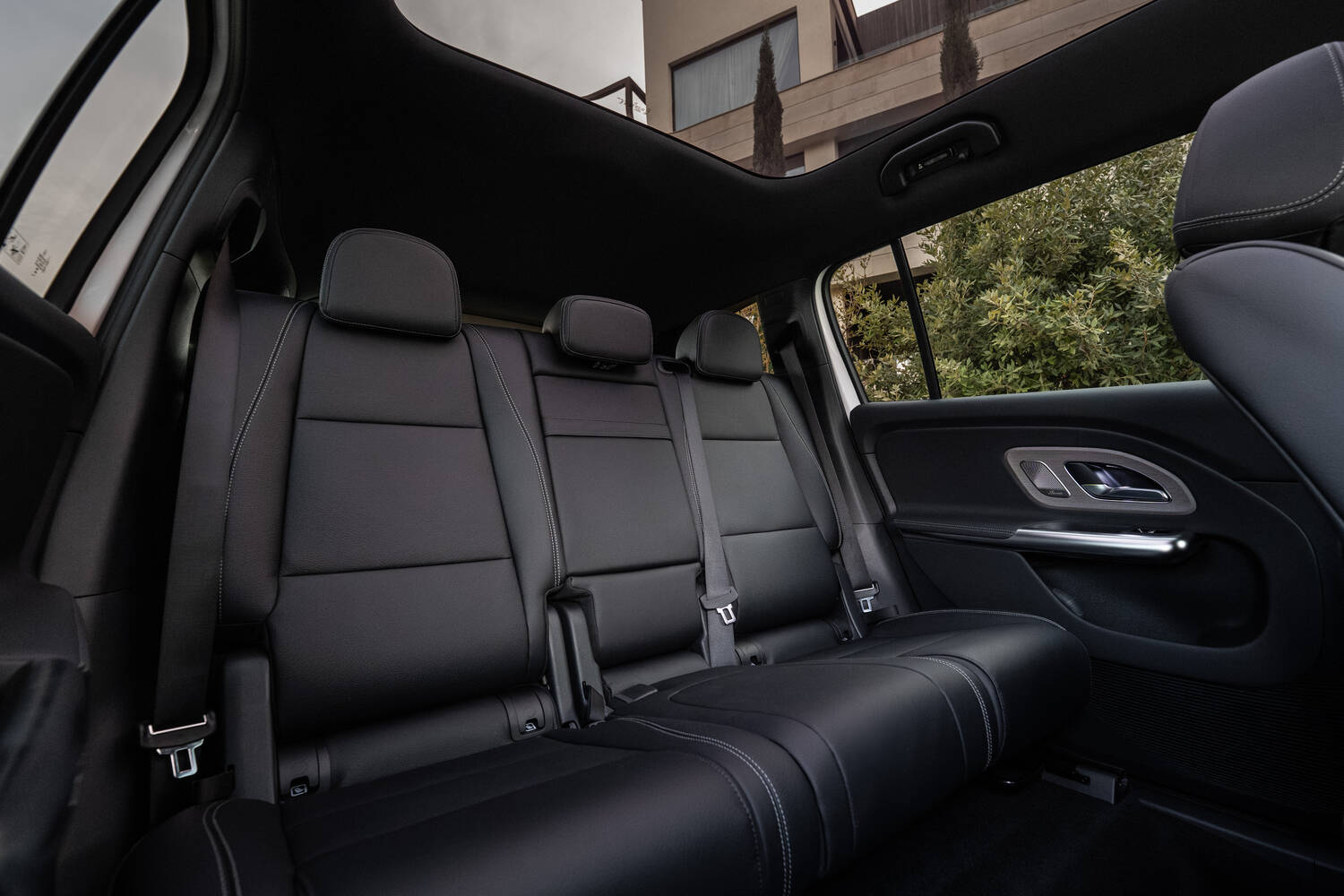
Obviously, the GLB's strength here is that it can take five people behind row one, rather than just three. And with the central 40:20:40 split-folding seats also sliding forwards and backwards individually, then you can configure the car's interior to your heart's content, in theory.
Indeed, Mercedes claims people up to 1.71 metres tall can sit in the rear-most chairs of the GLB in comfort.

We'd contest that last point, though, because that would surely only count with the middle row of seats hiked all the way forward - otherwise, seats 'six and seven' of the GLB look small.
At least, in the middle of the car, there's a flat floor and plenty of legroom with the chairs slid back to a more realistic position, while the high roof of the SUV makes for superb headroom too.
Other comforts for rear-seat passengers include USB-C sockets, a small rubberised storage bin and a pair of air vents (all centrally mounted on the rear of the transmission-tunnel unit) for the middle bench, as well as decent door bins and elasticated cargo-net pockets on the backs of the front seats.
In the very rear of the cabin, there are side ledges moulded into the GLB's plastic trim panels, useful for the stowage of smart devices, and a couple of cupholders between the seats.
Fitting child seats to the Mercedes GLB
This is ostensibly a family-oriented vehicle and, as such, the Mercedes GLB has a helpful four ISOFIX positions - these are found on both seats in the third row of the car, as well as on the outer two seats of the middle bench.
There's also a top tether mounting on the back of the smaller central seat in row two, while belt-restrained child seats can be placed there and also on the front passenger chair.
Furthermore, Mercedes says a new 'Easy Entry' function allows better access to the rearmost pair of pews in the GLB's cabin, while the cut-outs for the rear doors are larger than in the previous GLB - although we still reckon that it's going to be easier to put larger, bulkier child seats in the middle of the Mercedes SUV, rather than trying to cram them right into the very back.
Boot space in the Mercedes GLB
Sort of an area of strength and a weakness for the Mercedes GLB, really - and one area where the GLB Electric has the advantage over any of its combustion-powered relations in the line-up.

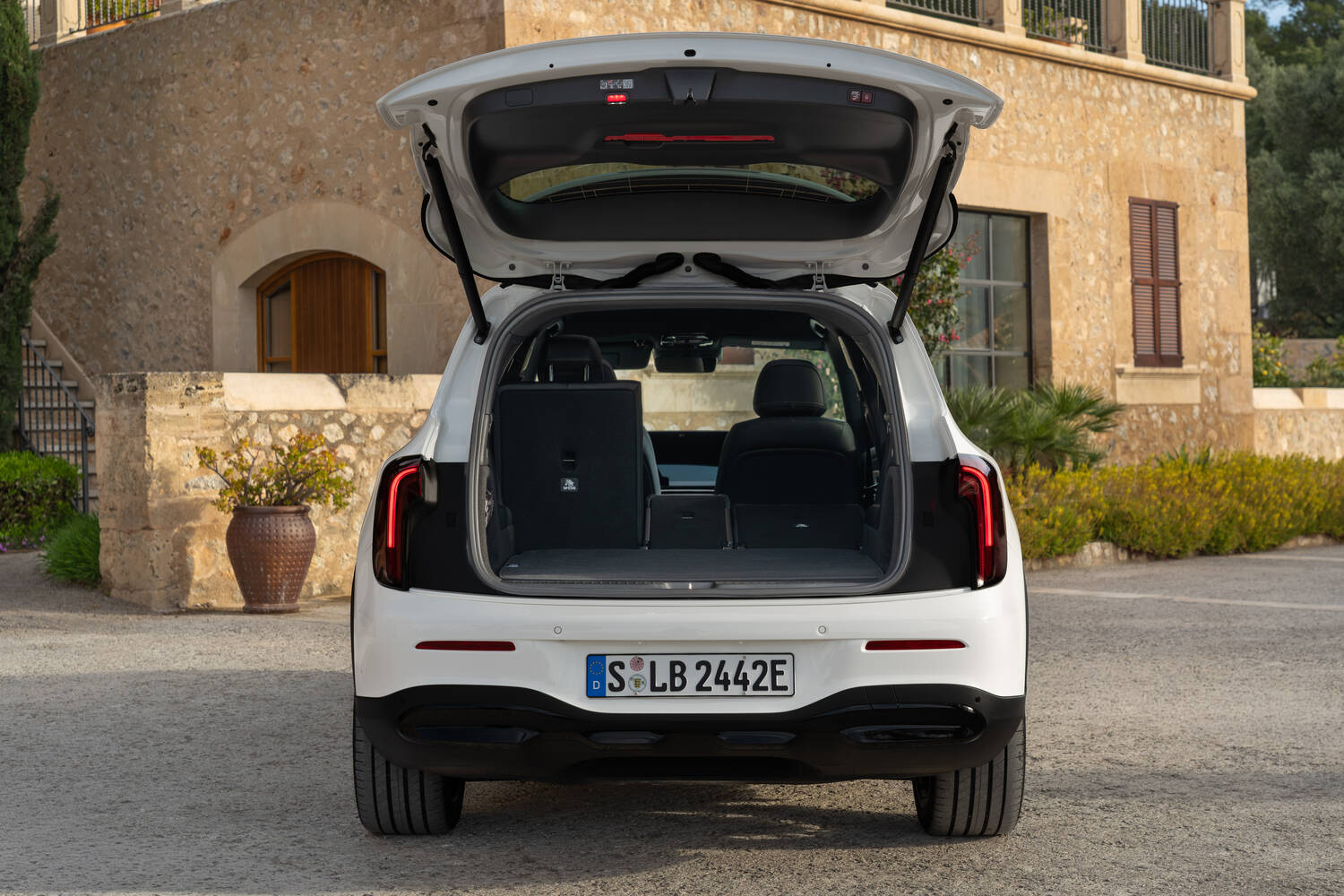
With all seven seats in use, there's just 145 litres of capacity behind the third row. Fold the back two seats down and this figure increases to 480 litres, while with just the front pair of seats in the Mercedes occupied, up to 1,605 litres of cargo capacity is available.
Were pure five-seat models of the GLB to be offered in Ireland (i.e., they don't have the third row of seating fitted at all), then the last two volumes increase to 540 and 1,715 litres accordingly, because you gain some under-floor storage space at the very back of the car.
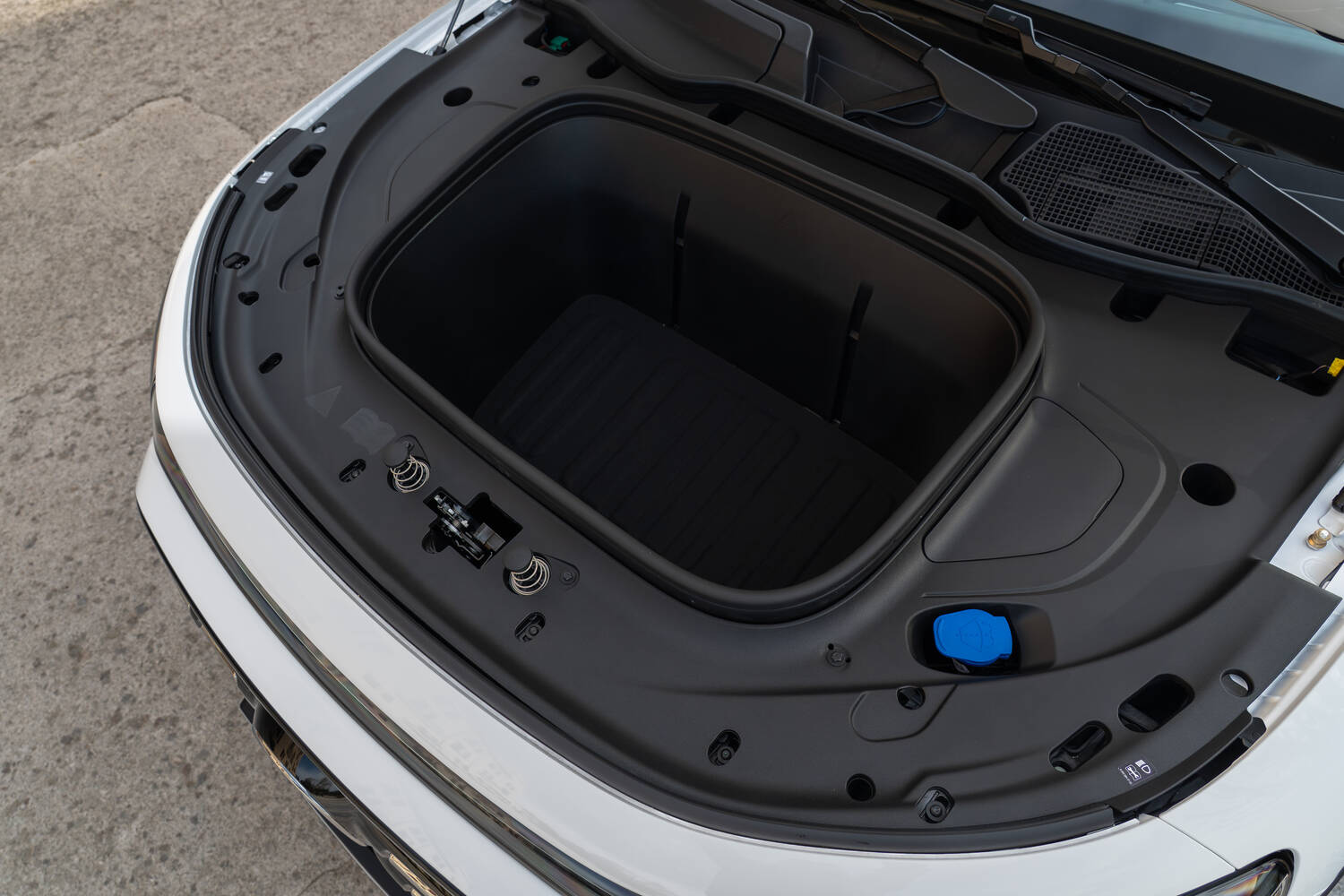
However, mitigating that small seven-seat capacity stated above, the GLB Electric has a large 'frunk' of 127 litres - meaning its minimum boot space, split over the two volumes at either end of the vehicle, is 272 litres.

That, in and of itself, is not a bad number, but due to the shape of either cargo area, we'd be surprised if you could get a full complement of humans onboard the GLB and fit even one or two suitcases into the body of the car as well.
Boot features in the back are limited to a set of lashing eyes on the boot floor, a tiny bit of underfloor storage even in the seven-seater and a 12-volt socket in the side trim.
Safety in the Mercedes GLB
At the time of writing, the Mercedes GLB Mk2 hasn't, as yet, been tested by Euro NCAP - but the CLA has been, and that sits on the same electric platform and uses much of the same advanced driver assistance systems (ADAS) tech as the GLB.
It picked up the full five-star rating in 2025. With its sturdier construction and shape, we'd expect the GLB to do the same thing.
Performance of the 2026 Mercedes GLB
• Electric, petrol and hybrid options
• Dual-motor Electric is quick
• Dynamic focus on comfort and smoothness

According to the Mercedes Ireland website, buyers in this country have a choice of eight GLB models, split into five combustion-based hybrid and petrol variants and a trio of Electrics.
The former are powered by a turbocharged 1.5-litre four-cylinder petrol engine. In the GLB 180, it delivers 136hp, for the GLB 200 the peak output is ramped up to 163hp and then the GLB 220 sports 190hp, making it the most-powerful iteration with an engine.
All these GLBs use an automatic transmission and send their power to the front wheels, though both the GLB 200 and the GLB 220 can be optioned up with 4Matic all-wheel drive.

Also, both the 180 and 200 use 'mild-hybrid' technology, adding 30hp of power from a small electric motor.
The 0-100km/h times for these three front-wheel-drive GLBs are 9.7 seconds for the 180, 8.7 seconds for the 200 and 7.9 seconds for the 220.
Although 4Matic adds more weight (and expense, obviously), it also brings better off-the-line traction, and so the two four-wheel-drive, petrol-powered GLBs can perform 0-100km/h slightly quicker, at 8.5 seconds for the 200 4Matic and 7.5 seconds for the 220 4Matic.
Moving to the Electric portion of the GLB family, here there are two single-motor models and then another 4Matic car, a dual-motor version, at the top of the tree - but the two-wheel-drive GLB Electrics are rear-driven, not led from the front.
The zero-emission range for the SUV begins with the GLB 200 Electric, climbing to the GLB 250+ Electric in the middle and then culminating with the twin motors of the 350 4Matic as the flagship.

Peak torque on the single-motor models stands at 335Nm, with the difference being the 200 Electric's motor peaks at 224hp while the 250+ has a power output of 272hp. As a result, the 0-100km/h times are 8.2 and 7.4 seconds, respectively.
Finally, the GLB 350 4Matic delivers 354hp and 515Nm, resulting in a 5.5-second 0-100km/h time. It can decouple its front motor from the powertrain, though, in low-power-demand situations, in order to maximise its driving range.
All GLB Electrics have a two-speed reduction gear on the rear axle (the front motor on the 350 4Matic has its own single-gear transmission), and that makes them unusual - where most EVs just use a single-speed reduction-gear set-up. Not that it matters to the driver for the most part as they never have to change gears, obviously.

Driving the Mercedes GLB 250+ AMG Line on UK roads
Words by Matt Robinson on 1 May 2026
There's a subtle spec difference between various versions of the GLB Electric and it relates to wheel size. If the car runs on 18- or 19-inch wheels, it has standard, 'passive' springs and dampers. Step up to a set of 20s, though, or tick one of the trim levels where 20-inch rims are standard, and adaptive dampers join the party.
This is most notable between AMG Line and AMG Line Plus, as the former has the regular dampers whereas the latter has the adjustable shocks.

And the adaptive dampers undoubtedly sharpen the drive. We spent most of our time in the standard-chassis GLB 250+, but a brief go in a 350 4Matic with the uprated dampers proved it was a car with better body control.
For the standard set-up, there's a weird pogoing sensation to the GLB 250+ when it has to deal with larger bumps taken at higher speeds. It's not out-and-out bouncy or uncontrolled, but it rises up on its tiptoes in the wake of such road imperfections a little too easily, which just takes the final lustre of brilliance away from what is otherwise a rather lovely car to drive.
The GLB 250+ Electric is a sumptuous, smooth delight for most of the time - except on those occasions where, as we've already said, you're doing about 80km/h or more and you encounter a large ridge in the road.
Yet, for the rest of the time, the springs and dampers do a grand job of filtering out the worst of tarmac-related intrusions, while the aerodynamic flow of air around the GLB's cubist body results in fabulous rolling refinement. It's really only a trace of road noise that mars the overall serenity of the Mercedes SUV's passenger compartment.

In the corners, the GLB 250+ Electric is capable and poised too. There's a modicum of movement to the shell (pitch, roll, dive) if you get aggressive with it, but it never elevates into scruffy body control, while the positive and appealingly weighted steering is, if not a superb arrangement, at least consistent enough to let you know what the front wheels of the Mercedes are up to at any given moment.
However, the 2.2-tonne mass of the EV does somewhat blunt the fun that can be had at its wheel, so we'd say its handling is admirable, rather than amazing.
The performance is strong, though, even from the 272hp GLB 250+, and it has us questioning whether you'd need the 350 4Matic for a family SUV like this (unless you need all-wheel drive of course).
Oddly, we could sense when the rear 'gearbox' was switching from its shorter first gear to the longer ratio, and we'd rather this changeover was so seamless that it became impossible to perceive.
Elsewhere, we like the three straightforward and well-judged levels of regenerative braking in the Mercedes GLB Electric, selected via the steering-wheel paddles.

There's a full coasting function with no regen at one level, a middle way called standard, and then a potent one-pedal mode under the strong setting.
All are great to use, although if you do have to bleed on more stopping power through the Merc's brake pedal then you'll find the friction braking is sweetly graded, too.
Range, battery, charging and running costs of the 2026 Mercedes GLB
• Two battery packs for GLB Electric
• Up to 631km of range
• Rapid 320kW DC charging

The Mercedes-Benz Modular Architecture (MMA) platform, which sits underneath this GLB Electric and also cars like the CLA and CLA Shooting Brake, uses an advanced 800-volt set-up, so charging speeds on the SUV are rapid. Two battery packs are offered, giving customers plenty of choice.
Battery options and official range for the GLB Electric
The GLB 200 Electric uses a lithium-iron-phosphate (LFP) battery pack of 58kWh usable energy content, which in turn gives this model of the Mercedes up to 450km of range on the official WLTP cycle.
Those wanting a longer-legged variety of the GLB Electric will either need to look at the 250+ or 350 4Matic, both of which deploy a far larger 85kWh (that's the usable capacity) nickel-manganese-cobalt (NMC) battery.
This gives the 354hp 4Matic model a range of up to 614km, but the 250+ goes even further - it is said to do 631km between electric top-ups.
Real-world range and efficiency of the Mercedes GLB Electric
We didn't drive the Mercedes GLB 250+ all that fast on our 30km test route. But, by the same token, we weren't exactly hanging around either, so we wouldn't say we were trying to maximise the GLB's range.
The outside temperatures were warm throughout, meaning we were using climate control constantly to cool the cabin. An indicated 18.1kWh/100km consumption figure does land within the bracket stated by the manufacturer from WLTP testing.
Admittedly, it's almost right at the top end of the energy-use stats and so maintaining that level would see the GLB 250+'s battery discharged from 100 per cent in 470km, rather than anything beyond 600km.
Nevertheless, with more cautious driving and some more stop-start town conditions mixed in than we encountered (increasing the braking regeneration phases), we'd expect the GLB 250+ to be able to go beyond 500km to a charge, all year round, no matter the weather.
Charging up the Mercedes GLB Electric
The LFP battery in the Mercedes GLB 200 Electric peaks at 200kW on DC chargers, whereas the NMC units in the 250+ and 350 4Matic cars can run at up to 320kW.
You'd expect 10-80 per cent to therefore take about 20 minutes in the GLB 200 at its fastest, while the bigger batteries would only require 22 minutes thanks to their faster charging speed.
All three GLB Electrics optionally can charge at 22kW on a powerful enough AC connection, although the three-phase 11kW industry standard is the regular rate for the Mercedes SUV.
At a 7.4kW domestic wallbox, the 58kWh battery in the GLB 200 Electric would need in excess of eight hours for a total top-up, while the 85kWh pack in the 250+ and 350 4Matic variants would demand around 12 hours for the same job.
At 11kW, the 0-100 per cent charging times are six-and-a-half hours for the LFP battery, or nine hours for the larger batteries.
Servicing the Mercedes GLB
Mercedes recommends a 12-month or 16,000km cycle for servicing, whichever arrives sooner, and we'd fully expect the GLB (Electric or otherwise) to conform to the same schedule.
Mercedes GLB warranty
The standard level of the Mercedes warranty in Ireland is just two years, which isn't brilliant - most manufacturers offer three years of cover as a minimum.
Despite this, there is at least no distance cap on the Mercedes guarantee, while the warranty explicitly for the high-voltage battery pack in an EV like the GLB Electric runs to eight years or 160,000km.
Irish pricing & rivals to the 2026 Mercedes GLB
• From about €60,000
• Electric versions are more affordable
• Few direct competitors for GLB Electric

As a premium product, it's understandable that the Mercedes GLB isn't what you'd call a cheap car, but fans of EVs will be pleased to know that the Electric versions, despite being more powerful in all guises than any of the petrol or petrol-hybrid GLBs, represent the most inexpensive way of getting into the seven-seat Mercedes.
The GLB 200 Electric is priced from €59,355. Even the 354hp GLB 350 4Matic costs only one hundred euros more than the 163hp GLB 200 4Matic hybrid.
Equipment levels are fine on the base Progressive specification of the GLB and become ever more generous as you step up through AMG Line to AMG Line Plus, but the Mercedes SUV's biggest strength is that there are so few directly comparable rivals to it when you order it in Electric format.
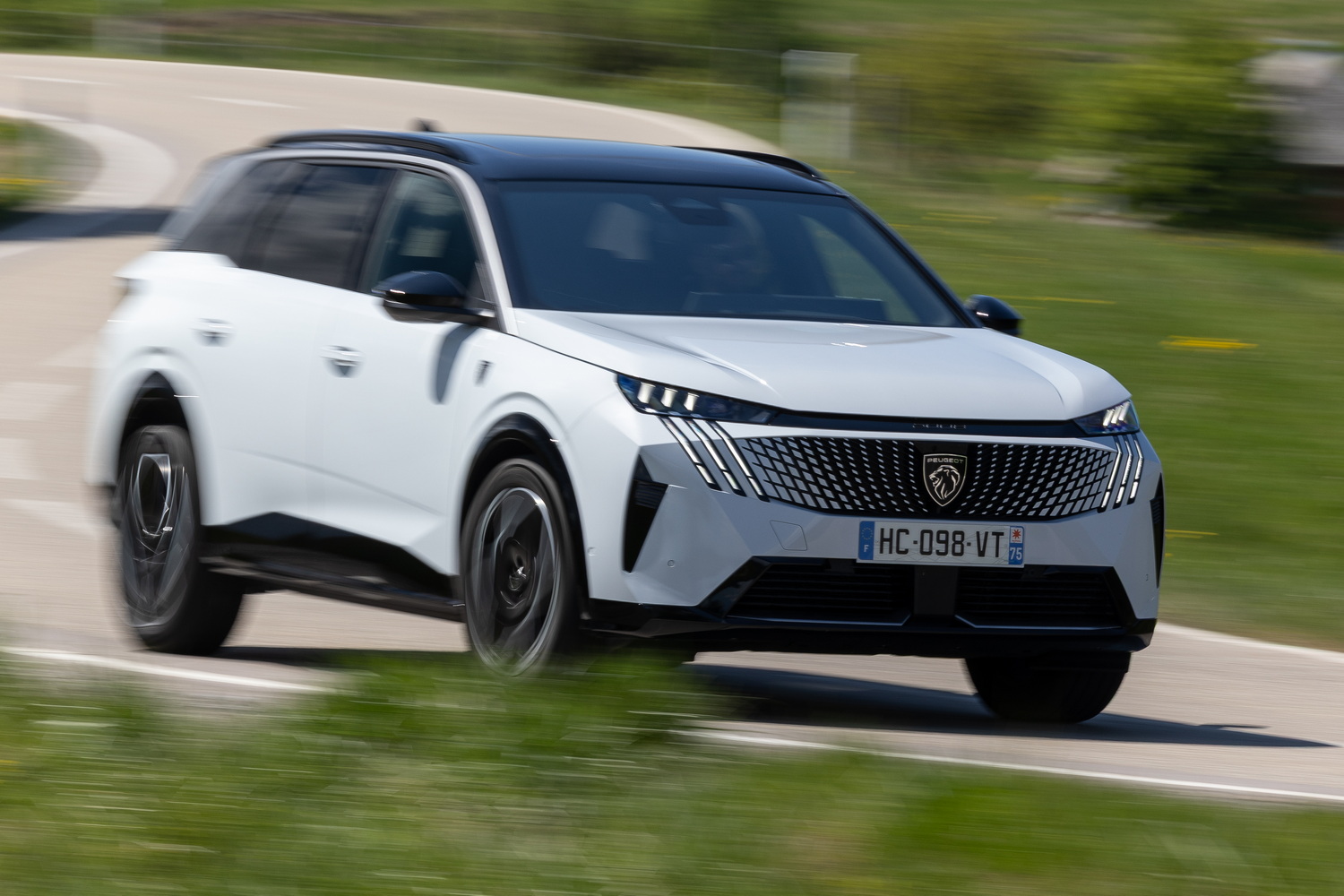
While there are plenty of seven-seat (or even 5+2) SUVs out there, there are far fewer zero-emission seven-seaters going, with about the only obvious one in a comparable price ballpark to the Mercedes being the Peugeot E-5008.
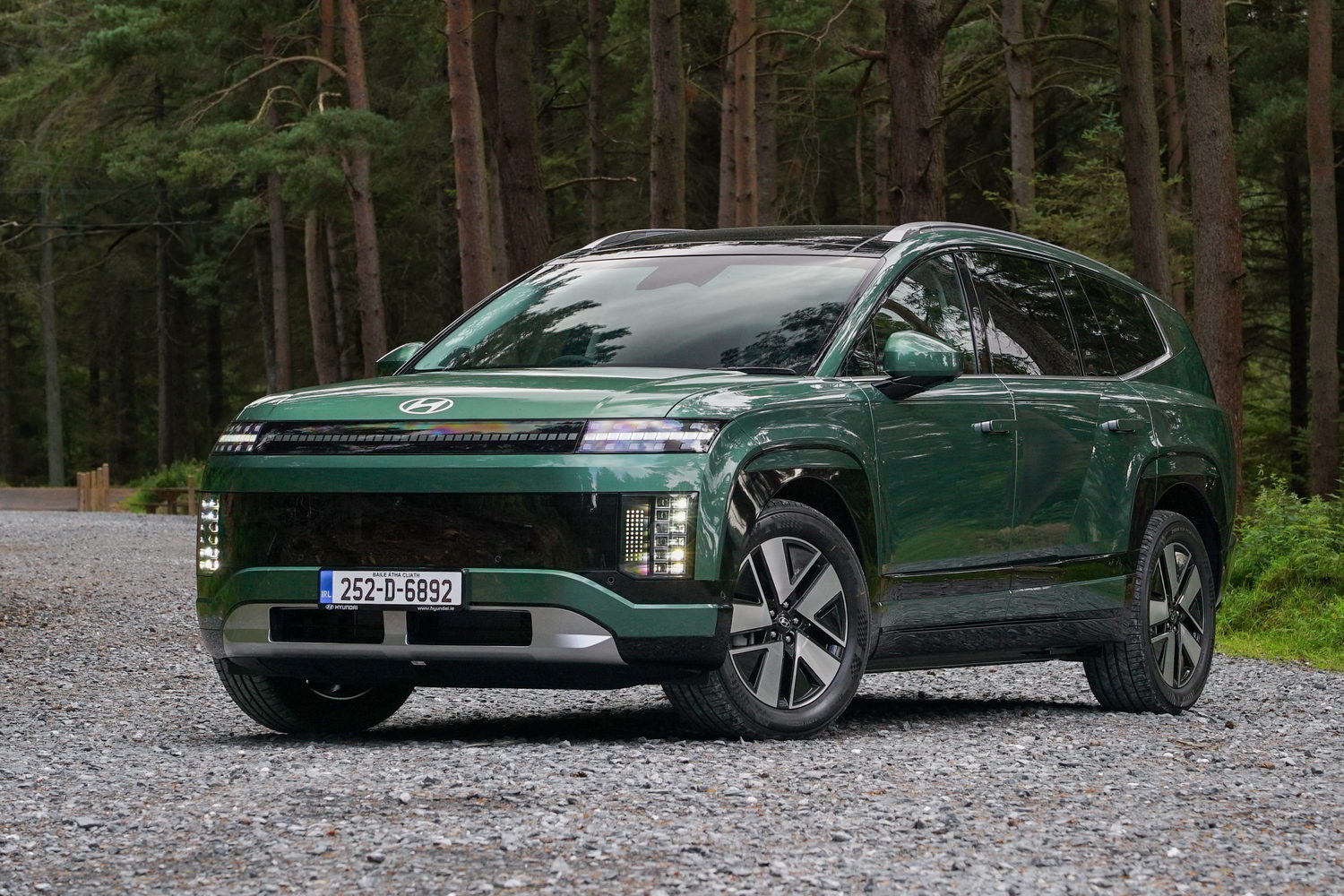
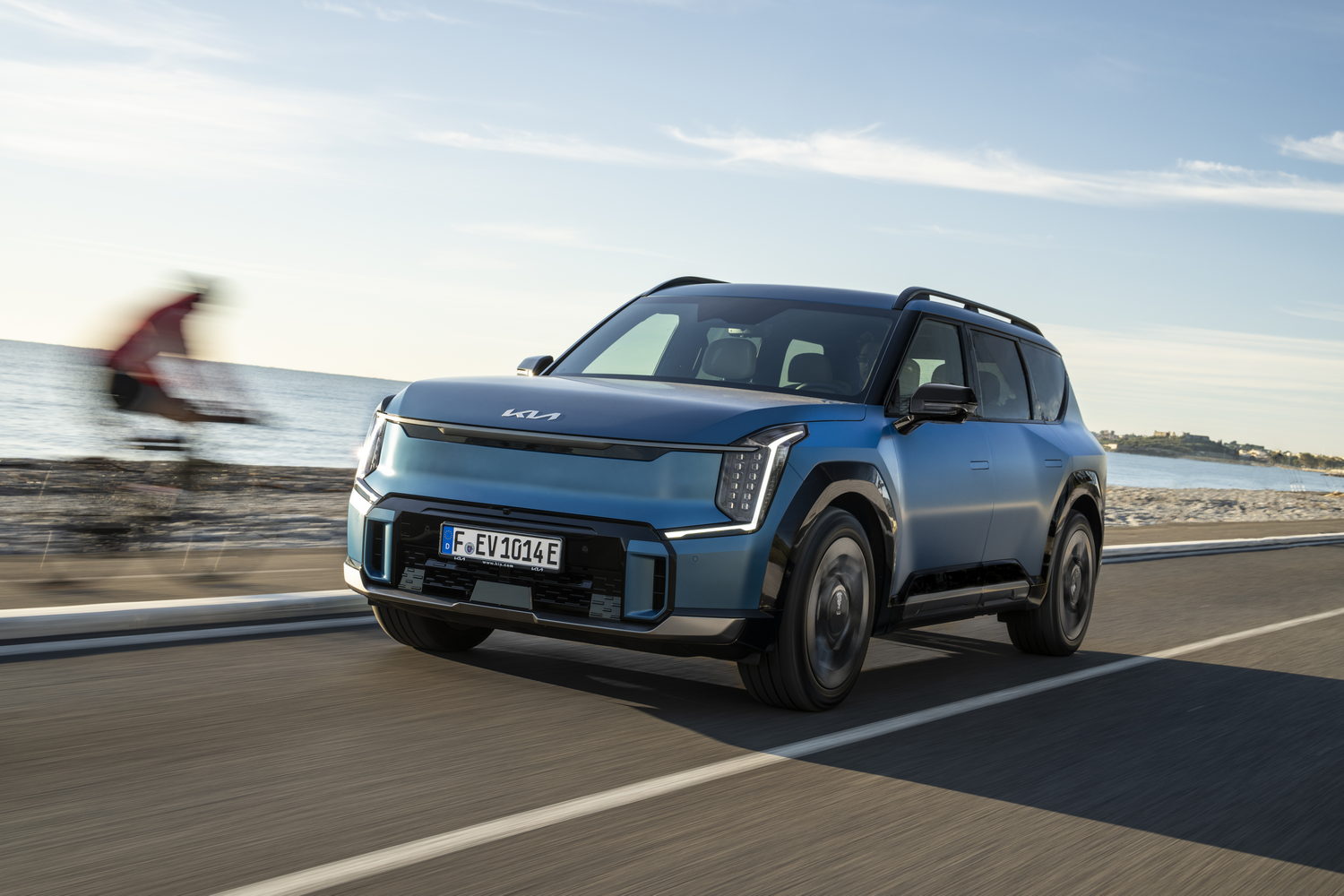
Other vehicles, such as the Hyundai Ioniq 9, Kia EV9 and Volvo EX90, are a lot more expensive to buy than the GLB Electric, with the two Koreans kicking off around €78,000, while the Volvo is beyond €99,000 in its most basic format.

Bear in mind, though, that all those latter three are substantially larger on the outside and much roomier within than the GLB, which is a fair reflection of their increased price tags.
Verdict - should you buy the 2026 Mercedes GLB?
If you want a comfortable, quiet and easy-to-drive SUV that isn't absolutely gigantic externally, which can run on pure electric power and which can (more or less) seat seven people, the Mercedes GLB will be very high on a very short list of contenders.
But you shouldn't just consider it on the basis it's of a rarefied, highly specific type of vehicle - instead, you should give the GLB Electric due respect for its cultured manners, its versatile interior and its long-range-EV capabilities.
And, if you simply adore technology, then the ginormous Superscreen array in the Mercedes SUV will be hard to match.
FAQs about the 2026 Mercedes GLB
Is the Mercedes GLB Electric all-wheel drive?

It is as the dual-motor GLB 350 4Matic Electric, but the other two electric models - the 200 Electric and 250+ Electric - are rear-driven.
For the forthcoming hybrids and petrol models, both the GLB 200 and GLB 220 will be optionally available with 4Matic all-wheel drive, with an increase of more than €3,000 model-for-model when compared to the front-wheel-drive versions of each.
Is the Mercedes GLB Electric rated to tow anything?
We don't have any concrete stats for the hybrid and petrol models as yet, but in the Electric line-up the single-motor GLBs can tow up to 1,500kg of braked trailer, while the dual-motor 350 4Matic increases that to 2,000kg.
How many child seats can I fit in my Mercedes GLB?
In a move aimed at making life simpler for families, there are four ISOFIX positions in the Mercedes GLB - they're on the outer two seats of the rows in the back of the car. There's also a top-tether point on the central seat of the middle bench.
Shouldn't this car be called the Mercedes EQB, and not the GLB Electric?

It does replace the old EQB, which was the fully electric version of the Mk1 Mercedes GLB. However, Mercedes is backing away from all mentions of 'EQ', instead moving towards simply calling its EVs 'Electric'.
Mercedes GLB history
There has been just one prior generation of the Mercedes GLB, the original arriving in 2019. It was related to the A-Class, B-Class, CLA and GLA cars, which meant that it was primarily front-wheel drive (unless it was equipped with 4Matic all-wheel-drive tech, only available on certain models).
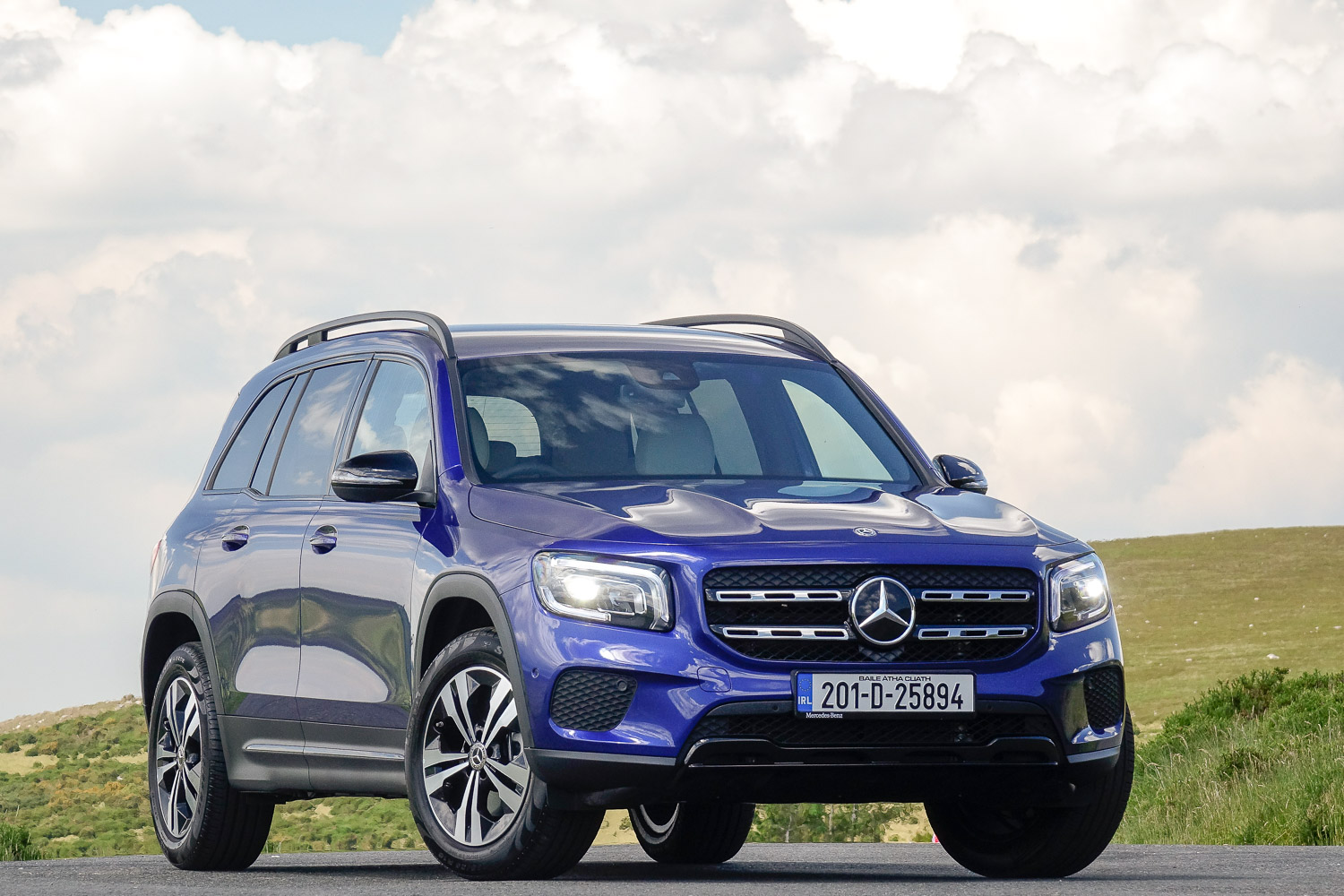
Although it was compact and (by Mercedes' own high standards) relatively cheap, it offered seven seats in a premium package - something both the GLA and GLC, did not. Heck, even the much larger and grander GLE didn't until the Mk4 iteration arrived about the same time as the GLB.
None of Merc's typical rivals did anything similar - not Audi, BMW, Volvo nor Lexus, for example - and they still don't, and so when Mercedes then did an all-electric version of the GLB, complete with subtly altered aesthetics and a fresh nameplate of EQB, in 2021, Mercedes moved itself even further clear of any potential competition.
Want to know more about the 2026 Mercedes GLB?
If there's anything about the new Mercedes GLB we've not covered, or you'd like help in choosing between it and other cars, you can avail of our expert advice service via the Ask Us Anything page.