




Exterior & design of the 2026 Mercedes-Benz C-Class
- Longer than predecessor
- Unmistakably a Mercedes
- Large panoramic glass roof

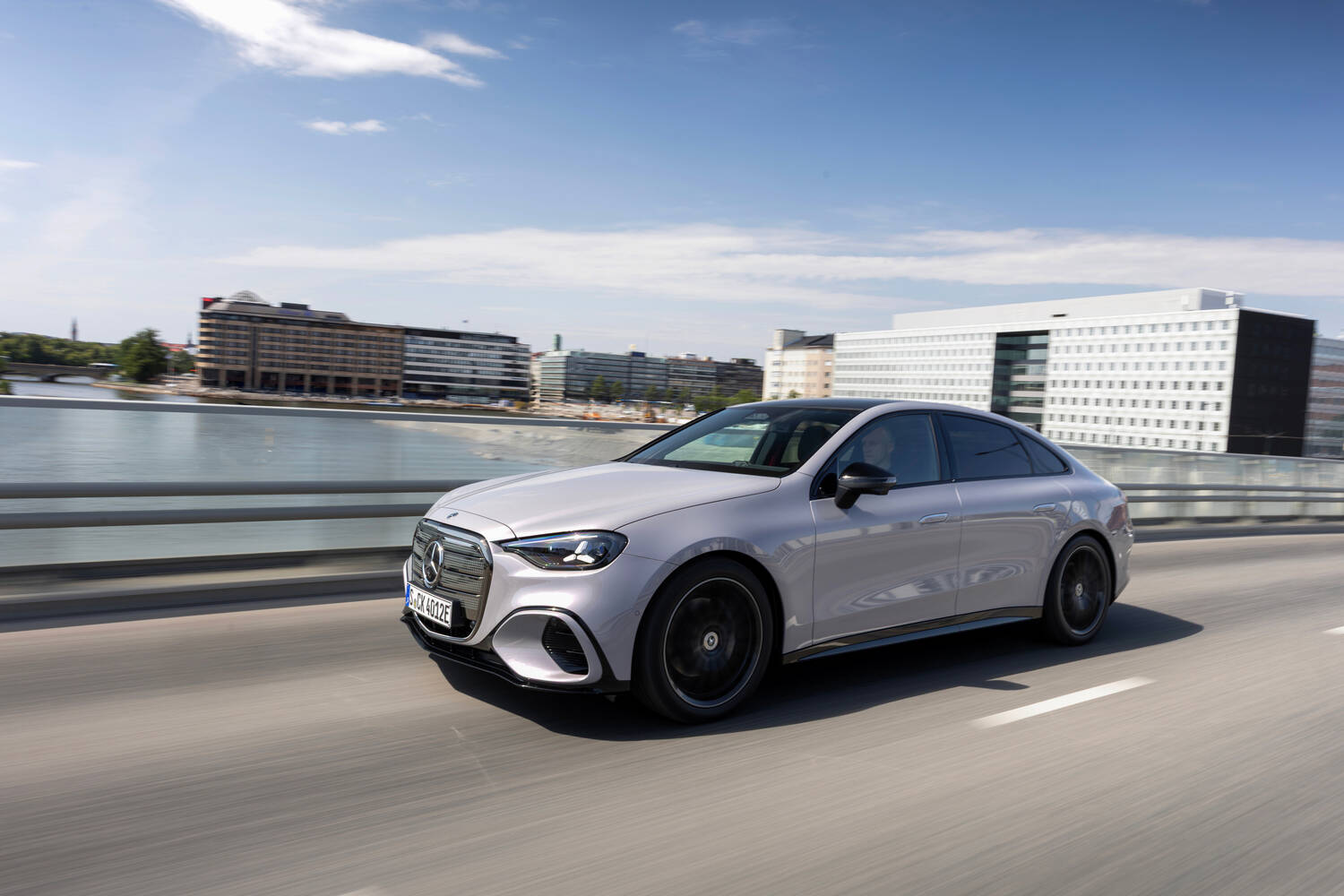
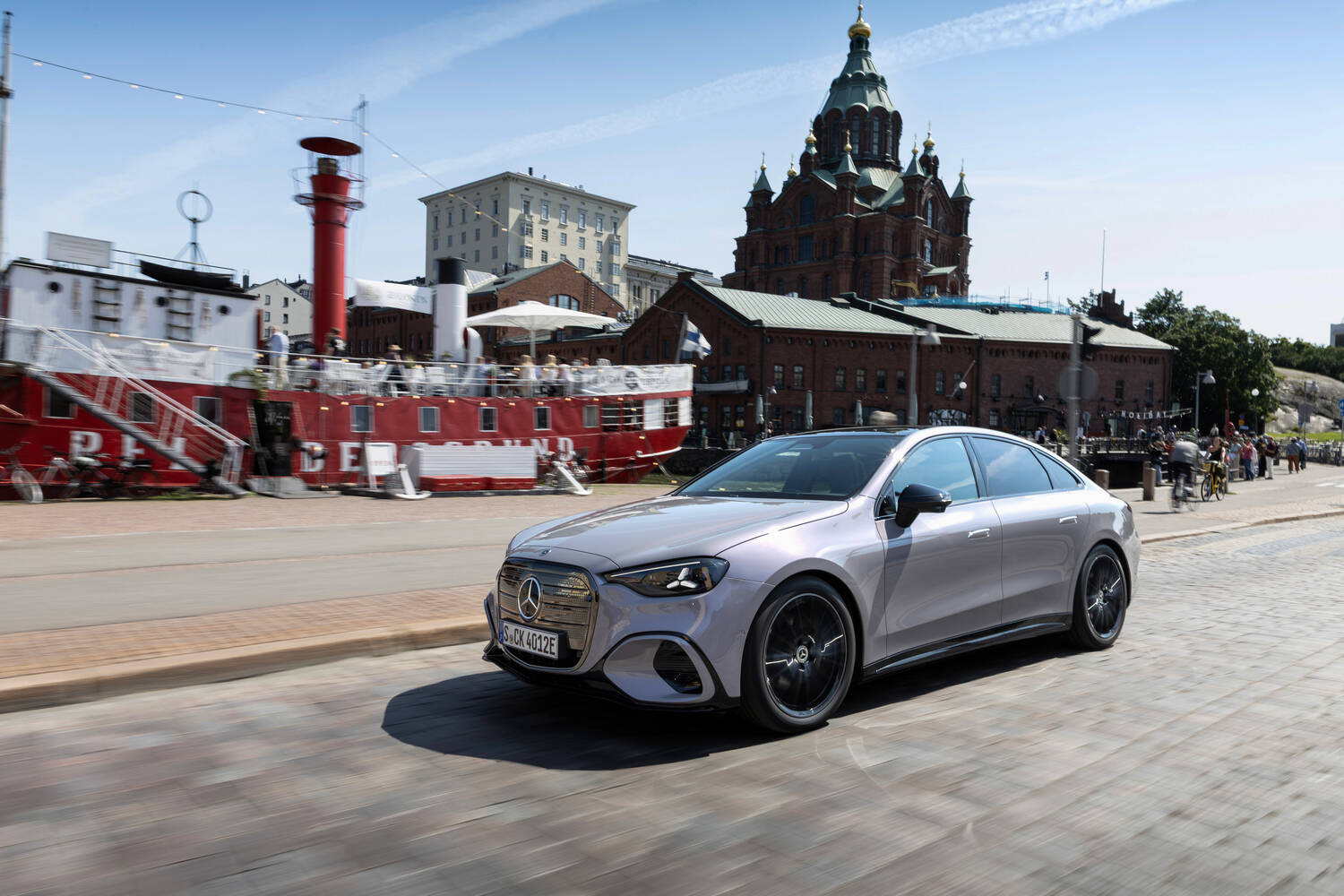
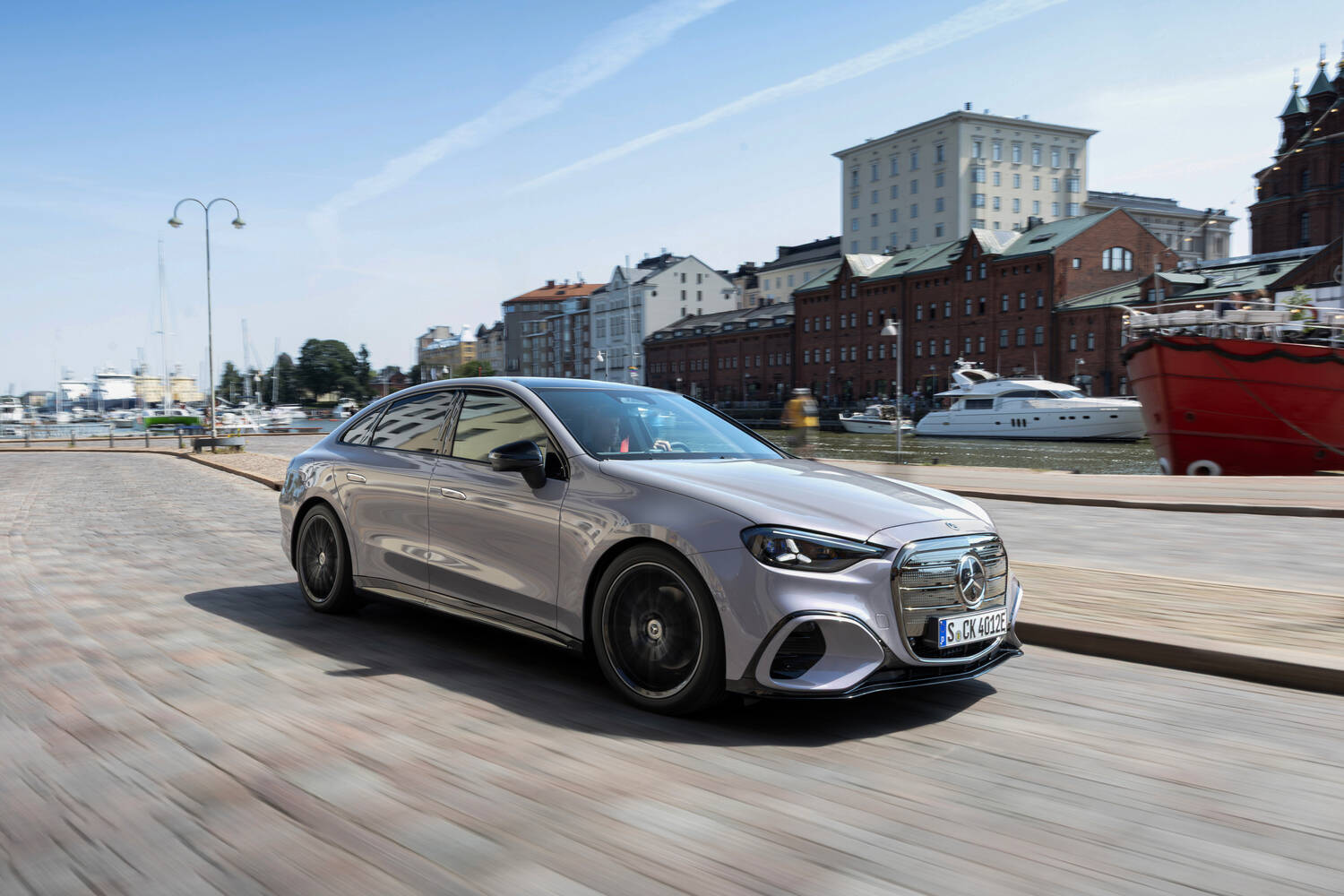
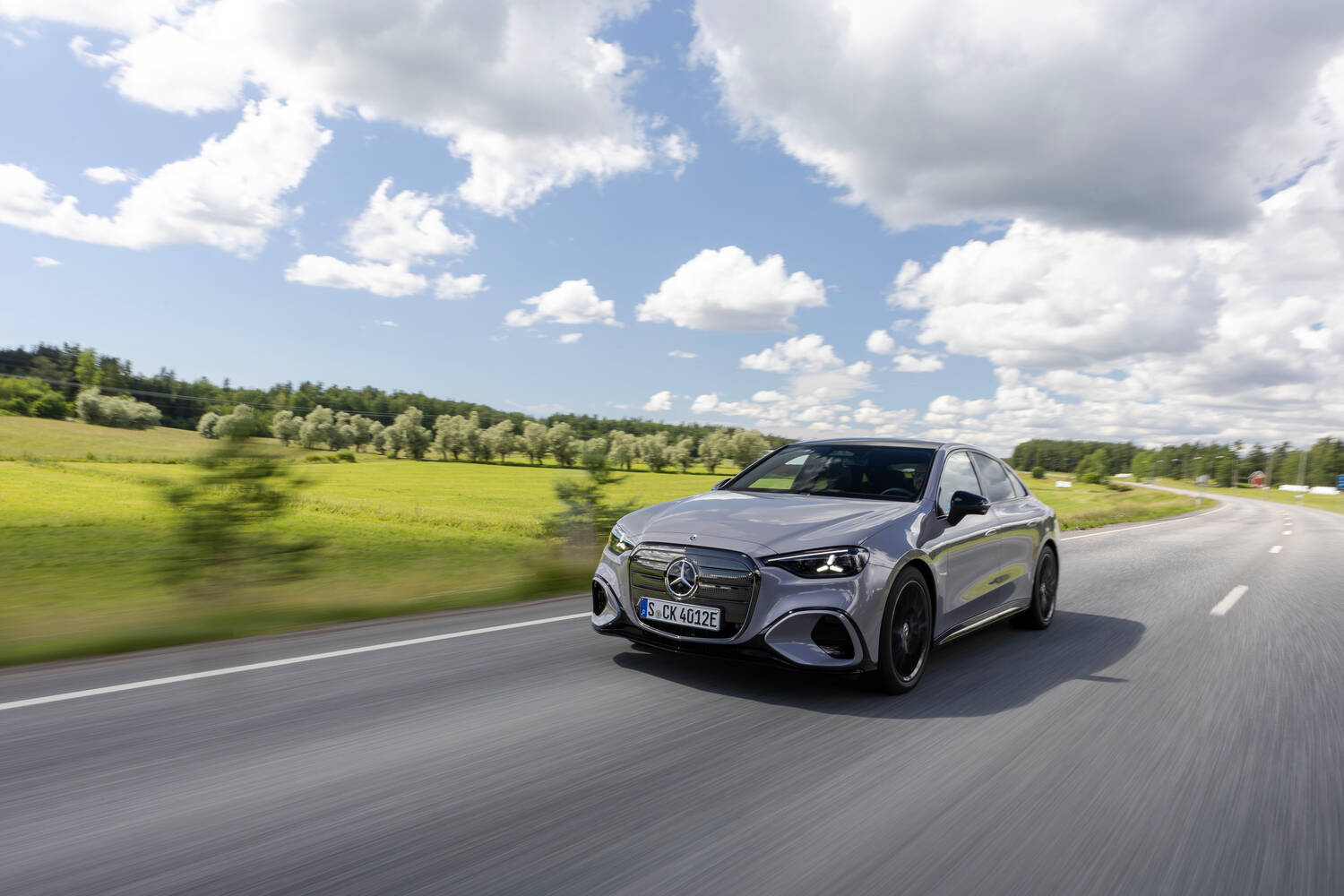
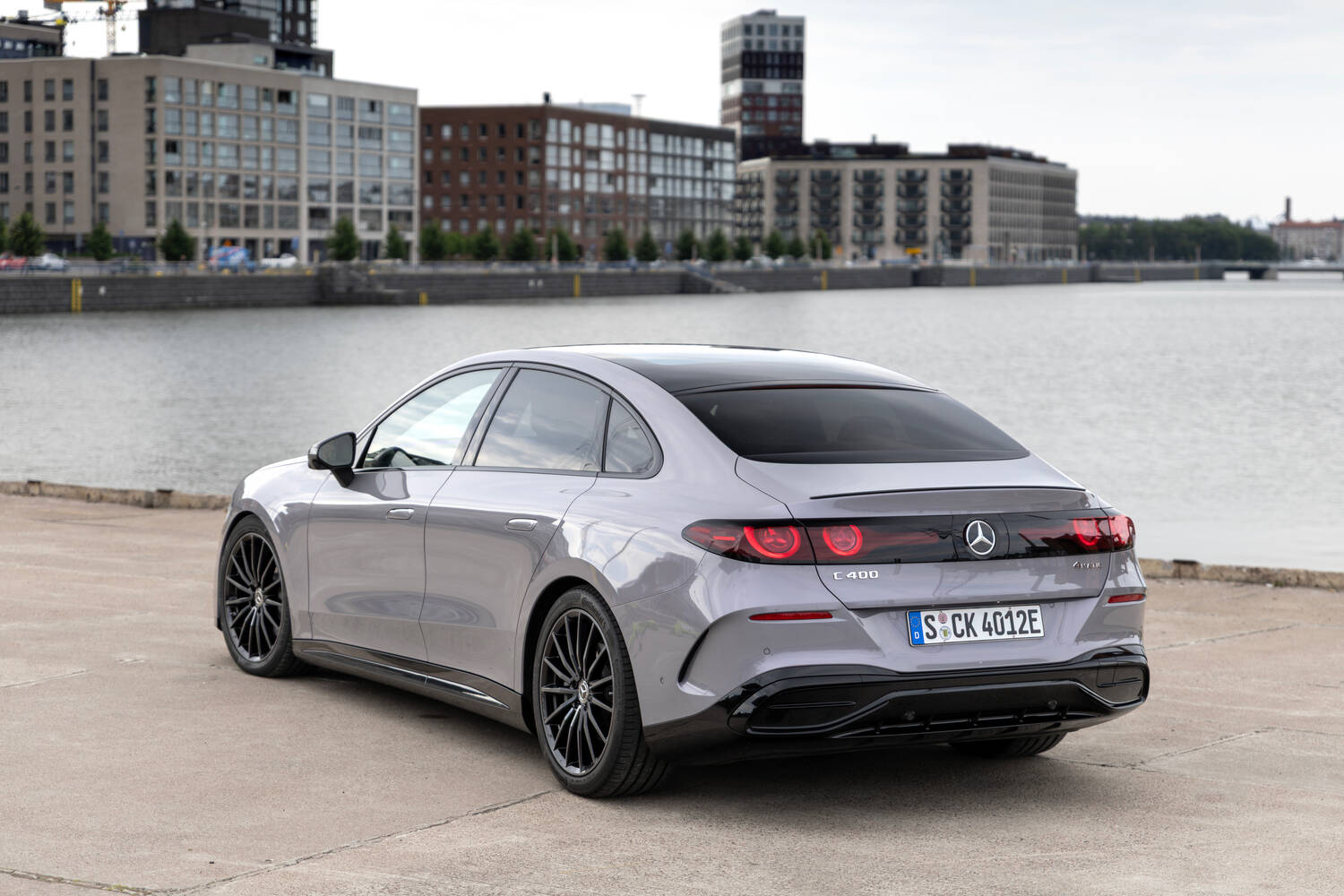
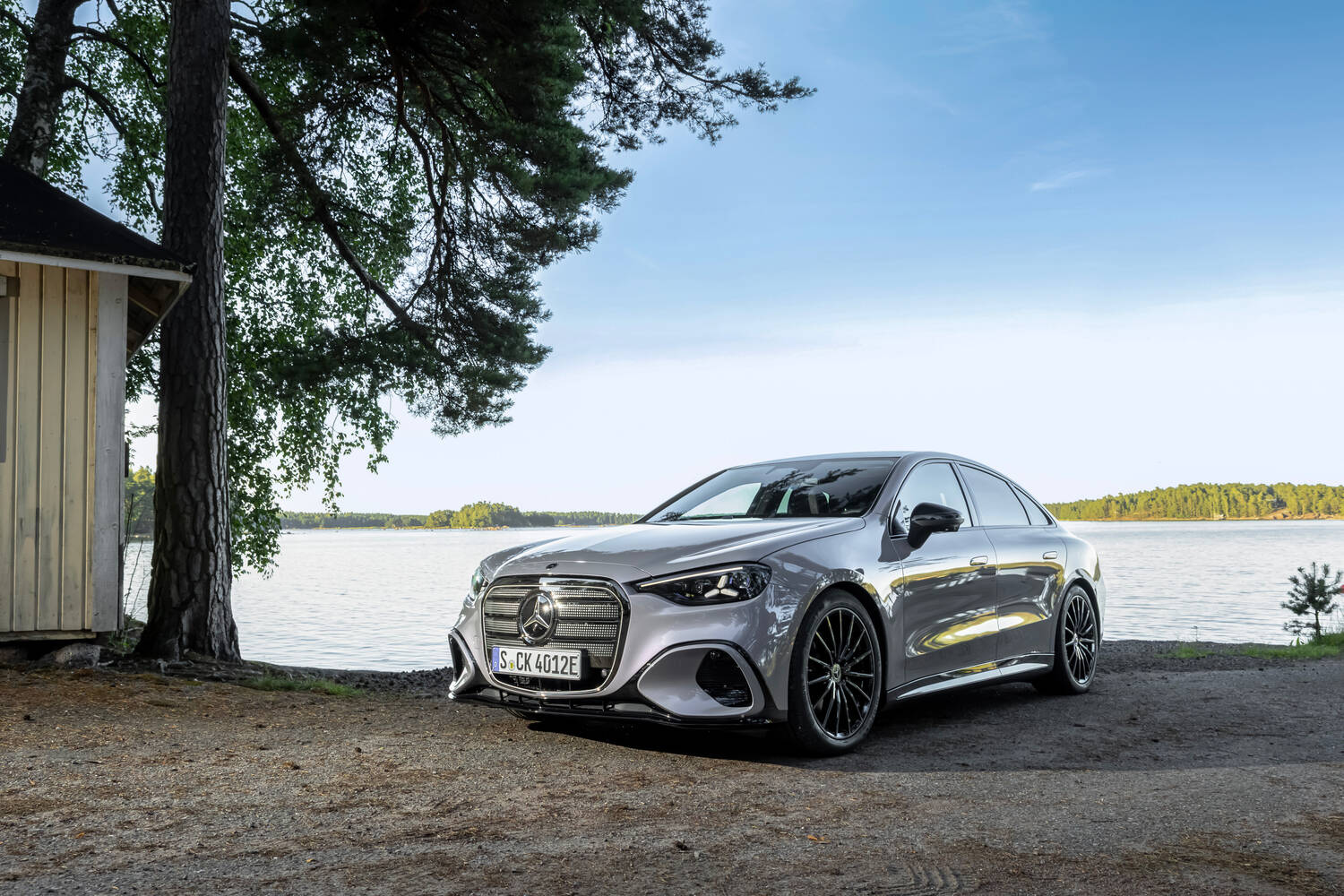
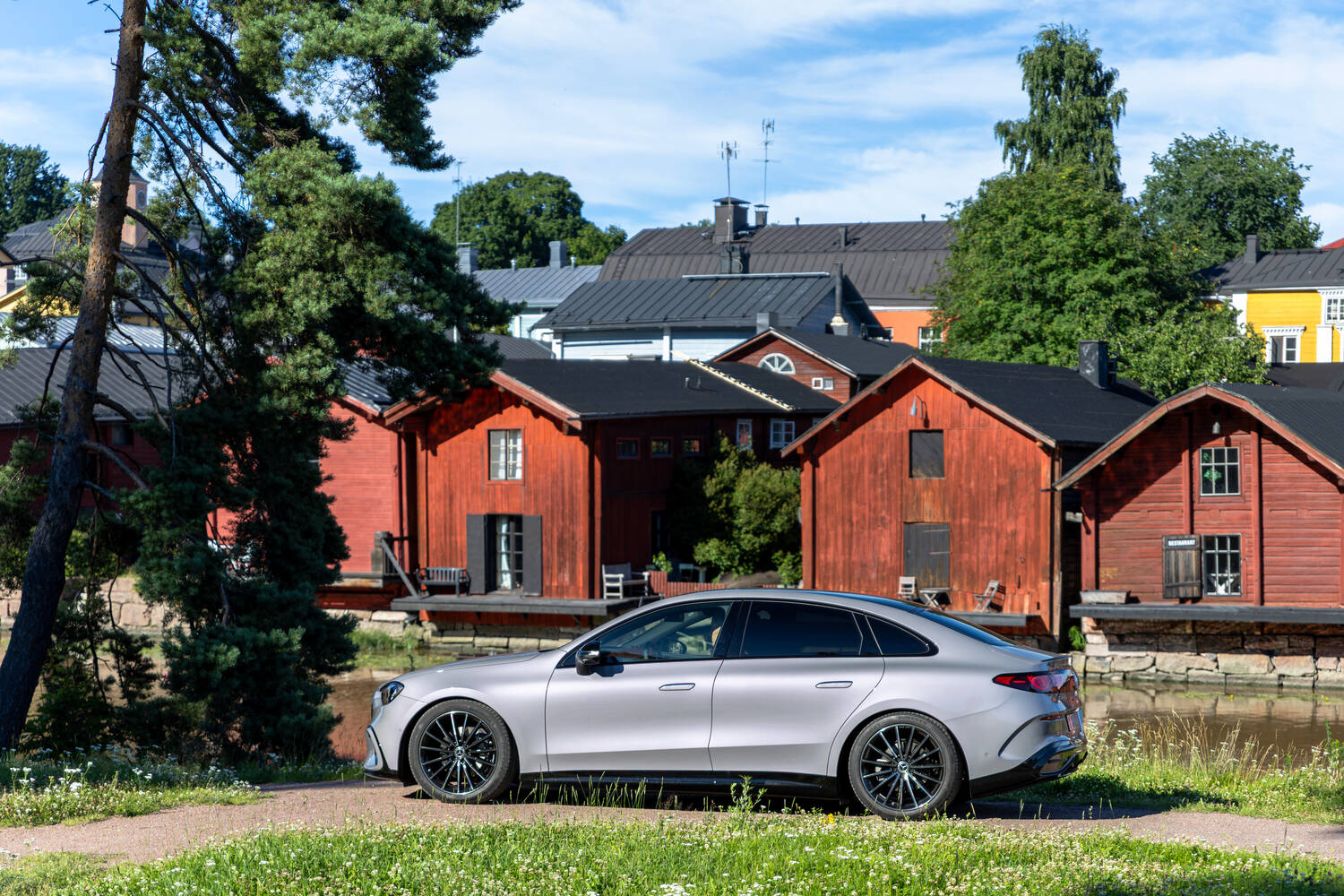
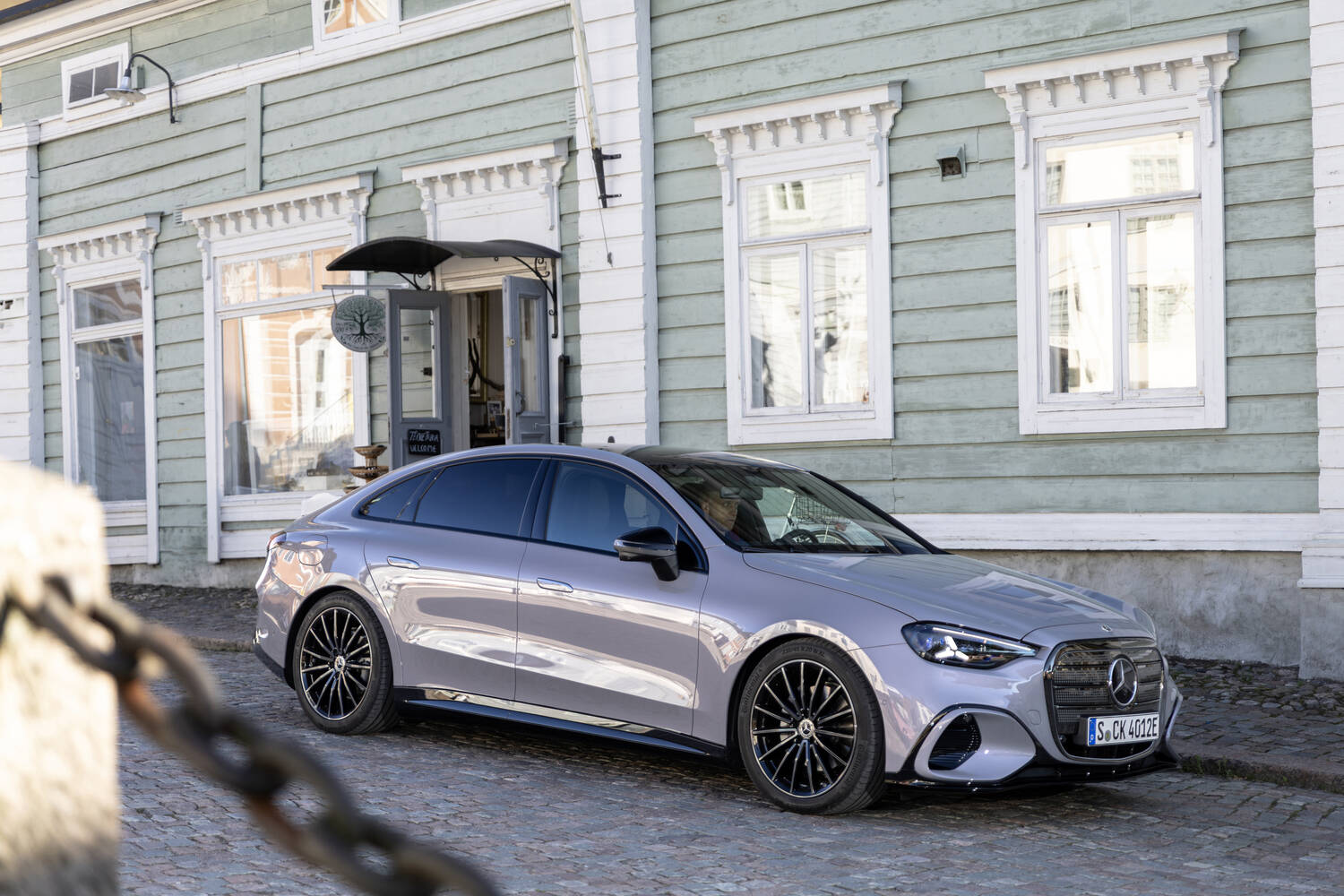
The exterior of this C-Class electric is a break from its predecessors and follows the style already seen in the larger Mercedes GLC.
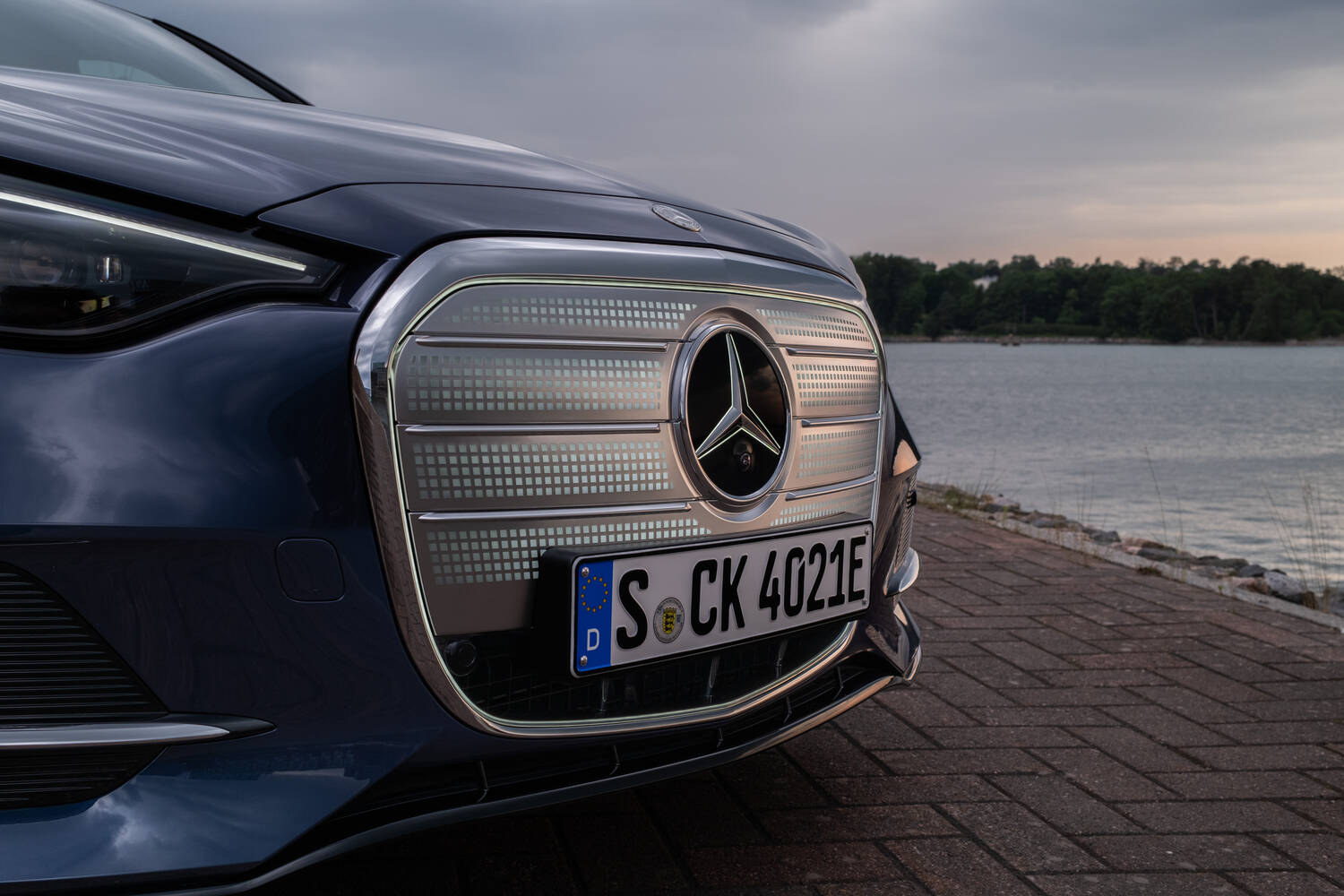
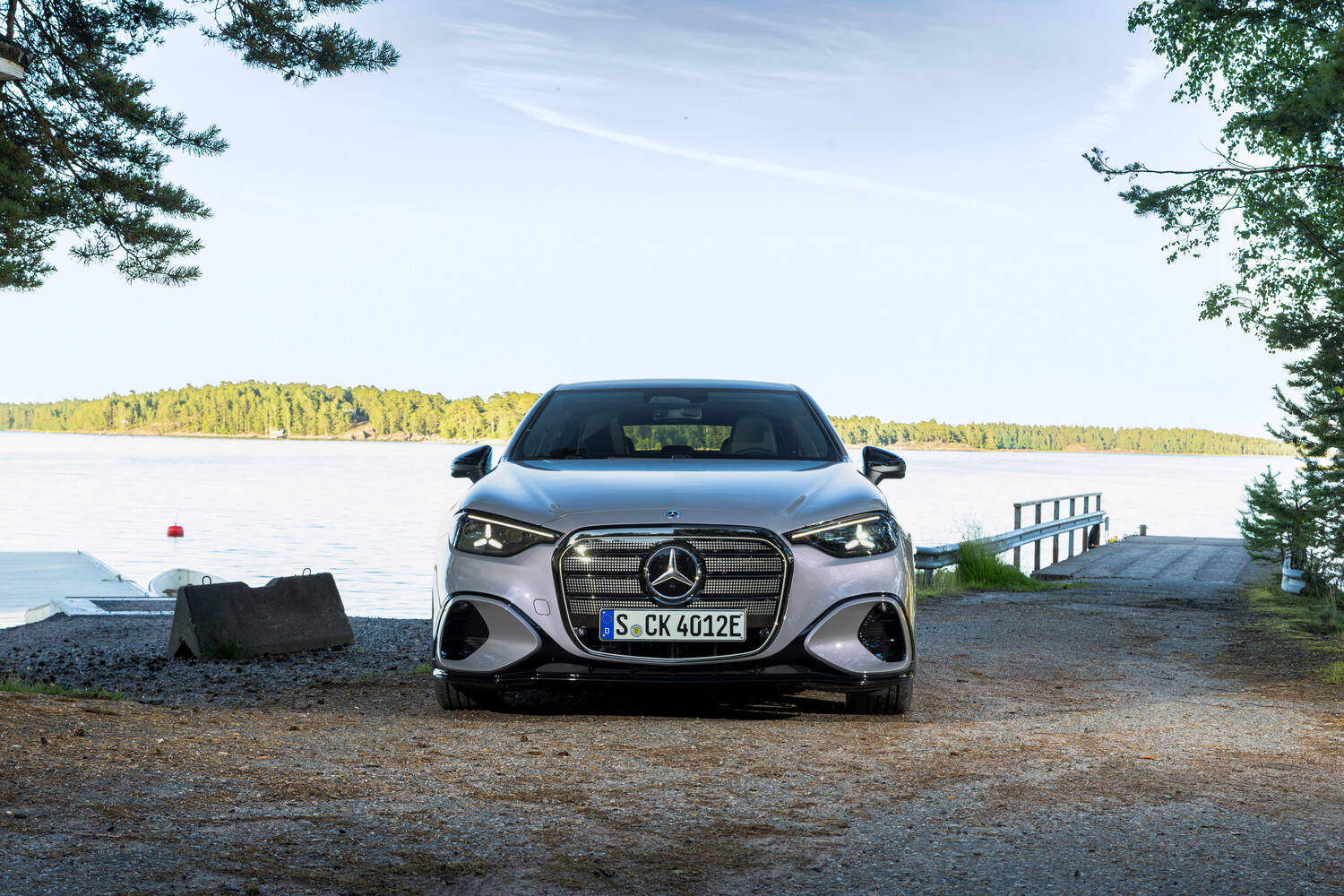
Most prominent is the front grille, which features 1,050 illuminated squares, while horizontal bars nod to Mercedes models of the past. The LED headlights include matrix technology and feature a three-pointed star as part of the lighting signature.

Compared with its combustion-engined sibling, the C-Class electric is 97mm longer, with much of that increase going into the wheelbase.
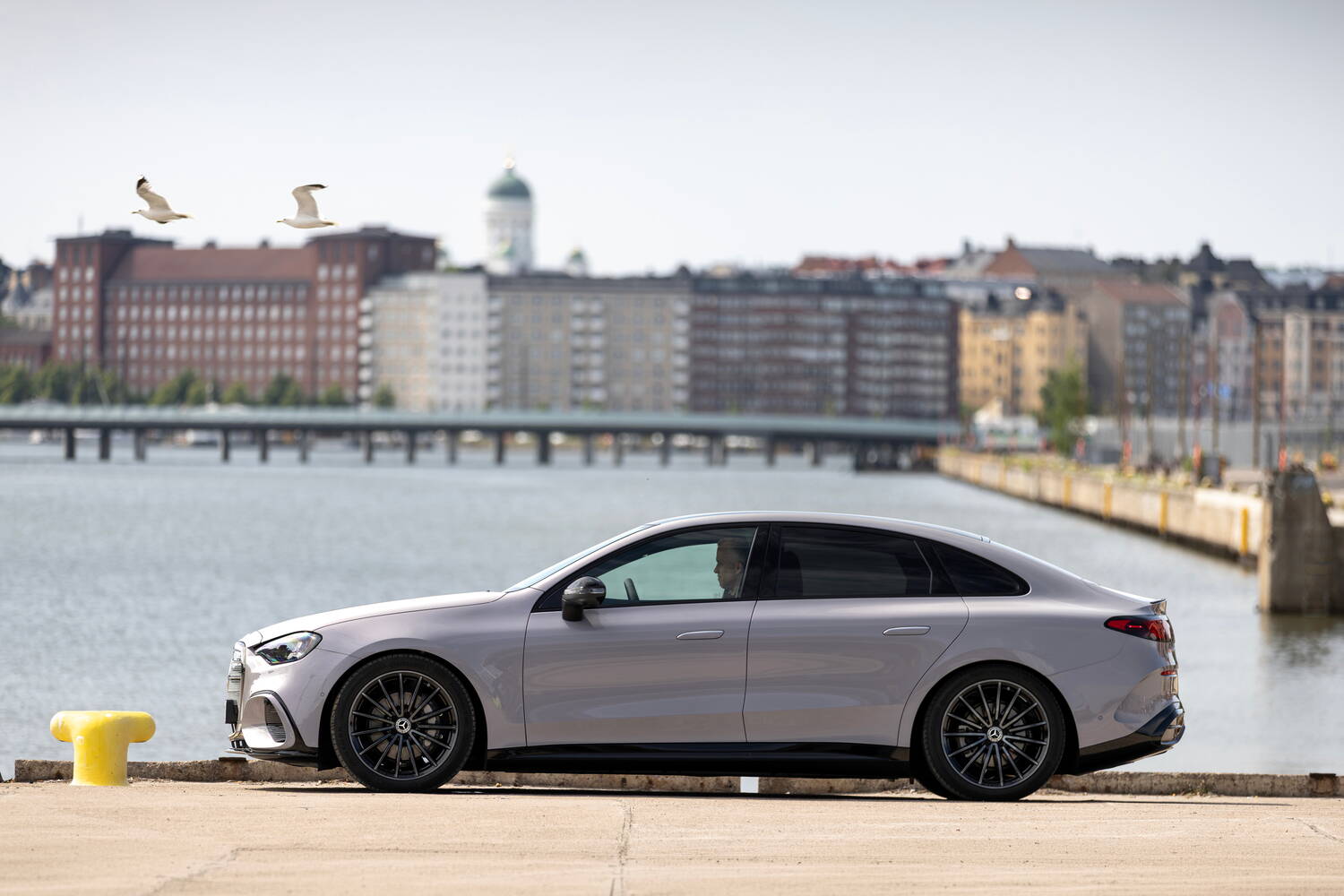
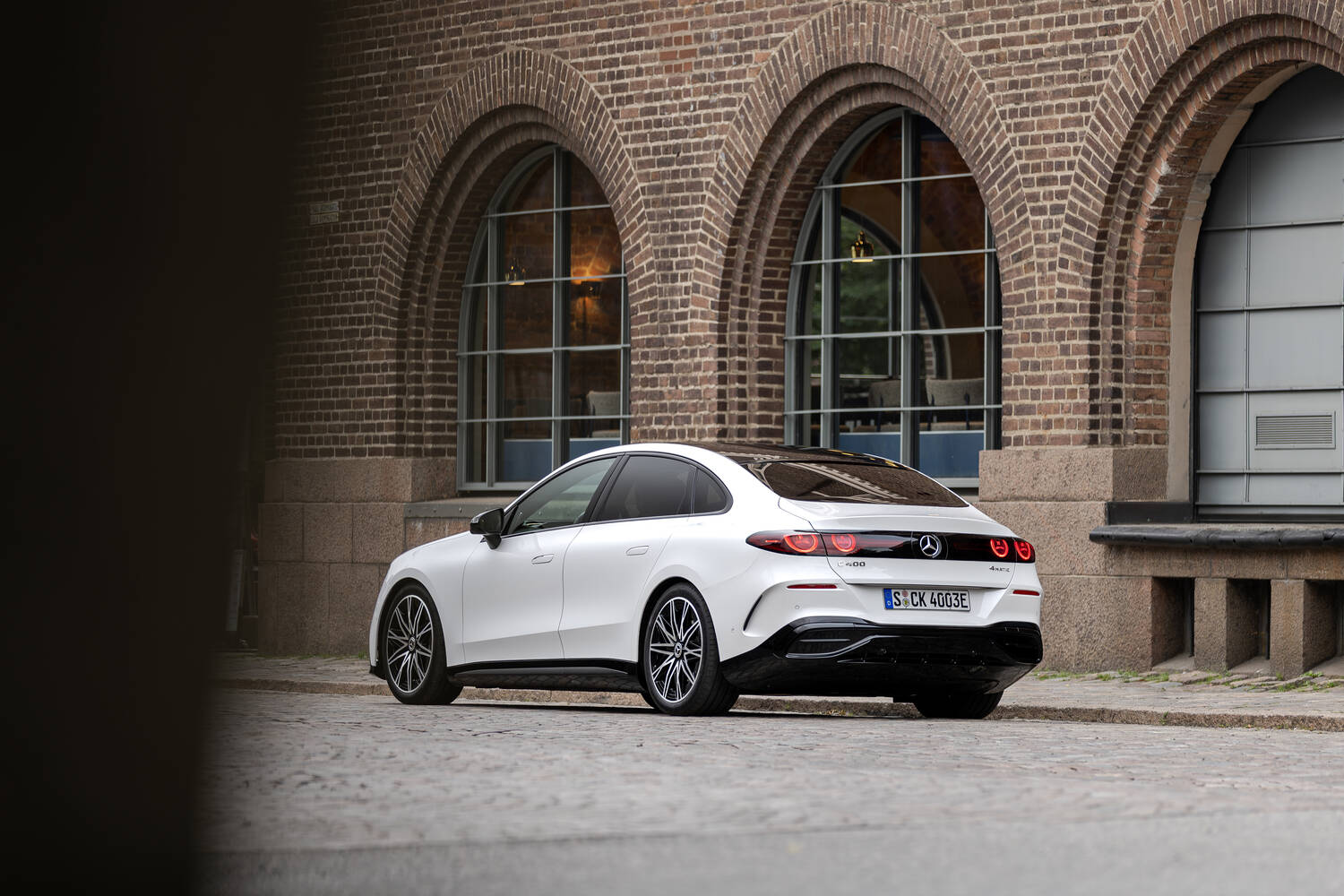
The car has clearly been shaped by aerodynamics, and no panel has been left untouched in the quest for optimal efficiency.
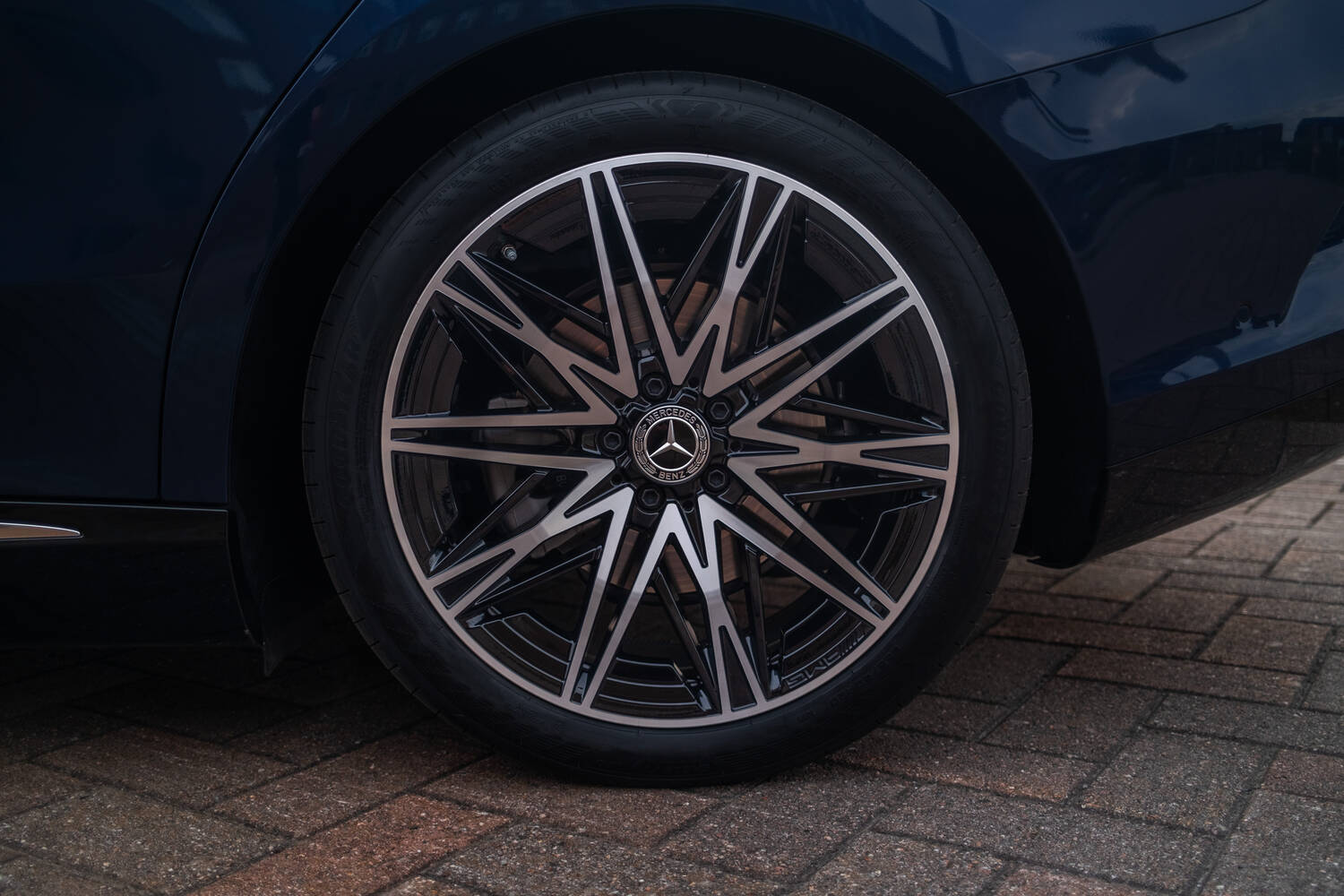
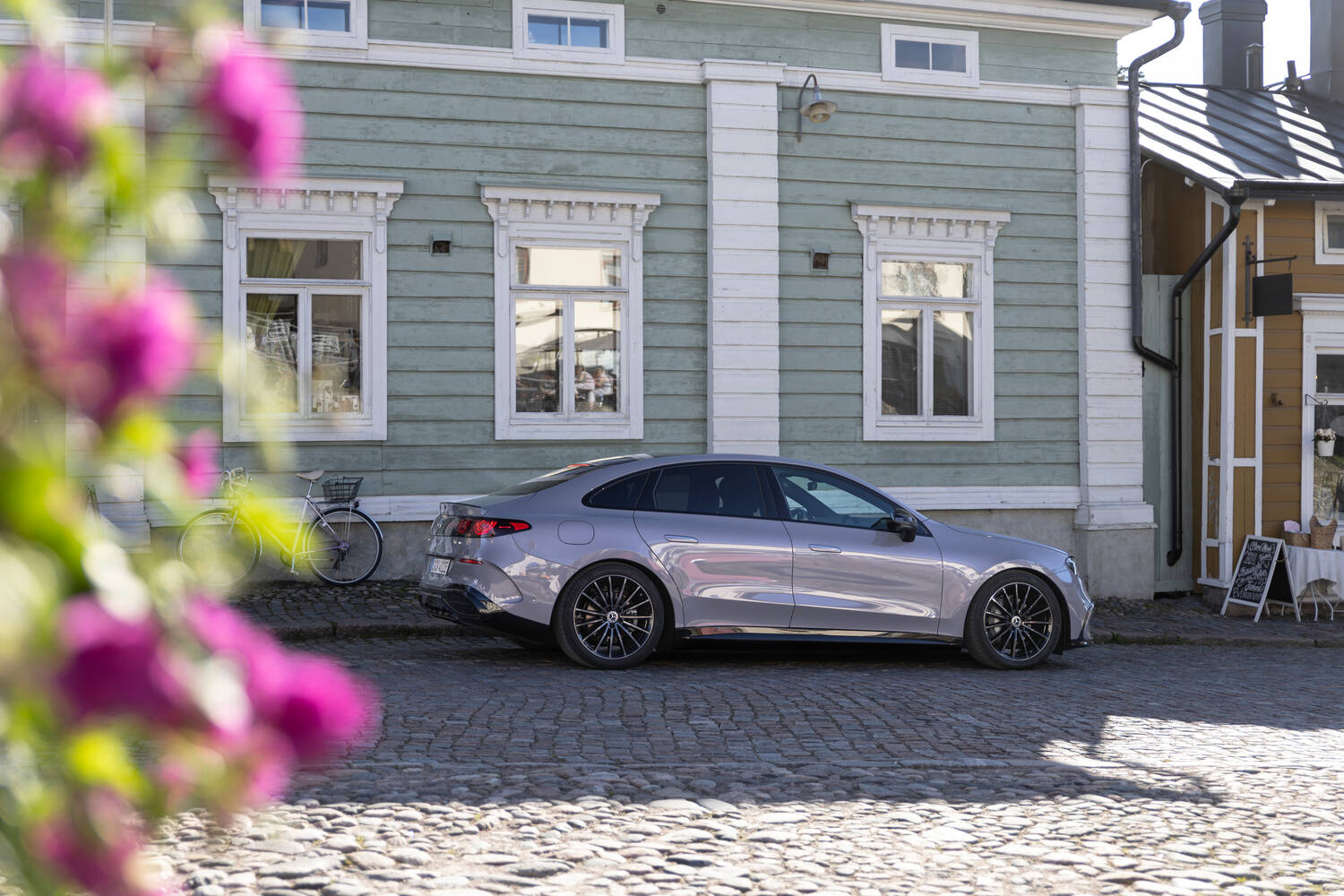
The door handles retract when the car is locked to sit flush with the bodywork, while the wheels, which range from 18 to 20 inches in diameter, have been shaped to be as aerodynamically efficient as possible.

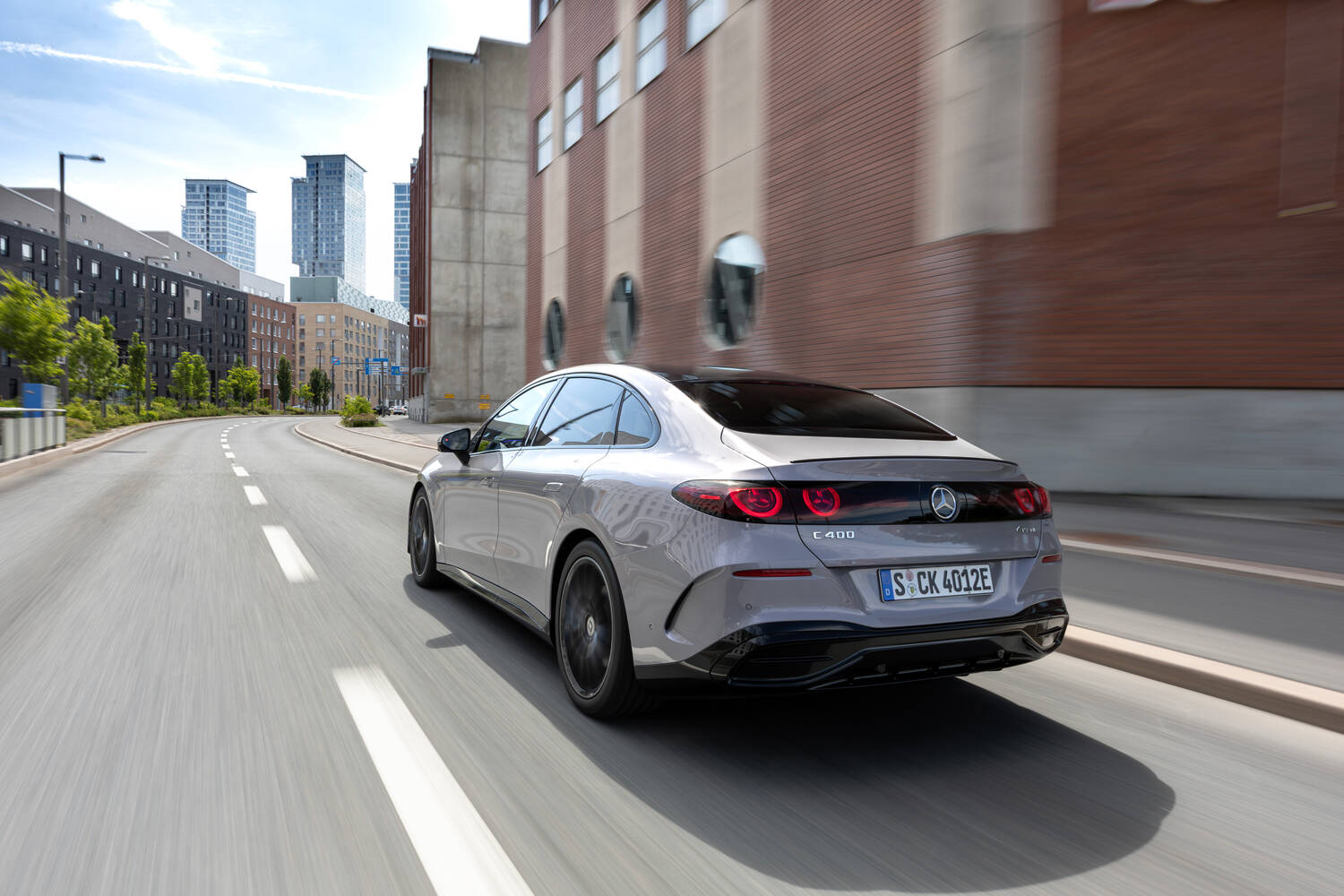
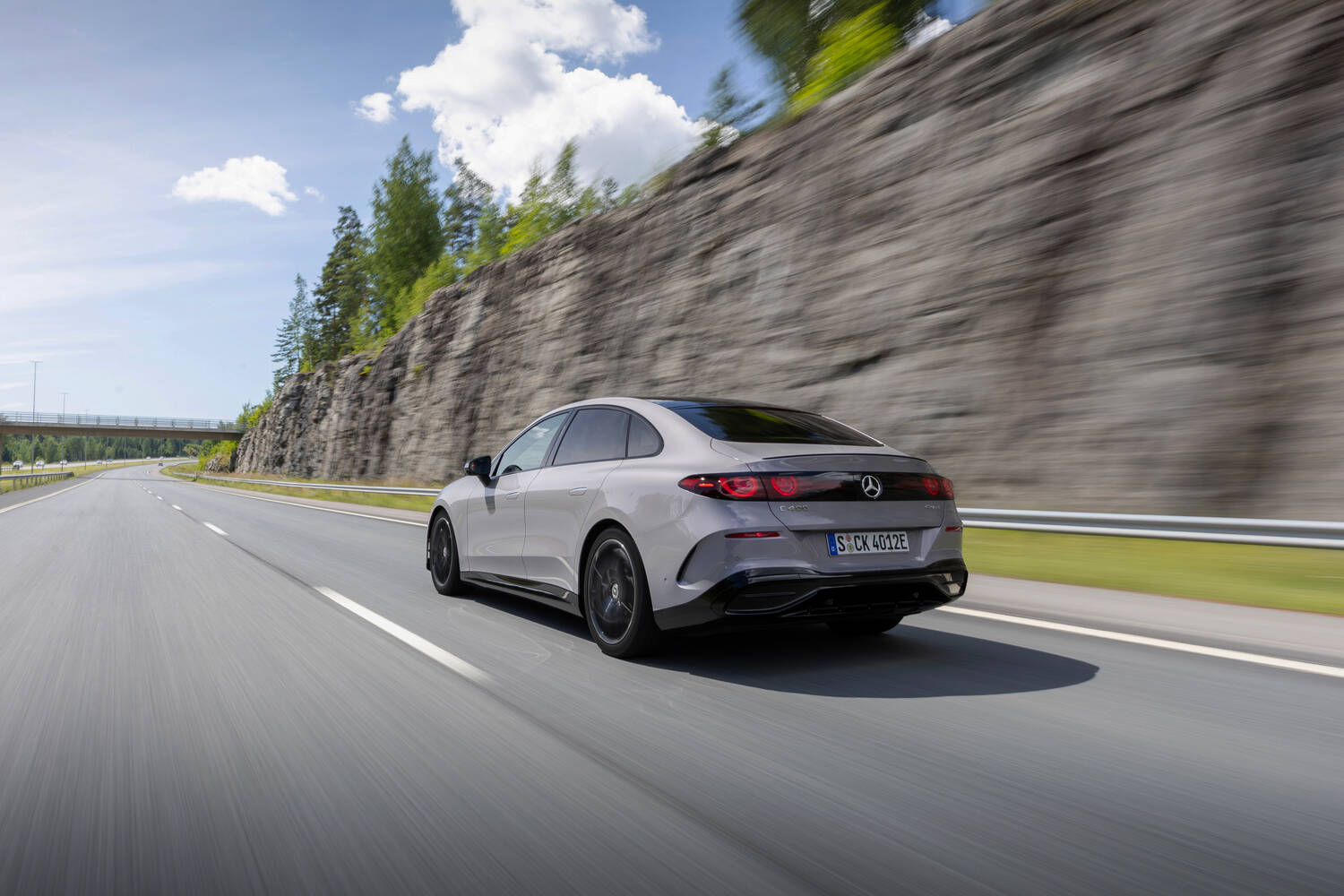
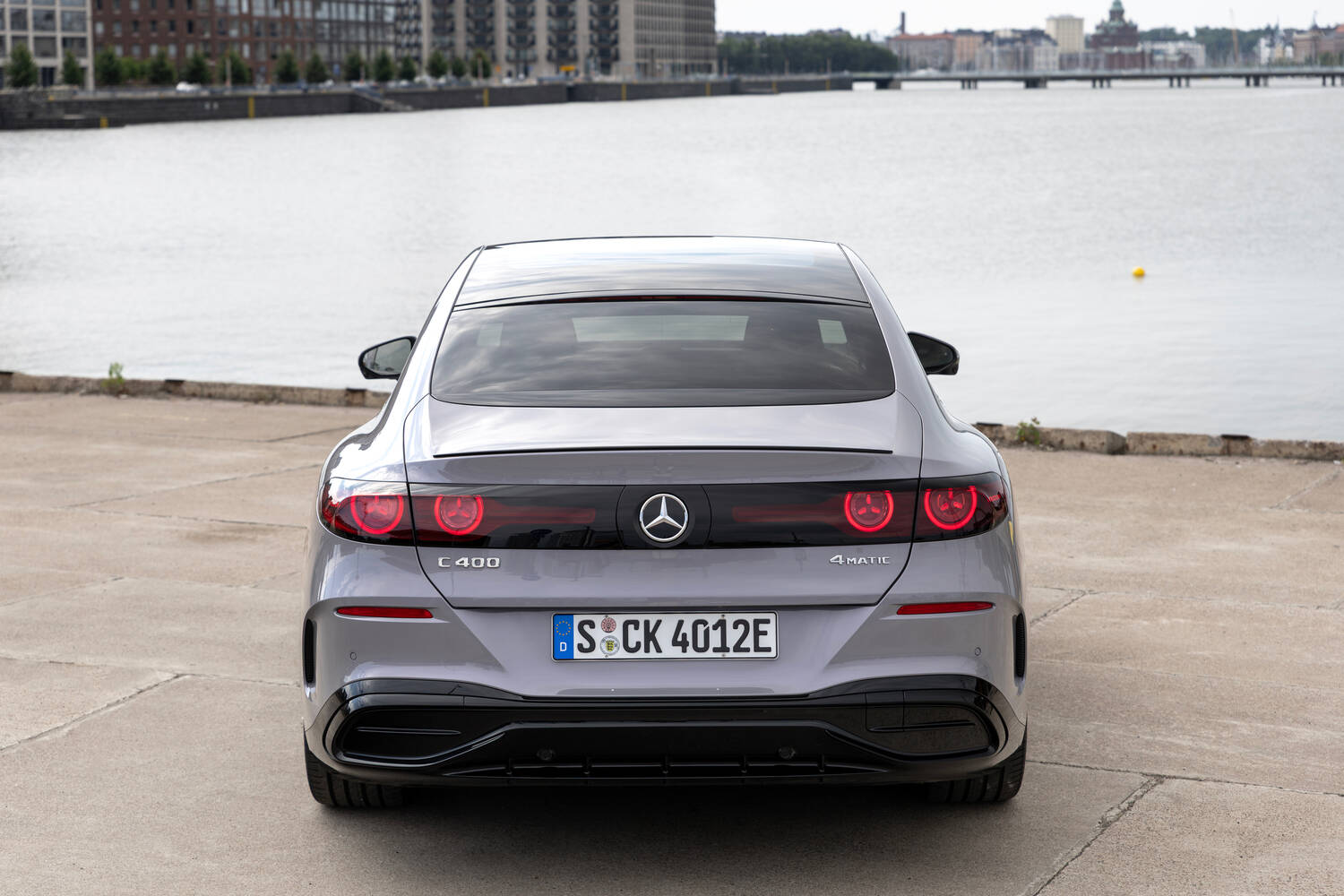
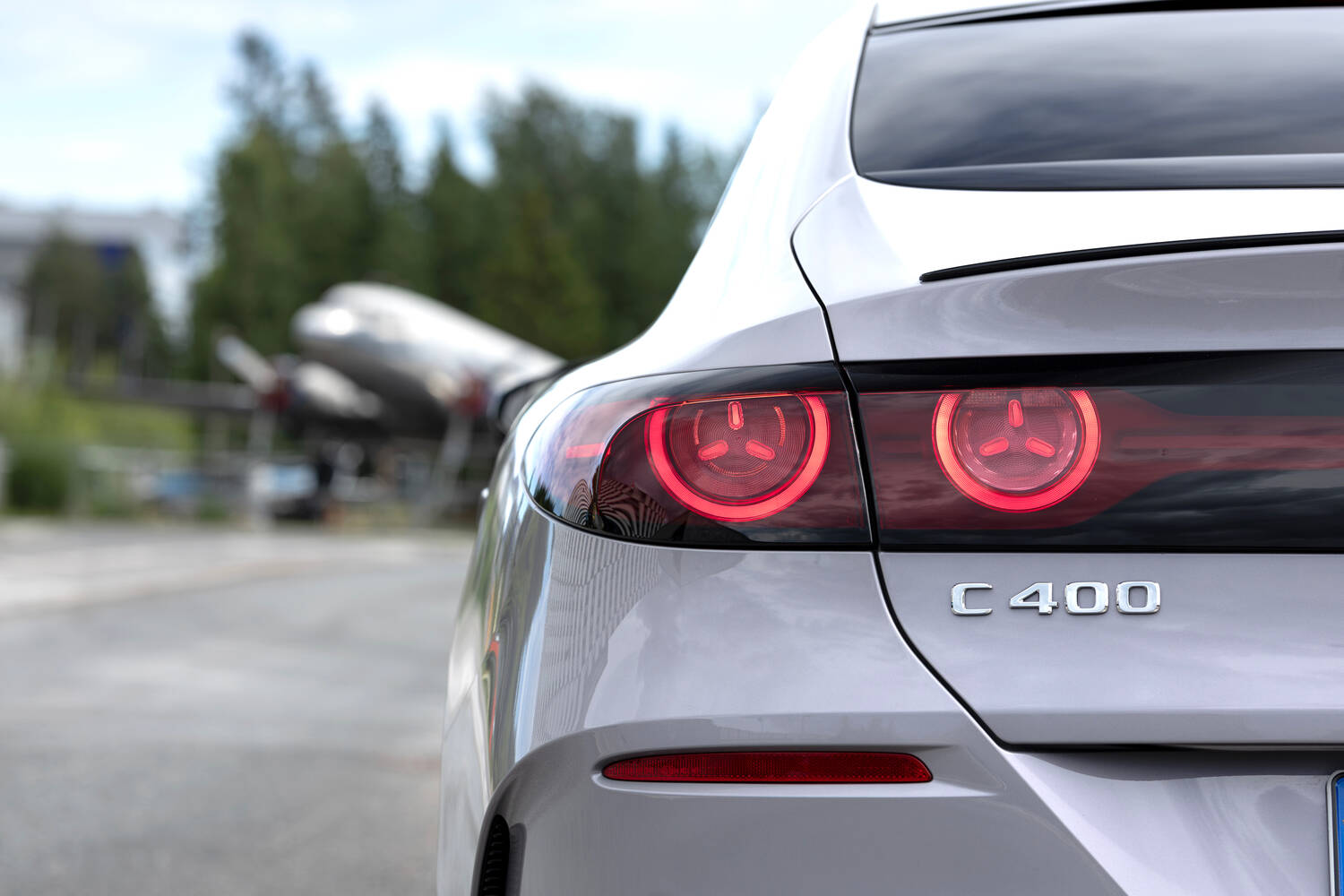
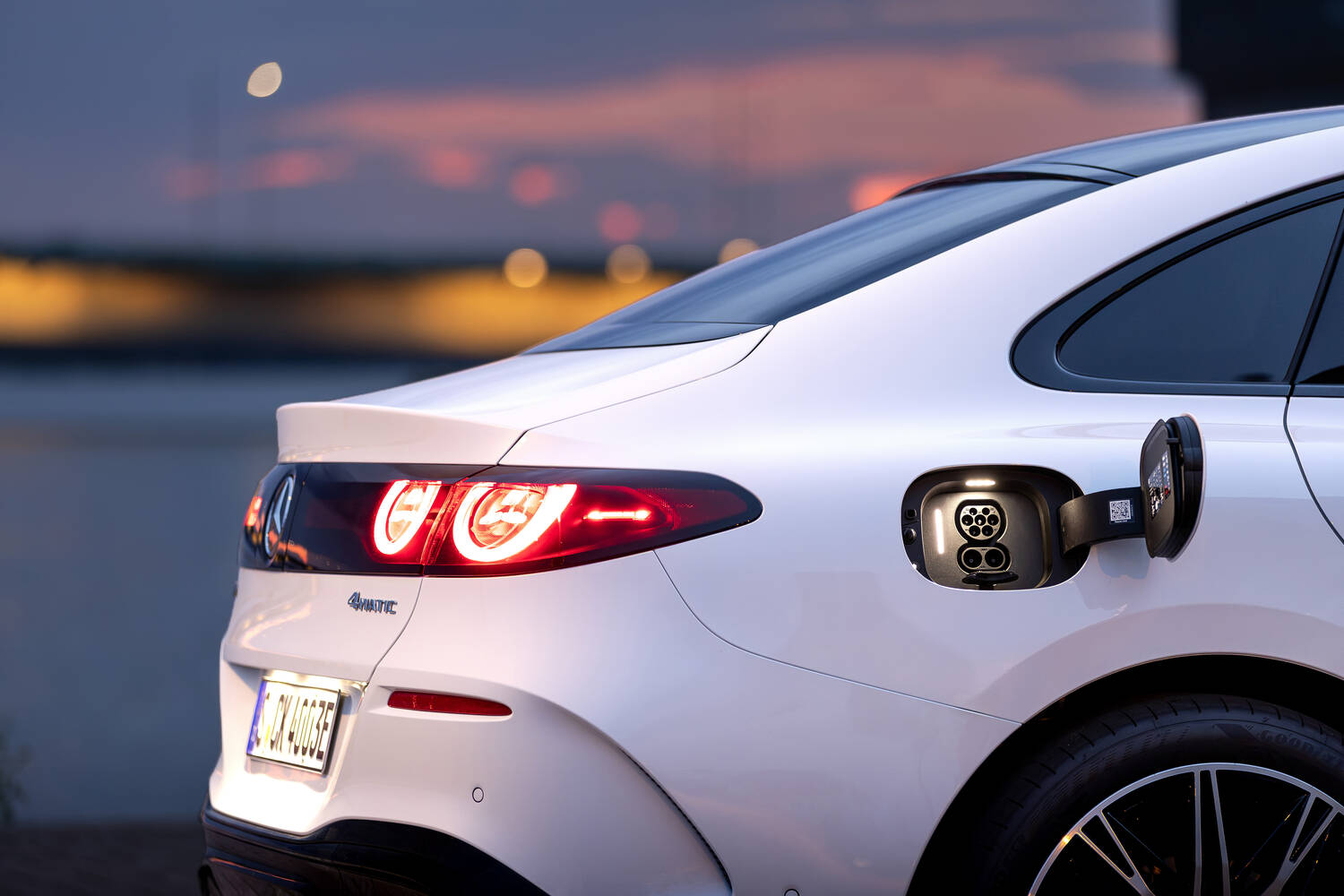
The sloping roof flows into a short tail, contributing to an ultra low drag coefficient of 0.22. The distinctive rear lights sit within a contrasting black graphic that spans the rear of the car.
Dimensions of the 2026 Mercedes-Benz C-Class
- Length:
- 4,833mm
- Width:
- 1,892mm
- Height:
- 1,503mm
- Wheelbase:
- 2,962mm
Paint colours for the 2026 Mercedes-Benz C-Class

A range of nine exterior colours is available for the Mercedes-Benz C-Class. The two solid colours are Polar White and Alpine Grey, while the metallic options are Obsidian Black, Sapphire Blue, Sodalite Blue, Patagonia Red, High-Tech Silver, Lavender Silver and Opalite White Bright.
Interior, practicality, tech & comfort of the 2026 Mercedes-Benz C-Class
- High-quality materials are available
- Plenty of useful storage in the cabin
- Optional 39.1-inch Hyperscreen

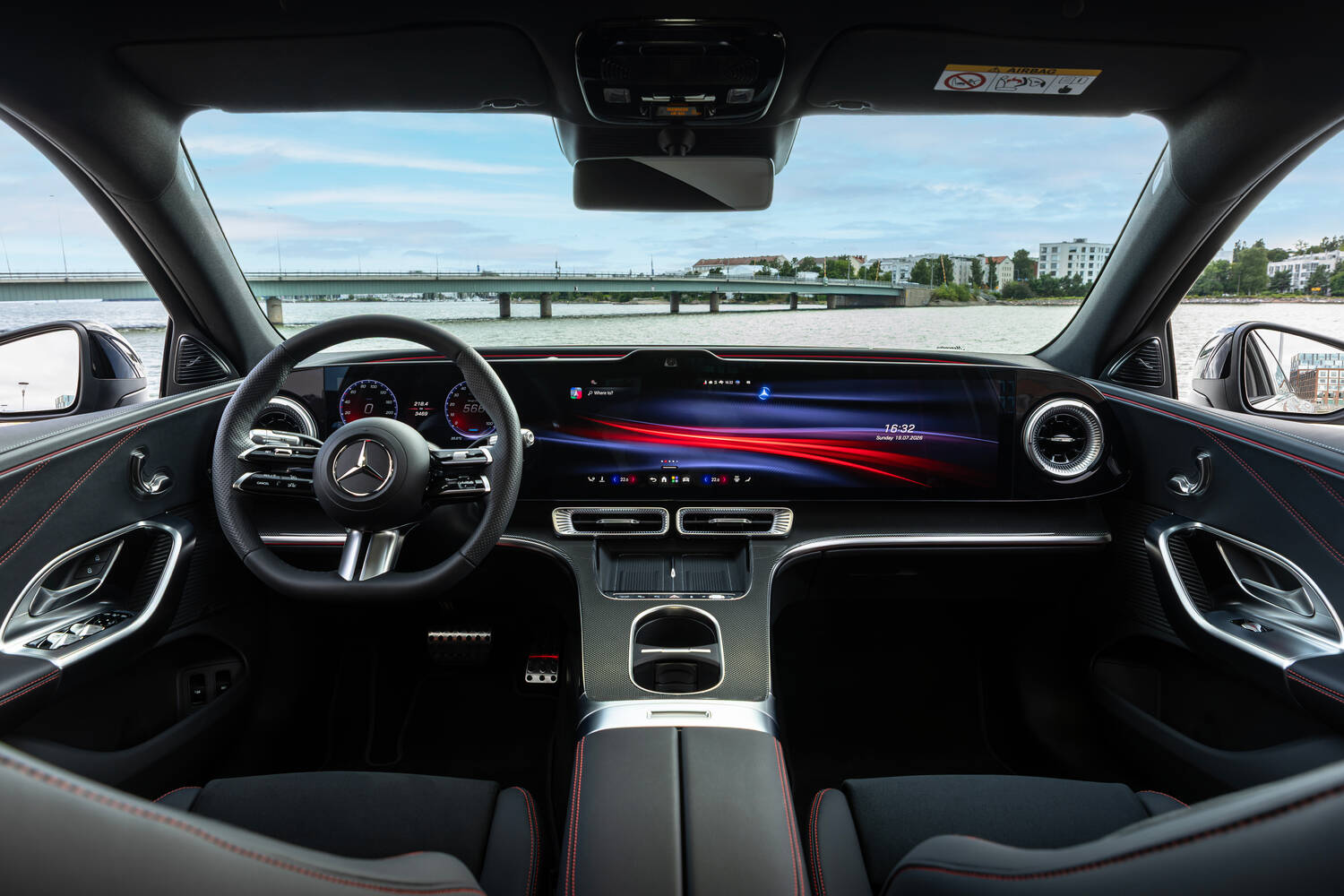
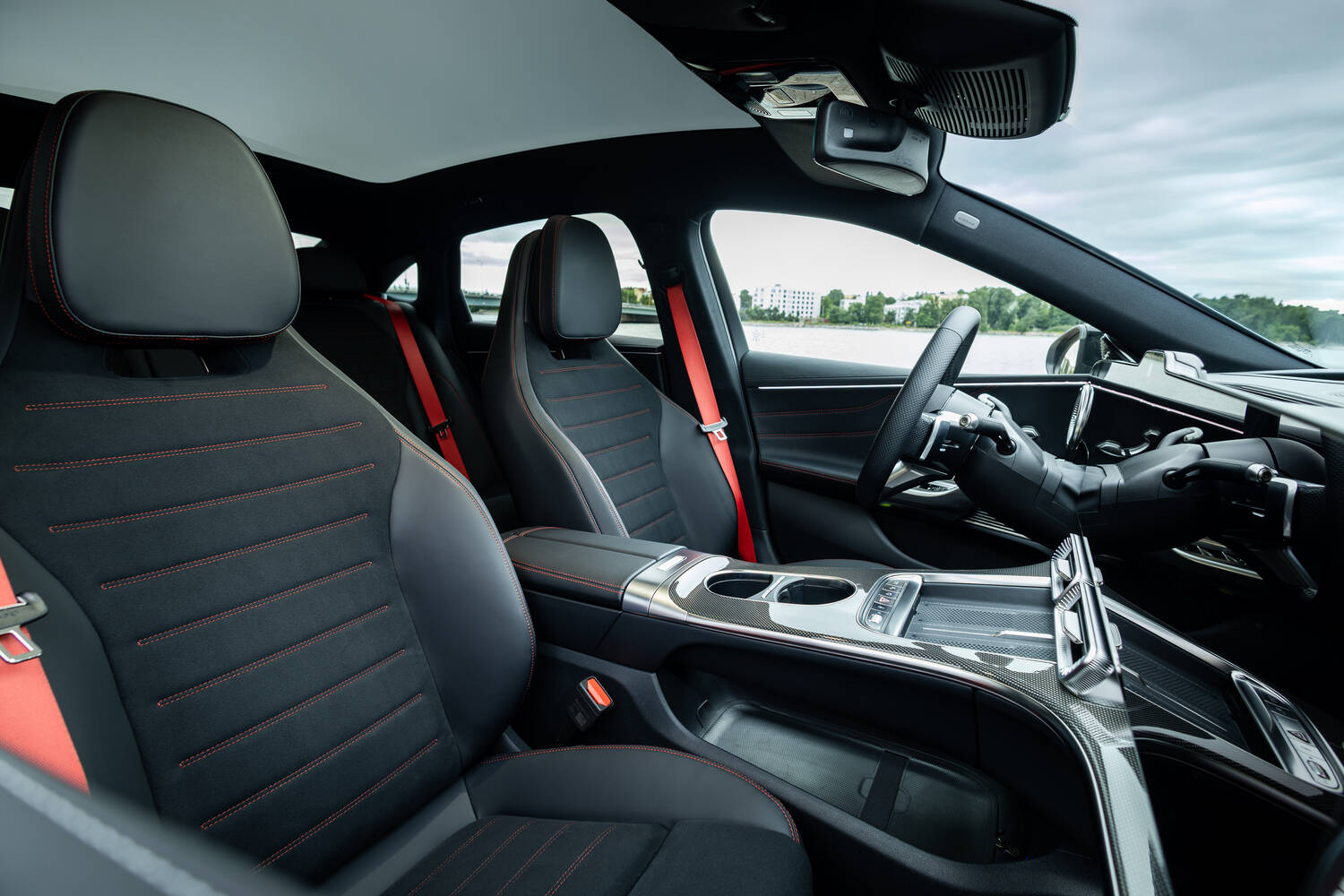
The dashboard layout is dictated by the decision to go all-digital, resulting in a large, flat panel that spans the full width of the car.
Large circular air vents on either side can be illuminated by the ambient lighting, which offers numerous colours, while two further vents sit in the centre below the dashboard.
The overall appearance is modern, but there is not a great deal to make it look or feel like a Mercedes - aside from the numerous stars on the glass roof.
Getting comfortable in the driver's seat

As we've come to expect in Mercedes cars, the driver's seat is electrically adjustable, and it moves over a decent range.
The steering wheel can also be adjusted for reach and rake, so most people should find it relatively easy to get to a comfortable driving position.
Infotainment and technology

Regardless of how many option boxes you tick, the interior of the C-Class electric is a mostly digital affair. The standard 'Superscreen' setup pairs a 12.3-inch instrument display with a 14.1-inch touchscreen. A second 14.1-inch display can be added in front of the passenger seat; without it, a blanking panel is fitted.
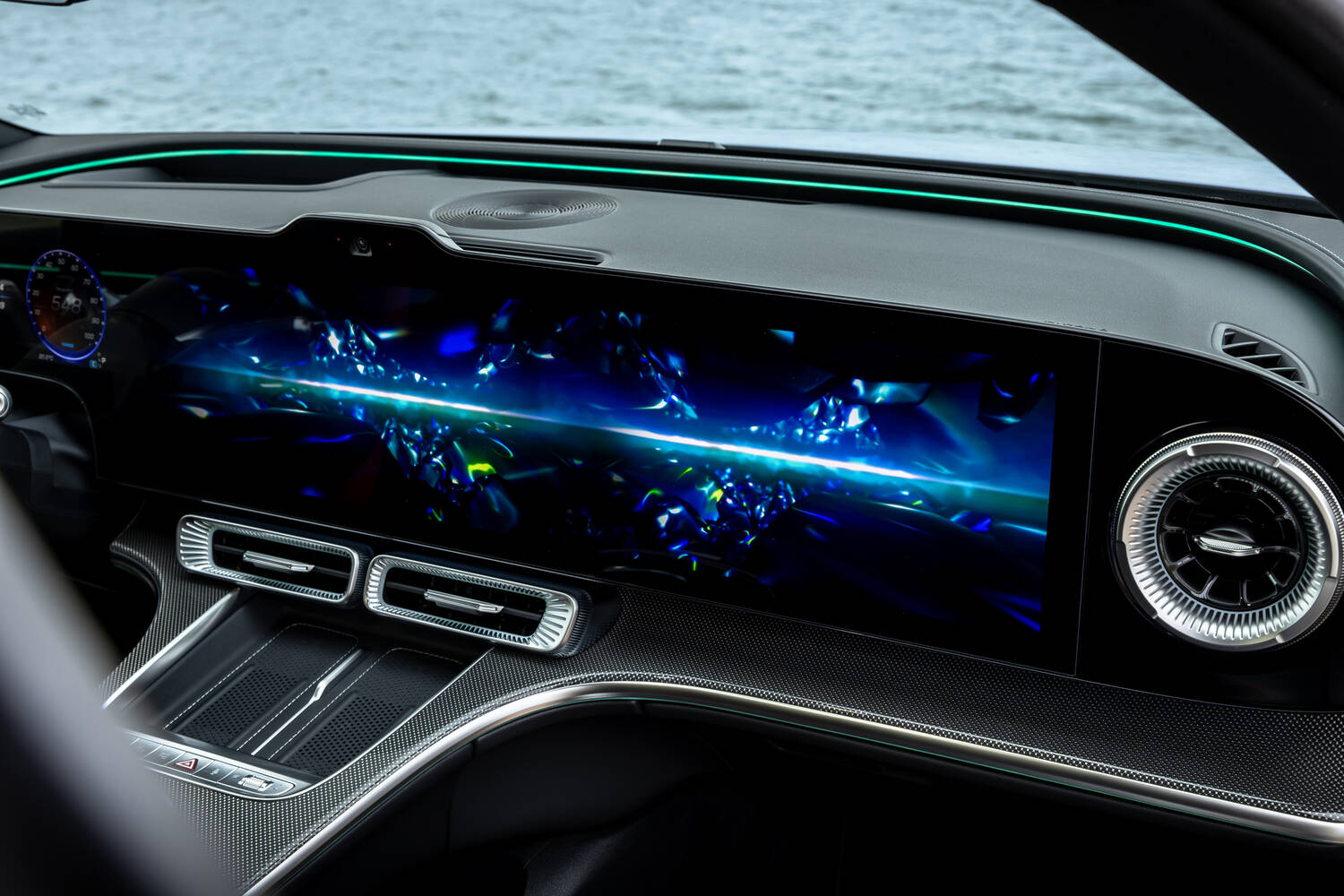
The optional MBUX Hyperscreen takes this digital look one step further with a 39.1-inch display that effectively covers the entire dashboard, including the digital instruments and a touchscreen extending towards the passenger side.
It is visually impressive, but it does not seem to add a great deal to the infotainment experience. The native MB.OS system works well and offers plenty of functionality, while a digital voice assistant is available for those who prefer to use it. Android Auto and Apple CarPlay are supported.

A head-up display covering an area of around 18 inches provides additional information to the driver and includes augmented reality turn-by-turn navigation prompts.
Practicality around the cabin
The cabin is reasonably spacious, and the front door bins are usefully sized. There is additional storage beneath the centre console, along with a pair of USB-C ports, while higher up there are two cupholders, two wireless charging pads and more storage beneath the butterfly-opening central armrest.
The glovebox on the passenger side is almost useless, however, aside from holding a few documents.
Rear-seat passenger space

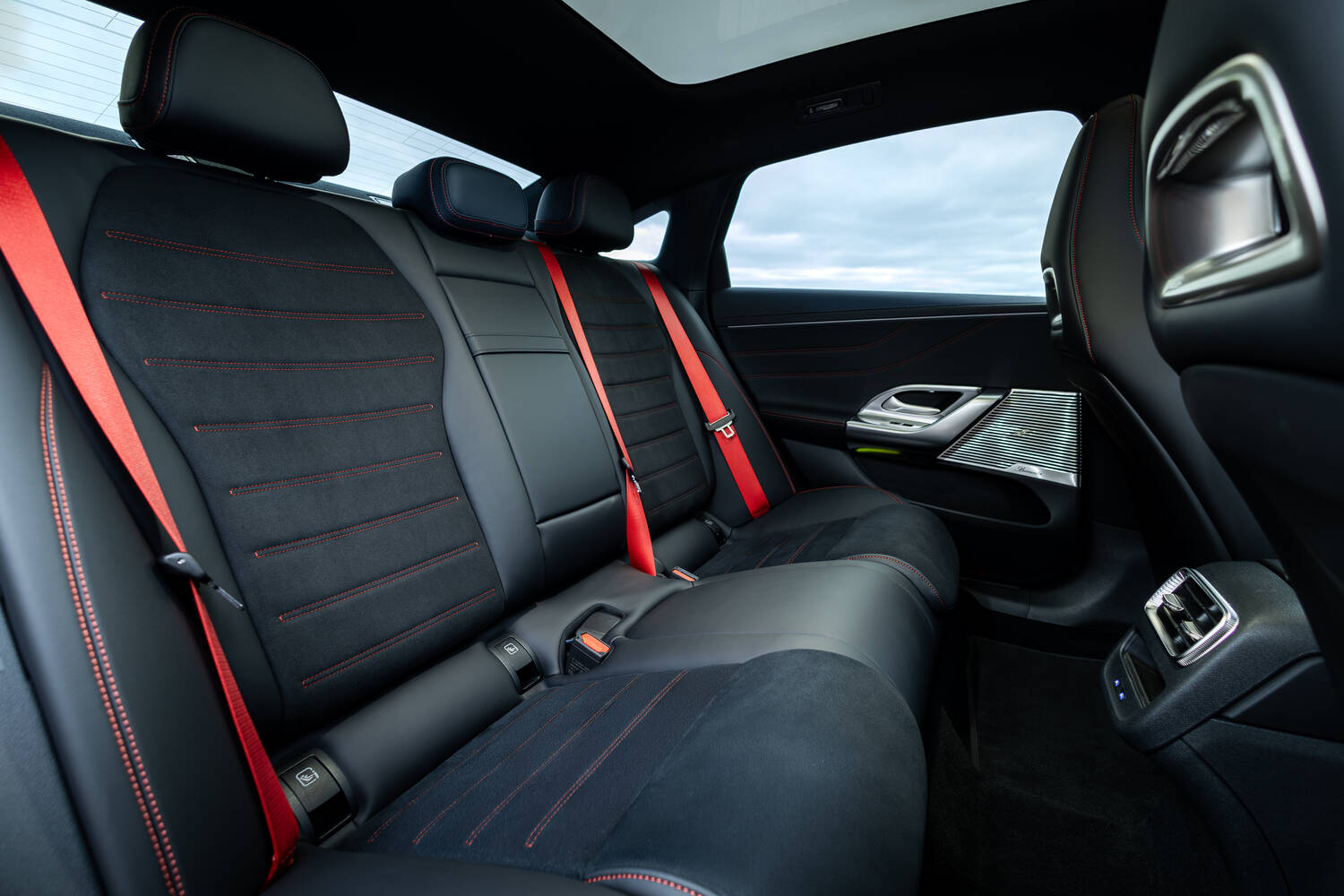
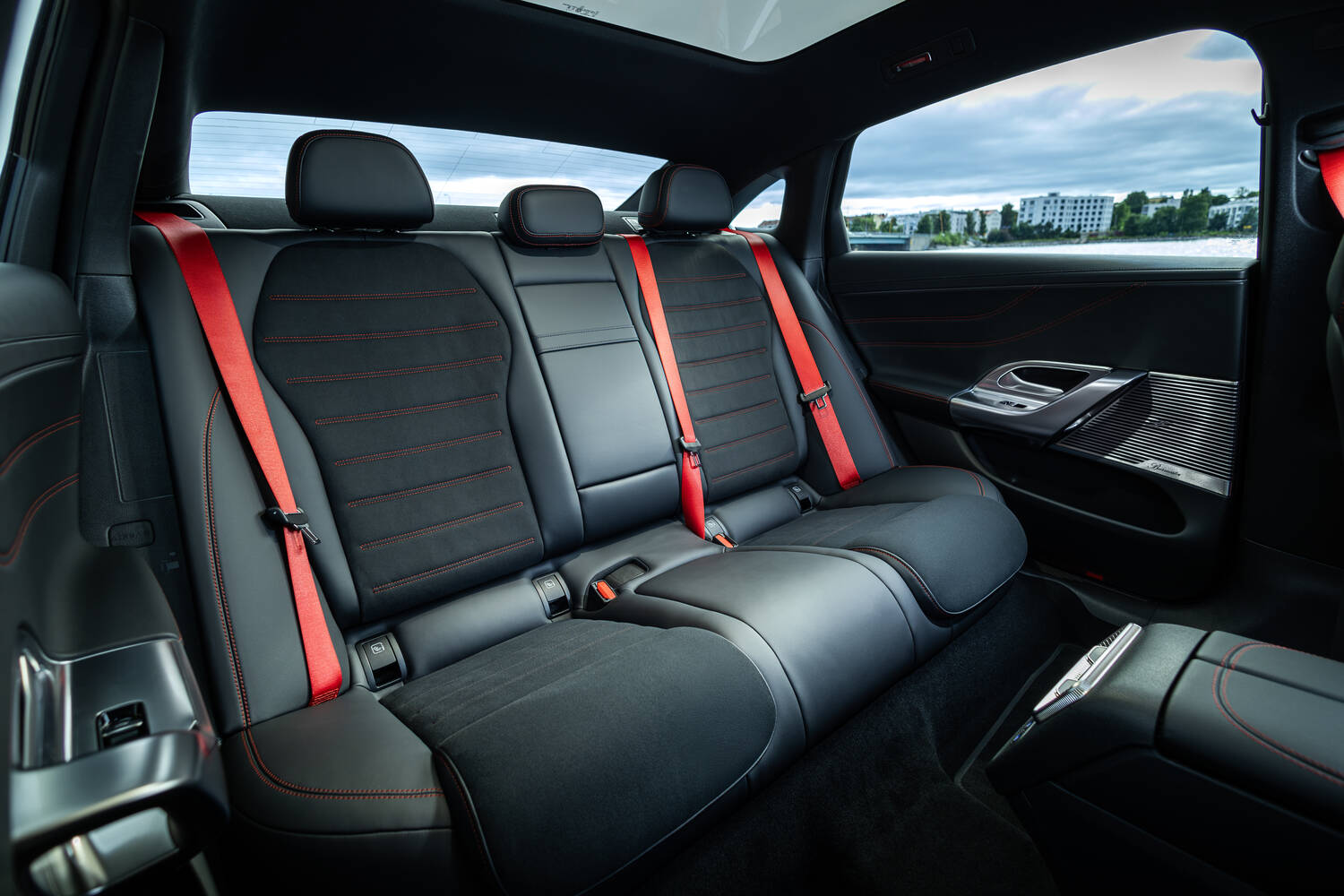
Rear passenger space is relatively good for the segment and, because the C-Class electric is longer than its combustion-engined counterpart, there is 12mm more legroom.
The outer seats are comfortable, but there is not much space for occupants to stretch their feet beneath the front seats.
The centre seat is best reserved for occasional use, as its base and backrest are far less comfortable than those on either side.

Rear headroom has also increased by 11mm, while the panoramic glass roof contributes to the sense of space.
Fitting child seats to the Mercedes-Benz C-Class
ISOFIX child seats can be fitted to either of the outer rear seats of the Mercedes-Benz C-Class electric, but not to the front passenger seat.
Boot space in the Mercedes-Benz C-Class

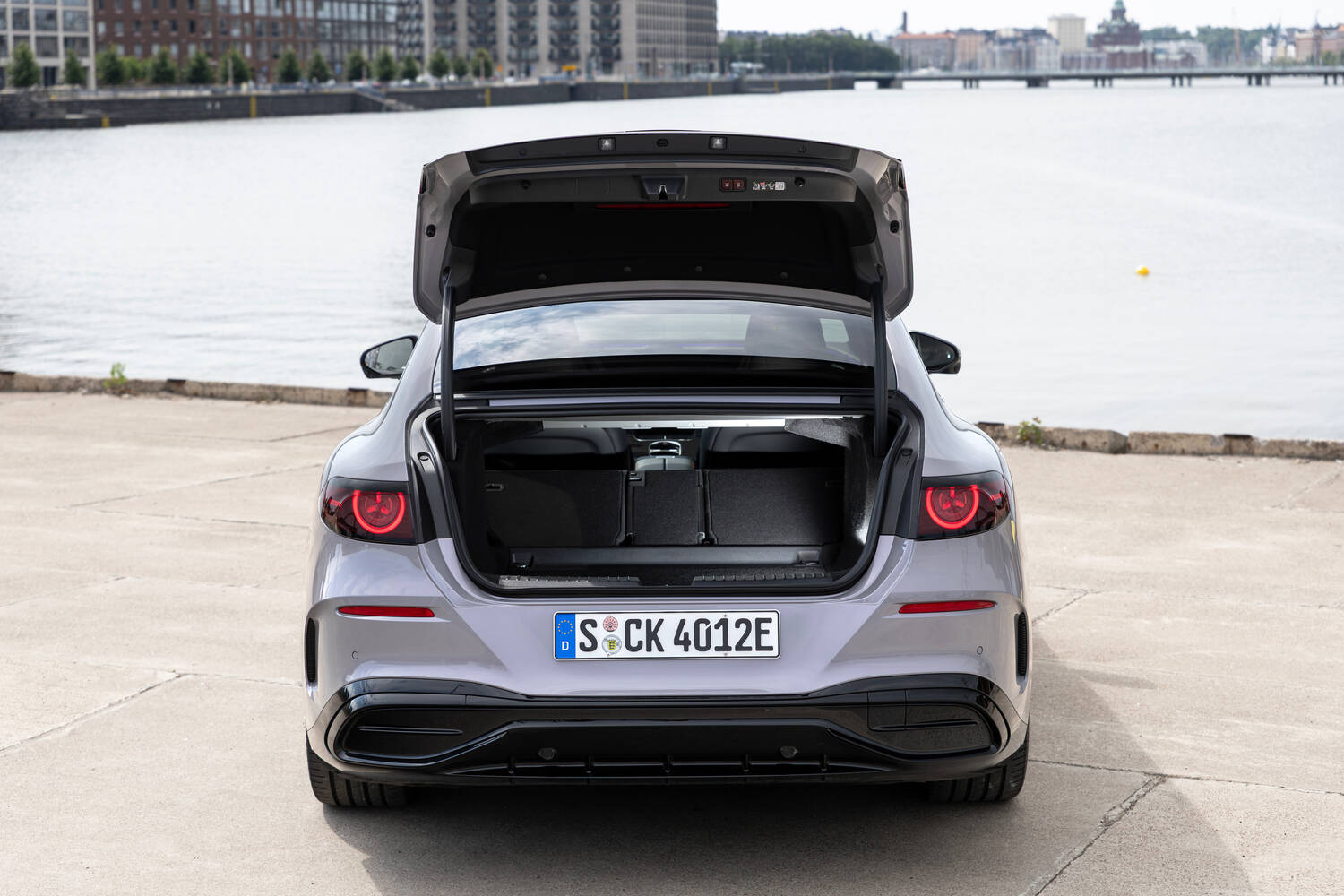
As the C-Class electric has a conventional saloon body style, its boot aperture is not as generous as a hatchback's.
Even so, there are 470 litres of luggage space, and the rear seats can be folded to accommodate longer items.
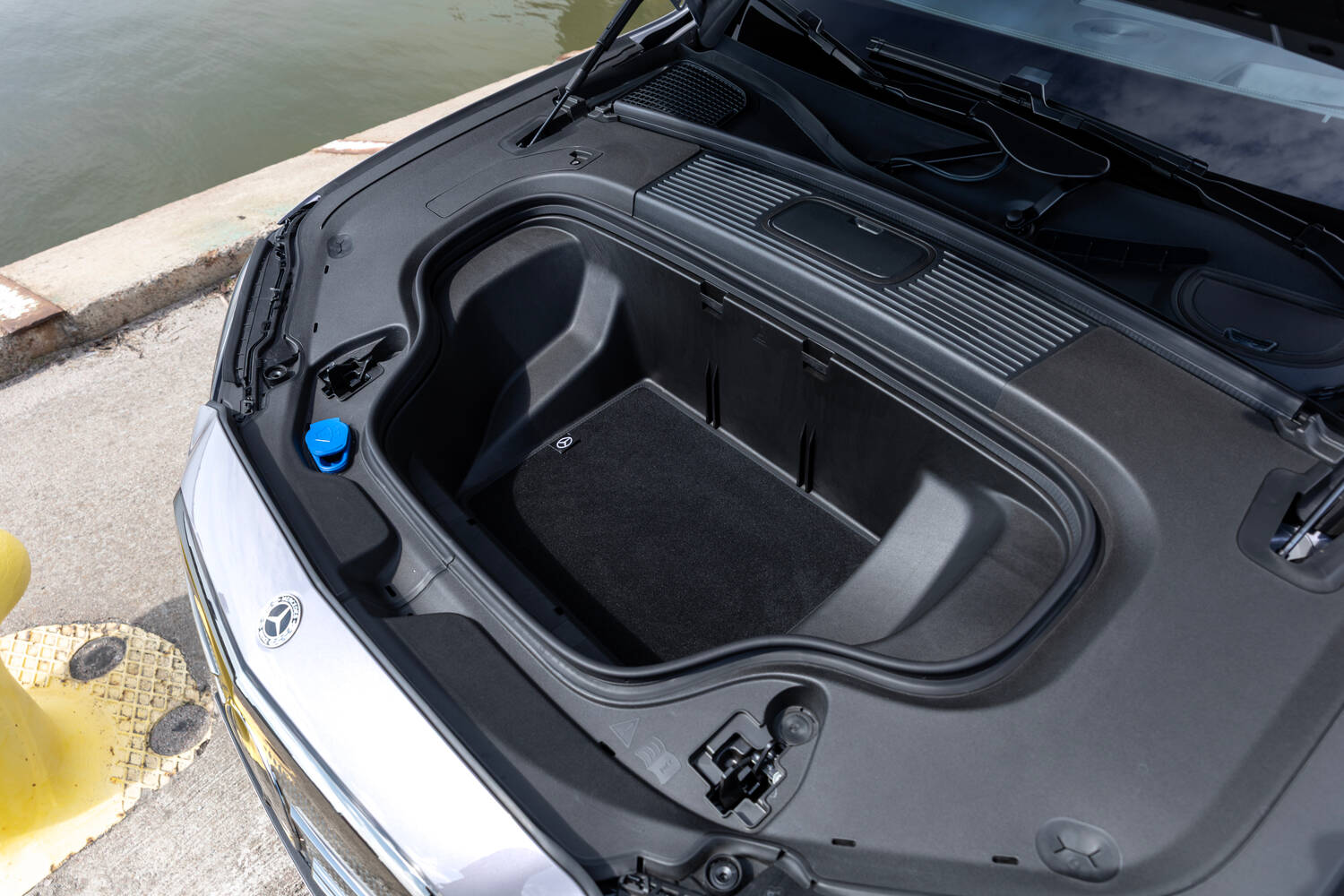
There is also an easily accessible 101-litre front boot ('frunk'). Pressing the Mercedes badge at the front unlatches the bonnet, which lifts on struts.

Towing with the Mercedes-Benz C-Class
The Mercedes C-Class electric has a maximum braked towing capacity of 1,800kg.
Safety in the Mercedes-Benz C-Class

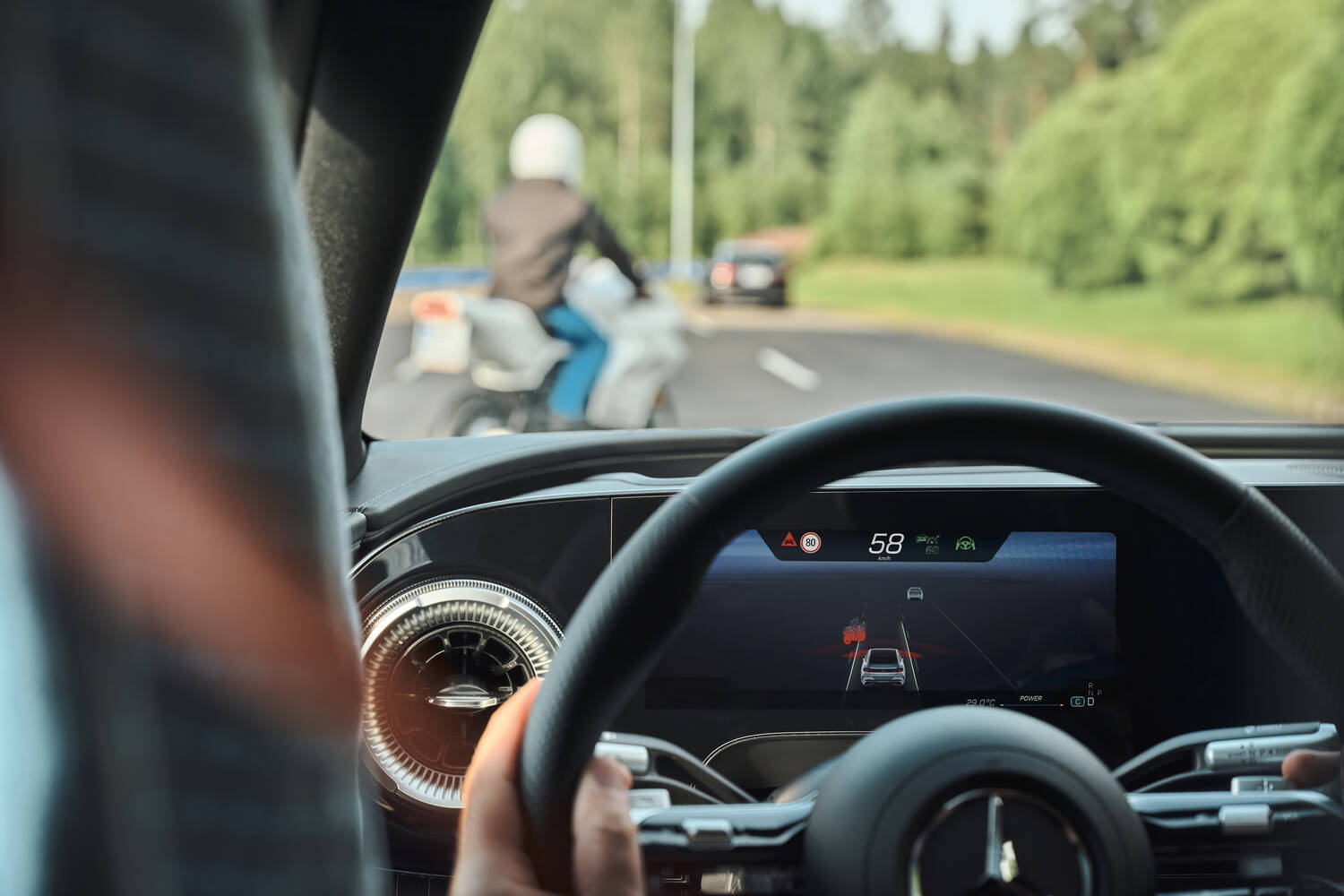
The C-Class has an extensive suite of safety systems, ranging from numerous airbags to driver assistance technology that monitors the car's surroundings and can take evasive action if necessary. The C-Class electric had not been tested by Euro NCAP at the time of writing.
Performance of the 2026 Mercedes-Benz C-Class electric
- C 400 4Matic produces 489hp
- 300kW energy recuperation
- Optional adaptive air suspension

The C-Class electric is initially available as the C 400 4Matic, which uses two motors producing totals of 489hp and 800Nm.
To balance performance and efficiency, the rear motor is paired with a two-speed gearbox that allows quick acceleration from a standstill before shifting to a taller ratio at higher speeds.
The C 400 4Matic accelerates from 0-100km/h in four seconds. A single-motor version with a longer range will follow.
Driving the Mercedes-Benz C-Class electric in Helsinki, Finland
Words by Dave Humphreys on 28 July 2026

The C 400 4Matic was the only variant available to drive at the launch, and our test car had the optional Airmatic adaptive air suspension. Passive springs are fitted as standard.
Our route out of the city quickly demonstrated how well the air suspension works over cobbled streets. It soaked up the uneven surfaces, allowing the Mercedes to glide along smoothly.
Tight turns were made easier by the rear-wheel steering, which turns the rear wheels by up to 4.5 degrees in the opposite direction to the fronts at low speeds, reducing the turning circle and helping the car rotate into a corner.

The steering is light in Normal mode, and the power delivery is smooth and well judged. There is plenty of torque in reserve, and joining the motorway requires only a measured press of the accelerator to bring the Mercedes up to speed.
In this setting, the C-Class glides along effortlessly. The driver can adjust the level of energy recuperation using the paddles behind the steering wheel or switch it off to allow the car to coast. We noticed slightly more road noise than expected, particularly from the front of the car, though there was little wind noise around the side glass.
Transitioning onto more interesting roads, the Mercedes has plenty of dynamic ability, even before switching to the Sport mode. With so much torque available, it can make up ground at alarming rates and with the recuperation set to strong, it quickly becomes easy to gauge when to roll off the accelerator and let the motors slow the car down for the approaching apex.

In fact, it's remarkable how much driving can be done without pressing the brake pedal, but when you do need to use it, the blending is faultless.
Sport mode lowers the car by 15mm on the air springs, though its centre of gravity already feels low. In this setting, however, the suspension is a little too stiff and the steering is artificially weighted, making the car feel more contrived than naturally dynamic.
In reality, the C-Class is more than capable in day-to-day driving without switching out of Normal mode.
Range, battery, charging and running costs of the 2026 Mercedes-Benz C-Class electric
- Uses a 94kWh battery
- Has a WLTP range of 762km
- Can add 320 kilometres in ten minutes

At launch, the C-Class electric will be available with one big battery allowing a long range and thanks to an 800-volt architecture, super-fast DC charging is also possible.
Battery options and official range
The C-Class electric uses an NMC lithium-ion battery of 94kWh usable energy capacity, giving an official range of 592-762 kilometres depending on the specification.
Real-world range and efficiency of the Mercedes-Benz C-Class electric
Mercedes quotes official energy consumption of 14.1-18.5kWh/100km for the C-Class electric, depending on the specification. Over two days of driving in city traffic, on winding back roads and on motorways, we recorded 16.5kWh/100km on the first day and 18.5kWh/100km on the second.
Charging up the Mercedes-Benz C-Class
The Mercedes C-Class can charge at up to 330kW on DC. A 10-80 per cent recharge can be completed in as little as 22 minutes, while up to 320 kilometres of range can be added in 10 minutes at a suitable charger.
Mercedes also offers an optional DC converter to enable charging at 400-volt fast-charging stations.
It's possible to charge at up to 11kW on three-phase AC outlets as standard, with 22kW charging optional.
Servicing the Mercedes-Benz C-Class
The service interval on all electric Mercedes-Benz passenger cars is once a year or every 25,000km to 30,000 kilometres (depending on the model), whichever comes first.
Mercedes-Benz C-Class warranty
Mercedes-Benz Ireland provides a two-year unlimited mileage warranty on all new cars from the date of first registration. Additionally, a 10-year or 250,000-kilometre warranty applies to the high-voltage battery.
Irish pricing & rivals to the 2026 Mercedes-Benz C-Class
- Pricing yet to be announced
- Several trim levels available
- Single-motor versions due in 2027

Irish pricing for the Mercedes-Benz C-Class electric has yet to be announced, but its technology suggests it will carry a premium price. The existing CLA electric provides a useful reference point.
Verdict - should you buy the 2026 Mercedes-Benz C-Class?

The C-Class electric feels much as a Mercedes should in terms of ride comfort, though road noise was at times higher than expected. Its efficiency is good rather than class-leading, while its handling does not quite match its straight-line performance. Even so, it is a comprehensive package in an increasingly competitive class.
FAQs about the 2026 Mercedes-Benz C-Class
Is the Mercedes-Benz C-Class only going to be a saloon?
Mercedes has not confirmed an estate version of the C-Class electric, though such a model would mirror the combustion-engined C-Class Estate and the CLA Shooting Brake with EQ Technology.
Want to know more about the 2026 Mercedes-Benz C-Class electric?
If there is anything about the Mercedes-Benz C-Class electric we have not covered, or you would like help choosing between it and other cars, you can use our expert advice service via the Ask Us Anything page.