

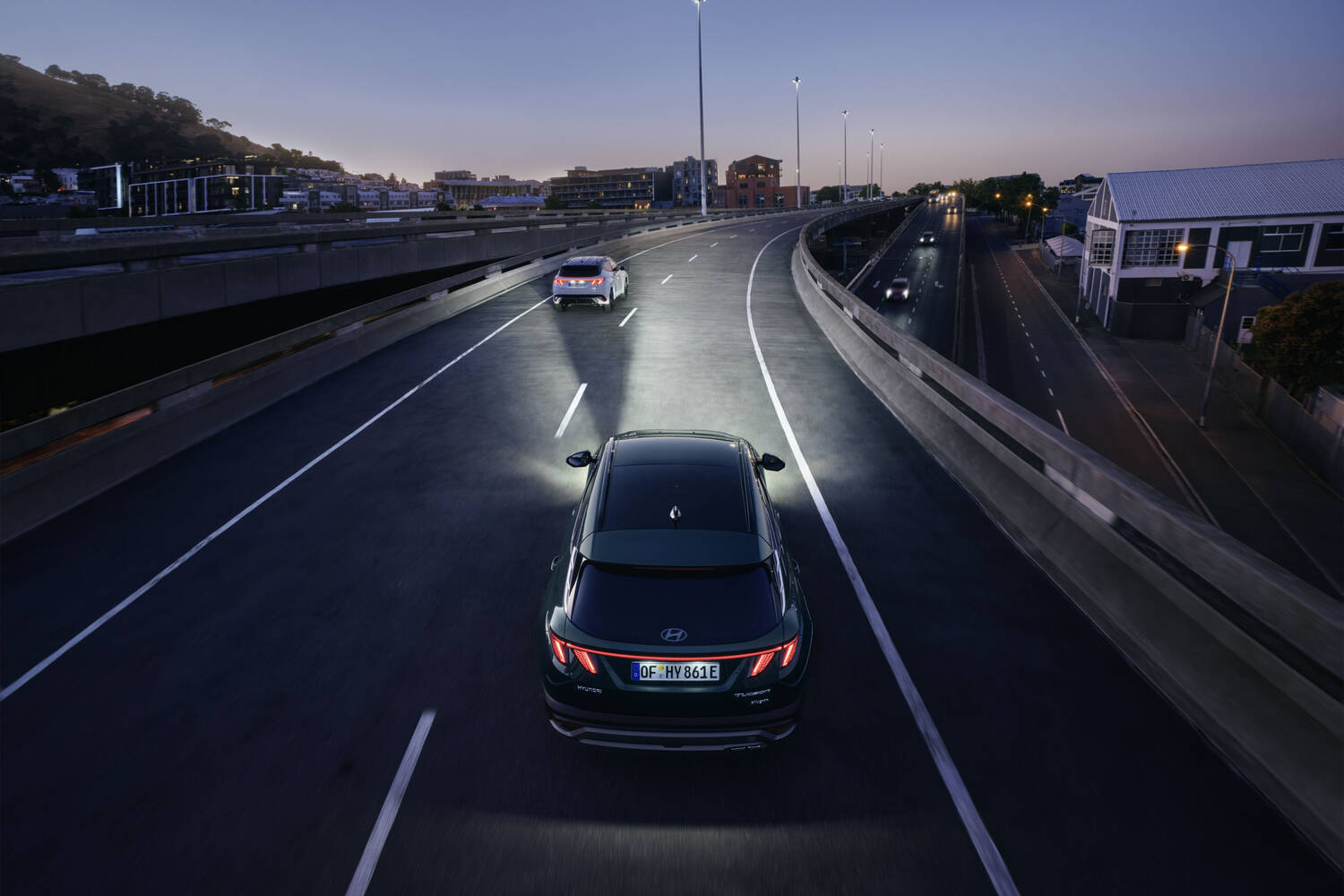

Exterior & design of the 2026 Hyundai Tucson
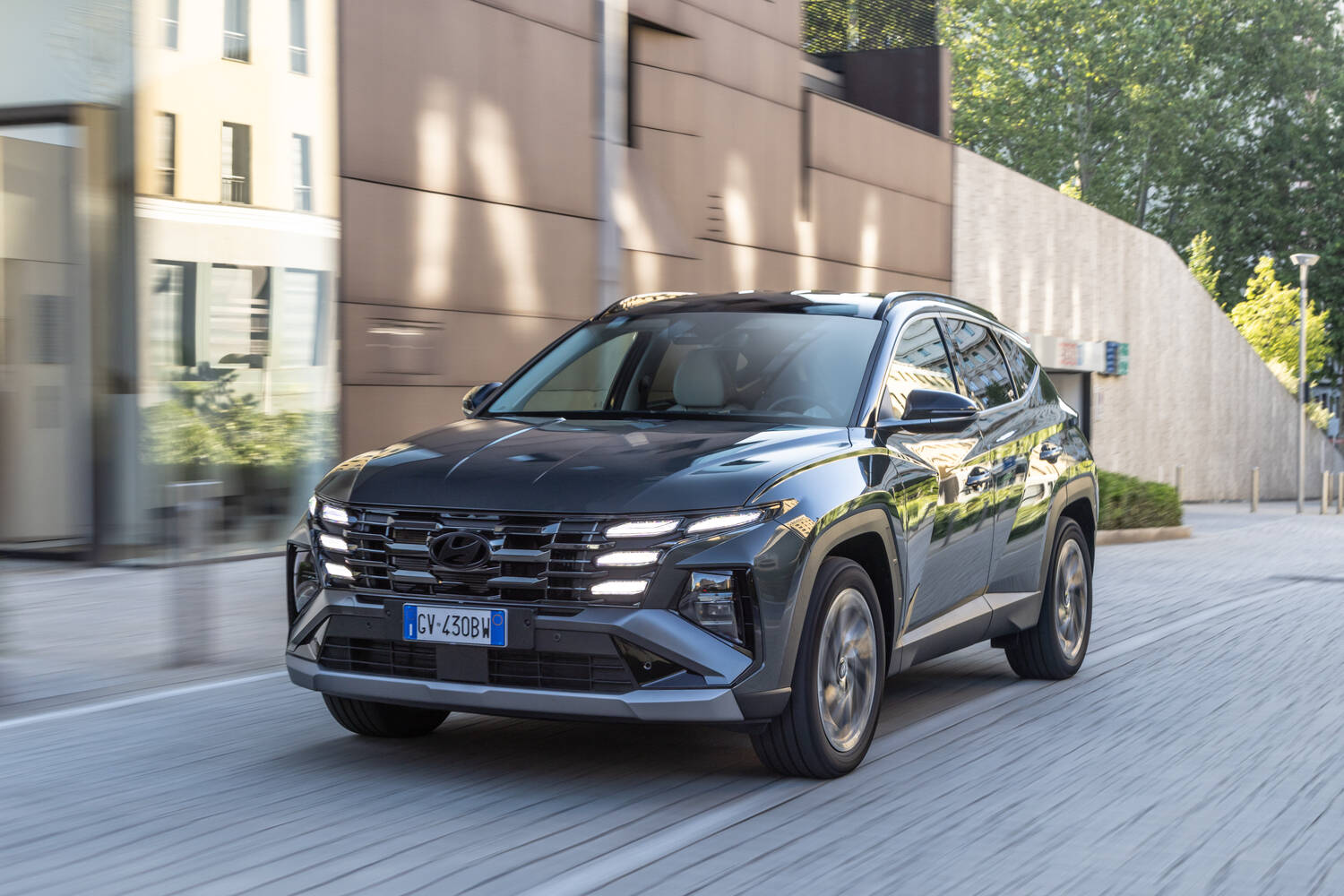
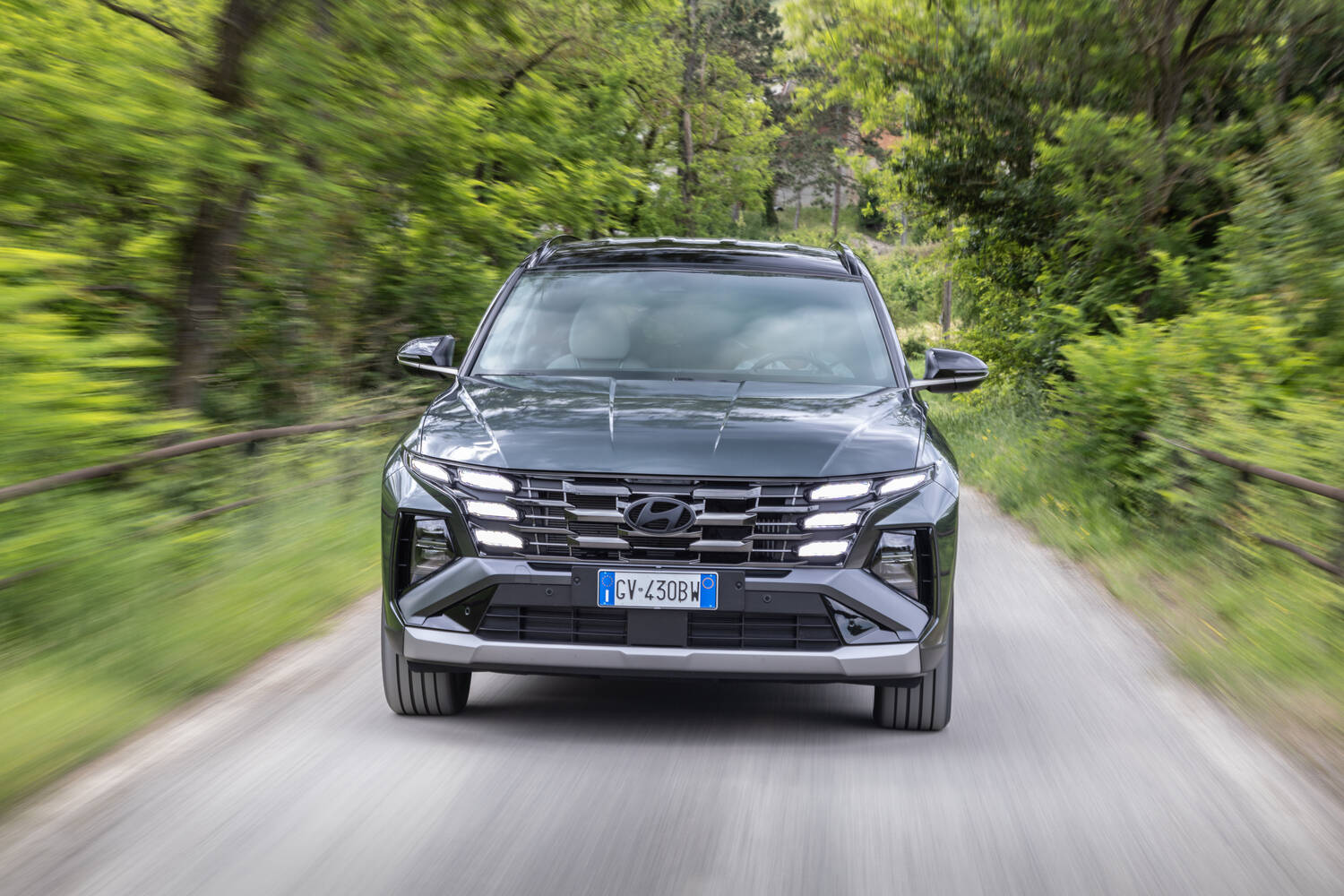
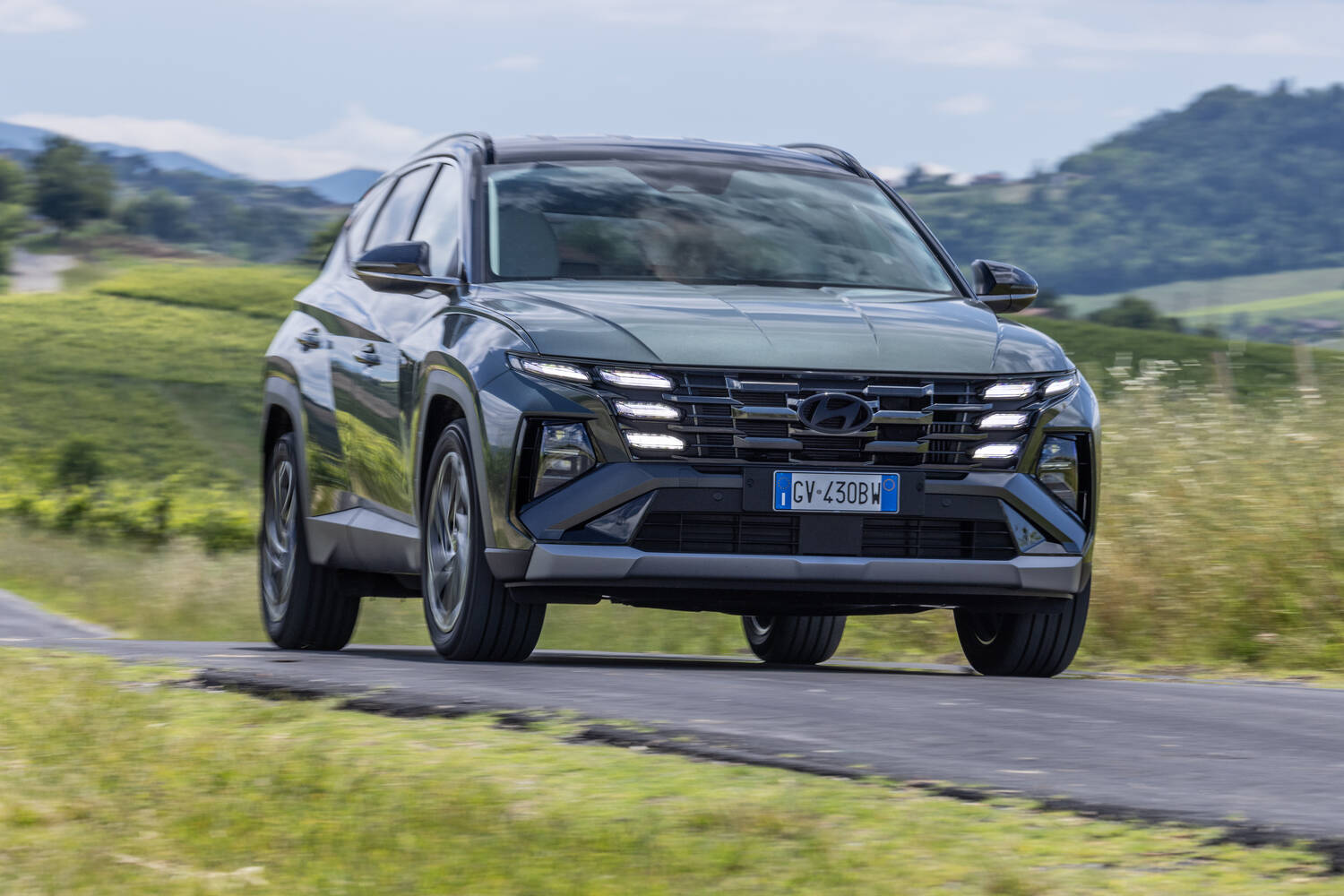
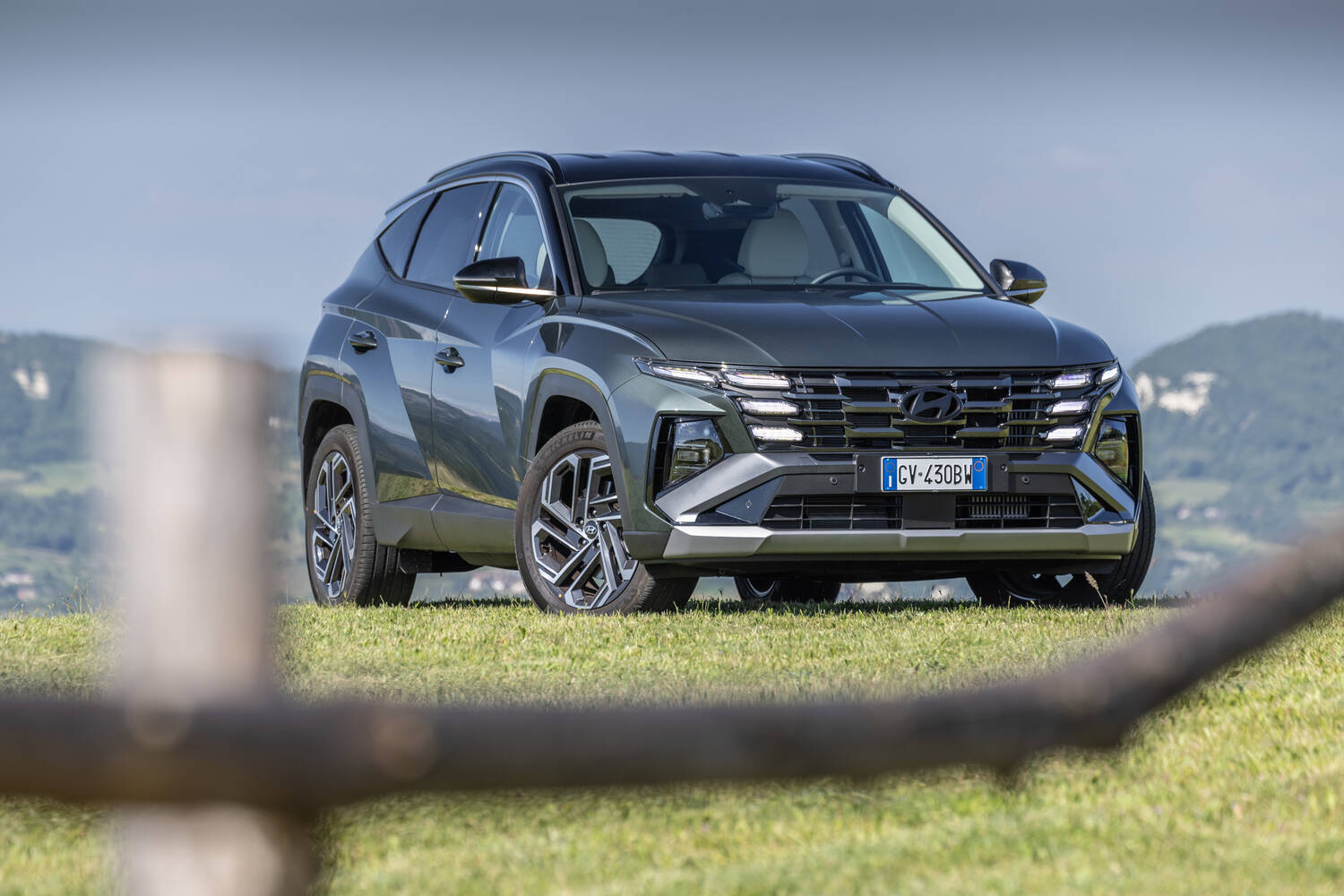
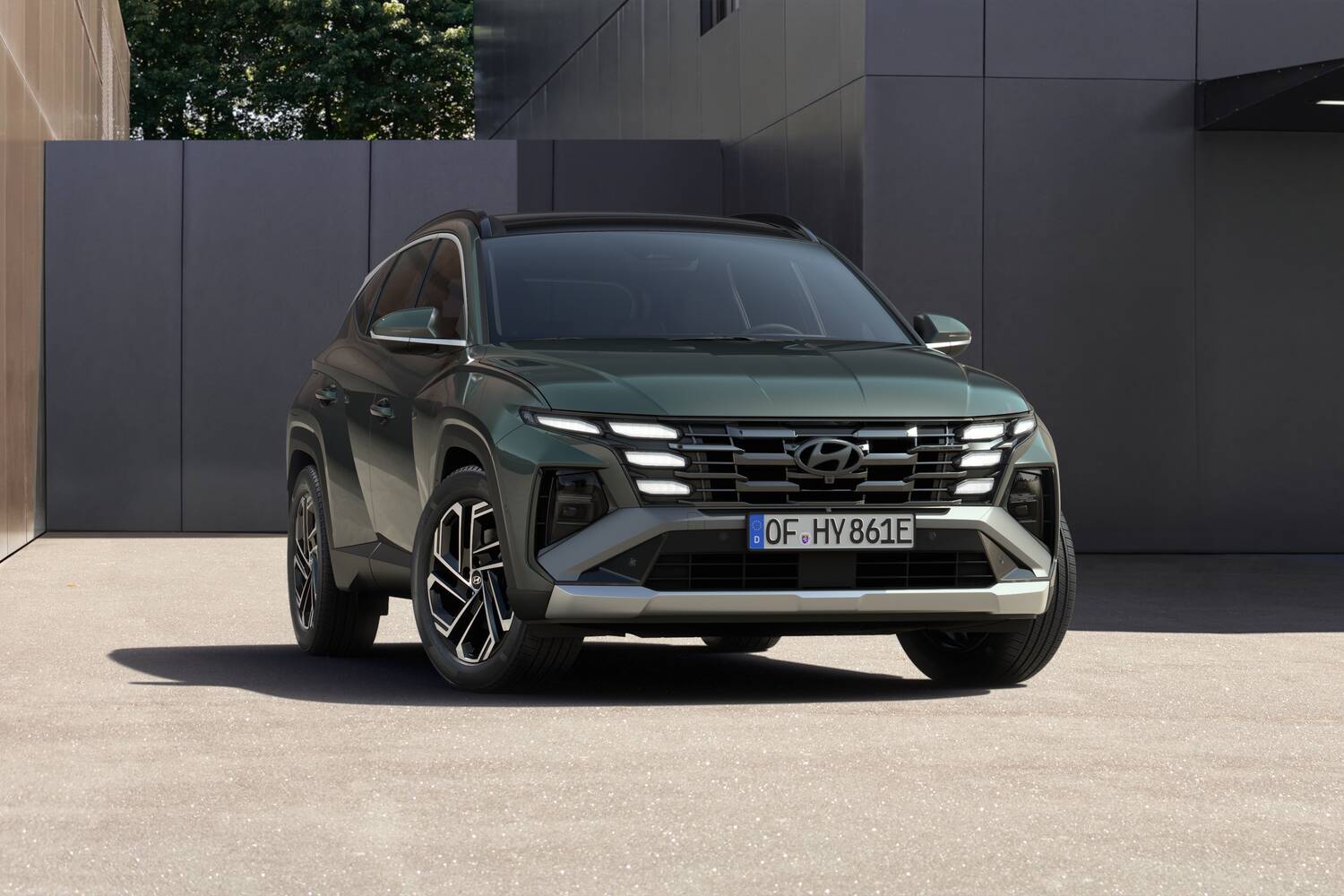
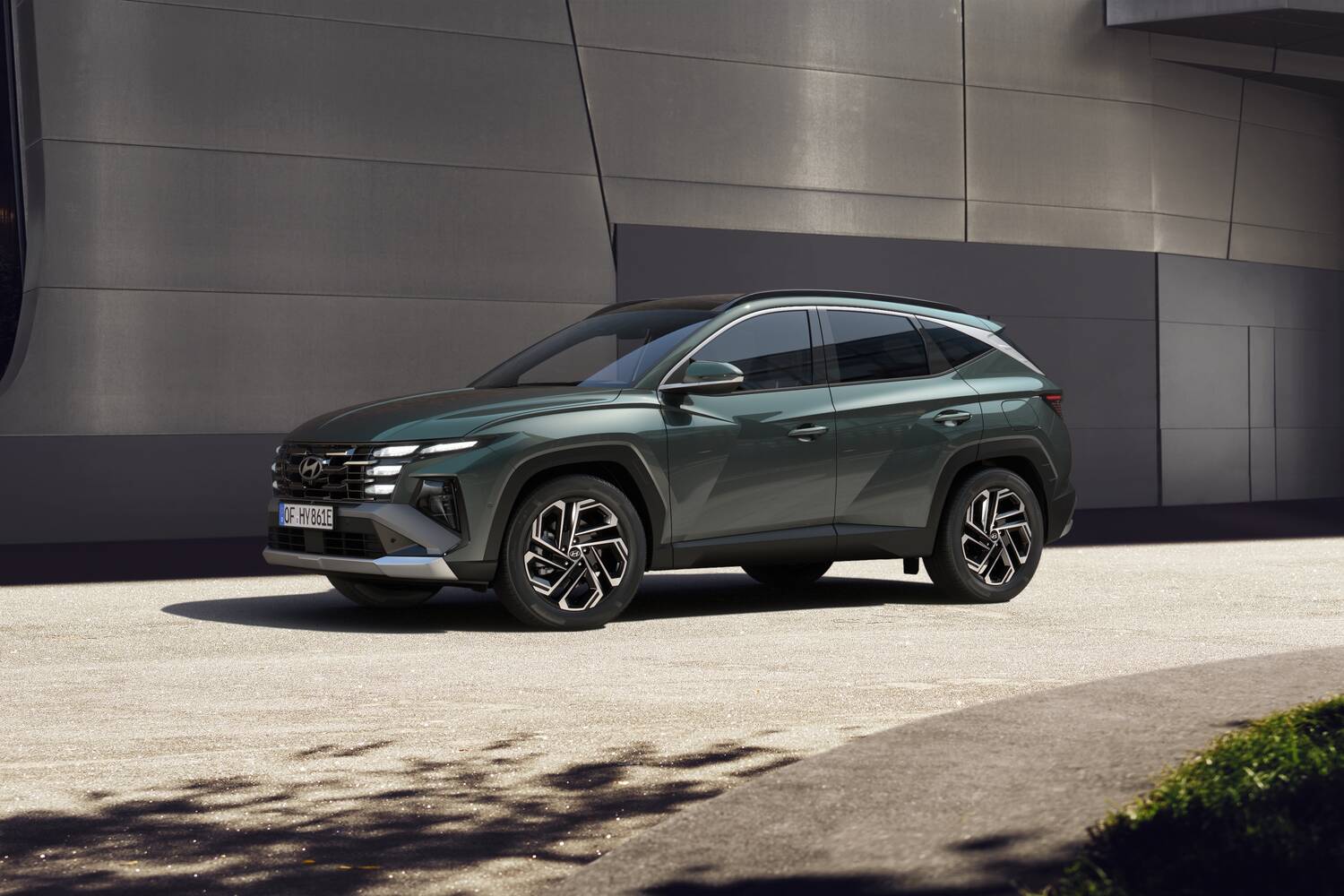
- LEDs in grille a signature feature
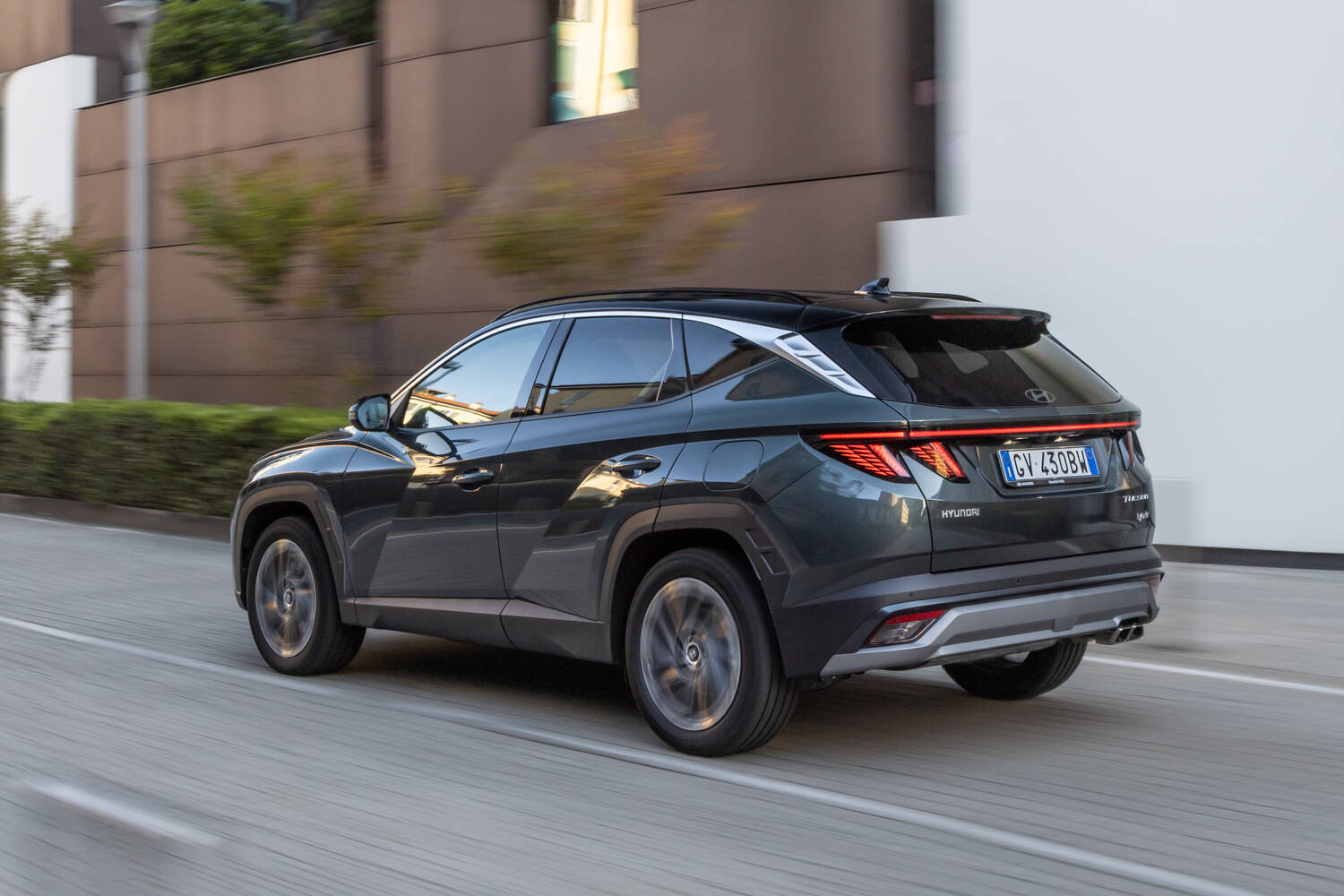
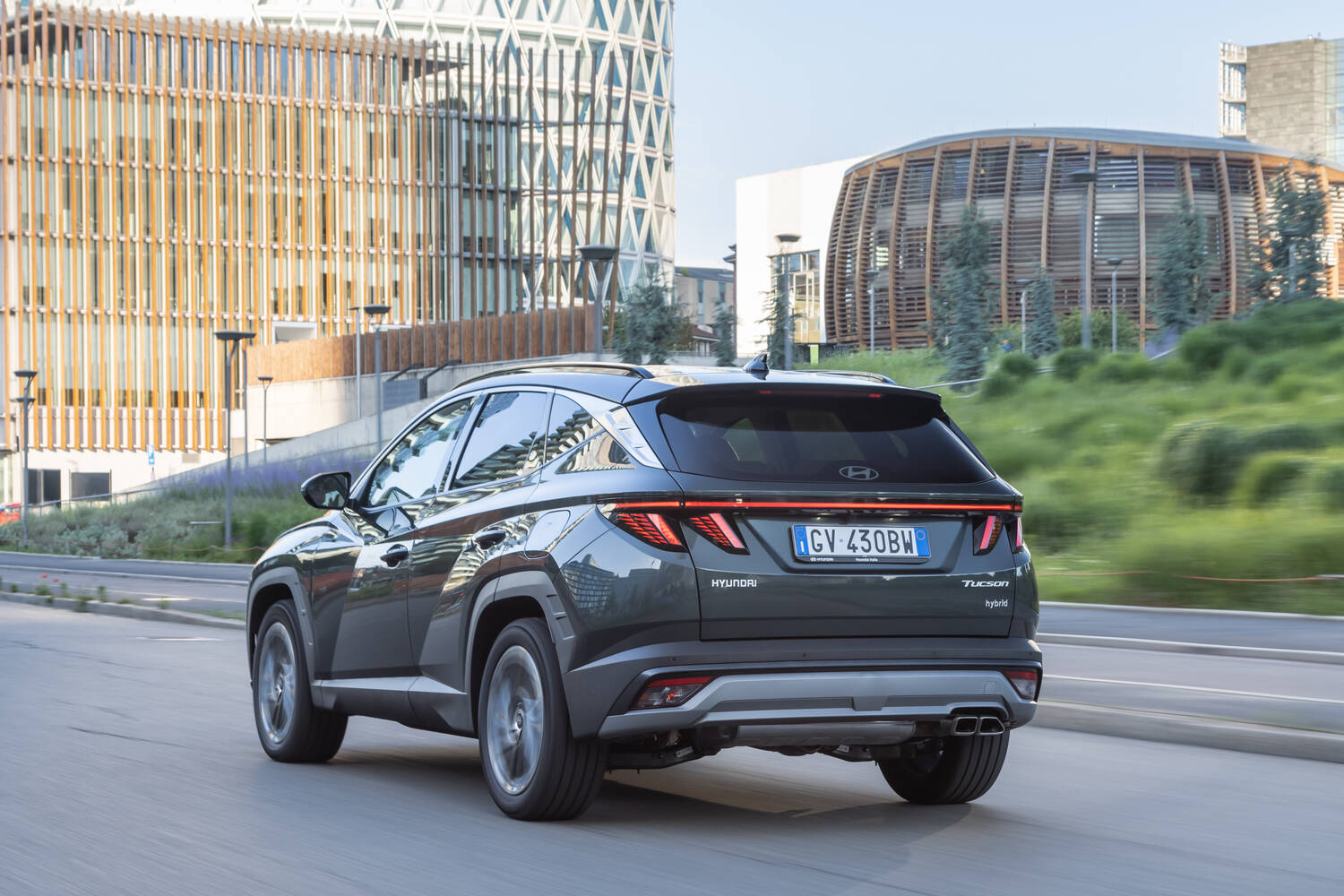
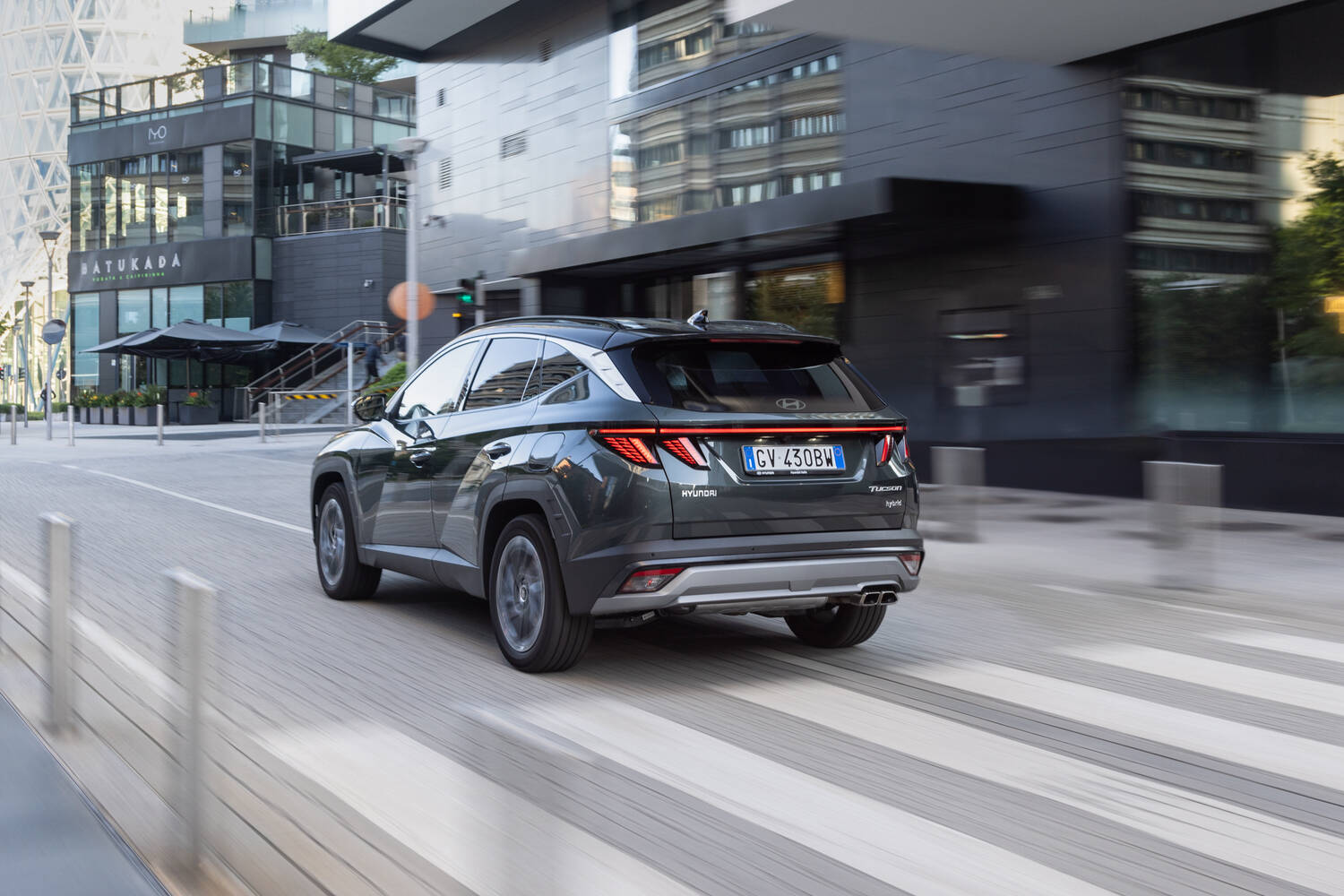
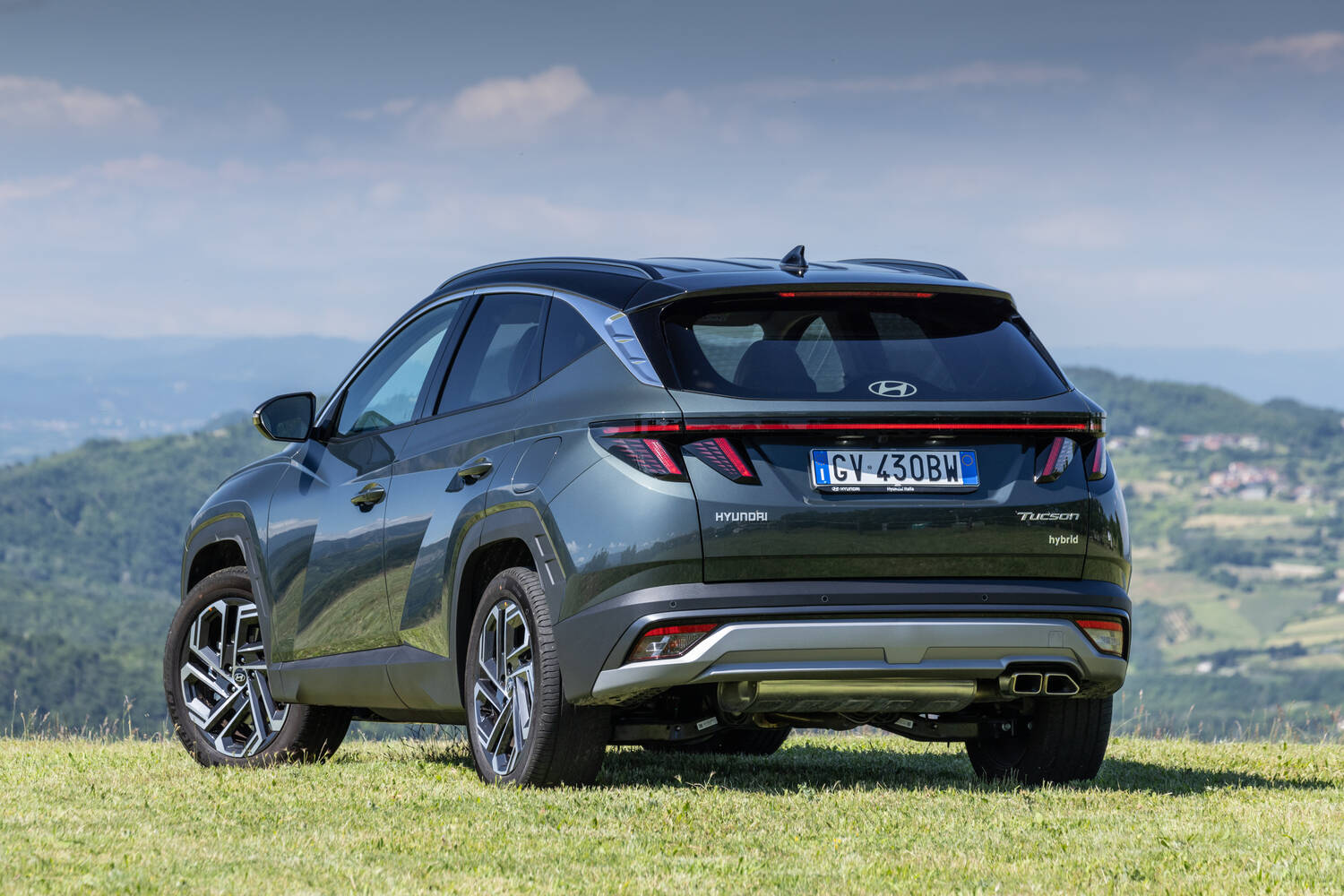
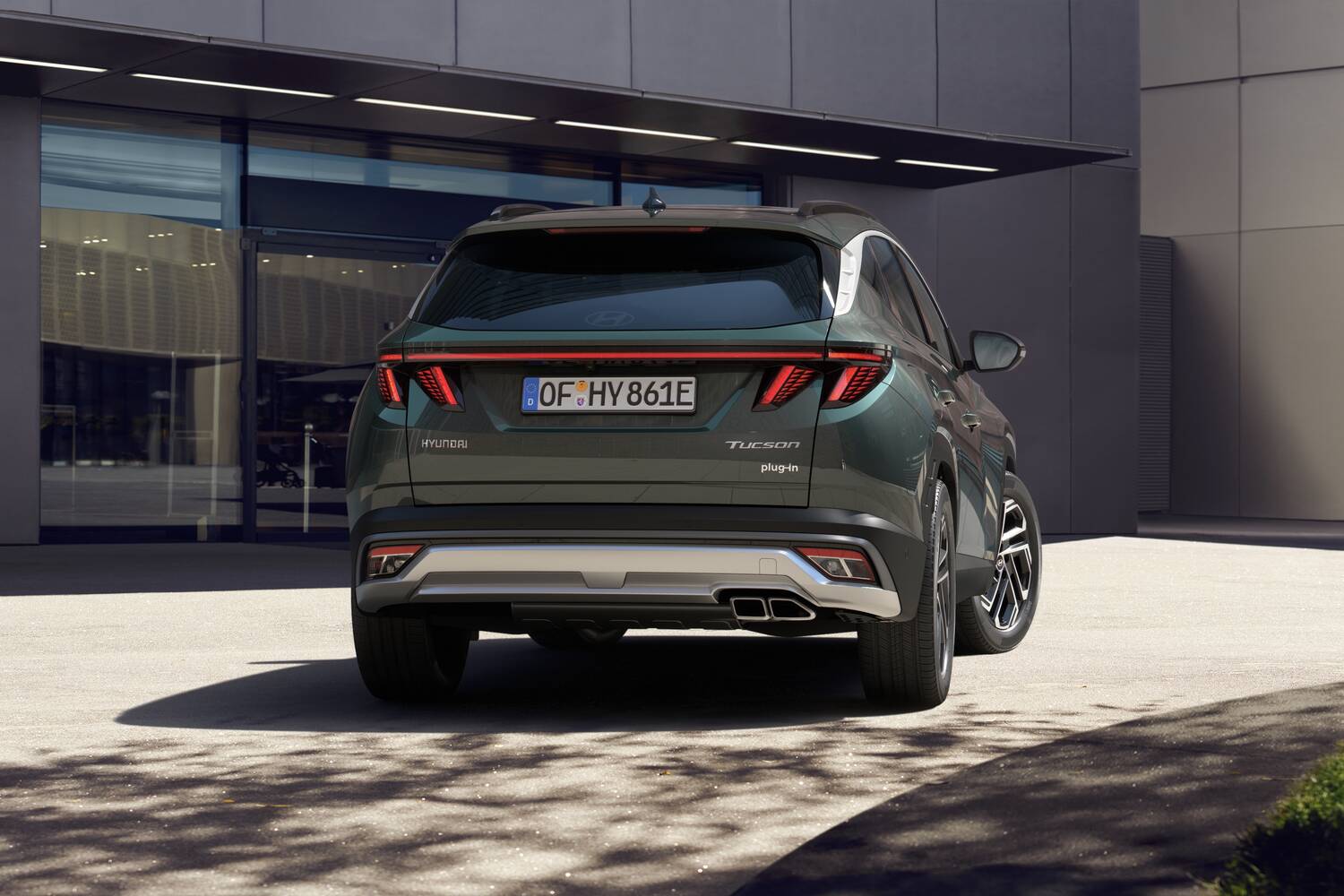
- Full-width light strip at rear
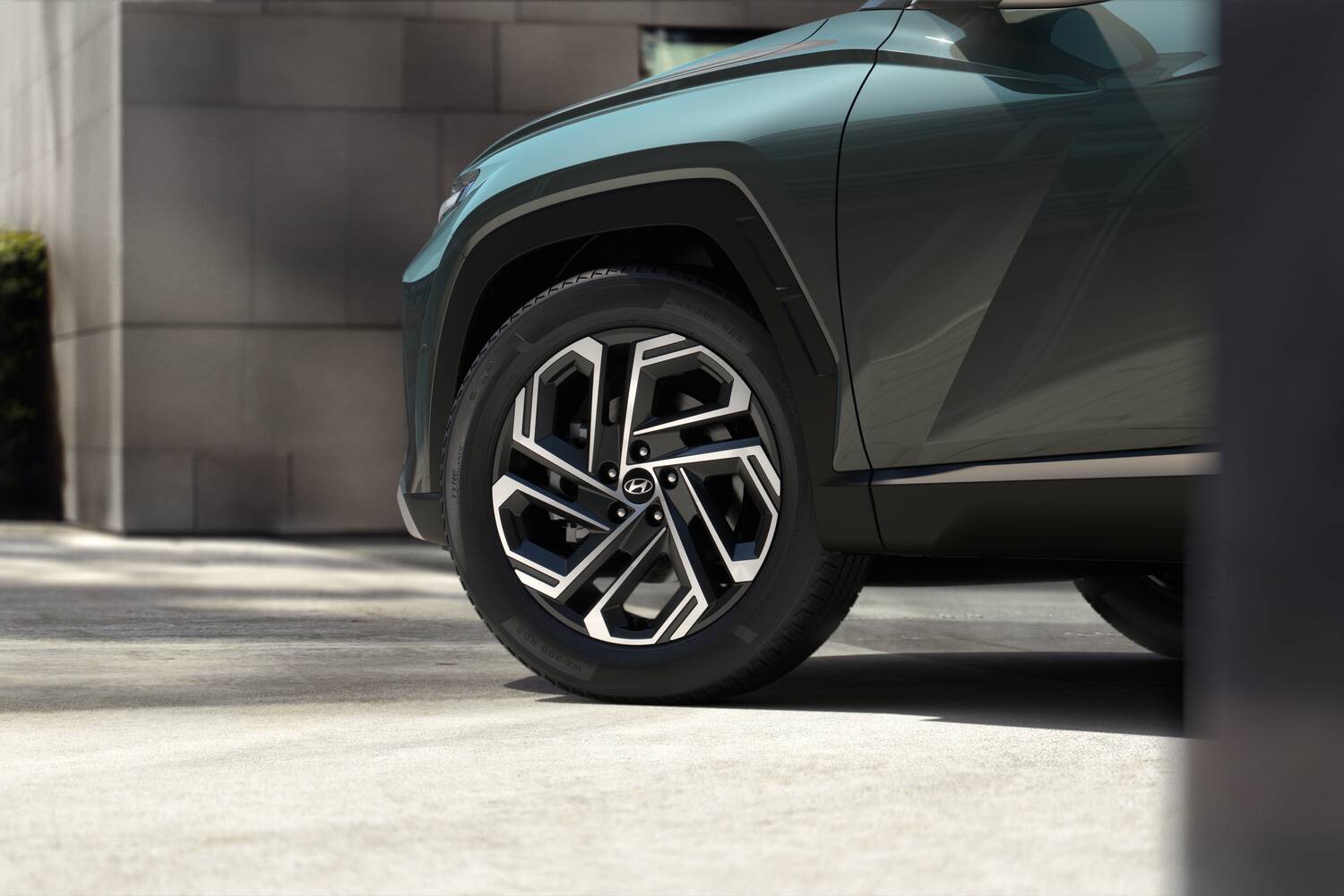
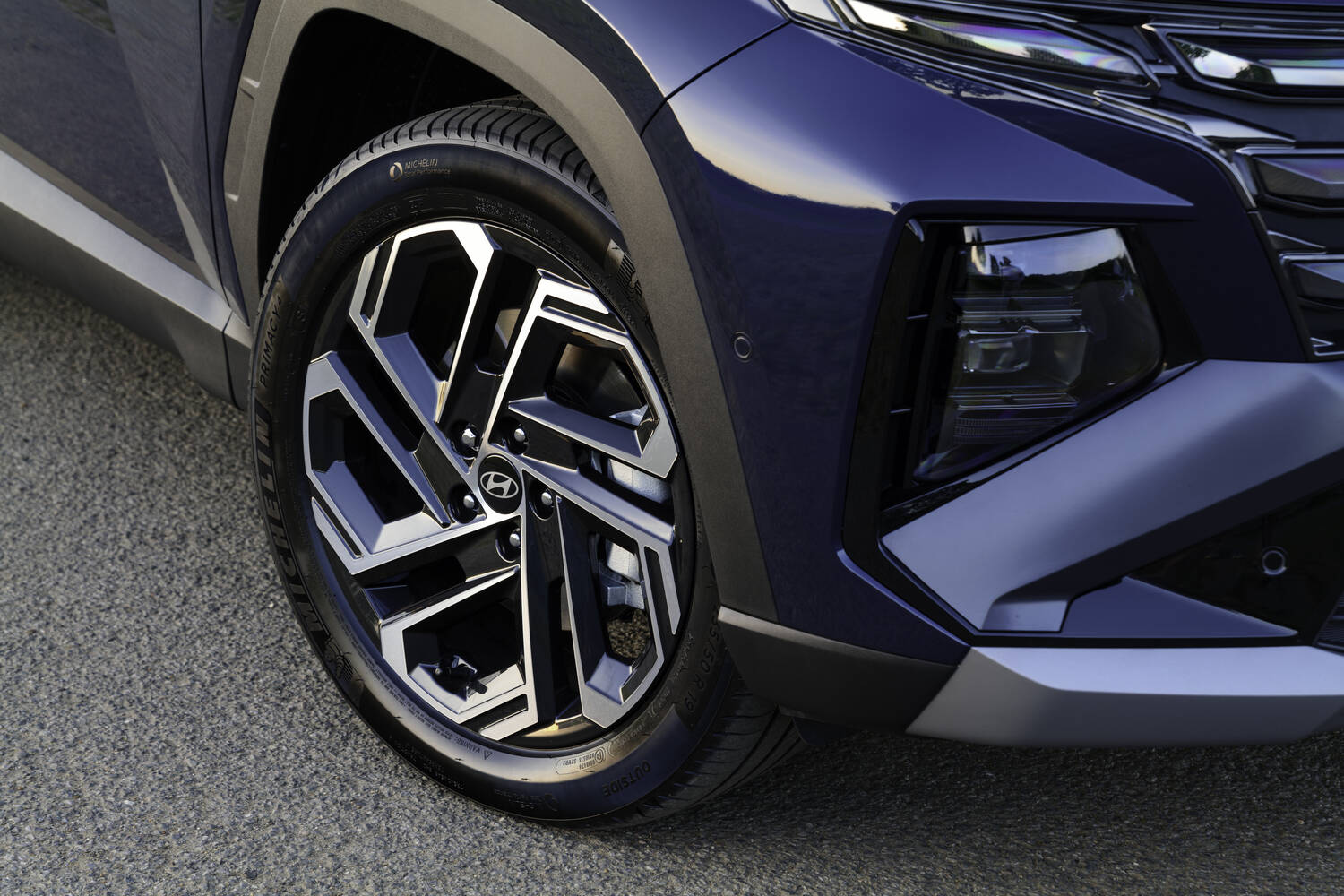
- Option of 17- or 19-inch alloy wheels

Hyundai was obviously so pleased with the initial work of its stylists for the 2020-launched Tucson that the facelift of 2024 was almost vanishingly small.
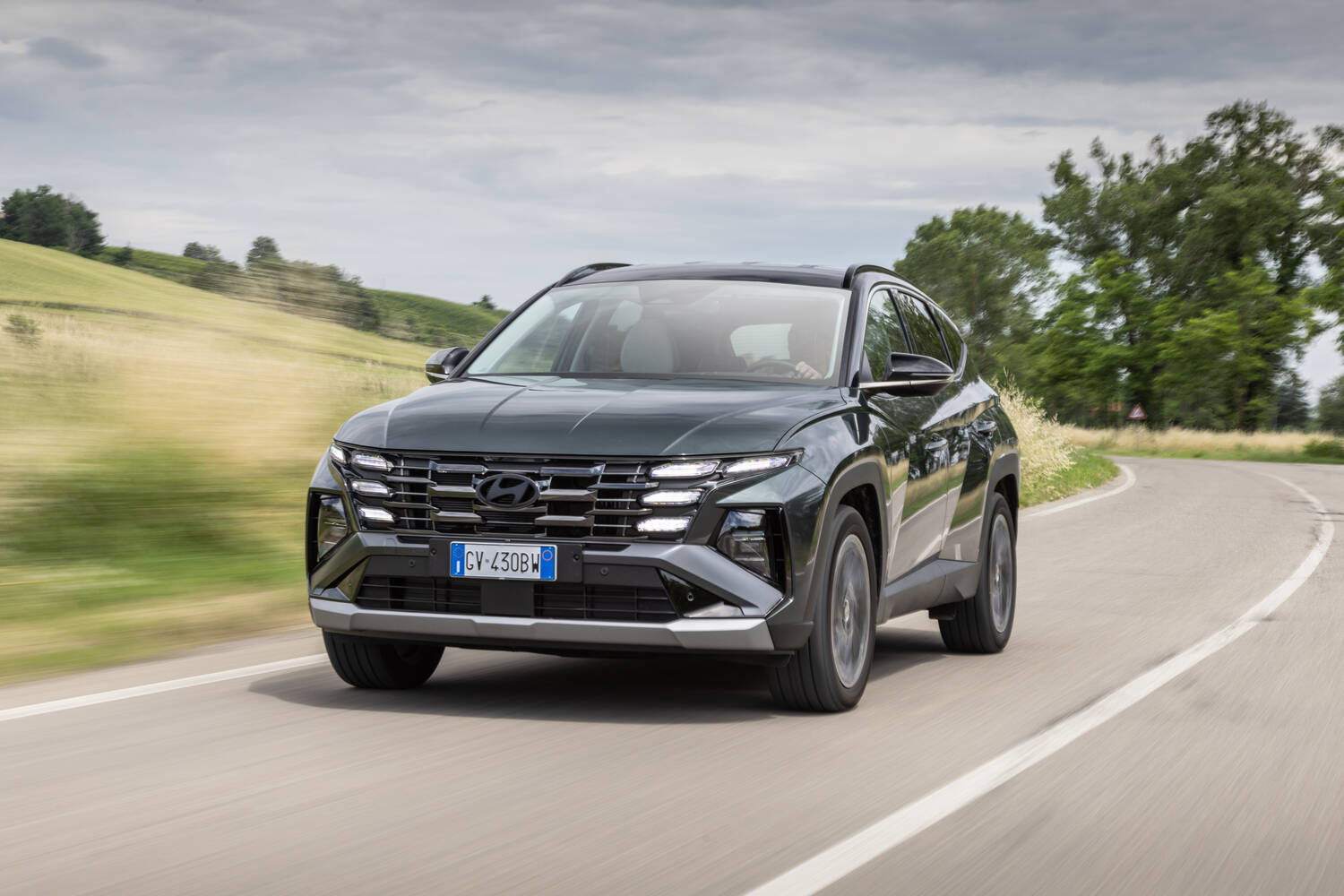
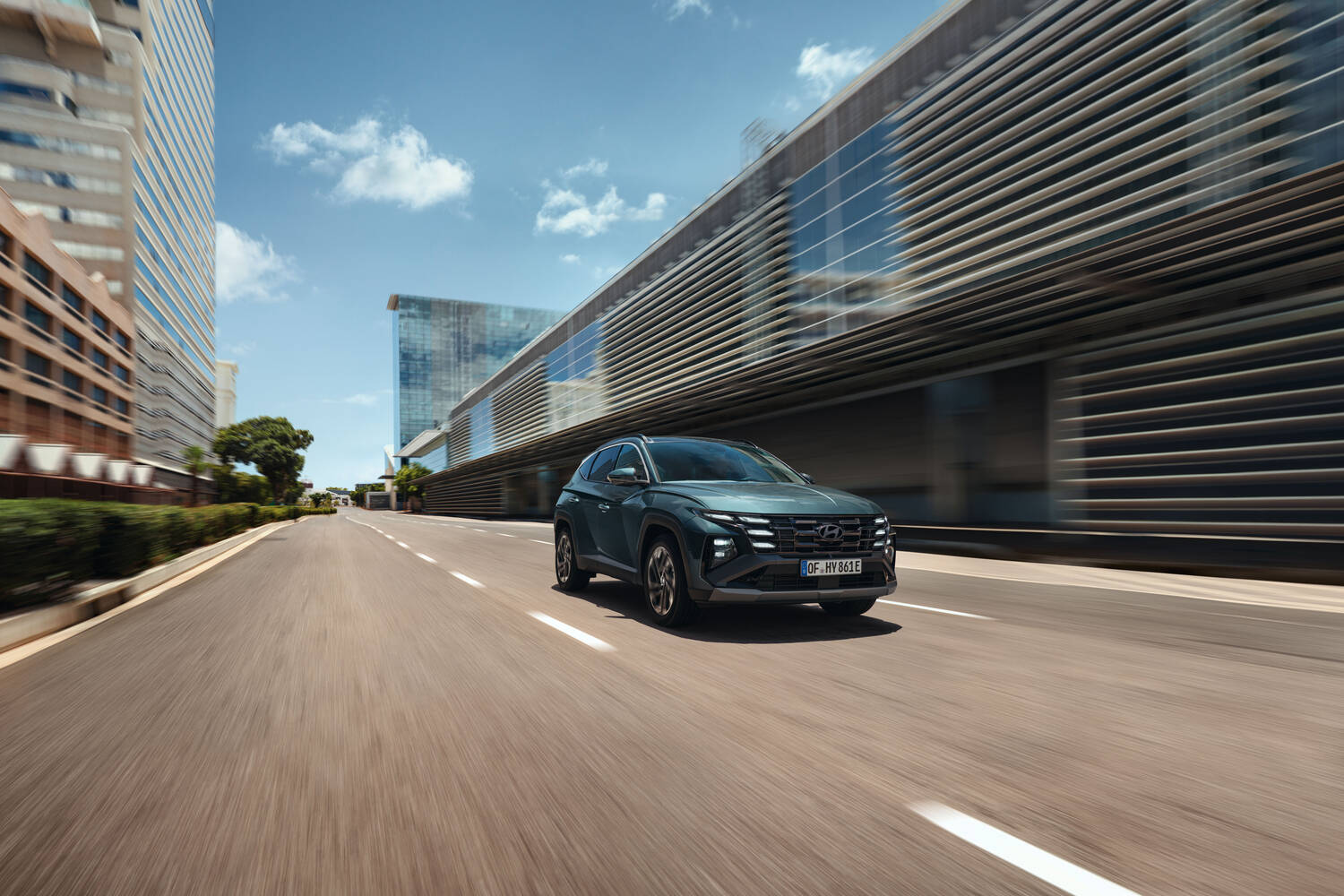
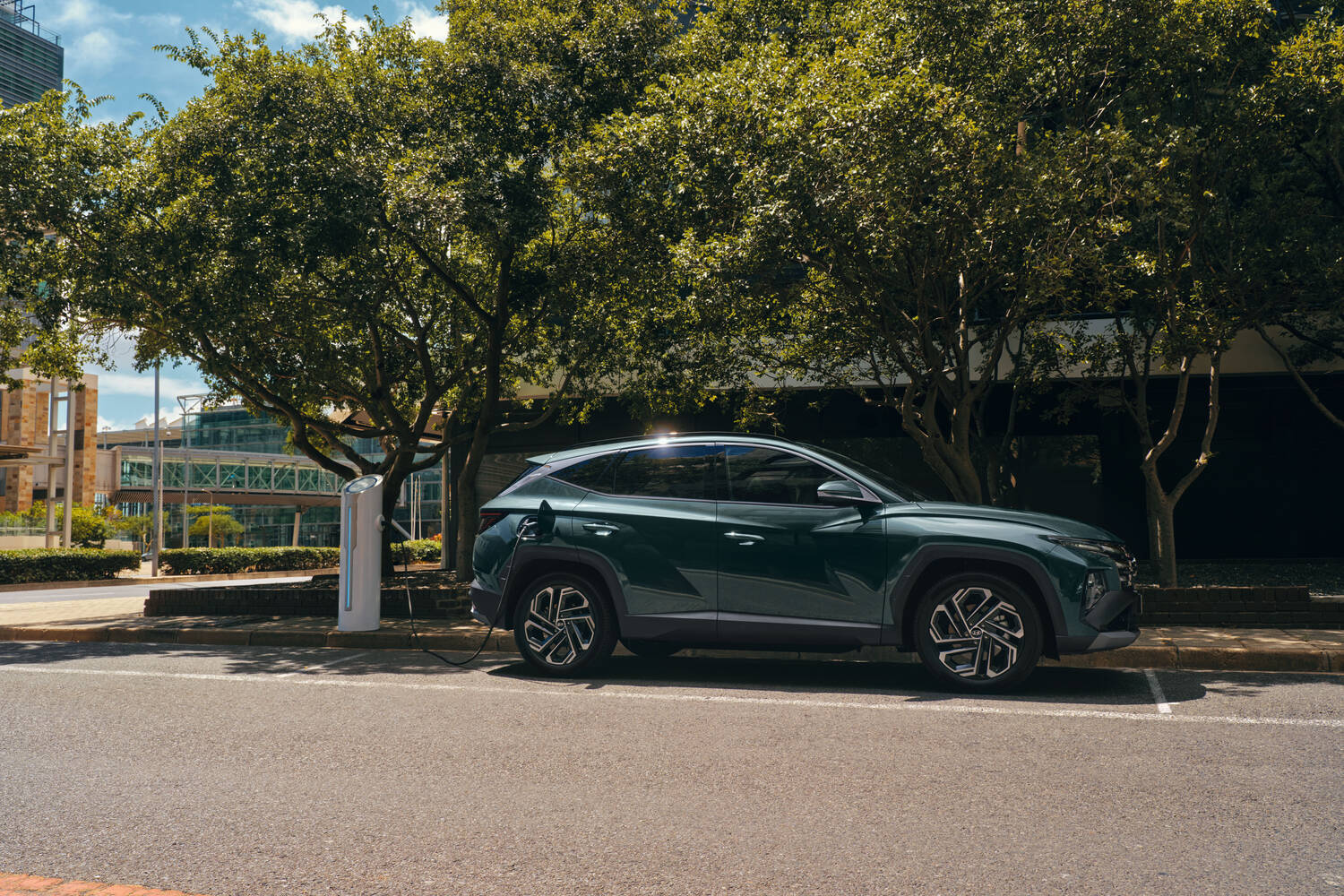
Essentially, all the Korean firm altered was the bumpers front and rear, to make the SUV look a little wider to the eye, while also adding some additional thin lines to the radiator grille to give it more definition - although, with its idiosyncratic 'Parametric' lights in the nose, it's hard to mistake the fourth-gen Tucson for anything else.

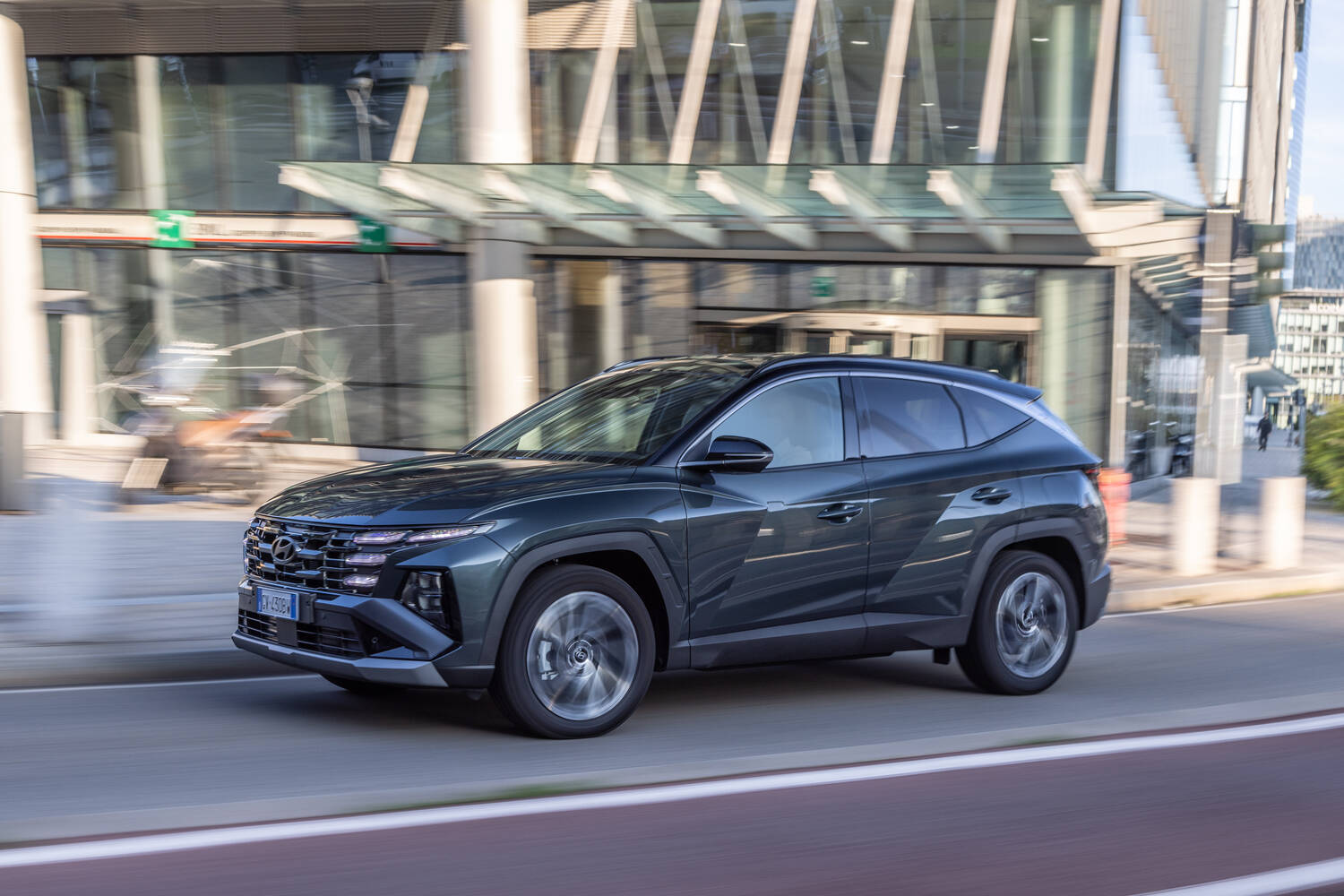
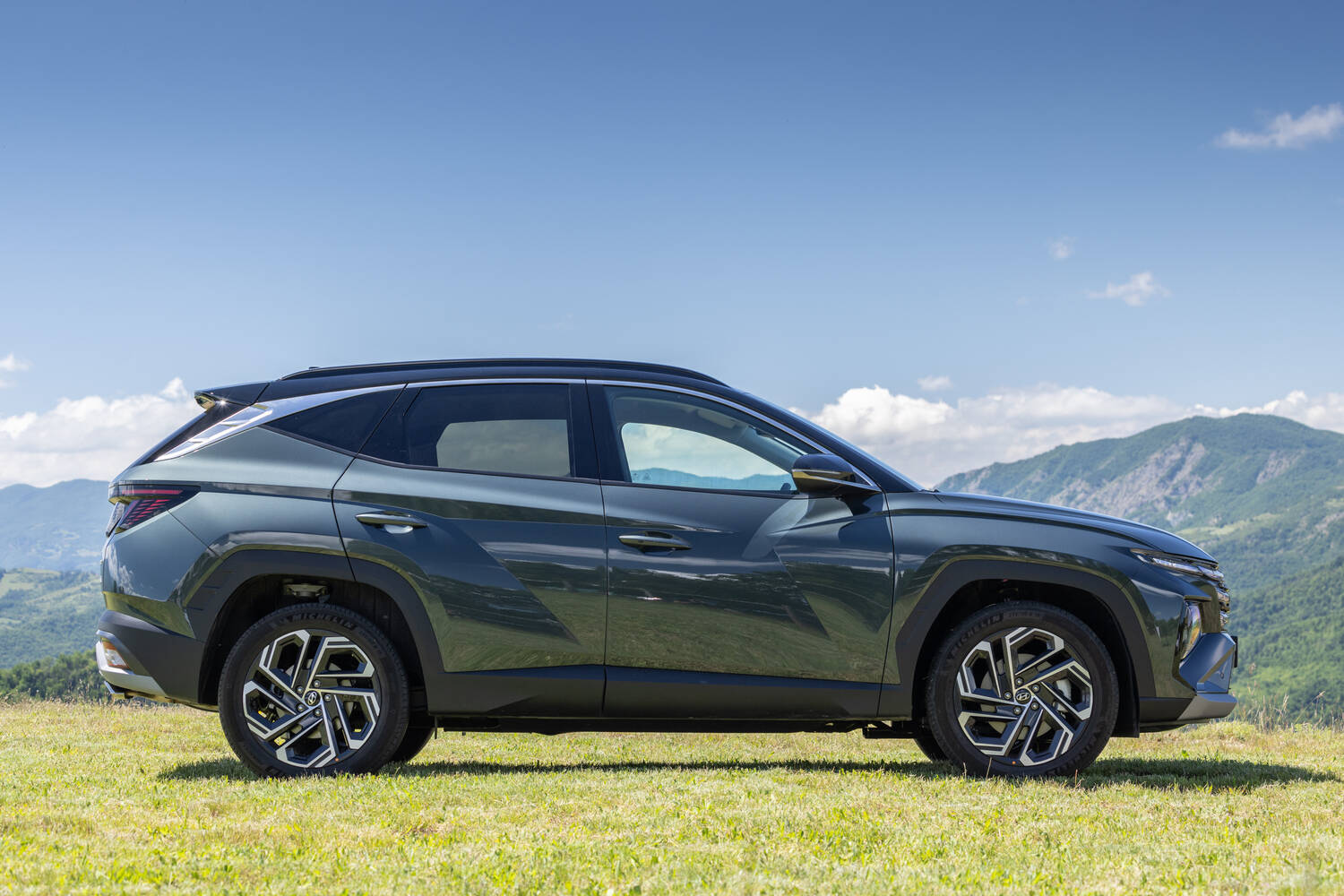
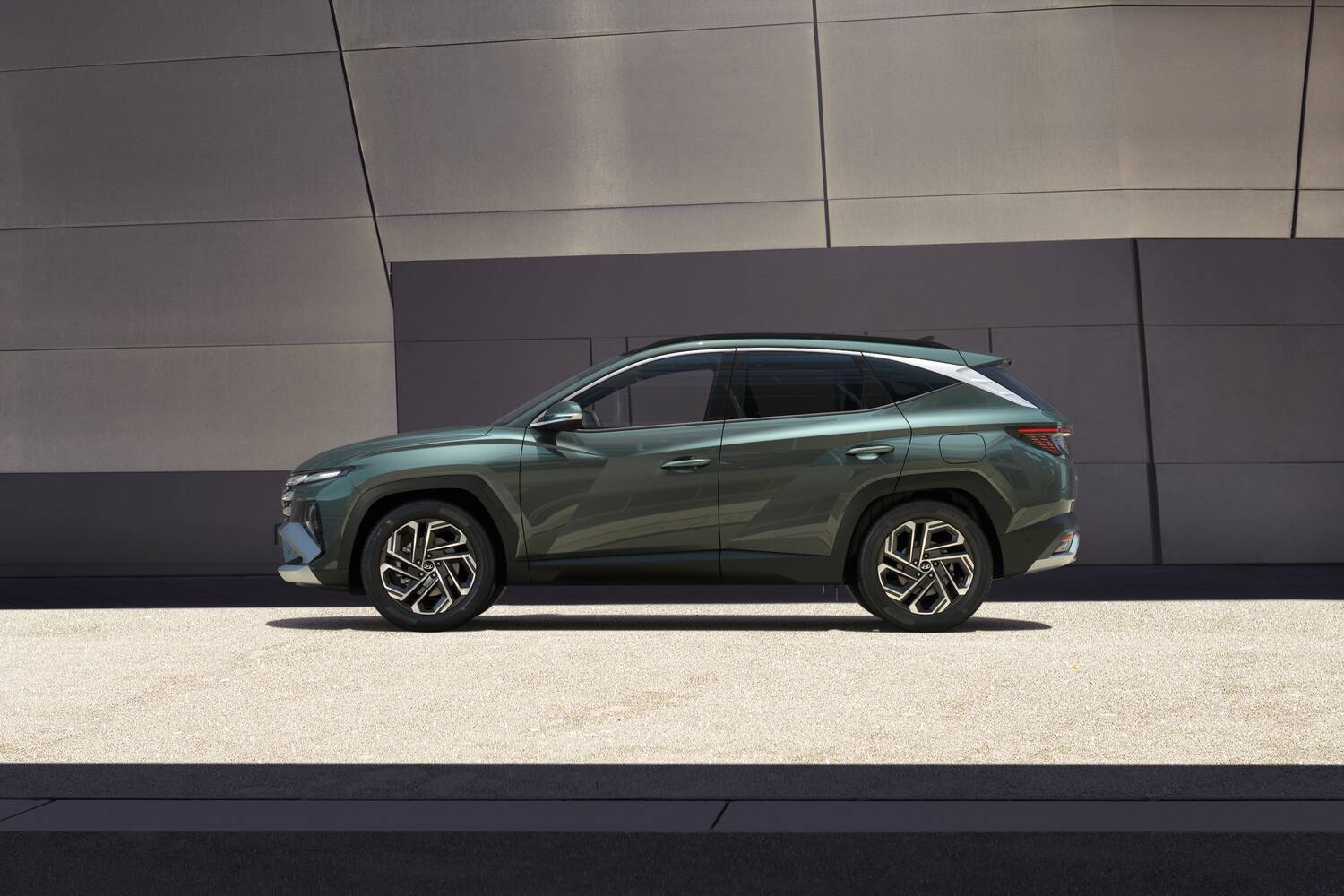
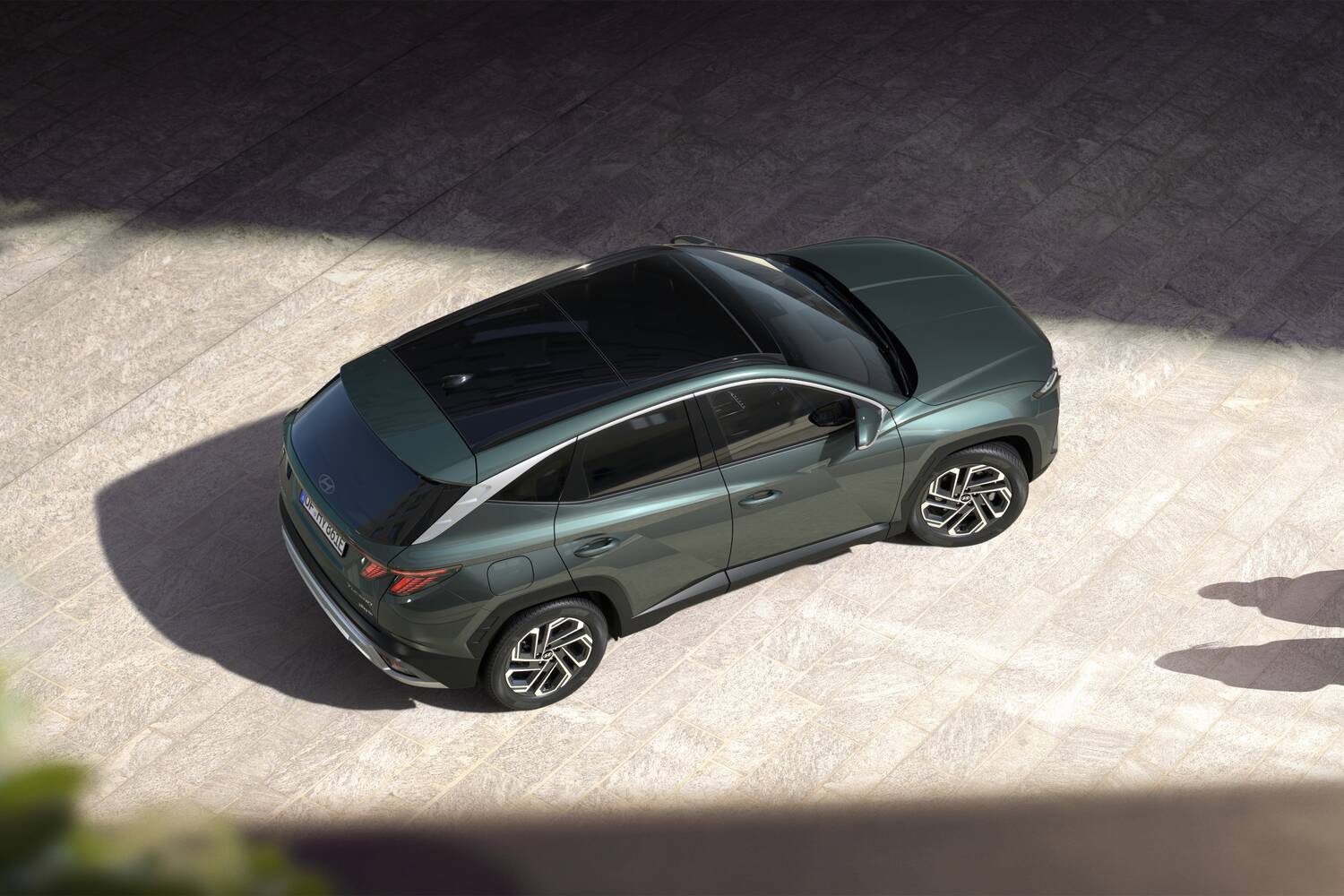
And with its squared-off wheelarches, flowing design lines generating interesting shapes on the flanks, the 'floating' roof effect brought about by the unusual D-pillars and a full-width light strip at the back, time has not dulled the Hyundai's aesthetic appeal one bit. It remains one of the finest-looking cars in its class.
Wheel sizes are 17-inch alloys on the lower trim grades of the Hyundai Tucson, with a 19-inch rim reserved for the range-topping variants.

Dimensions of the 2026 Hyundai Tucson
- Length:
- 4,520mm
- Width:
- 1,865mm (excluding mirrors)
- Height:
- 1,650mm
- Wheelbase:
- 2,680mm
Paint colours for the 2026 Hyundai Tucson
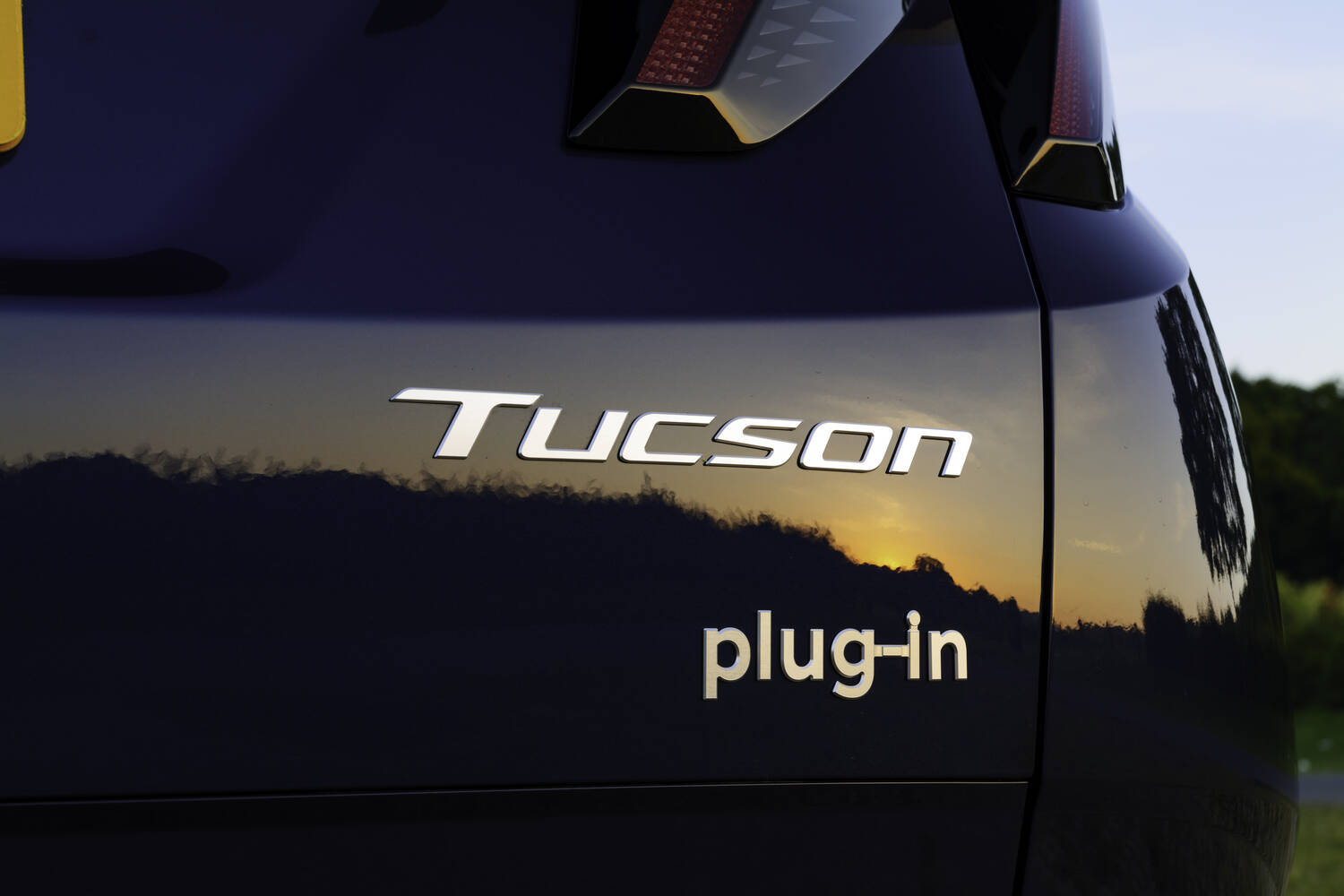
There are eight main colours for the Irish Tucson range and then a ninth (Shadow Grey) which is reserved for the N Line specification of the car, which is solely available on the Plug-In Hybrid (PHEV).

The remaining shades to choose from are Abyss Black, Atlas White, Cypress Green, Ecotronic Grey, Engine Red, Sailing Blue, Shimmering Silver and Ultimate Red. Of these, four of them can be paired with a black roof for a two-tone appearance: grey, silver and the two reds. If you go for an N Line PHEV, then Shadow Grey can also come in a bicolour finish.
Interior, practicality, tech & comfort of the 2026 Hyundai Tucson
- Shares detailing with Ioniq models
- Loads of space throughout
- Impressive tech, lots of equipment

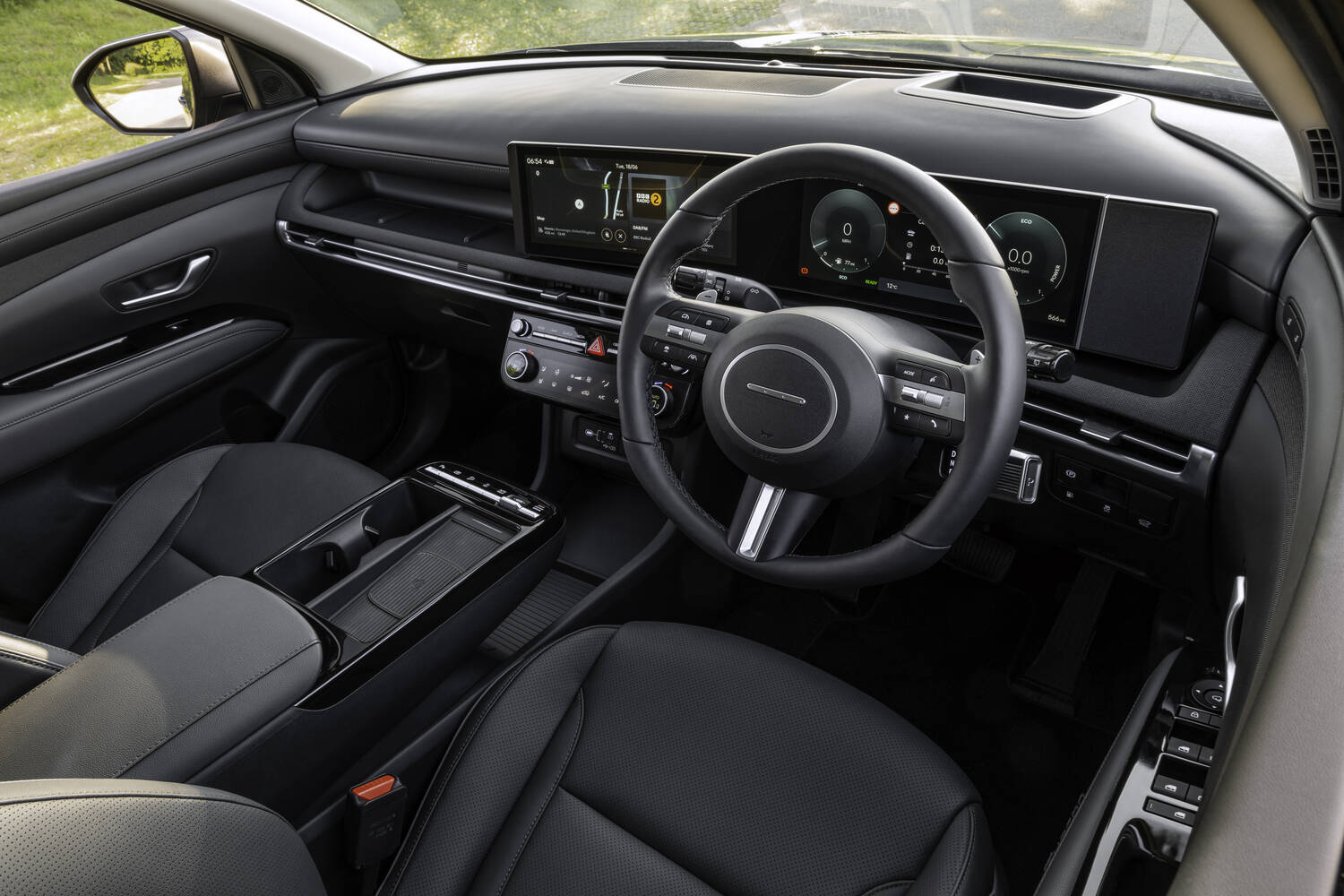
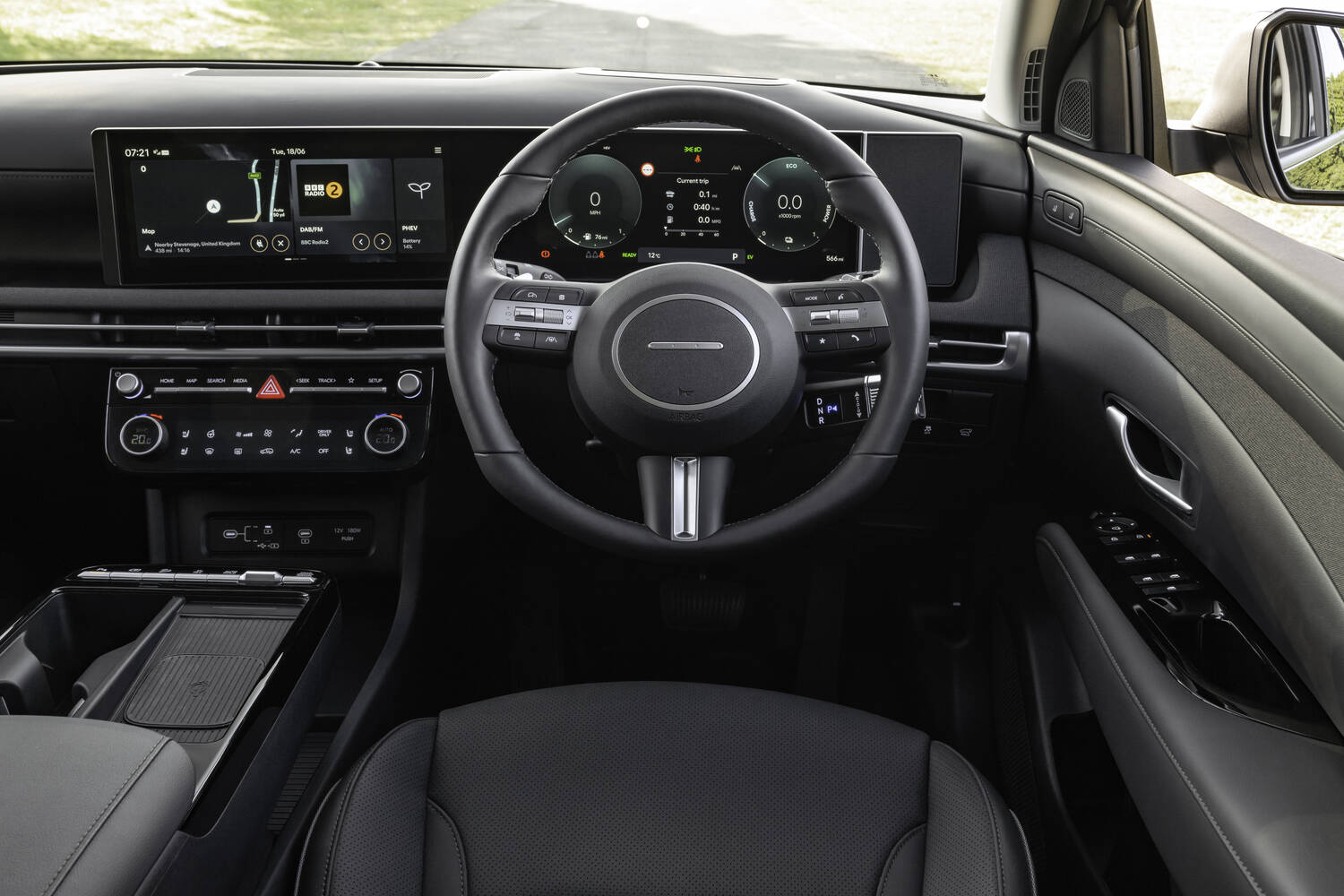
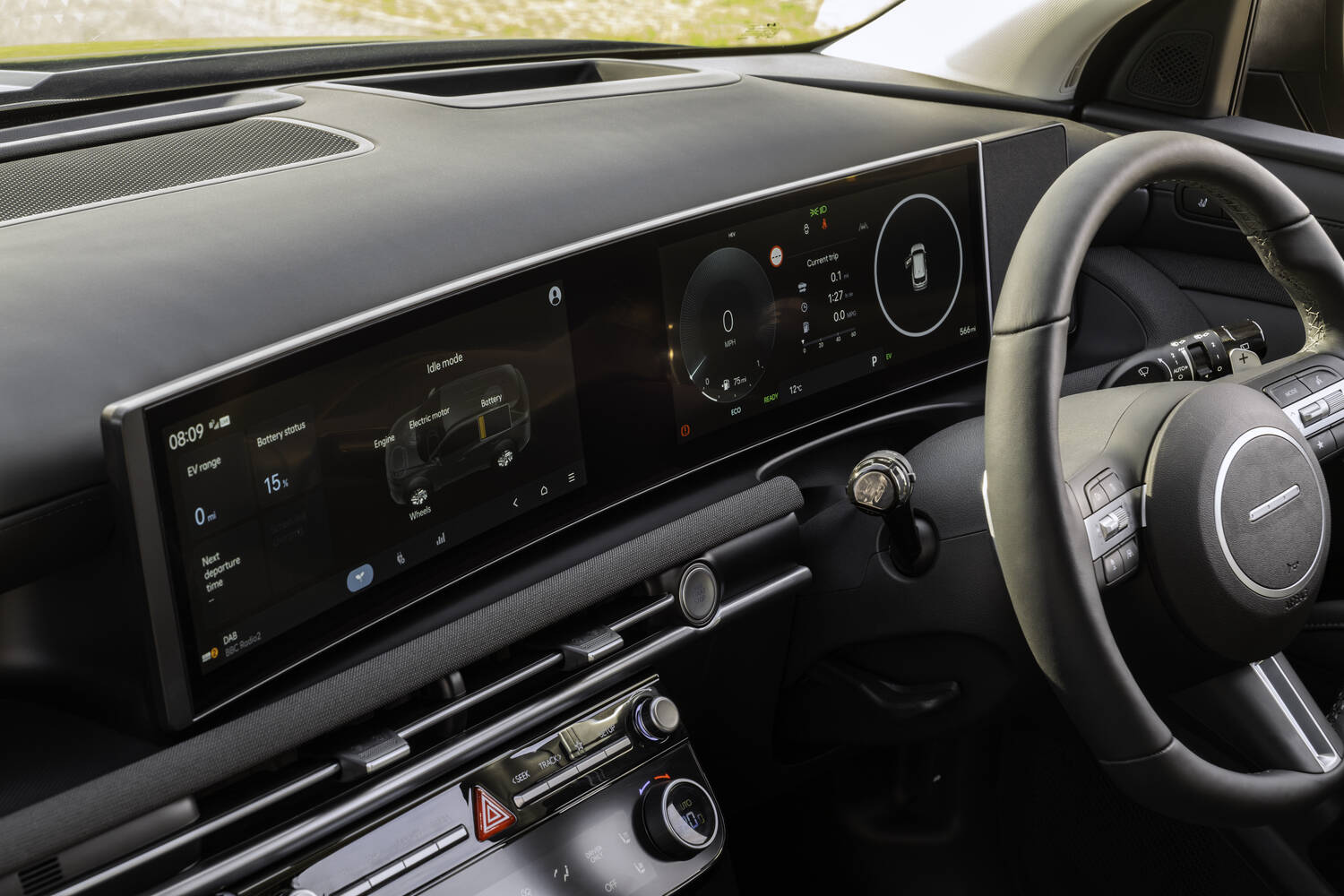
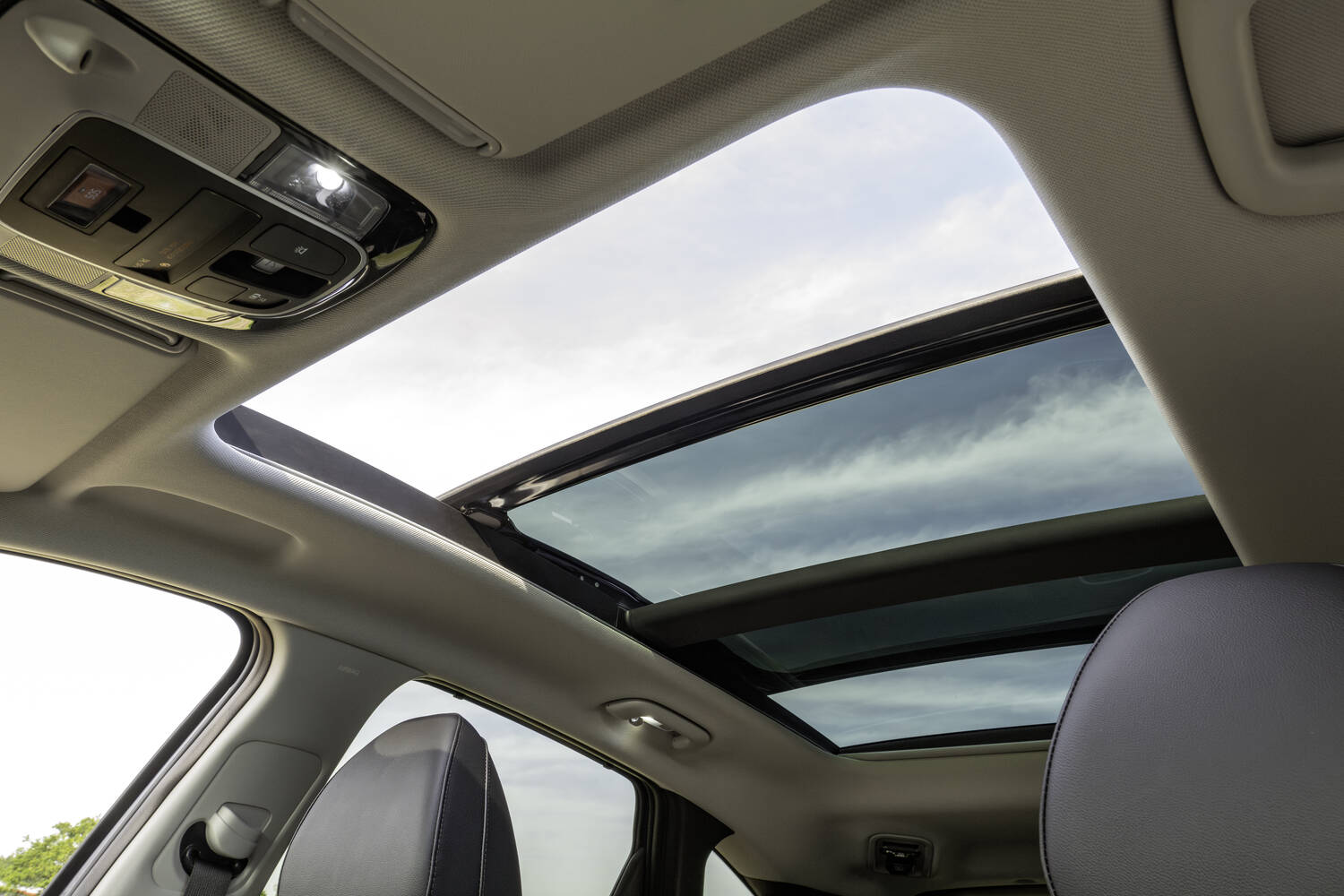
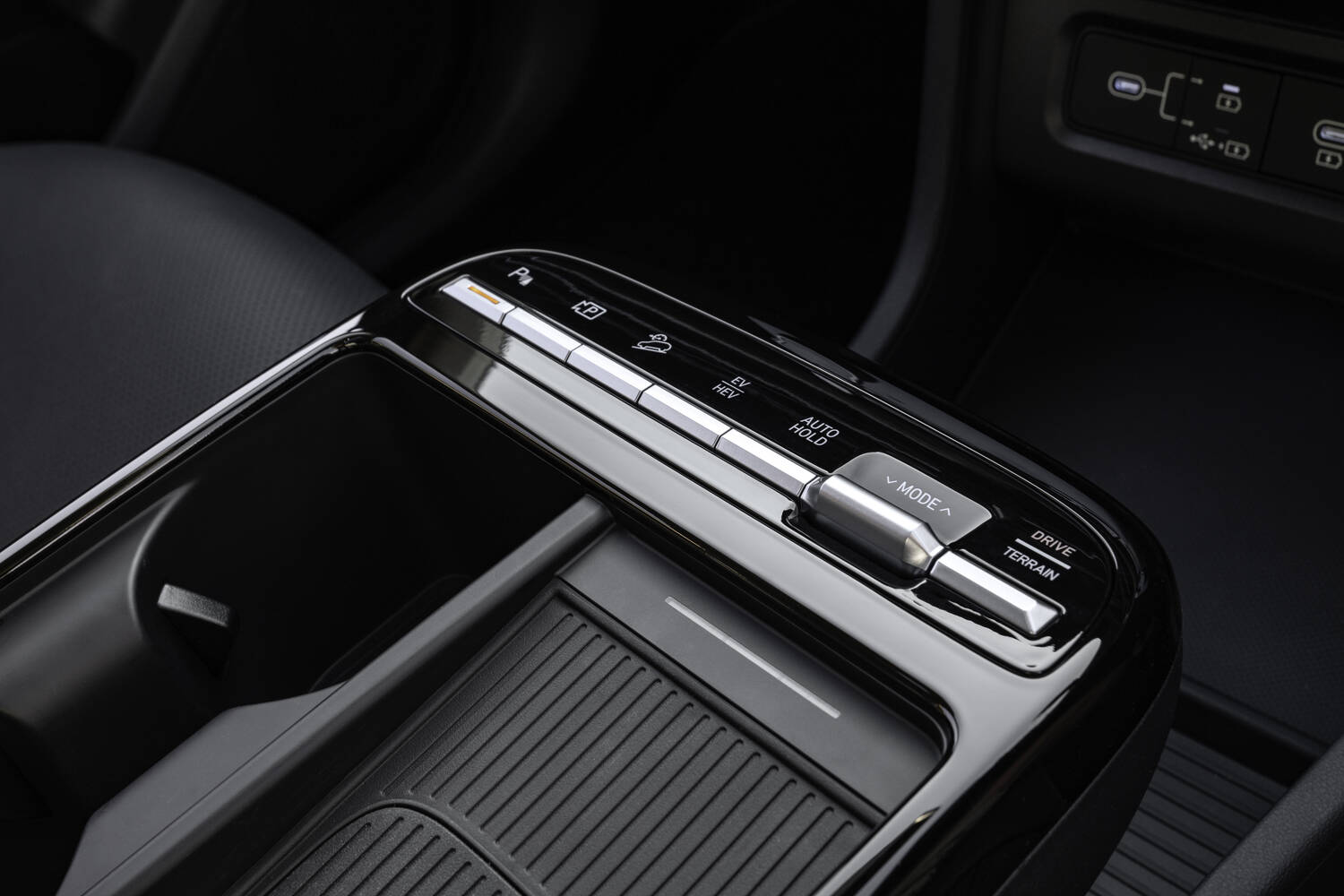
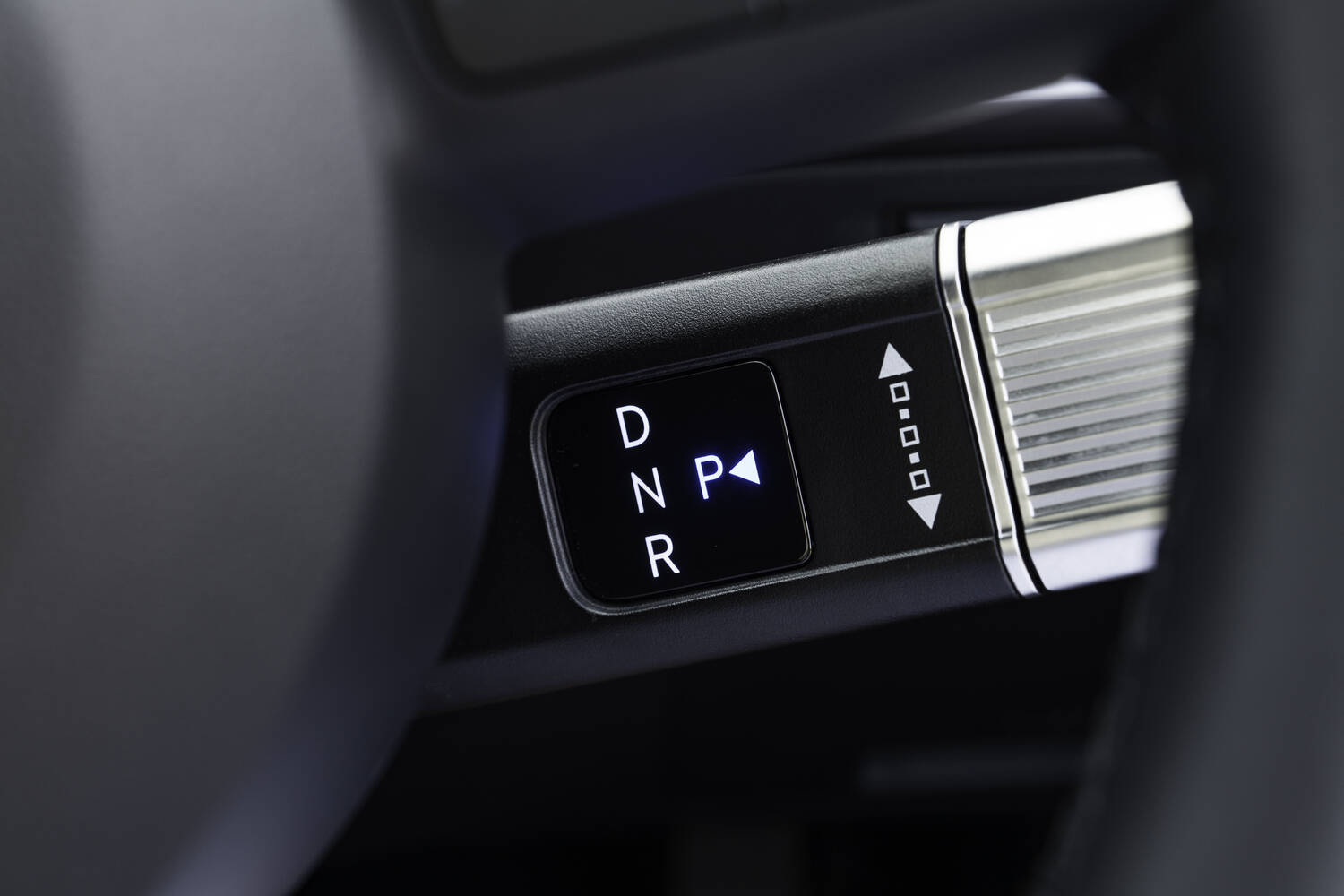
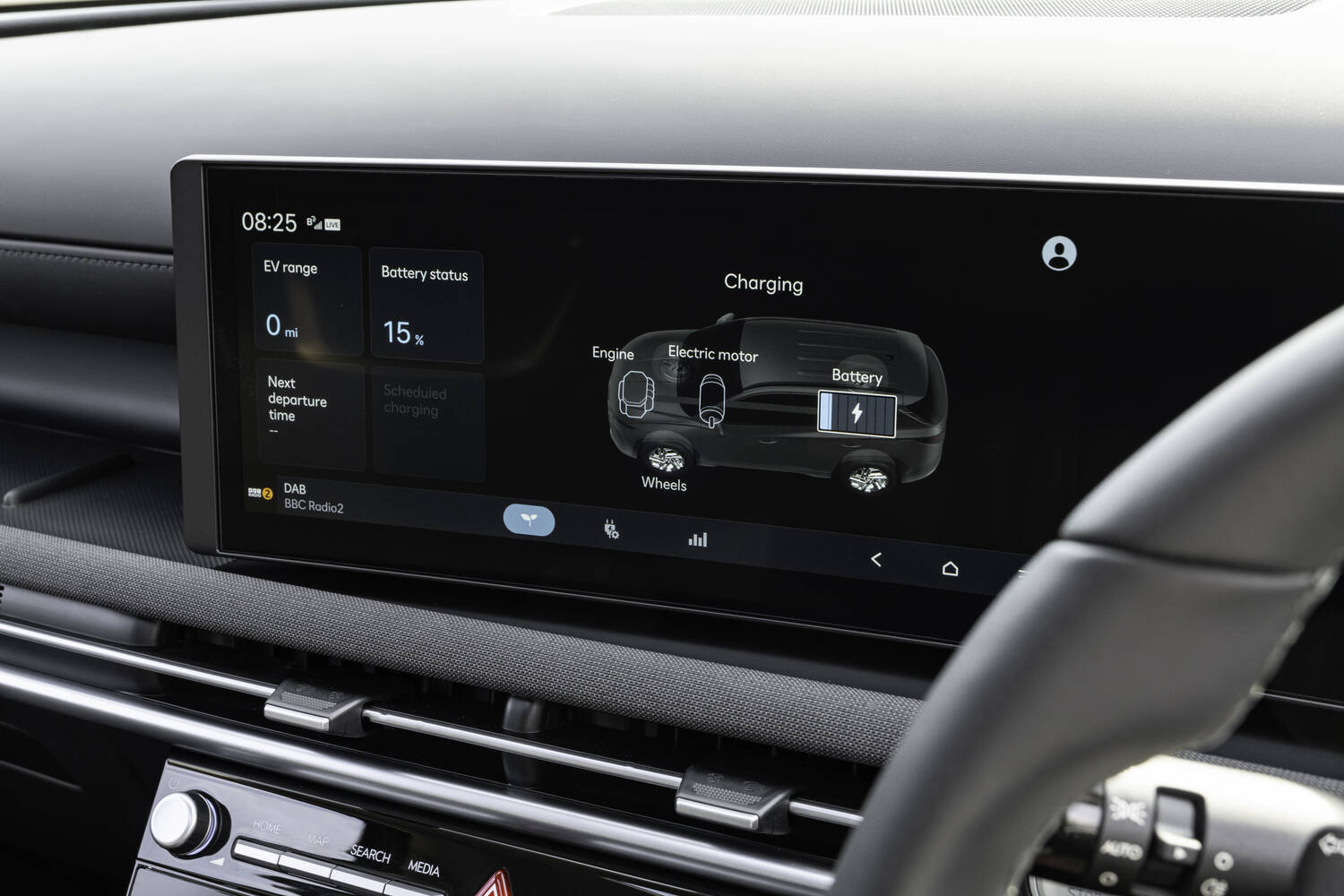
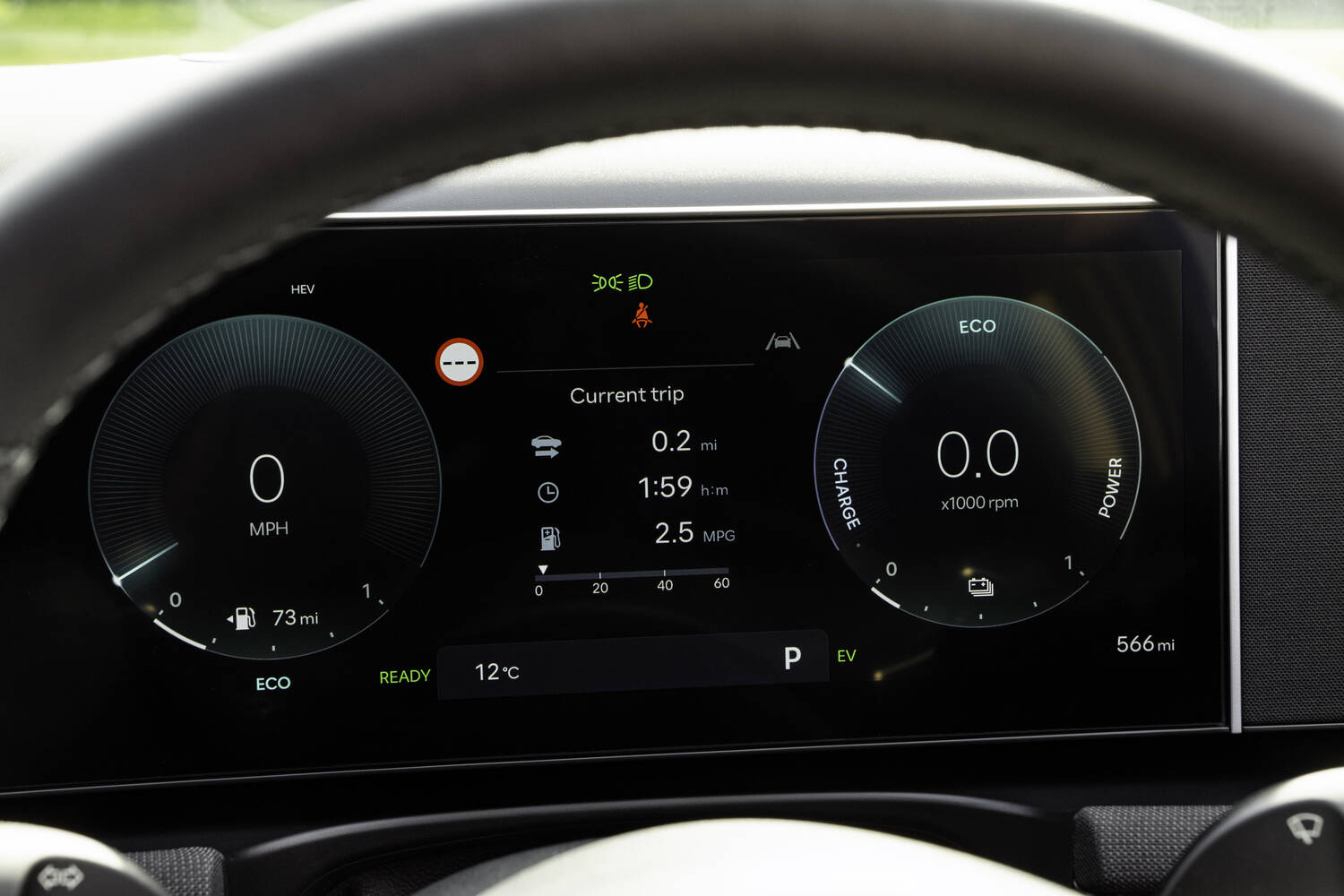
Hyundai might not have done much to the external appearance of the Tucson when updating it in 2024, but it did make quite significant changes to the interior at that time - bringing in a full widescreen dashboard screen array, a column-mounted gear selector and a new climate-control panel on the centre stack as well.
Getting comfortable in the driver's seat
Apart from the base specification, all Hyundai Tucsons have electrical seat adjustment, as well as a rake-and-reach steering column.

This means attaining a spot-on driving position should be easy for drivers of all heights and builds, as there's plenty of space up front in the SUV's cabin and visibility out in all directions is superb.
The layout of the major switchgear and controls is intuitive too, so it's top marks for the Hyundai in this department.
Infotainment and technology
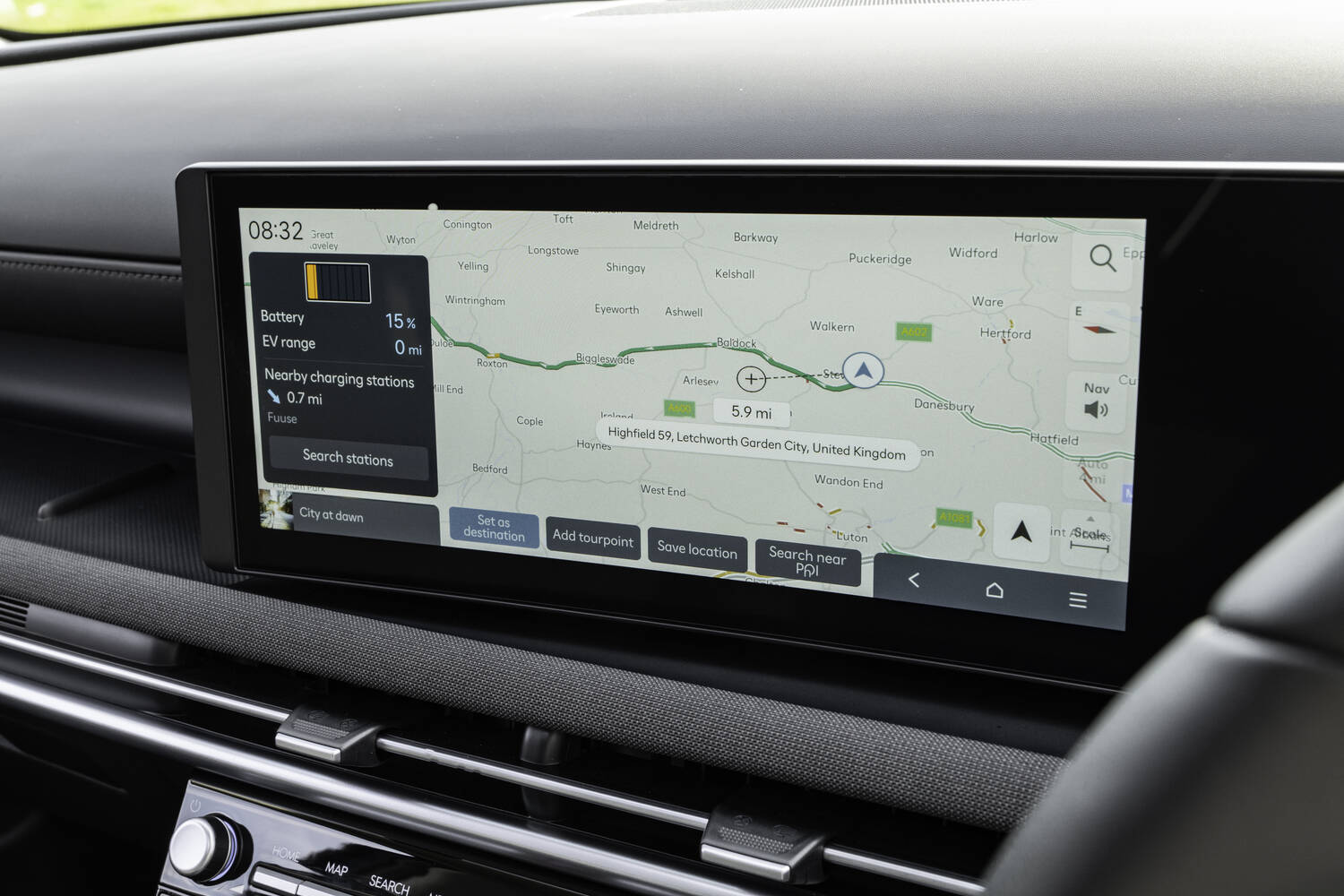
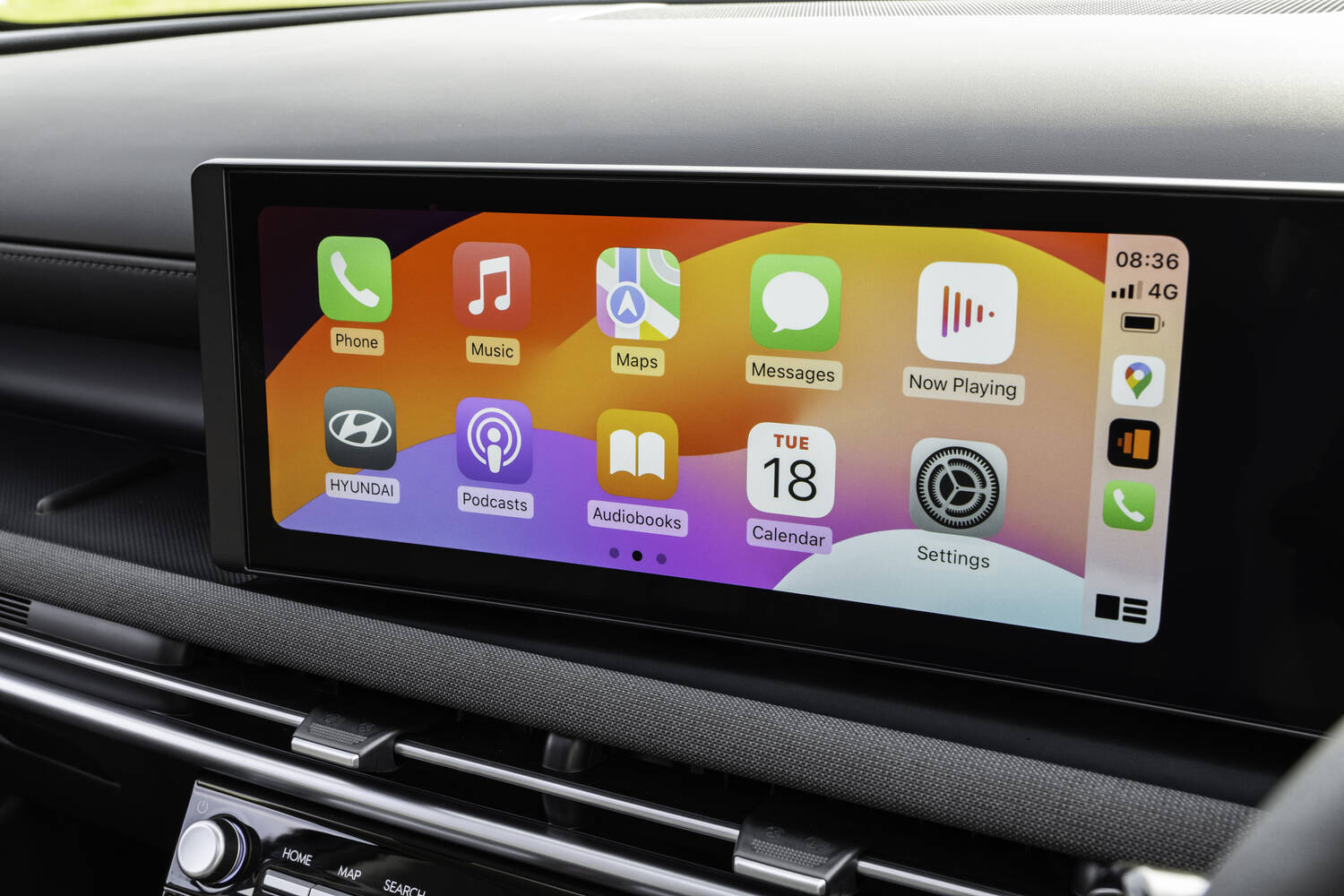
All models of the Tucson come stocked with technology from base grade to flagship, with the kit count including dual 12.3-inch digital displays up front (which incorporate Bluetooth, as well as navigation and wireless connectivity for both Android Auto and Apple CarPlay) plus heated seats, dual-zone climate control, keyless entry and go, front and rear parking sensors with a reversing camera and more.

There are a few luxuries which are trim-dependent, such as the wireless smartphone charging pad on the central tunnel which isn't offered on the entry-level models, and a powered tailgate that's reserved only for the highest specification of the Hyundai.
Practicality around the cabin

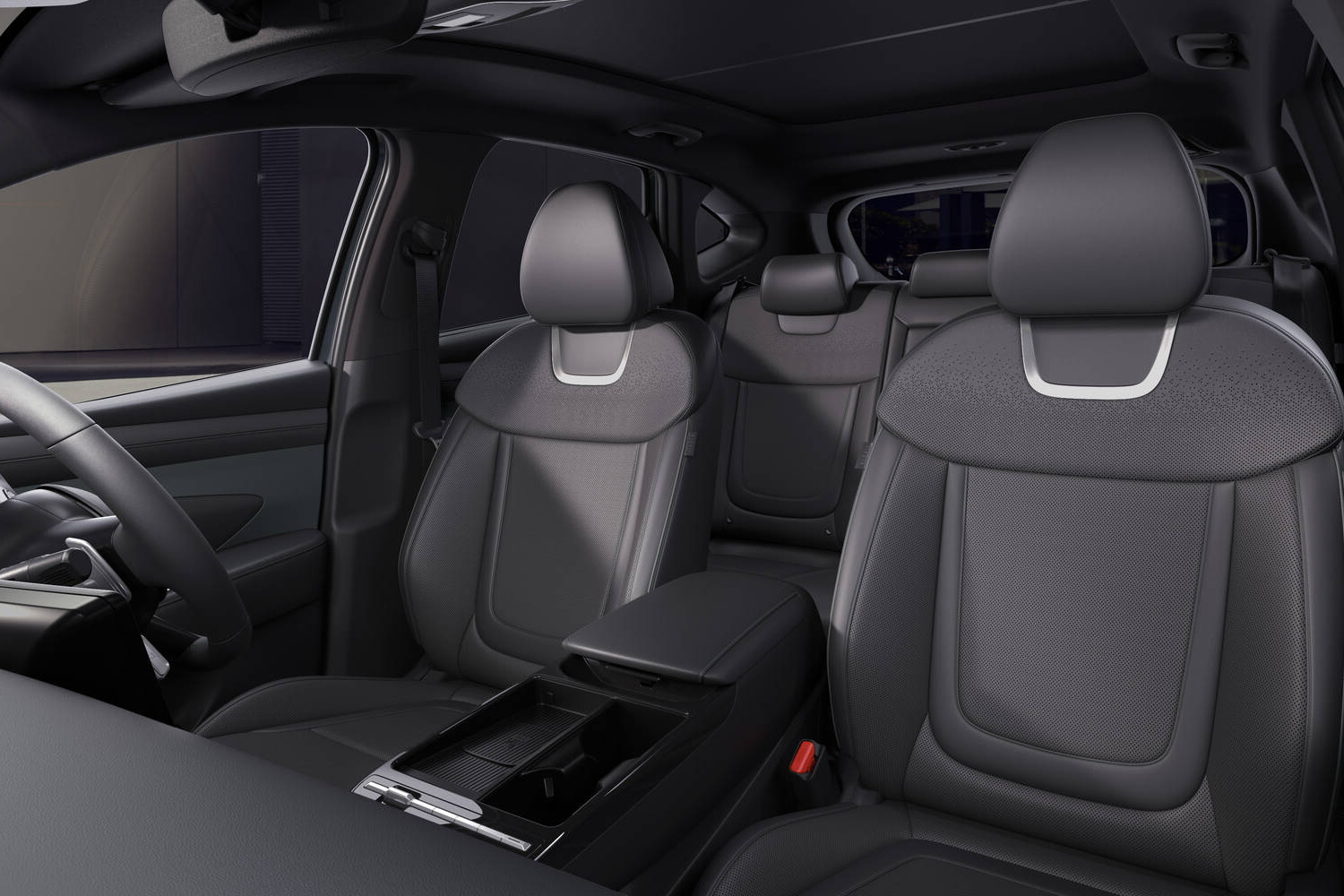
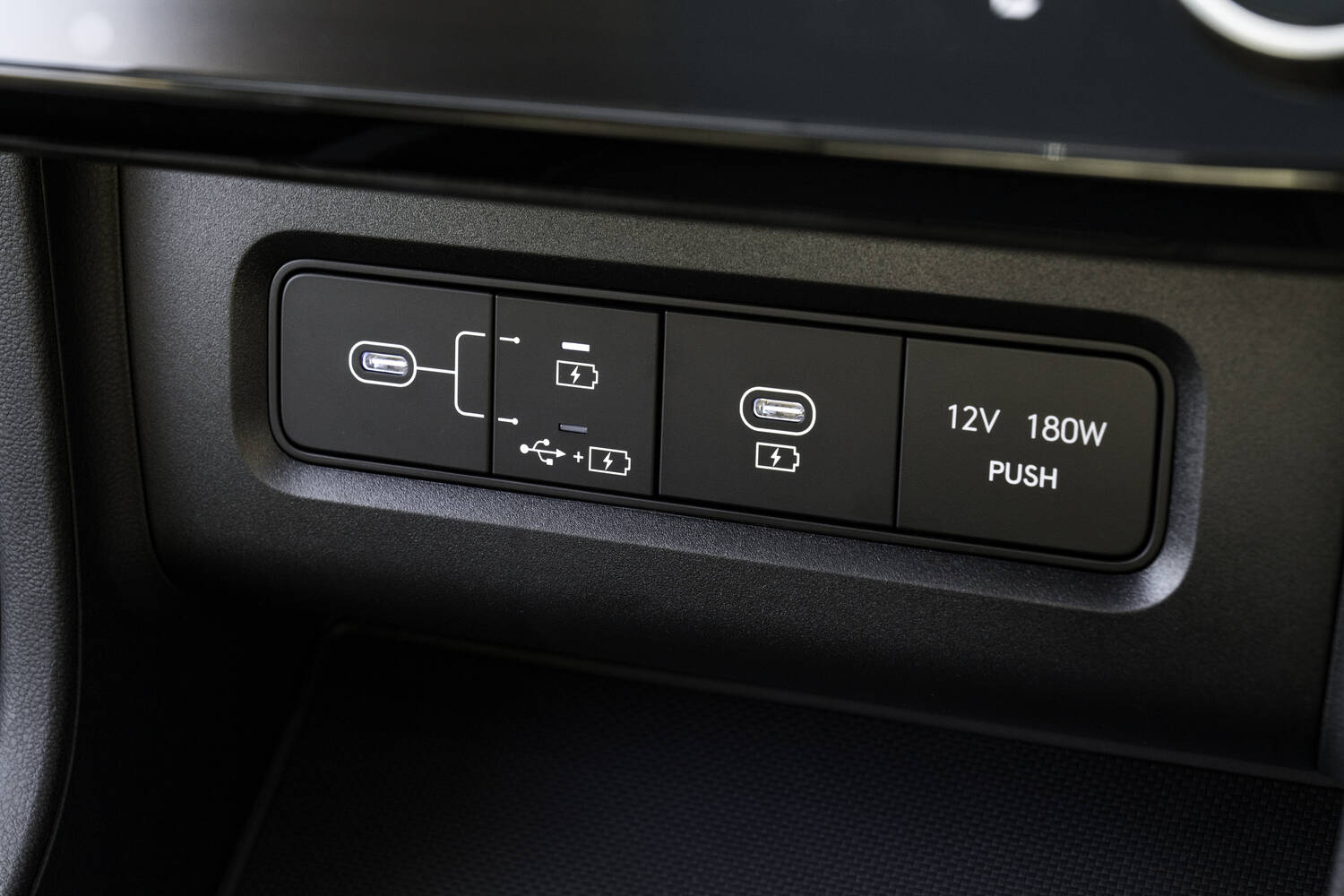
Another strong suit, among many, for the Hyundai Tucson, as there's a large lidded cubby in the central tunnel, two cupholders up front, some lower-dash storage space (which is easy to access because the middle armrest doesn't join up to the main fascia), a large glovebox, big recessed door pockets, a smattering of USB sockets throughout the interior and even a ledge on the passenger-side dash.
Rear-seat passenger space
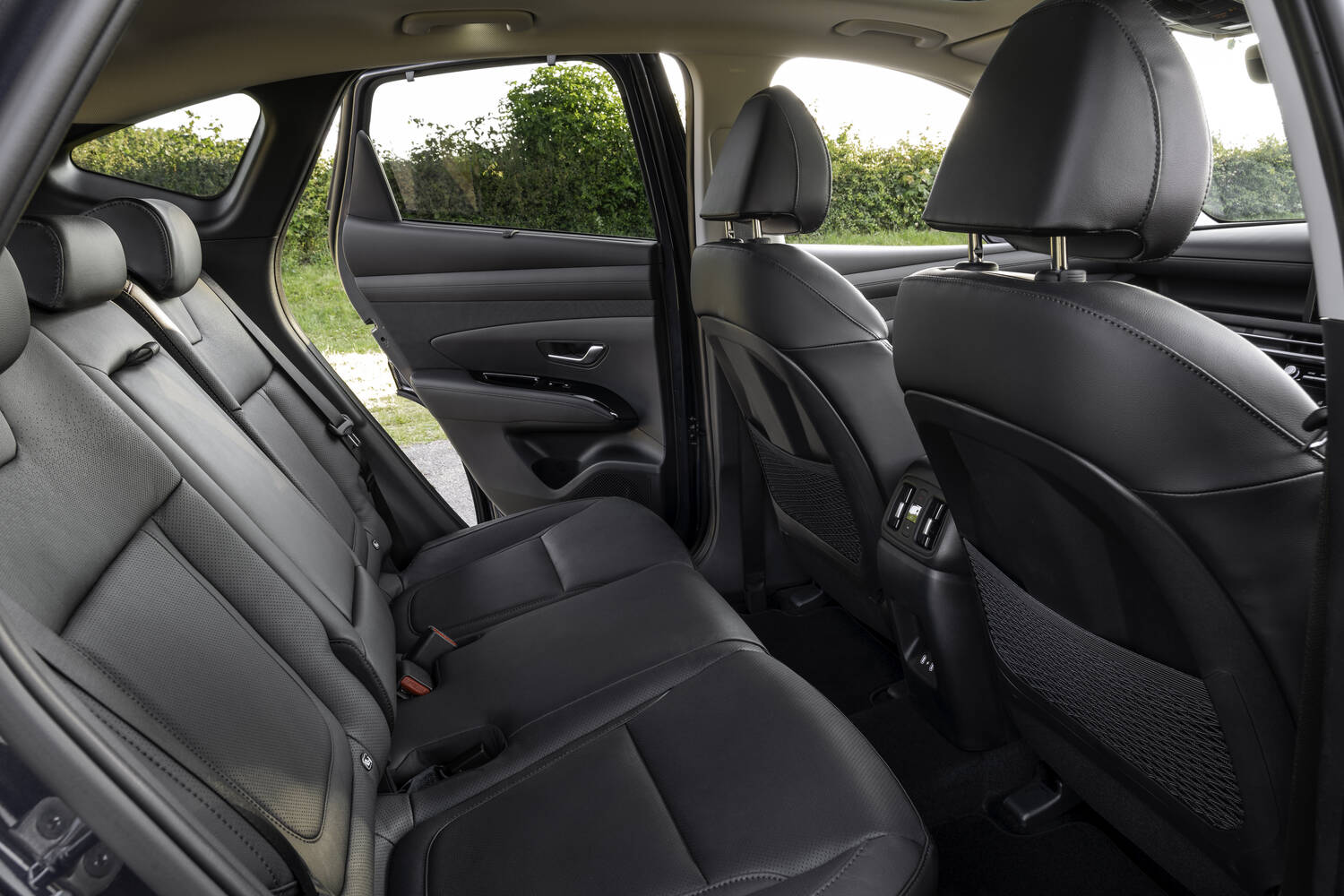
We're scrabbling around to find any significant weaknesses with the Hyundai Tucson, because this is another area where the Korean SUV feels like one of the best choices in the class. There's plenty of head- and legroom in the back of the car, and even enough of a flat floor and usable central rear-seat squab that accommodating three people across the second-row bench doesn't seem to be beyond the realms of reality.

Appointments in the back include USB sockets, individual air vents, sizeable door bins and a central armrest which folds down to reveal another pair of cupholders.
Fitting child seats to the Hyundai Tucson
Given the space we've mentioned above and the size of the Tucson's rear doors, plus the inclusion of two ISOFIX positions on the back bench, parents should find fitting even bulky child seats in the rear of the Hyundai is a doddle.
It also recorded the highest individual score of its 2021 Euro NCAP test in the child occupant safety department, picking up an 87 per cent rating to provide added peace of mind for parents.
Boot space in the Hyundai Tucson
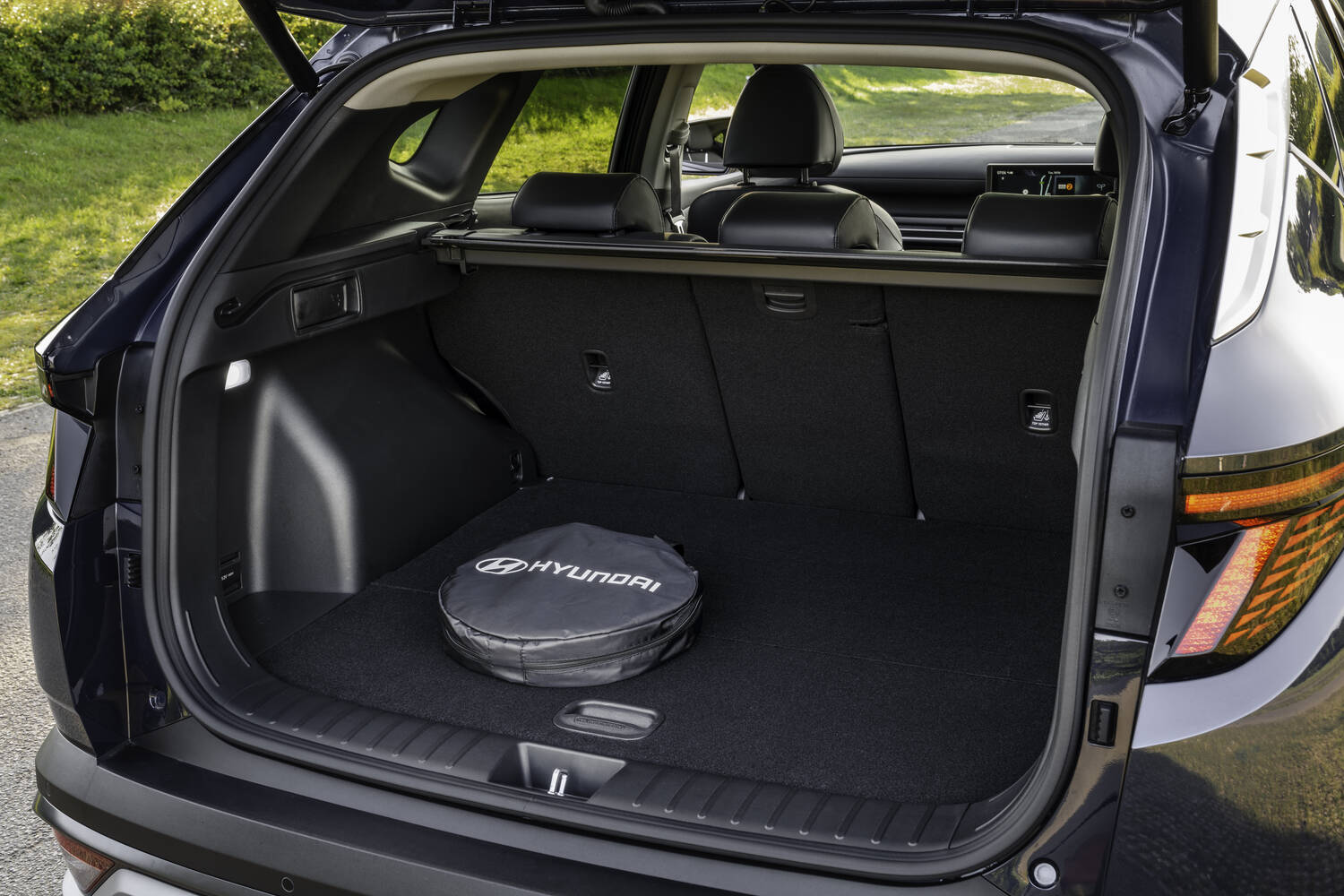
The Tucson is close to class-leading for boot space. Sure, the plug-in-hybrid powertrain does denude the cargo capacity slightly, yet a 616-litre boot in the Hybrid (HEV) with all seats in use is vast for this class of car - very few competitors get beyond the 600-litre mark.

Fold down the 40:20:40 split second row and a useful 1,795 litres of volume is liberated in the HEV.
Safety in the Hyundai Tucson
This generation of the Hyundai Tucson did pick up a full five-star Euro NCAP rating when it was tested back in 2021, though the safety body has toughened up its testing criteria in the interim. Nevertheless, individual scores of 86, 87, 66 and 70 per cent, respectively for protection of adult occupant, child occupant, vulnerable road users and safety assist are decent, and you can read a more detailed drill-down into the Tucson's Euro NCAP performance right here.

Performance of the 2026 Hyundai Tucson
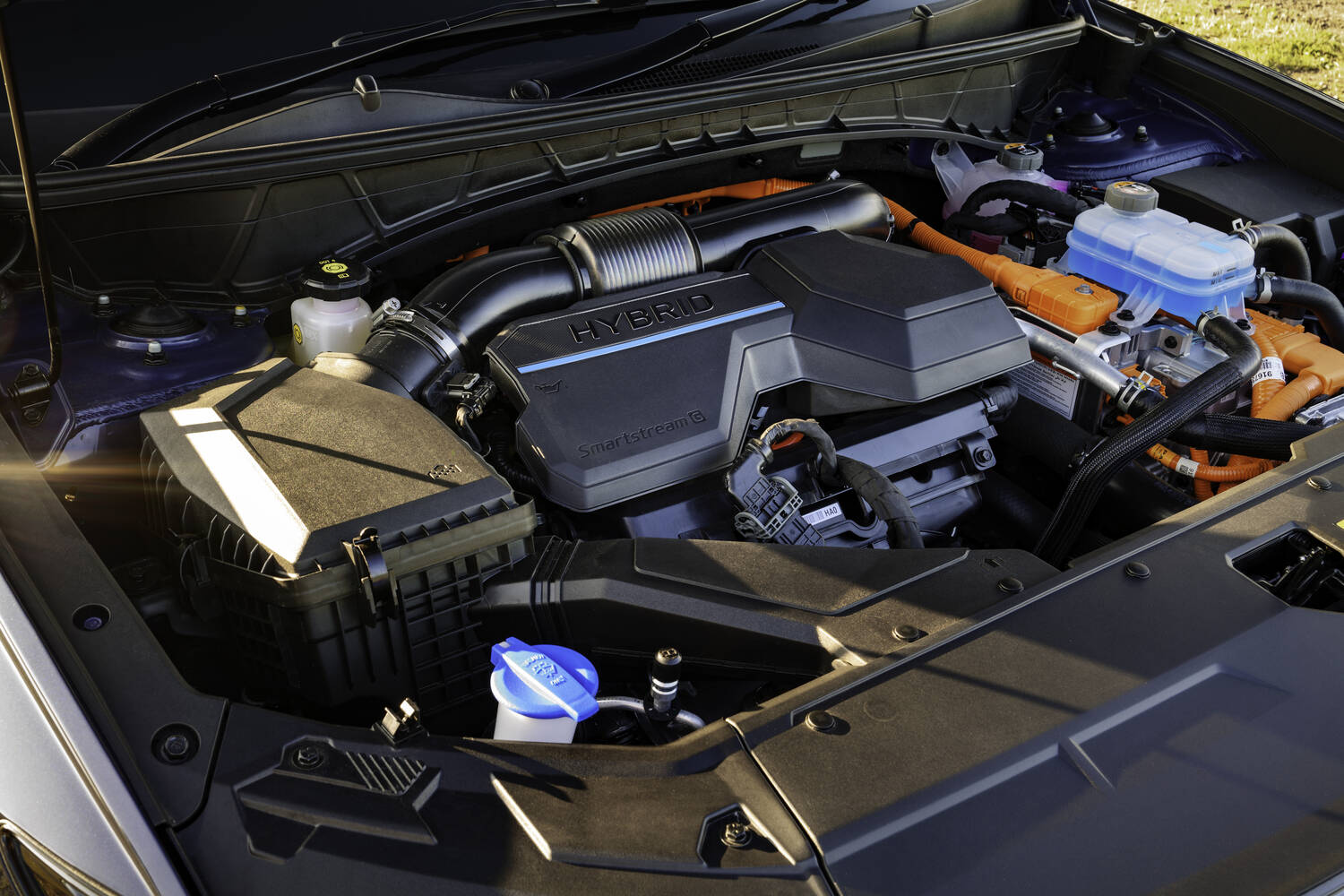
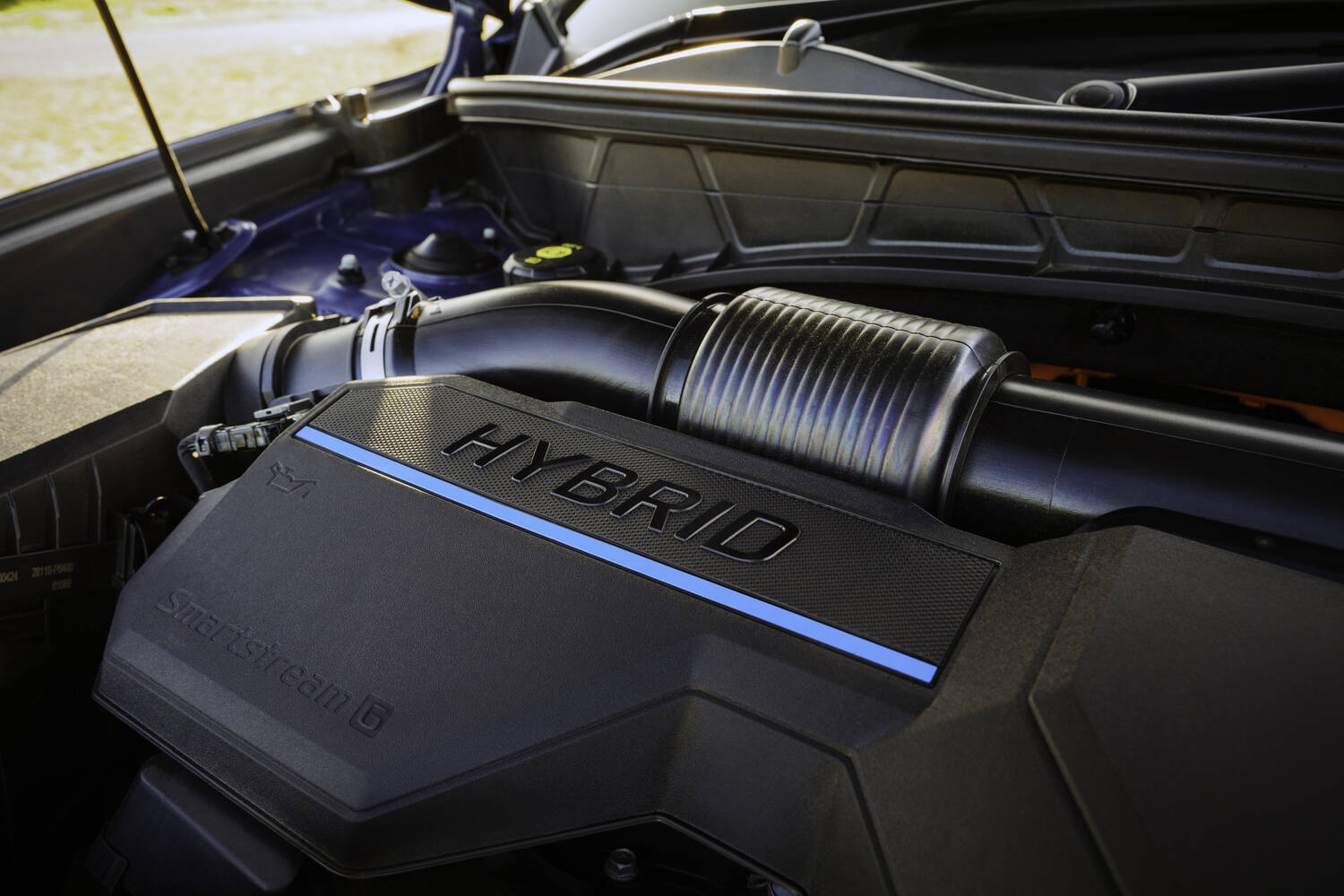
- All hybrid models use 1.6-litre engine
- Non-PHEV up to 239hp
- Smooth and refined - unless thrashed

The Tucson has always used an array of drivetrains, so it appeals to a wide cross-section of buyers. Prior to the facelift, the choice was between an unadorned 'plain' petrol variant, a 48-volt mild-hybrid (MHEV), a full hybrid (HEV) and then a plug-in hybrid (PHEV), not to forget the still-popular diesel options.
Driving the Hyundai Tucson Hybrid on UK roads
Words by Matt Robinson, published on 25 February 2026
Everything the Hyundai Tucson Hybrid does on the move, it does well. The 'surprise and delight' comes from the fact that it turns out to be quite an enjoyable SUV to drive, with nicely detailed and weighted steering plus a fluent chassis.

This is mainly down to an admirably low kerb weight of 1.7 tonnes in this two-wheel-drive specification, which isn't exactly super-trim but is - in this EV day and age - pretty light in the wider scheme of things. It's not thrilling to steer, you understand, but it's more talented and likeable than you might assume it will be.
However, Tucson buyers aren't picking this SUV for the way it confidently flows through a series of challenging bends on a twisting road, no matter how well it achieves such a thing in practice. No, they're picking it because they want it to be quiet, they want it to be comfortable and they want it to be stress-free. And, provided you don't really extend it, then the Tucson aces all of these briefs.

The way it rides - over even truly dreadful pieces of tarmac at lower speeds, and also in the way it maintains its supple composure as the pace rises out of town and onto motorways - plus the manner in which it isolates its occupants from external noise contributors is quite marvellous.
Rare are the occasions the Hyundai feels discomfited by big compressions to its suspension, instead staying on an even keel and smothering out excessive wheel movements long before they're discerned in the passenger compartment. It is, plainly, a wonderful and luxurious thing to travel in.

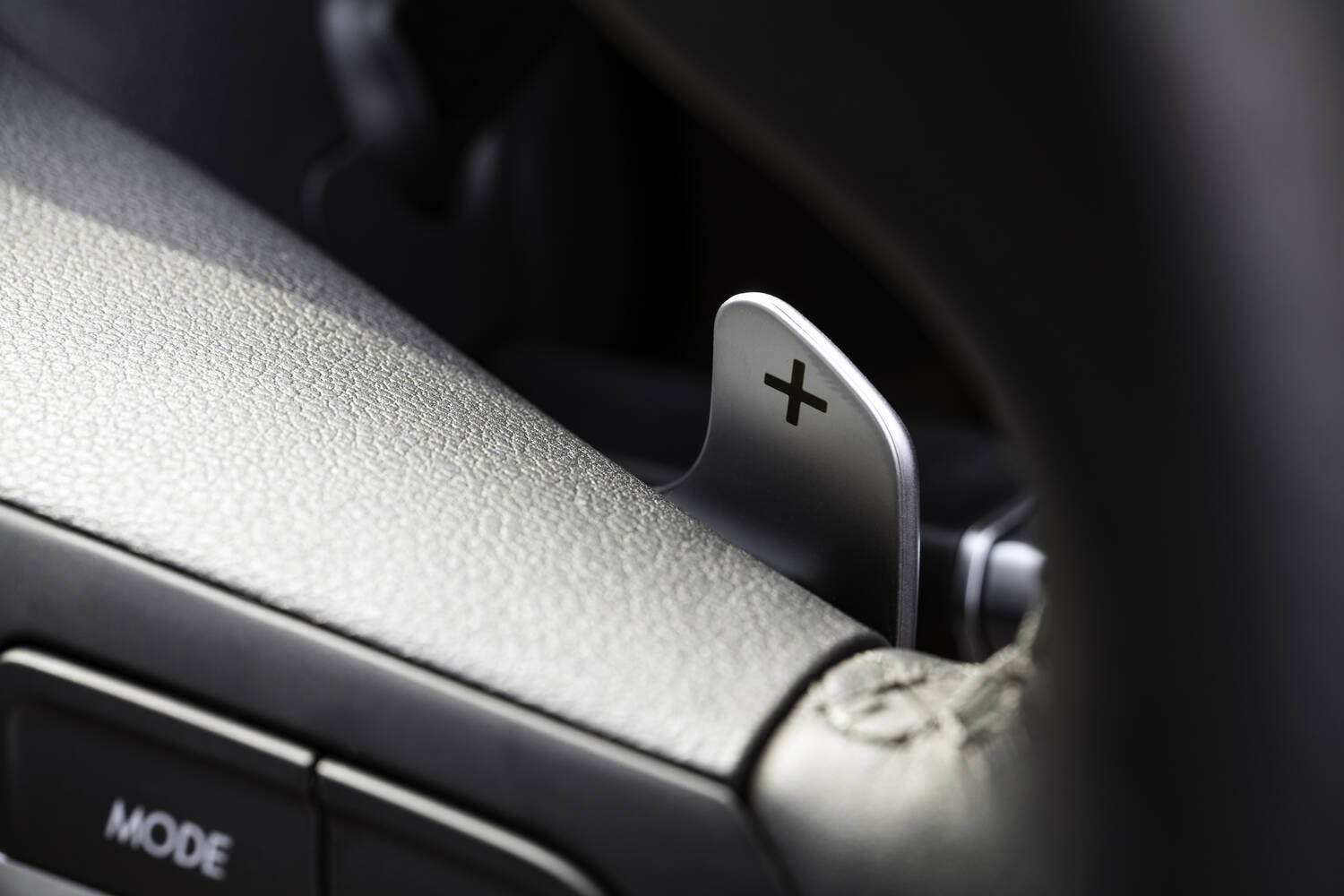
Except if you start getting too aggressive with it. Rev the Tucson right out and the 1.6-litre four-cylinder engine can sound gruff as it nears the redline, while the six-speed automatic transmission is not an exemplar of slick-shifting and ultra-rapid responses when you clog the throttle.
There were also a few occasions during our test drive of the Hybrid, in slick and grimy conditions, where the front wheels were beating the traction control and fighting for grip out of tight junctions - a direct corollary of the fact the HEV has had its headline output lifted slightly for 2026 to a peak of 239hp (and that the associated, uprated electric motor, now delivering 65hp instead of 60hp as before, on its own creates up to 264Nm of torque), which trims the 0-100km/h time to 7.8 seconds.

Thankfully, with 265Nm from the petrol engine and a system peak approaching 360Nm, you don't need to drive the Hyundai hard to make more-than-ample progress, so the likelihood is that most Tucson Hybrid owners will never experience this handful of minor gripes about the SUV's dynamic abilities. They'll instead just think it's a lovely and effortless car to drive, and rightly so.
Fuel economy and running costs of the 2026 Hyundai Tucson Hybrid
- Officially 5.8 litres/100km
- Reasonable CO2 for a big HEV
- Great warranty package

Fitting the hybrid gear to the turbocharged 1.6-litre petrol engine does of course improve the Hyundai Tucson's efficiency data, although it can be hard to match the official figures if you've got a heavier right foot. Hyundai's usual excellent aftersales care makes the Tucson such an appealing prospect to customers, though.
Official CO2 and fuel economy figures
Hyundai states fuel consumption of the 239hp Tucson Hybrid at 5.8 litres/100km, with associated CO2 emissions of 132g/km, placing it in a motor tax band requiring €210 per annum as a result.
These are acceptable figures for a large family SUV with a relatively modest HEV system. Those looking for lower tax in a Tucson should seek out the Plug-In Hybrid model instead.
Real-world efficiency of the Hyundai Tucson Hybrid
Our recorded 8.9 litres/100km doesn't look great on the face of it, but it's not truly indicative of how the Tucson should broadly be driven by owners, as hinted at above. We'd be very surprised if, in normal operation, owners were not seeing at least 7.0 litres/100km on a regular basis.
Servicing the Hyundai Tucson
Hyundai's recommended service interval for the Tucson Hybrid is every 12 months or 15,000km, whichever arrives sooner.
Hyundai Tucson warranty
Part of the appeal of any new Hyundai is the strong warranty, which is not only for five years and unlimited kilometres for the duration, but which also comes with five years' worth of both AA roadside assistance and free vehicle health checks, too.
Irish pricing & rivals to the 2026 Hyundai Tucson
- Choice of two powertrains
- Three or four trim levels
- Wide range of C-segment SUV rivals

The Tucson range begins from €40,645 as a diesel, €45,195 as a Hybrid and €42,695 for the more powerful Plug-In Hybrid.
For the HEV, there are three trims, running Comfort Plus, Executive and then Executive Plus; the PHEV follows the same pattern at the lower two levels, but then switches to Platinum instead of Executive Plus, while also offering the sporty N Line trim that isn't available on the Hybrid. All models are well equipped, so it doesn't really matter which Tucson in which spec you pick - you're getting terrific value for money.

There's a simply huge array of competitor SUVs for the Tucson, both looking up into the premium sector (where options like the BMW X1 tend to be physically smaller for the same or even slightly more money) and down to a new budget wave of Chinese competitors, hybrids and EVs alike.
To say nothing of the long-serving and more traditional rivals in this class, not least the genre-defining Nissan Qashqai. All that being equal, it's therefore even more of a testament that the Tucson remains the best-selling car in the country, in the face of all this varied consumer choice.

Verdict - should you buy the 2026 Hyundai Tucson?
It's not as if we need to convince you of the merits of the Hyundai Tucson - it has been the top-selling car in the country for each of the past five years it has been on sale. And there's good reason for that: it's a wonderful thing all round.
Sharp to look at, possessed of a well-equipped, spacious and tidily built cabin and smooth to drive with efficient drivetrains, the Tucson is simply a midsized family SUV done very, very well indeed.
FAQs about the 2026 Hyundai Tucson
Is there a fully electric version of the Hyundai Tucson?

No, it has electrified drivetrains available to it, but the Tucson does not have a zero-emission derivative. Hyundai's offerings in a similar sphere are the smaller Kona Electric crossover and the Ioniq 5, which some people refer to as an SUV due to its sheer size, but which we think is more of a hatchback in shape and driving feel.
How many child seats can I fit in the Hyundai Tucson?
There are two ISOFIX positions in the outer seats of the second row in the Hyundai Tucson's cabin.
Want to know more about the 2026 Hyundai Tucson?
If there's anything about the new Hyundai Tucson we've not covered, or you'd like help in choosing between it and other cars, you can avail of our expert advice service via the Ask Us Anything page.
Hyundai Tucson history
Technically, the car we are looking at here is the fourth generation of the Hyundai Tucson, the Korean firm's family crossover-SUV originally named after the Arizonan city of the same name in the US. However, after the ostensibly budget Mk1 original of 2004-2009, in markets outside of South Korea and North America - including our own - the second-generation car received a change of name to ix35 (2009-2015).
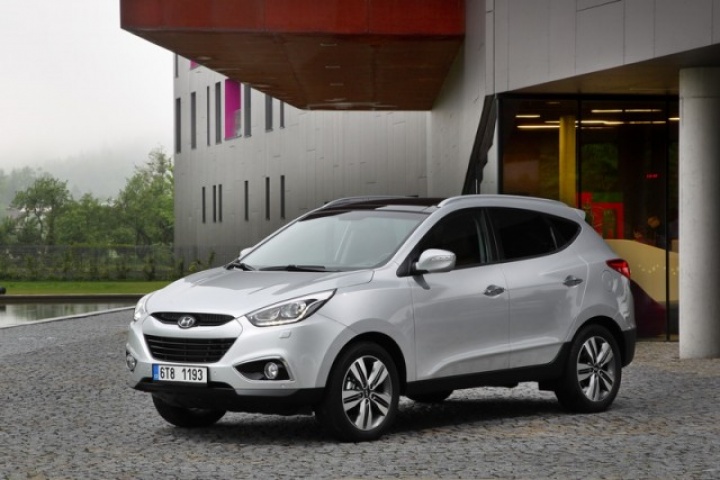
That vehicle was a step up in quality from its predecessor, if still not something which would have made the more prestigious European and Japanese manufacturers worry too much about.
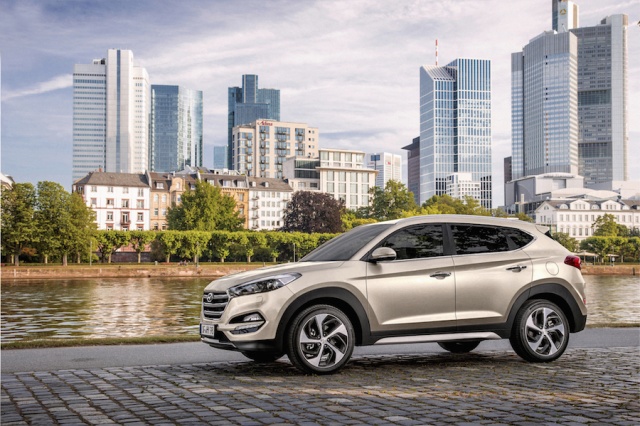
However, the Mk3 of 2015 - reverting to the Tucson nameplate for all global territories - was a marked improvement in every respect, pushing the Hyundai SUV beyond the realms of a great-value alternative to the mainstream and instead turning it into a contender for class honours.
Yet it was really this sharp-suited Mk4, replacing the third-gen Tucson as it went out of production in 2021, which transformed the Hyundai into unquestionably the car everyone else must beat. It's also this generation of the Tucson which has been the best-selling vehicle of them all in Ireland for every full calendar year it has been on sale to date.