



Exterior & design of the 2026 Dacia Bigster
- Chunky styling with Land Rover influence
- Looks smart in a dark colour
- 'Starkle' protection panels a nice touch

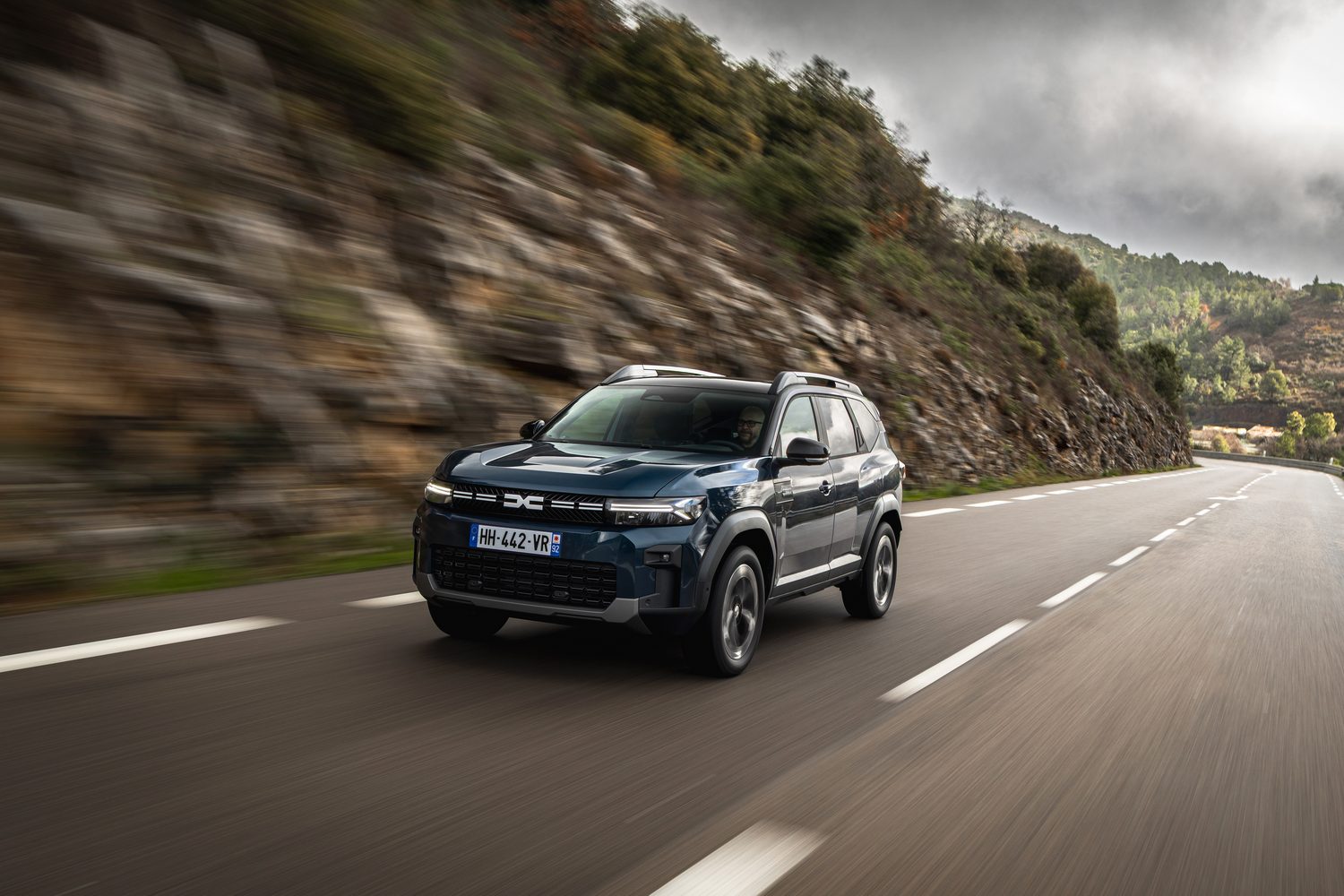
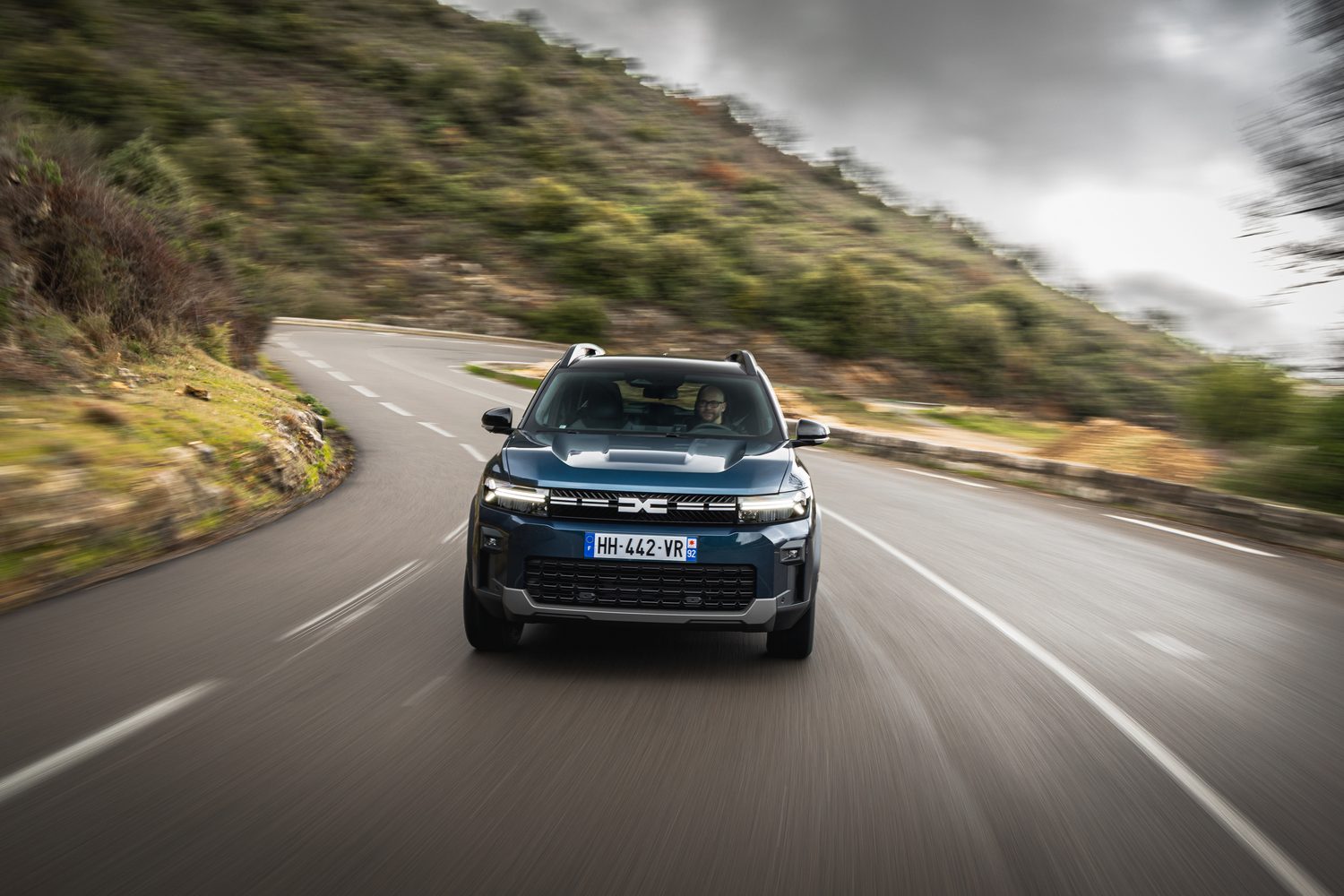
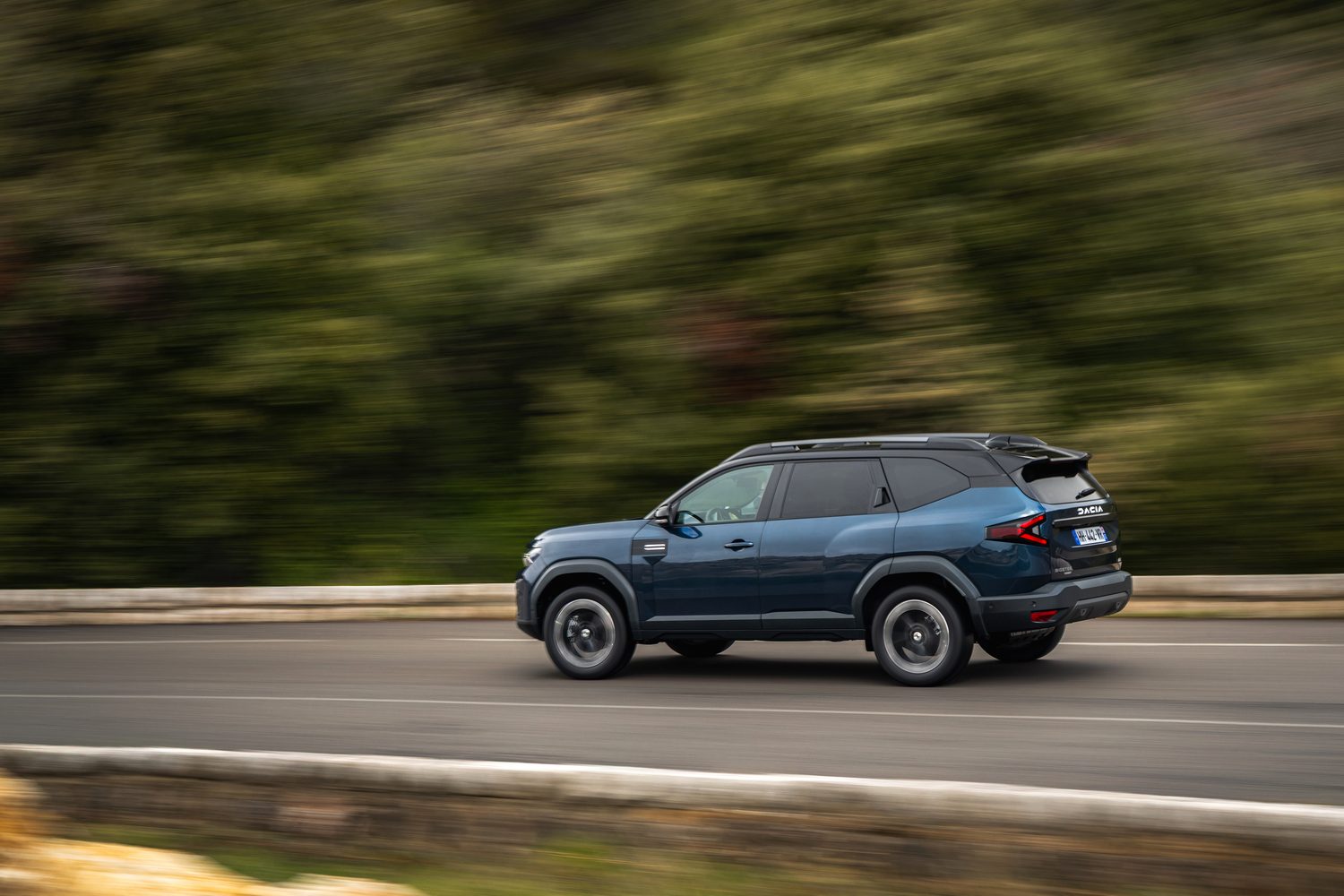
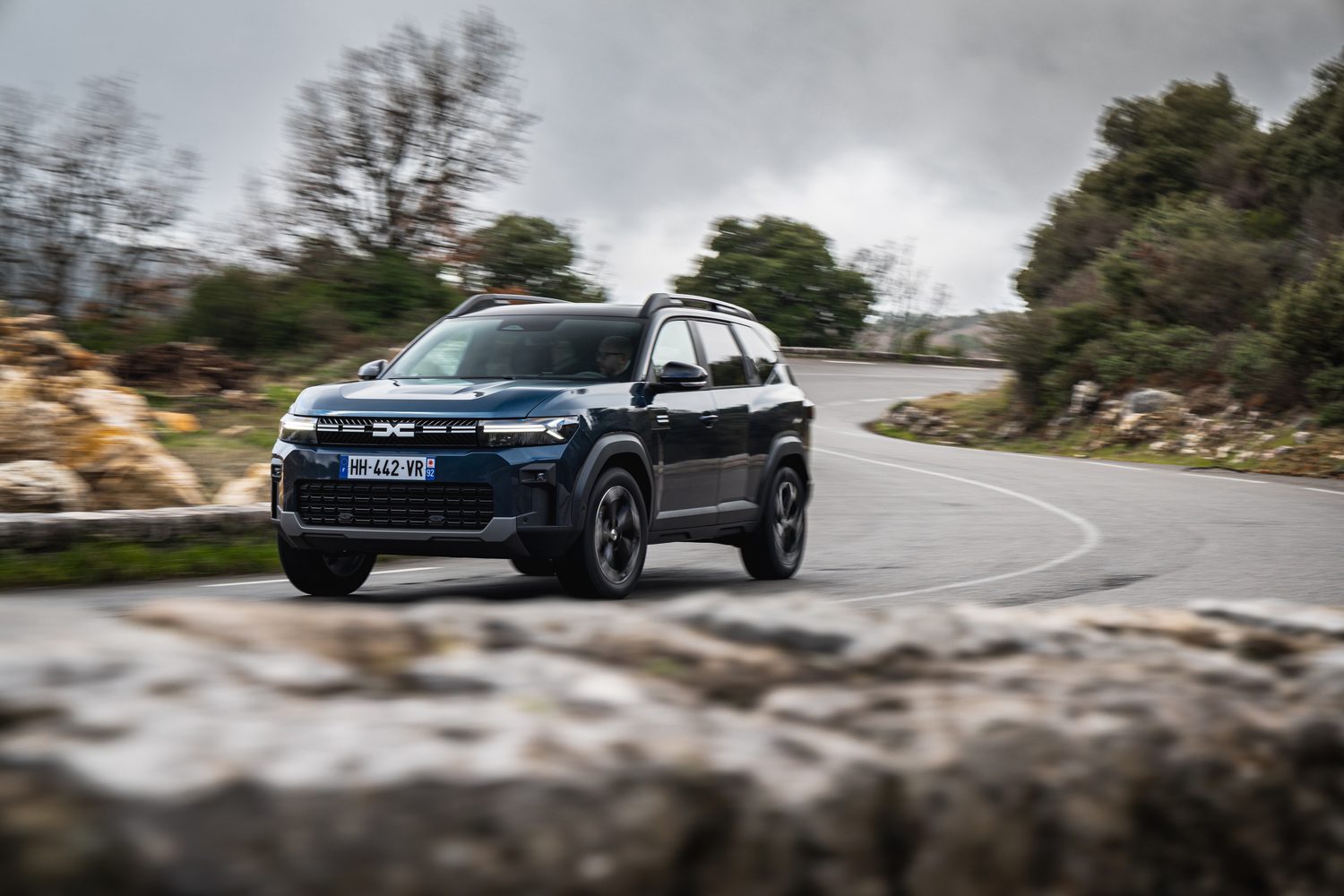
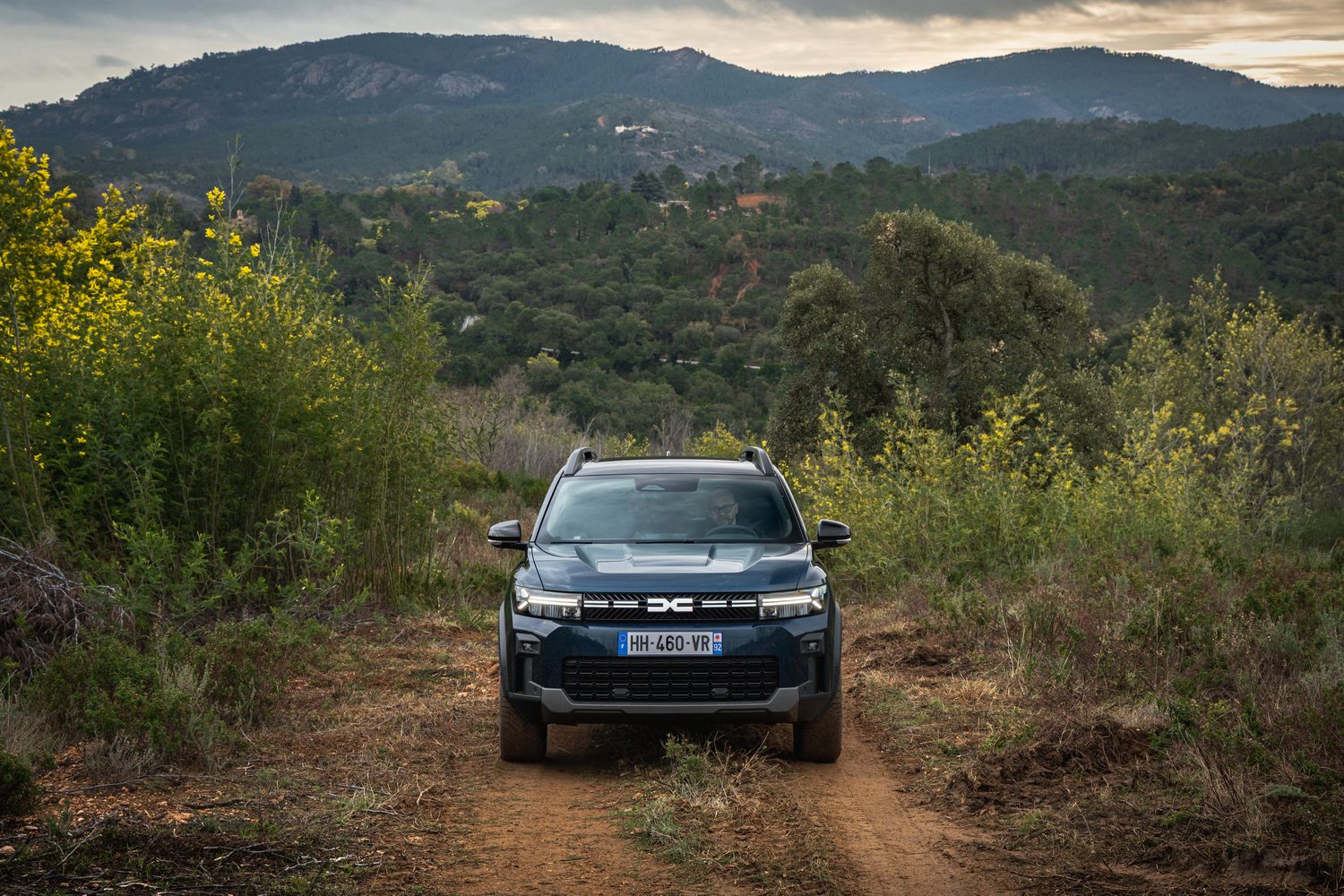
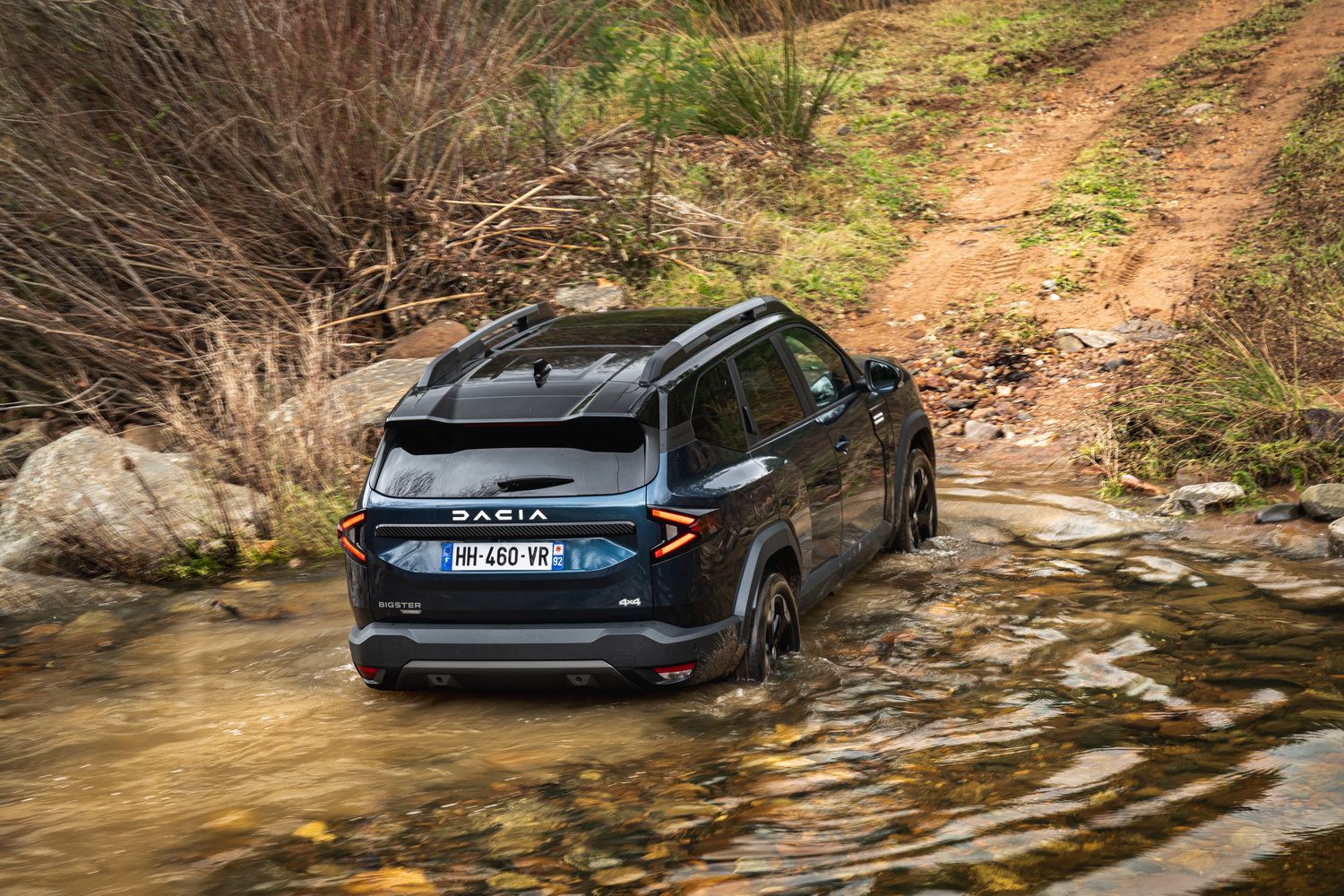
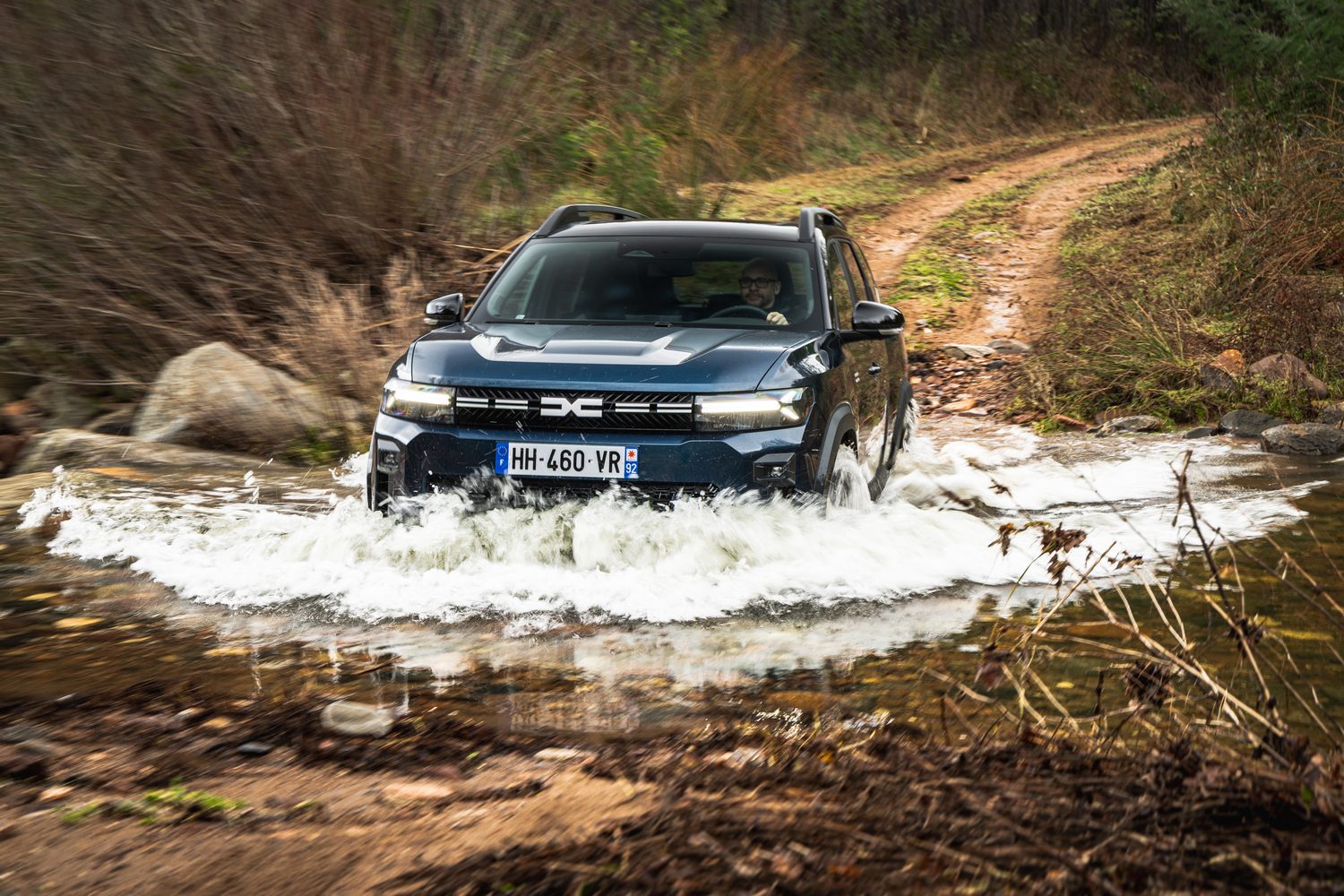
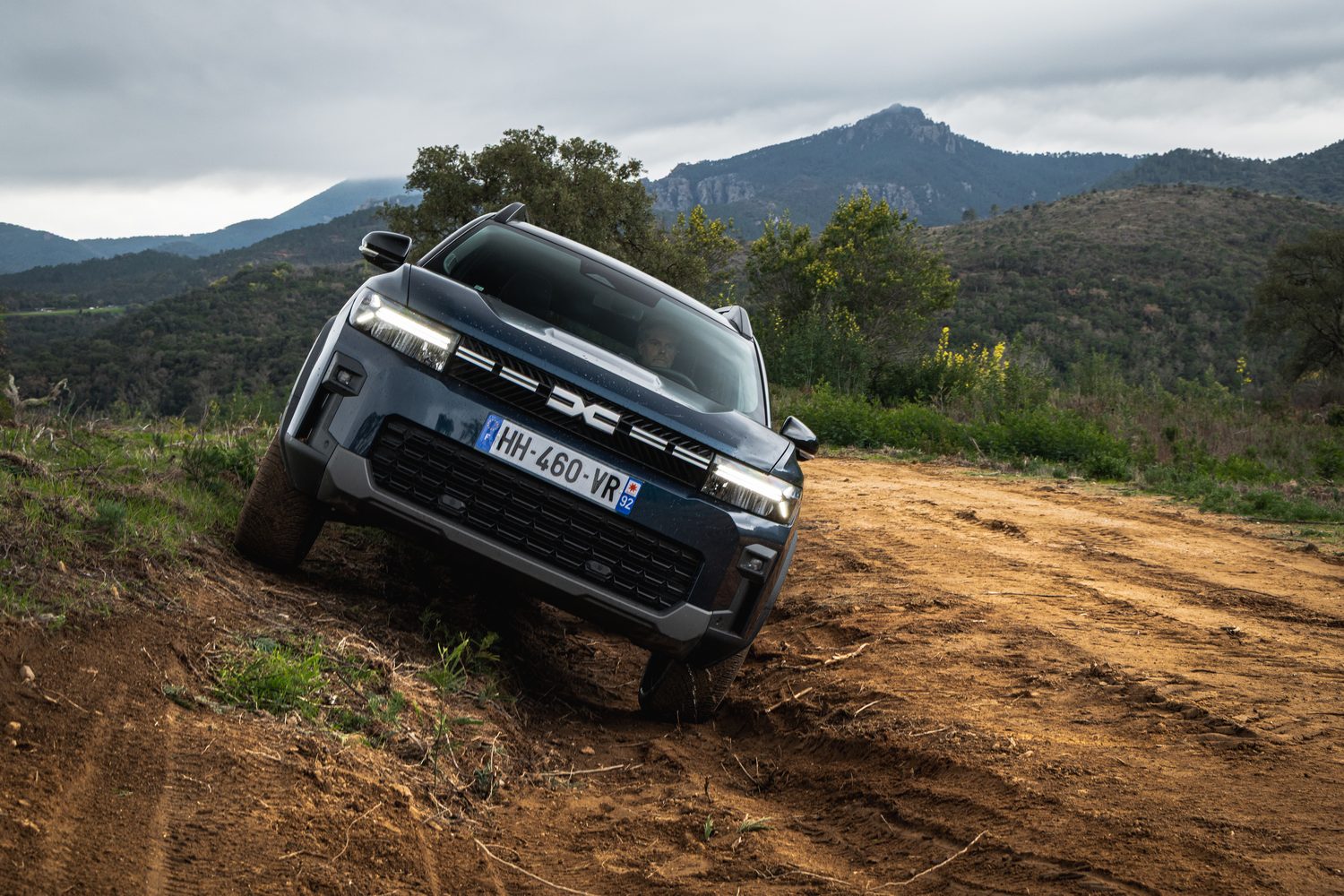
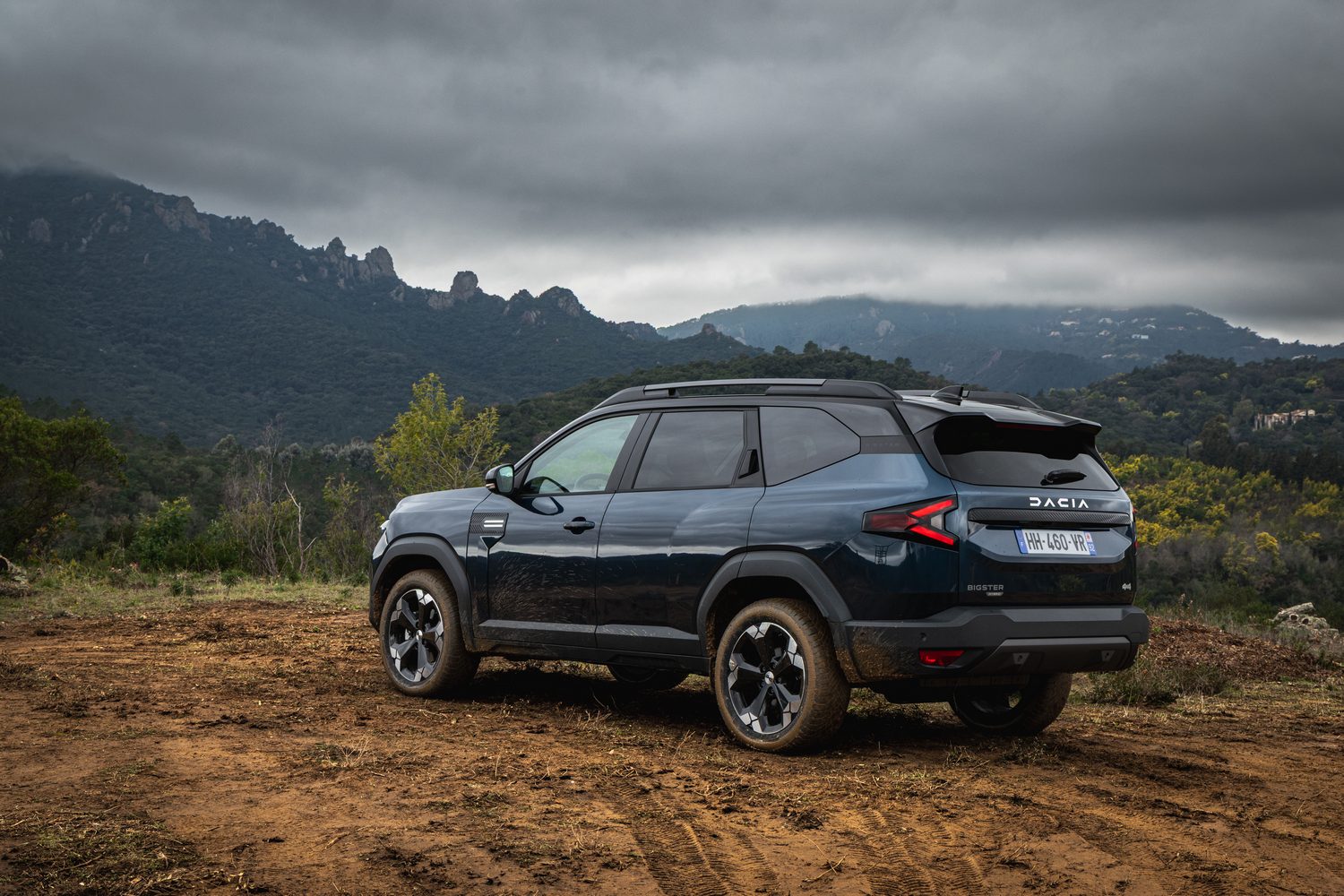
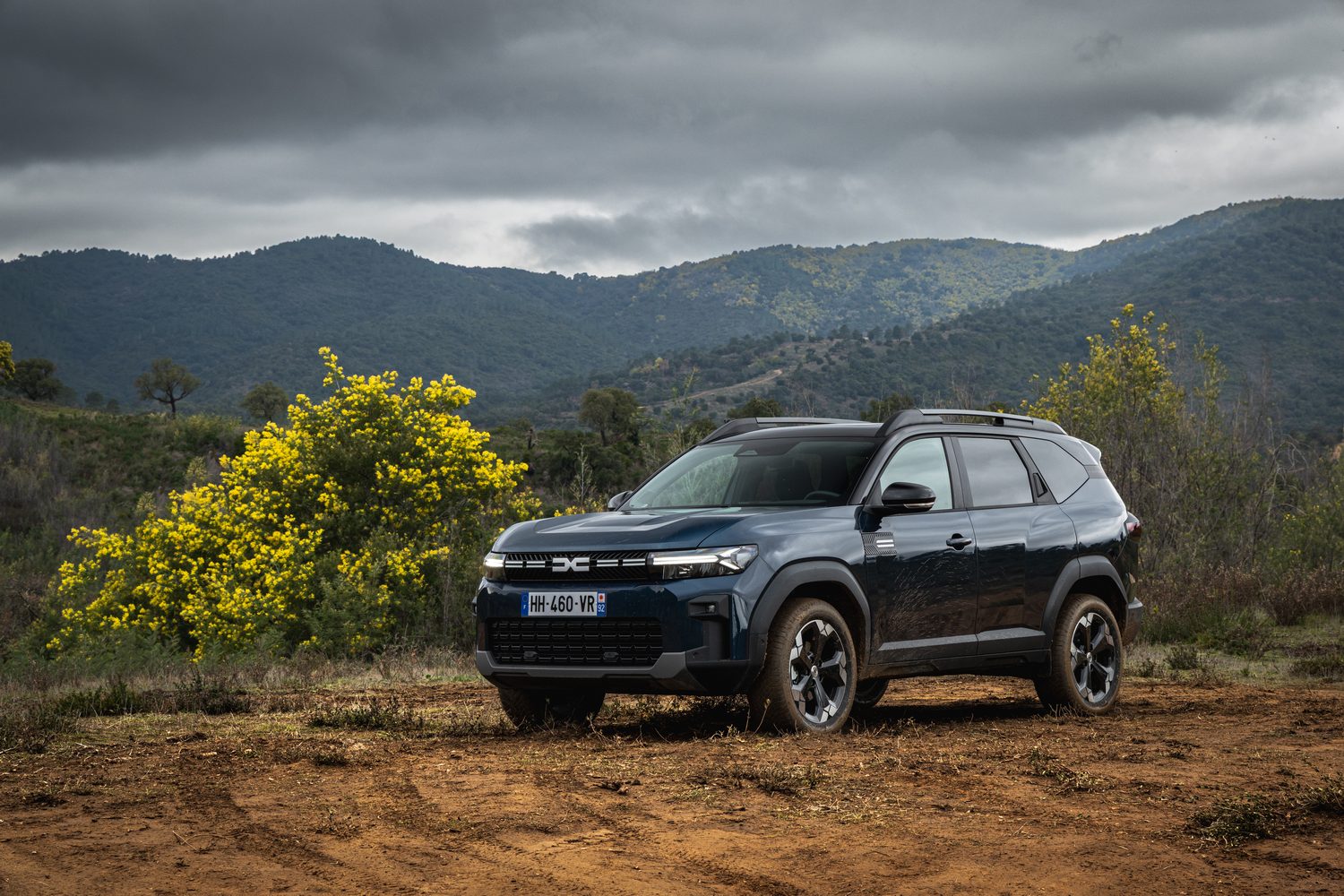
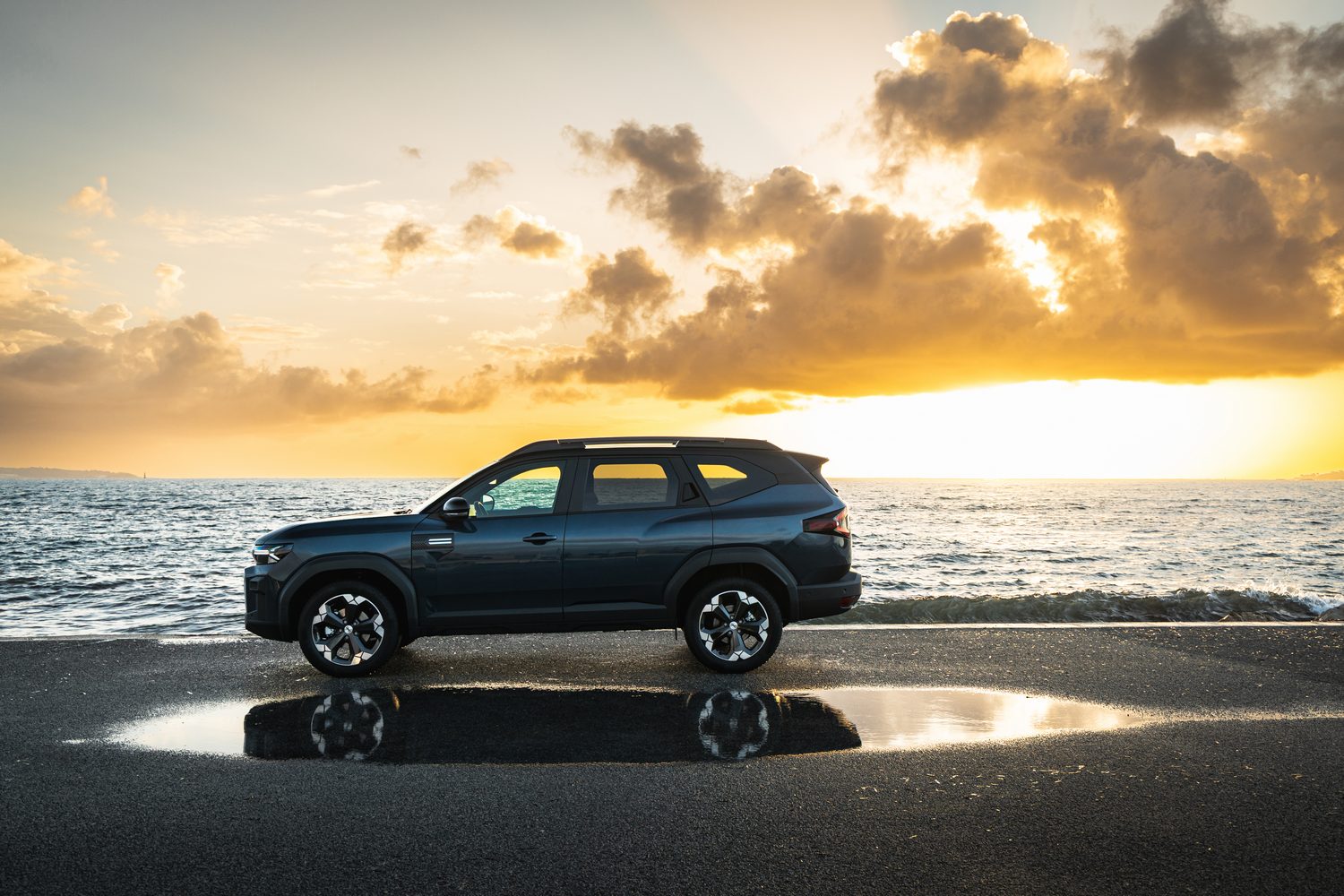
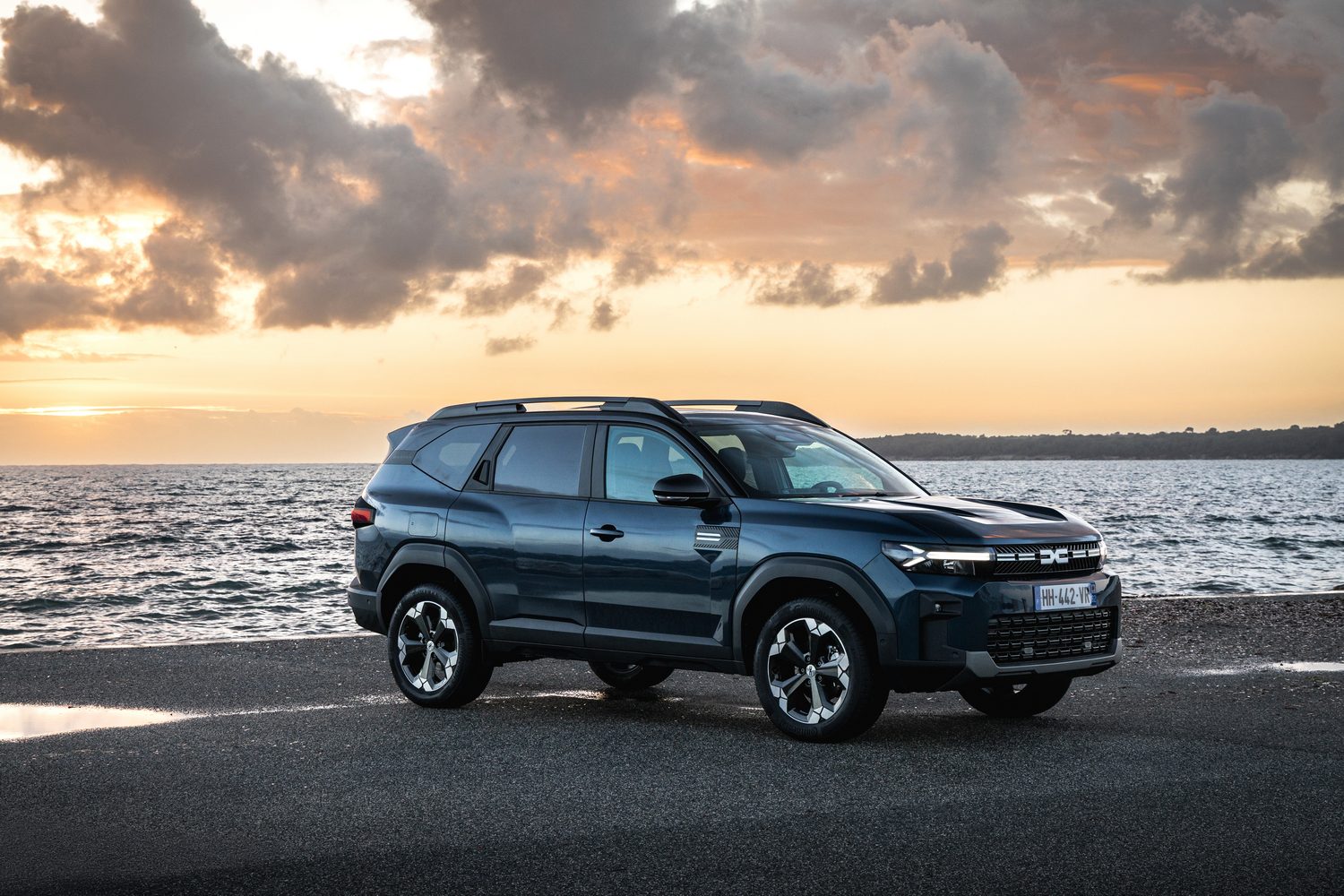
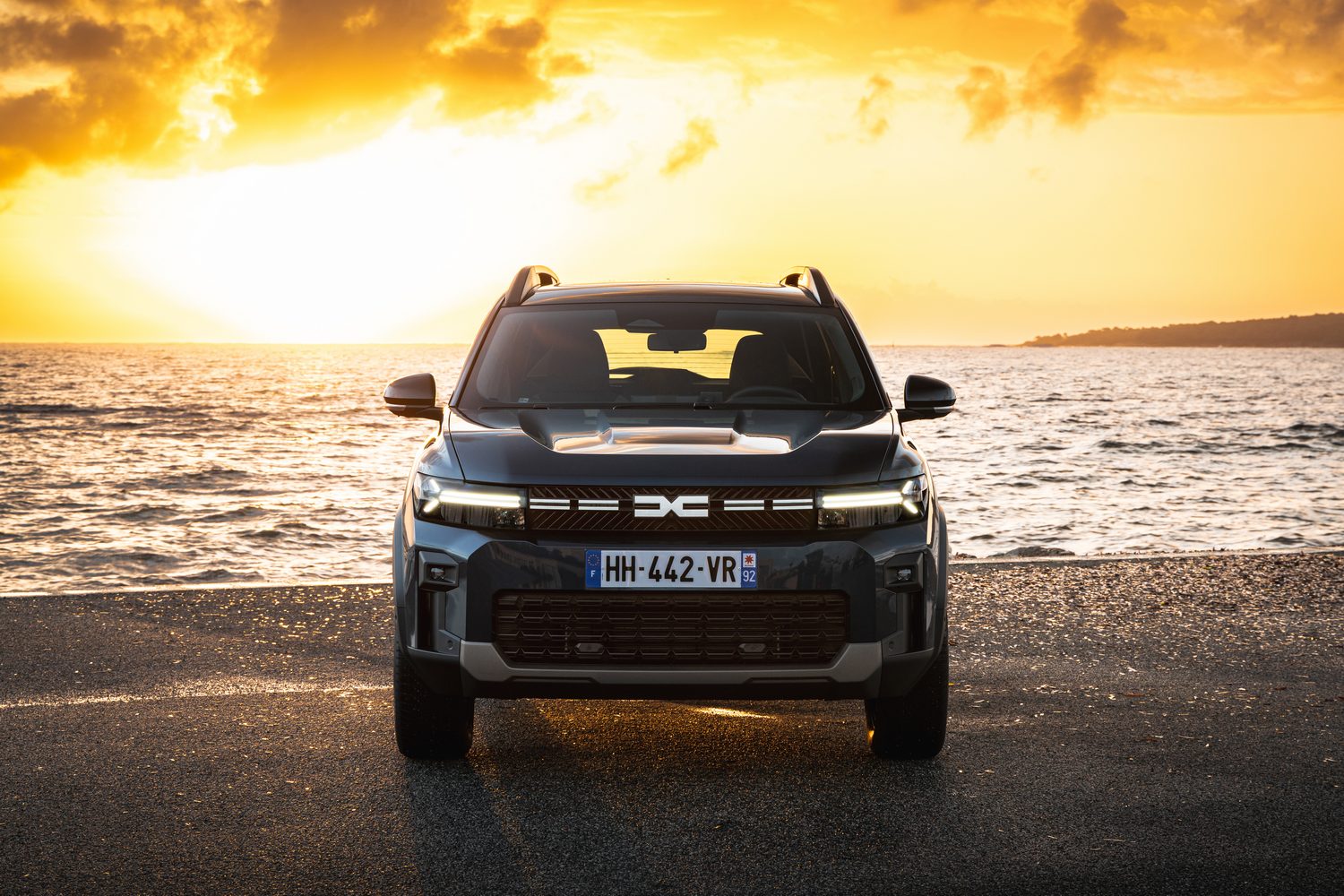
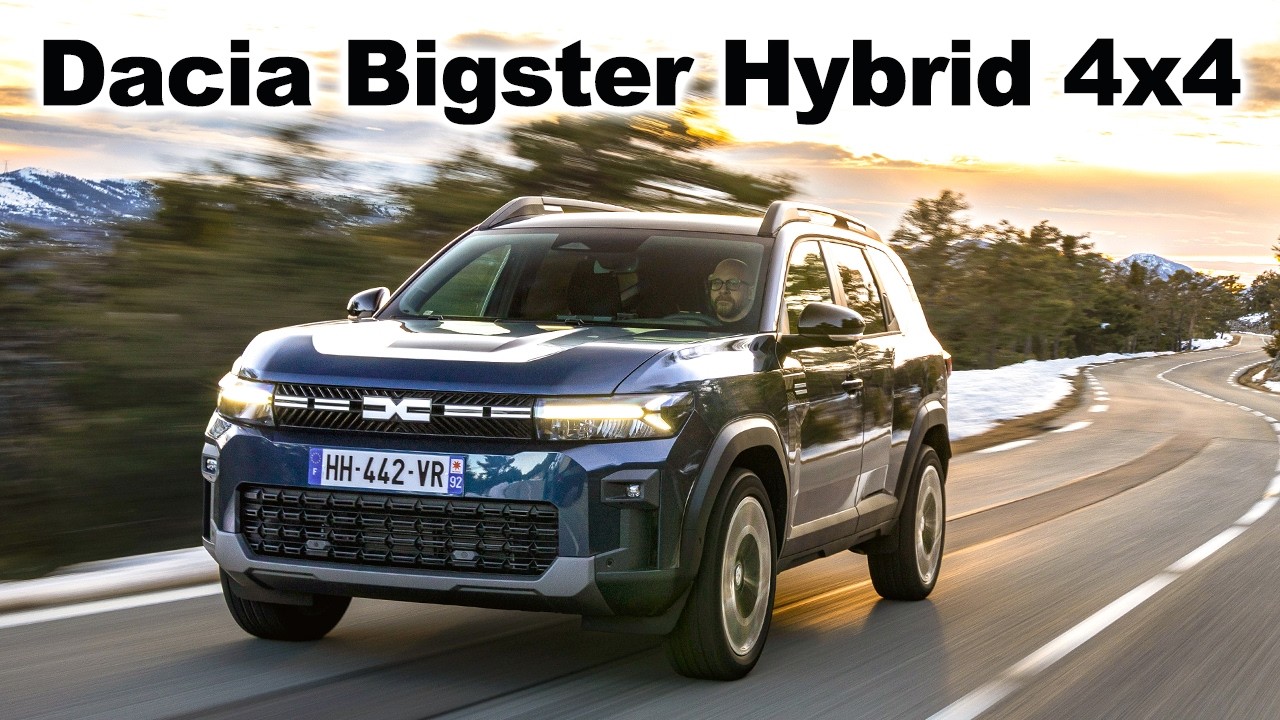
The Dacia Bigster is a fairly familiar sight on Irish roads, but that doesn't stop it being an uncommonly handsome SUV. Unlike many of its potential rivals, it doesn't try to hide its height and bulk with sleek car-like lines, but instead wears proudly its upright, blocky design, with the heavy 'castellated' edges of the bonnet giving off distinct original Range Rover vibes.
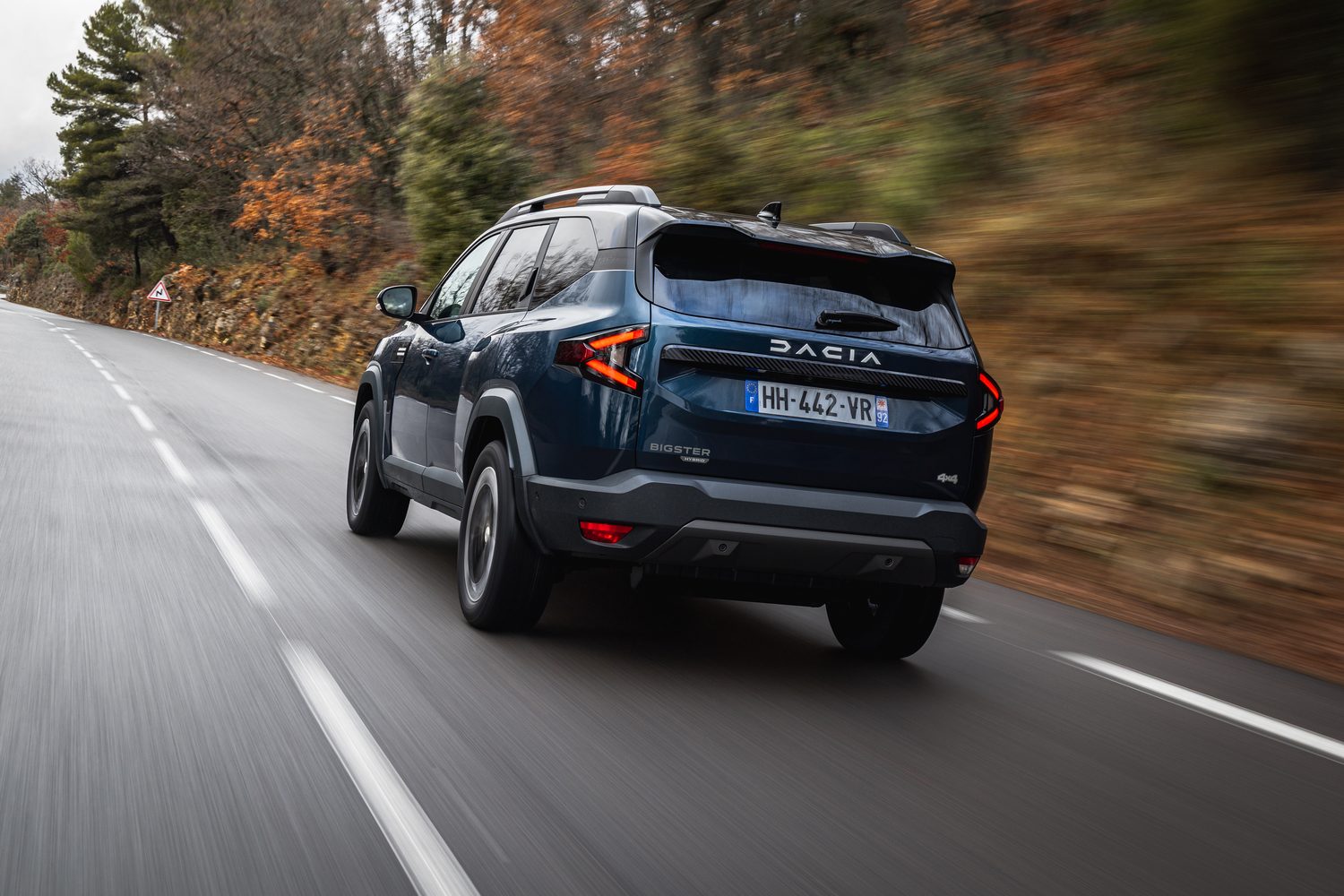
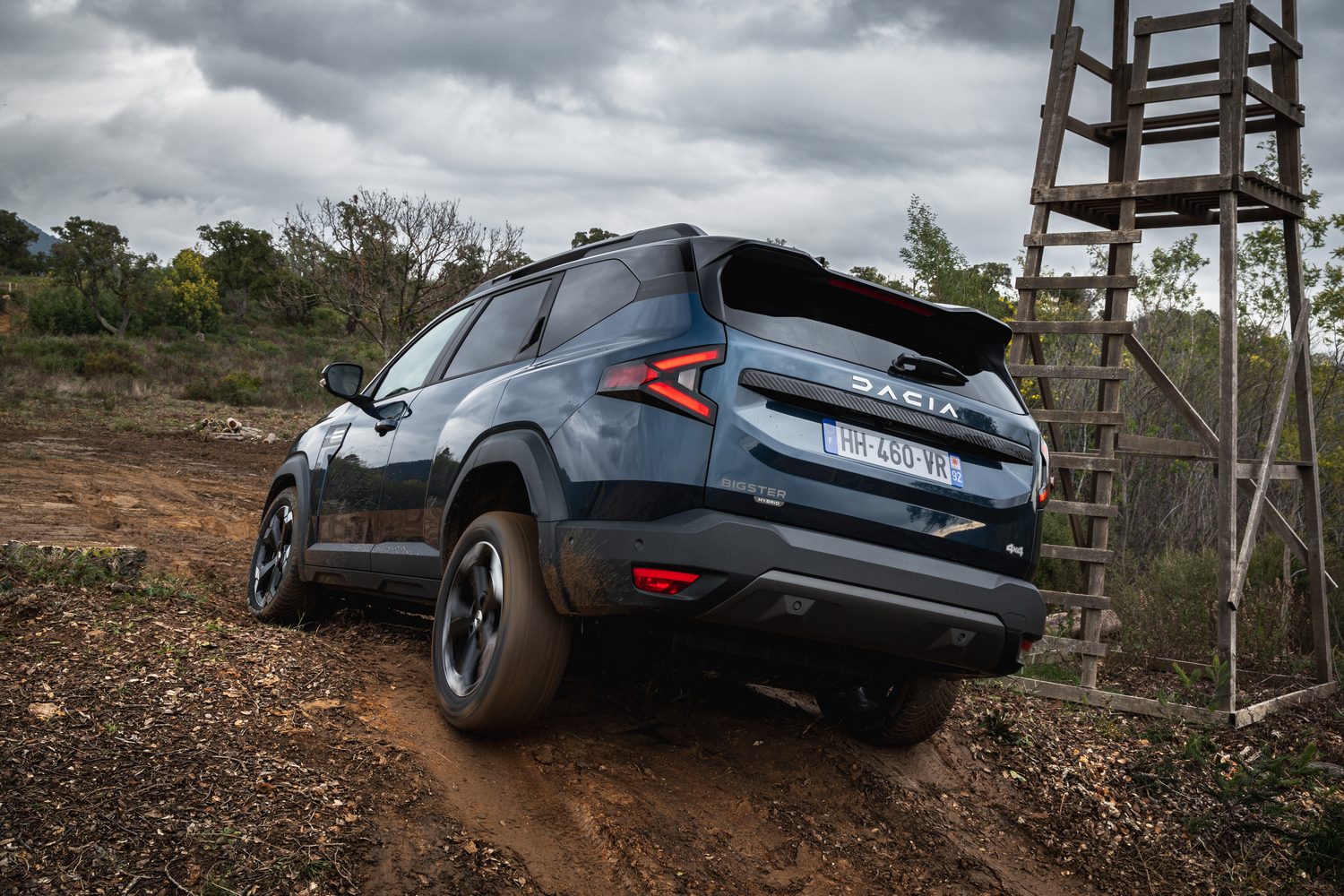
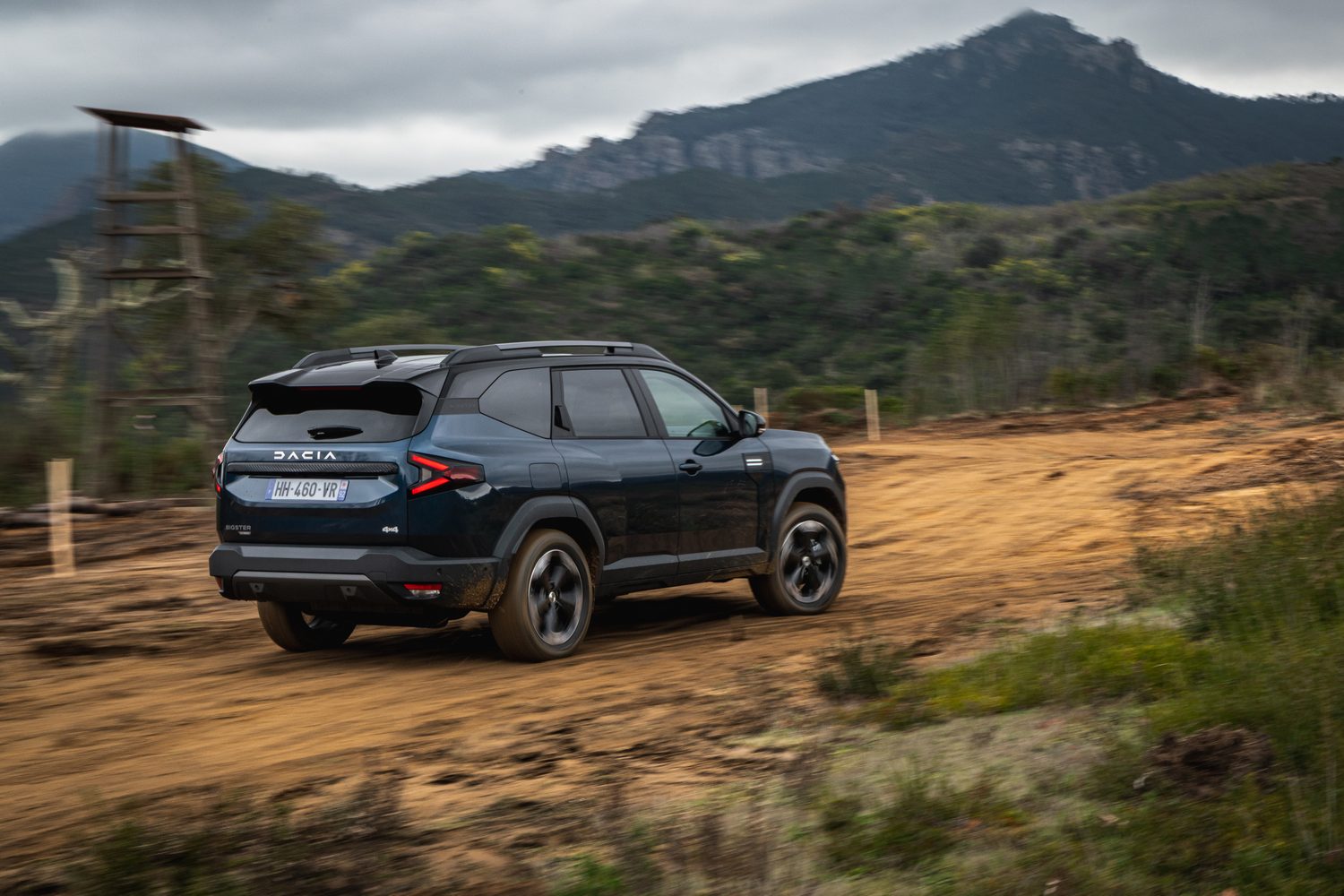
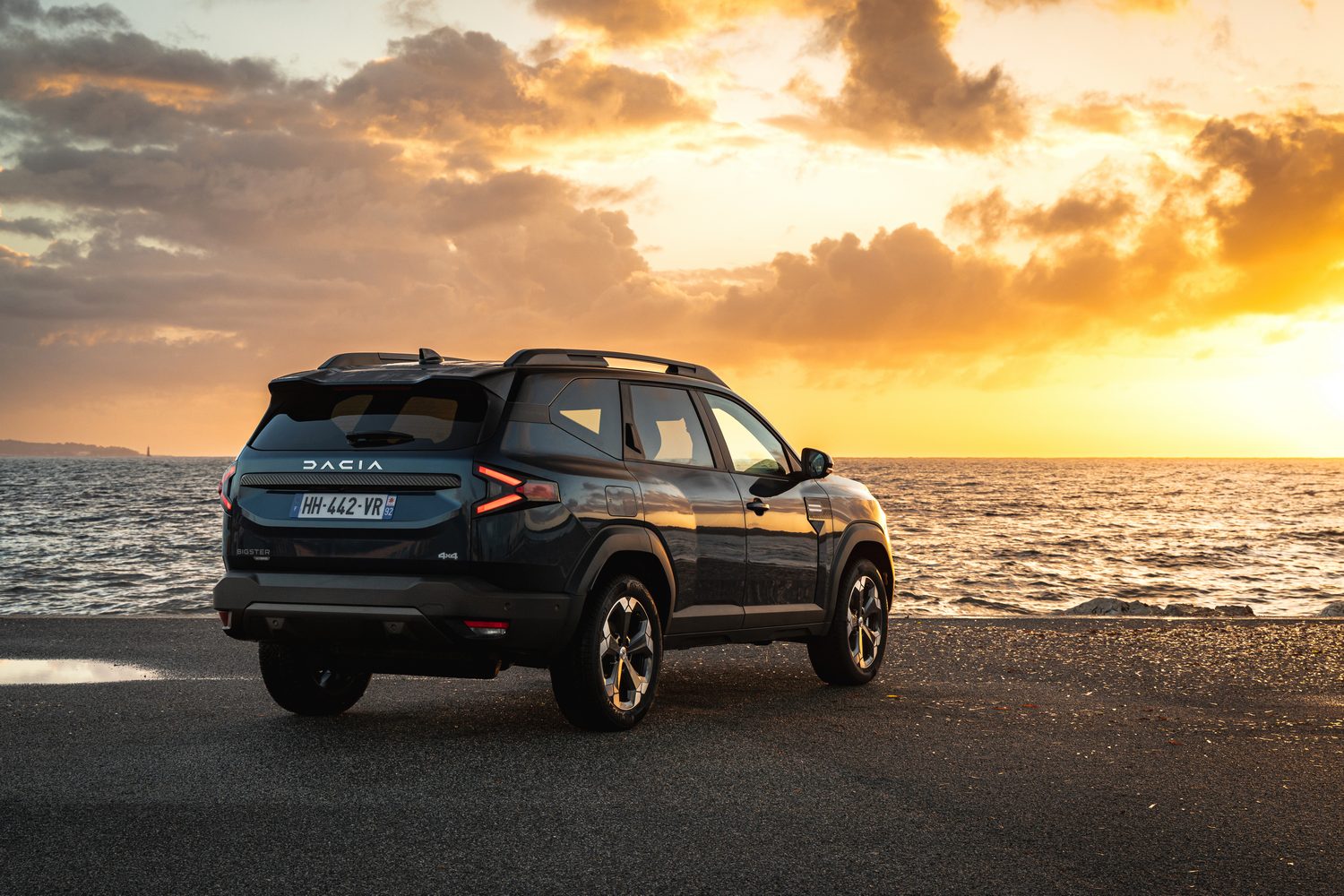
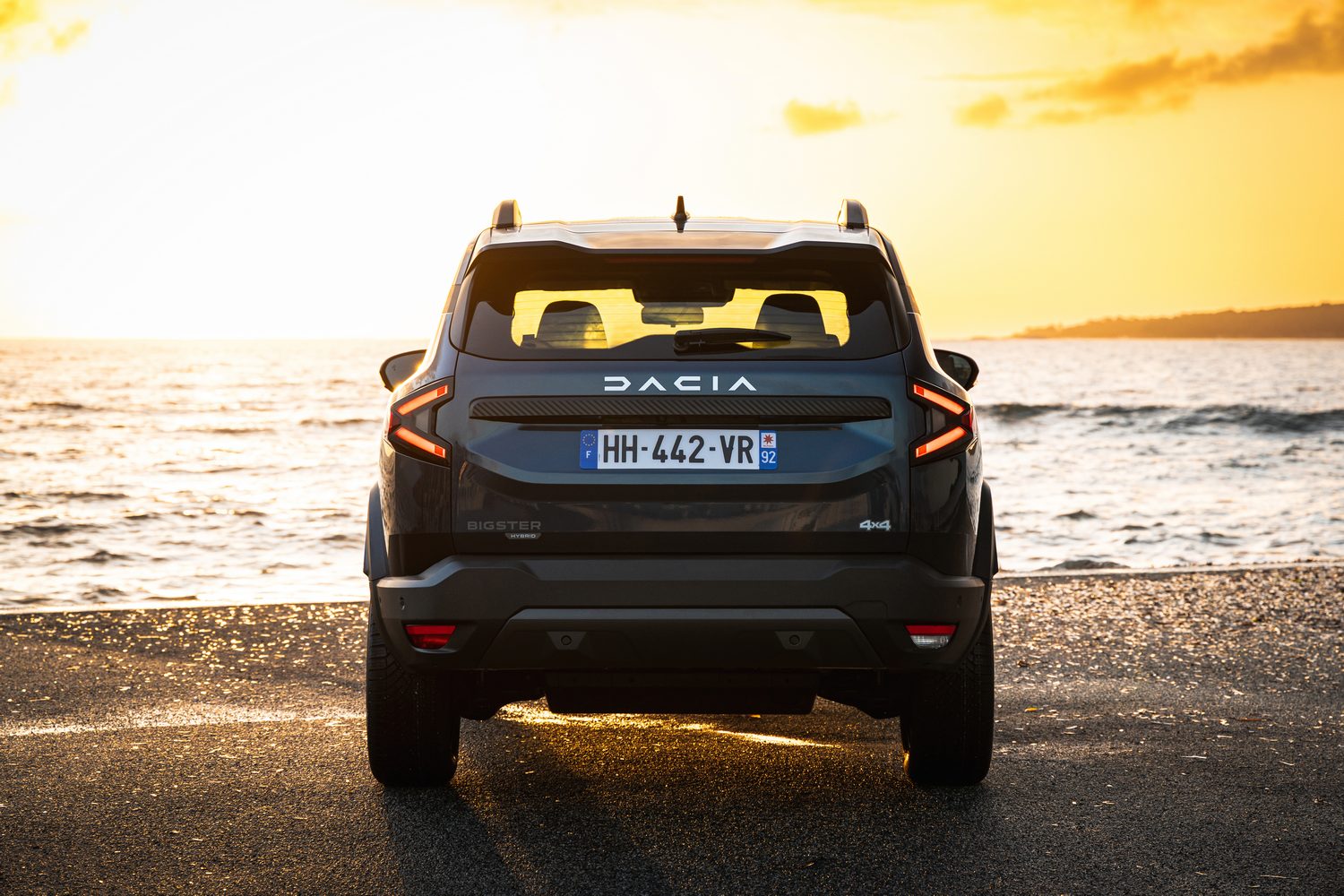
The headlights are sleek and slim, with the distinctive Dacia Y-shaped LED running light signature, and if the rear end is almost surprisingly tall and chunky, with quite a long rear overhang, that does pay dividends when it comes to rear-seat and boot space.

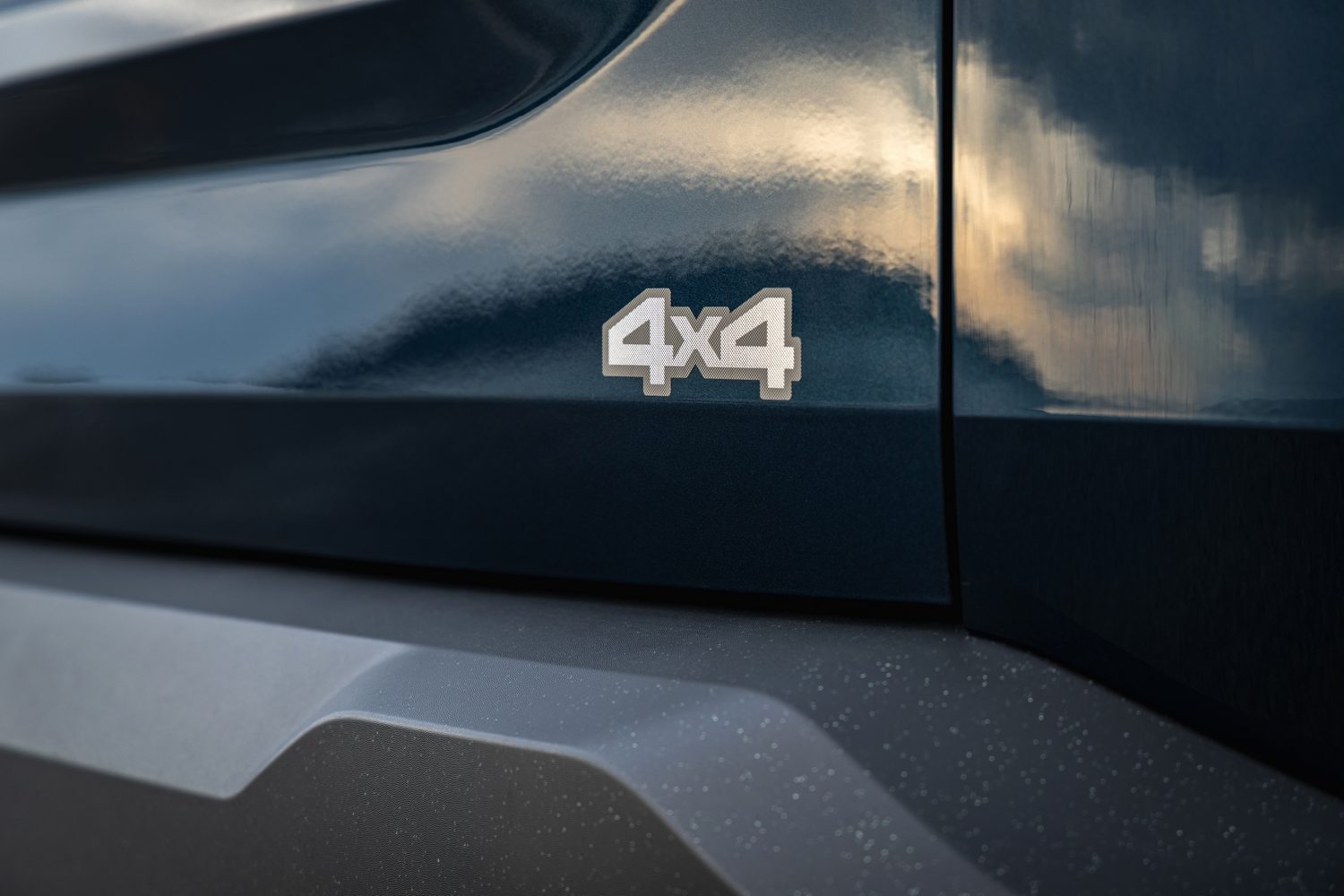
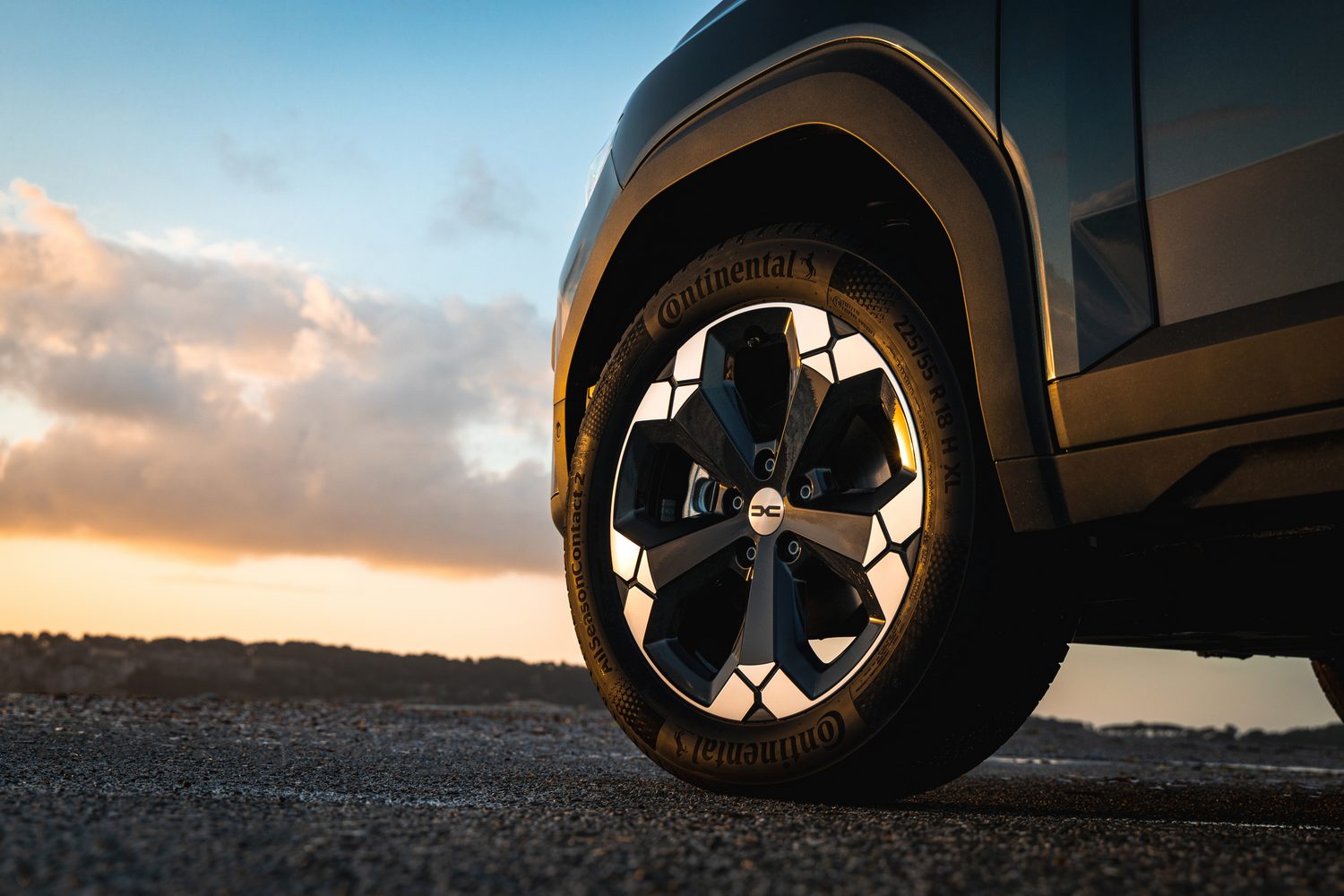
It's also rather nice that Dacia uses some proper form-following-function elements, such as the 'Starkle' wheelarch protectors and bumper trim. This is a plastic, made up of 20 per cent recycled material, and which has a faint fleck of white running through it, a result of the recycling process.
It gives the Bigster appropriate off-roader vibes, but it's also very practical as it's an unpainted material, so it won't show scrapes nor knocks quite so easily.
It's also an indirect link to Dacia's success on the Dakar Rally. Starkle was first used on the Dacia Manifesto concept car, which went on to influence the victorious Sand Rider racing car.

Dimensions of the 2026 Dacia Bigster
- Length:
- 4,570mm
- Width:
- 1,921mm (mirrors folded)
- Height:
- 1,702mm
- Wheelbase:
- 2,702mm
Paint colours for the 2026 Dacia Bigster
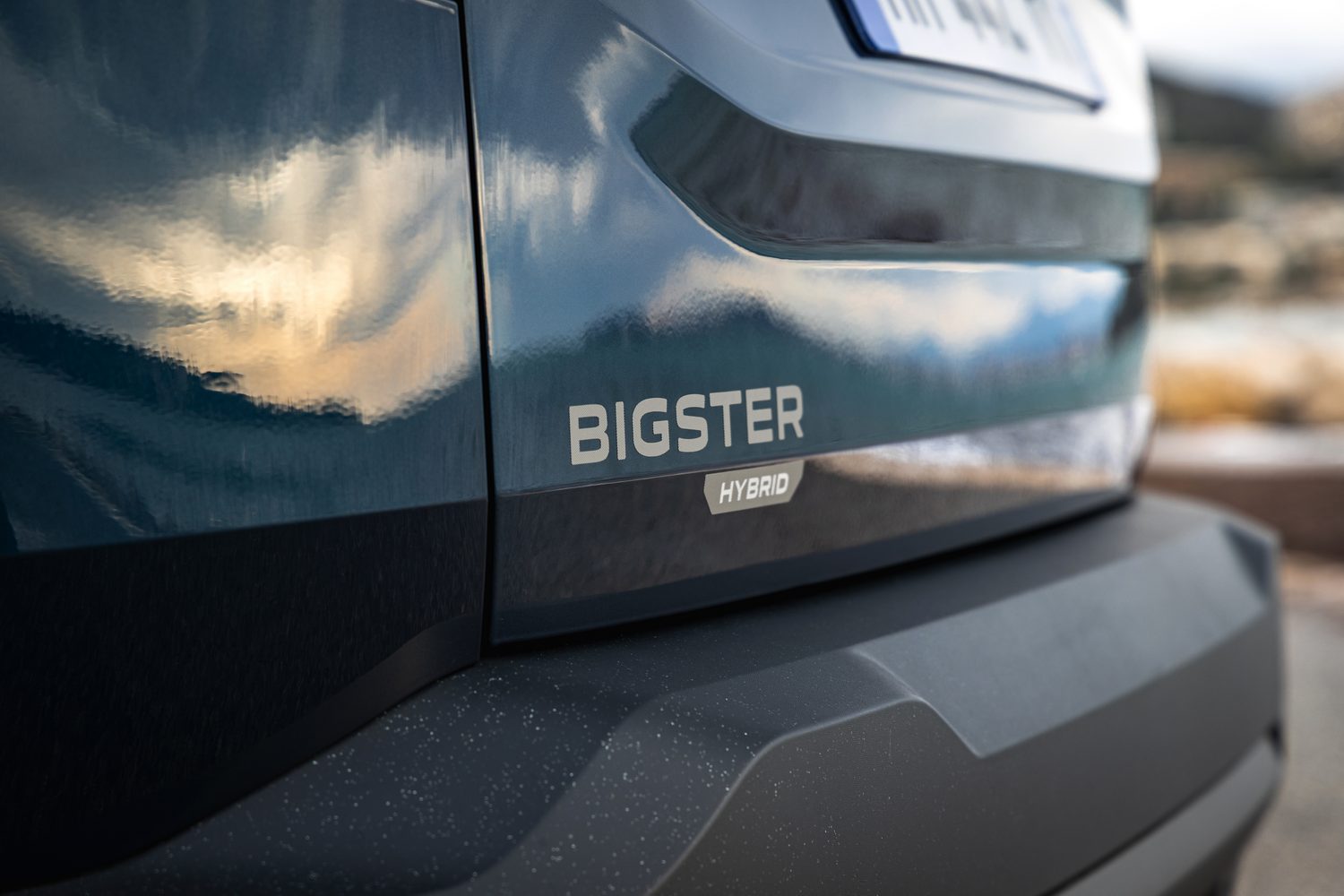
Glacier White is the only standard colour for the Bigster, and while it's a very Dacia thing to just stick with the most basic spec, it's not a great colour for this car. All of the metallic paint options cost €745, and the Indigo Blue of our test car looks very smart indeed, especially when paired with the contrast black roof option.

Shadow Grey is possibly a bit too predictable, but Cedar Green works very nicely, while Pearl Black is a smart choice, too. Normally, we'd be keen on a bright colour option, but the 'Terracota' orange paint looks a little garish on a car the size of the Bigster.
Going for the black roof costs an extra €400, incidentally.
Interior, practicality, tech & comfort of the 2026 Dacia Bigster
- Masses of space
- Comfortable seats
- Tactile touchpoints

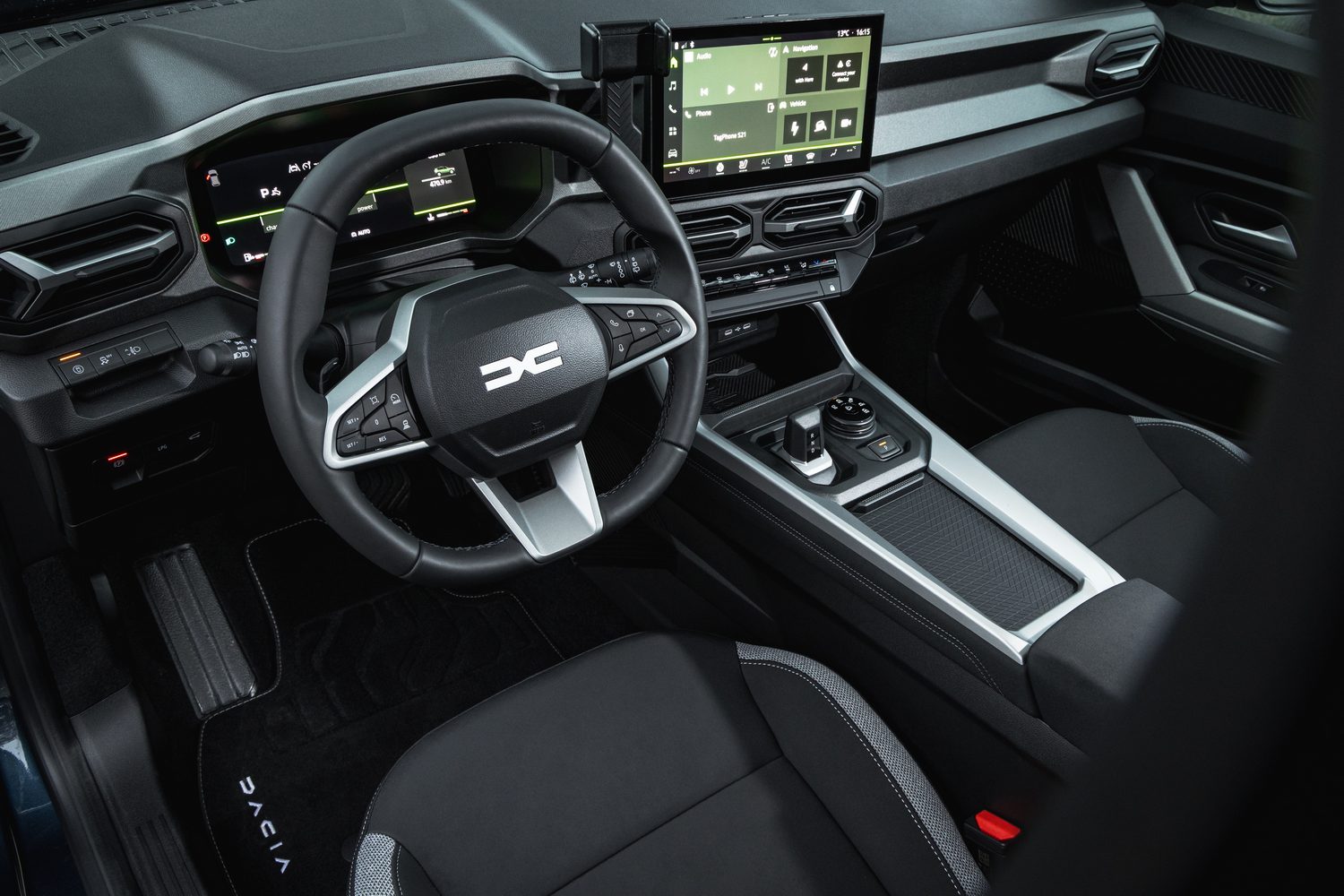
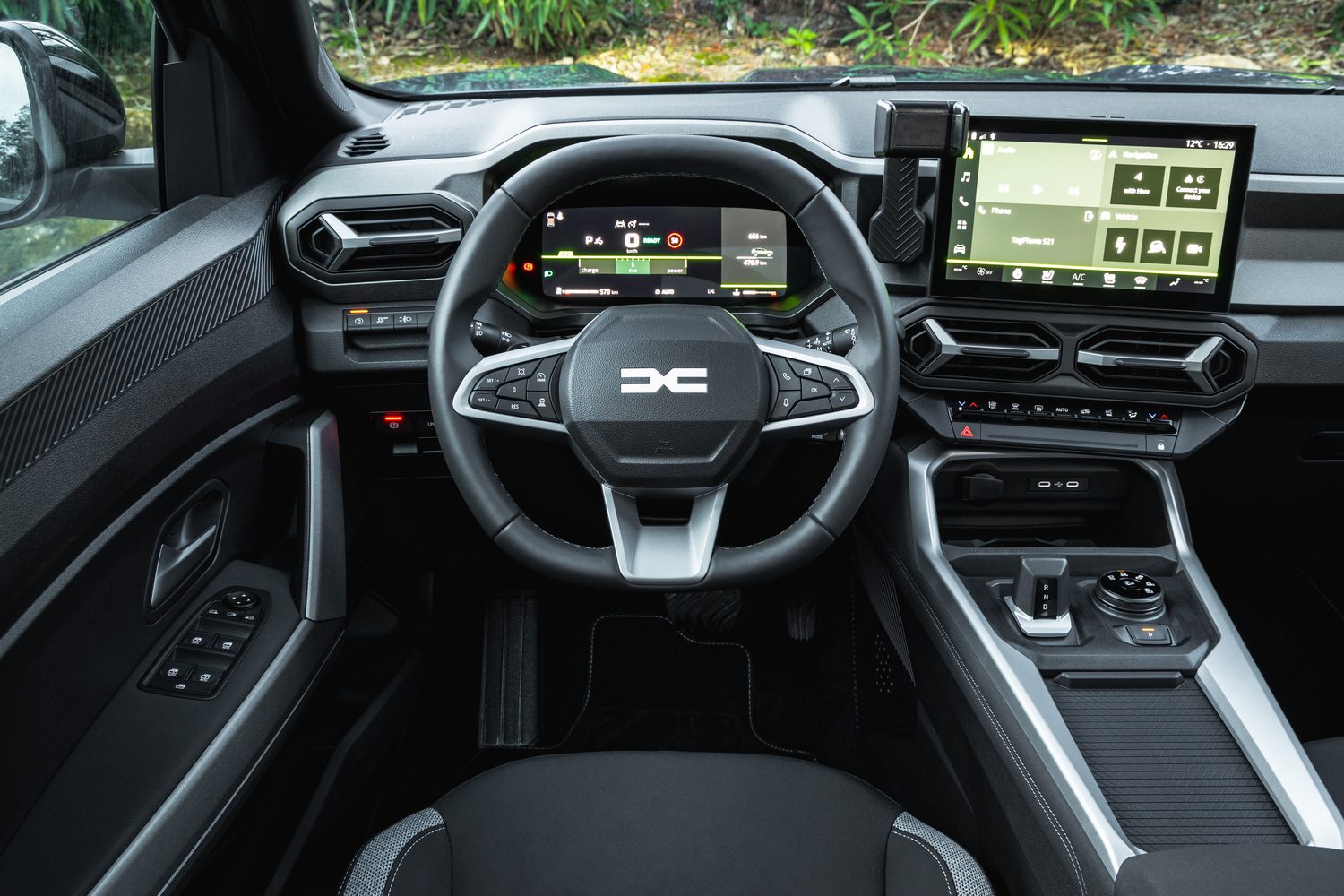
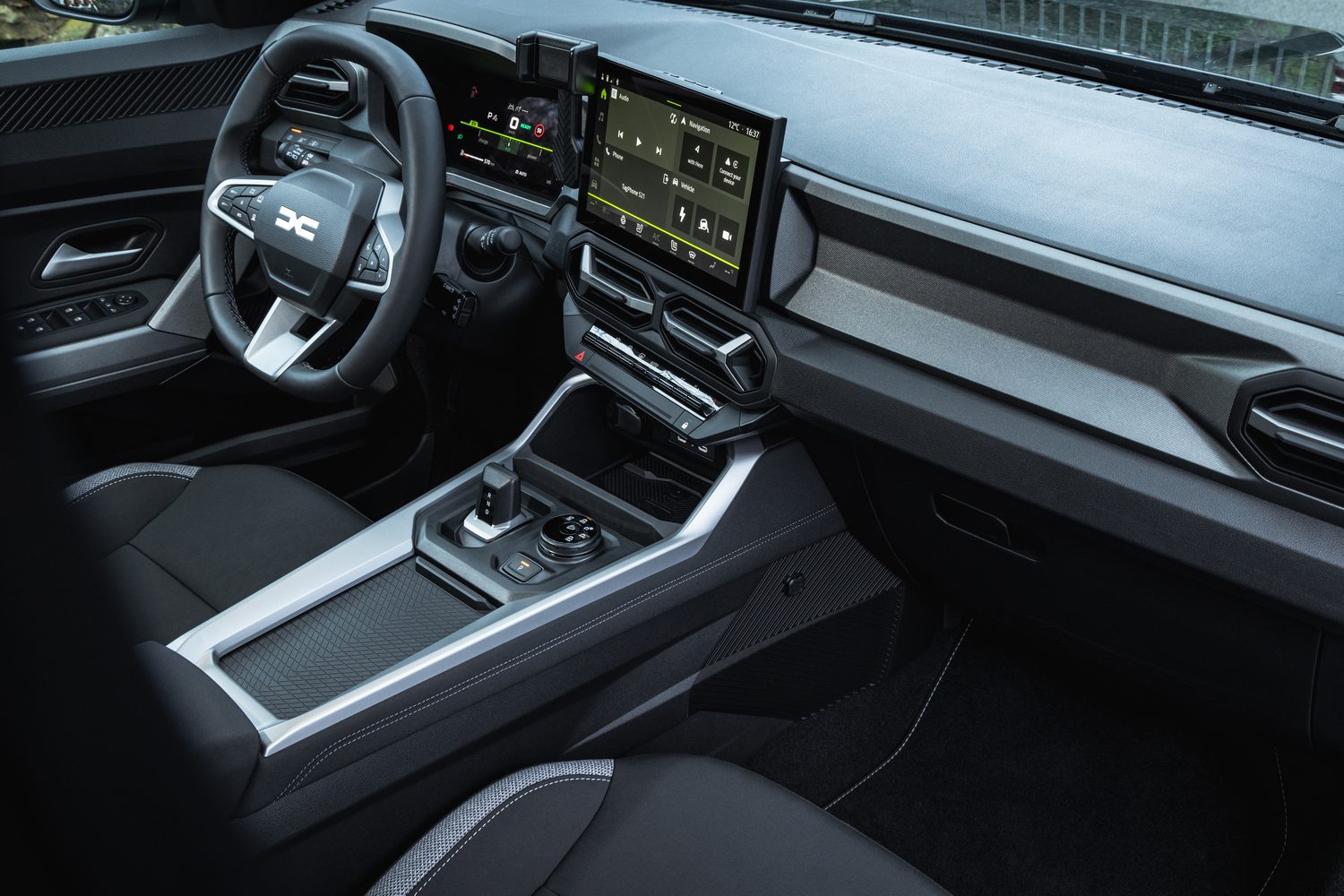
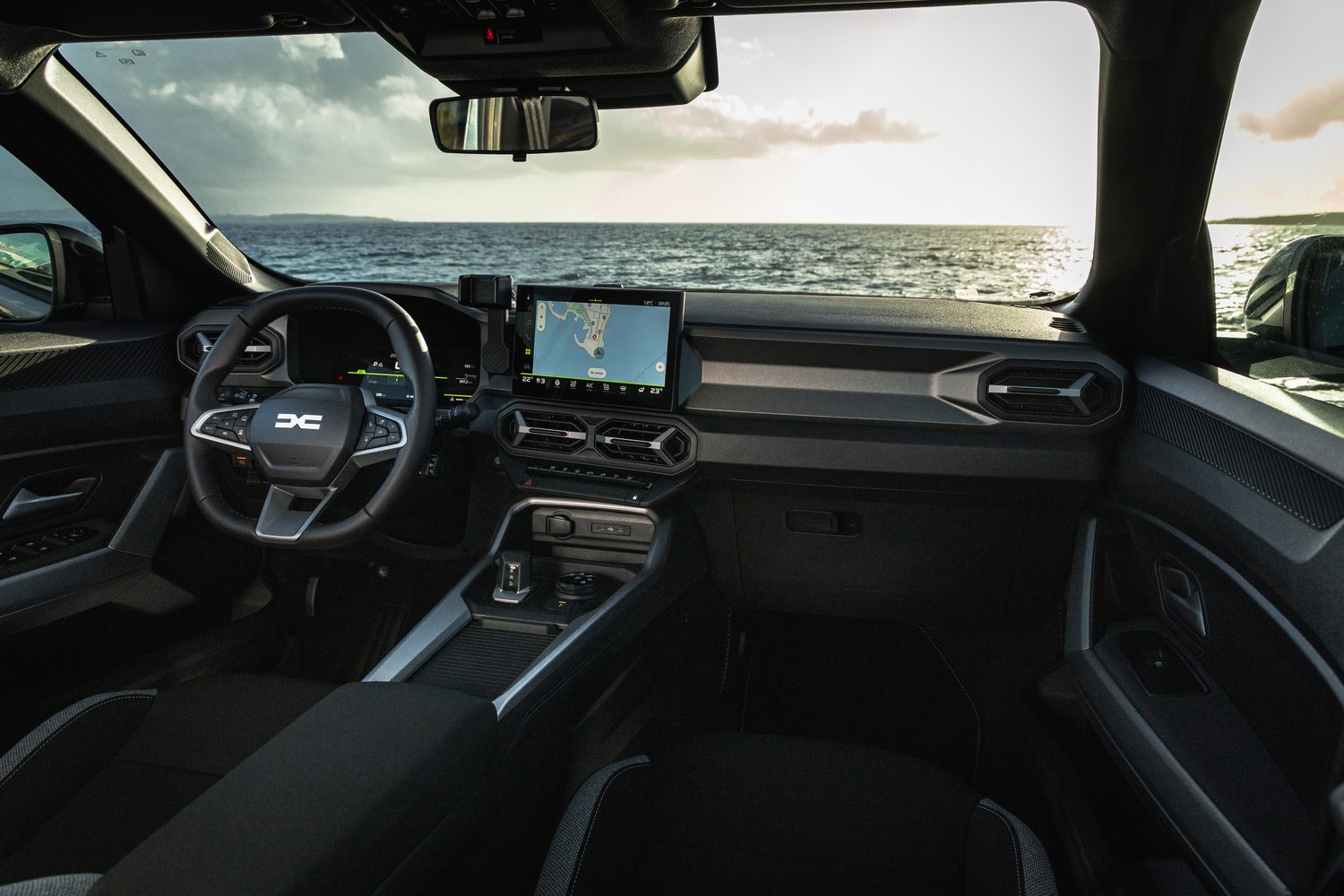
The Bigster's cabin features the usual Dacia blend of hardwearing plastics with more tactile materials on the touchpoints, such as the steering wheel and the major controls.
Getting comfortable in the driver's seat
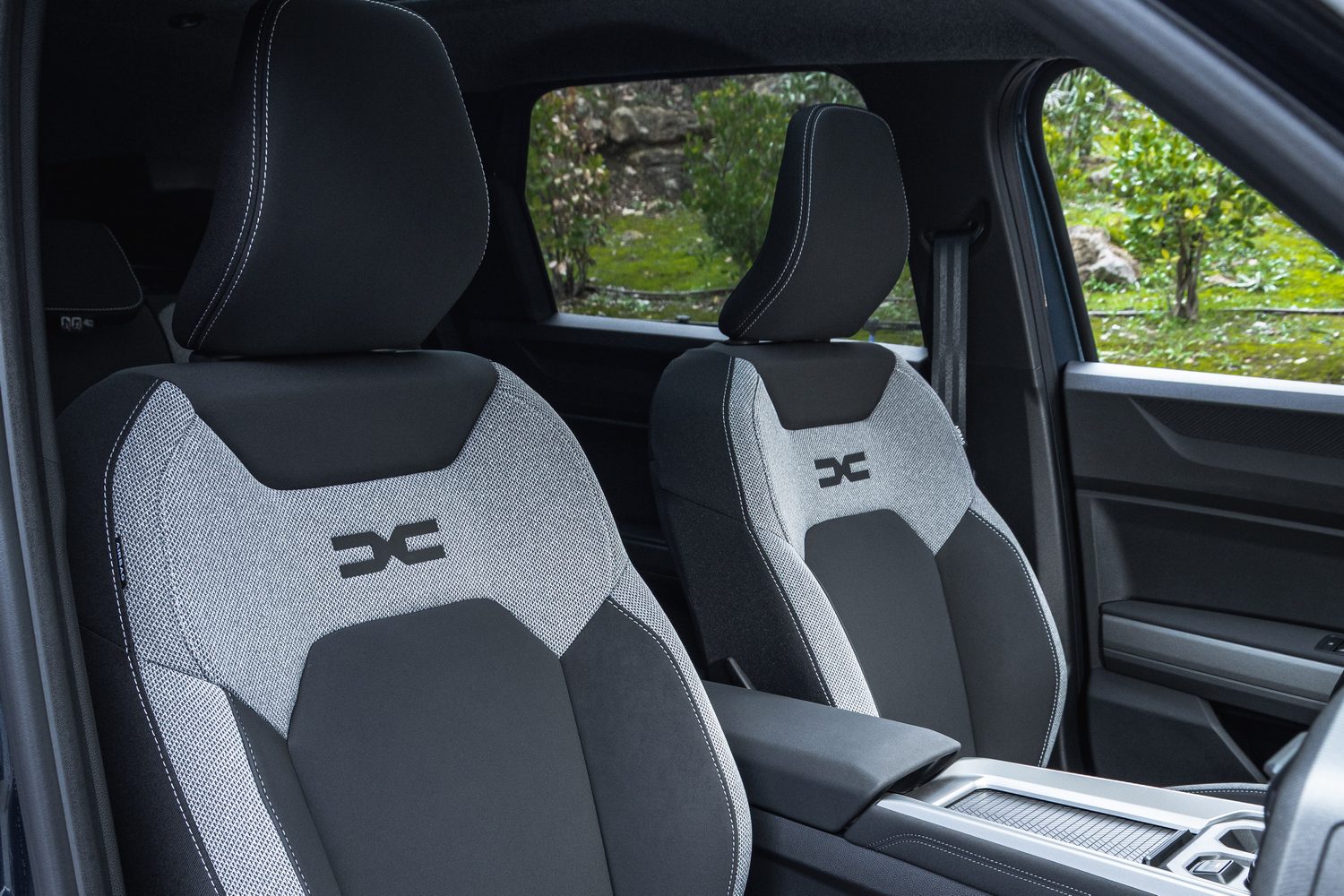
You'd be hard-pressed not to get comfortable in the Dacia Bigster's roomy driver's seat. The chair itself is exceptionally comfortable in and of itself, and our Journey-spec test car (one down from top-spec Extreme) featured both some nice-to-the-touch tweed-like trim, and electric adjustment.

Not full electric adjustment, mind - just for the height and backrest. Sliding the seat back and forth means reaching for the manual release under the cushion. There's plenty of adjustment in the seat, and in the reach/rake-adjustable steering wheel too, so it's not hard to find a good driving position for a variety of body shapes.
The seats retain their comfort and support on longer journeys too.
Infotainment and technology
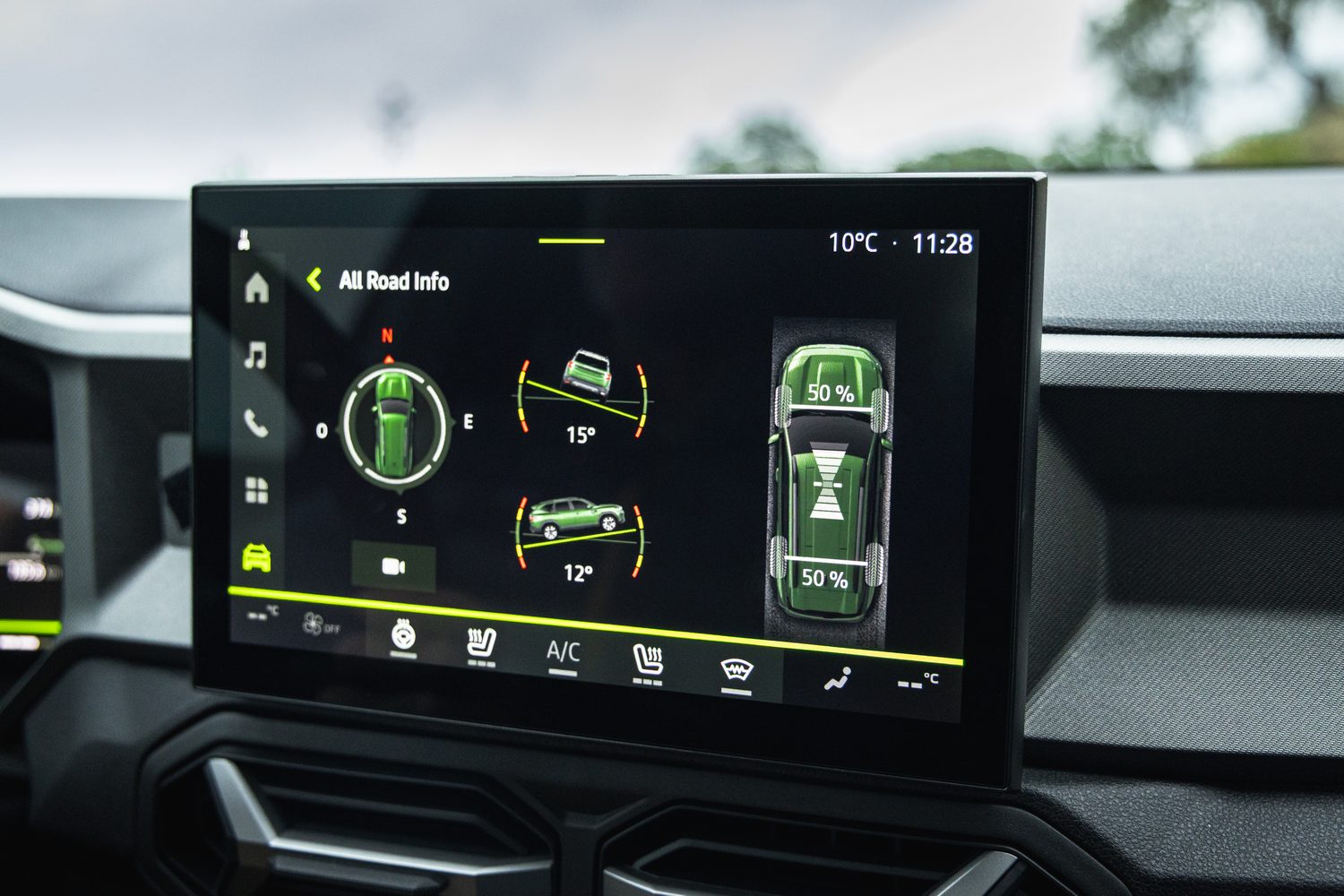
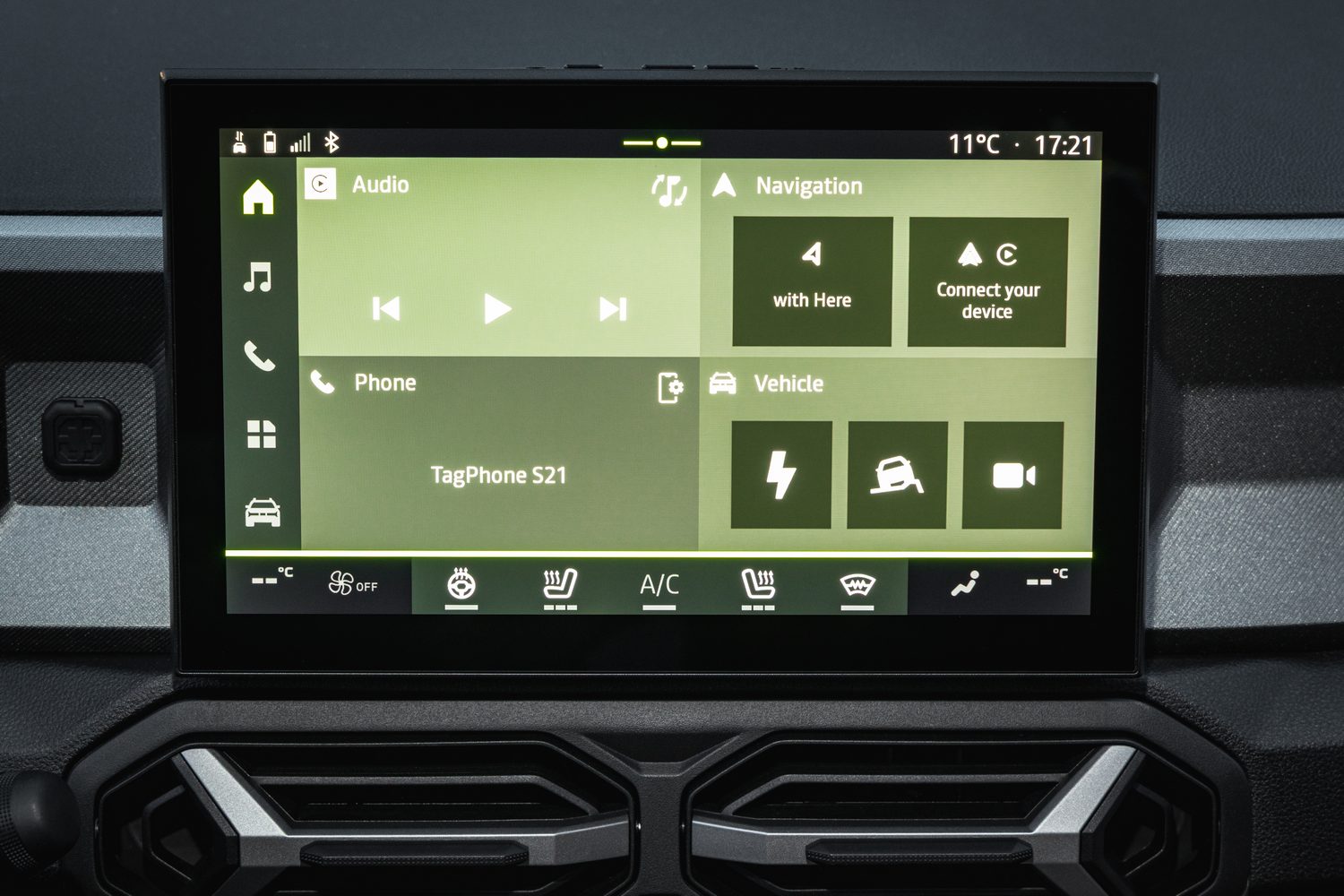
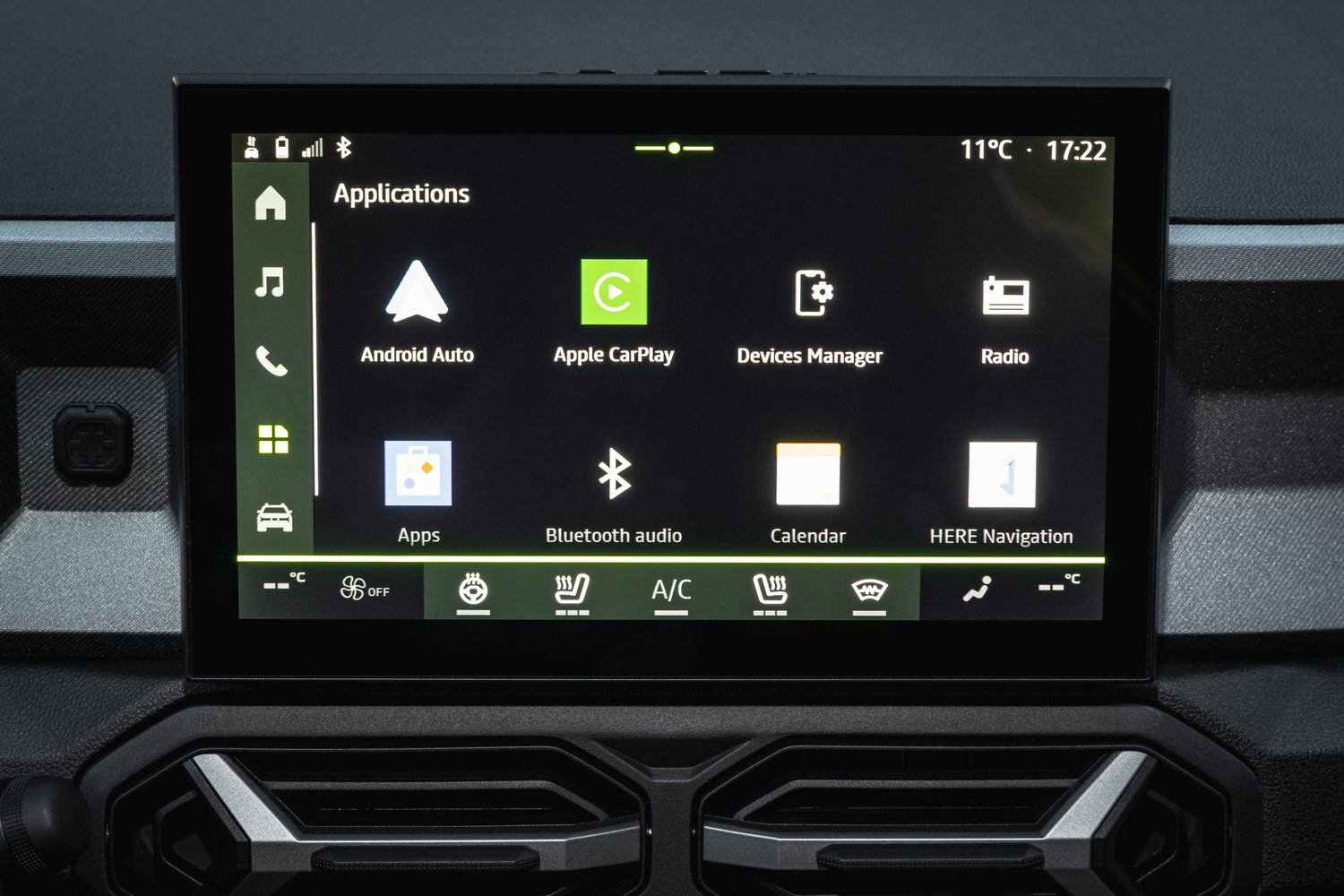
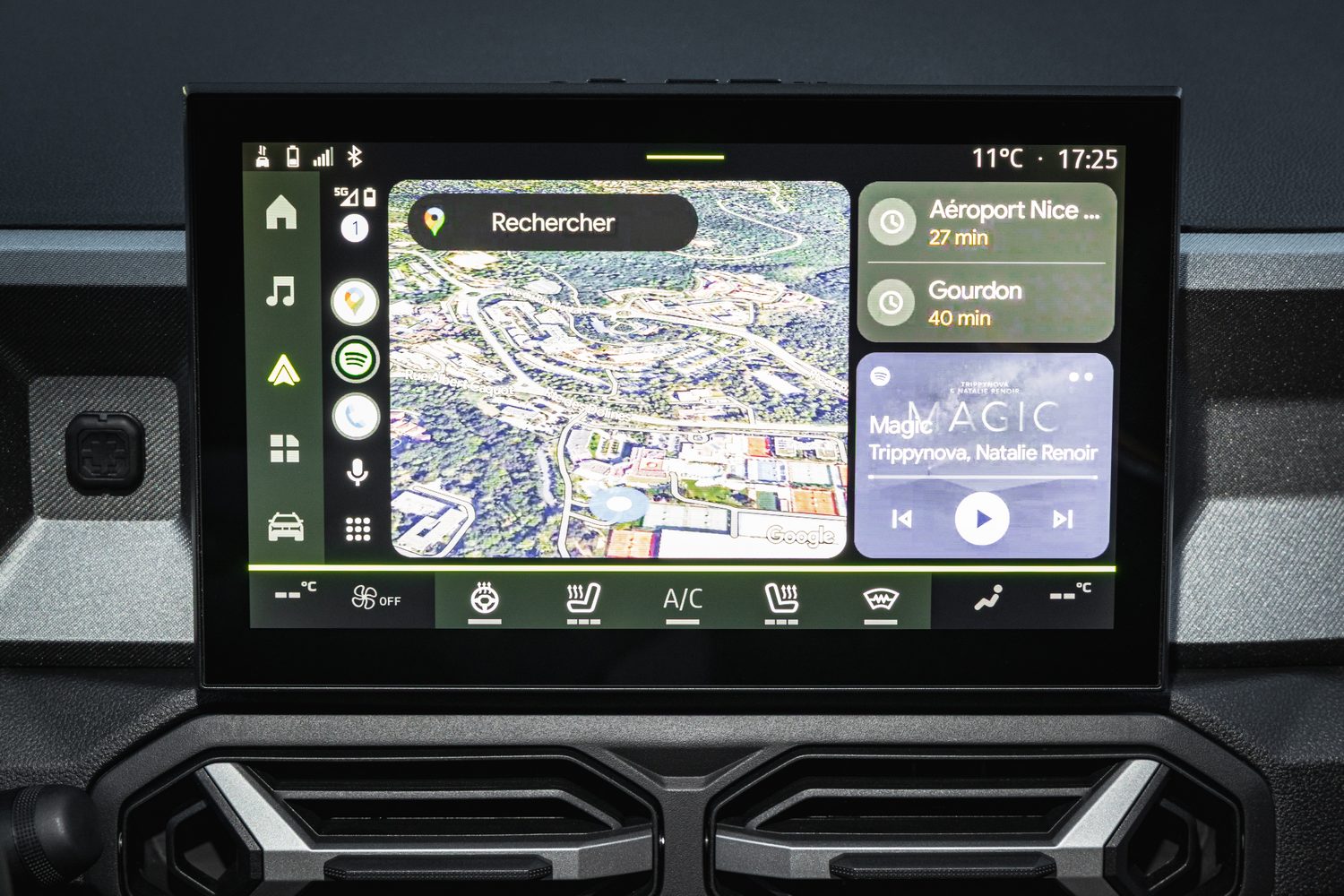
Dacia is rolling out its 10.1-inch touchscreen as a common component across pretty much all of its models now, and thankfully it's a simple screen to operate.

The software is quite monochrome - black, white, dark green and the occasional splash of orange are all you'll get - so many of the menu screens look rather similar, but this is a system with relatively limited functionality, so you'll be easily finding your way around it in no time.
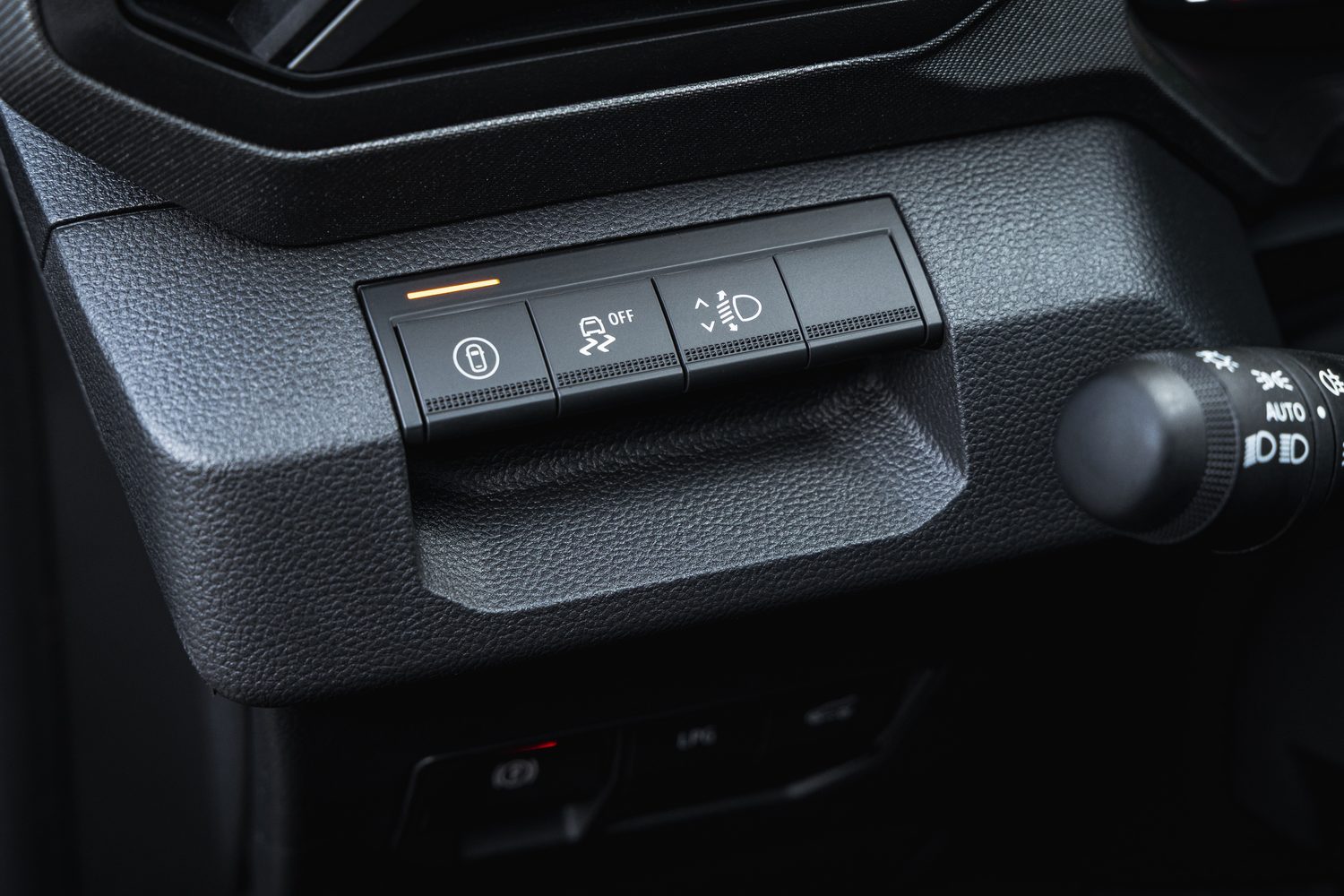
Dacia, thanks to its Renault parentage, thankfully still gives you plenty of physical buttons, including some nice, high-quality items lifted from the Renault Scenic for heating and air conditioning, and these go a long way to making the car easier to operate.

The driver also gets a ten-inch screen for their instruments, and again this is a simple layout, with three primary display setups, and a panel to one side that acts as the trip computer.
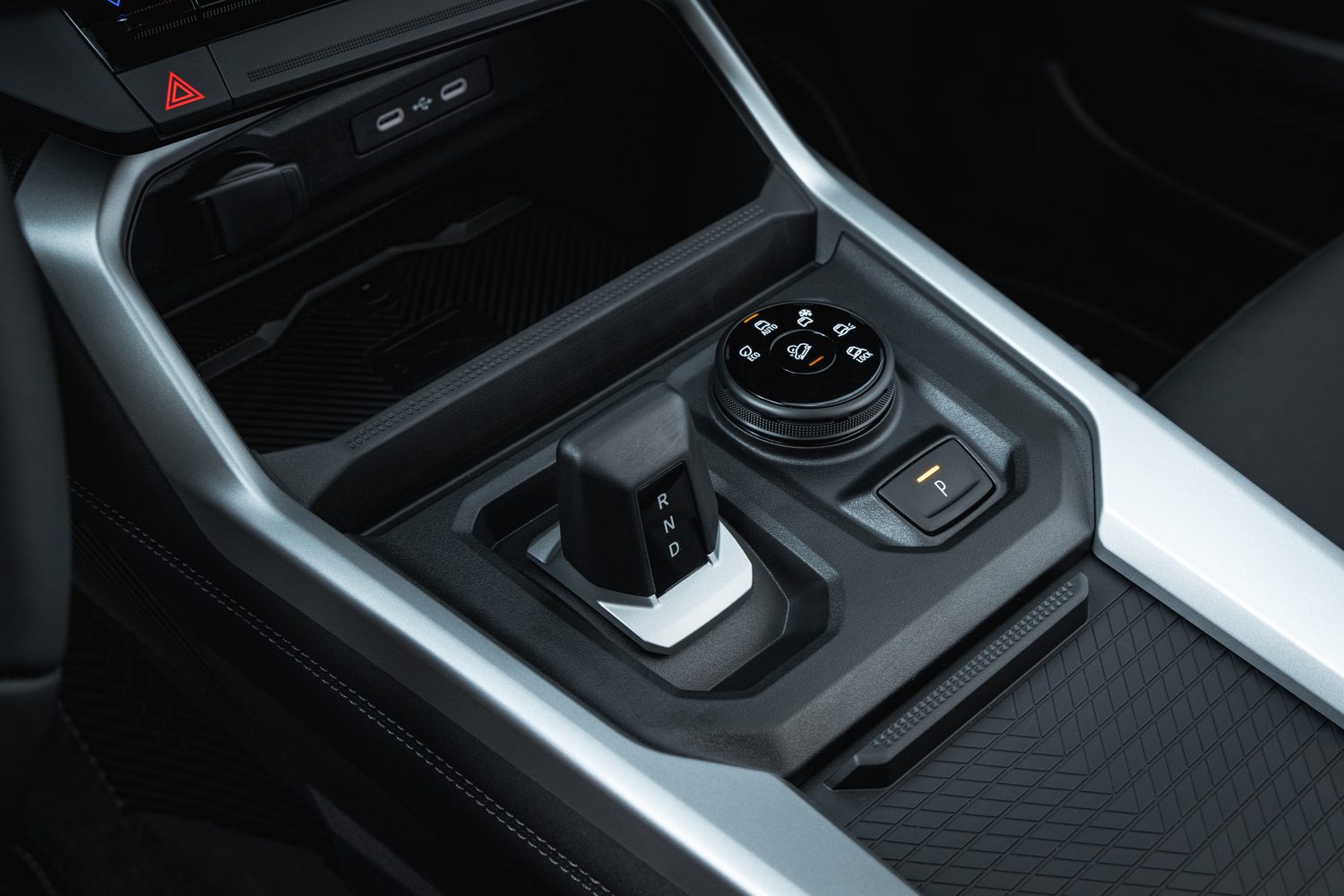
There's a pair of USB sockets down low on the centre console, and neat physical switches on the steering wheel for operating the cruise control and the on-screen displays. Stereo controls, as is the Dacia way, are on a third column stalk to the right of the steering wheel.
Our only gripe with the Bigster's tech setup is that the volume controls (other than behind the wheel) are small hard-to-see buttons on top of the touchscreen, and a proper rotary volume control would be nicer. Optionally, you can jazz up the Bigster with a high-end Arkamys sound system, and a wireless phone charger.

Practicality around the cabin
Practicality is basically the Bigster's middle name (Dacia Practicality Bigster at your service...) so there are plenty of storage spaces up front. There's an open area at the base of the centre console for a start, in which you'll find the wireless phone charger if it's been fitted, while just next to that are two notably deep cupholders under a sliding cover.

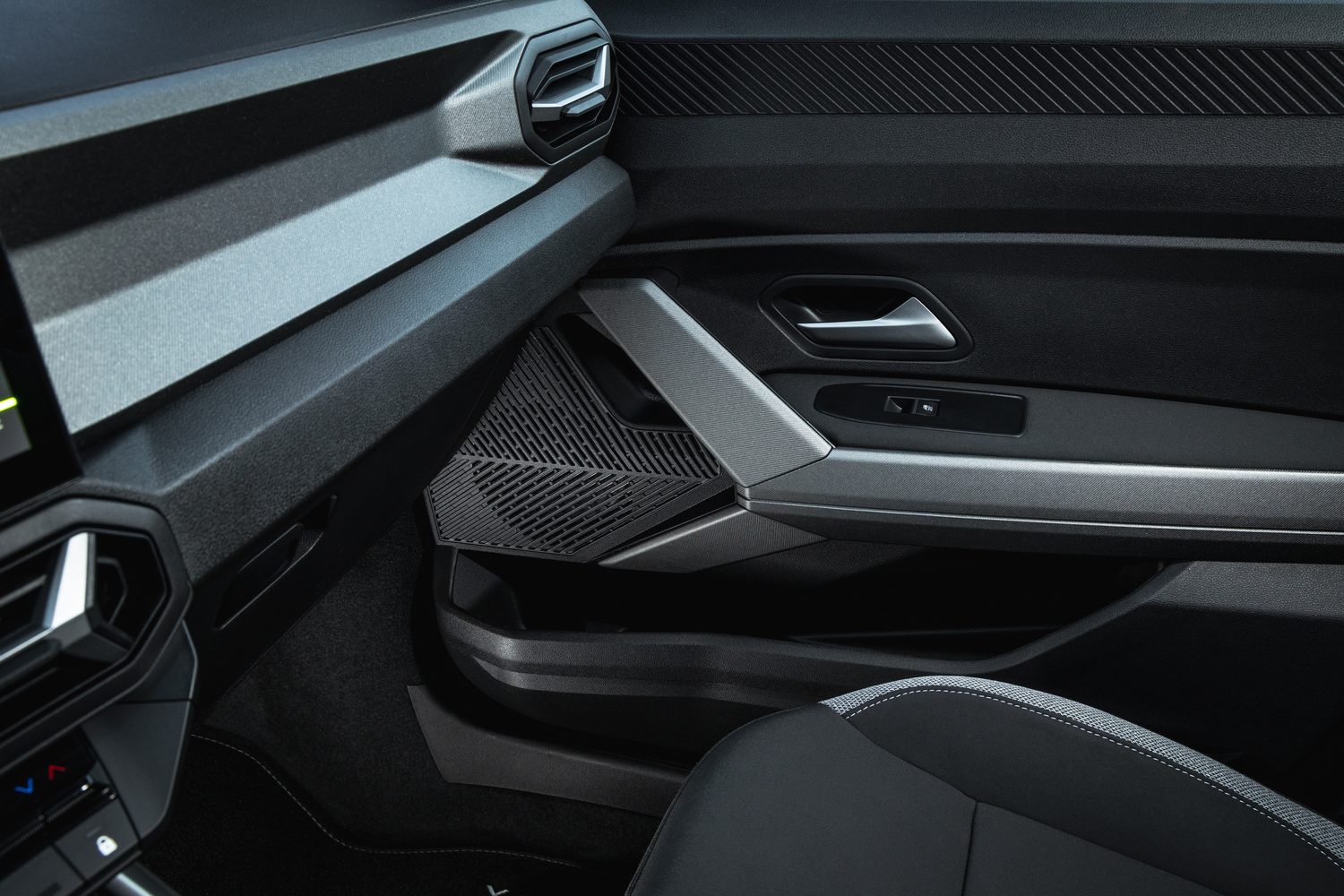
Under the front centre armrest is another deep storage box, and there are usefully sized door pockets.
Rear-seat passenger space
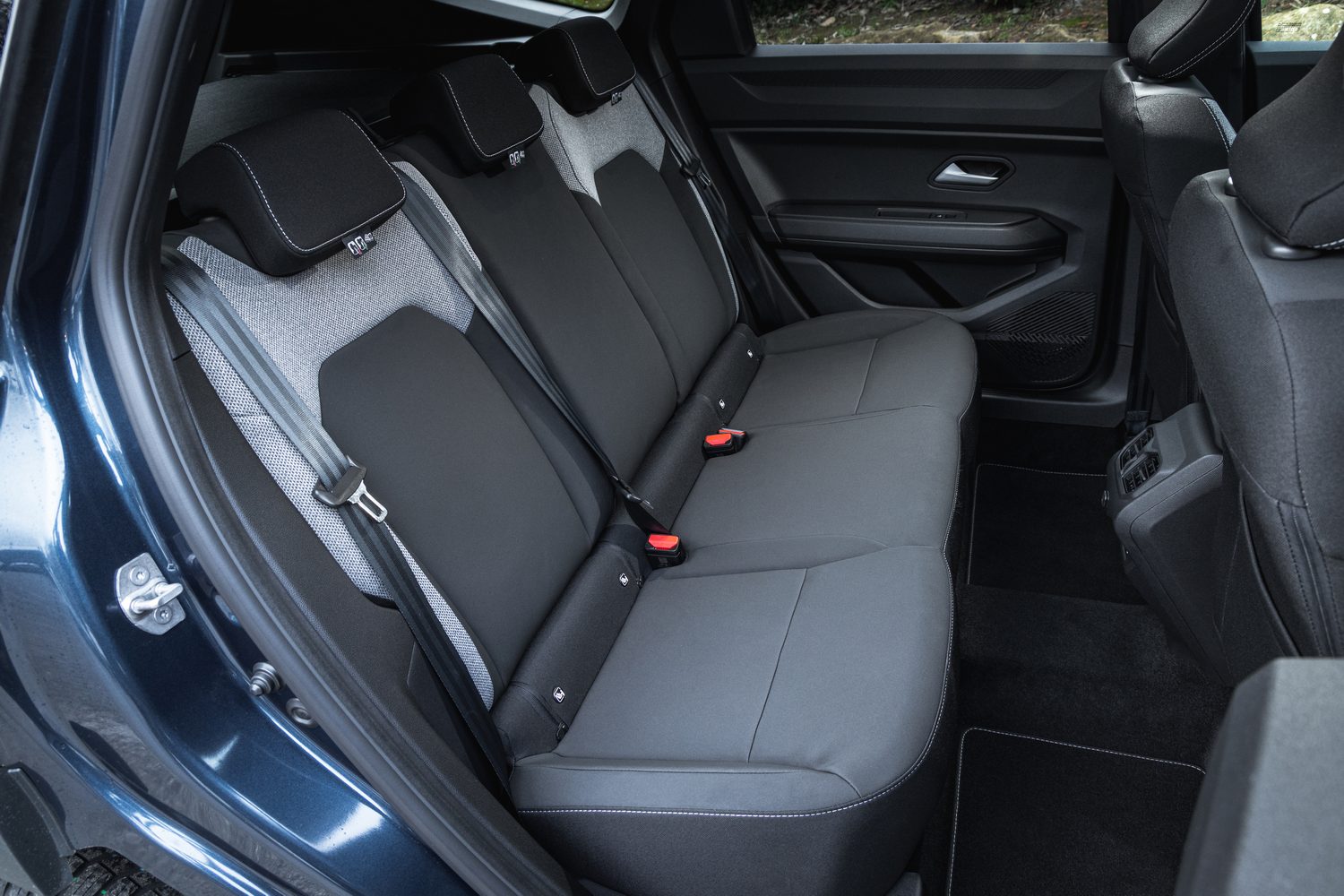
This is where the Bigster really pulls away from the related Duster - rear-seat space is simply massive. For the record, I'm 185cm tall, and I have plenty of lounging space in the back of the Bigster, with headroom and legroom simply not an issue.

The rear seats are more comfortable than those of the Duster too, not least because they're set farther back and lower down, so you sit slightly more reclined. I'd happily spend a long journey in the back of the Bigster, especially if it's been fitted with the optional glass roof, which adds a good deal of extra light and a sense of airiness to the rear.
The central rear seat is fairly narrow, but it's enough to squeeze in an extra rear-seat passenger when needed, although there is a transmission tunnel in the back which will reduce the space available for their feet.
Those in the rear seats get their own air vents and two USB-C sockets.
Fitting child seats to the Dacia Bigster
There are ISOFIX anchor points in the two outer rear seats of the Bigster, but none in the front passenger seat. The better news is that, with the Bigster's large rear doors, and the sheer amount of space on offer, we can't see you failing to get even the biggest child car safety seats to fit. And with that roomy rear bench, there may be enough space in the centre rear seat to squeeze in a booster cushion, secured with the seatbelt.
Boot space in the Dacia Bigster
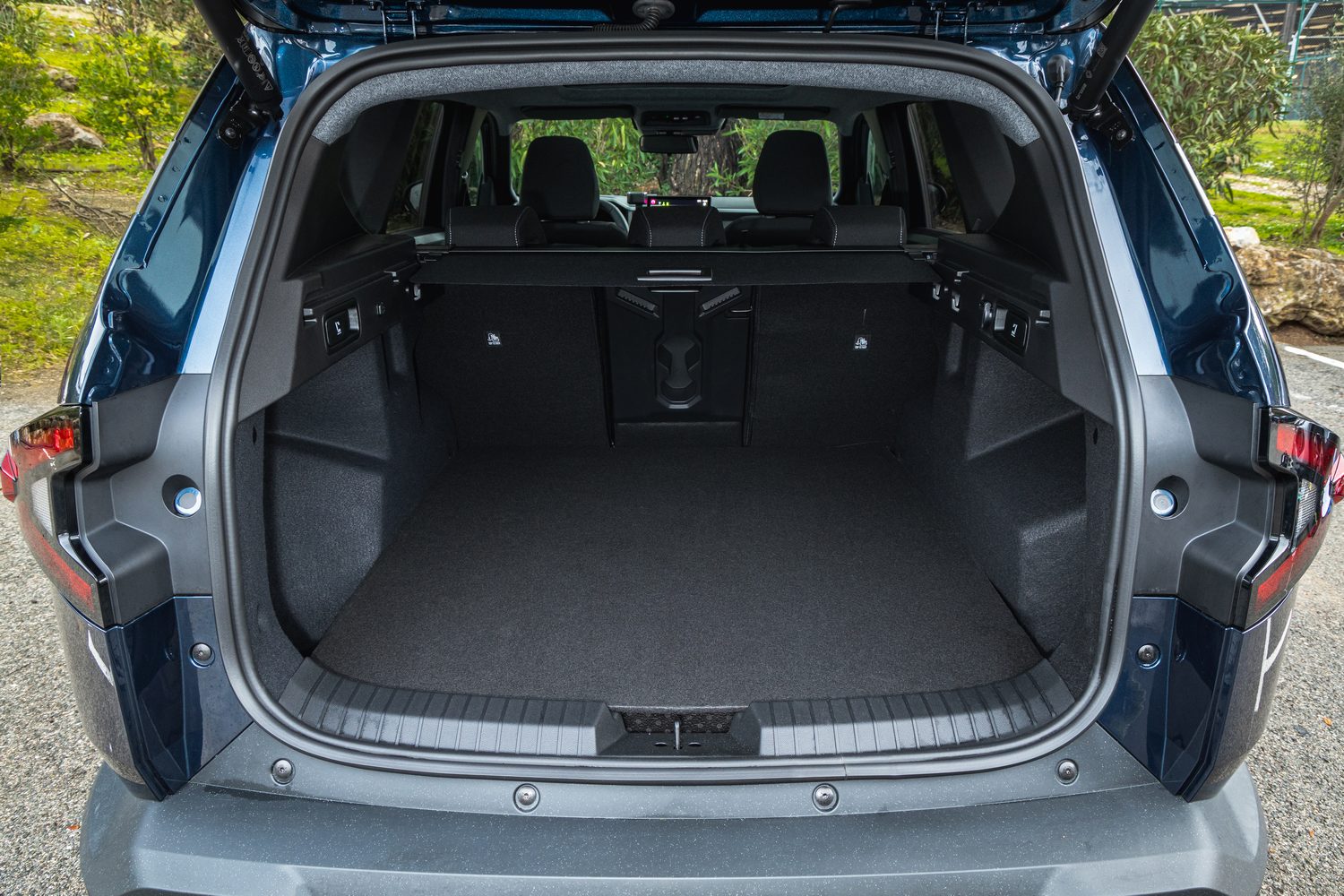
The Bigster, in general, has a massive boot, which stretches all the way to 677 litres if you buy the front-wheel-drive petrol model. The popular 1.8-litre Hybrid 155 has a slightly smaller, but still respectable 612 litres of boot space, up to the luggage cover.

The Hybrid 150 4x4 has had to make a little compromise though, what with needing to package a rear-mounted electric motor and - in European versions - the extra fuel tank that gives the engine an LPG fuel capability (which isn't coming to Ireland).
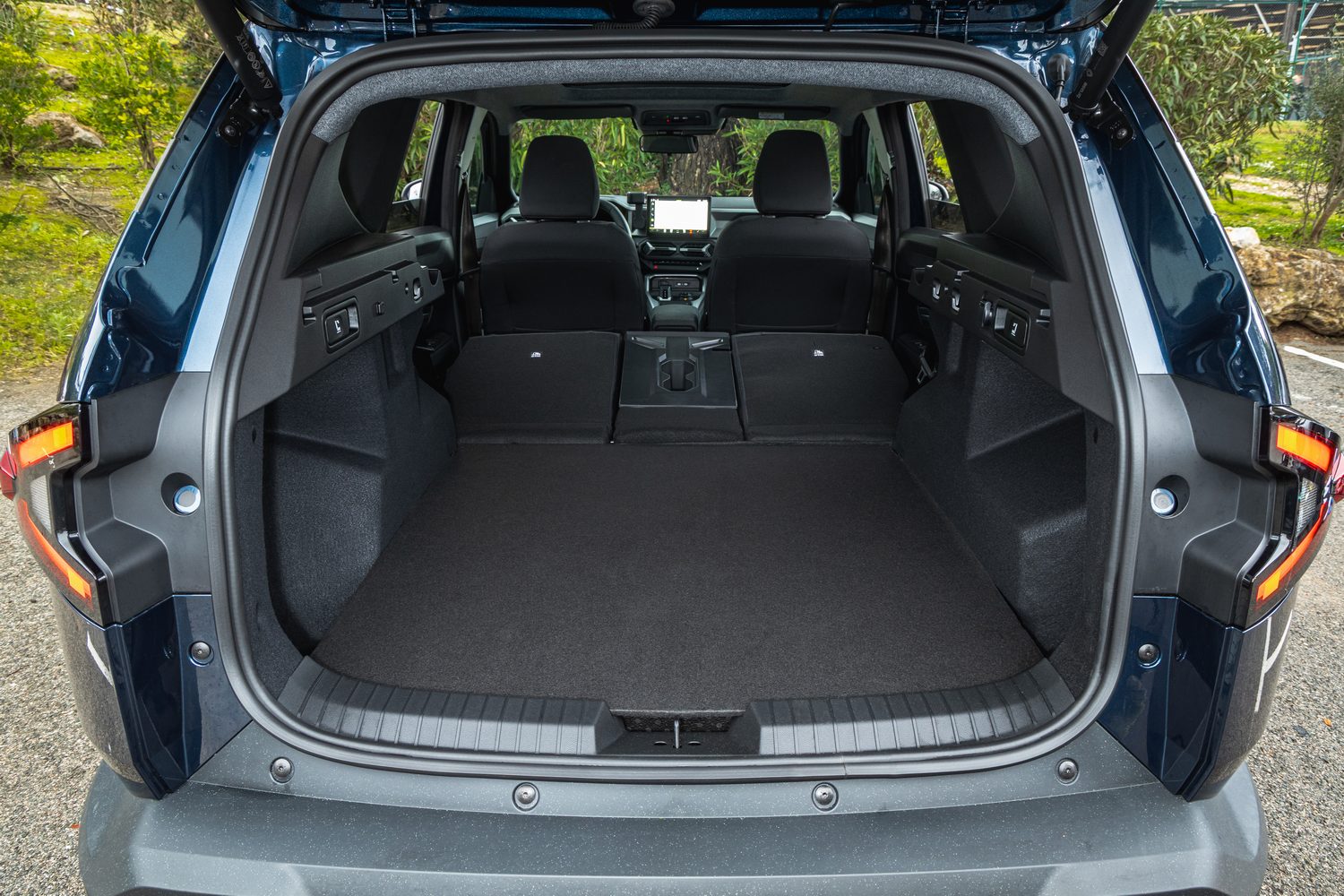
All of that drops the available boot volume to 556 litres, which is still a very useful amount of space. Drop the rear seats (there are handles in the boot and the seatbacks are spring-loaded) and you get a flat loadspace measuring 1,856 litres - or 1,799 litres if the panoramic glass roof is fitted.

Inside the boot area, there are four moulded-in bag hooks, a 12-volt socket, small extra storage areas to each side and the option of a net that can be slung off the back of the rear seats to carry delicate items. Optionally, the Bigster can be fitted with an electric tailgate too.
Towing with the Dacia Bigster
If you've gone for the front-wheel-drive Hybrid 155 model, then the Bigster's braked towing weight limit is 1,000kg. However, upgrade to the Hybrid 4x4 model, and that is boosted to a much more robust 1,500kg, and Dacia's engineers say that's not just a 'flat surface' towing capacity but one that's viable on long journeys and even off-road.
Safety in the Dacia Bigster
Dacia has a somewhat fraught relationship with the Euro NCAP, often being stuck with poor scores because it refuses - on the grounds of cost and customer tastes - to fit higher-end electronic safety systems as standard. So the Bigster has a three-star Euro NCAP rating, with a 69 per cent score for adult occupant protection, but a much higher 85 per cent for child occupant protection. The Bigster was marked down for the lack of an airbag between the front seats' occupants, for example. The Bigster's scores for protection of vulnerable road users and safety assistance were 60 per cent and 57 per cent, respectively.
Performance of the 2026 Dacia Bigster
- Adequate performance
- Can be noisy when pushed
- Impressive fuel economy

You'd hardly think that the lineup of compact petrol and hybrid engines would be enough to shift the Bigster's apparent bulk, but appearances can be deceiving...
Driving the Bigster Hybrid 150 4x4 in France - Neil Briscoe
I really like the standard Bigster Hybrid 155 front-wheel-drive model, and I've previously rated it as possibly the single best all-round car you can buy in Ireland right now. I stand by that, but there's a chance that the Hybrid 4x4 is better.

We've already tested this hybrid 4x4 system in the heat and sand of Morocco, in the Duster, but this is our first chance to try it out in the larger Bigster, and in the sort of damp, rainy conditions that we're much more likely to find at home. France's Mediterranean coast is famed for its sunlight and warmth, but today it looks and feels distinctly Irish. Which is to say, everything is dripping slightly.
Thankfully, then, this Bigster Hybrid has four-wheel drive. However, while you might reasonably expect this Hybrid 150 4x4 to be the same hybrid setup as the front-drive version with an additional drive shaft, or an extra electric motor to drive the rear wheels, it's not...

In fact, this is a completely separate hybrid powertrain, based around the familiar turbocharged 1.2-litre three-cylinder petrol engine that powers the entry-level version of the Bigster. In this Hybrid 150 4x4 model, it's combined with a six-speed dual-clutch automatic gearbox, and a 22kW electric motor nestling between the rear wheels, with its own dedicated two-speed transmission. The combined power output, as you might have guessed from the badge, is 150hp, and the petrol engine's peak torque of 230Nm is now complemented by the 87Nm of the electric motor.
That two-speed transmission is a clever addition. It allows the electric motor to have an ultra-low first gear - ideal for initial acceleration and for extra bursts of rear traction when driving off-road - and a second ratio for higher speeds.

Equally, the transmission allows the electric motor to de-clutch entirely at light power demand, turning the Bigster back into a front-wheel-drive petrol car for short bursts. Of course, it can also - thanks to the small 0.84kWh battery - be driven for short bursts on electric power alone, turning this Bigster into a rear-wheel drive vehicle when the mood takes it.
Dacia claims that the Bigster Hybrid 4x4 will spend up to 60 per cent of its urban journeys running on just the battery, and given how often we observed our test car defaulting to electric power, that seems realistic.

Performance is a bit mixed, however. The 10.2-second 0-100km/h time is entirely reasonable, but also a clear indication that this is no performance car. It's also a little compromised in terms of refinement, as the engine can be loud when extended.
However, refinement improves a great deal when you're up to cruising speeds, and as with the rest of the Bigster range, this hybrid proves to be an excellent long-haul cruiser. It's even quite good fun when the road turns twisty.

The steering is light and not very direct, and the suspension is soft (leading to a generally impressive ride quality) but the Bigster's relatively low weight by hybrid SUV standards means that its lean is quite well contained, and it feels surprisingly biddable through corners, helped by the fact that you can place the car perfectly thanks to the chunky bonnet edges being visible from the driver's seat.
All-round visibility is excellent, which makes the Bigster easy to manoeuvre in town and, in spite of its name and relatively tall roof, it's not actually all that big anyway.

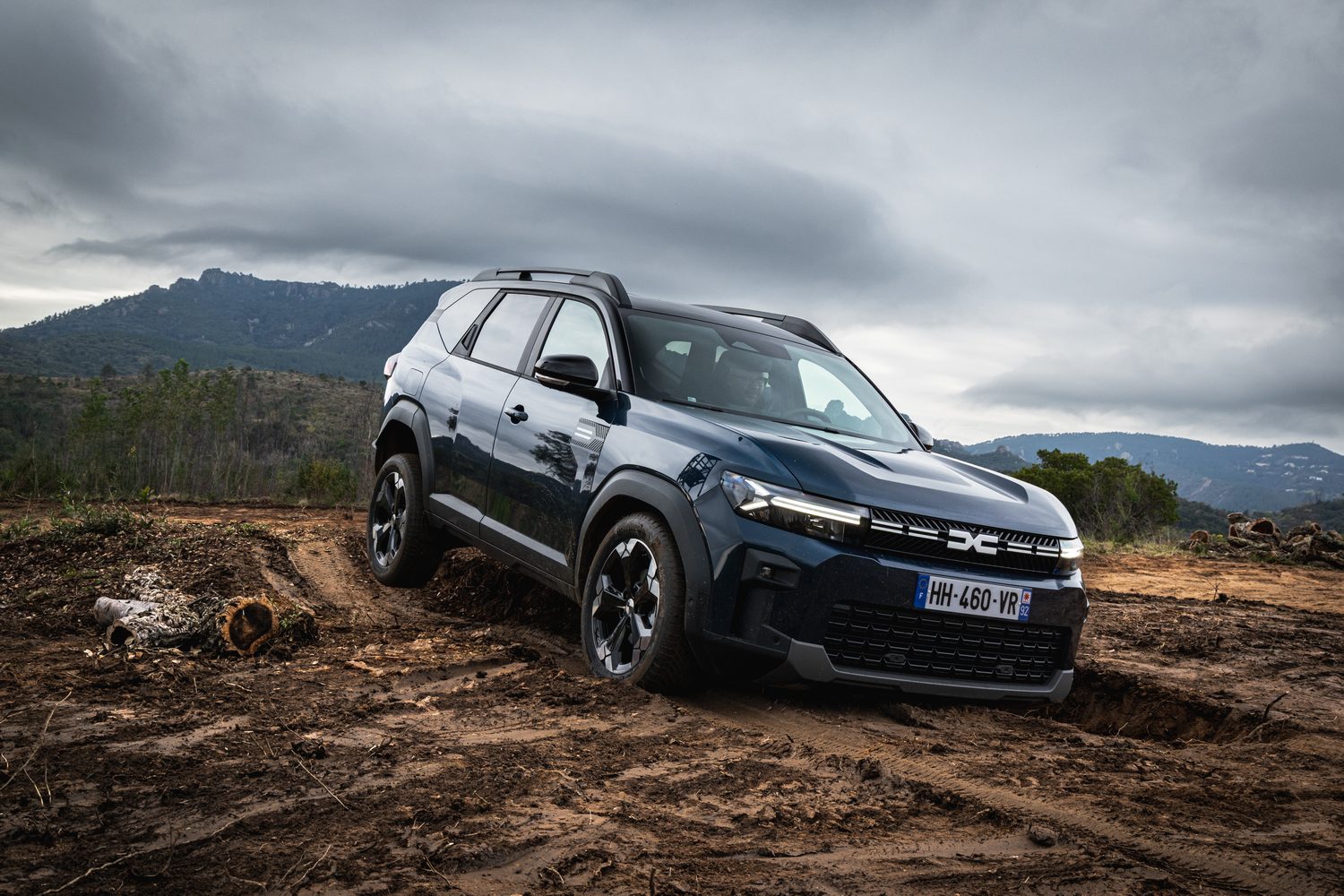
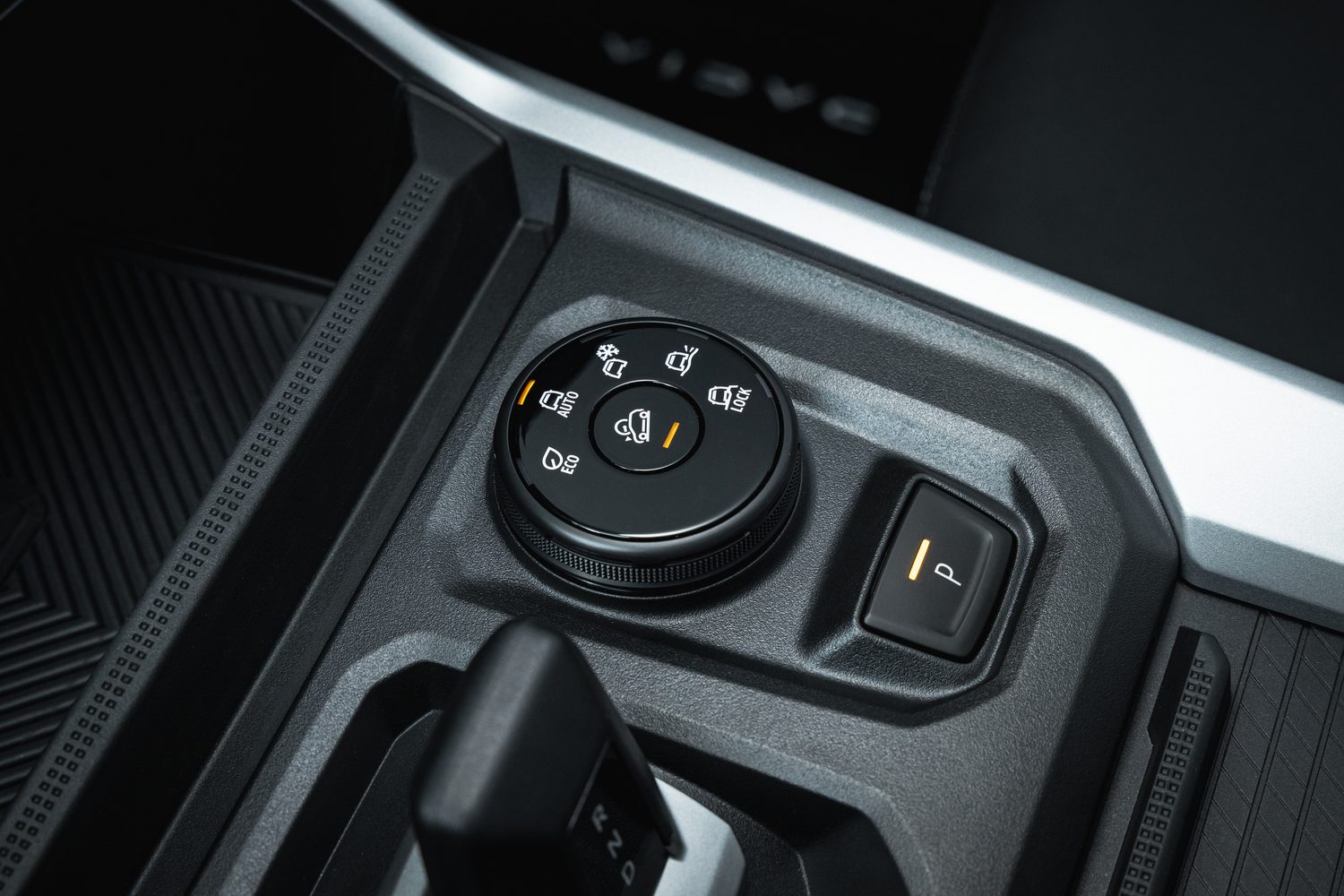
The Bigster Hybrid 4x4 also excels off-road. We already knew that the Bigster was a good off-roader thanks to the manual petrol 4x4 model, but this hybrid version is easier still to manage off-road thanks to the automatic gearbox (which has its own steering wheel paddles for manual control) and the selectable terrain modes.
On a challenging off-road course, the Bigster scrambled easily up rocky, slippery slopes, forded a couple of rivers swollen by the rain and - in its mud/sand mode - easily waded through a slimy mire in which you'd lose your wellies, never mind a shoe.

Fuel economy and running costs of the 2026 Dacia Bigster
- The petrol engines cost the most to run
- Hybrids very economical
- You won't miss having a diesel
The Bigster is, like all Dacias now, exclusively petrol-powered (LPG markets aside) but you'll find that the entry-level 140hp 1.2-litre engine is a touch thirsty if you want to keep a decent pace up. You'll be much better off, in economy terms, going for one of the two hybrids.

Official CO2 and fuel economy figures
The front-wheel-drive 1.2-litre petrol model records official fuel consumption of 5.4 litres per 100km on the WLTP cycle, but it's difficult to repeat that in the real world unless you drive like a saint. The 130hp 1.2-litre 4x4 manual records 6.1 litres per 100km on the WLTP cycle, but of course the Hybrid 155 manages a much more impressive 4.7 litres per 100km. The Hybrid 150 4x4 is slightly worse off at 5.9 litres per 100km. CO2 emissions range from 105g/km to 137g/km depending on the model so motor tax is never excessive.
Real-world range and efficiency of the Dacia Bigster
No surprise that the hybrids win in this contest. In our hands, the 130hp 4x4 manual was difficult to get below 7.5 litres per 100km in daily driving and would spike above 8.0 litres per 100km. The Hybrid 155 is genuinely economical in real-world driving, though. We easily averaged 5.3 litres per 100km overall in a week of mixed driving, including some long motorway runs, a testament to the Bigster's relatively low weight by SUV standards.

Which makes the economy of the Hybrid 150 4x4 even more impressive. On the route leading to the off-road driving section of our test, we averaged 5.6 litres per 100km, on a mix of busy urban roads, motorway and some twisty country roads.
Even better, after tackling the off-road course - which is always going to drive the consumption up - we returned to base having averaged 6.4 litres per 100km. So, in day-to-day driving, the Hybrid 150 4x4 should be very economical indeed.
Servicing the Dacia Bigster
Dacia recommends a Bigster service every year or every 20,000km, whichever comes up sooner. There's an inclusive service plan too, so you can spread service payments as part of a Dacia finance package.
Dacia warranty
Dacia gives the Bigster a three-year, 100,000km warranty. Buyers can pay to extend that further.
Irish pricing & rivals to the 2026 Dacia Bigster
- Prices for Hybrid 4x4 not yet set
- Standard models start from under €30,000
- Bigster undercuts most rivals by as much as €10,000

Bigster prices start from just €29,990 and while you do only get the basic 140hp mild-hybrid 1.2-litre engine with a manual gearbox for that, there is a generous amount of equipment including the 10.1-inch touchscreen.
Prices for the Bigster Hybrid 4x4 haven't been set yet, but given that the Hybrid 155 starts at €35,140, we'd expect the Hybrid 150 4x4's prices to start somewhere around the €37,000 mark, maybe a touch higher.
That makes the Bigster expensive by Dacia standards but Dacia's promise is that model for model it will undercut the prices of rival models by as much as €10,000. That stacks up if you look at the Bigster price list and compare it to those from potential rivals.
Verdict - should you buy the 2026 Dacia Bigster?

The Bigster is a hugely impressive car, and not just when you take the price into primary consideration. The latest Hybrid 150 4x4 model is especially impressive, as aside from a touch too much engine noise, it turns in a remarkable all-round performance. The Bigster has space, practicality and comfort on its side, and it can - effortlessly - climb over pretty much any terrain at which you might point it. It's a tremendous multi-role car, and cements the Bigster's place as, probably, the best car you can buy in Ireland right now.
FAQs about the 2026 Dacia Bigster
What's the fuel economy of the Dacia Bigster?
It depends on which model you choose, of course, but the Hybrid 155 manages 4.7 litres per 100km on the WLTP cycle, and we managed to get 5.3 litres per 100km average out of it on an extended test drive.
Can I tow a caravan with a Dacia Bigster?
Yes, you can. The front-wheel-drive Hybrid 155 has only a 1,000kg braked towing weight, but the 4x4 models can cope with 1,500kg.
Want to know more about the Dacia Bigster?
If there's anything about the Dacia Bigster we've not covered, or you'd like help in choosing between it and other cars, you can avail of our expert advice service via the Ask Us Anything page.