


Exterior & design of the BMW M2 CS
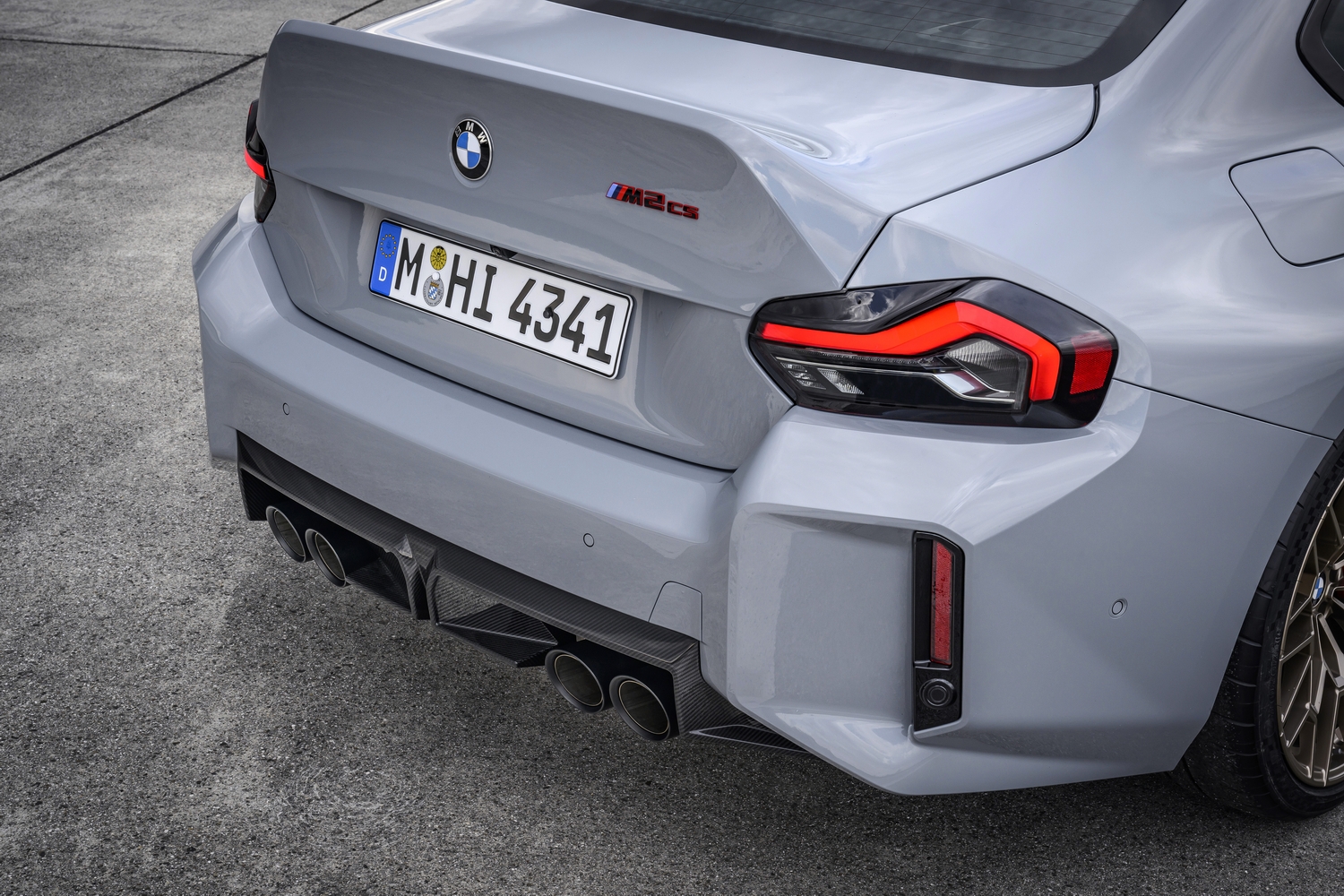
- It's all about the 'ducktail'
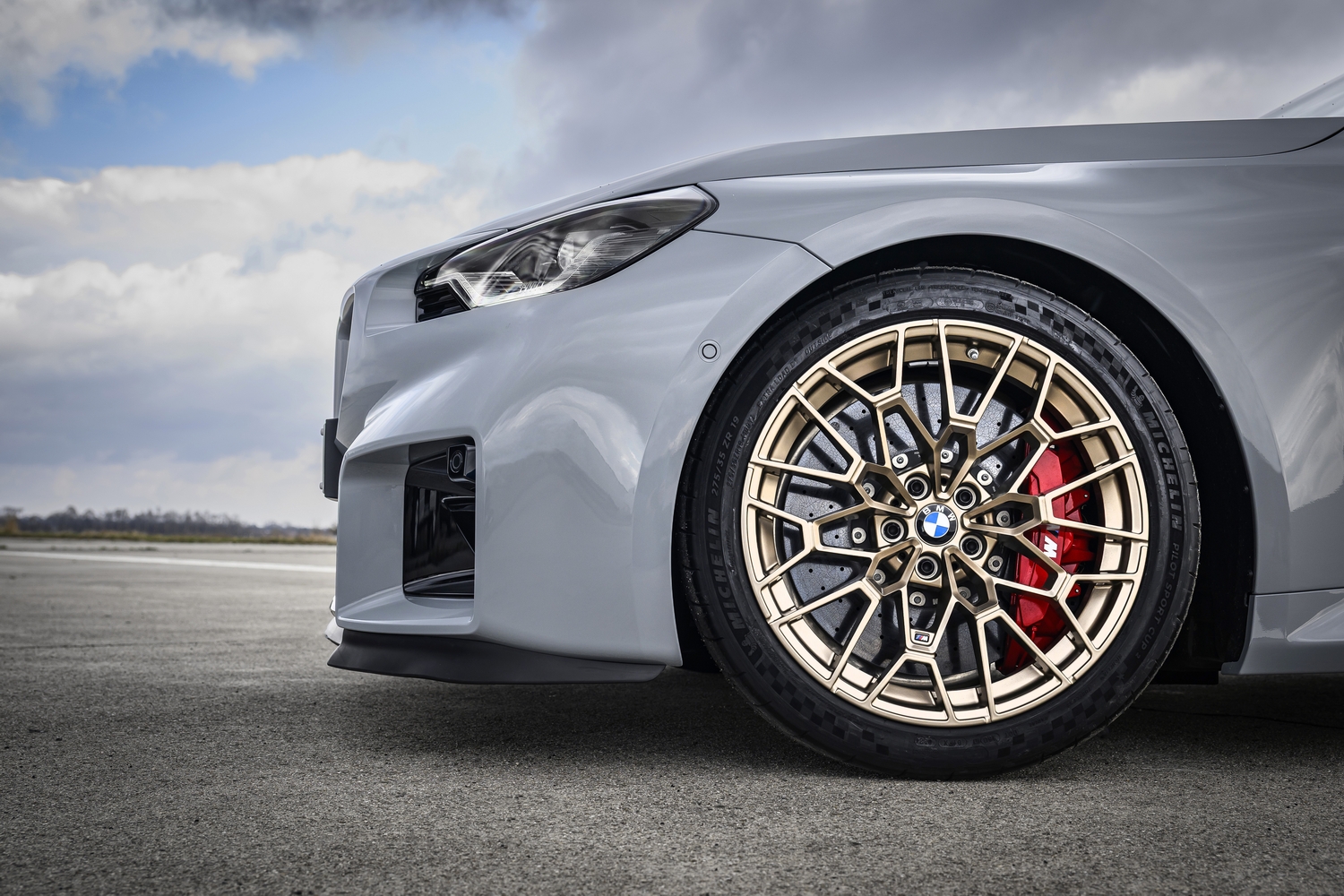
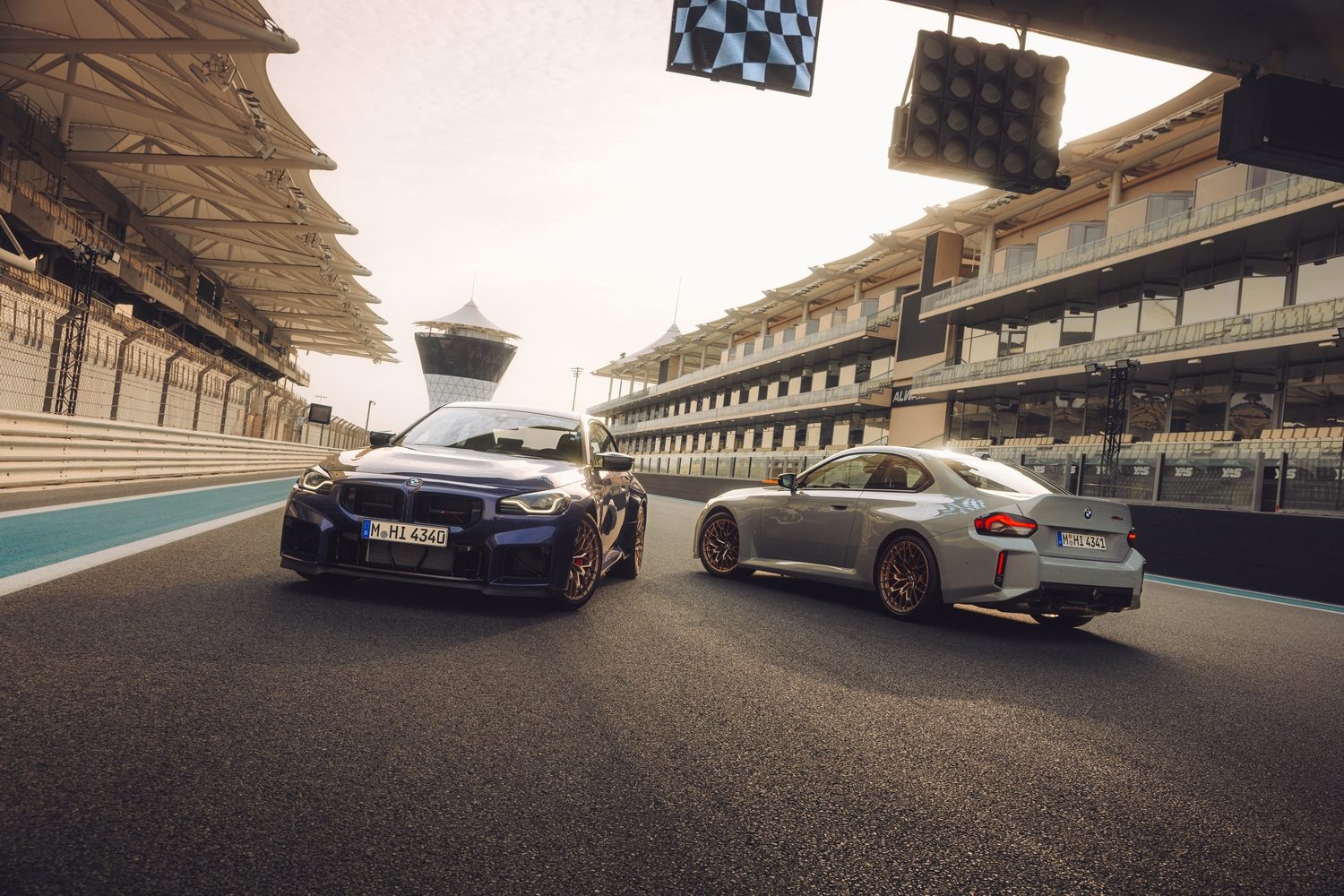
- Stunning gold-coloured wheels
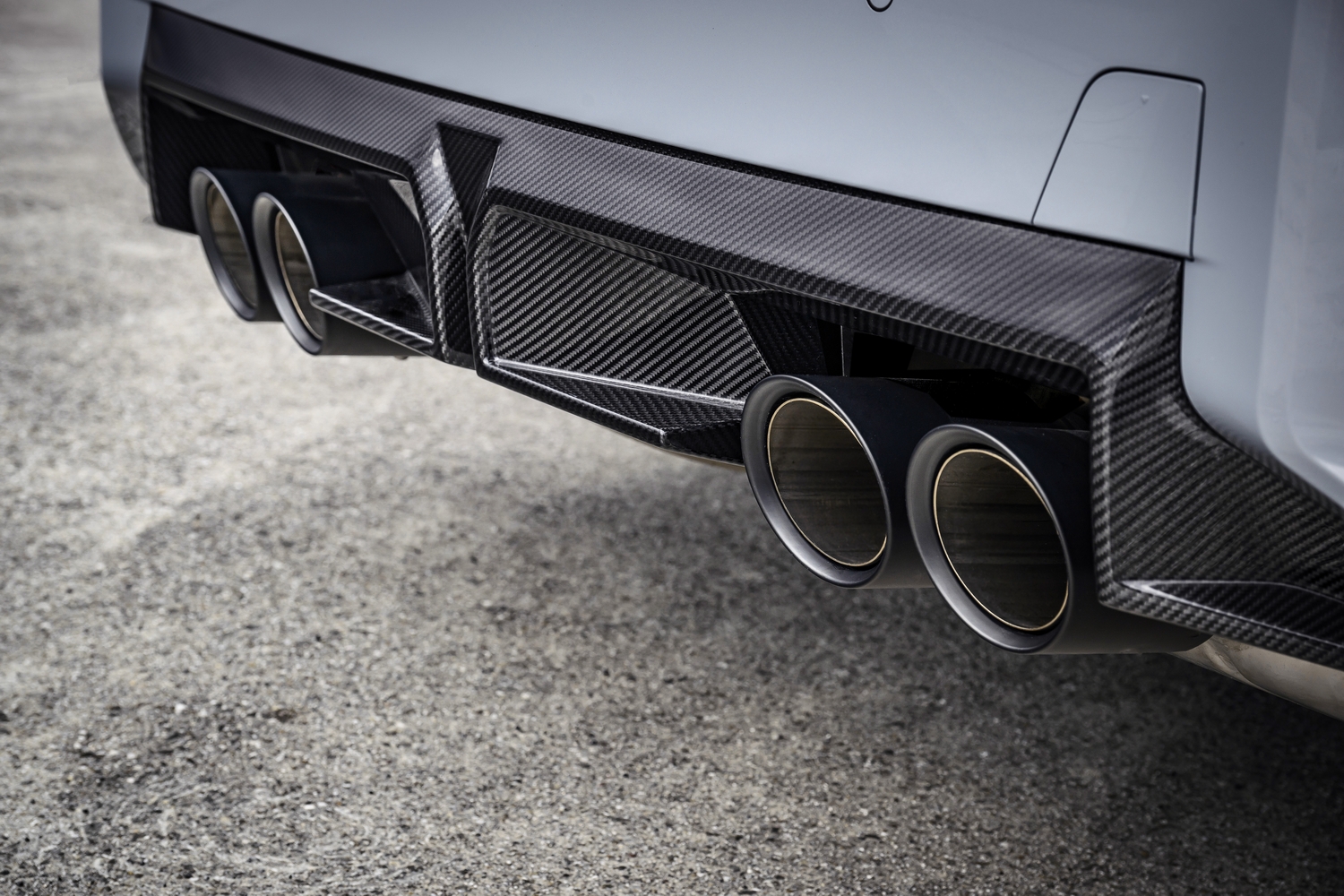
- Lots and lots of carbon fibre

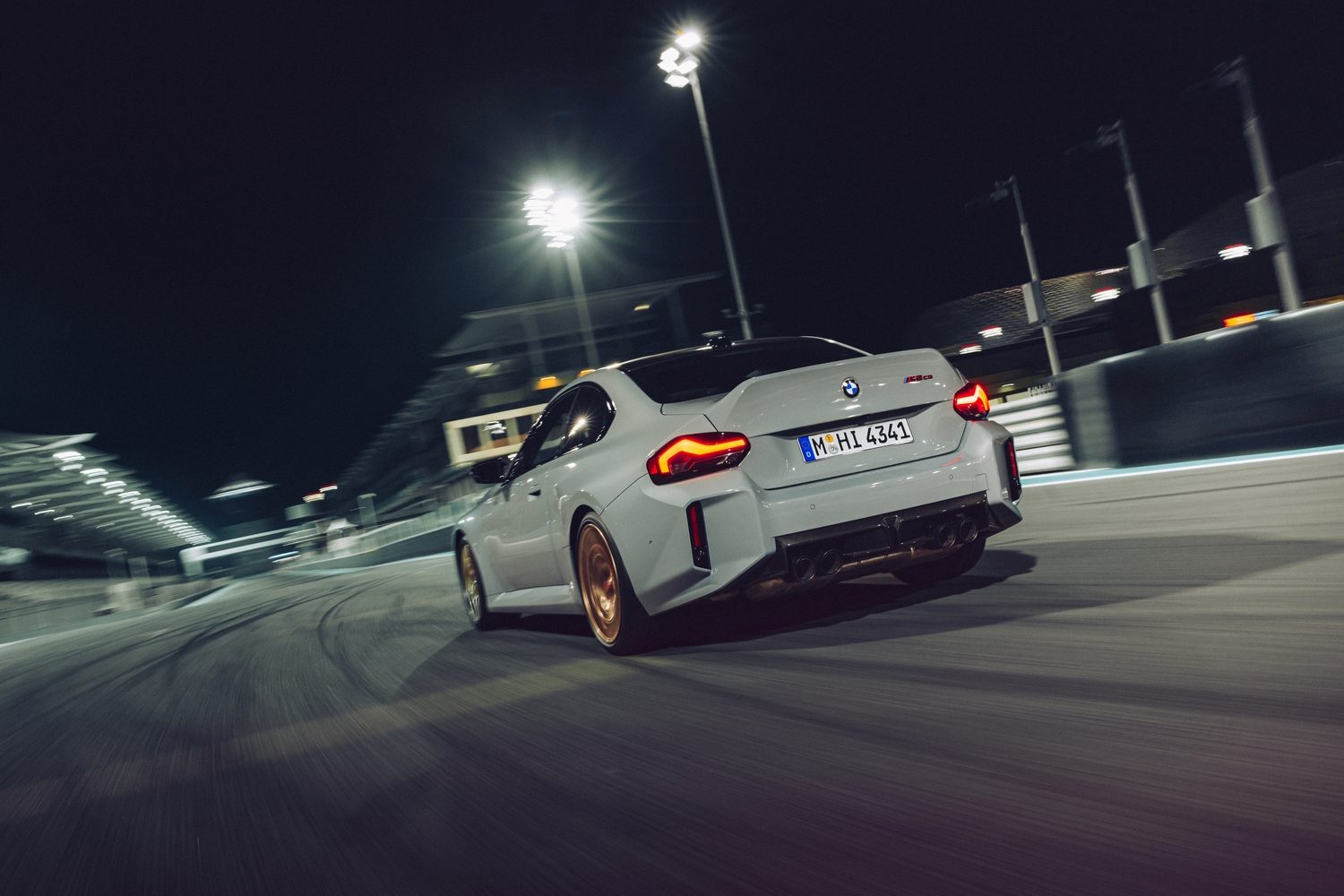
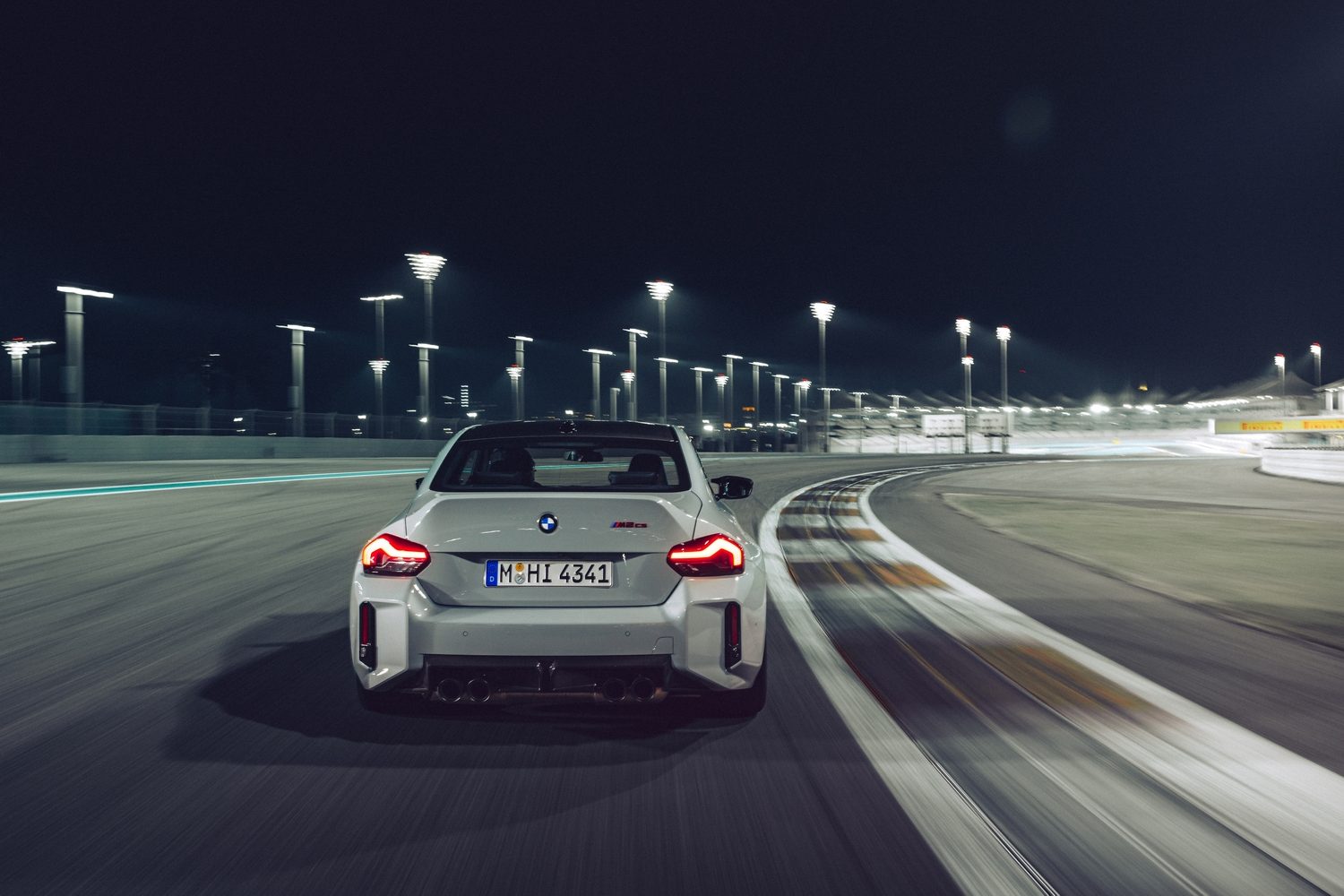
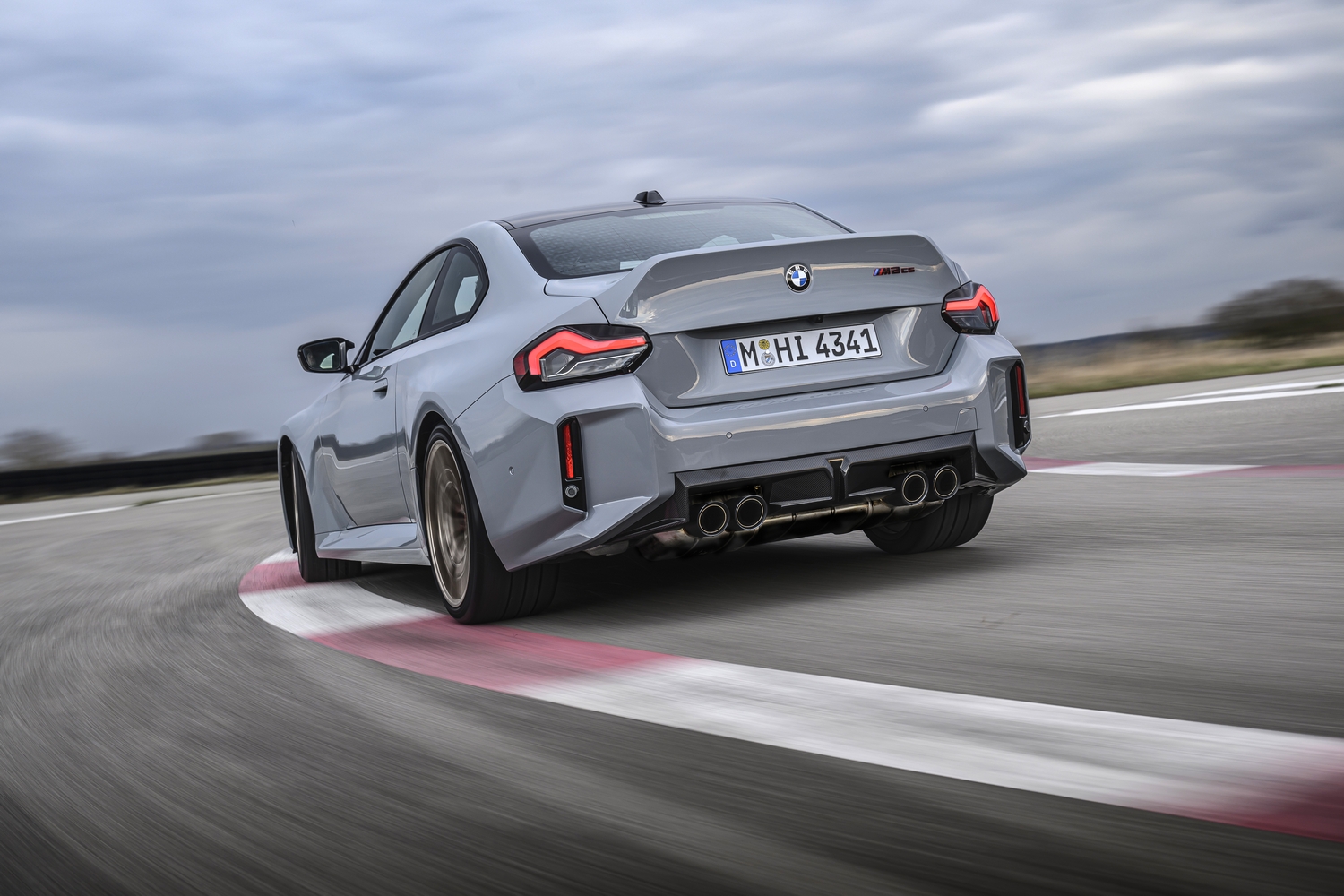
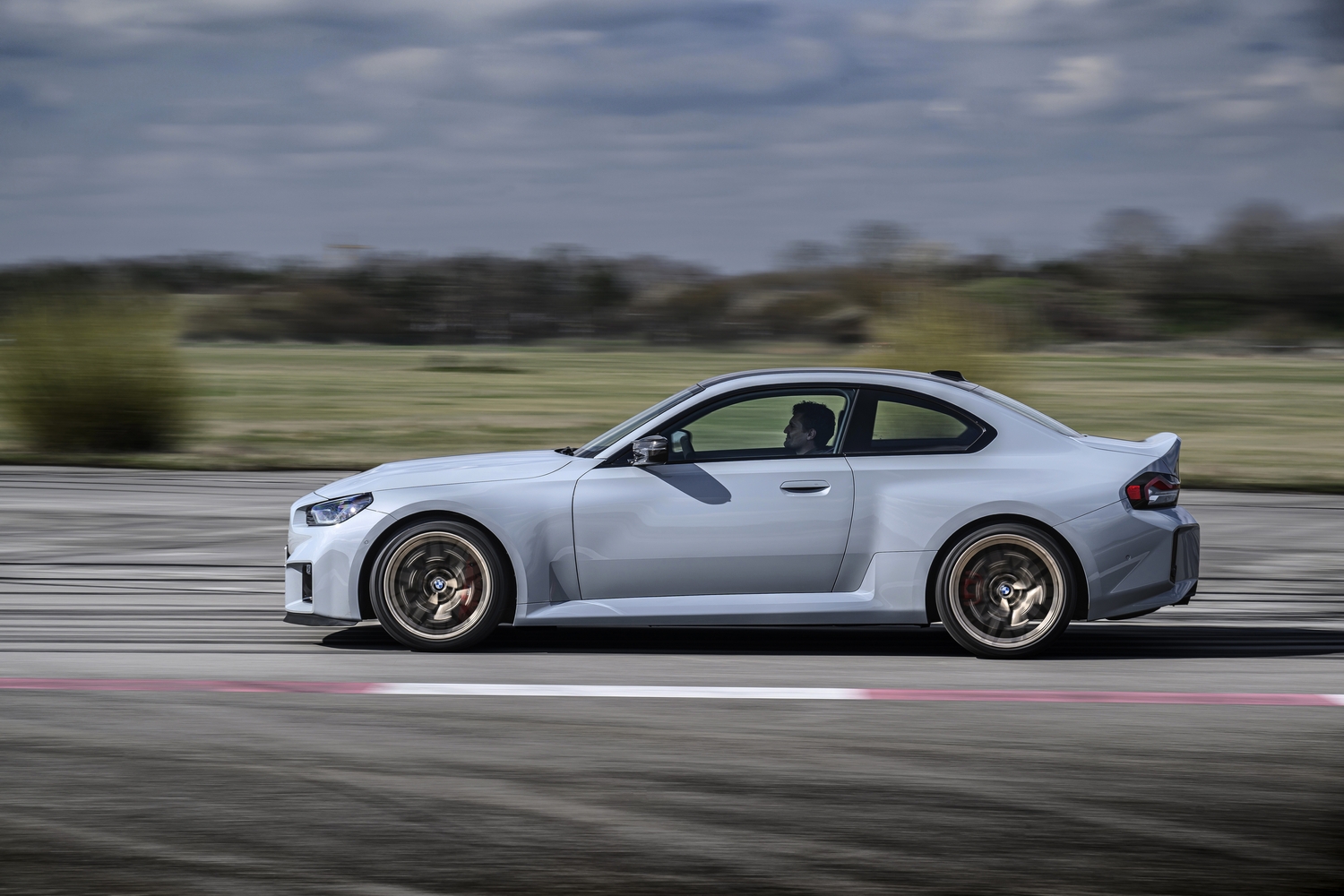
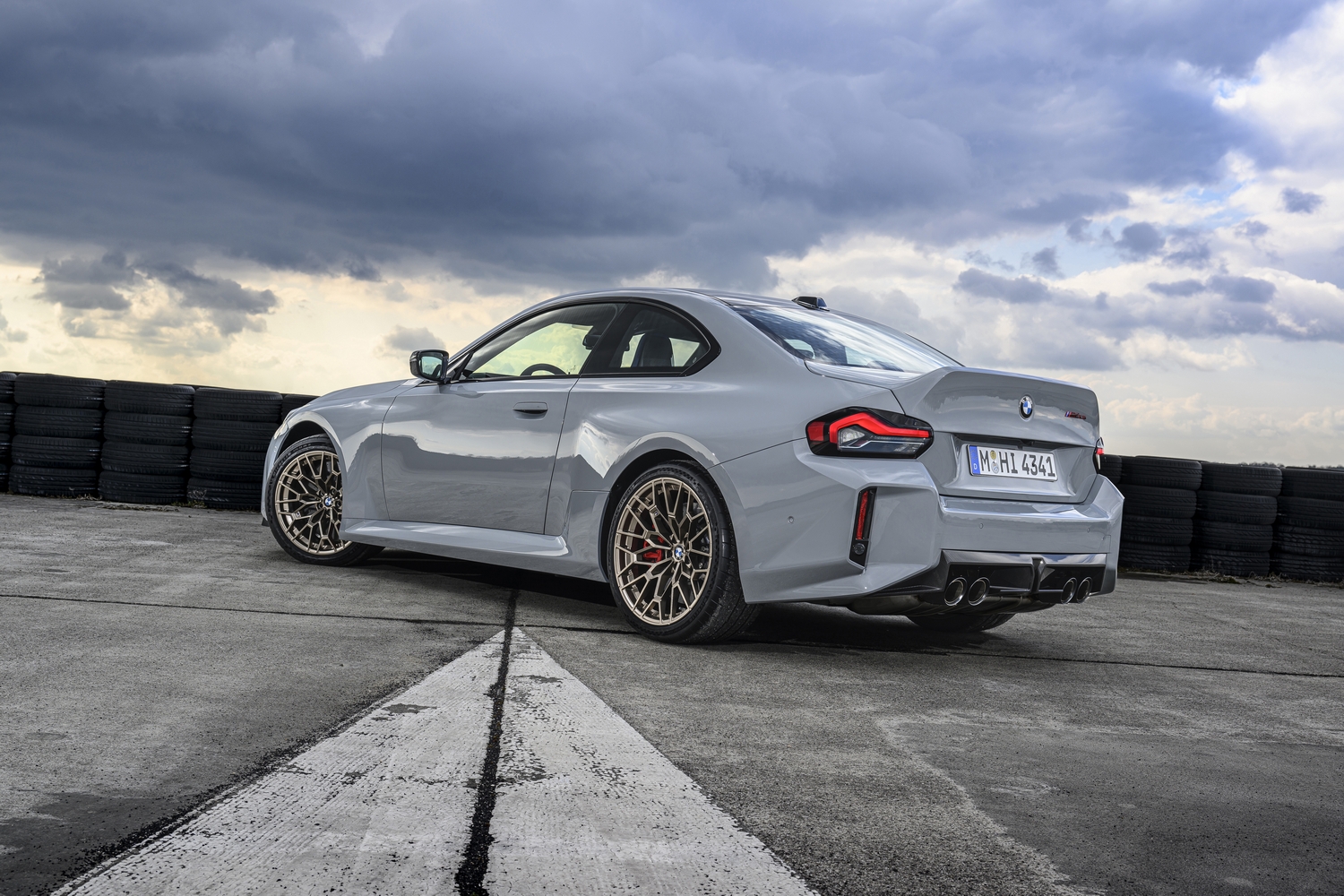
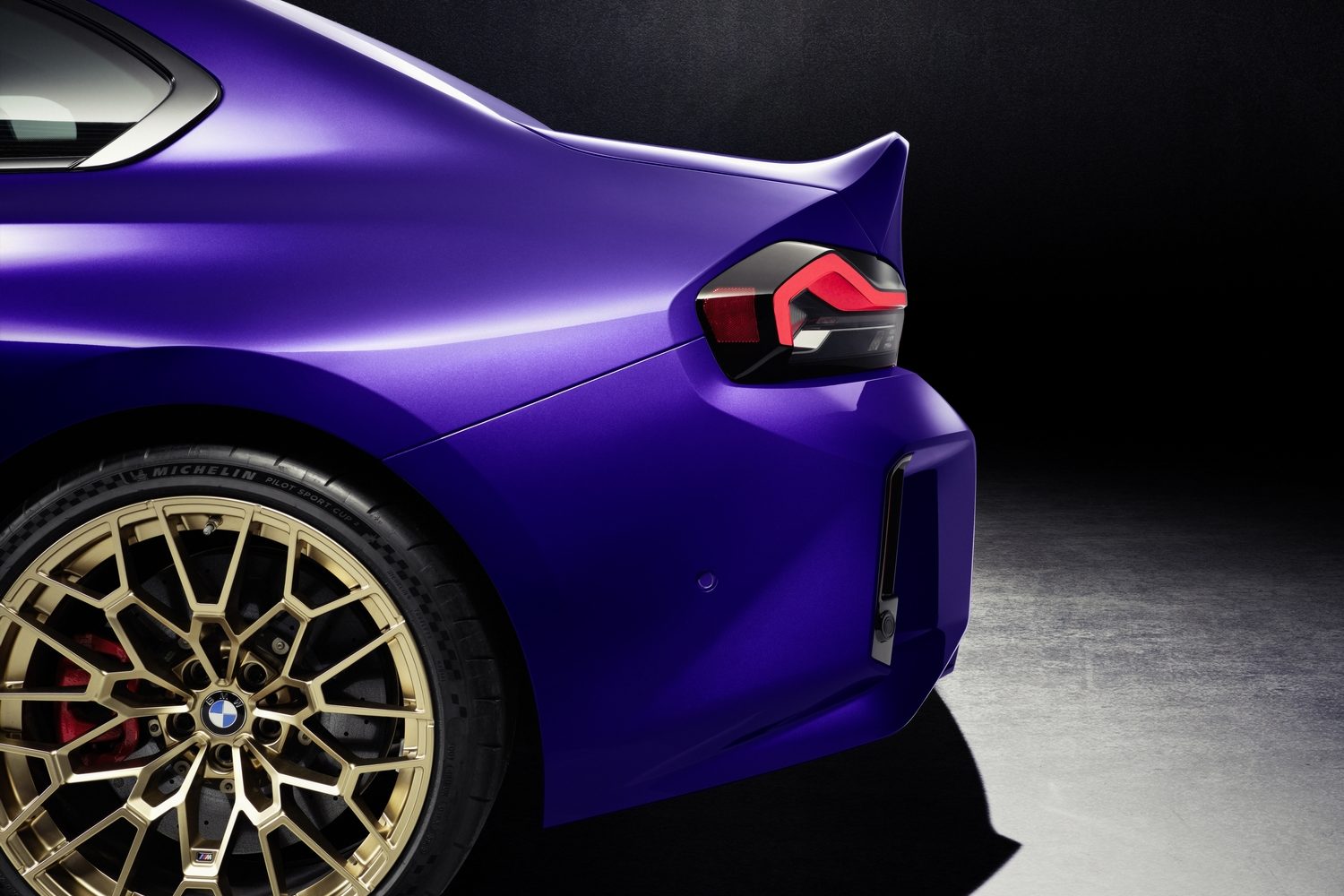
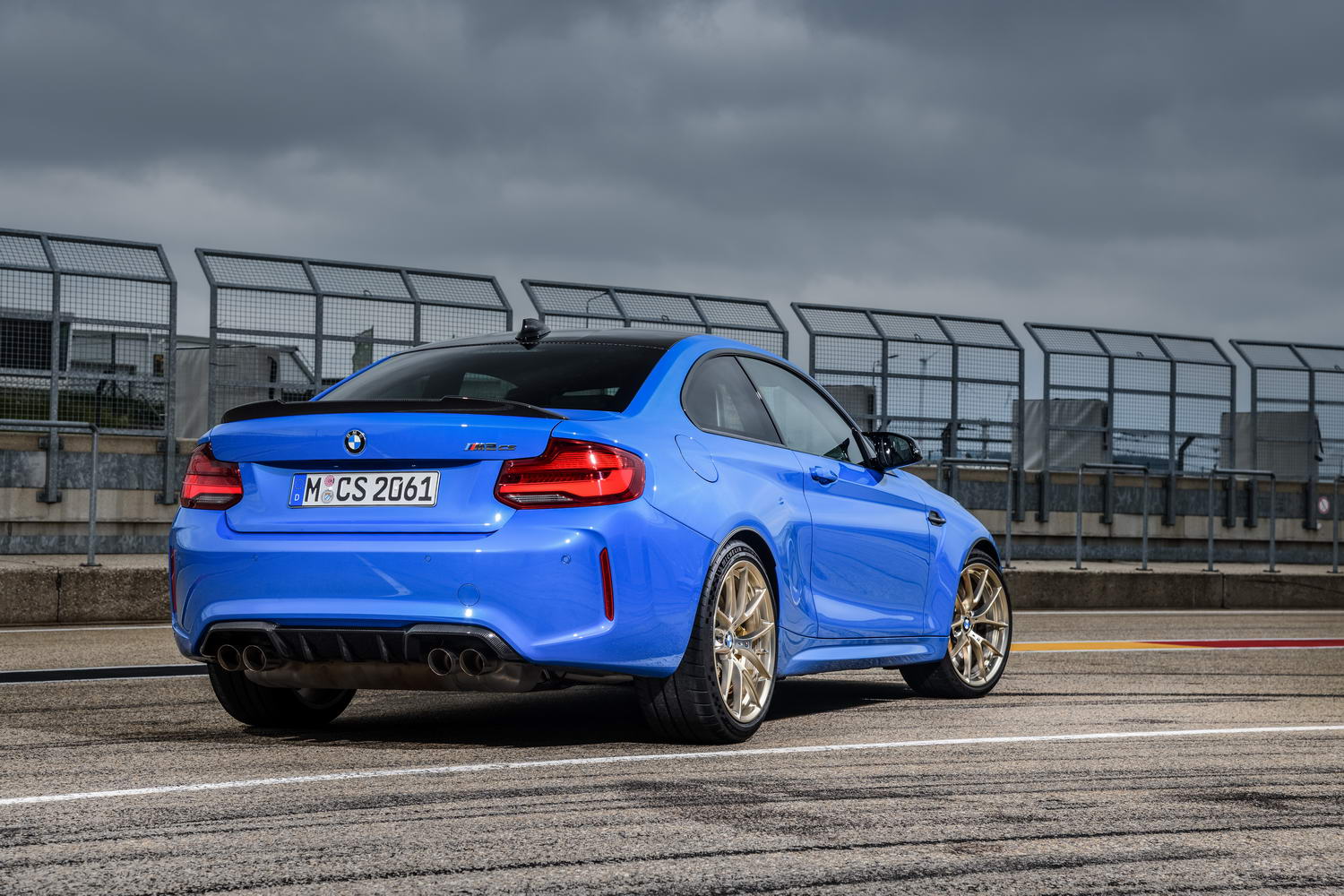
We'd often start at the front of a car when describing its design, and work our way back, but for the BMW M2 CS, we're drawn immediately to its spectacular 'ducktail' rear spoiler.
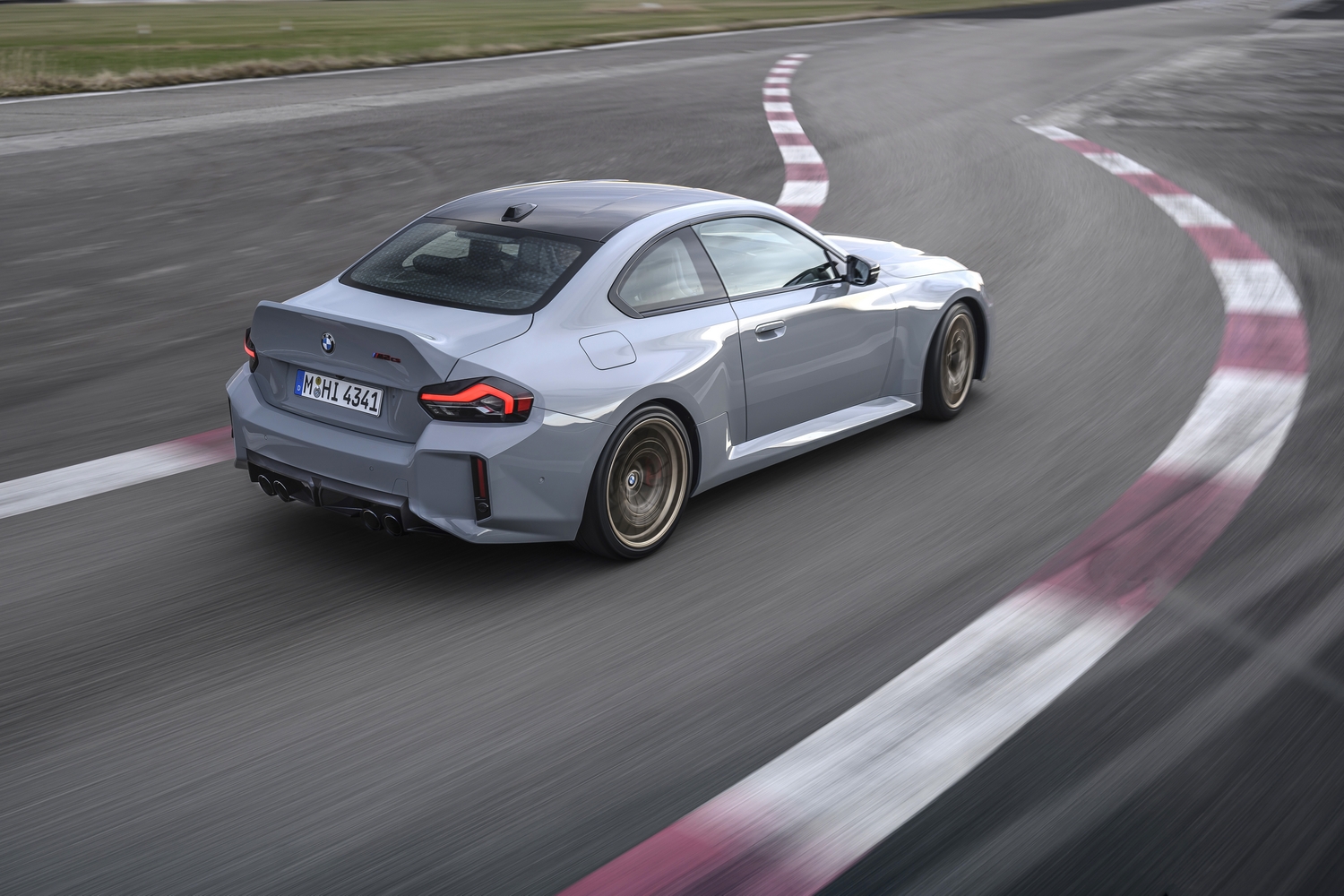
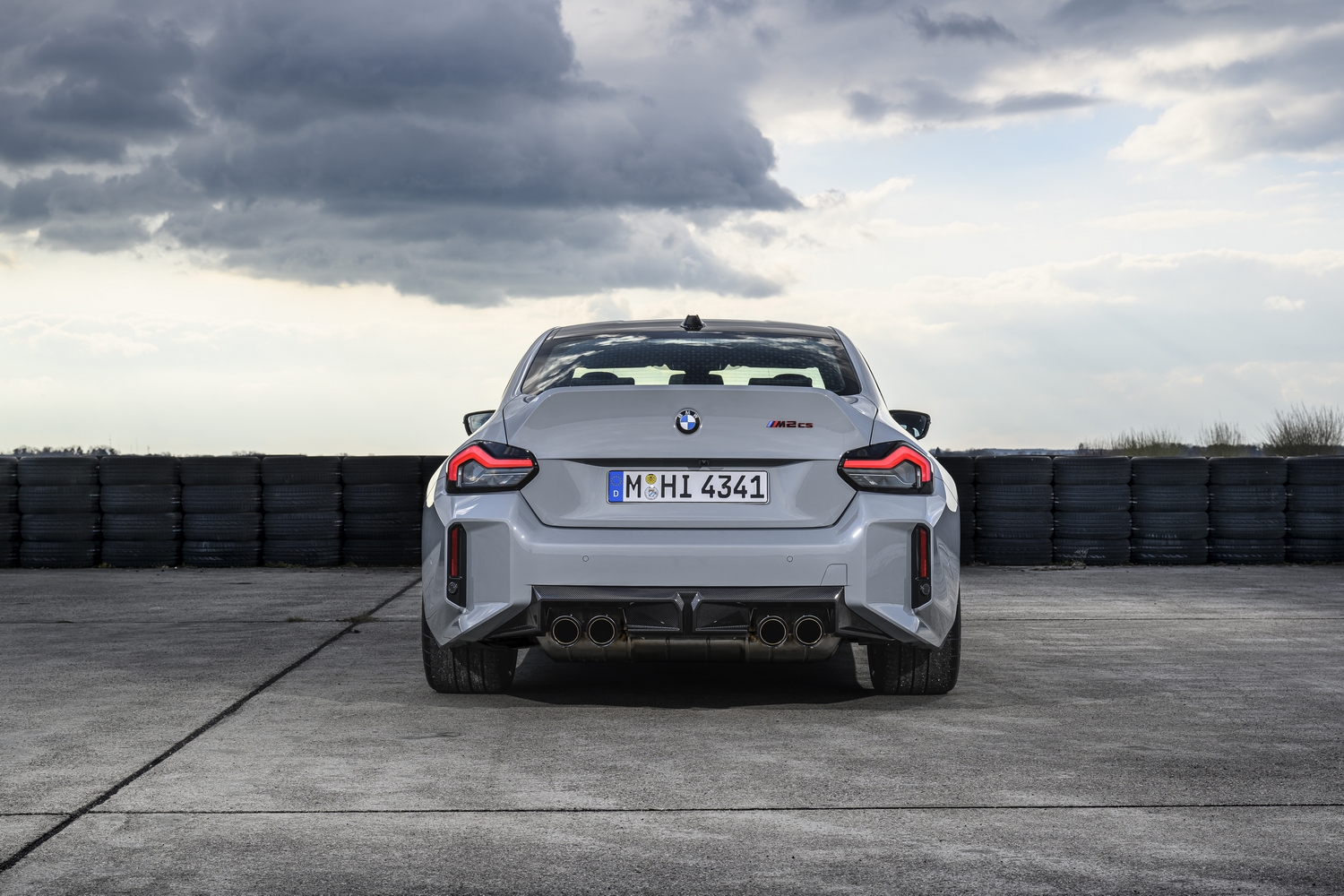
It's integrated into the boot lid, which is a new design constructed from lightweight carbon-fibre-reinforced plastic (CFRP). This is noticeably taller than the standard item and enhances the M2's racetrack-refugee aesthetic.

As we're at the back of the vehicle, we'll take a moment to enjoy the characteristic quad-exhaust outlets that signify that this is a proper BMW M car. For those with deep pockets, there's an M Performance Parts upgrade available that adds carbon-and-titanium tailpipe trims.
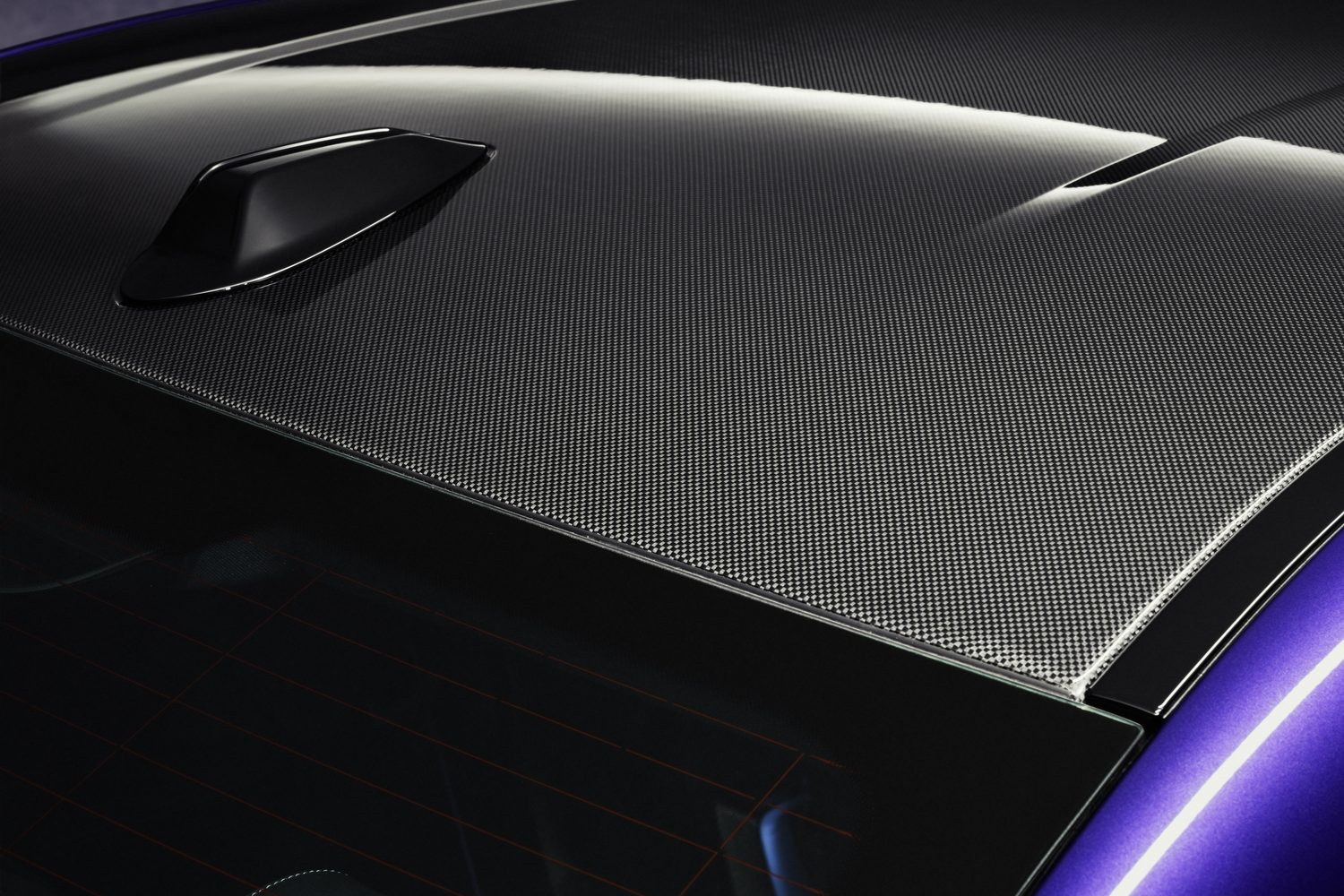
Those will go well with the M2 CS's aerodynamic diffusor made from exposed carbon fibre, while there's more of the lightweight material on the door mirrors. The gorgeous M Carbon roof is standard on this model, too. BMW quotes a near-30kg weight reduction thanks to these measures - and others inside the car.

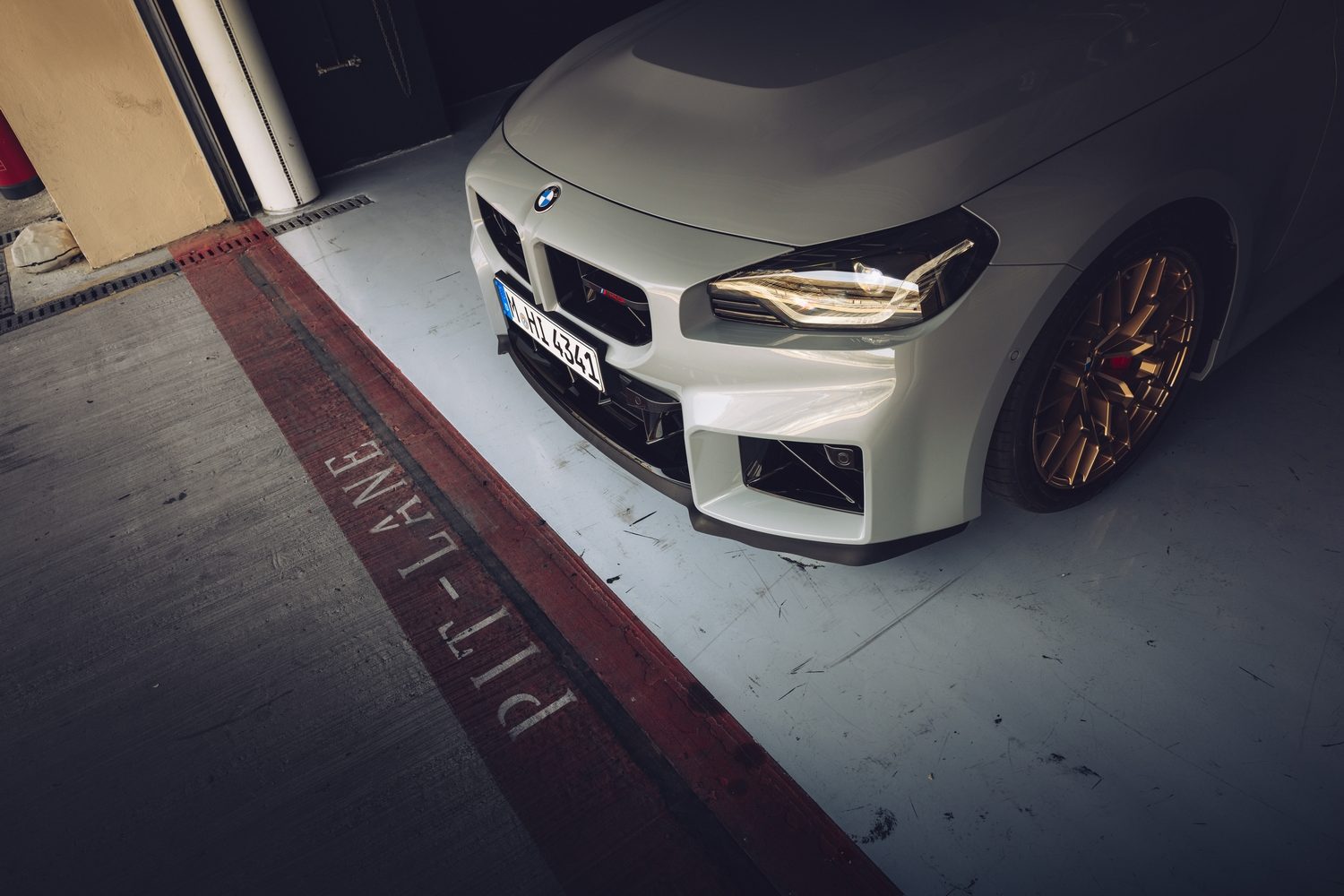
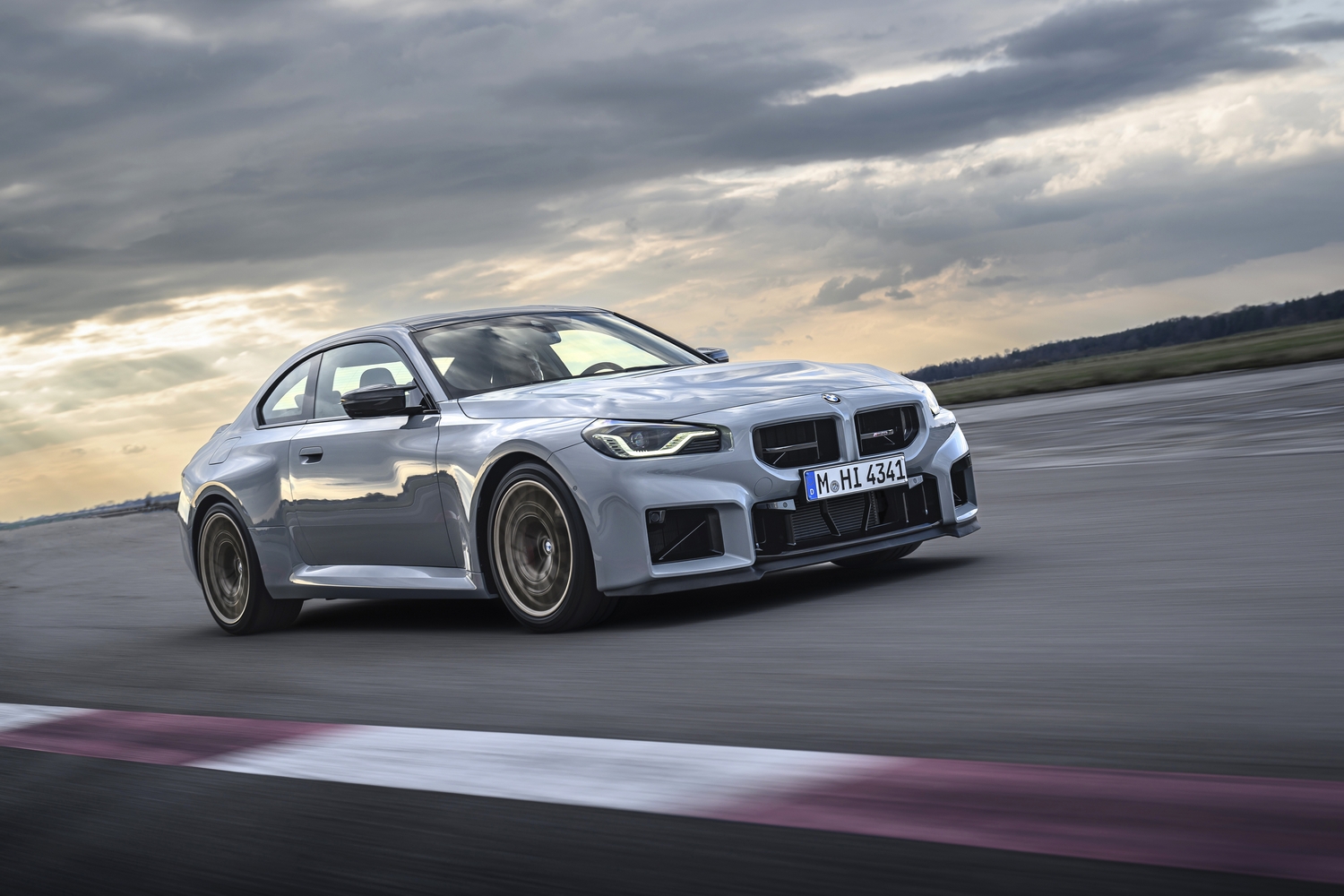
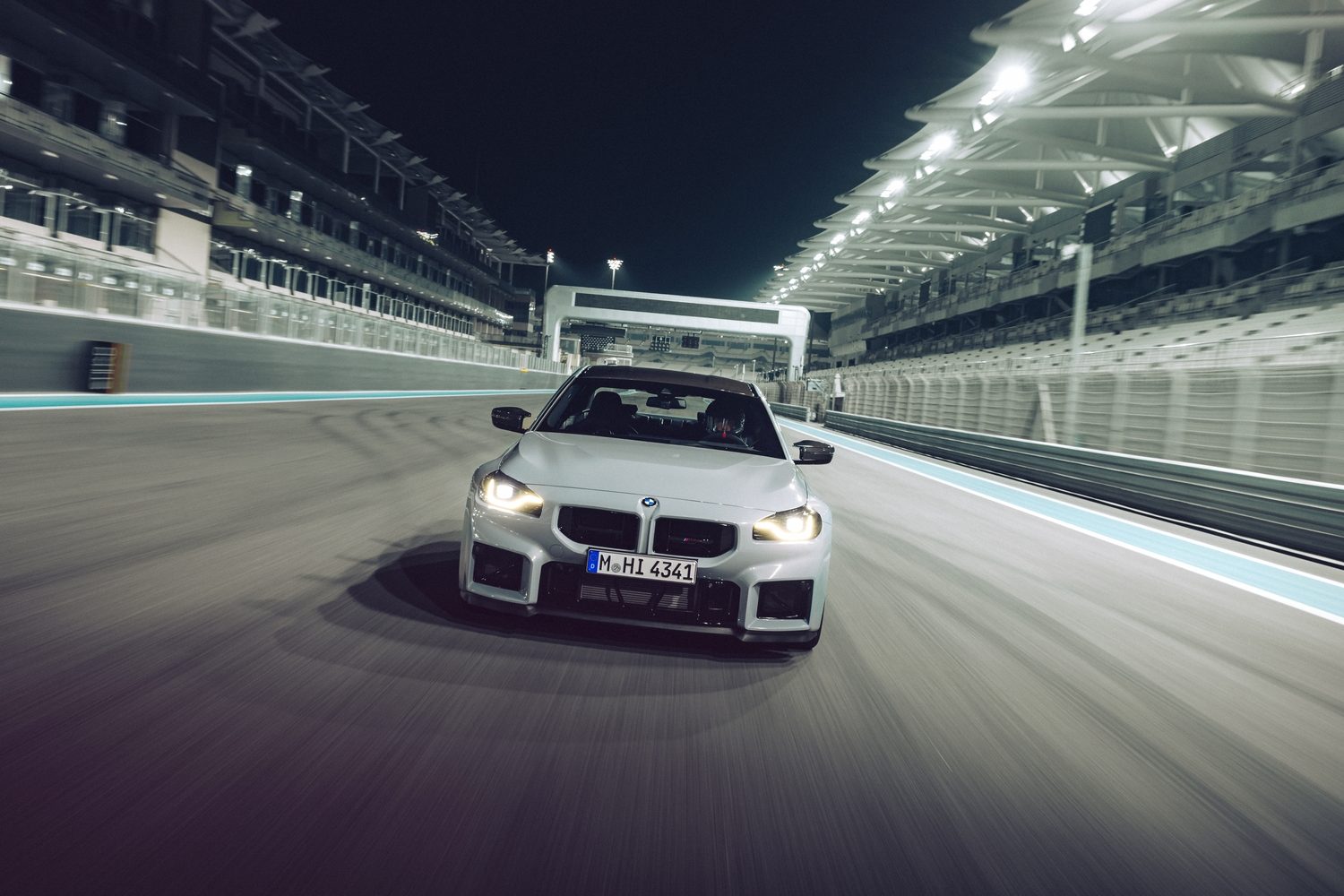
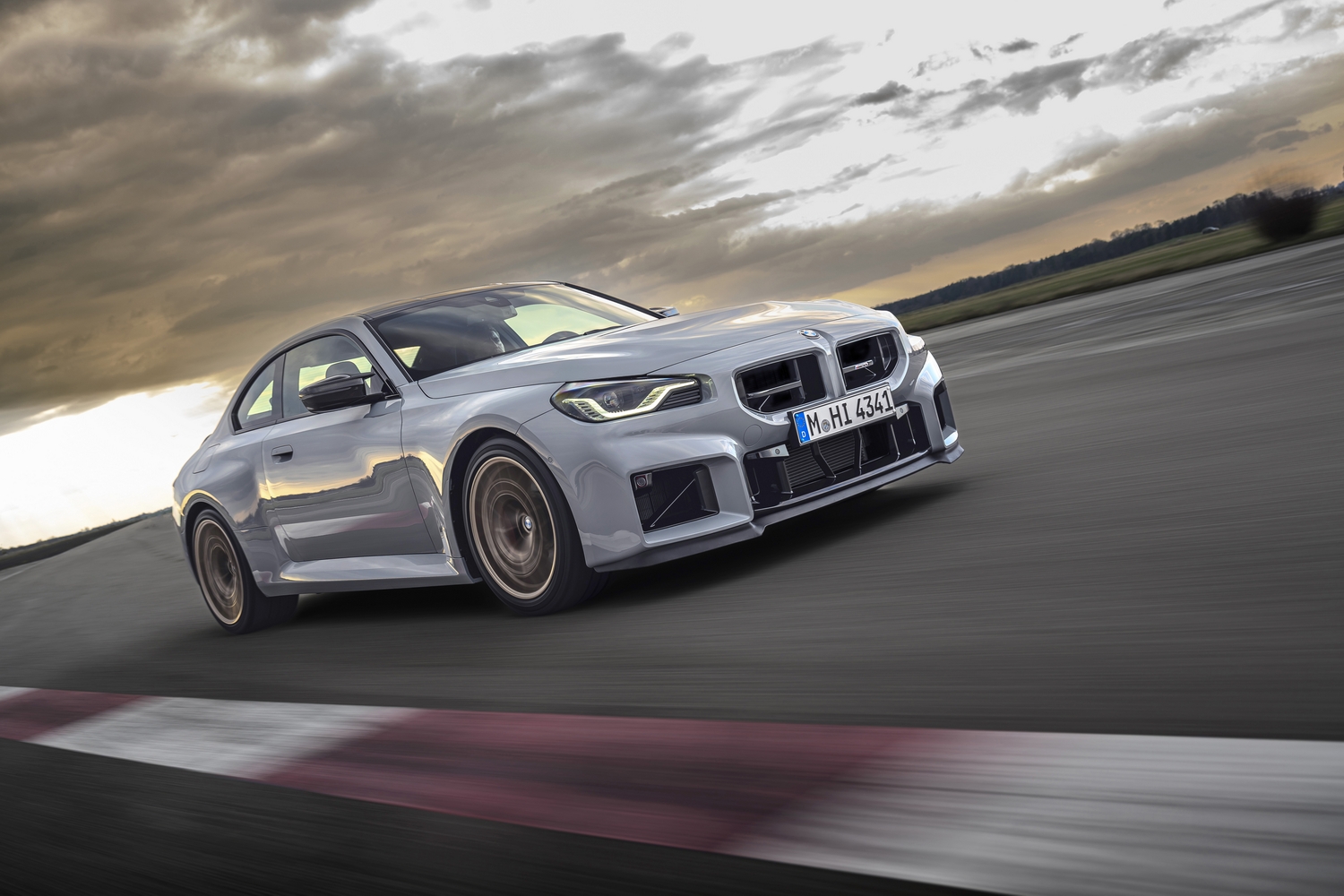
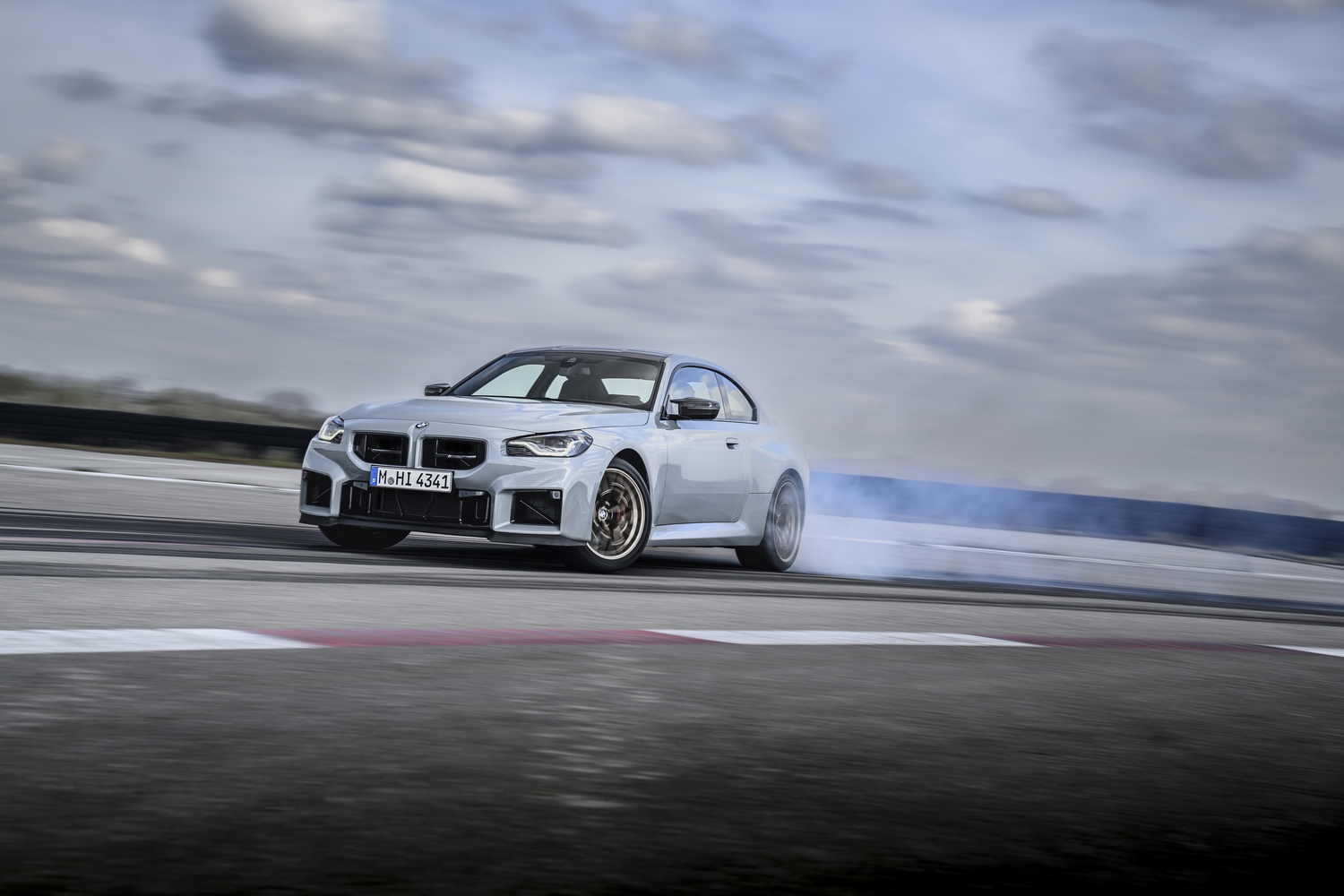
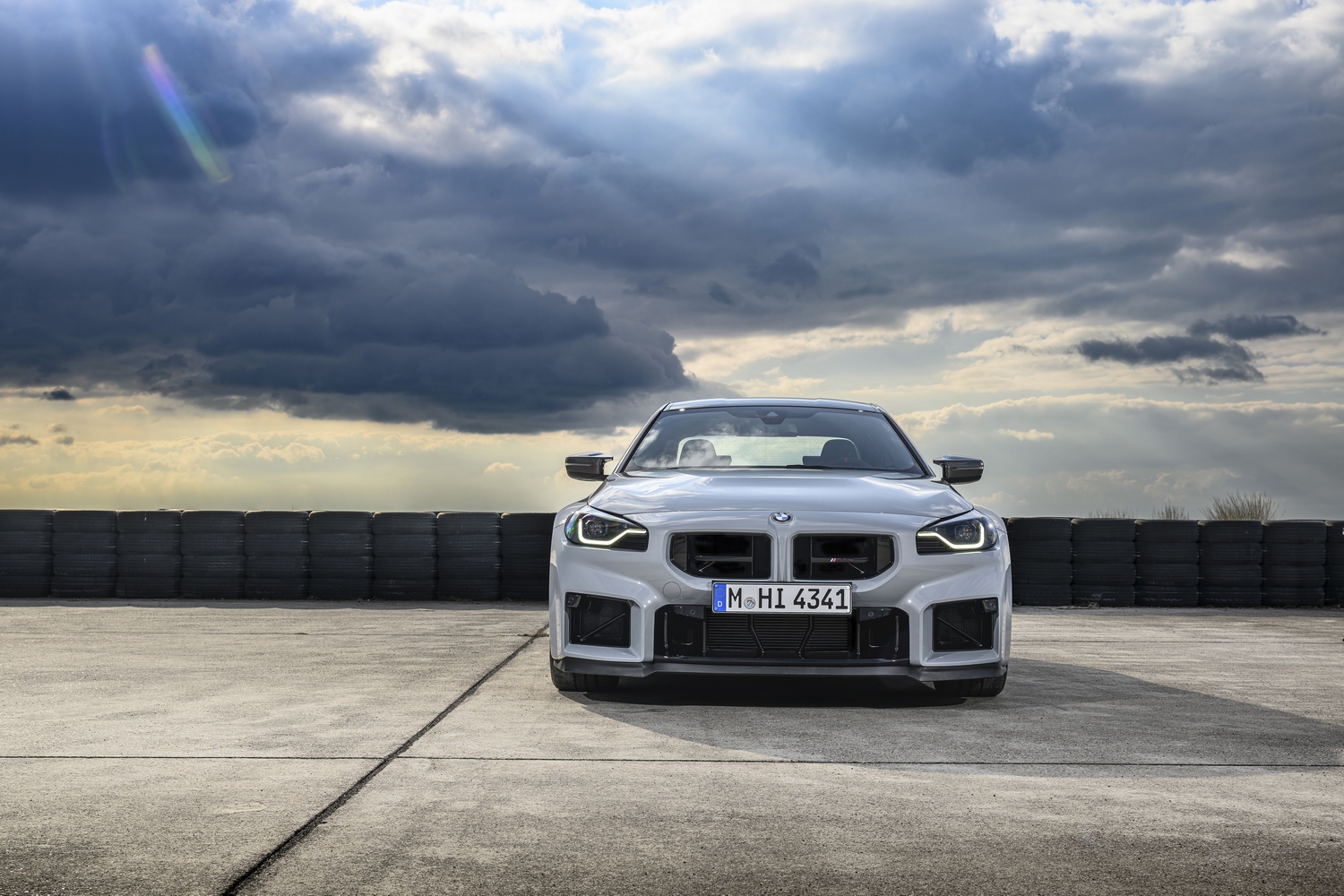
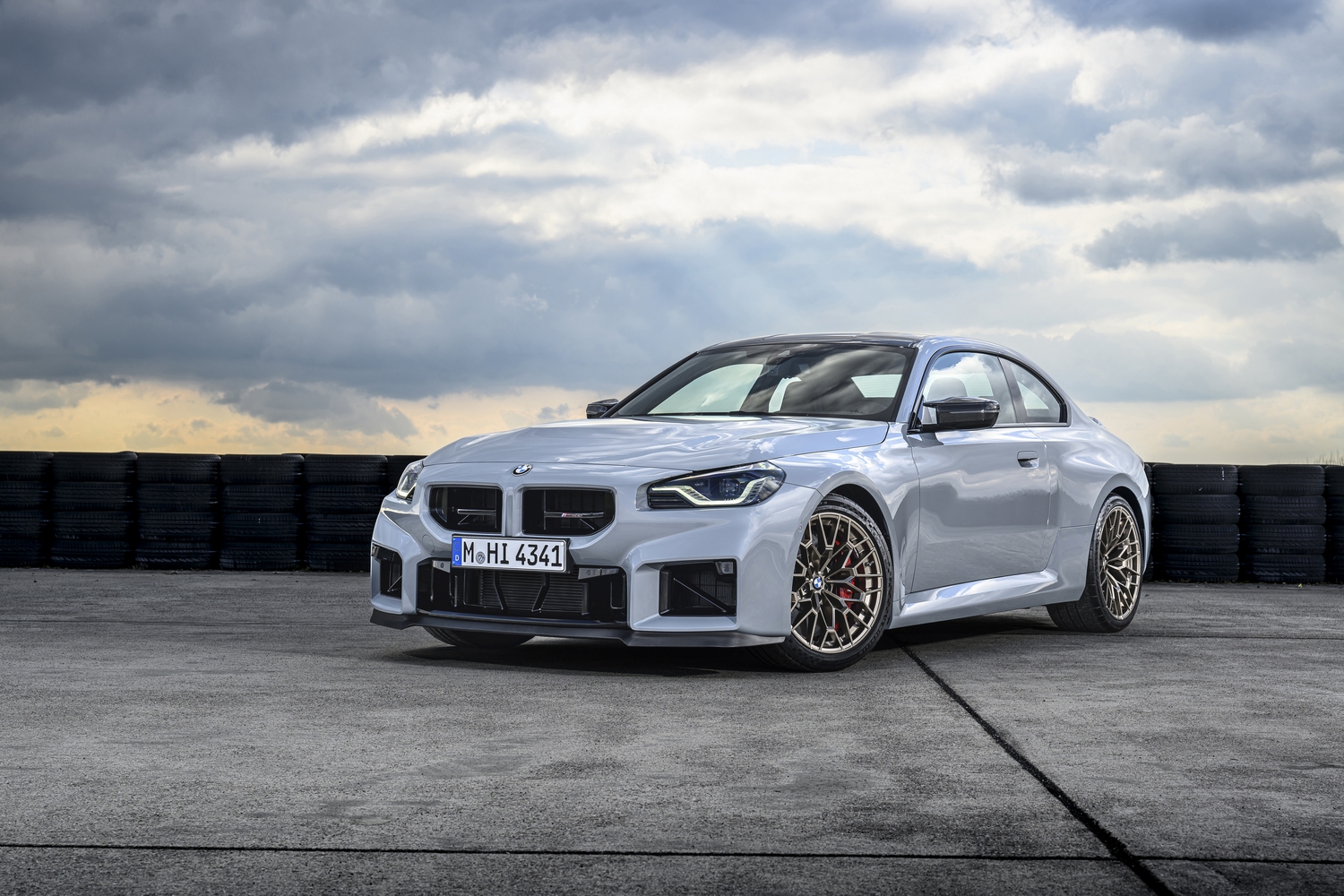
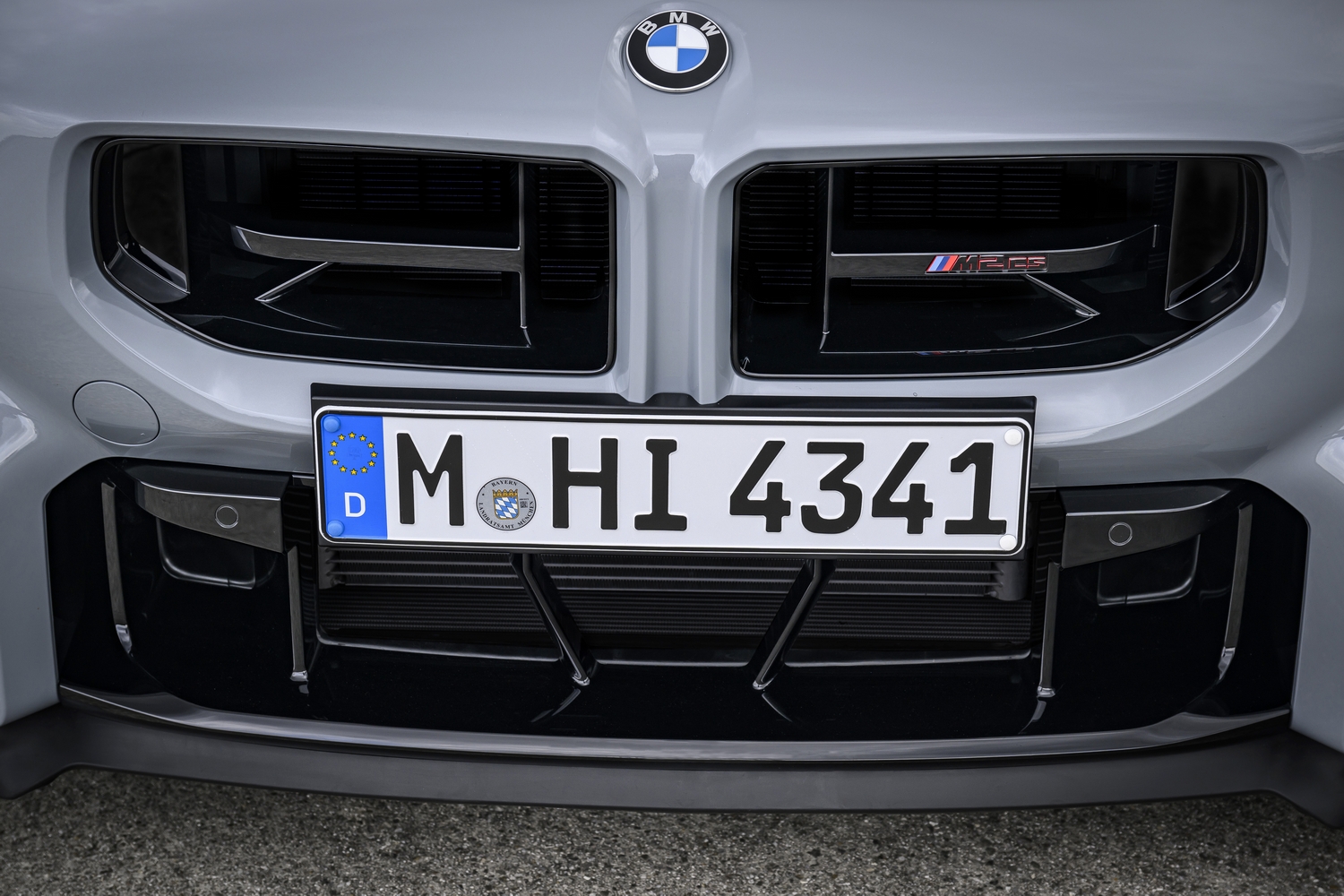
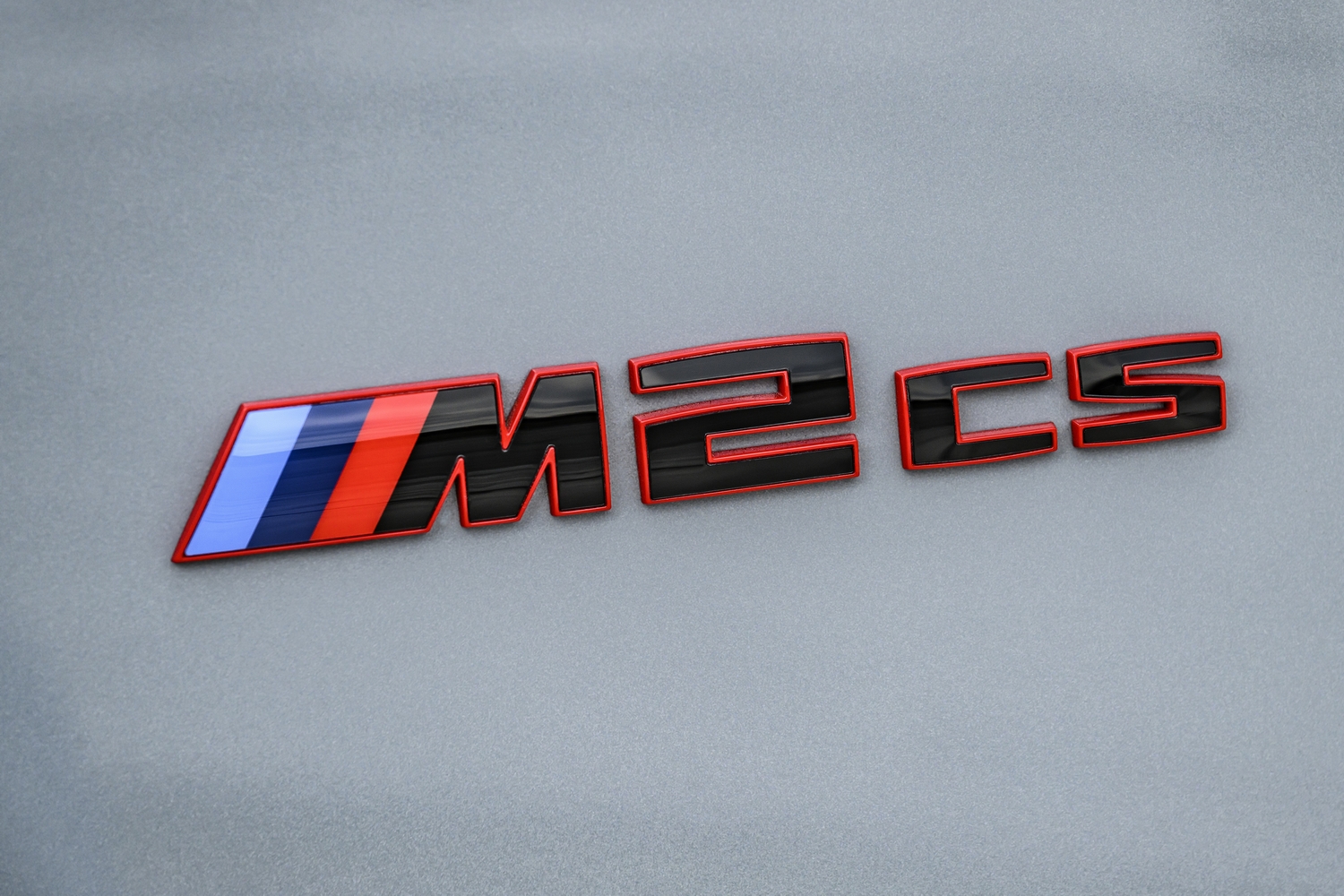
Up front, the CS retains the standard M2's divisive, all-square appearance. BMW itself calls the design "punchy”, which we reckon is right on the money. It certainly has presence and, for the CS, there's new detailing and badging for the kidney grilles and black splitter below.
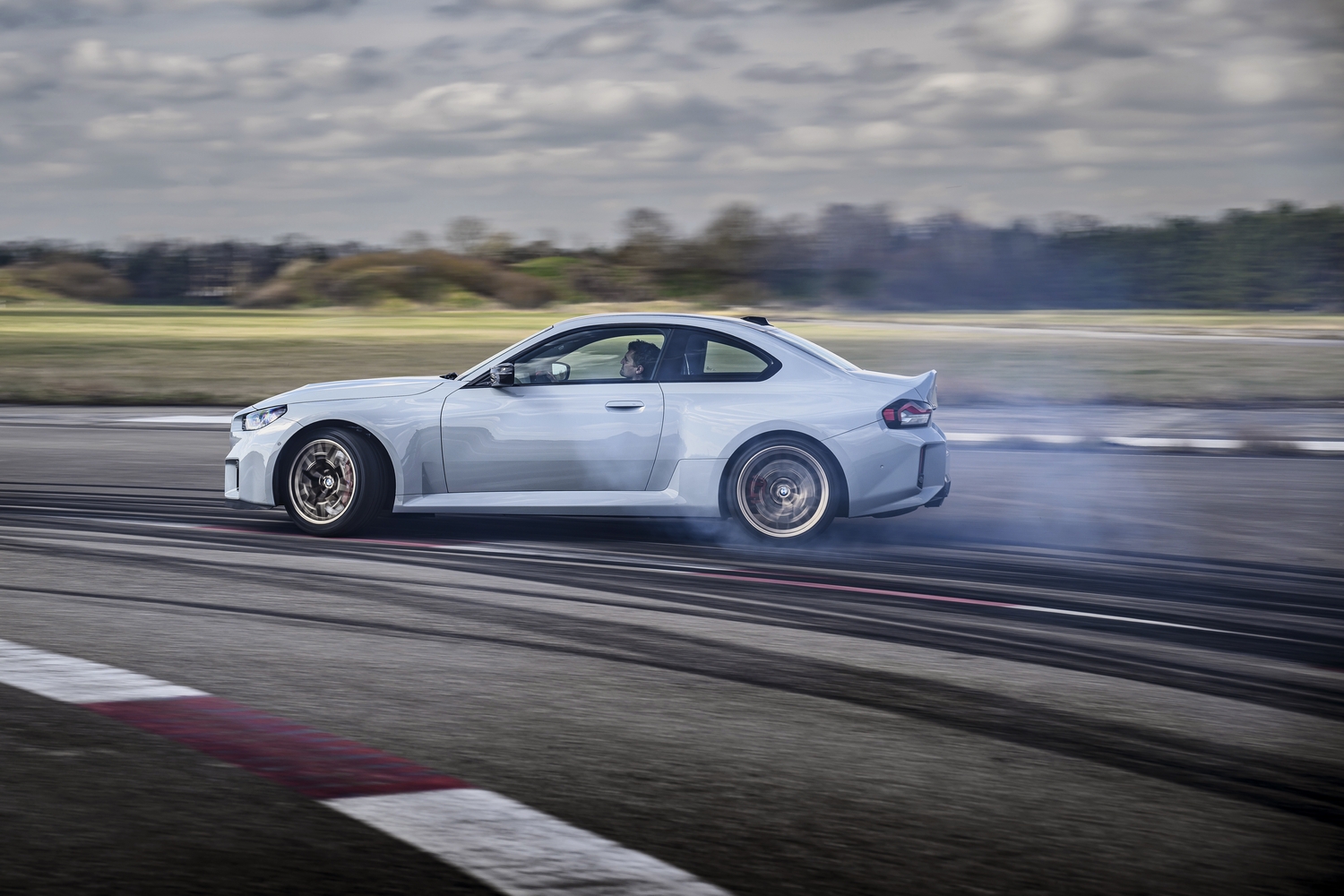
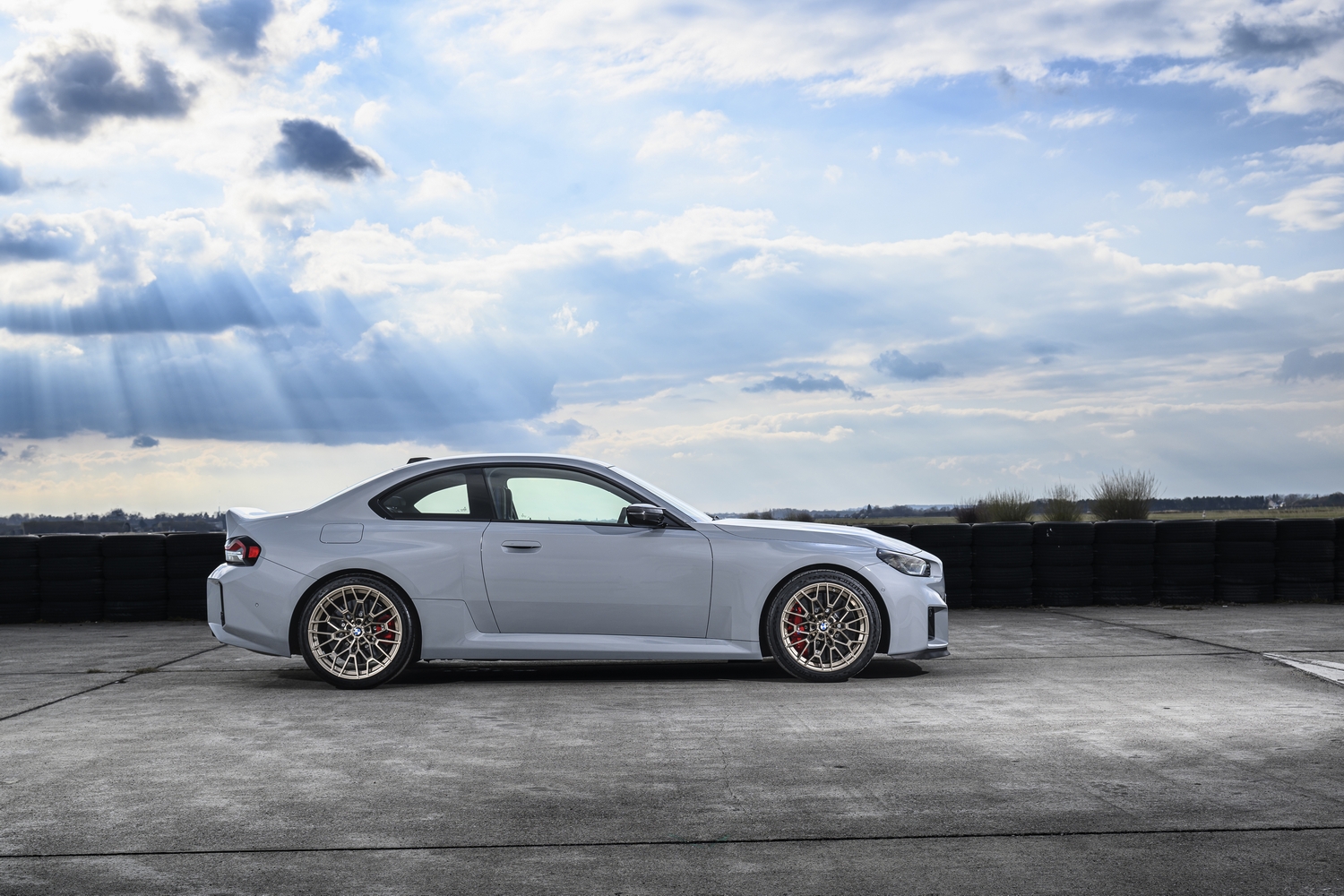
That's lower to the ground to the tune of eight millimetres than the regular M2 thanks to bespoke suspension components, and the crowning glory is a set of stunning new lightweight alloy wheels. These measure 19 inches across up front and 20 inches at the rear and are finished in a matte-effect 'Golden Bronze' colour.

Incidentally, the M2 CS comes with track tyres as standard, which buyers can upgrade to a more extreme variety if they're so inclined, or swap for more sensible high-performance road-biased tyres instead. Unless you plan to bring your M2 on track, it would be wise to stick with the latter for use in the Irish climate.
Dimensions of the BMW M2 CS
- Length:
- 4,587mm
- Width:
- 1,887mm (excl. mirrors)
- Height:
- 1,395mm
- Wheelbase:
- 2,747mm
Paint colours for the BMW M2 CS

It's a shame there are only four paint colours available for the CS. The first three - Brooklyn Grey, Black Sapphire and Portimao Blue - are included in the price, but if you want the - admittedly stunning - BMW Individual Velvet Blue metallic, it'll set you back a gobsmacking €8,003 extra.
Interior, practicality, tech & comfort of the BMW M2 CS
- Black-and-red colour theme
- Serious bucket seats are standard
- Some nice CS-specific touches

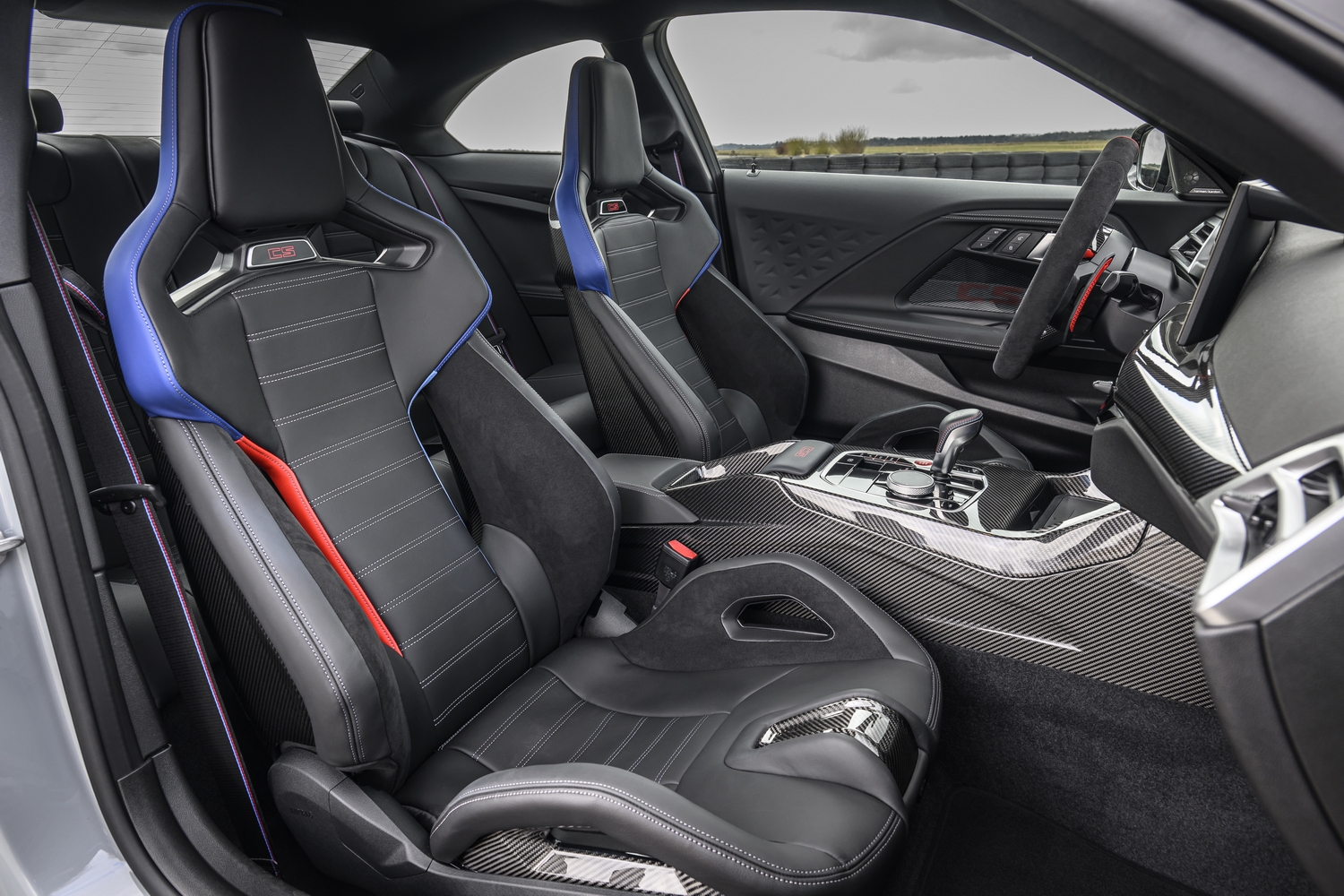
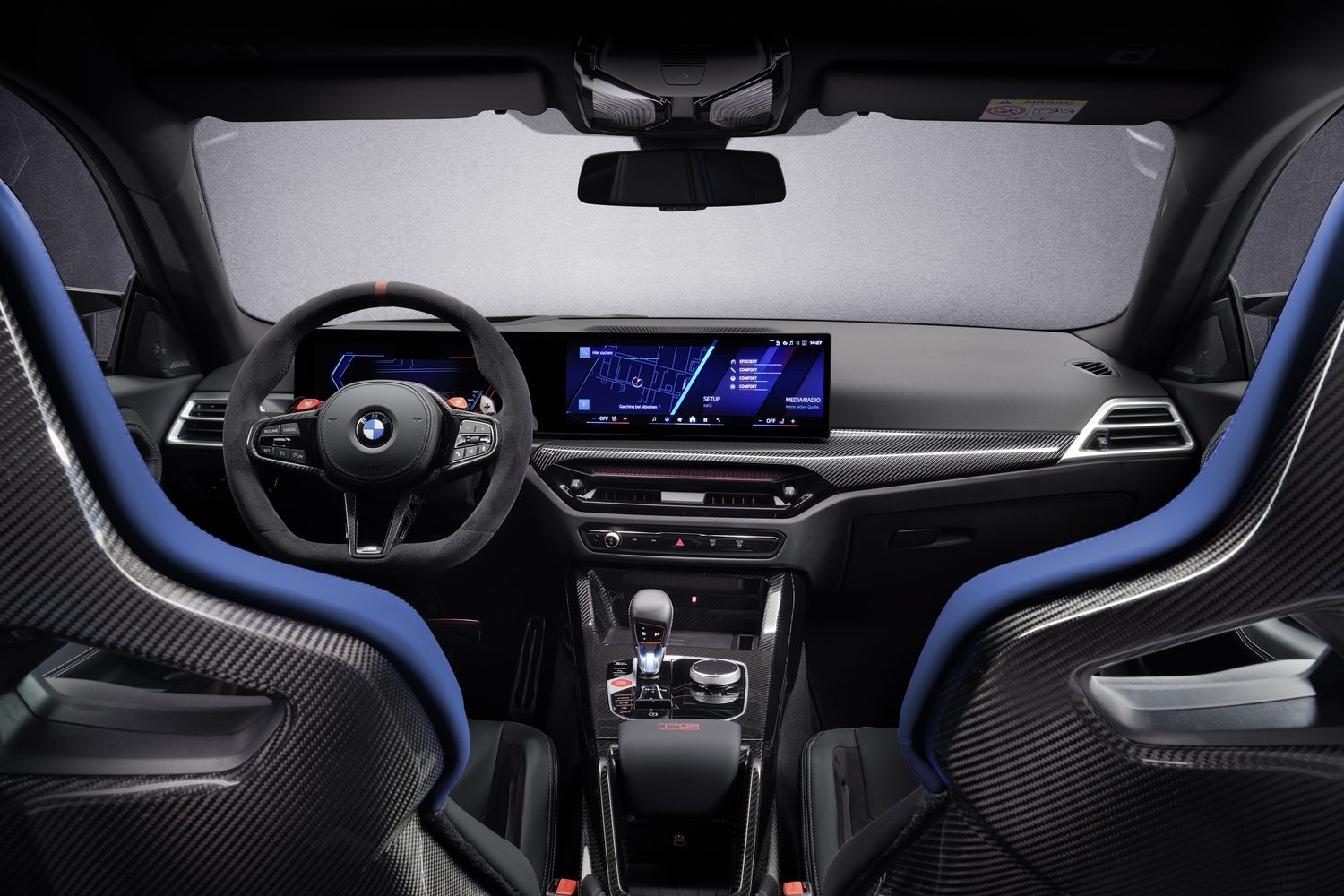
As is the BMW M way, the cabin of the M2 CS is a sea of black and red, with a few blue accents in the form of the M-striped seatbelts and the seat backs. Nevertheless, the interior feels special and sporty without resorting to a stripped-out motorsport vibe.
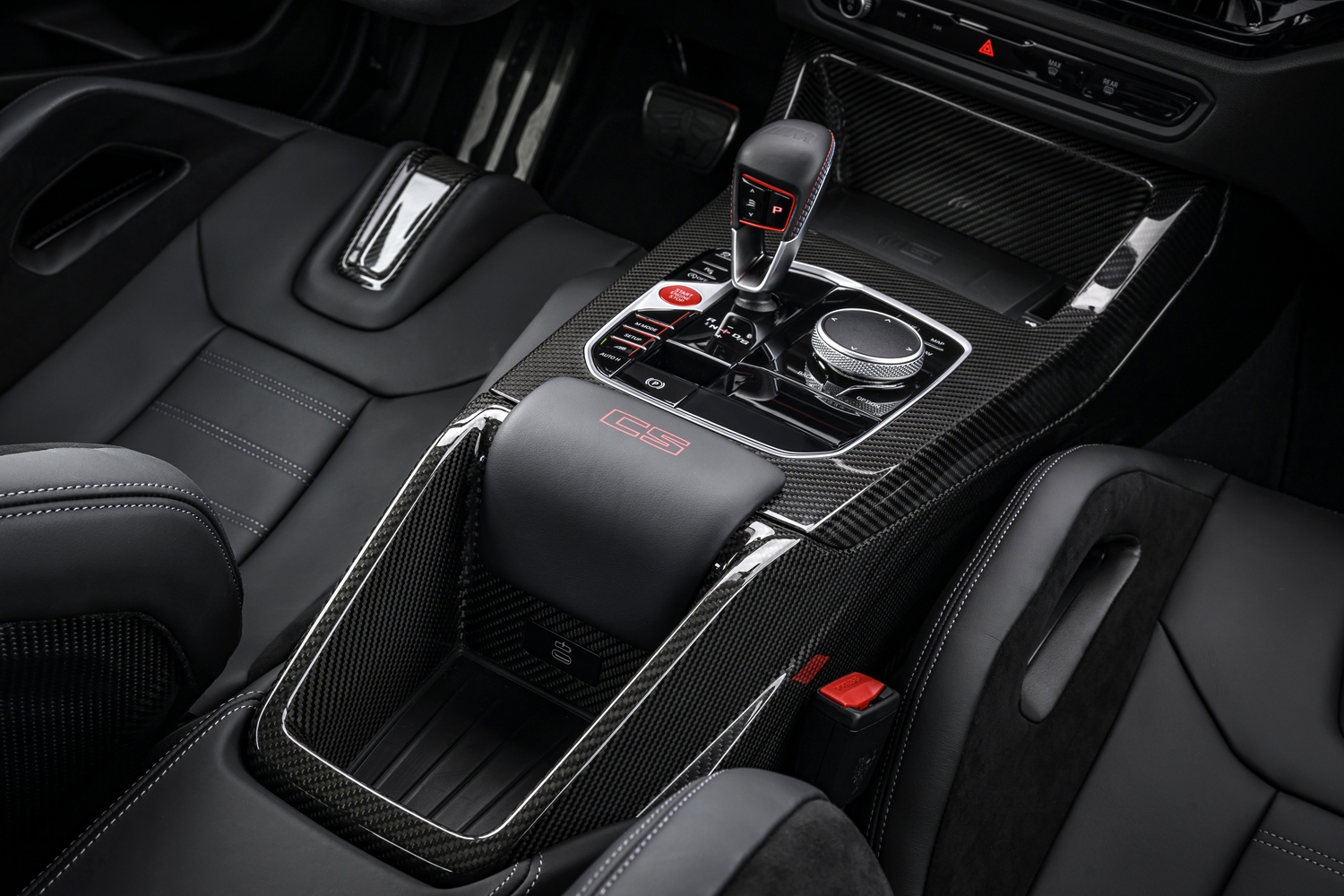
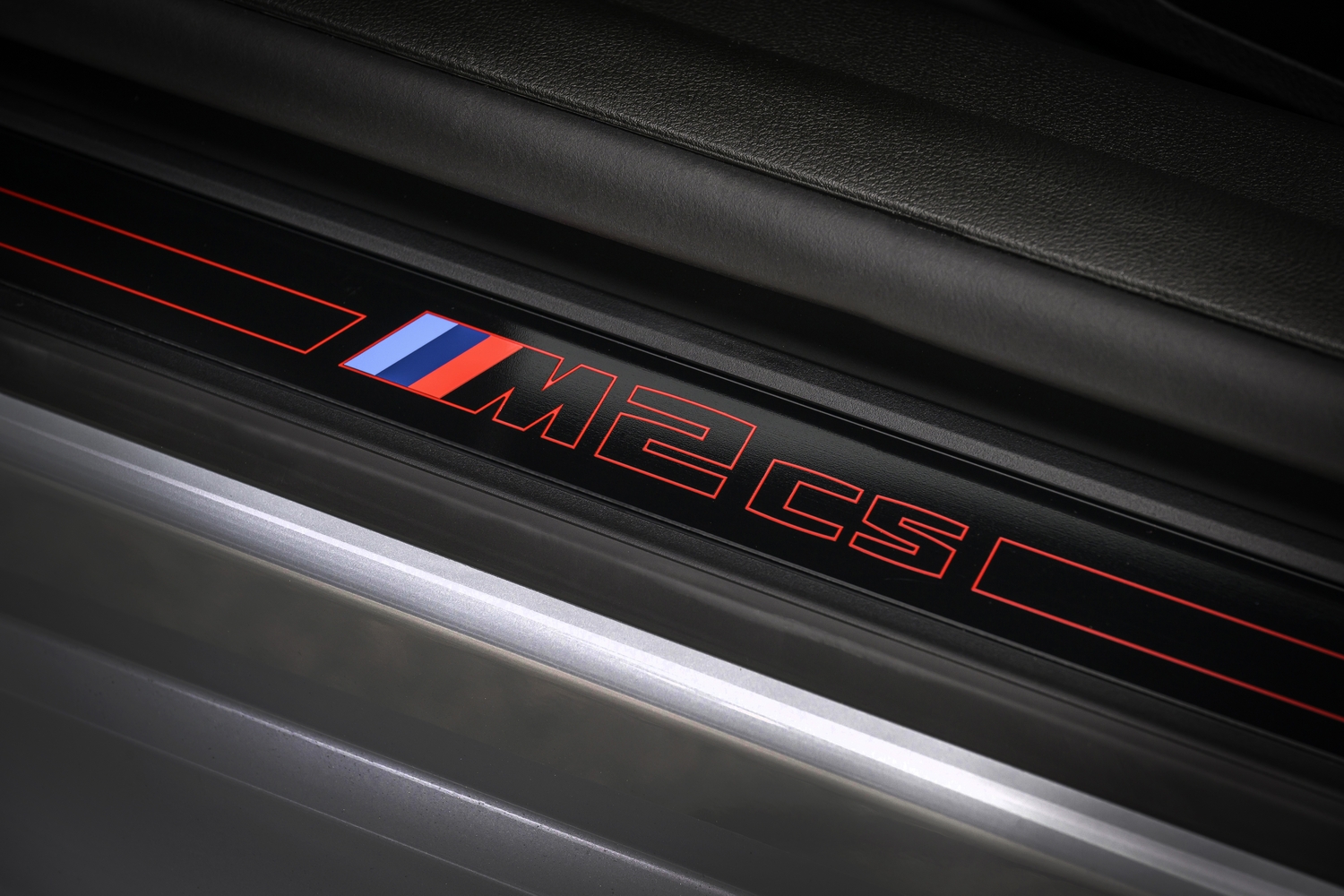
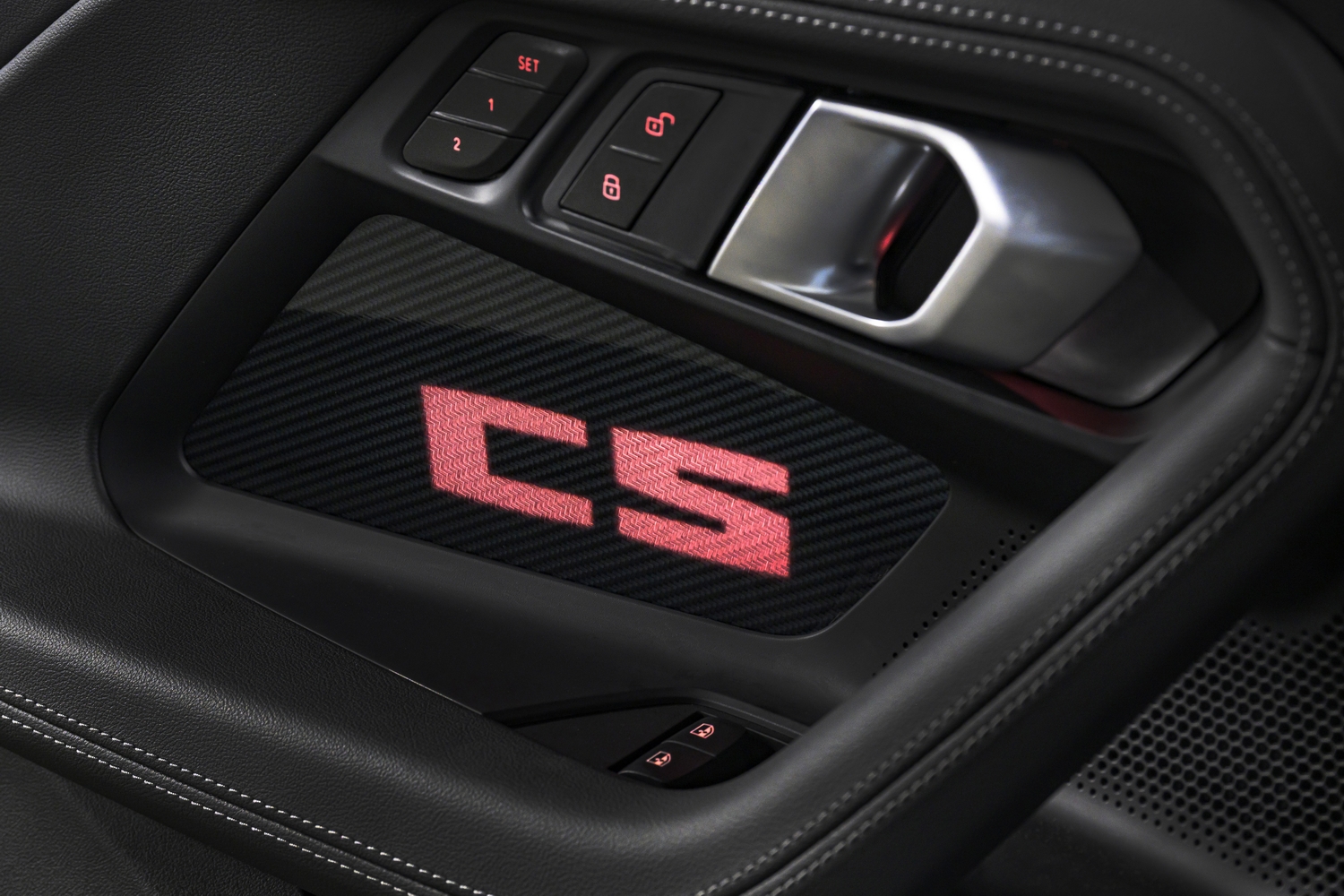
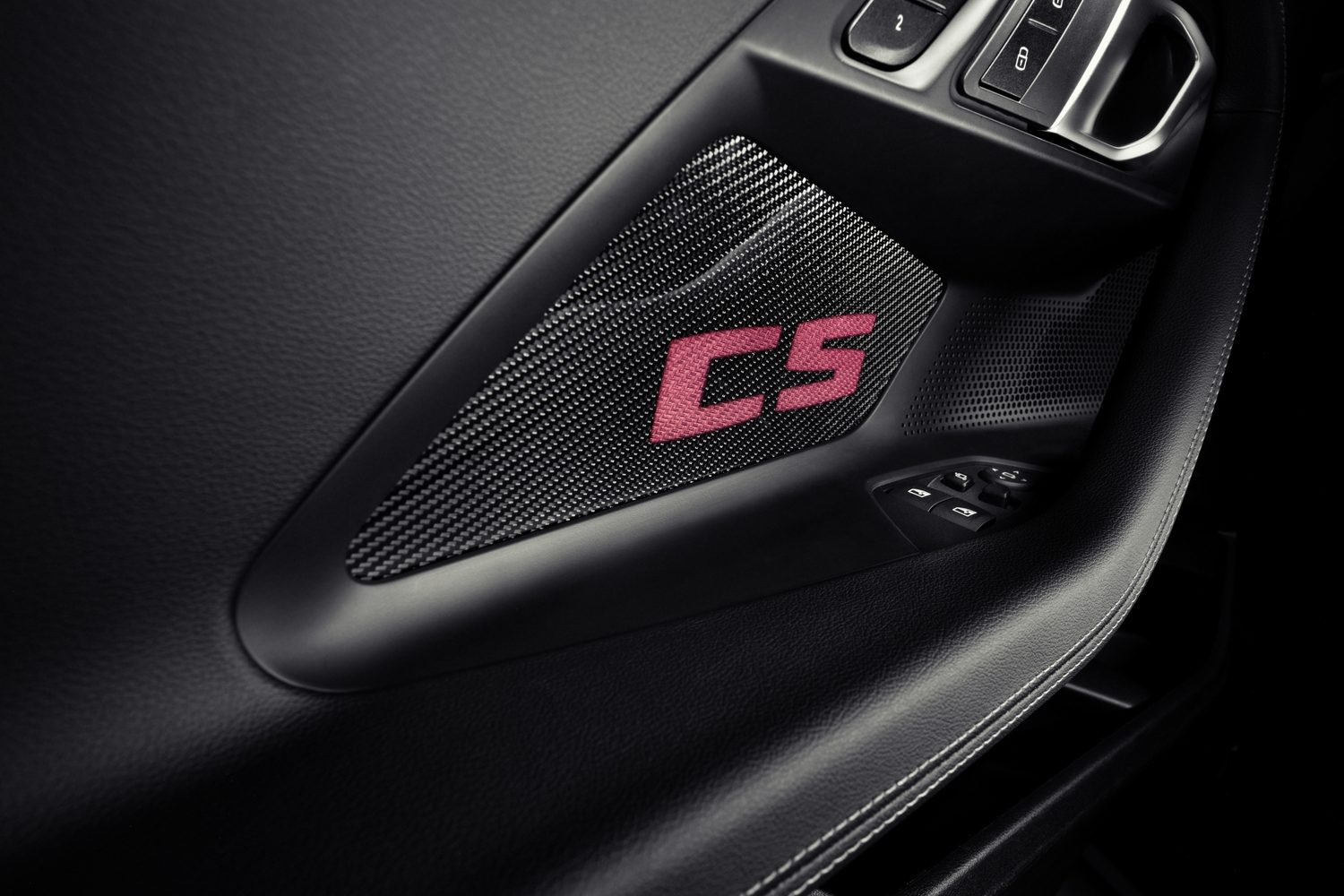
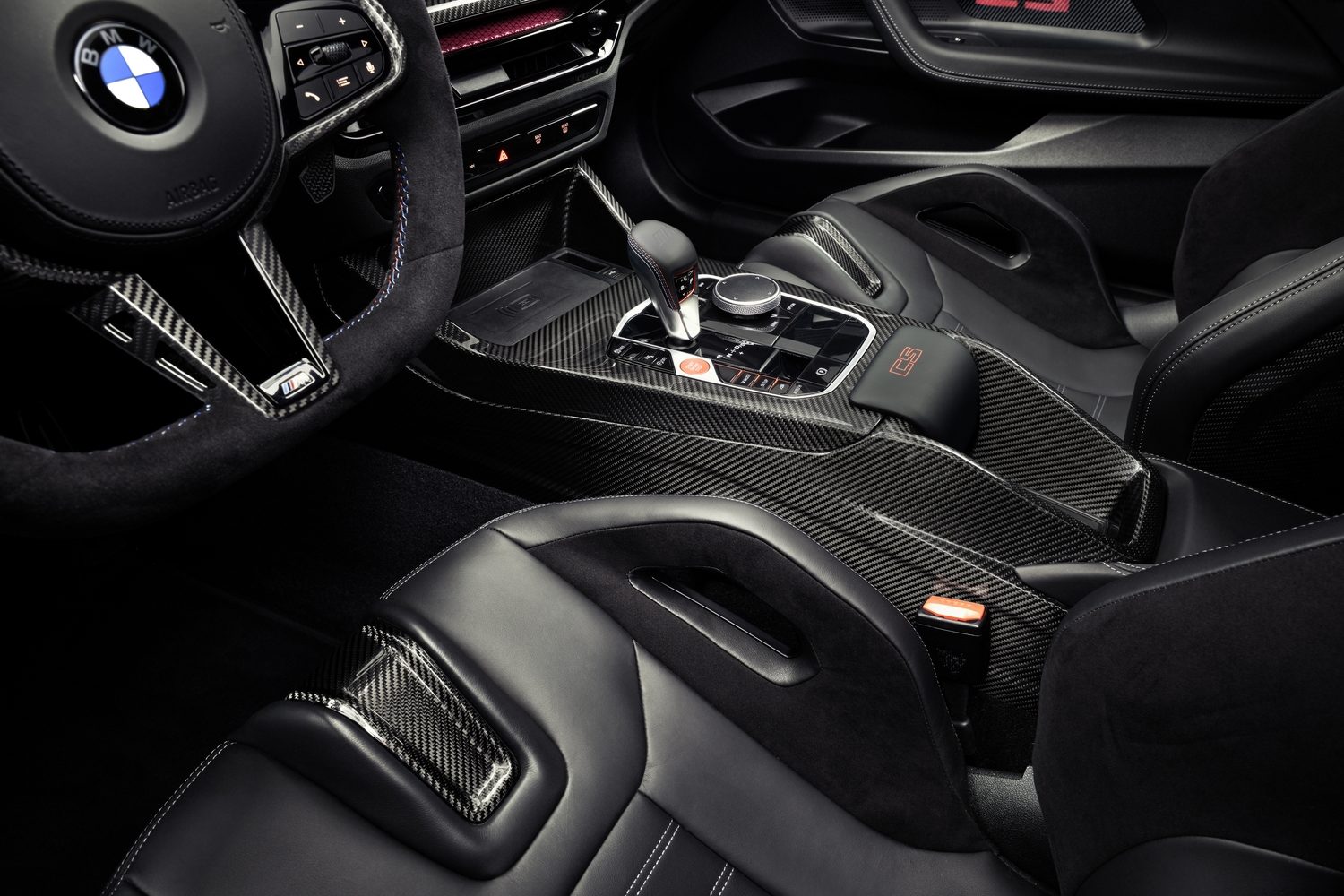
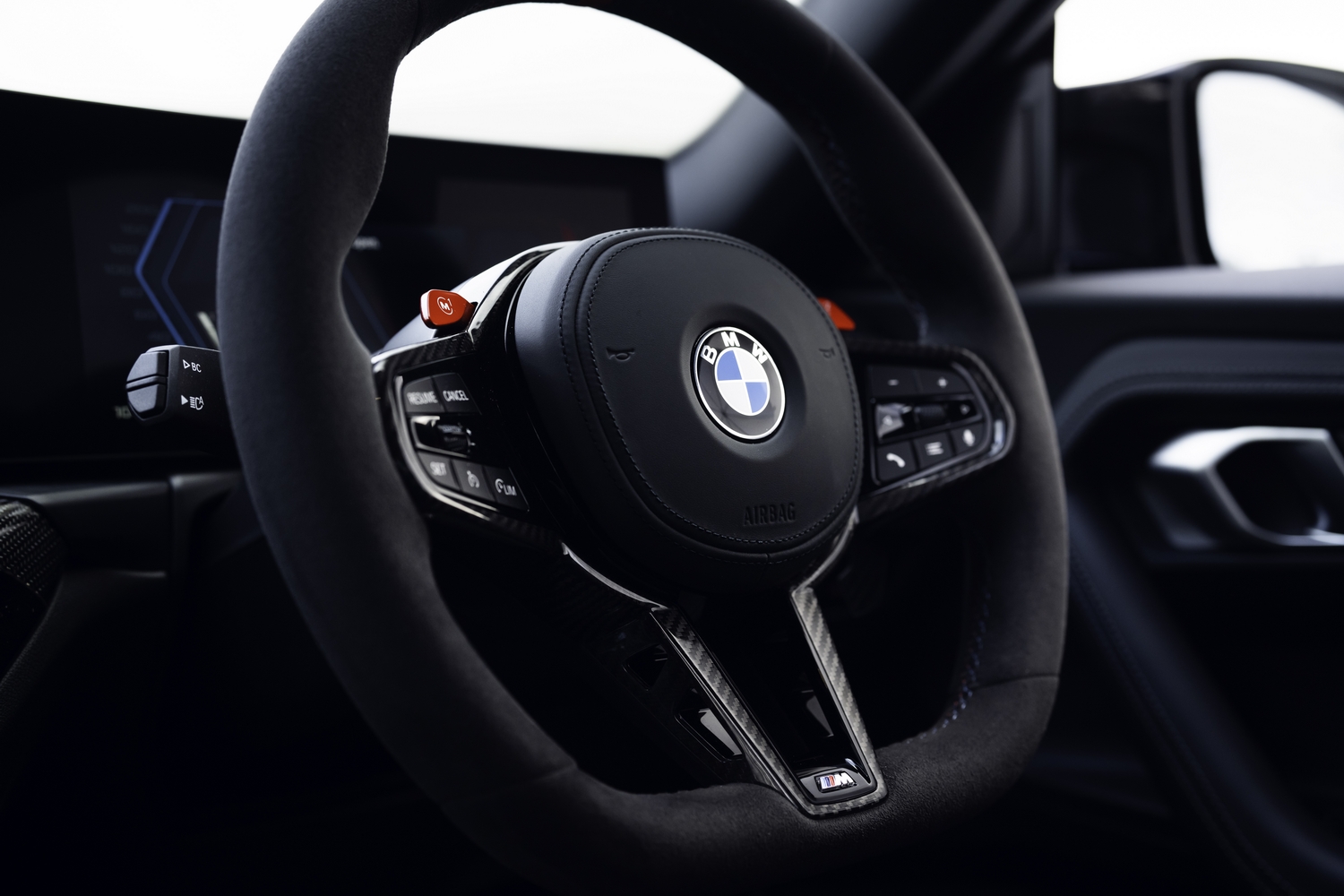
There's an appealing sprinkling of CS-specific details, such as tactile Alcantara for the three-spoke steering wheel, large backlit CS logos in the doors (and on their sills) and a unique centre console, made from CFRP to reduce weight.

The expected curved instrument display on the dashboard is present and correct, with a large screen for the instruments and a big touchscreen in the middle of the car. It's a shame BMW has moved so much of the ancillary switchgear to the latter instead of using physical buttons, but it's fine when you get used to where everything is.
Getting comfortable in the driver's seat

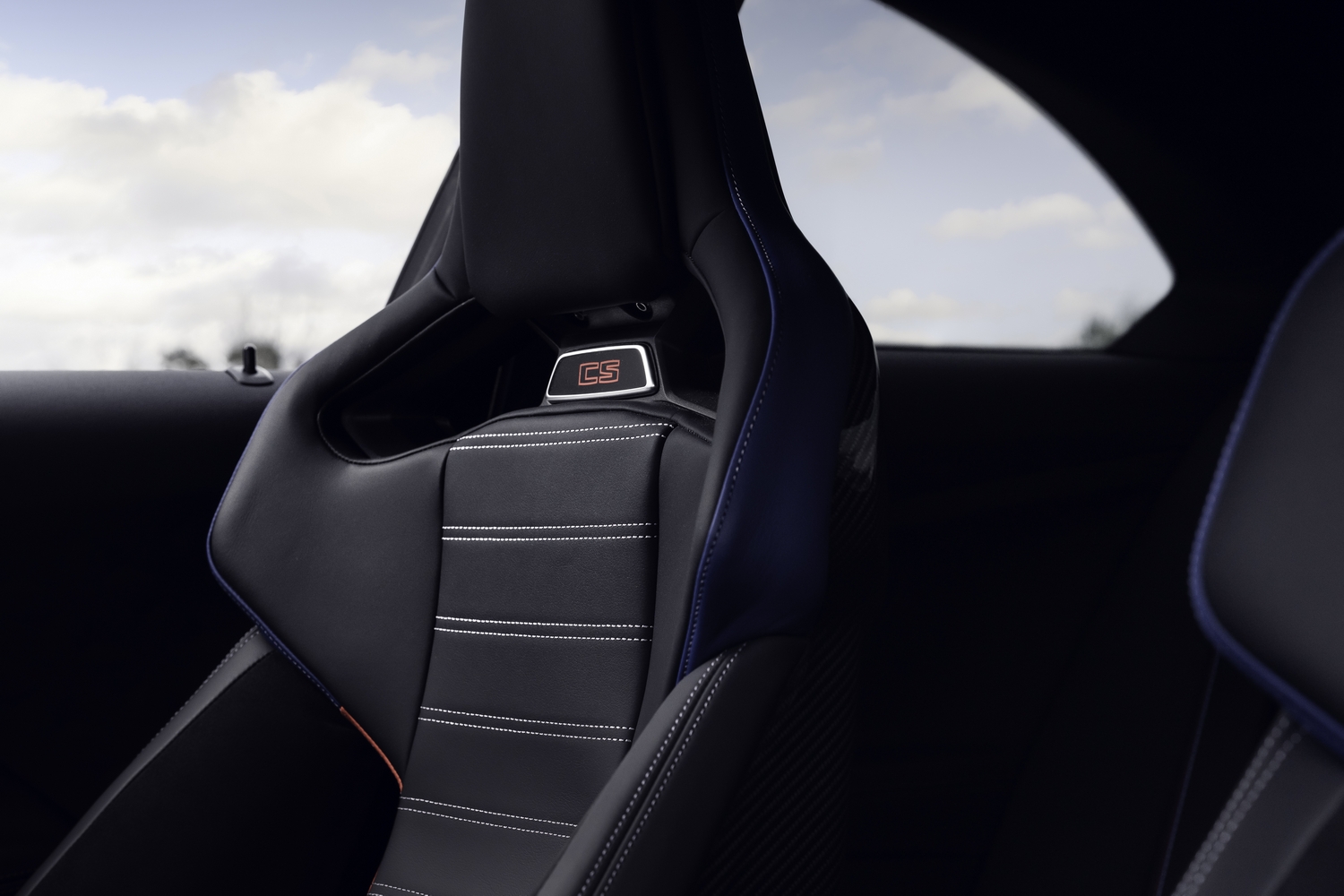
One of the biggest upgrades to the M2's interior for the CS is the addition of M Carbon bucket seats up front. These have serious-looking carbon backs, cutouts to allow for the use of racing harnesses and it's even possible to remove part of the headrest (using a tool) to better accommodate helmeted heads.
Bizarrely, despite all the above, the seats are heated and come with electric adjustment, and they feature leather upholstery as well. What's more, they prove to be hugely comfortable after many hours at the wheel.

There is one downside, however, in that the raised carbon section that sits between your legs can make it a little inelegant to get in and out of the car depending on how low-set the steering wheel is or how high up the seat is positioned.
It's the first time we've been happy to have a flat-bottomed steering wheel in a road car, though the wheel itself is quite a big diameter.
Anyway, once you get used to ingress and egress, there's plenty of adjustment in the seat and wheel positions to allow a variety of driver sizes and shapes get comfortable. With or without a helmet on.
Infotainment and technology
Nothing new here for the M2 CS, so it keeps the regular M2's 'BMW Curved Display' layout integrating a 12.3-inch instrument panel and 14.9-inch touchscreen behind one smooth surface. This all runs BMW Operating System 8.5 including BMW Live Cockpit Professional and BMW Maps with Augmented View.

Though of course, most people will likely pair up a smartphone and use the Apple CarPlay or Android Auto phone-mirroring software. These can display their navigation directions on the head-up display these days, which makes built-in satnav almost superfluous.
A wireless phone charging pad sits ahead of the gear lever, with one USB-C port to its side and another in the recess at the rear of the carbon centre console.

A decent Harmon Kardon sound system is included, but with a twin-turbo straight-six under the bonnet, we didn't think to try it out…
Rear-seat passenger space
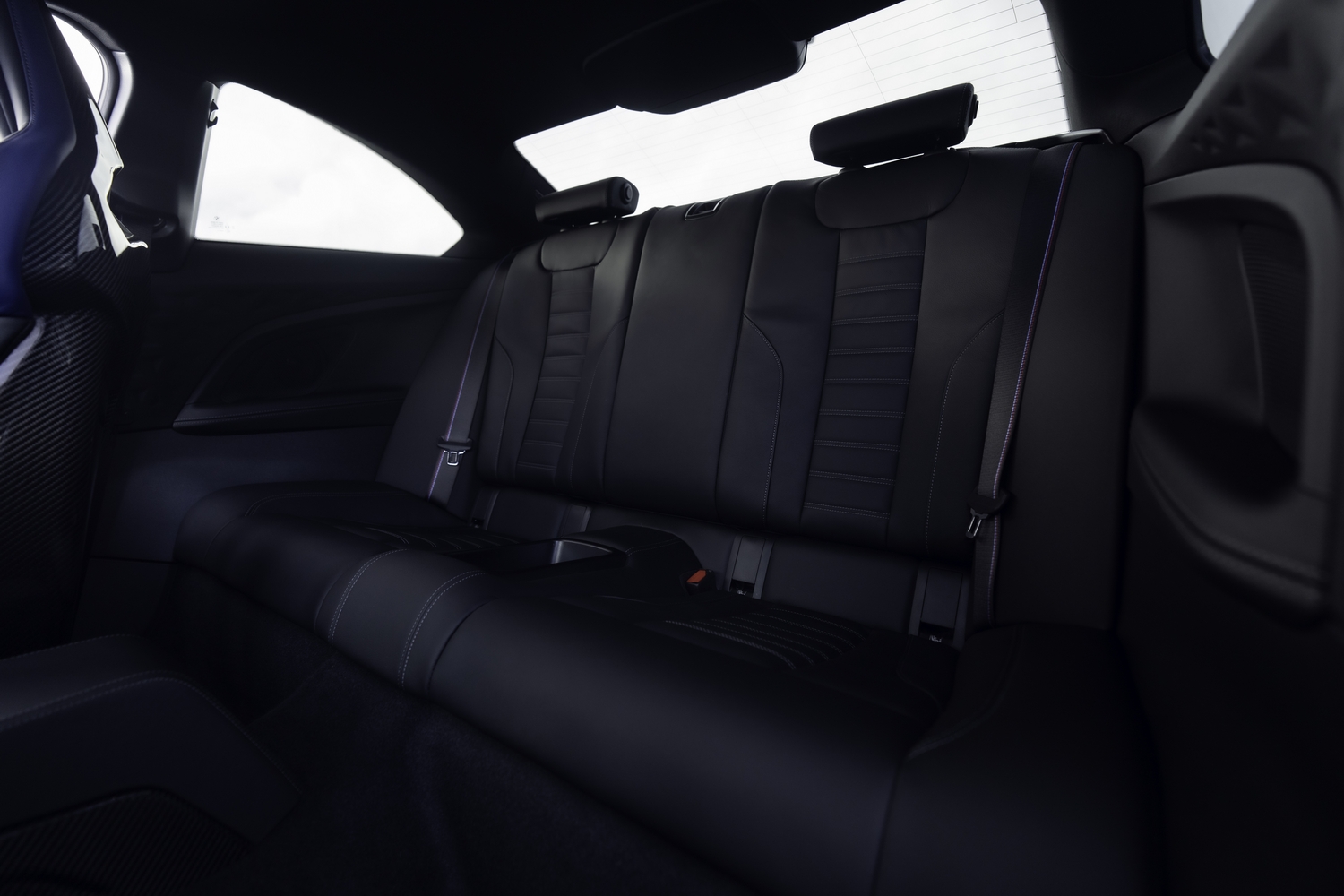
There are two seats in the back of the M2 CS, and even ISOFIX points there. It would be tricky to fit in large, rear-facing child seats, however, given the space, never mind the difficulty of shoving them in through the relatively small opening made by moving the front seats forward.

Nonetheless, and in spite of the carbon-backed bucket seats, average-sized adults will be happy enough in the back seats so long as those in the fronts are willing to compromise a little on legroom.
Boot space in the BMW M2 CS
The boot of the M2 holds a useful 390 litres of luggage, which is a comparable volume to that of the VW Golf, for example. The BMW's boot lid and relatively restricted opening mean you won't be carrying massively bulky items, even if the rear-seat backs can be tilted forward to accommodate longer things. We love how you can see a little exposed carbon fibre on the underside of the boot lid when it's open.

Performance of the BMW M2 CS
- Twin-turbo straight-six engine a delight
- No manual, but ace auto fitted
- Huge variability in driving settings

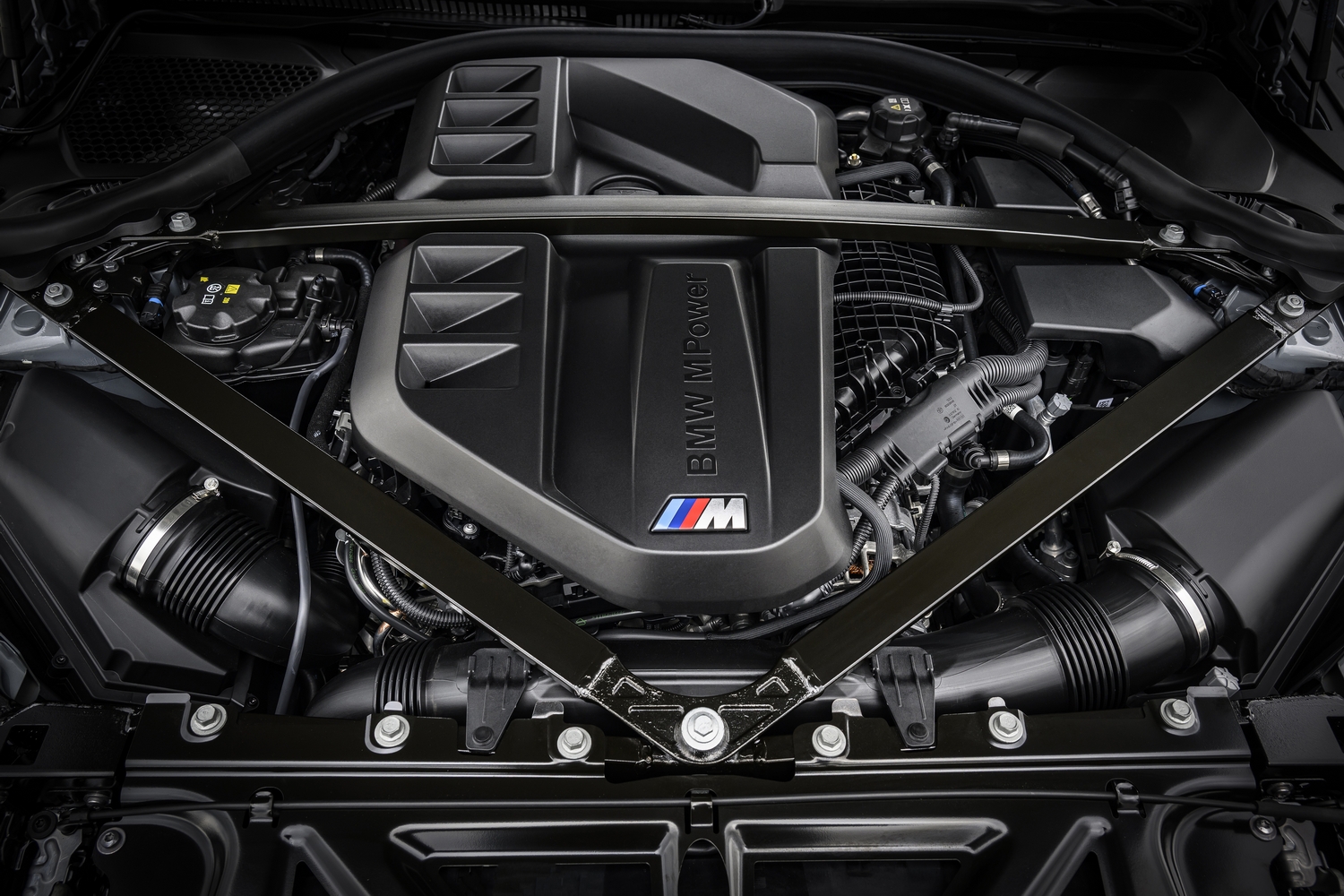
BMW hasn't drastically altered the M2 recipe, merely enhanced it. The CS uses the familiar 3.0-litre straight-six petrol engine from throughout the BMW M lineup, developed to cope with track driving and indeed used as a basis for some of the company's motorsport activities.
It features two 'mono-scroll' turbochargers, each feeding compressed air to three cylinders, high-pressure direct fuel injection and sophisticated variable valve lift and timing technology.

Due to calibration changes alone, BMW has increased peak power and torque by 50hp and 50Nm, respectively, to 530hp and 650Nm. This, along with the modest weight reduction, means a slightly faster 0-100km/h time, at just 3.8 seconds. The M2 CS can also hit 302km/h, which may be all but irrelevant to most owners, but does indicate just how serious a performance this supposedly junior M car puts in.
Driving the BMW M2 CS in Germany on winter tyres - Shane O' Donoghue

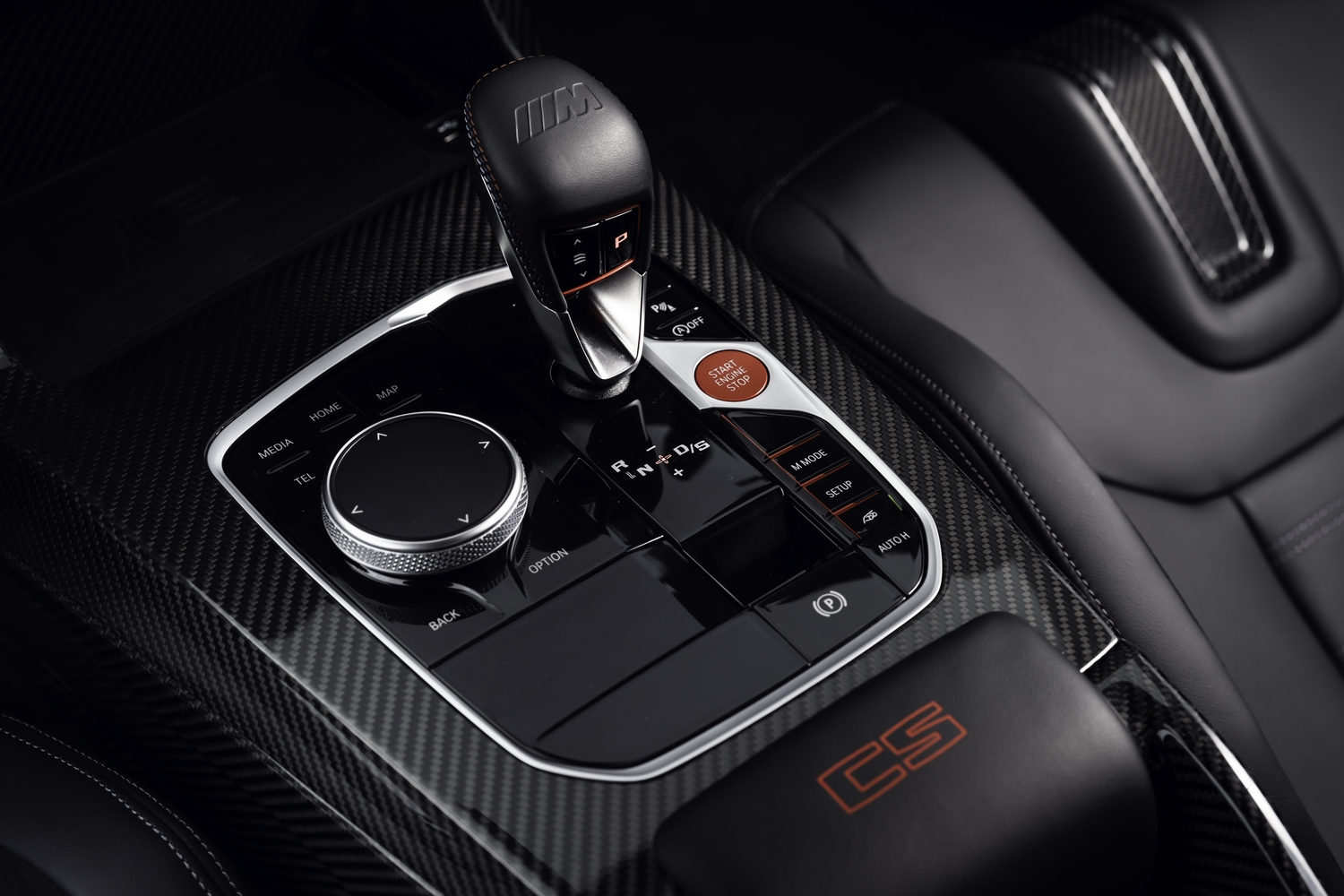
There's no manual gearbox option for the M2 CS, sadly, but the eight-speed automatic transmission is a good one thanks especially to the 'Drivelogic' feature. This allows the driver to choose from three different calibrations - via a tactile toggle switch on the lever itself - regardless of any other driving settings in place.
At its most docile, the gearbox smoothly slurs through the gear shifts as well as any modern torque-converter automatic but ramp up the levels and it quite dramatically alters the car's response and personality. At its most extreme, the gear changes are verging on violent if you choose to take control via the carbon-fibre paddles behind the steering wheel.

This isn't entirely necessary, obviously, but it does add to the sense of engagement. And changing down through the gears as you brake for a corner is also huge fun, accompanied by throttle blips and exhaust histrionics if you've the sportiest settings selected. The car will even allow you full manual control if you want it.
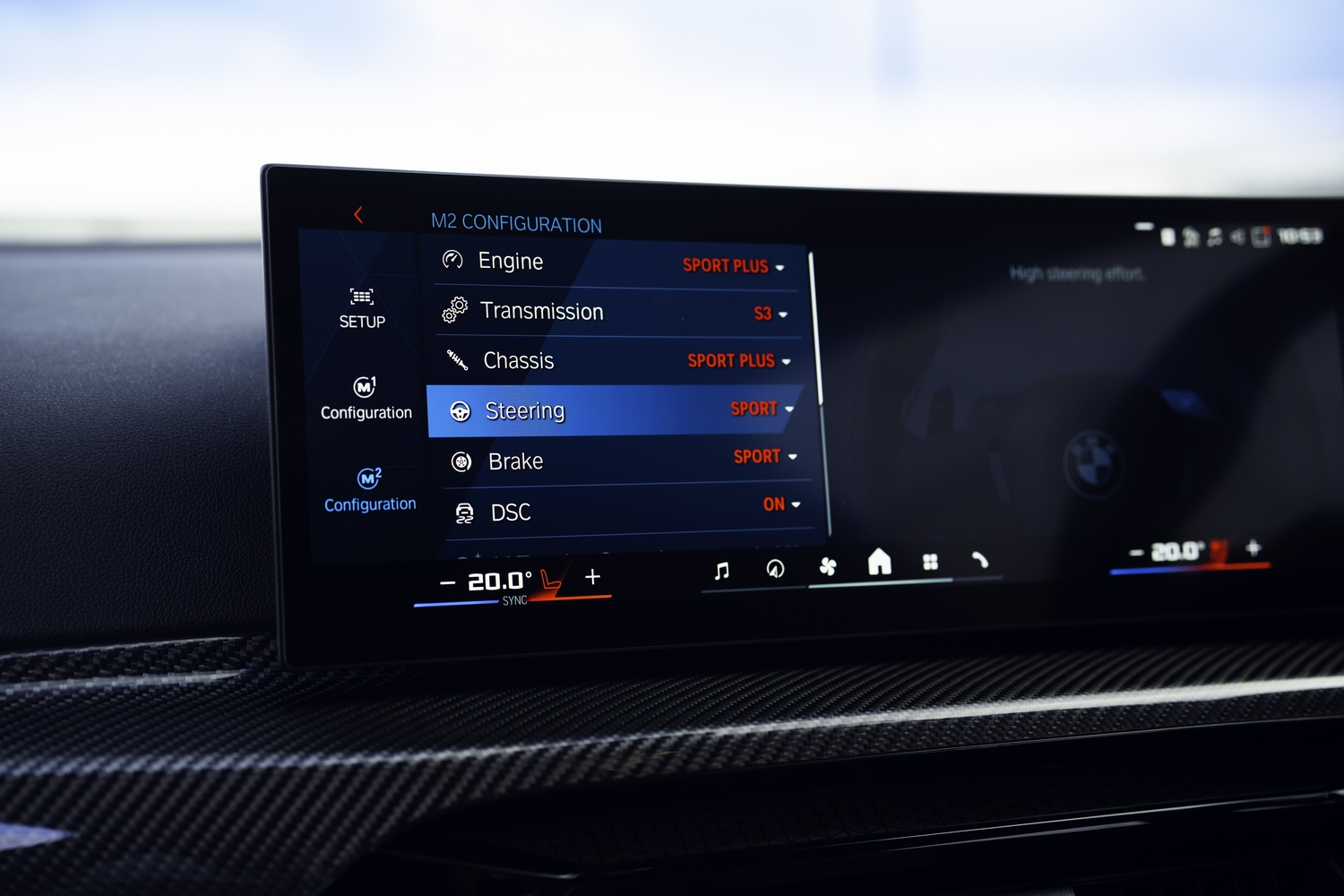
Indeed, as ever with a modern BMW M car, the driver can customise the settings to their preferences at any given moment thanks to the extensive 'SETUP' menu. And so you don't have to be taking your eyes off the road to do all that on the move, it's possible to program two groups of your favourite settings so they're selectable by pressing the red M1/M2 buttons above the steering wheel spokes.

The CS gets a unique tune for its Dynamic Stability Control (DSC) and M Dynamic Mode, along with the adaptive damping, power steering, braking system and M Sport differential on the rear axle. The springs and dampers are bespoke to the car as well, but the way you choose between all the settings is the same as ever.
It's even possible to vary the level of traction control and get the car to 'rate your drift' via the M Drift Analyser. For racetrack use only, obviously. Our test car's carbon brakes would have been useful had we had access to a circuit, too.
Our drive of the M2 C2 was in rather different circumstances, as it started in Munich in February, and the BMW press garage had fitted winter tyres. So, you won't find an on-the-limit track review here today.

The damping's 'Comfort' setting is ideal for long journeys and, while the suspension is a little firmer than the standard M2's, it's still supple enough to be used in daily life, certainly on Germany's relatively smooth roads. Saying that, there's plenty of road noise through the car on the motorway.
Mercifully, we experienced some dry weather and had the chance to really extend the engine on some derestricted sections of autobahn. The straight-six sounds sublime at full chat (though for some reason BMW still feels the need to augment its noise in the cabin) and the car doesn't need a lot of empty road to hit 200km/h.
At those speeds, you'll want the firmer body control of the Sport setting for the adaptive damping, though the M2 feels supremely stable. Despite its direct and communicative steering, it's not at all nervous on the motorway, either, and it's easy to keep up a high average speed in such conditions.

But keen drivers will treat motorways as a means to an end, as the M2 has always been about the corners, and even at modest speeds, it's an utter joy to drive on a twisty road. There's a real sense of occasion to being in the CS, even if you're just ambling along.
As we skirted the foothills of the Alps, the outside temperature plummeted and freezing rain made for challenging conditions. But the M2 CS is not the handful some might imagine it to be. Its chassis might be capable of serious lap times on a dry track, but its feedback to the driver allows for safe and swift progress even when the road surface is slippery.
In fact, it arguably comes alive in such circumstances as it moves around underneath the driver at lower speeds, meaning its agility and adjustability are more accessible.
Irish pricing & rivals to the BMW M2 CS
- Nearly €40,000 more than standard M2
- Limited build status
- Competes with Porsche 718

The entry-level BMW M2 costs €121,415. Because of the quirks of our VRT system, the higher CO2 output of the manual variant means it's a little more expensive, at €122,373. That difference is all but irrelevant given most buyers are likely to add a few options or buy on finance.
Against that, the €159,681 asking price of the M2 CS seems a bit saucy at first, especially as the choice of paint colours is much more limited. However, play with the BMW Ireland configurator and you'll discover it costs the guts of €17,500 to add the 'M Race Track Pack' to the standard car, bringing with it the special seats, carbon roof and interior trim.
And the M2 CS has much more on top of that, items you can't add to the standard car - such as the powertrain and chassis changes, the beautiful wheels, Alcantara steering wheel, unique interior embellishments and did we mention the rear spoiler?

How does the M2 CS stack up in comparison to cars from other brands? Well, there aren't loads of direct rivals on sale anymore. The more extreme versions of the Alpine A110 warrant comparison, but good luck getting your hands on one now. And nothing on sale from Mercedes-AMG or Audi can really hold a candle to the M2's interactive, rear-drive chassis.
The only true rival is the Porsche 718 Cayman, though even that has only two seats. The M2 CS sits between the 400hp Cayman GTS and the bonkers GT4 RS. The latter may have less power than the CS, but it's a rather more extreme vehicle overall, and also way more expensive.
Servicing the BMW M2 CS
BMW offers its buyers fixed-price service plans, with specific items for the M models included. For the M2, these are priced from €2,281. Aside from an initial running-in service after just 2,000km, the M2's services are determined by its onboard Condition Based Service (CBS) system, which monitors the car's oil and other aspects for condition. This is likely to be around every 15,000km or once a year for minor services and double that for major.
BMW M2 CS warranty
The standard BMW warranty is for three years with unlimited mileage. It includes roadside assistance.

Verdict - should you buy the BMW M2 CS?
It's not difficult to convince yourself that the CS is indeed worth the premium. We wouldn't hesitate to choose it over the standard M2 if our Lotto numbers came up. Well, ok, we might dawdle a moment wondering if we can live without the manual gearbox. Aside from that, the CS is undoubtedly the most enthralling M2 yet, which means it's arguably one of the most desirable M cars currently on sale.
Want to know more about the BMW M2 CS?
If there's anything about the new BMW M2 CS we've not covered, or you'd like help in choosing between it and other cars, you can avail of our expert advice service via the Ask Us Anything page.
BMW M2 CS history
The BMW M2 hasn't a long history and every example has followed the same formula, mating a compact rear-drive chassis with a turbocharged 3.0-litre straight-six petrol engine.
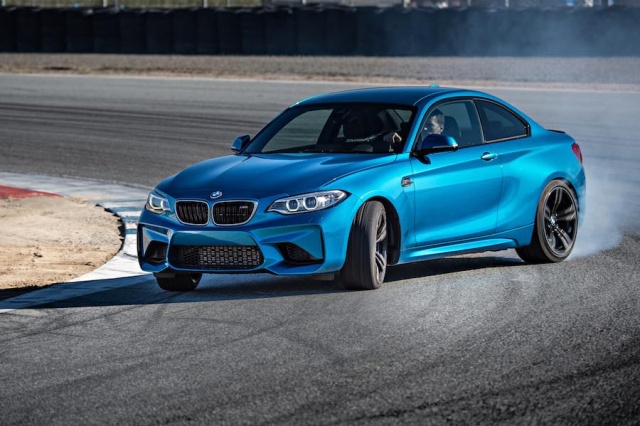
The first generation, codenamed F87, launched in 2016 with 370hp. The 410hp M2 Competition arrived in 2018, while the sublime original M2 CS arrived two years later. Our Dave still talks about this car as one of the best he has ever driven. Manual gearbox, reduced weight, 450hp. Yum.
BMW introduced the 'G87' M2 in 2023, initially with a 460hp version of the BMW M3/M4's twin-turbo engine - and lots more besides shared with those cars. A 2025 update bumped peak power to 480hp before the CS launched in 2026.
The CS badge can be traced all the way back to the 1965 BMW 2000 CS. It came to mean "Club Sport” (or just "Clubsport”) and was also referred to as "Coupe Sport” by some before BMW reimagined it for its latest generation of special M cars as "Competition Sport”.