


Exterior & design of the 2026 Aston Martin DB12 S
• Subtle aero changes
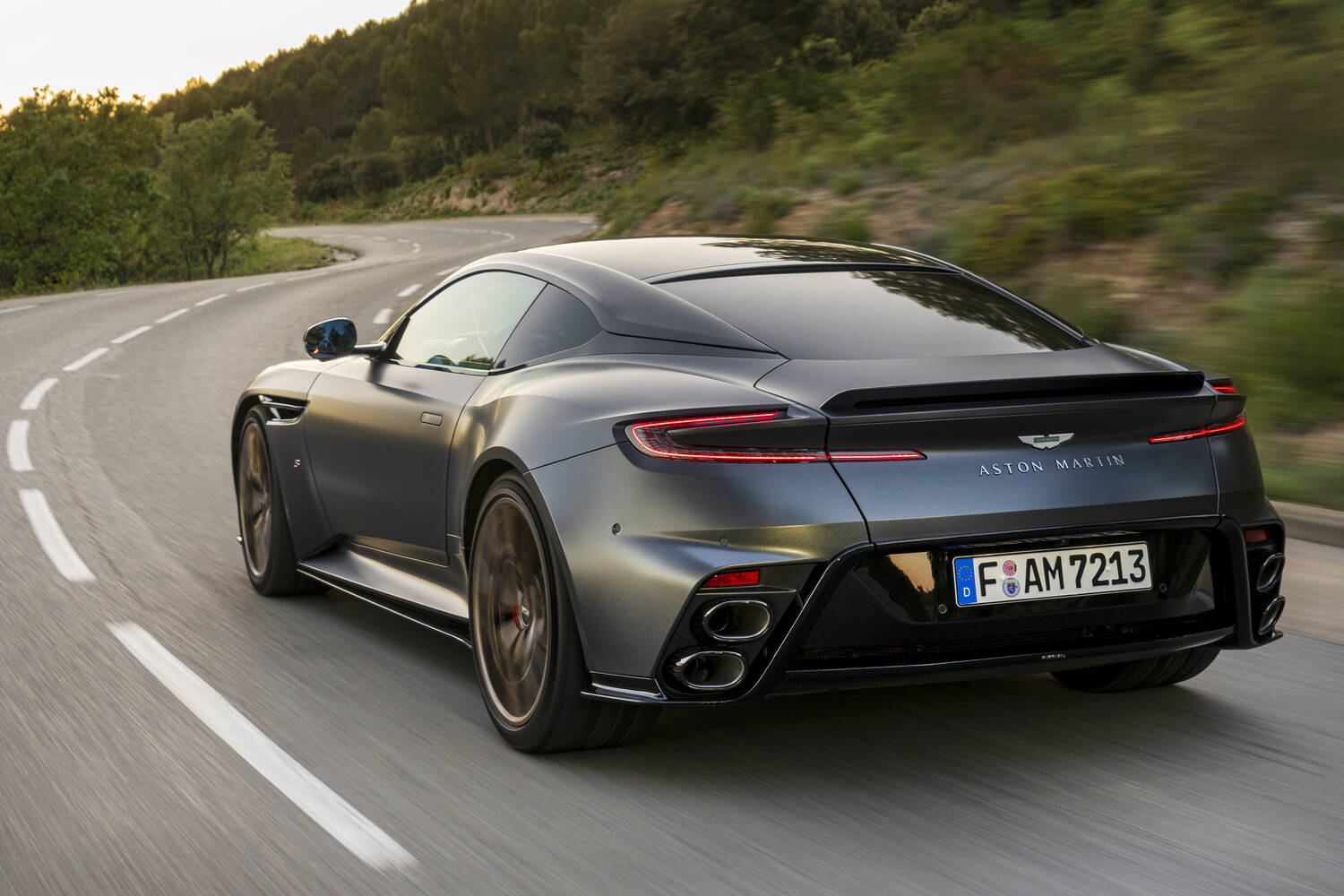
• New 'stacked' quad exhaust
• Small, fixed rear wing

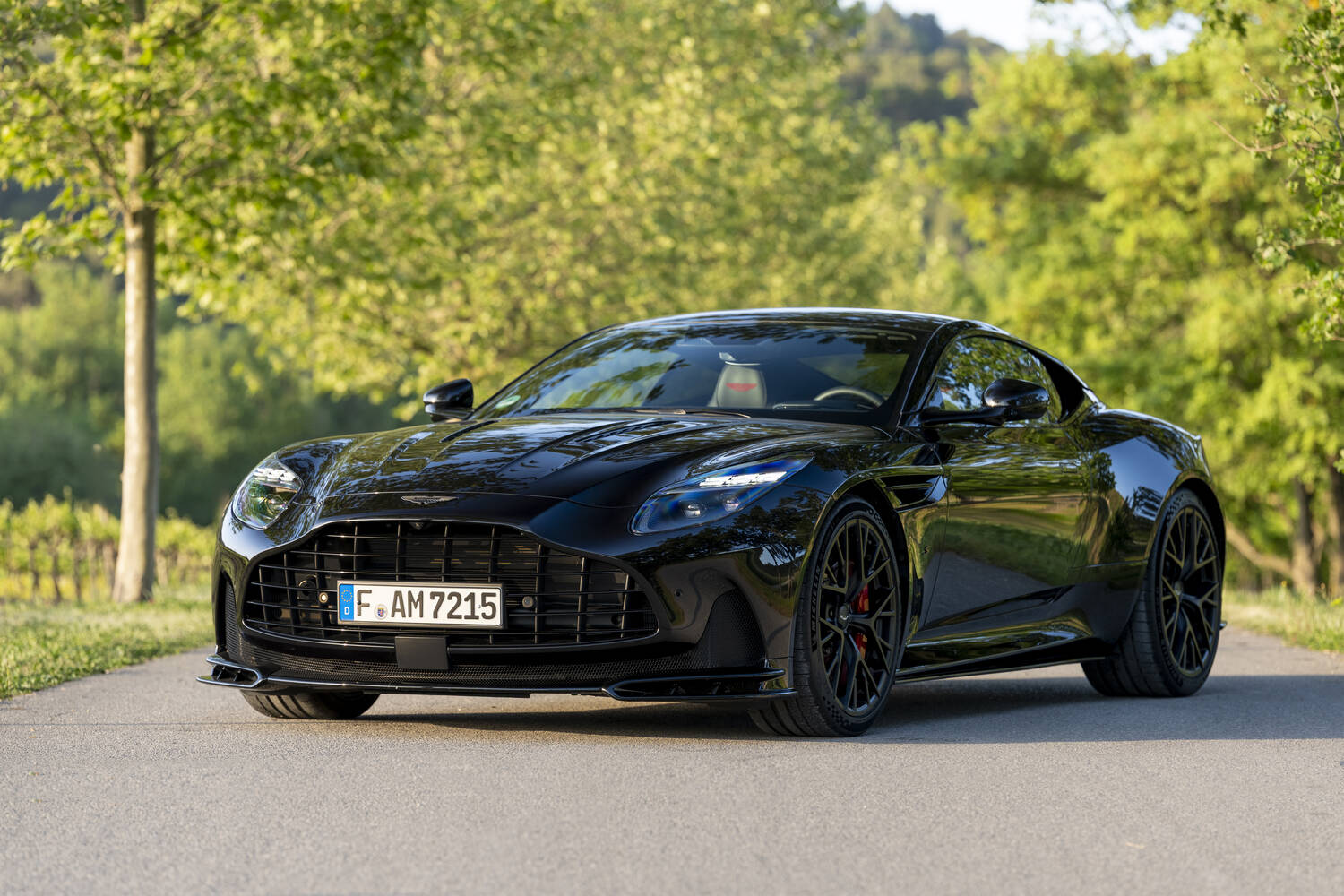
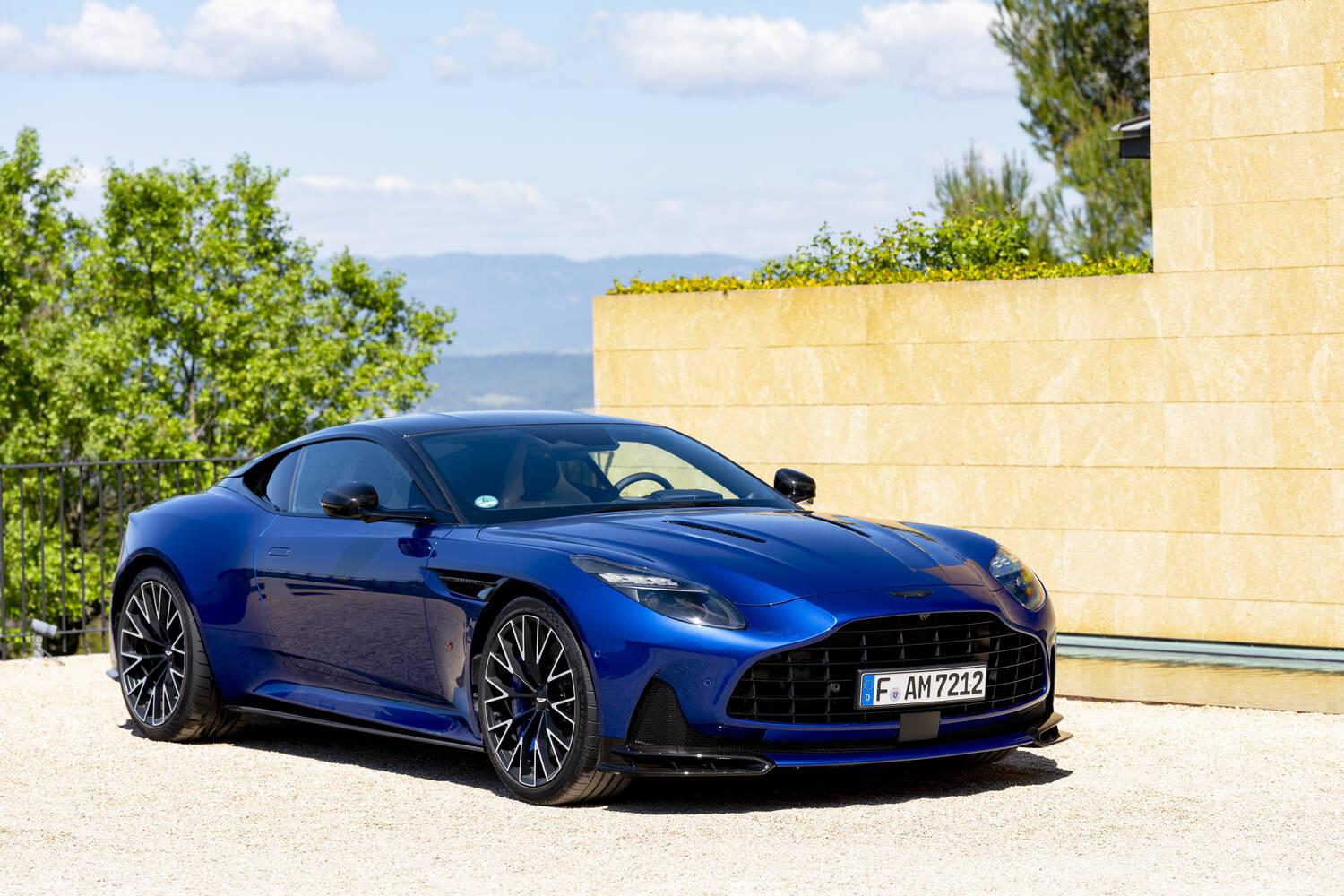
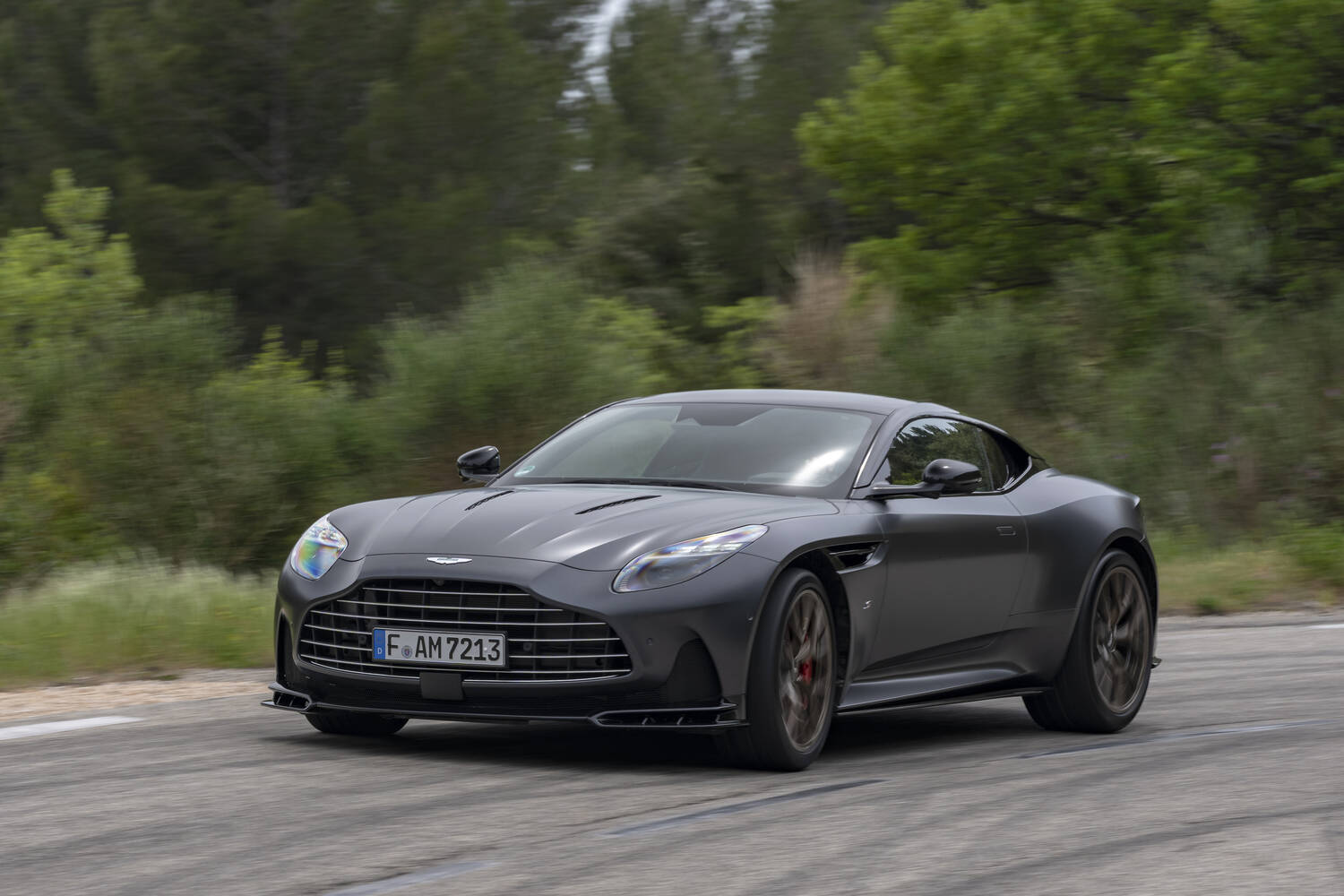
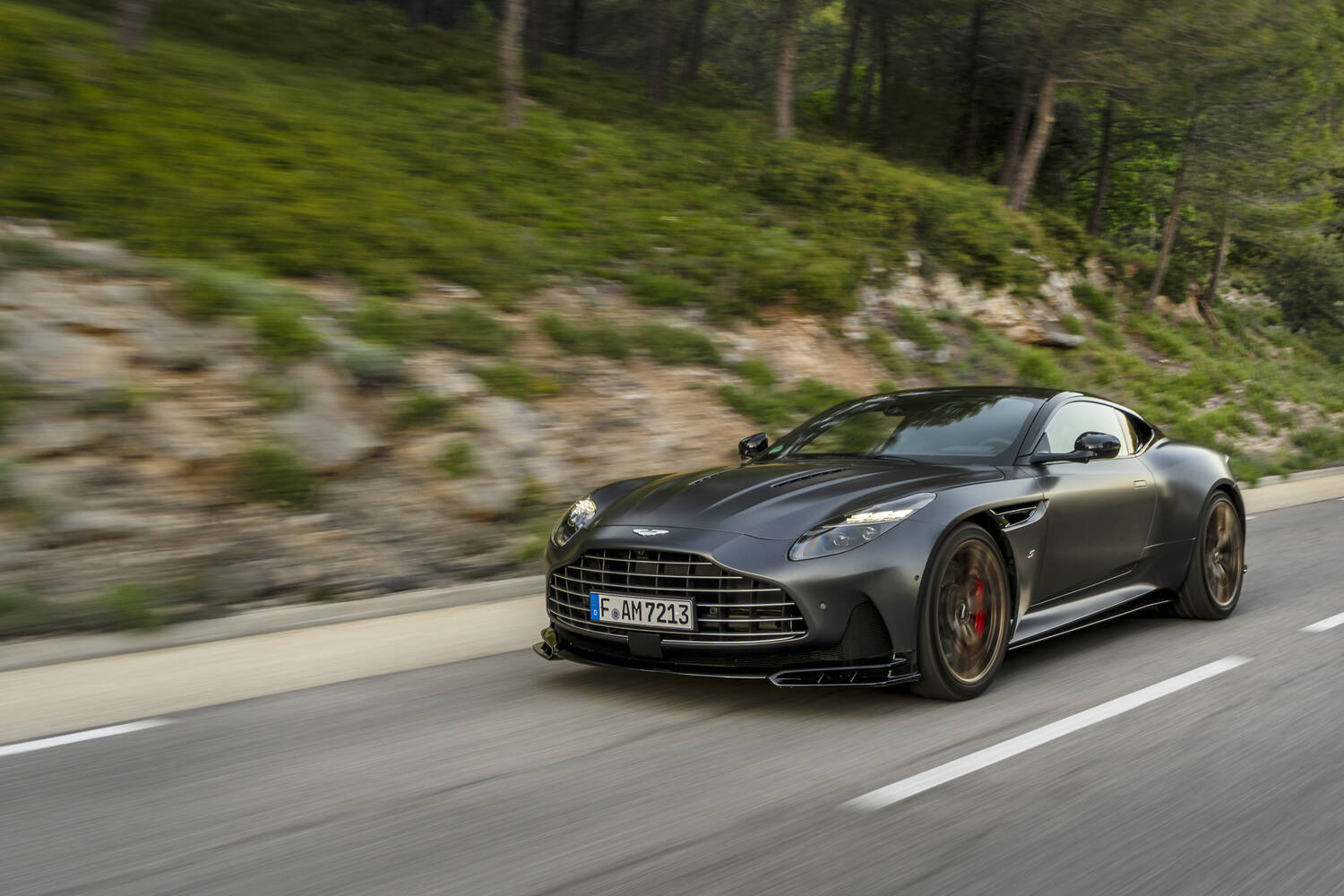
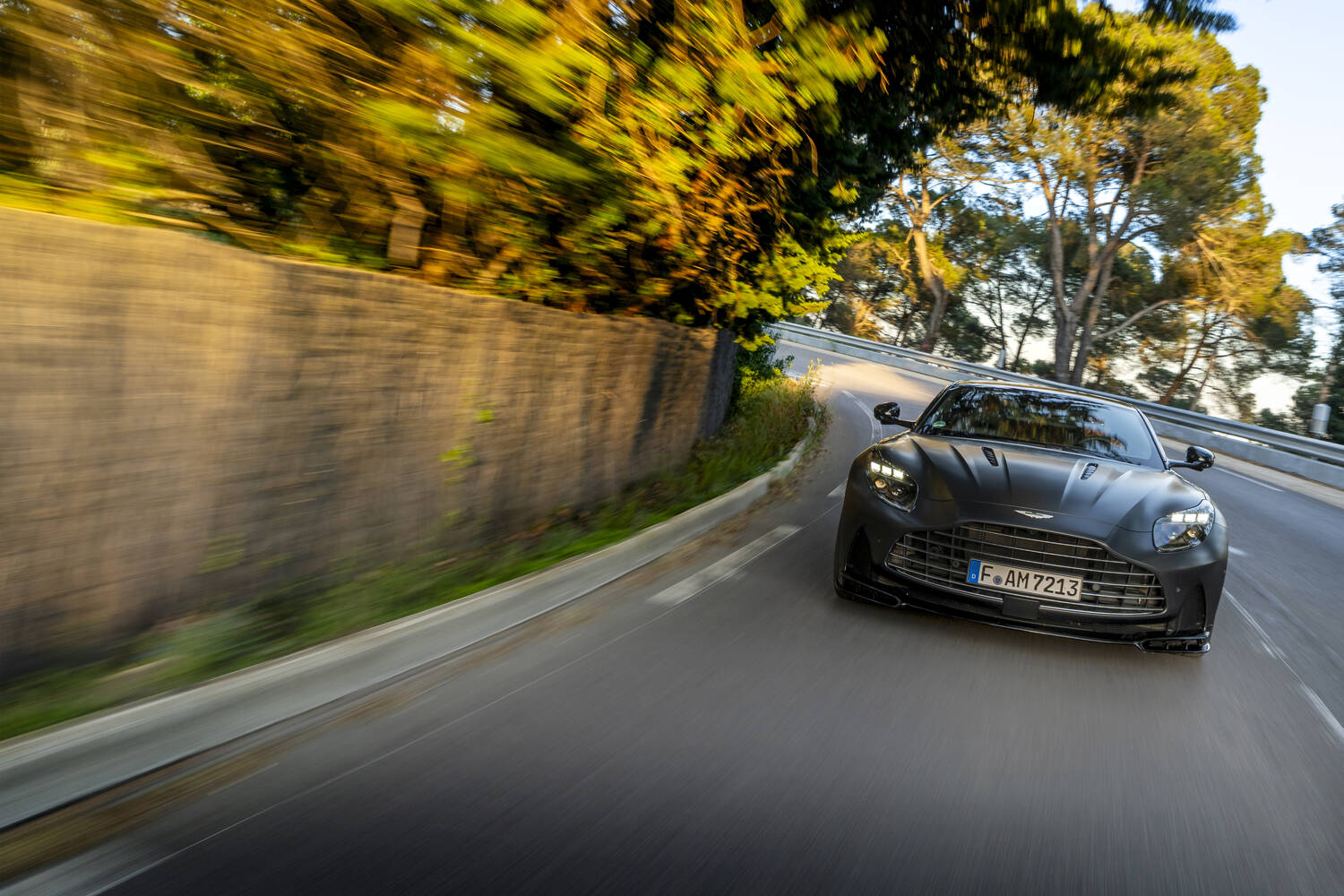
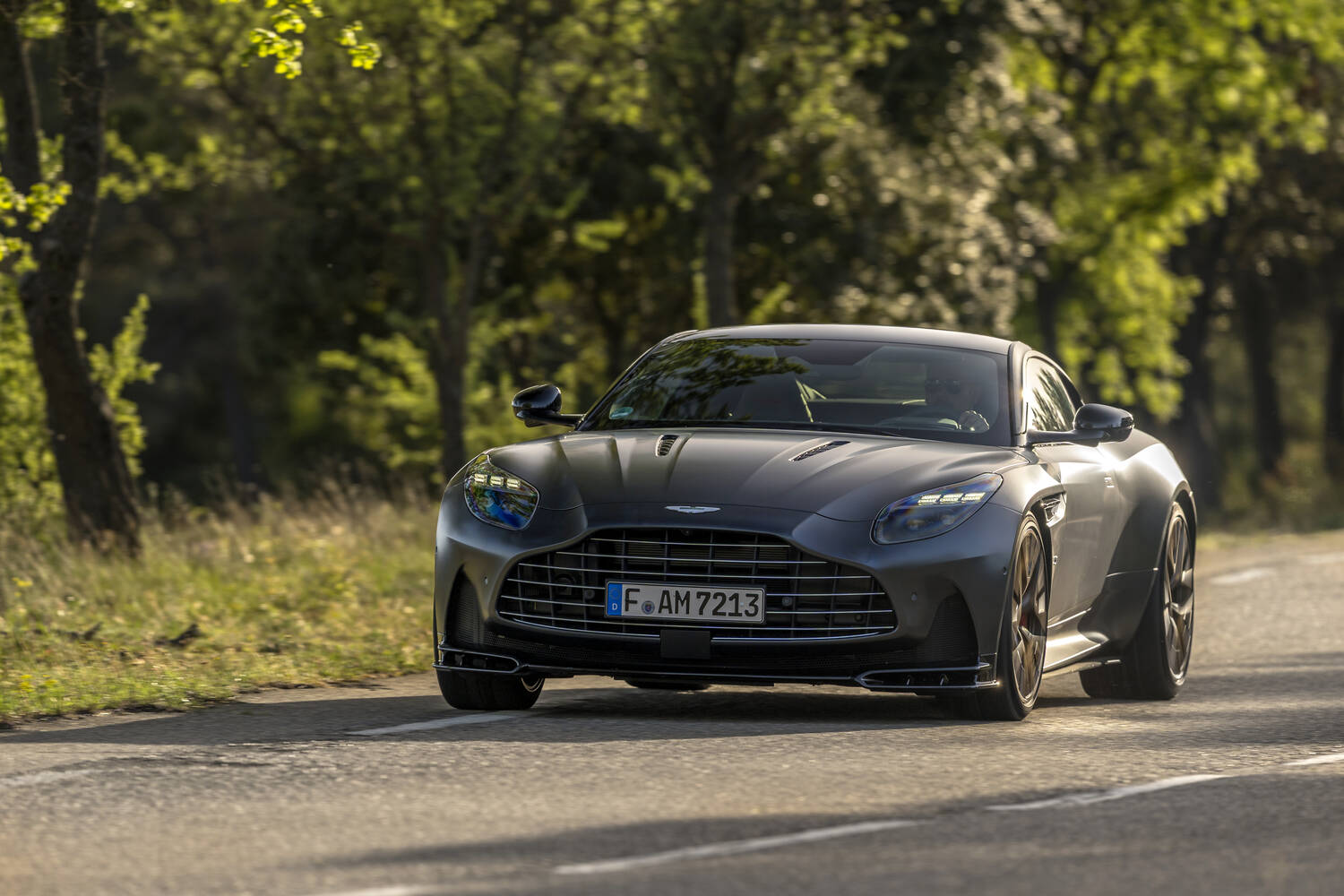
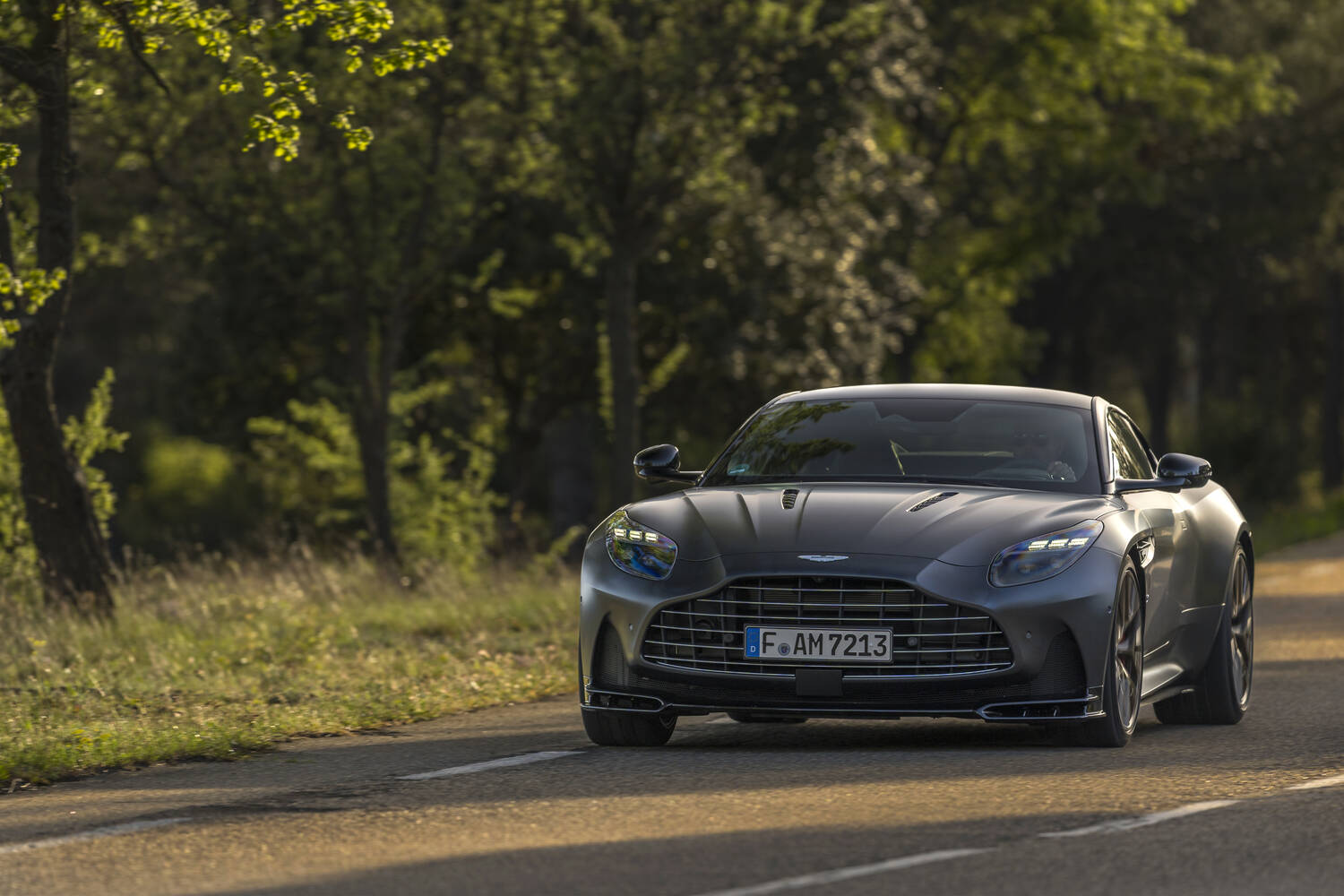
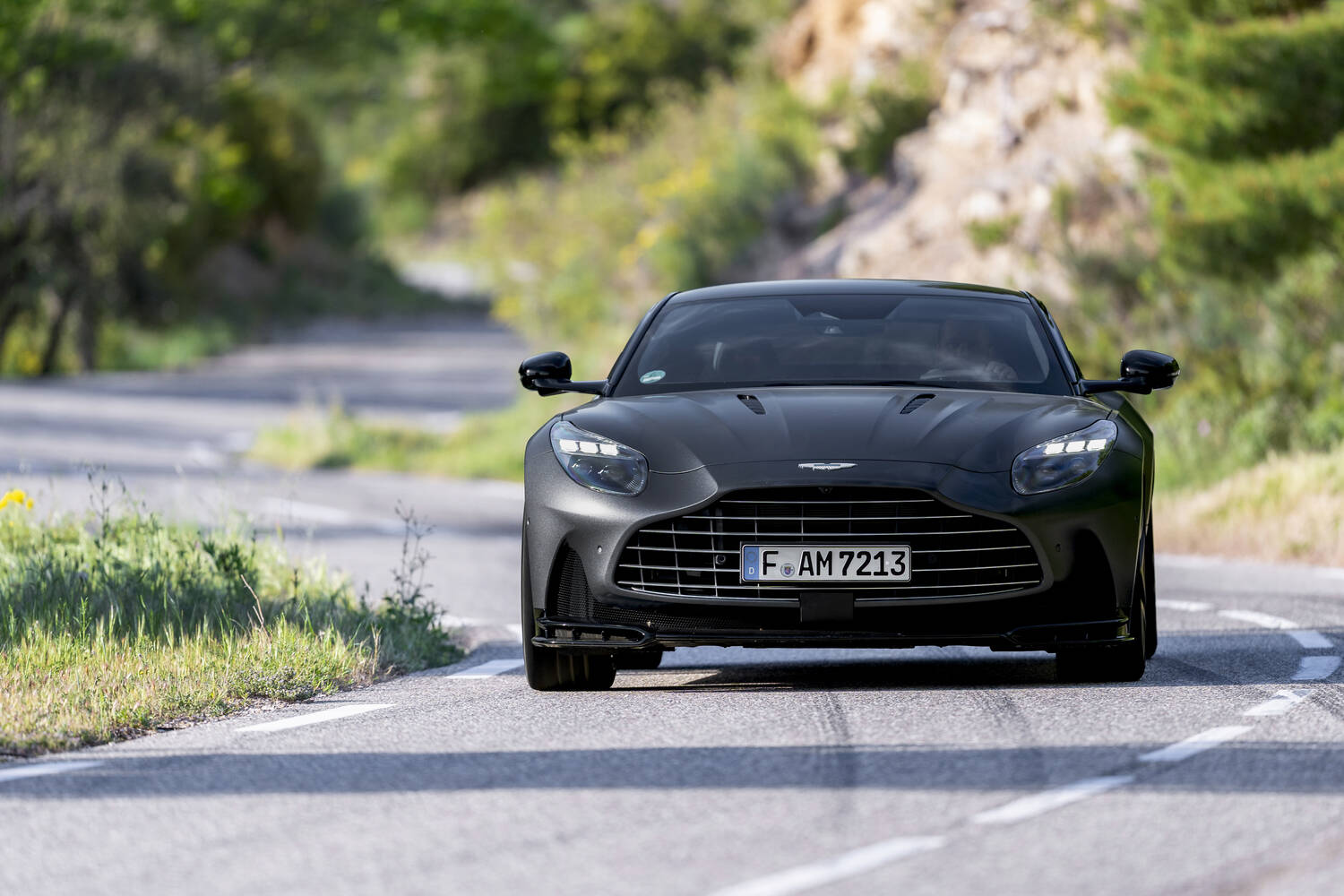
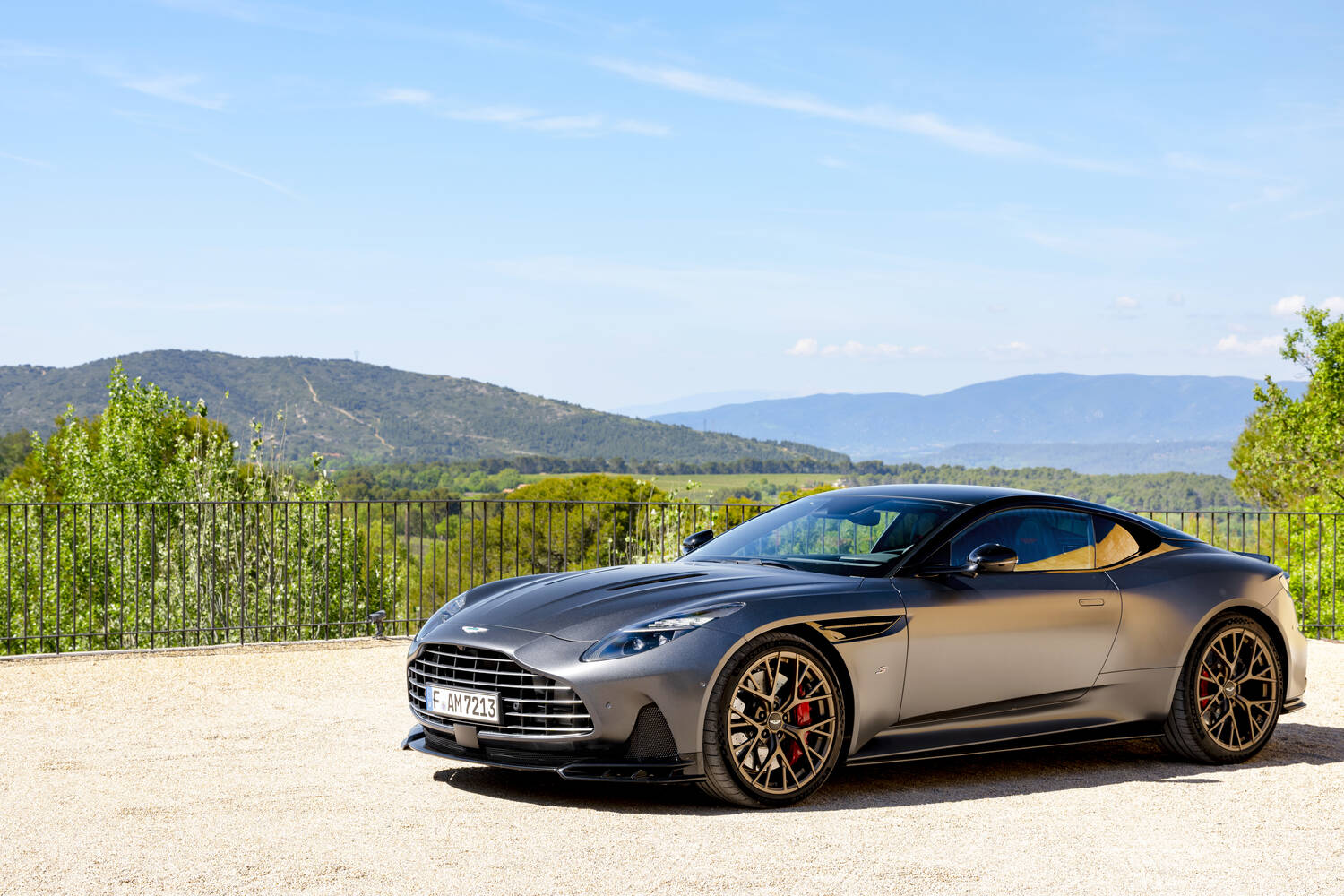
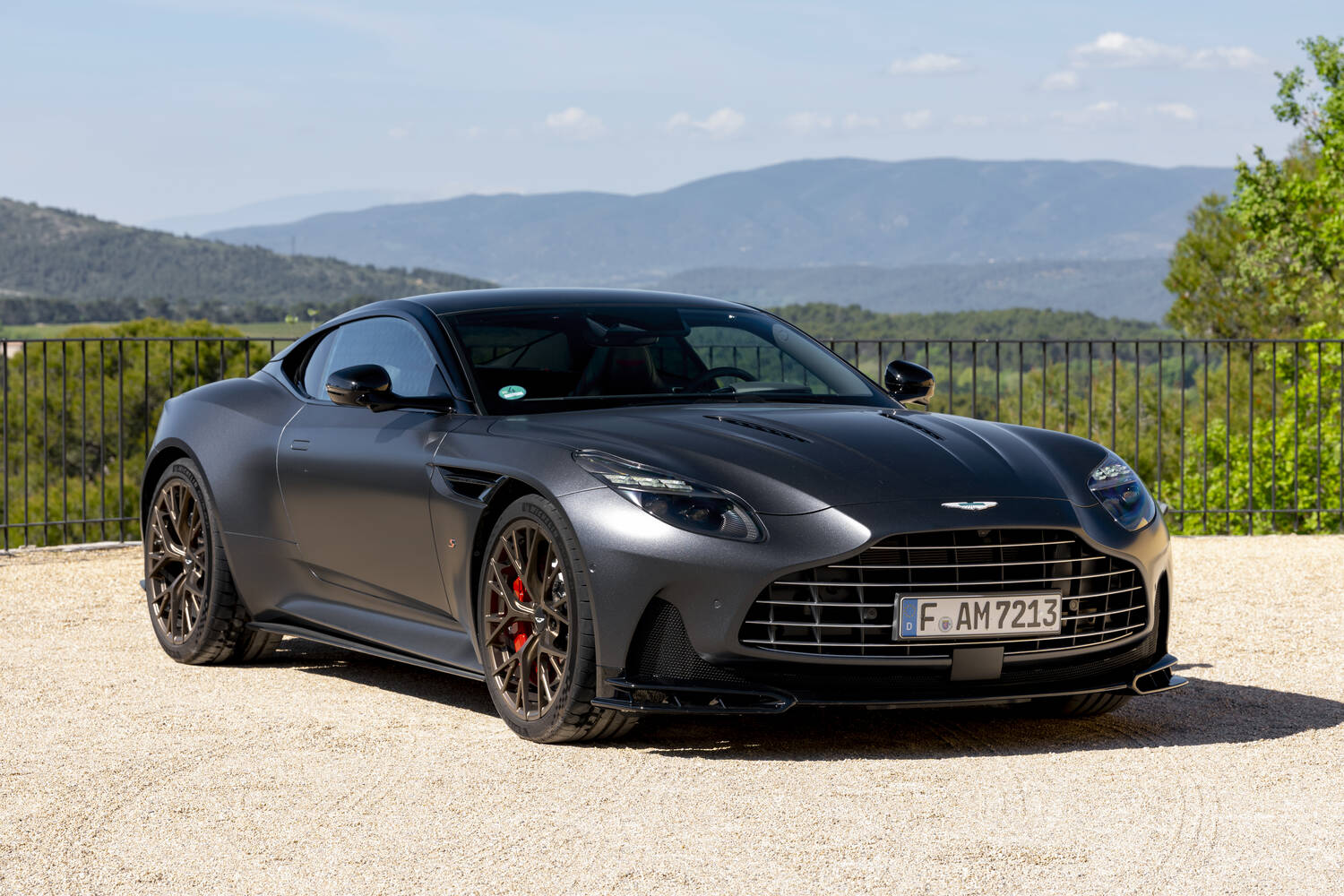
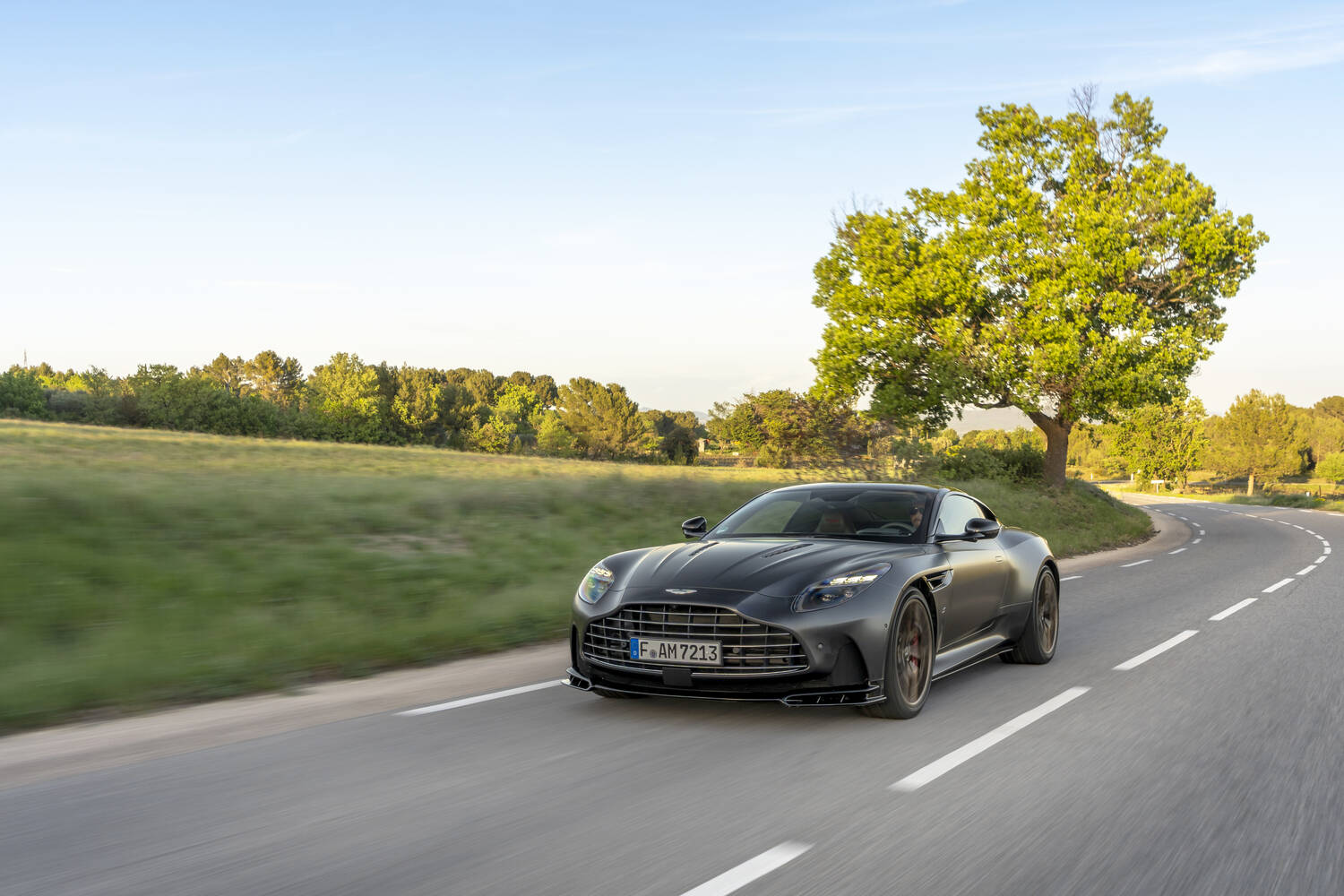
Given the level of personalisation open to any Aston Martin buyer, it may not be immediately obvious that you're looking at a DB12 S, as the differences between it and the standard car that launched in 2023 aren't dramatic. And most of the changes are functional, though with more than an eye on aesthetics.
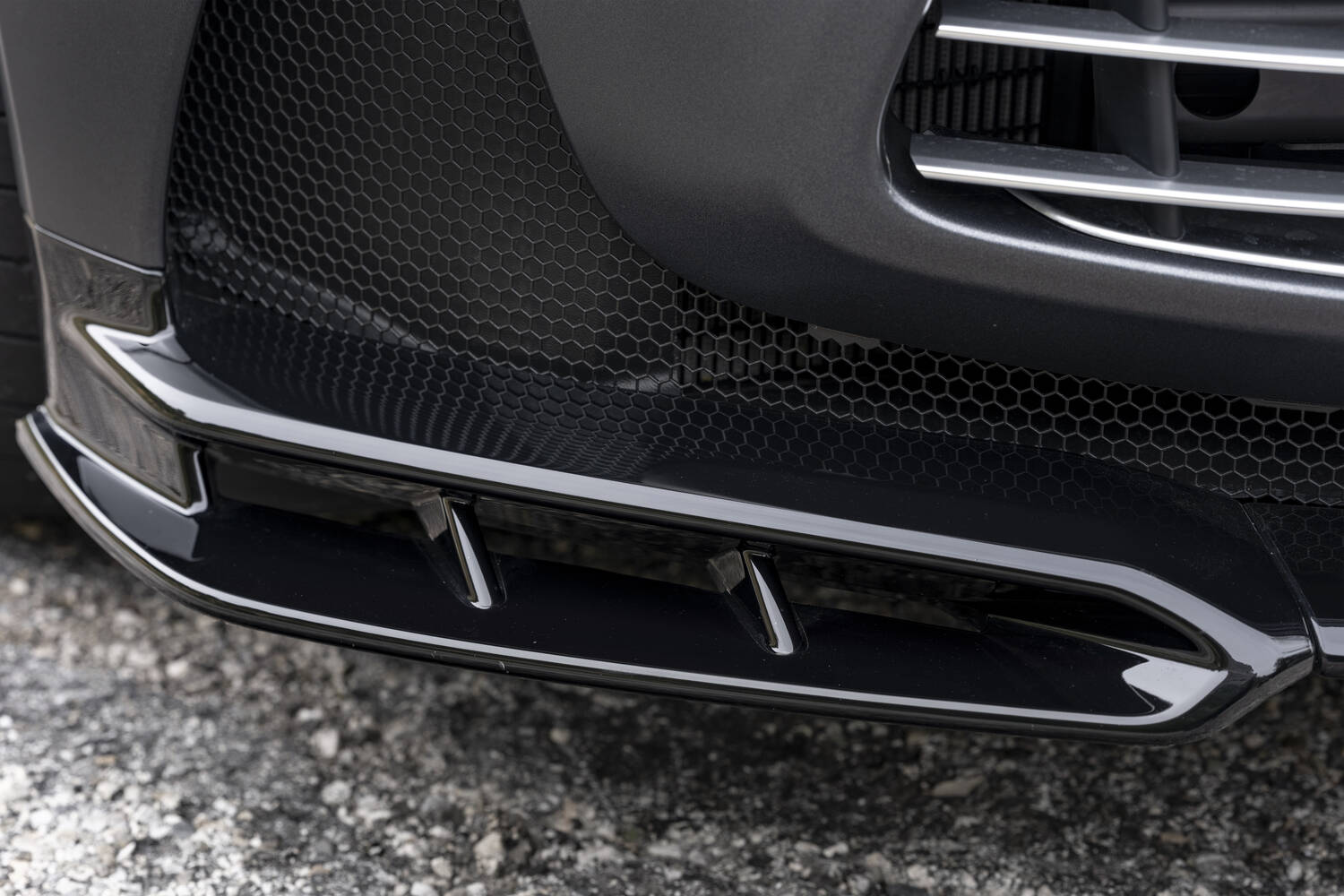
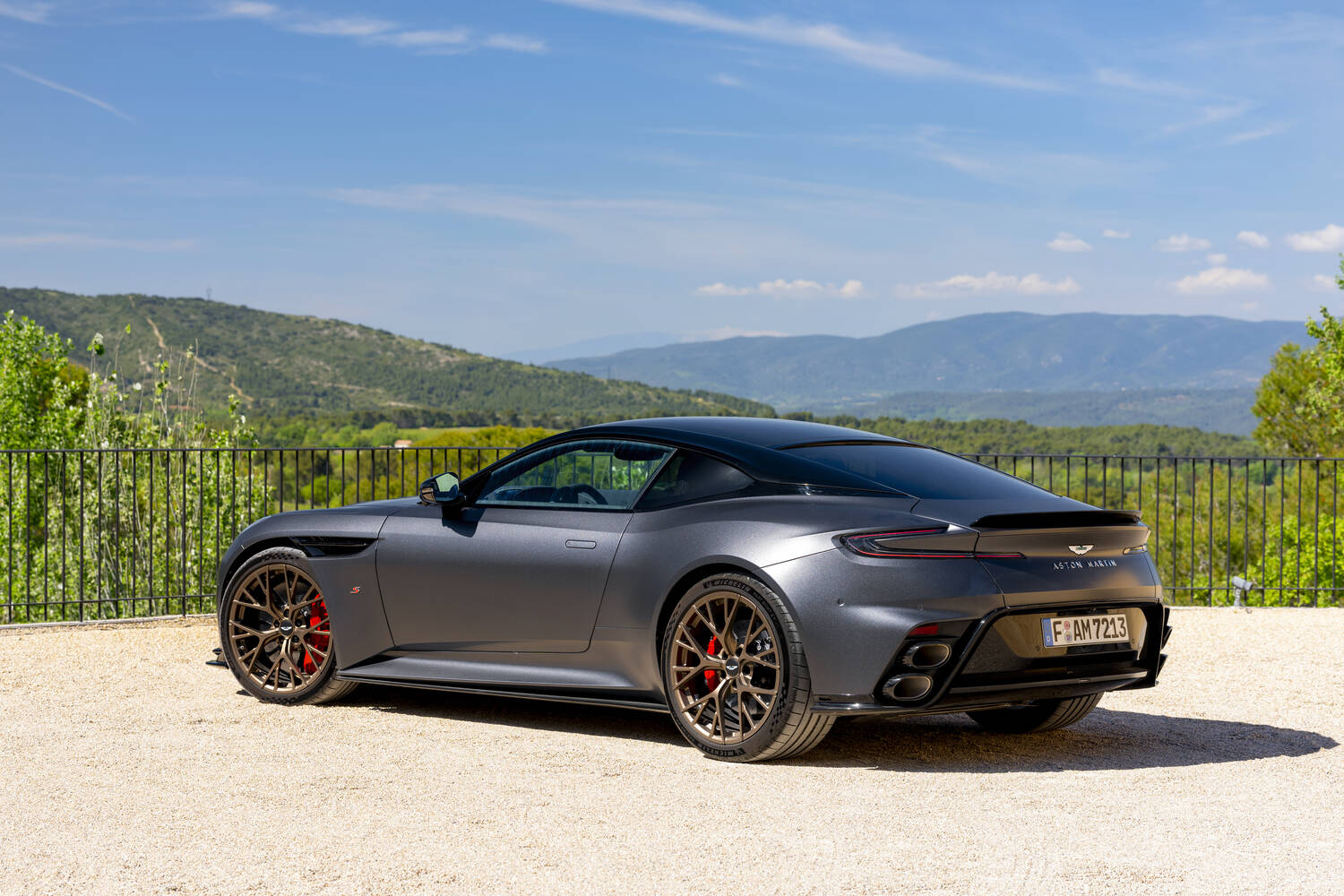
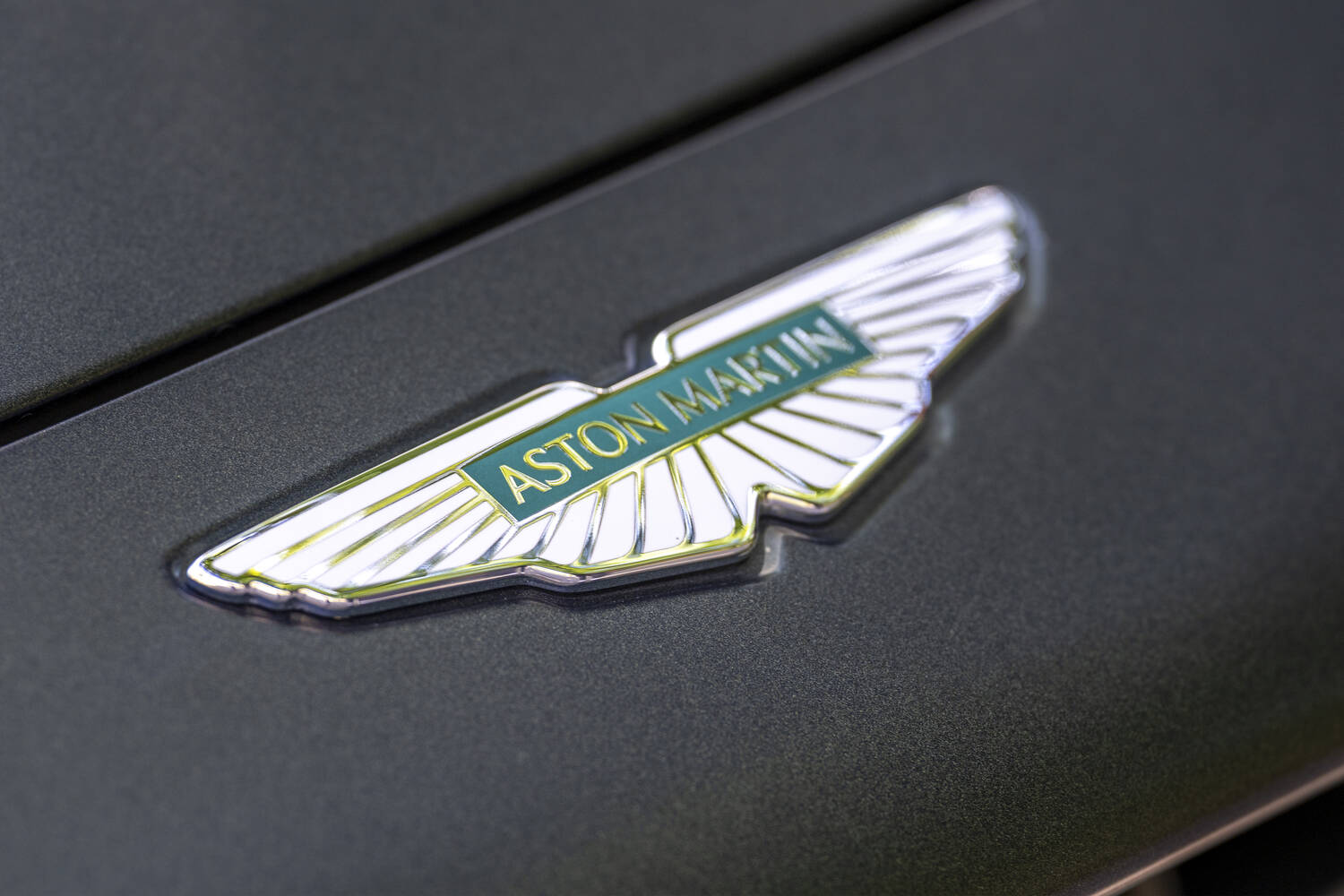
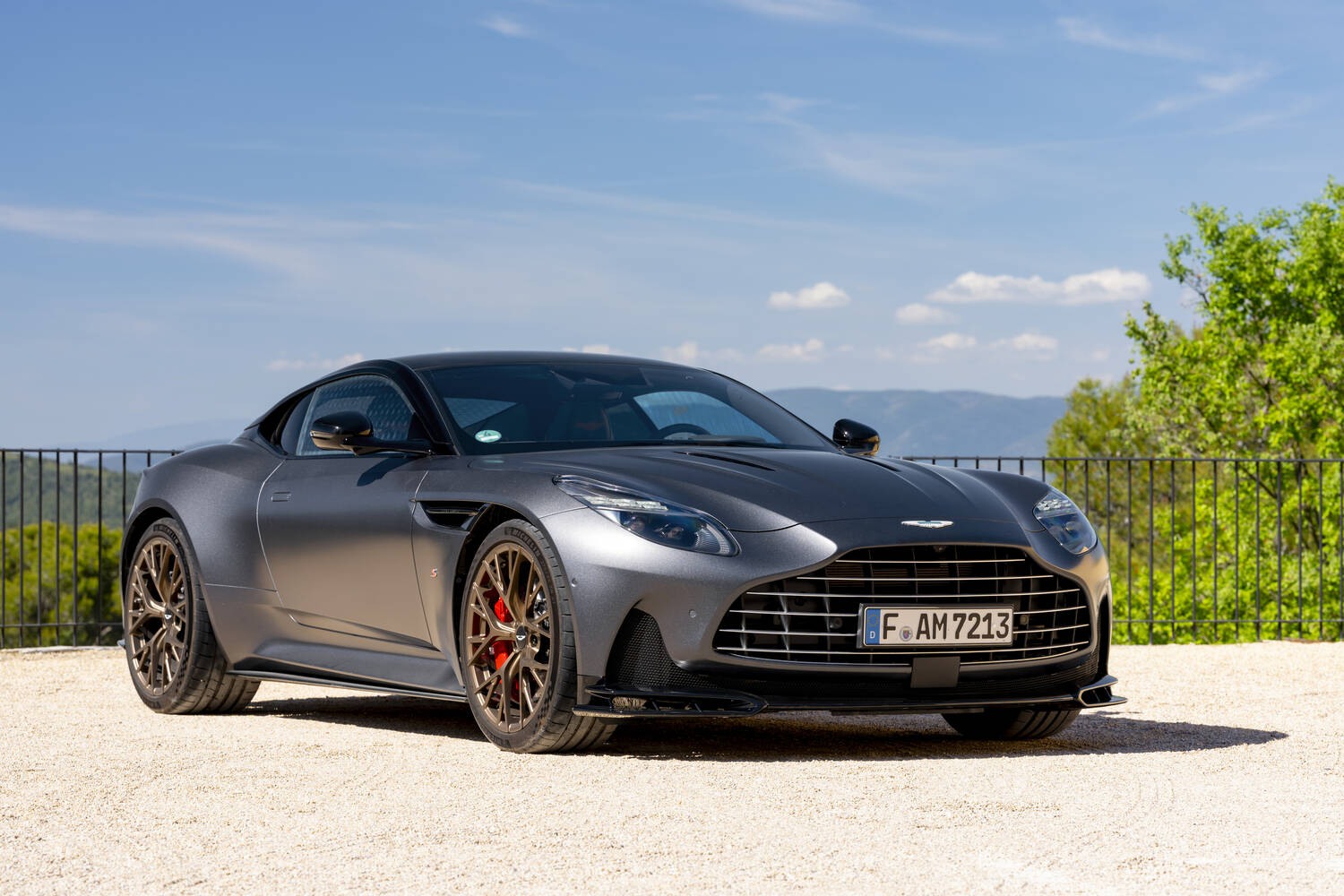
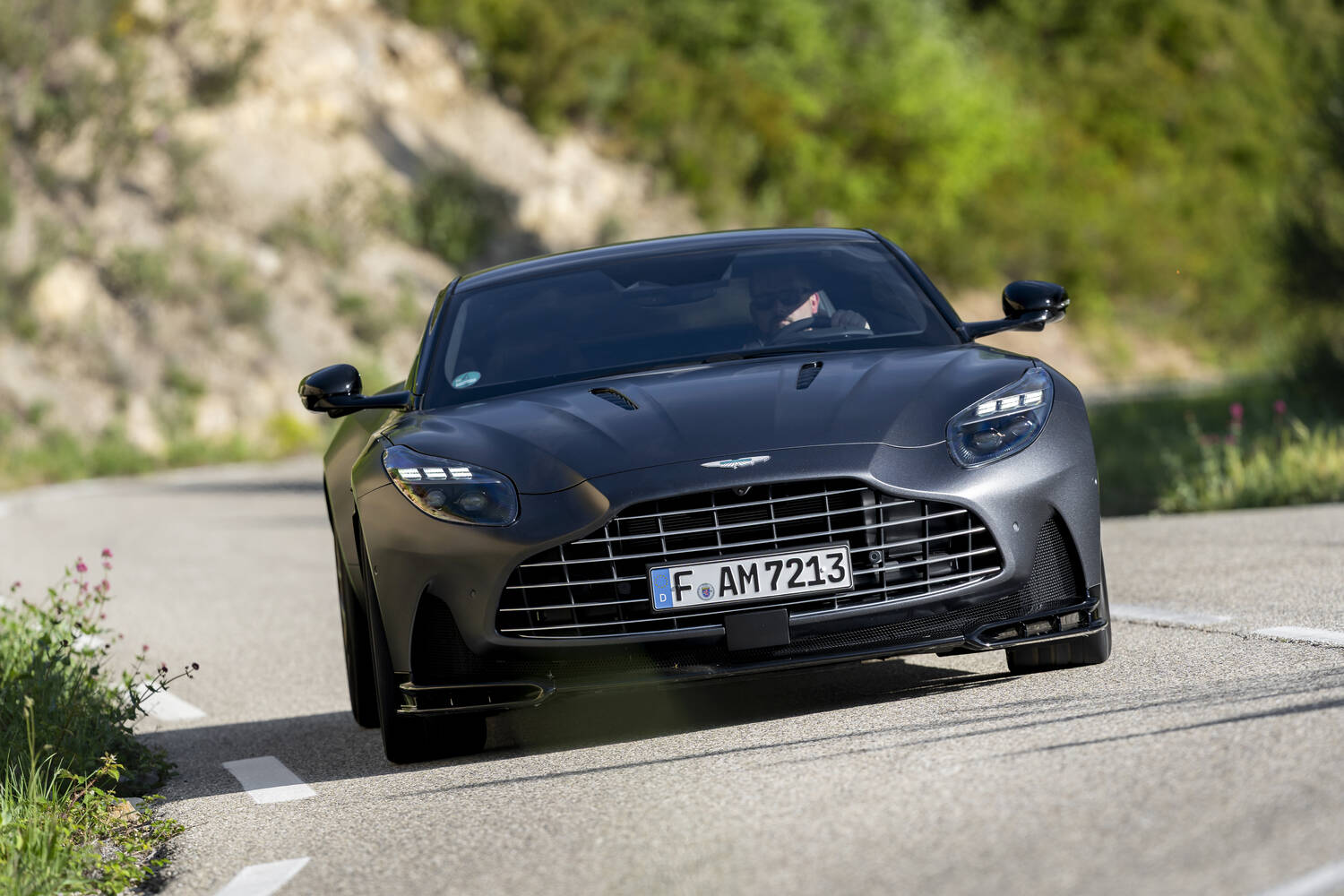
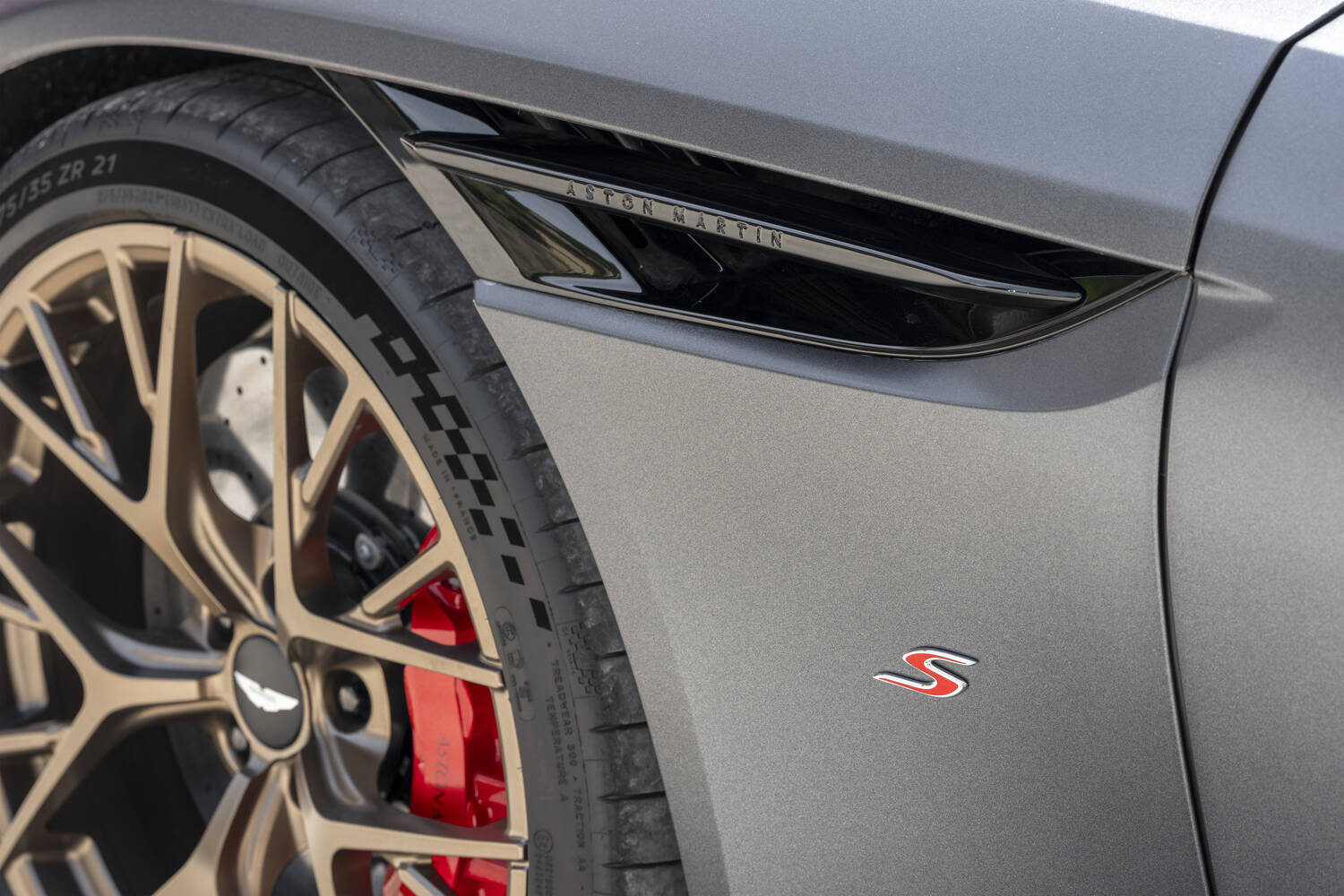
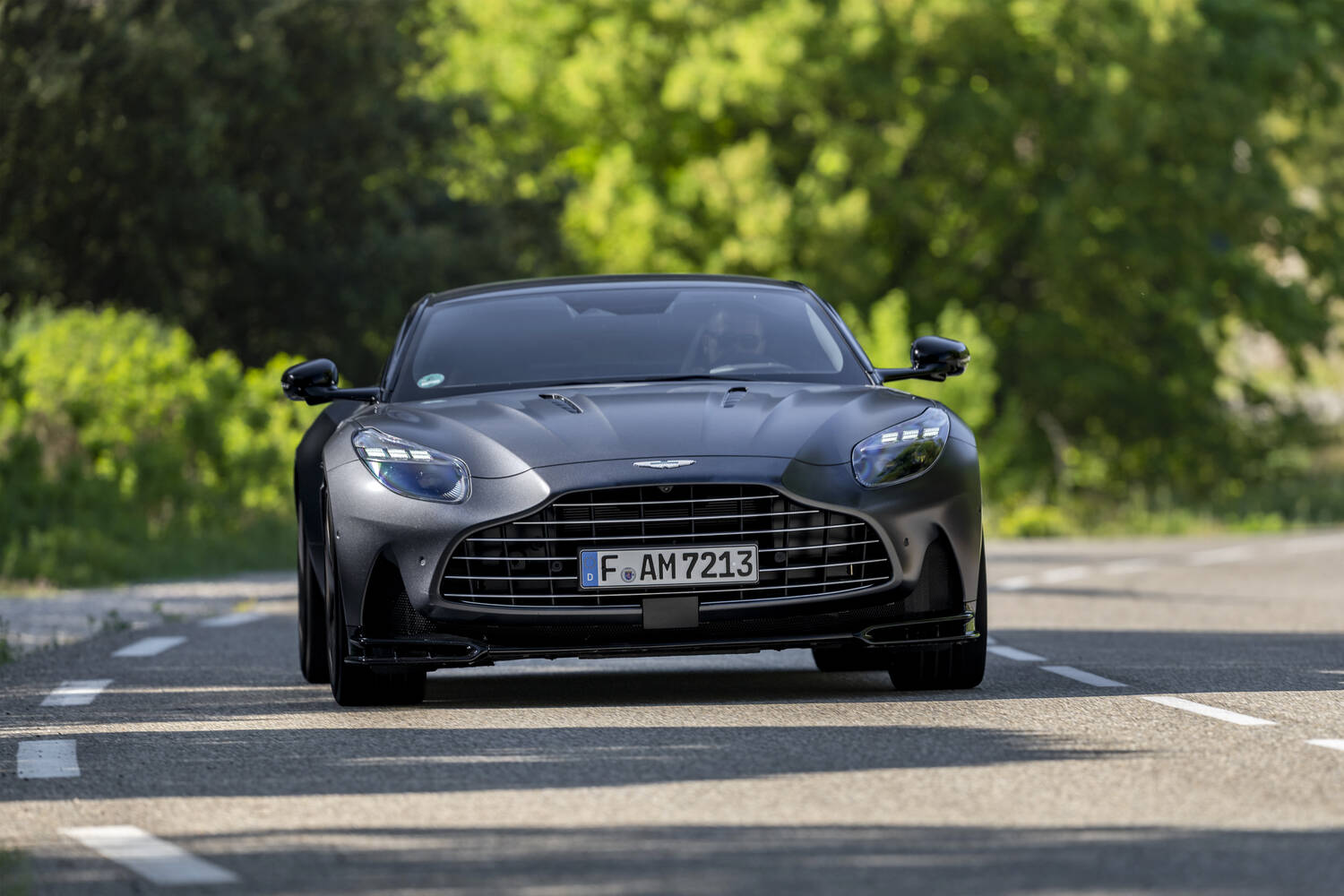
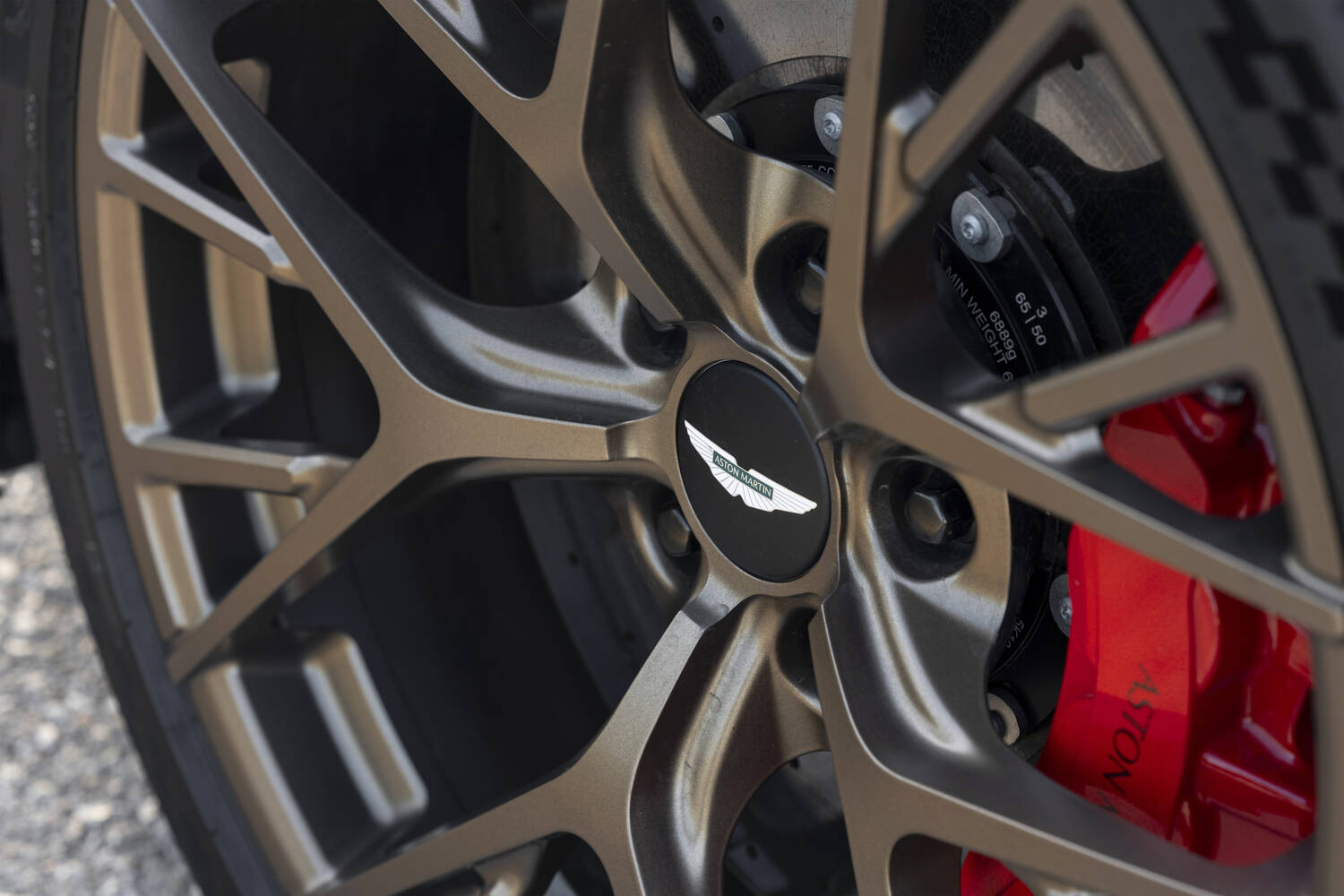
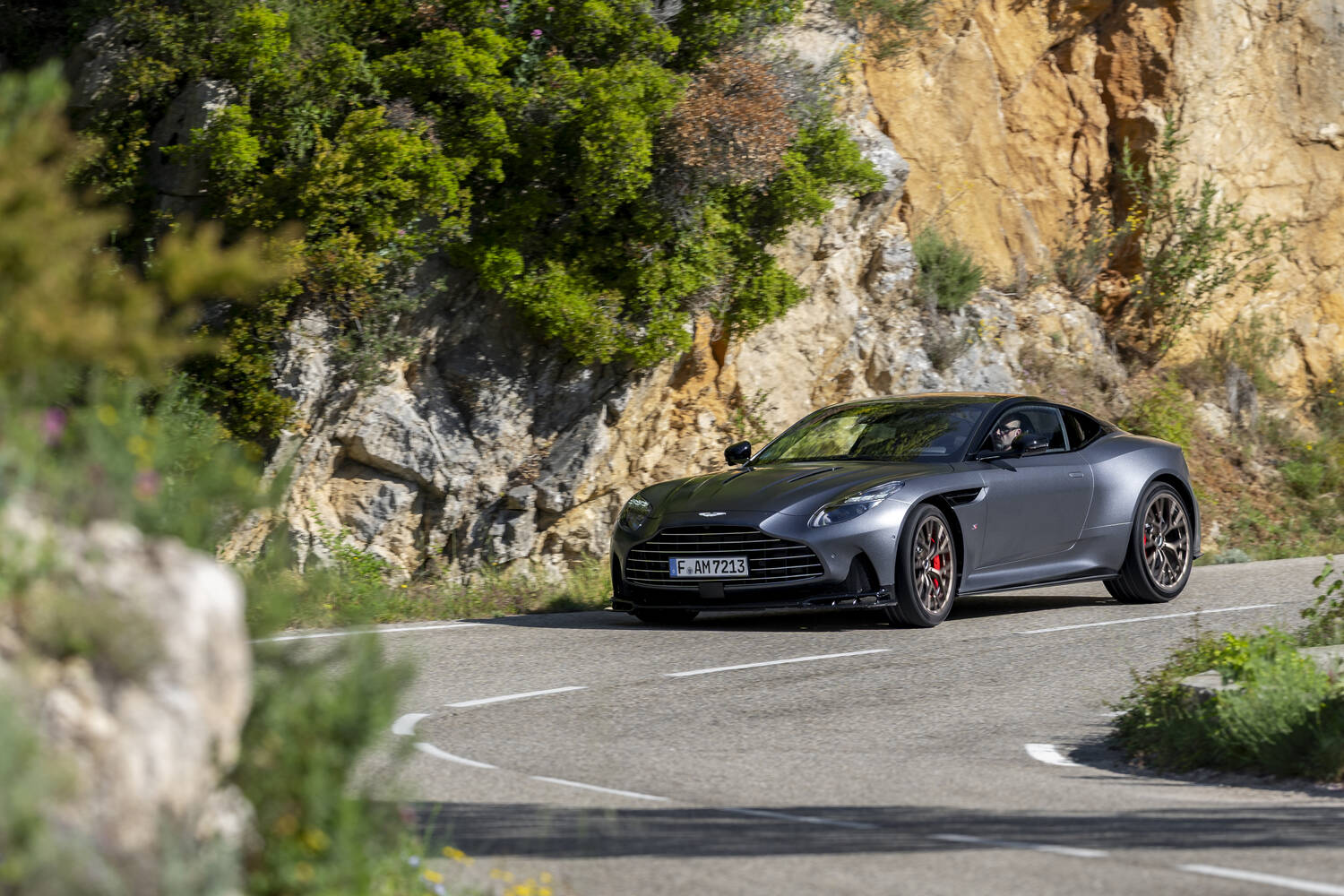
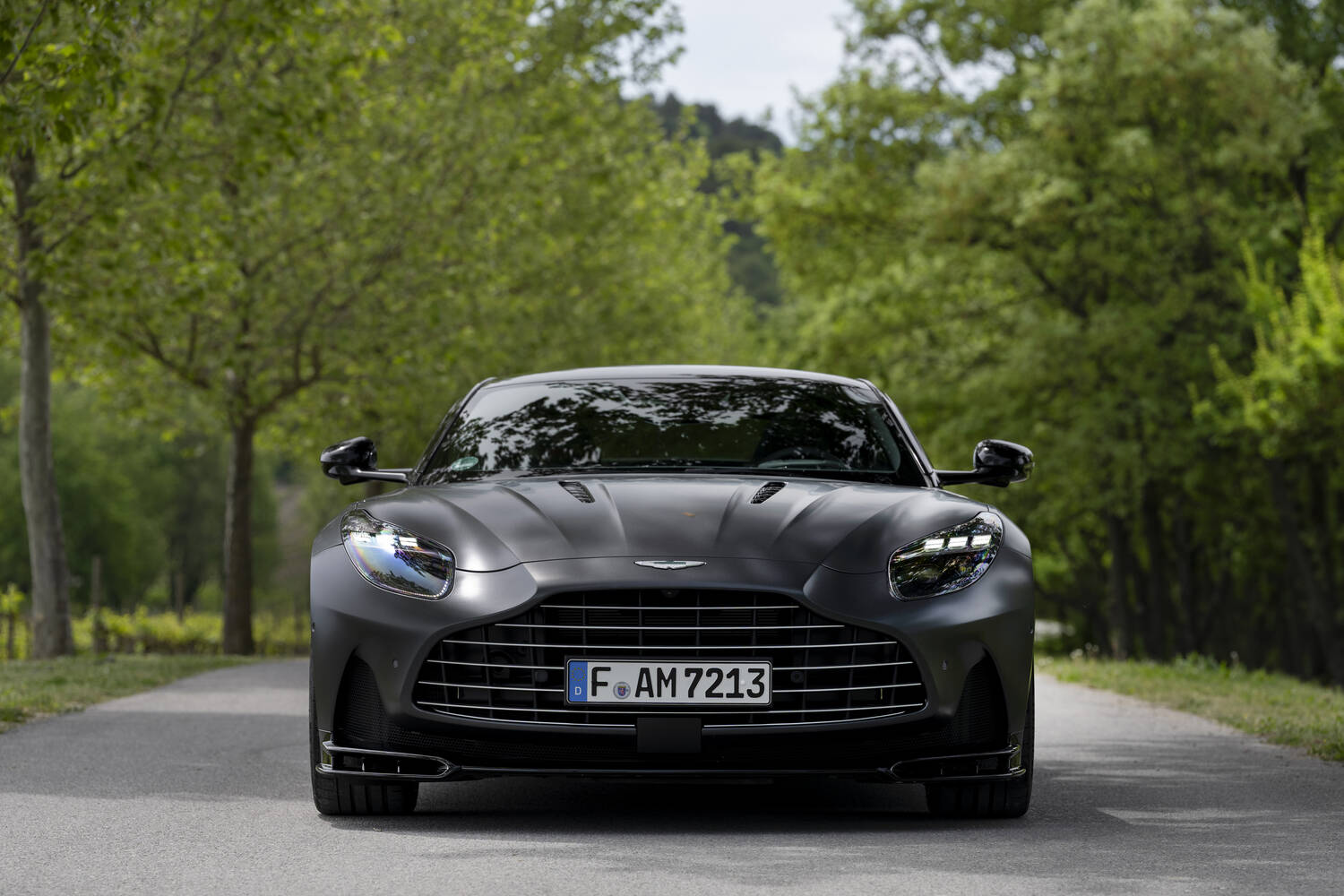
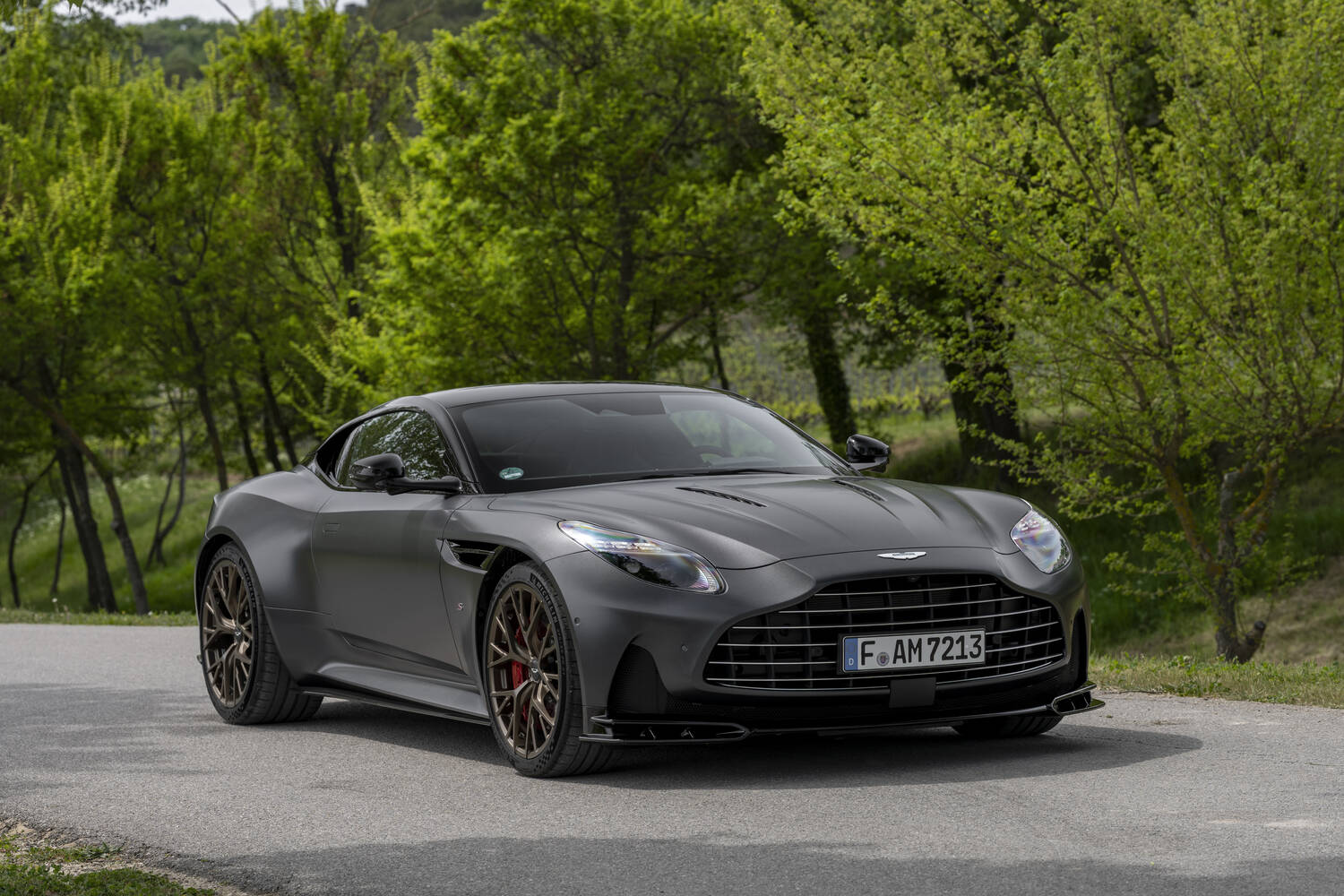
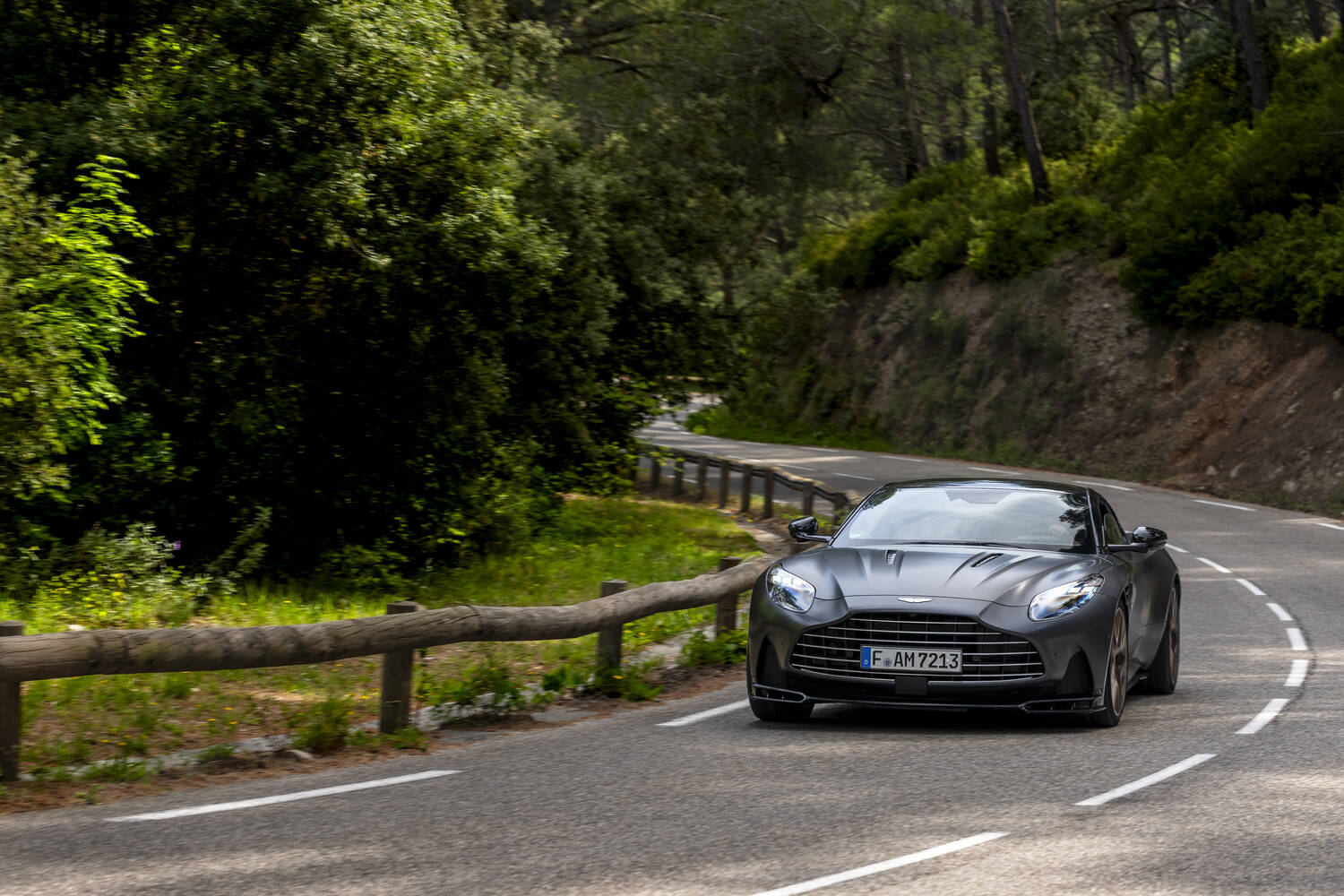
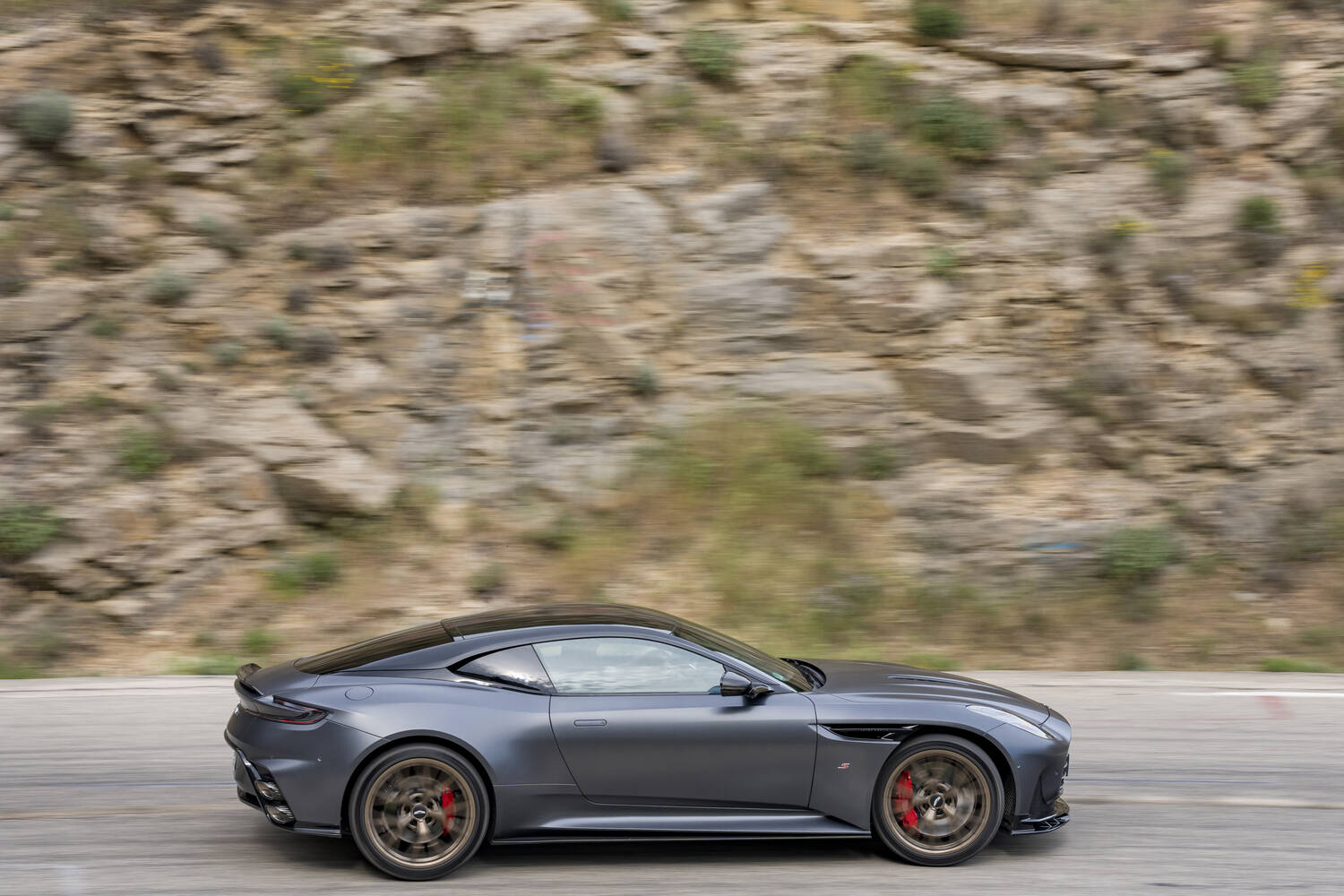
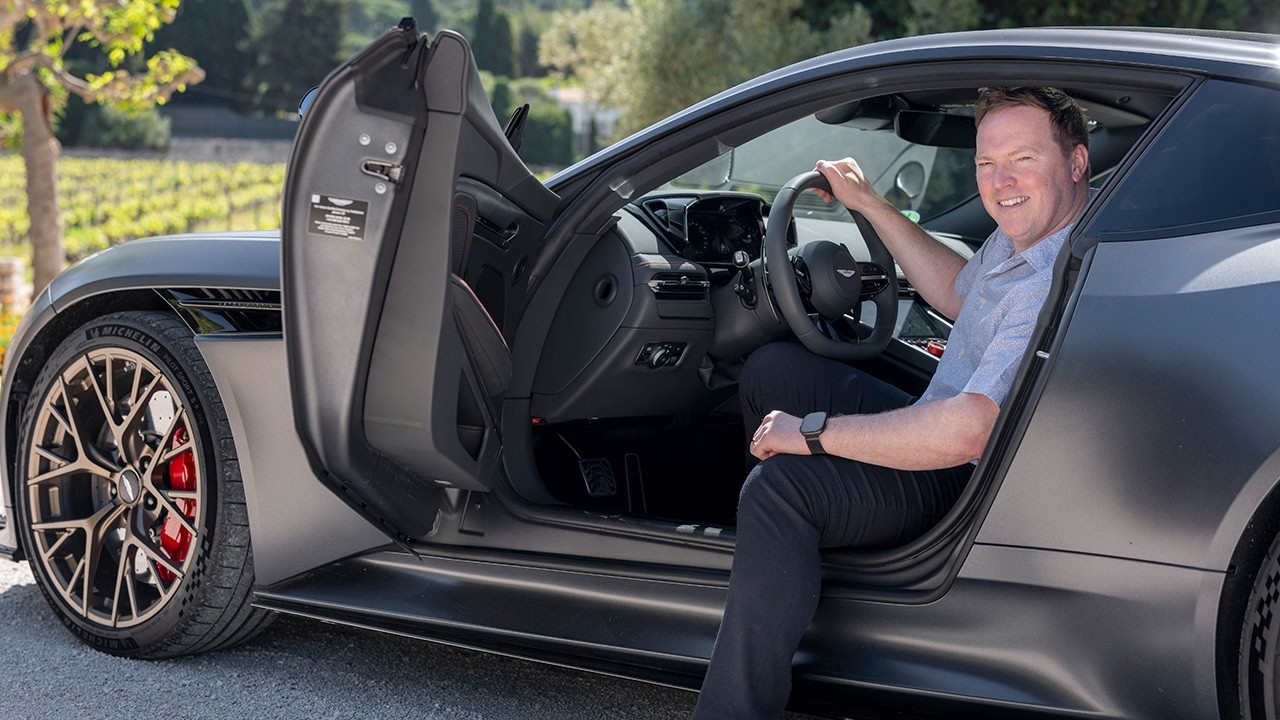
Once you know what to look for, however, it's impossible to miss the more prominent aerodynamic splitter in the nose. It's matched by redesigned bonnet louvres and 'S' badges on the front wings. Like the Aston Martin 'wings' logo, these are handmade at a jewellers, befitting the remit of a car such as this.

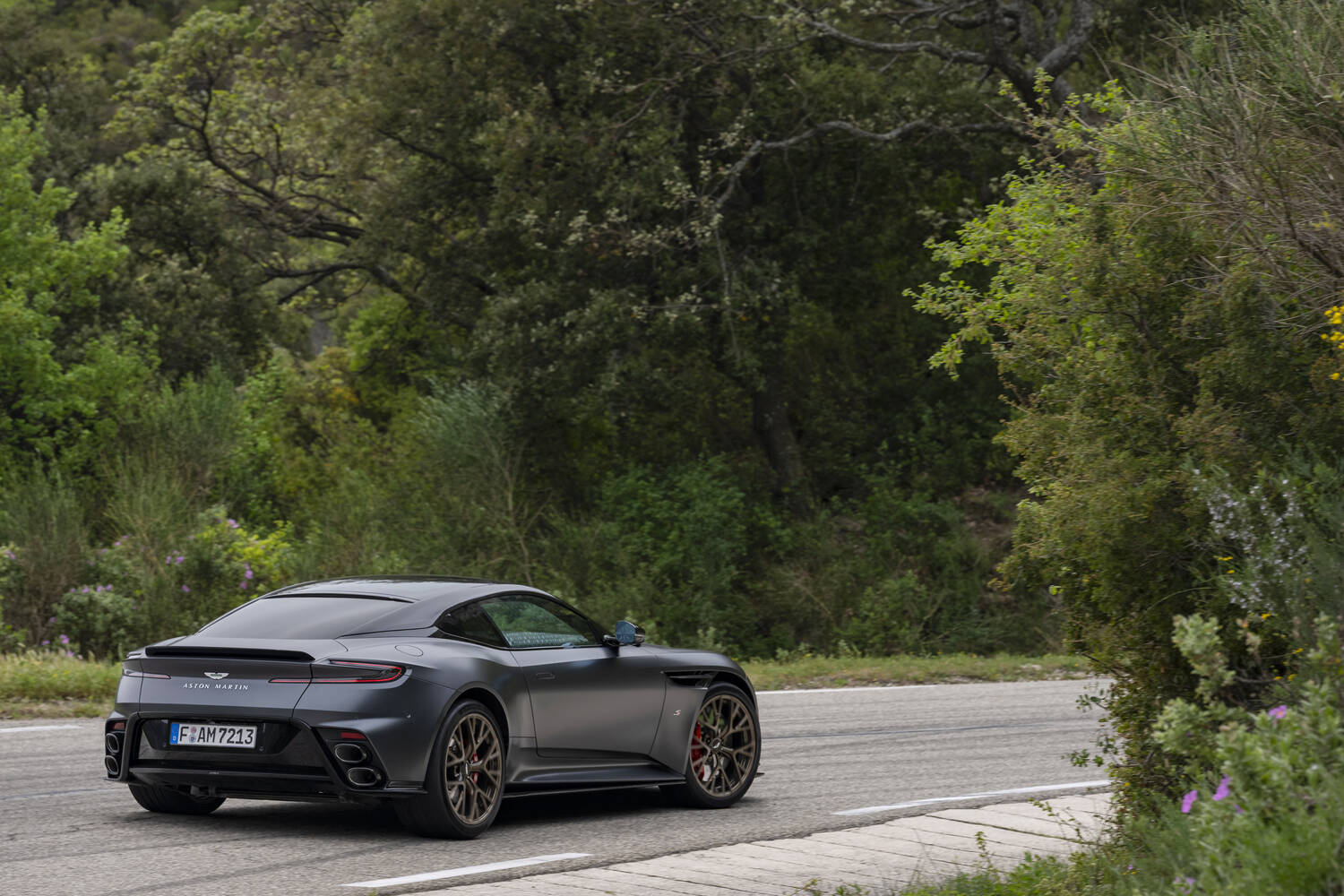
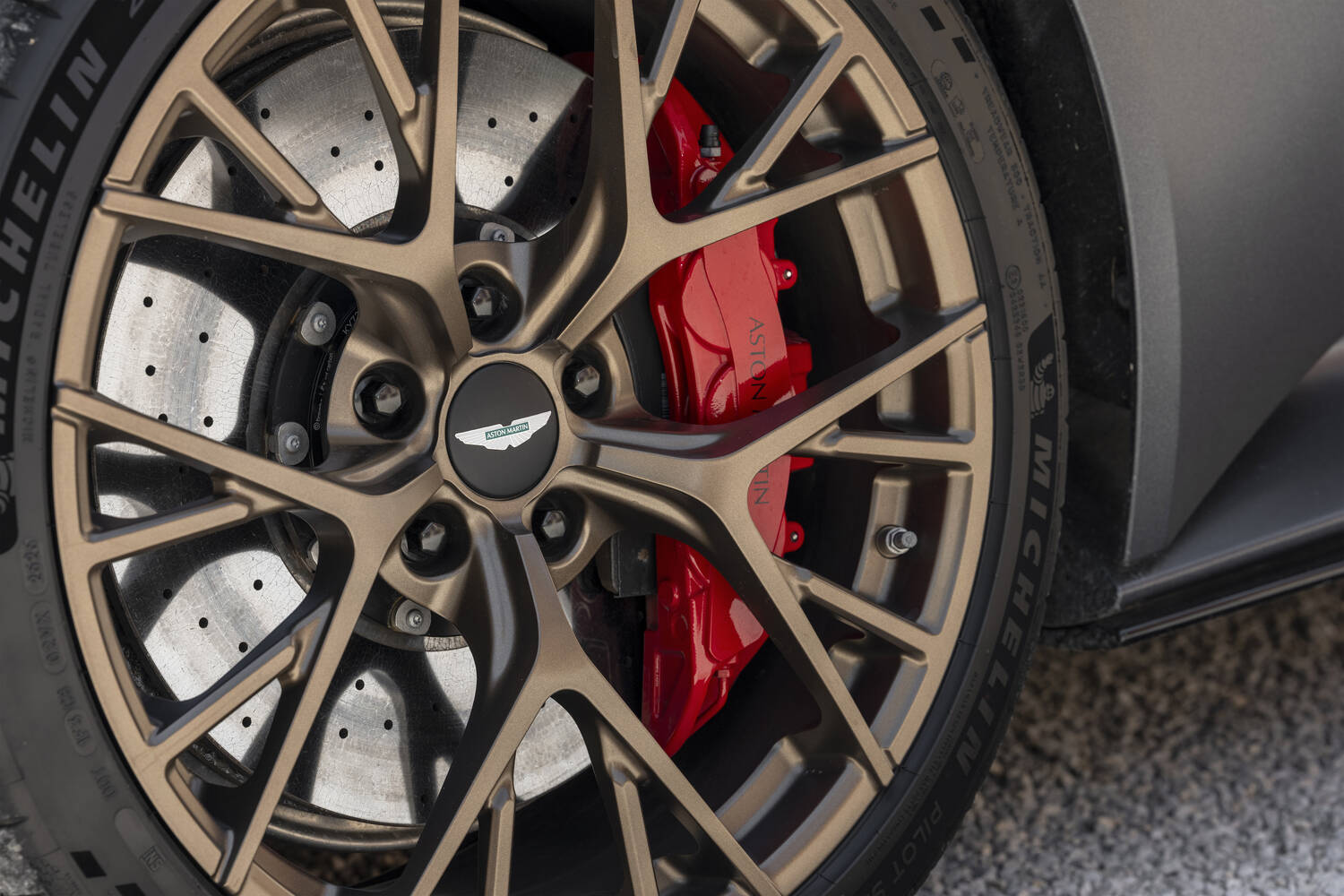
Gloss-black side-sill extensions visually tie up with the new front bumper and there's a range of 21-inch forged alloy wheels to choose from, wearing Michelin Pilot Sport 5 S tyres as standard.
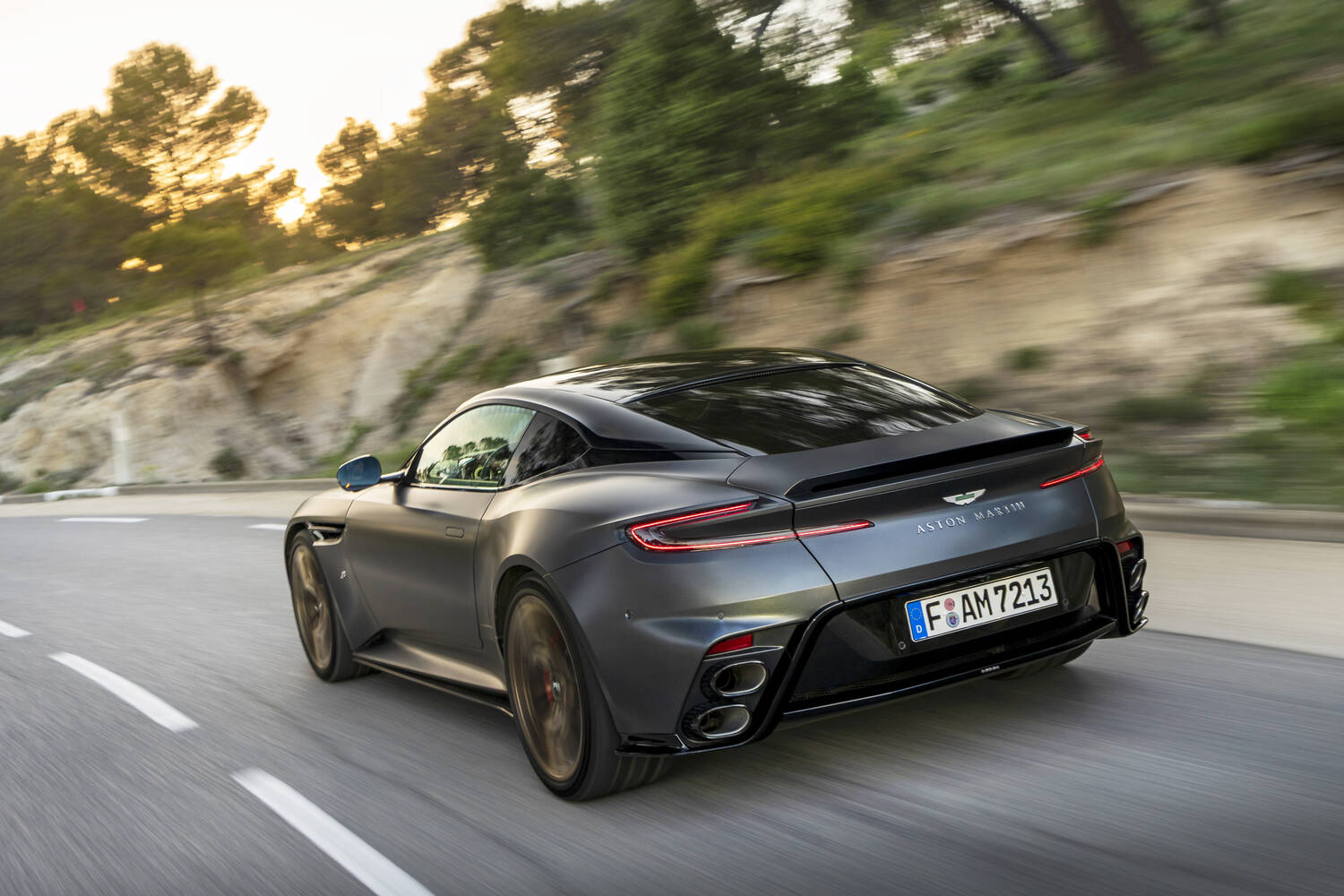
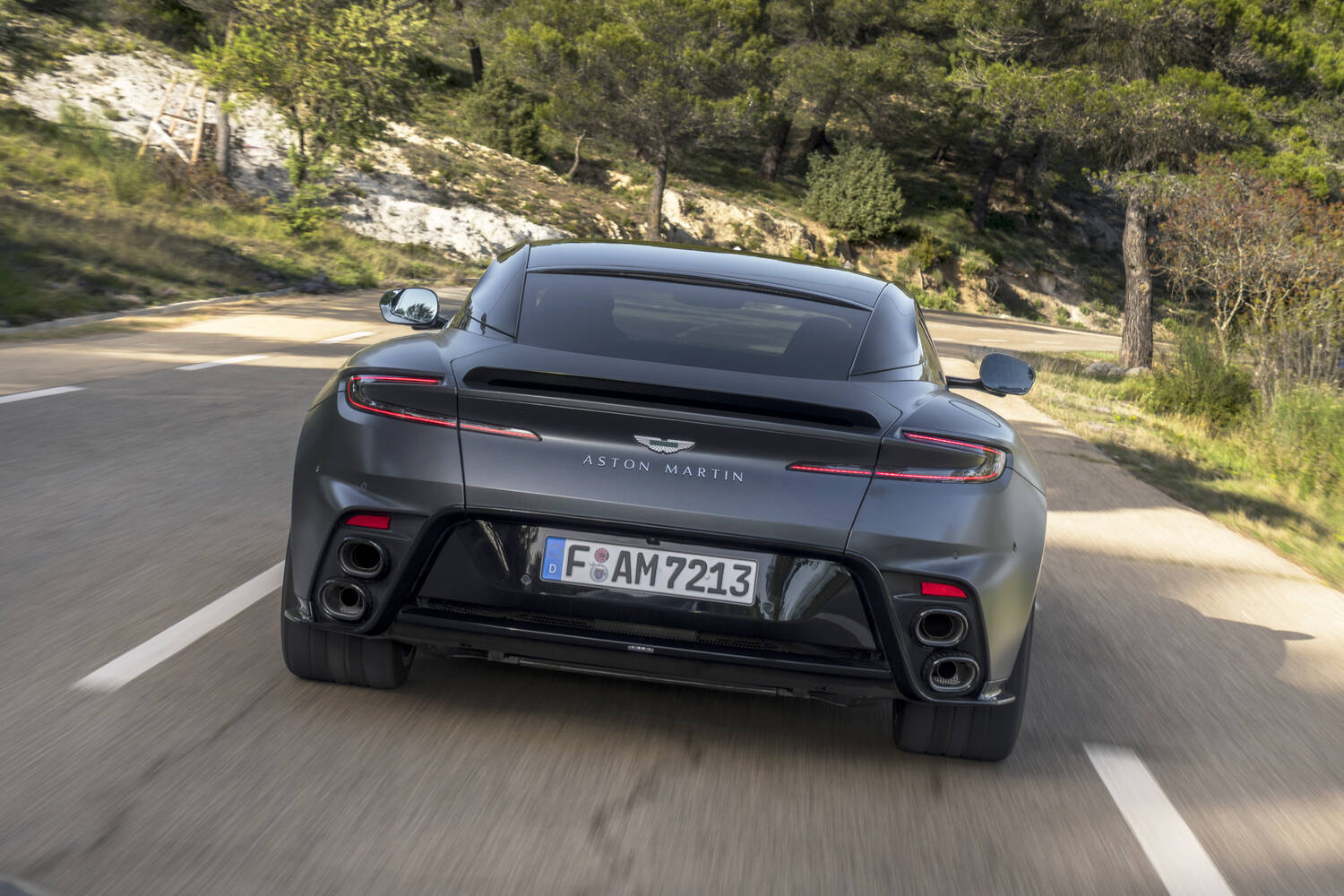
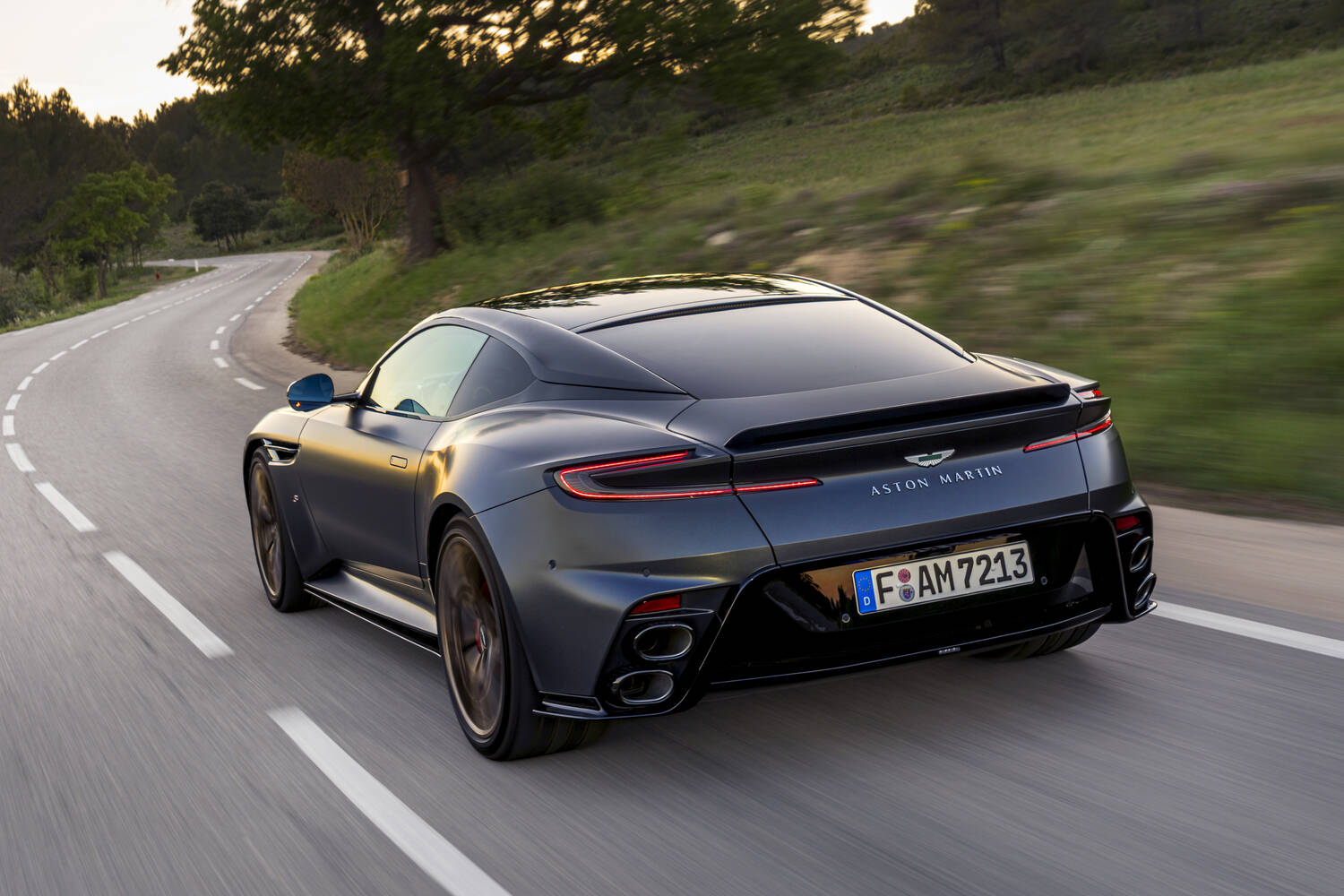
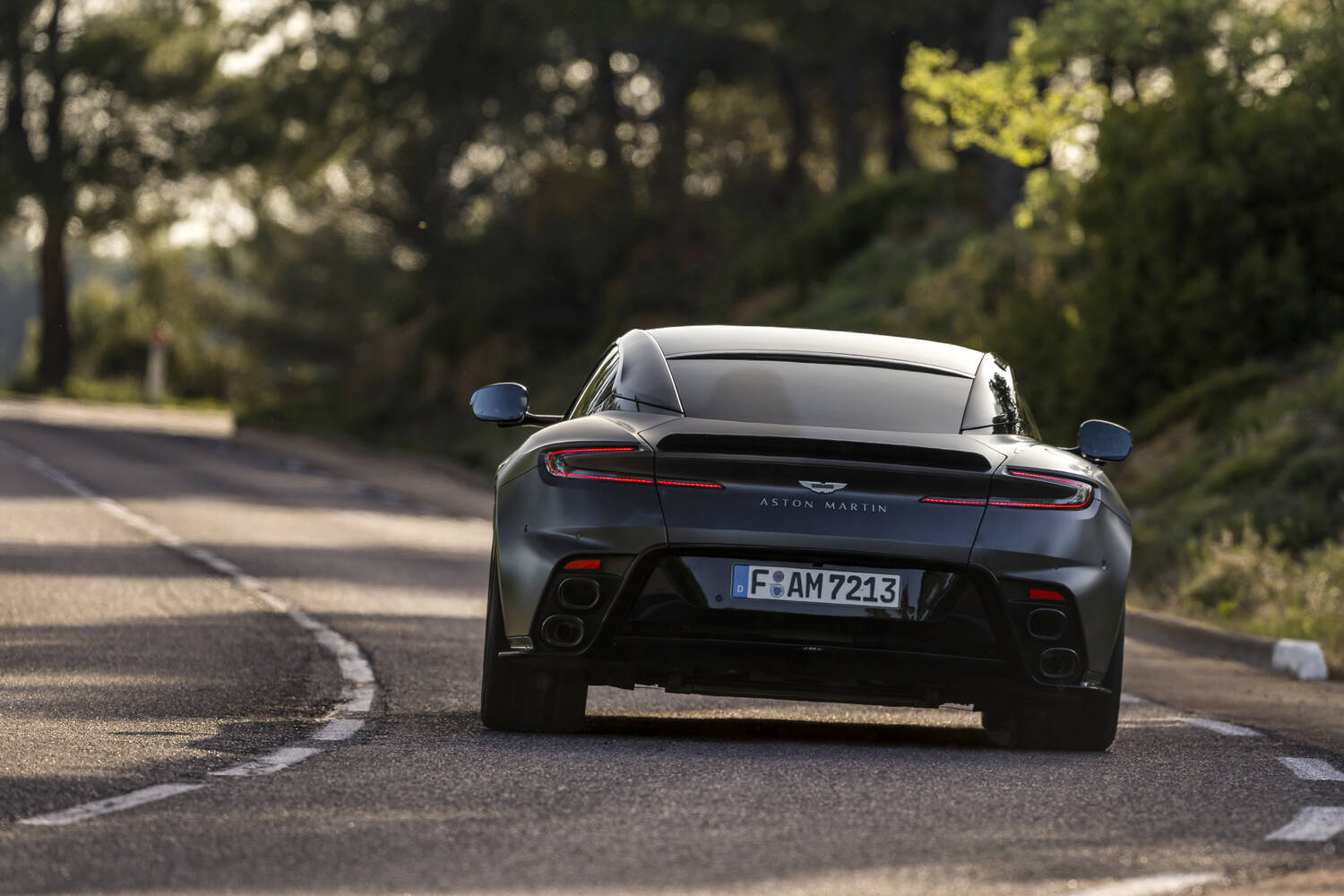
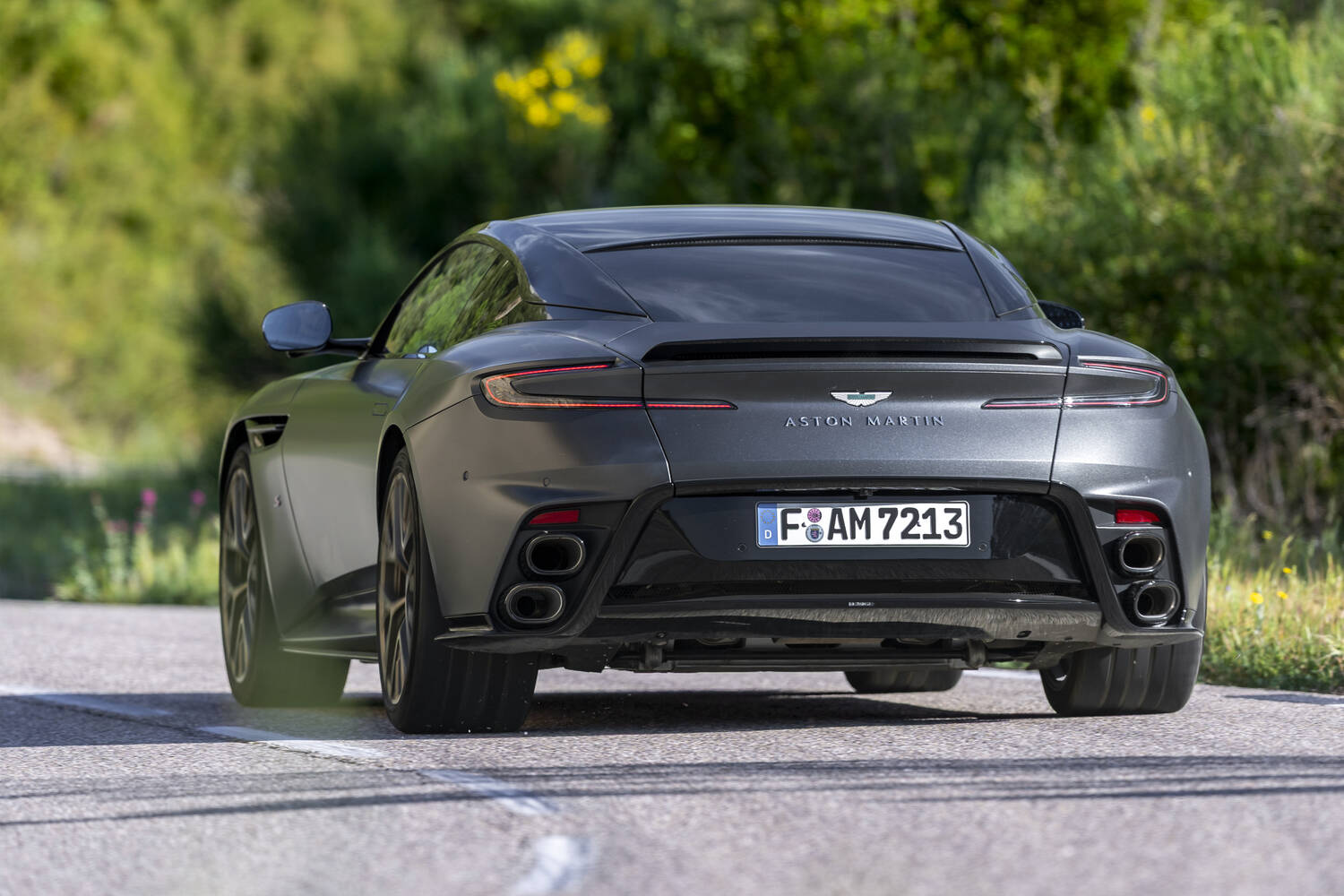
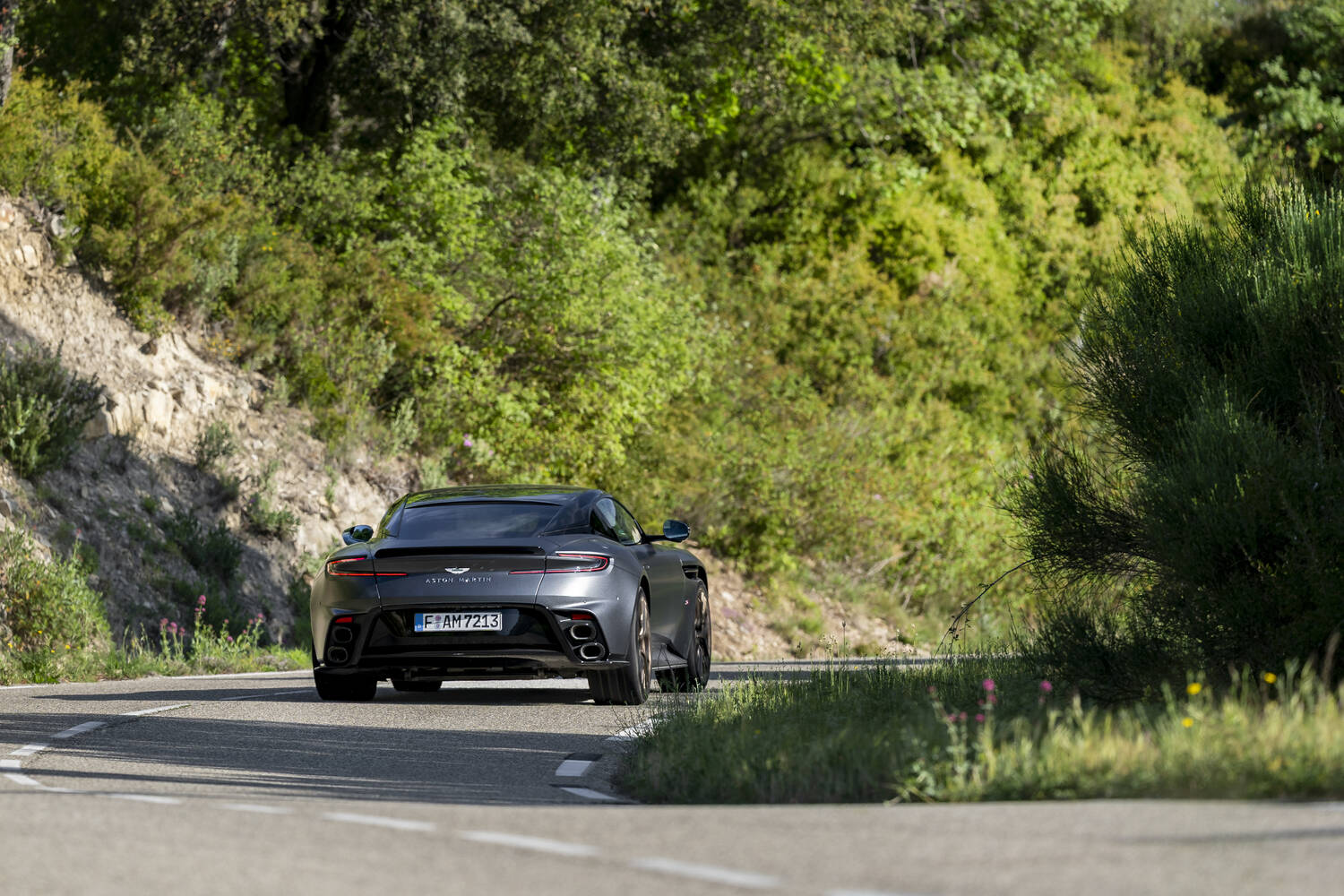
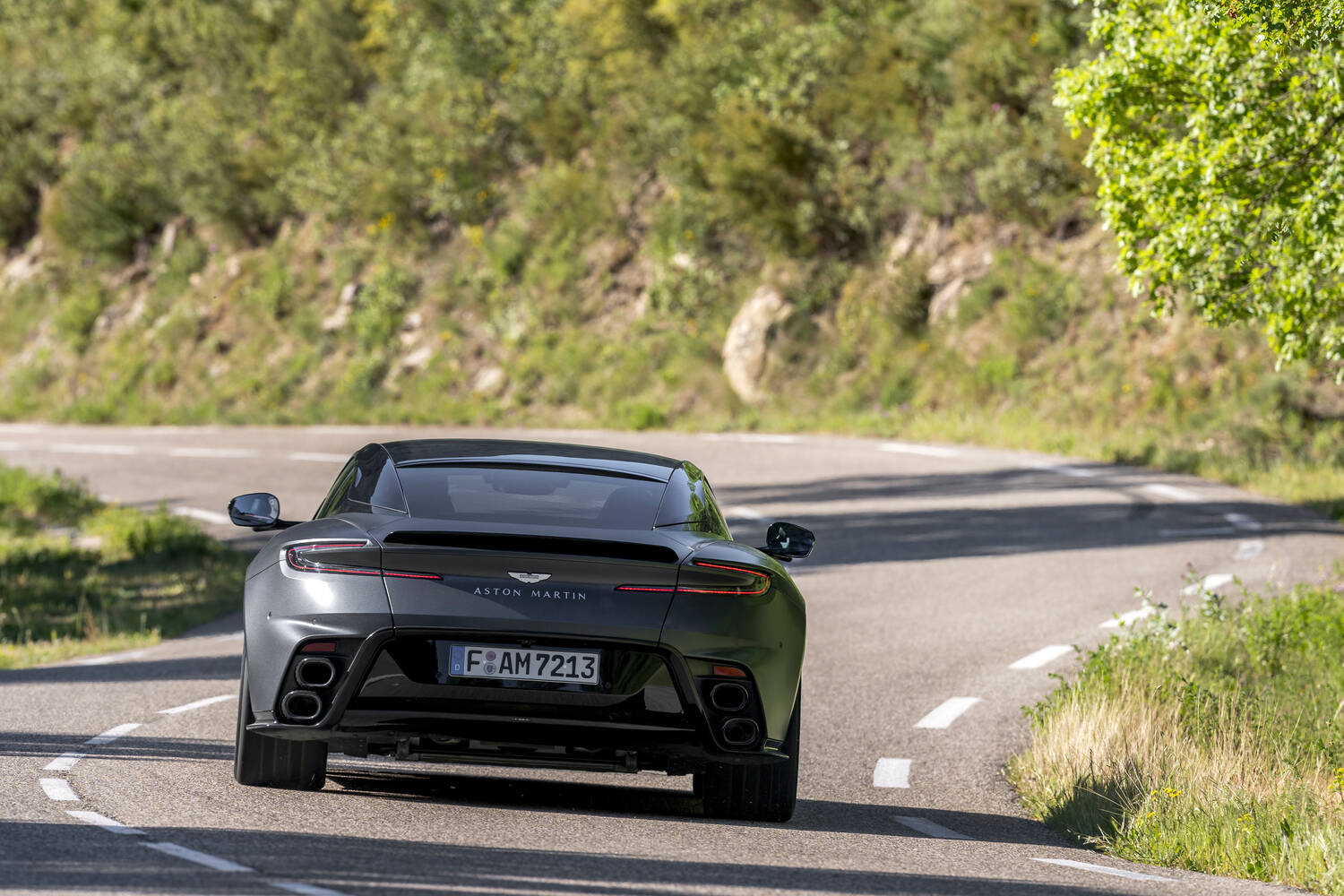
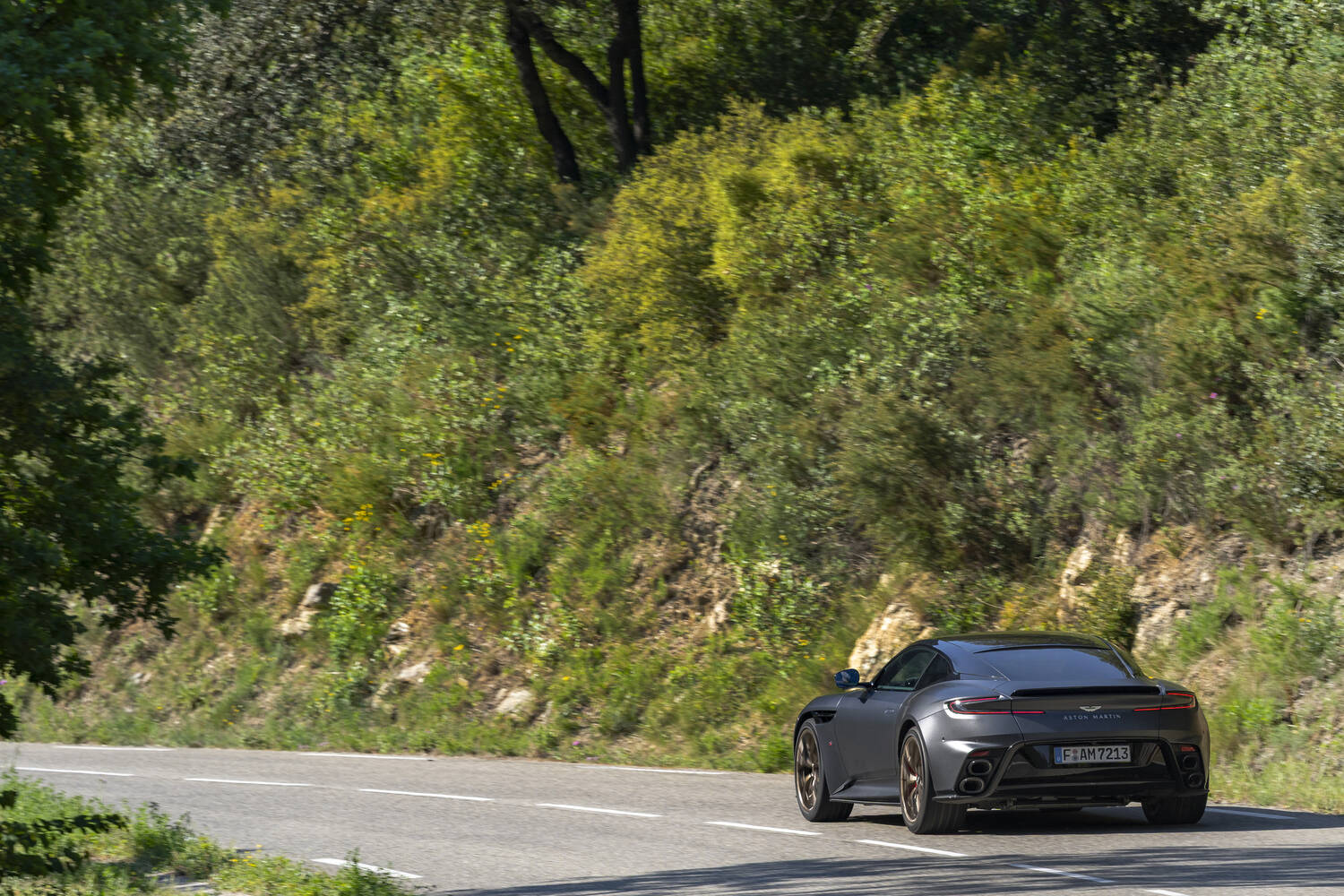
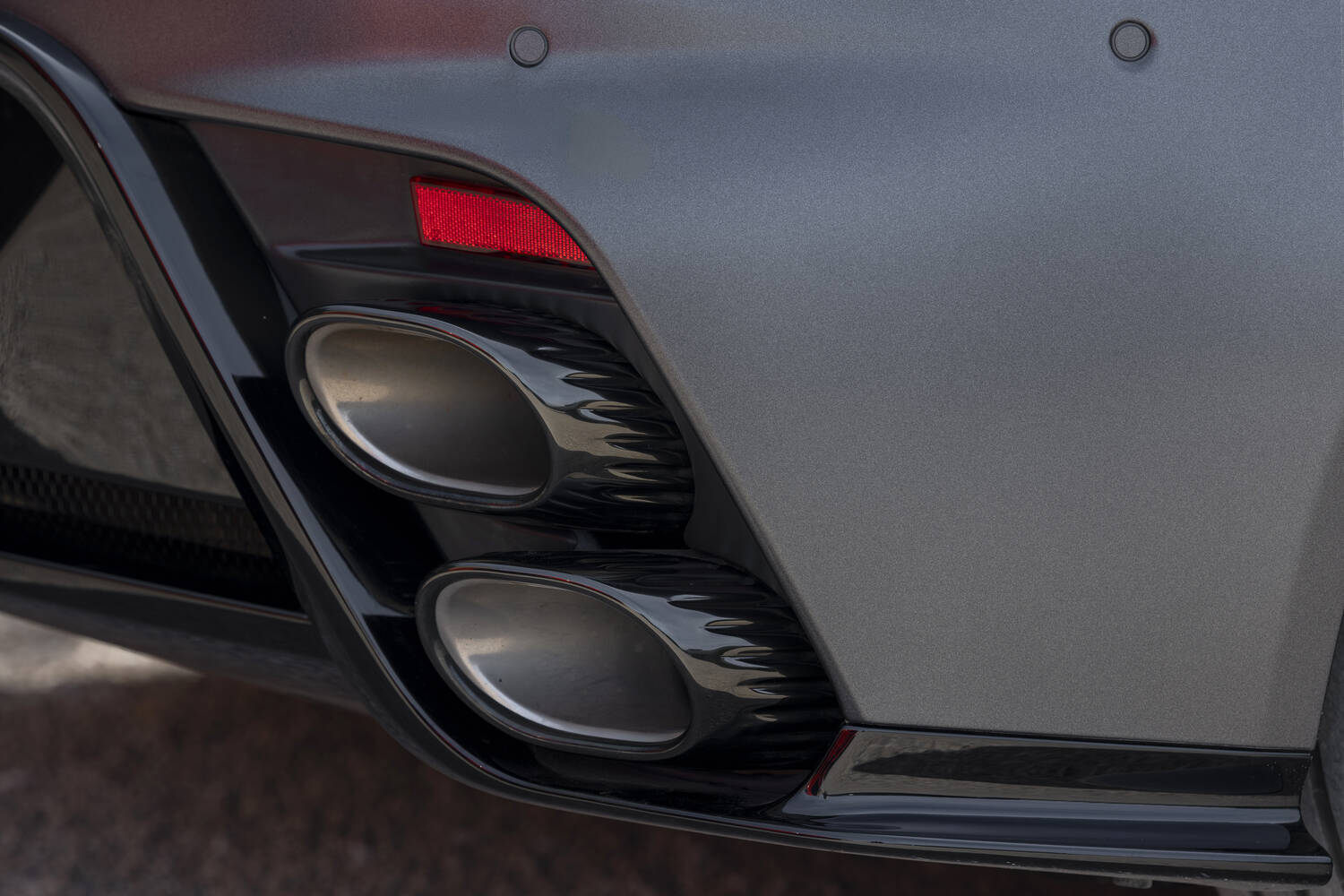
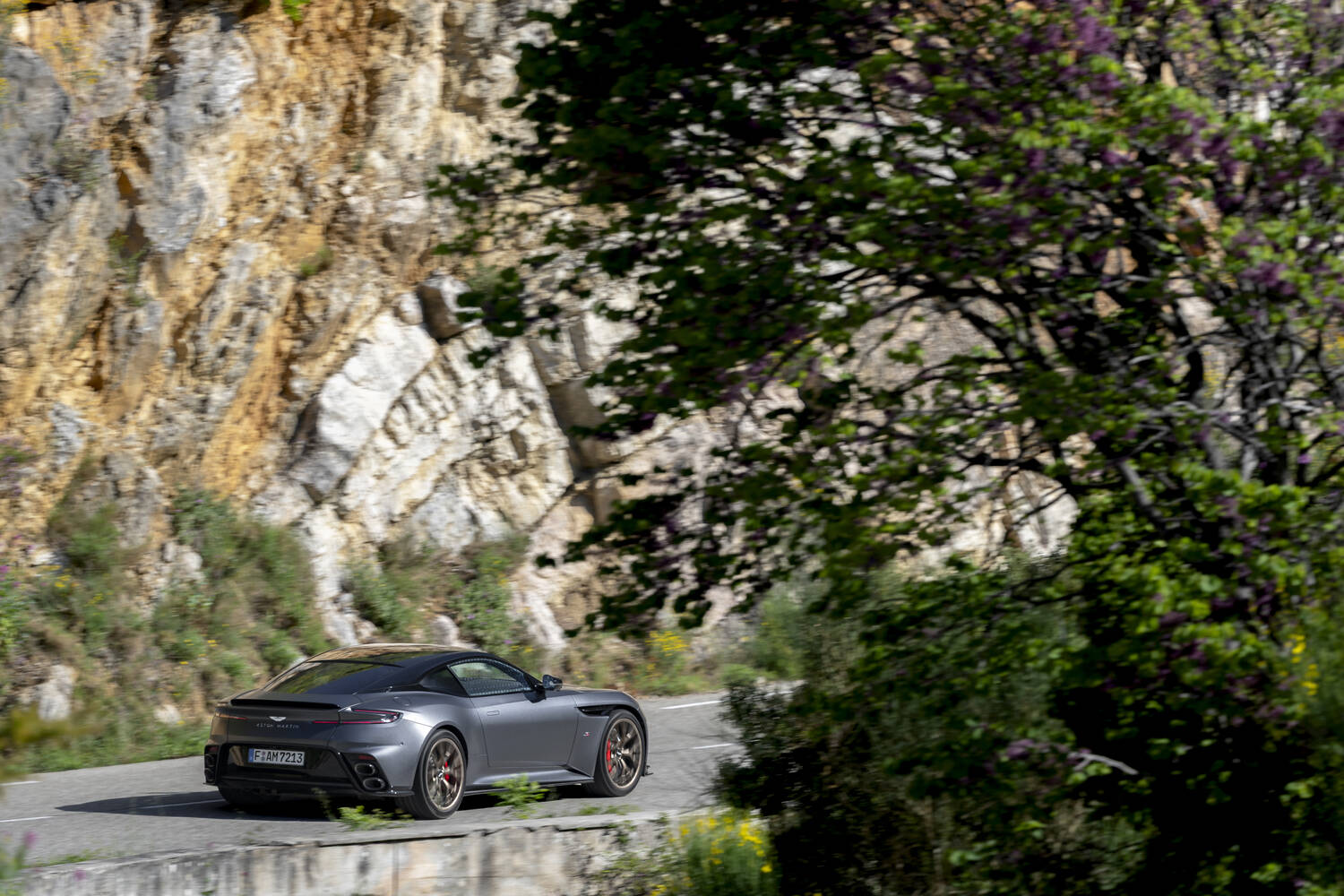
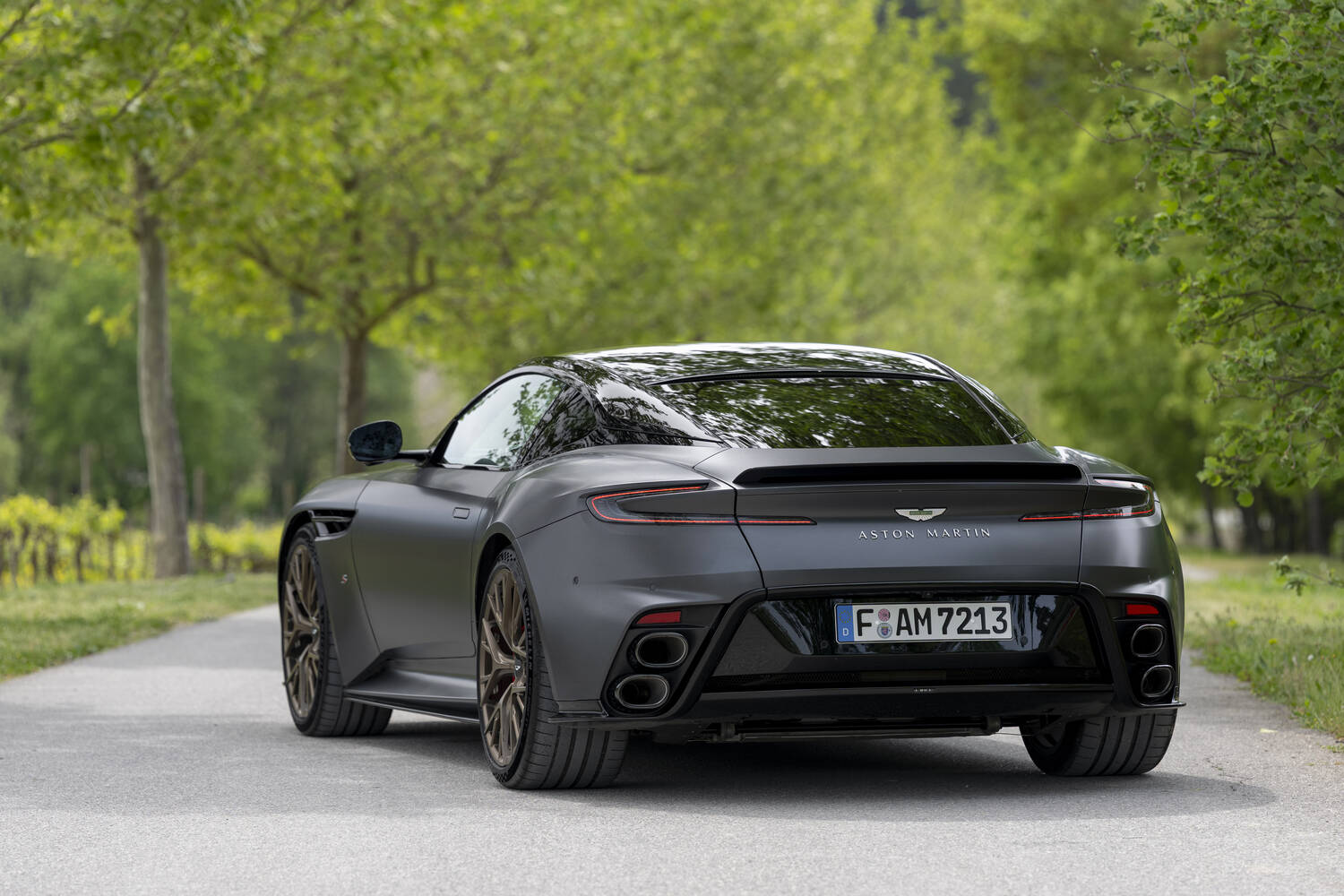
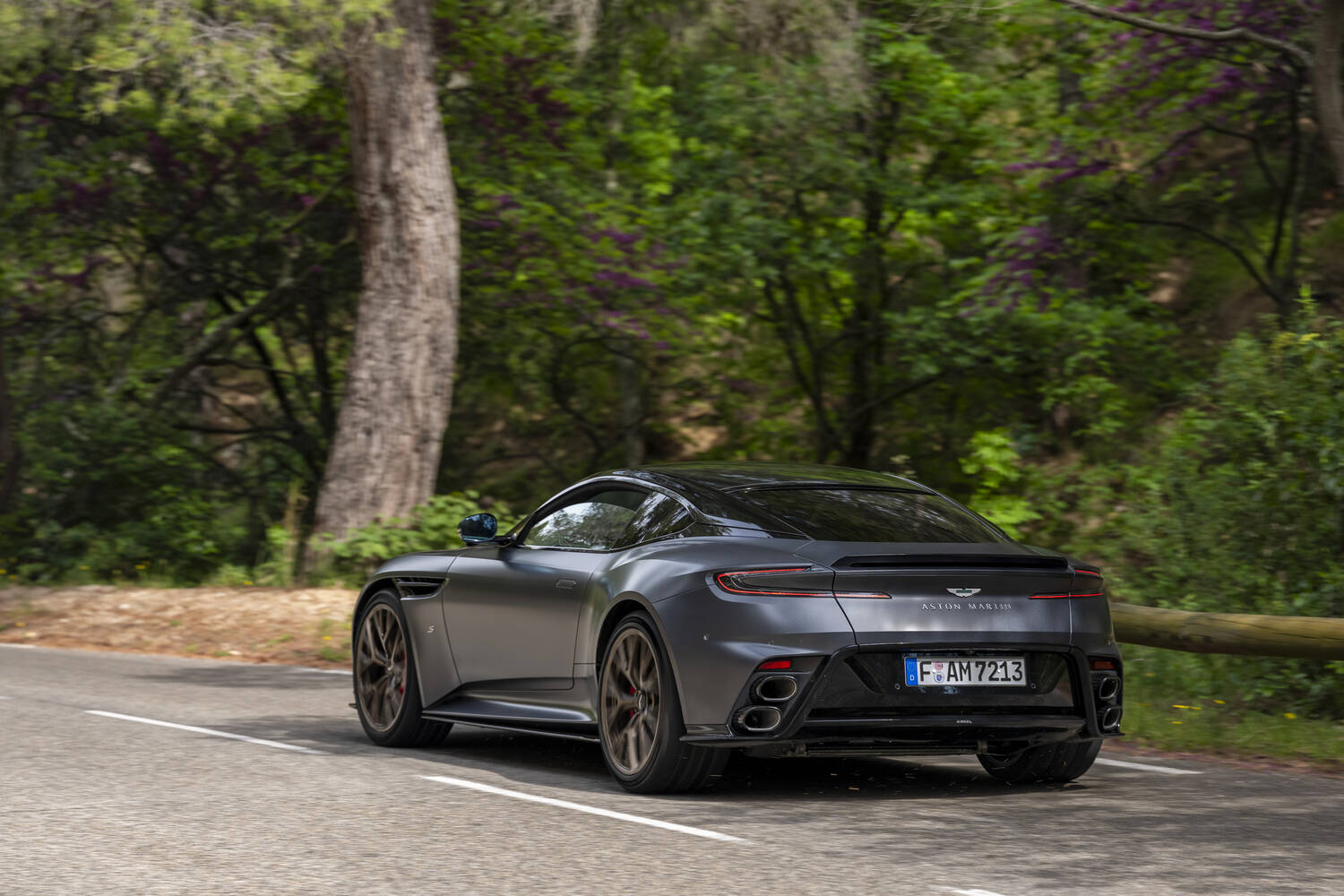
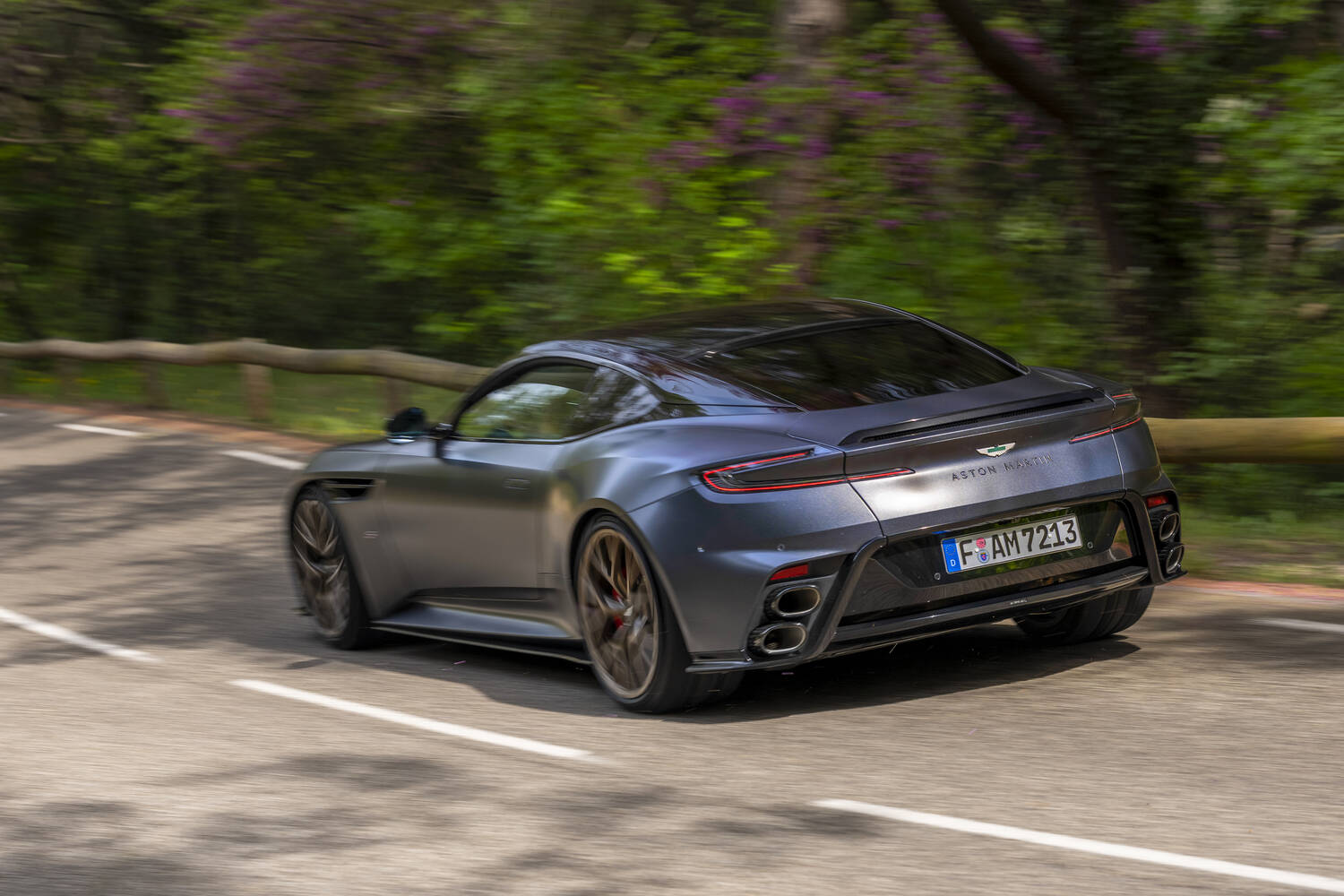
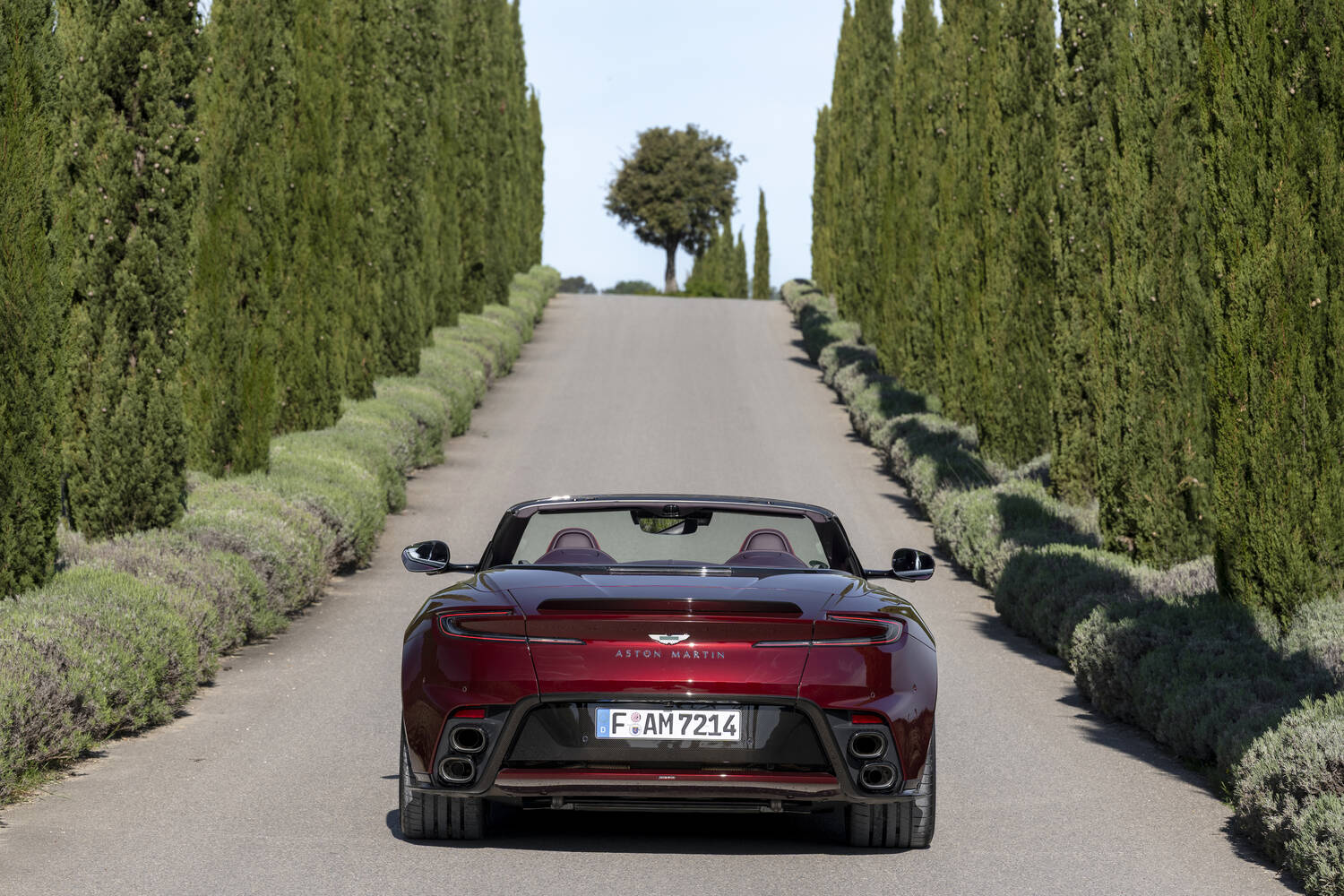
The rear view gives the DB12 S away at a glance. It adopts the same 'stacked' quad exhaust layout first seen in the Aston Martin DBX S. This is part of a new bumper incorporating a redesigned aerodynamic diffuser.
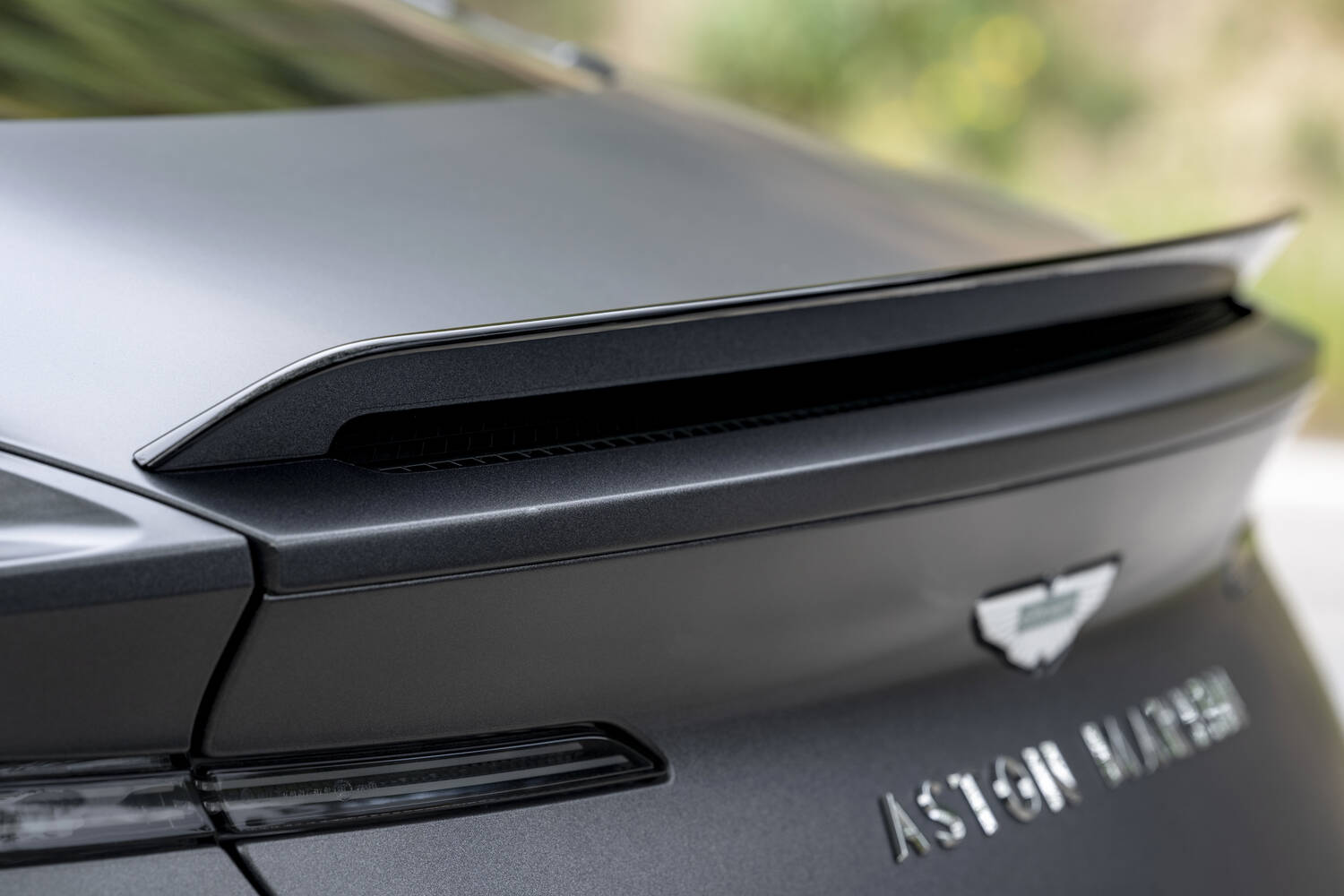
Helping reduce weight is the deletion of a hidden rear spoiler that automatically rises and lowers, and in its place is a sliver of a fixed wing to maintain the reduction in lift. This also gives the DB12's normally smooth appearance a little more edge.

The DB12 S can be had as a Coupe or as an open-topped Volante convertible.
Dimensions of the 2026 Aston Martin DB12 S Coupe
- Length:
- 4,725mm
- Width:
- 2,045mm (mirrors folded)
- Height:
- 1,295mm
- Wheelbase:
- 2,805mm
Paint colours for the 2026 Aston Martin DB12 S

The level of customisation open to a buyer of the DB12 S is mind-numbing, but it must be a lot of fun to take the time to curate your ideal configuration. Myriad solid and metallic paint colours are included in the starting price, but many will be tempted by hues found in the Racing Line and three disparate groups of options from 'Q by Aston Martin' - called Satin, Special and Heritage.
Aside from the main body colour, there are various lower and upper body packages to consider, including some gorgeous carbon-fibre finishes. There are four options for the roof panel in the DB12 S Coupe (one of them being 'Contrast Painted' so we assume it can be any colour you want) and three different hood colours for the Volante convertible.

Finally, while red brake calipers are the default for the S model, buyers can have them in silver, yellow, bronze, Aston Martin Racing Green, Vivid Orange, AMR Lime, Vivid Red or Vivid Blue instead.
Interior, practicality, tech & comfort of the 2026 Aston Martin DB12 S
• Sumptuous quality
• Red accents for the S model
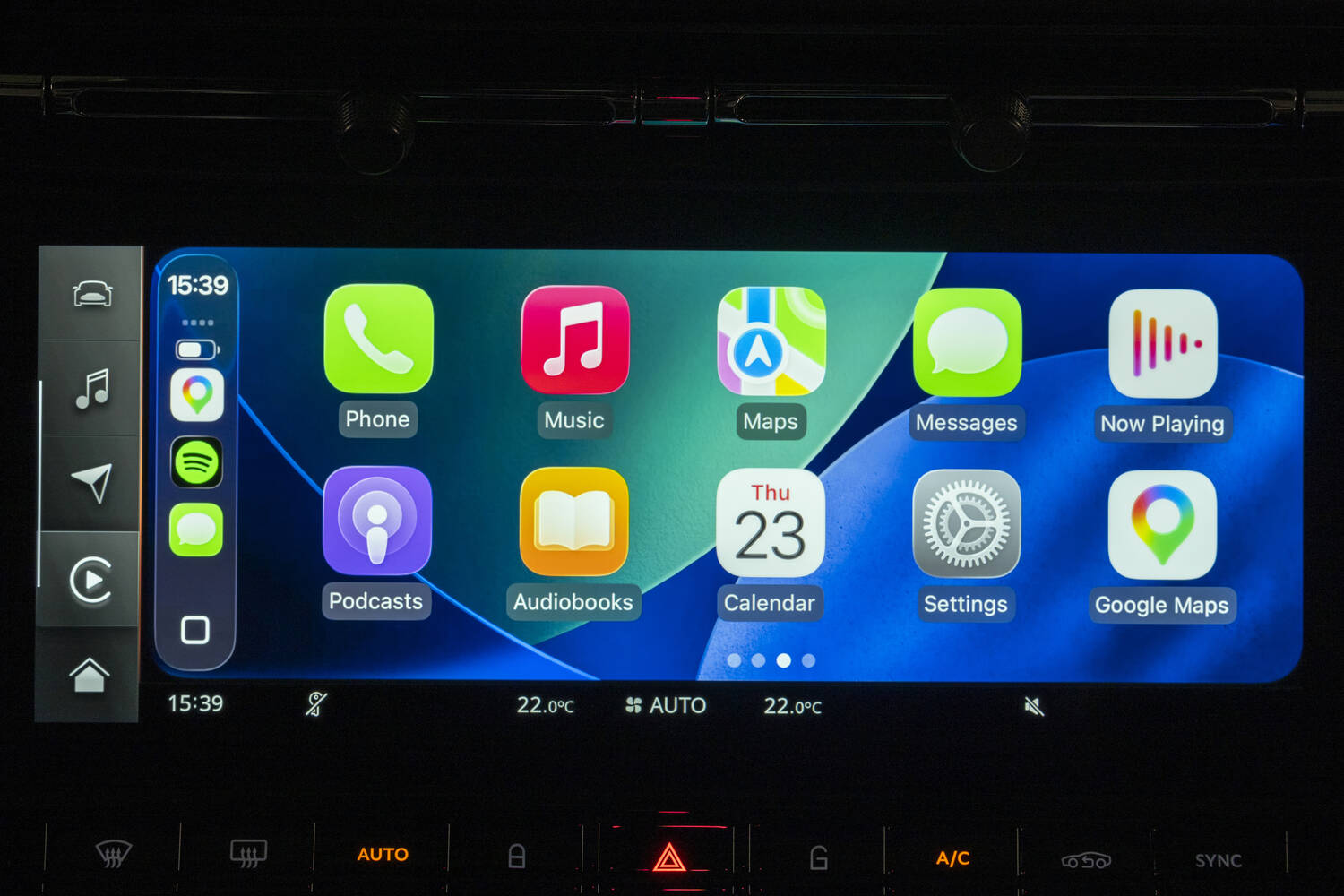
• Uses Apple CarPlay Ultra

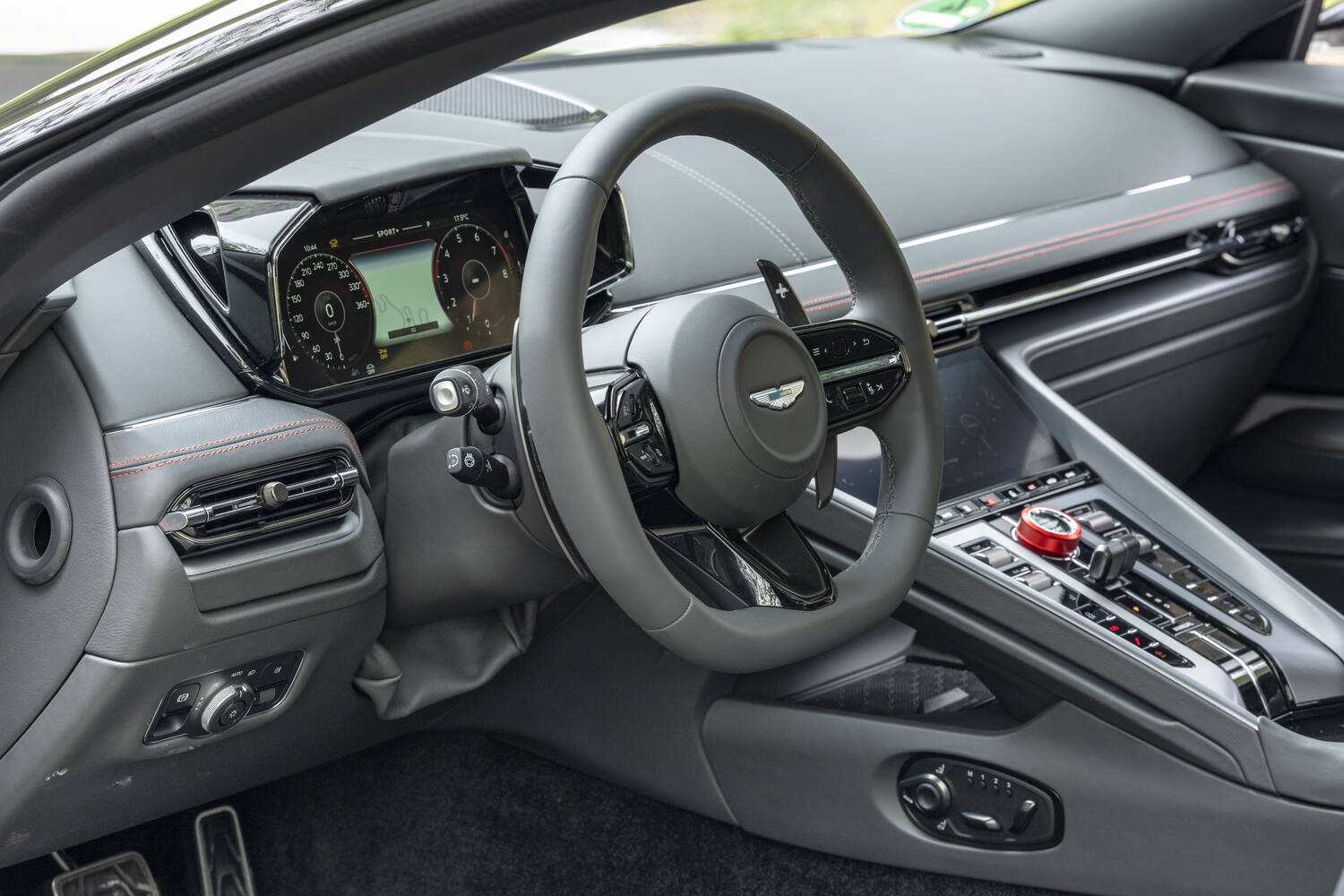
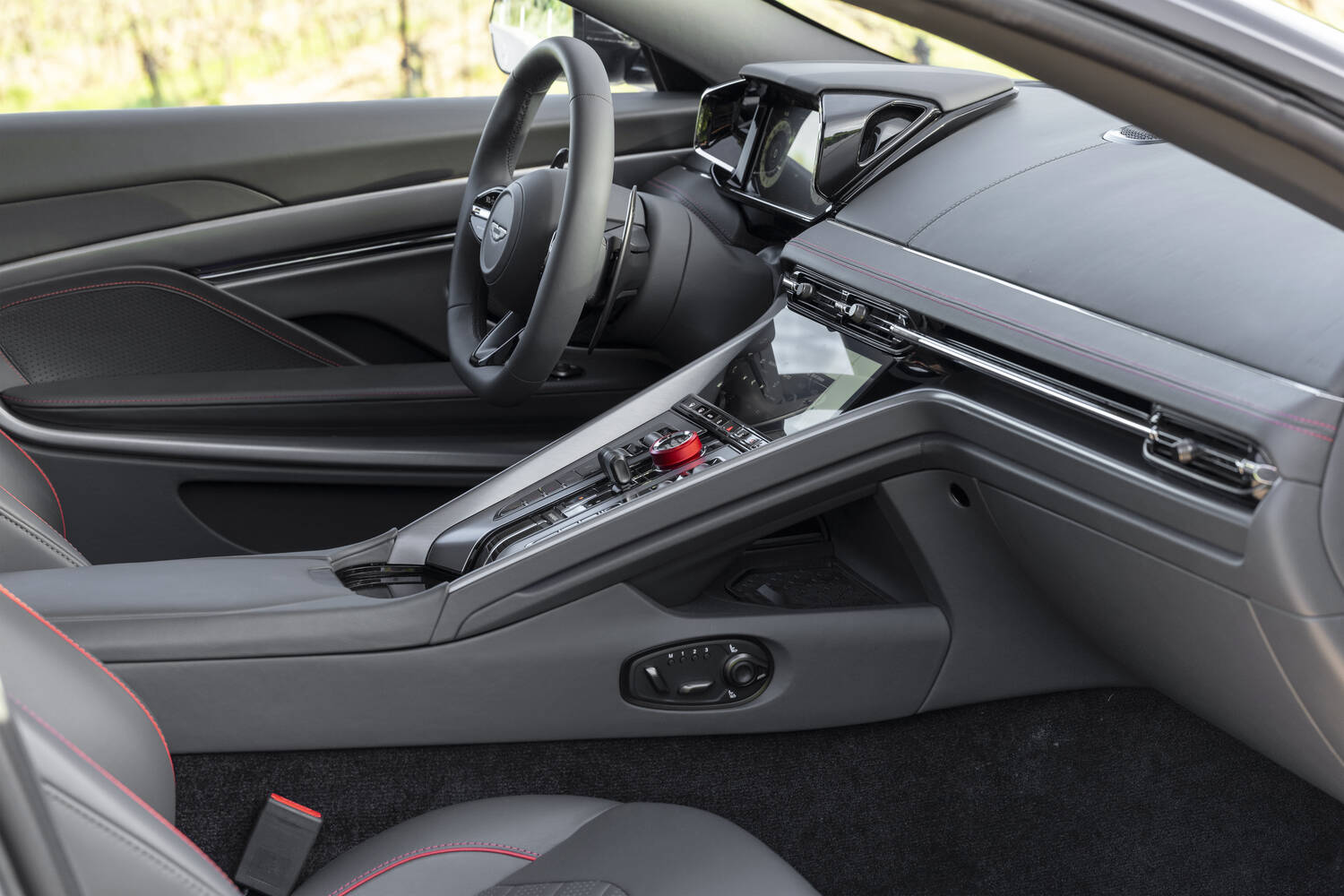
The elegant way the DB12's doors open is a great start. That - and the frameless door glass - are of course carried over to the S model. Again, the S-specific content is relatively subtle in relation to the level of personalisation a buyer is likely to specify.
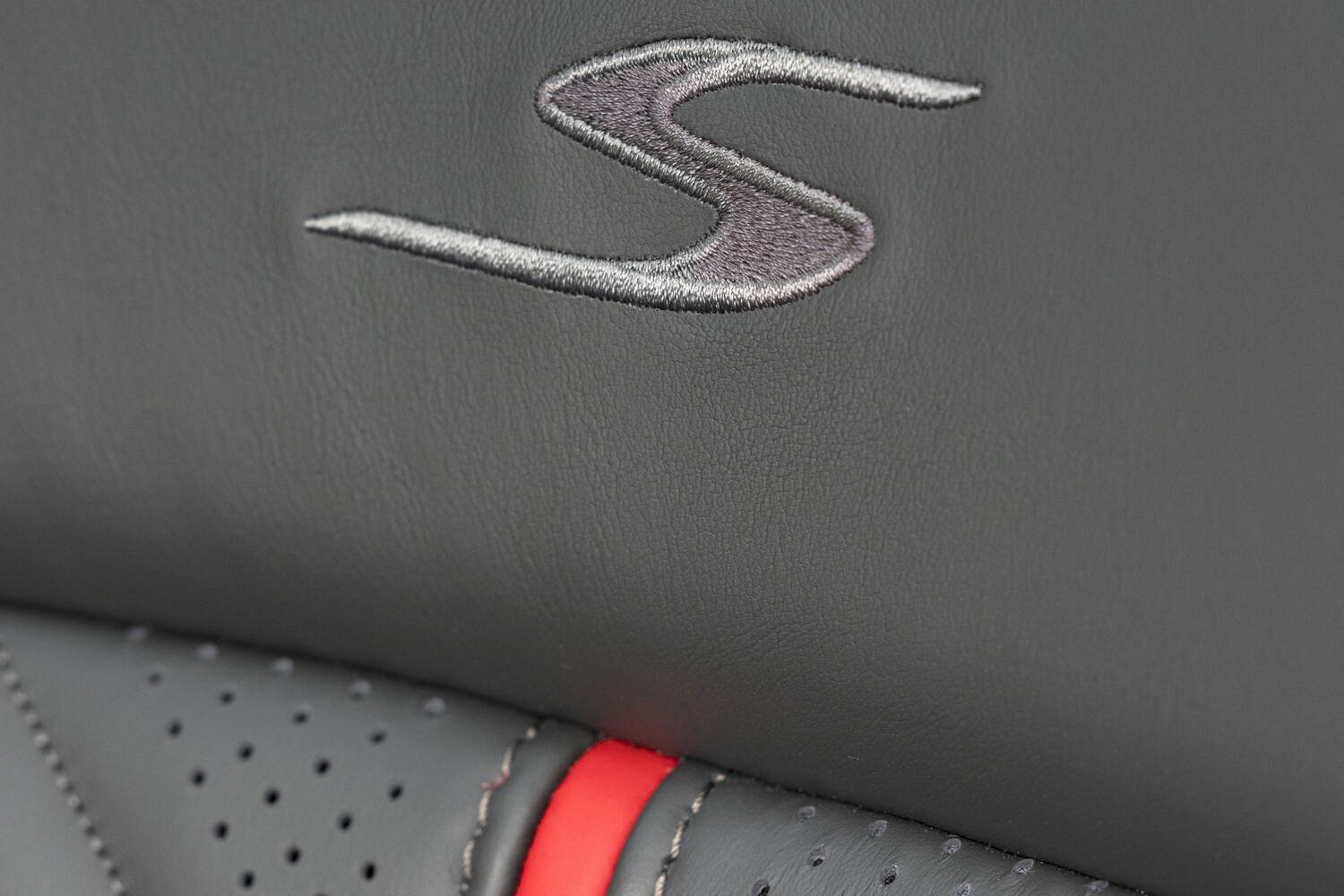
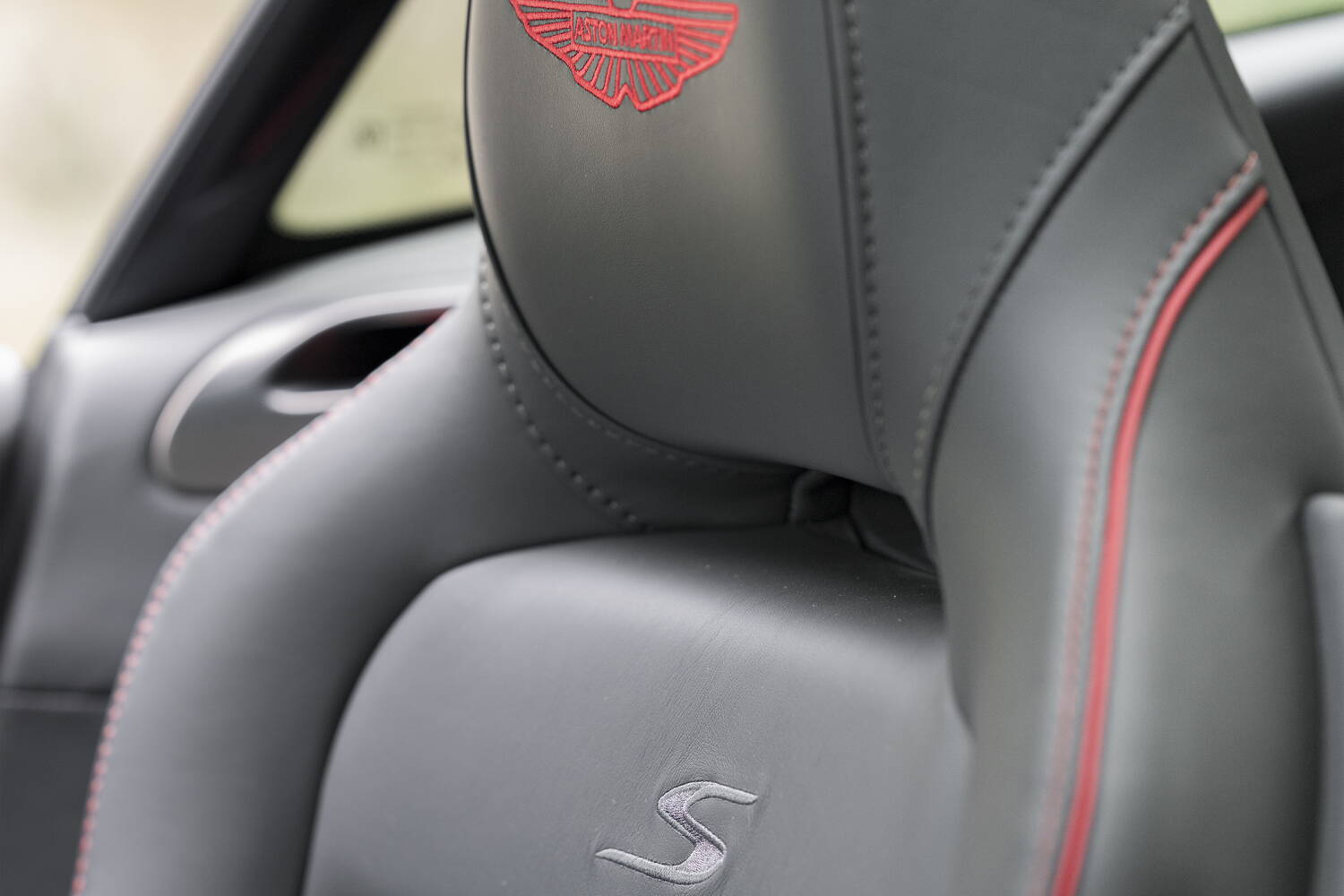
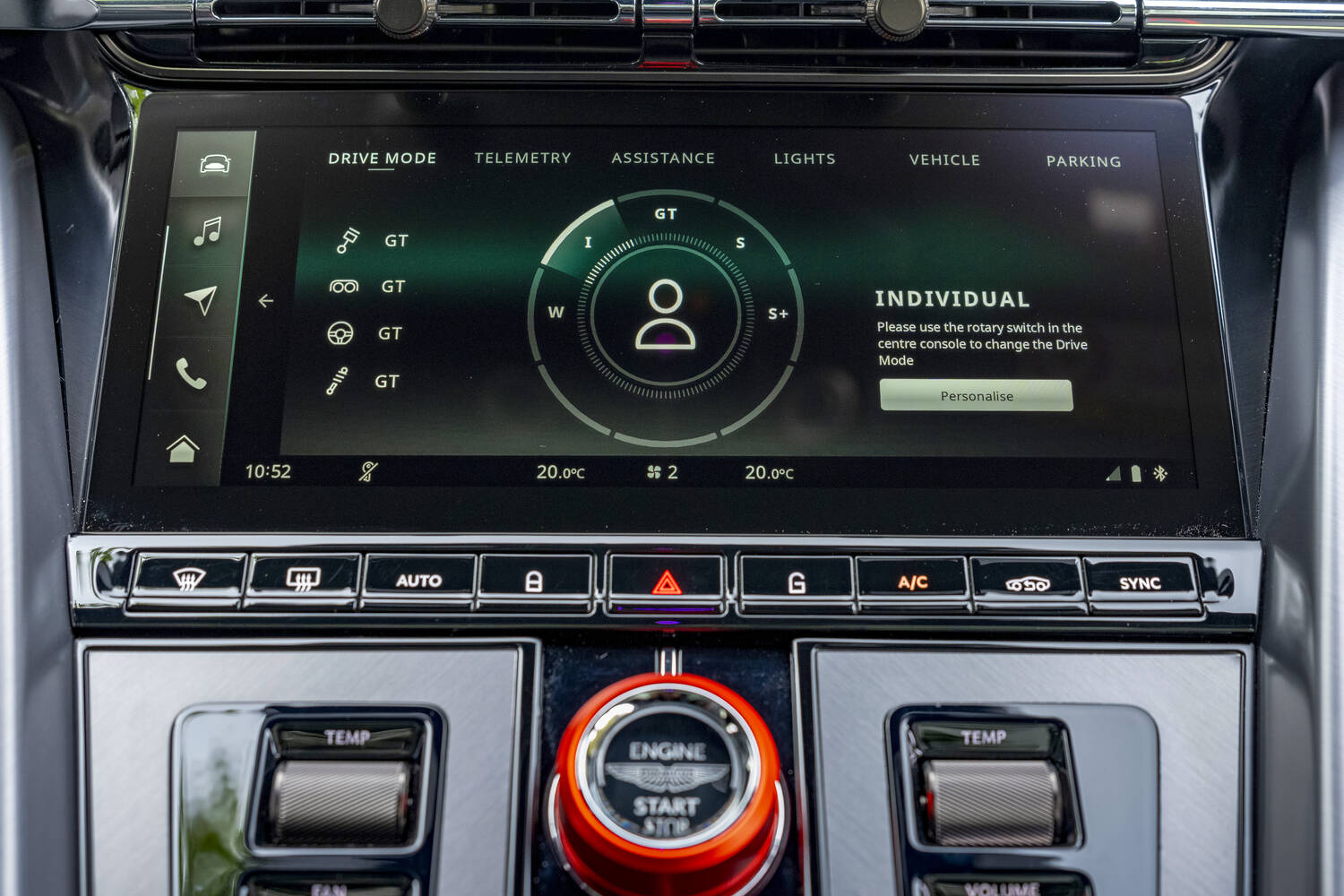
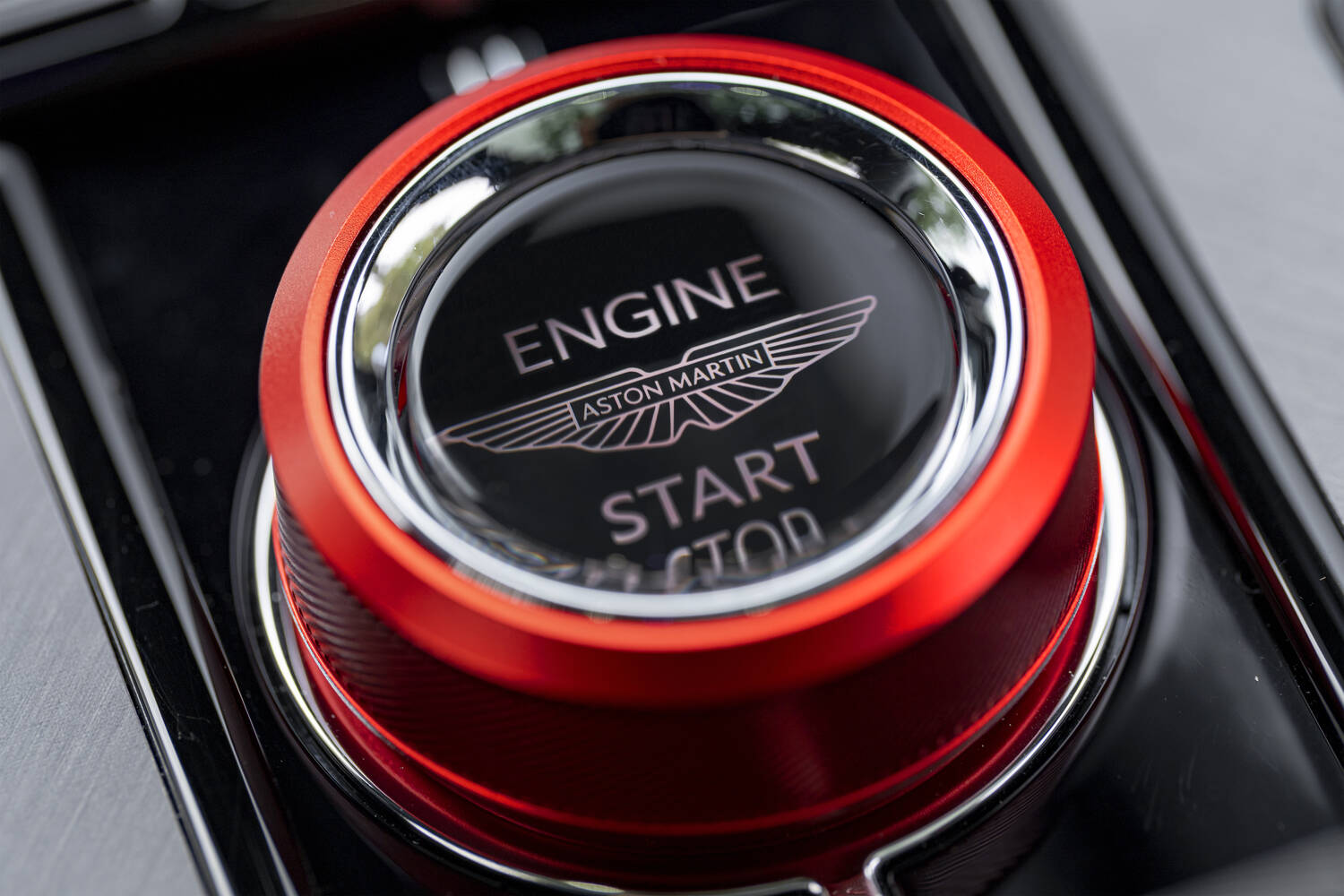
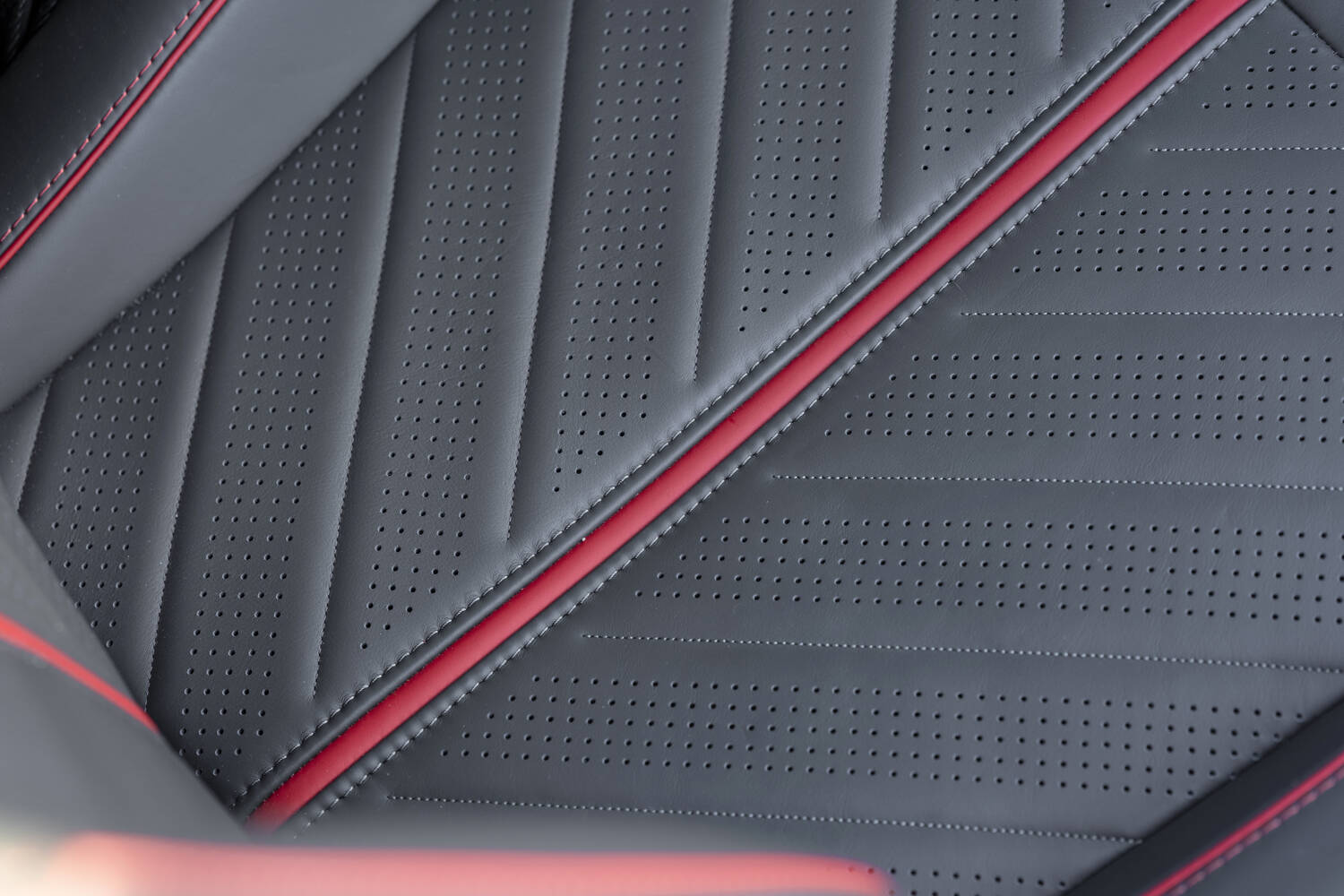
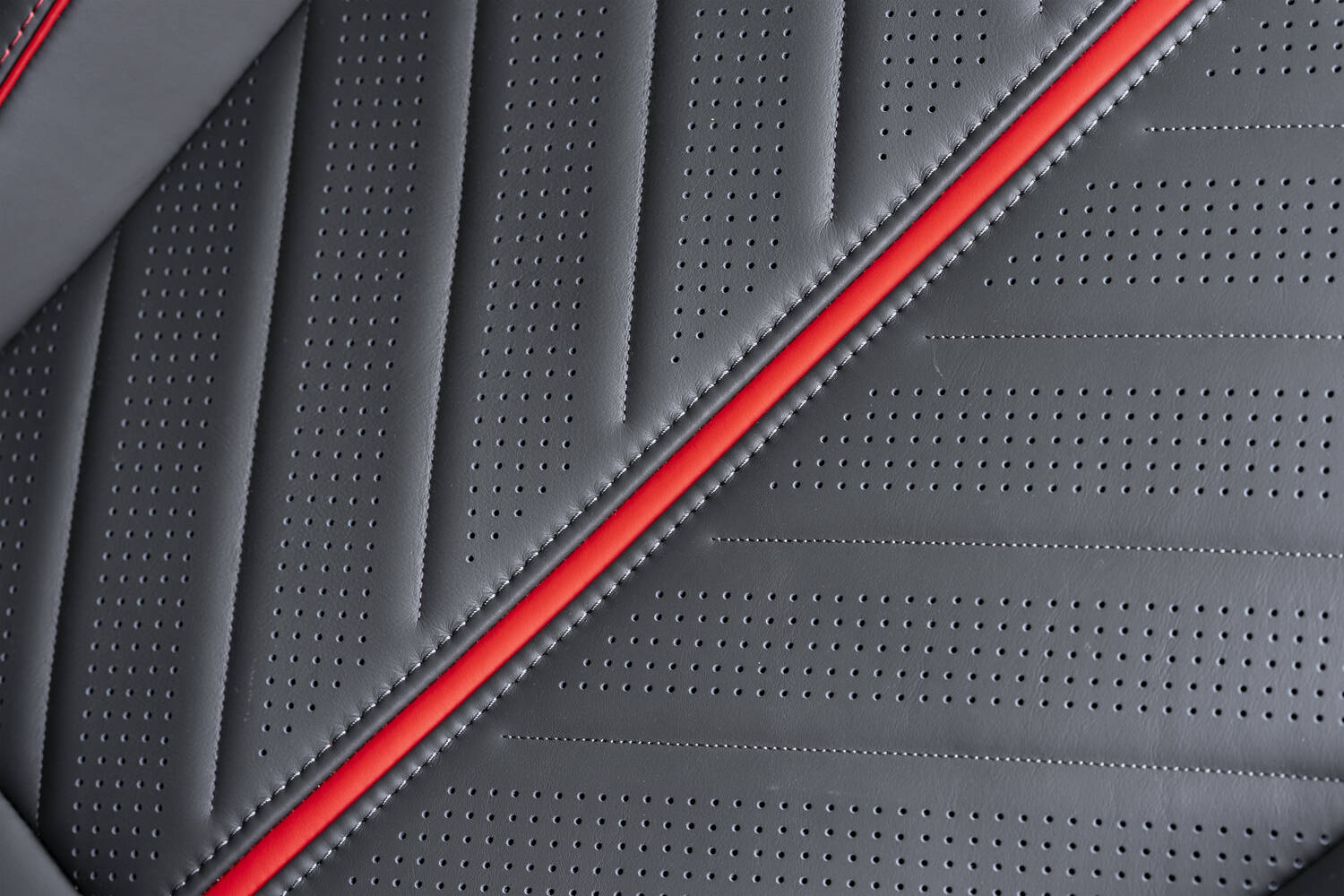
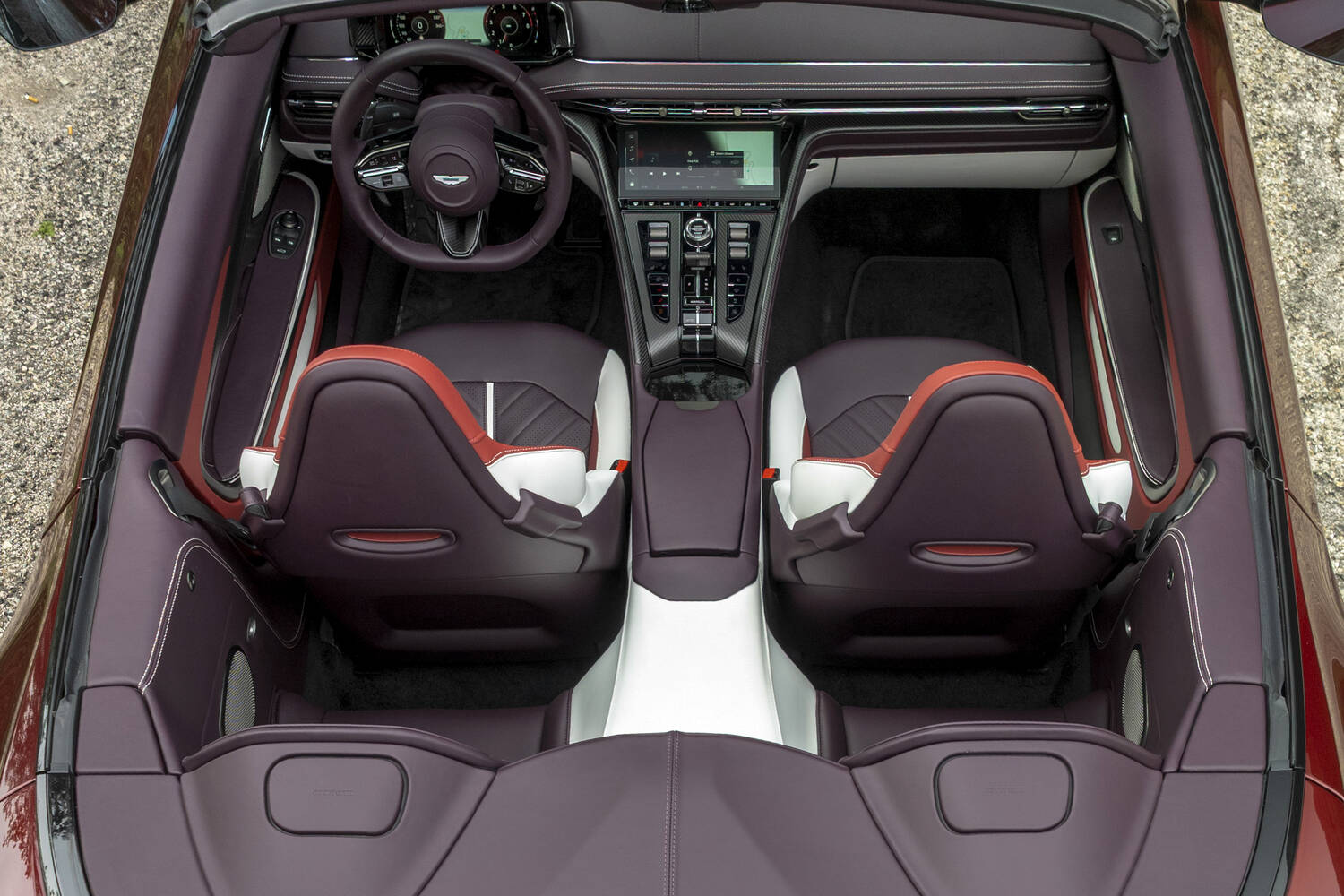
For the record, the DB12 S does get its own, red-anodised finish for the drive-mode controller in the centre console, while red is also used on the seatbelts, seat welts, contrast stitching and headrest embroidery.

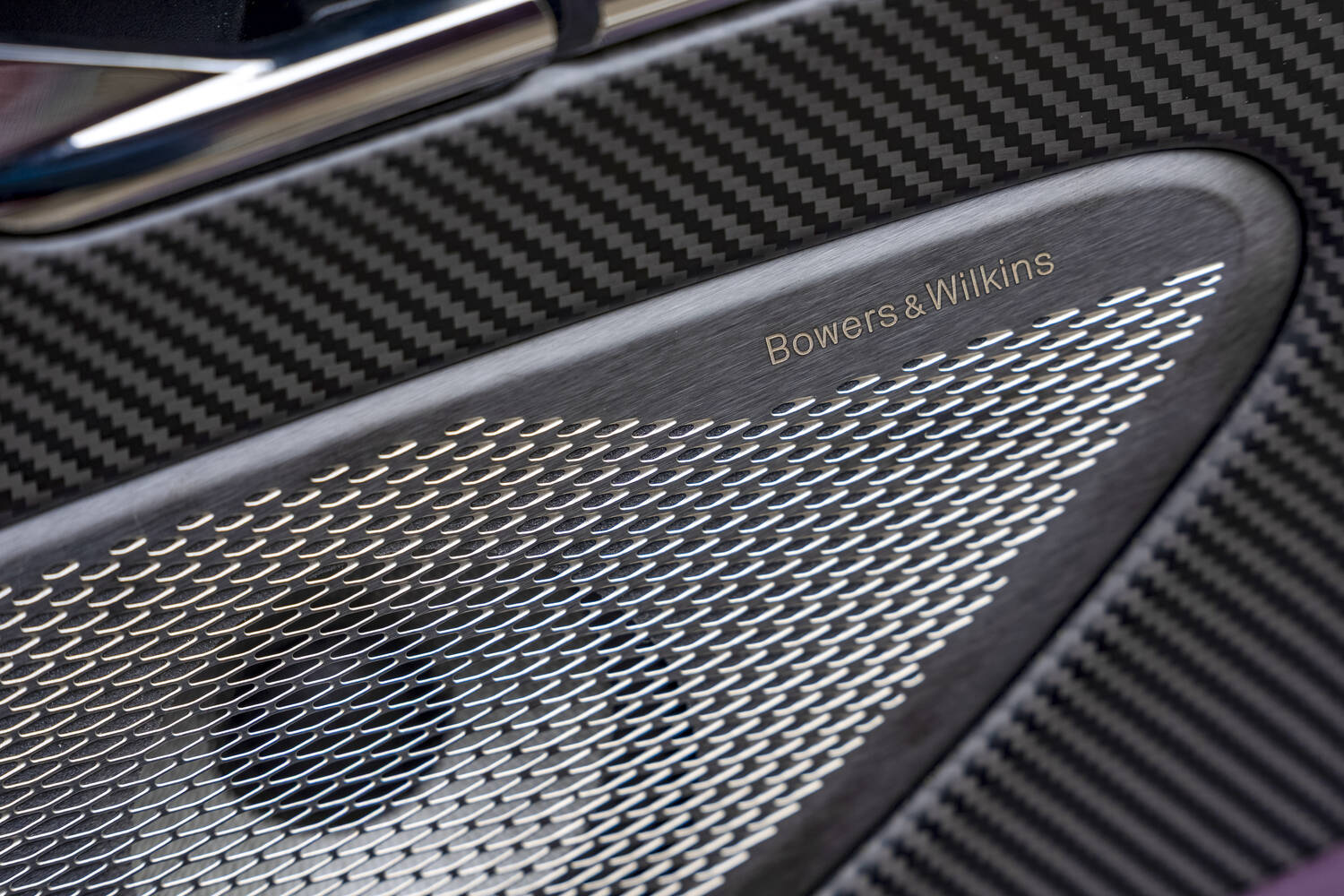
Buyers choose from three interior 'environments': Accelerate leather and Alcantara trim; Inspire S semi-aniline leather and Alcantara; or Inspire S full semi-aniline leather. The Inspire S packages include S Herringbone quilting with micro-perforations and an Alcantara headlining.
But of course, there's a long and tempting options list to consider as well, highlights of which include an Alcantara-trimmed steering wheel and Carbon Fibre Performance Seats.

Getting comfortable in the driver's seat
If you resist the lure of the latter, you'll still find it very easy to get comfortable inside the DB12 S thanks to standard fitment of 16-way Sport Plus seats up front. The look good too.

The steering column electrically adjusts for reach and rake with the wheel held vertically. There's plenty of space up front, though the design of the cabin is quite cocooning and with the seat set low, you very much feel like you're deep inside the car. The material finishing is top-drawer, with an indisputable air of sportiness and modernity.
Infotainment and technology

Aston Martin debuted its own digital interior layout on the DB12 when it first launched and it hasn't dramatically altered the design since. It sensibly mixes the latest infotainment technology with some seriously tactile physical controls in an attempt to keep everyone happy.
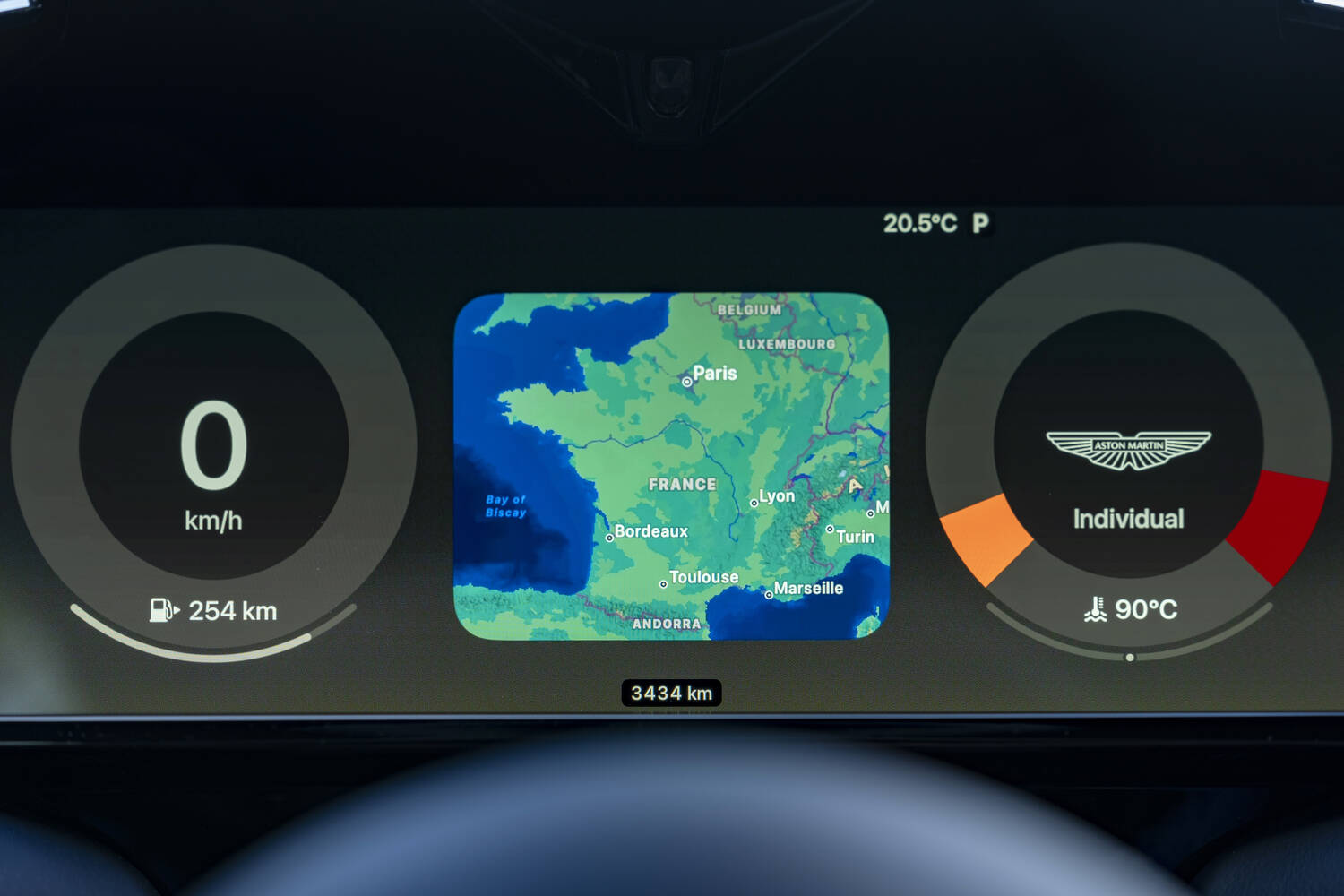
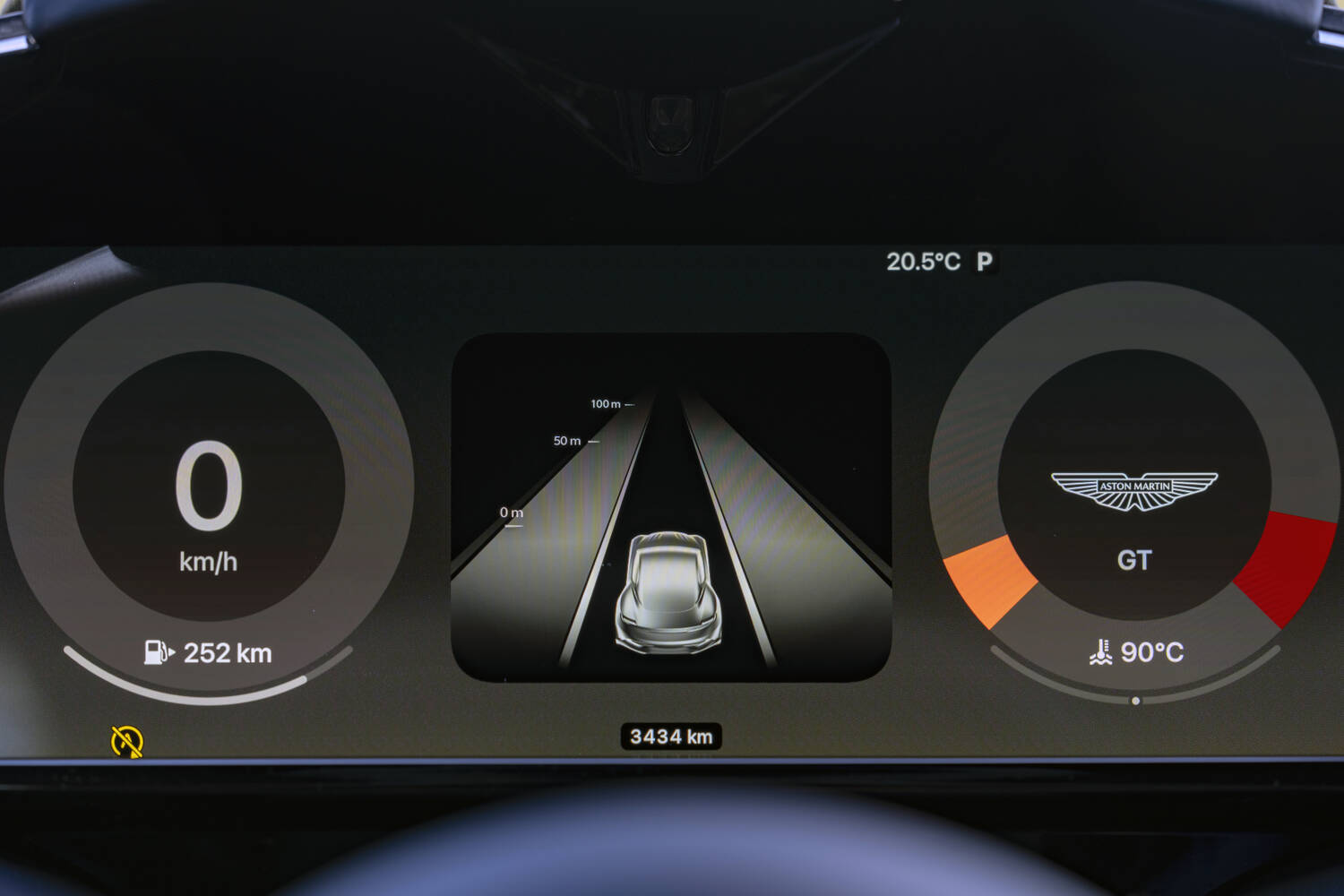
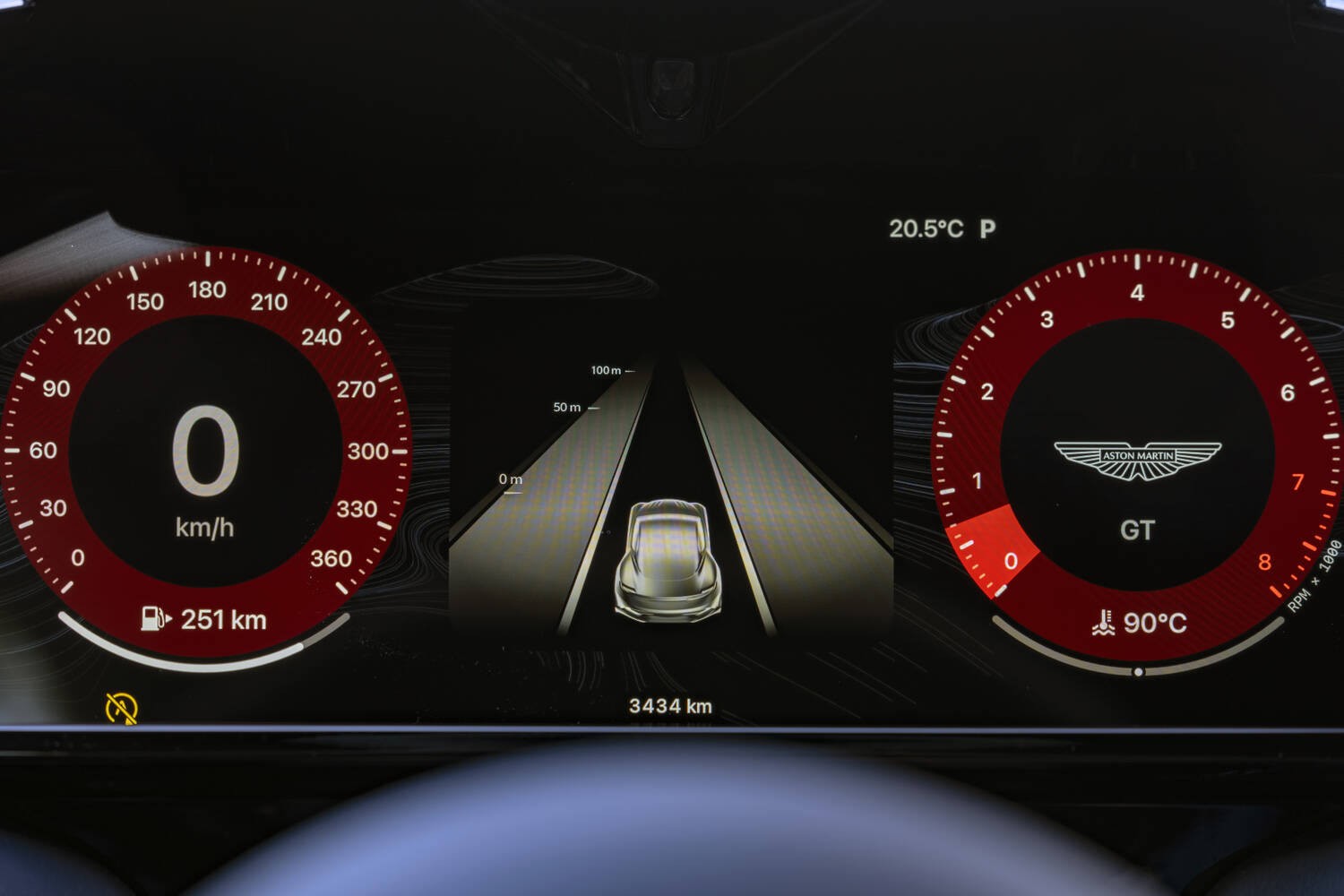
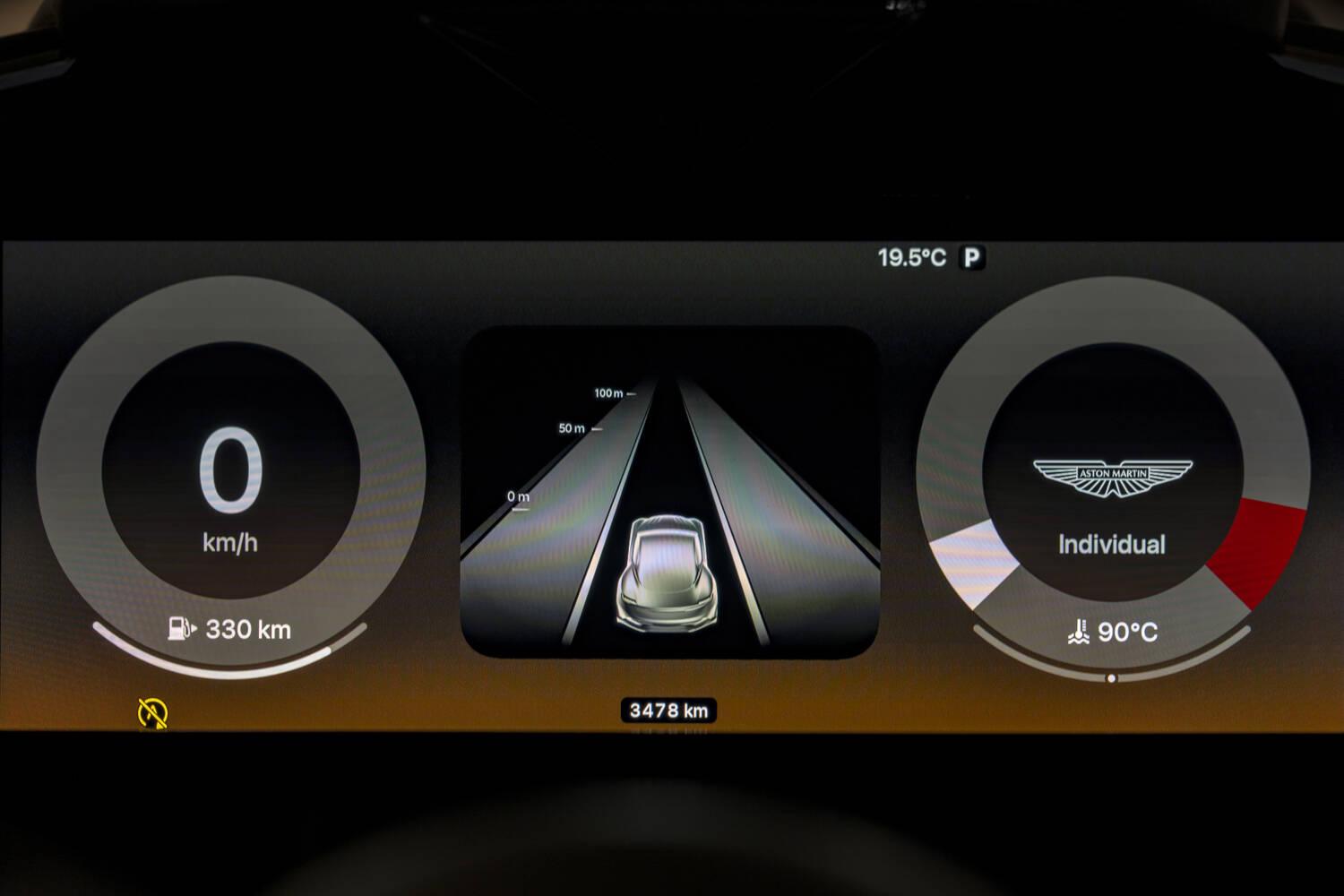
The DB12 S does feature revised digital instruments, with many different view options open to the driver, and there's a 10.25-inch touchscreen in the middle of the car.

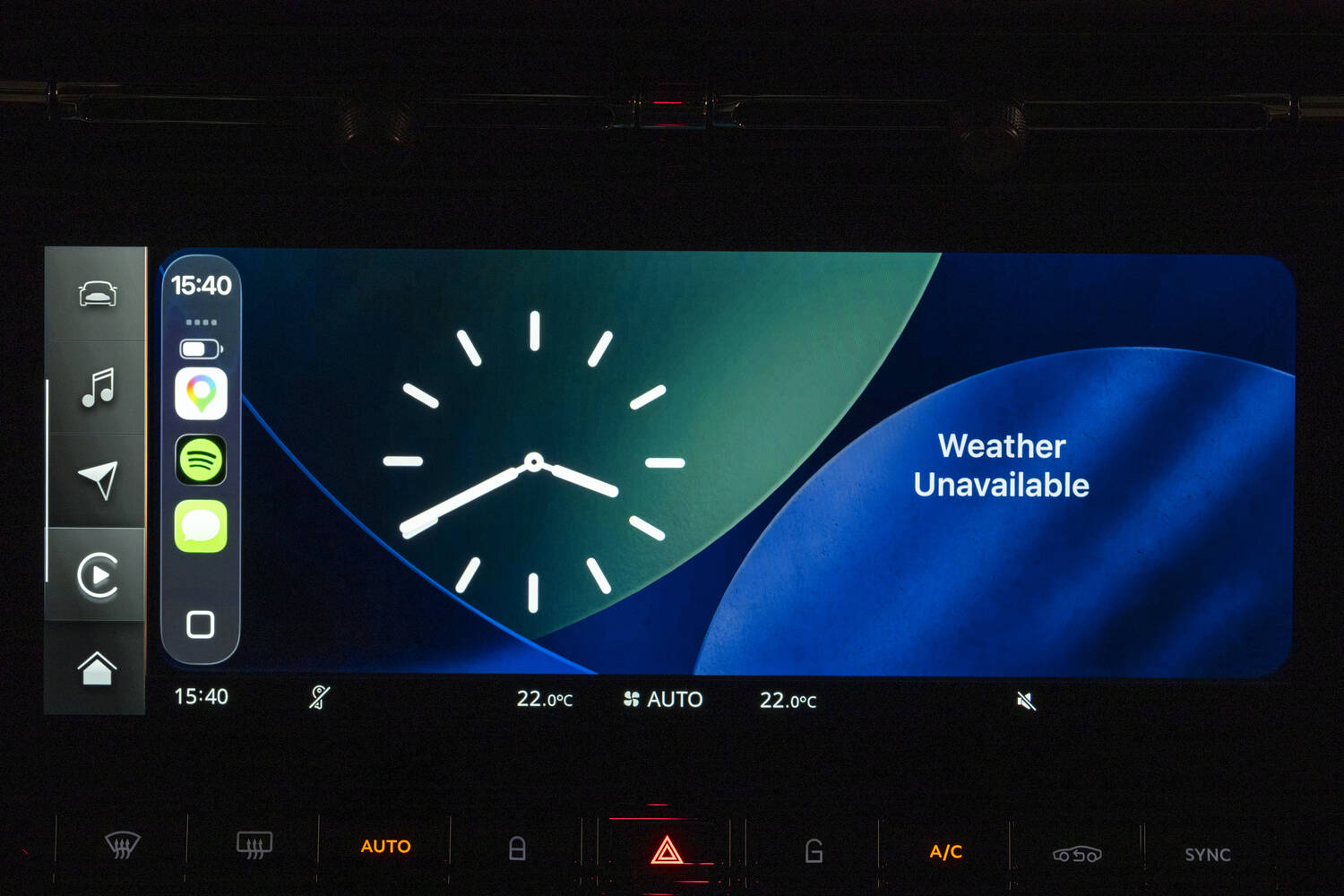
At the time of writing, Aston Martin is still the only carmaker to offer Apple CarPlay Ultra in its vehicles. It represents a much closer integration of the Apple software with the car's own, and it really does look lovely. Just be aware that it requires solid 5G connectivity to operate properly.
Practicality
Buyers of pure sports cars are happy to compromise on practicality, but the DB12 - S or otherwise - is marketed as a GT, which means it needs to be capable of carrying its occupants over longer distances, with more than just hand luggage on board.

Up front, there's plenty of storage in various parts of the centre console, a glovebox and in the doors. The DB12 is purportedly a '2+2', but good luck getting anybody to sit in the rear seats. Best to think of them as somewhere to hold shopping, handbags and other items.
The boot itself holds 262 litres of luggage, which is plenty for this sort of car, even for a couple going away for the weekend that doesn't know how to pack light.
Performance of the 2026 Aston Martin DB12 S
• Twin-turbo V8 gets small power increase
• Sounds astoundingly good
• Chassis can seemingly do it all

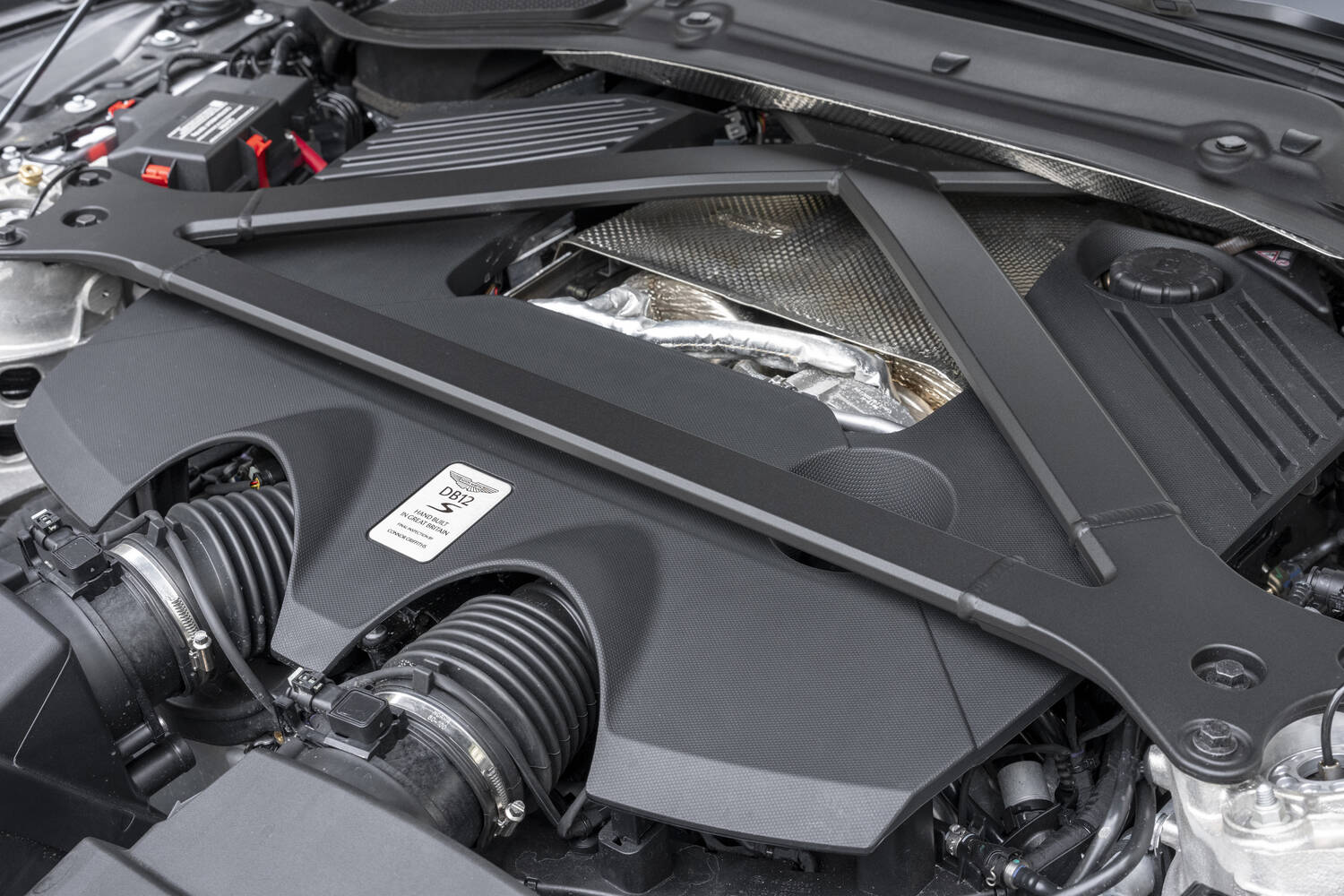
Under the long, shapely bonnet of any Aston Martin DB12 is a twin-turbocharged 4.0-litre V8 petrol engine, sourced from Mercedes-AMG, but further developed inhouse.
For the S, 20hp more has been liberated, meaning a peak of 700hp, produced at the same 6,000rpm as before. The maximum torque figure hasn't changed, but then again, 800Nm of the stuff on tap between 2,750- and 6,000rpm is undeniably 'sufficient', even in a world of instant-torque EVs.

Aston Martin quotes a 0.1-second improvement for the 0-100km/h time at 3.5 seconds for the DB12 S Coupe, or 3.6 seconds for the Volante. That has partly been brought about by a new calibration for the eight-speed automatic gearbox specifically for use when launch control is activated, resulting in a claim of 50-per-cent-quicker gearchanges.
The throttle map itself has been updated for the S model, too, targeting a more progressive feel through the accelerator pedal.

Matching the new-look exhaust outlets is a new stainless-steel system for enhanced 'bass' and depth. If you want an even louder system, Aston Martin will sell you a titanium upgrade, which alters the sound and saves nearly 12kg of weight.
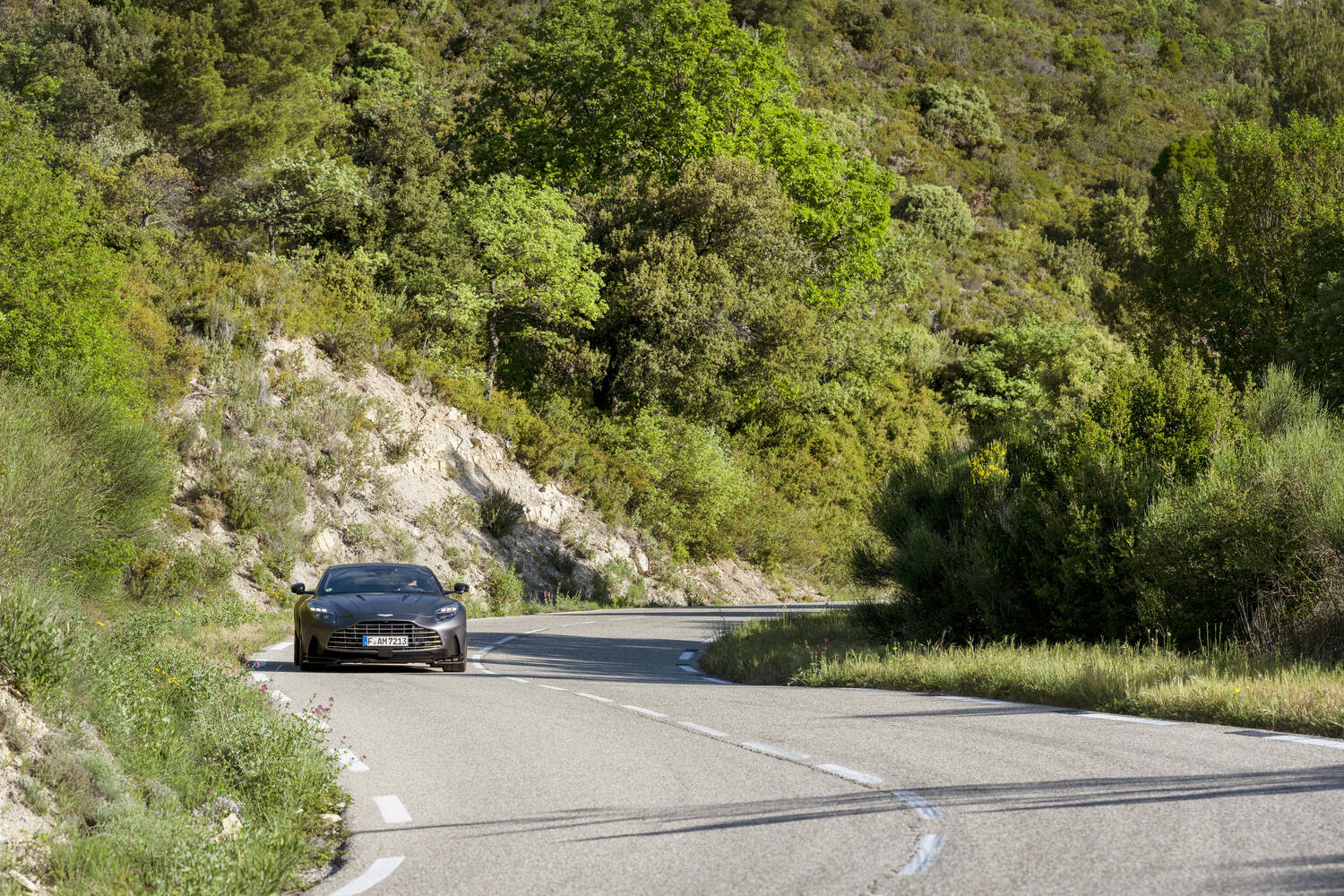
Driving the Aston Martin DB12 S Coupe in France
Words by Shane O' Donoghue on 6 May 2026

As you walk up to the DB12 S, you'll clock the carbon-ceramic brake discs. These are standard on this model, signalling its remit from the off.
While these are designed for greater resistance to fade under duress, they also result in a significant 27kg weight reduction. And as that's 'unsprung' weight, it allowed Aston Martin's chassis engineers to enhance the ride comfort, handling and steering feel.

To that end, a raft of changes has been made, though the DB12 S carries over the sophisticated Bilstein DTX damping system. Its wide bandwidth and programmability allow Aston to alter the car's characteristics on the fly and depending on driving mode, interacting with the settings of the power steering and electronically controlled rear differential for minute changes on the move.
There are five disparate drive modes to choose from, all affecting the engine, gearbox, steering and chassis. You'll have to forgive us for not trying 'Wet' in the warm and dry conditions we experienced...

The car defaults to the GT setting, which is perfect for regular road driving, though it's far from what we'd call 'soft'. Don't expect the DB12 S to compete with the likes of the Bentley Continental GT for luxuriousness for instance; the Aston is a far sportier option.
Saying that, it is not uncomfortable and you'd gladly spend hours at the wheel, even on humdrum roads or the motorway.
But then why bother with the S model? We suggest turning the tactile, chunky drive-mode selector to Sport at the earliest opportunity and seek out more interesting roads, as then the DB12 S truly comes alive.

In this setting, the exhaust is louder, allowing the glorious V8 breathe, rewarding the driver's ears with every brush of the throttle pedal, and sounding particularly thrilling as you extend the engine out to the rev limiter.
Not that it needs to be wrung out, as that 800Nm torque figure suggests. But you'll want to just to hear the V8's machinations under load. And if that's your jam, then you really should press the prominent 'Manual' button to let the car know you'd rather take care of the gear changing yourself.

This is done via a set of spectacularly solid metal paddles behind the (tactile) steering wheel, and response is instant. Naturally, there are gratuitous automatic throttle blips on down-changes, which you'll do far more often than is necessary just to hear the engine at work.
If the road surface isn't great, you can still enjoy all this responsiveness but press another button on the centre console to back off the damping a touch. The body control is sublime, seemingly no matter which mode you put the car in. And your favourite group of settings can be stored within the 'Individual' driving mode.
Make sure you experience the Sport+ setting though, as this is the DB12 S at its most breath-taking and most capable. The performance, alertness and all-round interaction seem to ramp up a notch again, and the big GT does a very fine impersonation of a much smaller and lighter sports car.

The steering is direct without being nervous, allowing you place the car with real precision, no matter how quick the corner entry, and you can really lean on the tyres and feel their contribution to the grip.
At legal road speeds, this never in doubt, and yet that doesn't seem to detract from the rapport the driver builds with the chassis. It is simply sensational to drive.
Helping all this is a stiffer rear anti-roll bar, fitted to quell understeer, matched with tweaks to the camber, toe and castor geometries. The aim was not just an enhanced sense of agility, but also to allow the driver to use the throttle earlier on the exit of corners.

It's highly satisfying to do so. Experienced drivers will revel in how they can push to the limits and beyond thanks to the level of feedback afforded to them, yet the DB12 S allows those of all skill levels to access its considerable performance and, crucially, enjoy themselves doing it without fear of the chassis biting them if they push too far.
To that end, the DB12 S also debuts a new generation of the Corner Braking Control system, said to optimise integration between Integrated Brake Slip Control and Integrated Vehicle Control modules.
It even features a predictive function, which Aston says allows for increased stability while, for example, trail-braking into a corner, allowing for later braking for keener drivers and enhanced composure for all.

It effectively is torque vectoring across the back axle. Again, helping all drivers without detracting from the sense that the driver is an important part of the equation.
Verdict - does the Aston Martin DB12 S live up to its billing?
As a more driver-focused upgrade to the existing Aston DB12, the S is a resounding success. But the thing is, the S is so well-judged that is expands on the original DB12's abilities without seemingly compromising on any of them. We wonder if it'll make the standard car all but redundant.
All this means is the DB12 S is the kind of car you'll look for excuses to drive, and it delivers on all fronts, whether that's a blast across Europe on holiday or a dawn raid on your favourite deserted mountain road on a quiet Sunday. It certainly lives up to expectations raised by the addition of the letter 'S' to the name.
Want to know more about the Aston Martin DB12 S?
Feel free to drop us a message via the Ask Us Anything page if there's anything else you'd like to know about the Aston Martin DB12 S and our experience driving it.