

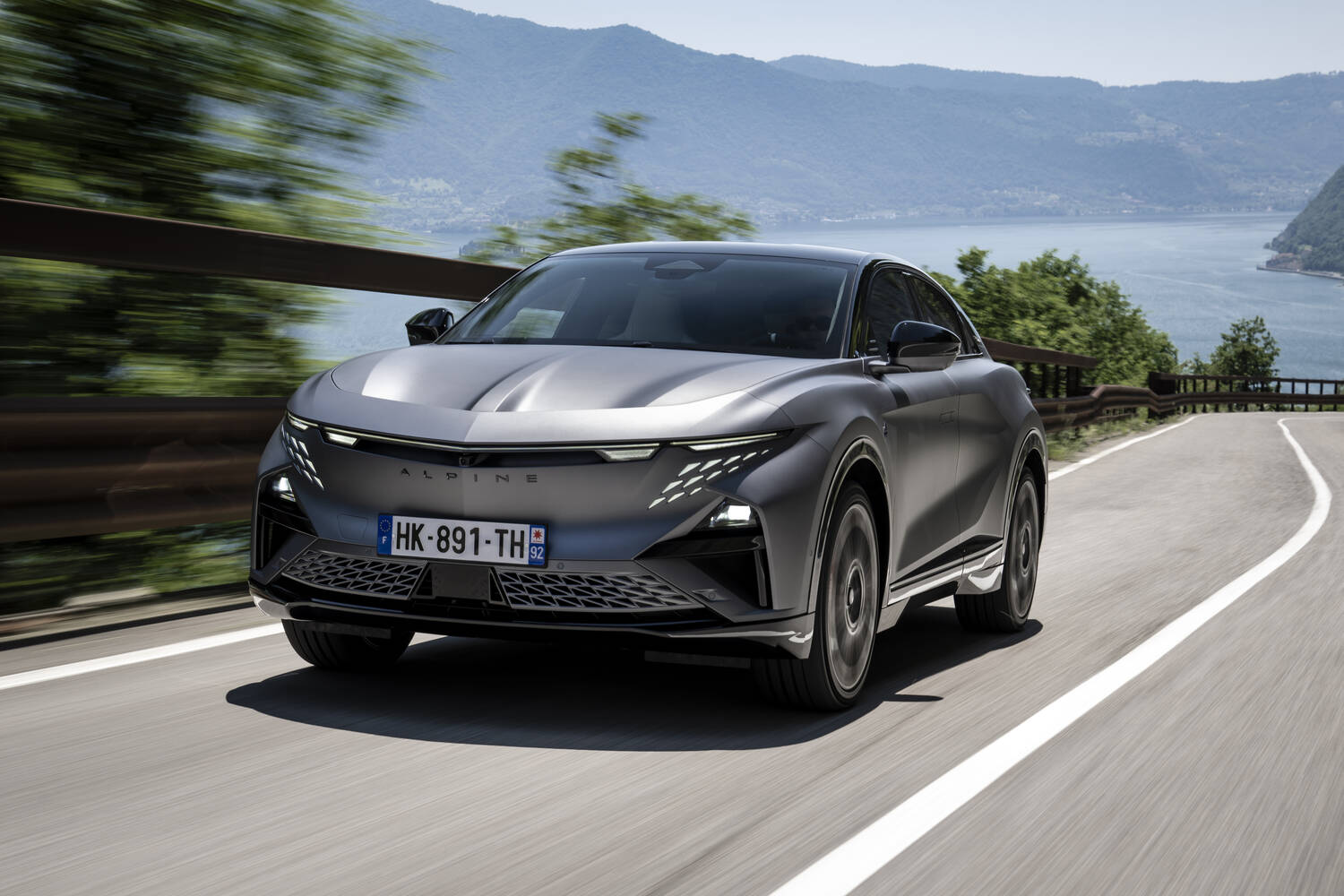
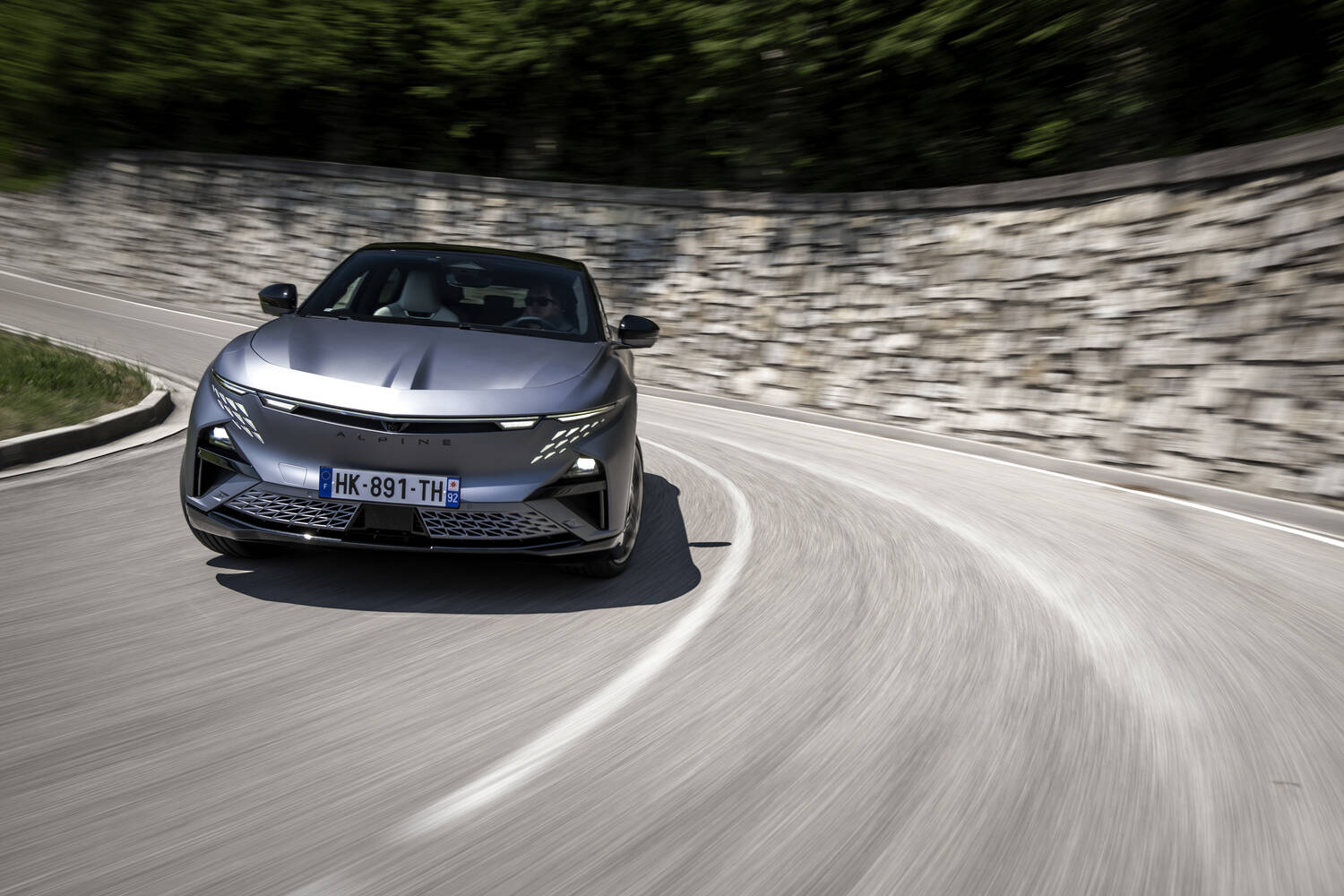
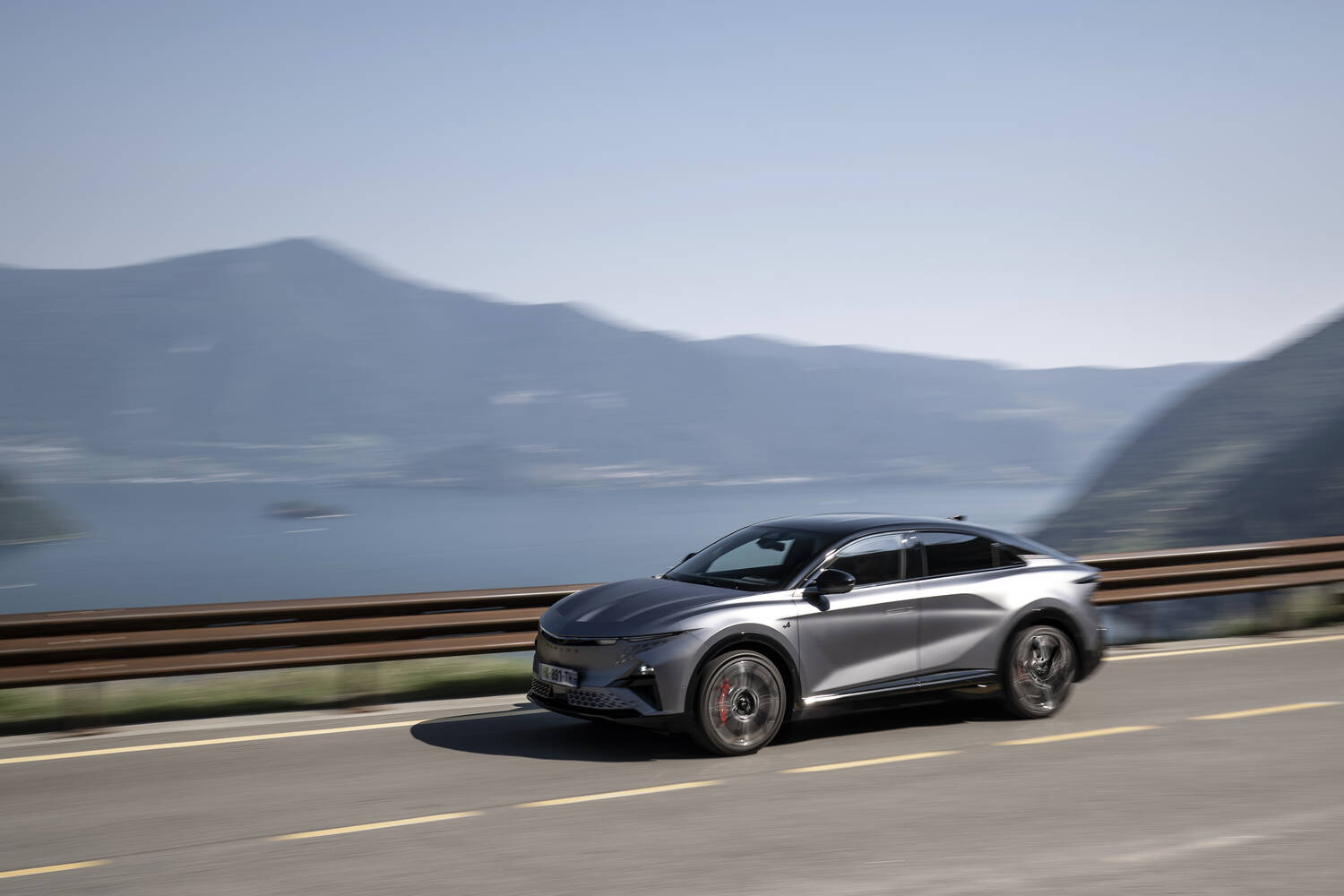
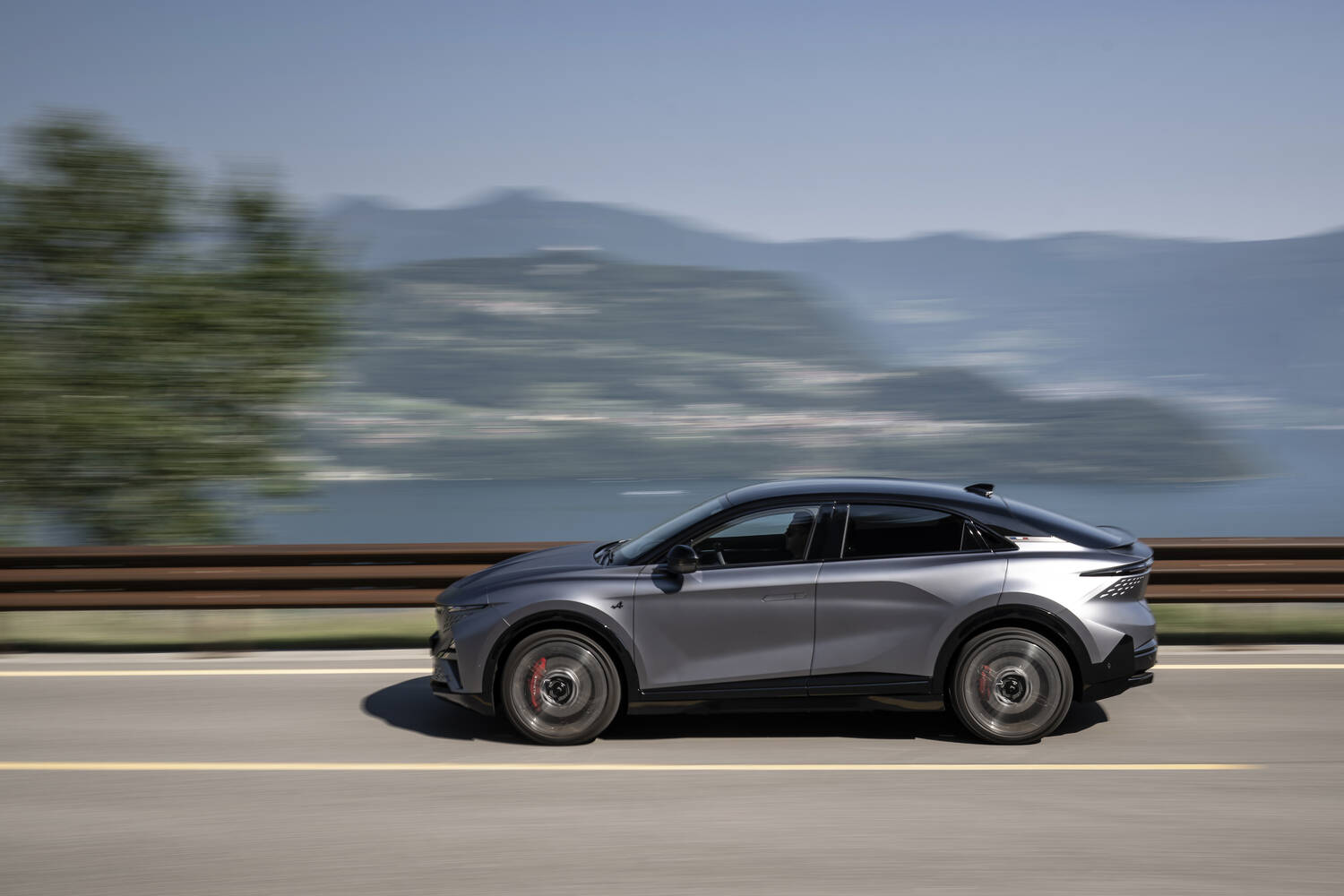
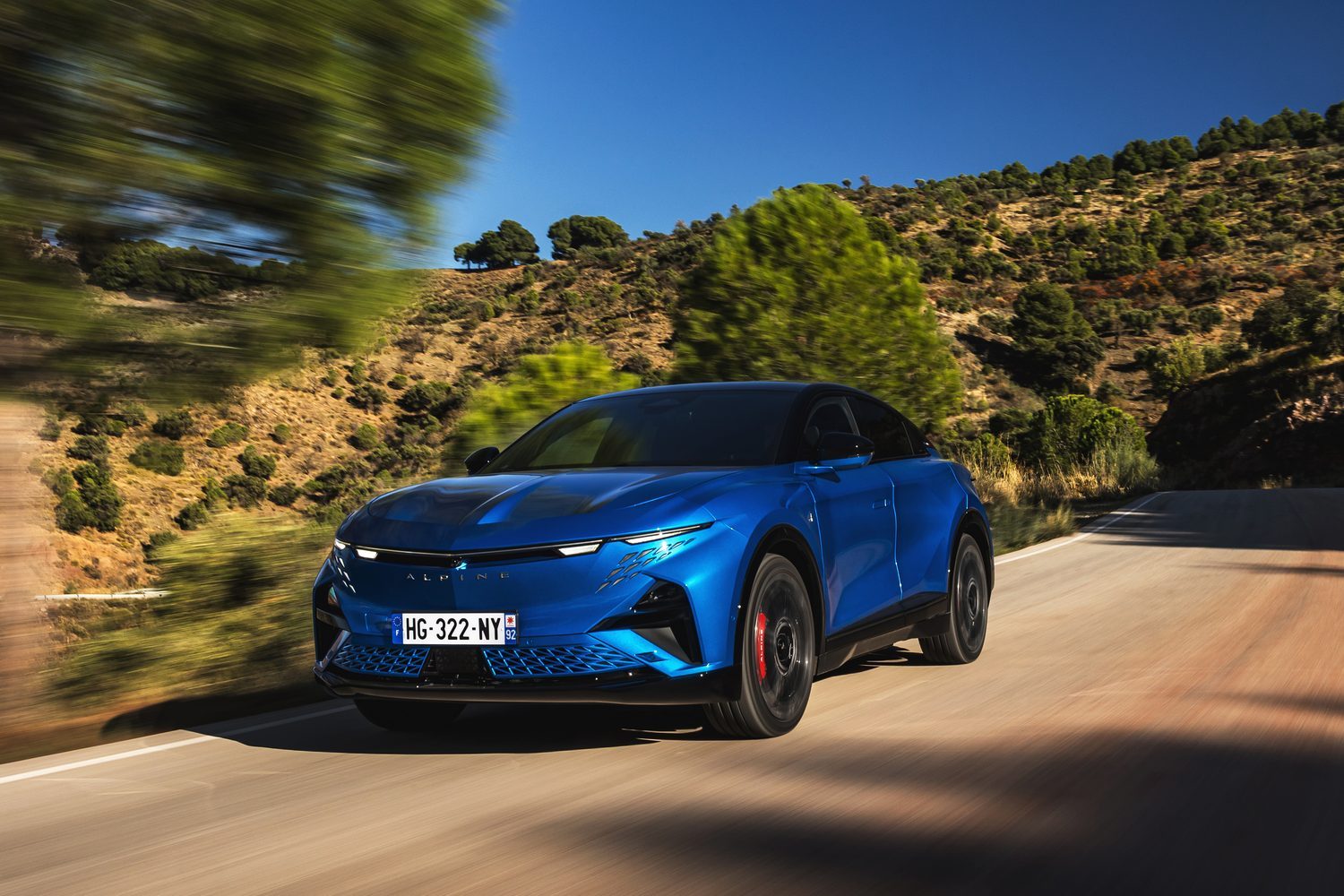
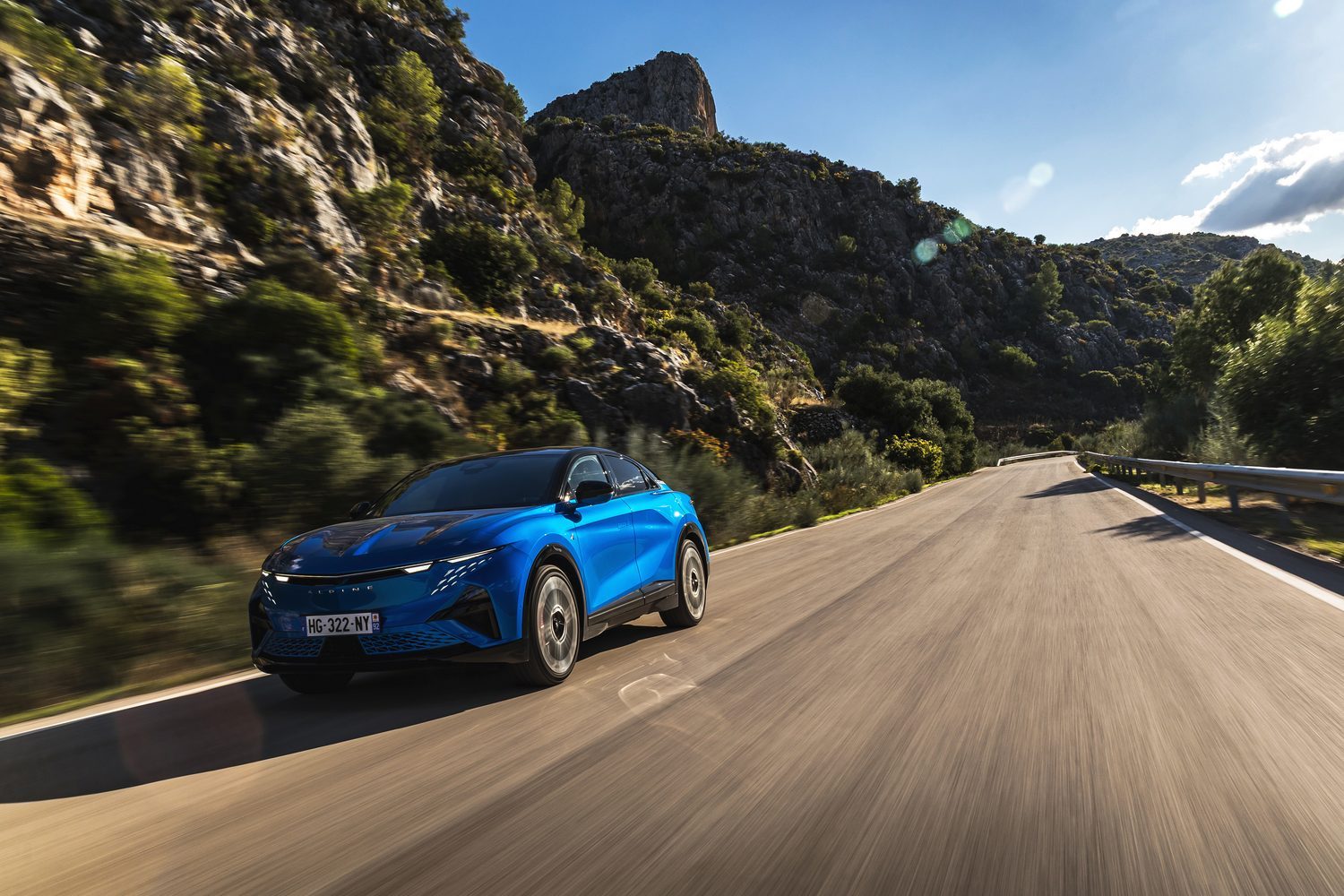
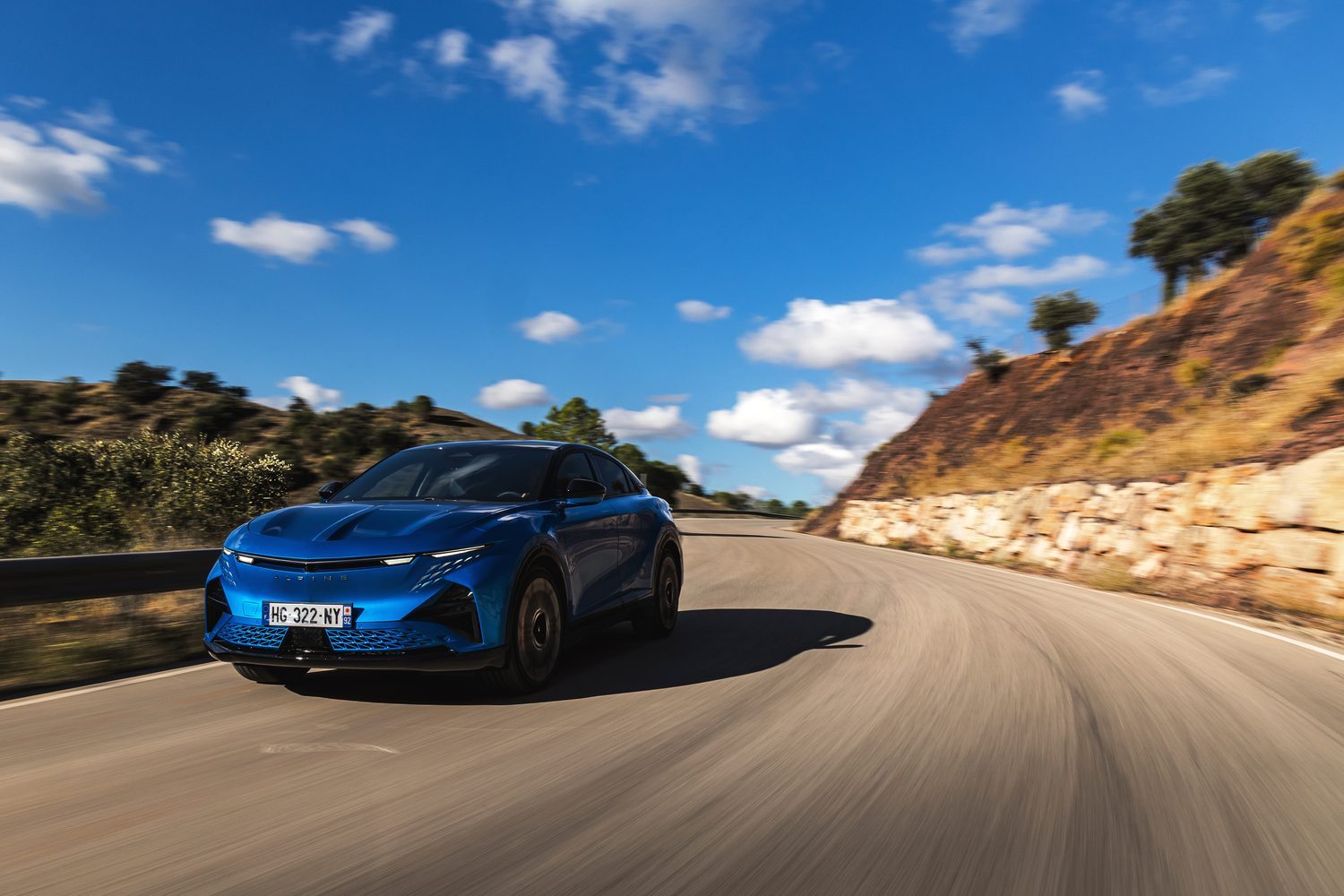

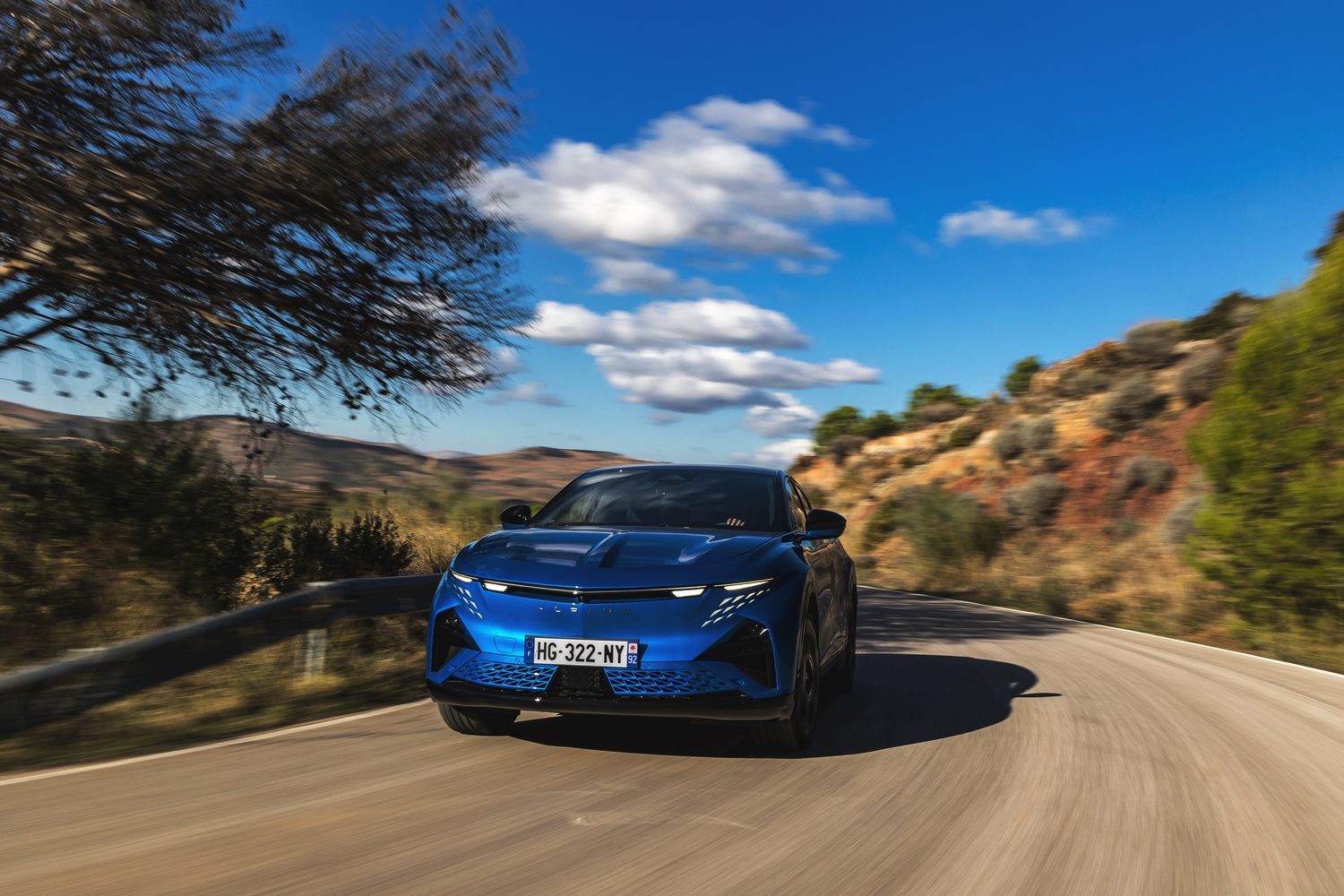





Exterior & design of the 2026 Alpine A390
- Low and sleek by SUV standards
- Touch of the A110 in the rear roofline
- Aggressive-looking aero touches

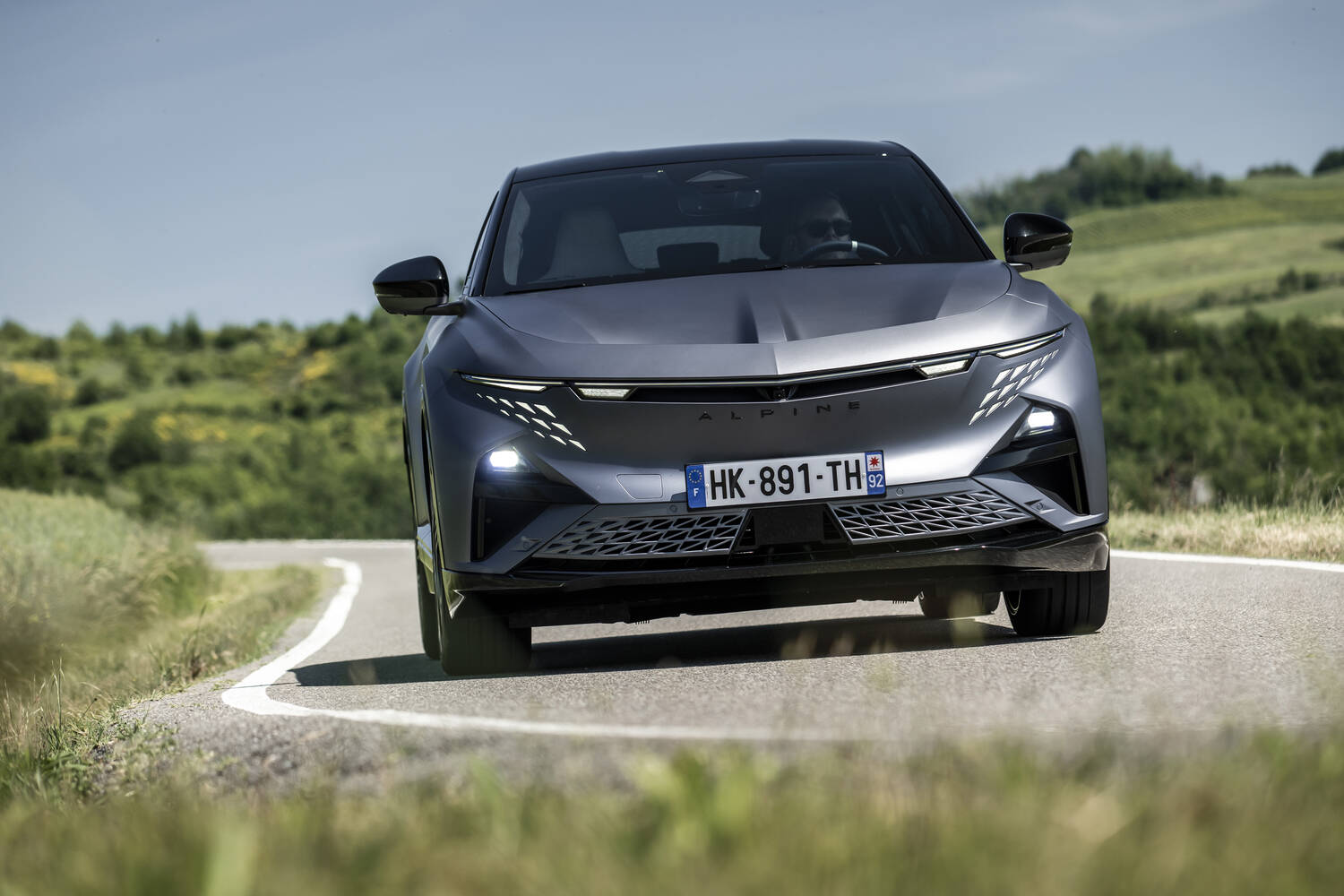
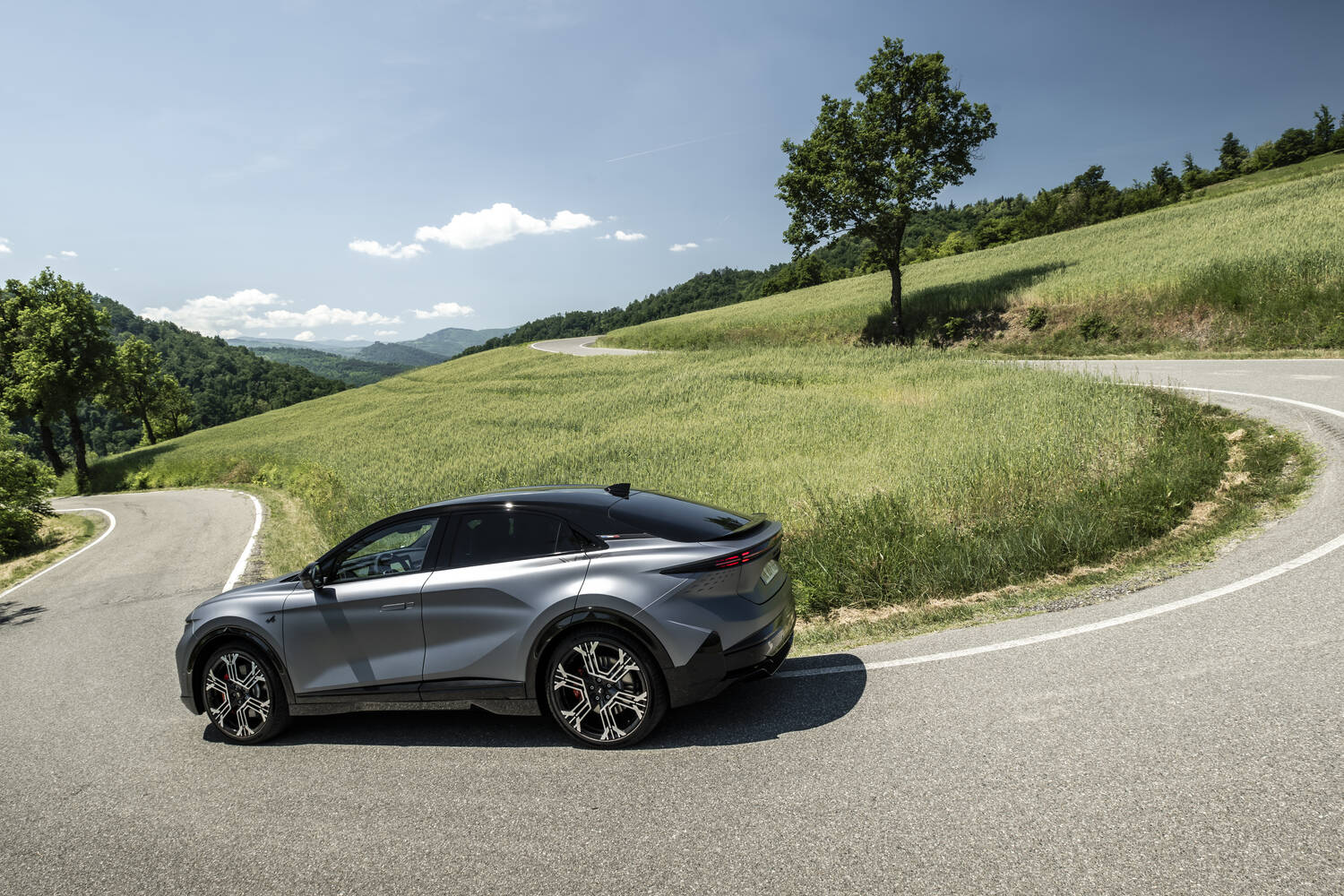
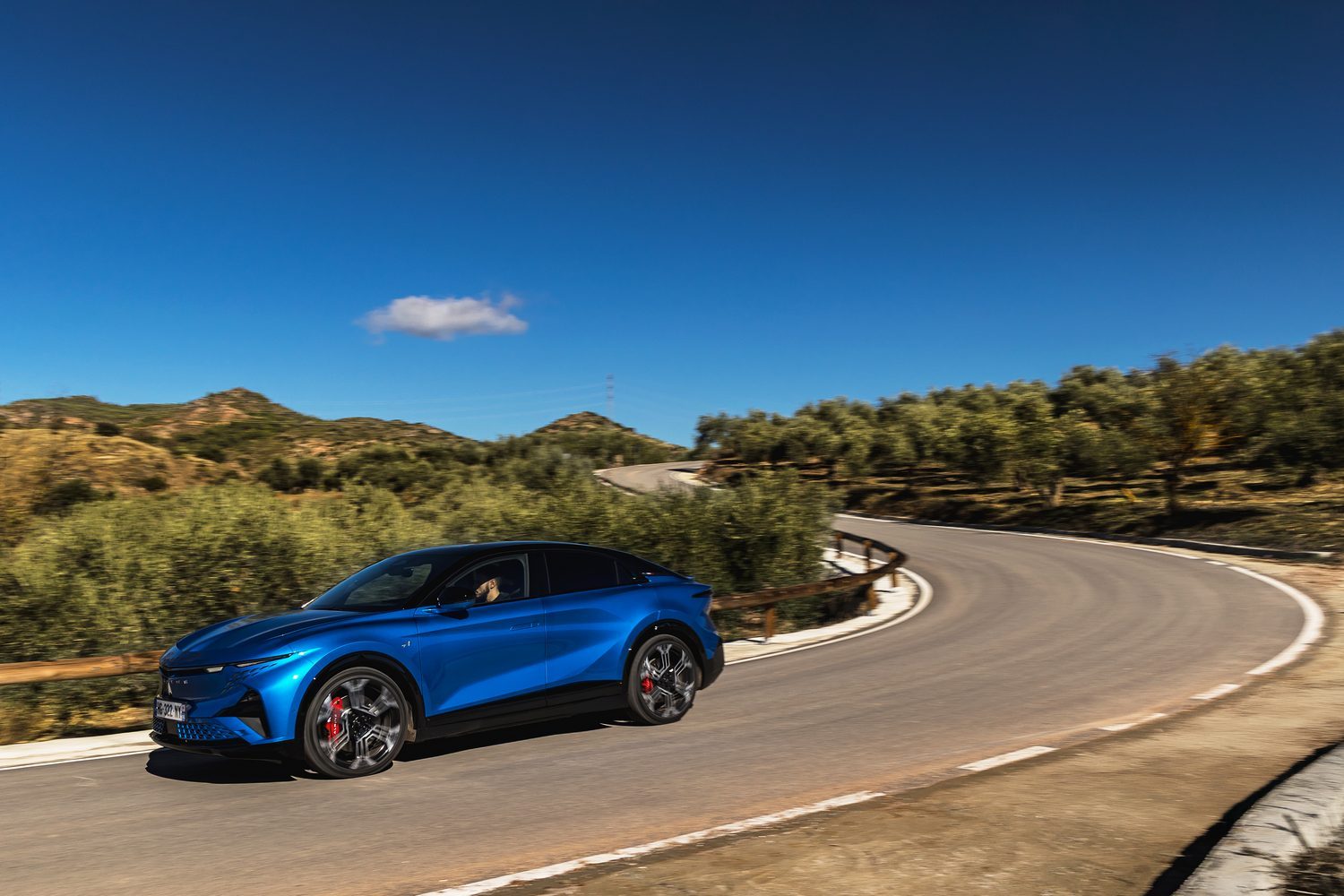
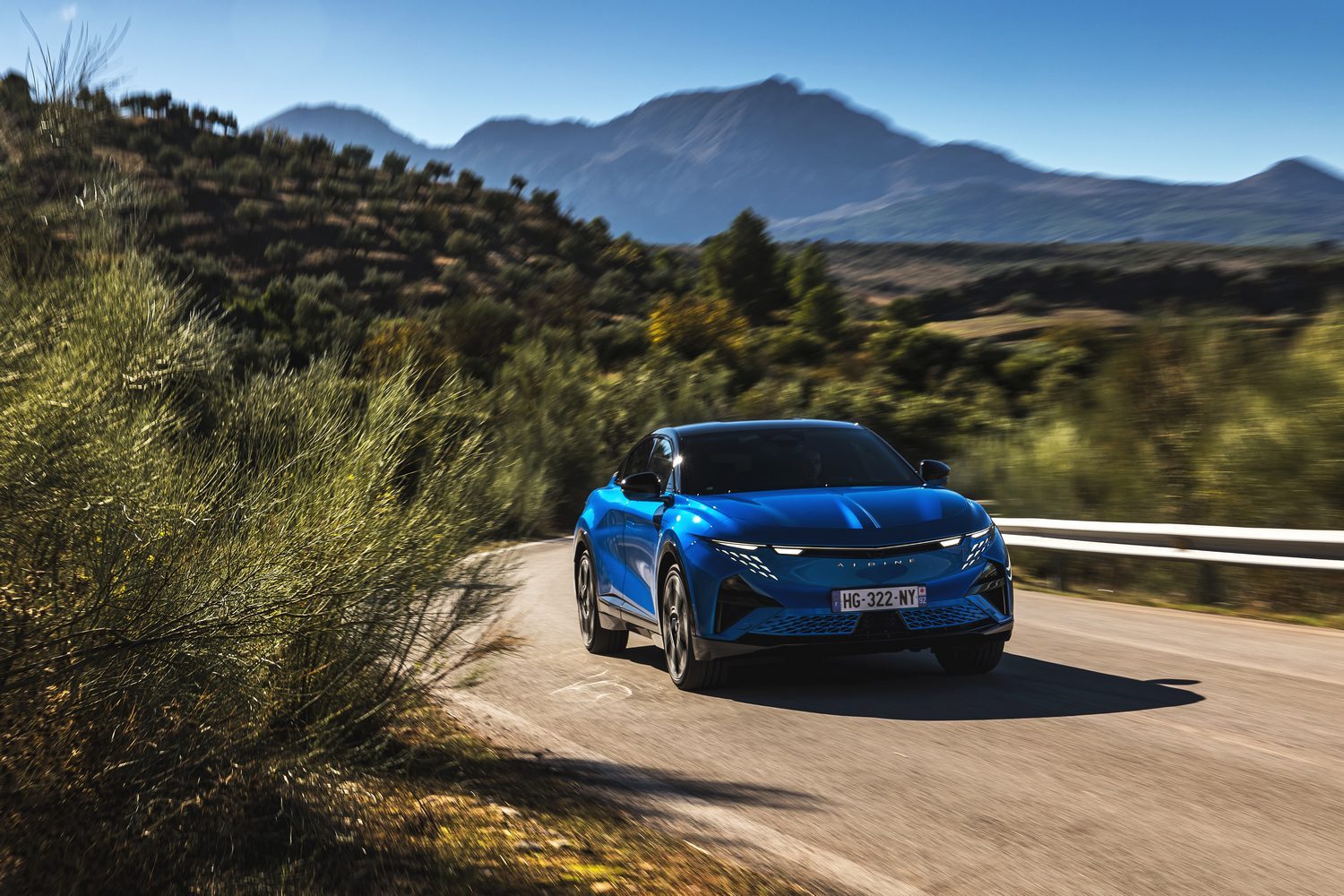
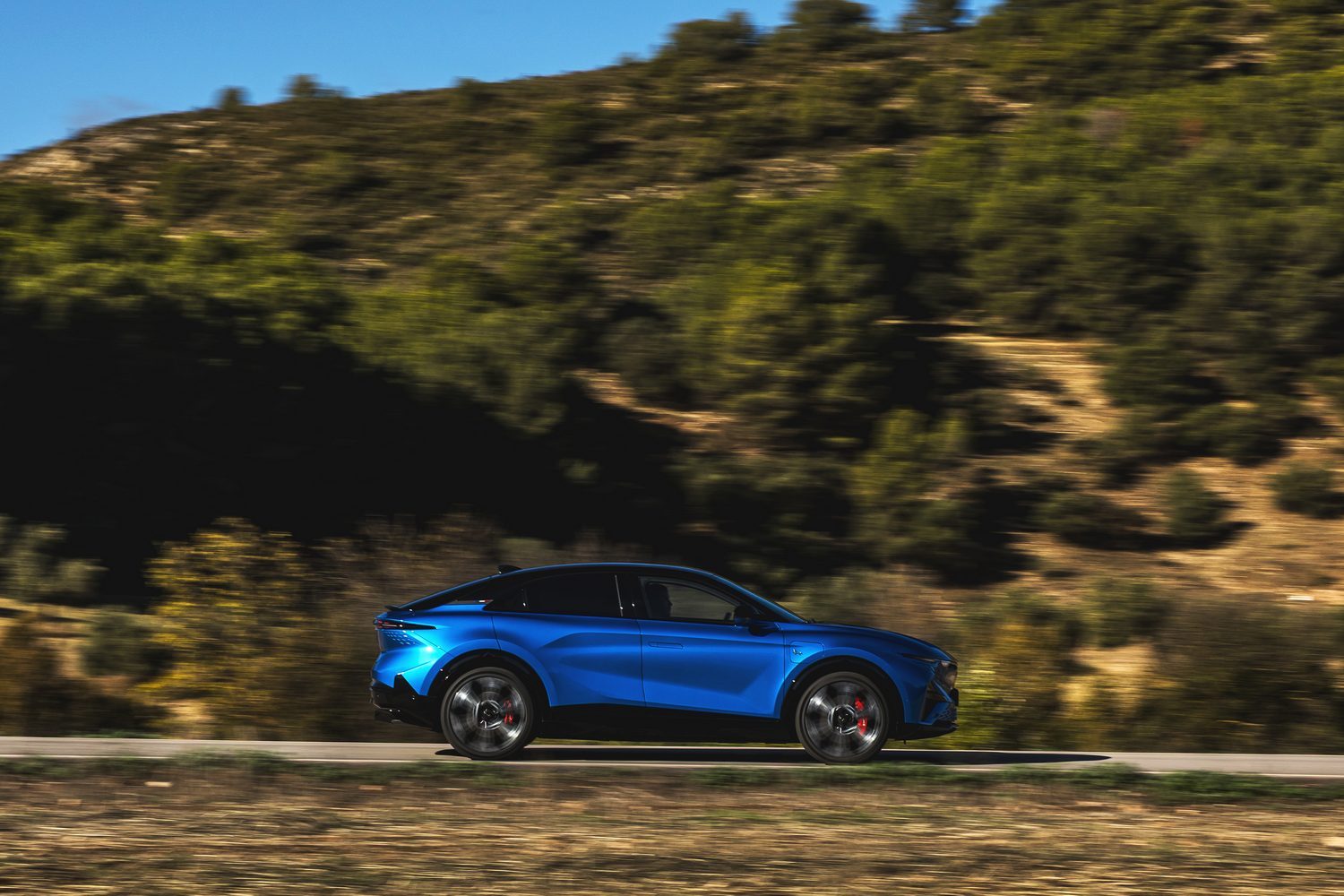
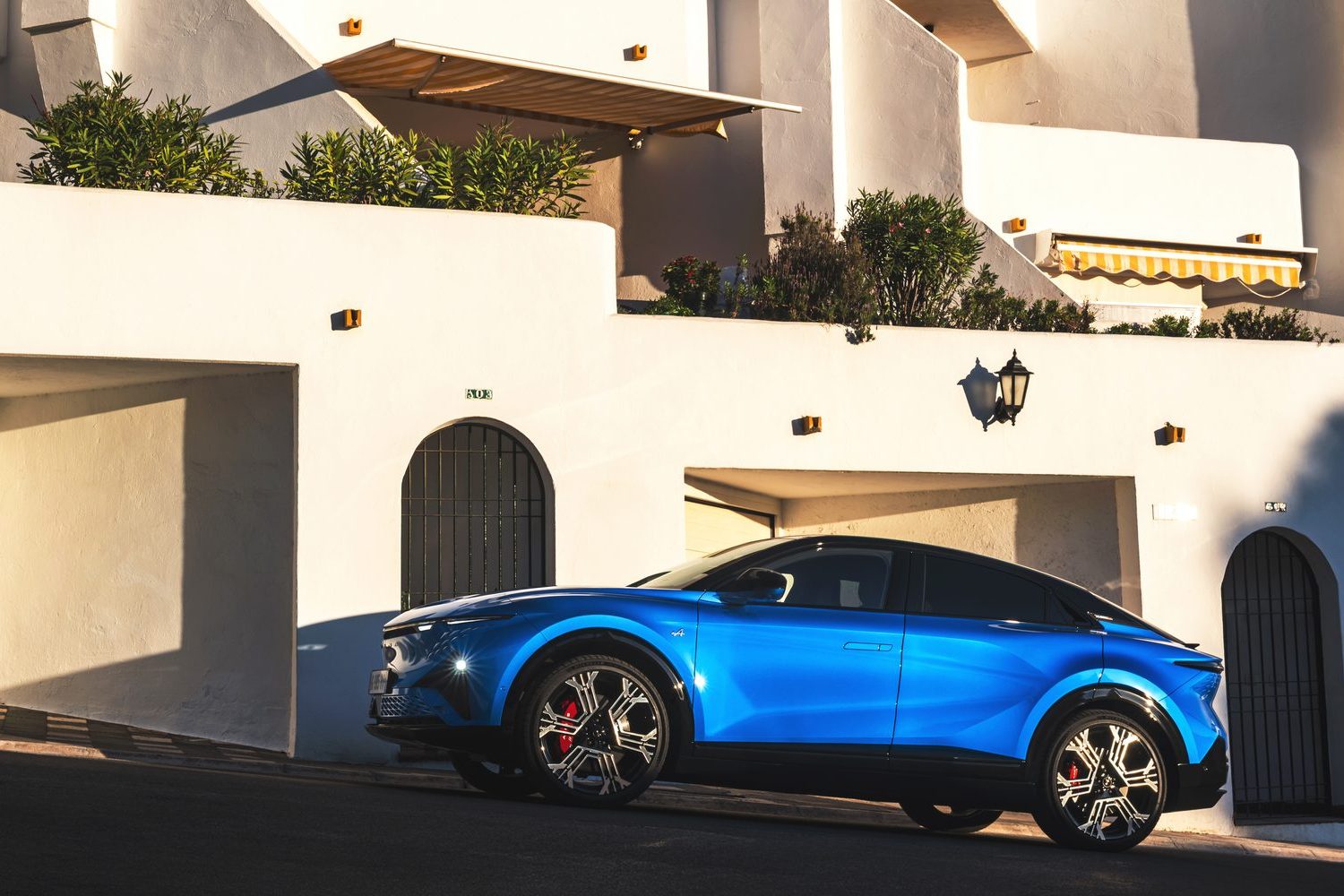
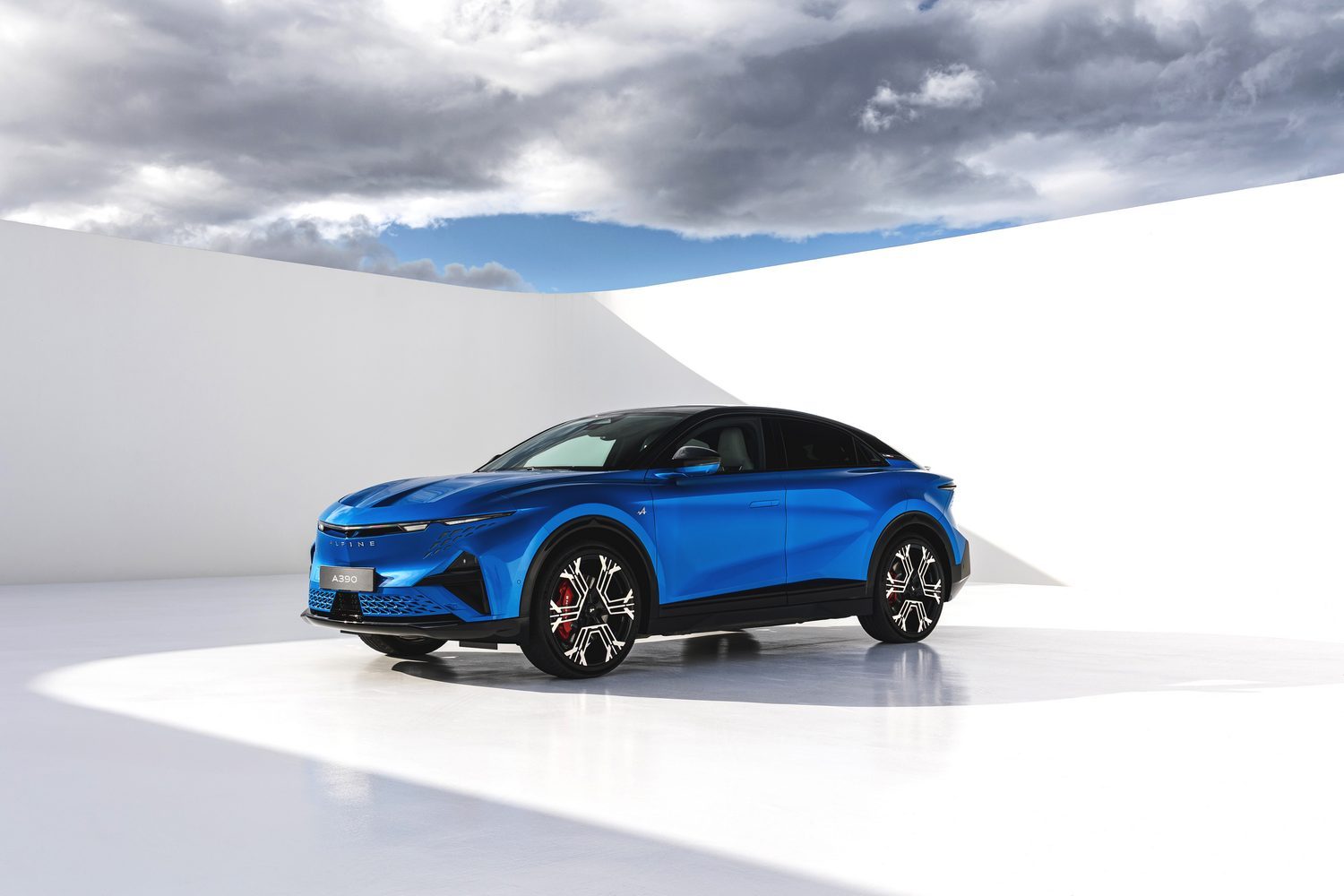
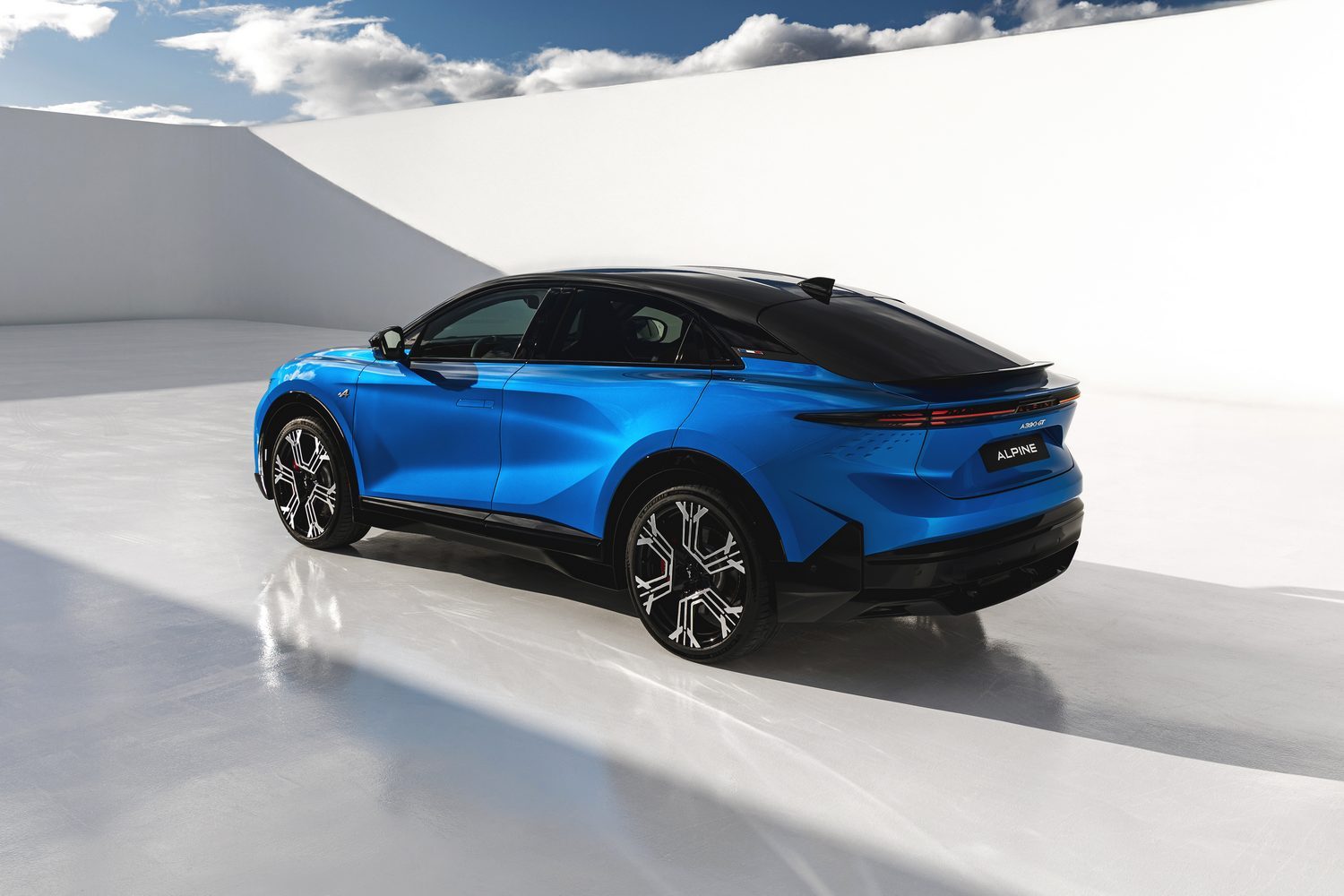
The A390 has the unenviable task of being practical and tall enough for family life but still having that hoovered-to-the-road look of the Alpine A110 sports car. In that sense, Alpine has pulled off a minor miracle in making the A390 look as sleek and as appealing as it does.
What is it, though? Alpine refers to the A390 as an electric fastback, but if you dig into the technical specifications, you'll see that there's also a reference to it being called a 'five-door hatchback saloon' which is closer to what it is.

Don't let the marketing people hear you - everything has to be an SUV these days - but the A390 is conceptually closer to the Polestar 4 (which is really a slightly tall sports saloon with a fastback rear) than it is to the more upright and tall Porsche Macan (which is more of a traditional SUV).
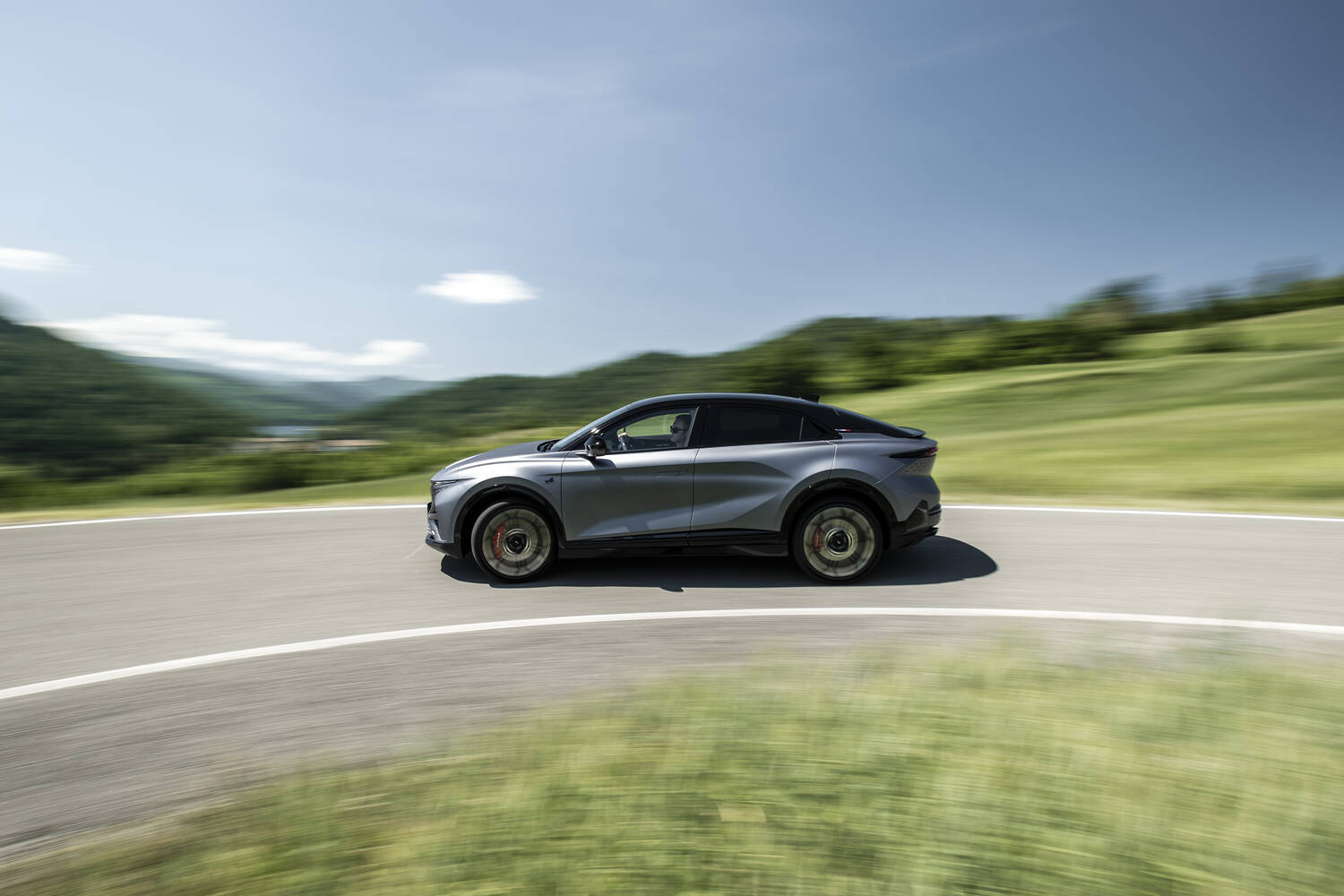
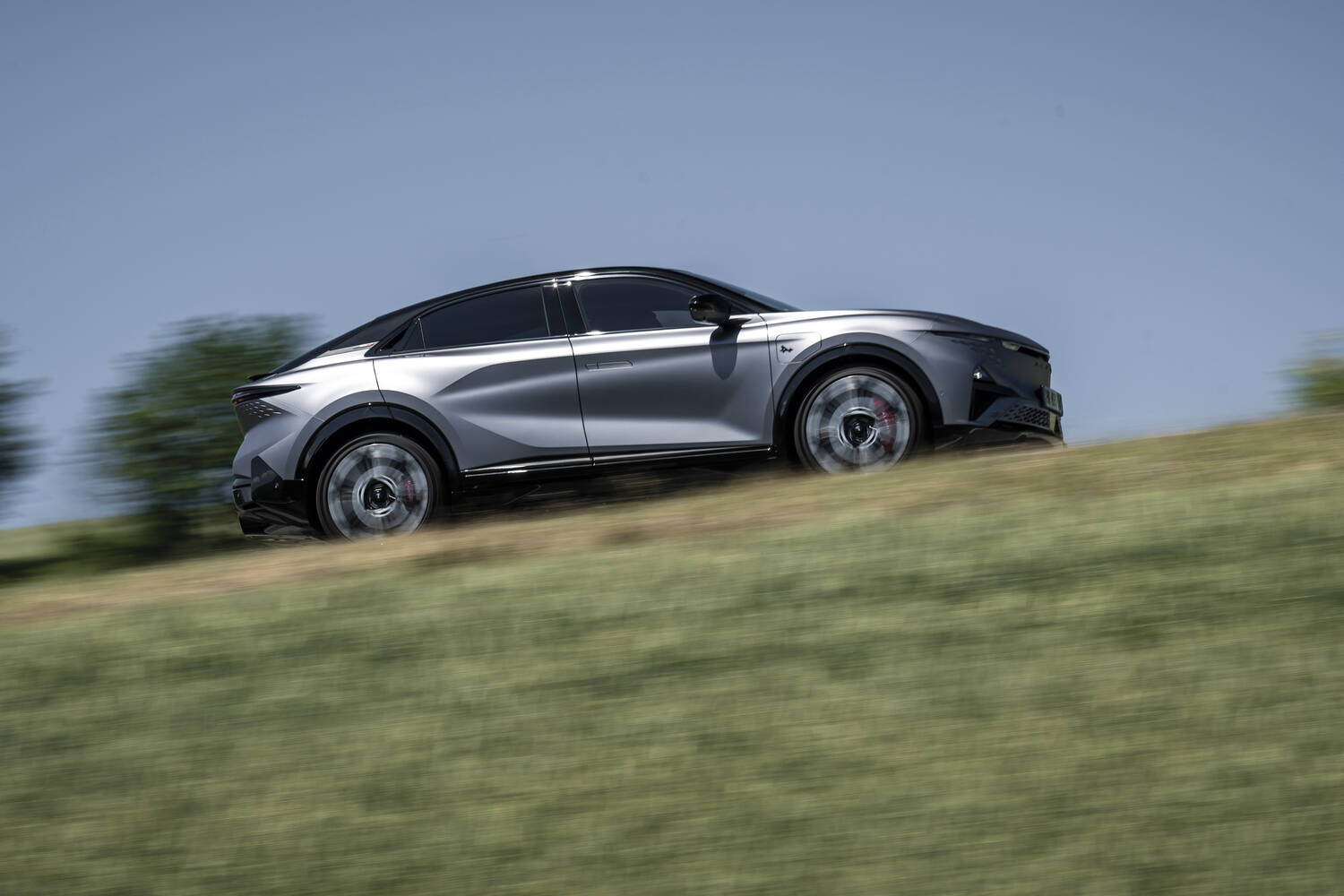
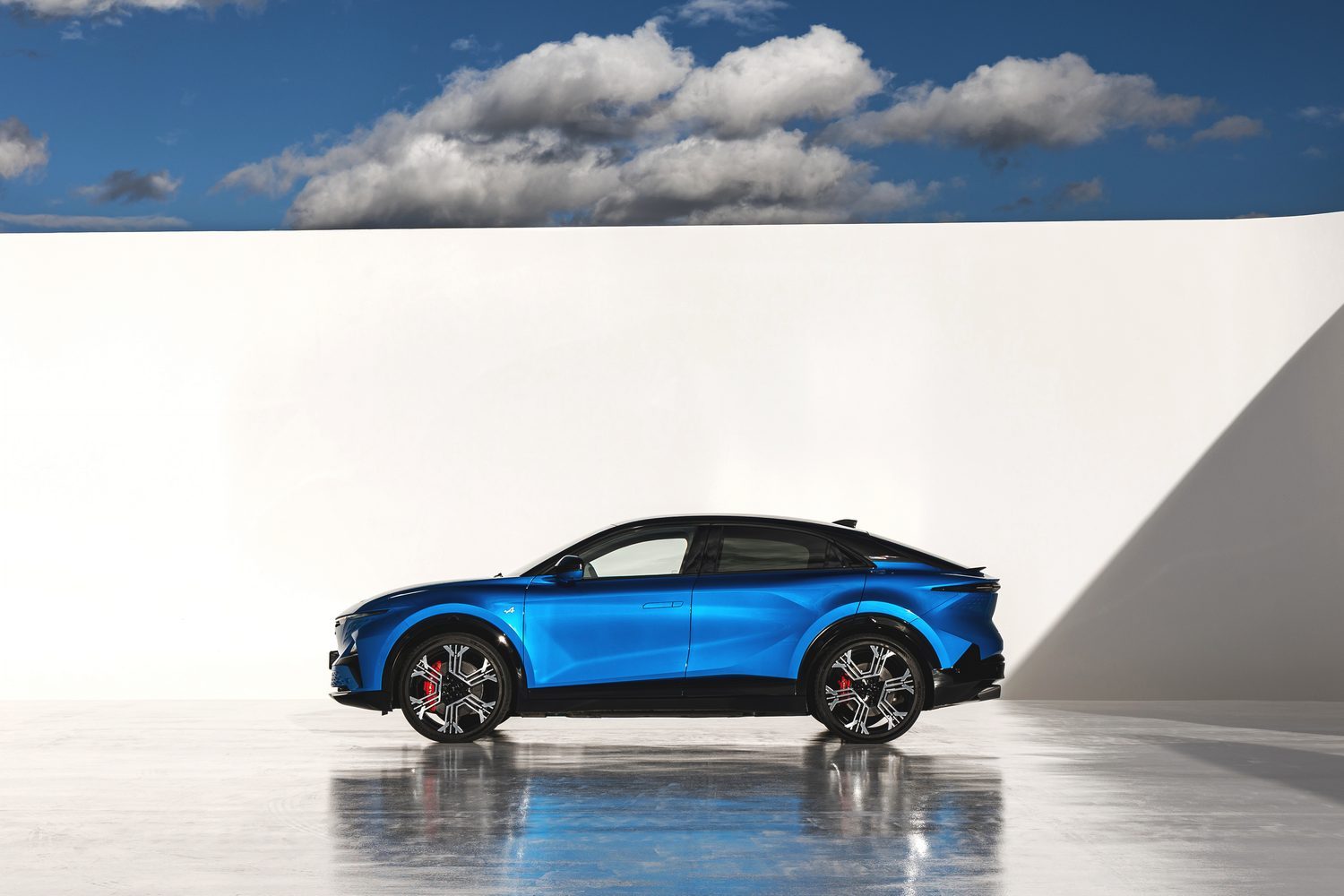
We don't care how you pigeonhole it, as it looks fantastic. Stand next to the A390 and it feels almost shockingly low-slung compared to a trad SUV, even though the 1,525mm height is actually not as low as it looks.

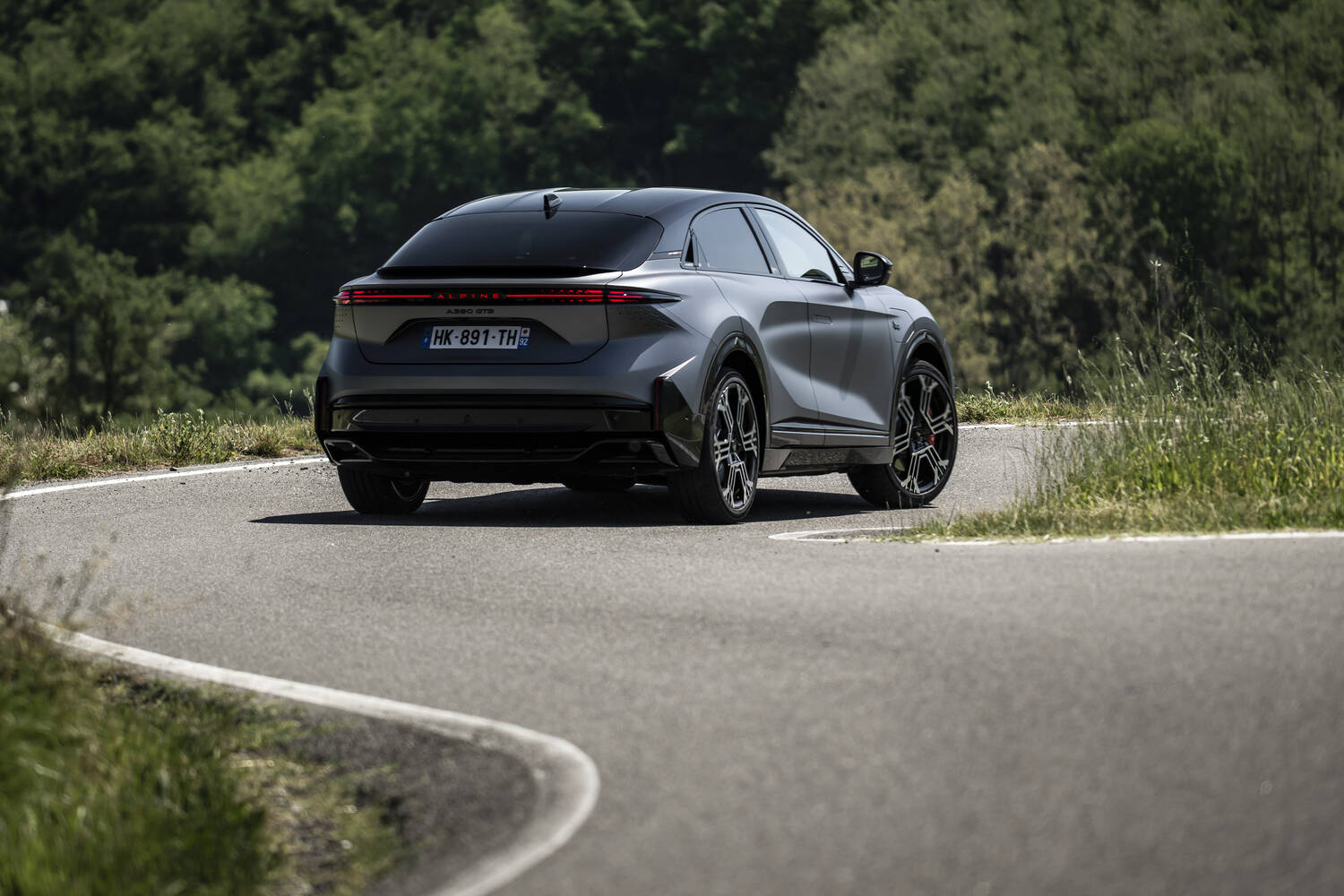
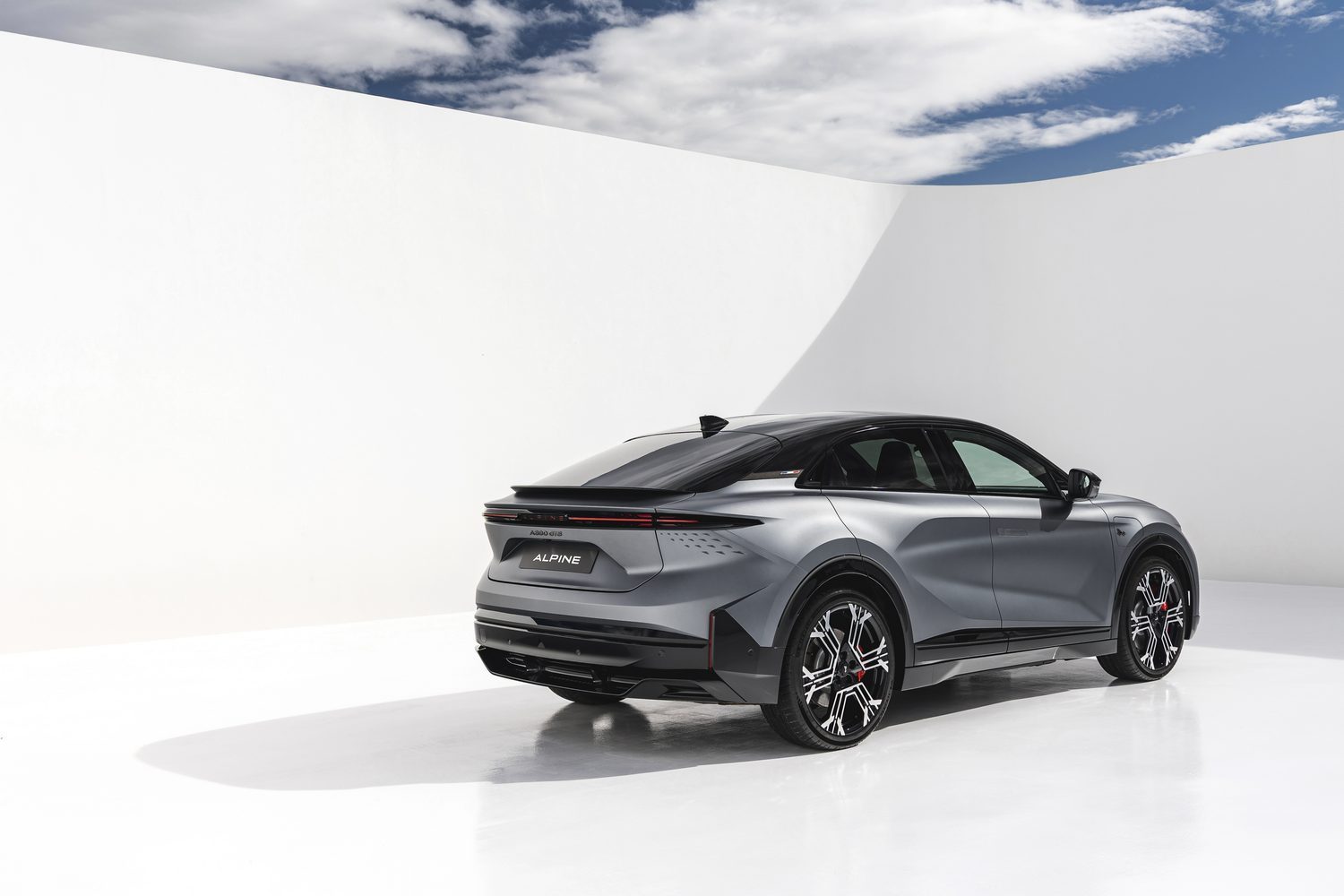
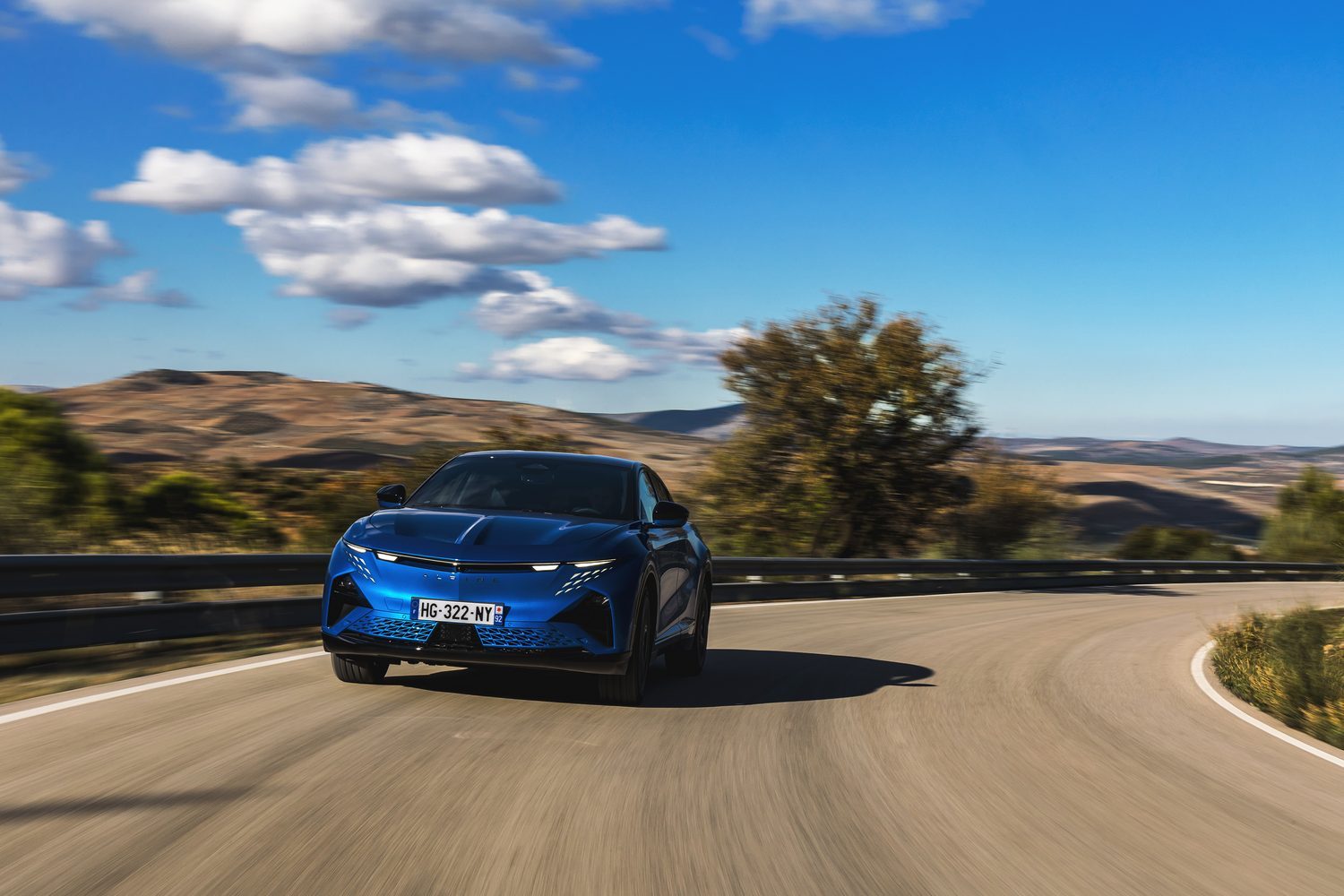
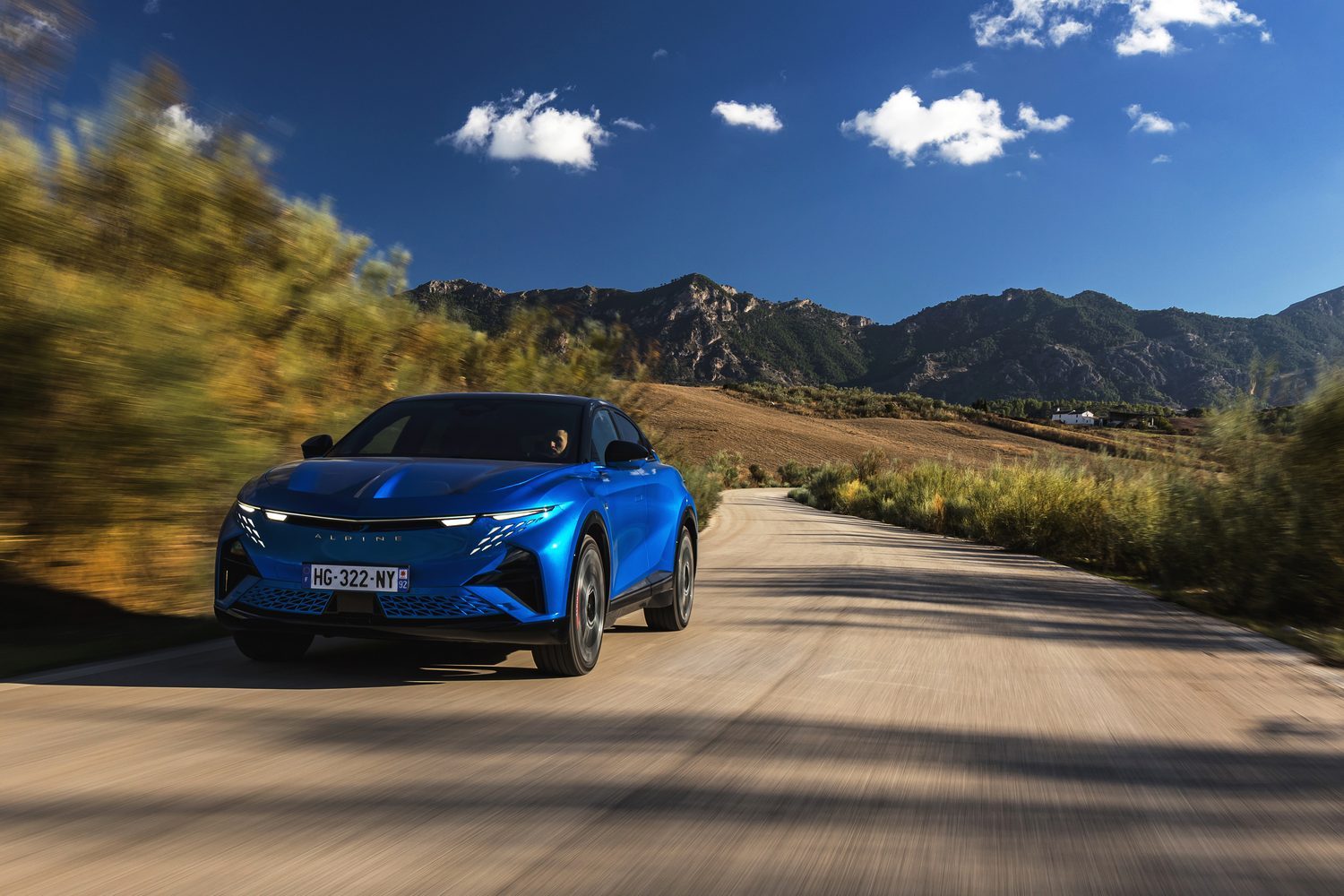
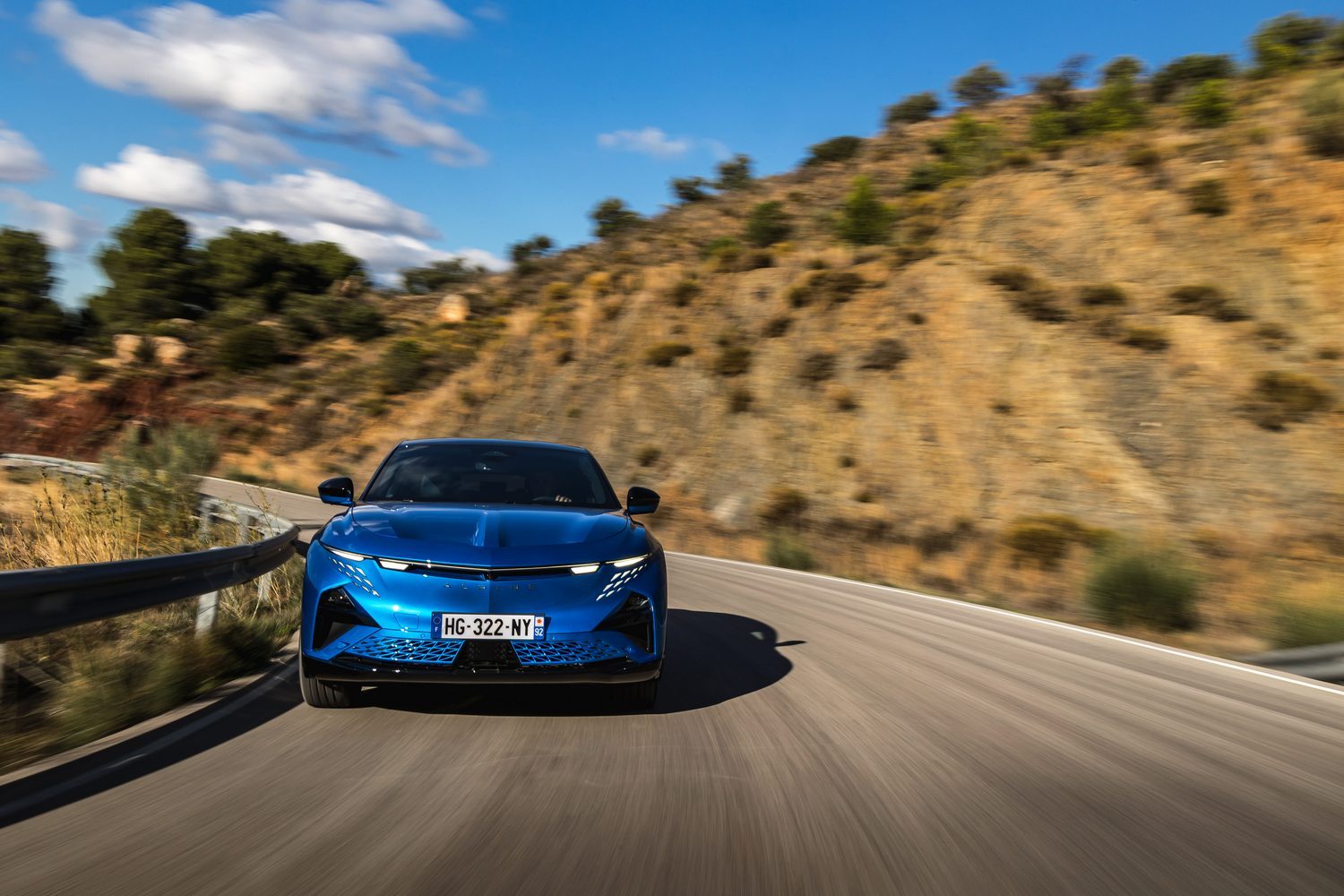
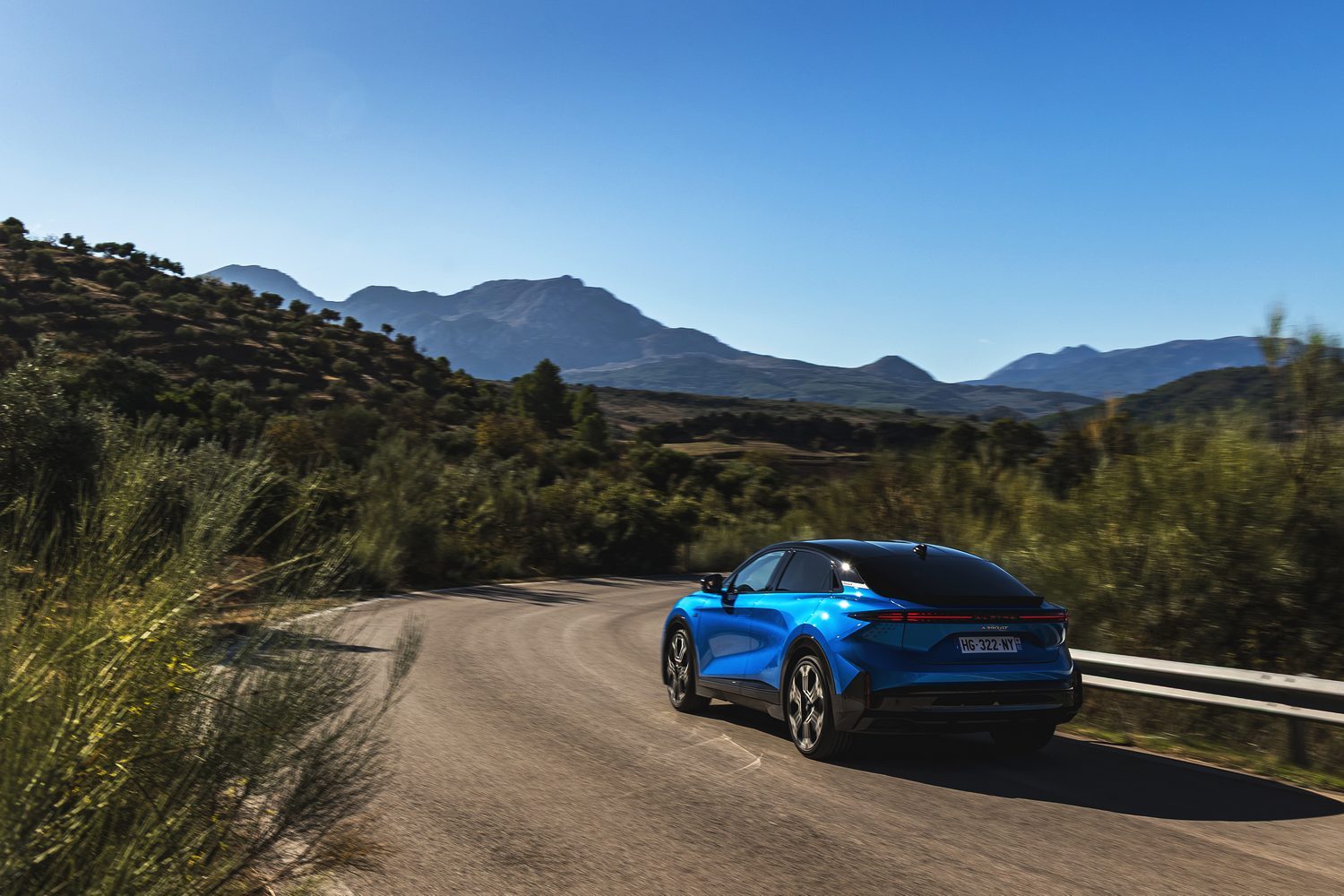
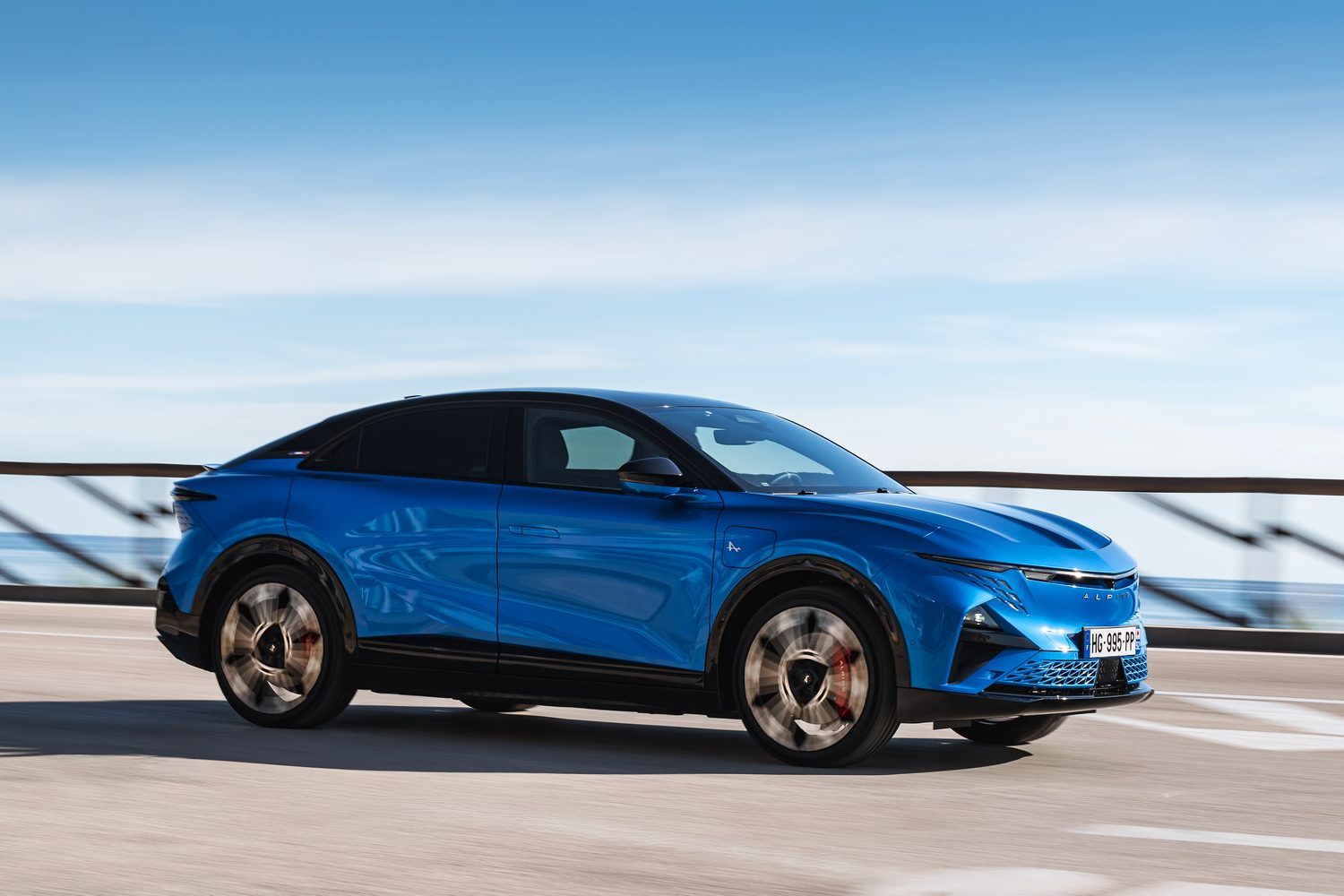
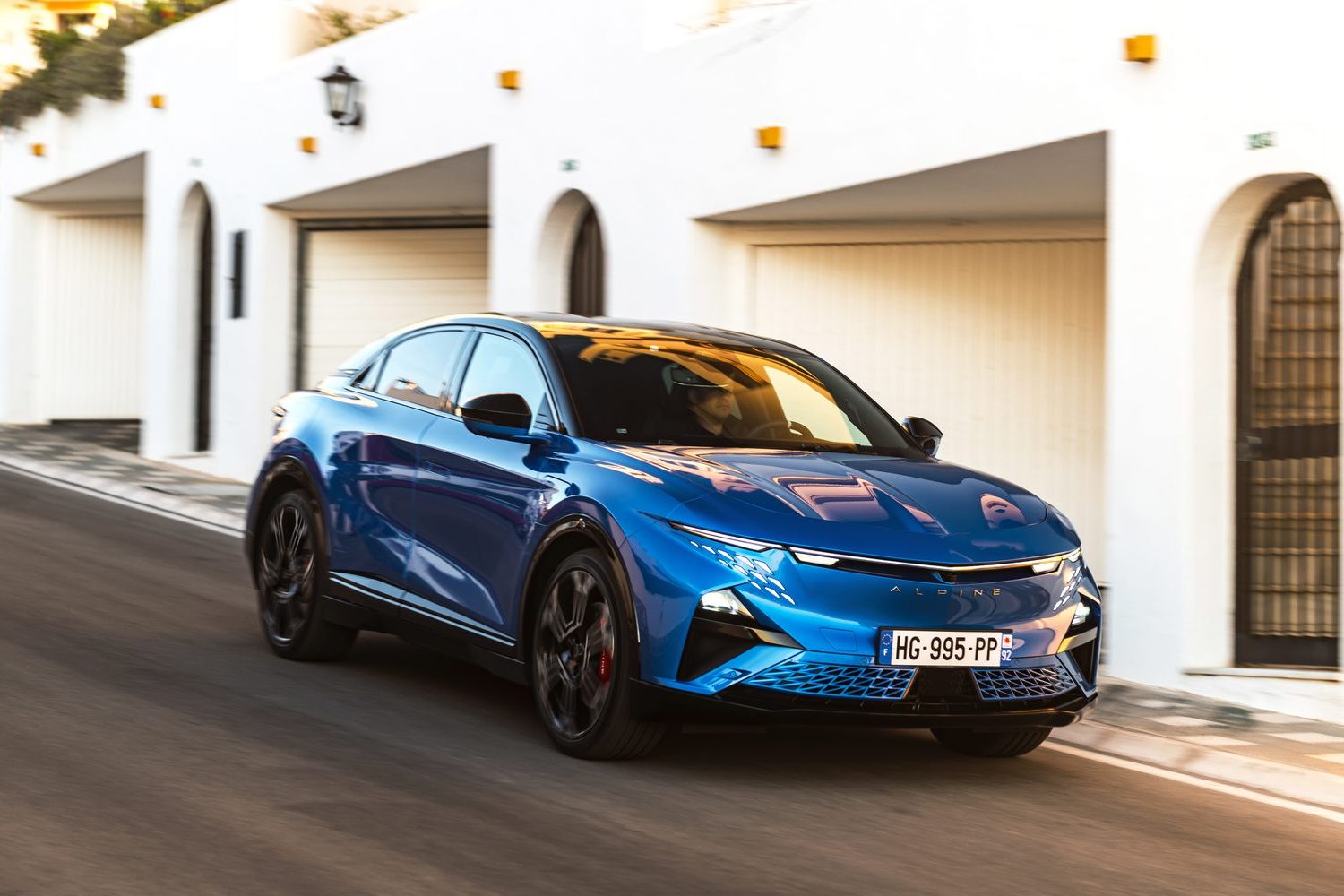
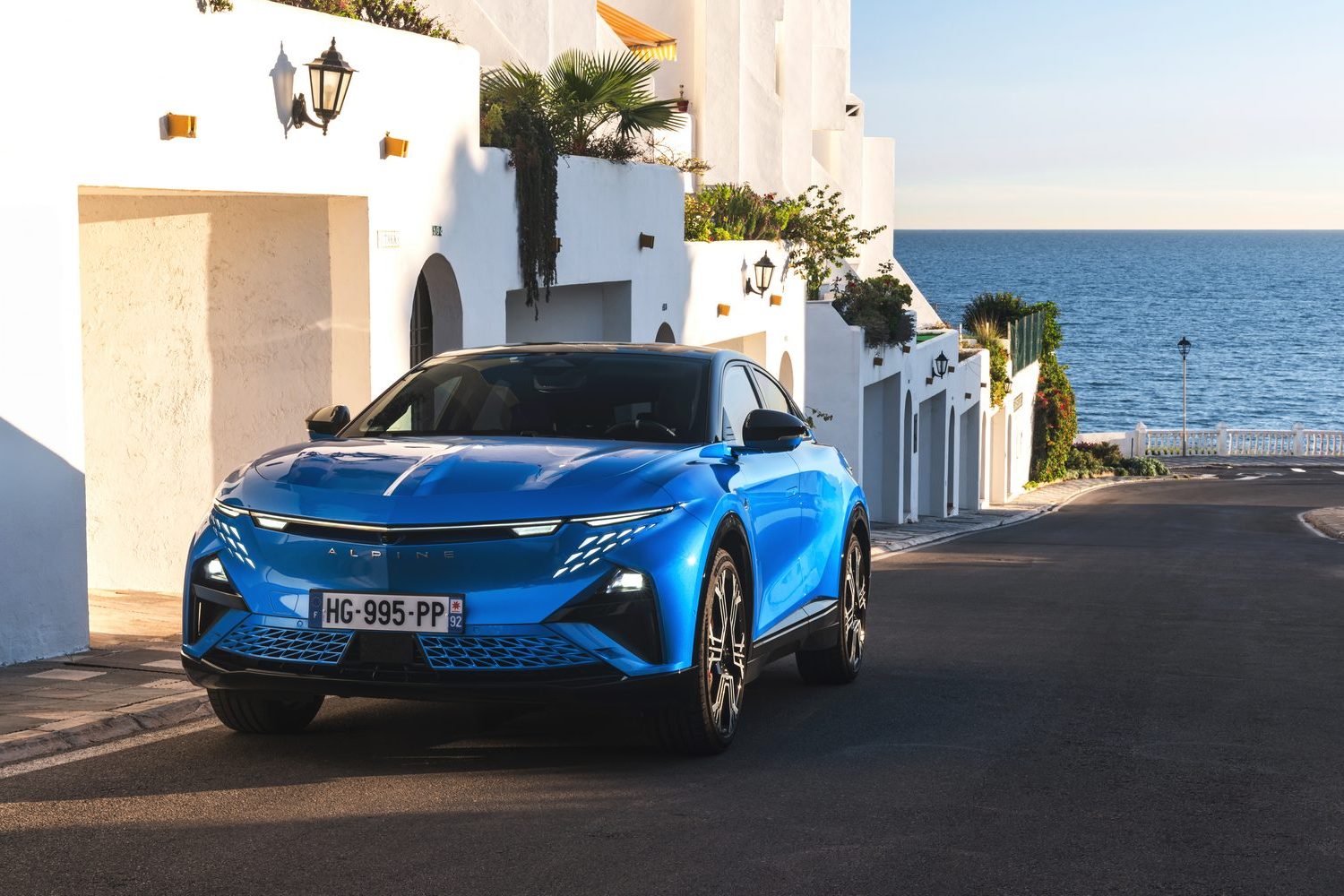
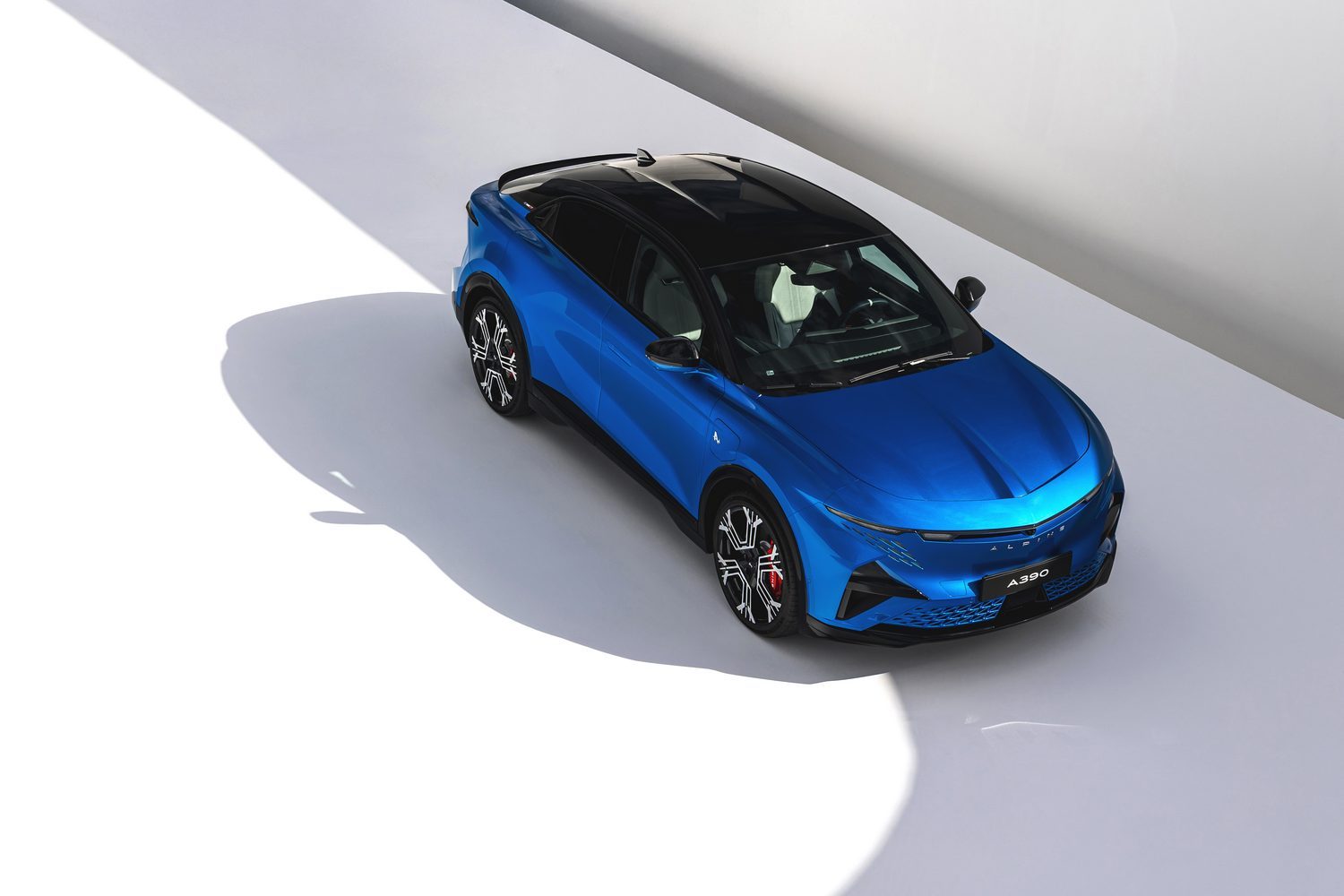
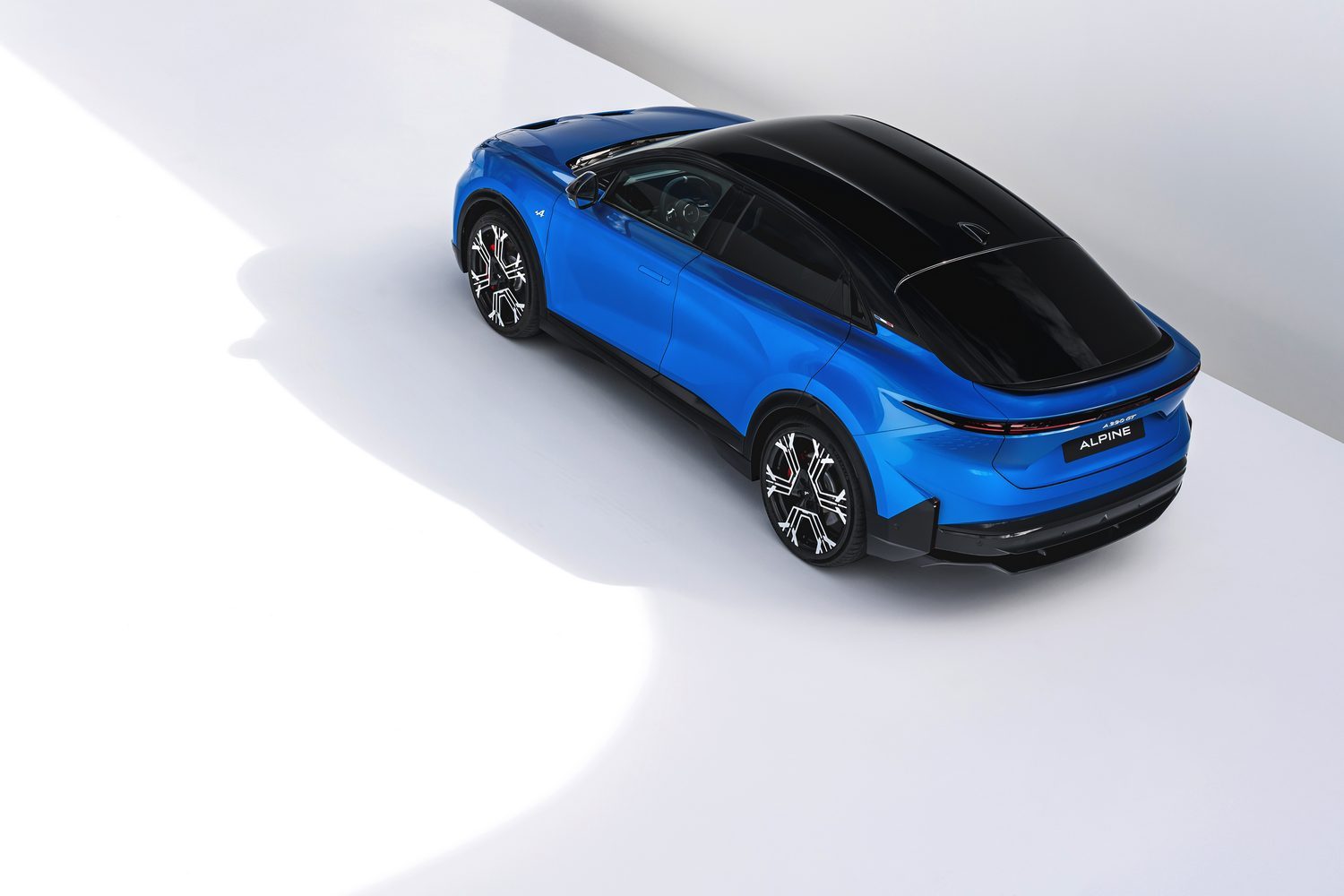
The design is very modern - all sharp edges and glowering LED lights - but there are enough touches of the A110 in there to show that this is still an Alpine. Look at the shape of the rear roof and pillar, and the way there's a subtle double-bubble effect to the roof itself.
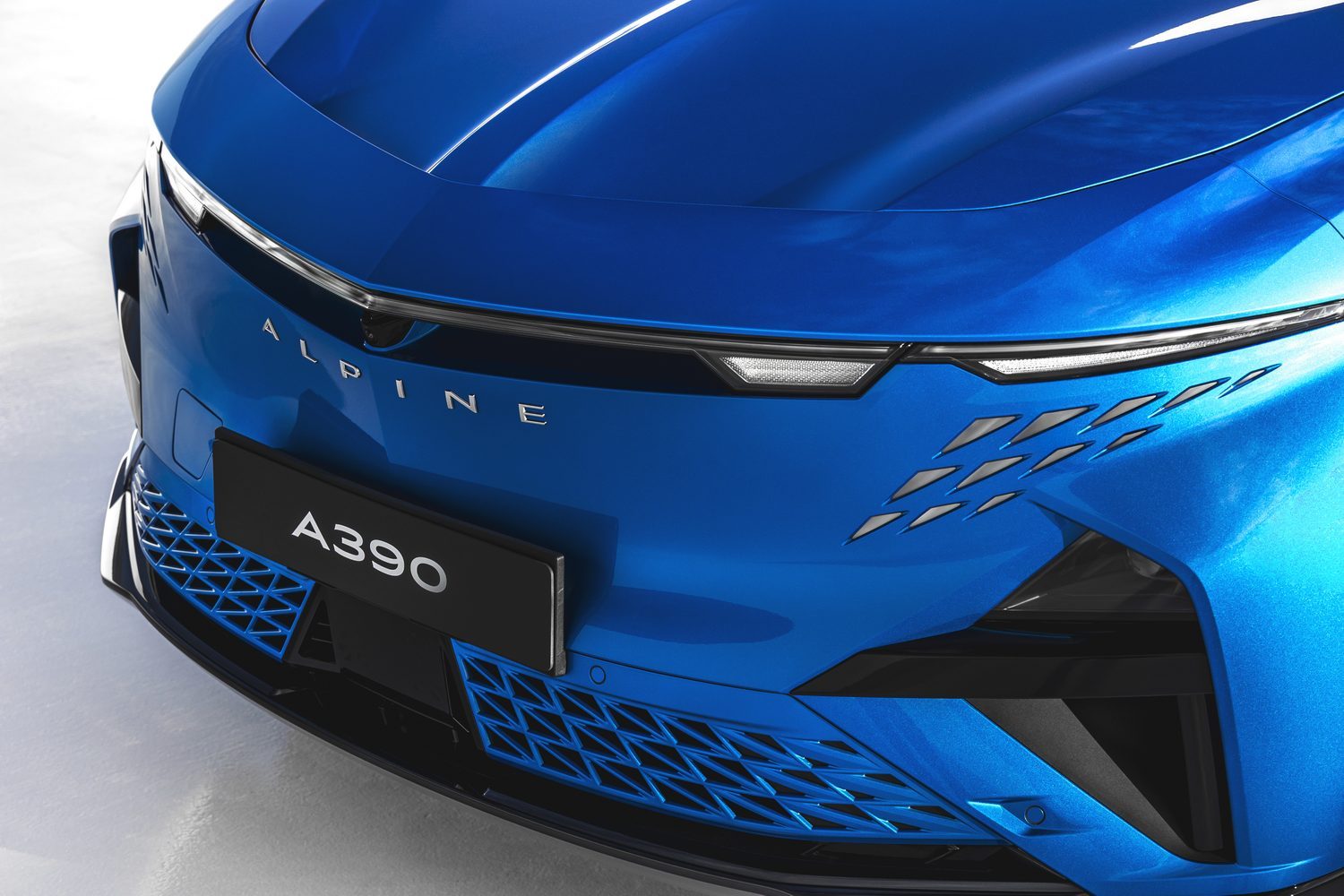
That's very A110, while the quad-light effect is picked up by those slim LED lights. The array of 'Cosmic Dust' shards of little triangular LED lights beside those is probably a less successful effect, but we love the way there's a proper front wing on top of the leading edge of the bonnet, fully open to the air as on the Polestar 3.

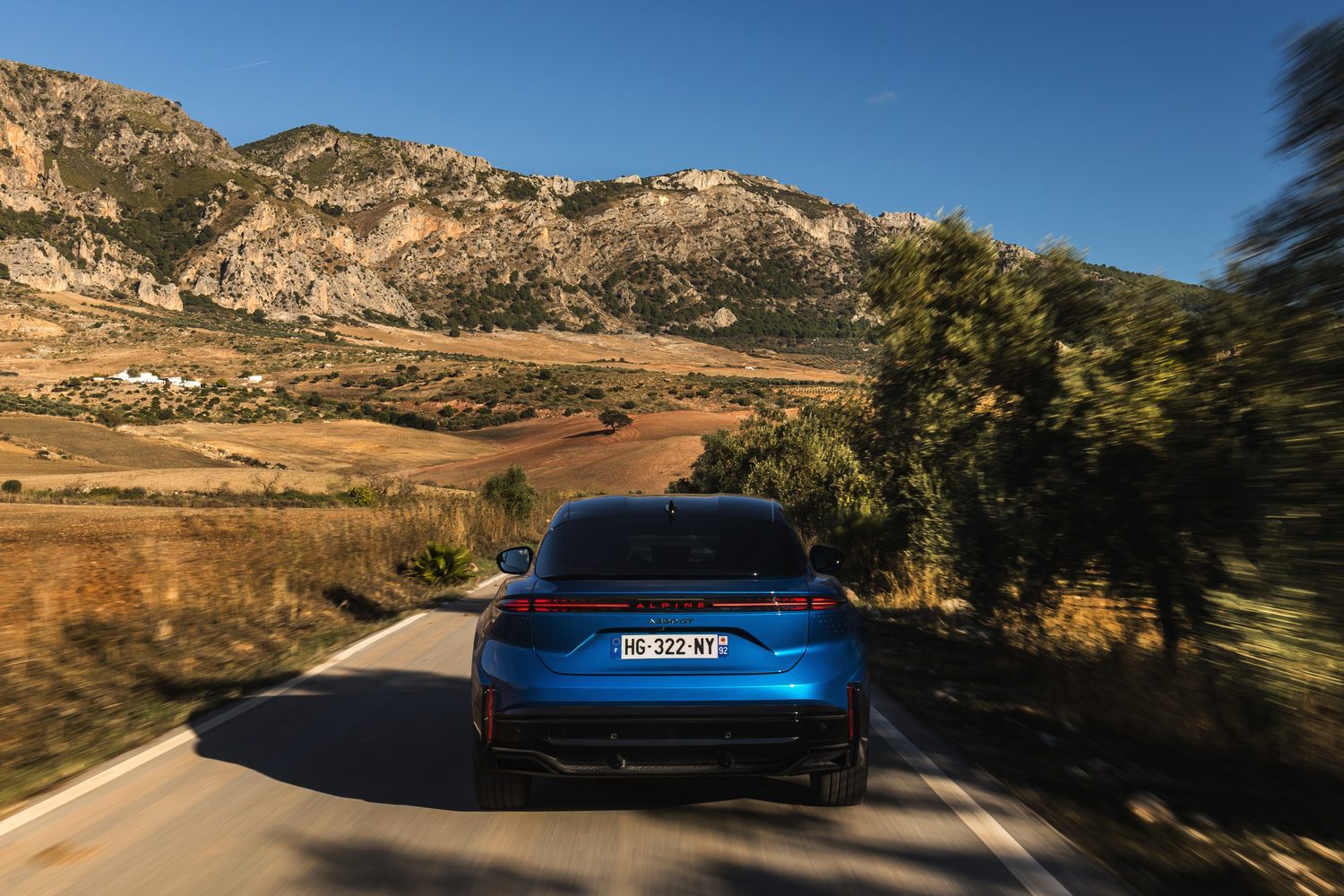
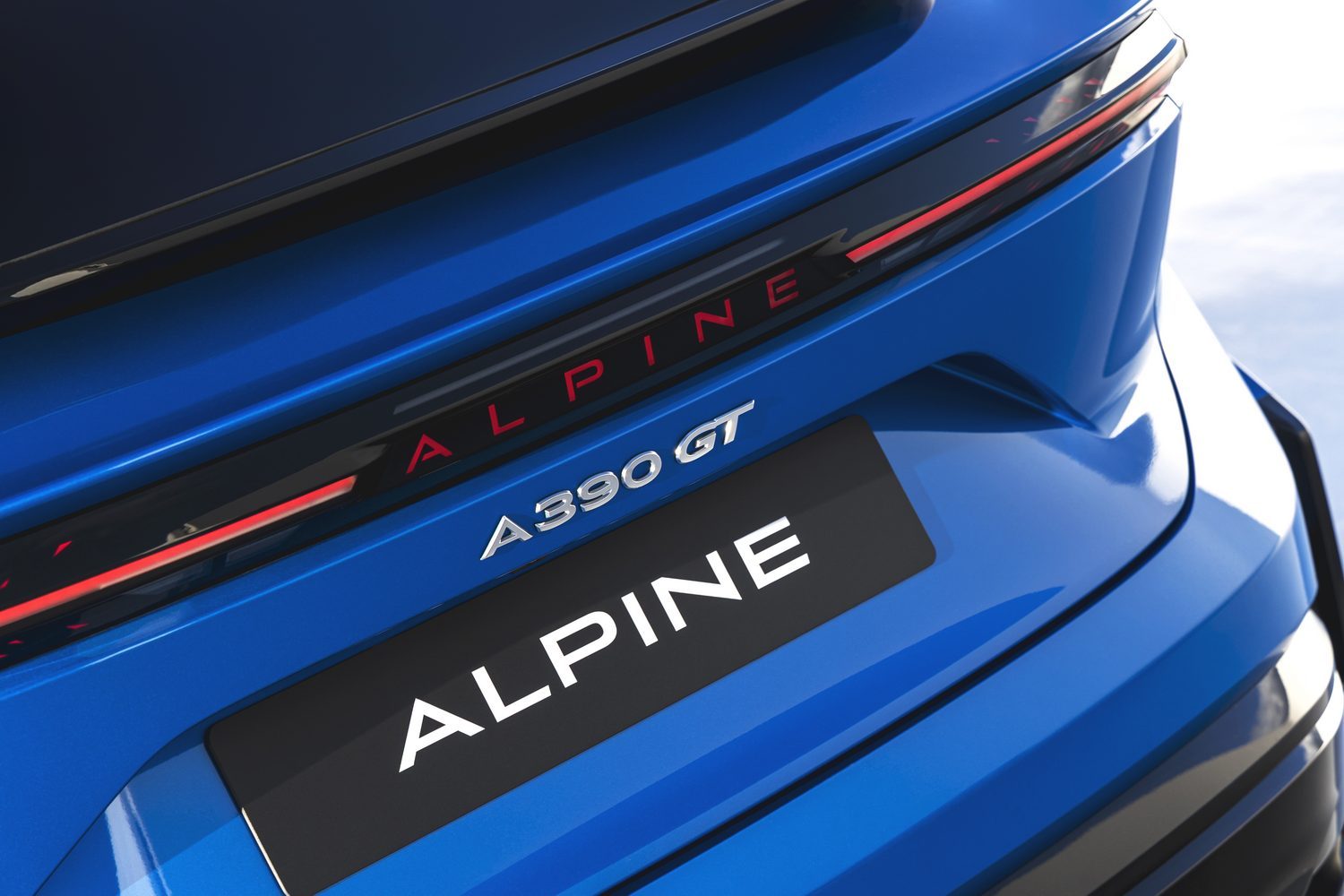
At the rear, there's a neat spoiler integrated into the base of the glass, and chunky aero extensions set down low behind the wheelarches, which we worry will become easily scraped in narrow car parks. The A390's coefficient-of-drag figure isn't anything spectacular - 0.25 - but it certainly looks slippery to the eye.
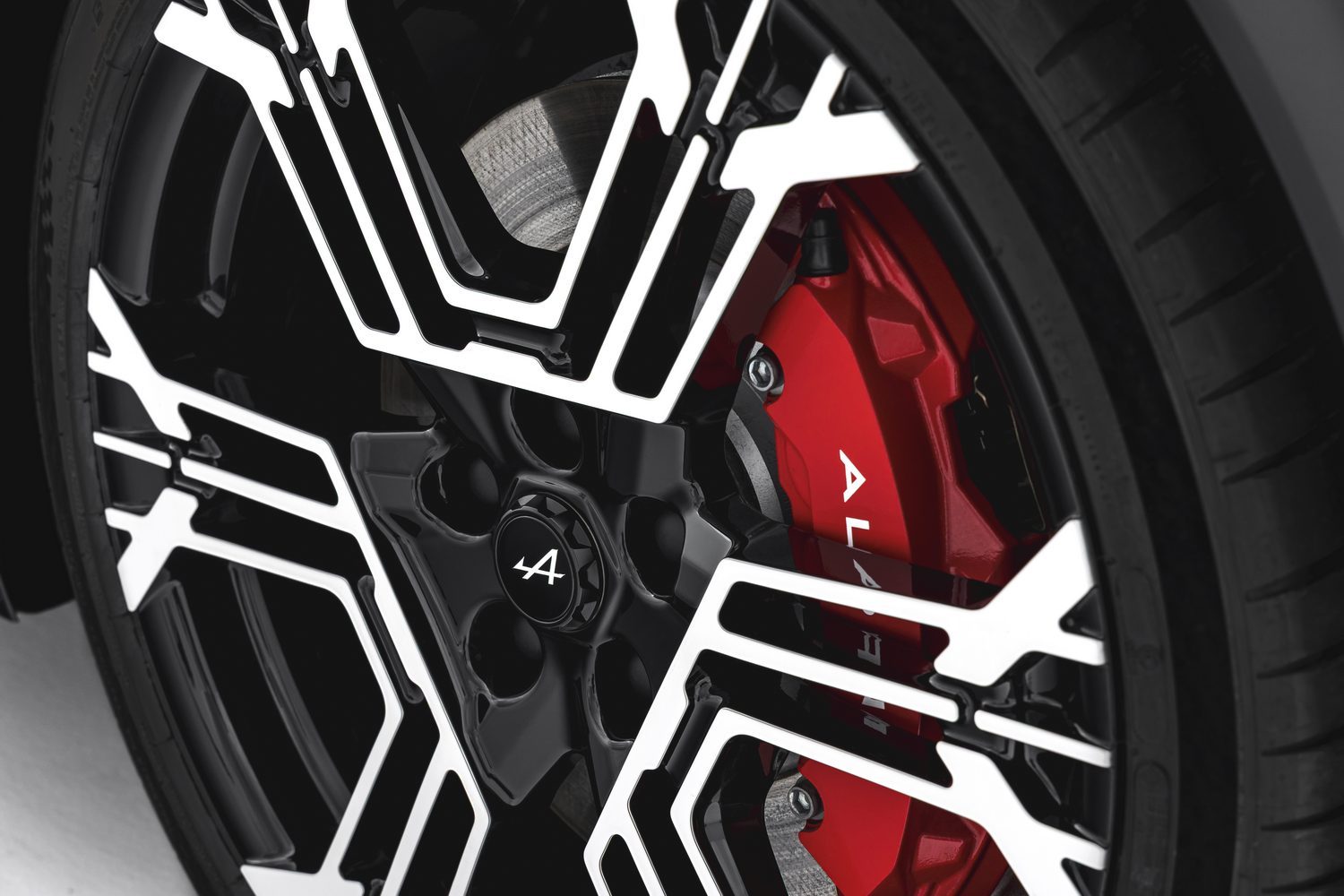
The GT model pictured is riding on optional 21-inch 'Snowflake' alloy wheels, which are designed to remind one of the snowy reaches of the Alps, whose twisty roads first inspired Alpine's founder, Jean Redele, to start modifying his Renault 4CV saloon.
The highlights in silver, against a black background, do look a bit cheesy, but the hefty brakes behind them, with optional bright red calipers, look rather more serious.

There are also some lovely small details, such as the French tricolour in the rear roof pillar, and the cartoon outline of an original 1962 A110 printed into the corner of the windscreen.
Dimensions of the 2026 Alpine A390
- Length:
- 4,615mm
- Width:
- 1,885 (mirrors folded)
- Height:
- 1,525mm
- Wheelbase:
- 2,708mm
Paint colours for the 2026 Alpine A390
Yes, you can have the A390 in a colour other than blue, but would you? There's actually a choice of two blues for Alpine's new five-door fastback - the traditional bright 'Bleu Alpine Vision' which follows the classical look of French racing blue, and the much darker, richer 'Bleu Abysse.'

Alongside those there's a choice of 'Gris Tonnere Matte', a matte-finish grey, or 'Blanc Topaze' white, which has hints of gold and pink in the undercoat. Or you can have 'Argent Mercure' - a bright silver, or if you prefer black, there's 'Noir Profonde.'
Interior, practicality, tech & comfort of the 2026 Alpine A390
- Cosy but comfortable inside
- Excellent high-backed bucket seats
- Dashboard obviously a Renault item

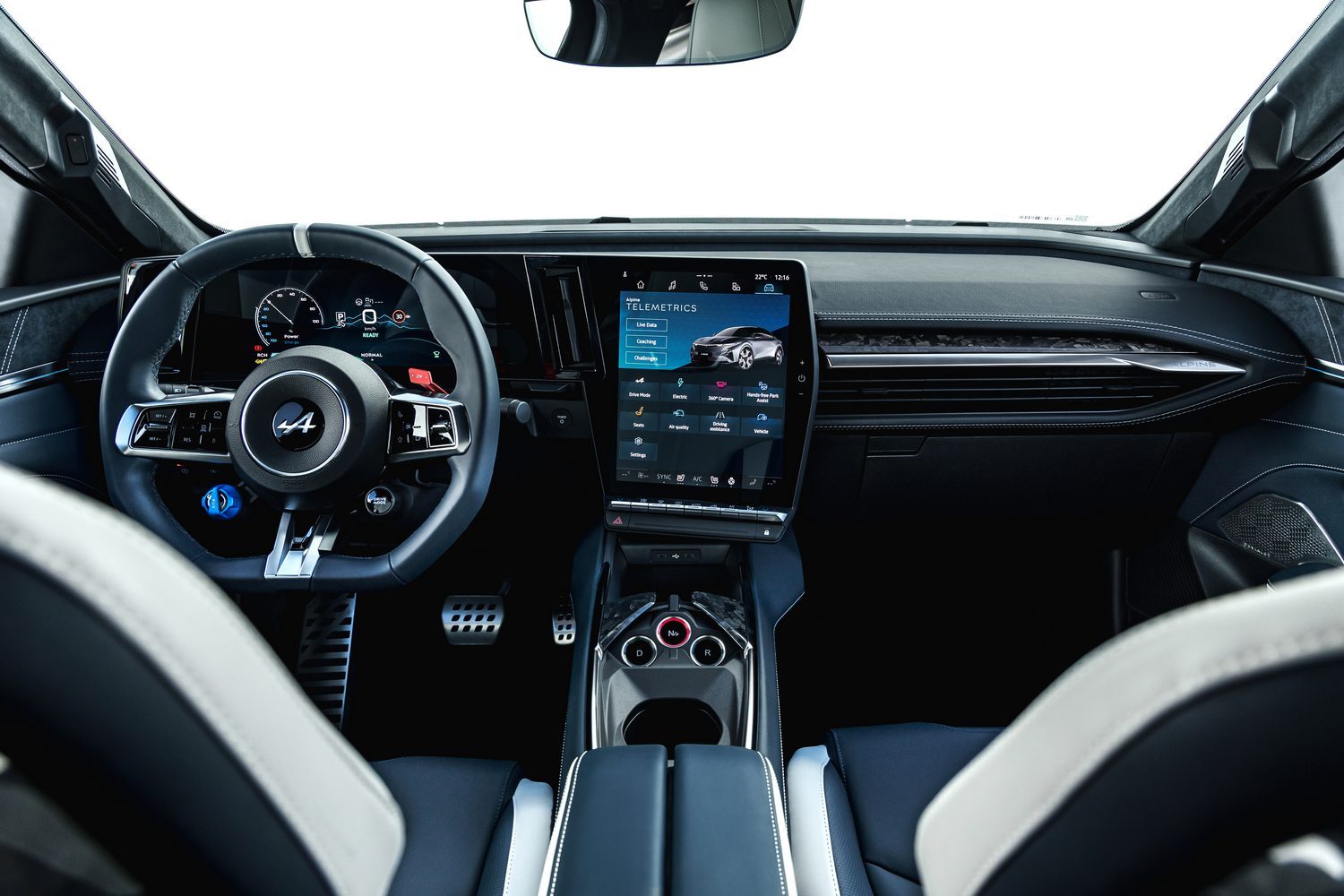
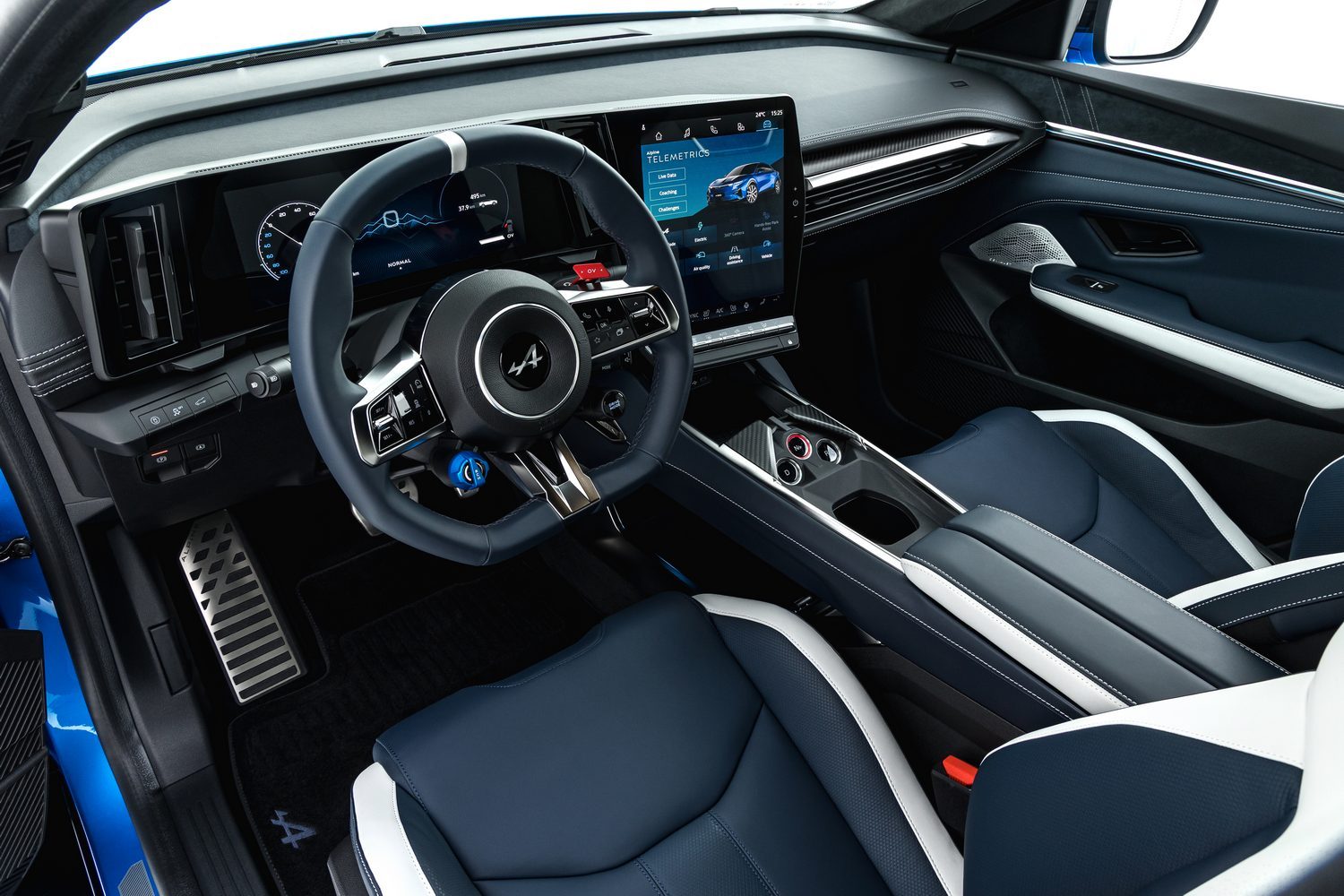
The A390's cabin feels suitably low-slung and snug, although considering its likely price tag, the fact that the driver's instrument panel and the touchscreen are so obviously lifted from the Renault Scenic might be a bit of a disappointment. Thankfully there's lots to like.
Getting comfortable in the driver's seat
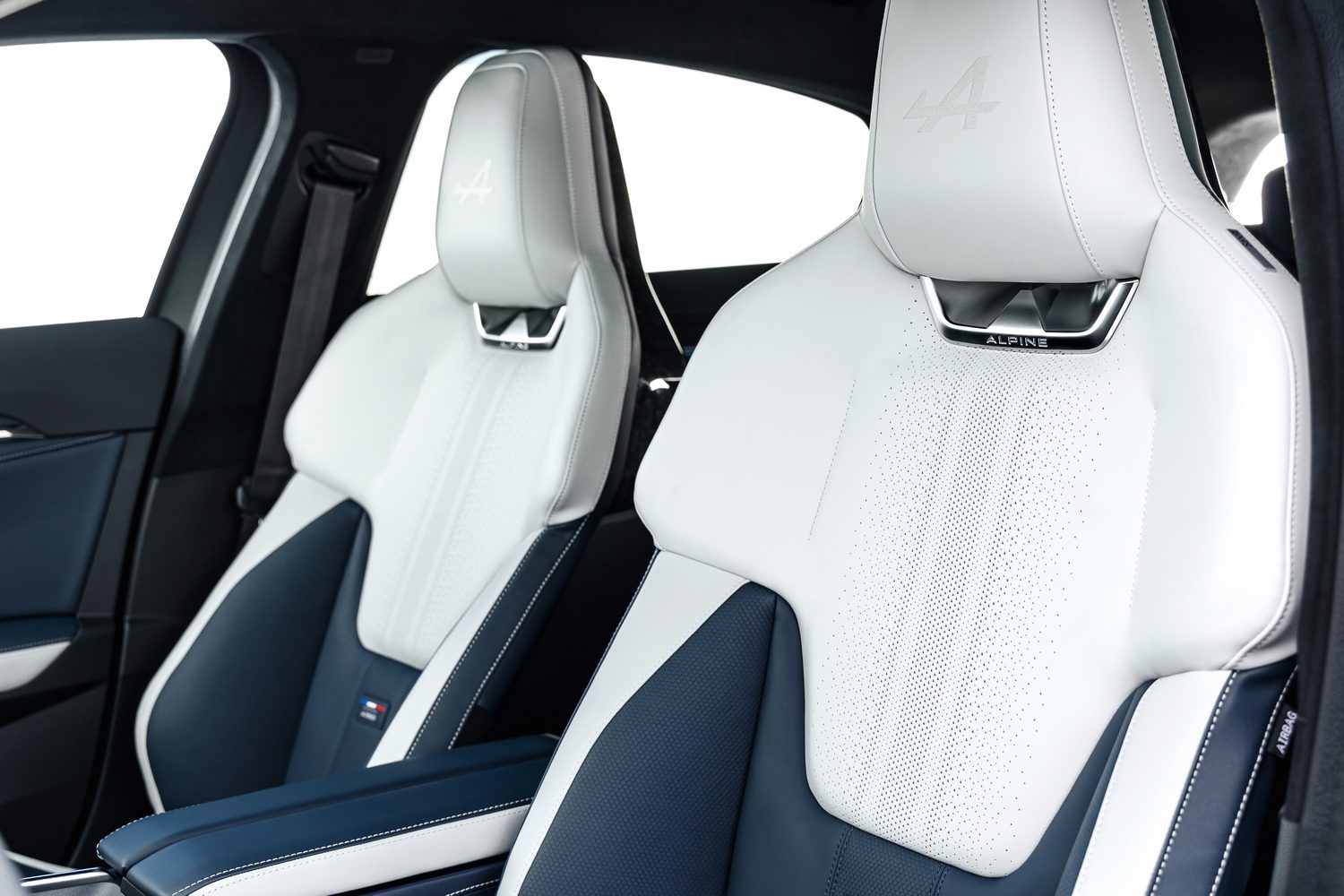
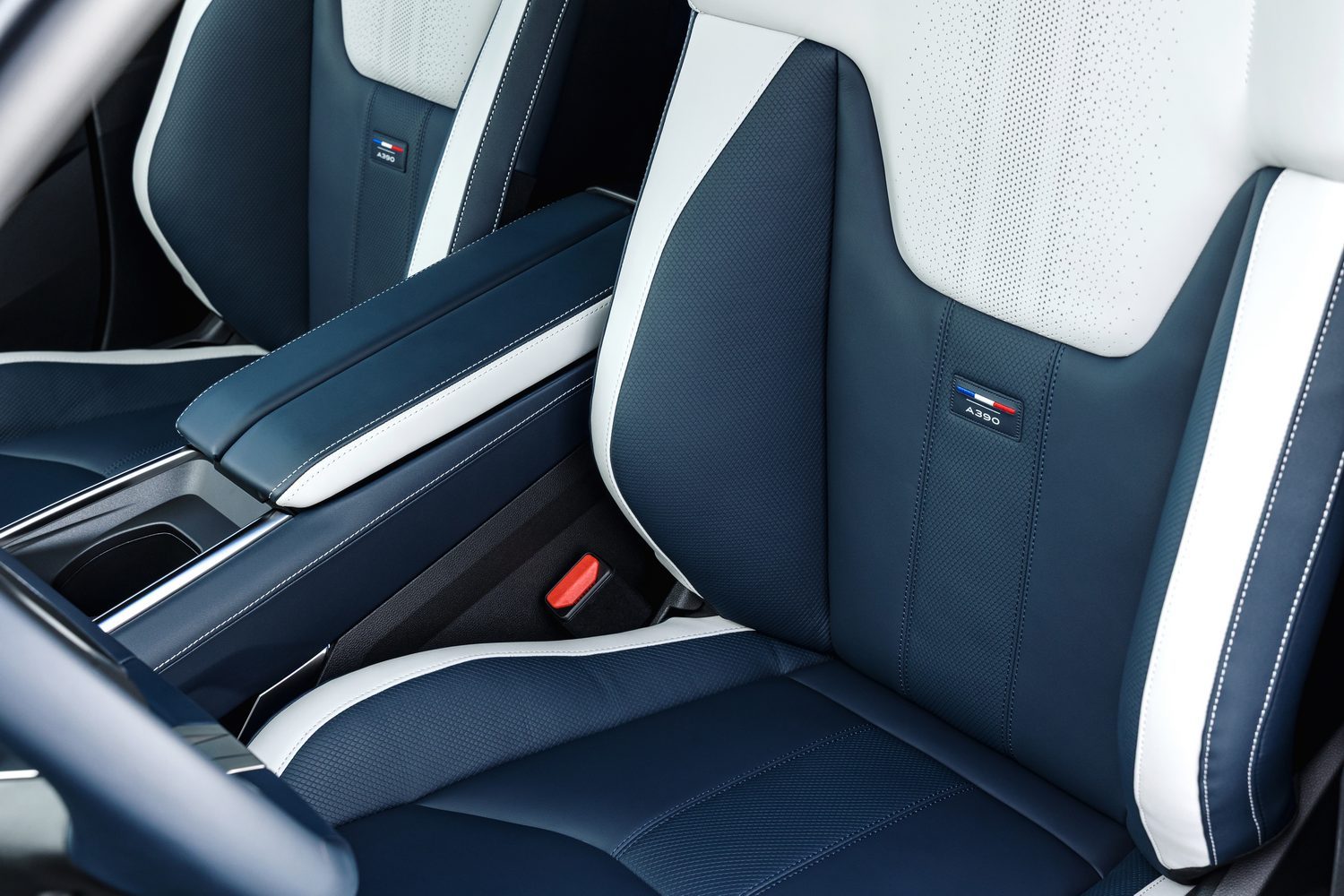
The A390's front bucket seats are softly upholstered in a mixture of synthetic Alcantara suede and Nappa leather, and they're exceptionally comfortable.

As is so often the case with electric cars - because of the need to package the height of the battery pack - the driver's seat could do with adjusting a bit lower, but it gets just about low enough, and there's plenty of fore-aft adjustment and reach and rake adjustment in the steering wheel that most people ought to be able to find a comfortable position.
These are the standard seats, but there is an upgrade to bucket seats made by famed motorsports supplier Sabelt, which get full Nappa leather upholstery, and although they do drive up the kerb weight by a few kilos, they may well be worth the extra (and they're standard for the GTS model).

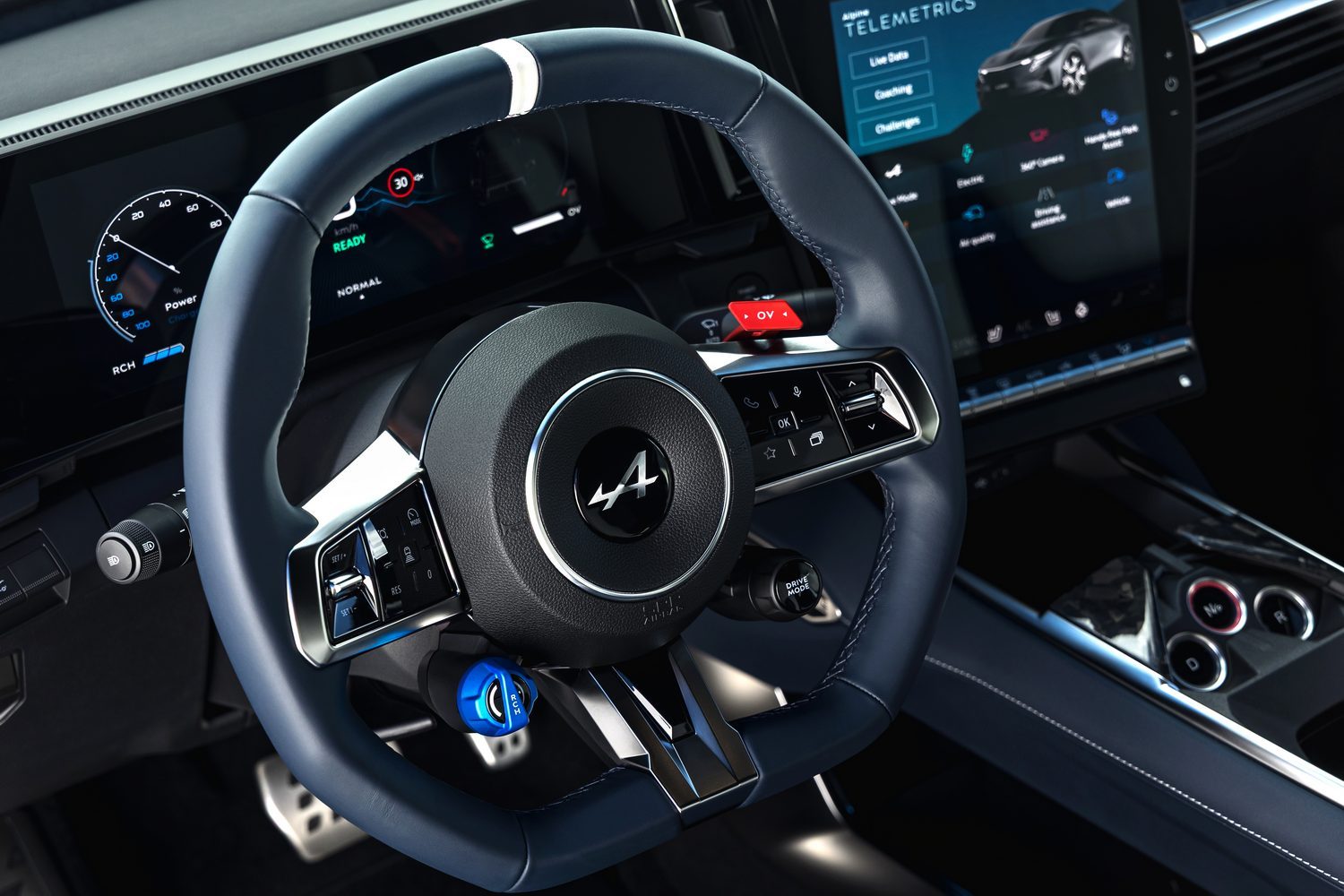
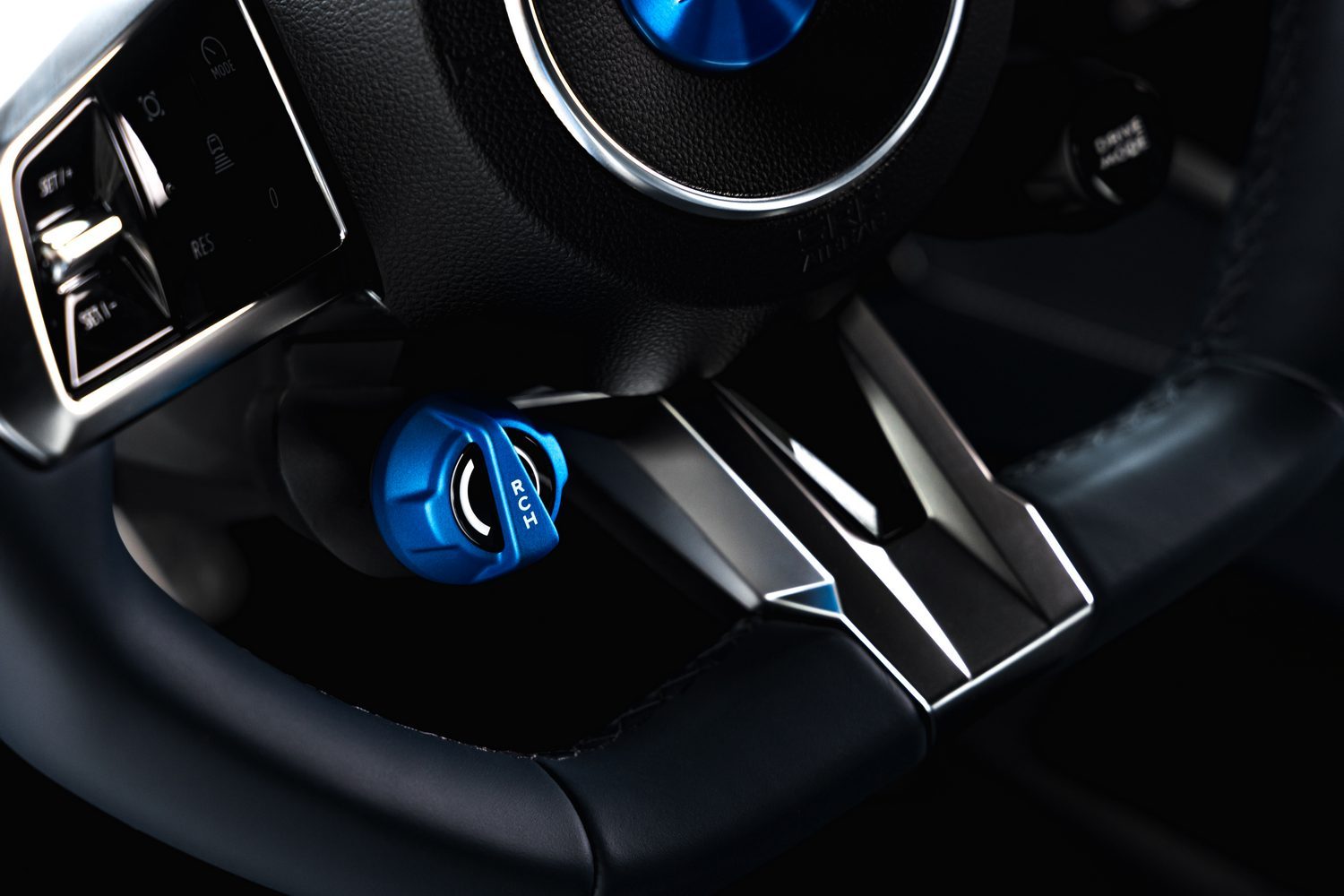
The wheel itself is lifted, largely, from the A290 hot hatch, with the same three buttons - RCH for brake energy regeneration adjustment, the little red 'OV' switch for overtaking boost and a simple driving mode push-button.
The design is said to be inspired by Alpine's F1 cars, which is a touch far-fetched, especially once you grasp the wheel and find that it's just a fraction too large. The A390 has terrific steering feel so I'd be loath to change much, but the wheel could do with being slightly smaller in diameter. The leather cladding for the wheel feels fab, though, and the little light-coloured marker at the 12 o'clock position is a nice touch.

Infotainment and technology
Once you get past the Renault switchgear and an underwhelming start button, things improve considerably. The digital dials in front of you have multiple layouts and modes, including a very attractive analogue dial screen, as well as allowing you to have the navigation directions from the A390's built-in Google Maps up in front of you.
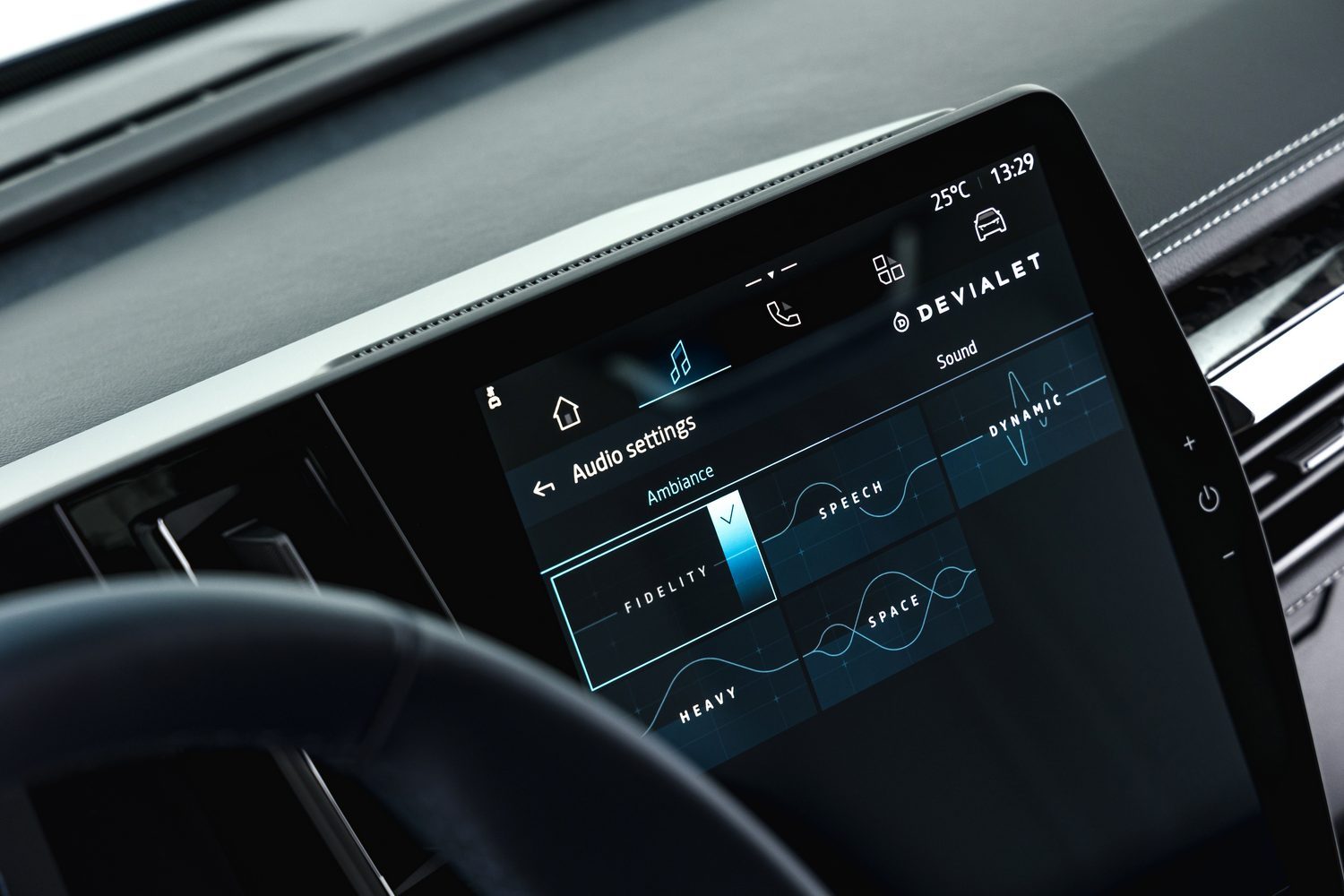
The main 12-inch touchscreen, familiar too from other Renault products, is as good as ever, with slick Google-based software, and a helpful row of physical switches at the base of the screen to control the heating and air conditioning.

The screen is fast and responsive, and has some unique Alpine elements including a telemetry function that can not only record all of the driving data, but it can also show you in real-time how the torque is being distributed front-to-back and side-to-side, as well as allowing you to keep an eye on such arcane data as brake temperature.
You will shortly even be able to link your drive's telemetry to the Alpine app on your mobile phone, and Alpine will sell you a specific phone clamp, allowing you to use your smartphone as both a video and data recorder for journeys - or even laps of a race track - for later playback.

There are also 'Coaching and Challenges' functions to help to teach you how to get the best out of the electric powertrain. On a more mundane level, there's also Apple CarPlay and Android Auto connectivity, wireless phone charging and over-the-air software updates.
As standard there's also a cracking sound system, developed by French company Devialet, which includes a chunky sub-woofer in the boot. That sound system also provides the 'engine' sounds when you're driving in Sport mode, which are a bit annoying in our opinions.
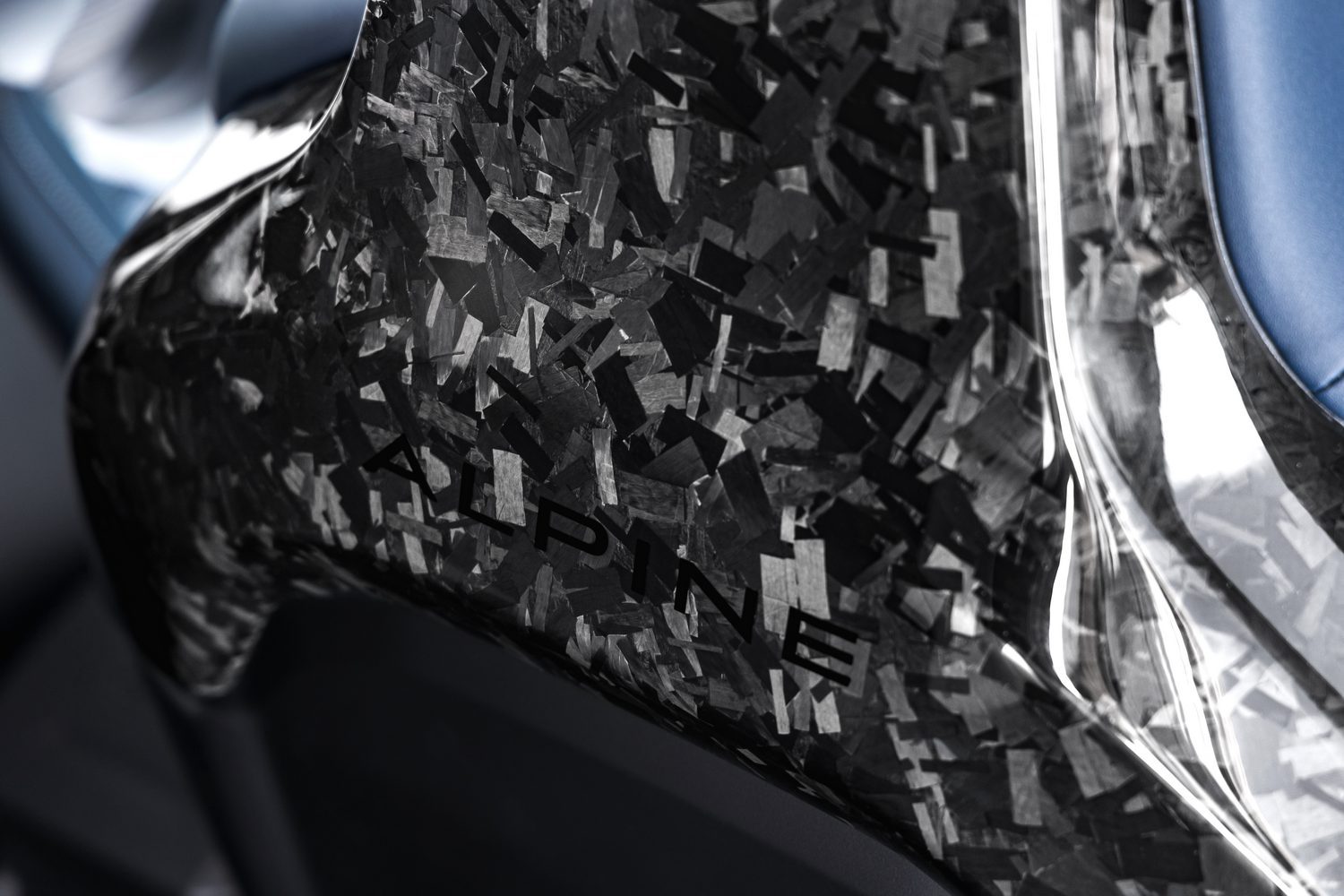
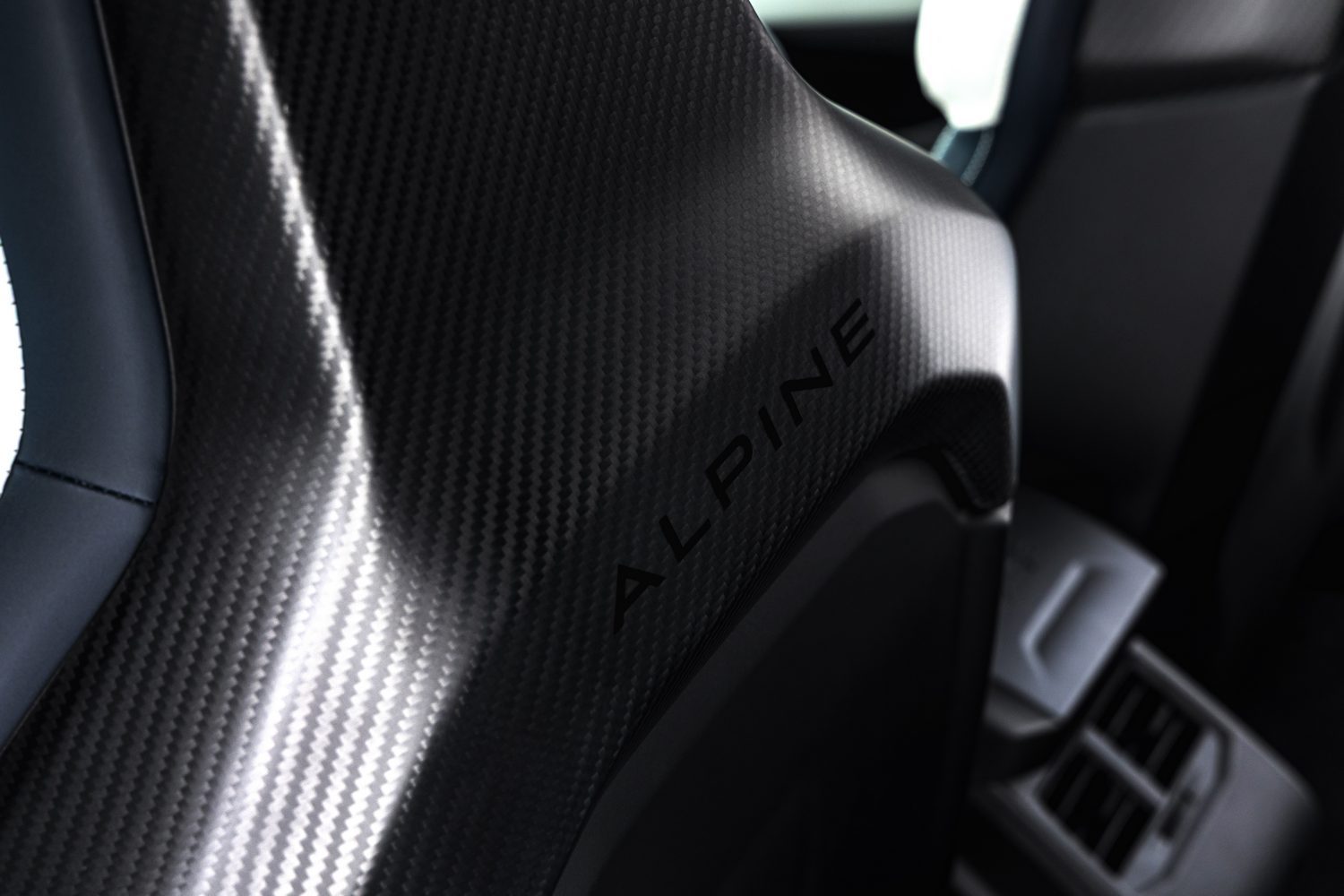
One fabulous optional extra is forged carbon-fibre trim, which is applied to the dashboard and the backs of the optional Sabelt buckets. It looks fantastic and is made from genuine carbon fibre. We've no idea how much this will cost, but it triggers more than a little want.
Practicality around the cabin

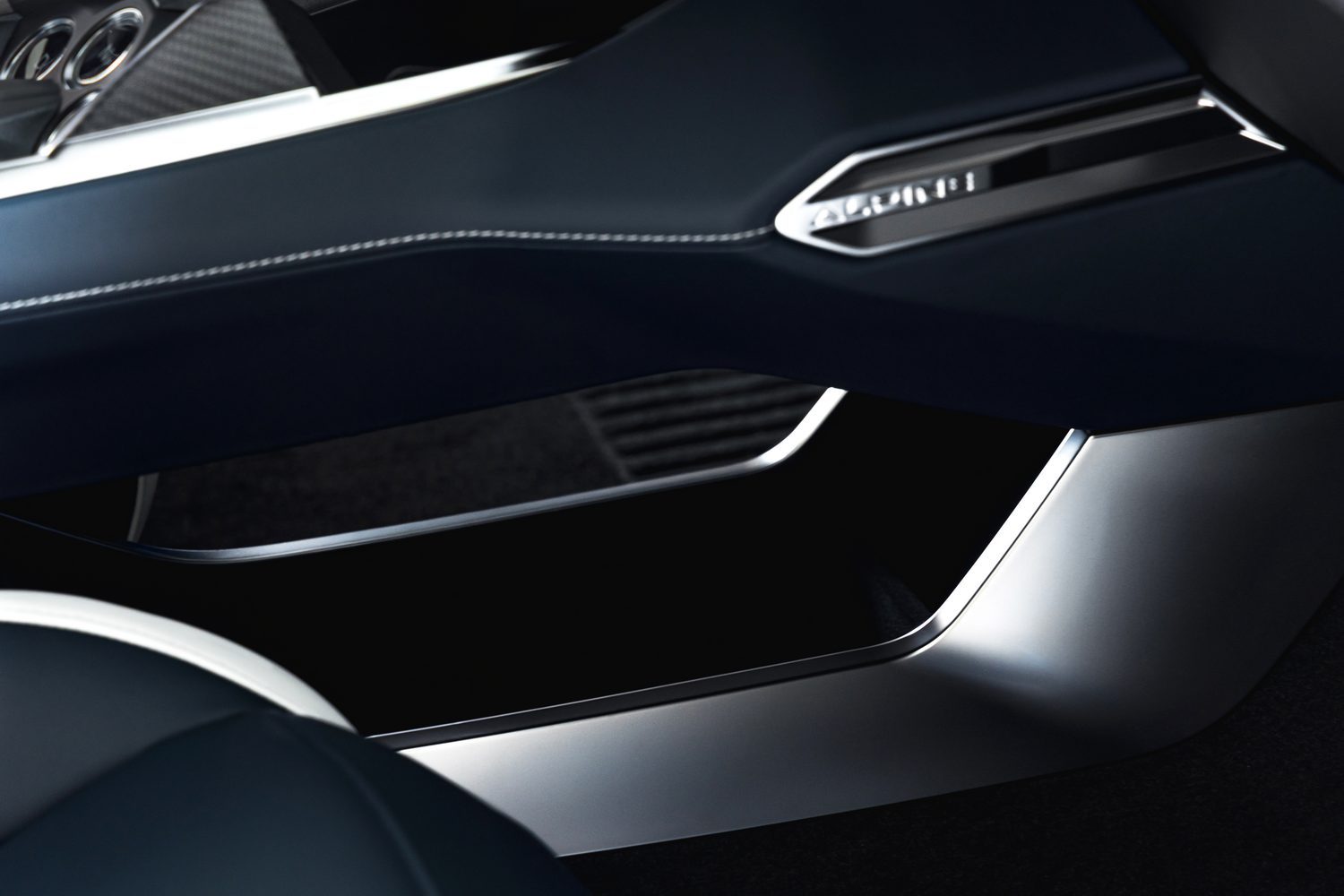
Up front, the A390 is reasonably practical, but not enormous. The door bins are fairly narrow, but the storage area under the 'butterfly' split front armrest is reasonably deep, if also quite narrow.
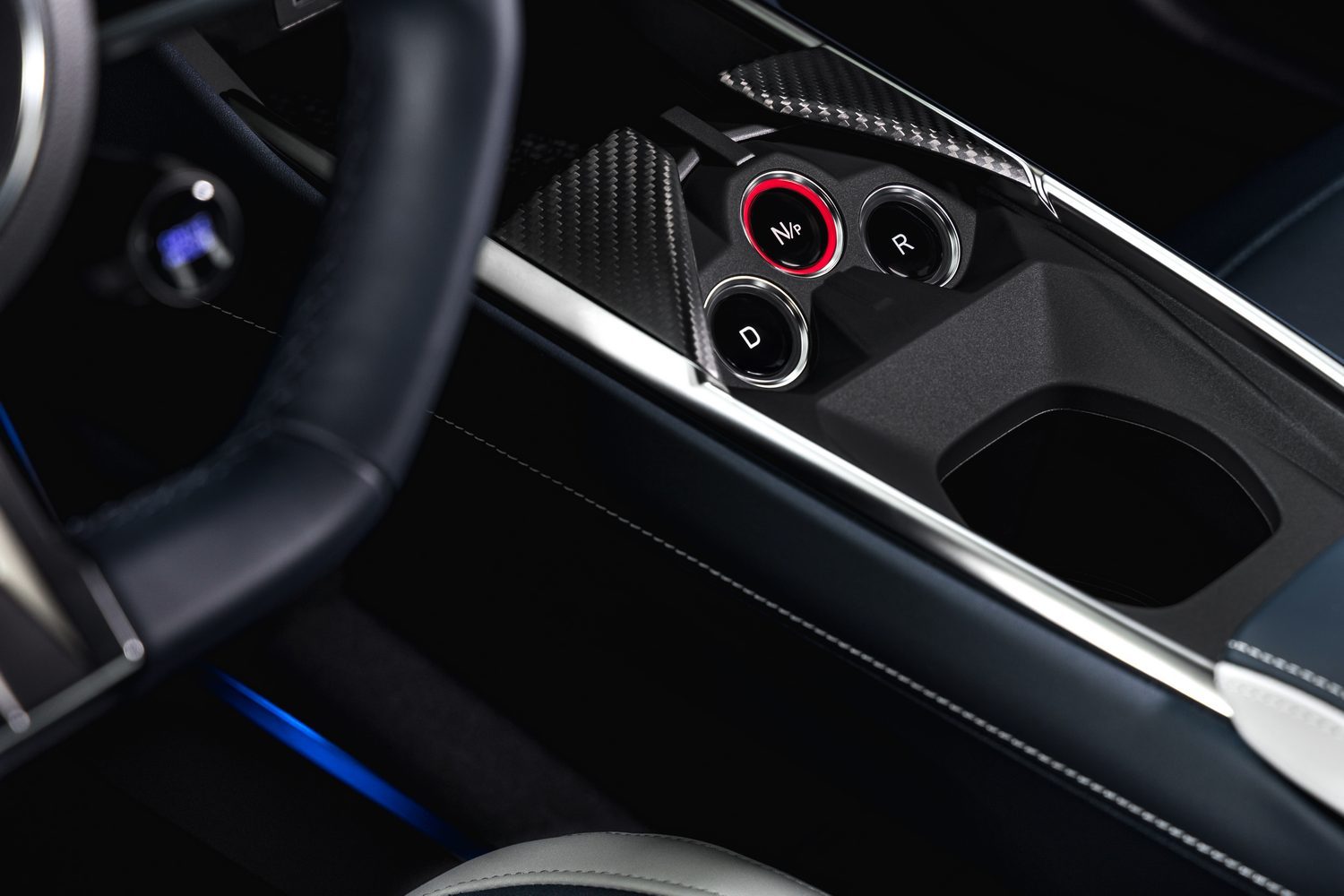
There's a storage area at the base of the centre console, too, which is home to the wireless phone charger, as well as two USB-C sockets, but the fitting of Alpine's traditional push-button drive selector means that there's only a solitary cupholder up front. At least there's more - open - storage under the centre console as, ahem, console-ation.
Rear-seat passenger space
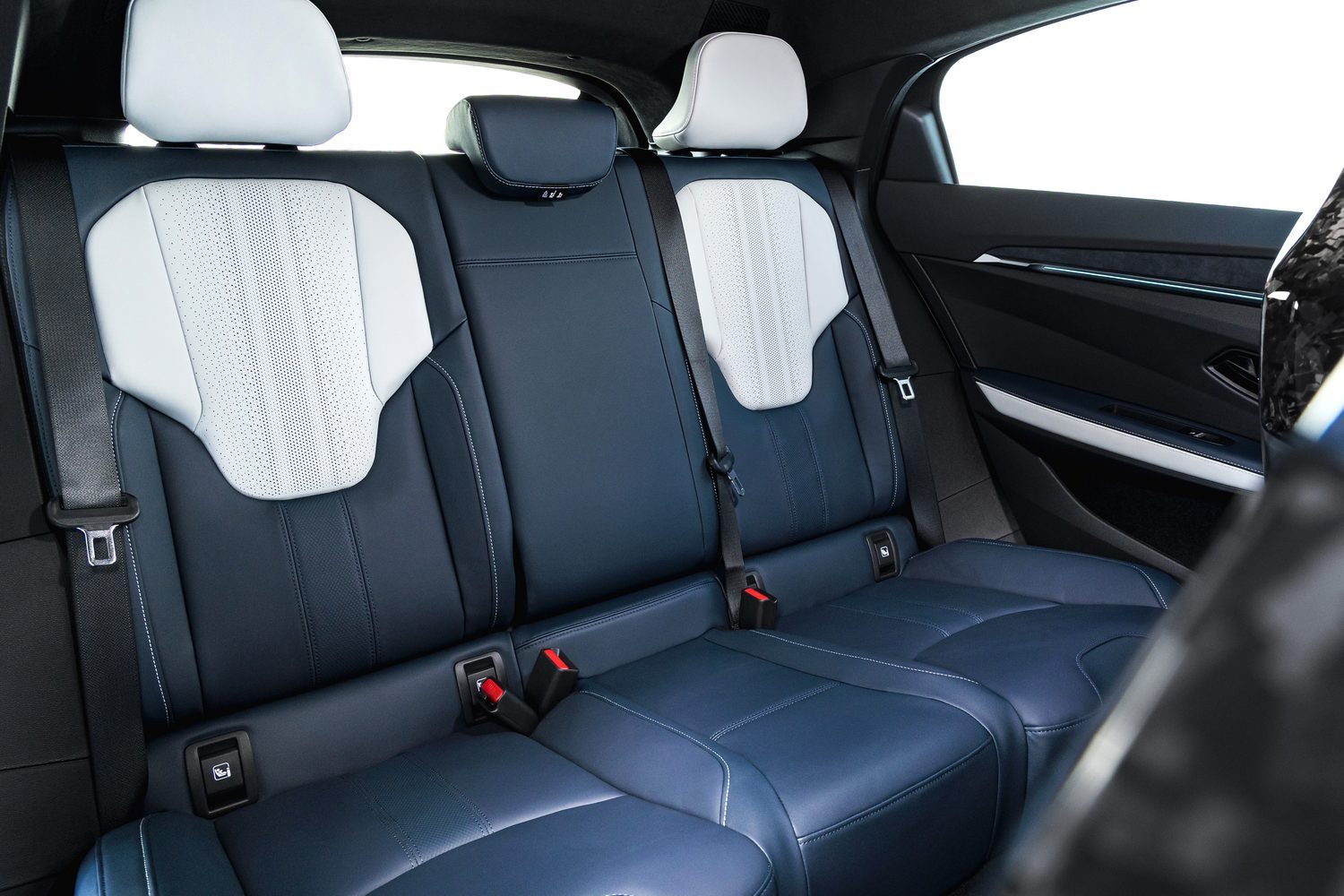
The A390's wheelbase is far from the longest in its class at 2.7 metres, so don't go expecting masses of space in the back. Its swoopy roofline means that headroom in the back is adequate, but no more than that, and legroom is about the same.

Some 185cm of me can fit in comfortably behind my own driving position, so it's not too shabby, but the outer rear seats are sculpted buckets, so space in the middle rear seat is effectively useless, even though there is a third seatbelt in the back.
Fitting child seats to the Alpine A390
There are two ISOFIX anchor points in the Alpine's rear seat, which have neat, hinged covers so you don't need to faff around with zips or pop-off covers. The rear door is longer than you'd expect, but the overall opening is shallow, and the door doesn't open to a huge angle, so fitting in bulky rear-facing seats might take some effort.
Forget trying to fit even a booster cushion to the centre rear seat, and there's no ISOFIX for the front passenger seat.
Boot space in the Alpine A390
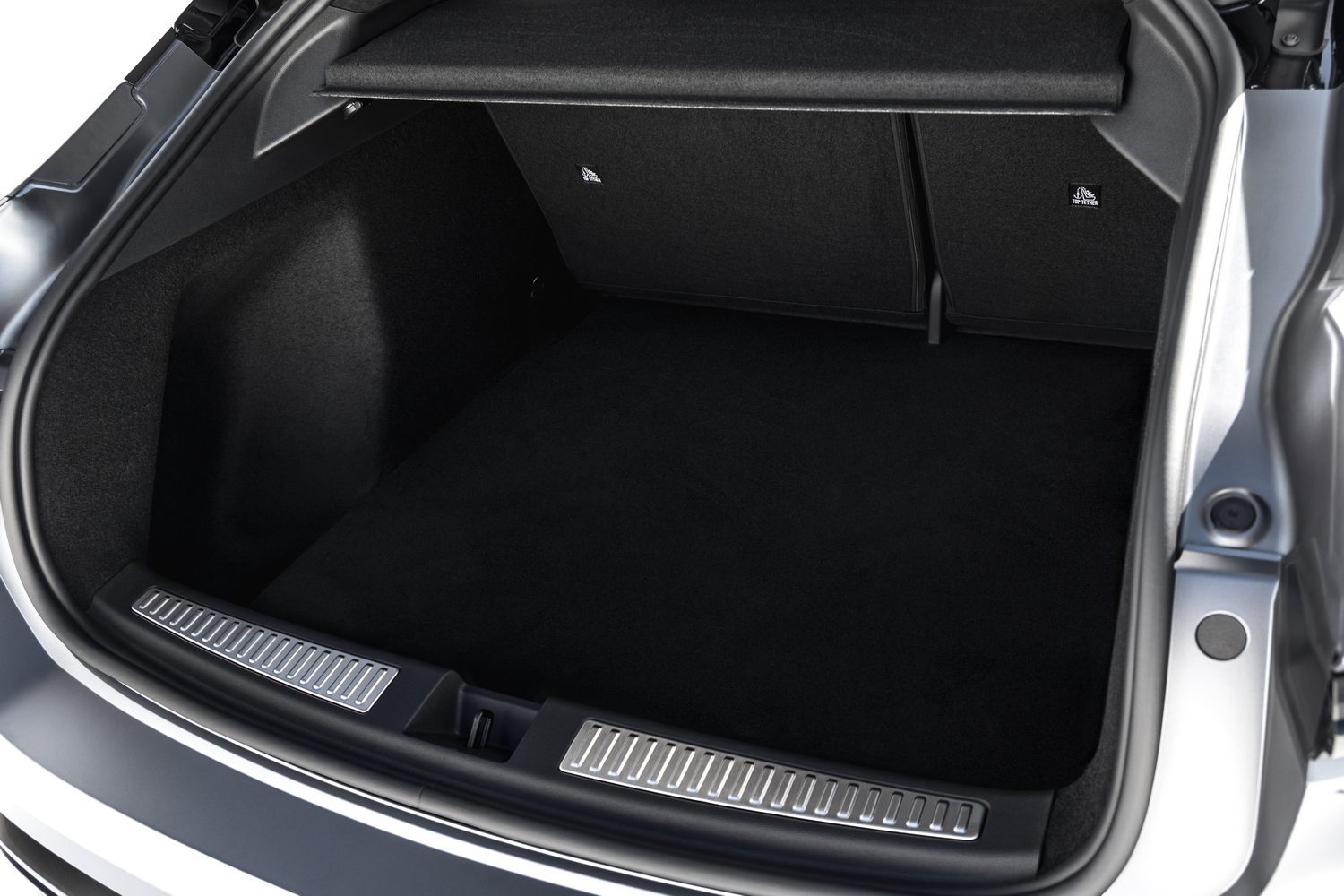
The A390's boot is pretty generous - 530 litres up to the luggage cover is ten litres more than you'd get in the much larger BMW iX3, for instance.

There are compromises, though. The Alpine's swoopy rear shape precludes loading up anything too huge and bulky, and there's quite a large loading lip, so heavy items will need a bit of lugging.
Folding down the 60:40 split back seats (they don't fold fully flat) opens up a useful 1,643 litres of cargo space, but there's no 'frunk' in the nose (although there is some under-floor storage in the boot for cables or whatever).
Towing with the Alpine A390
Surprisingly, given its sporty remit, the A390 can tow a fairly decent 1,350kg on a braked trailer. Anyone who straps a caravan to the back of one of these should have their head examined though. Surely the only acceptable towing load is a classic 1960s A110 on a trailer?
Safety in the Alpine A390
The Alpine A390 has received a four-star Euro NCAP rating with 74 per cent for adult occupant protection, 85 per cent for child occupant protection, 80 per cent for protection of vulnerable road users and 77 per cent for the safety assist category.
The usual safety kit you'd expect is included - emergency braking, lane-keeping steering, driver attention monitor, adaptive cruise control, six airbags, a surround-view camera, speed limit warnings - and thankfully there's the handy customise button that allows you to silence the systems you don't want with a swift double-click.
Performance of the 2026 Alpine A390
- GT version is fast enough for anyone
- Even more powerful GTS model
- Real-world range nothing special

Both the 400hp A390 GT and the 470hp GTS fundamentally use the same electric motors and battery.
Driving the Alpine A390 GT in Spain
Words by Neil Briscoe on 8 December, 2025
Alpine's reputation - its tradition if you like - has been built on making compact, ultra-light sports cars. The current A110, for instance, weighs just 1,100kg in standard form, meaning that it's substantially lighter than most supposedly small family cars, allowing its 252hp to shine brightly.
The A390, a bigger and more practical car, and an EV having to lug around the weight and bulk of a battery, can't operate from the same set of principles as the dainty A110. Which is not to say that Alpine has entirely thrown out its lightweighting philosophy - the A390's kerb weight of 2,124kg (a GTS with the forged-alloy 21-inch wheels is 3kg lighter...) is porky in absolute terms, but by electric car standards it's not too shabby.

It's around 100kg lighter than a Ford Mustang Mach-E for instance, and around 200kg lighter than a Polestar 4 or Porsche Macan, although it's also worth pointing out that all three of those rival cars are considerably roomier in the cabin than the Alpine.
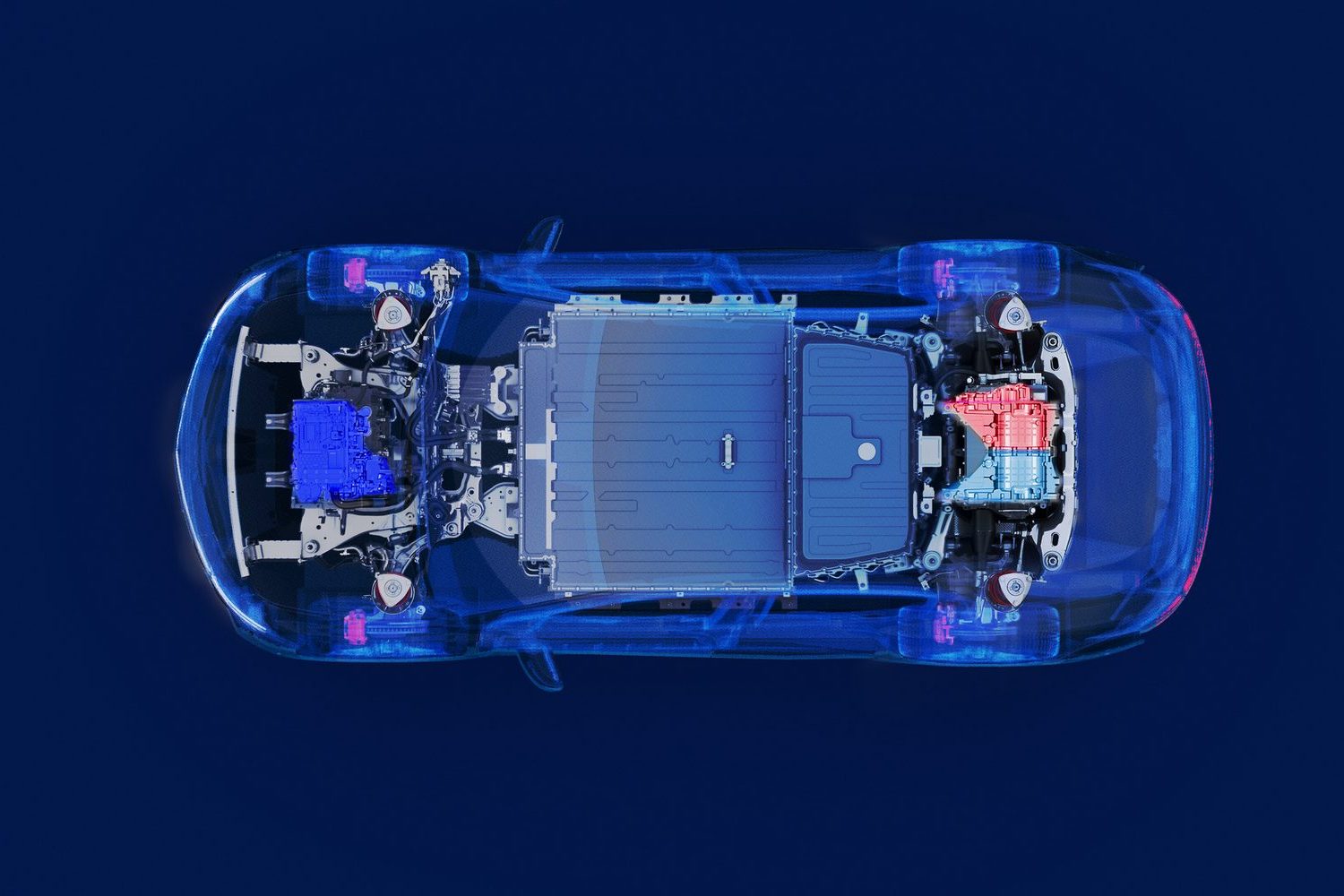
So, the A390 has no choice but to carry weight. To try and get around that and imbue it with the sense of agility you get in more traditional Alpines, the A390's engineers have developed a unique-in-the-class three-motor layout to allow for torque vectoring.
Each motor - singular front and twin rear - deploys 98.3kW of power in this instance, adding up to a total of 295kW, or 400hp. Combined, all three can shove 661Nm of torque onto the road, which, thanks in part to grippy Michelin Sport tyres - specially developed for the car, and with a special 'A39' mark so that you can get consistency when buying replacements - adds up to a pretty rapid 4.8-second 0-100km/h time.

The GTS obliterates that with 470hp, a colossal 824Nm and 0-100km/h in 3.9 seconds, but it's hard to imagine anyone feeling shortchanged by the A390 GT's performance.
Acceleration is savage, rather than overtly brutal, and there's enormous reserves of torque available once you're up to cruising speed, so the A390 never feels slow, always swift.

Ah, but the handling. This could have been the tripwire that upended the whole show. There's an entire army of electric cars out there which are blisteringly quick in a straight line but obdurately inert in corners. The A390 is not one of them.
Does it feel like an A110? No, of course not - that would simply not be possible given that, as a certain Montgomery Scott constantly reminds us, you cannot change the laws of physics. However...
The torque-splitting rear motors work brilliantly. Quite apart from offering extra traction on slippery surfaces (although the A390 is no off-roader) they also work faster, when it comes to divvying out the torque, than a single motor running through a mechanical differential could ever hope to do.

There's the option of a live display on the big touchscreen in the cabin to show you how much torque is being directed from side to side at the rear wheels, but frankly, if you're doing anything that triggers more than a small percentage of split to one side, you really shouldn't be looking down at the screen.
Many cars try to quell understeer and promote 'rotation' (to use the modern Formula One parlance) into a corner by trail braking an inside rear wheel. This can be highly effective, but the Alpine's system is better - instead, it speeds up the outside rear wheel as you turn into a corner.
This has the effect of pushing the nose tighter into a given radius, and you can really feel it working, with a distinct feeling of 'push' from the rear of the car.

It's not nervous though, and it makes the A390 feel far more agile than it might had Alpine's engineers tried instead a brake-based system or brought over the rear-wheel steering from the distantly related Renault Rafale.
With its combination of sharp, incisive, fulsome steering, that extra rear-driven agility and the grip from those Michelins, the A390 becomes not just one of the best EVs to drive, but just flat-out one of the best cars.

It feels incredibly agile and, although you're never not aware of the weight - clever motors and software can only take you so far away from that physics lesson - the Alpine always feels fluid, engaged and engaging. I don't think you'd ever tire of the way this car flows along a challenging road, nor how it sternly resists the call to understeer even when provoked into a tightening apex. It's just... delightful.
So too is the ride quality. It's true that the roads around Malaga, where our test took place, are largely well-surfaced, but in successive weeks we've driven the new Toyota bZ and the BMW iX3 on these same roads too, and both (not strictly rivals for the Alpine...) felt far more upset by the bumps and ripples that are there.
Alpine uses hydraulic bump stops for its suspension, which allow for truly impressive absorption of unpleasant tarmac. The A390 is appropriately stiffly sprung, but it glides over broken roads with impressive comfort and deportment. Again, the word is delightful.

The brakes are good too. The initial pedal response is a little softer than that of the A290 hot hatch, but the bite is there and the massive discs - 365mm at the front and ventilated but not cross-drilled - are held onto by large six-piston monobloc calipers.
The A390, thusly, stops with aplomb. There is a one-pedal driving option for when you're in and around town, activated by the lovely, tactile little RCH switch on the steering wheel, but for any other driving the best setup is one bar of regenerative braking, and do the rest yourself.
There are switchable driving modes of course, and Normal is fine for everyday driving, but we spent most of our time in Sport, with a brief foray into Track, which isn't really a track mode per se, but just a spikier version of the Sport setting.
The delectable little OV button unleashes maximum acceleration in any mode for quick overtakes, for up to ten seconds at a time, but because you have to hold the switch down, it's slightly less satisfying to use than BMW's one-touch 'Boost' switch, although the overall effect is similarly enjoyable.
At maximum acceleration, the driver's display starts to show flashing red 'warp drive' stripes of light, and in Sport mode there's an electronic whooshing noise in place of an engine note, which we're not huge fans of.
Driving the Alpine A390 GTS in Italy
Words by Matt Robinson on 15 June, 2026

The simple, short precis of the GTS is that it's almost identical to the GT, only it's a tiny bit faster.
Effectively, the three electric motors in the Alpine A390's platform - one at the front, two at the rear - are running at 98.3kW in the GT and, between them, summon up a thumping 661Nm of torque.

What Alpine has done in adding a 'S' to the model badge is wound that triumvirate of propulsion units up to 115kW apiece.
This has the welcome effect of raising peak power by 70hp from the GT's 400hp, to a new maximum of 470hp, but it's the considerable 163Nm hike in torque to 824Nm in the GTS which does the most damage to the stopwatch.
The 0-100km/h run, for instance, is trimmed by nine-tenths of a second and brings the Alpine SUV into the 'threes', with an eye-catching 3.9-second benchmark sprint, while the (largely irrelevant) top speed goes up by 20km/h to 220km/h.

Brilliantly, as the 470hp GTS is fitted with the 21-inch 'Snowflake' forged alloys as standard, it's actually three kilos lighter than the 20s-shod GT, so not only are you getting greater drivetrain performance, but you're also getting less unsprung mass. All very good.
What's perhaps not so encouraging is that Alpine appears to have done precious little else to the GTS than turning the electrical wick up, so to speak.
Aside from some more carbon fibre inside and that little three-letter boot emblem plus the 21s in the arches, the A390 GTS is as per the A390 GT. Even the suspension settings are all the same.

The best news here is that this means the GTS drives as exquisitely as the GT, although on some of the ropier road surfaces on Italian streets surrounding the velvet-smooth Vairano test track, there was just a little more crashing and banging from the big-wheeled Alpine than we'd have strictly liked.
But that aside, it's as joyous and nimble in this grander specification as it is in the supposedly 'lesser' version.
However, there was one negative observation to be made of the GTS, which is that on a later, long 140km road route through some of the countryside outside Milan, it only managed to return a somewhat poor indicated electrical consumption figure of 25.1kWh/100km.

In fairness, sweltering conditions meant the outside temperatures were hovering in the high 30s - and, at one point with the GTS Alpines all parked in a baking Italian courtyard, their thermometers hit 44 degrees C - and so we conducted the entire route, which included some steep ascents and a bit of high-performance running, with the air conditioning cranked up to maximum fan speed and the lowest possible temperature.
Nevertheless, we didn't drive the whole test loop like we were back on track at Variano (where the A390 GTS excelled, by the way; it's far better on a circuit than a 2.1-tonne SUV, relatively light though that is, really ought to be) and such consumption would discharge the 89kWh battery pack in just 355km or thereabouts.

At least there's one final positive note to end on here: the GTS's peak charging rate on DC has increased to 190kW, from 150kW, which means a 15-80 per cent top-up will take around 27 minutes.
Anyway, the Alpine A390 is a fabulous machine and something to seriously worry a Porsche Macan Electric. But then, that was and is true of the GT variant.

Unless you really need to regularly hit 100km/h from rest in sub-four seconds, the GTS could be viewed as needless frippery... and extra expense, obvs.
Range, battery, charging and running costs of the 2026 Alpine A390
- Single 89kWh battery option
- 150kW DC charging for GT, 190kW for GTS
- Usual circa 30-min charging times

The A390 comes with a single battery choice, but the actual chemistry differs slightly between the GT and GTS models.
Battery options and official range
The Alpine A390 comes with a single 89kWh battery option. Technically, there are two battery options, as the battery for the more powerful A390 GTS has subtly different chemistry, with a higher ratio of nickel, to allow it to achieve higher sustained power output in extremis.
There is pre-conditioning for the battery, as well as a heat-pump system for cooling and warming both the car's cabin and the battery itself, while the built-in Google Maps setup can automatically calculate charging stops and times along a lengthy route.

In fact, Alpine claims you could drive from Berlin to Munich in just under seven hours with a single 24-minute recharging stop.
Officially, on the WLTP cycle, the A390 GT has a one-charge range of 557km, while the GTS manages 503km.
Real-world range and efficiency of the Alpine A390
You will probably struggle to hit those official ranges in real-world conditions, although overall the A390 didn't perform too badly in our test.
Early on, we were racking up average energy consumption of 25kWh/100km, which would have limited us to a total range of just 356km, but later consumption seemed to ease to more like 21kWh/100km which suggests a real-world range of 423km.

The range-to-recharge meter was insisting that the A390 could do 450km, which is OK, but nothing special. Still, for the performance and handling on offer, it's not bad, and of course the A390 comes with the bonus that, assuming you can charge at home and have access to a sharp night-rate for electricity (or better yet, you have solar panels), then you can run this potent performance car for buttons compared to an equivalent petrol model.
Charging up the Alpine A390
The GTS battery also therefore gets a faster charging speed on DC outlets, at up to 190kW.
The GT version is limited to 150kW, although as Alpine points, out the overall charging curve for both versions is similar. A 15-80 per cent charge takes 29 minutes for the GT and 25 minutes for the GTS in ideal conditions. The charging flap is mounted on the right-hand front wheelarch.
An 11kW AC-charging setup is standard, and Alpine is continuing Renault Group's tradition of offering 22kW AC charging as an option. Both versions get Vehicle to Grid (V2G) and Vehicle to Load (V2L) capability too, allowing the A390 to become a big, aerodynamic power bank.
Charging at home, from ten per cent charge to full on a normal 7.4kW AC charger will take just under 11 hours, while on 22kW power the same charge will take a mere 3 hours 40mins. For charging when you're out and about, Alpine offers an RFID charging card from Renault's Mobilize service, which is compatible with most major charging providers.
Servicing the Alpine A390
Alpine Ireland has yet to confirm full details for the A390, but we'd expect a service interval of 16,000km or once per year, with servicing plans available. Alpine, currently, has only the one Irish dealer, in Dublin, and you can't get Alpine models serviced at Renault garages, as they require specialised parts and training.
Alpine A390 warranty
Again, we're waiting for confirmation of details, but we'd expect the A390 to mirror other Renault Group products with a five-year warranty unlimited for the first two years, and then limited to 150,000km for the balance, five years of roadside assistance, a 12-year anti-perforation warranty, a three-year paint defect warranty and the usual eight years, or 160,000km battery warranty.
Irish pricing & rivals to the 2026 Alpine A390
- €80,000 starting point
- Up against established brands
- Strong standard equipment list

Standard spec for the GT version of the A390 includes the wonderful Alcantara-and-Nappa-leather bucket seats, the big 12-inch touchscreen and matching driver's instrument screen, two-zone climate control, 20-inch alloys and the Devialet sound system.
Prices are not yet set, but an Irish price of around €80,000 for the A390 is mooted. The GTS version, for which there has apparently already been some order interest in Ireland, could cost closer to €100,000.
While more affordable than the specialised A110 sports car, those price tags will make the A390 a tough sell. It's not that the car isn't worth that kind of cash, it's more that the sort of well-heeled buyers who might spend that much money on a sporty electric crossover will probably be conservative, and write a cheque for an Audi, Porsche or BMW first.

That gives Alpine a job to do convincing buyers who aren't necessarily interested in, or even aware of, the brand's motorsport and sports car history. For true car enthusiasts, the job of convincing will be much easier, but they're not the mass market.
Obvious rivals include the Porsche Macan and both the Audi Q4 and Q6 e-tron, the BMW iX2 and iX3, the Polestar 4 and the Skoda Enyaq RS Coupe, as well as the Ford Mustang Mach-E.
Verdict - should you buy the 2026 Alpine A390?

Dear god yes, you should - this is one of those cars that starts strong, thanks to its handsome styling and brisk performance, and then commences worming its way thoroughly under your skin with a barrage of French charm, and some truly enjoyable and immersive handling.
No, the A390 doesn't - nor ever could - electrically replicate the driving experience of the A110 sports car, but it's summed up best by an Alpine executive who describes the car as being like Muhammed Ali; a heavyweight, but one who knows how to dance.
FAQs about the 2026 Alpine A390
What is the true range of the Alpine A390?
On the basis of our drive on the international launch event, figure on a minimum of 350km, and more like 450km if you're taking things a bit more gently.
Want to know more about the 2026 Alpine A390?
If there's anything about the new Alpine A390 we've not covered, or you'd like help in choosing between it and other cars, you can avail of our expert advice service via the Ask Us Anything page.
Alpine A390 history
The A390 is, of course, a brand-new model and a departure for the Alpine brand, which has never previously made a car with more than two doors. It has made four-seat models in the past, however - and we don't just mean the current A290 electric hot hatch.
No, we mean the brilliant rear-engined sports cars made from the 1970s onwards - the likes of the plastic-bodied A310, the A610 and the GTA, which had four-and-six-cylinder engines out behind the back axle to create stylish, often quirky, French rivals to the Porsche 911.
Alpine, in spite of the driving brilliance of those cars, couldn't match Porsche's sales success, and so the brand shut up shop in the early nineties, before being revived by Renault in 2018 as its sports car, performance, racing and electric arm.
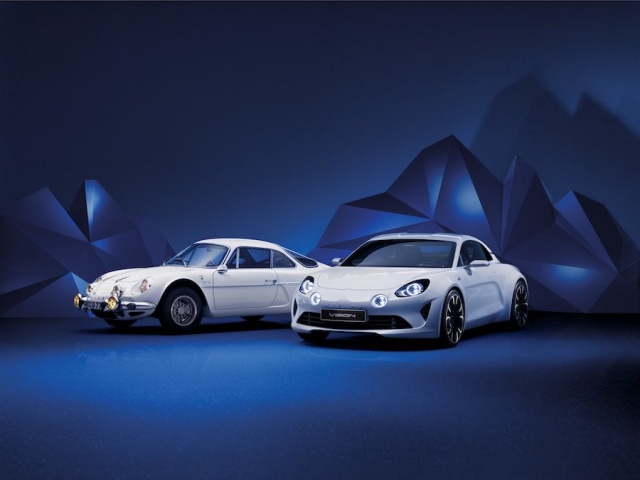
To do that, Renault looked further back in Alpine's history, taking inspiration for the new A110 sports car directly from its 1960s predecessor of the same name. That original A110 - gorgeous, fragile like a quail's egg and astonishingly small by modern standards - took Alpine to glory on the world's rally stages and was the first rally car campaigned by the great French driver Michelle Mouton.
Like the early 911, the Alpine A110's rear-mounted engine, a four-cylinder Renault unit, gave it a significant traction advantage on slippery and icy surfaces, and 1960s and 1970s rally aces exploited that to the full.
Before that, Alpine made smaller runs of cars, often with much less-well-resolved styling. The brand celebrated its 70th birthday in 2025, marking the year when Jean Redele, the founder of Alpine, began tweaking his humble Renault 4CV rear-engined saloon for rallying on stages in the Alps.
Legend has it that Redele didn't have the funds to boost the performance of the car's engine all that much, so instead turned to making it lighter in search of performance. And thus a legend was born.