
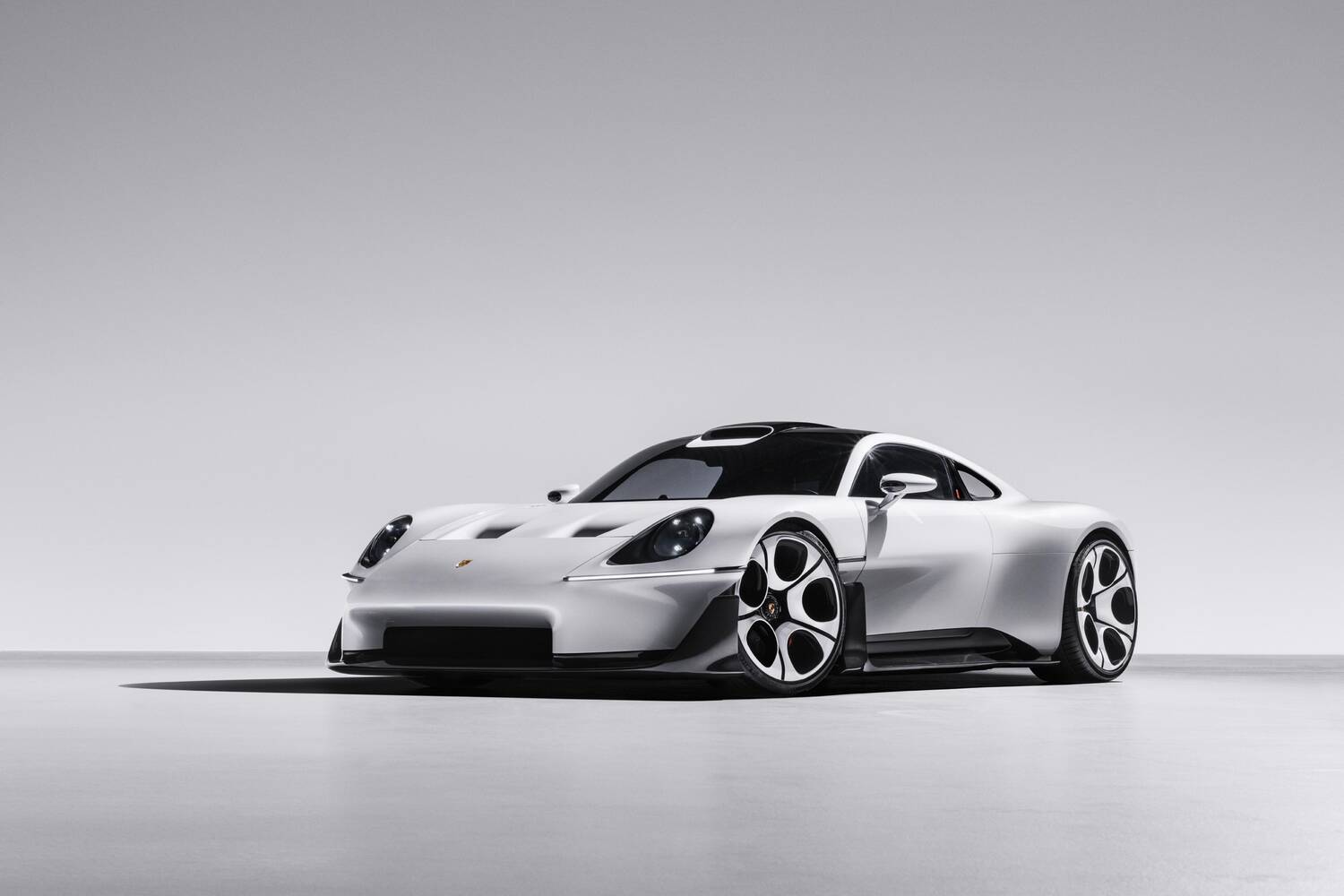
Does that mean a new Porsche supercar?
Well, the production version of the Porsche Mission S is certainly expected to have supercar-like performance, though the company made it clear that this will be no limited-edition hypercar, so we believe it’ll take on the likes of the Ferrari 296 twins.
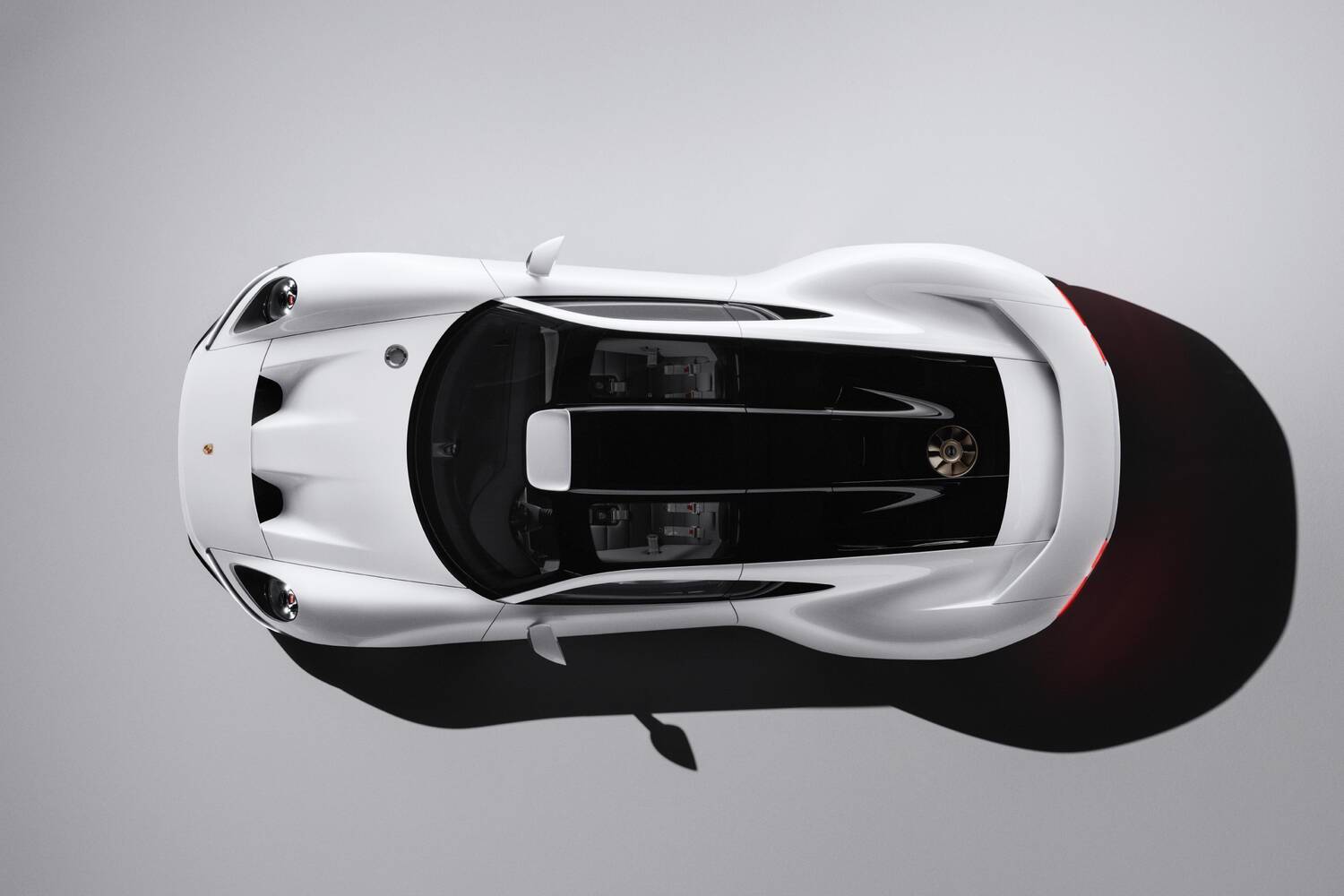
Like those, the Mission S will probably include some form of hybridisation, but there’s no doubt we’re talking about a petrol-engined car here. Porsche has even confirmed that the engine will be mounted in the middle of the vehicle.
Tantalisingly, the Mission S concept features a horizontal cooling fan visible from above the car, inspired by that the Porsche 917 racer of the late 1960s and ‘70s.
That car employed an air-cooled flat-twelve but we highly doubt Porsche is returning to air-cooled engines for its new supercar. Nor 12 cylinders for that matter.
However, rumours persist that it could be working on a water-cooled flat-eight, based on the twin-turbocharged six-cylinder unit used by the Porsche 911 today.
And given how much performance the new electric turbo has unleashed in the latest 911 Turbo S (711hp if you want to go check our review), it’s a good bet to suppose a development of it will be used in whatever powers the Mission S.
Don’t assume the new supercar will get the option of a manual gearbox, however, as there isn’t huge demand for such things in this part of the market, and for all Porsche’s talk about driver interaction and analogue this and that, the Mission S has gearchange paddles behind the steering wheel and just two pedals at the driver’s feet.
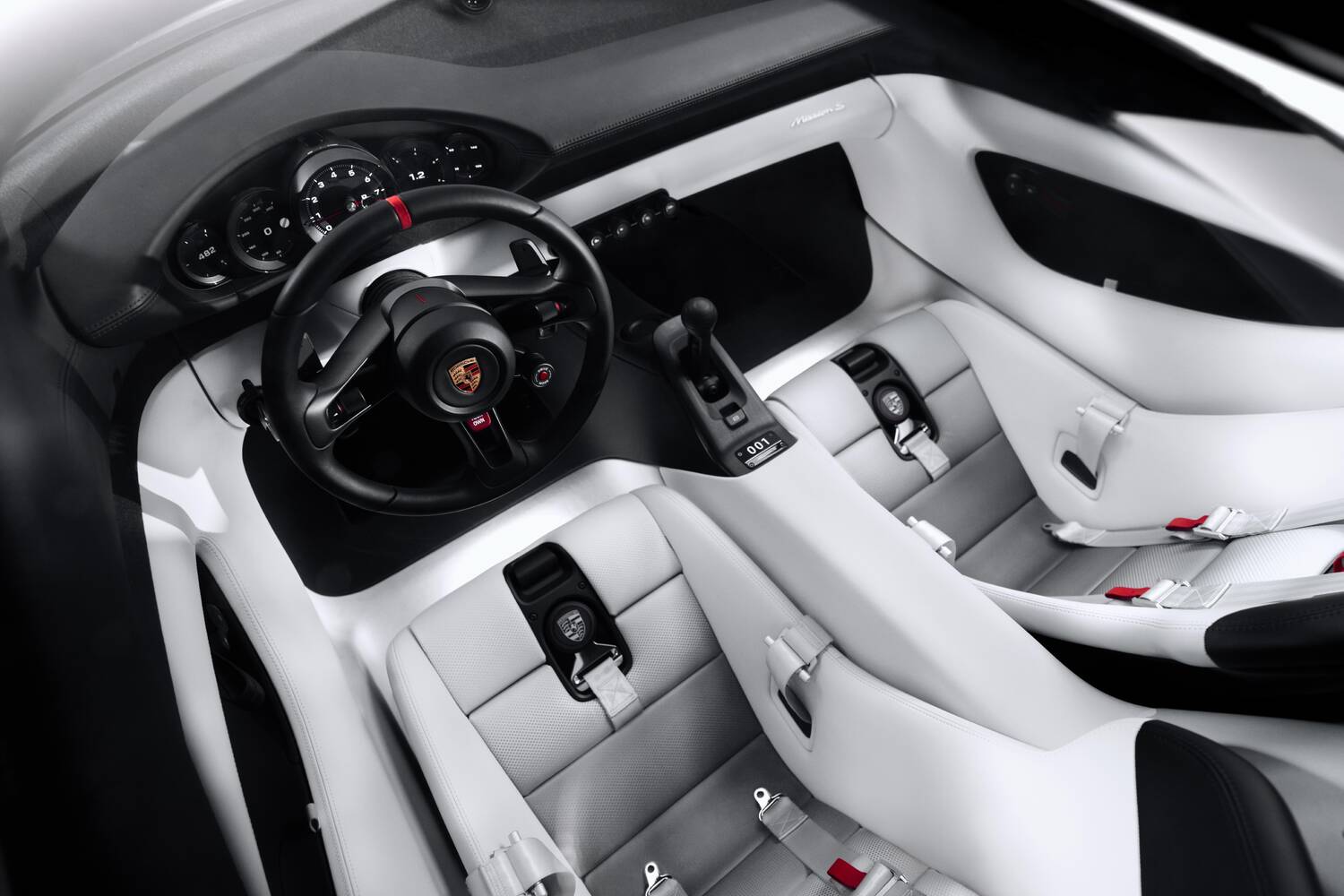
Tell us more about the interior
It’s actually quite a minimalist cabin, with just two seats of course as there’s a whacking big engine behind. Saying that, and despite the ‘vision’ status of the Mission S, it doesn’t look far-fetched and too far removed from what could go into production.
We love how it’s the antithesis of the screen-heavy interiors of Porsche’s SUVs. Sure, there’s some technology at work in the five-gauge cluster, but it features an actual physical needle for the central rev counter.
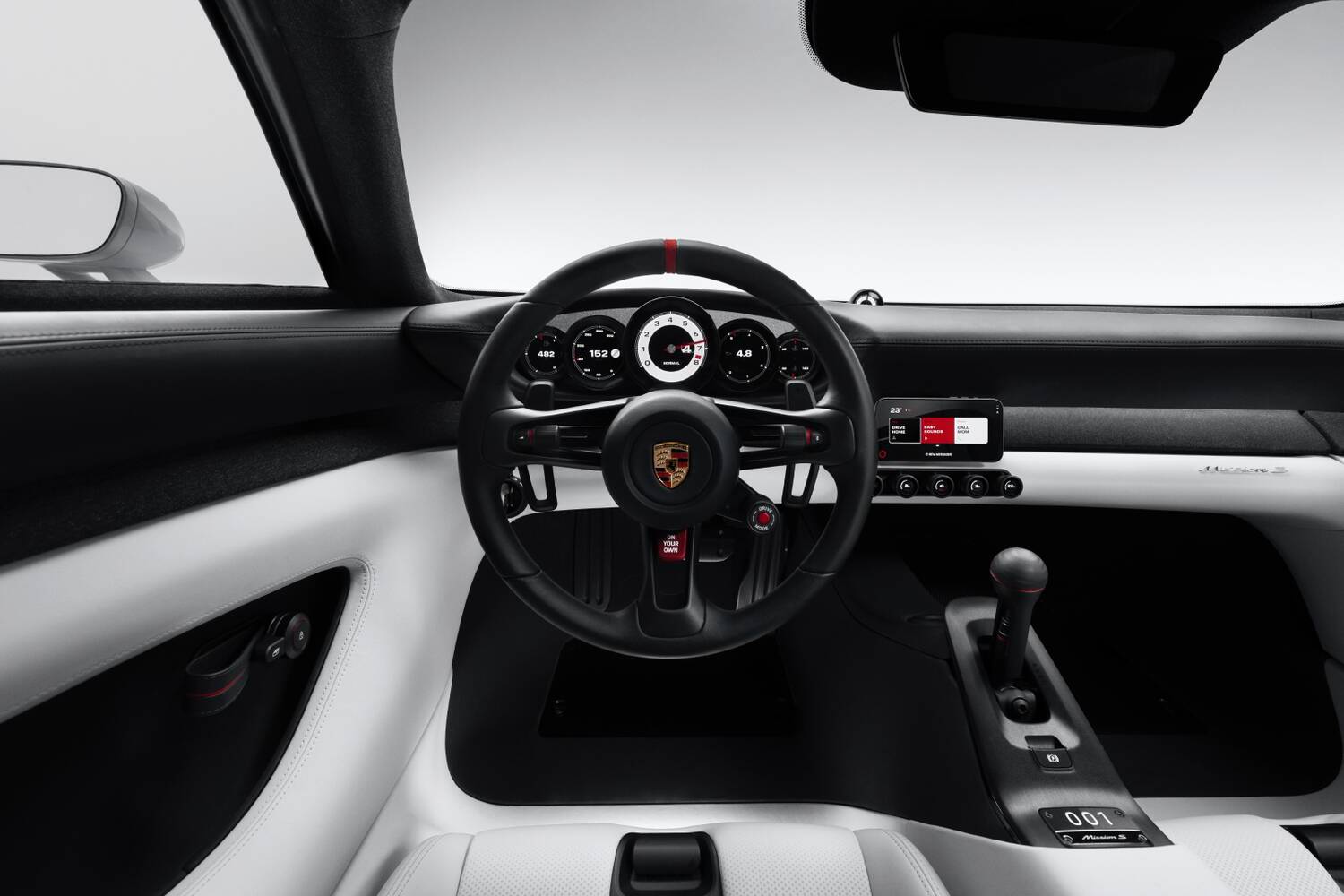
And there’s no fixed touchscreen in the middle either. Look closer and you’ll notice that the little display is actually someone’s smartphone held on a retractable MagSafe holder, a little like you’d find in a Dacia. And yes, we realise that this might be the first time in history that a Porsche’s cabin is compared to that of a Dacia…
Gotta love the famous (?!) German sense of humour, though. On the screen of the phone in the picture are big tile links to “Baby Sounds” and “Call Mom” as part of the My Porsche App. We reckon they allude to the performance on tap.
More sensibly, there’s physical switchgear for the climate control underneath, with dinky little digital readouts integrated into the dials, which push and pull for various functions. Up on the dashboard there’s a modernised take on the Sport Chrono stopwatch feature.
We can’t understate how excited we are to see a properly circular steering wheel used in the Mission S, and it’s a gloriously simple three-spoke affair. There are a few select controls on the spokes, plus the same drive mode control with a red Sport Response button as is found in current Porsche models.
More humour is found in the bottom spoke, which has a red button (or flap?) which has the ominous words “On Your Own” emblazoned across it. Presumably this allows access to the most extreme driving settings, maybe even switching off the traction control. After the use of which you could be reaching for that “Call Mom” button on the phone.
The cabin architecture is interesting as well, visually melding the dashboard and doors together, and a significant amount of it goes with the doors when they open, to make getting in and out a little easier.
Any help at all will be welcome given the deeply sculpted buckets seats, fitted with serious-looking five-point harnesses for good measure.
Finally – though there’s a remarkable amount to see for such a minimal style – the Mission S gets a special key that is held in place ceremoniously to the left of the steering wheel.
Is the exterior as special?
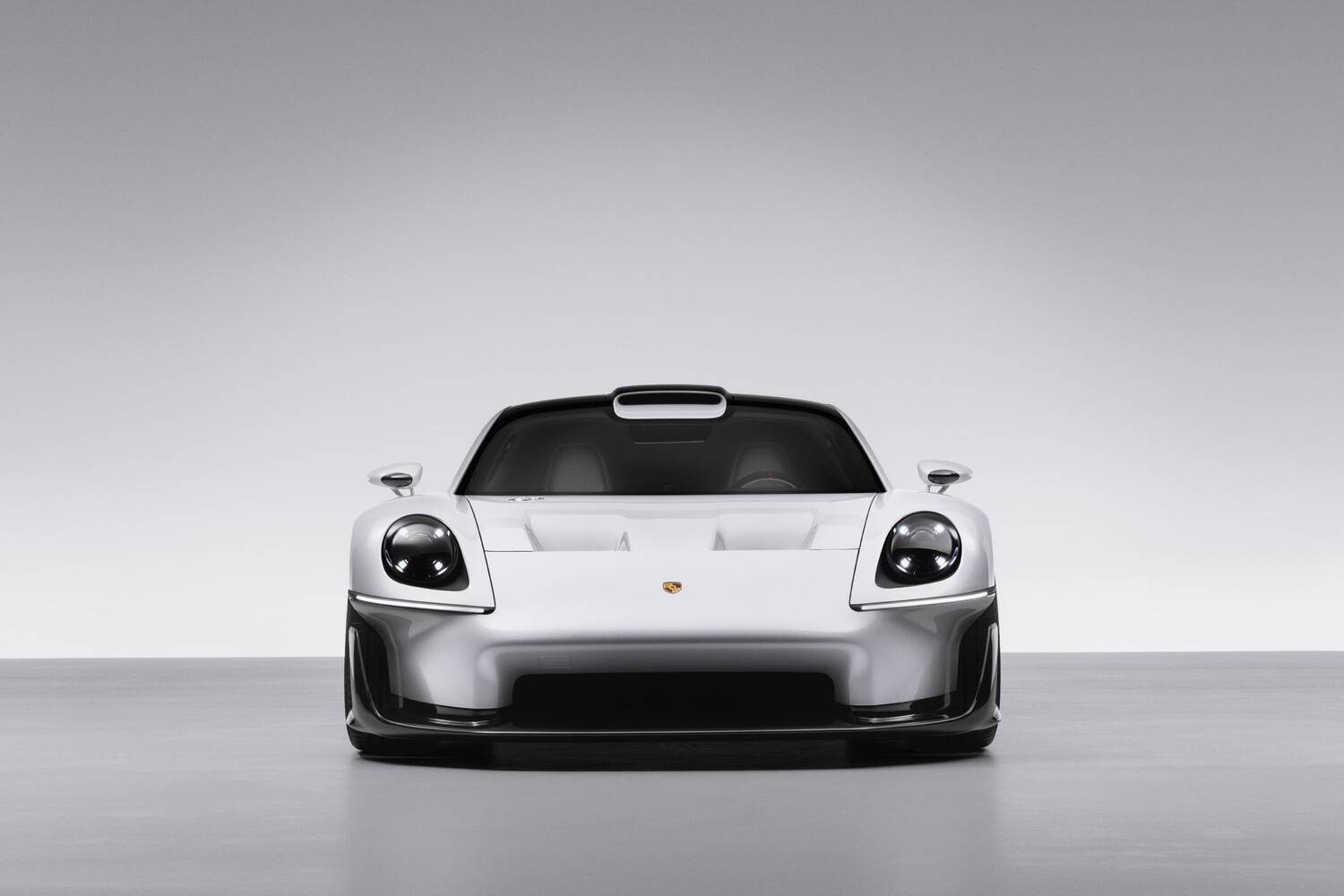
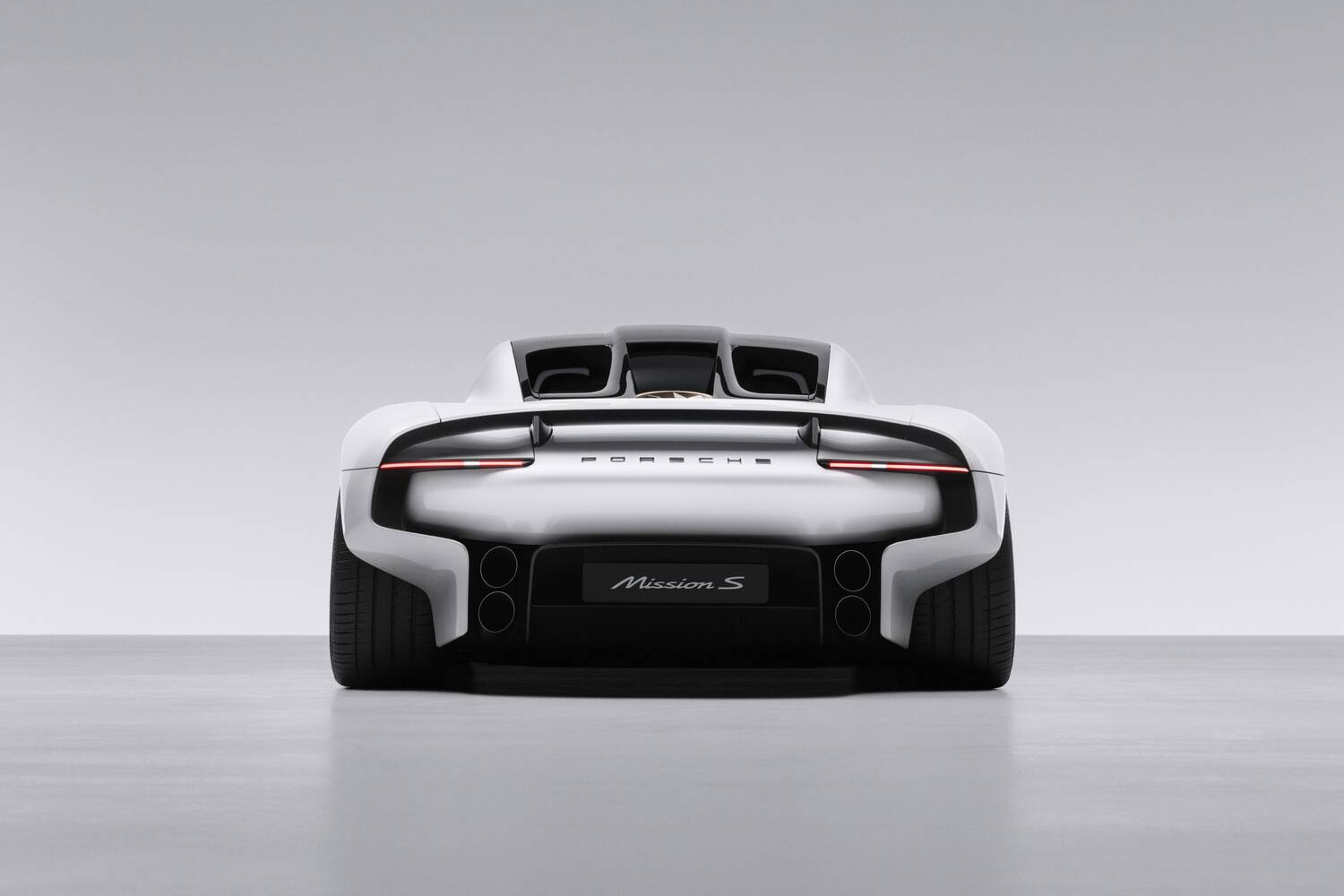
Oh yes. The Mission S is, first and foremost, very obviously a Porsche, with a clear relationship with the 911, in design terms, yet nothing is shared between the cars. We see hints of the V10-engined Carrera GT, the motorsport homologation GT1 and more than a nod to the Porsche 959 in the curve of the rear spoiler.
A thin line of LED light links the front and back of the Mission S and seems to horizontally separate the curvaceous upper half with the highly technical lower portion. The design hints at advanced aerodynamics front and rear, more akin to what you’d find on Porsche’s GT racers, while the air intake that spans from the top of the windscreen over the length of the cabin also smacks of motorsport.
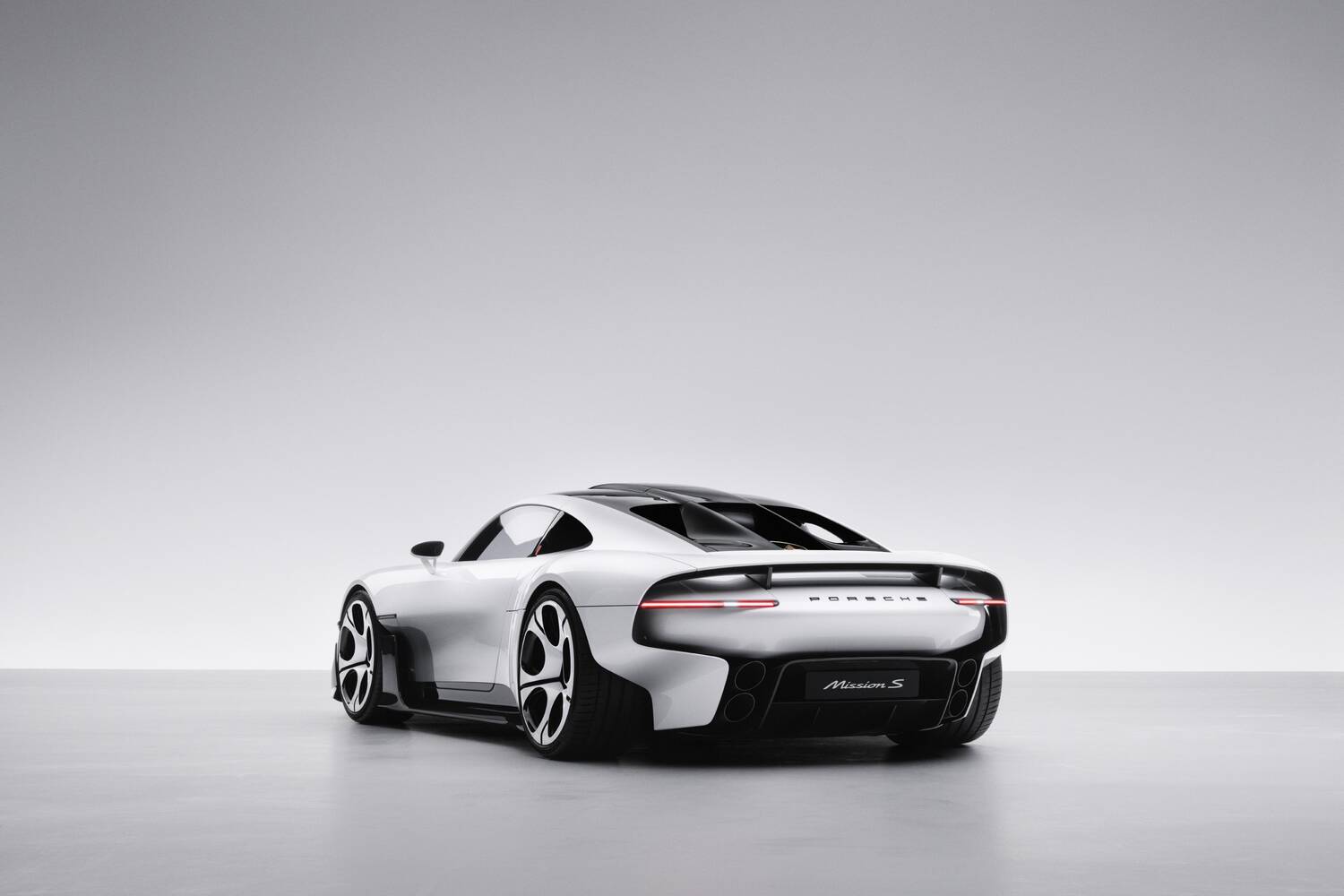
From the rear, the way the bodywork protrudes through the outer section calls to mind special Porsches of the past as well, being both modern and retro at the same time somehow.
Is that why there’s a picture of the Porsche 550 in the gallery?
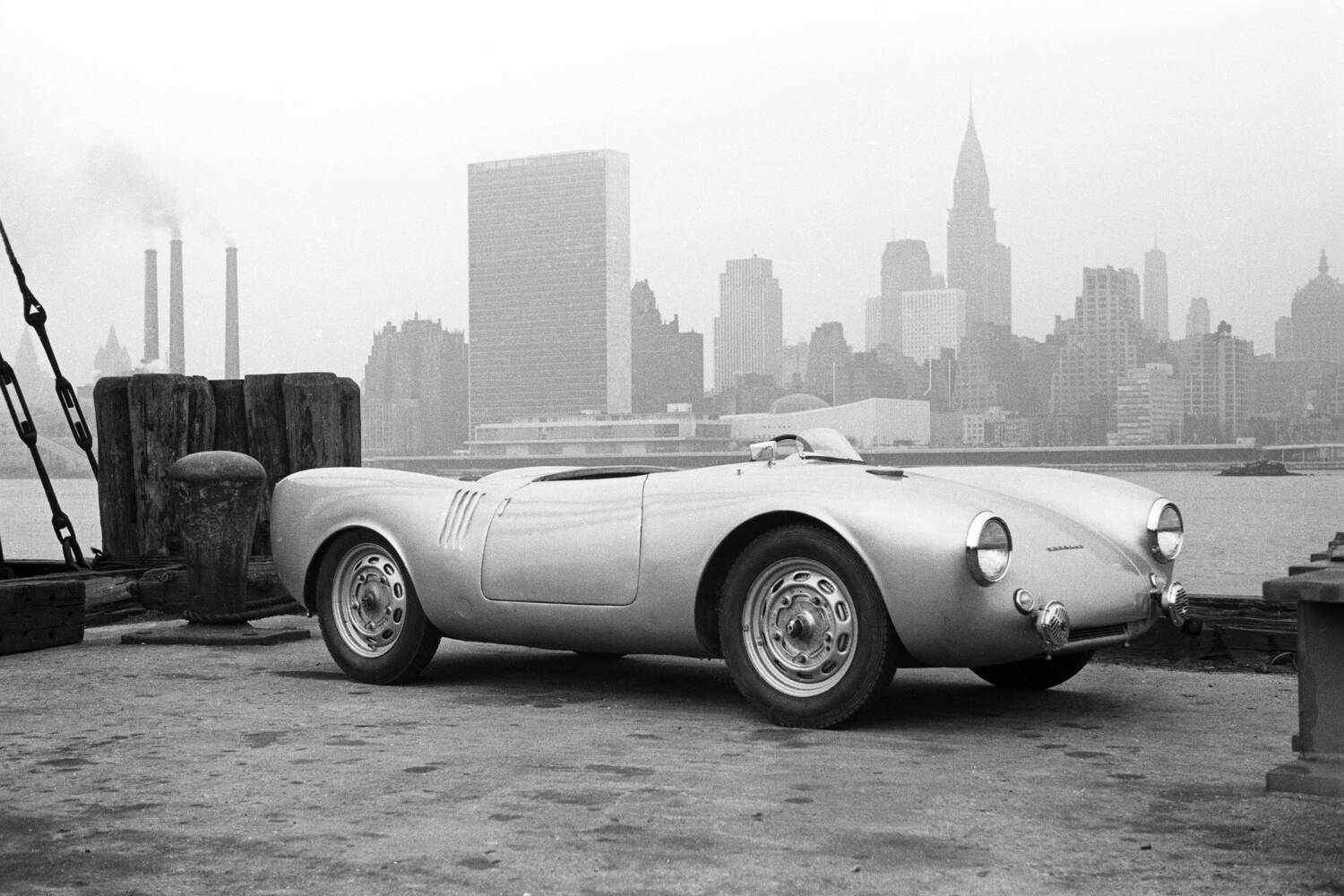
Sort of, though Porsche references that car’s relevance to what came next from the company rather than saying the Mission S will become a modern-day interpretation of it (although the 550 Spyder was mid-engined and Porsche says it was its first “super sports car.”)
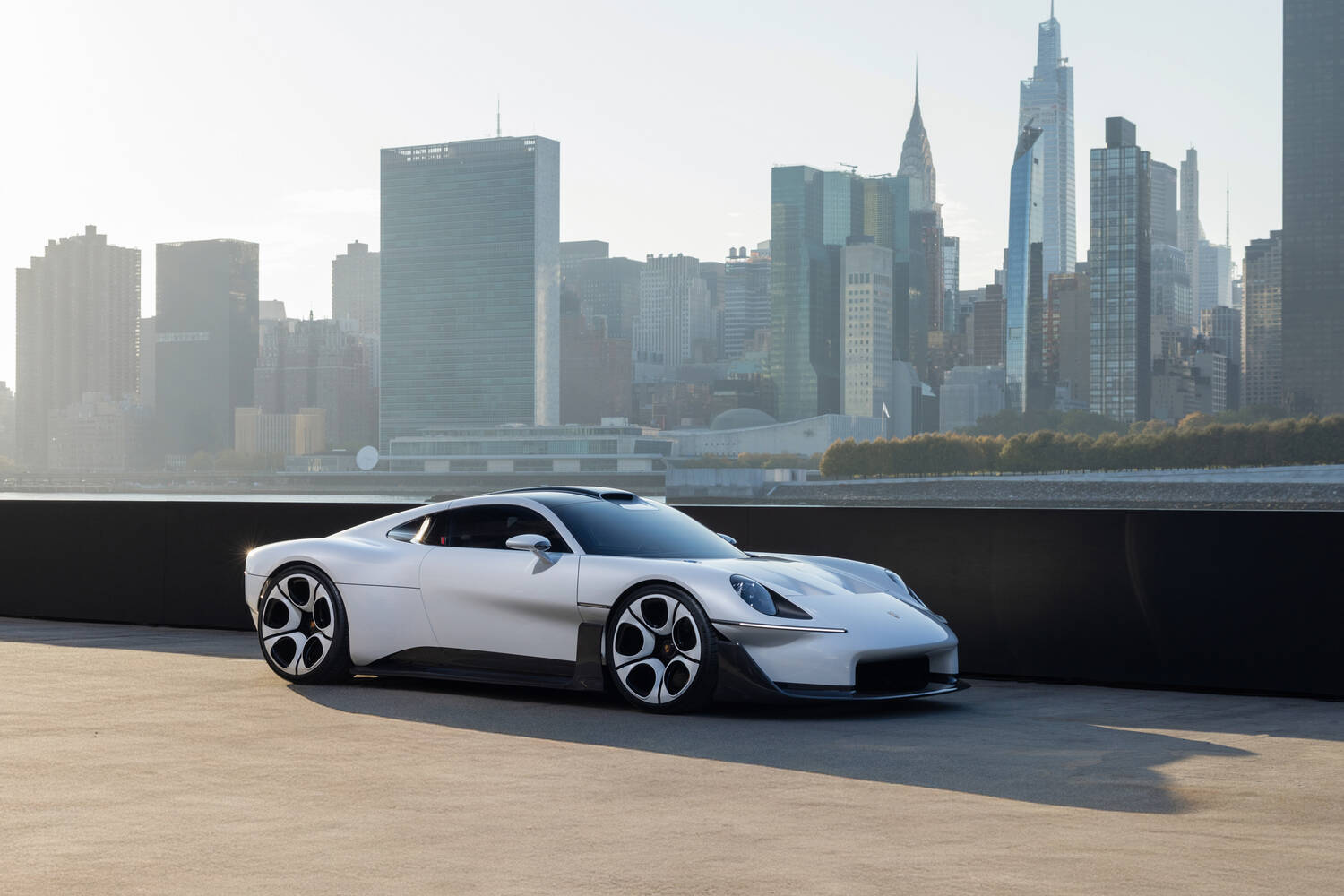
Neatly, this shot of the 550 Spyder in New York in 1953 was one of the first publicity pictures of the car to be released. And this is precisely where the Mission S was unveiled to the world.
If there is anything about this story we have not covered, you can avail of our expert advice service via the Ask Us Anything page.