

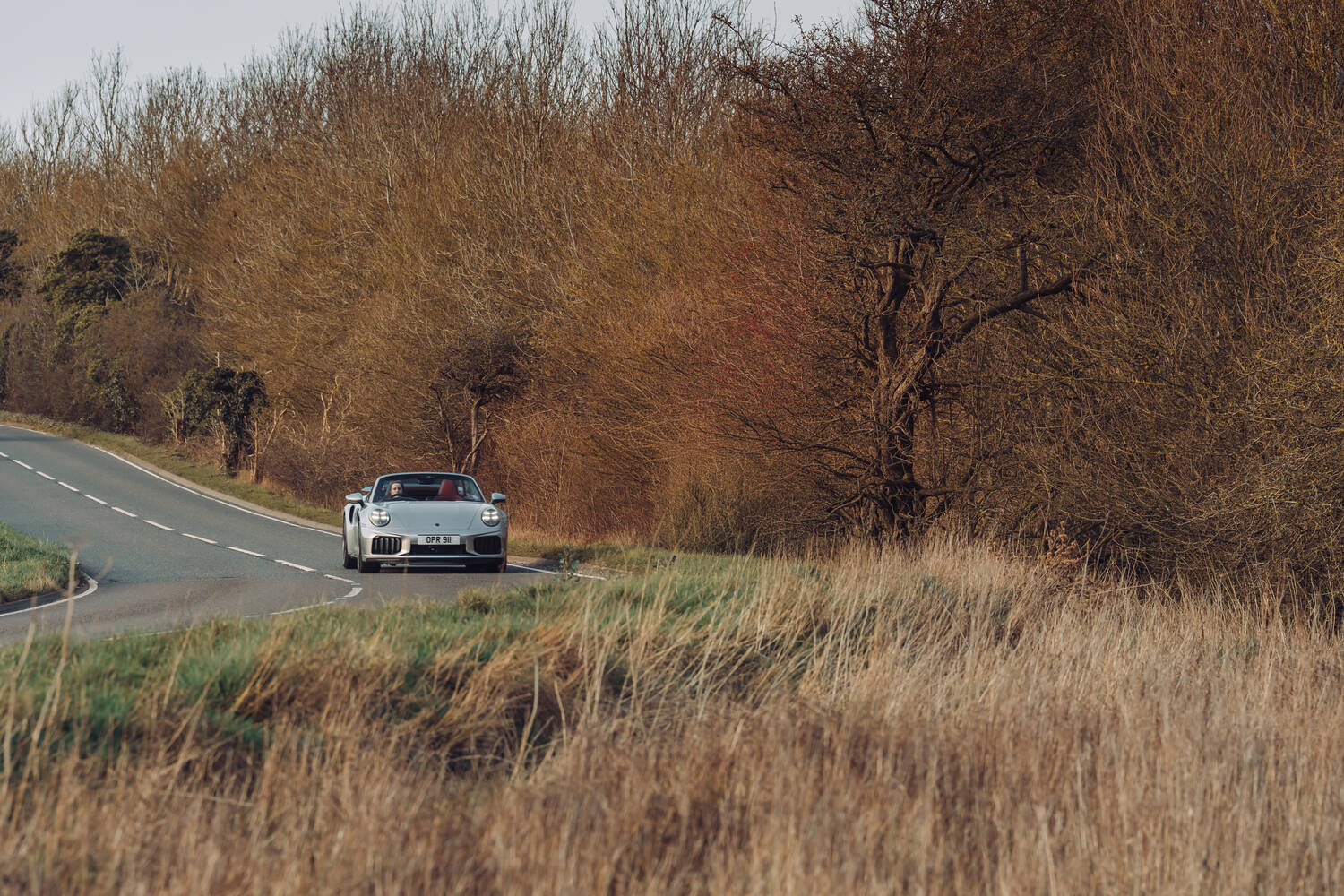

Exterior & design of the 2026 Porsche 911 Turbo S
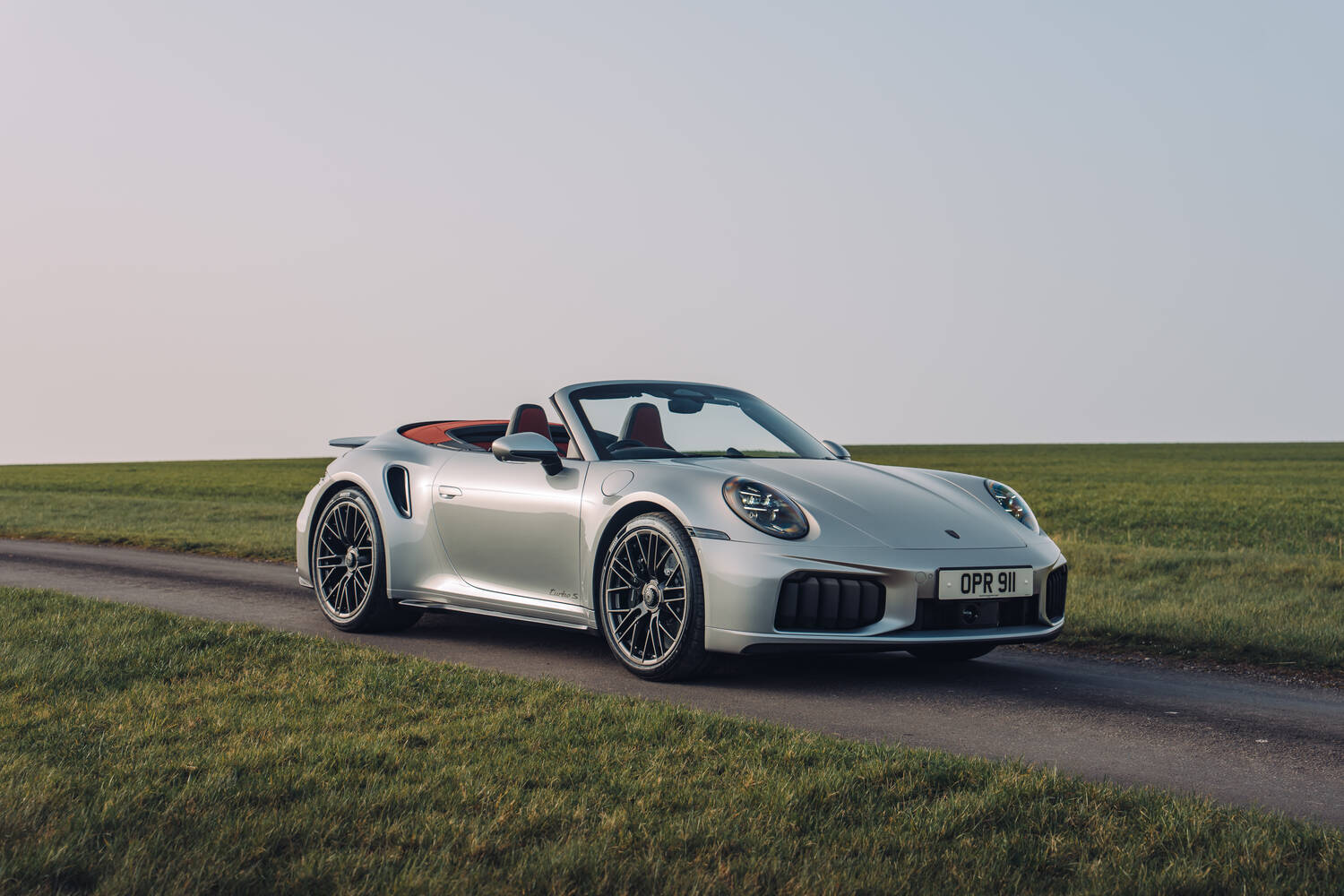
- Wider bodywork as befits a Turbo
- Has masses of presence
- Staggered fitment alloy wheels

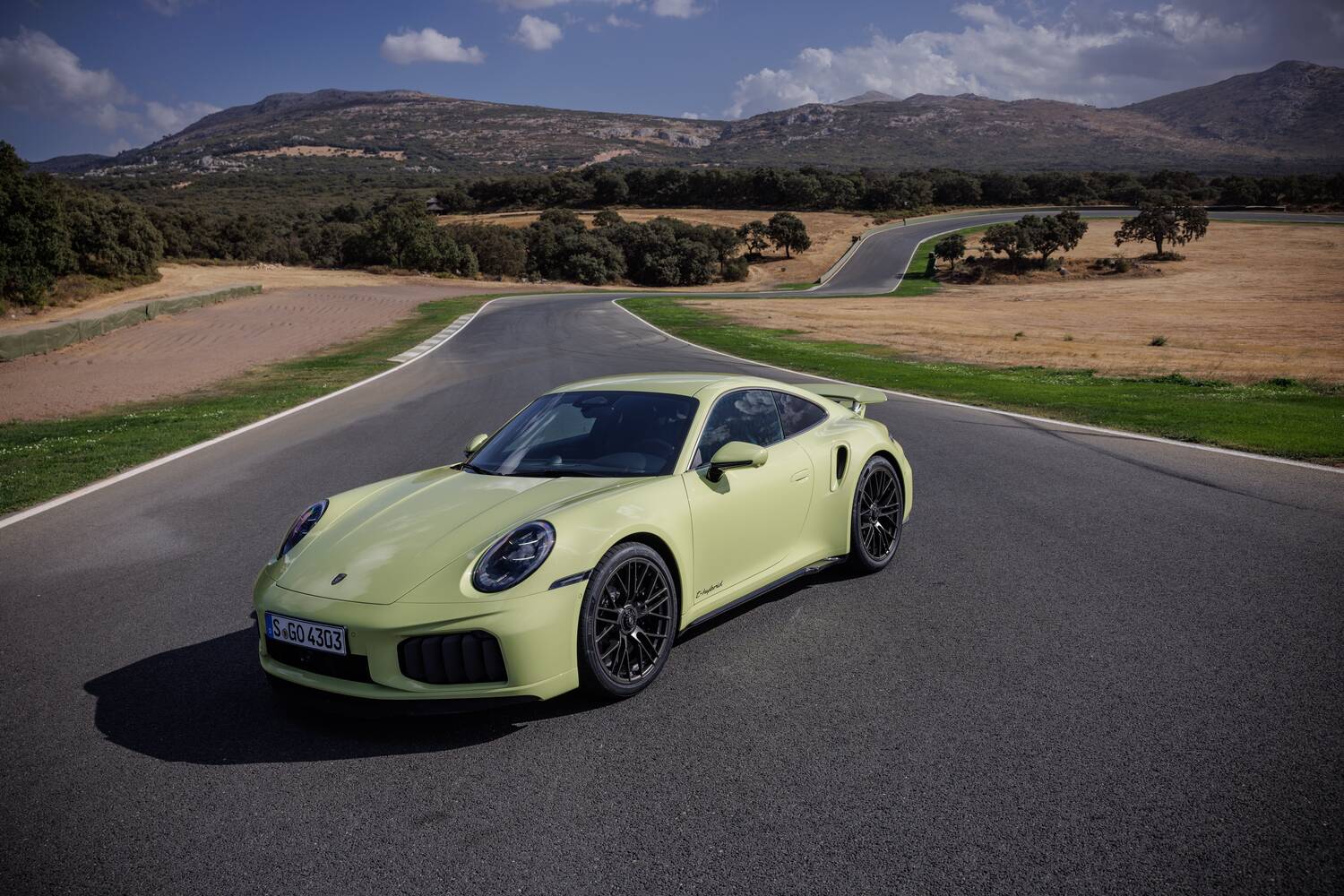
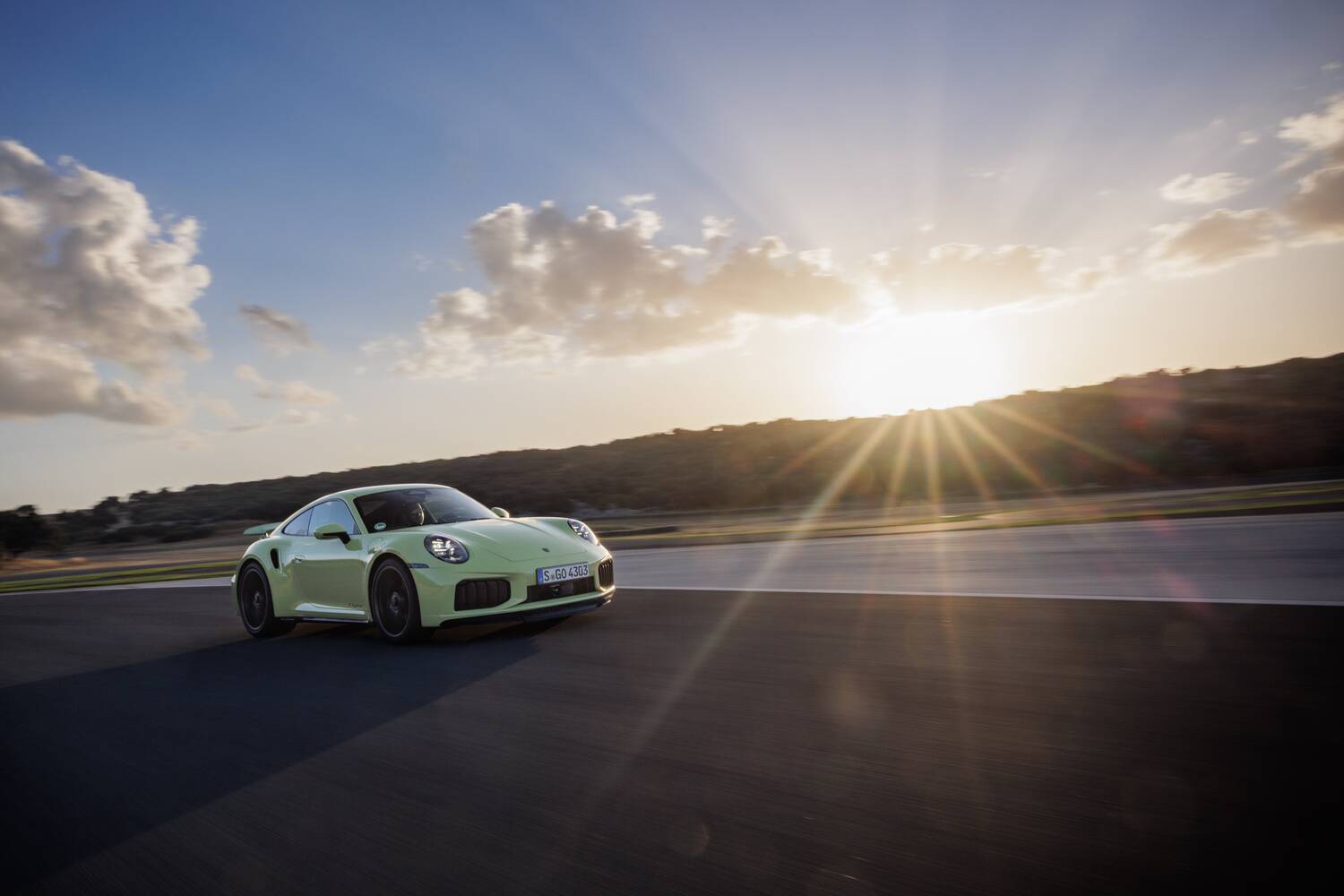
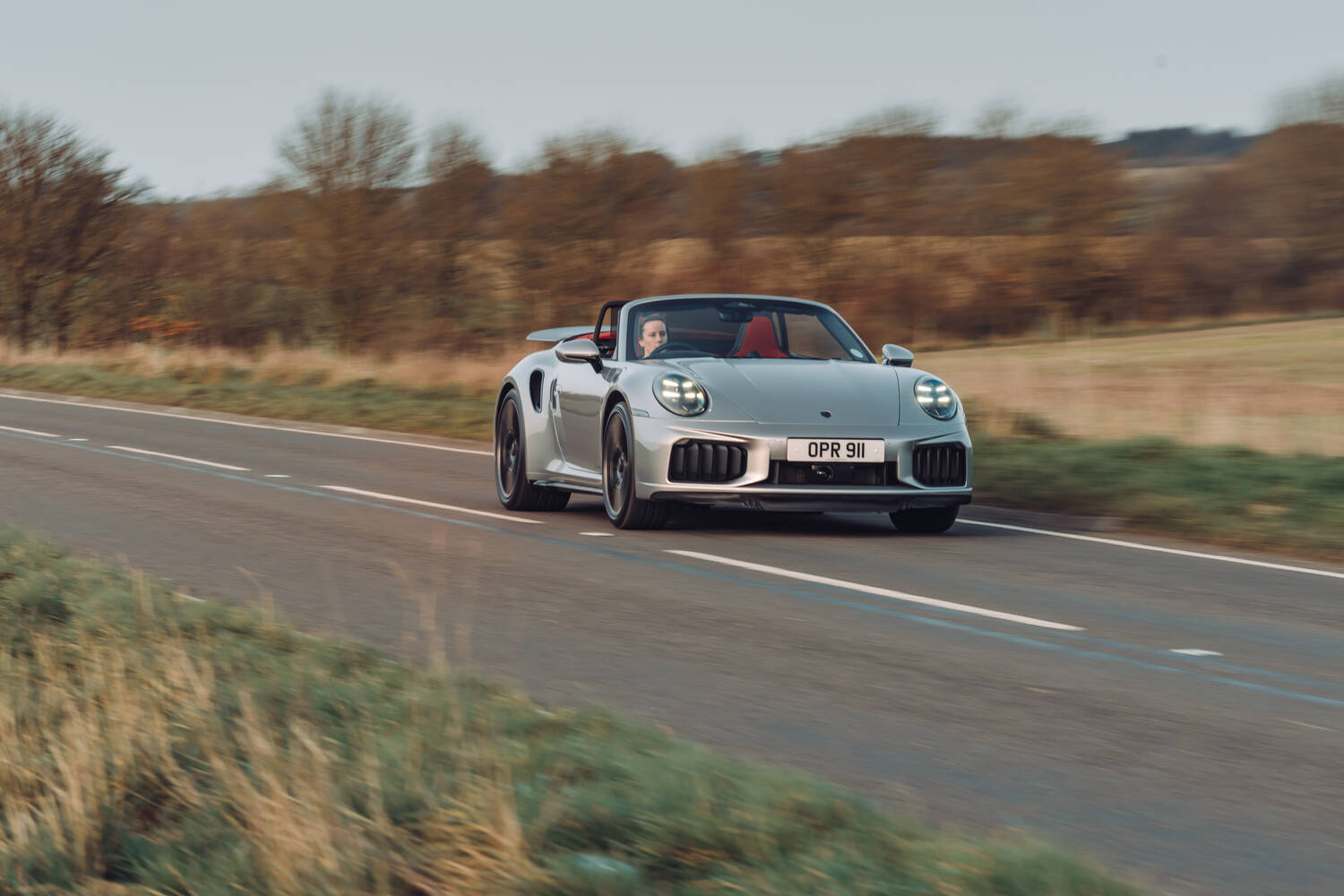
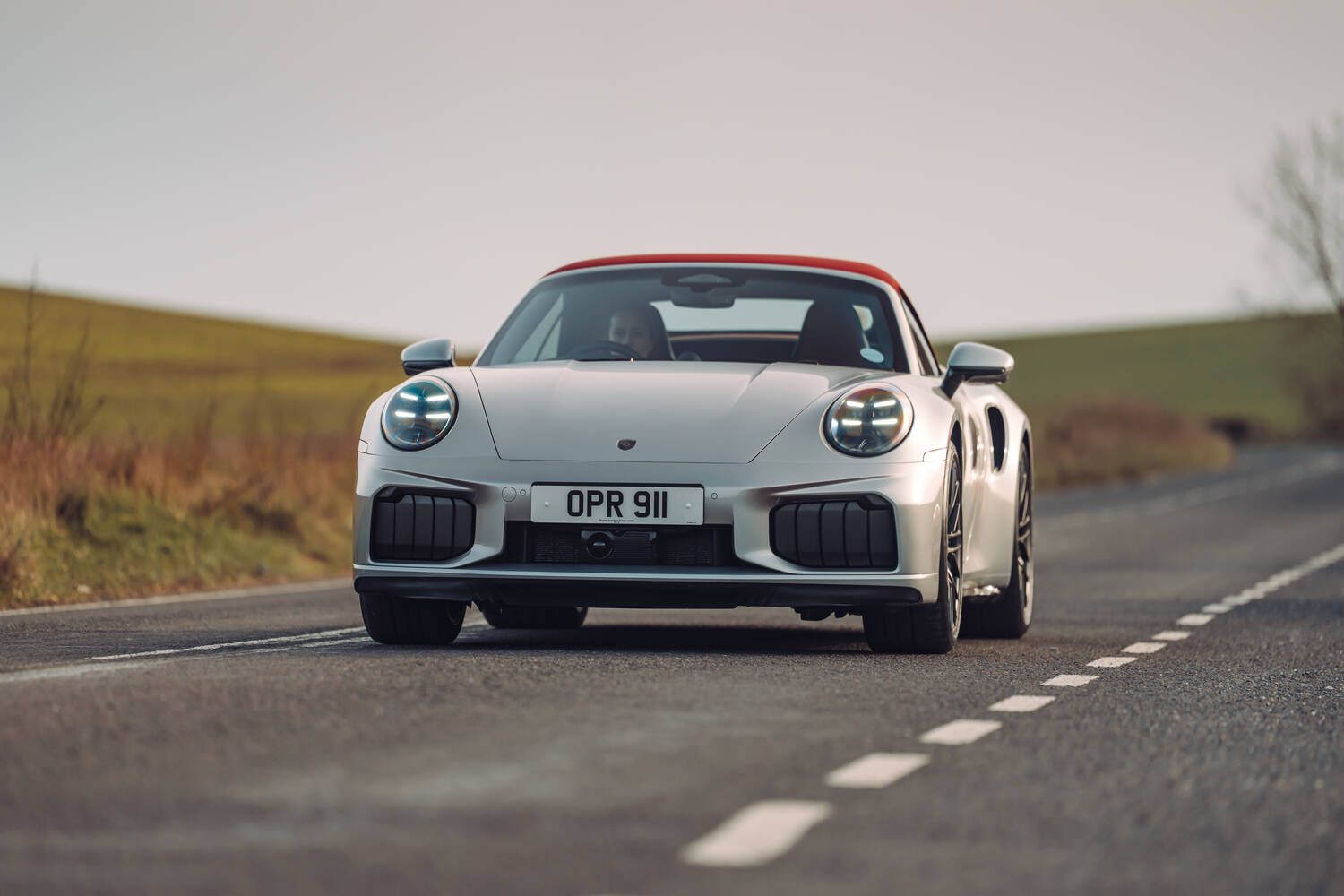
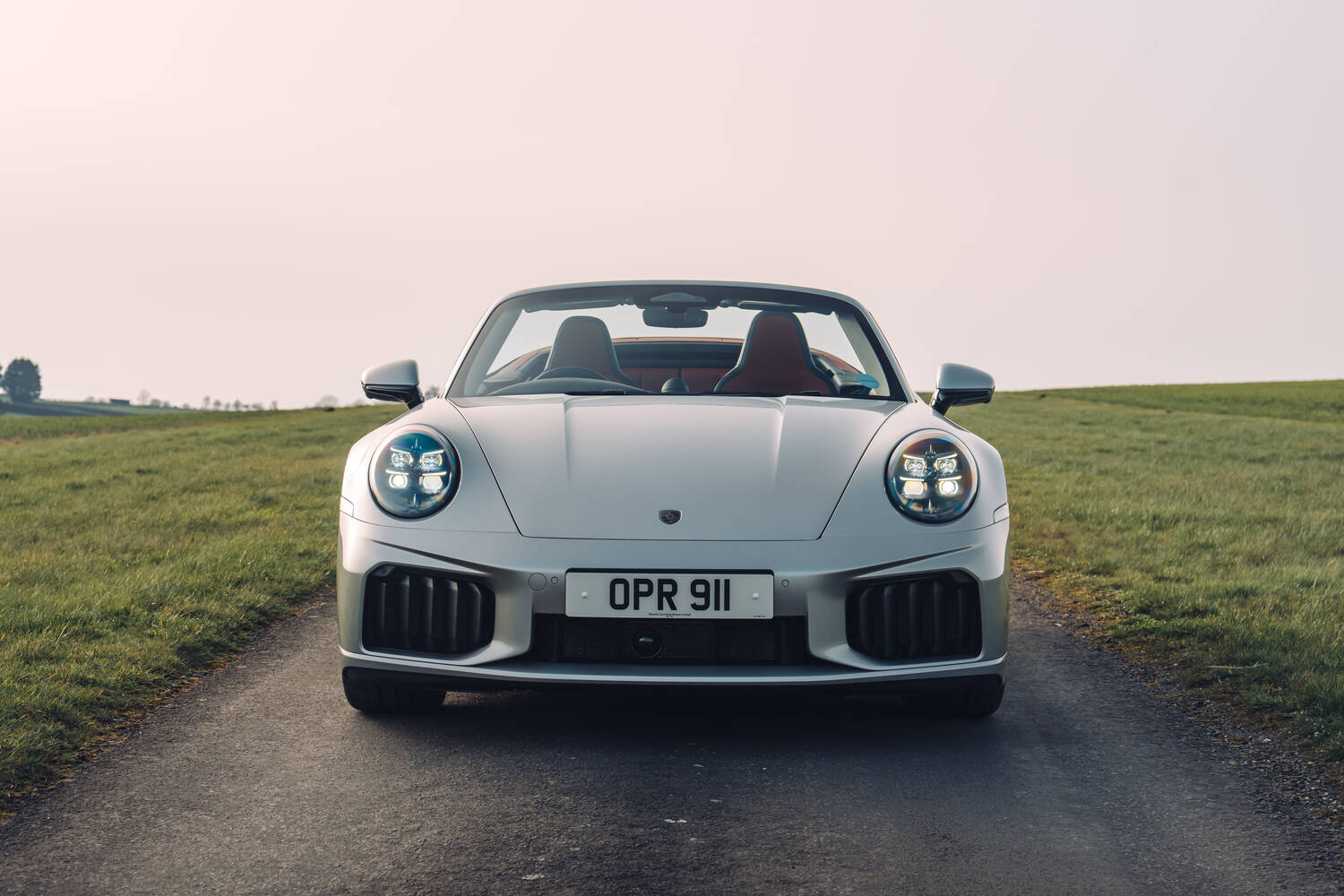
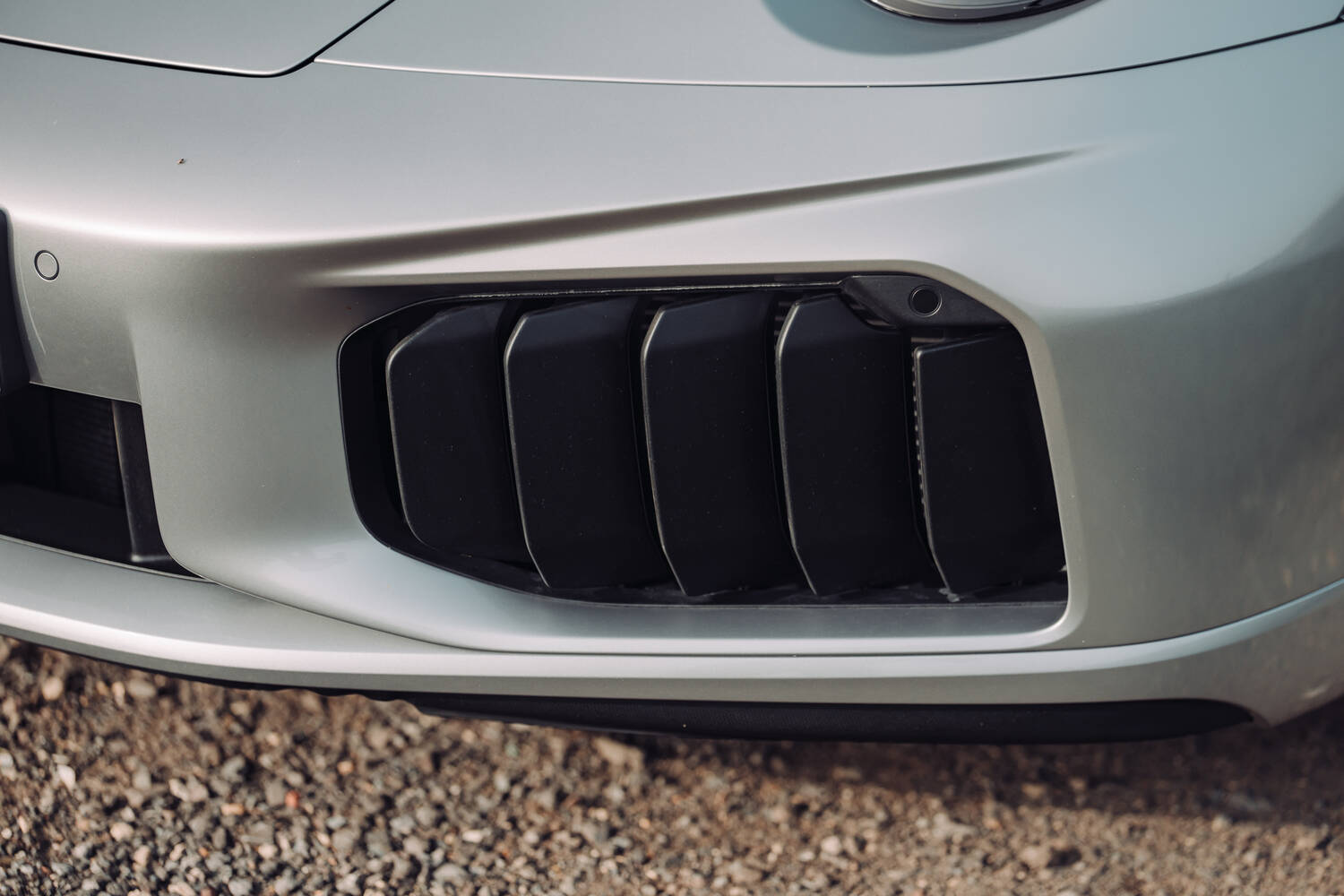
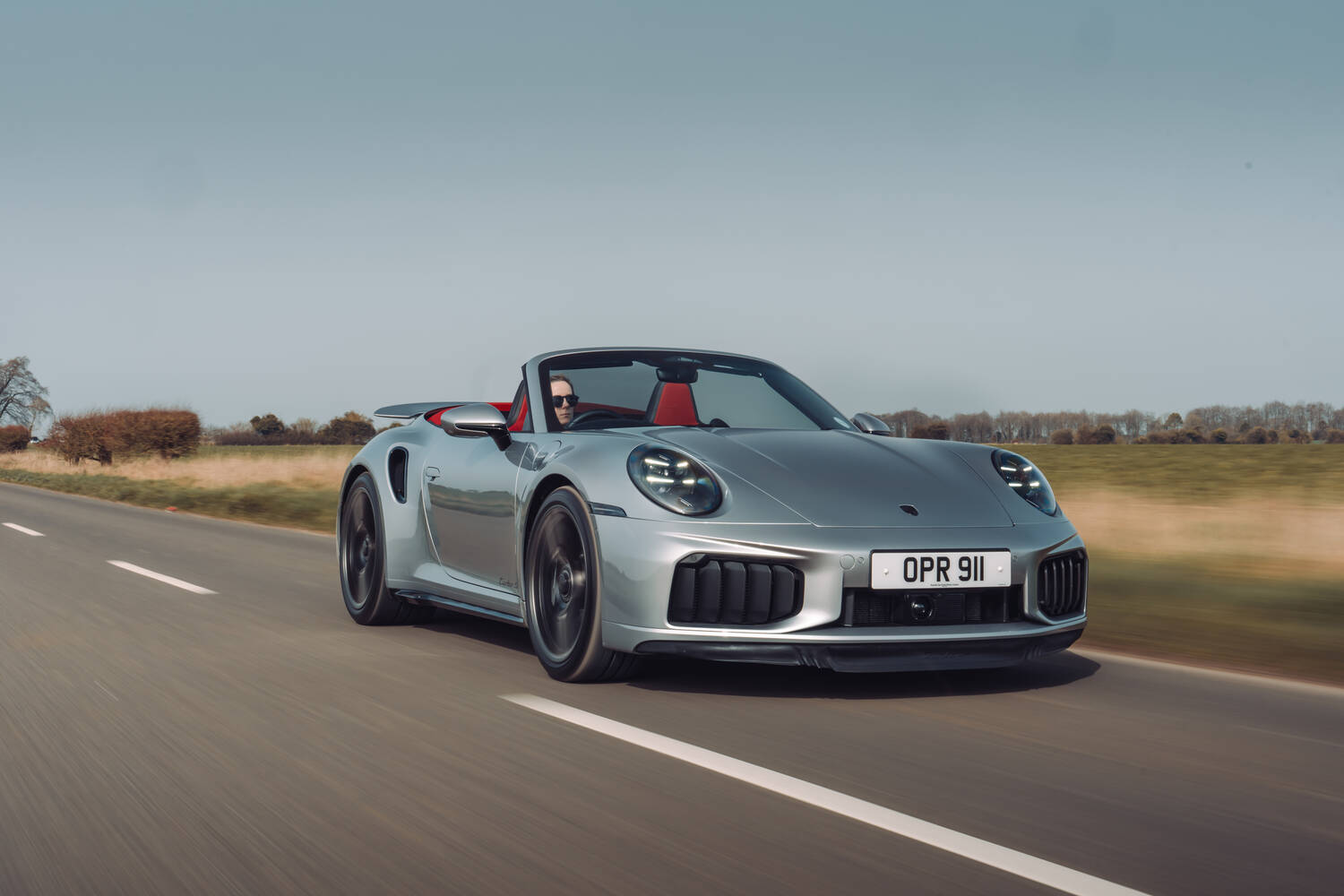
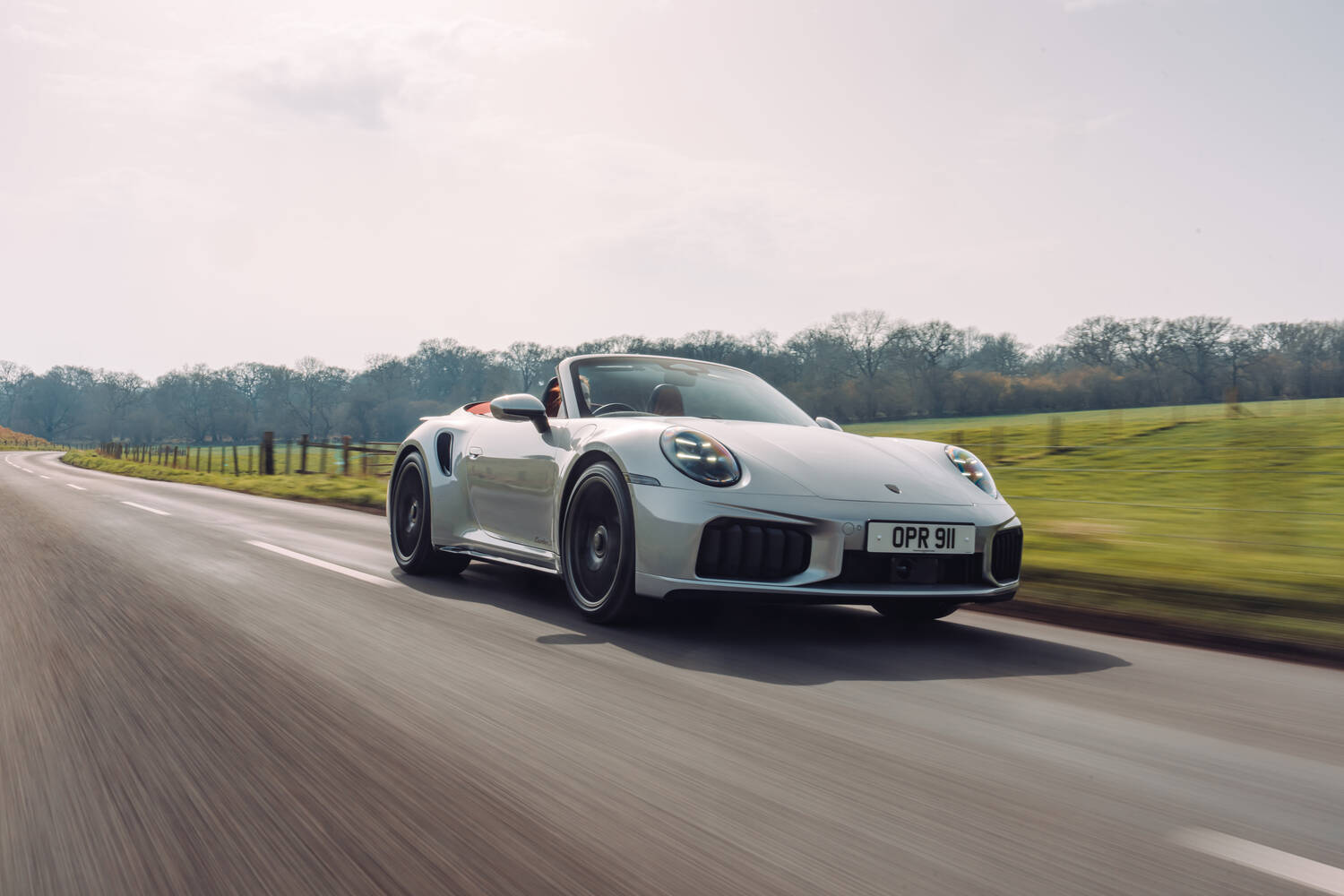
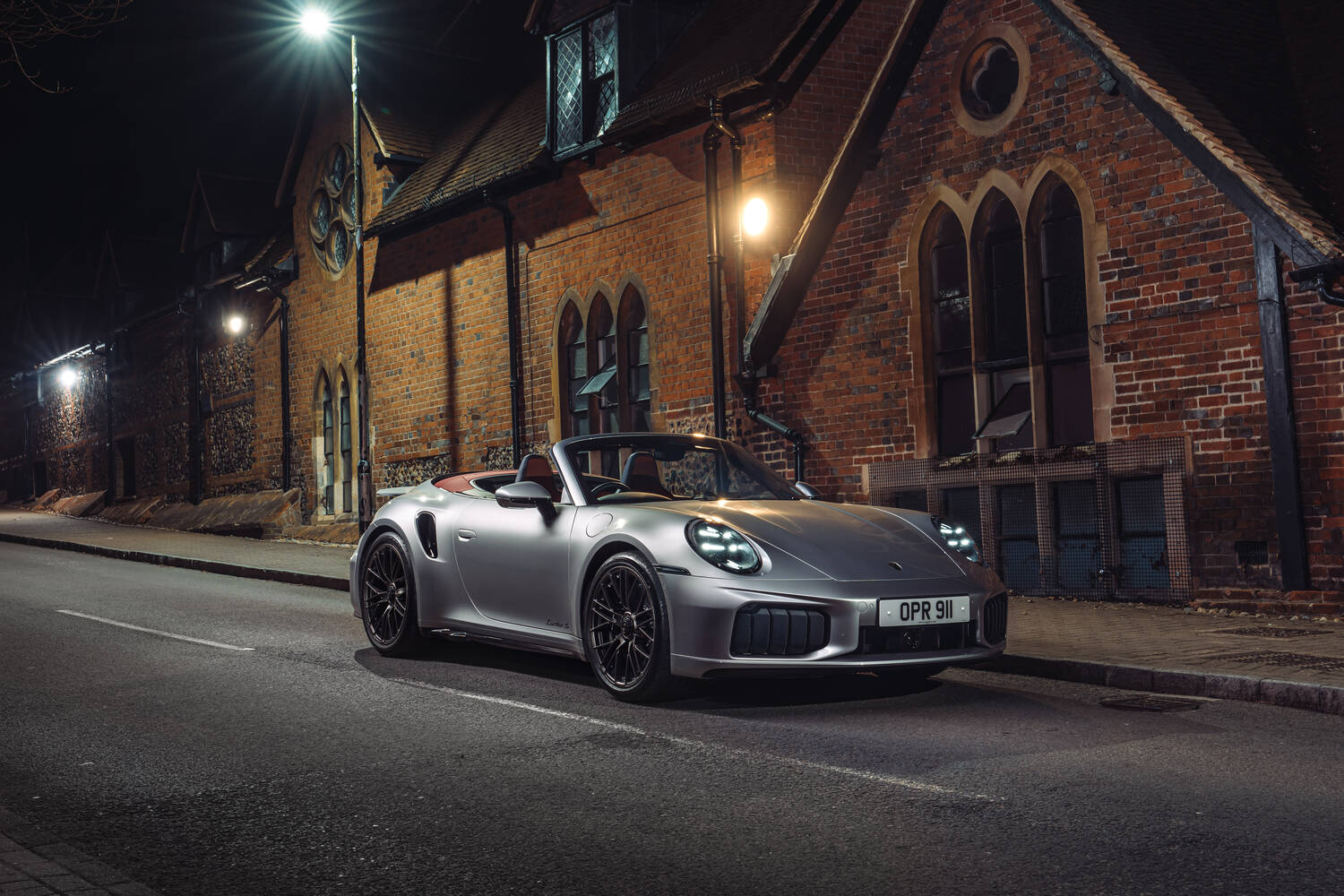
Along with the general tidying of the front-and-rear light signatures in the whole 992.2 family, the Turbo S has more space in its front bumper for larger air intakes.
These are active items which not only make sure the Porsche is slipping through the airflow as smoothly as it possibly can at any given moment, but they can also channel air to the massive, standard-fit Porsche Ceramic Composite Brakes (PCCB) for added cooling of the discs if needed.

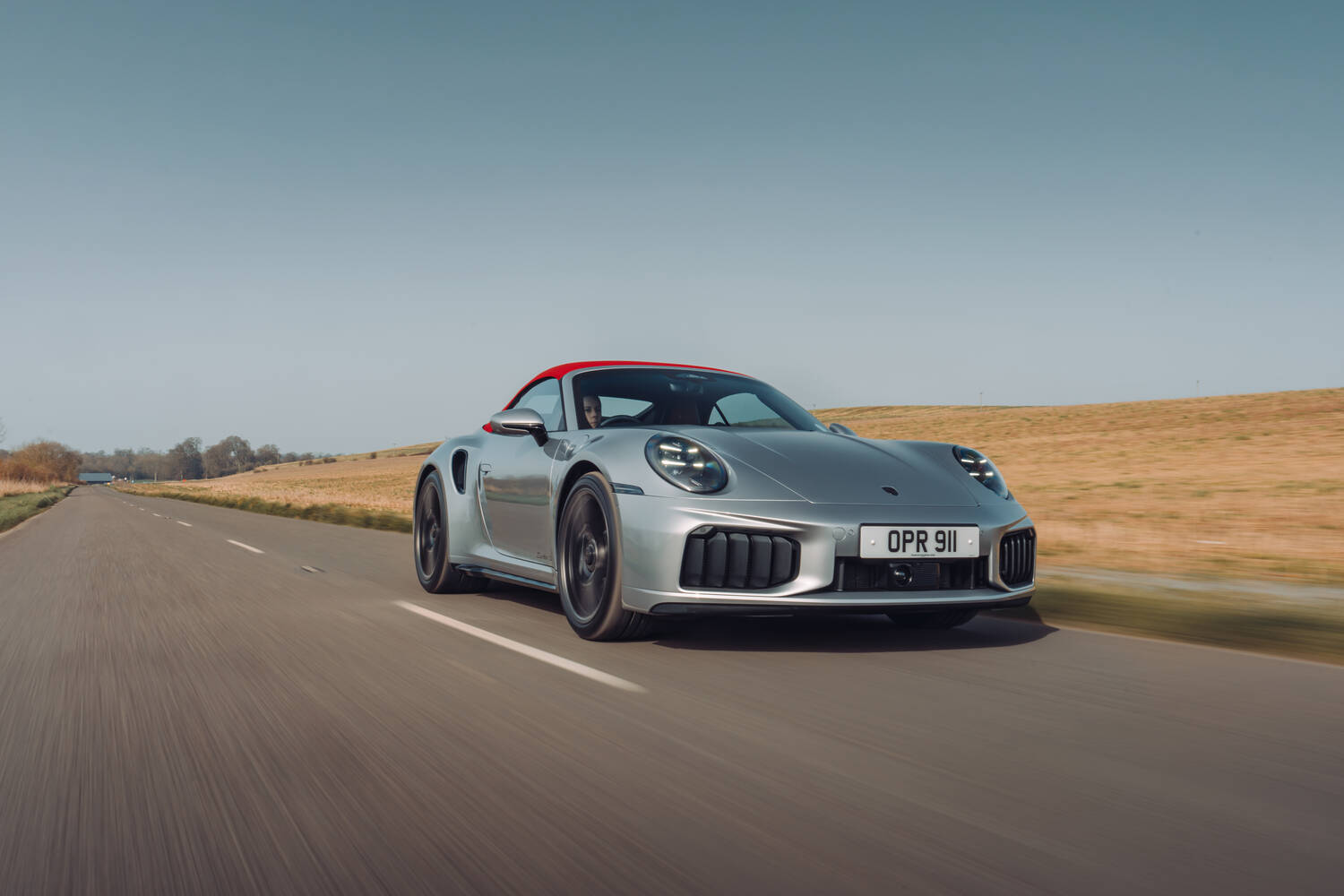
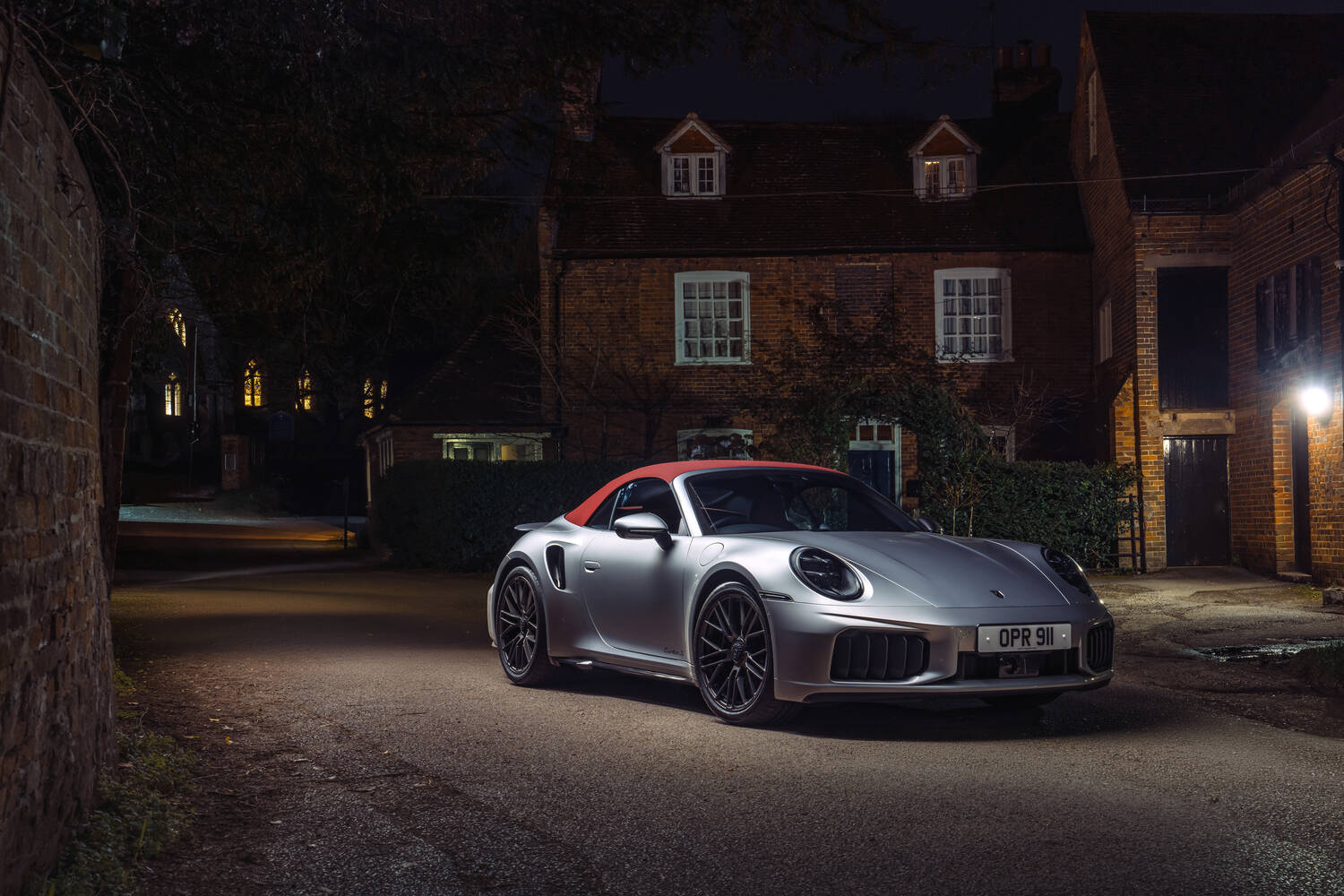
However, despite the fact the bodywork is more distended compared to a 911 Carrera at the front (+45mm) than at the rear (+20mm) on the Turbo S, the car can look quite demure if you approach it from the front three-quarter angle.
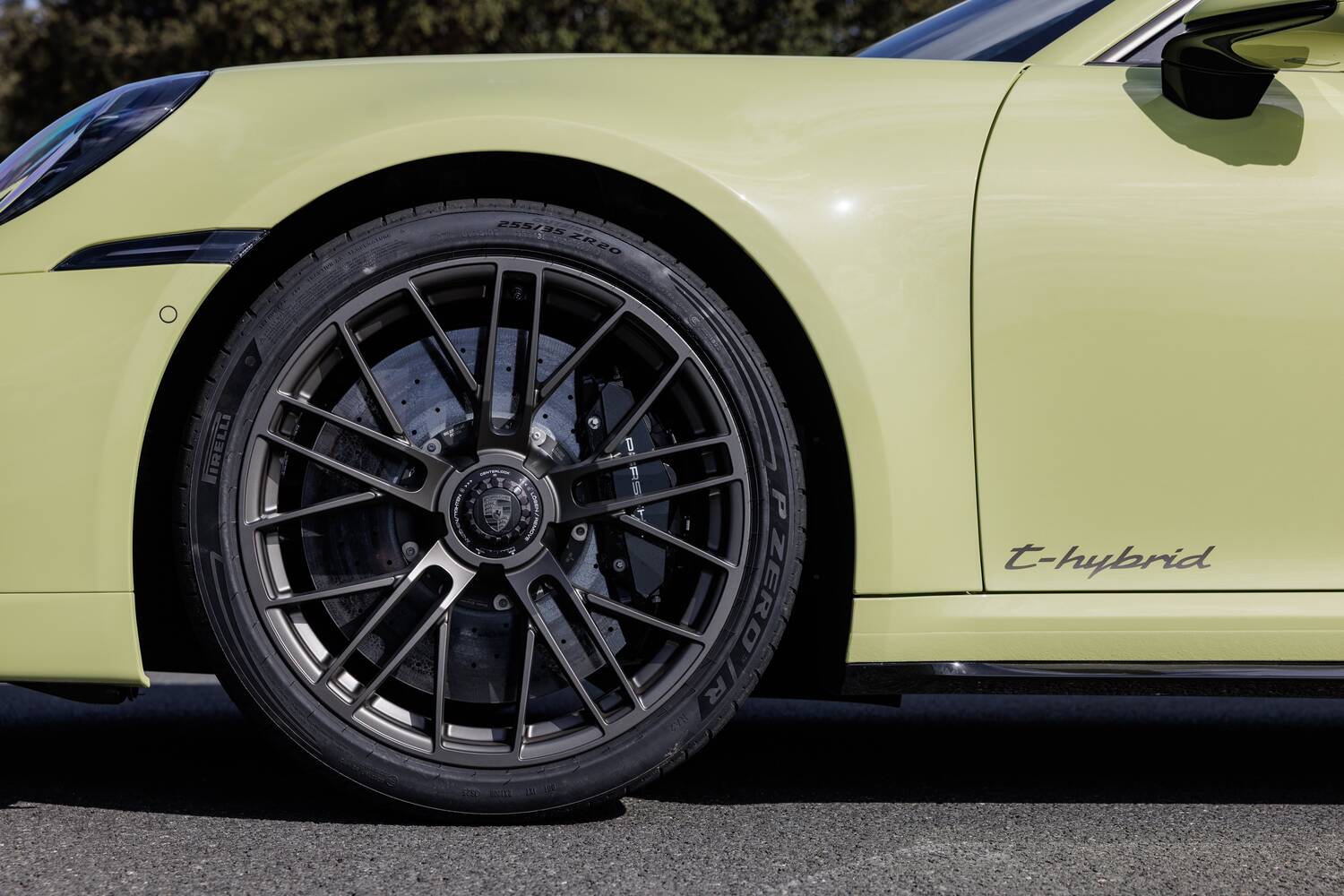
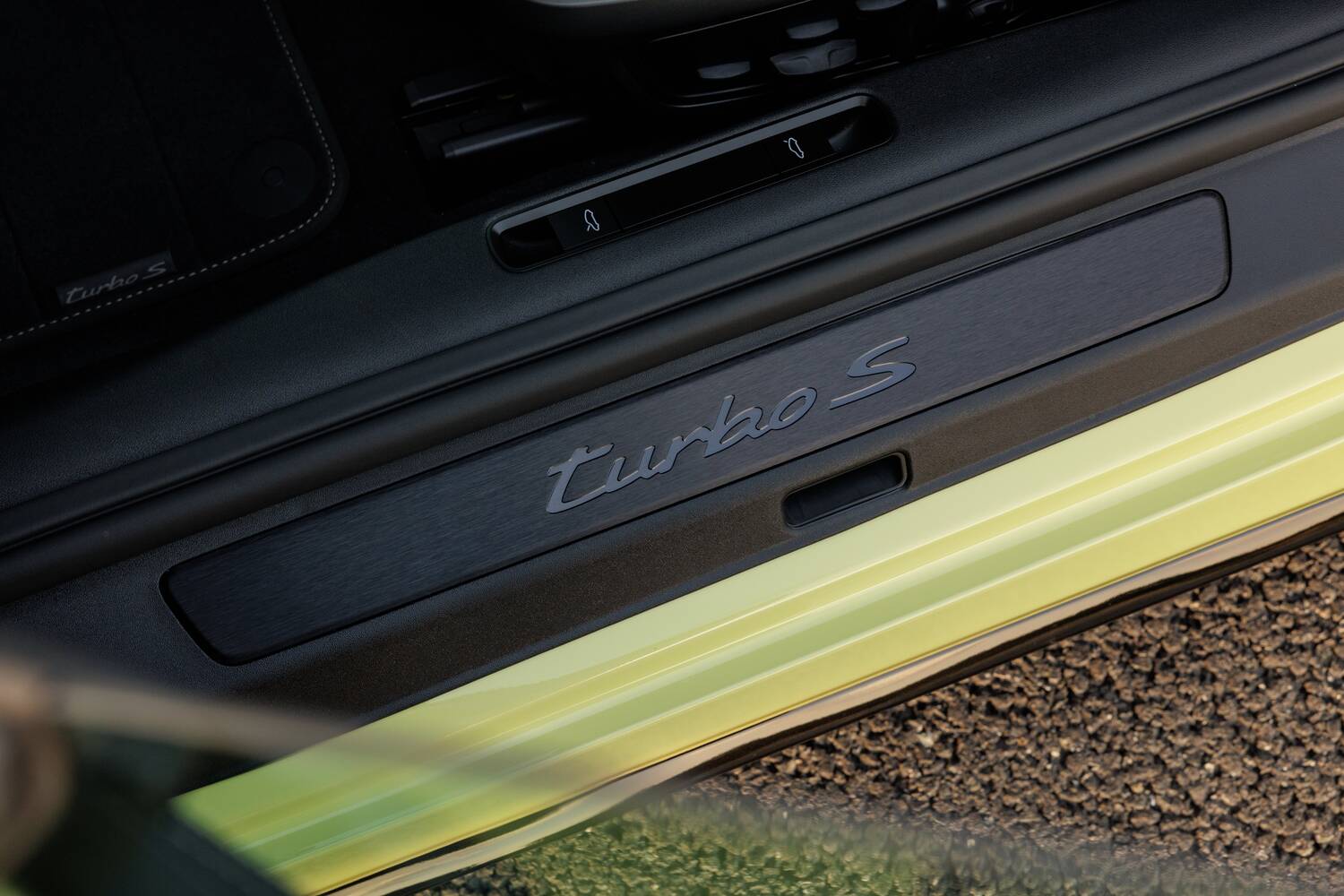
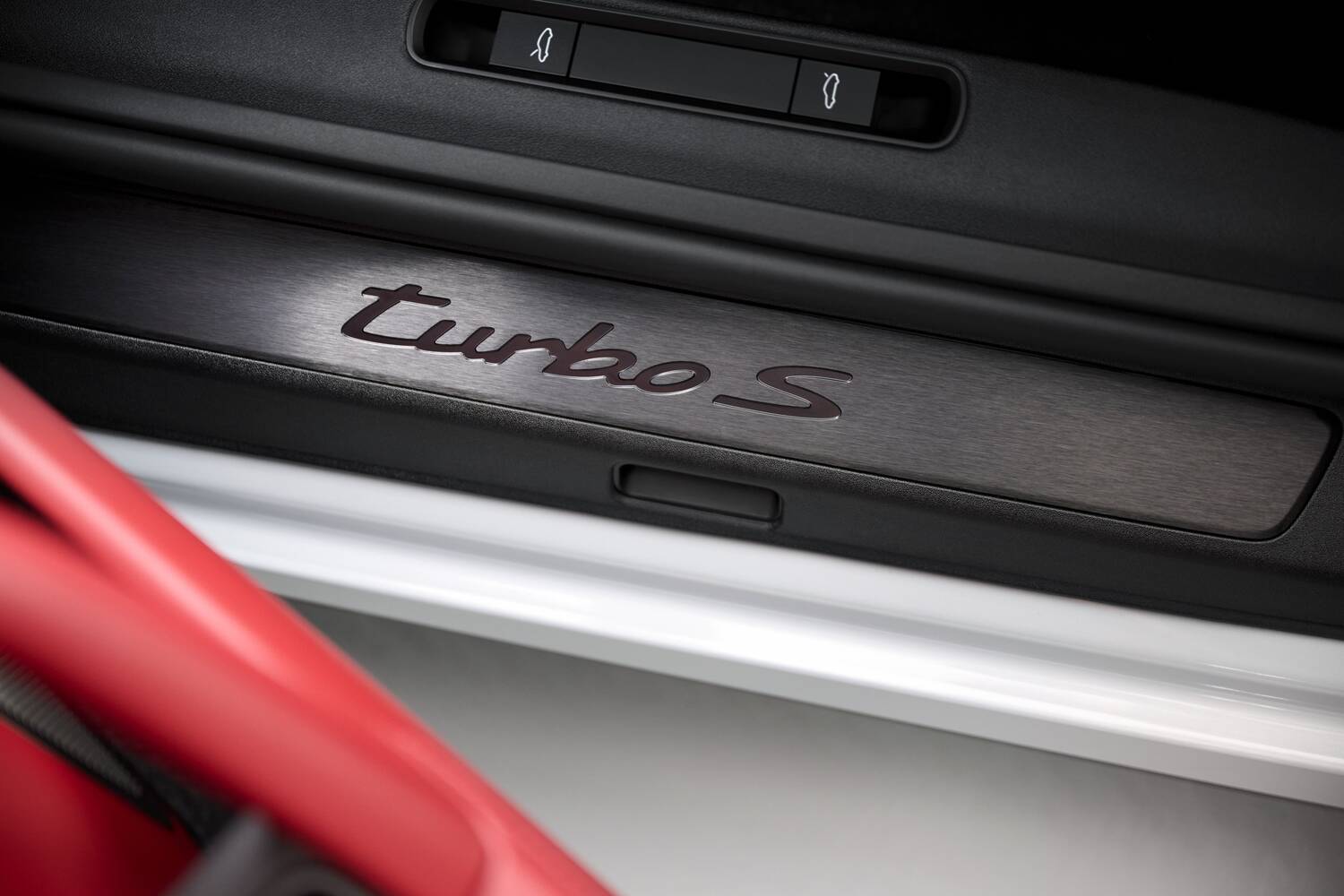
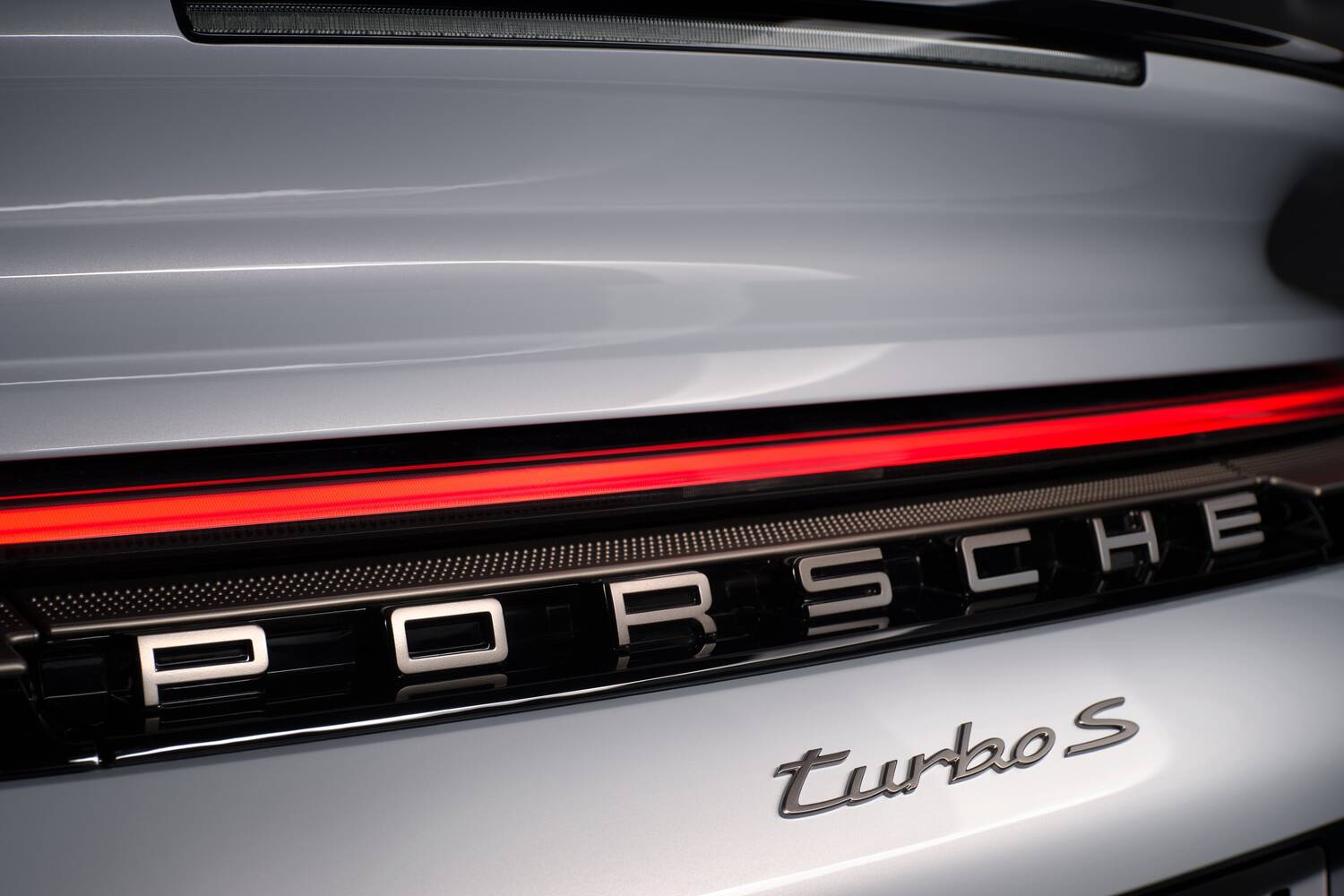
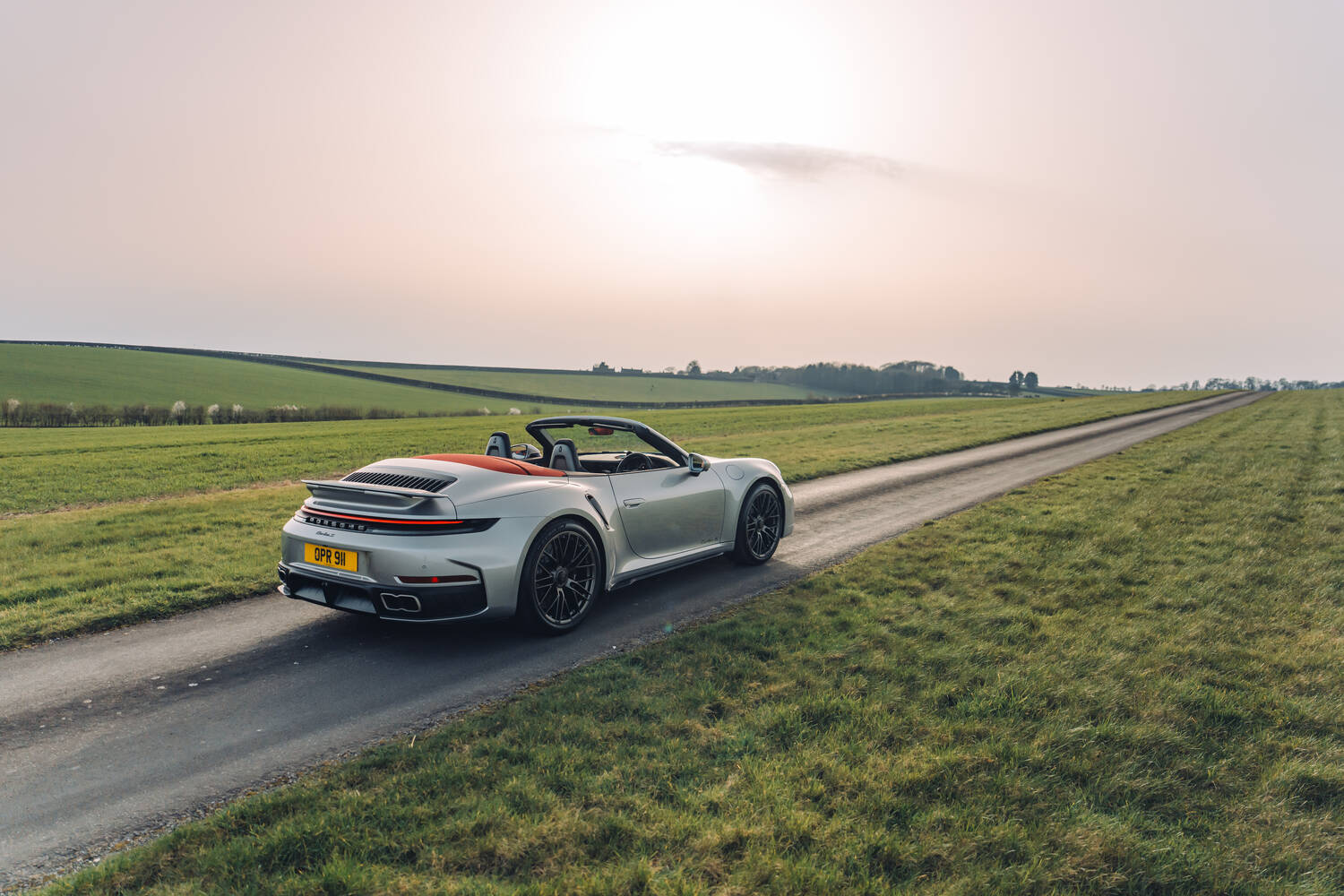
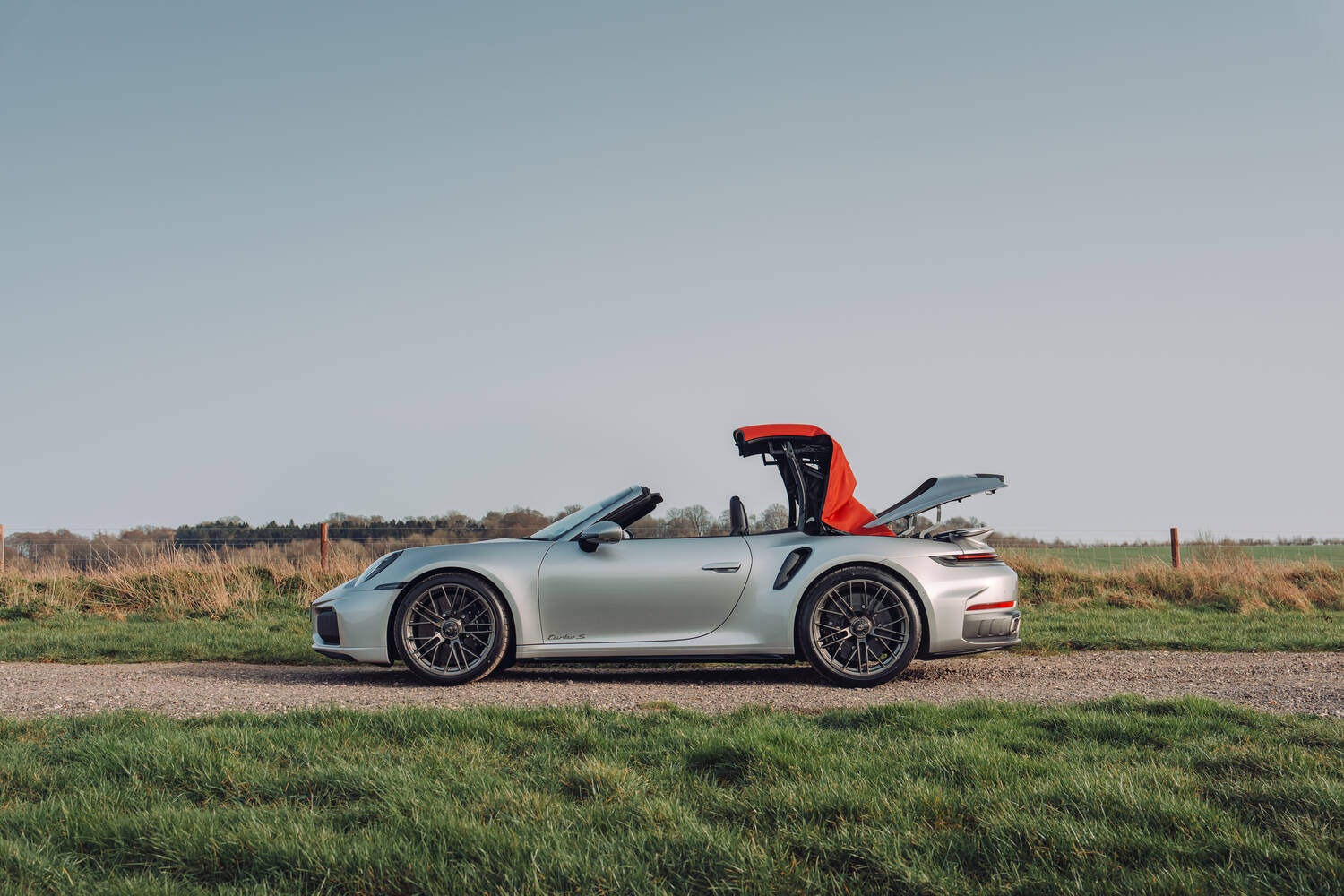
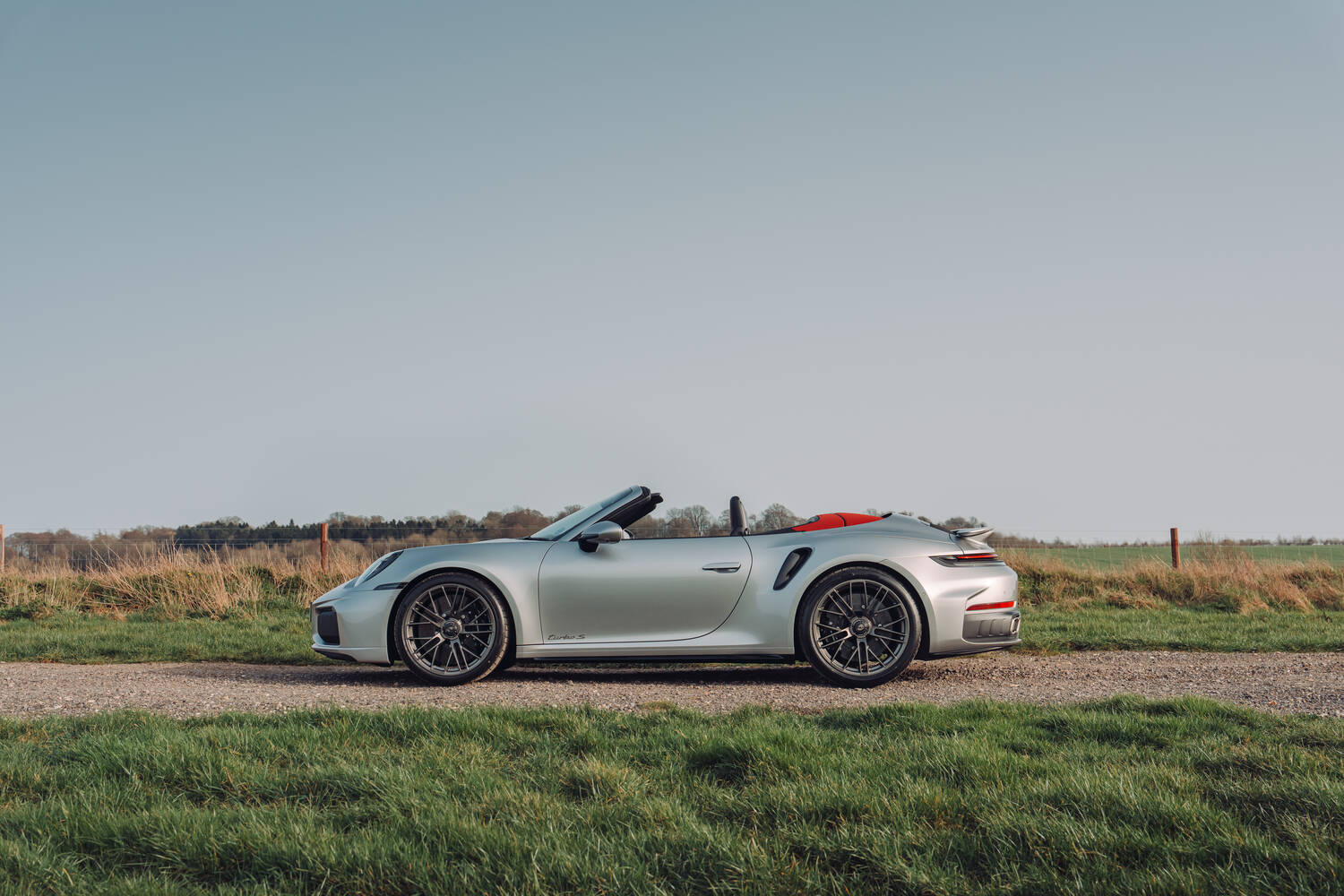
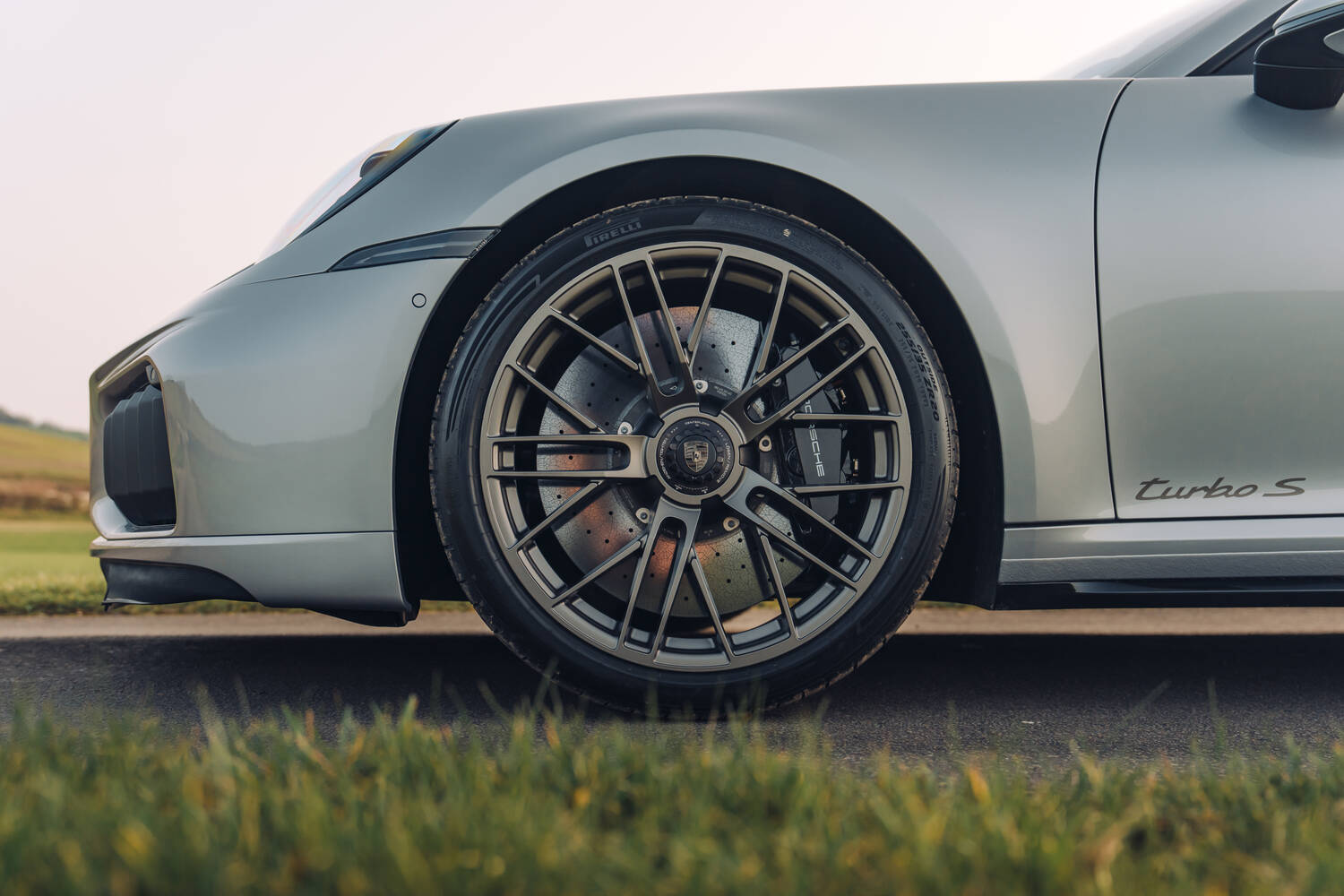
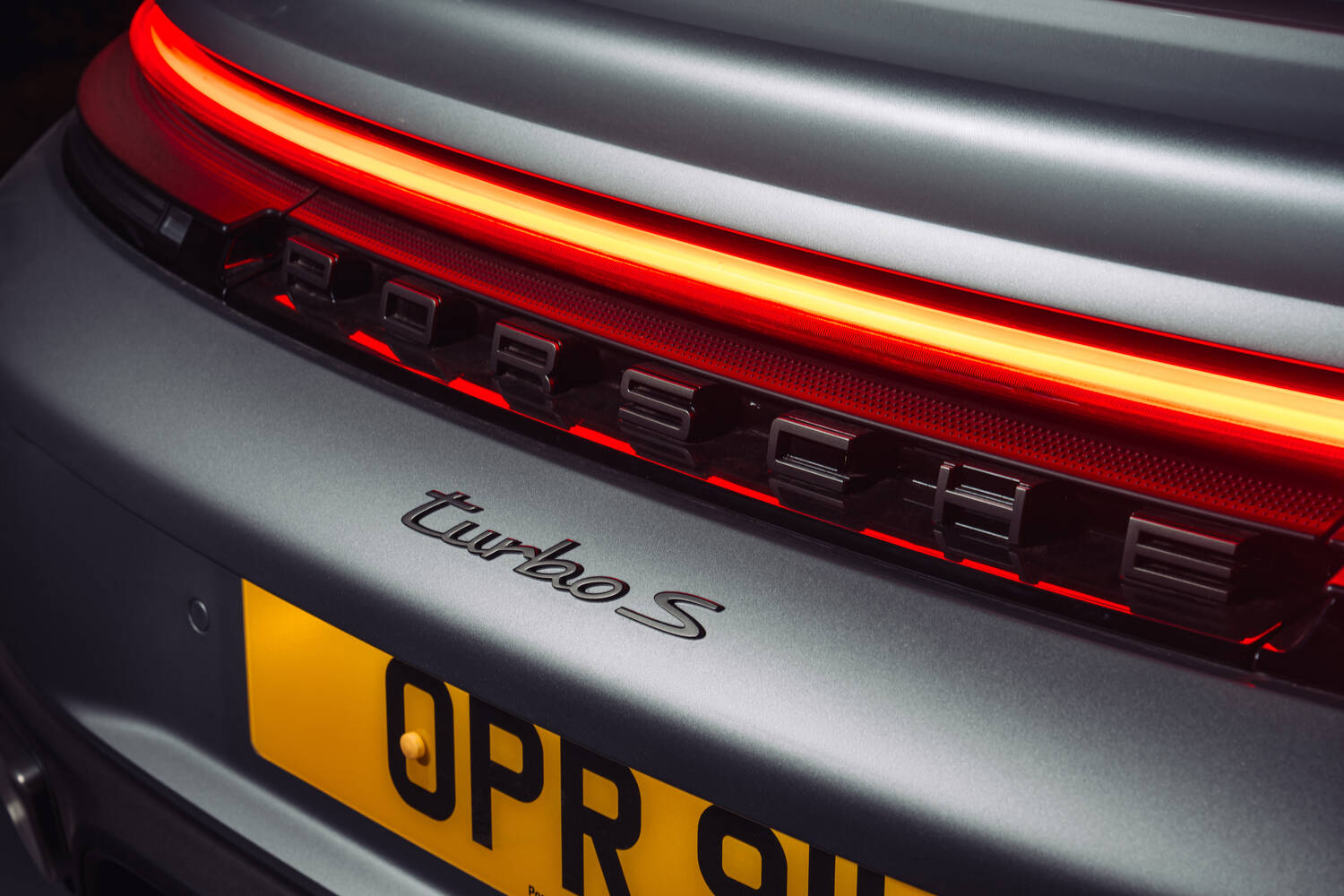
A lot of the other detailing, such as discreet 'Turbo S' emblems on the lower-door area (which can be swapped out for 'T-Hybrid' or even no graphics at all as options) and the use of the grey-bronze Turbonite colour which is exclusive to Turbos in the wider Porsche portfolio, is similarly subtle, so really what marks this 700hp-plus 911 out is at the rear.
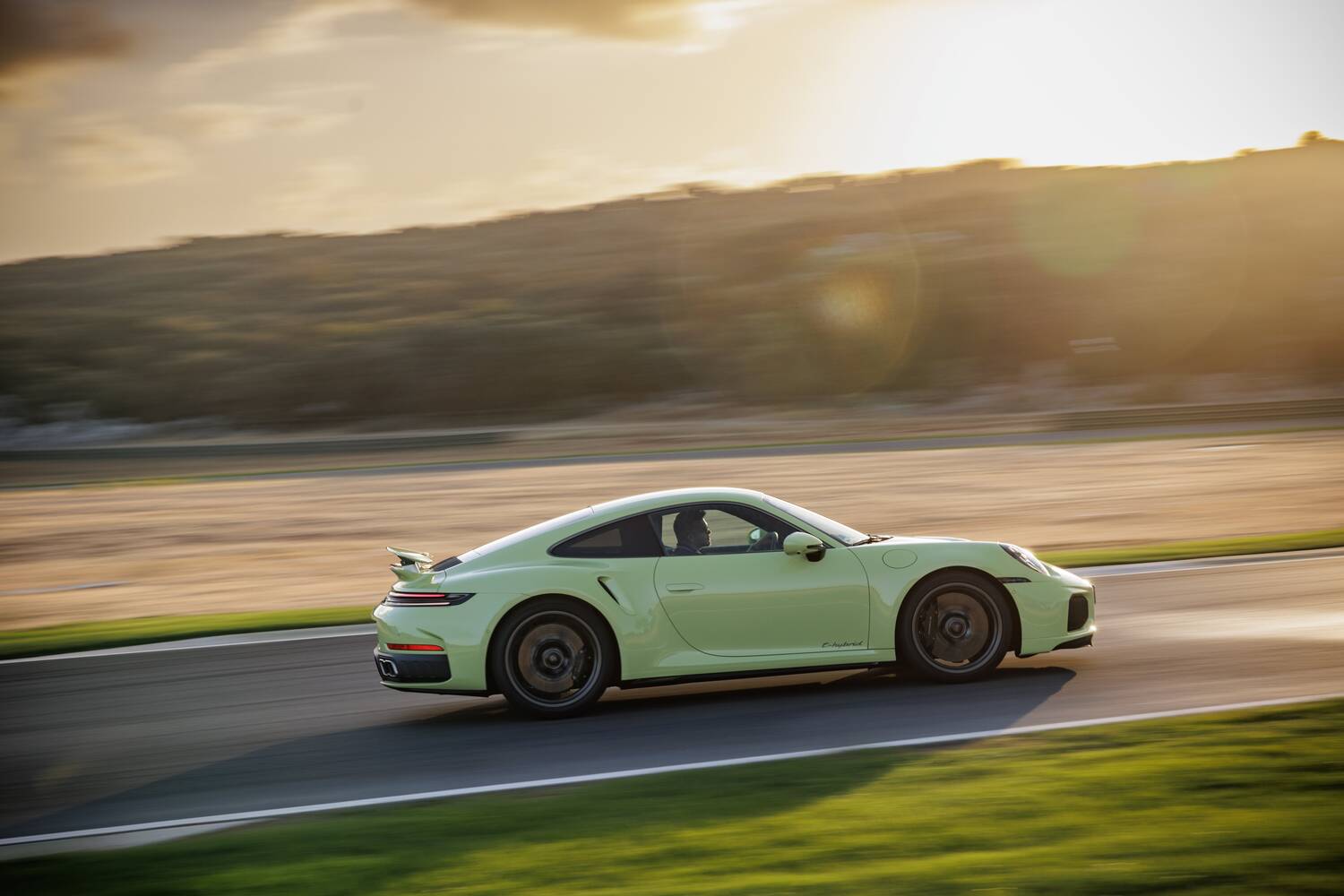
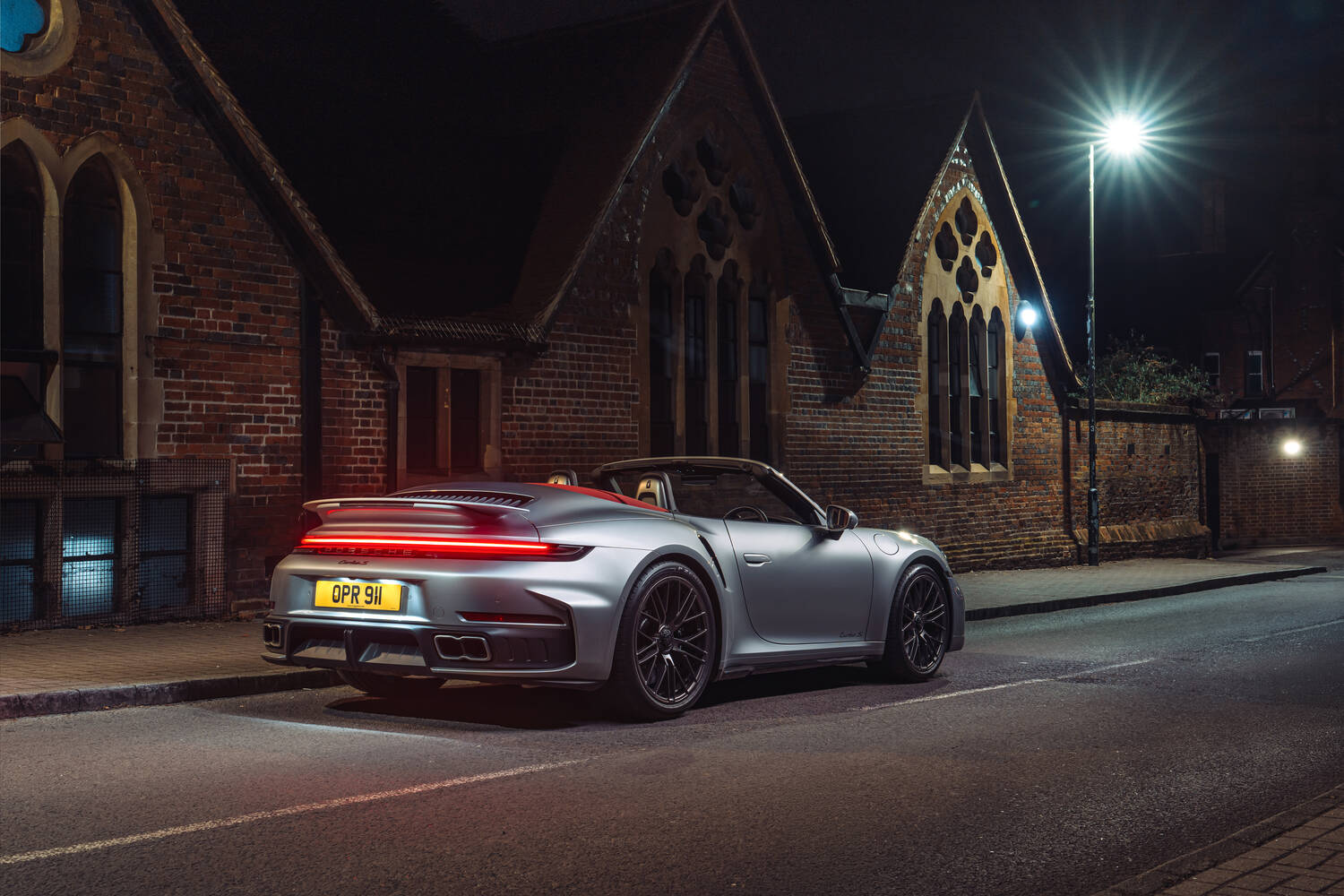
The bulging haunches aft of the doors, for example, have bigger air intakes in them and do give the Turbo S an extra muscularity over any of its stablemates.

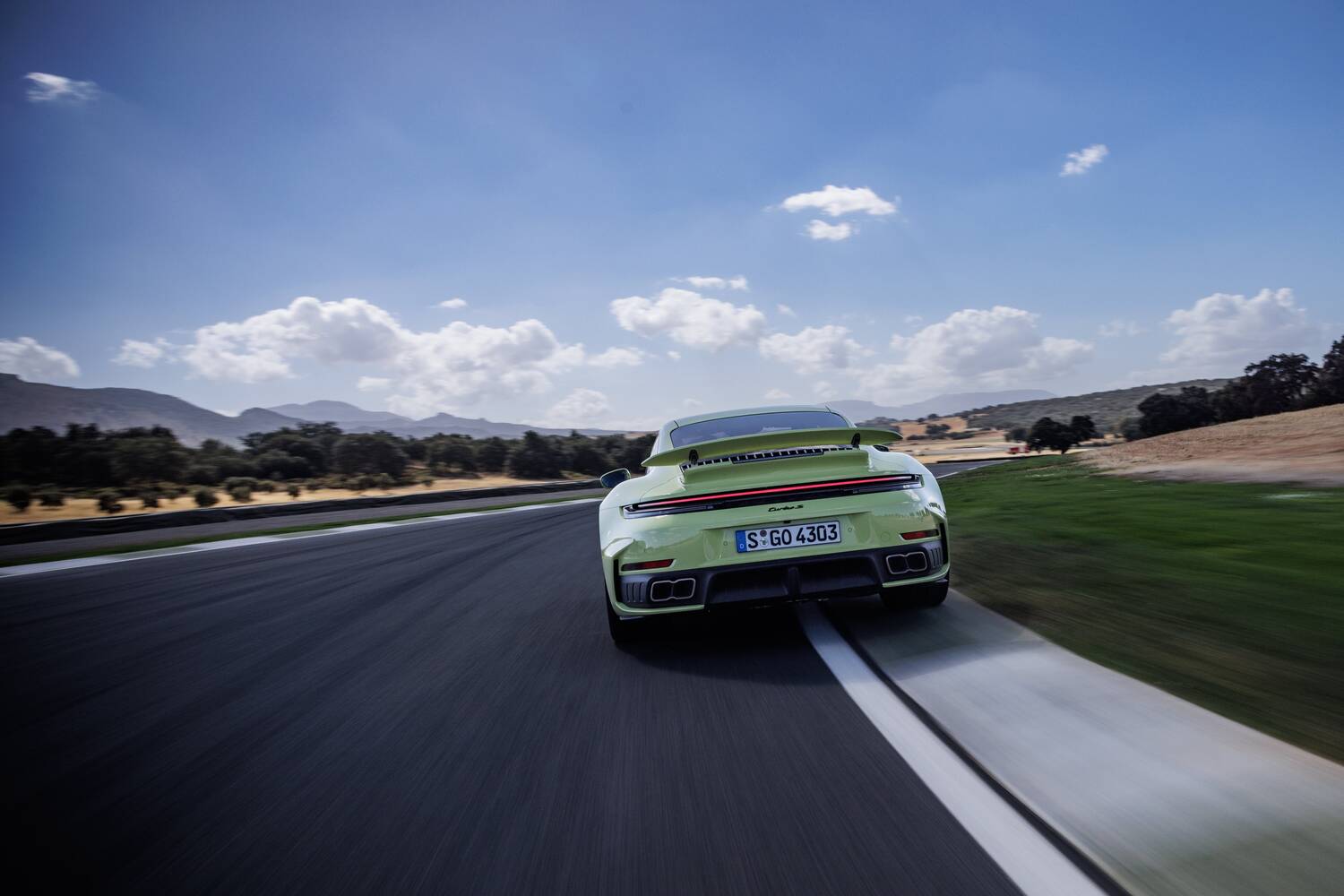
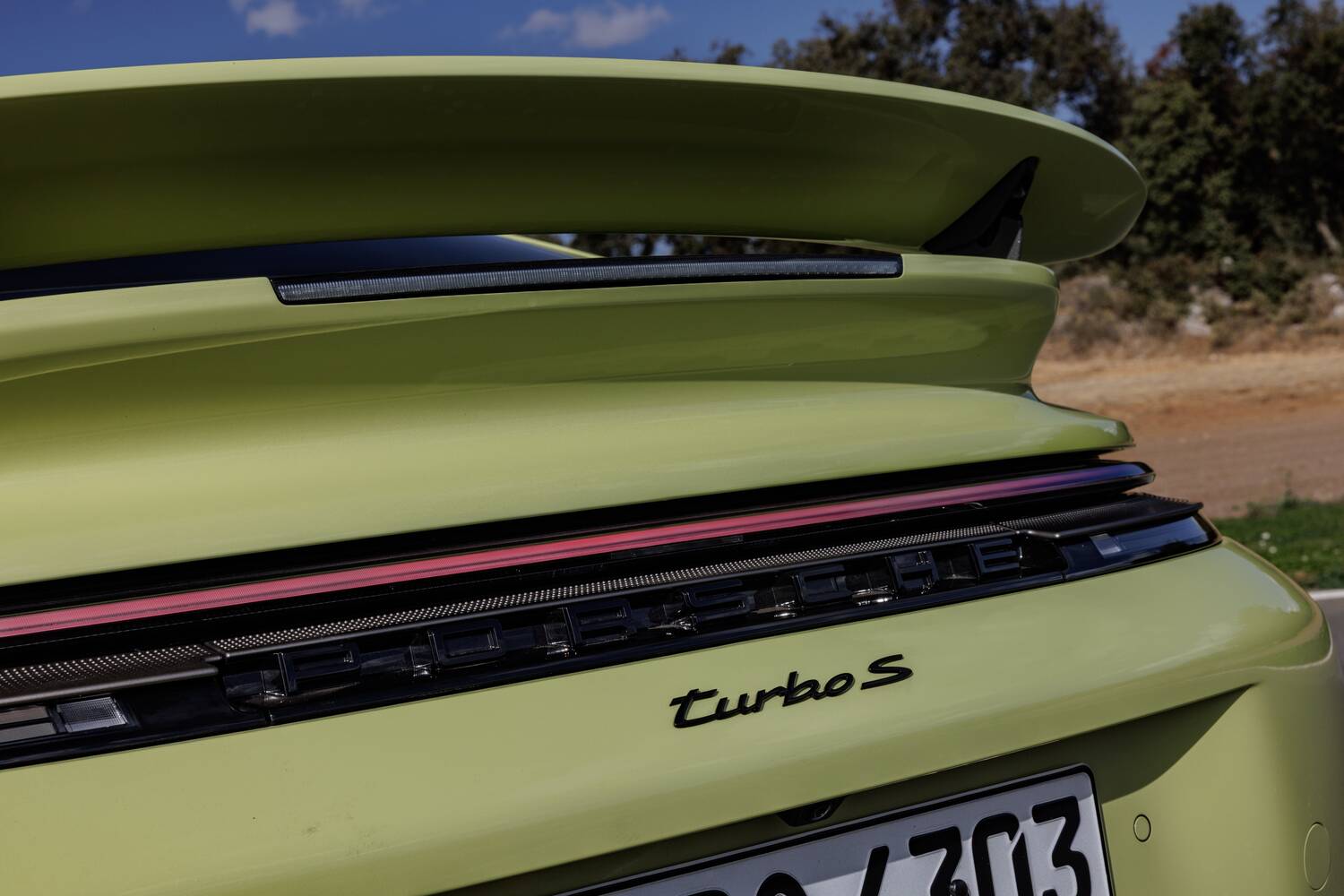
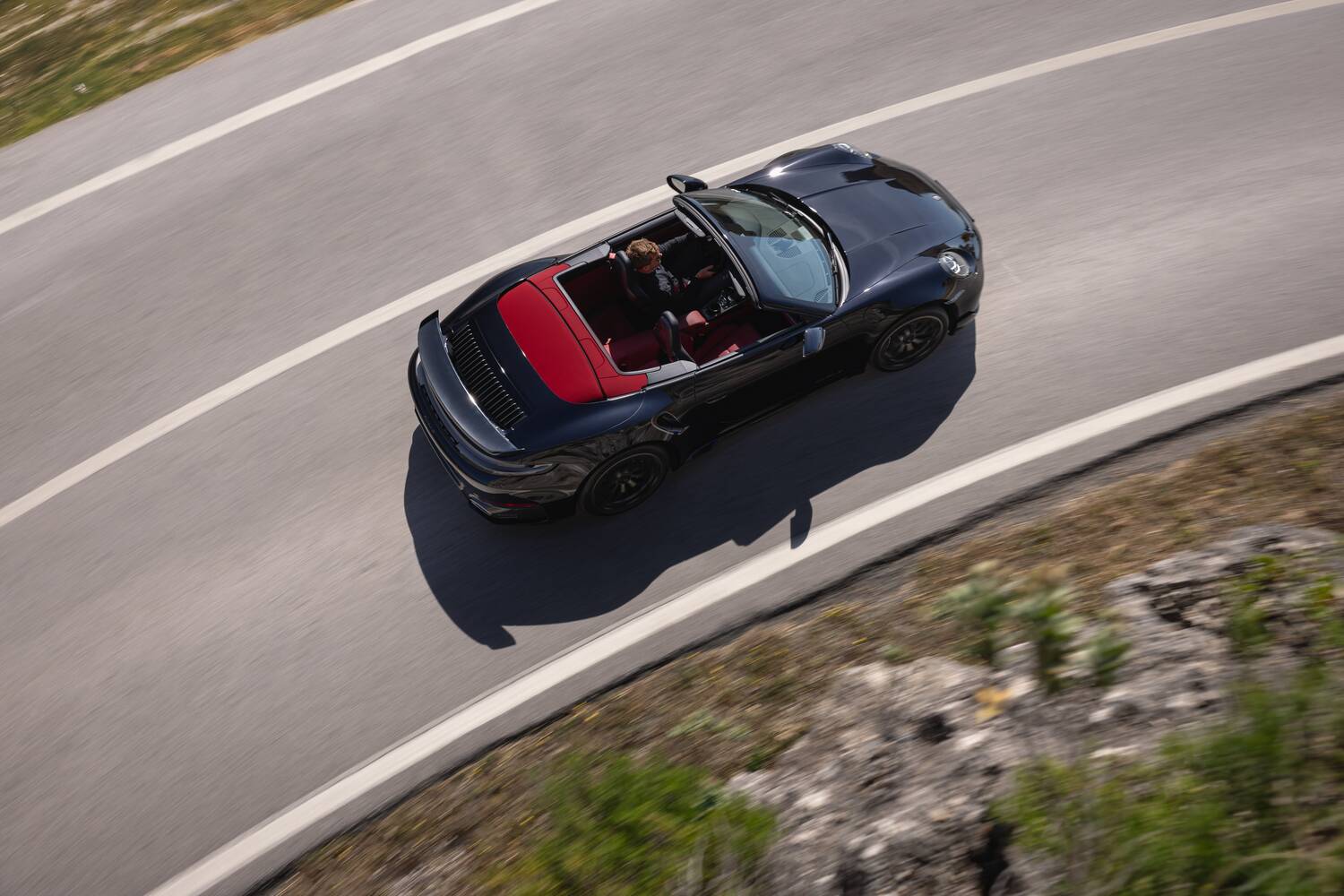
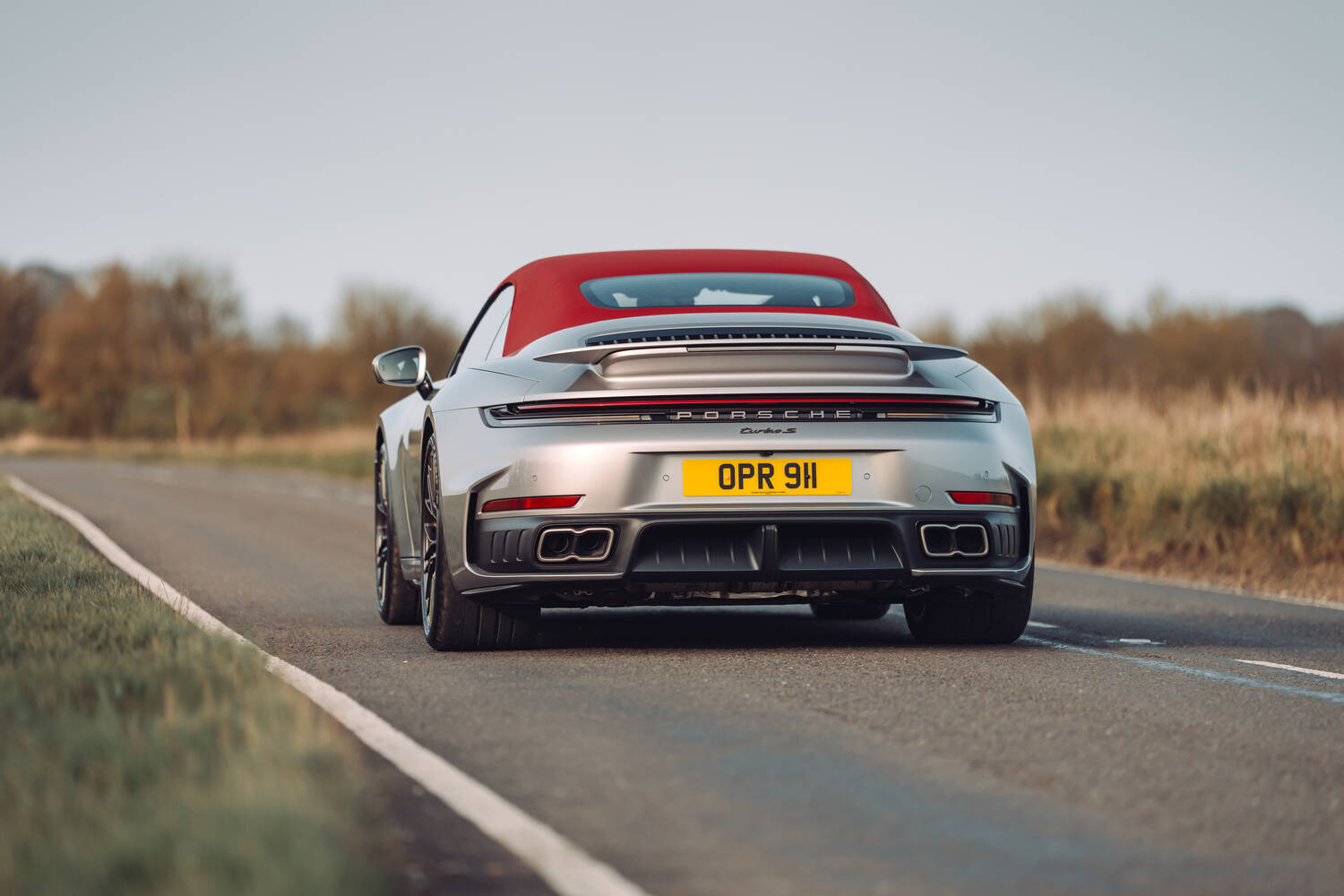
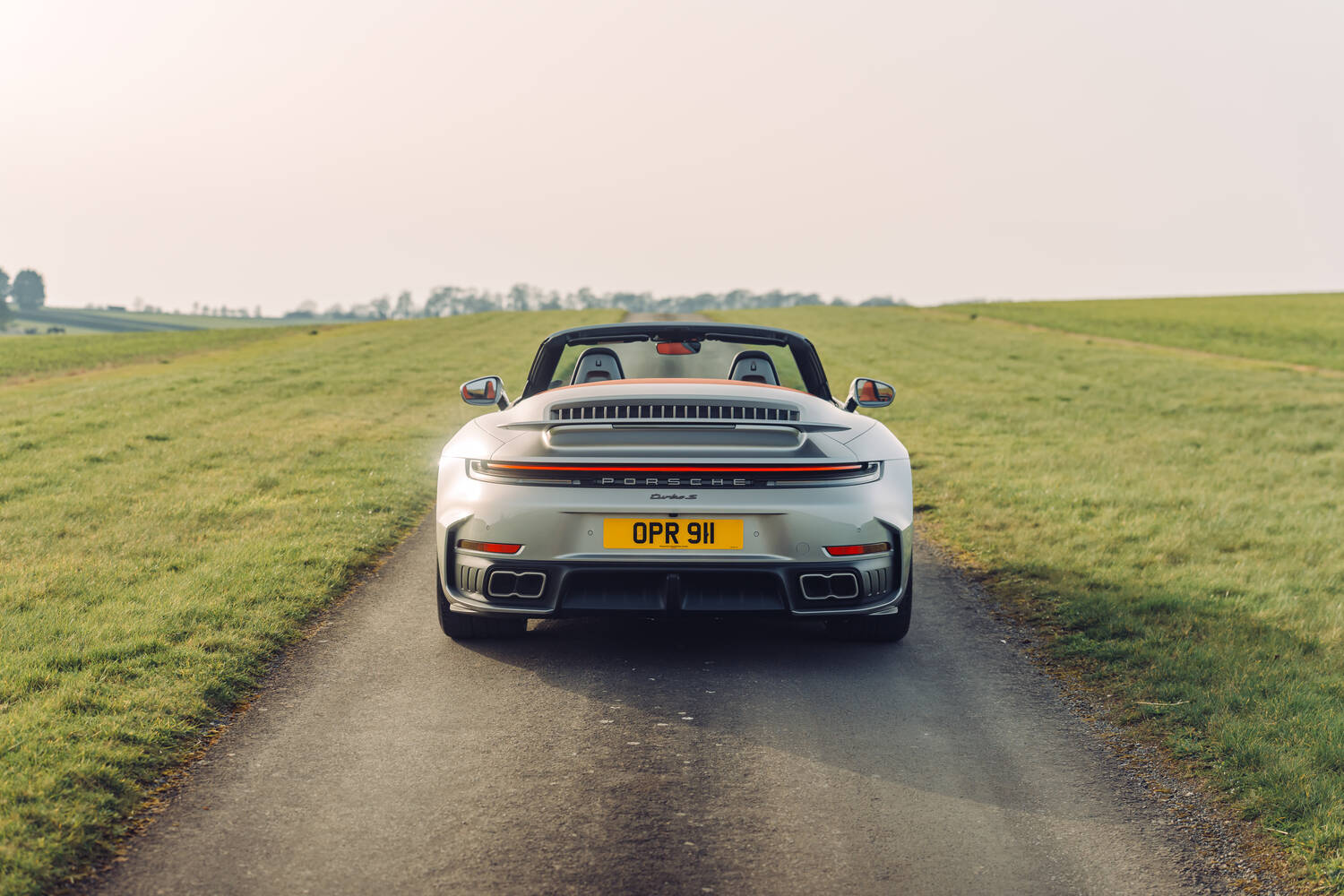
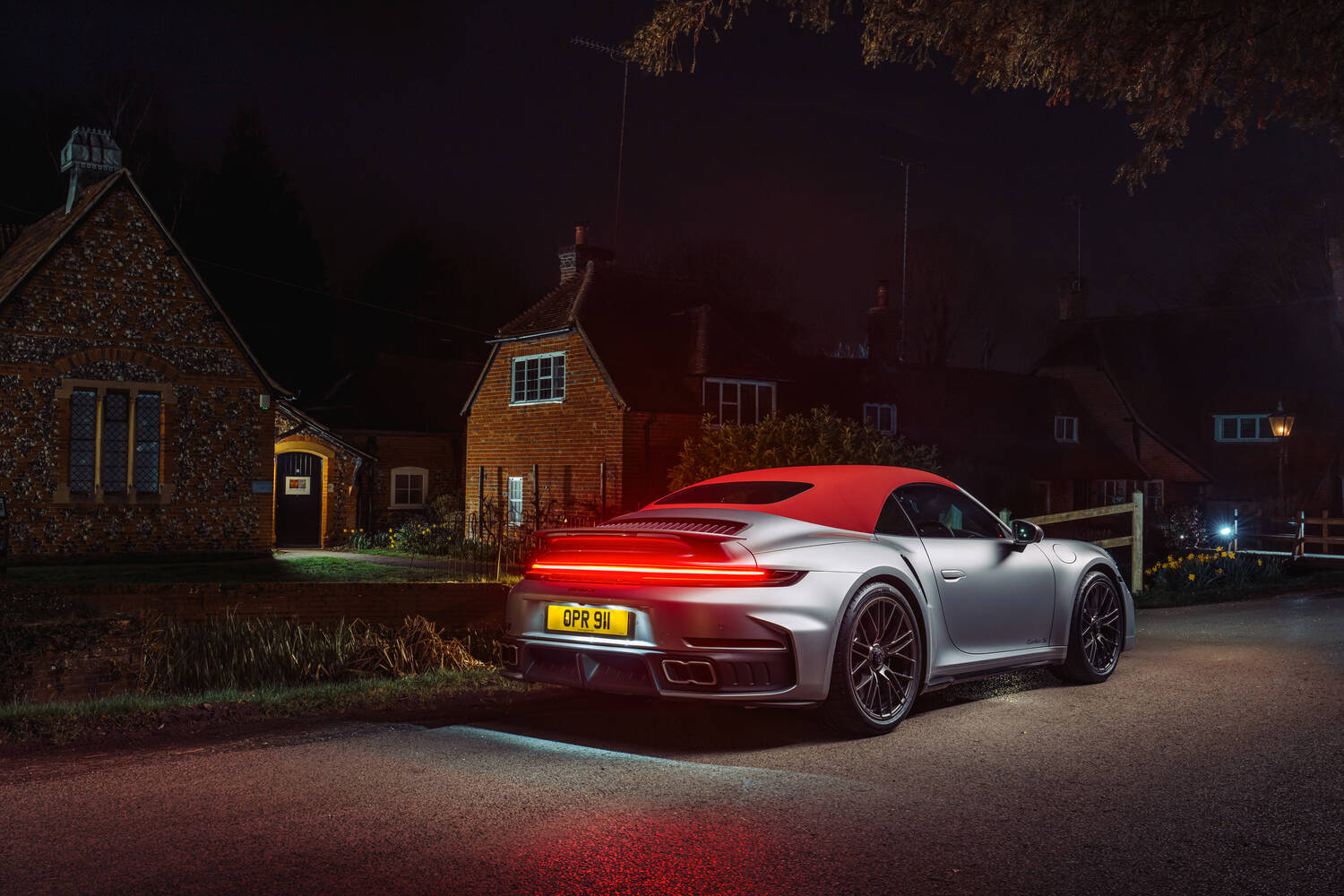
At the rear, a revised bumper and diffuser area are obviously different, as is the reprofiled flat spoiler perched above the engine cover, harking back to the original 930 Turbo of the 1970s.
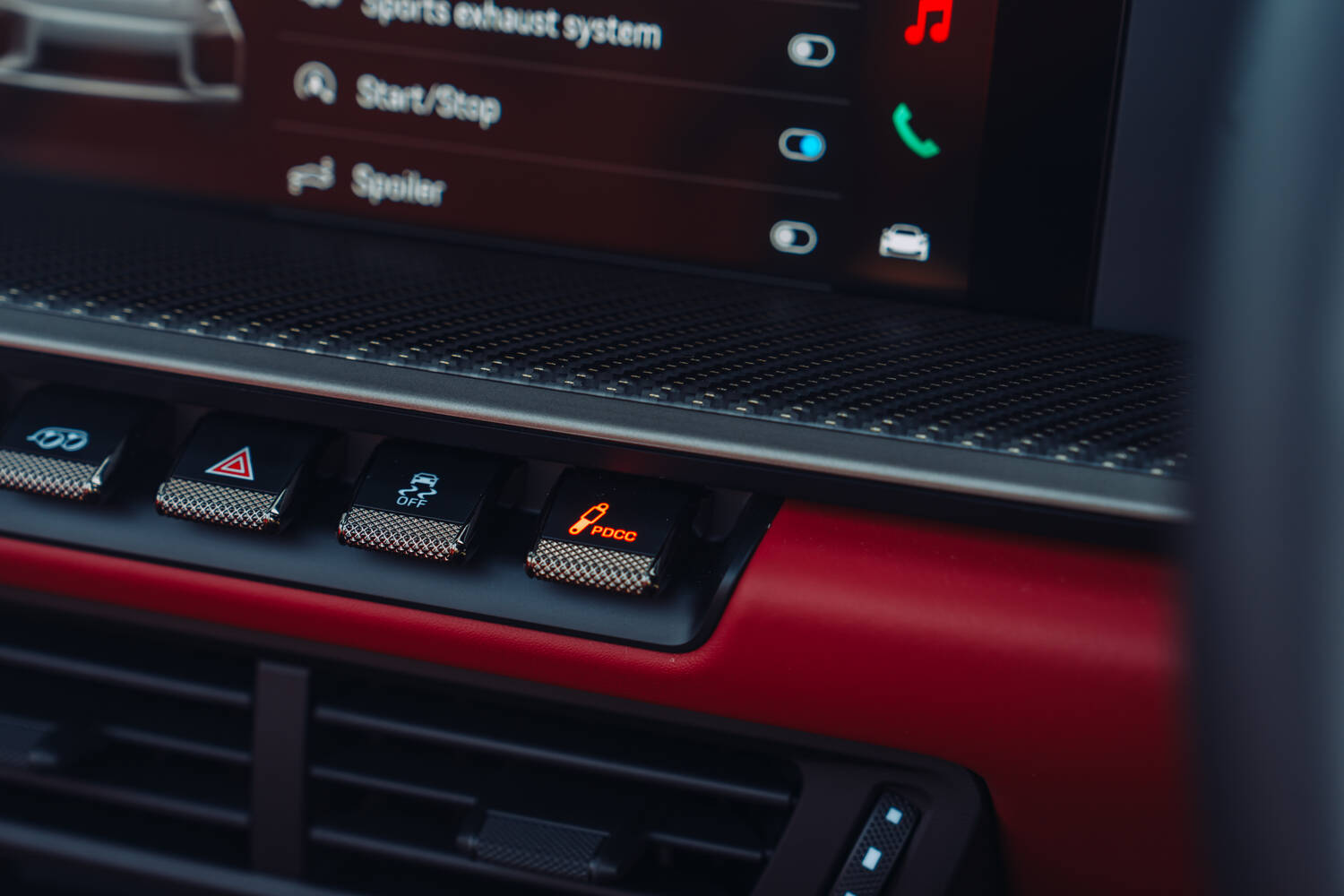
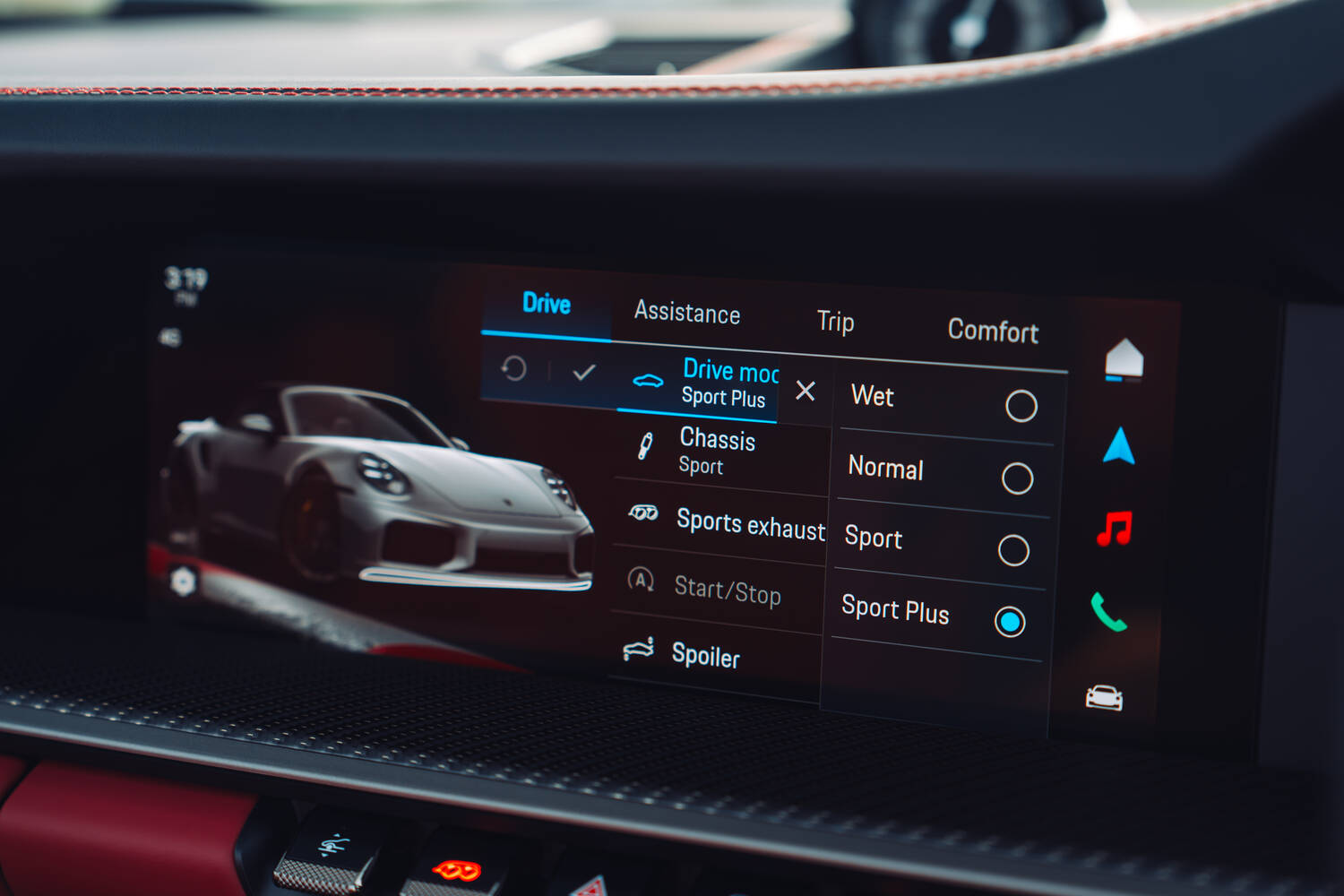
That's not just a fixed item, as a section of it extends when the Turbo S is travelling at higher speeds, the Sport Plus mode is selected or the driver manually pops the spoiler out with a button in the car, and this couples to an otherwise-hidden, extending front splitter to maximise the 911's downforce when needed.
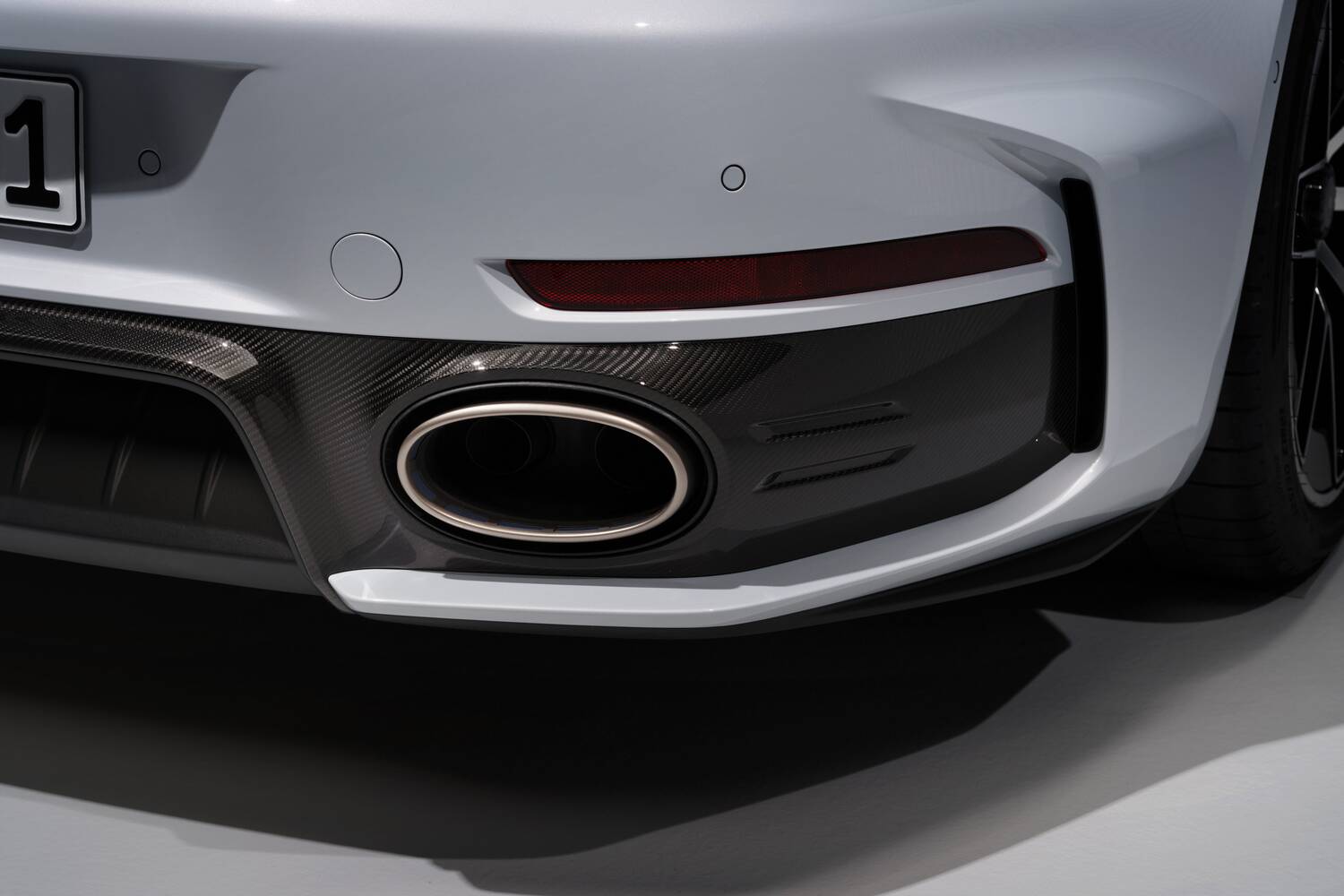
But the biggest giveaway is the design of the squared-off dual-exit exhausts at the back. These can be replaced with the huge oval finishers as part of the optional titanium sports exhaust, yet we'd stick with the standard items for maximum kerbside effect.

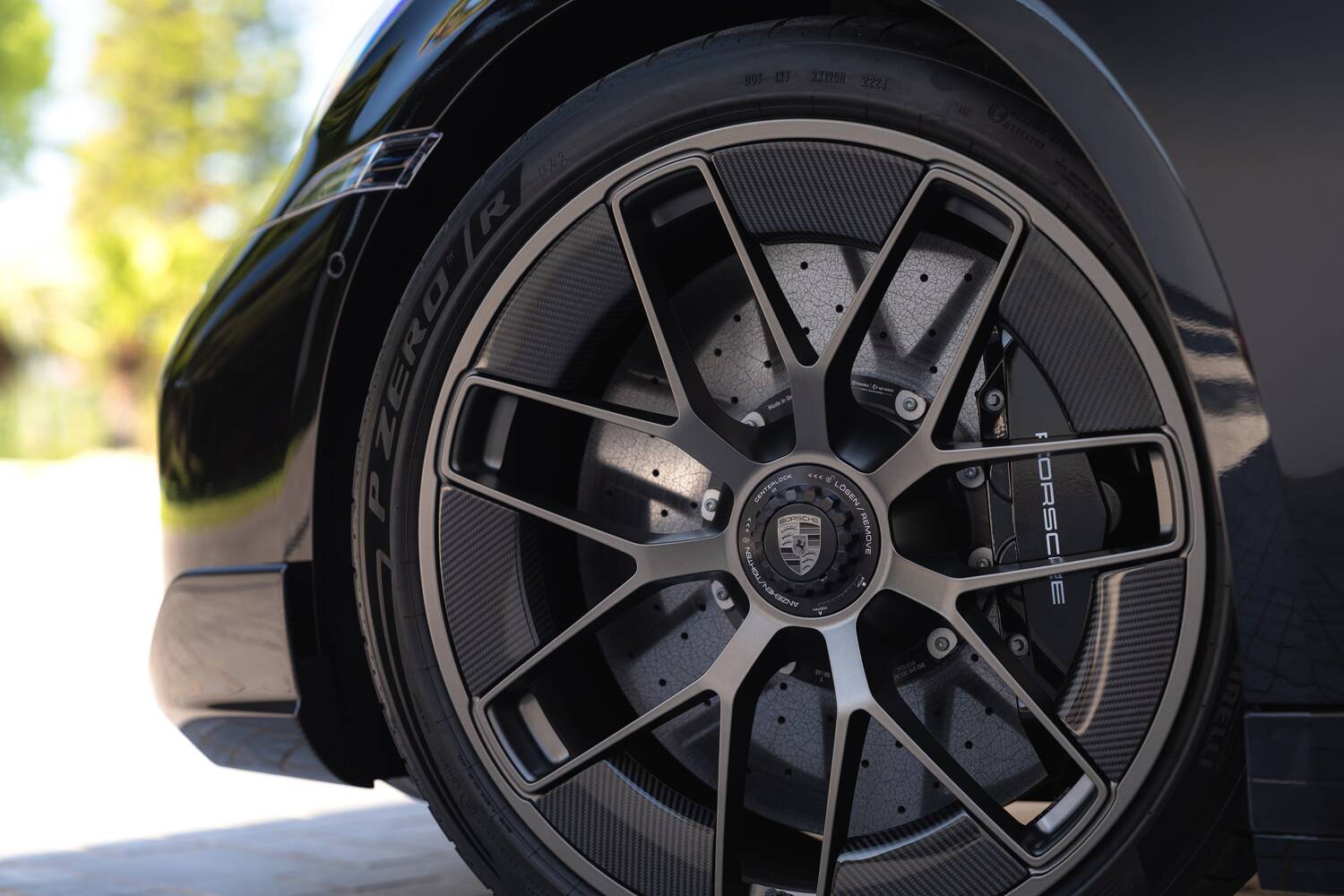
Wheels are staggered fitment on the 992.2 Turbo S, being 20-inch front and 21-inch rear rims. The default design is a set of Turbo S wheels with a five twin-Y-spoke design finished in. The alternatives (all in the same sizes as mentioned above) are Sport Classic five-spokes in silver, for €792, or the showy Turbo Exclusive Design alloys with carbon blades, for €5,860. Some of these options can be painted in assorted colours for further expenditure.
The overall outcome is that the 992.2 Turbo S doesn't obviously shout about its credentials, instead inviting a clued-up observer to drink in the various discreetly enhanced aesthetic details which subliminally reinforce the message that this is one very special Porsche.

Dimensions of the 2026 Porsche 911 Turbo S
- Length:
- 4,551mm
- Width:
- 1,900mm (mirrors folded)
- Height:
- 1,304mm (the Coupe is 1,305mm)
- Wheelbase:
- 2,450mm
Paint colours for the 2026 Porsche 911 Turbo S
You have a lot of choice for your 911 Turbo S, and with the Cabriolet that further applies to the soft-top roof as well as the bodywork. The opening two solid colours in the 'Contrasts' range are plain white or plain black. Above that, four metallic hues sit in the 'Shades' palette, which are Jet Black, Vanadium Grey, GT Silver or Ice Grey.

The 'Dreams' range brings in Guards Red, Gentian Blue metallic, Carmine Red, Cartagena Yellow metallic, Provence and Lugano Blue.
Those wanting green might be a bit stuffed; it's on offer, with Oak Green Metallic Neo, Aventurine Green metallic and Shade Green metallic all part of the 'Legends' line-up of colours, along with Slate Grey Neo and Crayon. But of the 17 colours listed above, it is only the five in the Legends array which incur any cost extra: all of the Contrasts, Shades and Dreams finishes are €0, whereas the Legends paints are a chunky €5,414 apiece.
That is nothing compared to the Paint To Sample option. This makes more than 190 specially curated colours available to 911 Turbo S buyers, although as Porsche has to mix up the required amount of your chosen paint three months in advance, and only to the quantity required to paint your car, this option will cost you €17,256.

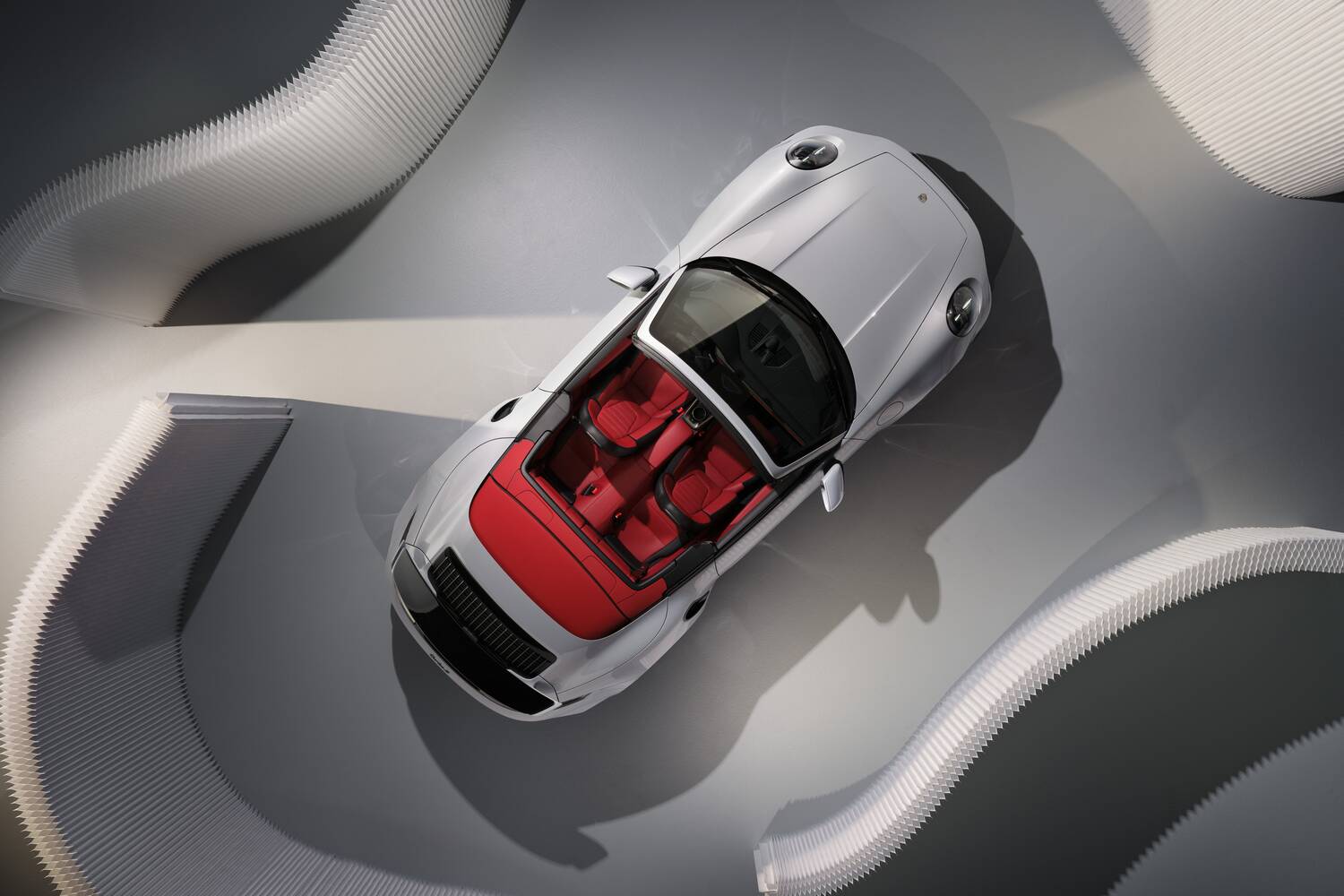
We're not even finished there. The Turbo S Cabriolet's roof is, as standard, rendered in a black material. This can be optionally switched for brown, red, blue or even a twin-stripe affair with two light-grey bands on it, and all of these are €516 on their own.
However, the last selection requires you to have matching decorative stripe graphics on both the hood and luggage compartment for another €1,875, so basically a stripey roof on your 911 soft-top is going to set you back €2,391 overall.
Interior, practicality, tech & comfort of the 2026 Porsche 911 Turbo S
- Fabulous build quality and ergonomics
- Only a few low-key Turbo S details
- About as practical as cars like this get

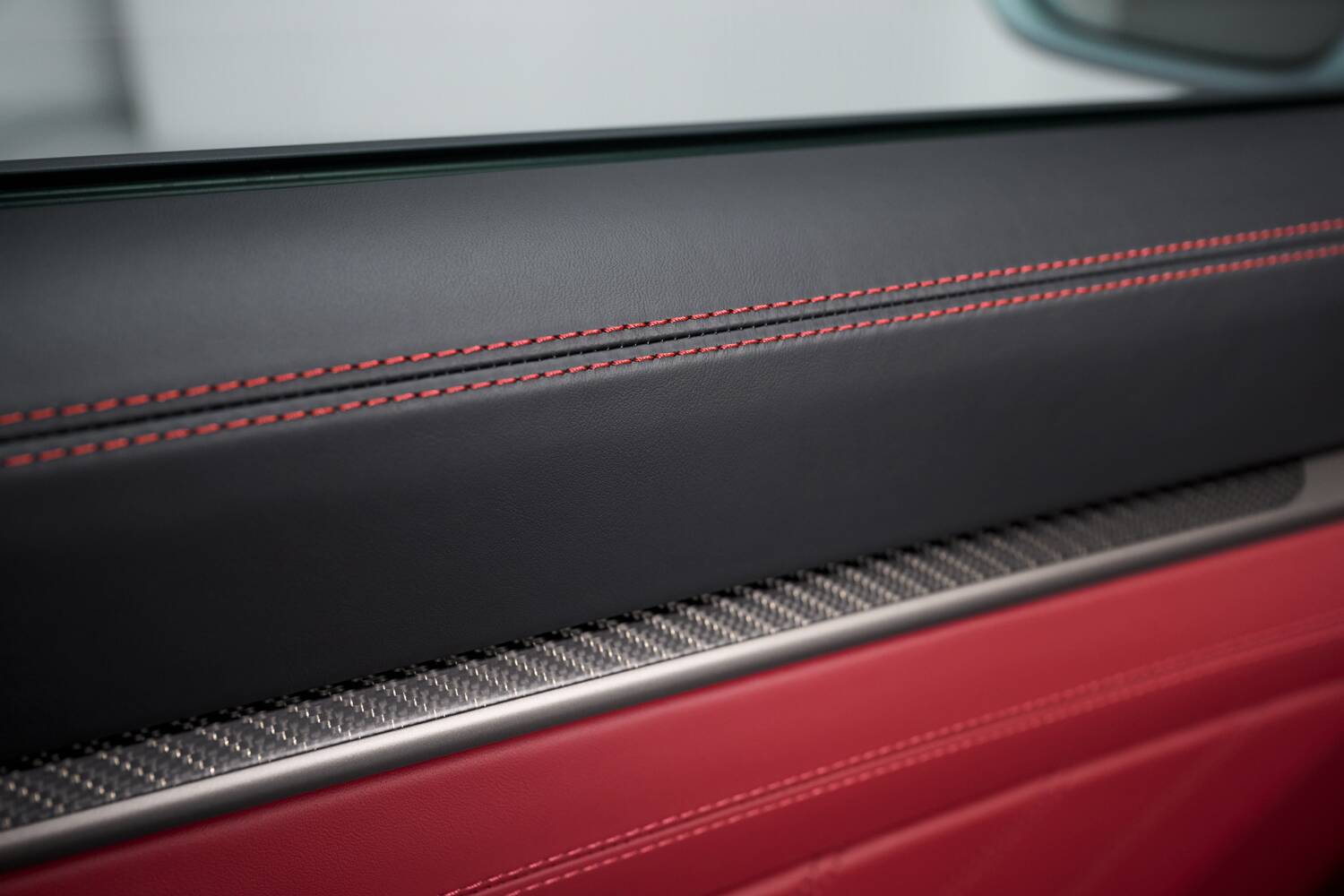
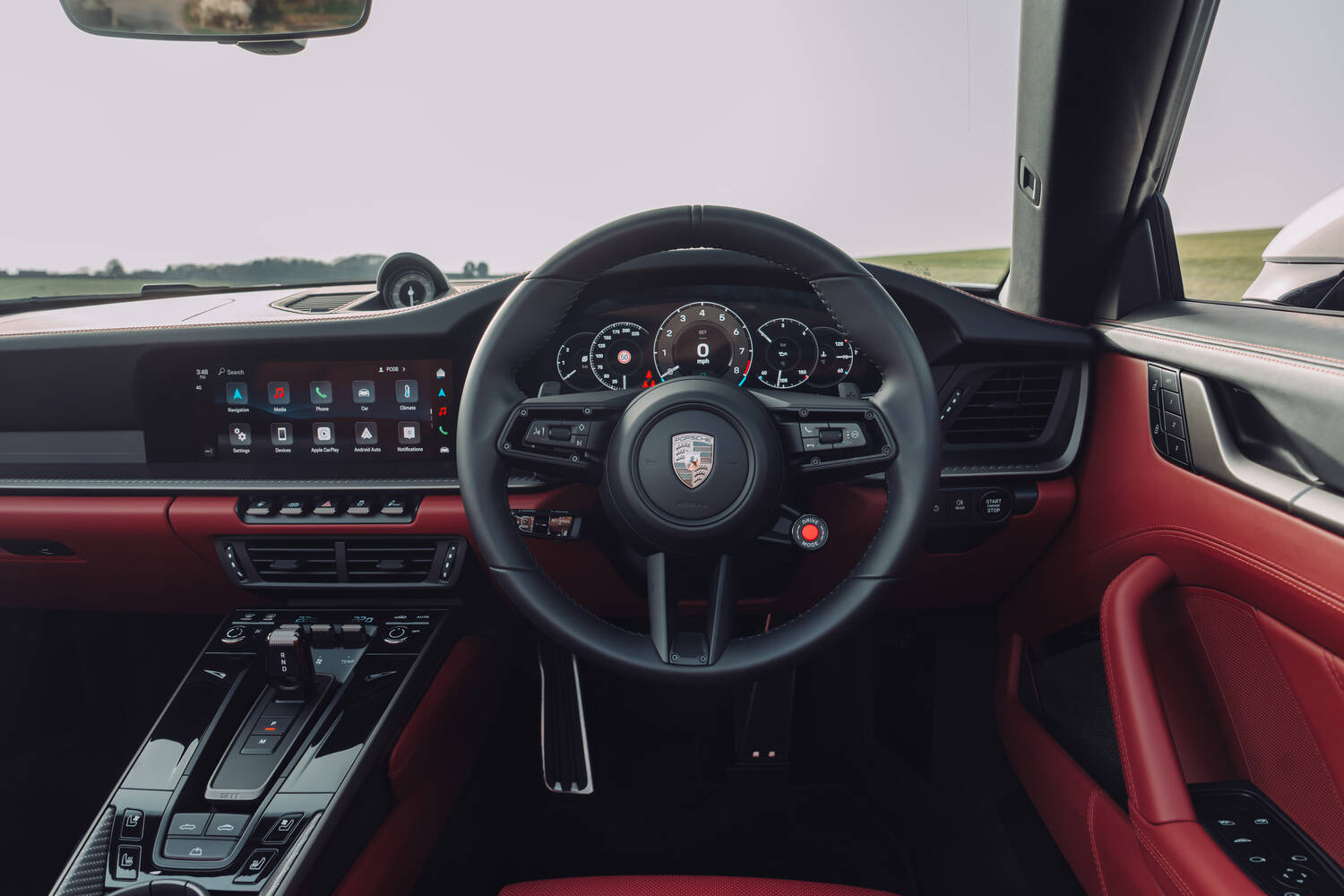
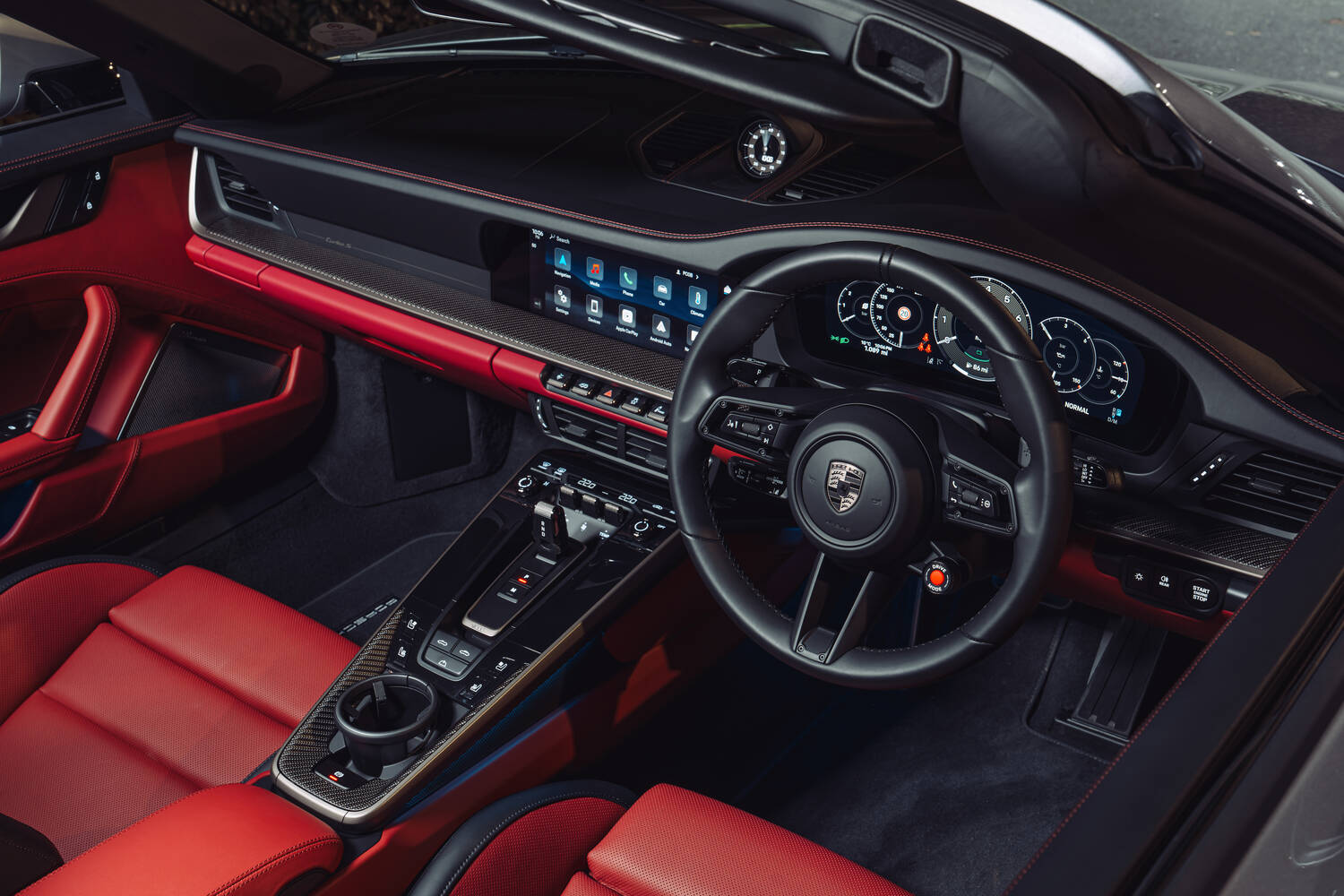
The general 992 cabin architecture is nothing short of superb. Every switch is in the right place, there's a perfect blend of well-integrated and graphically sharp technology with exemplary user controls (both physical and haptic), and the fit-and-finish is second-to-none at this rarefied level of the market.
But while the 992.2 is arguably more practical than any ideologically similar vehicle, this is not a car that is going to seamlessly slot into family life, obviously.
Getting comfortable in the driver's seat
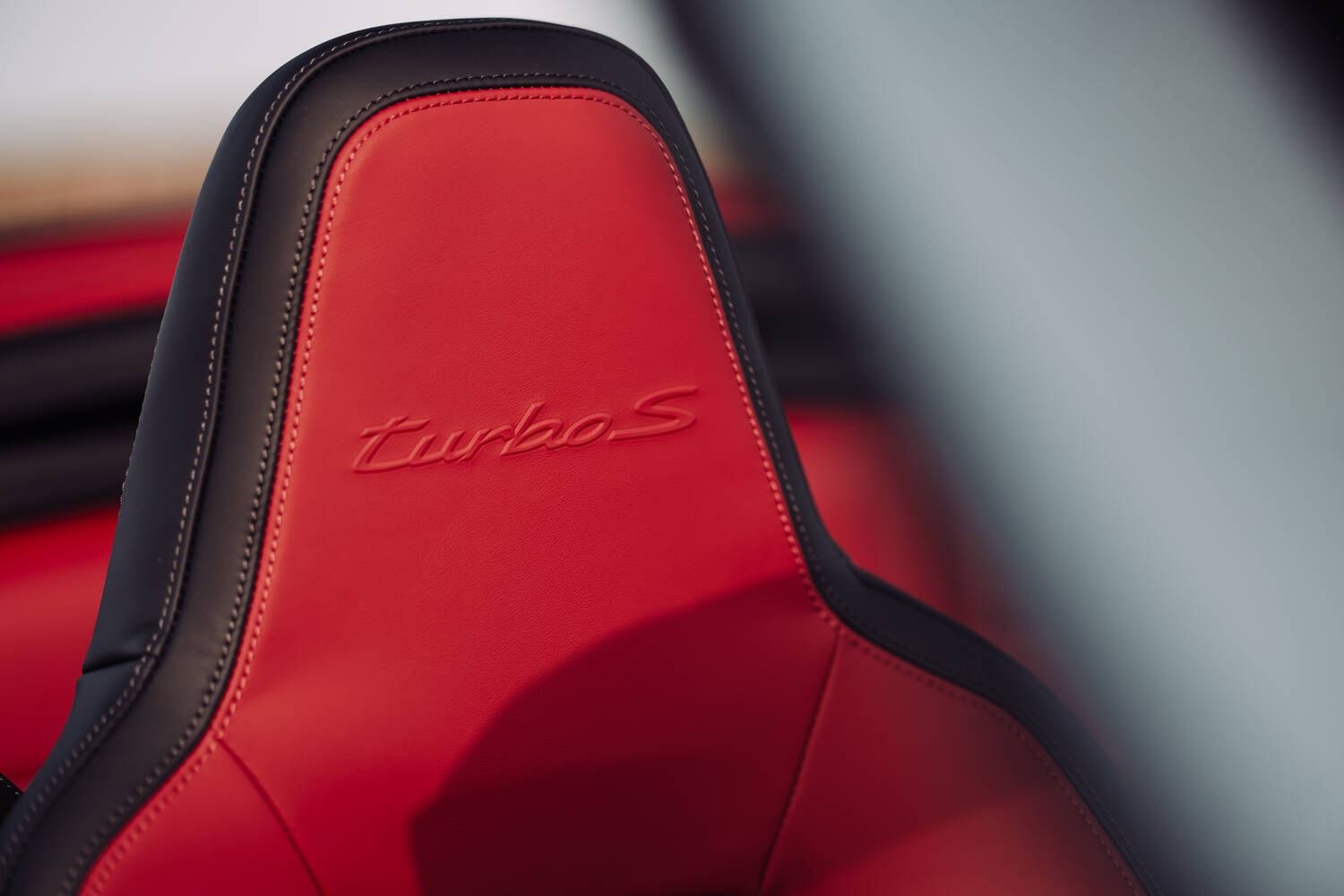
As the ostensibly highest-end new 911 you can buy, the Turbo S comes with Porsche's exquisite 18-way electrically adjustable Adaptive Sports Seats Plus as standard.

These, along with an electronically controlled reach-and-rake steering column, means that an absolutely spot-on driving position ought to be in reach of any driver.
You can set yourself nice and low down in the car if you so wish, or jack your chair up for greater visibility, but either way you should find all the controls and displays are still easy to lay eyes and hands on from the resultant driving position, while the view out of the 911 Turbo S in all directions is pretty generous - save through the rear windscreen when the Cabriolet's hood is up. Even then, it's not a dismal view back through the rear glass, so the Porsche aces this discipline.
Infotainment and technology
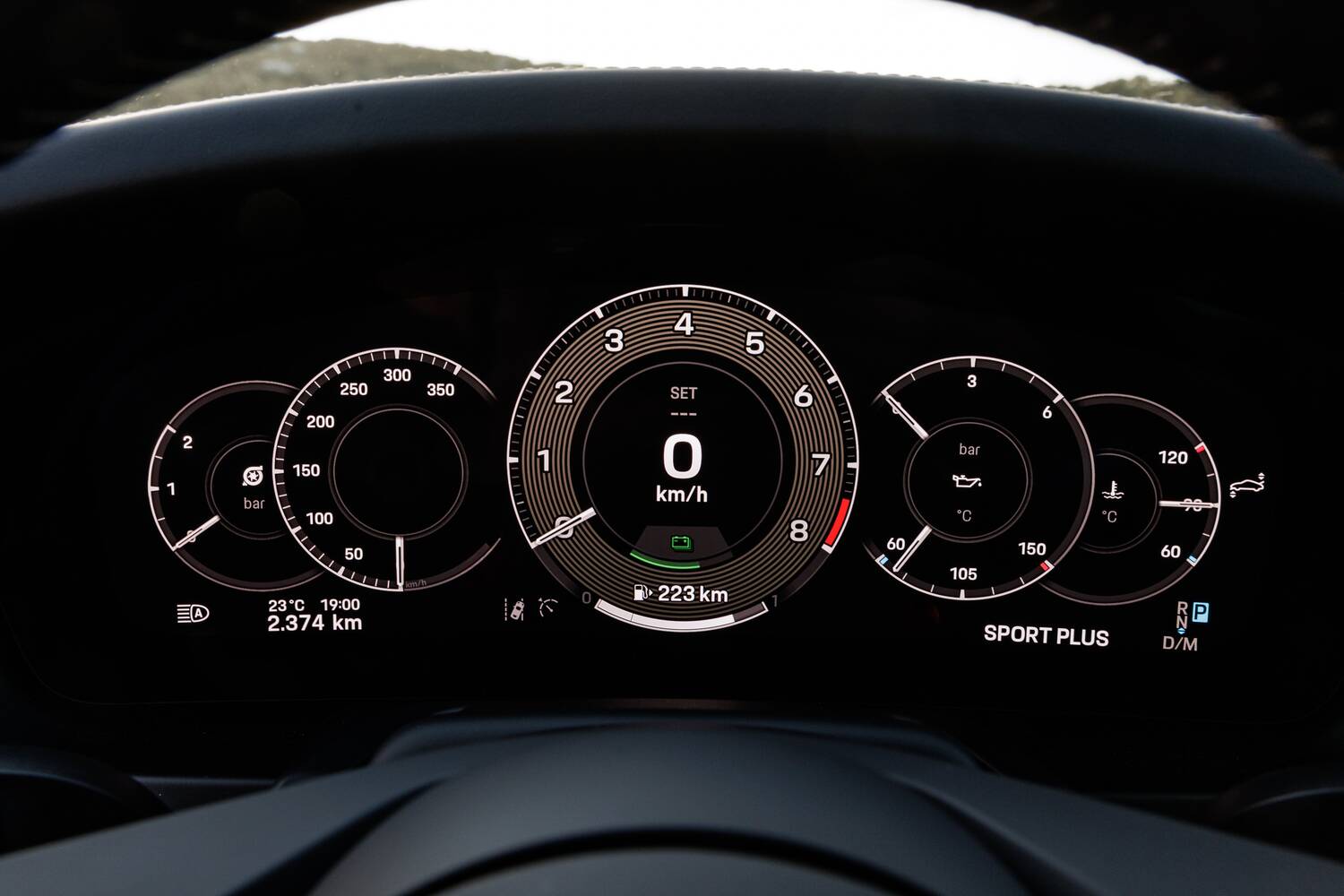
The 992.2 Porsche 911 Turbo S comes with a 12.6-inch 'Curved Display' digital instrument cluster alongside a 10.9-inch Porsche Communication Management (PCM) infotainment touchscreen and, quite straightforwardly, this is probably our favourite driver interface system in the entire motoring world right now.

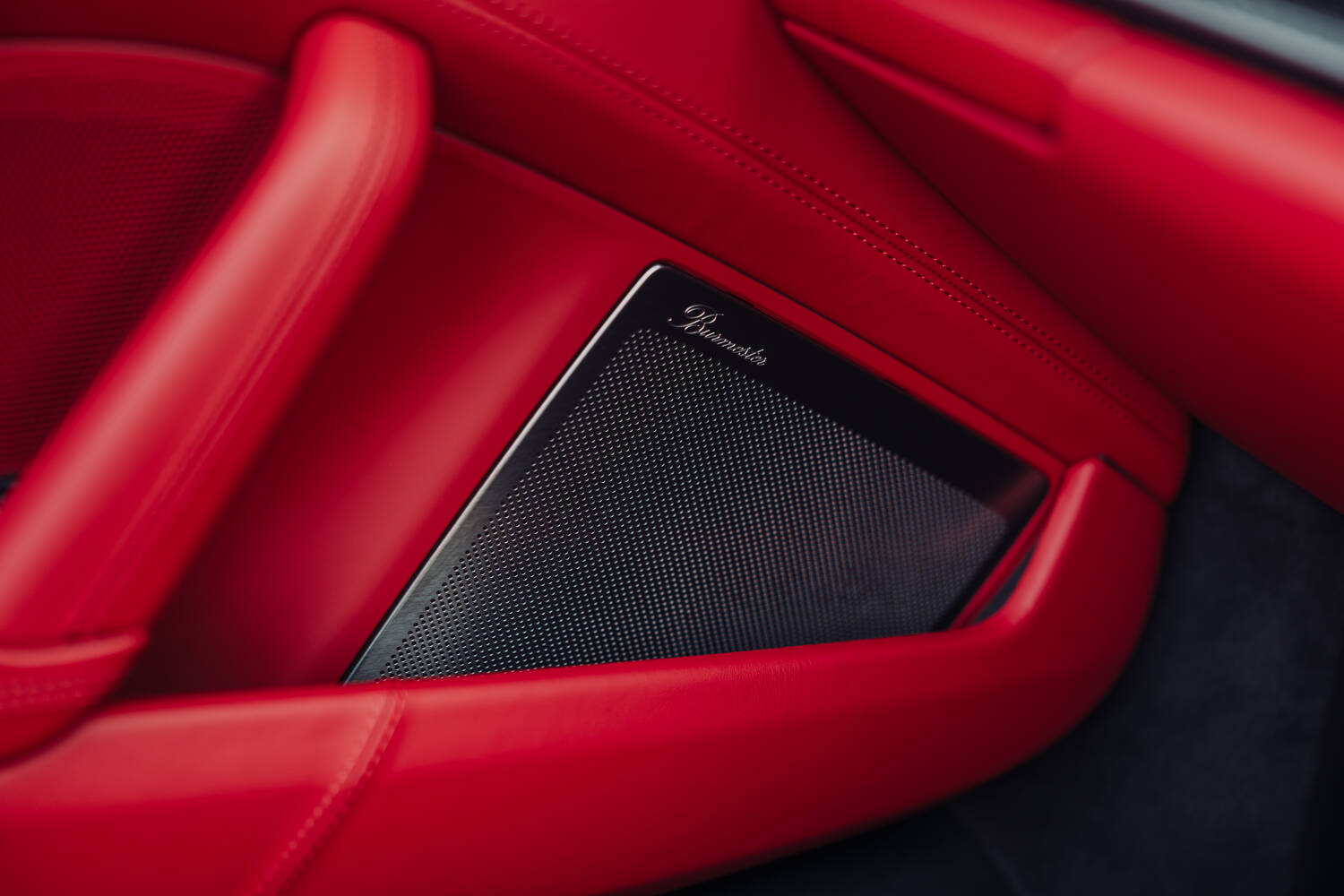
It all works so, so well and becomes second-nature to use from kilometre one; it's very Germanic in that respect. Other tech includes a standard-fit and powerful Bose Surround Sound system and a wireless 15-watt, cooled smartphone charging pad sequestered away in the central armrest compartment, with the option to upgrade to a beautiful Burmester high-end audio set-up.
It's a shame, though, that on such an expensive car in either body format, Porsche still charges between €2,000-€2,500 each for both adaptive cruise control and a 360-degree camera system; these really ought to be included in the original price.
Practicality around the cabin
As much as Porsche can with the limited space on offer, it has done its best to make the cabin of the 911 Turbo S as practical as it can be, with various storage pockets dotted about the place, and a couple of cupholders (one permanently fixed on the tunnel for the driver, the other popping neatly out of the passenger-side dashboard) up front too.

But while the 911 might be more accommodating inside than, say, a strictly two-seat McLaren Artura, it's still not a car which is focused on the mundanities of interior practicality above all else.
Rear-seat passenger space
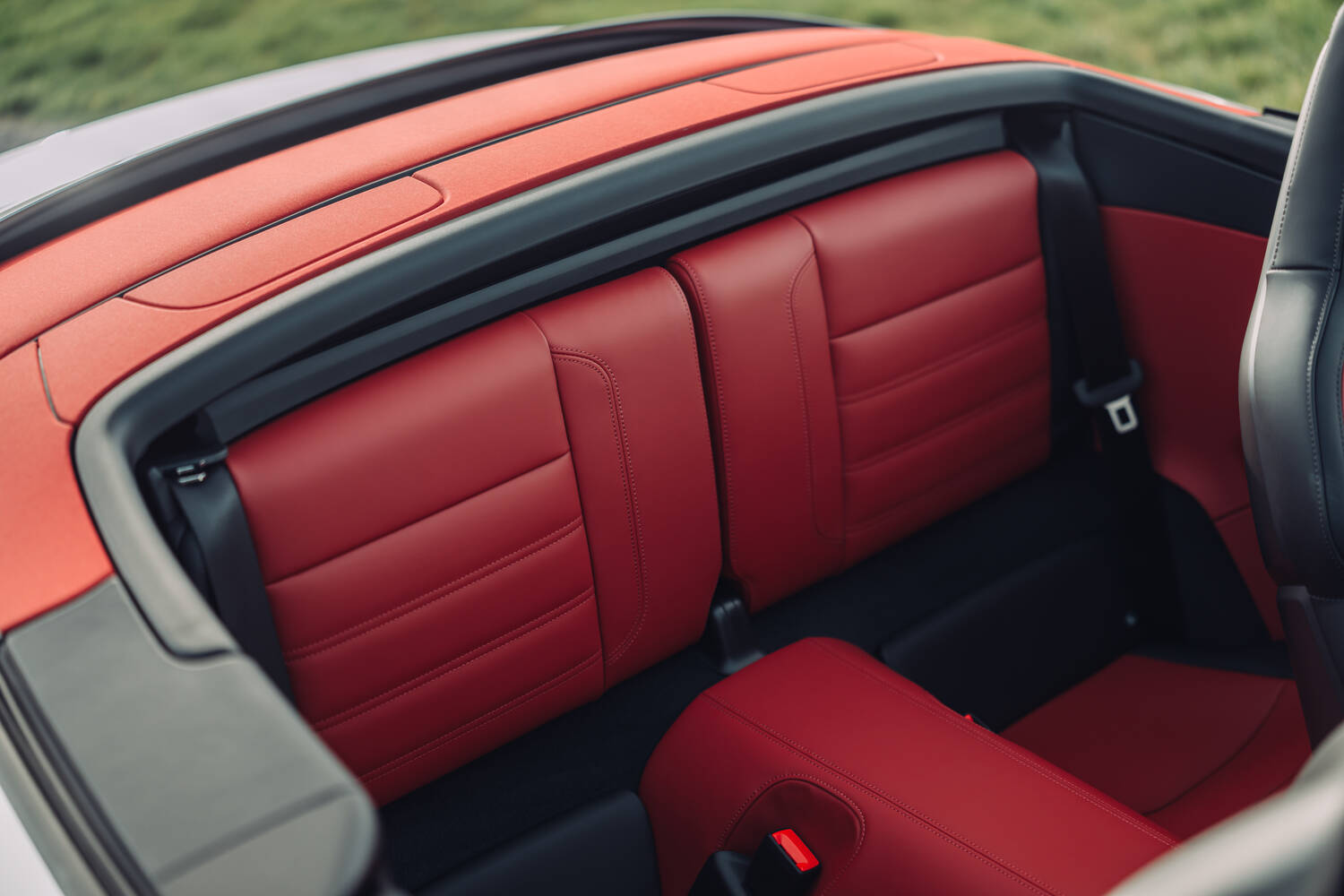
The rear-engined layout of the 911 means that it is ahead of some of its purely two-seat rivals in this class, as the Porsche is officially a four-seater. We'd rather call it a 2+2 though, because the second-row seats are small in either version and, in the Cabriolet in particular, and have vertical backs which don't make them the most comfortable things to sit in.

Due to severely limited legroom in the second row, only small children are going to be happy in the back of a Turbo S - and although there are ISOFIX positions in the rear, don't expect bulky child seats to fit back there easily, in either the Coupe or the Cabriolet.
Boot space in the 2026 Porsche 911 Turbo S
Such is Porsche's own view of the token gesture provision of vestigial rear chairs that it actually lists the "open luggage compartment behind the front seats" as part of the 911's boot space.
In the Turbo S Cabriolet, the figure for that zone is 163 litres, which goes along with the 128-litre front boot under the 911's bonnet to give the car a quoted 291 litres of cargo capacity.
The Coupe increases the stowage volume behind the front seats to 261 litres if the free-of-charge rear seats are optioned up, or it stands at 373 litres with no chairs in the back of the vehicle.

At least in the Cabriolet, with its fast-acting soft-top roof, accessing the luggage volume at the back of the passenger compartment will be easier than it would be in the fixed-top 911 Turbo S Coupe.
Performance of the 2026 Porsche 911 Turbo S
- Twin electric turbos deliver thunderous 711hp
- 0-100km/h takes 2.5-2.6 seconds
- Chassis can easily handle such terrific power

Prior to the updates of the 992-generation family of 911s, the GTS and Turbo models had key powertrain differences. The former was based on an enhanced version of the twin-turbo flat-six used in the lower Carrera models, delivering 480hp from its 3.0 litres of capacity, but the Turbo and Turbo S cars used a 3.7-litre engine with two massive Variable Turbine Geometry (VTG) turbochargers for 580- and 650hp, respectively.
However, with the inclusion of the T-Hybrid part-electric running gear, the Turbo S now has the same 3.6-litre engine as the hybrid GTS. The main difference is that the Turbo S has two electric turbochargers instead of the GTS model's solitary item, while the flagship 911 also has a more powerful electric motor tucked into its PDK transmission: it puts out up to 81hp and almost 190Nm for the Turbo S, as opposed to 54hp and 150Nm in the GTS. Same 1.9kWh battery pack in both T-Hybrids, though.

The net outcome is that the 992.2 Turbo S delivers an eye-catching - and eye-widening - peak power figure of 711hp, abetted by 800Nm of torque.
While the latter number is no higher than in the old 992.1 Turbo S it replaces, the former is a sizeable increase of 61hp and so it trims two-tenths of a second from the 0-100km/h time, with the T-Hybrid Turbo S capable of a 2.5-second sprint as a Coupe. Even the Cabriolet, weighing 1,810kg (an increase of 85kg over the equivalent Coupe), can do the same run in just 2.6 seconds.
The hybridised Turbo S is also half-a-second quicker for 0-200km/h than the car it supersedes, recording a bonkers 8.4-second time, while it has proven itself 14 seconds quicker around the Nürburgring Nordschleife too, putting in a 7:03.92 lap.
Driving the Porsche 911 Turbo S Cabriolet 992.2 on UK roads
Words by Matt Robinson on 25 March 2026
The problem with several iterations of the 911 Turbo past is that they offered massive, Earth-shattering speed but in a way that was so disarmingly accessible that they left keener drivers feeling cold towards them. Not for no reason has the much less potent GT3 long since overtaken the Turbo as the purists' choice in the Porsche 911 family.

And this is undoubtedly a vehicle where the driving experience is dominated by the quite demented amount of power that is on offer to the car's driver.
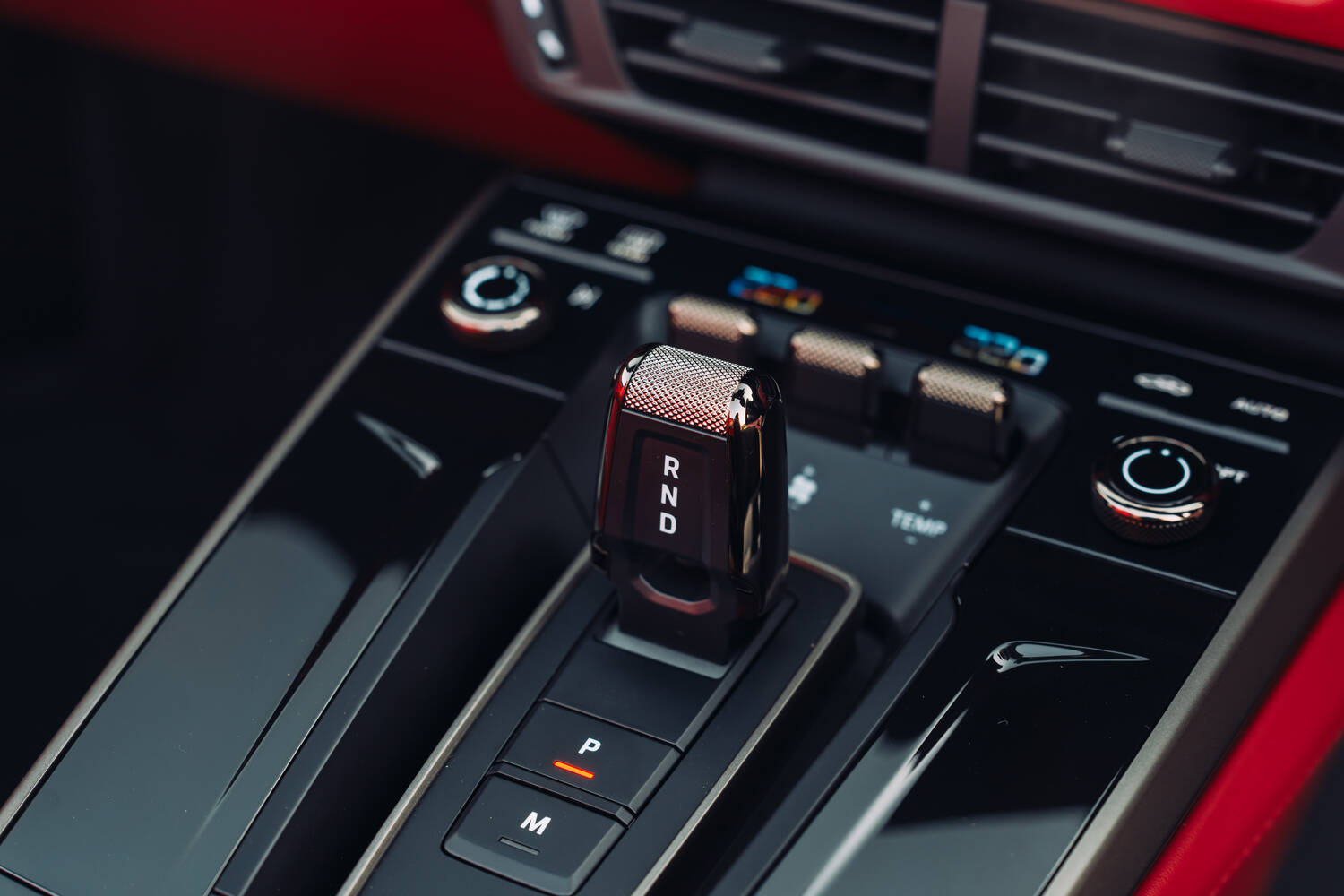
There are ways of getting the Turbo S T-Hybrid to labour - if you click the 'M' pad for its PDK gearbox on the dashboard, knock it up into eighth and then flatten the throttle at 80km/h with about 1,100rpm showing on the dash, for example. But who does that?
Otherwise, though... the 911 Turbo S is an absolute beast of a car. At anything in the realm beyond 2,000rpm, you treat the throttle pedal with the maximum of respect if you have any sort of shred of concern for your licence whatsoever.
Planting the right-hand pedal in second, third and even fourth gear will have you at or considerably beyond the national limit before you even have an inkling of what is going on.

The roll-on pace this thing has, ably assisted by another gem of a PDK transmission which gives you the best possible gear for the job in hand in a split-second from throttle input to shift completion, is breathtaking - even in an age of instant-torque EVs.
Vitally, the best news is that the 911 Turbo S's chassis can handle this megalomaniacal thump with an almost aloof disdain. Porsche has thrown the technical kitchen sink at the underpinnings of the 711hp model so that it can cope, with not only in terms of the carbon-ceramic brakes, but also the active anti-roll Porsche Dynamic Chassis Control (PDCC), a Porsche Torque Vectoring Plus (PTV Plus) limited-slip differential and Rear Axle Steering all coming to the fore to help.
The handling of the car is, as a result, both exquisite and charmingly approachable - but it's never boring to be at the 911 Turbo S Cabriolet's wheel. Rich detail flooding through the steering wheel, a sensation of a mobile rear axle and the immense respect the Porsche commands courtesy of that powertrain all serve to make threading it down a challenging road a rewarding exercise.

But the car is never out-and-out terrifying, nor ragged. Indeed, one kink over a crest taken with the 911's two electric turbos fully lit in a middling gear would, in an older Turbo, have seen you end up in the scenery in a ball of metal, fire and your own bones.
Here? The 992.2 wiggled a bit, transmitted its indecent urge immediately into the tarmac, and then fired off down the next straight at something approaching light speed. It's hilariously involving and riotous.
Happily, the Turbo S works in completely the obverse driving situations. Hood up and motorway cruising at 120km/h, this Cabriolet suffered far less of the tyre-roar cavitation in the rear passenger compartment which we've previously experienced in 992 Coupe Turbos, while the Porsche Active Suspension Management (PASM) does a marvellous job at smoothing out the road surface.
Sure, with the soft-top structure and the huge unsprung mass of the big wheels at all corners, plus the vast speed the Turbo S is capable of, there's an underlying firmness to the car which never quite goes away.
Yet, despite this, uncomfortable moments as it deals with potholes on its road-roller 325-section rear rubber are isolated, while the general sophistication and grace of its damping make it something in which you would positively revel at the idea of covering long distances in a single stint.
It's also a complete pussycat in urban areas, the gradation of its throttle so supreme that tickling it around at 50km/h is not some kind of a test of futilely attempting to restrain a rabid animal.

It's as docile on city streets as a 911 Carrera, and then when you do drop the top, the quickly deploying electric wind deflector and a general aerodynamic rightness to the car means you won't be overly blustered when you're driving it with the cabin exposed to the elements.
Admittedly, it's a little harder on your wallet at the pumps. Our 140km test loop in the Turbo S Cabriolet yielded an indicated return of 20 litres/100km (14.1mpg), some way off the official figure and not exactly a great advert for hybrids.
That said, driven in a more sensible manner, something closer to 14.1 litres/100km (20mpg) ought to be achievable. But then, if you can afford to buy a 911 Turbo S Cabriolet T-Hybrid, you can definitely afford to run one, too.
Driving the Porsche 911 Turbo S Coupe 992.2 on UK roads
Words by Matt Robinson on 08 September 2026
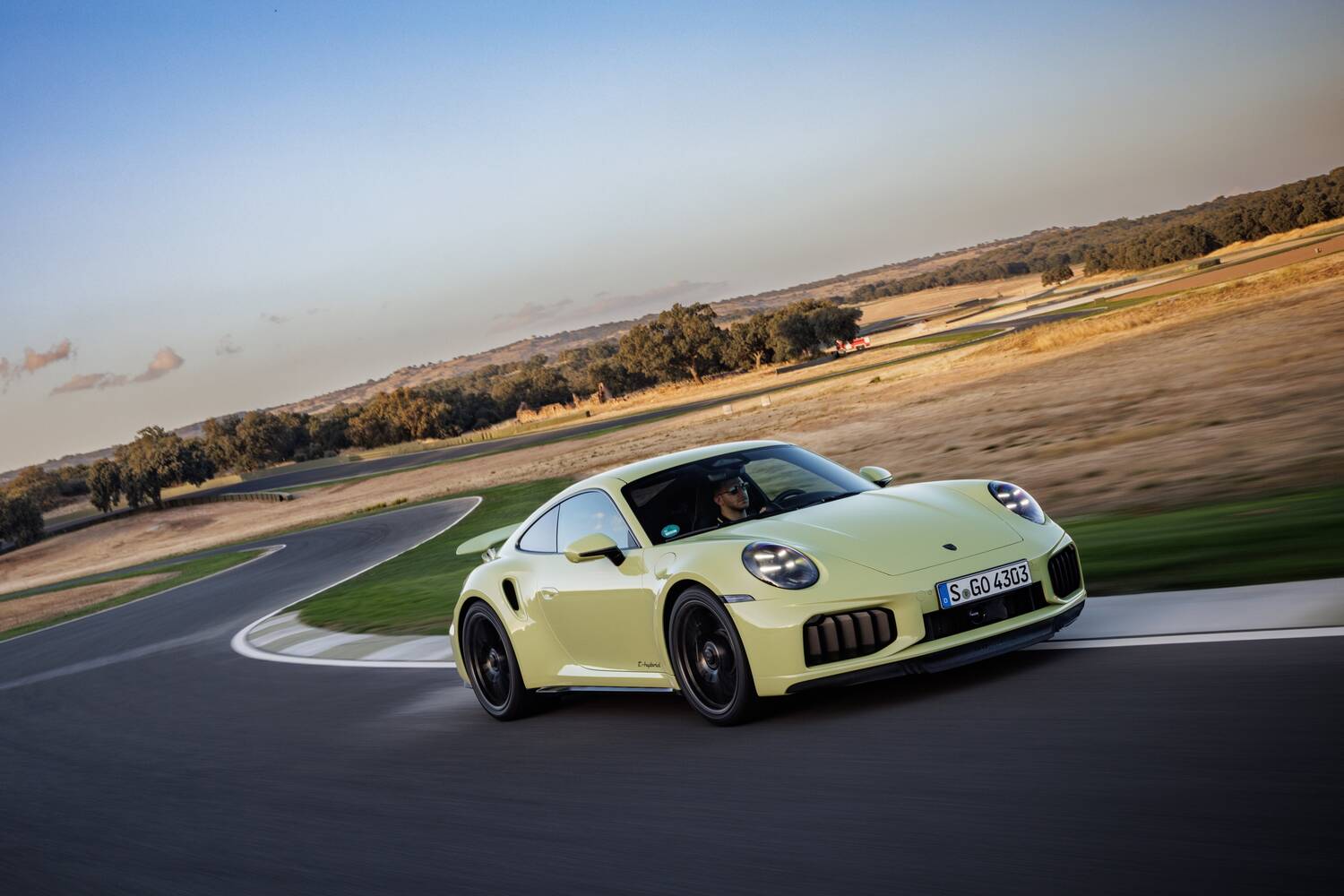
We were originally supposed to drive the Coupe version of the Turbo S on the same day we sampled the Cabriolet above, but due to some slight logistical hiccups, in the end that didn’t come about.
Happily, the bonus was twofold: first of all, we got to drive another Turbo S Cabriolet as a brief refresher over in its homeland of Germany, on the Autobahn, as part of the Cayenne Coupe Electric launch; and second, Porsche’s GB press team allocated us an extended test of the Coupe back in the UK.
With an 85-kilo weight advantage, better torsional rigidity and a stupefying 0-100km/h time that’s even a tenth faster than that of the hypersonic Cabriolet, the obvious thing to say of the 911 Turbo S Coupe is that it’s ridiculously quick. But it’s the midrange roll-on acceleration you really have to watch.
Pay ultra-close attention to how much throttle you’re bleeding on when the car is already in the 60-80km/h zone. Maybe it’s because, in the Coupe, you’re not exposed to the elements like you are when driving the Cabriolet with its top down, so you’re not given the audible and tactile warning of a load of wind buffeting building up in line with vastly elevated road speeds.
But you can squeeze the power on what you think is a modest amount, even in Normal mode, in the Coupe... and then you look down at the speedo, and GOOD LORD. Is that really the time, officer?
It still sounds phenomenal, though, the raspy flat-six growling away delightfully at the back of the car. So yes, you’re more isolated from the noises it emits by the fixed roof and greater amount of sound-deadening, but you’ll still have a great big stupid grin on your face when you’re at the wheel of the Turbo S Coupe.
Is the handling much better, though? Well... no, not really. There’s a little bit more directness to the front end and perhaps a shade less of a sensation of hauling in a lot of mass when you’re on the brake pedal asking for the PCCB to work its decelerative magic, but in no way are the kinematics of the Coupe transformative when compared to those of the Cab.
Think of that more as a reflection of what an amazing job Porsche’s engineers have done with the 711hp soft-top, though, rather than a failing on the part of the tin-roofed car.
The Coupe is a sublime thing to drive in all conditions, however, not just when you’re rinsing out its ridiculous T-Hybrid drivetrain, and the tyre cavitation that used to afflict the 992.1 Turbo S Coupe has definitely been reduced in this 992.2.
Not totally eradicated, mind you, but mitigated to a substantial degree to make the Turbo S more like a refined GT when it’s just cruising.
And even surprisingly efficient. Over 680km and eight hours’ worth of testing on a variety of roads, spread across a few days, the Turbo S Coupe’s overall consumption figure was a respectable (for this level of performance car) 12.6 litres/100km.
But it regularly improved that to 11.3 litres/100km on motorway runs, and its best return was a 50km jaunt back to Porsche’s UK base in Reading along the M4, which yielded a frankly incredible 10.4 litres/100km.
Getting close to ten litres per one-hundred kilometres? From a 711hp car like this? Seems like perfect justification for the inclusion of the T-Hybrid gear. Well, that, and the monstrous midrange response, of course.
Irish pricing & rivals to the 2026 Porsche 911 Turbo S
- Turbo S costs nearly double entry-level 911s
- Only for the very select few
- Matches the hypercar greats as an experience

Although there is some argument over which is the finer car - a 911 GT3 or a 911 Turbo S - in terms of the pricing hierarchy there is no debate: the Turbo S is the pinnacle of the Porsche legend's breed.
In T-Hybrid soft-top format as tested here, its base price before options is a gobsmacking €405,956 - when the entry-level 911 Carrera Cabriolet is almost half that with an opening ticket of circa-€228,000.
The Coupe is not much better. It starts at €386,015, when the car at the other end of the fixed-roof 911’s range is (a still not-inconsiderable) €209,810.
So not only does the exorbitant cost of the Turbo S make you question whether a nice 911 Carrera T would do you just as well, it pushes it well into the realm of ultra-exotic cars such as the Bentley Continental GT, McLaren Artura and its Spider derivative, and Ferrari 296 GTS, among more.
In its defence, the 911 Turbo S is a truly amazing piece of engineering and, despite some hefty cost options, it also comes with a wealth of kit as standard. Items like the PCCB, PDCC, Rear Axle Steering, Comfort Access, Tinted HD-Matrix LED lights, Adaptive Sports Seats Plus, Sport Chrono Package and the Bose sound system, among more, are all included here when they would be further upticks on other models of 911 in the portfolio.
Servicing the Porsche 911 Turbo S
Porsche recommends a 12-month, 16,000km servicing interval on the high-power 911, with a major service every second year/32,000km, and then the spark plugs replaced at year three or 36,000km.
Porsche 911 Turbo S 992.2 warranty
Porsche offers a three-year, unlimited-distance warranty on all its new vehicles, which should apply to the 911 Turbo S too. This warranty is internationally valid, so should you decide to emigrate to another country within the first 36 months of ownership, and you take your car with you, it'll still be covered by the Porsche dealers in whichever territory you move to.
Verdict - should you buy the 2026 Porsche 911 Turbo S?
If you can afford it and you want to know what hyperspace might feel like, yes - you absolutely should buy the 992.2 Porsche 911 Turbo S. It's clearly a car which is going to be ultra-rare in Ireland, given both its colossal expense to buy and run, but the adoption of the T-Hybrid gear has taken what was already a blinding high-performance car and made it that little bit more extra-special again.

Whether in its Coupe format or more glamorous soft-topped Cabriolet form, the part-electric Turbo S is thoroughly electrifying in every single conceivable way that matters and, crucially, it allows the Turbo line to hold its head up with dignity once again, when ranged against its own glitteringly talented GT3 stablemate.
Want to know more about the 2026 Porsche 911 Turbo S?
If there's anything about the new Porsche 911 Turbo S Cabriolet or Coupe (992.2) we've not covered, or you'd like help in choosing between it and other cars, you can avail of our expert advice service via the Ask Us Anything page.
Porsche 911 Turbo history
We're not going to do a 'full' 911 history here and go all the way back to 1964 and the original jewel of a car. Instead, we're going to focus on the lineage of the Turbo, which didn't appear until 11 years into the model's history in 1975 - as the iconic 930.
That's just the model code for the first production car from Porsche to feature a turbocharger, hence why the 1975 911 Turbo was such a cool thing. Well, that and its gigantic, emblematic whale-tail spoiler, of course. Oh, and its widened wheelarches stretched over a wider track, to better cope with its burgeoning power.
Initially, the Turbo made 260hp from a 3.0-litre blown flat-six, to which a single KKK turbocharger was fitted. But by 1978, the swept capacity was increased to 3.3 litres and an air-to-air intercooler was added to the mix, raising the power to 300hp.
Porsche wasn't even done there, offering a performance-kit option from 1983 onwards that would take the 911 Turbo to 330hp and then - right at the death in 1989 - it gained a five-speed gearbox. And yes, that means the original Turbo was on sale for 14 years, with all its variants capable of 0-100km/h in 4.8 to 5.4 seconds.
The Turbo was the basis of some truly legendary Porsche motorsport machines, like the 934 and the sensational 935, as well as being the car which begat the mighty 959. So the Turbo has long had a genuine and credible association with Porsche's motorsport ventures, despite some claiming the GT3 is the only 911 with any true enthusiast merit. We disagree.
And we digress. The run-out 930 Turbo, with its 3.3-litre engine and five-speed 'gearbox, formed the basis of the follow-up in the next generation, the 964 Turbo of 1990. That car was tuned to be a little easier to drive than its predecessor (it was the original 911 Turbo which got the model such a fearsome reputation for being difficult to tame in the hands of inexperienced drivers), so it initially ran with 320hp, but it was later taken to higher outputs - both in 3.3-litre format and, from 1993, when it became the 964 Turbo 3.6 with at least 360hp.
However, the 964 still wasn't using the 'S' nomenclature for higher-performance derivatives (apart from on a limited-edition road model and also a motorsport prototype), it relied on a solitary blower, and it also wasn't yet deploying four-wheel-drive tech - but all that changed for the 993 Turbo of 1995.
A pair of turbos were strapped to a 3.6-litre flat-six for a base output of 408hp, which Porsche felt necessitated all-wheel traction to corral it (a direct lift from the very 959 the original 911 Turbo had spawned).
And in 1997, almost at the end of its run, the 993 Turbo S appeared, with power lifted to 450hp via larger turbos, and various other styling and technical updates added to differentiate it from your common-or-garden non-S Turbo.
The 993 was the last of the air-cooled Turbo 911s, as the 996 successor which arrived at the turn of the millennium went to a water-cooled flat-six unit with at least 420hp. From there, the Turbo started knocking on the door of 500 horsepower with the 480hp 997 Turbo of 2006, with the 0-100km/h time of that car already beneath the four-second barrier, before it hit that fabled 500hp mark with the 997.2 Turbo of 2009.
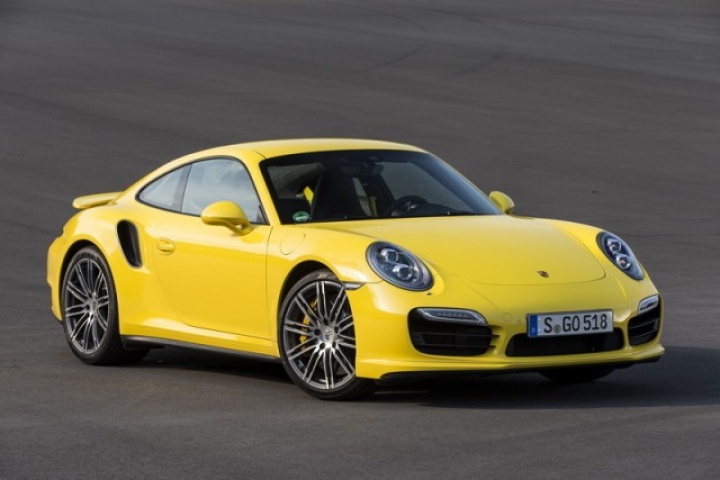
By 2013 and the arrival of the 991 Turbo, its 3.8-litre engine was delivering 520hp in regular specification and 560hp as the uprated Turbo S, the latter capable of a searing 2.9-second 0-100km/h sprint.
Those figures were raised to 540- and 580hp accordingly, for the 991.2 update, before the 992-family Turbo appeared in 2020. This time around, the S pre-dated the 'lesser' Turbo, so the 650hp, 3.7-litre biturbo 911 came first, followed by a moderately detuned 580hp variant a few months later.
Yet the switch to T-Hybrid power for the 992.2 Turbo S means an end to the non-S derivative, according to Porsche, so from now on the Turbo model will be purely sold with this 711hp powertrain.