

Did they consider the name Ozempic instead?
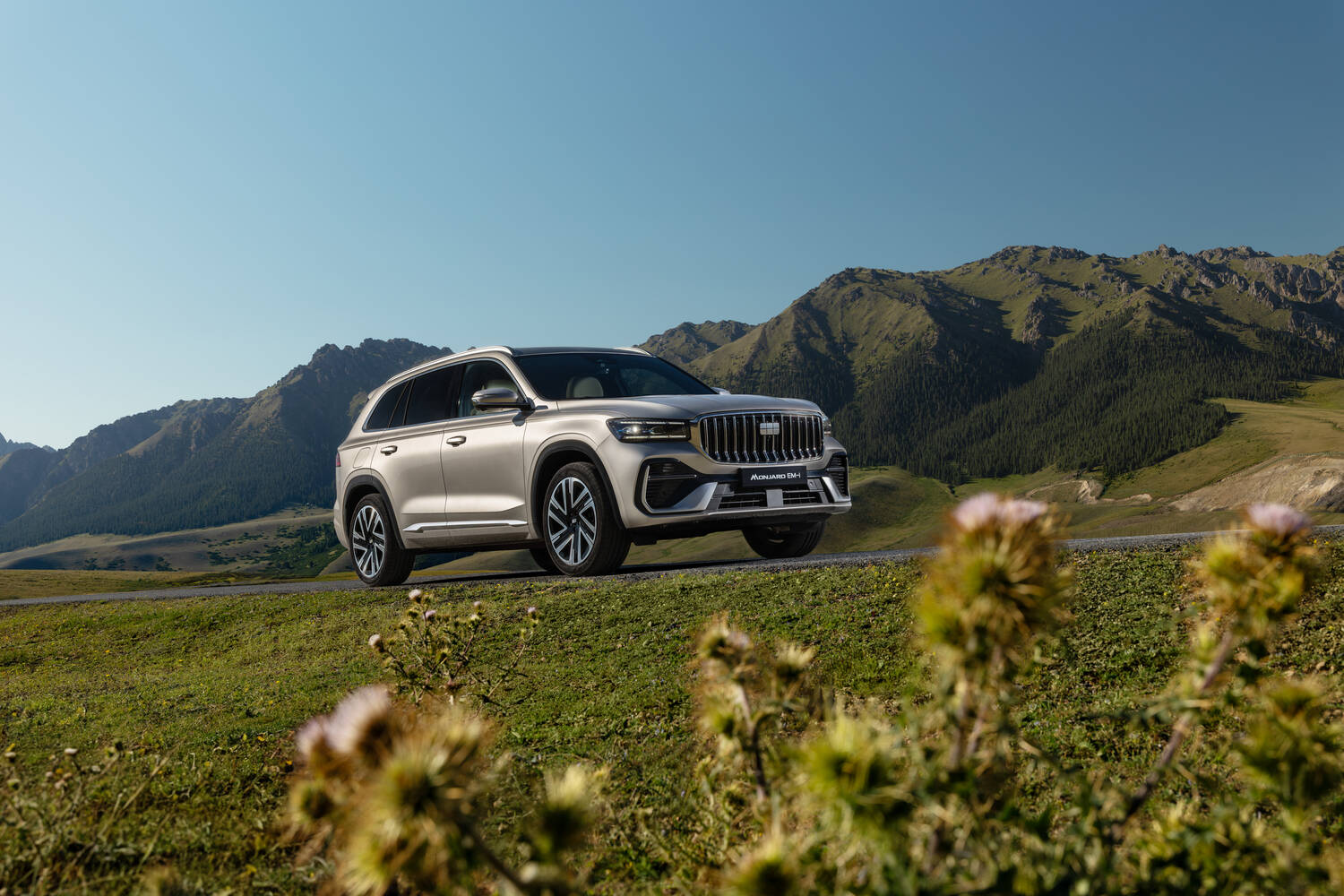
Har-har, very funny. The new Geely flagship SUV is not, in fact, named after a faddish weight-loss drug, but is inspired by Mount Kilimanjaro, Africa’s highest mountain.
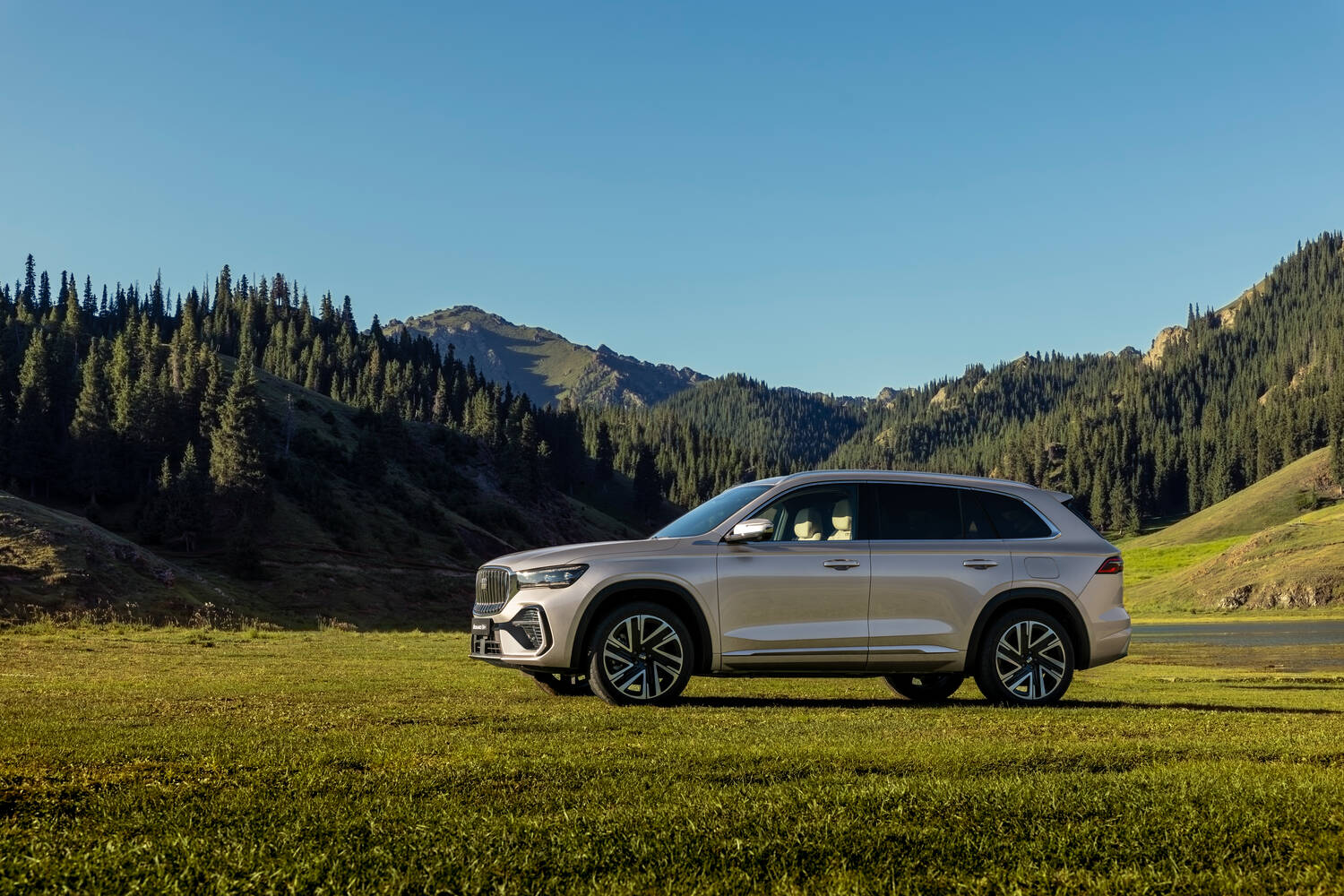
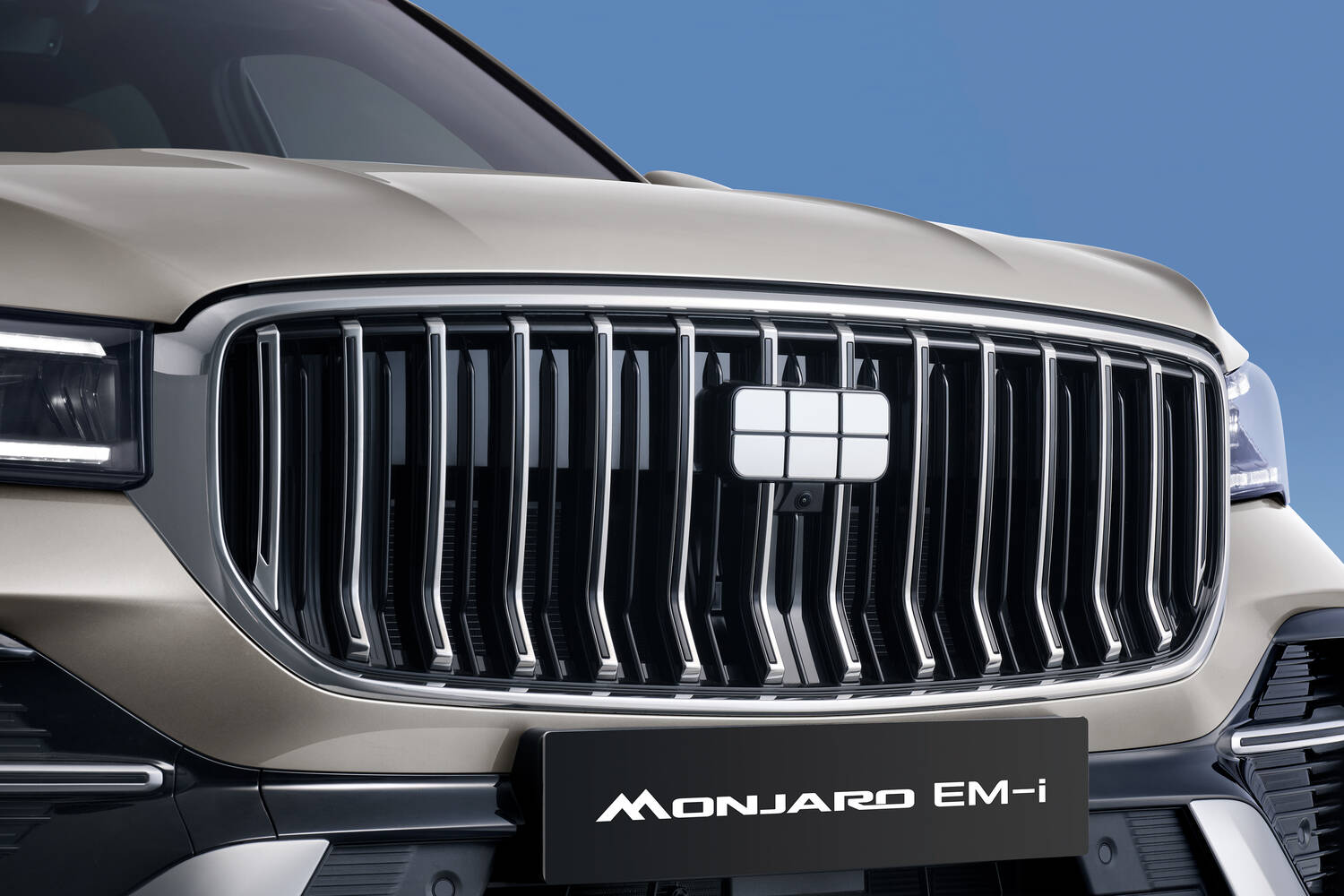
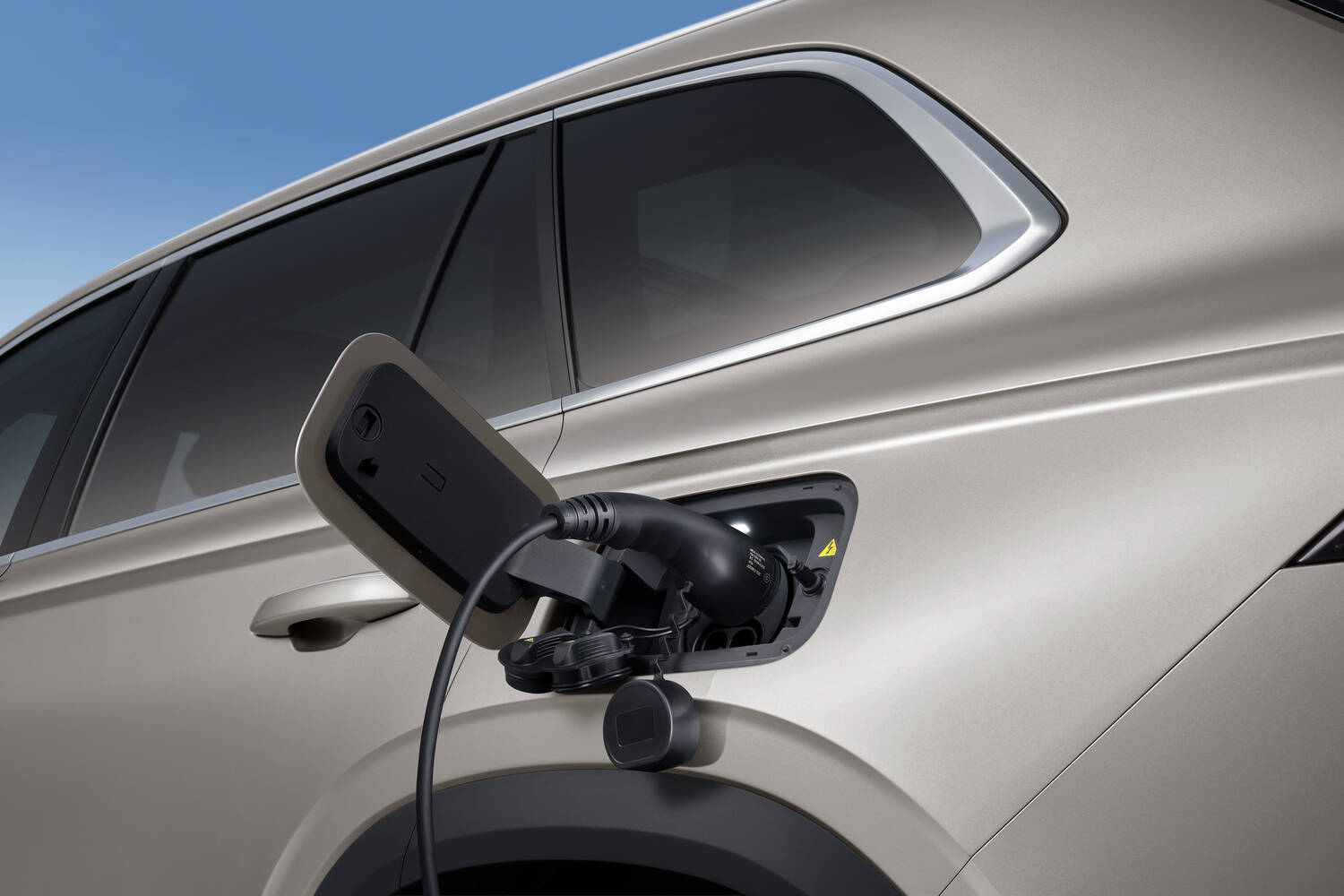
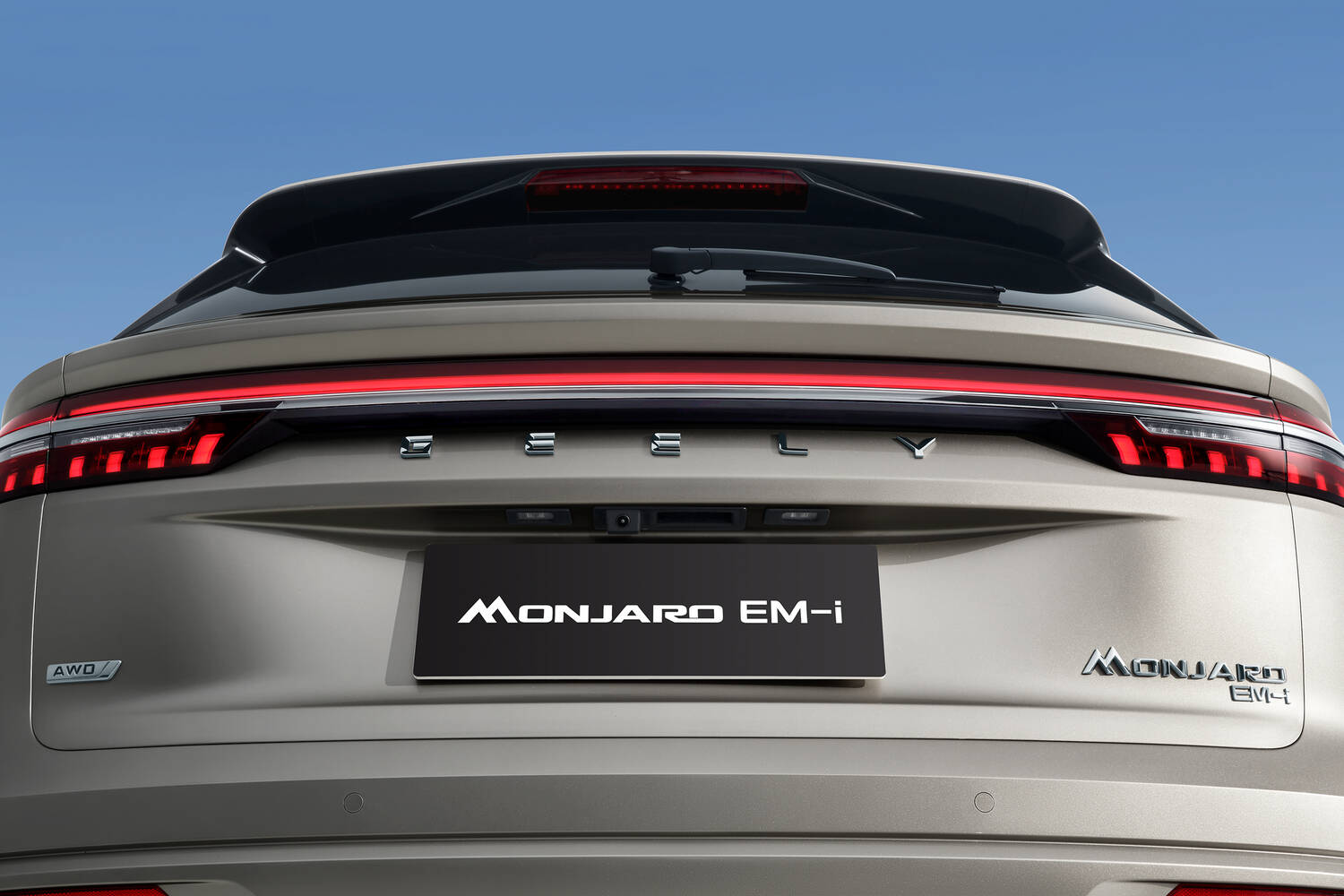
As the EM-i bit of its name suggests under Geely’s badging policies, the Monjaro is a plug-in hybrid (PHEV).
The company said it has not used the Monjaro’s PHEV gear in the pursuit of outright power, but rather to make it deliver sustained performance for longer distances; which is to say, the system is set up to not devour all its electrical reserves in one go and then switch to pure-petrol running.
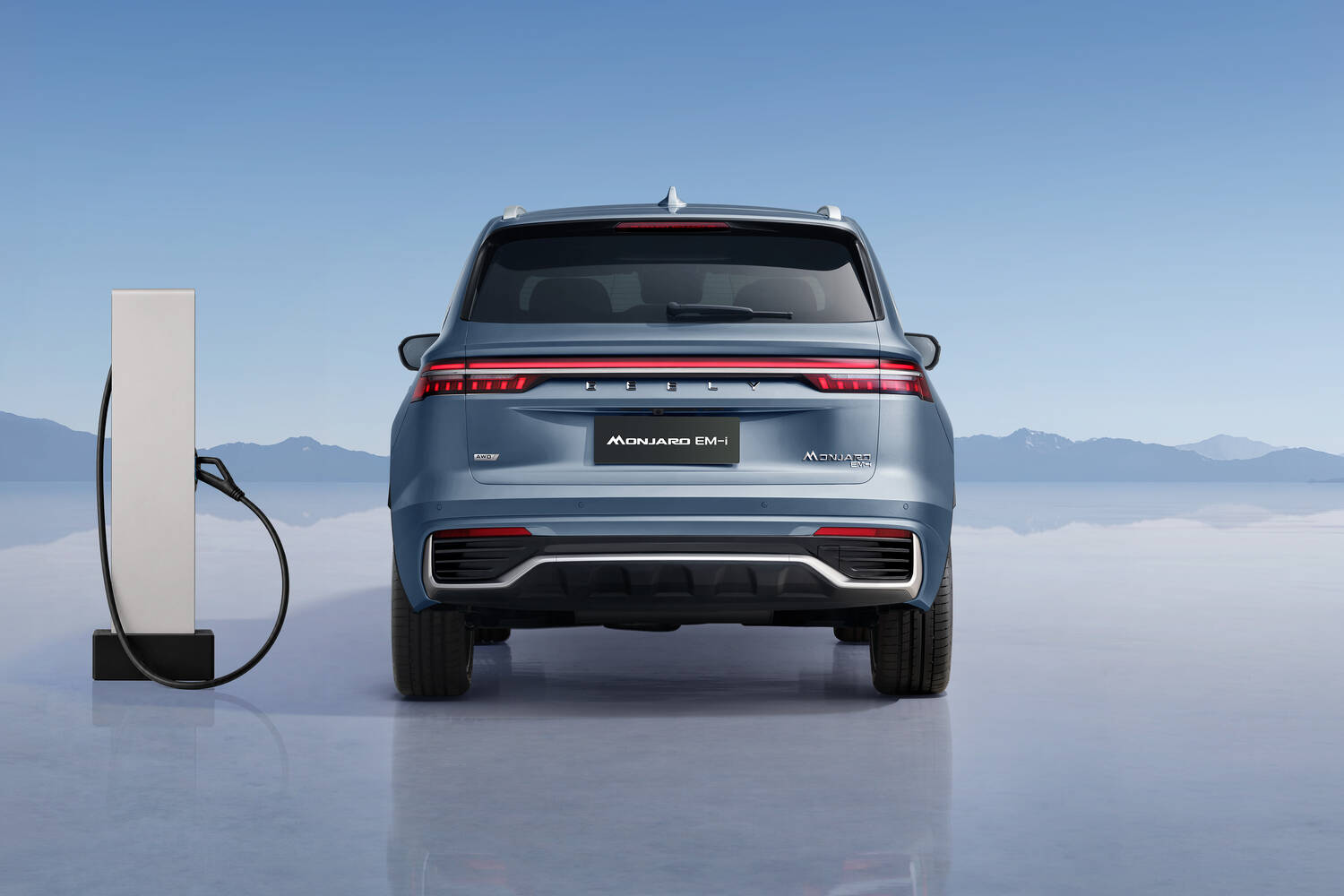
No details on precise system power and torque at this stage, but the Monjaro EM-i’s drivetrain is based on a familiar turbocharged 1.5-litre petrol engine, which we’ve already tested in the smaller Geely Starray EM-i.
Will the Monjaro be all-wheel drive?
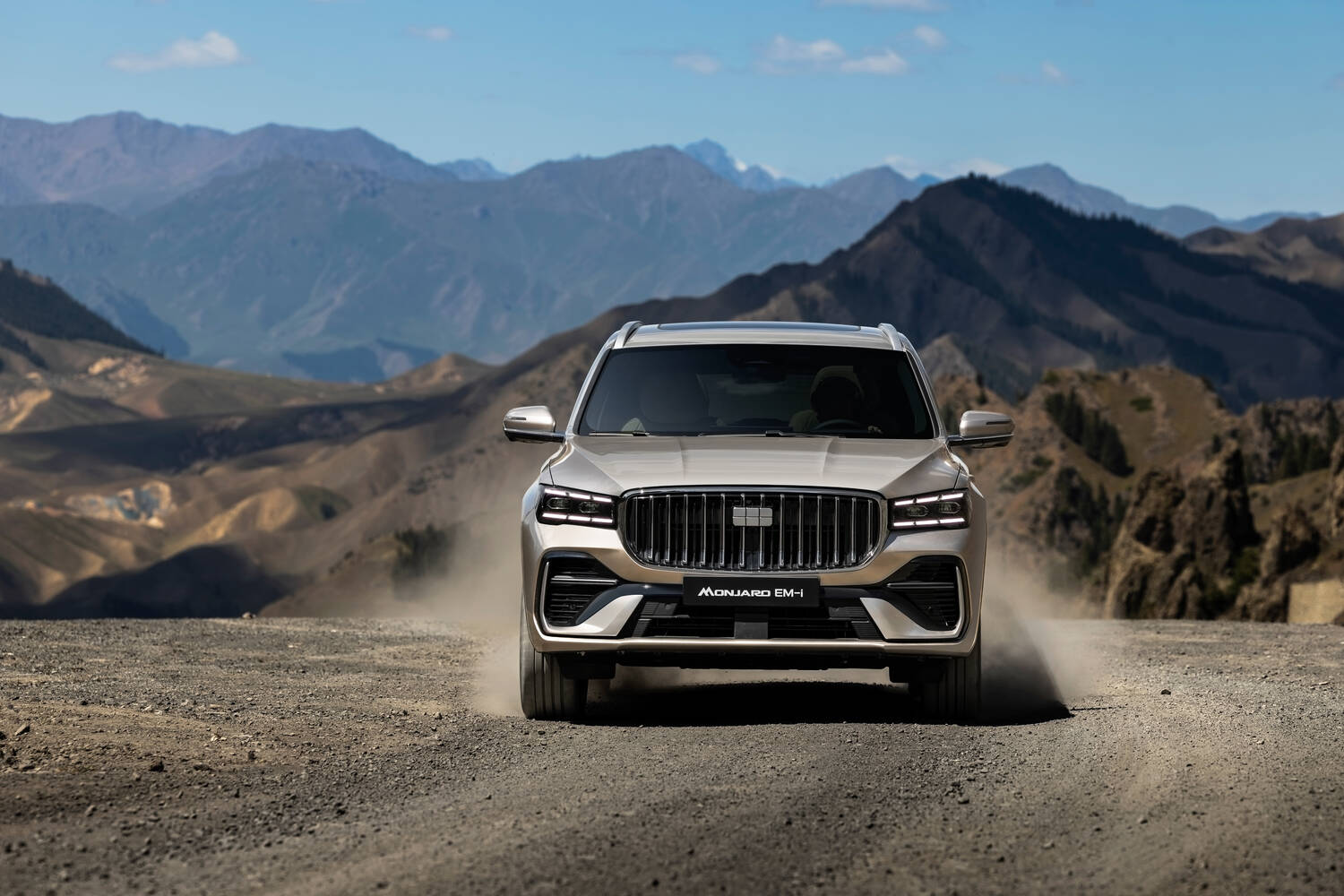
Yes, an AWD version of the Monjaro EM-i will be available, with a two-wheel-drive base version also on the cards. Expect that latter model to lead from the front.
The all-corners traction in the Geely will come from an ‘Intelligent Electric AWD’ system (e-AWD), with millisecond-level responses to distribute power to the relevant axles.
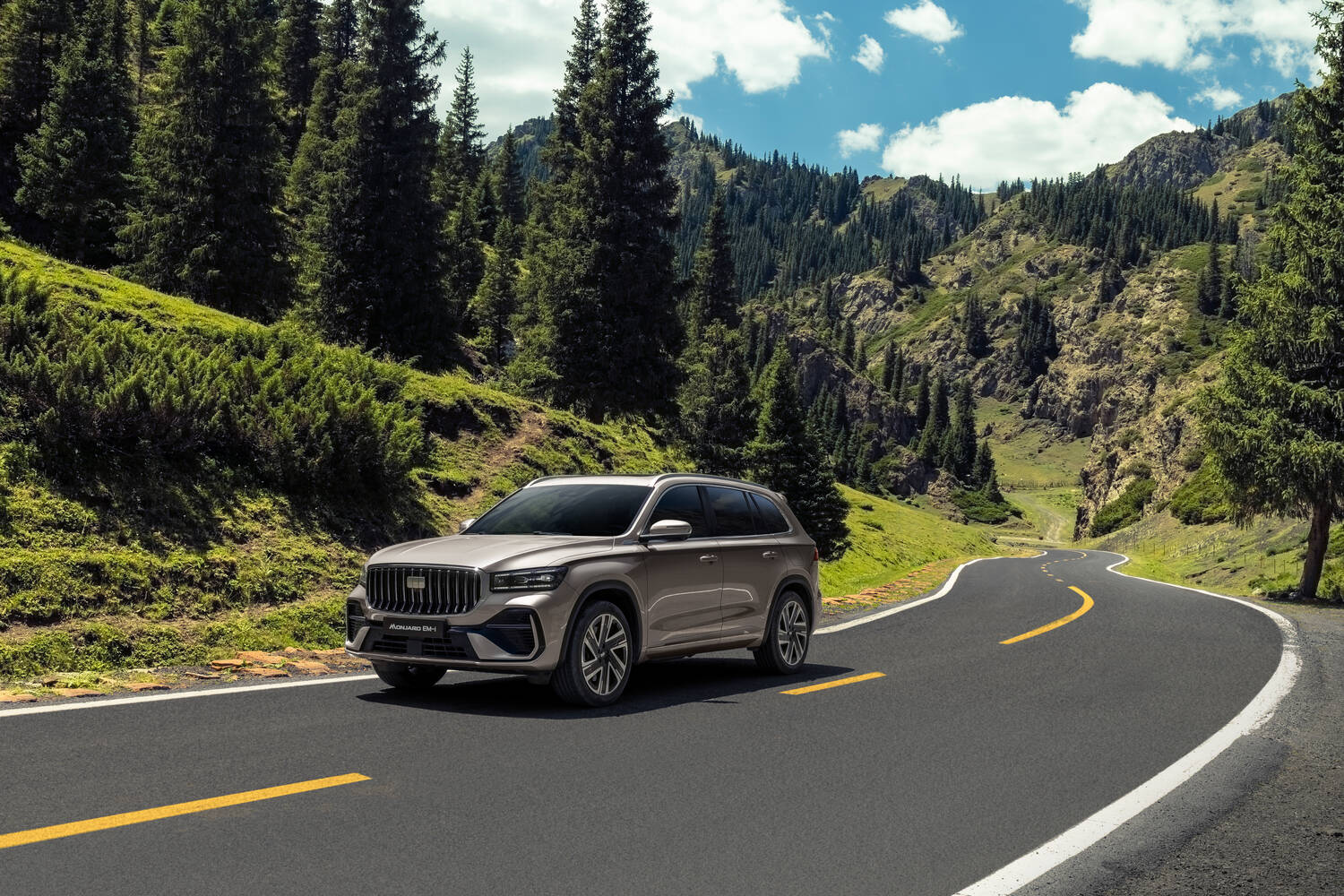
Sitting on the GEA Evo architecture, the four-wheel-drive Monjaro can decouple either its front or its rear axle as needed, while it also has torque vectoring through the e-AWD system.
It’ll also come on Continuous Damping Control (CDC) suspension for a greater level of all-round control than existing Geely products. Drivers will be able to choose from Comfort, Standard and Sport settings for the chassis.
In the standard two-wheel-drive Monjaro, four drive modes of Pure, Hybrid, Power and Snow will be joined by a further two for the AWD flagship, these additional settings christened Sand and Off-Road.
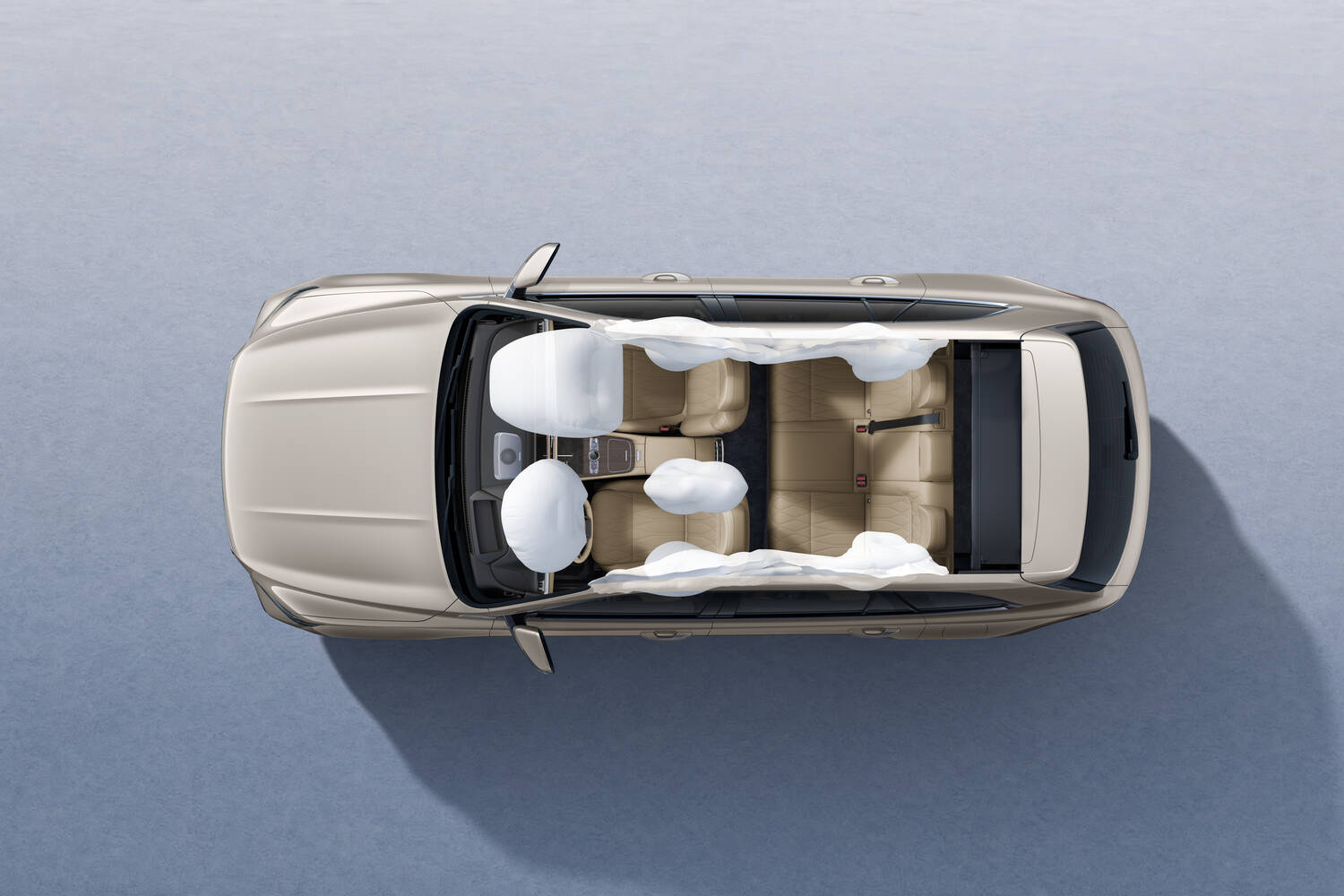
There’s a ton of active and passive safety features fitted to the Geely, too, including a 360-degree camera system with a transparent chassis view.
The manufacturer is targeting a five-star Euro NCAP safety rating as a result of all this tech.
How about the dimensions and the interior?
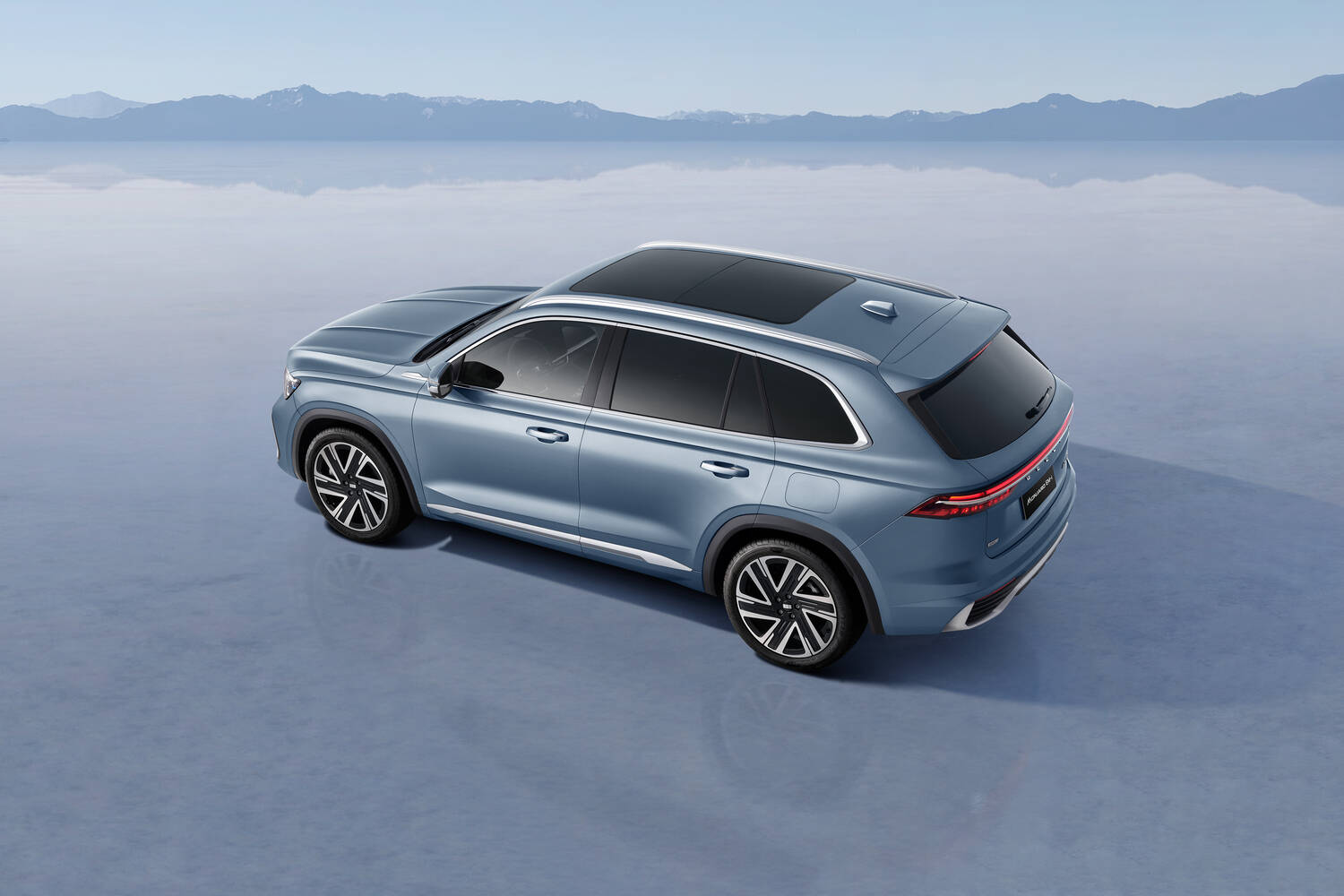
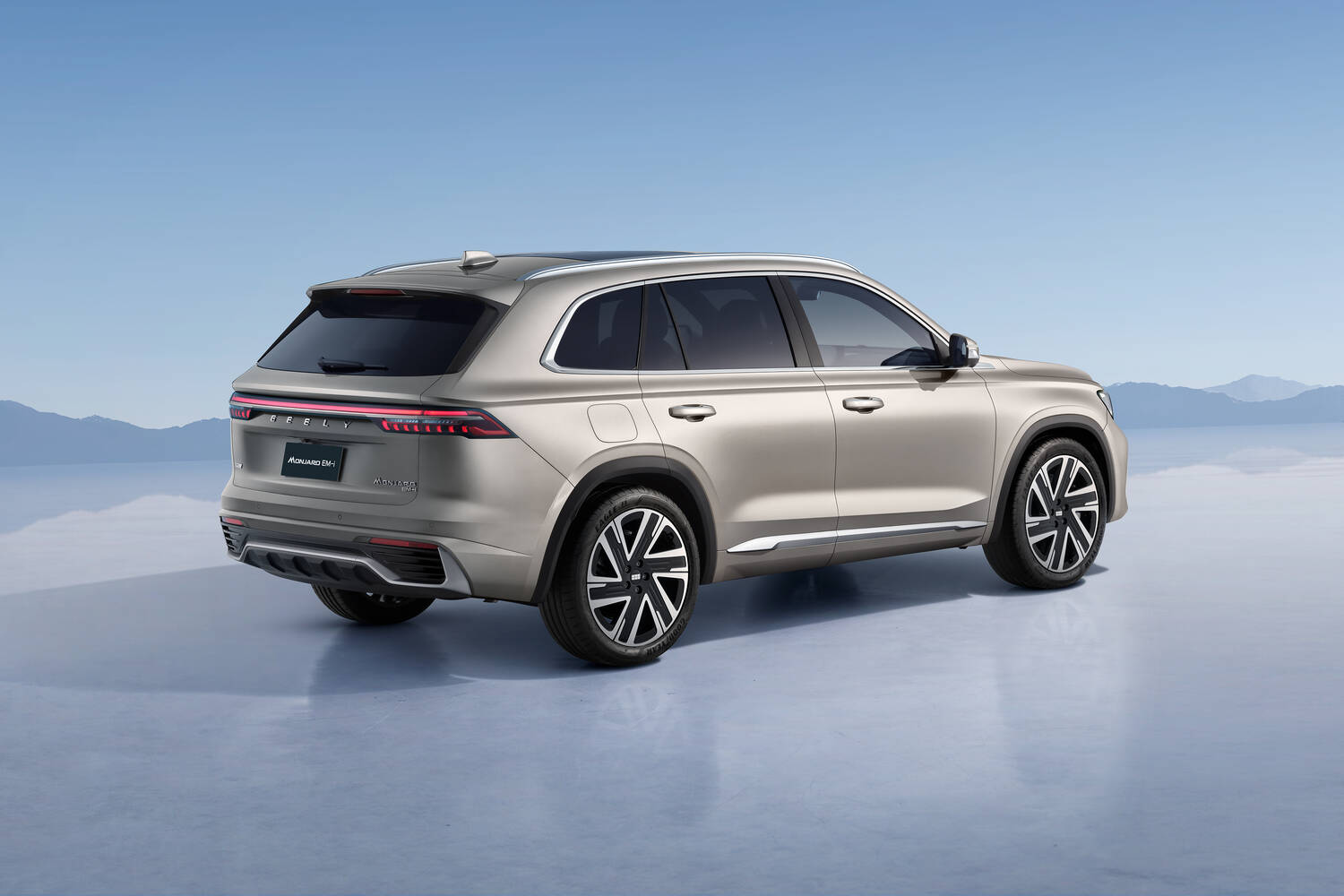
For a five-seater, the Geely Monjaro is a big barge, somewhat appropriately for an SUV named after a mountain (see the Bentley Bentayga for further details).
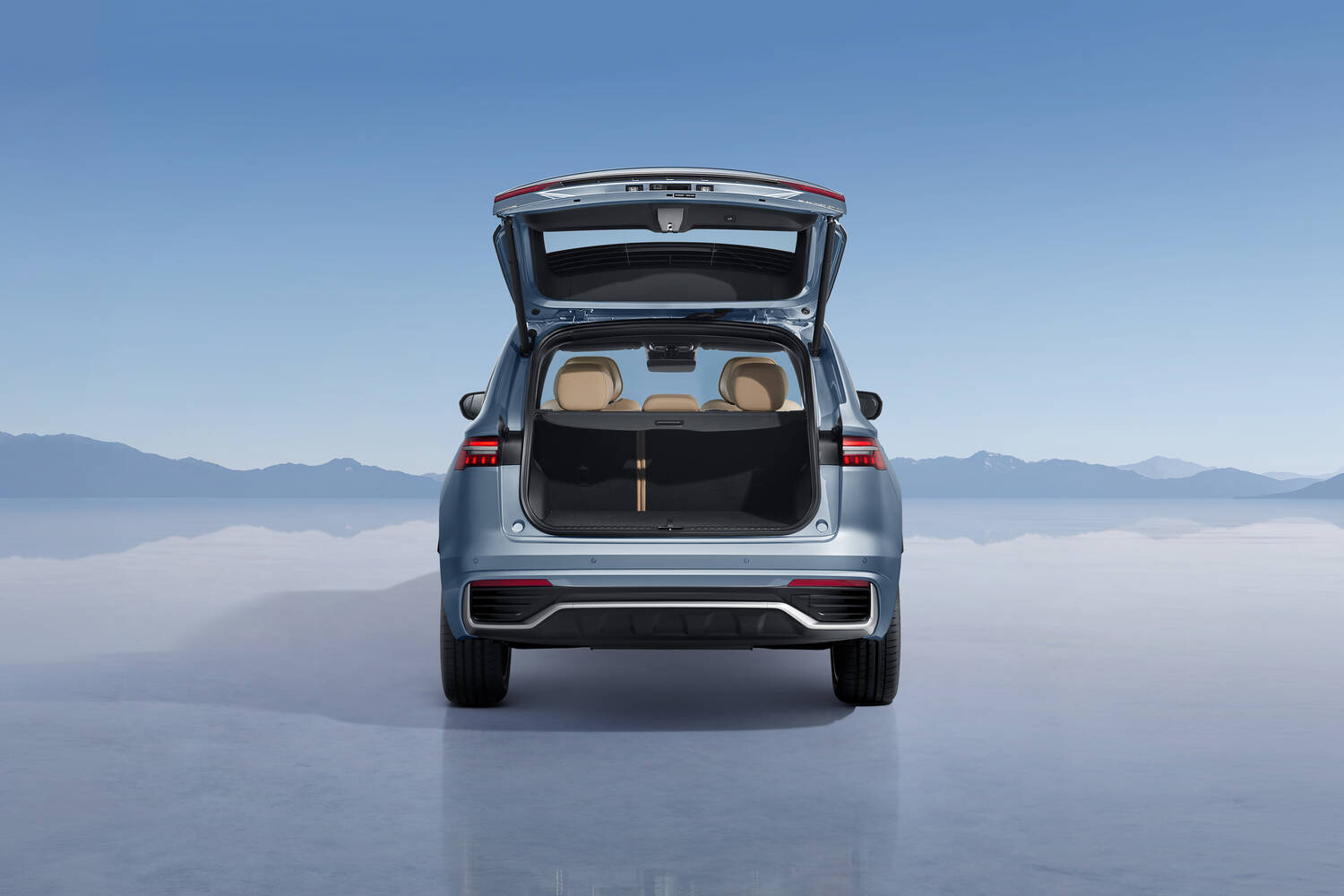
At 4.8 metres long and with 2,845mm of that taken up by the distance between the axles (known as the wheelbase), the EM-i promises to be roomy.
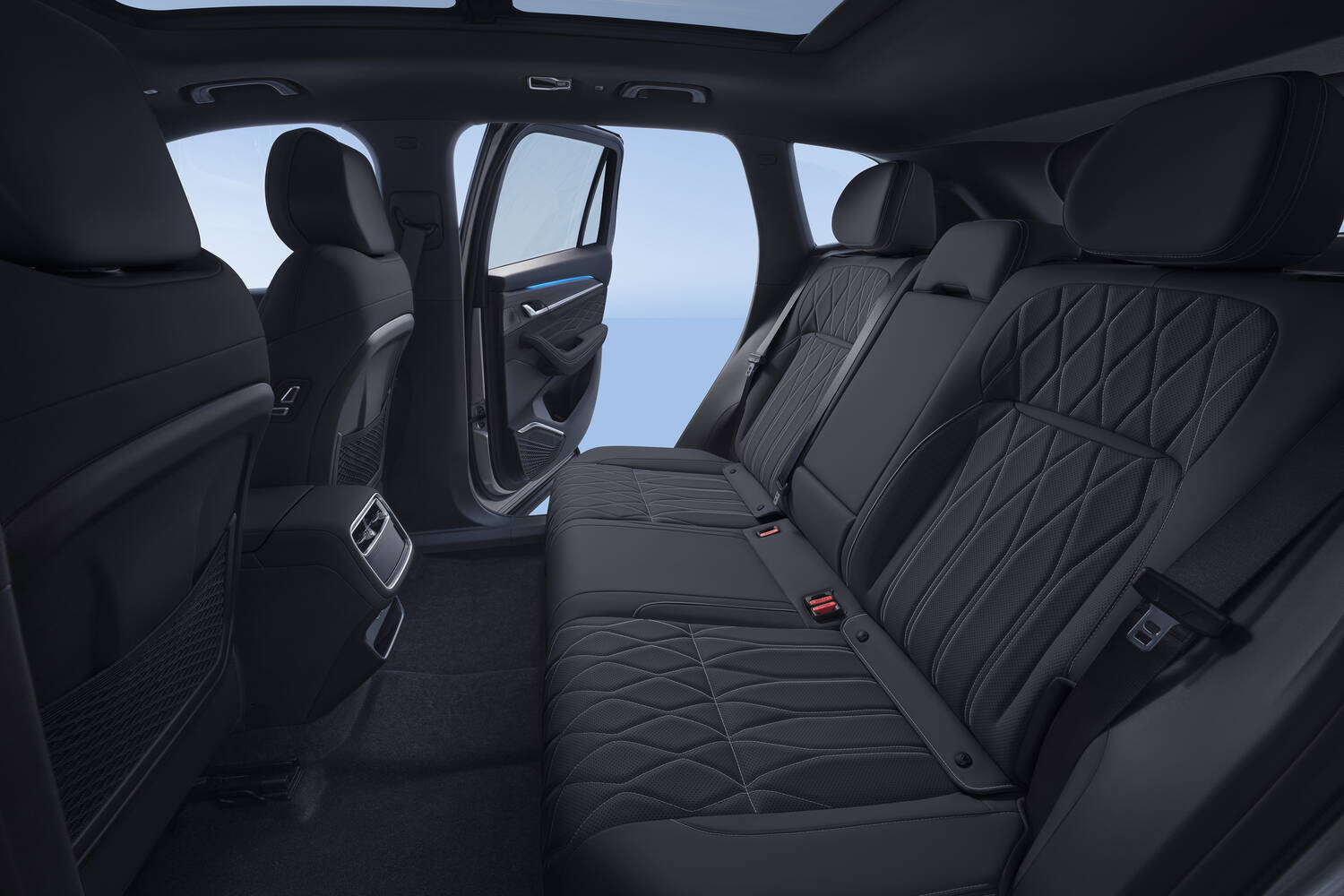
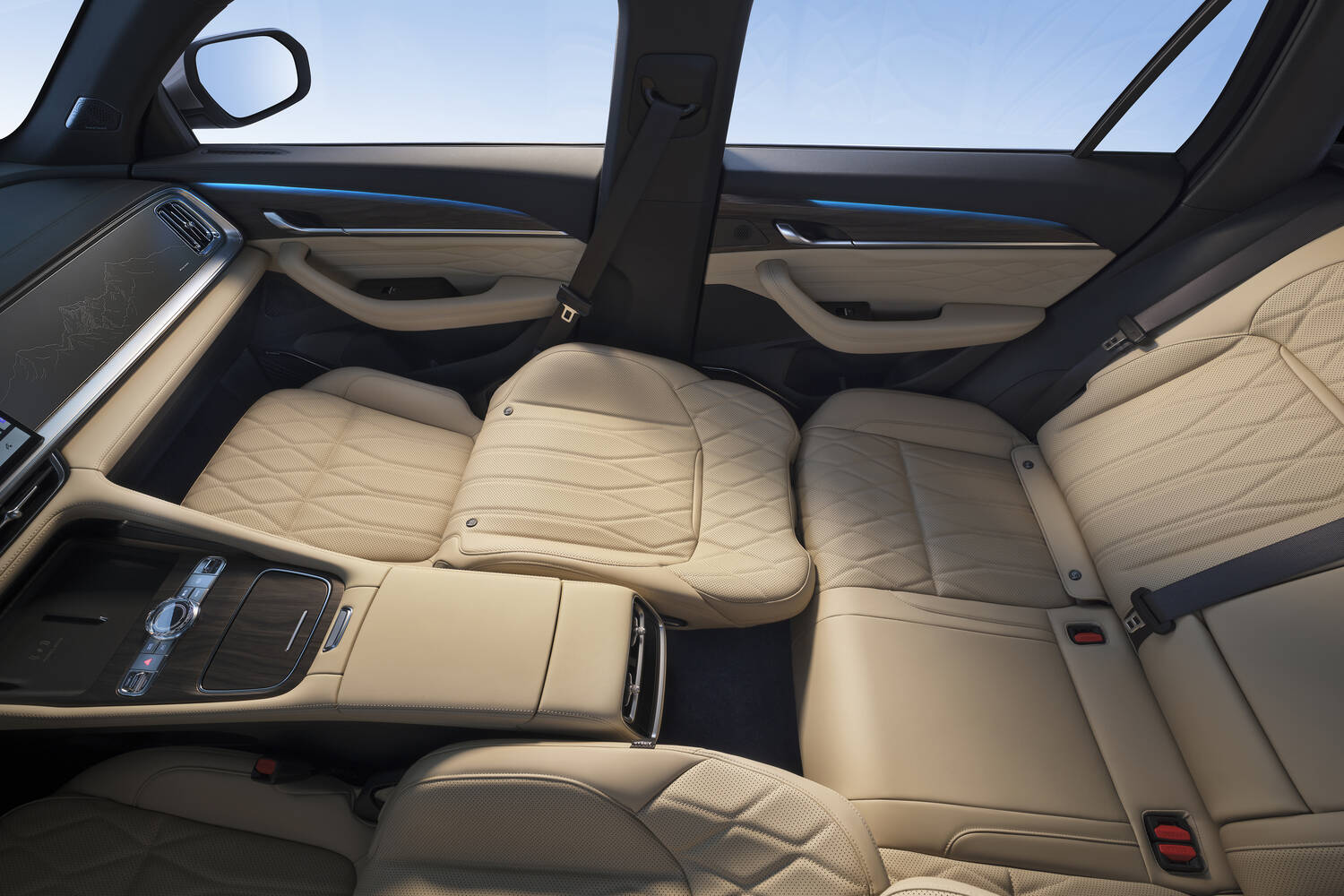
Data supporting that assertion includes a quoted 130mm of second-row kneeroom, as well as a boot volume in five-seat configuration of 633 litres.
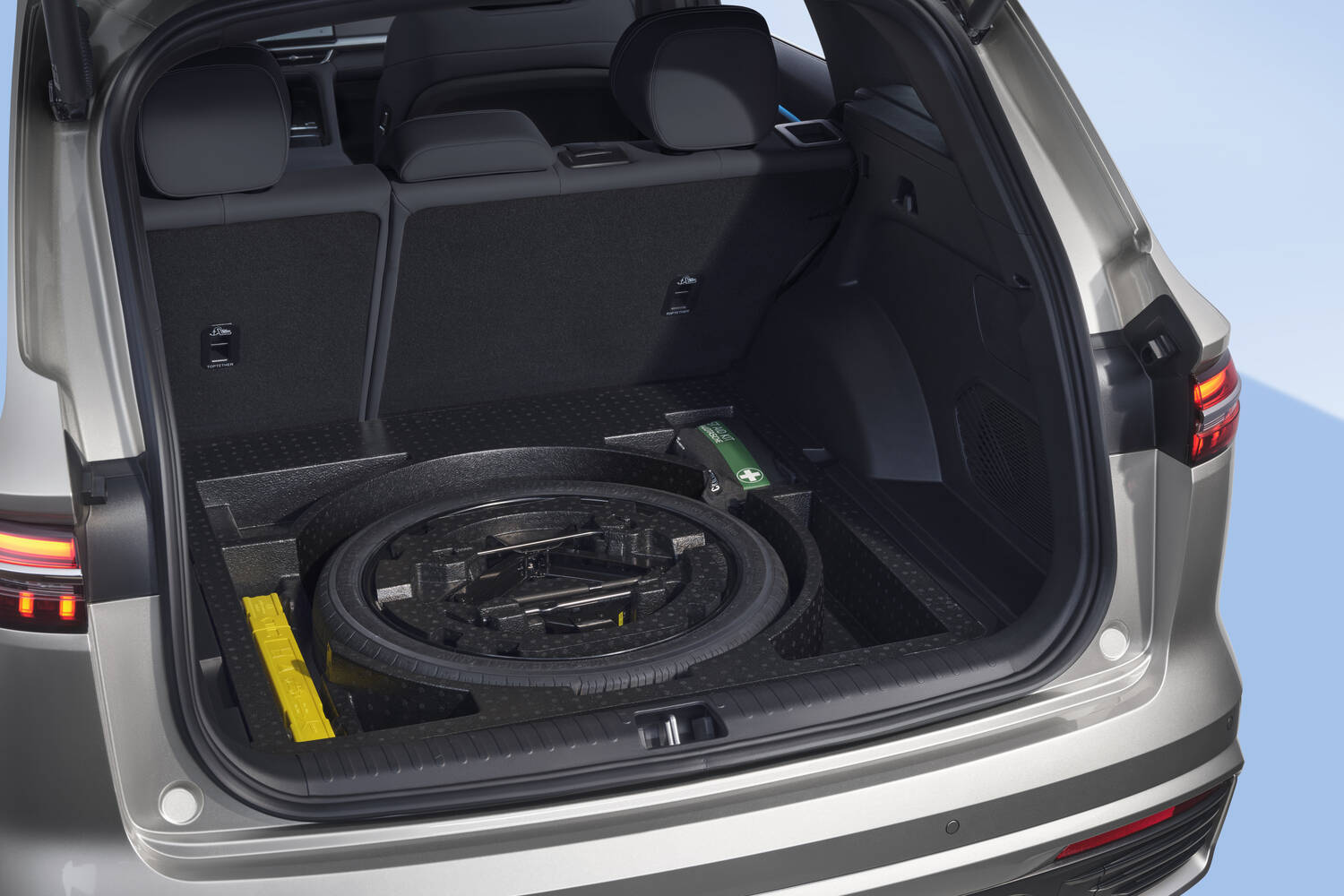
It expands to 1,532 litres if you fold the rear seats down.
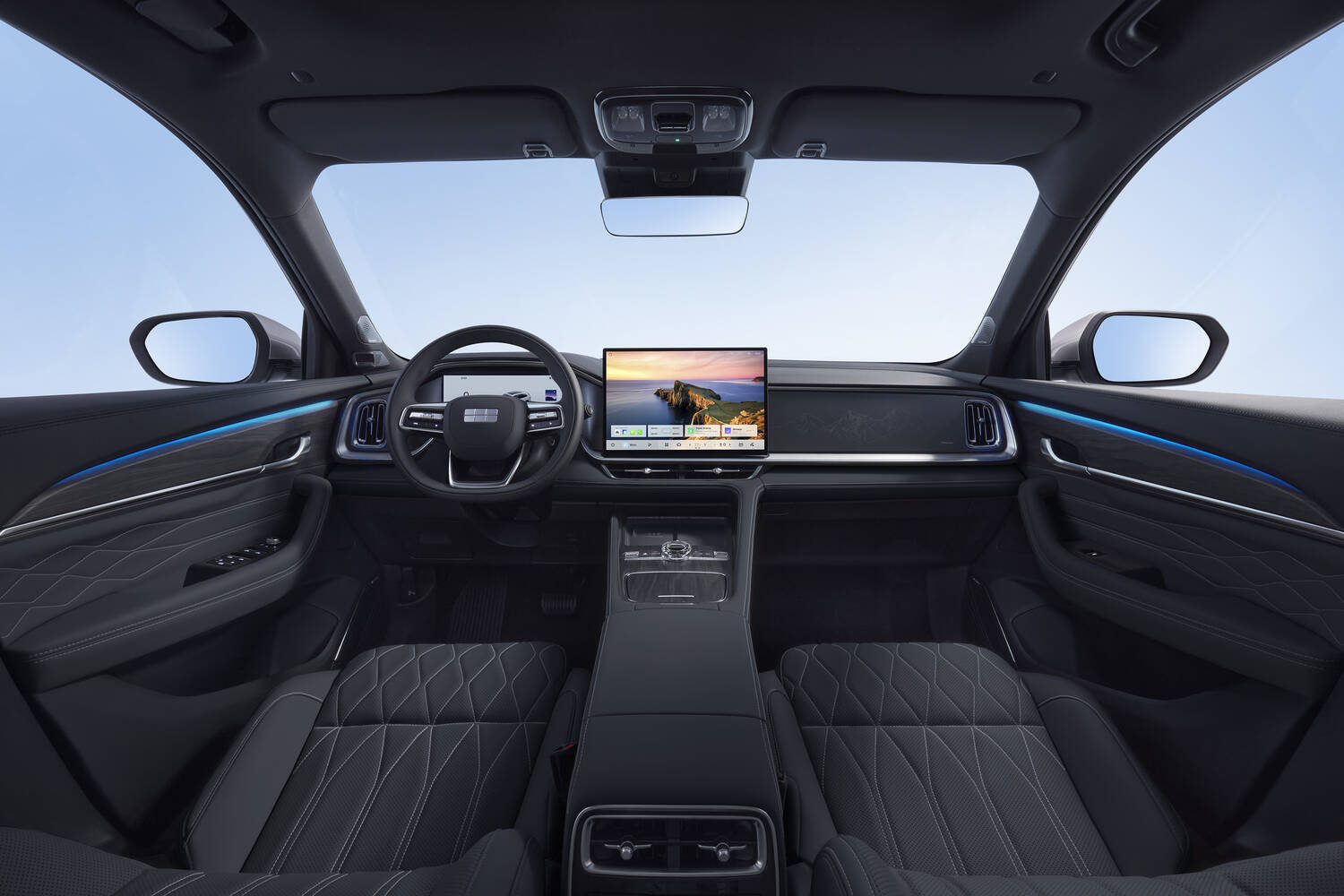
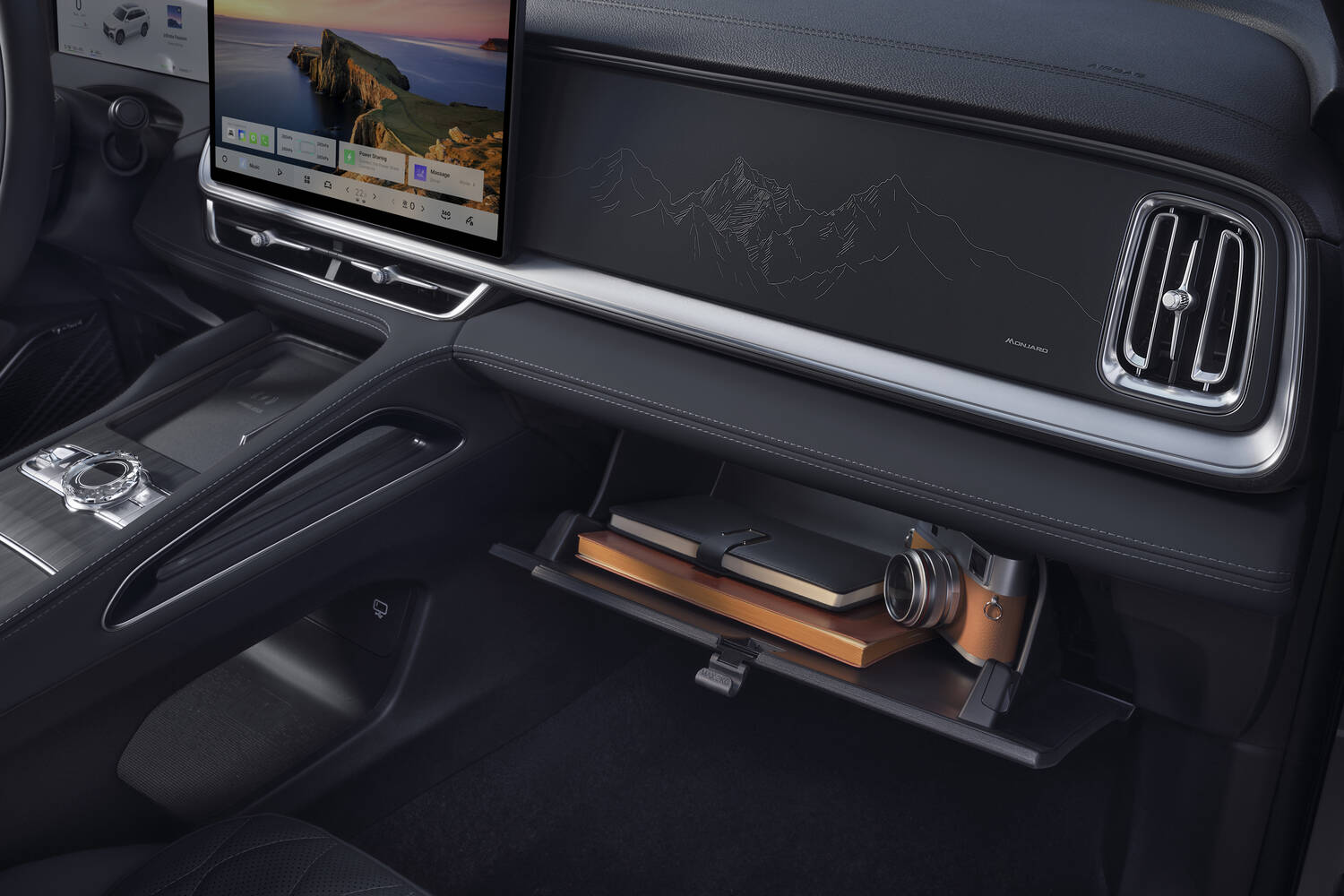
Massaging and ventilated front seats (optionally, although they’re heated as standard), laminated windows to reduce noise when travelling at speed and 34 different interior storage solutions are further highlights of the Monjaro’s passenger compartment.
What about the tech?
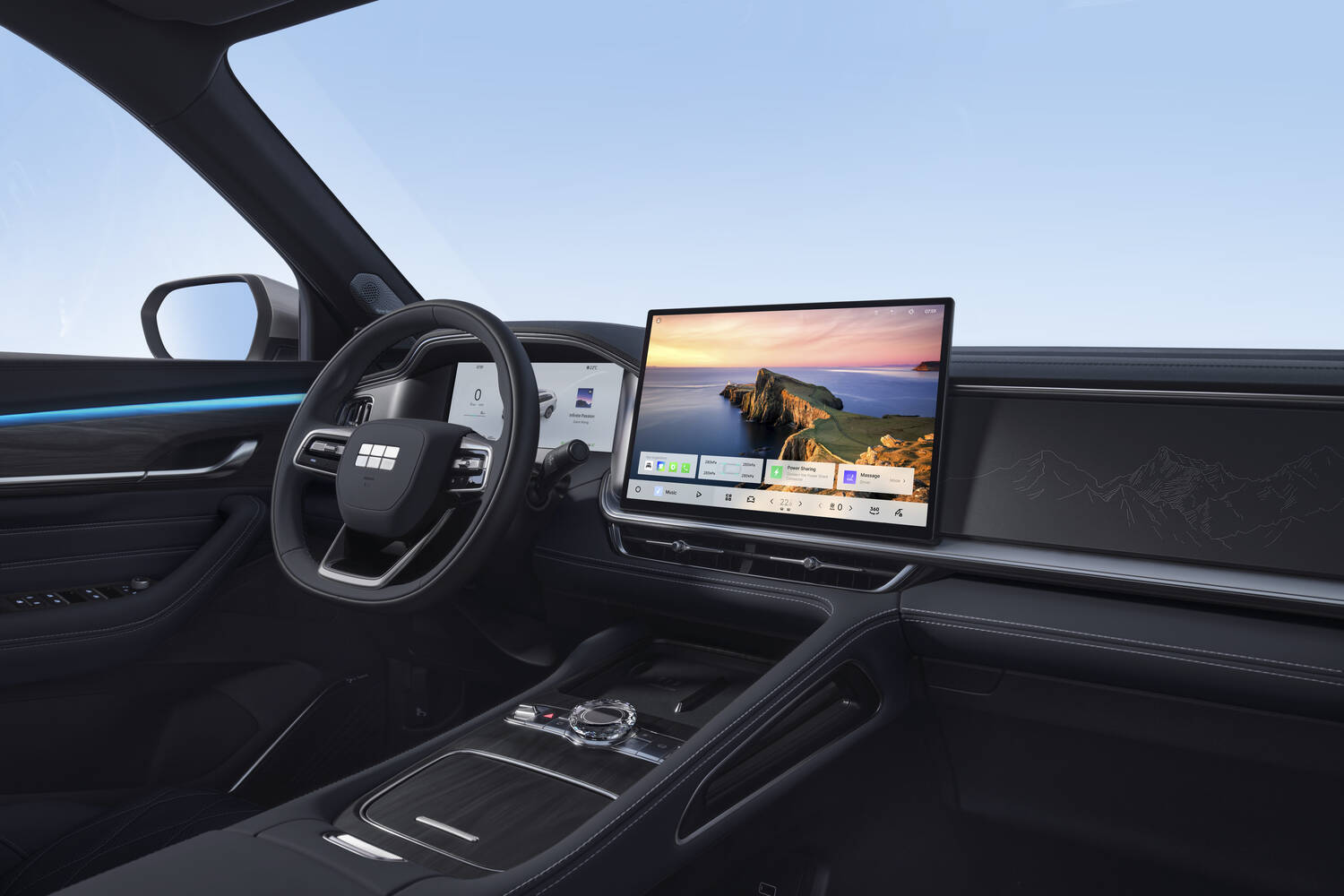
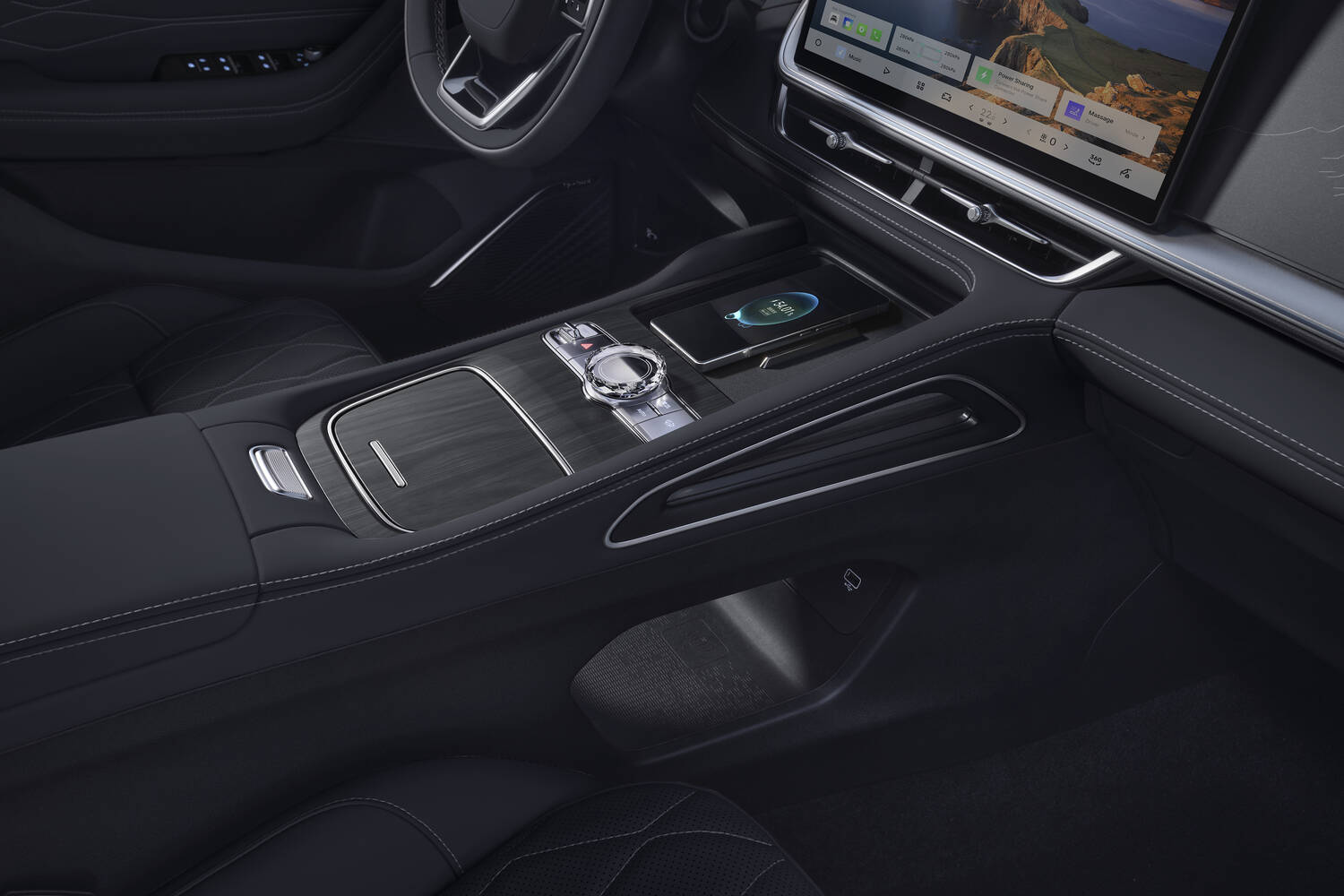
There’s a 15.4-inch touchscreen infotainment panel, a 12.3-inch digital instrument cluster and an optional 25.6-inch head-up display (HUD), which combine to form the focal point of the Geely Monjaro’s interior.
The operating system for all of this is the manufacturer’s proprietary Flyme Auto software, which supports wireless Apple CarPlay and Android Auto.
A 16-speaker, 1,000-watt, 7.1.2-channel immersive audio upgrade is also going to be offered for the plug-in SUV.
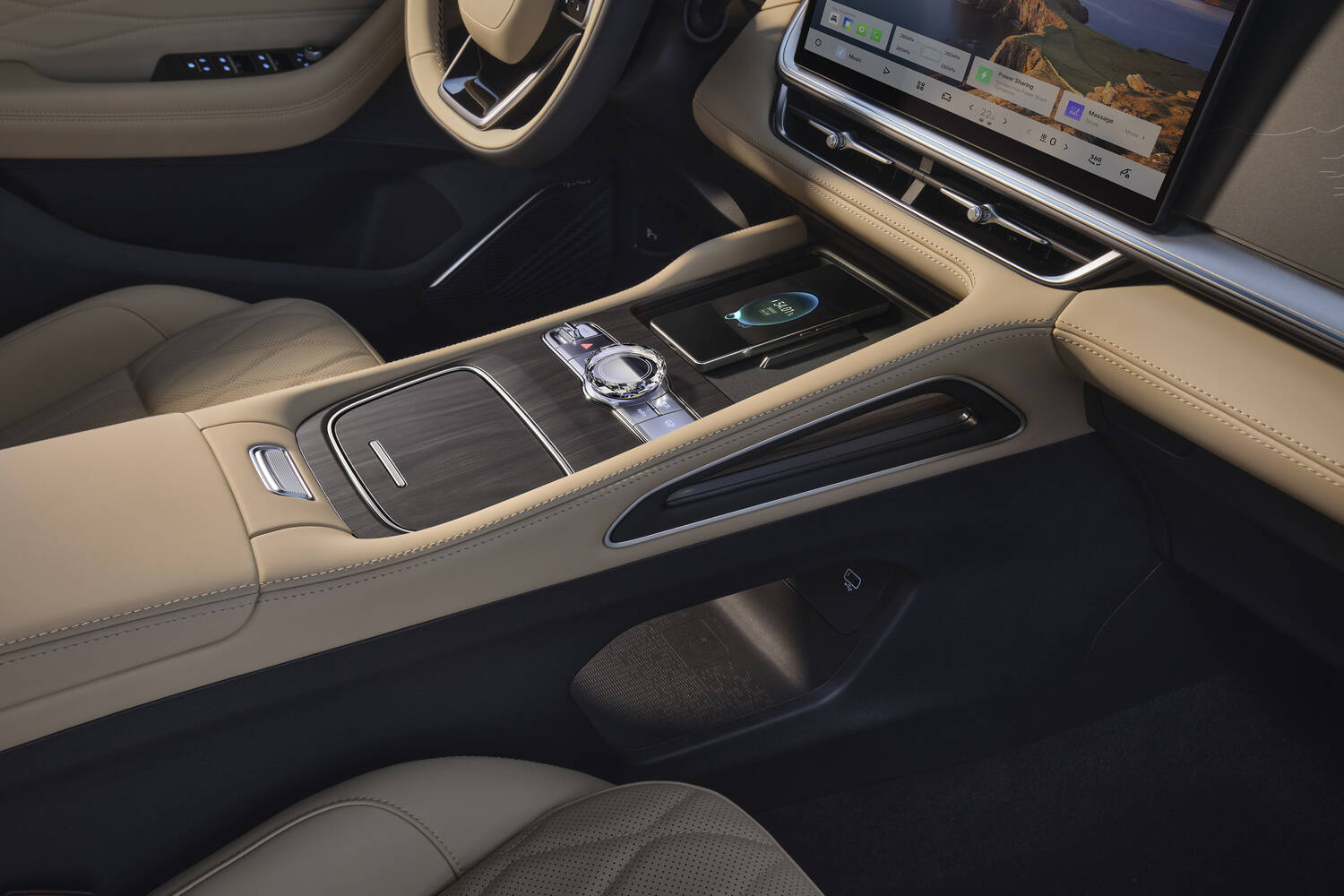
Other details regarding the Monjaro are that a 6.6kW vehicle-to-load (V2L) socket is listed, as is an opening panoramic sunroof.
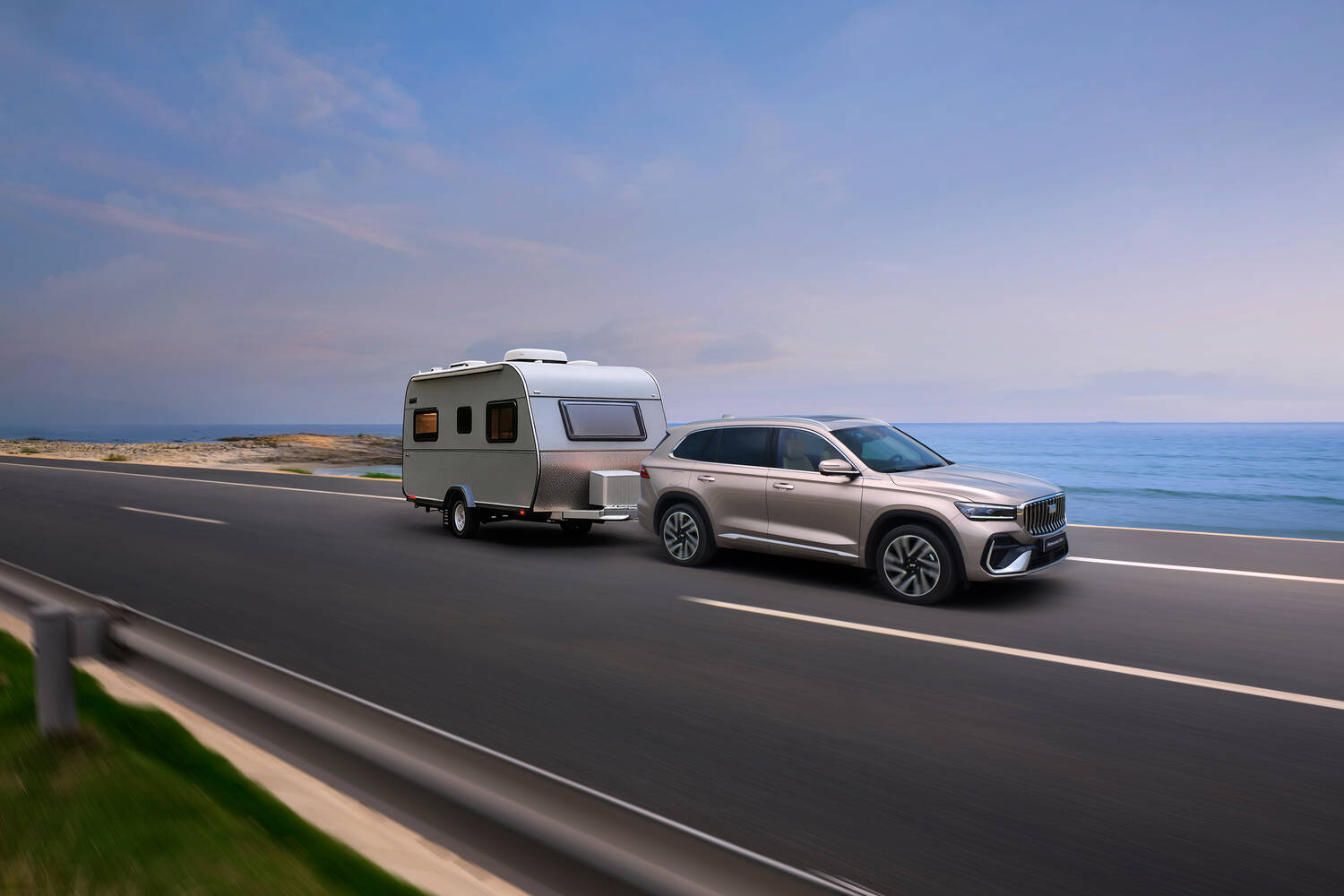
The PHEV can tow up to 1.5 tonnes of braked trailer, if necessary, while a predicted eight-year, 200,000km warranty should provide some reassurance in this relatively new marque.
Geely will offer the Monjaro EM-i in five exterior colours (gold, white, blue, black or grey) which can then be teamed with three upholstery finishes within (beige, black or brown).
Do you reckon the Monjaro will be good to drive?
Having driven several of Geely’s product output previously – the EX2 and EX5 EVs and the Starray PHEV – then we’re inclined to say: yes, it will.
We actually drove to the Paris show in a Geely Starray EM-i and it covered the journey with consummate ease, because it – like the EX2 and EX5 – is one of the few Chinese cars we’ve sampled that seems to have been properly tuned suspension-wise for exacting European tastes.
The normal rule of thumb is that if you can make a car bigger and heavier, you can often improve its ride as it ties down the chassis that bit more, so the increased size of the Monjaro should work in its favour. The adoption of the adaptive damping is a big step for Geely, also.
We’ve got high hopes for this one, then. Appropriate, for the (Kili)Monjaro.
If there is anything about this story we have not covered, you can avail of our expert advice service via the Ask Us Anything page.