

I've not heard that name in a long time. A long time…
Indeed. The Testarossa name was last used in the 1980s and 1990s for Ferrari's mid-engined flat-12 flagship — the one on all the posters, with the huge side strakes, and which had a co-starring role in the legendary Miami Vice TV series.
Of course, the Testa Rossa (note the separation, and yes it's Italian for Red Head) name dates back to the 1950s and the 500 and 250 Testa Rossa racing cars, whose mighty V12 engines scored three Le Mans 24hrs wins, as well as victories on the Targa Florio, at the Sebring 12hrs, and taking three world sports car championship titles with drivers such as Phil Hill, Dan Gurney, Wolfgang Von Trips, Luigi Musso, and Peter Collins.
So does this mean the new Testarossa gets a V12 too?
Alas… no. It gets a twin-turbo V8 hybrid, but if that sounds vaguely disappointing in terms of cylinder count, console yourself with the knowledge that it has 1,050hp at its disposal. Whatever else the 849 Testarossa is, it's not slow — that's 50hp more than the old SF90, and it'll reach 100km/h in just 2.35 seconds. The top speed is more than 330km/h. There are three electric motors — two for the front axle, one for the rear — four-wheel drive, and a battery management system directly derived from Ferrari's F1 hybrid experience.
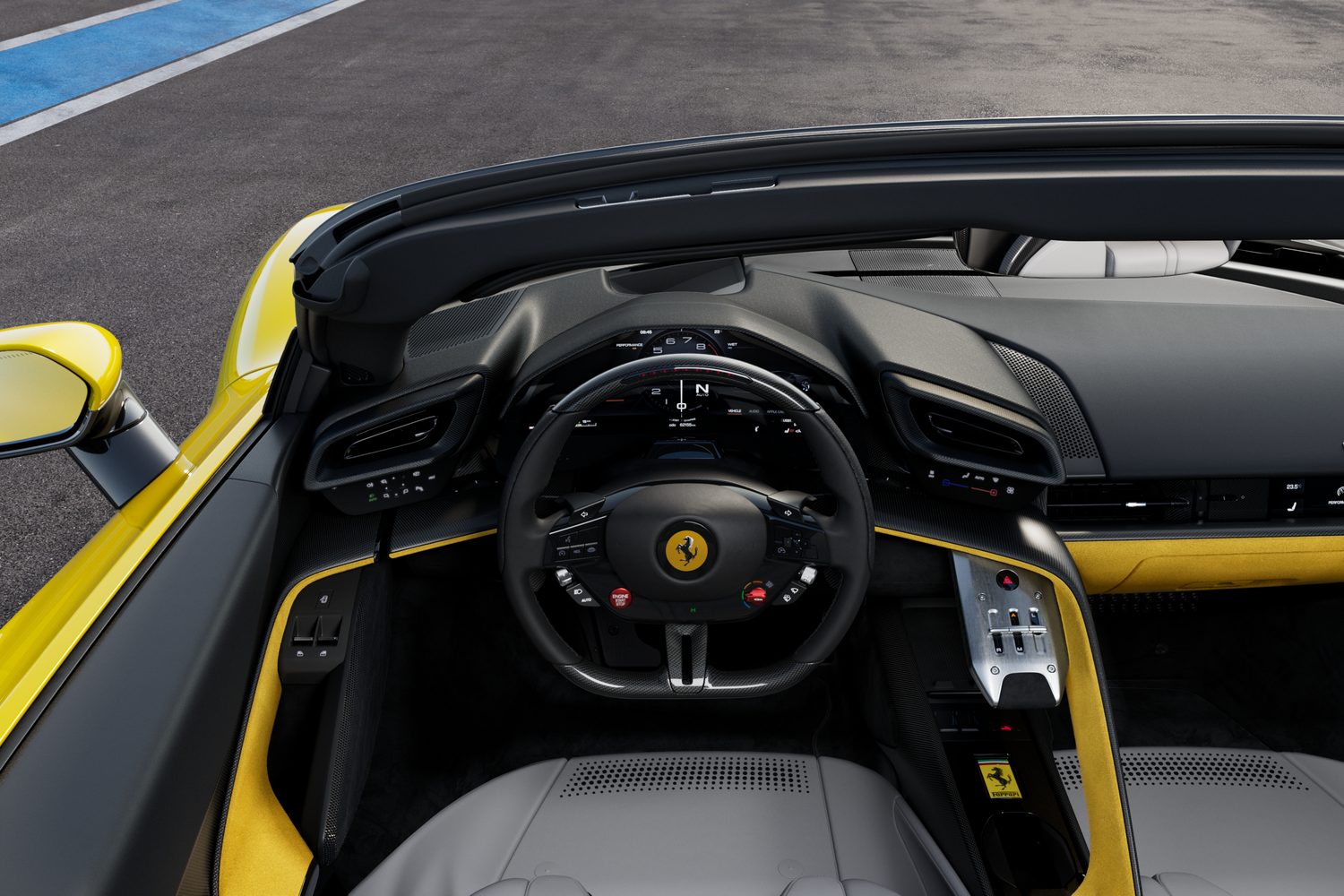
You can pick from four driving modes with the little Manettino switch on the steering wheel — eDrive, Hybrid, Performance and Qualify — and there's a new electronic control setup called the Ferrari Integrated Vehicle Estimator (FIVE), first seen in the F80, which is said to help tweak and adjust the car as you drive for maximum thrills, like having the Ferrari F1 pitwall of engineers in software form.
In fact, the 849 Testarossa circulates the famed Ferrari test track at Fiorano faster than the old SF90, and only slightly slower than the trackday-special SF90XX, as long as you spec it with the Assetto Fiorano pack, which cuts the weight by 30kg and tweaks the suspension, tyres, and aero.
Speaking of aero, is this a pretty Ferrari?
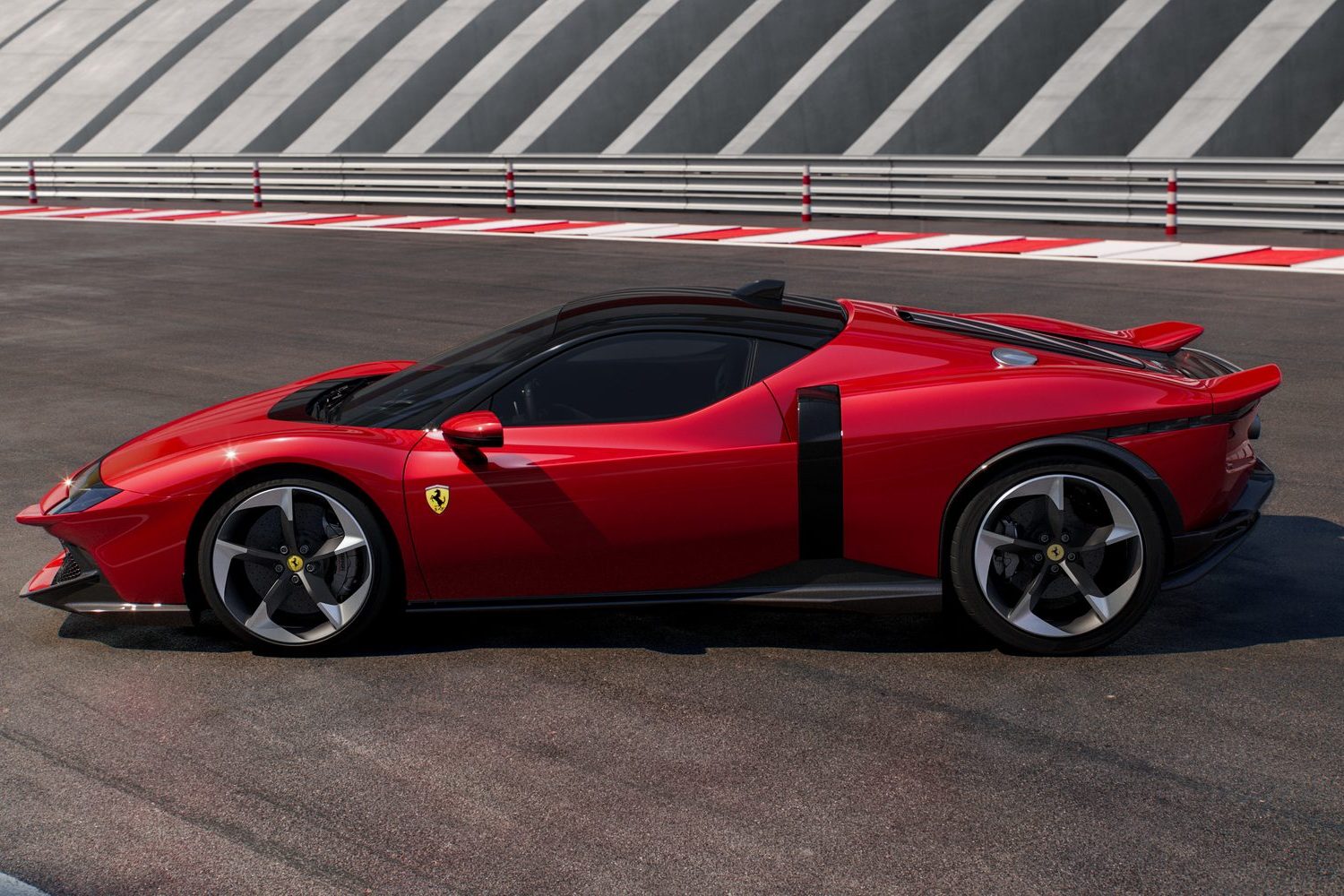
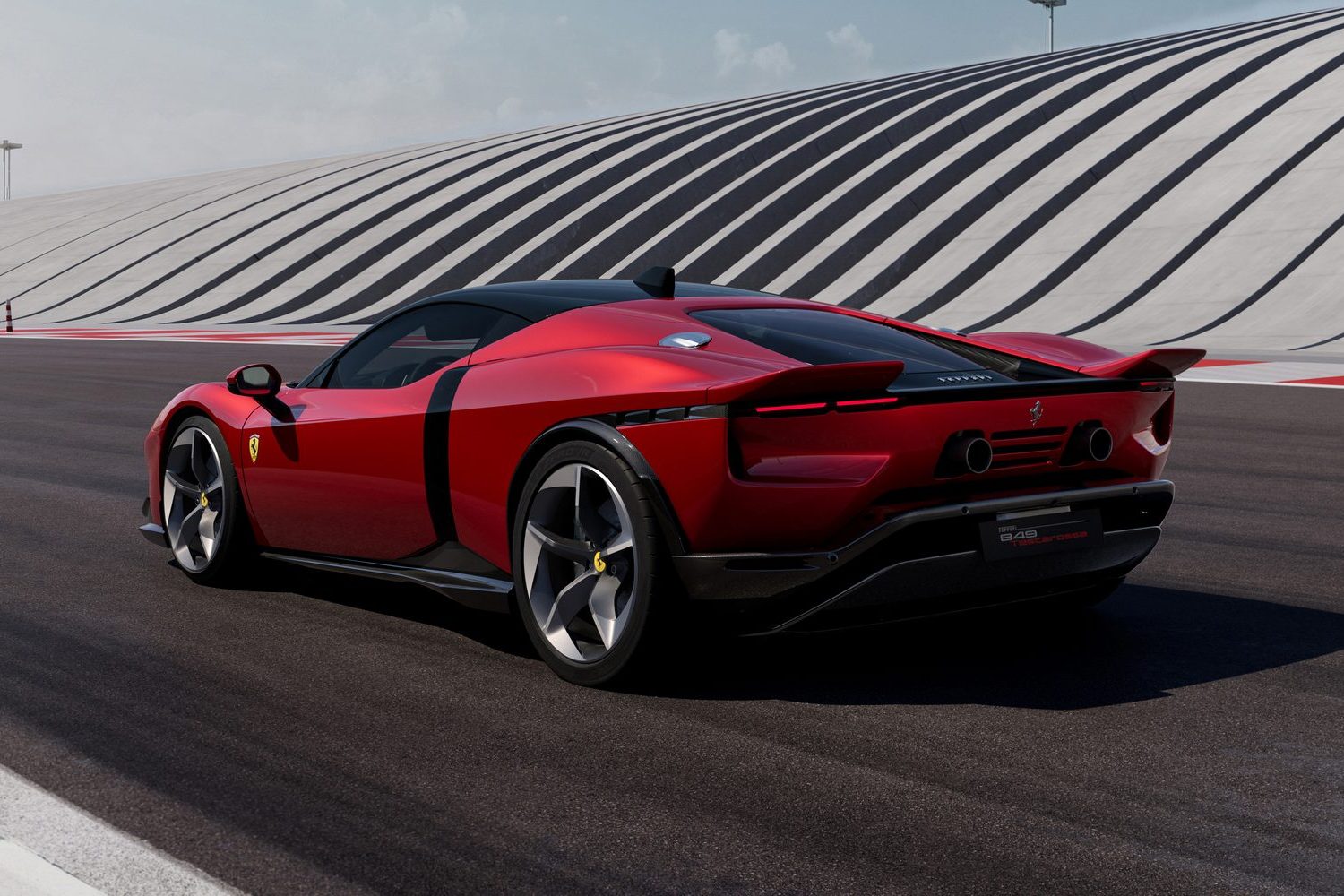
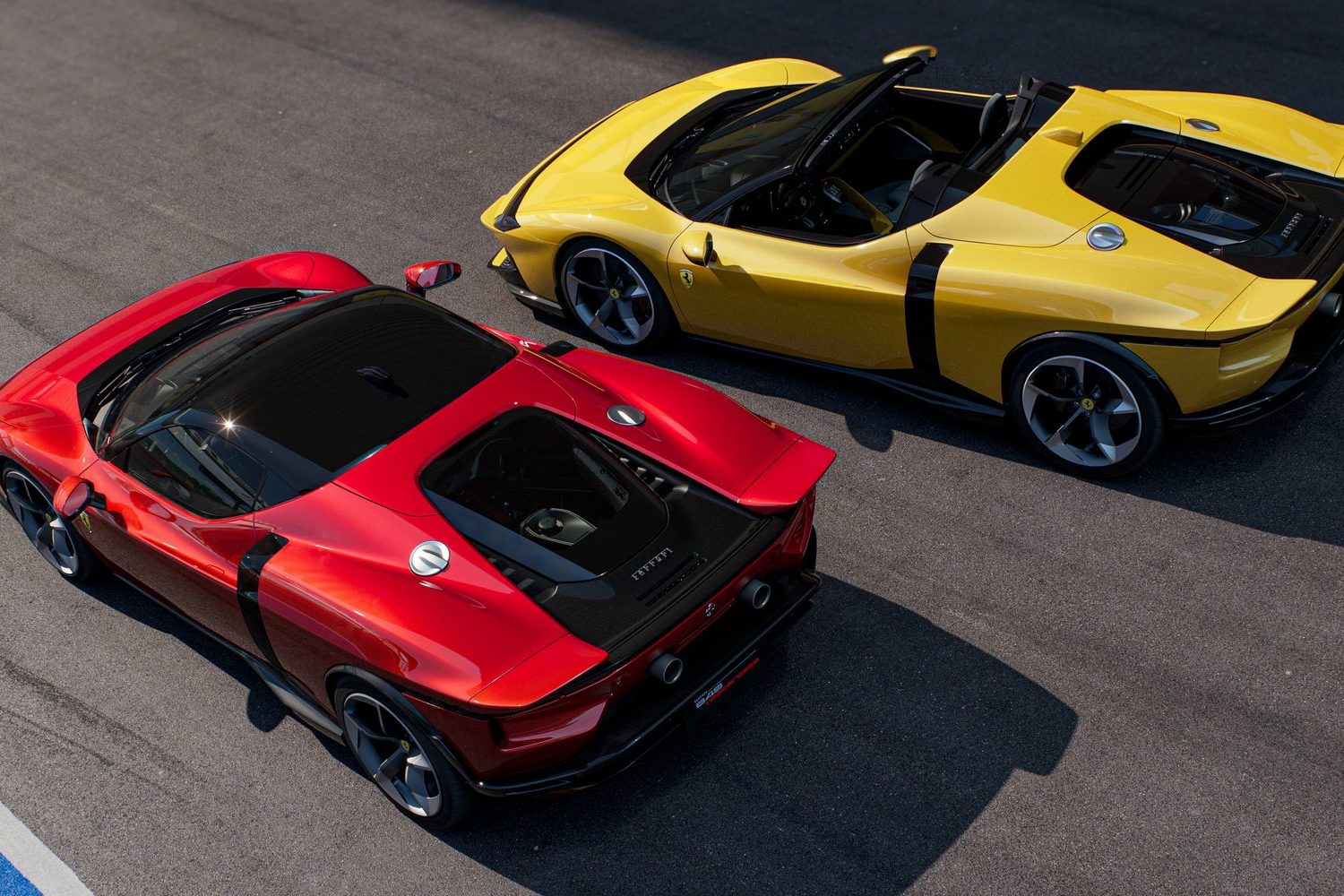
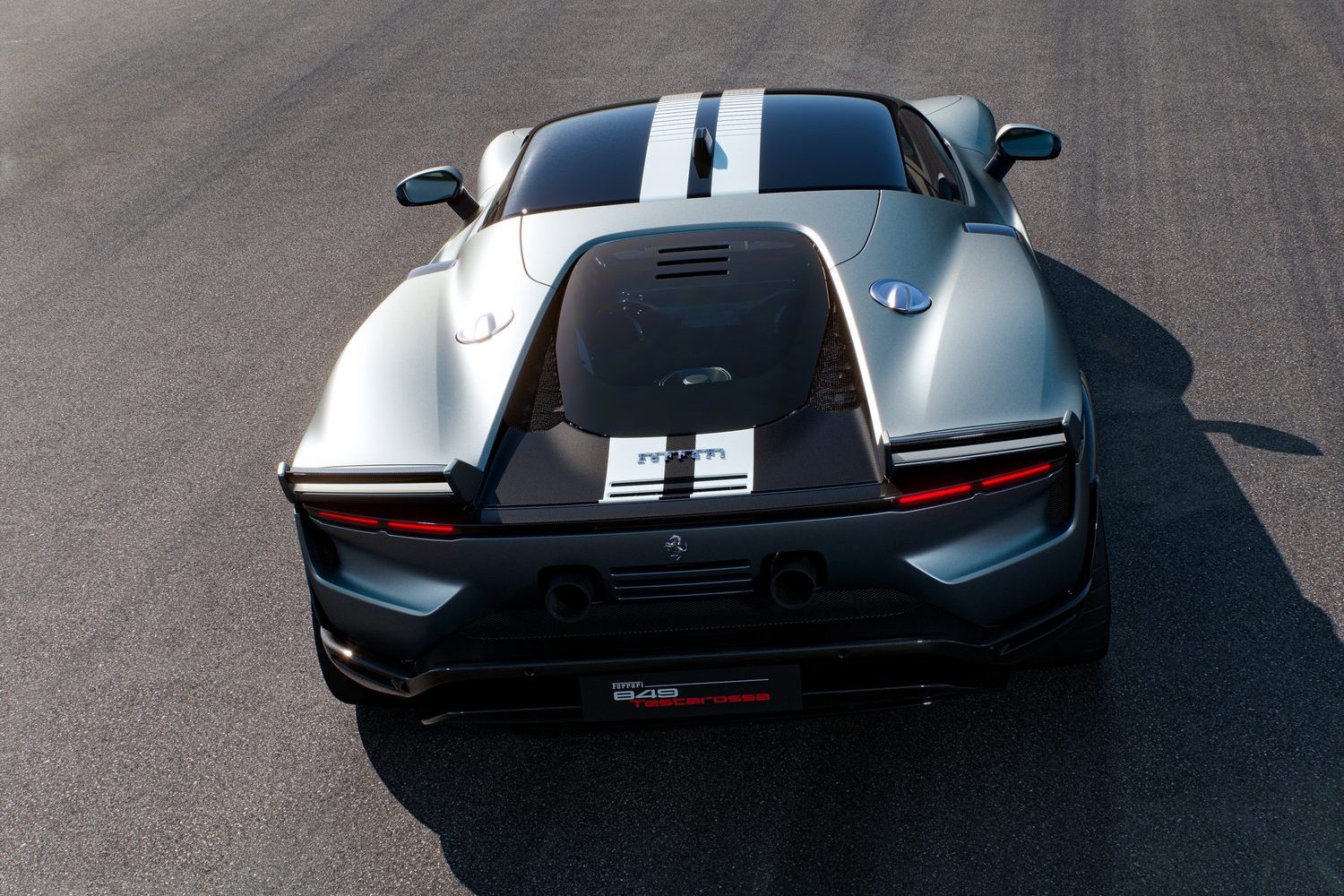
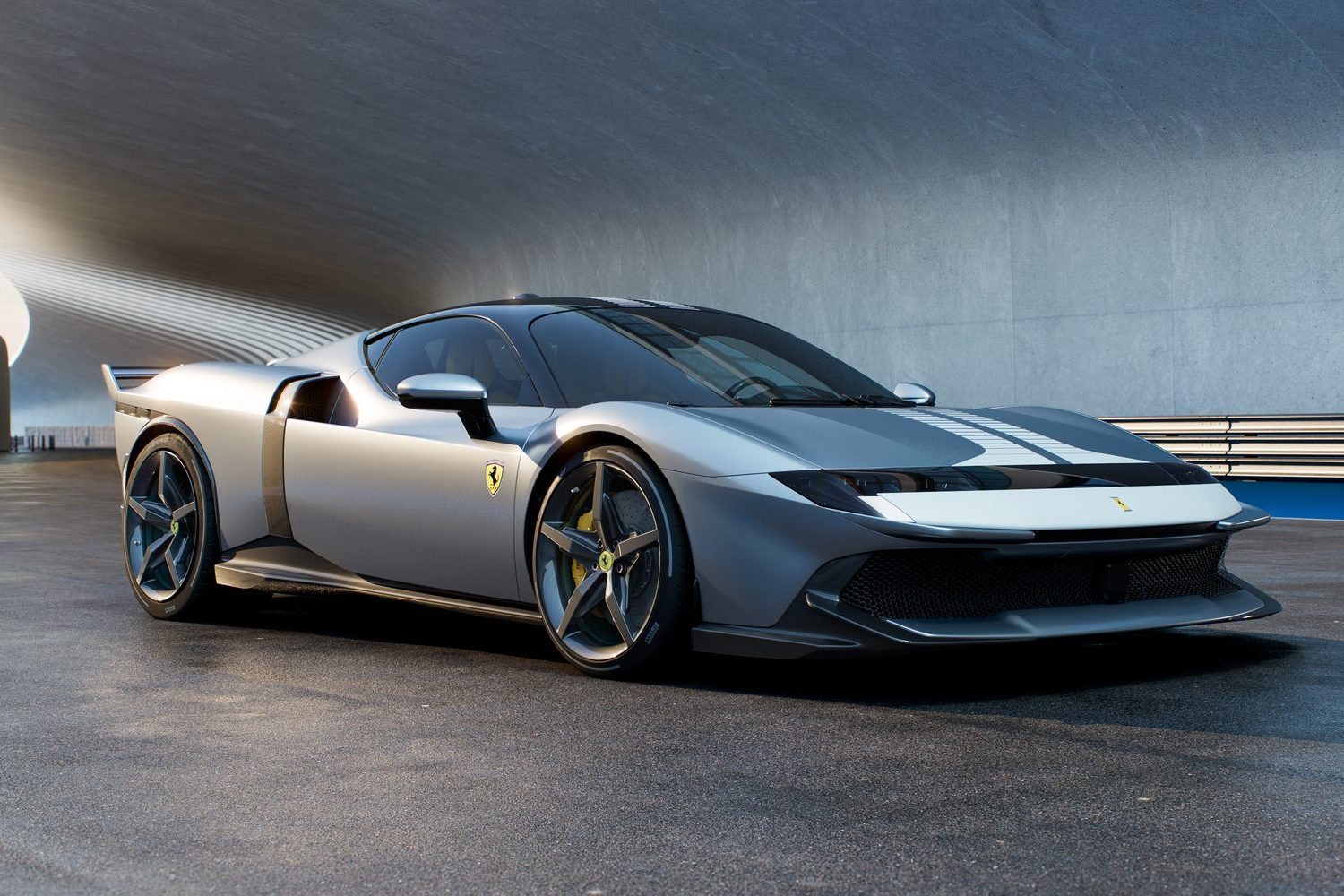
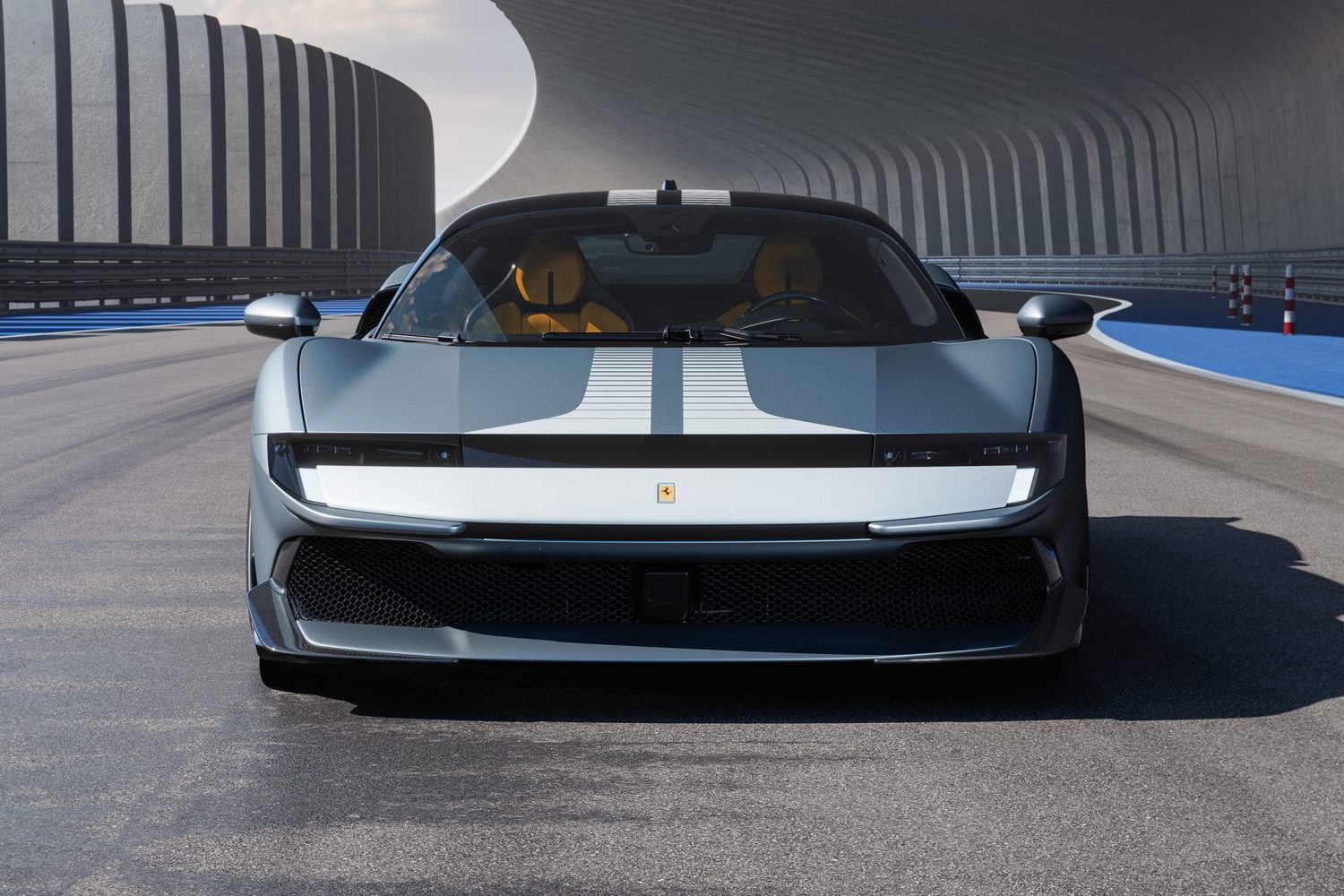
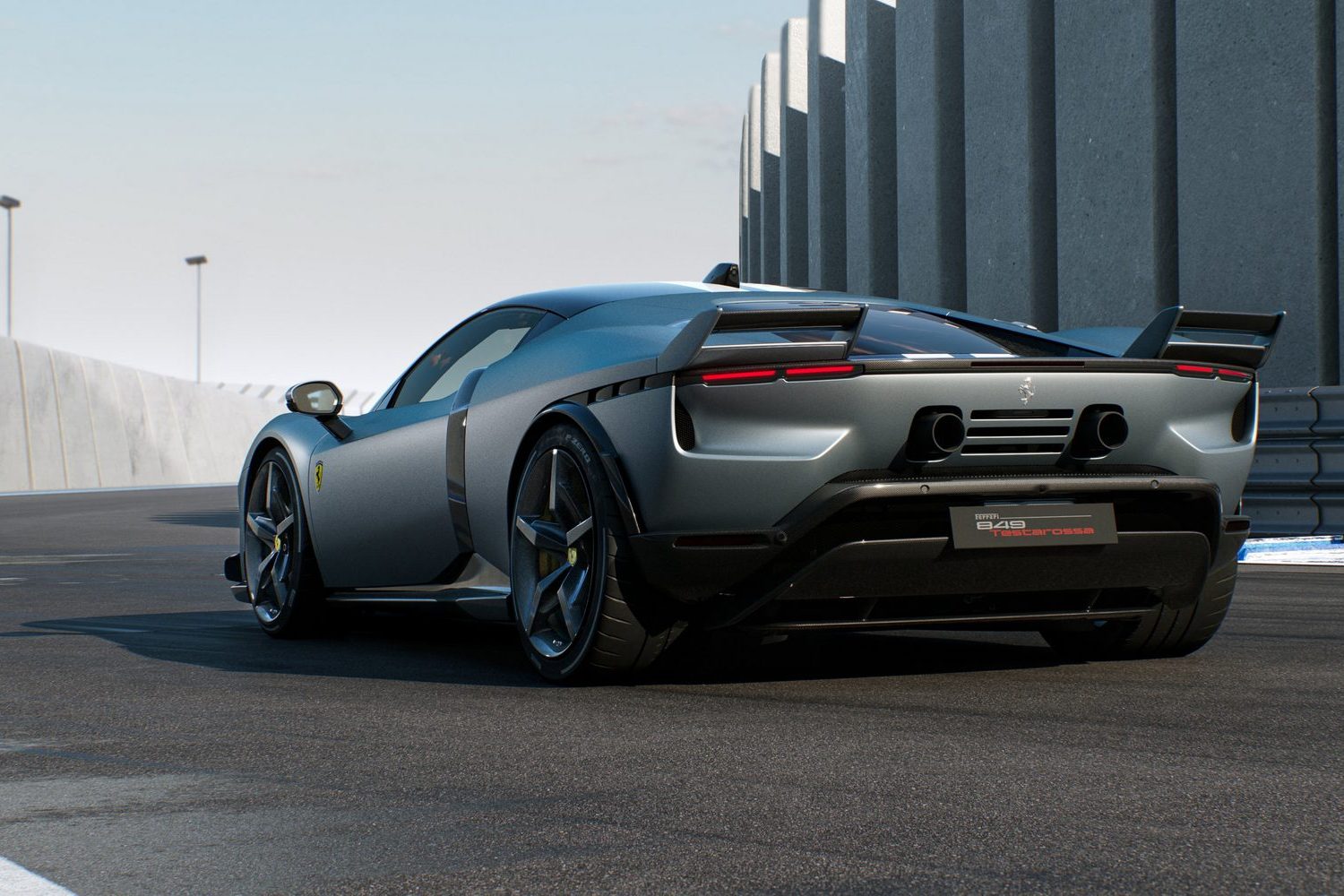
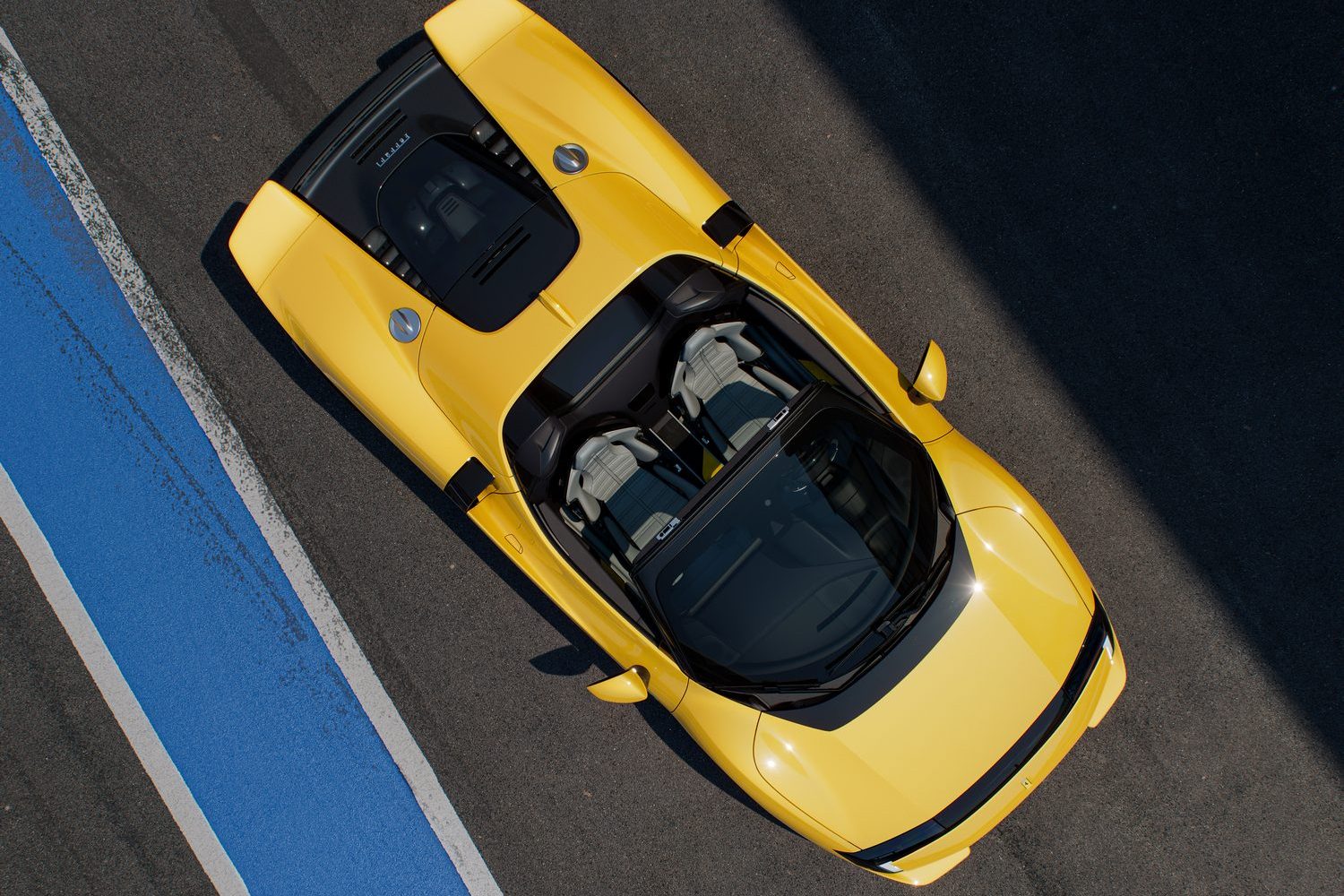
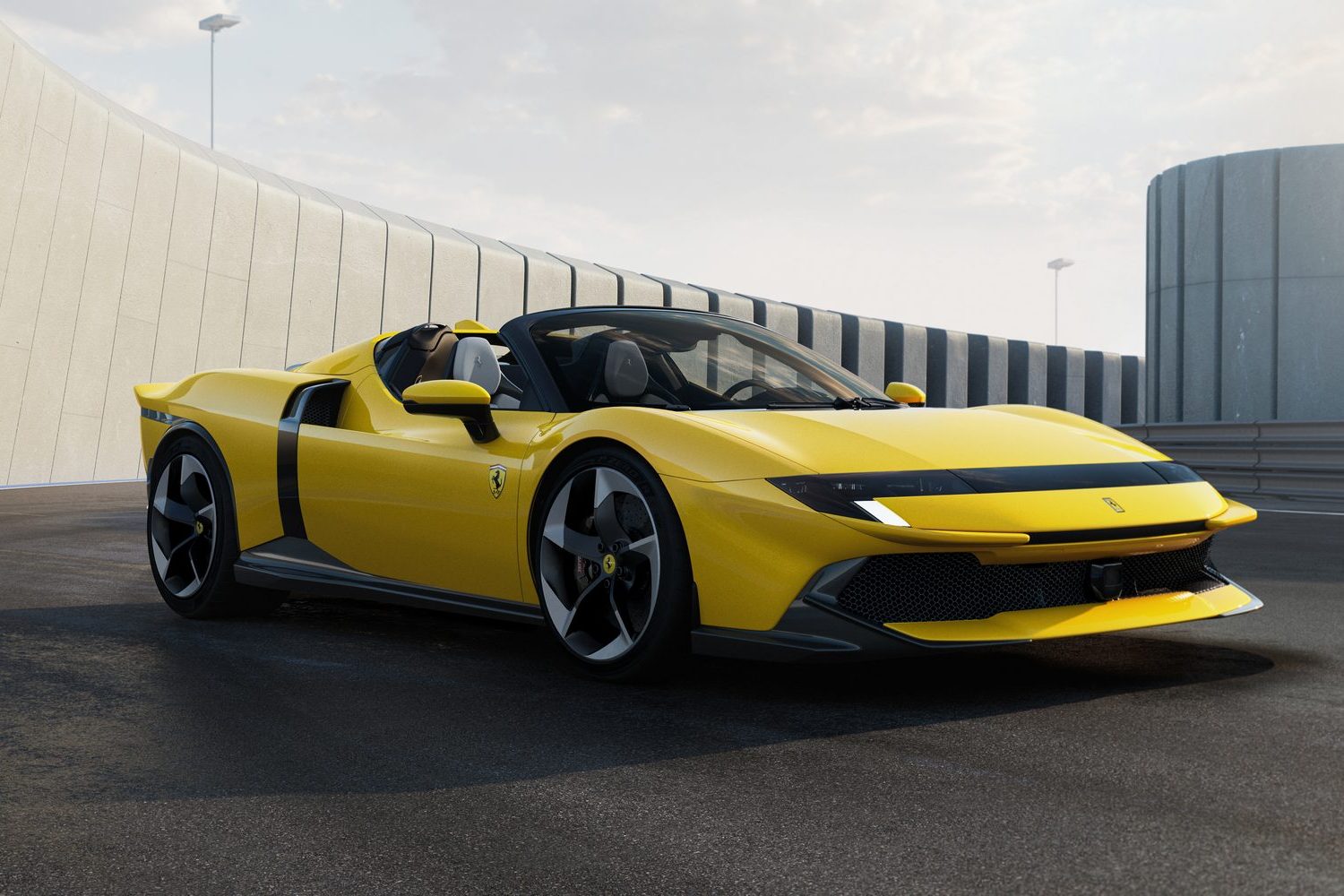
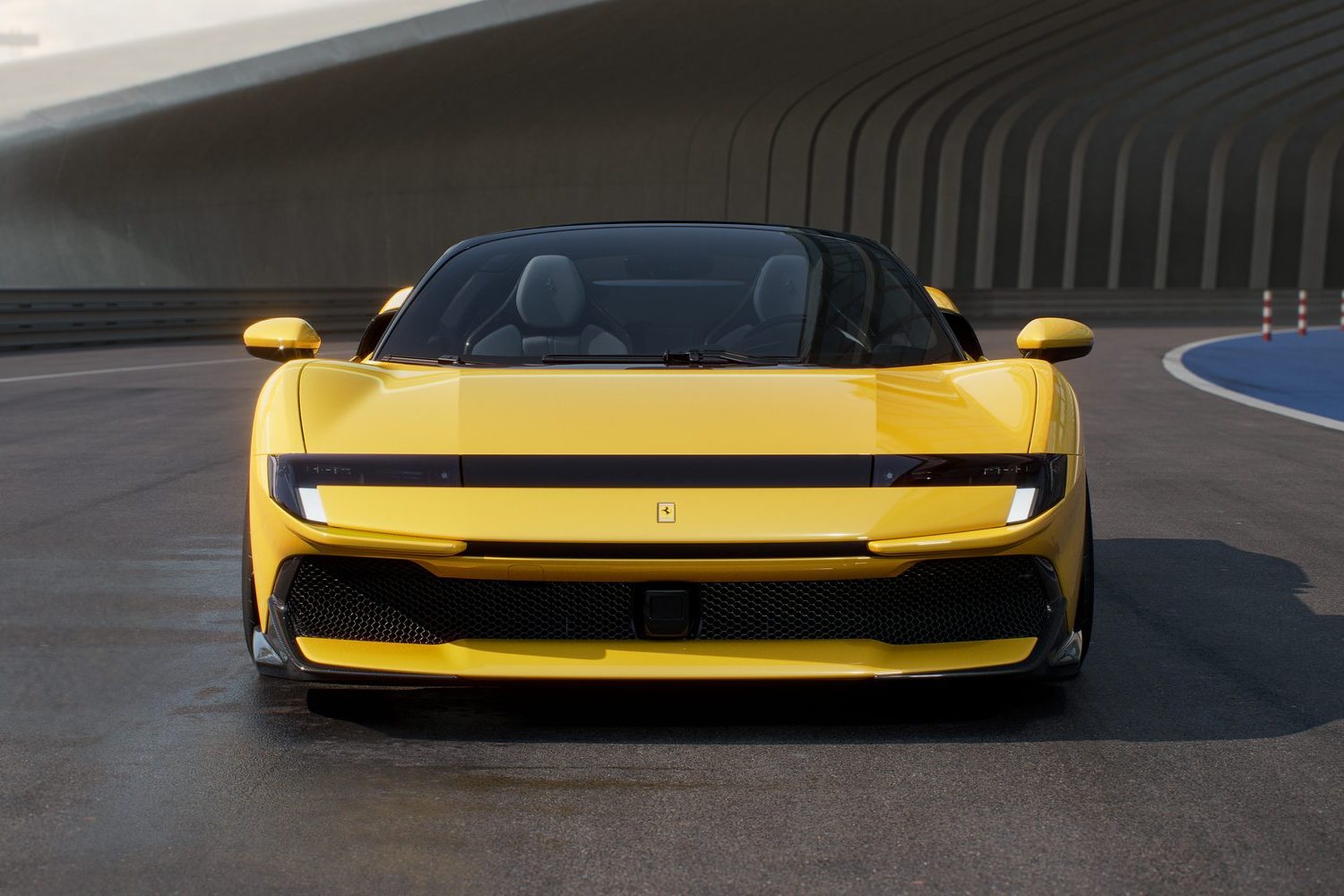
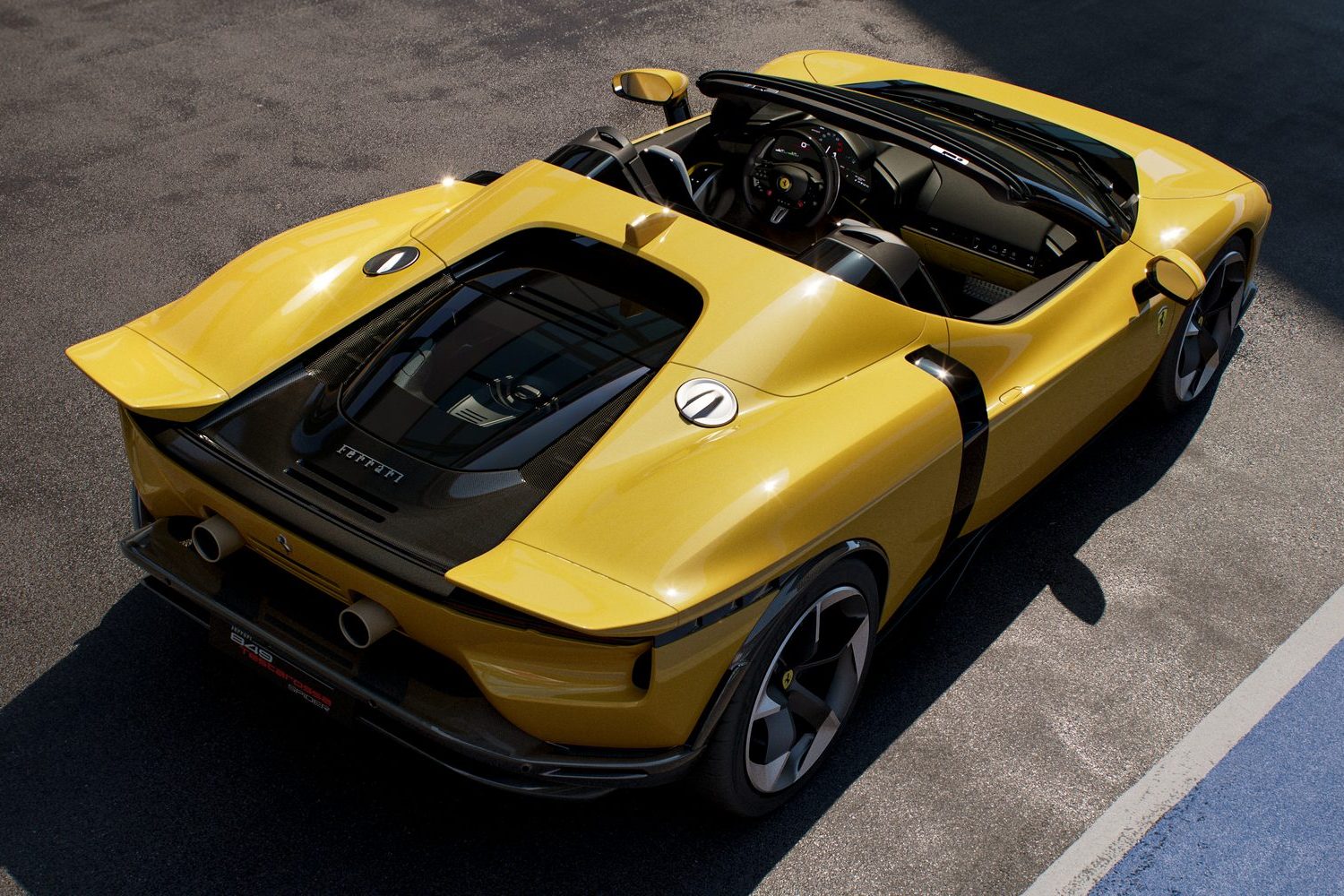
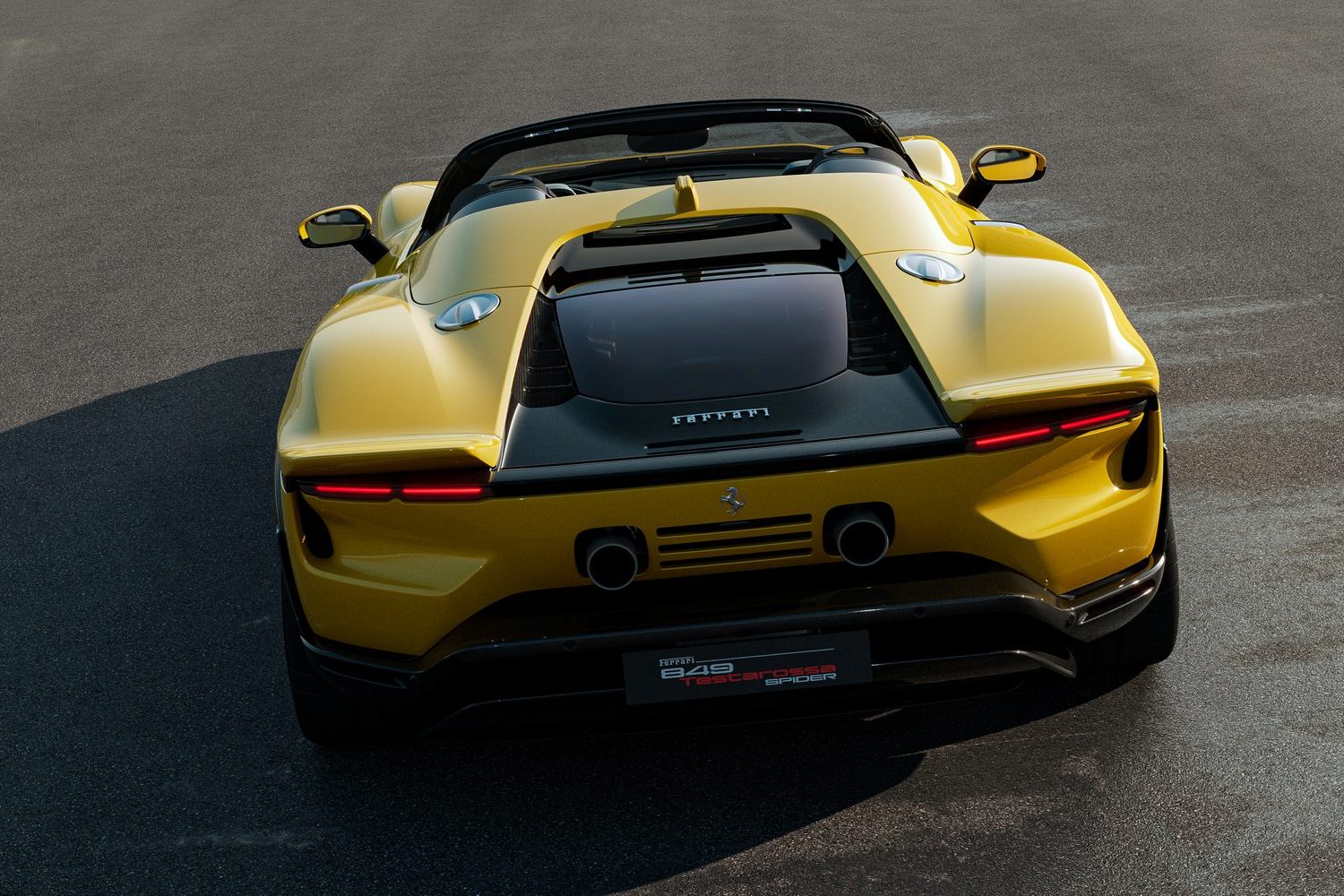
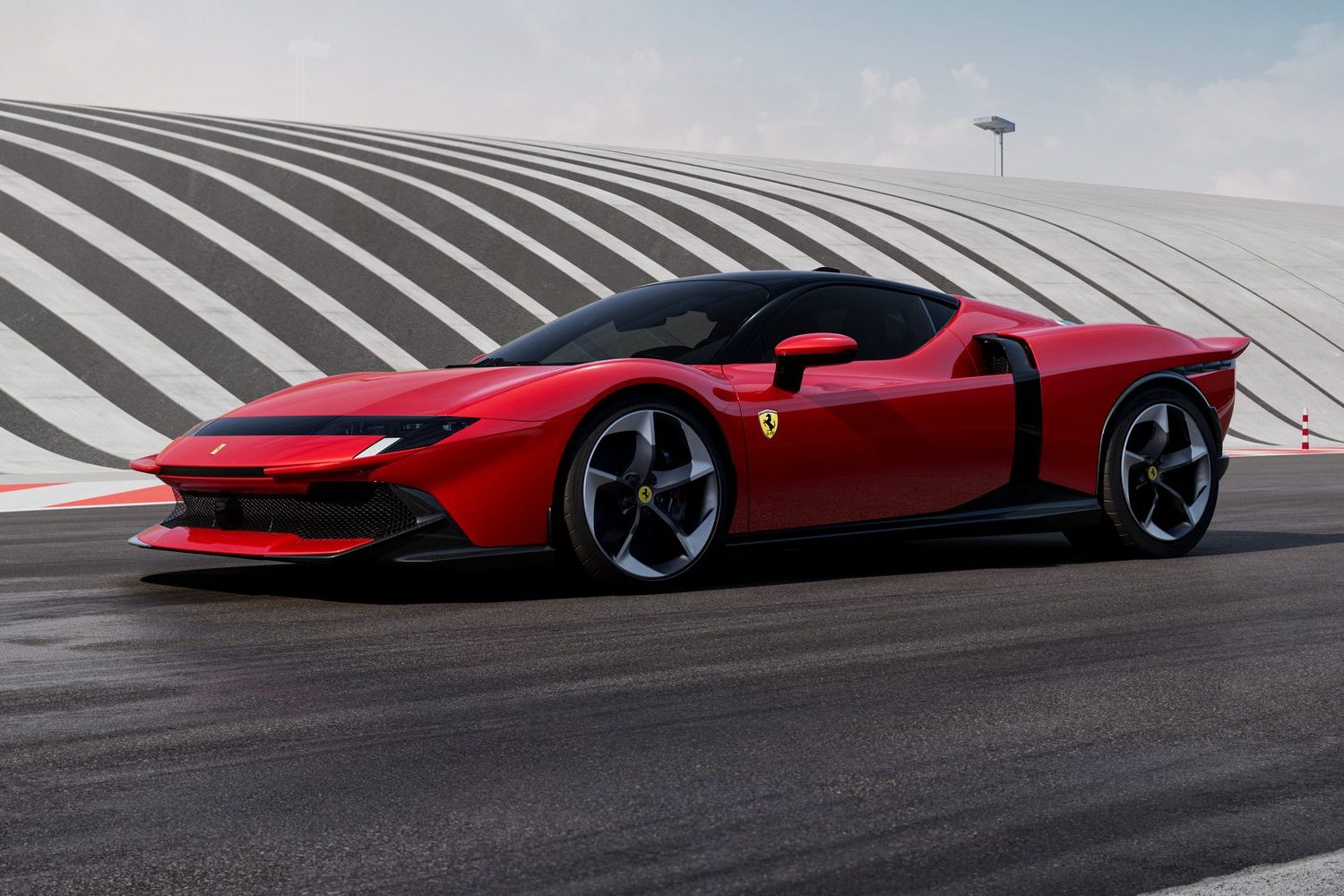
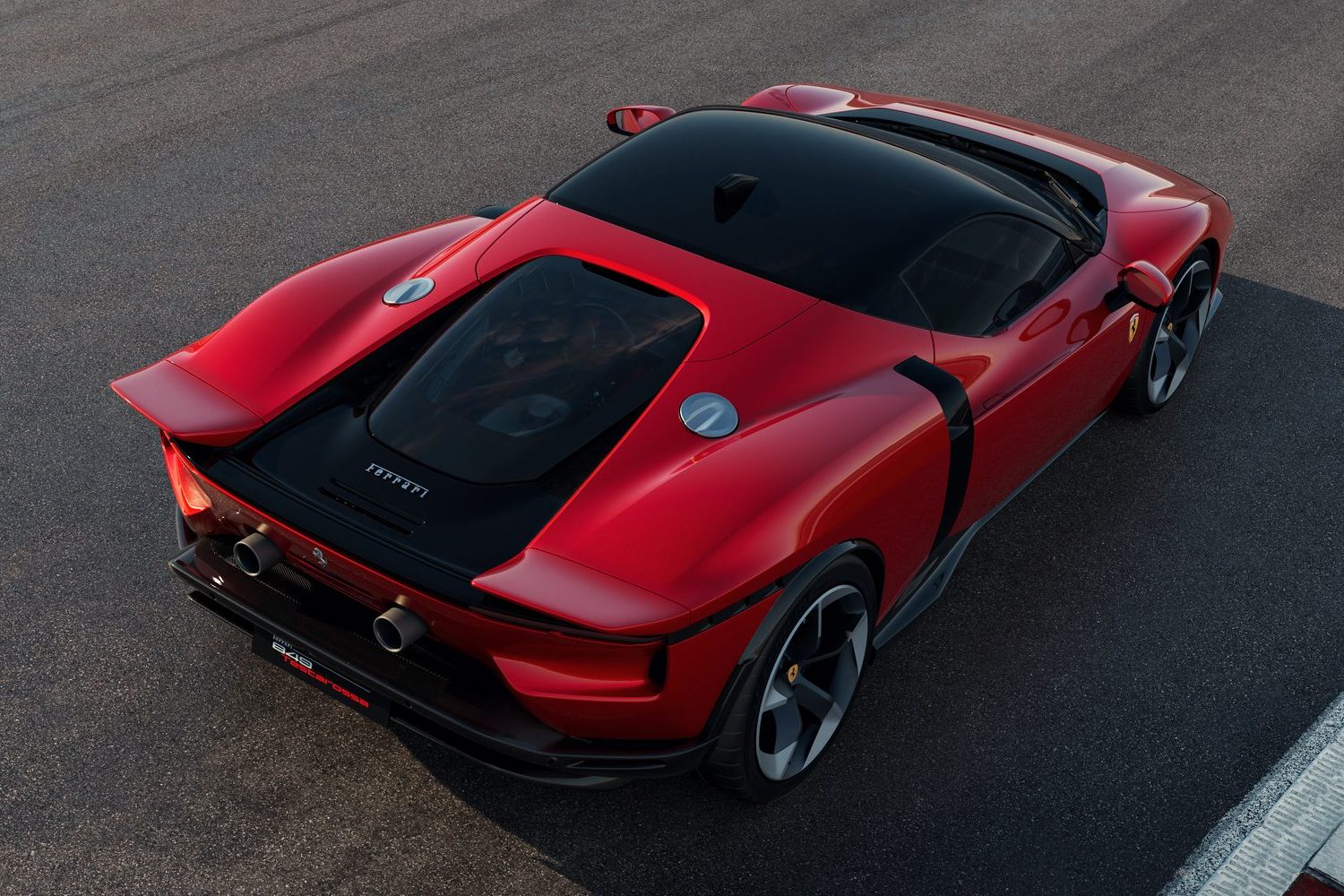
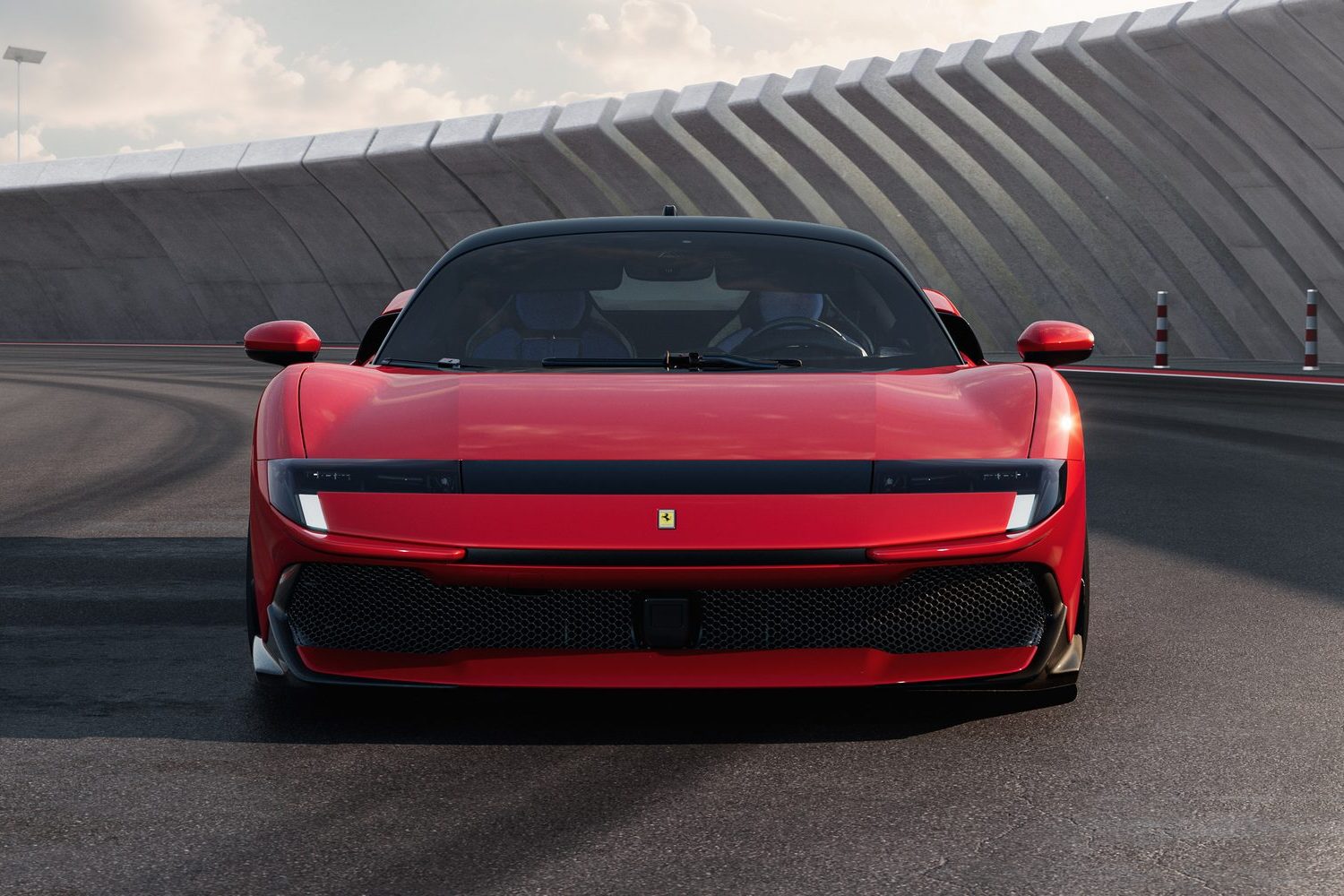
It's not bad, actually. There are clear influences from the limited-run F80 hybrid, which uses the same engine and hybrid system as Ferrari's two-time Le Mans-winning 499 race car, as well as the front-engined 12Cilindri. There's a 'double-shovel' style to the nose, and headlights faired-in behind plexiglass that gives the 849 Testarossa a definite hint of 1970s Le Mans racer. At the rear, it's maybe a little plainer, but there's a huge window through which you can see that mighty V8 engine. There's also a Spider convertible version, which is effectively a targa-top, but which looks fantastic with its roof stowed.
What else do we know?
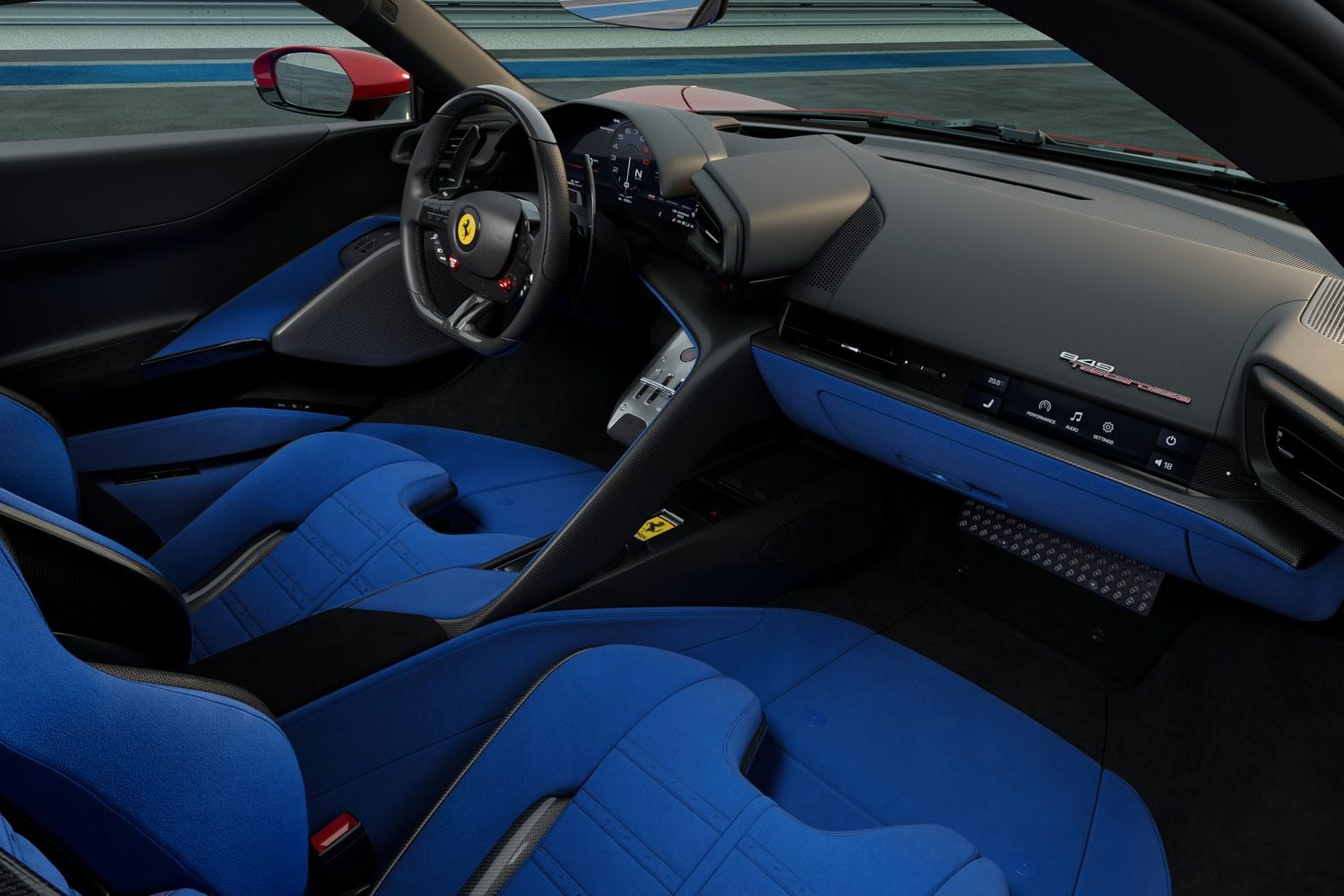
The clever aero stuff is mostly hidden under the body, but the 849 Testarossa makes 25kg more downforce at high speed than the SF90 (415kg total), which was hardly any slouch. The Tipo 154 V8 engine gets new turbos (with a clever heat shield) and exhausts that stretch back further into the bodywork for a better sound — Ferrari was clearly stung by the tepid reception to the noises made by the V6-engined F80 — and there's even a 30km range on electric power with a full-charged 7.5kWh battery if you need to get silently through a zero-emissions zone. If that's not enough environmental goodness for you, then maybe the fact that this is the first Ferrari to use recycled aluminium for its engine castings will help — Ferrari reckons that cuts the Testarossa's carbon footprint by 0.4 ton of CO2 equivalent per car.
What about the interior?
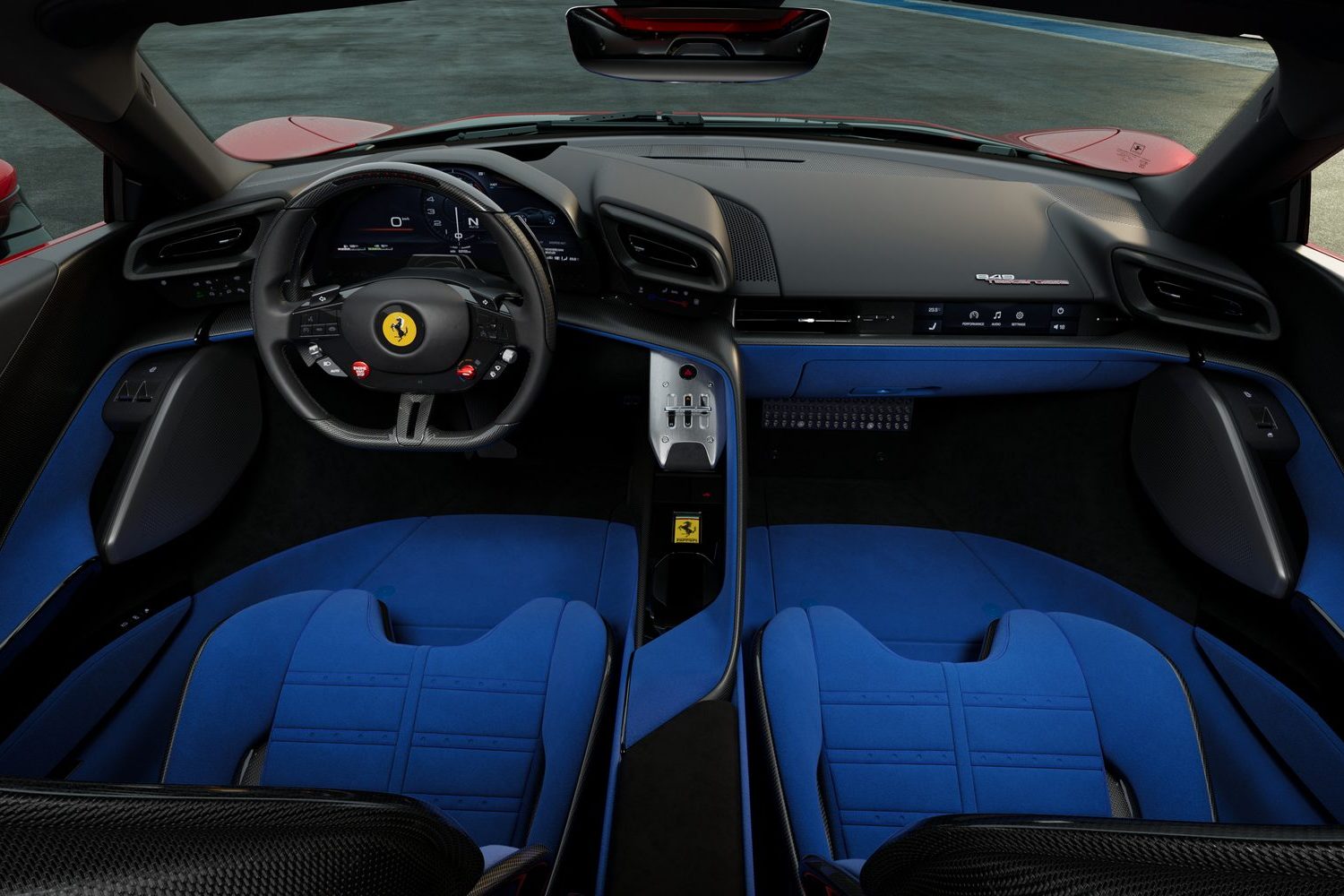
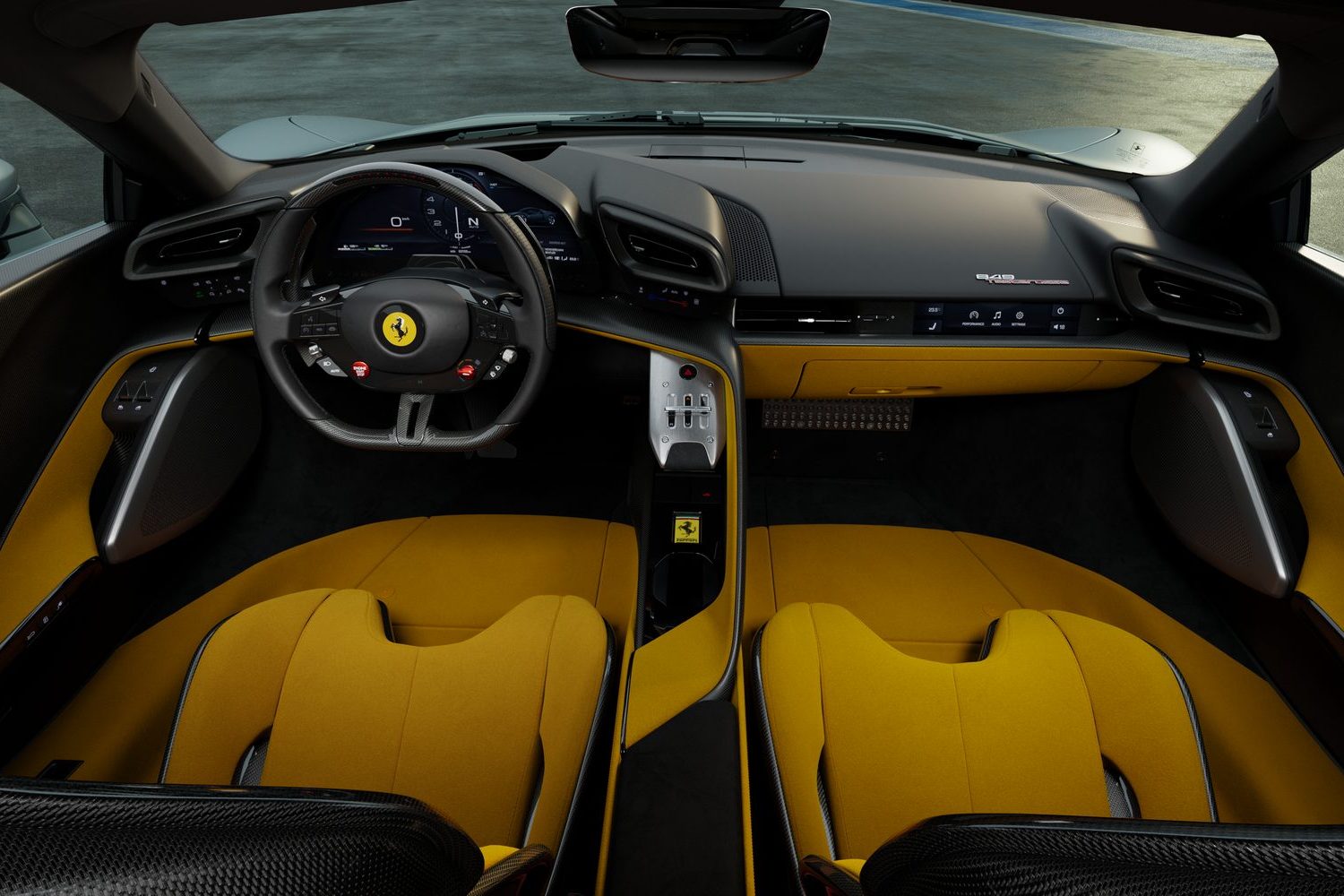
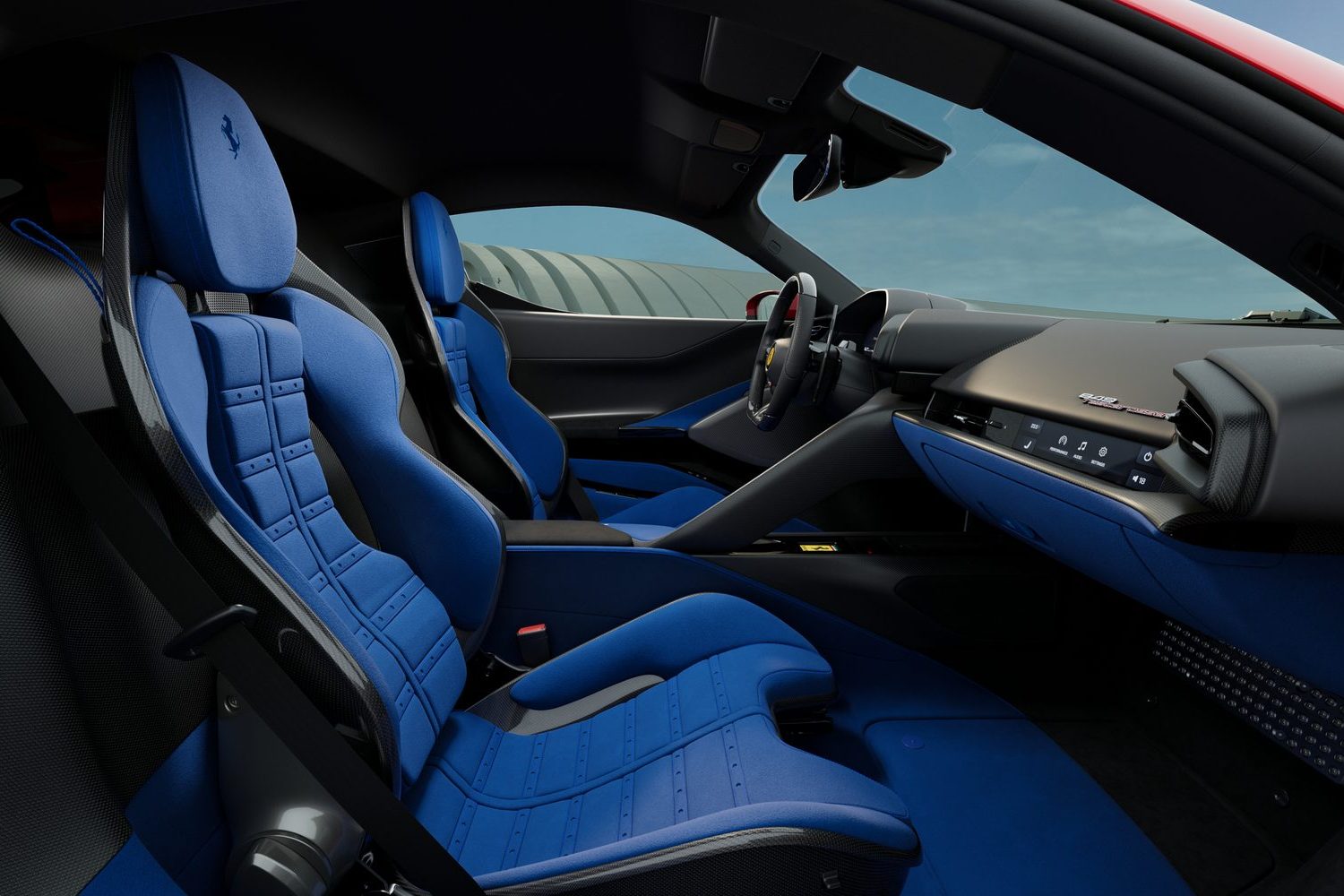
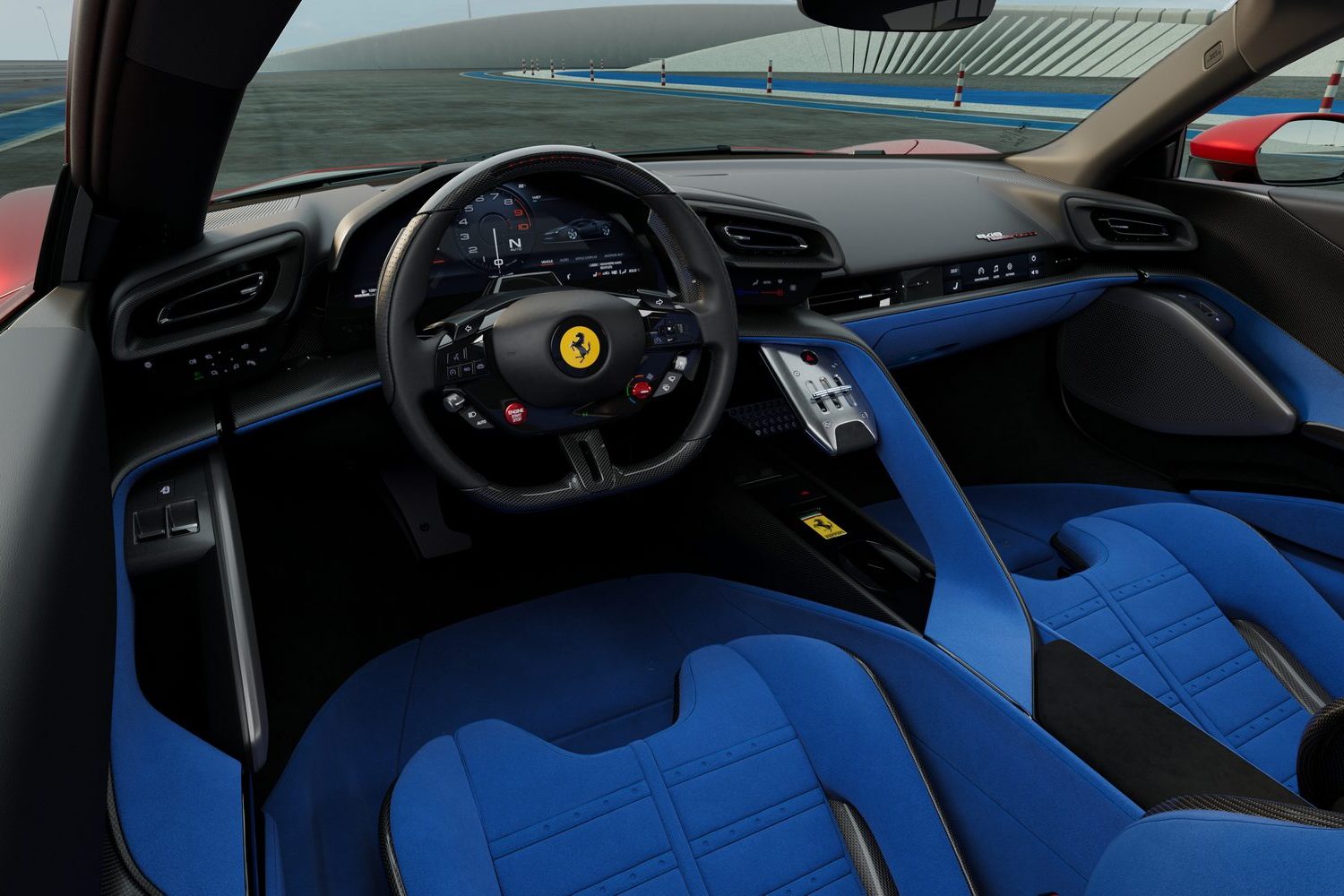
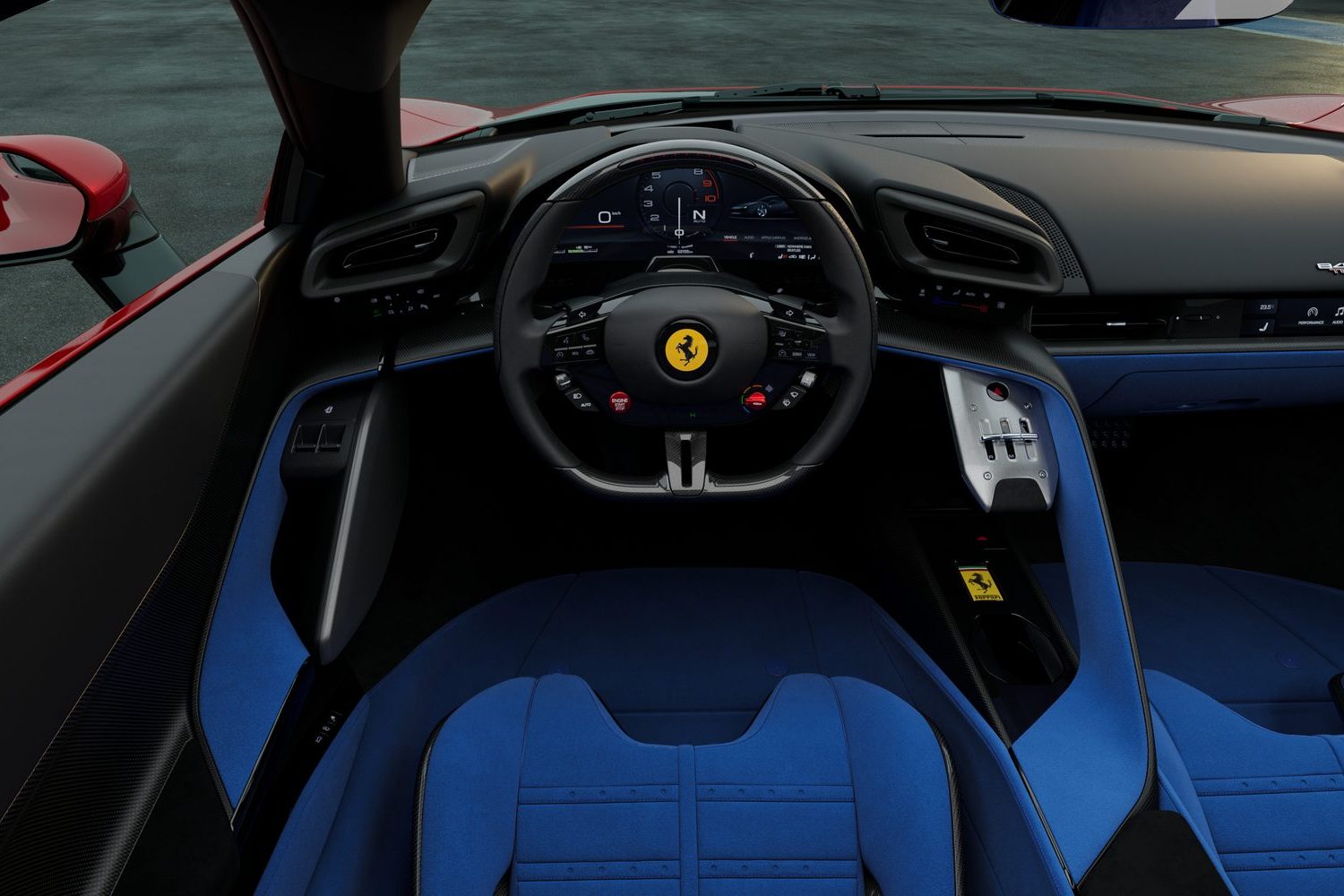
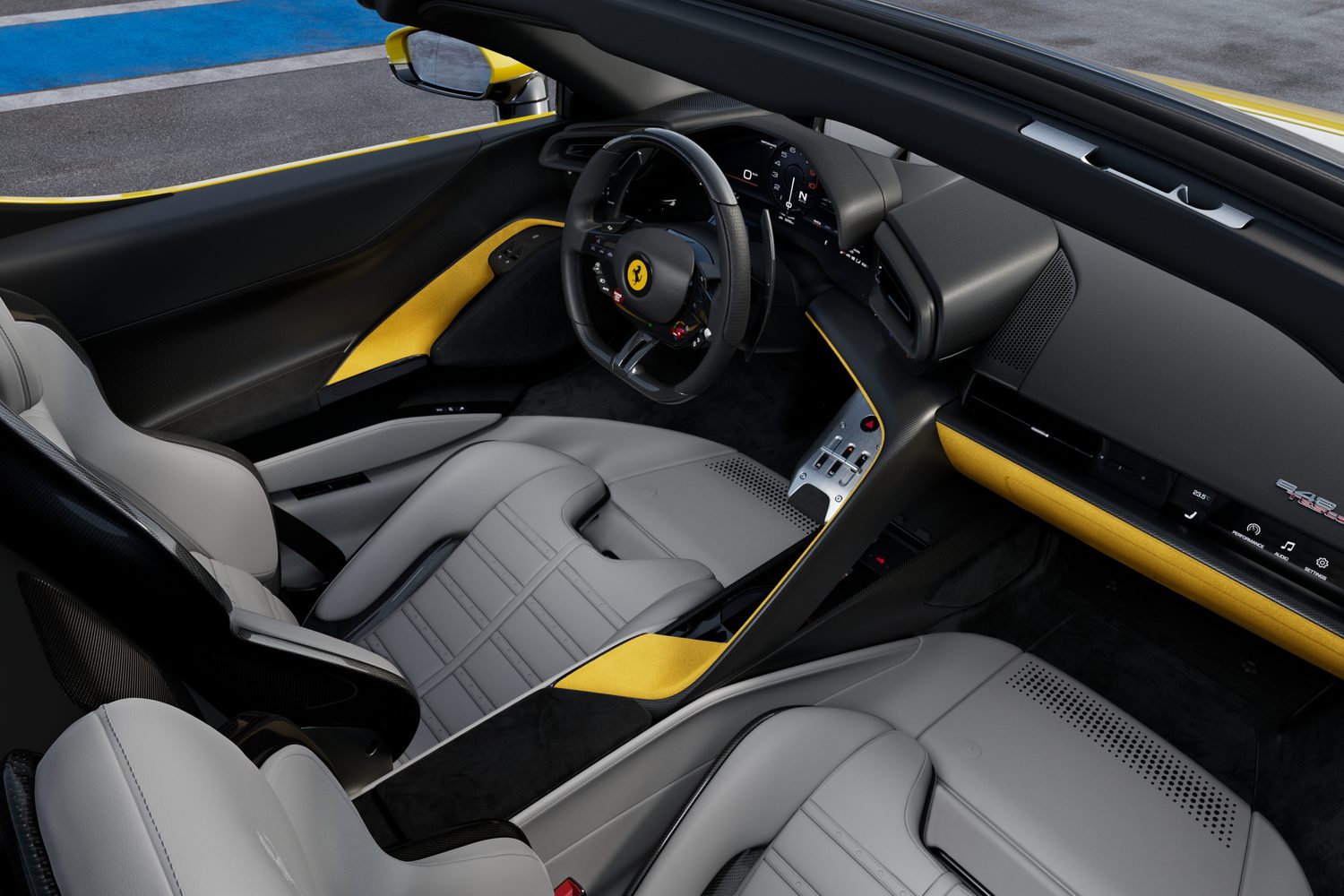
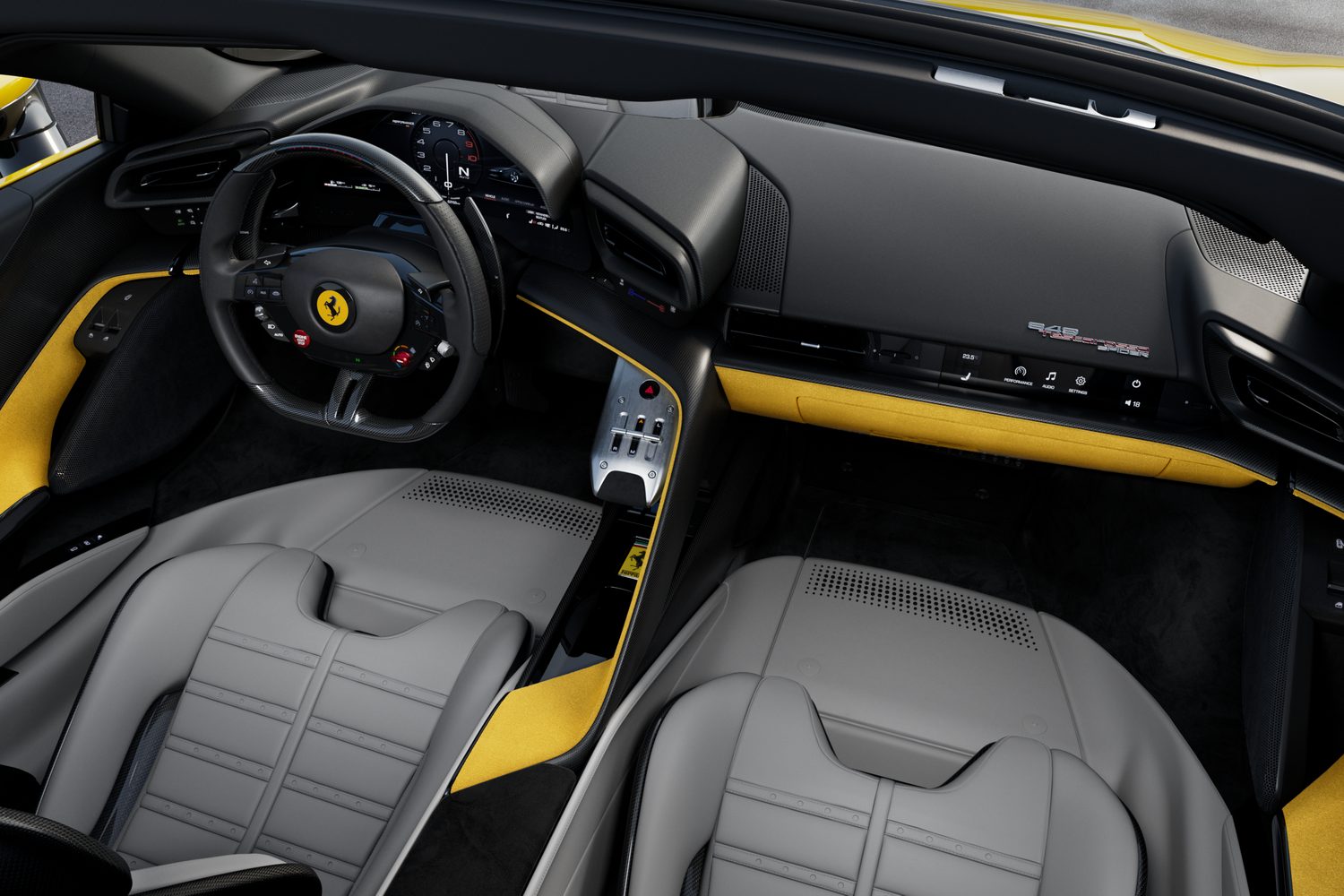
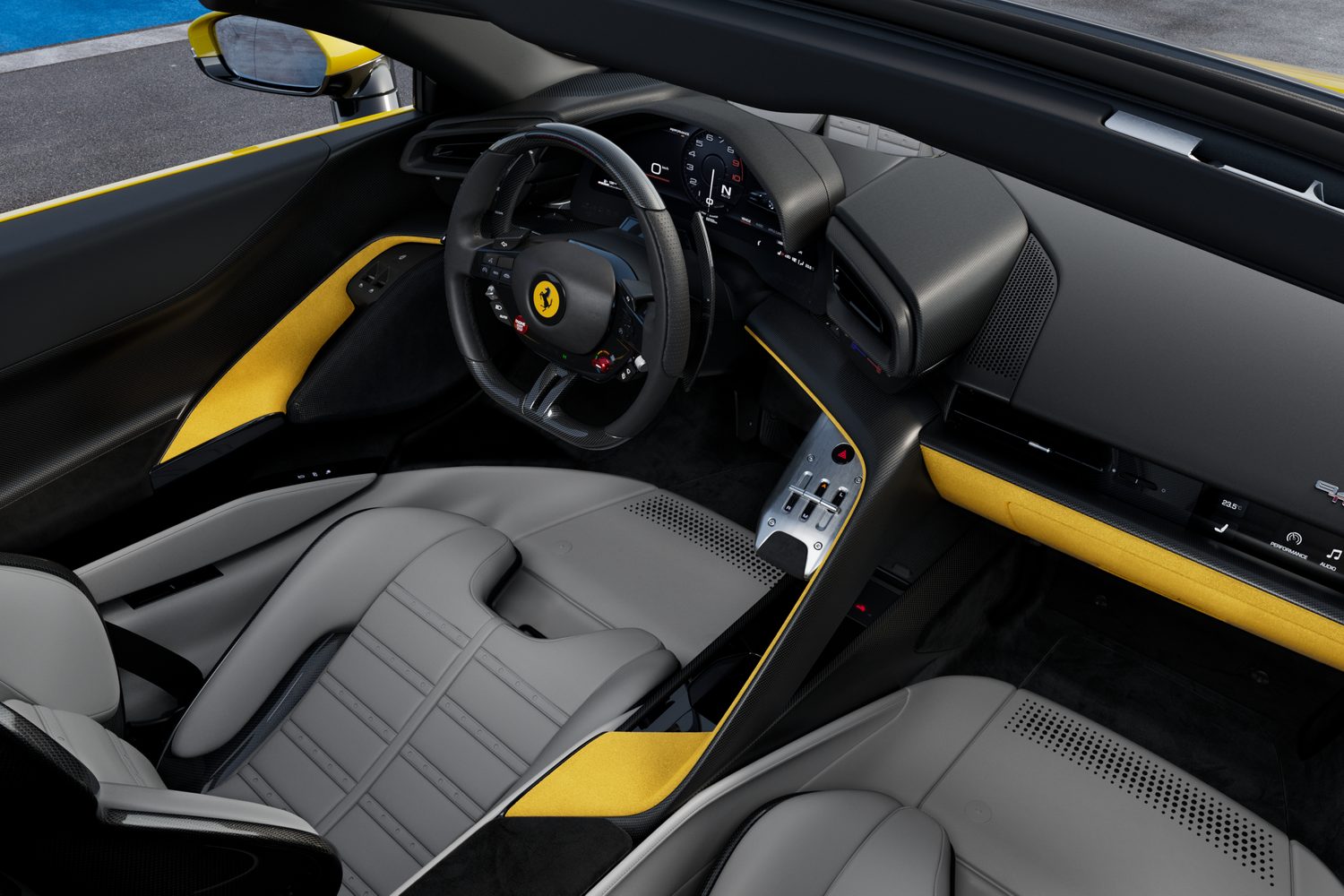
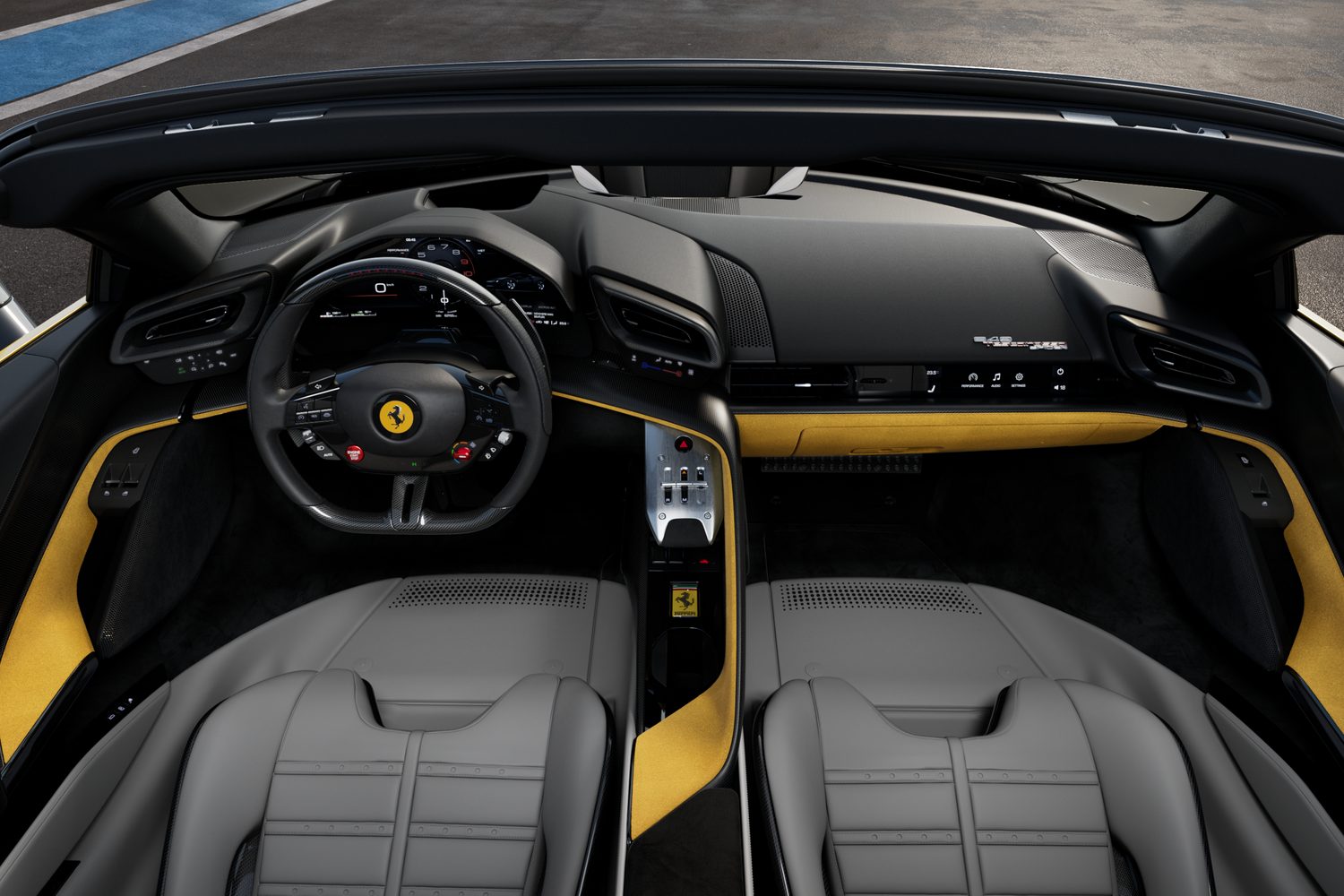
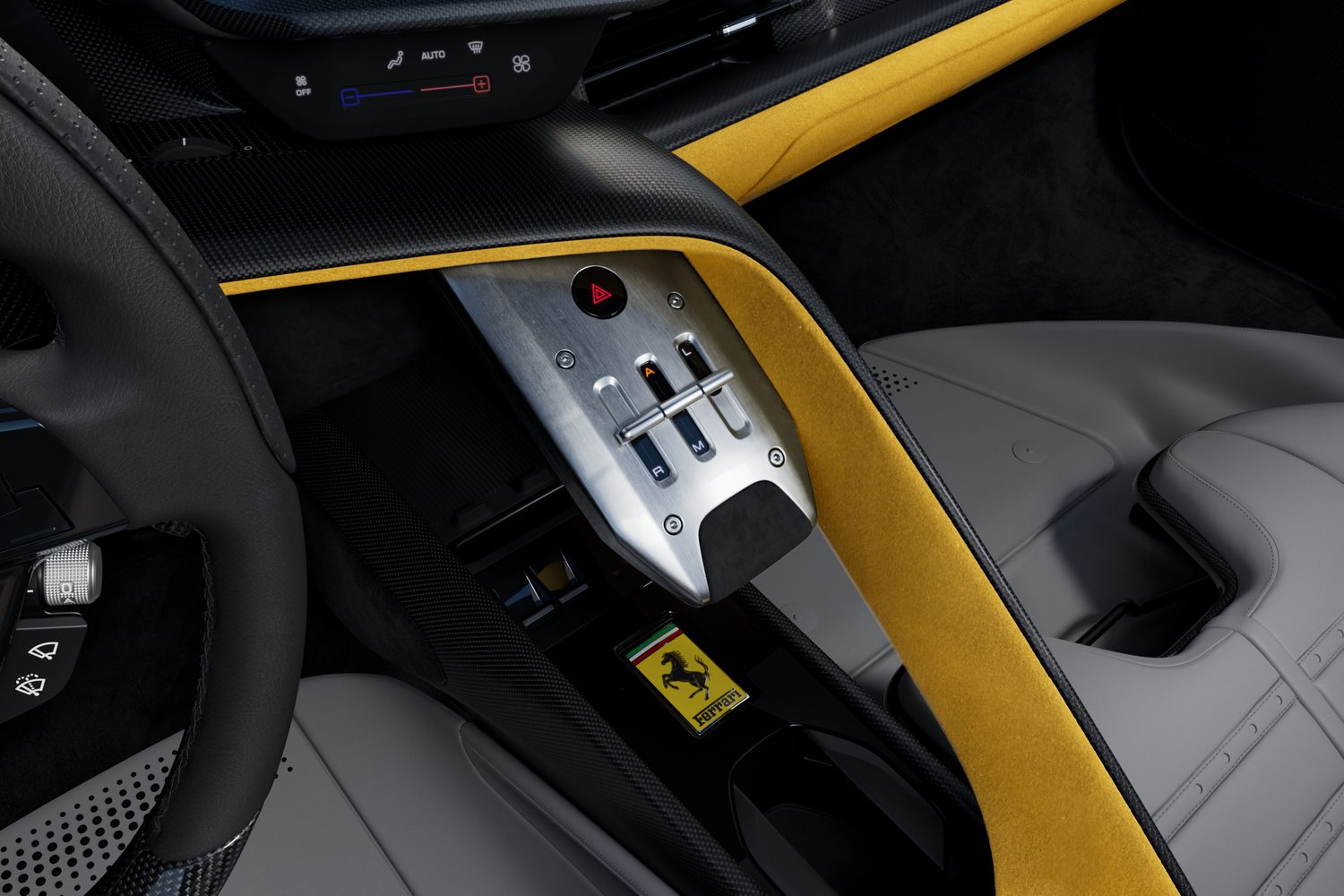
The interior looks pretty standard by modern Ferrari criteria — there's the big digital instrument screen right in front of you, and a smaller, supplemental screen in front of the passenger. Most of the switchgear and buttons are on the steering wheel, and the little flick-switch selectors for the eight-speed dual clutch paddle-shift auto gearbox are a clear nod to the classic open-gate Ferrari gearshifts of yore. To make the Testarossa's cabin stand out a bit, Ferrari has shown it off with a cool none-more-eighties blue suede upholstery option, which frankly, we now want to see on every car. Yes, even a Nissan Micra. You can choose between a standard 'comfort' seat or an optional carbon-backed racing-style seat for the Greyhounds among you. It seems kinda odd to say it about a 1,000hp Ferrari, but yes, there is wireless Apple CarPlay and Android Auto, and even a wireless phone charger.
Anything else?
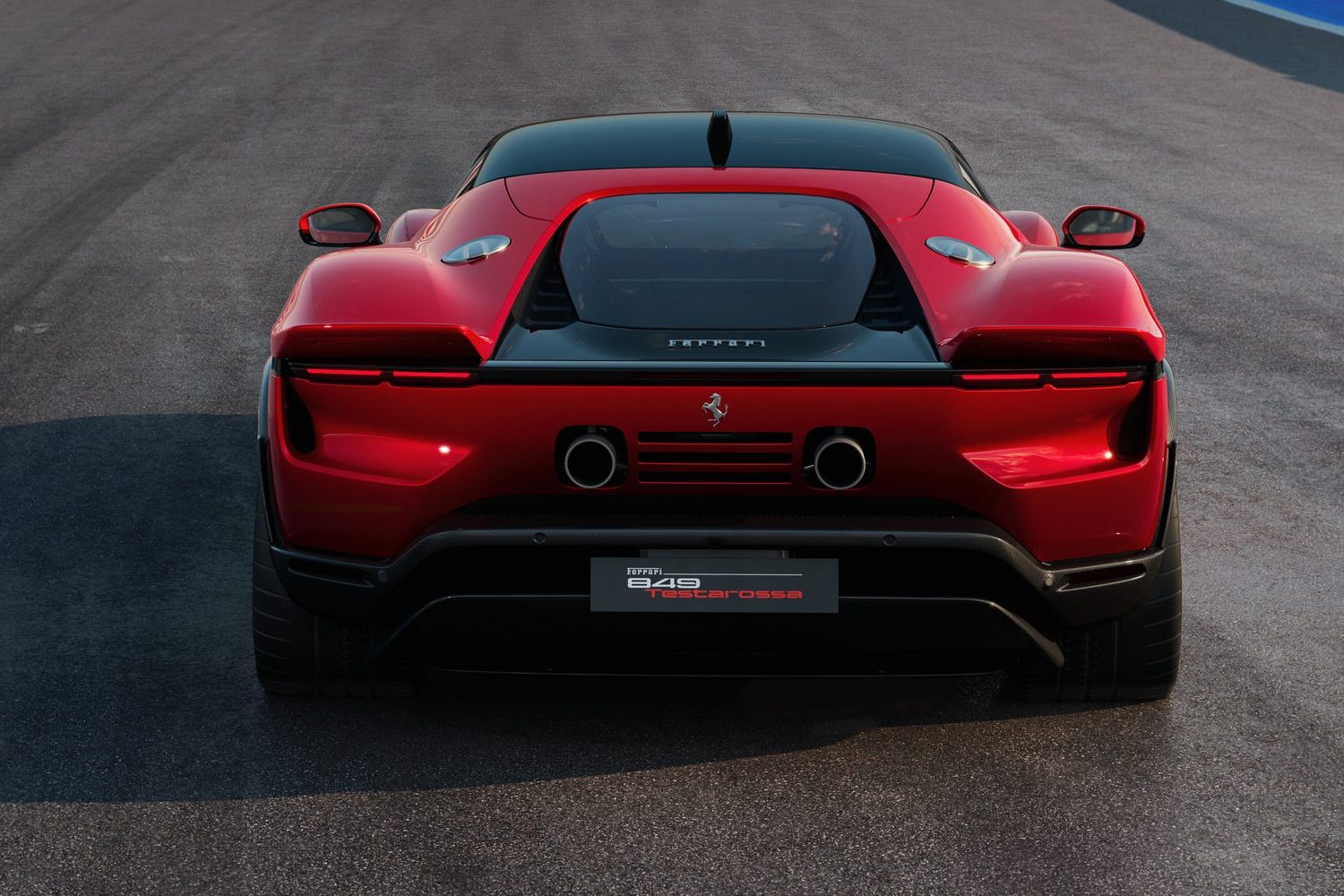
Yes — to celebrate the return of the Testarossa name, Ferrari has created two special new colours. Red and yellow. Actually, there's more to it than that. The red is called 'Rosso Fiammante', which Ferrari says is 'enriched by a metallic effect obtained through a process that gives warm and brilliant reflections under sunlight; and the yellow is 'Giallo Ambra' — 'an intense and warm shade with reddish hues, inspired by the depth and chromatic richness of natural amber.'
When can I have one?
Hold your (prancing) horses — did you win the Euromillions this week? Because you'll need to if you want one of these. European pricing starts at €460,000, which means once you add on Irish VRT and VAT (even though it's a PHEV…) plus some options, you're probably looking at the thick end of €1-million for one of these.
If there is anything about this story we have not covered, you can avail of our expert advice service via the Ask Us Anything page.