

That doesn't mean Hyundai is going all electric for its smaller cars, though, as it will soon roll out updated versions of the Bayon and i20 with electrified engines to further reduce its fleet emissions.
How close to reality is the concept's design?
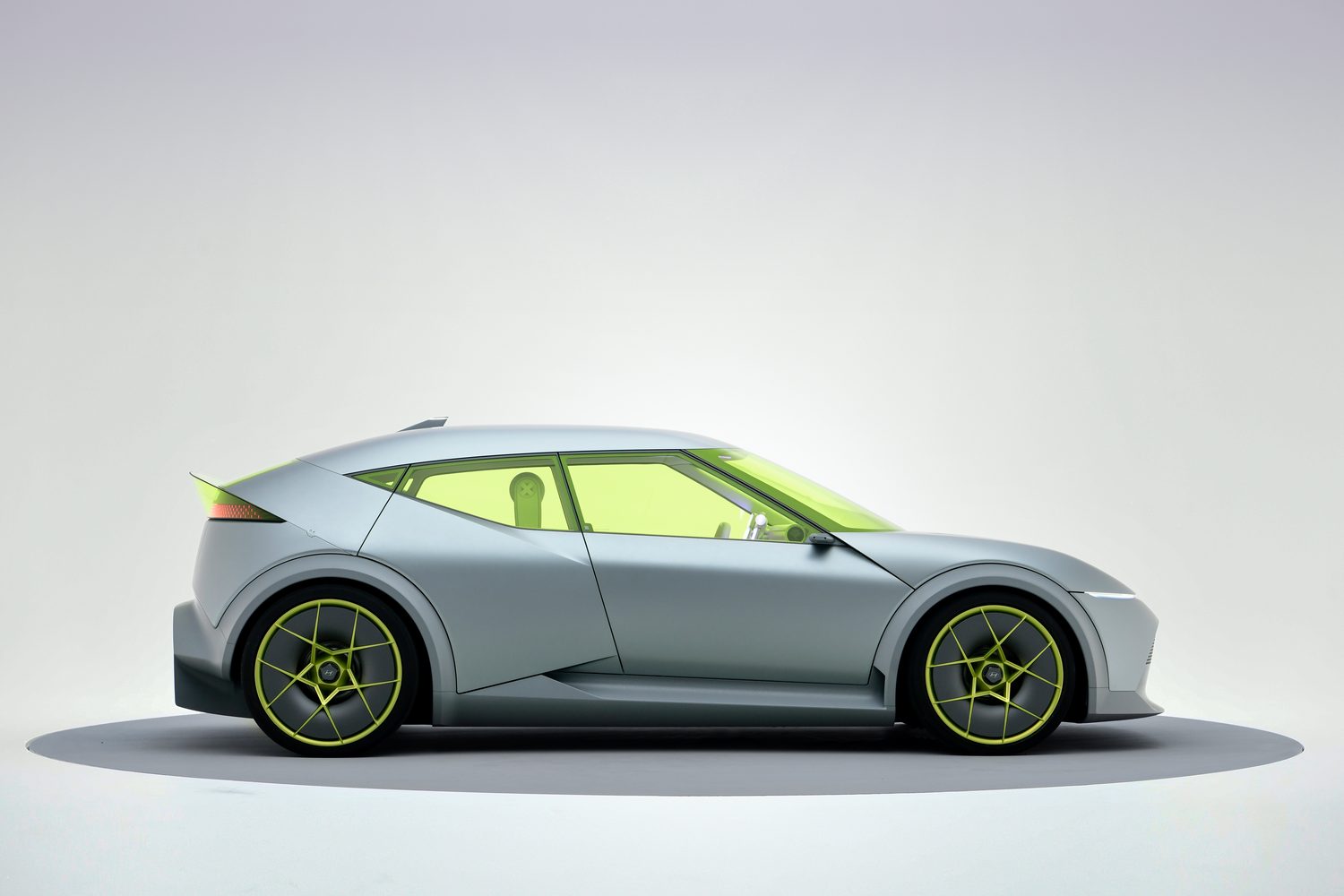
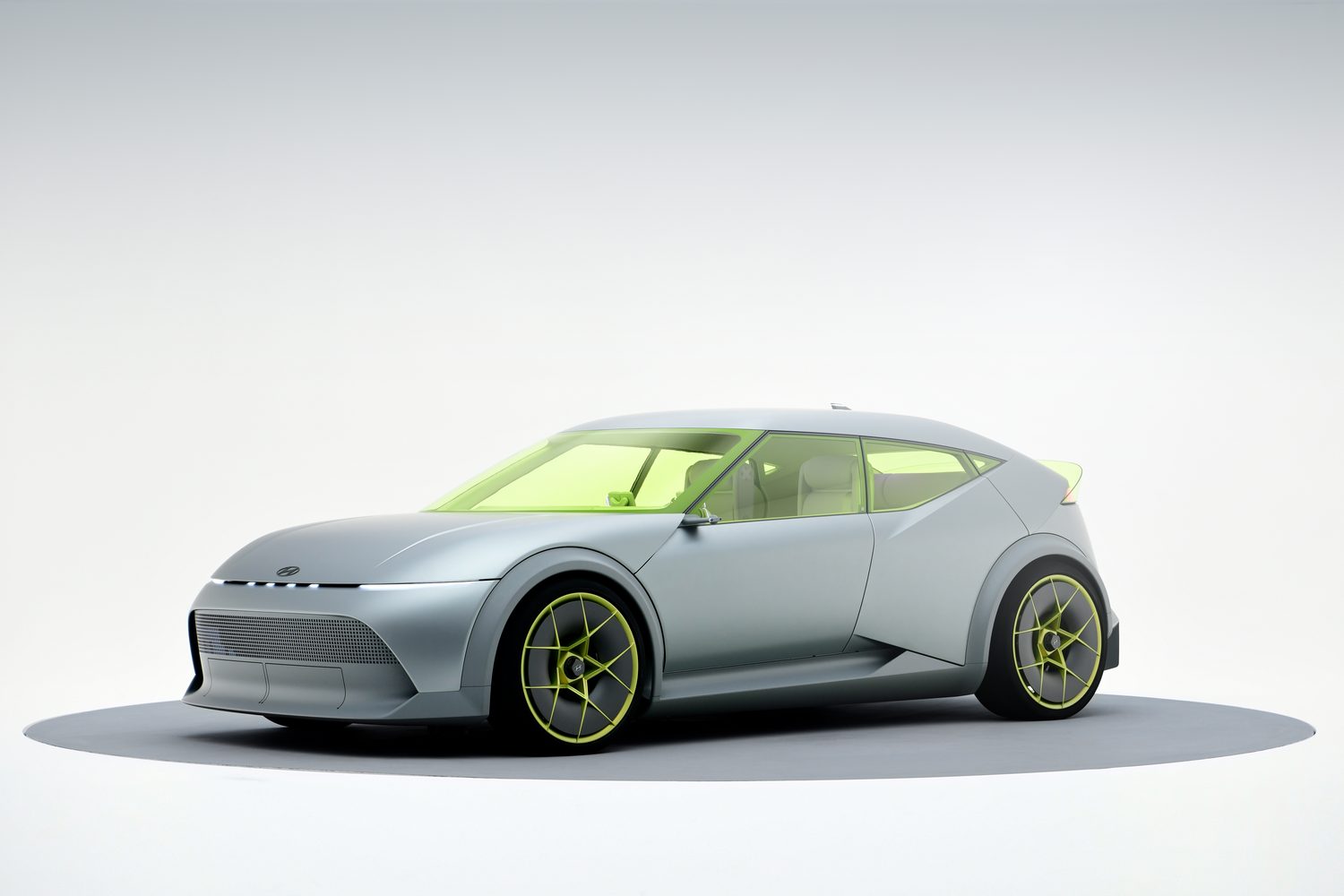
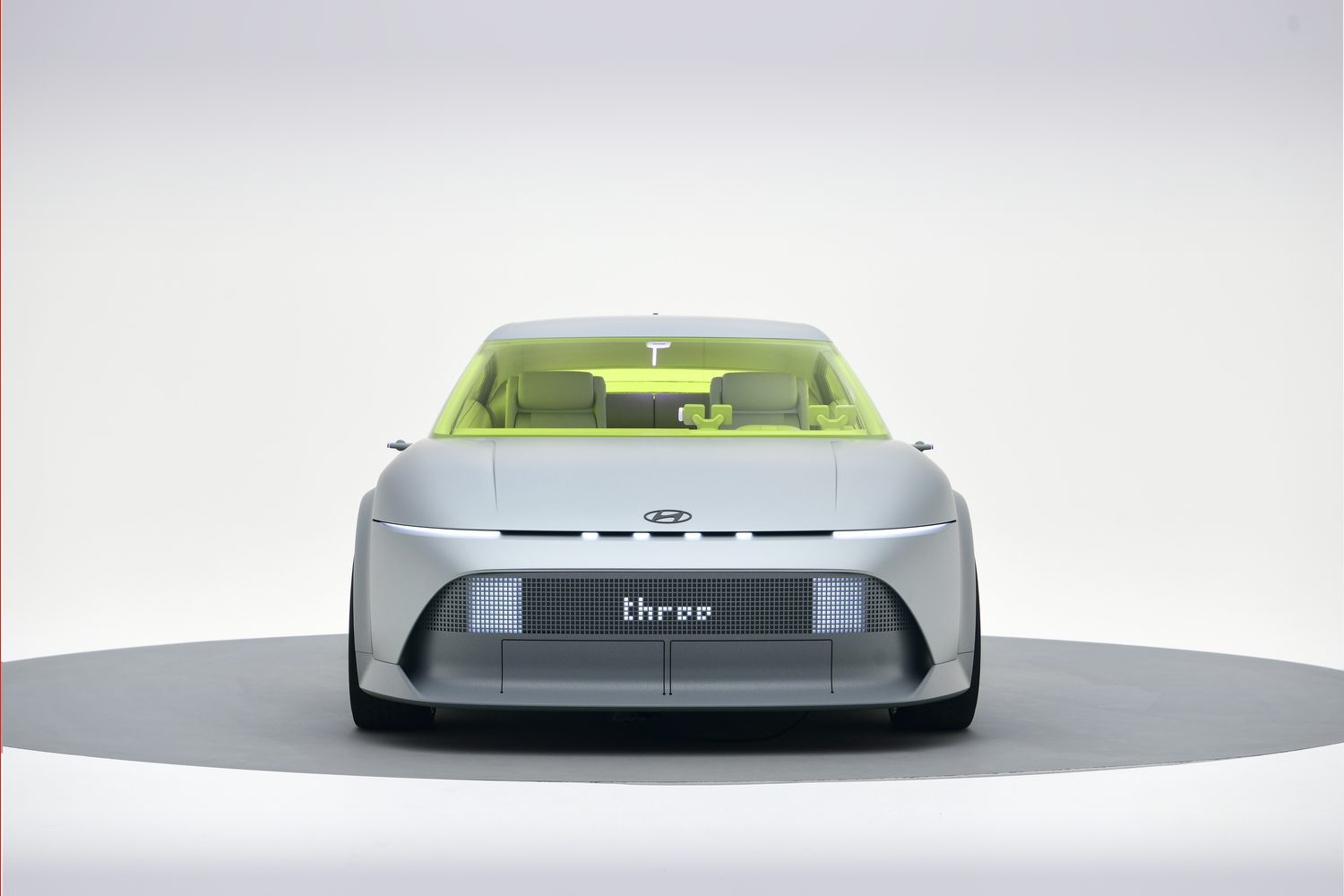
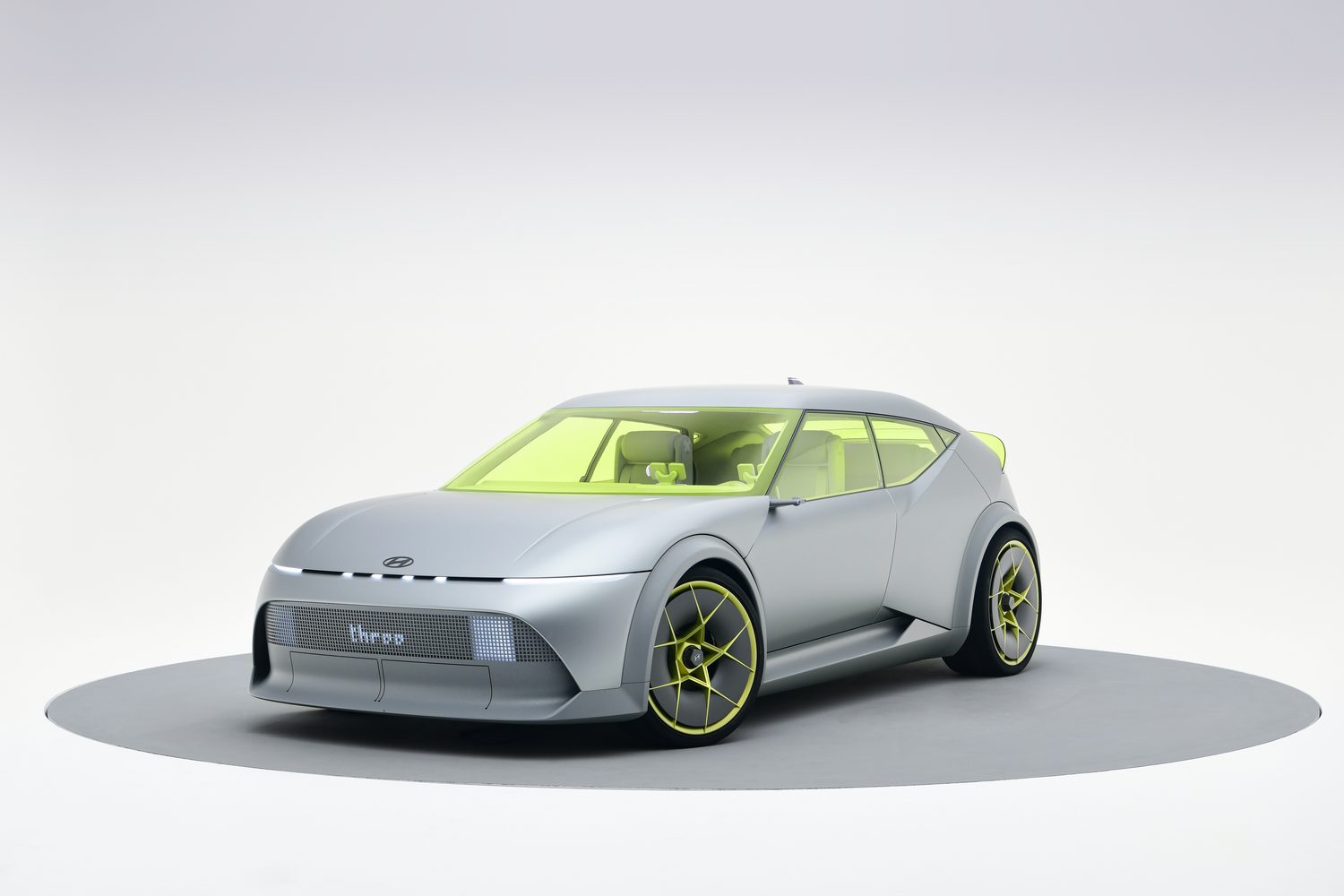
Taking influence from Hyundai Motor's advanced steel technologies (it is the only car maker that produces its own steel for use in its vehicles), the Concept Three uses a design form called the 'Art of Steel'. Its silhouette was initially shaped by curving and folding sheets of paper to represent steel sheeting, showing how flat panels could create a curvaceous car.
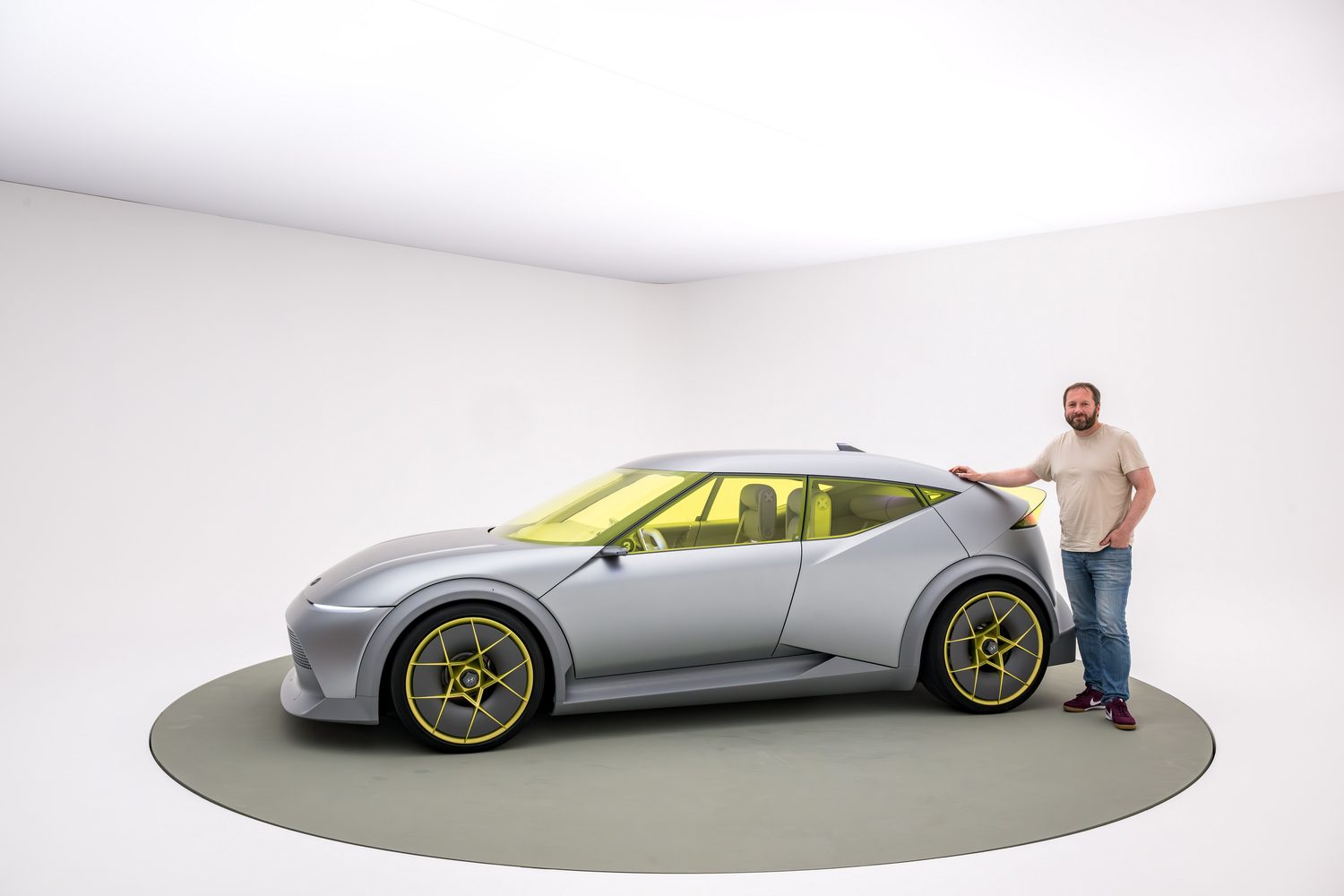
Measuring 4,288mm in length and 1,968mm in width, the Concept Three fits between the Hyundai Bayon and Kona in terms of size. It is also 1,465mm tall and has a wheelbase of 2,722mm.
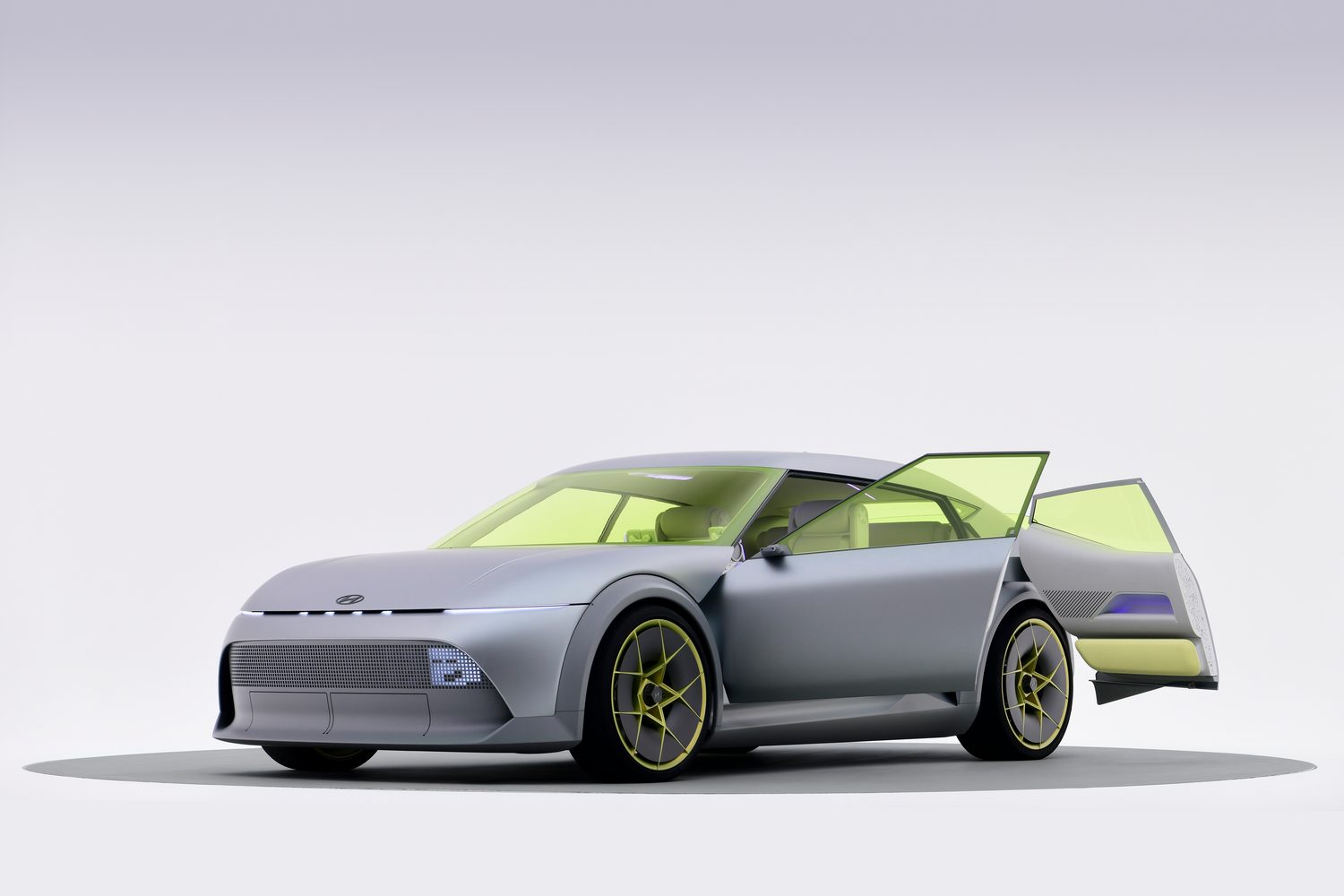
Interestingly, Hyundai isn't talking about performance figures or even things like battery size and range for the Concept Three; it is purely about setting out a vision of what we might expect from the style of its next electric production car. However, we do know that, in keeping with the other Ioniq models, the future version of the Concept Three will use Hyundai's advanced 800-volt electric architecture, meaning a generous driving range and ultra-fast charging capabilities.
What we can expect to change are the typical concept car items. The rear-hinged back doors will give way to a more traditional setup and items such as the yellow-tinted plastic ducktail spoiler will be replaced with a more conventional, non-transparent one. The forthcoming Ioniq 3 will retain the overall proportions of the concept, however, including the distinctive upward lines around the rear wheels.
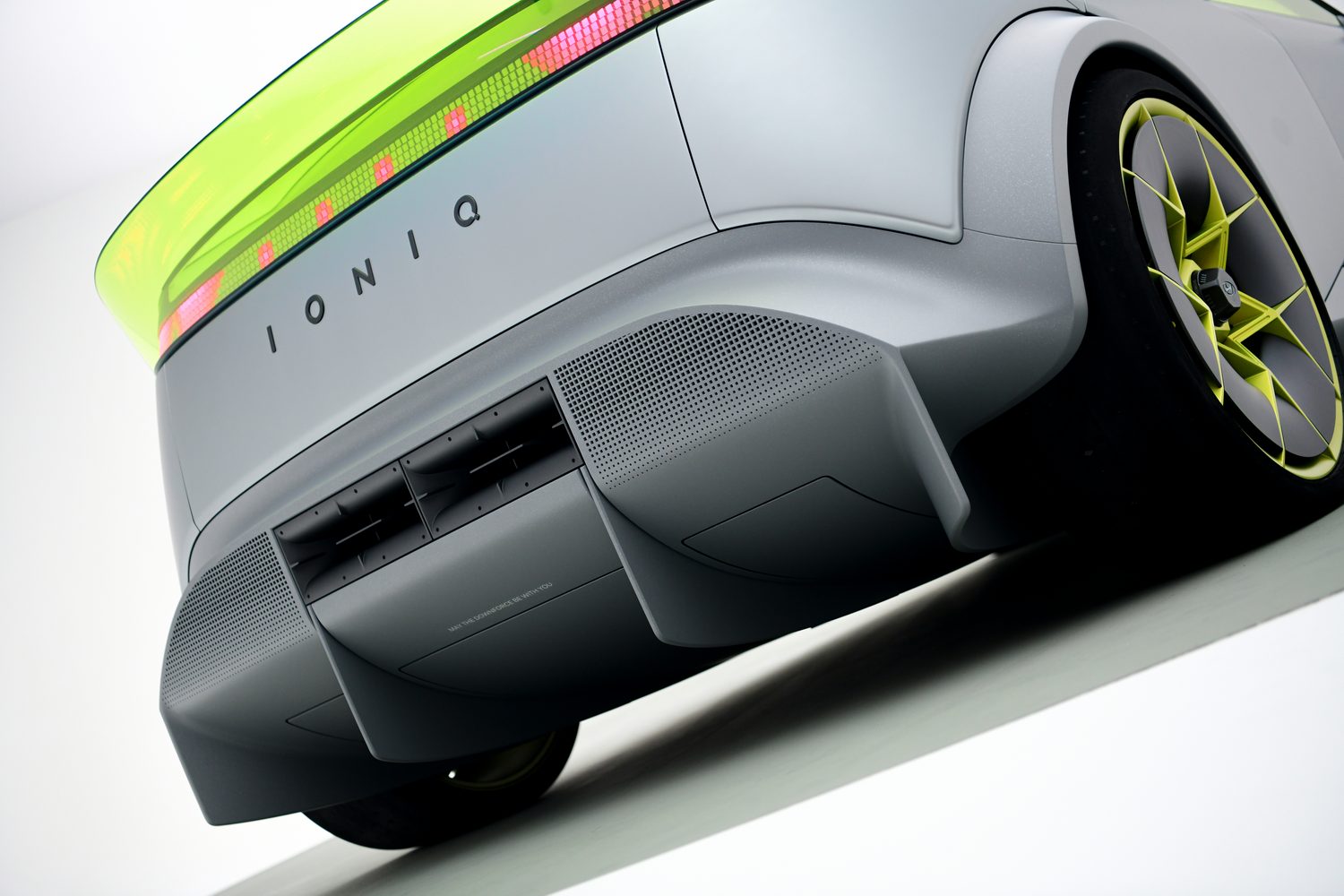
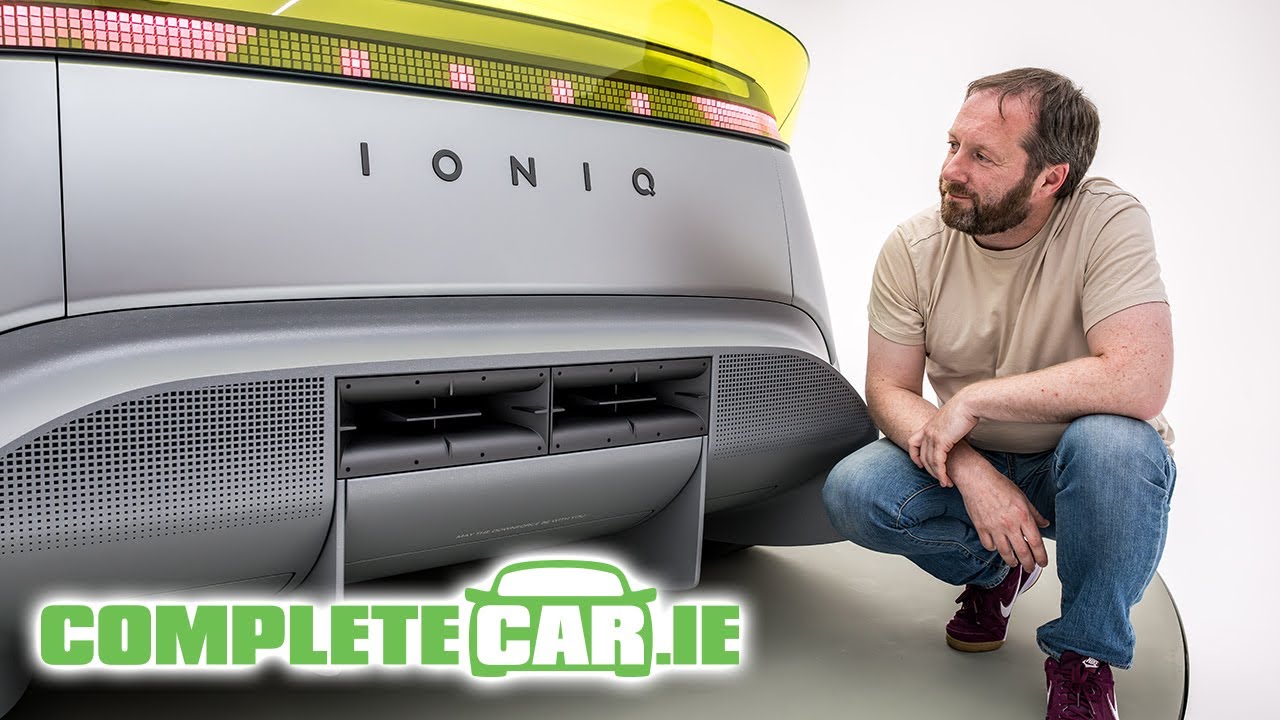
There are numerous details hinting at serious performance potential, and who's to say there won't be an Ioniq 3 N in the future? The aero-optimised alloy wheels fill every bit of the bulging wheelarches and at the rear there's a large diffuser to aid downforce at higher speeds. Look closely and you'll see a message saying “May the downforce be with you”.
Despite it being fully electric, and using learnings from the existing electric N models, the Concept Three has two loudspeakers in place of exhausts mounted centrally at the rear. What you won't see is a Hyundai badge on the back, however. Instead there's the 'Ioniq' wordmark and four squares on the centre of the pixelated light strip that wraps around the car's rear. Those four squares represent the letter H in morse code and that's how the brand identifies itself on Ioniq models. The same four light squares also appear on the front, downlit from underneath the bonnet.
What's it like inside?
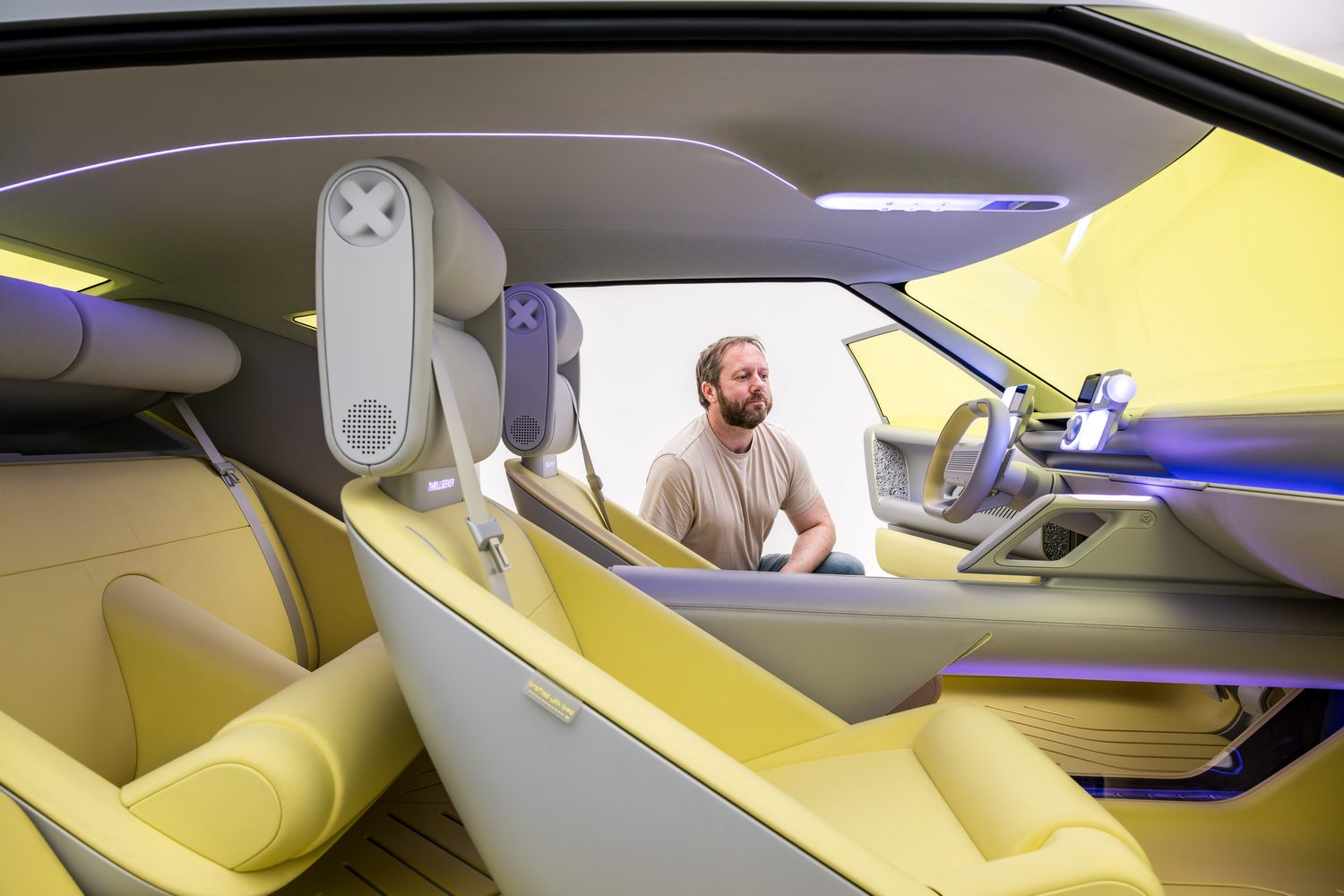
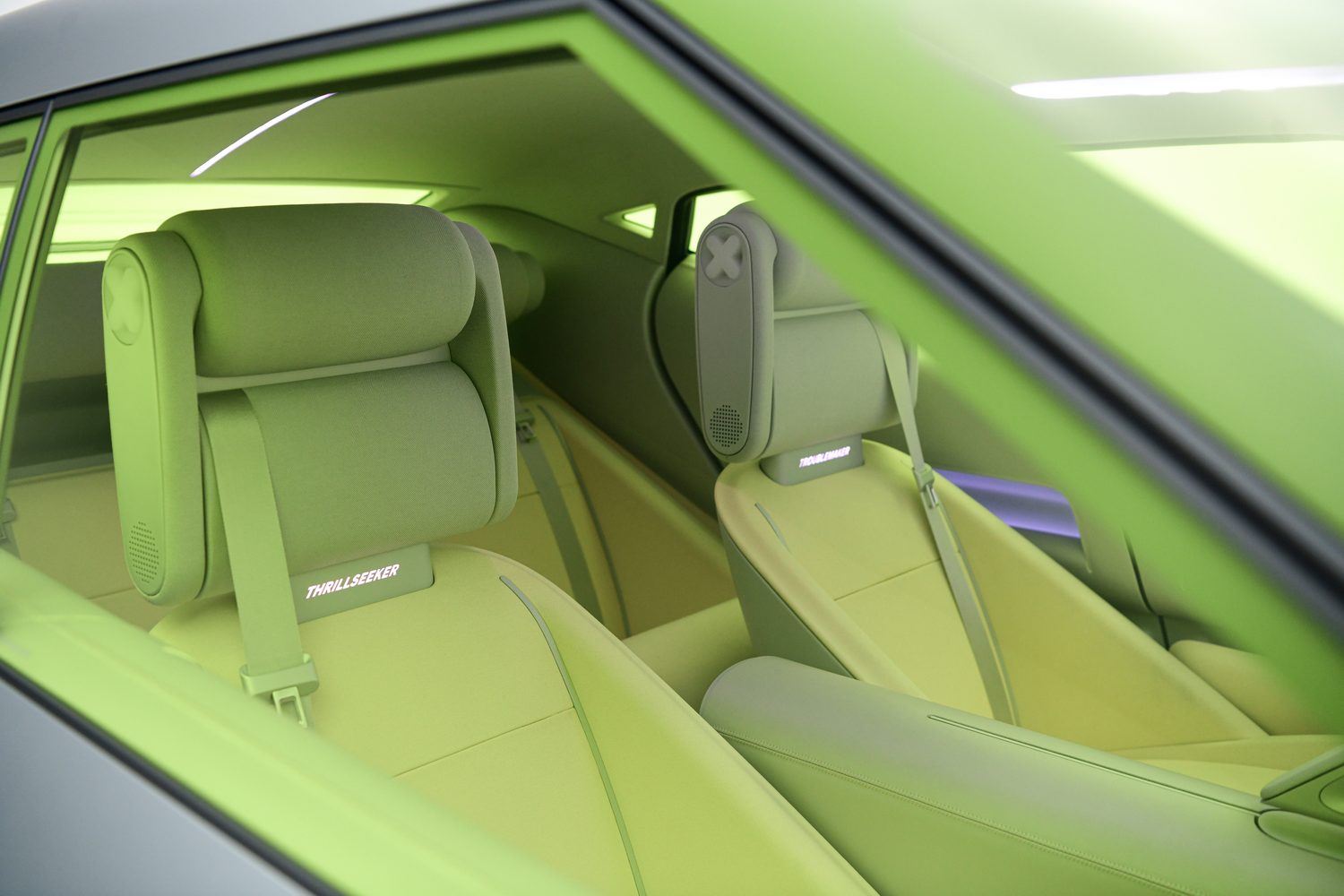
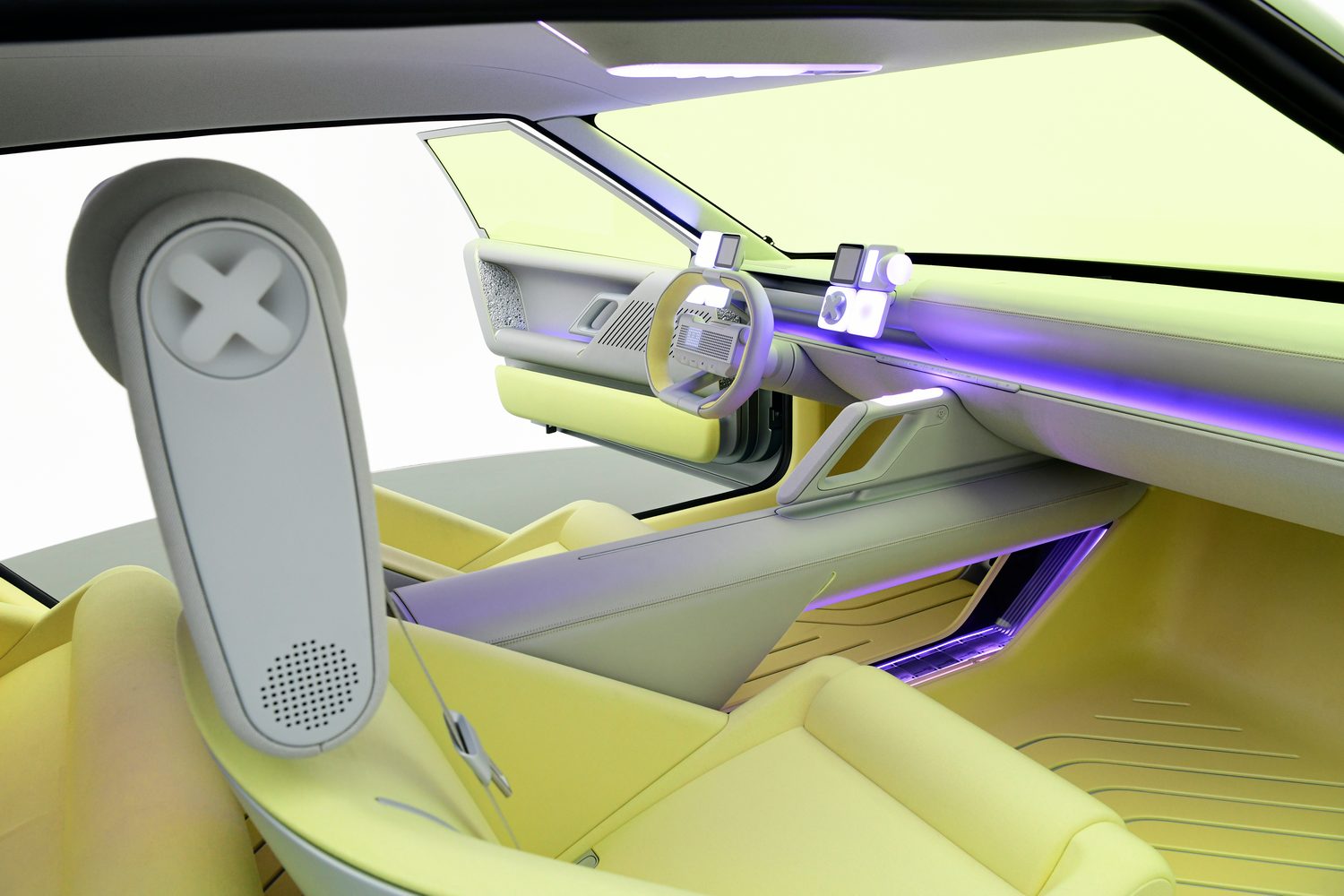
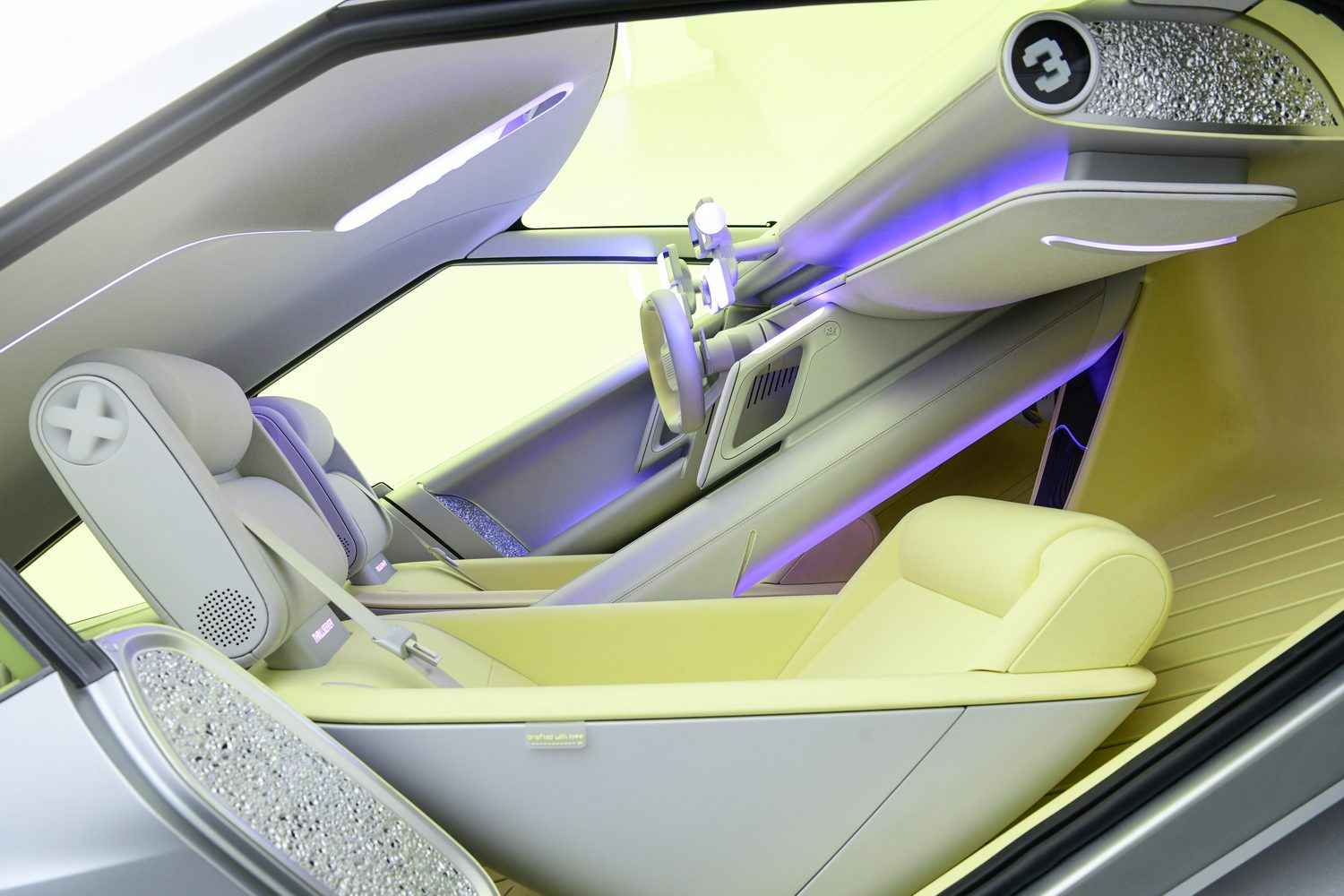
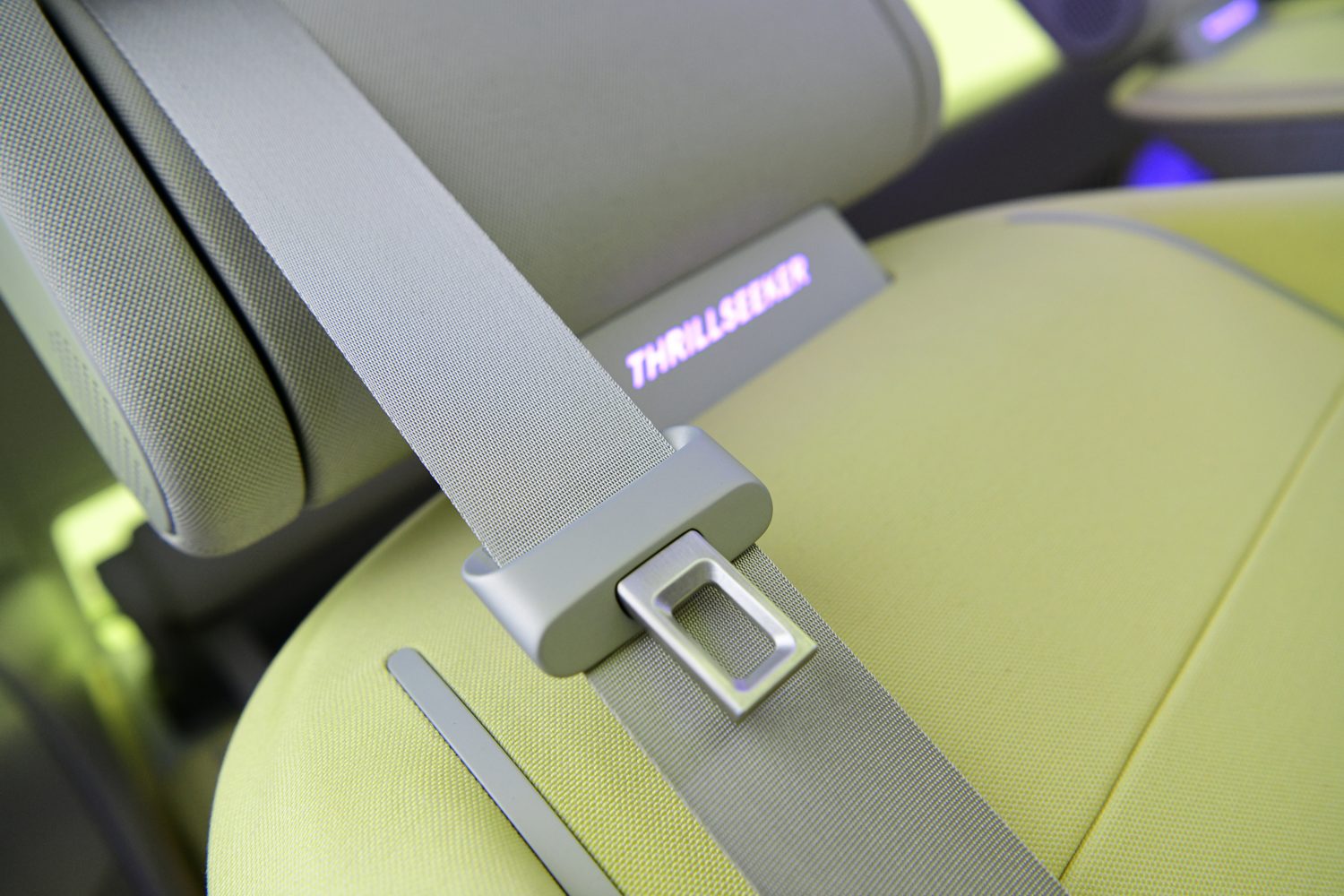
Once the dramatic doors swing open, it's possible to see that the interior is a vibrant yellow, in stark contrast to the matt 'Tungsten Gray' exterior paint. Rather than using racy sports seats there are lounge-like chairs that are upholstered in recycled wool and have high sides to hold you and your passenger in place. Hyundai's designers are keen to make future cars safer and that also means a mantra of 'eyes on the road, hands on the wheel'.
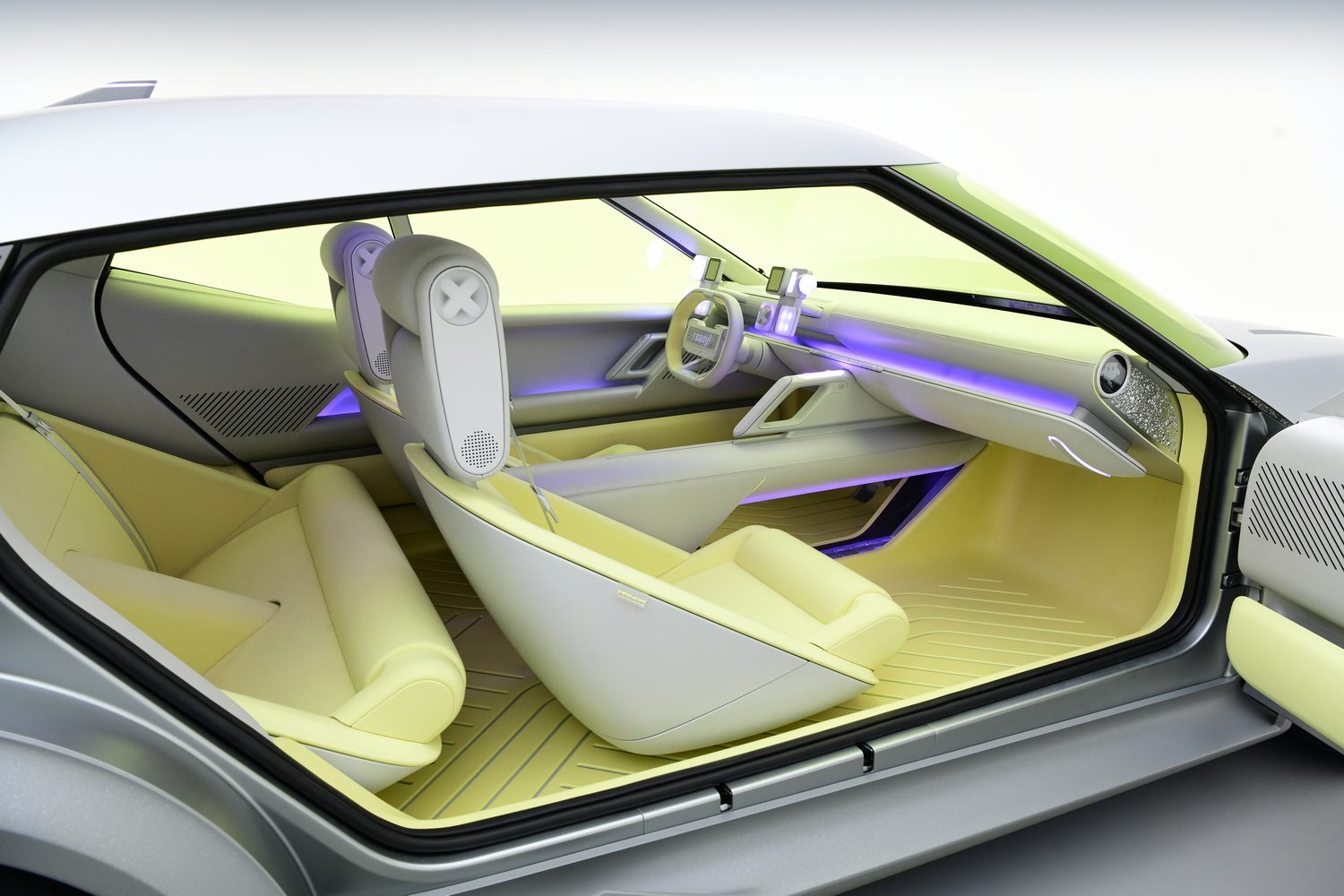
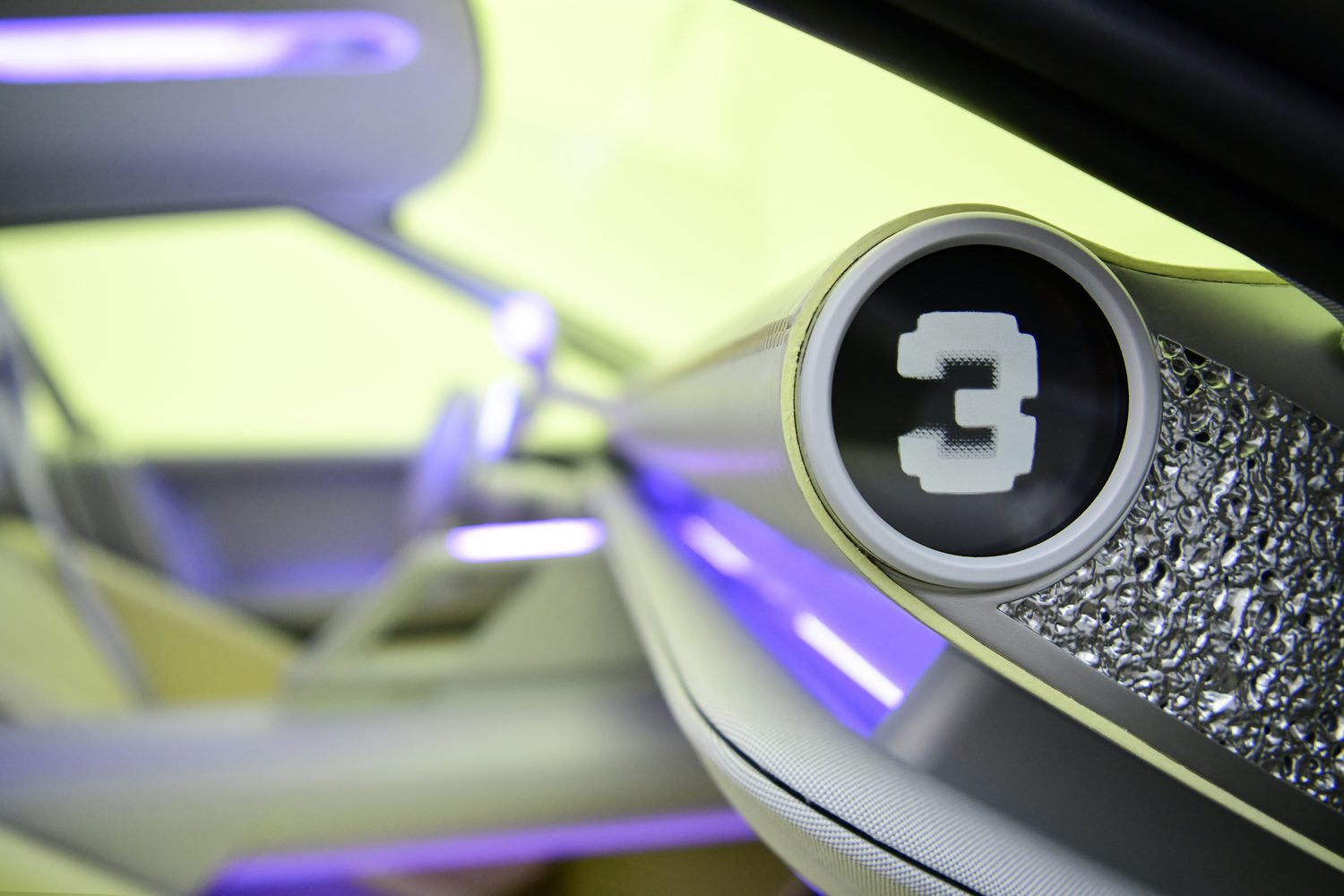
That means no large touchscreen displays to distract; instead there are two clusters of four mini panels that can be configured in numerous ways. These are positioned on either side of the steering wheel, and up high, so you never need to look away from the road for any amount of time to see what's happening on them.
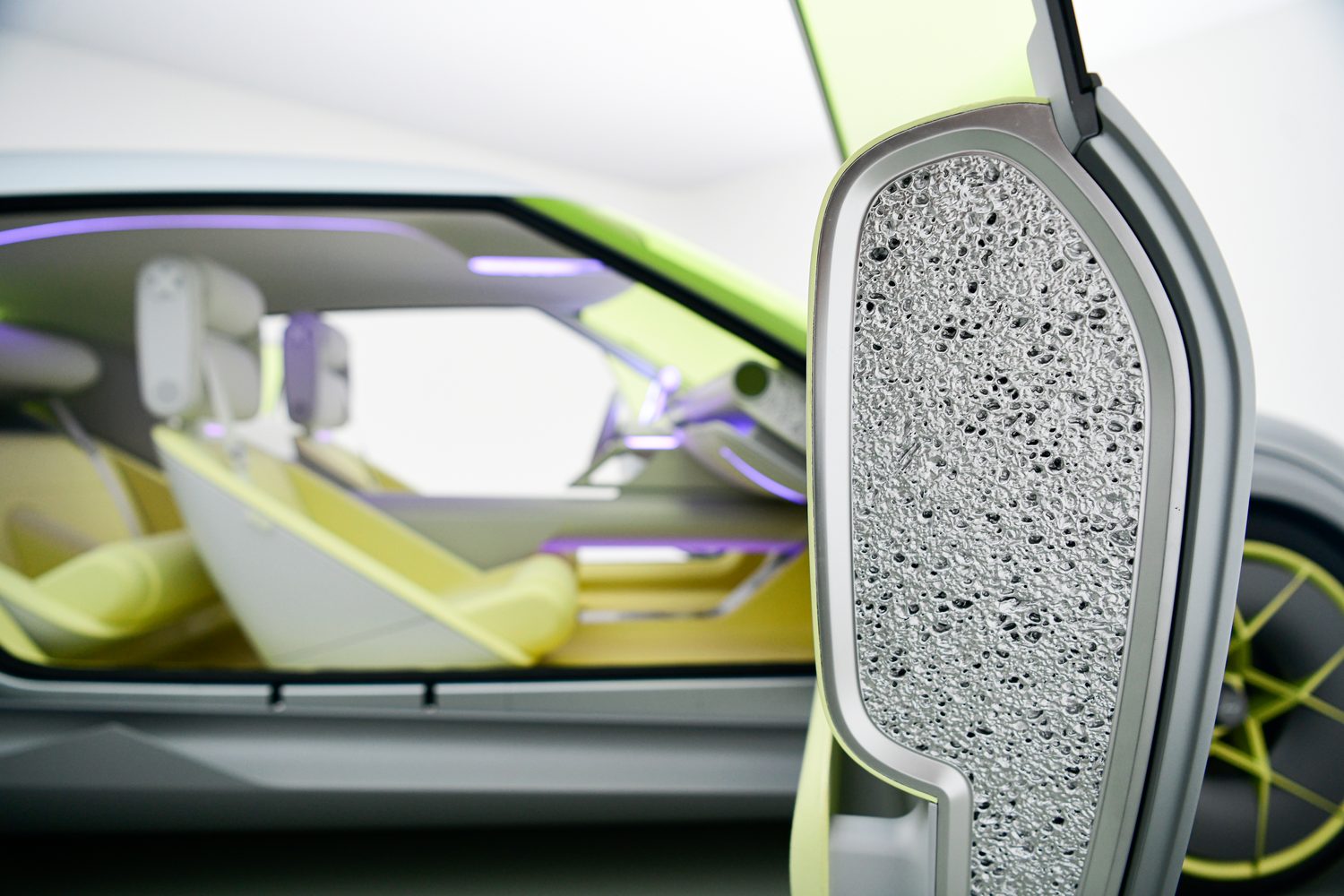
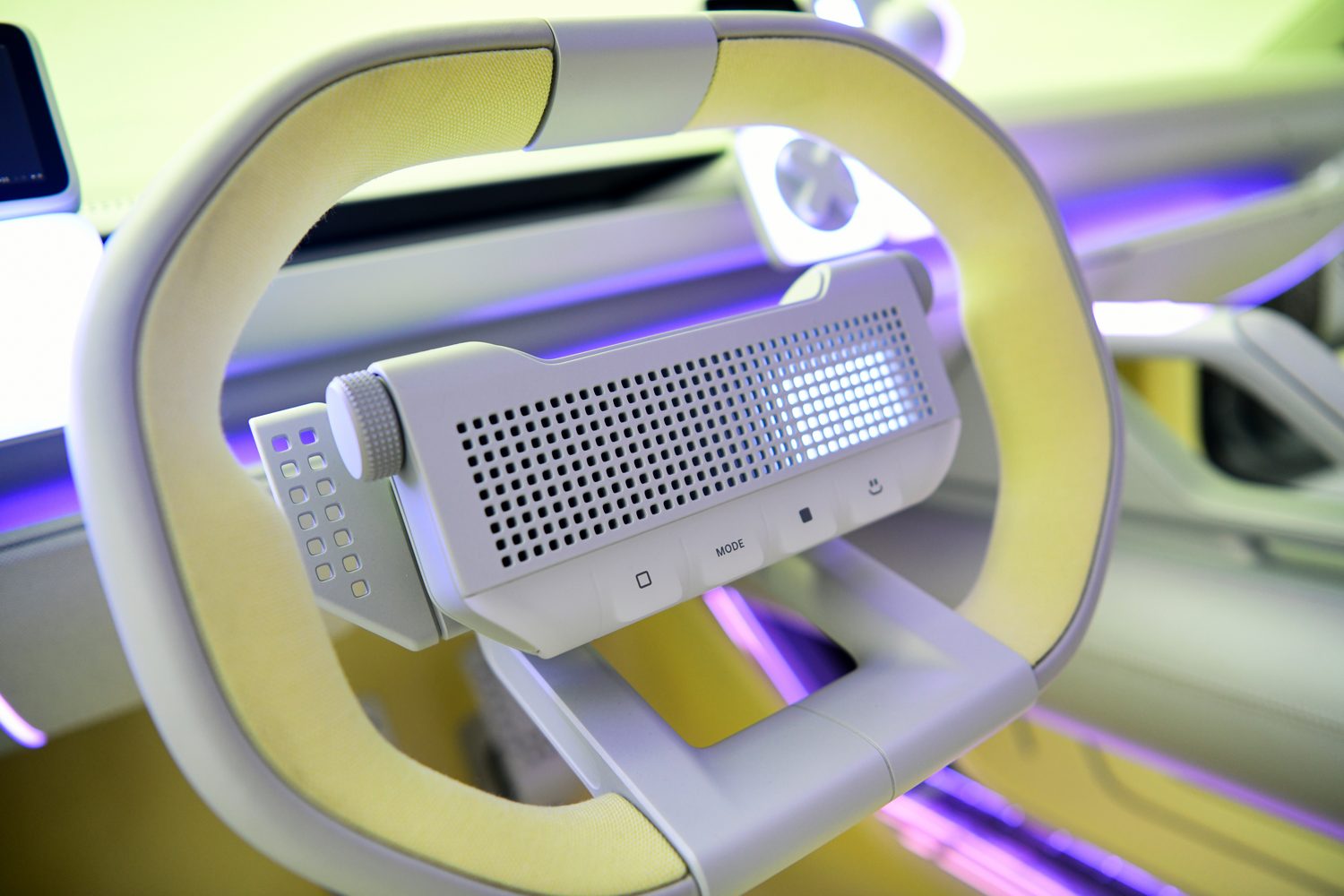
Another pixellated panel on the centre of the steering wheel can relay visual cues and single word messages to the driver. Sustainable details include plastics for the buttons and unusual lightweight aluminium foam inserts that are visible on the inner sections of the doors.
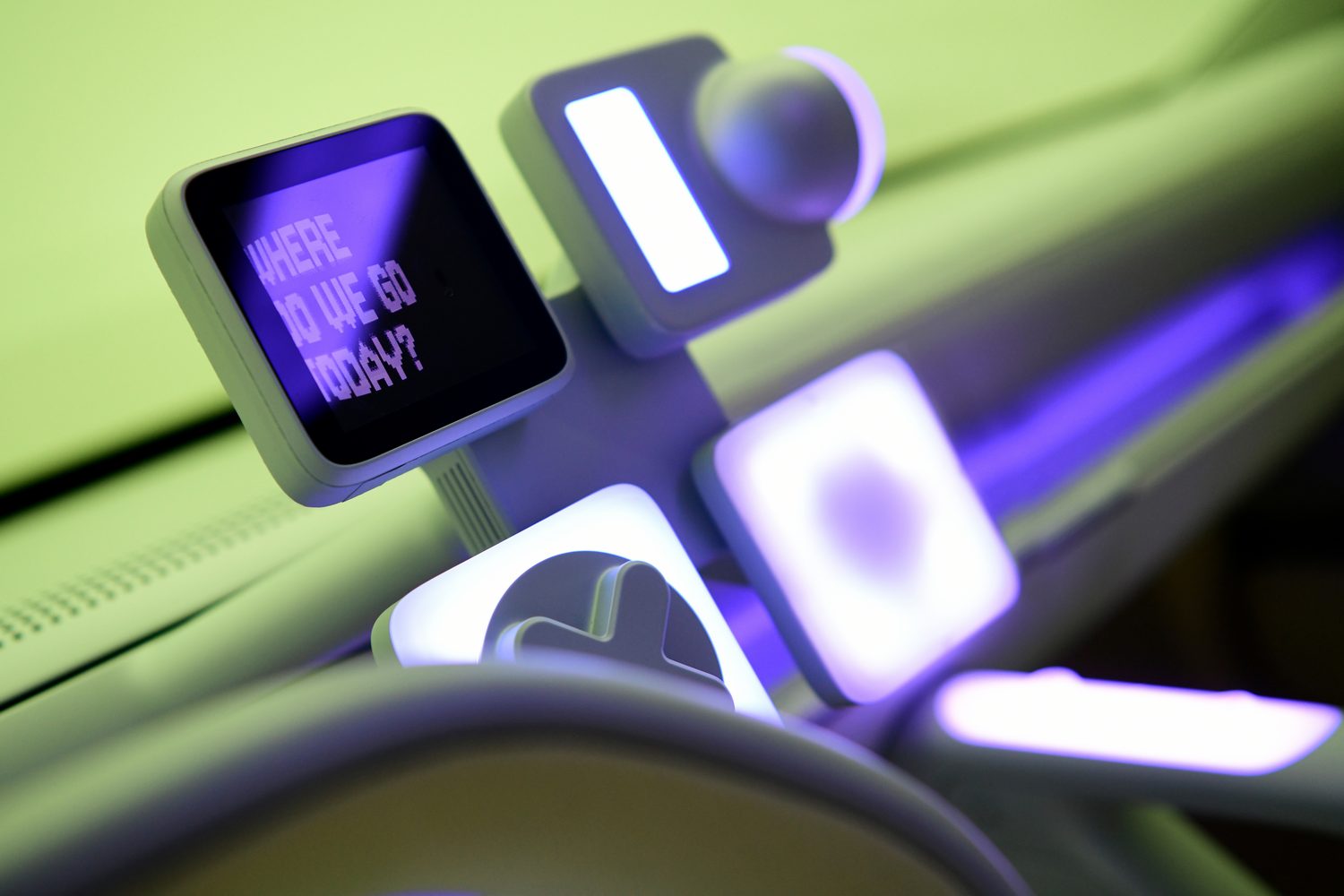
Those seated in the rear look like they're in for a comfortable journey, with the rear seat more like a couch. Its base is angled downwards so you really fall into the seat and there's a single cylindrical headrest that spans the rear.
Who is Mr Pix?
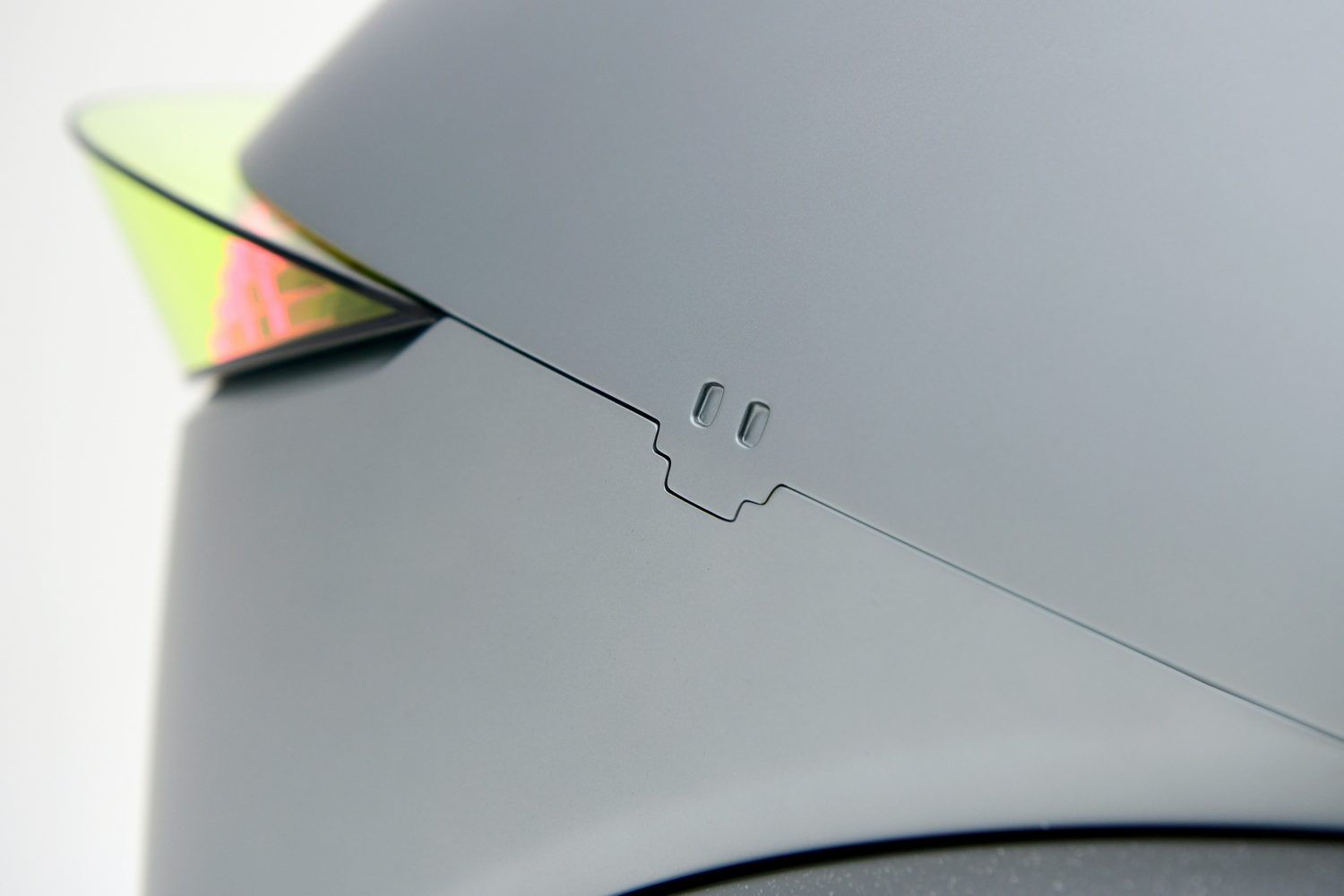
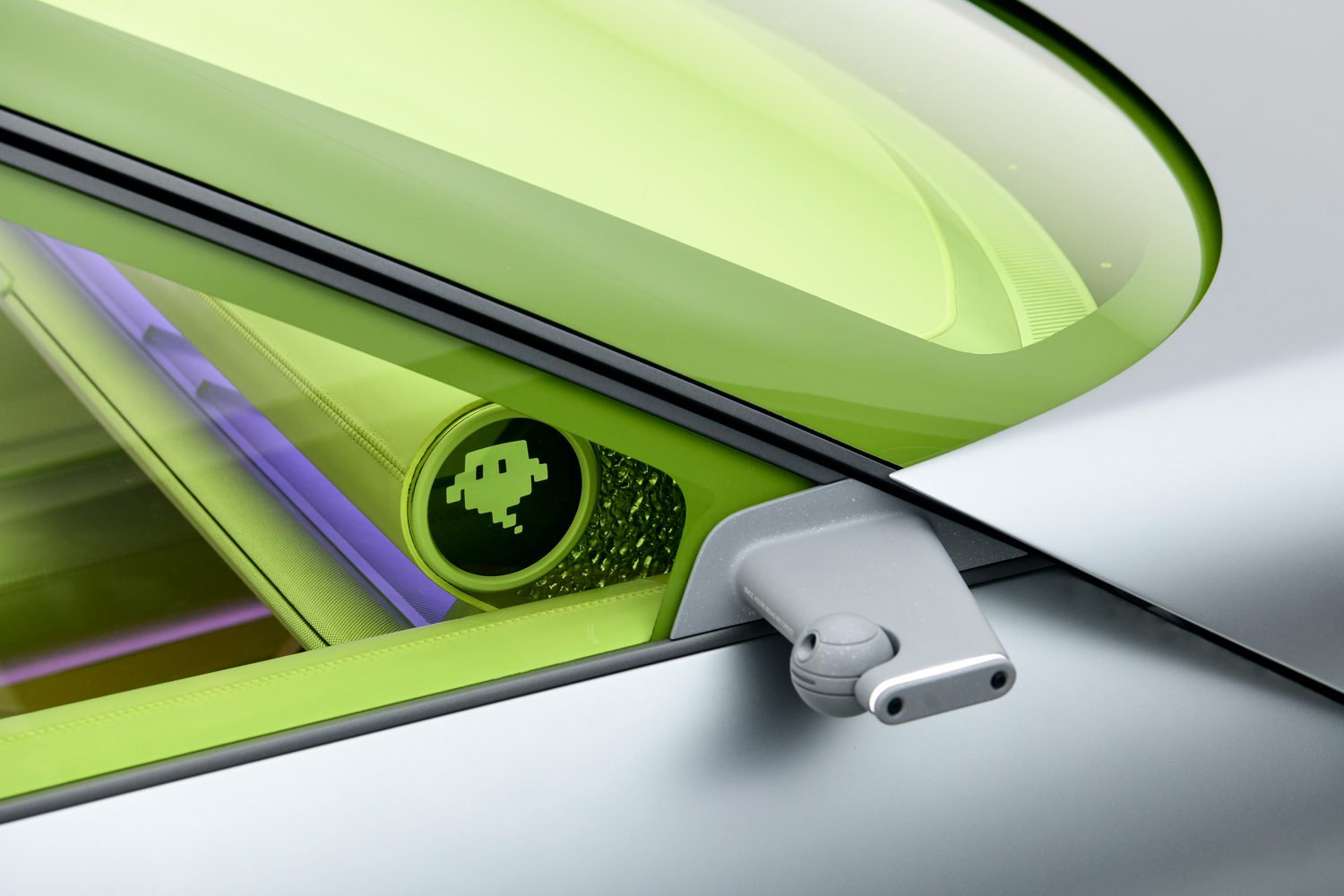
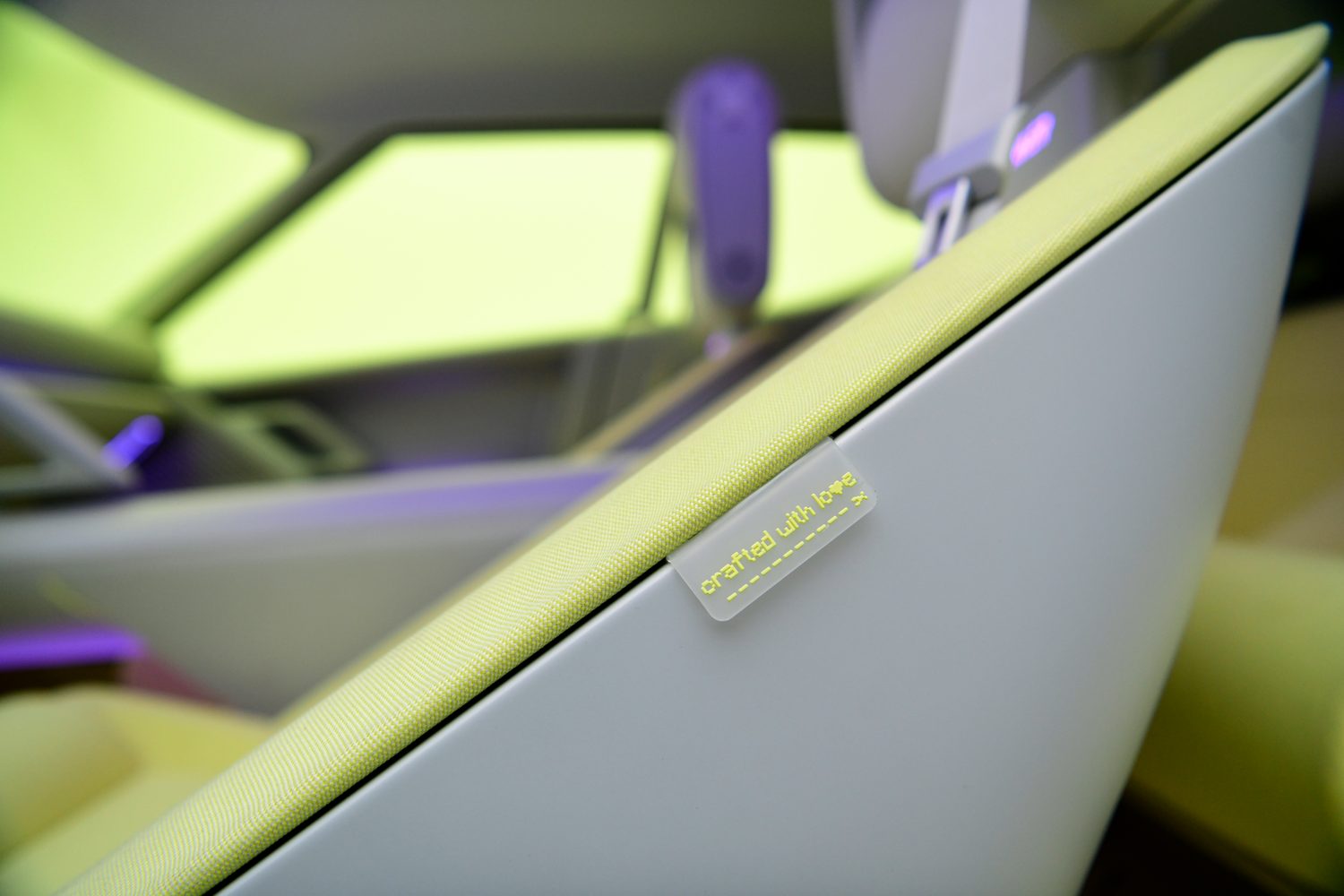
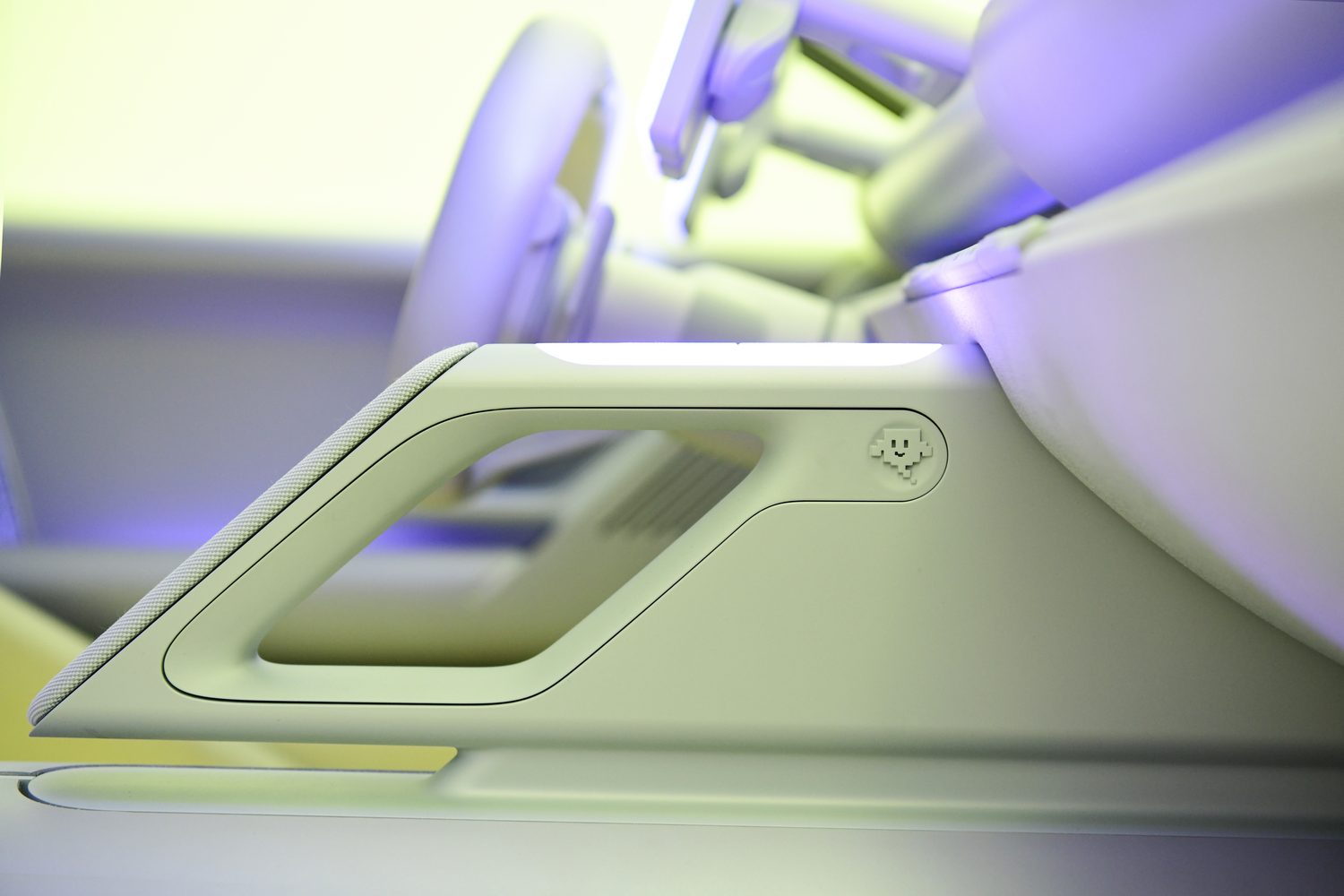
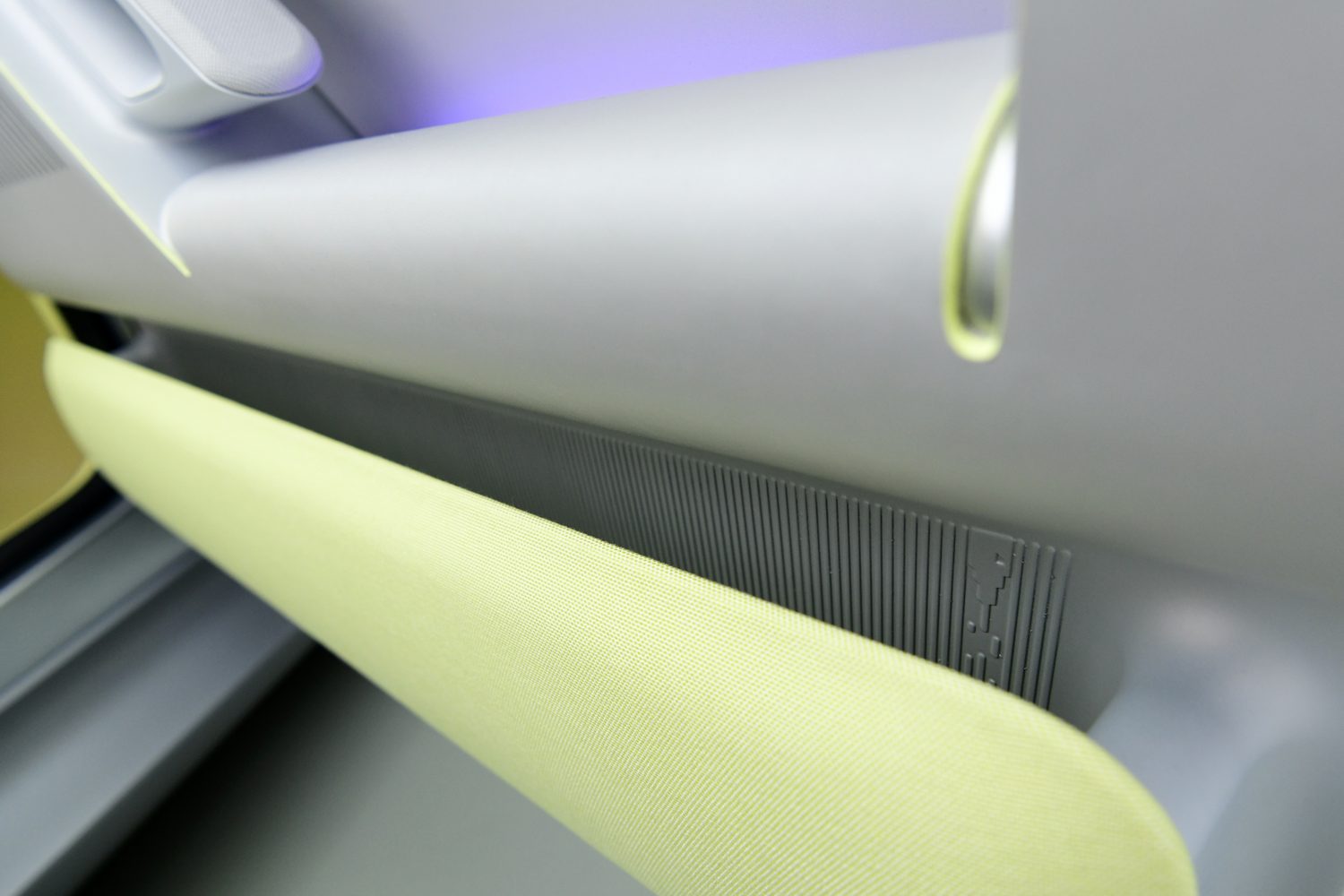
If you look a little more closely at the details of the Concept Three you'll see a small, pixelated character called Mr. Pix popping up in a few places. Hyundai's designers were keen to instil a bit of whimsical fun in this concept car, so challenge yourself to see how many times you can see Mr. Pix appear in our photo gallery of the car. Don't forget to check out the shut line on the rear left quarter and the tiny screws of the exhaust speaker panel...
What is Hyundai management saying about the concept?
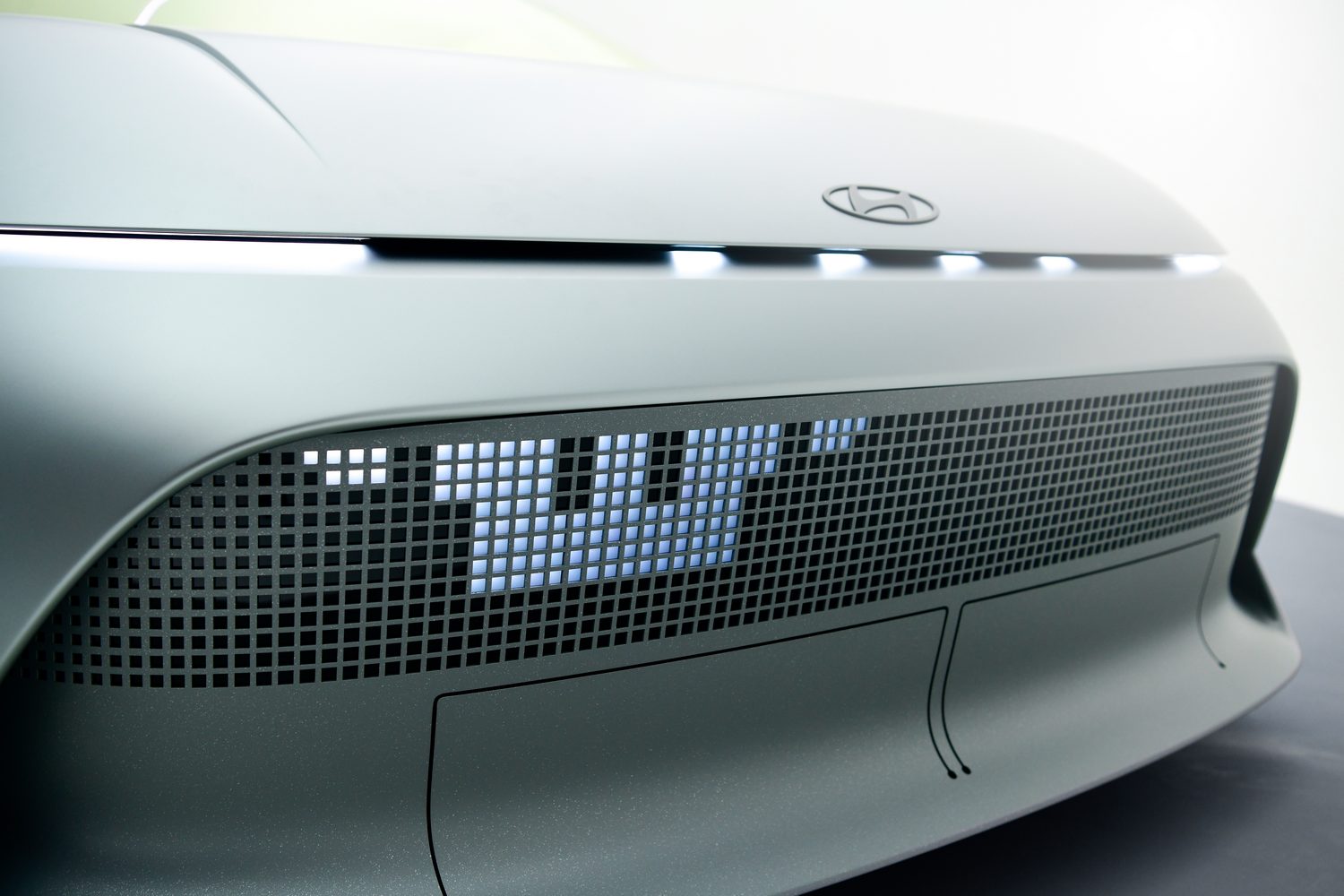
The President and CEO of Hyundai Europe, Xavier Martinet, said: “Returning to IAA Mobility after four years away is a true milestone, and such as occasion deserves a milestone car. Concept Three represents the next step in Hyundai Motor's electrification journey. With its compact
dimensions and Art of Steel design language, it embodies our vision of delivering mobility that is practical, accessible and emotionally resonant.”
You can read more about Martinet's view of the European car market in our in-depth interview with him here.
Video player loading.
Video unavailable. Watch on YouTube
If there is anything about this story we have not covered, you can avail of our expert advice service via the Ask Us Anything page.