

Exterior & design of the 2026 BMW i7
- More chiselled design introduced in 2026
- Defined by massive grille
- Gorgeous paint options
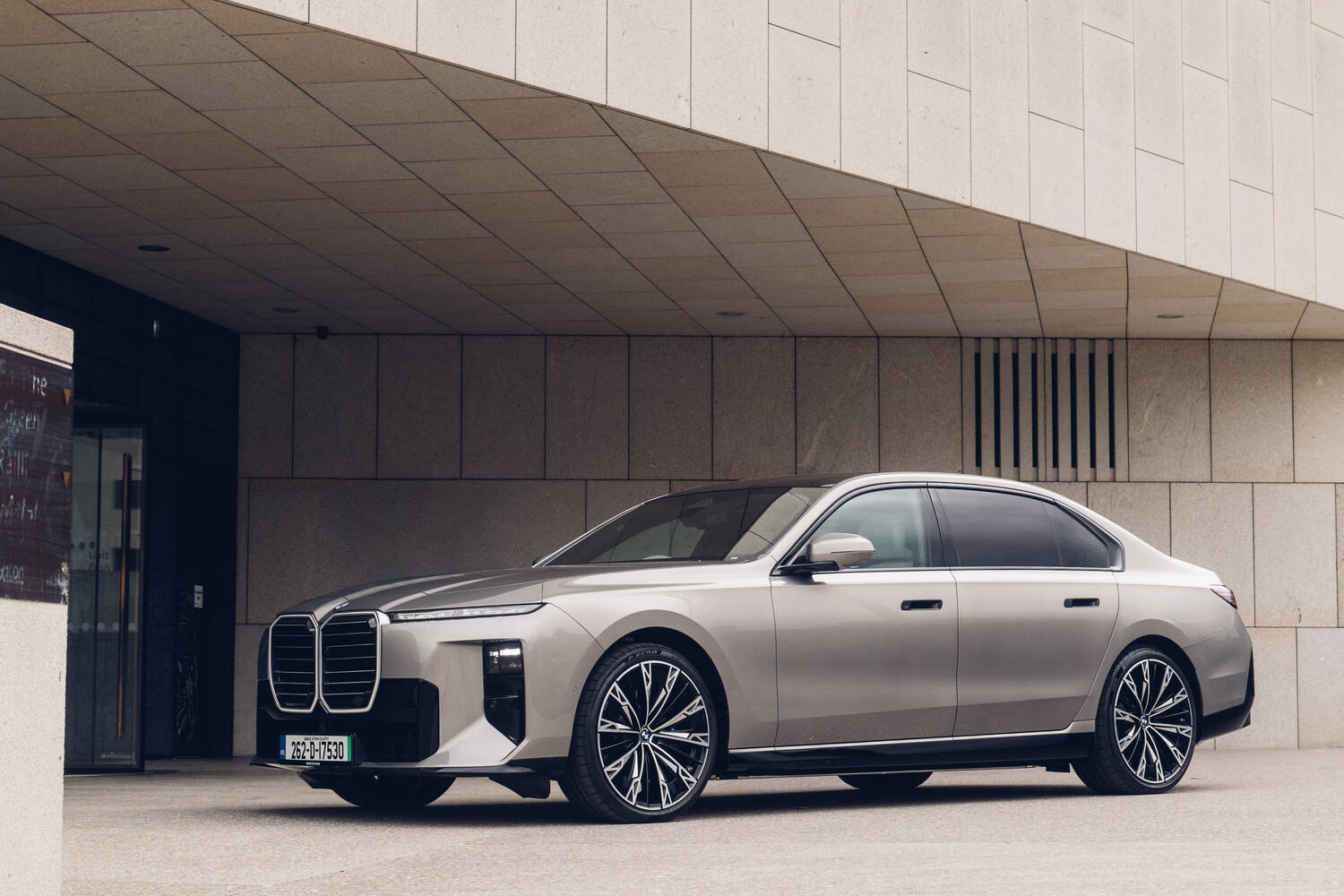
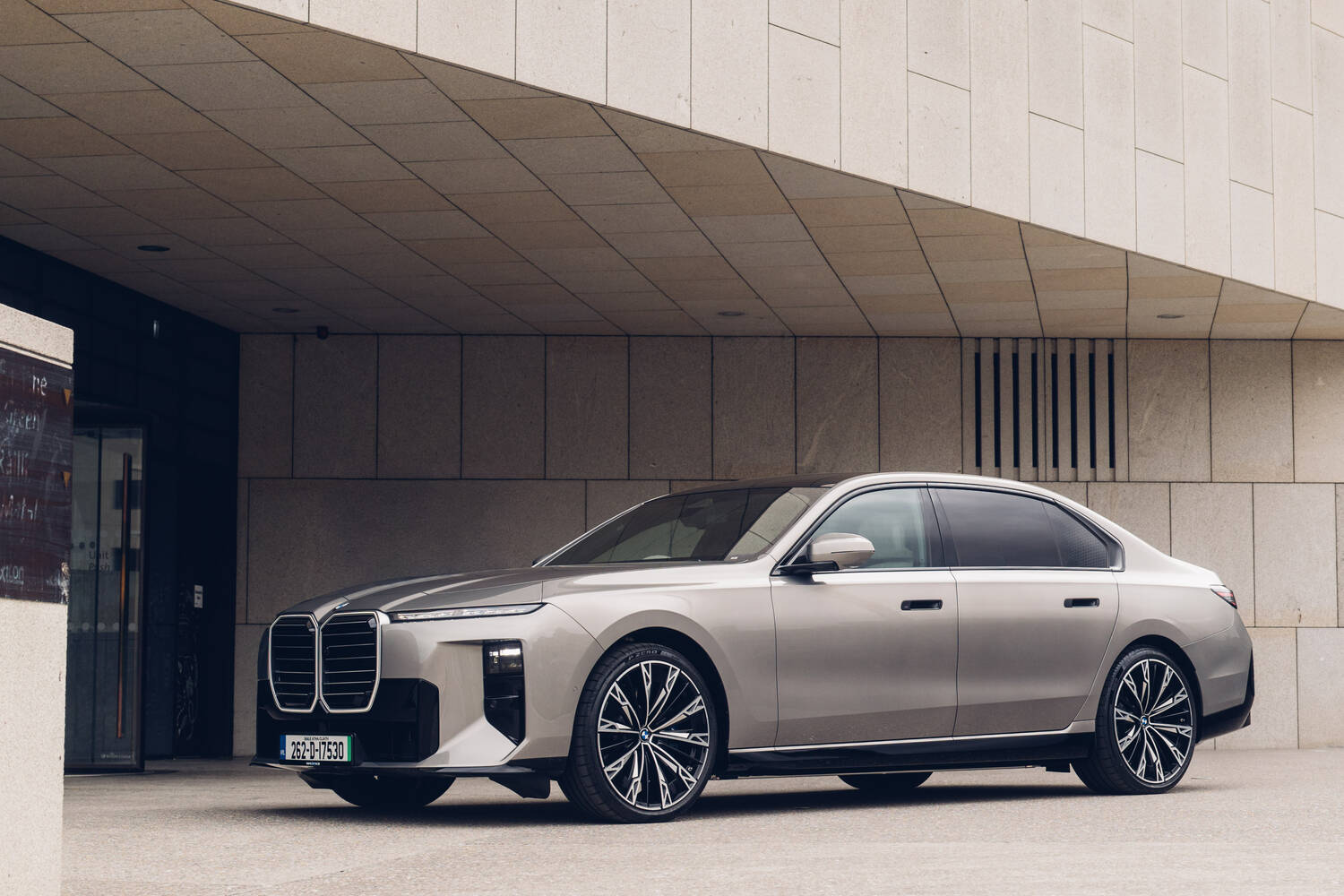
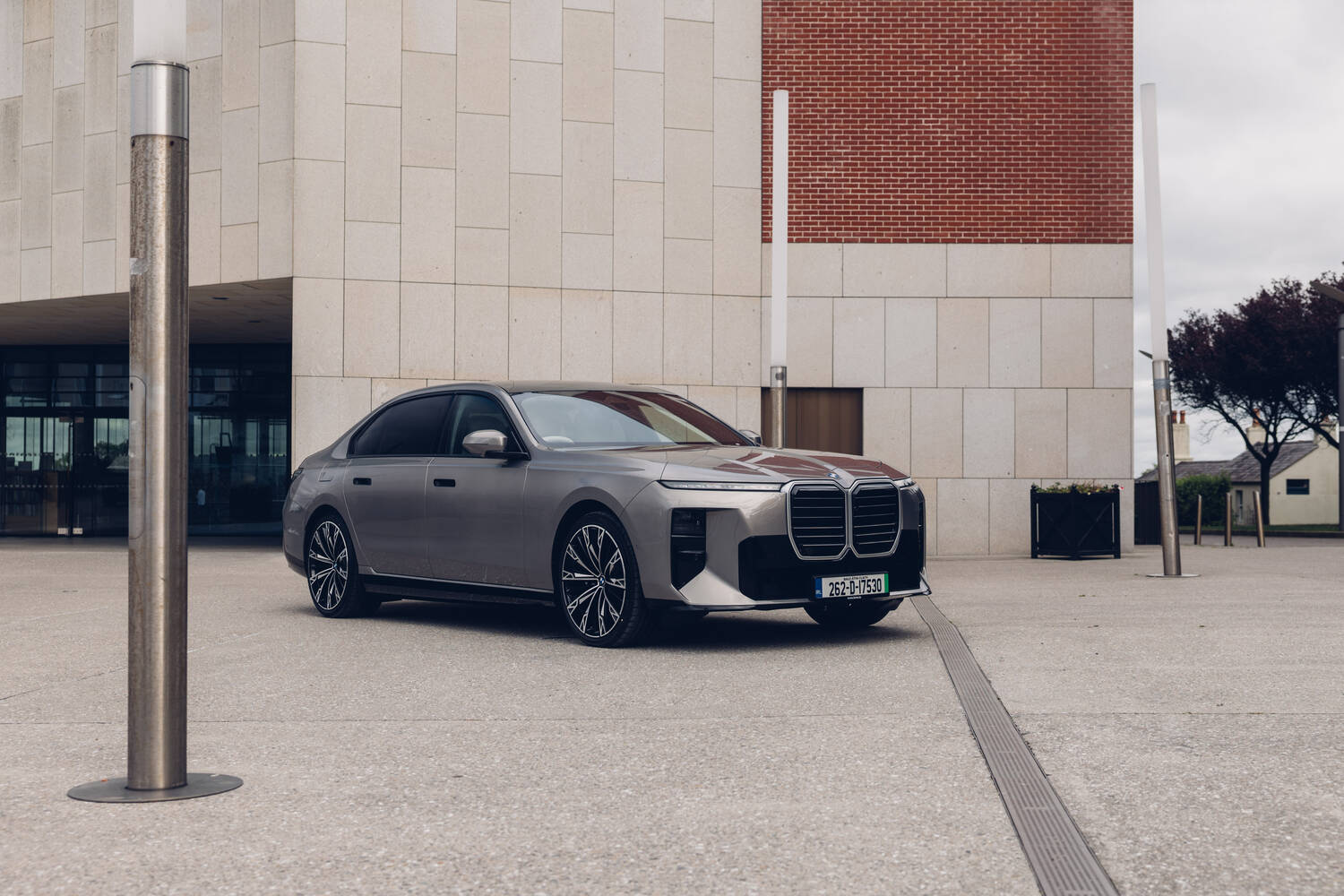
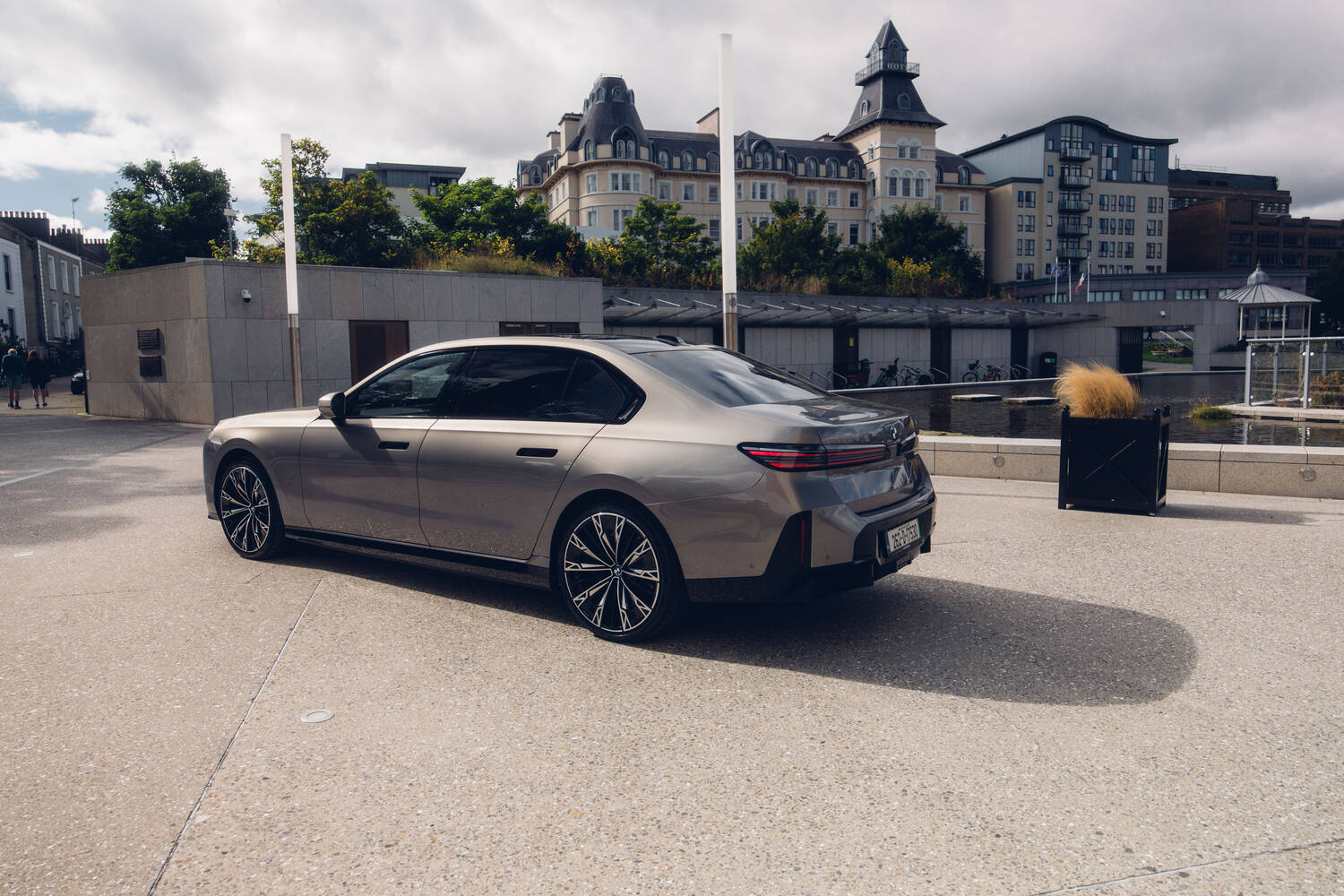
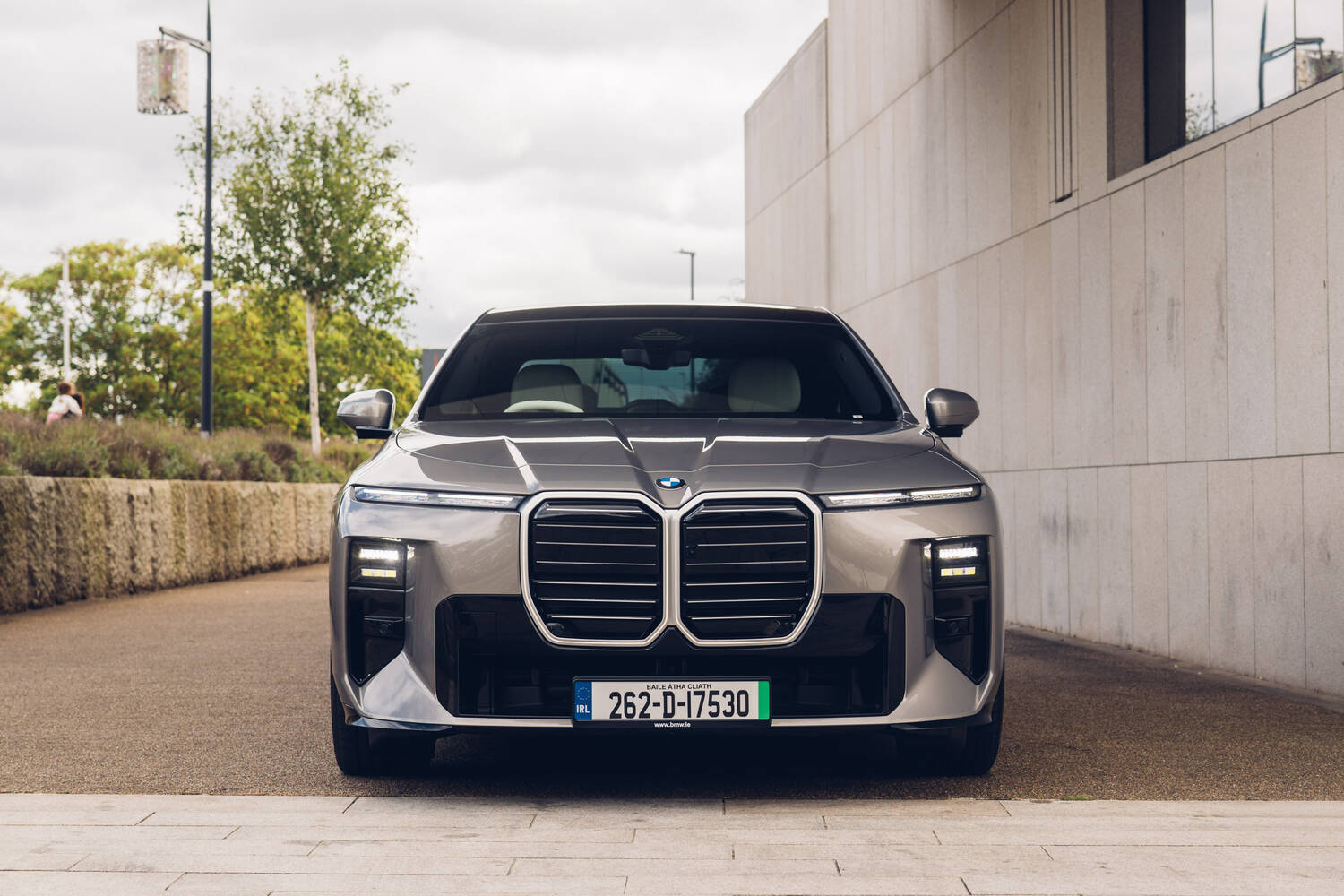
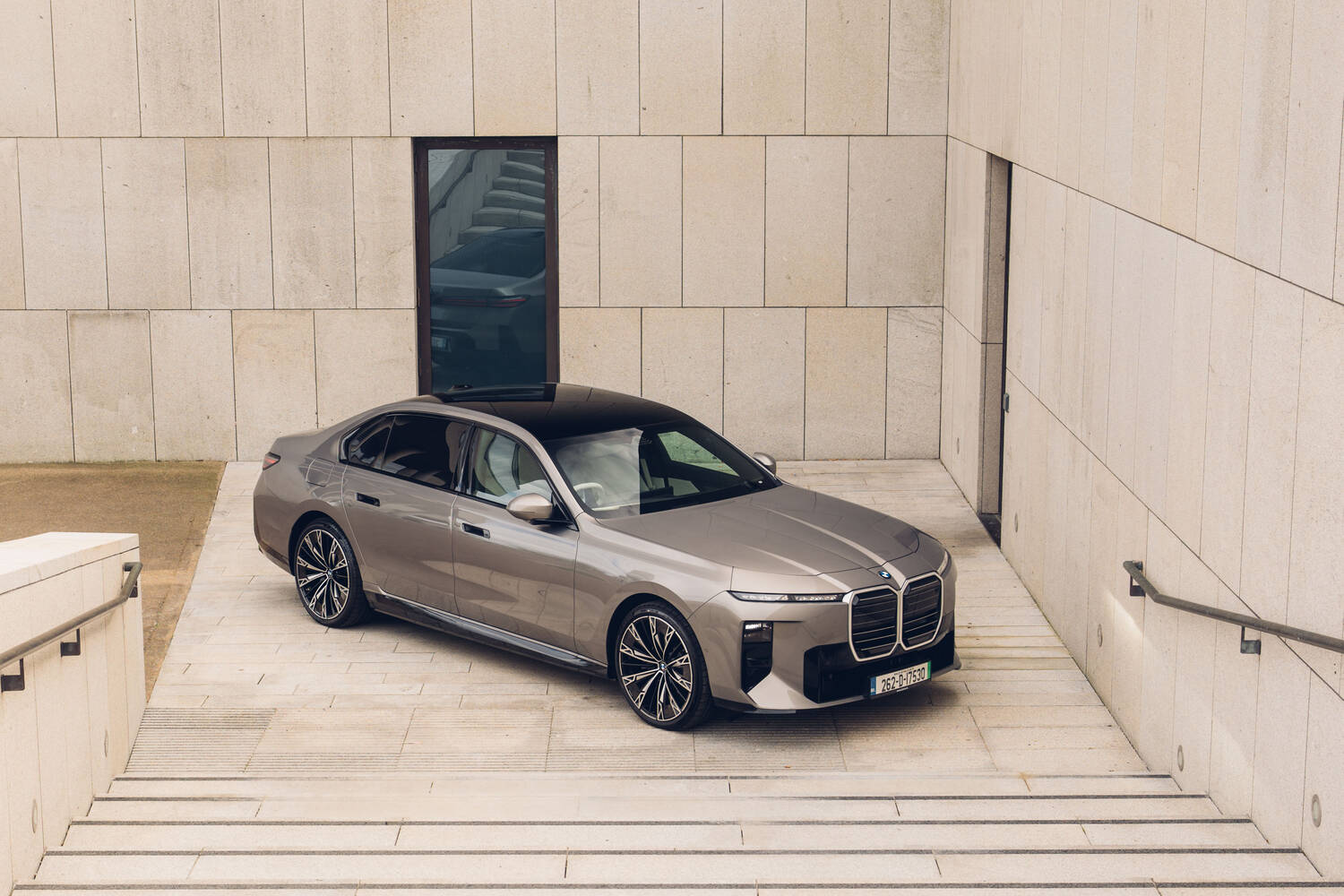
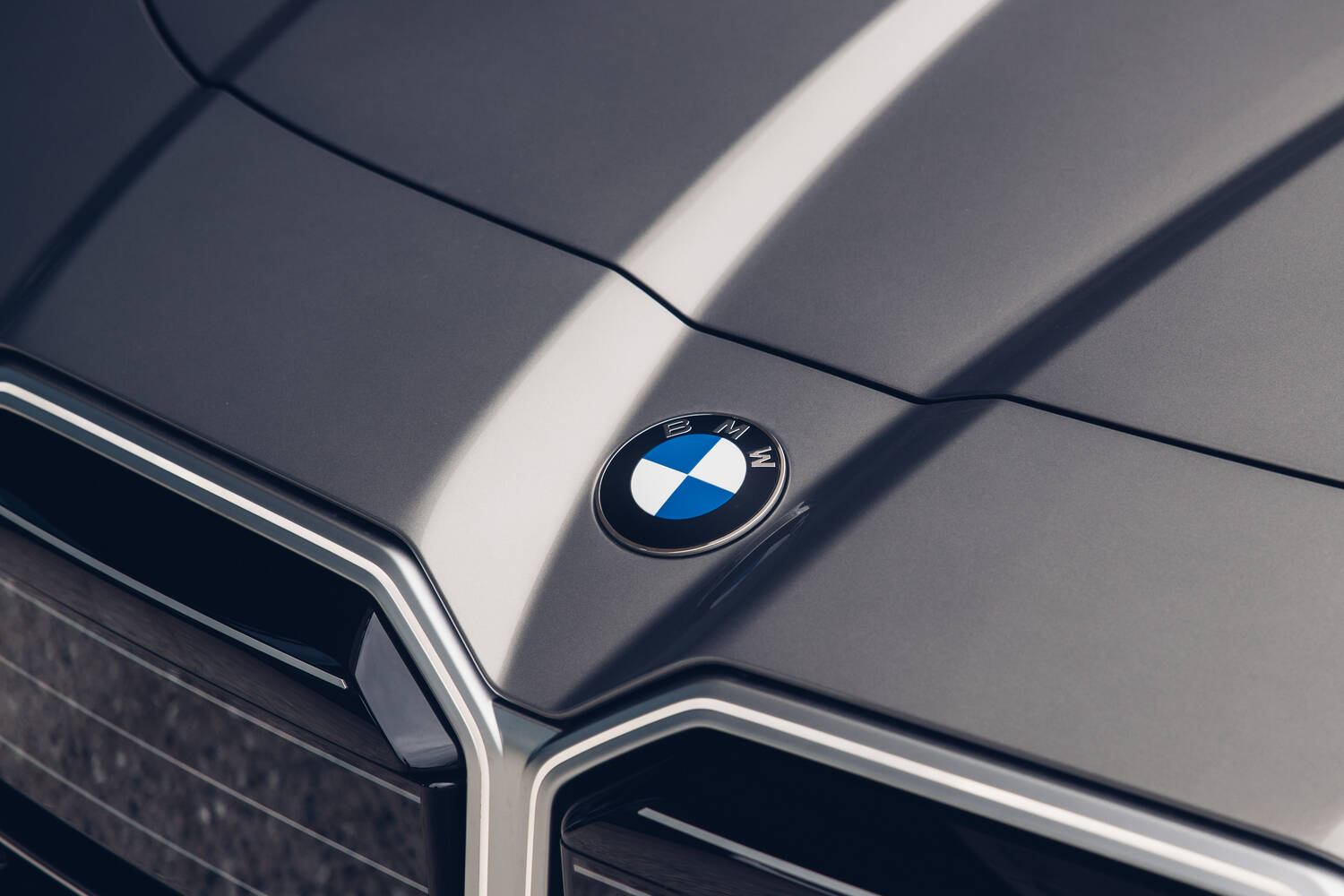
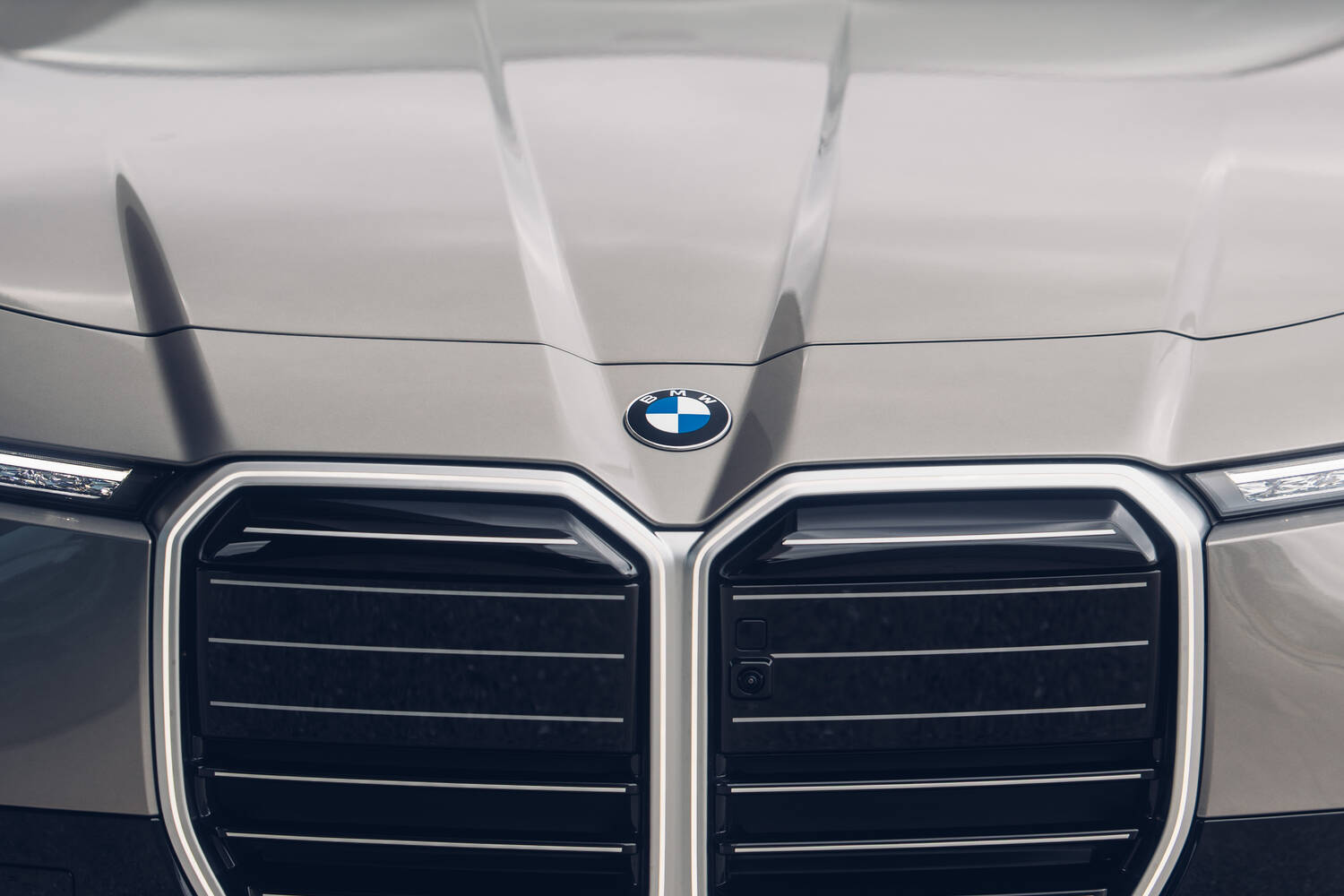
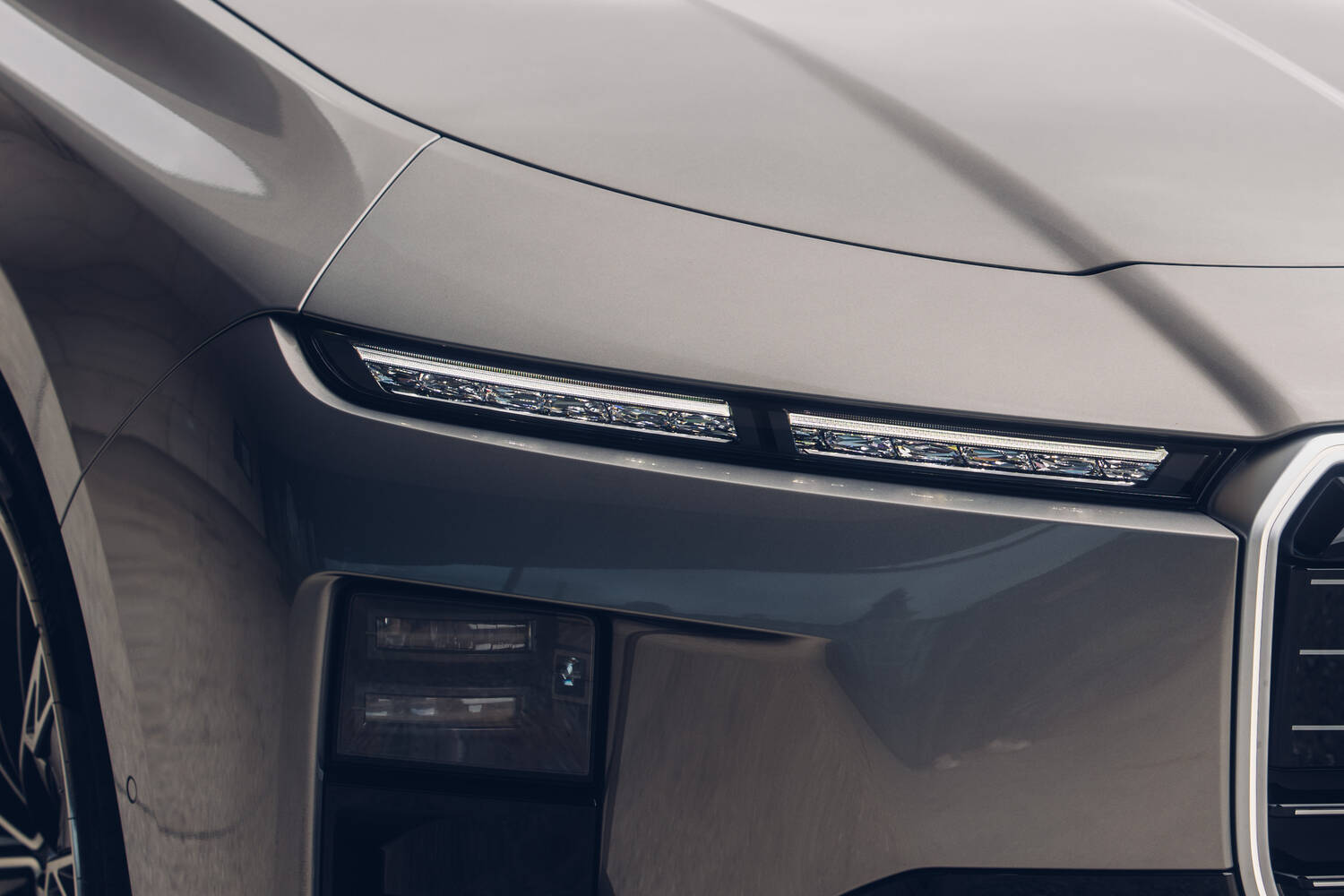
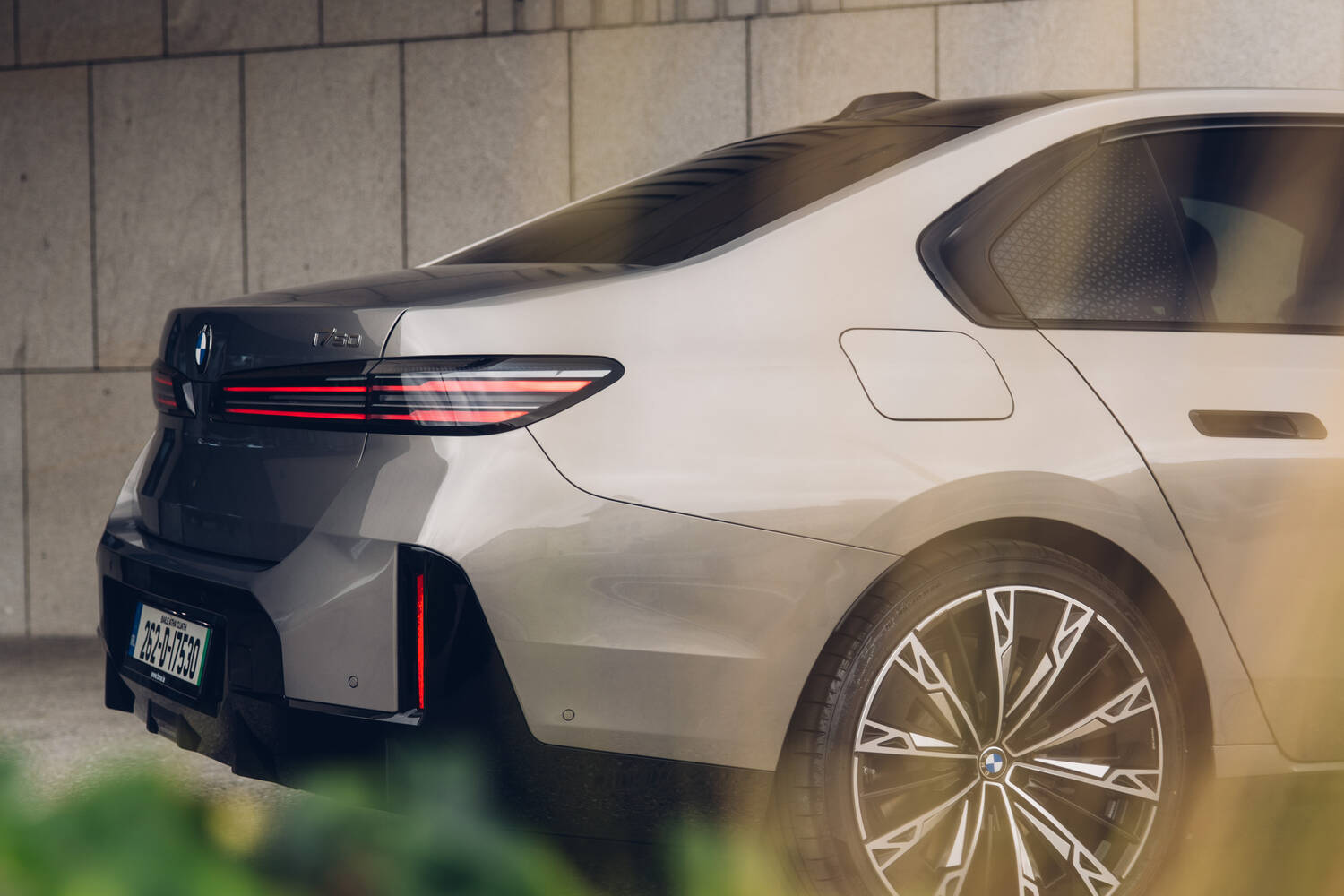
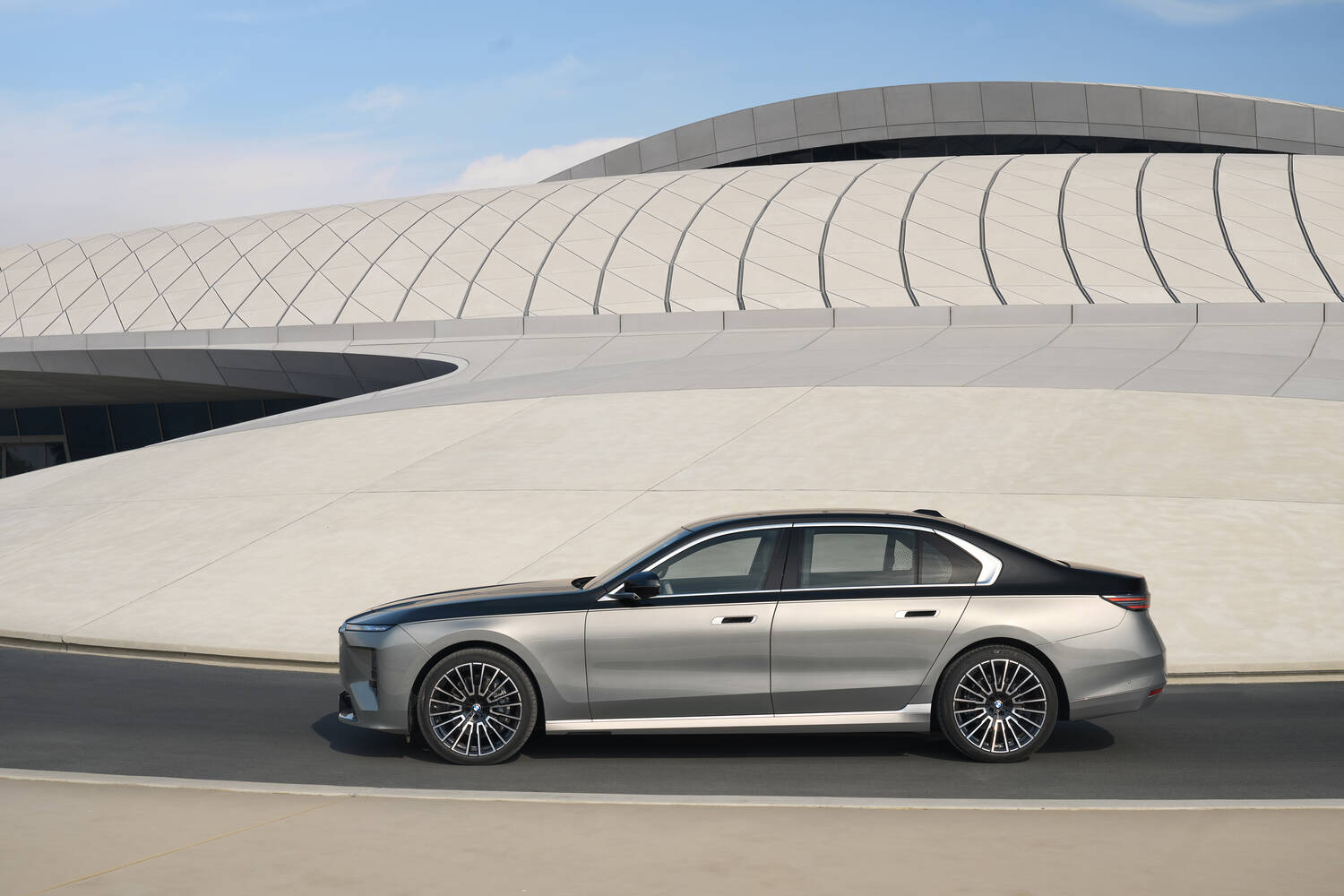
While extensive changes were made to the exterior style of the BMW 7 Series as part of its 2026 update, it remains a divisive design defined by its massive front grille and squinty, high-set daytime running lights (DRLs).
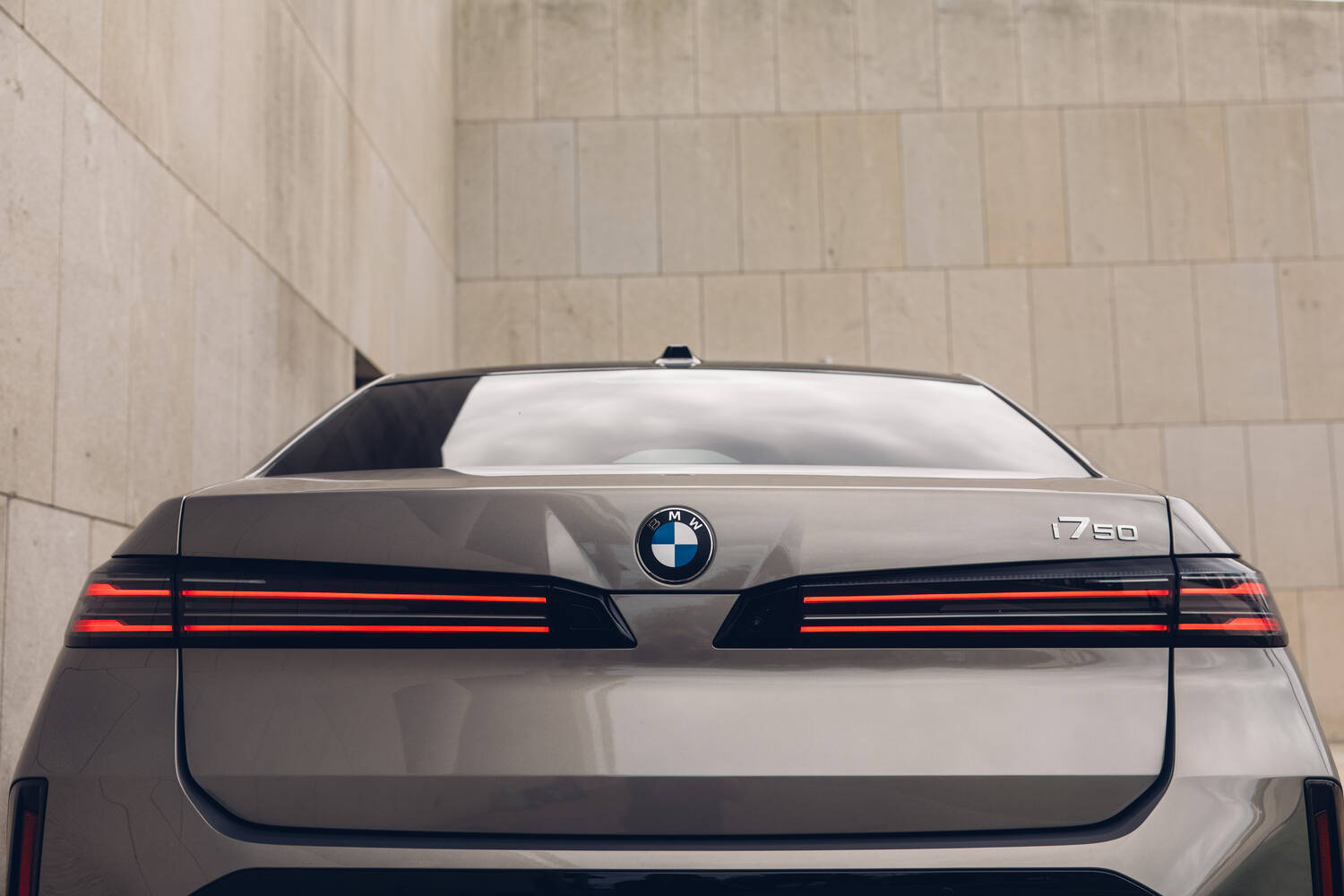
Optionally, the DRLs can be replaced with BMW Individual crystal items, giving them real sparkle and bling, while the appearance of the grille varies across the range, though always comes with a sharp LED outline BMW calls the 'Iconic Glow', making the car impossible to miss at night.
Choose an M Sport version of the 7 Series and there's a little more presence to the design, while the M Sport Pro gets more dark-finished components and surfaces, plus a set of 21-inch wheels.
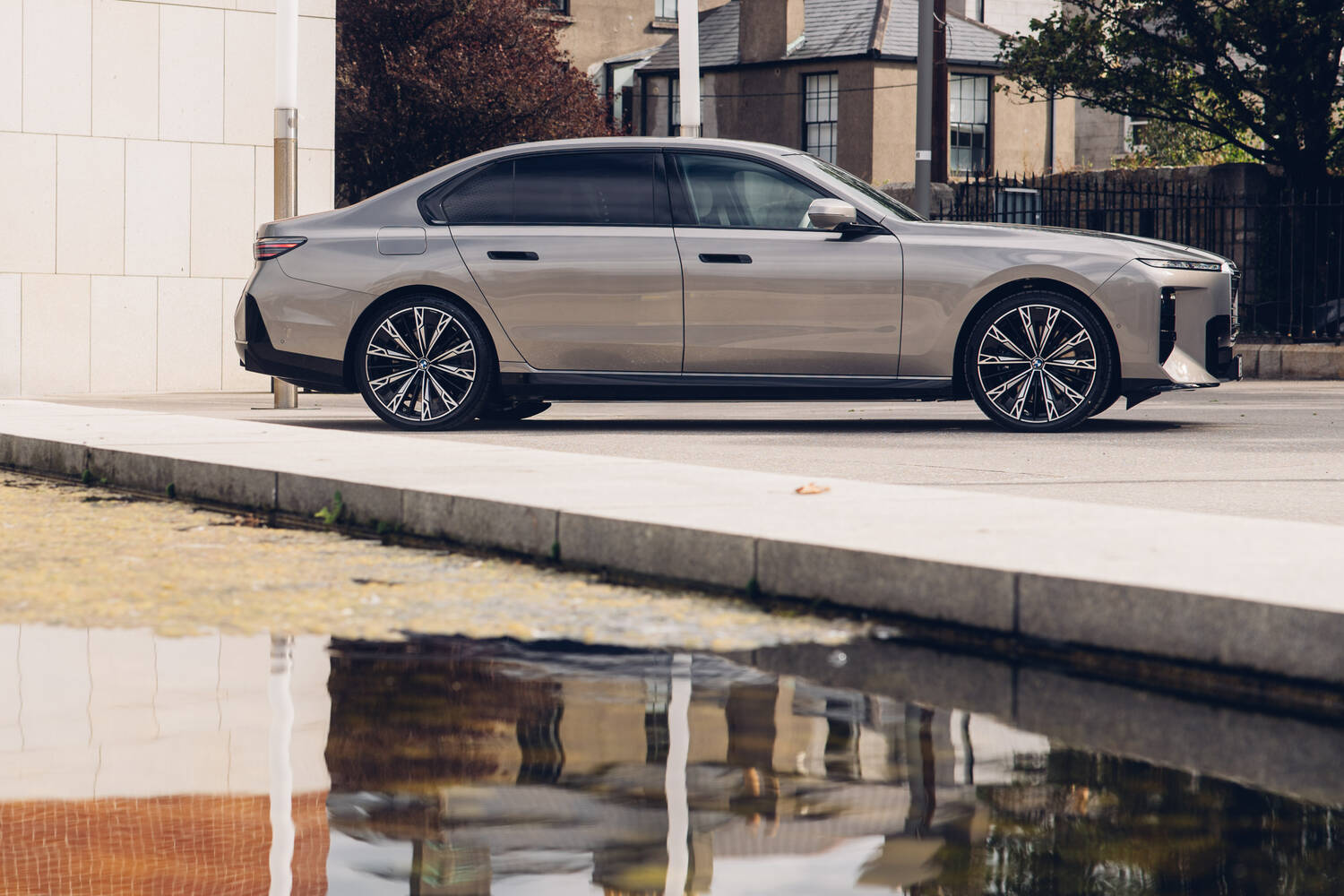
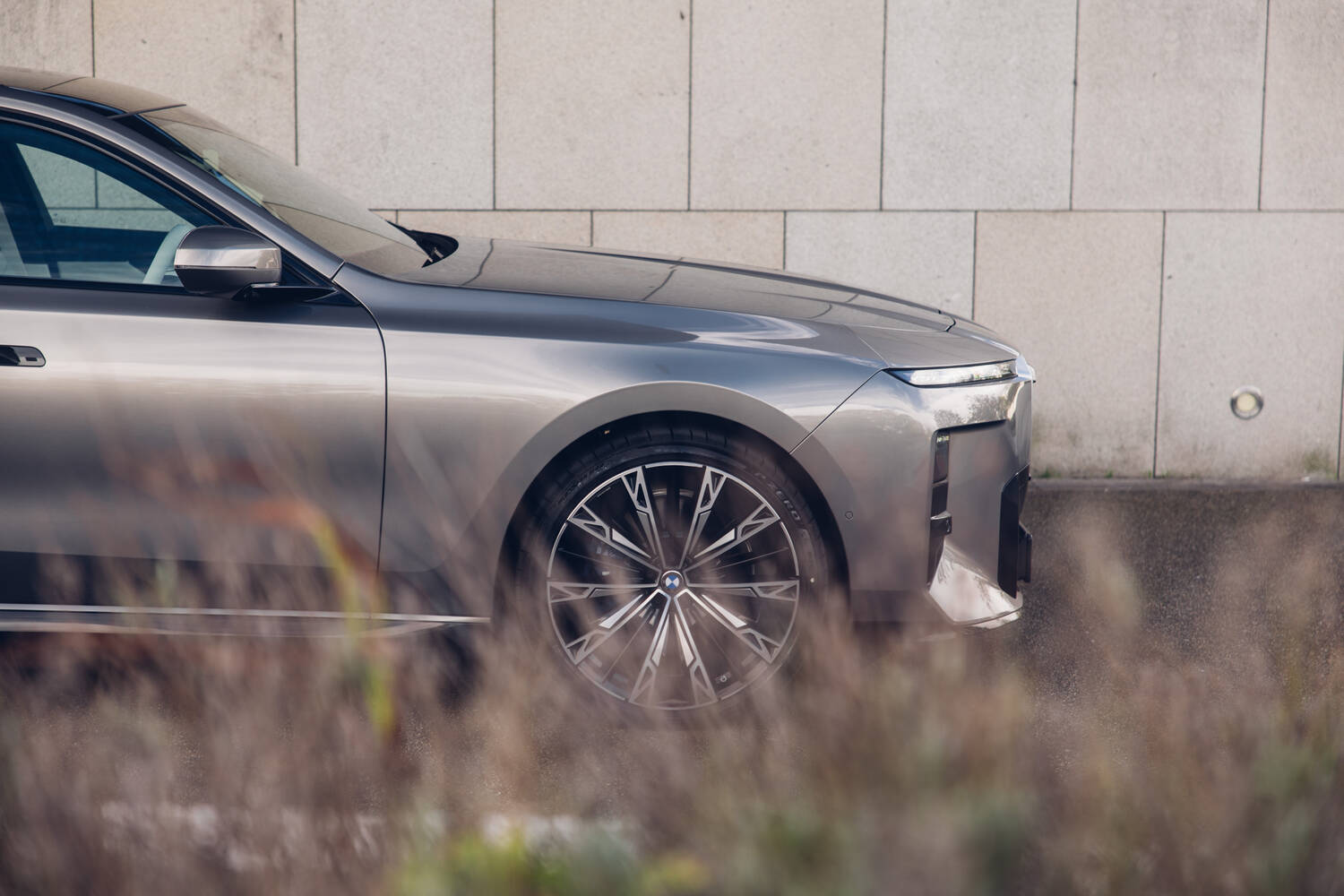
That's the size fitted as standard to the Ultimate Editions and the i7 M70 as well, while buyers can upgrade to a set of gorgeous 22-inch rims for a modest fee.
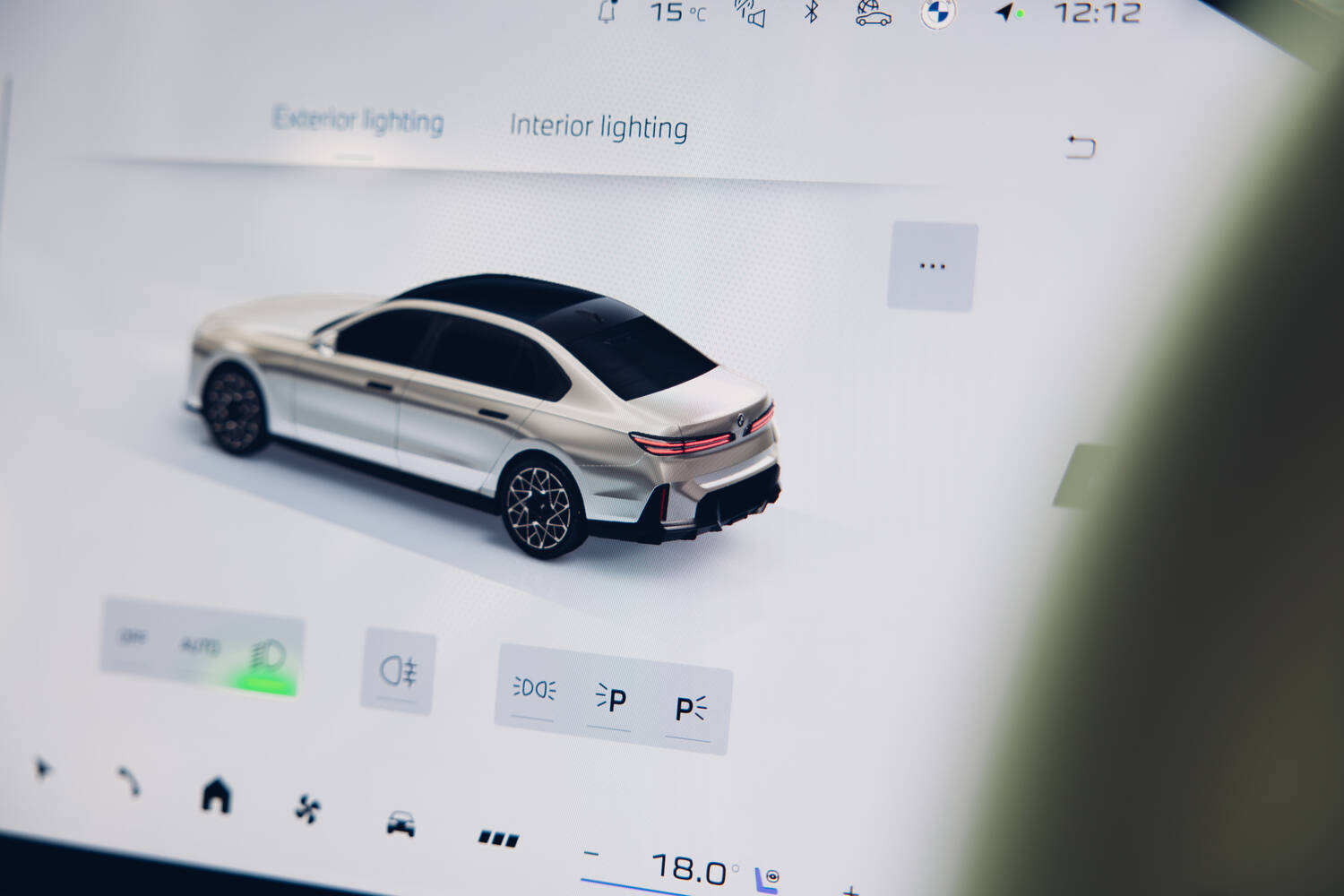
BMW makes a big deal of the welcome and goodbye animations from the lighting, while the extravagantly named Ceremonial Light Carpet is really just an extended, sophisticated set of puddle lights.
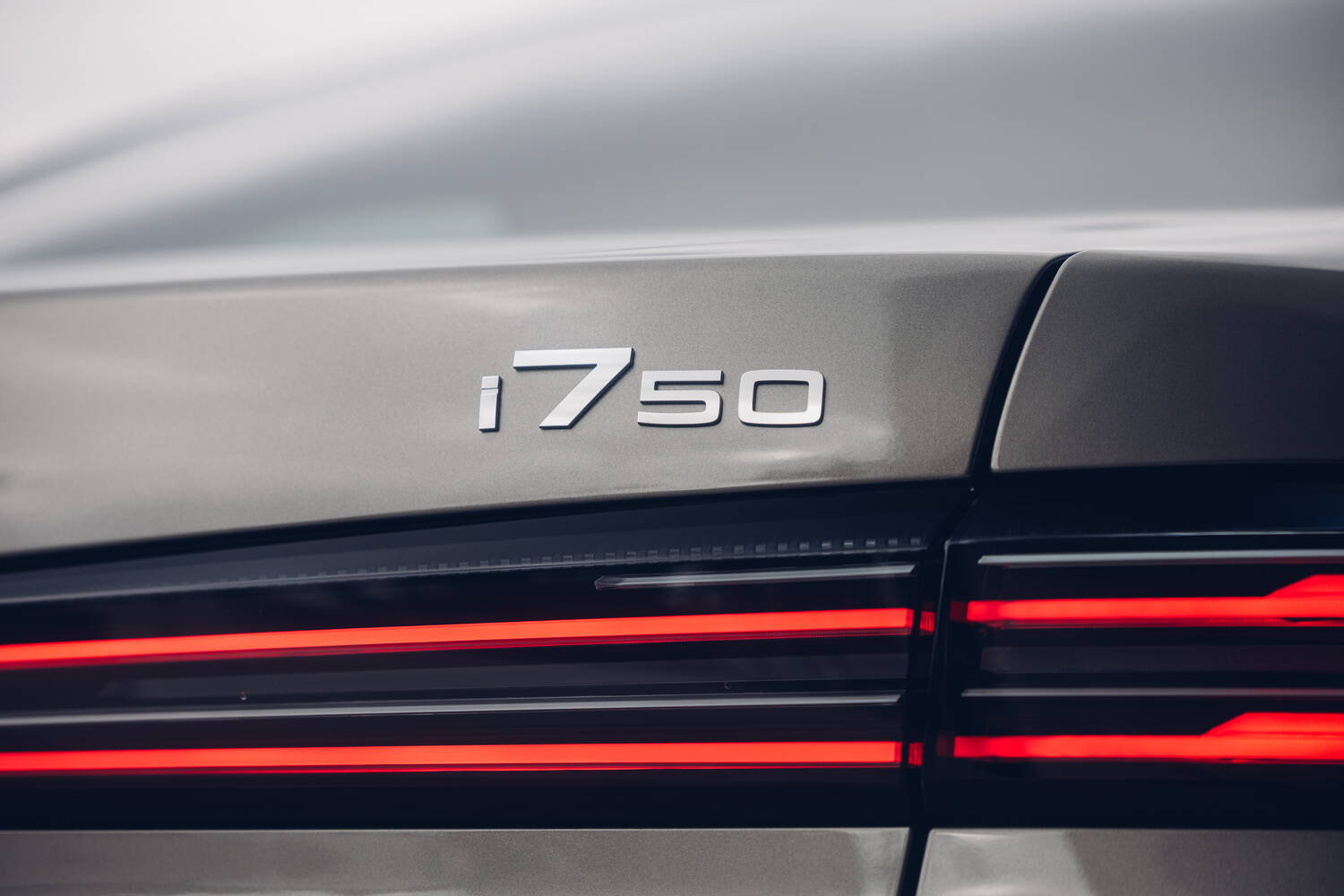
Incidentally, while buyers can have the model designation removed at no cost, at a glance, the i7 50 badge looks a lot like "750", which can't be accidental on BMW's behalf. It gives the car gravitas.
The final detail worth looking at is the option of automatic doors. Choose that and all four doors can be opened or closed via the key, the BMW app, buttons in the car or the big touchscreen. Just as in a Rolls-Royce, the driver can hop in and put their foot on the brake to close their door behind them, too.
Dimensions of the 2026 BMW i7
- Length:
- 5,395mm
- Width:
- 1,950mm
- Height:
- 1,550mm
- Wheelbase:
- 3,215mm
Paint colours for the 2026 BMW i7
Buyers of the BMW i7 can choose from eight paint colours at no extra cost: Vancouver Green, Carbon Black, Black Sapphire, Mineral White, Oxide Grey (the colour of our test car), Brooklyn Grey, Aventurine Red and Alpine White (the only solid paint option).
More expensive BMW Individual hues are Tanzanite Blue (gloss or 'Frozen', which is BMW-speak for 'matte-effect'), Dravit Grey, Frozen Deep Grey and Frozen Space Silver. That's before you choose from the BMW Individual Paintwork palette of 138 (that's not a typo) shades, at €7,625 apiece.
Still want something more unique? There are seven eye-catching (i.e. ugly) two-tone colour schemes offered at €14,544, but there is one that looks truly stunning. Called Dual-Finish, it mixes regular Tanzanite Blue with Frozen Tanzanite Blue for a subtle effect. Is it worth €15,489, though?
Interior, practicality, tech & comfort of the 2026 BMW i7
- Stunning 'Panoramic Vision' screen
- Can be had with auto doors
- Rear Theatre Screen is a highlight
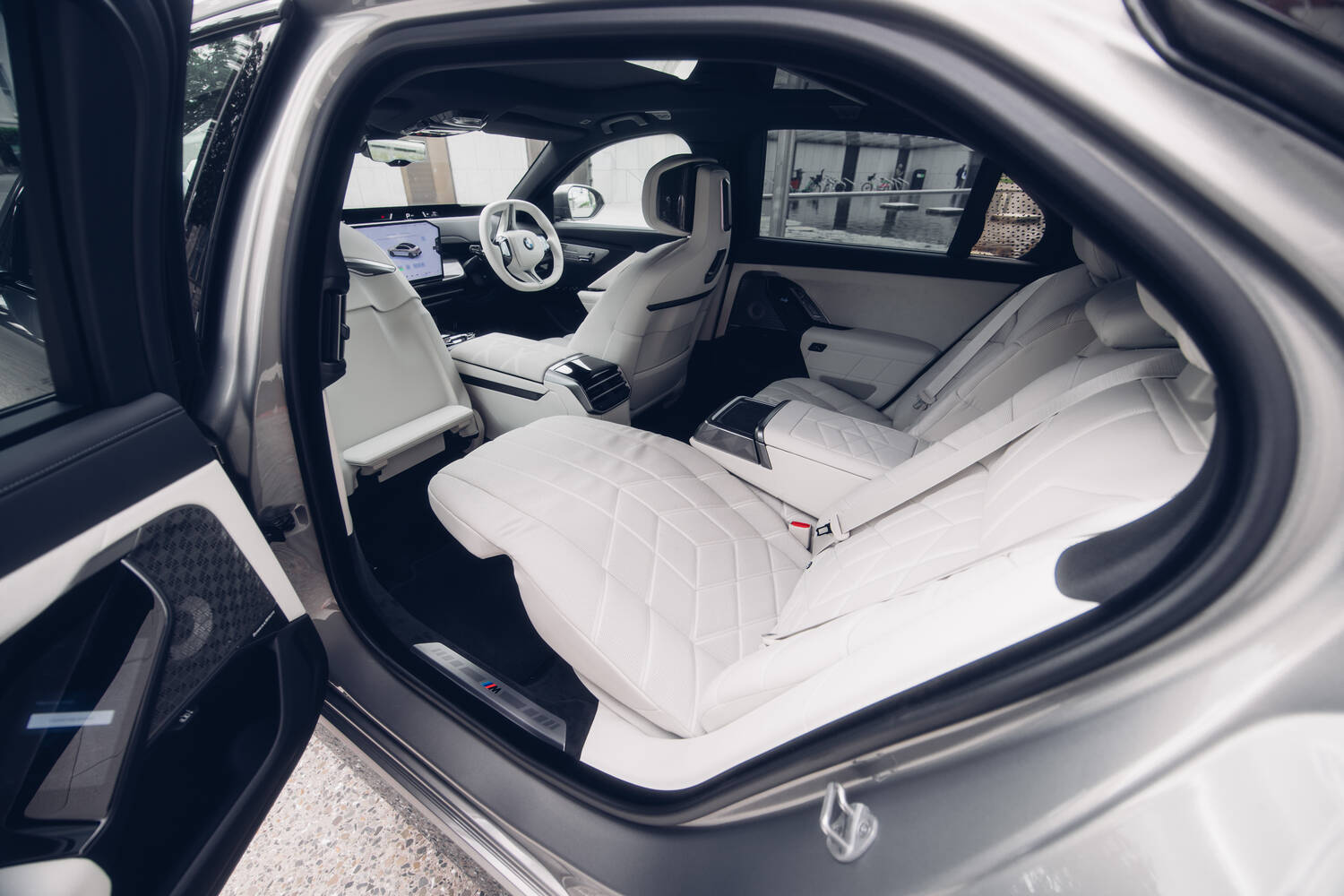
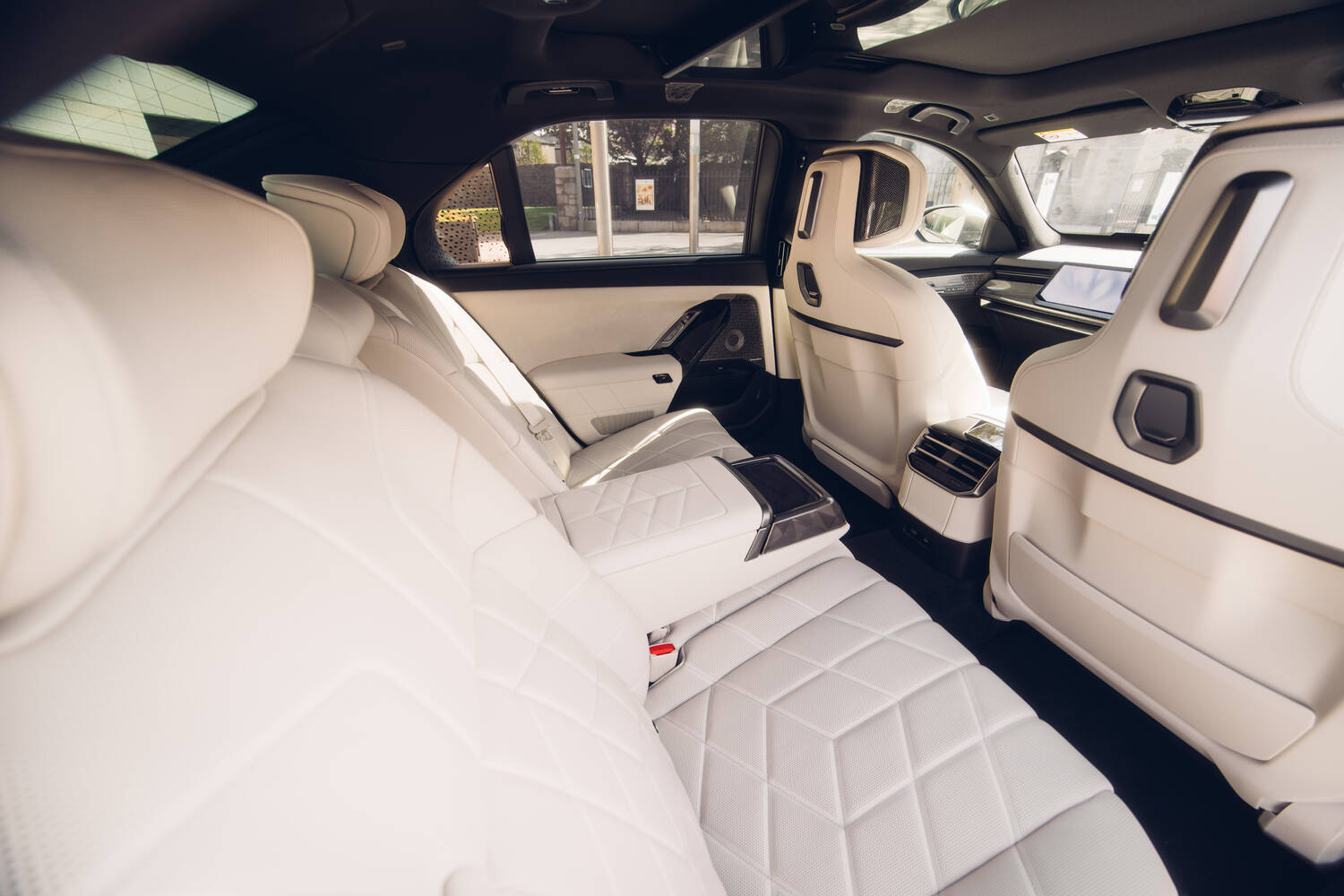
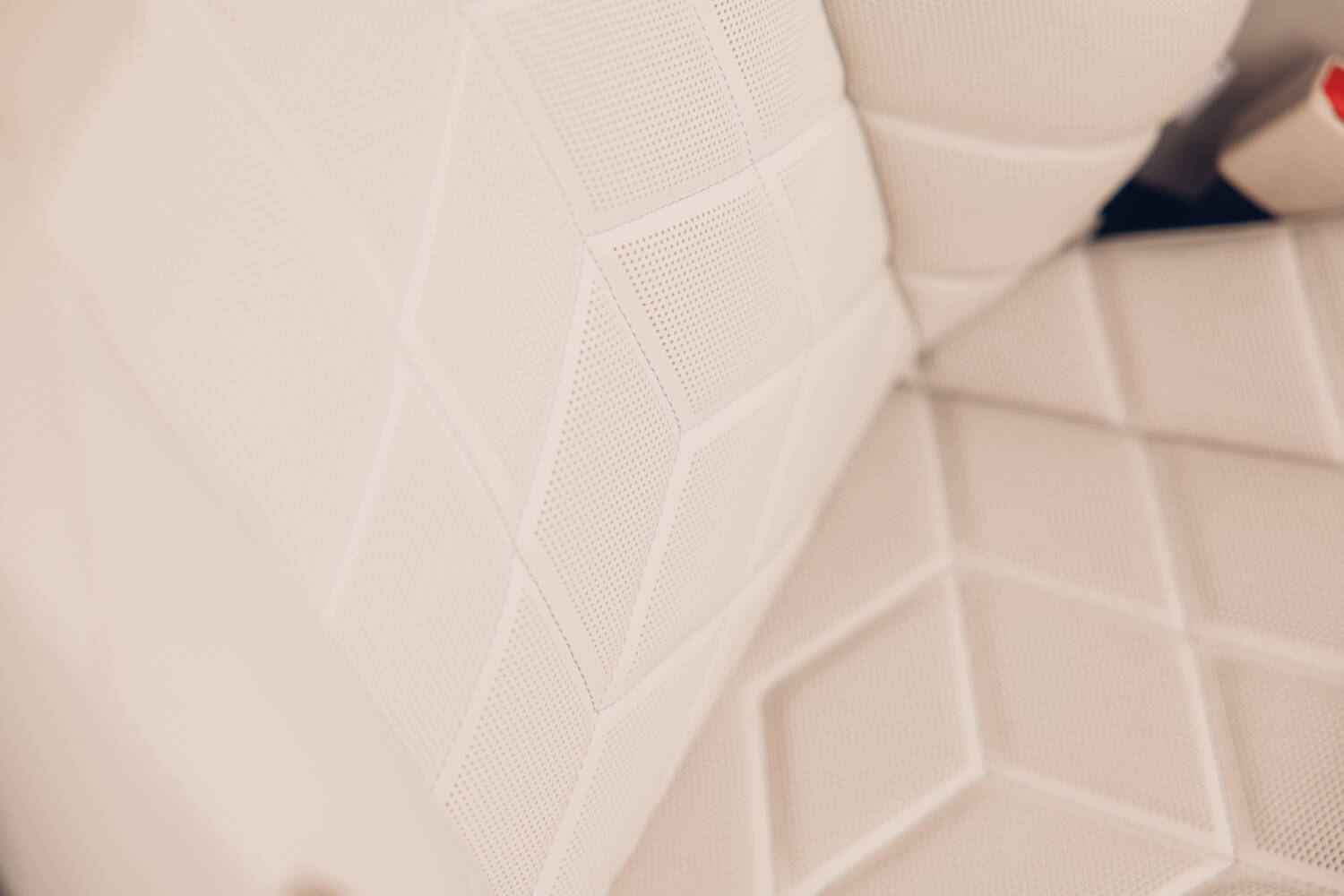
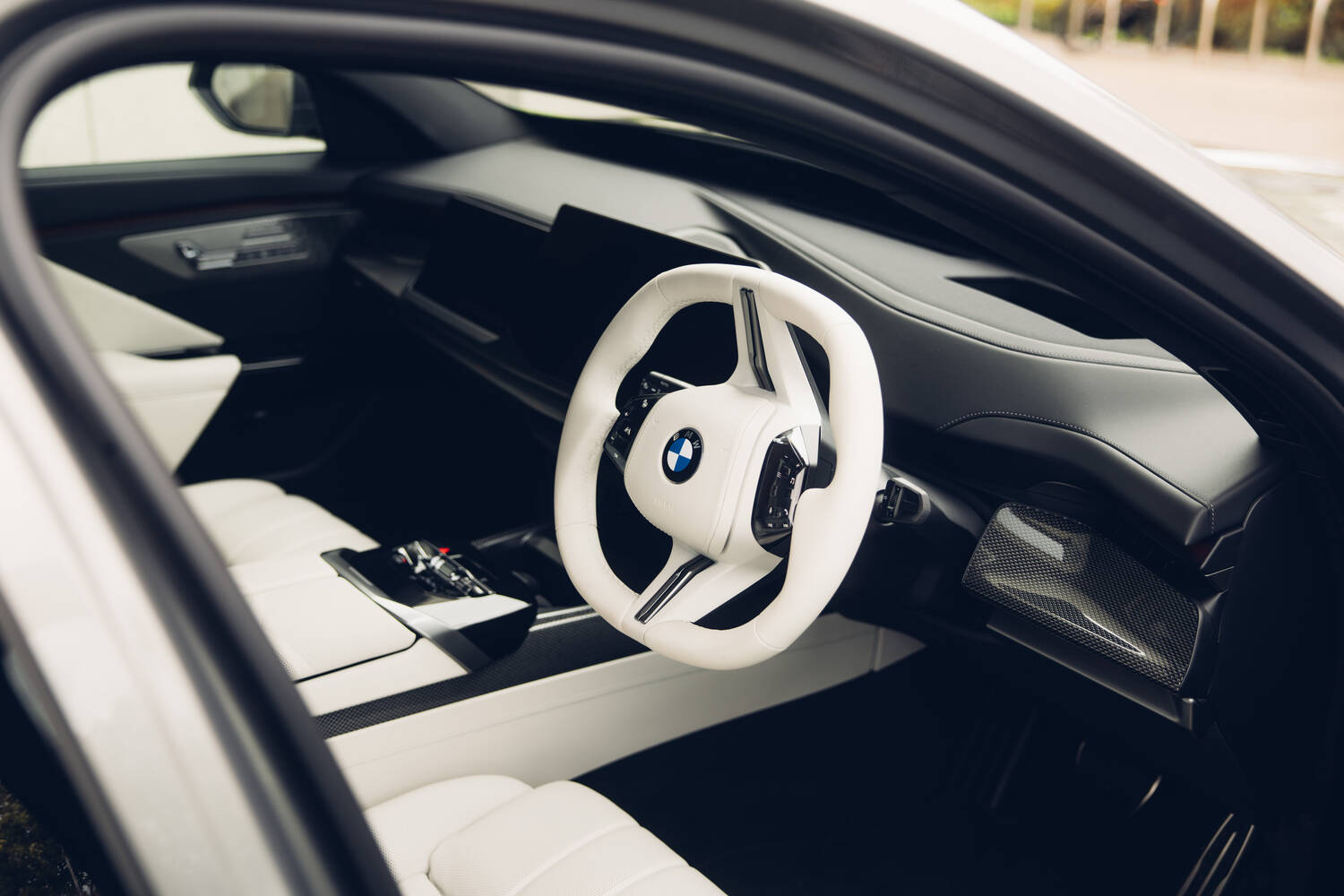
There's a bewildering array of trim material and colour options for the cabin of the BMW 7 Series and impressively, that's the case even if you don't pay extra for any of the BMW Individual options. The default upholstery is 'Veganza', which is synthetic leather, and buyers can choose from three different colours.
Actual Merino leather costs from €2,770 (though can cost nearly €12k depending on colour and content), while the costliest upholstery pairs Merino leather with Cashmere wool for a unique mix of textures.
The base car comes with a choice of trim and accent colours which is extended in the M Sport models with the no-cost option of carbon fibre with silver stitching. Go play with the BMW Ireland configurator to see what we mean by bewildering. There's a staggering amount of choice.
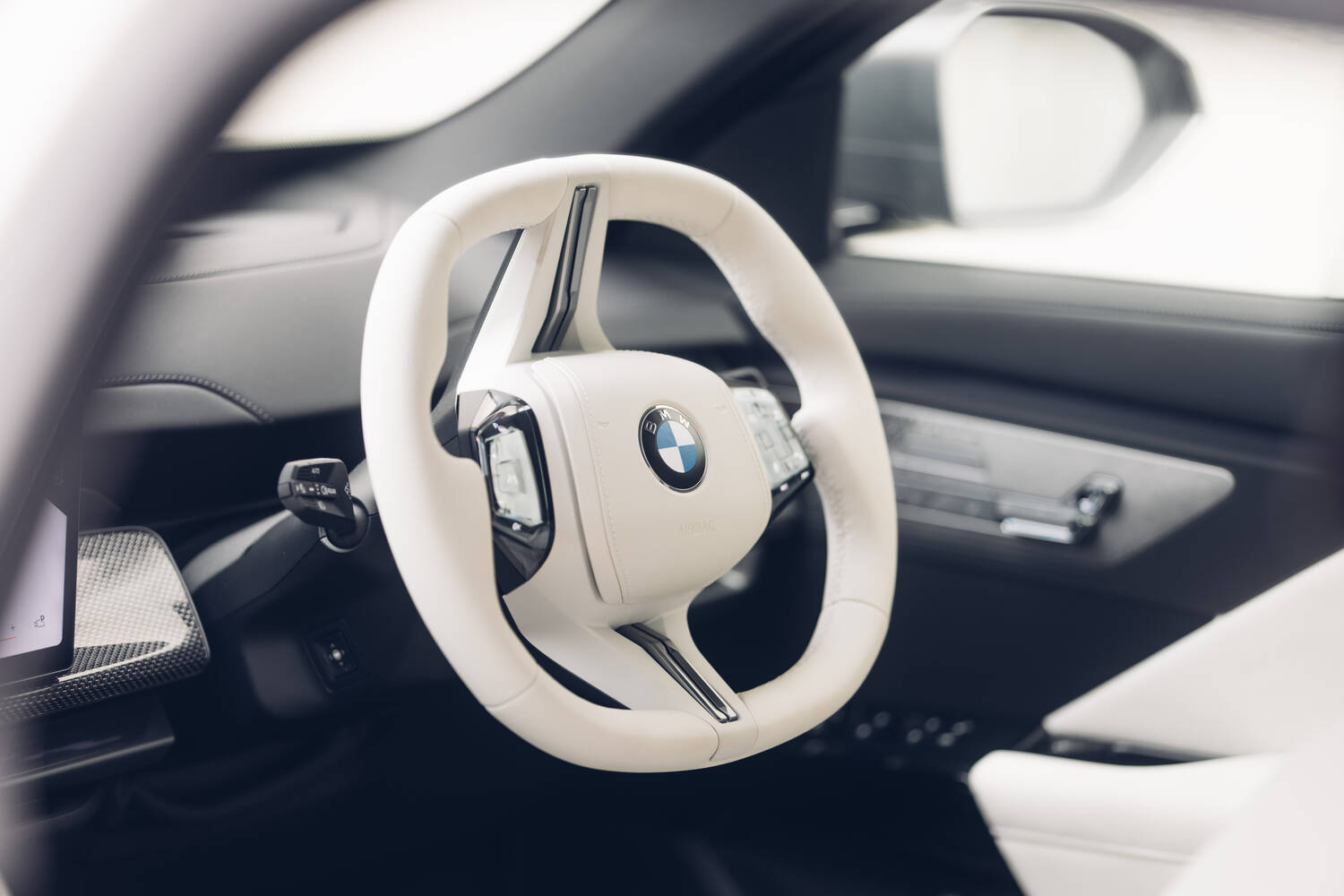
And then we come to the steering wheel... All options are kind of a squashed circle and most of them use leather trim (there is one wheel trimmed in Veganza). They are all great to hold, but we can't be alone in thinking they look a little odd. Most of them appear to be a four-spoke design, with prominent vertical spokes, but actually, the switchgear 'pods' either side of the badge in the middle aren't connected with the rim at all.
There is one normal-ish option called the M Sport leather steering wheel that does without the vertical spokes, while our test car was fitted with the BMW Individual wheel in Smoke White - which can only be had in conjunction with upholstery in the same hue. We shudder to think how grubby it will get over time.
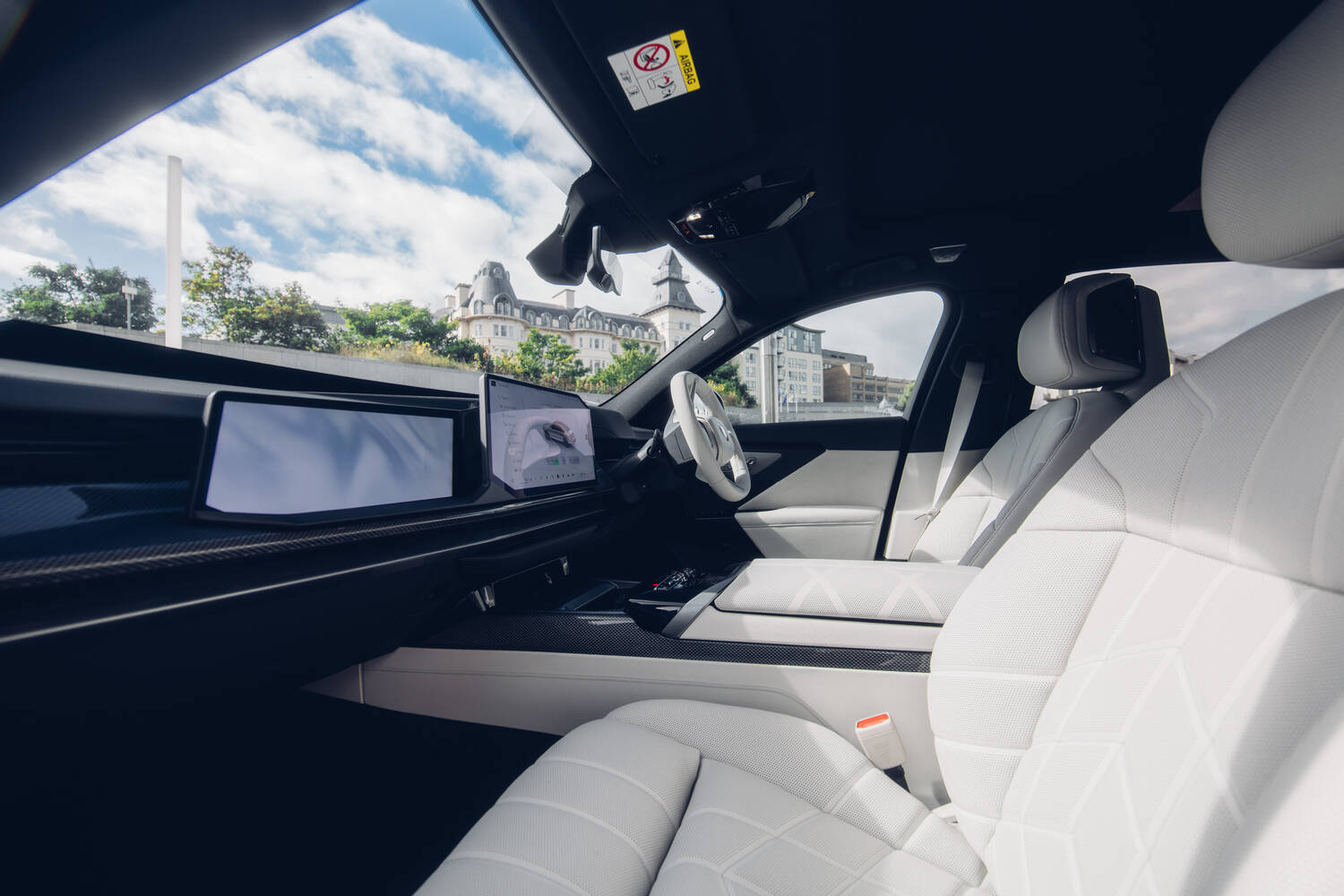
No matter how you personalise your 7 Series, there's no doubt it's a seriously high-quality cabin, and the luxuriousness of it mixes with cutting-edge technology such as the Panoramic Vision display along the base of the windscreen, an unusually shaped touchscreen and a passenger-side touchscreen as standard across the range. And that's before we talk about the opulent rear seating.
Getting comfortable in the driver's seat
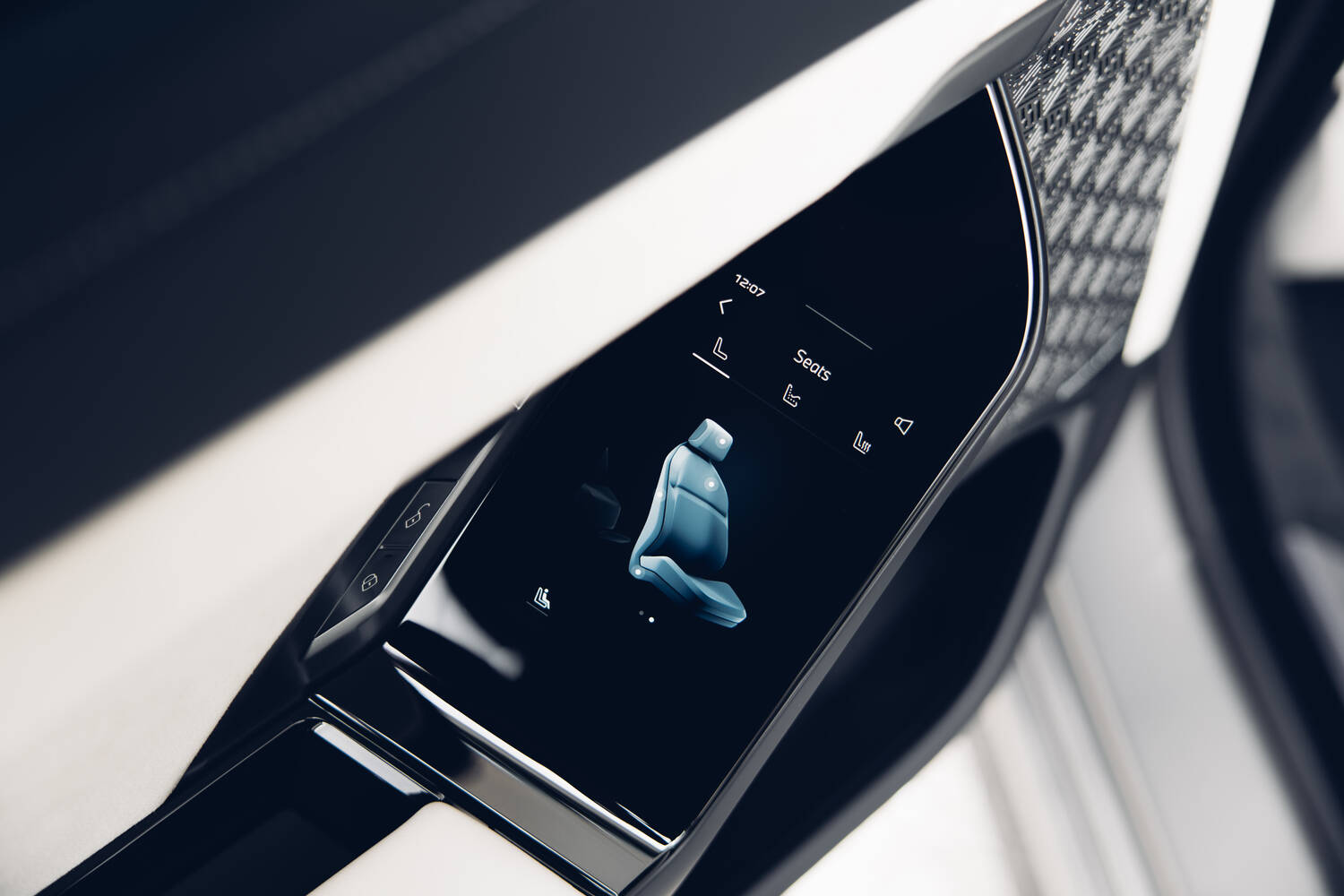
At this end of the market, comfort items such as heated seats and steering wheels are expected to be fitted as standard, and they are in the i7. You'll need to fork out on the Front Comfort Pack (€3,589) if you want to also add massage and ventilation functions, though.
We can confirm that the massage feature is particularly good, allowing you to choose from three levels of intensity and to focus on different parts of your back.
Aside from that, it's easy to get comfortable thanks to a wide range of electric adjustment in the seat and steering wheel. And the position of the wheel doesn't affect your view of the instrumentation as that's all on the head-up display and the Panoramic Vision screen in any case.
Infotainment and technology
There's a lot to take in here, all under the umbrella of BMW Panoramic iDrive and Operating System X. The most impressive aspect of it is the so-called Panoramic Vision display, a strip of high-res screen running across the full base of the windshield.
Its graphics are gorgeously sharp; the displayed widgets can be customised to your liking (we adore the option to have one of the BMW Art Cars on show); and it's so close to your line of sight it makes the head-up display almost unnecessary.
Choosing your favourite widgets takes some concentration via the central touchscreen, but there are pre-programmed themes that are easy to choose from via the steering wheel while driving, focusing on, for example, navigation, trip data or powertrain output, while the option to have a display reduced to the minimum is really welcome.
The 3D head-up display complements all this (and can be switched off if you think it clutters your view) with a large viewing area in colour. Within it, the severity of upcoming corners can be displayed, which is a neat feature when you're on an unfamiliar back road.
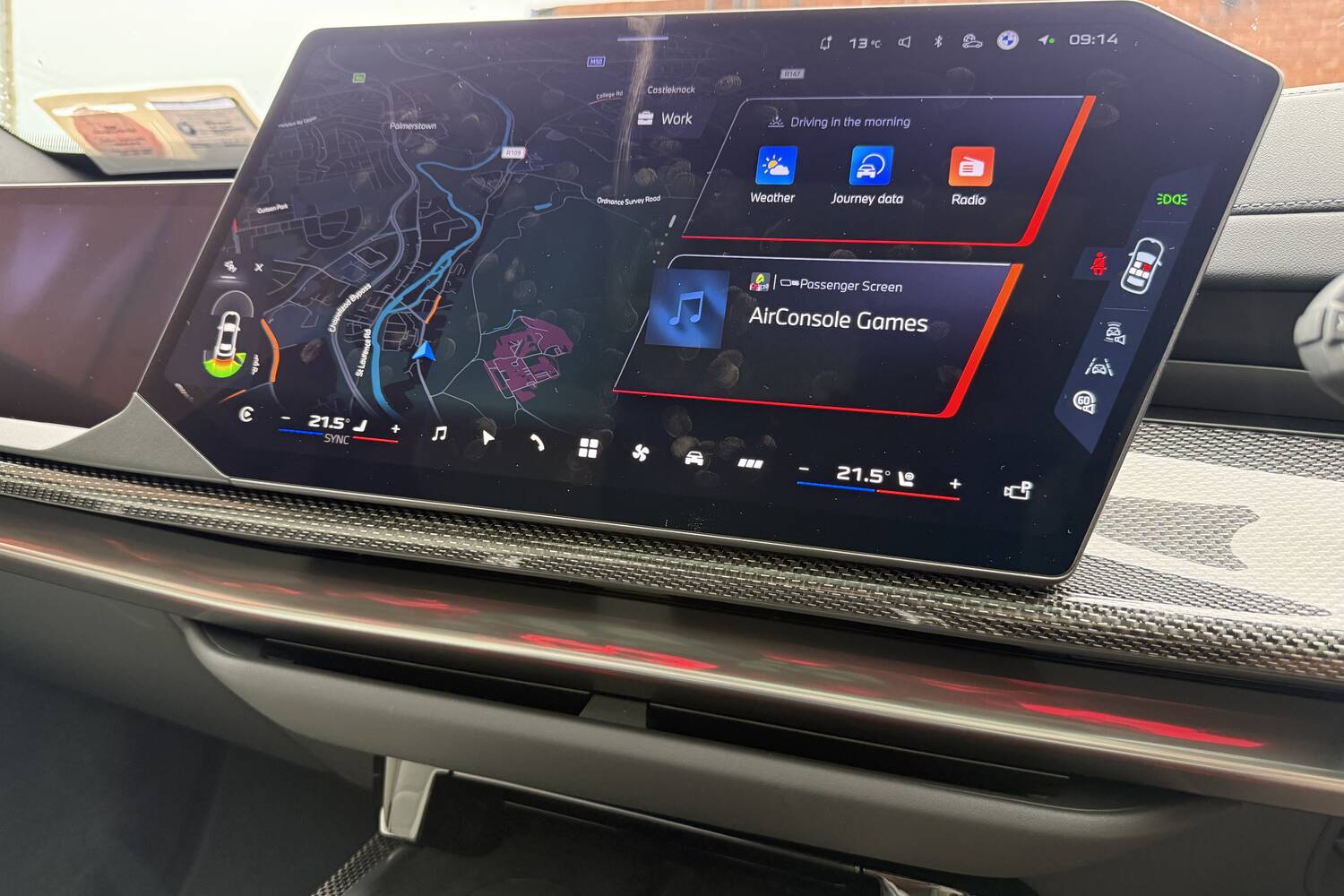
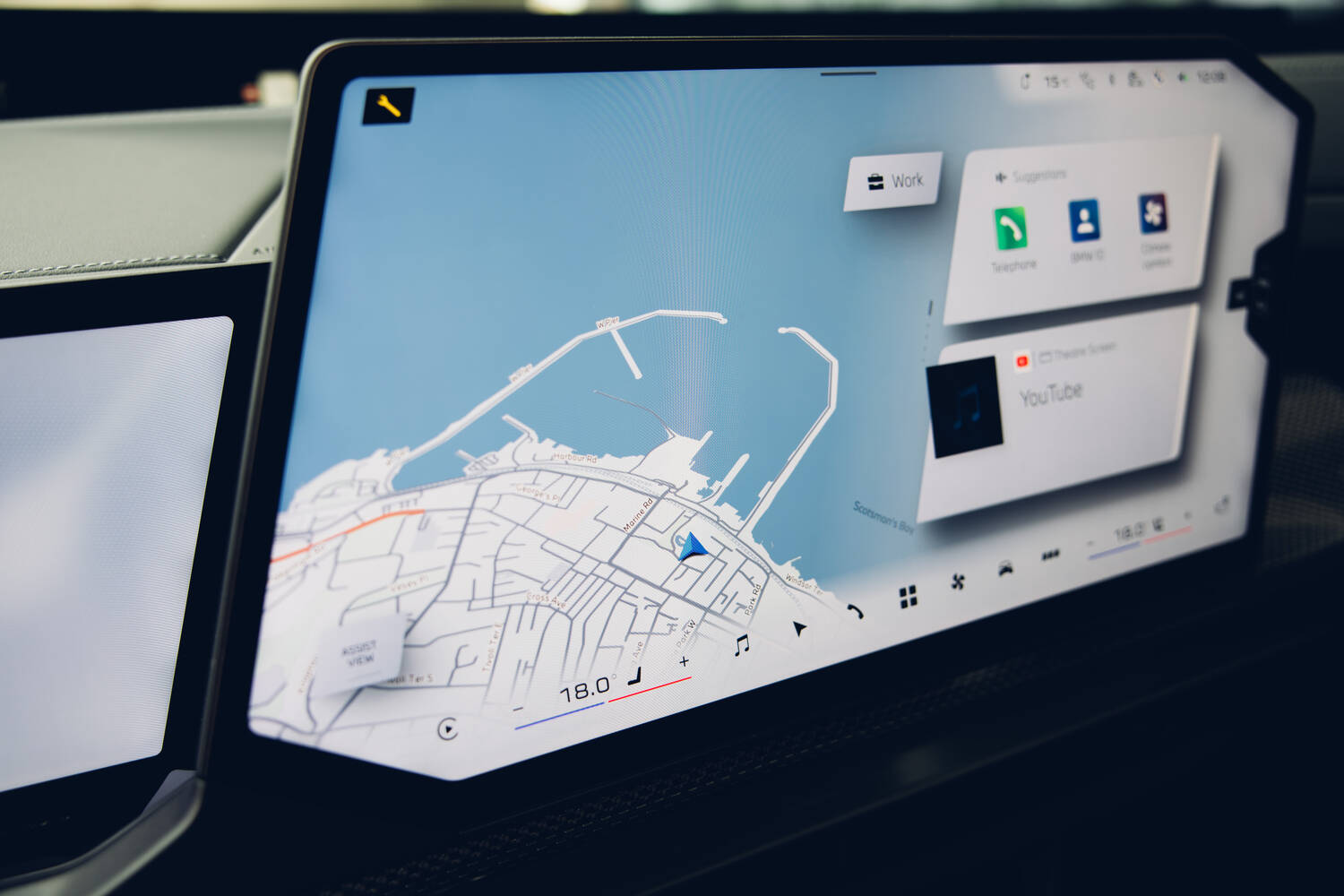
Unless you wish to use the voice assistant - which we found very hit-and-miss - everything is controlled via a central touchscreen. This is quoted as a 17.9-inch display, but it has an unusual shape that makes it visually interesting, and supposedly easier to use, too.
Based on the Android Open Source Project, the graphics are classy, everything is easy to understand and response to touch is instant. About the only issue we have with it - aside from the fact that there are no separate physical buttons for the climate control - is that, when an extra 'window' pops up for information or choosing an option, the 'X' to close it is on the passenger side of the car, which can be a stretch for the driver. We do wonder if that's because the system was developed for left-hand-drive markets first.
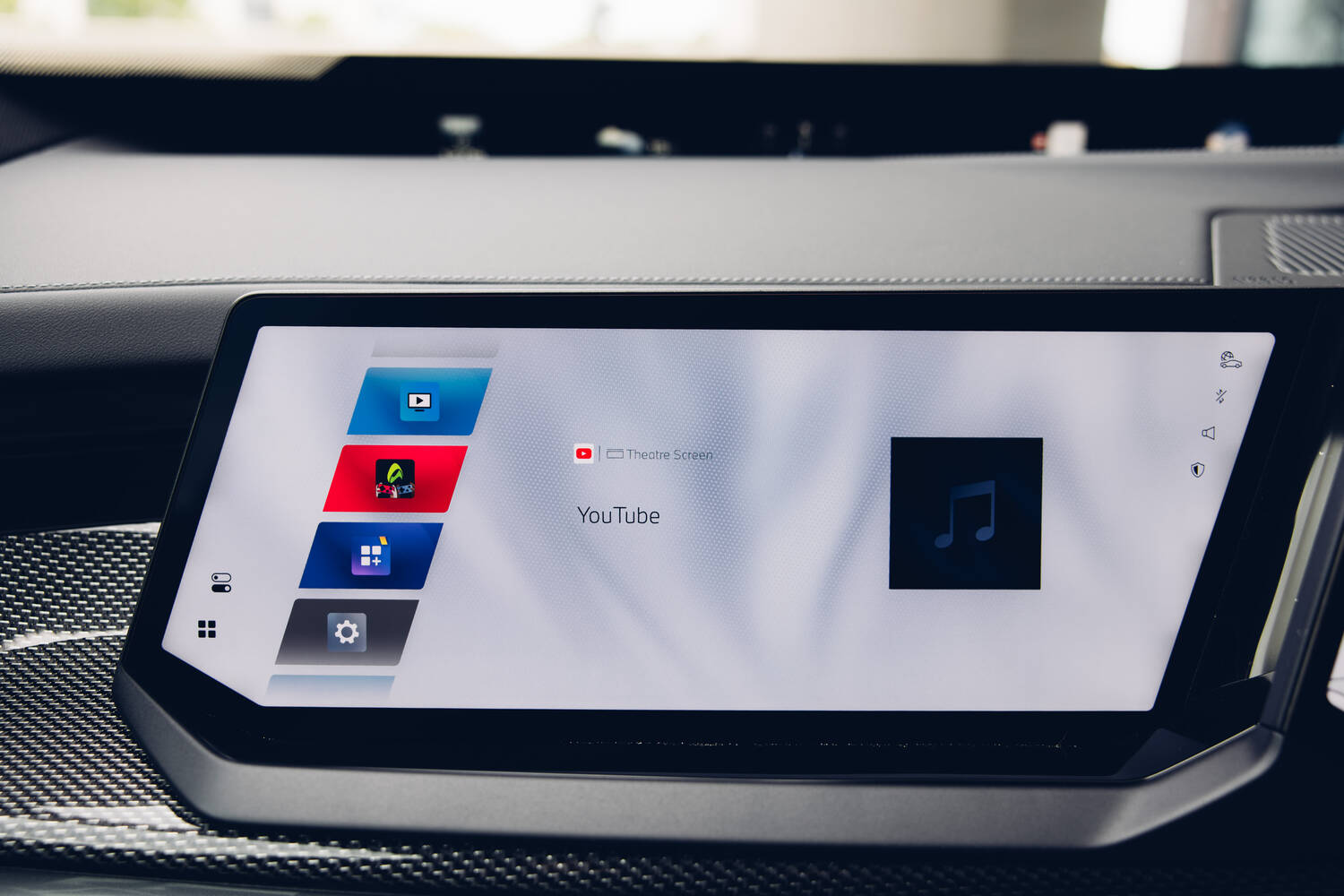
Speaking of the passenger side, they get their own touchscreen as standard in the 7 Series. It measures 14.6 inches across the diagonal and can be used without having to log in, while it also features protection against distracting the driver.
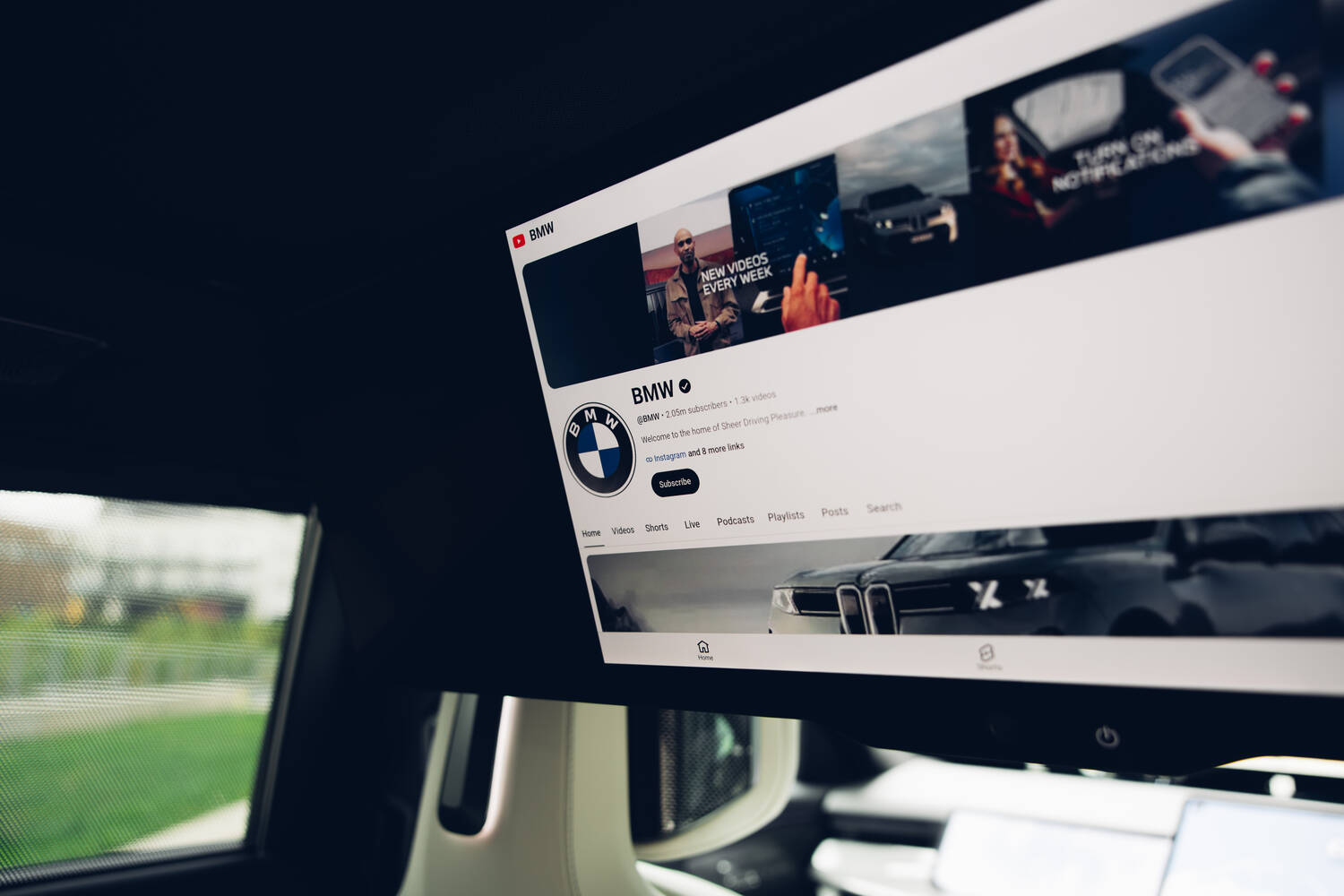
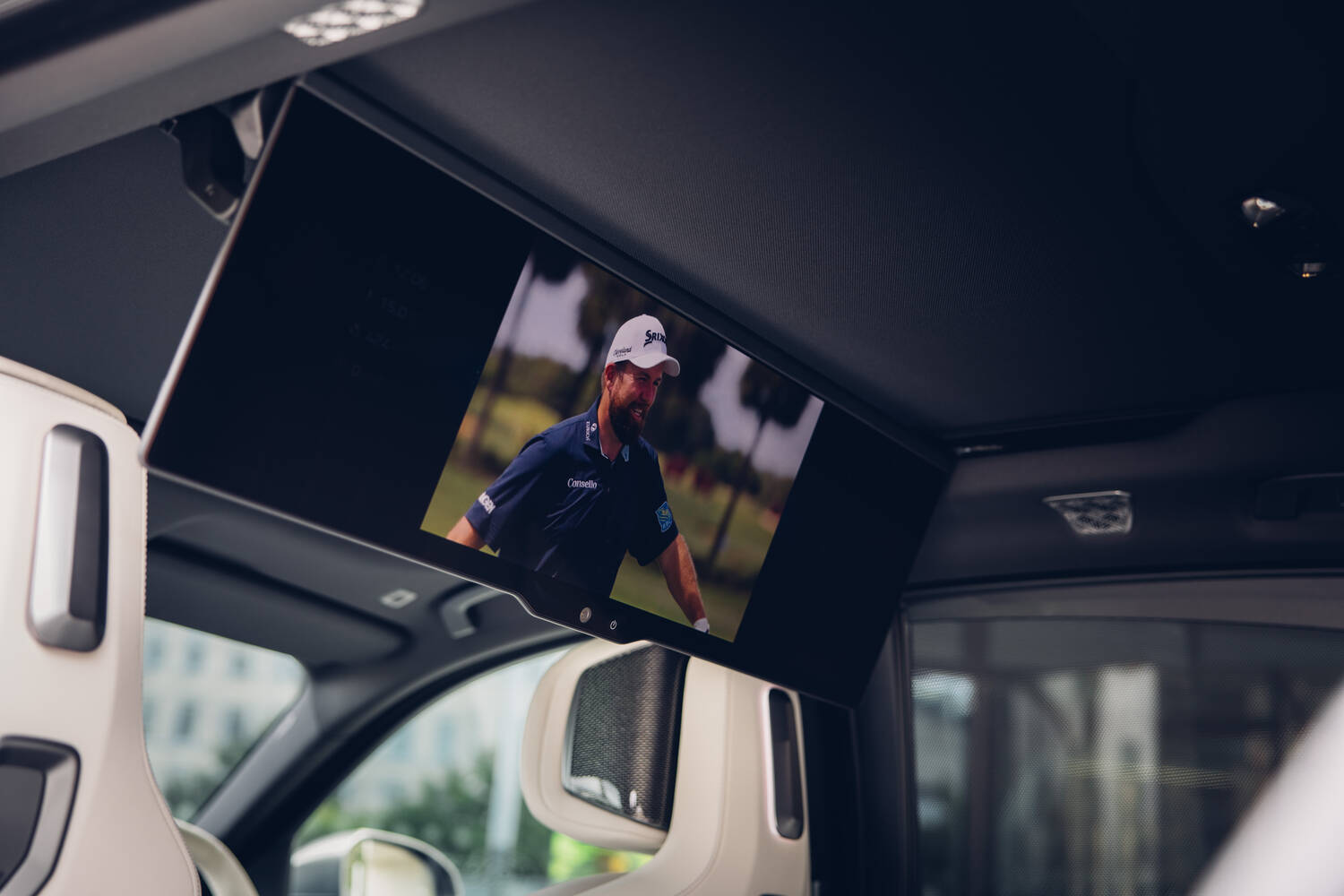
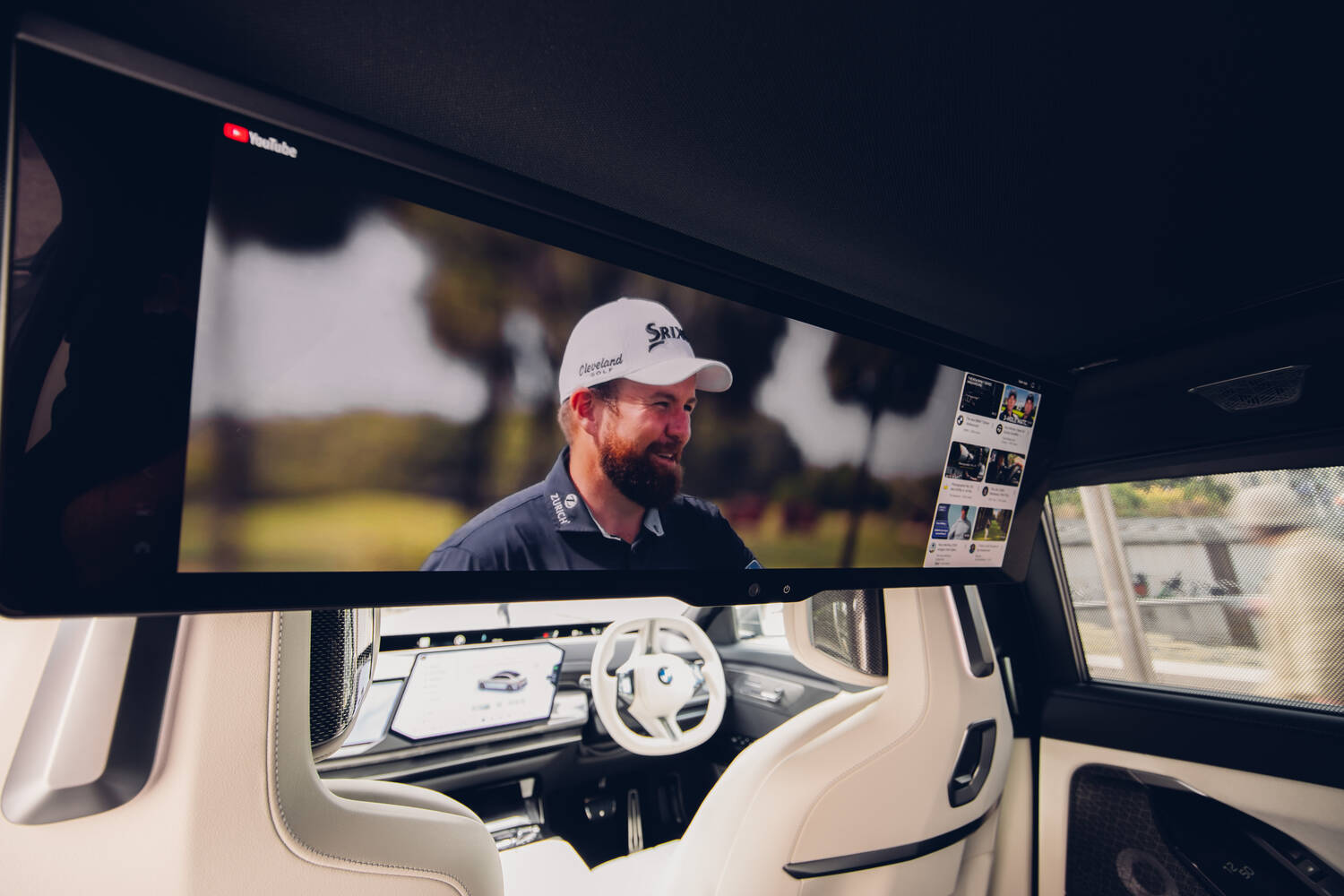
If the car is fitted with the optional BMW Theatre Screen, everyone will want to sit in the back in any case. It's a massive, 31.3-inch touchscreen that rotates down from the ceiling.
This is an 8K display with plenty of streaming services built in, the option to hook up a laptop, the possibility to video-conference thanks to an integrated camera and much more besides.
There are control modules in the rear doors if the passengers don't want to touch the screen itself and a little bit of, well, theatre, is provided when the driver presses a single button on their touchscreen and the rear blinds and roof cover all close, the screen tilts into position and a stirring soundtrack is played through the excellent sound system.
Practicality around the cabin
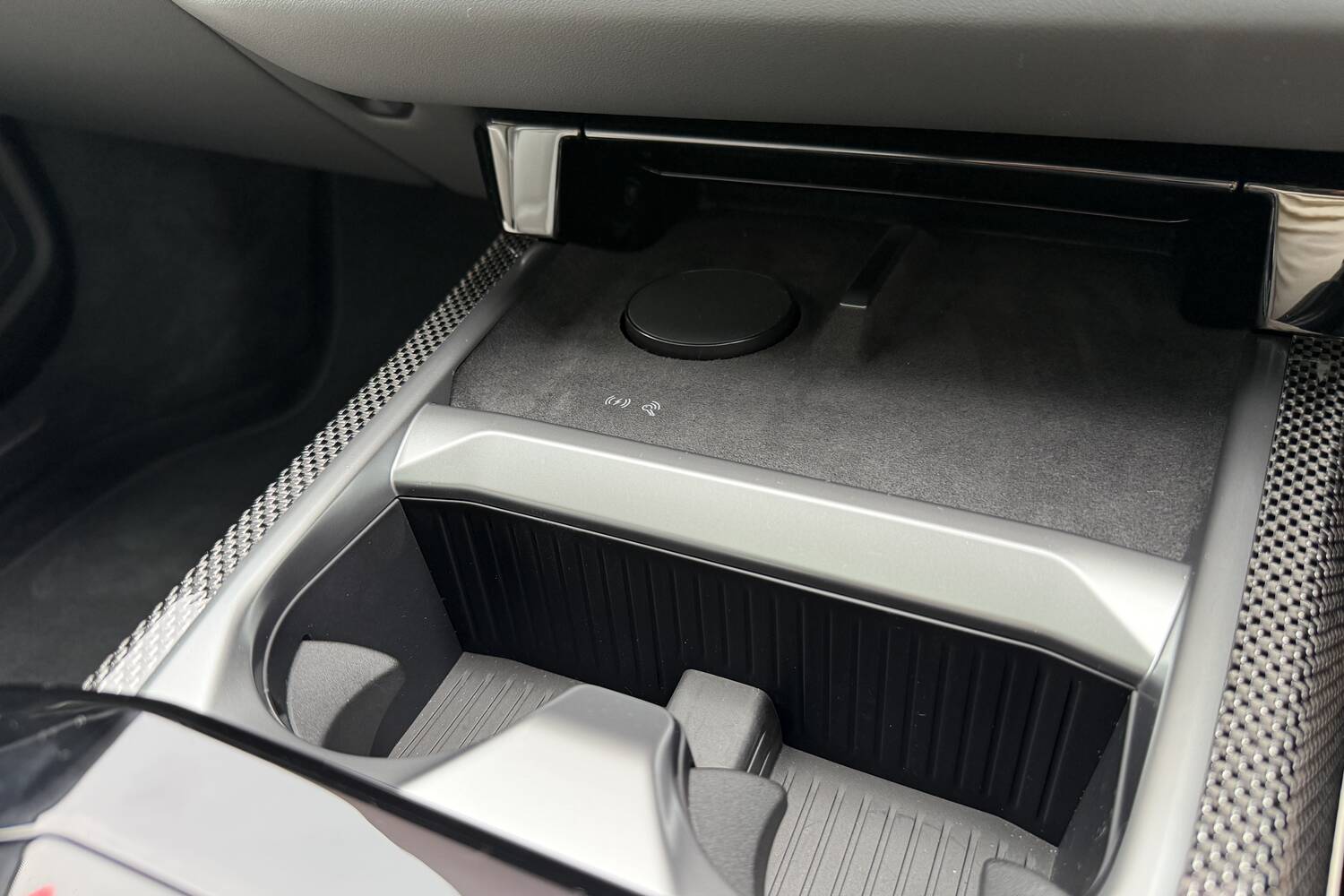
Between the driver and the front-seat passenger is a wide centre console. At the front of it is a section trimmed in soft Alcantara, one half of which contains the circular, magnetic location for wireless smartphone charging. This works a treat.
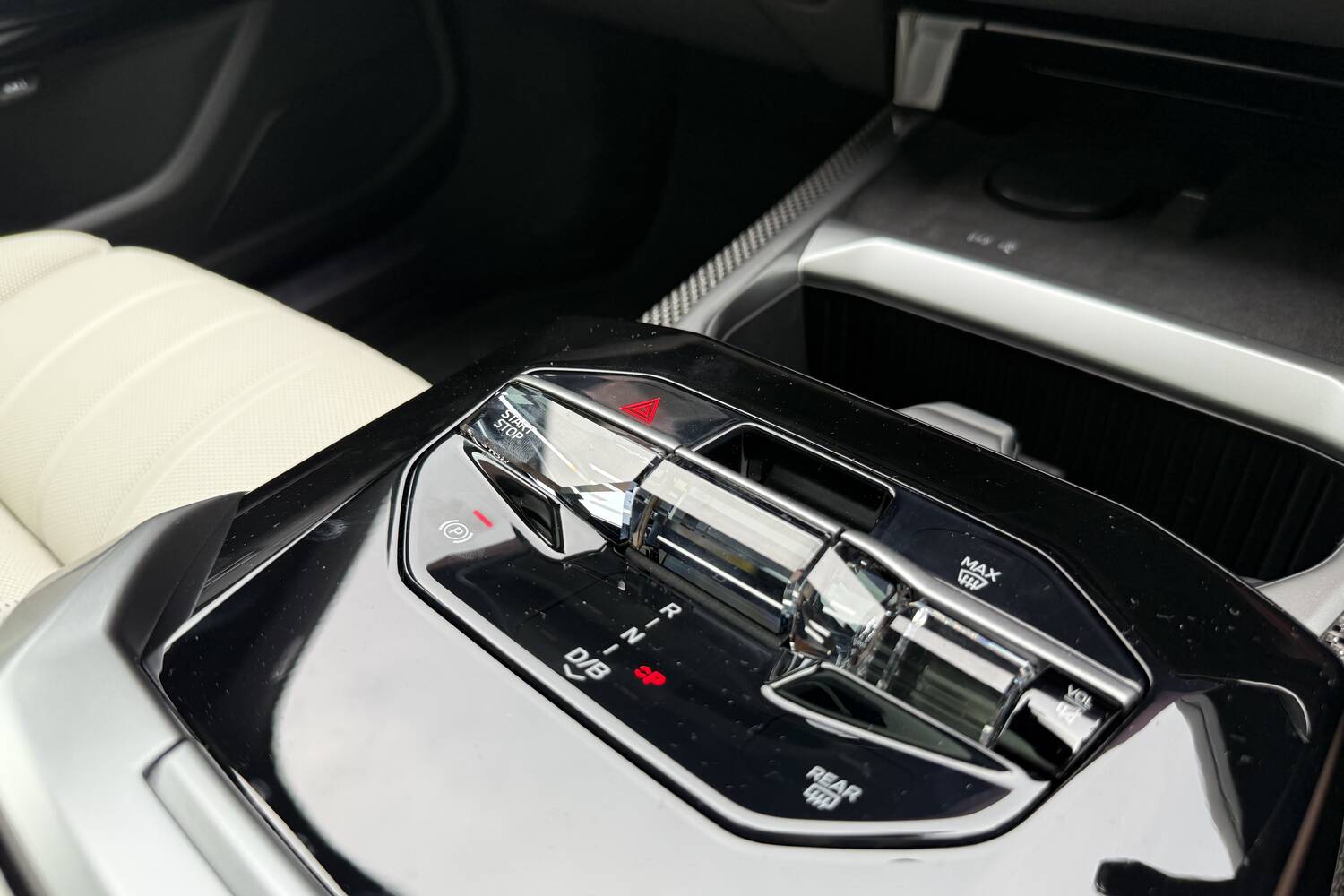
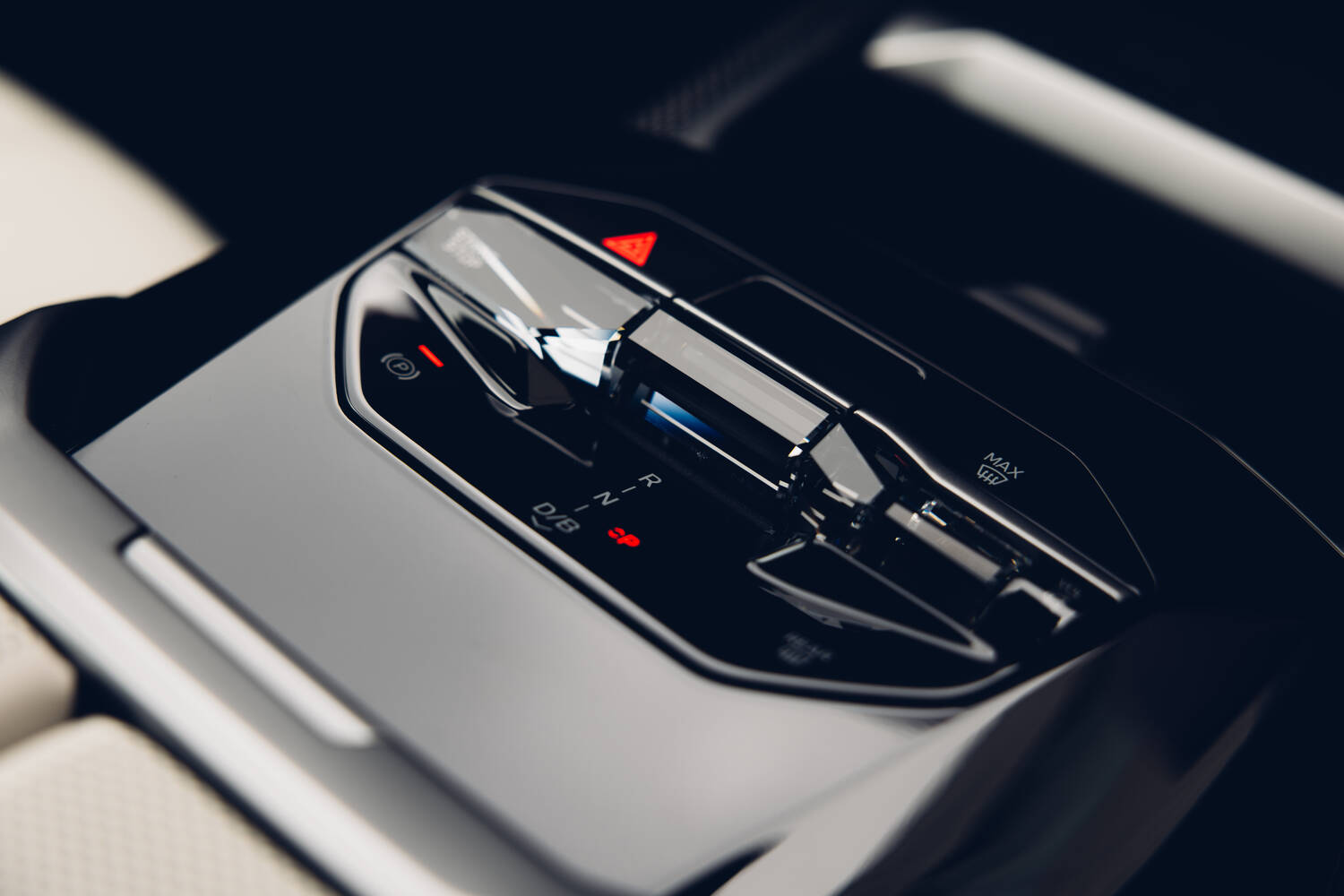
Aft of that is a pair of illuminated cupholders and then behind a cluster of controls - featuring 'CraftedClarity' glass in places - is a split-opening armrest with some hidden storage beneath. There you'll find a 12-volt socket and two USB-C ports as well.
The door pockets themselves are quite small, as is the glovebox, which incongruously has a button to electronically open.
Rear-seat passenger space
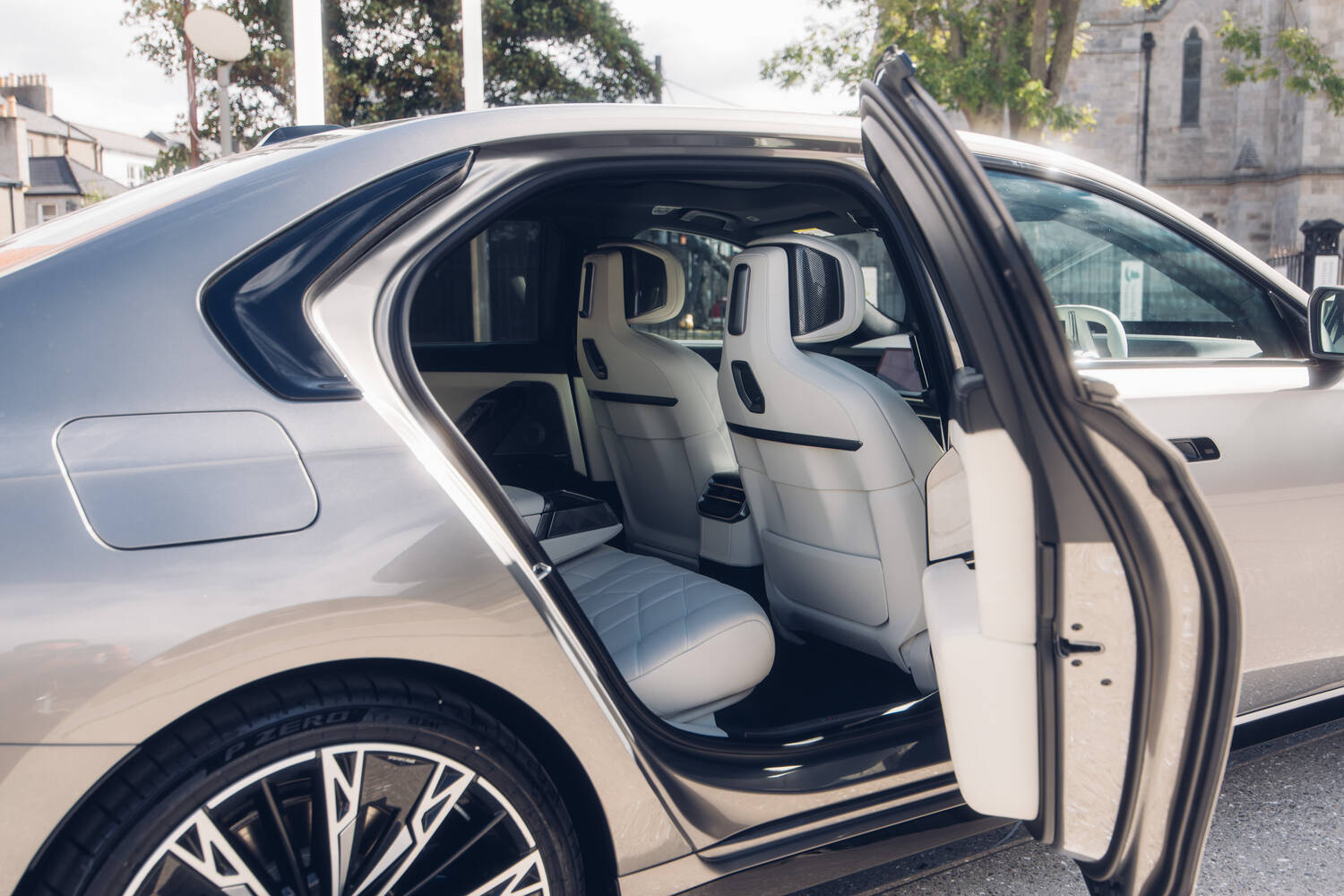
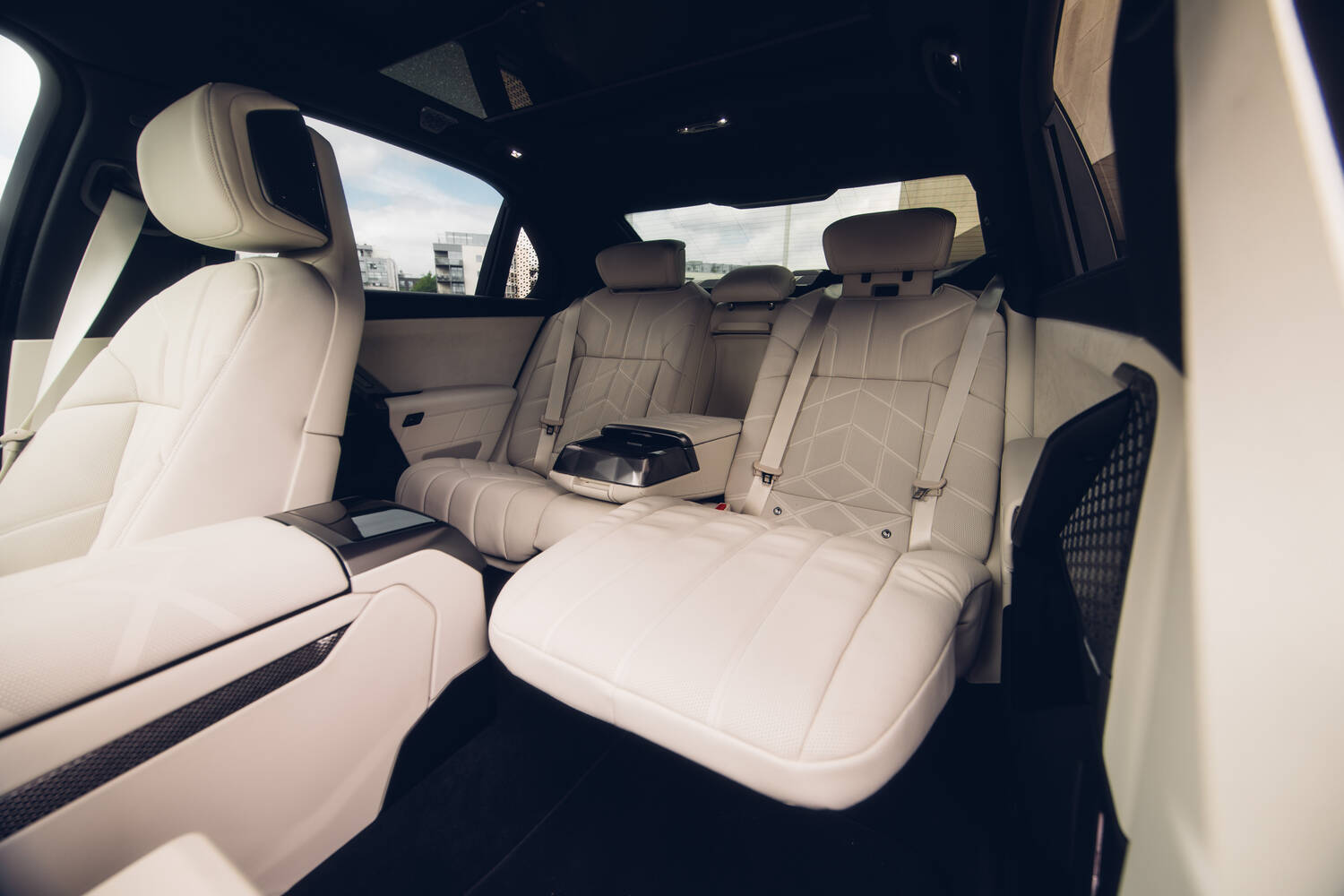
While the 7 Series is a large car, it's designed around the comfort of two adults in the rear, not three, even if there are three seatbelts. There's a prominent transmission tunnel in the middle of the rear floor, too.
The rear seats are seriously comfortable and cossetting as standard, with heating, but there are plenty of expensive options to upgrade the space for even more luxury.
Massaging, ventilation and electric adjustment of the seats are all on the menu, while the Executive Lounge rear seat turns the one behind the front passenger into something more extravagant again with an incredibly comfortable recline position and leg rest.
Fitting child seats to the BMW i7
The BMW i7 is hardly the first choice of families with small kids, but for the sake of completeness, we can tell you that it has ISOFIX points in the outer two rear seats and you'd be unlikely to get a booster between them in the middle.
Boot space in the BMW i7
The BMW i7's boot holds 500 litres of luggage, which is adequate. There's a through-loading system in the middle to allow for carrying longer items (skis are usually referenced at this point) even with two rear-seat passengers in place. There's no 'frunk' under the bonnet up front though, and it's not possible to fold the rear backrest down. This is not a car designed for a trip to Ikea...
Towing with the BMW i7
We can't imagine many BMW i7 buyers using it to tow, but it is rated at up to 2,500kg of a braked load. BMW will happily sell you its own electrically deployed tow bar for €1,662, which comes with trailer stability control.
Safety in the BMW i7
There's no Euro NCAP rating for the BMW 7 Series, which is not unusual for high-end cars such as this, but you can be sure that BMW has engineered it to be as safe as any of its other vehicles with a huge number of active safety features.
BMW Symbiotic Drive is what it calls its strategy for involving the driver but making life easier for them. The i7 is fitted with a huge number of active-safety features yet they're not intrusive in daily driving.
Performance of the 2026 BMW i7
- Three variants including M model
- All-wheel drive is standard
- Separate to the 7 Series PHEV
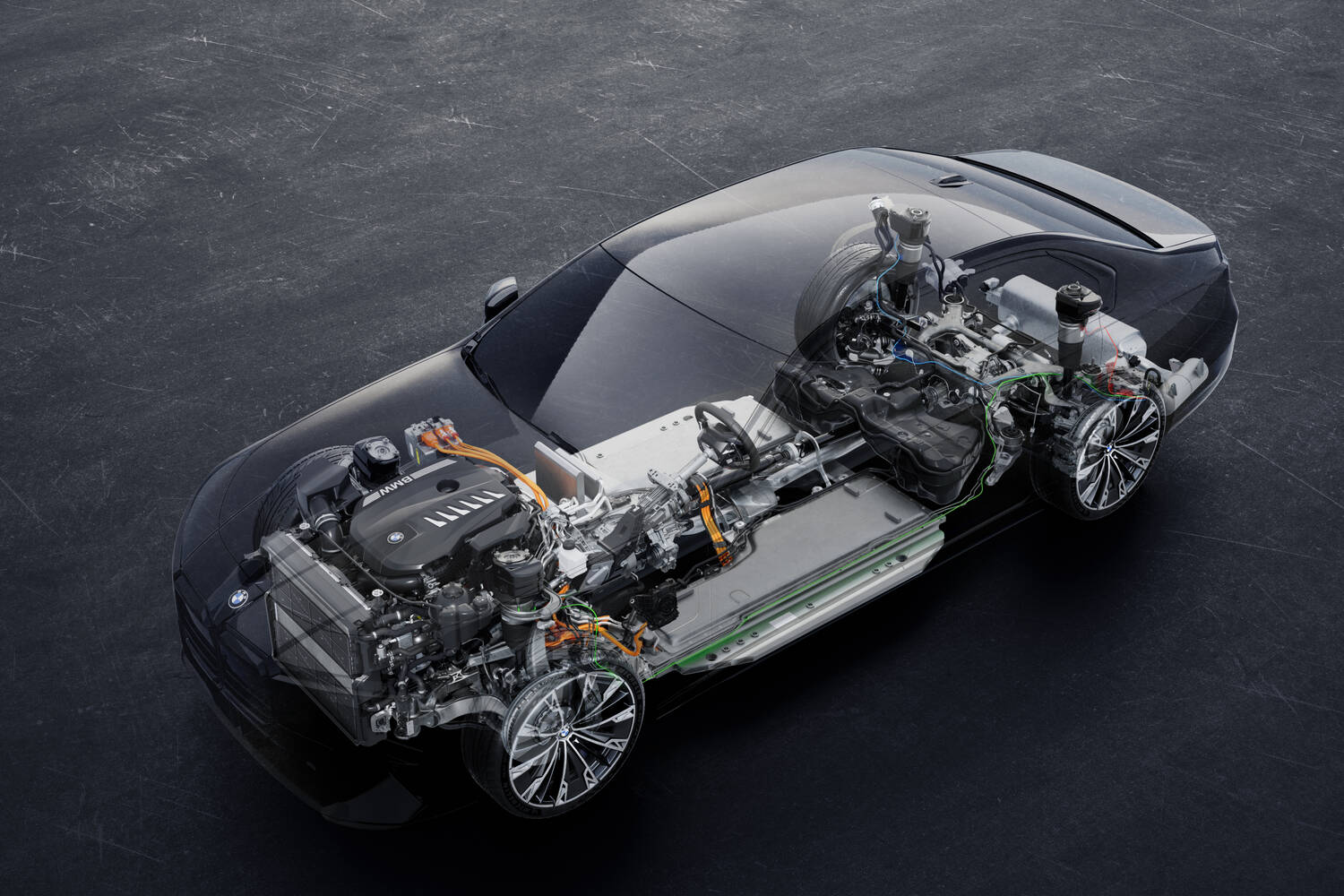
All versions of the BMW i7 get two electric motors for all-wheel drive, badged 'xDrive'. The entry-level powertrain - as tested here - is the 50, with up to 455hp and 660Nm of torque available. That results in a 0-100km/h time of just 5.5 seconds.
The i7 60 jumps up to 544hp and 745Nm, for 0-100km/h in 4.8 seconds, while the i7 M70 is part of the BMW M Performance Vehicle family and its numbers are even more eye-widening, at 680hp, 1,100Nm of torque and 0-100km/h in a scarcely believable 3.5 seconds.
Those performance stats are all the more impressive when you realise that no i7 weighs much less than 2,700kg. Oof.
Driving the BMW i7 50 xDrive M Sport on Irish roads
Words Shane O' Donoghue on 25 September 2026
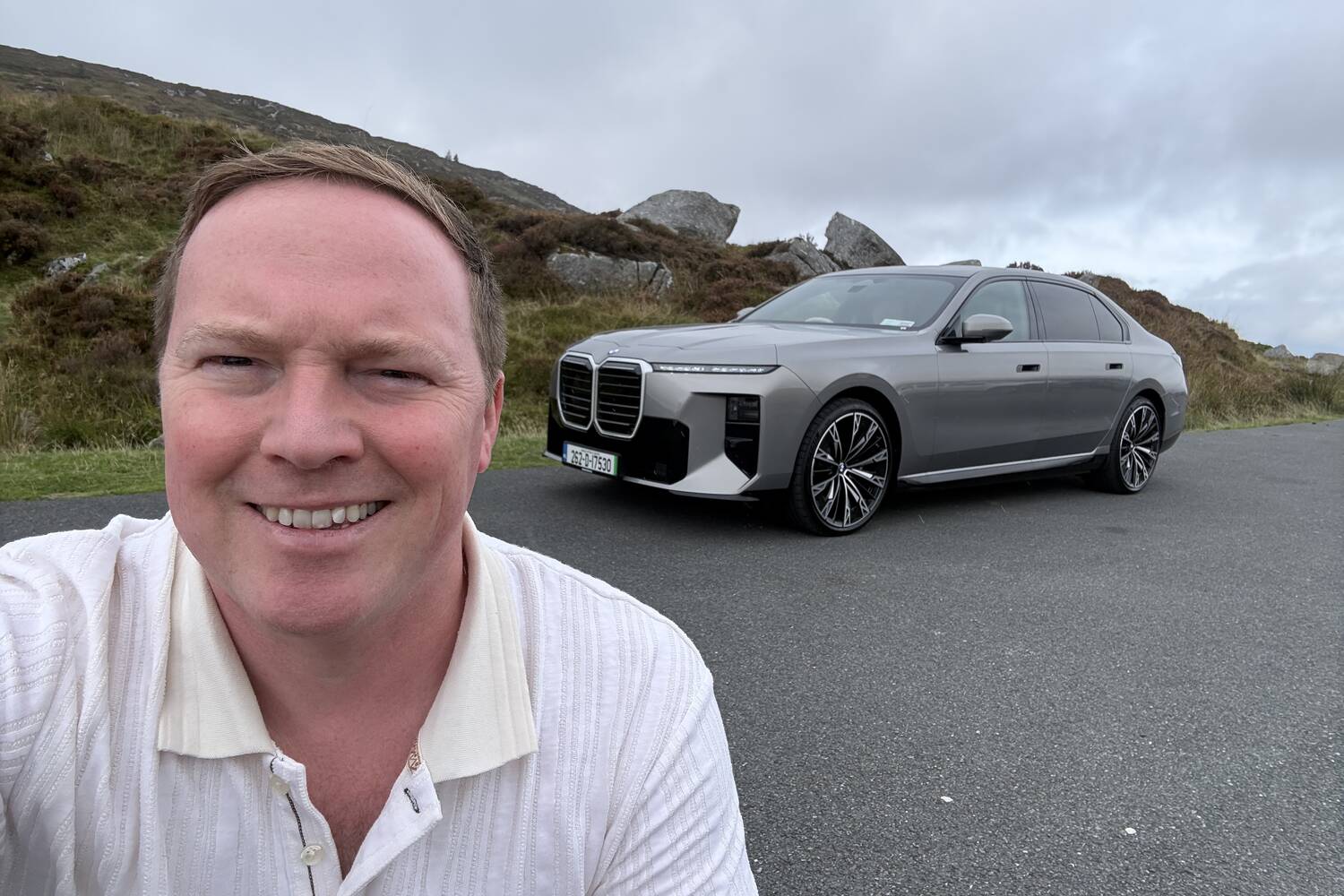
Spending the best part of a week with the BMW i7, I did most of my driving on one long day this month, taking in a variety of roads and traffic conditions. For reference, the weather was mild (about 17 degrees C) and dry for the most part, with spitting rain occasionally, but nothing heavy.
I did take a little time in the car to familiarise myself with the infotainment before going anywhere, as it's a sophisticated system. While it is relatively easy to find your way around, there's a huge amount in it, allowing the owner to customise everything to the nth degree.
Best to do that at a standstill rather than take your eyes off the road looking for the correct menu or icon. The voice-controlled assistant isn't massively helpful in this regard.
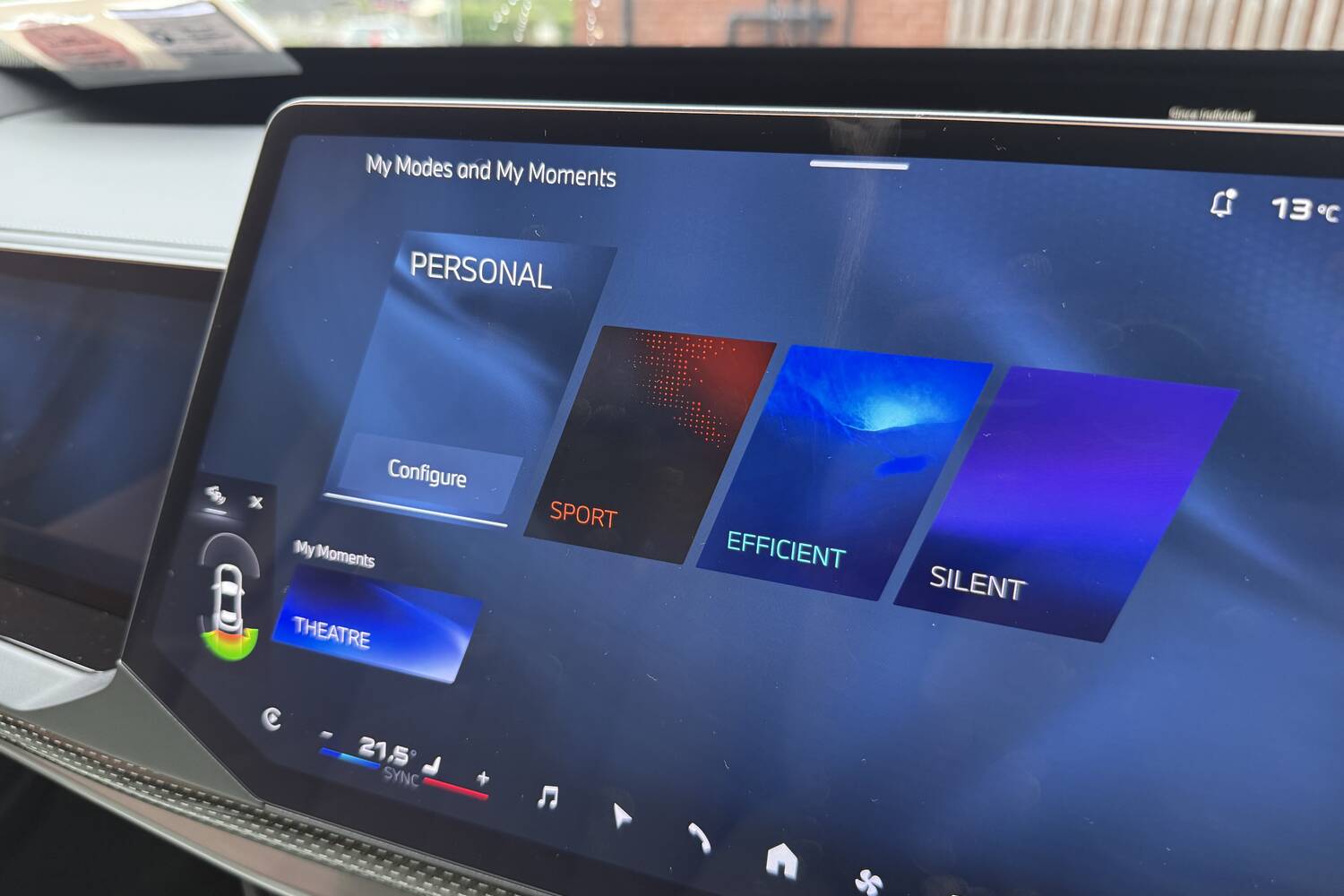
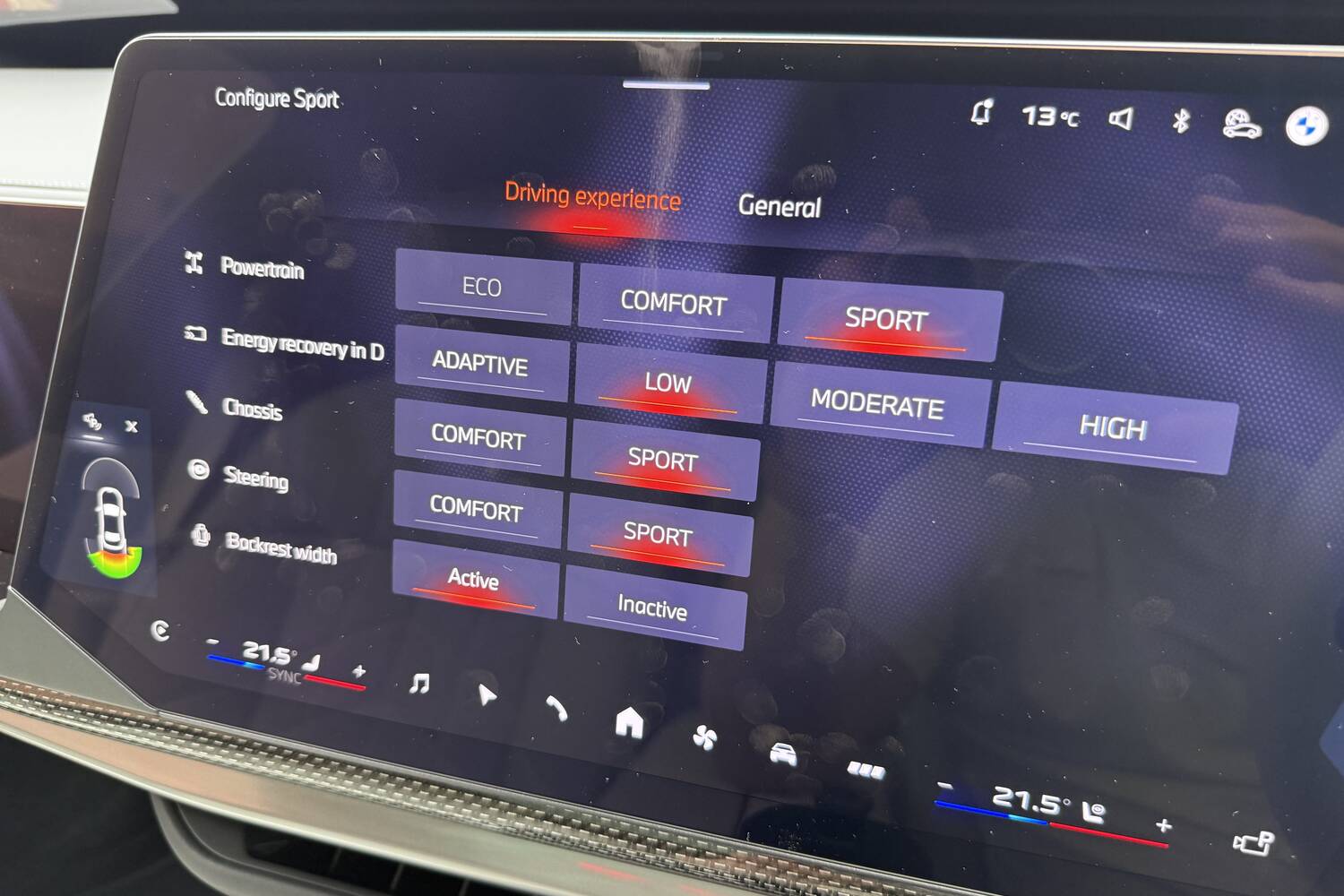
The i7 can be set to start up in your preferred driving mode, though Personal is seemingly the default, and as its title suggests, it allows you to customise everything. Saying that, all the same settings are accessible regardless of the chosen driving mode.
You then choose from Eco, Comfort or Sport for the powertrain; Adaptive, Low, Moderate or High for energy recovery; Comfort or Sport for chassis and steering, individually; and, if you're in the main Sport driving mode, from Active or Inactive for the backrest width - though I experimented with this and didn't really notice any difference.
For the initial part of the journey I selected the overall Efficient driving mode, which includes the Eco powertrain level, while putting the climate control in an Eco setting. This didn't seem to make the i7 feel slow or unresponsive in the least (and the cabin temp was still comfortable).
It immediately became apparent, though, that this is an exceptionally quiet and comfortable car, effortlessly wafting along. What's more, though it looks massive - and actually is - its driving controls are well weighted and visibility is good, so it doesn't feel like a fish out of water in heavy town traffic.
The car was in the Adaptive setting for brake energy regeneration when we got in, and while this function may be cleverly devised, I just don't like the variable feeling it gives to decelerating, prone to causing unwanted lurches no matter how hard you concentrate on your foot movement on the accelerator.
The high and moderate levels are more consistent, but the car feels more natural with the system set to low, allowing the driver to instead keep an eye ahead and ease off early to aid efficiency. The drive selector in the middle of the car allows quick selection of a B mode for enhanced brake energy regeneration if so required.
The rear-wheel steering ('Integral Active Steering' in BMW-speak, and it's fitted to all models of i7) makes itself useful in tight confines, too, making the 7 Series feel agile and manoeuvrable.
About the only time the standard air suspension gets caught out is over speed bumps with a vertical edge, even taken really slowly. Otherwise the car isolates its occupants from the outside world with aplomb.
That's the case cruising along the M50 at 100km/h as well, where progress is serene. Part of that will be down to the 'Climate Comfort Windows' that come with the optional Front Comfort Pack, as they feature an extra acoustic film within the glass.
The body of the car isn't without some movement over long undulations on the motorway, but it's all very well contained, even in the softer chassis setup, mixing comfort with control to good effect. Likewise, the steering is light but doesn't feel completely disconnected from what's going on at the road level of the front tyres.
Even in the Efficient drive mode, accelerating up to M50 speed on the slip road was swift - if not unnervingly so. You need to press the accelerator all the way down to get full performance, but the i7 hardly feels slovenly before you do that.
Negotiating with busy traffic on the exit for the N7, it's clear that BMW's engineers have done a good job on the car's brakes as well. Their power helps mask the considerable weight of this car and they're easy to modulate from high speed down to a smooth stop in traffic when required. This gives the driver confidence in the car's ability, allowing them to focus on what's going on around them.
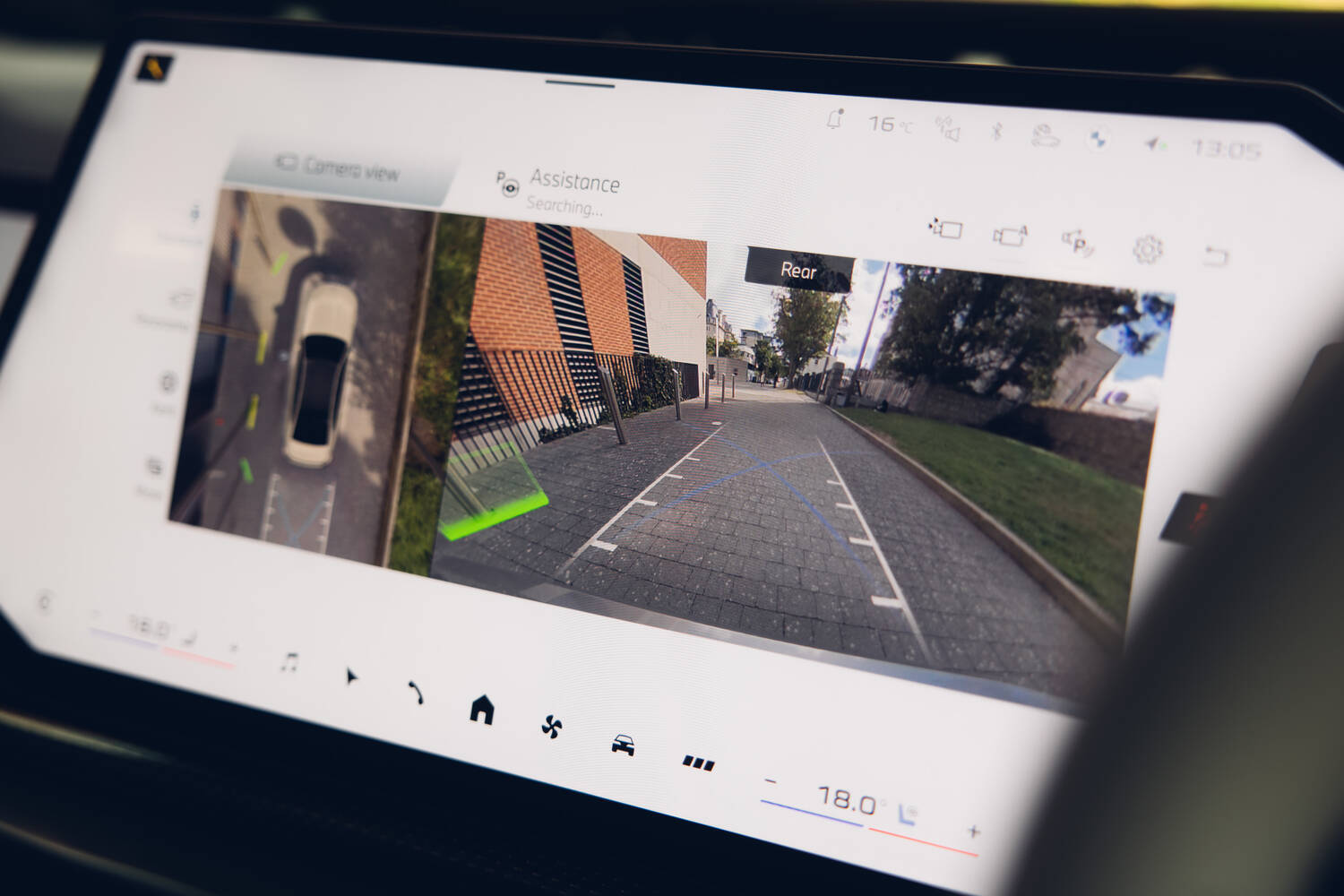
The i7 comes with an impressive suite of driver-assistance technology, including advanced adaptive cruise control. It works well and will be welcome on long journeys. Incidentally, if you want to turn off the default speed-monitoring and alert system it's simple to do so.
As the N7 leads onto the M7, it takes the merest flex of an ankle to smoothly accelerate up to 120km/h. And that brings with it no obvious increase in wind roar around the windscreen and roof. The noise from the wide tyres, however, varies depending on the roughness of the road underneath. It's almost inaudible on the relatively new tarmac of that section of the M7, for example, but it's quite loud as you approach the older surface at the M9 interchange. There is a layer of sound-absorbing foam in the tyres to help with this.
We take that junction and then soon leave the motorway to head cross-country towards Glendalough in Wicklow. The roads are far more challenging here, and often quite narrow and bumpy as well. The i7's ability in these conditions will surprise people, as it just soaks it all up and makes life for the driver very easy indeed.
On the wider, sweeping, rising and falling roads between Hollywood and Laragh, we test out the Sport mode. It defaults to using the 'IconicSounds Electric' fake sound, which we really dislike, but it can thankfully be turned off completely.
There's notably more response from the dual motors in this guise, but the i7 doesn't turn into a sports saloon either. Push the accelerator all the way down from a standstill and pickup is strong, but there's an obvious increase in the power and torque produced once you're underway, as if the motors are held back a tad in the name of traction and, well, decorum.
The Sport chassis setting firms up the baseline of the adaptive dampers a little, and you can certainly feel more of the road's imperfections, but it's still far from uncomfortable. The steering has a little more weight to it in this guise too, and the 7 Series undoubtedly feels a little sharper, but really, it's good to drive in the Efficient mode as well, and that seems more in keeping with the car's remit.
Range, battery, charging and running costs of the 2026 BMW i7
- One big battery option
- Up to 728km of range
- DC charging up to 250kW
Despite an upgrade to its electrics in 2026, the BMW i7's architecture is still a 400-volt system, which does limit its charging speeds a tad, though it's not poor by any measure on that front. A large battery pack is shared across the lineup and a few models come with a quoted range in excess of 700 kilometres.
Battery options and official range
A single lithium-ion battery is available in the BMW i7, with a usable energy capacity of 112.5kWh. That latter figure is reduced fractionally to 112.4kWh in the M70 variant.
Anyway, that results in official, WLTP-standard ranges of 566-686km in the M70; 581-727km in the i7 60; and 591-728km in the entry-level 50 variant. The variations are to allow for different wheel sizes and weights, depending on specific configurations.
Real-world range and efficiency of the BMW i7
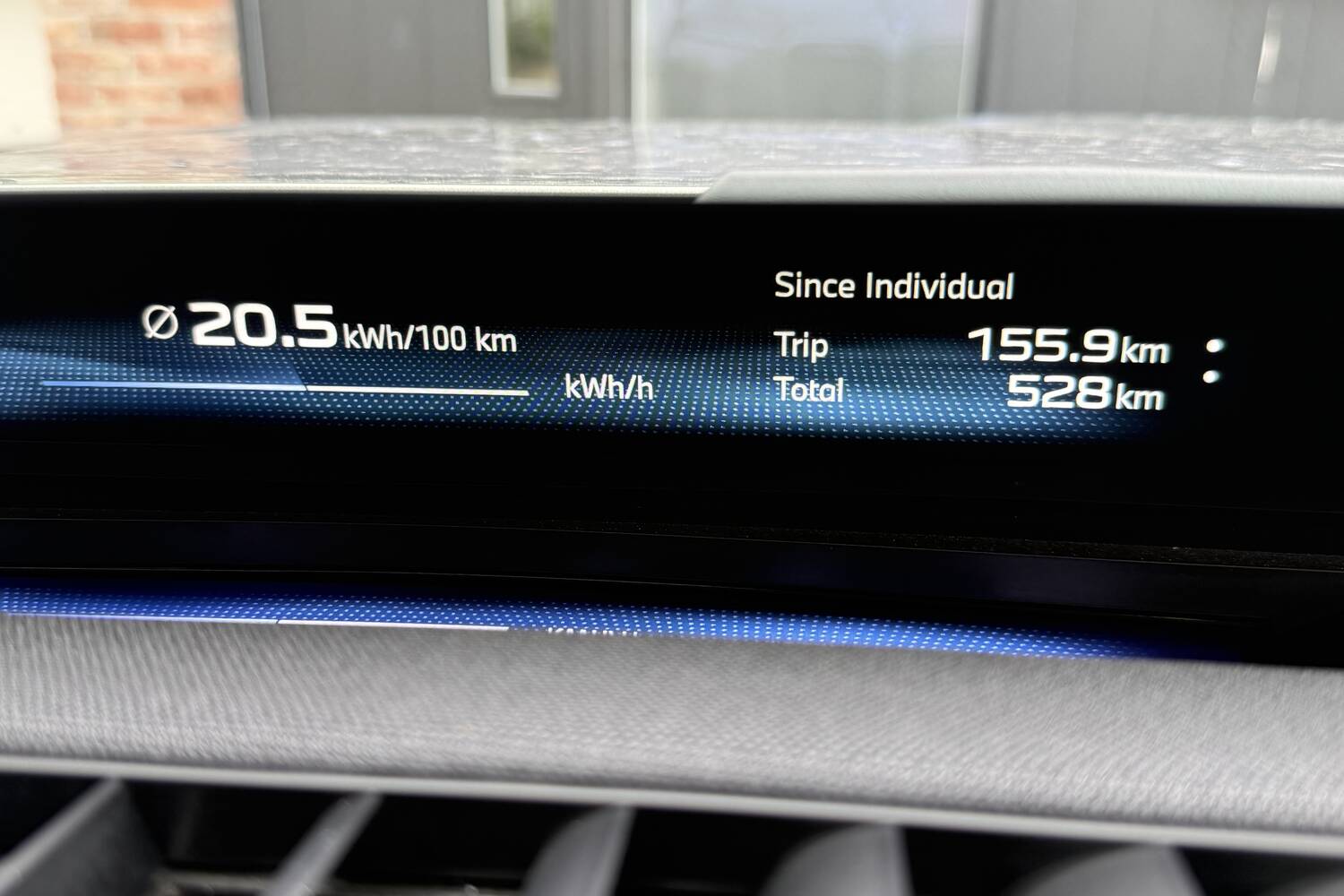
We kept an eye on the energy consumption through the driving day described above and while it reached as high as 23kWh/100km on the motorway, the overall average was actually closer to 20kWh/100km, which is comparable with the official figure for the 50 xDrive M Sport.
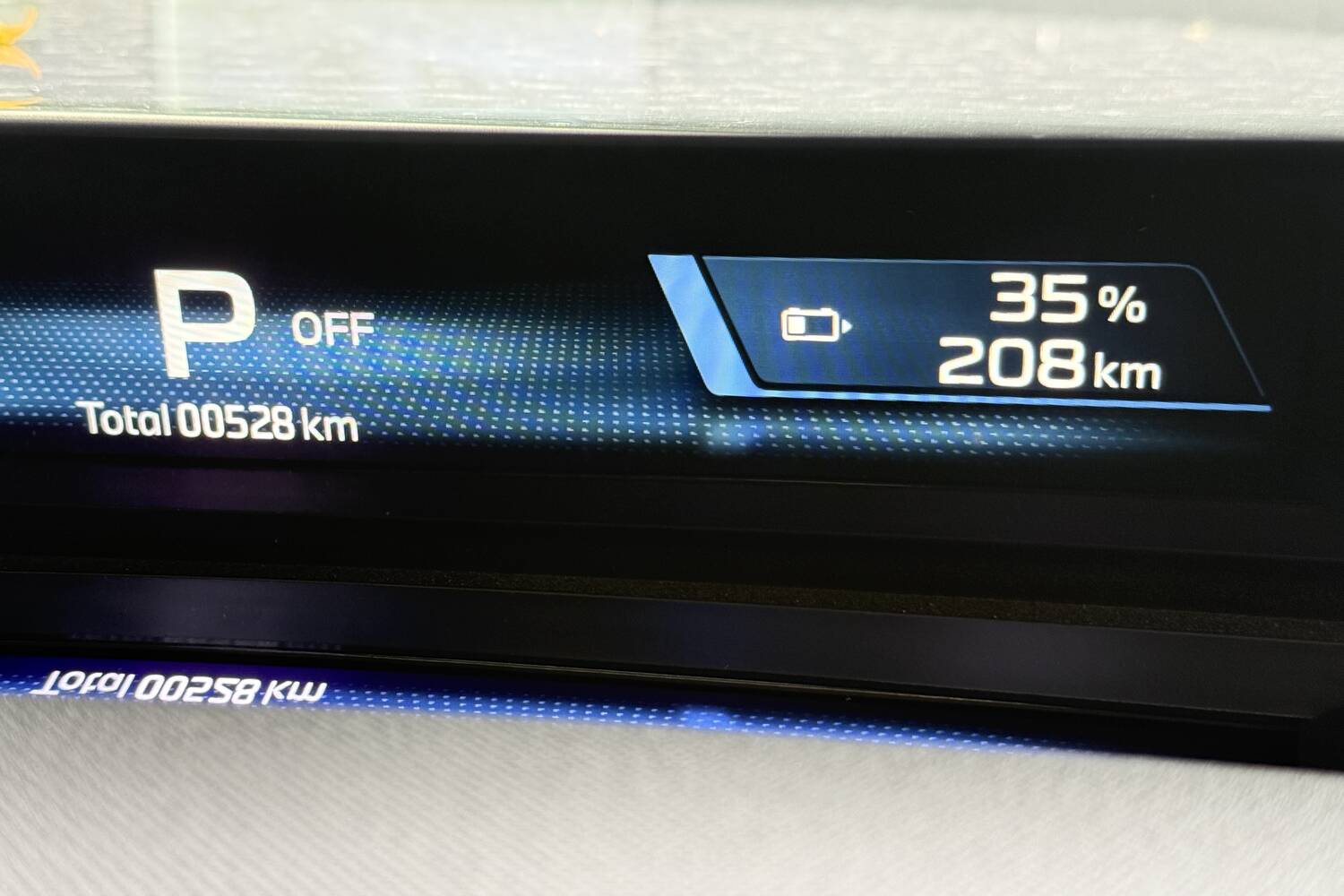
With the battery charge at 35 per cent, a projected remaining range of 208 kilometres was displayed, suggesting somewhere not far off 600km should be reliably possible in this car, fitted with the optional 22-inch wheels and tyres.
Larger rims are undoubtedly tempting from an aesthetic point of view but remember they'll come with a reduction in efficiency and range. Not that many people need one-shot range of 600km in daily driving.
Charging up the BMW i7
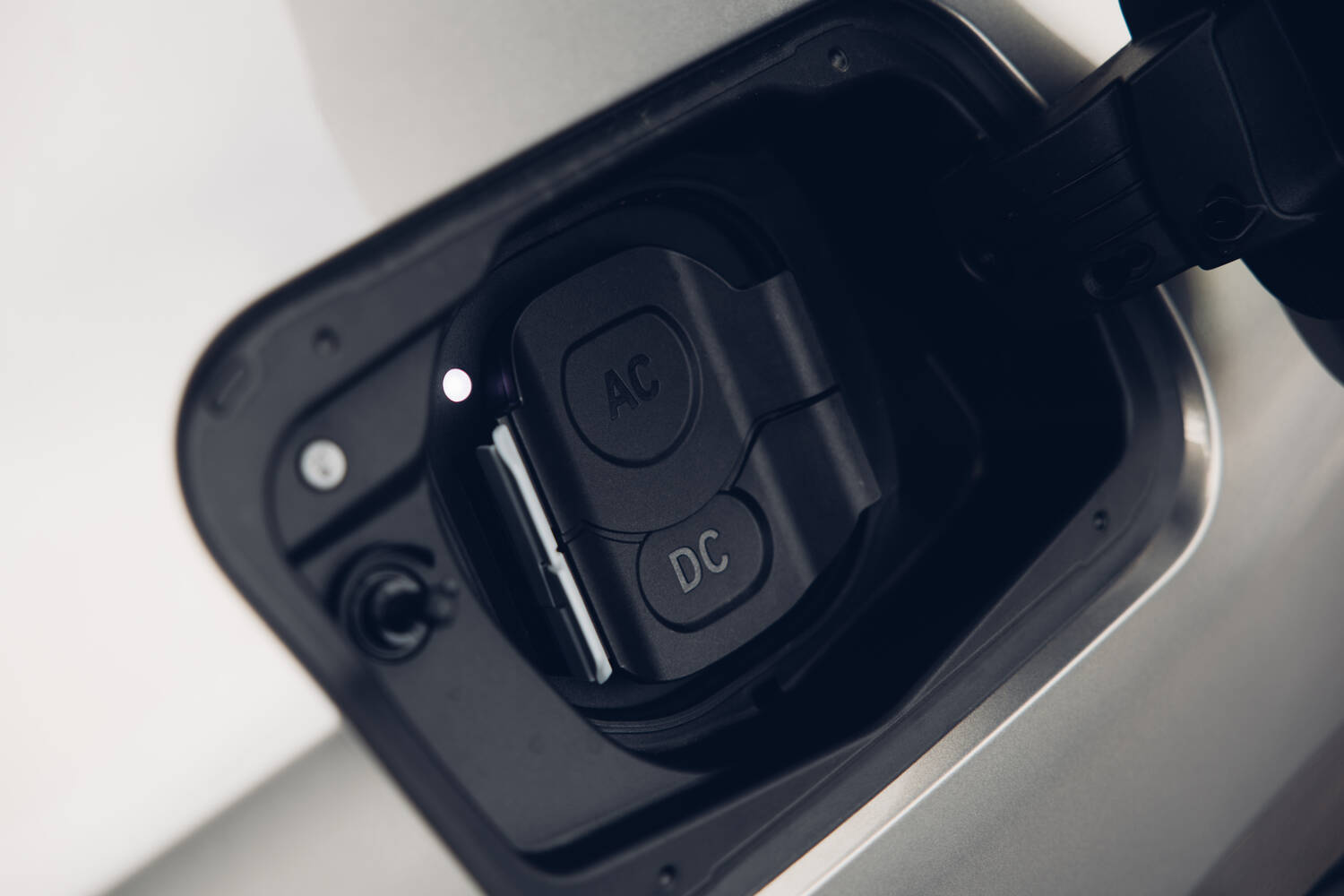
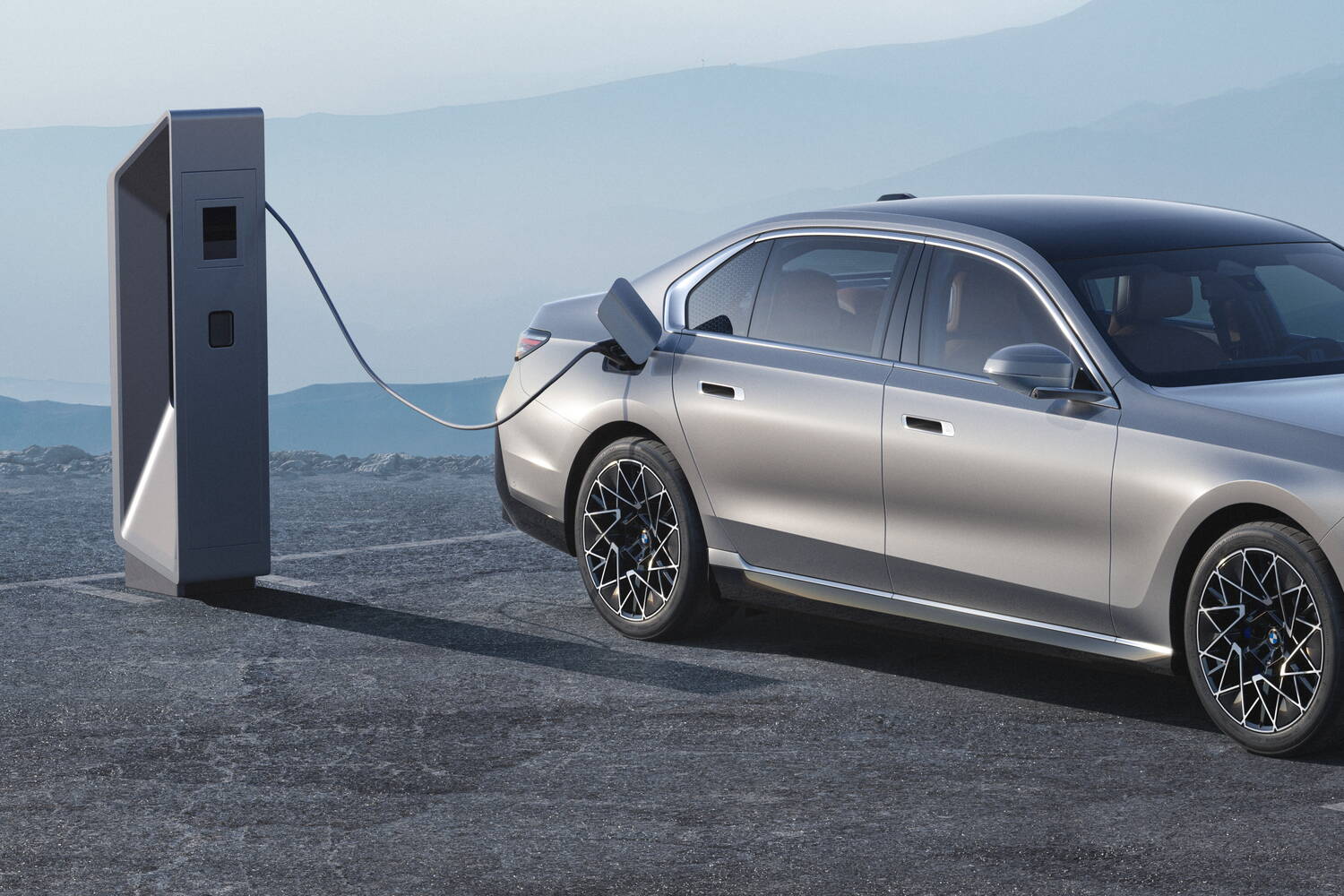
While the 400-volt architecture limits peak charging speeds, the i7 can still manage a useful 250kW on suitably powerful DC outlets, which means roughly 235km extra range for every 10 minutes of charging in the i7 50 model, for example.
All versions get 22kW AC charging on three-phase sockets as well.
Servicing the BMW i7
BMW uses a built-in service monitor which tells you when the car needs a service. In theory, that can stretch as far as two years and 30,000km in the i7, and there's not much that needs servicing in an EV anyway. There is an optional inclusive service plan for electric BMWs, which covers all normal servicing needs for up to five years, with unlimited mileage.
BMW i7 warranty
The standard new-car BMW warranty covers the car for three years and unlimited mileage, with roadside assistance included. Additionally, the i7's battery is guaranteed for eight years or 160,000km.
Irish pricing & rivals to the 2026 BMW i7
- Electric i7 from about €130,000
- Ultimate Edition can be as much as €235k
- Mercedes EQS or S-Class are the main rivals
Resist all options and packages and you could pick up a BMW i7 from €131,185, the 50 xDrive. But most will go for at least the standard M Sport trim, from €137,595.
It gets exterior and interior enhancements for not a lot of extra outlay and is the minimum level at which you can opt for the more powerful '60' powertrain, costing from €151,464. Meanwhile, the M Sport Pro has a darker appearance and larger wheels, priced from €141,025.
Then comes the Ultimate Edition from €171,875, bundled with seemingly all the options, including the automatic doors, Theatre Screen, Executive Lounge rear, upgraded leather, glass roof, two-tone paint and a lot more.
Standing alone from those is the i7 M70 at €206,985, or in Ultimate Edition spec for an eye-watering €235,945.
There aren't all that many big, all-electric luxury saloons on the market in Ireland in the same vein as the BMW i7. It is quite literally a 7 Series EV, whereas its closest rival, the Mercedes S-Class, cannot be had with purely electric power. The Mercedes EQS is not comparable, regardless of its stats - though it is more affordable.
Verdict - should you buy the 2026 BMW i7?
If we were in the market for a plug-in-hybrid luxury saloon, we'd likely choose the Mercedes S-Class over the BMW 7 Series, but our decision would go the other way if fully electric power was a priority, and no matter what you think of the exterior appearance, the i7 is a seriously impressive car. It's good to drive, incredibly refined, comfortable and packed with cutting-edge technology that doesn't get in the way of its core purpose in life - transporting the lucky few in elevated luxury.
FAQs about the 2026 BMW i7
Is there still a non-electric BMW 7 Series?
In some parts of the world, it's still possible to buy a 7 Series powered just by a petrol engine, but in Ireland it's only offered in plug-in-hybrid and fully electric guises.
Does the BMW i7 have a frunk?
No, there is no extra storage space under the bonnet of the 7 Series.
Want to know more about the 2026 BMW i7?
If there's anything about the new BMW i7 we've not covered, or you'd like help in choosing between it and other cars, you can avail of our expert advice service via the Ask Us Anything page.