Introduction to the 2026 Mercedes-Benz S-Class
Long has the Mercedes S-Class led the way for the German brand in terms of luxury and technology. It's a classy luxury saloon which, somewhat surprisingly, is designed as much for its owner to drive as to be driven in. The S-Class lineup is wide, offering buyers petrol, diesel or plug-in hybrid power, a choice of two different lengths and even a discreet armoured model.
In the 2026 update, celebrating 140 years of its cars, Mercedes claimed some 50 per cent of the S-Class's components were redesigned or replaced, keeping the big saloon relevant in an ever-changing car world without drastically altering the familiar S-Class image or remit.

Pros & cons of the 2026 Mercedes-Benz S-Class
Pros:
• Loads of engine options
• High-quality interior
• Incredibly comfortable
Cons:
• PHEV gets smaller boot
• Reliance on touchscreens
• Not as subtle as it once was
Exterior & design of the 2026 Mercedes-Benz S-Class
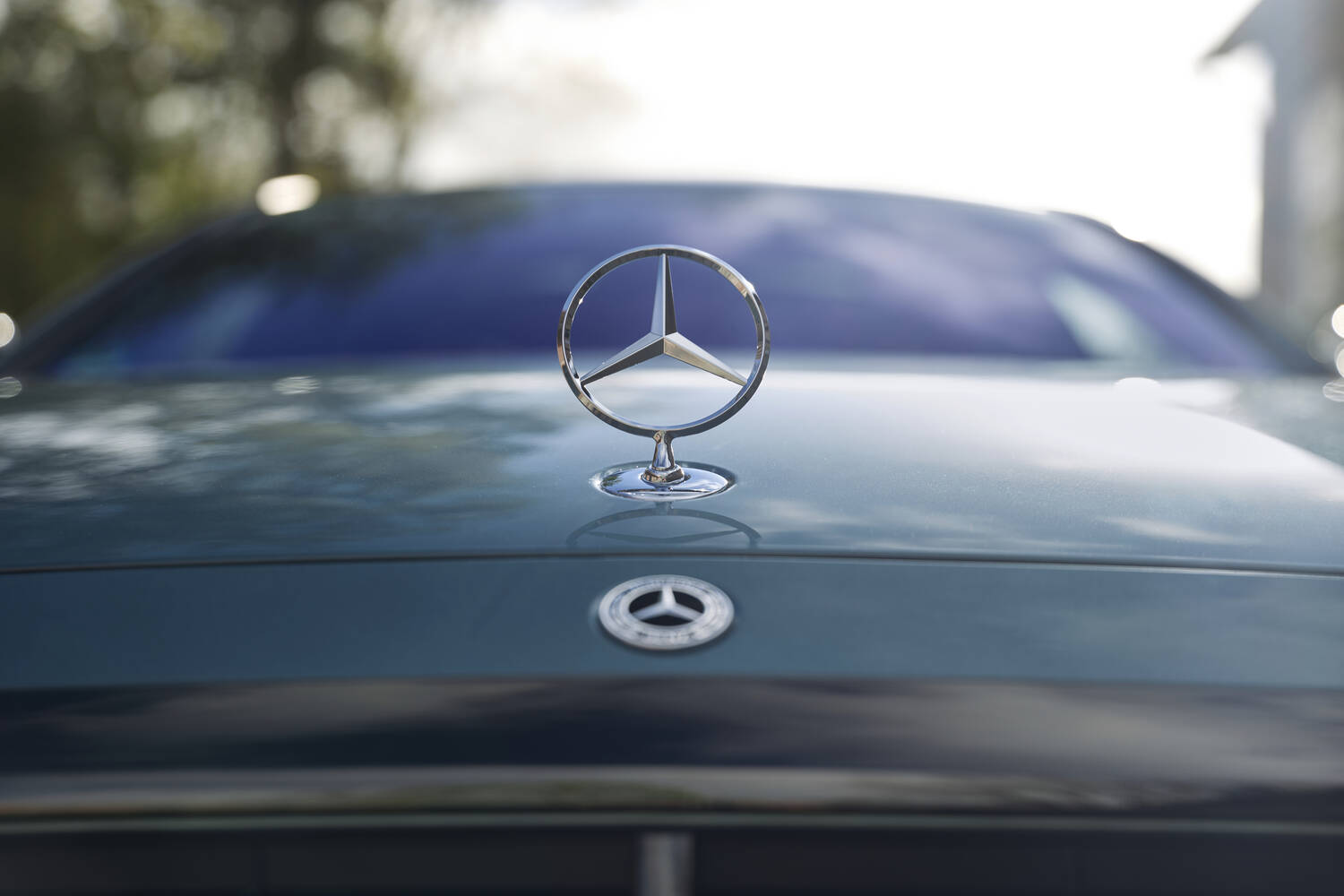
• Lots of three-pointed stars
• Only AMG line in Ireland
• Everyone goes for black

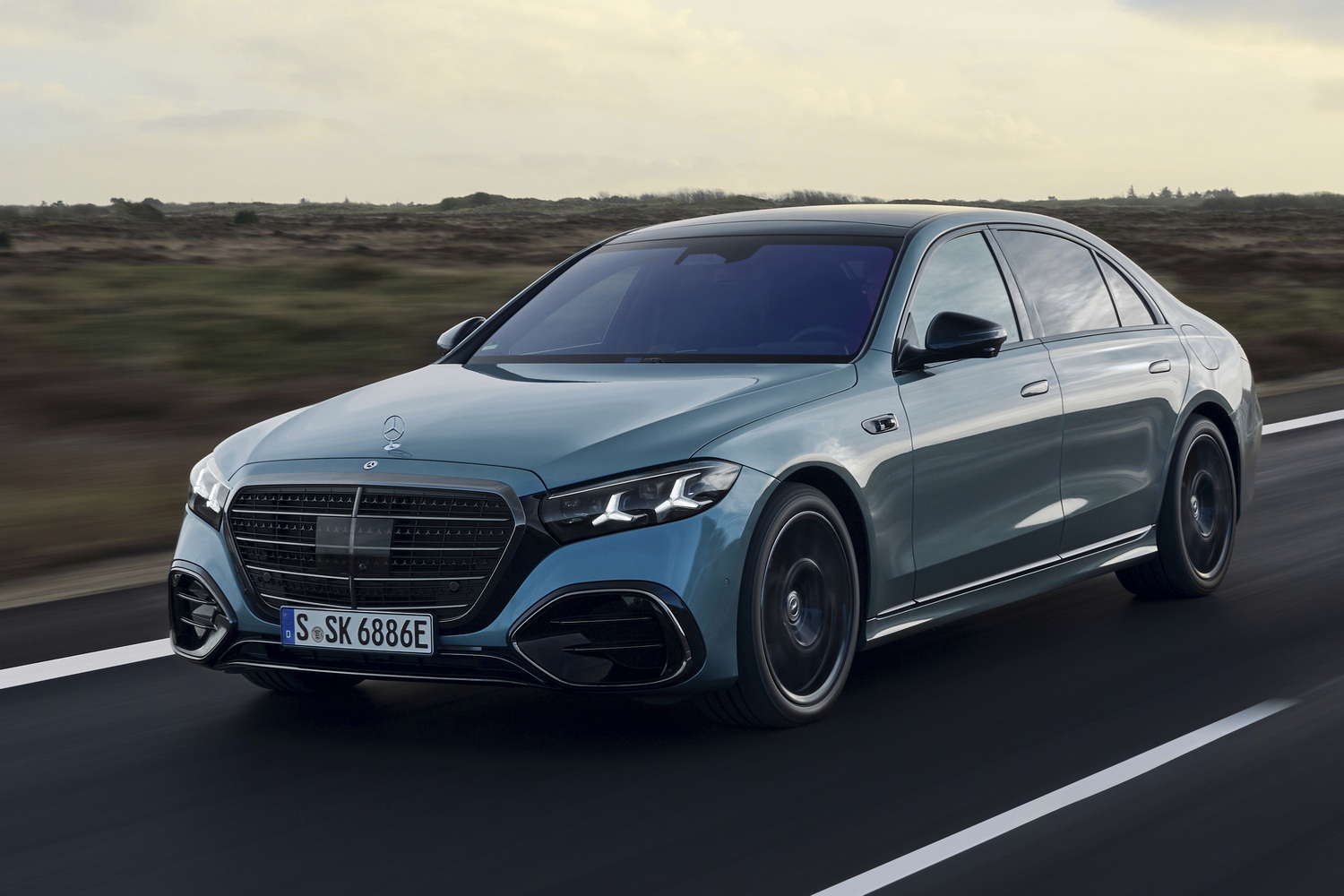
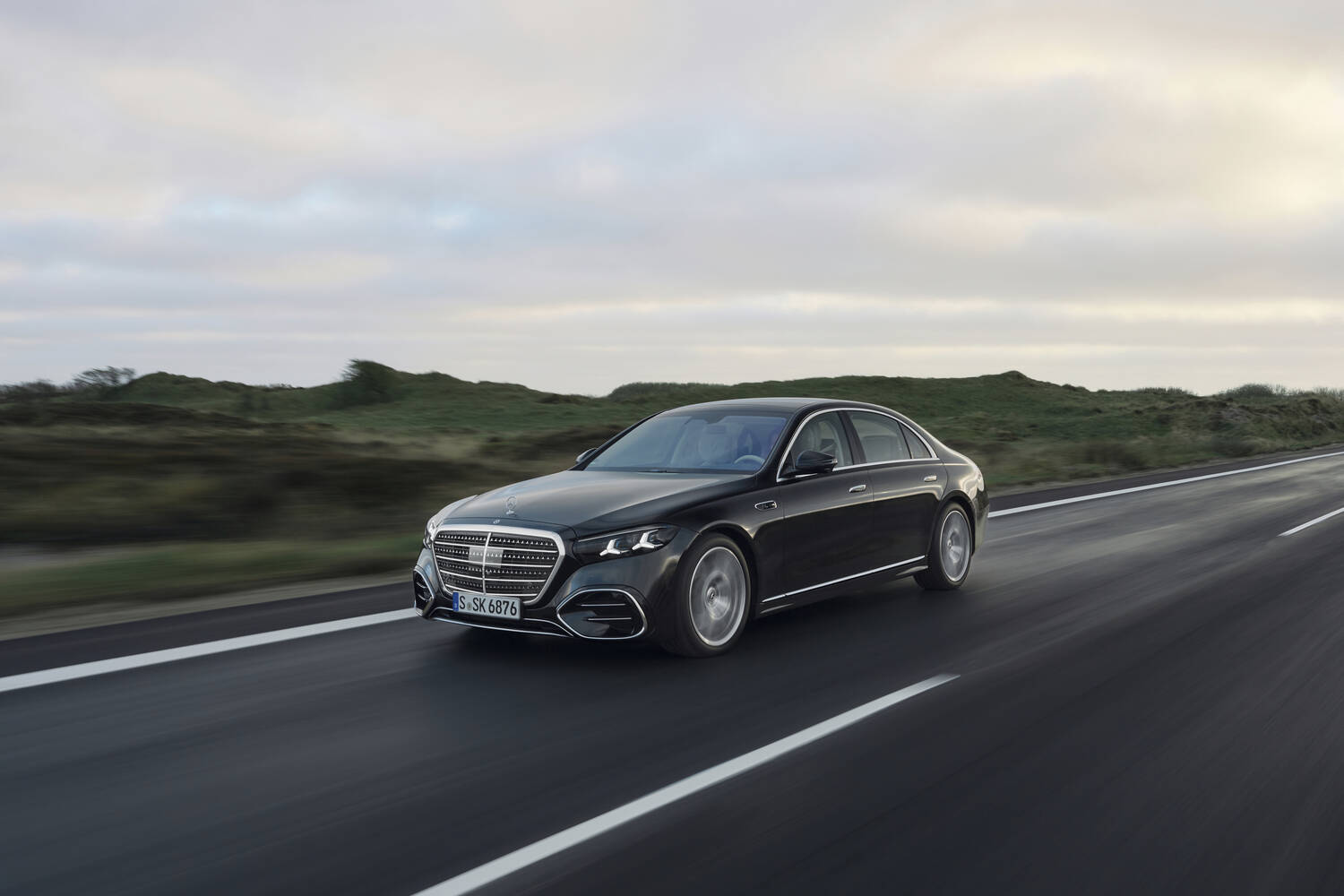
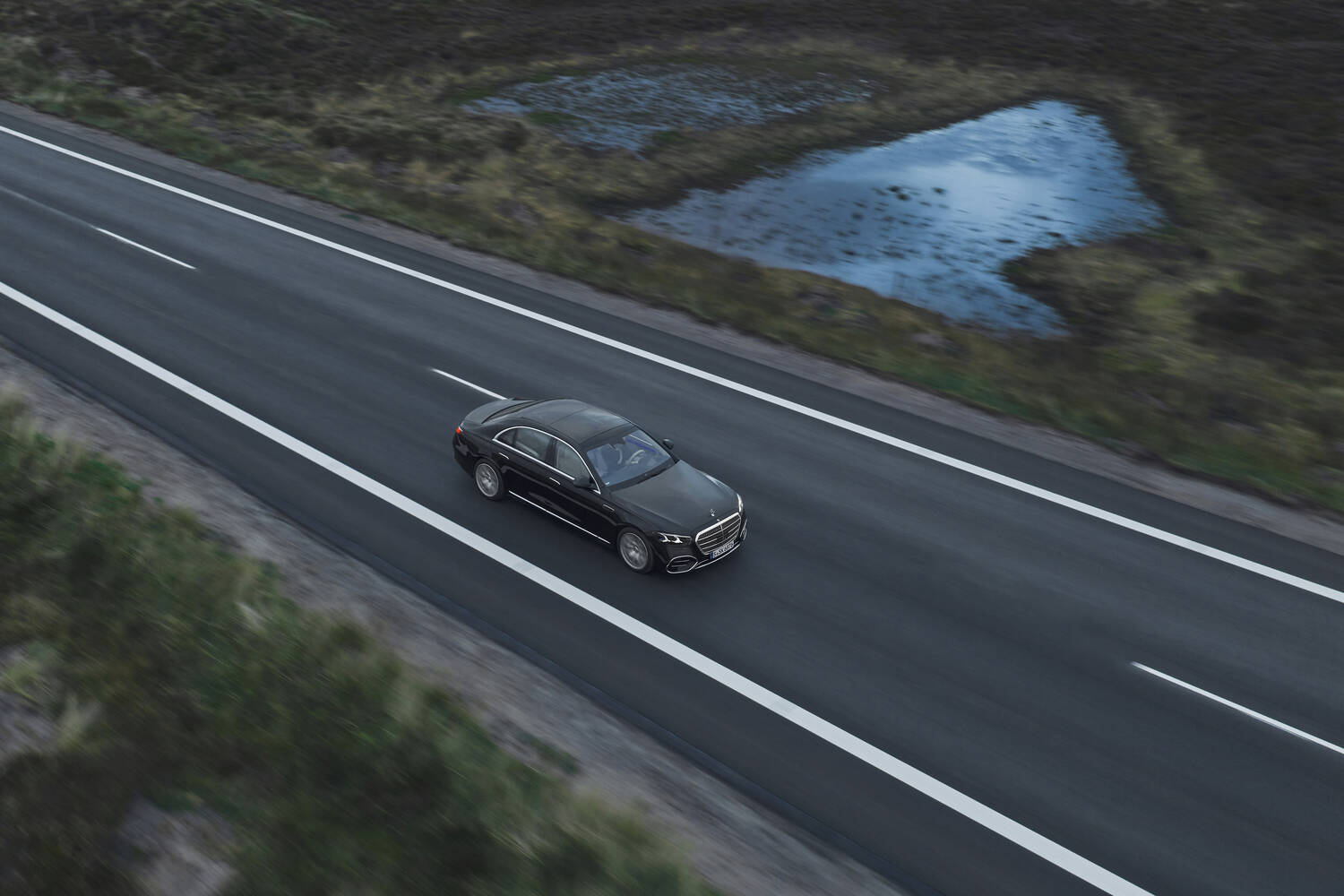
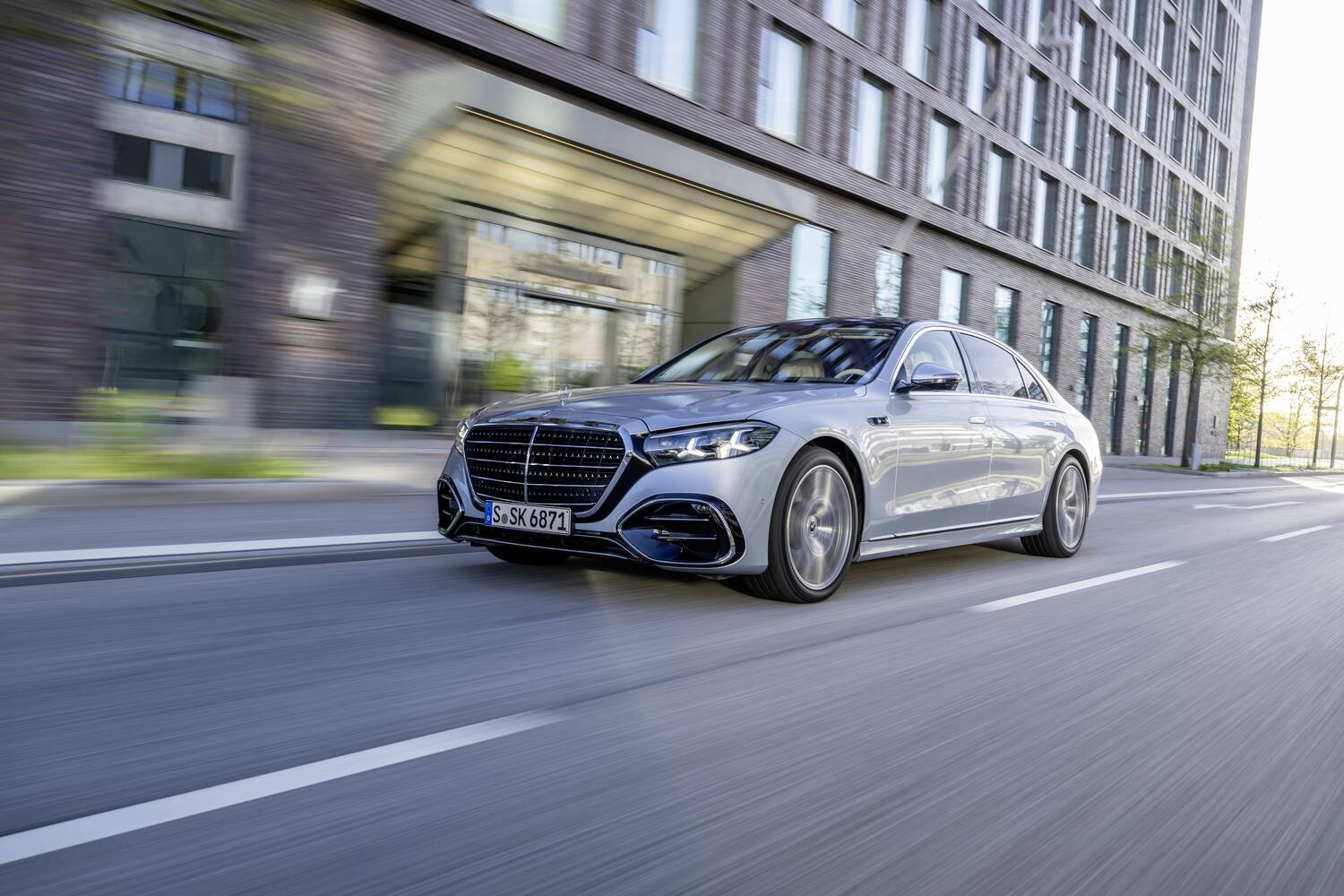
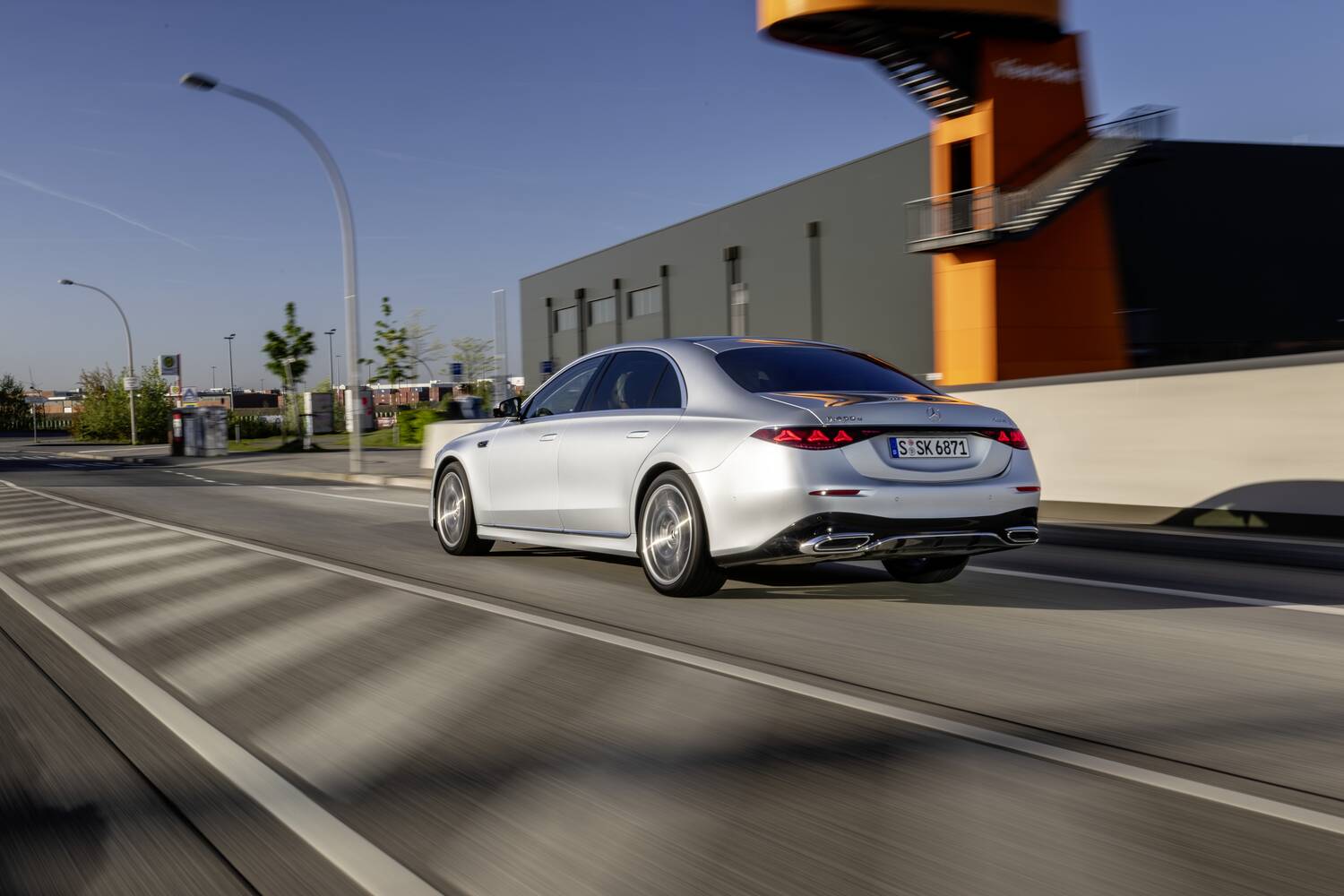
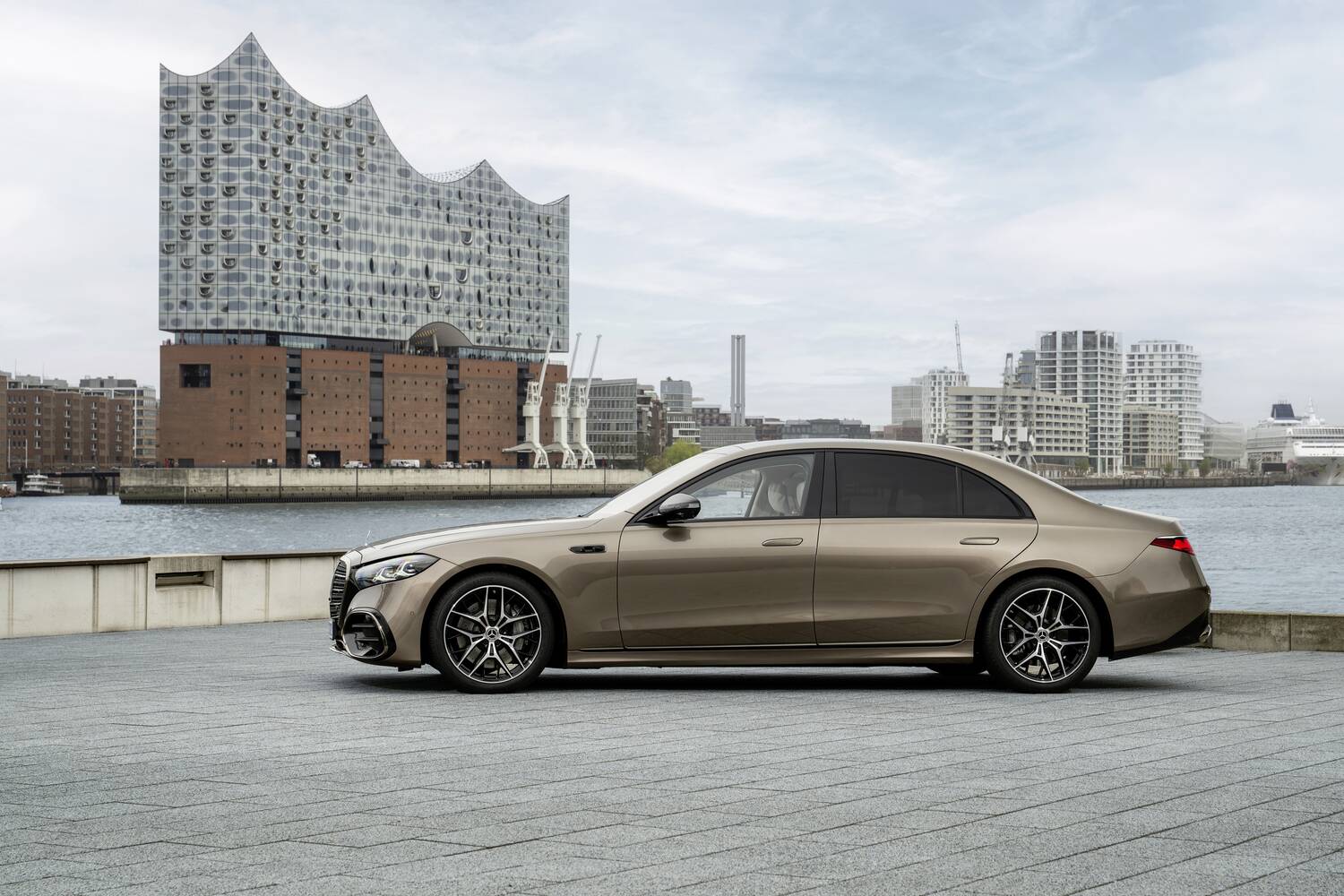
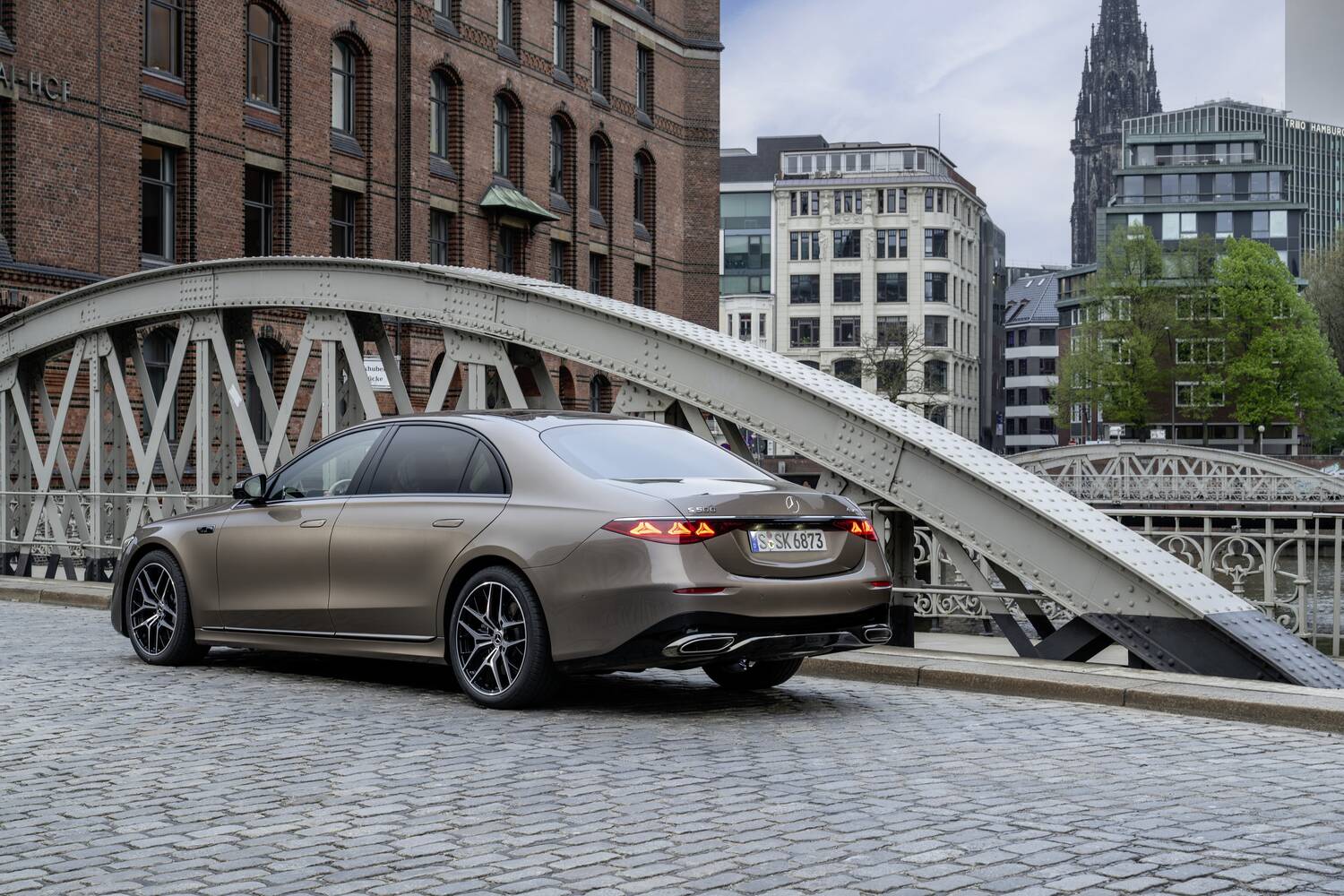
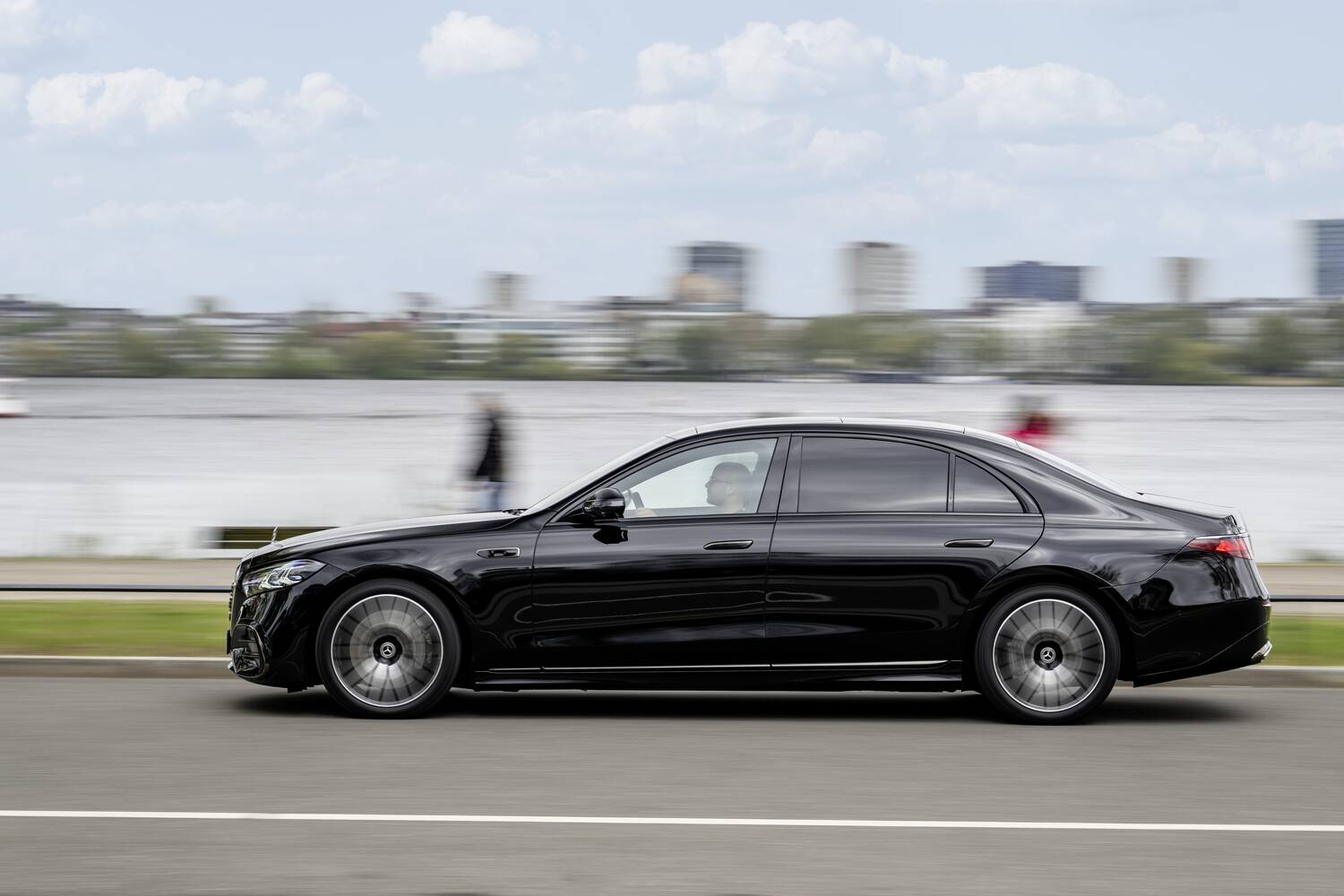
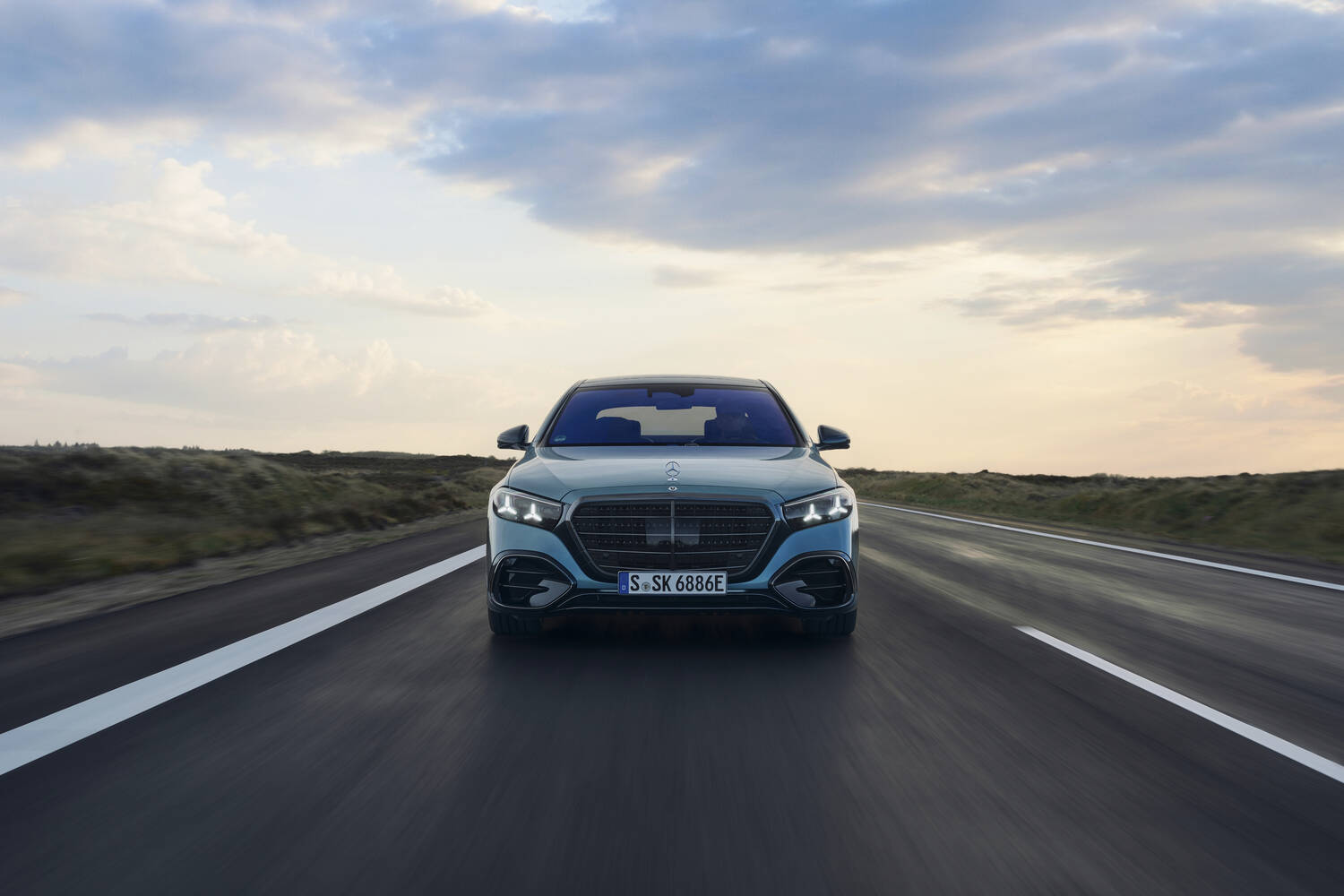
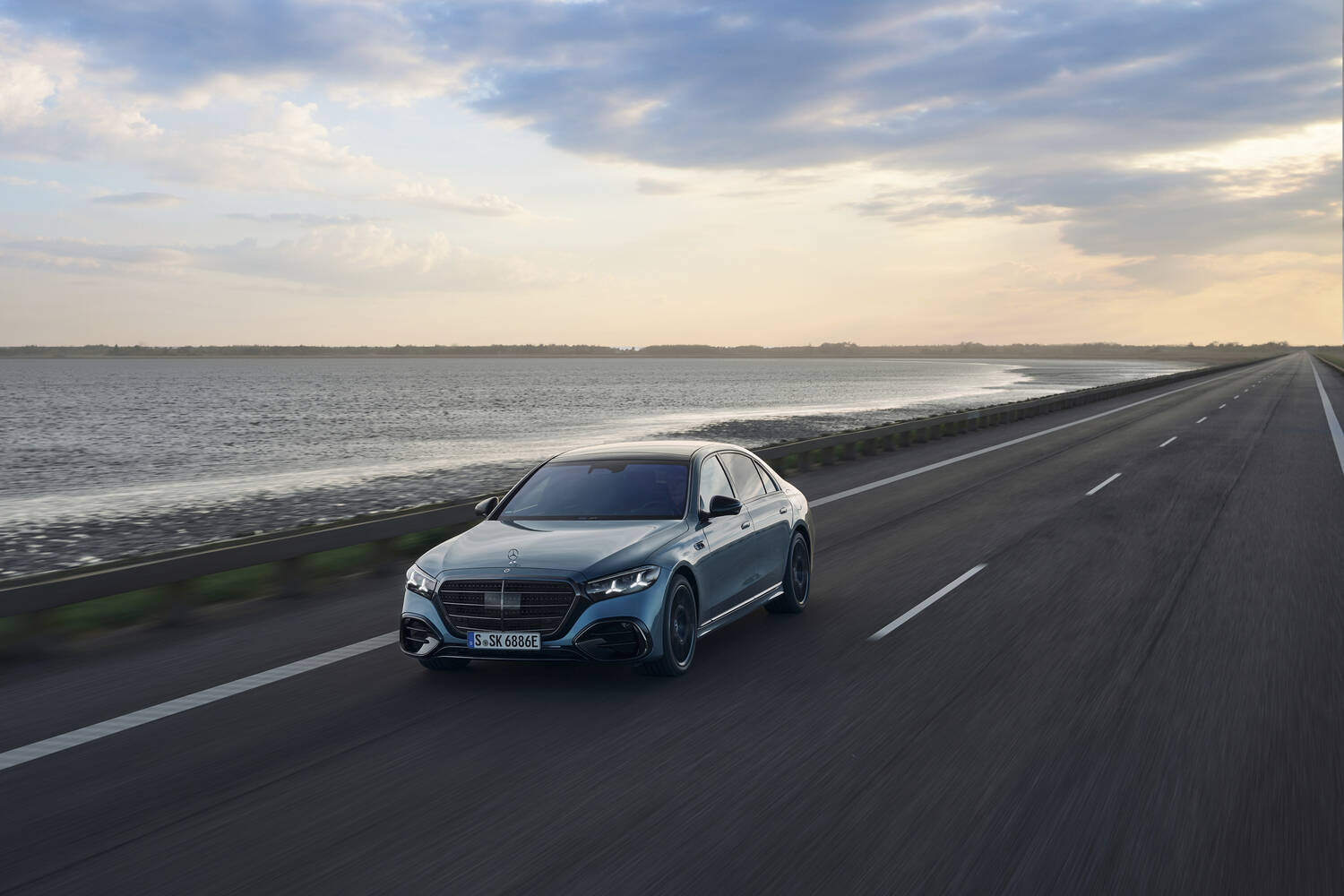
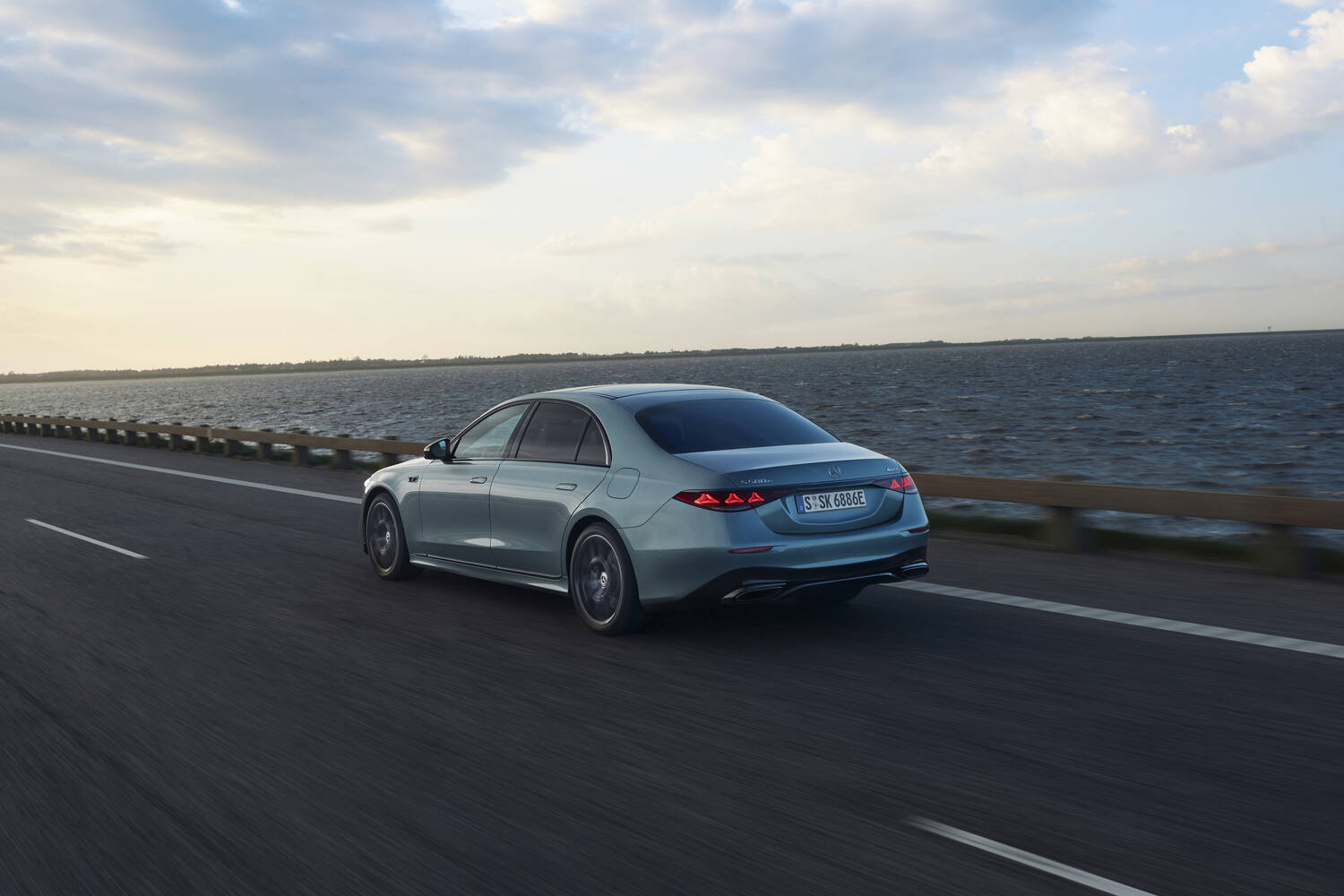
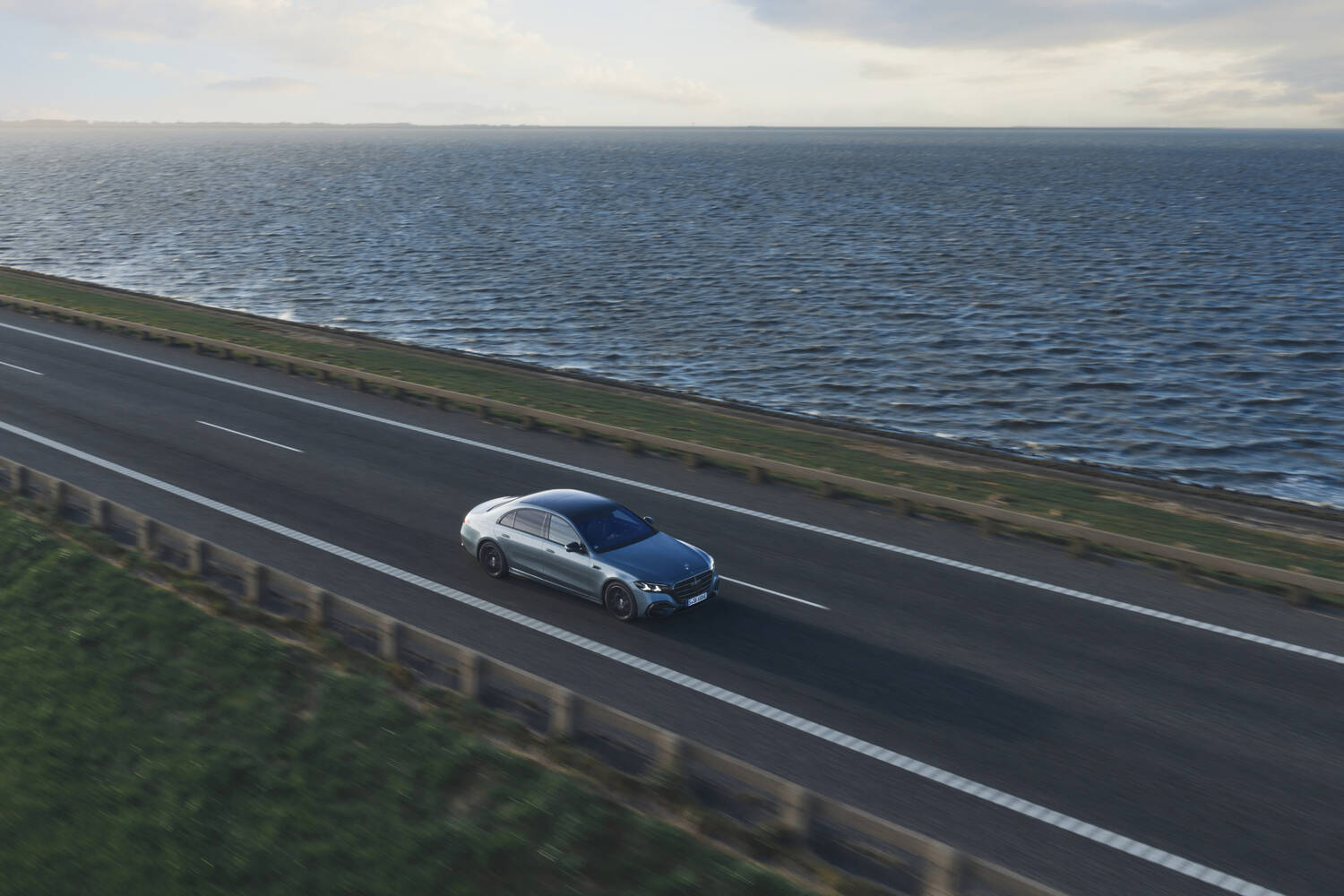
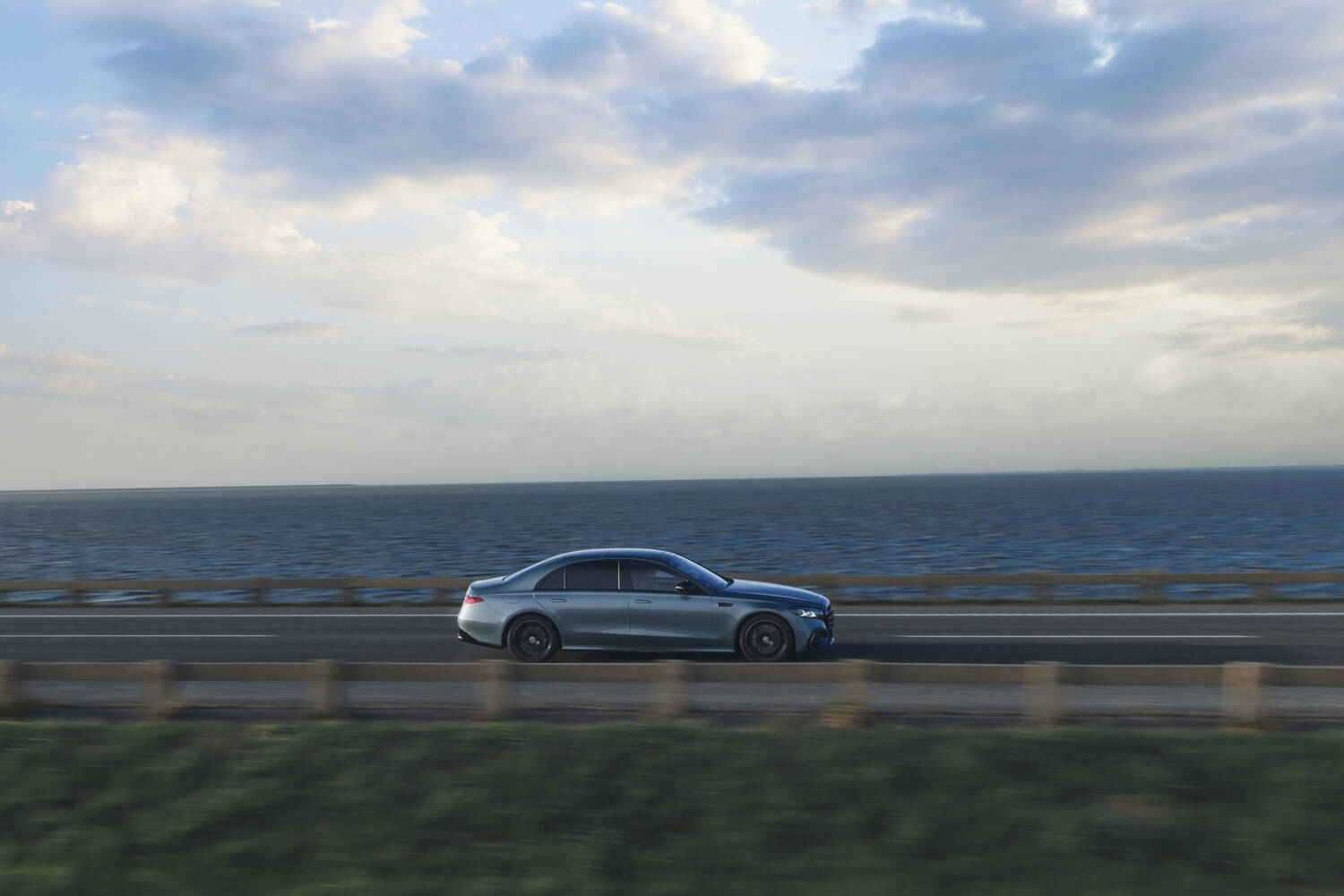
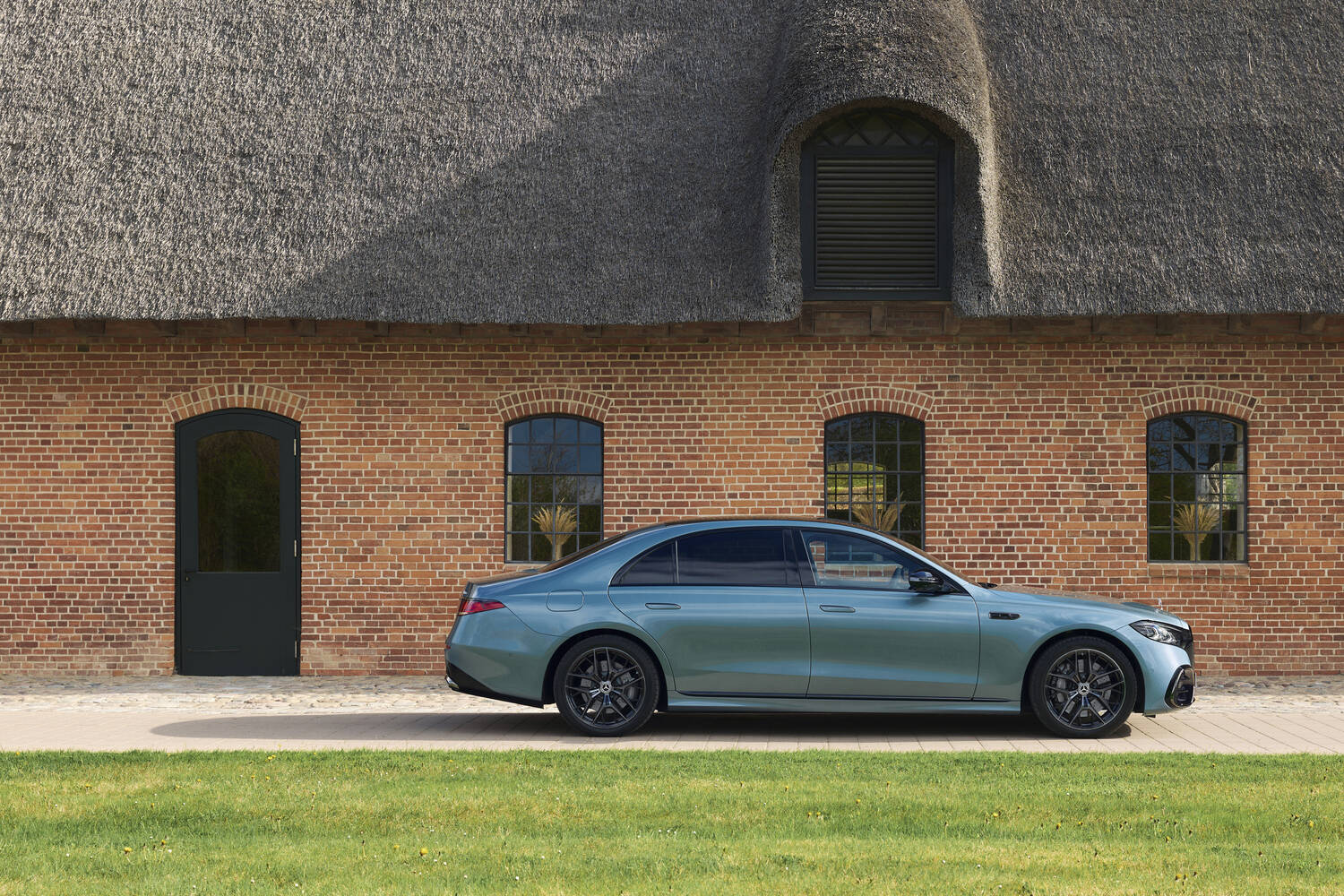
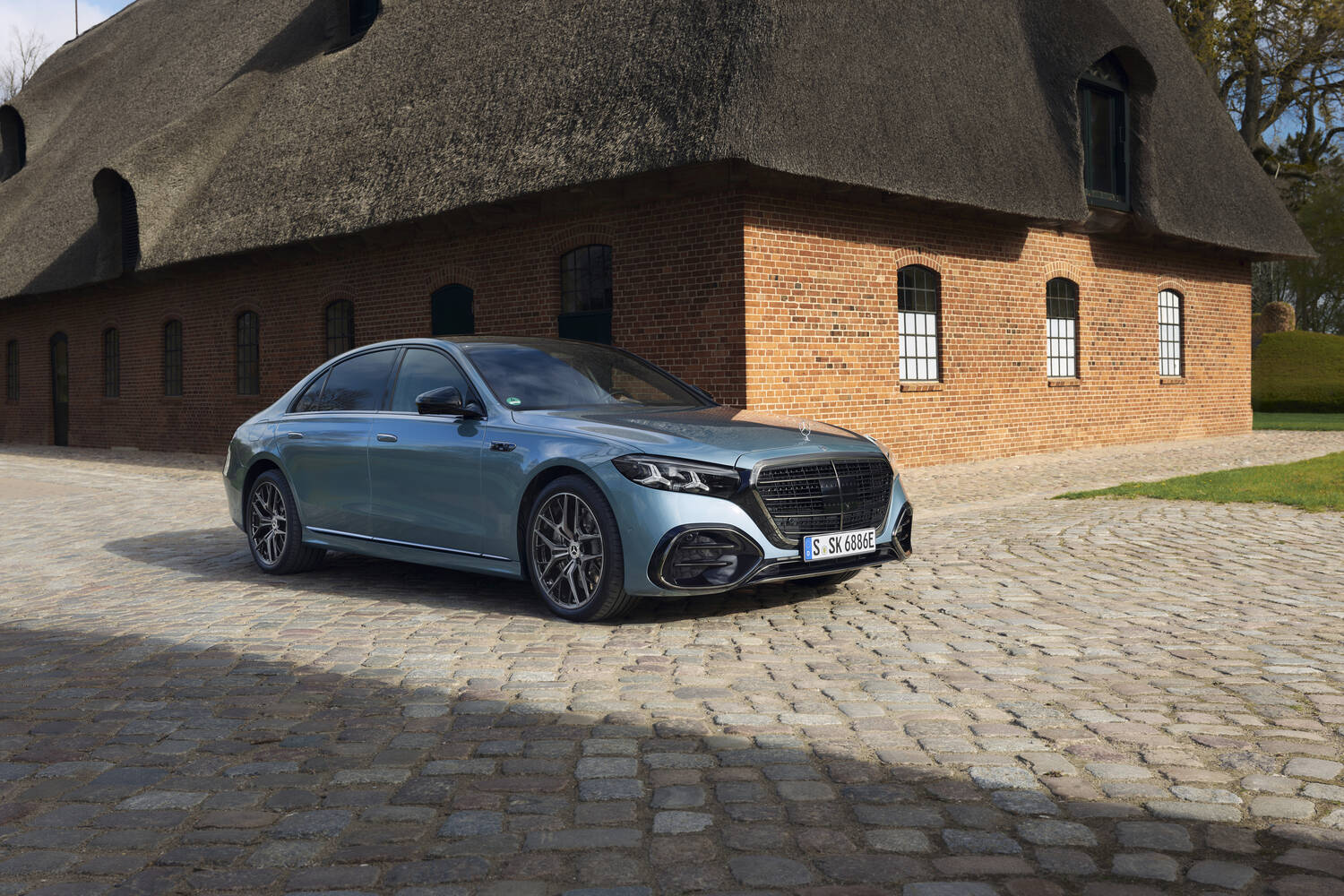
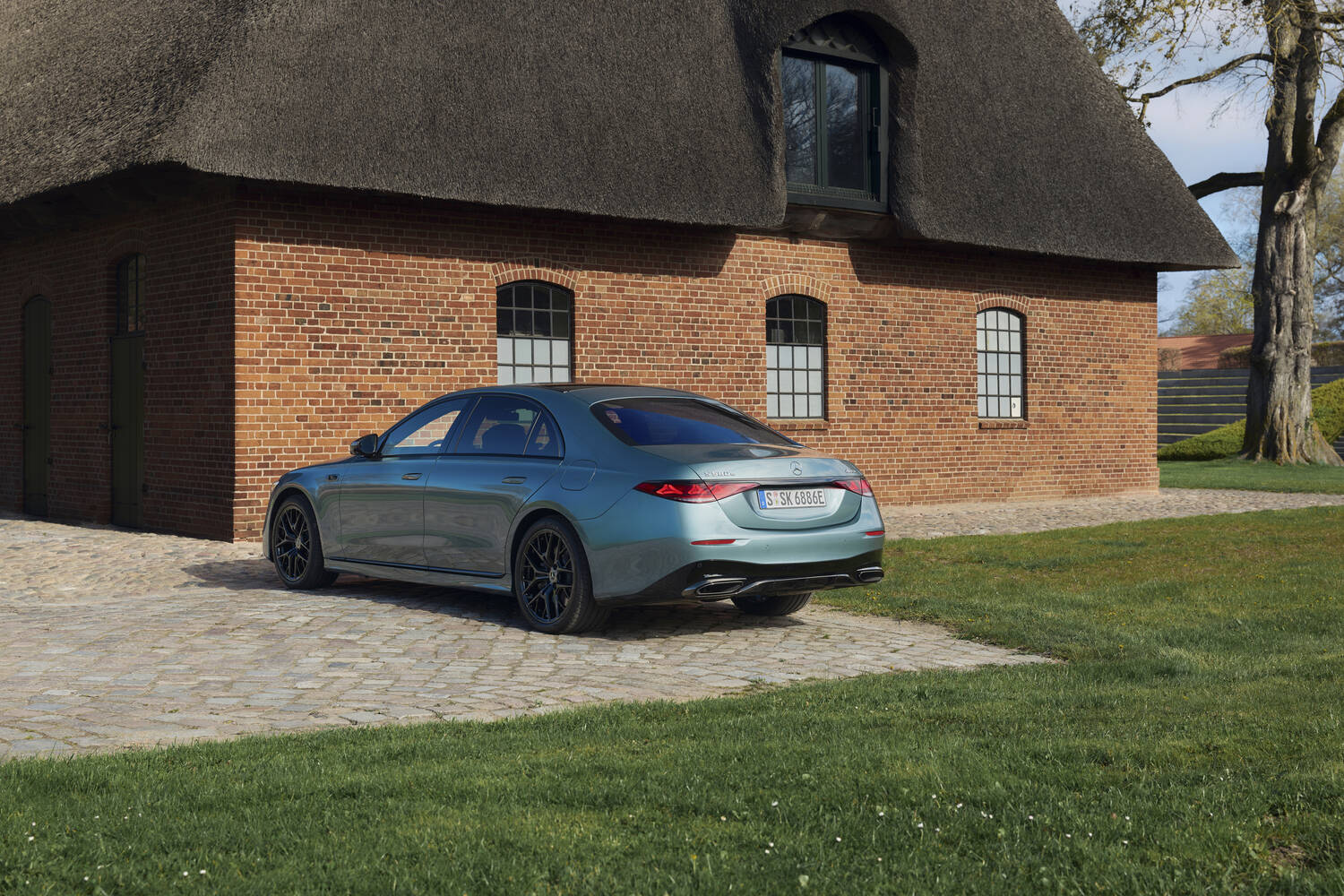
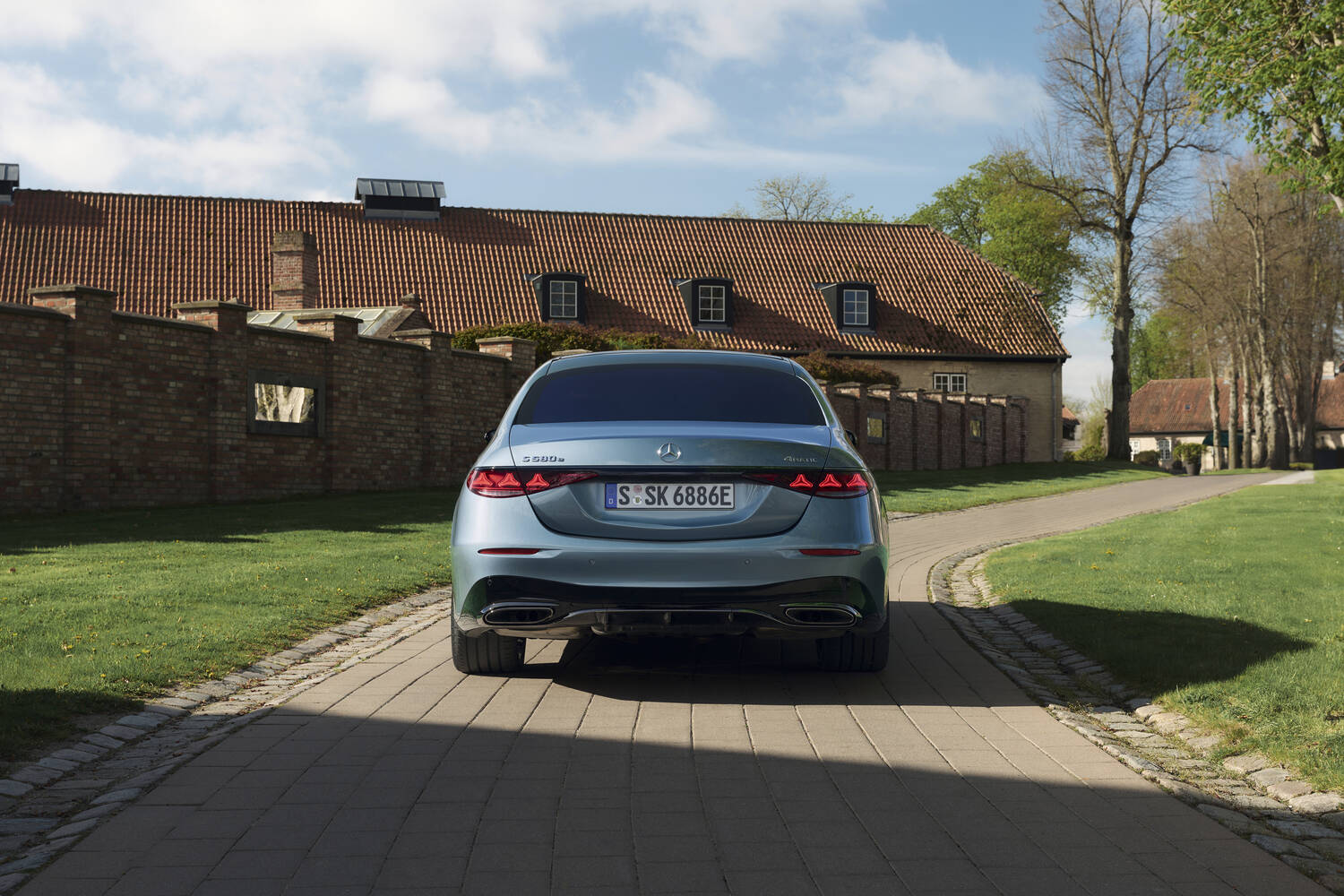
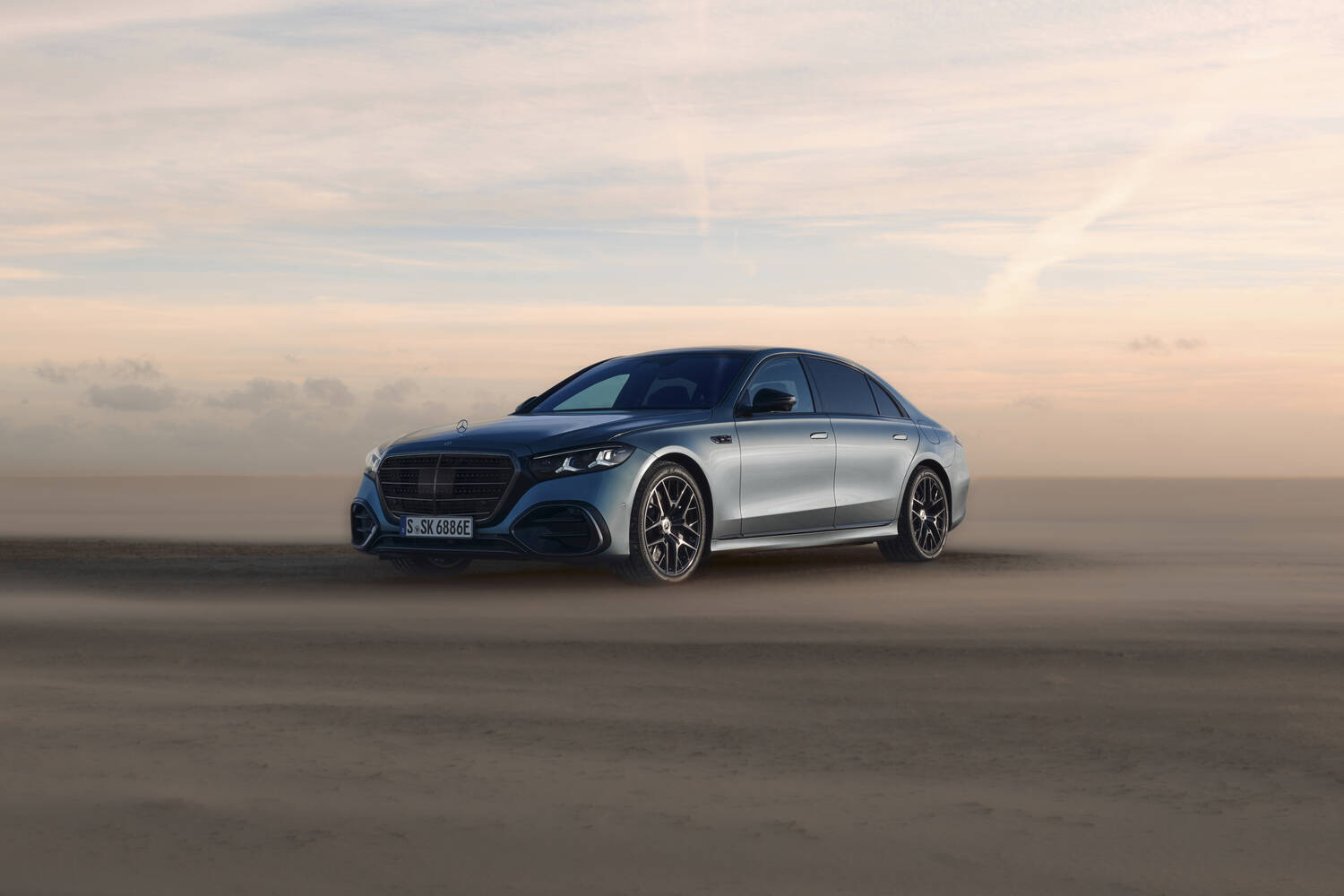
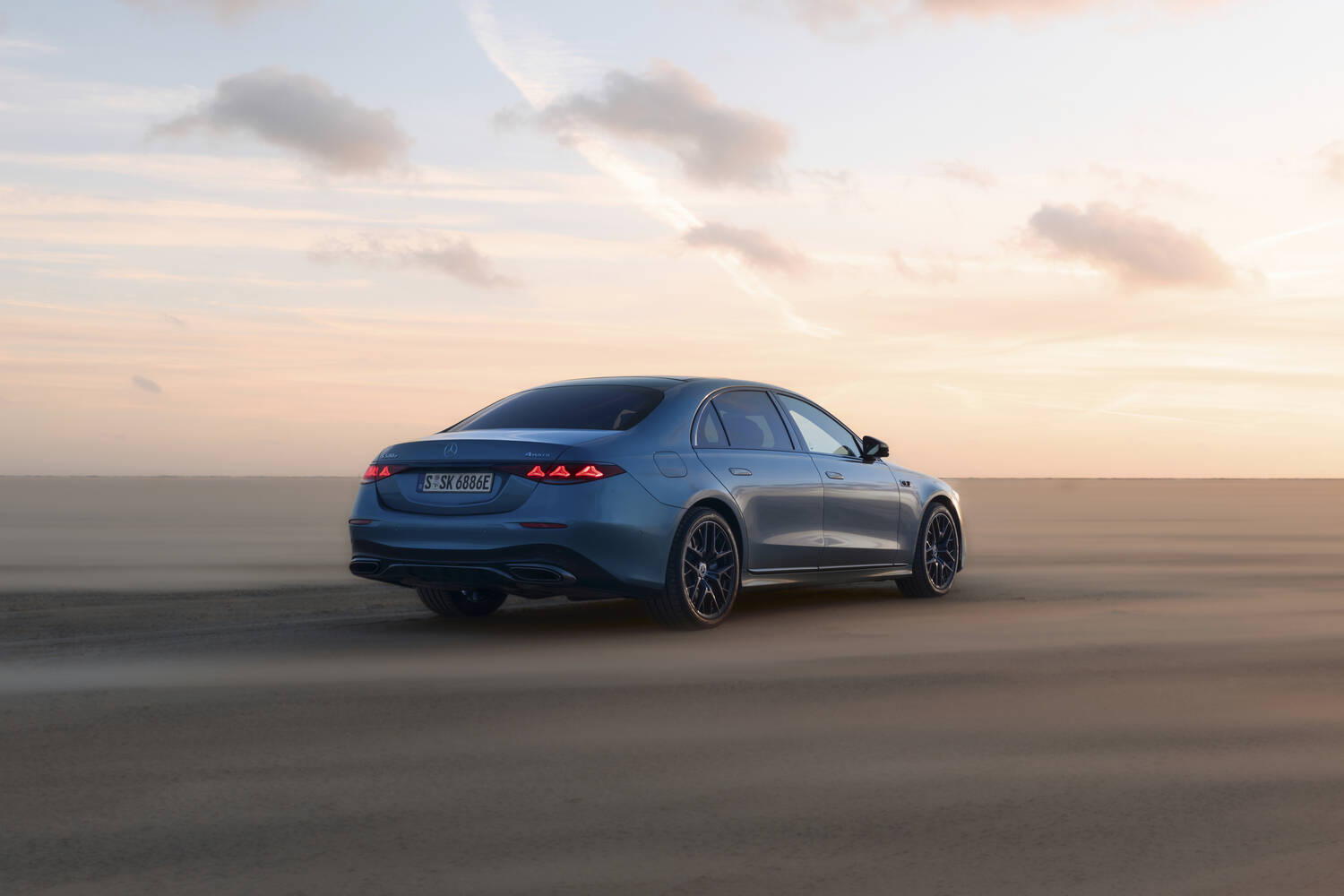
Mercedes has gently evolved the look of the S-Class for years so it's instantly identifiable as just that, and it remains one of the better-looking luxury saloons on the market.
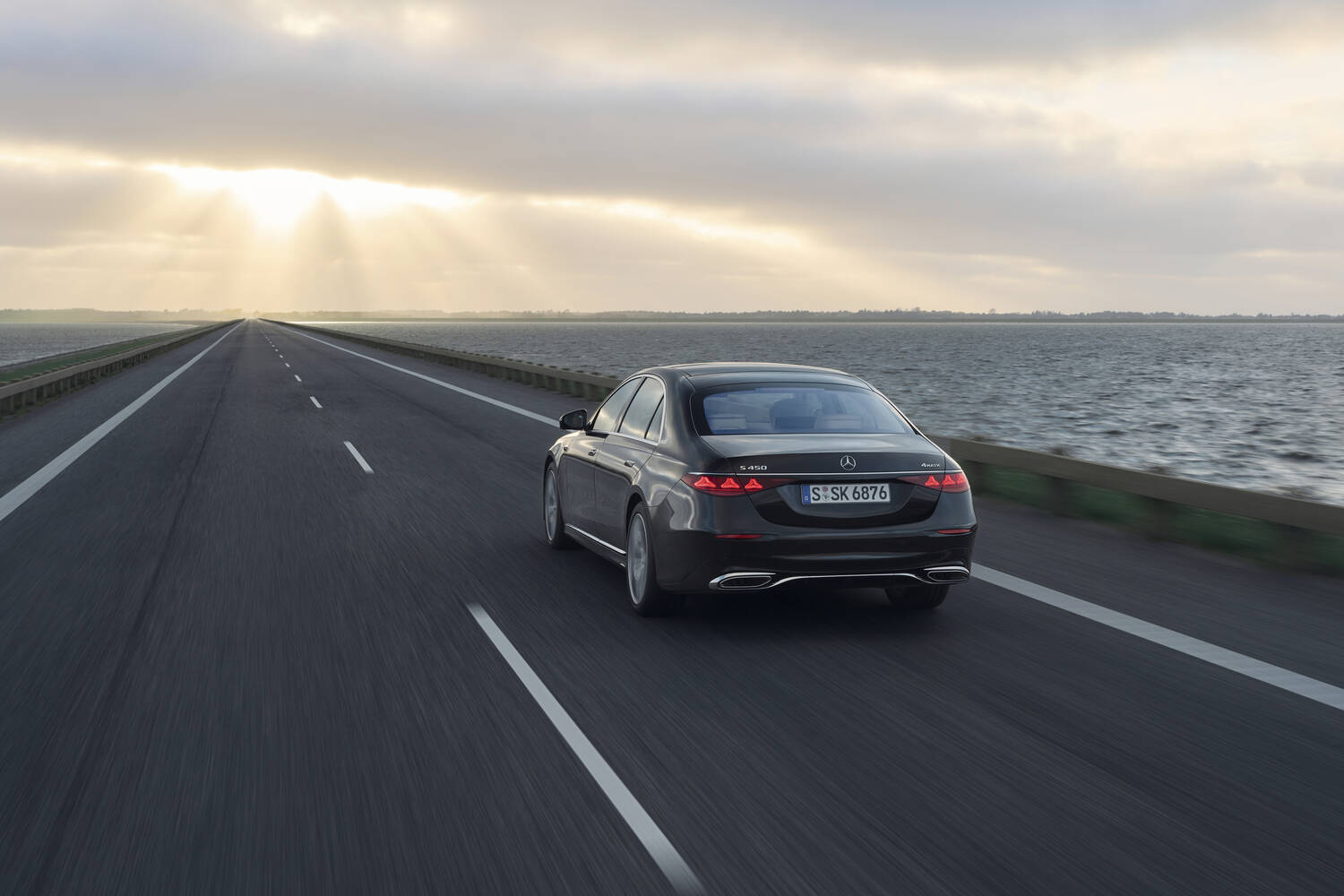
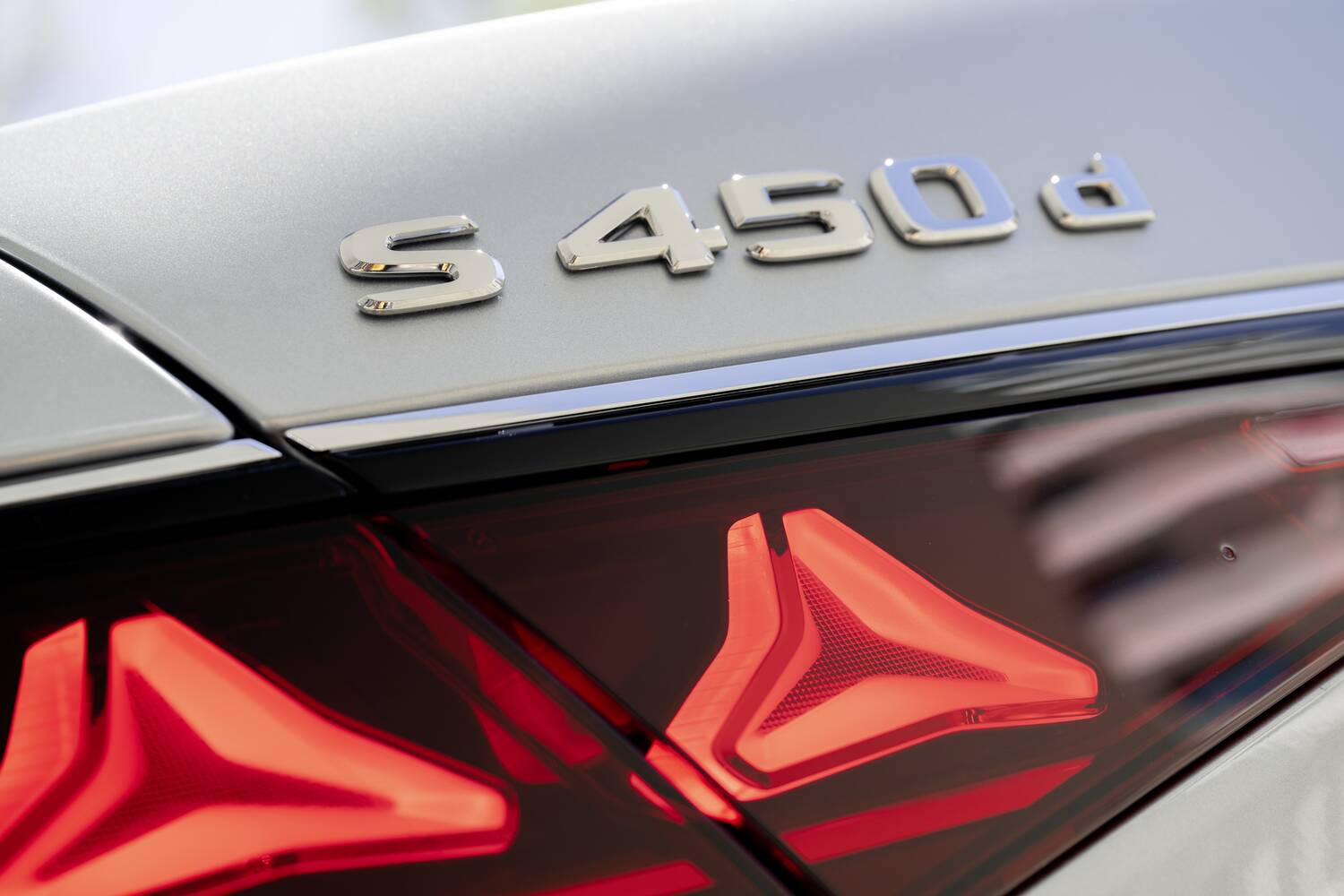
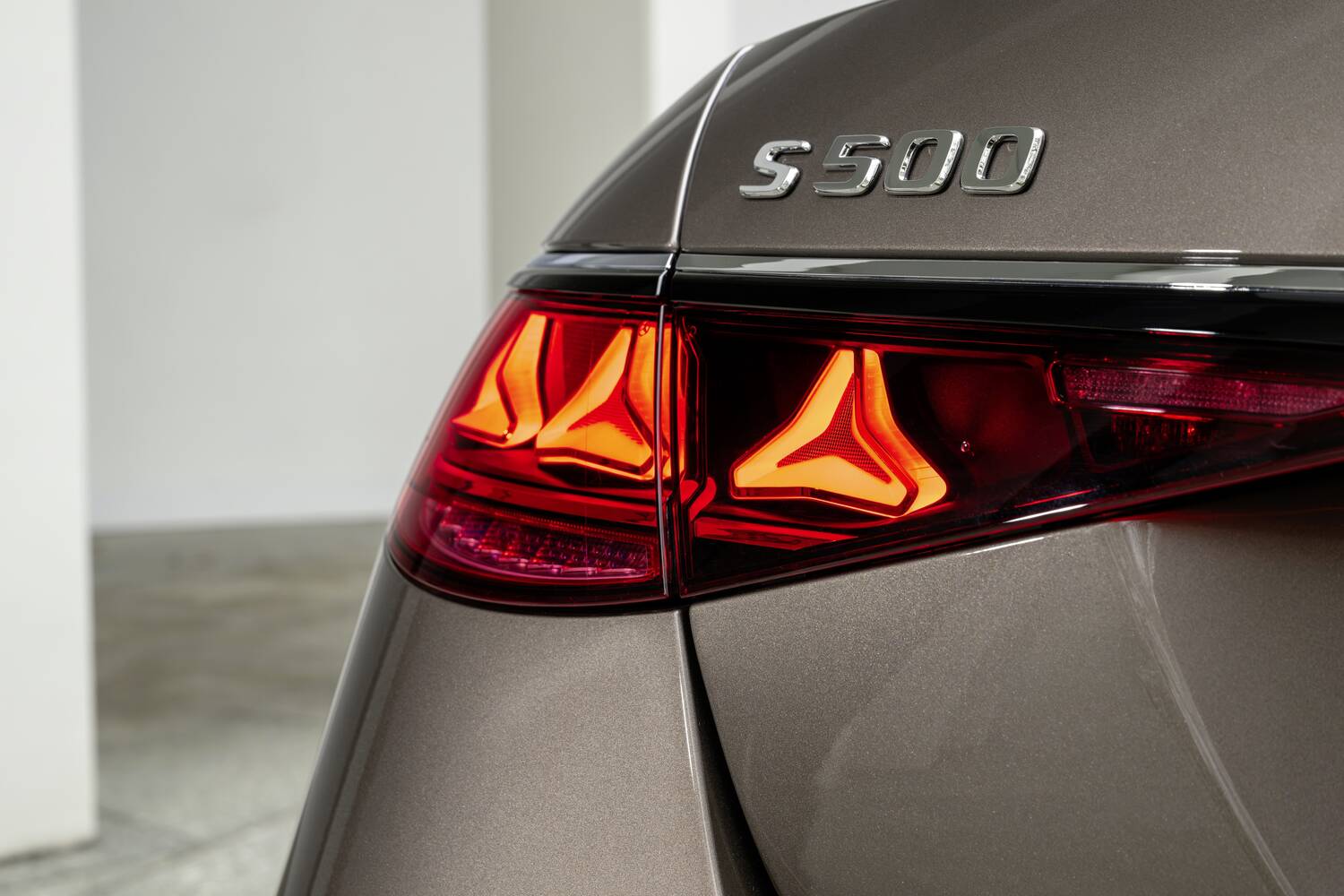
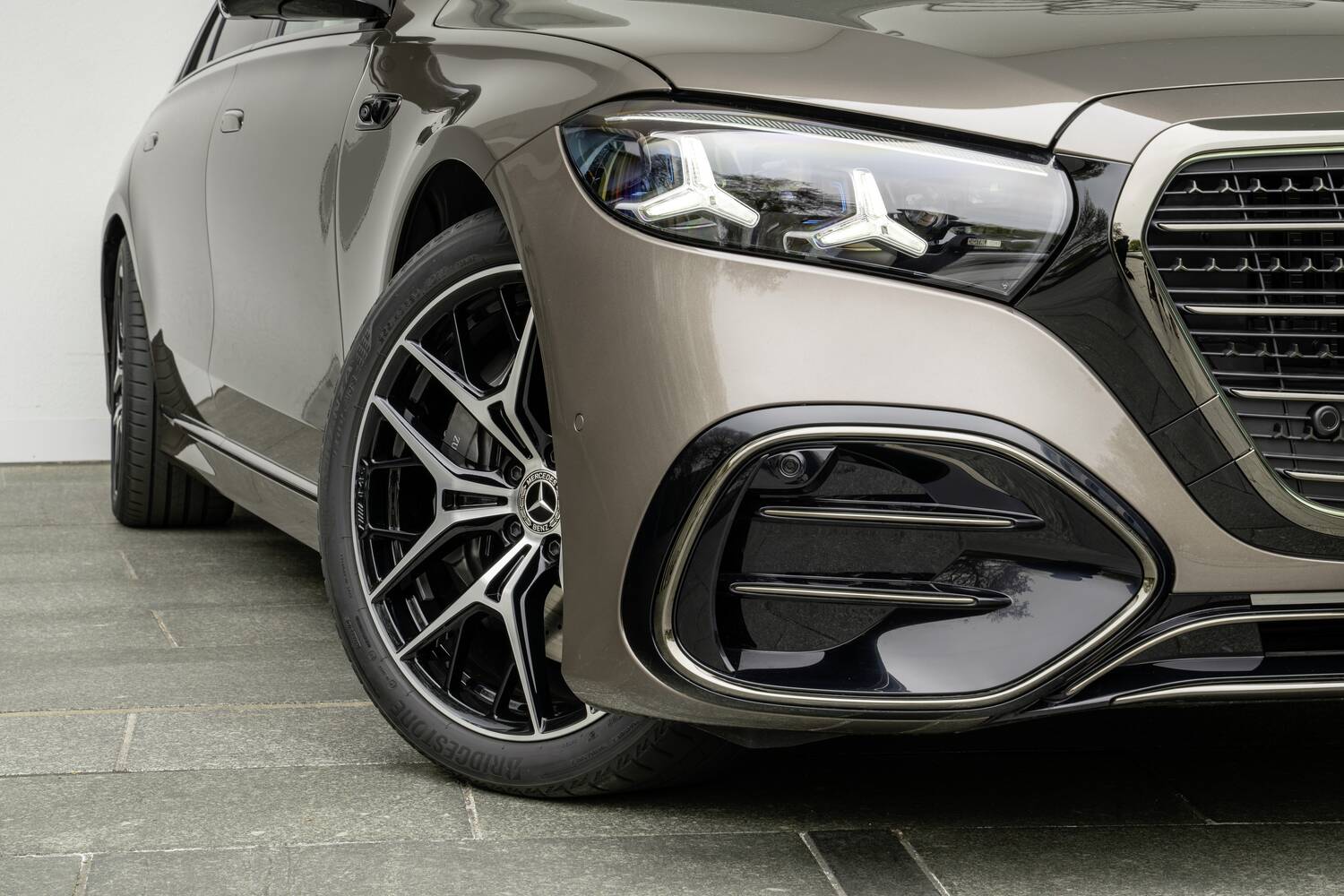
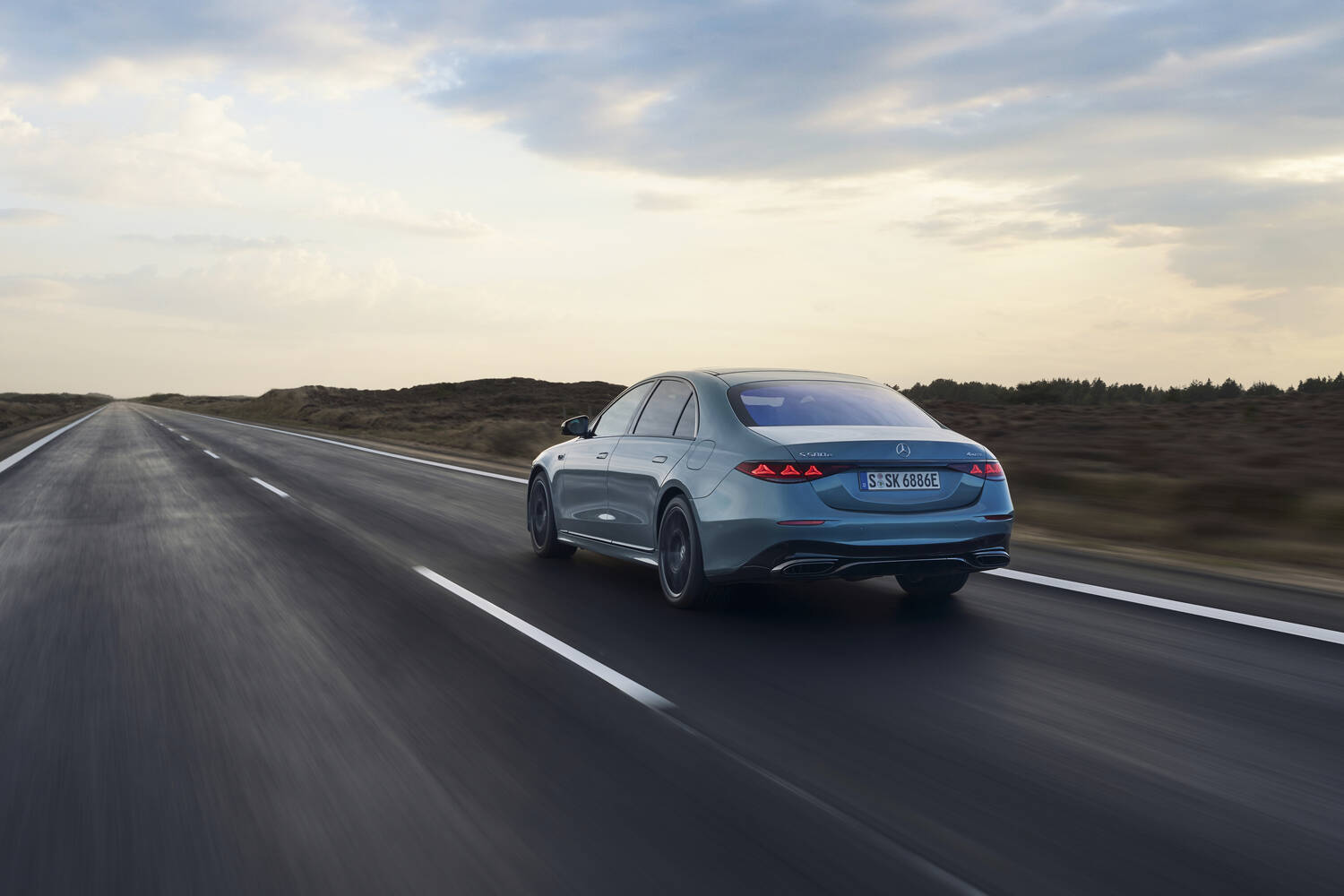
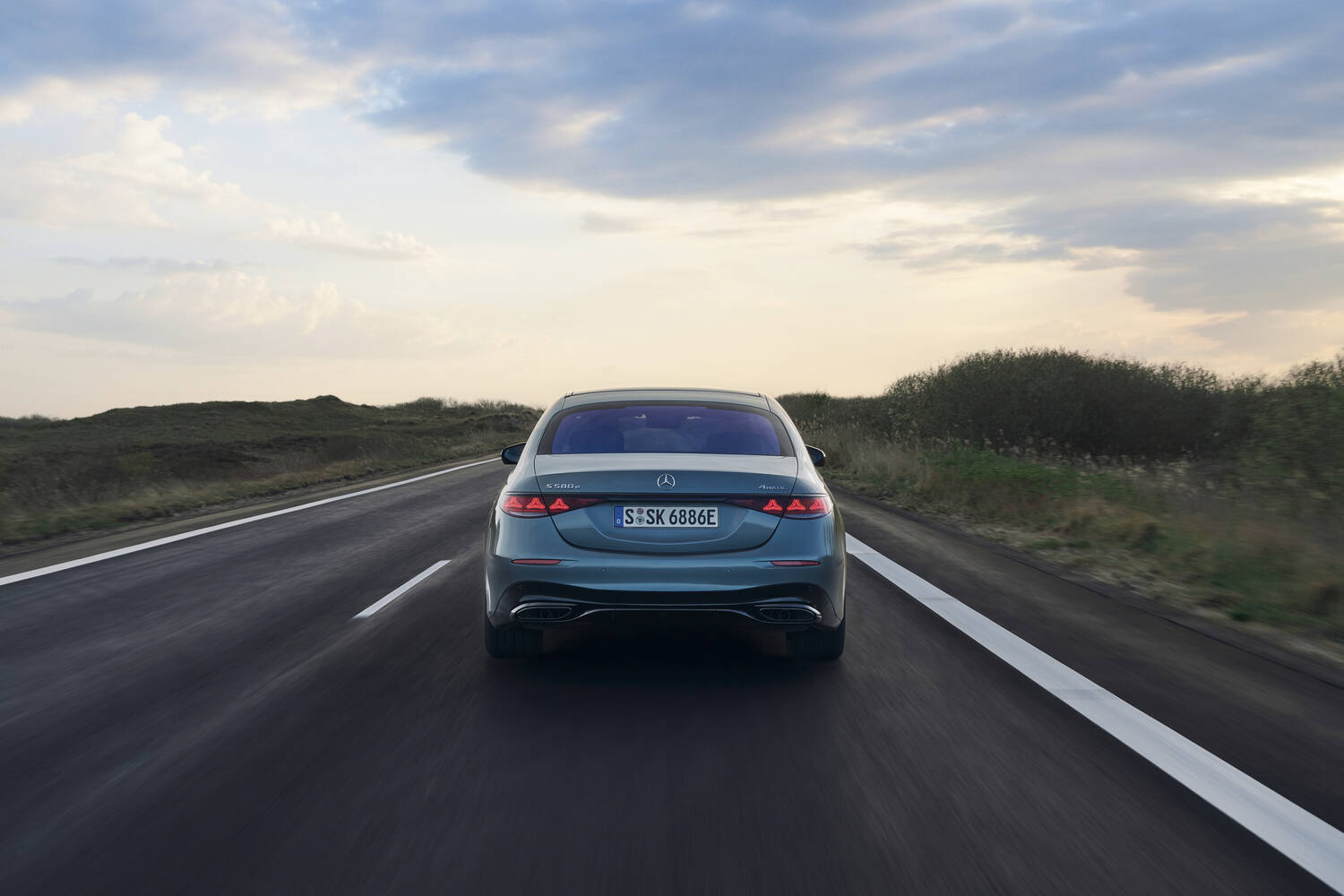
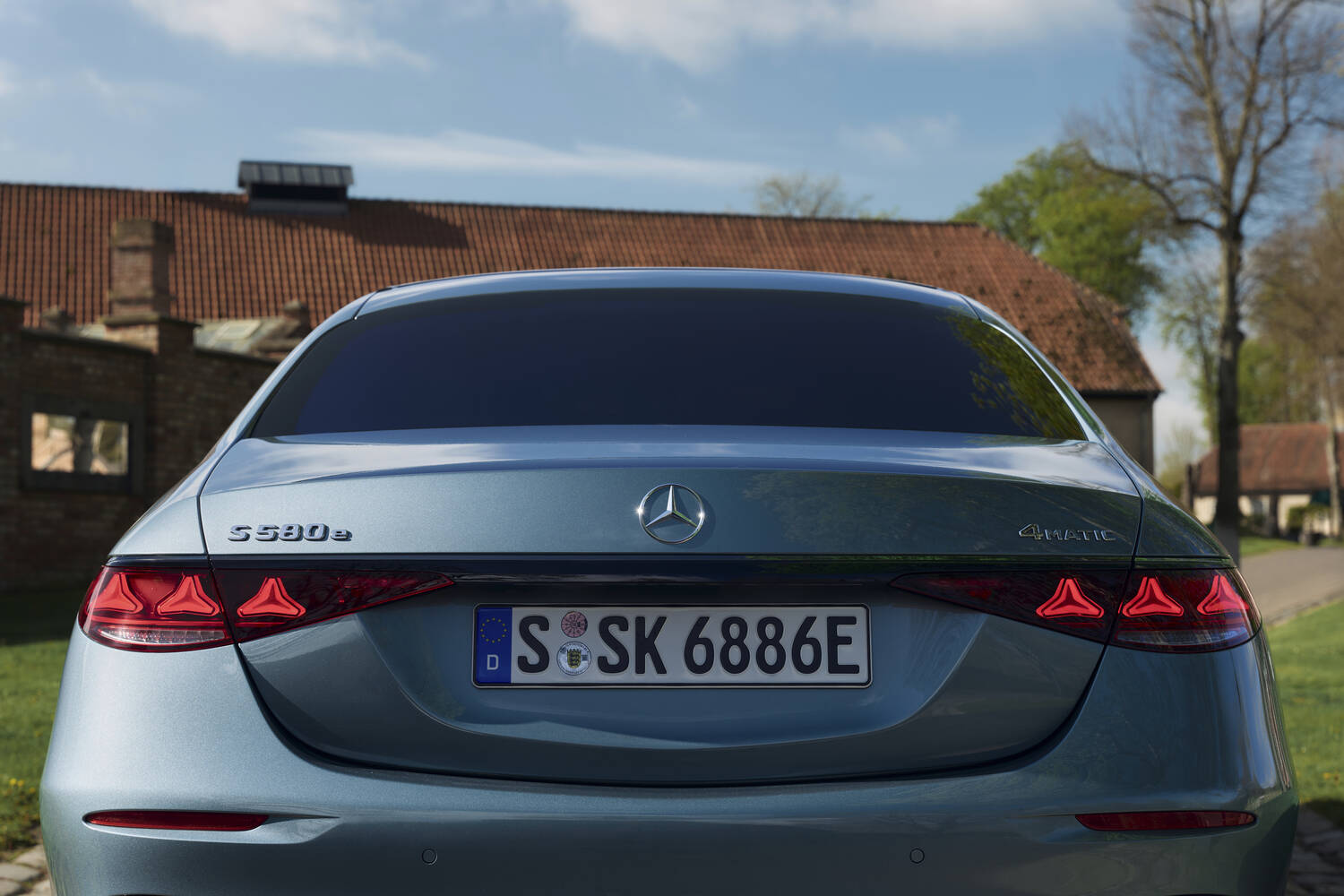
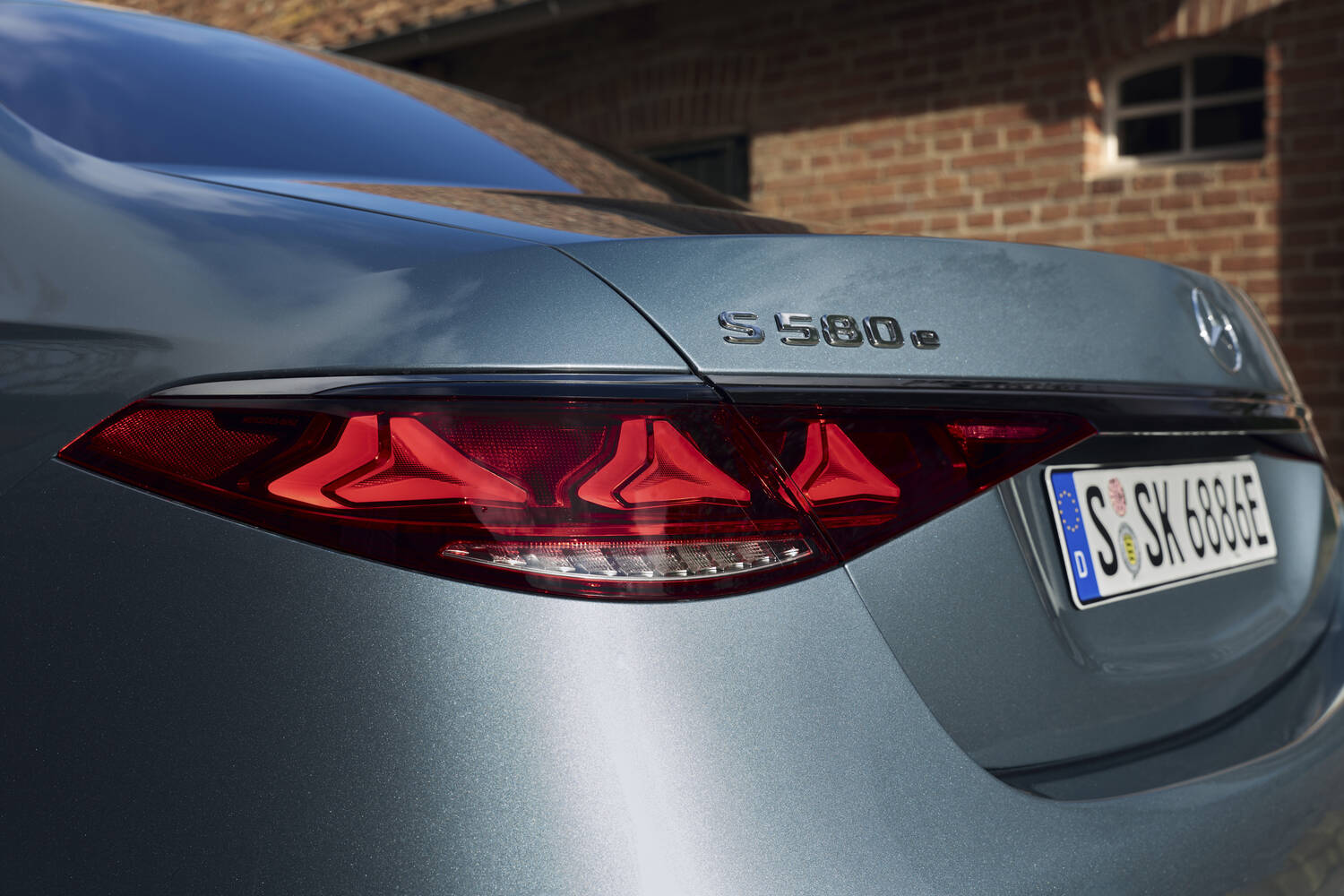
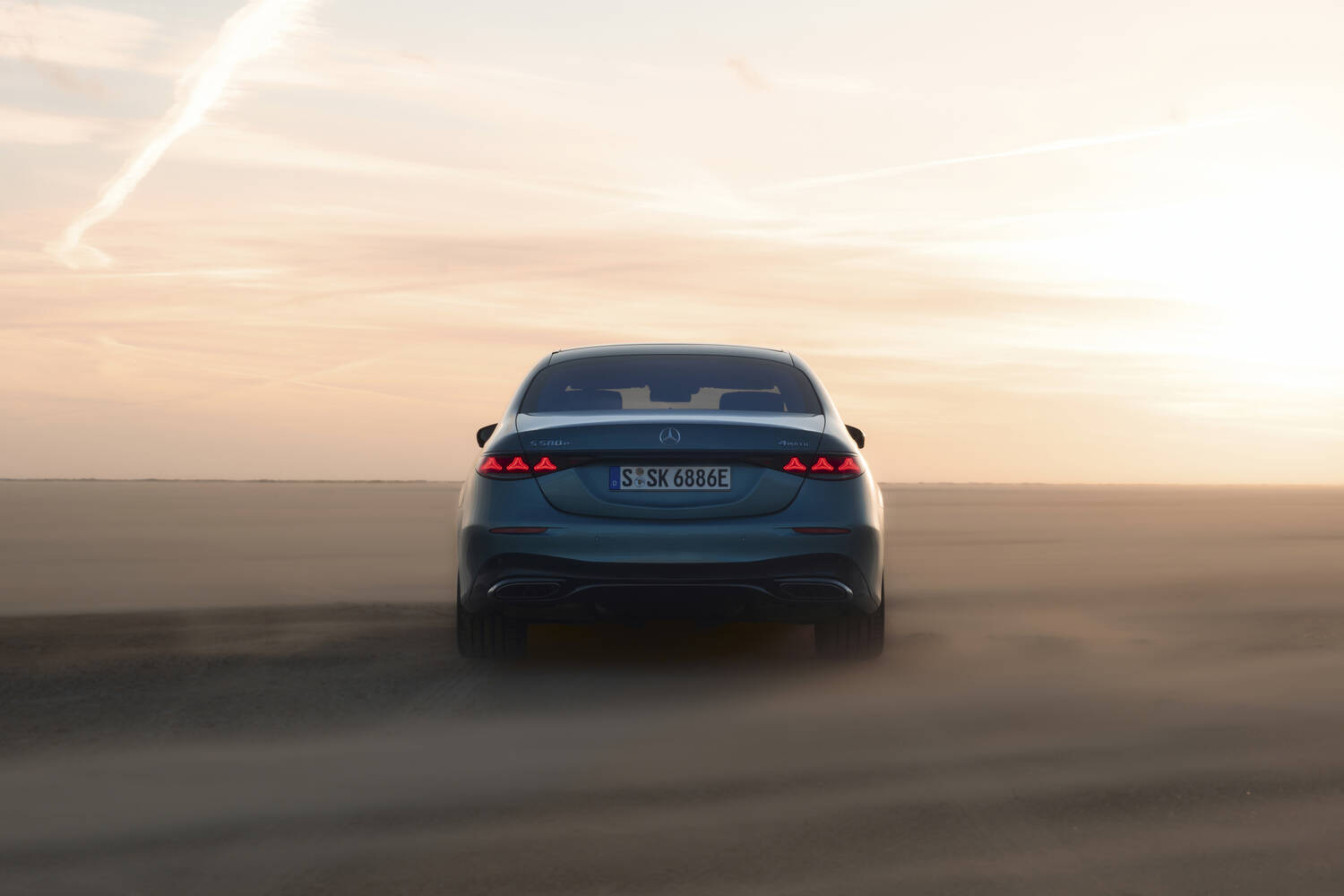
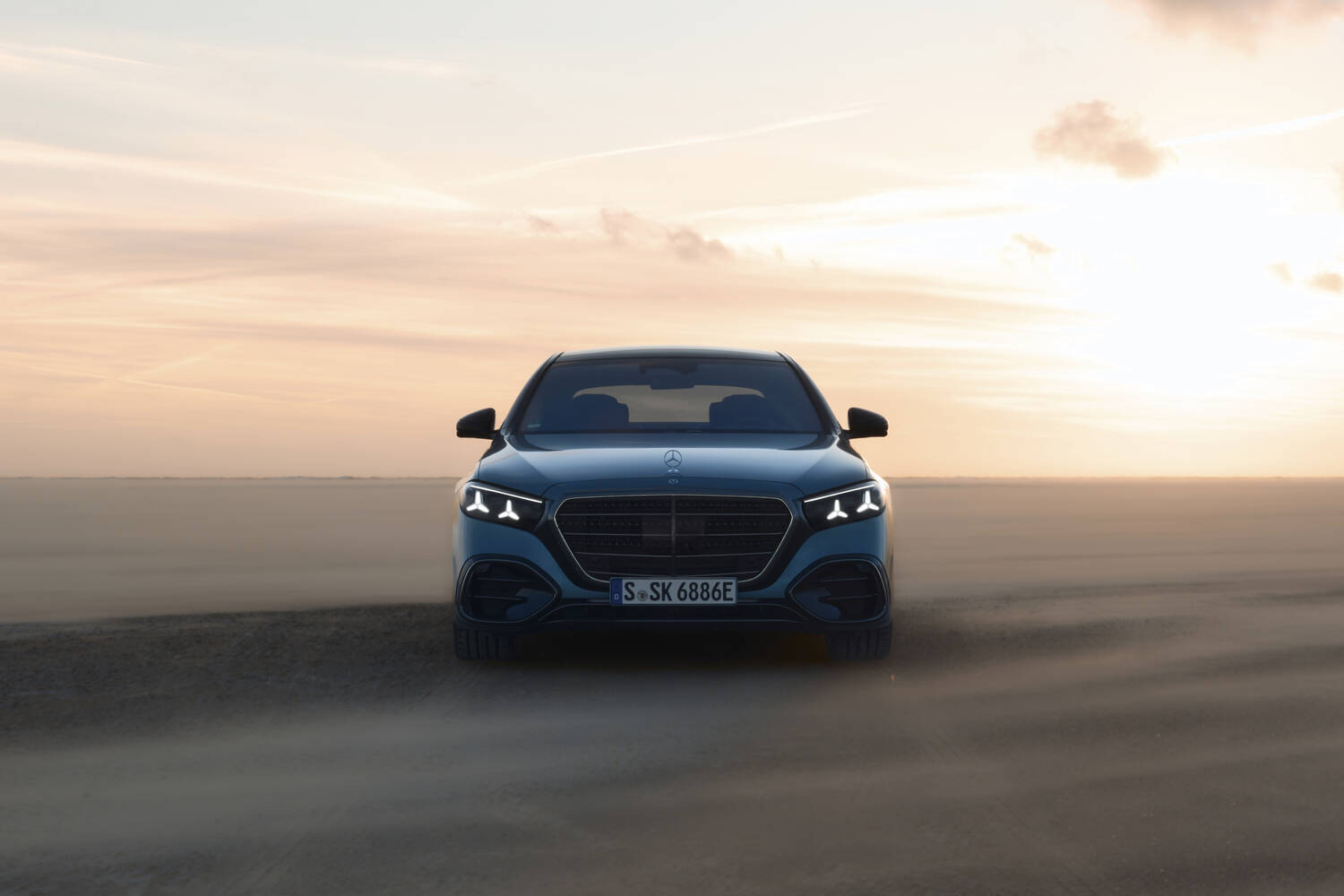
The 2026 update brought the S-Class in line with other Mercedes models in the expansive use of the firm's three-pointed star motif. These define the twin-star LED headlights, and those at the back.

There are also dozens of little stars in the radiator grille, which was enlarged as part of the midlife facelift, and given illumination for the first time in the S-Class's history.
If shiny chrome isn't your thing, there are the Night and AMG Line Plus packages to consider, darkening the chrome around the car and adding other moodier detailing.

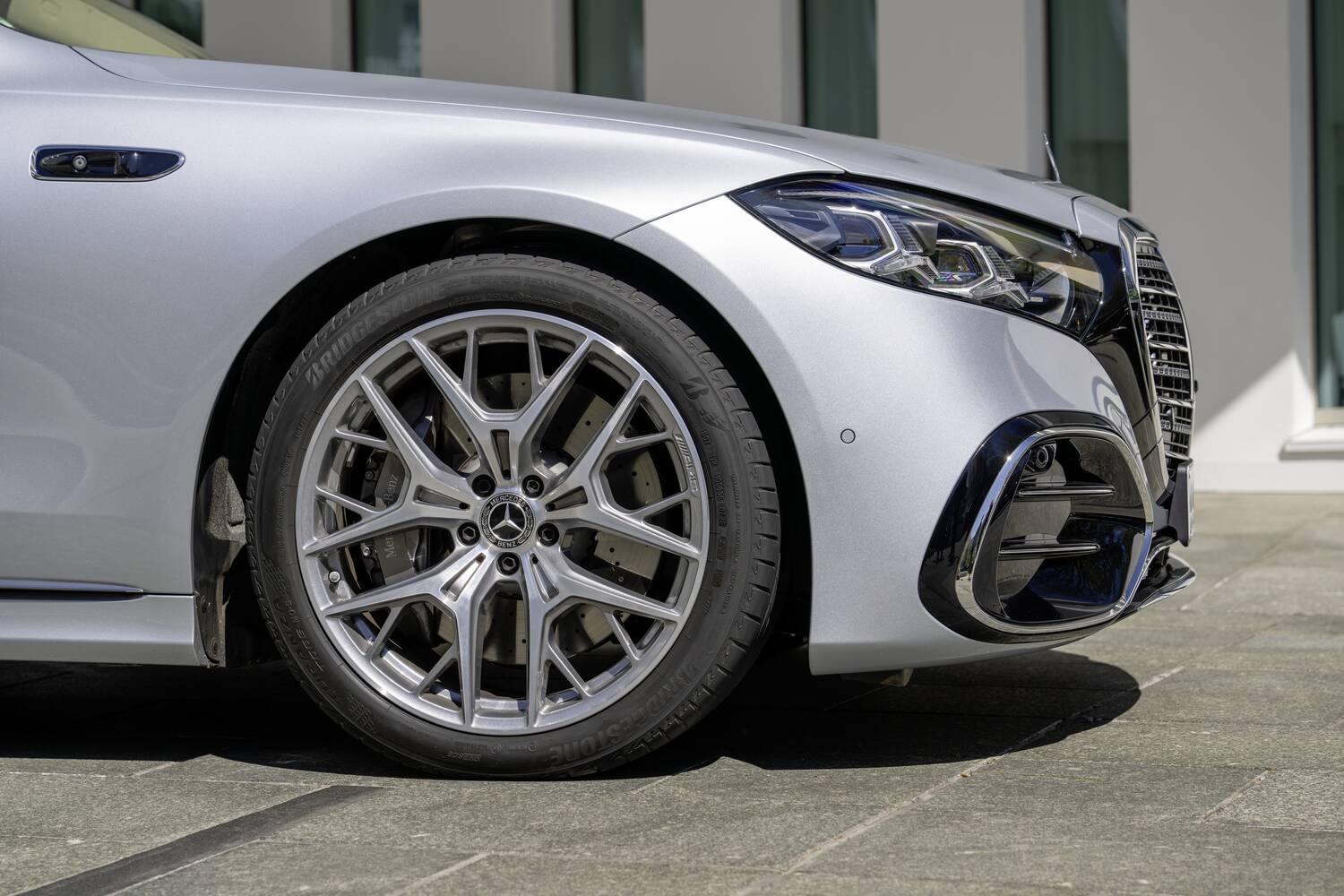
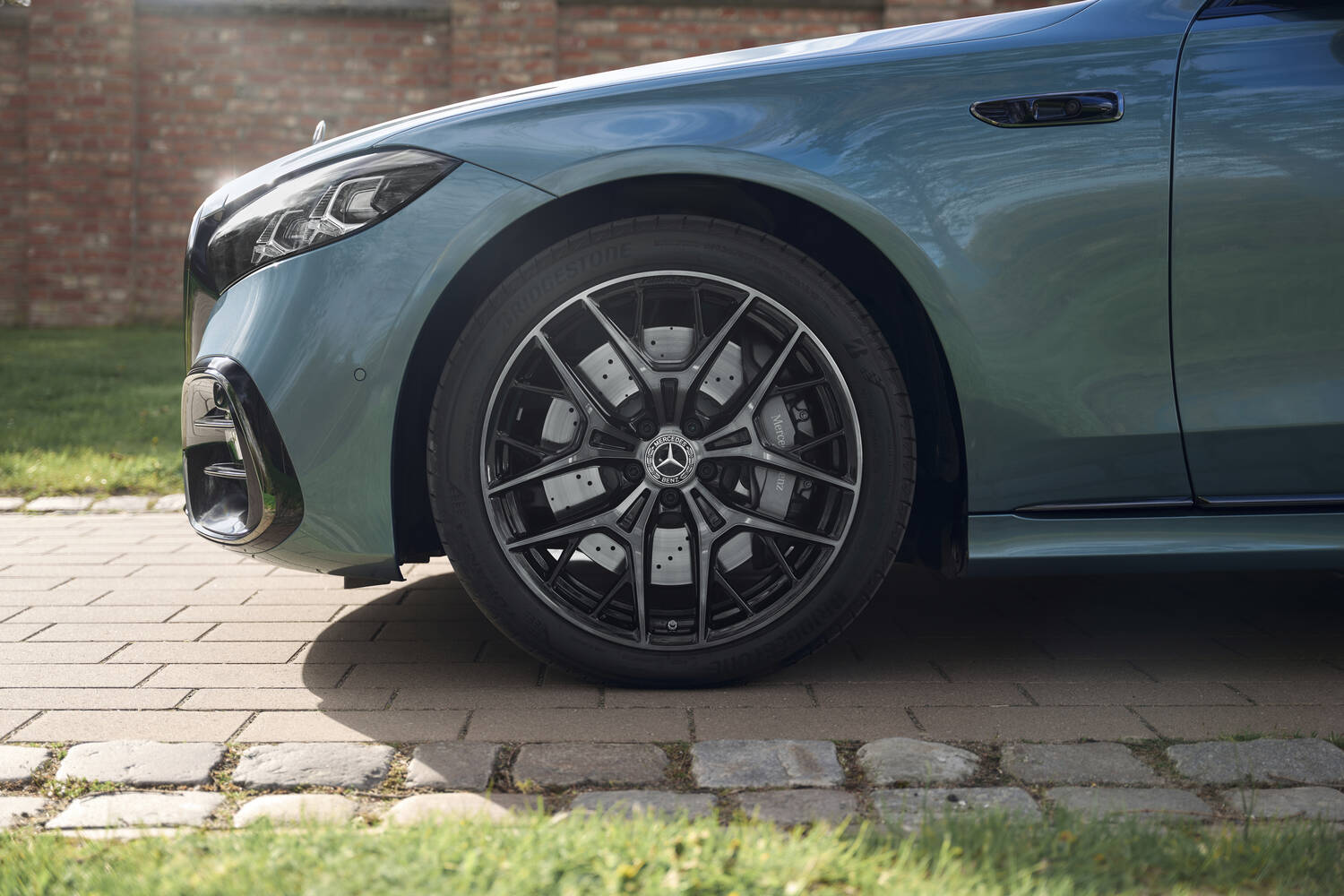
There's a range of different alloy wheels available, allowing buyers to choose between various 19-inch and 20-inch rims for no extra cost, or upgrading to higher-spec 20-inch or 21-inch options for a price.
Dimensions of the 2026 Mercedes-Benz S-Class
Length: 5,194mm (5,304mm for LWB)
Width: 1,921mm (mirrors folded)
Height: 1,503mm
Wheelbase: 3,106 (3,216mm for LWB)
Paint colours for the 2026 Mercedes-Benz S-Class
Go through the Mercedes Ireland configurator for the S-Class and you'll discover there are just two colours available at no extra charge - Plain black and Warm grey solid.

Next up are the seven metallics, at €1,571 each: Verde silver, Obsidian black, Nautic blue, Velvet brown, Graphite grey, High-tech silver and Emerald green.
Starting at €3,253 - and rising to €15,713 - are the 'Manufaktur' paints, including Opalite white, Patagonia red, Kalahari gold, Cote d'Azur light blue, Desert sand and Ireland mid-green.
There are a further 43 (that's not a typo) Manufaktur exclusive hues and four 'magno' options, mostly priced at €15,713. The magno paints (white, green, orange or silver, in essence) are matte effect.

In this part of the world it seems strange that there are so many colour options when most S-Class buyers stick with black in any case.
Interior, practicality, tech & comfort of the 2026 Mercedes-Benz S-Class
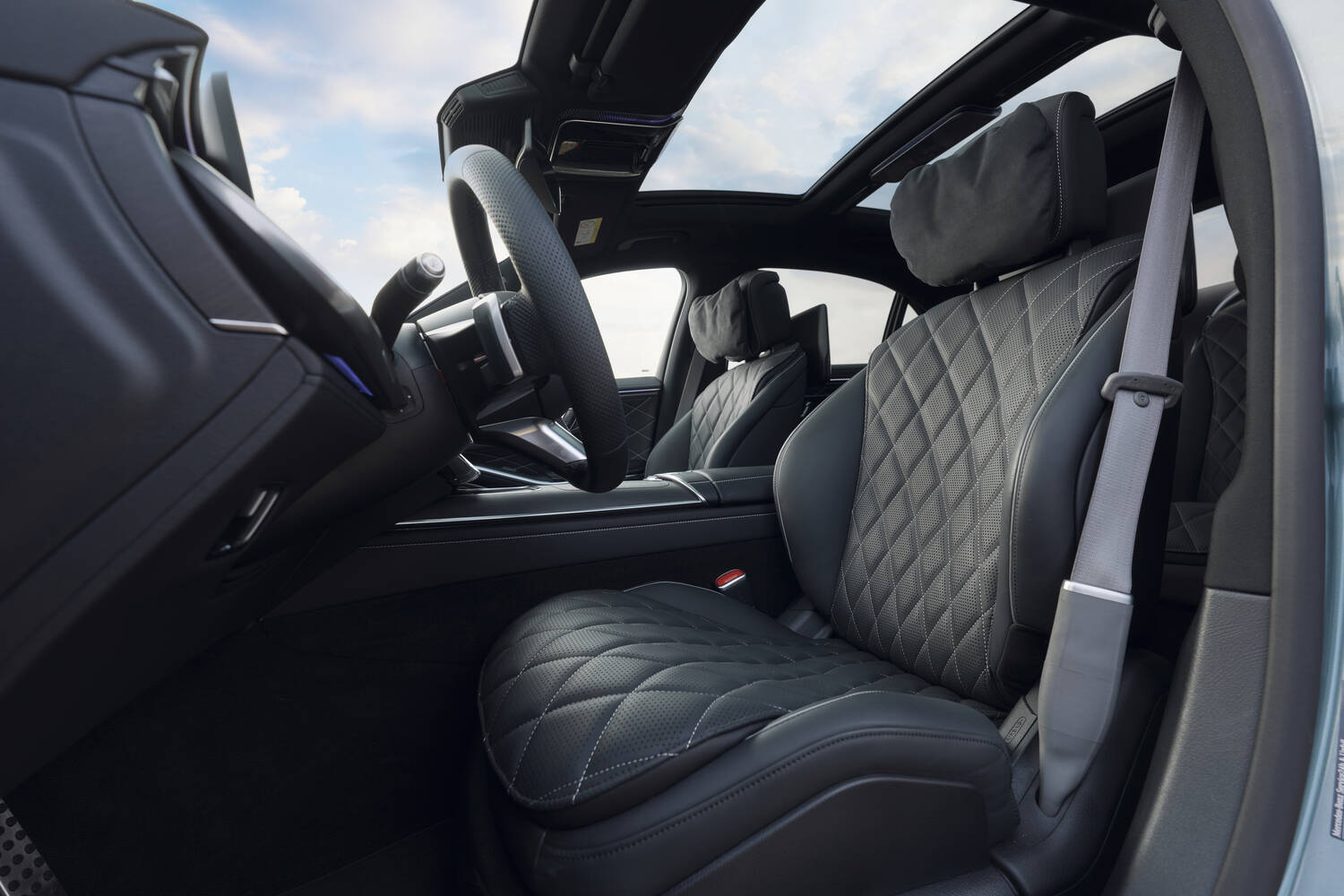
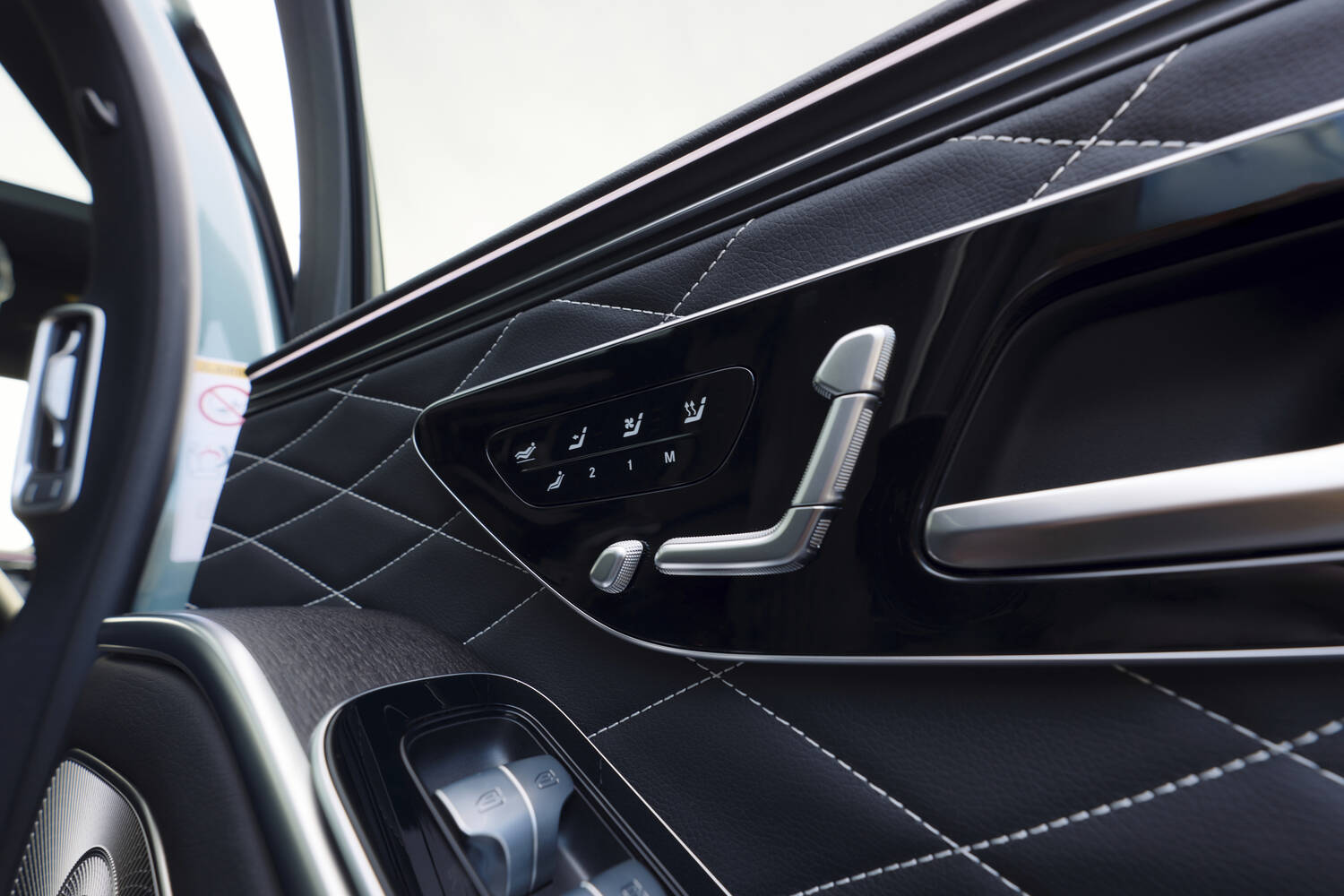
• Gorgeous stitching and leatherwork
• Screen-heavy front and rear
• Ultra-luxurious in LWB model

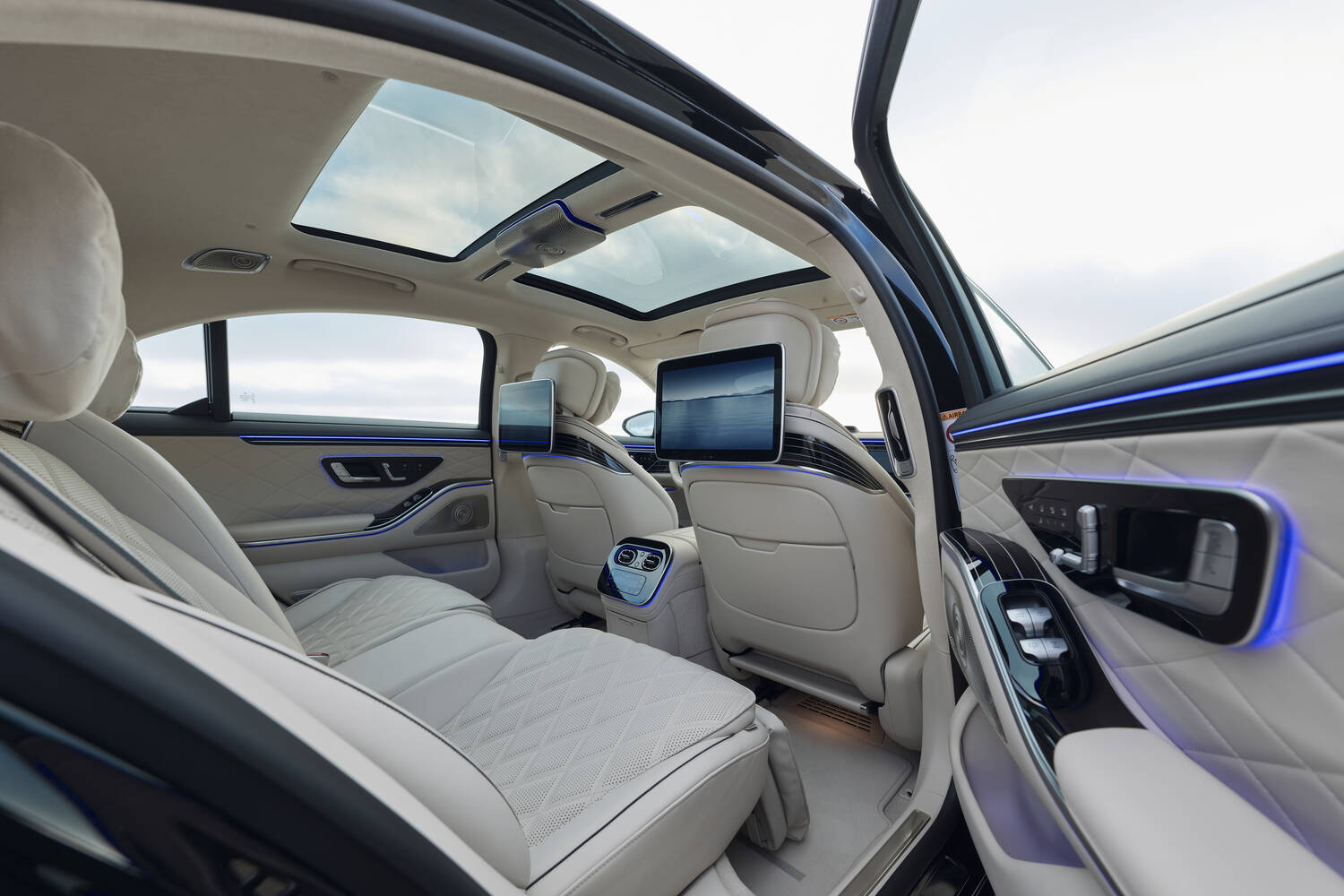
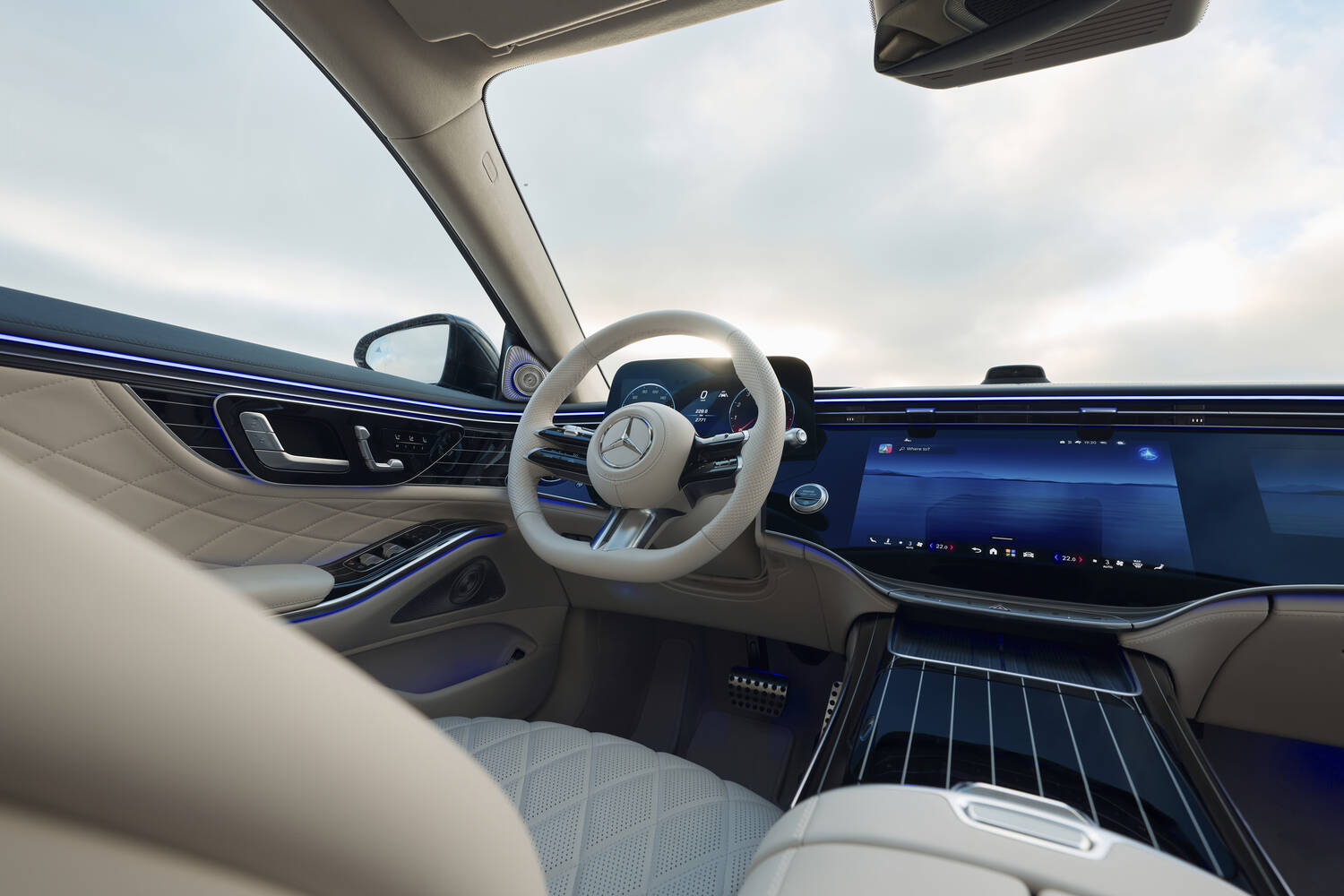
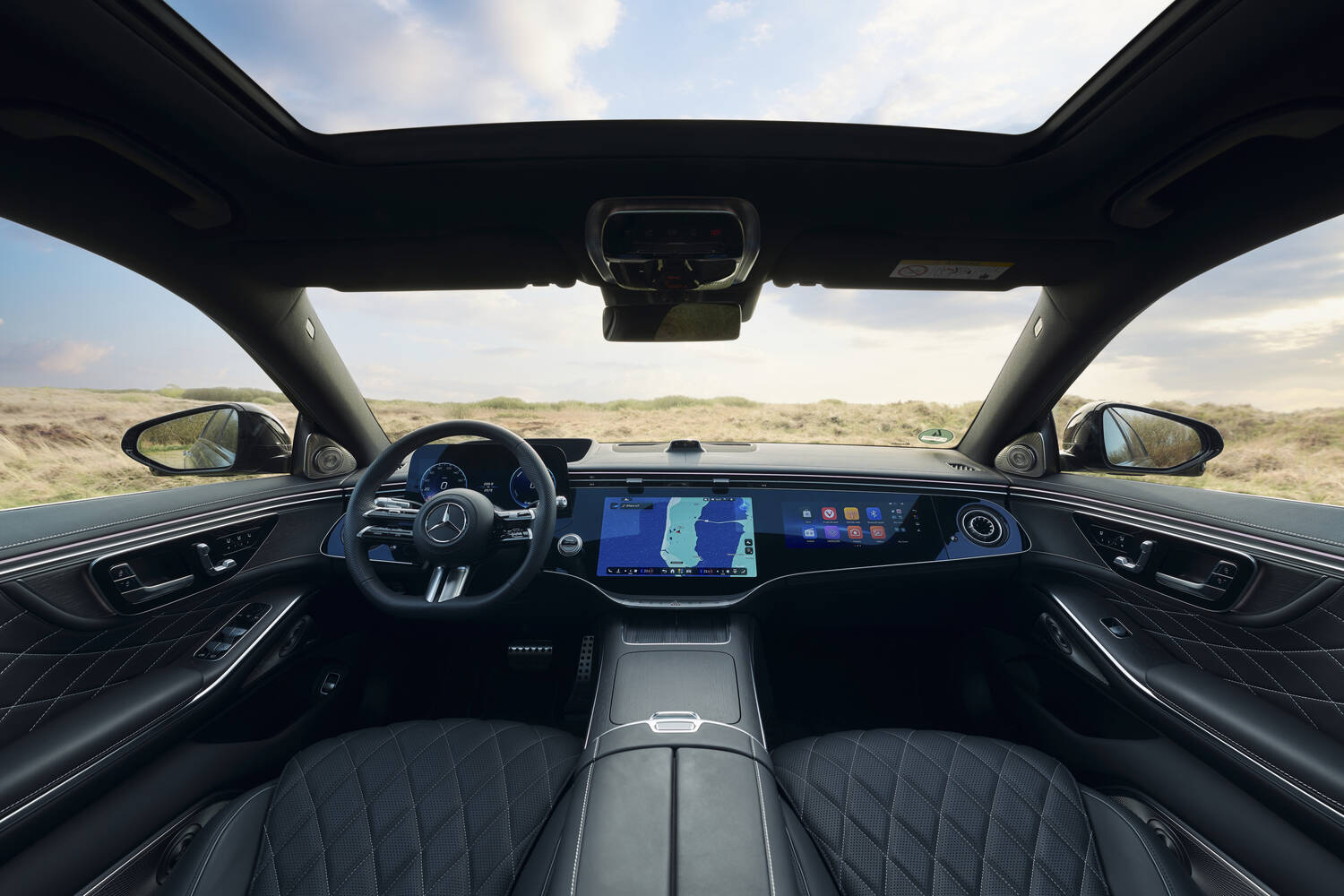
While it's impossible to ignore the expanse of digital real estate dominating the front of the S-Class, the rest of the interior is pretty special, too, with high-quality materials used throughout.
The 2026 update brought with it new air vents that can be controlled digitally and a redesigned centre console allowing far more customisation of the materials and finish. The S-Class is available with a leather-free cabin if so desired, too.

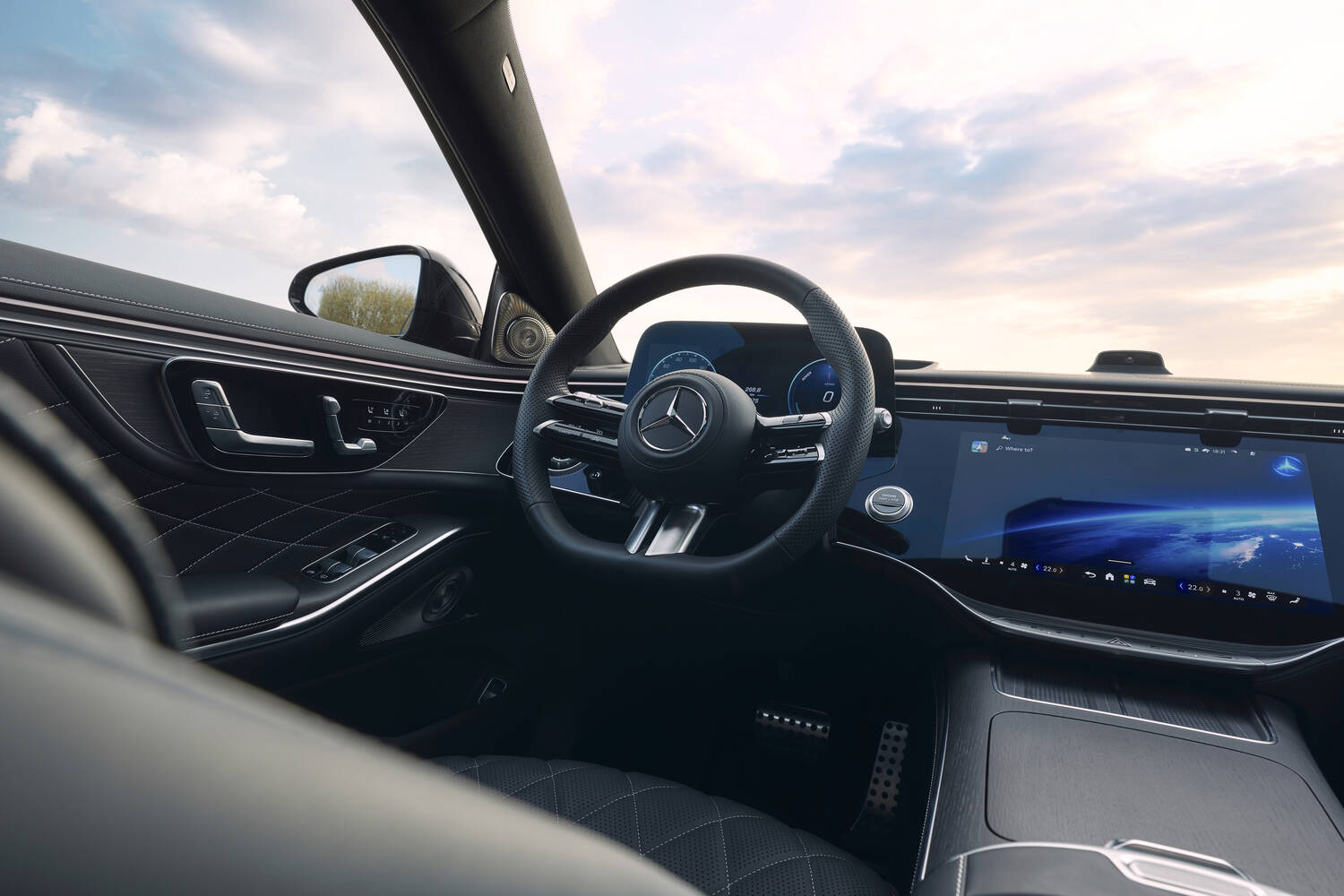
In contrast to all the cutting-edge technology on show, Mercedes has changed the steering wheel switches back to physical controls from purely haptic ones. This is in response to customer feedback and we're delighted to see Mercedes listening.
Getting comfortable in the driver's seat

With a wide range of electric adjustment for the seat and steering wheel, the S-Class is very easy to get comfortable in. Depending on specification, the headrests are almost pillow-like in their softness.
A new feature introduced in 2026 was heated seat belts, activating when you switch on the heated seats. These are remarkably effective.
Infotainment and technology

At the heart of the whole car, not just its infotainment, is the Mercedes-Benz Operating System (MB.OS), an inhouse creation designed around AI learning and connectivity.
This all manifests physically in the MBUX Superscreen. It's quite a different setup to that found in the Mercedes GLC and CLA for instance, which each have a cliff face of screens across the front.
In the S-Class, the driver gets a vertically aligned digital display measuring 12.3 inches across the diagonal, but the Superscreen is the reclined glass surface under which both the 14.4-inch central touchscreen and the 12.3-inch passenger touchscreen reside. The latter features tech to restrict the view from the driver's side.
The menu system is quite intuitive to use, and the voice control isn't bad either, but we do wish there were more physical switches supplementing the on-screen icons, especially for the climate control.
On the subject of which, the big air vents either side of the dashboard move electronically now, as part of the 'Digital Vent Control' system. This is clever in that preset layouts make it quick and easy to use, but we're grateful that you can still move the vents by hand if you wish - and they feel tactile to use.

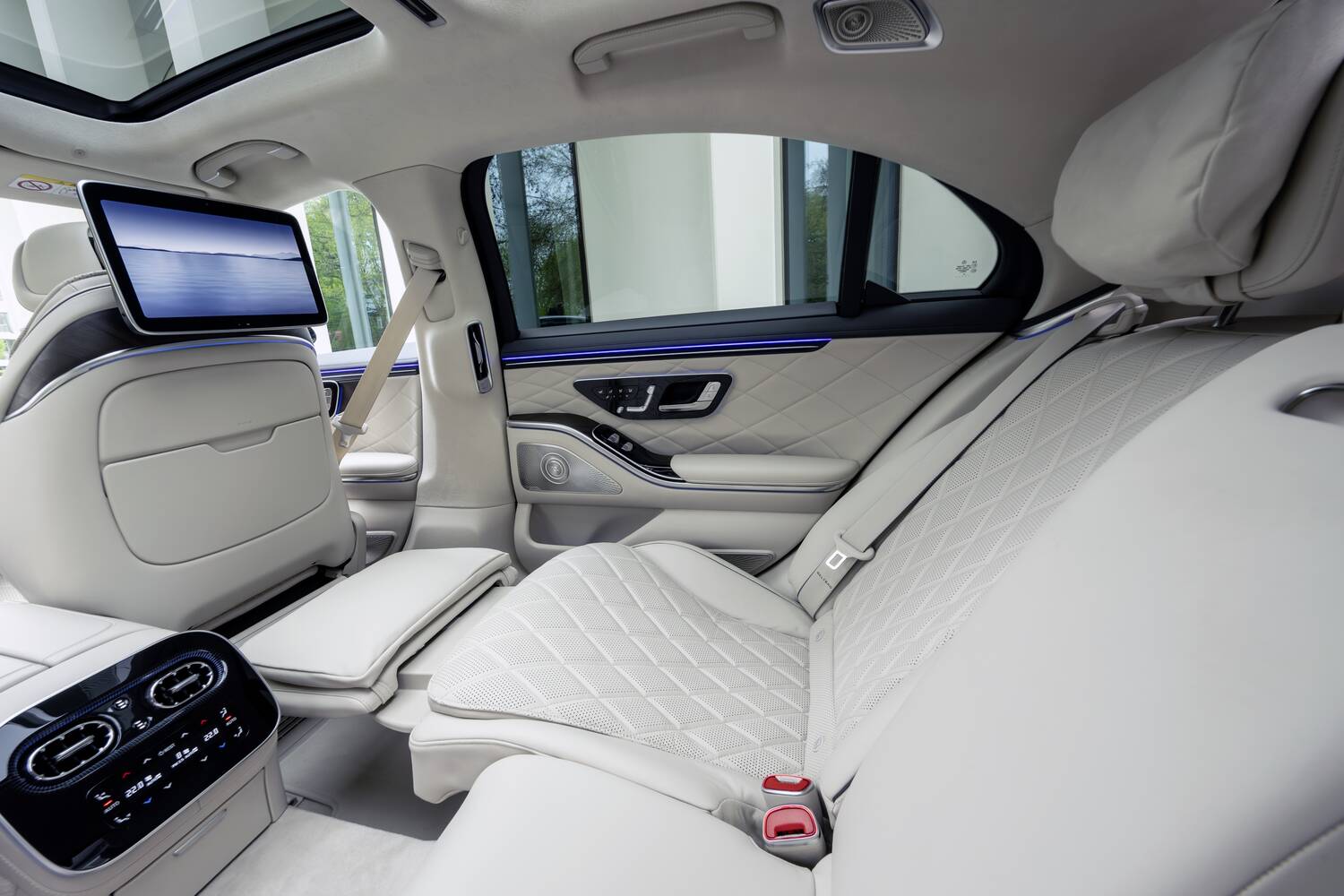
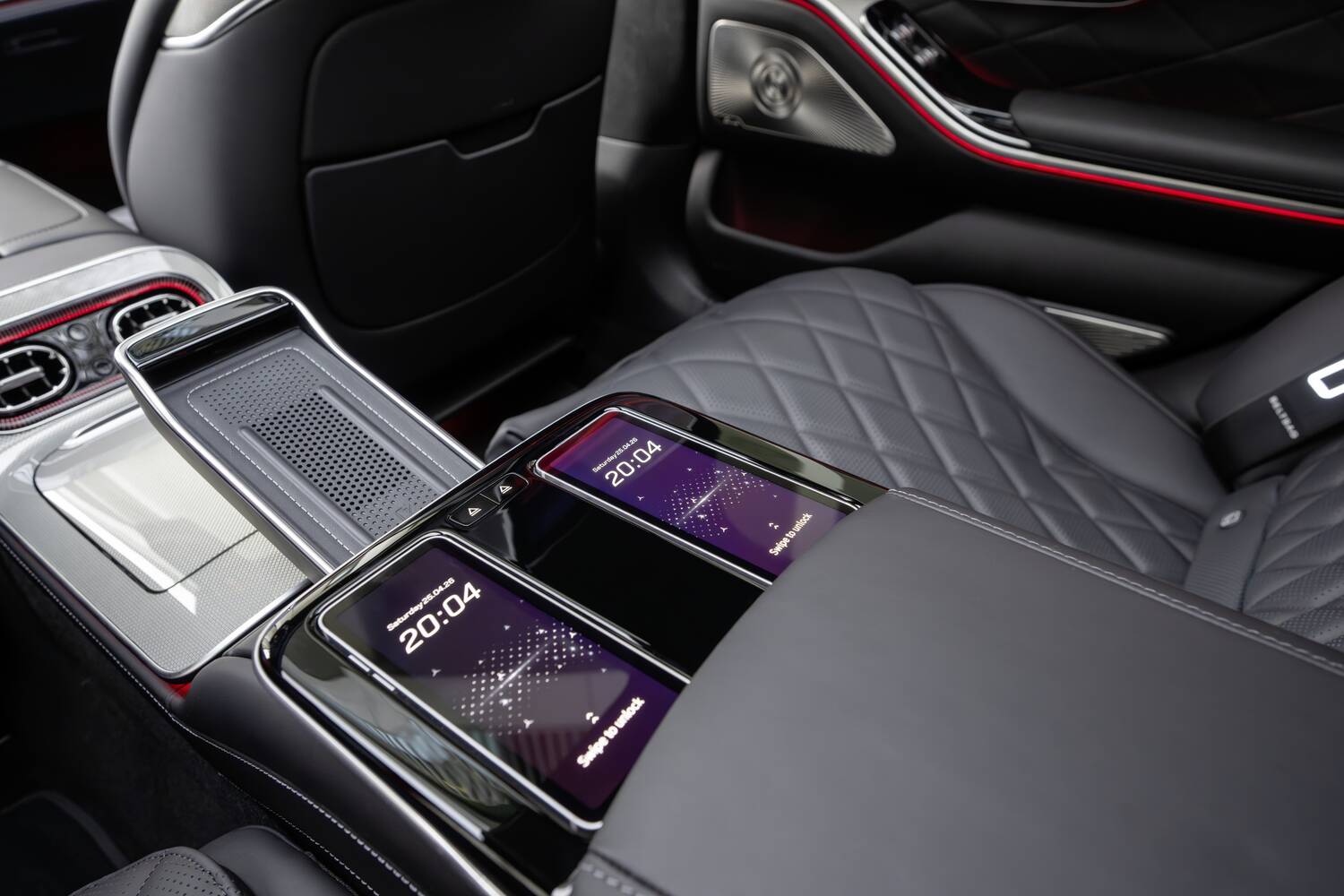
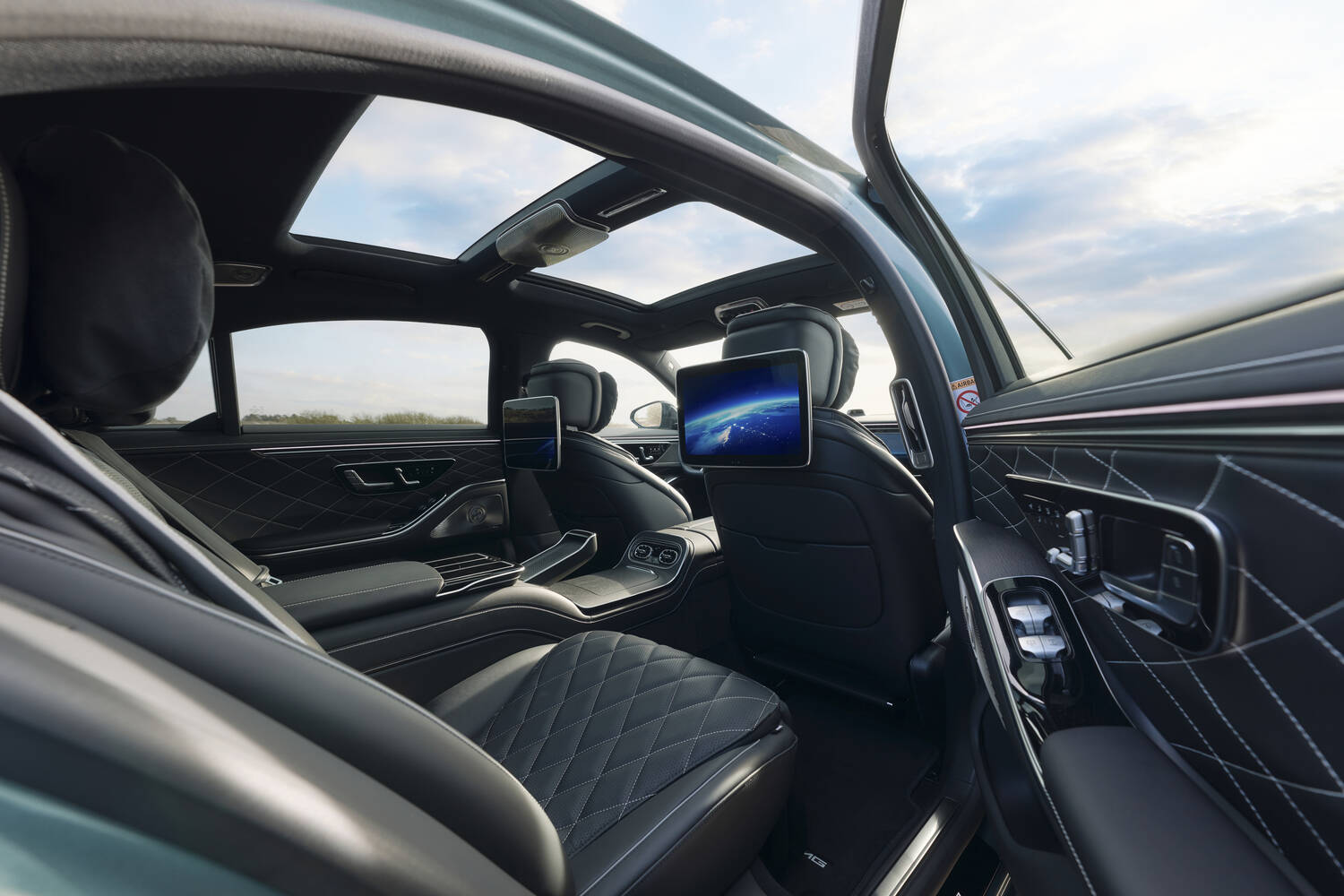
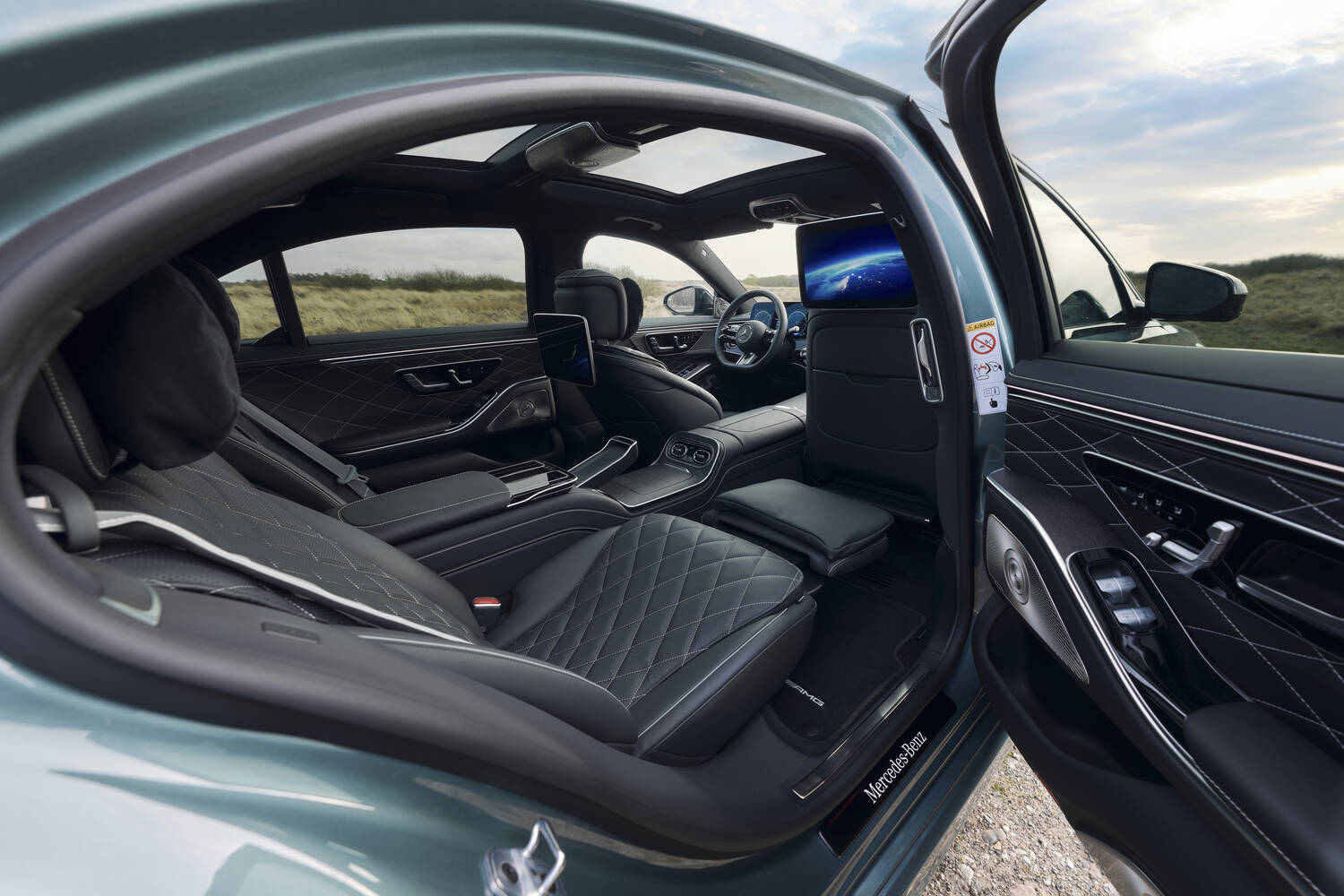
For a princely sum of €6,015, buyers can add the MBUX High-End Rear Seat Entertainment system, featuring a 13.1-inch touchscreen on either side, each with its own detachable remote control. The latter look and feel like shrunken iPhones, and they can be used for other functions as well, such as opening or closing all the sun blinds.
Those could come in handy when you want to join in a Teams meeting. There's an app built into the S-Class for that and a wide-view camera mounted in the middle of the dashboard up front - and another in each of the rear screens.
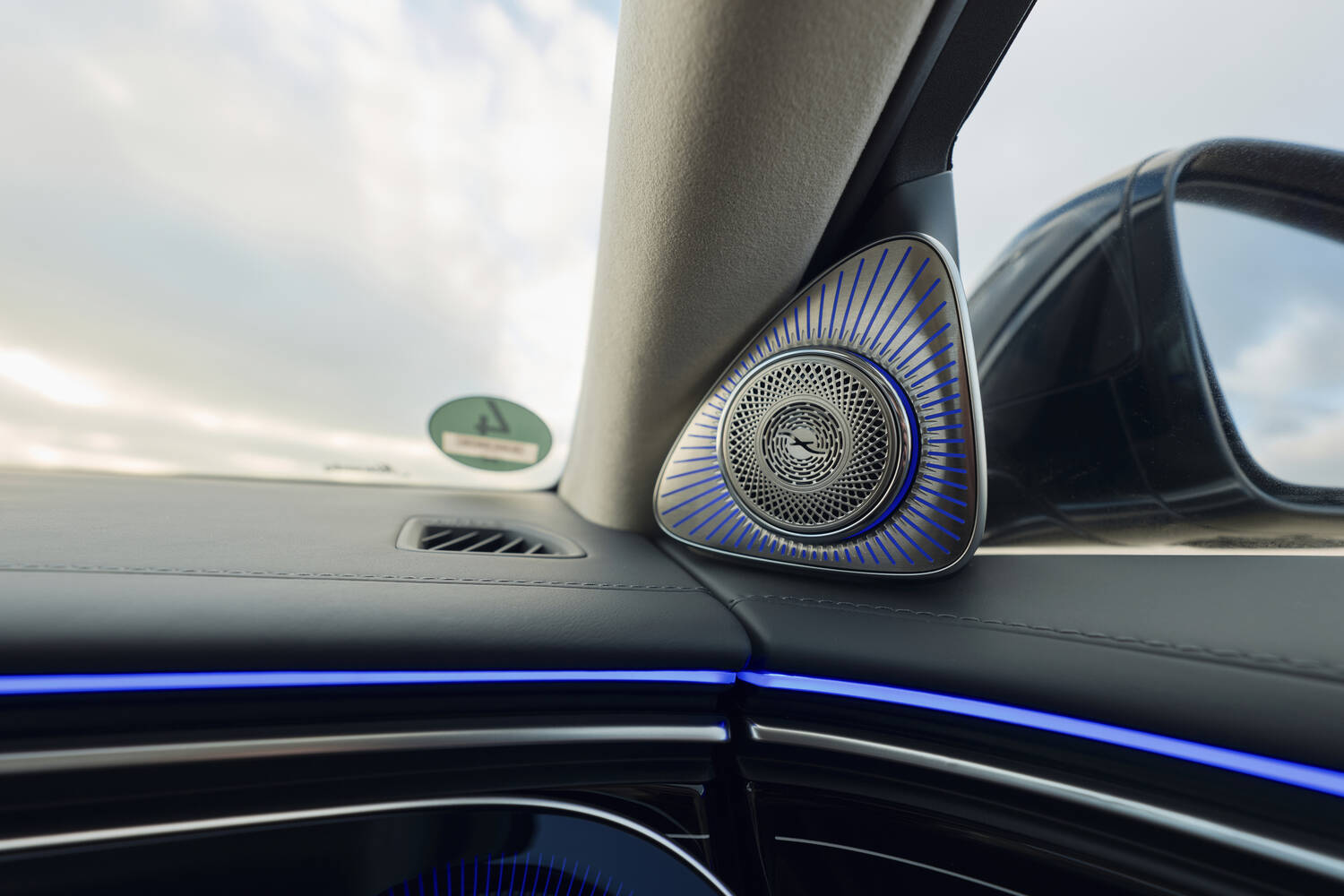
If you'd rather listen to music than your work colleagues, it might be worth splashing out on the Burmester high-end 4D surround-sound system at a cool €10,674. It adds tactile transducers integrated into the seats that vibrate and pulse in time with the music, so you can 'feel' your favourite tracks. It also has up to 39 speakers, four exciters, 1,750 watts of system output and Dolby Atmos built in.

Practicality around the cabin
The S-Class may be a luxury car first and foremost, but it's also quite practical in terms of storage space for bits and pieces, alongside two, high-set wireless charging pads on the centre console.
Behind those is a large, lidded cubby incorporating the cupholders, storage and USB-C ports, while the central armrest splits open for a little more space. The door pockets are a good size, as is the glovebox.
Rear-seat passenger space
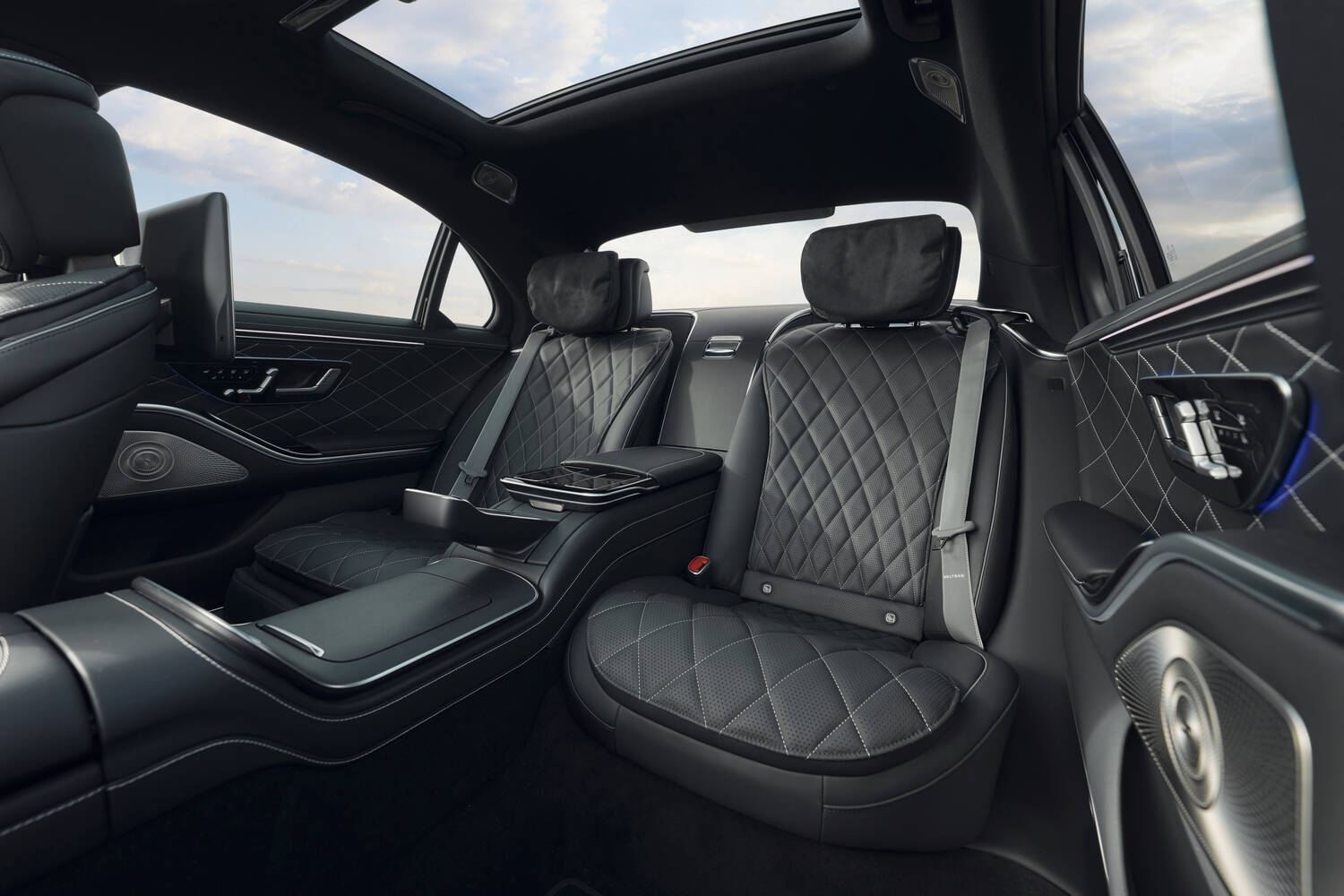
Obviously, the long-wheelbase S-Class is the one to go for if rear legroom is a priority, but the regular car is hardly cramped. By default, the rear has three seatbelts, though with a large central transmission tunnel, the middle position is very much only for occasional use.

Most people will likely fold down the substantial middle rear armrest and use its extra storage features - including a wireless charger. It's possible to specify a four-seat layout in which the centre console extends uninterrupted to the back, replacing the middle seat with a permanent armrest. This features cupholders, power outlets and a big prominent wireless charging pad as well.
All S-Classes get air vents in the middle and sides at the back, and they're part of the Digital Vent Control system described above.

Depending how you specify your S-Class, the rear seats can be even more comfortable than those up front thanks to reclining functions, extending feet and leg rests and various massage options.
Boot space in the Mercedes S-Class
Now, boot space is probably not of the highest priority to most S-Class buyers, and also probably not something you'd worry about when going for a car as large as this.
However, it's worth knowing that the boot volume of the plug-in hybrids is much smaller than that of the rest of the lineup because of the packaging of the battery etc. Hence, while the petrol and diesel variants accommodate well over 500 litres, the PHEVs' boots are rated at just 345 litres.
Safety in the Mercedes S-Class
The Mercedes S-Class has not been tested by Euro NCAP, but every other Merc of late has come away with a full five-star rating, so the German marque has a good reputation on this front. And the S-Class is the pinnacle of the range in terms of all kinds of technology, including safety.
Highlights include an adaptive restraint system featuring 'Pre-Safe Impulse' seat belt pretensioners that pull the front-seat occupants closer to the centre of the car if an imminent crash is detected, working in conjunction with the Pre-Safe Impulse Side system. There are up to 15 airbags in total controlled by a central unit to calculate the appropriate response in any given situation.
Airbags can be fitted for the rear as well, while there are also 'beltbags' in the back to reduce injury to the chest in severe crashes.
Performance of the 2026 Mercedes-Benz S-Class
• Two PHEVs to choose from
• Big diesel engines remain
• Brilliant air suspension

There's a wide range of powertrains available in the S-Class, though no fully electric option - unless you count the Mercedes EQS, but that's built on a different platform and isn't really comparable to an S-Class.
The two diesel models use the same core inline six-cylinder engine, a 3.0-litre unit, which received an overhaul for 2026 and beyond, mostly to allow it to conform to stricter emissions legislation. To that end, the diesels use electrically heated catalytic converters and other measures.
The S 350 d's vital stats include 313hp, 650Nm and 0-100km/h in 5.4 seconds, while its WLTP-ratified fuel consumption is in the range of 6.2-6.8 litres/100km.

Meanwhile, the S 450 d puts out 367hp and a huge 750Nm of torque, dropping the 0-100km/h time to 5.1 seconds but officially only using an extra 0.1 litres of diesel every 100km.
Both the diesels and the six-cylinder petrol engines are fitted with a 48-volt 'mild-hybrid' system that features a 23hp integrated starter-generator. This allows coasting, recuperation of energy and can add a power and torque boost to the engine output.
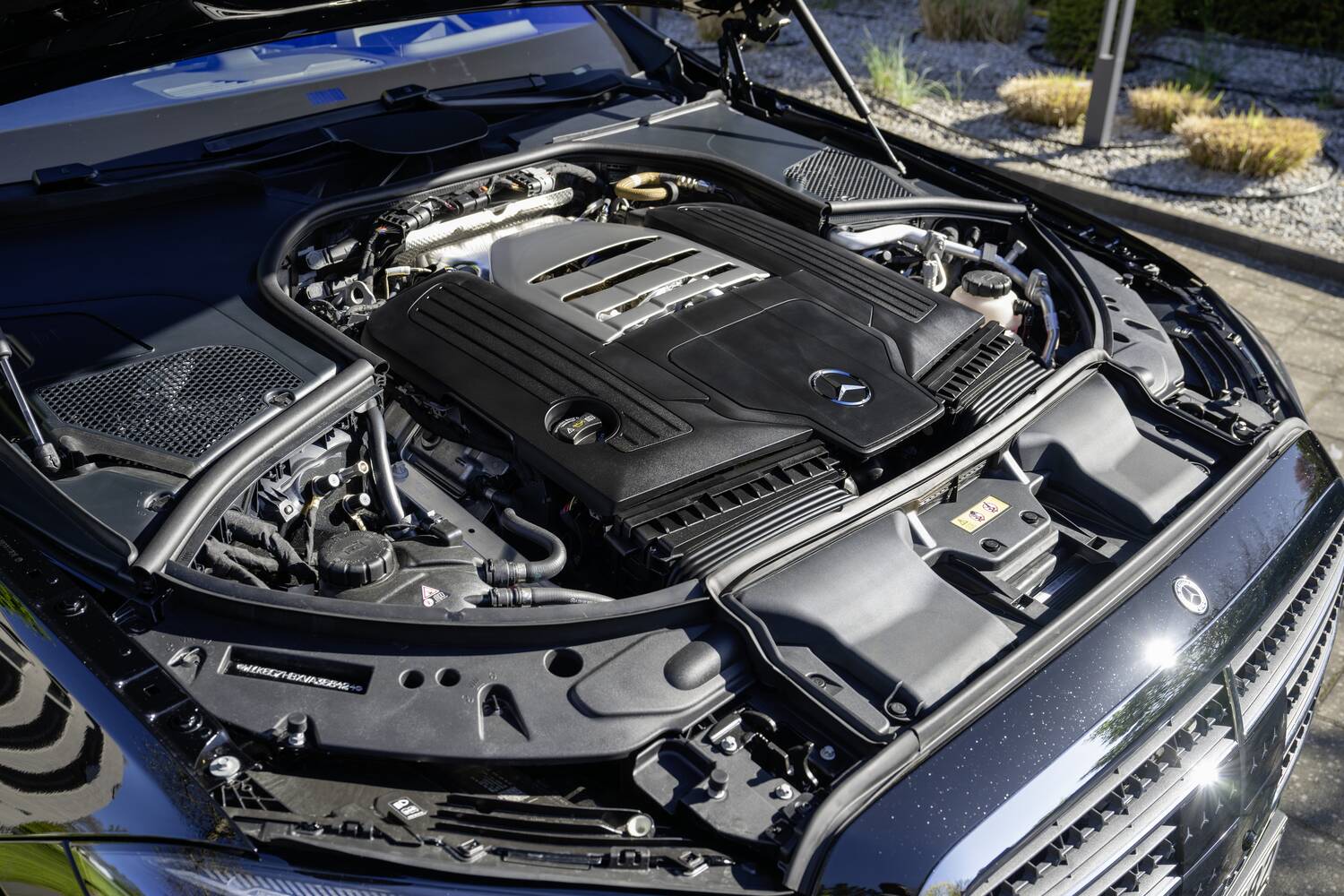
A 3.0-litre unit is found under the bonnets of the S 450 and S 500. It too was revised in 2026 and among its features is an electric turbocharger, working with a single traditional exhaust turbo to enhance performance and efficiency.
The S 450's engine produces up to 381hp and 560Nm of torque, while the S 500 makes 449hp and 600Nm - though the latter increases to 630Nm during 'overtorque' situations for maximum acceleration. Its 0-100km/h time is just 4.5 seconds.
Topping the petrol range is the S 580, featuring a powerful 4.0-litre V8. This puts out 537hp and 750Nm of torque.

That's not to be confused with the S 580 e, the little "e" indicating its electrification, as this is one of two plug-in-hybrid S-Class models offered. They both use the 3.0-litre six-cylinder petrol engine described above as their basis, including the mild-hybrid hardware, and to that they add a powerful electric motor within the transmission.
The S 580 e has up to 585hp and 750Nm (0-100km/h in 4.4 seconds) while the S 350 e's numbers are a still healthy 435hp and 680Nm of torque, with 0-100km/h in 5.7 seconds. Hardly a slouch.
All cars get Airmatic air suspension with adaptive damping, plus up to 4.5 degrees of rear-wheel steering. Buyers can upgrade the later to manage up to 10 degrees and add E-Active Body Control for even greater management of the car's movements.
Driving the Mercedes S 580 e 4Matic LWB in Germany
Words by Shane O' Donoghue on 12 May 2026

Although the S 580 e is quite a large and heavy car (over 2.5 tonnes), it doesn't feel it on the road. That's helped by the considerable performance mentioned above, of course, and its refinement makes it deceptively fast.
Indeed, the acceleration it summons up doesn't always seem in line with the distant sound the six-cylinder engine is making because the electric motor in the transmission is silently beefing the output up.

You'll not be surprised to learn that this car is wonderfully comfortable, with supple air suspension as standard and a lovely smooth, flowing gait, whether you're on a challenging open road or you're blasting along the German autobahn at incredible speeds.
Above about 120km/h there is noticeable wind noise that seems to be coming from the door mirrors - despite the use of acoustic glass in the doors - though curiously, it doesn't seem to worsen, even as you exceed 200km/h. Sit in the back seats, however, and you can't really hear this sound at all, which is interesting.

The S-Class rides on noise-optimised tyres with extra foam inside, incidentally, which must contribute to the civility, even at high speeds.
The S 580 e defaults to Hybrid mode, though you can choose the Electric setting if you want to maximise driving on electric power. Conversely, it's possible to conserve the battery power for later use. The S-Class is particularly impressive when whispering along in an urban environment without the engine running.
Driving the Mercedes S 500 e 4Matic LWB in Germany
Words by Shane O' Donoghue on 12 May 2026

The petrol-powered S 500 we tested was the only car on the S-Class event with E-Active Body Control fitted, but we didn't realise it until after driving and assumed it was not fitted, so natural feeling was the suspension. That's a good thing, as active anti-roll systems such as this can feel quite strange at times, even if they do restrict unwanted body movement.
We did enjoy threading this version down an interesting back road though, so the chassis upgrade clearly was doing something. This drive revealed how brilliantly judged the brake-pedal modulation is, allowing precise braking during faster driving, but also really smooth stops in and around town or in traffic. It makes the life of a chauffeur very easy indeed.
The six-cylinder petrol engine has plenty of go, if nowhere near as much effortless torque as the S 580 e and S 450 d. For that reason, if you're trying to extract its performance, it can be louder than expected.
Time in the S 500 also showed how great the augmented-reality navigation system is, making it almost impossible to miss an instruction, even if you have the voice alerts muted. The Mercedes system uses Google Maps as well.
Driving the Mercedes S 450 d 4Matic LWB in Germany
Words by Shane O' Donoghue on 12 May 2026

After the electric running in the PHEV and the traditional petrol-powered S 500, we assumed the S450 d diesel would feel distinctly old-fashioned and unrefined, but nothing could be further from the truth.
The turbocharged 3.0-litre diesel engine sounds brawny if you extend it, but most of the time it's no louder than the petrol alternatives and anyway, a six-cylinder engine always sounds good.
But the S 450 d still feels relevant for a couple of reasons. First up, it can travel well over a thousand kilometres on a tank of fuel, and it's genuinely efficient, notably so for such a big car.

Next up, the diesel engine produces as much torque as the most powerful PHEV or petrol engine in the S-Class range can muster, but it does so much lower down the rev range, so it actually feels more muscular at everyday speeds. Ignore the 0-100km/h time, as the S 450 d delivers exceptional, effortless performance in the real world, at speeds people actually drive.
As in all the models, the rear-wheel steering in the S 450 d can be felt at really low speeds, making manoeuvring a cinch, virtually shortening the wheelbase of the car. On the open road you don't really sense it at work at all, which is commendable.
Range, battery, charging and running costs of the 2026 Mercedes-Benz S-Class
• Well over 100km electric range for PHEVs
• Super real-world efficiency
• DC charging an option for PHEV
For buyers of high-end luxury cars such as the S-Class, the fuel cost itself isn't always a major concern, but better efficiency generally mean lower taxation and fewer visits to a fuel station, so the plug-in-hybrid S-Class is likely to appeal on one side, while the diesel variants with their ability to go well over 1,000 kilometres between fill-ups also still hold allure.
Plug-in-hybrid Mercedes S-Class range and energy consumption
Both the S 350 e and 450 e use the same battery pack, with a quoted 22kWh usable capacity. Officially, this allows the lightest S 350 e to cover 114km without using the engine, while the long-wheelbase S 450 e 4Matic's figure is a still-useful 101km.
We haven't attempted to maximise the electric range, instead leaving the car in its default driving settings, but we did record an interesting result during a fast 115km drive in Germany. At an average speed of over 100km/h, including a couple of blasts up to 200km/h on sections of derestricted autobahn, the overall consumption was 4.9 litres/100km of petrol and 14.7kWh/100km of electricity. And 65 per cent of the time the car ran purely on battery power.
As standard, the PHEVs can make use of three-phase 11kW AC chargers, though for a modest €793 they can be upgraded to allow DC charging at up to 60kW as well, using public CCS chargers. A worthwhile investment, if nothing else to make the car futureproof.
And of course, the PHEVs' low CO2 emissions ratings mean their owners pay ultra-low motor tax.
Efficiency of the diesel Mercedes S-Class
The diesel S-Class isn't as cheap to tax or buy as its plug-in-hybrid siblings, but it's very efficient, using about 7.0 litres/100km in our time with the S 450 d, despite the considerable performance on tap. It should get close to its official consumption figures in most scenarios.
Servicing the Mercedes S-Class
Mercedes recommends a 12-month or 16,000km cycle for servicing, whichever arrives sooner, alternating between smaller 'A' inspections and larger 'B' services each year.
Mercedes S-Class warranty

The standard level of the Mercedes warranty in Ireland is just two years, which isn't brilliant - most manufacturers offer three years of cover as a minimum.
Despite this, there is at least no distance cap on the Mercedes guarantee, while the warranty for the high-voltage battery pack in the plug-in-hybrid S-Class runs to six years or 100,000km.
Irish pricing & rivals to the 2026 Mercedes-Benz S-Class
• Most affordable S-Class is a PHEV
• The costliest is an armoured version
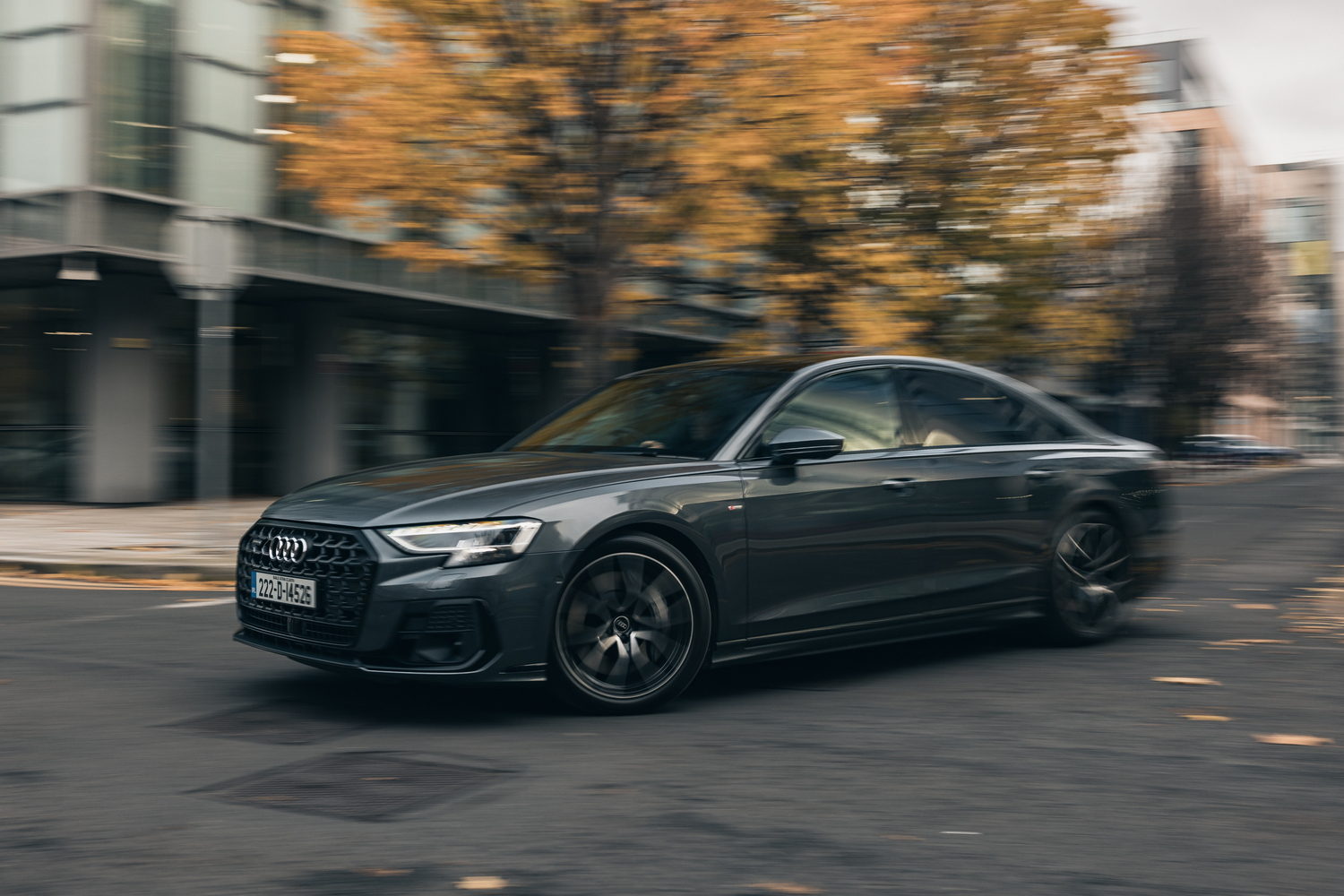
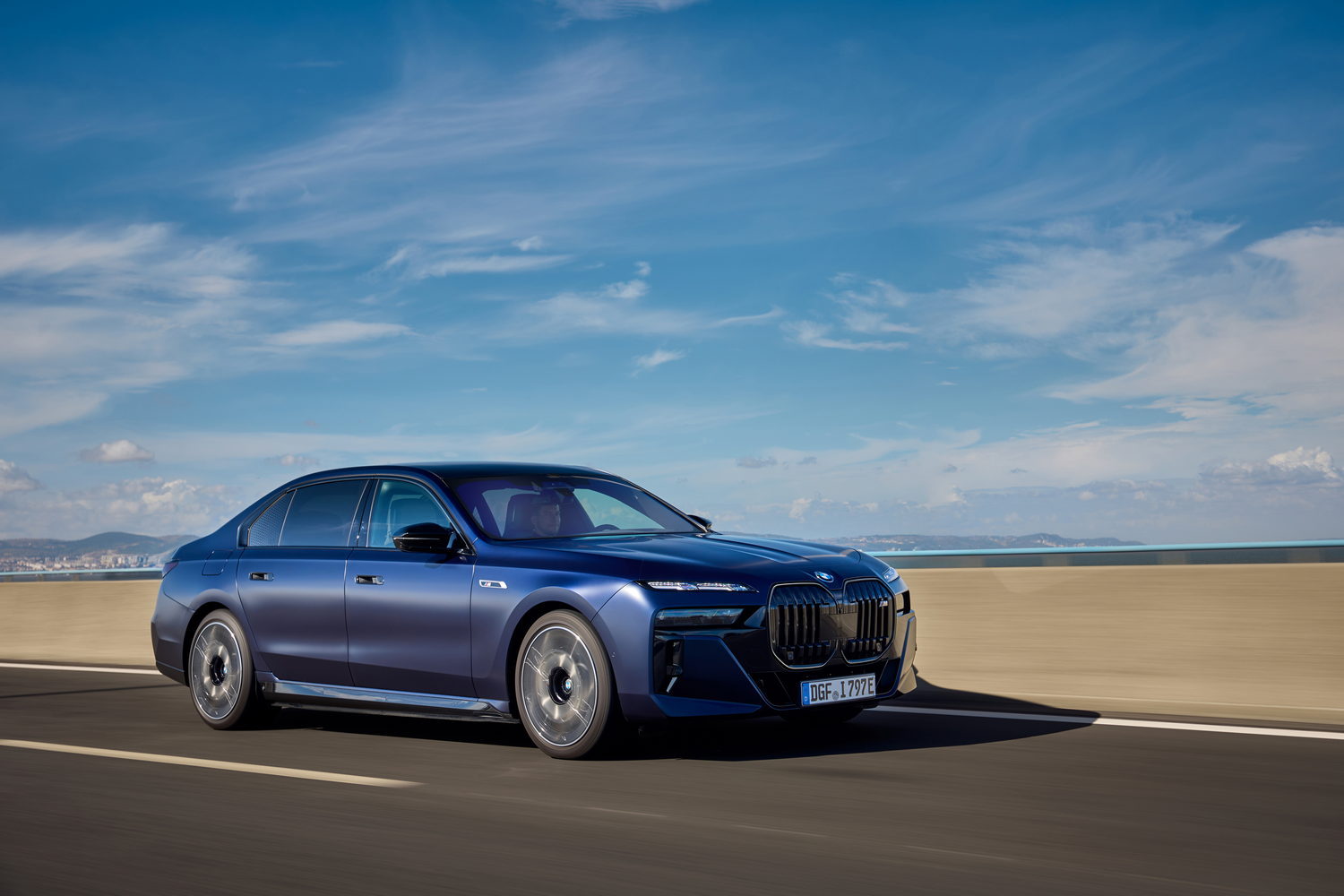
• BMW 7 Series is closest rival

At a starting price of €142,880, the S 450 e PHEV is the most affordable Mercedes S-Class. The long-wheelbase (LWB) model is about €3,000 more.
However, the other plug-in hybrid, the S 580 e tested here, is arguably well worth the extra outlay. At €163,200 it is only sold in the longer format, it also gets 4Matic four-wheel drive and a bump up in performance at the same time.
There are two diesel powertrains to consider as well, starting at €158,530 for the S 350 d, or €167,610 for the more powerful S 450 d.
Somewhat surprisingly, of the forty or so S-Classes sold in Ireland each year, a good proportion of them use just petrol power. The range kicks off with the S 450 at €180,435 and the S 500 at €192,480, both using six-cylinder engines.
The sole V8 variant is the S 580 4Matic, priced at €220,965, but you can spend well over four times that amount to get hold of the S 680 Guard. This is a specialised armoured vehicle created by Mercedes to the high 'VR10' specification and it's only sold with a V12 petrol engine. It costs from €929,805, but just because you can afford it doesn't mean Mercedes will sell one to you...
Verdict - should you buy the 2026 Mercedes-Benz S-Class?

If you're in the market for a high-end luxury saloon, then it's impossible to ignore the Mercedes S-Class. It has remained at the top of its game for decades now in terms of technology and luxury yet is instantly identifiable as the ultimate Mercedes luxury saloon.
The German brand knows it must move with the times to retain the S-Class's coveted "best-selling luxury saloon" position and the 2026 update did just that, enhancing every aspect of the car while continuing to offer it in a vast number of derivatives to suit premium buyers no matter what their needs - and it's as much for the owner that'll drive it themselves as it is for those that would rather be driven.
FAQs about the 2026 Mercedes-Benz S-Class
Is there a Mercedes-Maybach S-Class?
There certainly is, though we've not driven it. In fact, there are three different powertrains offered to Irish Maybach buyers. The Mercedes-Maybach S 580 e PHEV is €251,875, while the V8-engined S 580 is priced at €302,530. Topping the lot is the V12-powered S 680, at €366,025.
What's E-Active Body Control?
This in an optional extra for the S-Class (and other Mercedes models) that works in partnership with the Airmatic air suspension to reduce side-to-side roll of the car while cornering, along with pitch and dive when accelerating and braking.
Using energy from the car's 48-volt electrical system, the ride height and damping force are controlled for each wheel, actively resisting other forces. The aim is to enhance both road holding and comfort depending on the situation.
Neatly, E-Active Body Control can rapidly raise the side of the car if an unavoidable side impact is detected, enhancing the protection of those sat inside.
Can I get a light-up Mercedes logo on the bonnet?

There is quite a bit of illumination around the radiator grille of the S-Class, and a simply ridiculous number of little three-pointed stars dotted around the car. However, European legislation prevents illumination of the logo that stands proud of the bonnet. This is offered as an option in other countries.
Want to know more about the 2026 Mercedes-Benz S-Class?
If there's anything about the new Mercedes S-Class we've not covered, or you'd like help in choosing between it and other cars, you can avail of our expert advice service via the Ask Us Anything page.