
Exterior & design of the 2027 Audi Q9
- Effectively a long-wheelbase Q7
- Rear number plate moves to the bumper
- 21- to 23-inch wheels offered
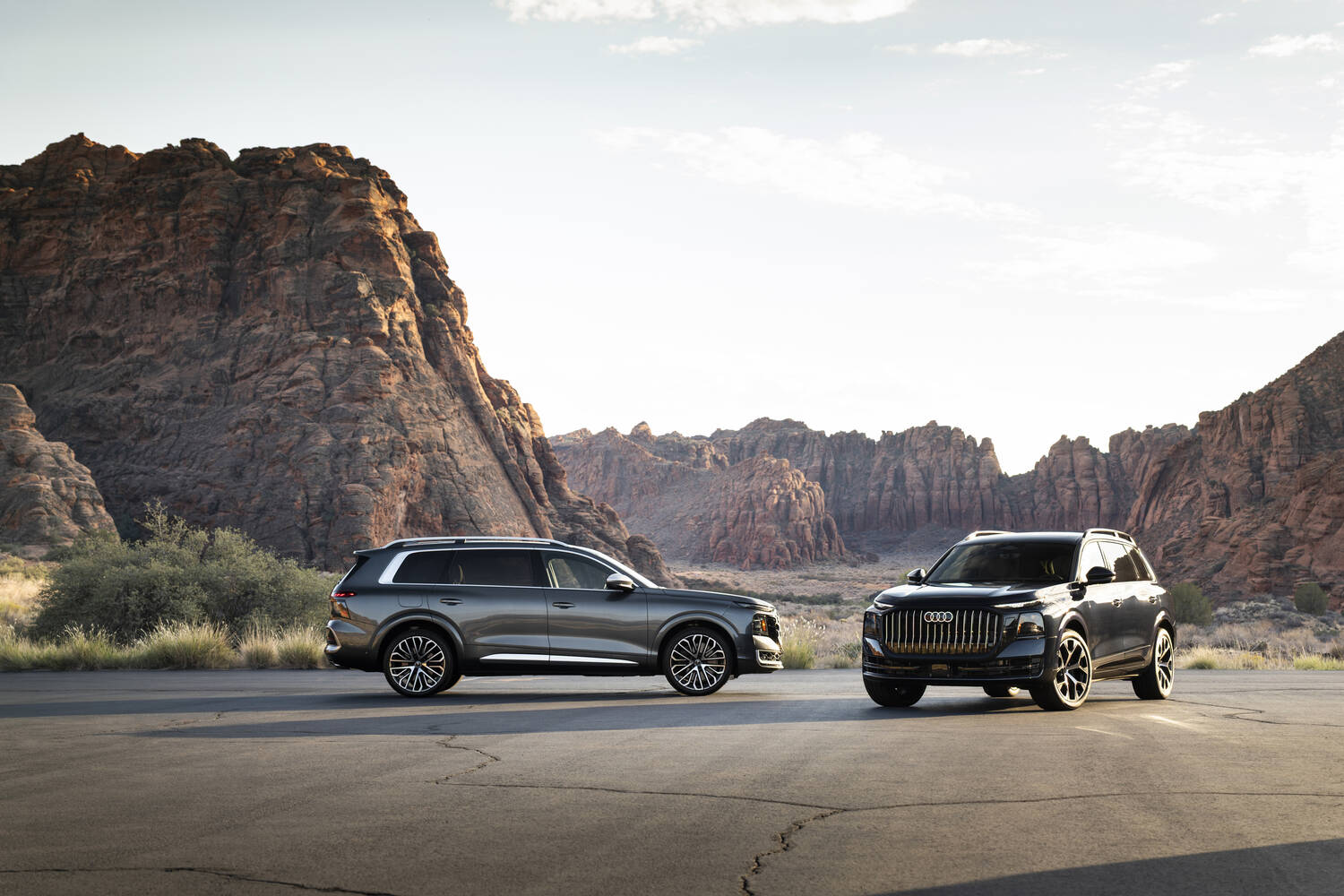
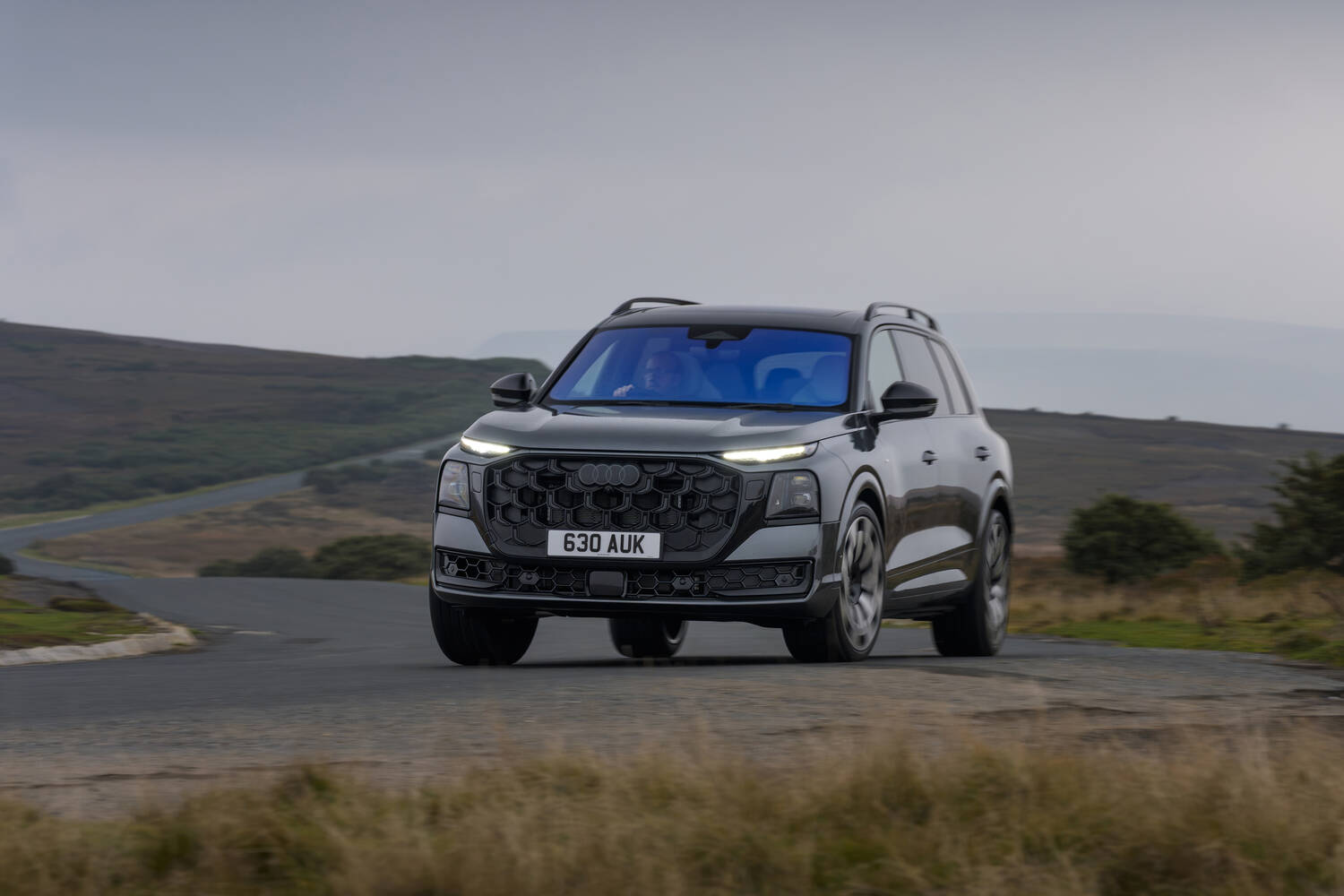
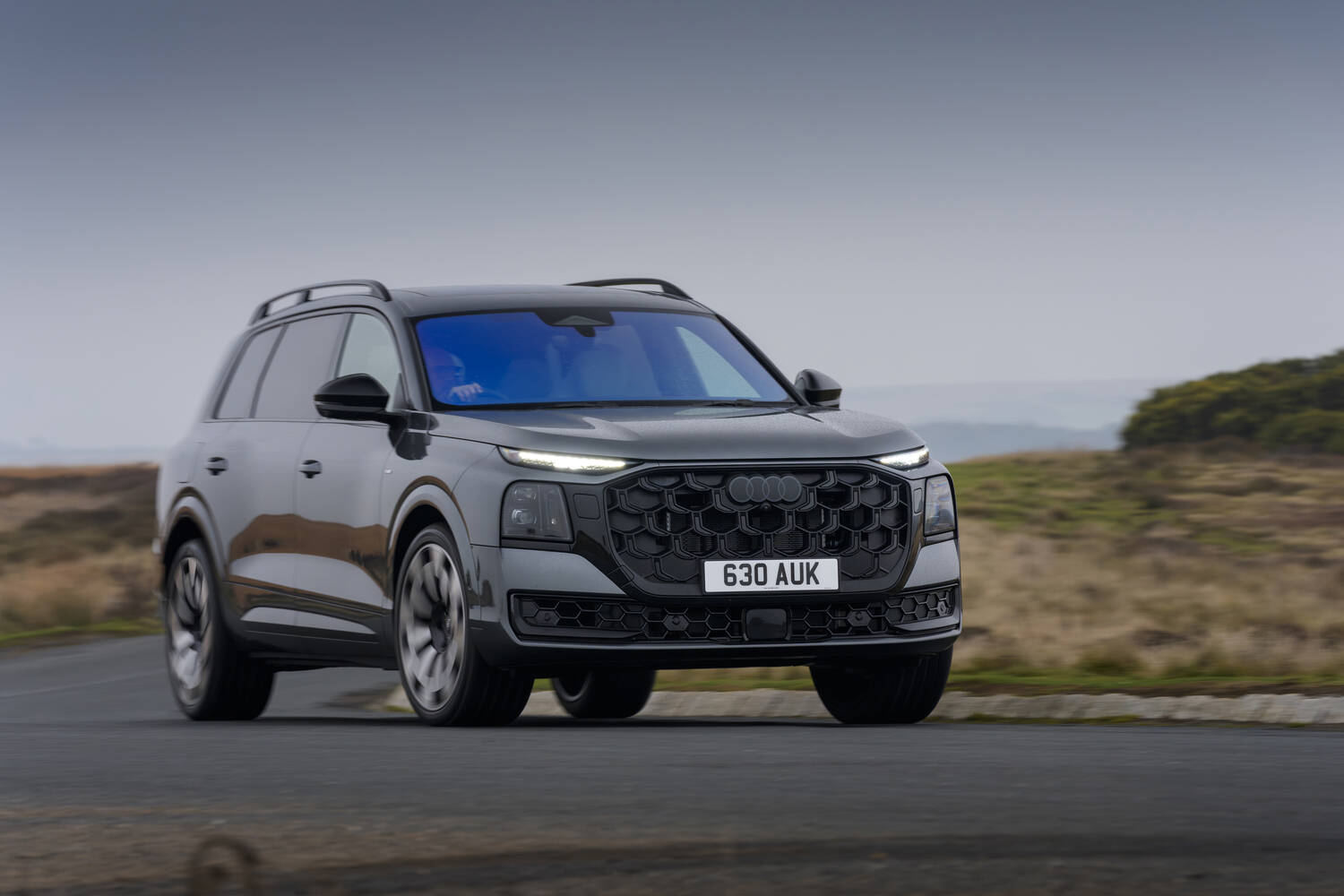
That the Audi Q9's design is redolent of other Audi SUVs, most notably the third-generation Q7 with which it shares so much, is perhaps no surprise.
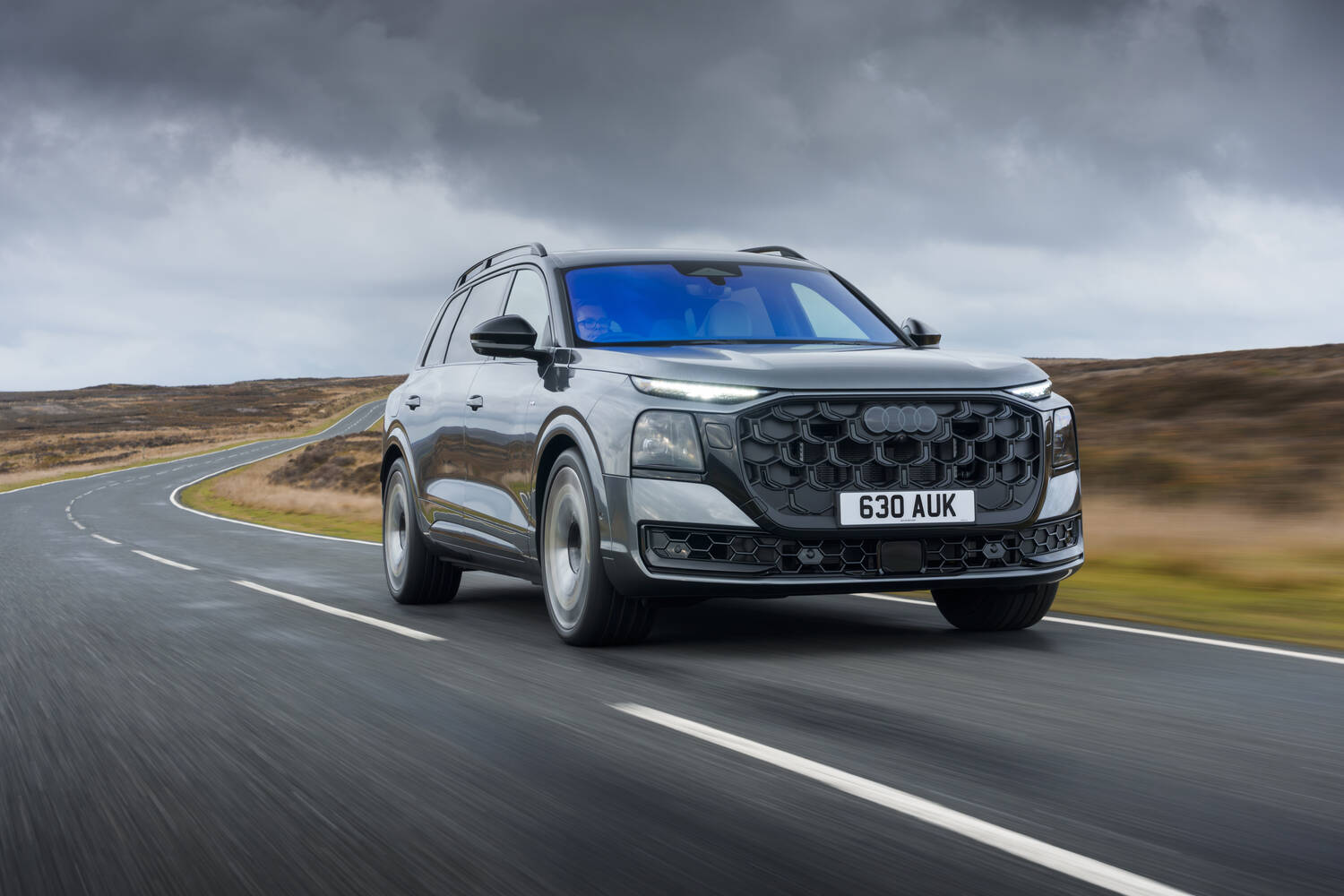
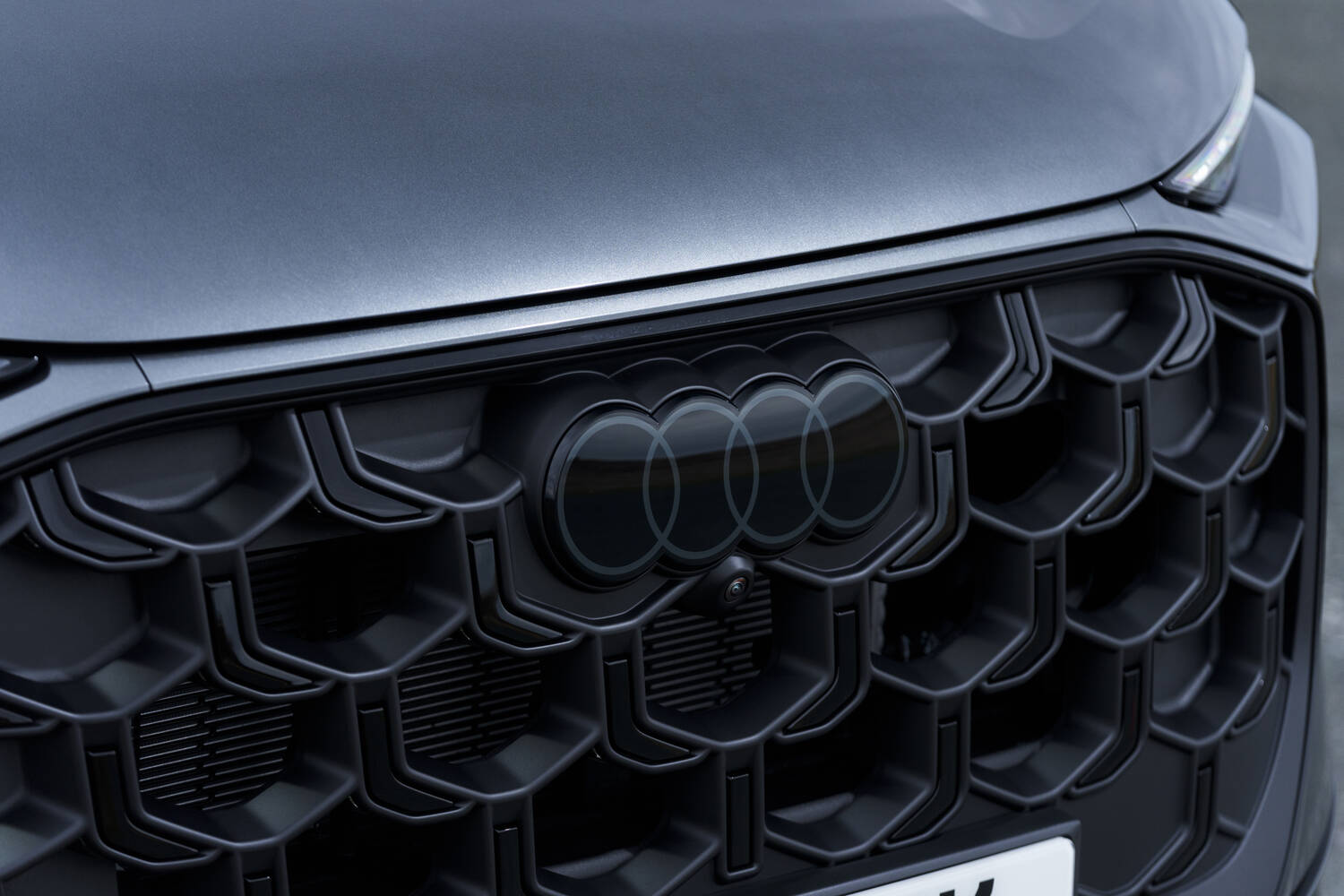
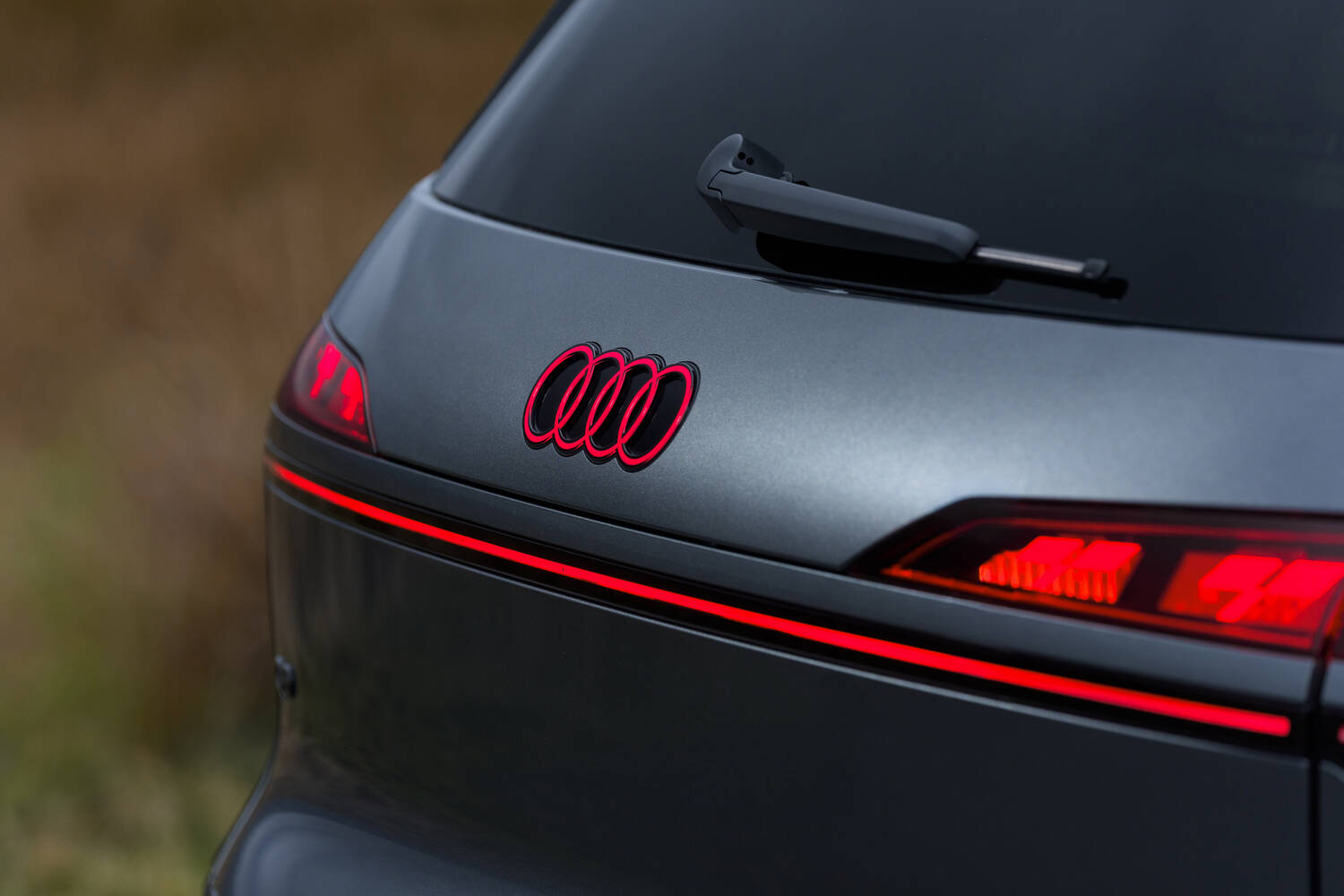
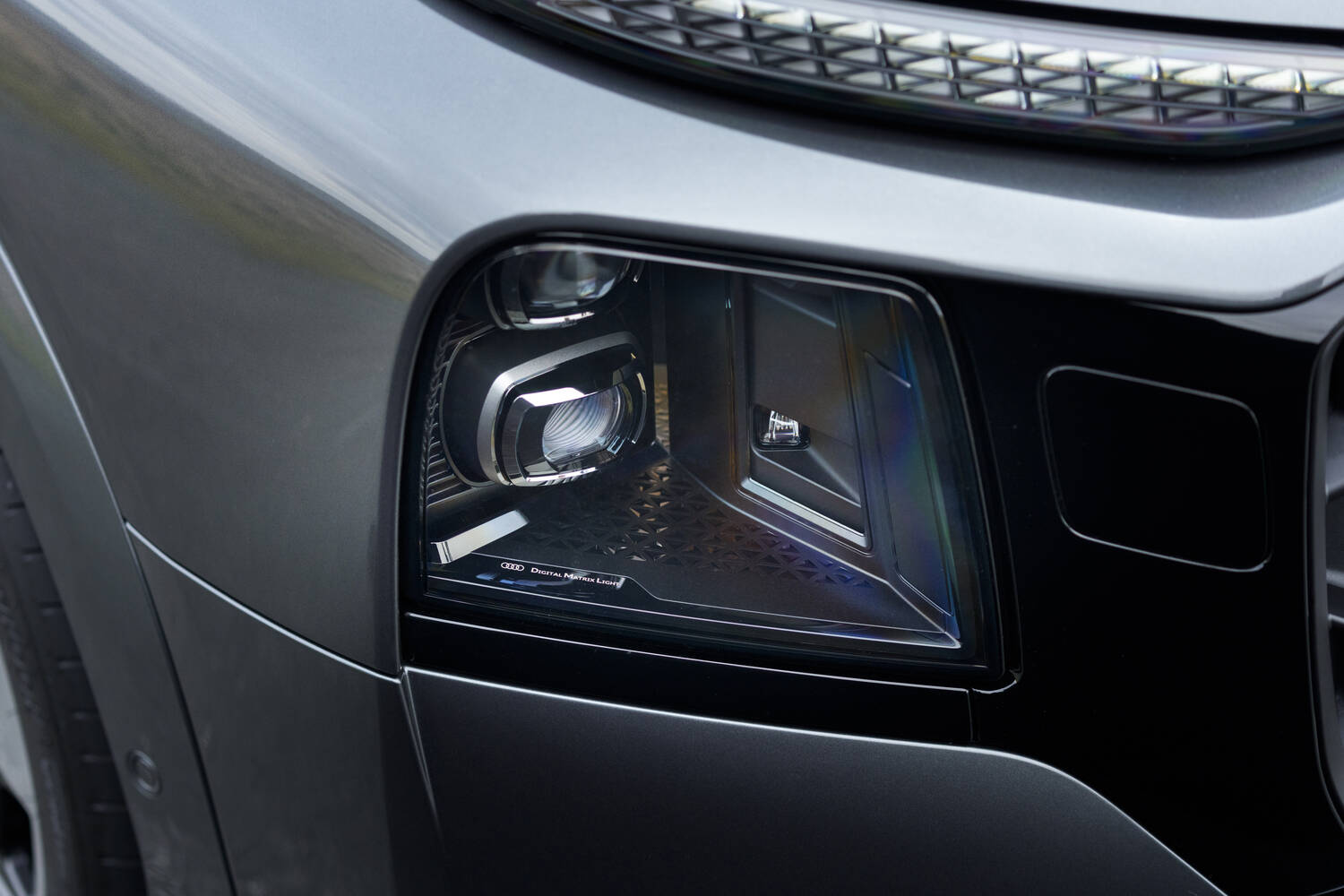
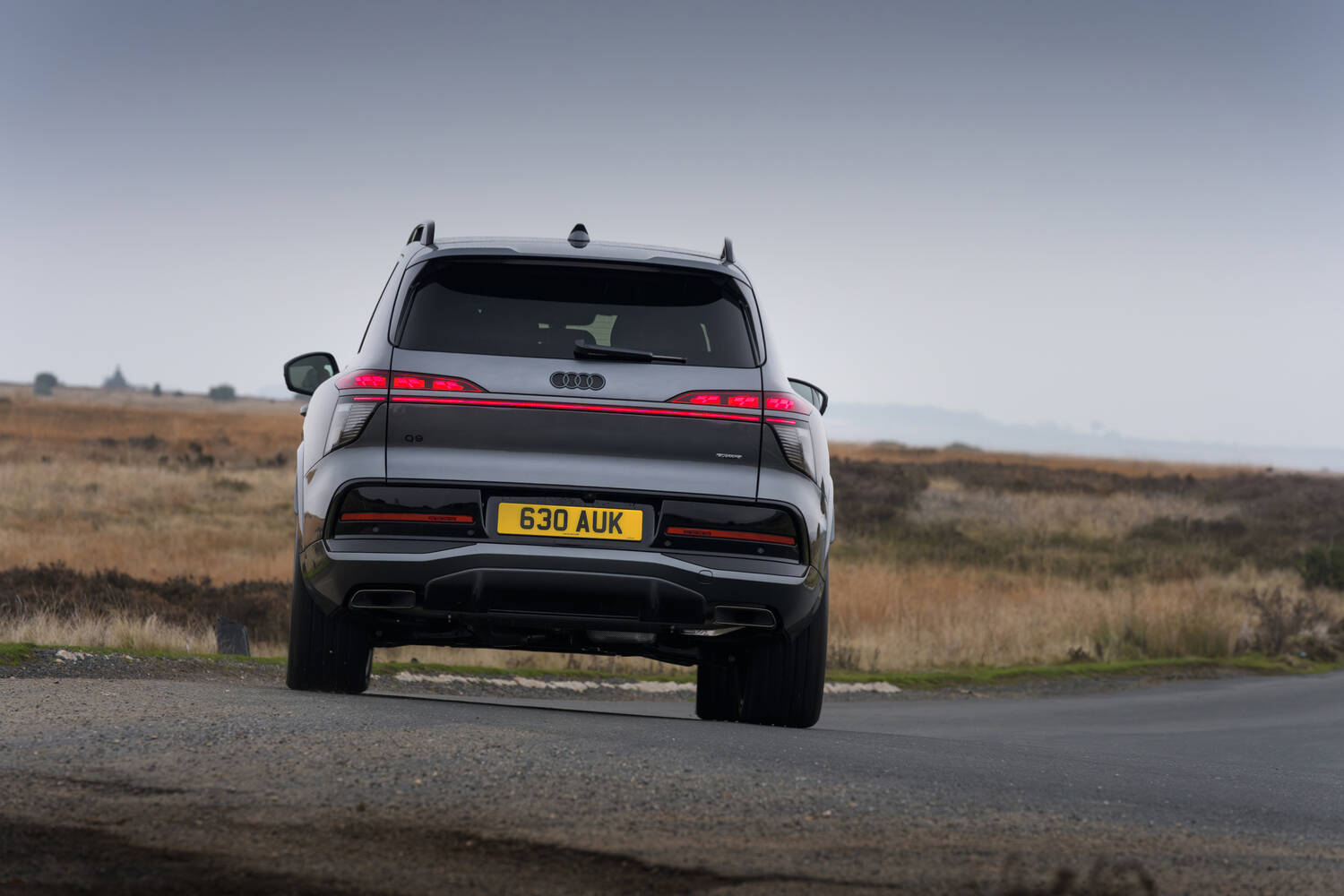
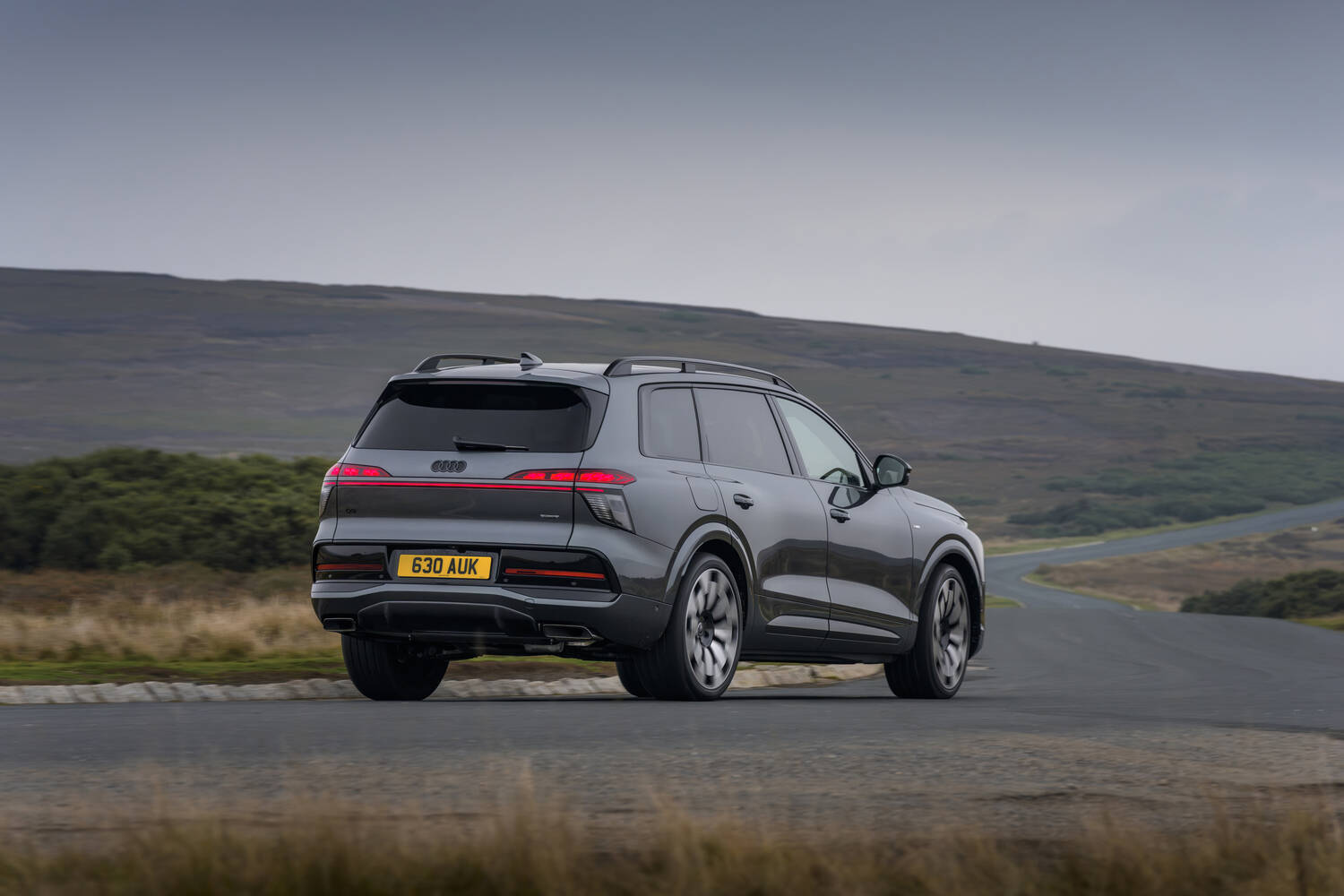
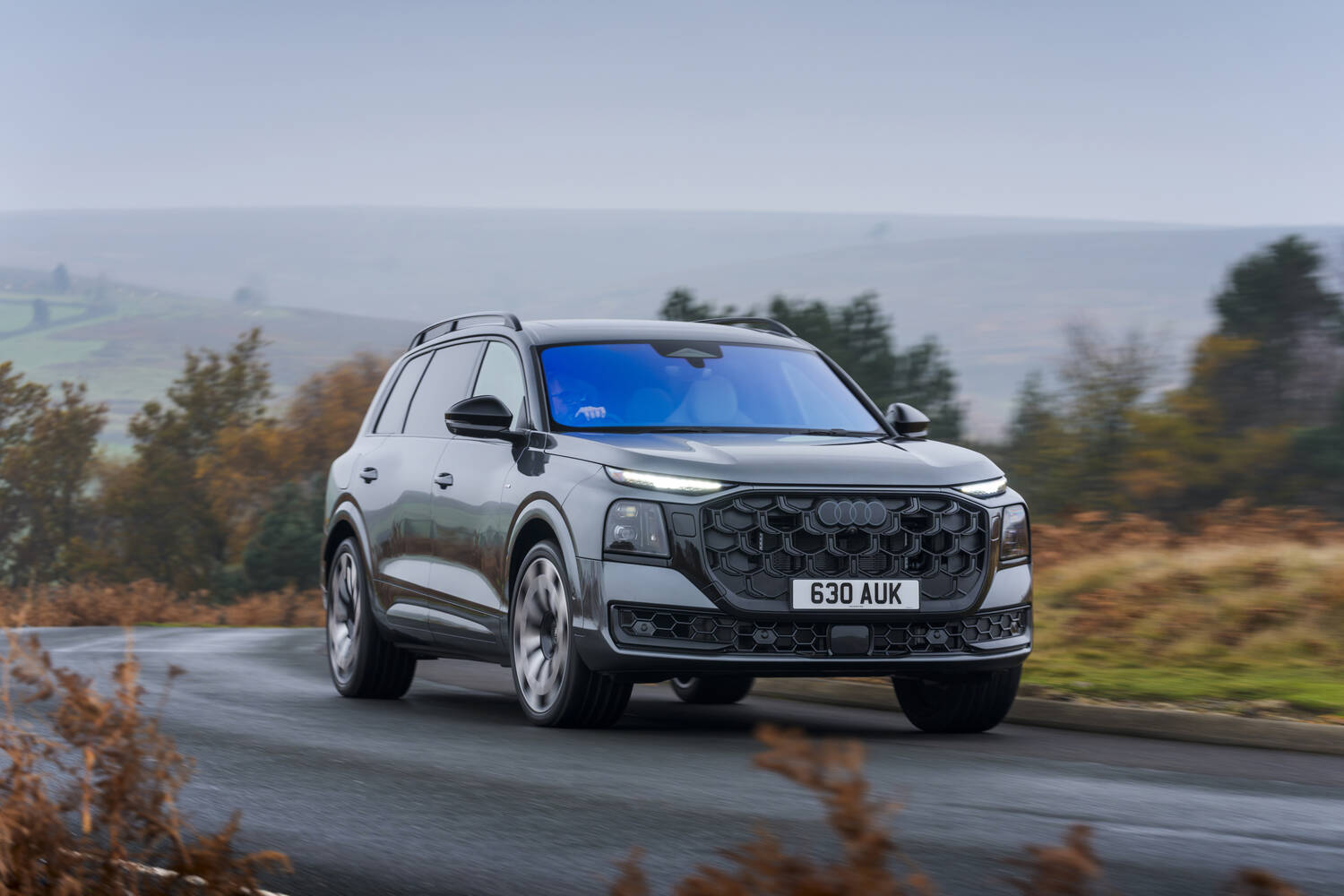
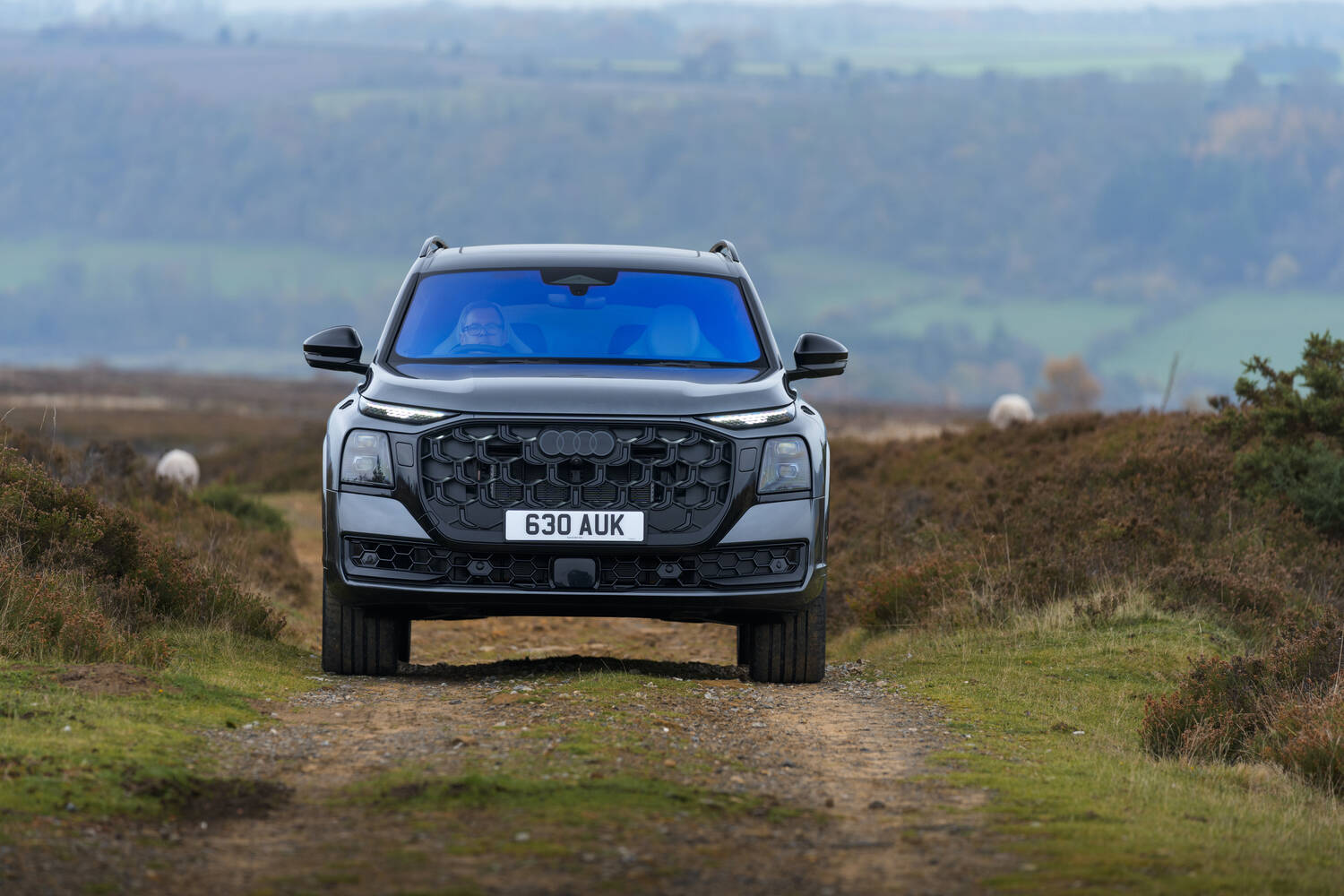
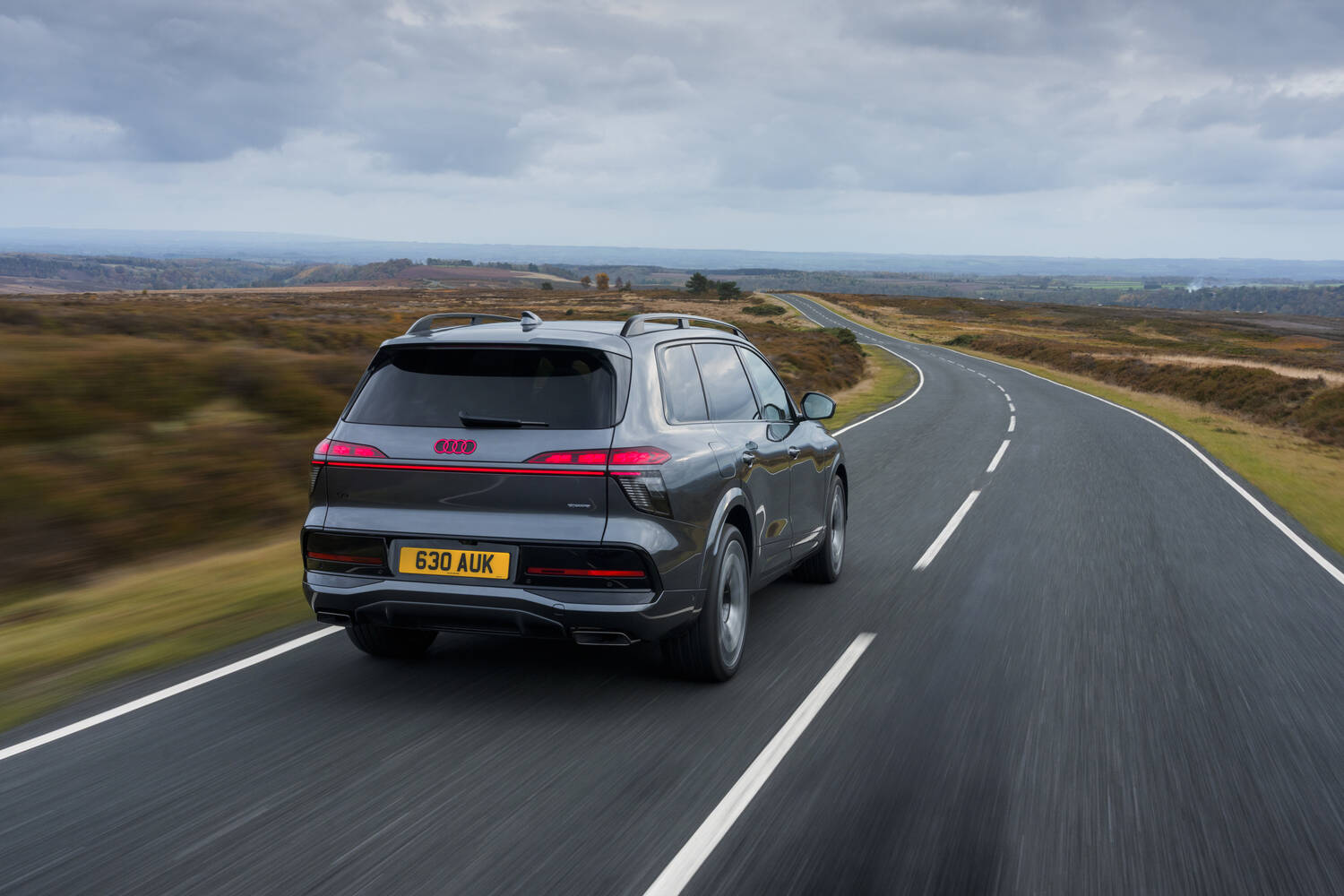
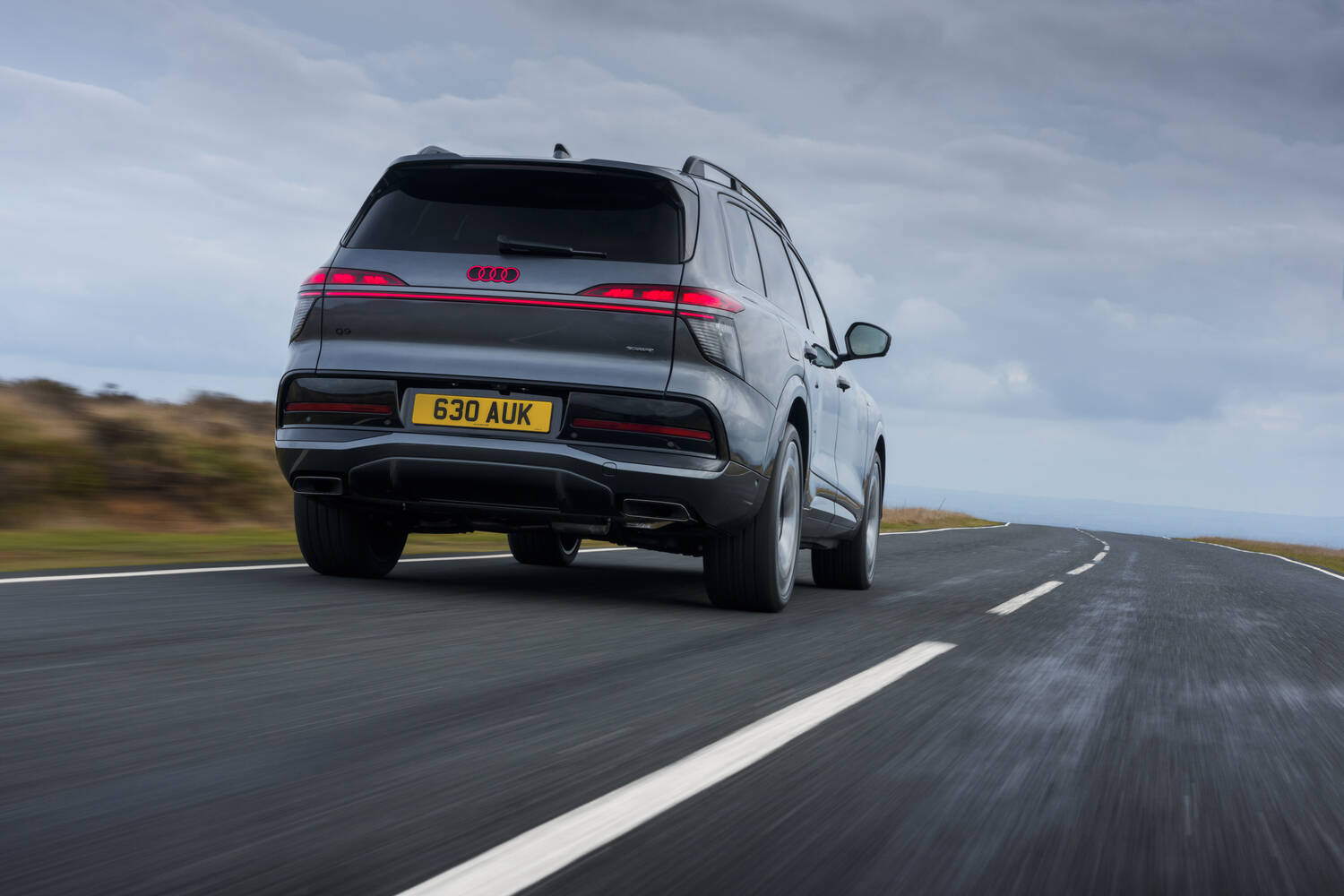
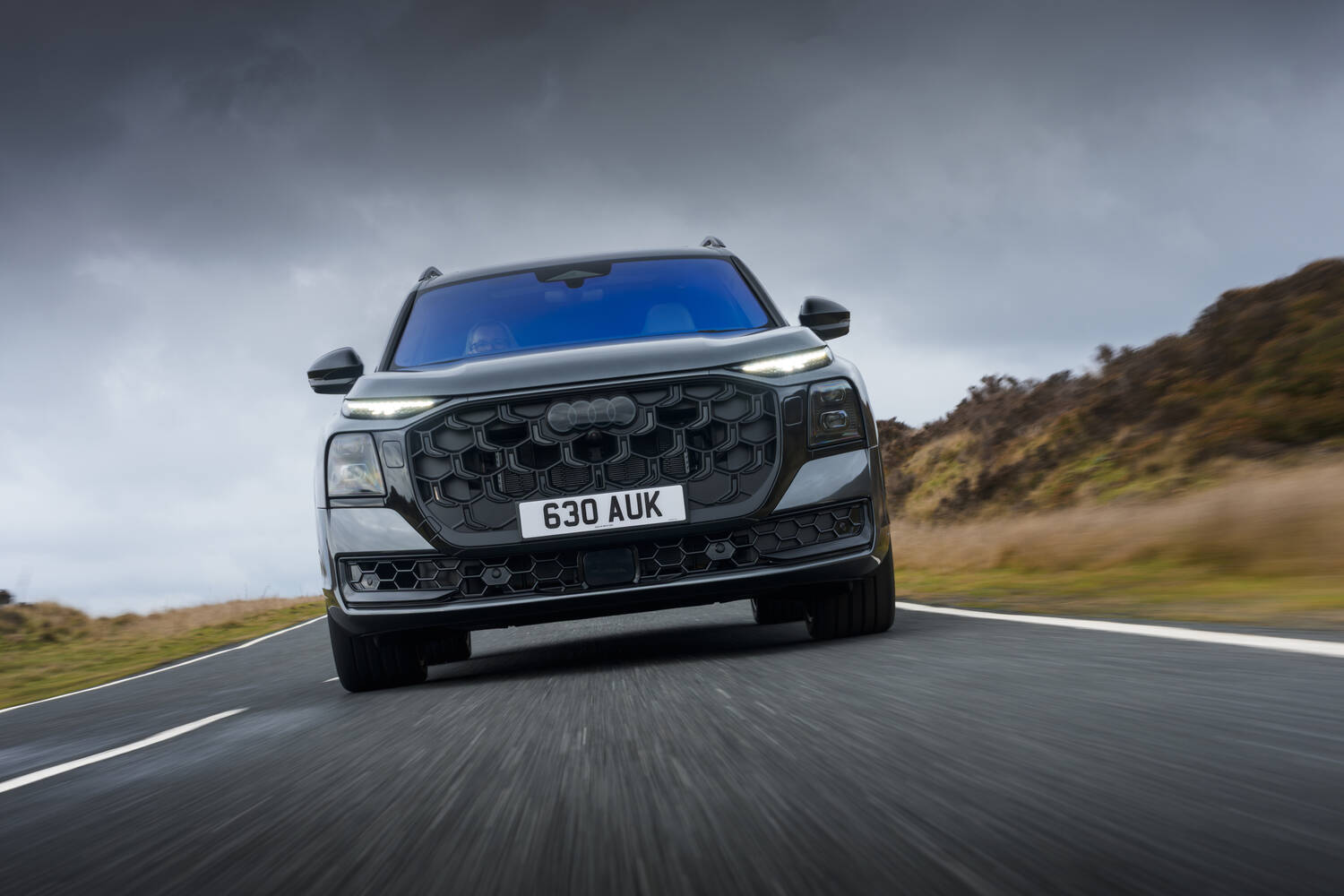
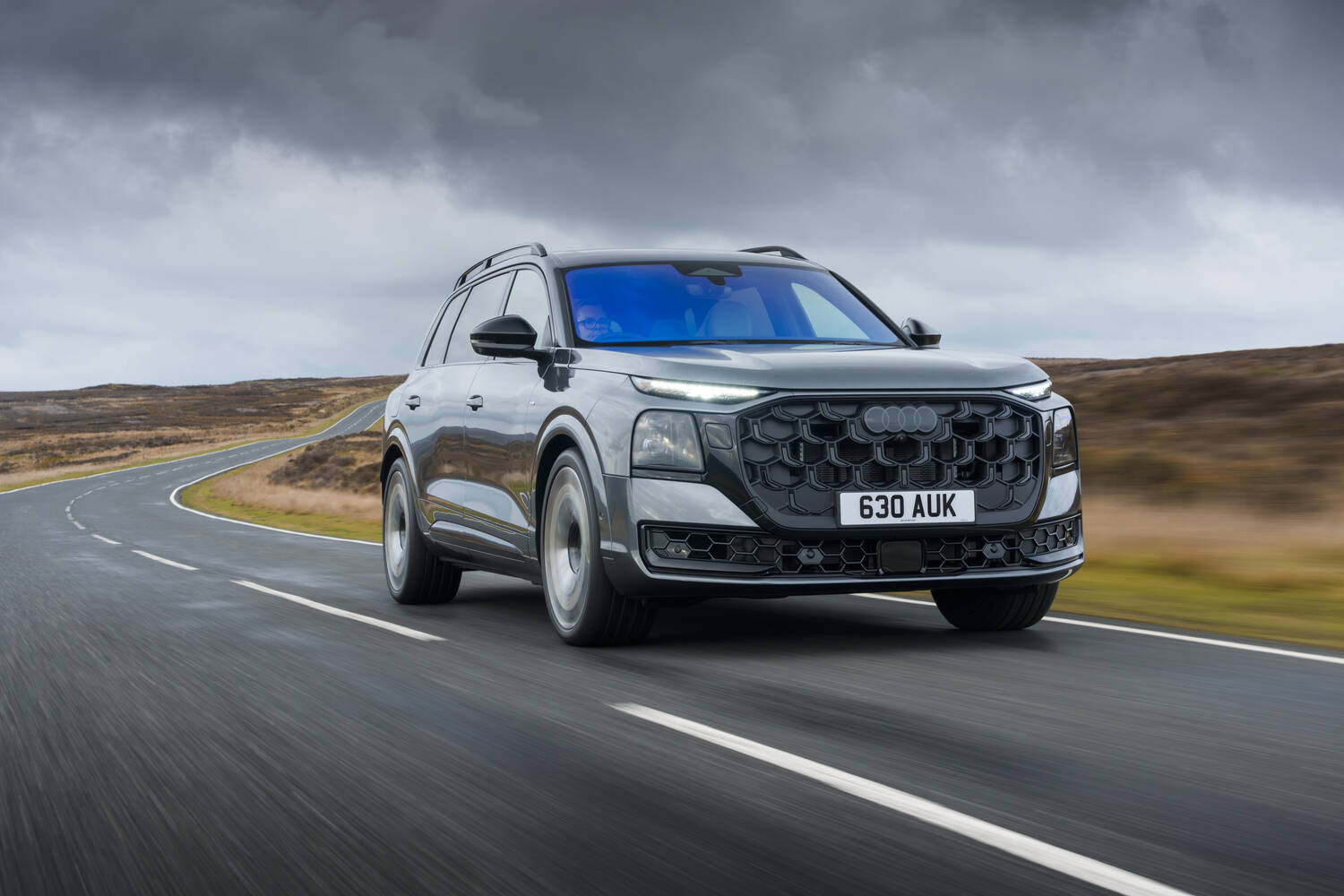
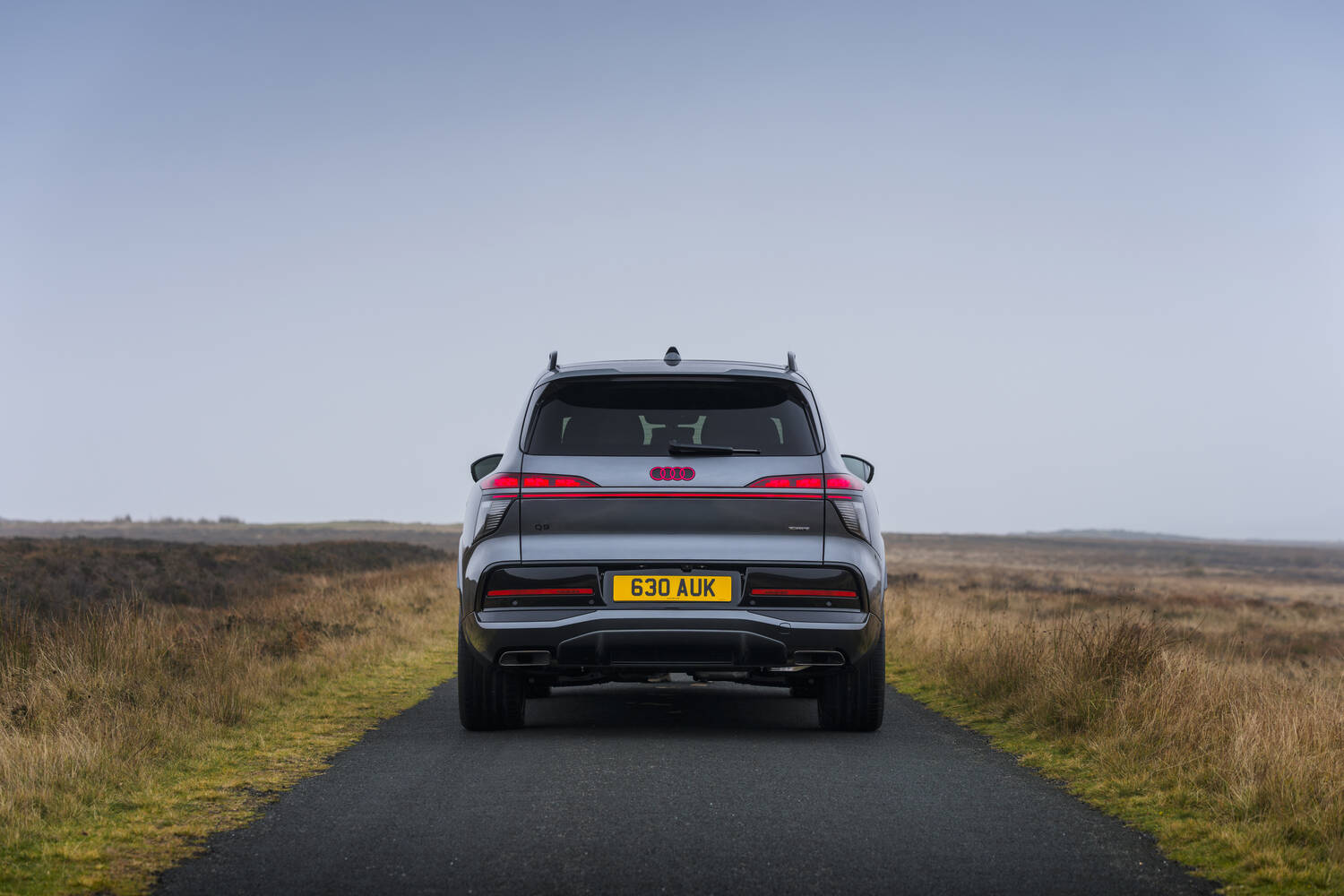
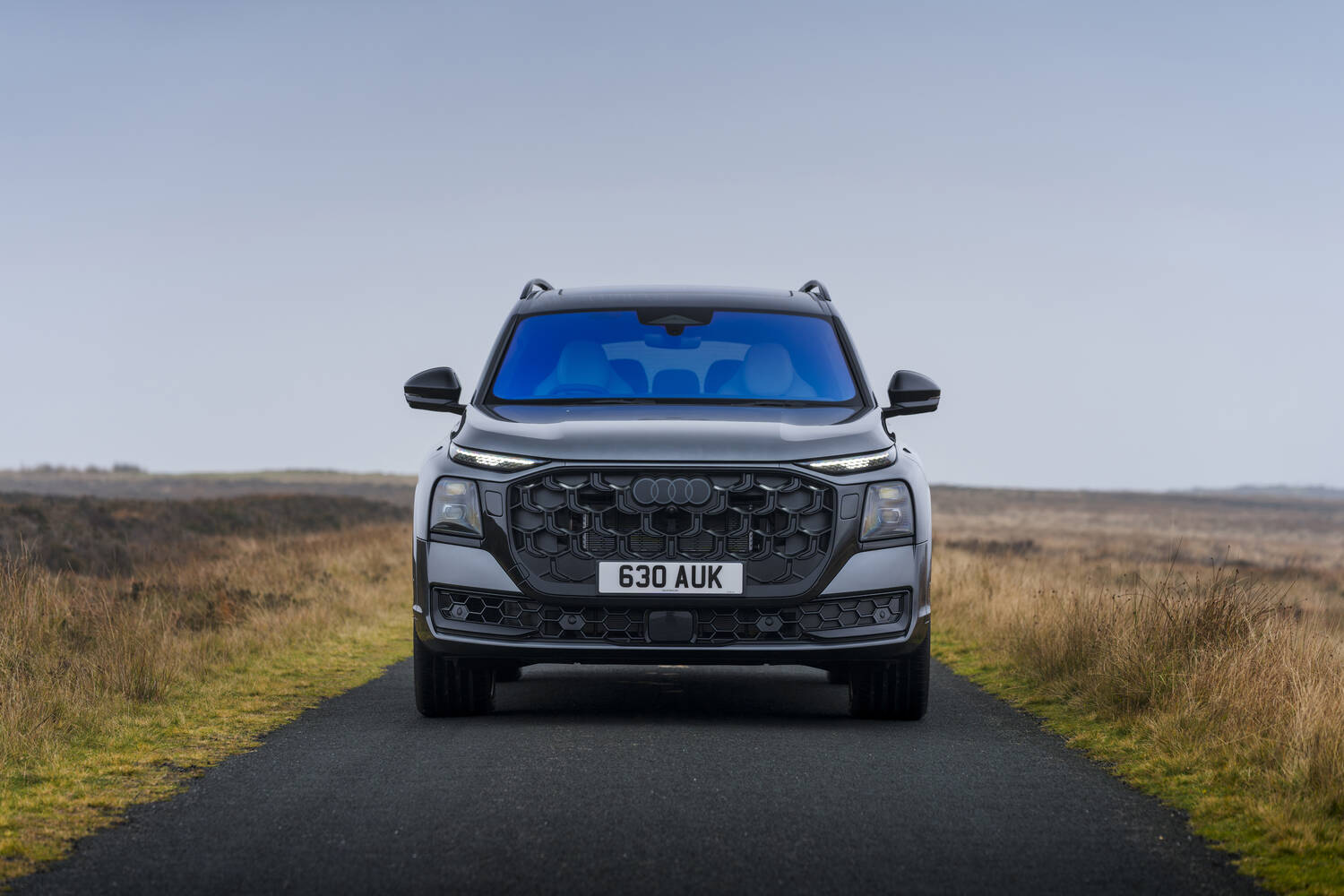
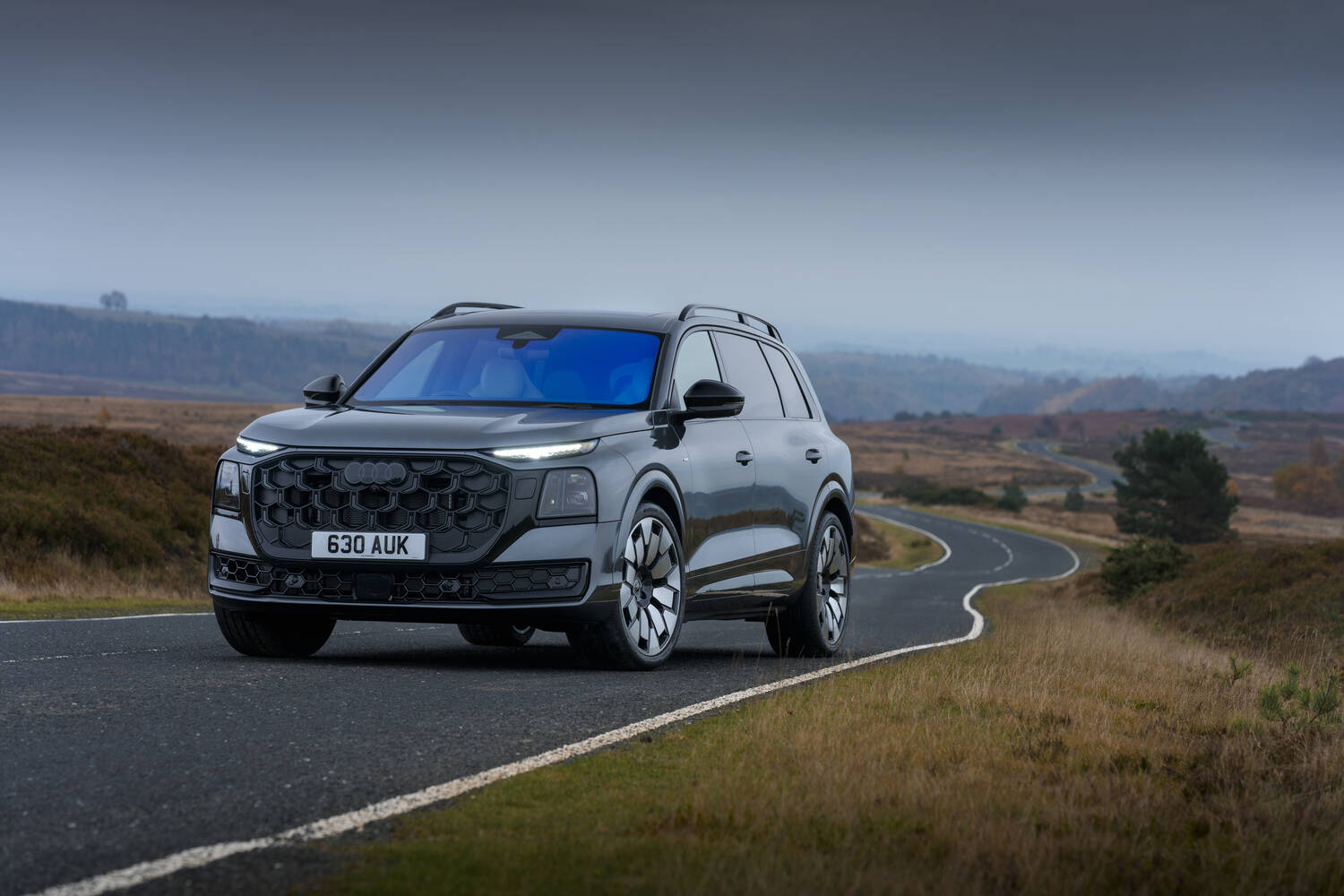
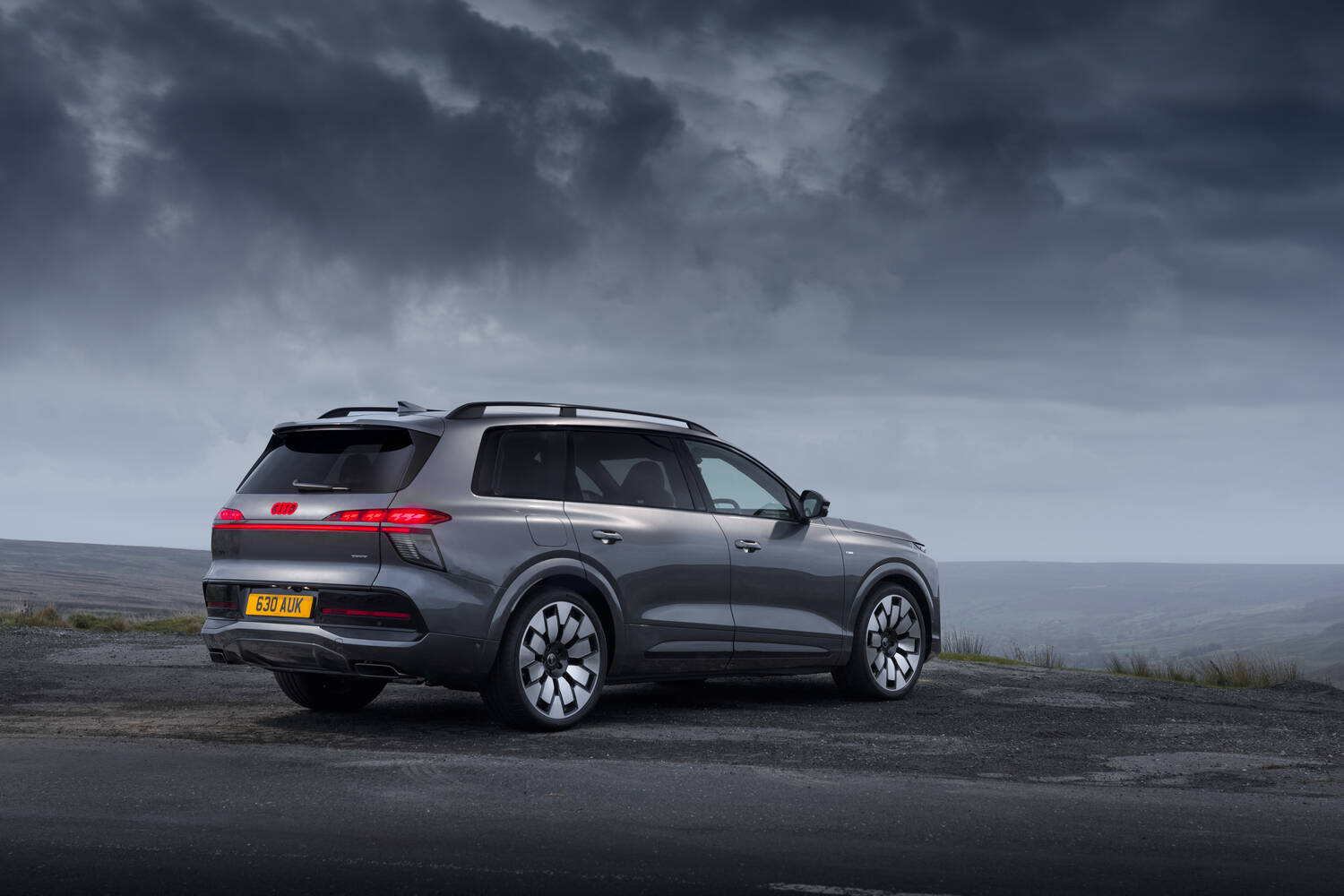
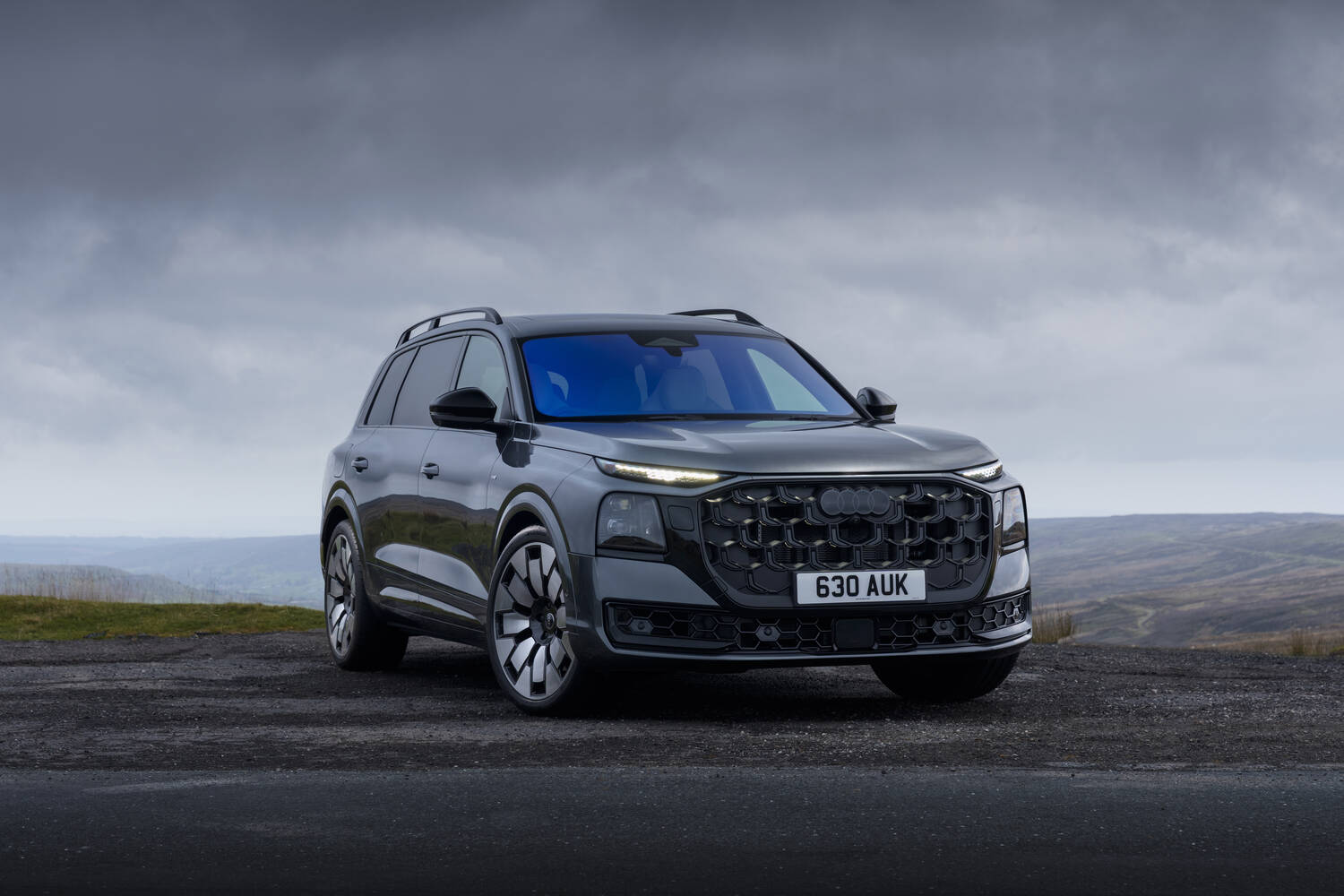
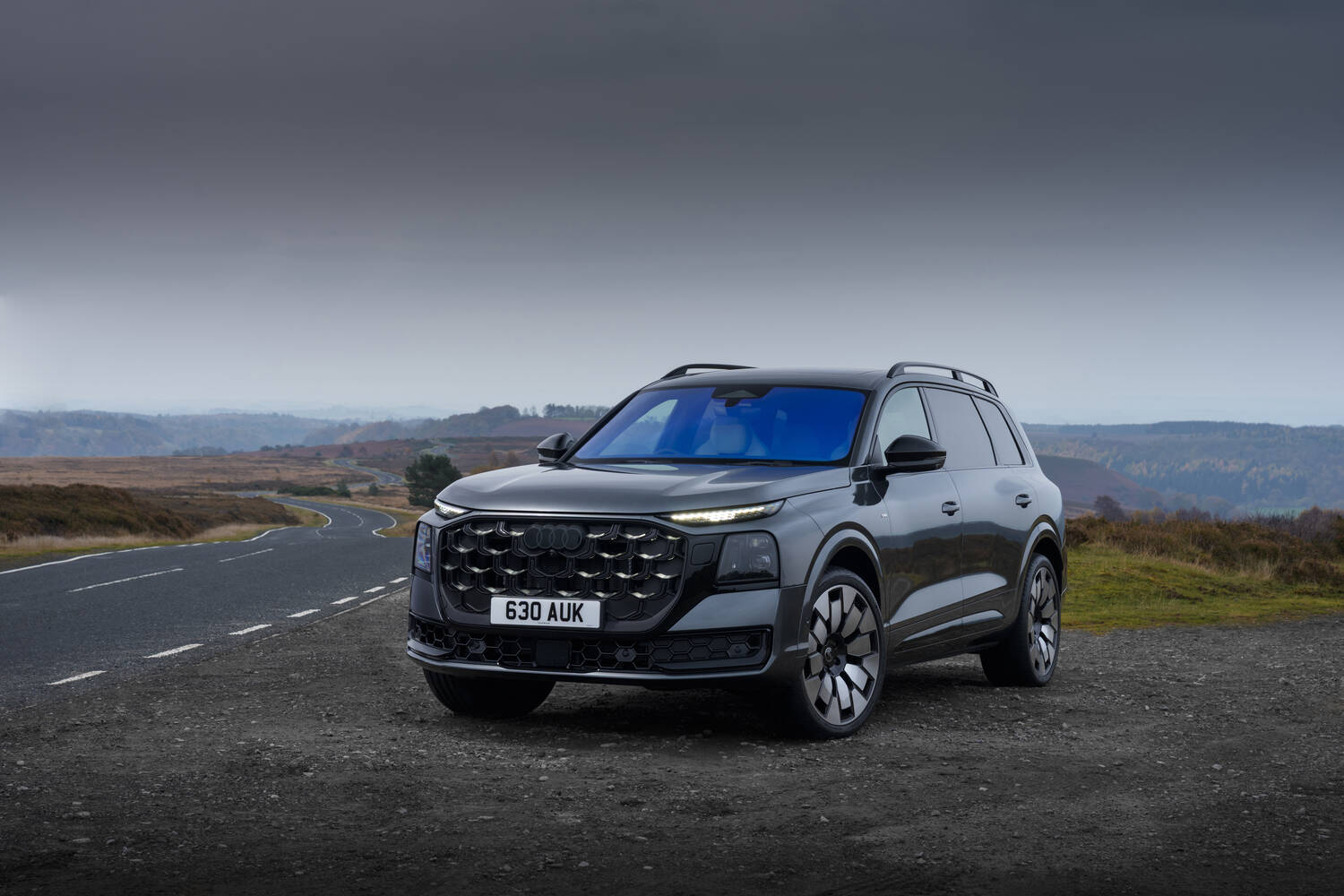
Its main distinguishing feature at the front is a massive 'Singleframe grille' which can light up at night, while at the back, the number plate sits in the bumper rather than on the tailgate. Audi also claims a world first for its curved OLED rear lights.
These, like the slim daytime running lamps up front, have configurable signatures for owners to cycle through, with one setting making the rear lights 'glitter' in a jewel-like fashion. Very glitzy.
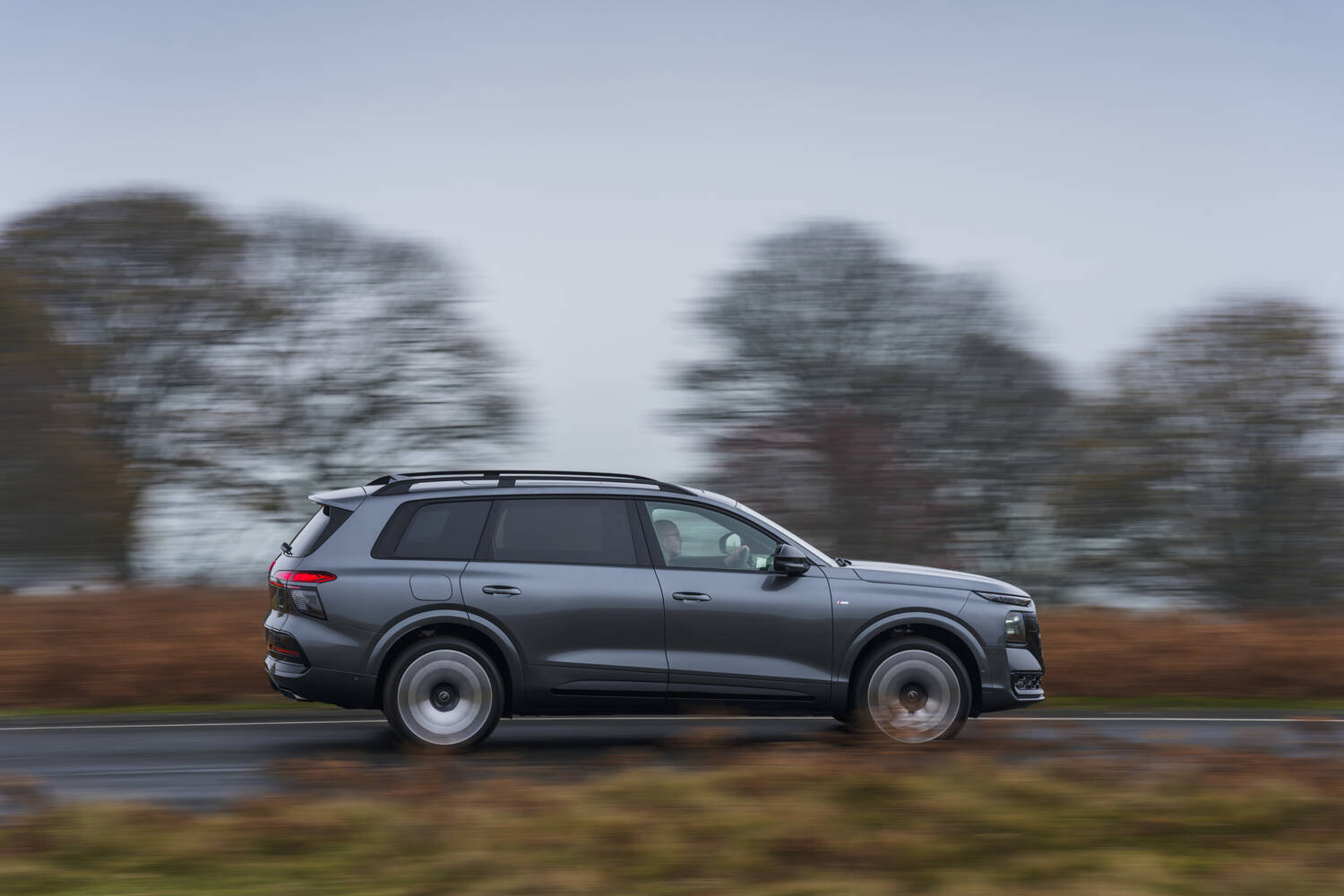
Understandably, at more than 5.3 metres long and more than 2.2 metres across the beam (including door mirrors), the Q9 has a huge amount of presence, simply because it is so, well, huge.
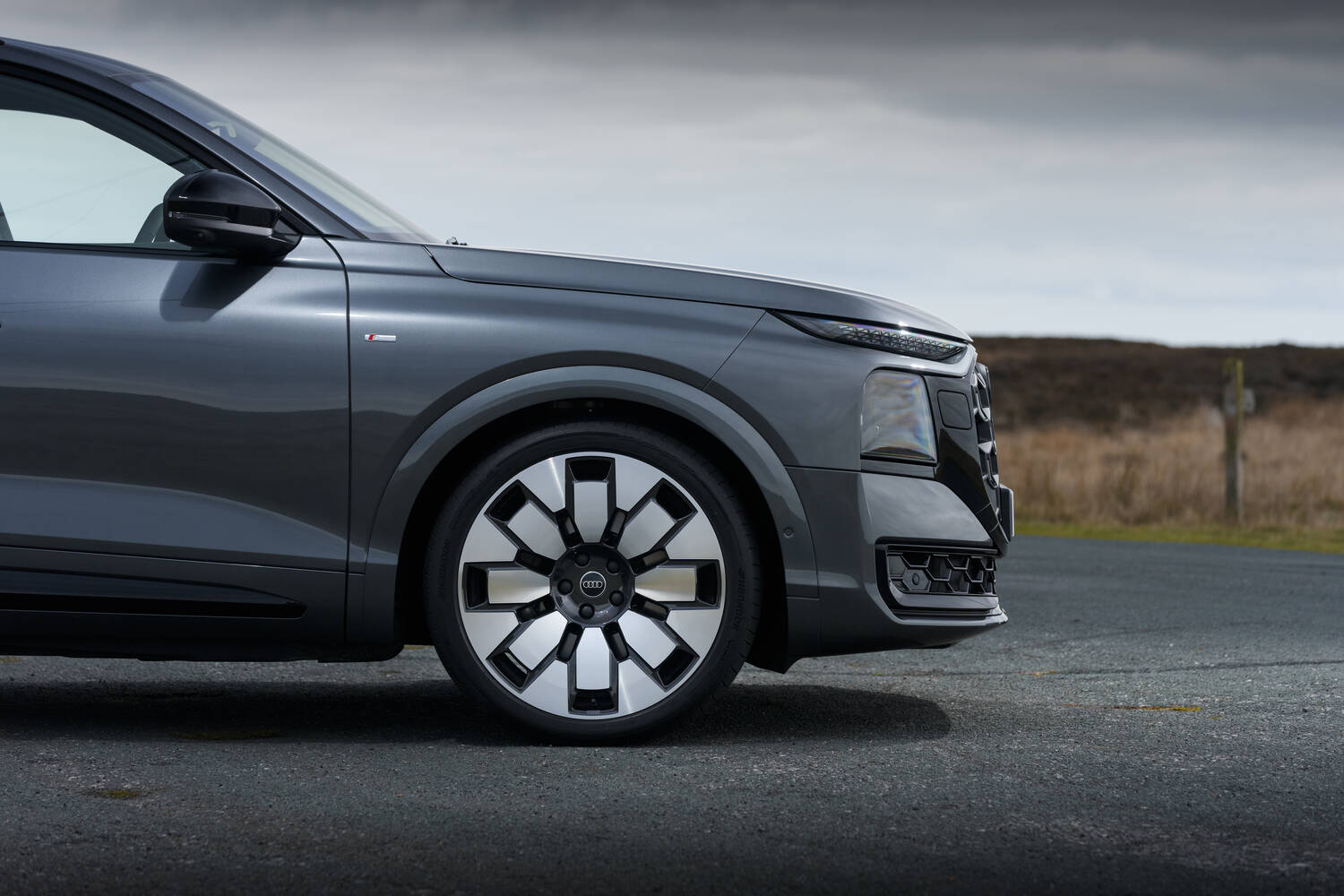
And so too are the alloy wheels. There are nine designs in total, starting with 21s and running all the way to whopping 23-inch items.
But beware any alloys that push the Q9's CO2 emissions beyond 200g/km, because if you select those then your annual motor tax bill goes up by 58 per cent, from €790 to €1,250.
Dimensions of the 2027 Audi Q9
- Length:
- 5,310mm
- Width:
- 2,010mm (excluding mirrors)
- Height:
- 1,768-1,810mm (depending on air suspension ride height)
- Wheelbase:
- 3,140mm
Paint colours for the 2027 Audi Q9
The standard body colour on the Audi Q9 is Carrara White solid. Mythos Black, Glacier White, Waitomo Blue and Midnight Green (all metallic), plus Daytona Grey (pearlescent), each cost €2,308 extra, while the two other metallic shades, Alopias Blue and Agave Green, cost €4,107 each.
Interior, practicality, tech & comfort of the 2027 Audi Q9
- Seven seats as standard, six an option
- High-tech interface
- Could be roomier in row three
Audi itself reckons that every piece of technology it has available to it as a company is fitted to the Q9, as befits a flagship.
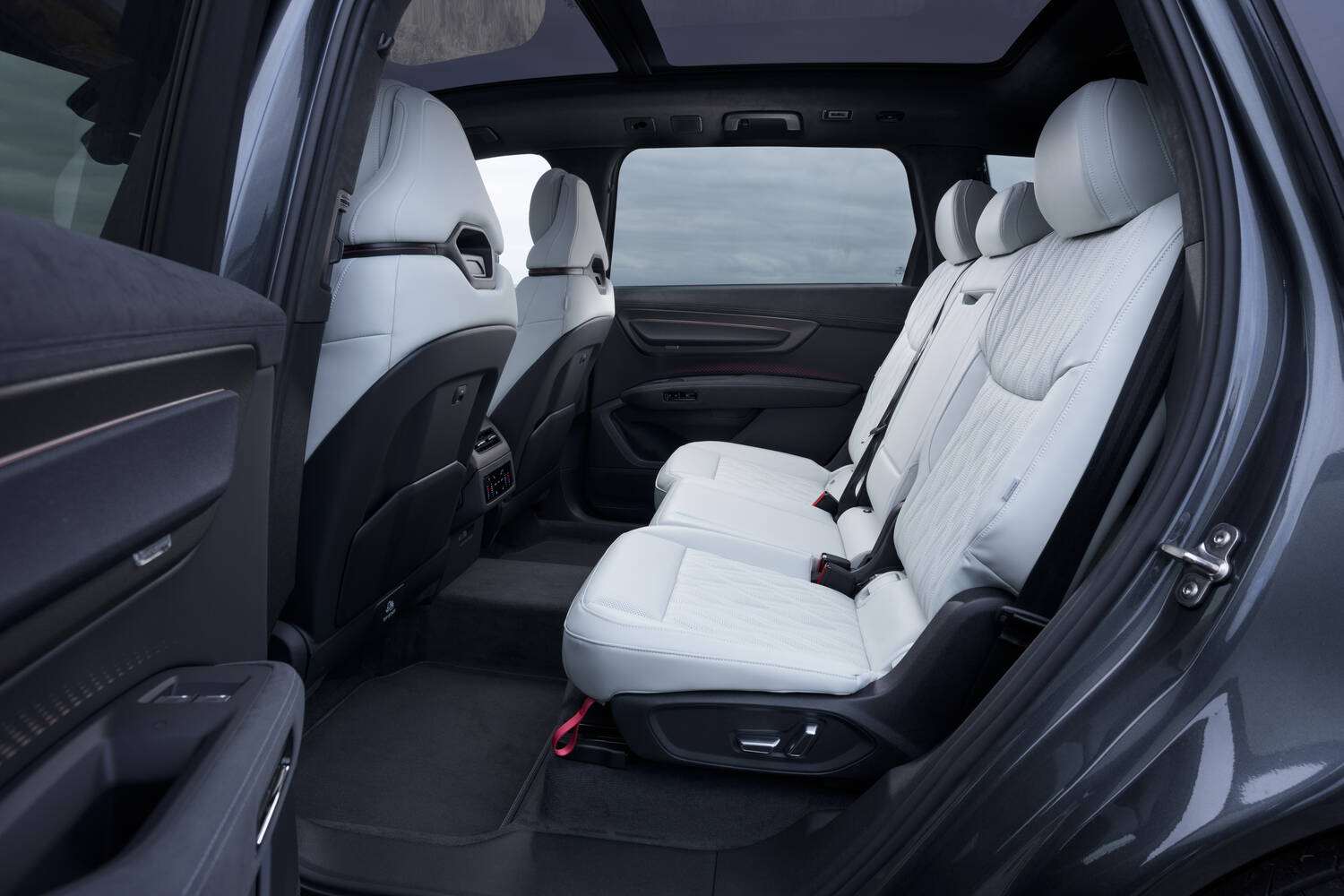
Material quality is also superb within the SUV, although we reckon that something so vast that sits above the Q7 in the range should have more room in the third-row seating.
Getting comfortable in the driver's seat
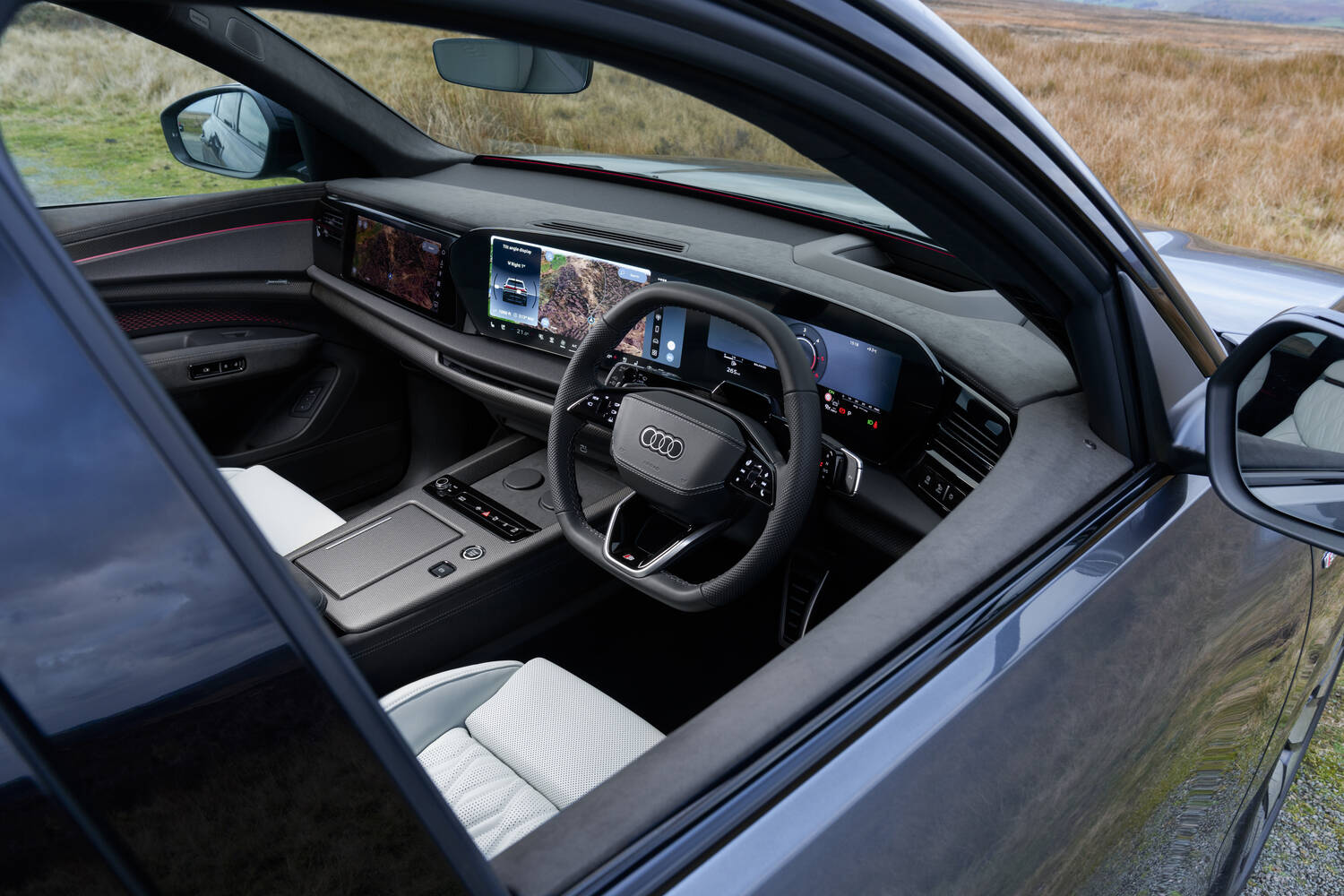
As standard, the Audi Q9 has full electrical adjustment for both the driver's seat and the steering column.
With visibility varying from good (forwards) to a little more restricted (the rear windscreen is some distance away from you as the driver and hidden behind two rows of plush seats), there's a healthy range of adjustment to cater comfortably for drivers of varying physiques.
Infotainment and technology
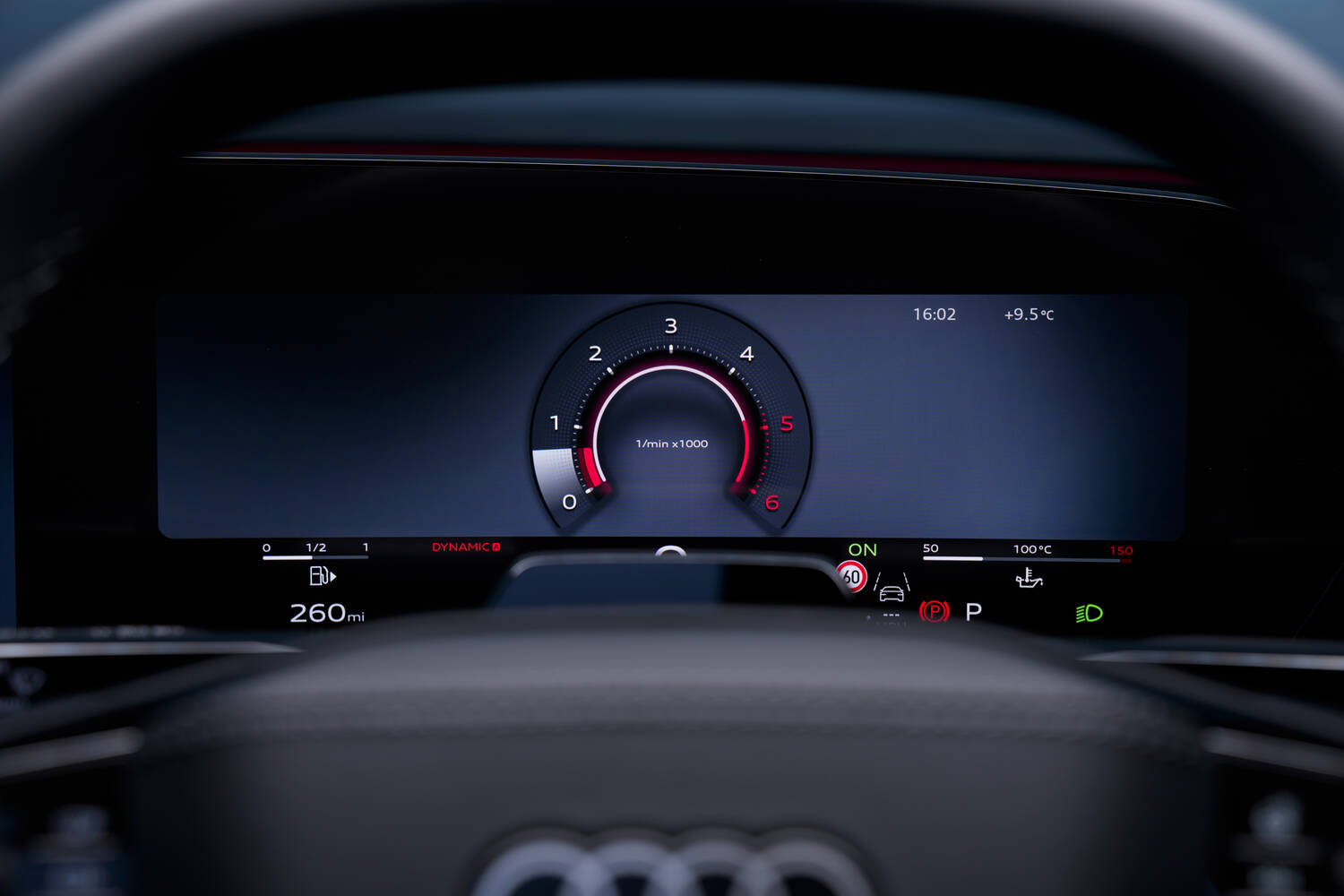
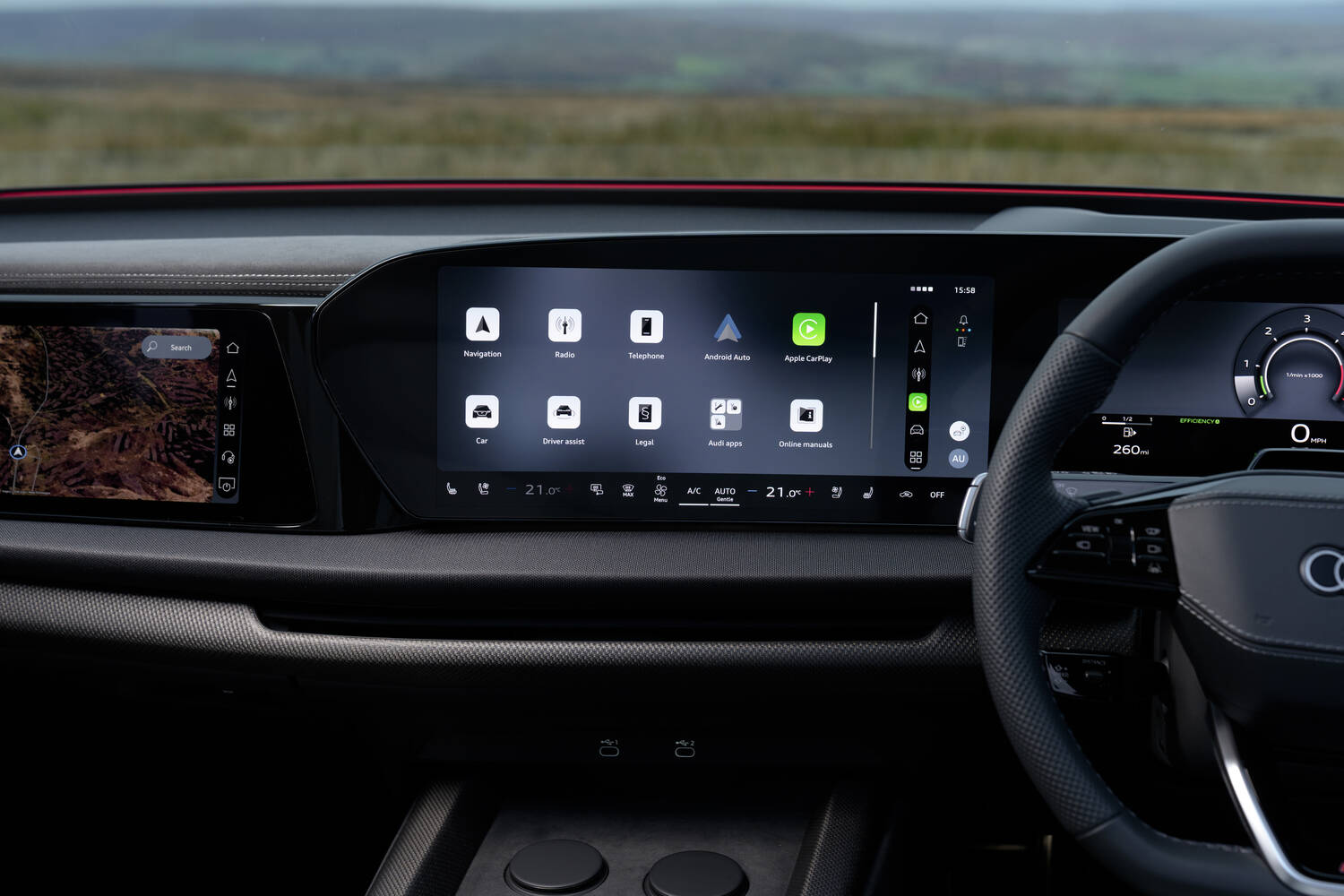
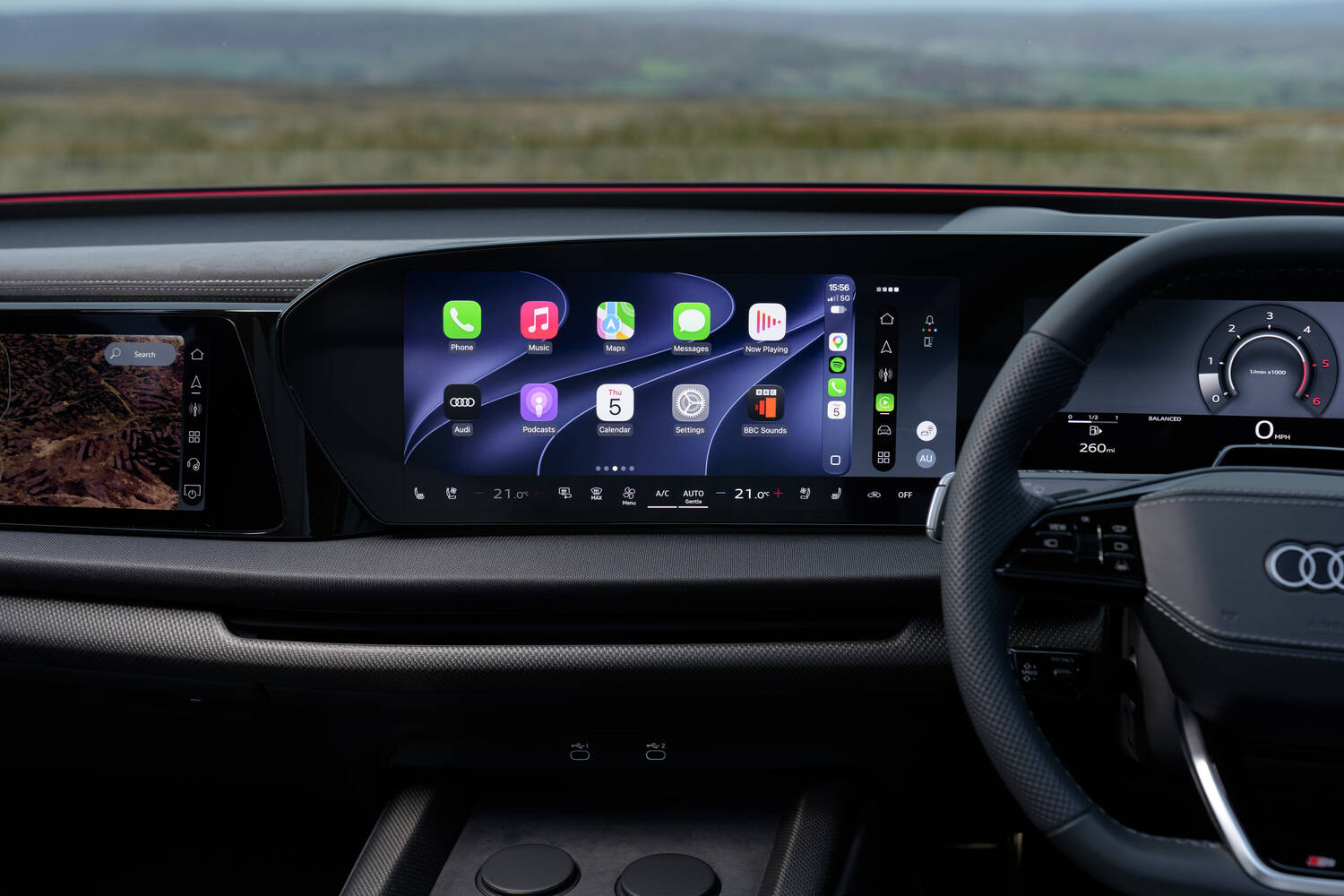
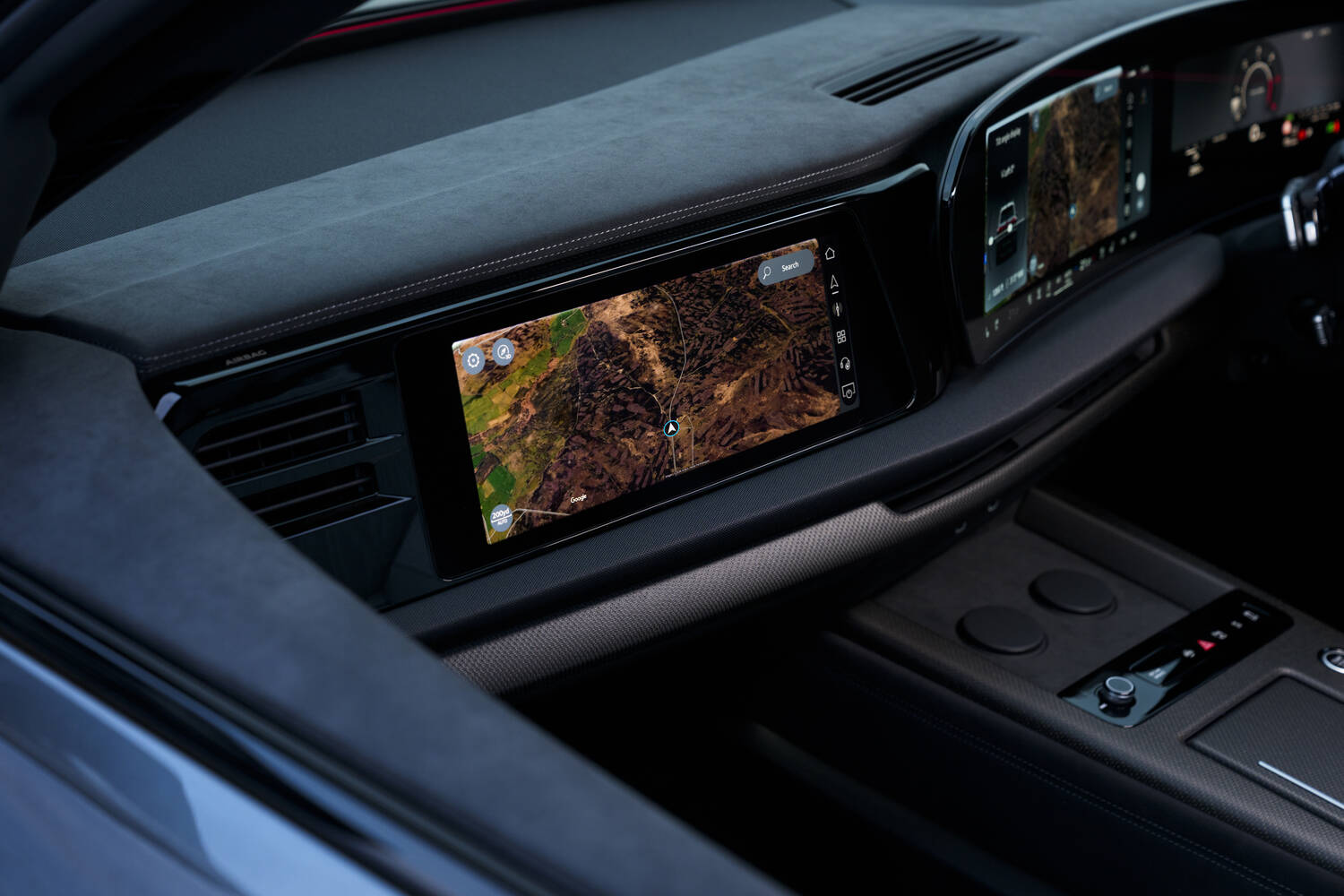
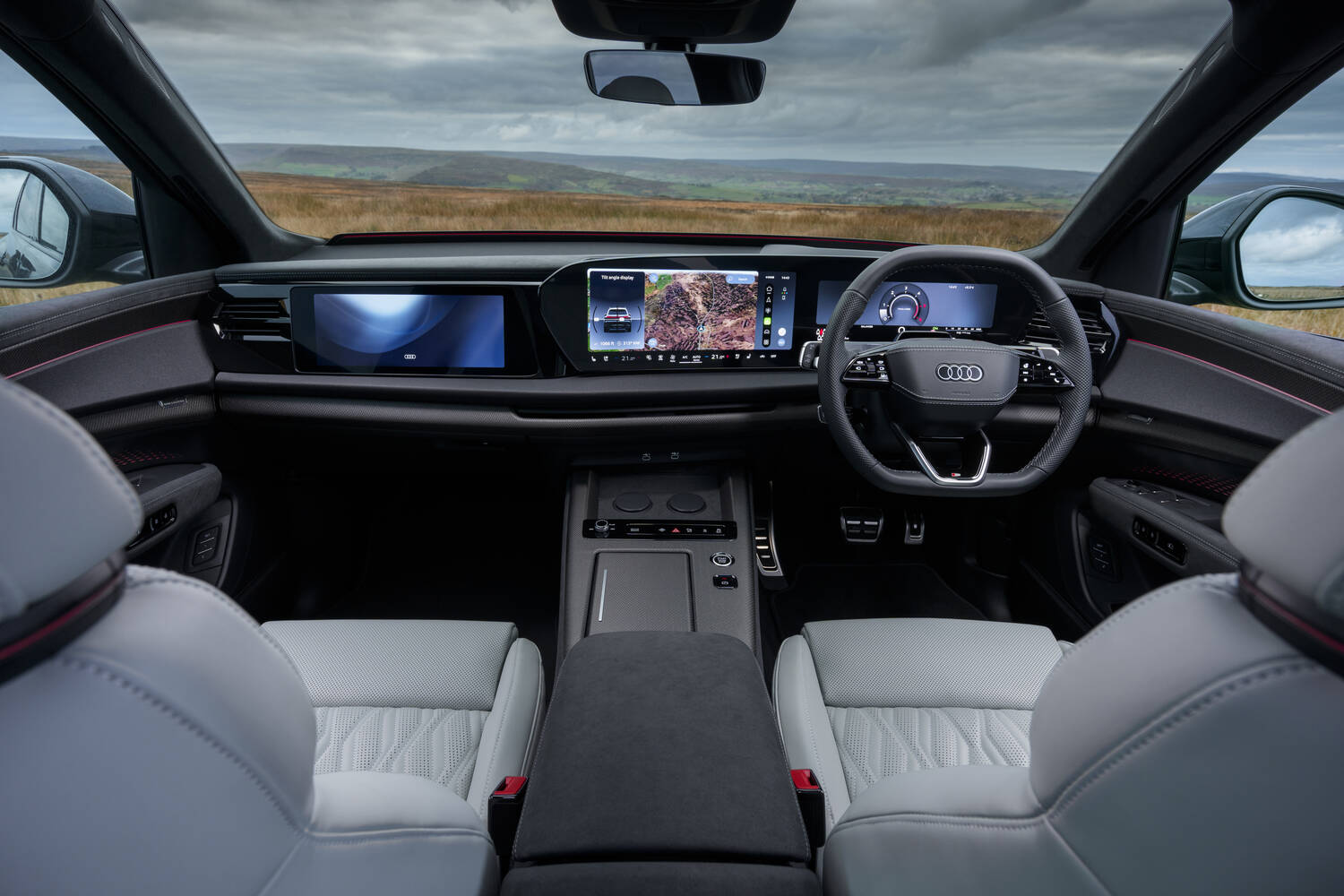
Standard equipment in the Irish-market Audi Q9 models includes the full digital interface. This is made up of a 14.5-inch 'MMI Touch' infotainment panel, the 11.9-inch 'Audi Virtual Cockpit Plus' instrument cluster, a 12.3-inch front passenger display and an augmented-reality head-up display (HUD) for the driver.
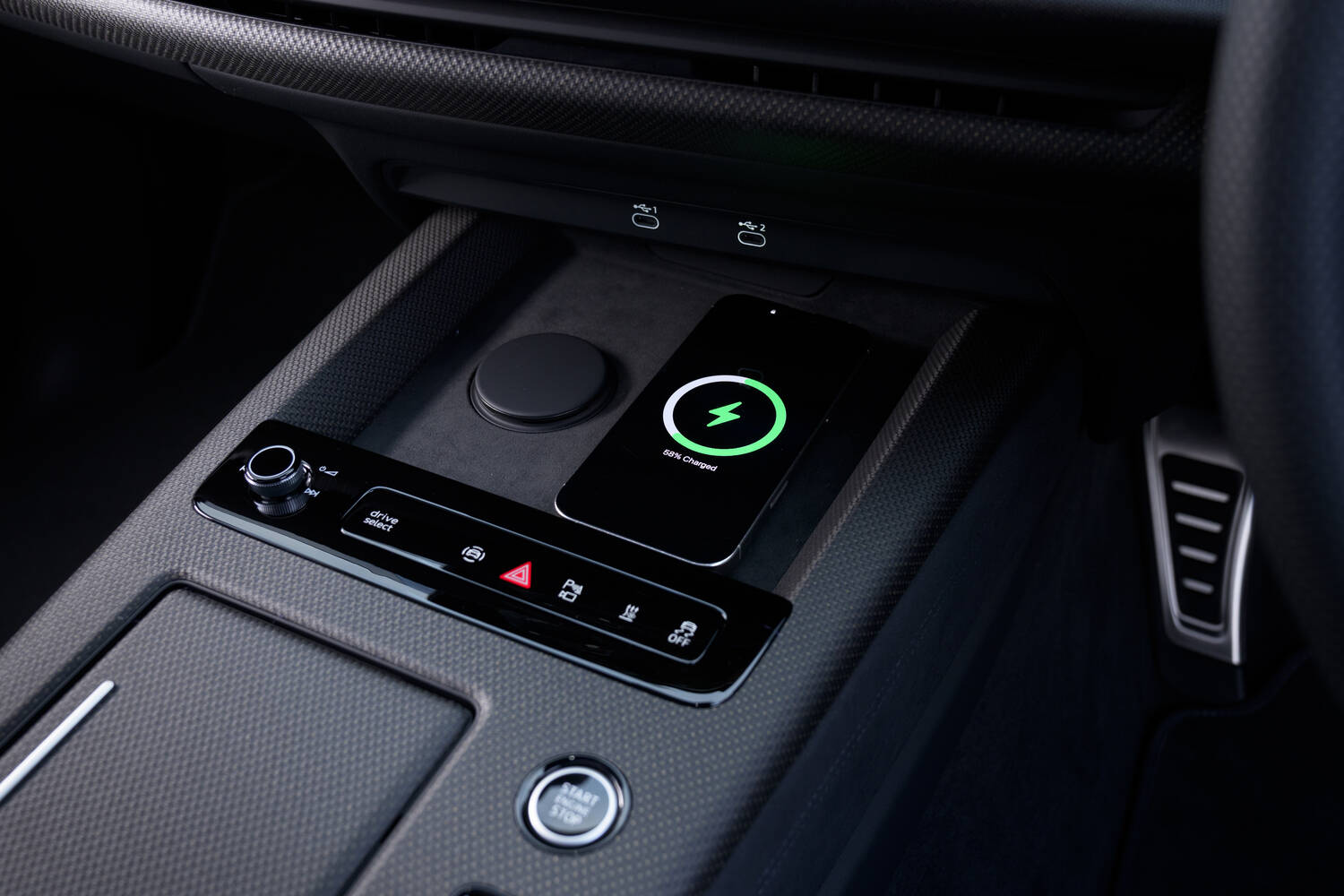
Further highlights include twin 25-watt wireless smartphone charging pads with magnetic bases, a Bang & Olufsen 3D Premium Sound system and what is described as the largest panoramic roof fitted to any Audi model.
You can also add powered doors, seats with heating, ventilation and massage and a more sybaritic six-chair arrangement that makes the cabin of the Q9 appropriately lounge-like.
All the technology works well enough and looks graphically superb, although some will feel 'phone-shamed' by those magnetic chargers in the most recent Audi vehicles. An Android handset simply will not stay in place there with its standard case, and as a result it won't charge wirelessly.
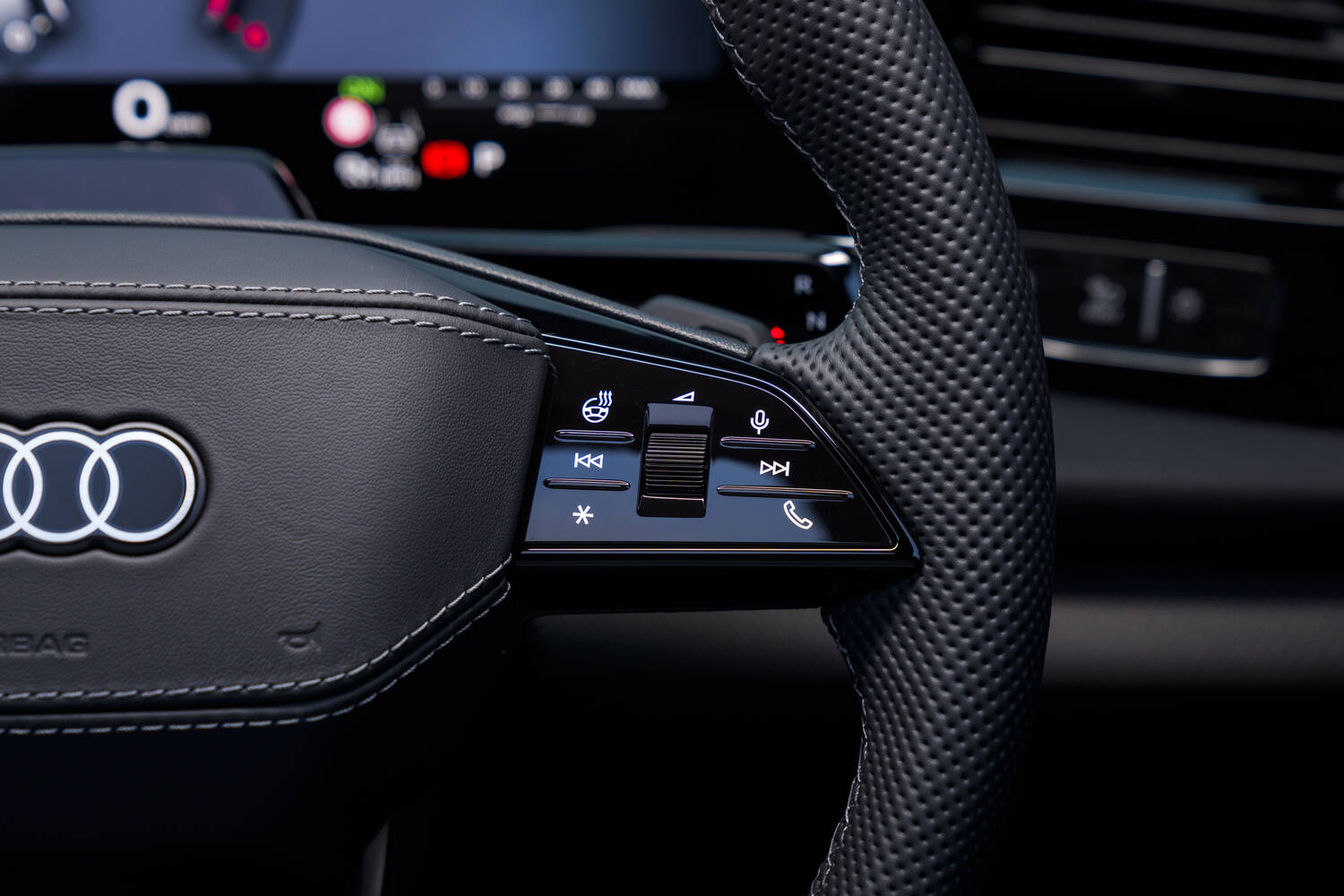
The only issue with the main interface is that there are very few physical buttons on the dashboard (the climate controls are integrated into the touchscreen) and there are also overly complicated, rather clunky column stalks behind the steering wheel - which itself is saddled with haptic pads.
We thought the Volkswagen Group had admitted that 'proper' buttons were better and were phasing these things out? And yet, here they are in Audi's most palatial product.
Practicality around the cabin
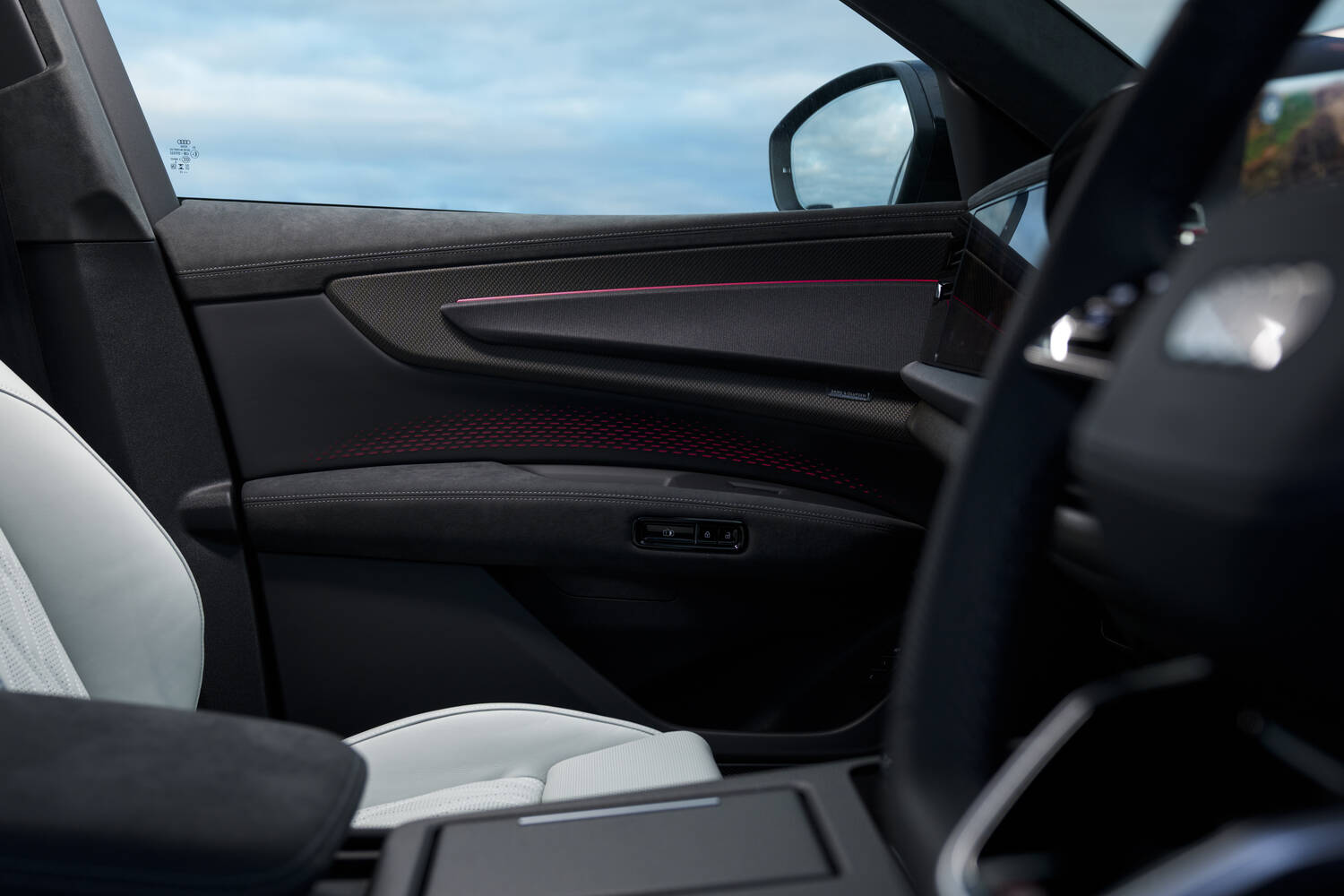
At the front of the Audi Q9's passenger compartment are big door pockets with scalloped holders for drinks bottles, as well as a large cubby incorporating a 12-volt port under the central armrest.
Two cupholders sit behind the wireless charging area for smartphones, and there are two USB-C sockets located above on the main fascia, while the glovebox is a reasonable size.
Rear-seat passenger space
All of the middle-row seats slide forwards and backwards electrically, so you can configure the Audi Q9's cabin according to where people of all sizes want to sit. And, as you might expect of an upmarket SUV with a 3.1-metre-plus wheelbase, leg- and headroom in the middle of the car are both in plentiful supply.
Features in this area of the passenger compartment include climate controls for the four-zone set-up and two USB-C ports on the back of the front-centre tunnel, fair-sized door bins, further USB sockets on the rear of the front seats, rigid, elasticated map pockets lower down on the seatbacks and a fold-down central armrest with two cupholders hiding under a lid.
There is, however, a pronounced transmission tunnel in the floor in row two of the Q9, to accommodate its quattro system.
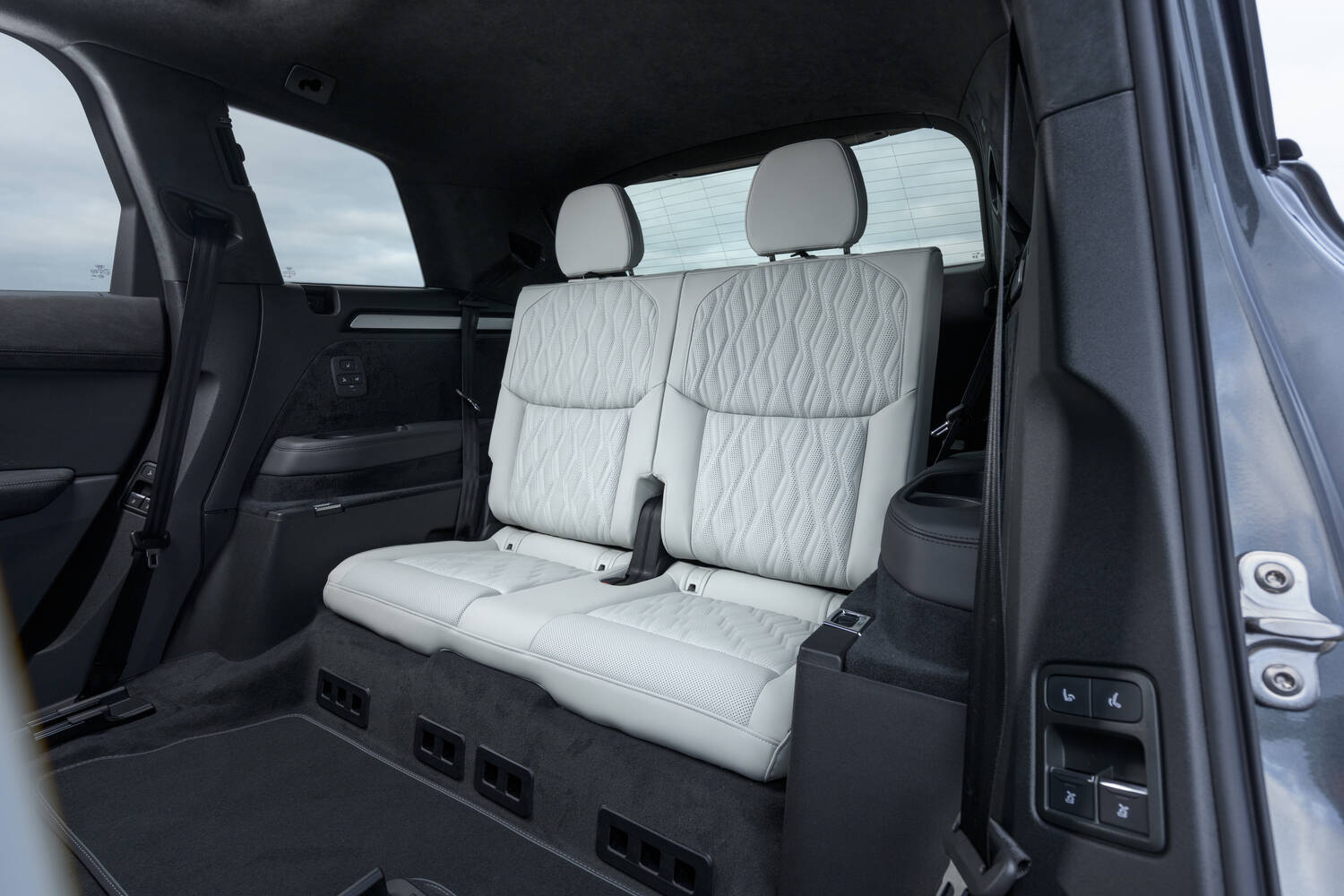
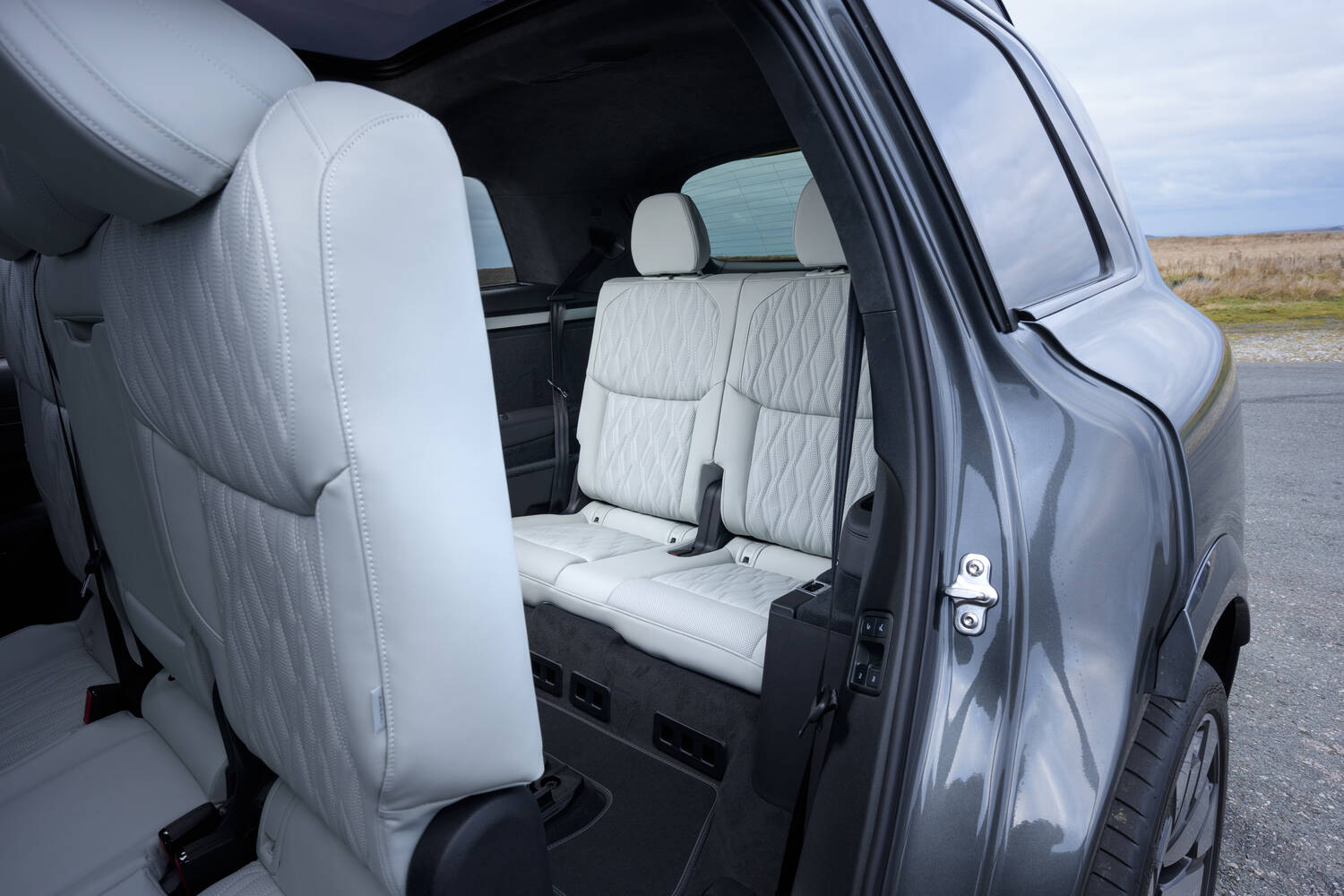
Neither are we impressed by the third row. It doesn't feel any more appreciably spacious back here than it does in a Q7, and surely that's the entire point of the Q9 existing in the first place?
The floor is too high in the range-topping SUV and with the middle-row seats slid back, there's not a great deal of legroom at all.
It's more bearable for average-height adults with the second row motored forward a little, but you're just robbing Peter to pay Paul - the middle seats feel less accommodating in that situation.
Fitting child seats to the Audi Q9
Audi is proud to say that all six passenger seats in the Q9 have ISOFIX mounting points as standard. And with enormous rear doors opening to 90 degrees as well, loading even the bulkiest of child seats should be no issue at all for parents.
The outer seats in the middle row tip forwards, so you can get to the third row with child seats still fitted.
Boot space in the Audi Q9
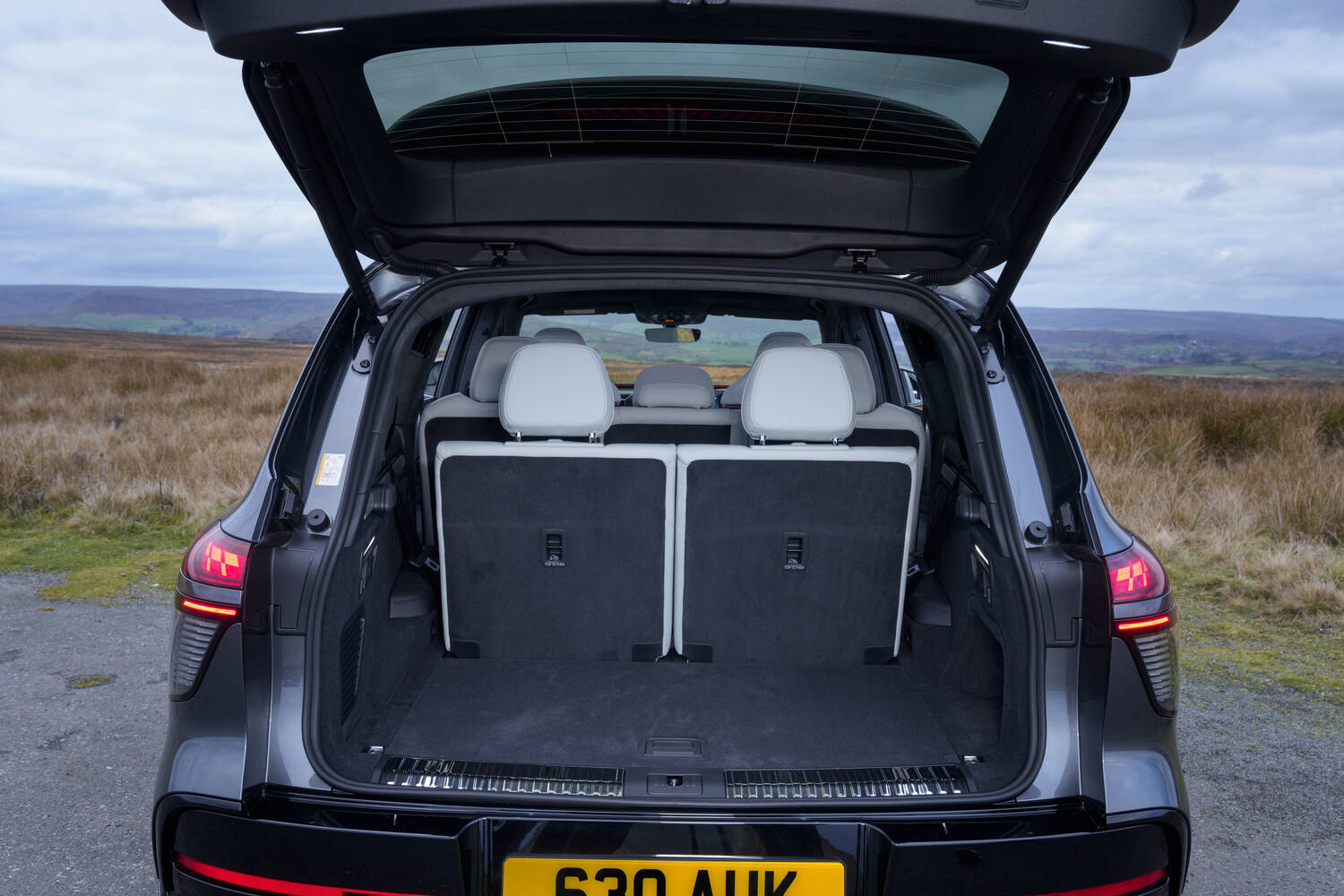
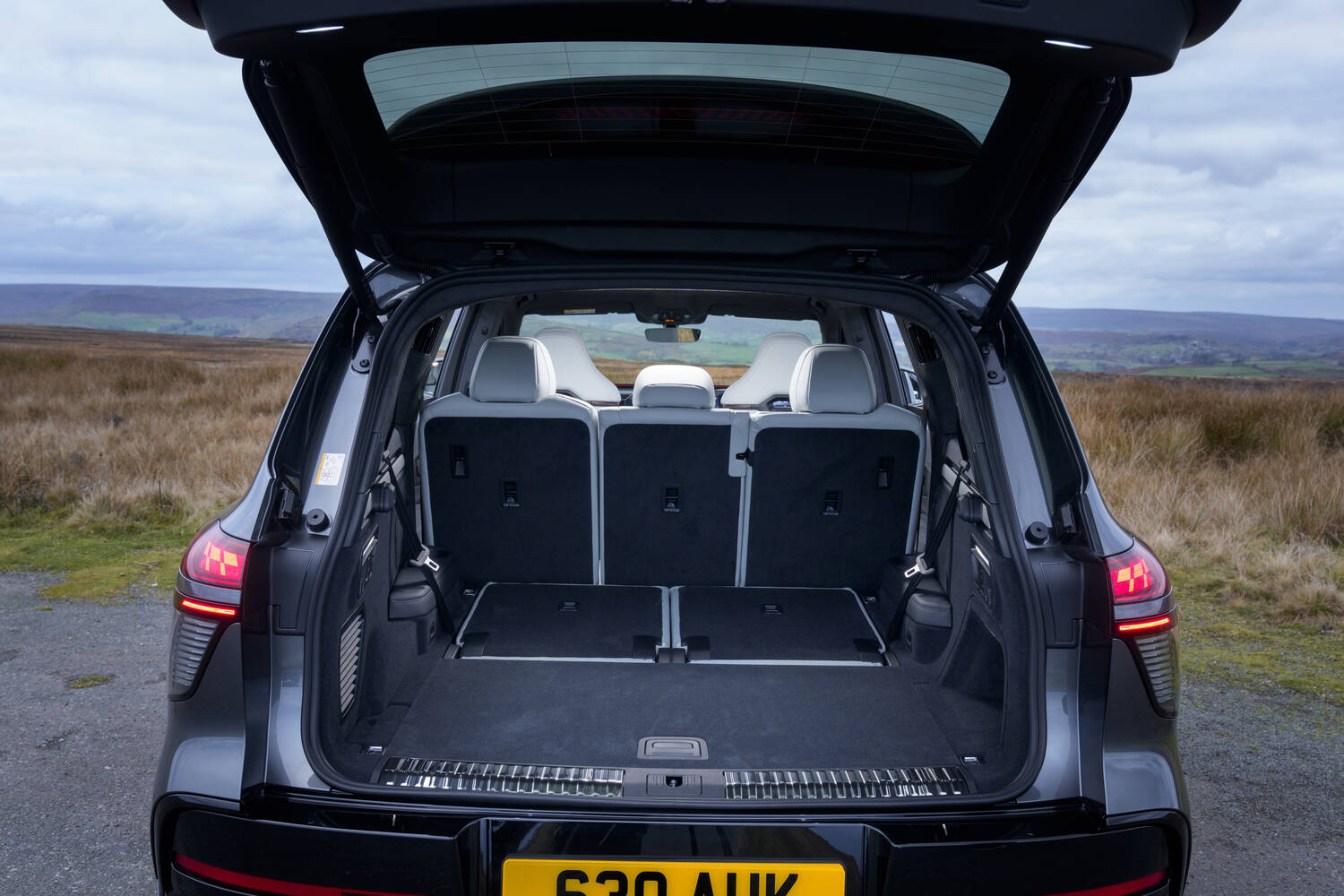
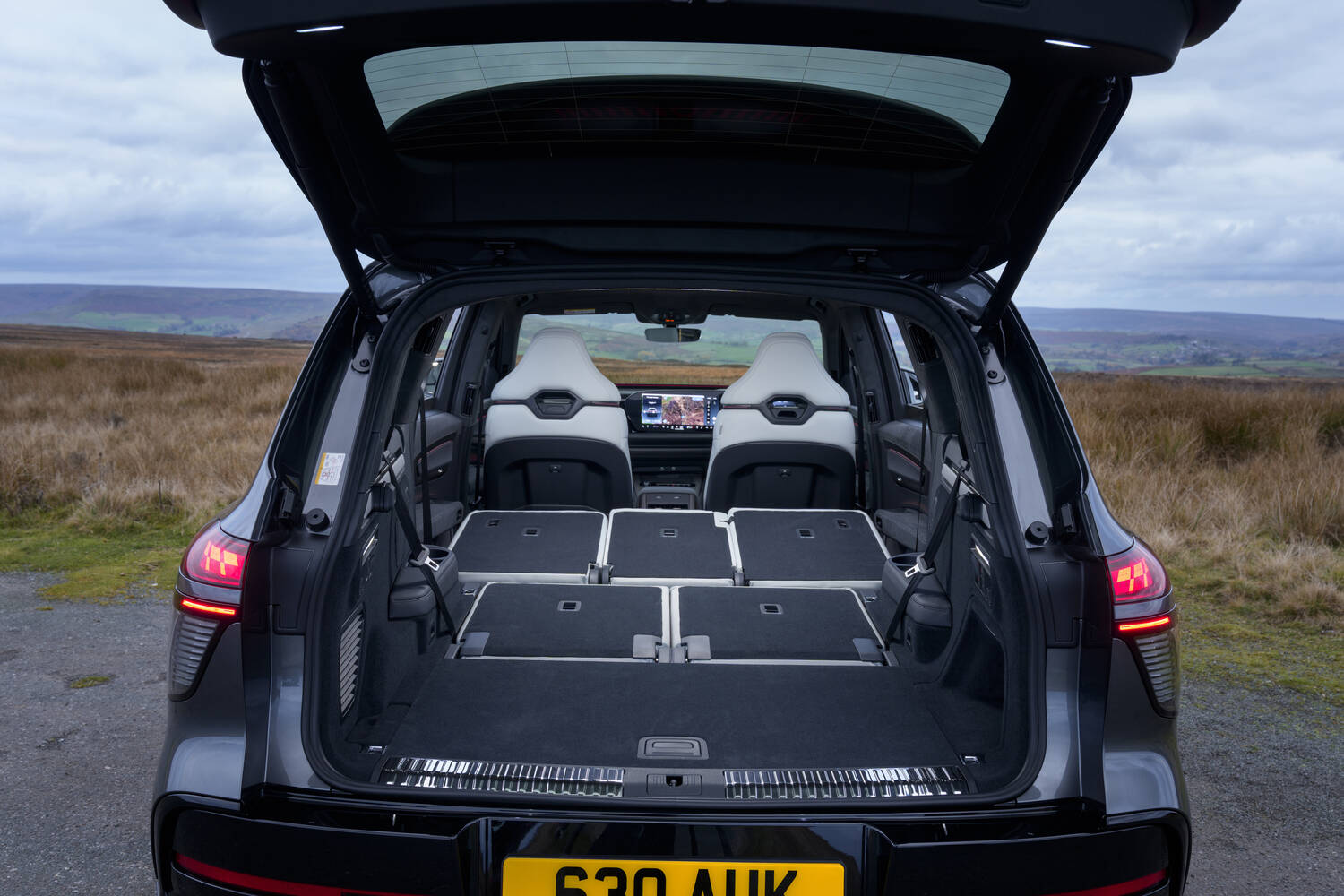
With all seven seats in use, there is 280 litres of capacity in the boot of the Audi Q9. Fold the third row down (which takes a while, electrically) and, if the middle bench is all the way back, you have 700 litres of cargo room available - but with that row slid forward, the Q9 can accommodate a ginormous 850 litres.
Finally, fold all five seats in the back of the cabin down and 2,308 litres of volume is liberated. That's 328 litres more capacity than you'd get in the back of an Audi Q7 in the same configuration.
Other features in the boot area include a 12-volt socket, buttons to raise and lower the rear air suspension, more switches to fold the seats, a couple of moulded plastic bag hooks on each side and a rail system for adjusting the luggage-cover holder depending on how many seats are in use. There's also a place under the boot floor to store the cover when it's not required.
Safety in the Audi Q9
Euro NCAP has not tested the Q9 itself, but Audi's Q7 picked up a full five-star rating under the 2026 assessment protocols. The Q9 uses much the same advanced driver assistance systems.
Performance of the 2027 Audi Q9
- One turbodiesel V6 at launch
- Benefits from mild-hybrid assistance
- Lovely and refined to travel in
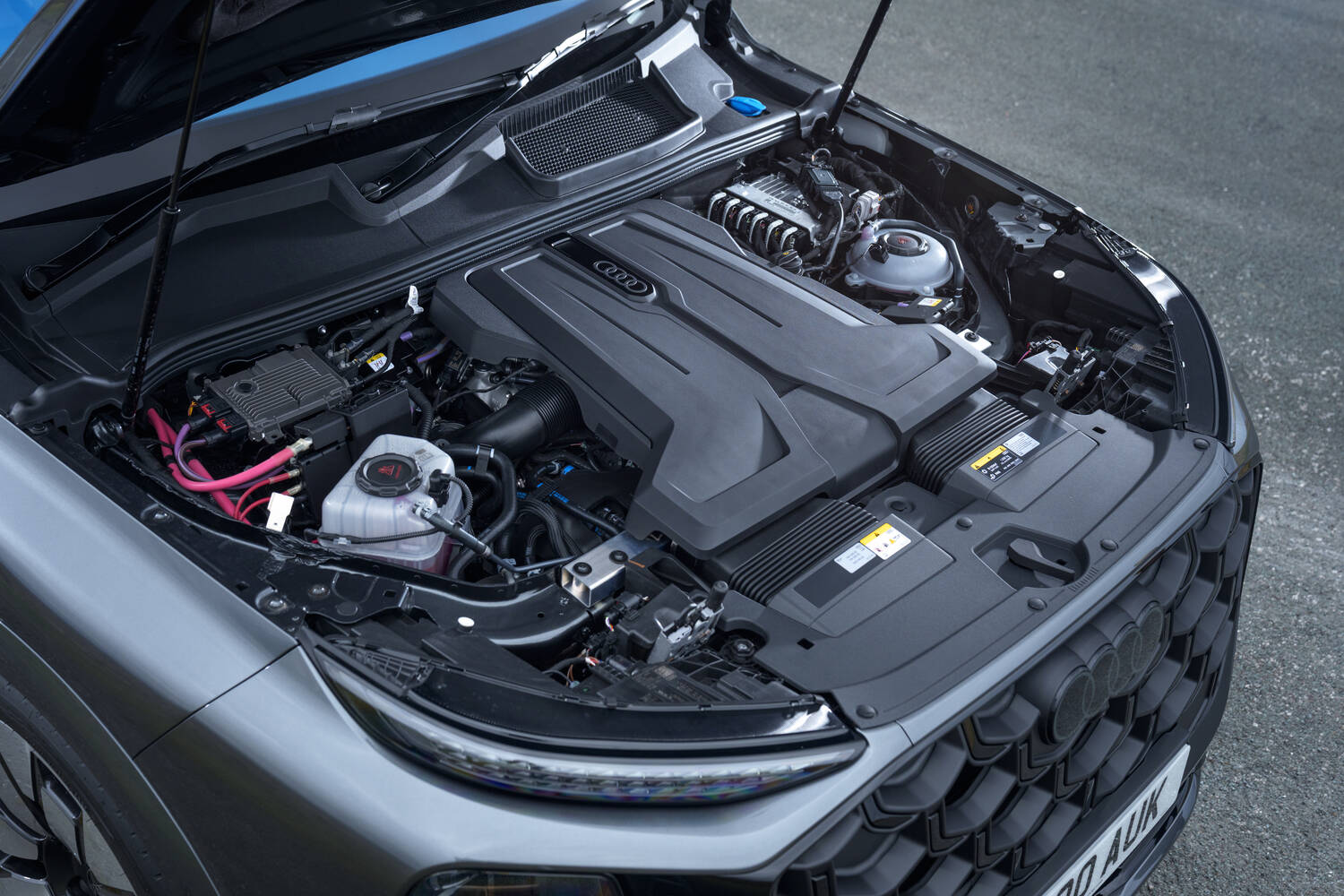
Audi launched the Q9 with the same 299hp/630Nm iteration of the 48-volt, mild-hybrid-assisted turbodiesel drivetrain used in the Mk3 Q7.
This is a 3.0-litre V6 and it has enough about it to push the quattro all-wheel-drive Q9 to 100km/h from rest in 6.5 seconds - despite the SUV weighing 2,605kg in this format.
The gearbox is an eight-speed Tiptronic torque-converter auto.
Driving the Audi Q9 TDI quattro MHEV on UK roads
Words by Matt Robinson on 27 November 2027
We're sorry to keep mentioning the Q7 - we ordinarily would focus on one model, as people wanting apples don't buy oranges, and so on - but as these two big Audi SUVs are so ideologically similar, and use pretty much the same hardware, the Q9 needs to do something exceptional to make it, experientially, a cut above its relation. In the end, that moment of clear, incontrovertible differentiation never arrives.
The Q9 is, however, a splendid thing to travel in. It is fitted with air suspension and adaptive dampers as standard, and even on the almighty 23-inch, eight-spoke Audi Sport alloys which are a €6,062 option here in Ireland (and they're very lovely to look at, we might add), the ride comfort and rolling refinement are never anything short of exceptional.
With acoustic glass all around the passenger cabin and spectacular isolation from lumps and bumps in the road, the Q9 is a smooth operator, whatever the road surface or speed. So yes, it certainly feels top-end-luxurious in this regard.
But... so does the Q7. The Q9 is not night-and-day ahead of its stablemate for these aspects of its behaviour, if it's even ahead of the Q7 at all.
And then, as it carries 105kg more mass, it's not quite as adept in the corners. Saying that, considering its bulk, the Q9's roadholding is impressive. It grips tenaciously and resists excessive body movements admirably, while the steering is even pleasing to deal with - not always a given on an Audi.
Still, two metres wide, the wrong side of two and a half tonnes and powered by 'just' 299hp of V6 diesel, the Q9 is clearly no sports car.
On narrower, more sinuous roads, it can feel a little unwieldy (more down to its sheer width than anything else), and it takes a fair bit of stopping despite a capable set of brakes.
Weirdly, although it's three-tenths of a second slower to 100km/h officially than the Q7, the Q9 feels subjectively quicker in practice than its smaller sibling.
That might be down to something in the back of your brain reminding you precisely how much mass is moving along sheep-strewn moorland roads at bordering on indecent speeds, but we have no problems at all with a lusty V6 diesel in this day and age. The powertrain in the Q9 is nothing short of a delight.
The biggest Audi SUV delivers the sophisticated drive that you would expect from this company, chucking everything at the problem - including agility-boosting four-wheel steering - but the overall experience is just way, way too similar to that of the Audi Q7.
Fuel economy and running costs of the 2027 Audi Q9
- Official consumption as low as 7.5 litres/100km
- Uses considerably more on test
- CO2 emissions can result in high tax
The Audi Q9 is a 48-volt, mild-hybrid diesel, but it's still not going to be as efficient to run or as cheap to tax as a good plug-in-hybrid rival, or indeed a seven-seat electric car. Fitting bigger wheels also seriously impacts the motor tax bill.
Official CO2 and fuel economy figures
Audi quotes between 7.5 and 8.0 litres/100km economy, which translates to 35.3-37.6mpg. The CO2 emissions are stated at 194-209g/km, but our thresholds for motor tax are punitive on anything emitting more than 200g/km - so choose humongous 22- or 23-inch alloys carefully, as they could see your annual bill leap to €1,250.
Real-world efficiency of the Audi Q9
Our 75km test route for the Audi Q9 took in the hills and dales of North Yorkshire in the UK, so it's not the most conducive landscape for parsimony.
However, despite the fact we did start the loop driving the Q9 fairly briskly, glowering weather meant the latter half of the test was driven with a degree of self-preservative circumspection.
With that in mind, 11.3 litres/100km is perhaps not so bad in a 2,605kg SUV, even if it's a way off the official figures.
Servicing the Audi Q9
Audi offers variable servicing intervals depending on how you drive your car, with those who perform lots of low-speed, short-distance journeys requiring more frequent maintenance when compared to those who basically hammer up and down motorways for hundreds of kilometres at a time, day in, day out.
Effectively, the maximum interval between services for the Q9 is two years or 30,000km, whichever comes first.
Audi Q9 warranty
Audi's regular warranty applies to the Q9. The first two years have unlimited mileage, with a 90,000km cap in the third year. This means it is a long way from being one of the most generous new-car warranties going.
Irish pricing & rivals to the 2027 Audi Q9
- Starts at €176,305
- One powertrain available initially
- Only one trim level, too: S line
Audi launched the Q9 with just one drivetrain (the 3.0 TDI MHEV) and one trim grade (S line), which confers a bounteous standard equipment list - almost everything on it is factory-fitted, although there are two hefty technology bundles available that will relieve you of a lot of cash: the €8,042 Tech Plus and the €2,760 Climate Control Winter Plus upgrades.
The major stumbling block, however, is the price. Before options, it is €176,305. And, yes, we're going to bring the Q7 in again: a 299hp S line retails at €128,960.
That leaves you a gigantic €47,345 with which to option up the latter as you see fit. And you'd still end up with an excellent seven-seat, tech-heavy, diesel SUV at the end of it.
Rivals beyond the Q7 include the BMW X7, Mercedes GLS and full-fat Range Rover. Outliers in either direction - such as the Volvo XC90 below, or the Porsche Cayenne and Bentley Bentayga above - drift into range at this exalted price point.
Verdict - should you buy the 2027 Audi Q9?
As a technologically impressive and ultra-refined seven-seat SUV, the Audi Q9 cannot be deemed anything but a success, and - if you're suitably well-heeled - it is thoroughly worthy of your consideration.
But the elephant in the (show)room is the third-generation Audi Q7. These two SUVs are just way too similar in outlook, abilities and driving behaviour, and with the Q7 tens of thousands of euro cheaper, it's hard to make a case for picking the Q9.
FAQs about the 2027 Audi Q9
Is the Audi Q9 all-wheel drive?
Yes, the Audi Q9 comes with quattro permanent all-wheel drive as standard on the 3.0 TDI model.
Is the Audi Q9 rated to tow anything?
The Audi Q9, with its 2.6-tonne mass, all-wheel drive and 630Nm of torque, is a strong tow car, as it can haul a braked trailer weighing up to 3,500kg.
How much bigger is the Audi Q9 than its Q7 relation?
It is 254mm longer than a Mk3 Q7, with 138mm of that extra length in the wheelbase. The Q9 is also 10mm lower on its air suspension (comparing highest ride height on both SUVs) but is the same width as the 'smaller' Q7 - although the Q9 measures a colossal 2,210mm across its door mirrors.
Is the Audi Q9 available as an EV?
No, although if it follows the pattern of the Q7, it should gain a 'TFSI e' plug-in-hybrid drivetrain before long. There's also a V8-engined SQ9 model, but that may not be offered on the Irish market.
Want to know more about the 2027 Audi Q9?
If there's anything about the Audi Q9 we've not covered, or you'd like help in choosing between it and other cars, you can avail of our expert advice service via the Ask Us Anything page.