
Exterior & design of the 2027 Xpeng L03
- Sleek body is aerodynamic
- Only a bit smaller than a G6
- 18- or 20-inch wheels available
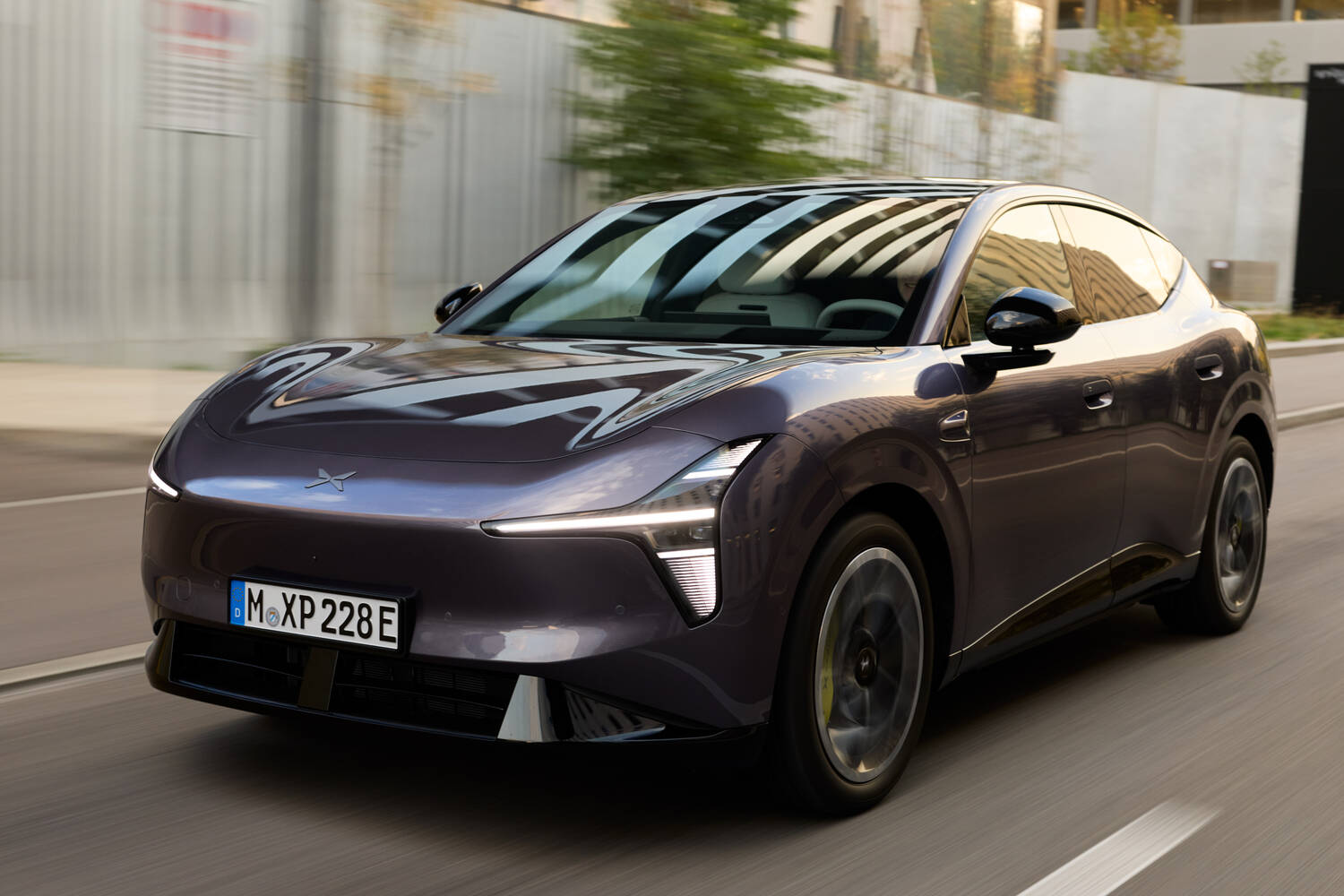
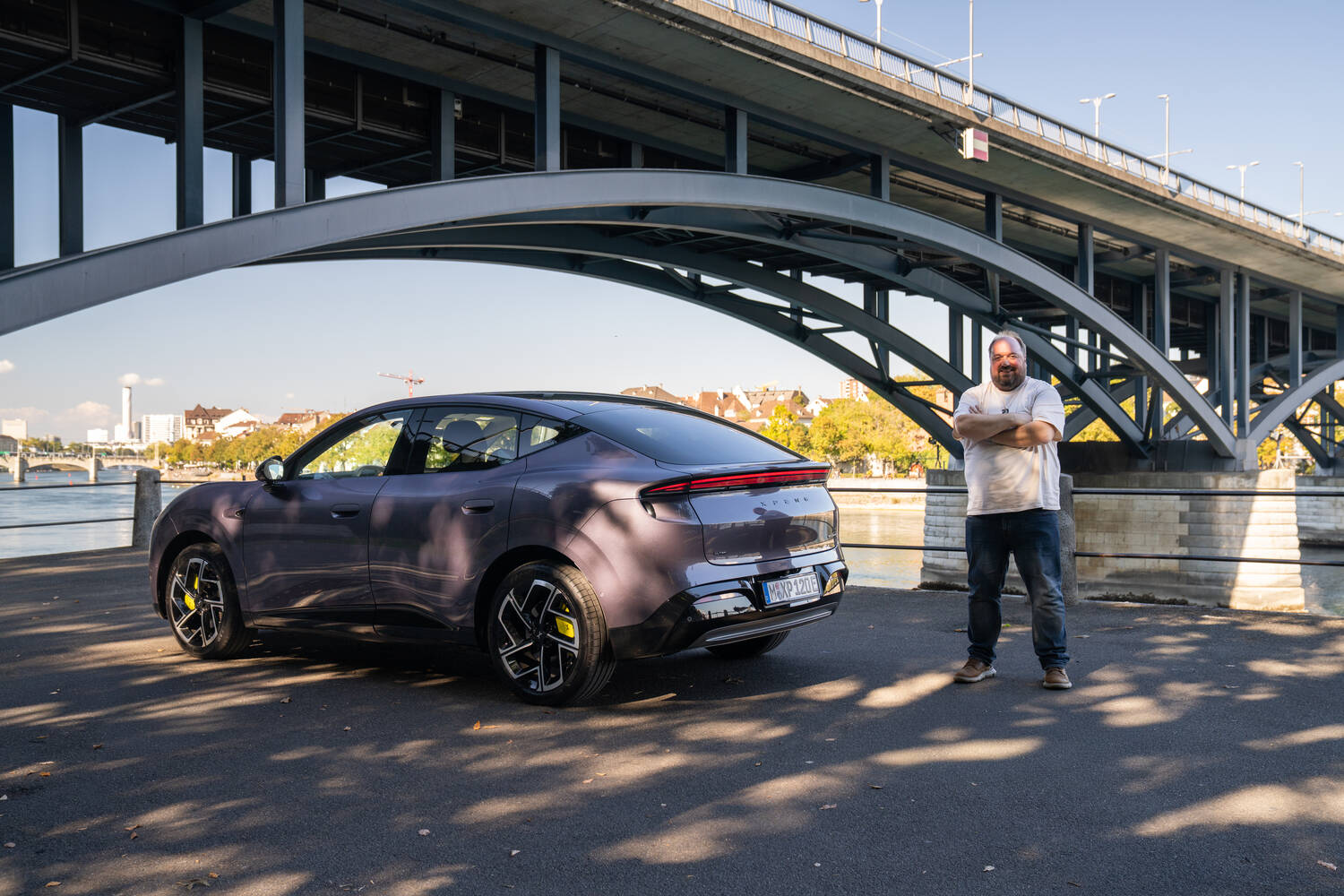
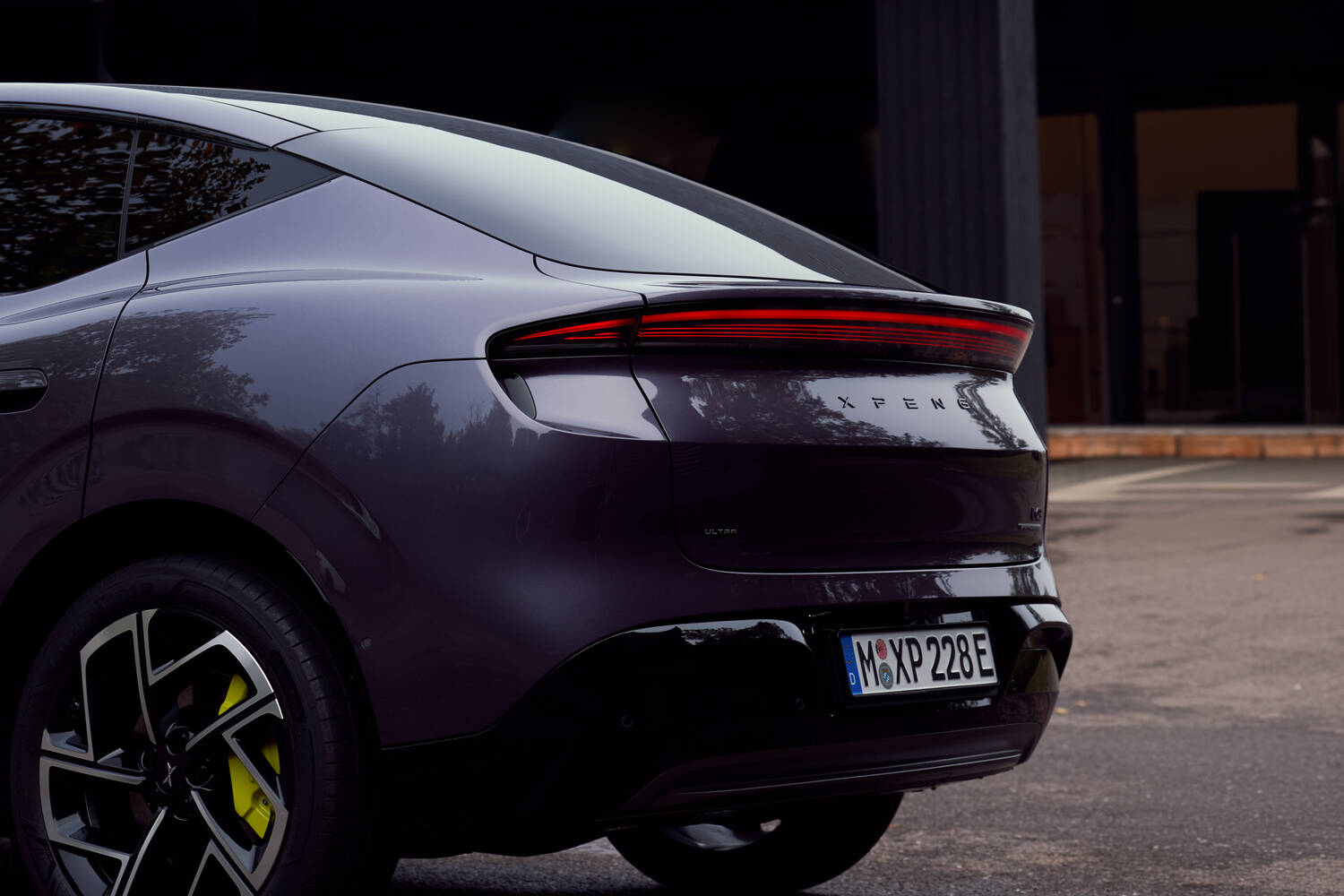
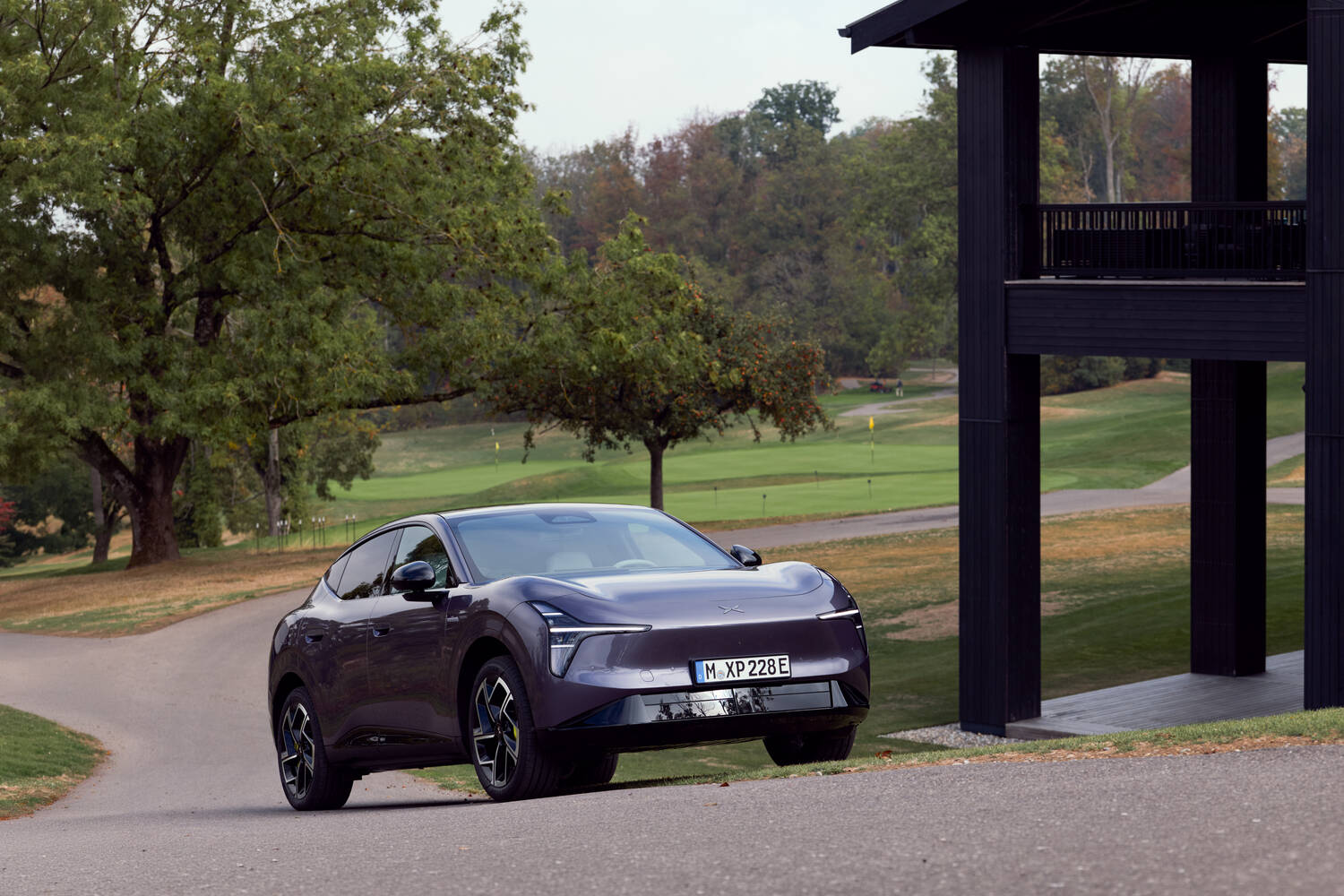
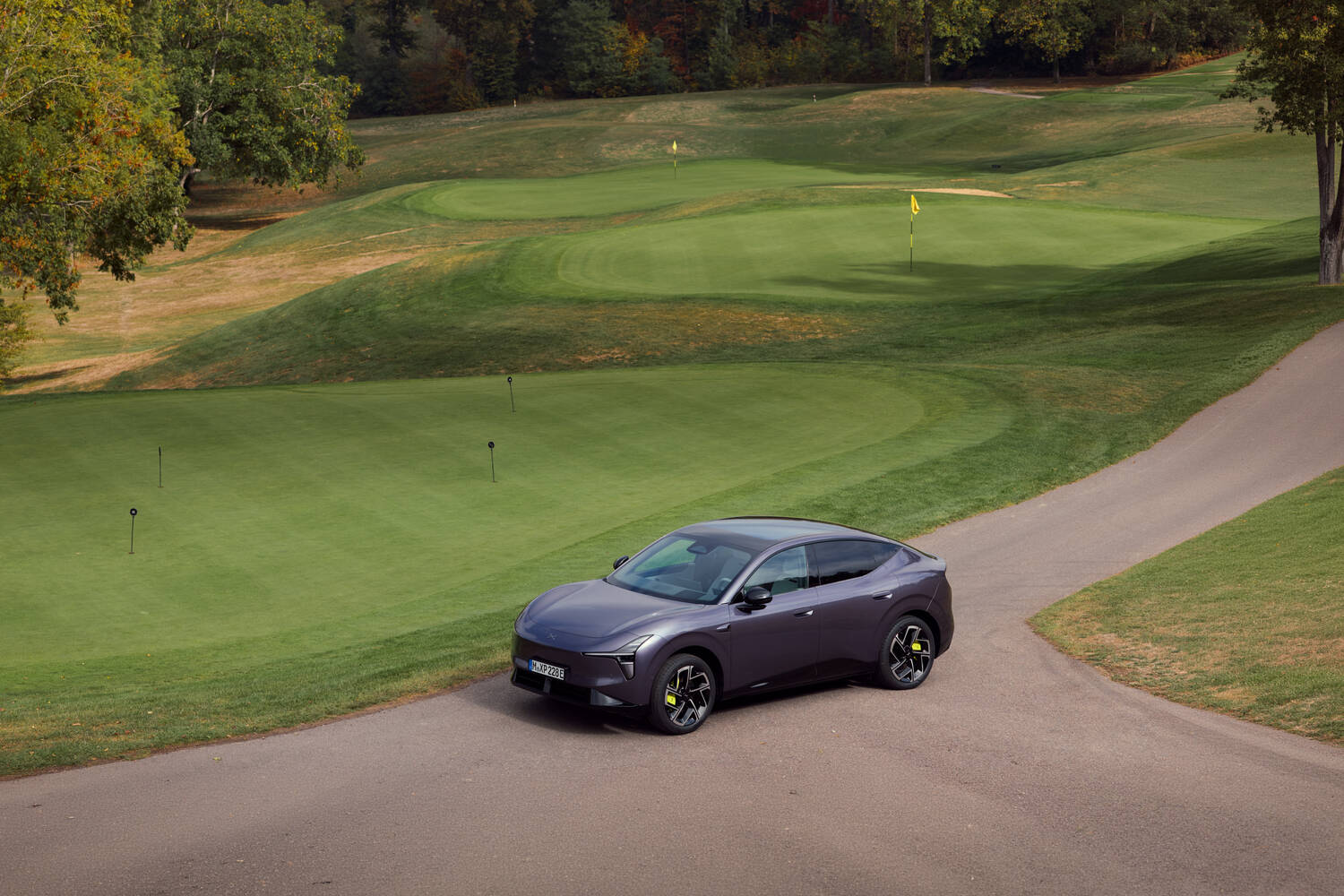
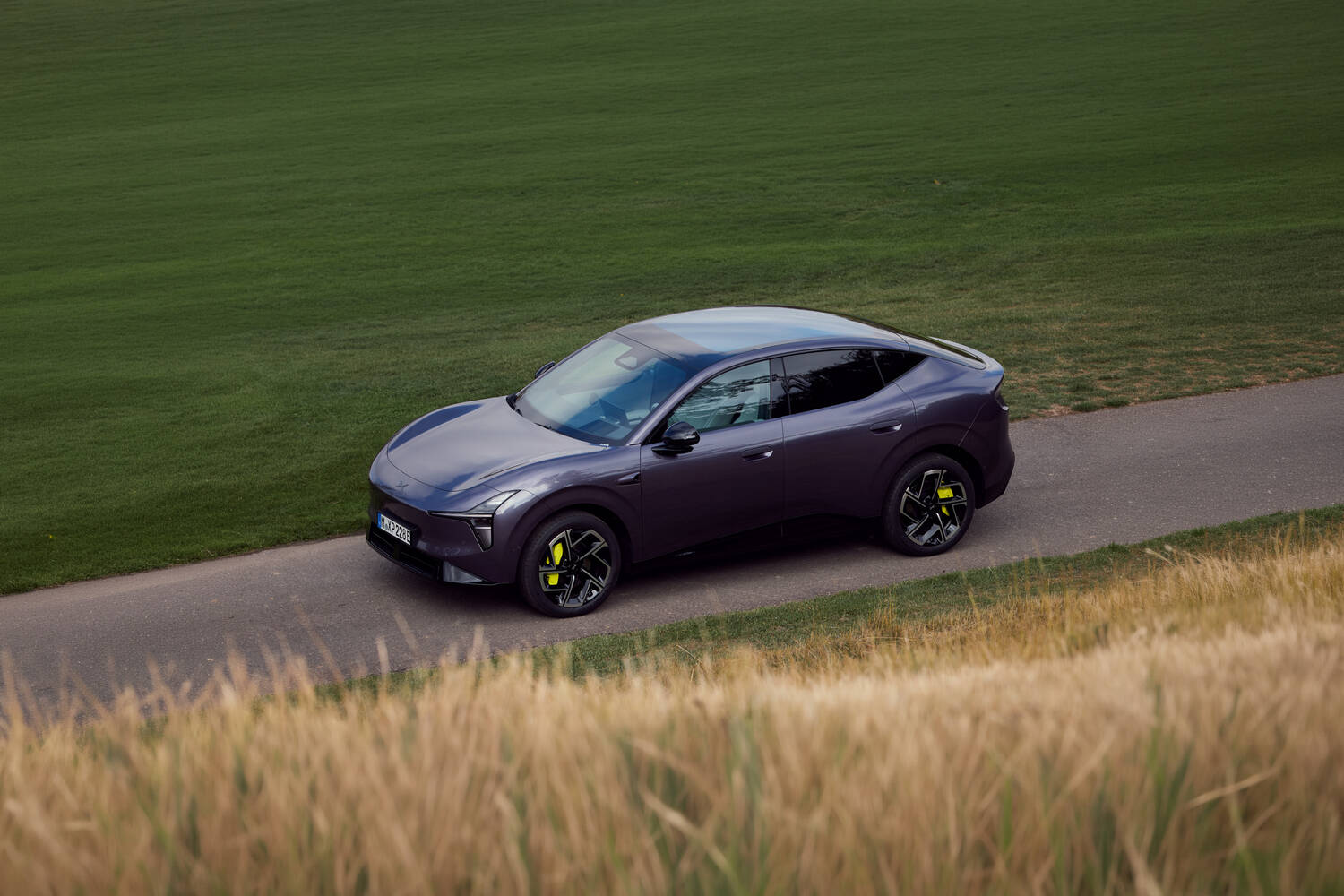
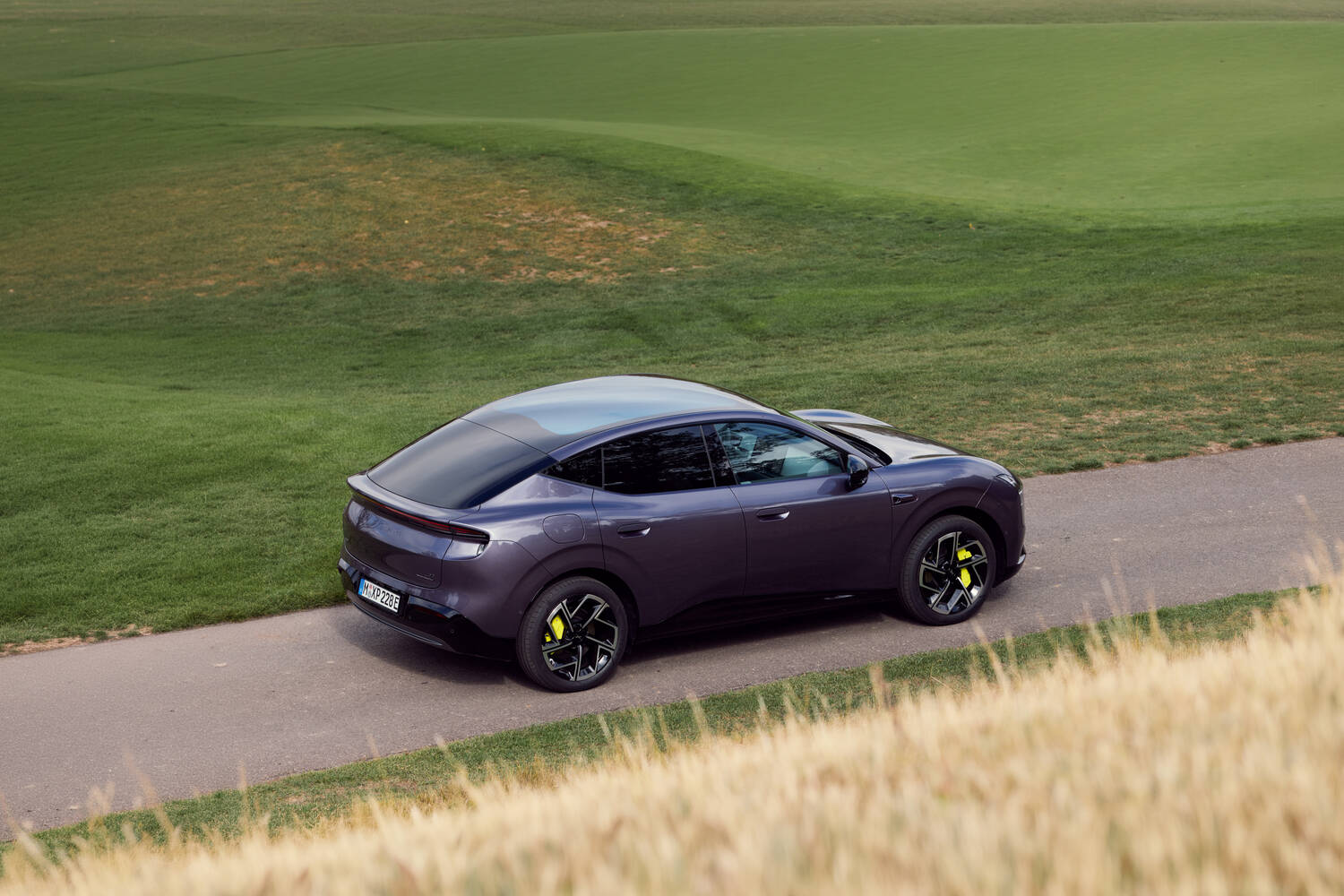
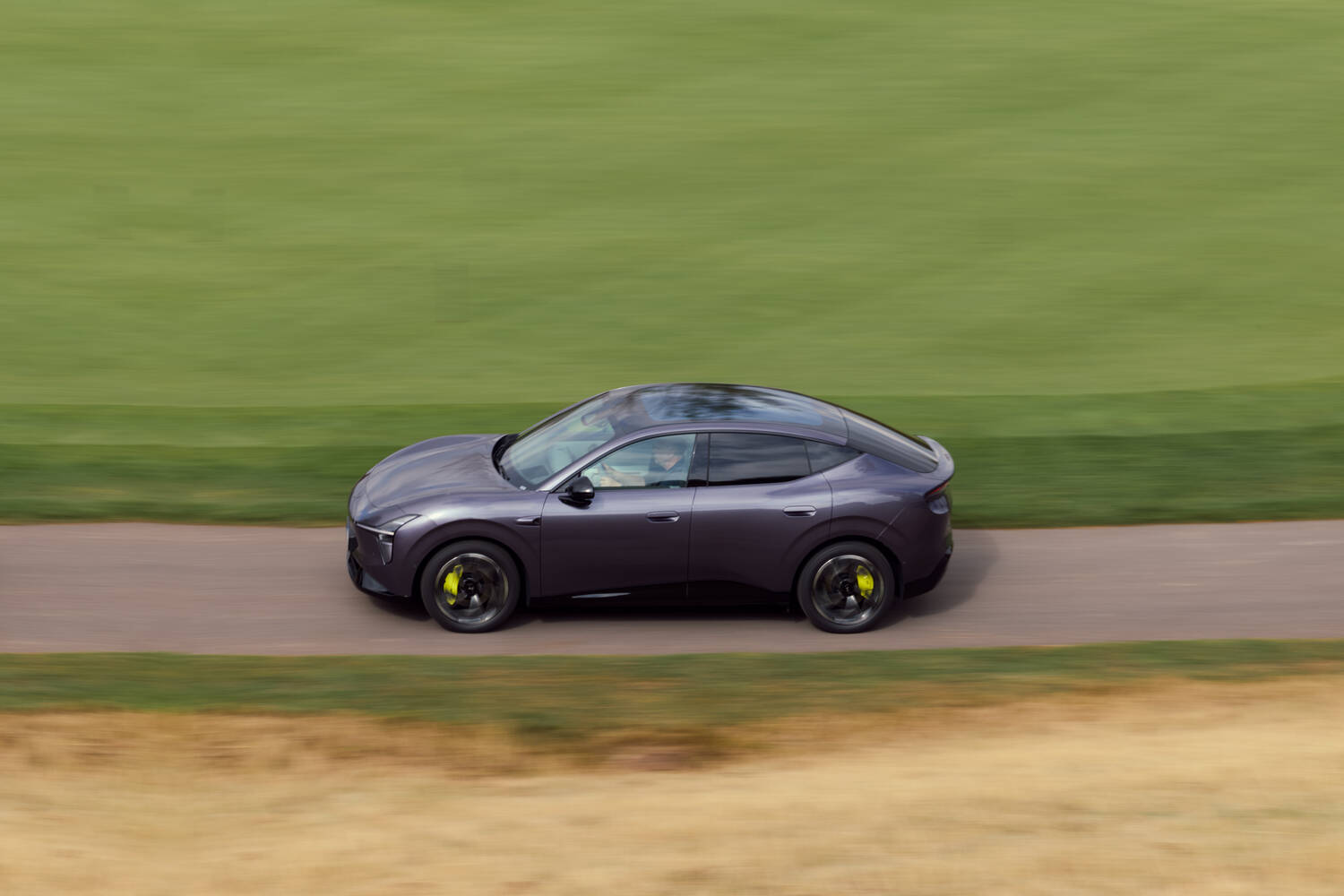
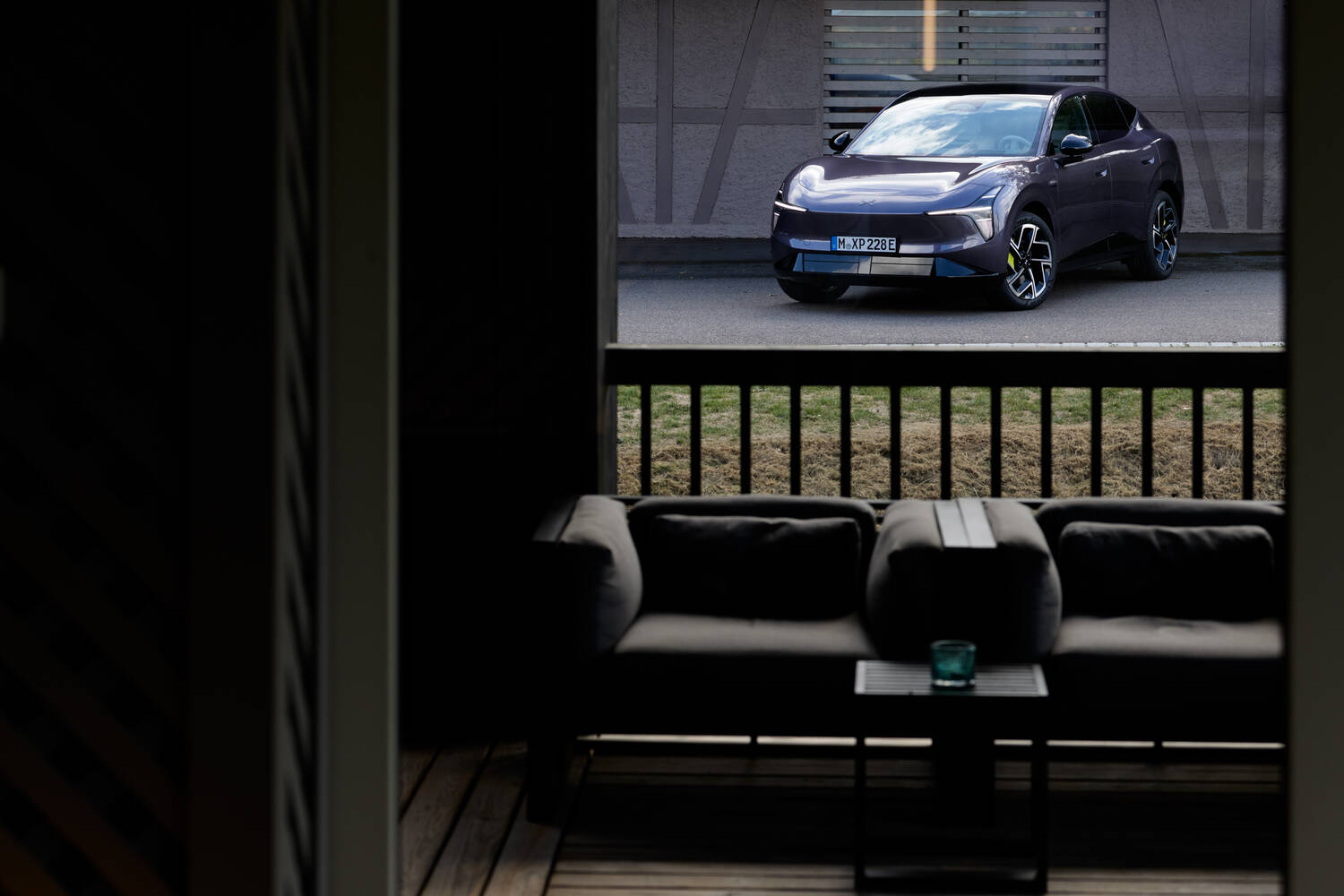
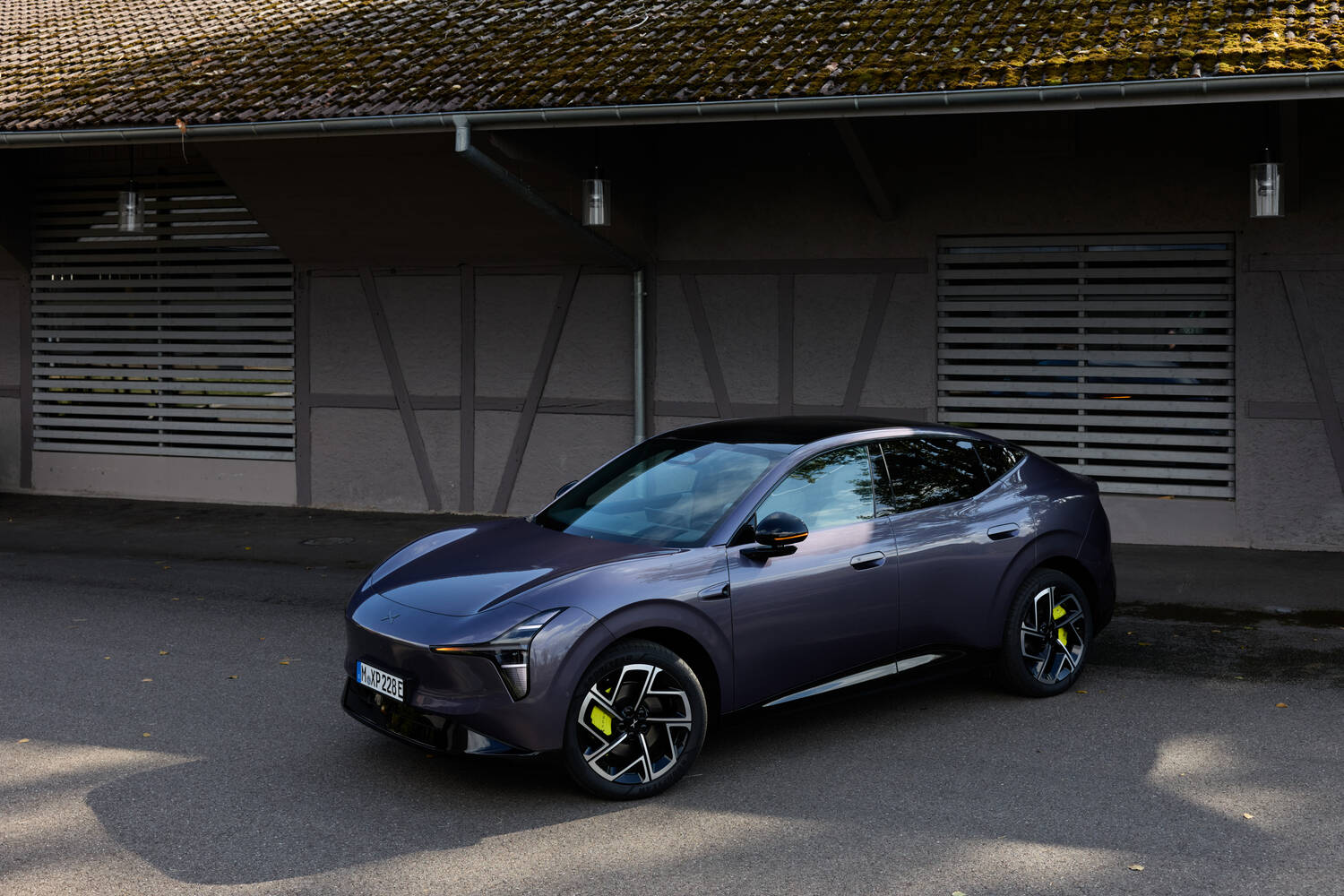
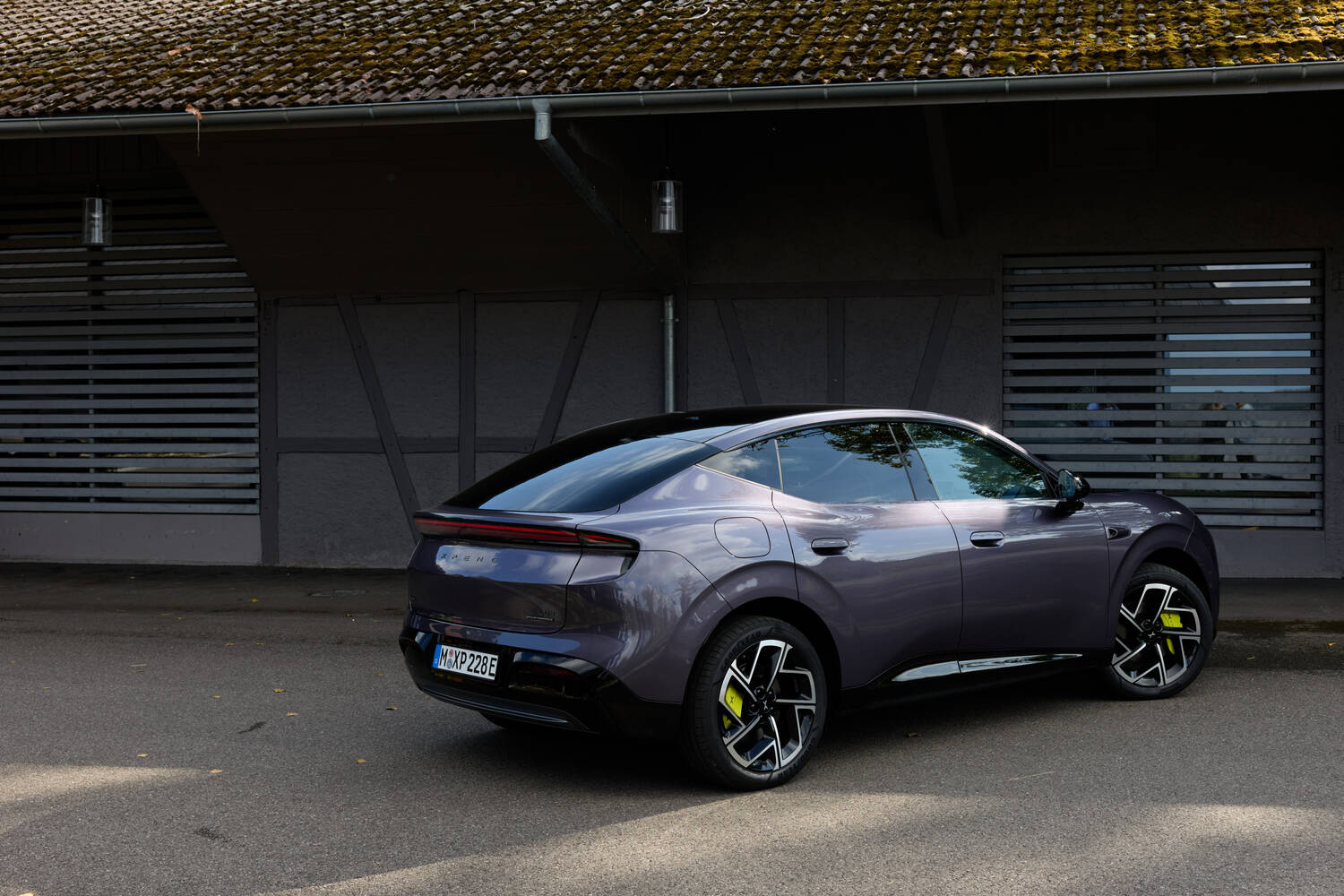
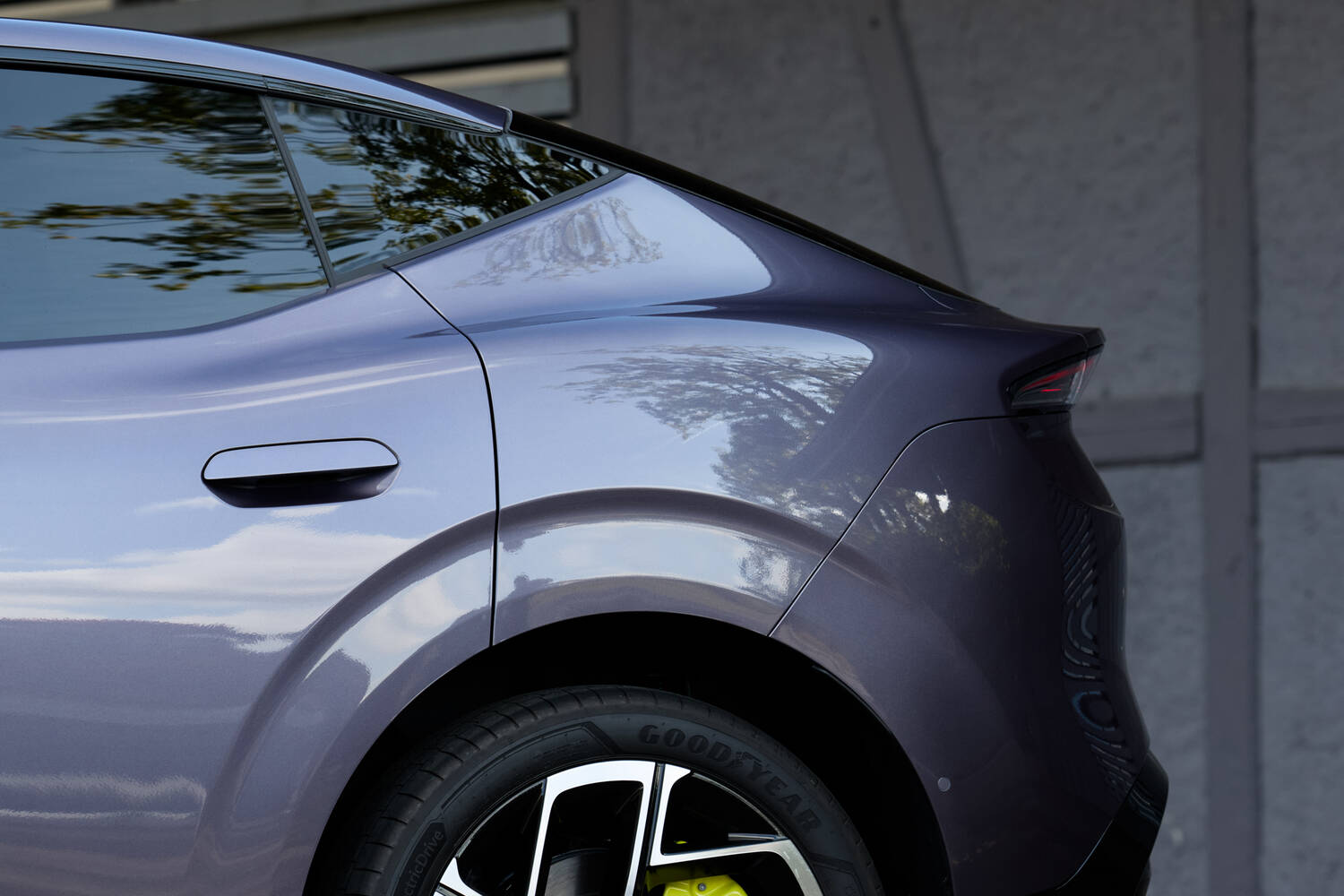
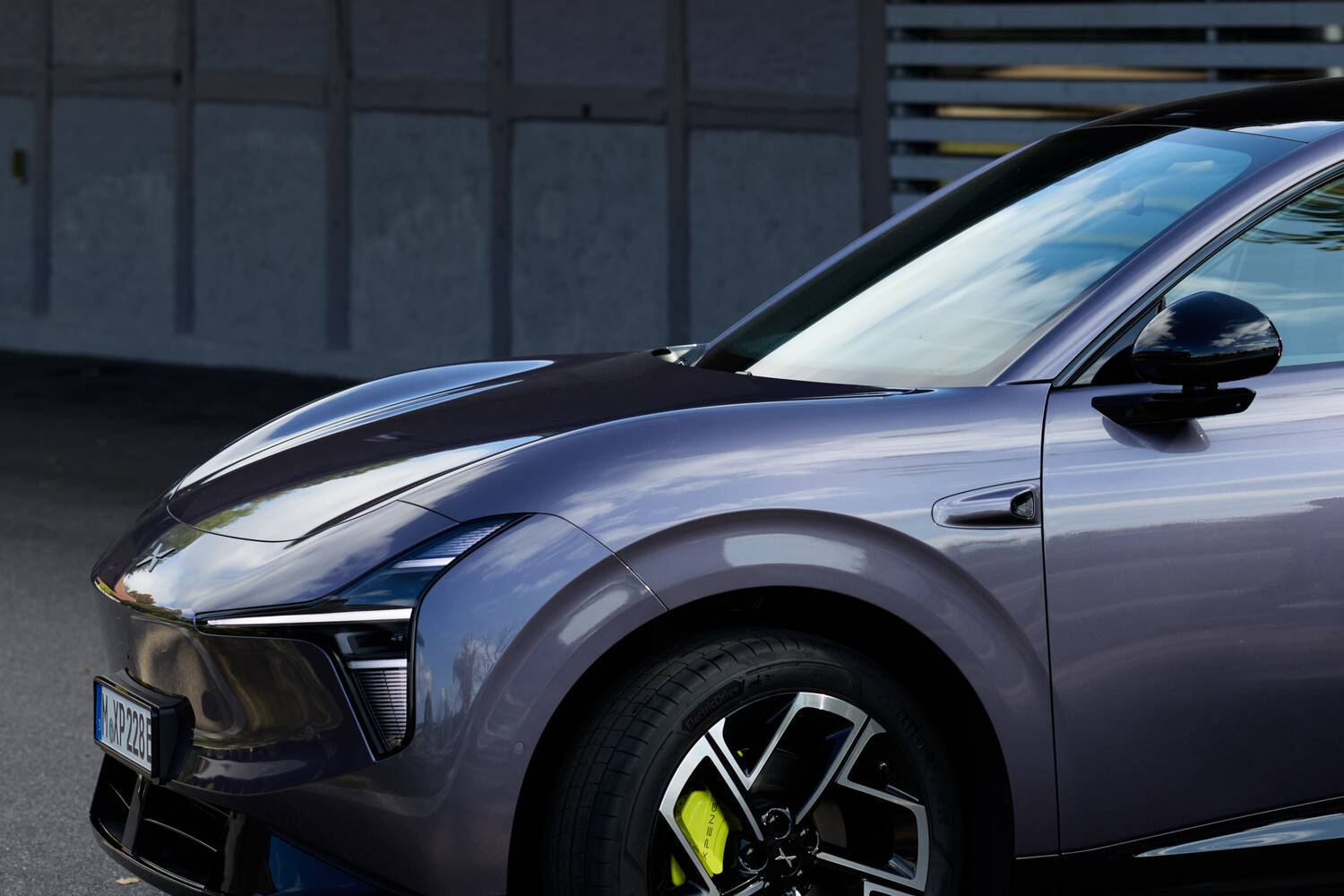
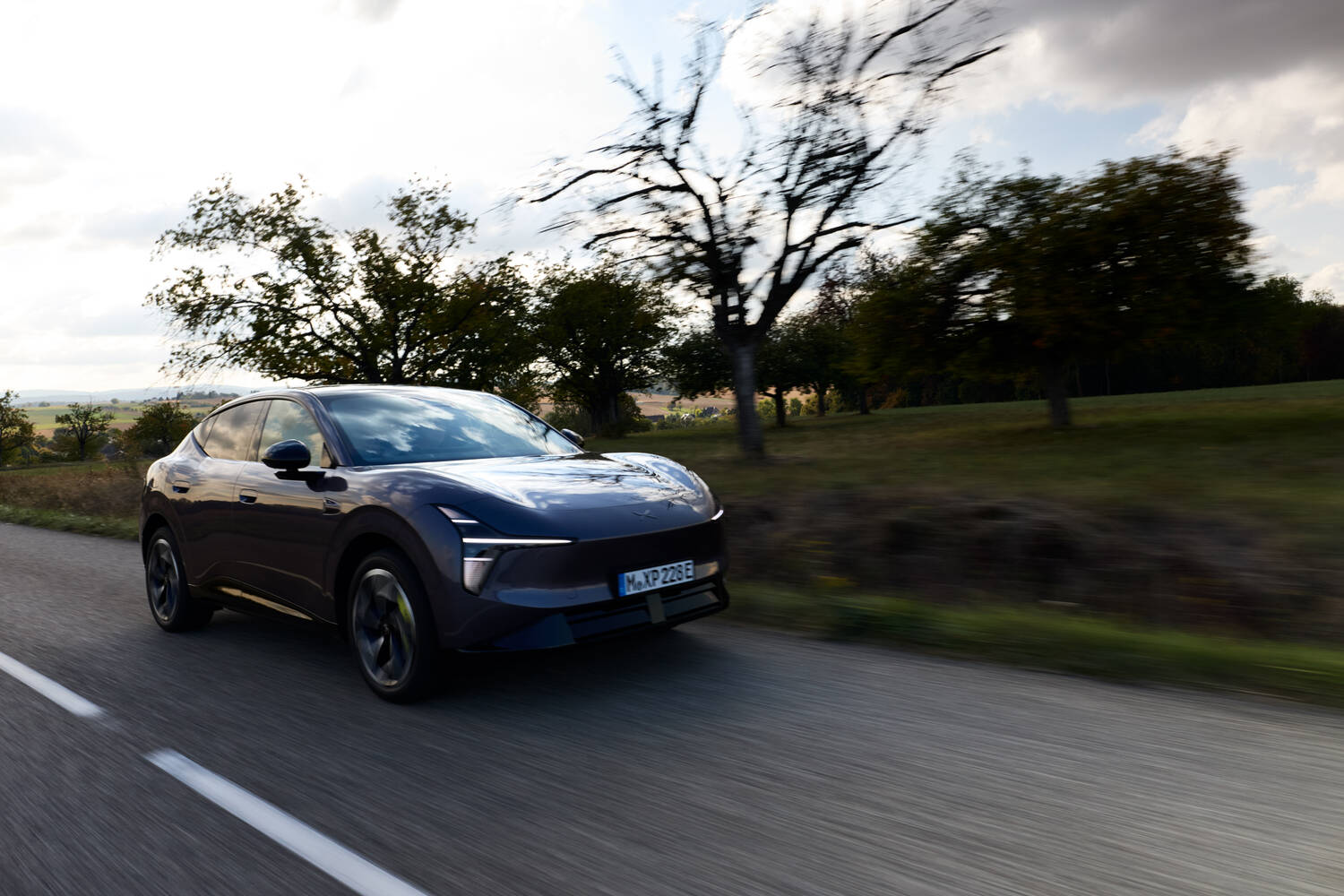
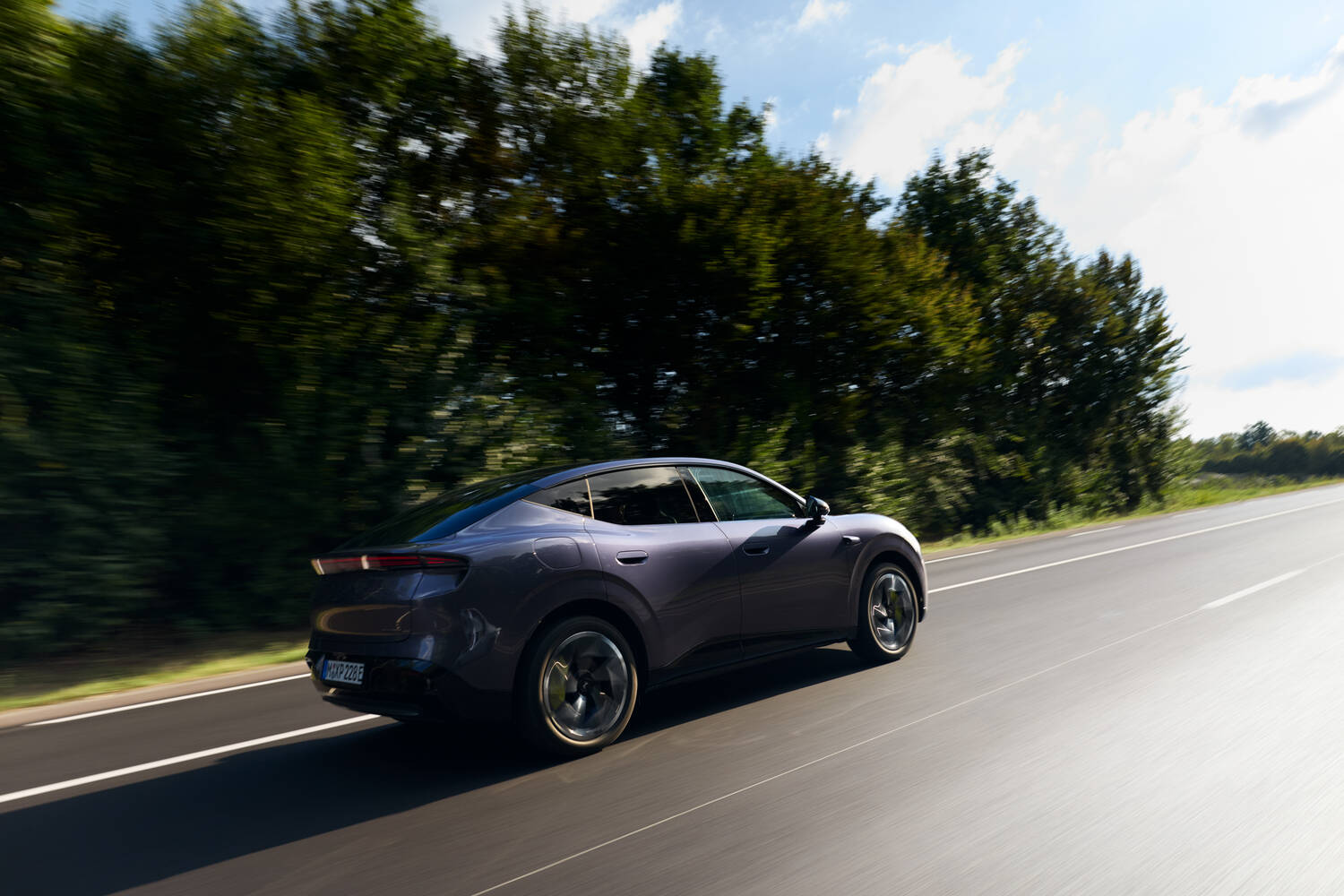
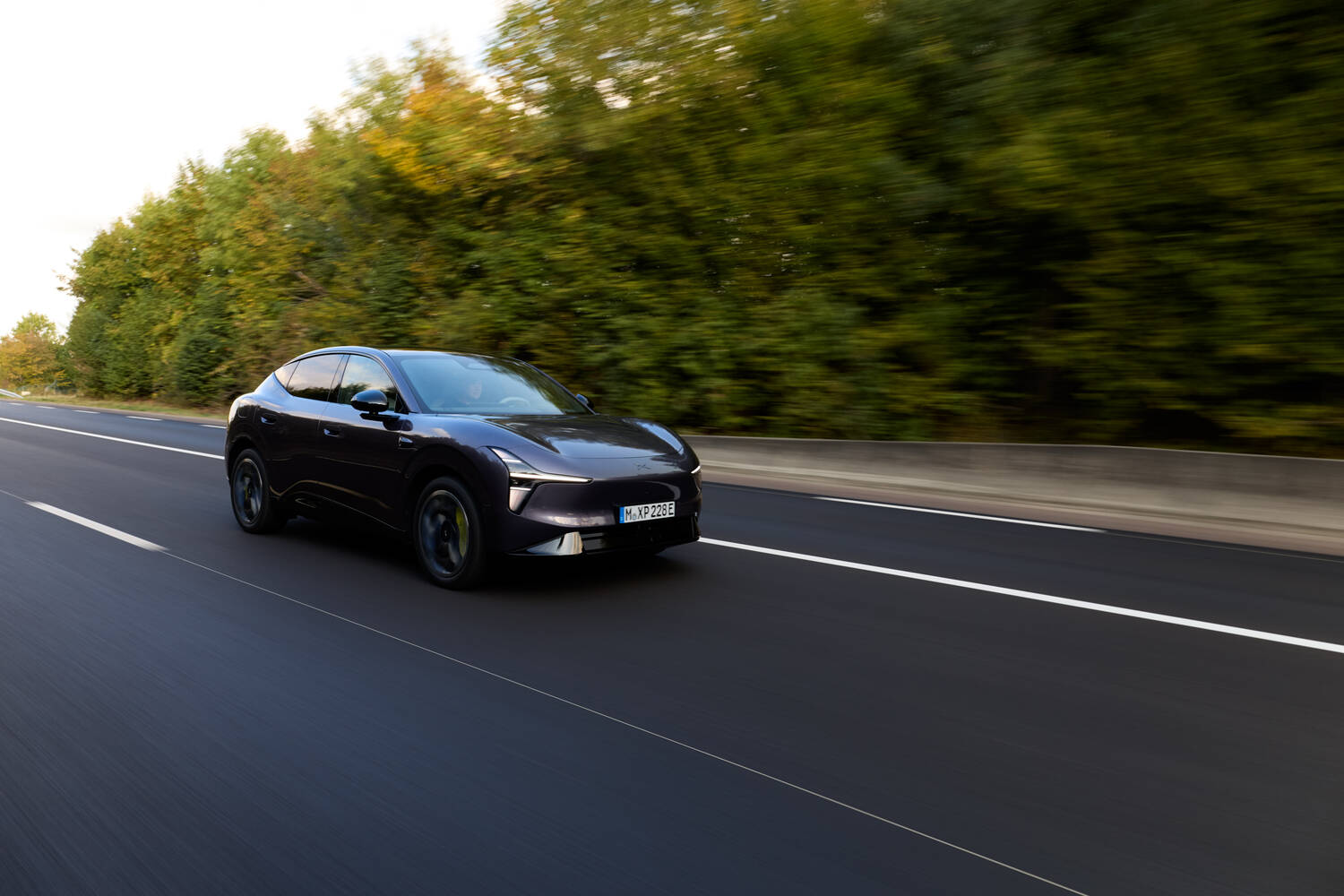
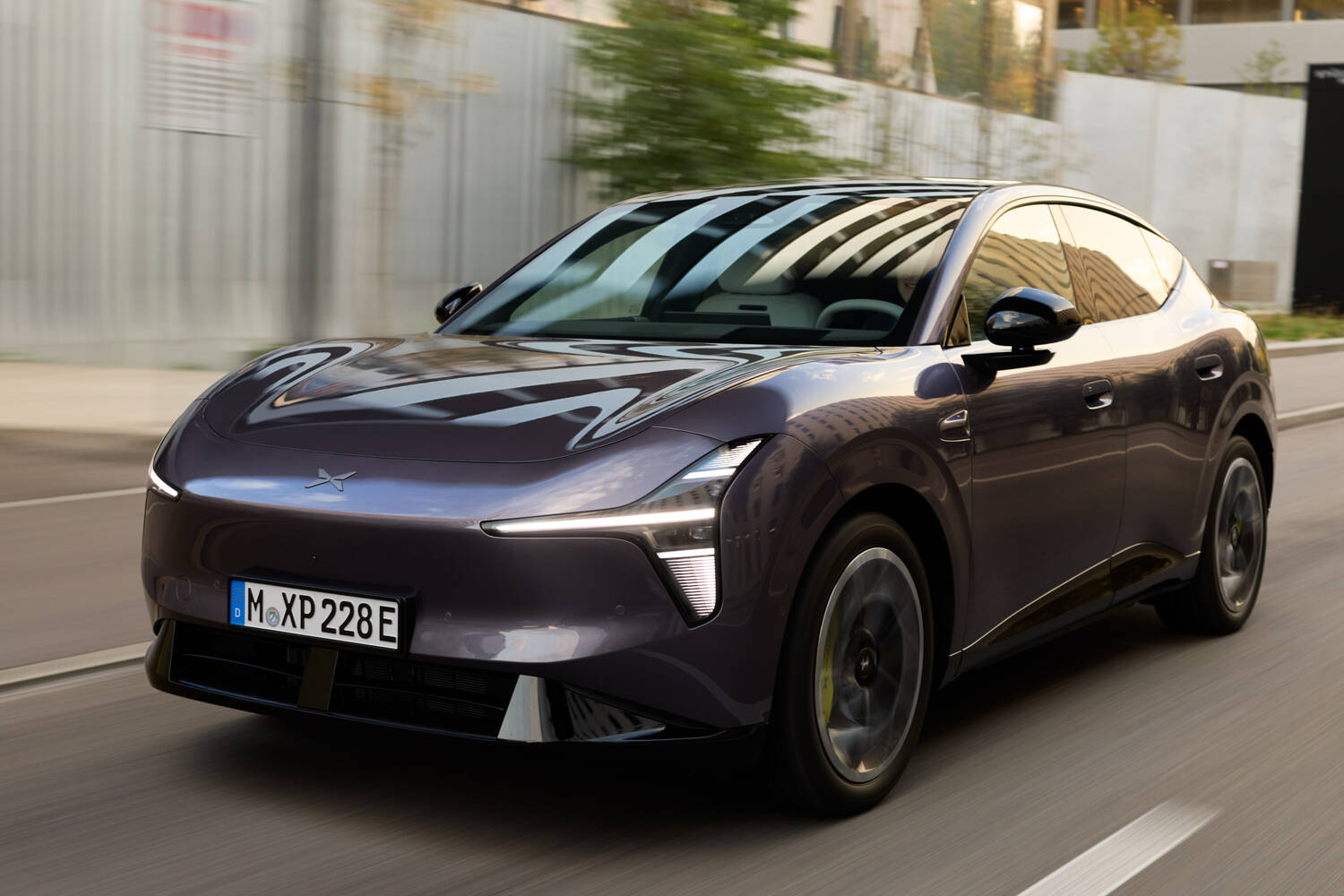
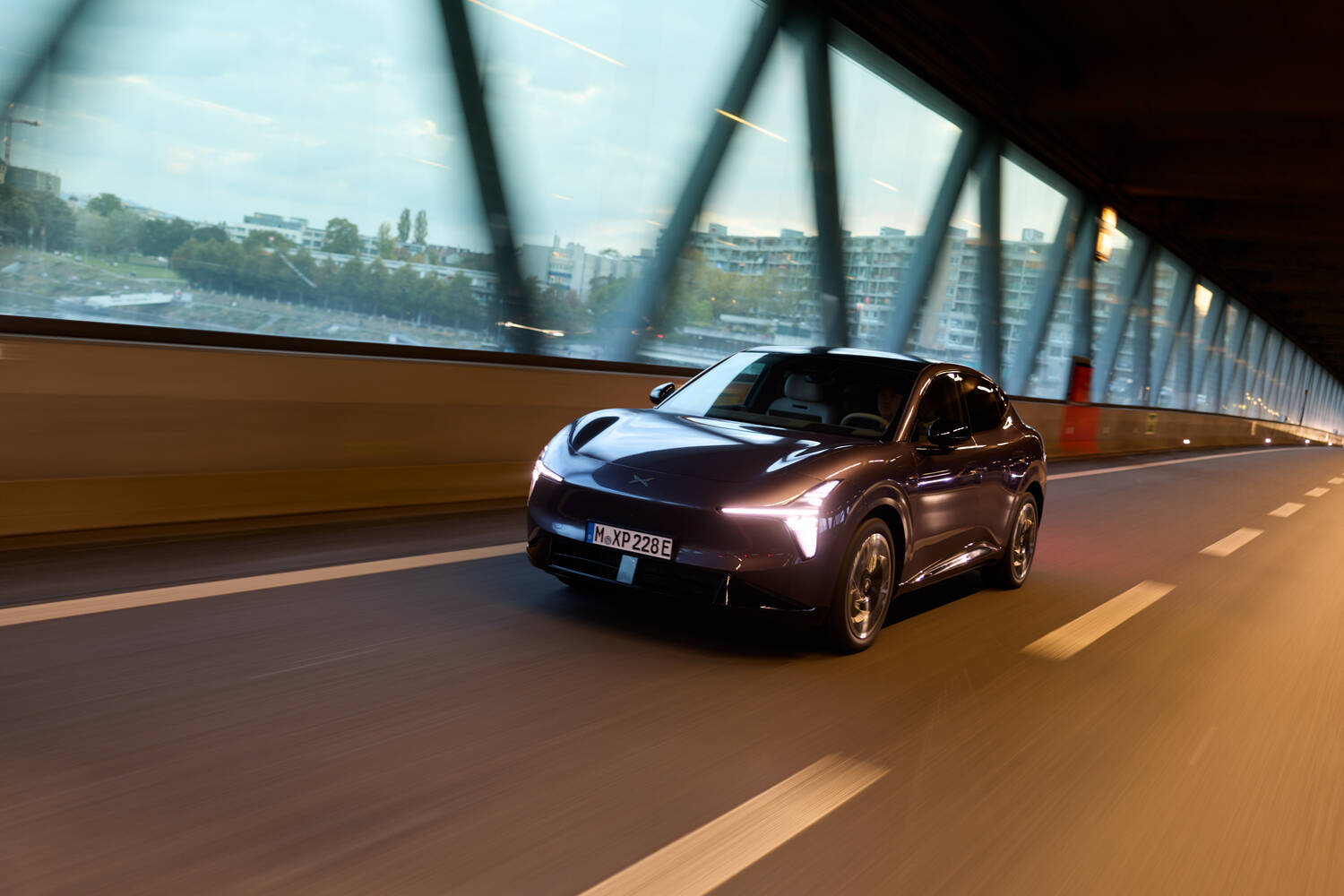
While the Xpeng L03 is certainly eye-catching - and aerodynamically efficient with a drag coefficient of just 0.228, thanks to its slippery shape - the front aspect (the light clusters in particular) looks an awful lot like some sort of Polestar, while at the back it could almost be mistaken for a shrunken Porsche Macan Electric.
Still, at 4.65 metres long and with a wheelbase of 2.85 metres, proportionally it's pretty good, and also not that much smaller than the company's own, larger G6. That might mean the L03 is 'enough' car for buyers who might ordinarily look for a more expensive EV.
As standard, every regular L03 in a possibly five-strong line-up runs on 18-inch alloy wheels, but the two fitted with the larger battery pack can also be specified as Ultra versions, which feature 20-inch alloy wheels with yellow brake callipers behind.
Dimensions of the 2027 Xpeng L03
- Length:
- 4,650mm
- Width:
- 1,890mm (excluding mirrors)
- Height:
- 1,600mm
- Wheelbase:
- 2,850mm
Paint colours for the 2027 Xpeng L03
Just five colours are available for the Xpeng L03, and four of them are monochrome - namely Silver Frost, Midnight Black, Rock Grey and Arctic White, with the last of these likely to be the standard finish. The final shade, though, is the 'hero' launch colour for the L03 and it's the fabulous Phantom Purple.
Interior, practicality, tech & comfort of the 2027 Xpeng L03
- Material quality is very good
- Lots of space for rear-seat passengers
- The boot isn't amazing, though
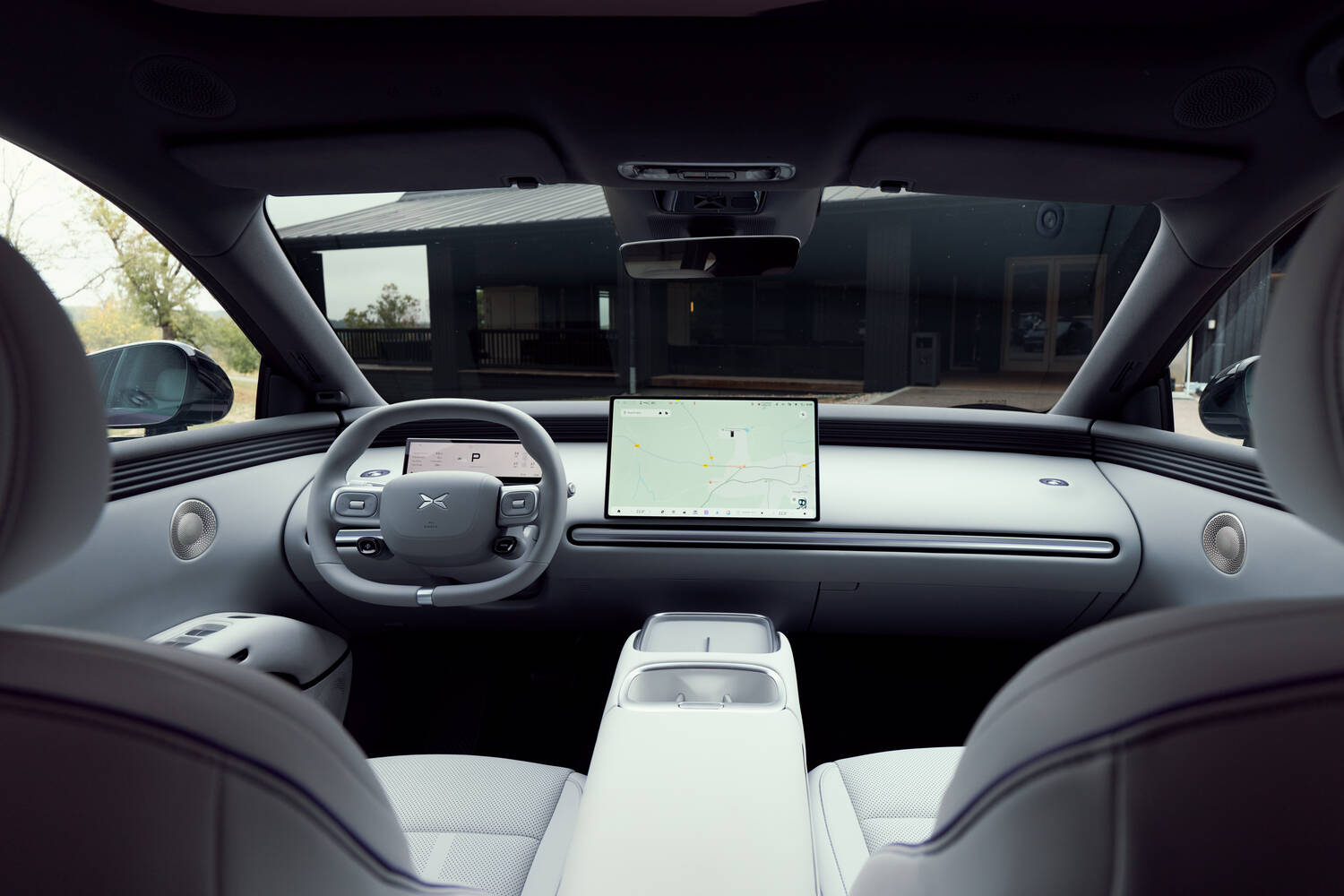
Xpeng's cabins are quite plush inside and the L03 is no exception. The technology on board is the centrepiece and in the main works unobtrusively (with a few exceptions), while passenger space is a particular highlight.
Getting comfortable in the driver's seat
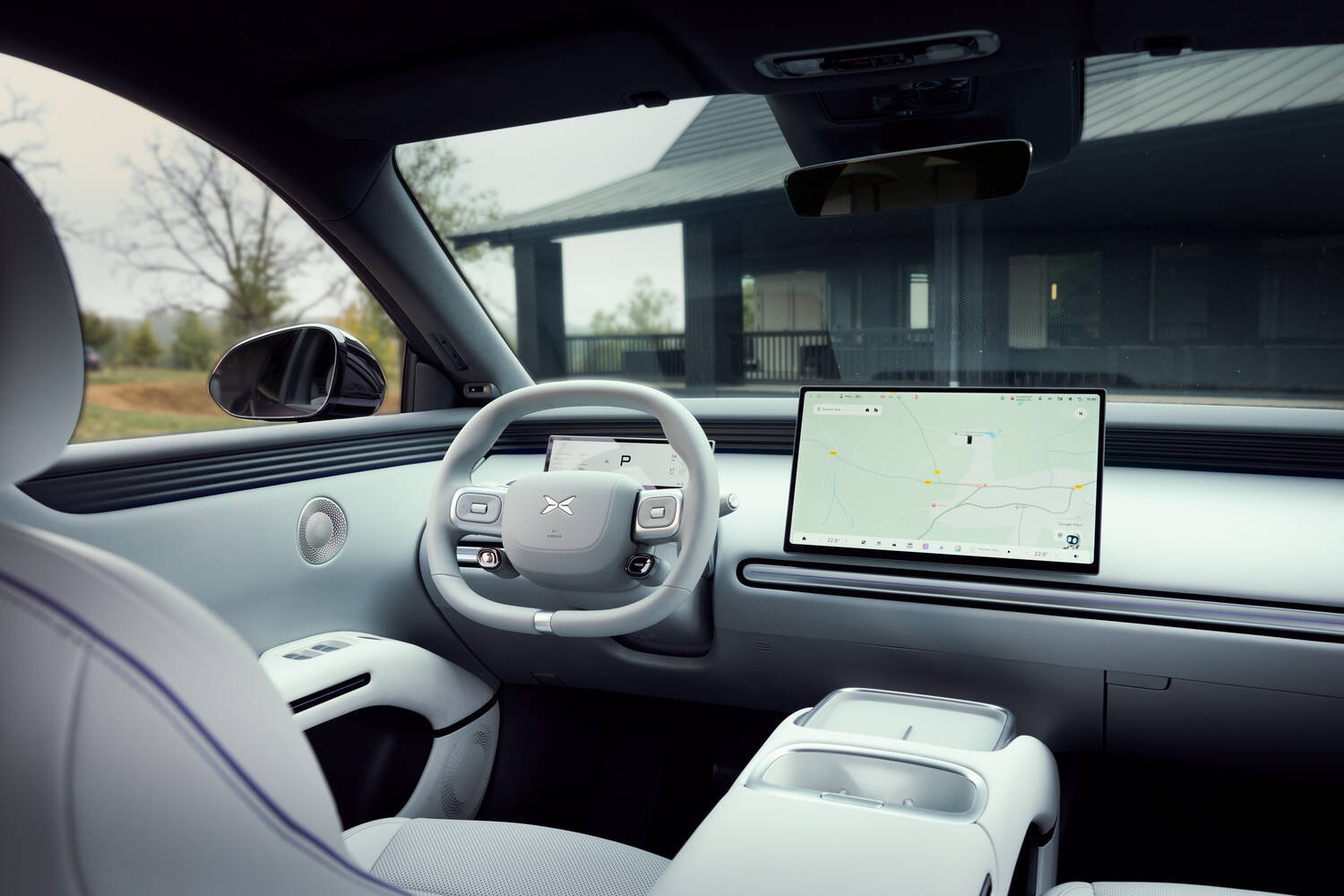
Every model of the Xpeng L03 should have electrically adjustable seats and a reach-and-rake steering column, with the latter adjusted via a good old-fashioned lever on the side of the column itself.
The spread of driving positions available in the L03 is excellent and visibility out of the cabin is largely fine in all directions, although the view through the rear-view mirror appears a touch pinched.
Infotainment and technology
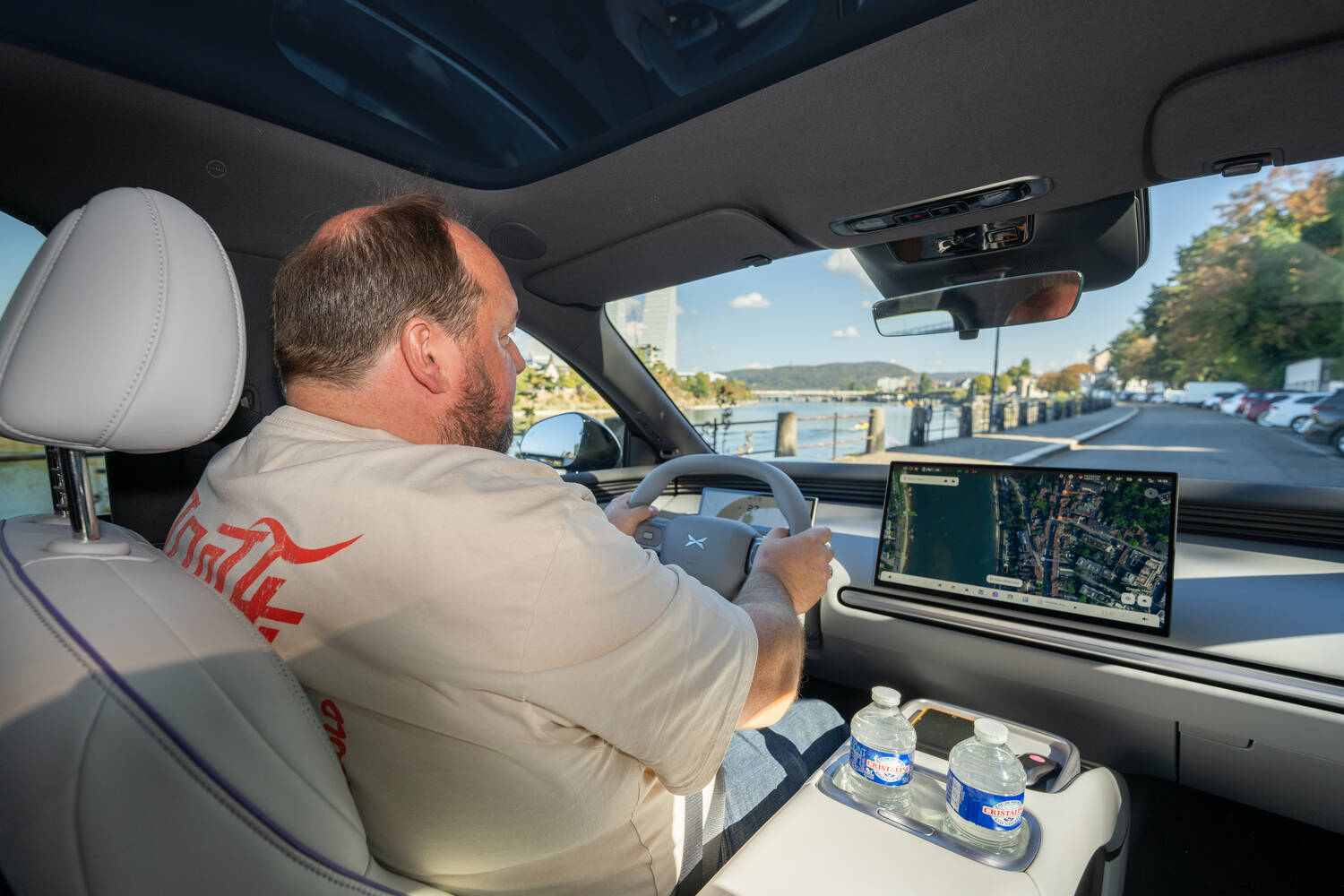
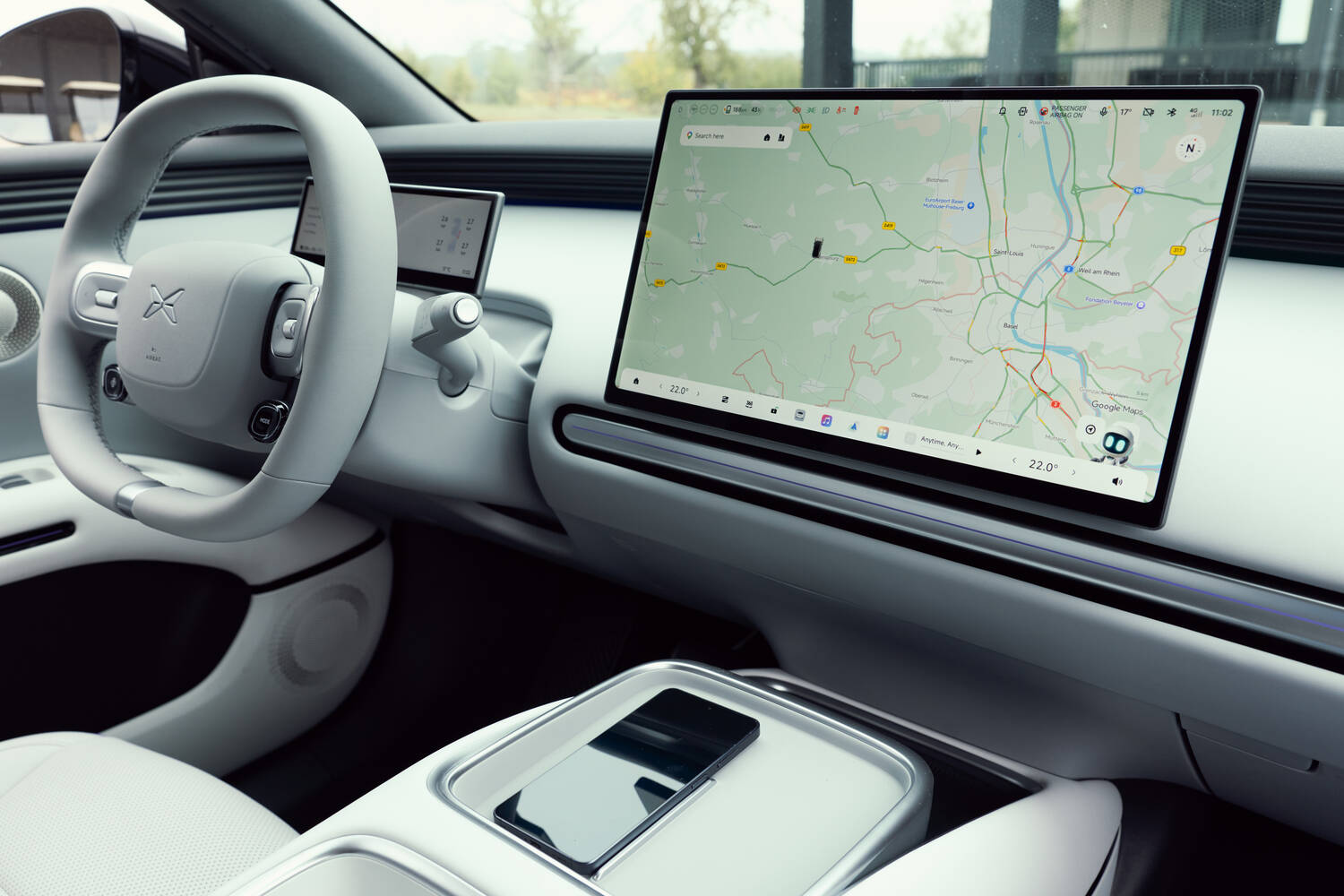
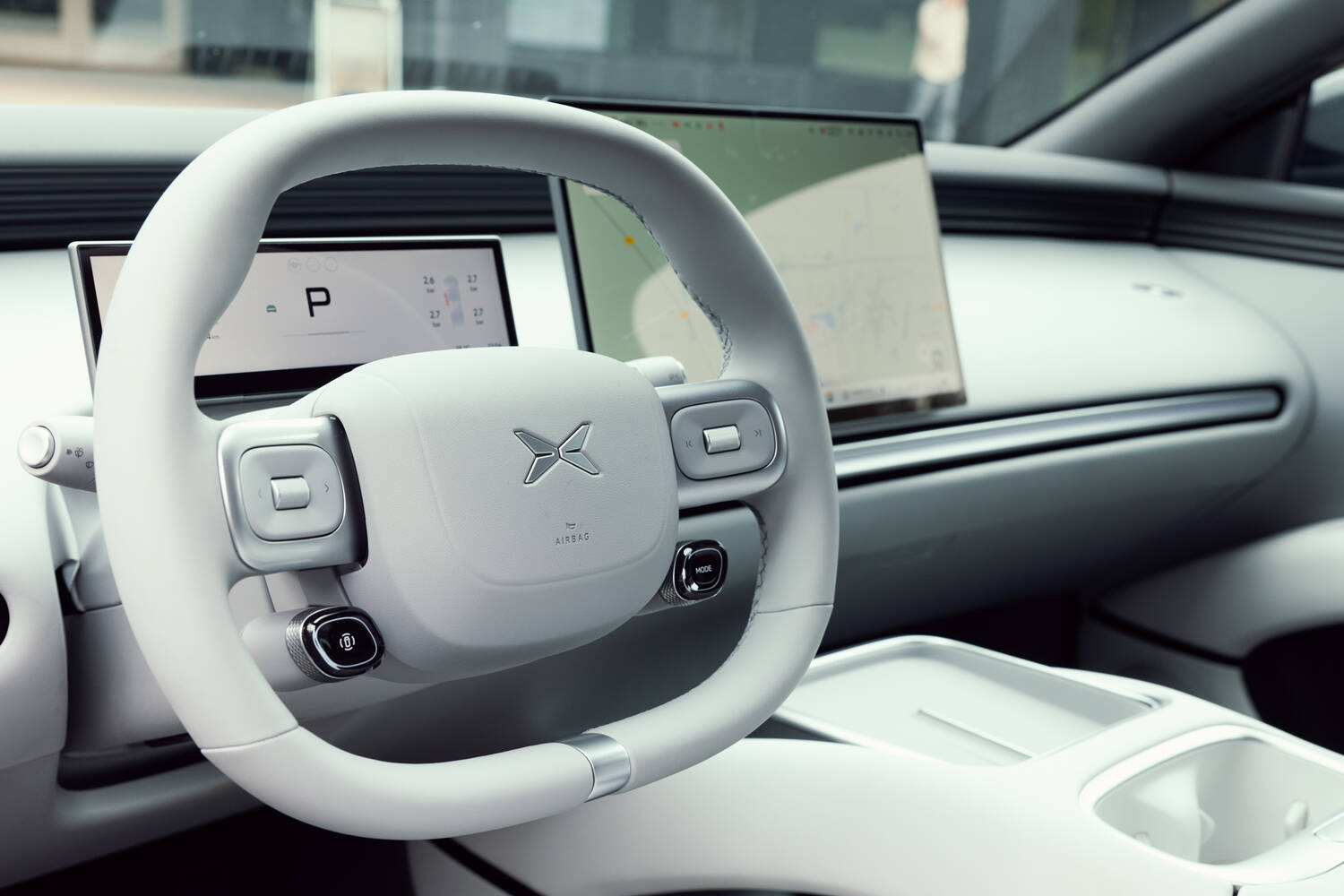
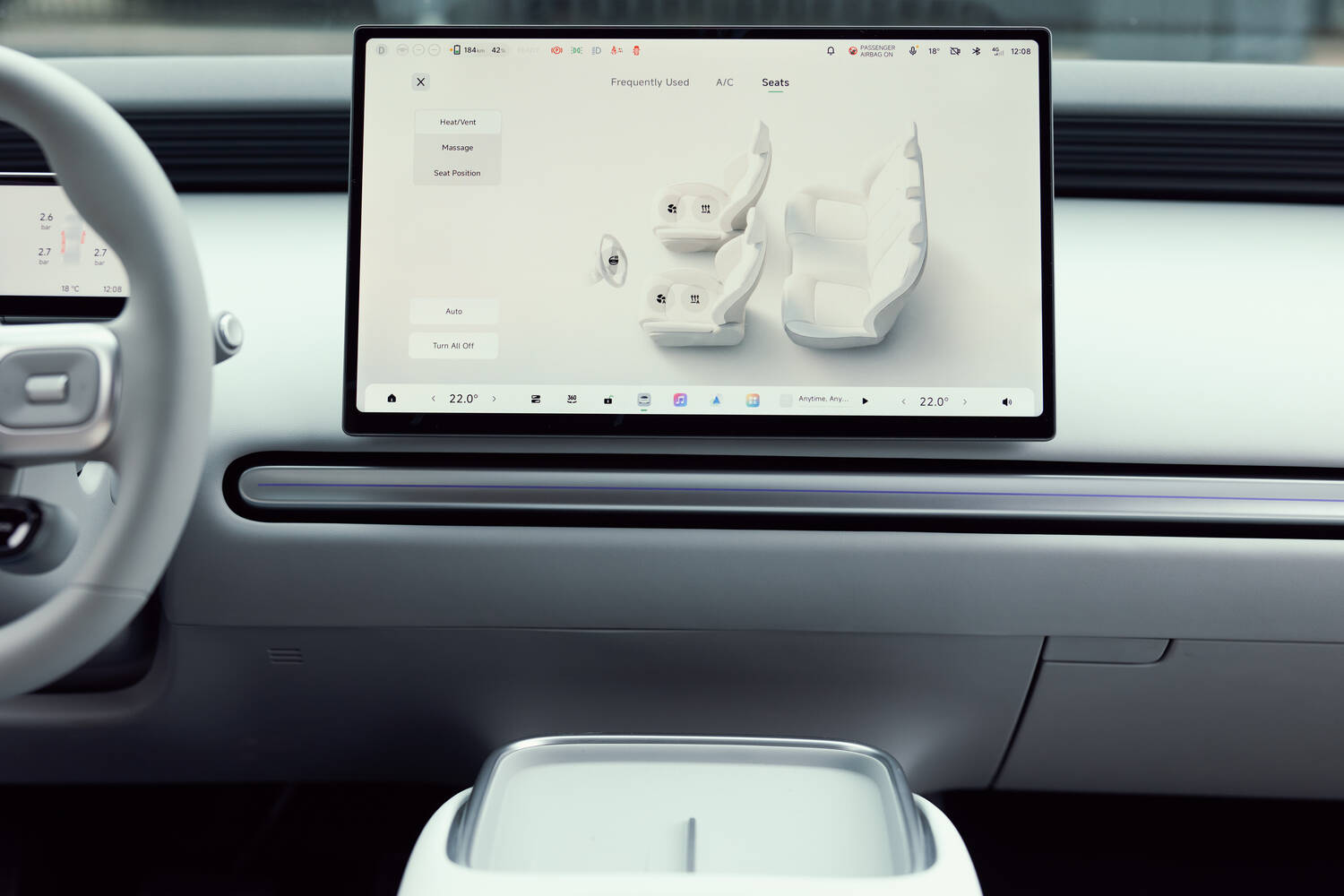
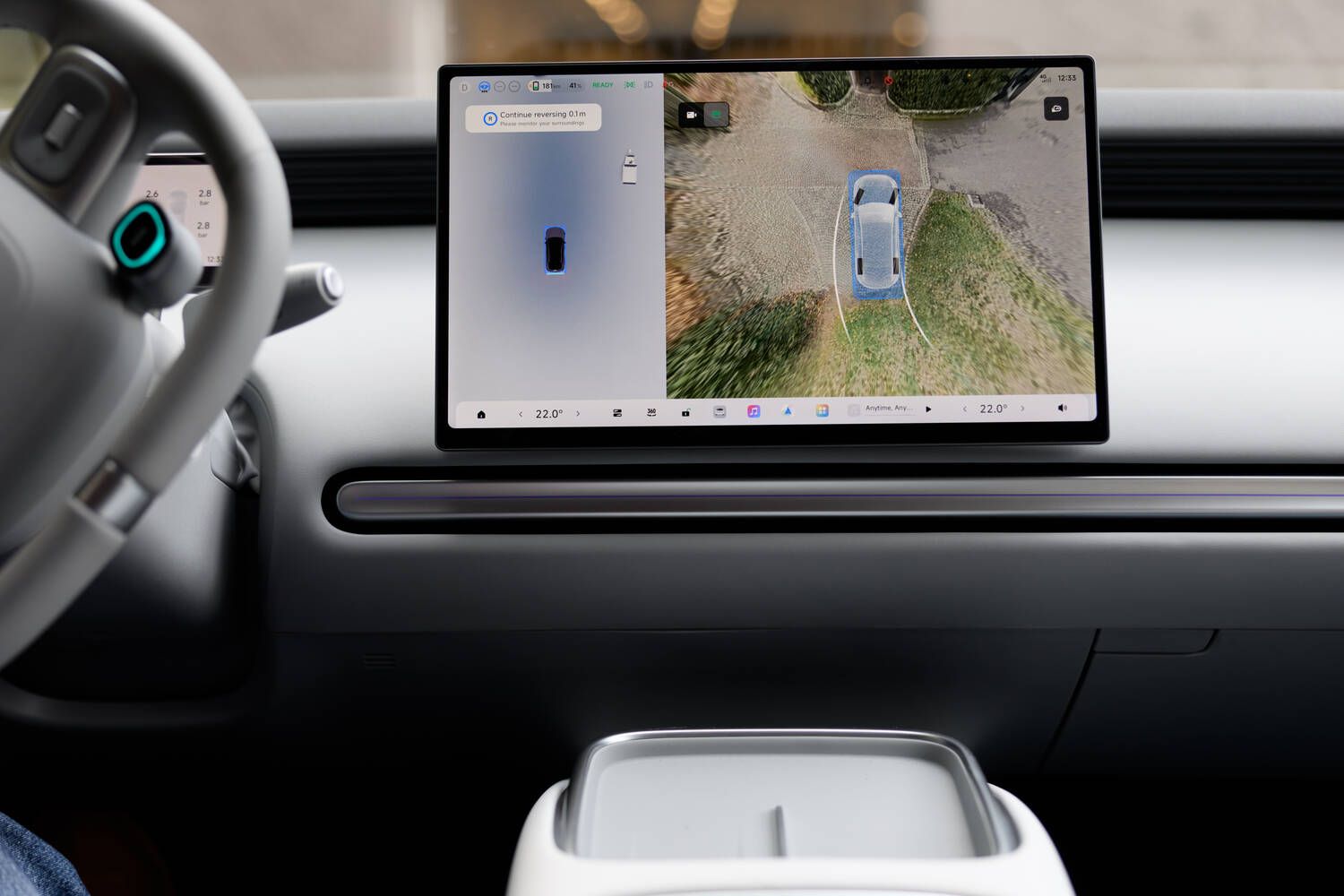
As a Chinese vehicle from a company into making humanoid robots, flying cars and robotaxis, the Xpeng L03 proudly wears its technology heart on its sleeve. The standard interface is a Google Maps-enabled 15.6-inch infotainment system, supplemented by an 8.8-inch instrument cluster and a 26.8-inch head-up display (HUD) for the driver.
In general, all of these work very well (the HUD in particular is superb) and there are some useful shortcuts for switching off various intrusive advanced driver assistance systems (ADAS), which pop up the first time the item is triggered.
But there are issues with the small size of some icons on the display and the fact that everything is run through the screen. Plus, the Xpeng has idiosyncrasies such as a few of the climate 'master' controls being on the steering wheel (of all places), unless you're using the L03's adaptive cruise control, in which case these same buttons become associated with that function of the car.
And you have to adjust the door mirrors using the infotainment and steering-wheel controls as well, which we're not fans of.
Other tech for the L03 includes heated, ventilated and massaging (the last item on Ultra cars only) front seats, a cooled 50-watt wireless smartphone charging pad and the option of an Xpeng Xopera premium 20-speaker sound system with active noise cancellation in the Ultra variants.
Practicality around the cabin
The door pockets up front on the Xpeng L03 are of a reasonable size, although they're not massive, nor is the glovebox, although at least you open that using a traditional press-in button.
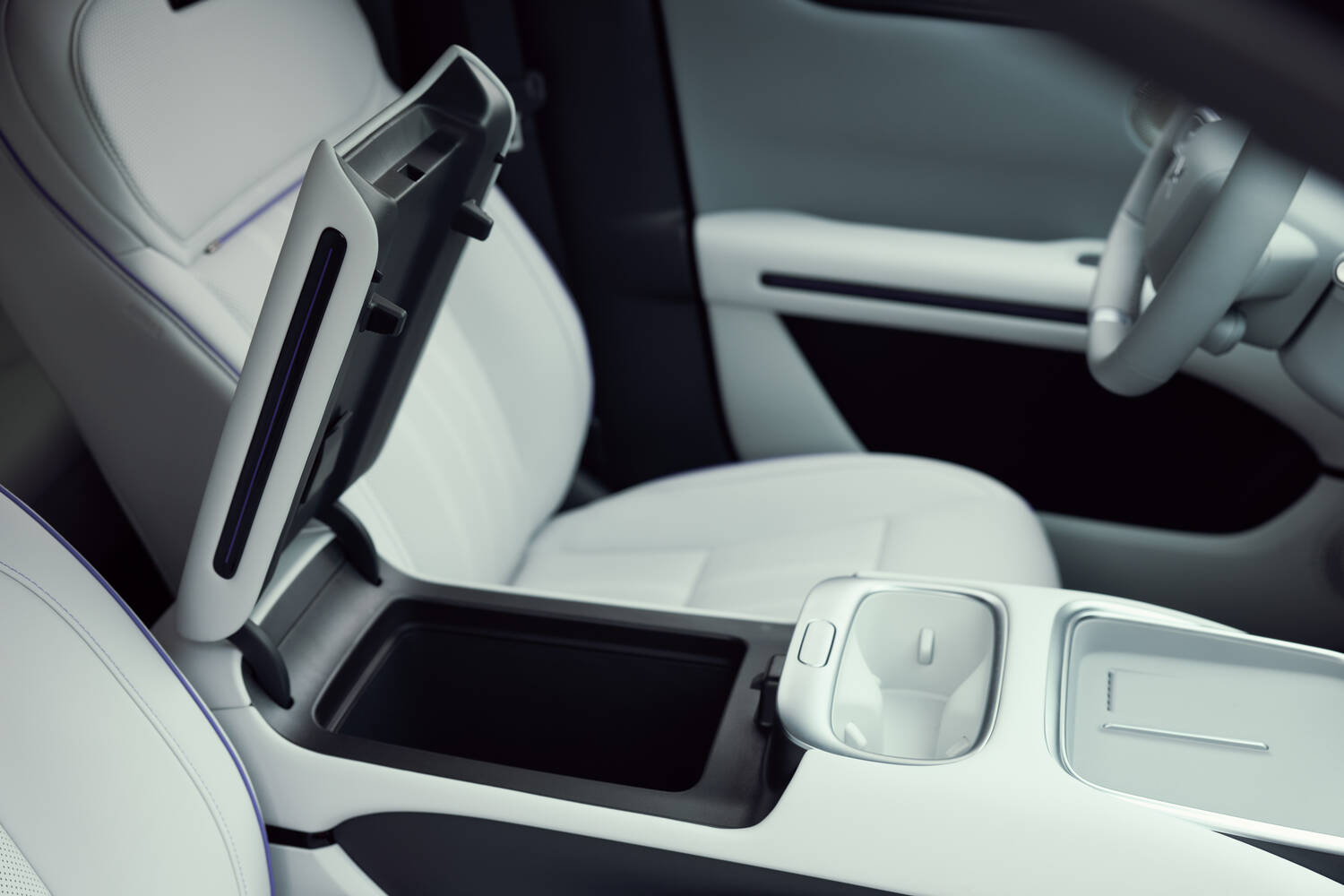
Under the raised central tunnel is a lower storage zone, while there are two cupholders, a massive central cubby beneath a lidded armrest and a small, rubberised ledge underneath the main touchscreen.
This last item is OK, but it's not particularly deep or high-sided, so we suspect items placed there will fly off sideways during cornering.
Rear-seat passenger space
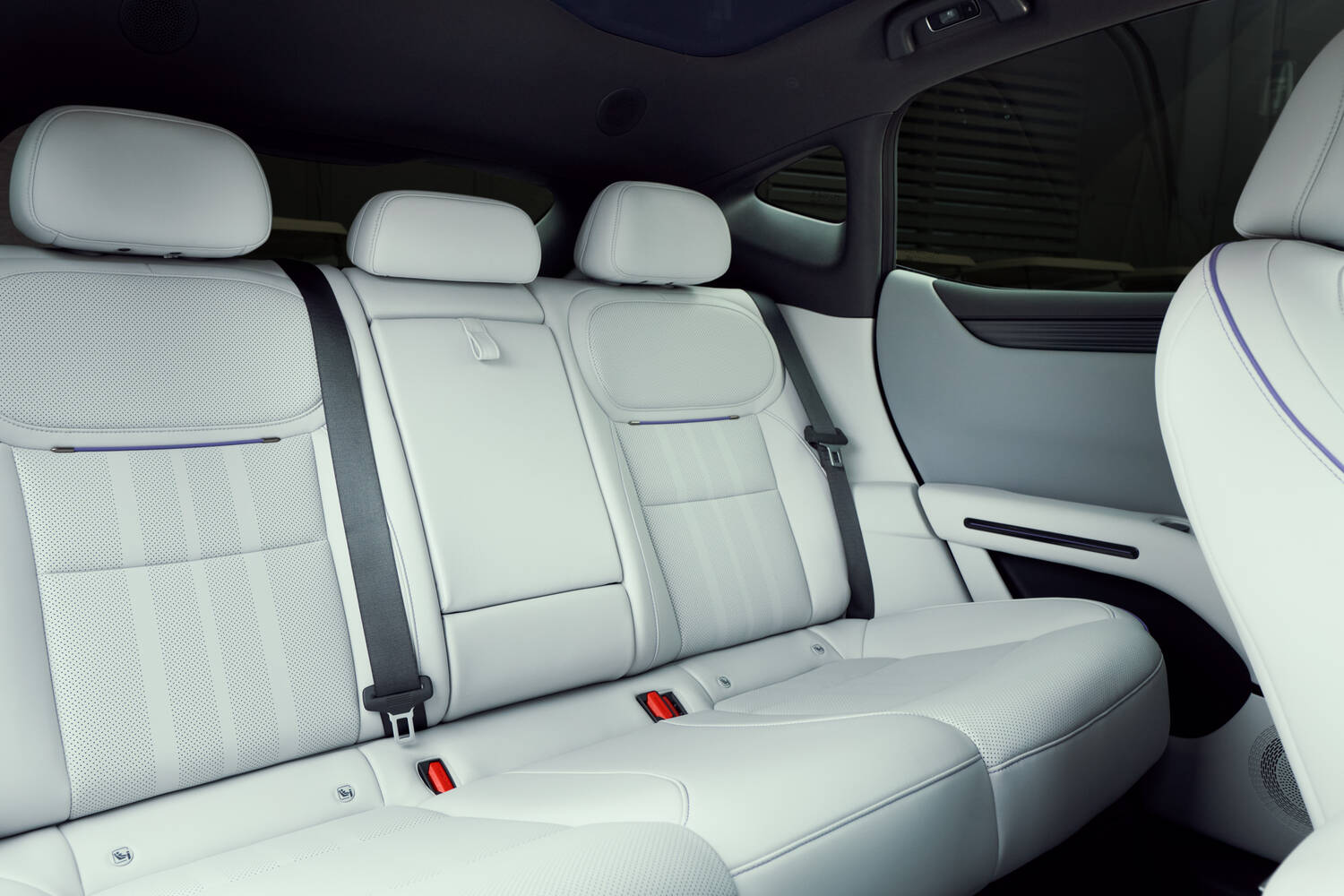
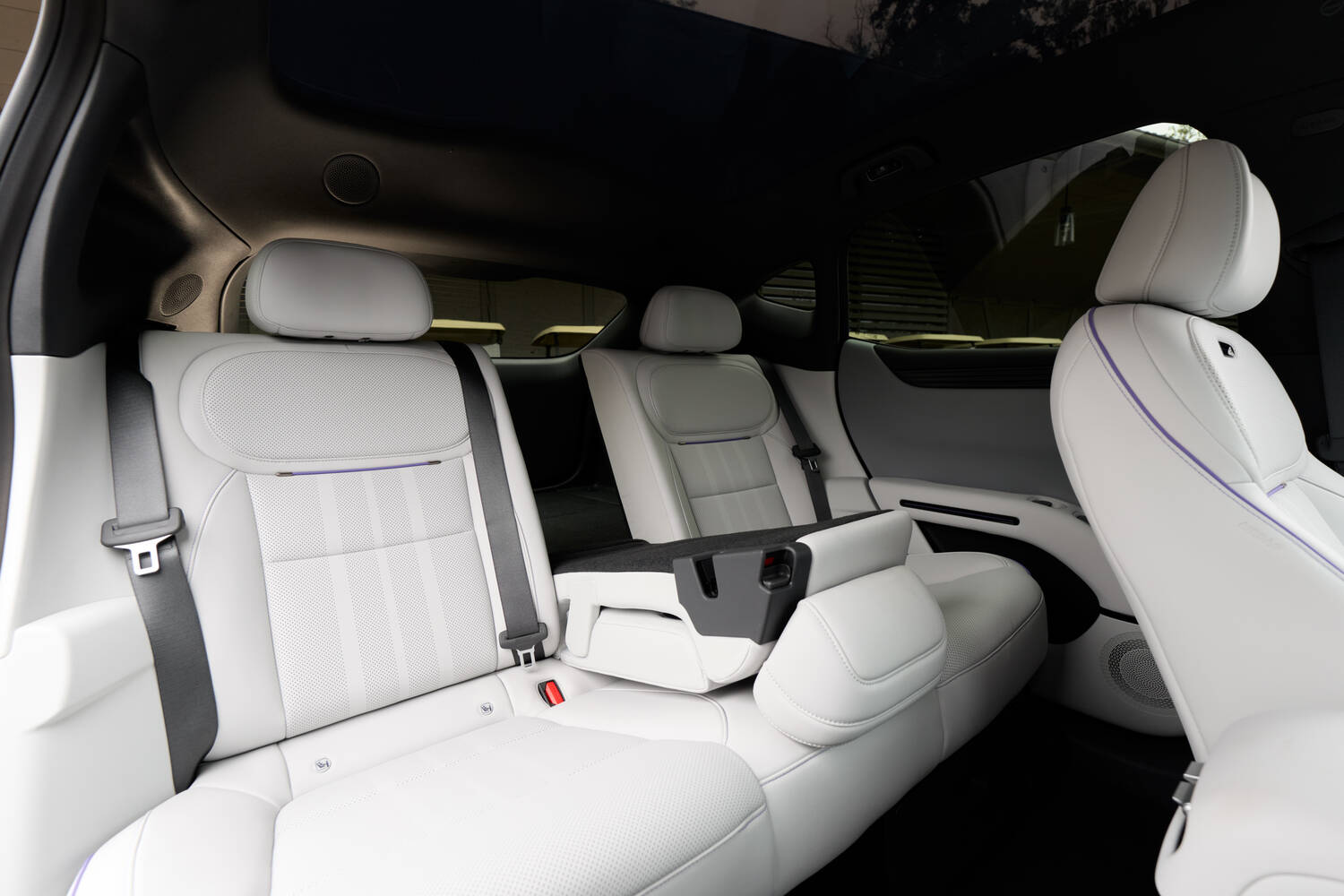
One of the strongest suits of the Xpeng L03 is how generous its rear-passenger room is. Despite its 'coupe' shape and the fitment of a panoramic sunroof in our test car, headroom even for taller people is good.
Additionally, there's masses of leg- and kneeroom, plus there's even a bench with an accommodating-enough central rear seat and a completely flat floor throughout - so the idea of seating three across there isn't totally implausible.
Creature comforts in the rear of the car amount to decent door bins, elasticated map pockets on the backs of the front seats, a fold-down central armrest incorporating two cupholders, two air vents and a 60-watt USB-C socket down on the rear of the front centre tunnel, and even coat hooks mounted on the B-pillars.
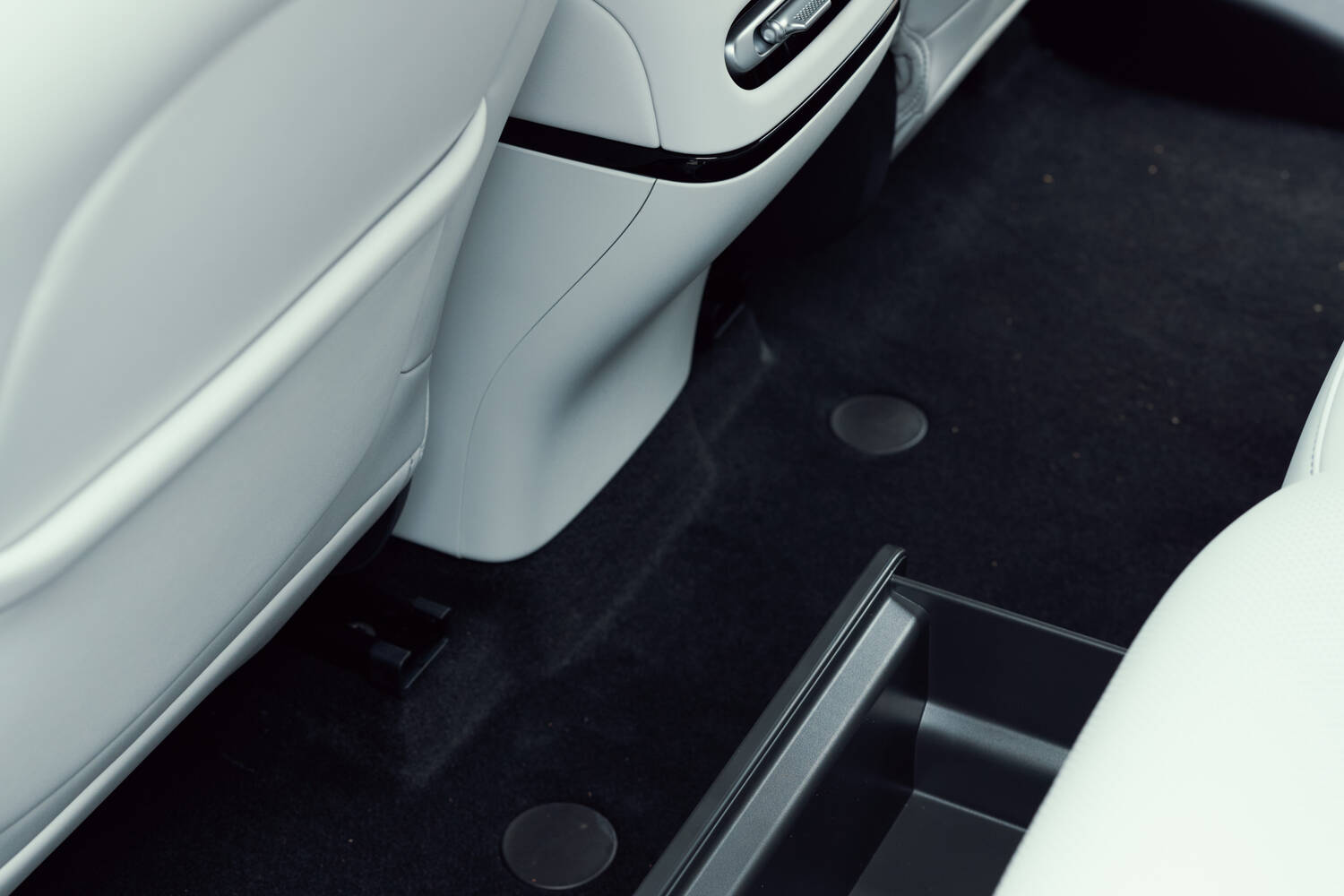
One unusual feature in the car is a 10-litre drawer located underneath the rear bench, a device seen in some other Chinese vehicles but not something to be sniffed at as a result. It's a useful touch.
Fitting child seats to the Xpeng L03
There are two sets of ISOFIX mounting points for child seats in the Xpeng L03, on the outer positions of the rear bench. As the car's back doors open wide and we've already said there's plenty of space in the second row, there should be no issue loading child seats of any size into this area of the SUV.
Boot space in the Xpeng L03
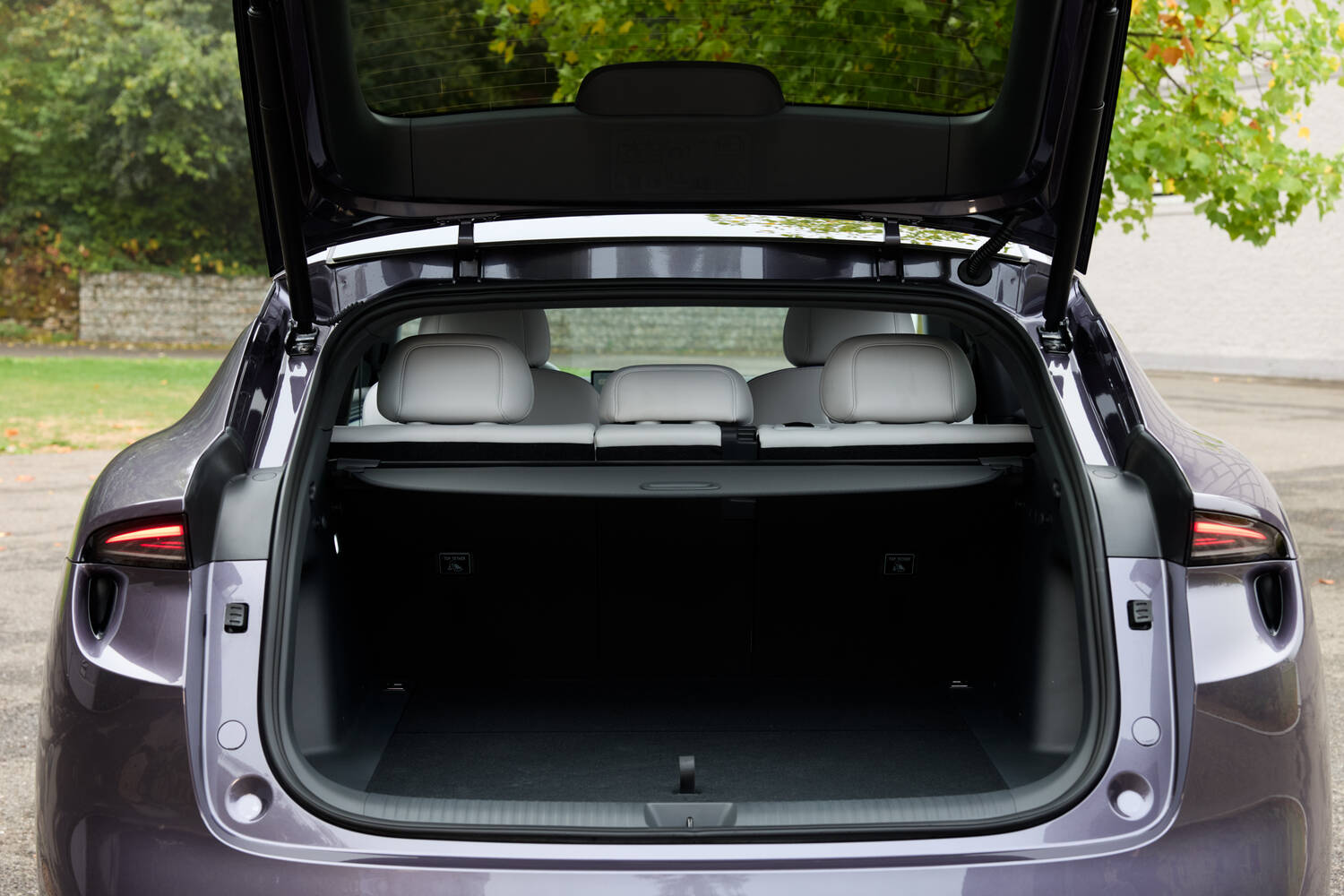
Xpeng seems to have traded passenger room for boot capacity. For a vehicle that's so long on the outside, a 367-litre main cargo bay (including under-floor storage) isn't amazing.
It's a direct corollary of the sloping rear tailgate, as is the 1,131 litres of overall volume with the 40:20:40 split-folding back seats tumbled down.
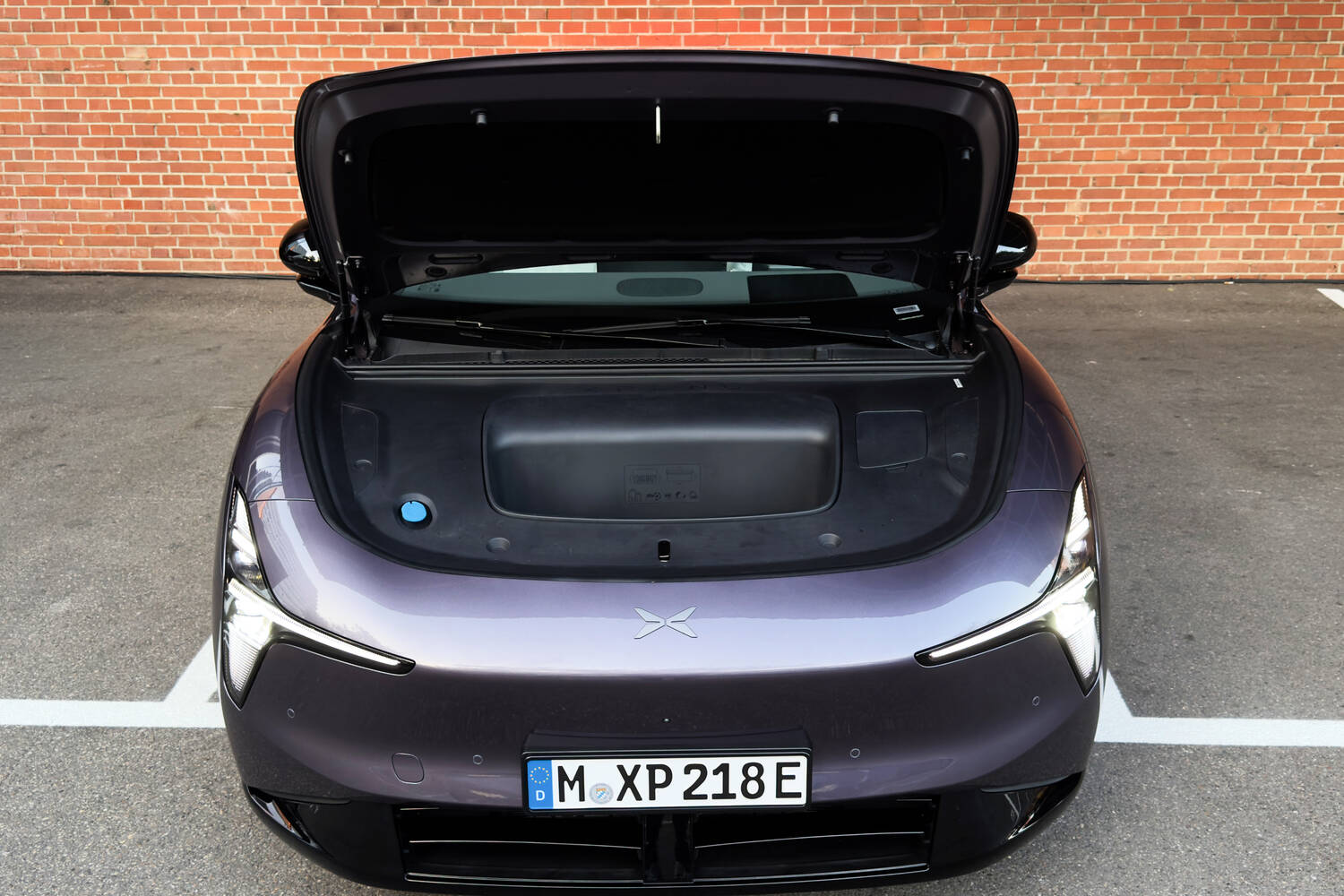
As a small form of compensation, all L03s have a 'frunk' up front. It's bigger on the single-motor, rear-wheel-drive models than it is on the AWD Performance, so you have 89 litres in the former instance and 44 litres in the latter.
Safety in the 2027 Xpeng L03
Euro NCAP hasn't put the L03 through its paces, but it has tested Xpeng's G6, which garnered a full five-star rating in 2024. We've no reason to doubt that the L03 would achieve the same, especially as it is fitted with plenty of ADAS tech from base model upwards, while it also comes with something called Next Generation Pilot, or NGP VLA 2.0.
The Ultra cars also come with three of Xpeng's Turing AI chips, each one capable of 750 trillion operations per second (TOPS). With 2,250 TOPS in total, this allows the L03 Ultra to drive at Level 3 autonomy, in theory, although not many countries allow that as yet.
Still, if you want to future-proof your Xpeng L03 to be partially self-driving, as and when the European laws of the road change to facilitate that, then you'll be needing one of the Ultra versions.
Performance of the 2027 Xpeng L03
- Single- or twin-motor derivatives
- All-wheel-drive variant is almost needlessly fast
- Safe, polished... and dull to drive
As with the G6, there are three main flavours of the Xpeng L03: the RWD Standard Range, the RWD Long Range and the AWD Performance.
The first of these uses a single rear-mounted 163kW motor, which results in peak outputs of 222hp and 280Nm. This allows the 1,870kg RWD Standard Range to hit 100km/h from rest in a commendable 7.5 seconds.
Moving up, the RWD Long Range uses an enhanced version of that motor (183kW), which has no more torque but does boost power to 248hp. It also gains an enlarged battery pack which it shares with the AWD Performance.
Realistically, the 1,940kg RWD Long Range is going to be fast enough for anyone's needs, as it can achieve a 6.6-second 0-100km/h time.
However, for the speed freaks among you, the AWD Performance has a second motor. That drives the front wheels and helps bump the system output up to a robust 317kW. That equates to 431hp, while it also produces up to 451Nm of torque, enough to punt the four-wheel-drive flagship L03 from 0-100km/h in just 4.5 seconds.
All versions of the Xpeng L03 use the familiar single-speed reduction-gear automatic transmission used by the vast majority of EVs on sale today, and all are passively sprung.
Driving the Xpeng L03 AWD Performance Ultra on the roads of Switzerland, France and Germany
Words by Matt Robinson on 8 October 2026
The Xpeng L03 doesn't drive badly, in any single regard. In fact, it performs some dynamic tasks surprisingly well, considering its weight and the parent company's heavily tech-based focus.
But, by the same score, it does nothing exceptional or remarkable whatsoever, and we don't think it's quite as impressive or memorable in its sector as the larger G6 from the same brand.
What will win the L03 fans following a test-drive are the following aspects: it rides comfortably, even on the 20-inch wheels of the Ultra pack, and rarely has its composure markedly upset by larger lumps and bumps in the road.
Its rolling refinement is good enough across all speeds that it remains a very quiet, dignified car, no matter if you're doing 30- or 130km/h, while both the accelerator and brake pedals are nicely judged and easy to use.
And there's no doubting the veracity of the motors' outputs for this AWD Performance, because its roll-on pace is mighty swift if you want it to be. As long as you never extend the car or push it towards the limits of its abilities, you'll get on with it just fine.
If you're after a deeper level of engagement or even just a frisson of driving excitement, though, you're better off looking elsewhere. For instance, the body control is admirable and grip levels are high, despite the all-wheel-drive L03 coming on the same Giti GitiControl P10 tyres as the thoroughly risible Skywell BE11, but the steering which is bereft of feel or any meaningful weight, plus there's numb chassis communication through the base of the seat.
Moving on, while the car is generally quiet, there is a little more tyre roar at speed than is desirable. And even though we've praised the suspension up to now, encounter a series of sizeable compressions in the road in quick succession and the springs and dampers of the Xpeng L03 soon run out of answers, leading to a slightly bouncy and uncontrolled sensation.
In short, there's no kinematic sparkle here. It has been tuned to be safe and capable, and nothing more.
Range, battery, charging and running costs of the 2027 Xpeng L03
- Two LFP batteries to choose from
- Range of up to 520km
- DC charging is merely adequate
Of the three models in the Xpeng L03 range, one of them uses a smaller battery pack while the other two employ a larger unit. The official driving ranges across the board are OK on the L03, but nothing special, and because it only uses a 400-volt platform (as opposed to the 800-volt architecture found in the G6), the charging speeds are middling rather than mega.
Battery options and official range
Both batteries in the Xpeng L03 family are lithium-iron-phosphate (LFP) items. For the RWD Standard Range, there's a 57.6kWh usable unit, which confers a range of 445km on the base-grade EV.
The RWD Long Range and the AWD Performance, meanwhile, get a more substantial 70.4kWh battery. On the Long Range, if kept in standard trim, it'll go up to 520km between charges - the longest distance of any L03.
Switching to the 20-inch wheels of the Ultra pack does reduce that somewhat to 480km, while the AWD Performance dual-motor is simply listed as being capable of 440km outright, whether standard or Ultra; but it's still the shortest-legged of all the Xpeng's derivatives.
Real-world range and efficiency of the Xpeng L03
The Xpeng L03 AWD Performance displayed impressive real-world consumption in the Ultra we drove for two days around Germany, Switzerland and France.
Including twisty hillside sections, faster running on autobahns and some city/town work, in 20-25-degree temperatures with the climate control running constantly, the SUV achieved an admirable 15.4kWh/100km across 115km on day one and a still-respectable 18.2kWh/100km from 62km on day two.
Either way, these equate to real-world ranges of 457km and 387km respectively, compared with the official 440km figure.
Charging up the Xpeng L03
The smaller battery can top up at 193kW on DC, while the larger item increases that to 236kW on DC. Due to their relative capacities, you'll be looking at a 20- to 21-minute 10-80 per cent charging cycle for any Xpeng L03 at peak power.
AC charging maxes out at 11kW on three-phase outlets, which should see even the larger battery go from 10-100 per cent state of charge in between seven and eight hours.
However, a typical 7.4kW domestic wallbox will need more like nine hours for the 57.6kWh battery and approaching 11 hours for the 70.4kWh item to do the same replenishment task.
Servicing the Xpeng L03
The expected servicing interval for the Xpeng L03 is 12 months or 20,000km, whichever arrives sooner.
Xpeng L03 warranty
Xpeng Ireland offers a five-year/160,000km vehicle warranty and eight-year/160,000km cover on its high-voltage batteries.
Irish pricing & rivals to the 2027 Xpeng L03
- Not yet available in Ireland
- Aggressive pricing likely
- Straddles two segments
We haven't got Irish prices for the Xpeng L03 as yet, but it will certainly slot in well below the G6 range (from €42,000-€54,500) - we're expecting it to be in the €33,000-€40,000 ballpark, although the exact bracket remains to be seen.
You can confidently bank on even a base-grade RWD Standard Range coming with a wealth of standard equipment, although whether we'll get both Ultra variants (of the RWD Long Range and AWD Performance) here remains to be seen.
Obvious rivals are in the C-segment electric SUV category. However, the physical size of the Xpeng L03 and the sheer power of that AWD Performance could see some people considering it a bargain competitor for the likes of the Skoda Enyaq, Toyota bZ and Tesla Model Y, among more, although the 431hp Chinese car's 440km range doesn't stand up to close scrutiny in that higher class.
Verdict - should you buy the 2027 Xpeng L03?
The Xpeng L03 is a polished and proficient car, but not one that truly stands out as amazing. It's perfectly civil and amiable to drive on a daily basis, which is pretty much all customers after this type of electric SUV want, but there are plenty of pre-existing rivals out there - from both legacy manufacturers and challenger brands from China - which can do much the same thing but mix a little more driving pizzazz into the bargain.
If you're not bothered by that, or you're easily seduced by the straight-line power of 431hp, or you particularly like the way the Xpeng L03 looks inside and out, then - as long as the Irish pricing of it is as combative as we're predicting - this could be a solid alternative to the dearer mainstream fare that's already on offer.
FAQs about the 2027 Xpeng L03
Is the Xpeng L03 four-wheel drive?
It is as the range-topping AWD Performance variant, which is a dual-motor EV, but the RWD Standard Range and RWD Long Range versions of the Xpeng L03 are, as their names hint at, rear-wheel drive.
Can the Xpeng L03 tow anything?
Yes, all three versions of the Xpeng L03 are rated to tow up to 1,500kg of braked trailer.
Where is the charging port on the Xpeng L03?
It is on the offside-rear (driver's side) wing, just above the back wheel in the position you would normally find a fuel-filler flap on a car needing petrol or diesel.
Want to know more about the 2027 Xpeng L03?
If there's anything about the Xpeng L03 we've not covered, or you'd like help in choosing between it and other cars, you can avail of our expert advice service via the Ask Us Anything page.