

Exterior & design of the 2027 Volkswagen Golf Hybrid
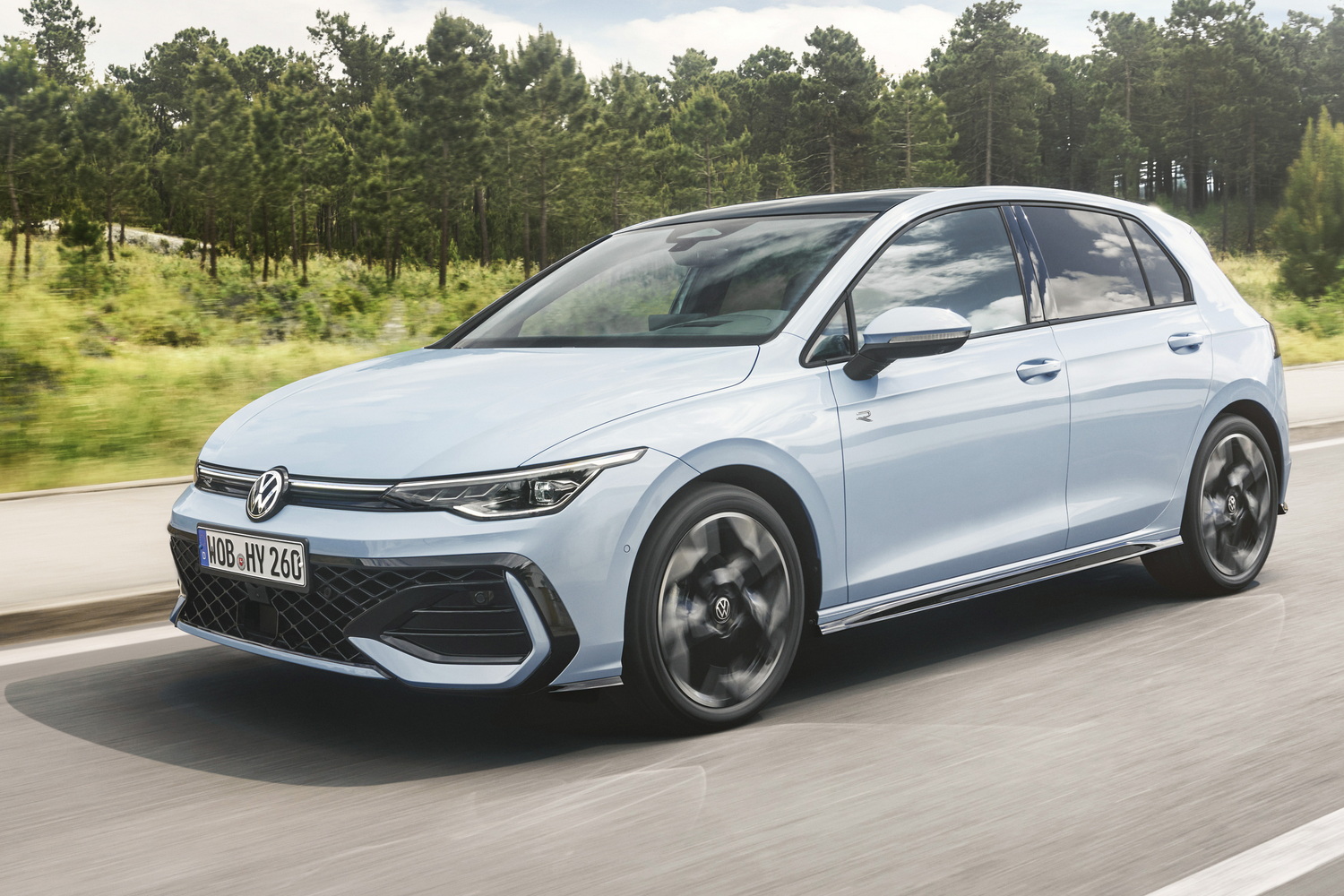
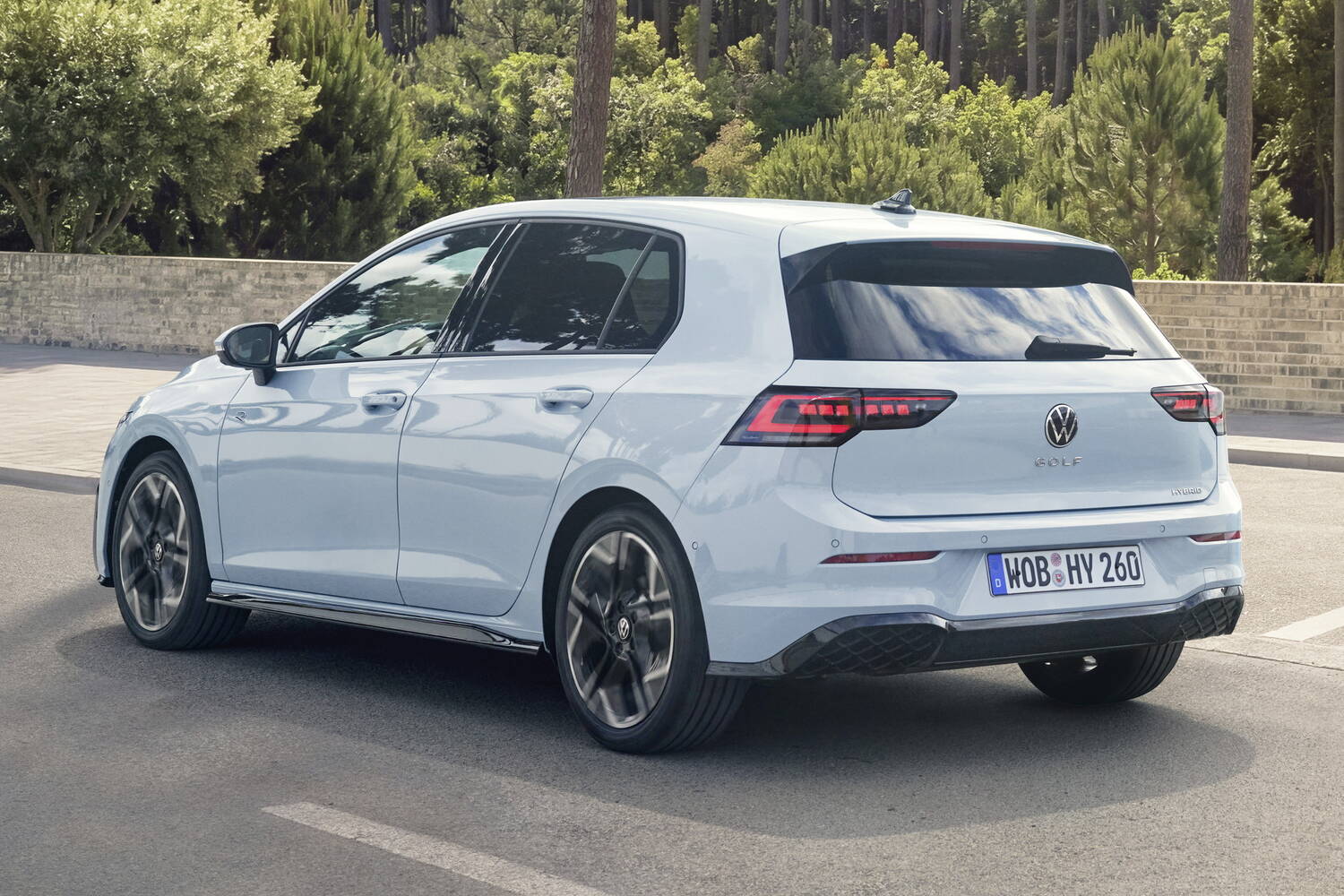
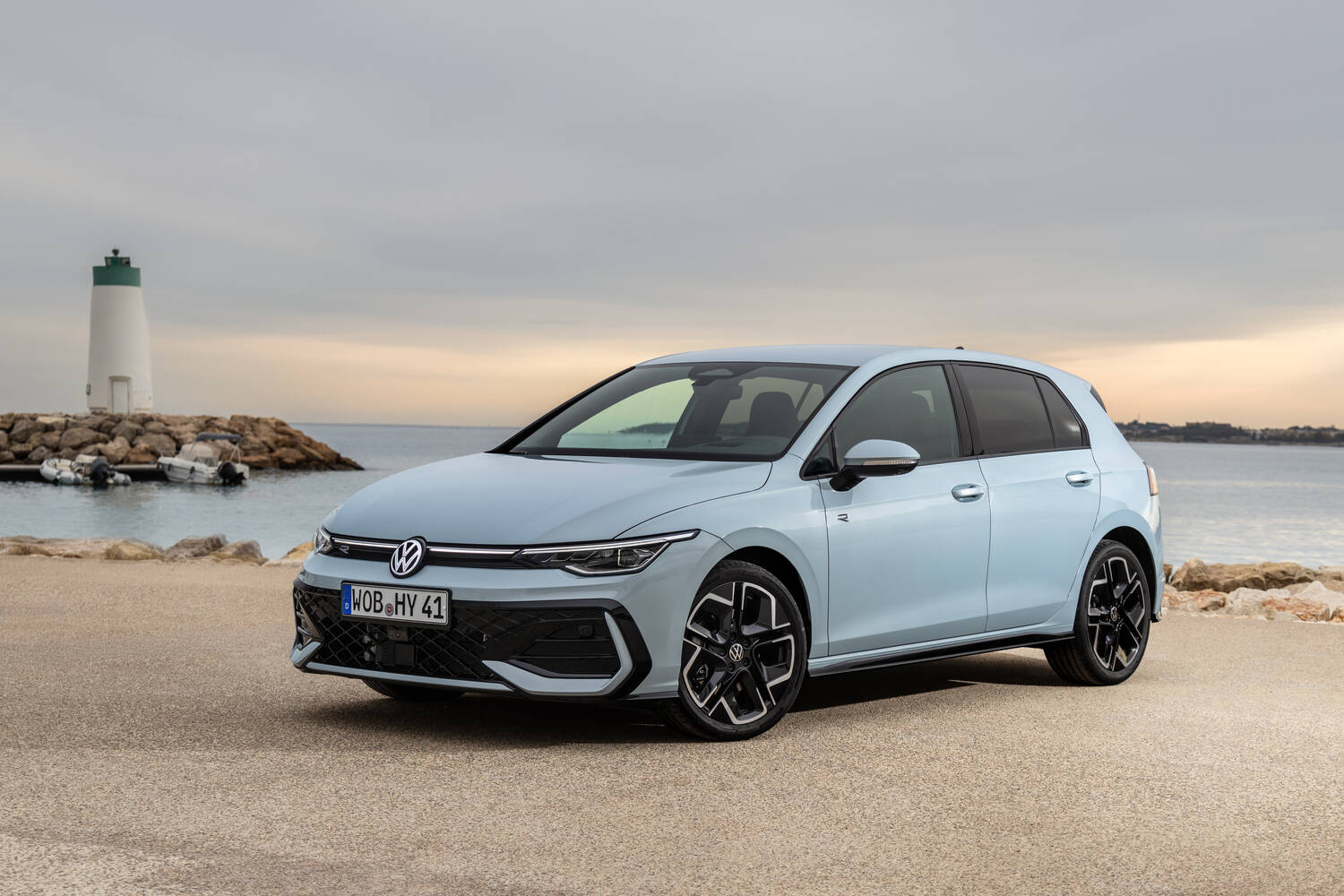
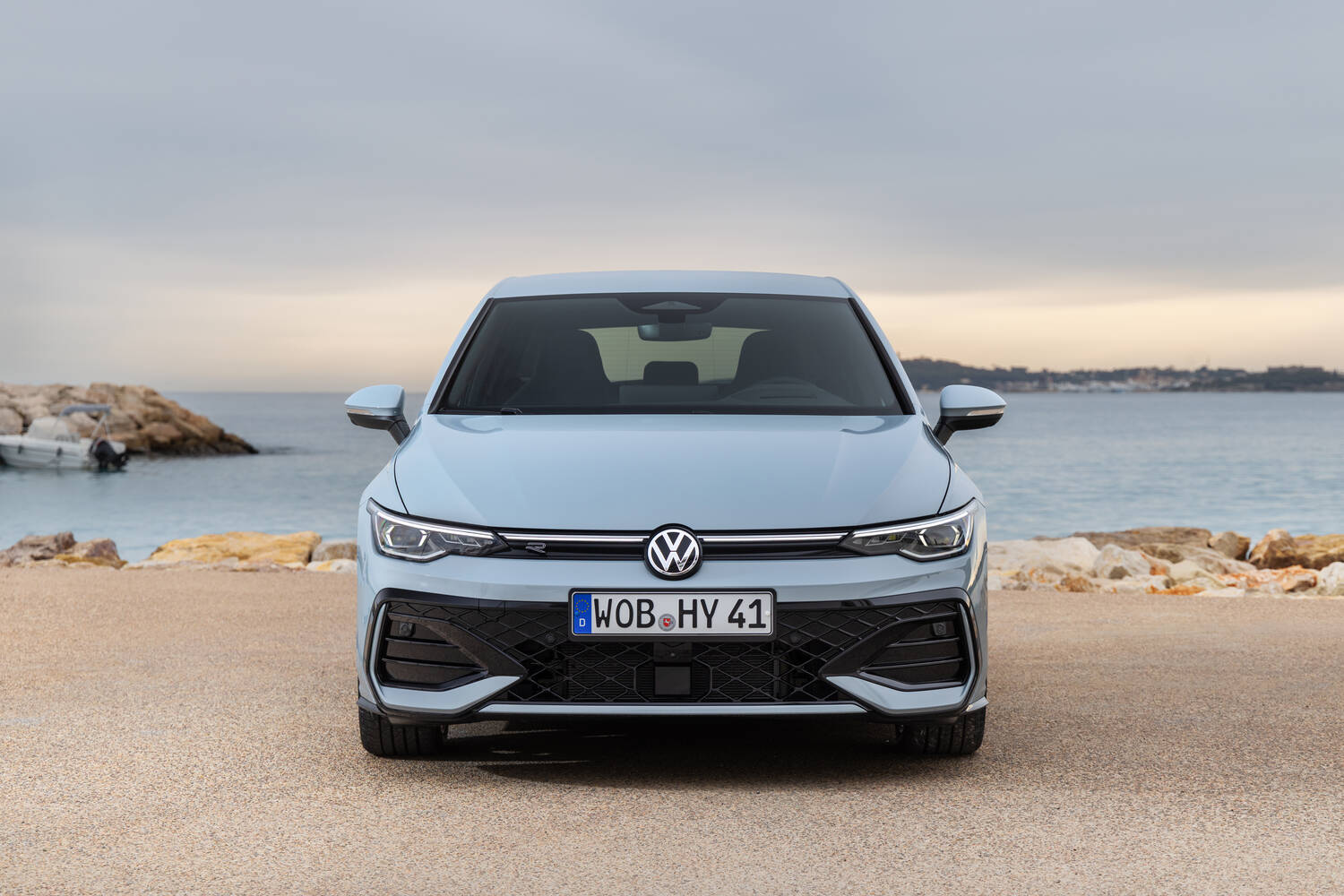
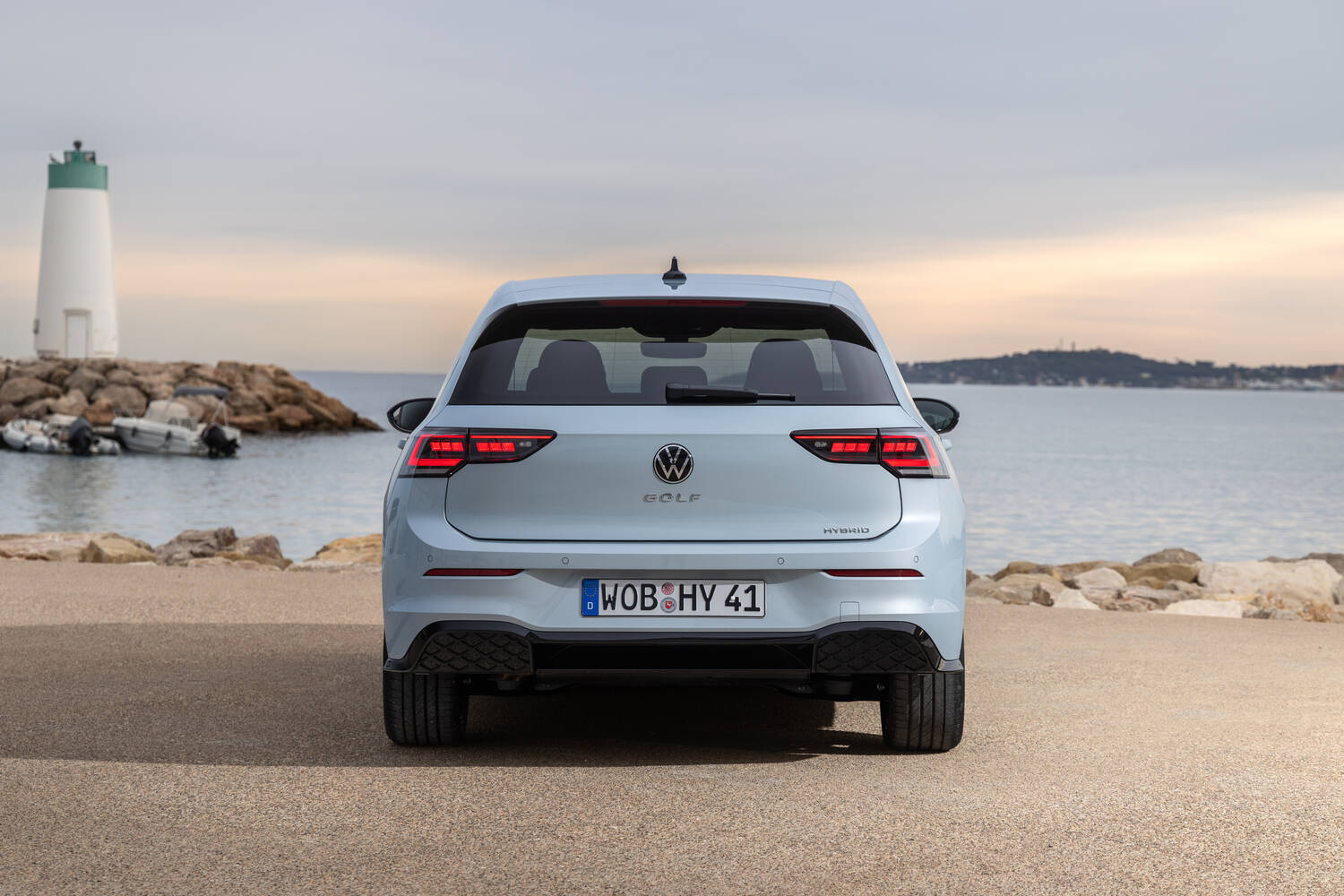
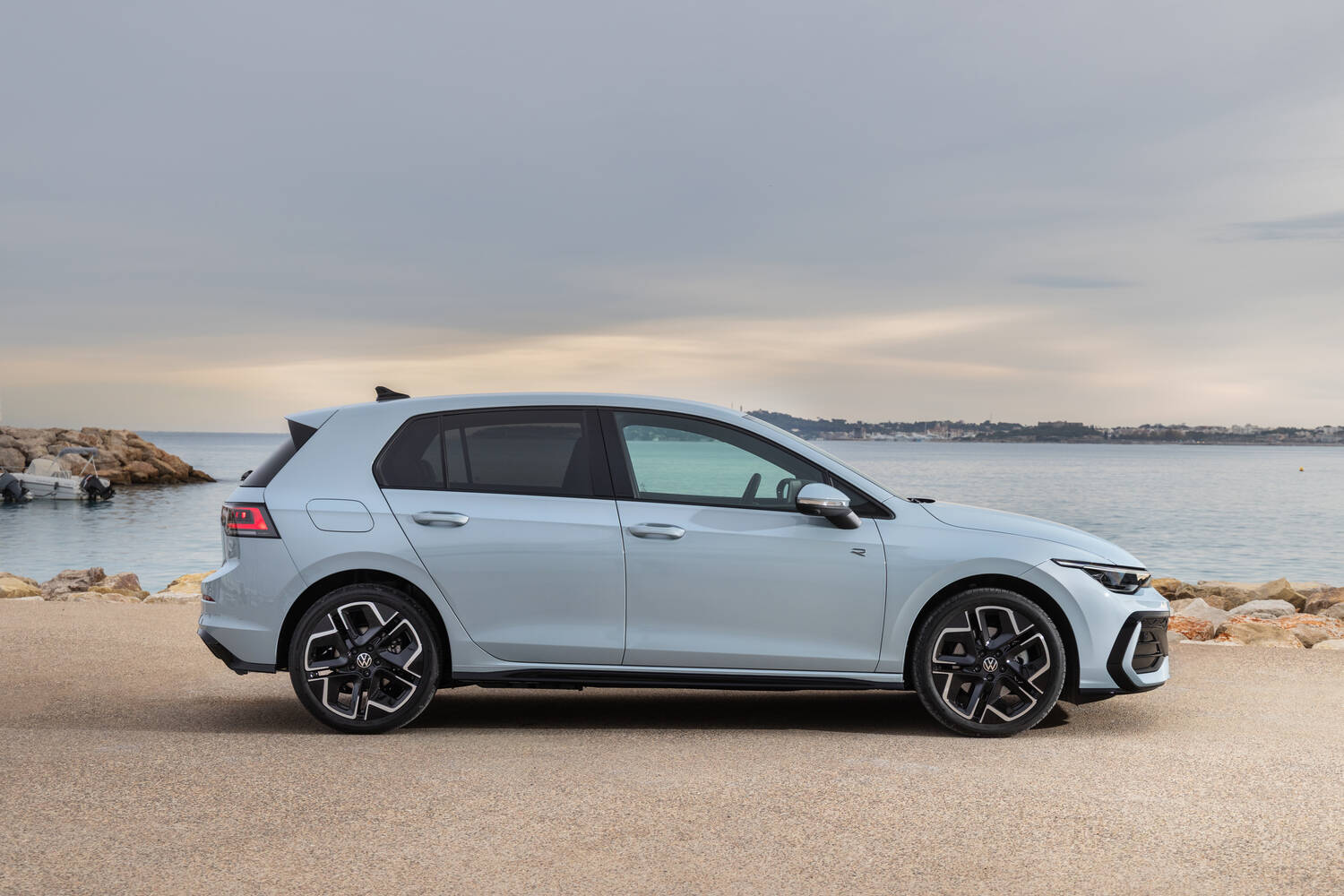
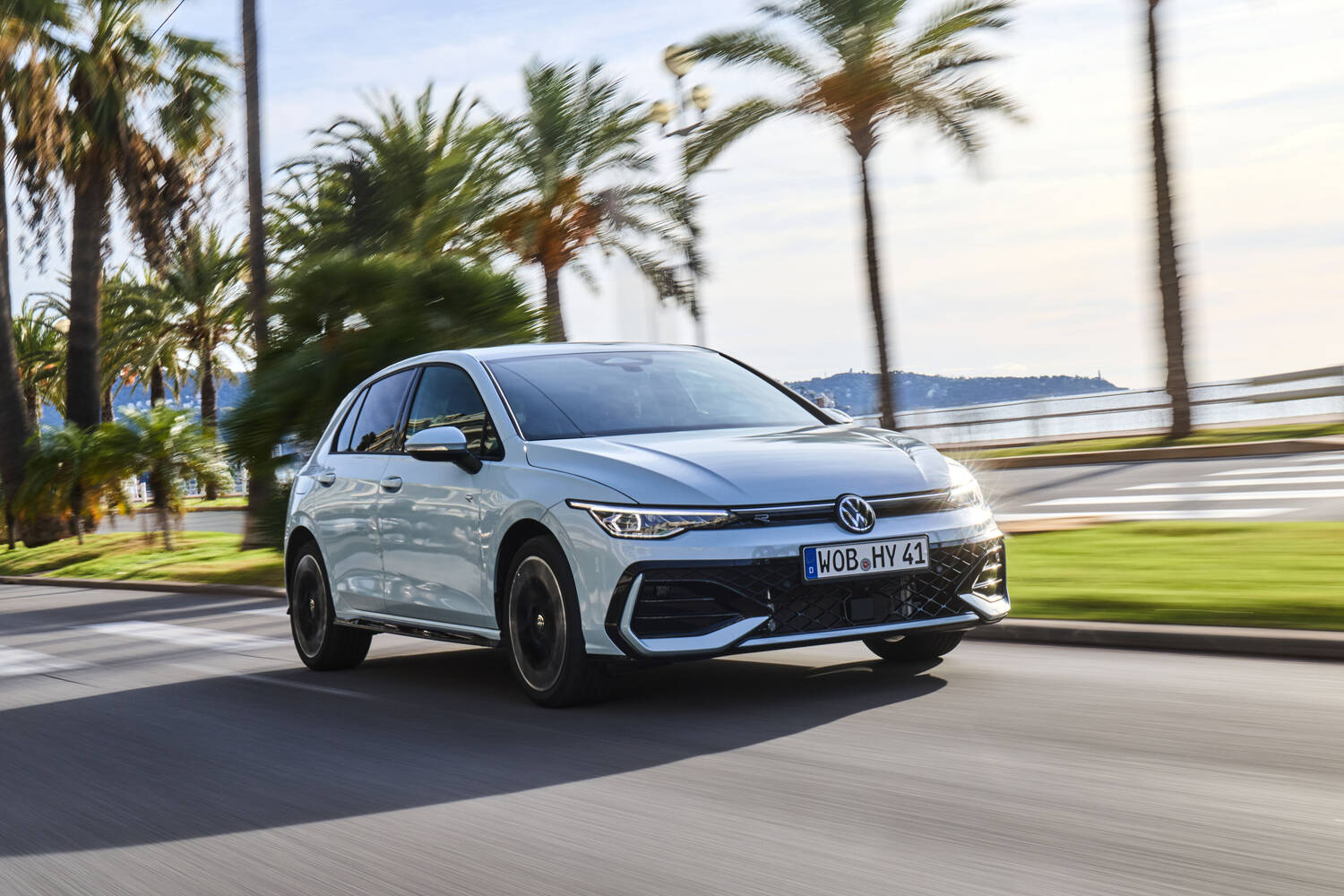
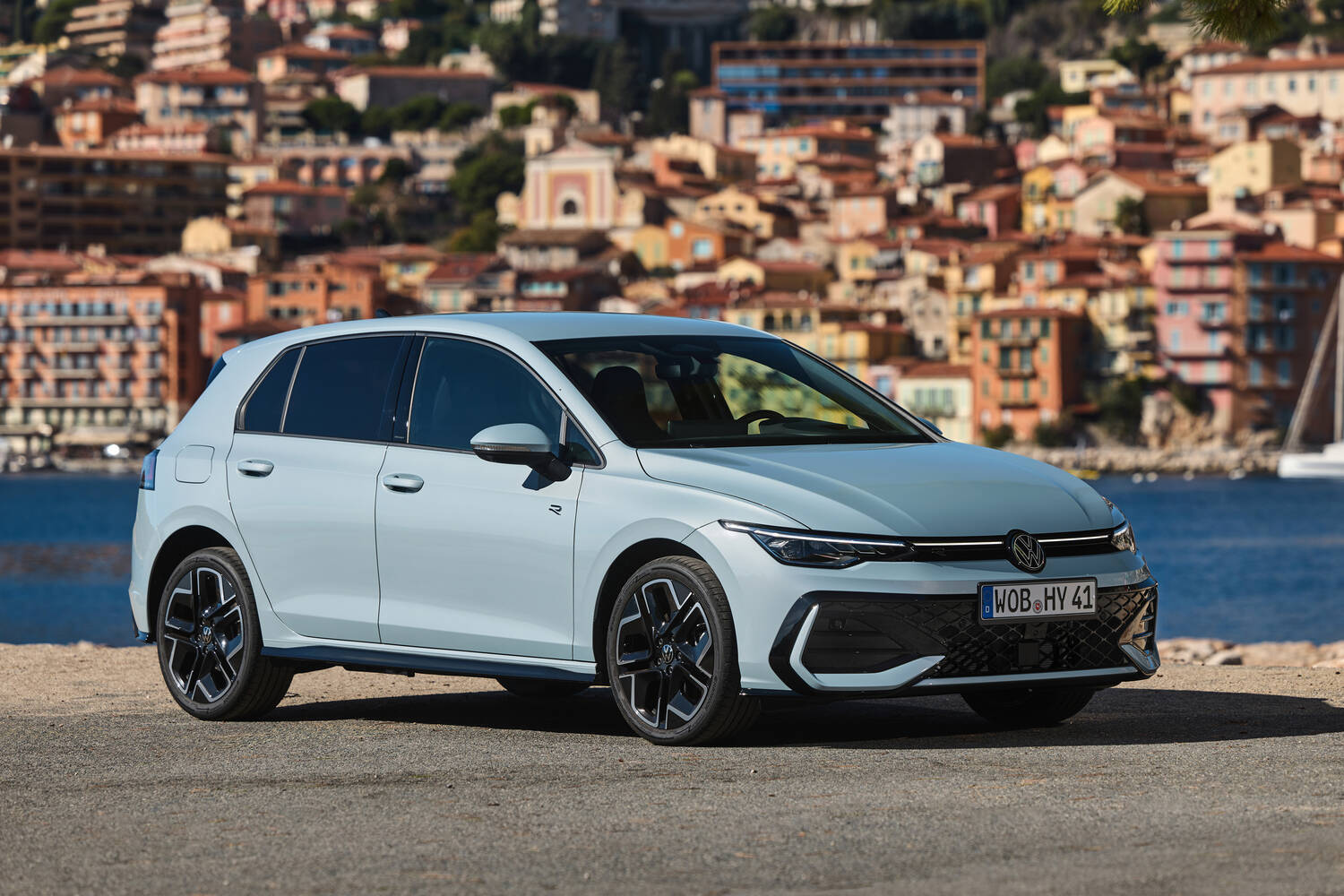
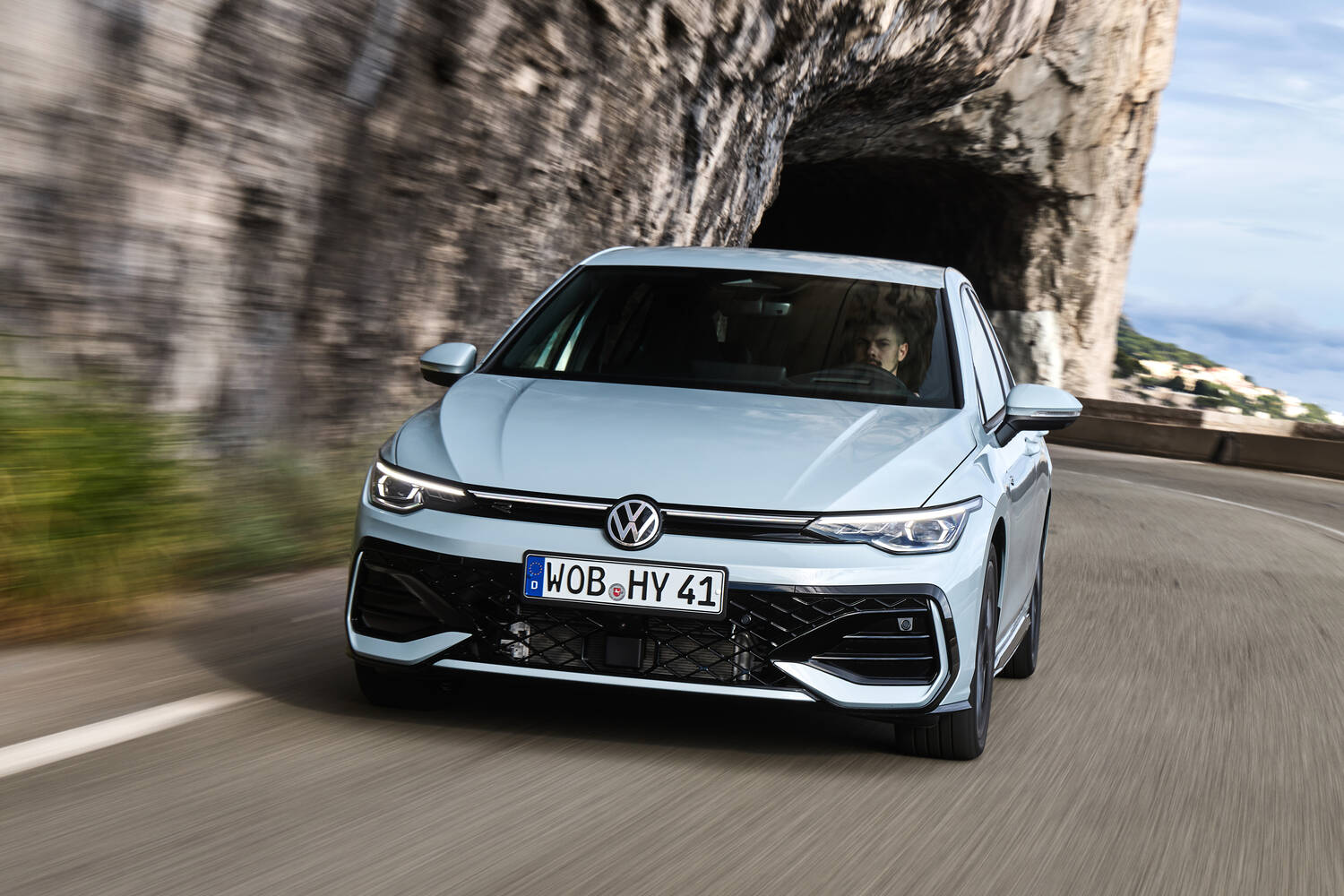
- HEV looks like any other Golf
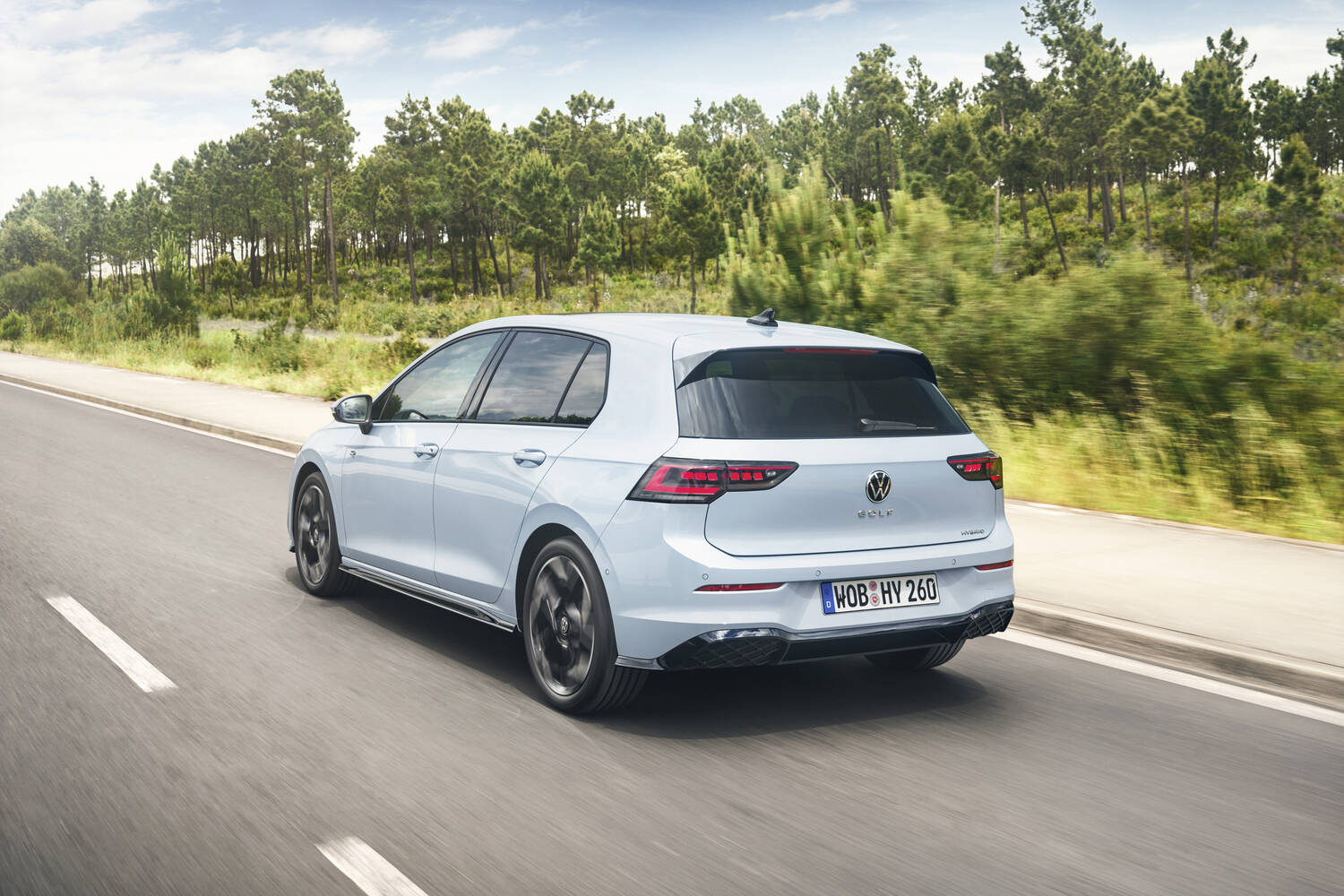
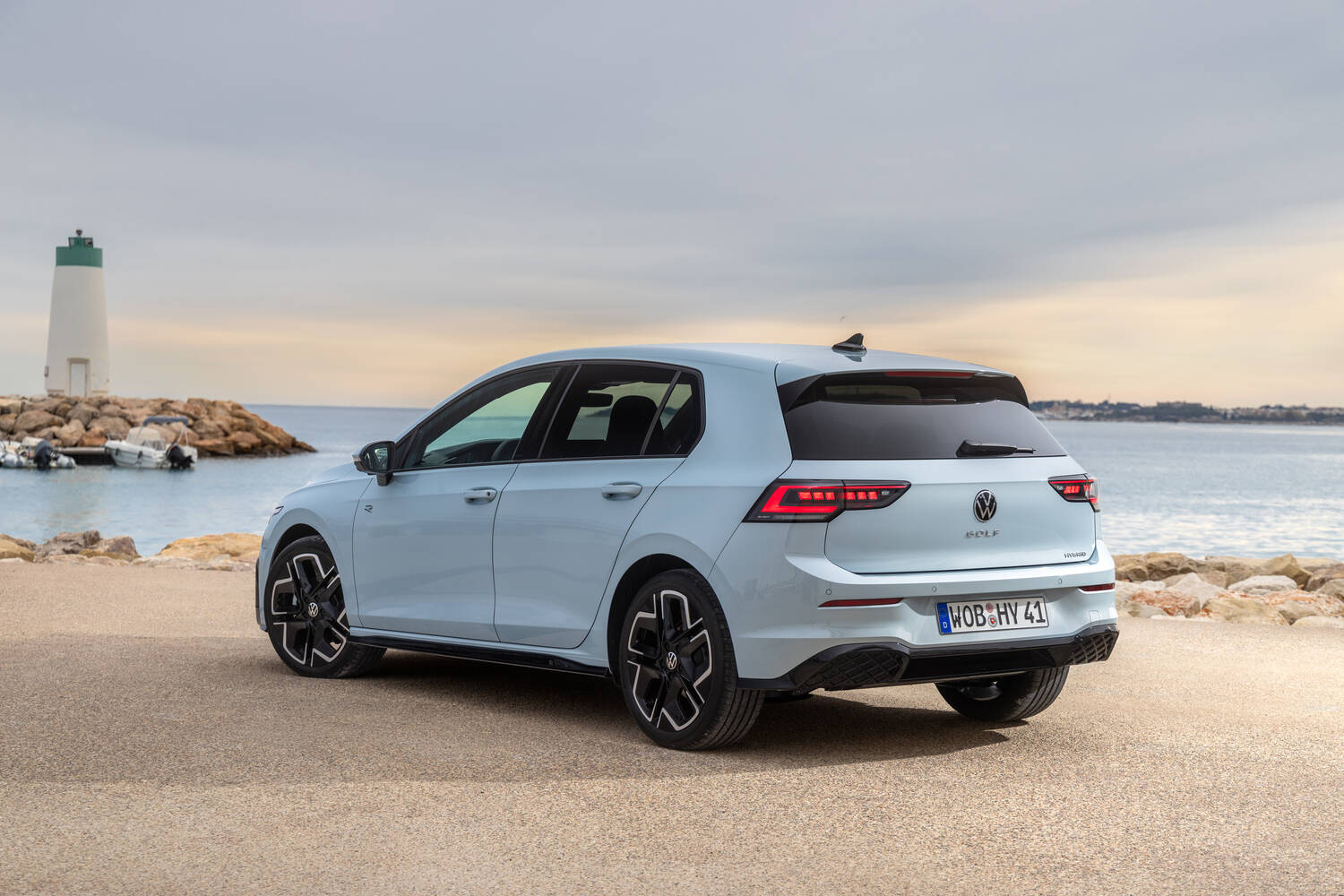
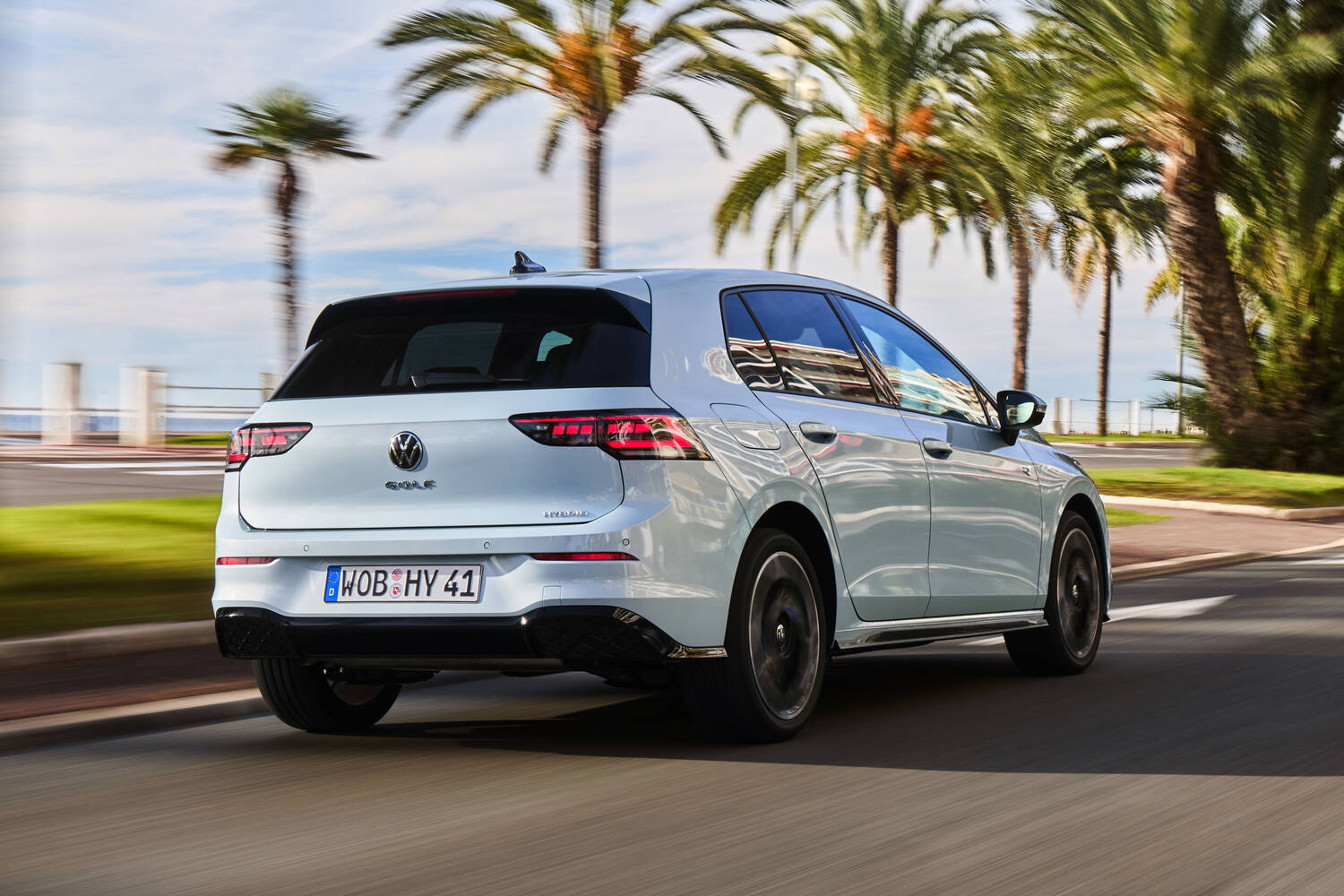
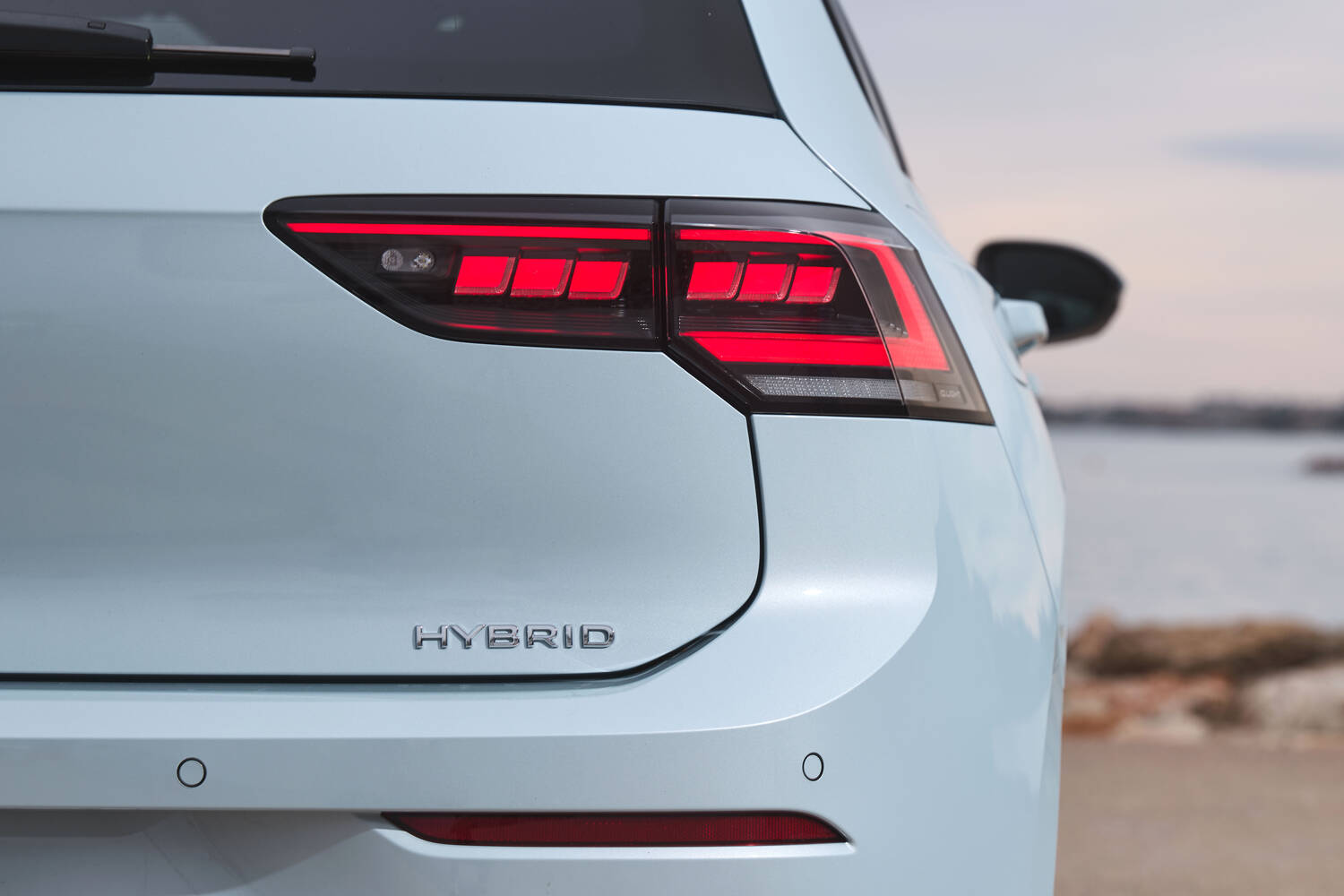
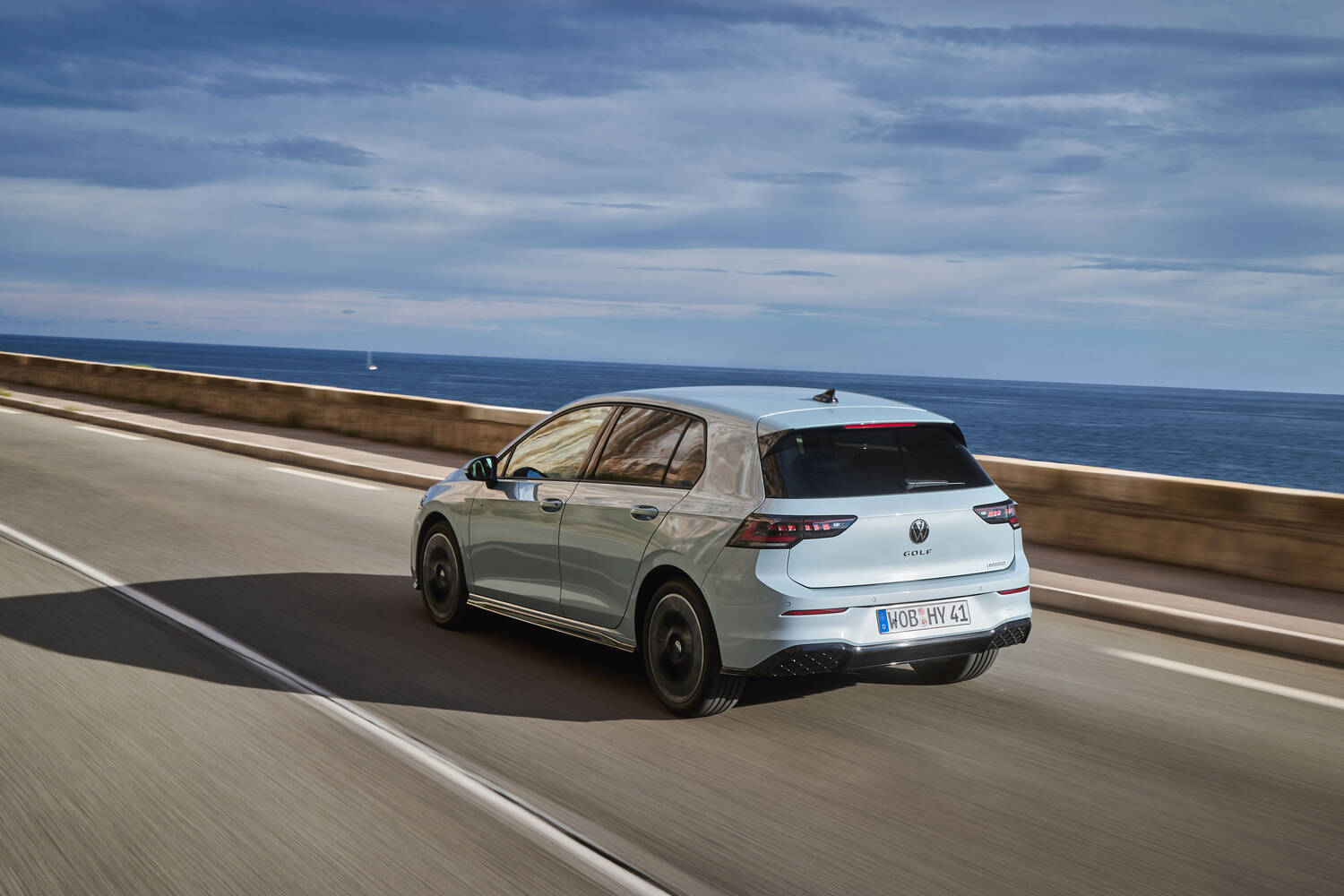
- 'Hybrid' boot badge the giveaway
- 18- or 19-inch wheels for this model
We won't wish to be too facetious, but if you don't know what a Volkswagen Golf looks like by now, well, then... where the hell have you been hiding?
Thus, the familiar five-door form of the Golf hatch is preserved, with the only marker as to its HEV nature coming on the tailgate in the form of a discreet 'Hybrid' badge positioned to the right-hand side of the boot.
Mind, as the Golf PHEV is badged 'eHybrid', this might not be an immediately obvious telltale from the HEV.
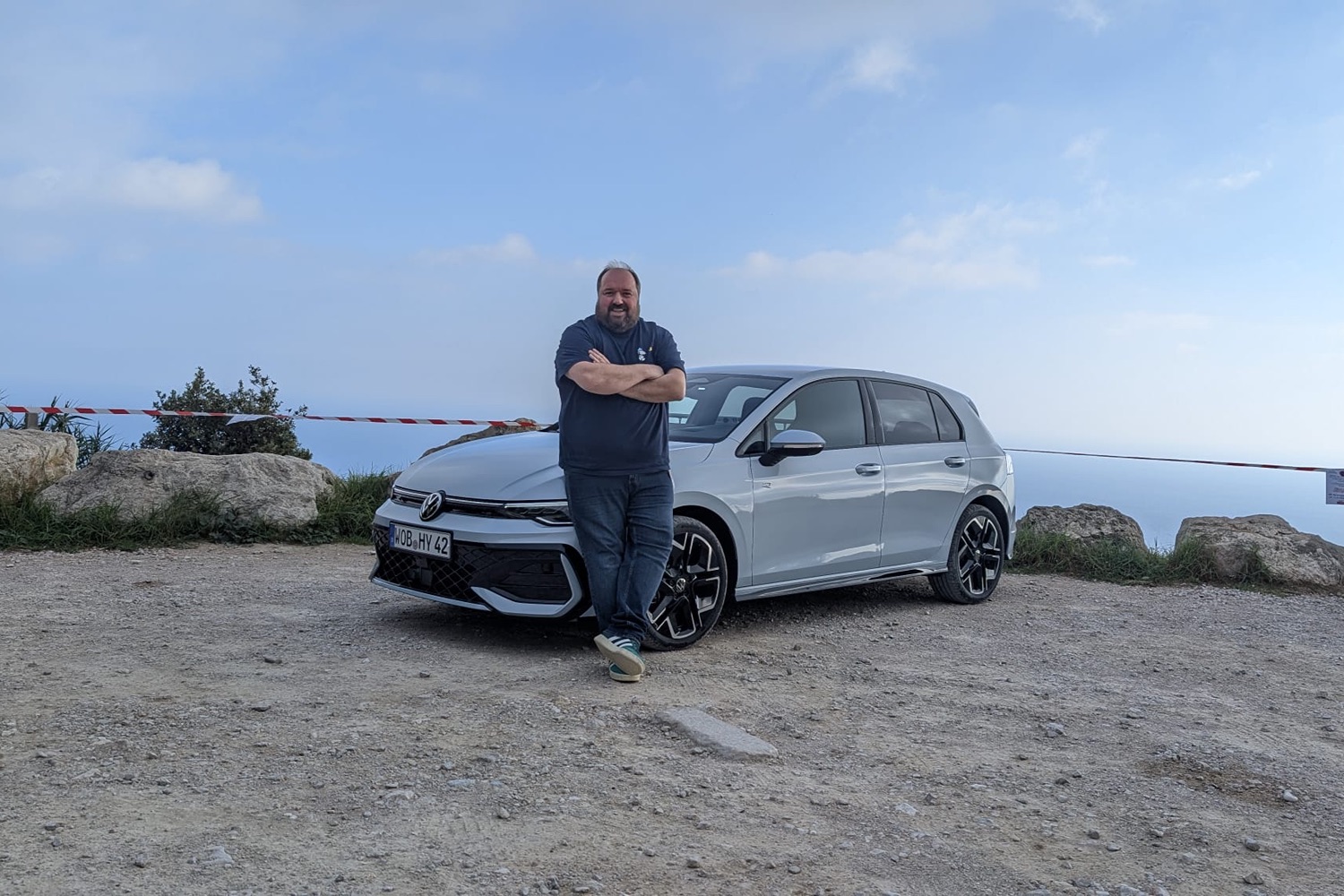
We predict the car will be sold in Style and R-Line trims, at the very least. Our test vehicle was in the latter specification.
Dimensions of the 2027 Volkswagen Golf Hybrid
- Length:
- 4,282mm
- Width:
- 1,789mm (excluding mirrors)
- Height:
- 1,478mm
- Wheelbase:
- 2,628mm
Paint colours for the 2027 Volkswagen Golf Hybrid
Volkswagen offers 11 colours for the Golf family. Not all colours are available at all trim levels, though.
The only standard, no-cost colour is Urano Grey solid. Above that, another solid - Pure White - costs an additional €383. Then you've got a choice of eight metallics and one pearlescent finish, with differing prices for each.
In the metallic palette, Grenadilla Black (€822), Kings Red and Lapiz Blue (€997 each), or Anemone Blue, Crystal Ice Blue, Dark Moss Green, Dolphin Grey and Oyster Silver (all €1,063 apiece) make up the offerings, with Oryx White mother-of-pearl-effect the dearest finish at €1,304.
Interior, practicality, tech & comfort of the 2027 Volkswagen Golf Hybrid
- Usual Golf interior appointments
- Improved user interface during 2024 update
- HEV loses boot space
The Hybrid shares its cabin with other Volkswagen Golfs in the regular line-up, which was made less infuriating in terms of its interface following on from the midlife update in 2024.
Getting comfortable in the driver's seat
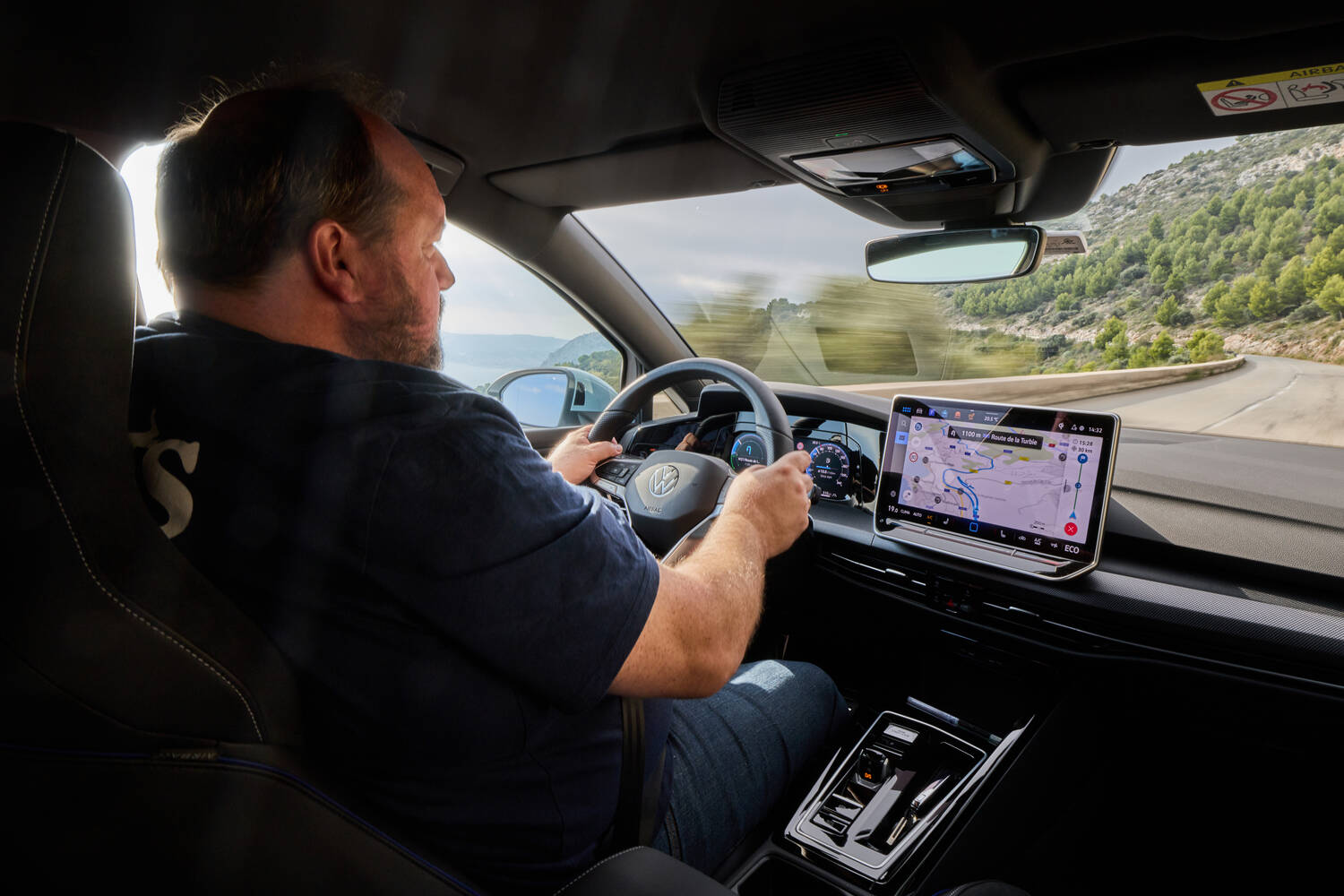
Adjusting both the driver's seat and the reach-and-rake column in the Volkswagen Golf Hybrid R-Line is an entirely manual affair, but sensible levers plus an essential rotary dial for the backrest mean a good driving position is easily attainable.
There's a healthy range of adjustment too, so drivers of all shapes and sizes should be comfortable behind the Golf's wheel.
Infotainment and technology
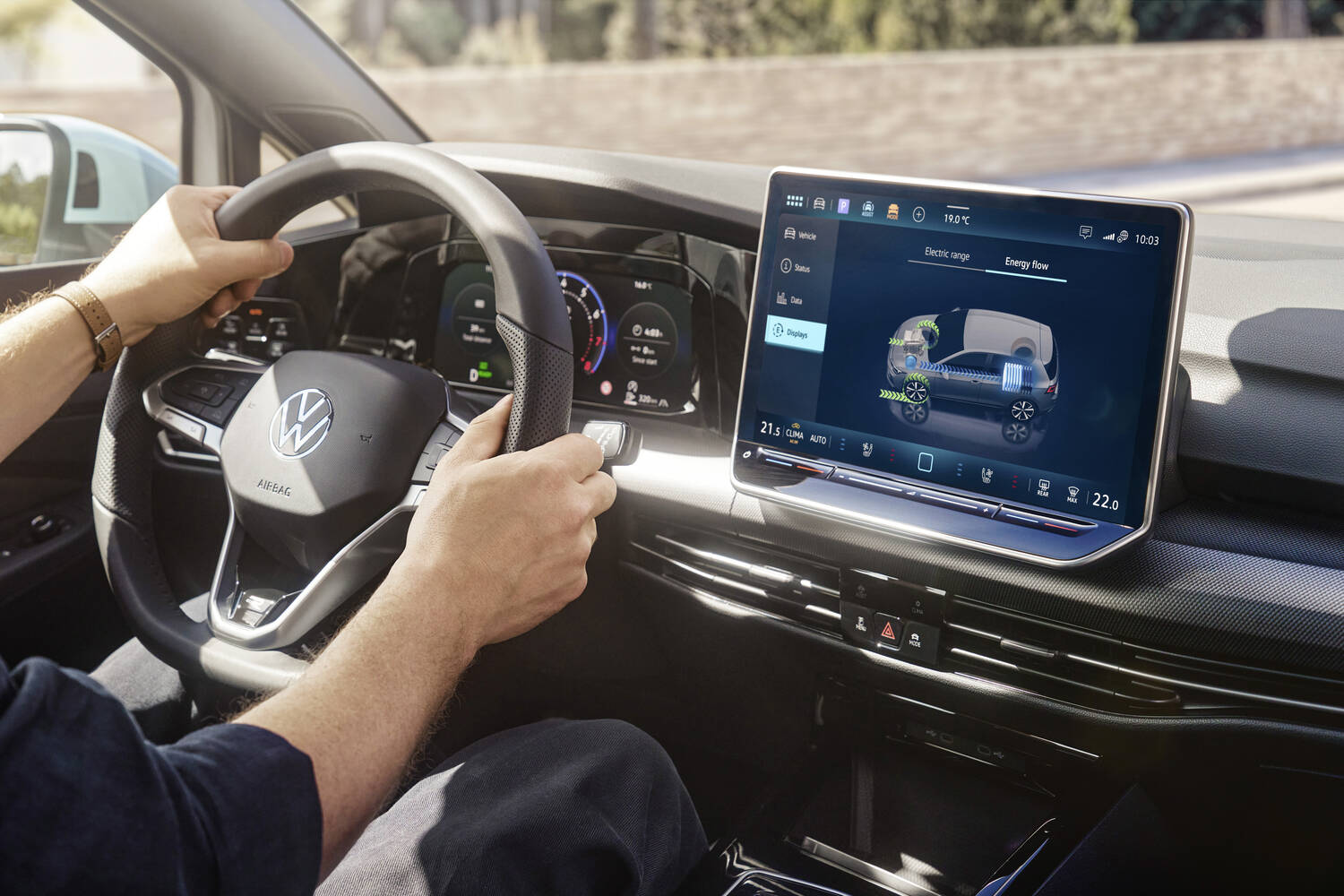
The Golf Hybrid comes with a 12.9-inch infotainment touchscreen, a 10.25-inch 'Digital Cockpit Pro' instrument cluster and a head-up display for the driver as well.
Harsh lessons were learned by the manufacturer after the debacle of the button-free interior and baffling menu layouts of the early Mk8 Golf interface, so it works a lot better in a 2027 car like the HEV than it did back in 2020.
That said, you're still faffing about with the sliders for in-cabin temperature control, rather than having some dedicated climate switchgear.
But proper buttons on the wheel plus a handful of key shortcuts clustered in a square on the console make the Golf's ancillary systems reasonably easy to use from behind the wheel.
And the touchscreen is better laid out, responds more crisply and is graphically easier on the eye than it was before, too.
Practicality around the cabin
Up front in the Volkswagen Golf Hybrid is the usual array of cupholders, decent door bins, a sizeable glovebox and an under-armrest cubby hole, plus a rubberised smartphone charging pad at the bottom of the central stack - so it can swallow a variety of the clobber associated with day-to-day motoring.
Rear-seat passenger space
The Golf Hybrid has the same rear-seat space as other versions, which means four adults are going to be happier in the car than five, due to the inclusion of a large hump in the middle of the footwell.
Leg- and headroom in the back of the Golf are OK, but not exceptional.
Fitting child seats to the Volkswagen Golf Hybrid
Volkswagen provides three ISOFIX mounting points for child seats in the Golf Hybrid, two on the outer positions of the rear bench and another on the front-passenger chair.
Space is reasonable inside the car, and the doors are a decent size too, although loading child seats into the vehicle is not going to be as straightforward as it would be in a larger, family-oriented SUV.
Boot space in the Volkswagen Golf Hybrid
This is an area where the Hybrid lags behind its stablemates, with the exception of the eHybrid PHEV.
Where an eTSI Golf has a 374-litre boot, in the HEV some of the equipment for the part-electric drivetrain is under the cargo bay's floor, reducing its capacity to just 273 litres. That's not as much as some superminis these days.
Fold the 60:40 rear seats down and there's also less room to play with, at 1,129 litres instead of 1,237 litres as you'd find in other models in the range.
Safety in the Volkswagen Golf Hybrid
The Mk8.5 Volkswagen Golf picked up a full five-star Euro NCAP safety report in 2025, although the testing has changed and become sterner since that date.
However, a healthy amount of advanced driver assistance systems (ADAS) as standard and its five-star result should offer reassurance to buyers.
Performance of the 2027 Volkswagen Golf Hybrid
- Two outputs for HEV: 136- or 170hp
- Can do 0-100km/h in 7.5 seconds
- All-round pleasing car to drive
As with the mild-hybrid Volkswagen Golf eTSI, there are two versions of the Golf Hybrid.
The opener is a 136hp/288Nm version, which will accelerate from 0-100km/h in 8.8 seconds. The other is the 170hp/310Nm variant we're sampling here, which cuts the 0-100km/h time to 7.5 seconds.
Both use the 1.5-litre TSI 'Evo' four-cylinder petrol engine as their basis, with the differences in system outputs coming down to the tune of that in each.
They also use an unusual single-speed transmission, which is neither a conventional reduction gear layout nor a CVT, but instead a longer 'traditional' gearbox ratio with a lock-up clutch to provide parallel-hybrid driving on specific, infrequent occasions when behind the wheel.
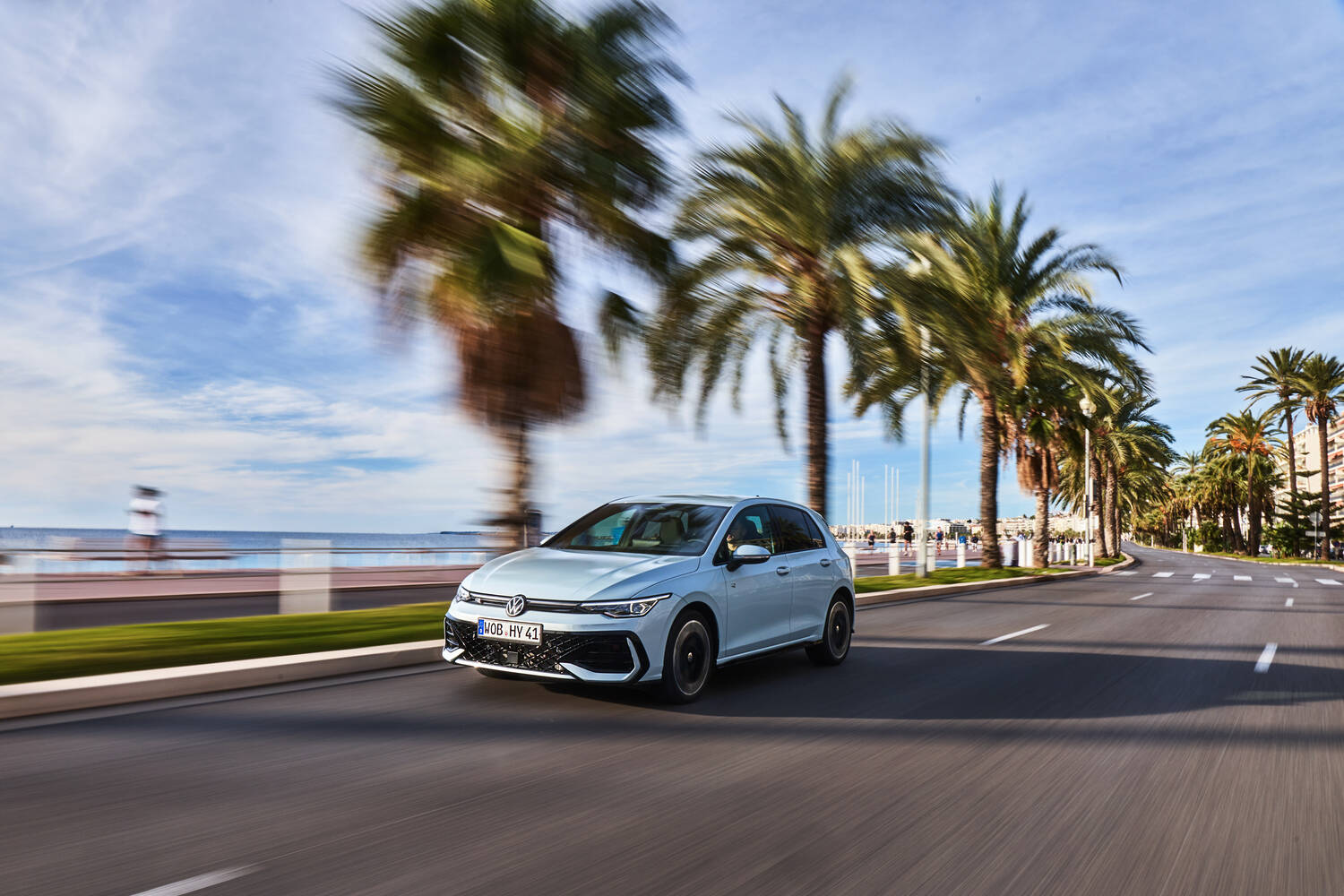
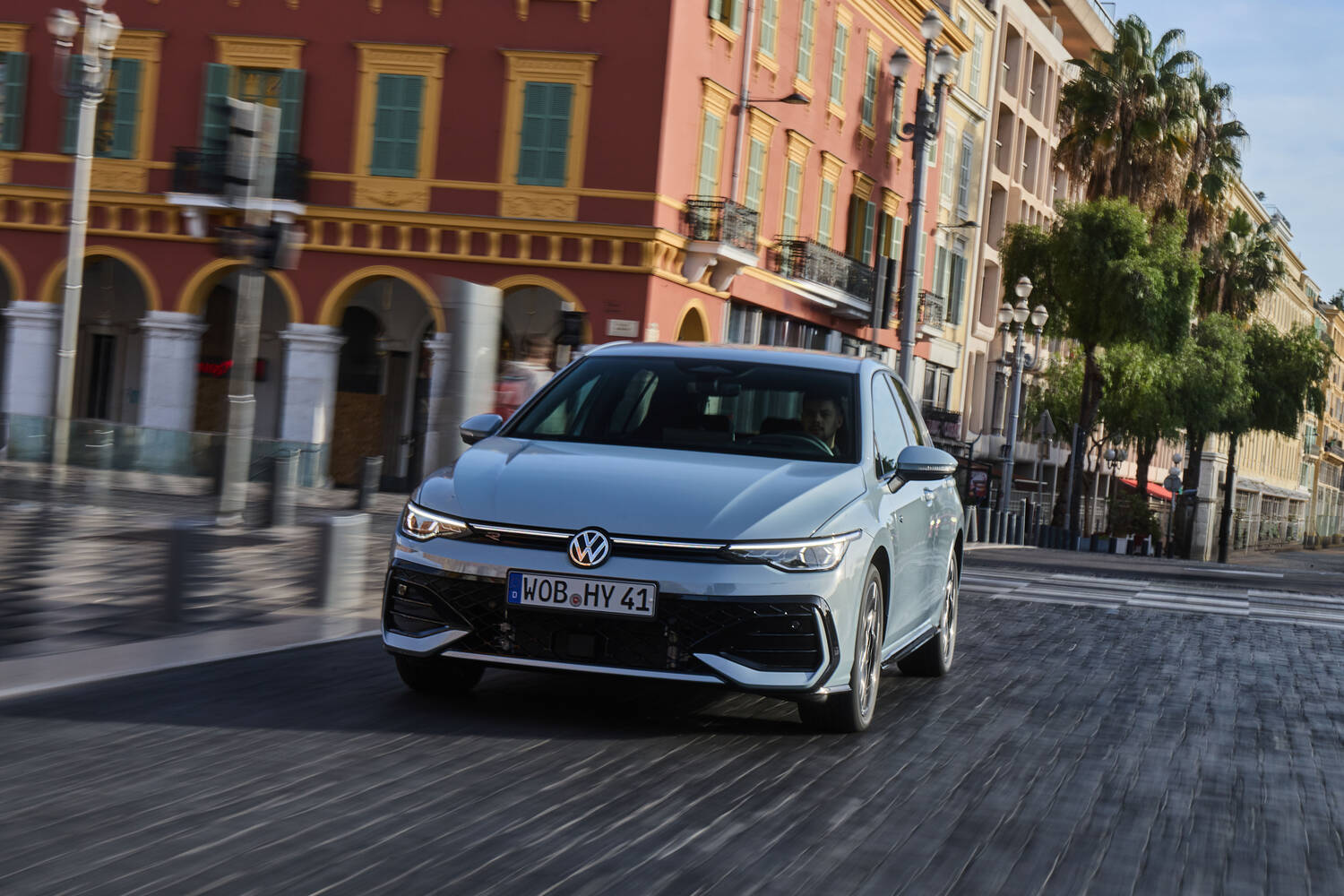
Driving the Volkswagen Golf Hybrid 170 R-Line on French roads
Words by Matt Robinson on 1 November 2027
We wouldn't ordinarily gloss over wider driving impressions like this, but the Golf Mk8 has been around so long by now that you probably know what we're going to say next.
The Hybrid, riding on optional Dynamic Chassis Control (DCC) dampers in this R-Line spec, performs every disparate kinematic discipline to a very high standard indeed, with hardly any areas of weakness.
It's polished, proficient, quiet, comfortable and well-sorted, although it's rarely ever exciting.
Even if the steering is quite positive and the body control of a capable standard, you need to splash out on some of the performance-oriented versions of the Volkswagen to get some driver reward from them.
A Hybrid like this, or indeed any other 'everyday' Golf, is just supposed to get you from one point to another in the most fuss-free fashion possible. And the HEV does that to admirable effect.
So, to that end, what we're really focusing on here is what the Hybrid drivetrain brings to the Golf's party.
First of all, it offers extended electric running compared to the eTSI, but mainly only in urban areas - the HEV runs in electric-only mode below 60km/h, with its petrol engine completely dormant, and only then if there's plenty of charge in its tiny battery.
As more road speed piles on, or you make greater demands of the powertrain with the throttle, or the battery level is dipping too low for EV driving, then the Golf switches to series-hybrid running, where the engine is active but not connected to the driven wheels.
It's either driving a secondary generator motor to top up the battery for the main electric propulsion motor, or it is helping to 'boost' the acceleration of the vehicle.
Finally, under the heaviest throttle loads and at the highest road speeds, a clutch locks the engine and its single gear to the driven wheels, and parallel-hybrid running is engaged.
With the petrol engine limited to 4,500rpm for efficiency reasons, it means the (largely irrelevant) top speed of the car is restricted to 180km/h.
In practice, this complicated system is seamless in operation and does provide lots of engine-off, quiet, EV-like transportation when ambling around on city streets.
But the flipside is that when you ask the powertrain for full acceleration, there feels like there is a moment's hesitance while the onboard computers work out what to do with the two electric motors and the engine.
So while the Golf Hybrid is quick, and feels as fast as its 7.5-second 0-100km/h time suggests it will, conversely, it doesn't feel like a huge step up in performance from the 1.5 eTSI with 150hp - and its transmission is marginally less refined in operation, too.
Fuel economy and running costs of the 2027 Volkswagen Golf Hybrid
- Marginal improvements from petrol model
- For buyers who want plug-in-free motoring
- Seems efficient in real-world conditions
Volkswagen says that the Golf Hybrid cuts tailpipe emissions and improves fuel economy by around three per cent compared to the eTSI mild-hybrid, which means marginal financial gains for owners of the HEV.
It achieves this through the use of a 1.6kWh nickel-manganese-cobalt (NMC) battery pack, although - of that gross capacity - only 0.64kWh is usable in the Golf Hybrid.
Official CO2 and fuel economy figures
As a 136hp model, the Volkswagen Golf Hybrid uses 4.5-5.0 litres/100km with CO2 rated at between 102 and 114g/km.
The more powerful 170hp car stands at 4.6-5.1 litres/100km with 104-117g/km of CO2, accordingly.
Even as an R-Line with big wheels, the Hybrid betters an eTSI Style's numbers of 5.2 litres/100km and 120g/km, which is a reasonable showing.
Real-world efficiency of the Volkswagen Golf Hybrid
We drove the Volkswagen Golf Hybrid for a 45km test run from Monaco to Nice Airport, mainly on congested urban streets and with little higher-speed cruising mixed in.
Our average speed for this trip was therefore low (just 26km/h) and the temperatures were warm (approximately 20 degrees C throughout), so an indicated 5.5 litres/100km seems to validate the technology's improved real-world efficiency claims, thanks to extended periods of electric driving in built-up areas.
It's unlikely to do so well on a prolonged motorway drive at 120km/h.
Servicing the Volkswagen Golf Hybrid
Volkswagen's servicing interval is set at an industry-standard level, with the car requiring maintenance every 12 months or 16,000km, whichever comes first.
Volkswagen Golf Hybrid warranty
The standard warranty on any new Volkswagen sold in Ireland, including the Golf Hybrid, is for three years. It is unlimited distance for the first two years of the guarantee.
However, a 90,000km cap which comes into force for the third and final 12 months of the warranty means Volkswagen Ireland's cover is not one of the leading lights in the automotive world.
Irish pricing & rivals to the 2027 Volkswagen Golf Hybrid
- Likely to command €1,500 premium
- Should be sold in Life, Style and R-Line trims
- Fewer HEVs rivals
We don't have confirmed Irish prices for the Volkswagen Golf Hybrid as yet, although a rough indication is that the HEV will command a premium of approximately €1,500, model-for-model and spec-for-spec, when compared to the MHEV (that's the eTSI).
Going by that yardstick, a Hybrid 170 R-Line like our test car should therefore be somewhere around €43,000.
Playing in the Golf Hybrid's favour is that, while there are plenty of MHEV and PHEV rivals out there on the market, HEVs are thinner on the ground.
The Japanese, in particular, are big fans of this technology, so it's no surprise that two out of our three rivals listed are the Honda Civic and the Toyota Corolla.
Korea also makes regular hybrids, with the Kia K4 slated to receive a HEV powertrain for 2027 and beyond.
Just to outline precisely where the new Hybrid sits in the wider Golf Mk8 range in its latter days of service, your powertrain choices (excluding the performance-focused GTI and R models) amount to the following: pure-petrol, mild-hybrid, full-hybrid and plug-in-hybrid Golfs in the portfolio use the 1.5-litre TSI four-cylinder engine as their basis.
You can have this without any hybrid assistance at all, which means you get a six-speed manual gearbox, along with the choice of 116hp/220Nm or 150hp/250Nm outputs. Those cars are simply badged 'TSI'.
The mild-hybrid Golfs, called 'eTSI', do much the same job, but their very basic electrical augmentation of the powertrain necessitates the fitment of a seven-speed DSG dual-clutch automatic transmission.
These MHEVs, too, have the choice of the same 116- or 150hp outputs, with no change in torque from the TSI VWs.
Above the Hybrid tested here sits the plug-in hybrid, which has 204hp/350Nm of system grunt and is known as the 'eHybrid'. This also uses a DSG like the eTSI, but it's a six-speed unit, not a seven.
Finally, those who want to eschew petrol or hybrid power in their Volkswagen Golf can still choose from a selection of diesels.
There's a 116hp/300Nm 2.0-litre TDI four-cylinder with a six-speed manual gearbox as the base selection, with a 150hp/360Nm 2.0 TDI with a seven-speed DSG above that.
All of these are sold in Life, Edition 75, Style and R-Line specs, although not all drivetrains can be equipped with all trim levels.
Verdict - should you buy the 2027 Volkswagen Golf Hybrid?
Volkswagen itself says this of the new HEV model of its venerable hatchback: "The Golf Hybrid [was] developed to cater to drivers who value partially electric driving in the city and high drive efficiency, but who do not have access to charging infrastructure in their private or professional environment."
If that hyper-specific statement applies to you, this is undoubtedly the Golf you have been waiting for. If not, then for everyone else, the Golf Hybrid is a perhaps understandable addition to the Mk8 family... but not one that appreciably moves the game on from the eTSI and eHybrid variants which already existed in the line-up in the first place.
FAQs about the 2027 Volkswagen Golf Hybrid
Do you have to plug the Volkswagen Golf Hybrid in to charge it?
No, that would be the eHybrid PHEV model with 204hp. This is the 'plain' Hybrid, with up to 170hp and no need to be plugged into the mains.
Is the Volkswagen Golf Hybrid available in other body styles?
There's no word yet whether this powertrain will make it into the Golf Estate, but as we don't even get the wagon here in Ireland in any specification, this is maybe a moot point.
Thinking laterally, you can get this powertrain in a closely related Volkswagen product that shares much with the Golf, as the T-Roc SUV can also be had with this Hybrid arrangement.
Can the Volkswagen Golf Hybrid tow anything?
It can, but with a maximum braked towing capacity of 900kg, it is the weakest Golf in the range in this regard. Other models can tow between 1,300 and 1,600kg.
Want to know more about the 2027 Volkswagen Golf Hybrid?
If there's anything about the Volkswagen Golf Hybrid we've not covered, or you'd like help in choosing between it and other cars, you can avail of our expert advice service via the Ask Us Anything page.