

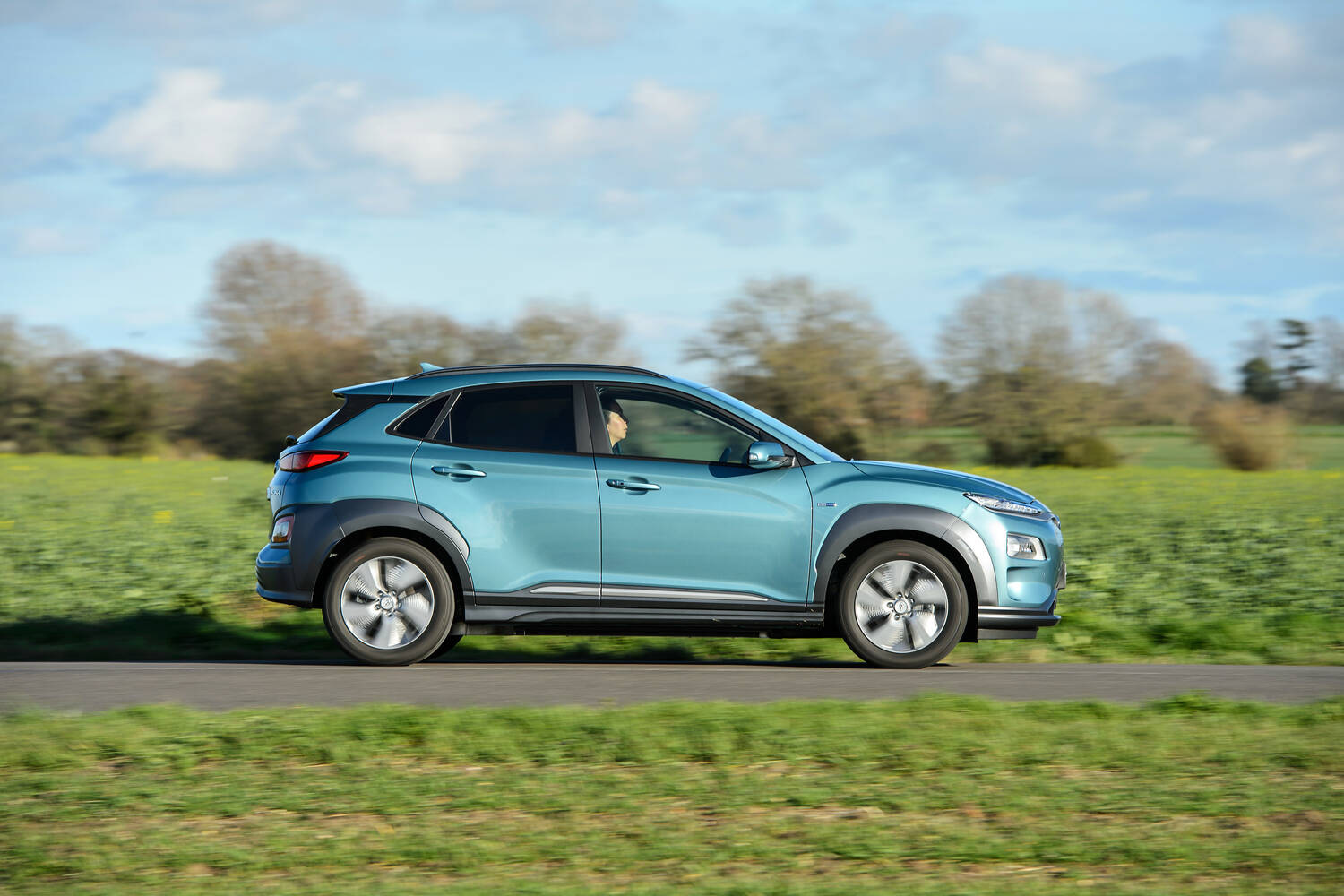
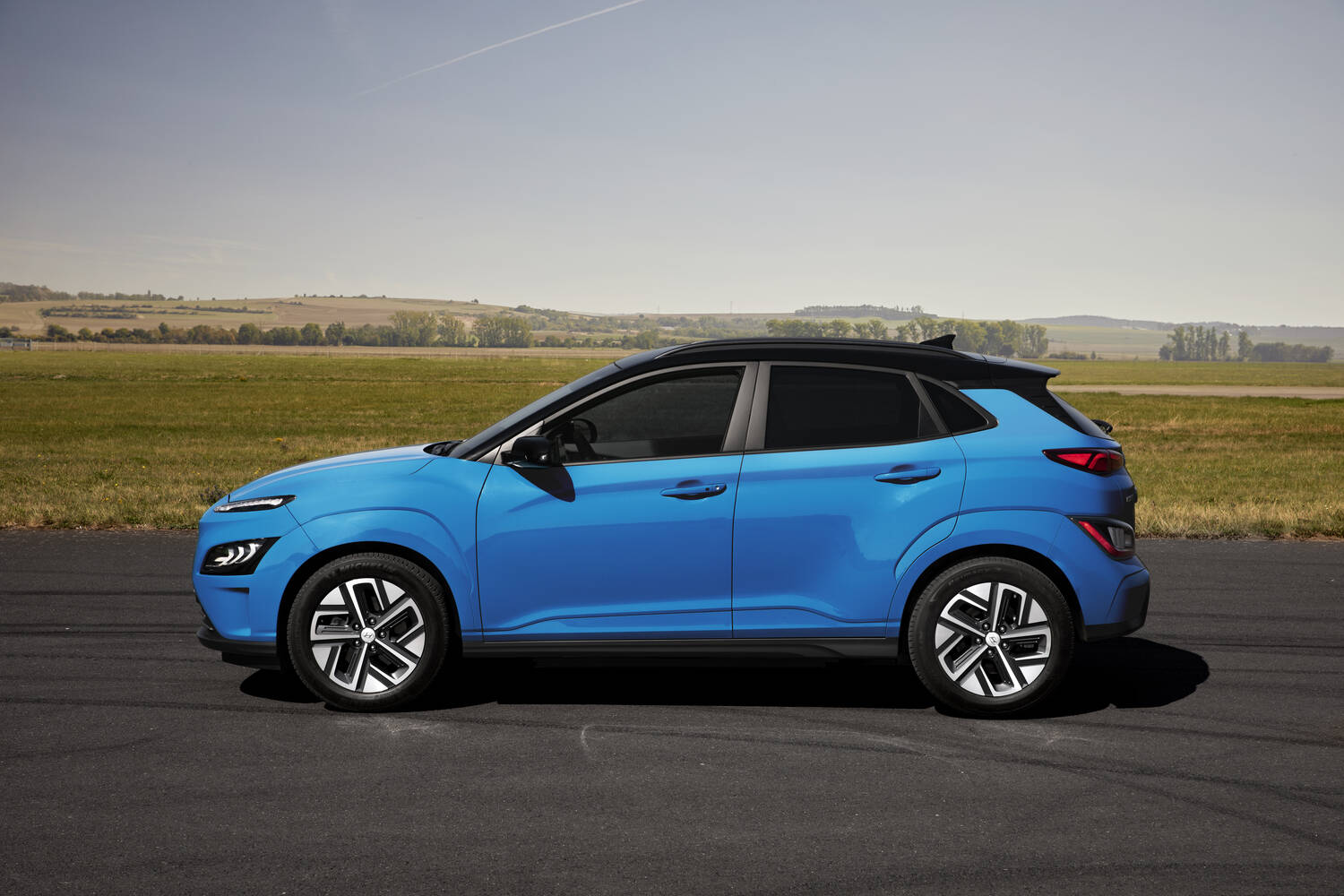
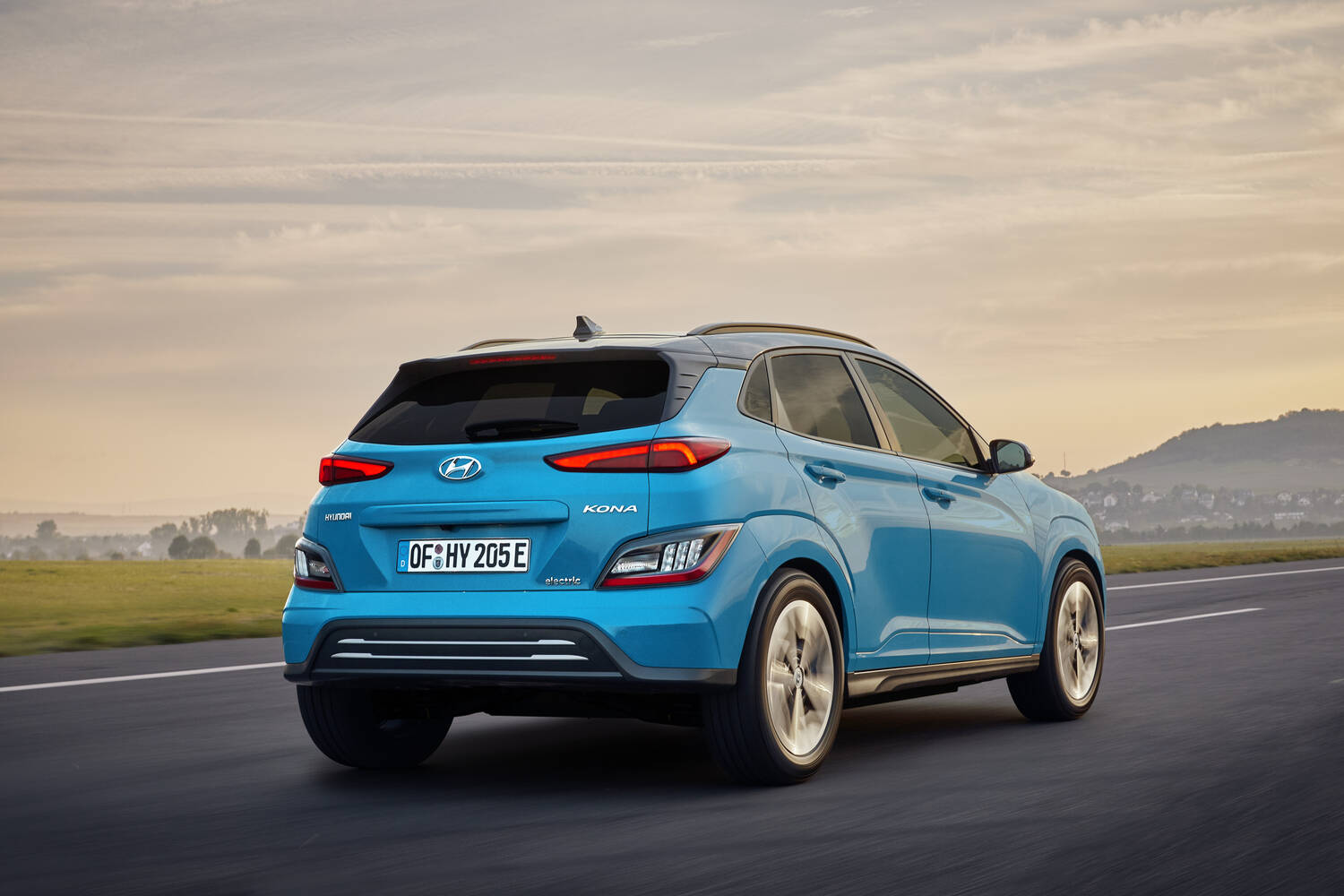
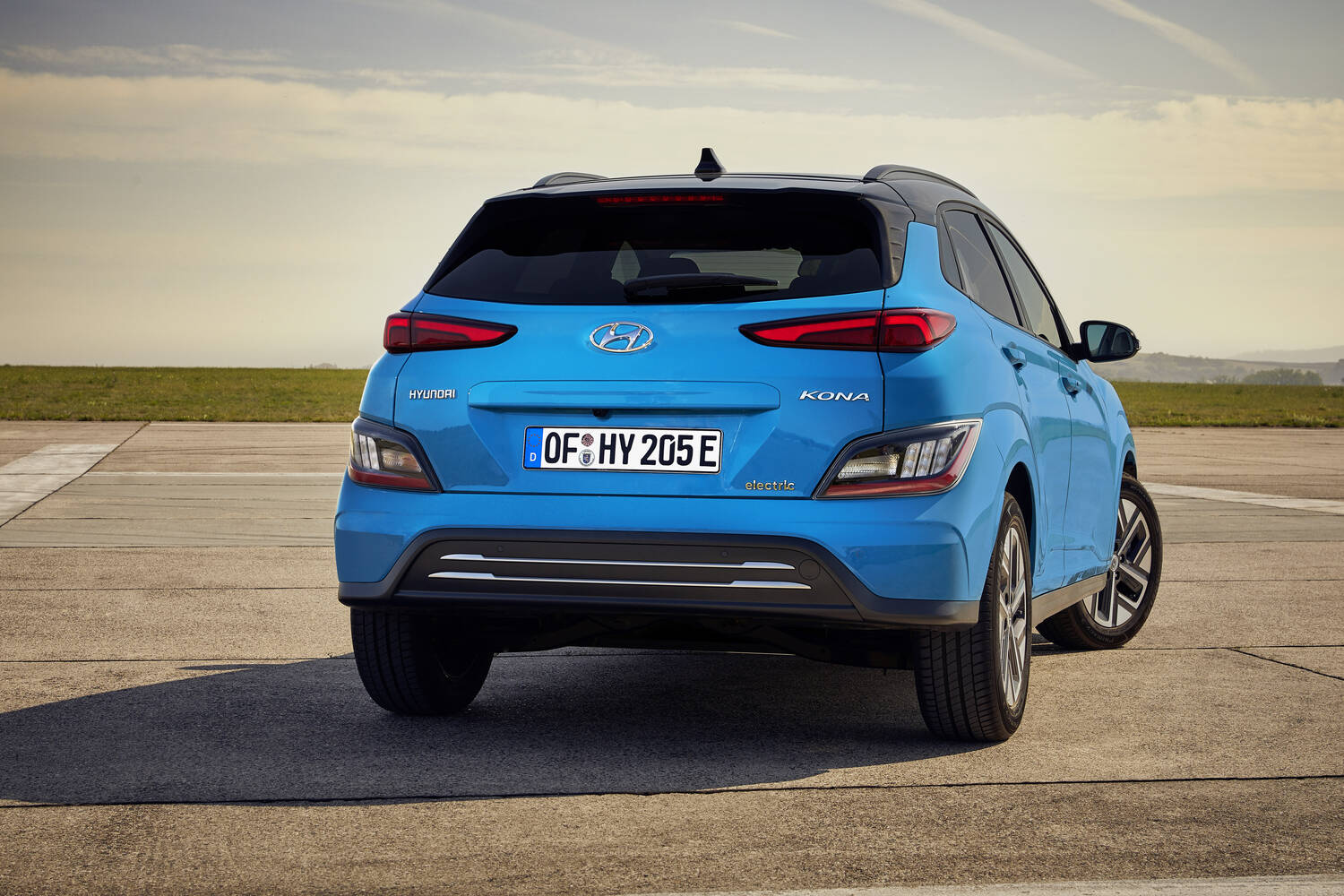
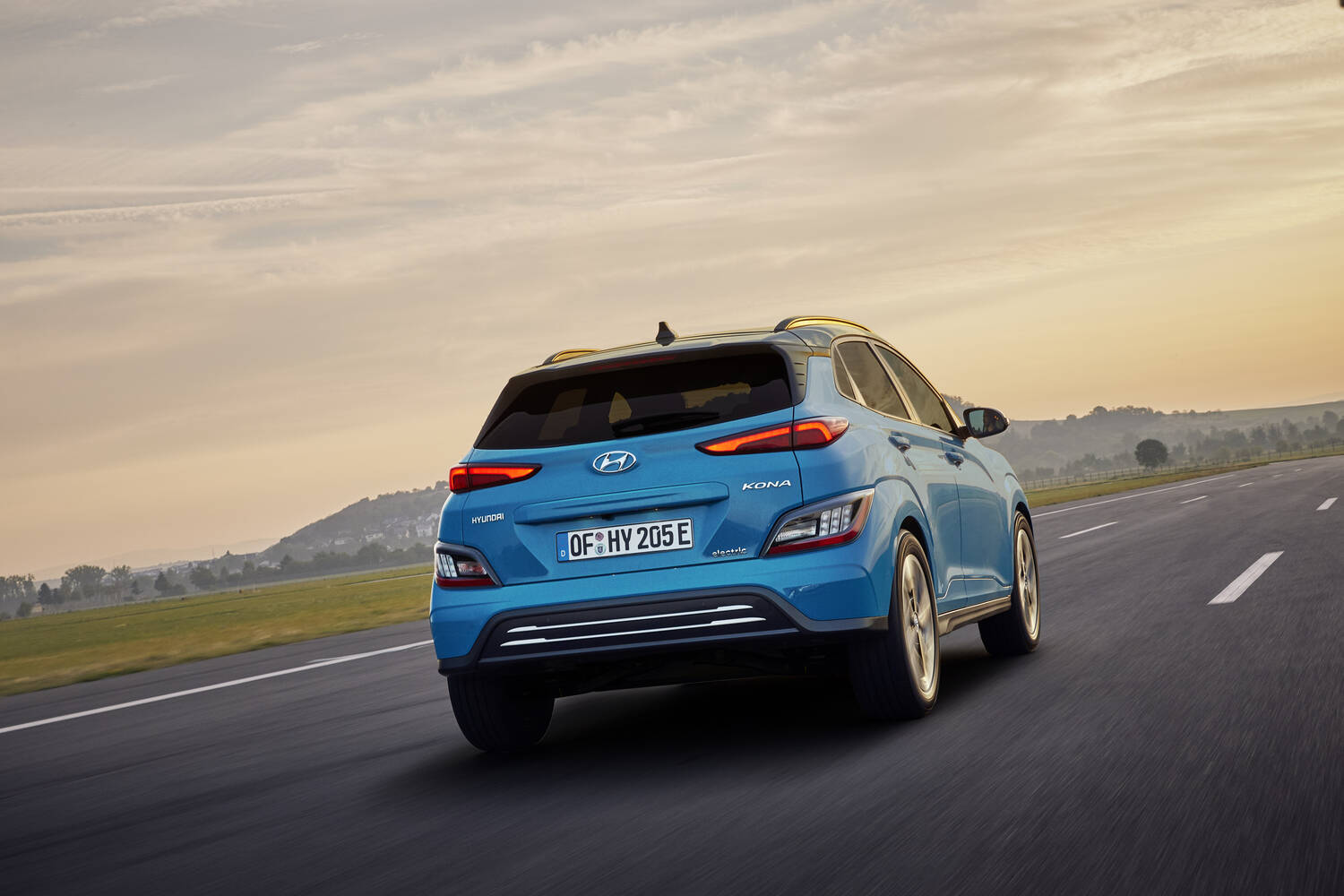
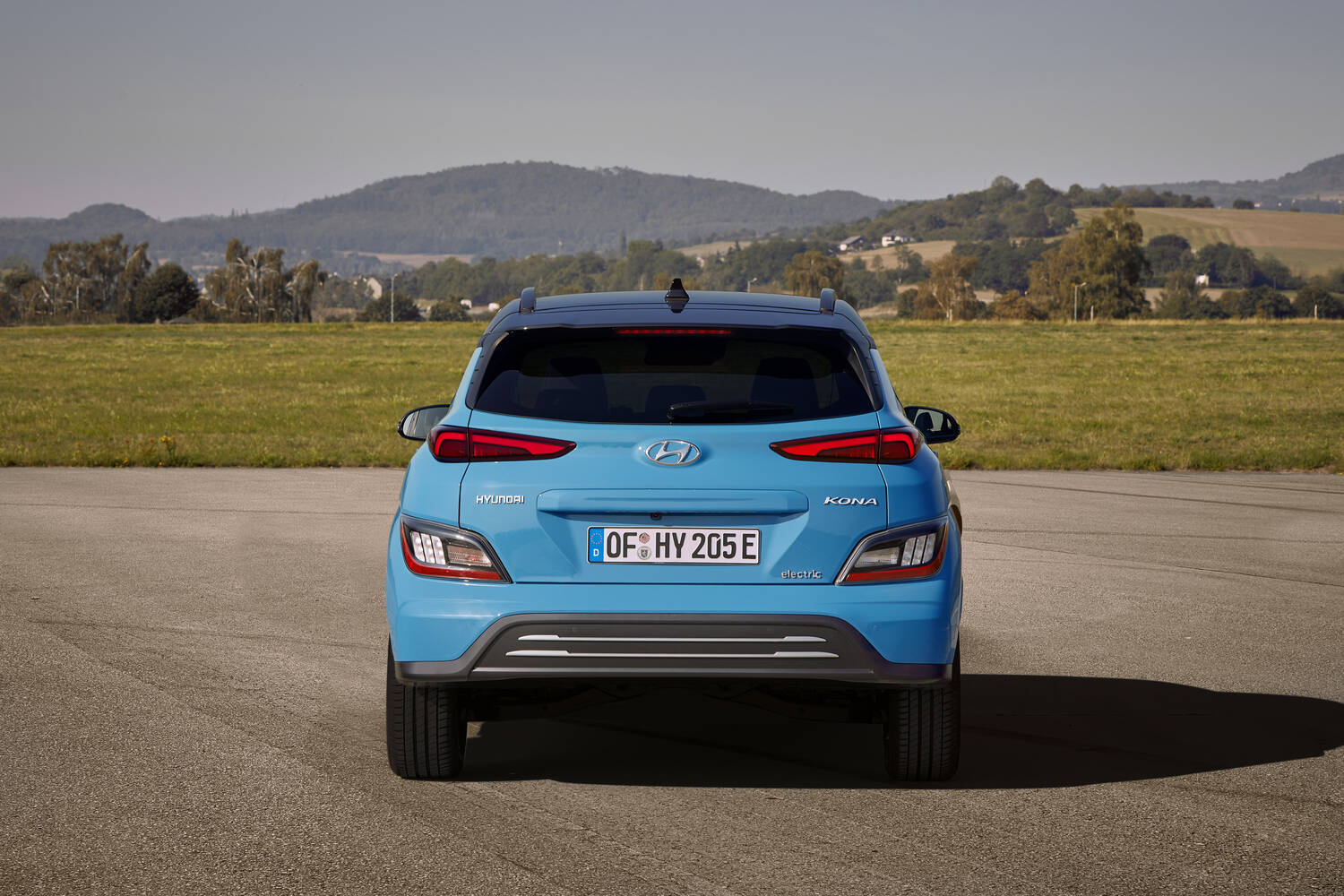
Range overview: electric; single-speed automatic; front-wheel drive; five-door SUV
Reliability: above average for the class
Cost to repair: more expensive than average
Most common: Hyundai Kona 64kWh
Best for long-distance driving: Hyundai Kona 64kWh
Best for urban driving: Hyundai Kona 39kWh
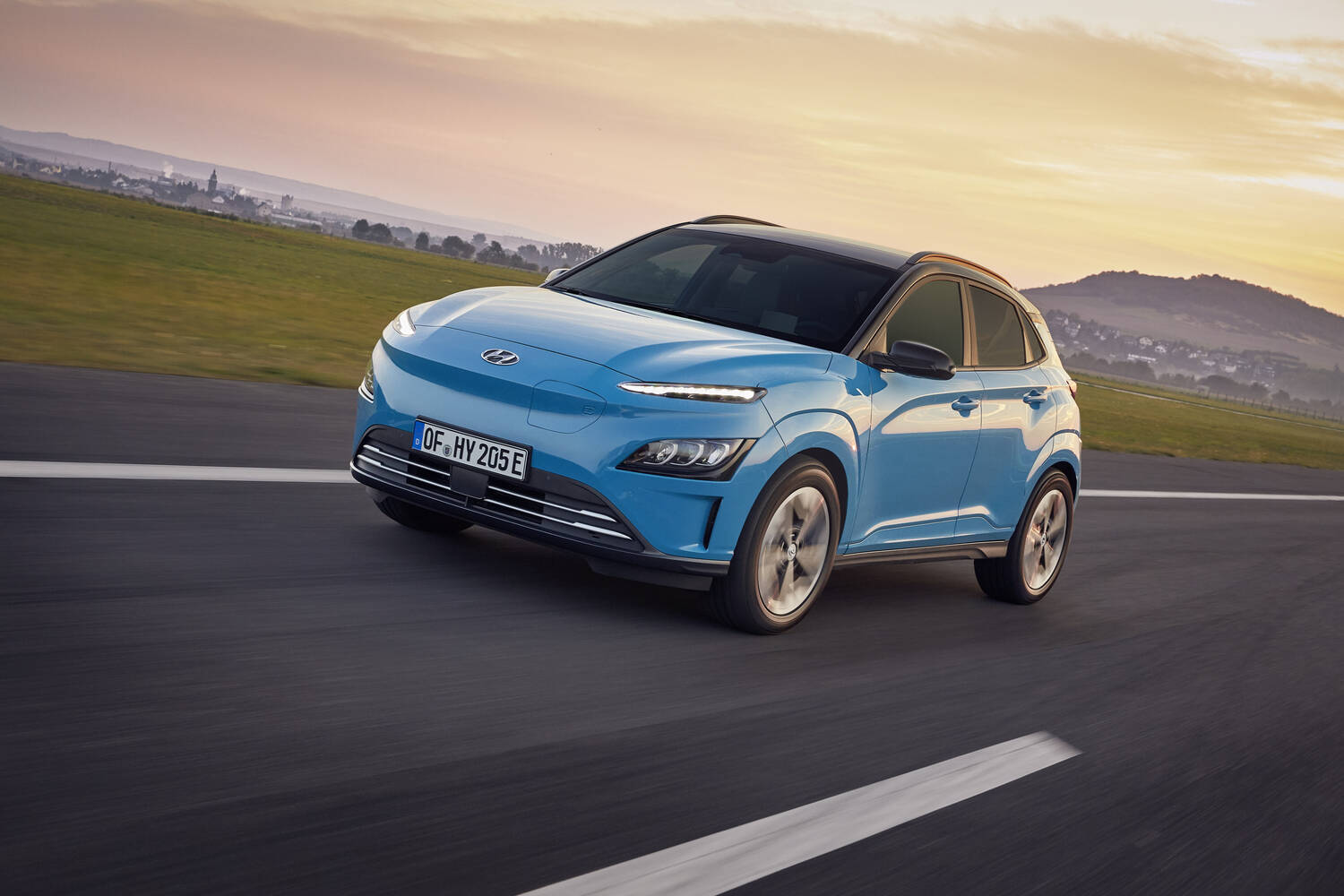
The Hyundai Kona originally arrived in 2017 as a neat-looking compact crossover and was in the vanguard of cars that moved Hyundai from being a brand that people went to for bargain pricing into one that was not merely fully competitive with its peers but challenging for the top sales spots.
The electric version of the Kona didn’t really hit the Irish market until 2019. It mirrored the specification of its closely related cousin, the Kia e-Niro, though had its own distinct design.
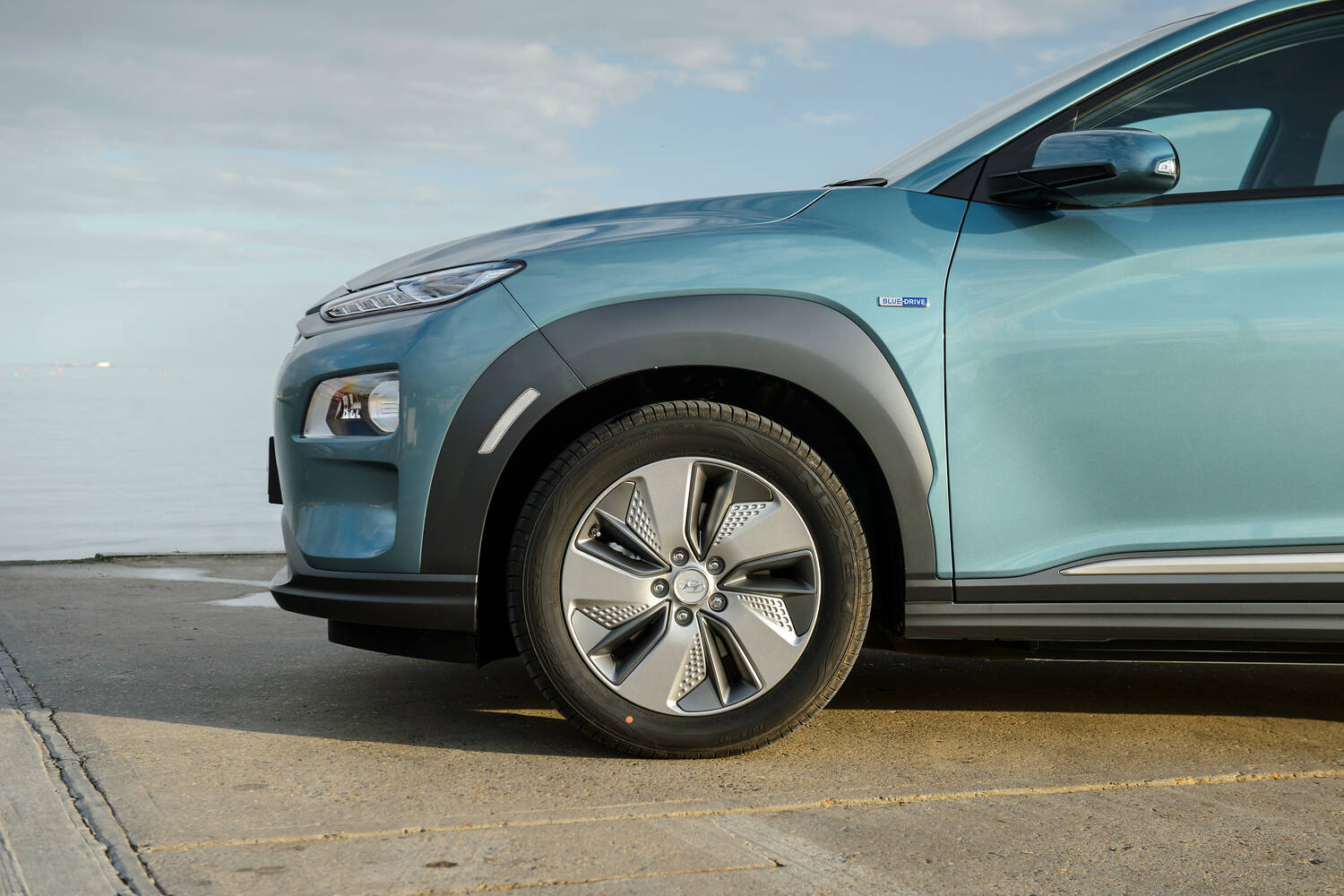
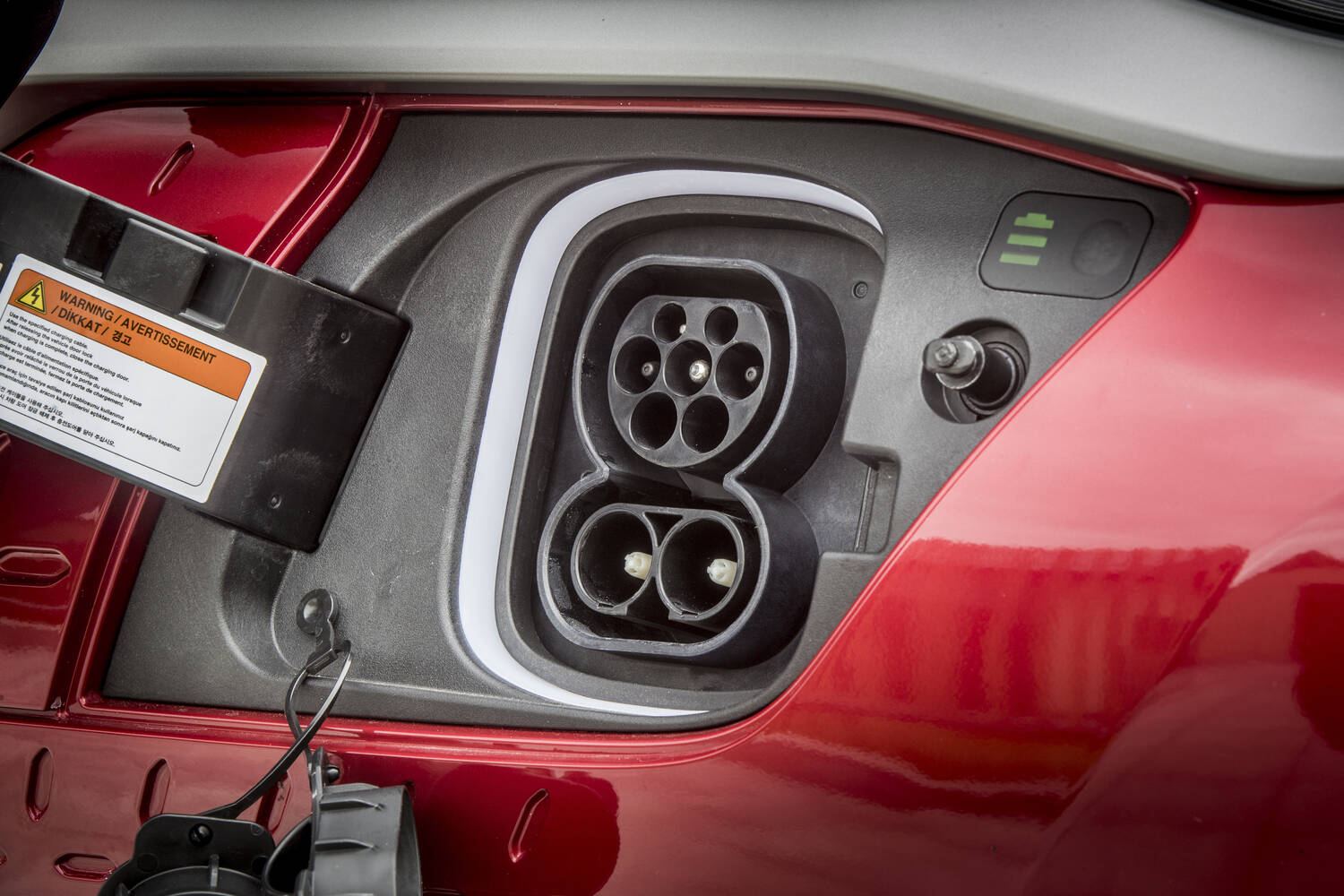
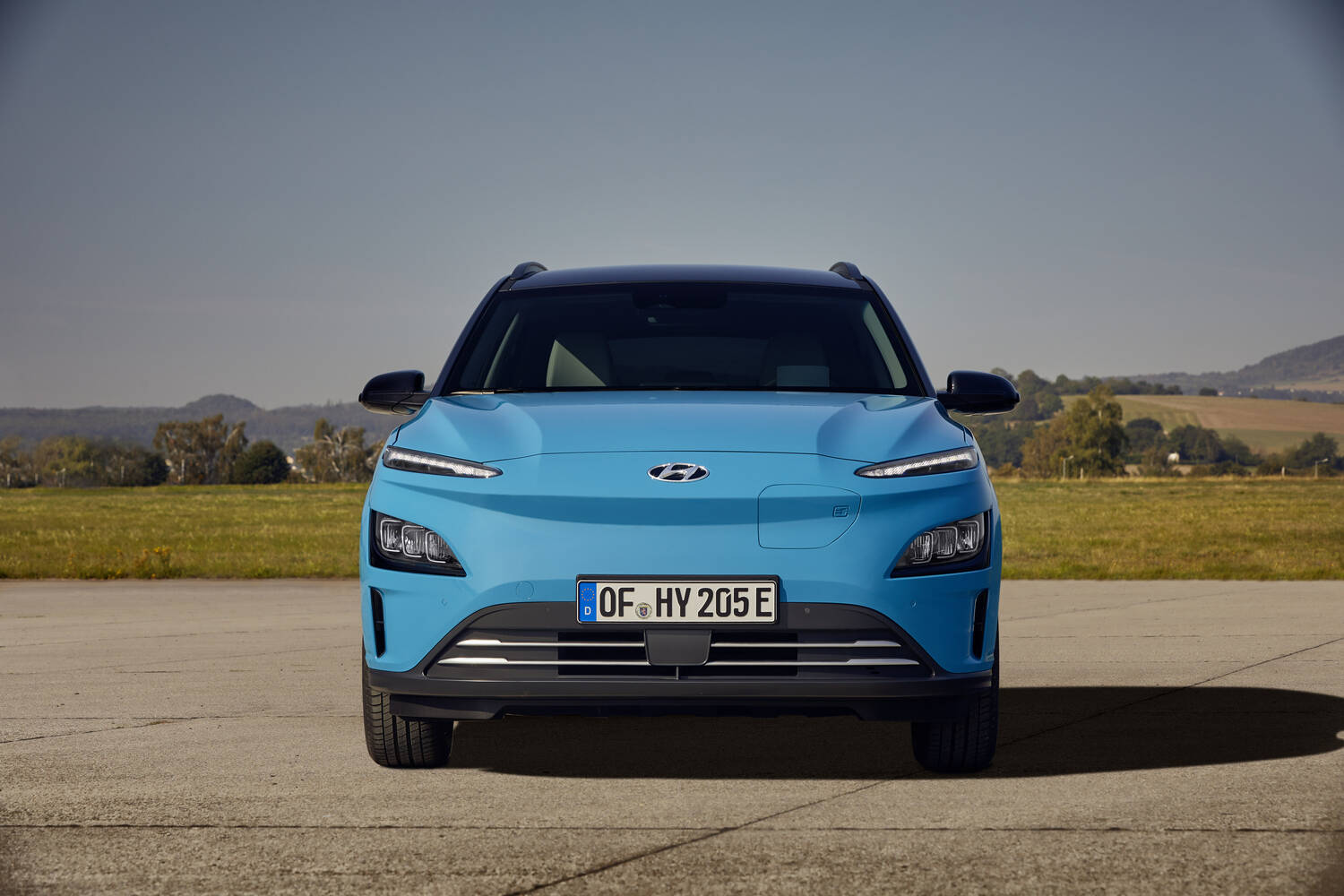
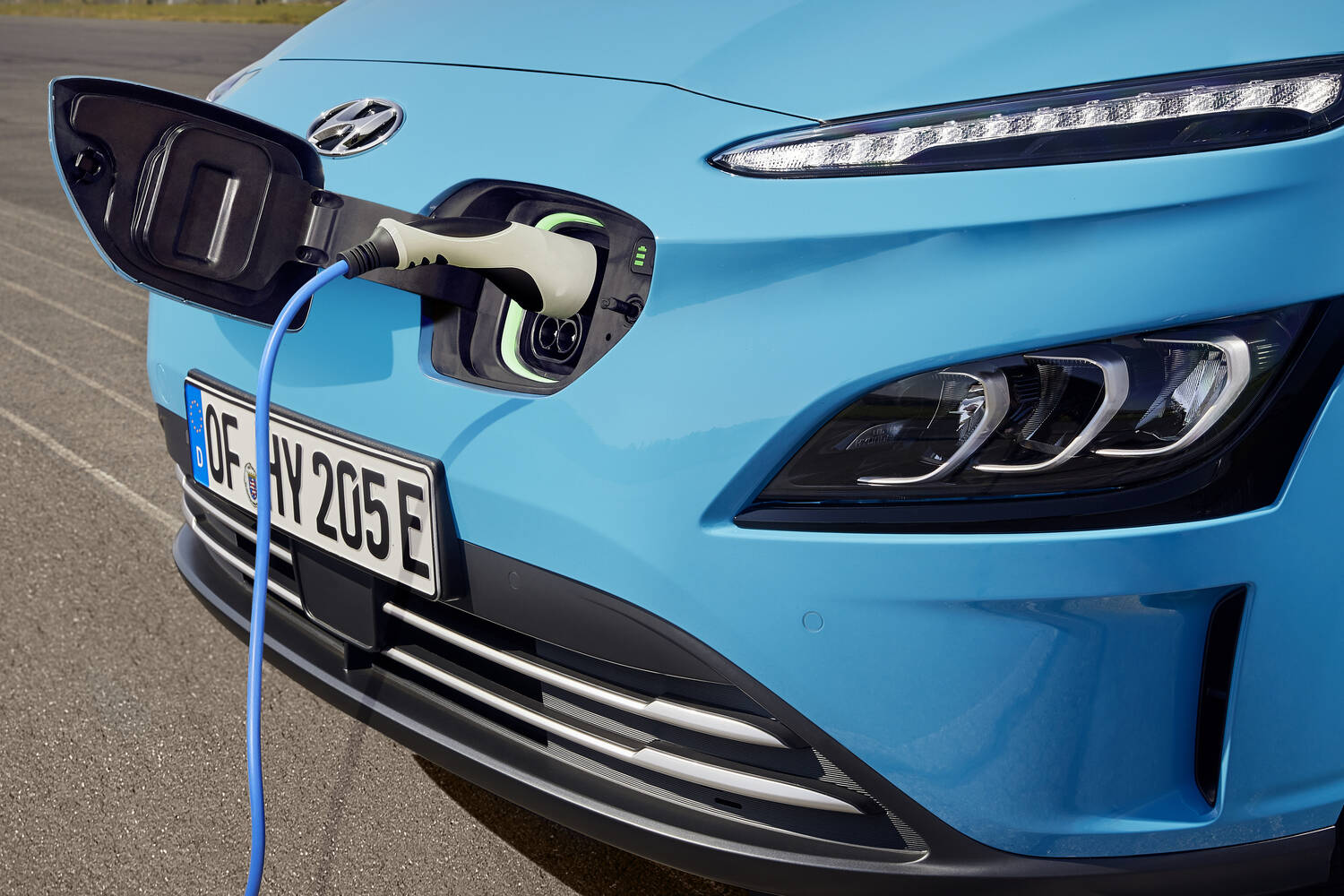
The electric variant was distinguished from the petrol- and hybrid-powered Kona models by having a dimpled, blanked-off grille (which was also home to the charging flap).
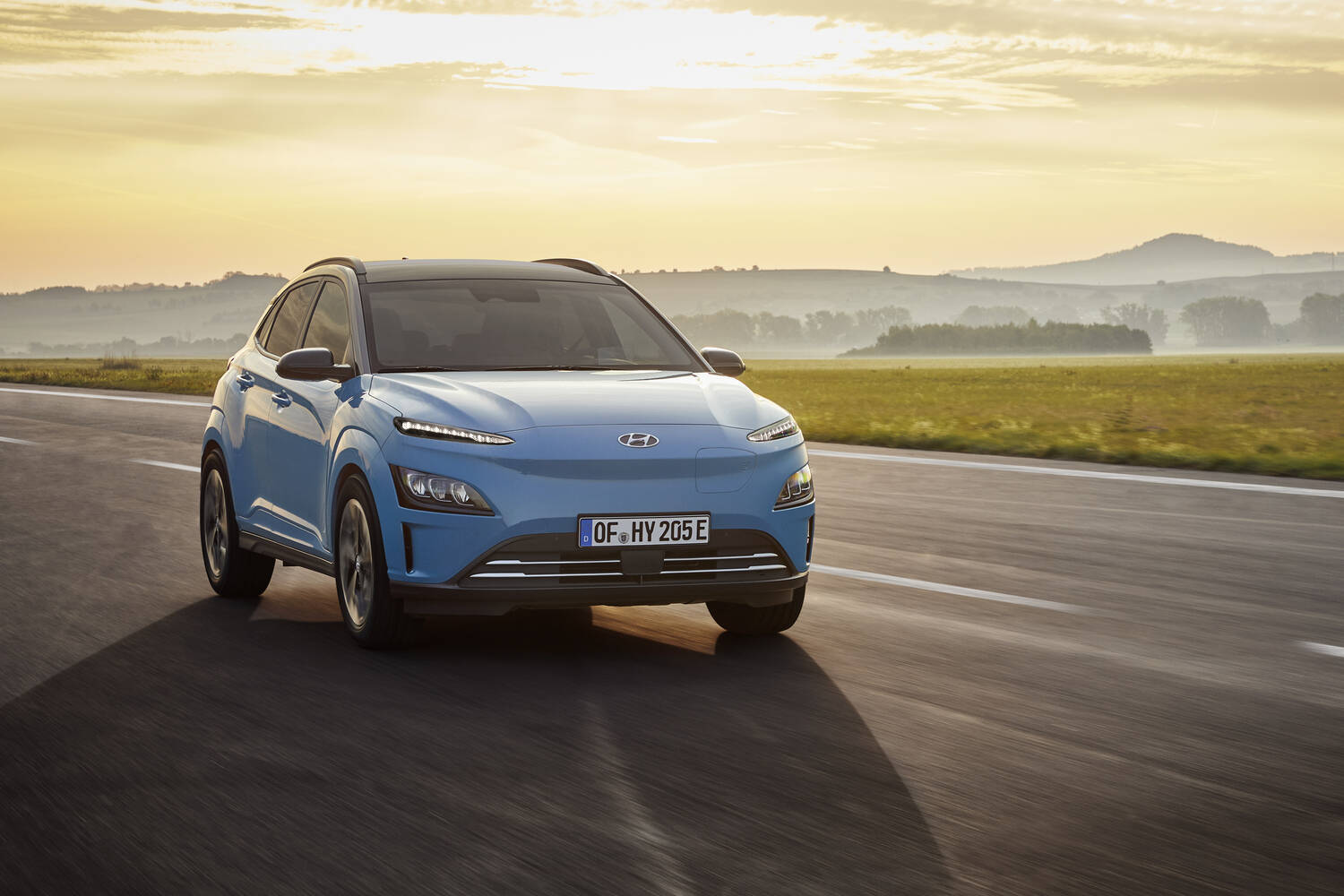
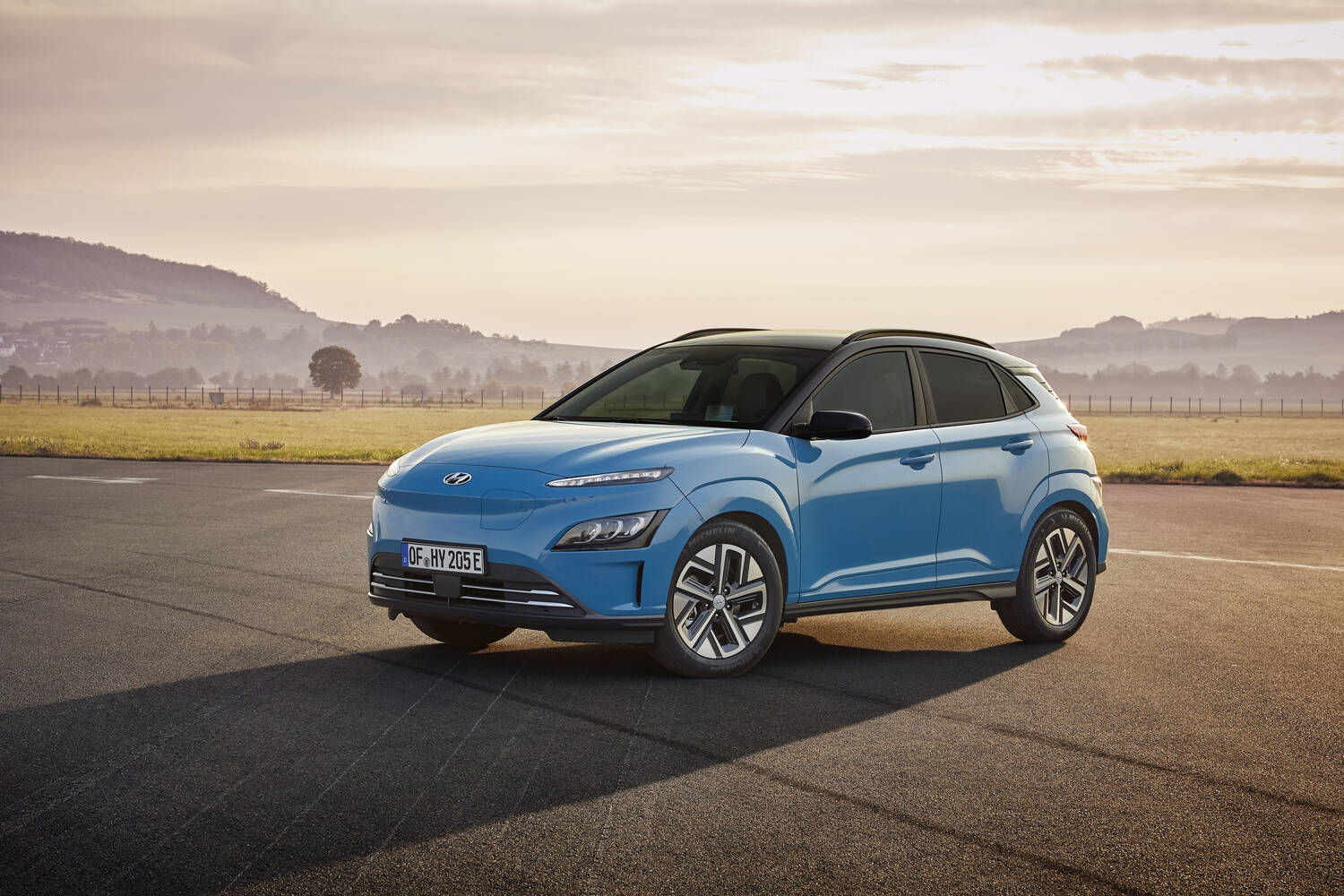
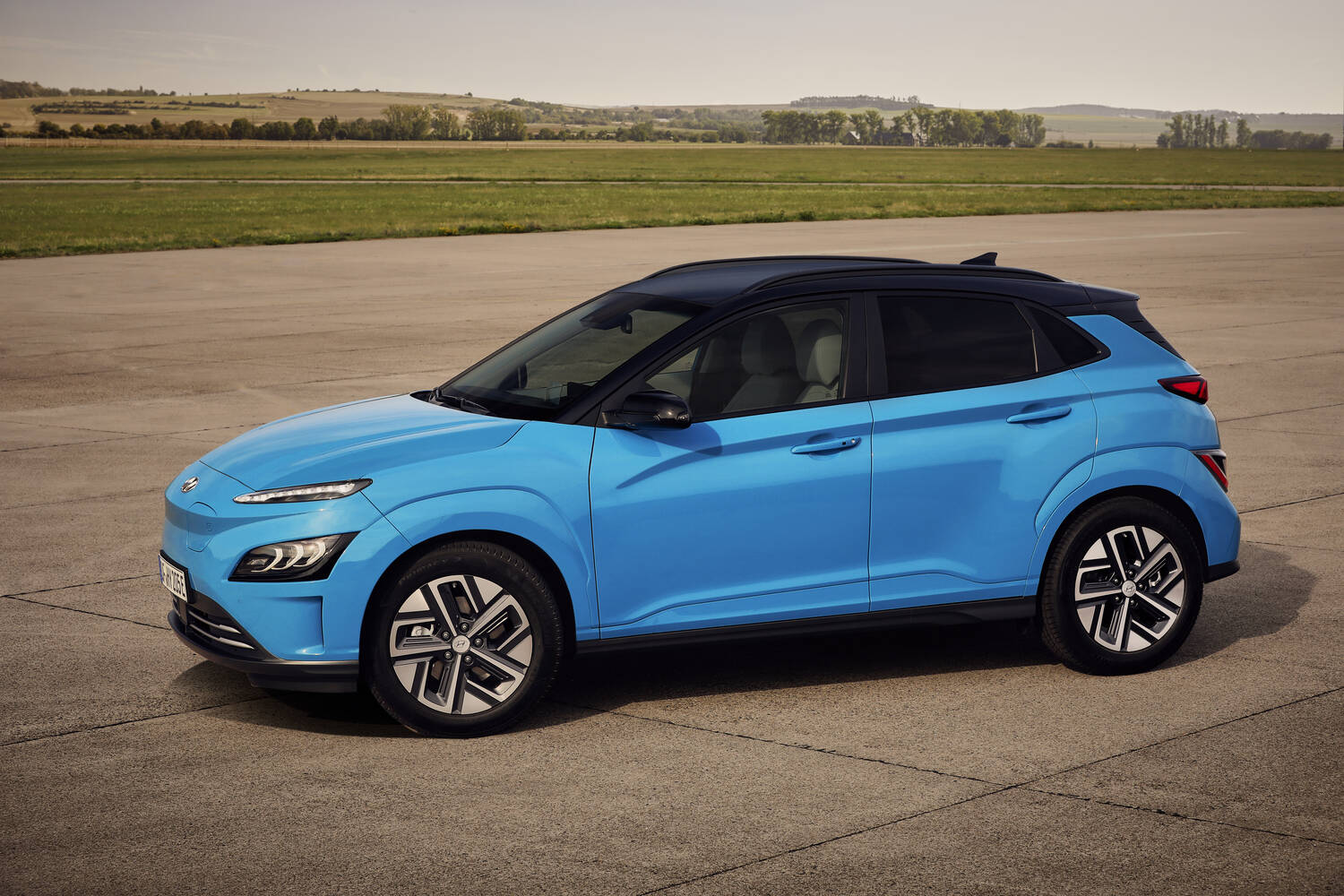
This was upgraded in 2021 with a rather more sculpted-looking front end, so it’s worth going for those later models, which also received interior updates.
On our Irish drive of the Kona Electric, back in May 2019, Complete Car concluded: “Here's a useful electric car that mere mortals could conceivably consider purchasing. That moves the game on considerably and shifts focus from the high-end luxury marques that have so far dominated the 'electrification of the automobile' headlines. While it's still expensive by the standards of internal combustion alternatives, we're massively impressed with the Kona Electric, mostly because it delivers on its range promises in daily driving. Hyundai Ireland will sell every example it can get its hands on.”
Engine and range options for the Hyundai Kona electric (2018-2023)
The Kona retained the same basic battery capacities over its life, with the range kicking off with a 39kWh battery (not offered at first in Ireland), rising to a larger 64kWh battery, both with nickel-manganese-cobalt chemistry (NMC).
While the battery capacities didn’t change from first to last, the Kona’s range did, as we shall see below.
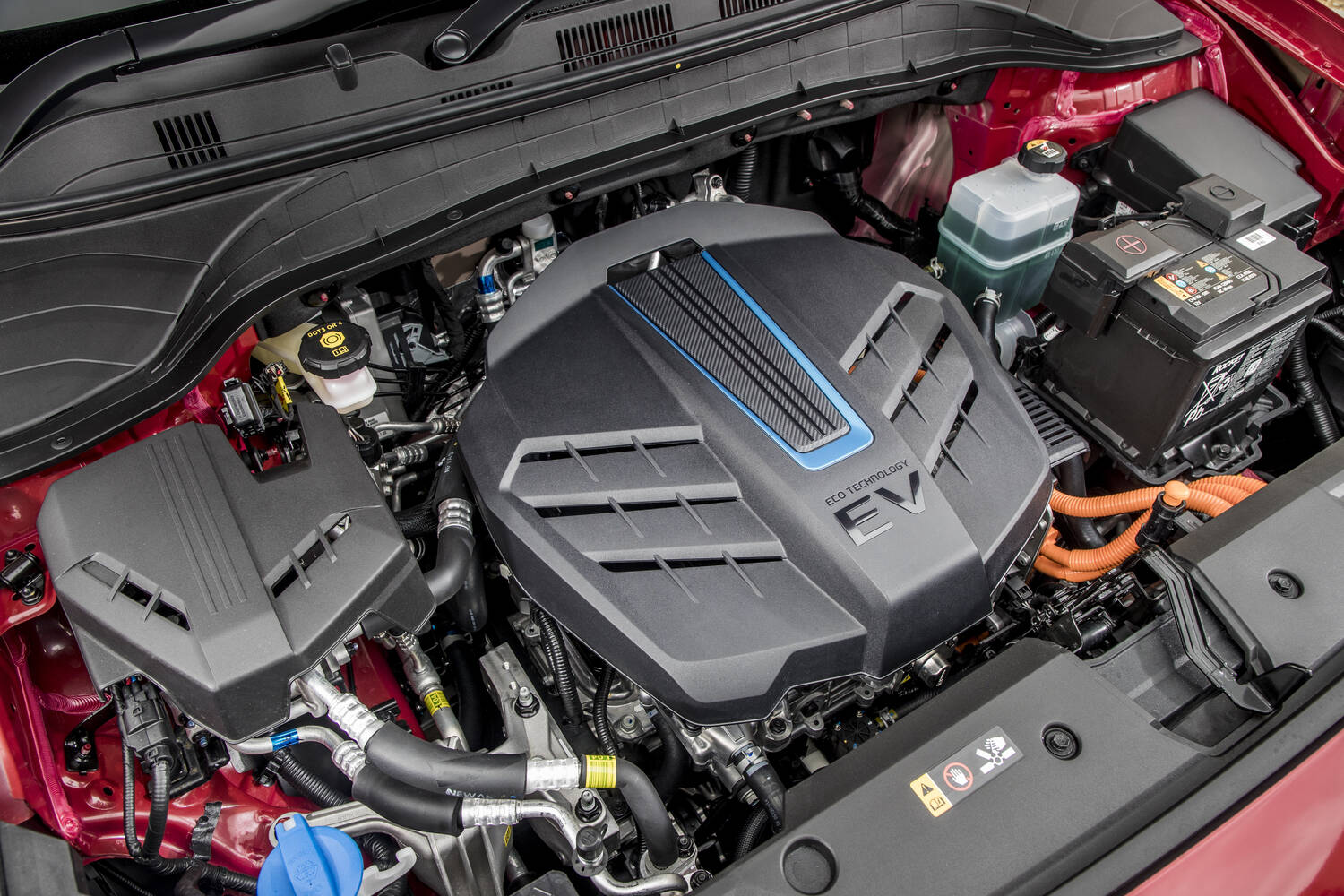
It’s worth remembering that the Kona had two different power outputs to go with its different batteries. The 39kWh had an adequate 136hp motor driving the front wheels, but the 64kWh version got a 204hp motor.
Not only is this much more rapid (obviously), but this is from the early days of electric motors, so its torque (395Nm of it) tends to arrive all at once. Experienced Kona drivers learn to modulate their right feet a little.
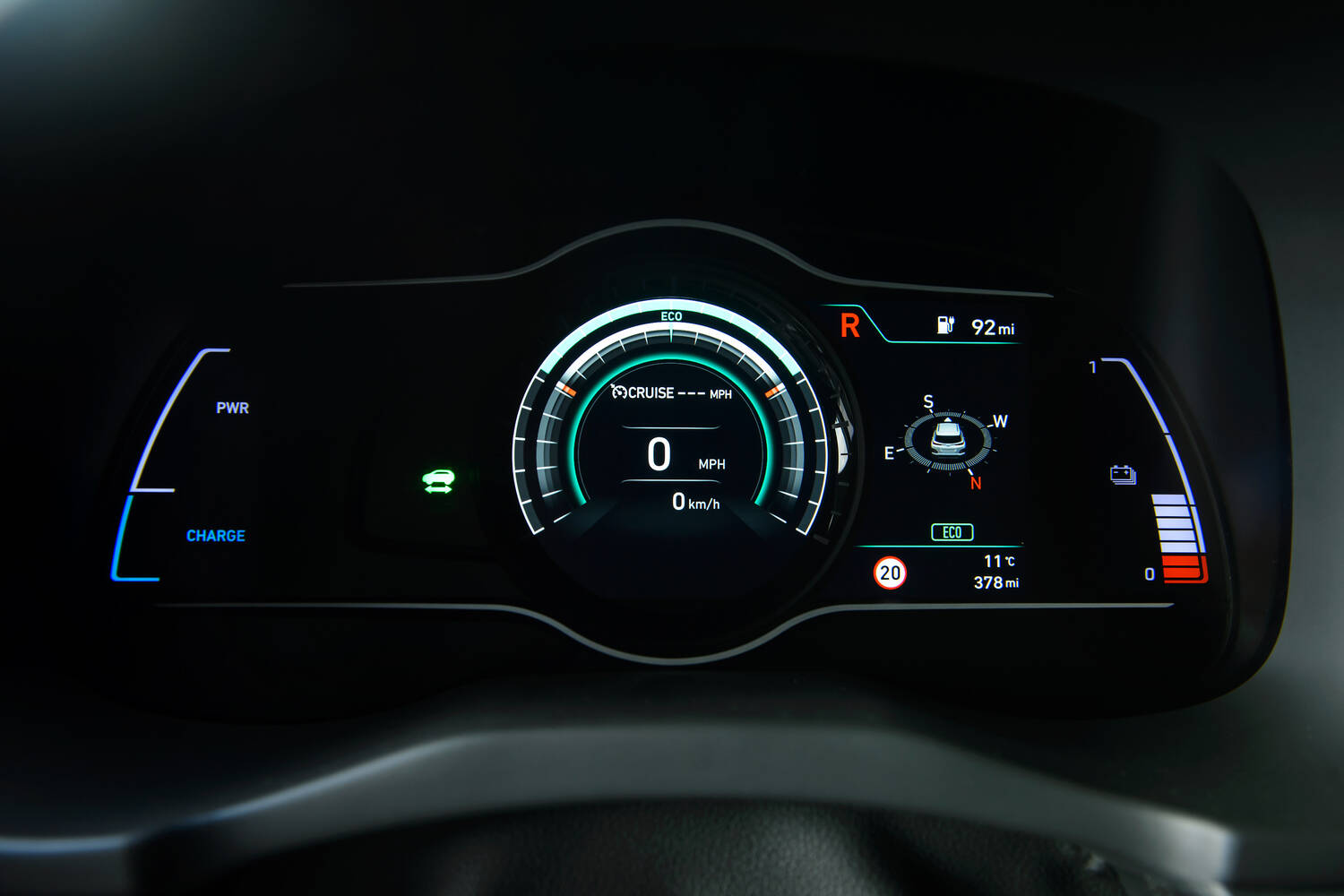
Much less powerful is the DC fast-charging system, which tops out at 77kW for the bigger battery. At that rate, it’s going to take nearly an hour to do a 10-80 per cent charge at a fast-charging point, so be prepared to do most of your charging from home.
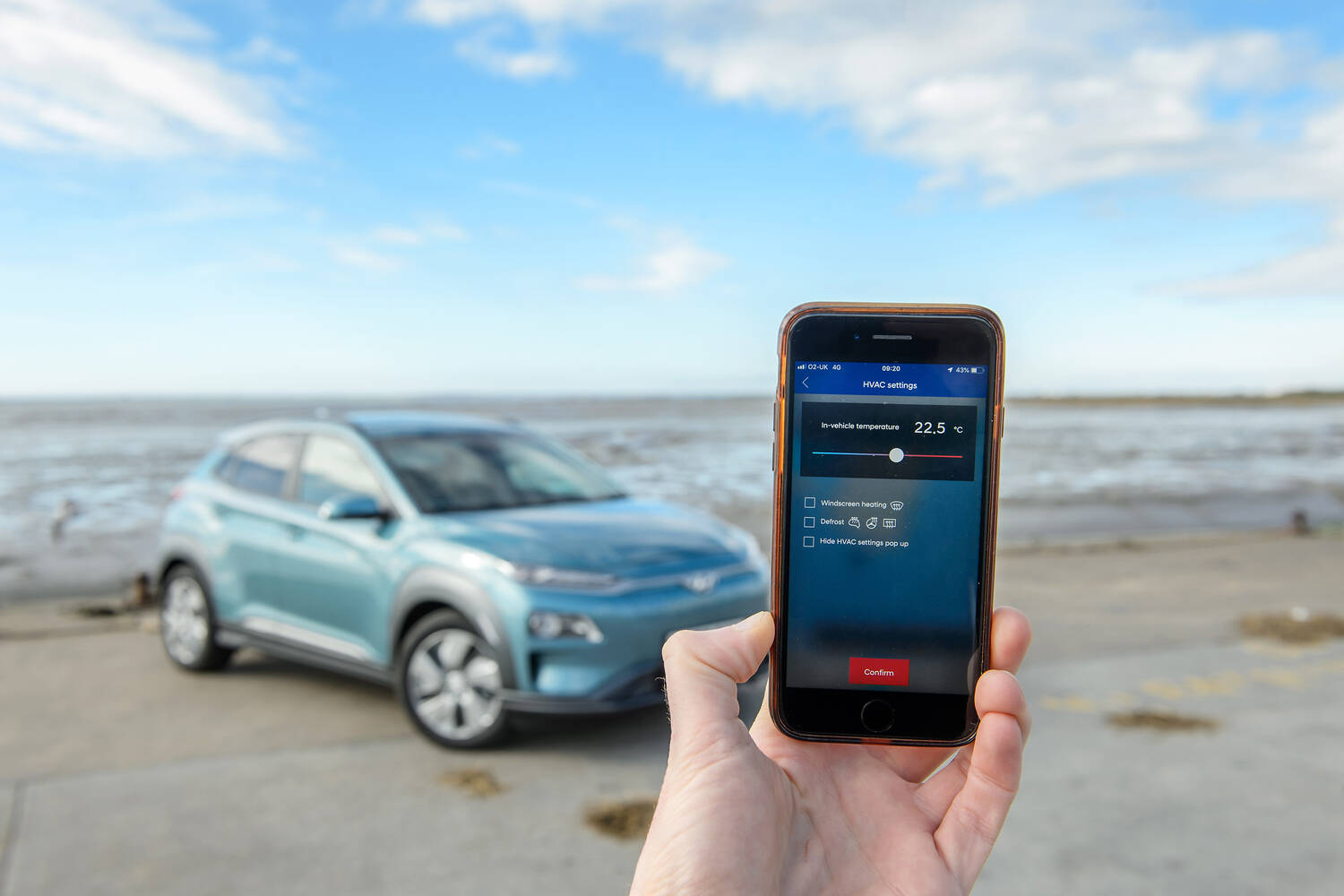
A heat pump wasn’t fitted to all cars, but it’s a good idea to track down a Kona fitted with one as it can have a positive influence on the useable range in winter driving.
For the most part the Kona came in two specifications called Executive and Premium, although there were occasional special editions as well.
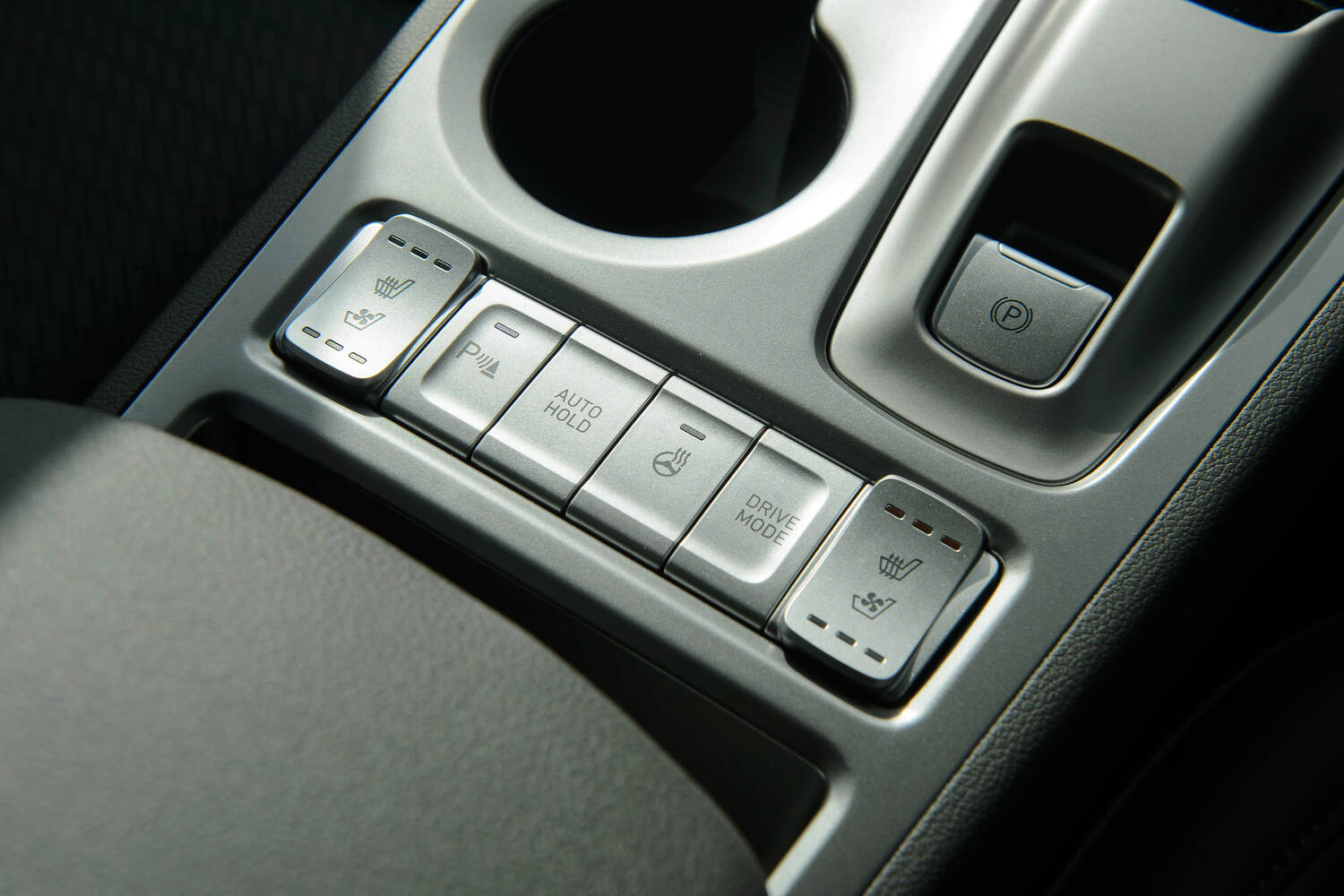
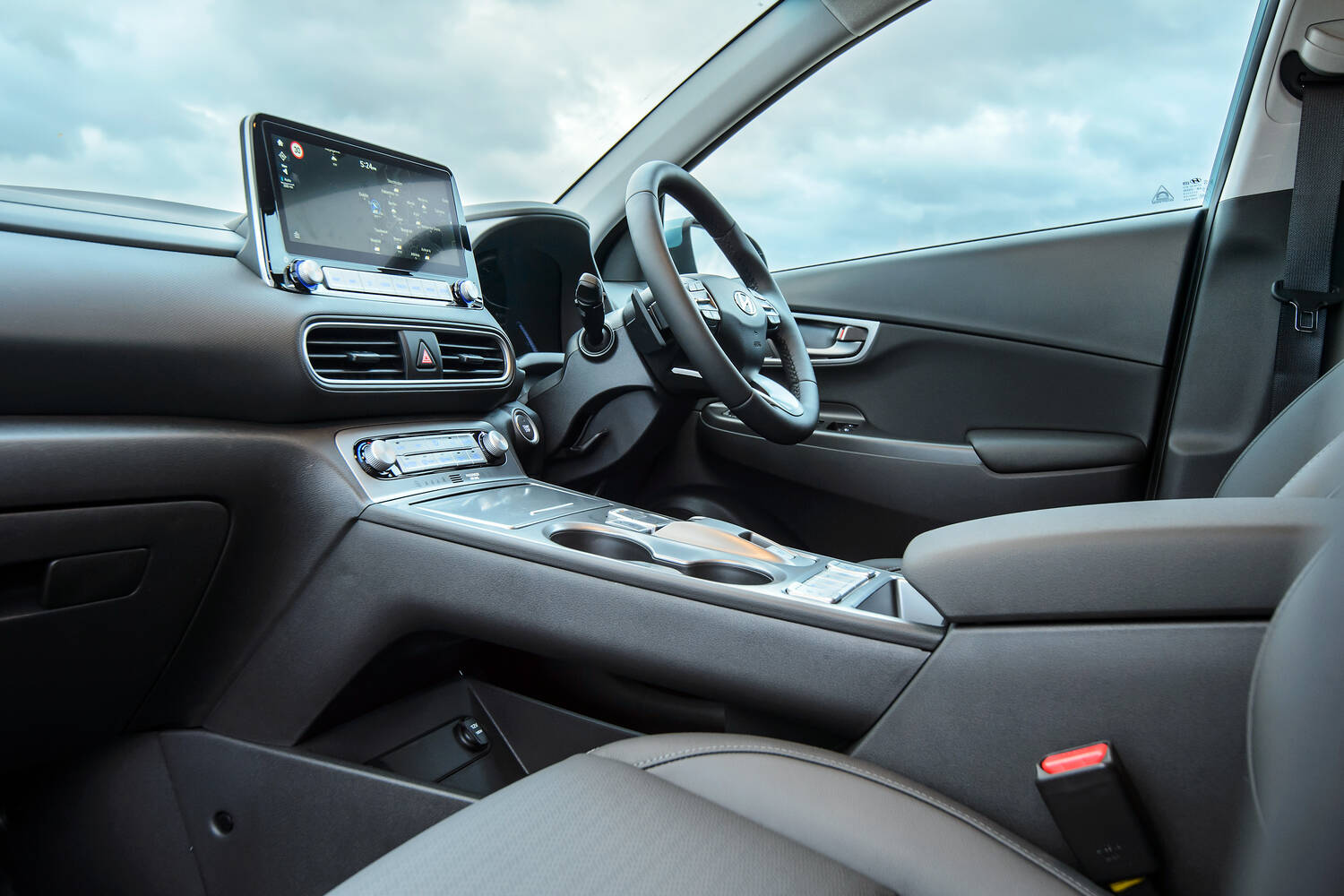
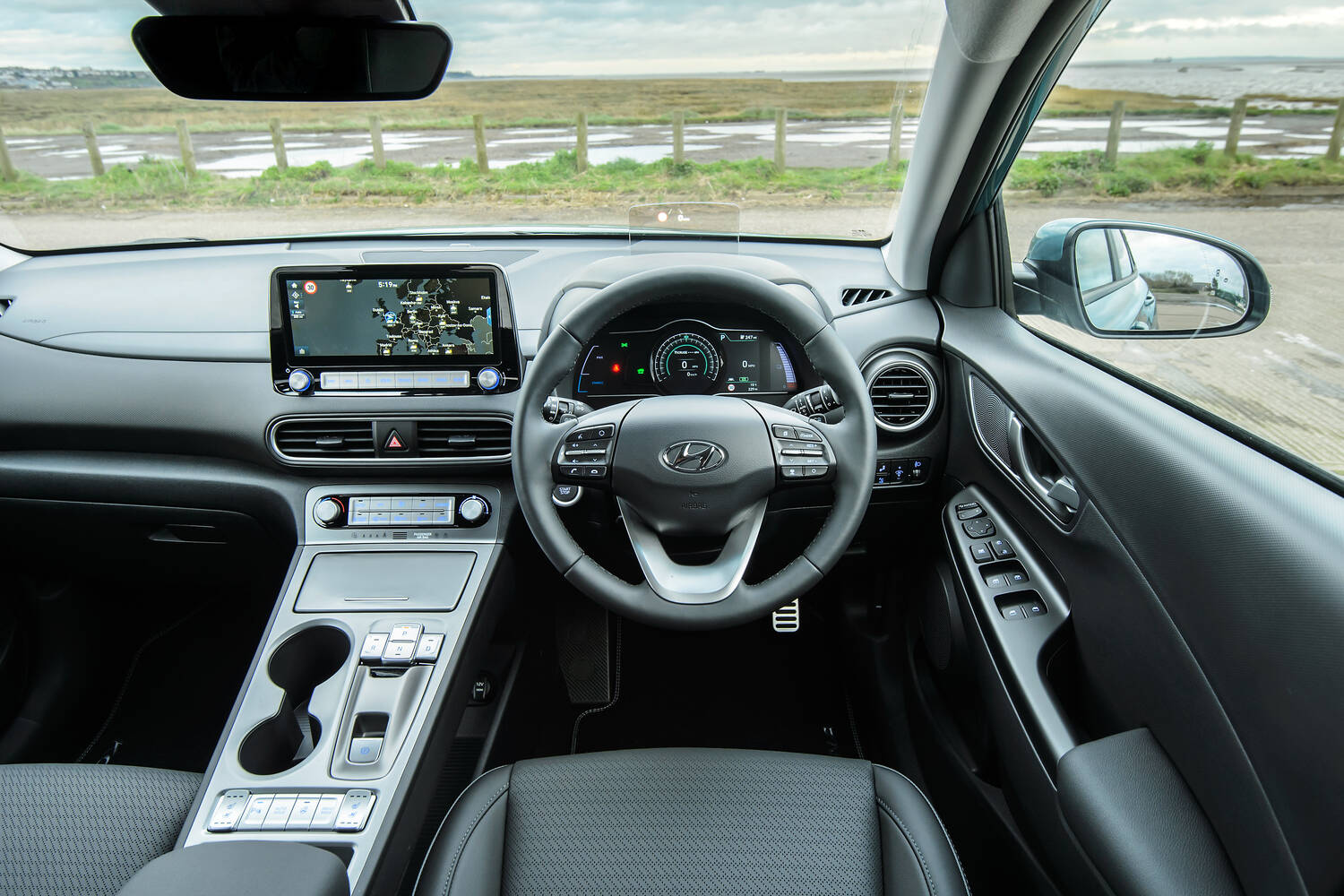
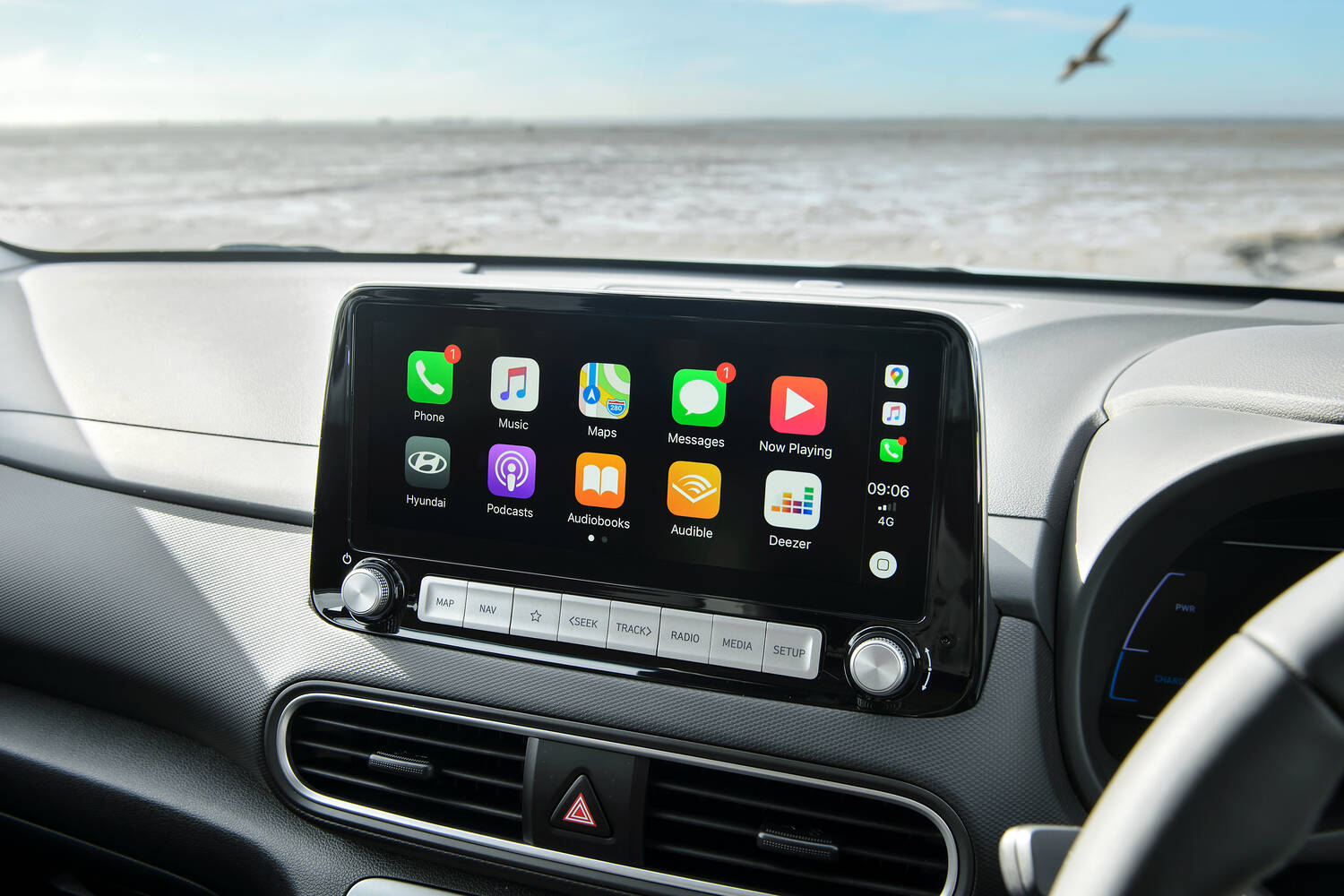
As standard, Executive models (after the 2021 facelift) came with 17-inch alloy wheels, an eight-inch touchscreen with Bluetooth, DAB radio, Apple CarPlay and Android Auto, rear parking sensors and a camera, heated seats and steering wheel, keyless entry and starting, an electric parking brake and climate control.
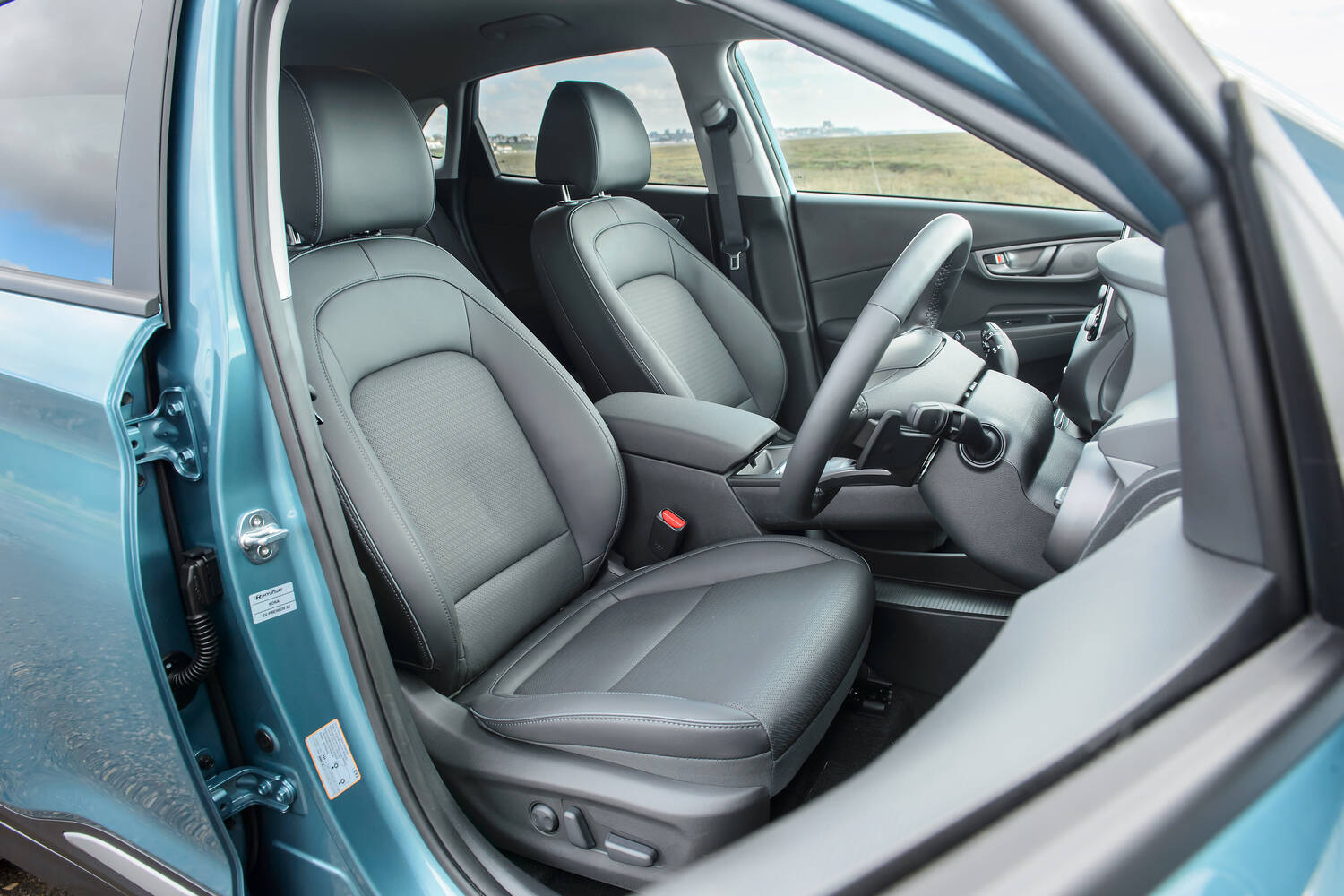
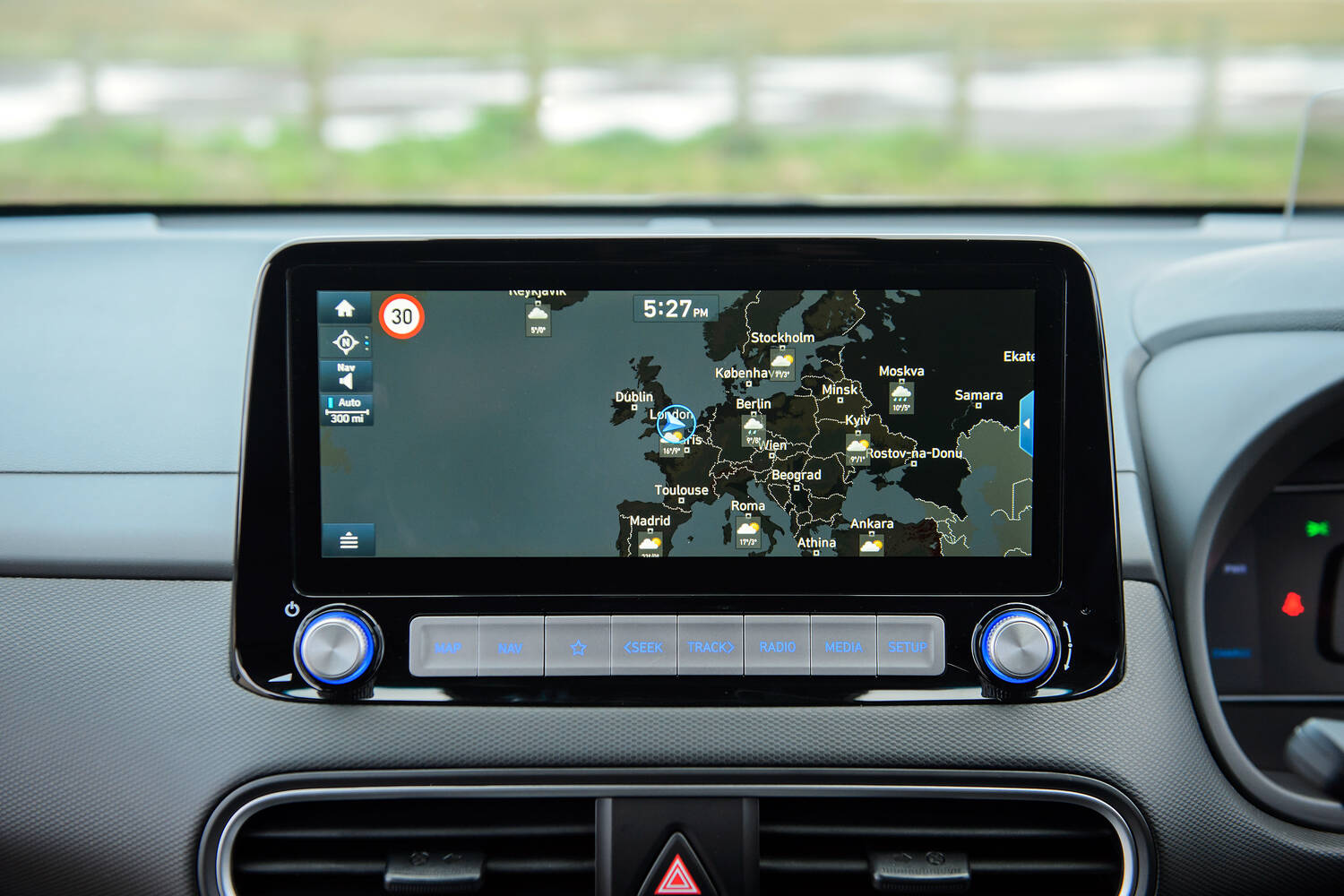
Premium models were upgraded with automatic wipers, leather seat trim, a heat pump and a 10.25-inch touchscreen with navigation, wireless phone charging and a Krell sound system.
There’s a good split between Executive and Premium models on sale in Ireland, so you should be able to find the right spec for you pretty easily.
How much is it to tax the Hyundai Kona Electric (2018-2023)?
Refer to our Motor Road Tax Prices in Ireland Explained feature for the up-to-date cost to tax the Hyundai Kona Electric.
How reliable is the Hyundai Kona Electric (2018-2023)?
There are a few reported issues with the Kona, including battery-related recalls — one in 2020 for a possible short circuit, and another in 2026 for battery software.
Make sure these recalls have been carried out before committing to buying. There was another recall in 2021 for brake system software. The good news is that the Kona’s battery seems to be pretty robust and doesn’t degrade any faster than others over time.
How much range has a Hyundai Kona (2018-2023)?
The mechanical specification of the Kona Electric changed subtly during its lifetime, and that’s best expressed in the model which used the larger of the two battery options, at 64kWh.
When it was first launched, that version of the Kona could manage an official range of 449km — which was exceptionally good for what was at the time a compact and affordable car.
By the time the Kona got its sharper-looking facelift in 2021, though, Hyundai had clearly been working on the battery, motor and energy management side of things, because by then the range on one charge had risen to 484km — which would be competitive if you put the first-generation Kona back on sale today.
Better yet, Hyundai was (and remains) good at squeezing excellent real-world ranges out of its electric models, so that around 400km was actually possible.
The smaller 39kWh battery obviously returned less range than that, topping out with a WLTP figure of 305km. Still, that was sufficient for many drivers (and not a bad number at the time) so you’ll find plenty of the 39kWh battery models on sale in the second-hand market today, and for short-haul drivers they represent good value.
When should I service my Hyundai Kona Electric (2018-2023)?
Hyundai recommended an annual service, or every 15,000km whichever came first. There are staged service intervals, with a minor service at 15,000km; a bigger service at 36,000km and a major service every four years, or at 60,000km, where the battery’s cooling fluid, amongst other things, is changed.
Can I fit child seats and a buggy in the Hyundai Kona Electric (2018-2023)?
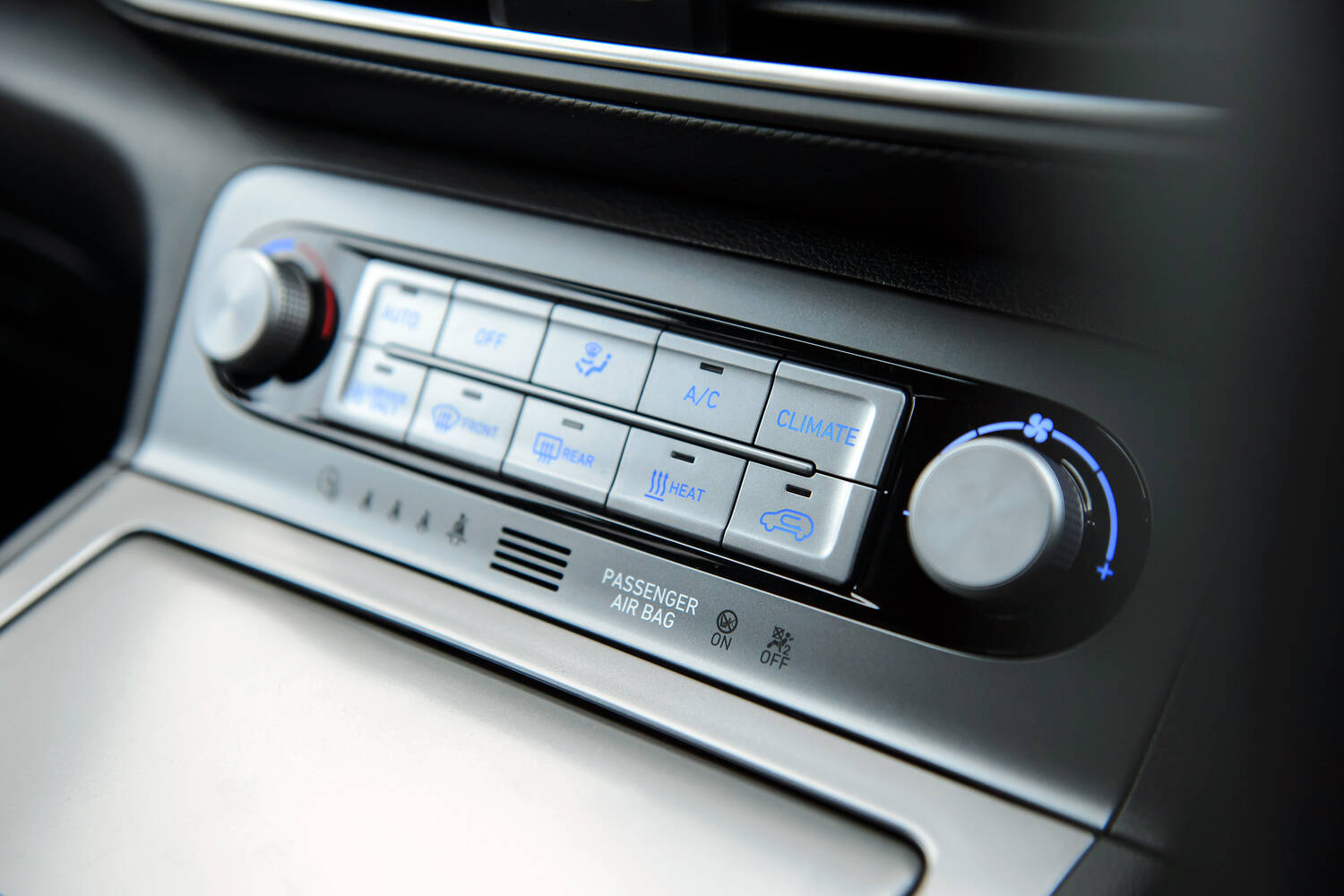
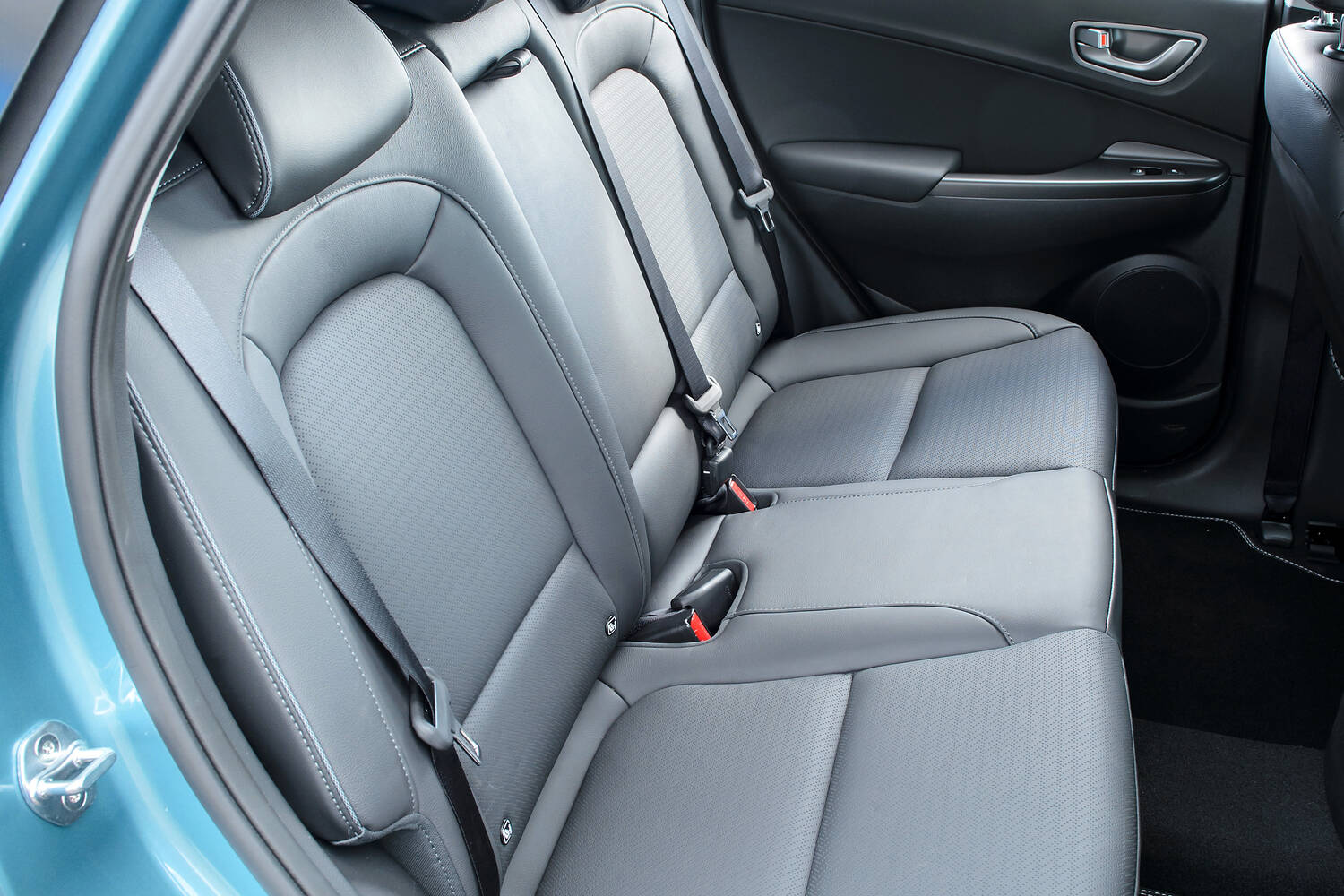
There are two ISOFIX child seat anchor points in the back seat of the Hyundai Kona Electric, and while there isn’t a third anchor point in the front passenger seat, you can get a seat into that space using the seatbelt if you turn off the airbag.
Just remember that the Kona’s boot is on the small side — at 332 litres — so check that your folded-up buggy fits.
How safe is the Hyundai Kona Electric (2018-2023)?
The Kona is a safe car, and when a petrol version was tested by Euro NCAP back in 2017, it received a full five-star score, with the scores in individual categories being 87 per cent for adult occupant protection, 85 per cent for child occupants, 62 per cent for vulnerable road users and 60 per cent for its active safety systems.
Alternatives to the Hyundai Kona Electric (2018-2023)
Citroen ë-C4
Cupra Born
Jeep Avenger
Kia e-Niro
MG ZS EV
Nissan Leaf
Opel Mokka-e
Peugeot e-2008
Renault Megane E-Tech electric
Volkswagen e-Golf
Volkswagen ID.3
How much is a Hyundai Kona Electric (2018-2023)?
For estimates of the current value of a given car, drop us a message using the Ask Us Anything page with as much detail as possible in it.