



Exterior & design of the 2027 Range Rover Electric
- Two wheelbases are available
- Wheel designs help maximise range
- Extensive personalisation options are available
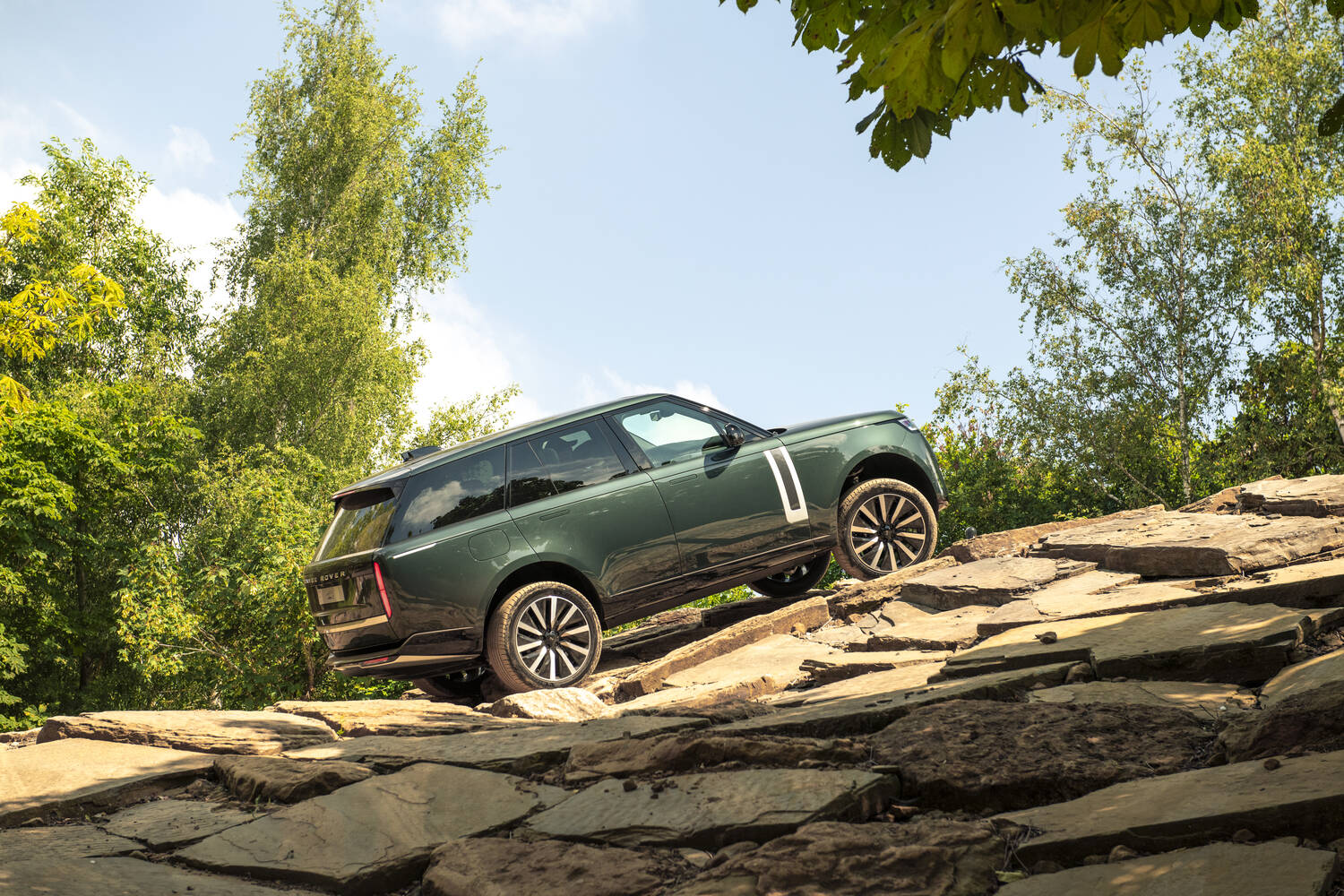
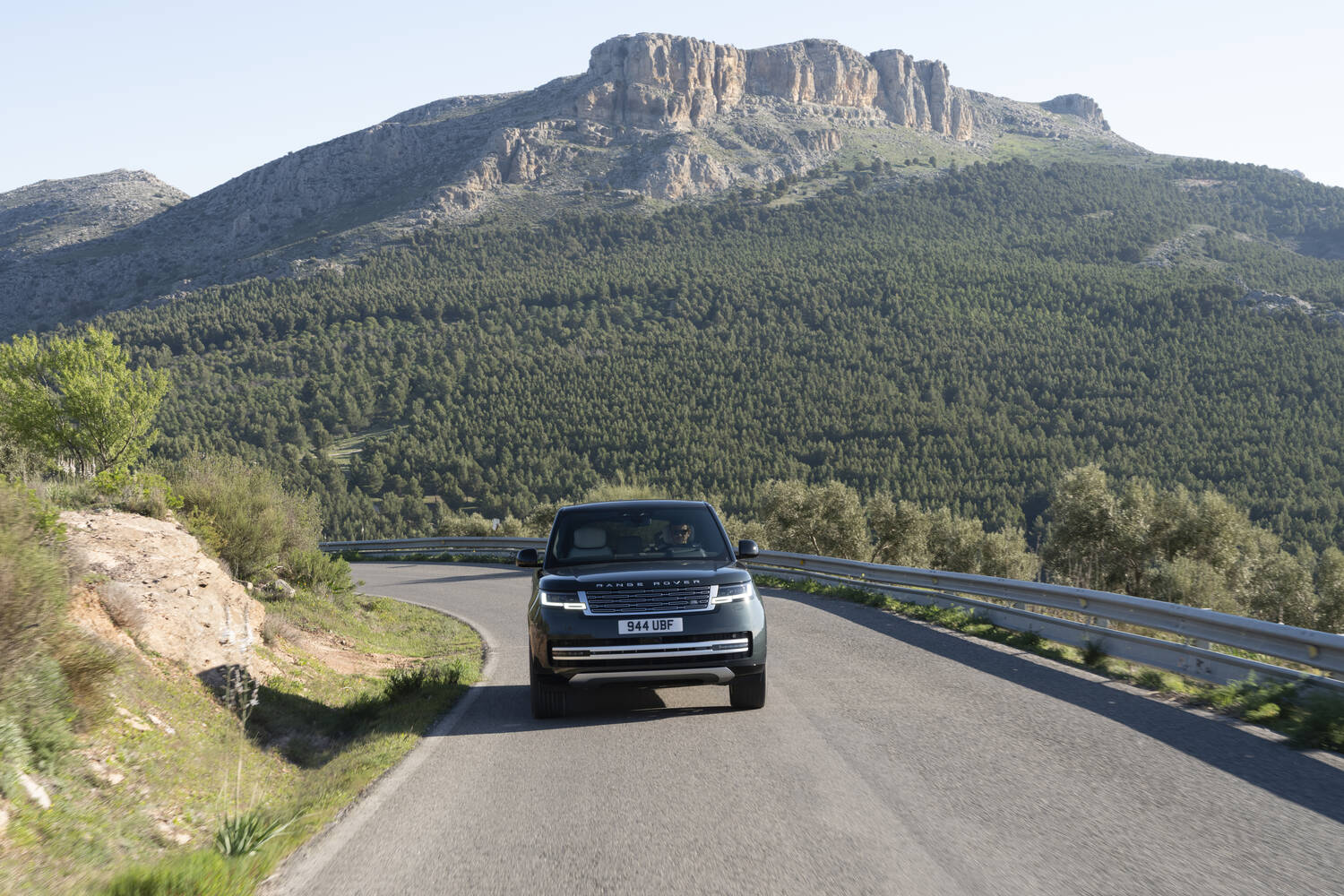
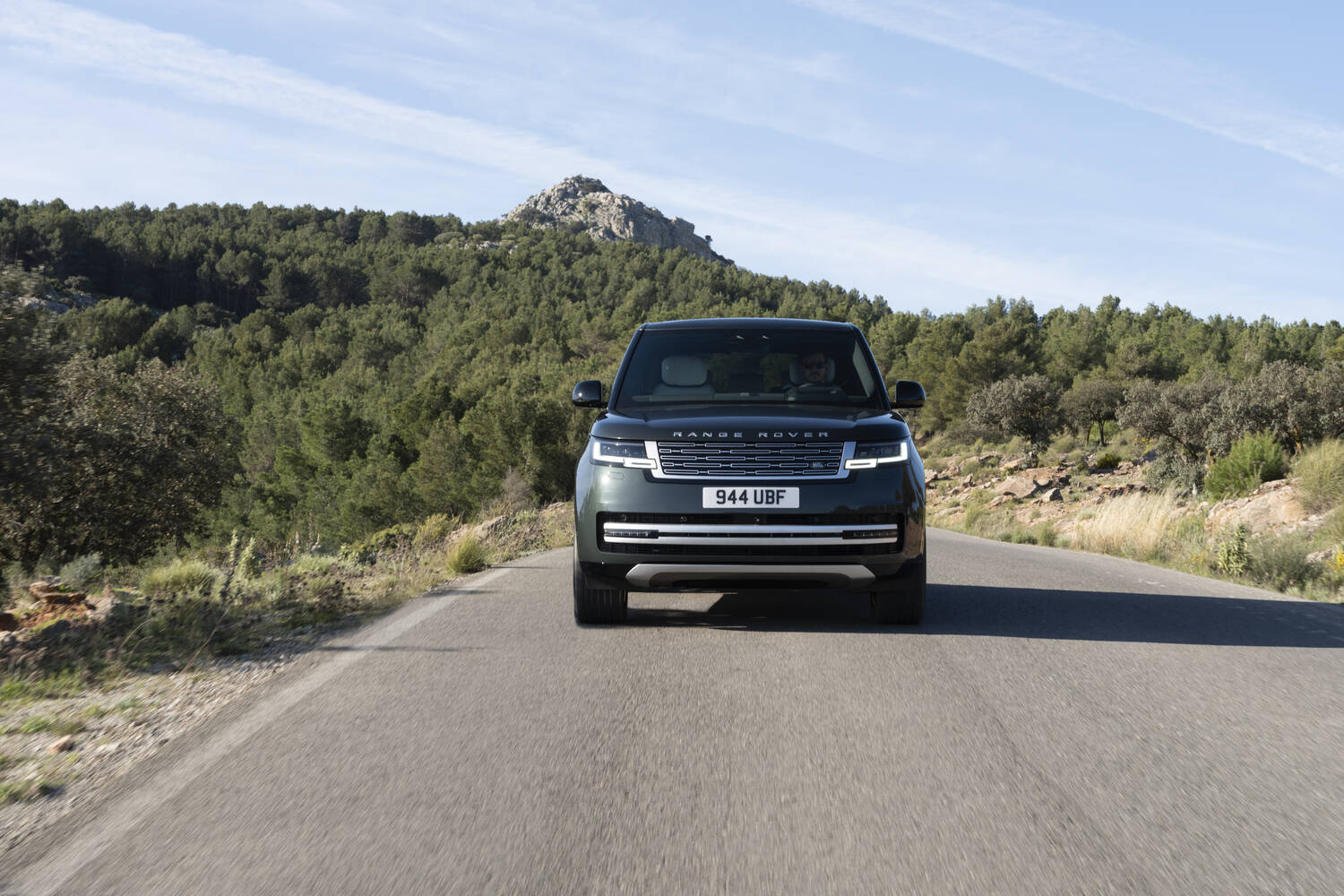
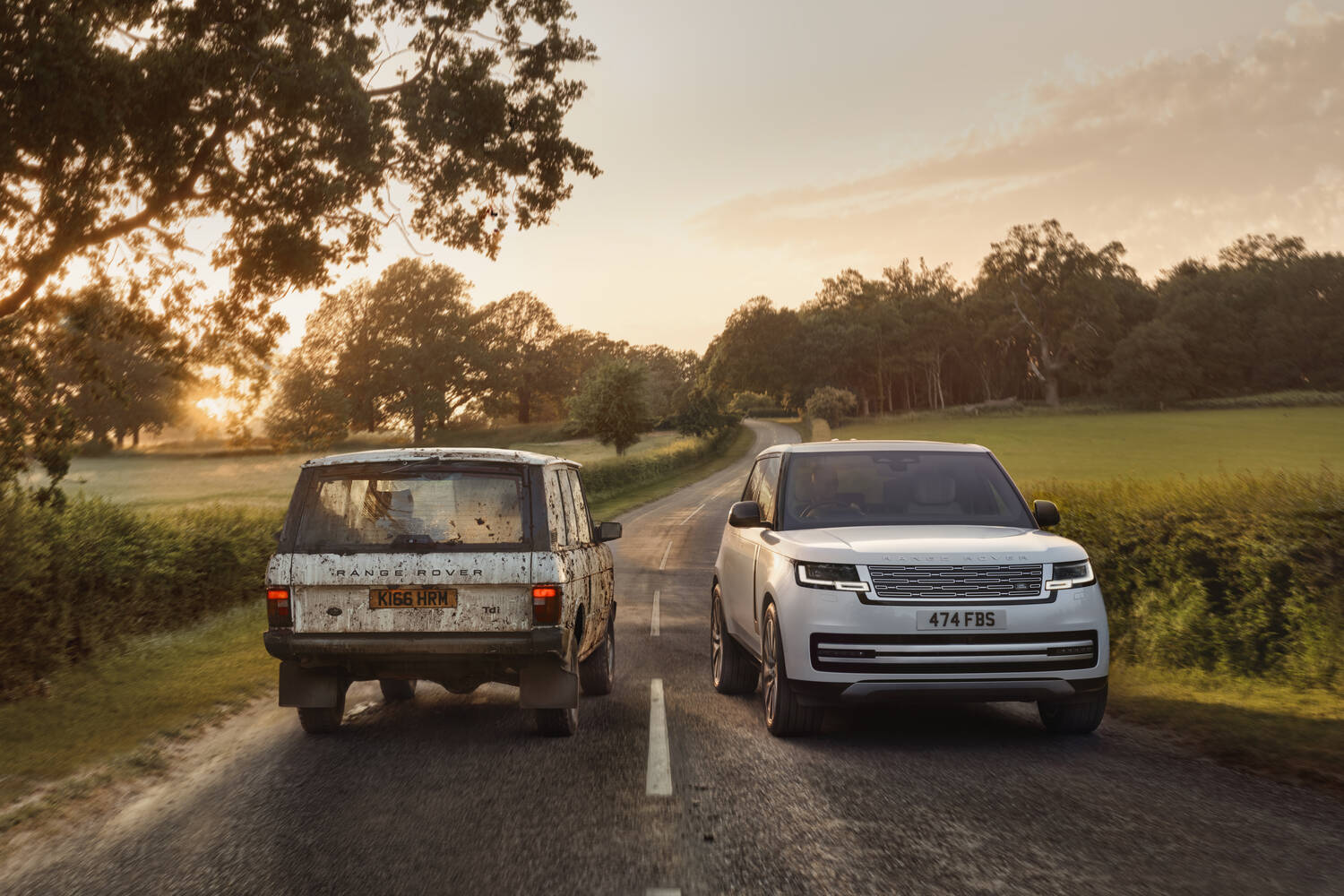
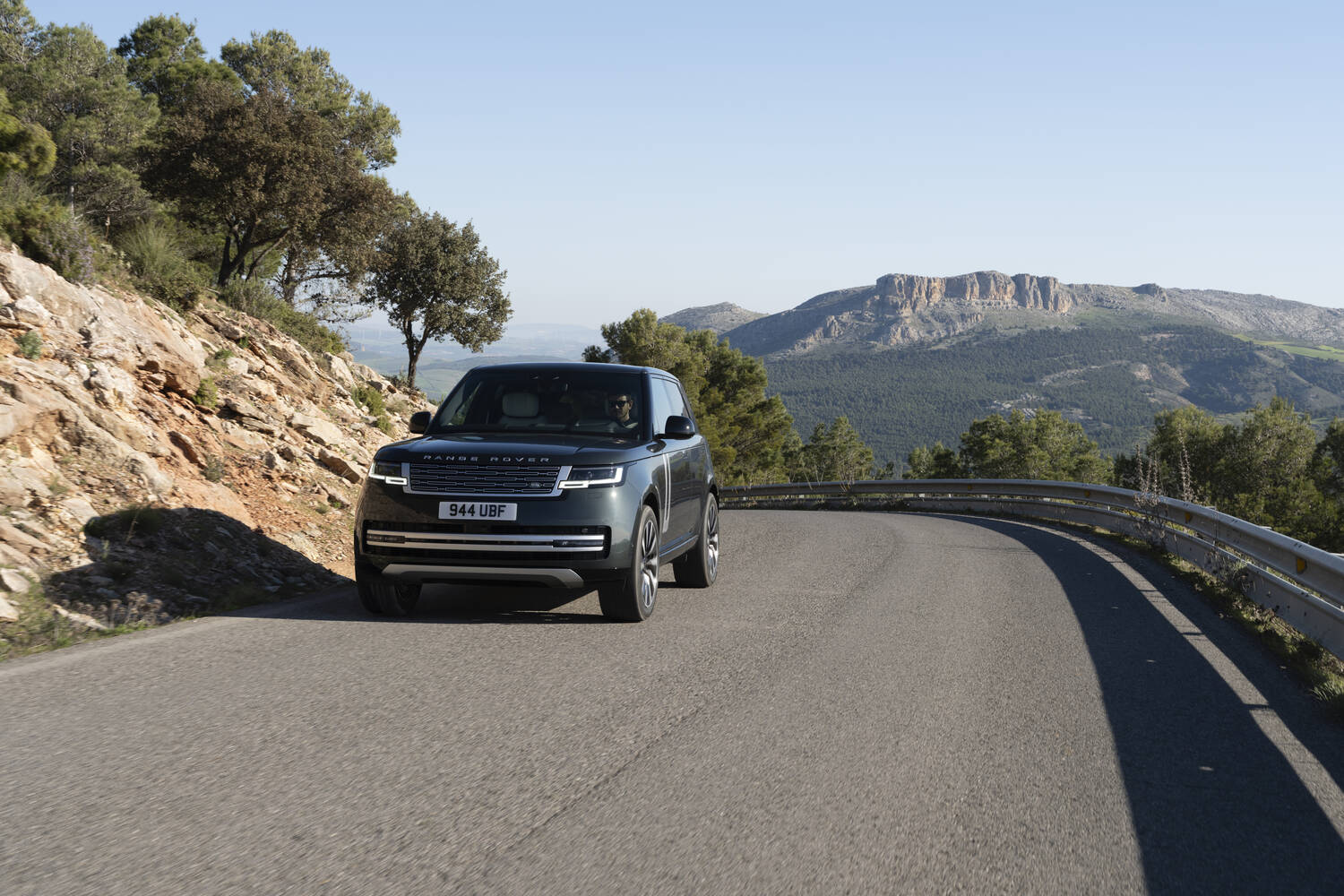
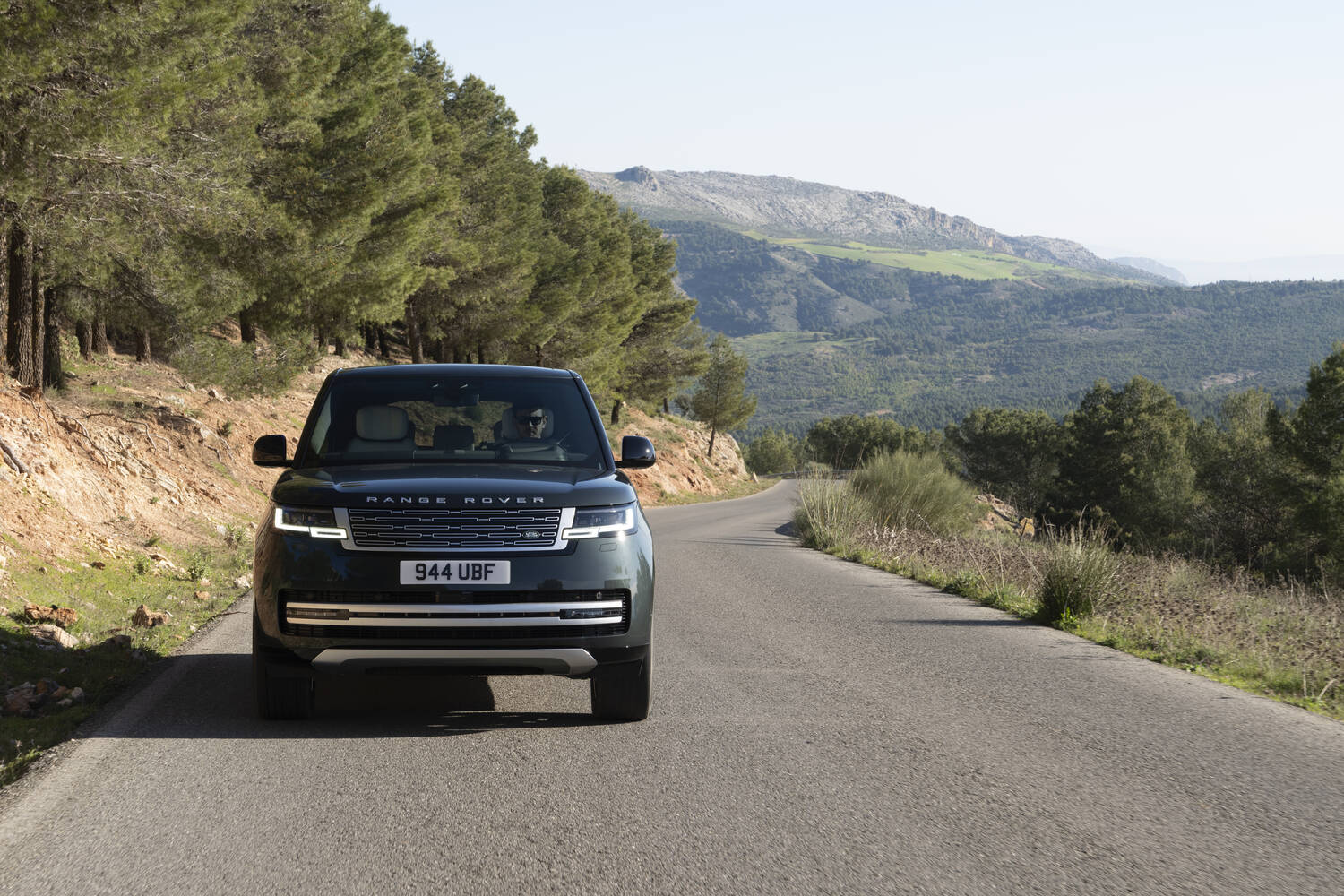
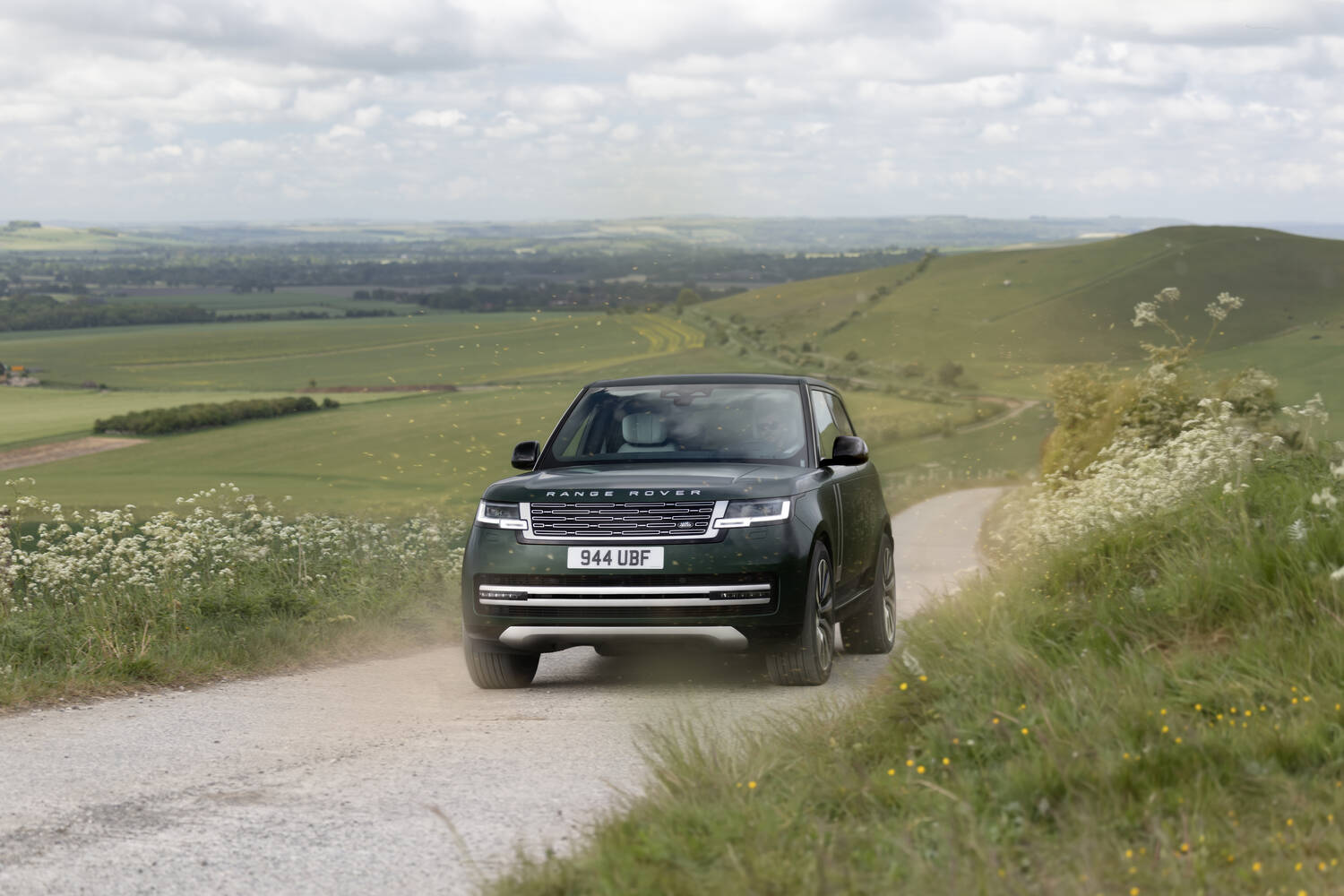
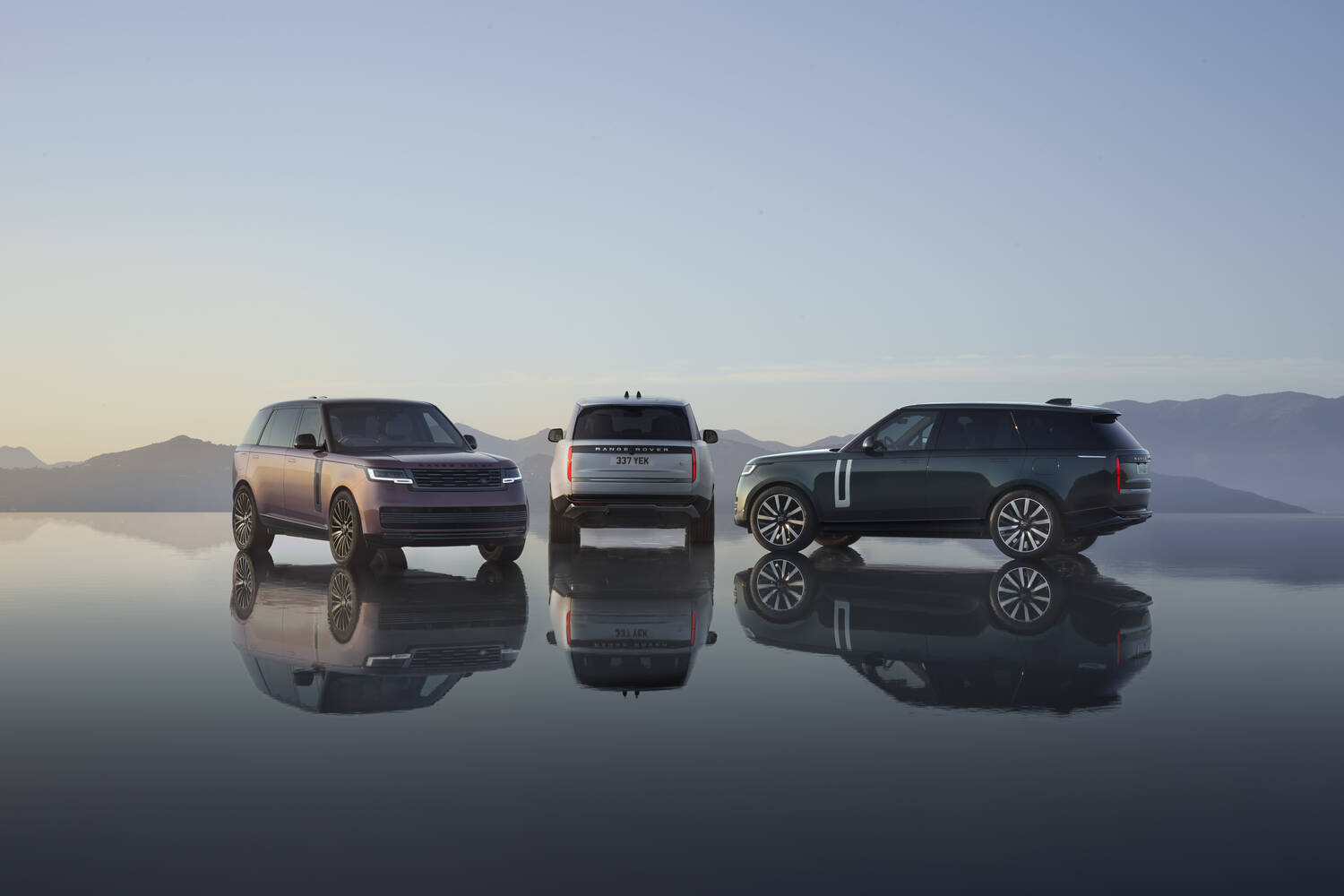
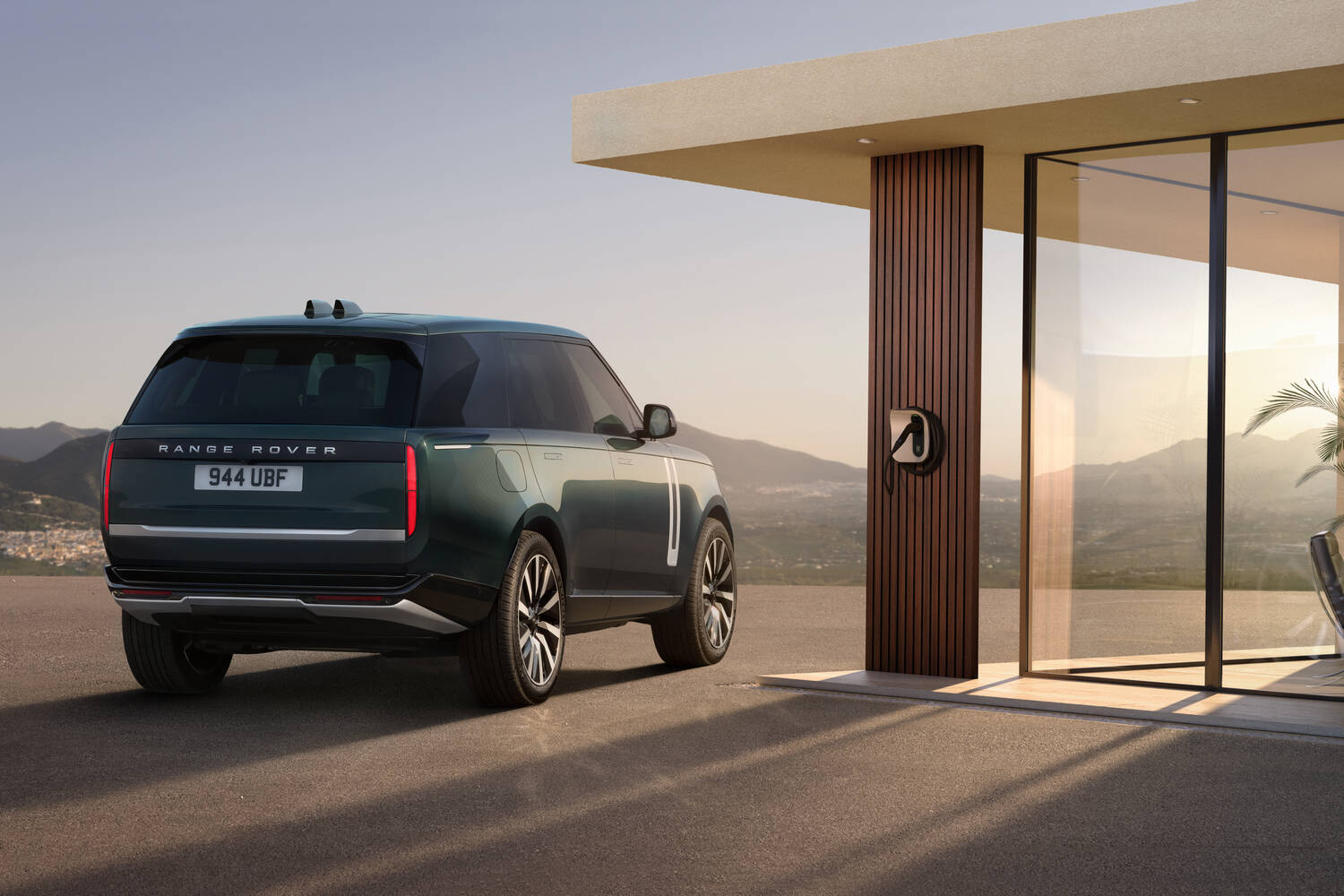
You'll have to look hard to spot that this is the Range Rover Electric, as it appears outwardly almost identical to the combustion-engined models in the line-up. So much so, in fact, that during the car's development engineers were able to test it in public with virtually no disguise - not a common practice in the industry.
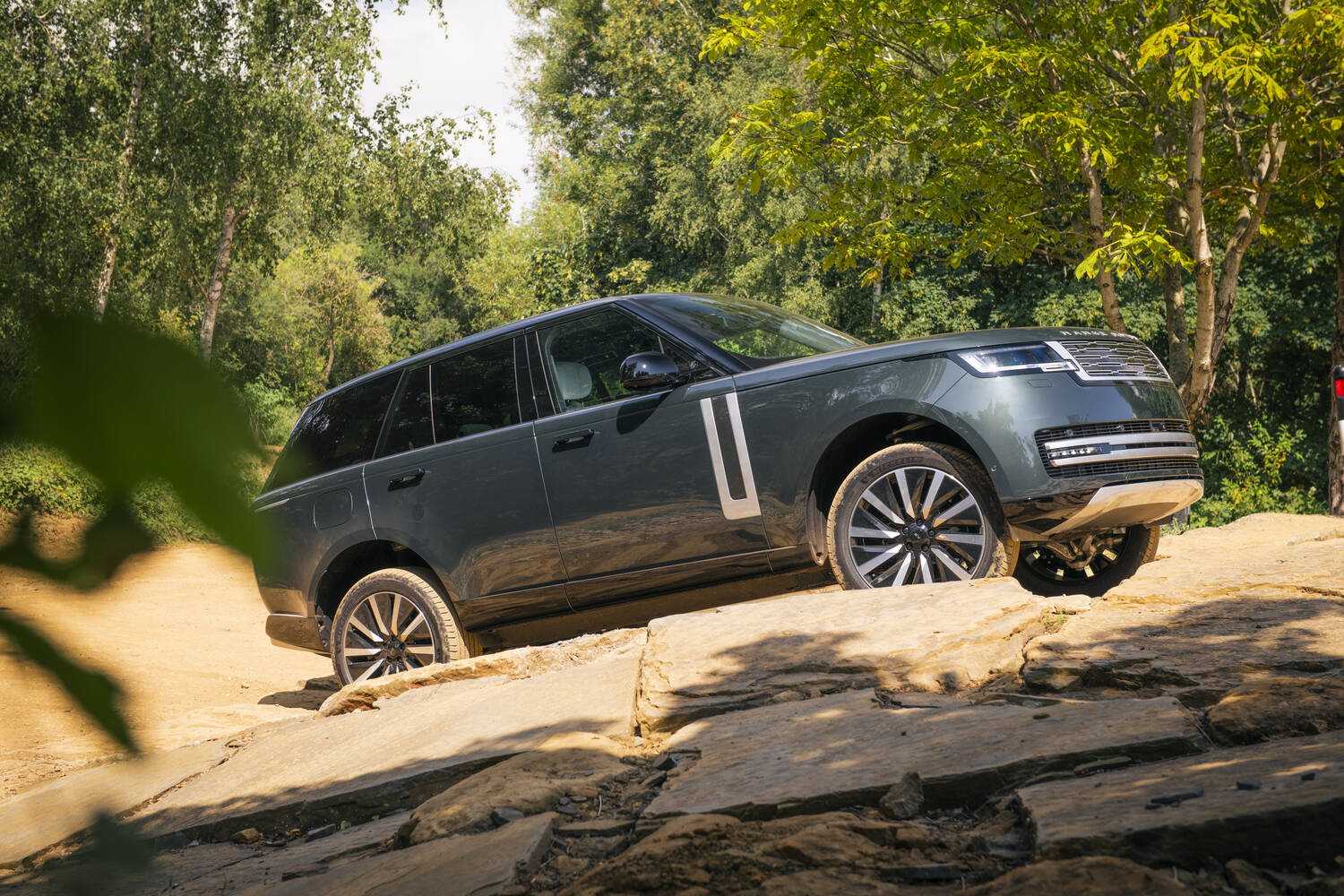
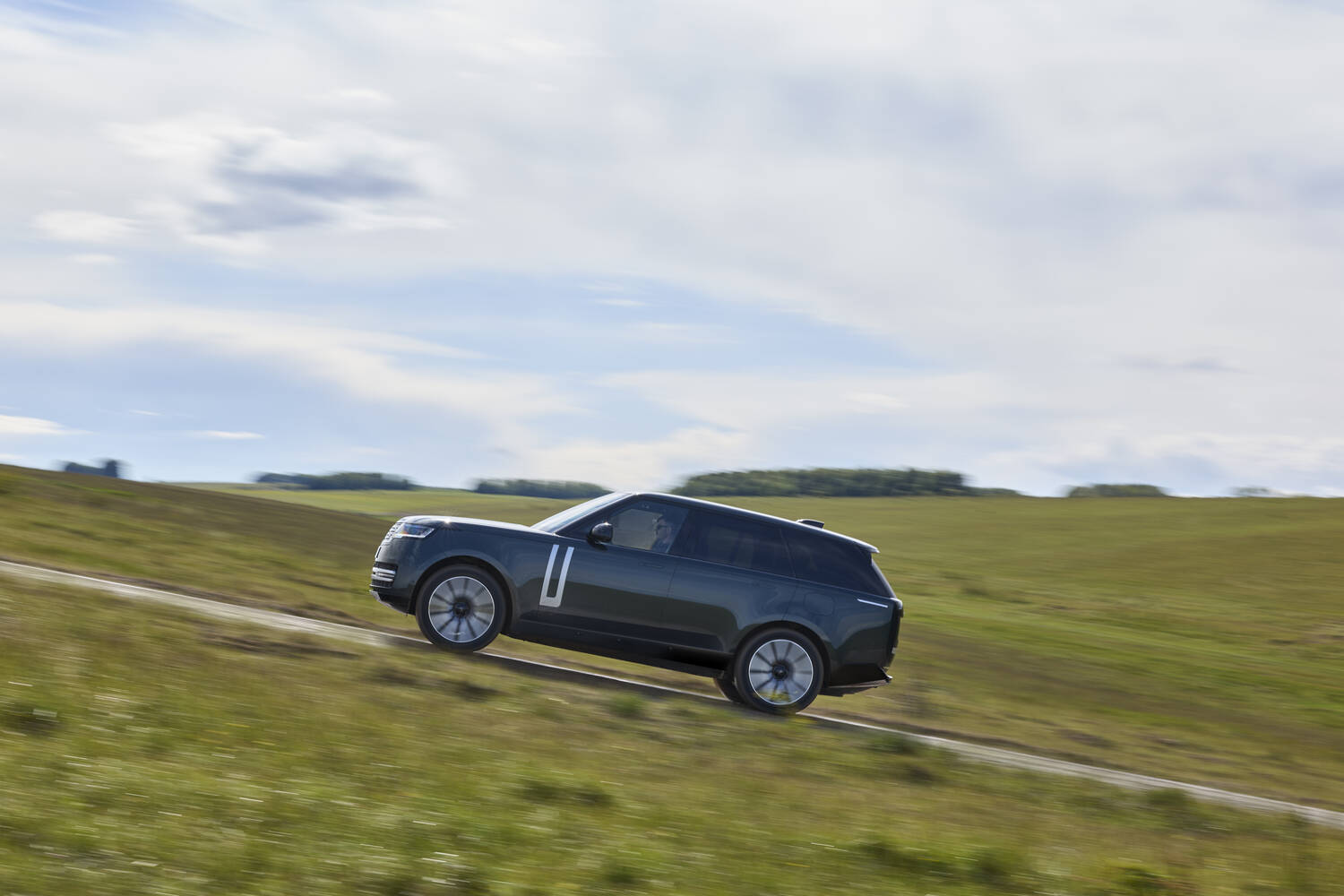
Available in standard- and long-wheelbase body styles, the Range Rover Electric is a full-size SUV in every sense. Towering close to 1.9 metres tall (and that's before you raise the air suspension), it can stretch to 5.2 metres in length in long-wheelbase form.
Its design language is what the company describes as reductive, with clean, crisp lines and body surfacing throughout.
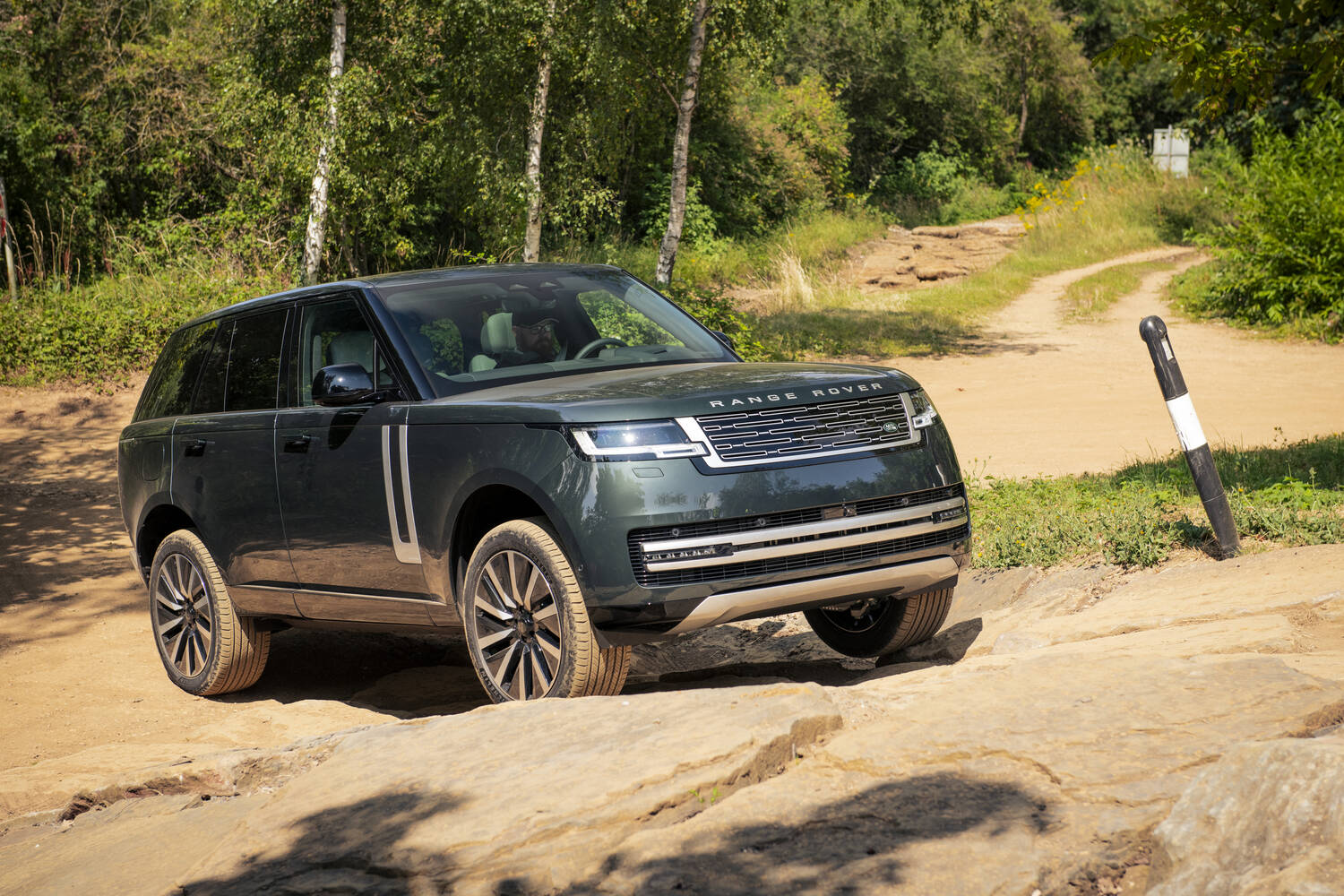
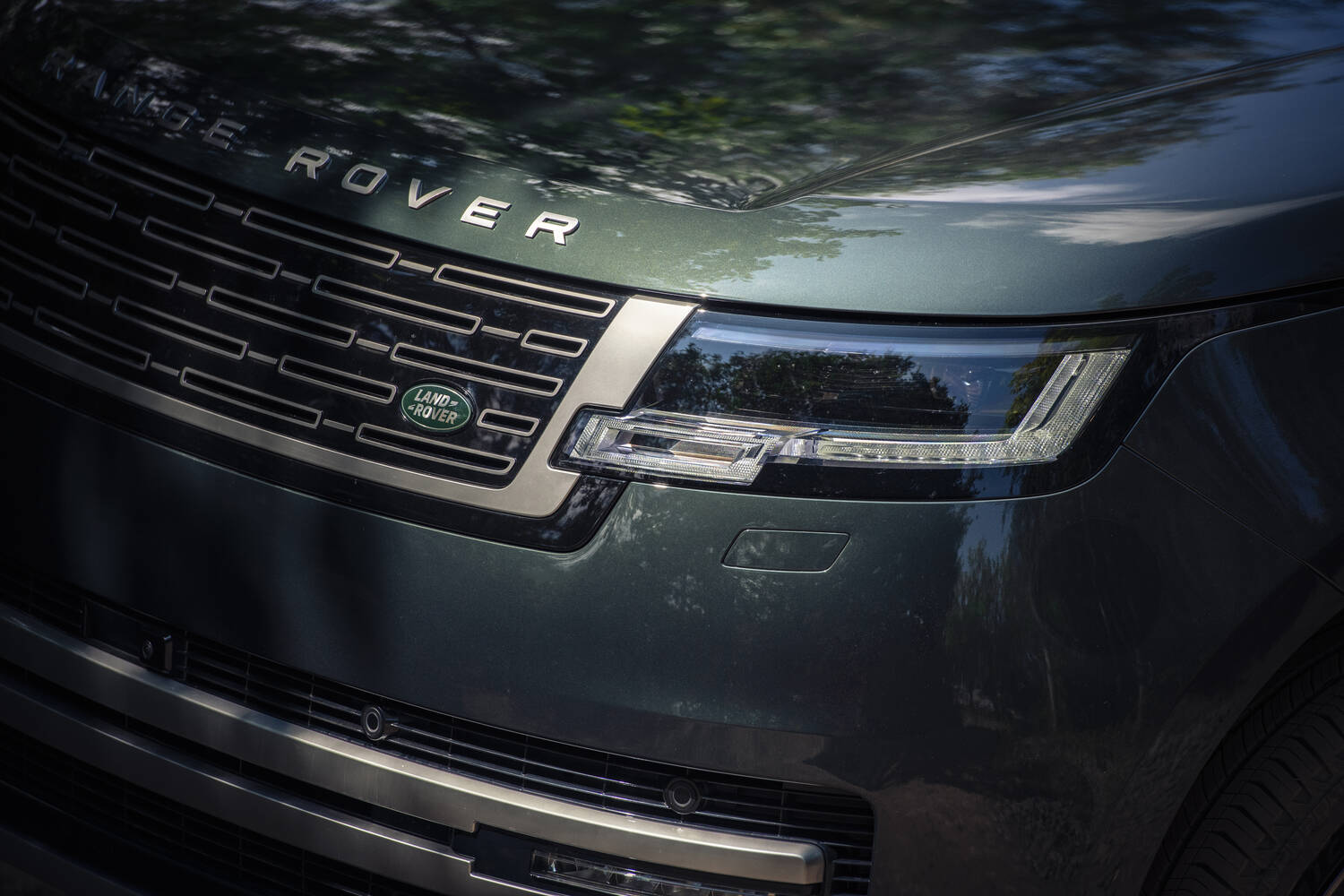
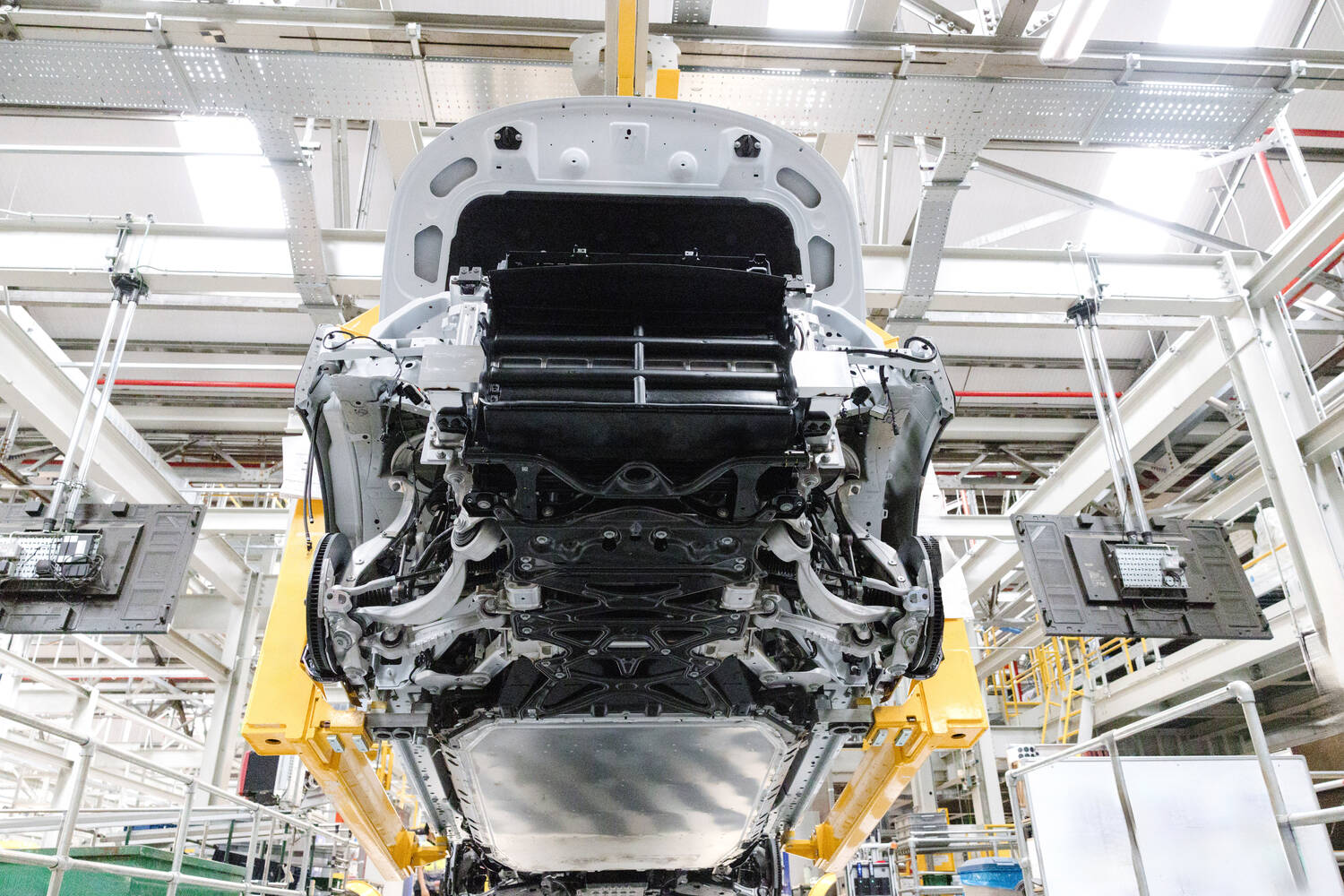
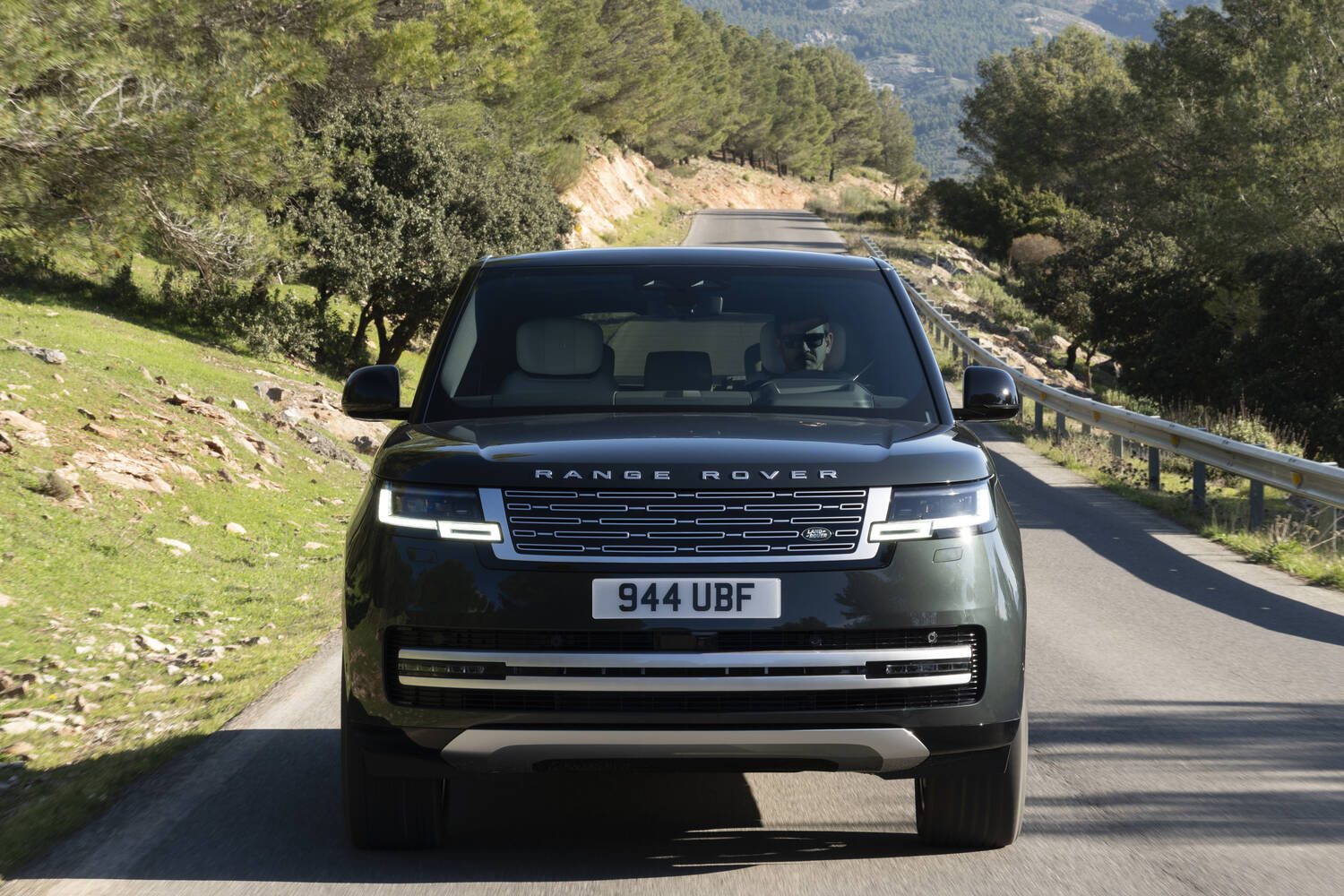
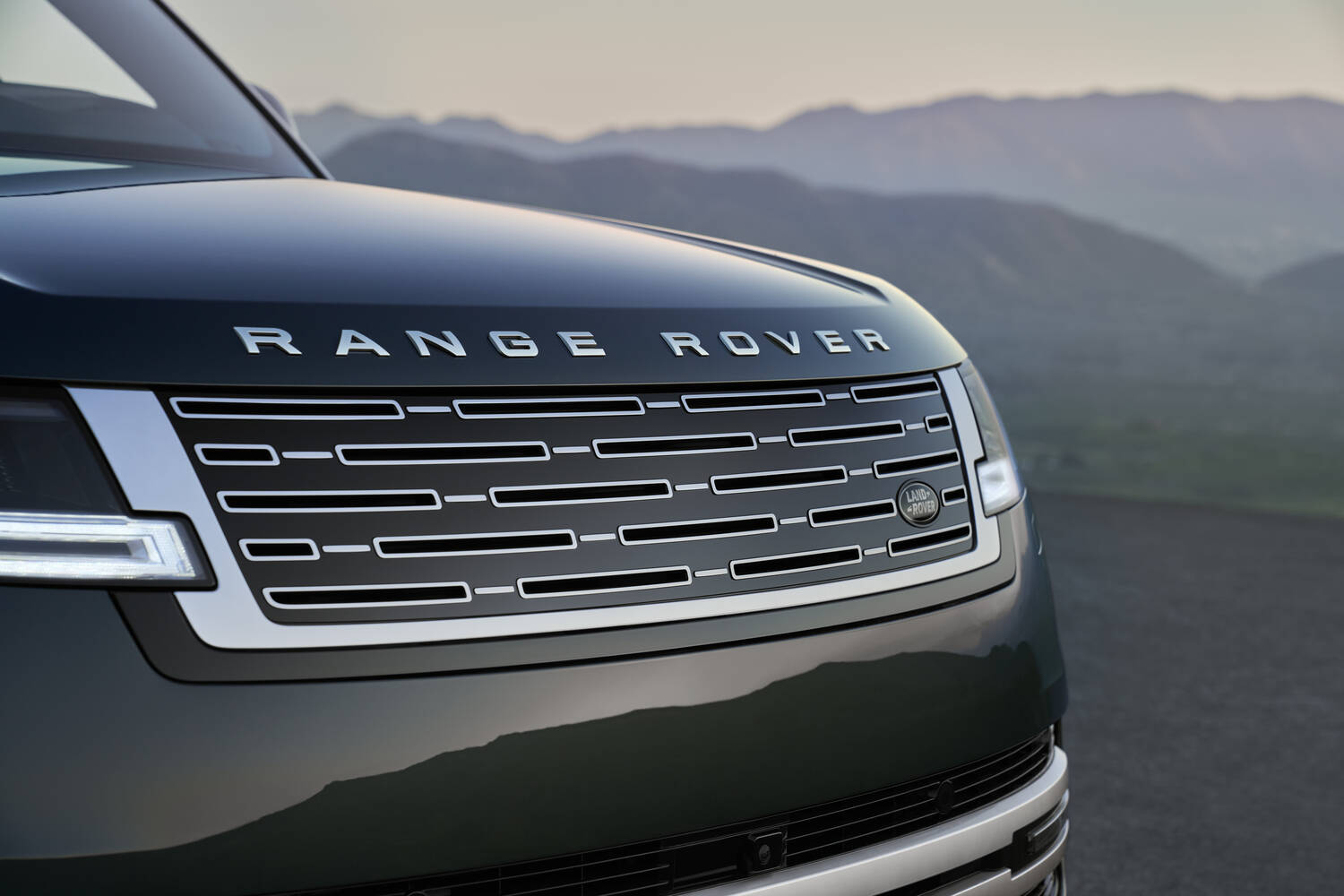
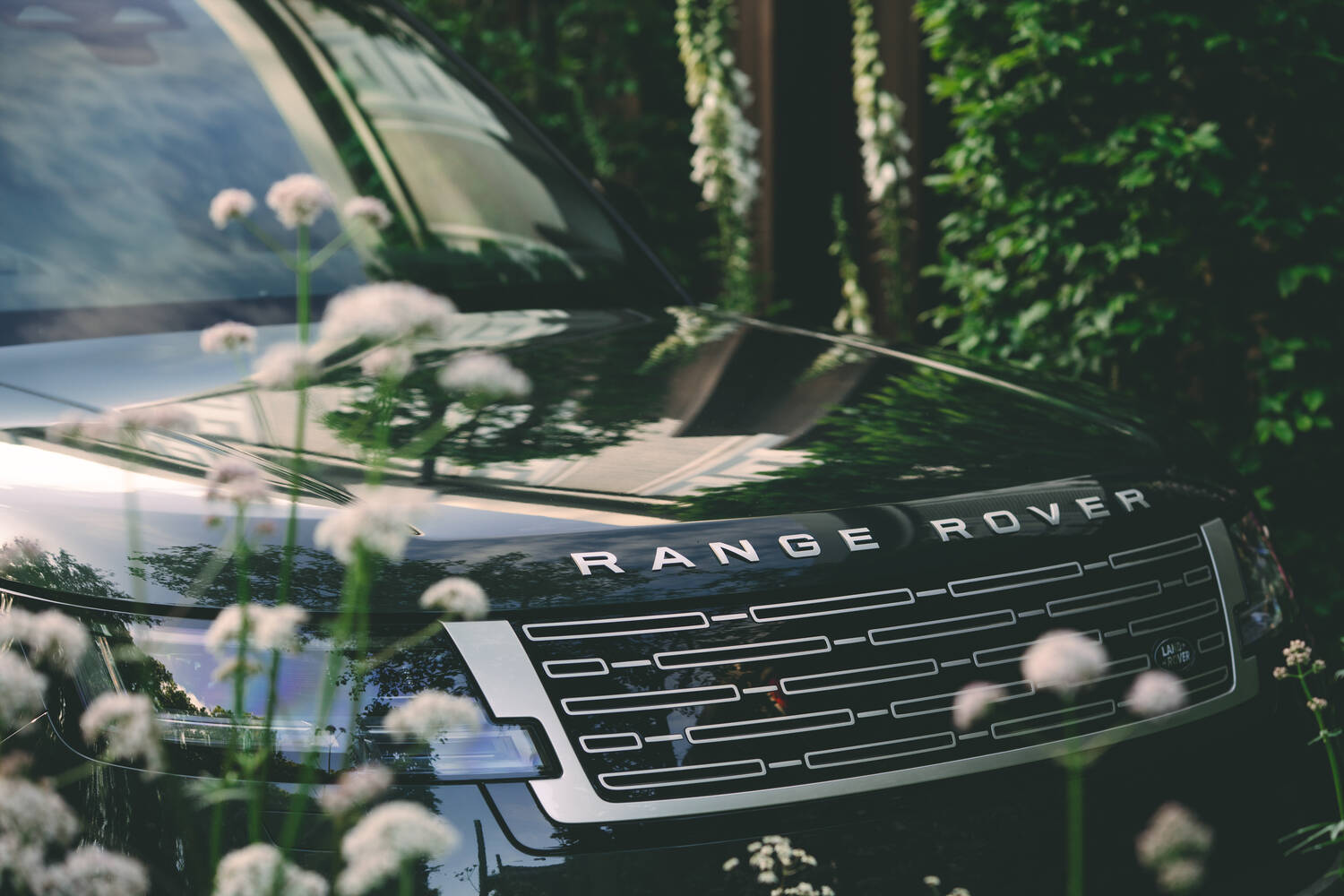
The most obvious tell that this is the Range Rover Electric is the front grille, which is more enclosed than those of other models to improve aerodynamic efficiency.
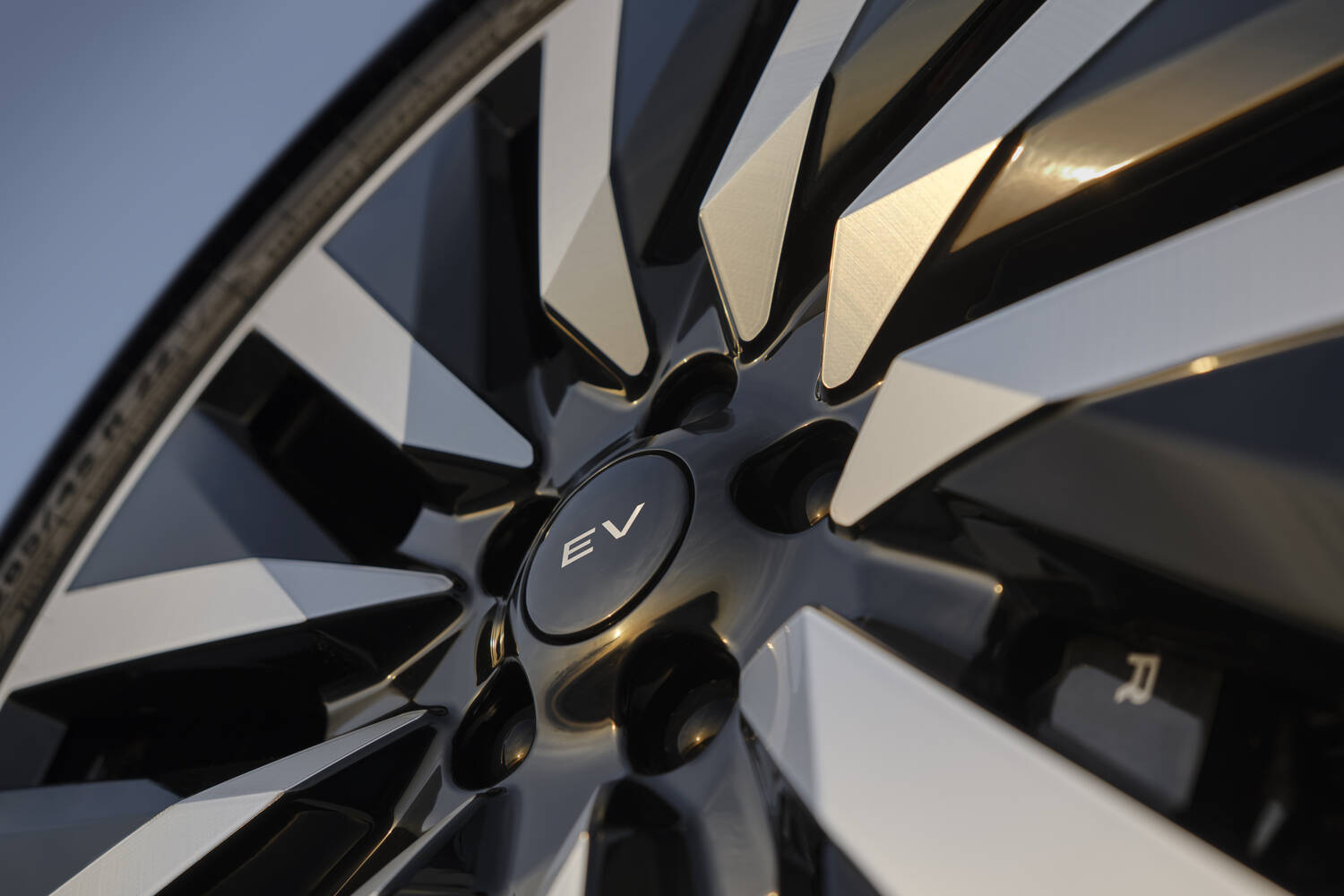
That attention to detail extends to the wheel designs, which are available in sizes of up to 23 inches. Even the aerodynamic rims are shaped so mud or sand should not become trapped during off-road use.
Dimensions of the 2027 Range Rover Electric
- Length:
- 5,052mm
- Width:
- 2,047mm (mirrors folded)
- Height:
- 1,867mm
- Wheelbase:
- 2,997mm
Paint colours for the 2027 Range Rover Electric
Santorini Black metallic is one of the no-cost options for the Range Rover Electric. Two Premium Metallic colours are Ostuni Pearl White and Charente Grey. There is also an Ultra Metallic Gloss paint called Constellation Blue, which costs an additional €13,105. Range Rover offers further bespoke options beyond the standard list, all at additional cost.
Interior, practicality, tech & comfort of the 2027 Range Rover Electric
- Physical switchgear returns
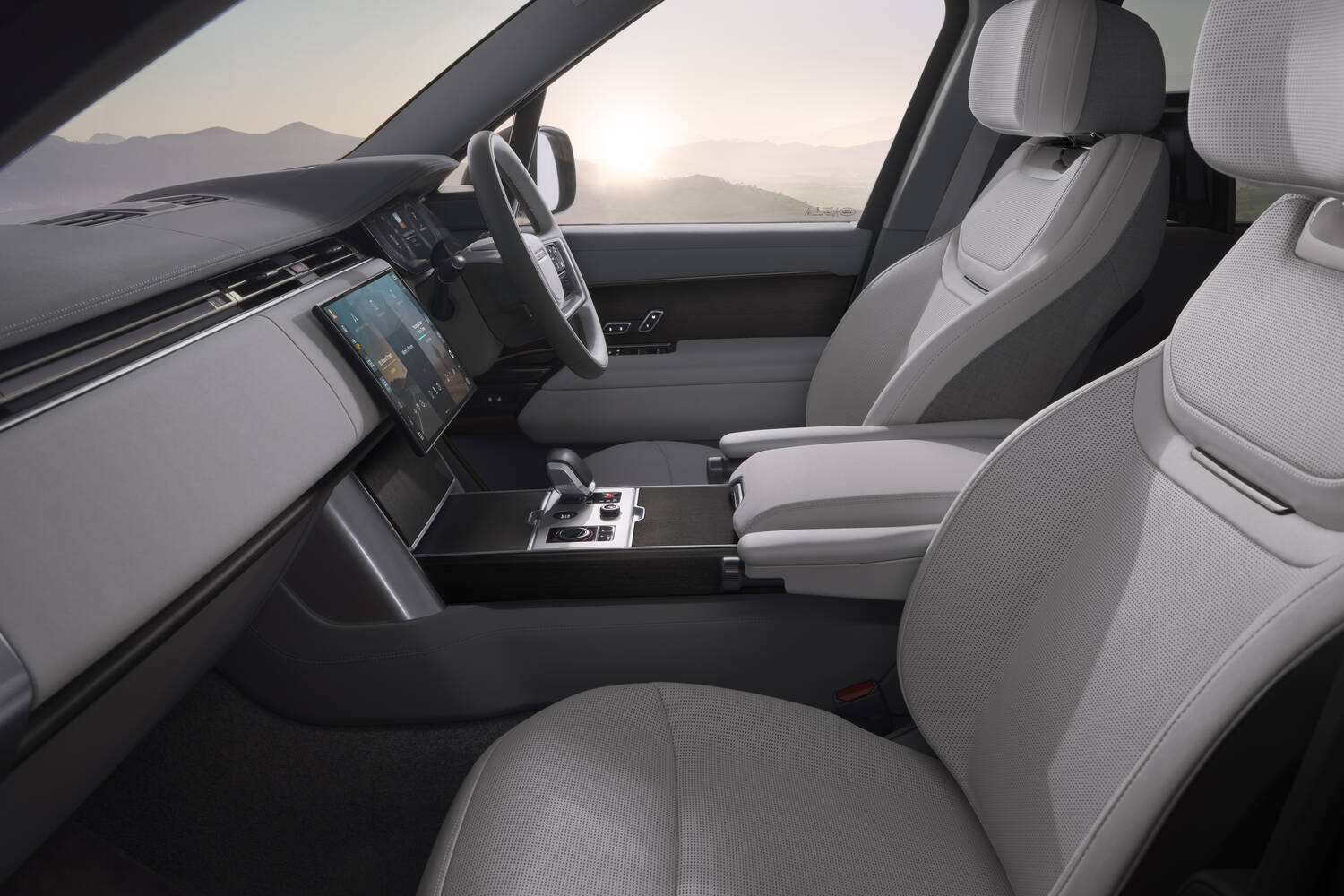
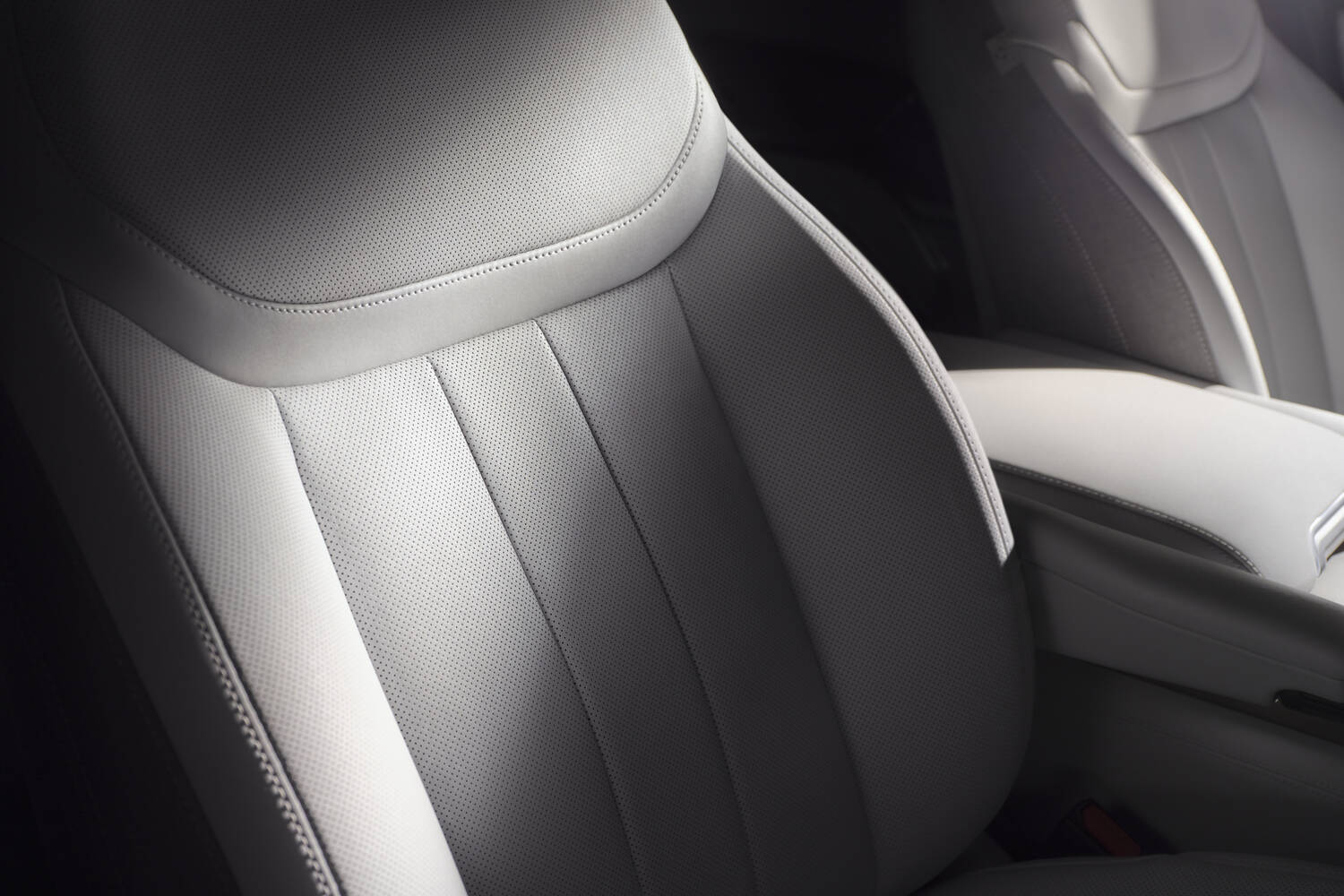
- Excellent material quality
- Generous passenger space
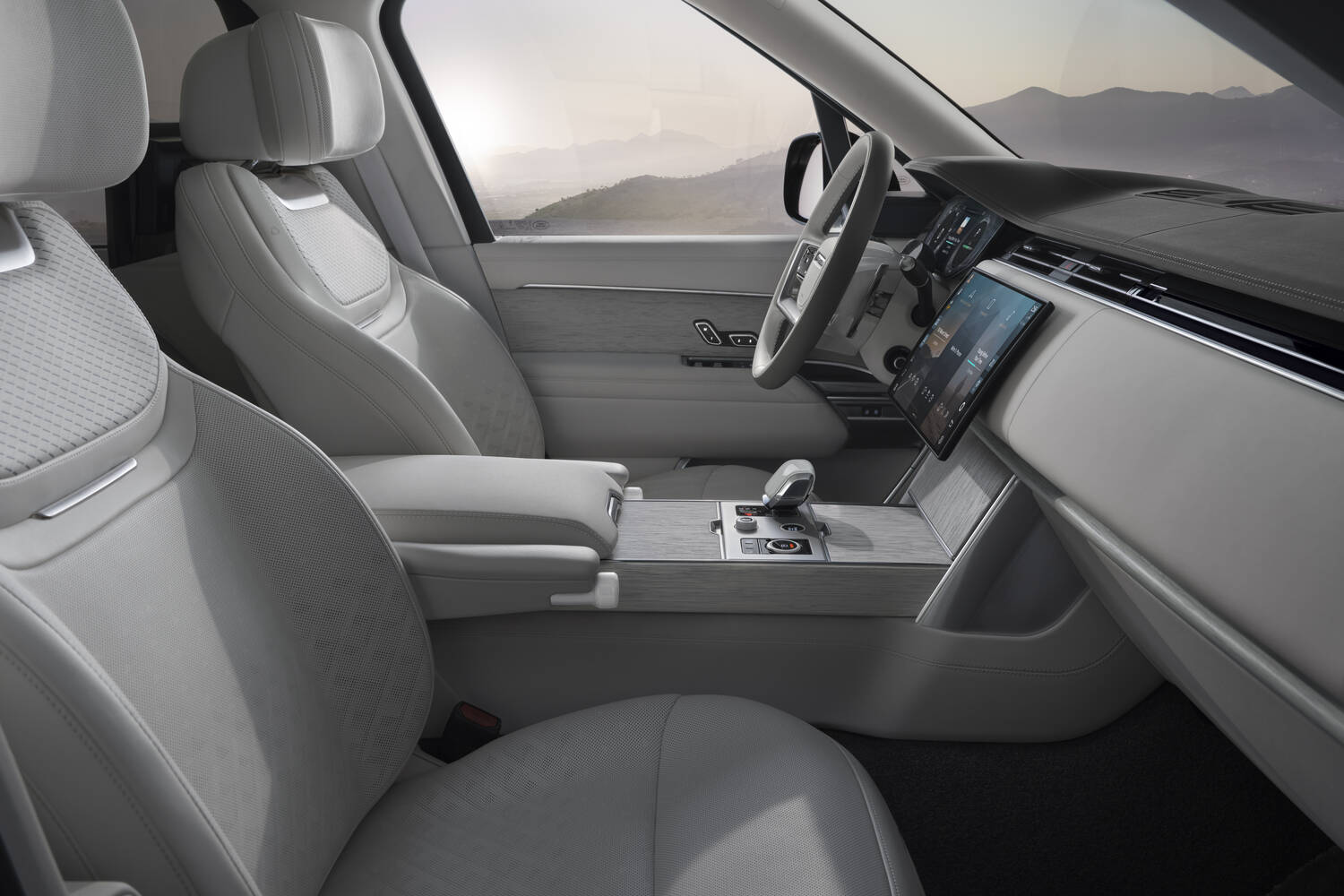
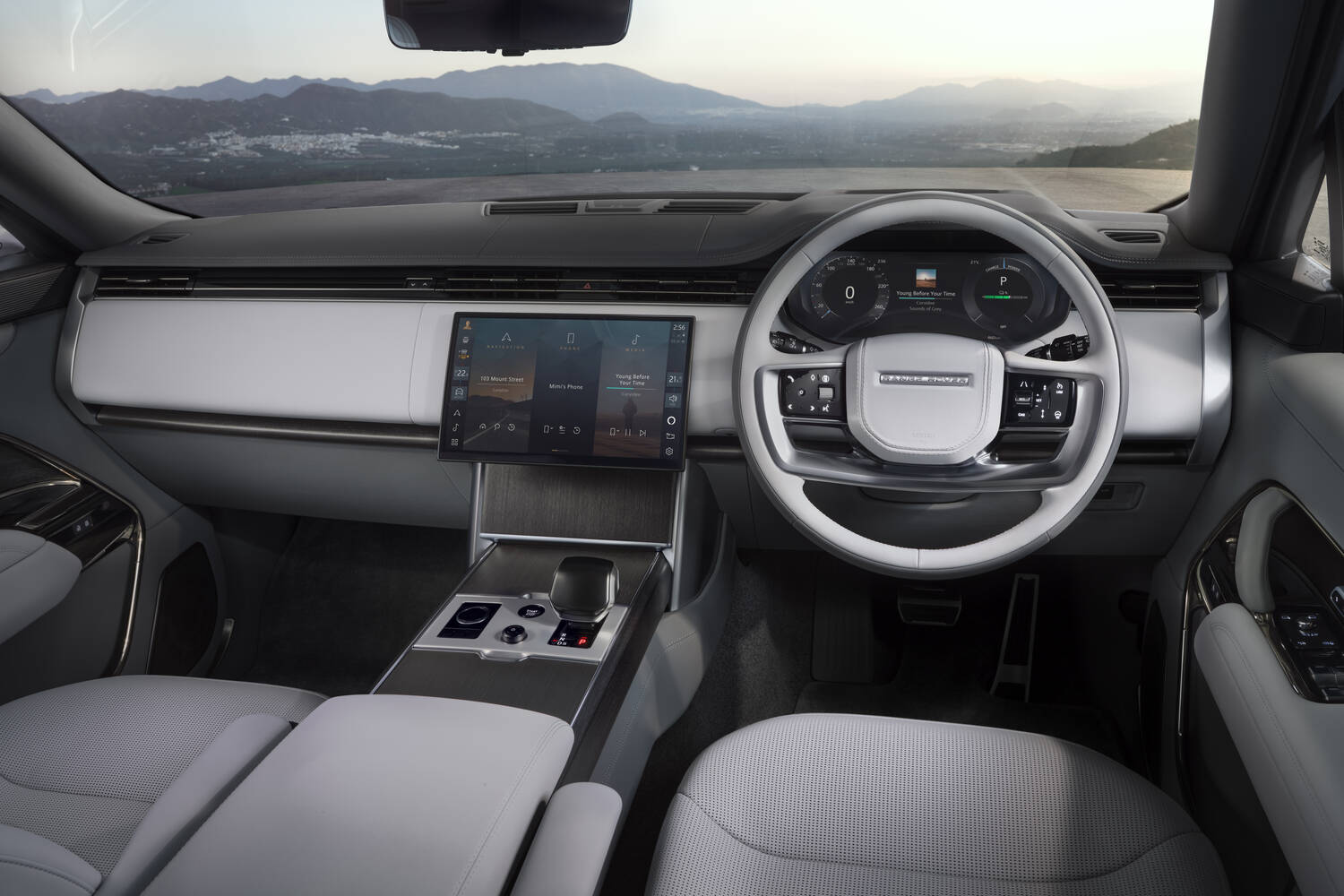
As the Range Rover was designed to carry an electric powertrain from the outset, its designers and engineers have been keen to point out that "from the carpet up" it is no different inside from other Range Rovers, and that is something buyers will appreciate.
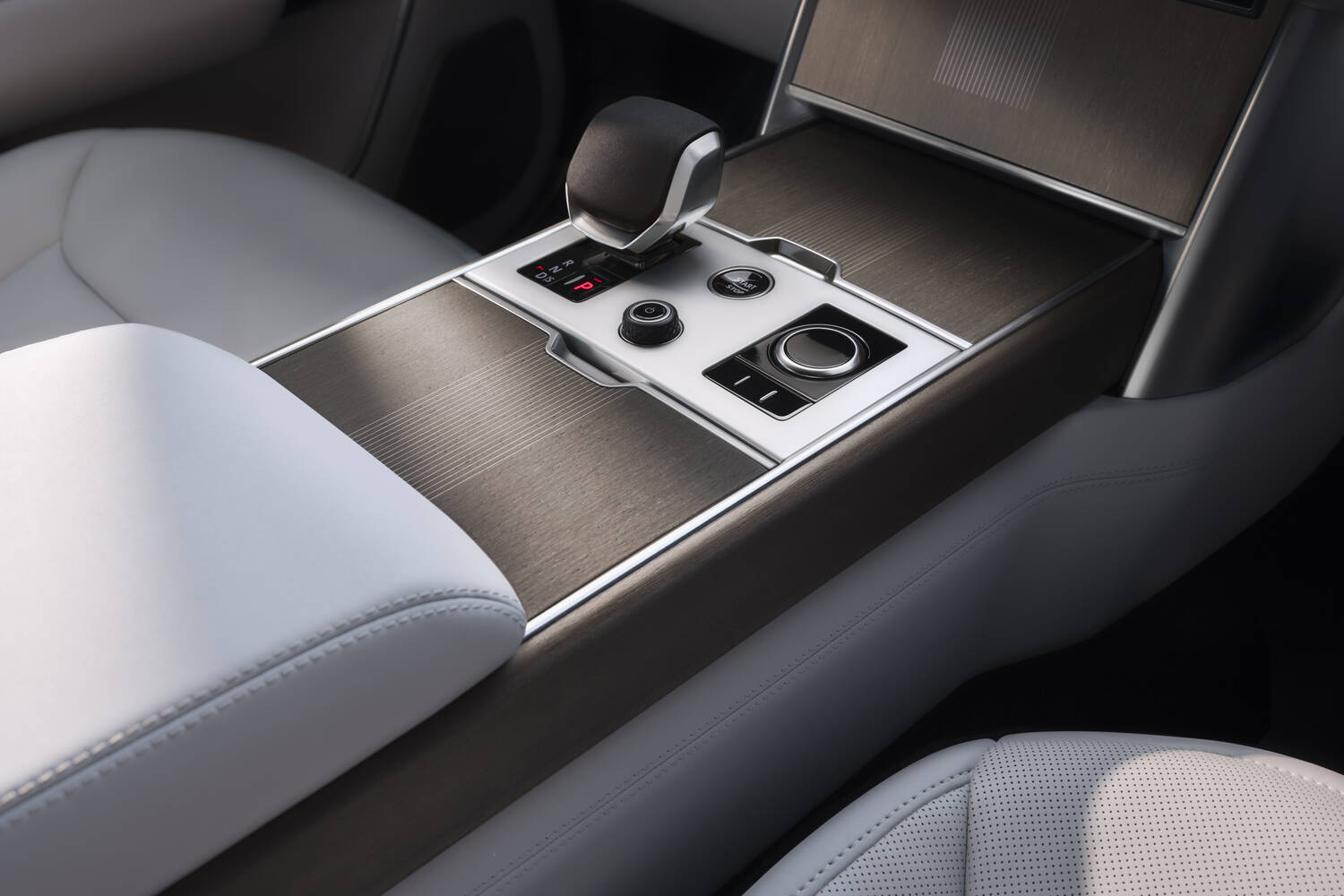
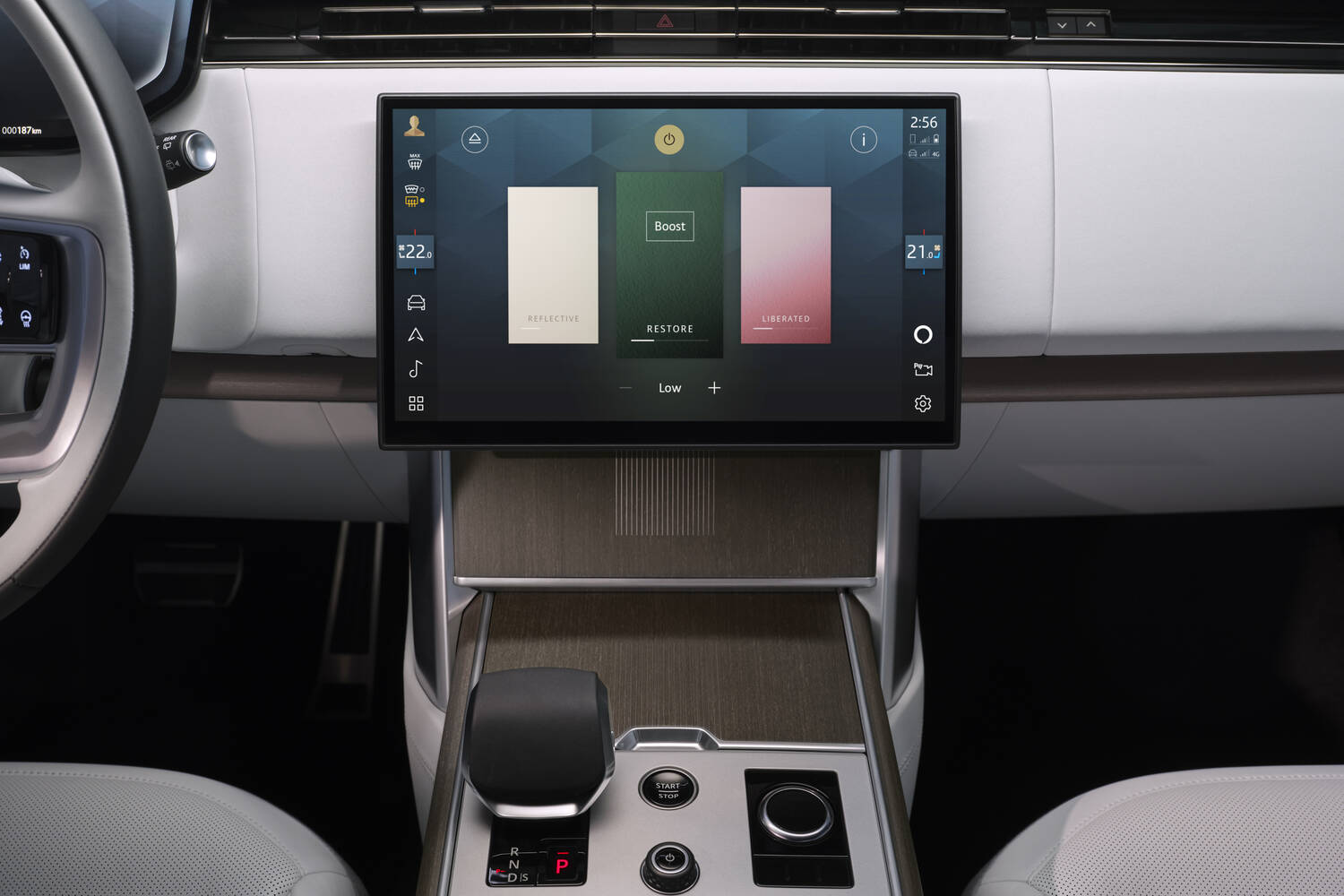
The interior layout of the Range Rover Electric also benefits from the 2027 model-year update, which saw the return of physical switchgear to the centre console.
It had previously been removed when its functionality was incorporated into the infotainment system, but customer feedback resulted in its reinstatement.
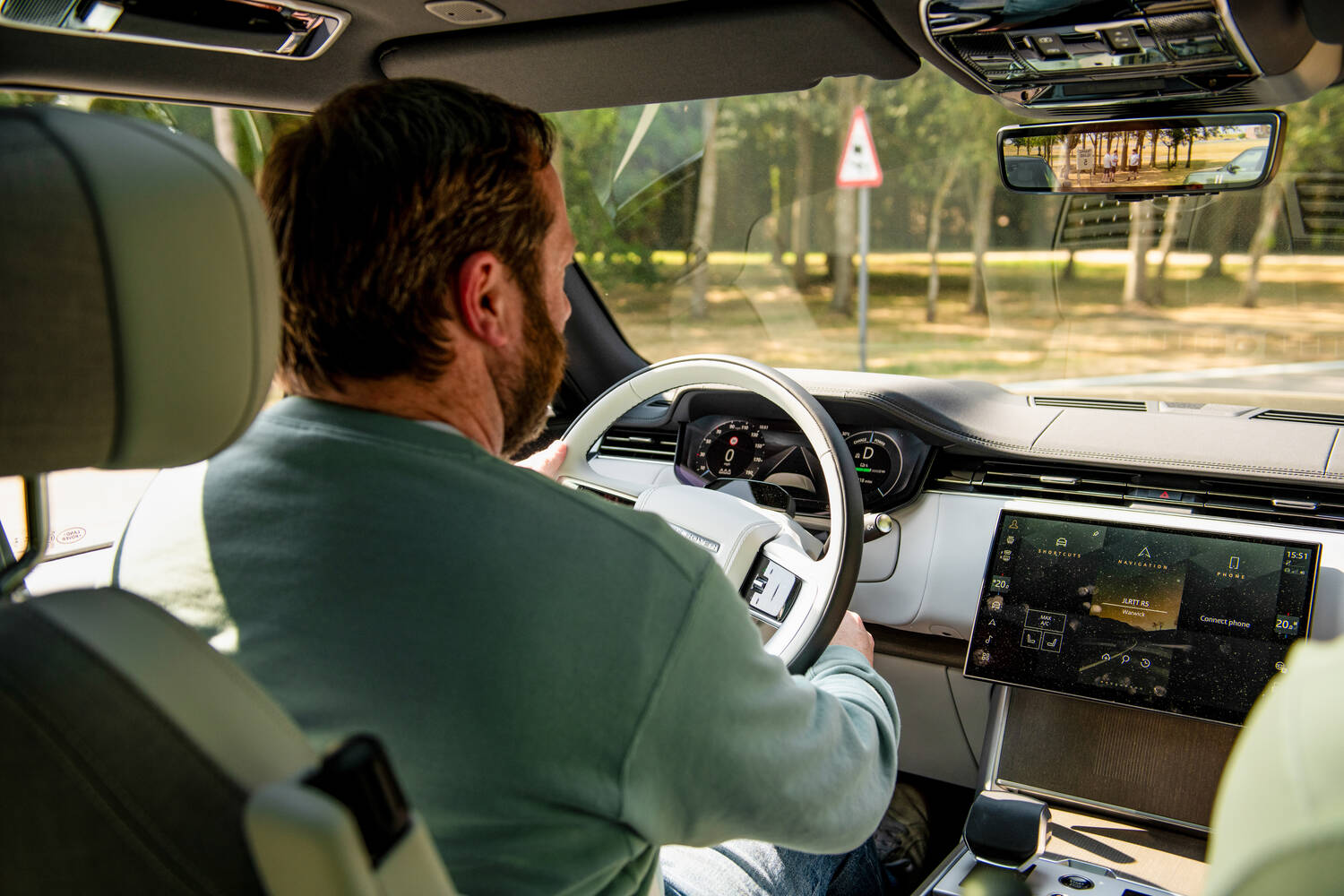
Echoing the exterior's reductive design language, the rest of the cabin strikes a good balance, doing without clutter but not appearing bare or stark.
Getting comfortable in the driver's seat
People of average height will find they tend to climb up into the cabin of the Range Rover Electric, and once in the driver's seat there is a great deal of scope to get comfortable.
Electrically adjustable seats provide a wide range of movement, and these settings can be saved in case there is more than one person using the vehicle.
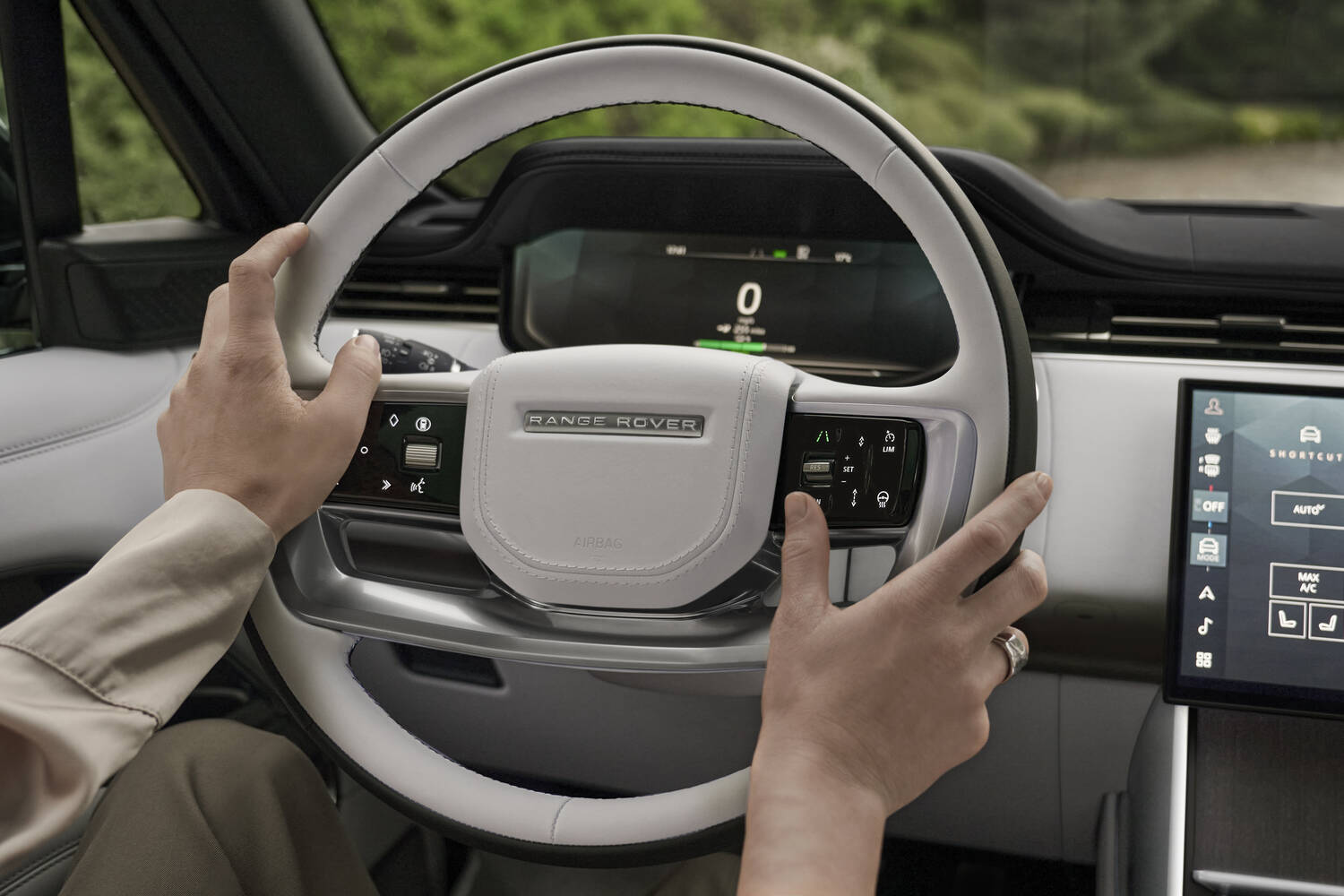
The steering wheel is a perfectly round affair and is not too thick-rimmed either. In a world of increasingly chunky and strangely shaped steering wheels, the Range Rover's feels refreshingly classy.
Again, a good range of movement for reach and rake makes getting comfortable an easy task.
Infotainment and technology
There is a slightly curved 13.1-inch touchscreen display that runs Jaguar Land Rover's native 'Pivi Pro' infotainment system. Its menu is laid out in a clear and logical format, and a powerful processor means it responds very quickly to inputs as you navigate through it.
There is also full smartphone integration with Android Auto and Apple CarPlay. A digital instrument panel behind the steering wheel clearly presents all the relevant driving information.
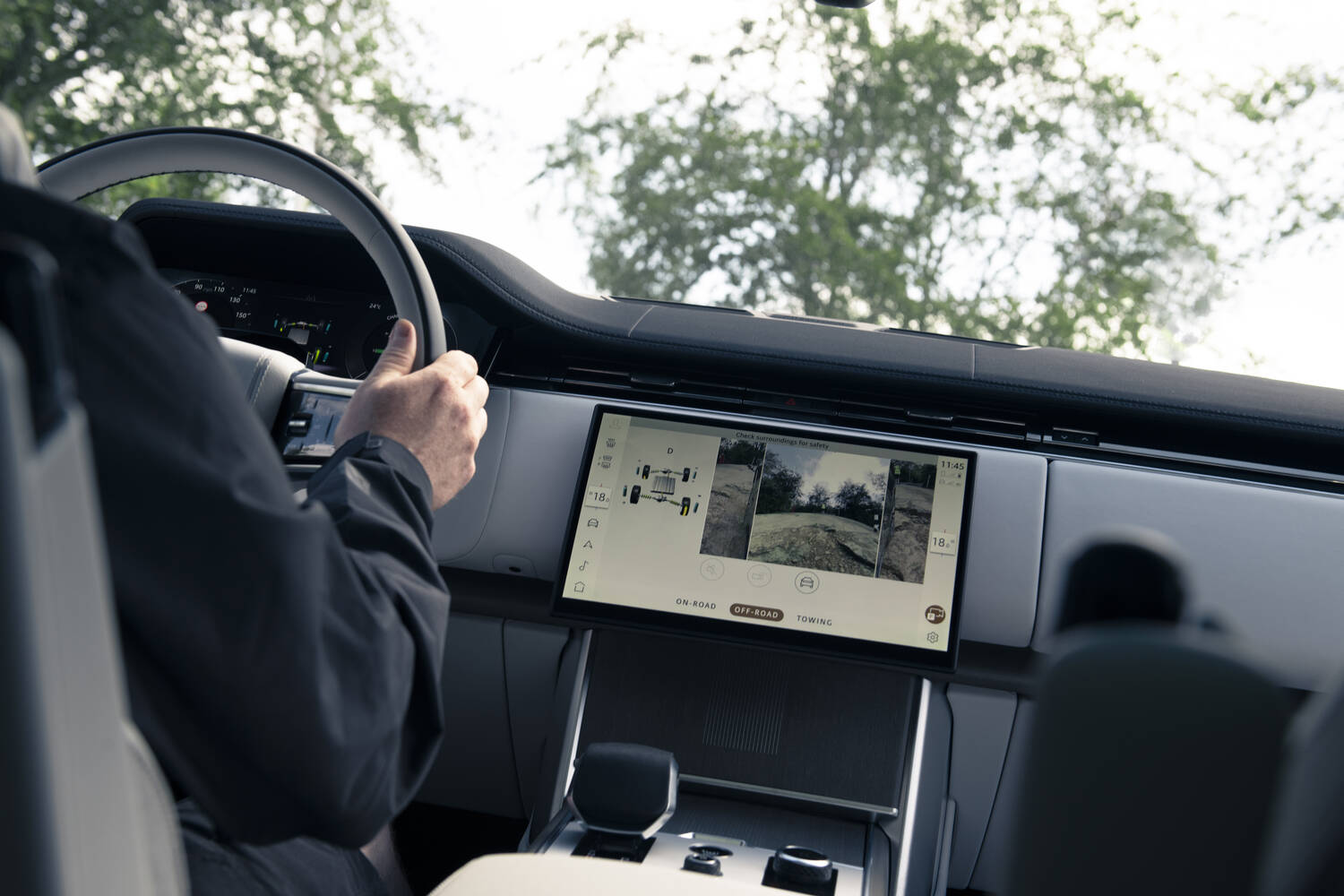
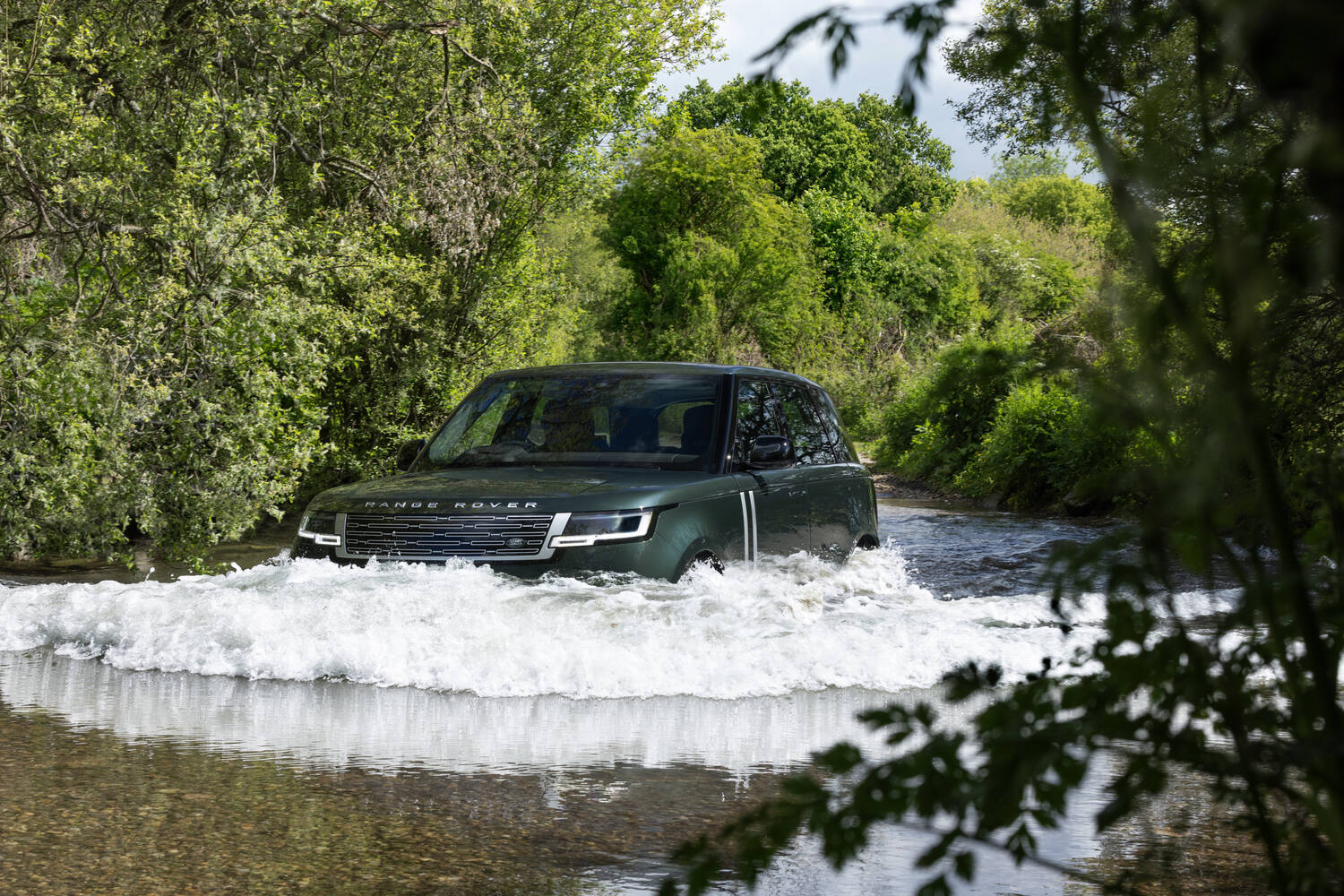
Several driver assistance systems are designed for off-road use, including a wade-depth sensing mode that uses the parking sensors to calculate whether the water you're about to drive into is too deep.
Another clever function uses the front and side cameras to make the bonnet appear transparent on the screen, highlighting where the front wheels are. While its main purpose is to help avoid rocks and obstacles when driving off-road, it is also useful when navigating tight car parks that have raised kerbs.
Practicality around the cabin
You get plenty of storage places around the cabin, including decently sized door bins and a generous compartment beneath the armrest in the centre console.
Multiple USB-C ports in the front and rear should keep everyone satisfied and their devices charged during a journey.
Rear-seat passenger space
Rear passengers are unlikely to find themselves wishing for more space thanks to the Range Rover Electric's size, especially its near-three-metre wheelbase. There is ample legroom and headroom.
Some may be surprised to see that, despite the electric powertrain, there is still a small transmission hump in the middle. This - which previously would house the all-wheel-drive transmission hardware - has been retained to accommodate the power electronics for the vehicle.
For those wanting maximum rear passenger space, the long-wheelbase model extends rear legroom by 193mm - and overall vehicle length by 200mm to 5,252mm.
A third-row option is available, but these seats don't provide as much comfort as those in row two.
Fitting child seats to the Range Rover Electric
Both of the outer rear seats have ISOFIX points and the middle seat could be wide enough for a booster, but you should check it out for yourself to be certain.
In the third row of the seven-seat Range Rover, there are two more ISOFIX points.
Boot space in the Range Rover Electric
The Range Rover Electric is one of a handful of SUVs to offer a split-tailgate setup, which brings a number of extra conveniences. Cargo space with all five seats in use is 925 litres and that increases to 2,210 litres when the rear seats are folded flat.
In the long-wheelbase variant, the boot space is the same when using all seats but grows to 2,602 litres when they are folded.
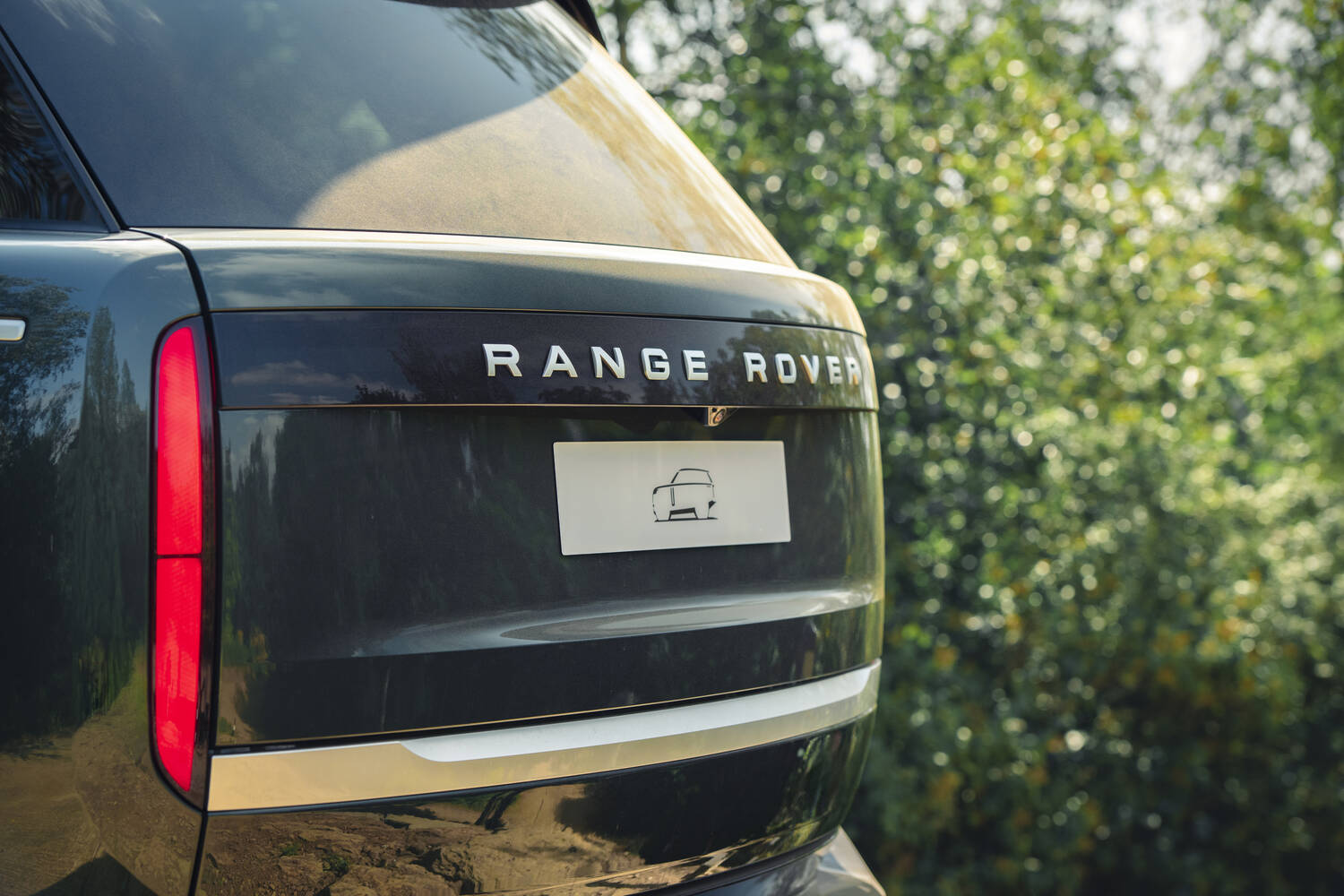
Despite its electric powertrain, there is no 'frunk' in the Range Rover Electric. The company says that customers have never complained about there not being enough storage space in a Range Rover, and with its front end not only being high, but also usually the dirtiest part of the vehicle, it felt that few customers would use such a setup.
Towing with the Range Rover Electric
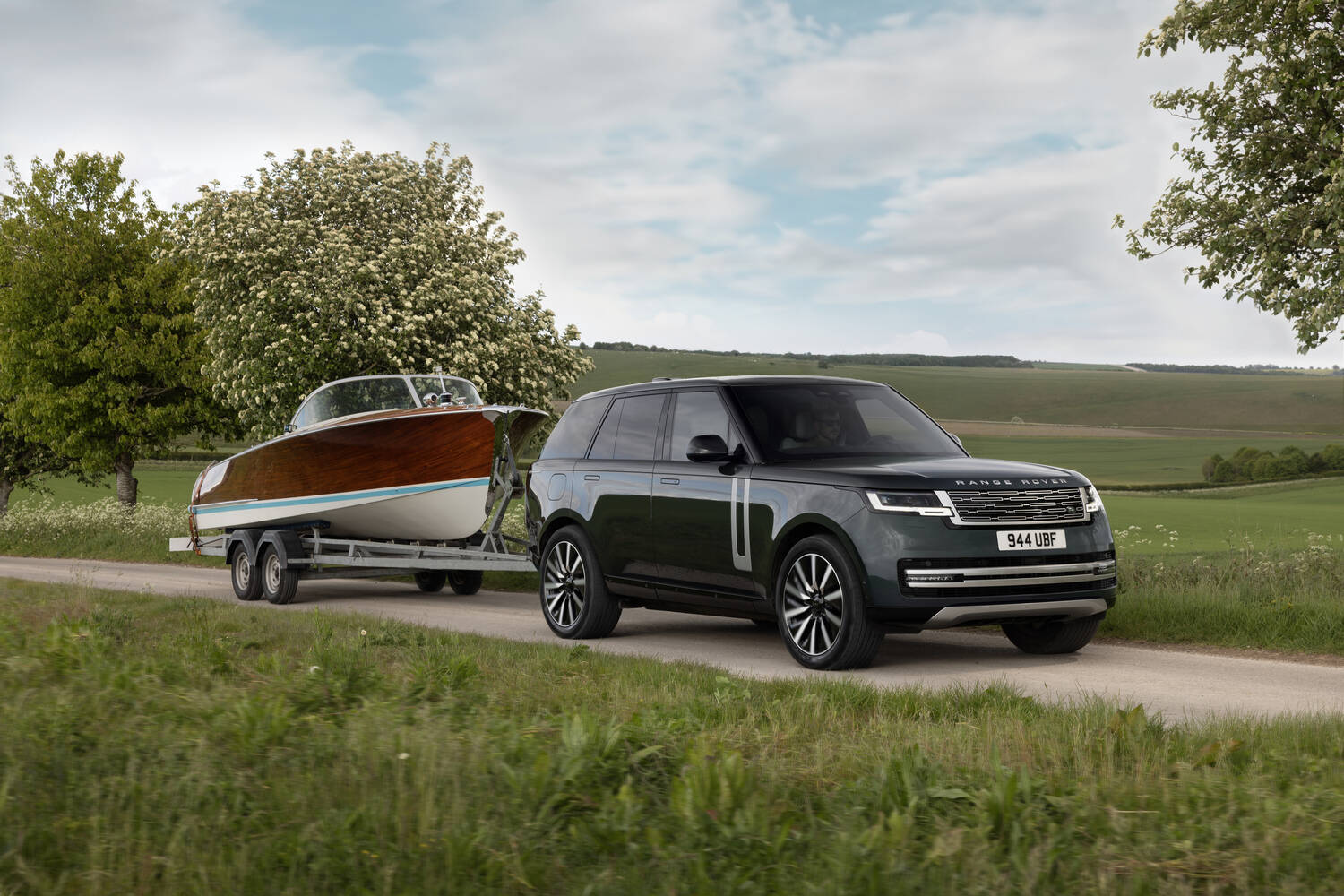
The Range Rover Electric is rated to tow up to 2,500kg with a braked trailer, and up to 750kg with an unbraked trailer. Other models in the range can mange 3,500kg, so this is one of the few compromises.
Safety in the Range Rover Electric
The Range Rover was assessed in 2022 by Euro NCAP and scored a maximum five stars, with an 84 per cent adult occupant protection rating, 87 per cent for child occupants, 72 per cent for vulnerable road users and 82 per cent for safety-assist systems.
Performance of the 2027 Range Rover Electric
- Matches the V8 model for power
- Suspension tuned for electric model
- Lower centre of gravity aids handling
Two power outputs are available for the Range Rover Electric, but the dual-electric-motor hardware is the same for both. The setup uses permanent-magnet motors on both axles, produced in-house by JLR.
The 450hp version generates up to 677Nm of torque and can accelerate from 0-100km/h in 5.6 seconds. In the more powerful 550hp version, maximum torque output climbs to 850Nm and that 0-100km/h acceleration time drops to 4.5 seconds.
Only the 550hp output is available in the long-wheelbase body style, but the additional weight means the sprint to 100km/h from rest takes 4.7 seconds.
Driving the Range Rover Electric in Gaydon, England
Words by Dave Humphreys on 2 September 2026
While the Range Rover Electric we drove still carries 'prototype' labelling on its exterior, it is a pre-production model that is very close to what customers will receive, making this a representative driving experience.
We're used to how hushed a Range Rover can be, yet there is an almost eerie silence as we pull out of the garages at the company's proving ground in Gaydon. Despite the prodigious torque available, the accelerator pedal is finely calibrated to provide a very controllable degree of movement without being overly sensitive. The single-speed automatic transmission removes another potential interruption to refinement as the Range Rover seamlessly surges forward.
The air suspension does a comprehensive job of smoothing out the road beneath the car, which is deliberately far from perfect in this test facility to simulate real-world conditions. It is not entirely a carpet of air; sharper creases in the tarmac can momentarily unsettle the monolithic Range Rover, but its damping quickly compensates. So too do the plush front seats.
Through bends, the lower centre of gravity of the electric model is noticeable, and while you always sense the Range Rover's substantial mass, it feels low in the vehicle, resulting in a safe, surefooted sensation.
Interestingly, the double-stacked battery contributes to a 56 per cent increase in body stiffness over the equivalent plug-in-hybrid Range Rover.
The steering has an appropriate amount of weight and the steering wheel itself feels good in your hands. There is a commanding view of the road ahead, something that is not always the case with modern SUVs, though this also underlines the overall size of the Range Rover.
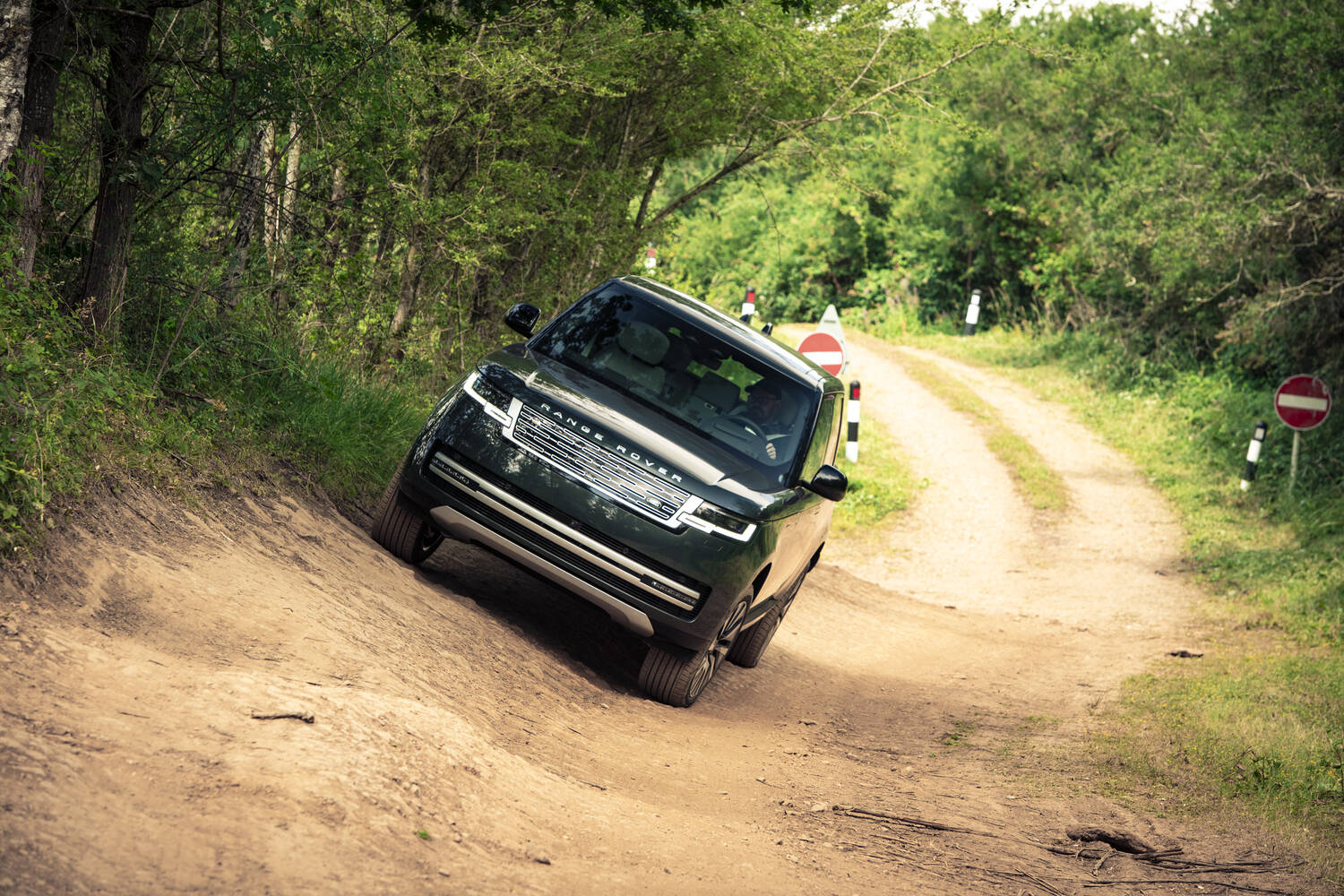
Turning off the tarmac and onto one of the numerous off-road trails at Gaydon provides an opportunity to sample some of the drive modes designed for use in the dirt.
The existing Range Rover remains an impressively capable vehicle on more challenging terrain, even if a lot of owners tend to stick to the black stuff.
However, the electric powertrain adds another dimension of control thanks to its instant torque and how precisely you can deploy that on inclines and rocky surfaces.
In a combustion-engined version, some work is required to have the engine and transmission at the right point, but the electric powertrain makes it remarkably easy to move and pivot the vehicle with millimetric precision using tiny ankle movements.
Returning to tarmac, the Range Rover automatically switches back to its normal road setting and, while there are no motorways to try it on this time around, rolling on the power as you might when joining a slip road leaves us in no doubt about its tremendous torque output.
Yet it is the silence and serenity of the cabin that leaves the biggest impression. This electric Range Rover is exactly what you might expect such a machine to be.
Range, battery, charging and running costs of the 2027 Range Rover Electric
- Single 118.5kWh battery is available
- Official range is 600 kilometres
- 22-minute 10-80 per cent charge
The Range Rover Electric is a big car, and that requires a big battery. There is just one battery available and, at 118.5kWh, its capacity is certainly substantial.
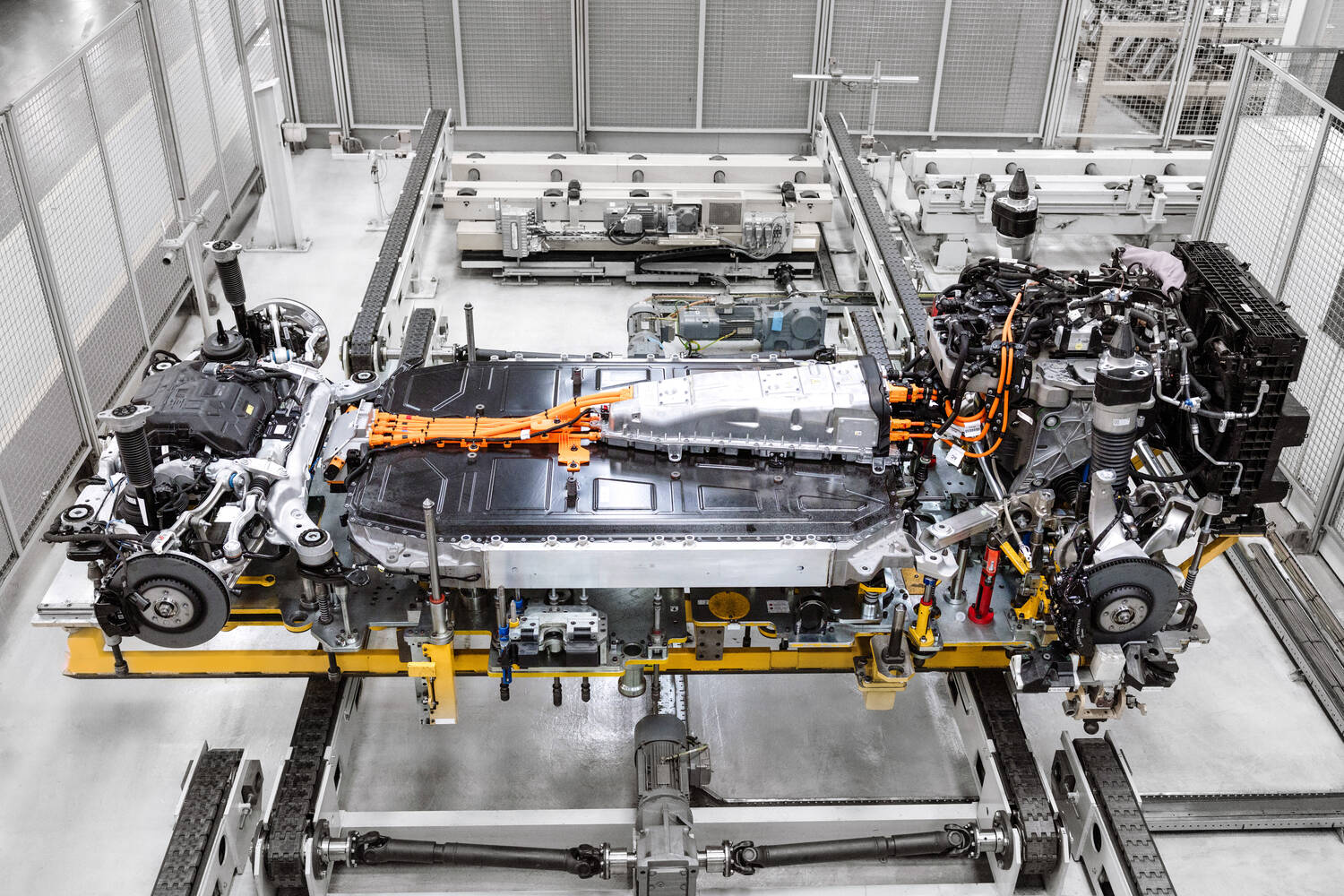
It is a fully sealed battery pack that enables the Range Rover Electric to perform as well off-road as its combustion-engined siblings, including a wading depth of up to 900 millimetres.
Battery options and official range
The NMC battery is 'double-stacked' and the Range Rover Electric runs an 800-volt architecture that provides an official combined driving range of 600 kilometres.
Real-world range and efficiency of the Range Rover Electric
Our time behind the wheel of the Range Rover Electric was limited and included a high percentage of off-road driving, so we can't quote an accurate real-world range figure.
However, Range Rover states that while the official range is 600 kilometres, it expects 535 kilometres to be more realistic.
Charging up the Range Rover Electric
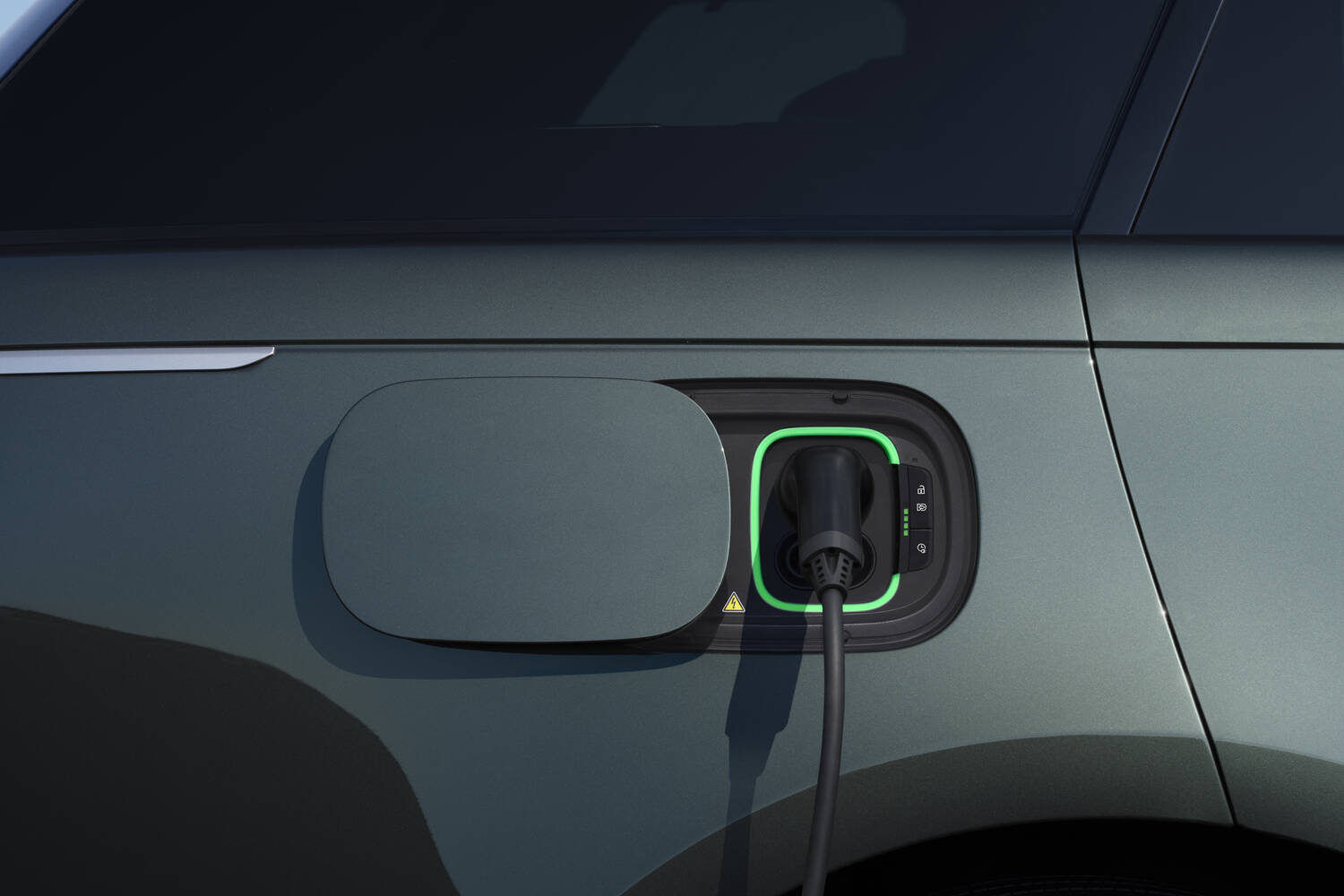
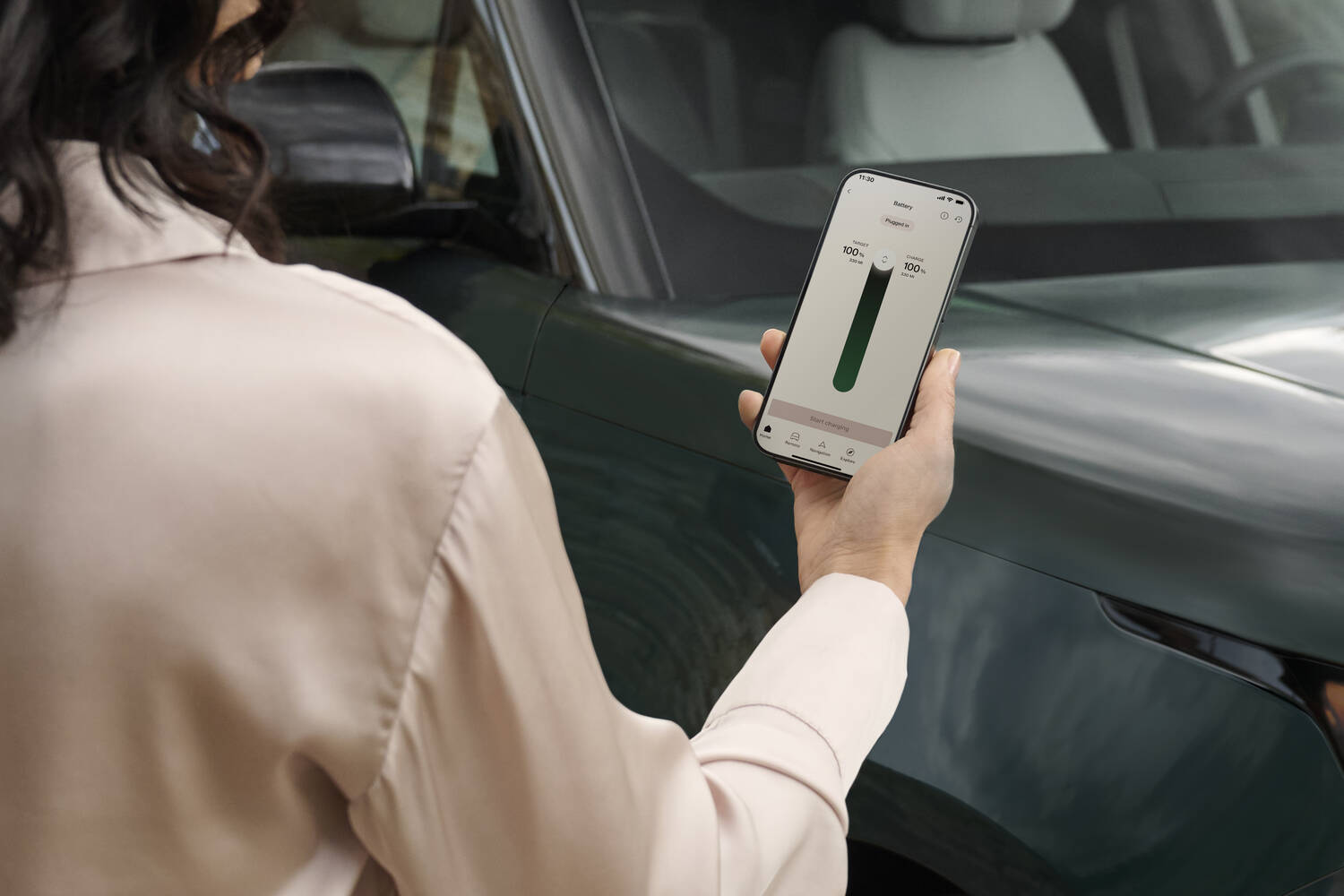
The 800-volt architecture in the Range Rover Electric enables a peak DC charge rate of 350kW. That means it can recharge its battery from 10 to 80 per cent in 22 minutes.
At that rate, it can add 220 kilometres of driving range in ten minutes. When using a 400-volt DC charger, the maximum rate drops to 250kW.
On three-phase AC chargers, 11kW charging is standard, but this can be optionally upgraded to a peak AC rate of 22kW.
Servicing the Range Rover Electric
The service interval for the Range Rover Electric is expected to be every other year or every 24,000 kilometres, whichever comes first.
Range Rover Electric warranty
The Range Rover Electric is covered by a five-year or 150,000-kilometre warranty, while the high-voltage battery has a separate warranty lasting for eight years or 160,000 kilometres.
Irish pricing & rivals to the 2027 Range Rover Electric
- Irish pricing starts at €160,620
- Twelve model variants
- Long-wheelbase model gets 550hp
Pricing for the Range Rover Electric in Ireland starts at €160,620 for the 450hp SE standard-wheelbase specification. That price increases to €169,810 for the HSE trim level and on to €188,170 for the Autobiography.
Upgrading to the more powerful 550hp version, which is available from the HSE grade, costs €178,560, rising to €196,820 for the Autobiography. A First Edition model costs €201,680 while the SV is €247,920, with the SV Ultra costing €289,920.
The long-wheelbase Range Rover Electric is available only in 550hp guise, with pricing starting from €288,190 for the SV. An SV Ultra Black is €301,700 and the line-up tops out with the SV Ultra at €325,360.
Verdict - should you buy the 2027 Range Rover Electric?
While the Range Rover Electric has a slightly higher starting price than its plug-in-hybrid sibling, its breadth of performance, potential for lower running costs and ability to tackle challenging terrain are significant strengths. Refinement was never an issue with the Range Rover, but the electric powertrain elevates it to another level.
Some may find its sheer size a challenge in certain conditions, and large SUVs are not universally popular, but the switch to an electric powertrain addresses some of the criticism levelled at them. However, the overriding experience is the luxury and refinement that the Range Rover Electric offers, and it makes a compelling case for itself among electric luxury SUVs.
FAQs about the 2027 Range Rover Electric
Does the Range Rover Electric support vehicle-to-load?
Yes, the Range Rover Electric is fitted with V2L (vehicle-to-load) technology, which allows users to plug in external devices such as an e-bike charger, cooler boxes or even a coffee machine and run them with energy stored in the high-voltage battery.
Want to know more about the 2027 Range Rover Electric?
If there's anything about the Range Rover Electric we've not covered, or you'd like help in choosing between it and other cars, you can avail of our expert advice service via the Ask Us Anything page.