

How has Polestar done this?
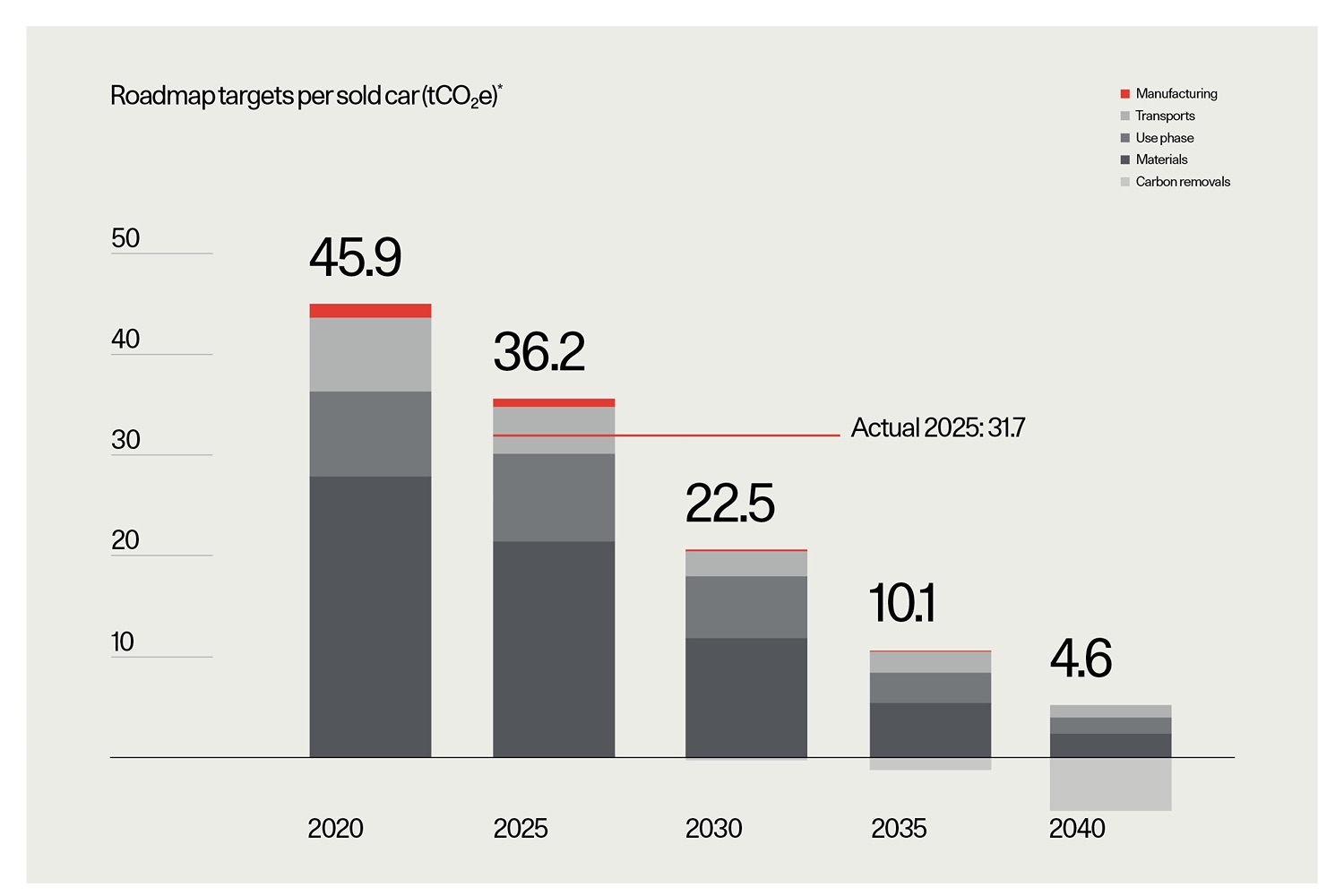
Polestar says it's been focusing on reducing the total lifetime emissions of all its vehicles, including manufacturing. The current Polestar 4 - a cross between a sports saloon and a high-performance SUV - is the company's lowest-carbon-footprint model to date, and its success has been critical to the overall reduction.
That reduction comes as Polestar grew its sales past the 60,000 mark, expanded into 28 markets globally, and introduced three all-new models.
Where does Polestar go from here?

Well, Europe is still Polestar's biggest market - representing 75 per cent of the company's sales - and the plan is to be a fully carbon-neutral company by 2040. Michael Lohscheller, Polestar's chief executive, used the announcement to put a shot across the bows of rivals. Lohscheller had been one of the few voices in the car industry not calling on the EU to water down its 2035 combustion engine ban, and now he says those rivals are deliberately choosing not to trim their emissions further.
"If you are not reducing emissions while growing, you are choosing not to. Electrification delivers clear value for customers: lower running costs, lower emissions and greater peace of mind, as volatile oil prices and fuel scarcity mean pump anxiety is increasingly replacing range anxiety. As clean electricity scales, electric vehicles are becoming not just the sustainable choice, but the smarter, more reliable one” said Lohscheller, who also pointed out that at a societal level, electrification offers a clear path to reducing lifecycle GHG emissions from passenger transport, as renewable energy and EV adoption scale together, as well as noting that as electricity becomes cleaner and more stable than petroleum-based fuels, the role of electric vehicles as a climate solution is becoming even more evident.
What can Polestar do to drive its emissions down again?

Currently, Polestar is researching a number of different strategies to help it achieve the goal of making a fully carbon-neutral car, without offsetting, such as planting trees, by 2035. Polestar's 'Mission 0 House' is its climate research centre in Gothenburg, and it's working on such things as a large‑scale pilot for ultra‑low‑emission steel; researching new materials for batteries which have a lower environmental impact; developing bio‑based textile alternatives; and studying tech that harvests CO2 to turn it into new materials.
Fredrika Klarén, Head of Sustainability at Polestar, said: "The Polestar 0 project pushes us into new territory. While much of the industry invests in hybrids and combustion engines, we focus on solutions that eliminate emissions entirely. The innovation emerging from this project shows the power of collaboration and material science, and importantly, how well positioned we are to move the industry forward.”
If there is anything about this story we have not covered, you can avail of our expert advice service via the Ask Us Anything page.