

This was basically a compressed air cannon, with a bore big enough that it could fire a supermarket chicken at prototype aircraft to ensure that their windscreens and canopies would withstand bird strikes in flight.
Keen to get some data, the chicken gun was borrowed by teams of British aviation experts, who instantly saw troubling results — every time the gun was used, the prototype windscreen would shatter.
If the impact were real, lives would have been lost. The US experts asked to see the British data, and having looked at all the parameters, offered this piece of sage advice: “Try defrosting the chickens first…”
If you think firing a chicken out of a compressed air cannon sounds mad, well you’d kind of be right, but equally every time you step onto an aeroplane you should really be quietly thankful that such madness exists.
It’s only through considering the worst that can happen, and then engineering for it, that safety improves, and our lives are made that little bit safer.
From chickens to moose
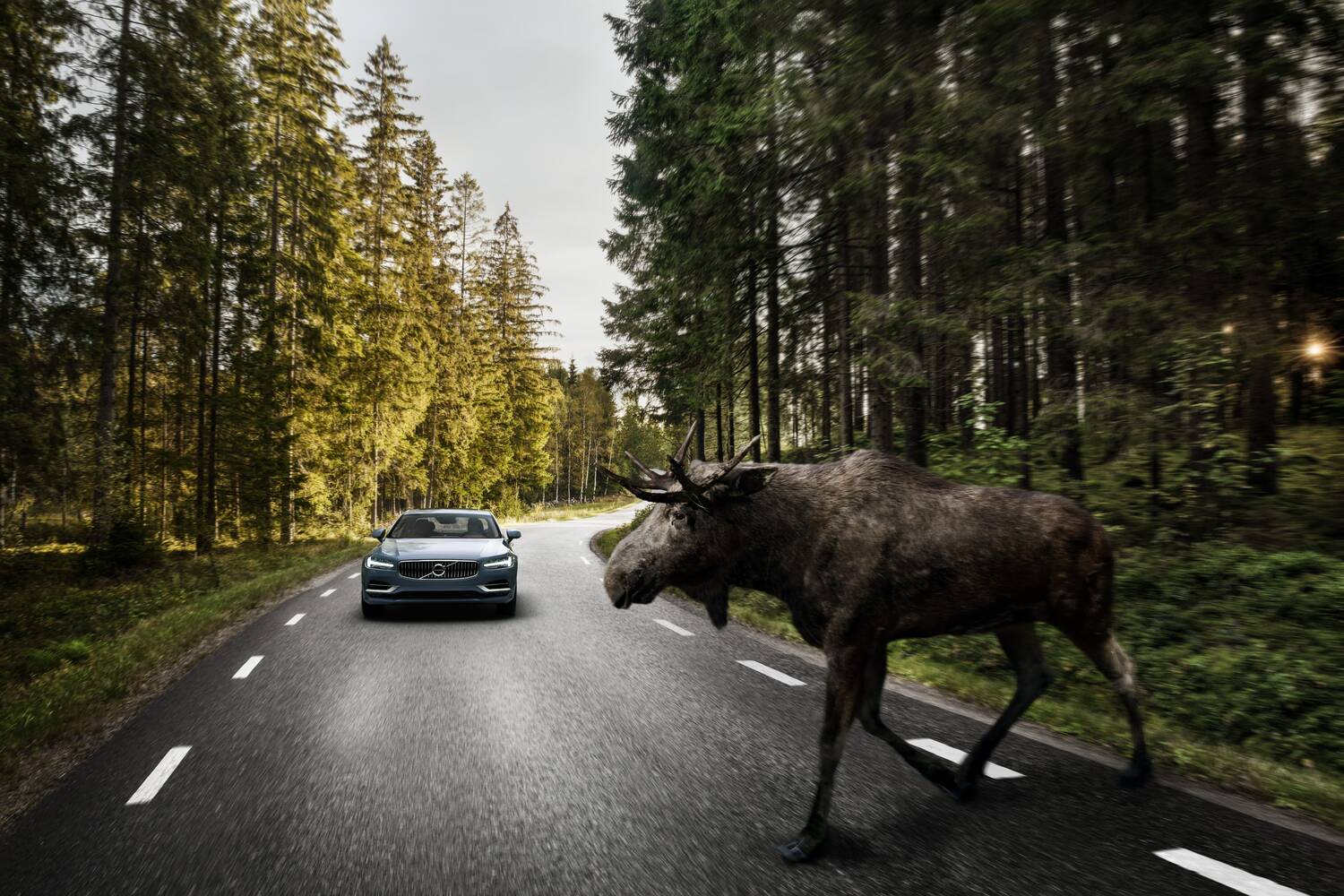
This is, of course, central to the philosophy of Volvo. Volvo and safety have become so inextricably intertwined that it’s become cliché to even mention it. However, as with so many clichés, once you start lifting the lid a touch, you find some unexpected depths. Which is how we come to the moose test.
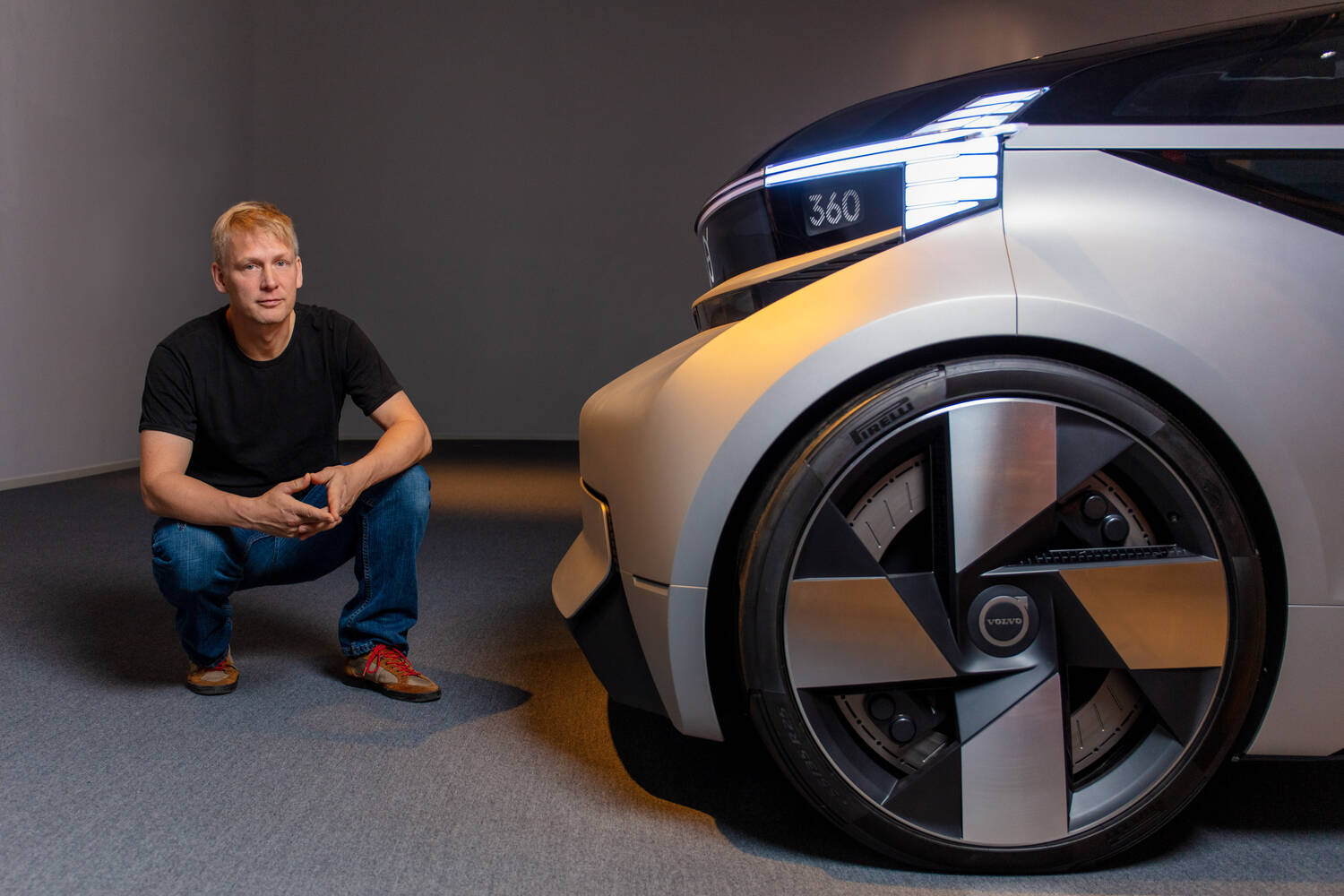
At a recent event, where Volvo unveiled the updated versions of the EX40 and XC60, Complete Car got chatting to Mikael Ljung Aust, the company’s senior technical safety leader, who gave us a fascinating dig into the way Volvo thinks about safety. But first, the moose.
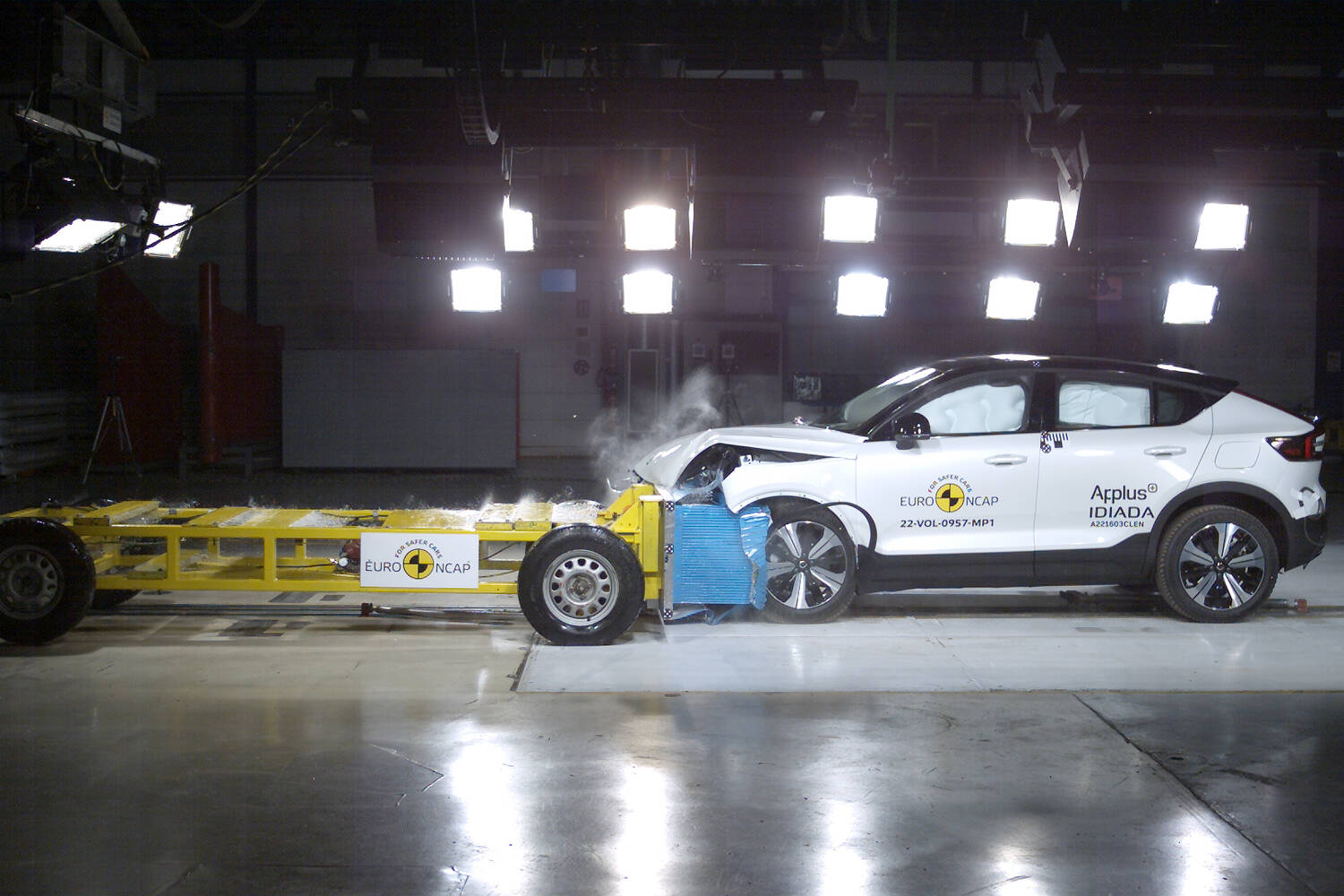
“We have two sides of the safety coin. We have one which is about making sure, as far as we can that you don't crash to begin with. This is always the best option,” said Aust.

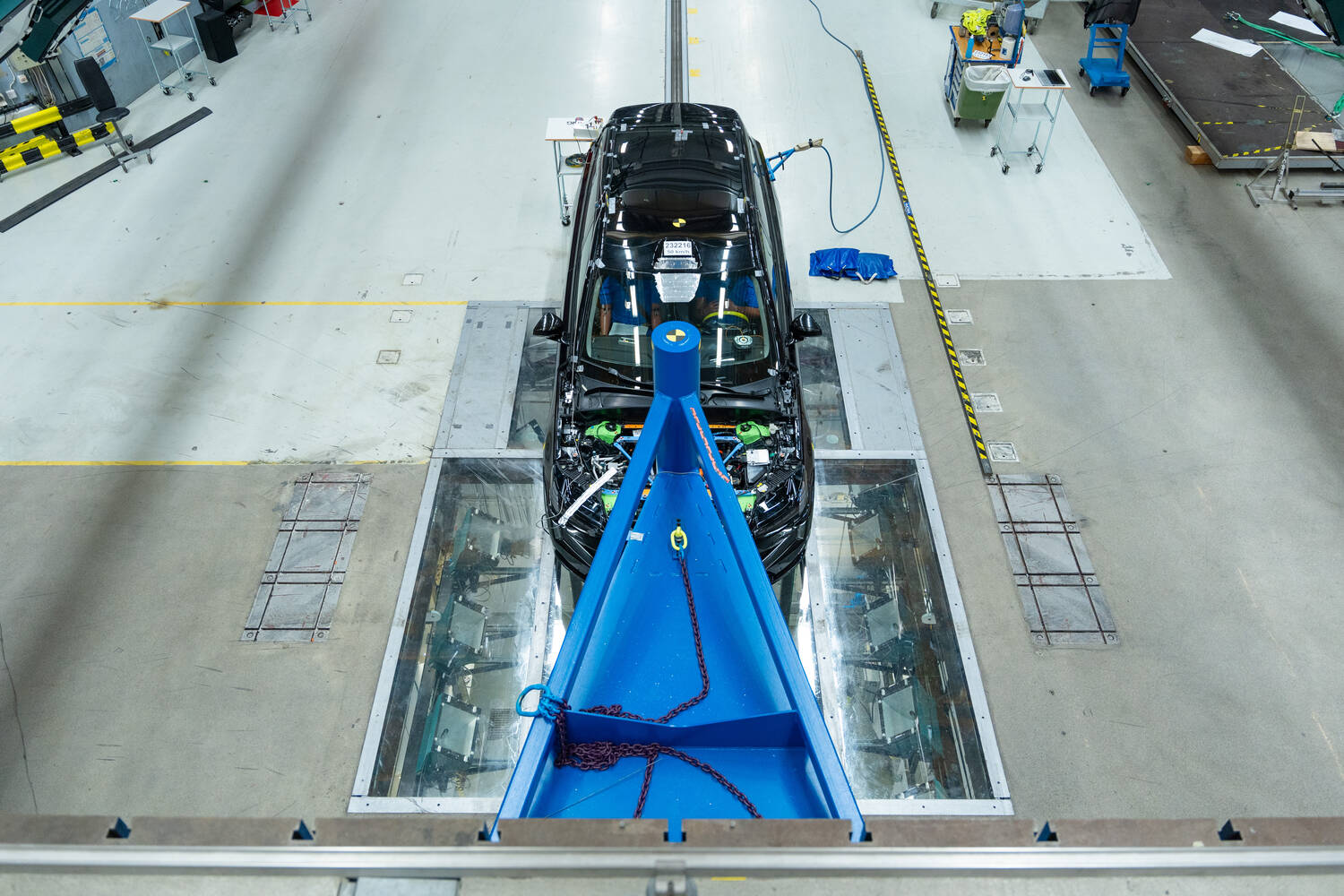
“And the second one for those instances where that's not sufficient, then it’s about protecting you, both those inside and outside the car to make sure the least possible amount of harm is done. So these cars, all of them, they are following the Volvo car safety standard. We like to talk about that, and it's a shorthand for essentially a lot of research we do into real crashes. We ask people: ’What the hell were you thinking, and how did that differ from how the world played out?’ On the injury side, we get the injury descriptions from the hospital and figure out what part of the car actually hurt people in this way and can we design it better. Then these new cars then are brought up to the latest version of that standard. We call it a standard, but it's not fixed in that sense. It's a moving target in the sense that new types of crashes occur and we need to follow on from them.”
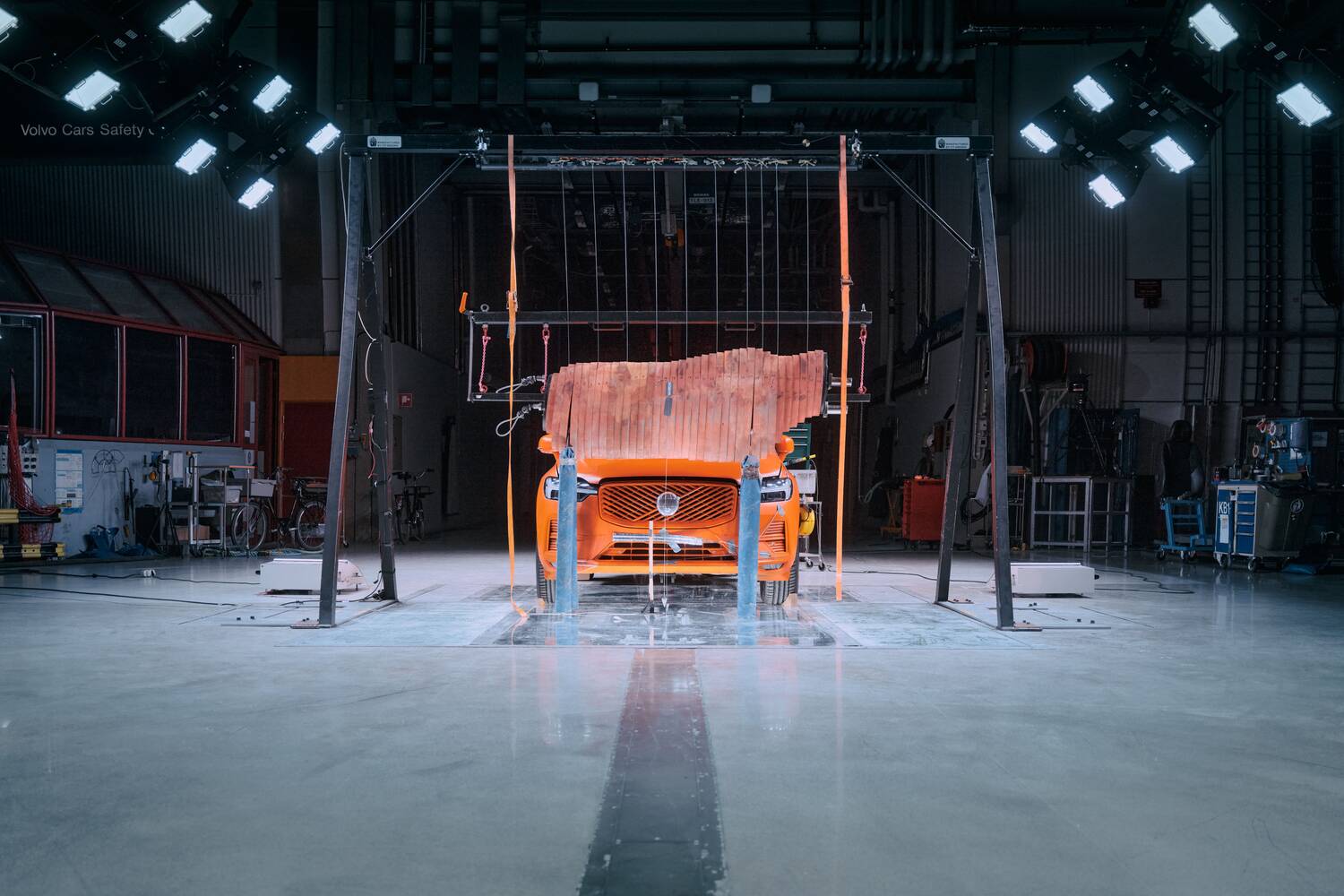
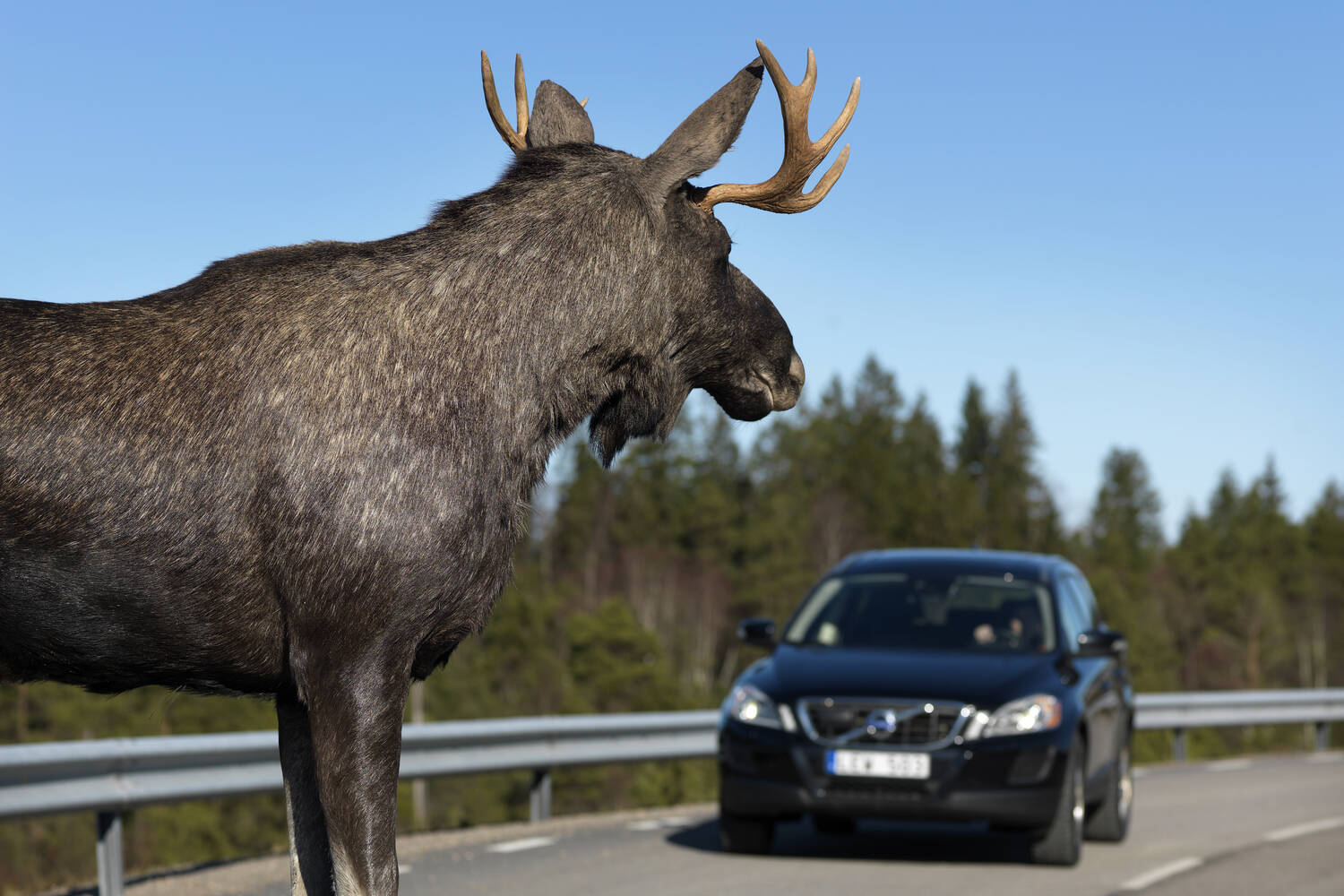
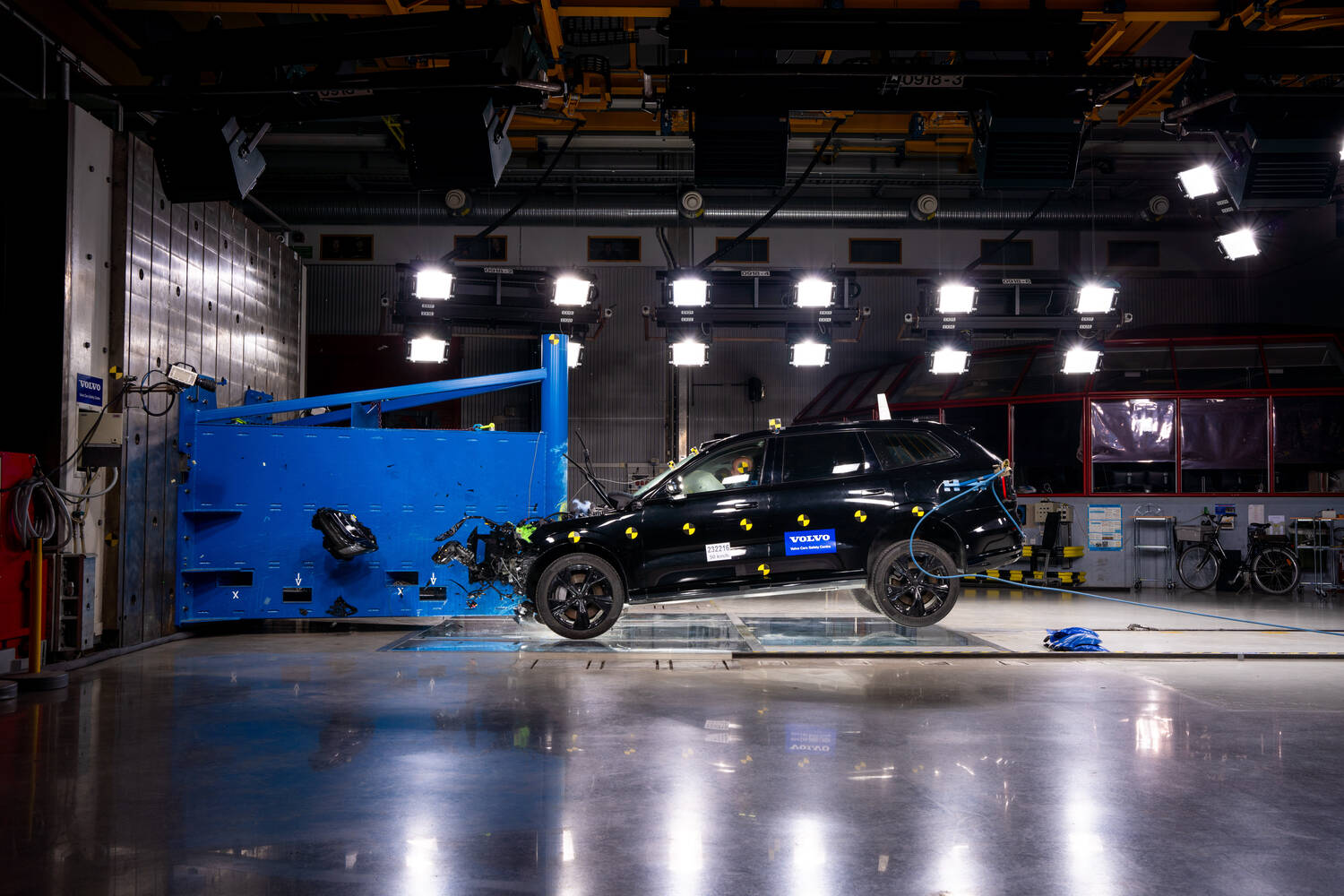
So far, so pretty much exactly what you’d expect of Volvo. However, Aust isn’t finished. He’s got a video to show us, which involves 500kg of simulated moose meat being smashed into by a test car travelling at 70km/h.
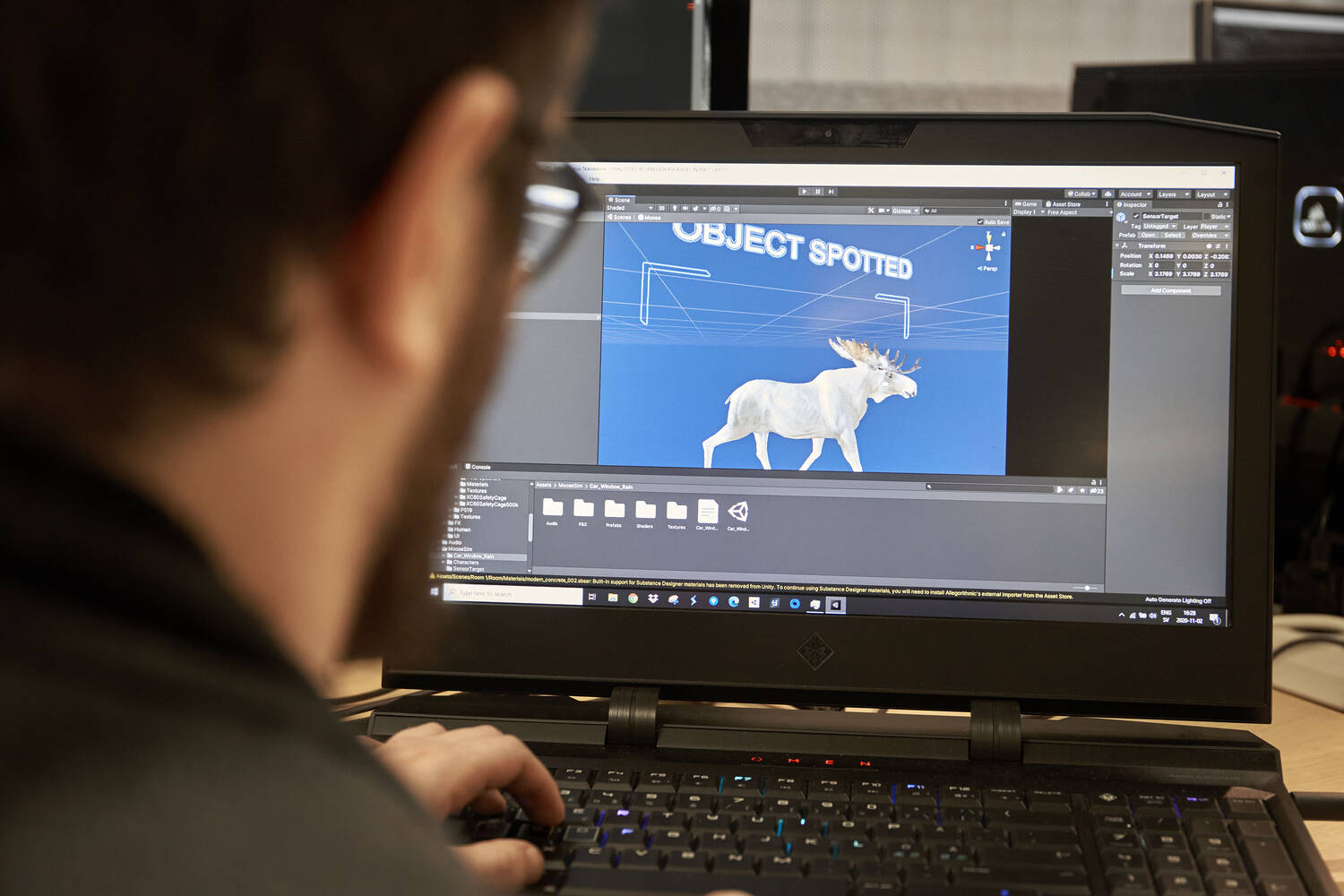
“Here is Mr Moose,” said Aust, pointing to the very specialised crash test dummy, which looks like a giant side of beef made from rubber.
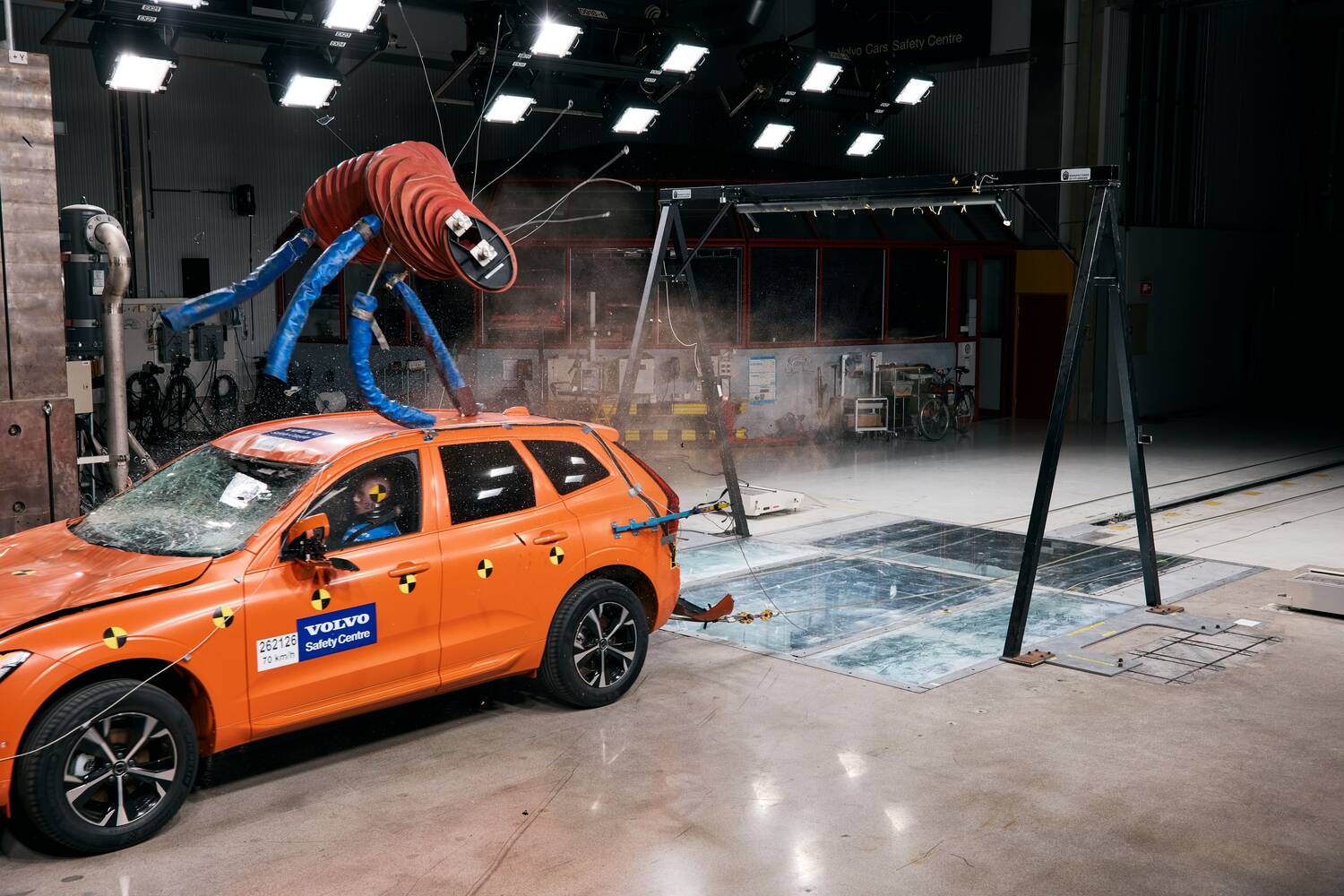
“His name is actually Bengt, and he weighs around 500kg. There are only two of these in the world, and we have them both. And of course, if you want to test whether a car can withstand the impact of a moose, you need a moose type, and this is not something that's in regulation or rating somewhere. It's because we have found that people get injured in moose crashes, and then we need to do something about it. The actual crash is pretty much over in the blink of an eye. Parts of the blink of an eye, if you're technical, because a blink of an eye is like 200 to 300 milliseconds, and the crash is done in less than 100 milliseconds. So, part of the blink of an eye. But what you can see here, which makes this interesting, is that as the car hits the moose, it never touches any bit of the front.”
Animals with long legs
This is the perennial issue involving cars hitting animals with long legs (horses are a problem too, in this respect). The legs tend to be long and spindly, and not to interact much with the crash structure of the car, and are instead basically swept aside, leaving the animal’s body to come flying across the top of the bonnet, aimed right at the driver’s face.
A 500kg body rushing at you at 70km/h is going to smack into the windscreen with a force as high as 94 kilonewtons. Which is a lot.
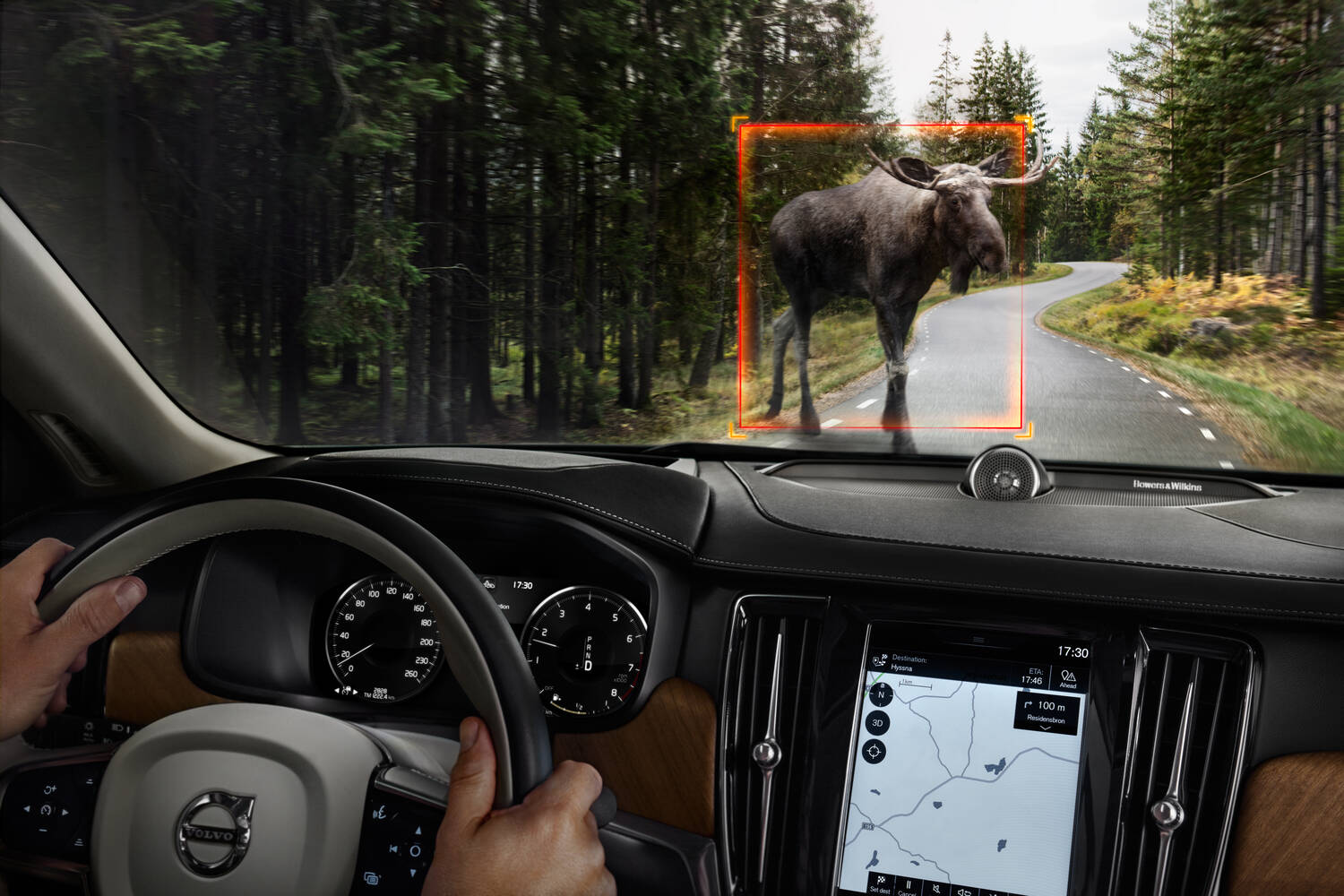
And yet while the glass of the windscreen smashes, it doesn’t break and the windscreen pillars don’t buckle.
“You have to make sure the A-pillars don’t fold, so they need to be made of super-strength steel. And they need to be connected too, or they’ll fold inwards toward one another, so there’s a connecting crossbeam between them,” said Aust.
“It's really bad for the moose, as they typically don't survive. They literally don't know what hit them. It's pretty fast, something like 20 meters per second. It's not evolutionary moose speed, but since the cabin is intact, the person inside might get some glass splinters, but no moose in their lap.”
This is kind of what you expect from Volvo, albeit at the outer edges of engineering capability. It’s also undeniably cool to watch a car seemingly effortlessly deflect half a tonne of incoming simulated ungulate (that’s the collective noun for a hoofed mammal, incidentally).
What’s just as interesting, though, is what Aust was able to tell us about Volvo’s broader safety philosophy, and how it deals with unexpected new safety challenges.
He mentioned e-scooters...
“I usually mention e-scooters,” said Aust. “They weren’t really in the landscape before.”
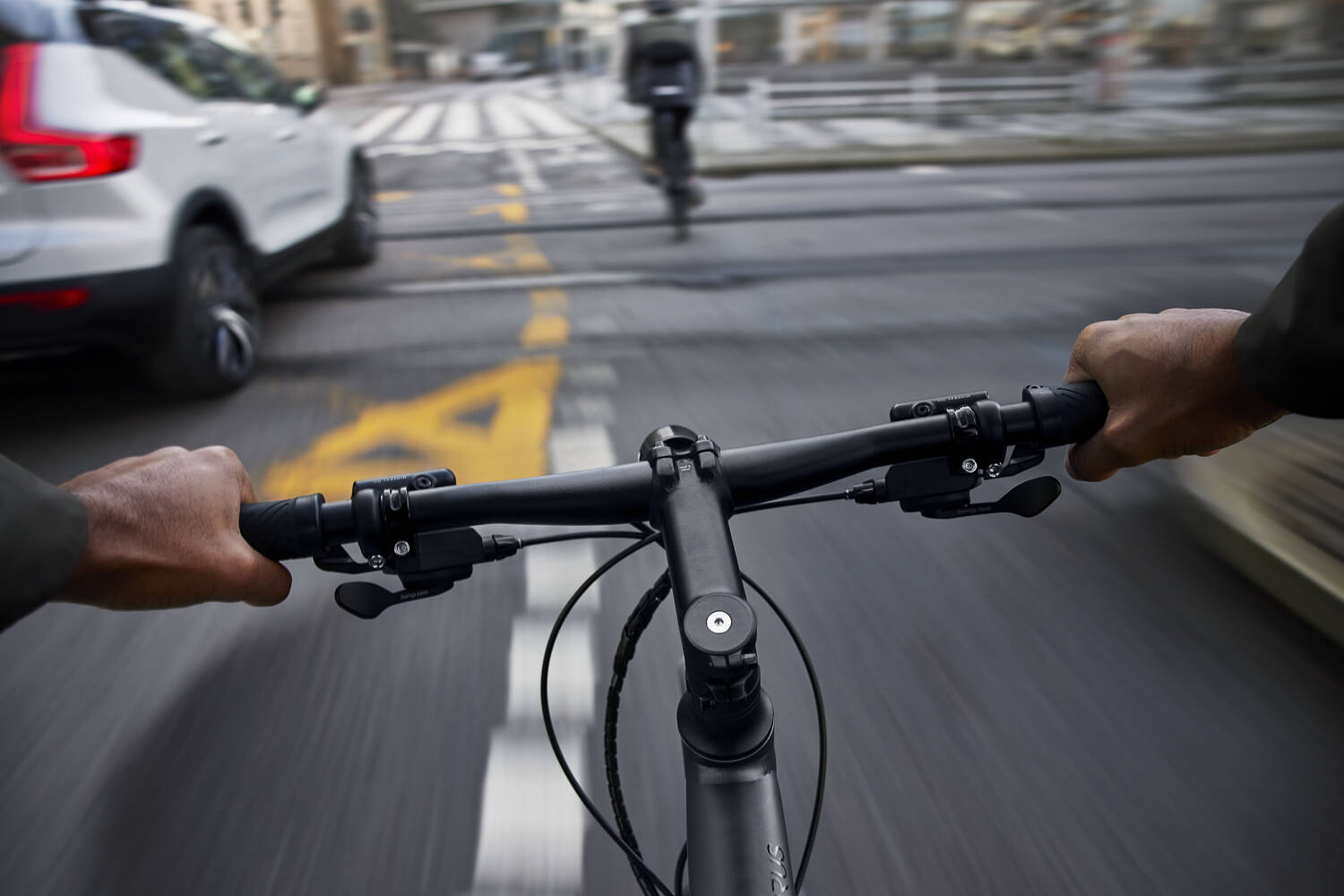
Given recent controversy surrounding e-scooters, I’m keen to know Aust’s take on them, what with him being a safety expert working for a company acknowledged for its safety expertise.
“I think they're lovely, wonderful people. And they have no idea what they're doing,” is his dry response.
“Interestingly, when you look at the demographic of those involved, you know we used to have in Scandinavia a fairly high peak of accidents involving mopeds. At 15, you could get a moped; 15-year-olds - as they say in psychology, which is my field - they maybe don't have a fully developed frontal cortex. Shorthand for being a little stupid in traffic,” said Aust.
“So we used to have a peak in our accident statistics for 15-year-olds. We still do, but they've transitioned from mopeds to e-scooter. So the means of transportation has changed. The reasons for the crashes remain, so to speak. The first step, like the important bit, if you want to do things right, we call it designing for people as they are, not as engineers want them to be, which is something very different. And the first thing to recognise is that, you know, any object, any item, any room, any space, it presents what we call affordances. Like a certain thing a room is inviting you to do. Some of the things feel difficult. A door handle invites to be pulled. Openings invite to walk through. There is this physical, pull and push, and people just do what's possible. For e-scooters, there seems to be a few affordances that weren't there before that have to do with tickling of the senses when you do a nice swerve and the acceleration and all of that. It's there for the taking. People like it. That gives them a kinematic profile that's weird compared to what we've seen before, but we have to live with it. It's not going away.”
This feeds into Volvo’s entire philosophy when it comes to safety, according to Aust: “There is a school of thought which is very much set on ‘let's shape the people. Let's not adapt.’ Like in all these speed warnings, for example, there is a strong legislative trend that they believe that if you were behaving like if you were in a traffic school, everything would be fine, and all we have to do is bring the traffic school into the car, and everyone would behave like a perfect traffic school student. And the only reason I don't believe in that is because it doesn't work for real people. Otherwise, it's a great plan. But there's a slight dissonance with reality. So, we try to design for drivers as they are, so to speak.
“So, on the physical side of that, we have all the crash protection, like how you avoid breaking bones and other things in a crash. But also, on the prevention side of things, these cars — the new EX40 and XC60 — they have a new sensor set, that sees the outside world better than previously. The reason we say this is more than a facelift is that the cars also get a new brain, which is typically not included in a facelift. If you go to your favourite dermatologist, you don’t get a new brain. These cars do — a core computer that's very good for thinking about what the sensors see, because if no one does the thinking, not much will happen. And it's also one of these upgradable things. So as your car ages, it will not get old. It'll stay tuned as far as we can stretch the hardware and sensors.”
Aren't powerful EVs dangerous?
Which leads to an interesting question. Volvo has recently been launching lots of new electric models — EX30, EX40, EX60 — with massive power outputs. The latest EX40 P8 AWD Performance, for example, has up to 442hp, while the EX60 P12 has a whopping 680hp. So how does Volvo square its tradition for safety with offering supercar power outputs for customers who might be trading up from, say, an old 190hp diesel?
“We’re working on it, is the best answer,” said Aust. “If you look at it from the excellent research side of things, people have been pushing the wrong pedals from time to time. That's always happened. I once investigated a crash where a guy had an old Volvo 240 and managed to put it on the roof from standstill. But what we're seeing is that the consequences of doing that in a more torque-happy car is of course sometimes larger, so we have a lot of internal discussions on how best to approach this. There's a very strong part of the discussion that says we've always believed the driver is right and are doing the right things. If we were to intervene with you pressing the accelerator, that means we are deciding you are wrong, you are not right in this context.
“So, figuring out ways where we can kind of safeguard around those kinds of mistakes that drivers do make, without leaving you with a car that's all of a sudden not moving for no reason — that’s the very fine balance we're trying to strike. We have some ideas. We have some stuff that's probably going into production, and we are investigating how to make sure we're right all the time because this is really sensitive.
“If you take away the use of the accelerator from people, well, let’s not go there. Yeah, and it's not just you know your the car won't go for a while. It's like you're probably aware, like we say, that most people have a very strong sense of themselves being slightly better than average drivers. So, we’re aware. We're trying to find the best safeguard we can put in place while keeping a car that's still behaving consistently and where you understand if it's sometimes not doing what you think it should, that it actually is doing that for a reason you agree with.”
If there is anything about this story we have not covered, you can avail of our expert advice service via the Ask Us Anything page.