
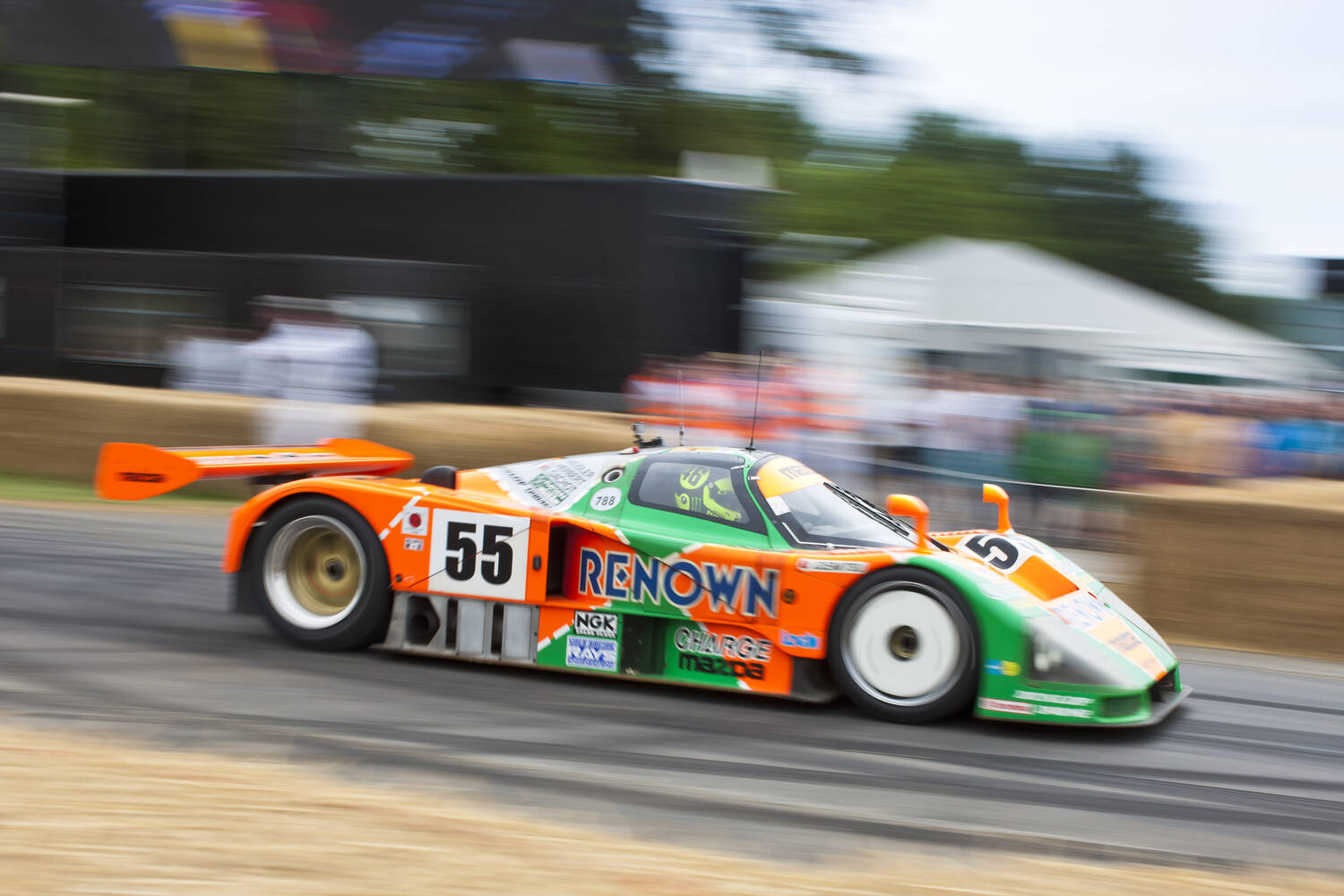
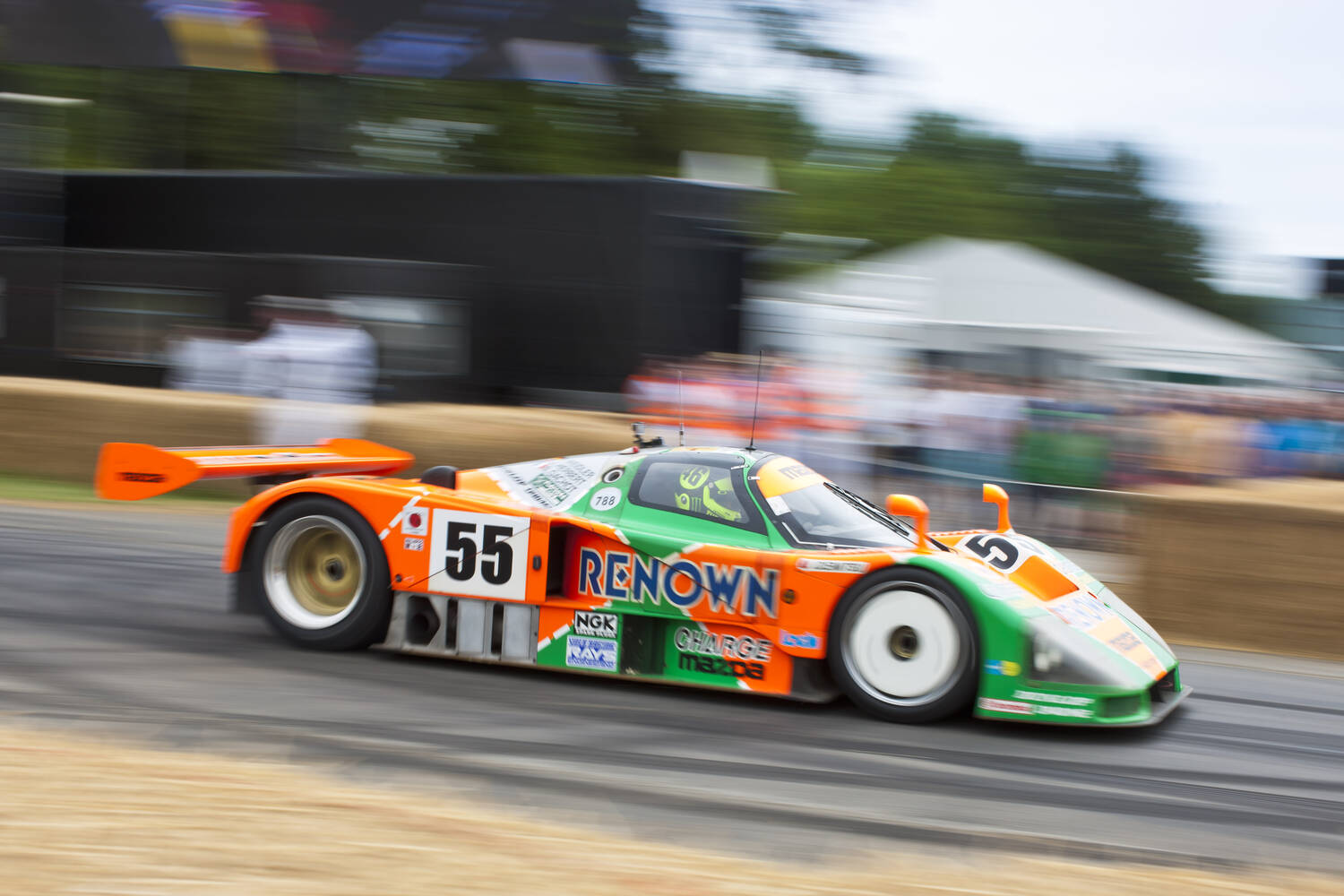
A decade ago, Mazda was the ‘featured marque’ for the Festival, celebrating both its road cars (the wonderful MX-5 especially) and its race cars. As part of the day’s entertainment, a gaggle of rotary-engined Mazda race cars, including the orange-and-green 787B, were arranged in a circle in front of Goodwood House for ‘a moment of noise’.
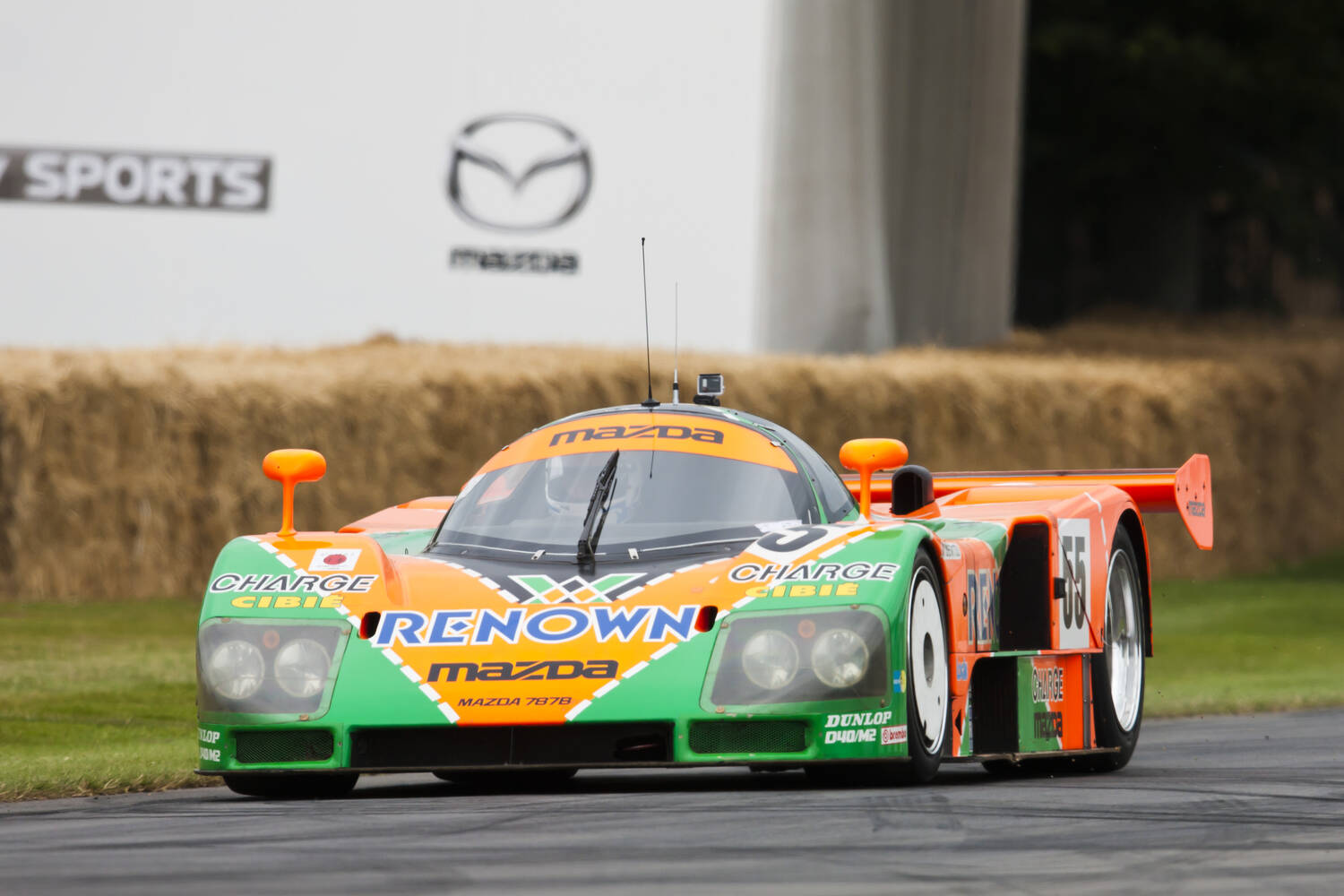
All of the rotary engines, unfettered by anything as mundane as an exhaust silencer, were revved up to their sky-high redlines for a solid minute. I was standing right behind a pristine white IMSA racer for this, and I swear my hearing hasn’t been quite right since - it was the exhaust note equivalent of leaning on the amp stack at an AC/DC gig.
Meeting the man himself...
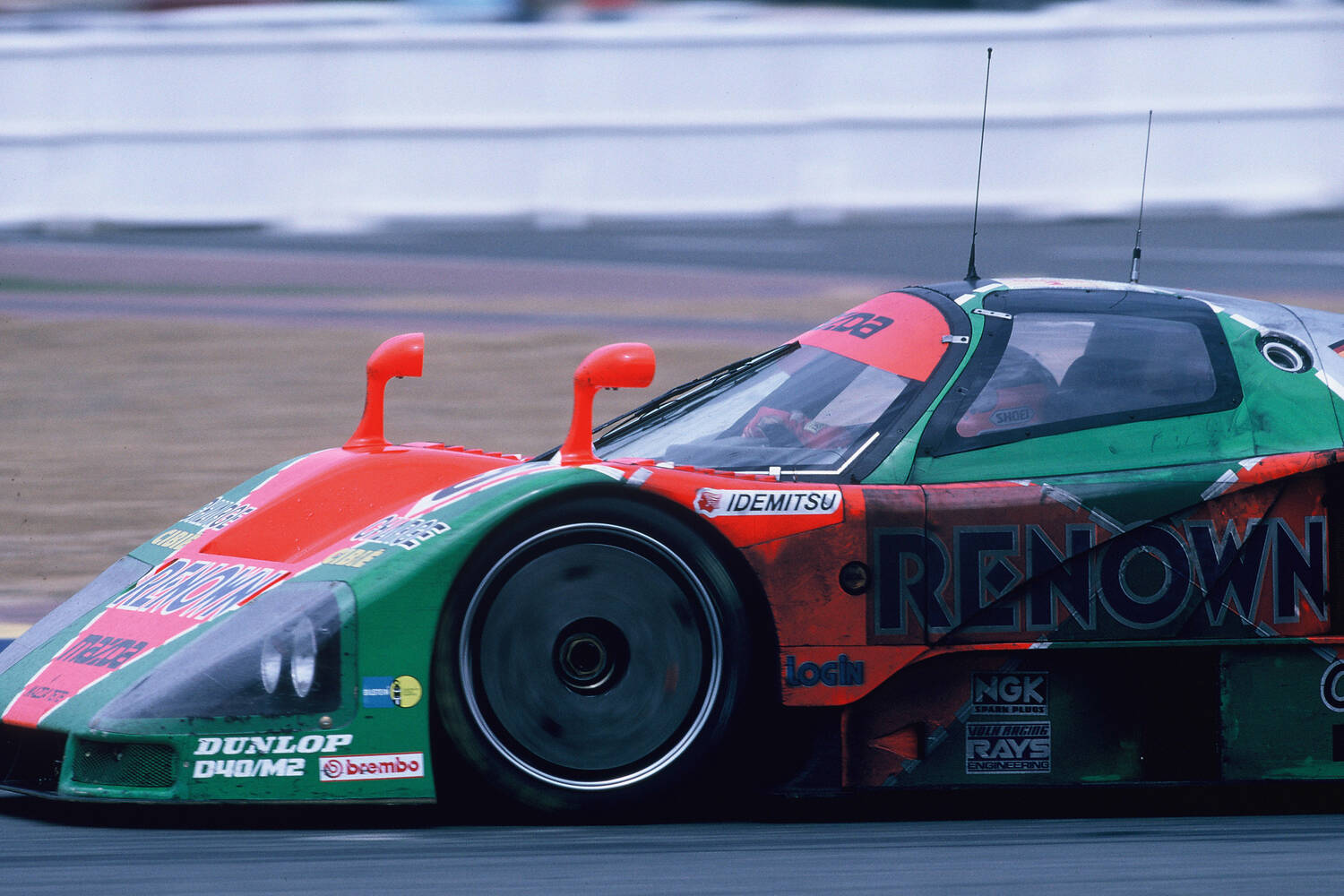
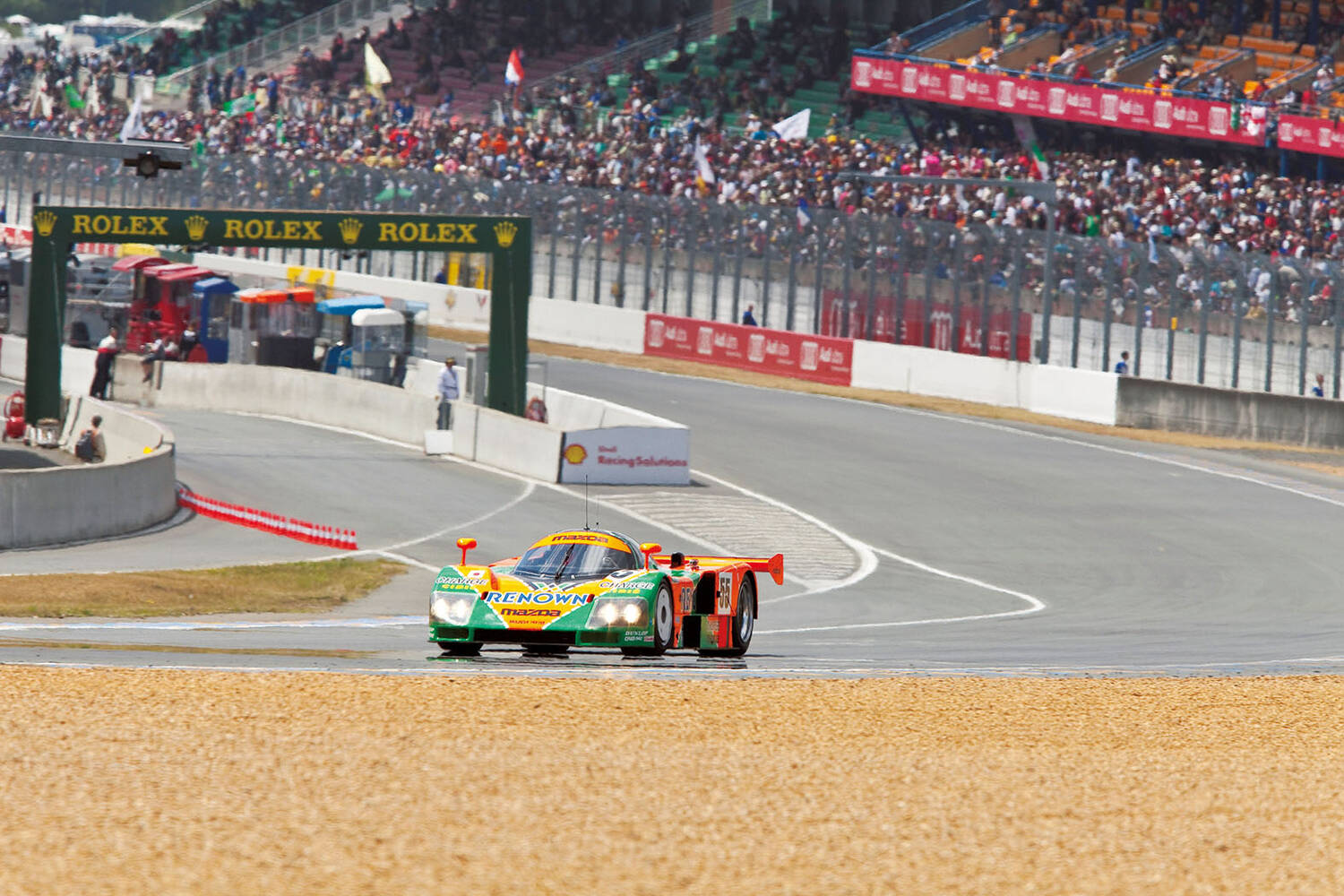
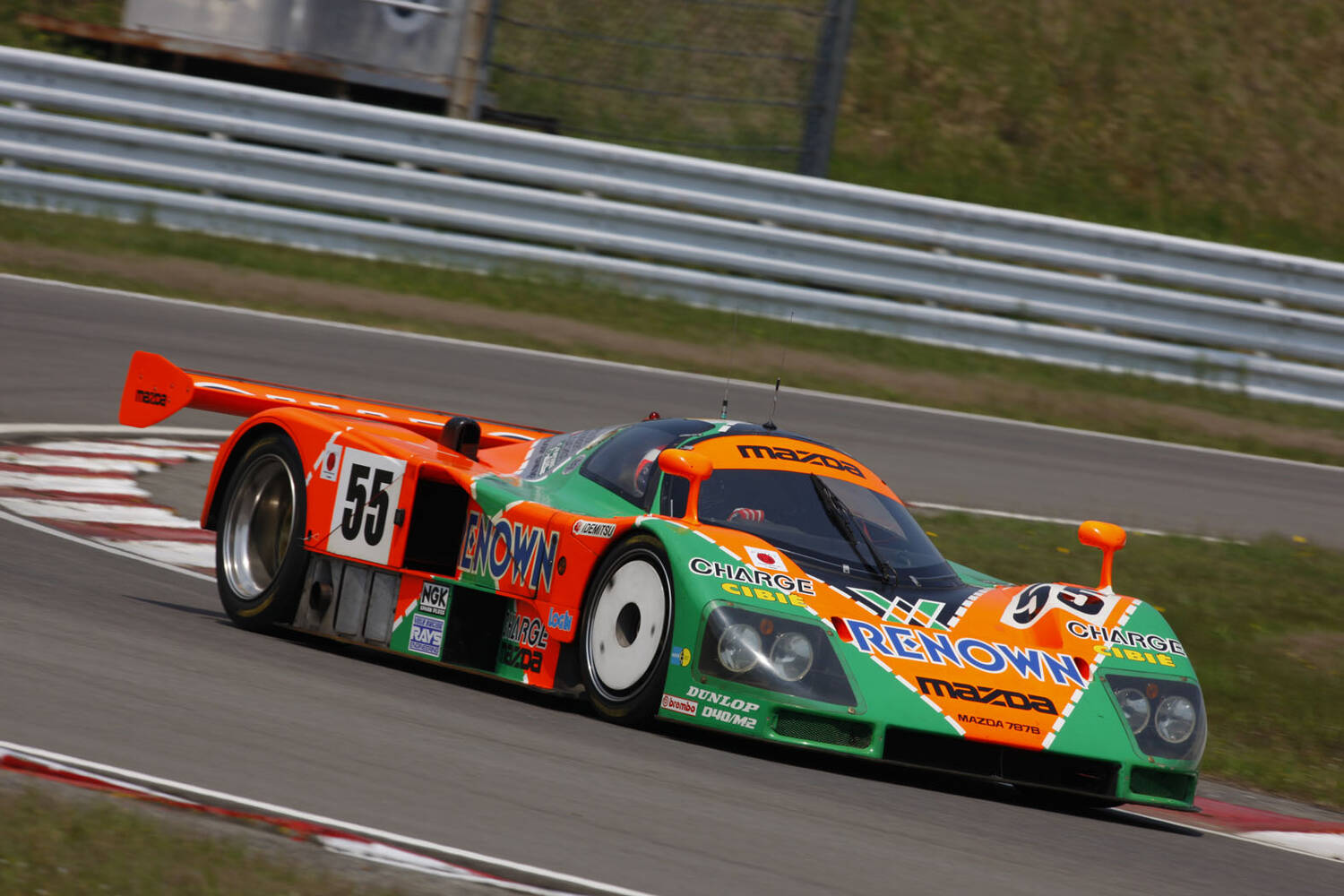
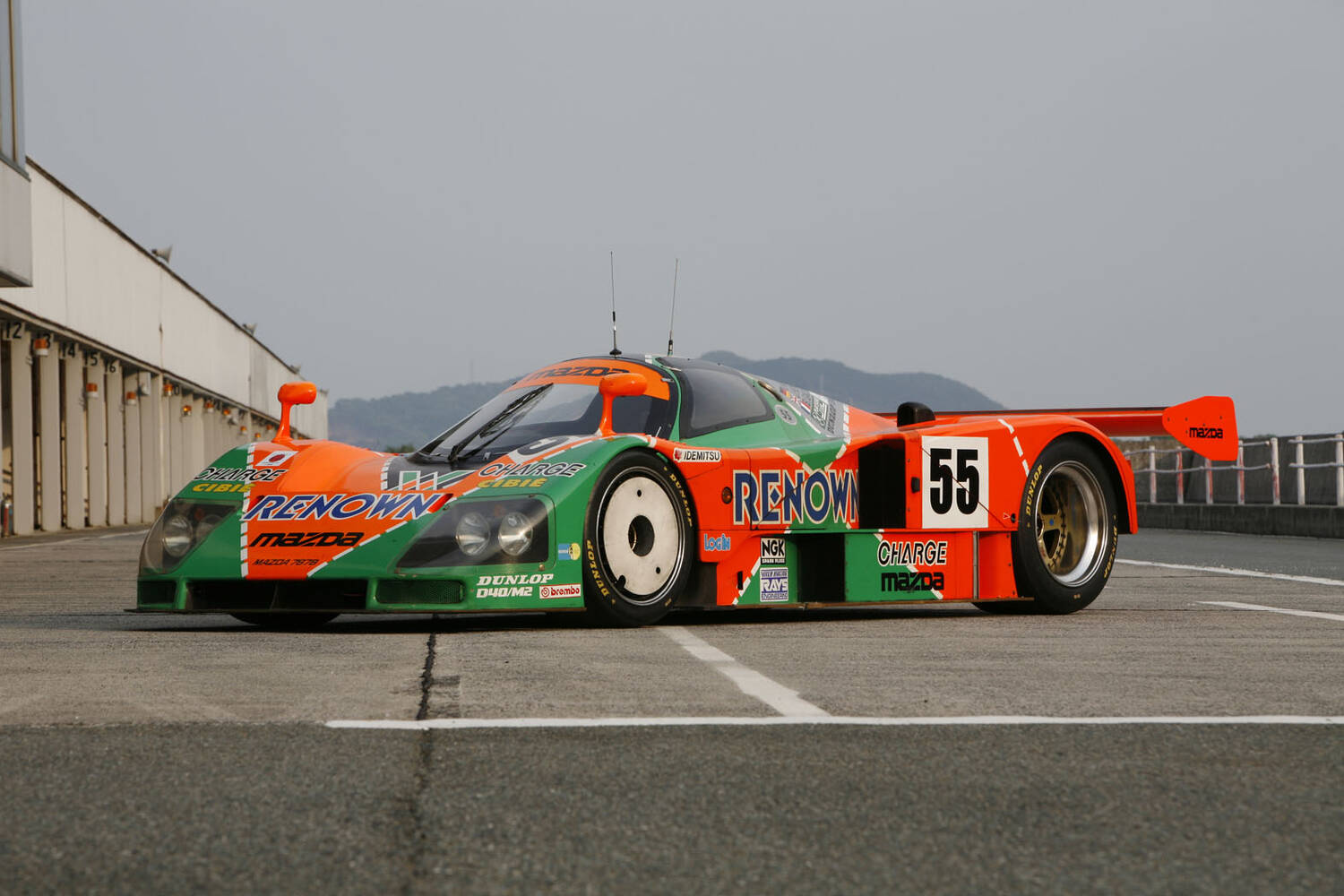
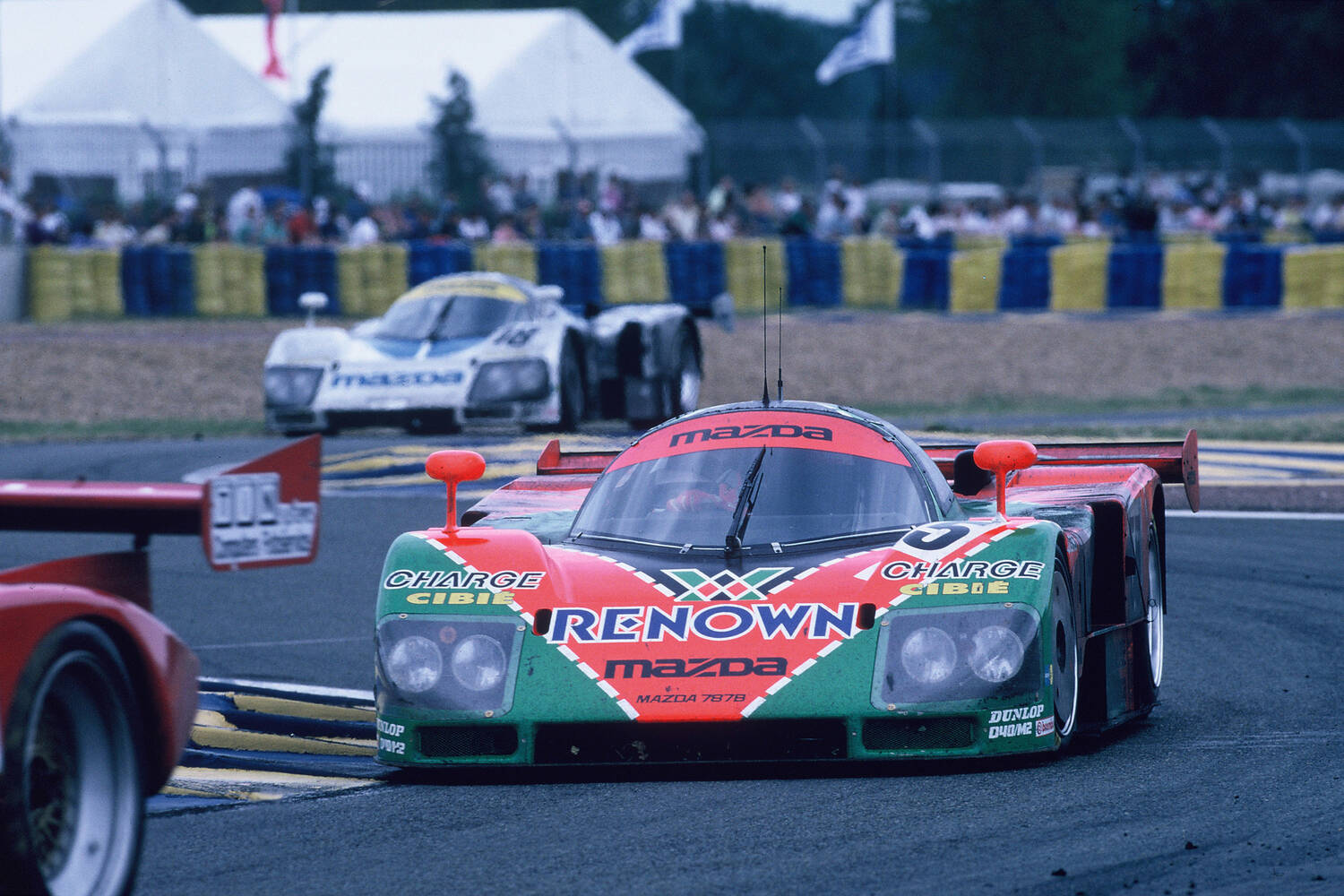
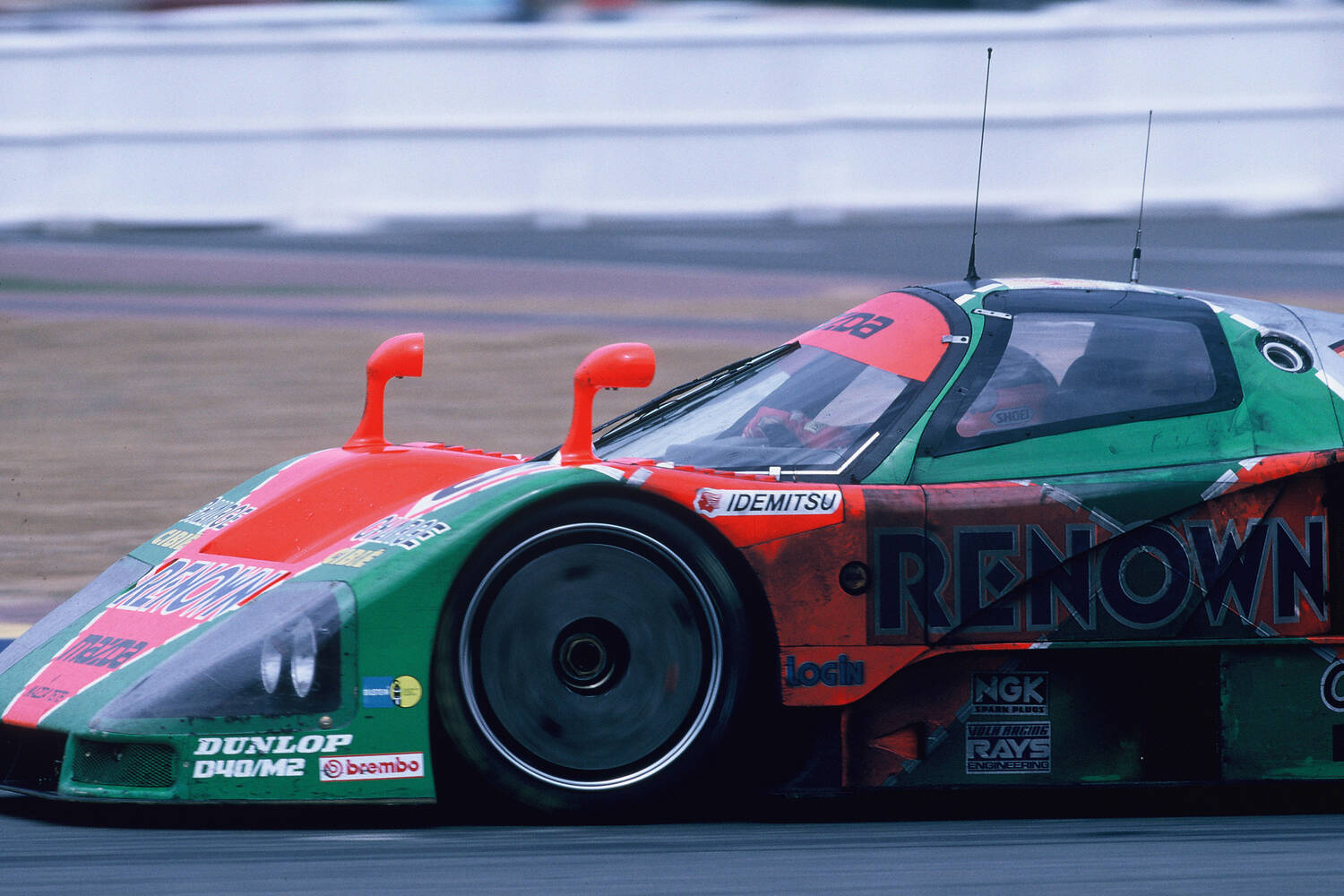
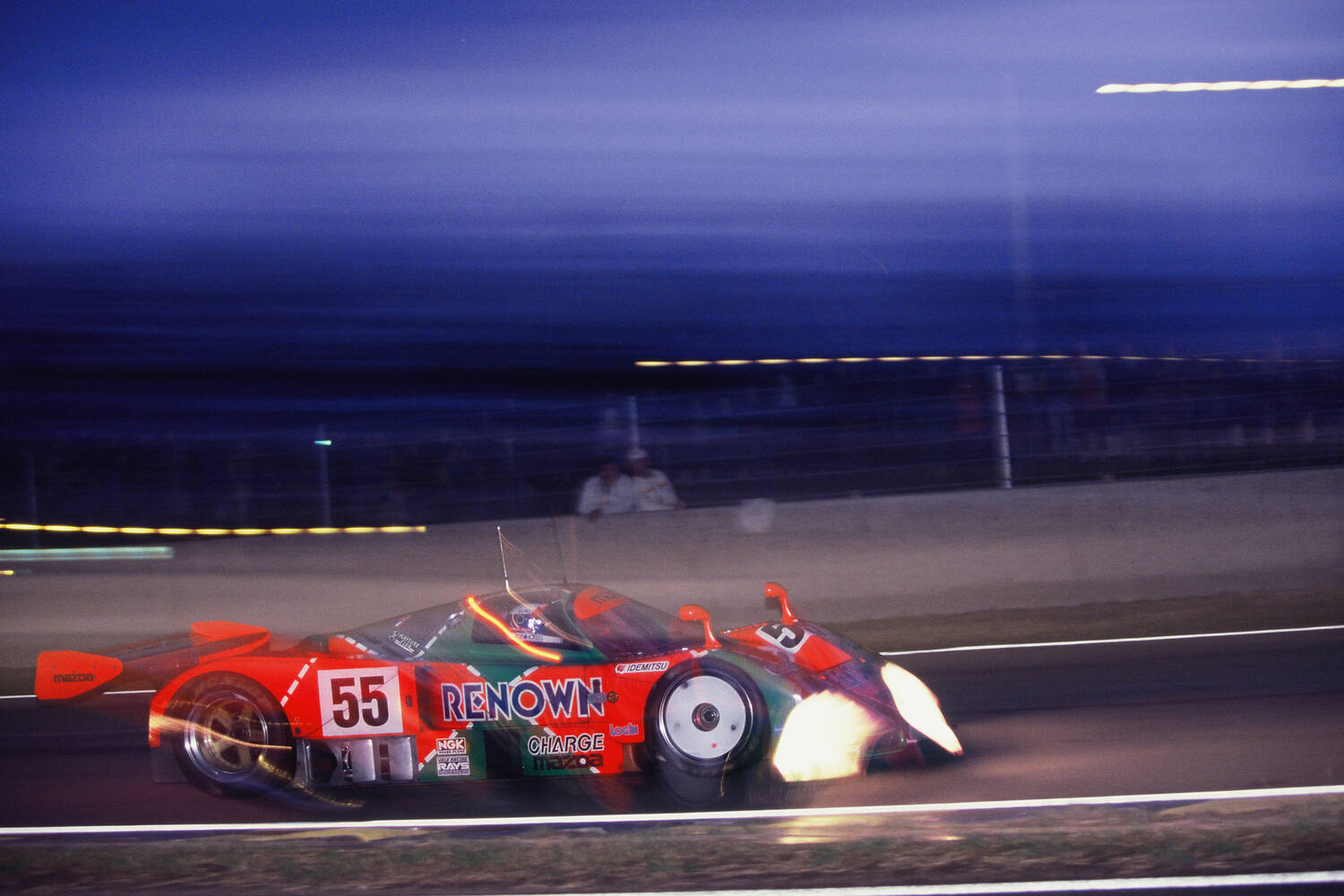
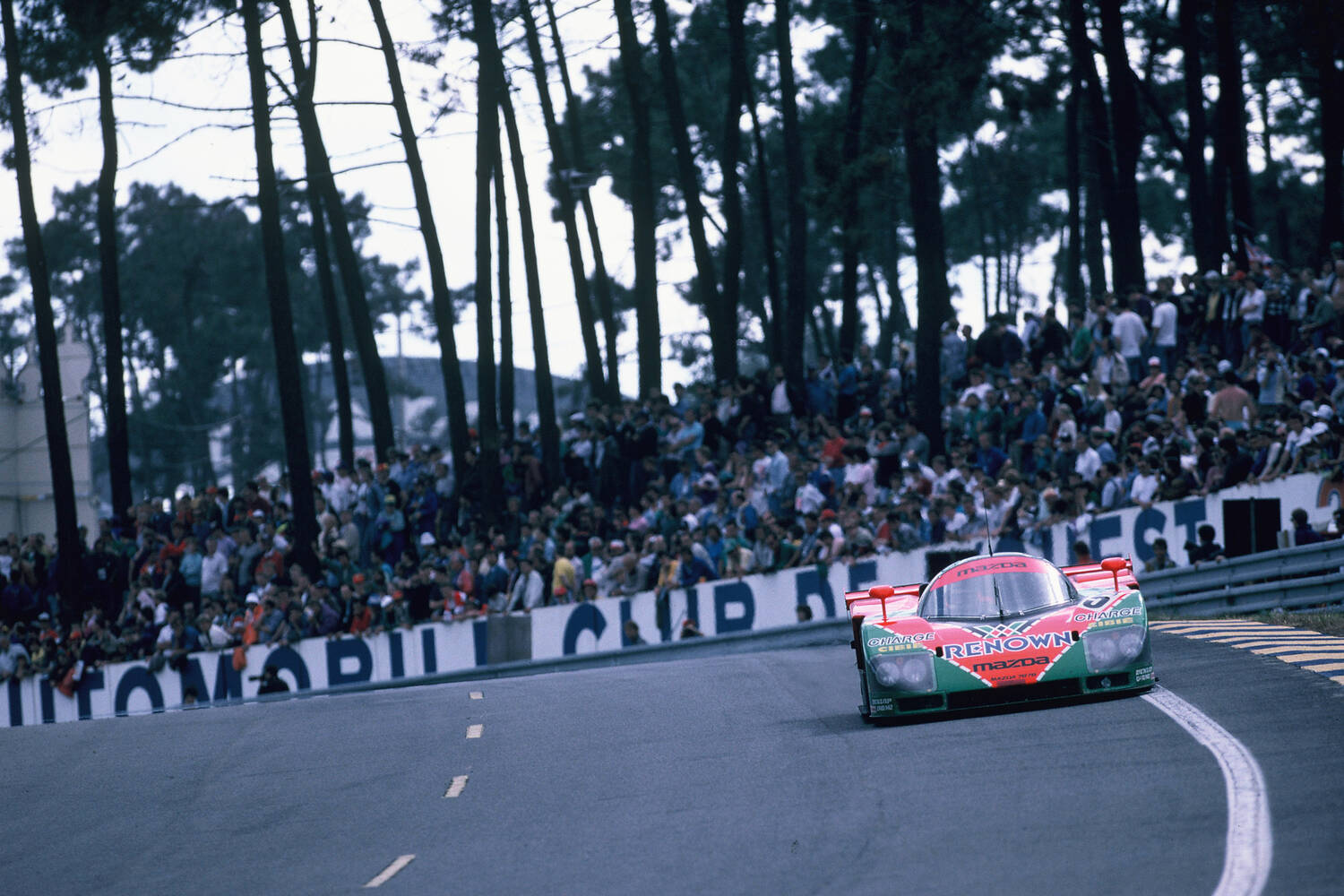
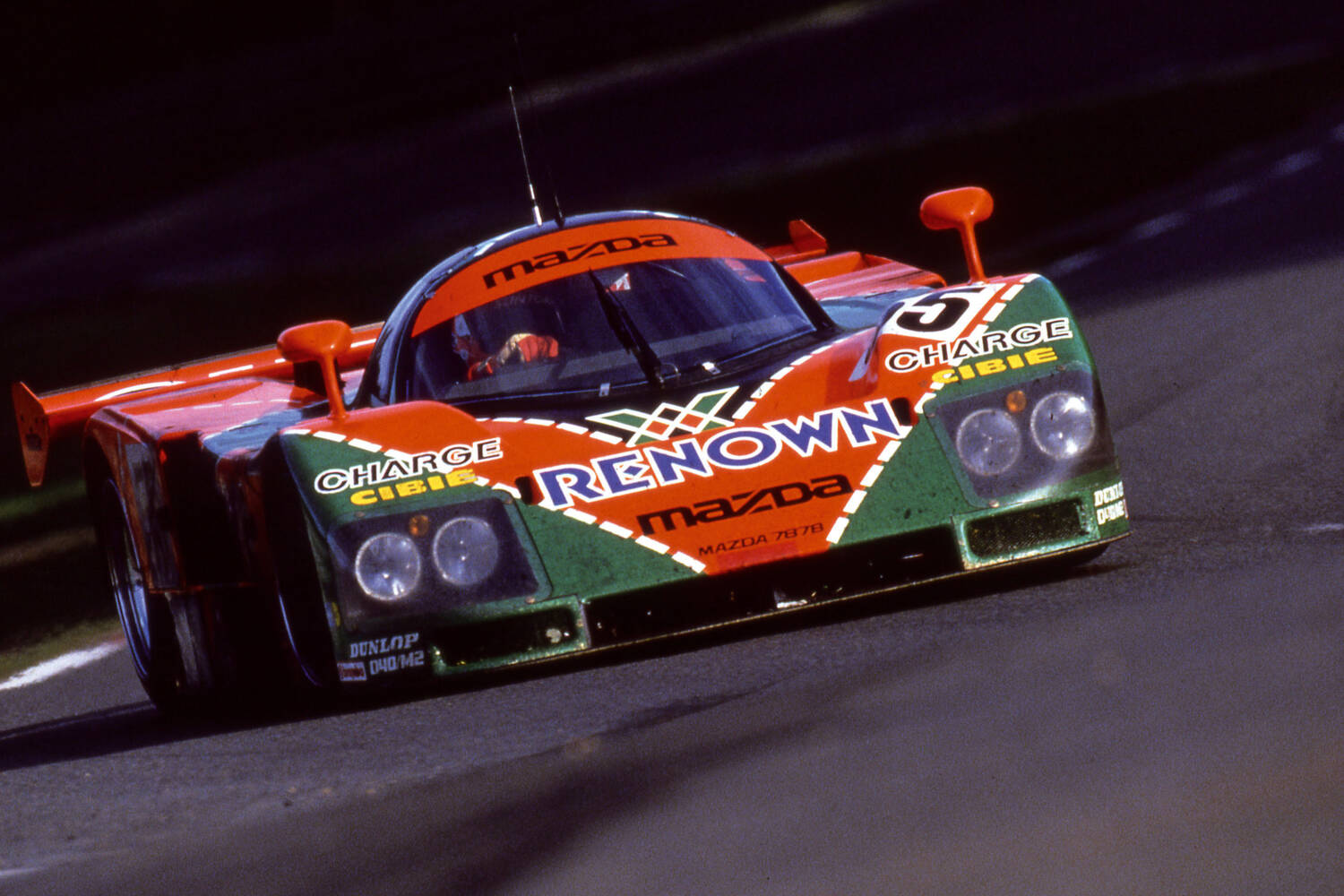
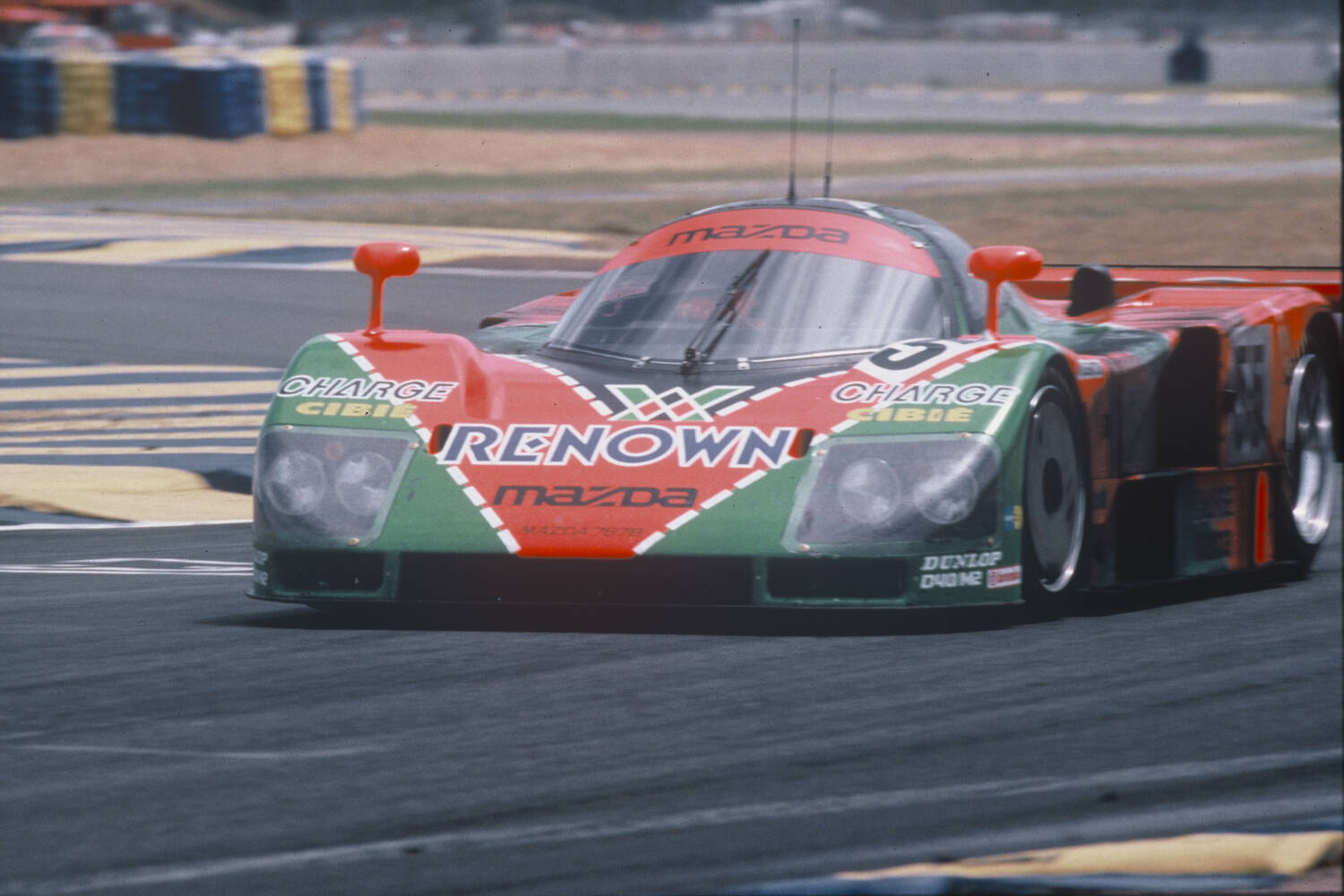
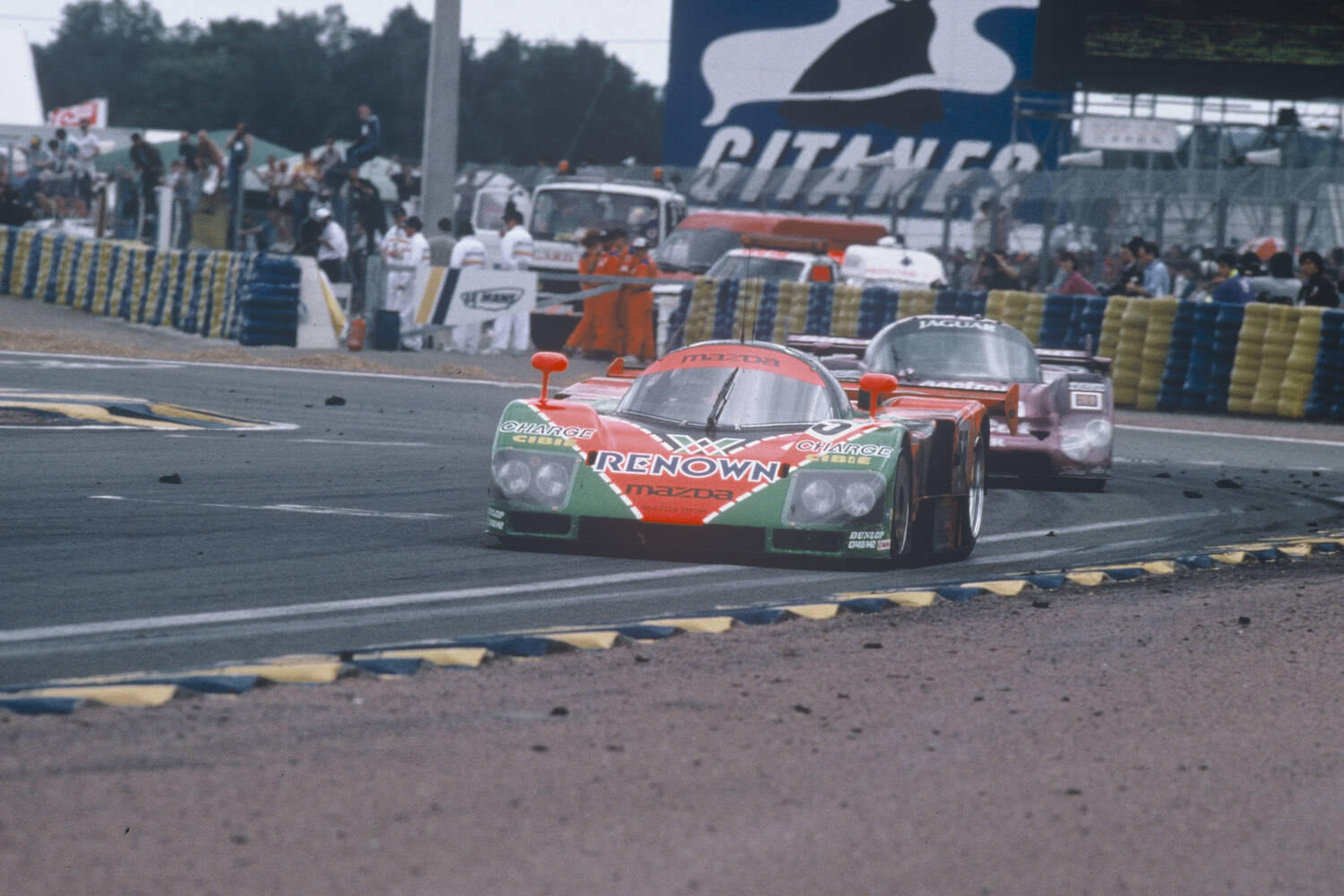
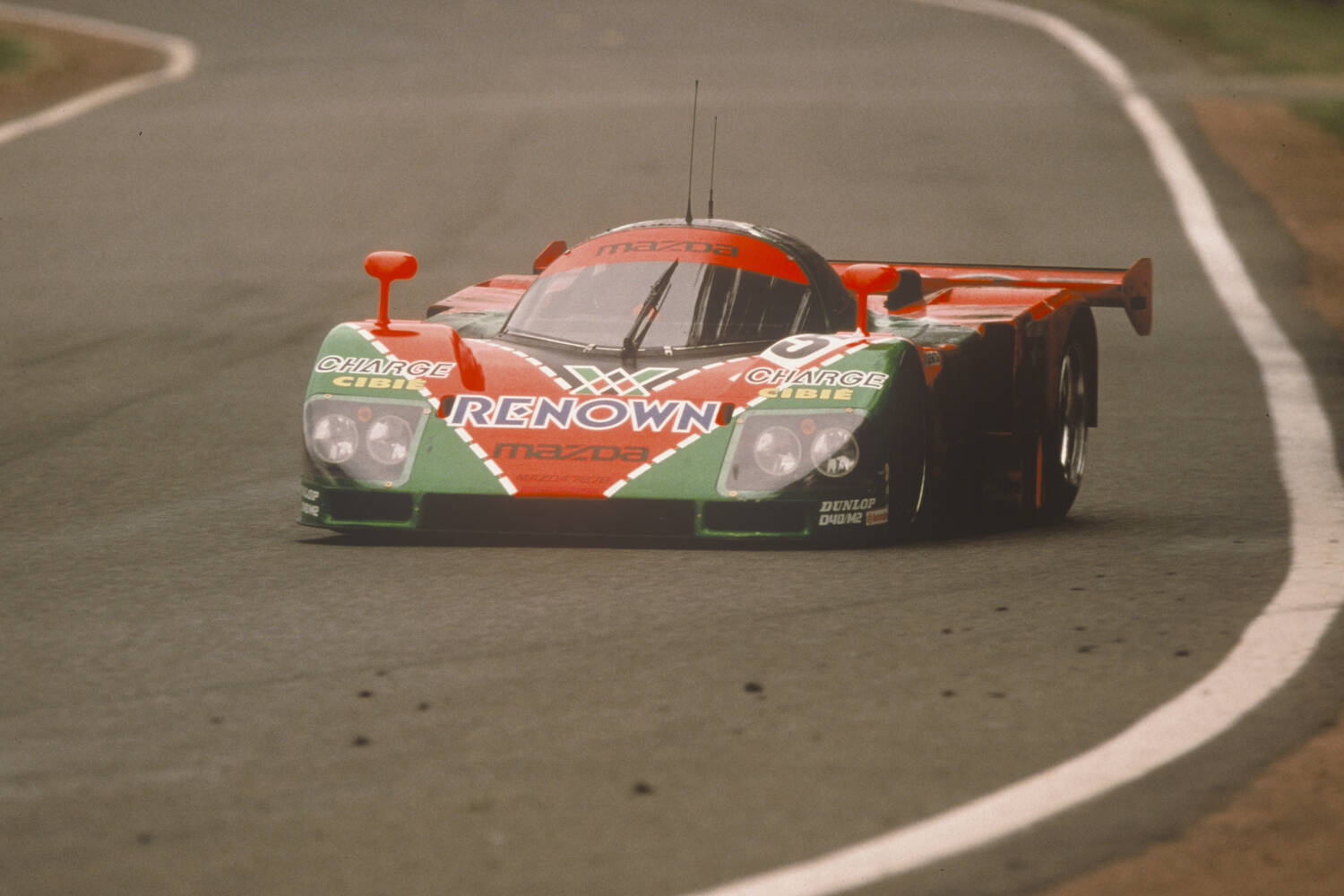
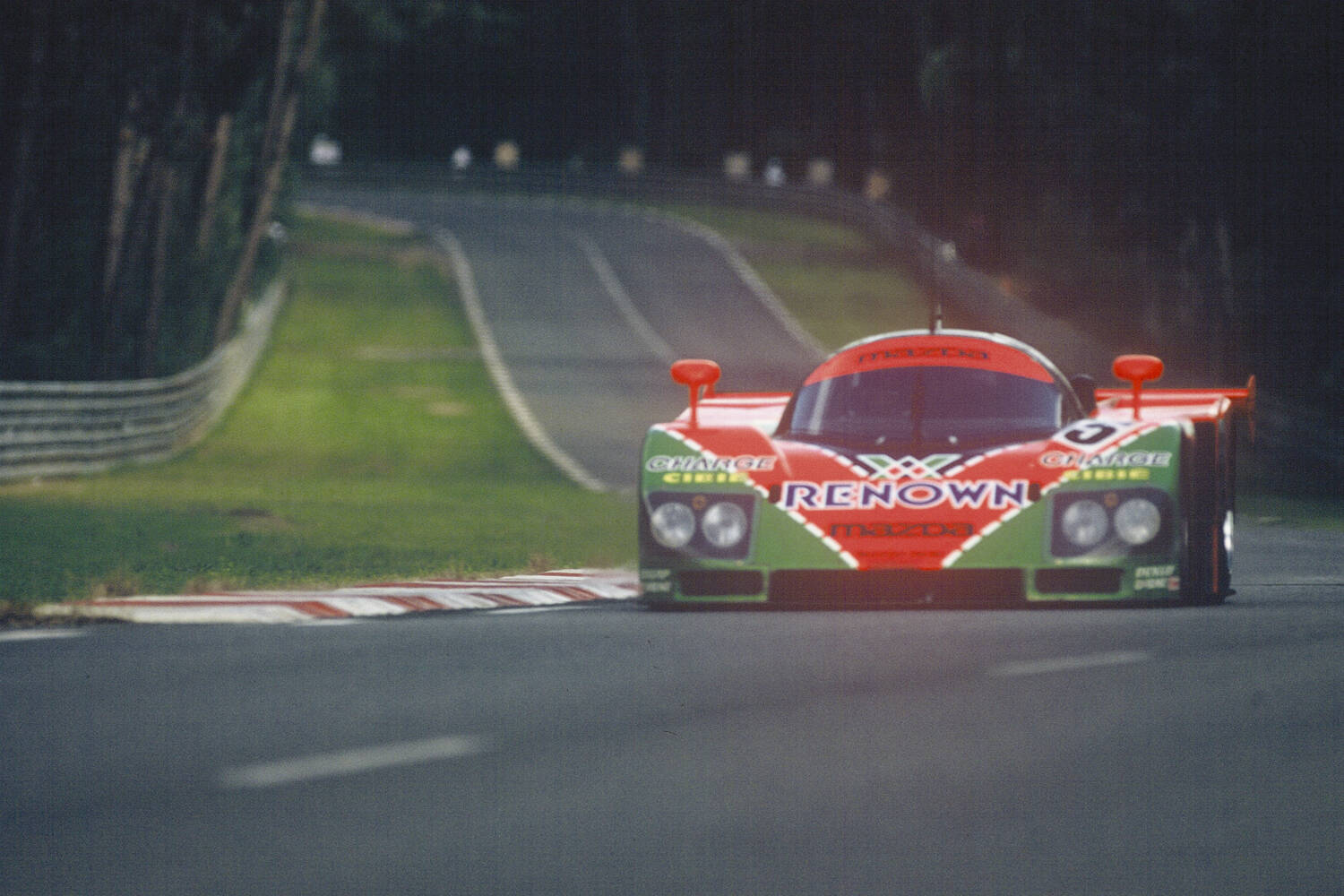
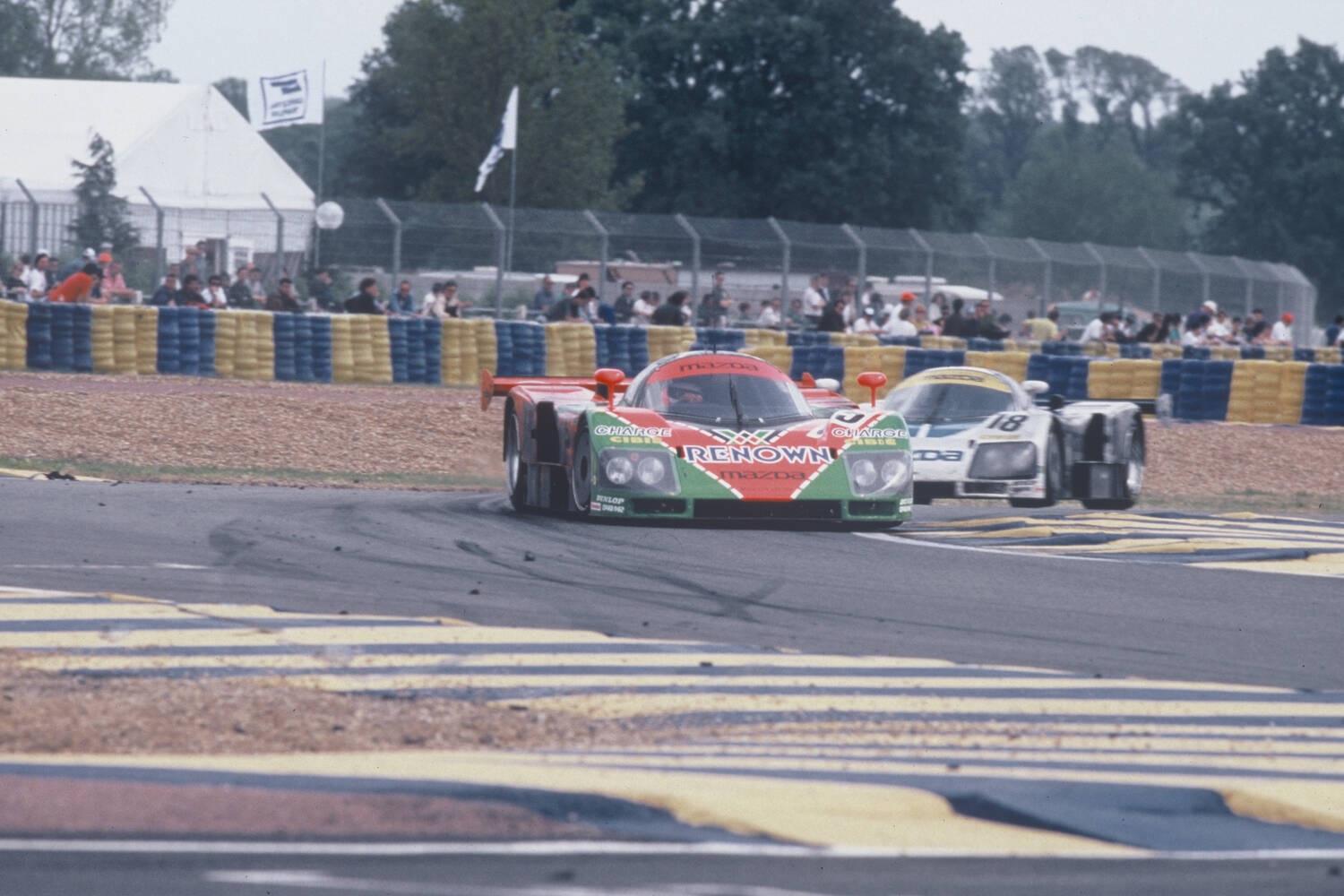
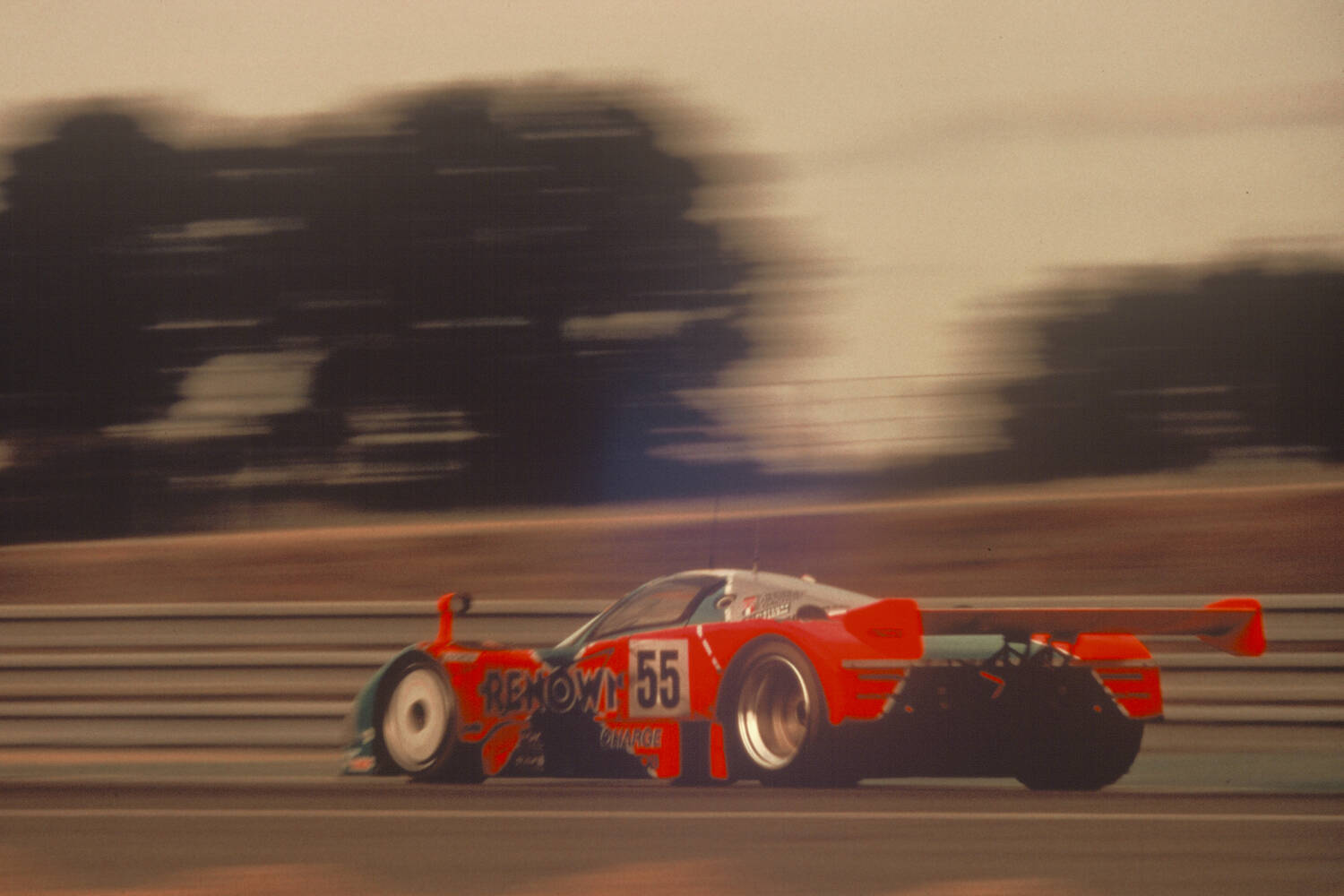
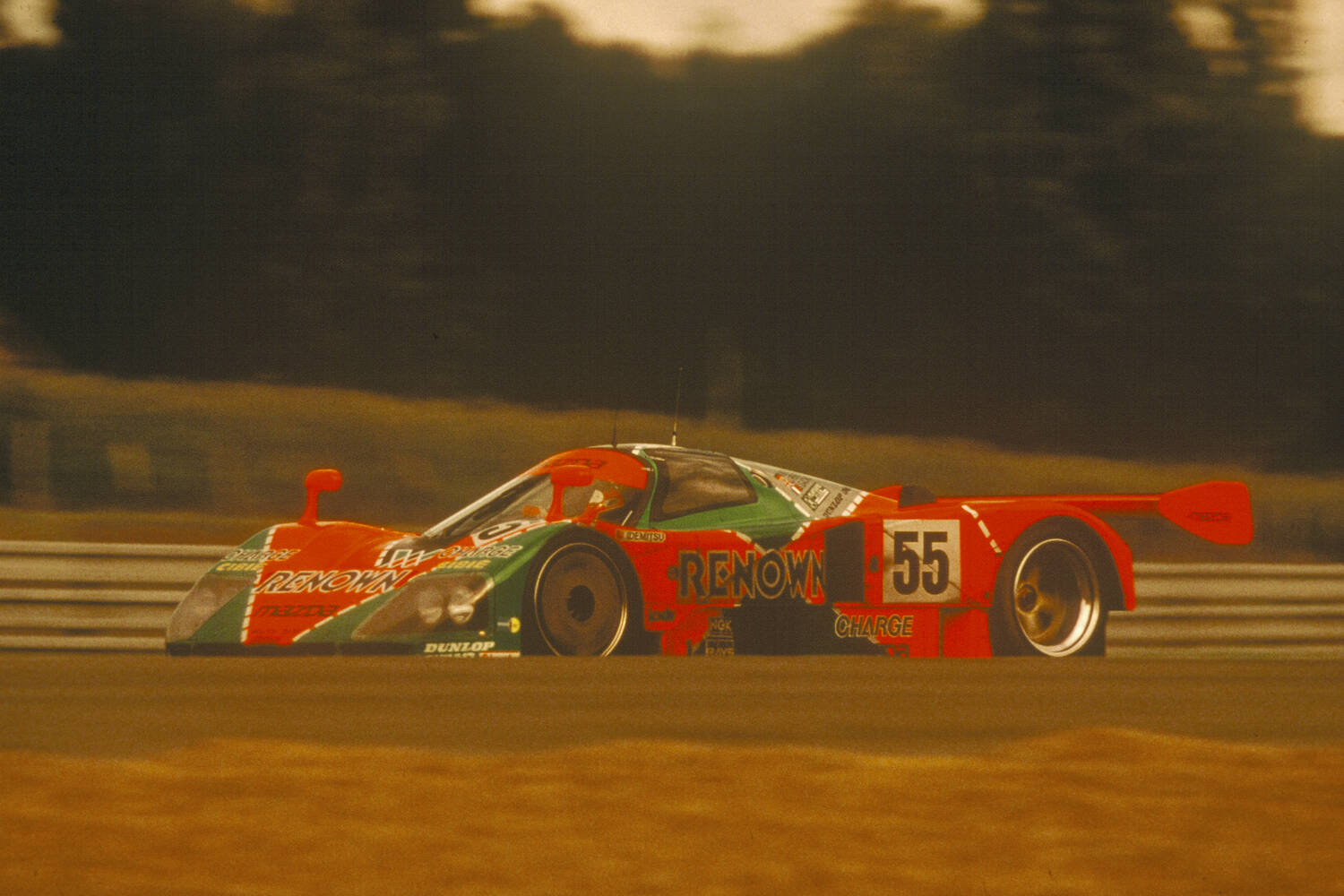
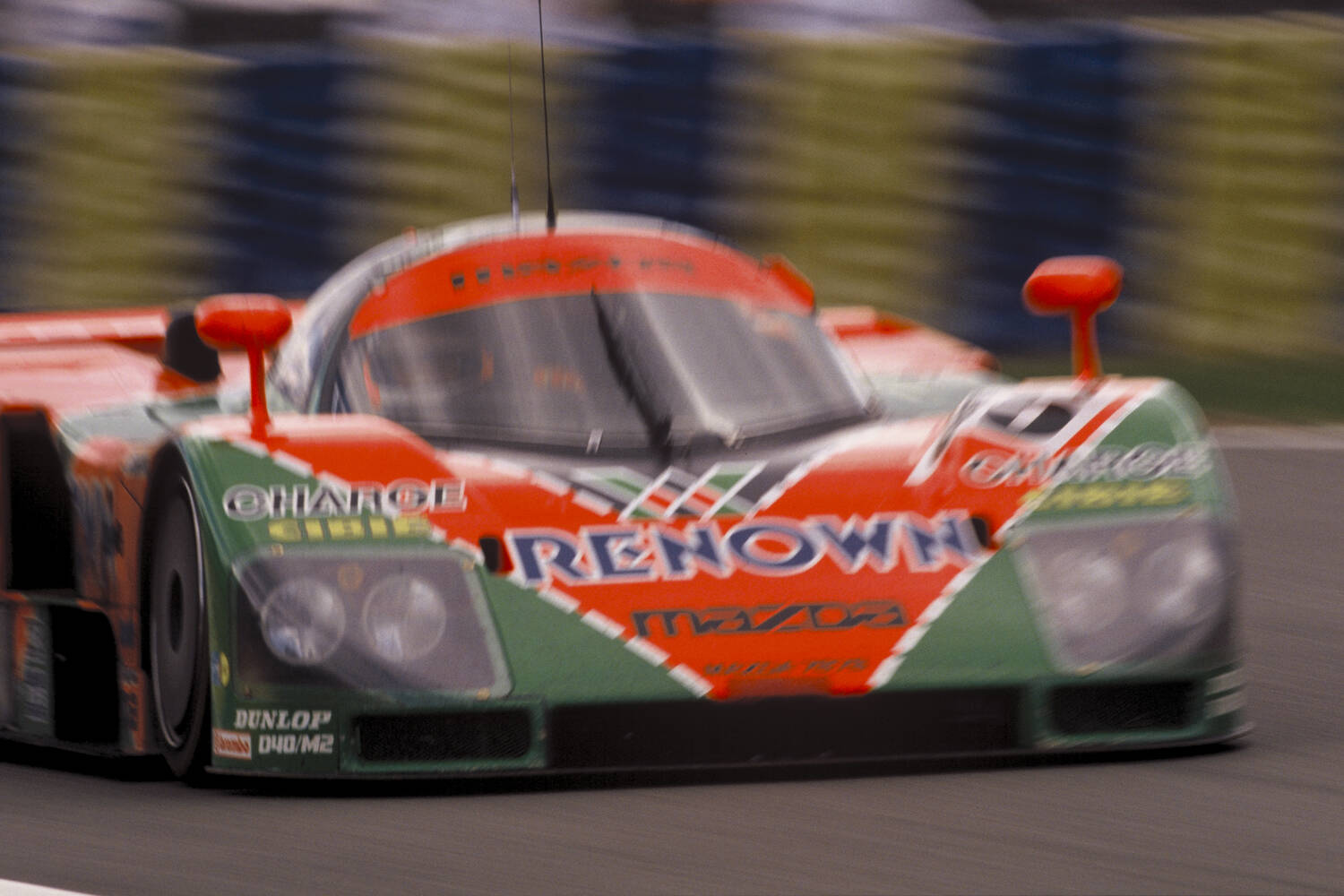
Ears still ringing, I staggered back past the stunning Jerry Judah sculpture, which placed another brightly coloured 787B race car up high in the sky in front of the house. That 787B was not only Mazda’s one and only Le Mans 24 hours winner back in 1991, but it was also the first Japanese car ever to win the famous all-day-and-night race, beating much better-resourced rivals to the punch.
After all the rotary engined aural excitement, I needed a sit down, so grabbed a bag of chips and a can of fizzy drink and took a seat at one of the numerous picnic tables scattered around Goodwood’s lawns. Opposite me, a slightly older chap was doing the same, and he looked... familiar.
I couldn’t help but ask...
“Are you Johnny Herbert, or do you just look a lot like him?”
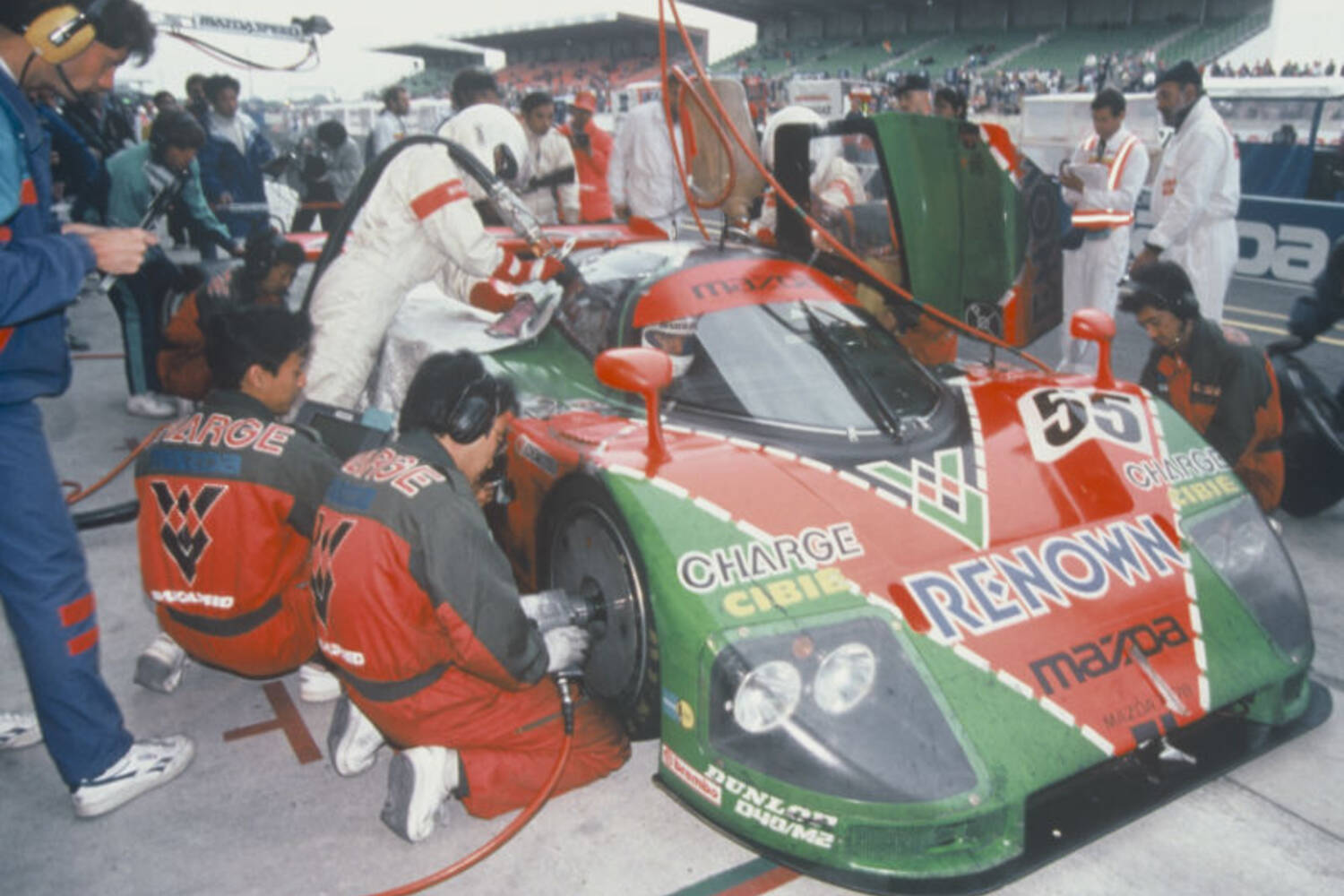
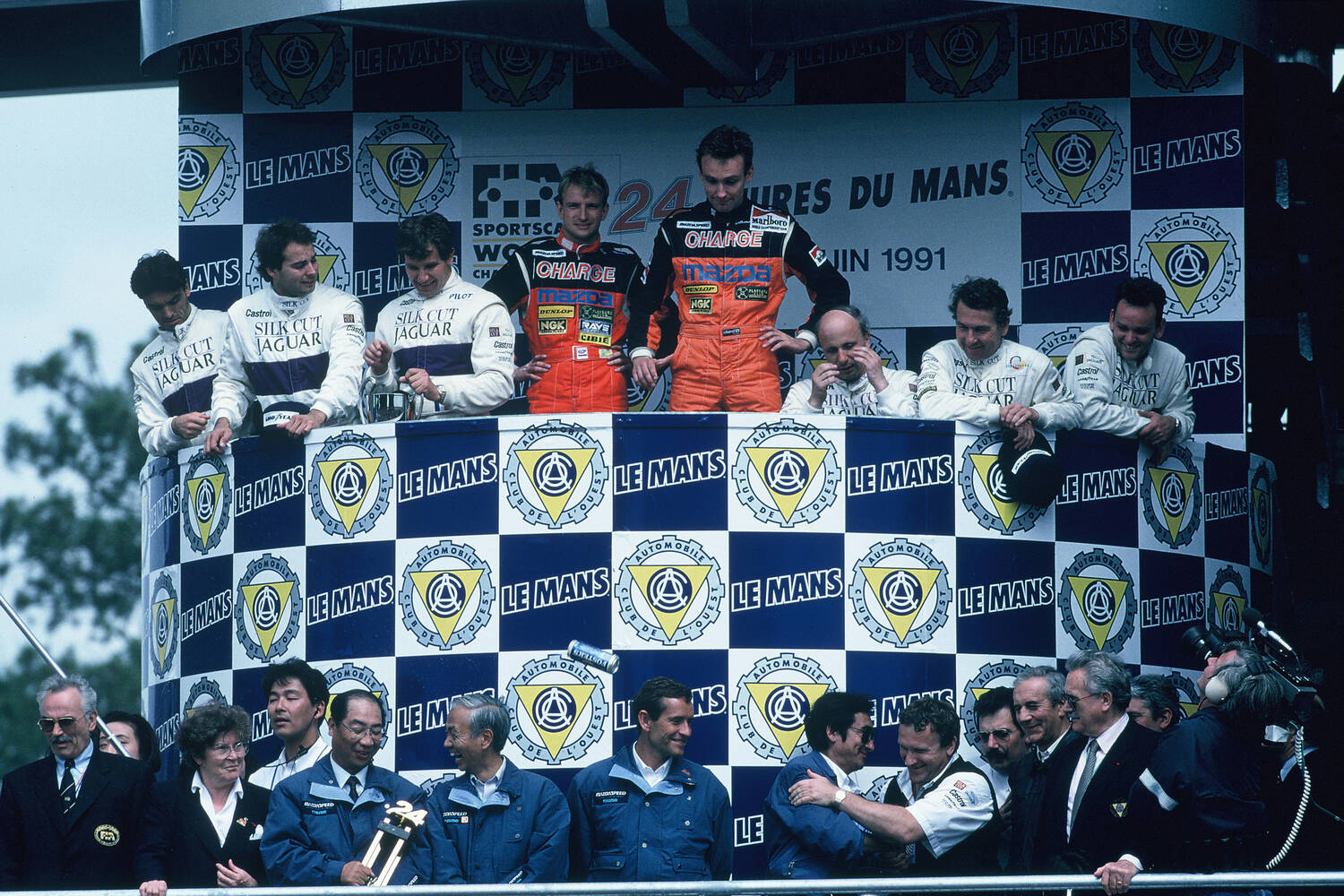
Quick as a flash, and delivered with the trademark cheeky grin, he shot back: “I just look a lot like him.” It was of course Herbert himself, three-time F1 Grand Prix winner and part of the three-man squad - alongside Bertrand Gachot and Volker Weidler - who drove that winning Mazda 787B at Le Mans in 1991.
We chatted for a while, and I asked him how it felt, seeing that iconic green-and-orange racer soaring above the Goodwood crowds on the sculpture. “It’s wonderful to see it up there” replied Herbert. “Because it means I don’t have to drive the effing thing...”
Fair enough. Herbert, still wounded from his appalling F3000 crash in 1988 in which he almost lost his legs, brought the 787B home to win the 24-hour race in an anchor stint in high heat and humidity, without the benefit of the air conditioning and ventilation systems that keep modern Le Mans drivers cool.
So exhausted was Herbert that he didn’t attend the podium ceremony - he was too busy collapsing from heat stroke in a Mazda motorhome.
Finding the gap in the rules
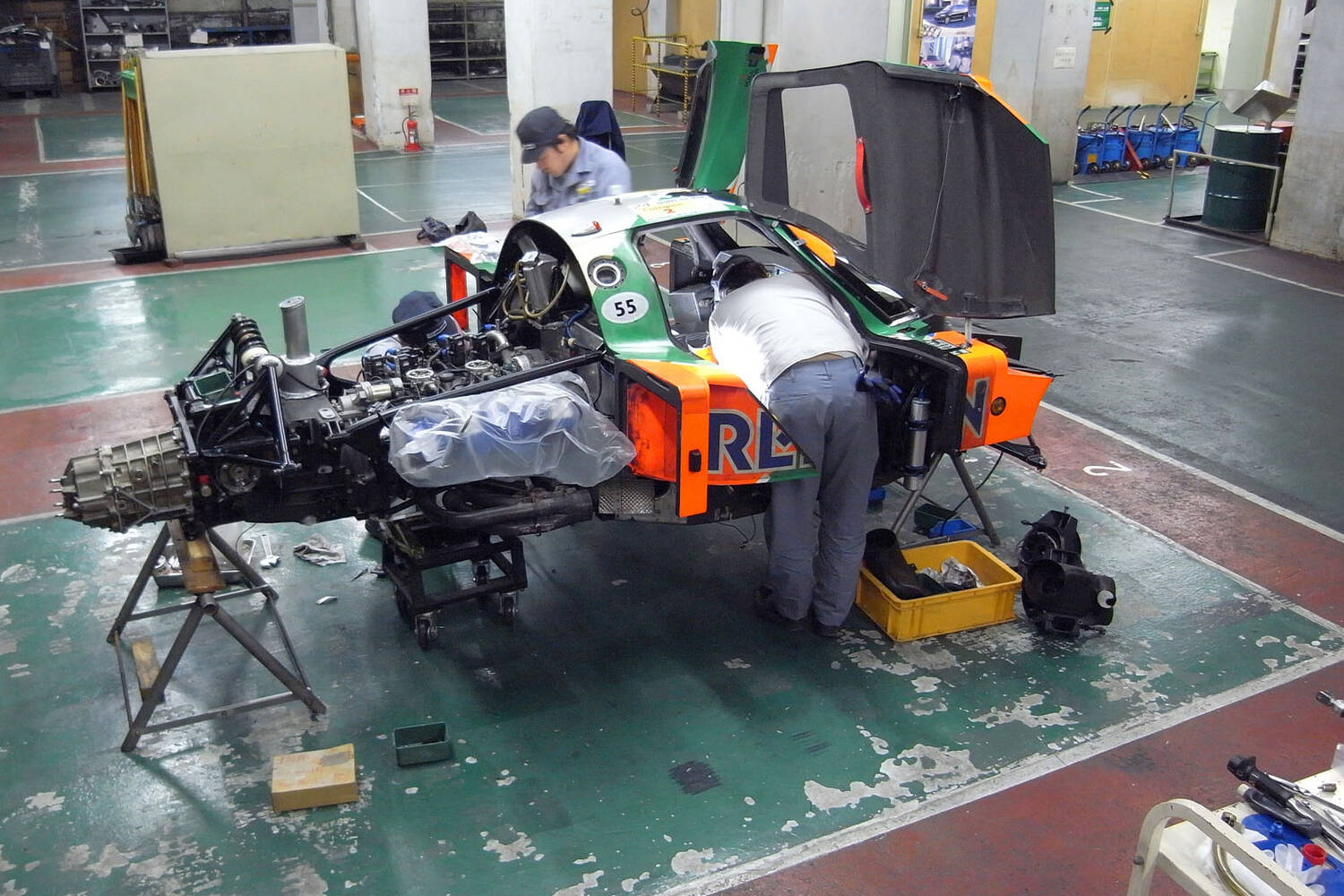
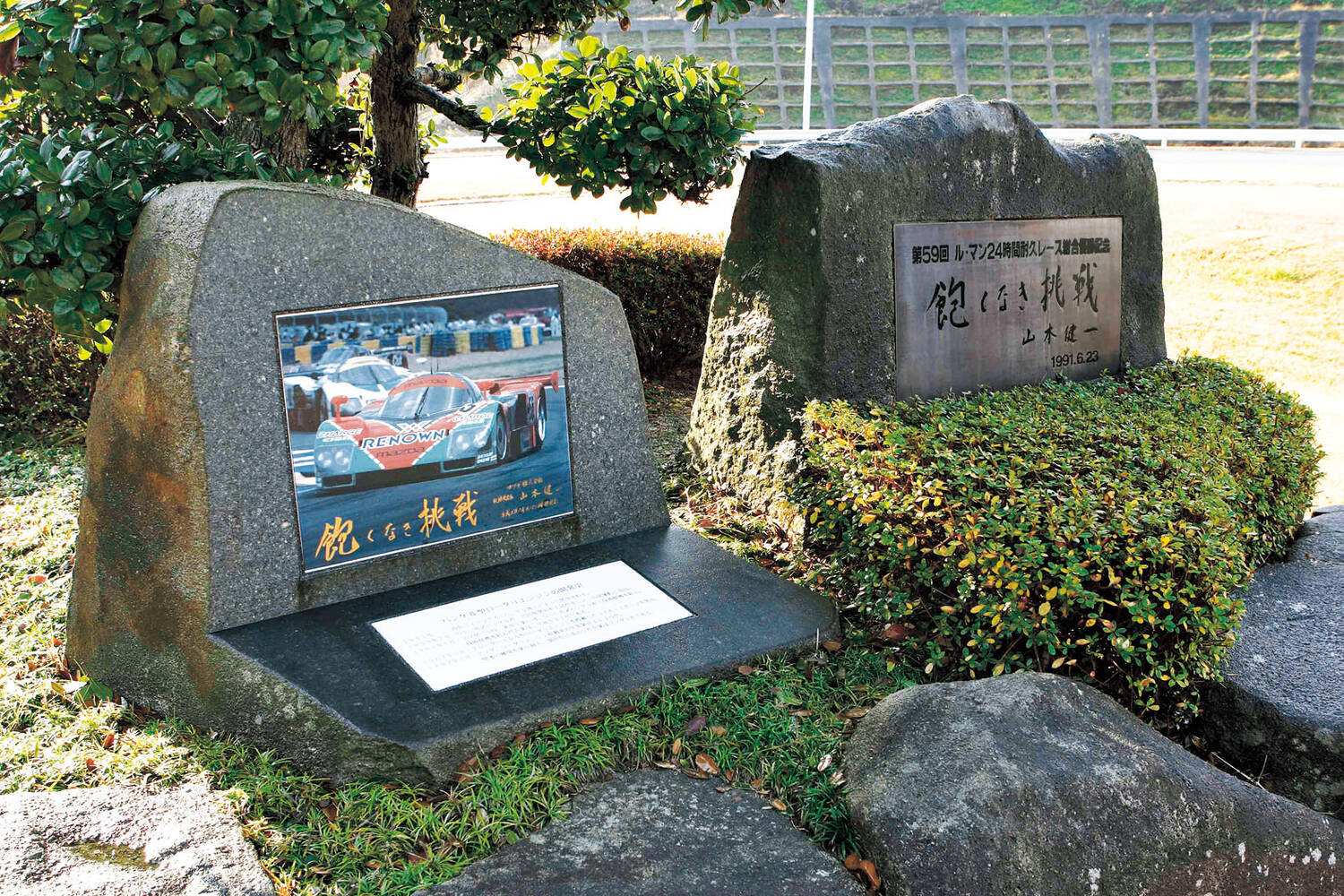
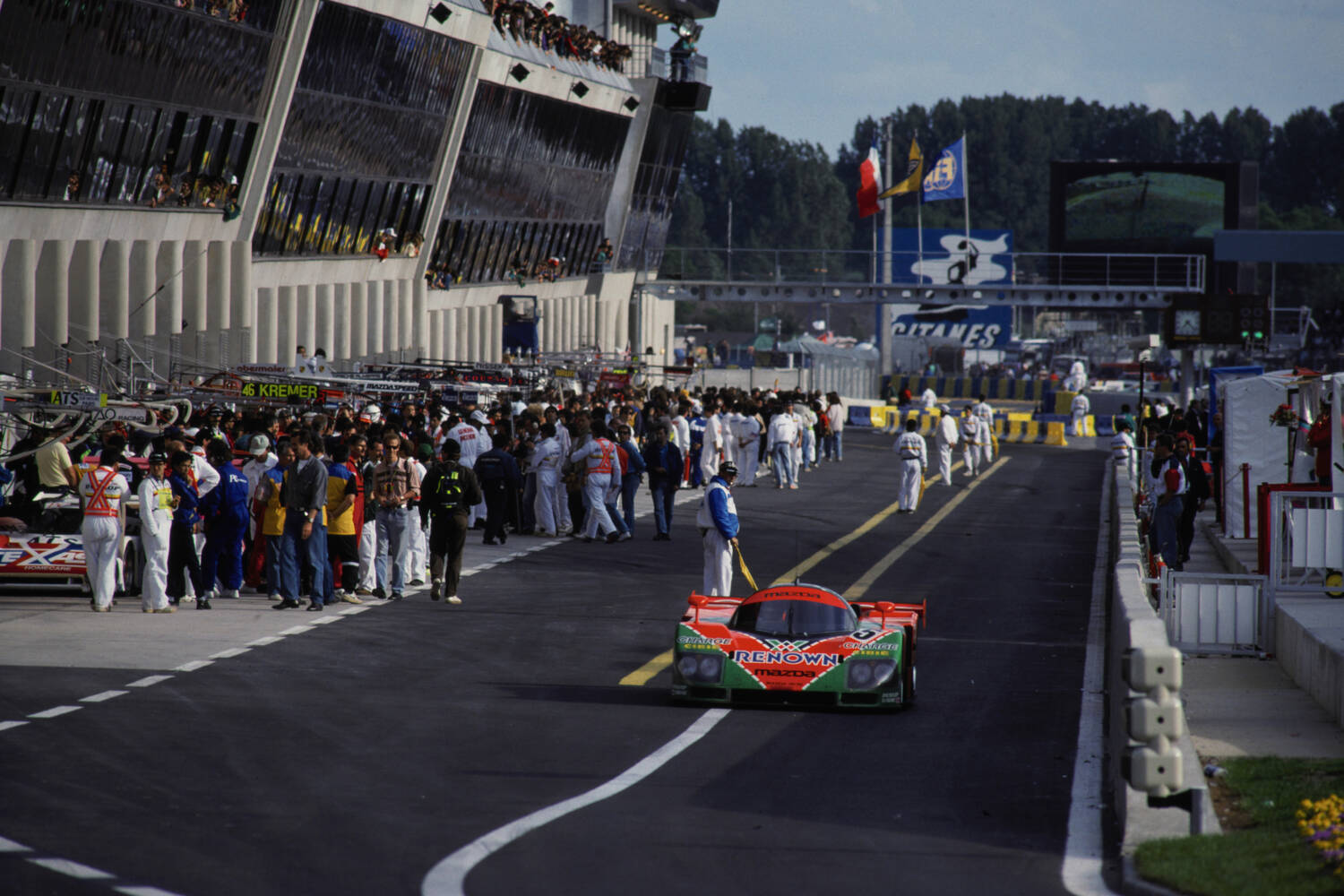
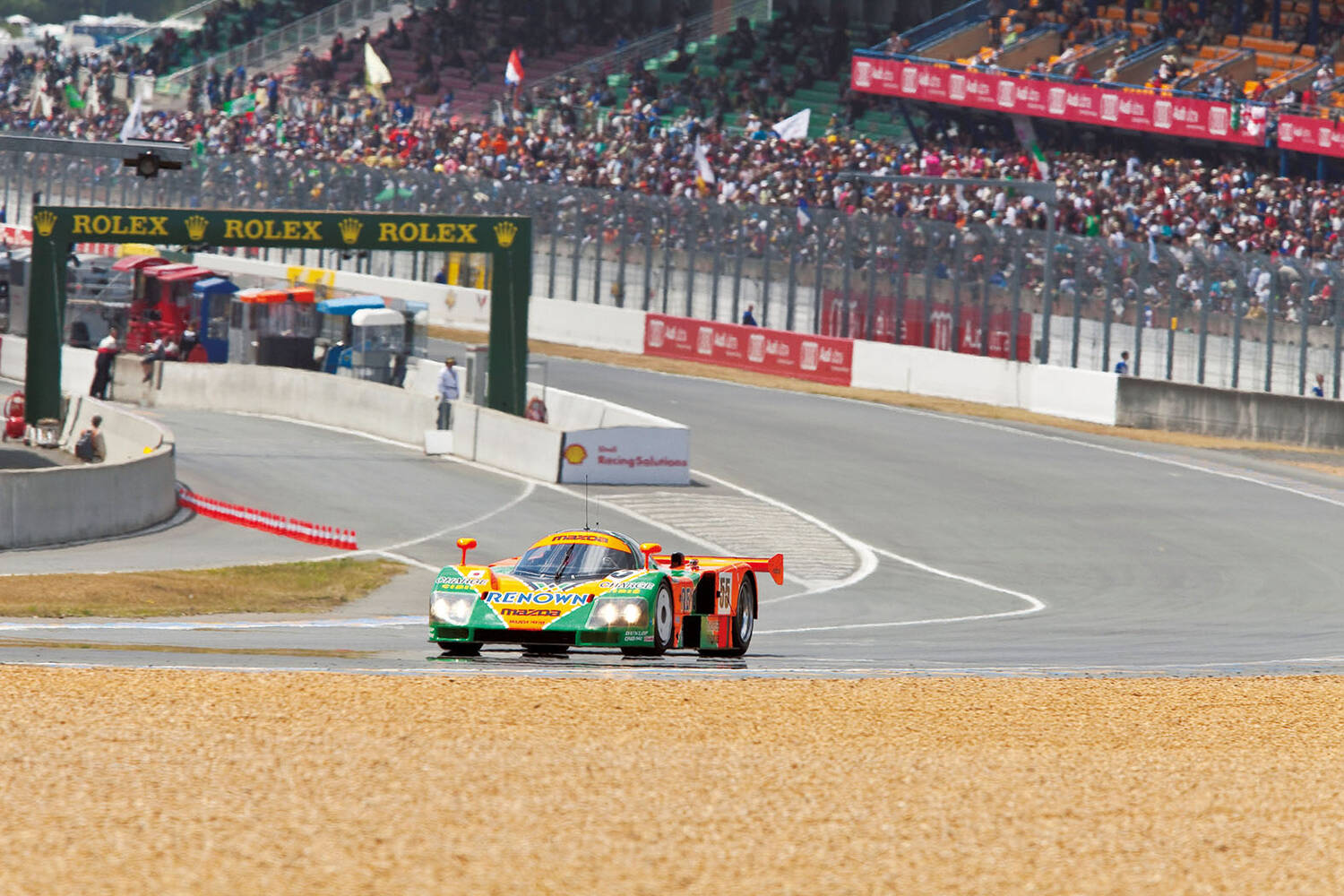
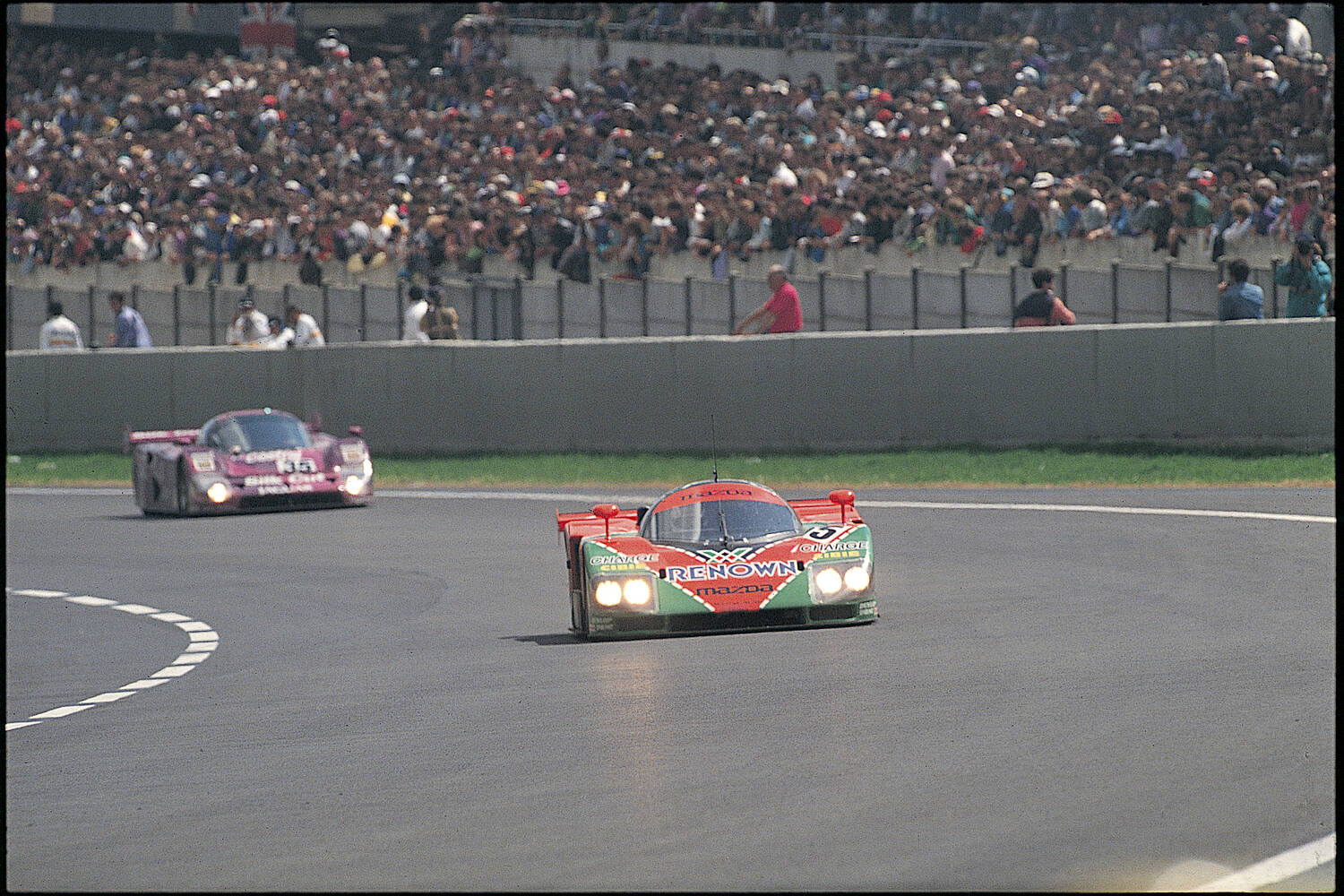
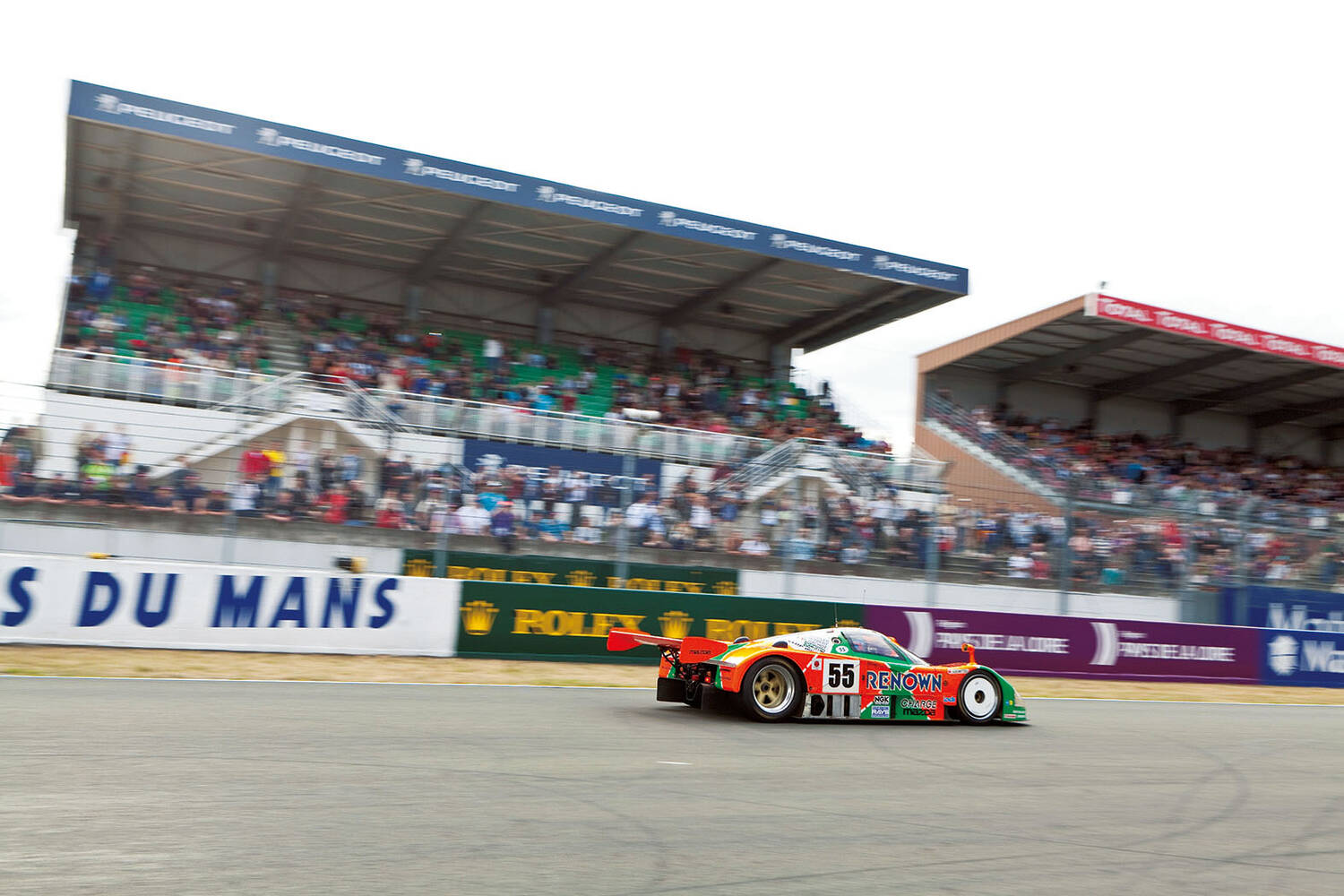
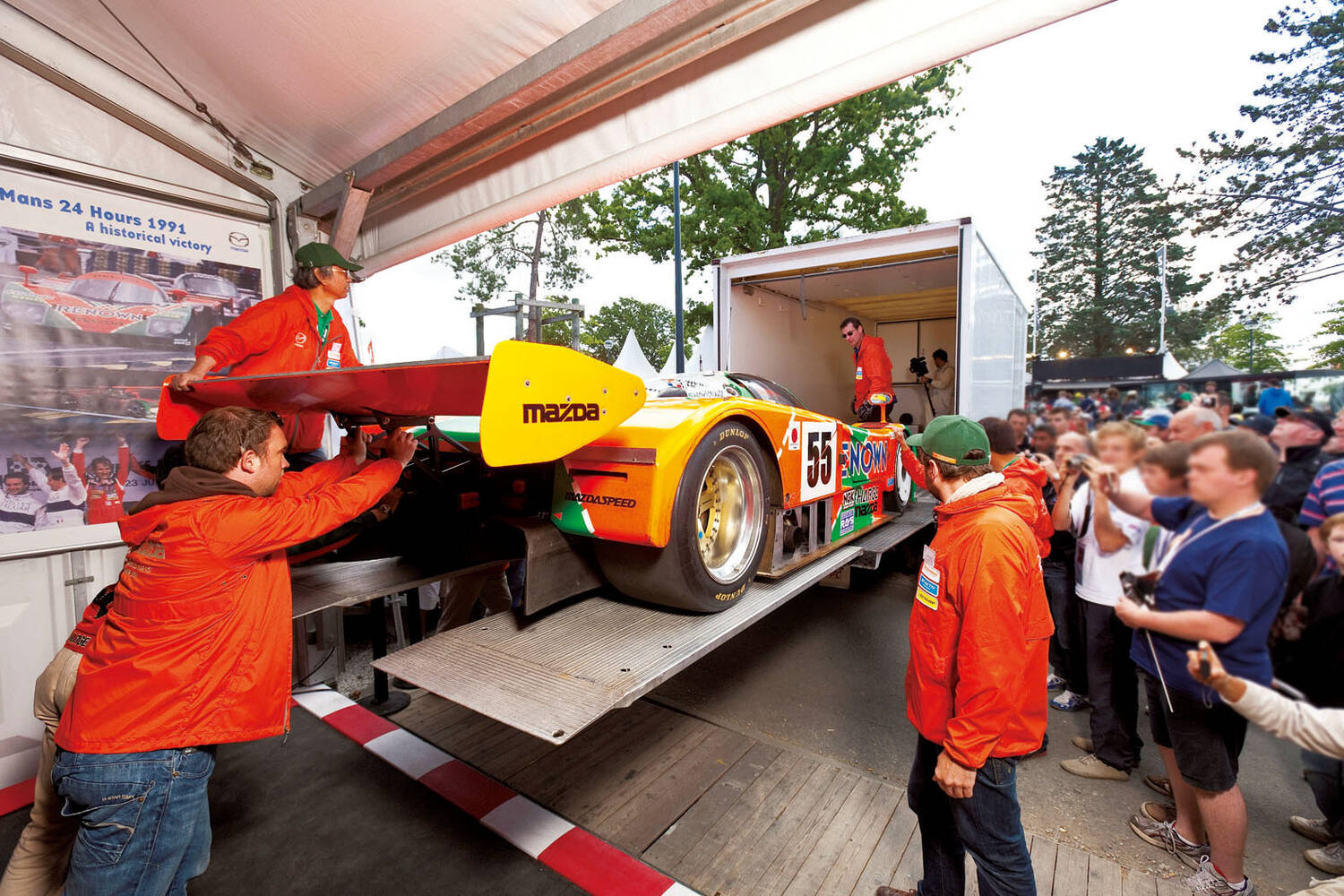
Mazda’s win at Le Mans in 1991 - an event celebrating its 35 birthday this year, with Mazda bringing the winning car back to the Le Mans Classic over the first weekend in July for some celebratory laps - was very much against the grain.
Le Mans, at that time, was dominated by three brands: Porsche, Jaguar and Mercedes. How could a Japanese brand, with a weird engine in place of a mighty flat-six, V8, or V12, hope to compete?
Well, actually, that rotary engine was the key to victory, but not quite in the way you’d think.
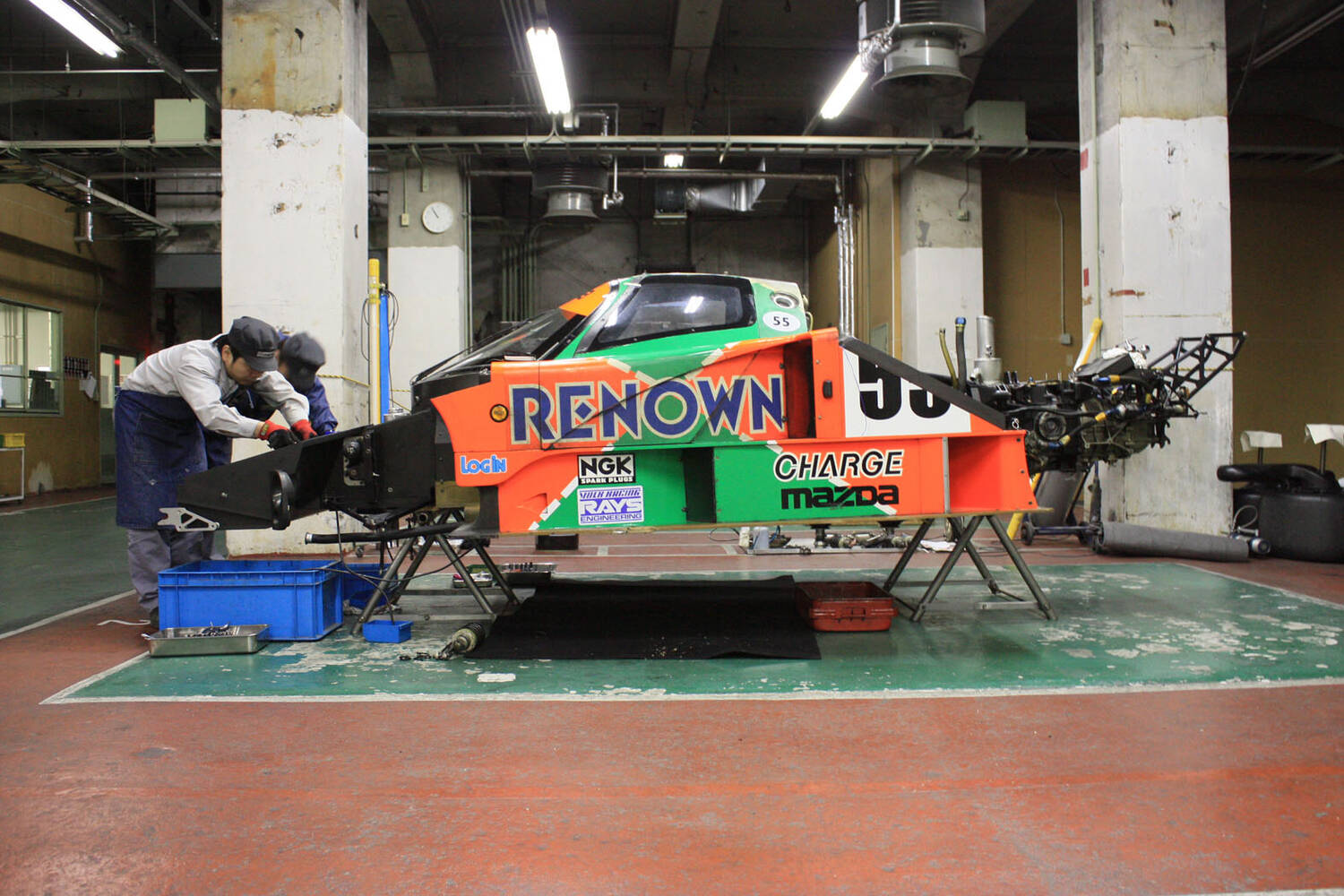
The 787B was a development from the earlier (and visually similar) 767 which Mazda had raced at Le Mans in 1988 and 1989. The number - 787 instead of 777 - was meant to both evoke a two-stage jump in performance over the 767 and also to stay within Mazda’s road car badging convention of the time (323, 626 etc.).
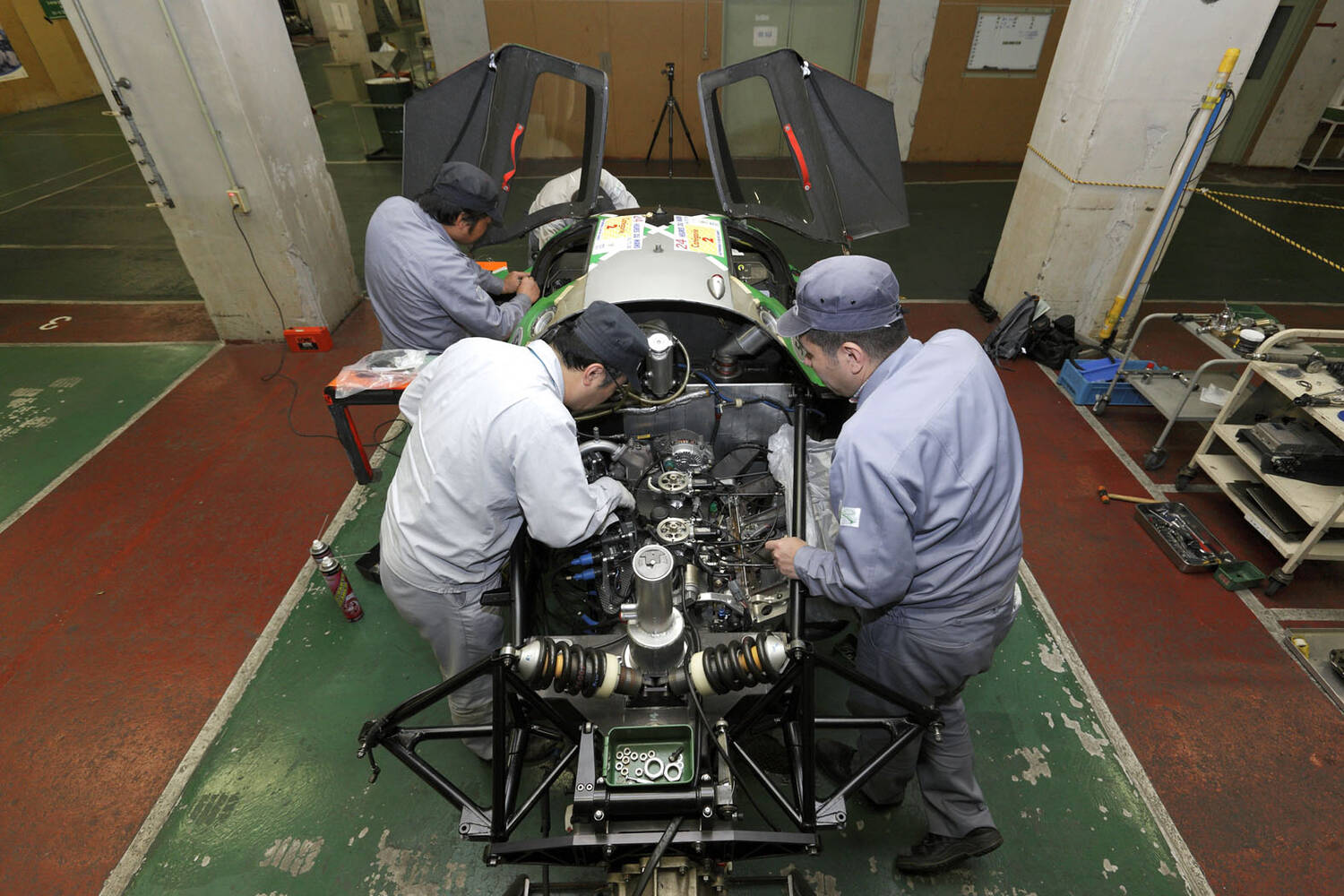
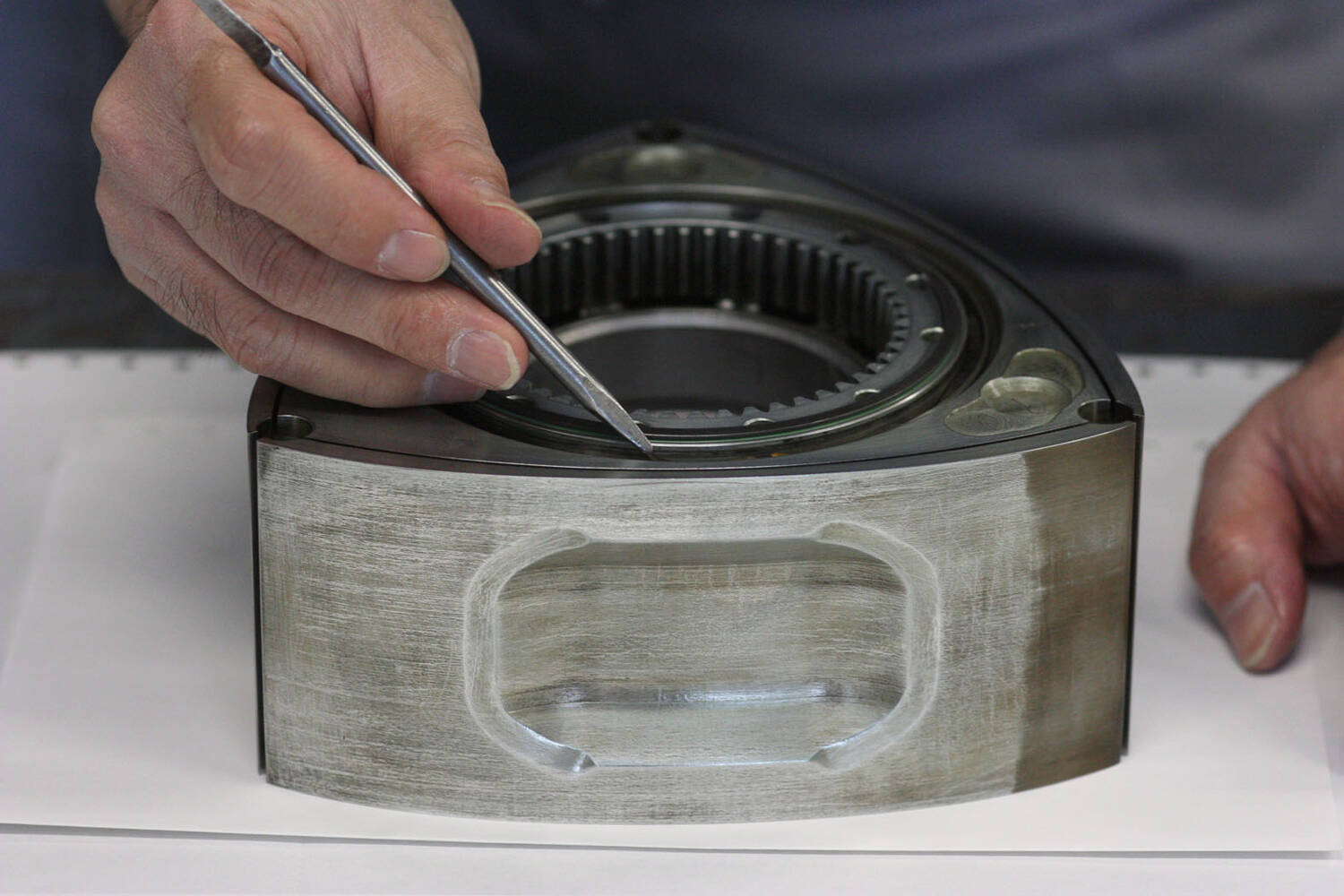
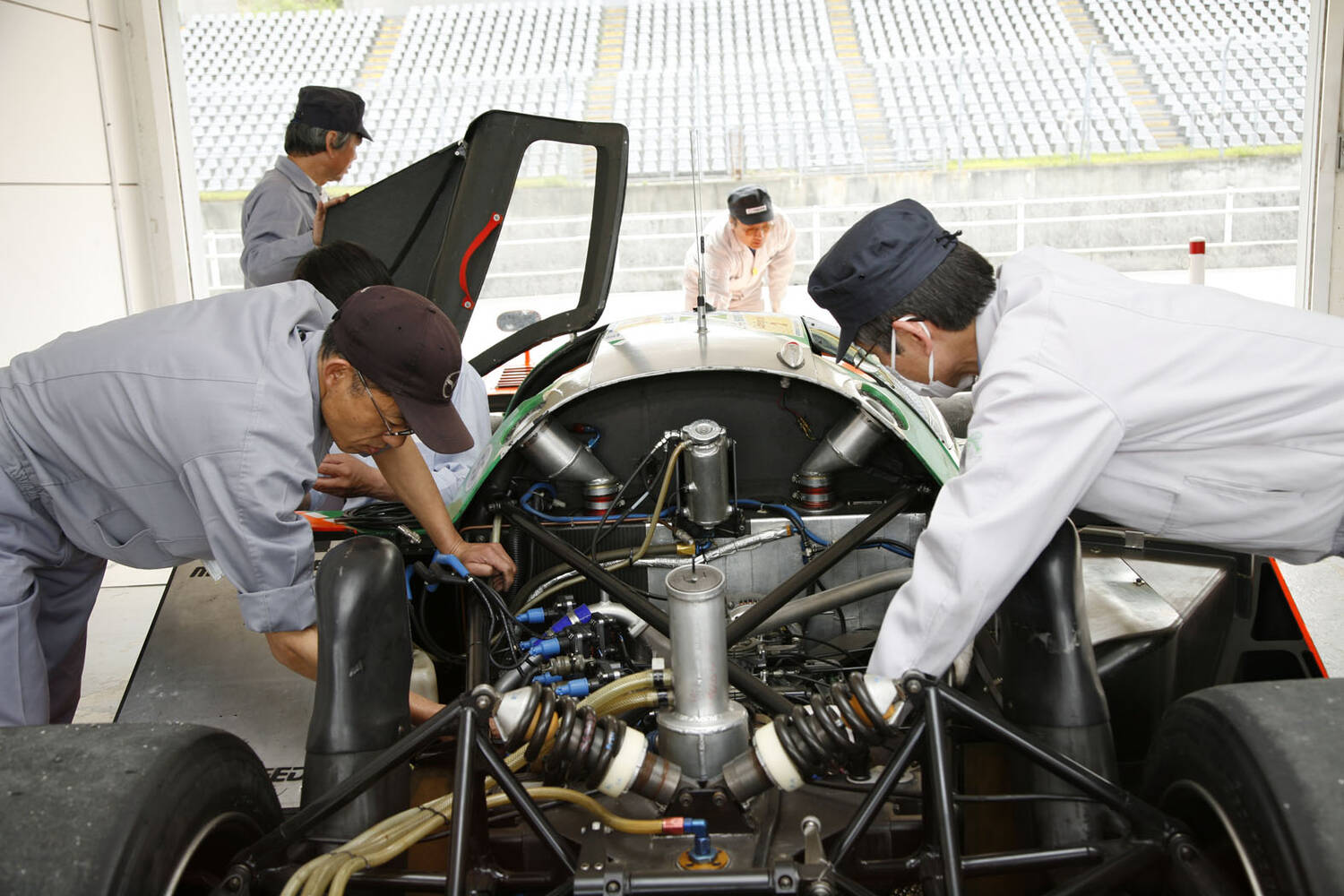
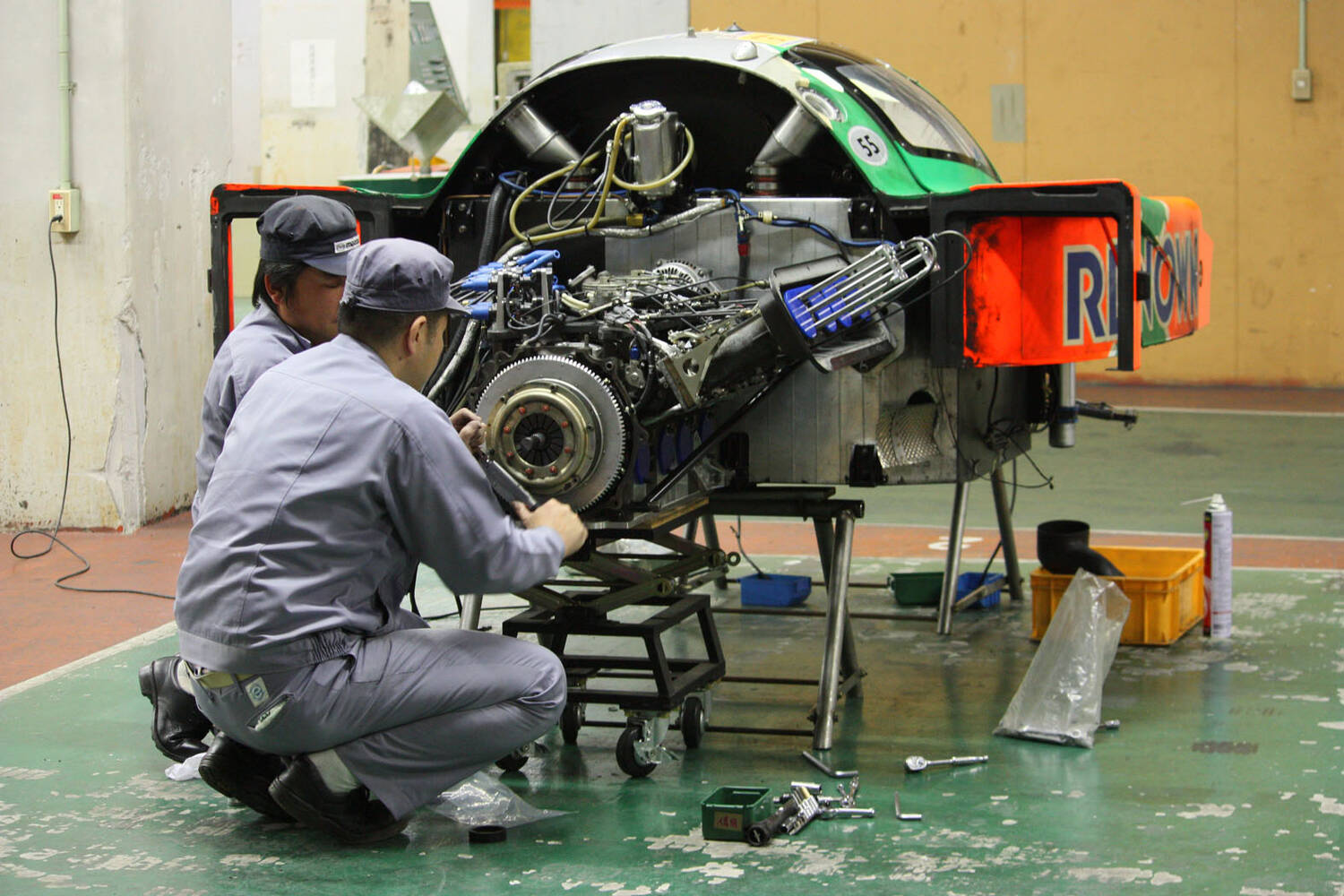
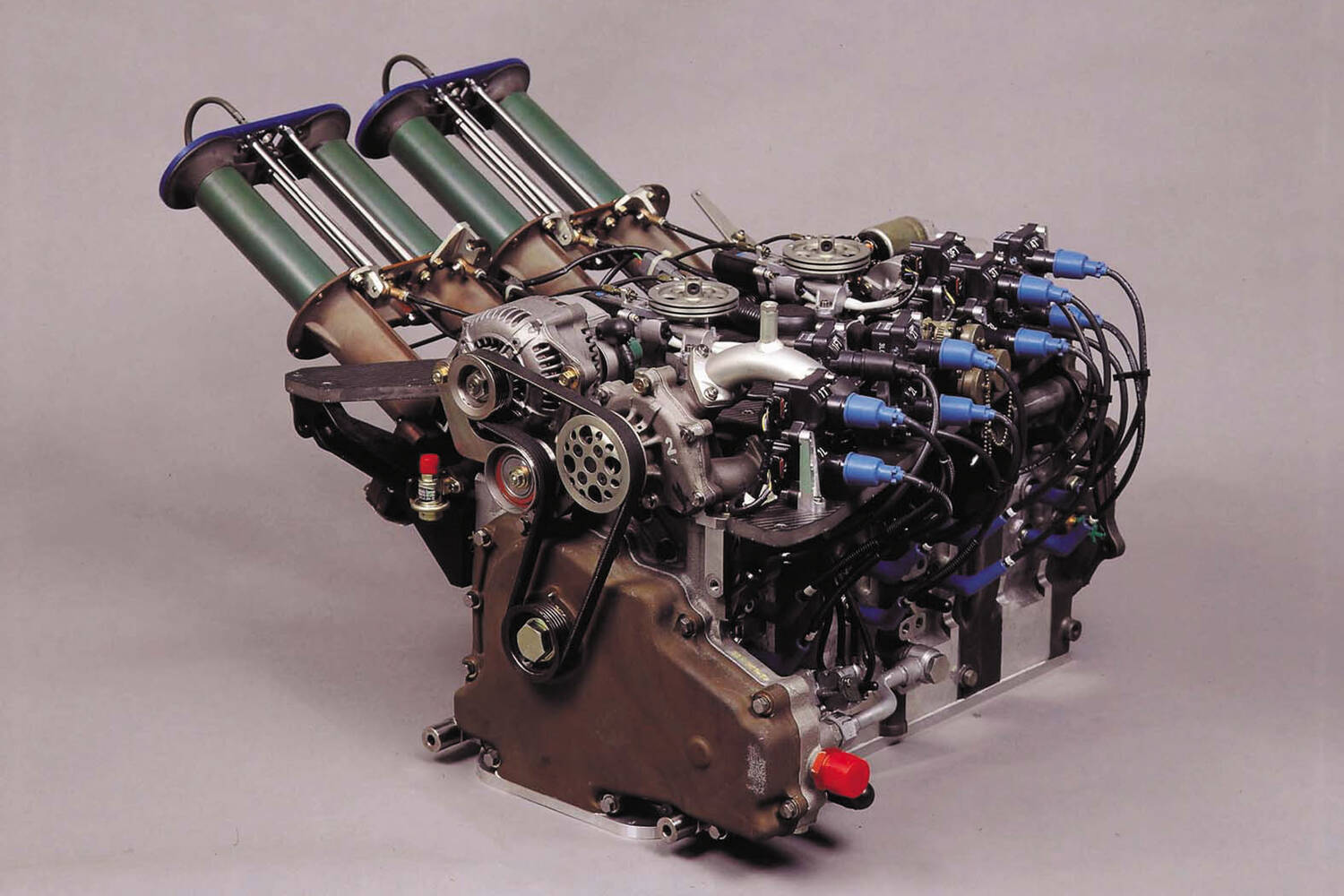
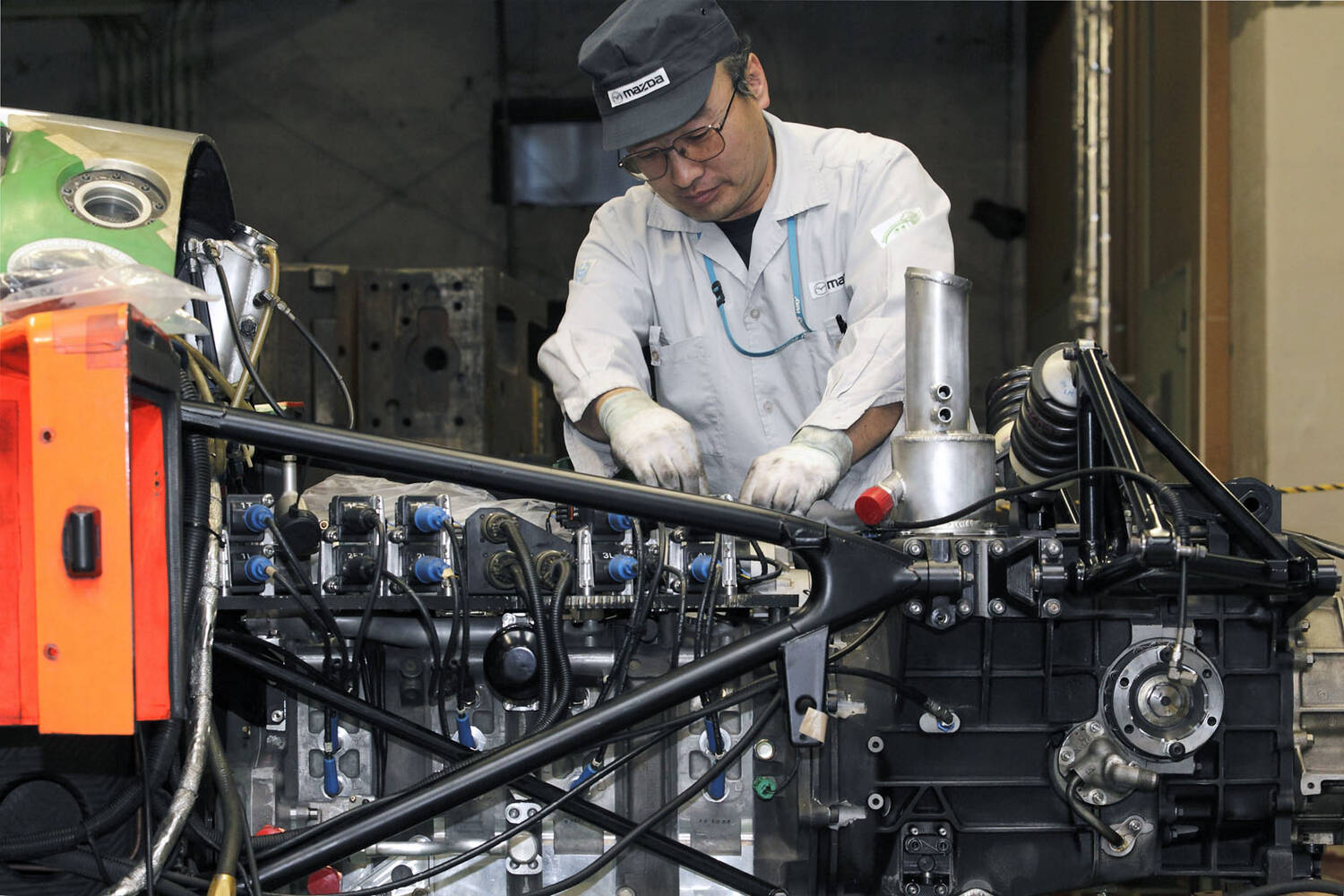
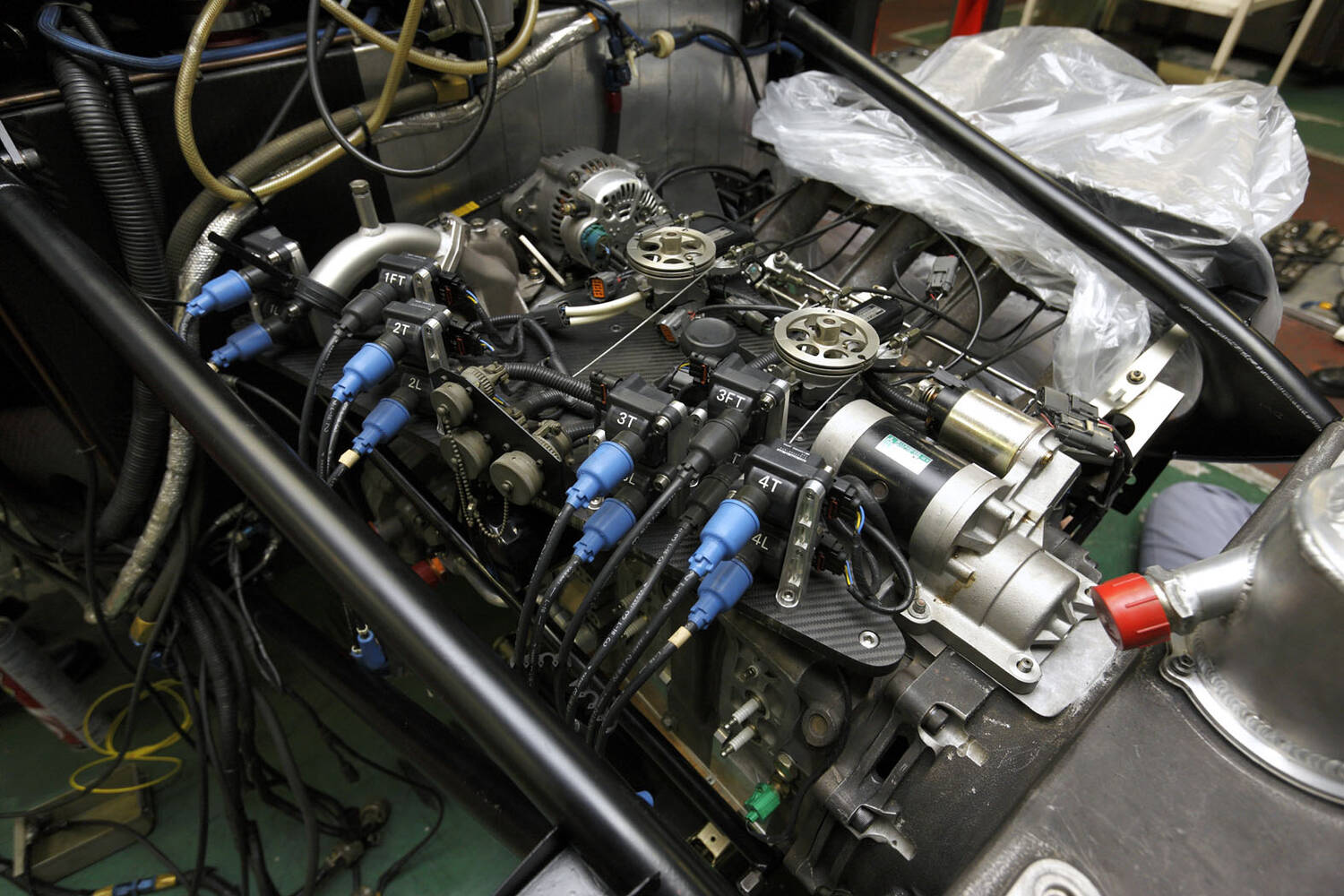
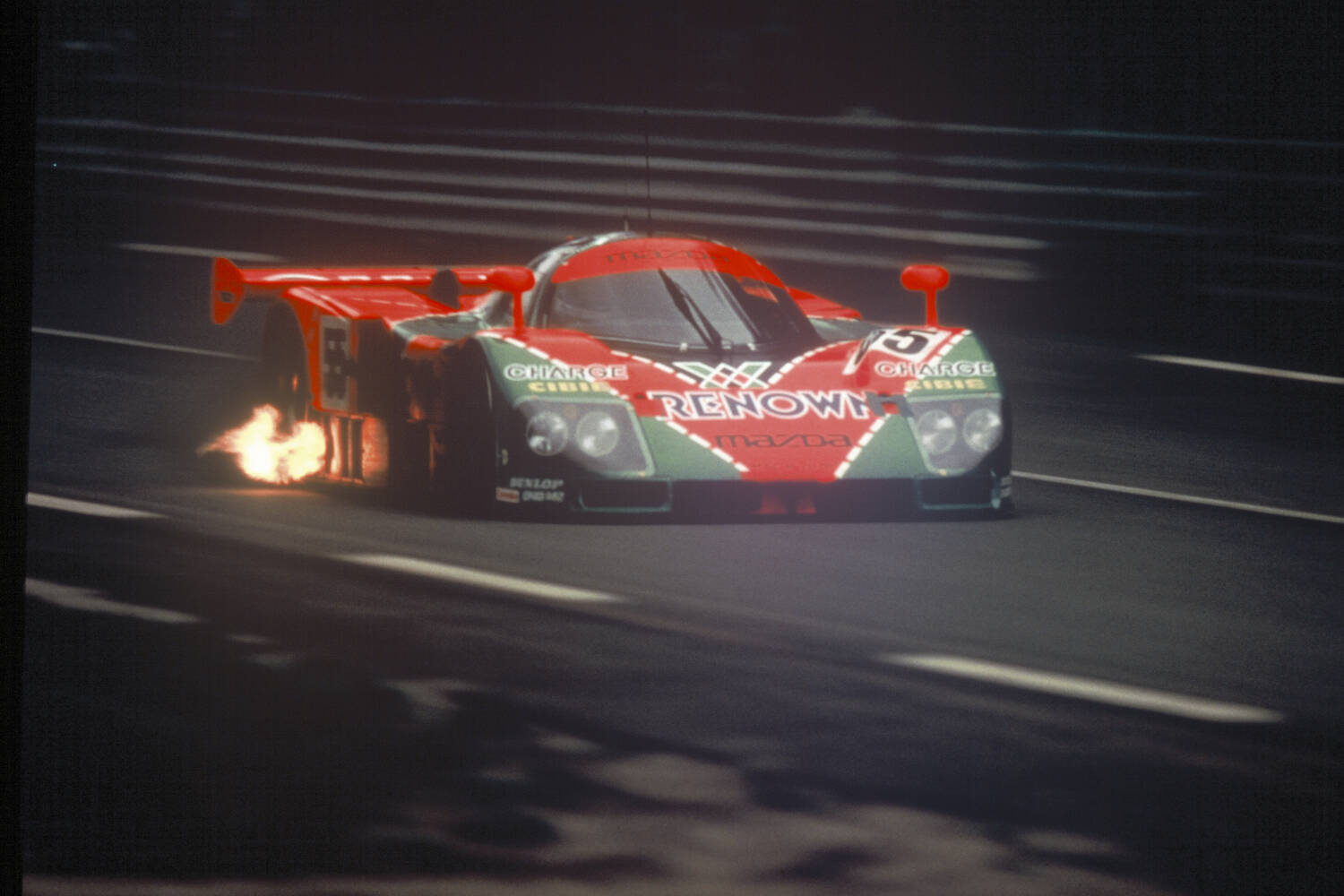
The 787B got a major engine upgrade over the 767B, with a new ‘R26B’ triple-chamber rotary engine design. This added an extra spark plug for each rotary chamber - for a total of three each - and reportedly developed 900hp at a wild (for the time) 10,000rpm.
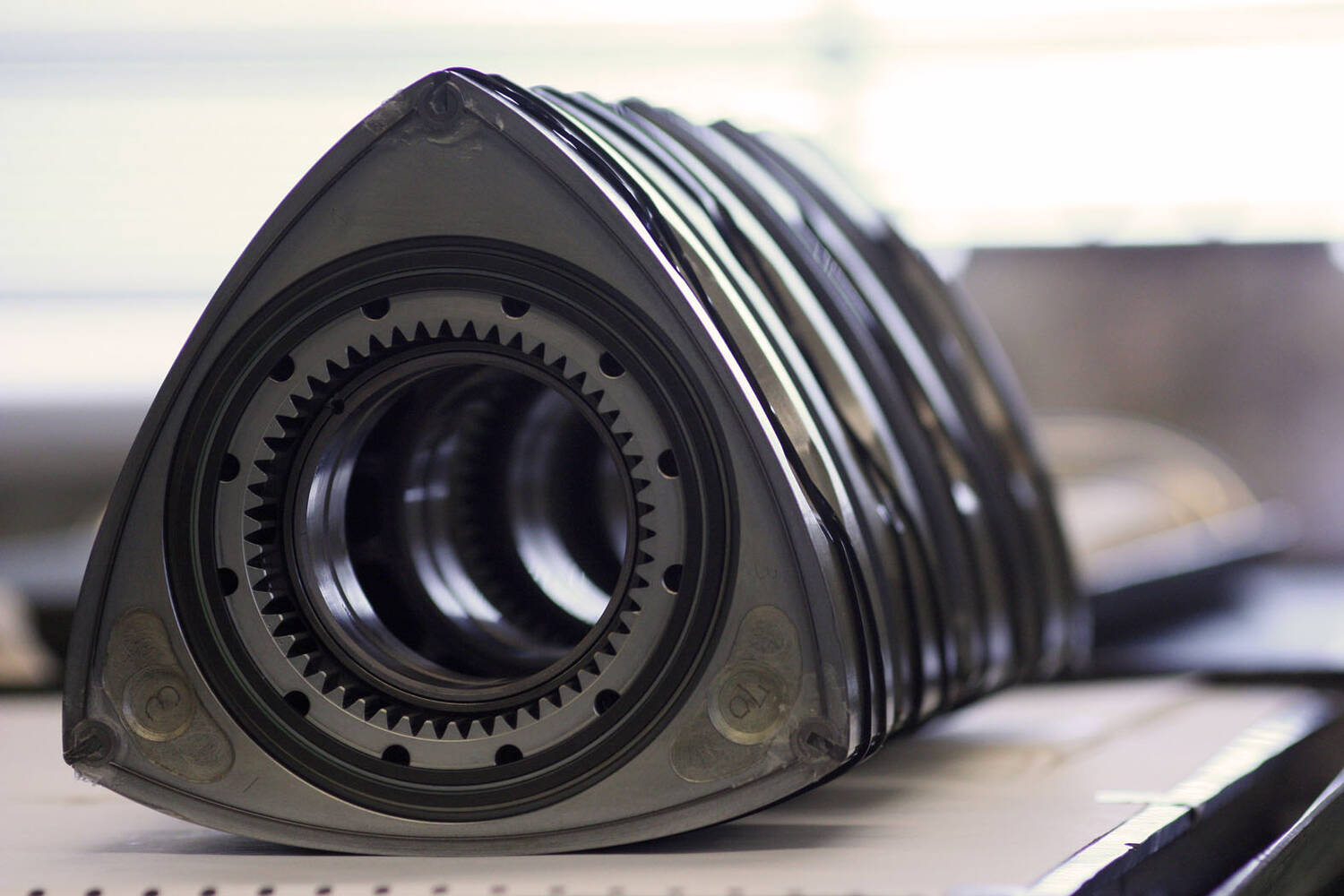
Apparently for Le Mans, the engine was limited to 9,000rpm and 700hp in the interest of reliability, but you wouldn’t know it from the way it sounded.
It’s hard to describe the sheer wall of noise as a 787B approaches and passes you. You hear the familiar screaming race engine Doppler effect as the car gets closer, but the pitch is higher, and the wall appears to be way, way taller than you’d expect of even a normally noisy racing powerplant.
As it gets closer, the scream reaches painful proportions, and your ears try to retreat down your spine to the muffled safety of your jeans’ back pockets, but the best is yet to come.
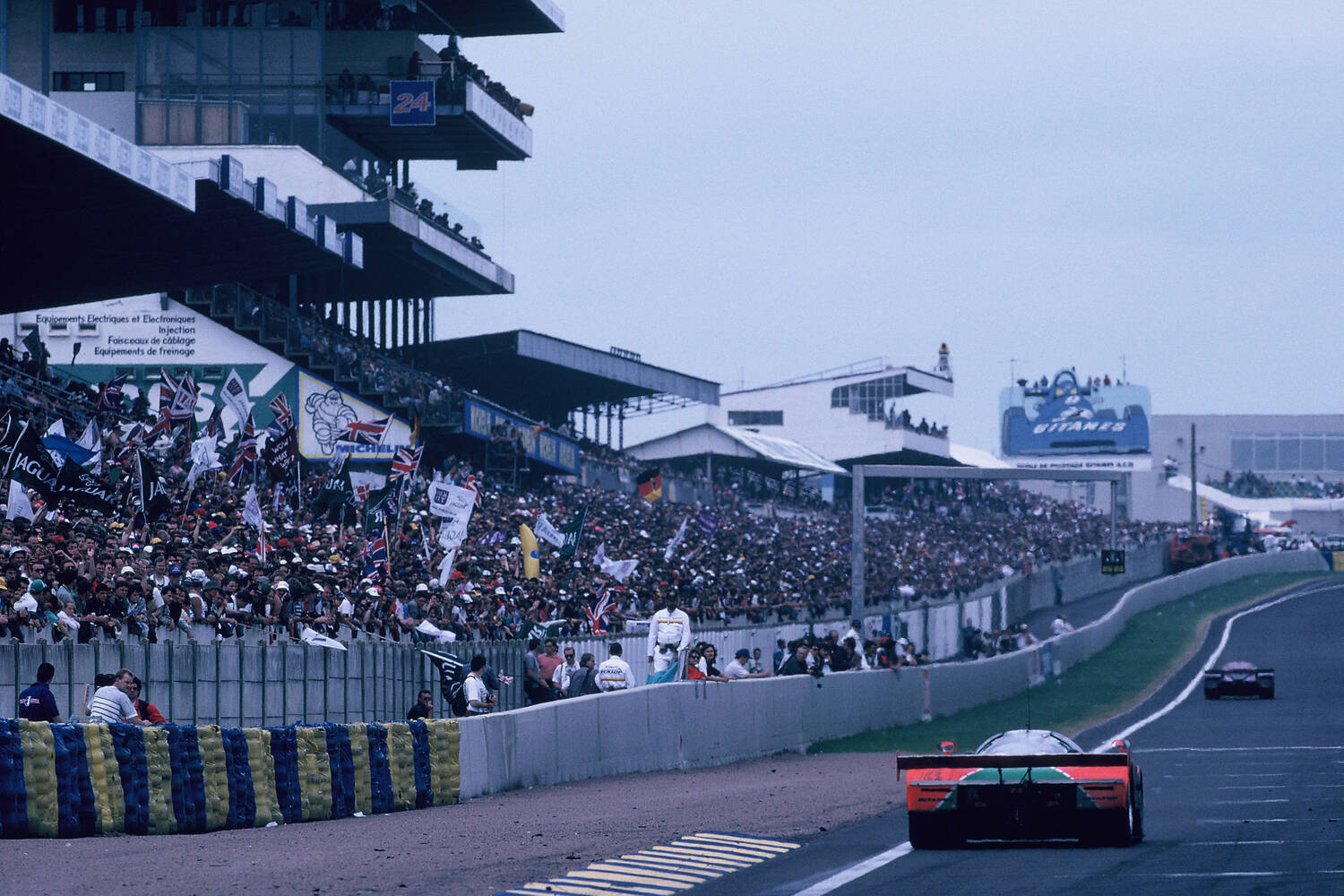
The 787B now passes you, opening the howitzer barrels of the exhausts directly at you, which reveals a stunning ‘WHOOP’ effect as the noise, finally, starts to diminish.
The engine is not why Mazda won Le Mans that year
Well, of course it is - no Le Mans racer can manage without both power and reliability, but the triple rotary R26B was actually the secret to Mazda’s head of design, Nigel Stroud (who also designed Le Mans cars for Cadillac and Toyota, as well as working on F1 designs for the likes of Hesketh and ATS) and his realisation that Mazda was, technically, running in a different category to the likes of Porsche, Jaguar and Sauber.
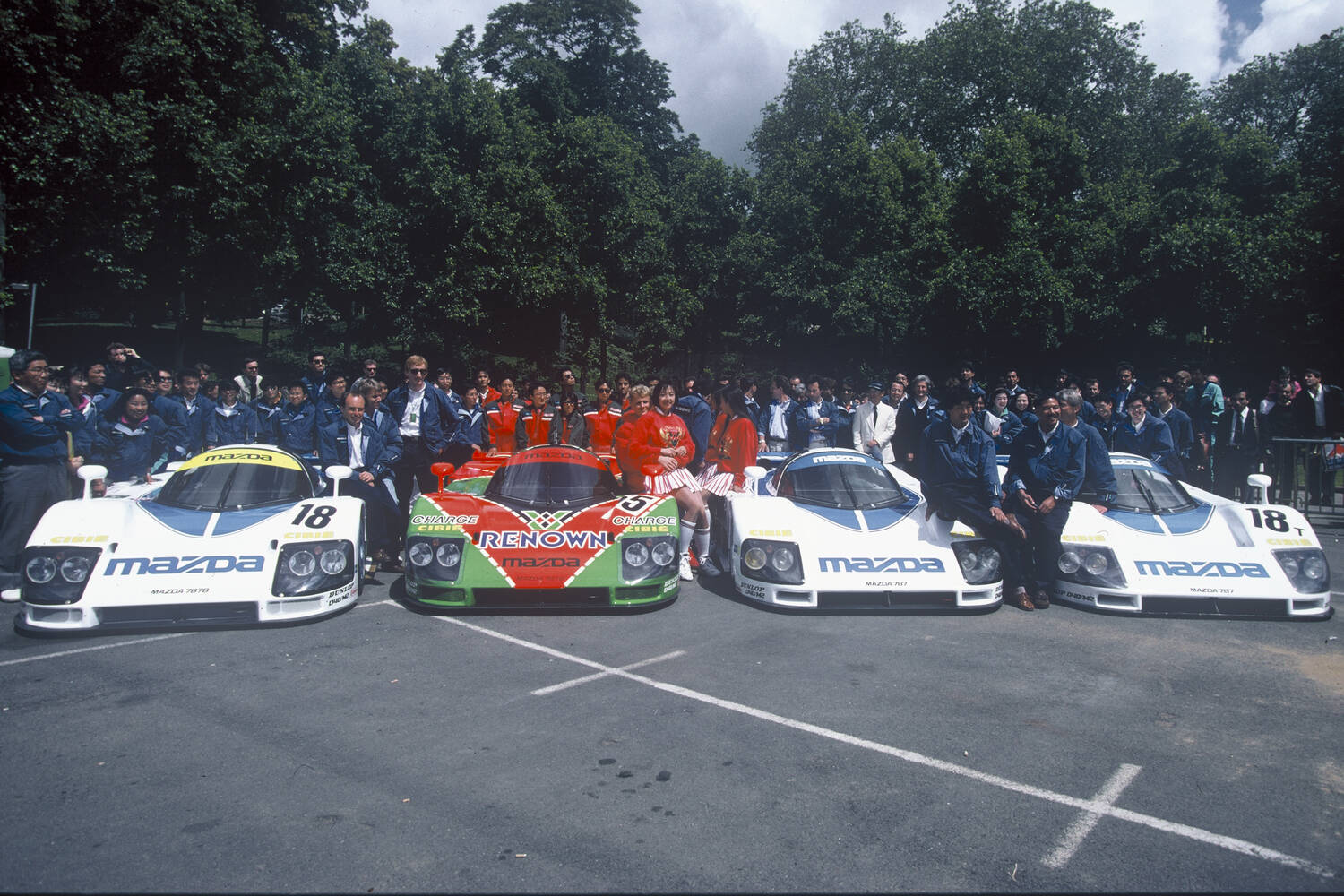
And this is how the rotary engine was precisely how Mazda won Le Mans in 1991. You see, that R26B was, as rotary engines tend to be, smaller and lighter than a conventional piston engine of the same power output. It’s why Mazda’s fabulous RX-7 and RX-8 sports cars feel so good to drive - there’s less weight on the nose.
That lower weight meant that, technically, the Mazda 787B was running to a slightly different set of rules at Le Mans than its Anglo-German rivals, to the tune of as much as 150kg, and that has many-fold benefits when it comes to acceleration and tyre life.
Let’s let David Kennedy, famed Irish racer, who was driving the other Mazda works 787B that weekend, take up the story:
“The rotary was unique, and it had its advantages and disadvantages. One of the disadvantages, it never gave you engine braking, so at the end of the Mulsanne, there was no help. But we managed to get carbon brakes on the car, so then it was a benefit because no engine braking means better fuel consumption.
“And because it was so smooth, it was like riding a magic carpet, and very good in the wet, with very progressive power. It felt like it would go on for ever. Against the Porsche turbos, they would accelerate off the corner faster, but you’d catch them at the end of the straight.”
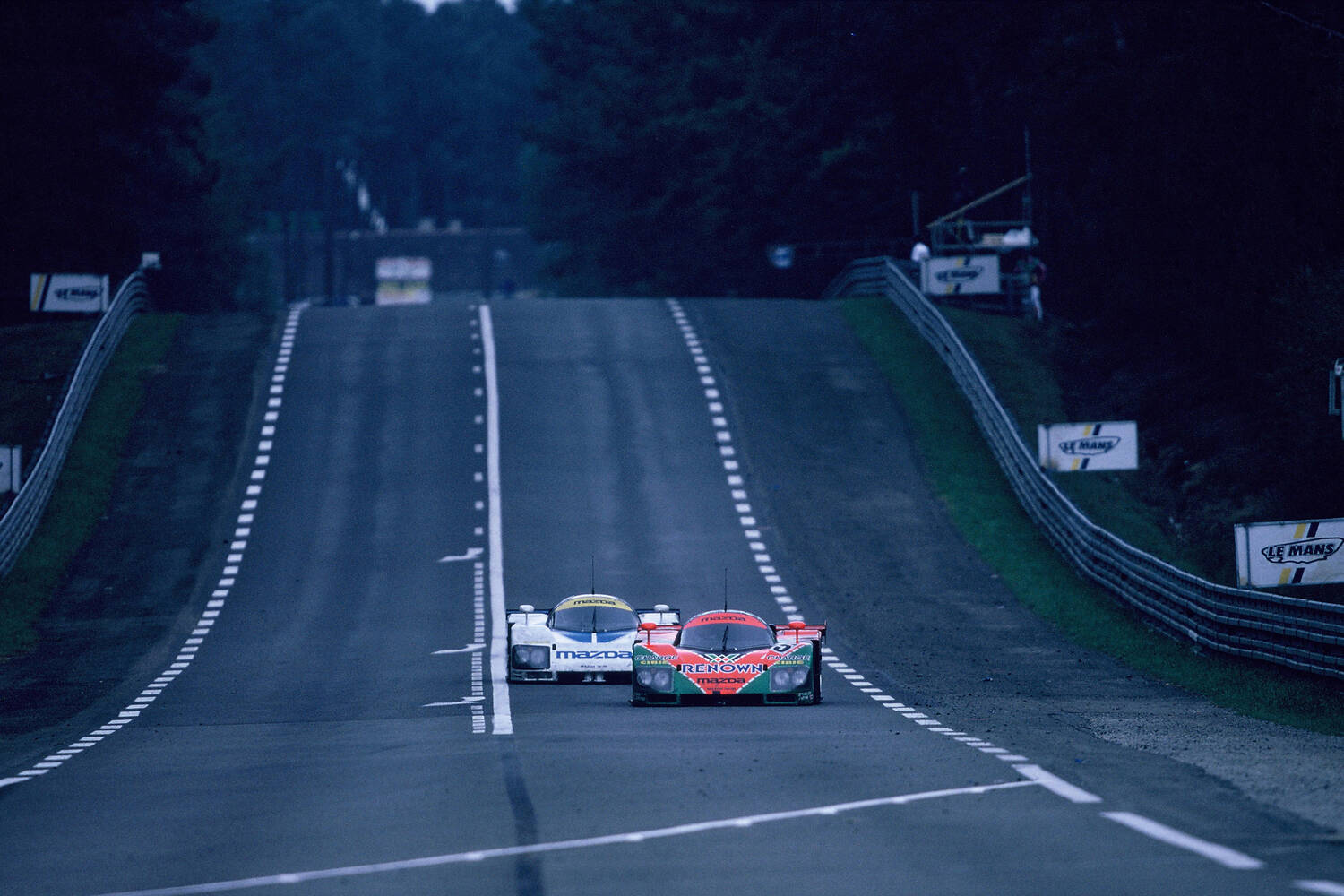
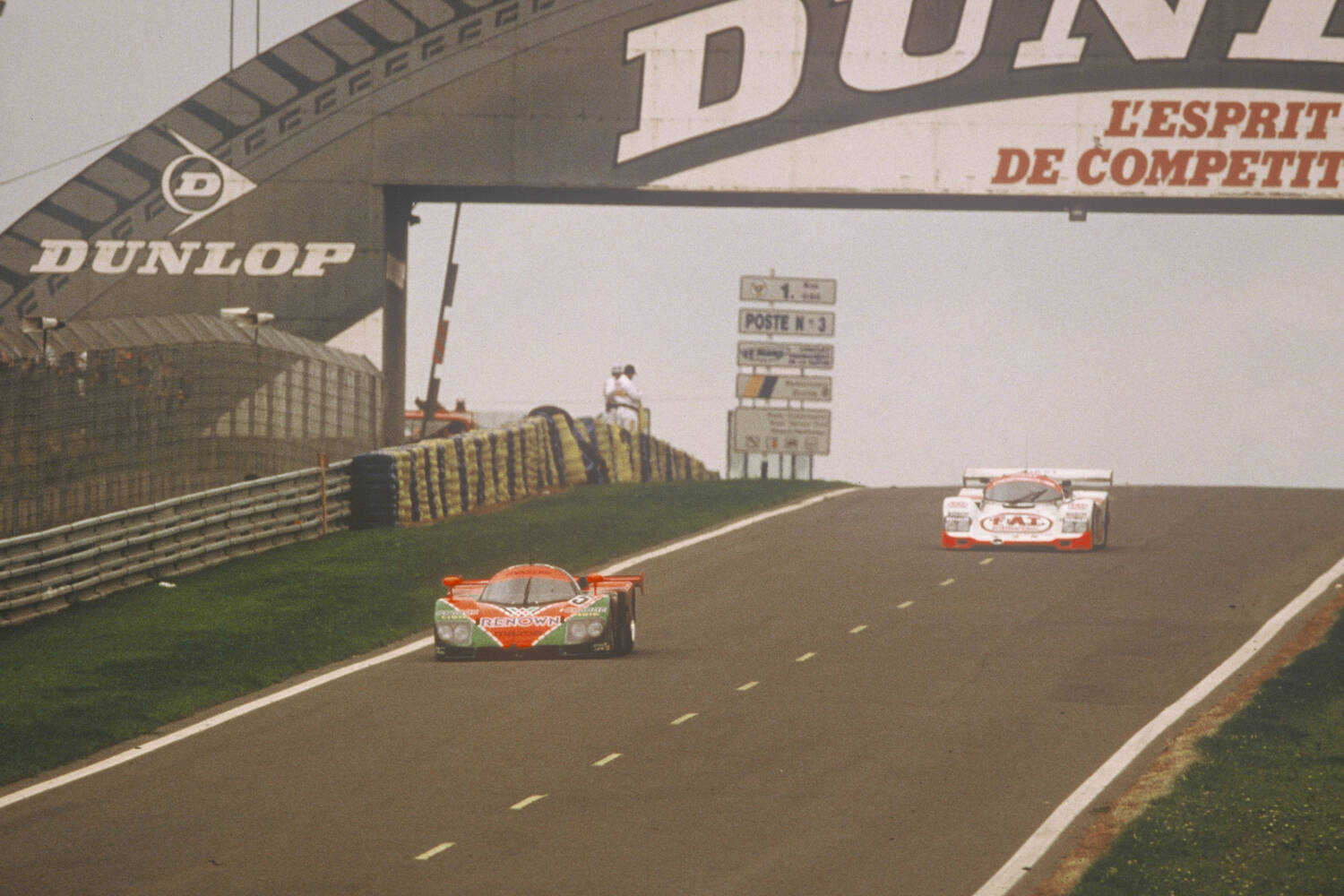
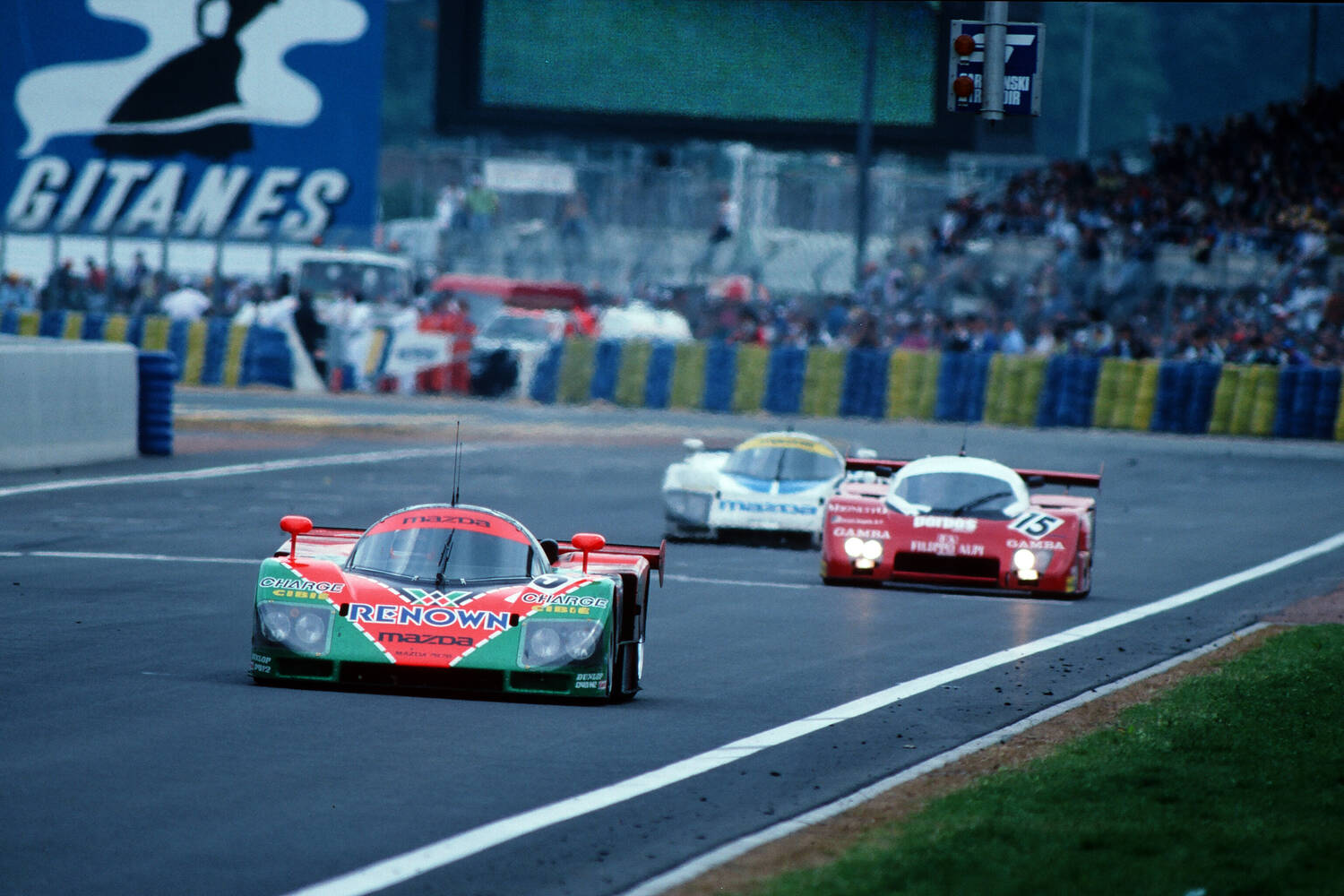
Unfancied at the start, the 787Bs began working their way up through the pack and benefited from their three main rival squads hitting reliability trouble.
When the leading Sauber Mercedes, driven by Jo Schlesser, Jochen Mass and Alain Ferte, pitted with an overheating engine, the No.55 Mazda moved into a lead it would never lose.
“There was a report done by Mazda, and as ever Japanese reports aren’t small,” said Kennedy. “It was of biblical proportions, on the reasons why we had won. And on the last page it said, ‘maybe it was because the car was blessed by a Buddhist monk at the foothills of the snow-capped Mt Fuji.’ I was there for that blessing; it was a fabulous ceremony. And sometimes you scratch your head and say who knows?”
That rotary was no blessing for Kennedy and his teammates, though. It’s hard enough for drivers to get any sleep at Le Mans, but the 787B’s screaming rotary made it harder.
According to Kennedy, you’d be trying to get some shuteye, and able to block out the monotonous noises of the other cars, but the R26B rotary’s high-pitched wail would inevitably startle you awake again each time it passed.
The future?
Mazda hasn’t returned to Le Mans since that history-making victory, in spite of some successes in US-based IMSA sports car racing in the years since.
The 787B can’t stay away though, returning many times since that win, to huge acclaim and the adoration of fans every time it turns up.
This year, the 787B was driven in a special parade both by famed Japanese racer Yojiro Terada - who, just behind the late, great Bob Wolleck, holds the highest number of appearances at Le Mans without a win (29 in total), as well as Pierre Fillon, President of the ACO (Automobile Club l’Ouest, the governing body of the Le Mans 24 hours).
Fillon said ahead of his drive: “It has long been a dream of mine to have the privilege of getting behind the wheel of this iconic car.”
Will Mazda ever come back to Le Mans to defend that 1991 title? It’s not impossible. The latest ‘Hypercar’ regulations make competing at the 24 hours, and in the rest of the World Endurance Championship, far more affordable than it used to be, and the huge swell of support from the fans each time the 787B turns up must surely be pulling a few corporate heart-strings at Mazda’s HQ in Hiroshima.
We won’t hear the wail of that fabulous rotary engine in the heat of competition again, but here’s hoping that we get to see the Mazda name on a Le Mans entry list, before another 35 years have passed.

Video player loading.
Video unavailable. Watch on YouTube
If there is anything about this story we have not covered, you can avail of our expert advice service via the Ask Us Anything page.