

At times, the worst-case scenario can occur, and such instances not only shape future operations but also inform how the 'primary' vehicle is designed and protected. One such incident in 1962 led to a shift in how France approached the creation of dedicated transportation for its president.
It all started with an attack on Charles de Gaulle
Elected into office in 1959, Charles de Gaulle and his wife were travelling in one of two unmarked Citroen DS 19s en route from Élysée Palace to Villacoublay Air Base. They were returning to their residence in Colombey-les-Deux-Églises, but as they neared the base, the cars were ambushed by a group called Organisation Armée Secrète (OAS) - who were opposed to Algerian independence.
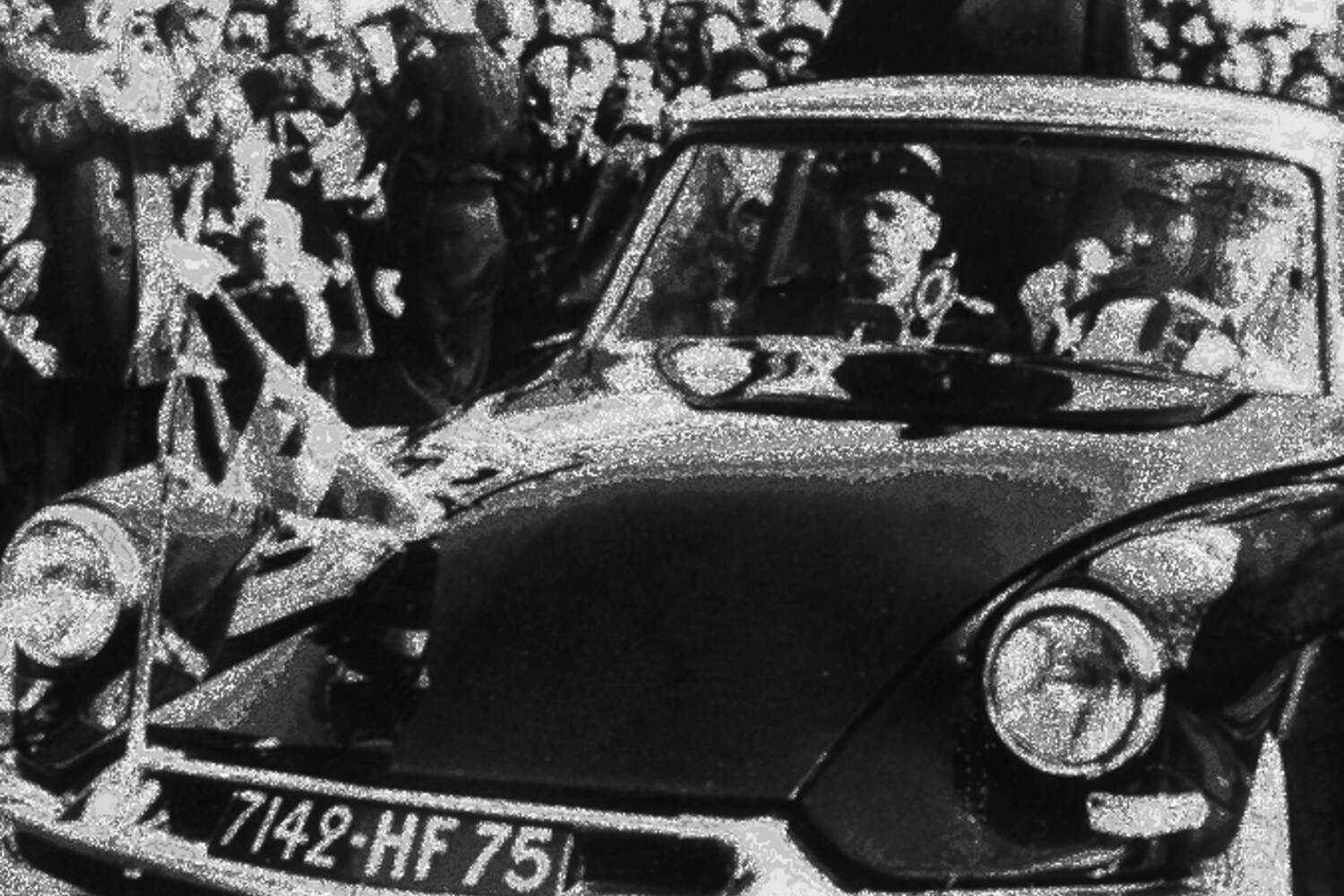
The assassination squad was headed by Jean-Marie Bastien-Thiry, but despite their planning, they got their timing wrong as they had made the mistake of consulting the 1961 calendar, when on 22 August, dusk fell at 8:35pm. On the same day in 1962, dusk instead fell at 8:10pm, so they had missed the signal. Realising their error, Gérard Buisines tried to ram the presidential car with a Renault Estafette, while Alain de La Tocnaye tried to shoot at de Gaulle with a machine gun.
In all, 187 rounds were fired, 14 of which hit de Gaulle's car, including the tyres. However - and thanks in part to the DS's hydropneumatic suspension - it kept driving and got de Gaulle to safety. Upon arriving at the base, it was said that Yvonne de Gaulle said: "J'espère que les poulets n'ont rien eu” ("I hope nothing happened to the chickens”), presumably referring to that evening's dinner that she had placed in the boot of the car prior to leaving the palace.
Following the attack, de Gaulle was presented with an armoured Renault Rambler Ambassador, to which he responded: "Where's my DS?” He regarded the car as having saved his life and refused to travel in anything else until the end of his presidency.
Taking the top off a DS
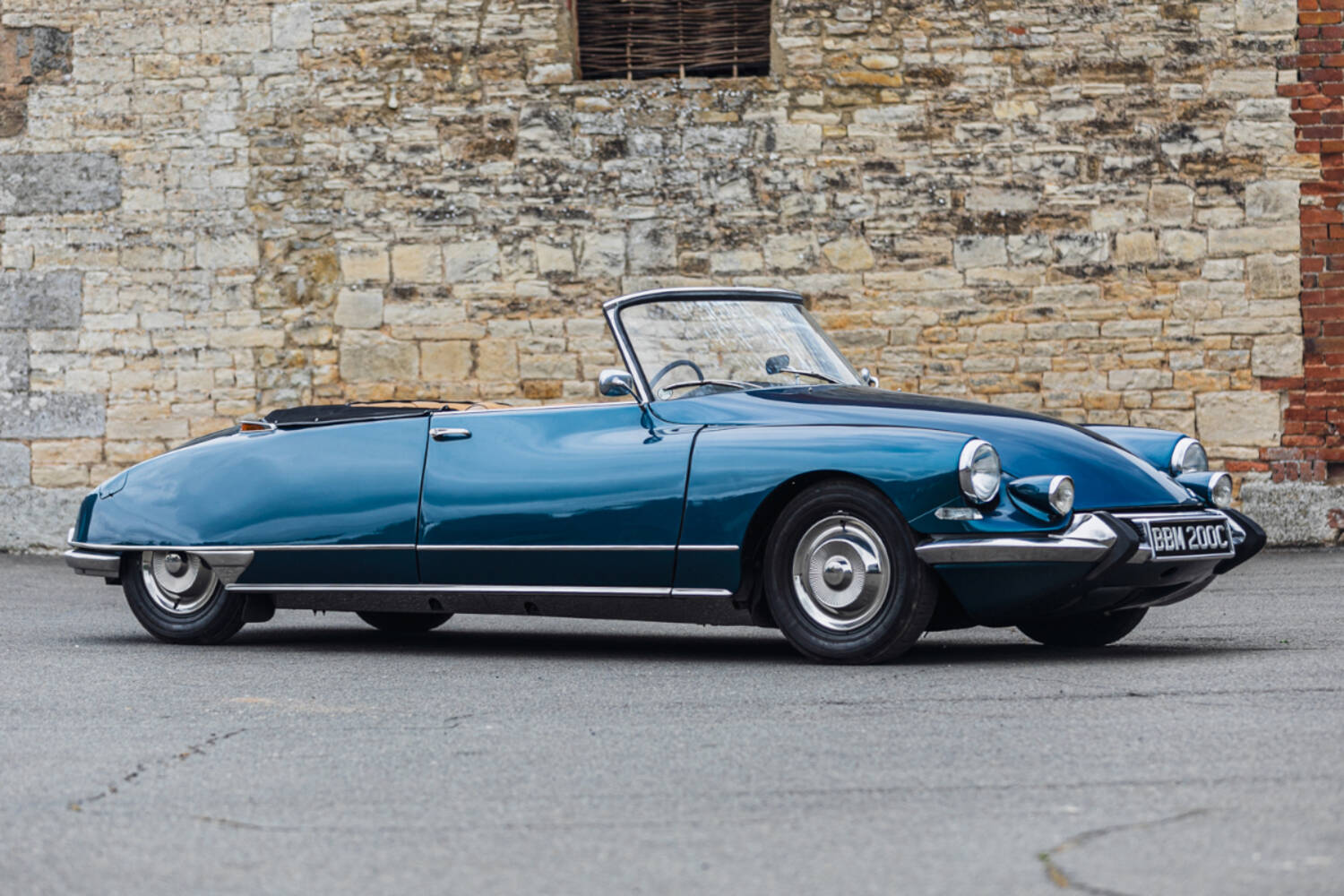
However, there were some exceptions, as it was deemed that a more secure car would be required for parades. The Henri Chapron coachworks was commissioned to create a one-off DS 21. Chapron is famous for many things, including the DS Décapotable convertible. He did such a decent job at creating it that Citroen contracted him to build the car over at its own design studio.
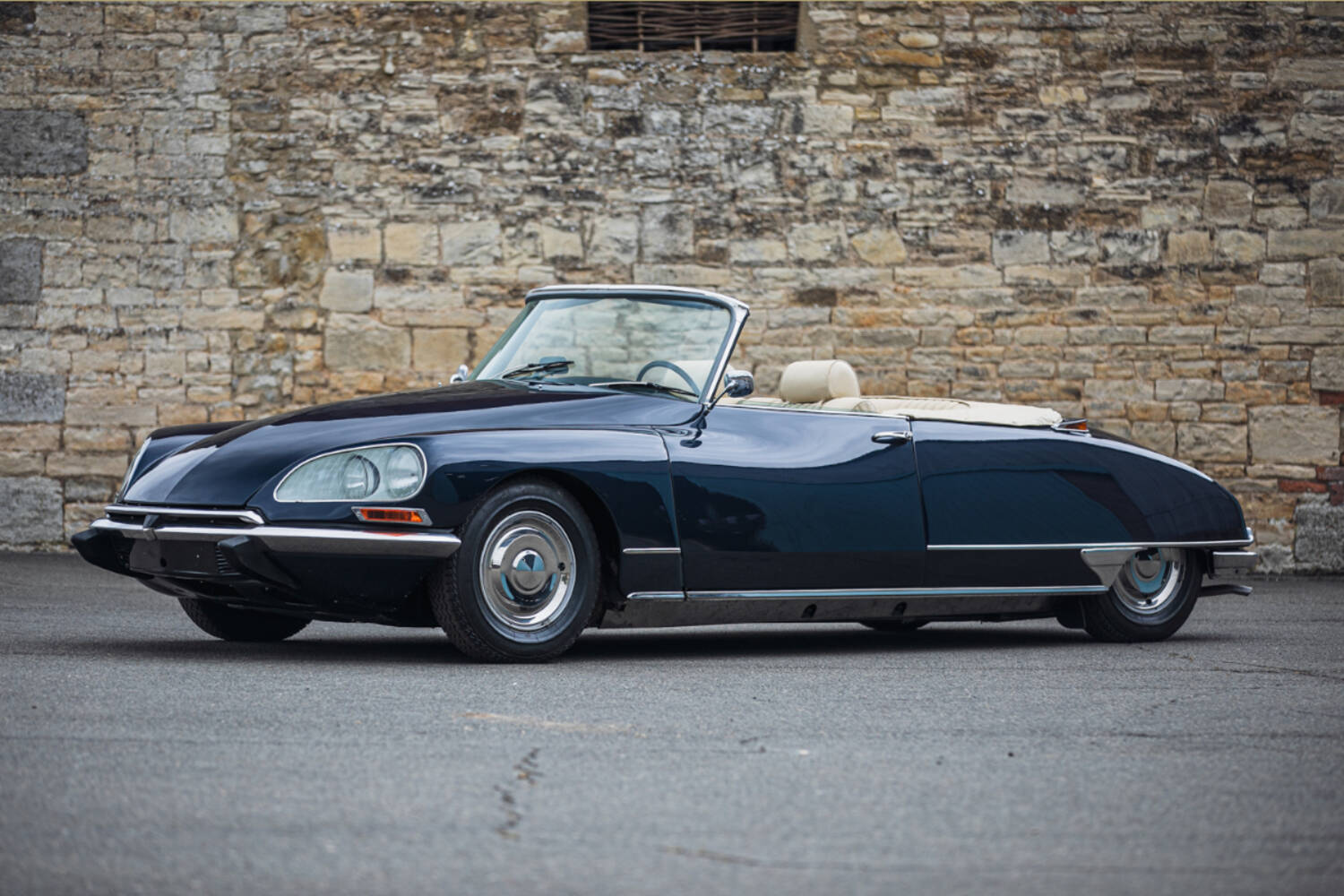
The Presidential DS 21 had a long set of criteria it had to meet, including that it had to be bigger than the car then used by the President of the United States. Designed primarily for ceremonies and processions, the new car, which carried the registration mark '1 PR 75', was built using the front-wheel-drive setup from a Citroen DS complete with hydropneumatic suspension.
The special bodywork and layout saw it stretch to 6.53 metres long and 2.13 metres in width and it was designed to be able to drive for several hours at very low speeds in the highest temperatures.
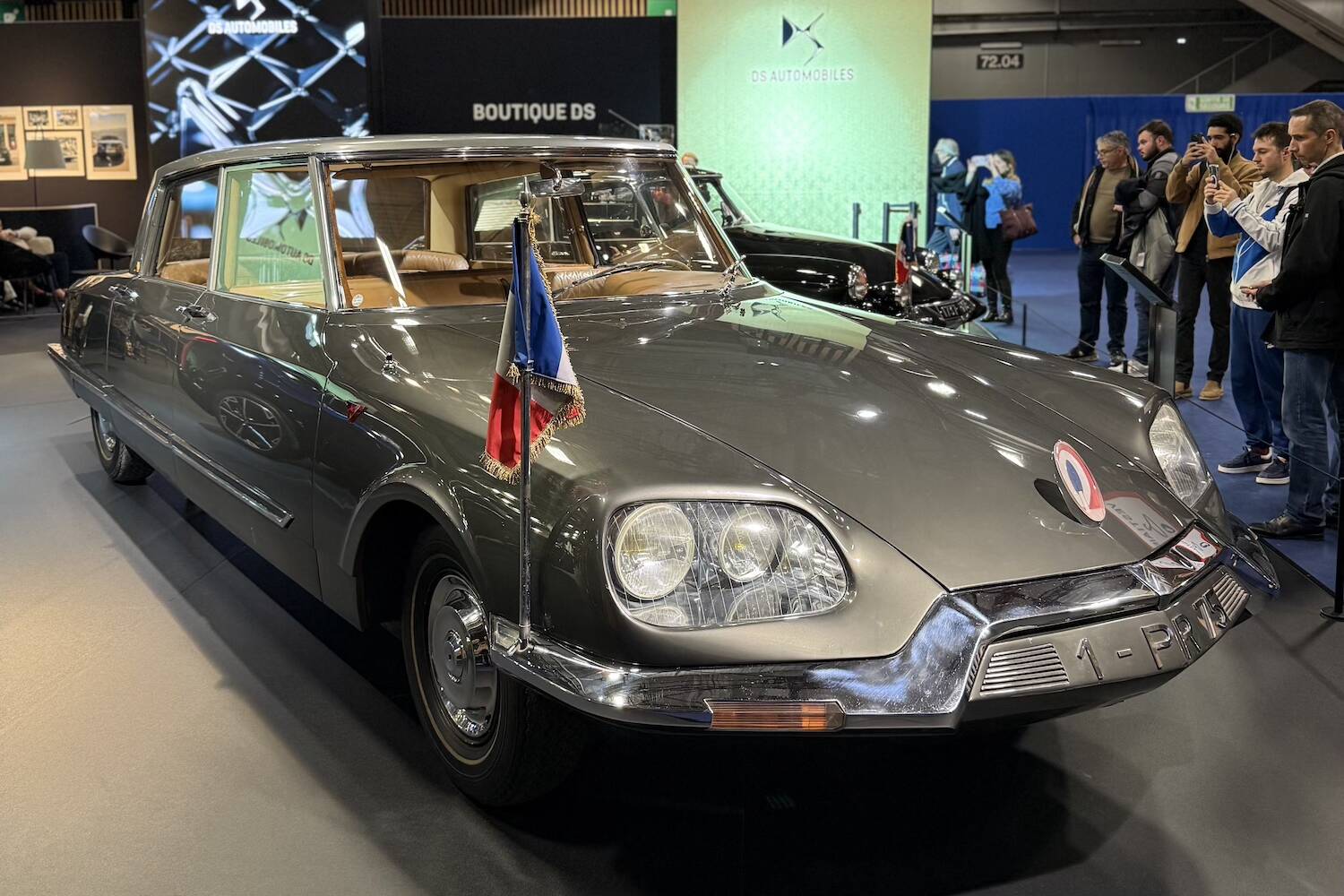
Despite carrying the DS name, it looked little like the production car we know, with four headlights, including two long-range iodine auxiliaries, illuminated side flags and a light roundel integrated into the bonnet. It even had scrolling indicators at the rear like an early form of today's dynamic turn signals.
Inside, the rear of the vast passenger cabin was sealed off from the front by a curved glass screen. The president's aide-de-camp could pass notes to the rear via a letterbox-style drop box that passed between the bulkhead. In the rear, there was full air conditioning, a mini-bar and additional fold-down seating for extra passengers, such as an interpreter.
A Citroen in name perhaps
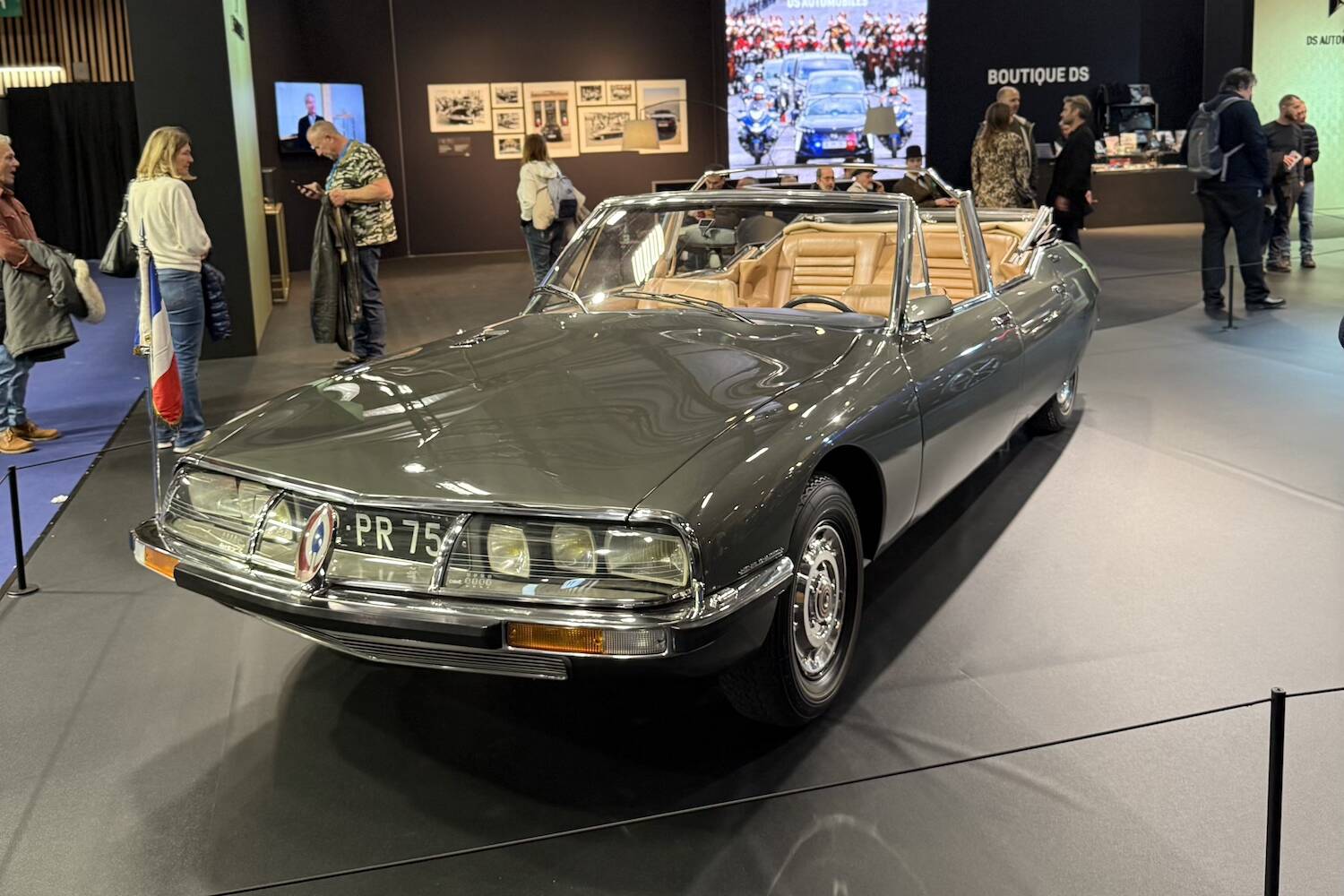
In the early 1970s, the Elysée's Car Service ordered two new ceremonial cars to replace the ageing Simca convertibles. Henri Chapron was once more tasked with the role of creating the new cars that were based on the Citroen SM coupe.
A significant amount of work was required to not only turn the vehicles into convertibles but also add significant length and two more doors. In all, they were lengthened by 71cm, bringing the total length to 5.6 metres - compared to the standard car's 4.89-metre length.
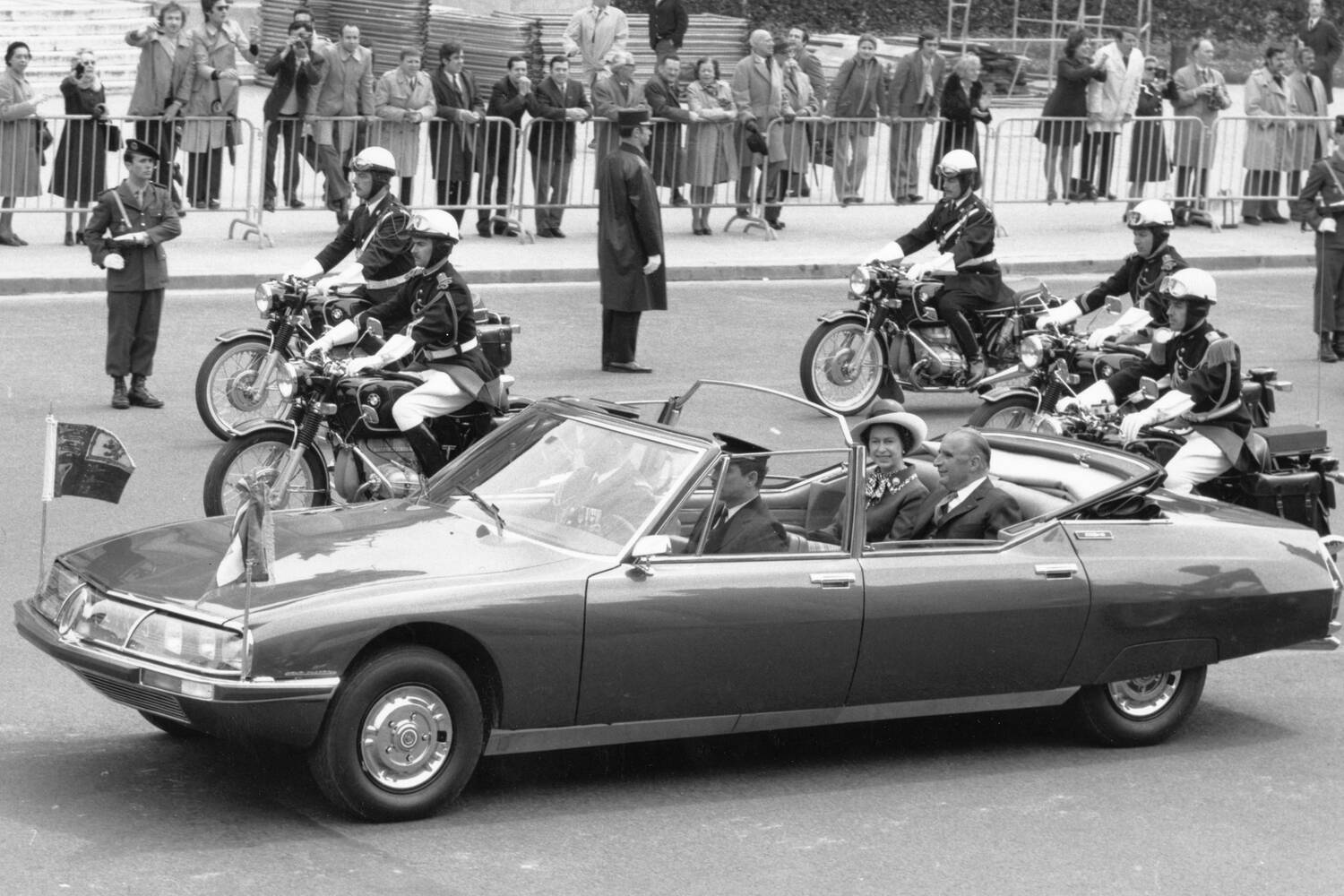
Upon completion, only the front section retained any semblance to the SM the public could buy, and the cars made their public debut on 15 May 1972 for the visit of Her Majesty the Queen of England to France.
Due to the weight increase of 330kg, the suspension and braking system - which had discs all-round - had to be specially adapted. Although the 170hp V6 engine was unchanged, the manual five-speed gearbox was fitted with different ratios, allowing the car to drive at low speed for a long time in order to perform its duties.
Lots of variety in the intervening years
In subsequent years, the fleet of the Elysée's Car Service was as varied as the presidents they carried. They included a Citroen CX Prestige and C6S for Jacques Chirac, while François Mitterrand sometimes drove his personal Renault 5 when not travelling in the official Renault 30 and Renault Safrane.
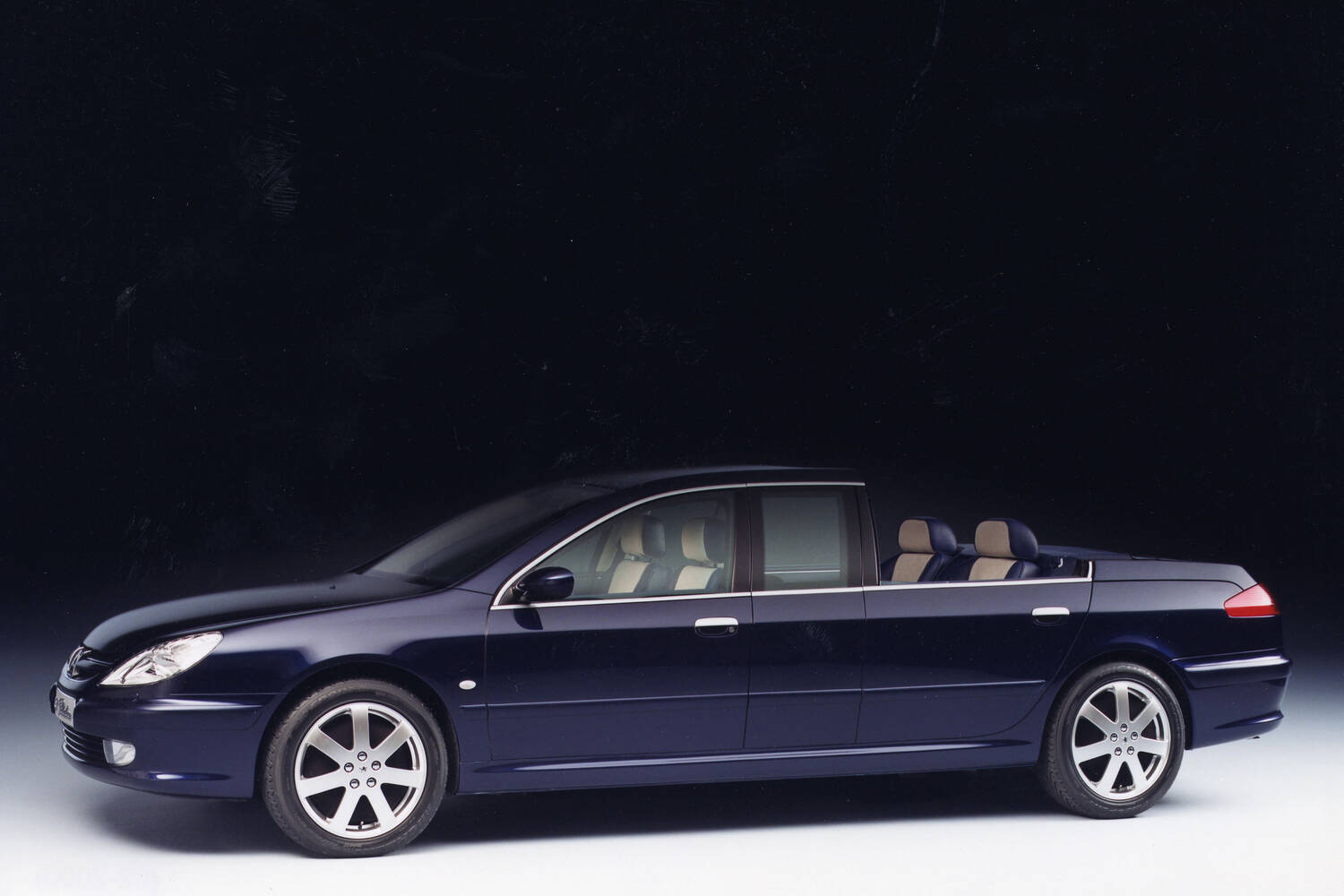
In 2000, Peugeot presented the 607 Paladine. Measuring over five meters long and painted in Bleu Céleste, what made the 607 Paladine different from other limousines of the time is the use of a powered retractable steel and glass roof over the two rear seats. This created a 'landaulet', a term previously used to describe luxurious saloons with only part of the passenger compartment that opened.
Its interior was as opulent as you might expect. A rear centre console, matching the one from the front, housed the usual climate controls and even an on-board telephone and intercom controls between the two rear seats and those in front. There was also a mini bar, a small bookcase and a premium audio system.
The rear-facing seat contained a fully retractable, electrically operated table, which incorporated a 17-inch plasma screen connected to a PC and a DVD player. Naturally, the seats were upholstered by Hérmes in soft Bleu Saphir leather, finished with double French stitching in Indigo cotton, along with blue-and-white checked woven wool rugs.
Coming full circle for DS Automobiles
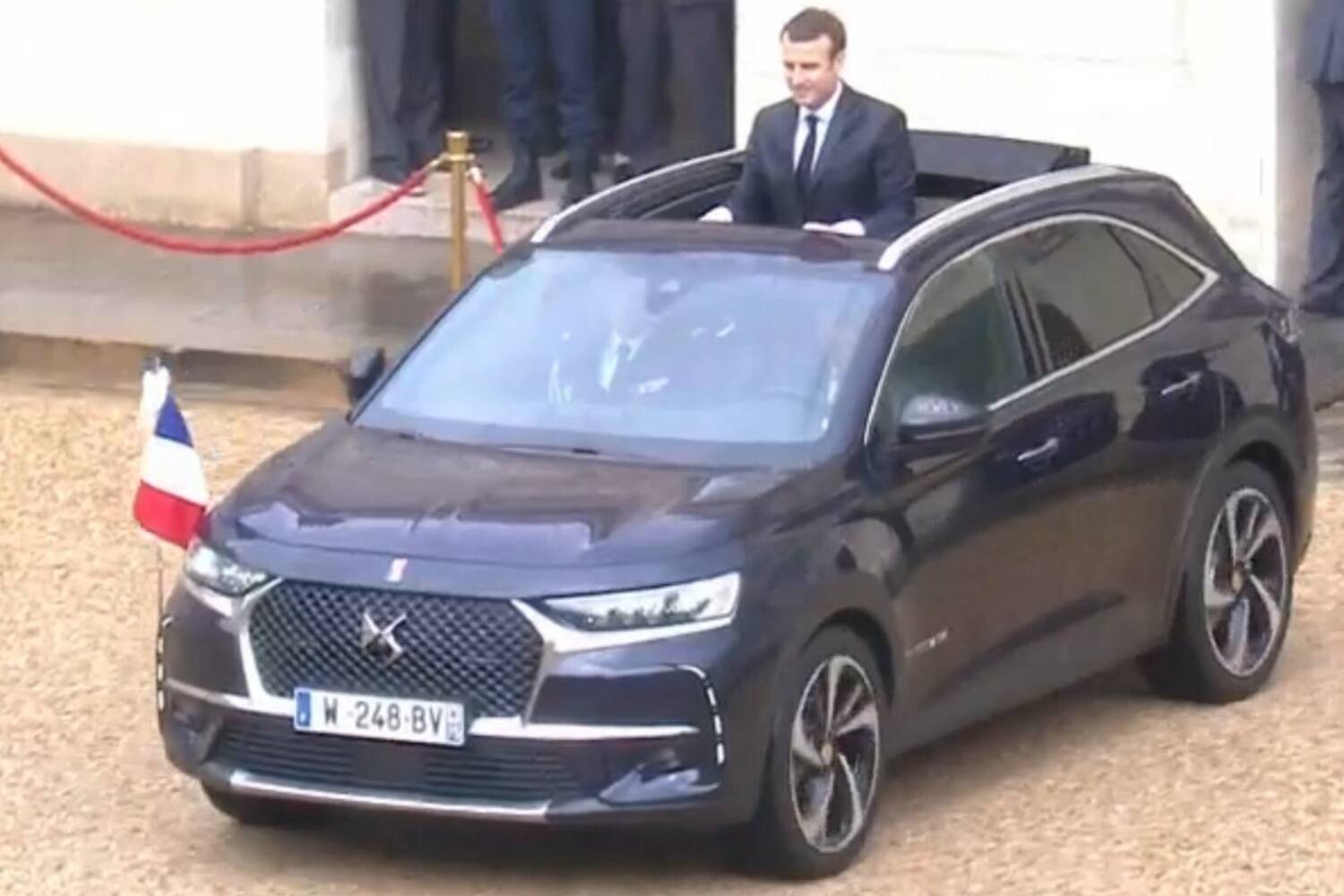
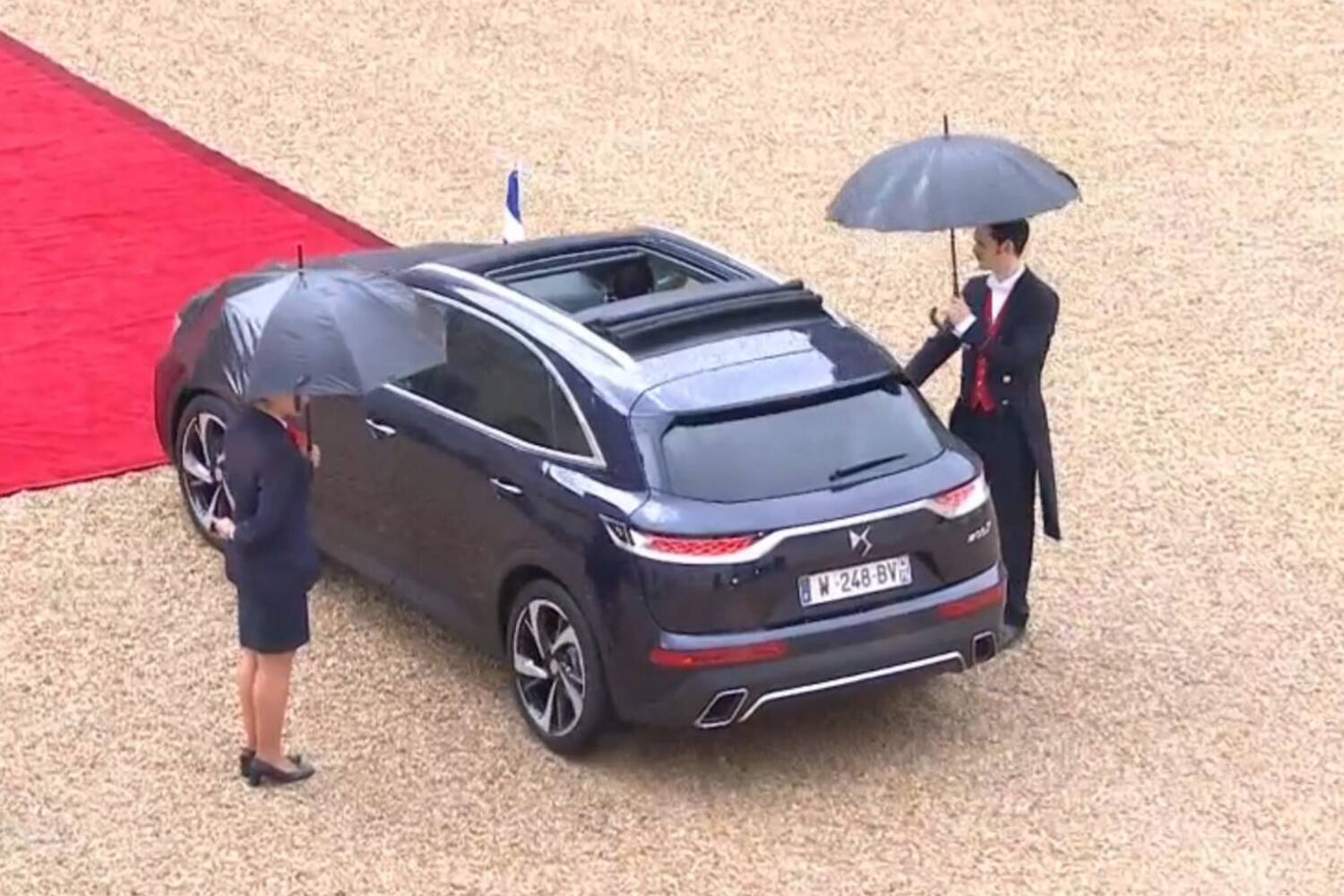
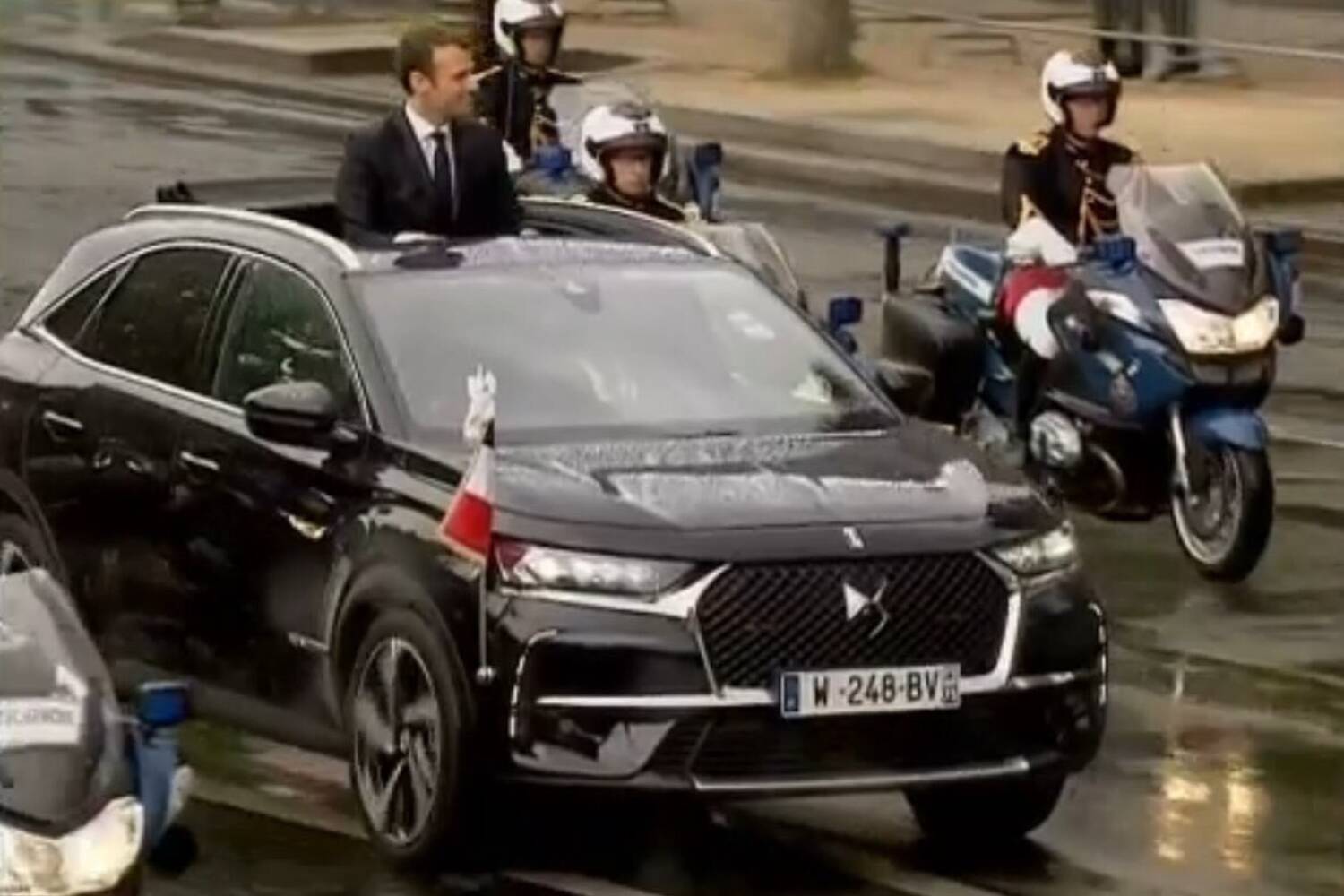
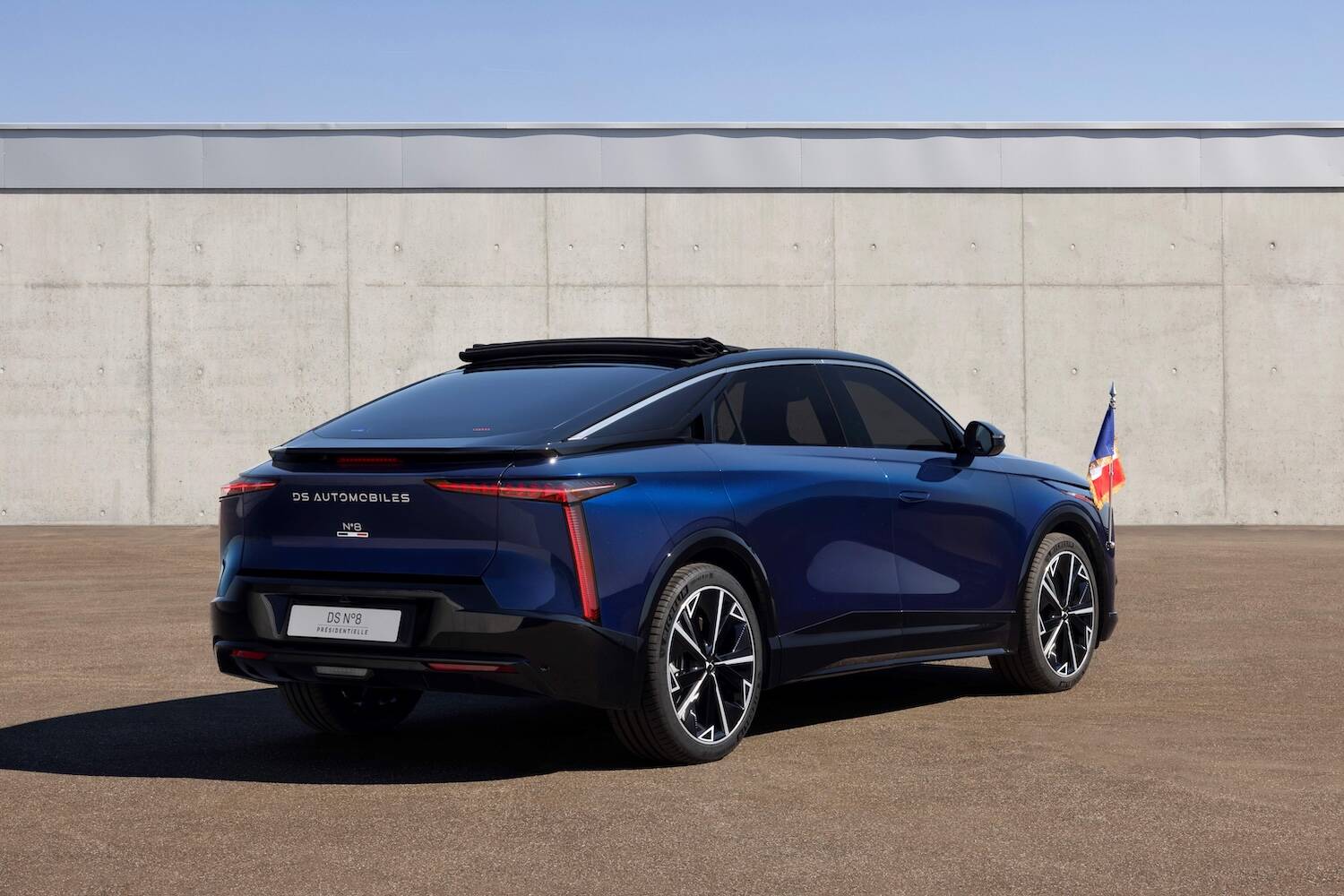
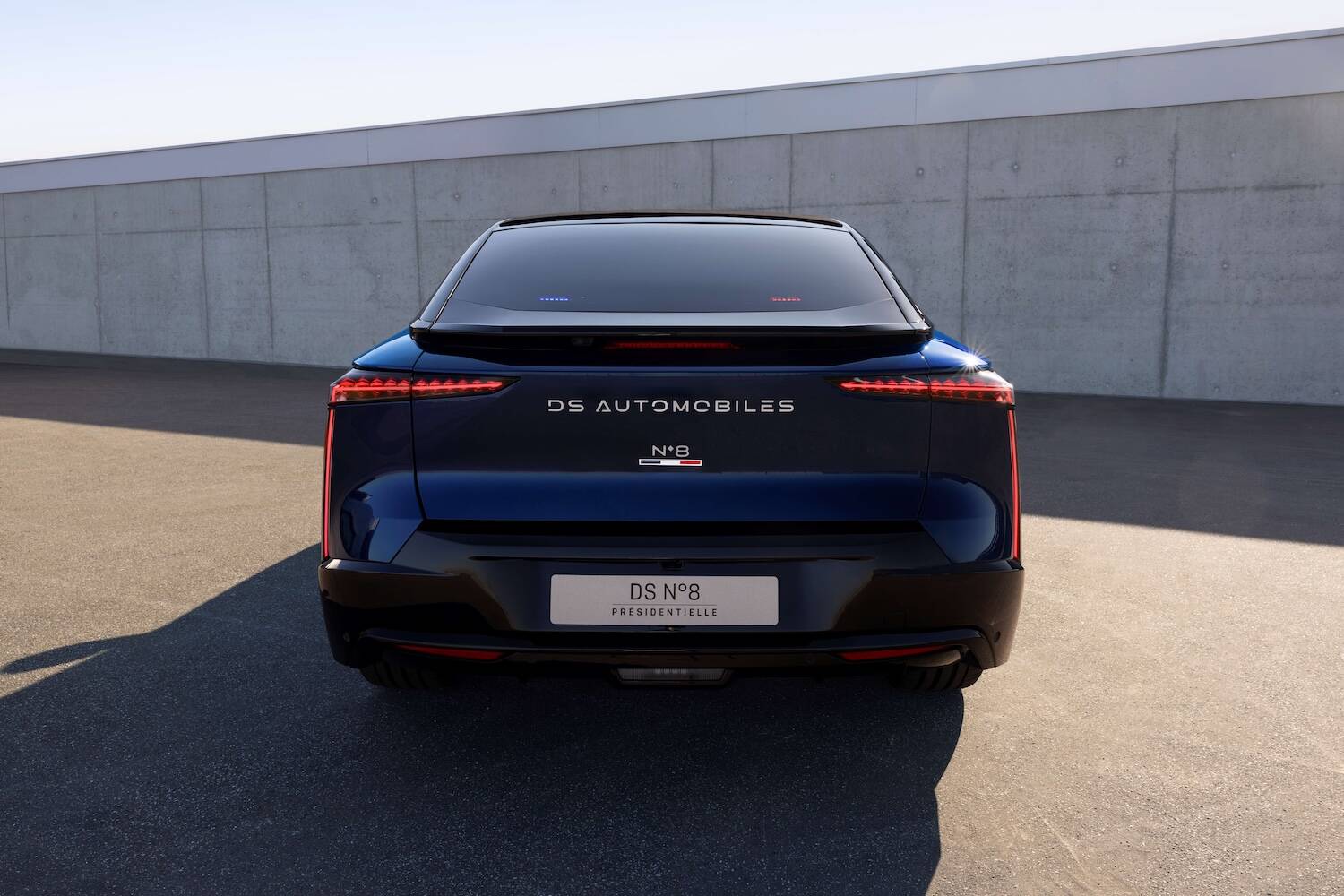
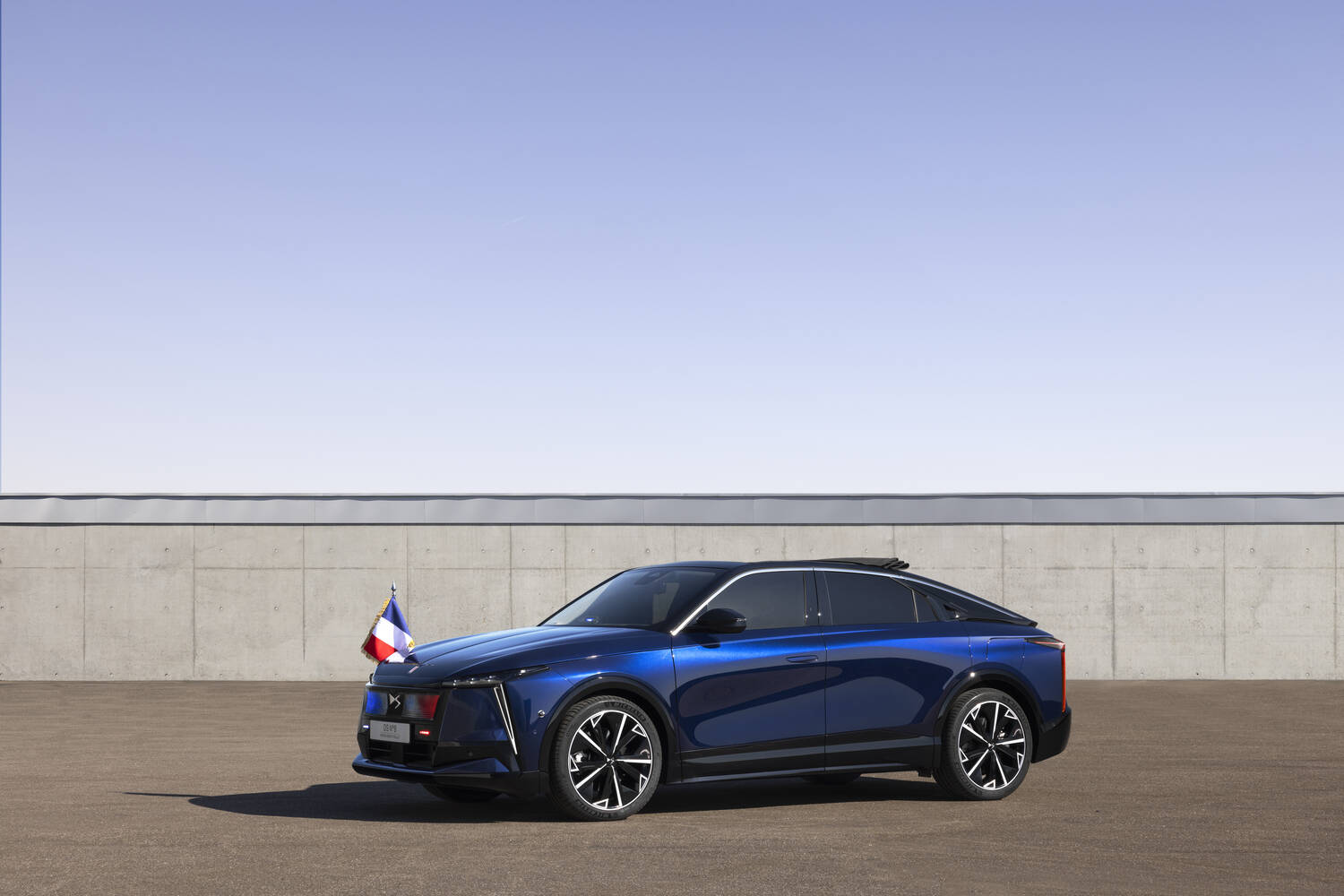
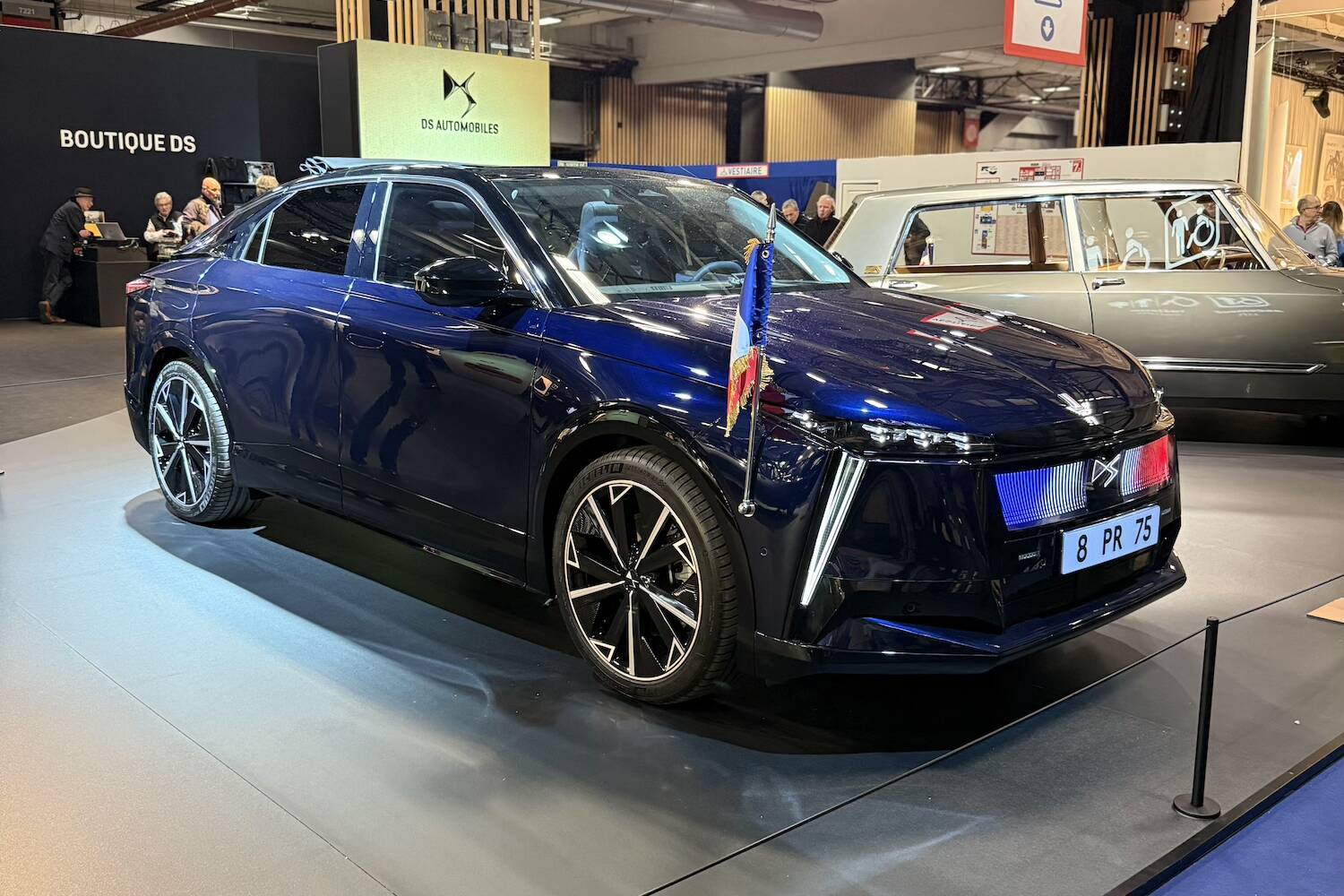
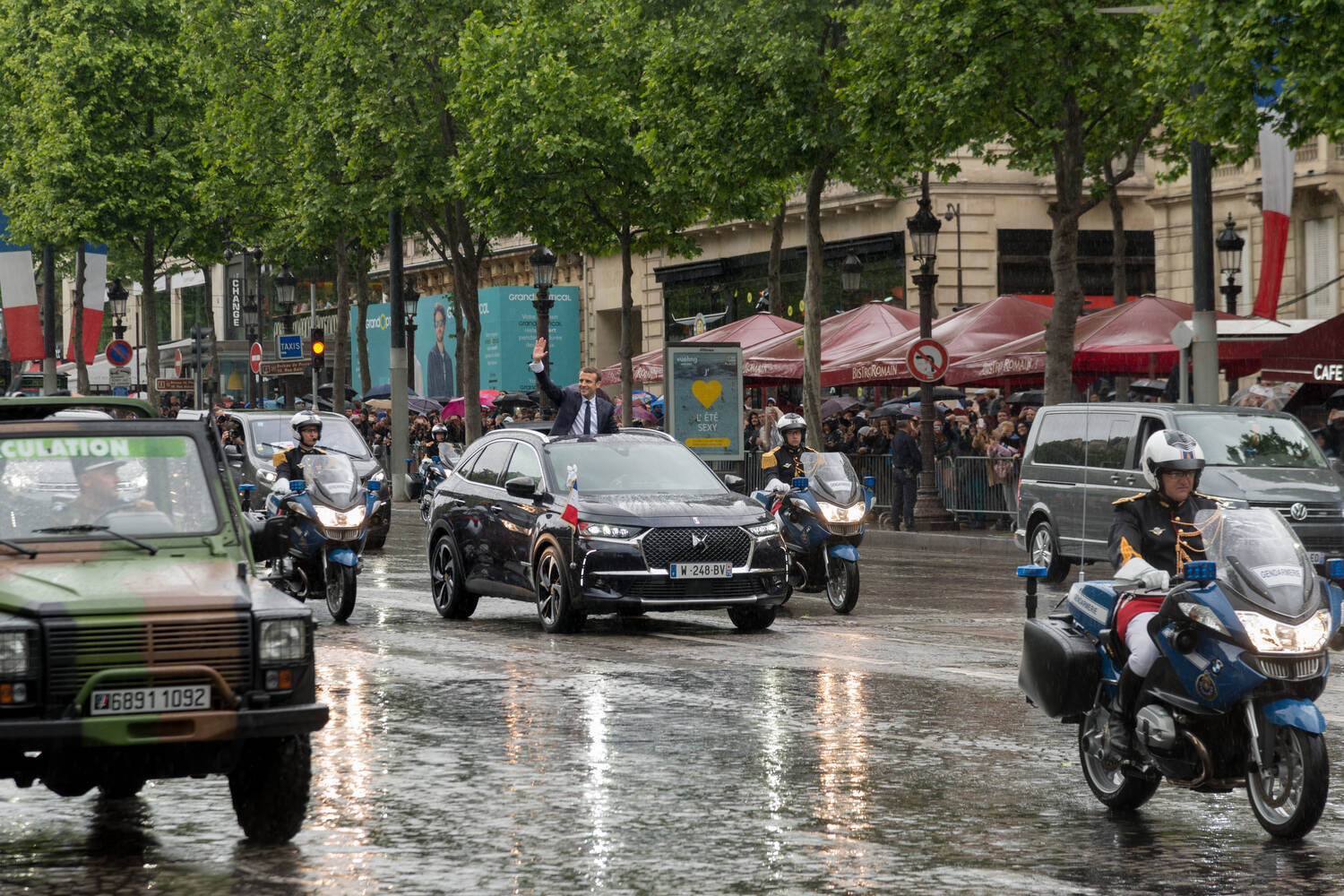
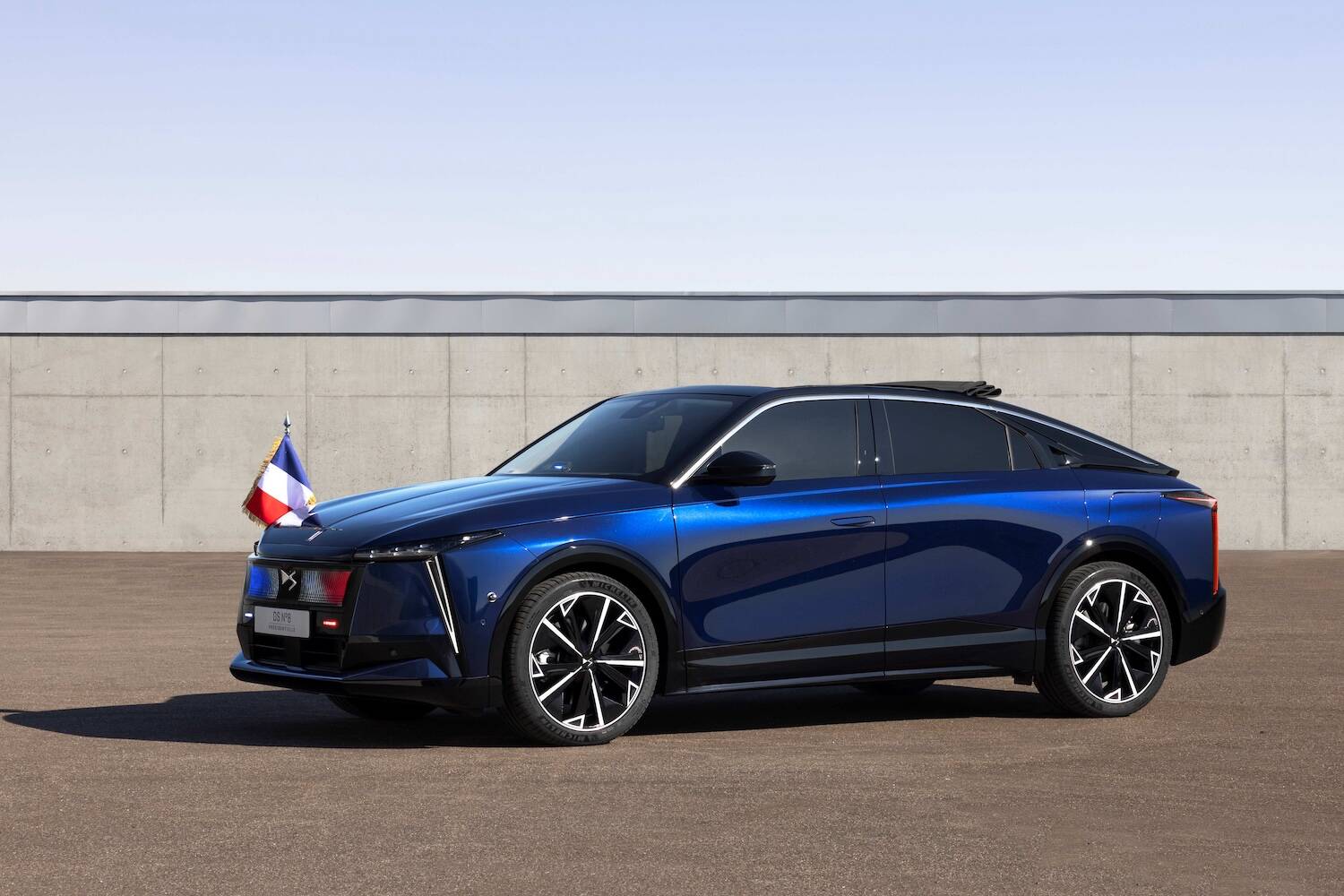
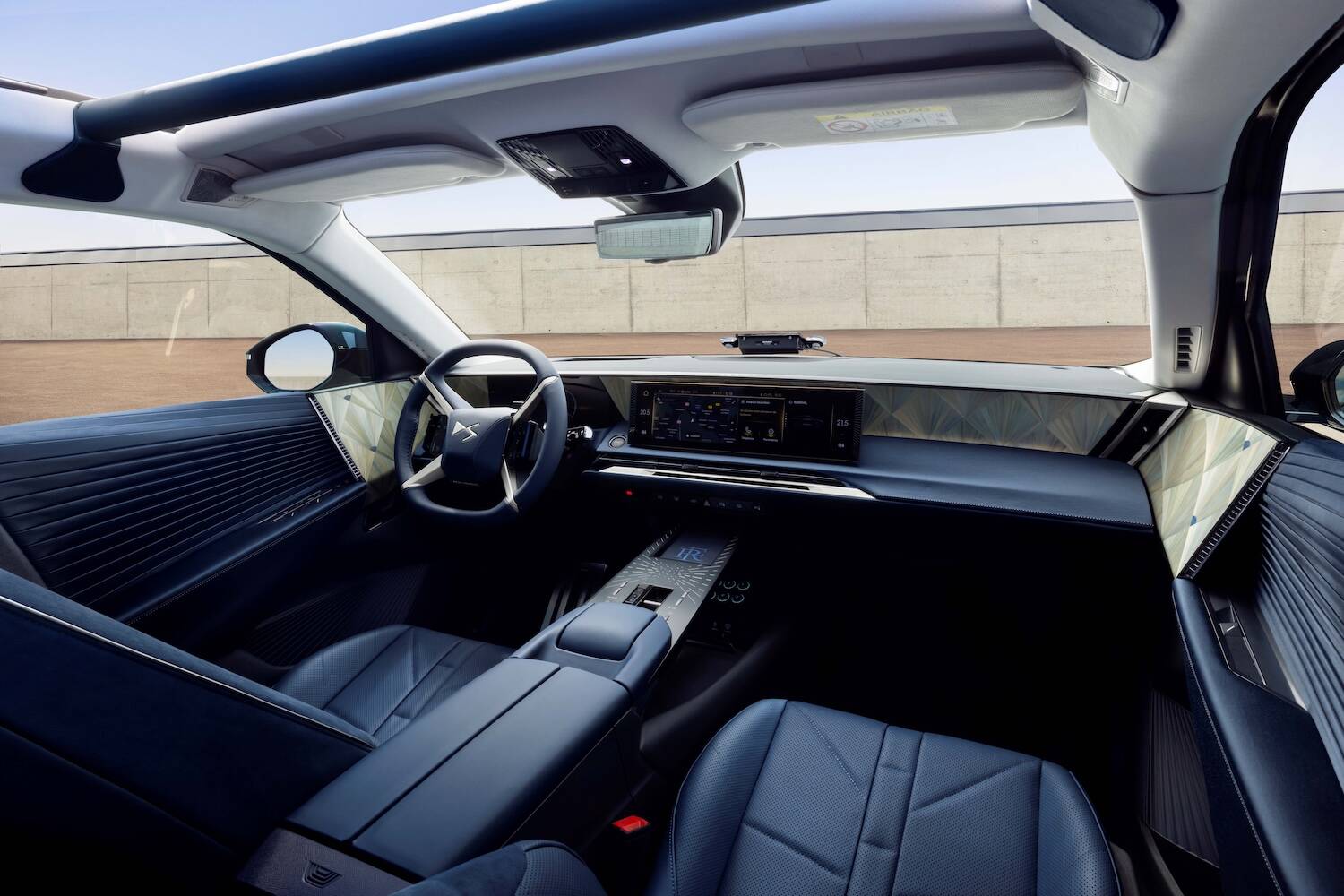
These days, the President is once again being driven in a DS, now the Presidential DS N°8, which was unveiled on the 80th anniversary of the 8 May 1945 Victory Day. It continues the line of special DS models used by the Presidency of the Republic for nearly 70 years, and like many of its predecessors, has been specially modified.
Painted in Sapphire Blue, the DS N°8 features black-painted quarter panels, and its illuminated DS 'Luminascreen' grille features the blue, white and red of the French Republic, while the front wings are equipped with flag holders.
Aside from the typical security measures, DS wanted to instil the best of French creative talent inside the car. The dashboard fascia and door trims feature traditional straw marquetry, for example. In total, twelve craftspeople from Lison de Caunes' workshops worked with DS Automobiles to deliver straw marquetry trim in a sea green and midnight blue tone with a fan design.
Atelier Lognon, established in 1853, created pleating textiles using cardboard moulds, and these features are in the door panels. The seats are finished in Alcantara and a watch strap design in Nappa leather in a Dream Blue colour specifically chosen for this one-off car.
Irish buyers probably won't find all those options on the list of extras, but the DS No.8 is available to buy should you want a little presidential glamour in your luxury EV.
If there is anything about this story we have not covered, you can avail of our expert advice service via the Ask Us Anything page.