

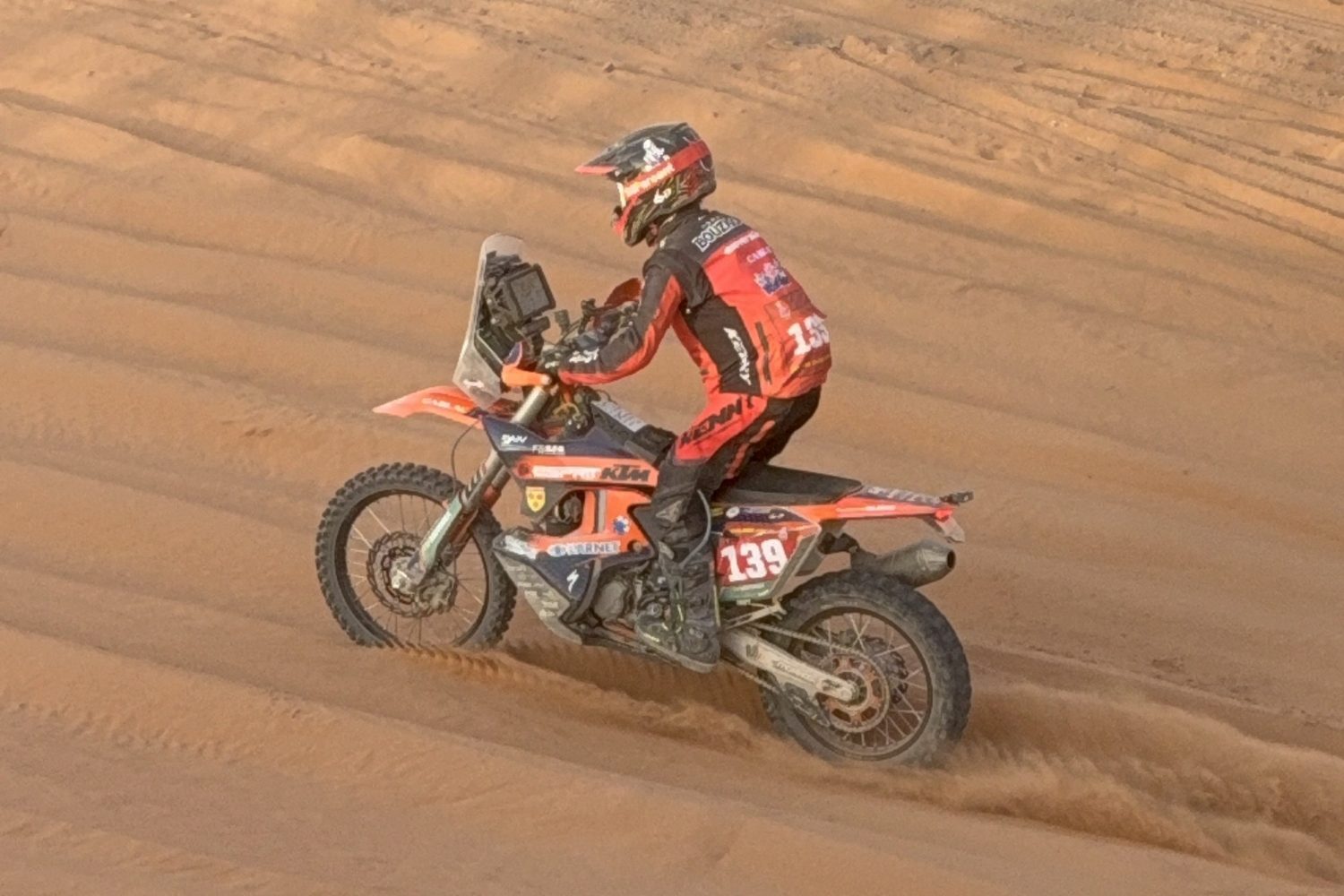


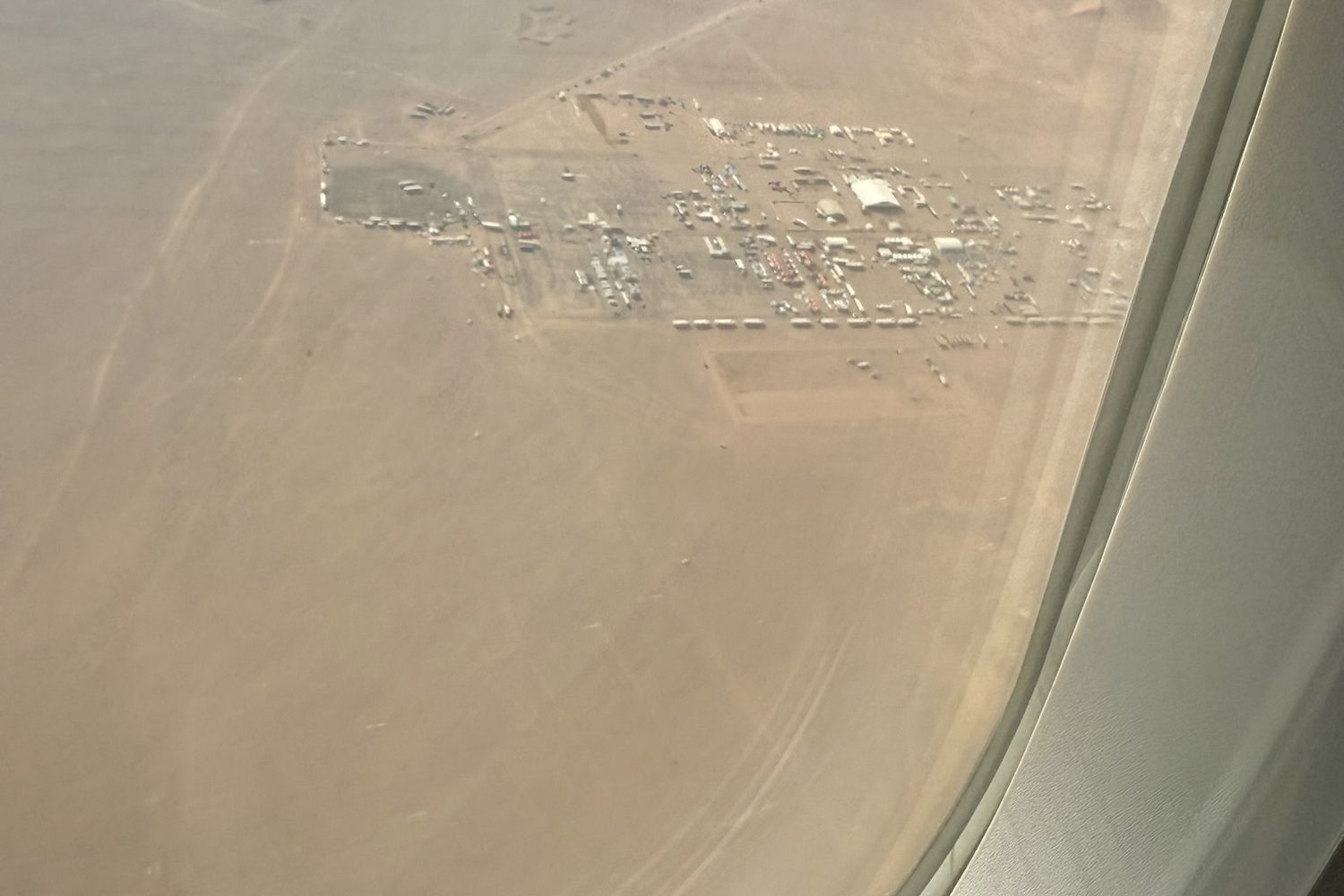
While marvelling at the size of this makeshift camp, I spy two plumes of dust chasing each other through the distant hills. They resolve into individual motorbikes, hurtling through the arid terrain. Excitement overtakes the weariness of nearly 24 hours of travel to get here from Dublin and as we set down and I can't wait to see more of this legendary event up close.
Yes, it was once a race from Paris to Dakar in Africa
The Dakar Rally has evolved from the original Paris-Dakar event, first staged in 1978 and for many years it really was more or less a race from Paris to the Senegalese capital in Africa. Fears for the safety of the competitors travelling through Mauritania put a stop to this in 2008 when the event was cancelled for the first time and it subsequently moved to South America, where it stayed for another decade.
Then, in 2020, it moved again, this time to Saudi Arabia, and it has taken place there ever since. While it may not sound as adventurous to hold the rally in a single country, it's worth noting that Saudi Arabia covers as much land as France, Spain, Germany, Italy, the UK, Netherlands, Belgium, Switzerland and Austria combined. Yet, with a population of about 36 million people, it's about 10 times less densely populated.
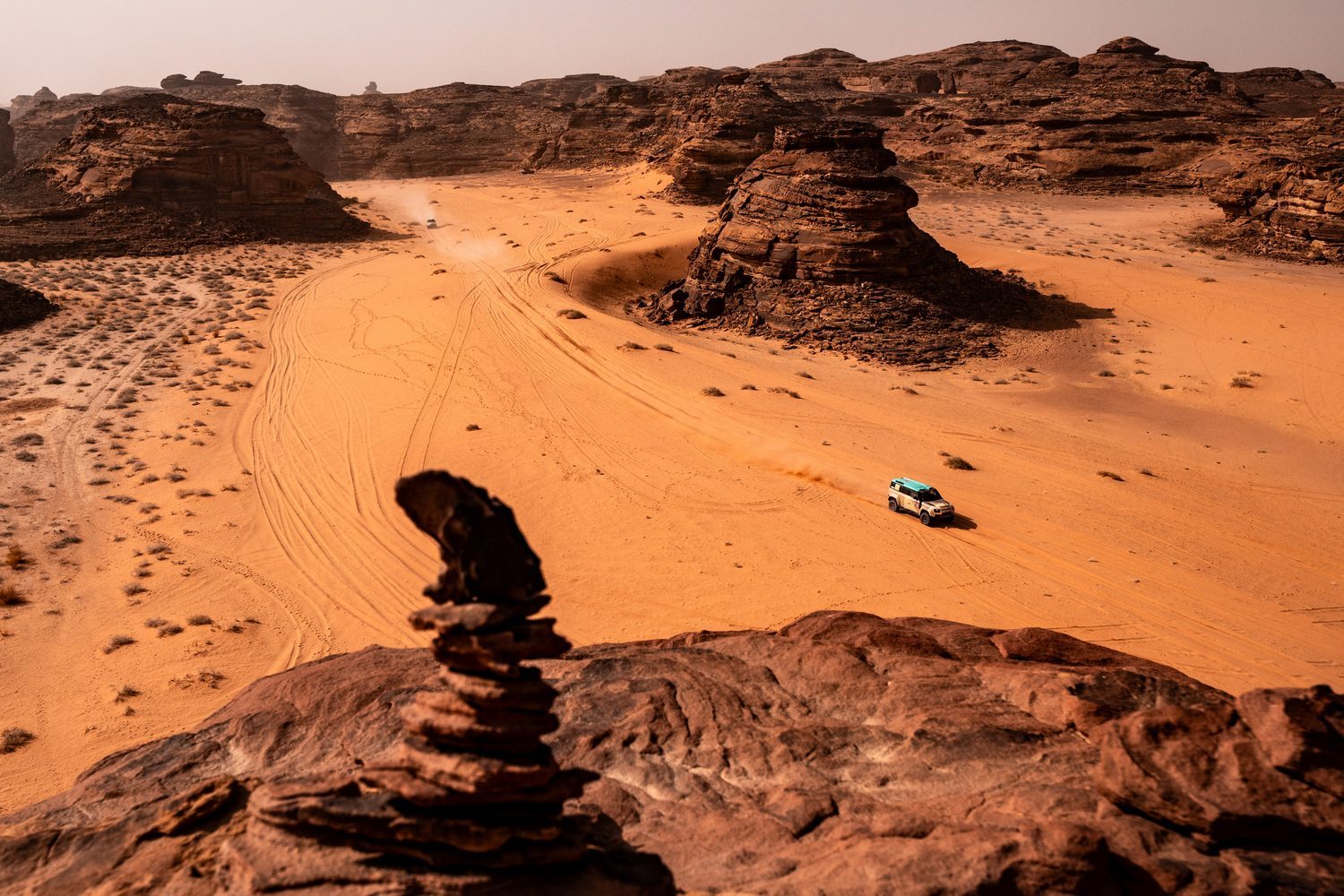
And that doesn't capture how much of the country is effectively uninhabitable. The famous Empty Quarter is the world's largest continuous sand desert, larger than France and taking up 30 per cent of Saudi Arabia's entire land mass. It's partially made up of massive shifting sand dunes that form the backdrop of many a stunning photograph from the Dakar Rally. The event could take place here forever and the competitors might never become familiar with the topography.
The 2026 Dakar Rally in numbers
This year, 421 vehicles and 787 riders, drivers and navigators were signed on at the start of the race for over 8,000km of driving. Of them, a significant 115 motorbikes took part, split over three categories, including the madcap 'Original by Motul' class that do without any support crew.
Another 97 vehicles made up the Dakar Classic, which runs alongside the regular event on similar terrain. Some stunning old racers take part in this, which is more about consistency and navigation than it is about outright speed. We spotted a Porsche 959 and Mitsubishi Pajero among others.

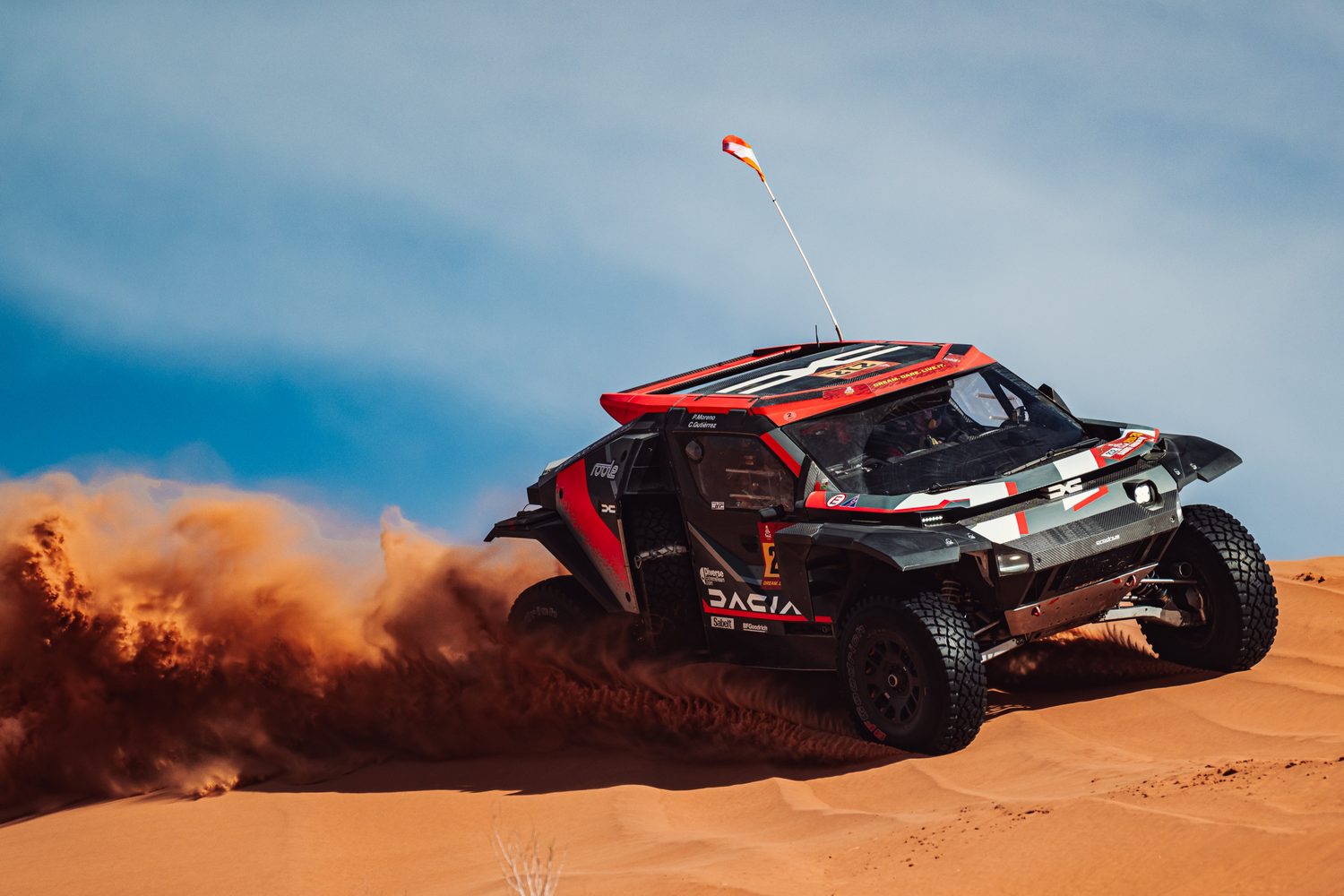
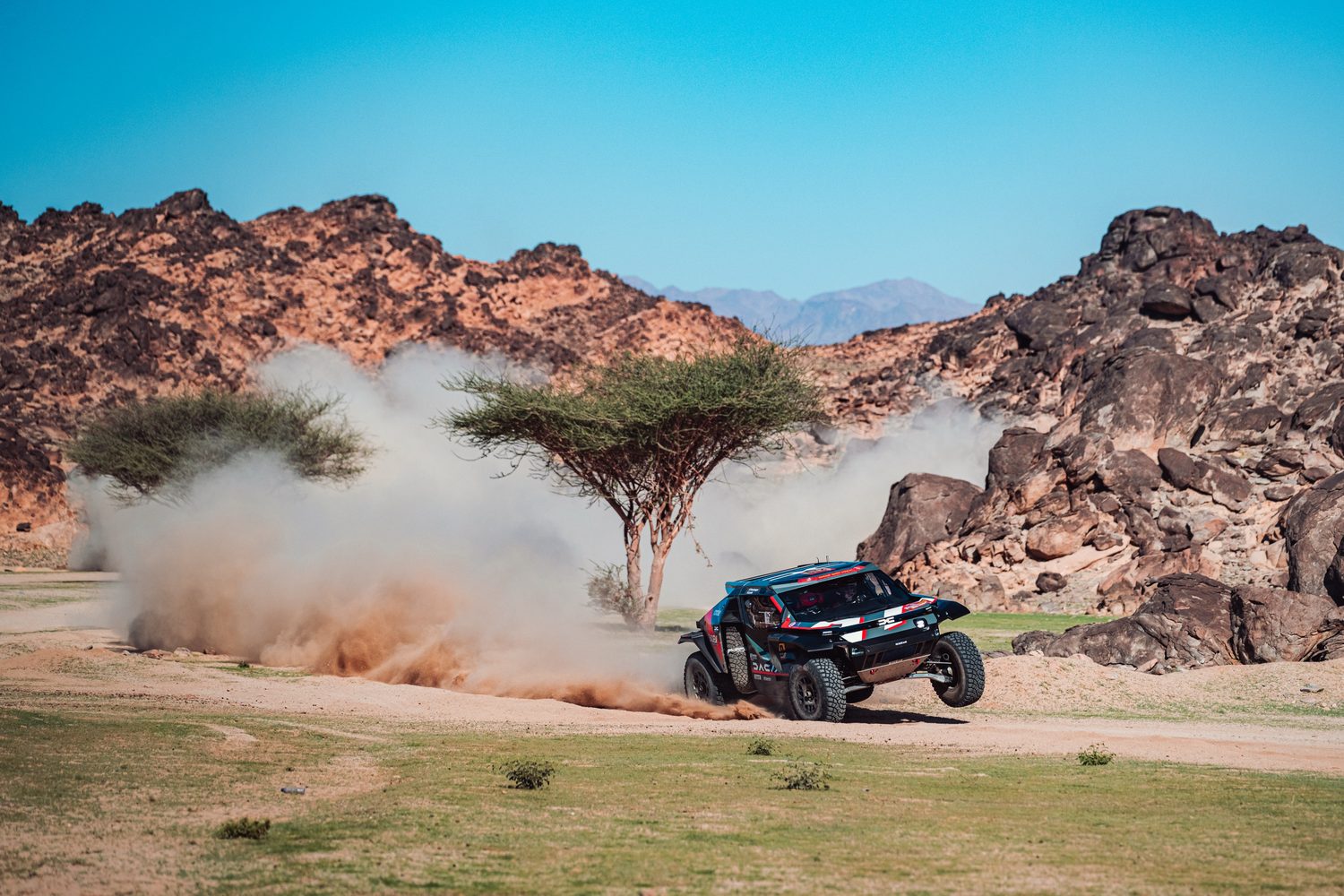
Topping the speed charts are the Ultimate cars, 72 of which competed in the 2026 Dakar, including the Dacia Sandrider, Ford Raptor T1+ and the Toyota DKR GR Hilux. A total of 45 trucks (you read that right), 41 racers in the SSV class and another 37 in the Challenger category make up the bulk of the field, with just seven in the new Stock class. But this is where significant expansion is expected in coming years.
Defender makes production cars sexy again
Previously called the "T2” class, for production-based vehicles, it was one of the slowest in the rally and therefore of little appeal to the car makers. But Land Rover, using its Defender brand, set about to change all that by approaching the ASO (Amaury Sport Organisation - responsible for the Dakar Rally) with a plan to enhance the performance and ability of the cars in this section without drifting too far from their original roadgoing formats.
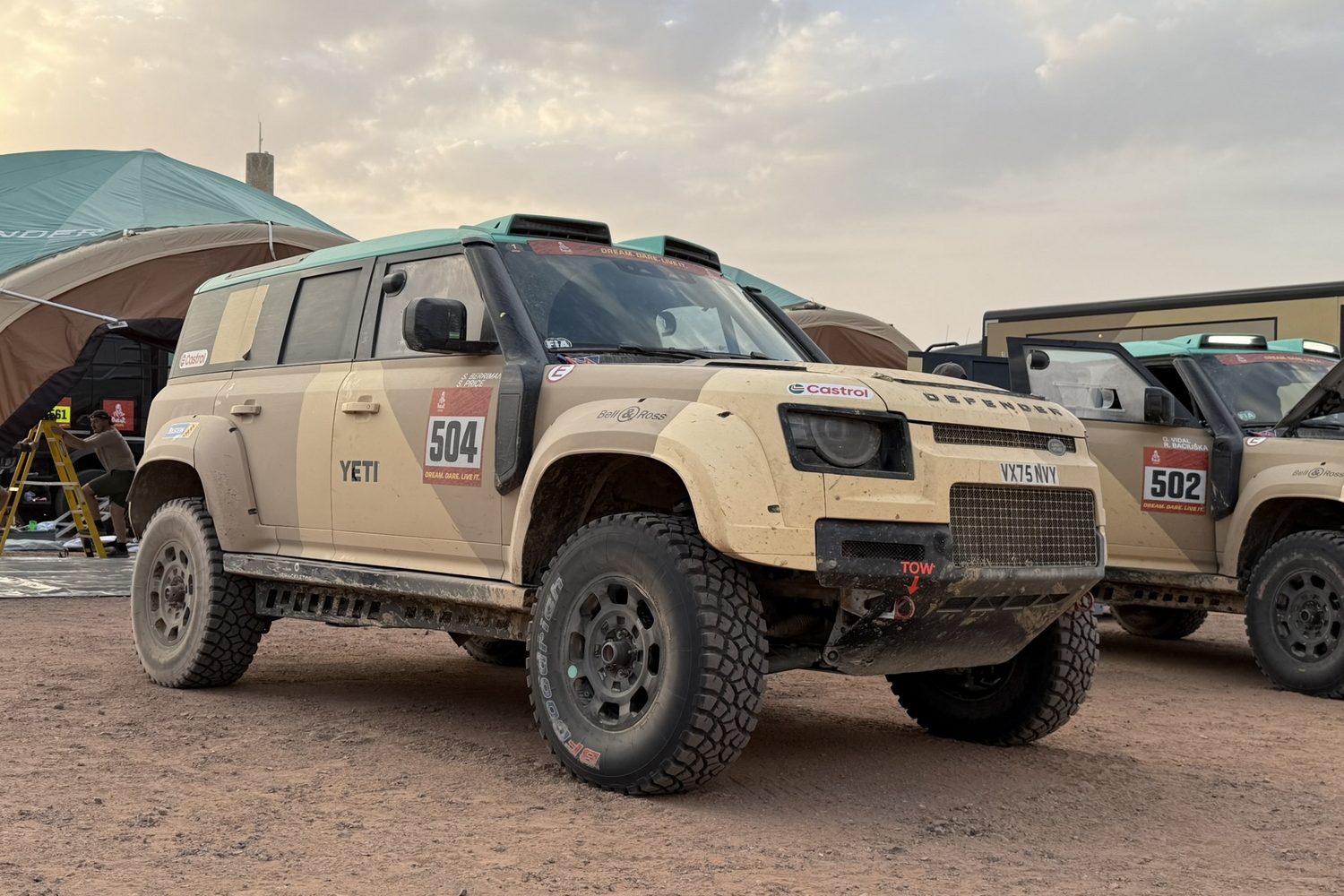
The ASO was receptive to the idea and formed a technical working group to bring the new Stock class to fruition. Defender promptly signed up and set about developing a racer based on the ready-to-be-launched Defender Octa, while concurrently setting up the rest of the race team, more or less from a blank sheet.
Less than two years later, Defender arrived in Saudi Arabia as a large factory team, with three vehicles in the race and a crew of as many as 100 people on the ground. Some of this setup is designed around maximising the publicity potential of its entry, and to that end, well over 100 members of the world's media joined Defender at various stages of the event to live and breathe the experience, CompleteCar.ie included.
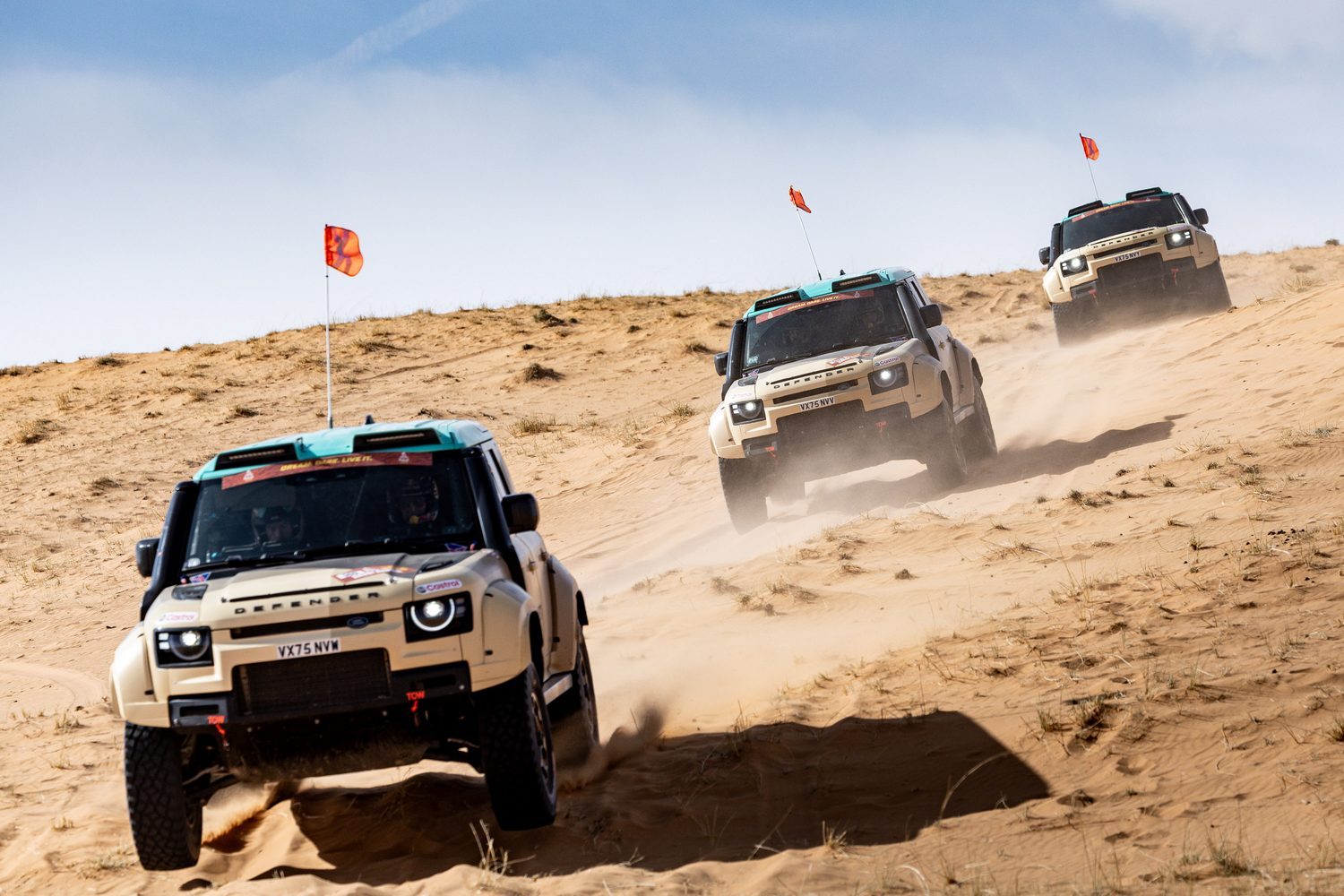
The dizzying world of the Dakar bivouac
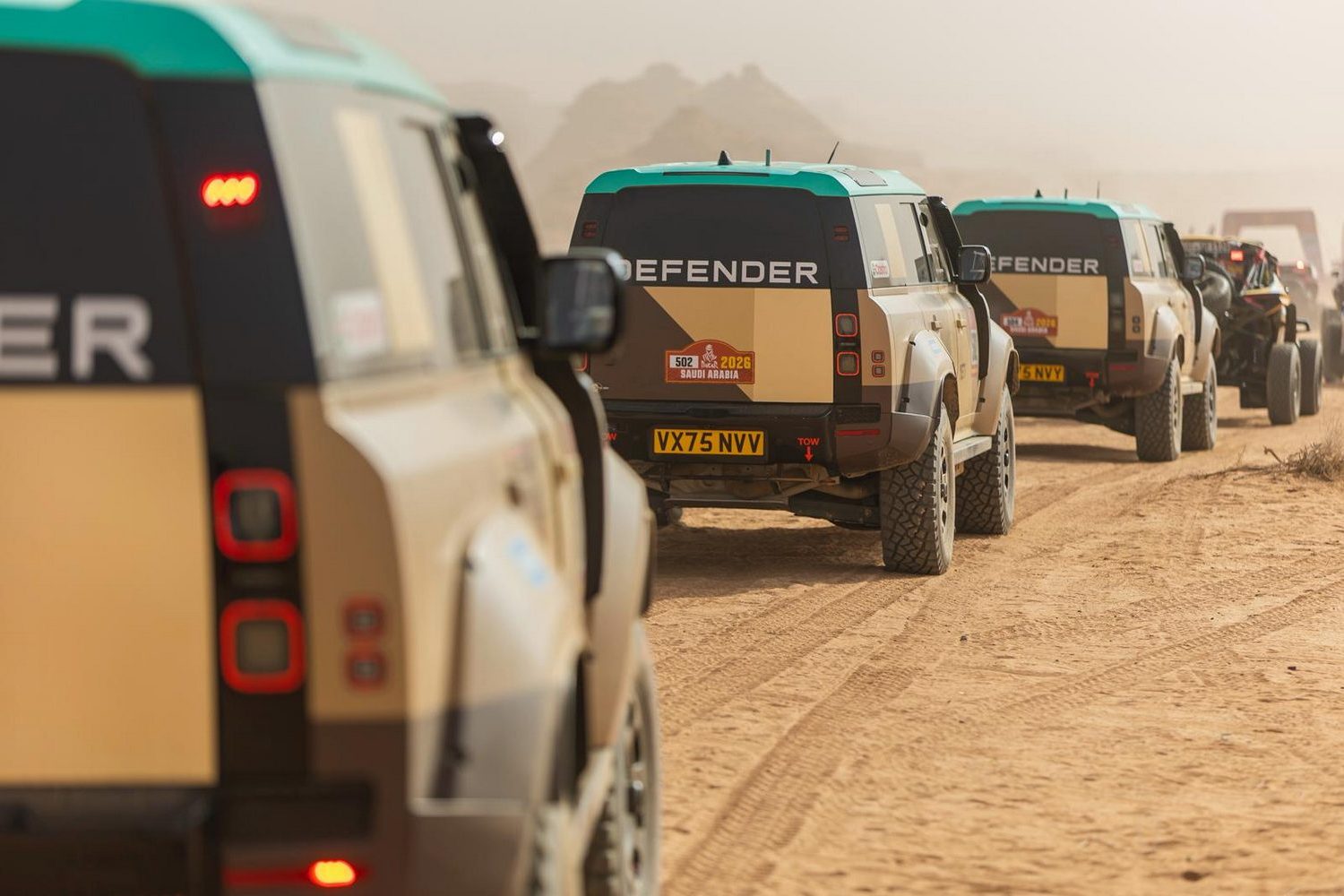
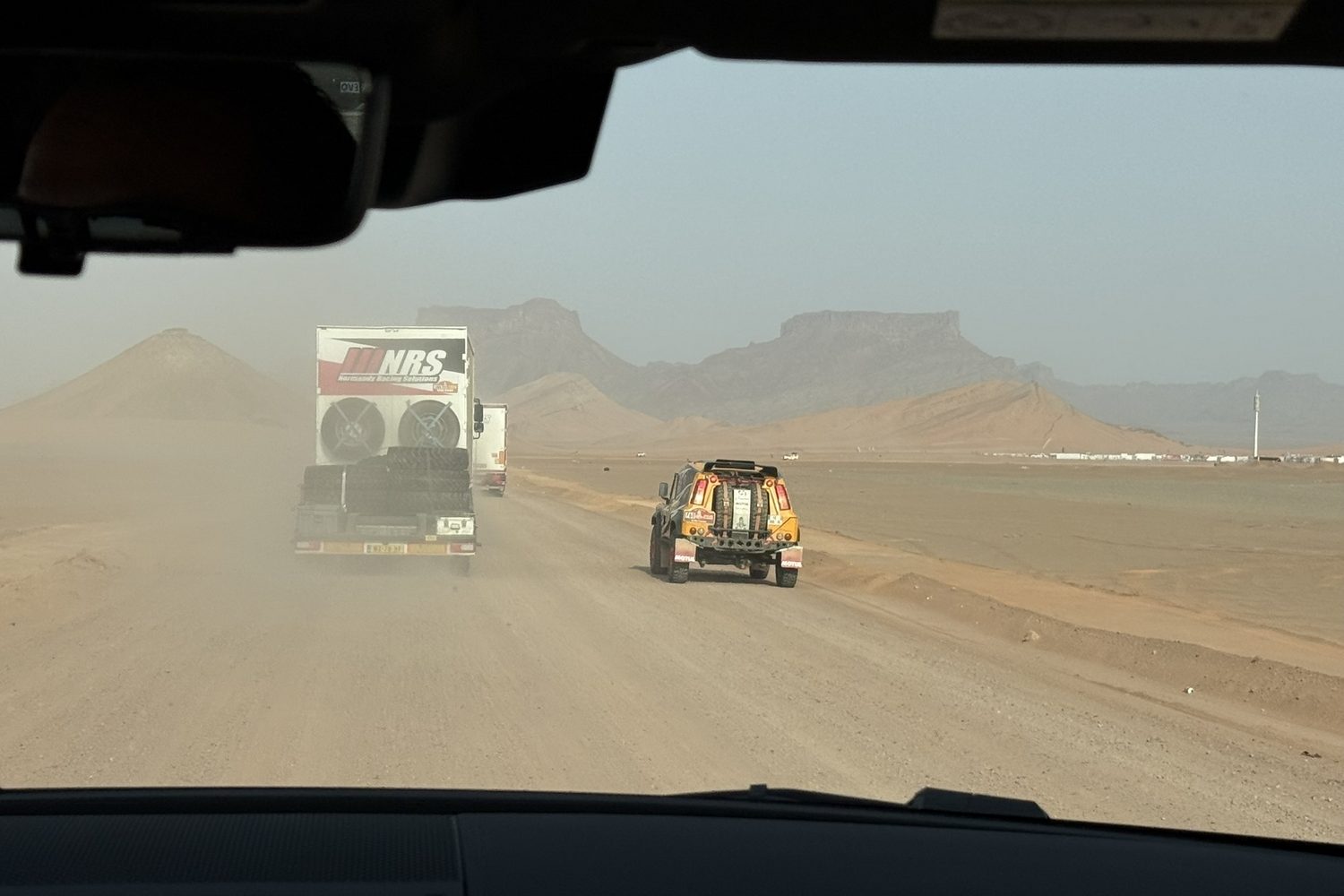
We were picked up from the airport in a more or less standard Defender P400 and brought straight to the bivouac. One of the most bizarre traffic jams in the world slowed our progress getting in, as we vied for space with huge, branded trucks, campervans of every shape and size, dozens of 4x4s equipped for driving in the desert and even a handful of race cars clearly part of the Dakar Classic brigade.
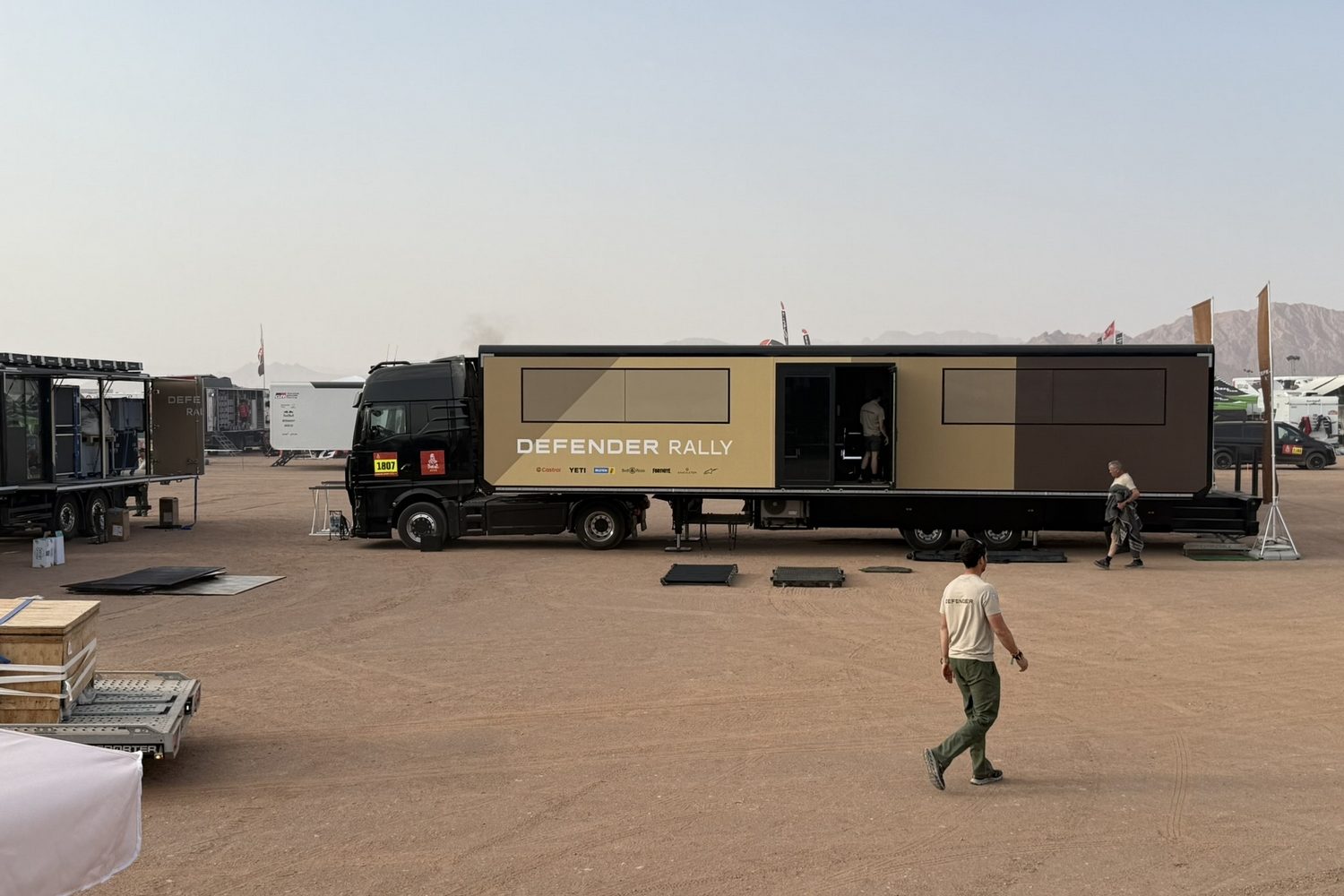
Only that morning, the whole setup was some 400km to the south in Yanbu, on the west coast of Saudi Arabia. Once the racers departed into the desert for the day's racing, everyone else packed up the fleet of support vehicles and headed to the AlUla bivouac to set up camp once more.
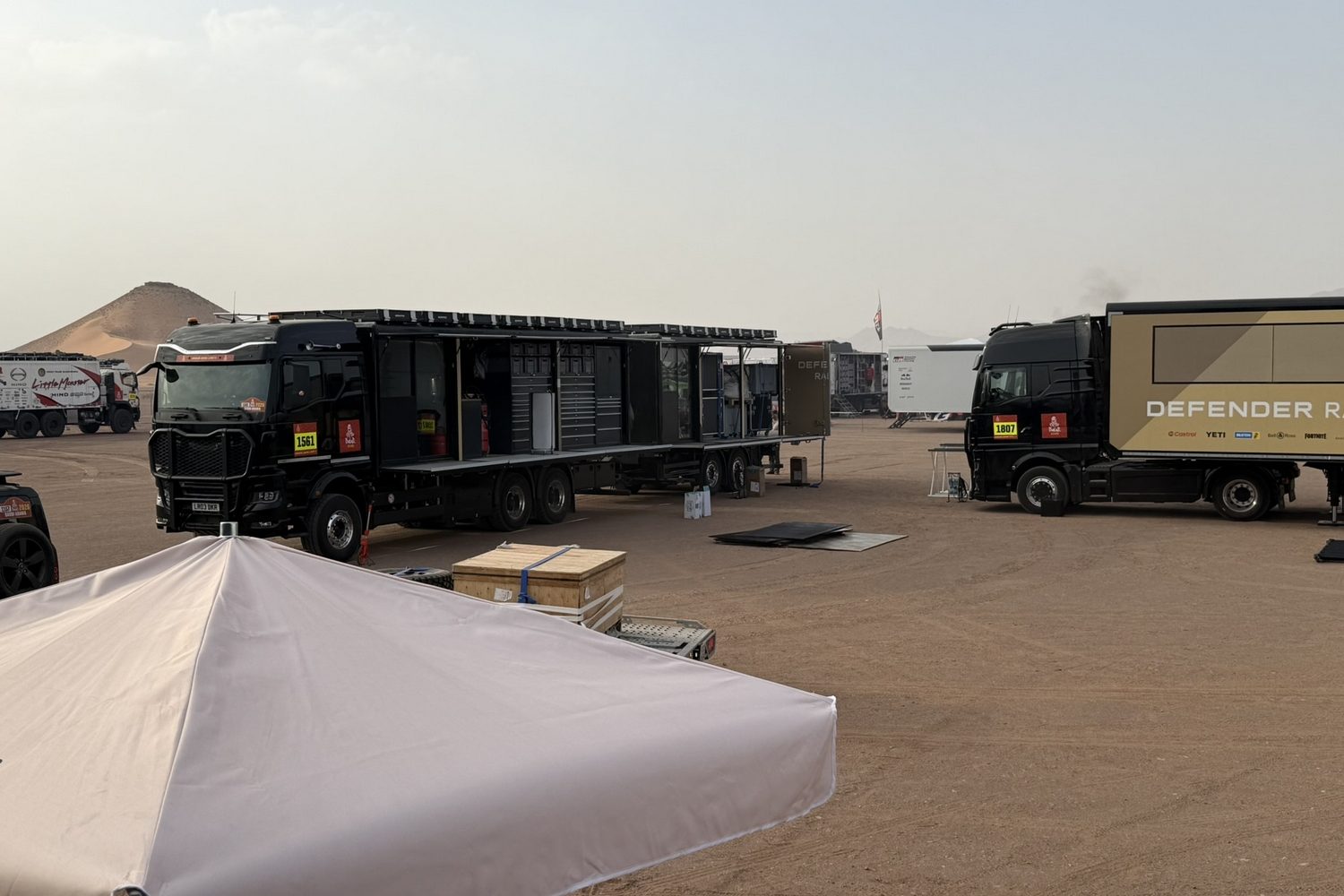
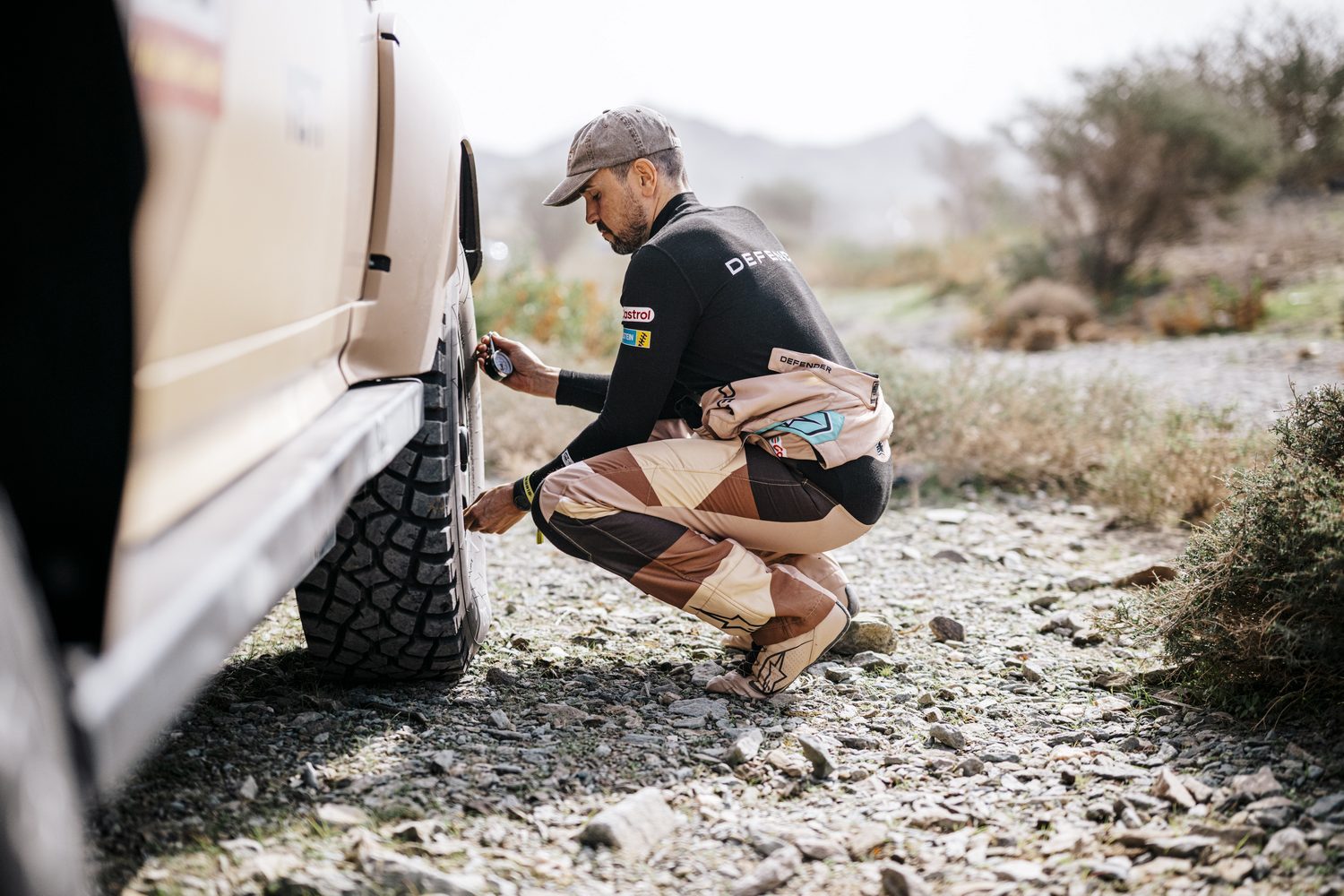
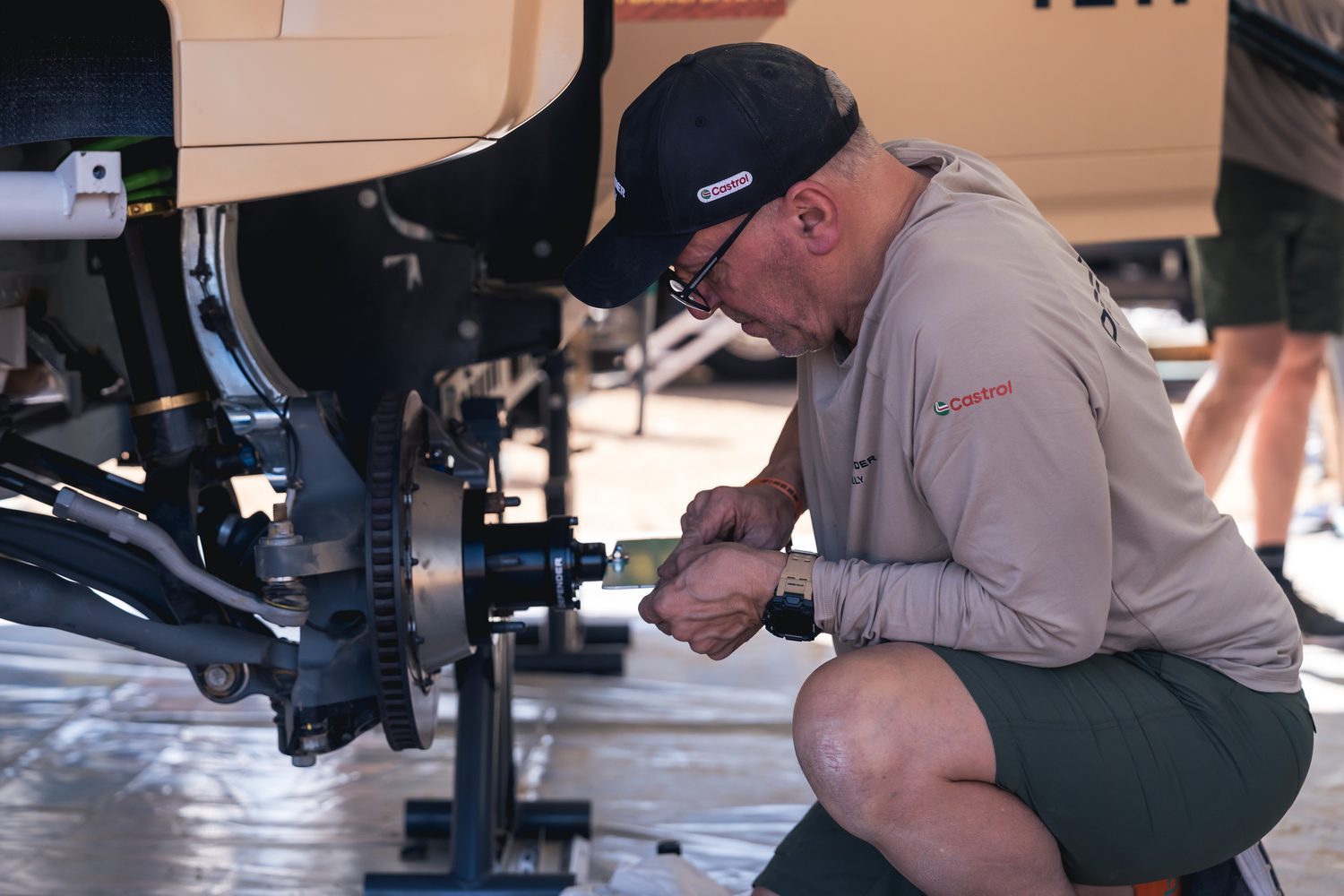
In the Defender enclave, there are two swish looking expandable truck trailers, one for hospitality, the other for the team of engineers and driver briefings. Behind is a massive articulated truck crammed with spare parts, another containing the mechanics' tools, nuts and bolts for the race cars and even a pair of 'clean rooms' in which the suspension and other components can be dismantled without fear of contamination from the desert sand swirling everywhere.
On the roofs of the support trucks are flip-up tents, while there are dozens of campervans parked behind and, of course, plenty of examples of the regular Defender on hand for ferrying people about. There are even a few menacing looking Defender Octas as part of the wider crew.
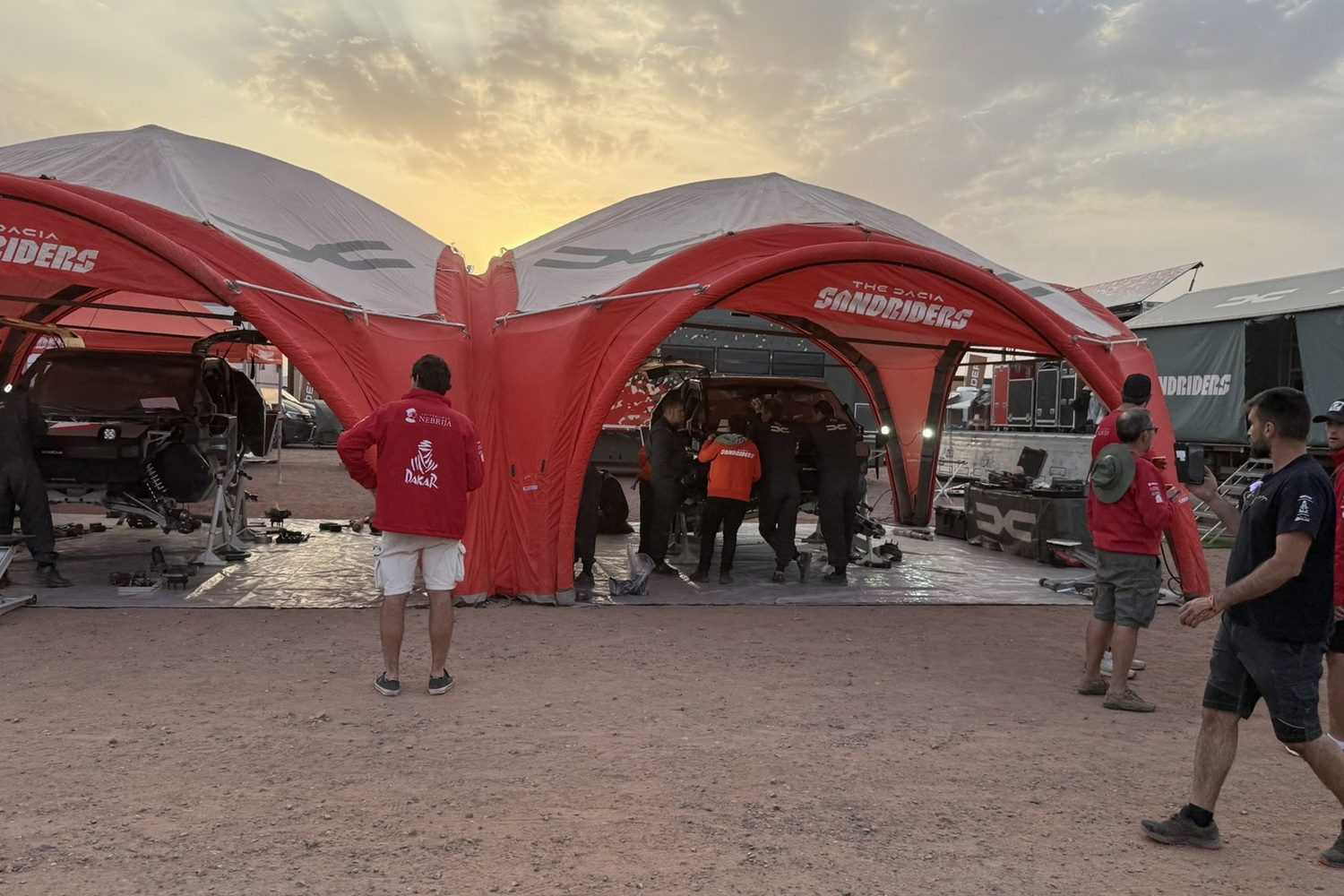
As evidence of the huge logistical workload, the mechanics are diligently setting up temporary marquee-like 'garages' even as the Defender racers are due back after their day of racing.
Our first close-up view of the Dakar action
Luckily, the finish line is nearby for this leg, so we have time to go and watch some action before the Defenders finish. We jump back in the P400s and hightail it across the bumpy landscape, with no notion of a road to follow. A motley collection of abandoned 4x4s and a small gathering of people indicate we've arrived at a viewing point.

Not that there's really any such thing as somewhere you can and can't stand. After all, it would be all but impossible for the organisers to police some 500km or so of desert stage. Apparently, a few days before hand, they drive the route and warn locals that the rally is coming to town. Then again, aside from waypoints the competitors must pass through, there could be fast-charging cars almost anywhere.
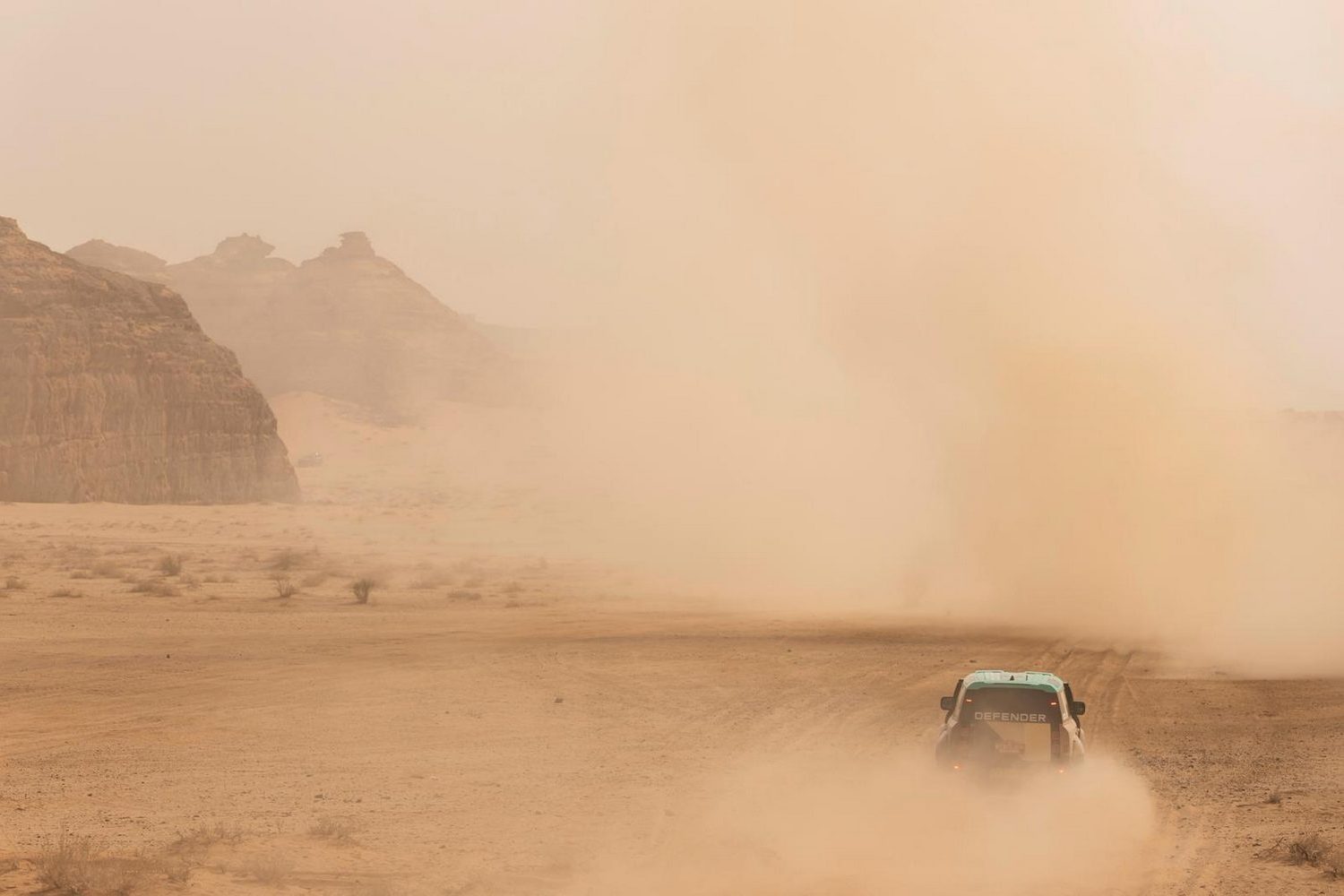
We trek through deep sand to the other spectators and discover we're looking into a valley of sorts, between solid rock on the other side and a hill of sand on ours. The roar of an engine signals we're about to see our first racer at speed, and a rapidly moving dust cloud in the distance shows where to look.
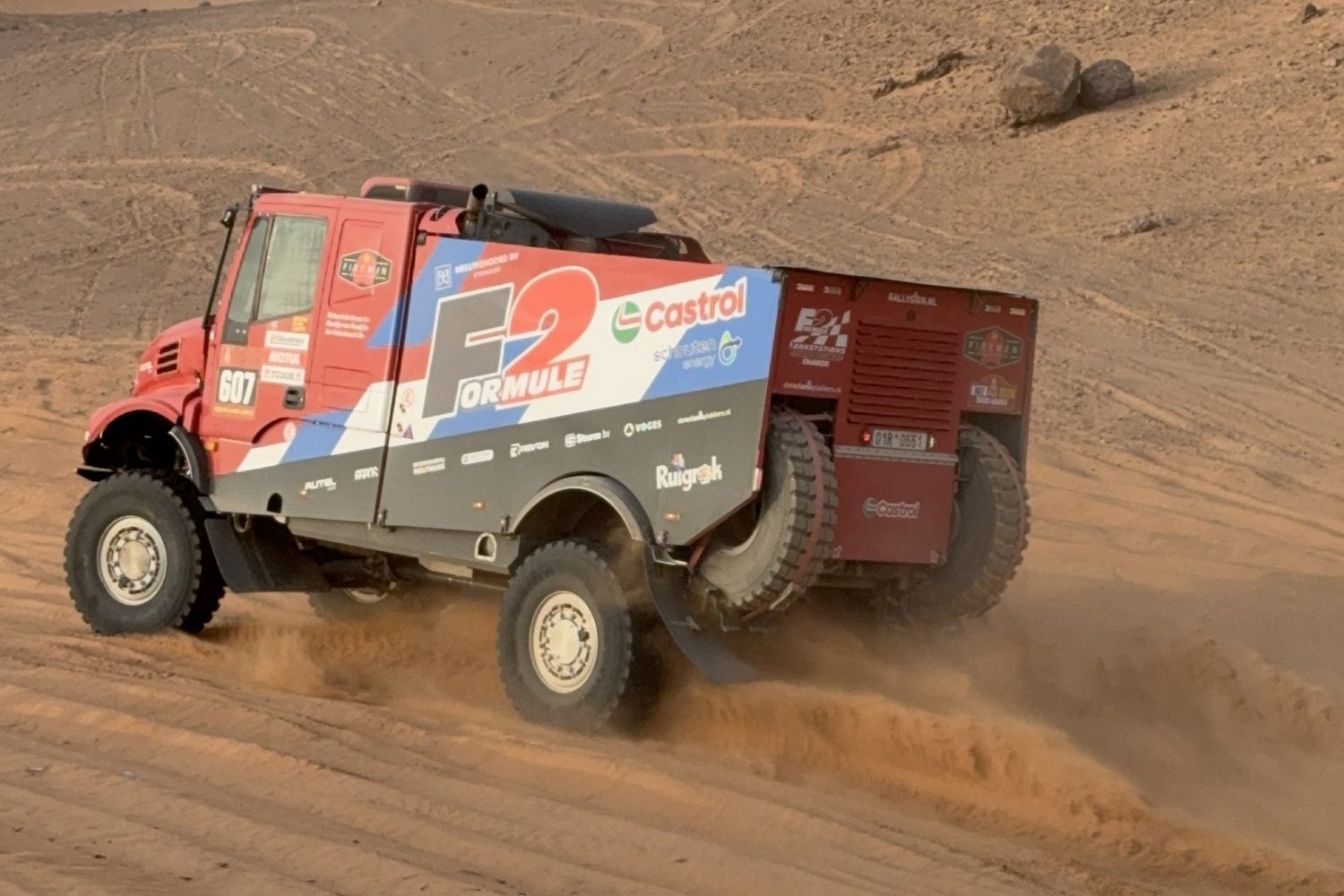
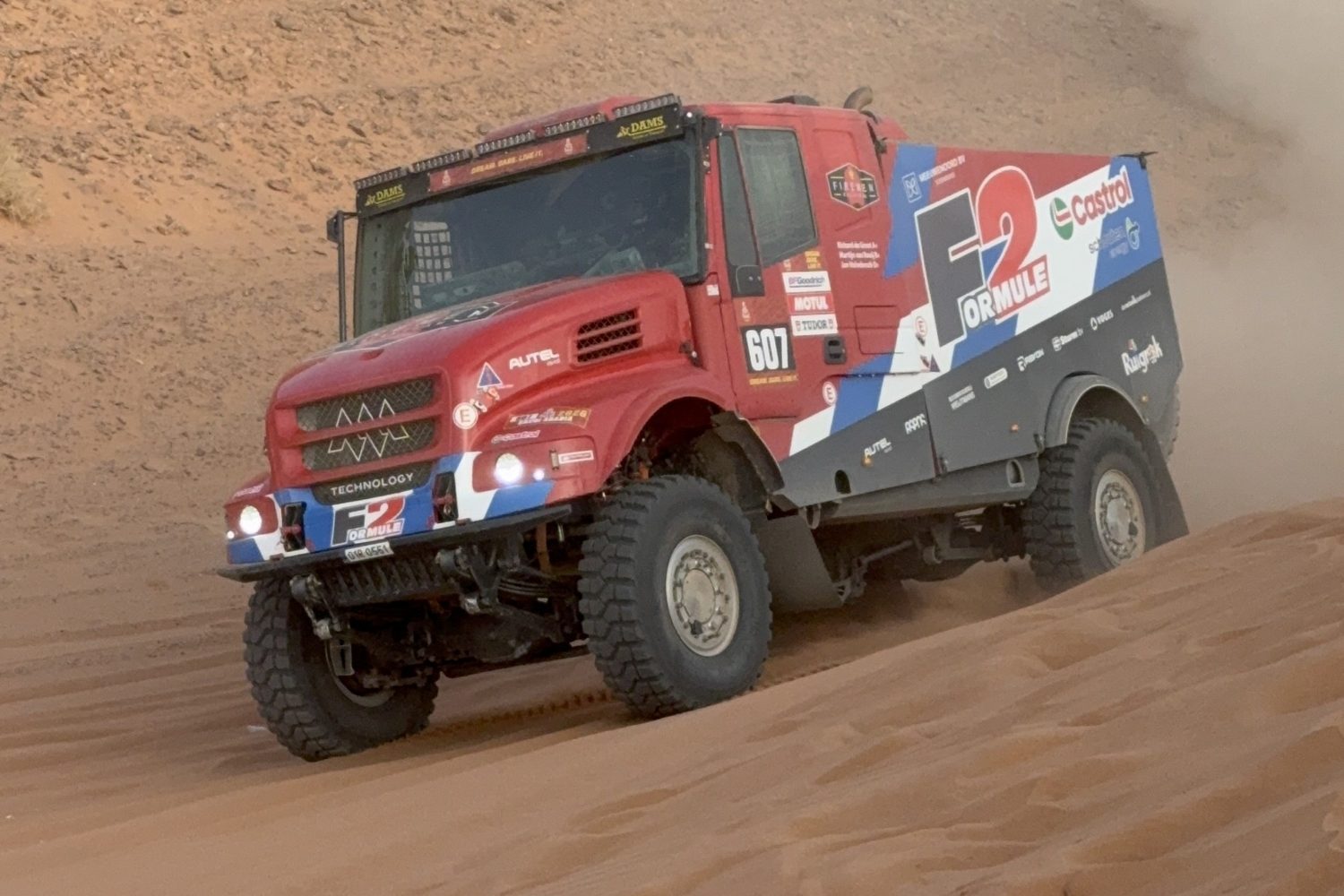
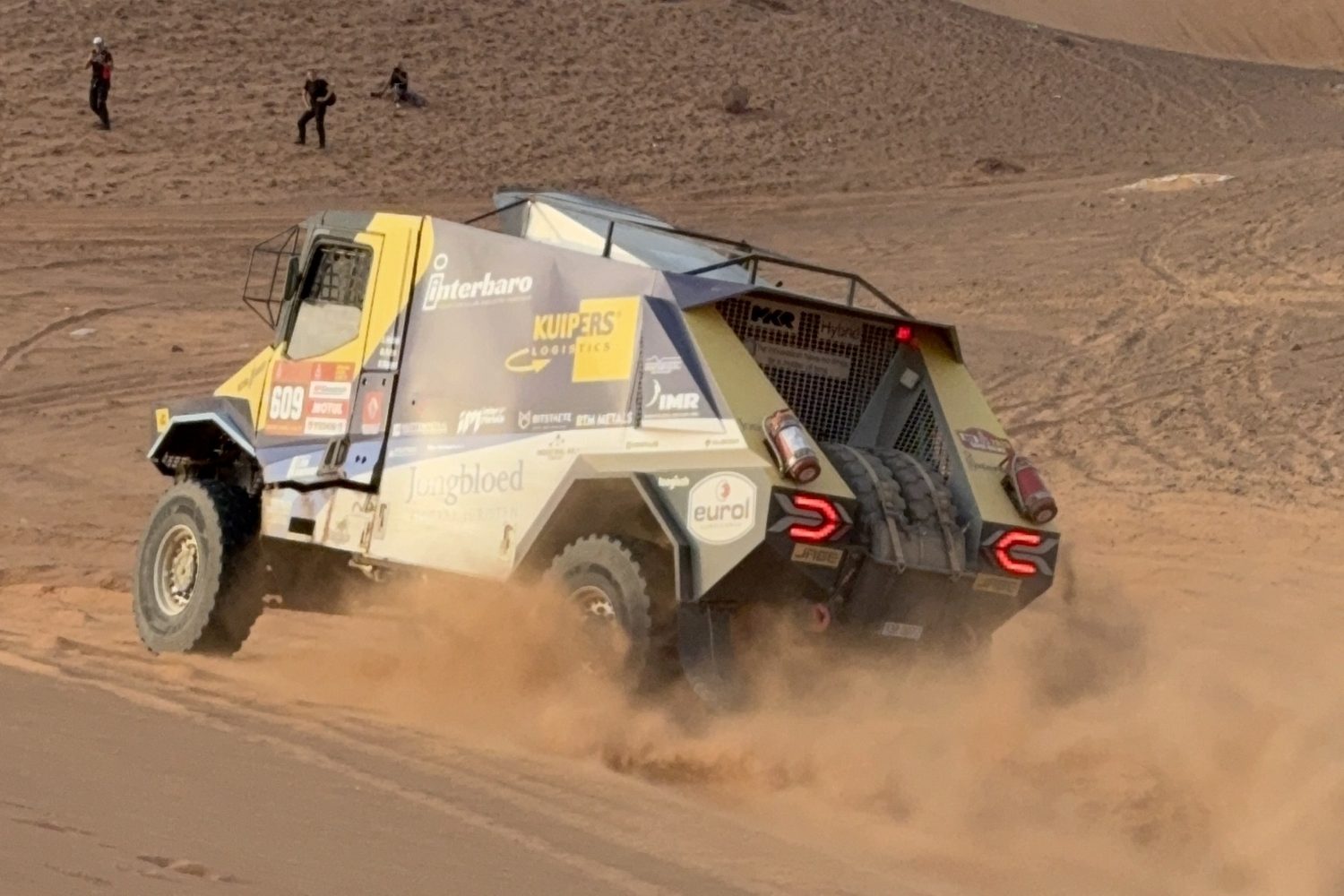
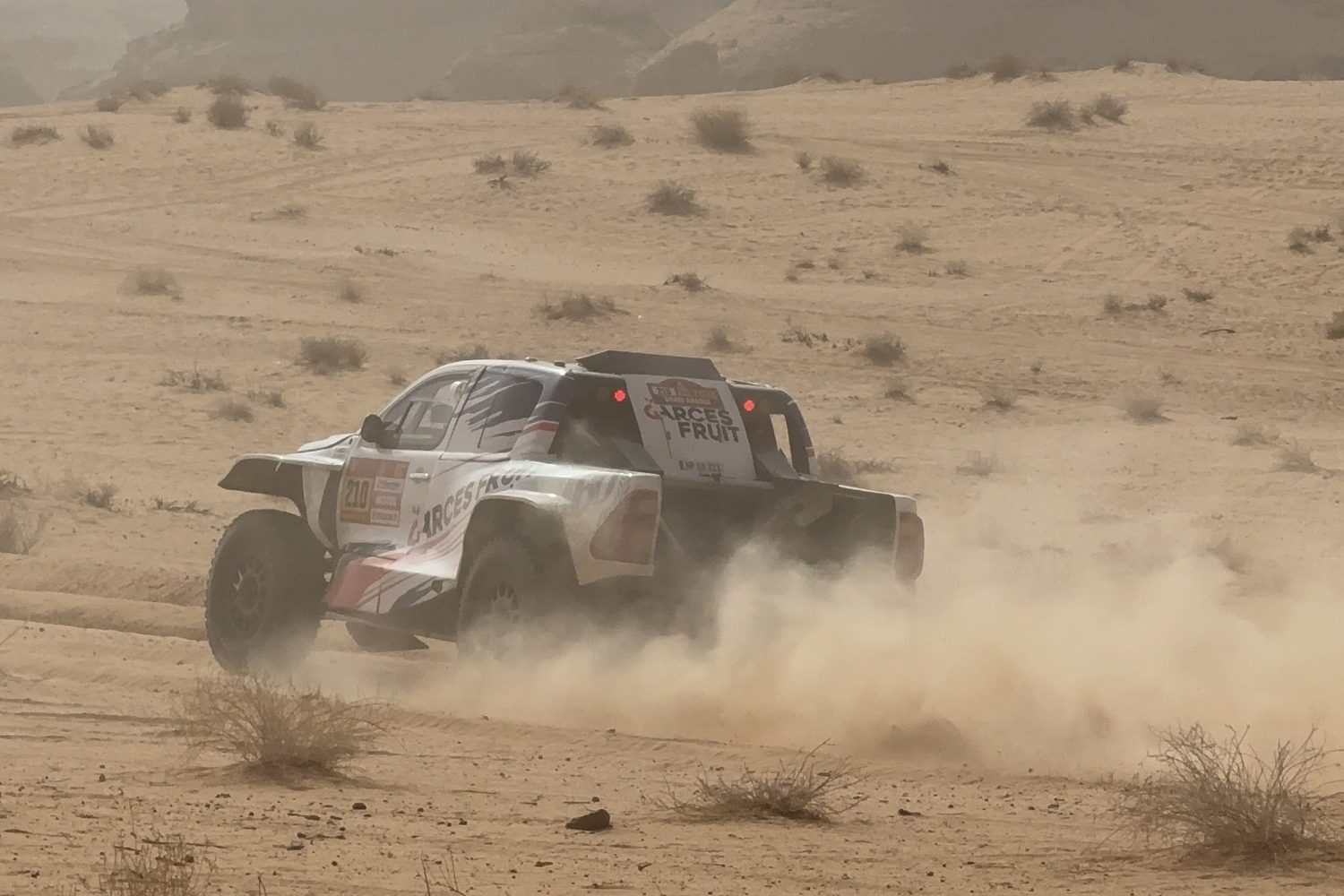
A ginormous truck lumbers over the crest of a sandy hill and then accelerates with real alacrity towards us, a brutish roar from its diesel engine. The driver sounds the loud horn, which is probably a cheery hello, but feels like a warning to get out of the way.
The first time a vehicle goes past us, we instinctively jump backwards as they attack the hill of sand we're standing on more or less at full speed, allowing them to maintain momentum through the soft material then use the gradient to naturally slow them for the turn. They get unnervingly close to the spectators at times, but it's an exhilarating experience and we're much closer to the action than I ever imagined would be possible.
We watch, enthralled by the sights and sounds until there's only a trickle of competitors left and then head back to the bivouac to check out the racing Defenders in person.
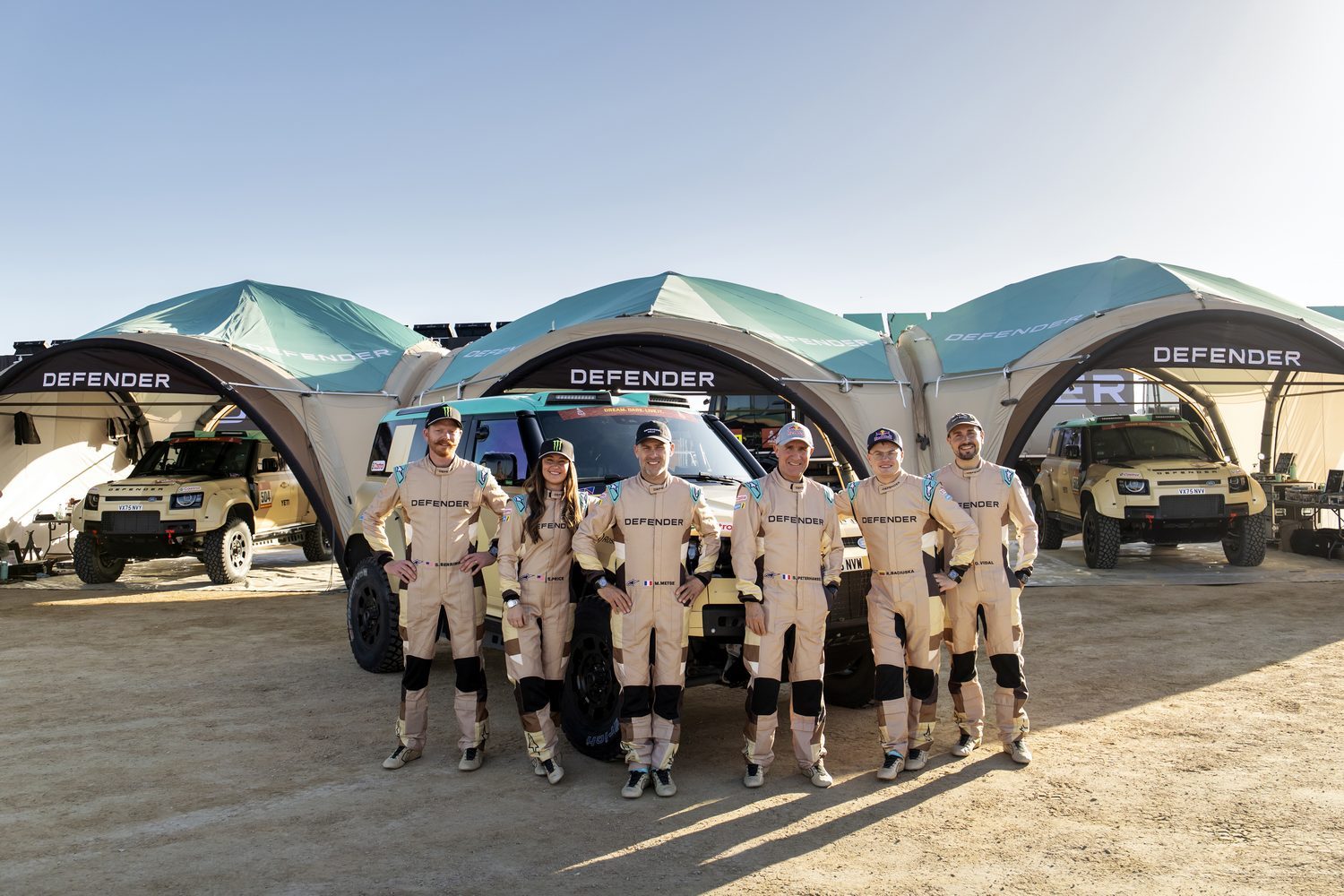
Three-car Defender D7X-R team led by 'Mr Dakar'
The drivers are out of their vehicles and in a relaxed mood, catching up with each other's anecdotes from the day. There's a cautiously optimistic ambience throughout team as the Defender has proven to be incredibly fast out of the box.
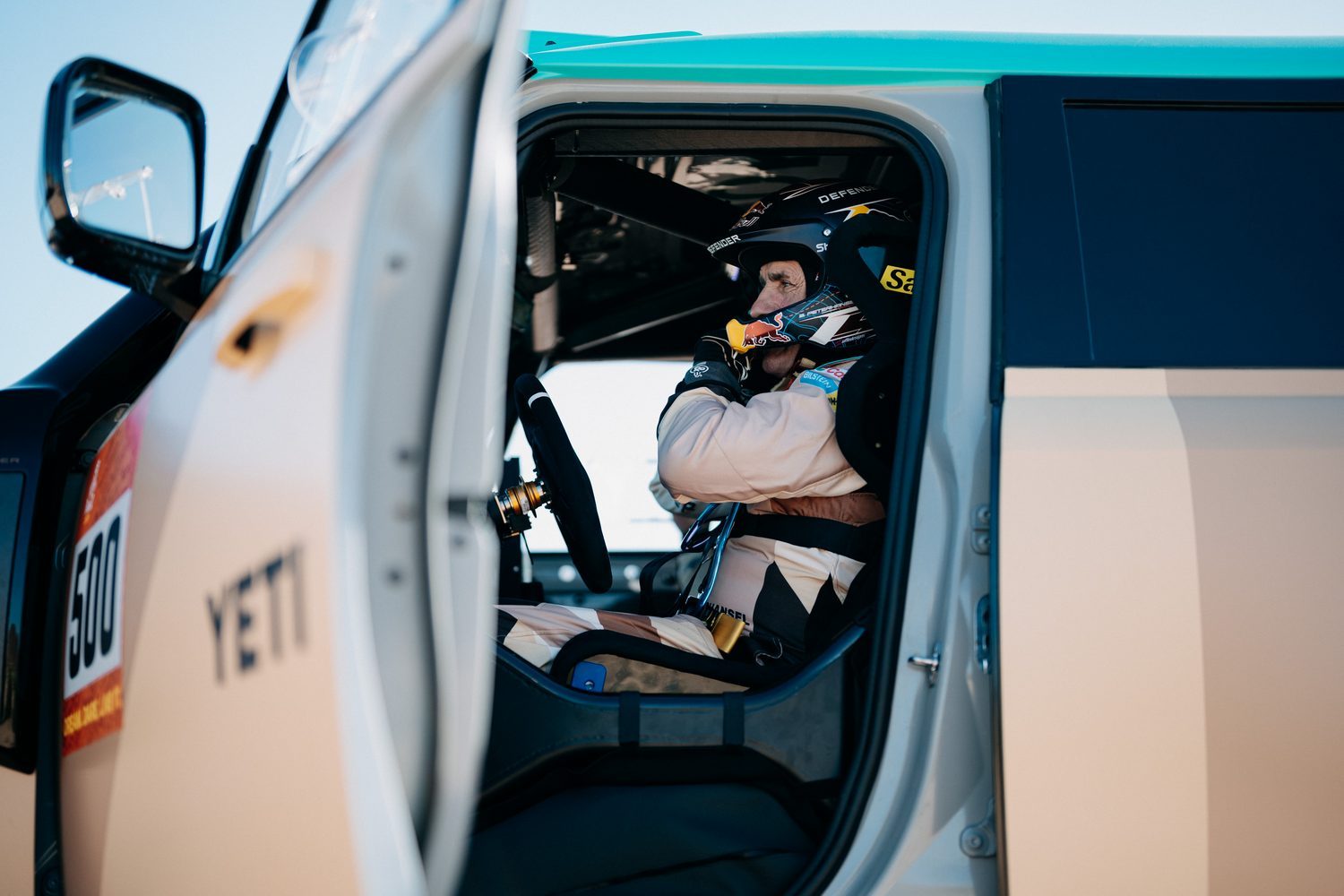
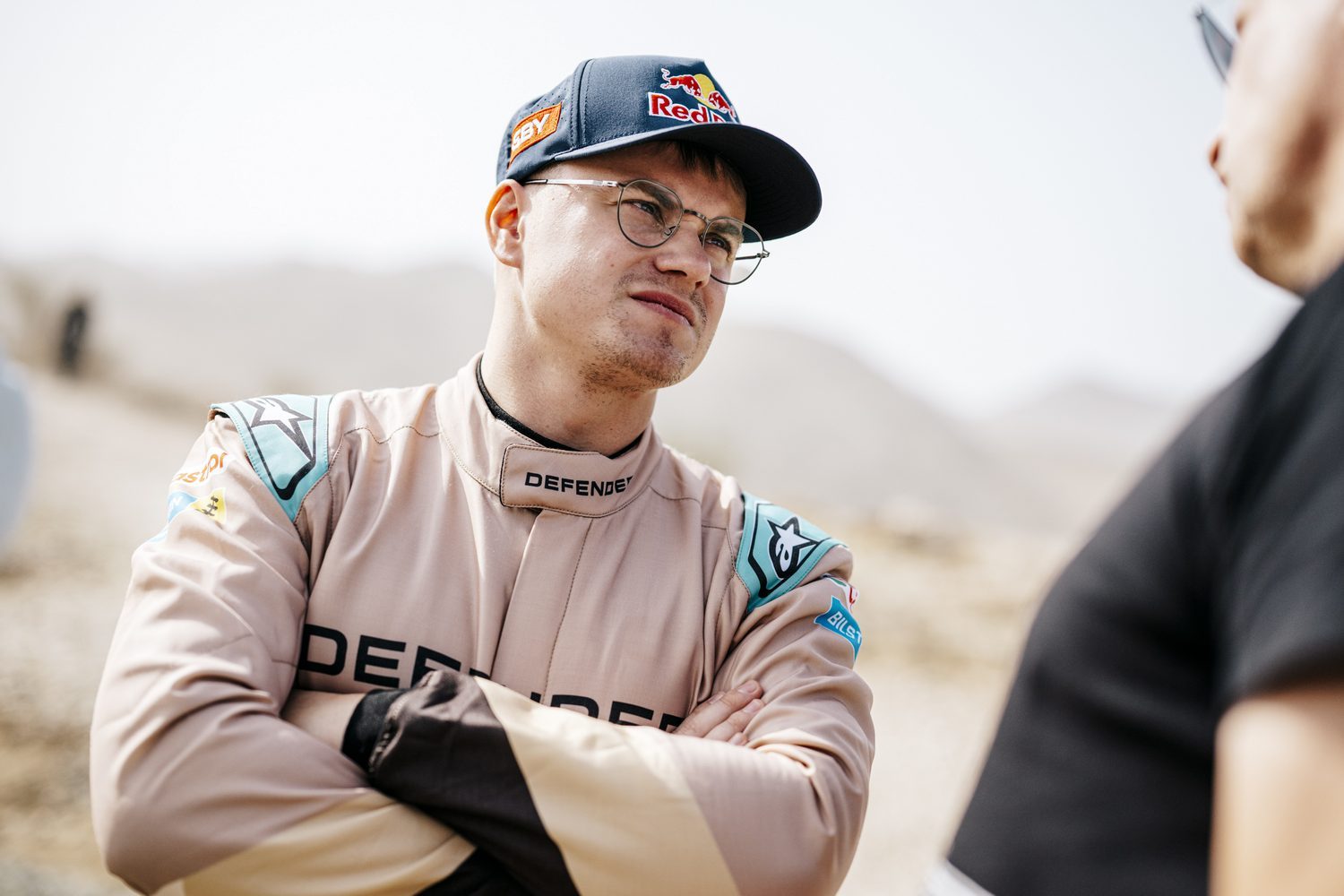
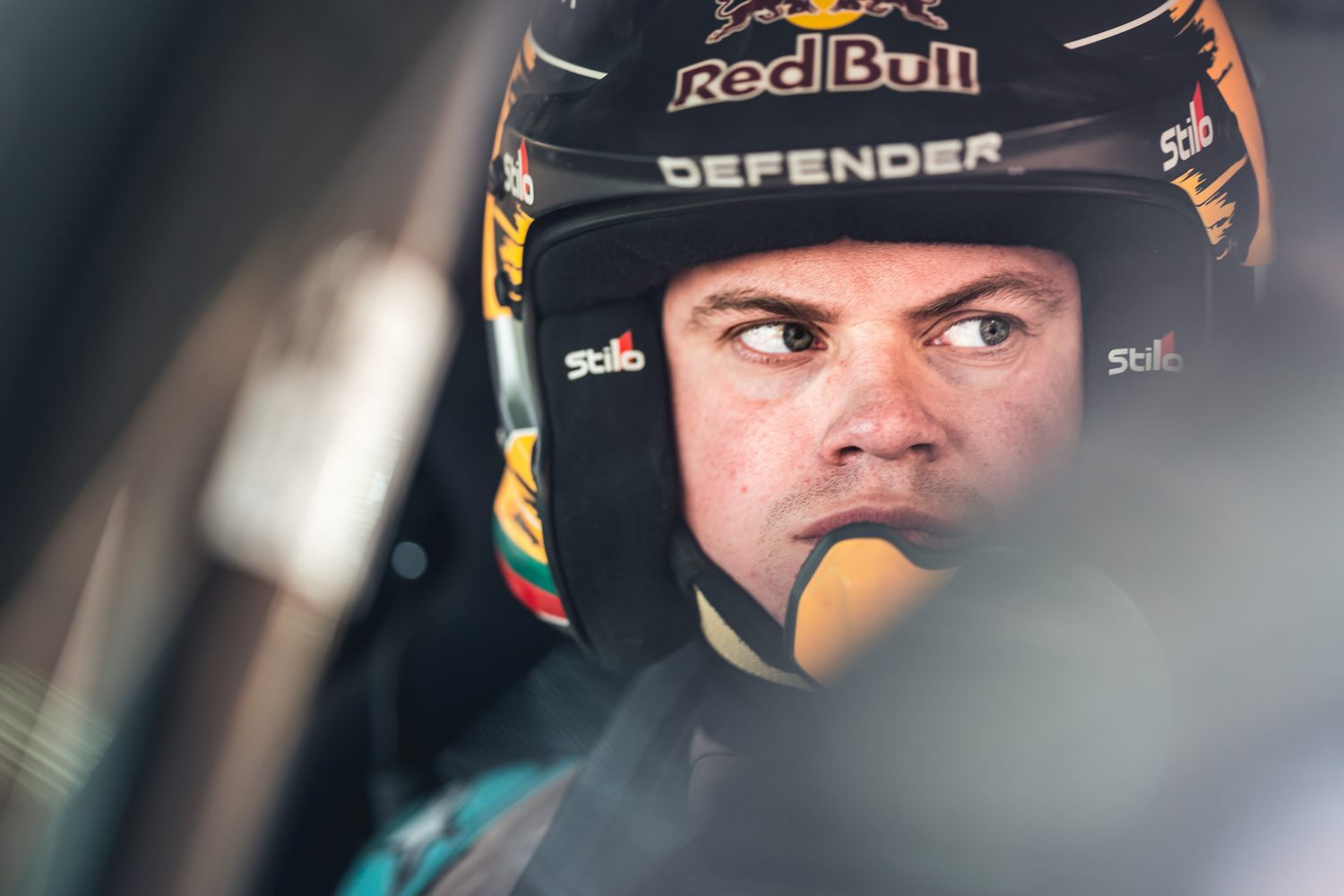
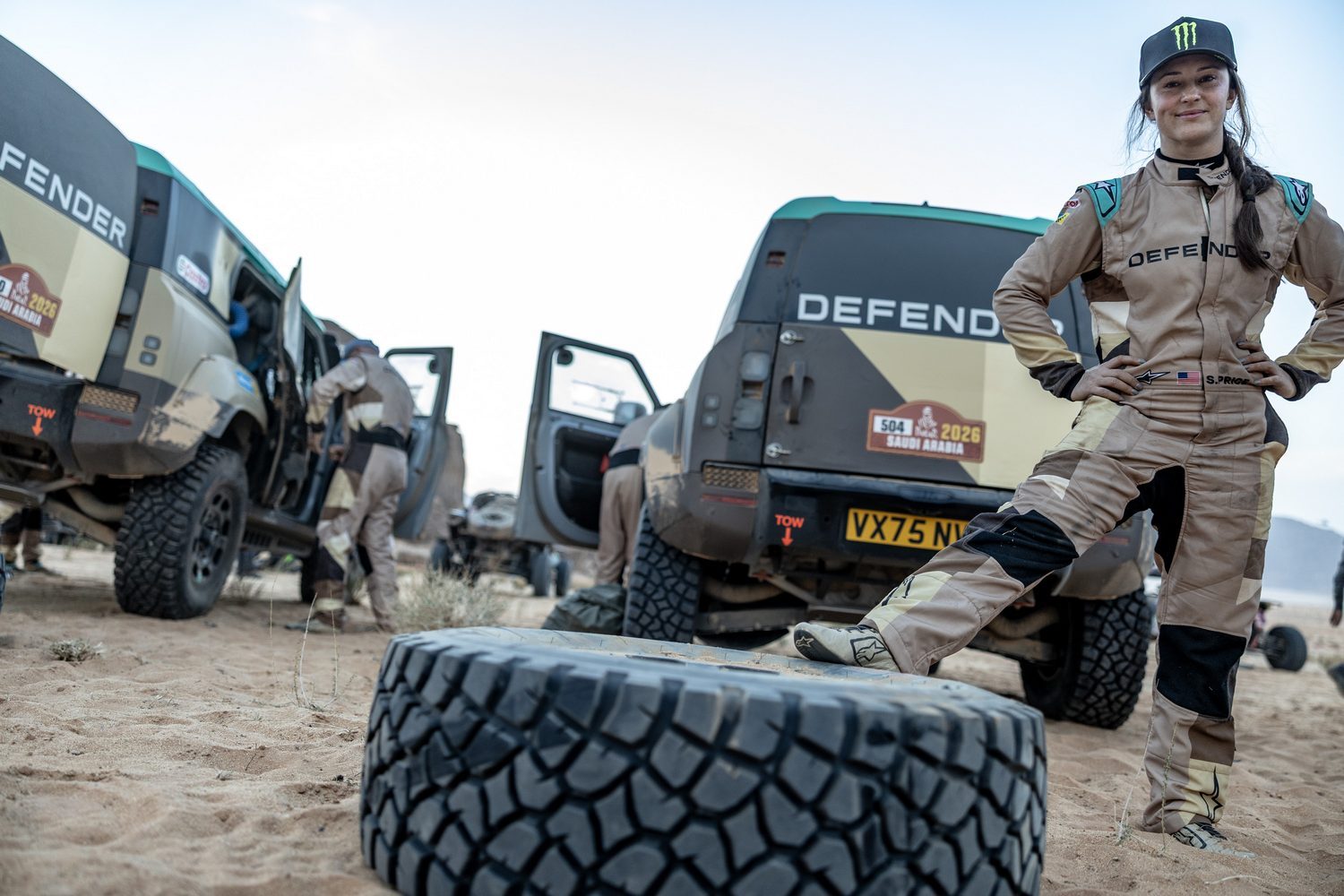
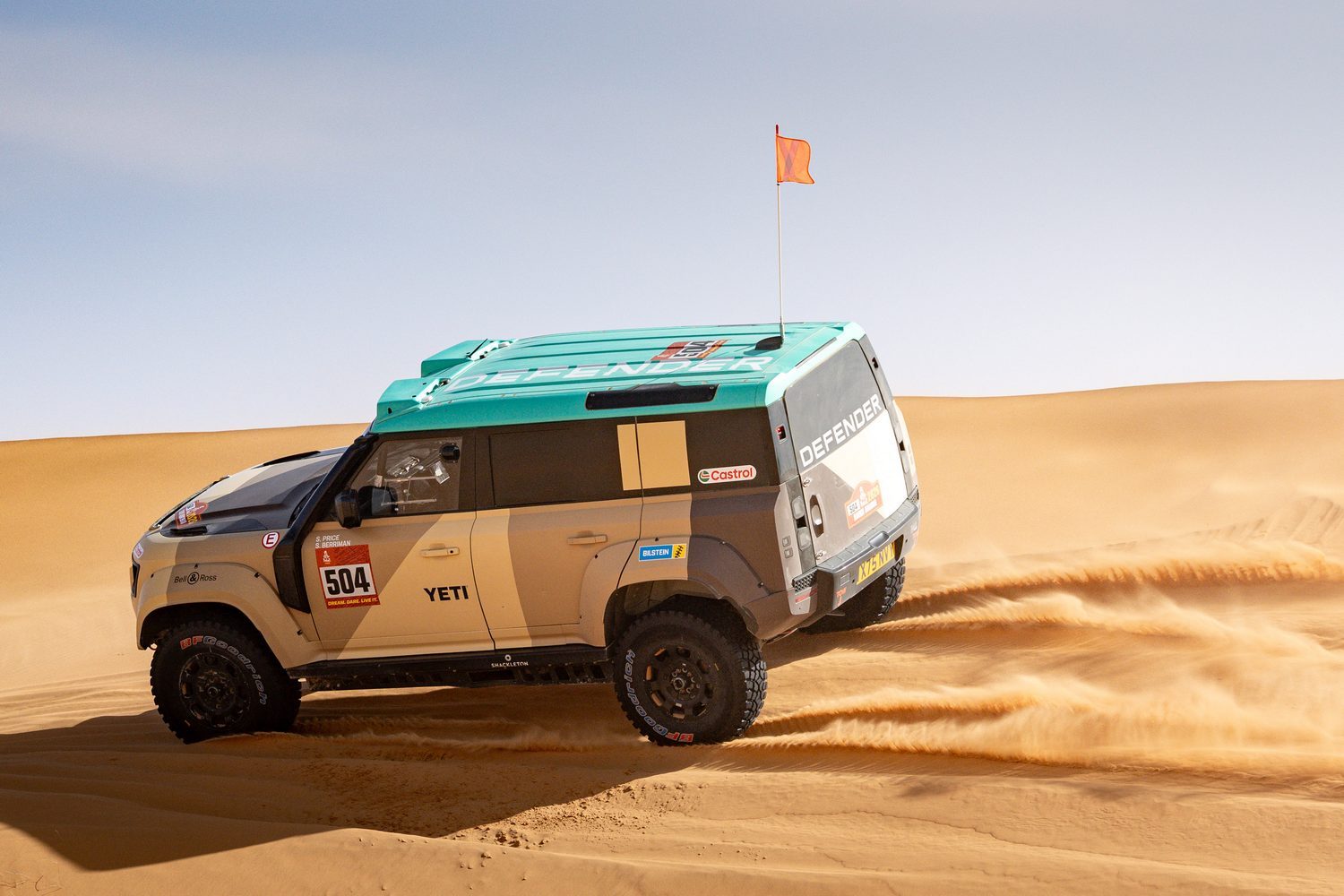
The Defenders were 1-2-3 in the short 'Prologue' on day one, led by the American pairing of Sara Price and Sean Berriman, followed by 'Mr Dakar' Stéphane Peterhansel (he has 36 Dakar events to his name, and has won 14 of them - on bike and in car) and his co-driver Michael Metge, with Rokas Baciuška and Oriol Vidal in third spot.
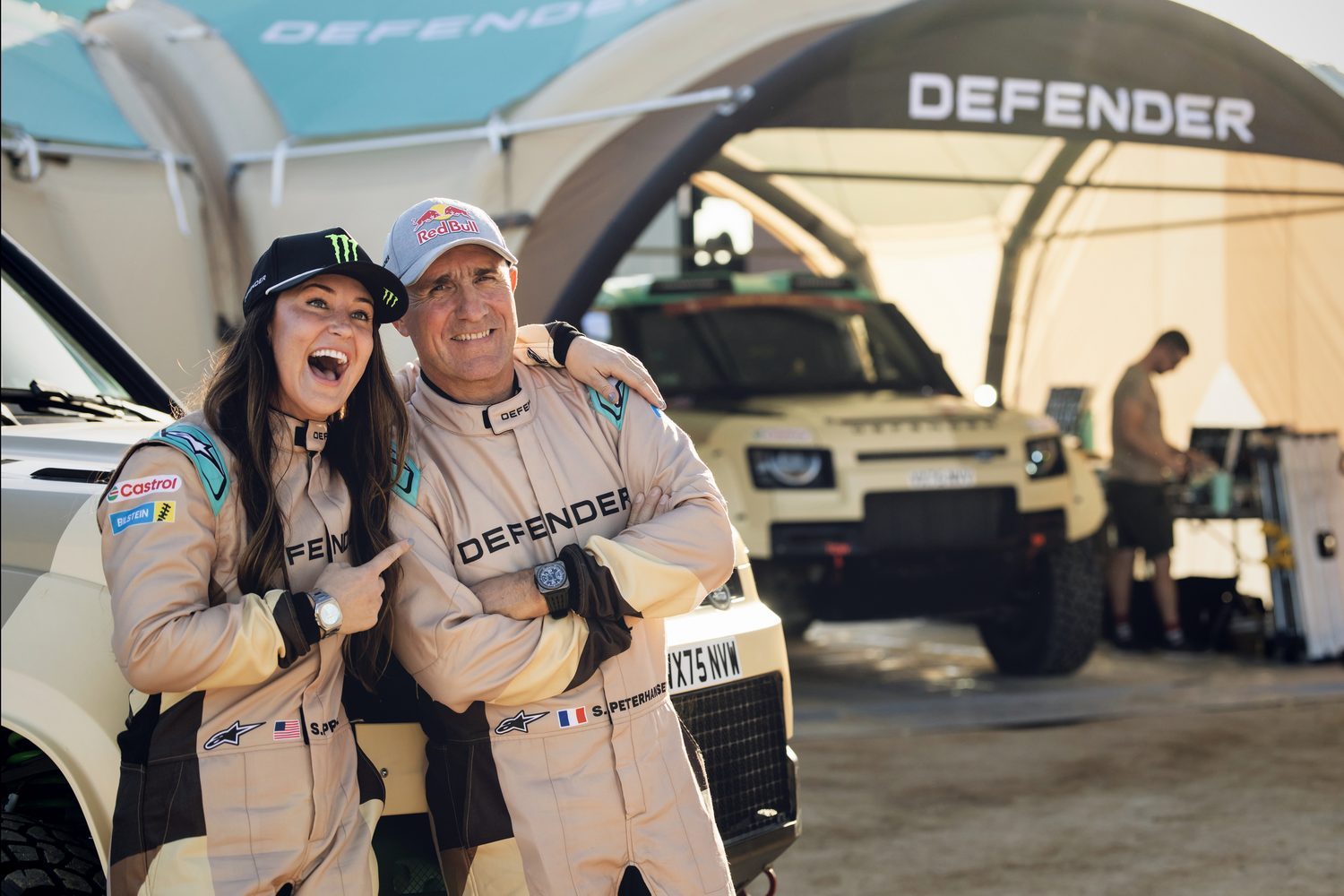
Lithuanian Rokas Baciuška set the fastest time in the proper Stage 1 the next day when his teammates dealt with mechanical problems, and the Defenders managed another 1-2-3 on Stage 2, the day we arrived. No wonder they were smiling.
A racing Defender Octa by another name
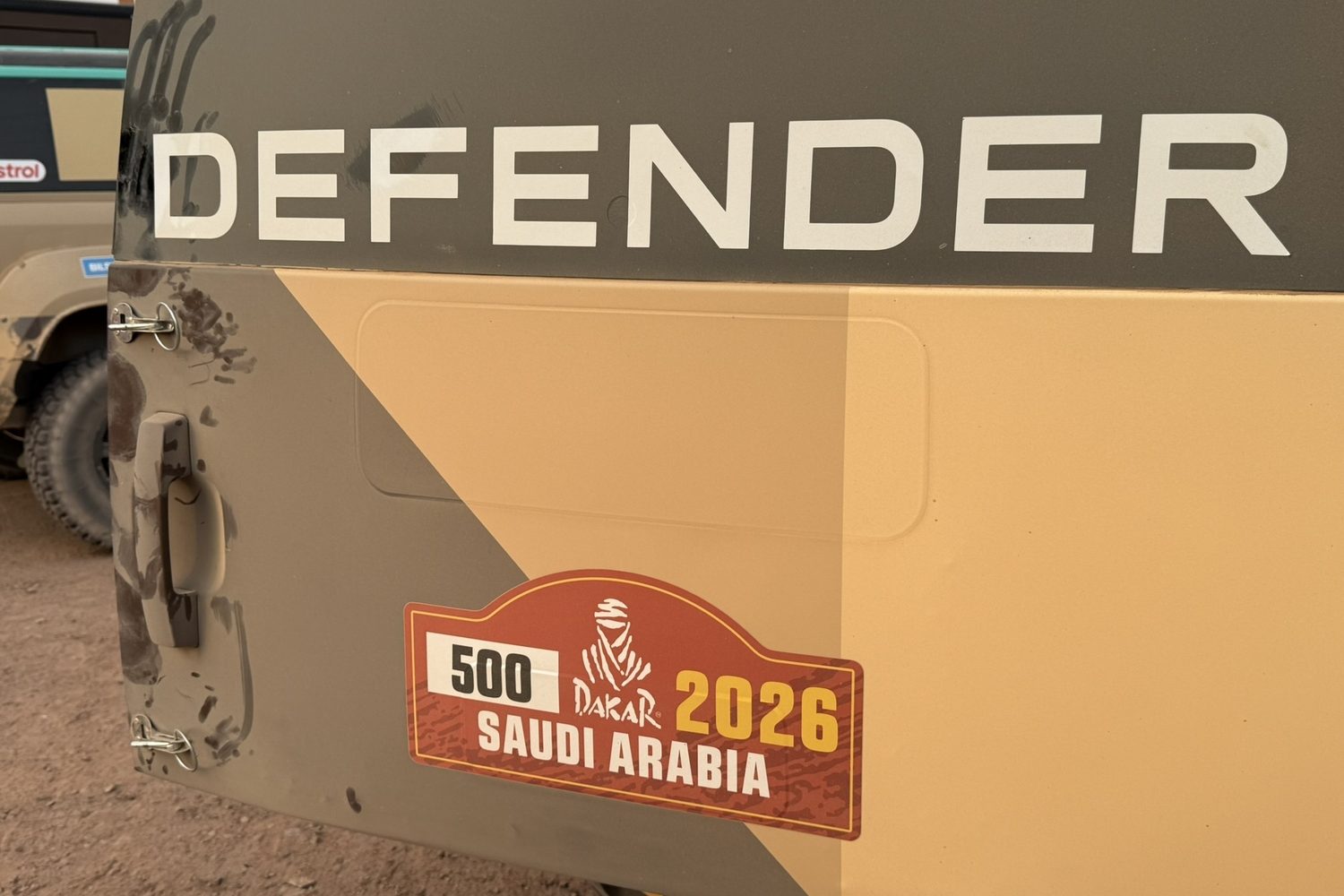
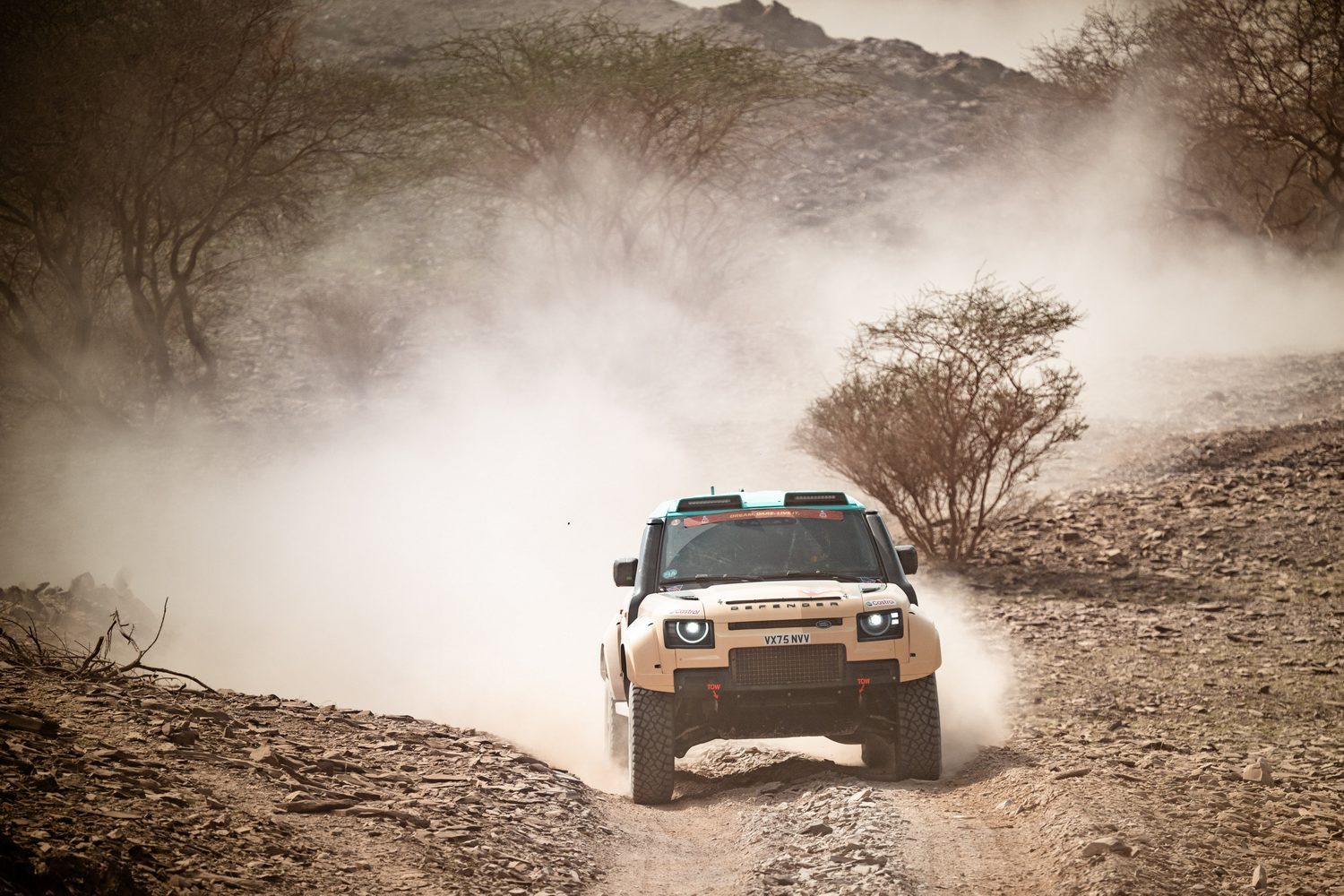
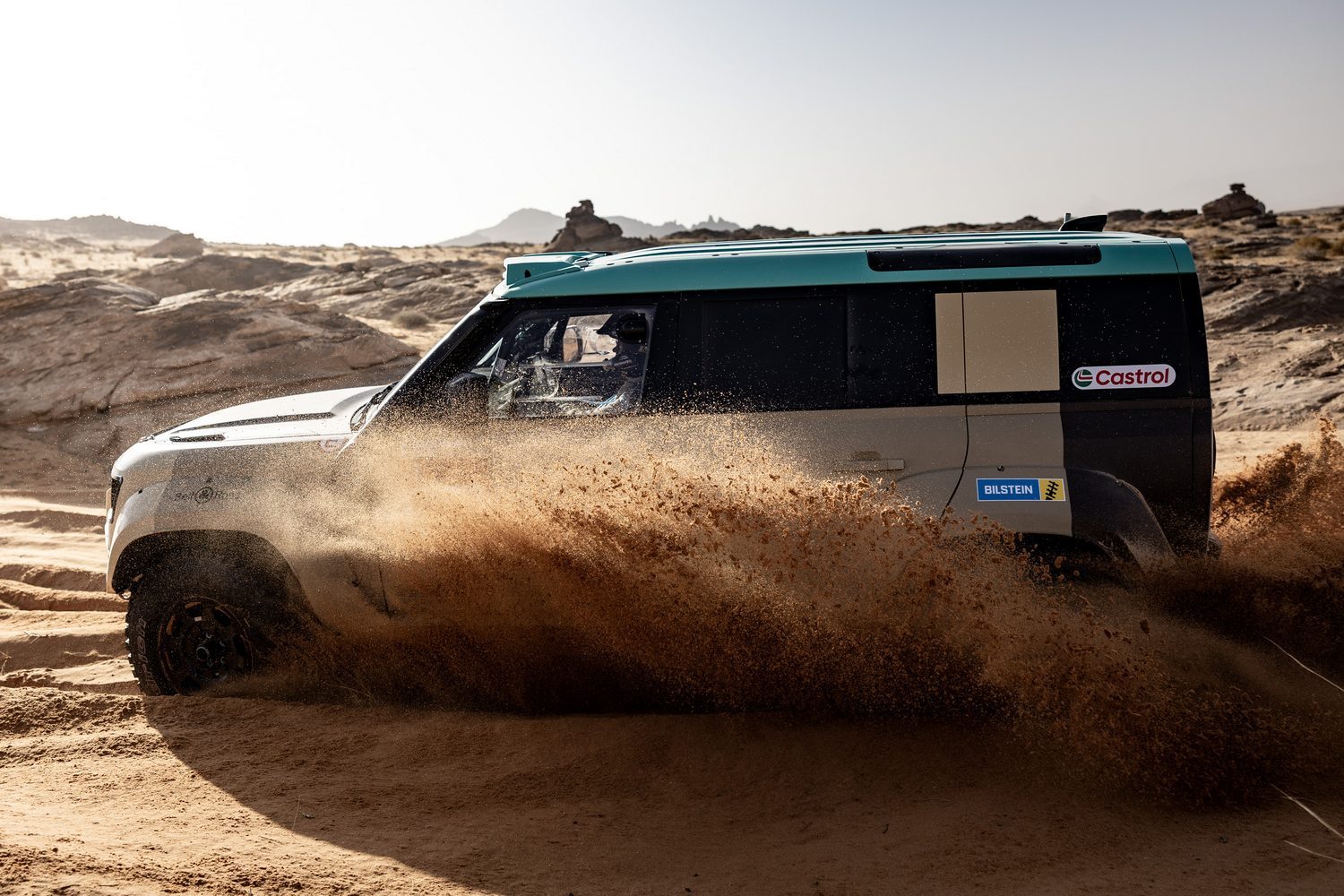
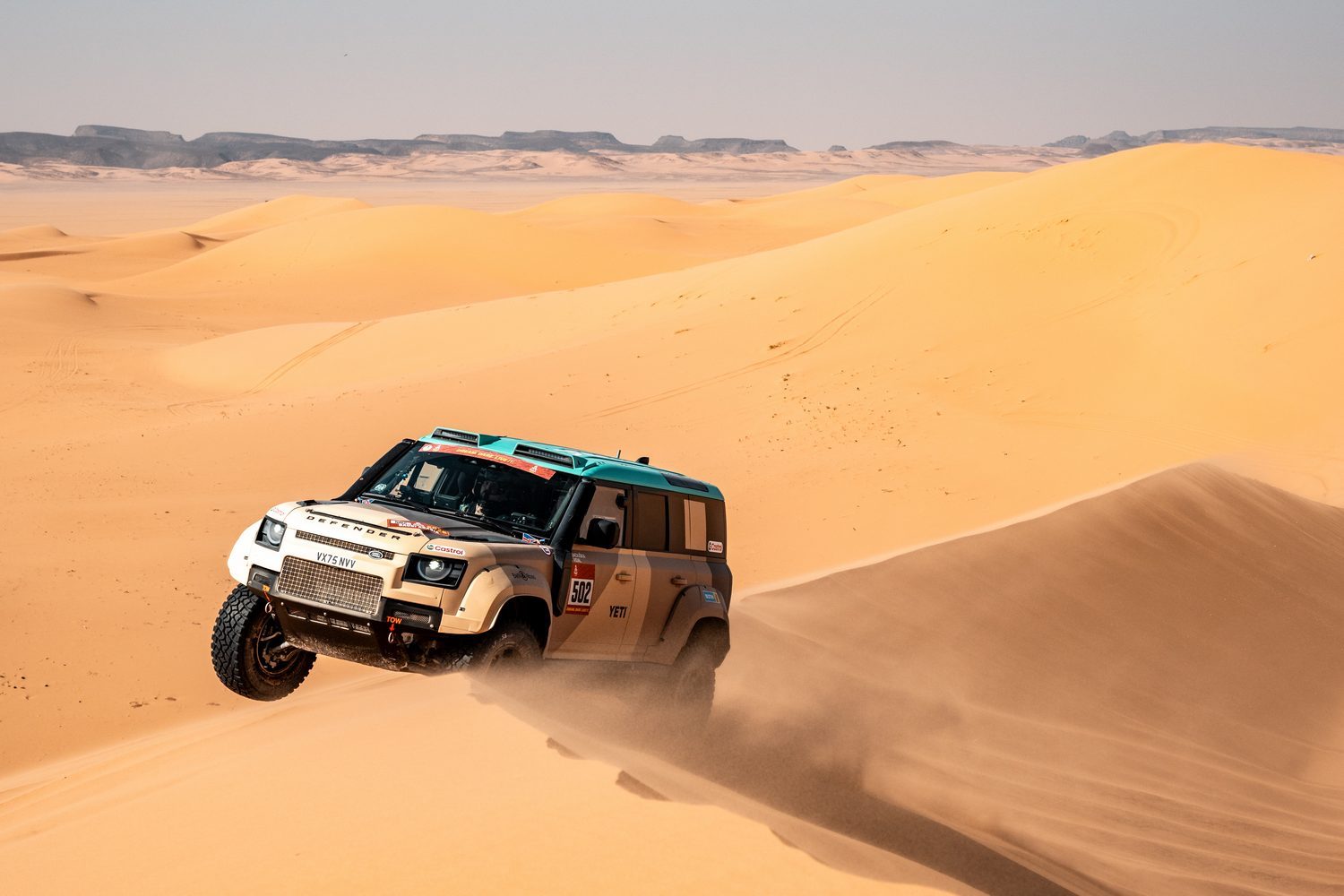
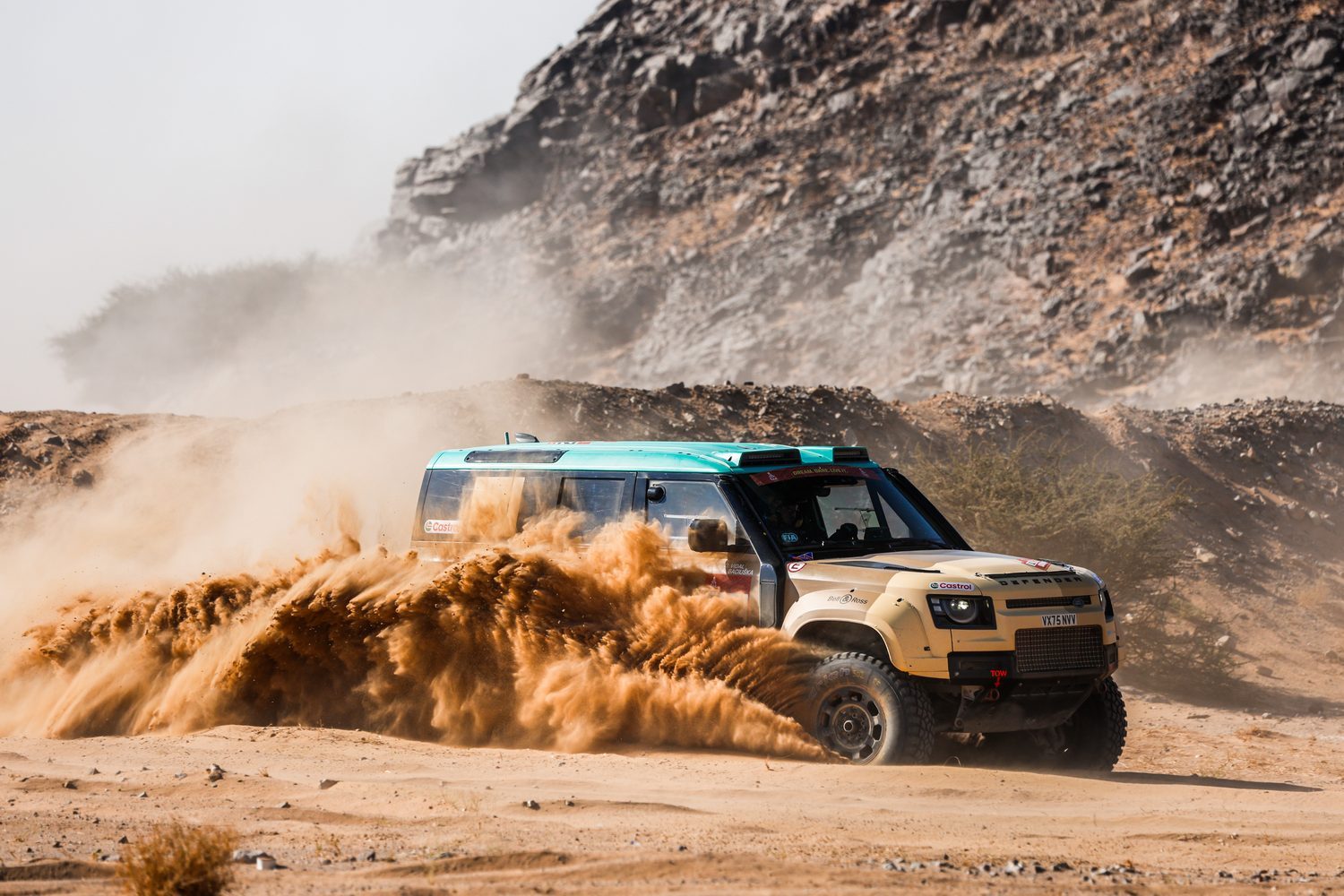
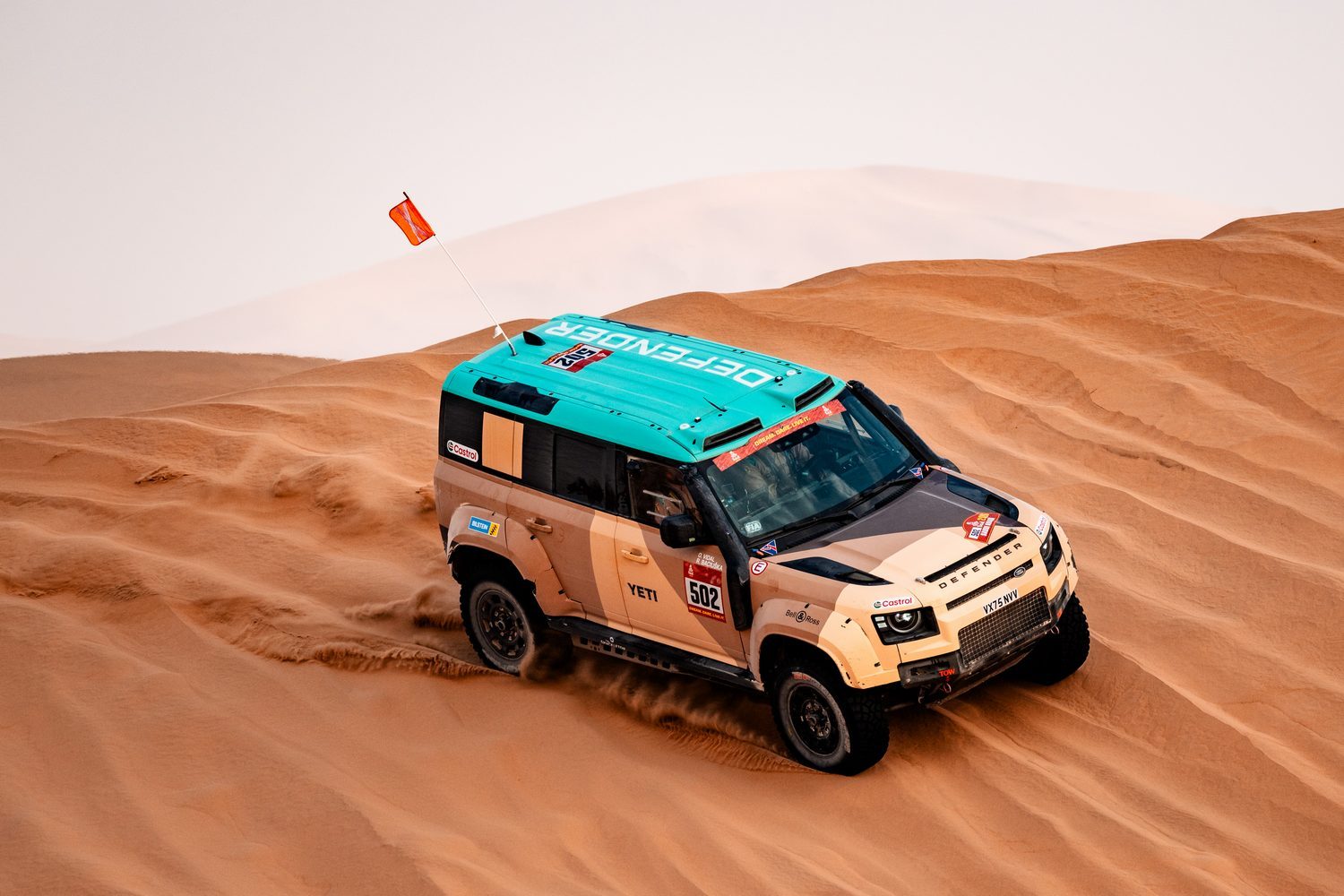
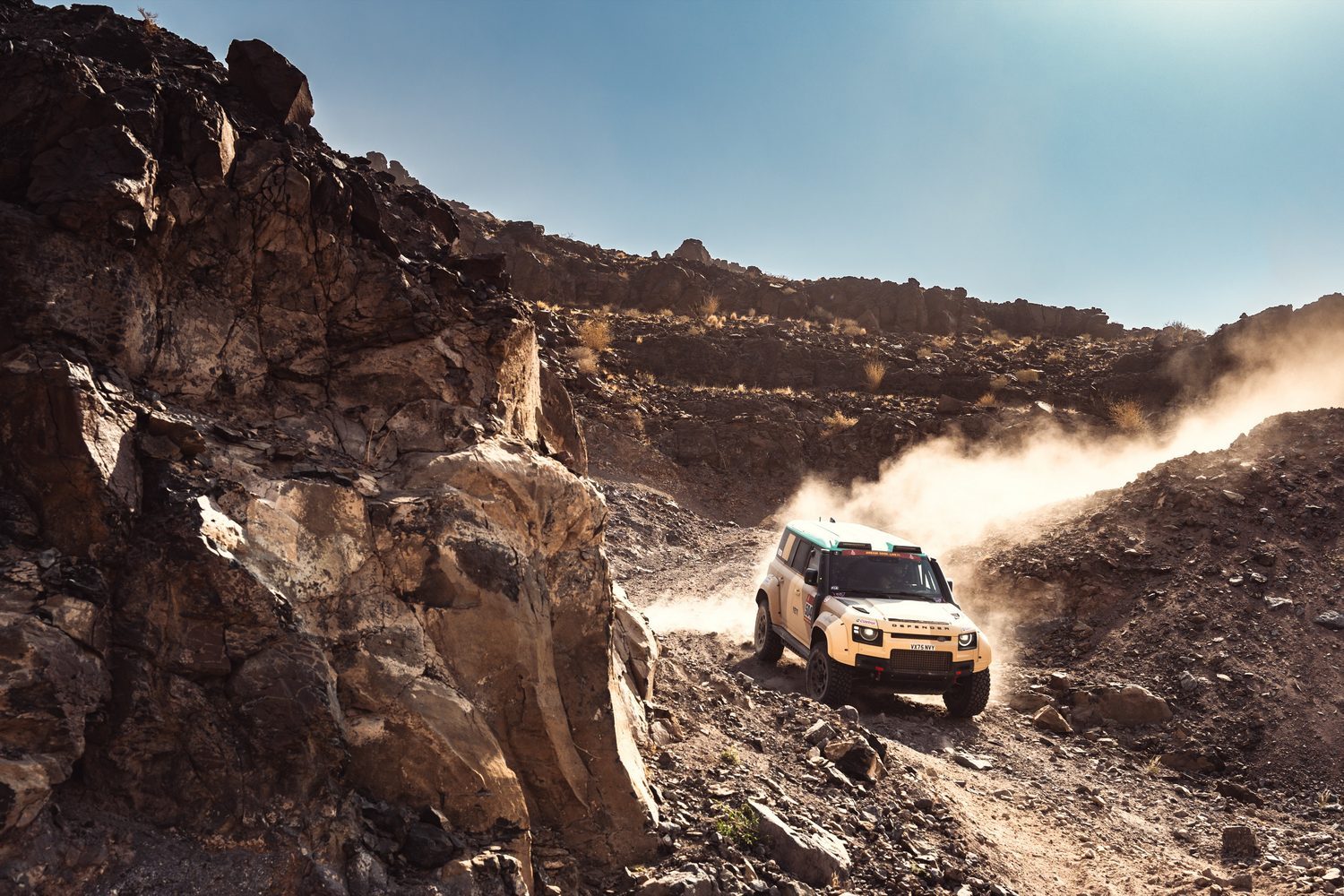
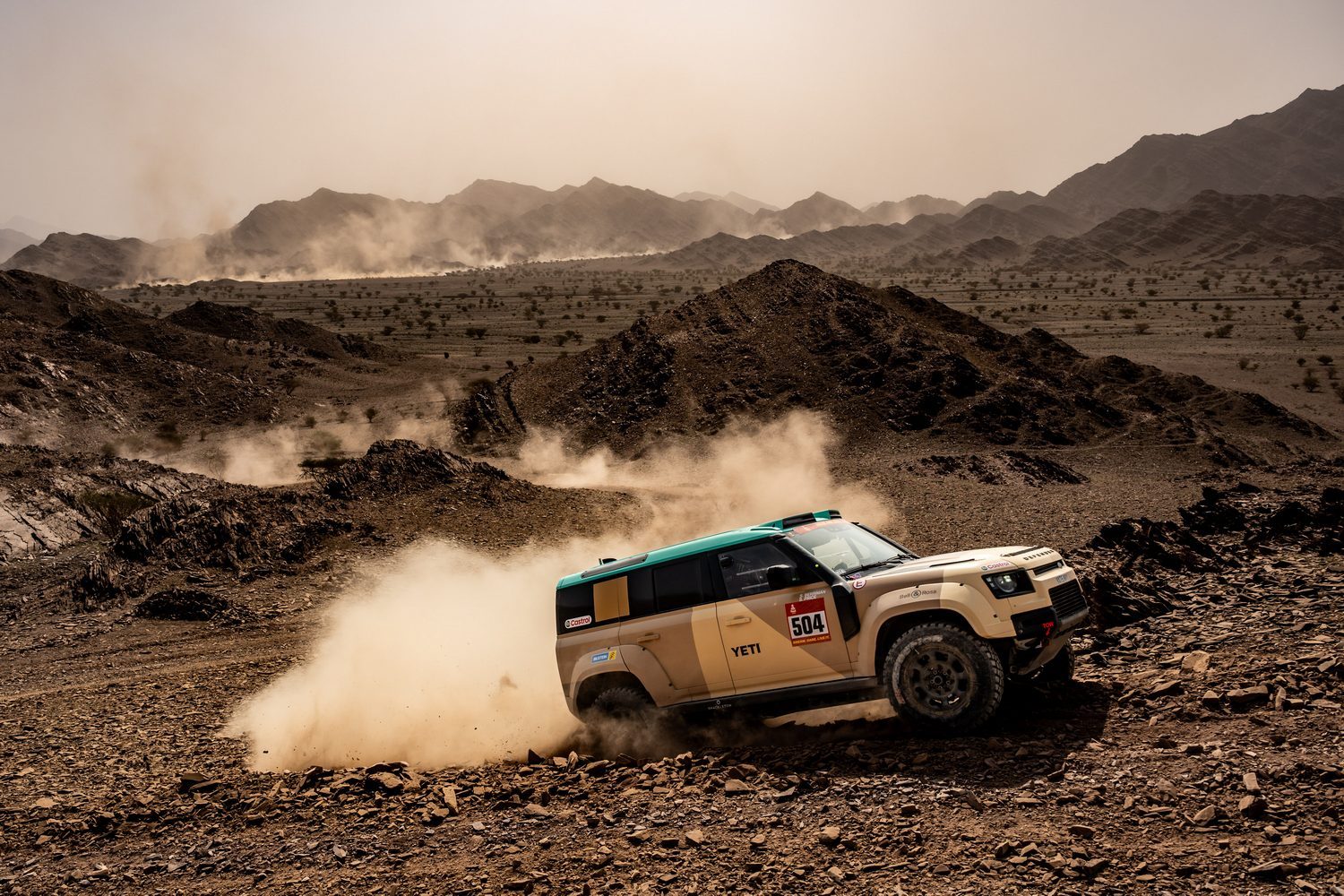
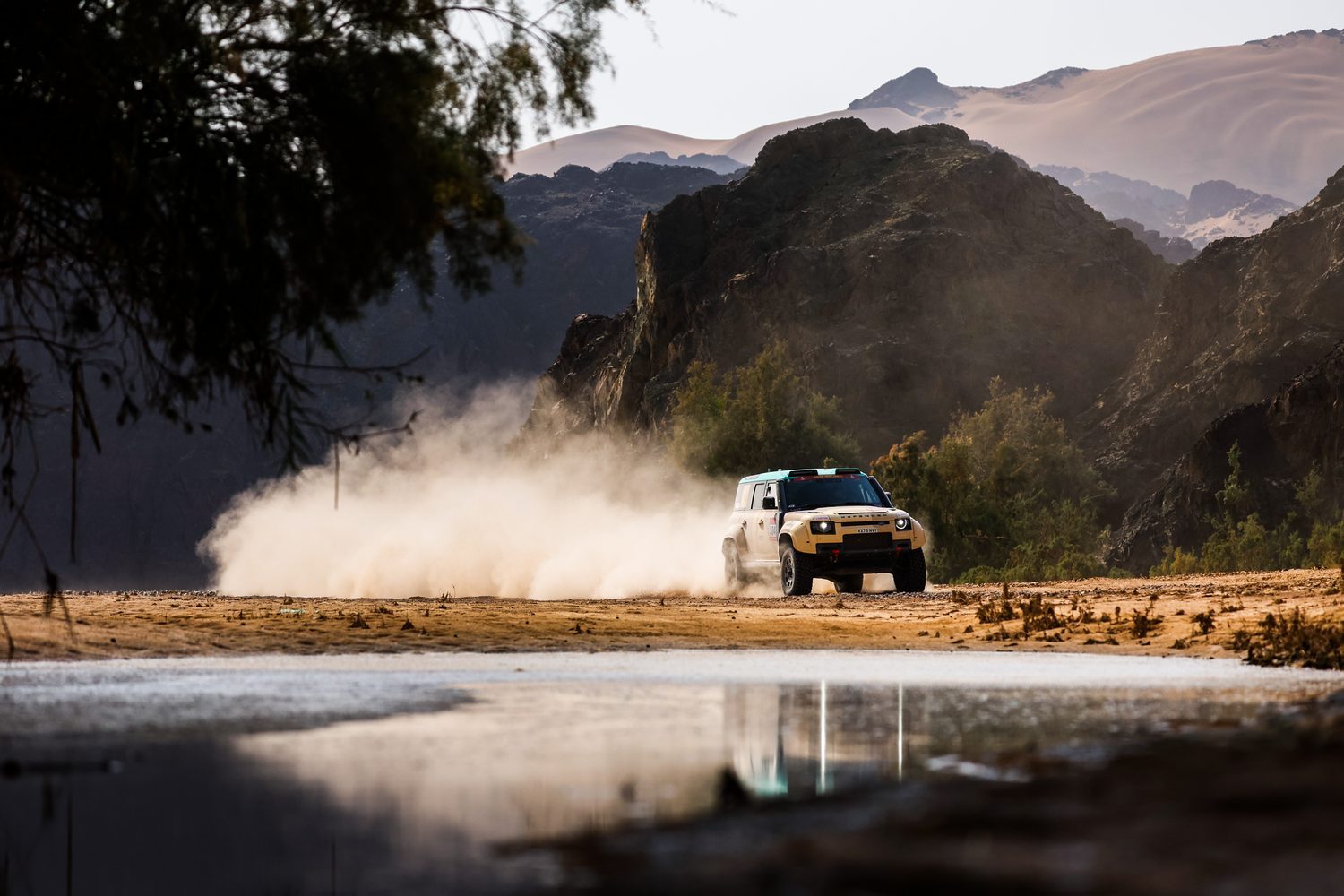
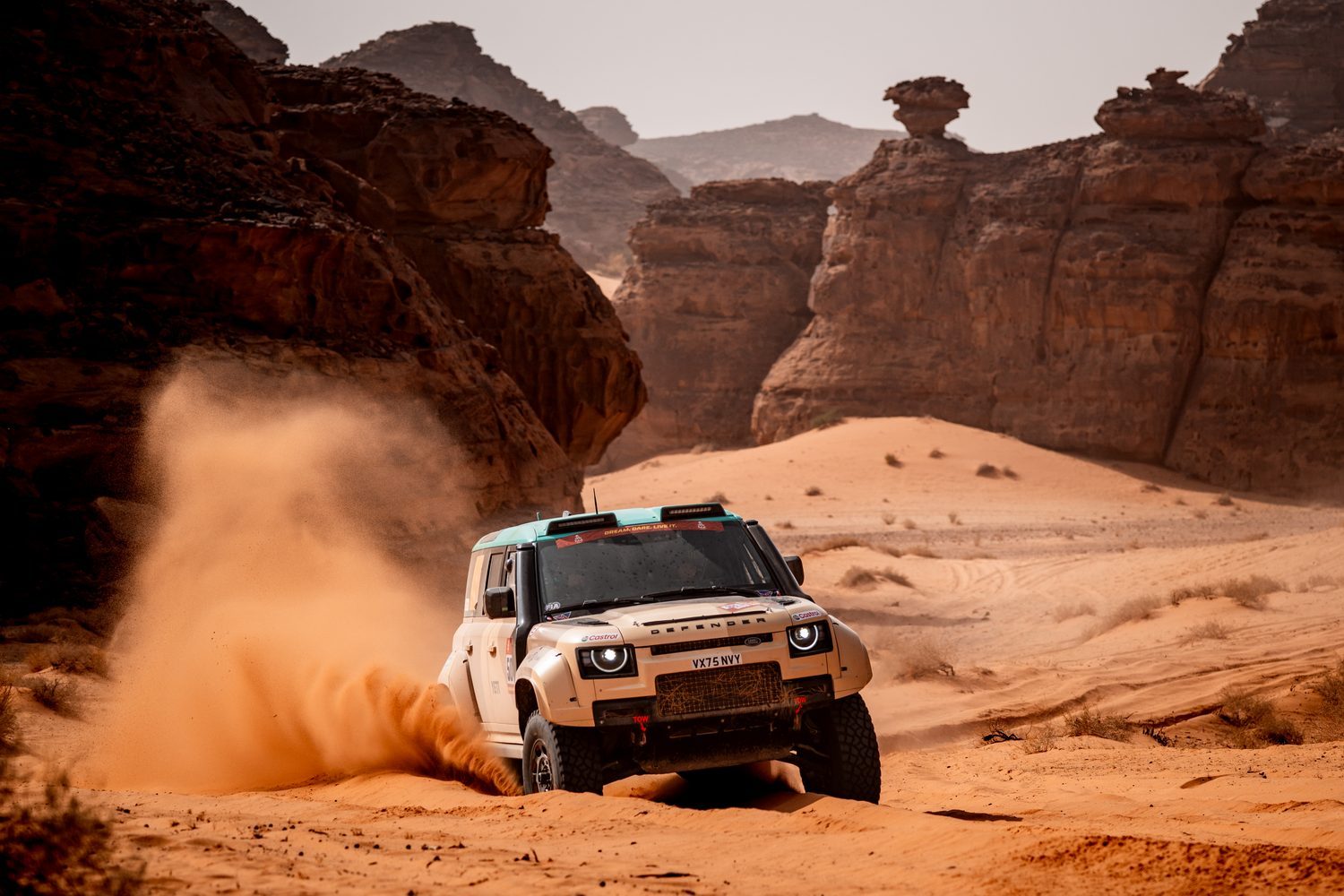
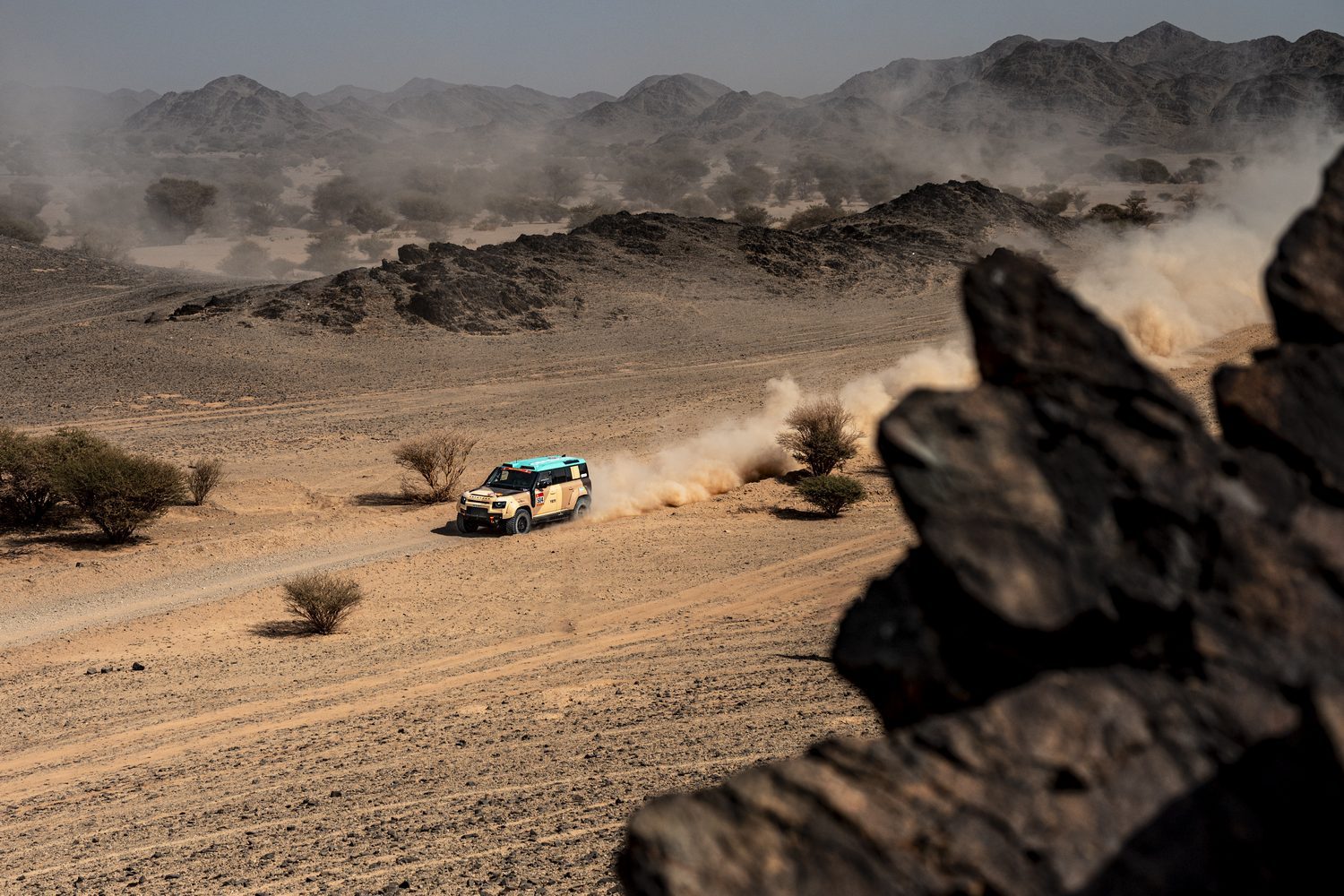
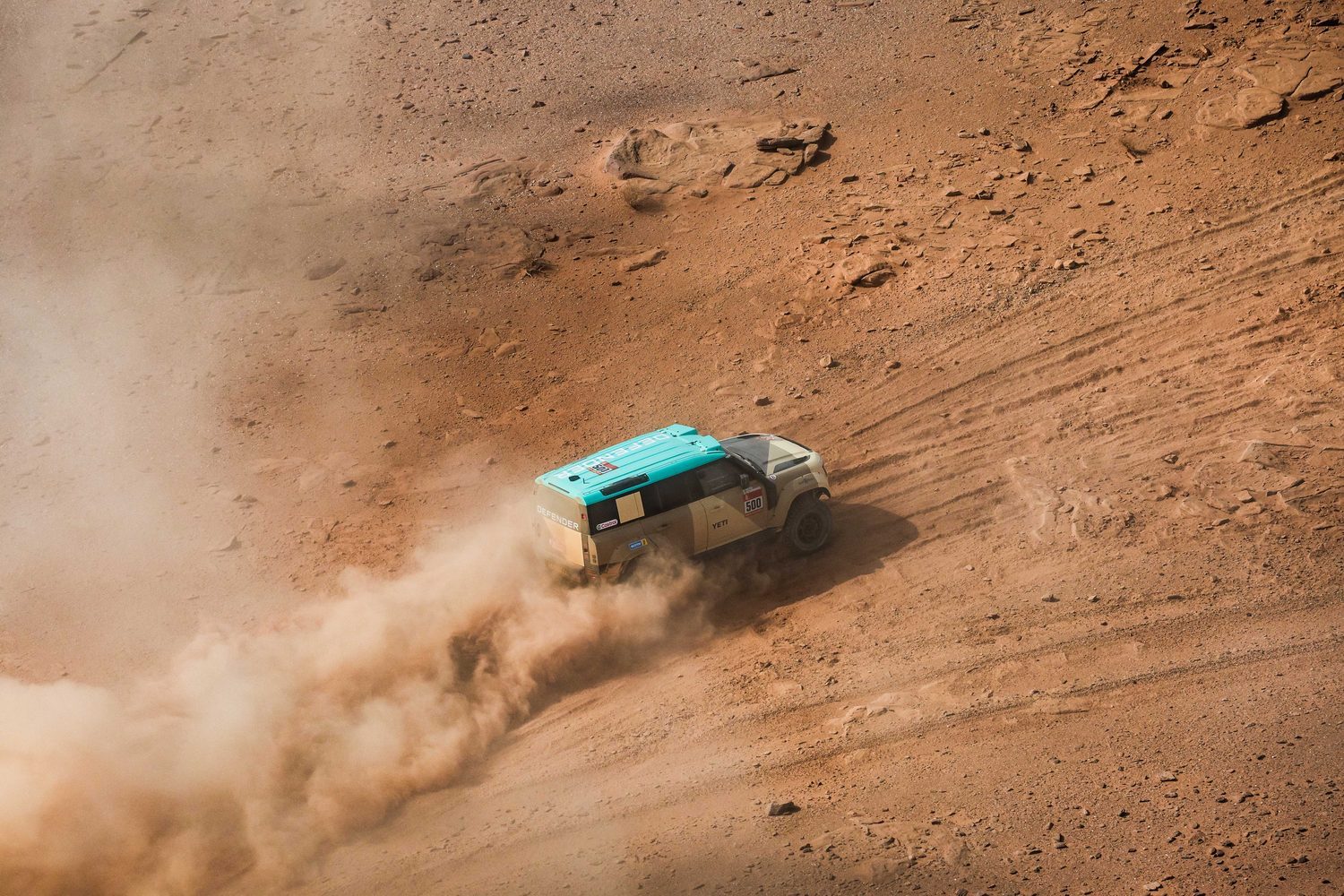
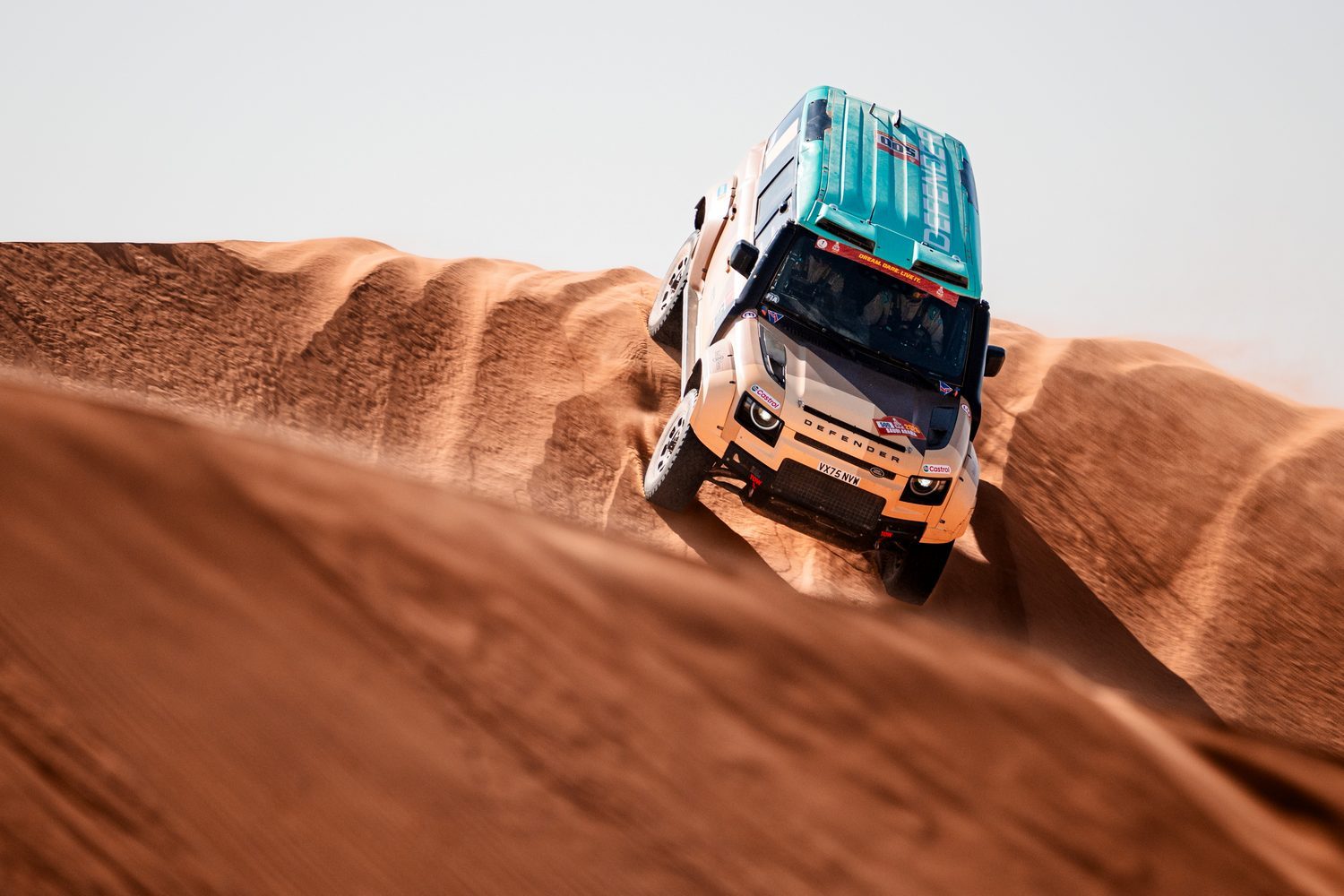
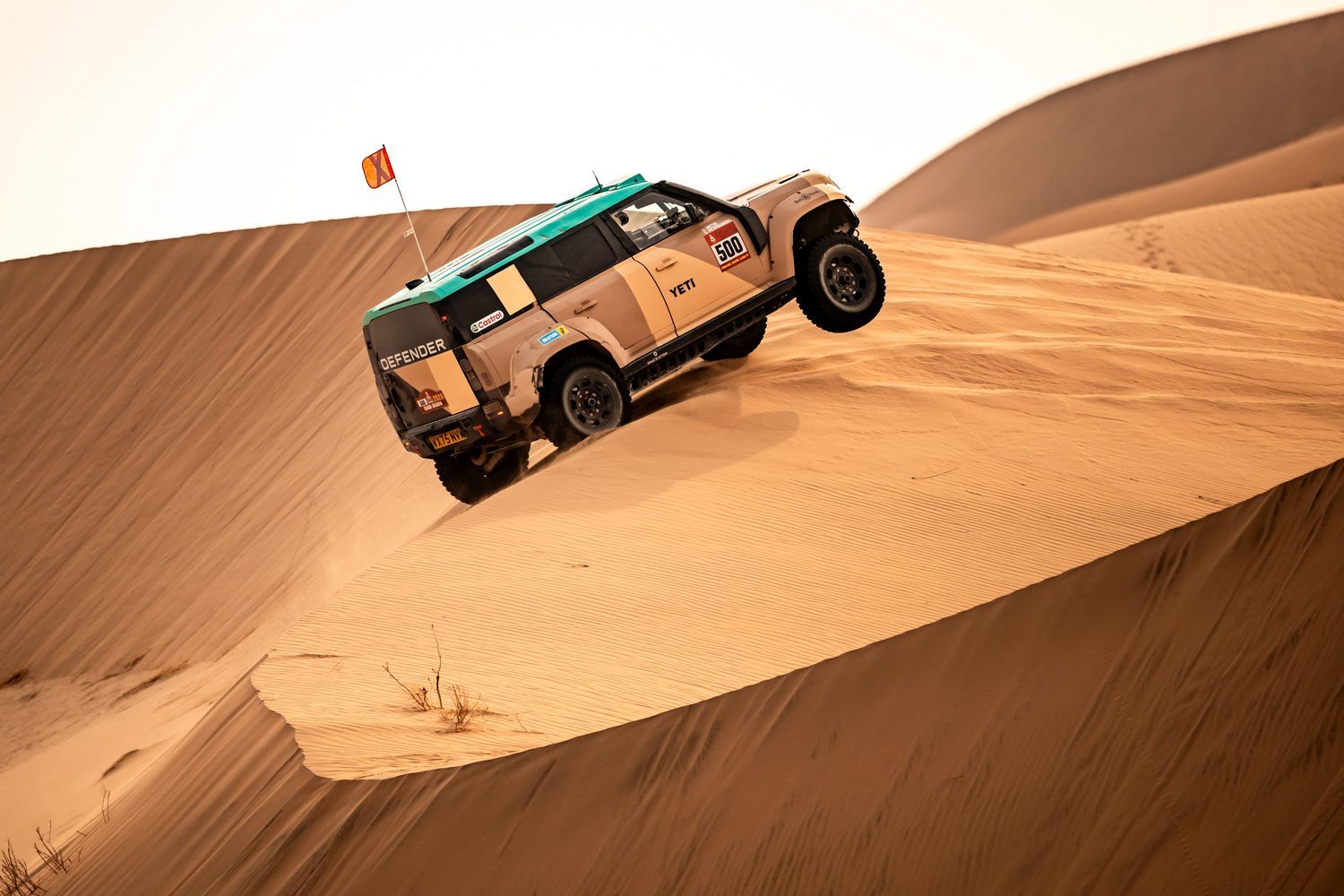
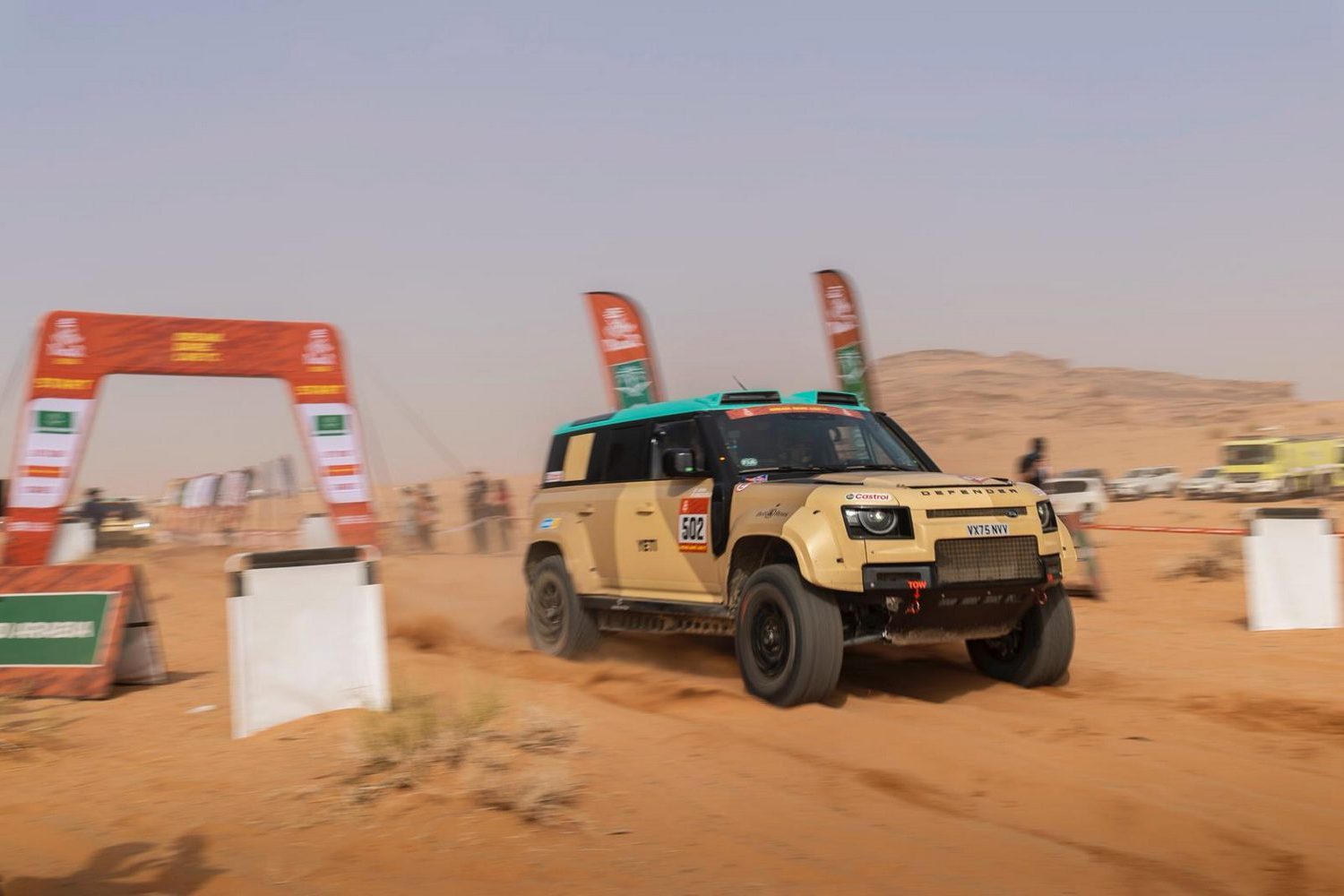
While the cars cooled, we were shown around them. Though based closely on the Defender Octa, the racer - called the D7X-R as it's the rally version of the 'D7X' platform - looks ready for the desert thanks to its massive tyres and generous ground clearance. Those represent the major changes between the Dakar car and the one you can go and buy from your local Land Rover dealership. The racer has about 50mm more ground clearance than the Octa at its highest air suspension setting.
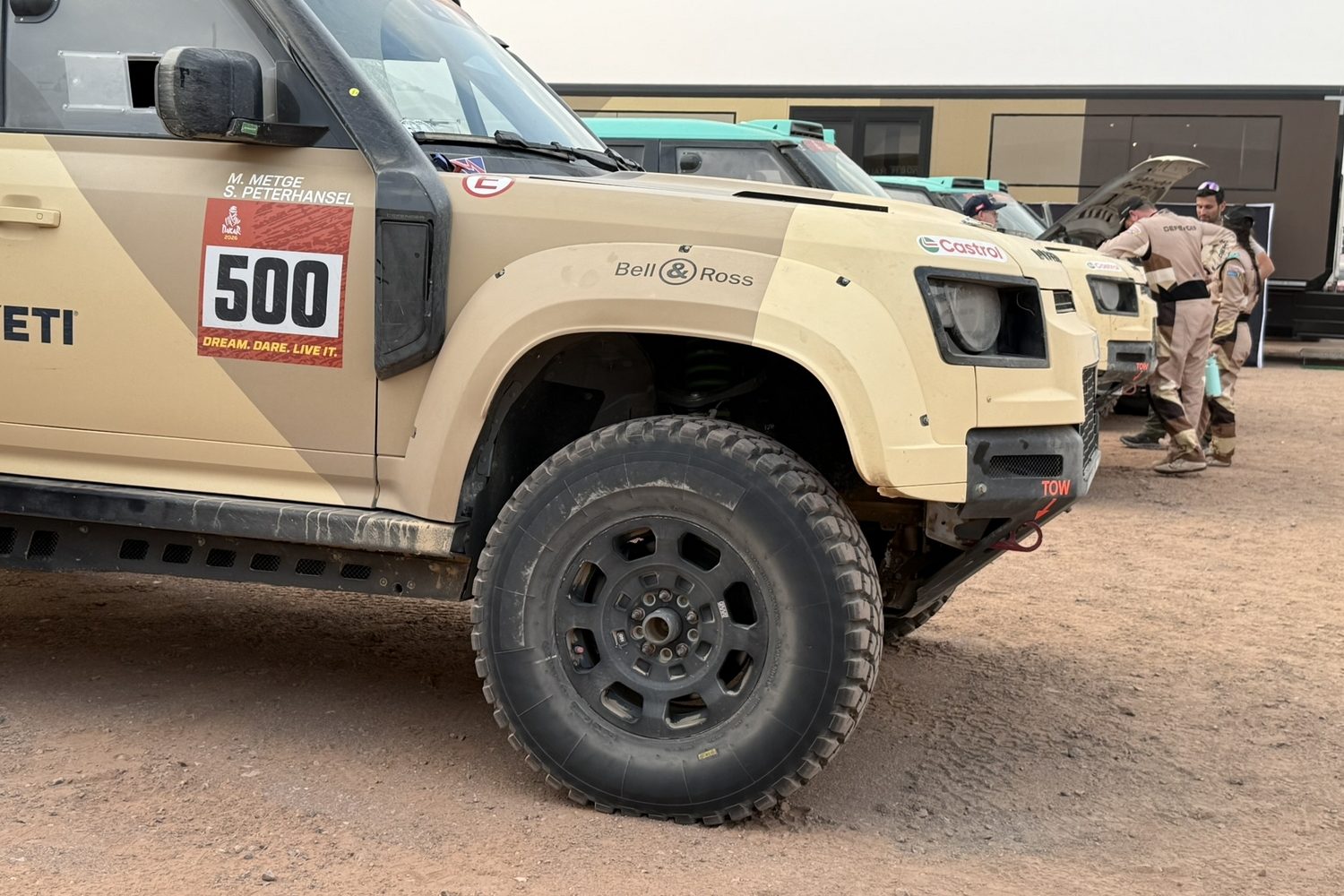
There's no air suspension or adaptive damping in the D7X-R, but the main construction and material of the body are unchanged. Some cutting away of the standard bodywork is allowed for ground clearance, weight reduction and cooling purposes, and there's no spare wheel on the back, but otherwise the body panels are ostensibly interchangeable with those of the production car.
Remarkably, so are the engine and gearbox. The Octa's twin-turbocharged 4.4-litre V8 is carried over without any mechanical changes. It even uses a standard paper air filter (albeit there's a particulate separator in the intake snorkel to remove sand before that point). The exhaust is a little special, admittedly, as it exits on the sides of the car under the doors. And yes, it sounds as good as that suggests it will.
Peak power in the roadgoing Octa is 625hp, but the rules governing the new Stock class mean it has to be restricted. Instead of defining the maximum power allowed, the ASO stipulates a maximum power-to-weight ratio, in a bid to level the playing field. It's believed that the Defender D7X-R produces in the region of 400hp, enforced by air restrictors defined by the organisers.
However, top speed is limited to 170km/h in the rally in any case, so the torque on tap is likely to be of far more importance, helping accelerate the car up to speed and pull it through the difficult terrain. While the team has disclosed no official maximum torque figure, it's understood it should be no less than the 800Nm the Octa can make use of at times. A bespoke motorsport wiring loom and calibration are deployed and no driver assistance technology remains.
Like the road car, however, the D7X-R has four-wheel drive and, though the casings of the differentials must be carried over, it's allowed to change what's inside. Where the showroom model has an open front differential and a sophisticated electronically controlled rear differential, the racer gets two mechanical limited slip units instead.
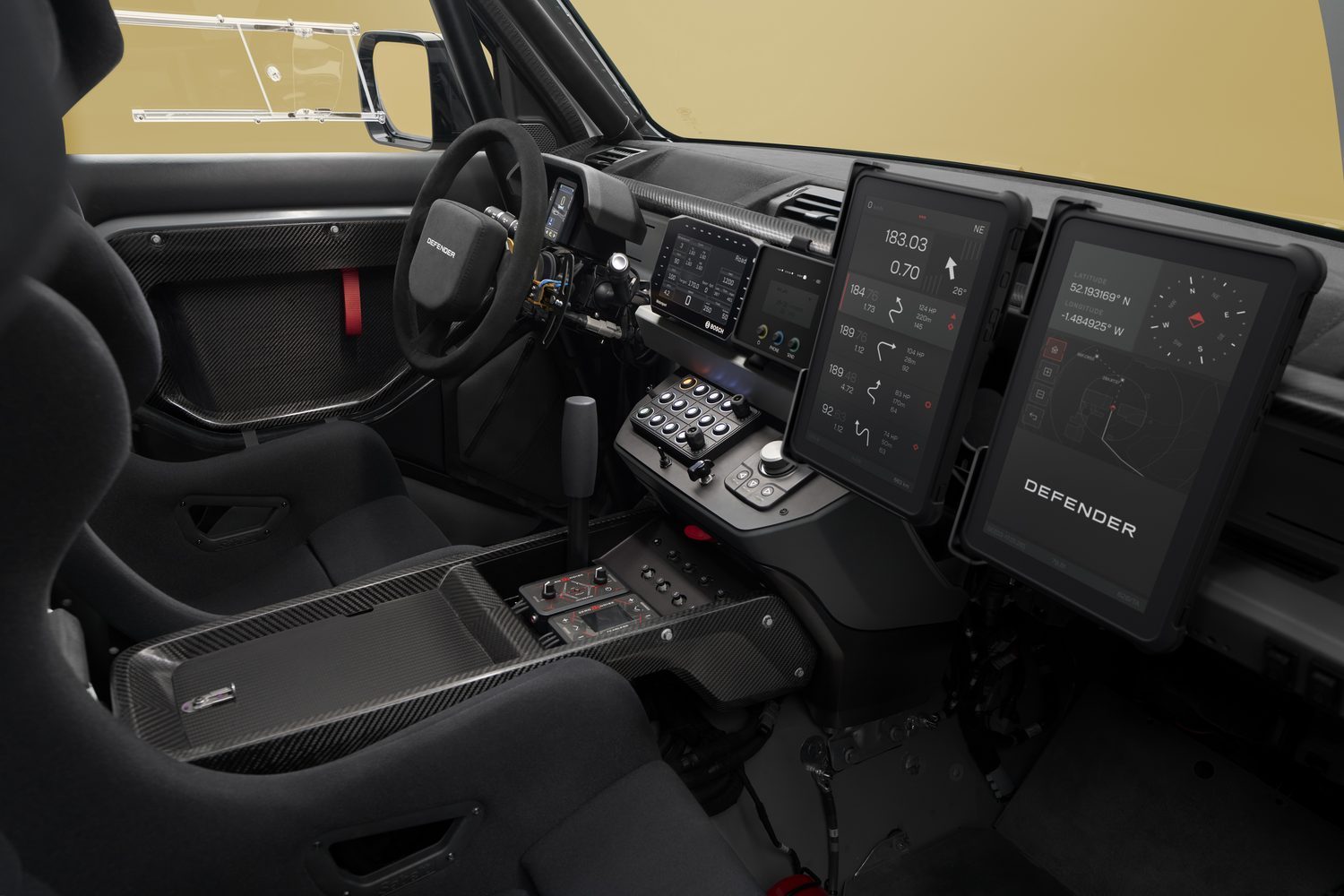
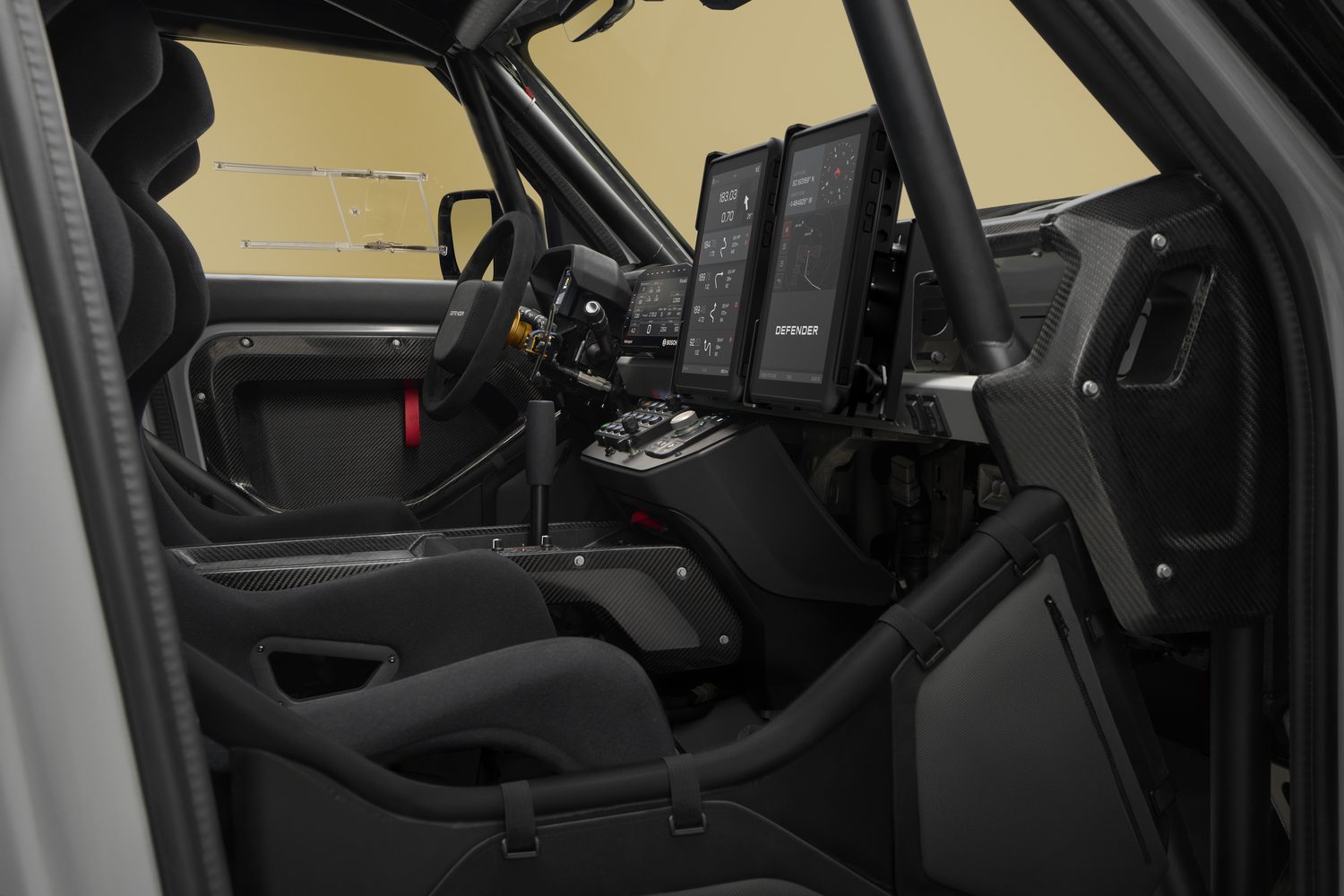
All four doors of the racer open as normal, but of course the cabin is stripped back to the minimum and equipped with a roll cage, racing seats and harnesses, plus a bewildering array of switchgear. In front of the co-driver is a tall, two-screen navigation setup.
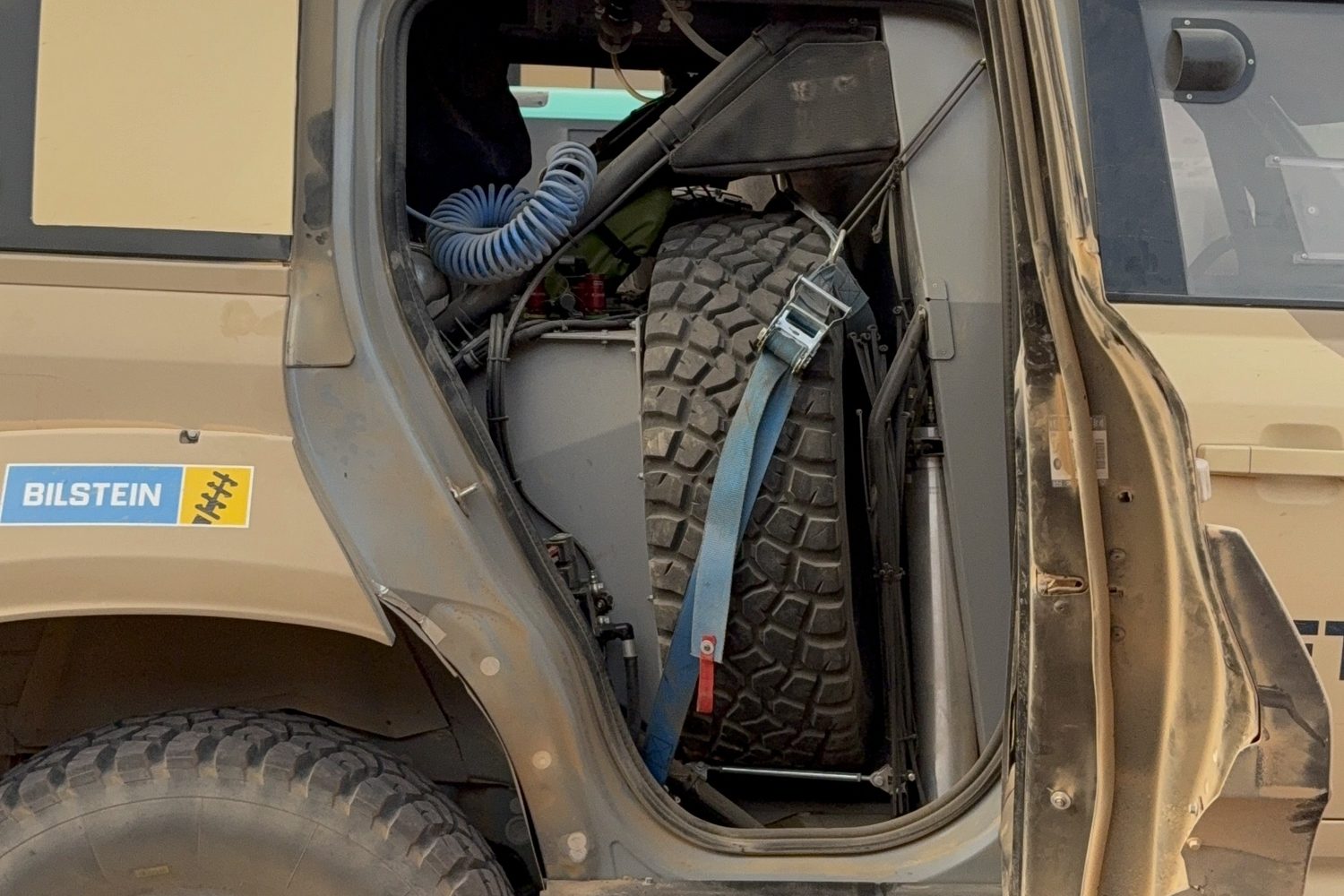
Behind, packaged within the normal bodywork envelope of the Defender, are three full-size spare wheels and tyres and the not so small matter of a 550-litre fuel tank. The Octa's holds 90 litres... That would explain the presence of two dampers on each side of the rear axle to control and manage the considerable weight.
The aim is for each day of racing to end with as little fuel remaining as possible, so we can only imagine how different the D7X-R feels at the end of the stage, some 400kg lighter than when it started out that morning.
With all these facts and figures making our heads spin, we leave the mechanics to get on with preparing for the next day. Even though there have not been any serious issues with the cars today, it's likely they'll work into the early hours, just in time to be told by the organisers where the next day's racing starts…
Off-roading to watch the off-roading racers
The day dawns bright and warm, we're told to fill our water bottles, top up the sunscreen and we're back in the Defenders early, in an attempt to get to an official spectating area before the first of the racers leaves the start line.
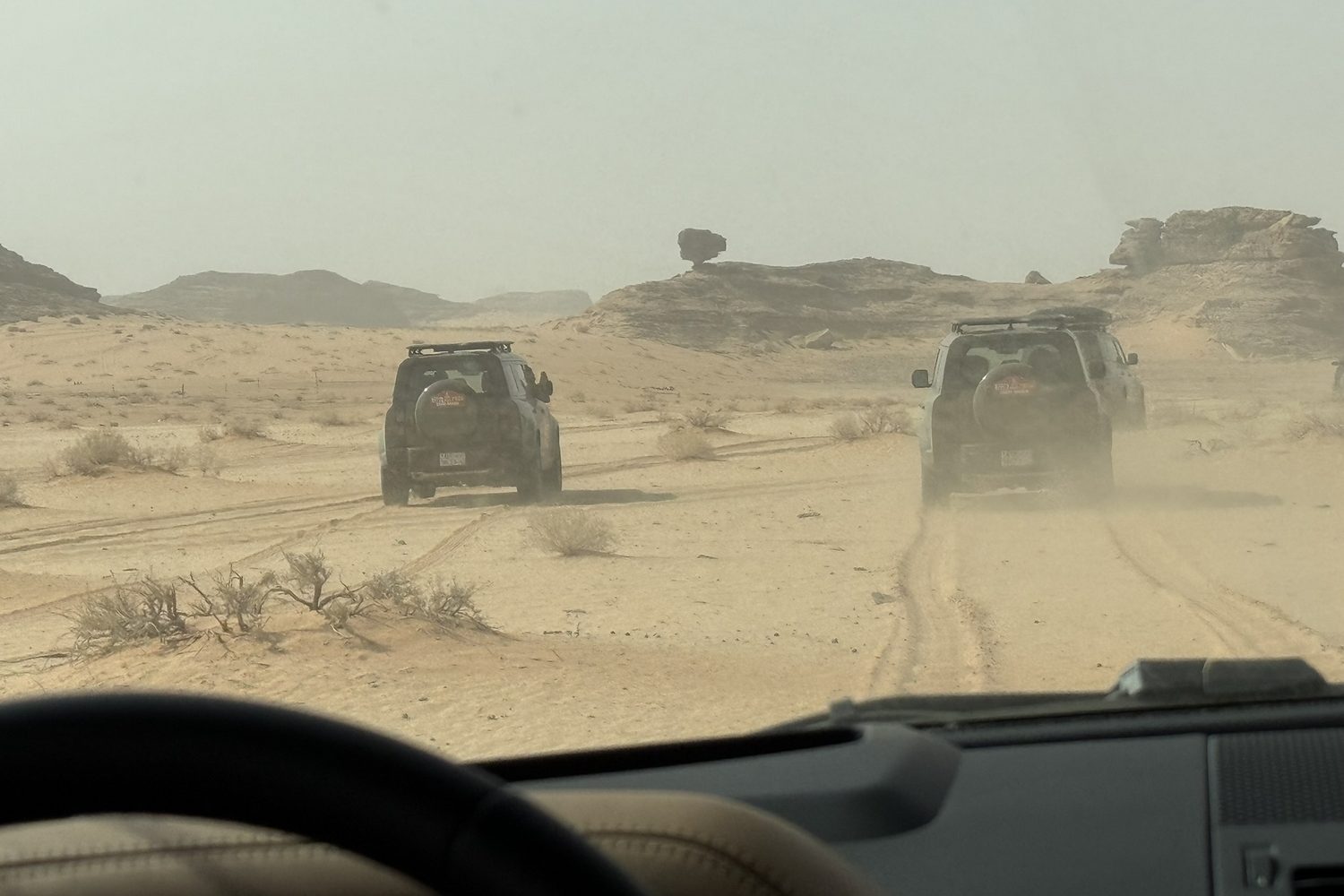
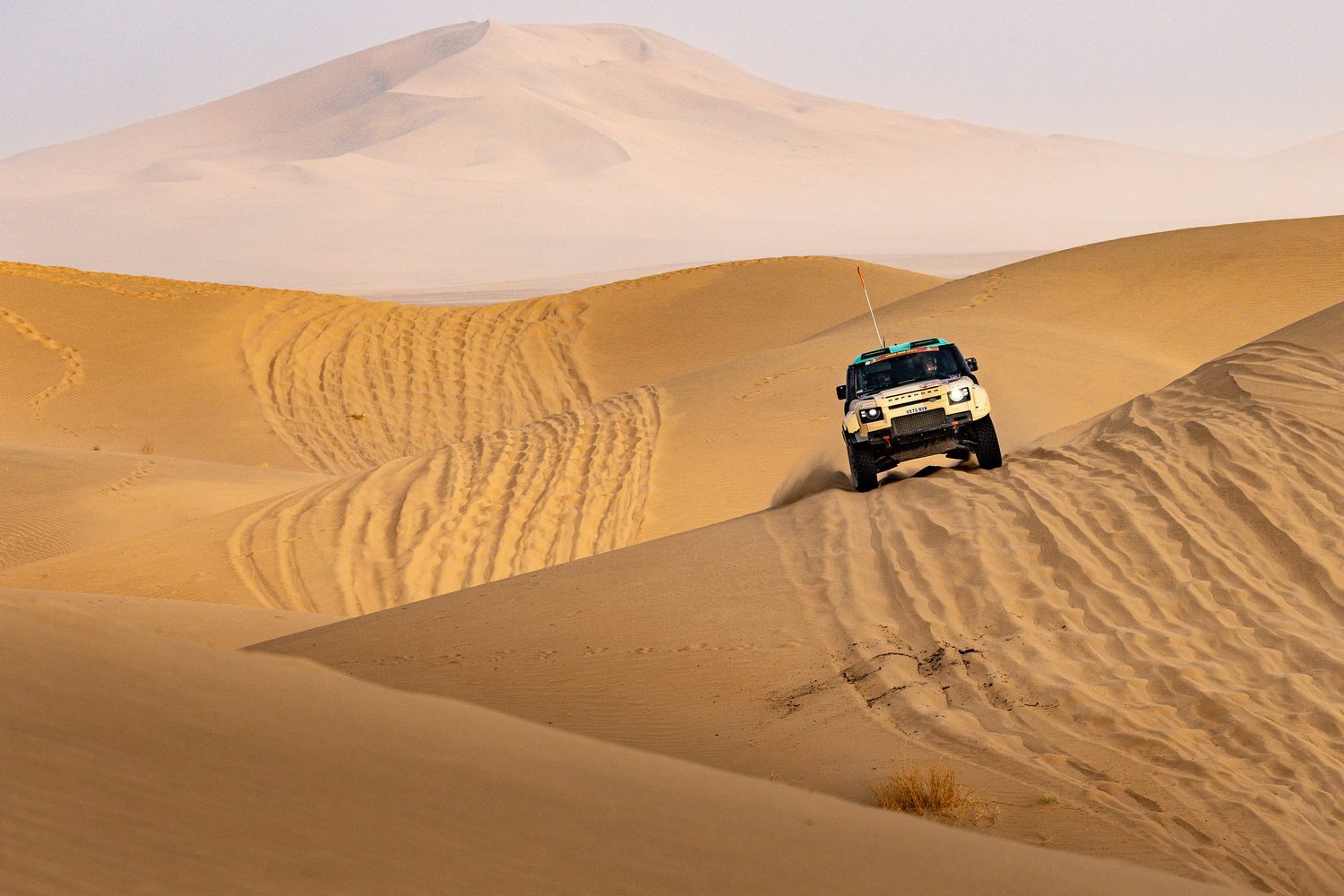
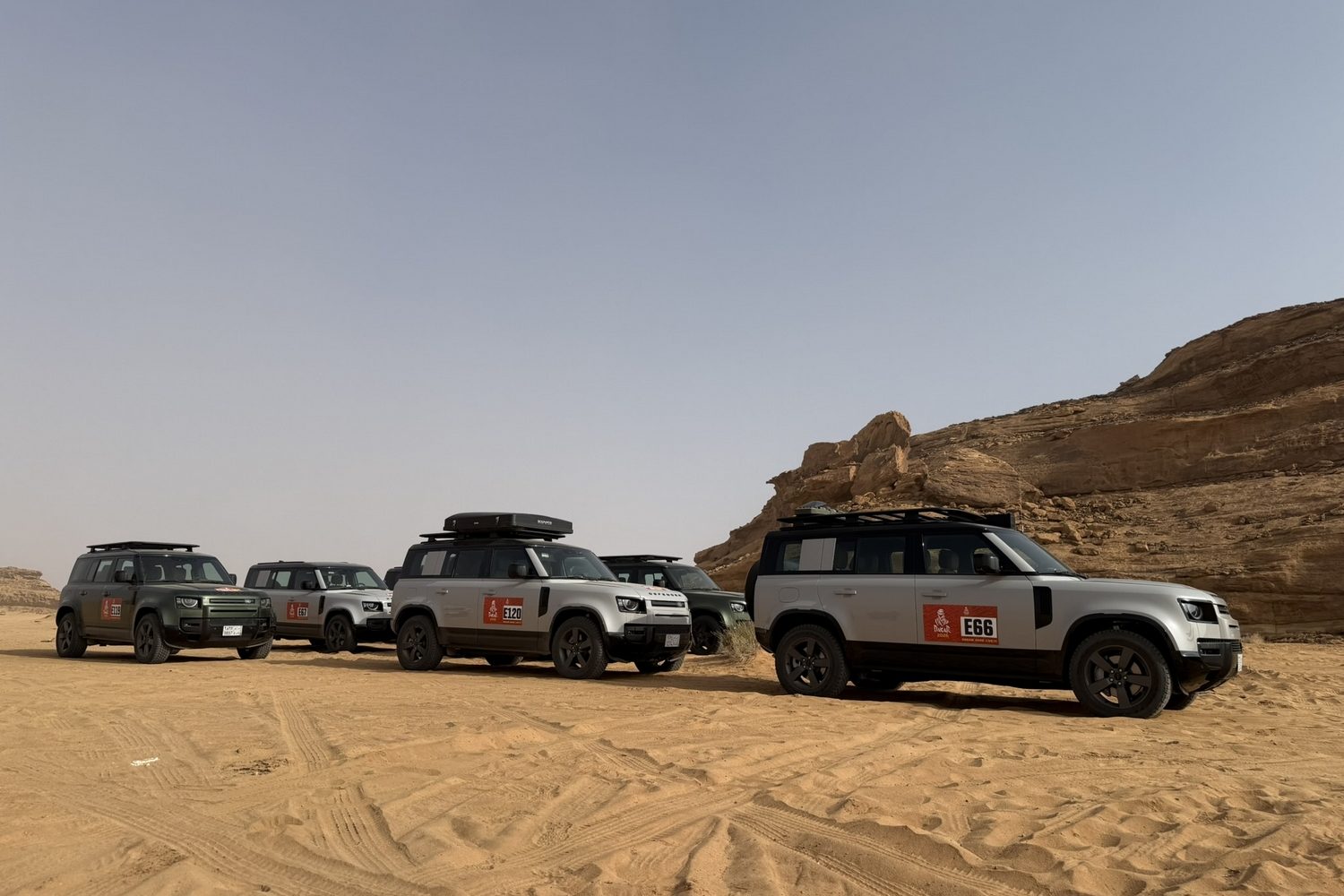
It's our turn to drive in the desert now as we turn off the main road and follow a lead car driven by a Defender expert in convoy through completely uncharted terrain. It's huge fun and no challenge for the Defenders we're driving despite the deep and soft sand. The landscape is otherworldly, too.
Before long we arrive at a few large tents with a rudimentary rope fence around the area. Nonetheless, the racers have good visibility here and are travelling mostly in a straight line so it's relatively safe to stray away from the enclosure to get nearer the action.
It gives us a chance to really appreciate how the modern Dakar racers absorb bumps and surface changes, but even the experts can be caught out, so we keep a close eye on the paths taken by the leading cars before we venture too close to the rutted sand.
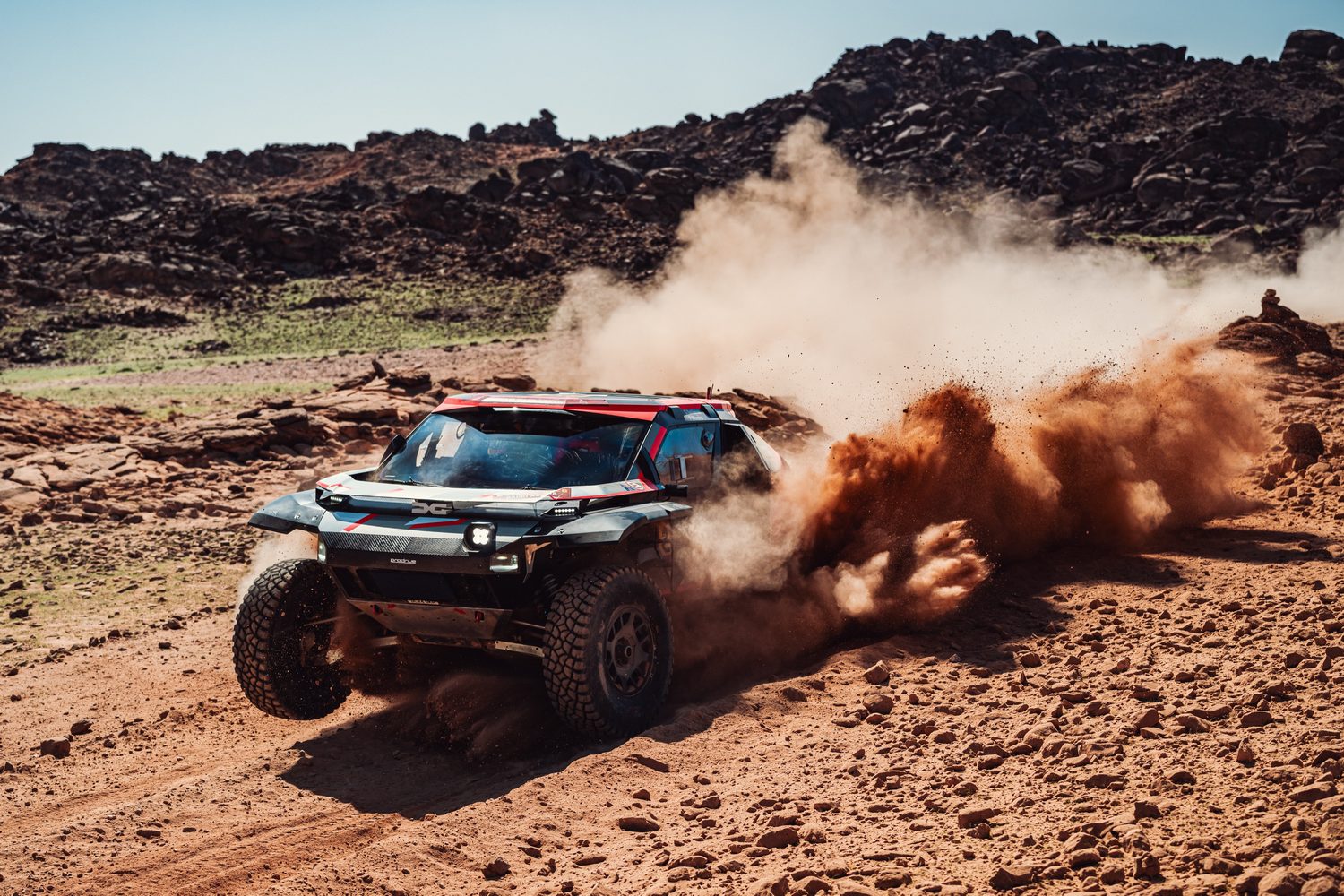
Those front-runners sound exceptional, as you'd expect from pure race-bred machines. The Ultimate class has more in common with a Le Mans racer than it does any car you can buy for use on the road and they're extremely exciting to watch.
Below that, the various buggies and other vehicles - aside from the entertaining trucks - I find difficult to get excited about, but they're serious racers and sensationally fast over the rough stuff all the same. And there's no doubting the huge skill required to make them perform.
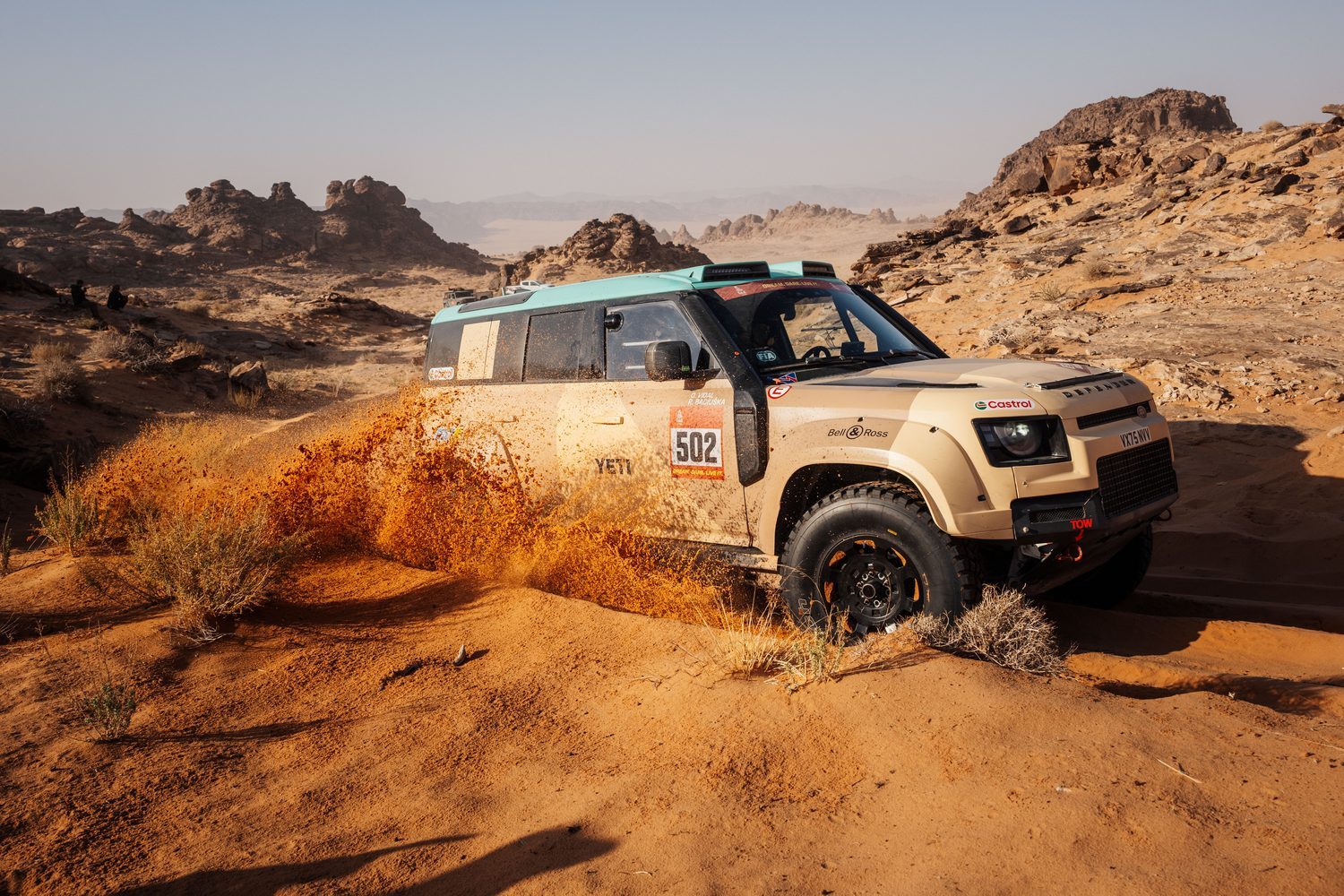
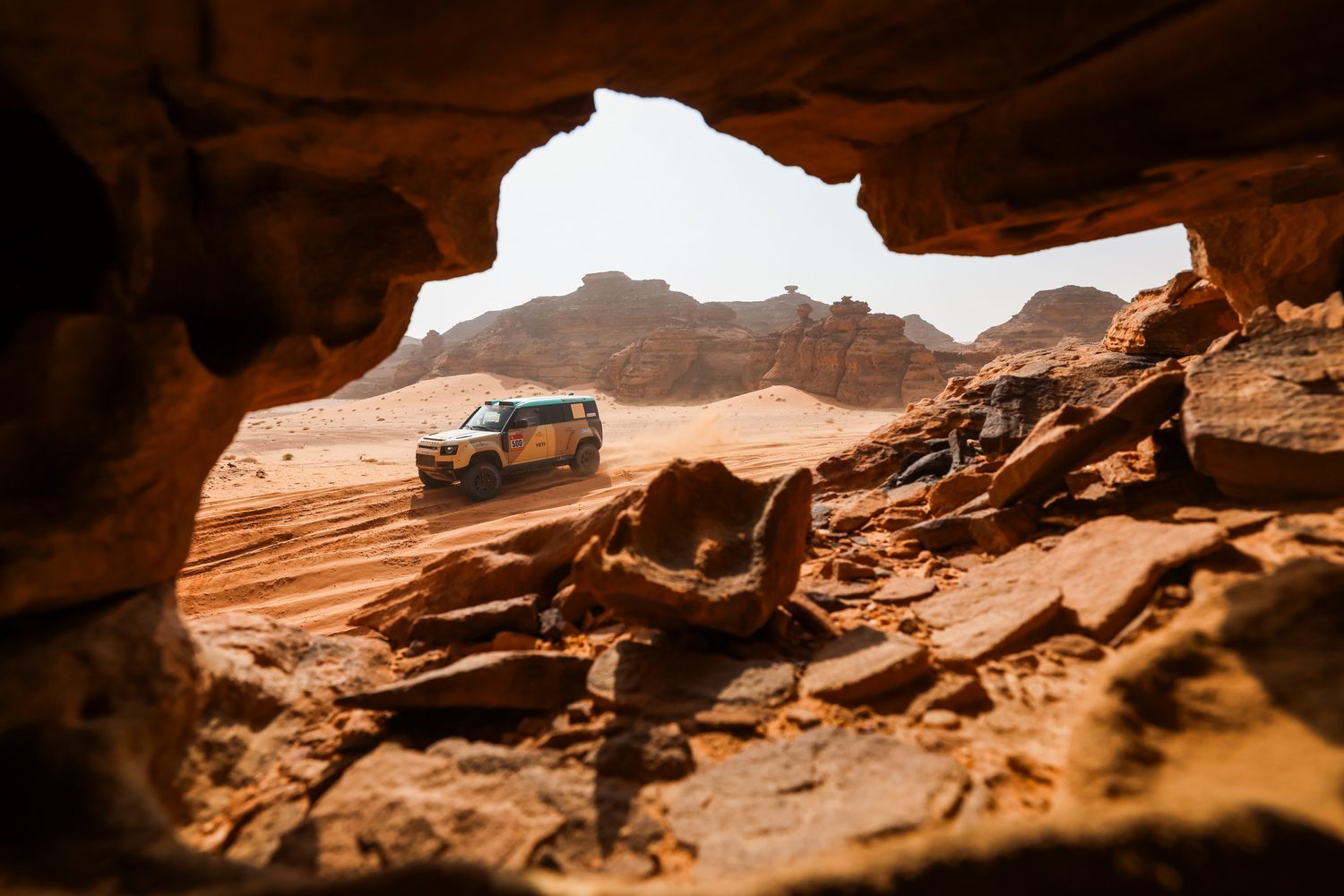
The Defenders look fantastic in their sand-coloured livery and they back that up with obvious pace and a rousing sound from their side-exit exhausts. They're considerably quicker than the only other cars in this year's Stock category - Toyota Land Cruisers - but it's unlikely Defender will have things all its own way next year and beyond as several mainstream carmakers are known to be eyeing up an entry into Dakar in the near future thanks to the new class regulations.
It's all about Defender for 2026
They'll do well to make as much of a splash as Defender has. Cleverly, it signed up to be automotive partner to the event as well, so its branding was everywhere, and coverage of the Defenders' exploits each day was plastered across the globe via social media and the excellent official Dakar Rally website.
At the time of writing, the Defenders continue to dominate the class after 11 stages, with one long day of racing yet before the short final day. Baciuška has had the most trouble-free run so far and is way out in front, well over three hours ahead of Sara Price.
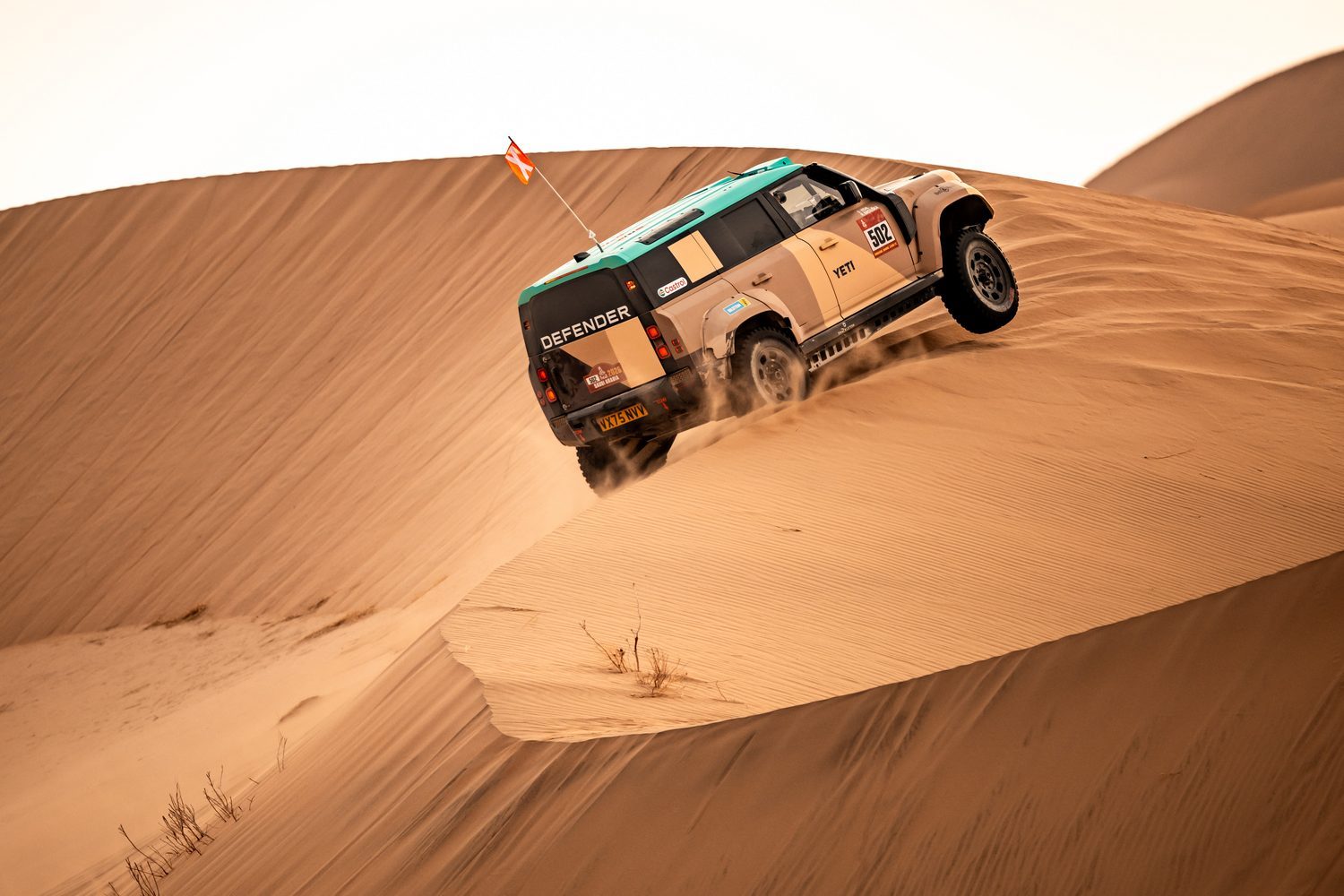
One of the Team Land Cruiser Toyota Auto Body cars, piloted by the experienced French duo of Ronald Basso and Julien Ménard, has jumped ahead of the third Defender, as Peterhansel's car suffered a broken alternator belt on Stage 8. He couldn't finish that day and so a 24-hour time penalty was added.
He had further issues the next day but came roaring back on Stage 10 for the team to record another 1-2-3 finish - despite a scary moment in the dunes where Peterhansel's car was struck by a competing truck as he and his co-driver, Metge, dug the car out of the sand. The Defender team recorded 1-2-3 finshes in the remaining three stages.
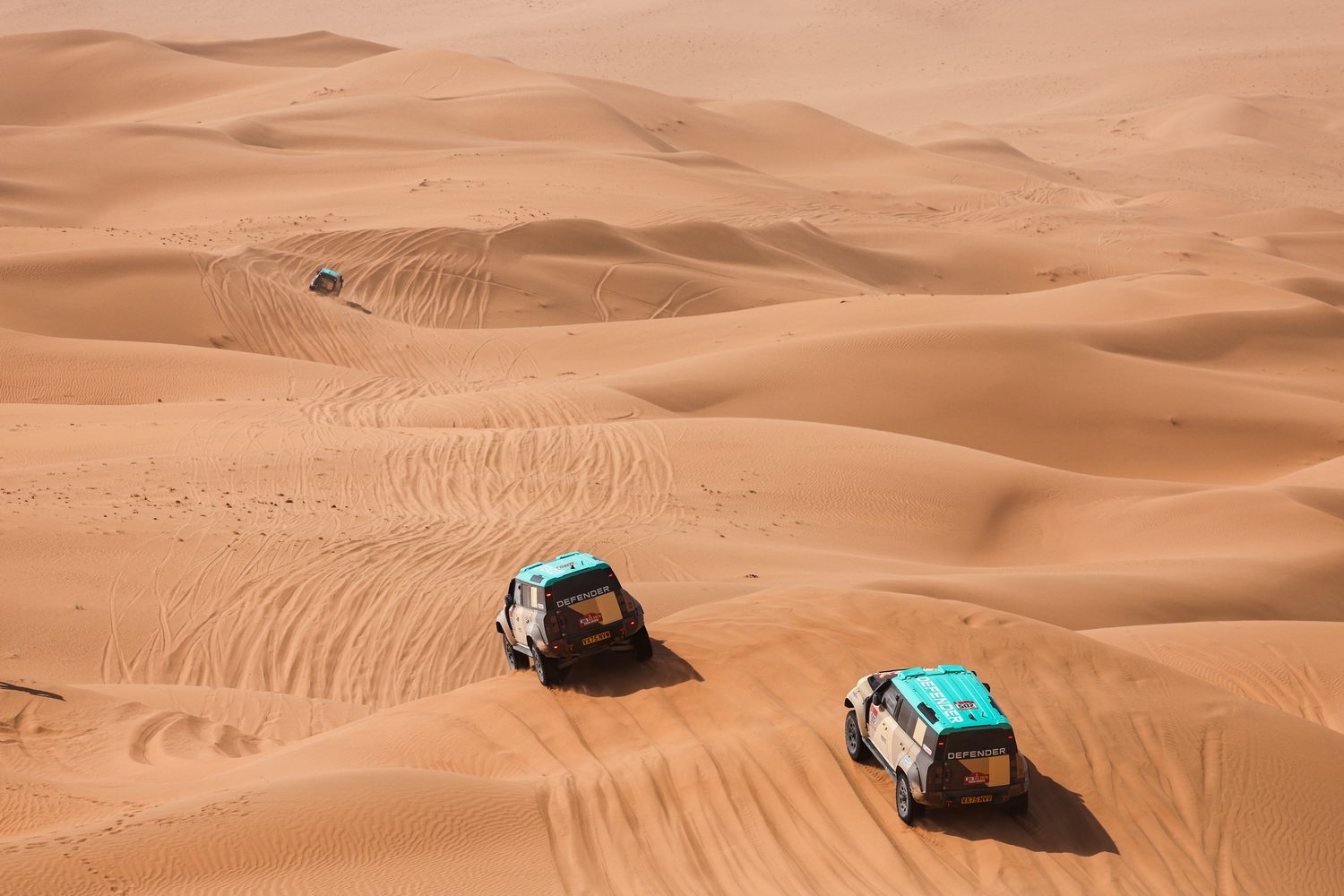
Even if all three cars failed to reach the finish, it could be argued that the event was hugely successful in terms of coverage and image boosting for Defender regardless. Finishing and winning the class dominantly were icing on the cake.
And this is just the first year of the brand's involvement. It has signed up to a minimum of three years. Now that's the kind of go-around we like.
If there is anything about this story we have not covered, you can avail of our expert advice service via the Ask Us Anything page.