

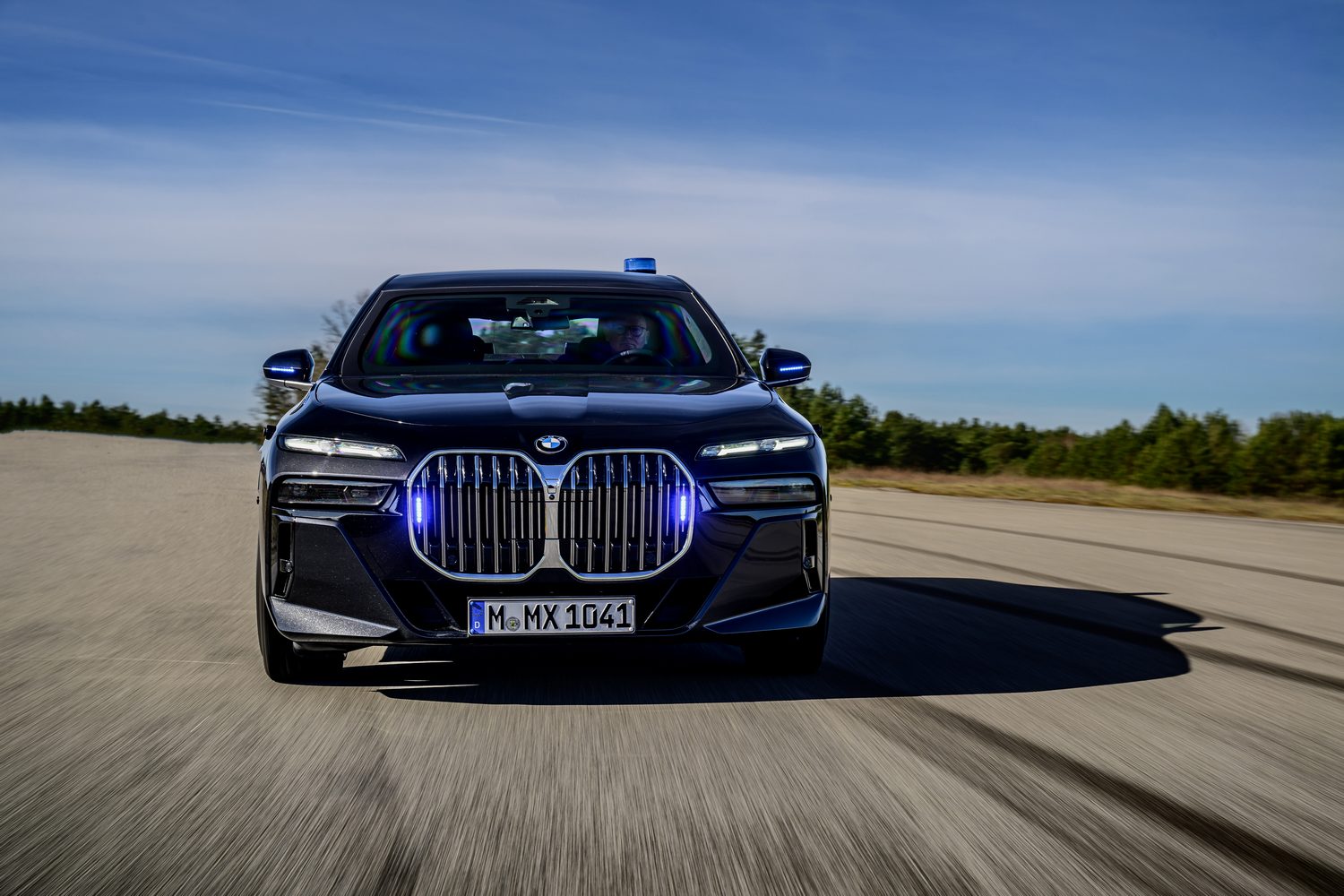
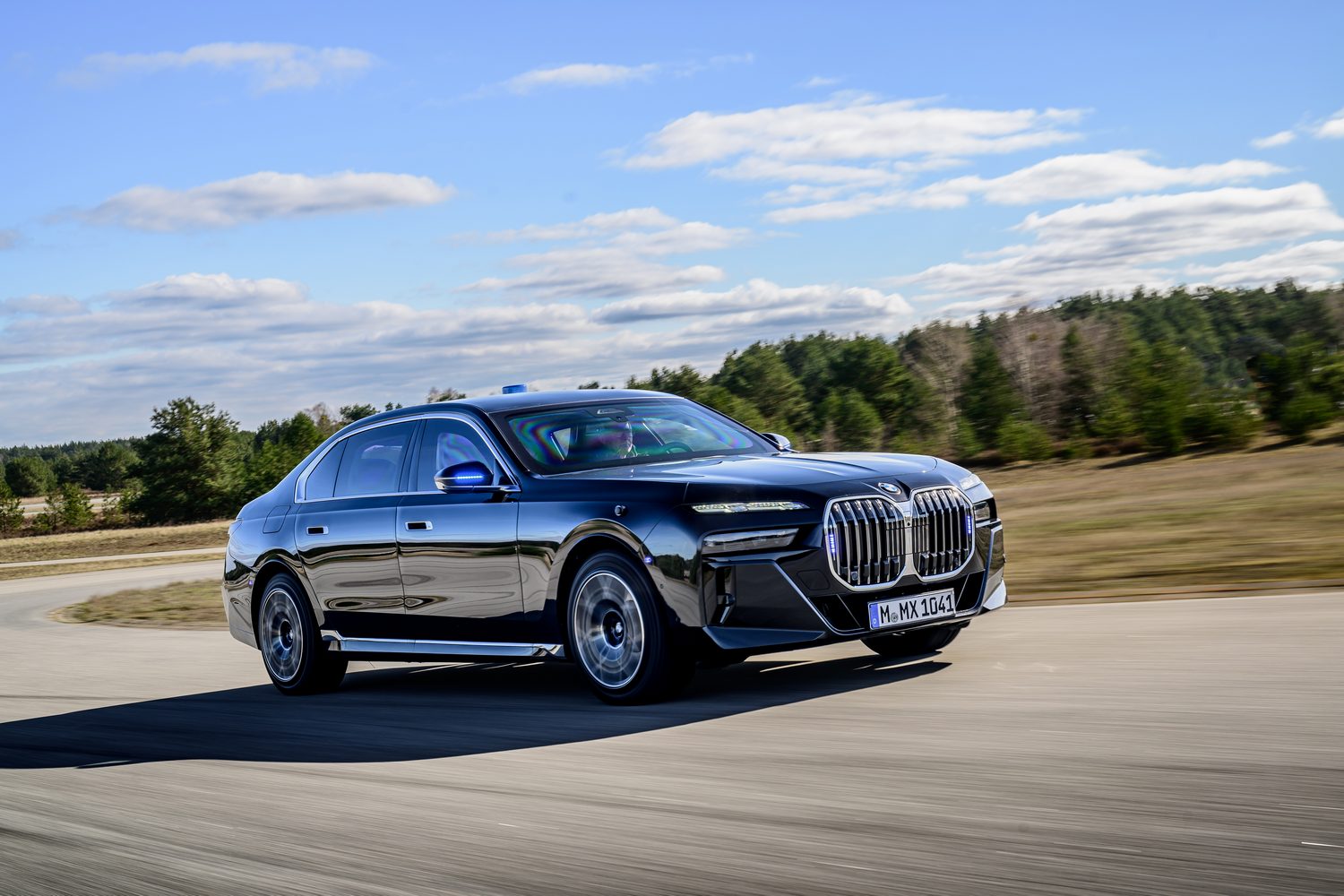
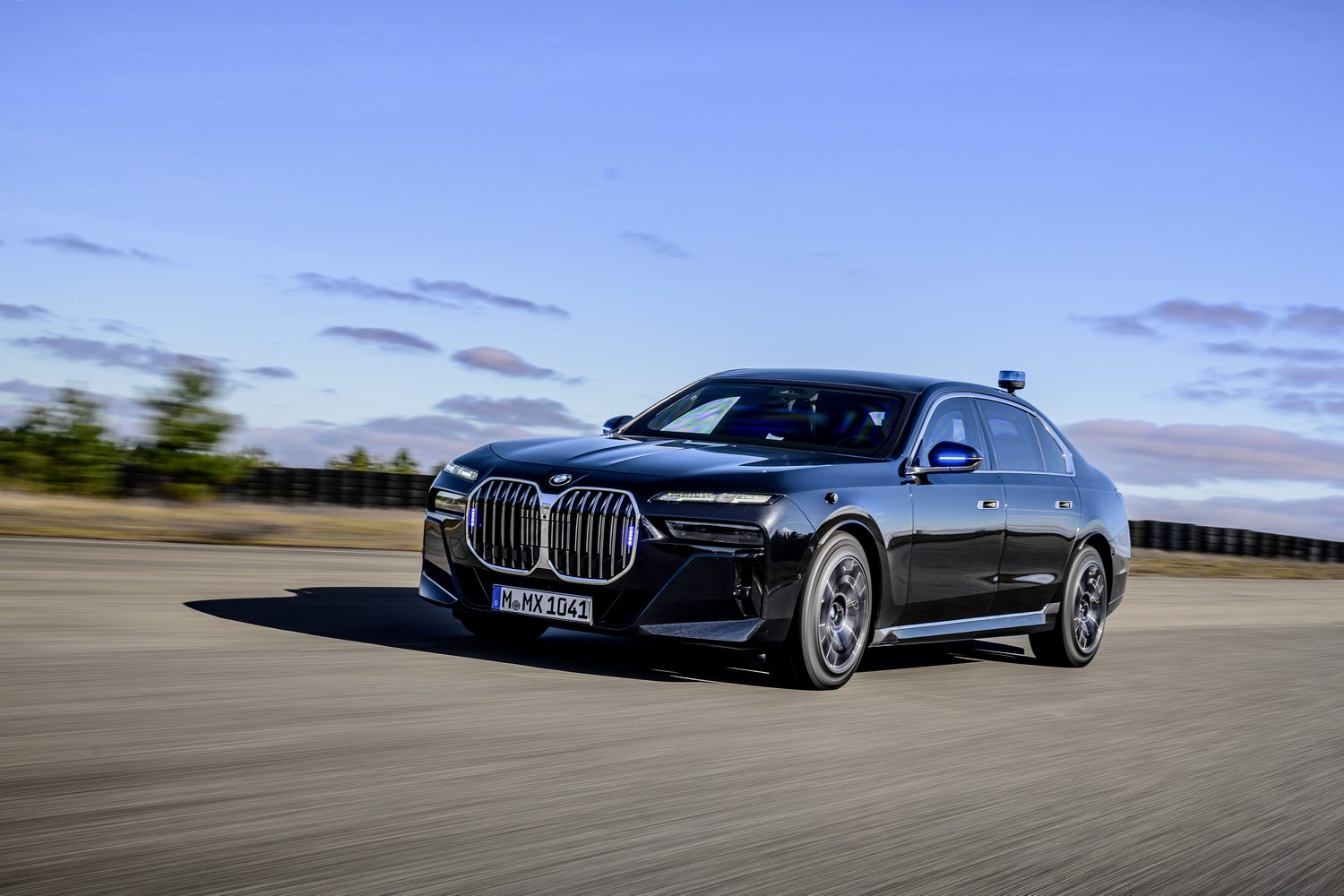
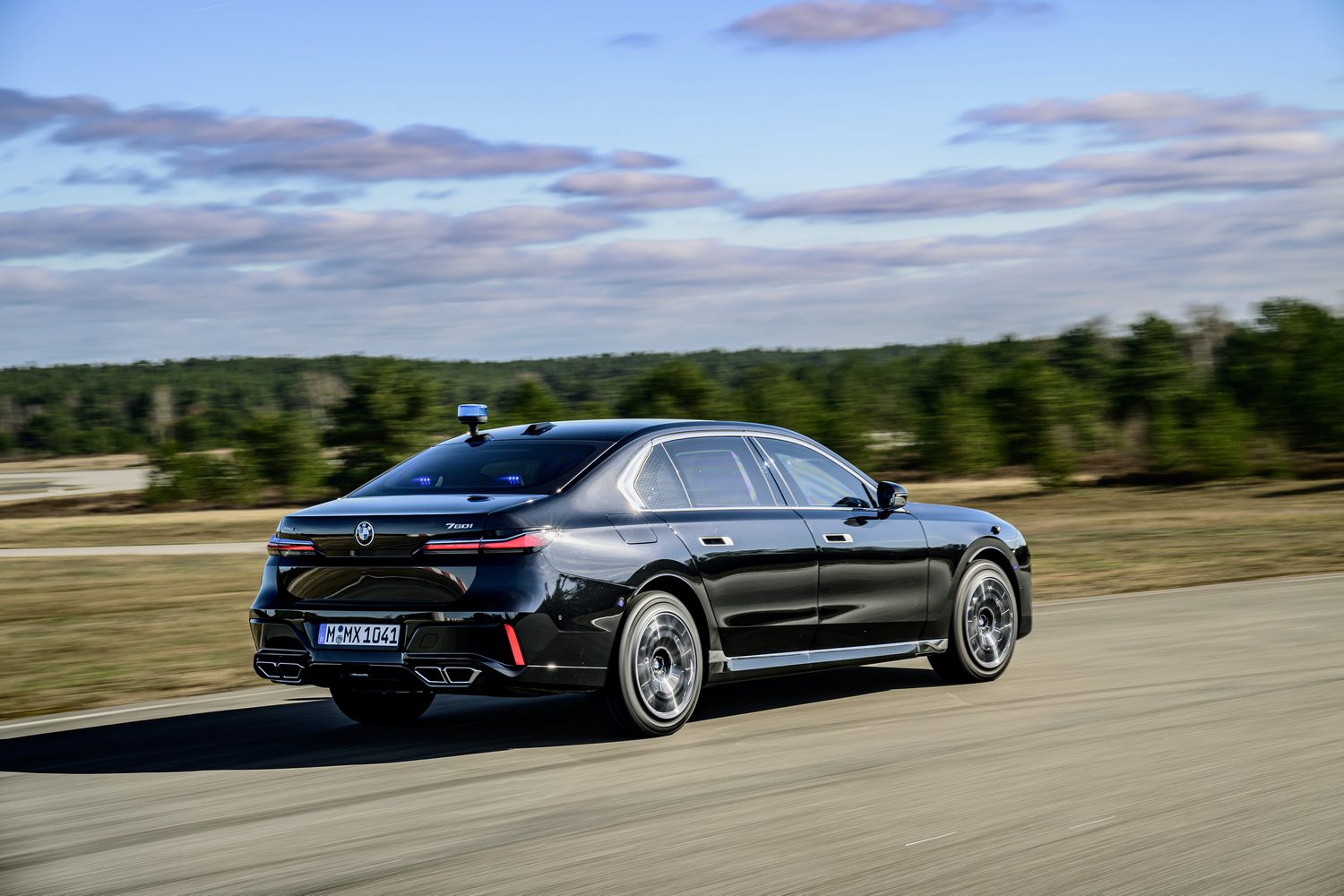
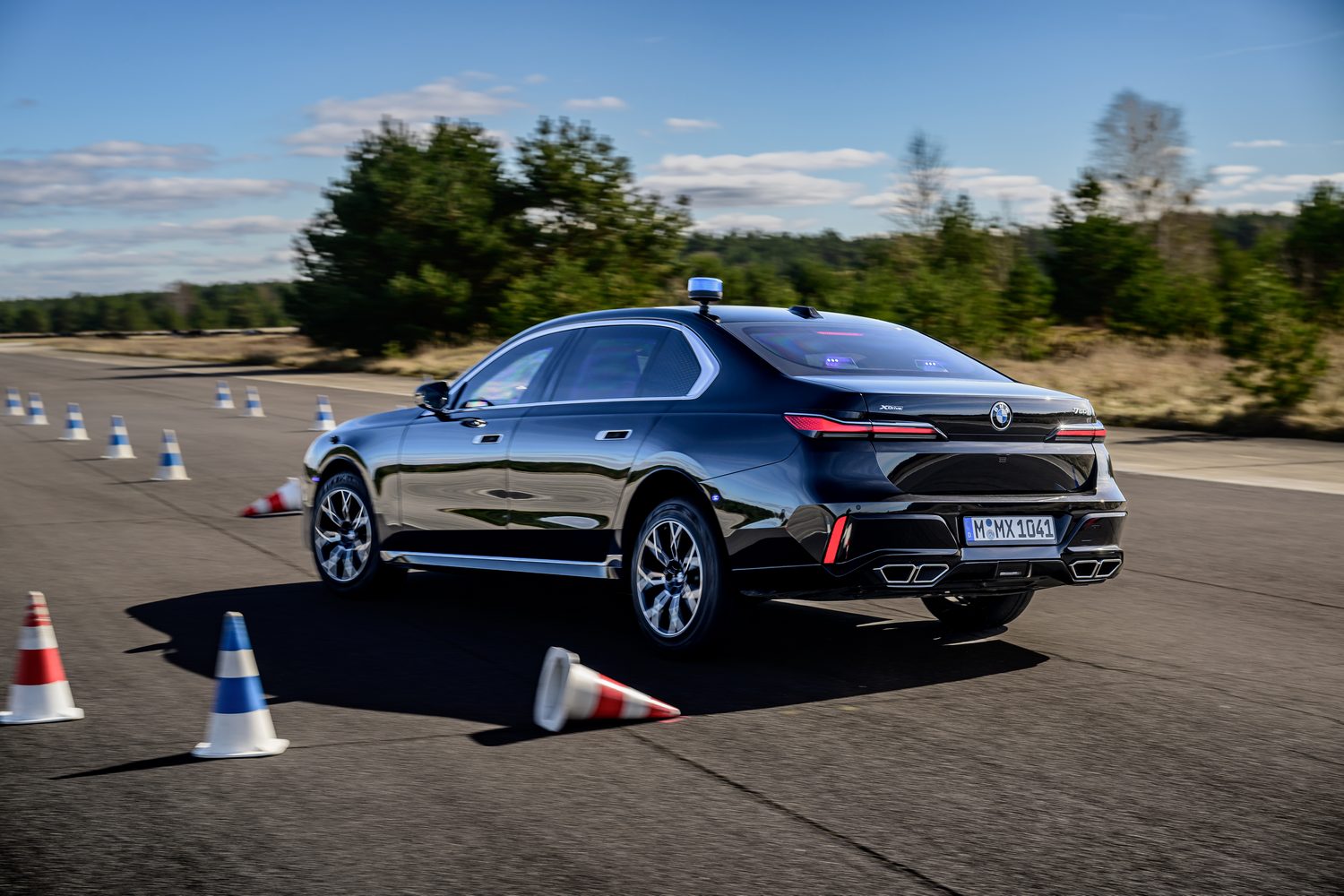
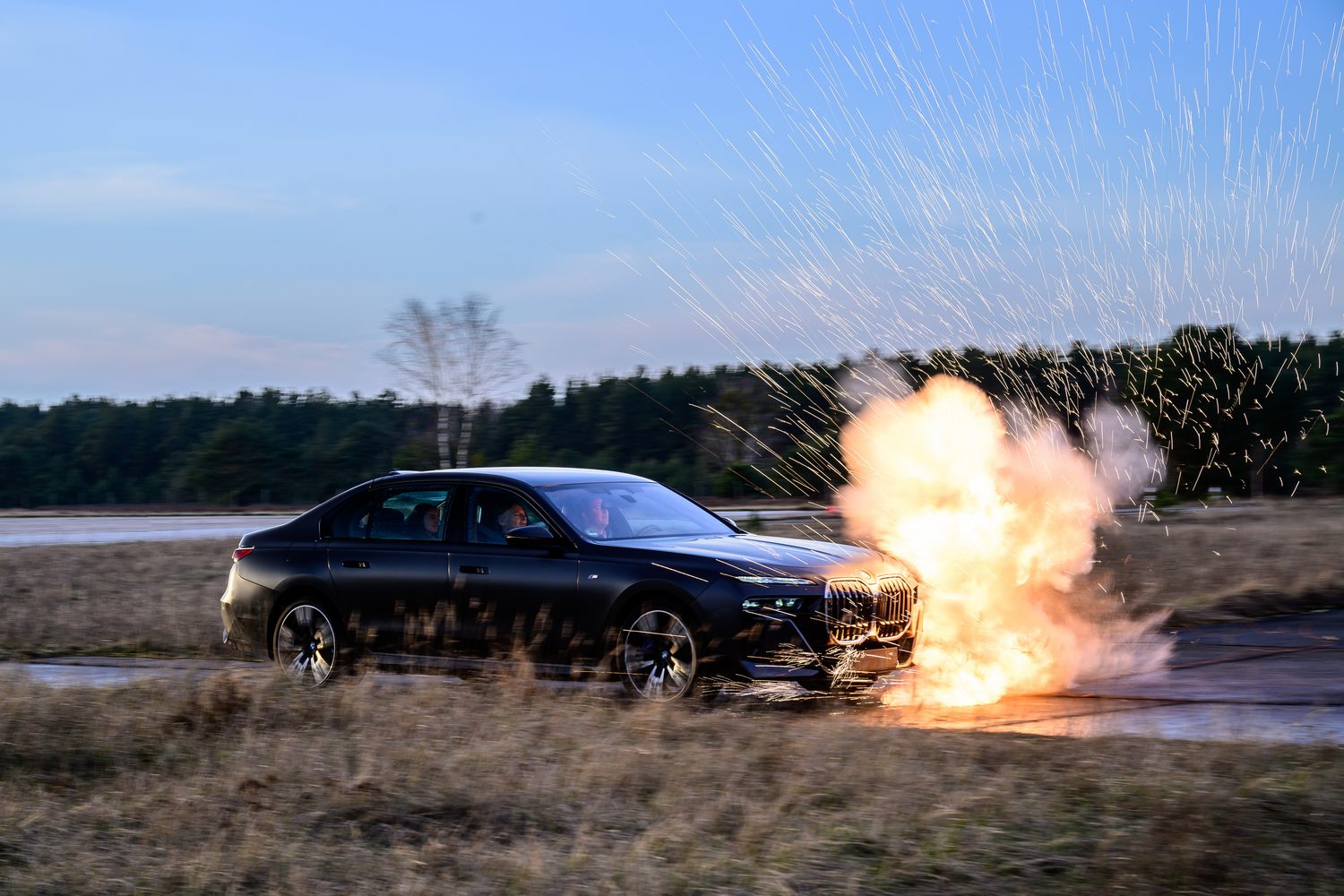
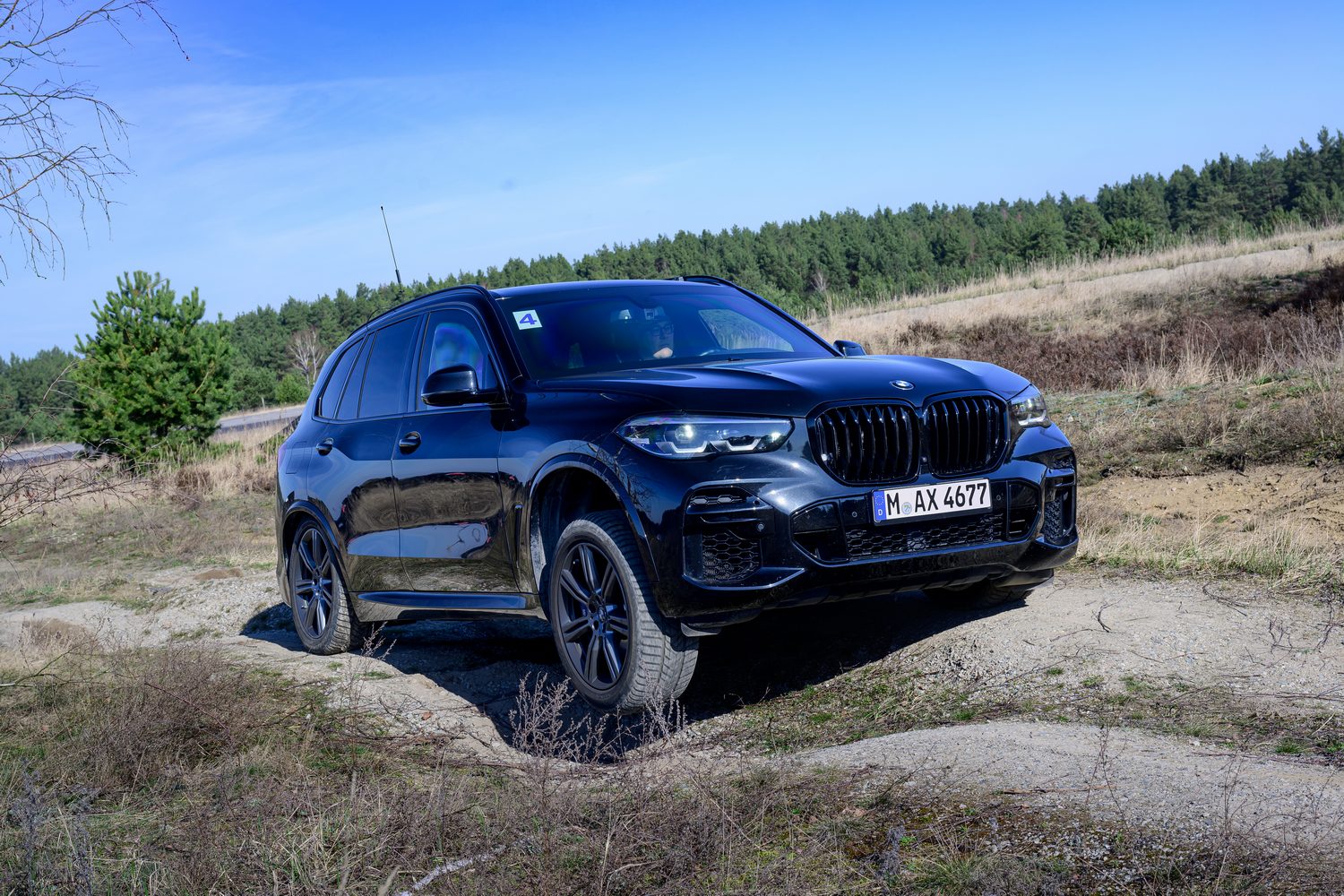
After what seems an age, two lines of cones become visible only metres in front of the car and it's time to slam on the brakes with full force. A fireball explodes in the right-hand escape road, so we veer into the alternative on the left and bring the car to a stop within the allotted space.
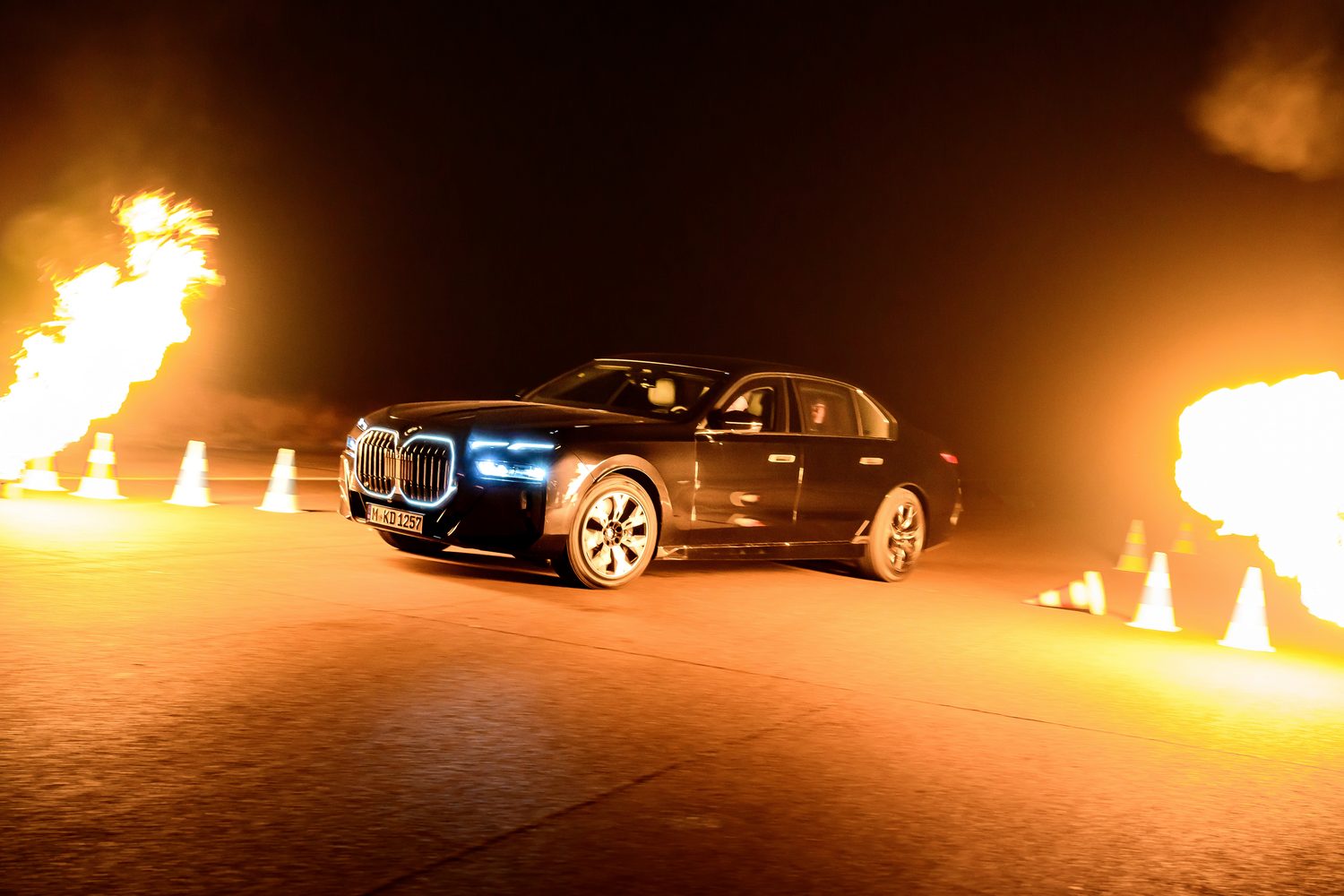
Heart still thumping, a voice squawks over the walkie-talkie: "Good, though you could have left more space between you and the hazard. Again!”
Welcome to the rather unique world of BMW Security Vehicle Training that bodyguards and special forces undertake to prepare for a working life at the wheel of an armoured BMW.
Where in the world?
We're about 60 kilometres north of Berlin at the Groß Dölln airfield, built by Soviet Russia in the early 1950s and once the largest military facility of its kind in Europe, covering over 1,500 hectares of land.
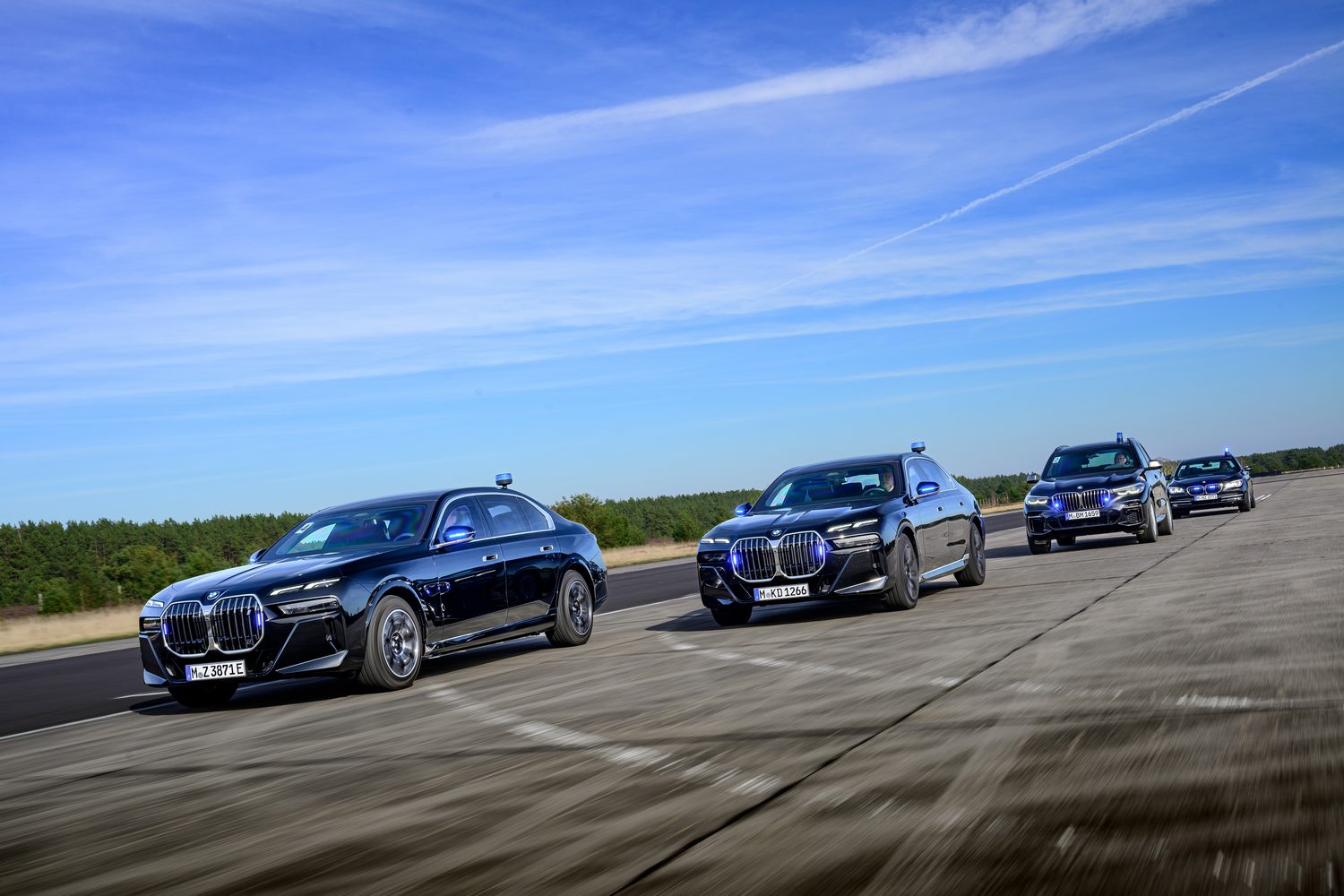
The Russian Air Force departed in 1994 following the reunification of Germany and, though used for private aircraft through the years, most of its large runways and land are now covered by solar panels. Indeed, Siemens has an "eHighway” on site for research and development.
More pertinent to our needs, there are still acres of concrete used by different companies for various driver training courses. There's a modern, undulating 'race' circuit there, for example, while a veritable maze of roads criss-cross the facility, though it all feels a little rough and ready and it's not difficult to imagine a big Russian bomber touching down on the scarred concrete, even today.
BMW runs driver training of various kinds at facilities around the world, mostly on racetracks, but this venue is used for the very specific needs of training to drive armoured vehicles, as its remote location allows for night driving and the use of loud pyrotechnics.
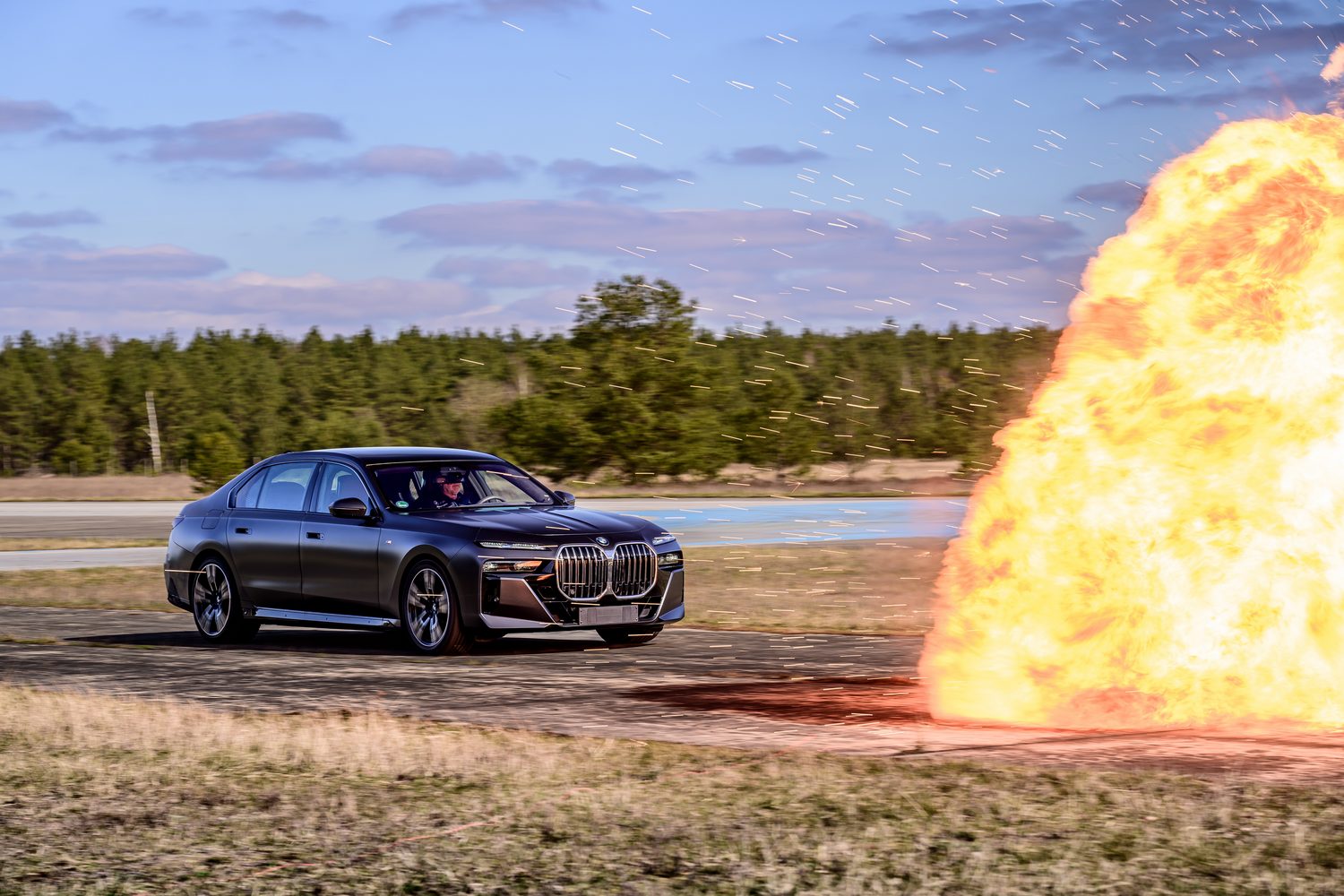
BMW Protection makes armoured versions of the German firm's cars to protect its clients from, in layman's terms, 'the bad guys'.
So who buys an armoured BMW?
Perturbingly, we are talked through the different levels of 'badness' and the needs of BMW Protection's clients. The obvious buyers of such vehicles are government agencies, requiring protection for officials and dignitaries. These don't care about BMW's ability to customise the look and feel of the cars, only the technical specifications.
But we're told there are strong sales in some markets - notably South America and South Africa - from private individuals that feel the need for more protection than a normal car can provide, and they also like the finer things in life.
An order usually comes into BMW Protection from the local market and all buyers are vetted centrally in Munich before any sale is approved. Likewise, almost all examples of used armoured BMWs come back to the firm for internal use or reselling to select customers. In theory, a modern-day Pablo Escobar couldn't get his hands on an officially made armoured BMW even if he wanted to. Though I'd not like to be the one that has to say no.
This is a good time to point out that there's more to all this than a car being armoured or not - there's a whole series of classifications, mostly defined by the type of munitions the car can withstand.
VPAM, which stands for Vereinigung der Prüfstellen für angriffshemmende Materialien (Association of Testing Institutes for Attack-Resistant Materials in English), is responsible for the definitions, the newest of which start with "VR” for Vehicle Resistance. This indicates that the entire vehicle has been certified, not just the individual materials used in its construction.
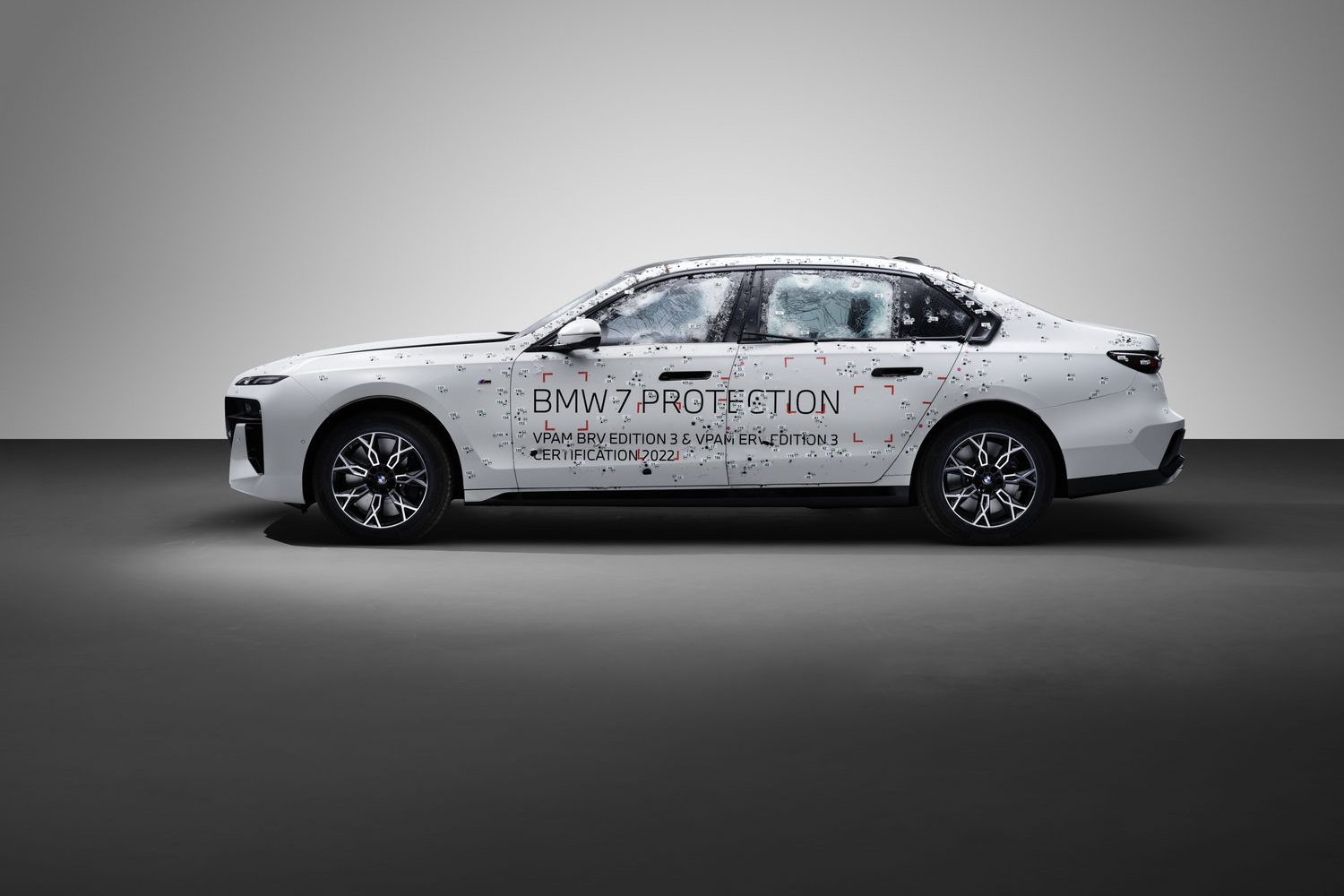
VR4, for example, can withstand low-velocity pistol ammunition, while VR7 requires 7.5mm-thick ballistic steel - at a minimum - to withstand assault rival fire from the likes of the infamous AK-47.
The top rating is VR10, with 18mm ballistic steel used to fend off armour-piercing rifle rounds and even hand grenade explosions. And that's before the special multi-layer glass is taken into consideration.
Which BMWs can be armoured?
BMW offers armoured versions of both the X5 SUV and the 7 Series luxury saloon. The former is to VR6 standard, protecting against higher-velocity pistol fire. Its armour adds about a tonne of weight to the donor car (so it's about 3,400kg in total) and while BMW Protection doesn't like to talk in absolutes when it comes to pricing, one insider did concede that "you wouldn't get one for twice the price of the standard car.”
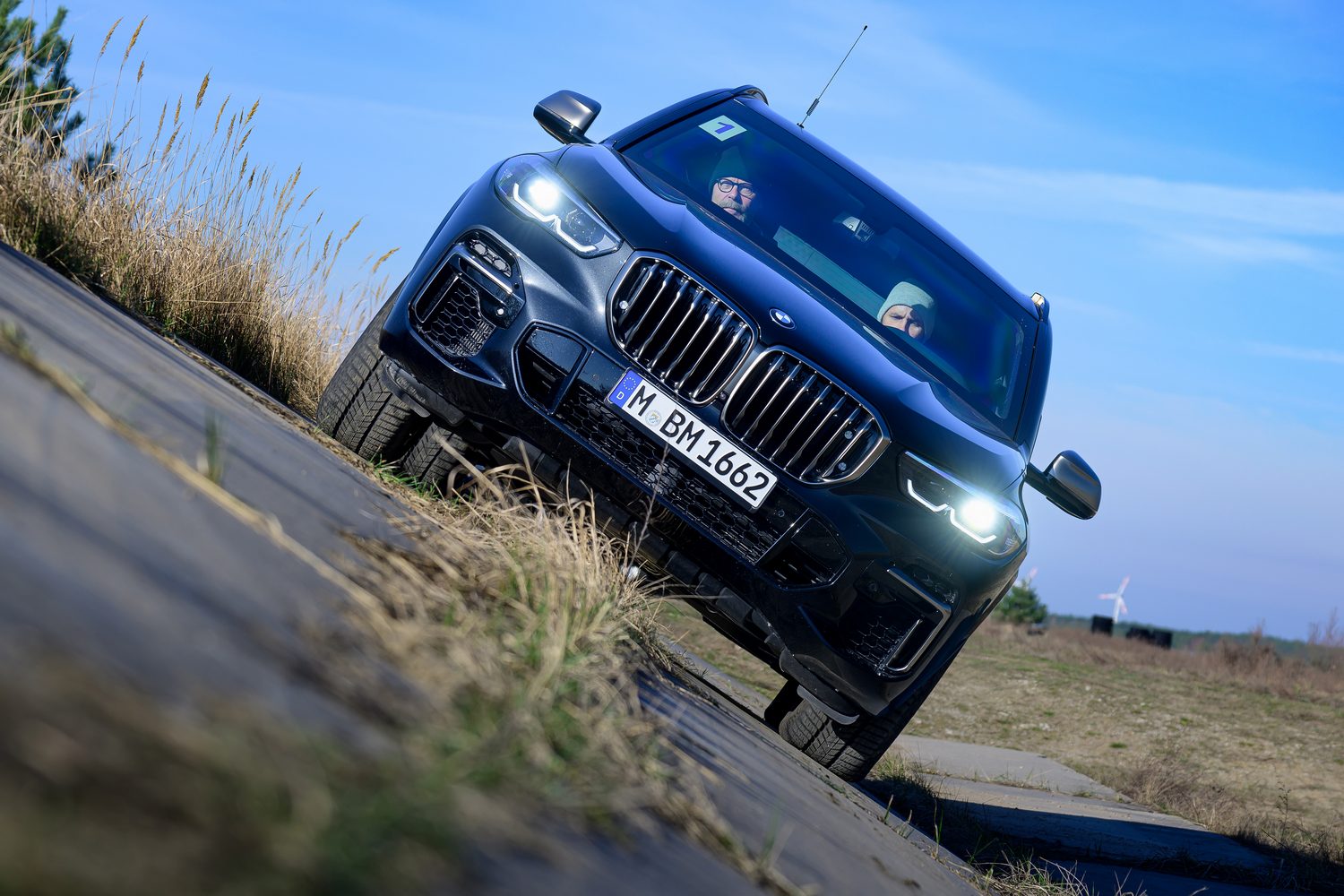
Given the X5 M60i xDrive - with which the X5 Protection VR6 shares its 530hp twin-turbo V8 - starts at over €172,000, the armoured model must be knocking on for €350,000. VR9 and VR10 cars cost considerably more, though that level of protection is not available on the X5.
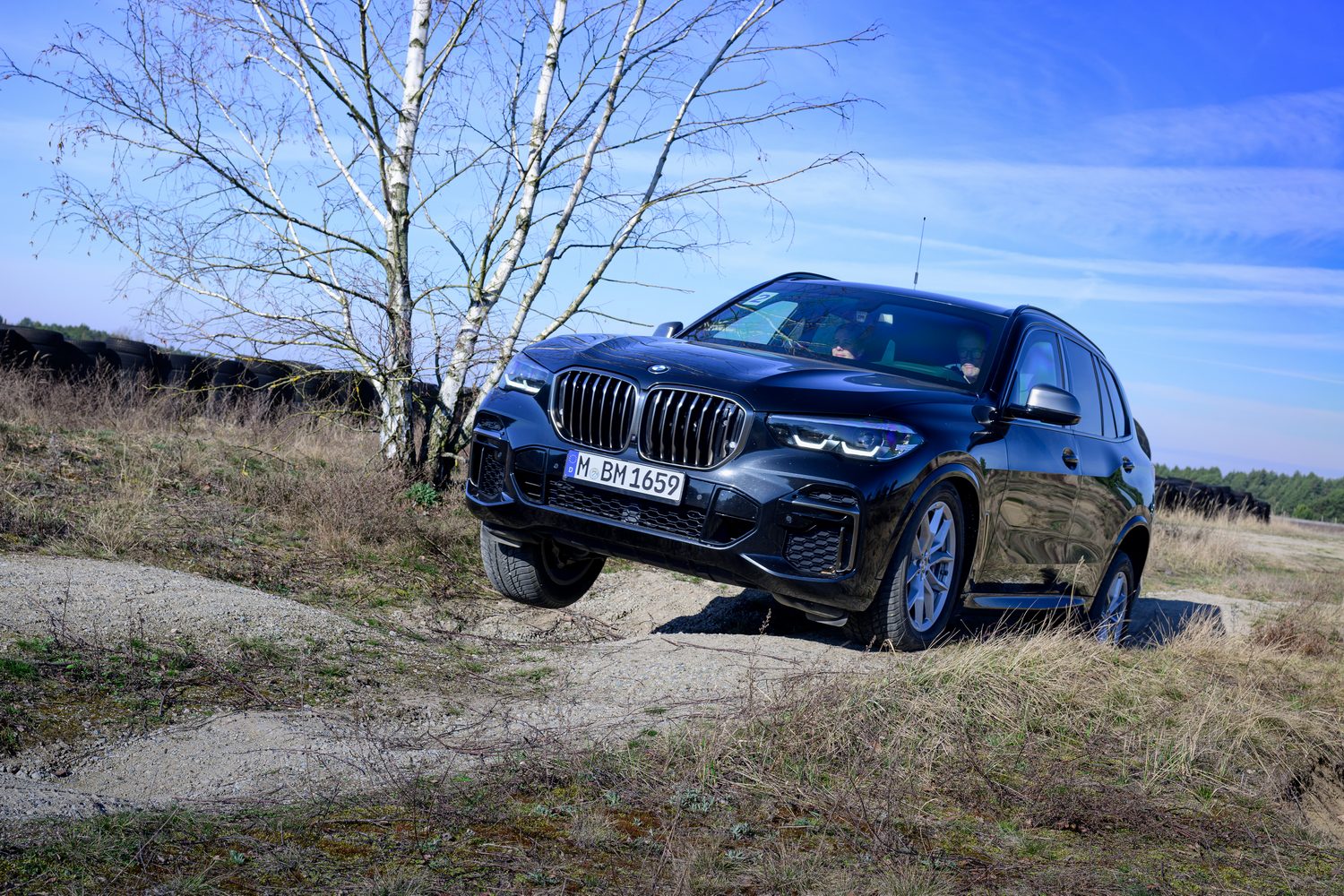
The X5 Protection VR6 starts its life on the same production line as most BMW X models in Spartanburg, USA. It's then shipped to Mexico for the conversion, where BMW has a special unit dedicated to armouring cars. The location is conveniently close to one of this model's biggest markets and VR6-level cars such as this are used by their owners going about their daily business.
They'll have strong arms from opening and closing the heavy doors, but once those are closed, it's not easy to tell an armoured X5 apart from a regular one - and that's something BMW makes a big deal of in its marketing of Protection vehicles. I.e. you don't have a target on your back by driving one of these around.
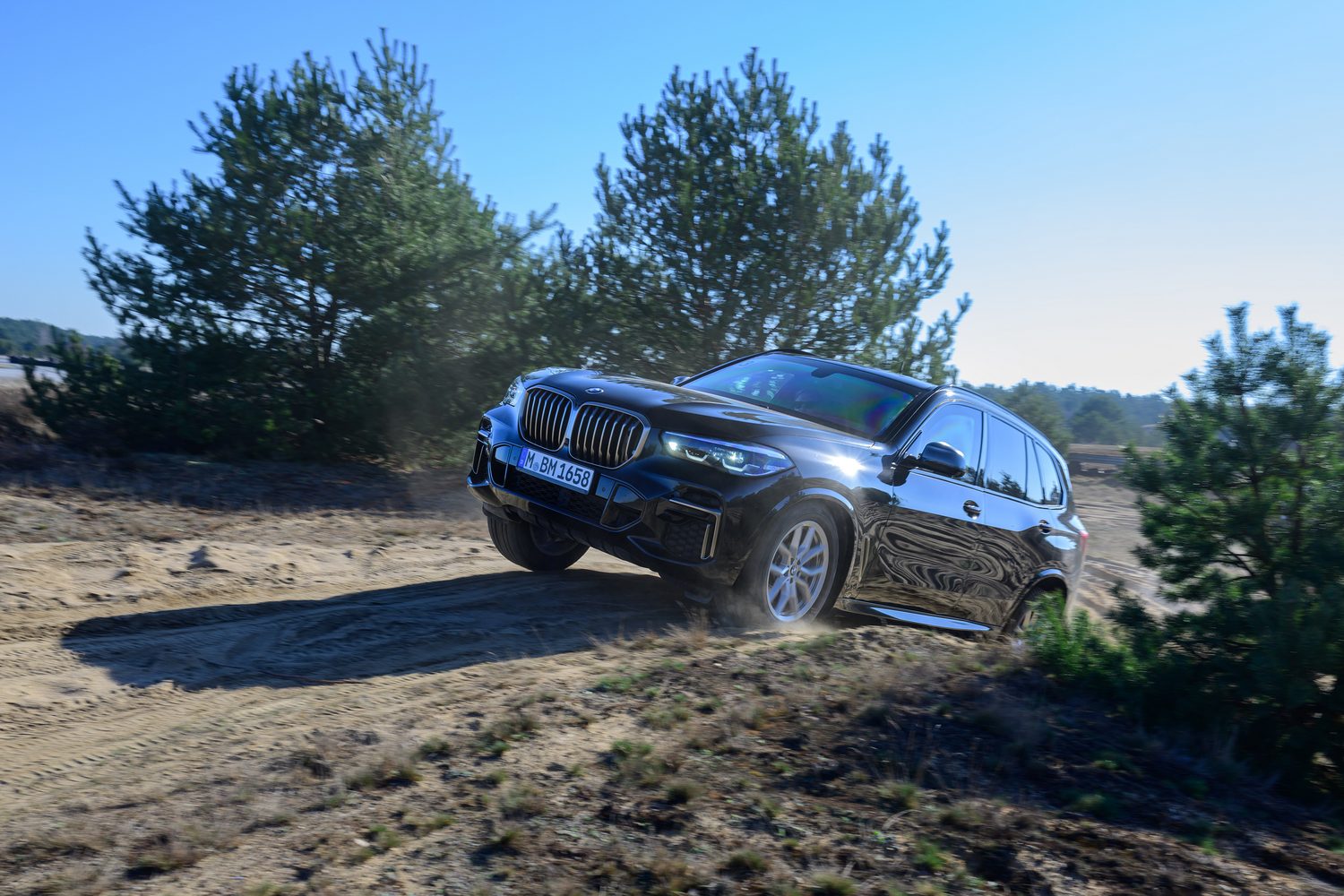
While the armoured X5 has adaptive damping, a rear differential lock, active roll-stabilisation and even rear-wheel steering to enhance manoeuvrability, it does without air springs and a variable ride height, so its off-road ability is limited by the ground clearance.
However, it proves more than capable over a short off-road course in dusty conditions and the brakes coped well with repeated stops from high speed on a section of disused runway, too. Indeed, it even managed high-speed lane changing under heavy braking without any drama.
Interestingly, VR6 cars are often driven alone by their owners, or they're used as escort vehicles by a security detail keeping an eye on the endangered client in their VR9 or VR10 car. The latter are almost never driven by the person under protection, and the car never travels unaccompanied.
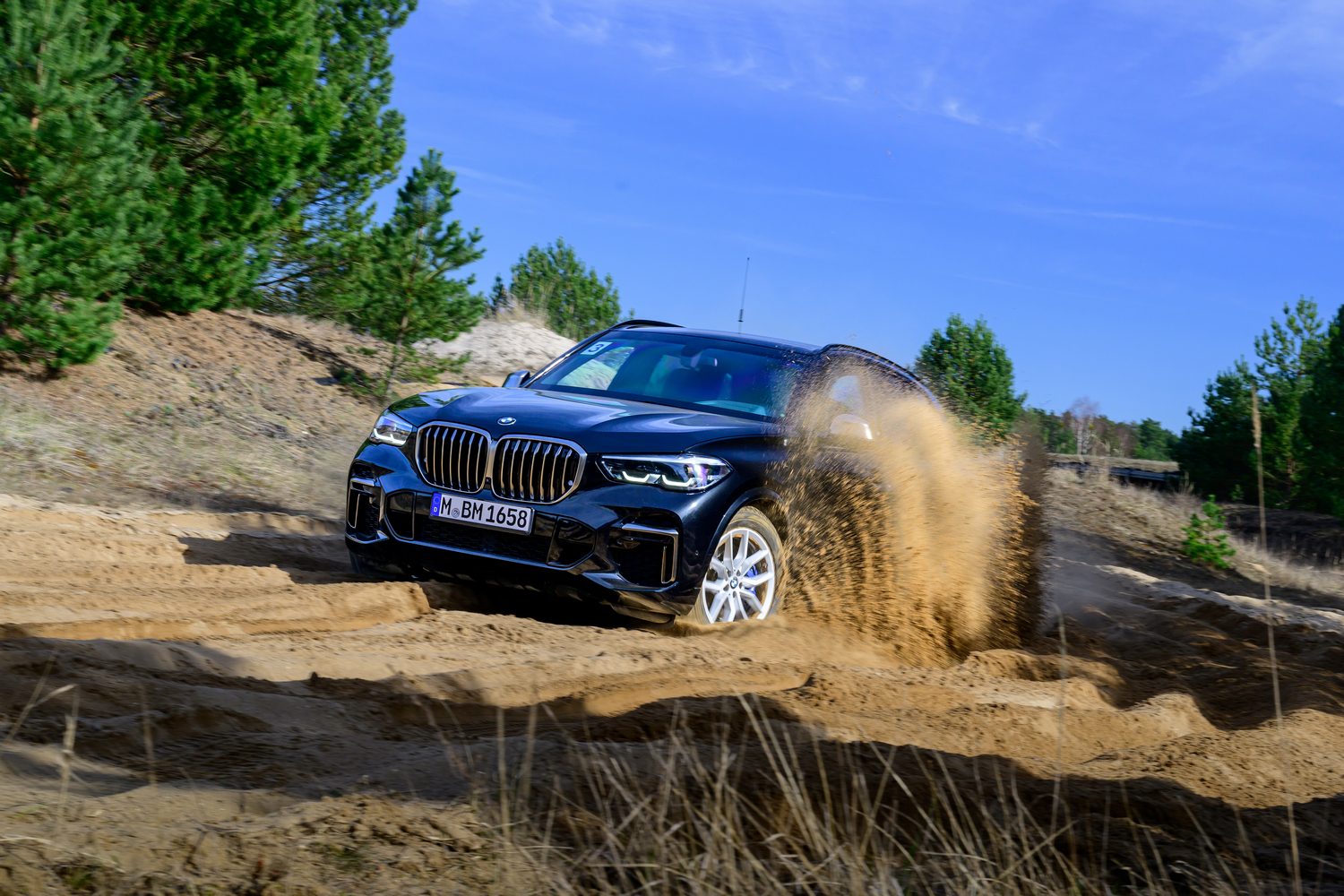
The protected could in theory be ushered into the back of the X5 and taken cross country where the VR9/10 car couldn't go, to escape a dangerous situation, for example.
Are armoured cars going electric?
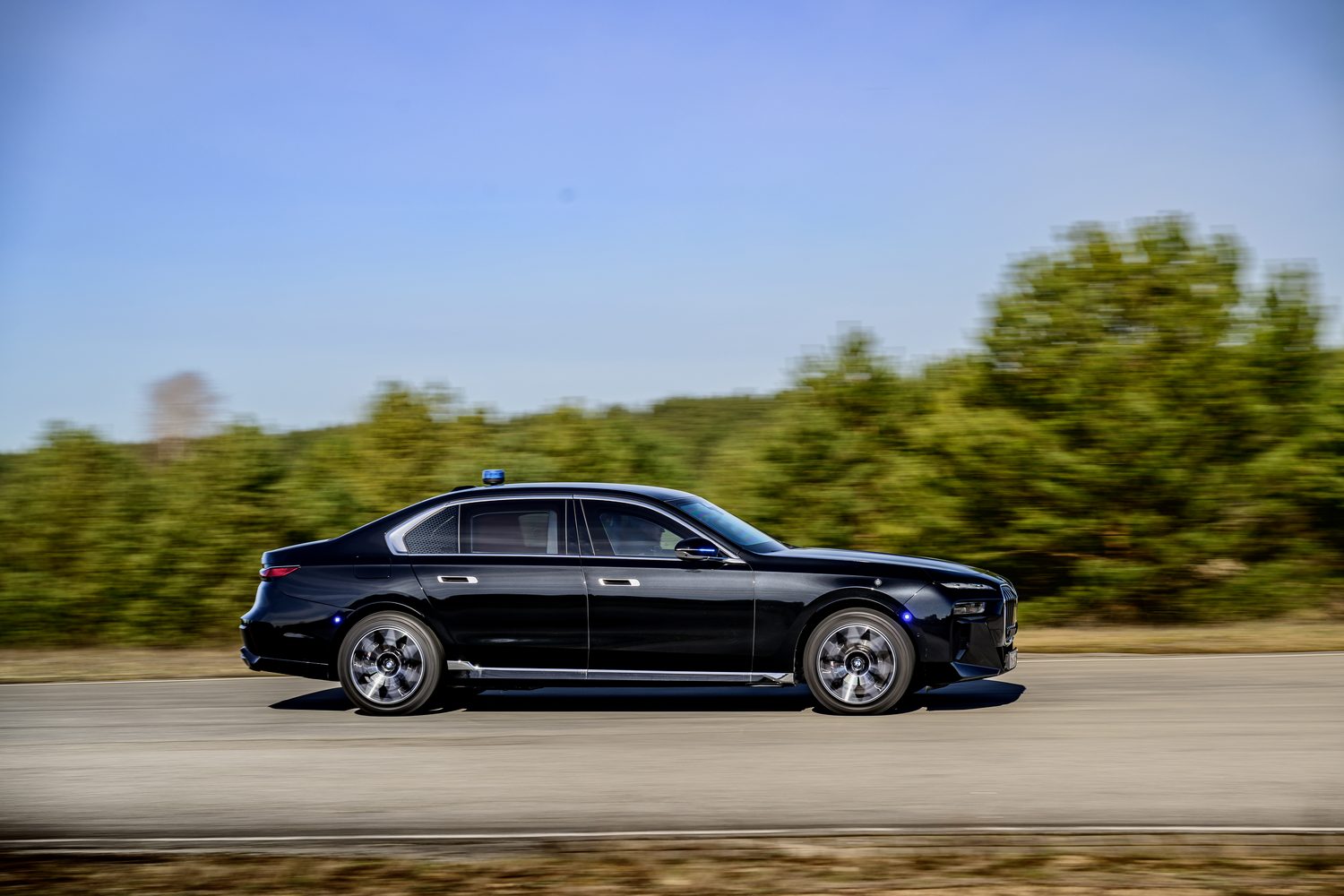
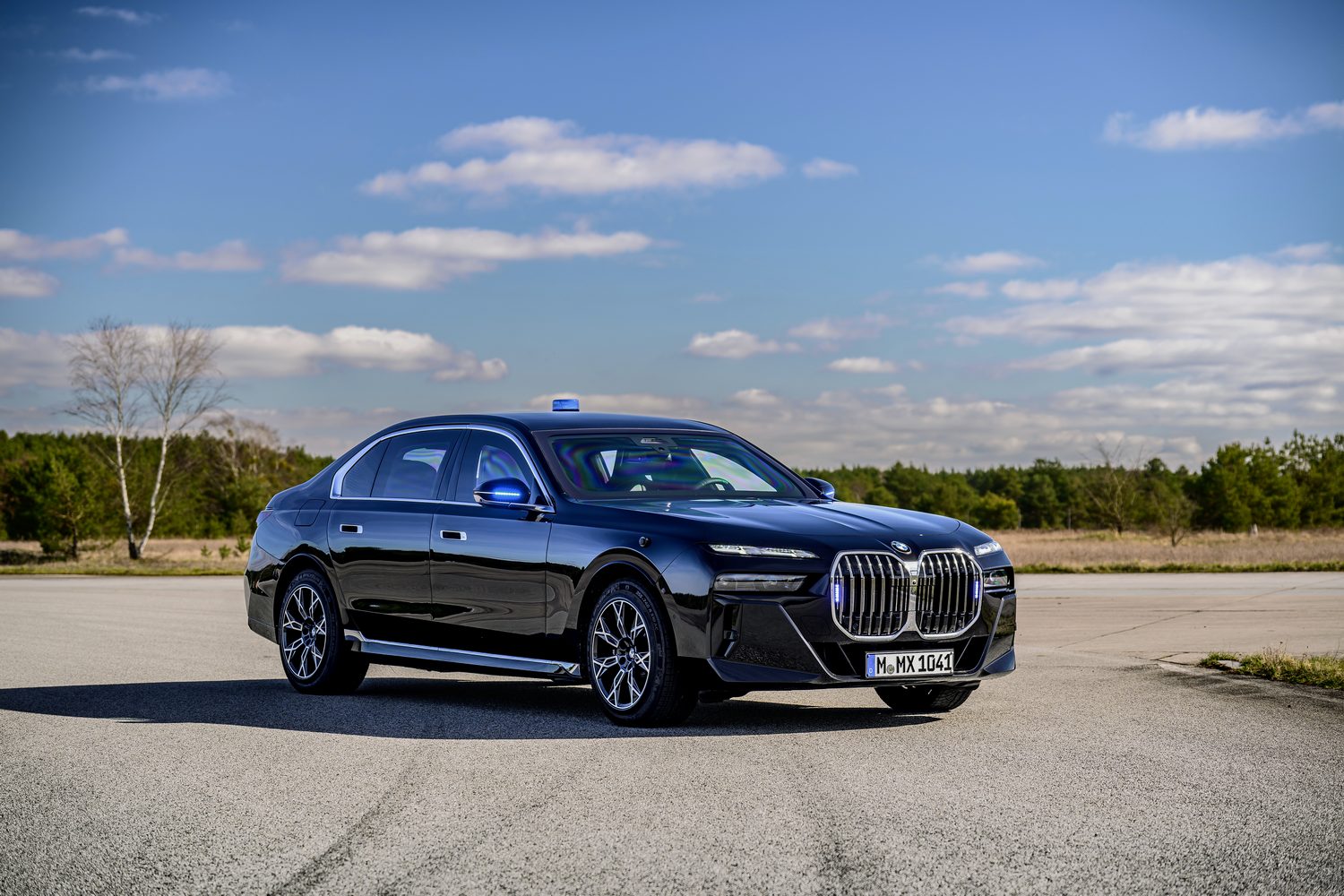
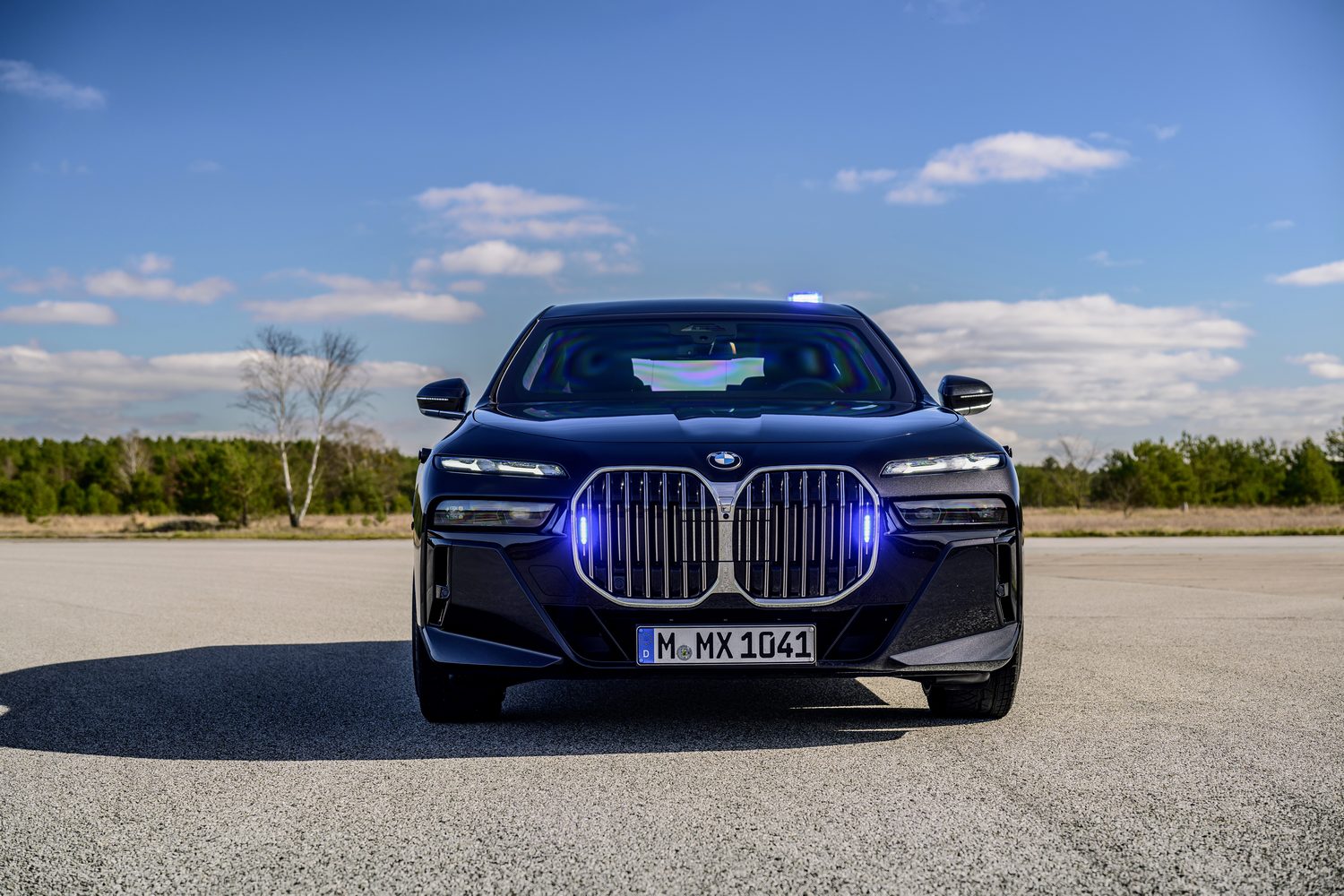
BMW Protection's newest offering is based on the current 7 Series and for the first time available with electric power as the i7 Protection. This is a VR9 car, though if buyers really need VR10 protection then they have to stick with the petrol-fuelled 7 Series Protection instead.
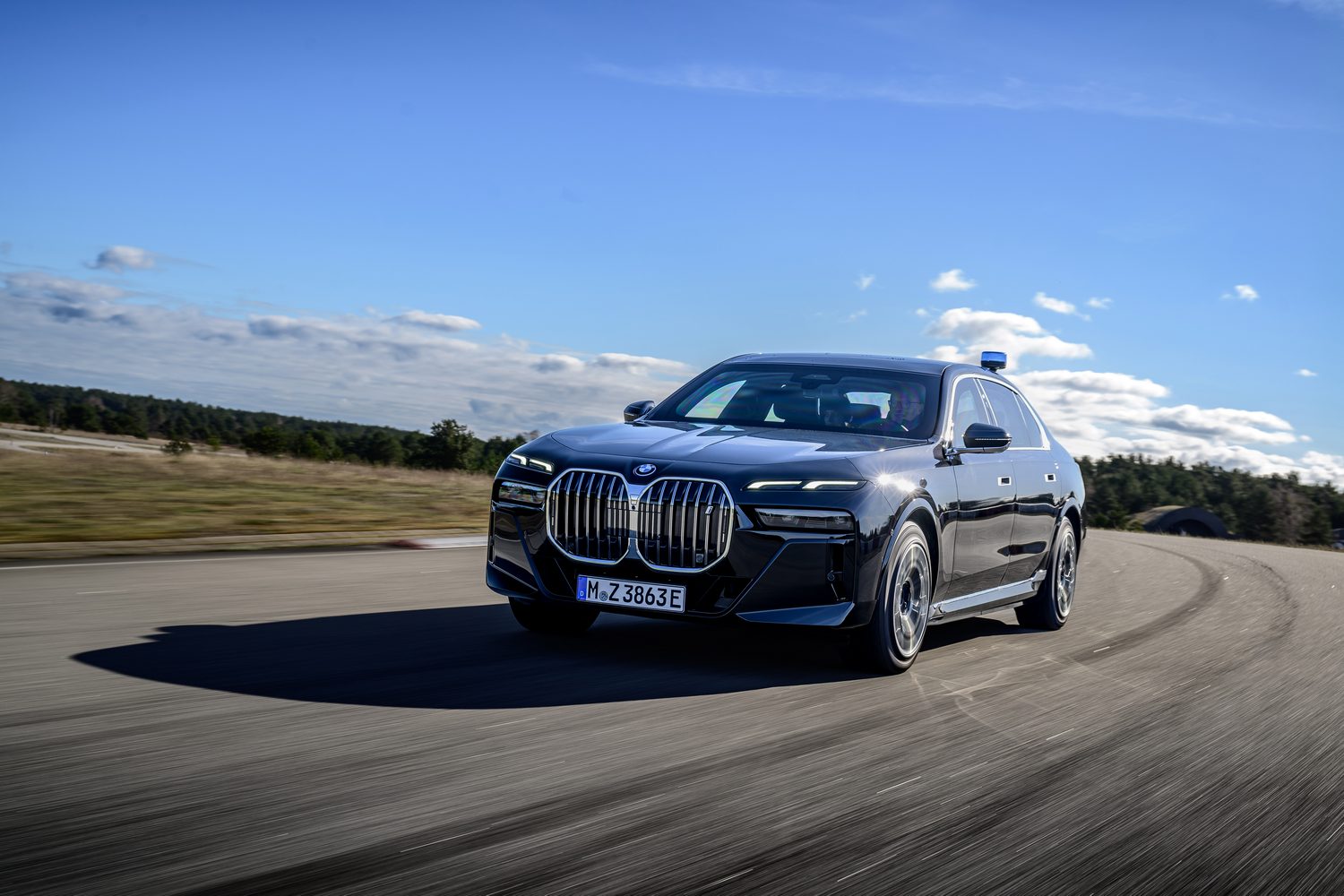
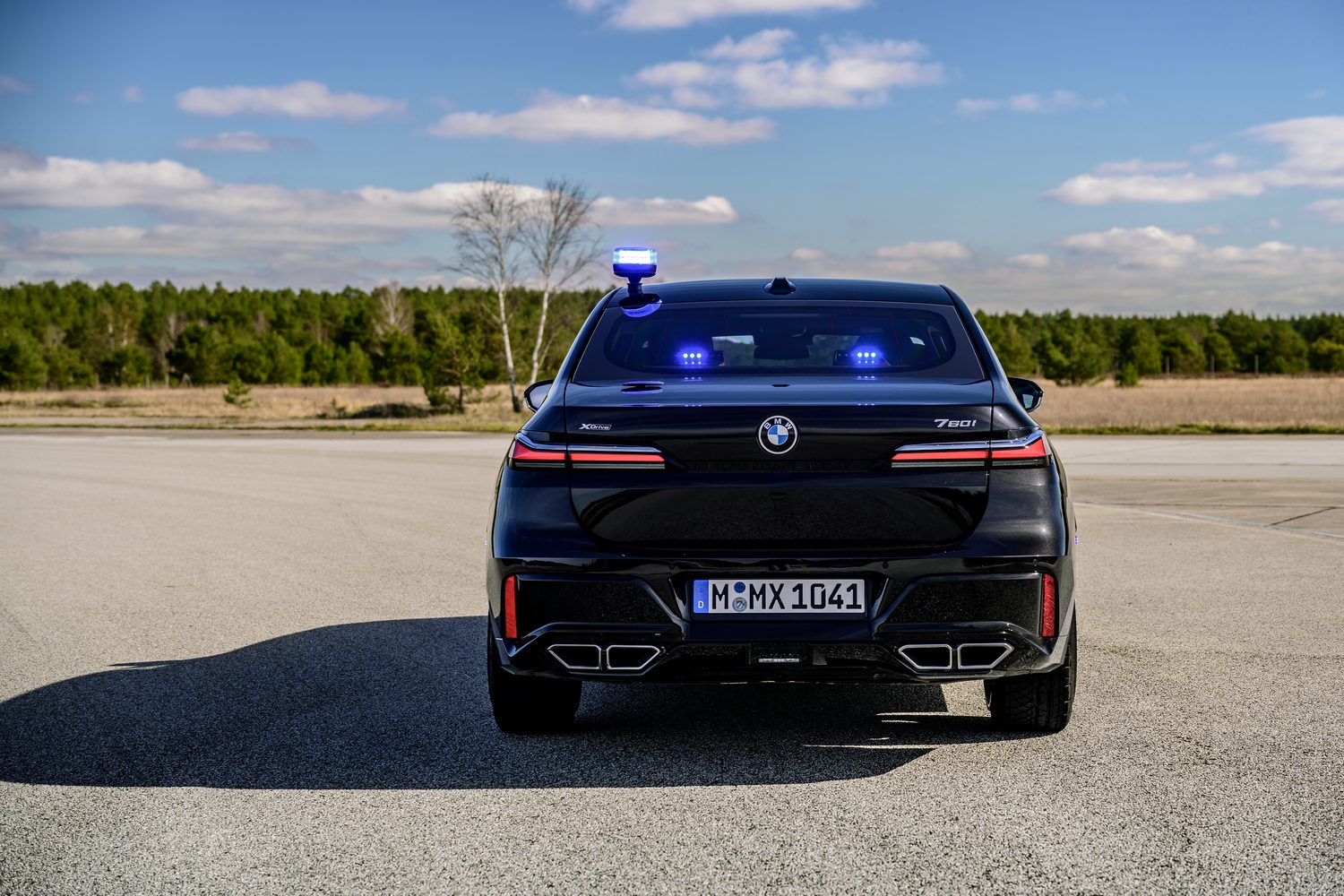
The latter is based on the 760i xDrive model, powered by the same V8 as found in the X5, which it'll need to make decent progress given it can weigh as much as 3,890kg. Nevertheless, BMW quotes a respectable 6.6-second 0-100km/h time for this car, and it'll top 210km/h as well.
The top speed is actually limited by the tyres' capability. These are Michelin items using its 'PAX' run-flat system employing a semi-rigid ring in the middle that supports the tyre even if it has been shot full of AK-47 bullets. It requires a special wheel rim, and BMW has developed two different styles to match those of non-PAX alloy wheels available elsewhere in the 7 Series line-up - in a bid not to draw attention to the car.
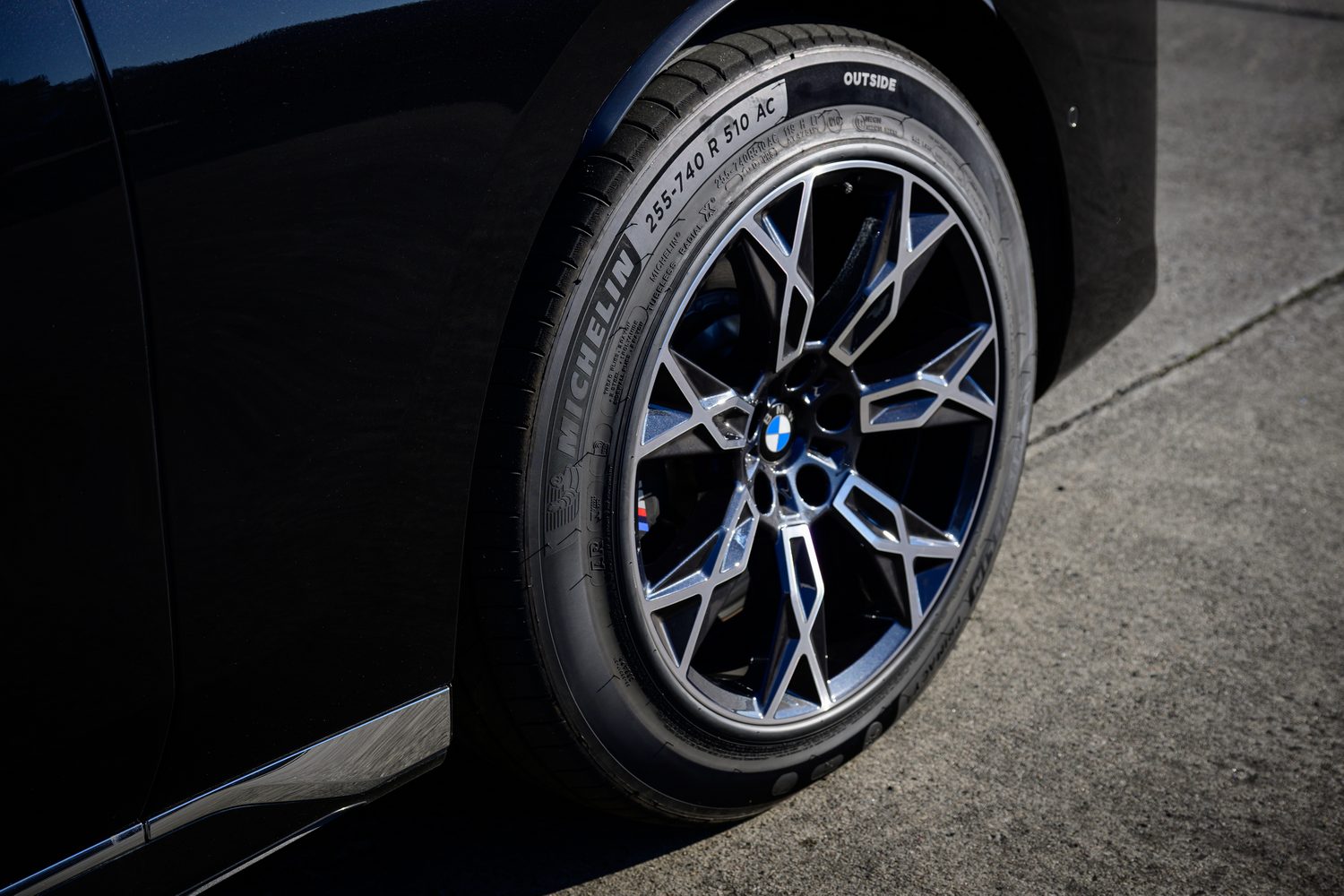
To accommodate extra armour under the battery pack - which sits under the cabin as usual - the i7 Protection sits higher on its springs, though this is disguised somewhat by new wheelarch spats that fill in some of the extra space.
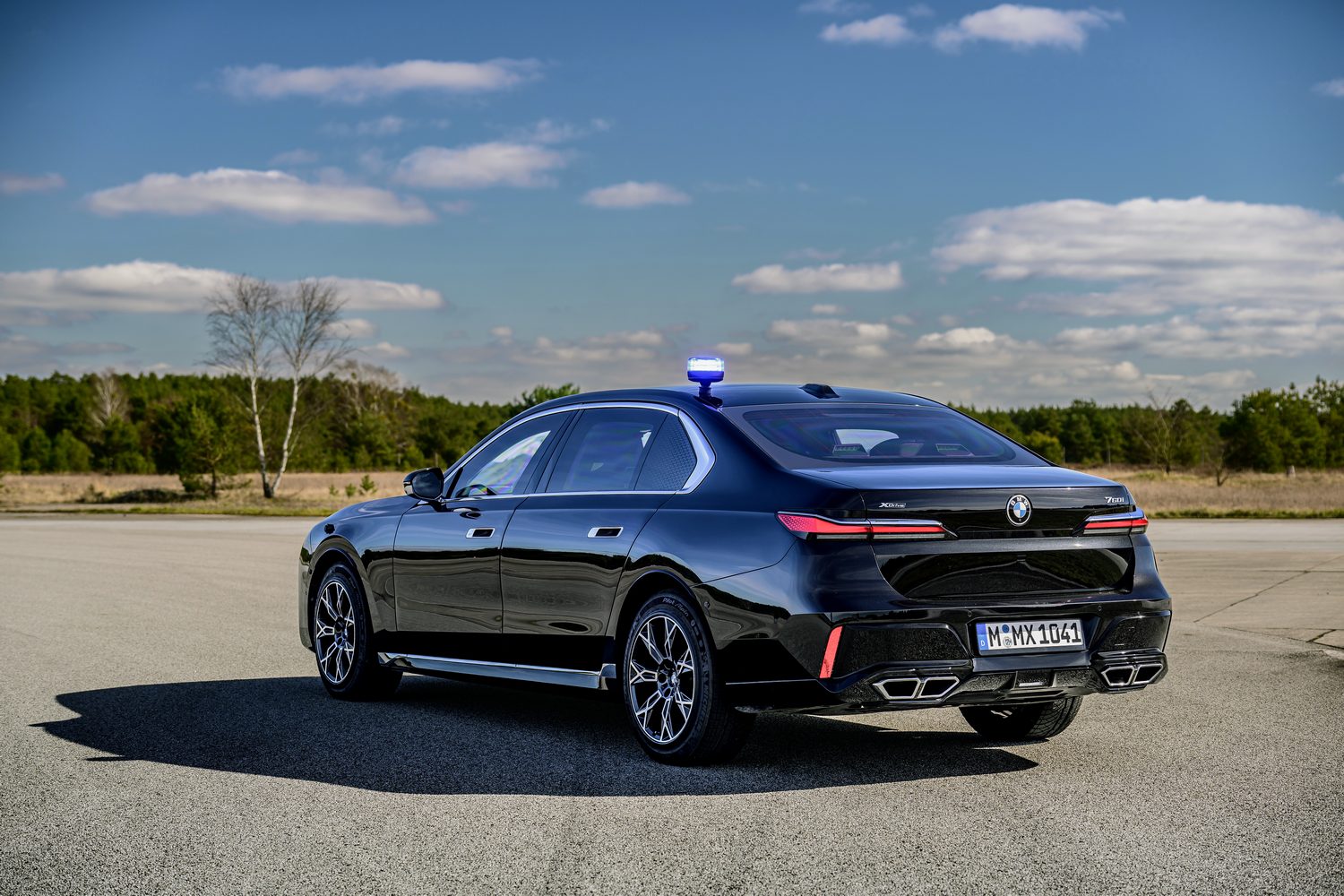
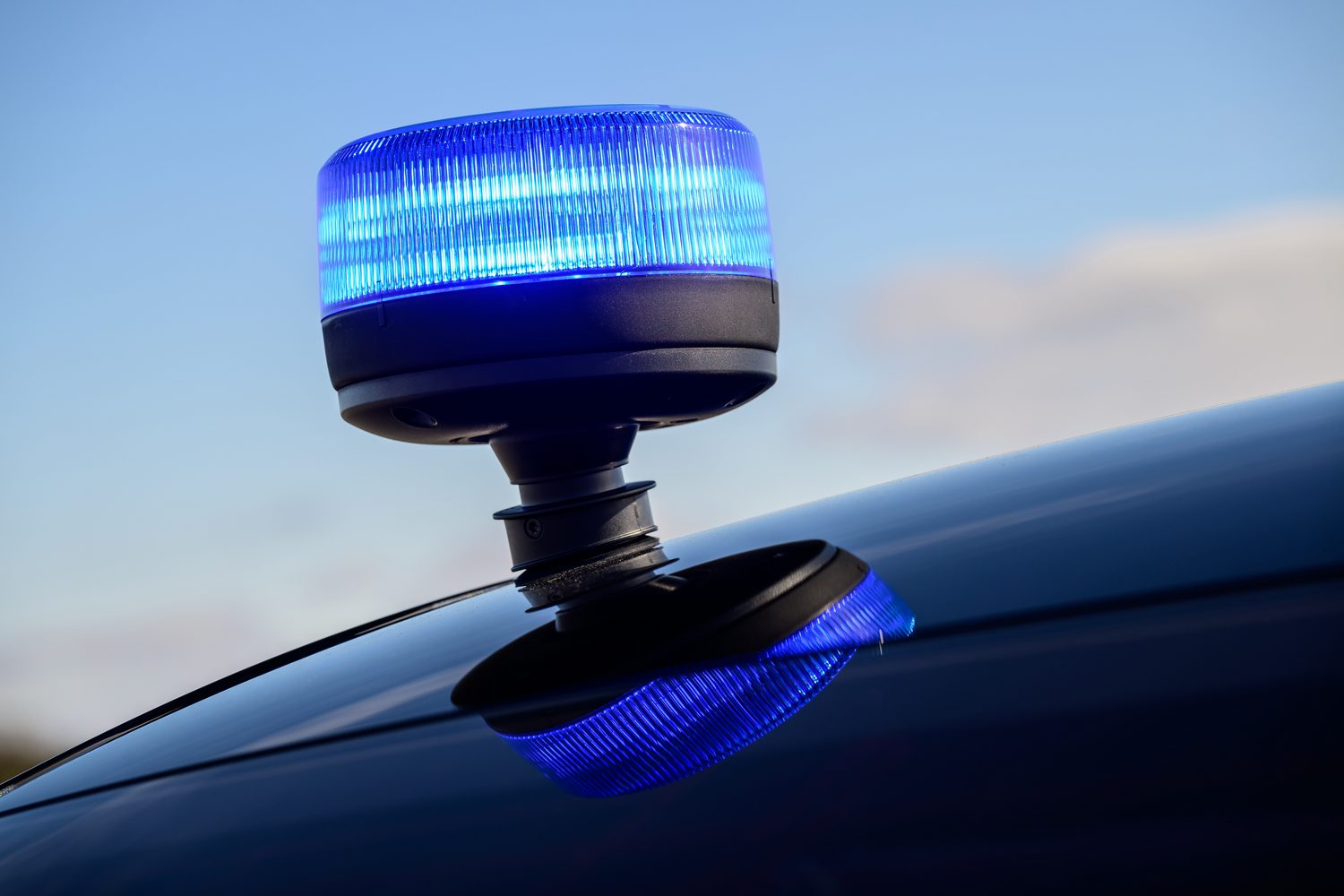
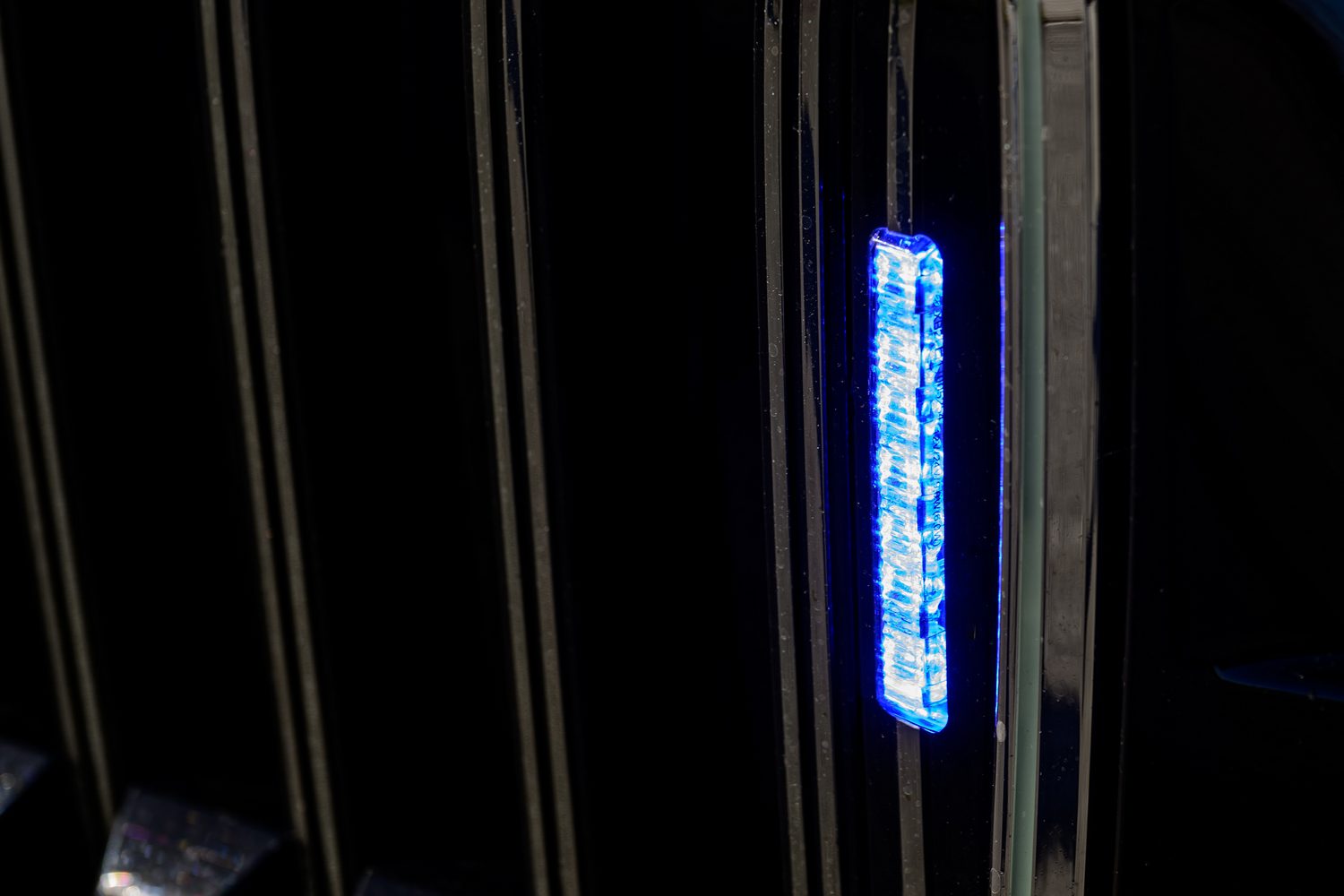
Of course, if you want the full government-spec, blue-flashing-light effect instead of subtlety, there are plenty of add-ons you can specify at the time of ordering your armoured 7 Series.
What's it like inside?
Each of the doors in this car weighs 200kg, so BMW installs its "Effortless Doors” system - as found in various Rolls-Royces - to help ease the strain getting in and out and stop the door accidentally amputating an arm if a gust of wind catches it.
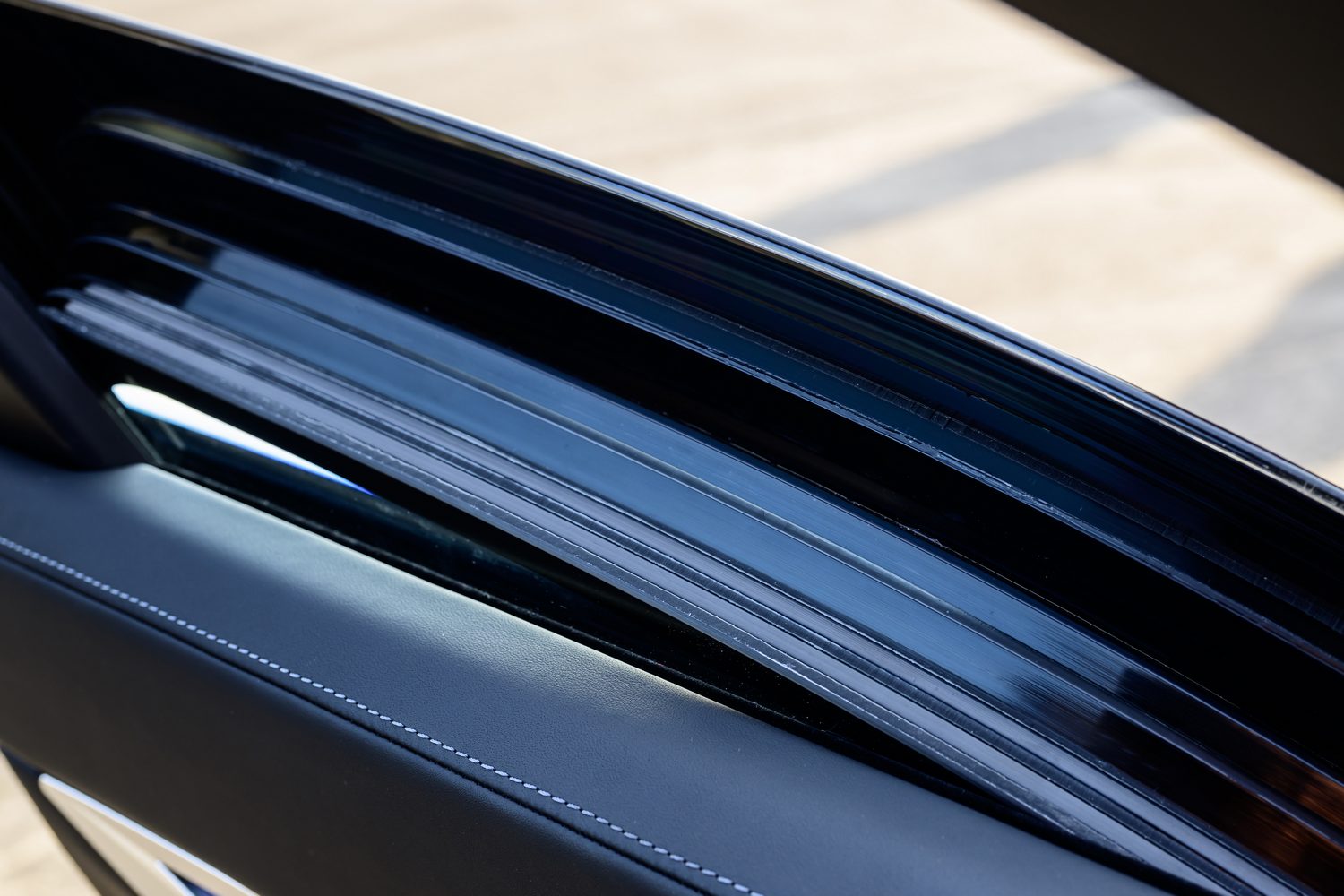
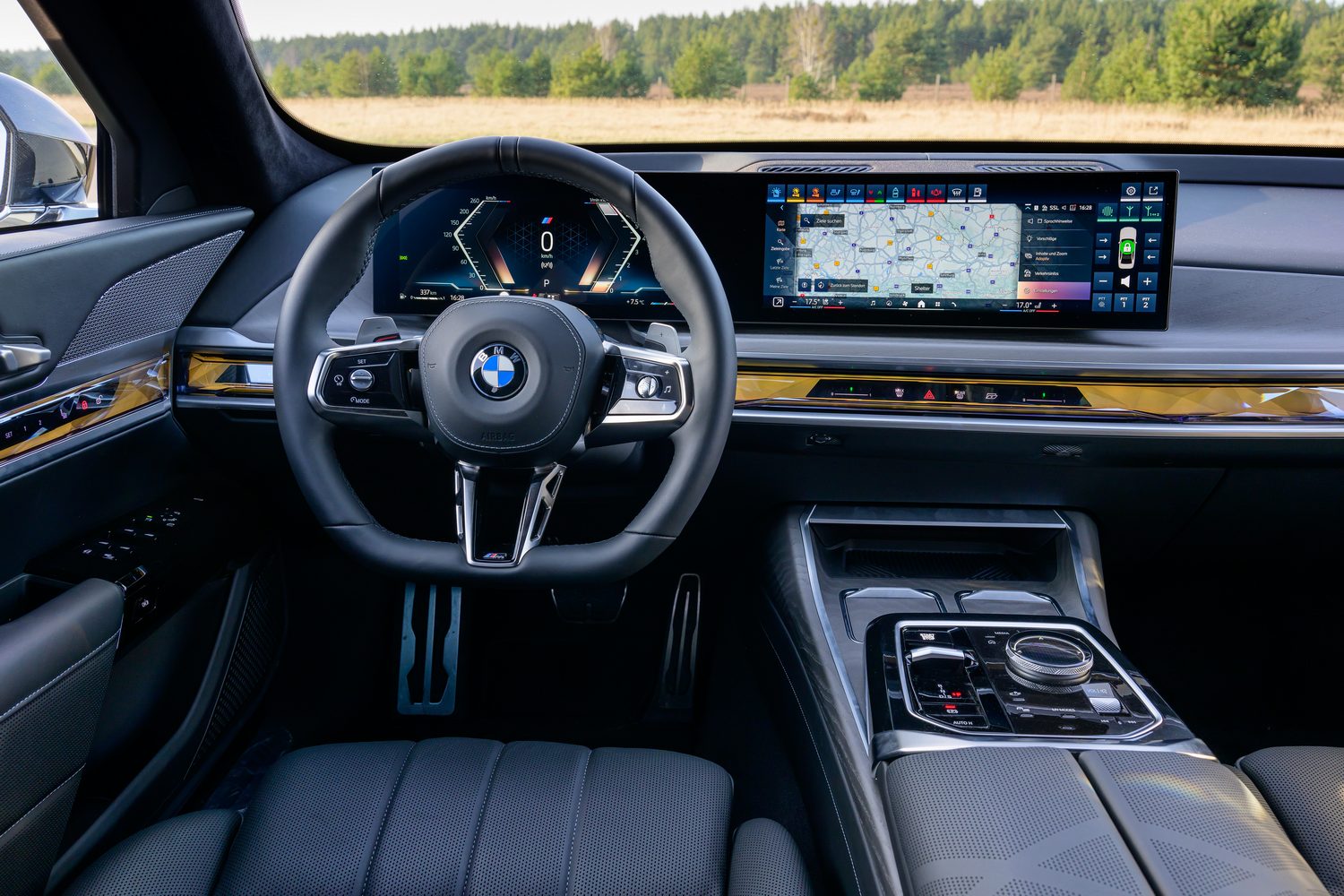
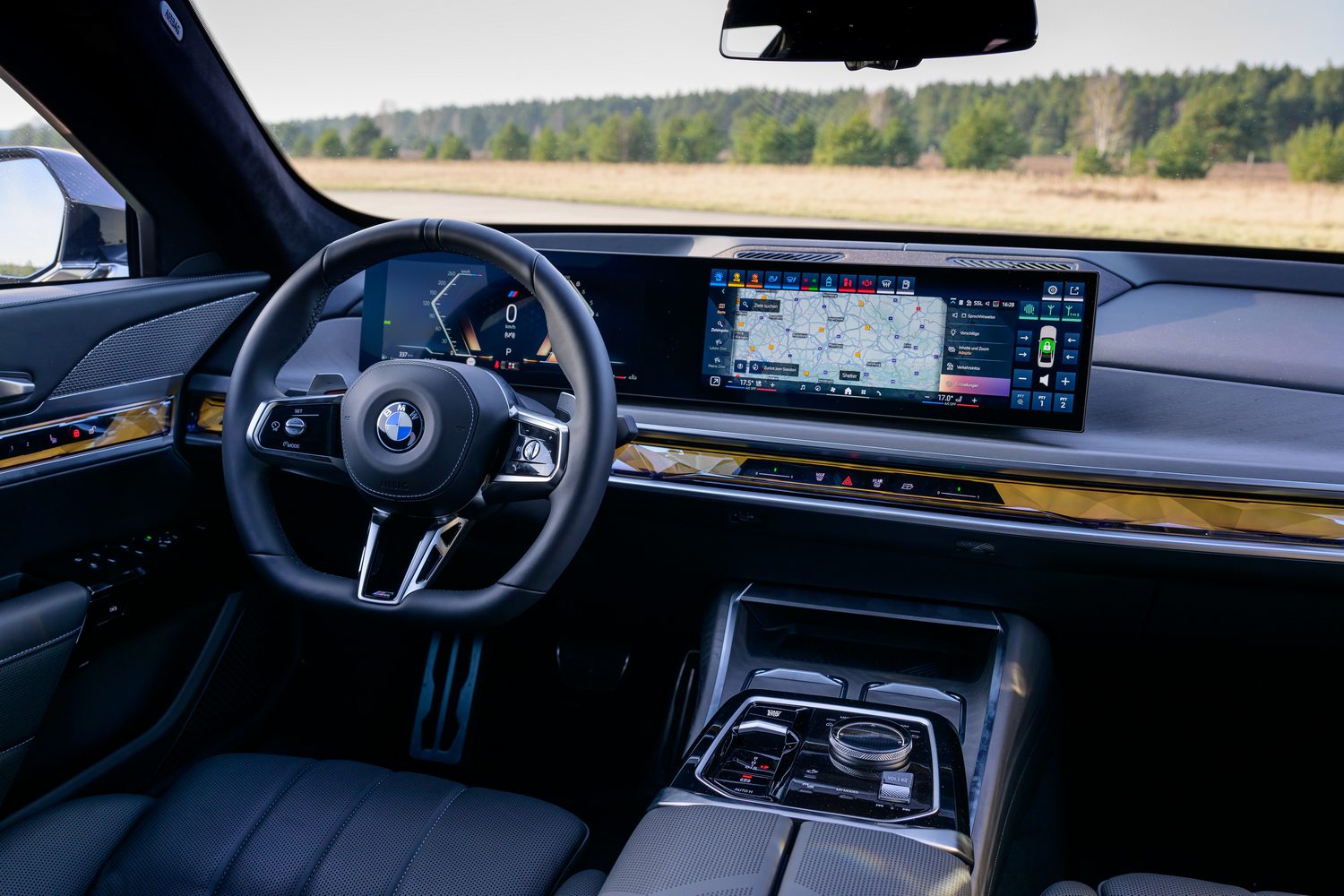
Even so, it takes a lot of effort to open or close these doors manually, so it can be done at the press of an icon on a special new menu in the touchscreen system inside.
This menu also allows control of the fresh air system, the external communications (so you don't have to crack open a window to speak to someone outside), special lighting, fire extinguishers and more.
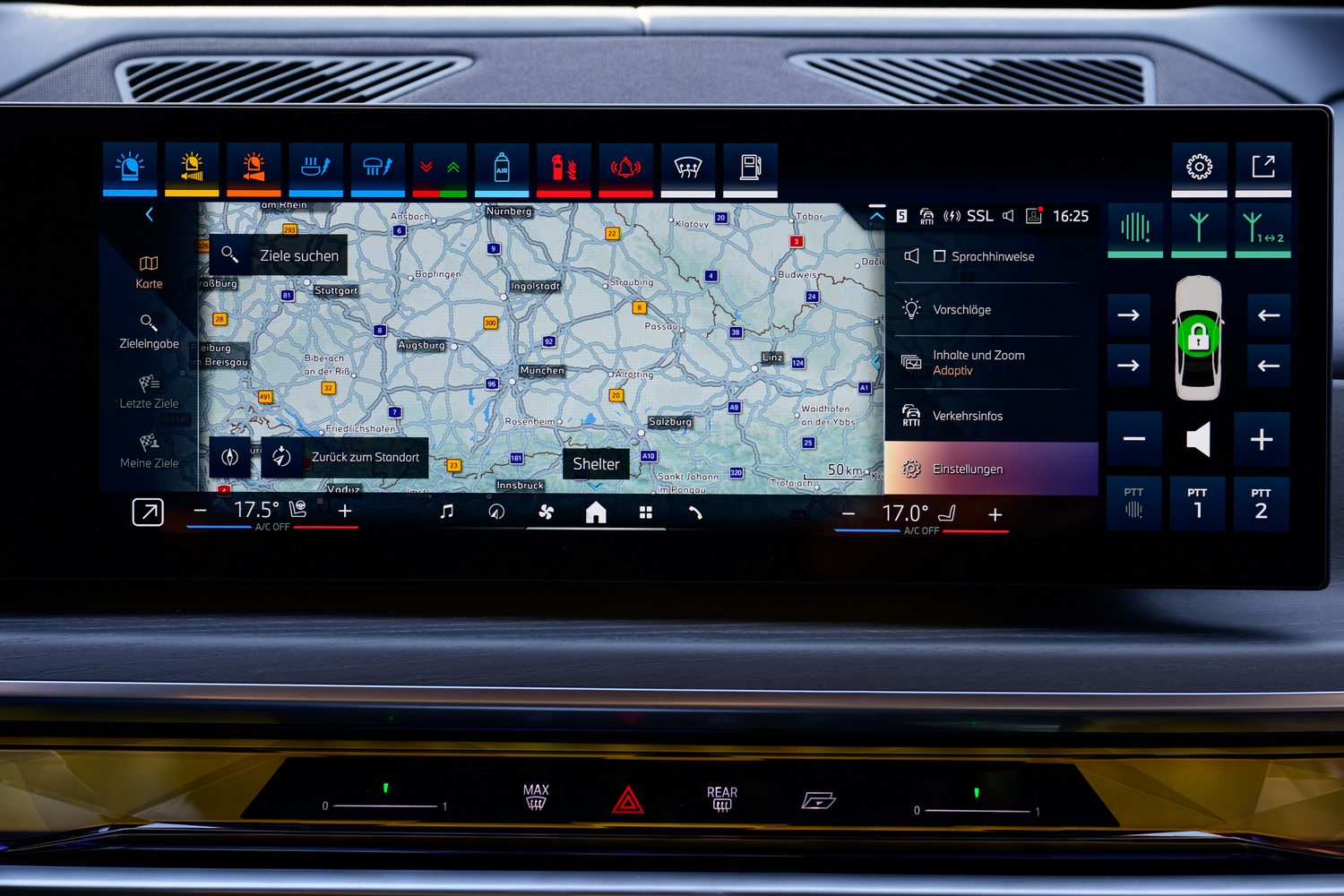
It's even possible to literally blow the doors off if an emergency evacuation is required. The integration of the controls is exceptional and as it's all on the touchscreen, a casual glance inside won't reveal the true nature of the vehicle. Tap on any of the glass, however, and the disconcerting solidity will leave you in no doubt.
Even so, BMW allows buyers to individualise the 7 Series Protection just as they would any 7 Series, in terms of trim, materials, etc. It's even possible to finish the exterior in two-tone paint, though the painting process is a little different to that for the unarmoured car. Normally, a car's doors and all panels are mounted before it is dipped in paint, but the 7 Series Protection with its doors on is too heavy for the paint shop's machinery so they're done separately.
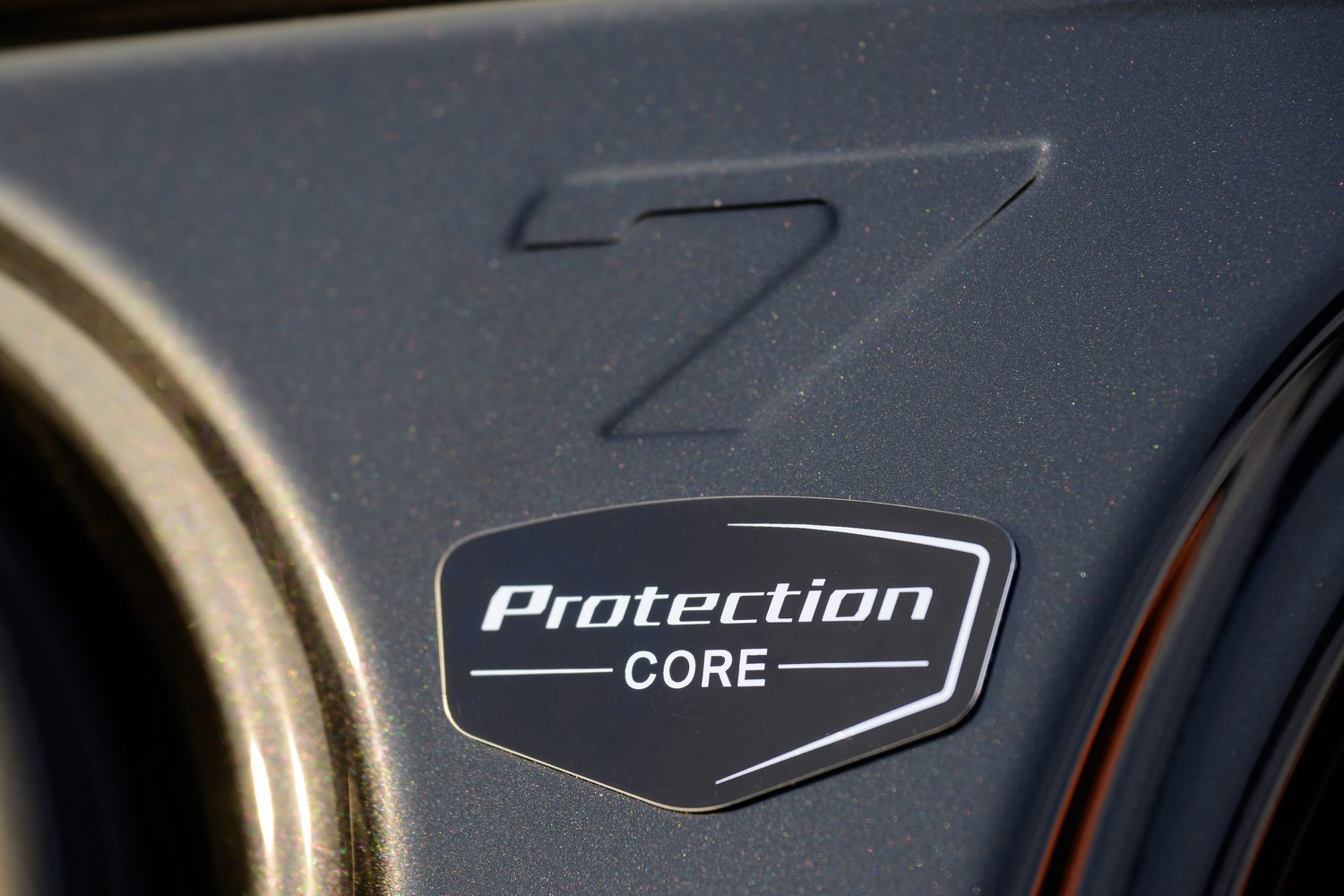
The i7 Protection weighs significantly more than four tonnes, but it would be heavier again if it - and the petrol model - weren't built from the ground up as armoured cars. Unlike the X5, the 7 Series Protection isn't a conversion of a regular car off the production line.
Instead, the standard car's "Carbon Core” structure is replaced by one made of armoured steel (BMW calls it the "Protection Core”) and this means a lot less additional armour is required to meet certification. It also means the Protection version is virtually as spacious and luxurious as the regular models where most armoured cars come with a more-cramped cabin.
How far does it go on a charge?
Naturally, carrying around so much weight, the i7 Protection can't quite eke out as much range as the standard xDrive60 model it's based on. It uses the same 101.7kWh battery pack and can cover up to 200 kilometres in WLTP conditions - against 620km for the non-armoured car.
That isn't much, but the electric version is chosen by those that want the clean image to go with their self-preservation, and the car is expected to be used for special occasions in public. Indeed, we were told that for anything much over 200km, a helicopter is the default choice of transport anyway...
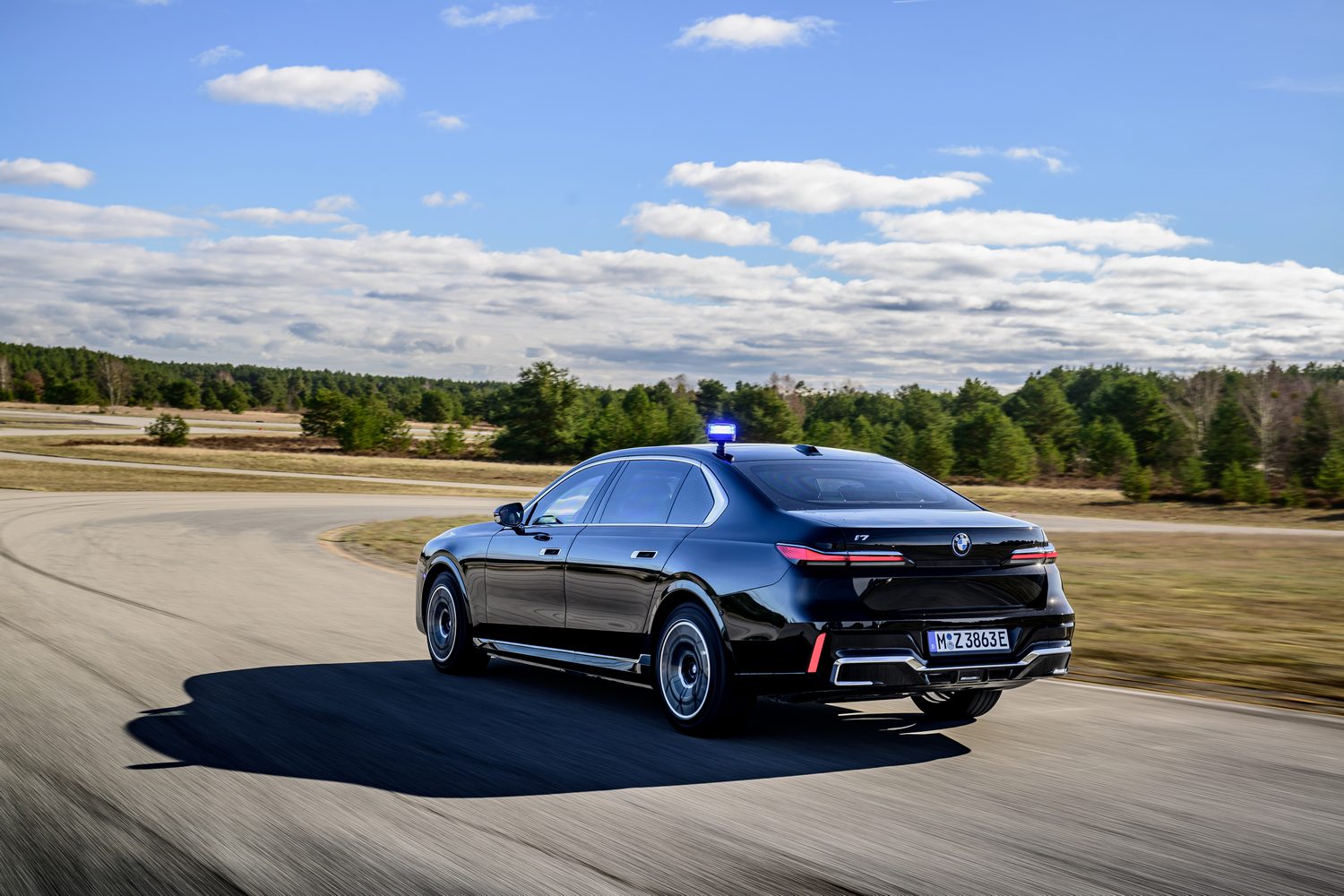
Although the i7's peak power and torque figures are comparable to the 760i's, its considerable extra weight means further-blunted performance. Hence a lukewarm 8.1-second 0-100km/h time. The difference between the two is impossible to miss when driven back-to-back, but the i7 still performs better when driven to its limits than anything weighing nearly five tonnes has any right to.
Even better with a bit of training
BMW provides tiered training "for participants who, as professional drivers, are responsible for the safety of their passengers”. We were taught basic driving techniques using the heavy cars to start with, then moved on to evasive manoeuvres at various speeds.
We were introduced to the challenges of reversing at speed - and under duress - and in another exercise actual petrol bombs were fired at us as we navigated unfamiliar roads with a simple instruction to protect our 'charge' on board. Finally, we came back to the facility at night to repeat some of the challenges.
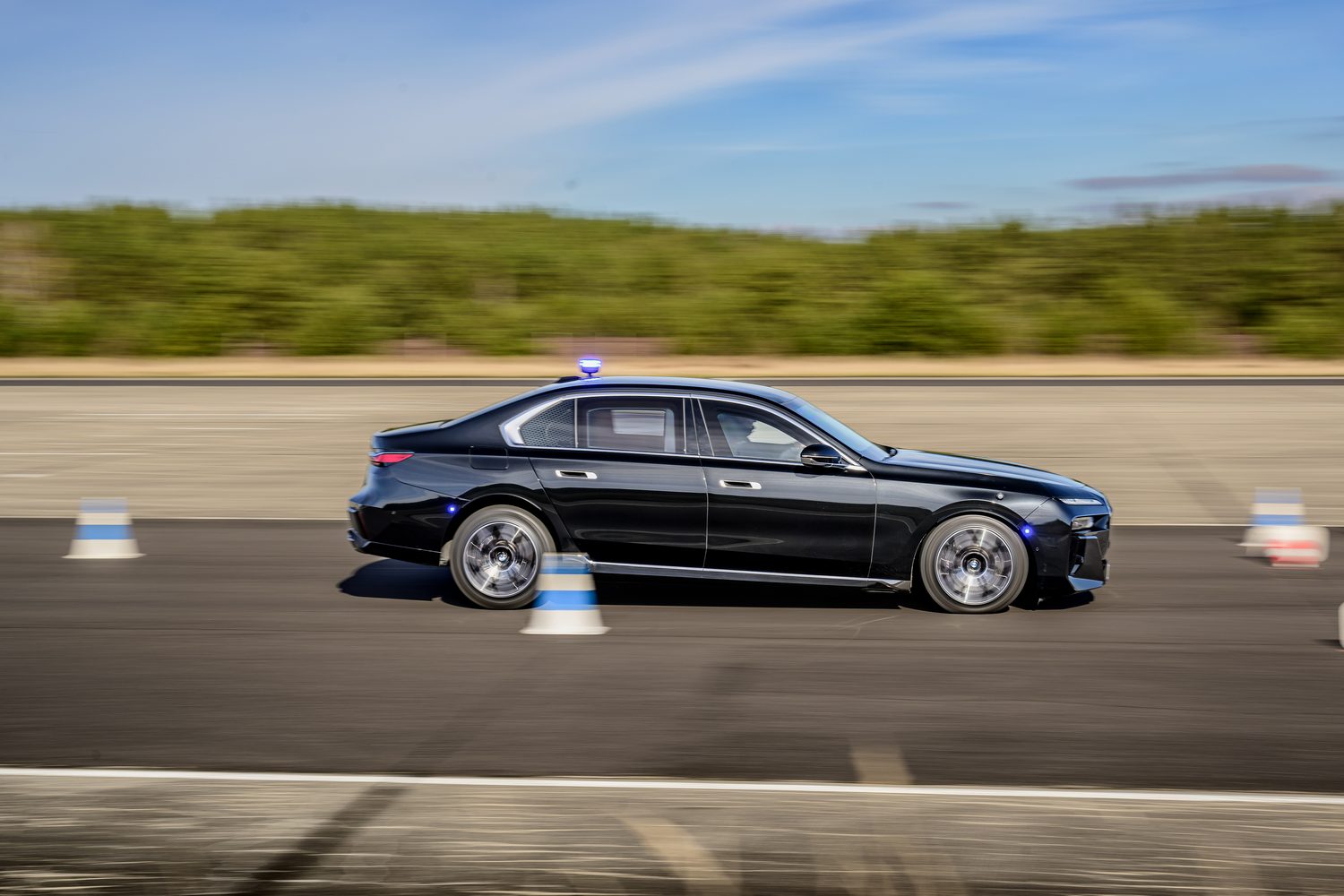
The Level 2 course over three days teaches tactics as well as driver training, while the latter is ramped up to include avoidance manoeuvres under fire and with vehicle contact resulting in "significant bodywork damage”.
Though we underwent our training in shiny new cars, we noticed dozens more parked up wearing battle scars rather more extreme than you'd get in a supermarket carpark.
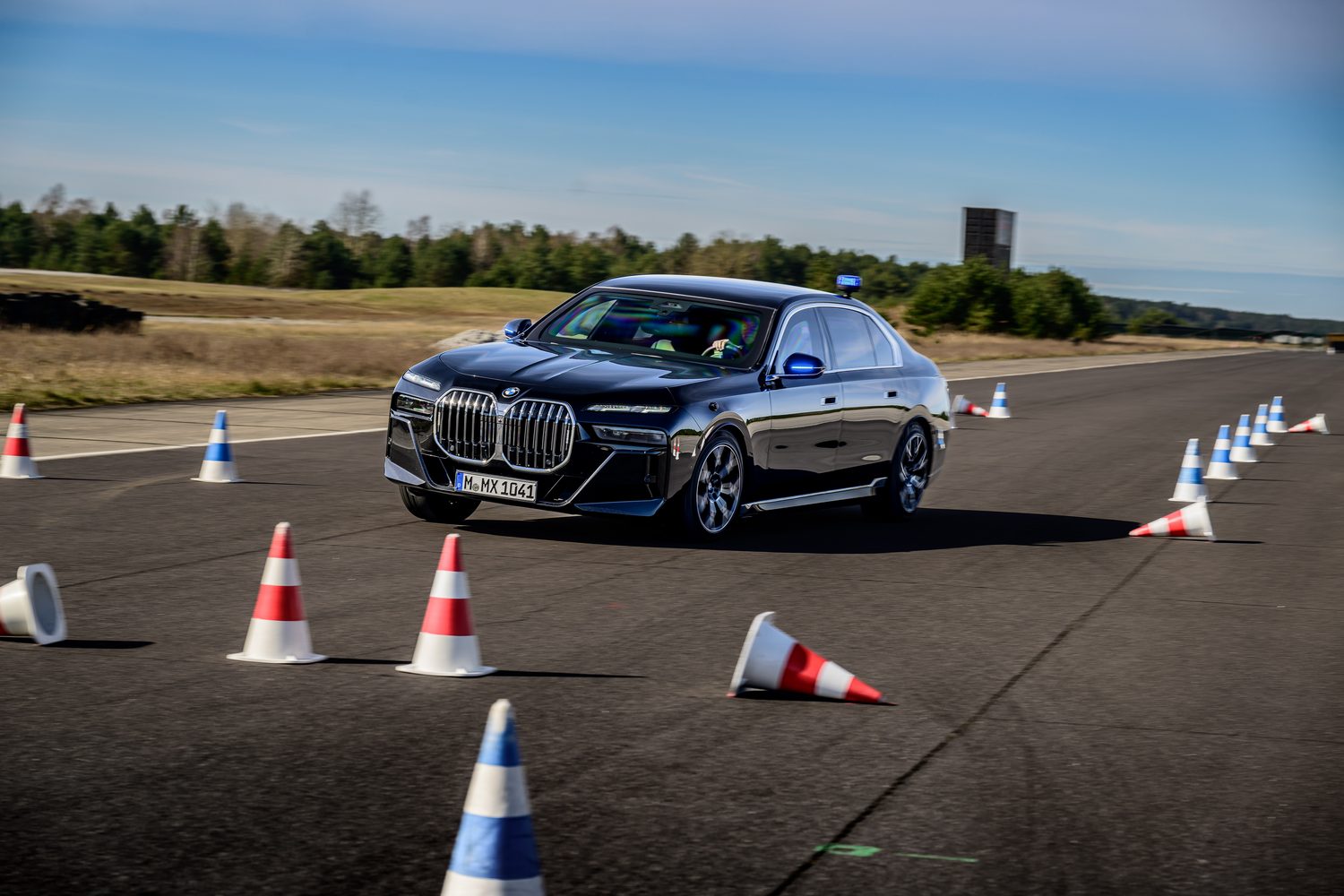
To those on the outside of this shady world it all sounds very exciting, but in actual fact, the trainers repeat the exercises over and over again until the participants are quite literally bored with them, the idea being that they can continue to think clearly in an emergency situation while performing evasive action, using muscle memory to take control of the driving aspect. They could potentially do that with their eyes closed. Or in the dark as it happens...
If there is anything about this story we have not covered, you can avail of our expert advice service via the Ask Us Anything page.