

"Sorry,” I was told. "The car you were supposed to collect hasn't come back yet.” Normally, this would be at least an inconvenience, but with a hard deadline of getting to the airport for a flight to go and review a significant new electric car, this was bordering on the downright disastrous. "It's OK though, we can stick you into something else to keep you mobile.”
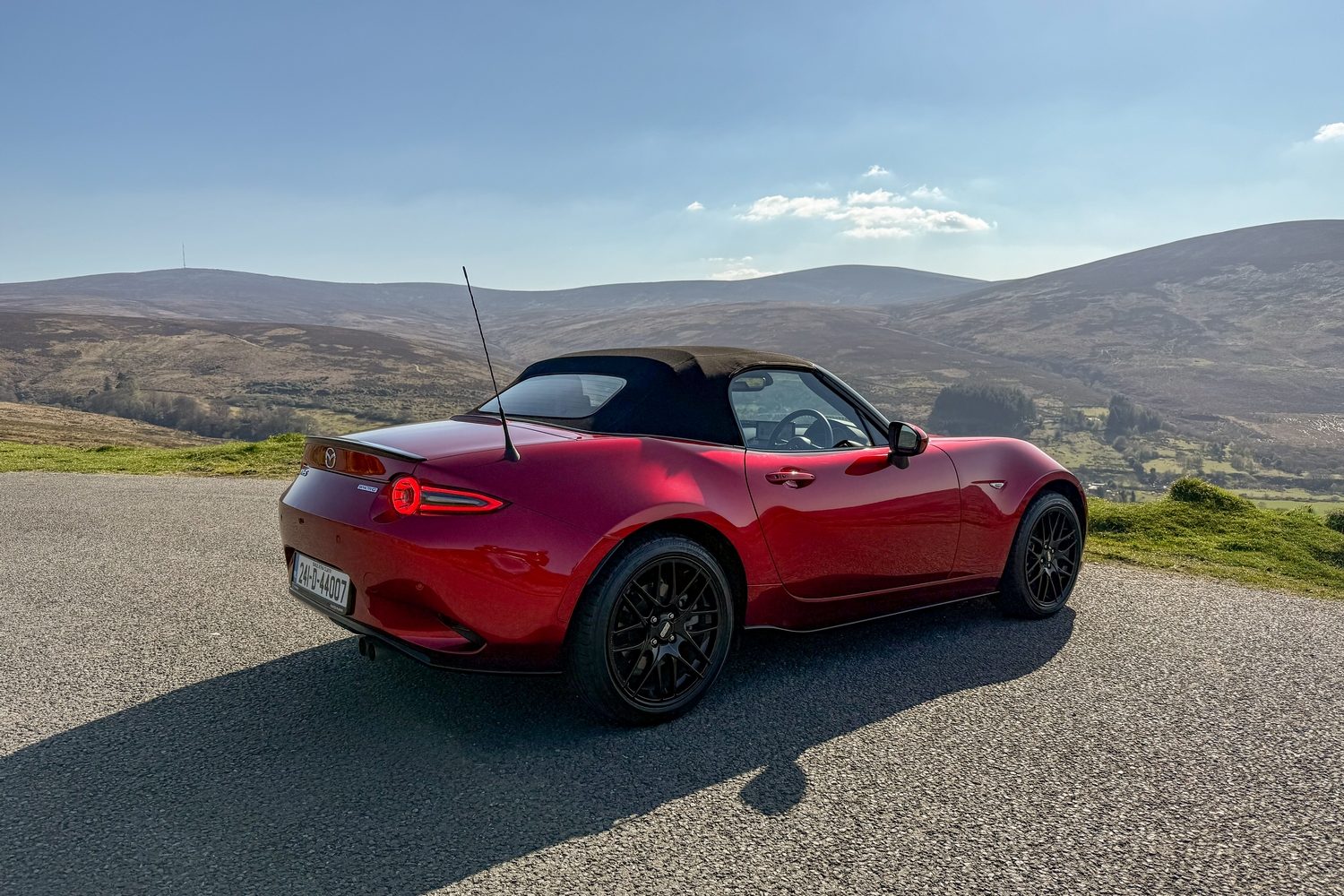
This was better news, and when I wandered outside to collect the keys and throw my meagre luggage into the boot, it became the best news ever - the car that would replace the expected, but unavailable, sensible family machine was in fact a bright red Mazda MX-5.
A decade young
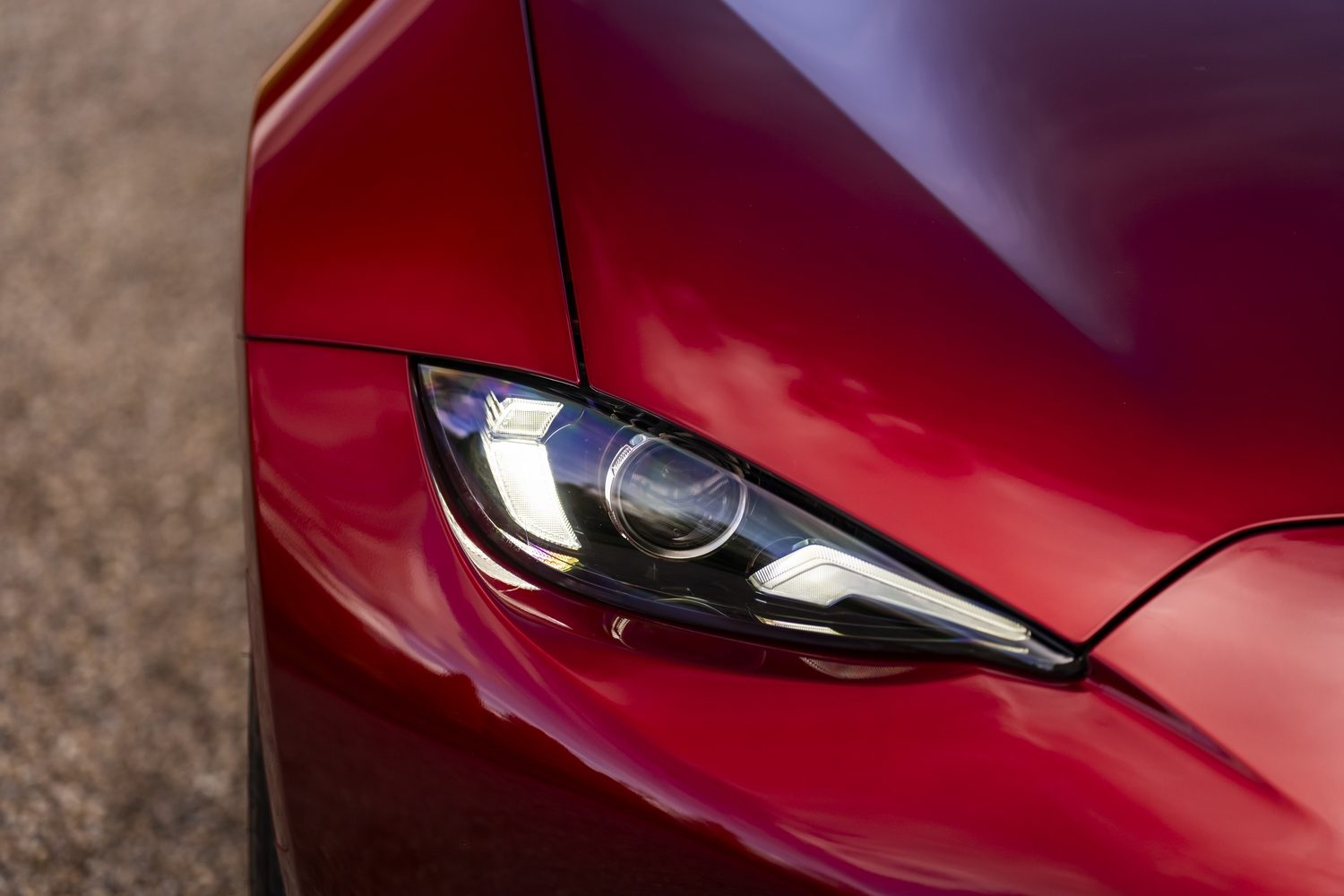
The MX-5 is ten years old now in its current 'ND' form. You'd hardly know it from the outside, but Mazda actually updated it a little in 2024, giving the little roadster new lights front and rear, and some chassis updates, including a new rear differential, a revised steering rack and a new 'Track' mode for the stability control that allows a touch more sideways slippage.
None of which really mattered much as I flipped back the black fabric roof (during a brief dry spell) in one easy motion, which is so much simpler and more satisfying than pressing a button and letting electric motors do their work.
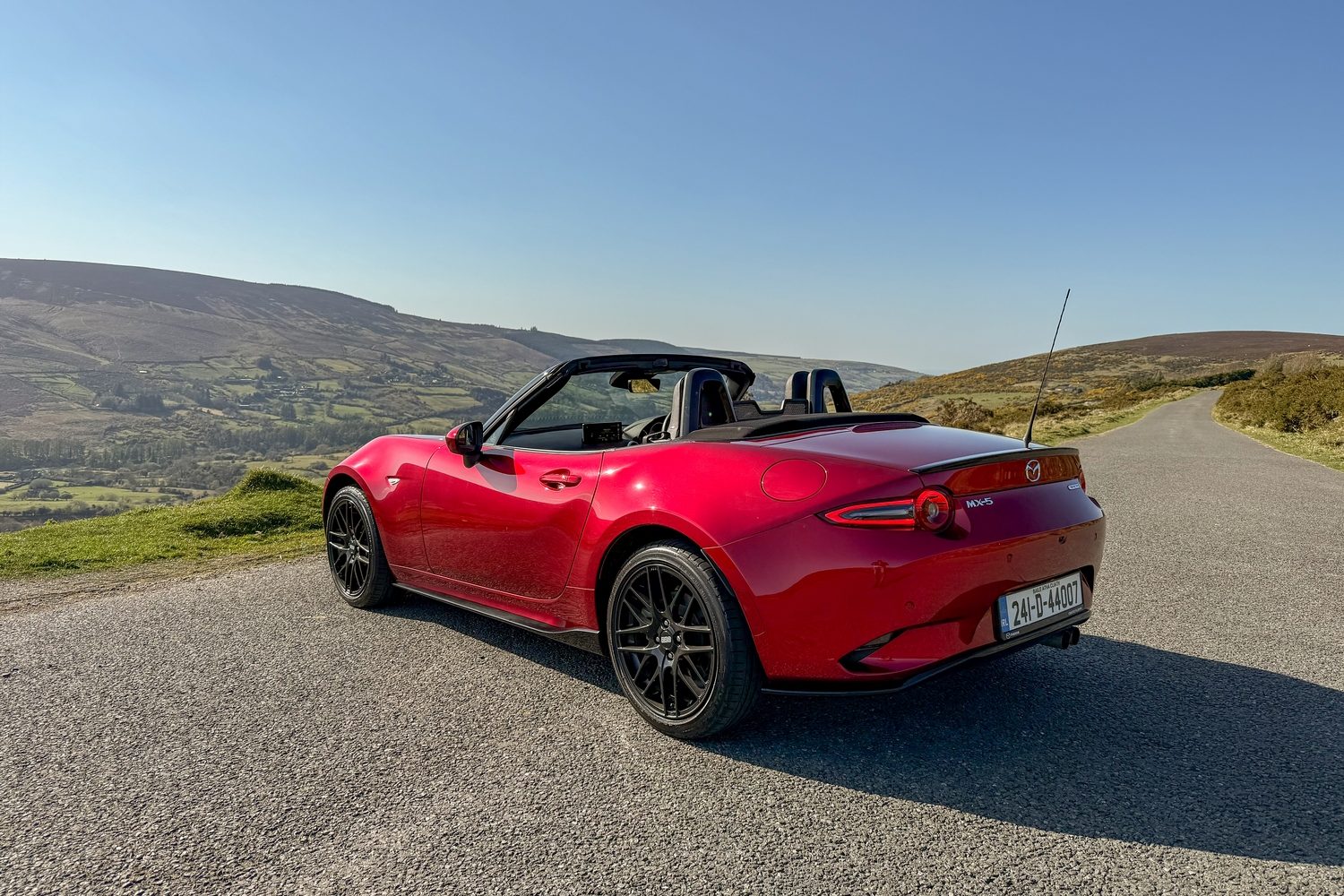
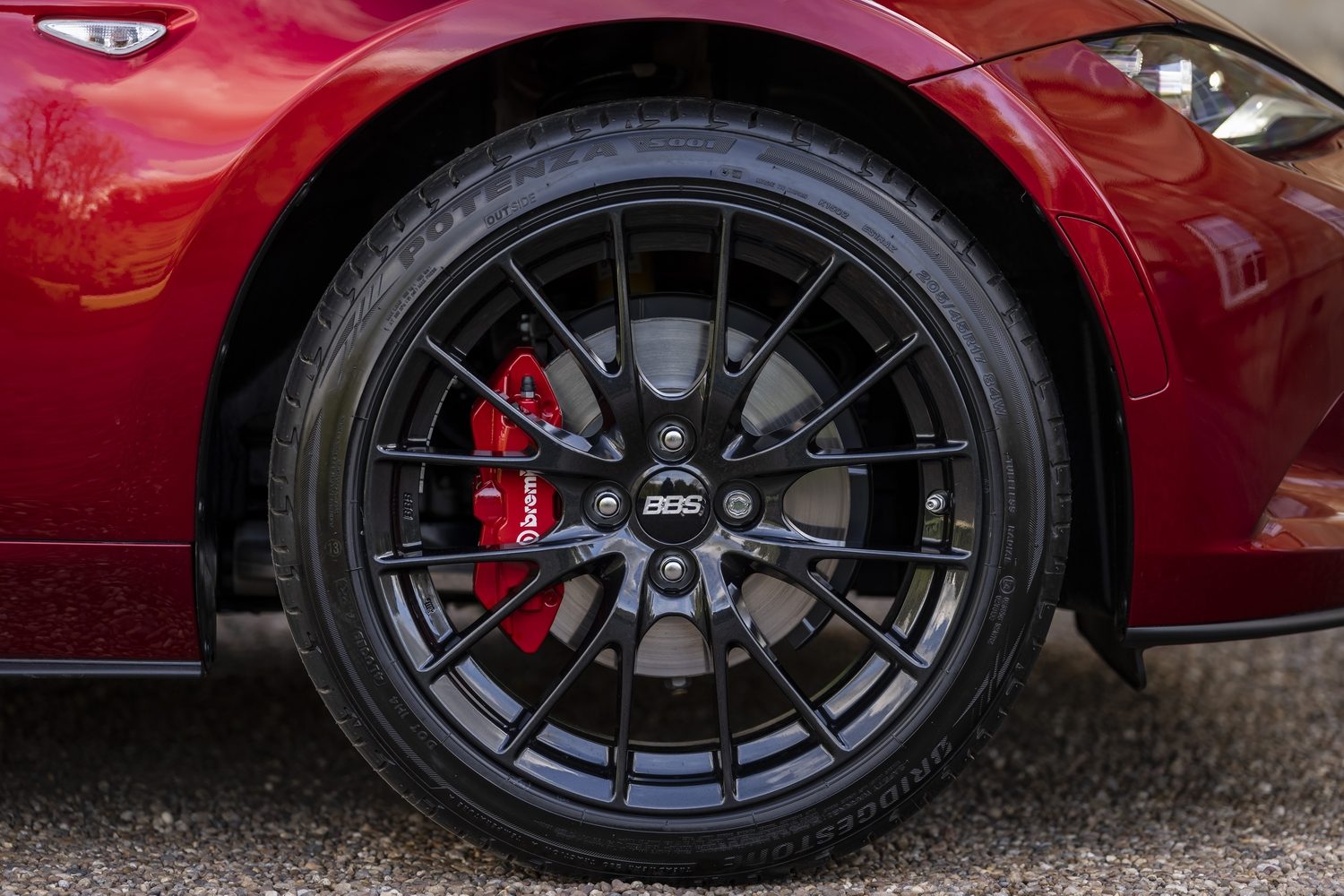
This MX-5 is the priciest, a 2.0-litre model with 184hp, significantly more powerful than the 1.5-litre model with 132hp. The 2.0-litre comes with a strut between the front wheels that tautens up the suspension, Brembo brakes at the front and a more aggressive limited-slip differential at the back. Oh, and it comes with a set of utterly gorgeous BBS alloy wheels too.
Prices for the MX-5 aren't as cheap as once they were (what is?) but you can still get an entry-level 1.5-litre model for less than €40,000.
Worst road in Ireland
So, roof down, I headed out onto arguably the worst road in the country: Dublin's M50 ring road, heading north towards the airport. The M50 is usually a place for hatred and disillusion, but on this day, it felt like a gently curving French Route National.
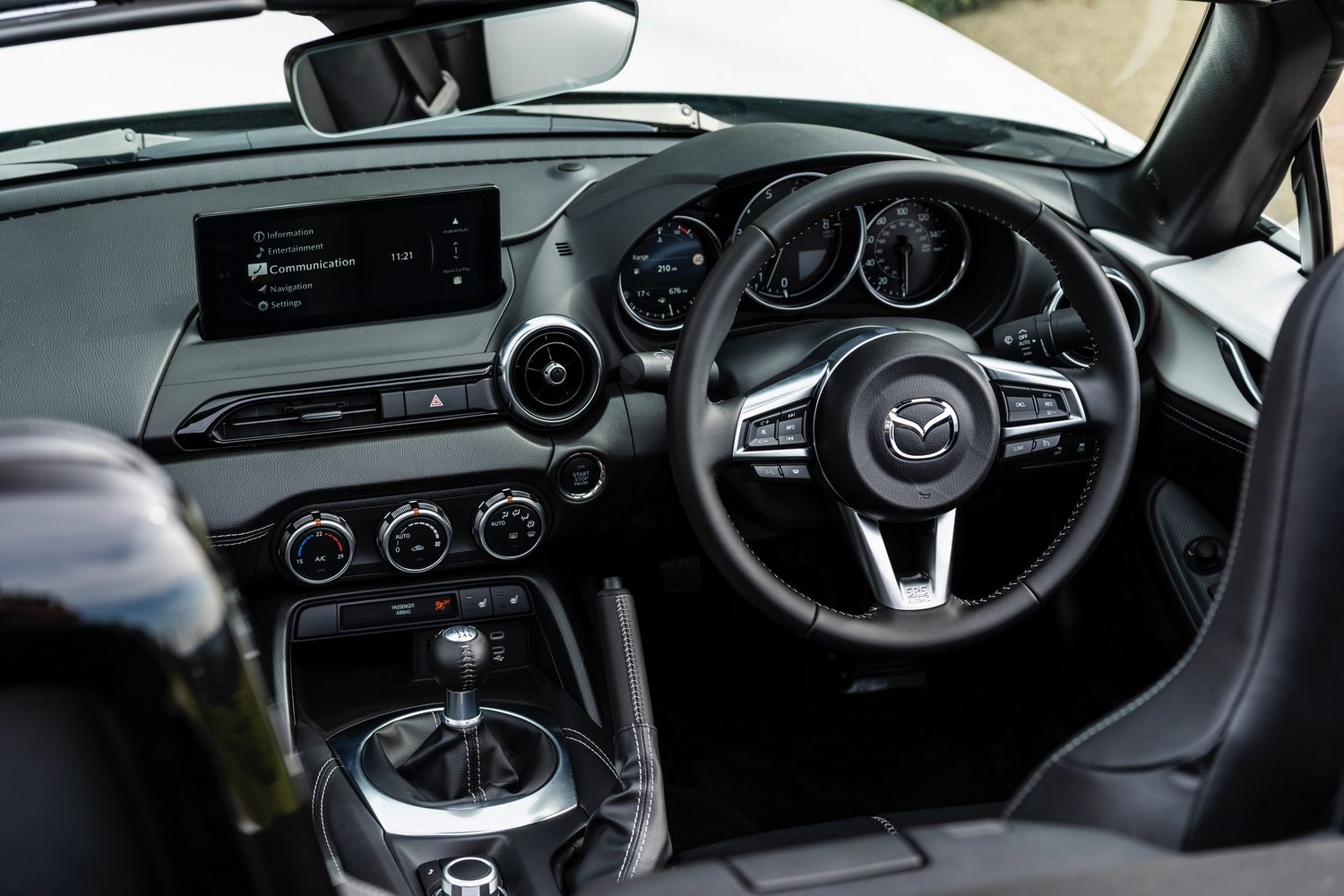
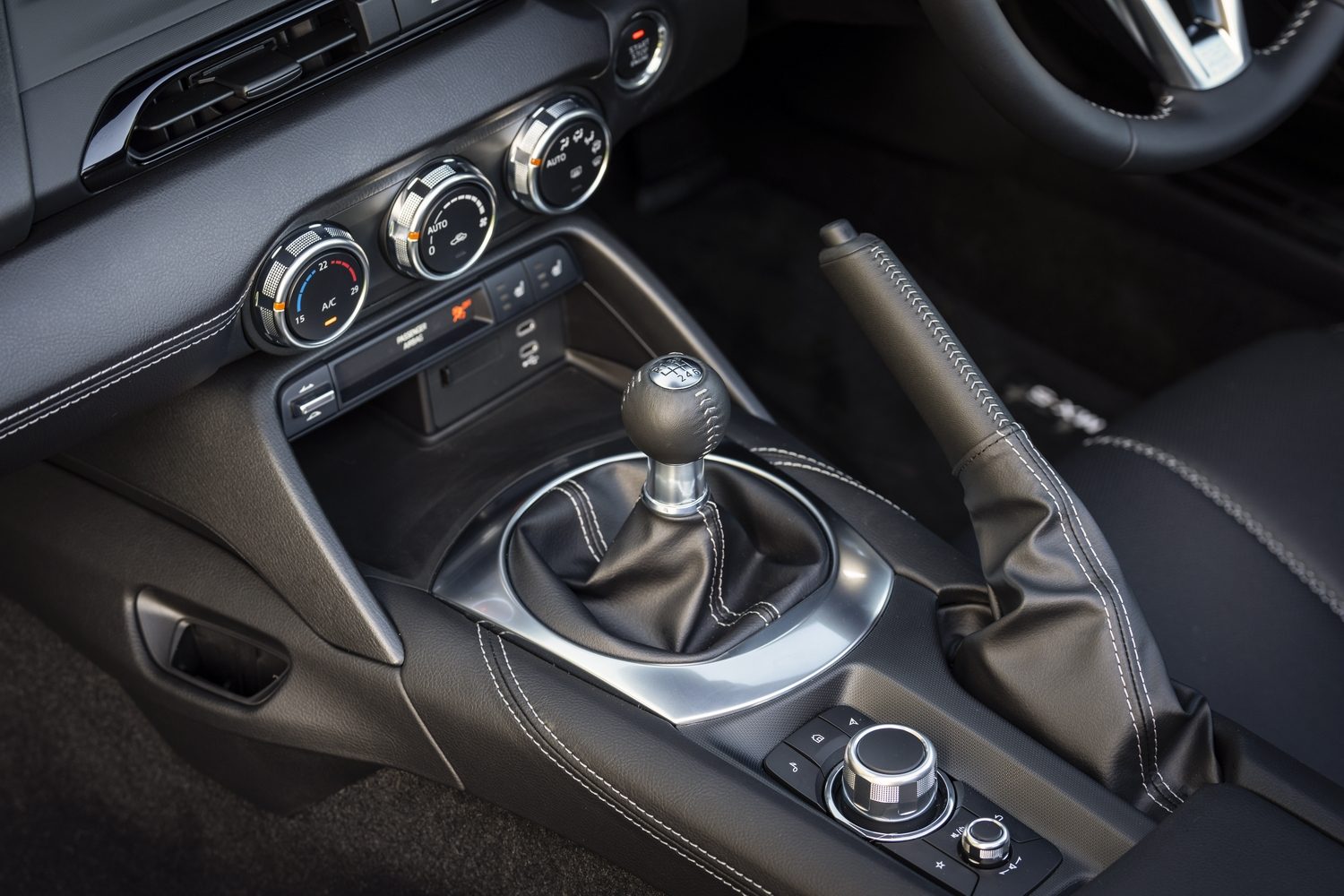
My fading hair was gently stirred by the breeze, my ears enjoyed the occasional sharp bark of exhaust note under acceleration, my left arm was delighted by the weighty, mechanical gearshift (the lever basically sticks up directly from the six-speed gearbox into the cabin), and both palms enjoyed the sensations of feedback and enjoyment from the steering wheel.
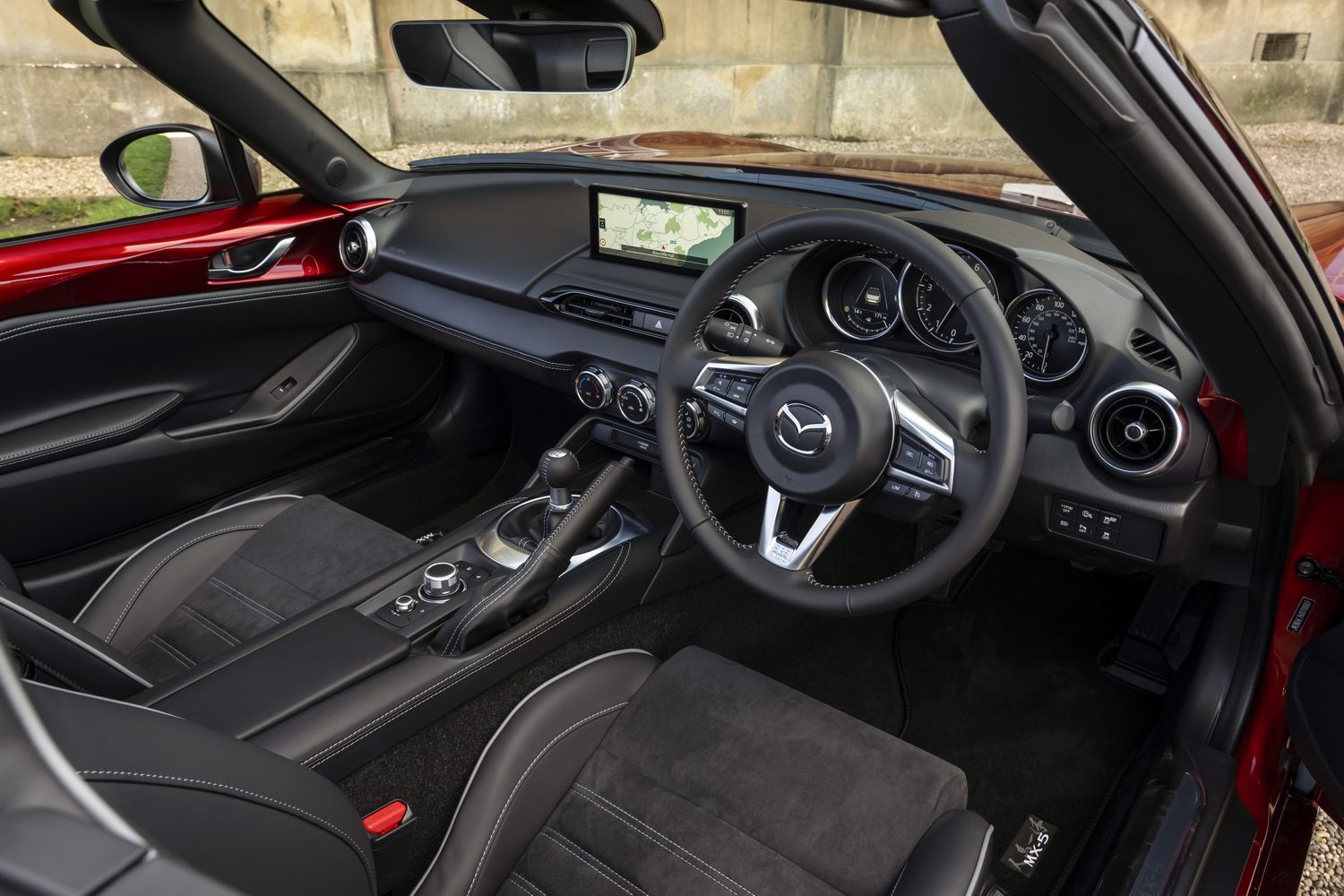
It was a perfect drive and never mind that it took place entirely on the M50. Later in the week, on more appropriately countrified roads with proper twisty bits and grassy verges, the MX-5 proved once again that it's quite simply the most purely enjoyable car you can currently buy, a position it has held more or less unchanged for 35 years now, since the original was launched in 1989.
Not for the first time, I began to think that the MX-5 ought to be offered by the HSE on prescription. Feeling a bit blue? Here, take a bright red sports car for the weekend and see how you feel.
Should the Mazda MX-5 be prescribed by doctors?
Actually, this isn't quite the throwaway gag that it might sound. There's solid scientific evidence to back up the notion that driving a roofless sports car is good for your mental health.
In a study carried out by Associate Professor of Driver Behaviour at Cranfield University and Founder of PsyDrive, Dr Lisa Dorn (a study which was actually funded by Fiat, which of course built for a time its own 124 Spider, based on the mechanical package of this MX-5), the results suggested that being behind the wheel of a convertible makes drivers happier and more alert and could it even have health benefits over the longer term.
In the study, when the roof was down, all drivers experienced a significant increase of at least six per cent in something called 'Hedonic Tone,' a measure of happiness.
The biggest impact was felt by the more aggressive drivers, who were recorded as experiencing a 20-per-cent uplift in their mood - more than twice the amount of their less aggressive counterparts and equivalent to the positive hedonic effects after a rigorous workout.
Driving with the roof down didn't just amplify positive emotions, it also caused heart rate variability (HRV - an indication of stress) to reduce by up to a third (32 per cent), suggesting that drivers having greater contact with their driving environment and the wind in their hair could improve their wellbeing.
Convertible driving may also lead to safer driving, as drivers showed up to 15 per cent increased alertness and 20 per cent lower levels of negative emotions such as frustration or anger, which can be linked to road rage.
Positive mood (both neutral and/or happy) is associated with improved driving performance, visual attention and faster hazard response.
Interestingly, the results don't vary much by gender - both men and women get the same benefits from driving with the top off. Ahem.
Dr. Lisa Dorn said: "When driving with the top down in a convertible we experience greater levels of feedback from the road environment. This may be further increased in an electric vehicle, which emits much less noise and enables the driver to better take in their surroundings. In these circumstances, our data shows that this creates a sort of open-air euphoria that makes us feel physically and psychologically better, and possibly even drive more safely.
"Mood when driving will clearly fluctuate depending on a variety of factors impacting the driver, vehicle and road conditions. However, this study showed a significant effect that suggests, with repeated exposure, motorists could see health-related benefits of driving a convertible over time.”
I definitely felt happier and less anxious while driving the MX-5, and while I know that anecdote is not evidence, my reactions did seem to be in line with the research. I was also a much more careful and considerate driver, especially when driving with the roof down.
When driving in a large, tall, enclosed SUV you feel as if you're in a bubble, separate from all others. In an MX-5 with the roof packed away, you're very much part of your environment, and your actions seem to follow accordingly.
This is not goodbye
The good news is that this is not some mournful piece. It's not a waving off into the sunset the idea of small, affordable, sports car fun. Mazda's going to keep the MX-5 going.
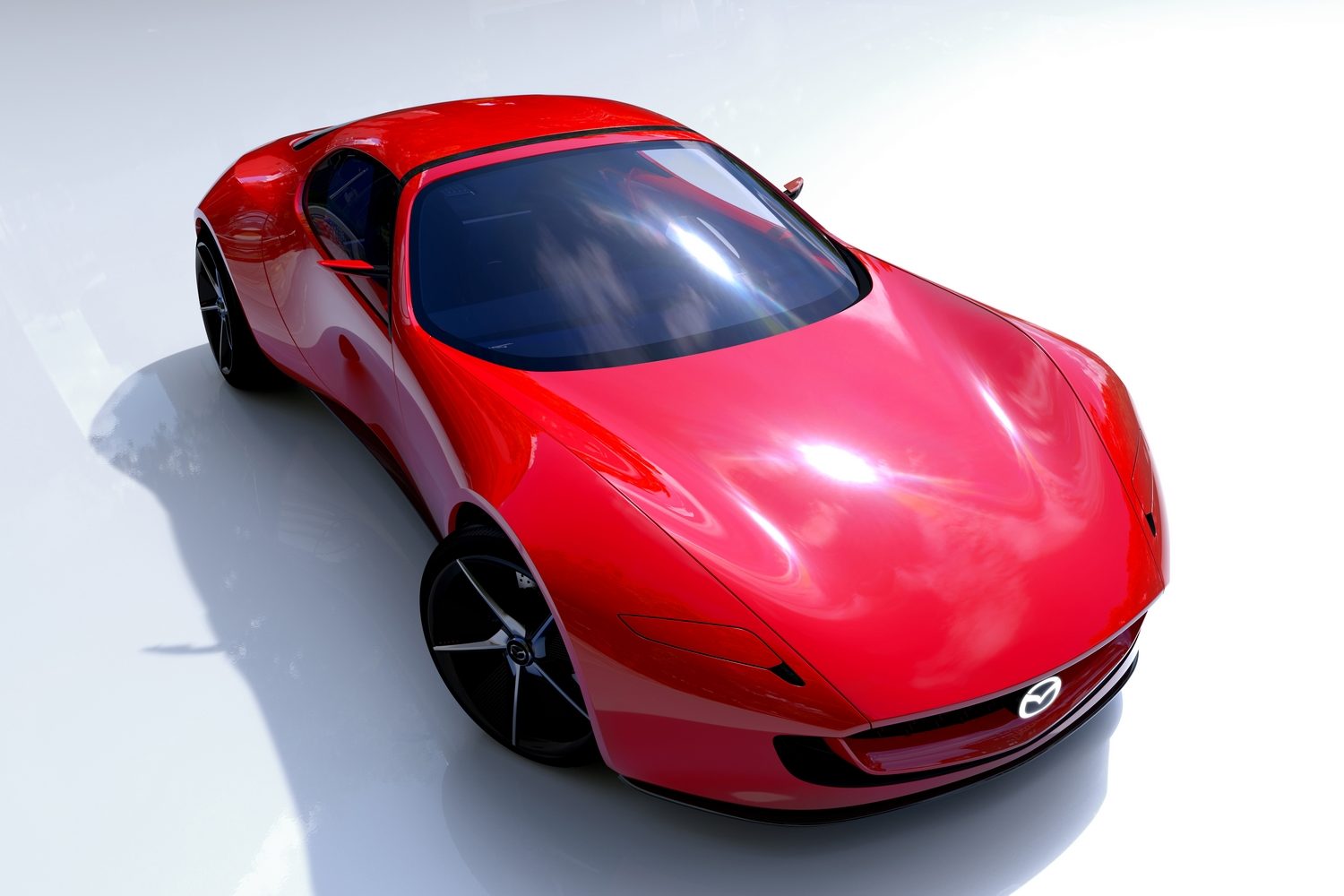
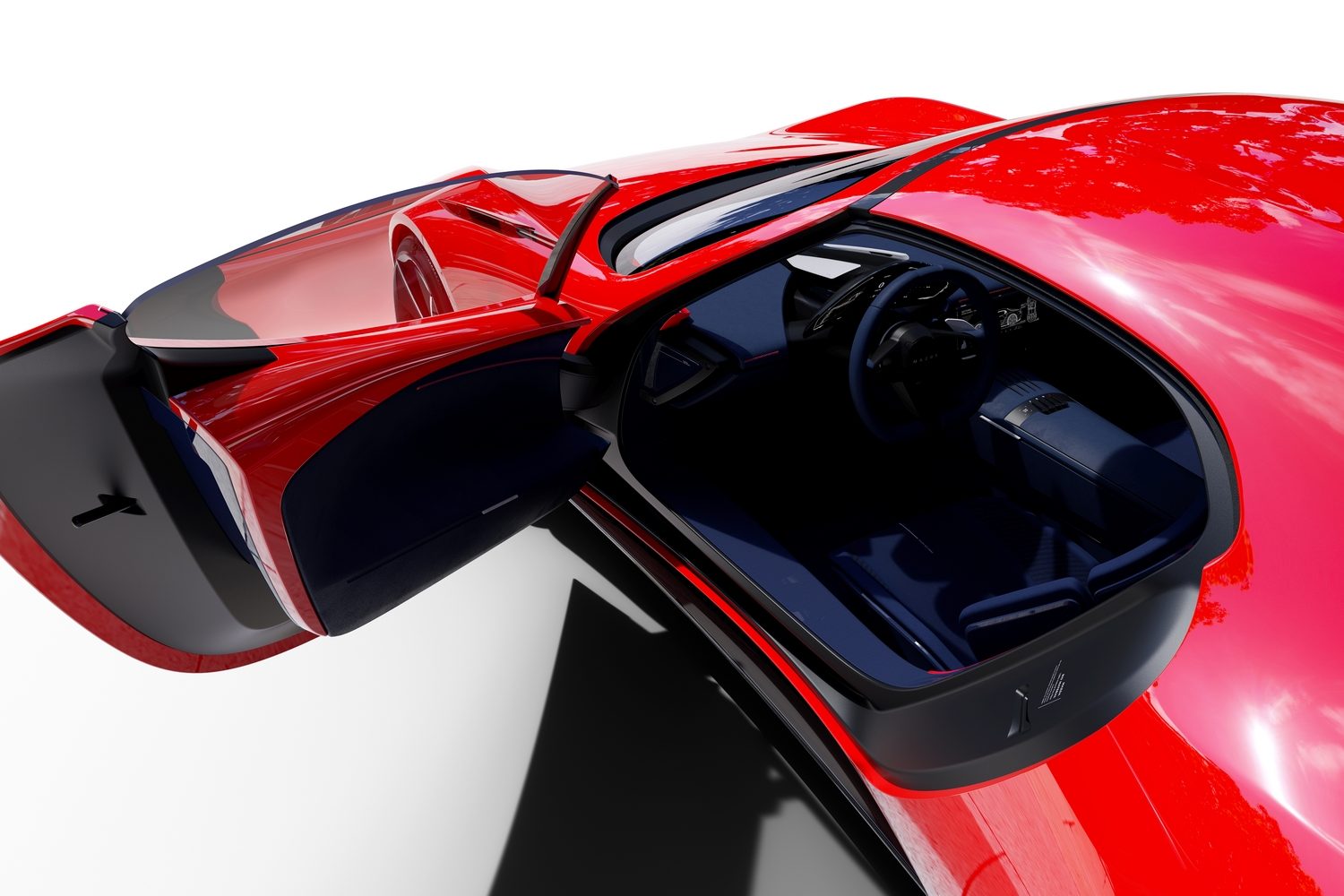
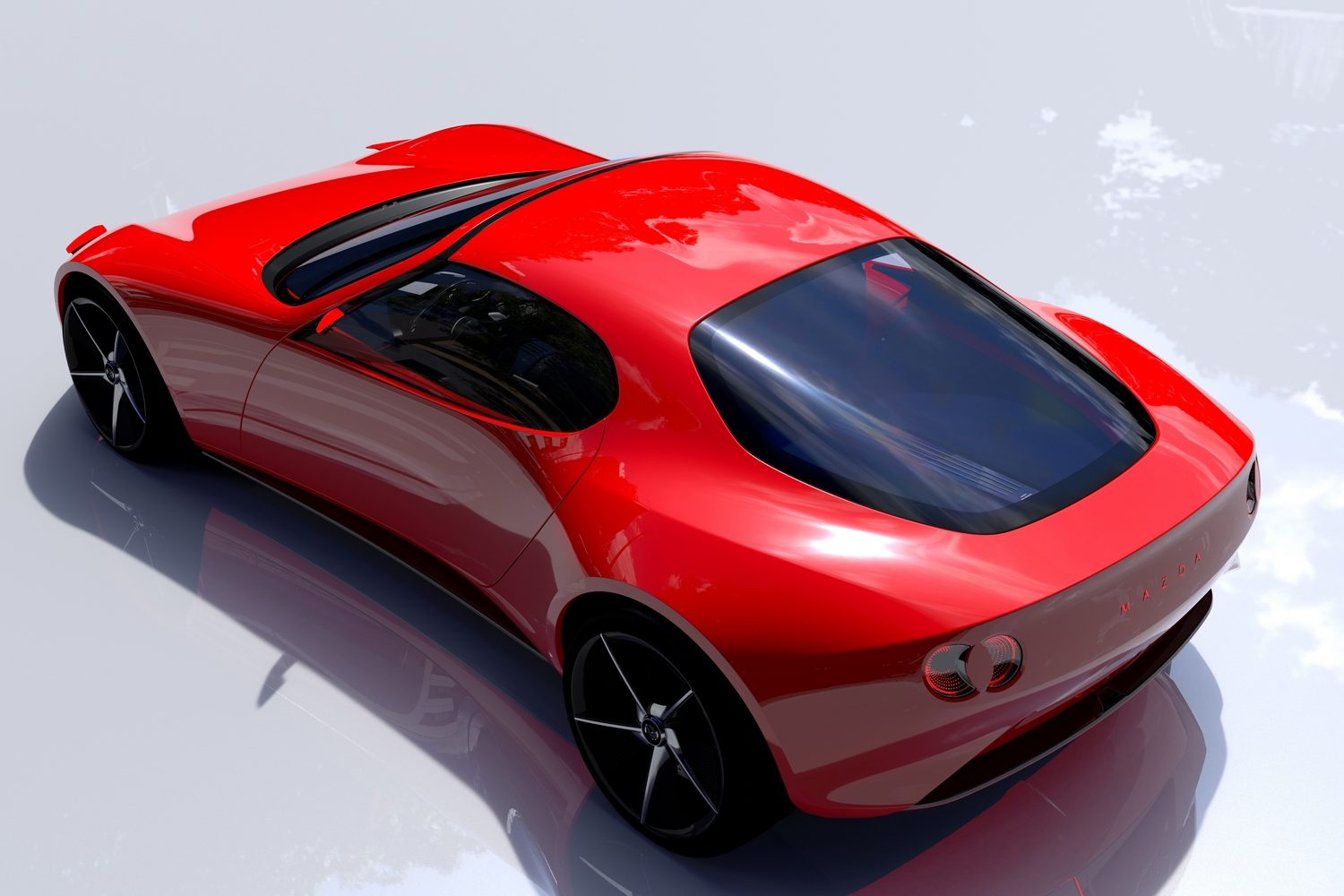
At the Tokyo motor show back in 2023 we saw the 'Iconic SP' concept car - clearly a futuristic MX-5 in all but name - powered by a combination of a compact battery and a twin-chamber rotary engine. This, it now seems certain, was not some pie-in-the-sky concept but a very real statement of Mazda's future intent.
Masashi Nakayama, general manager at Mazda's design division, said recently: "This concept is not just one of those empty show cars. It's been designed with real intent to turn it into a production model in the not-so-distant future.”
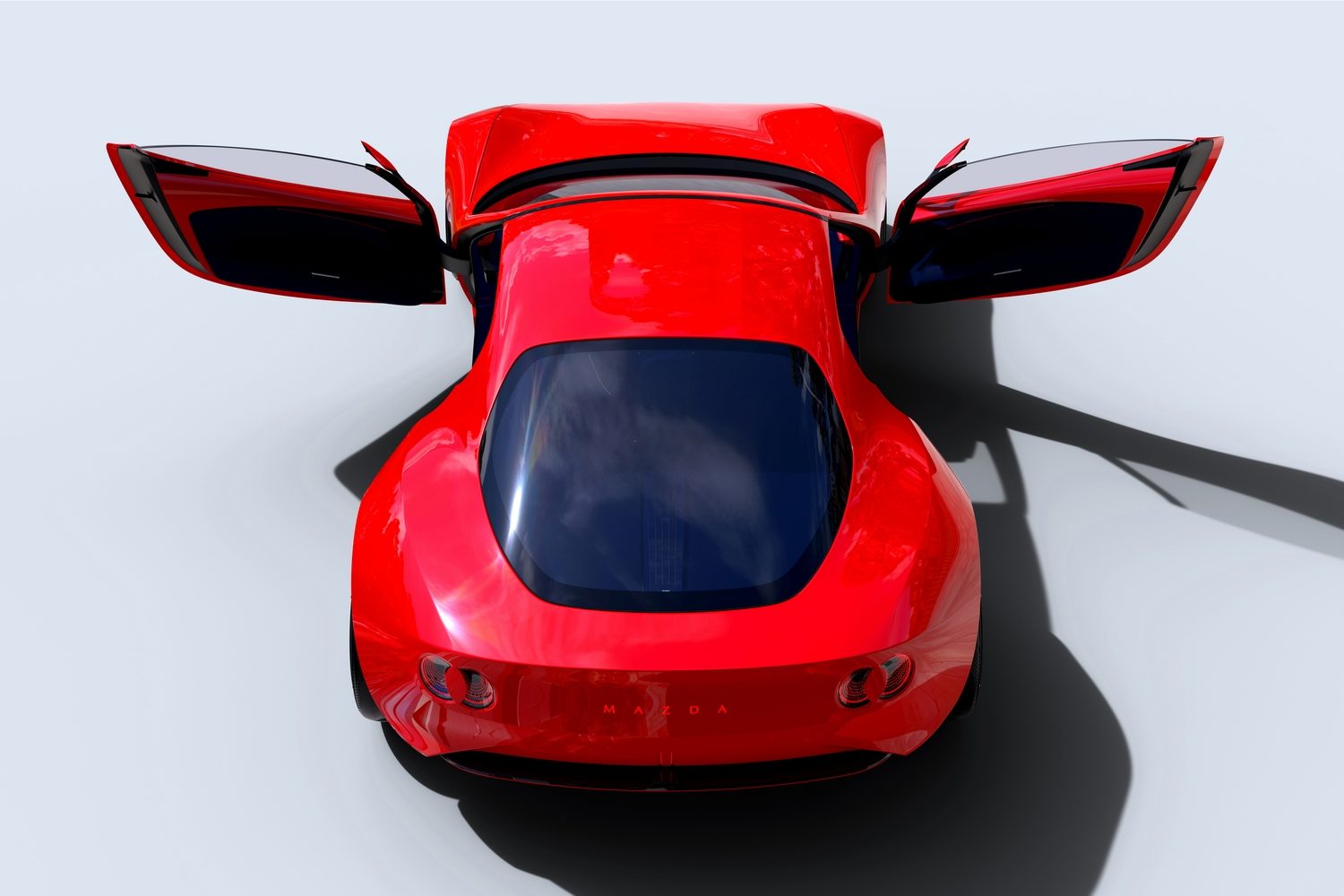
Mazda has been cagey about electric cars so far, unsure of whether they are quite the panacea that they have been promoted as. So, the future MX-5 will likely follow the concept car's design of using a small, light battery kept powered up by a smooth-spinning rotary engine, which can run on regular petrol, or which can just as easily use synthetic petrol or even pure hydrogen fuel.
If nothing else, it has boosted my mental health to know that the MX-5 is going to continue.
If there is anything about this story we have not covered, you can avail of our expert advice service via the Ask Us Anything page.