

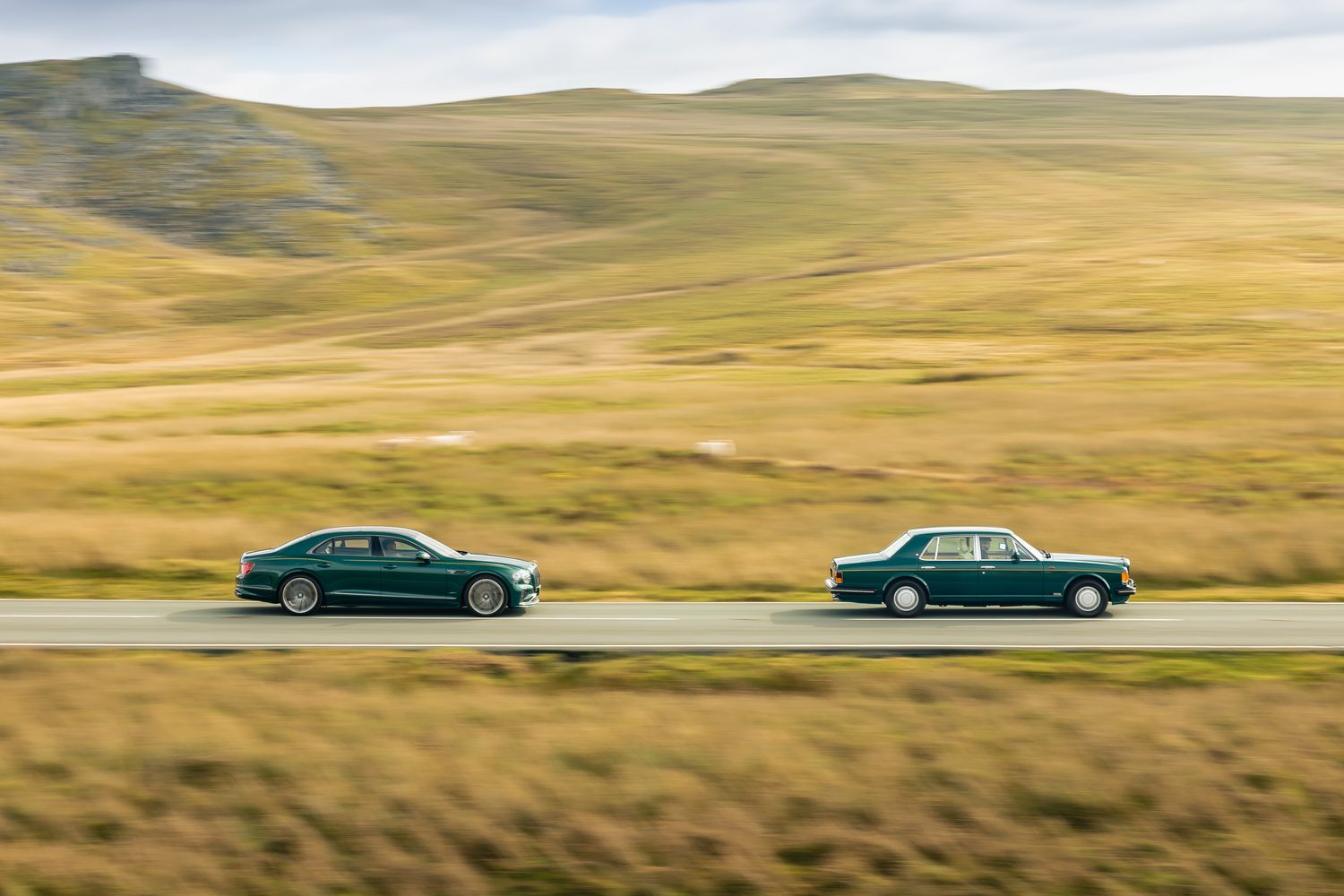
But thankfully, Bentley knows how to make a higher-number birthday party interesting again. This year marks three big anniversaries for key developments in the company's recent history.
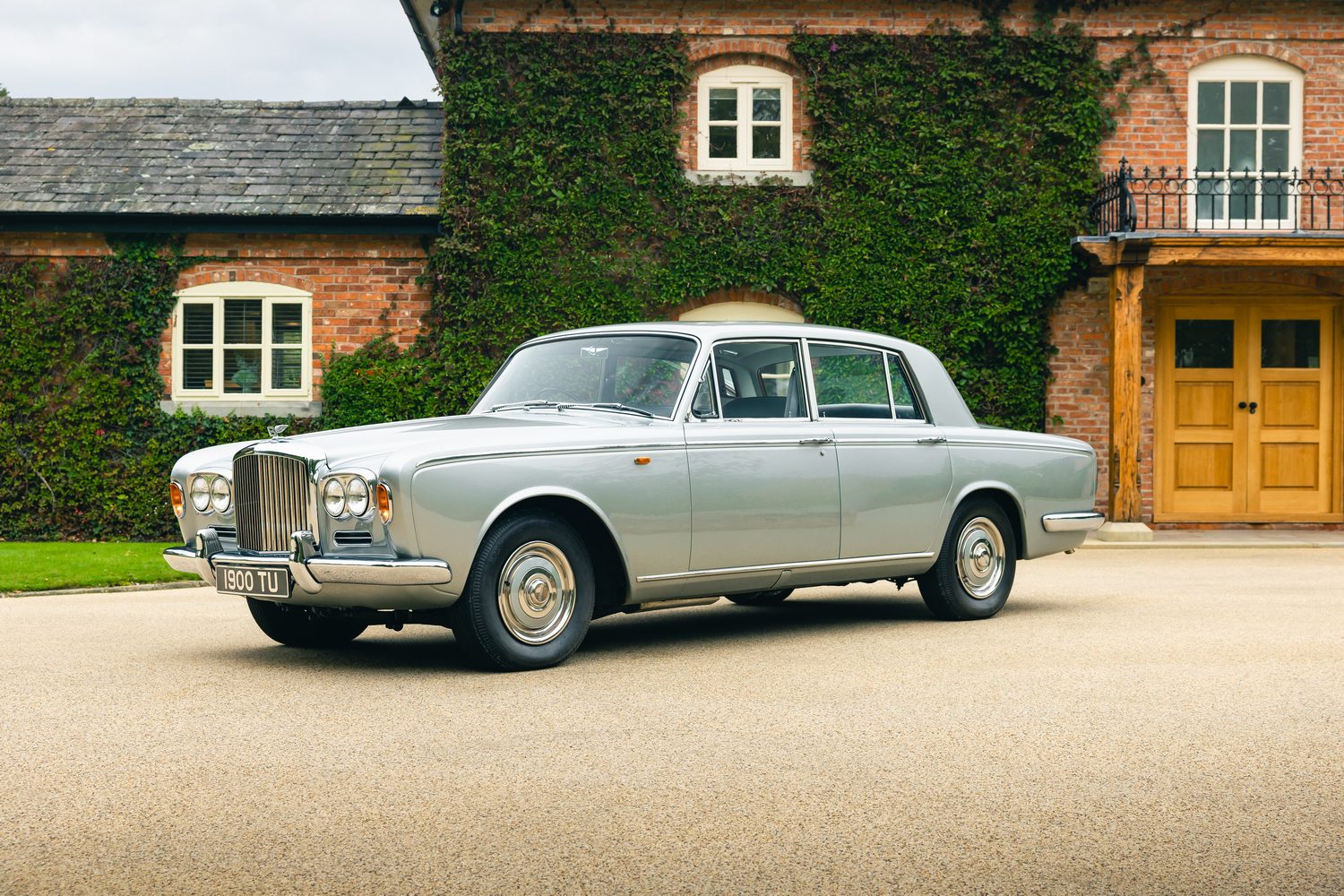
First up, it's the 60th birthday of the T-Series cars, created in 1965 as the alternative version of a vehicle from that other high-end luxury automotive brand these days, of whom we dare not speak its name in polite Bentley circles (hint: R-R...).
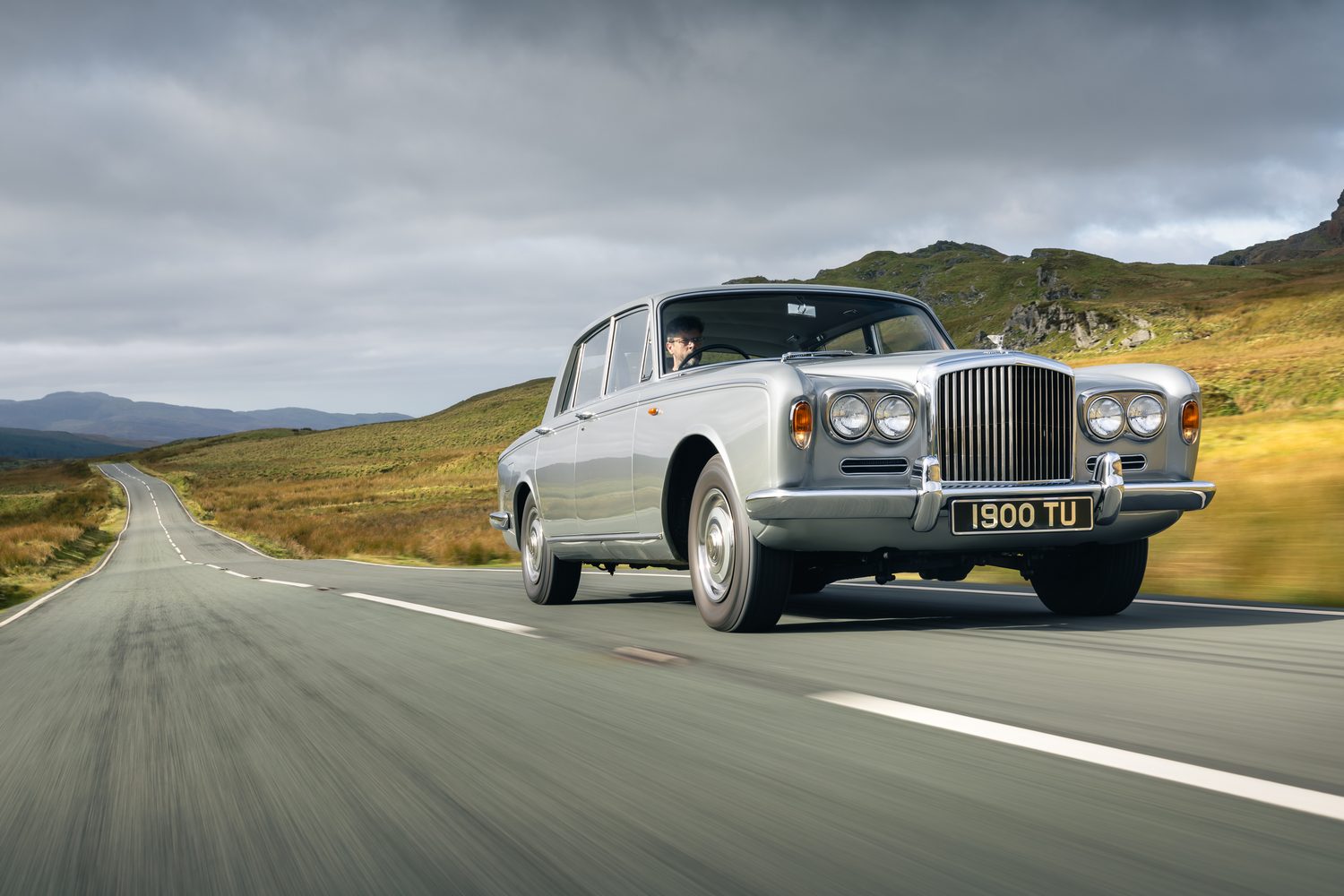
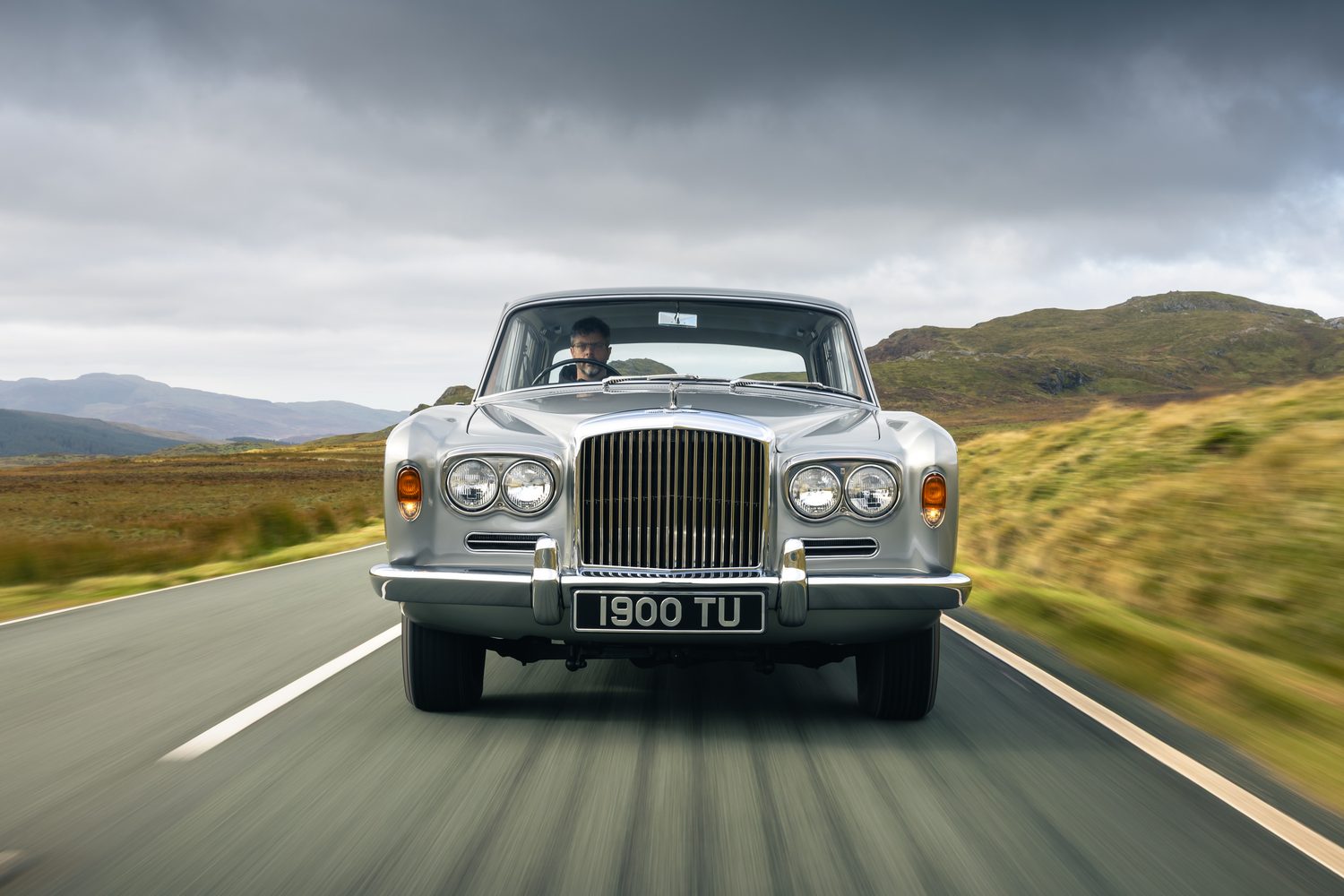
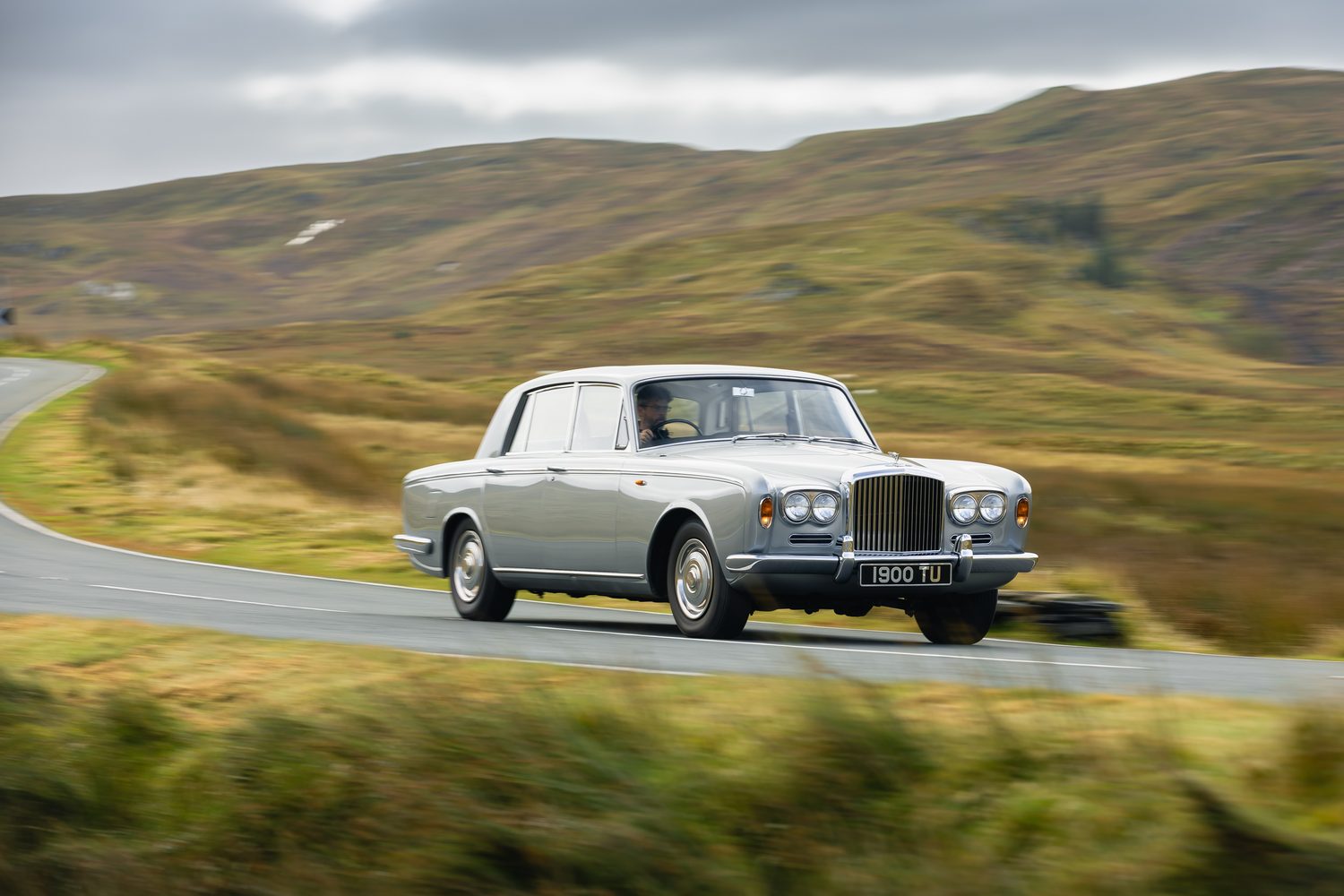
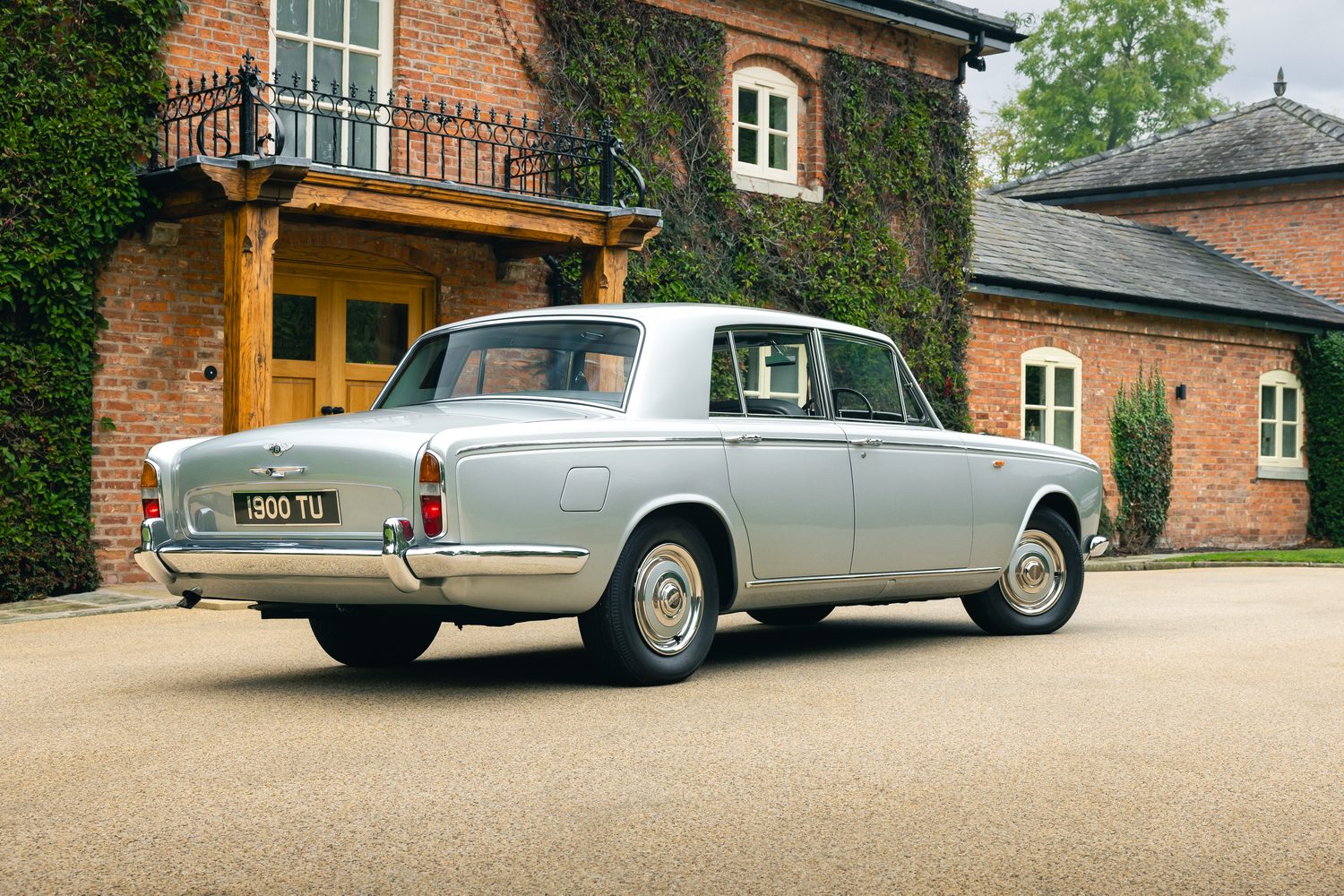
From a time when these two British marques were bedfellows and not bitter rivals, as they are now under different German ownership, the T-Series is perhaps what most people would conjure up as their mental image of a classic Bentley four-door: quad round headlights, big vertical grille, looks like it would fit in perfectly in the background of a Sean Connery-era Bond film as an affluent supervillain's preferred mode of transportation.
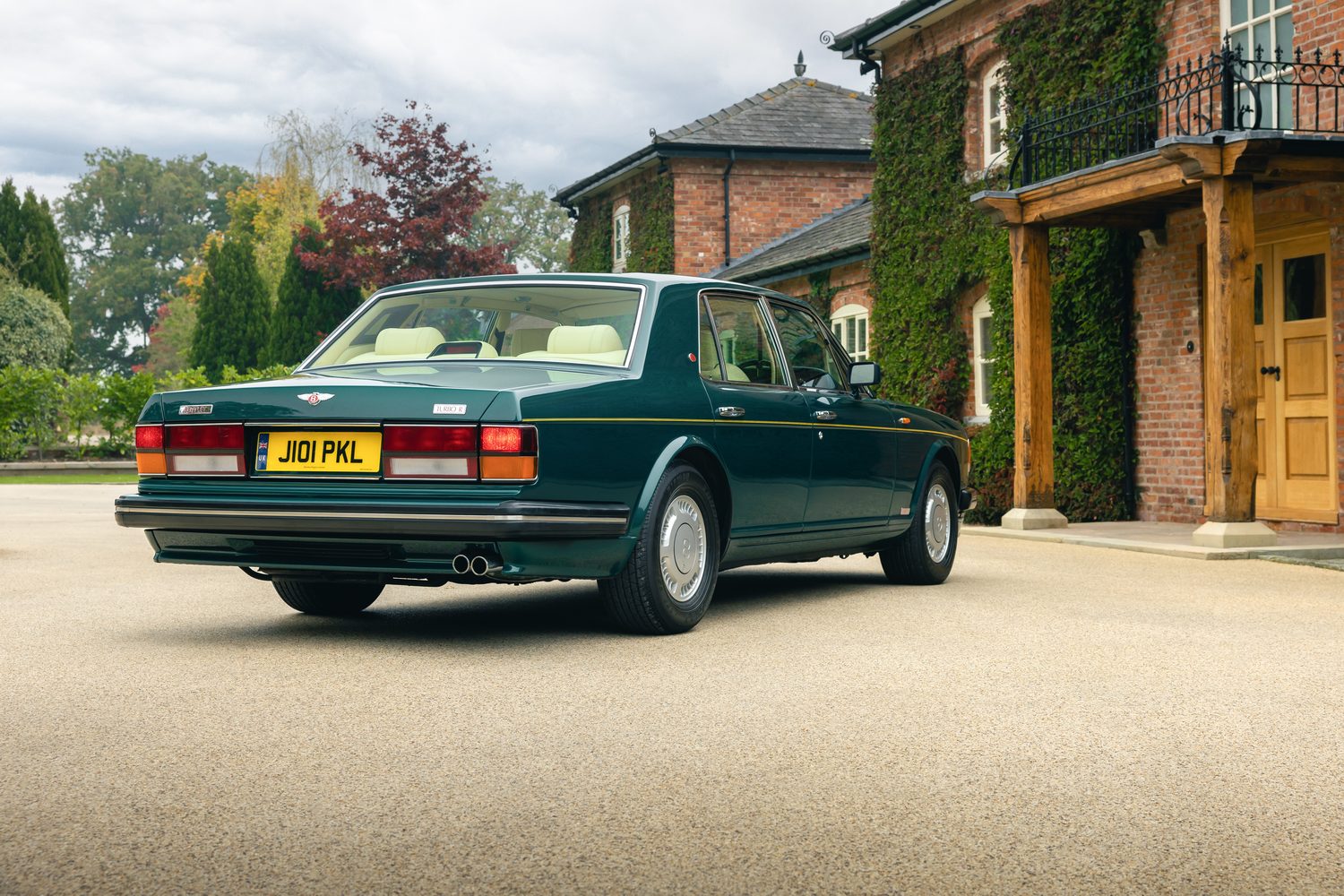
Celebrating a younger milestone than the T-Series is what most petrolheads born in the later 20th century (guilty) would think of when they conjure up the word 'Bentley', which is the Turbo R.
Originally born as the Bentley Mulsanne Turbo in 1982, the engineers found that while the car was hilariously fast, its soft suspension and comfort-oriented outlook on life meant it was somewhat roly-poly in the corners.
Thus, they went away and worked on more capable chassis underpinnings plus the fitment of the first aluminium-alloy wheels on any Bentley, and in 1985 the Turbo R was born - with the 'R' standing for 'roadholding'. Yup, the legendary boxy old boy is 40 this year; doesn't time just fly?
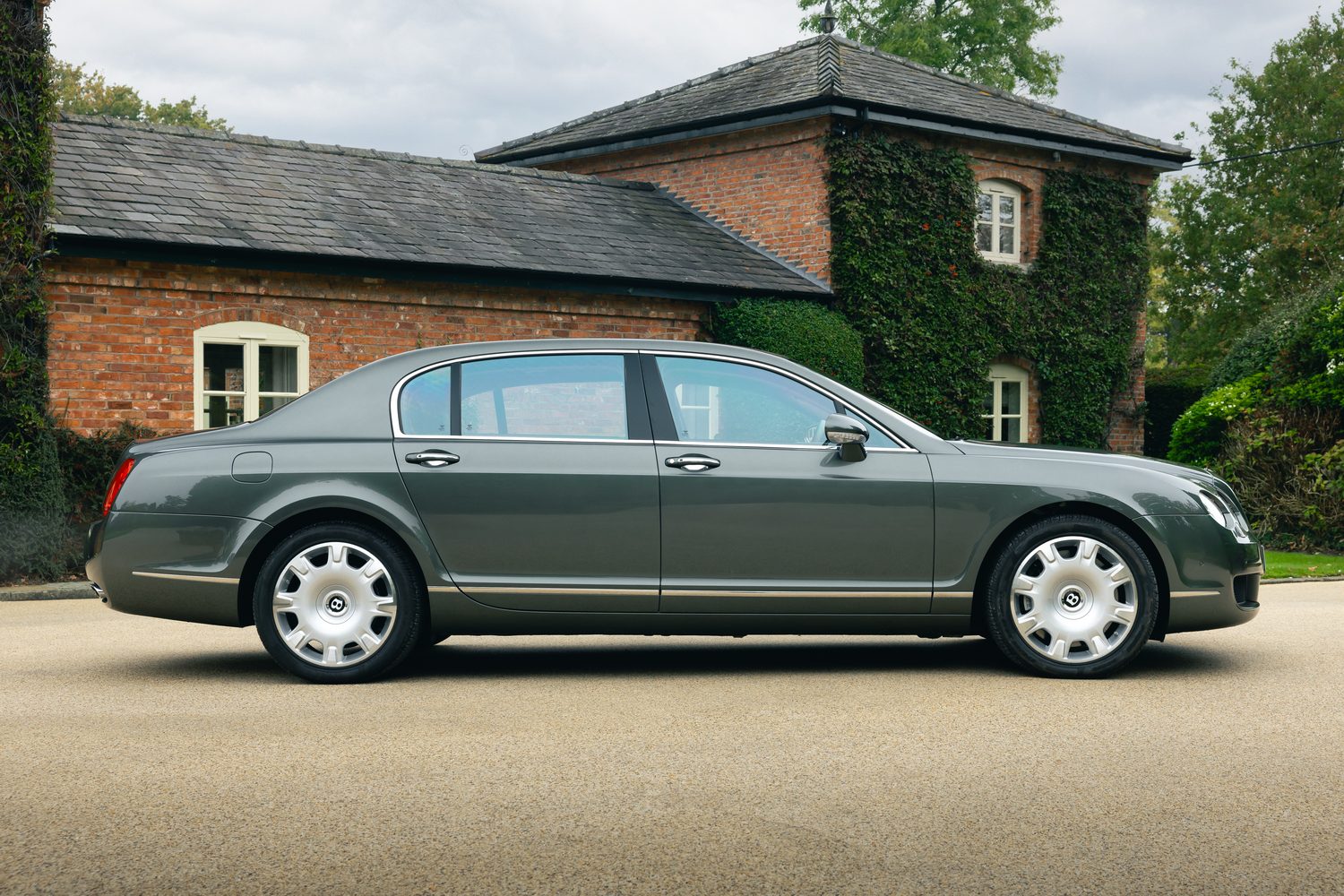
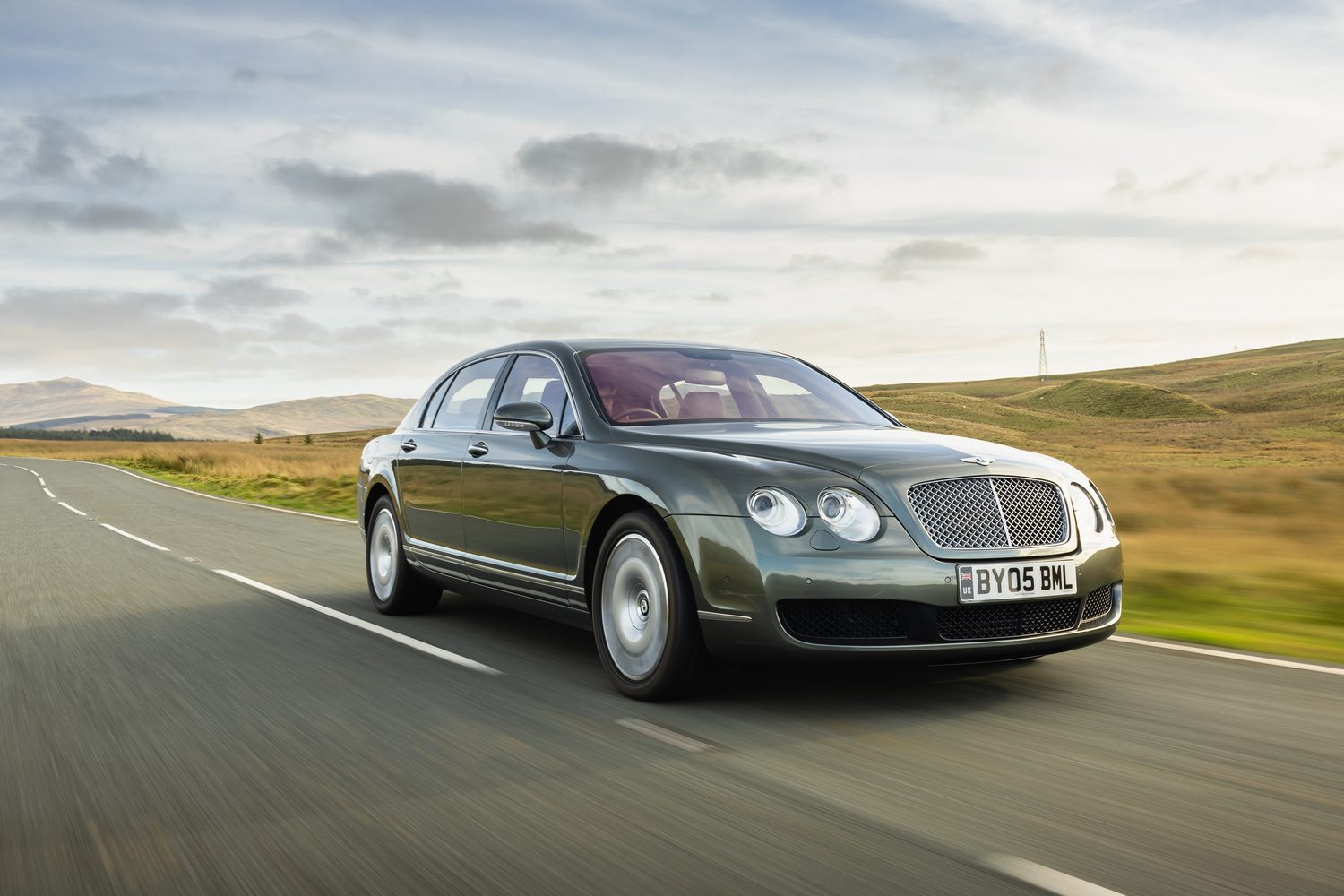
By the time we entered the new millennium, Bentley was then under the auspices of Volkswagen, and so the 'original' modern-era Flying Spur (the name was used on two models previously, running from 1959 to 1965) arrived in 2005.
It was, obviously, a four-door extension of the then-new Continental GT coupe family, hence Bentley called this 20-year-old machine the Continental Flying Spur.
By the time the second-generation four-door Bentley arrived in 2013, it looked visually distinctive enough that the 'Continental' moniker was dropped entirely, leading us to the current third-generation car, introduced in 2019, that is now tentatively called the 'Mk4' Flying Spur by the manufacturer as it enters the new, all-hybrid era.
So, to get an idea of Bentley's saloon heritage, and how it has evolved into the present day, we were invited to The Mews, the company's countryside retreat just outside Crewe in the UK, to try some of the golden oldies, and to see three new Flying Spurs kitted out in exterior and interior colours that matched their much-vaunted ancestors.
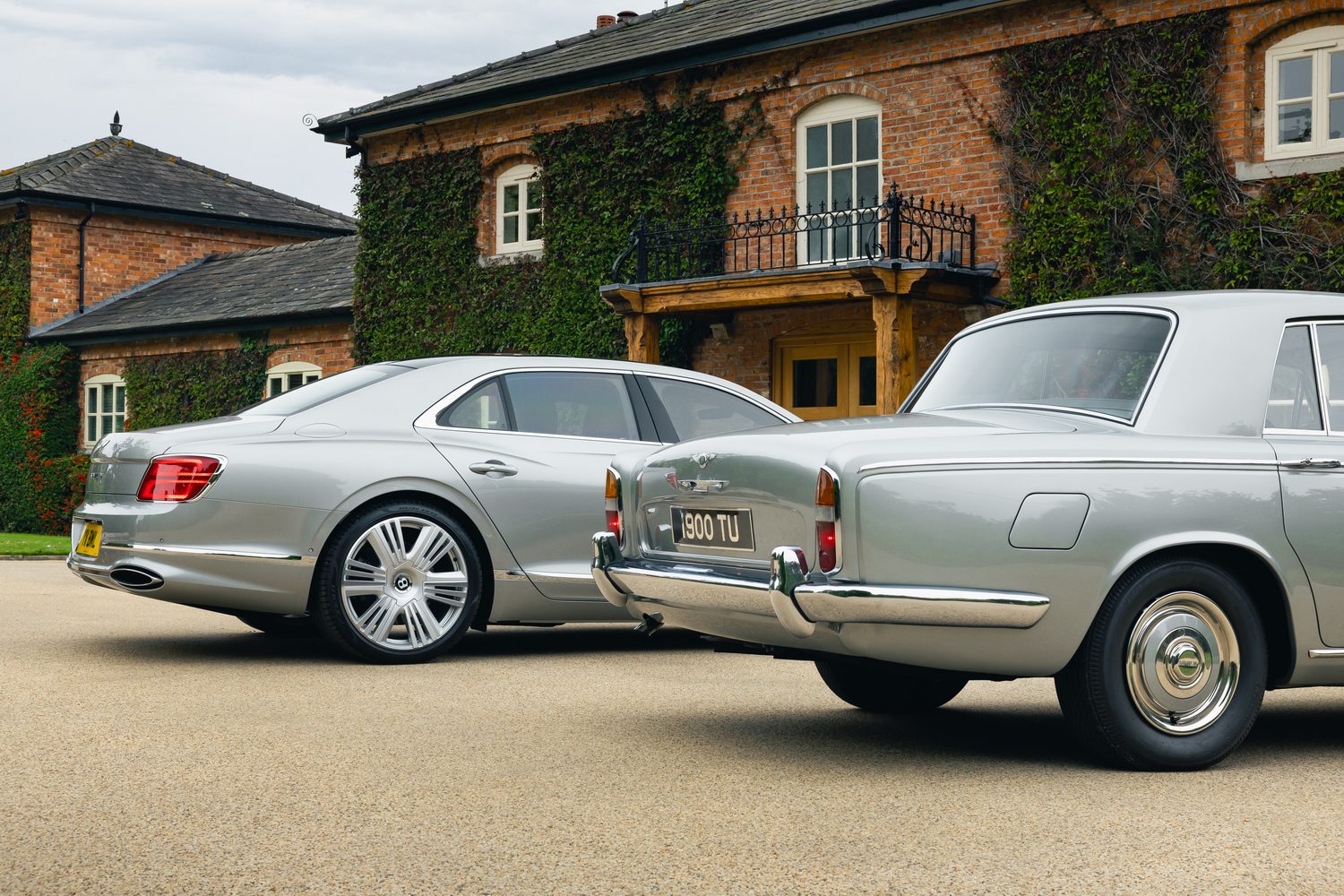
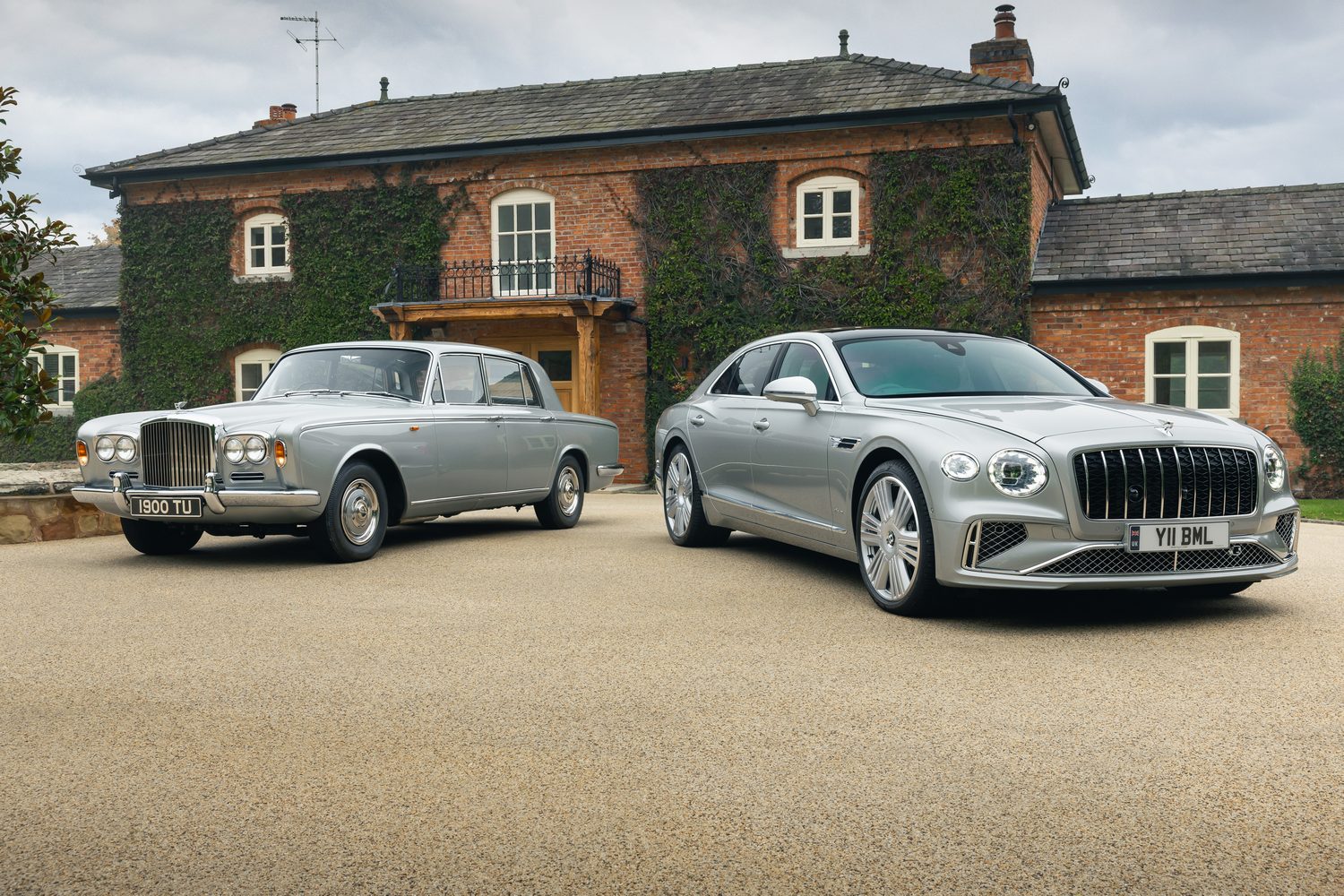
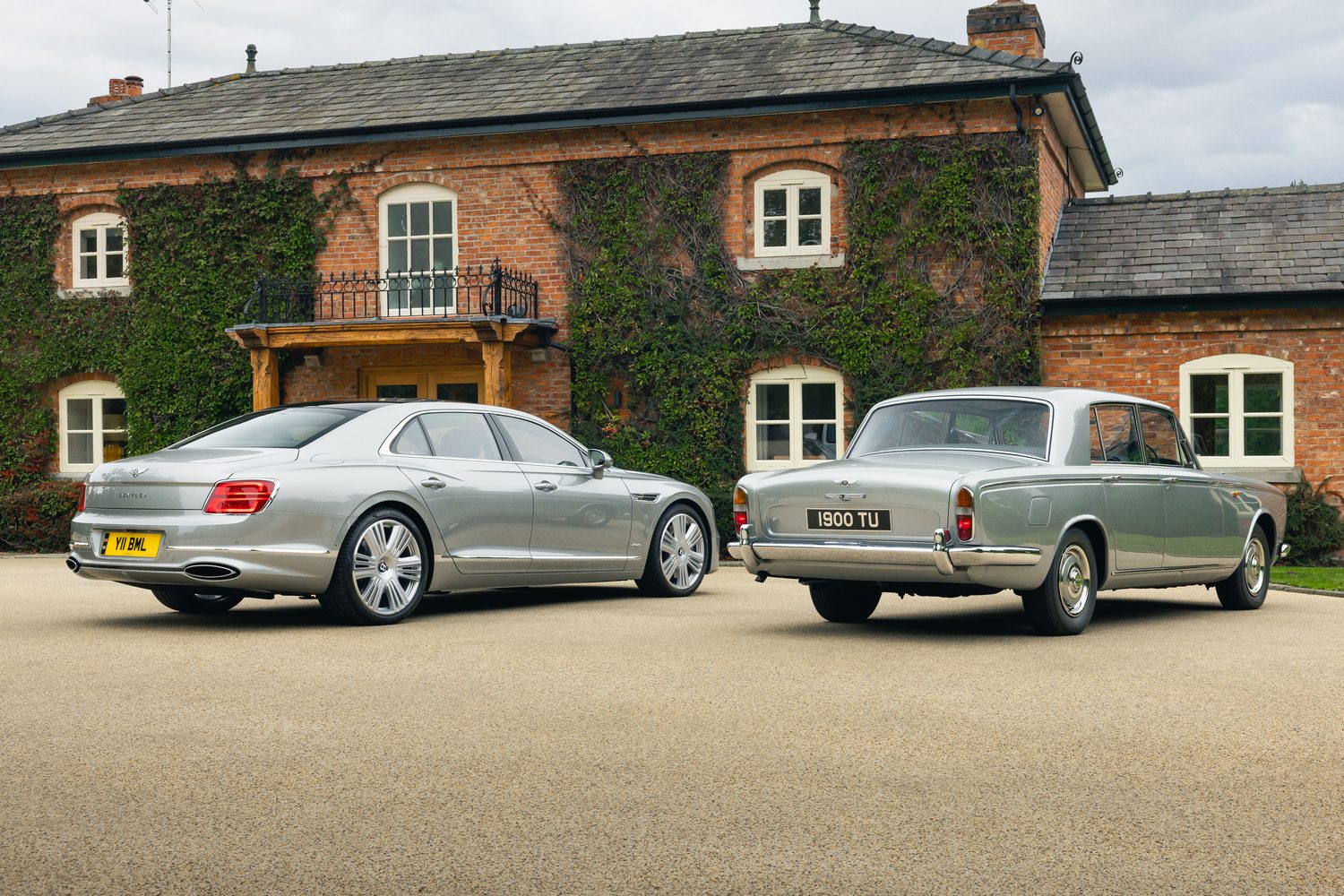
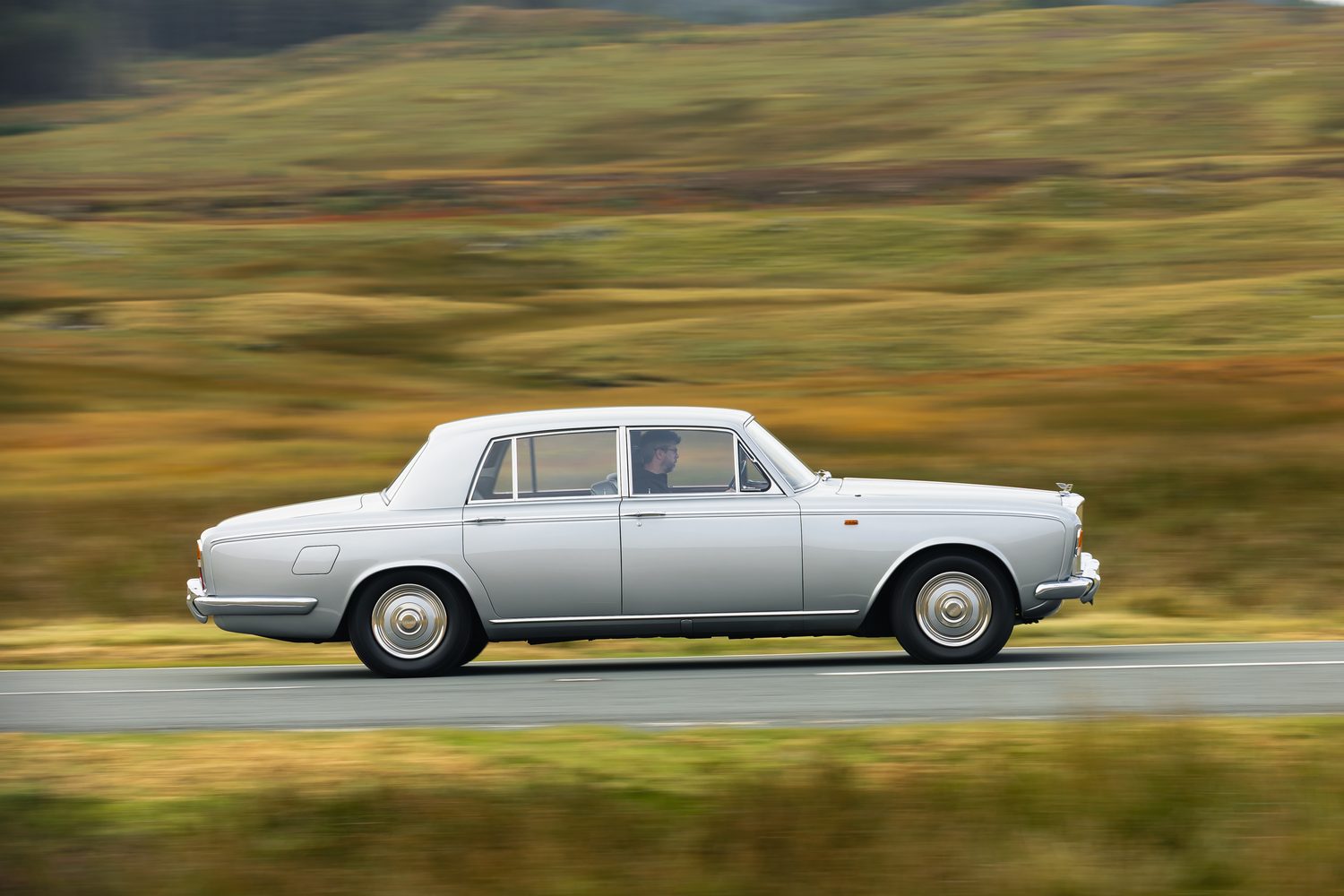
Bentley T-Series and silver Flying Spur Azure
Sadly, although you can see it in motion in pictures here, the glorious old T-Series wasn't available for drives on the day we were there, because Britain's DVLA were being party poopers and wouldn't let Bentley register it for legal road use. Boooooo!
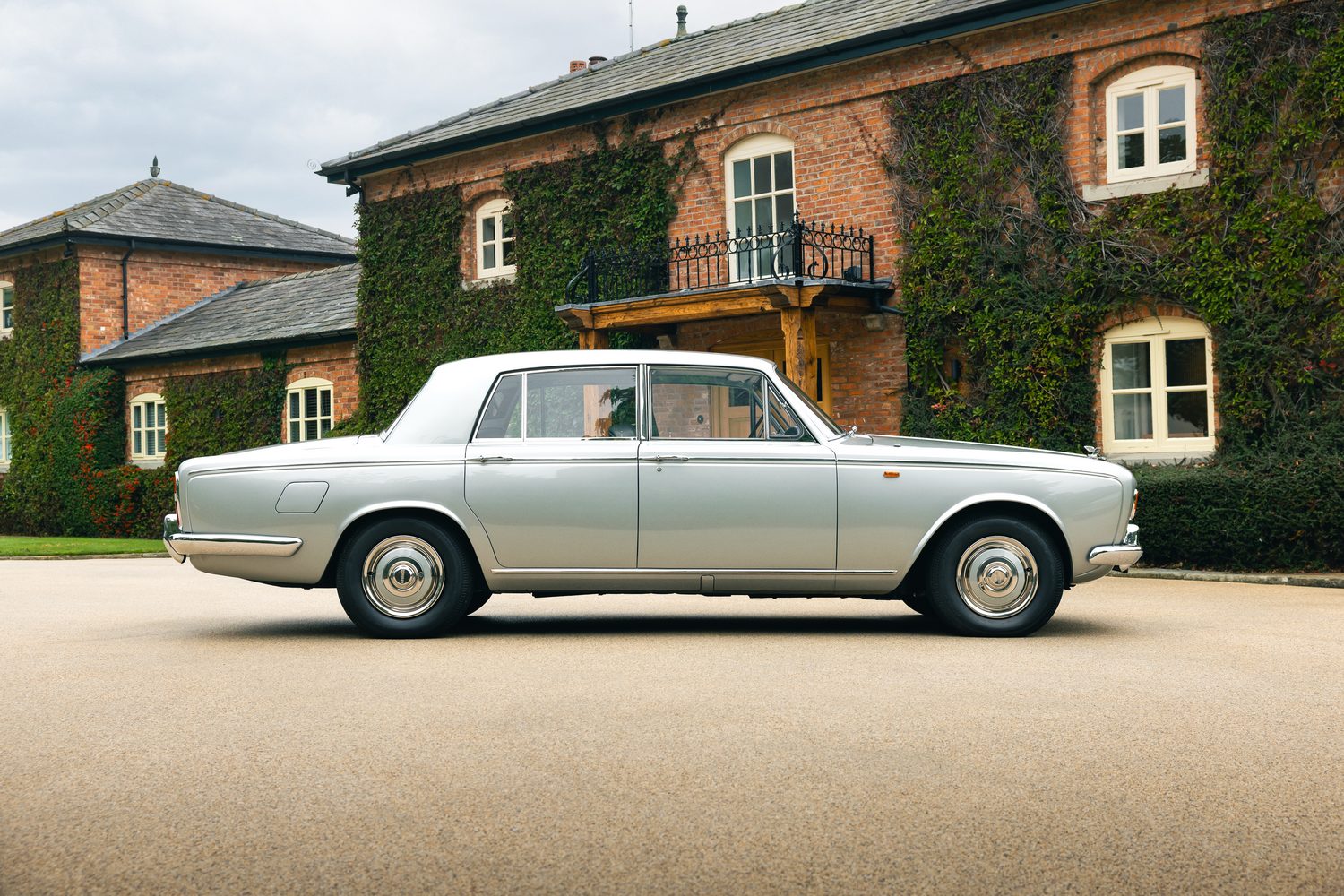
That didn't stop us gawping at it, though. Because it's a beautiful thing. But on the model's wider history, we'll stop pussyfooting around and say the T-Series was the Bentley take on the biggest-selling Rolls-Royce of all time, the Silver Shadow.
At this point in the companies' dualled history, Bentley wasn't making anything like as much of the fact it had a supposedly far sportier nature than that of R-R, so about the only visual difference between the two was that the T-Series had a front grille with rounded upper shoulders, when compared to the Silver Shadow.
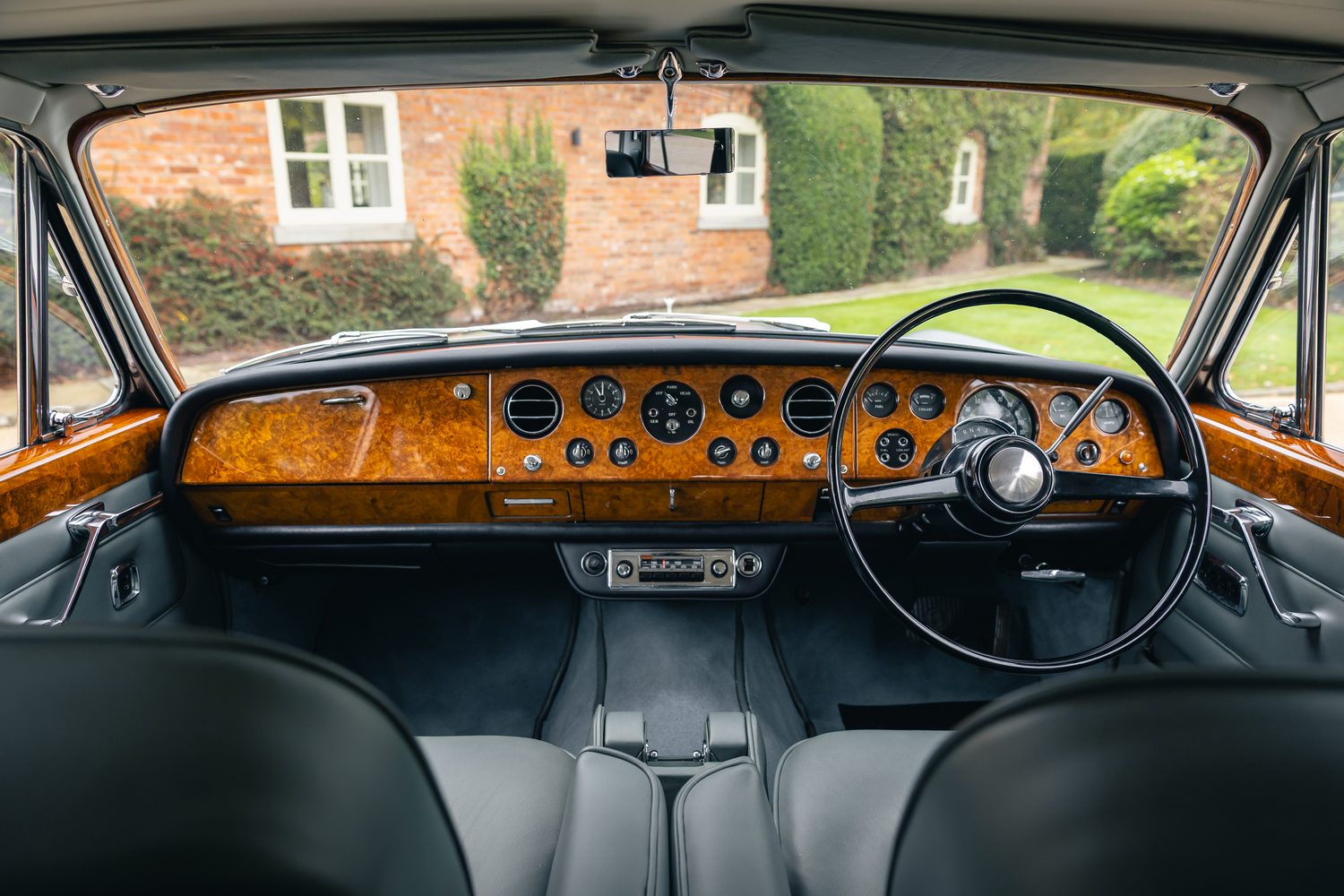
Nevertheless, it looks absolutely glorious in its silver paint and running on silvered wheels, while inside is an exquisite blue leather upholstery.
Apparently, it was a 'factory find' and had lain dormant at Bentley's HQ for a long, long time, gathering dust. It has also spent some time in Beverley Hills during its life and has just been treated to a full rebuild and refurbishment to have it looking its best - with, hopefully, road-registration soon to come.
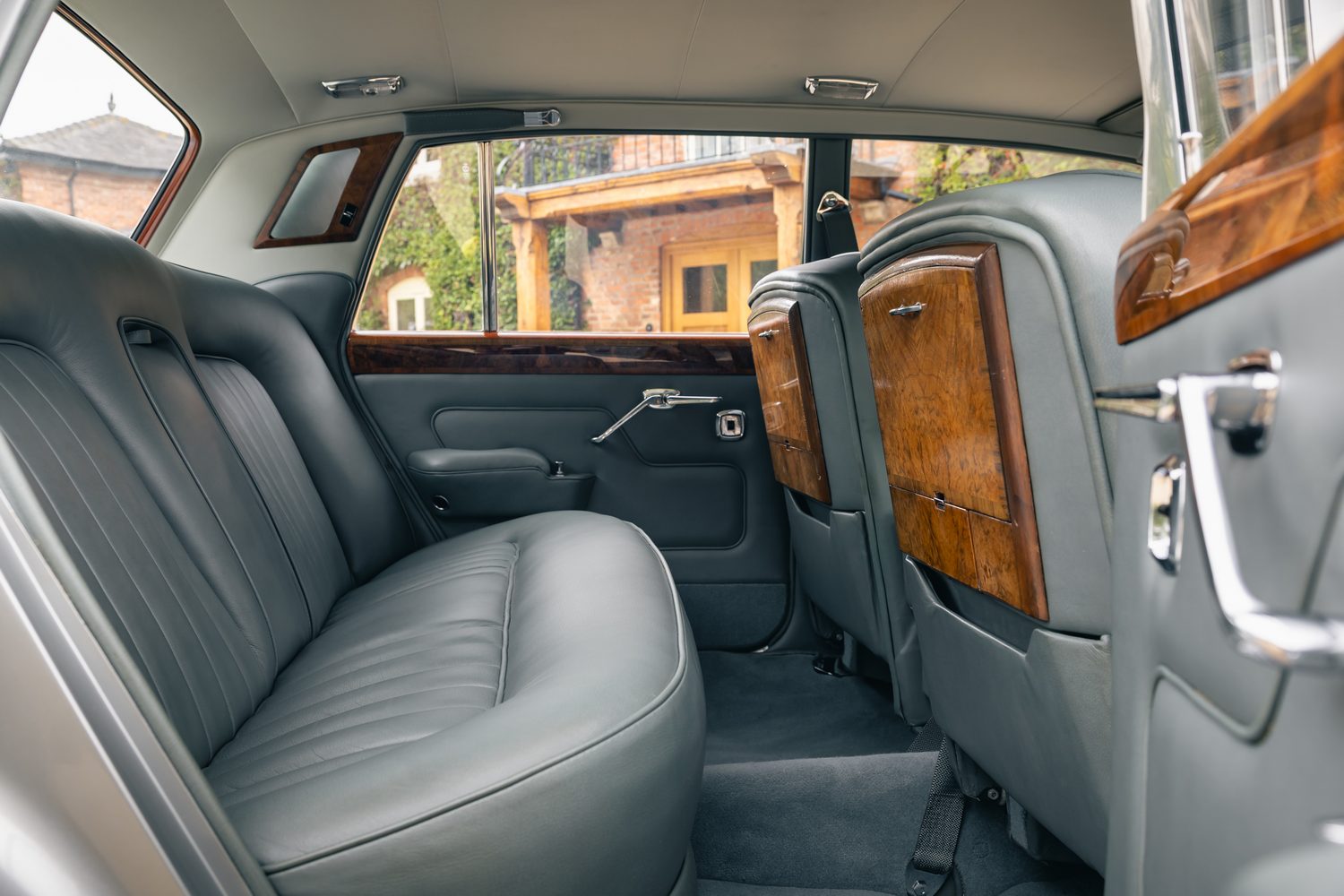
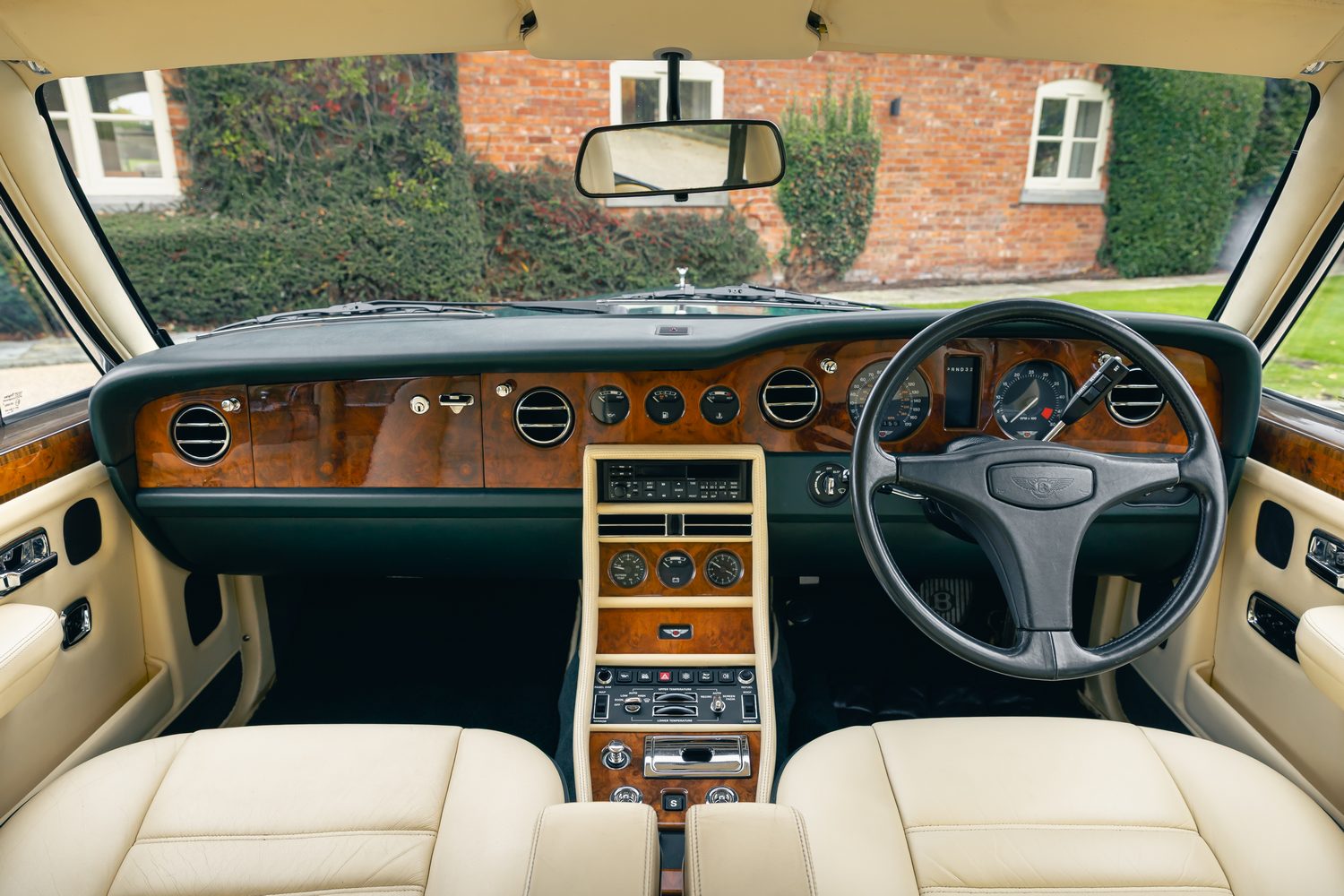
That said, even looking around it and sitting in it, inhaling the wonderful fragrance of an old-leather-and-wood interior such as this, was an unbridled treat. There are Rolls-Royce emblems on the seatbelt buckles, betraying the old intertwined past of R-R and Bentley, but even with the passage of six decades you can see current Bentley hallmarks in the bullseye air vents with twin horizontal spars, the organ stops to control various functions on the dash and the impeccable 'bookmatching' of the walnut dash in the T-Series.
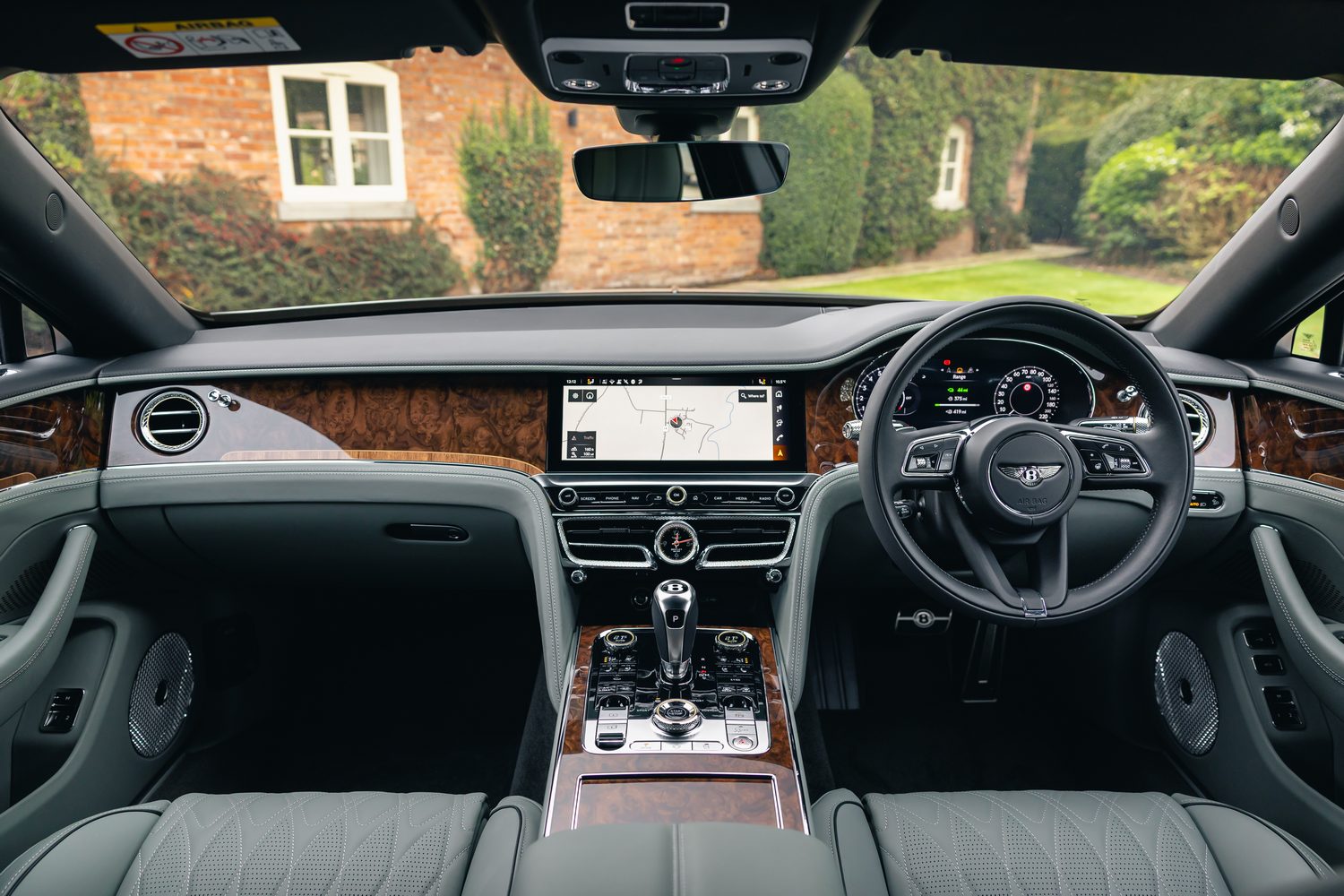
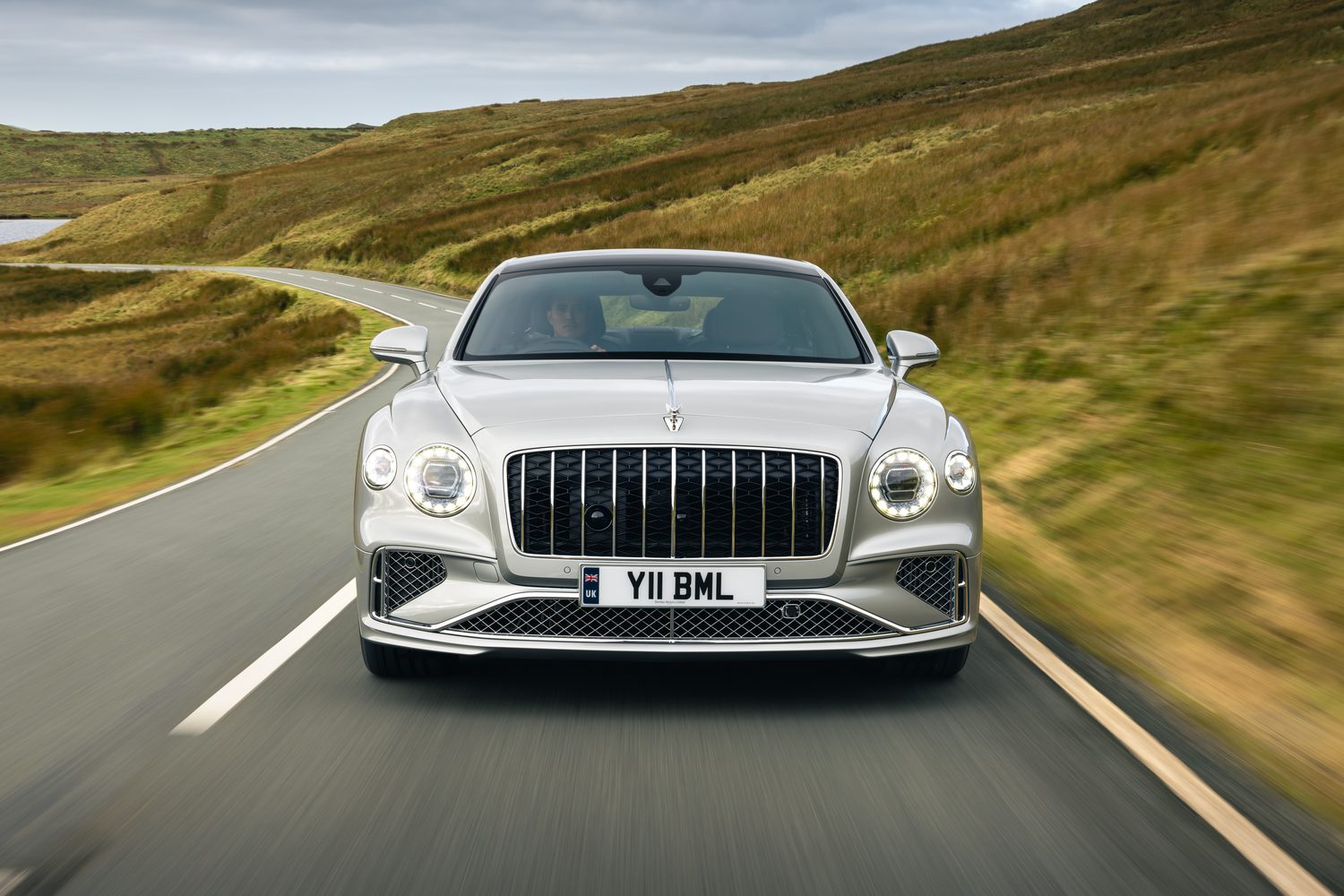
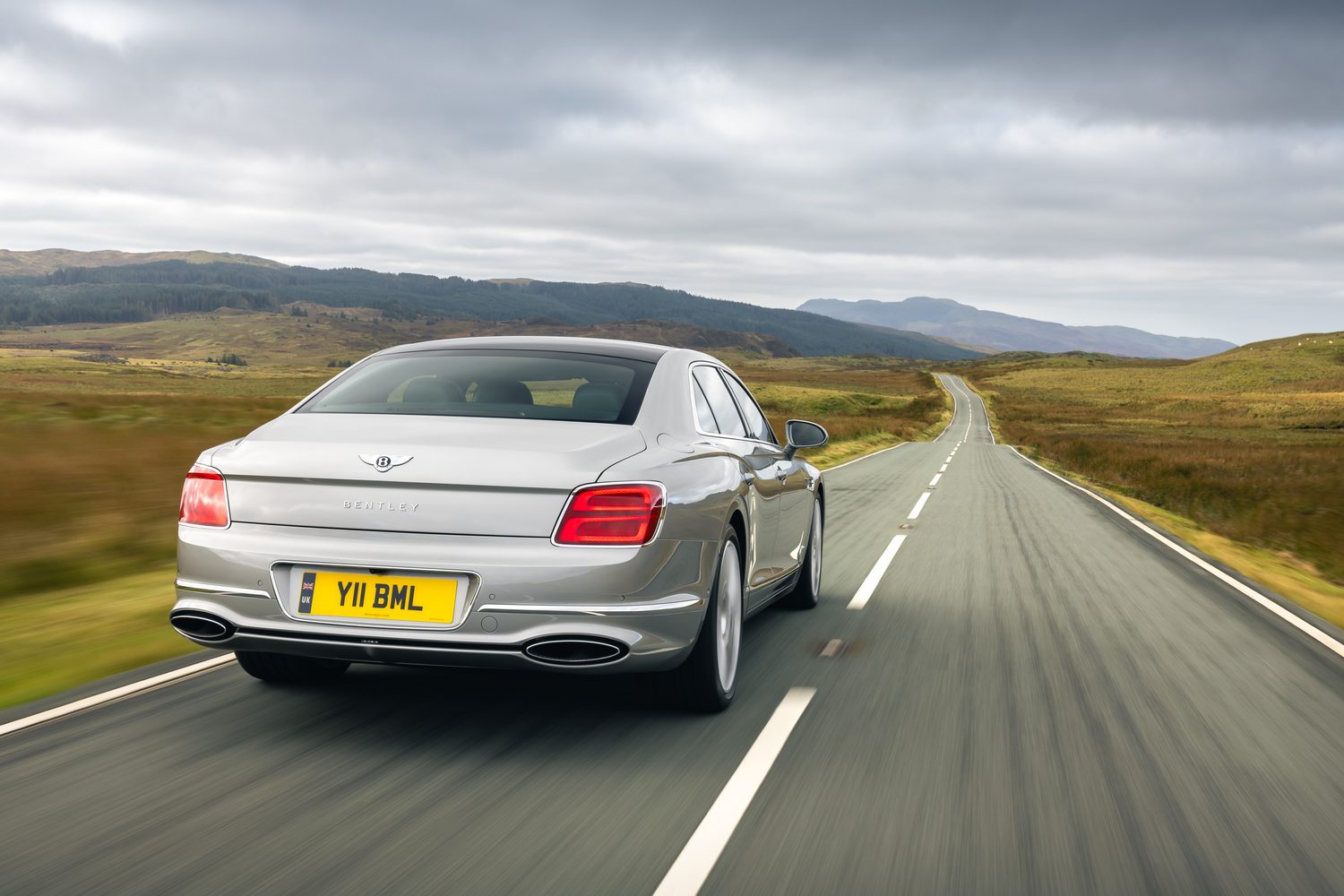
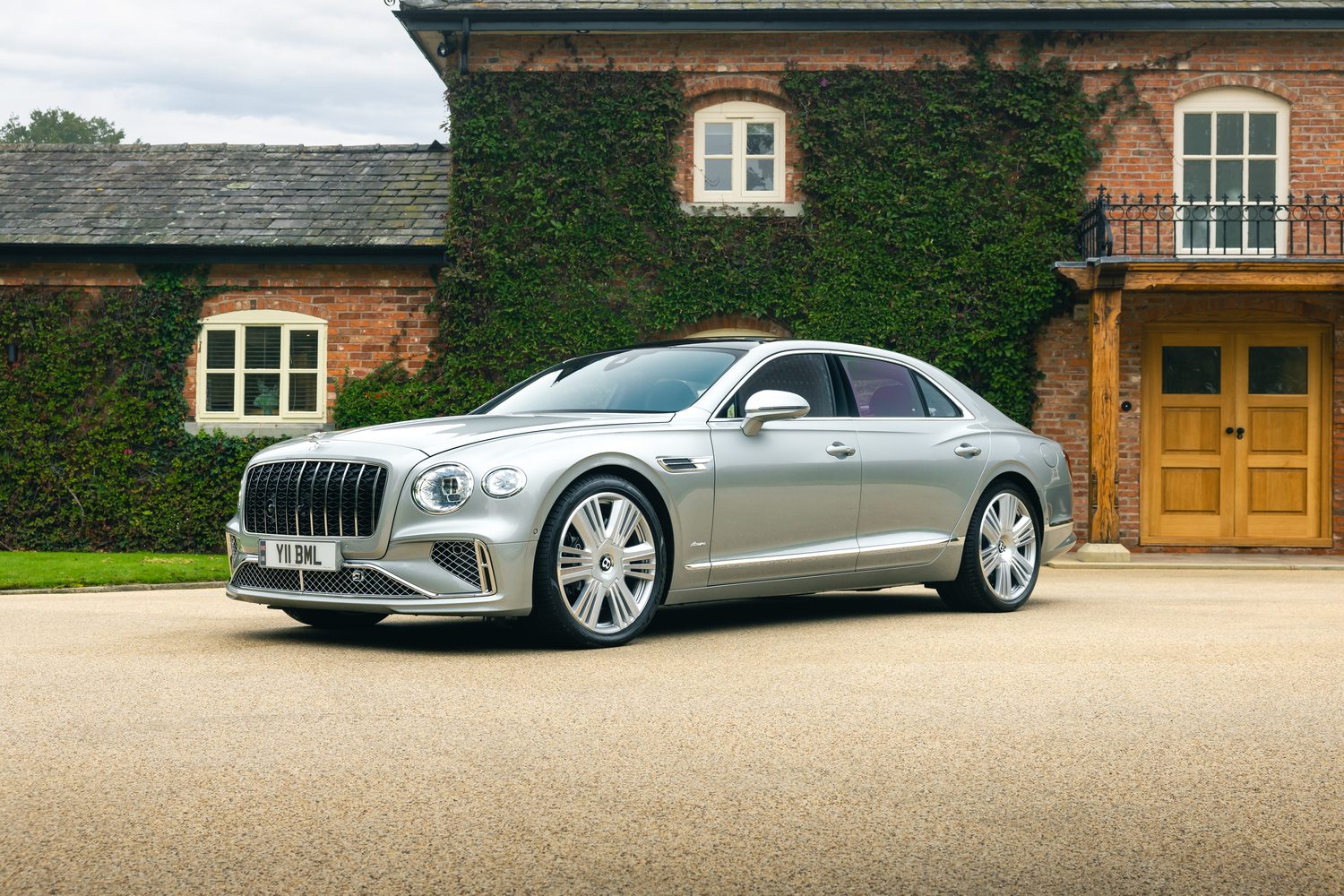
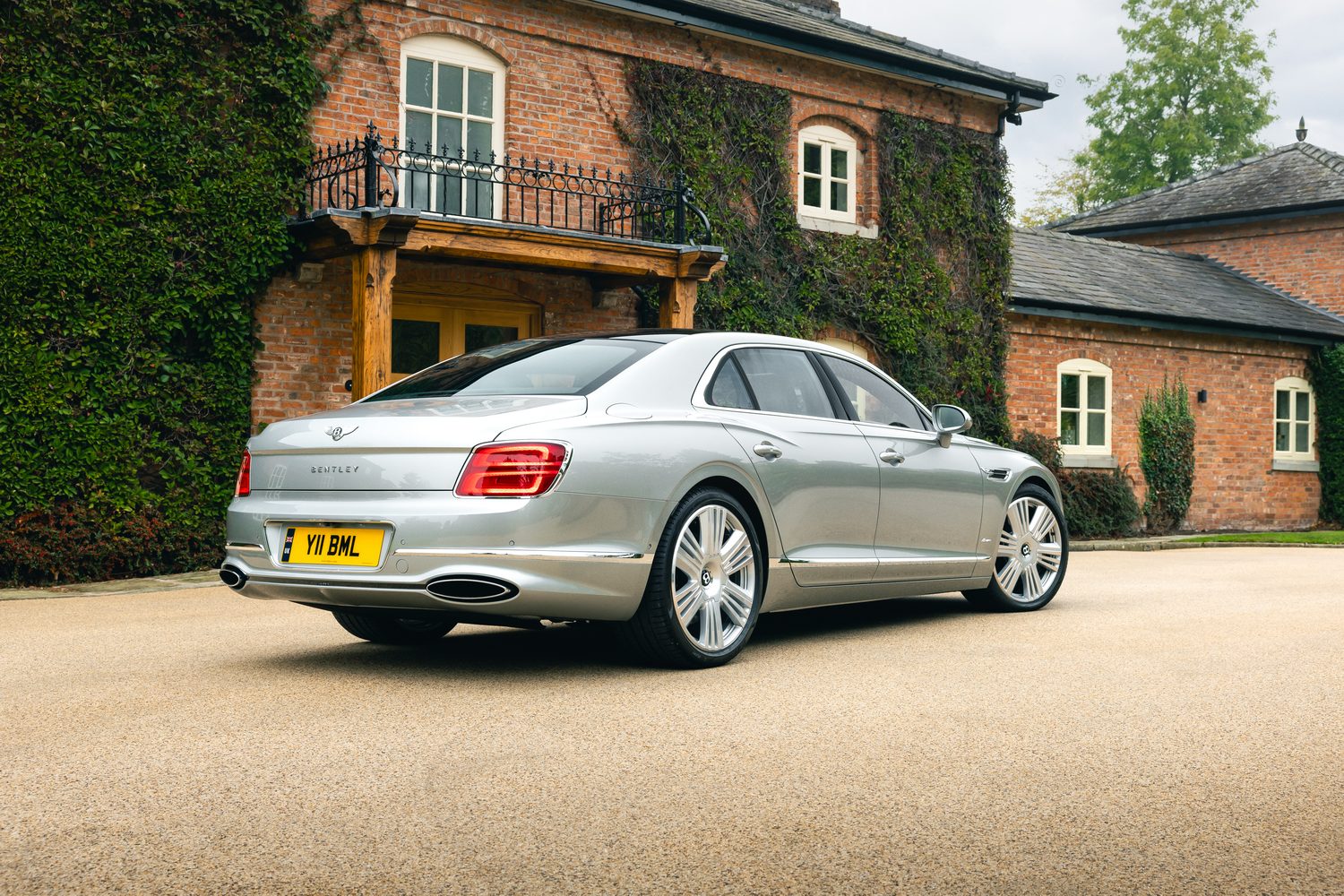
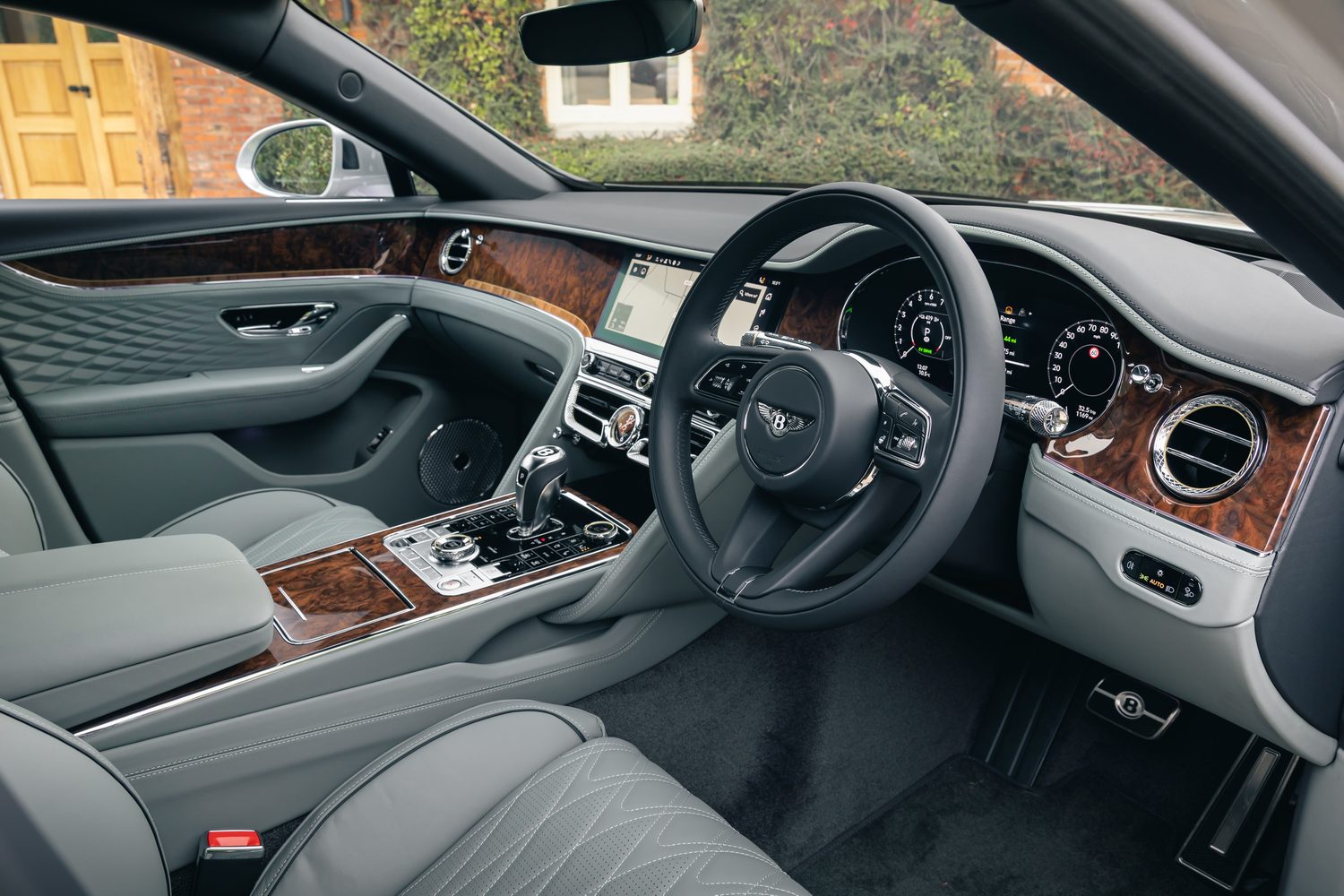
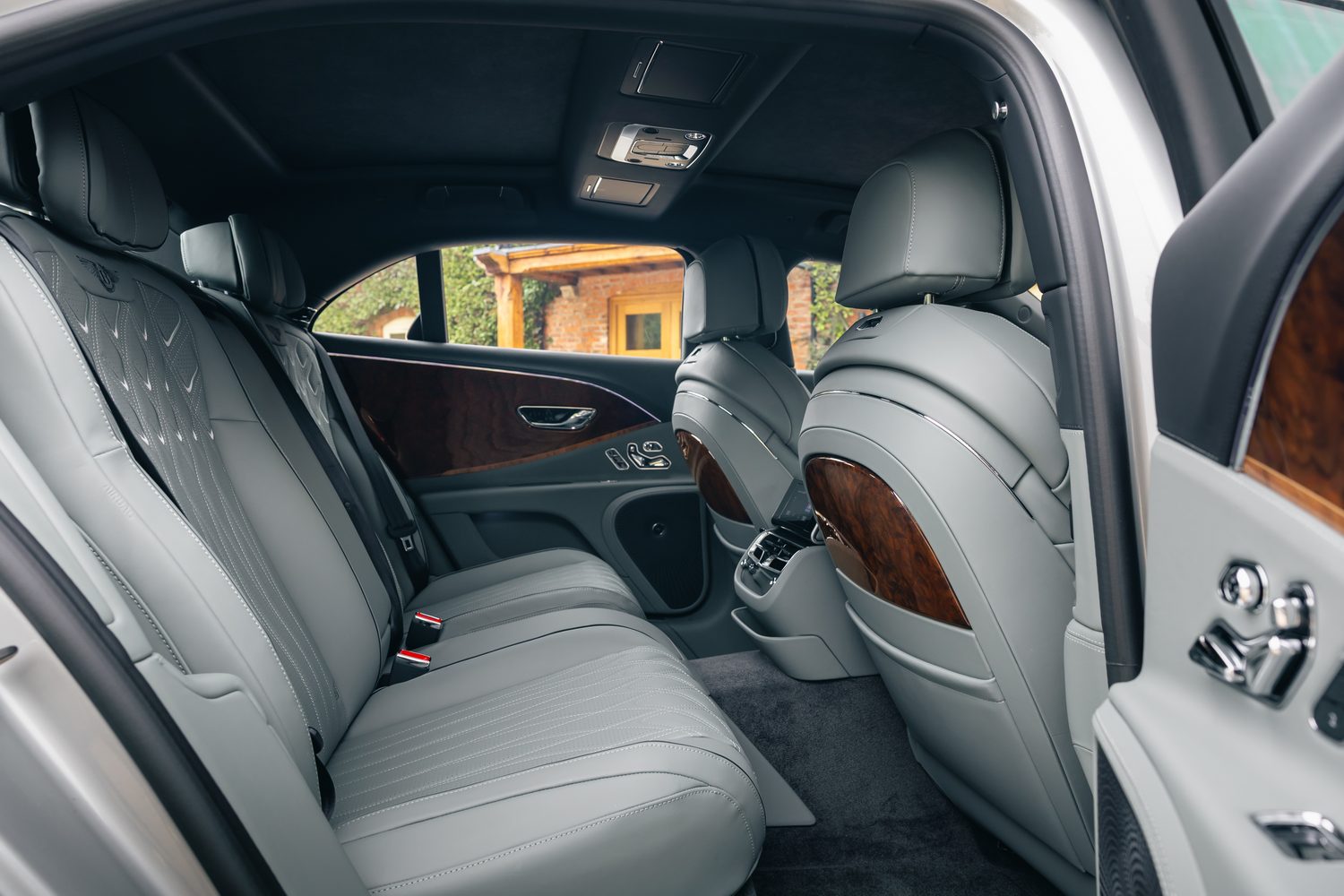
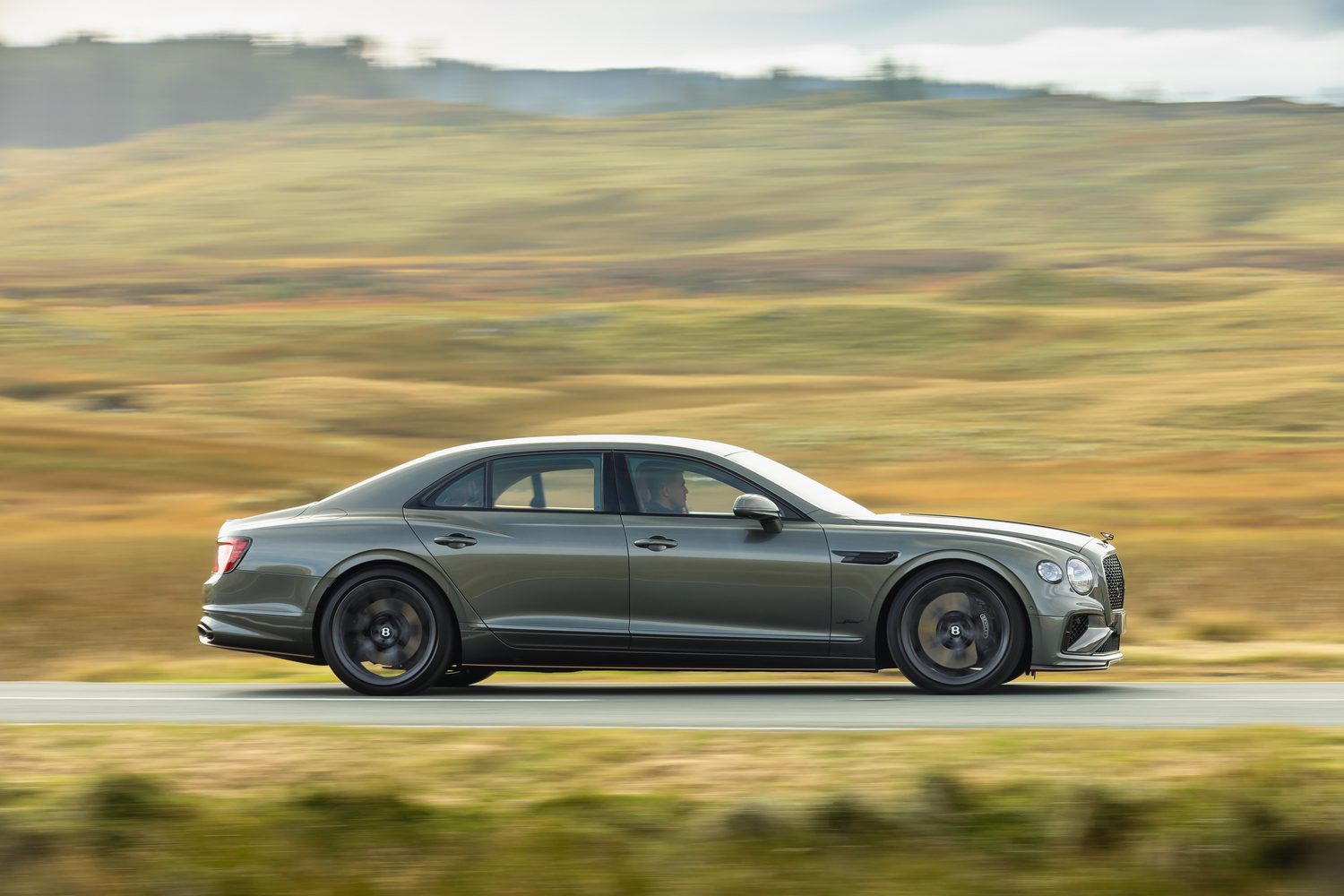
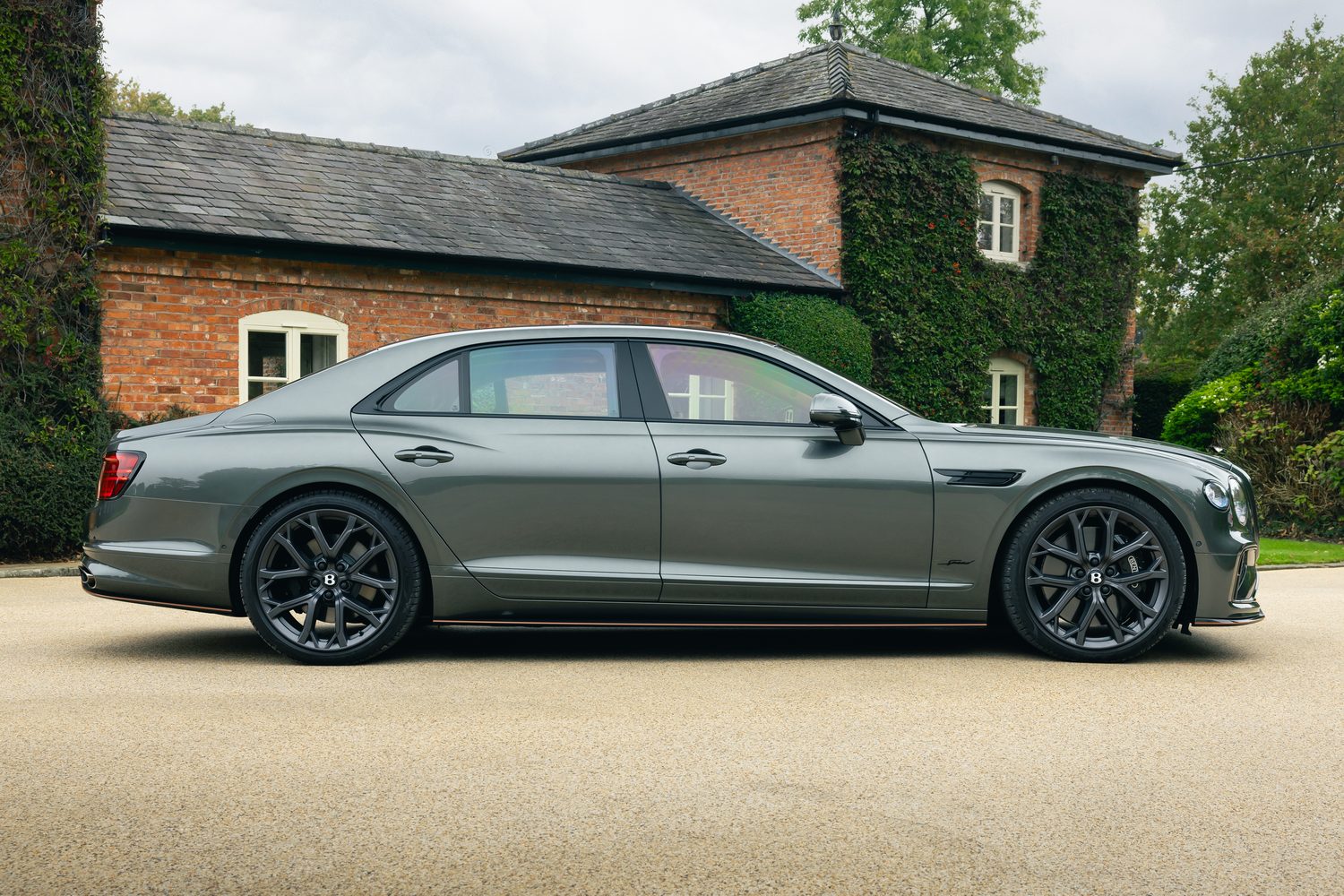
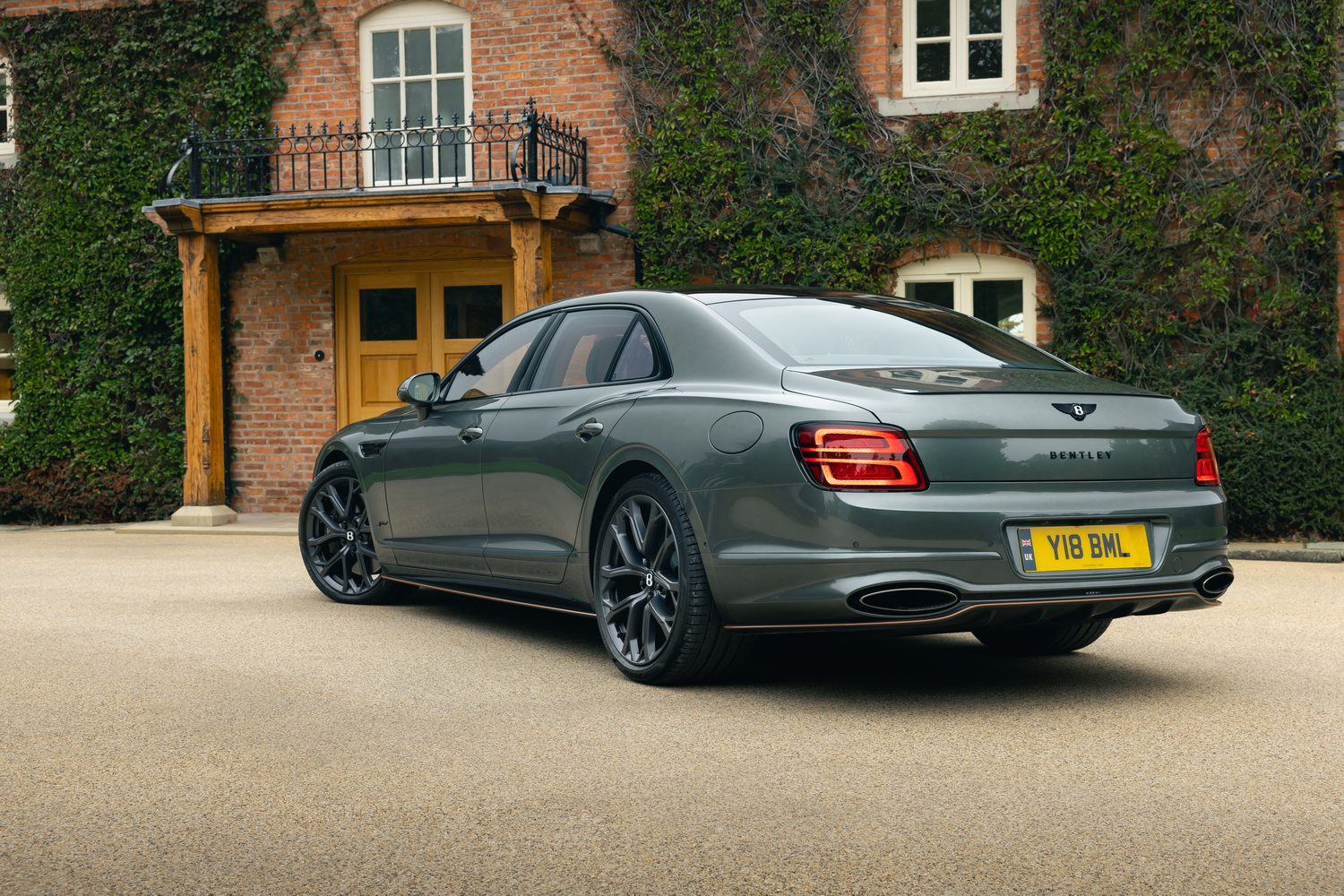
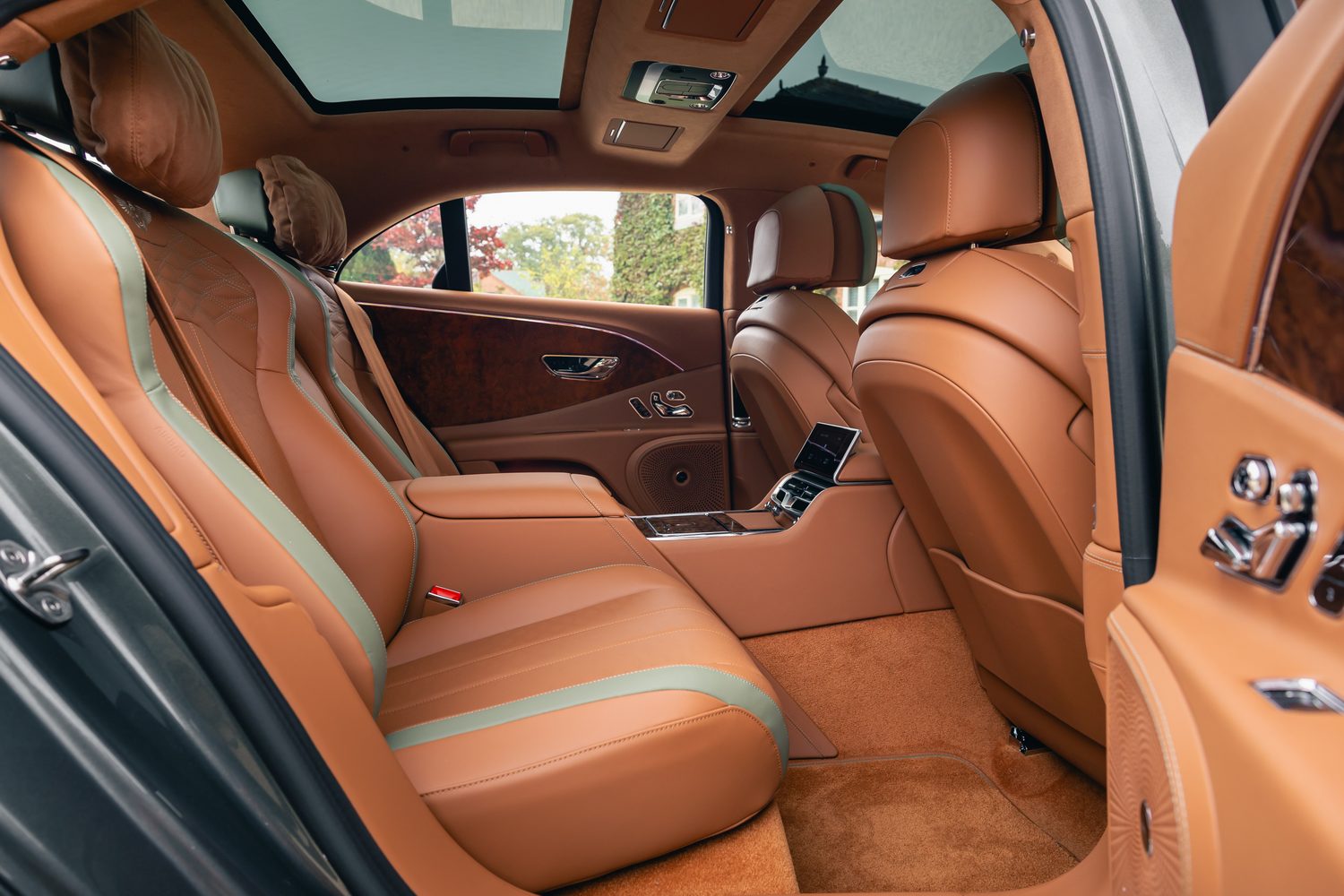
Mirroring its elegant sense of style and elan is a 2026MY Bentley Flying Spur in Azure specification. This means it's the model in the current range most focused on 'occupant wellbeing', while its colourway and alloy-wheel combination is doing its very best to ape the T-Series.
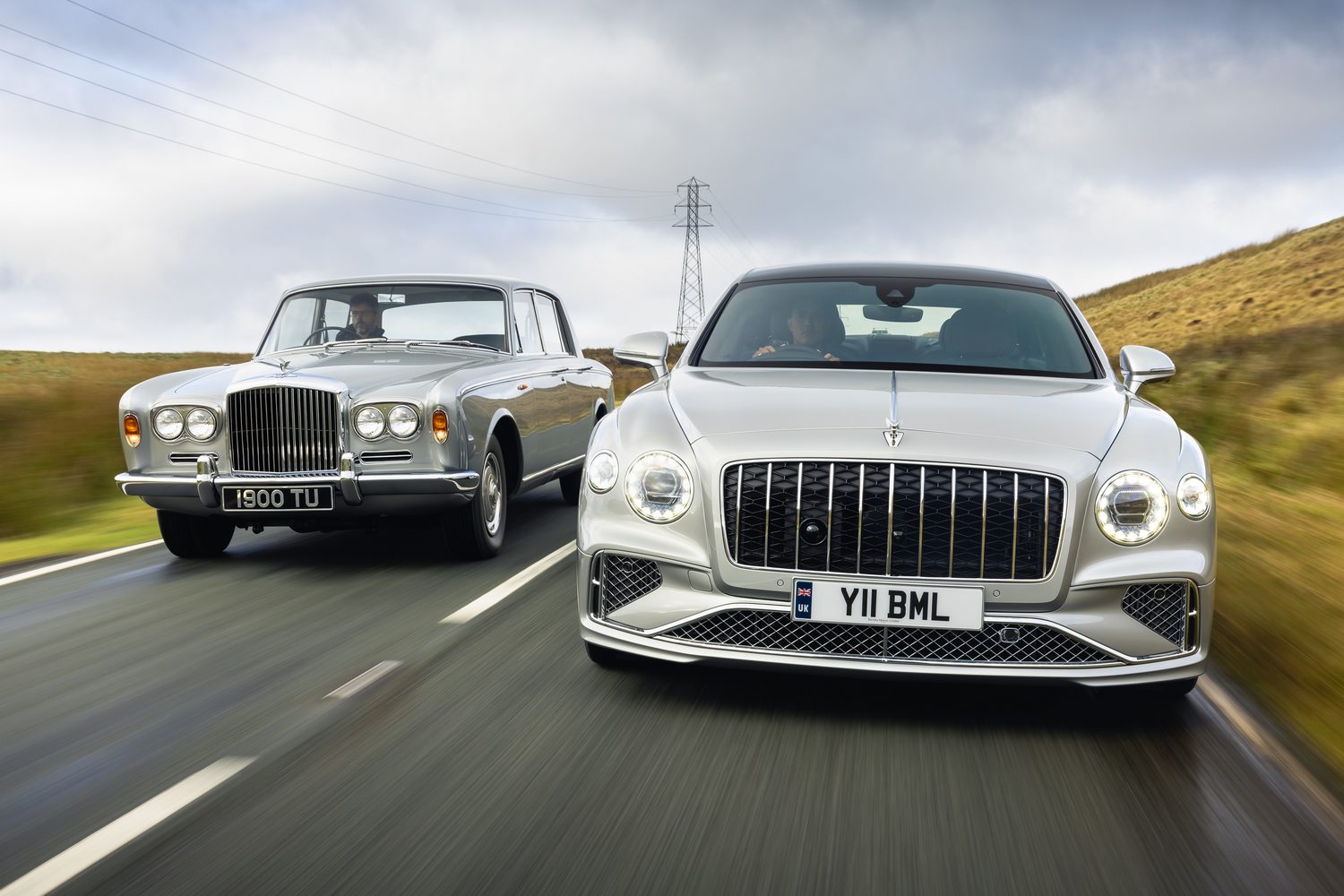
As an Azure, it - along with the 'regular' version of the Flying Spur Mk4 - has the 'High Performance Hybrid' powertrain. This deploys a twin-turbocharged 4.0-litre V8 engine with plug-in hybrid (PHEV) gear, for a maximum output of 680hp. Significant oomph, but you can go even further with a Flying Spur PHEV these days...
Bentley Turbo R and green Flying Spur Speed
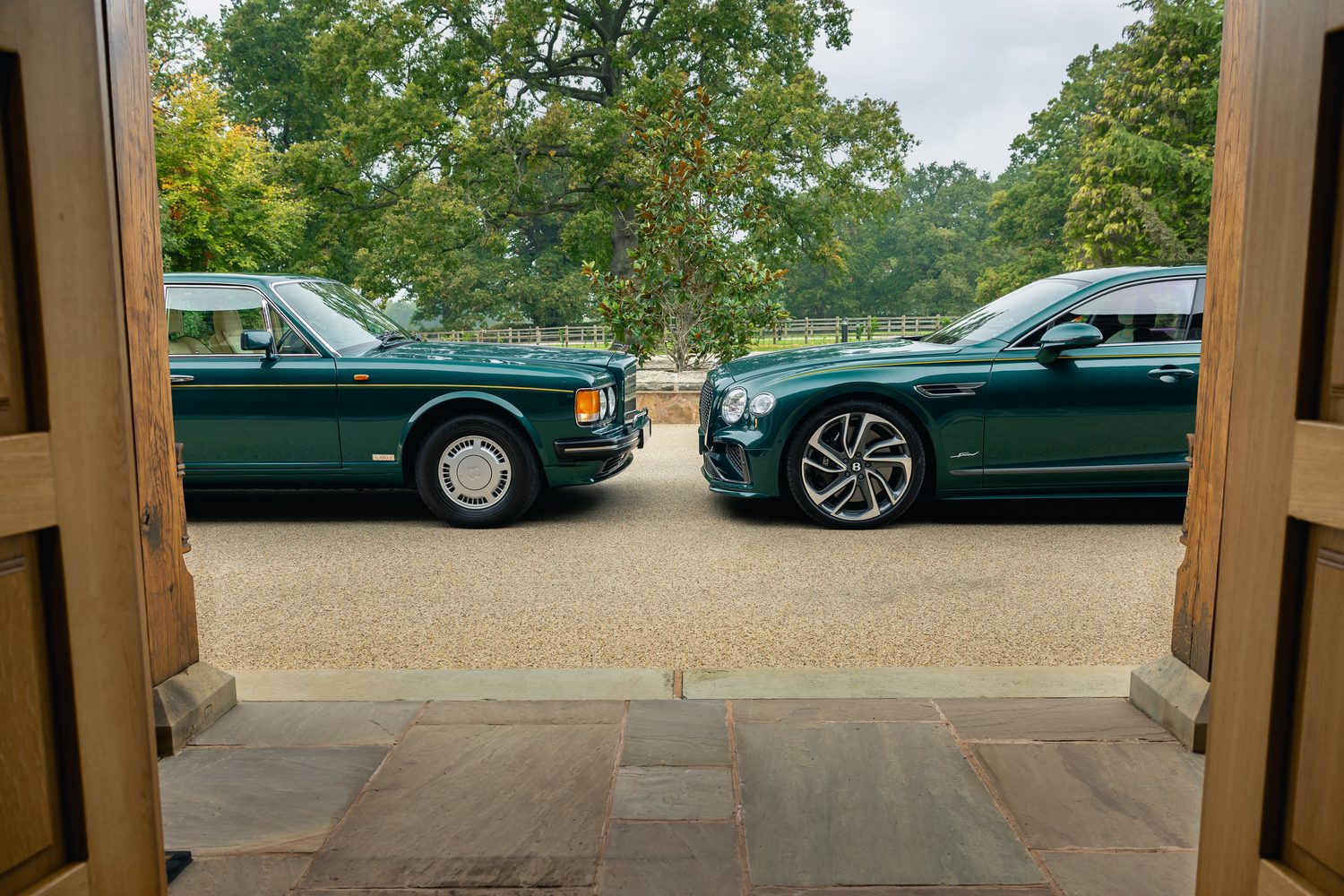
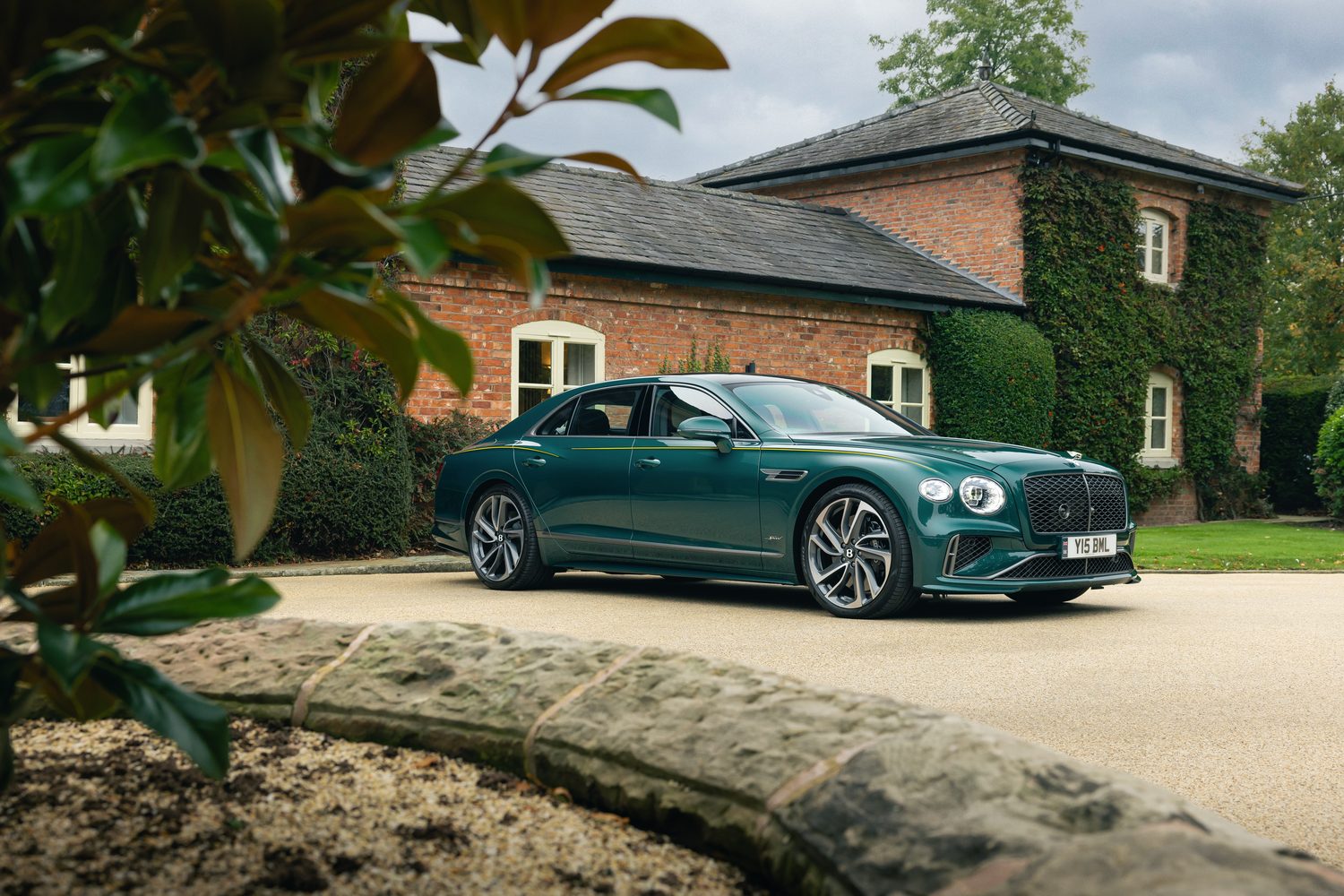
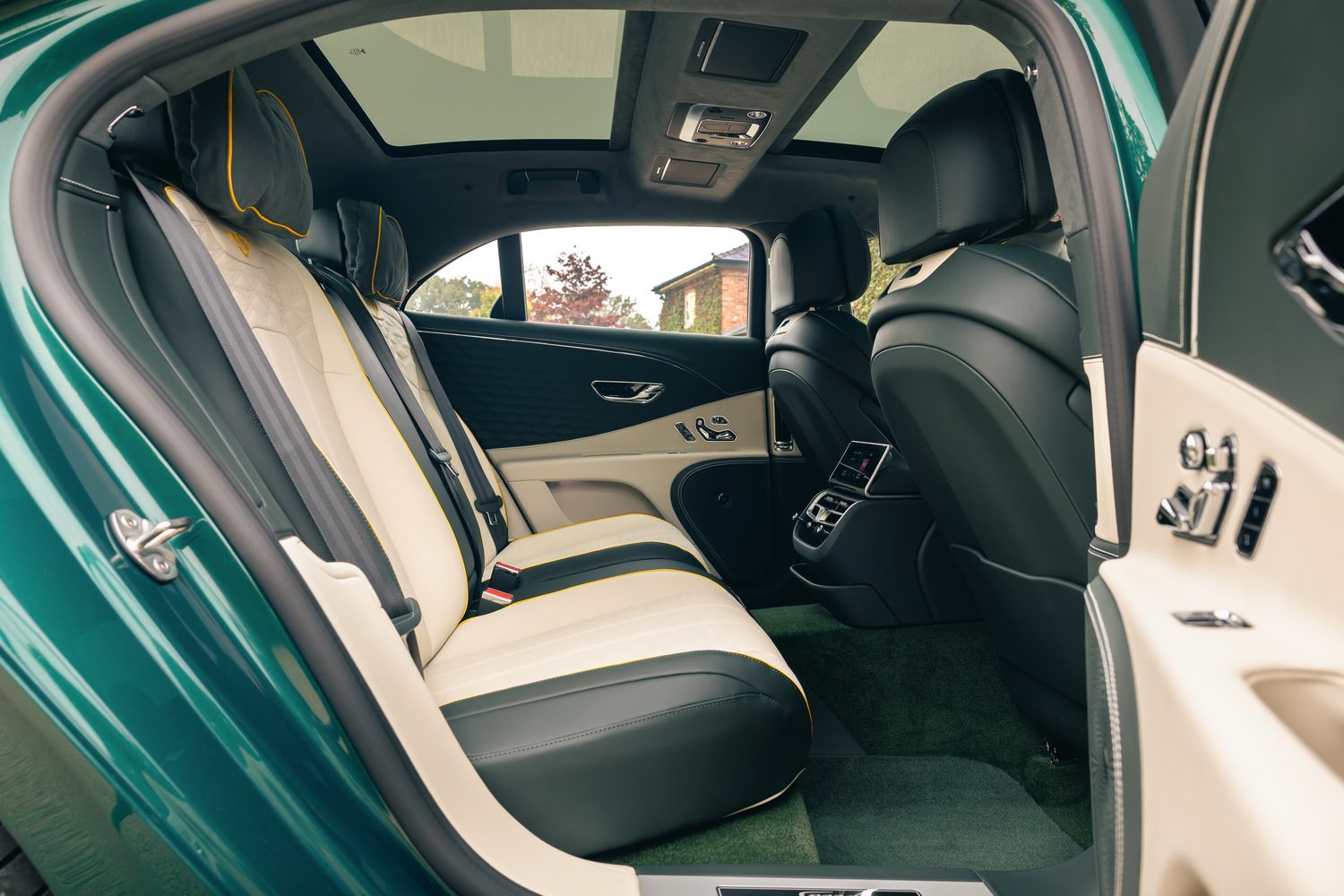
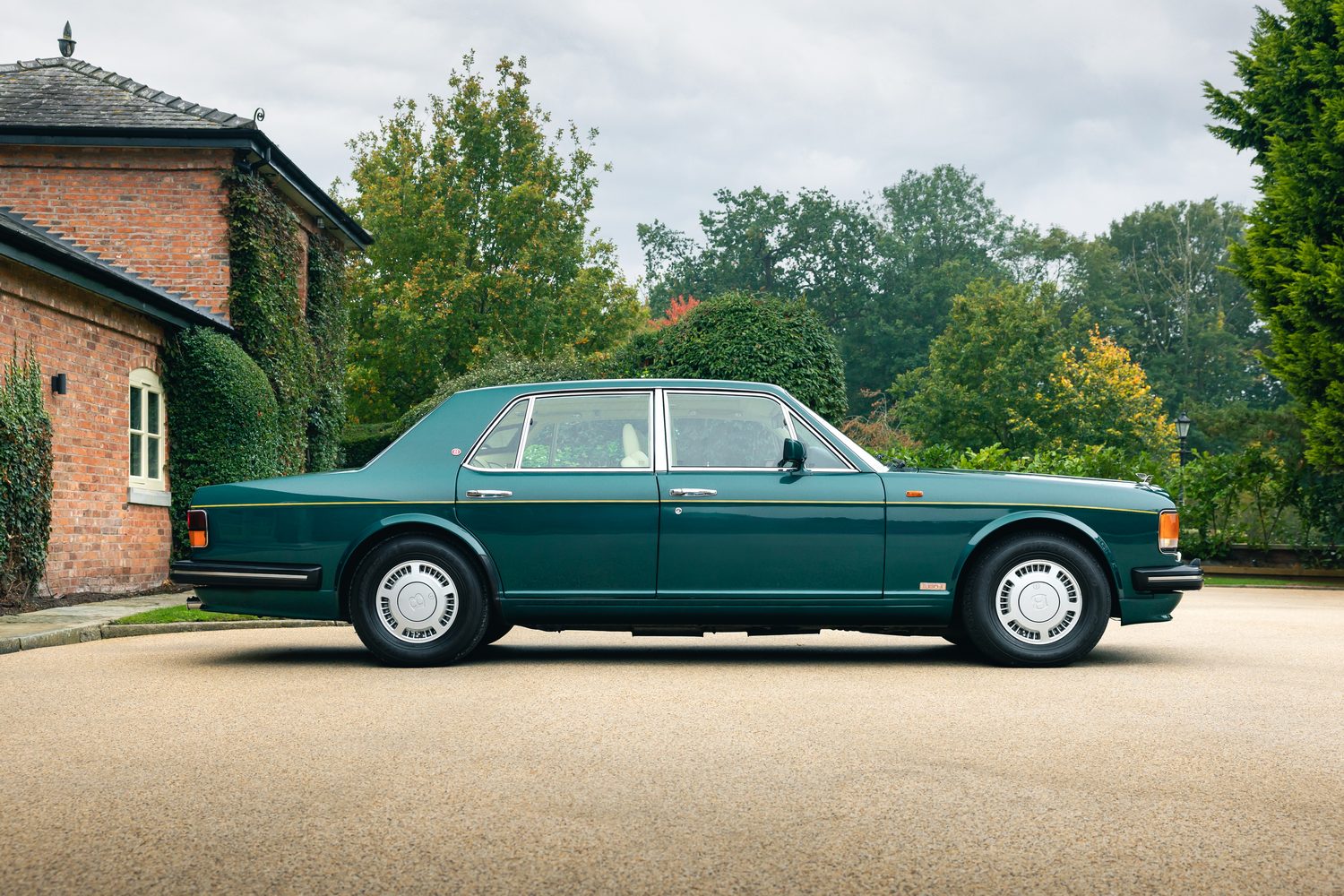
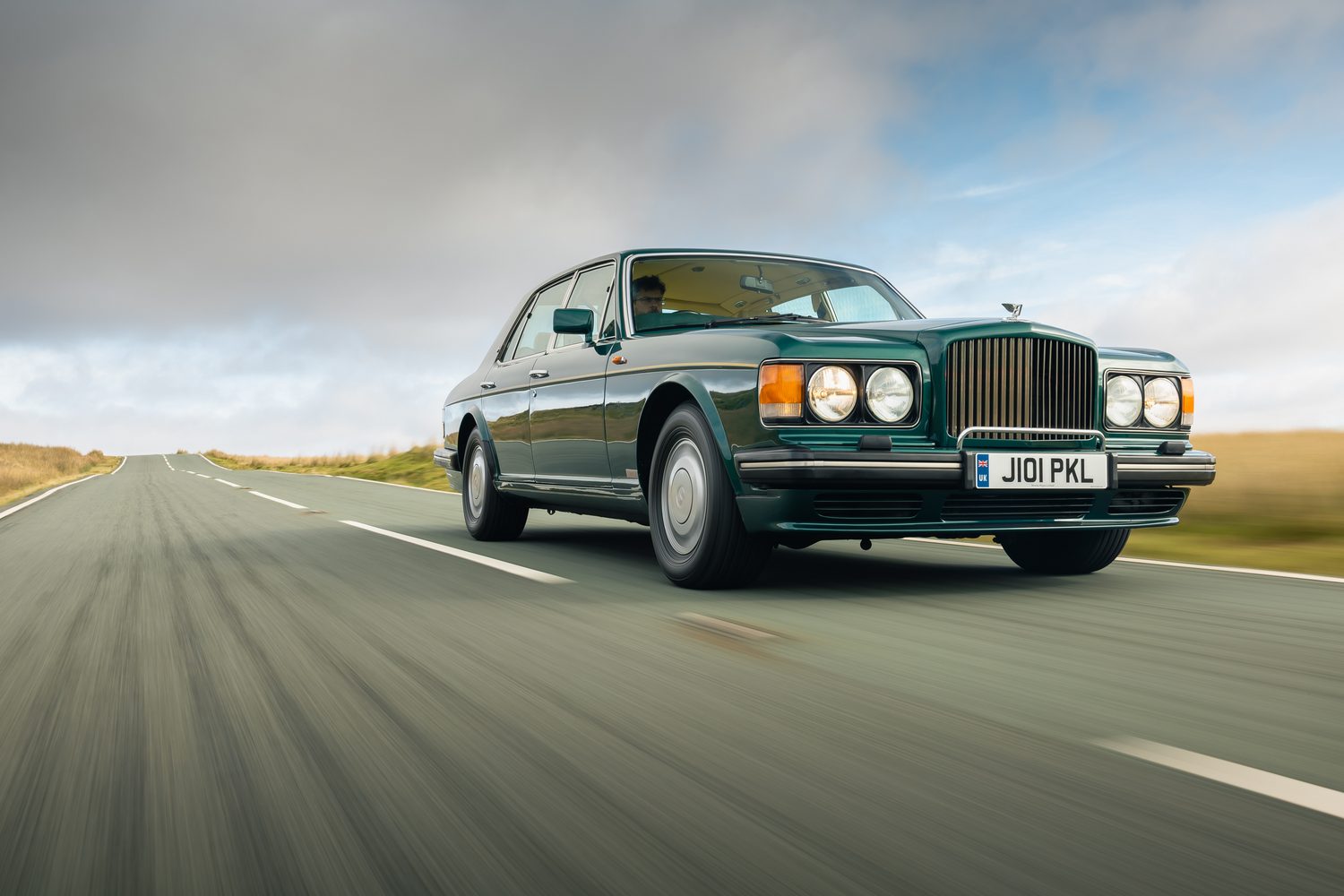
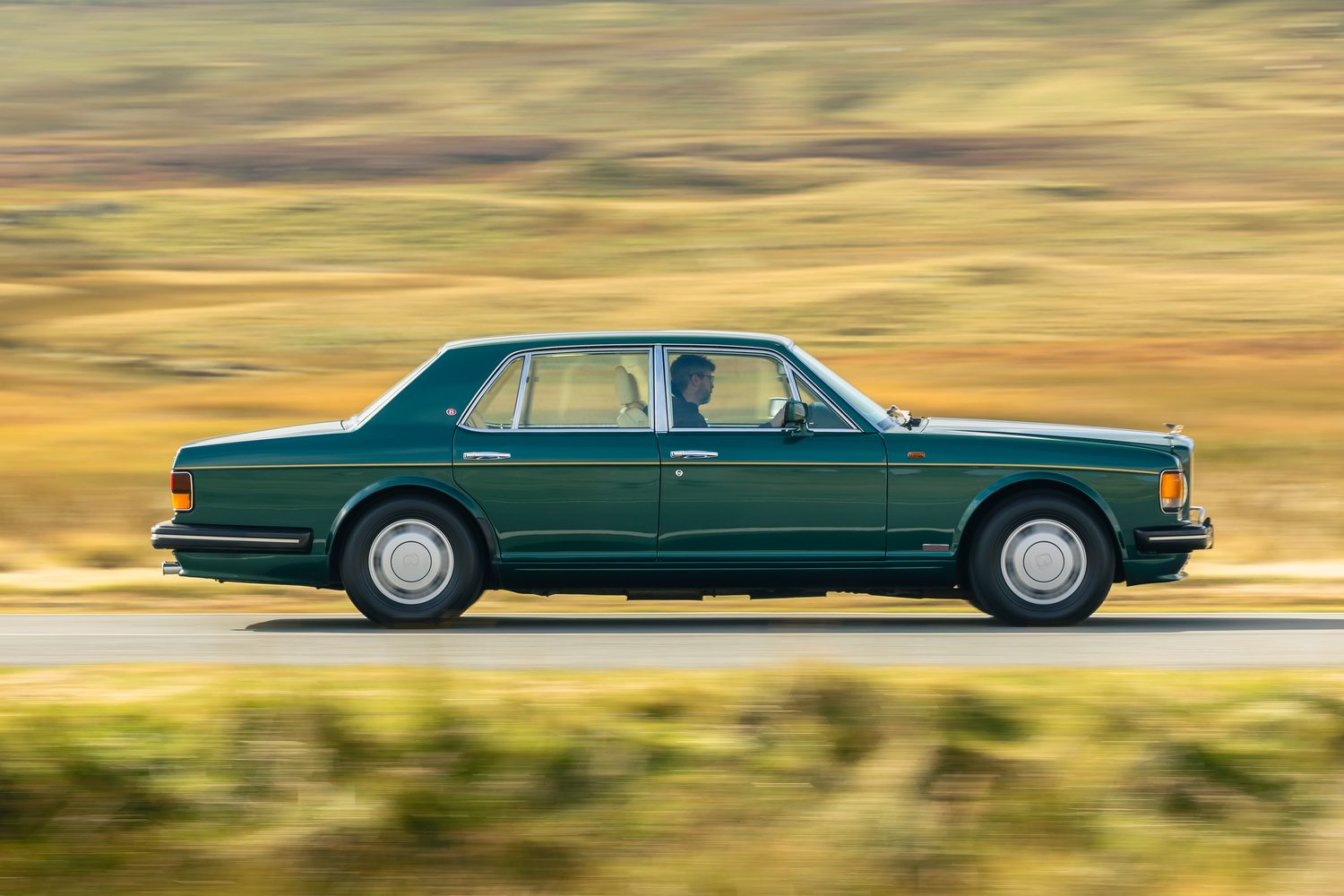
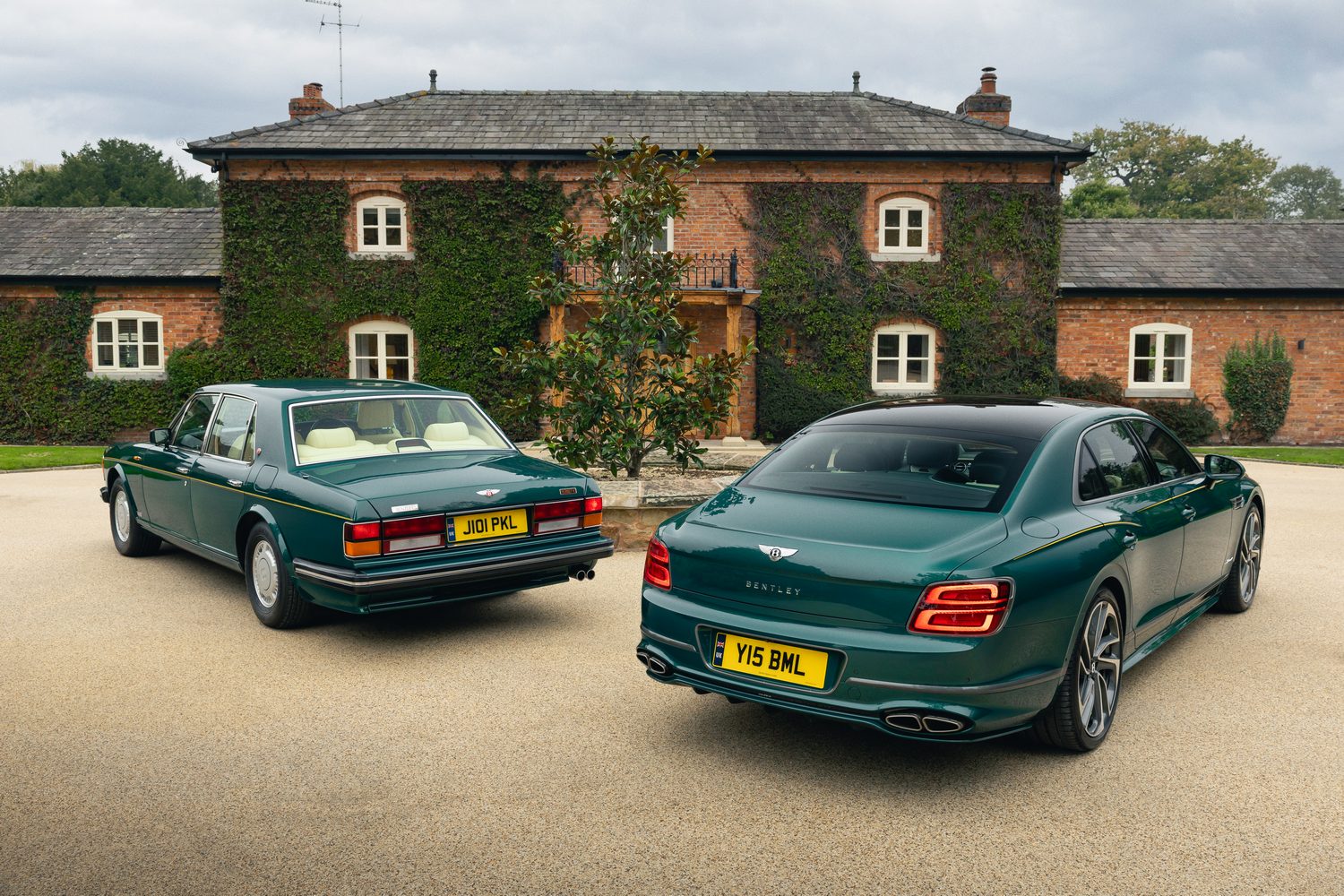
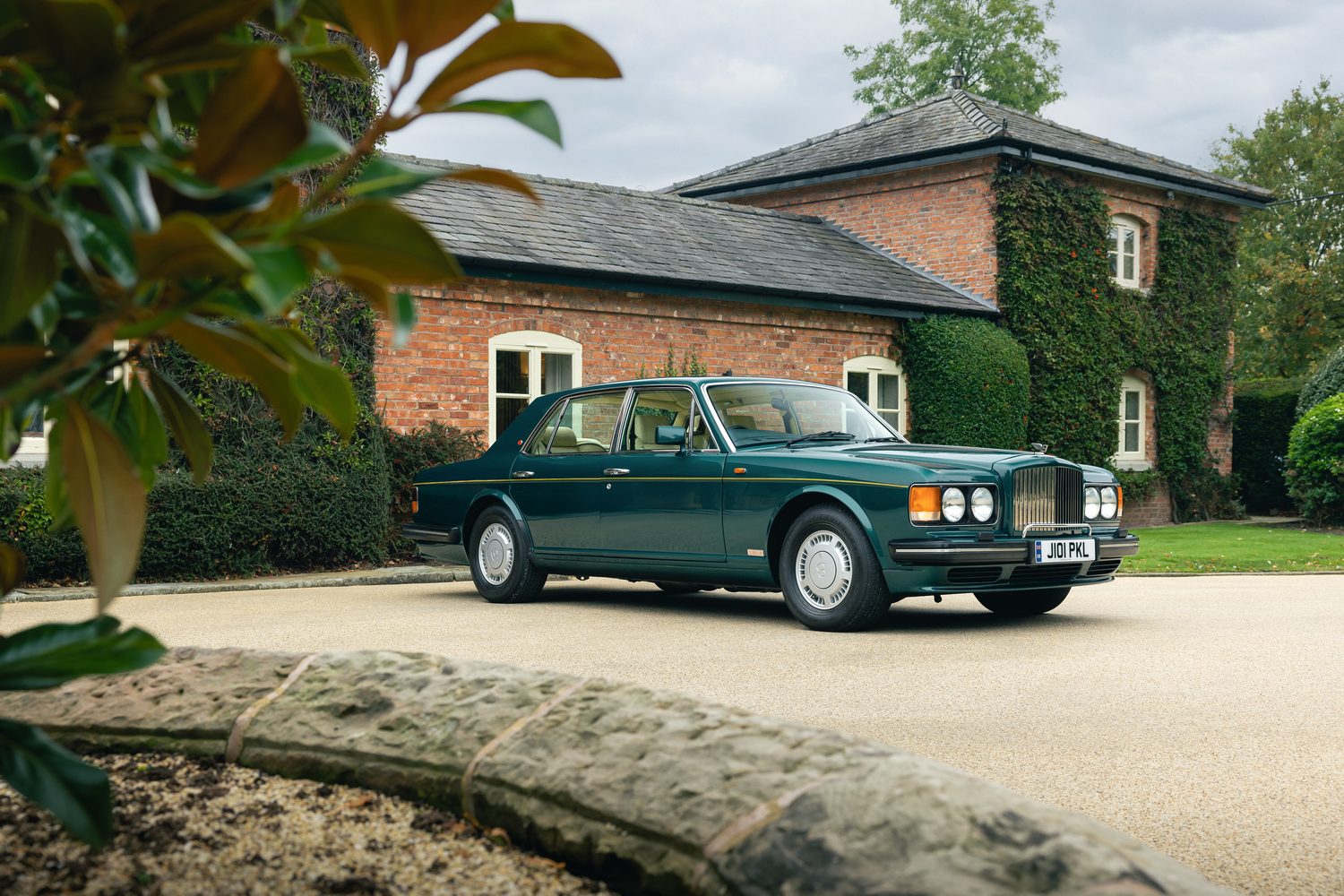
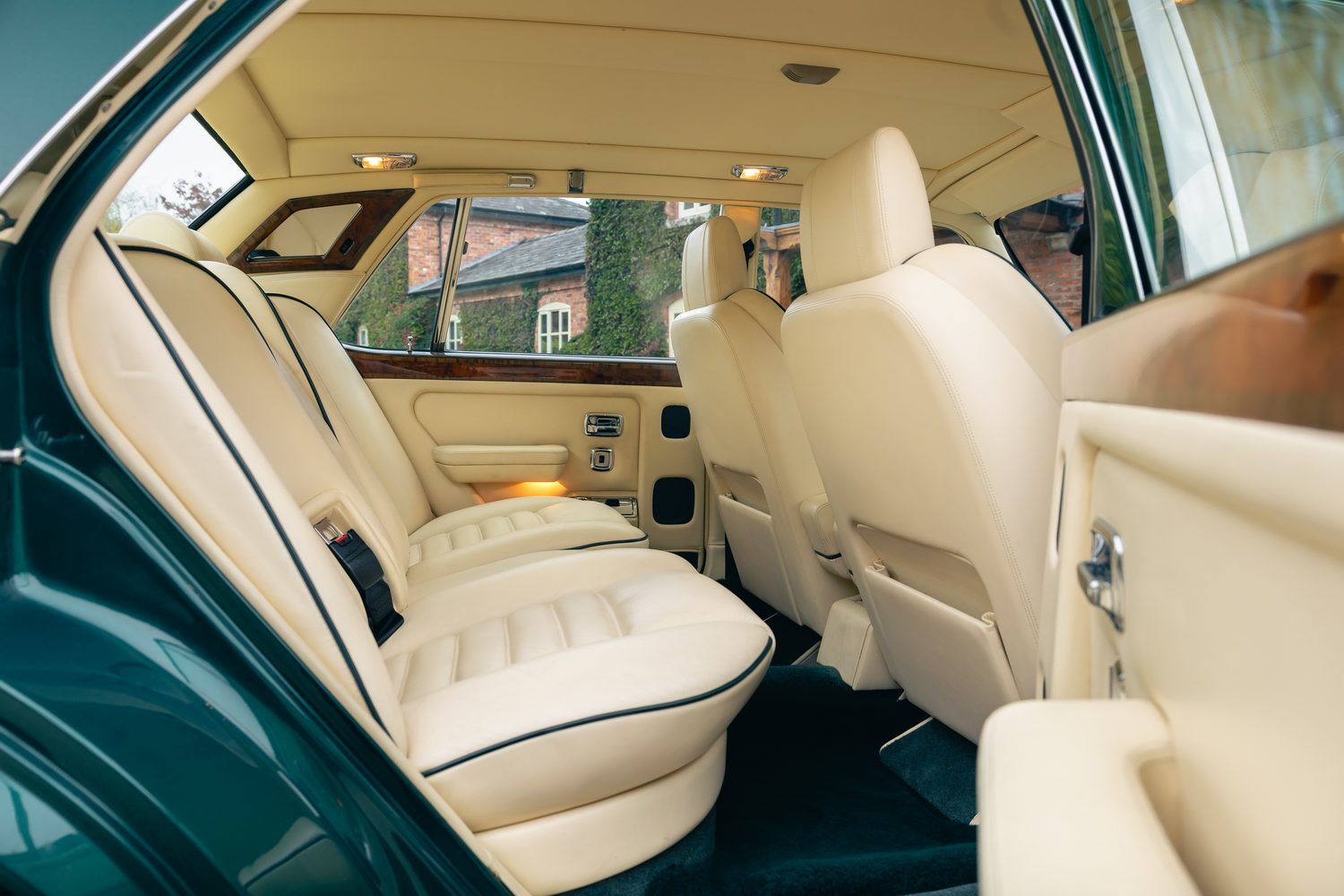
Utterly, utterly magnificent. Just look at it: this is a 1991MY Turbo R, so it's not the 'full 40' that it could be, but in majestic Brooklands Green with a contrasting Magnolia hide interior, it's approaching visual perfection for this set-square old Bentley. The only thing we'd remove is that curved bar in front of its radiator grille.
This particular car joined the company's Heritage Collection as recently as 2021, and it previously had a silver coachline on it. However, the team looking after it wanted to return it to the original specification, so it now has the distinctive yellow coachline - hand-painted, of course.
Following their introduction to the Turbo R line in 1987, this car also has technology such as anti-lock brakes and fuel injection fitted to it.
Happily, we get to drive it - and that ticks off one of our automotive 'must try' boxes. The Turbo R's forced-induction V8 engine is the familiar old 'six-and-three-quarter'; essentially, the 6.75-litre pushrod motor that saw service in almost every Bentley and Rolls you can think of.
Here, its output is boosted to 302hp by the addition of the turbocharger, driving the rear wheels through a three-speed automatic transmission.
Weighing in at 2.2 tonnes, performance was, in the day, blistering, but nowadays (and especially in the face of the current Spur Speed models, which are thunderous straight-line behemoths) it feels extraordinarily leisurely. Quoted figures are 0-100km/h in seven seconds precisely, with a top speed approaching 220km/h.
However, to focus on bare performance stats is to underplay how delightful it is to steer the Turbo R. Despite that 'roadholding' badging, it's still a soft old beast that leans notably in the corners, while the braking power is moderate, at best.
Yet you can hustle it, revelling in its sheer comfort at all times and being enraptured by piloting such a big car with such a thin-rimmed, delicate-feeling steering wheel.
The noise of the V8 is distant and subdued, yet also reassuring and muscular at the same time, and while the gearbox and turbo both take an age to respond to big inputs of throttle, when everything hooks up the Turbo R scurries forward at a surprising lick. We adored it and simply wanted to drive it more.
Oh, and to the affable chap from the Bentley PR team who challenged us to discern the difference to the car in normal mode and with the 'S for Sport' button depressed on the transmission tunnel - nope, we failed you. As he said, all that seems to happen is that the word 'Sport' shows up at the bottom of the Turbo R's ageing dot-matrix computer display in its instrument cluster... but no extra speed nor damping control seemed to come to the fore. Oh well.
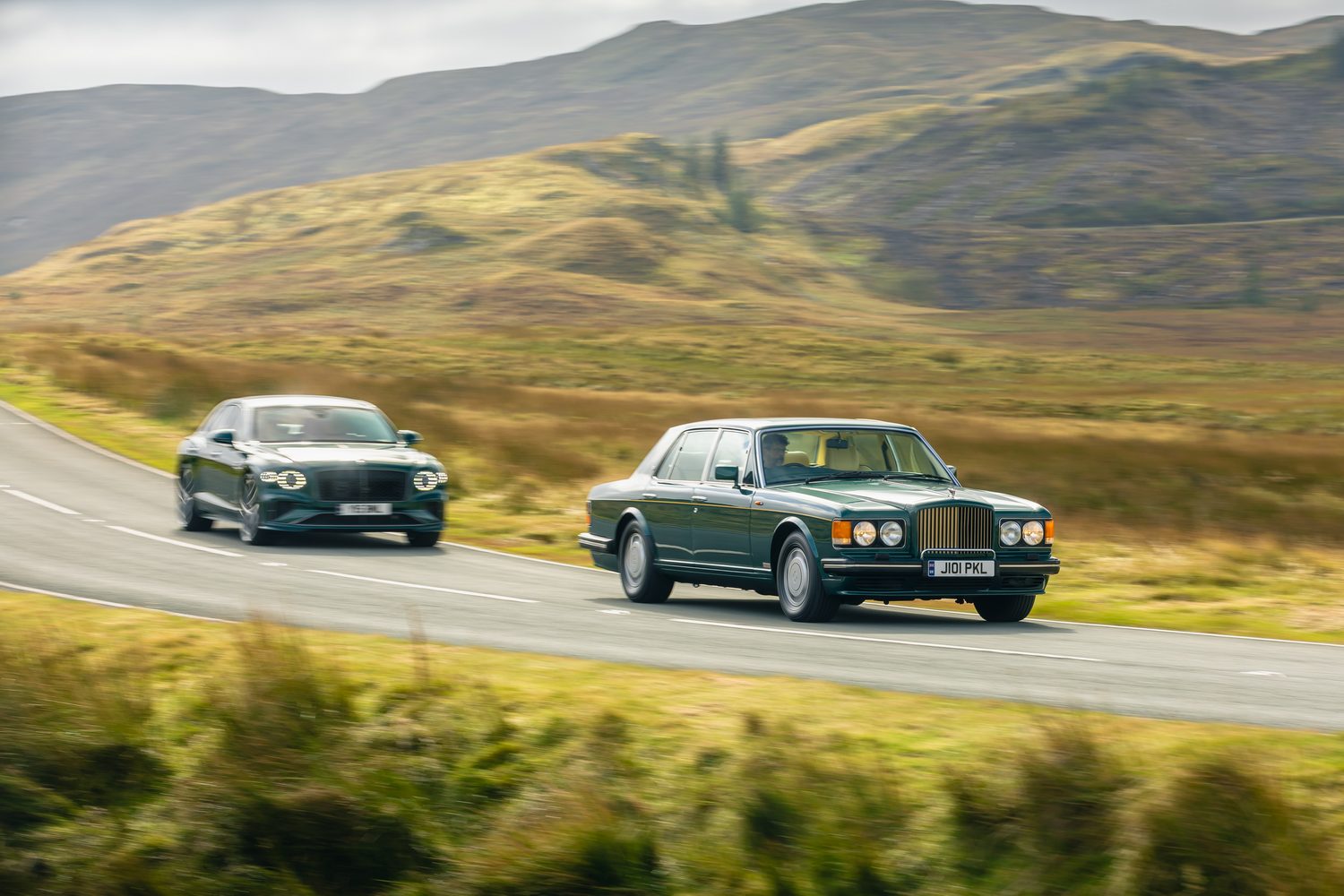
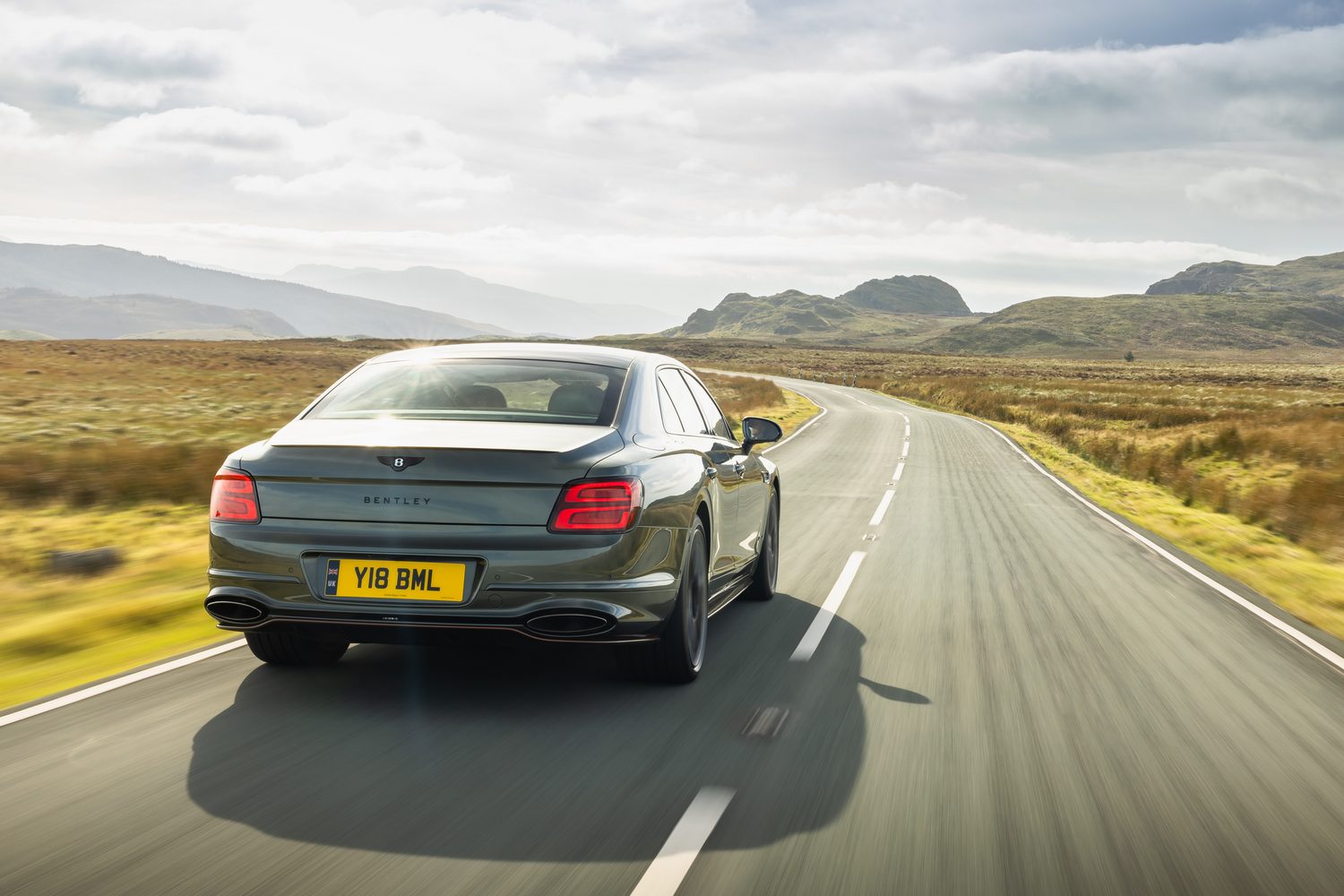
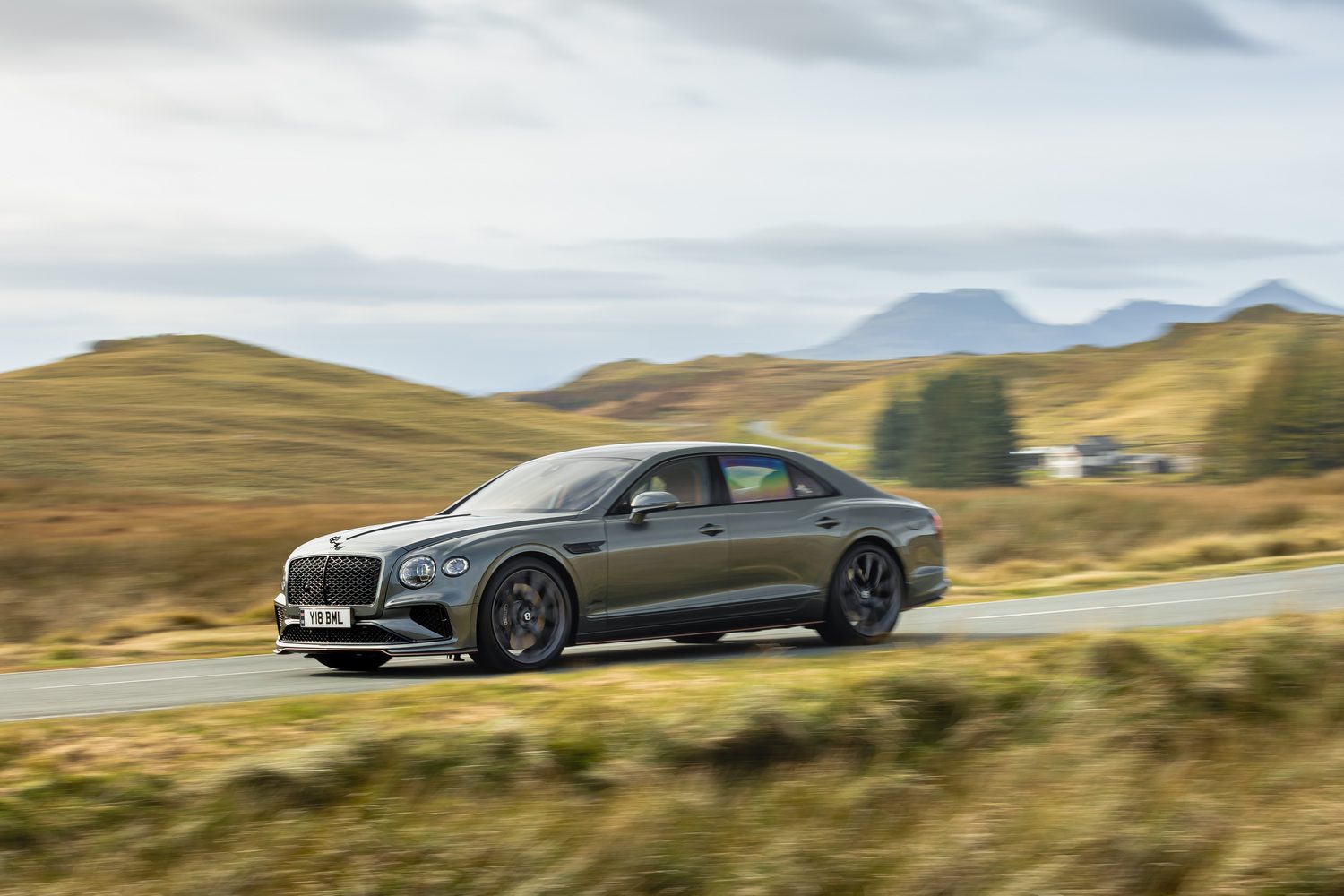
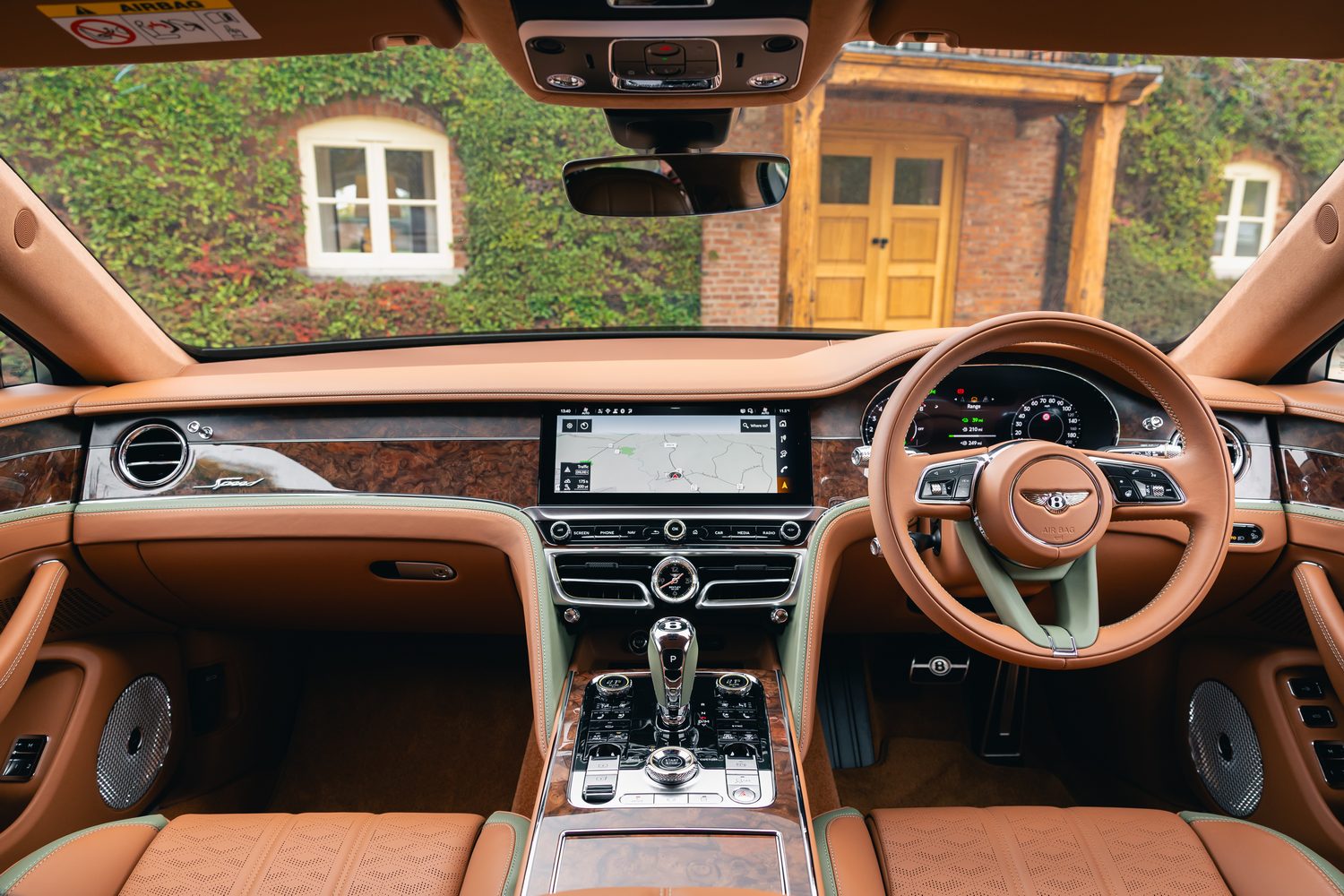
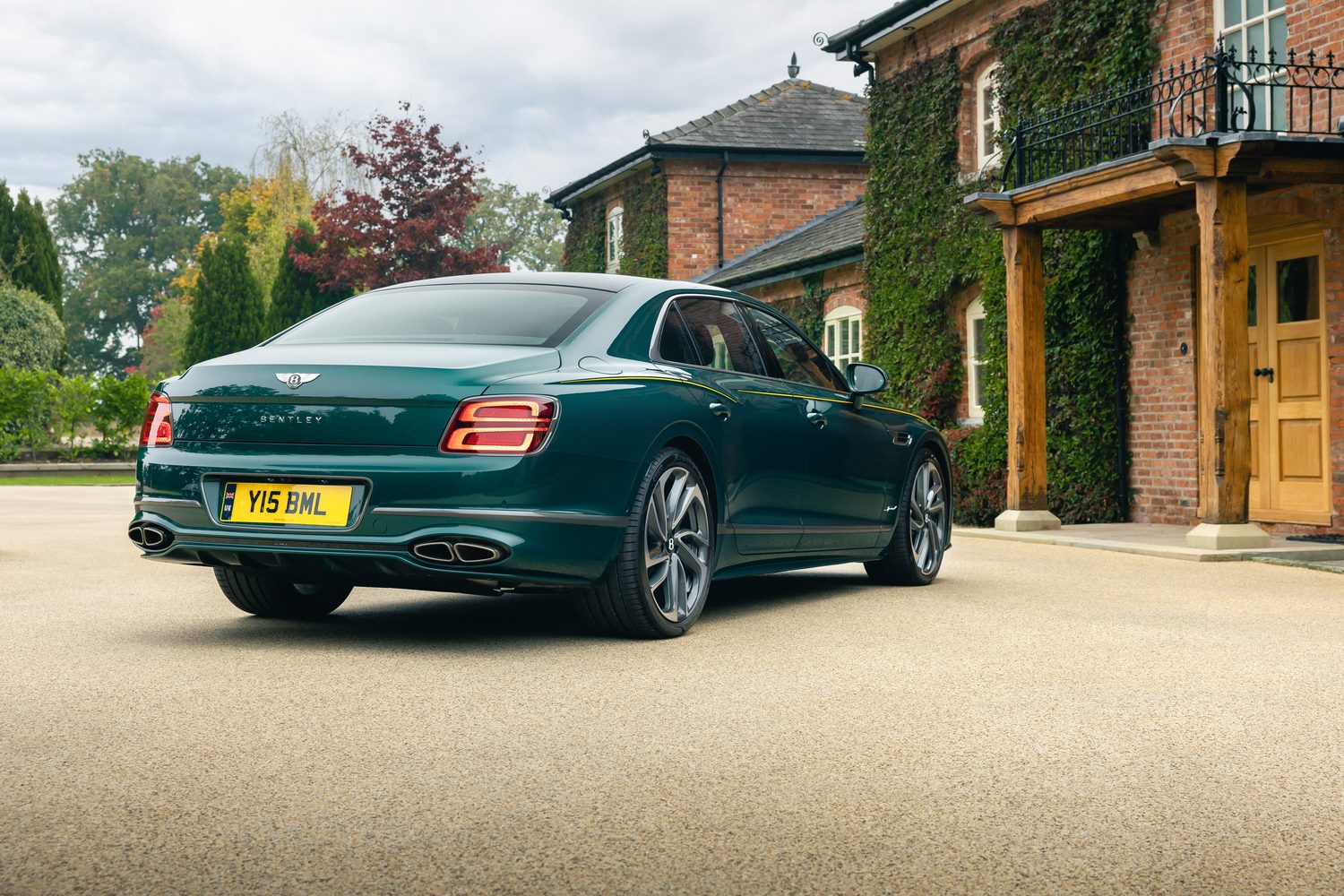
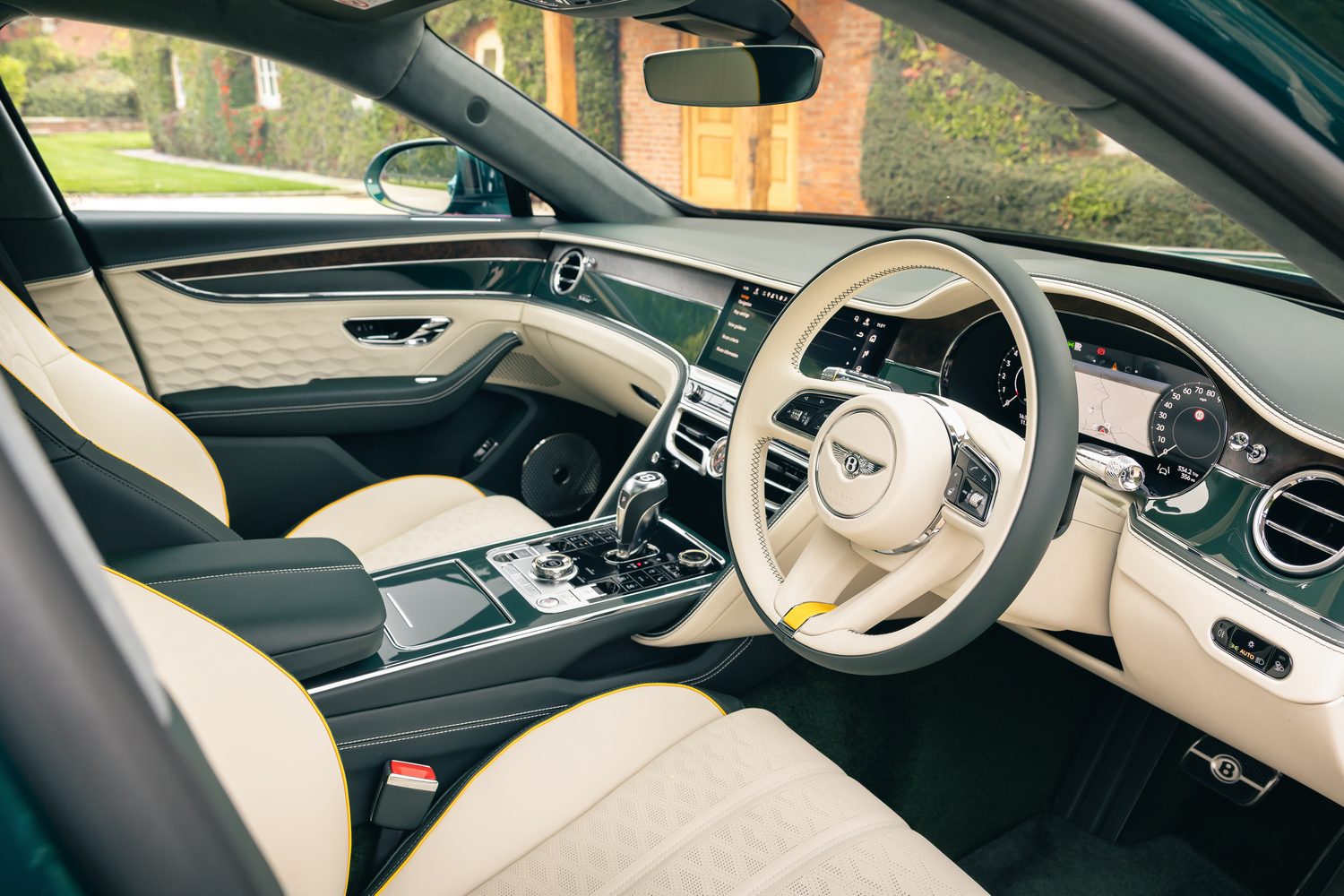
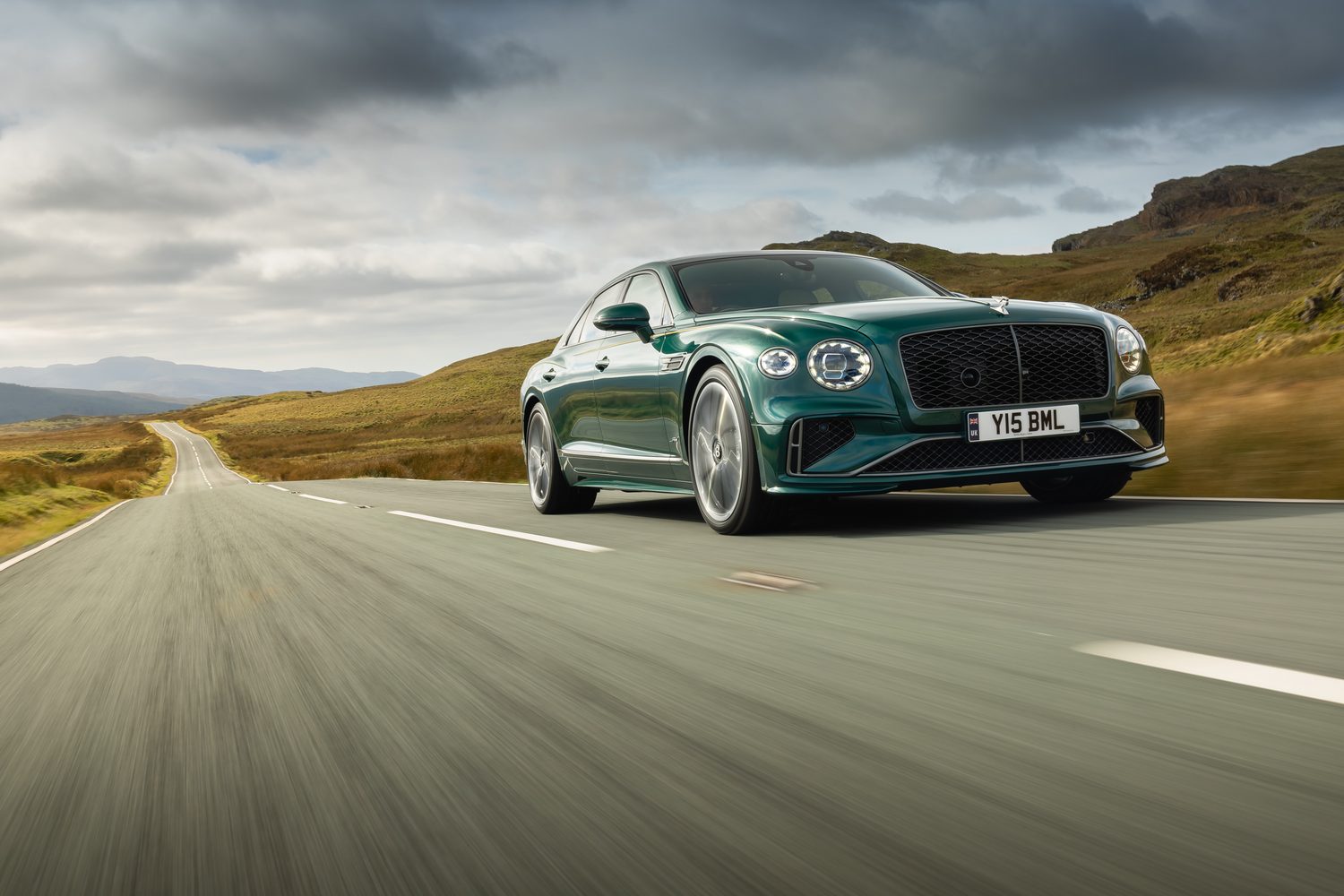
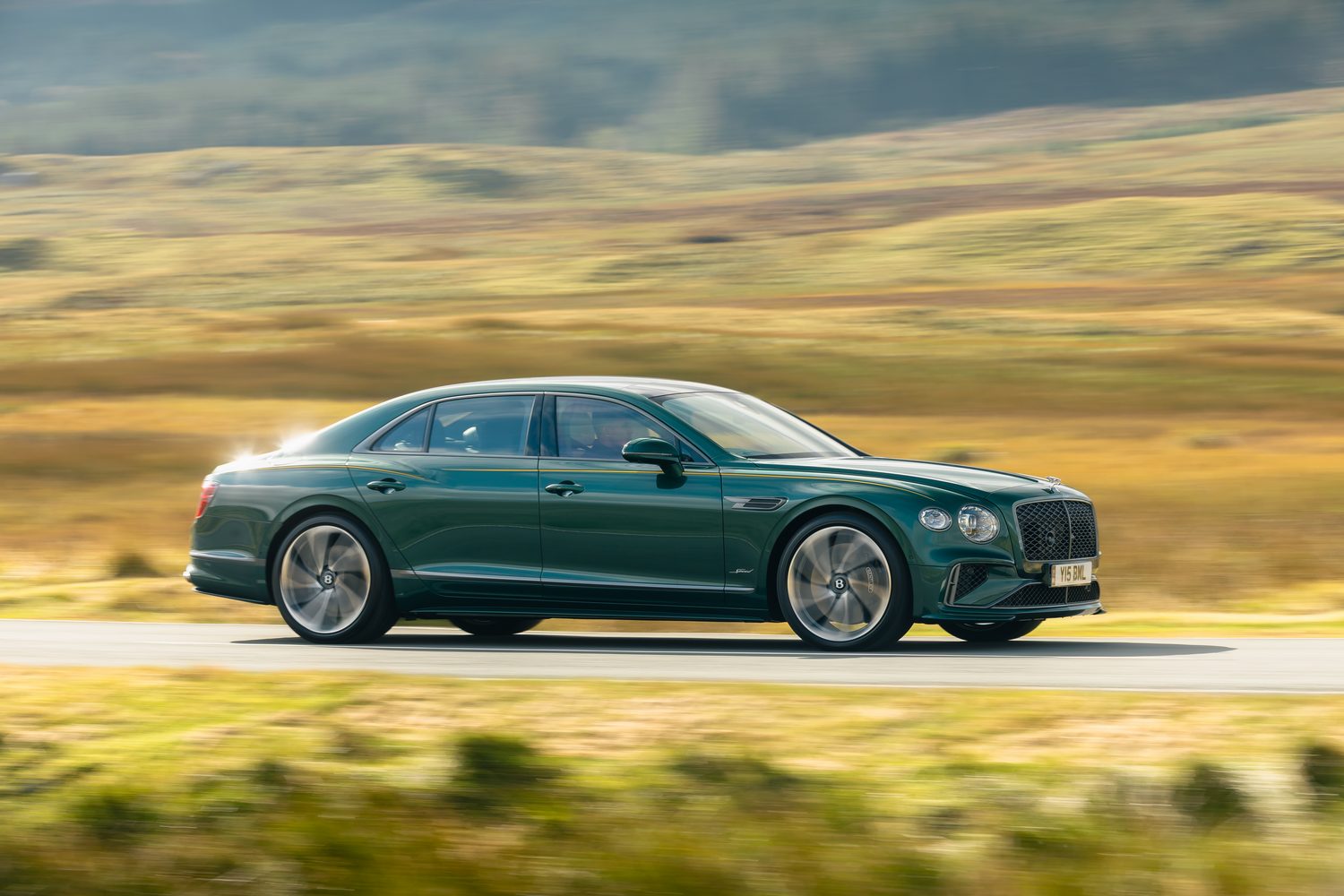
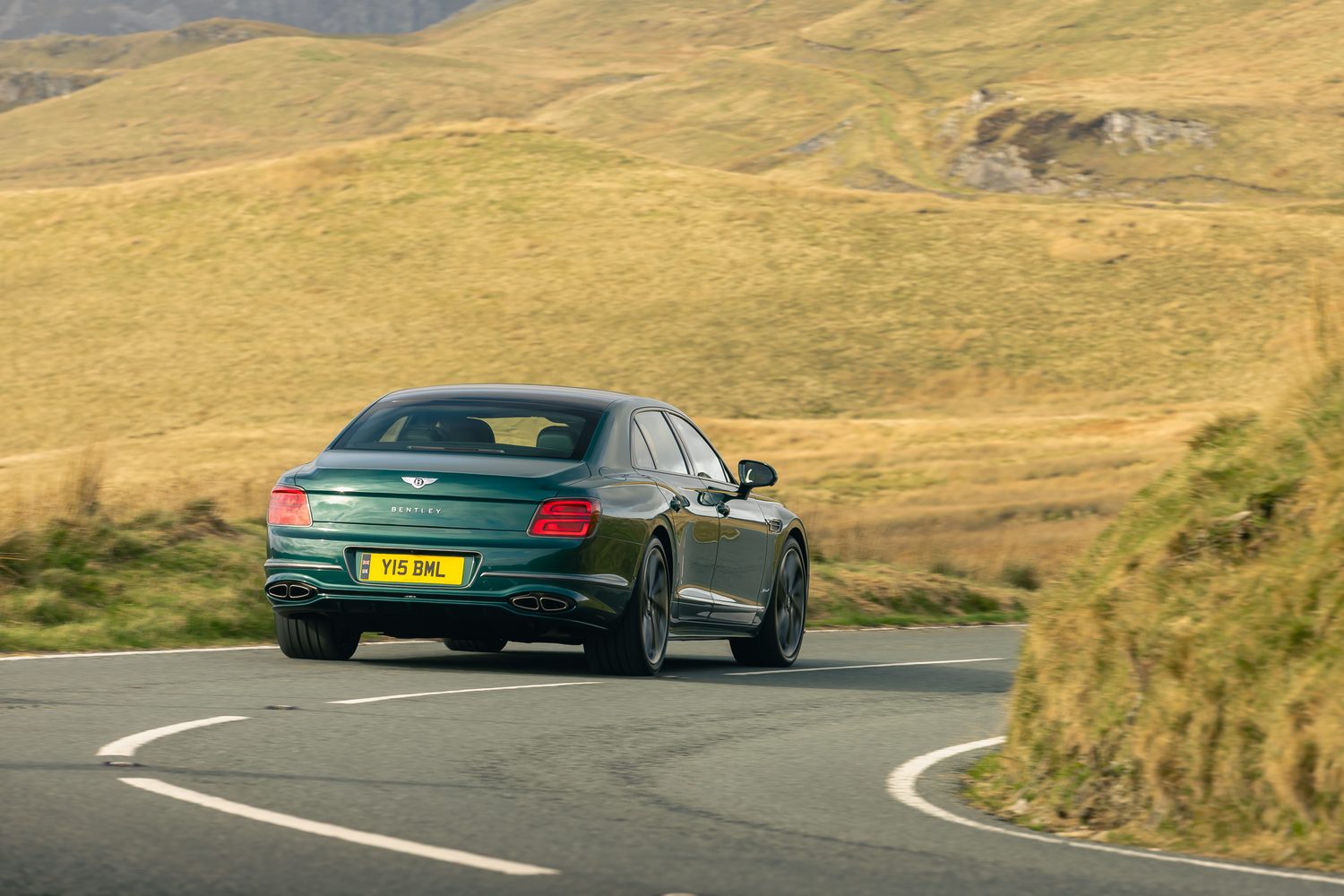
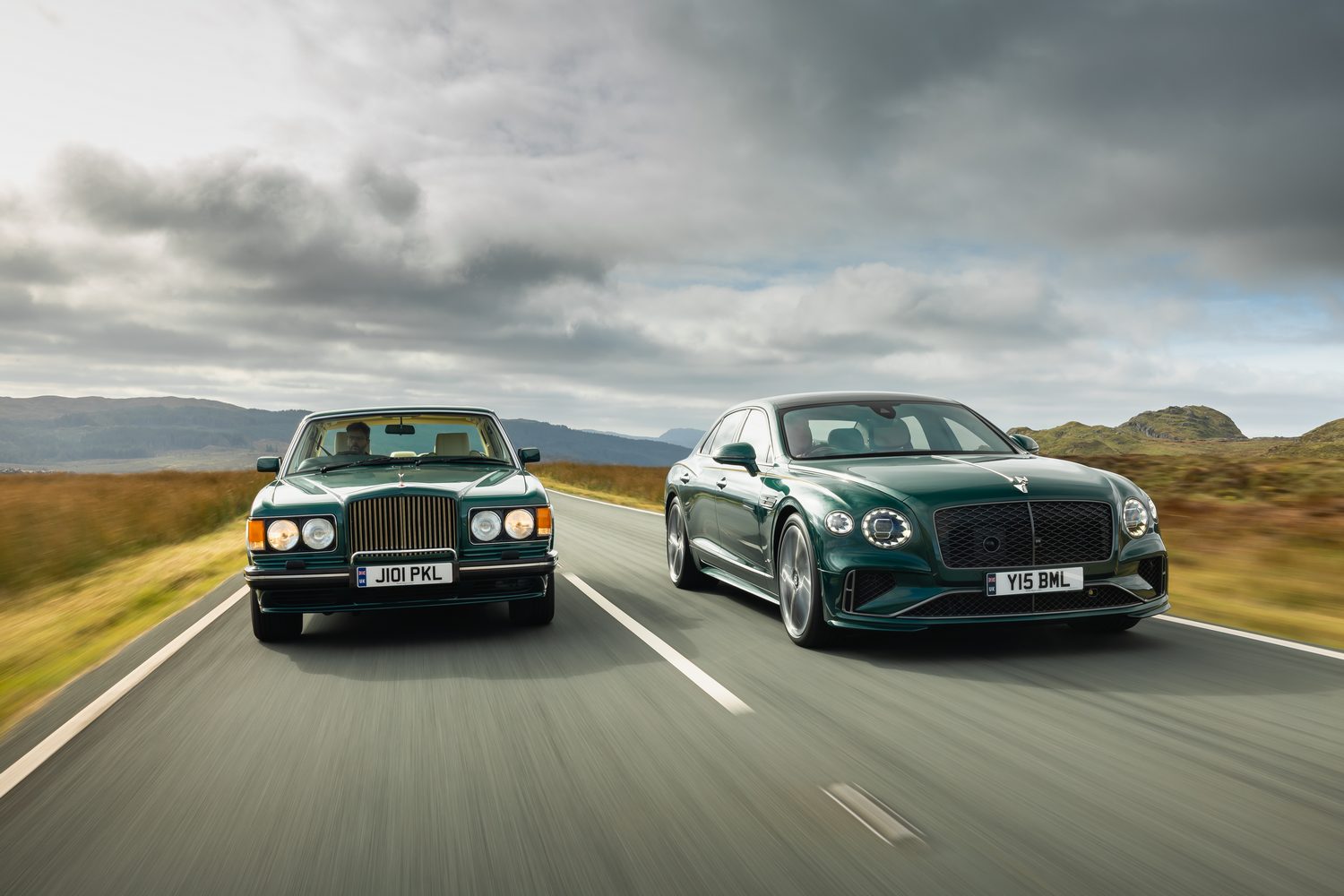
Complementing the Turbo R was the Flying Spur Speed, complete with a modern interpretation of the same yellow coachline - is a perfect match for the 1991 car's luscious green, while the interior is phenomenal.
And as a Speed, it gains the Ultra High Performance set-up. This means that while it deploys the same 4.0-litre V8 PHEV gear as the Azure, the power and torque are up to monster 782hp and 1,000Nm outputs, respectively. That means 0-100km/h in 3.5 seconds, despite a kerb weight the wrong side of 2.6 tonnes. Brain-scrambling stuff.
Bentley Continental Flying Spur and grey Flying Spur Speed
By 2005, Volkswagen - and ultimately Bentley too - was under the domineering shadow of Ferdinand Piëch, the singularly determined man who ultimately created many of the group's greatest hits, such as the Bugatti Veyron. And, er, the VW Phaeton.
Interestingly, that latter car was available with a 6.0-litre W12, which of course came to be an engine wholly synonymous with Bentley, in much the same way the old 6.75-litre V8 was the traditional hallmark of a Rolls-Royce.
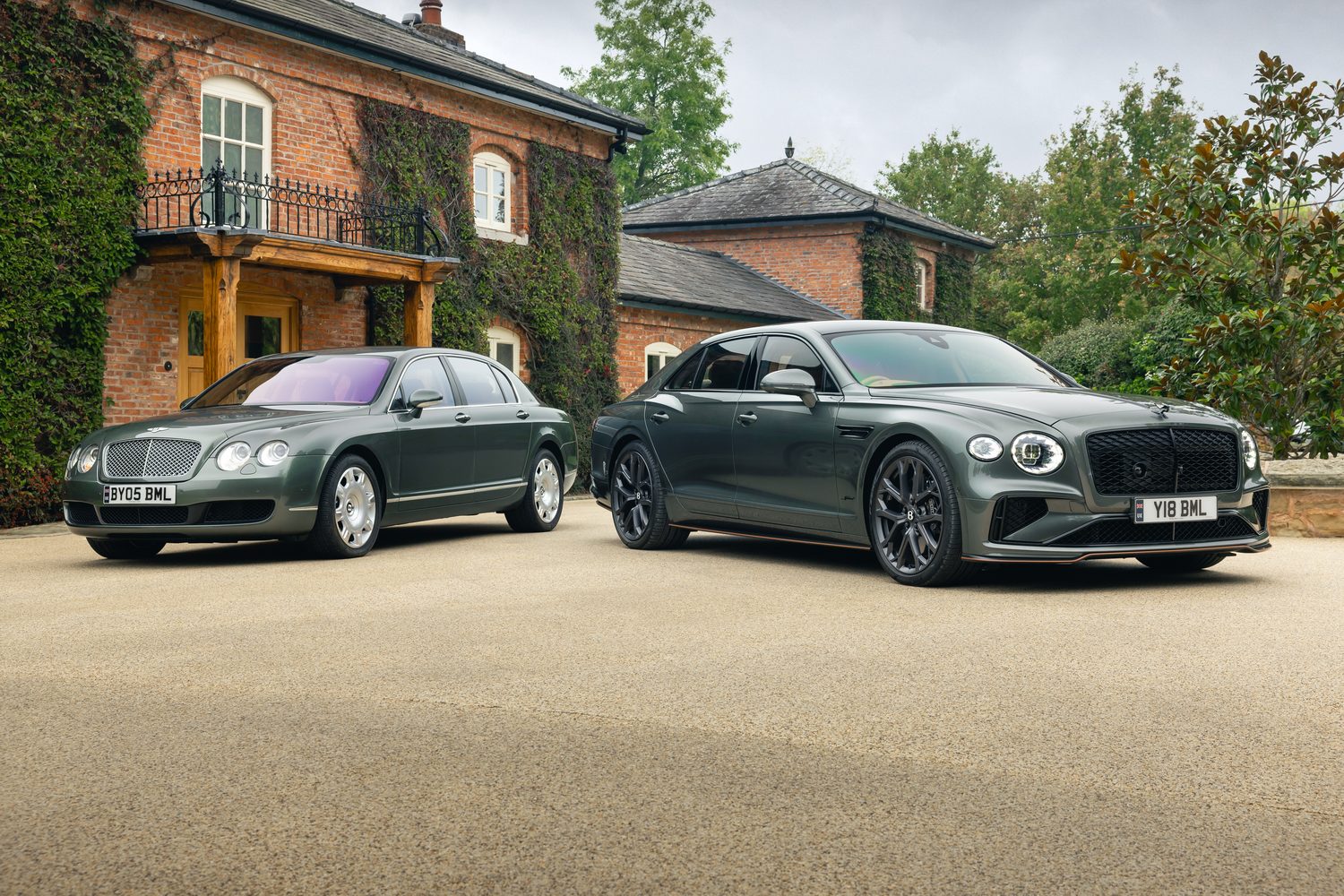
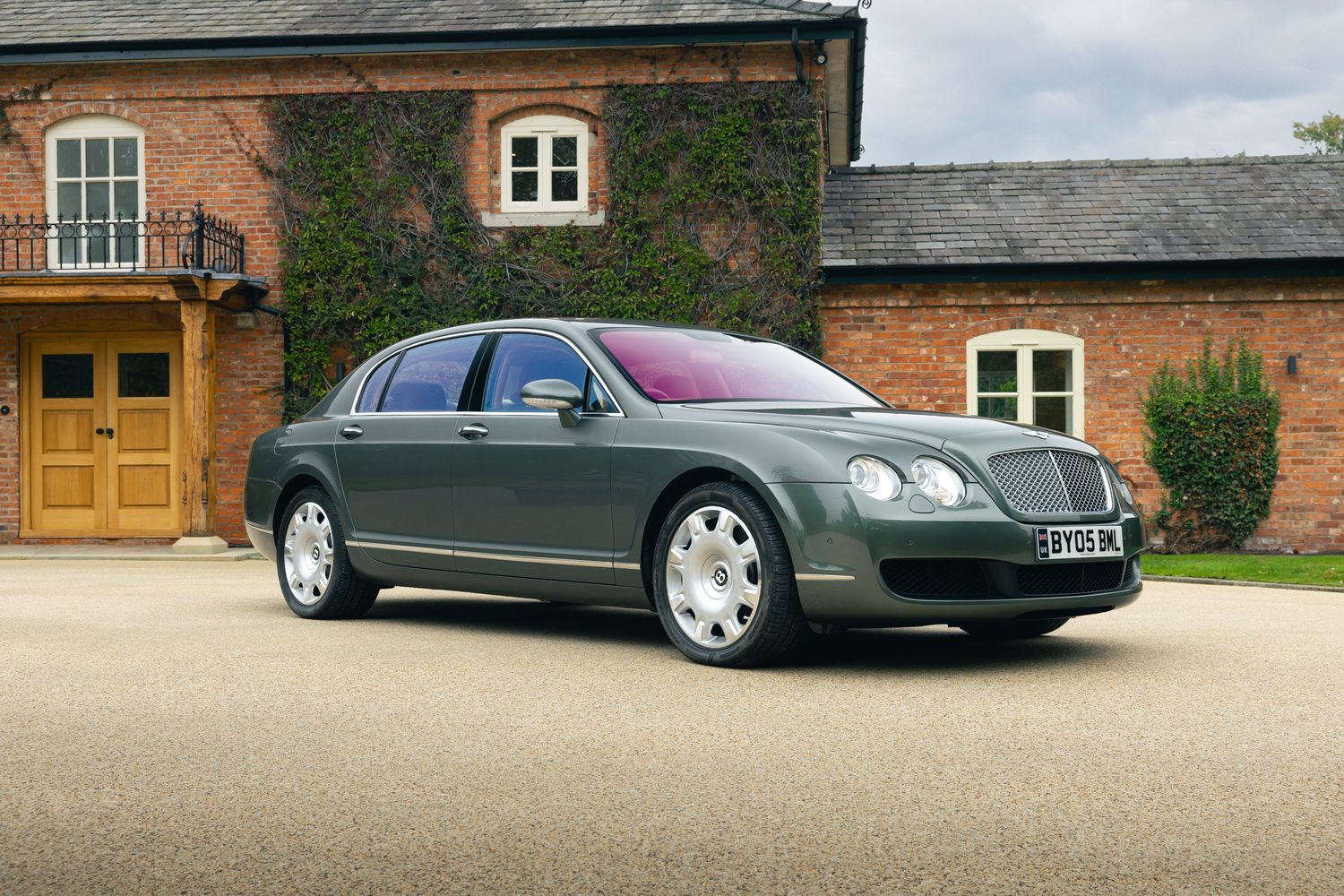
And on our birthday celebration event with the company, when everything else we drove (or even, didn't drive, in the case of the T-Series) had a V8 engine of some sort, then this Continental Flying Spur stood out as it obviously deployed the venerable W12.
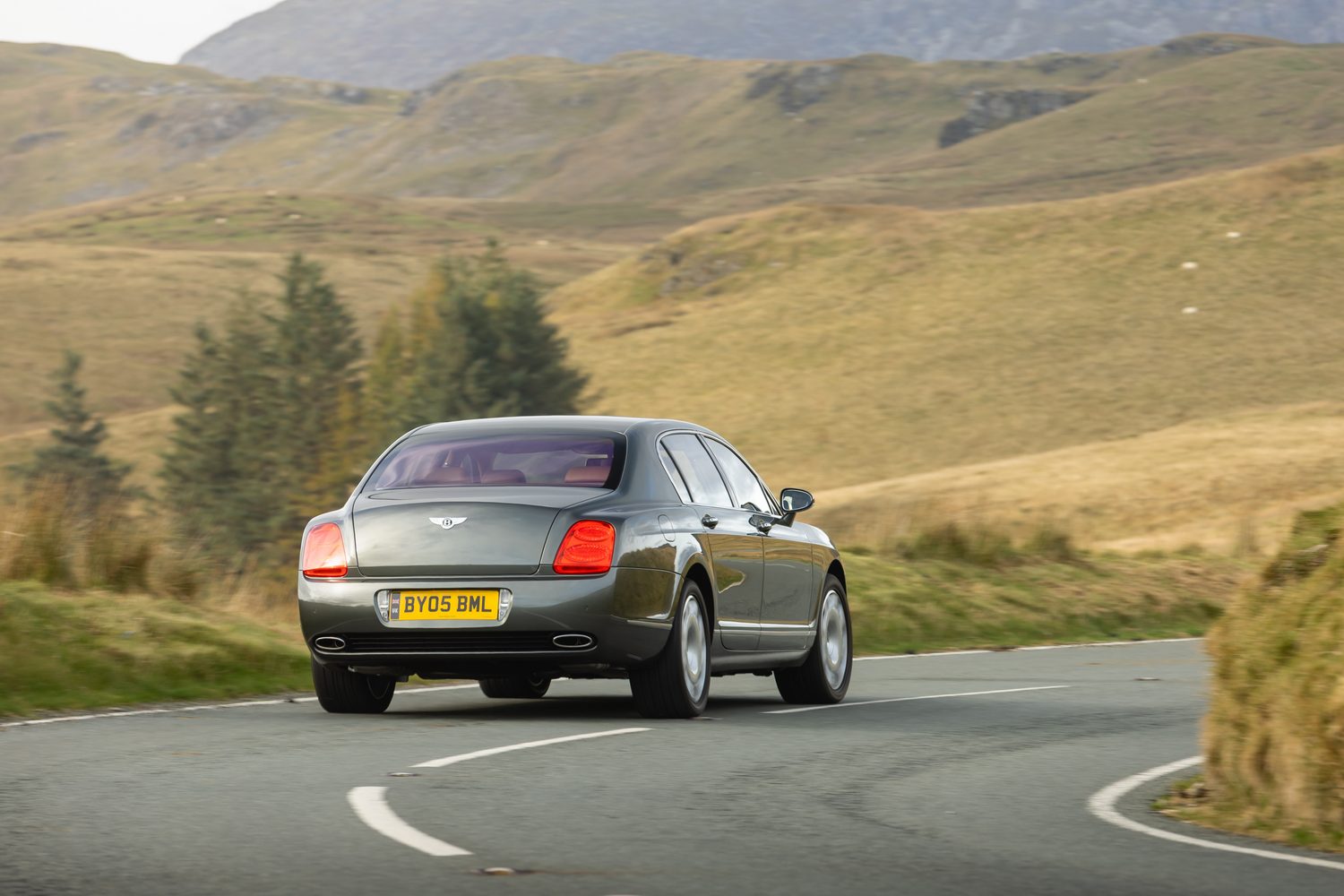
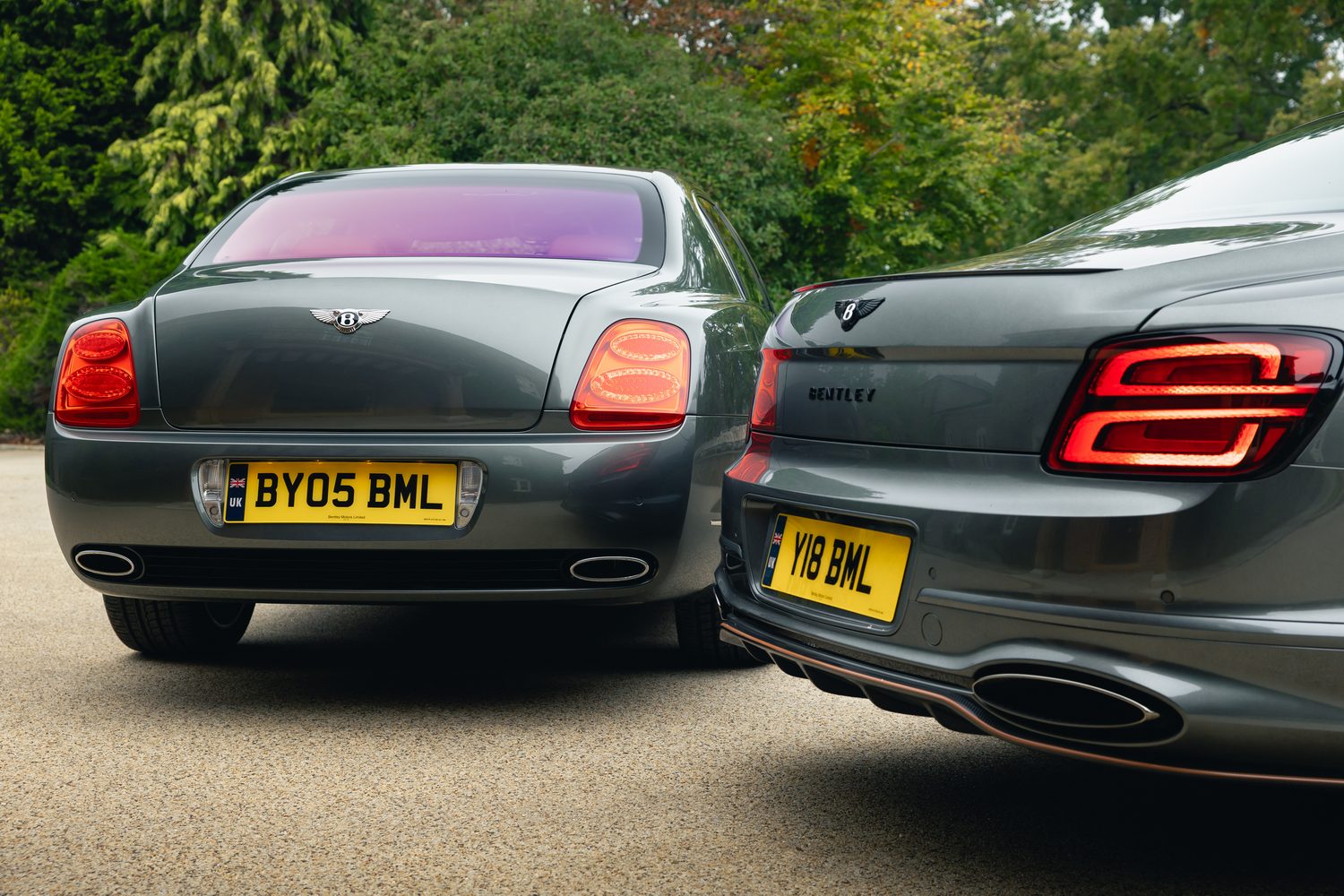
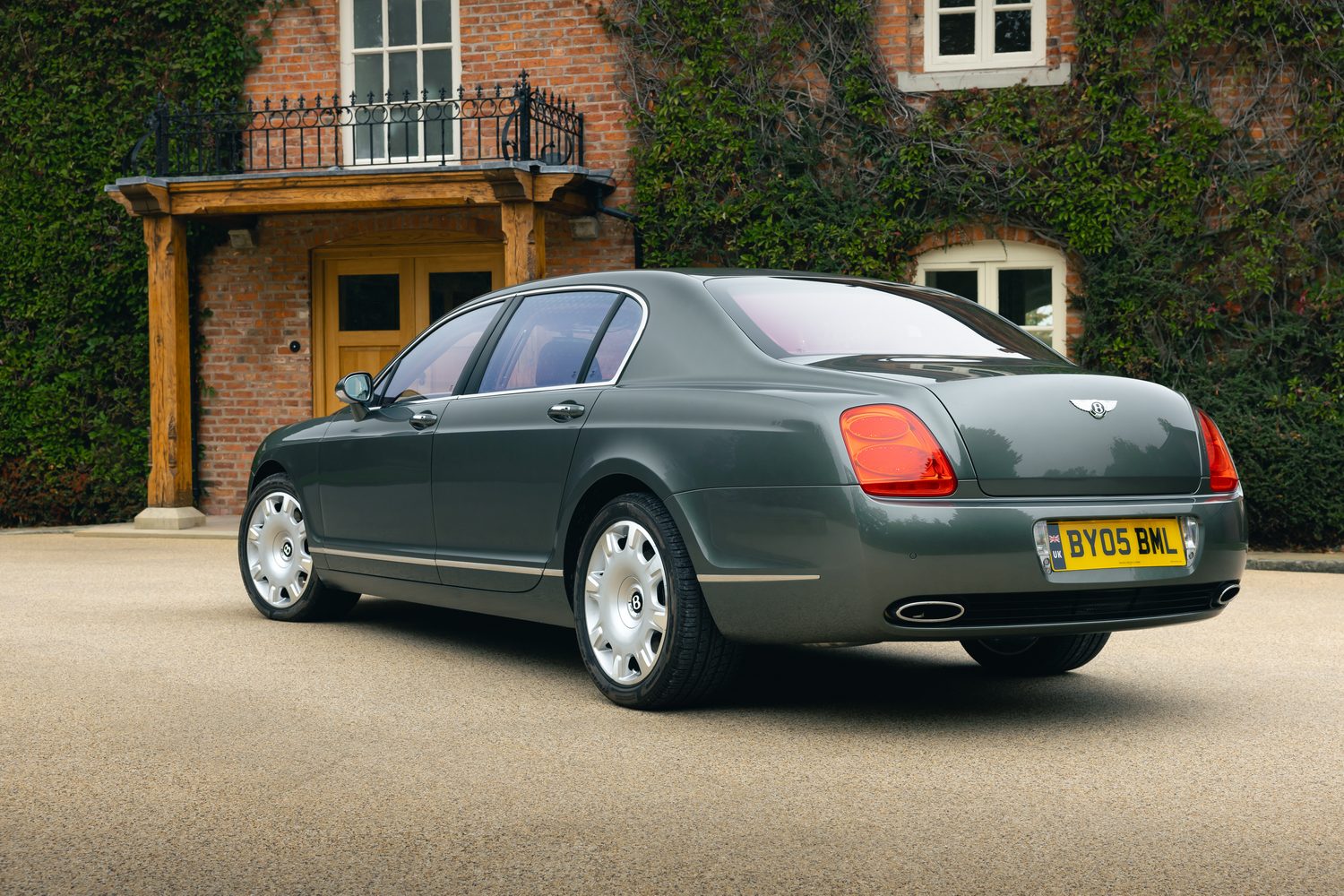
To be fair, the problem with the original modern-era Flying Spur (dropping its Continental name for a sec) was always the way it looked. Every Flying Spur since has borne more than a passing resemblance to its contemporary Continental GT, but if you look at the current cars then you can see they have evolved into their own distinctive and highly amenable shape.
Whereas this thing looks like a bulbous four-door Continental GT in a top hat. It's not a great piece of design and it can look particularly ungainly from a low-down, rear-three-quarter view, where the distended roofline and Continental rear light clusters do it no aesthetic favours.
However, to drive, it's an absolute gem. The power delivery of the W12 is not as instantaneous nor as eye-widening as the thumping 782hp PHEV in the modern Spurs, but with 557hp and 650Nm on tap, the Continental Flying Spur still picks up rapidly and hustles hard if you hold your nerve and keep your foot in.
The 0-100km/h time of 5.2 seconds isn't quite as indicative of its top-end prowess as the 312km/h maximum speed, although if we have one minor gripe, it's that these early W12s don't sound anything special; they're quite muted things.
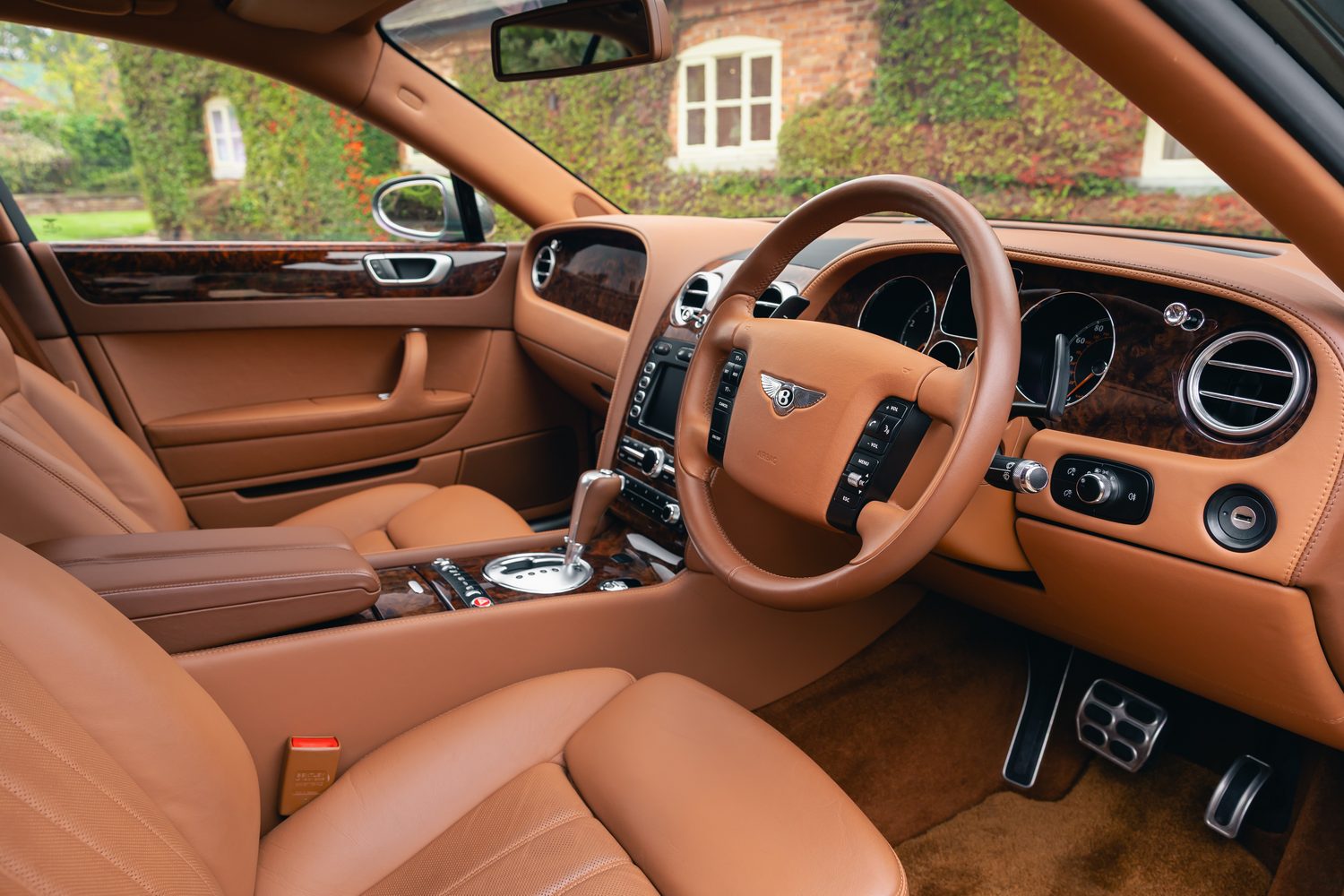
Yet the level of development between the Turbo R and this Continental Flying Spur is quite dramatic. Aside from its dated infotainment system, with its eight-bit navigation graphics, and the antiquated trip-computer display in the cluster, if you keep your eyes up and on the road (as you should do) in this 2005 car, then all its major touchpoints and its controlled, polished and enjoyable driving dynamics make it feel a lot more like the current crop of Bentleys than akin to its immediate 1990s predecessor.
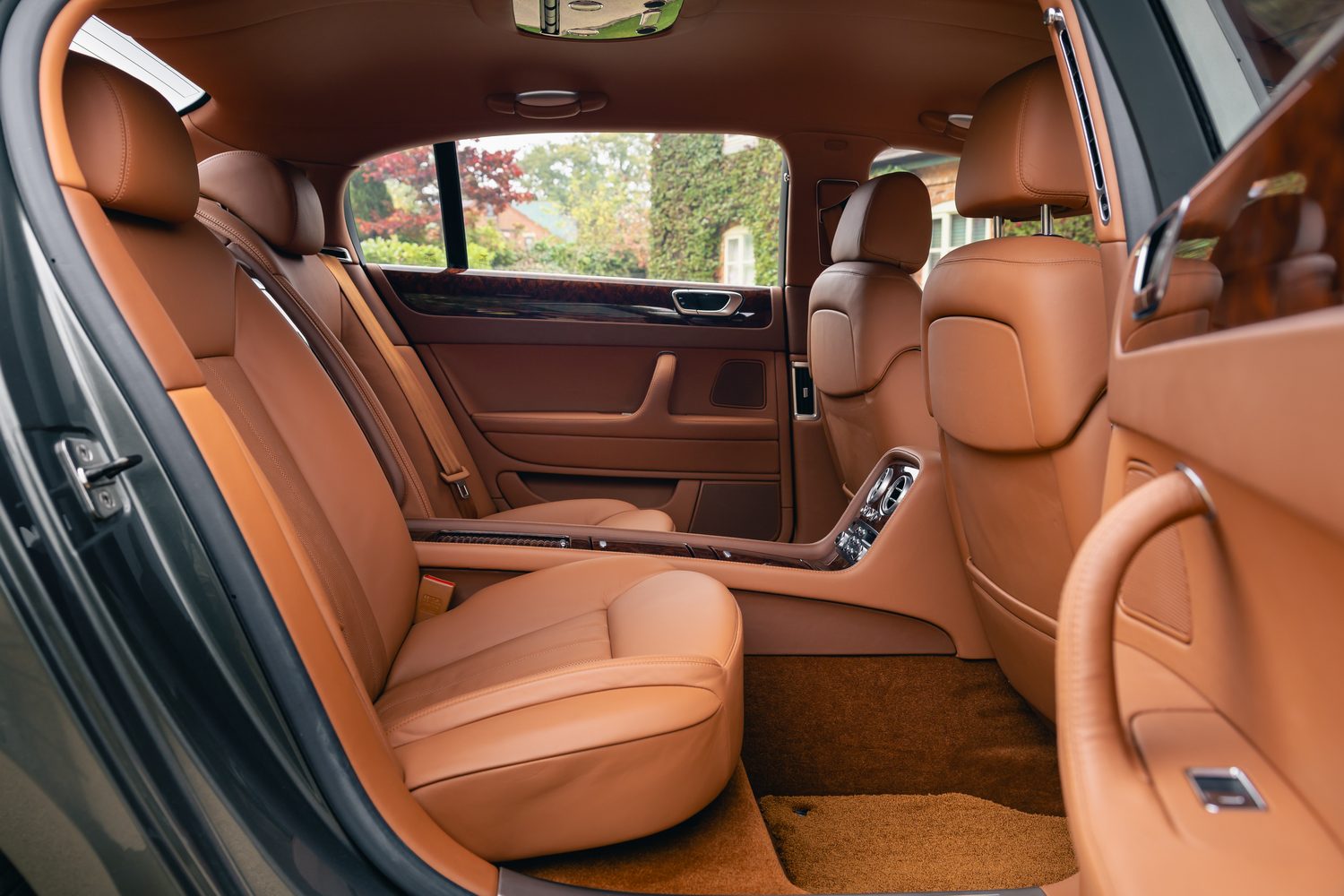
In short, although the styling leaves a lot to be desired and the in-car tech betrays the Continental Flying Spur's two-decades-old age, the way it drives and how it feels to sit in it is thoroughly up to date.
Oh, and the car pictured here is only the second-ever VW-era Flying Spur to be built. By the time we drove it on this event, it had covered a mere 755km in its entire life, so we were driving a 'tight' W12 in essence. Maybe it would hit even harder, once it has freed up with a few more kilometres under its belt...
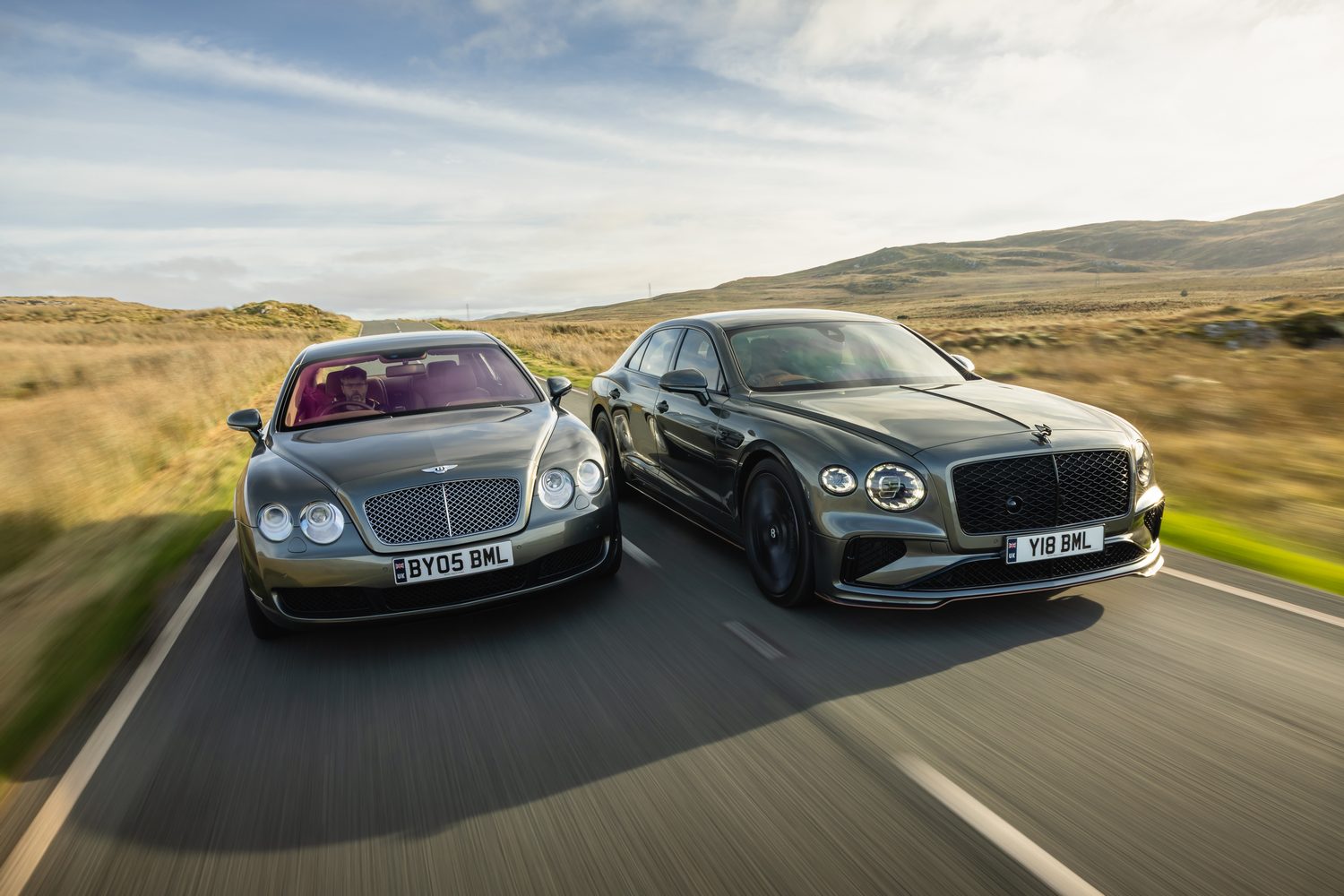
We did actually drive the modern equivalent immediately after its Continental Flying Spur predecessor, and it was truly astounding in Speed specification. But we're going to bring you a full review on the new Flying Spur Mulliner (with the same drivetrain) on the site soon, so we'll reserve all our judgements on the car until then.
Conclusion
It's a shame we didn't get a go in the T-Series just to bookend this evolution of Bentley saloons from the glorious age of the 1960s through to the storming line-up of today, but having sat in the oldest-timer here, while also sampling how the Turbo R and Continental Flying Spur evolved into the amazing plug-in-hybrid Spurs of 2025, you can see a clear lineage between all these cars in the way they drive, in the way they are put together, and in the sensations they deliver when you sit in them.
Exquisite craftsmanship. Sumptuous chairs. The finest woods and metals. Acres of space and a sense of imperiousness conferred on the driver, as they sit there looking out over a gigantic bonnet with (in most instances) a Flying B emblem proudly displayed at the prow.
And effortless, gigantic performance from enormous engines that are brimming with character. What held true for making the T-Series one of the best cars, four-door or otherwise, in the world of the 1960s still continues today with the current Flying Spur range, especially those equipped with the Ultra Performance Hybrid powertrains toting 782hp.
So if we had to take one 'goodie bag' home from this triple-celebration birthday party? Well, maybe it's because we're of a similar vintage, or just maybe it's because it was the Bentley which seared itself on our impressionable young mind's eye back in the day, but it'd have to be the Turbo R.
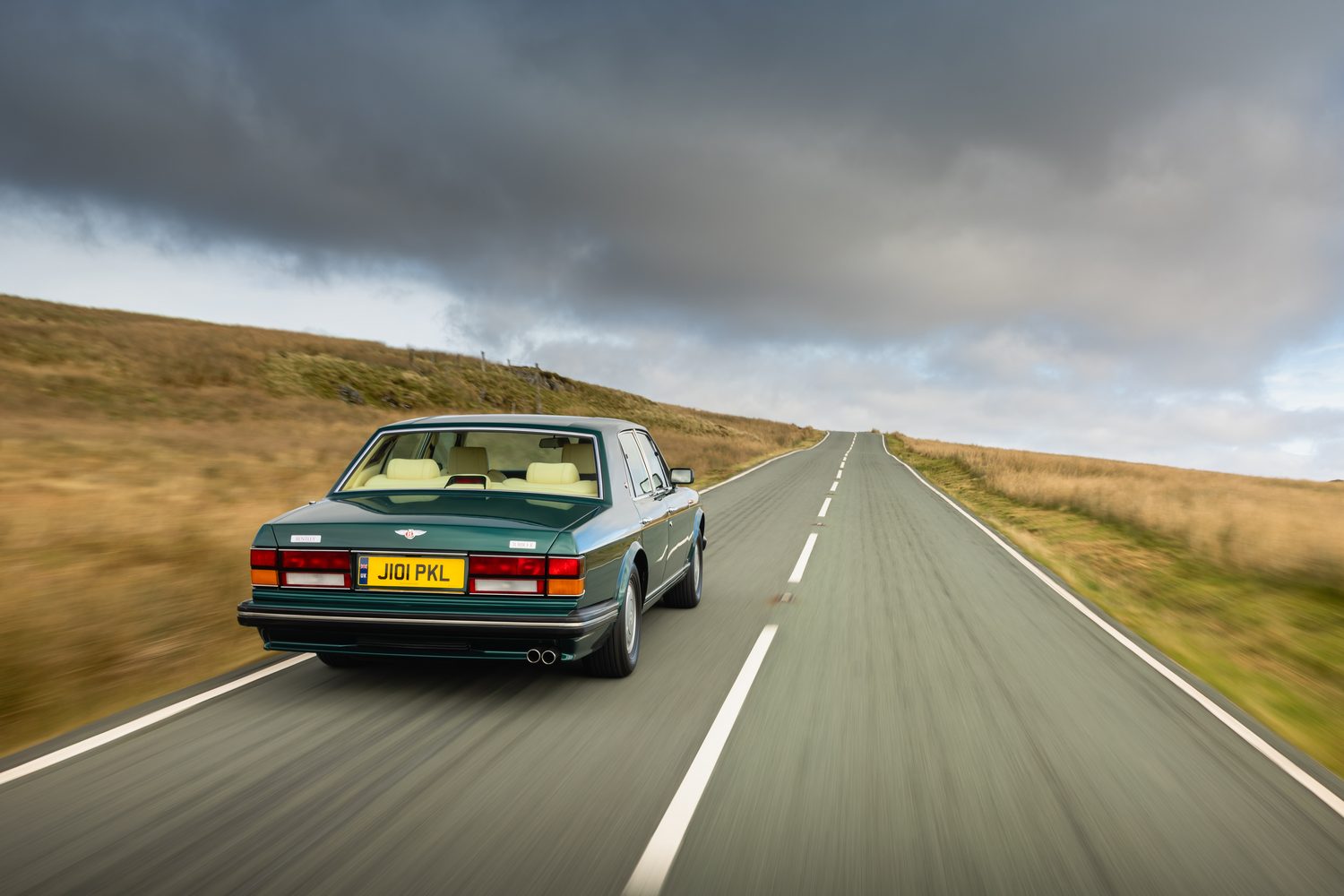
It's a glorious slice of '90s excess that remains an unmitigated delight to drive in this day and age. It might not be that quick any longer, and it might not handle quite as well as you'd expect to honour that roadholding epithet, but the 1991 Bentley four-door can still make you feel like a million dollars when you're behind its fantastic, slender steering wheel.
If there is anything about this story we have not covered, you can avail of our expert advice service via the Ask Us Anything page.