

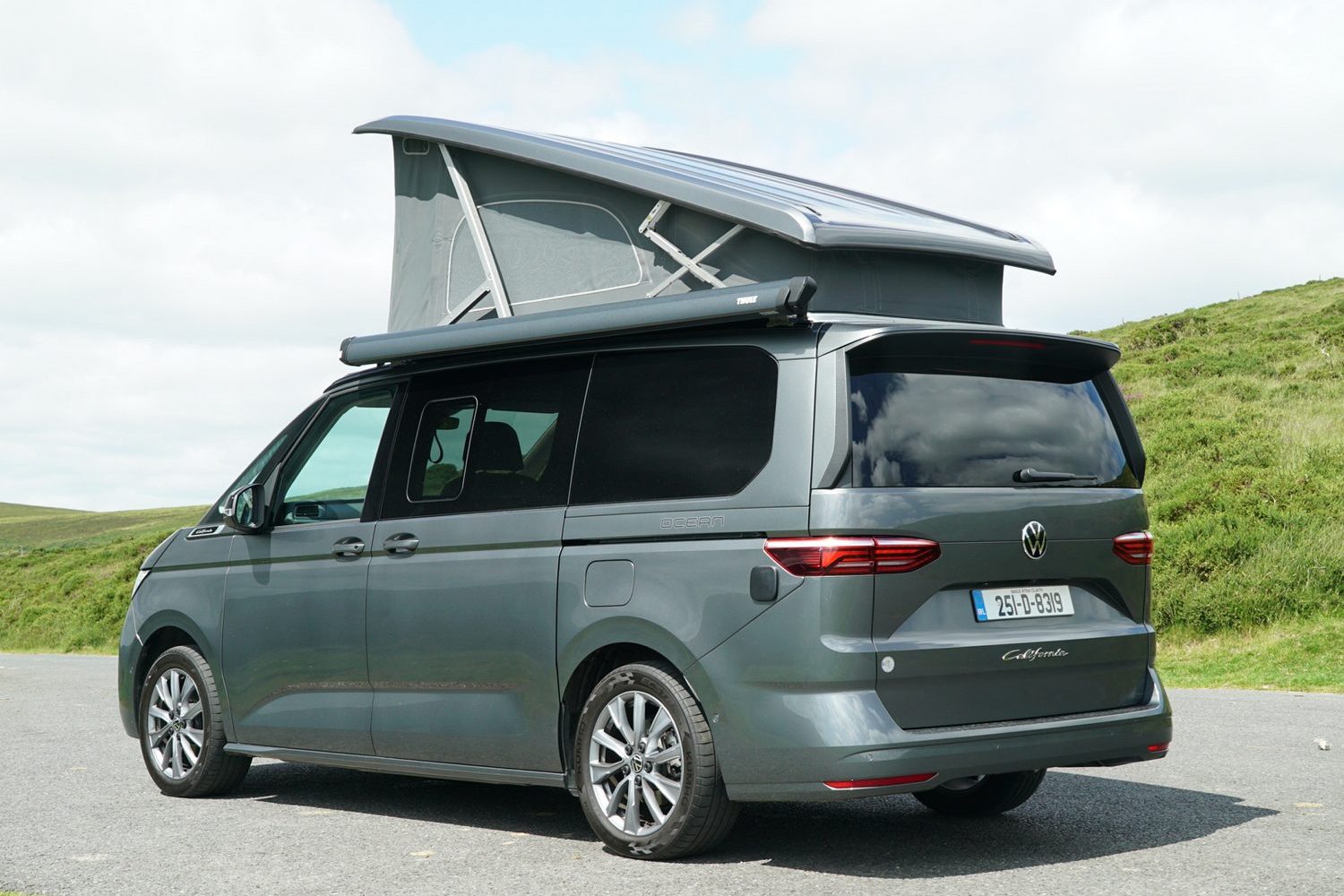
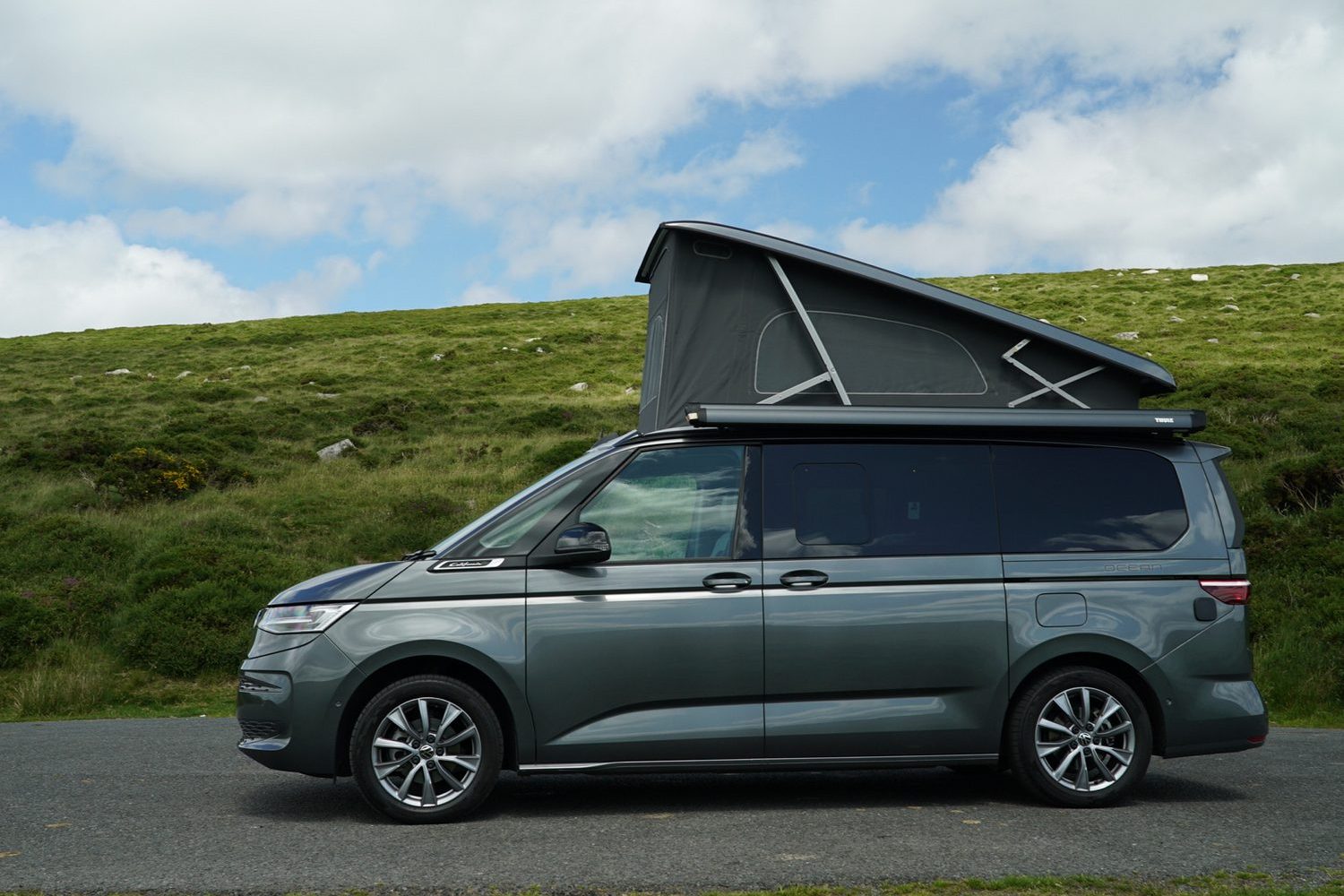
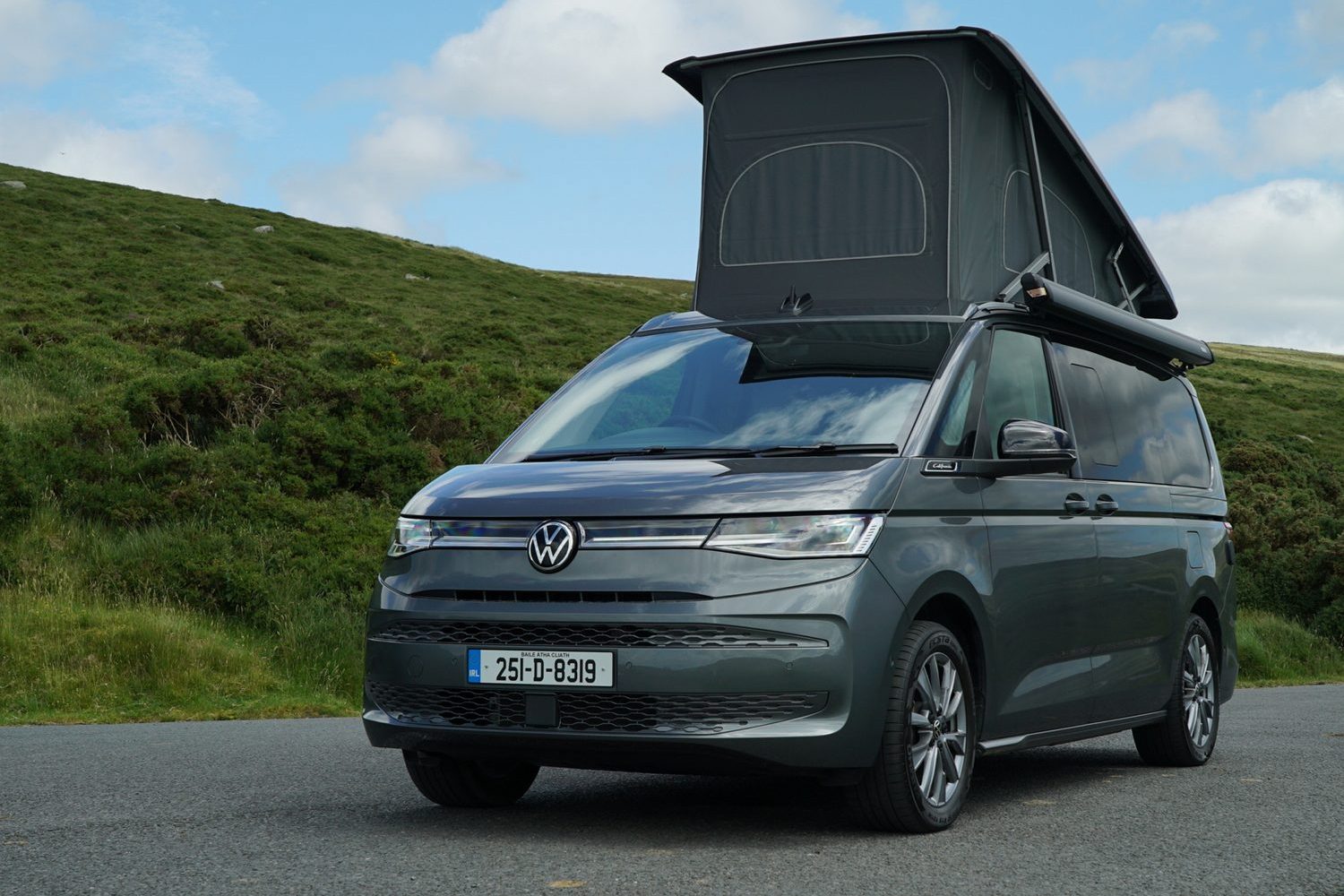
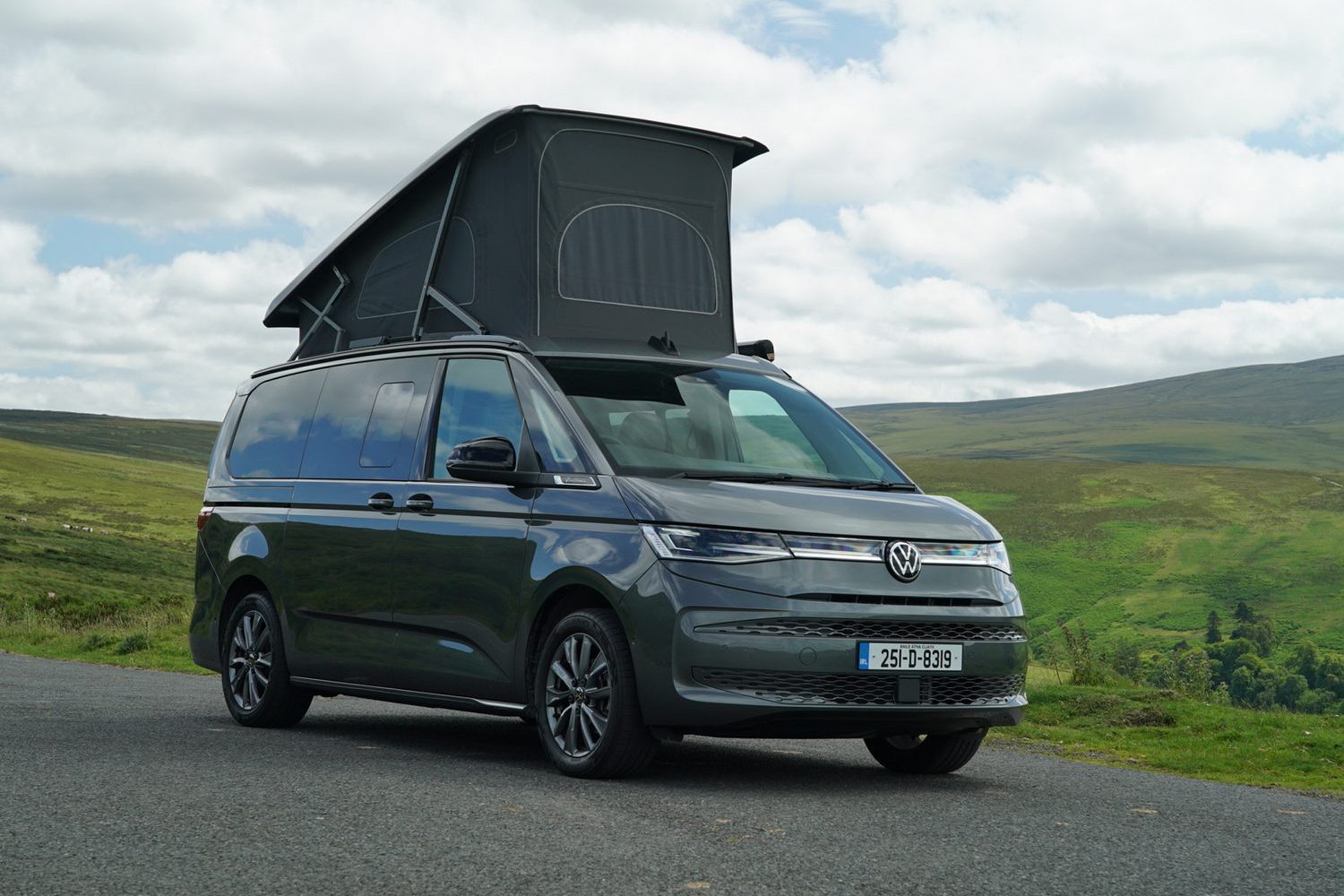
I ease up slightly from the surface of my bed. It's cold, a distinct autumnal chill in the night air, which is why I've dragged my trusty duffel coat across the top of the inadequately insulated cheap sleeping bag I bought online just before departure. I could switch the central heating on, but I'm worried about the camping battery running too low.
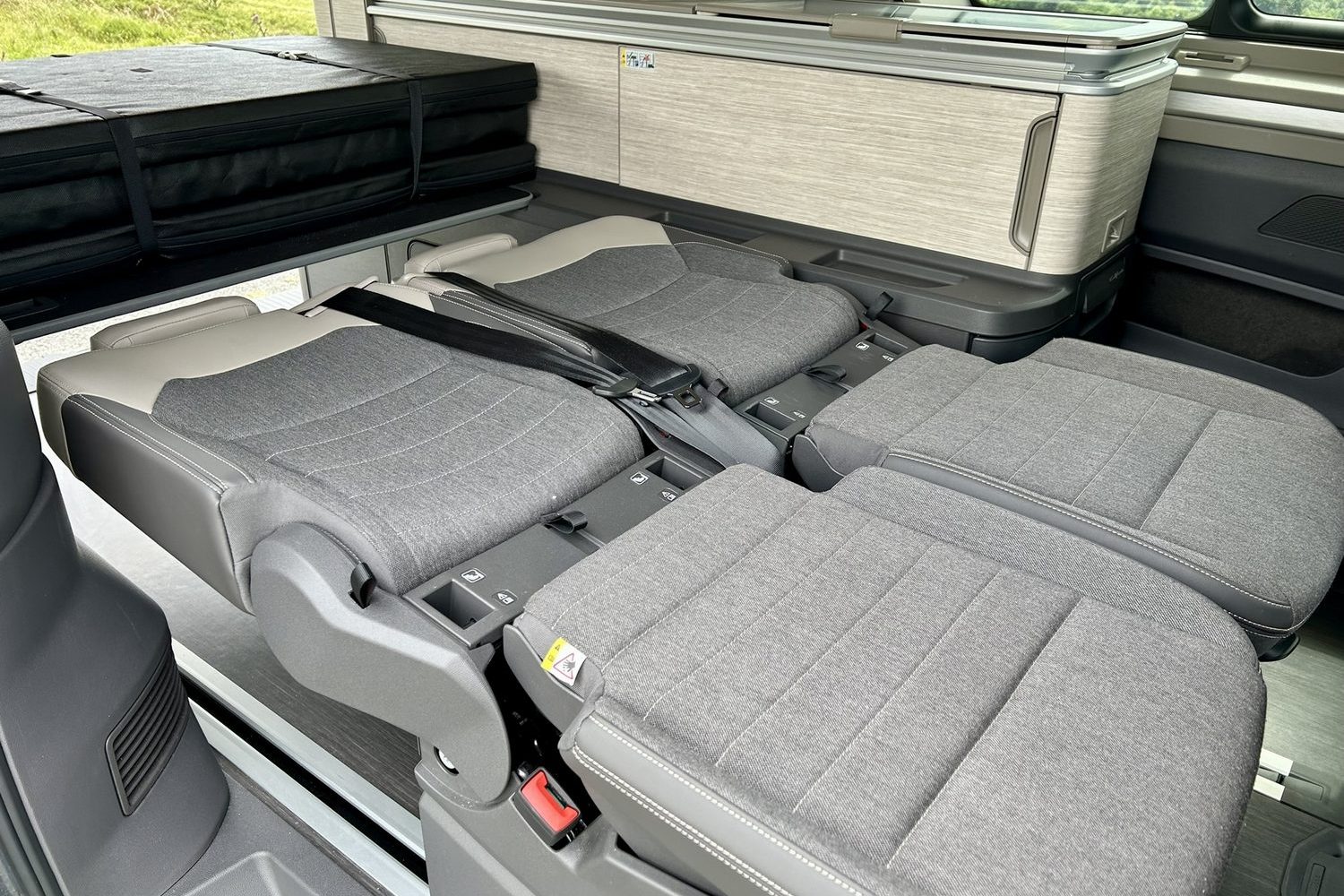
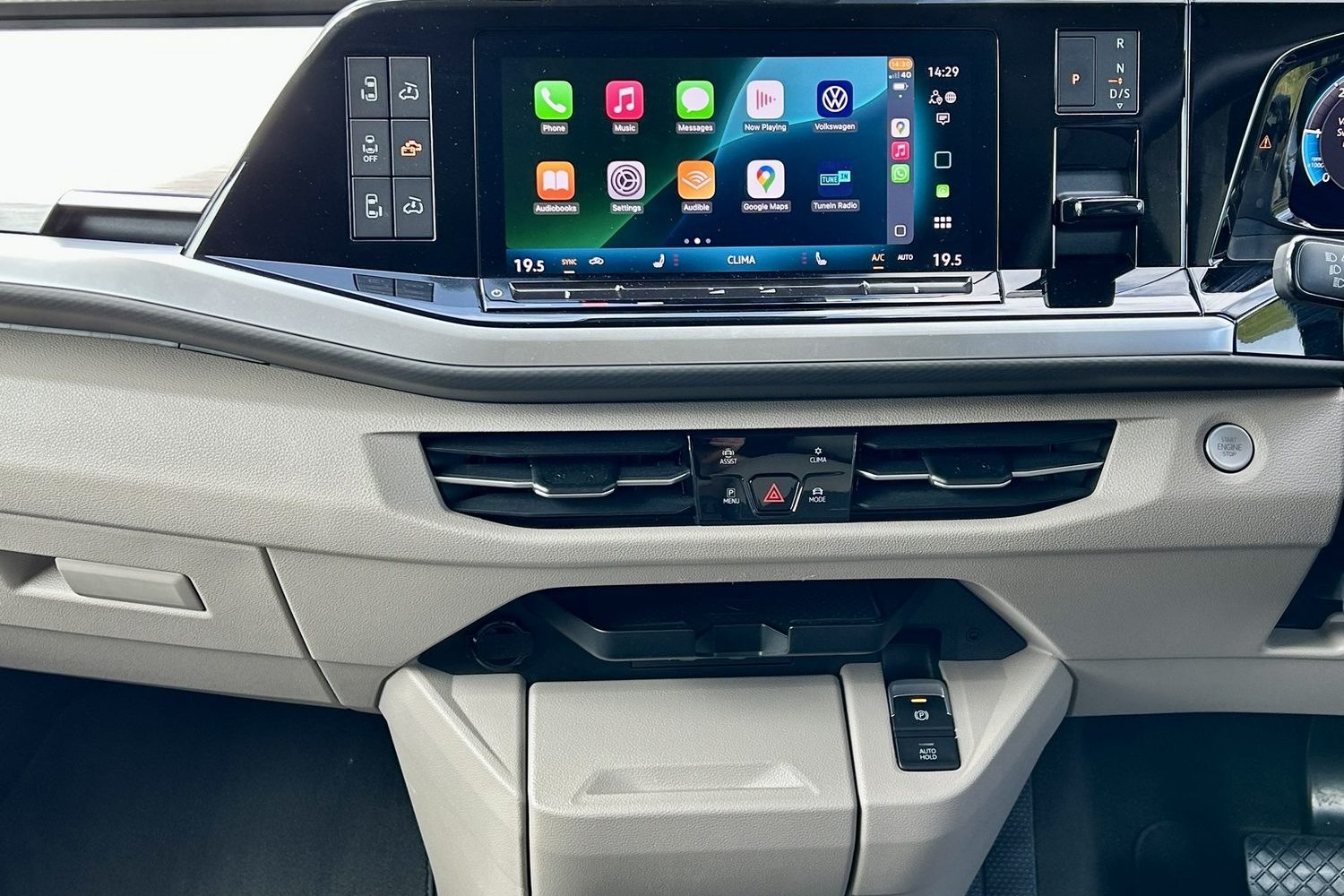
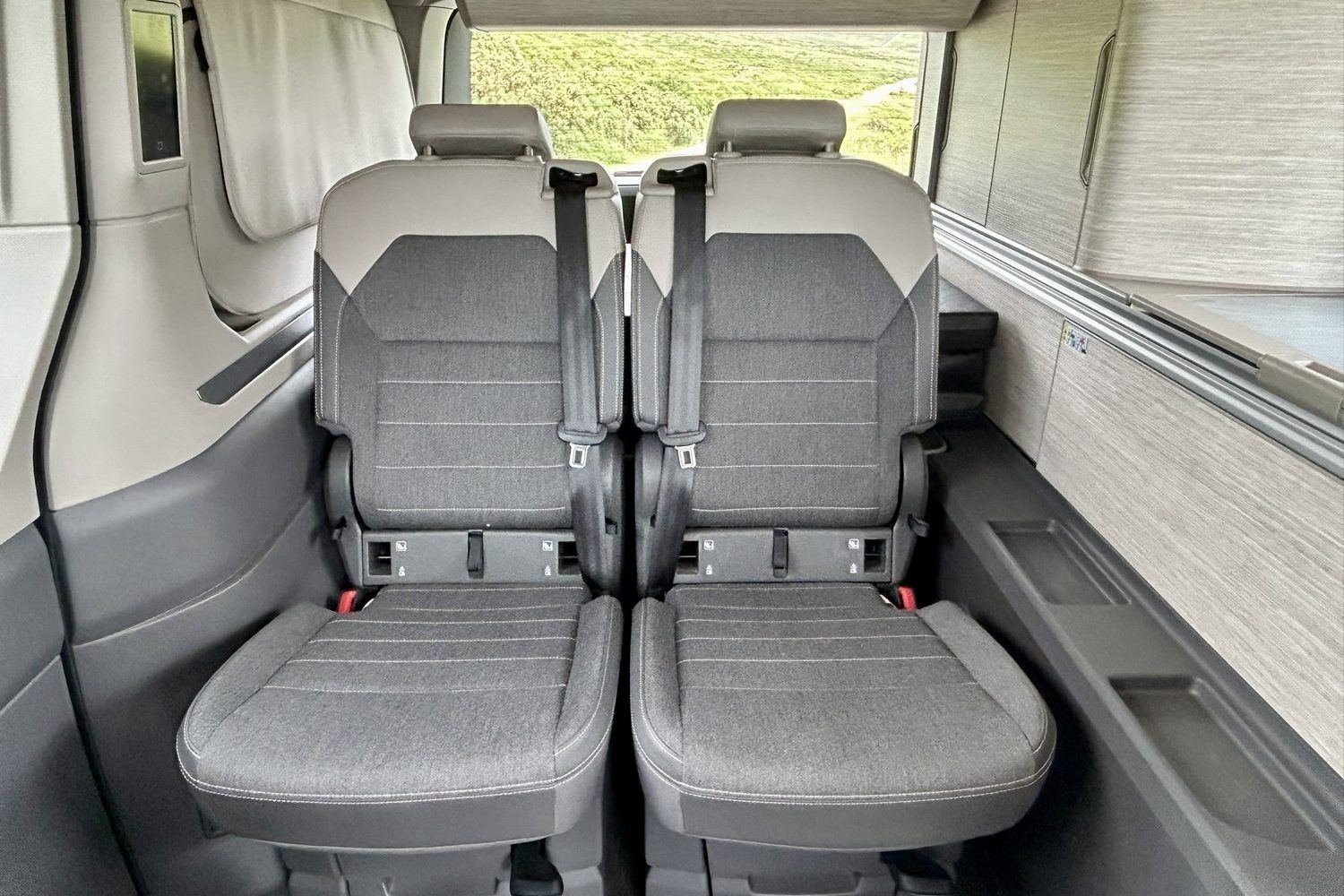
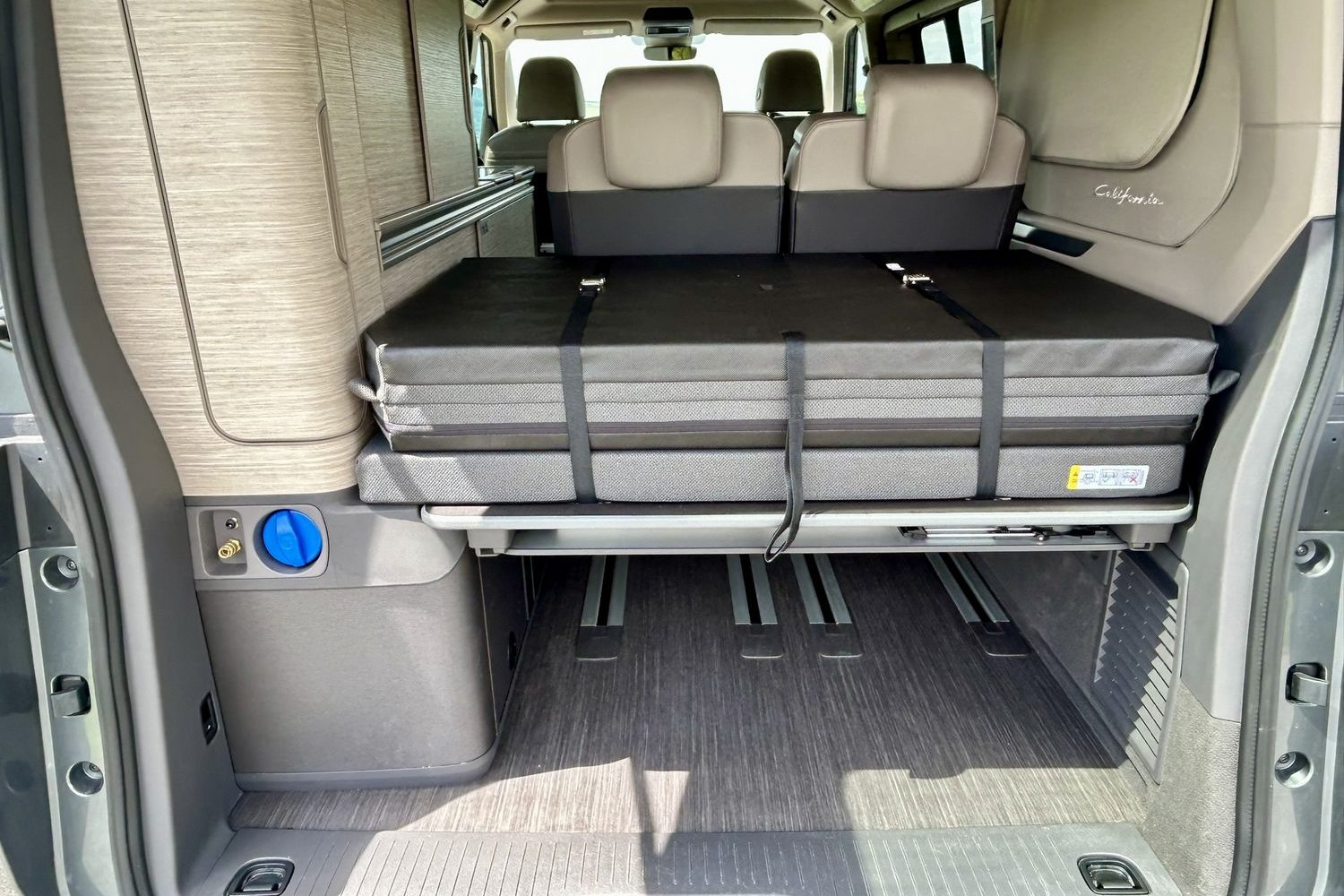
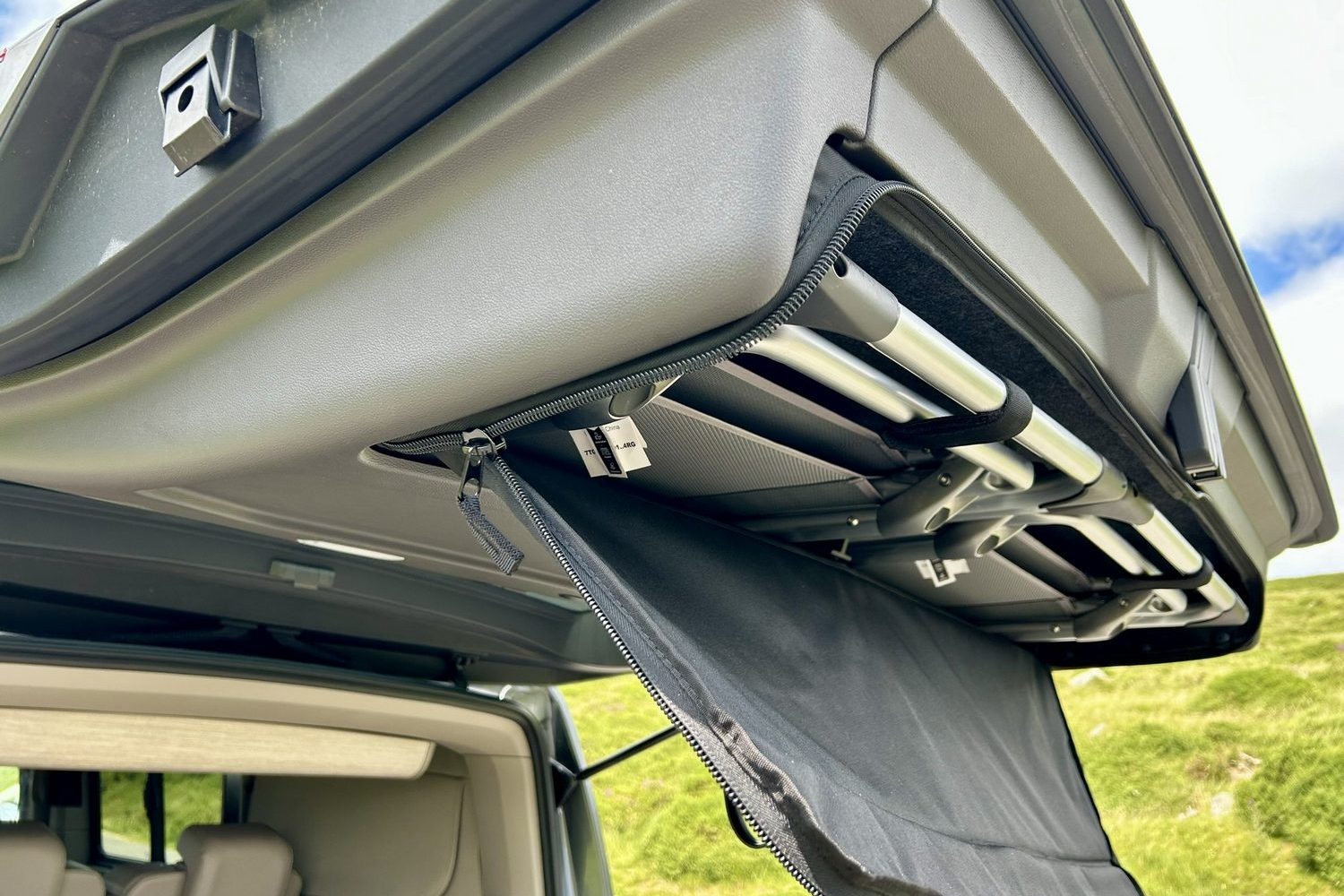
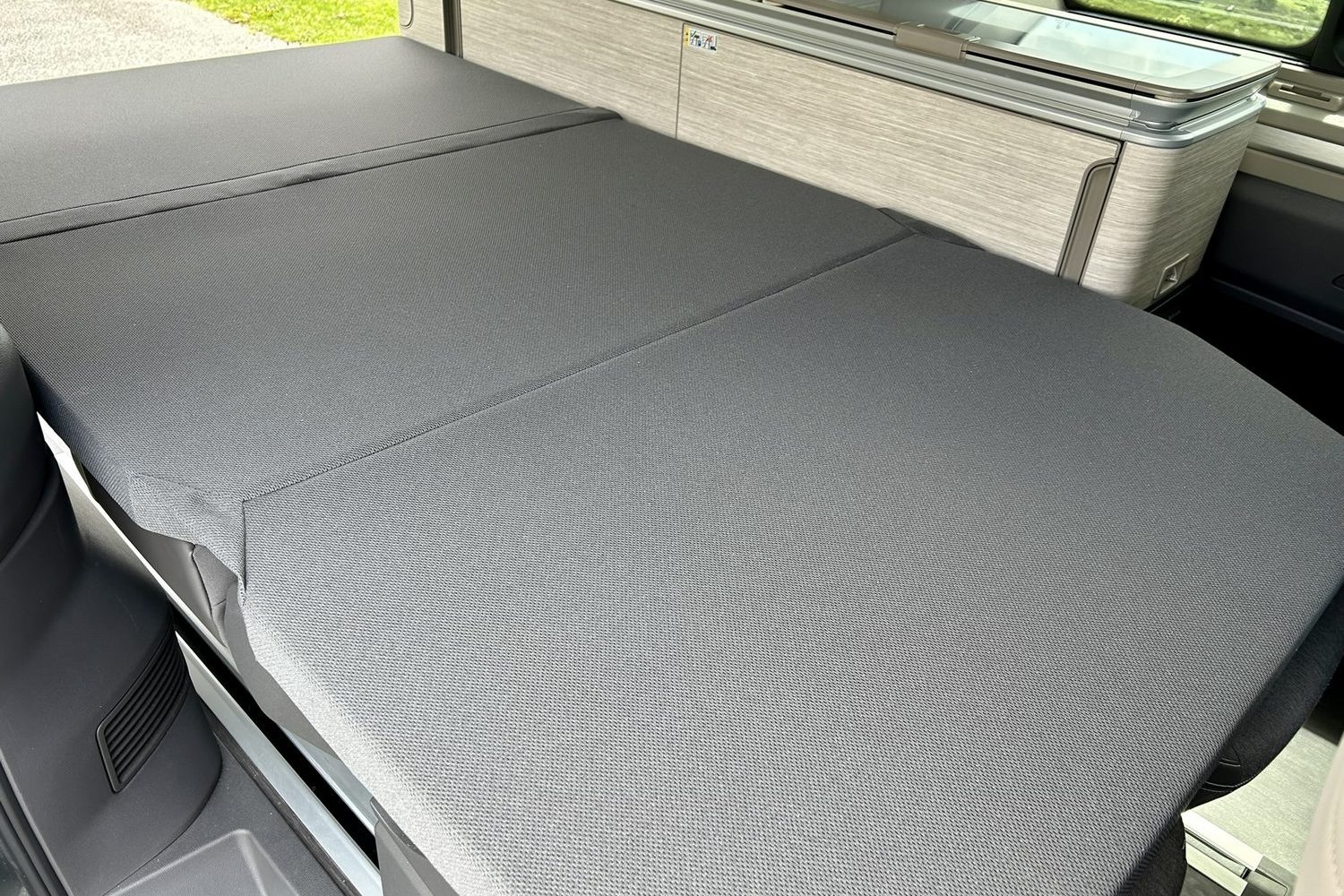
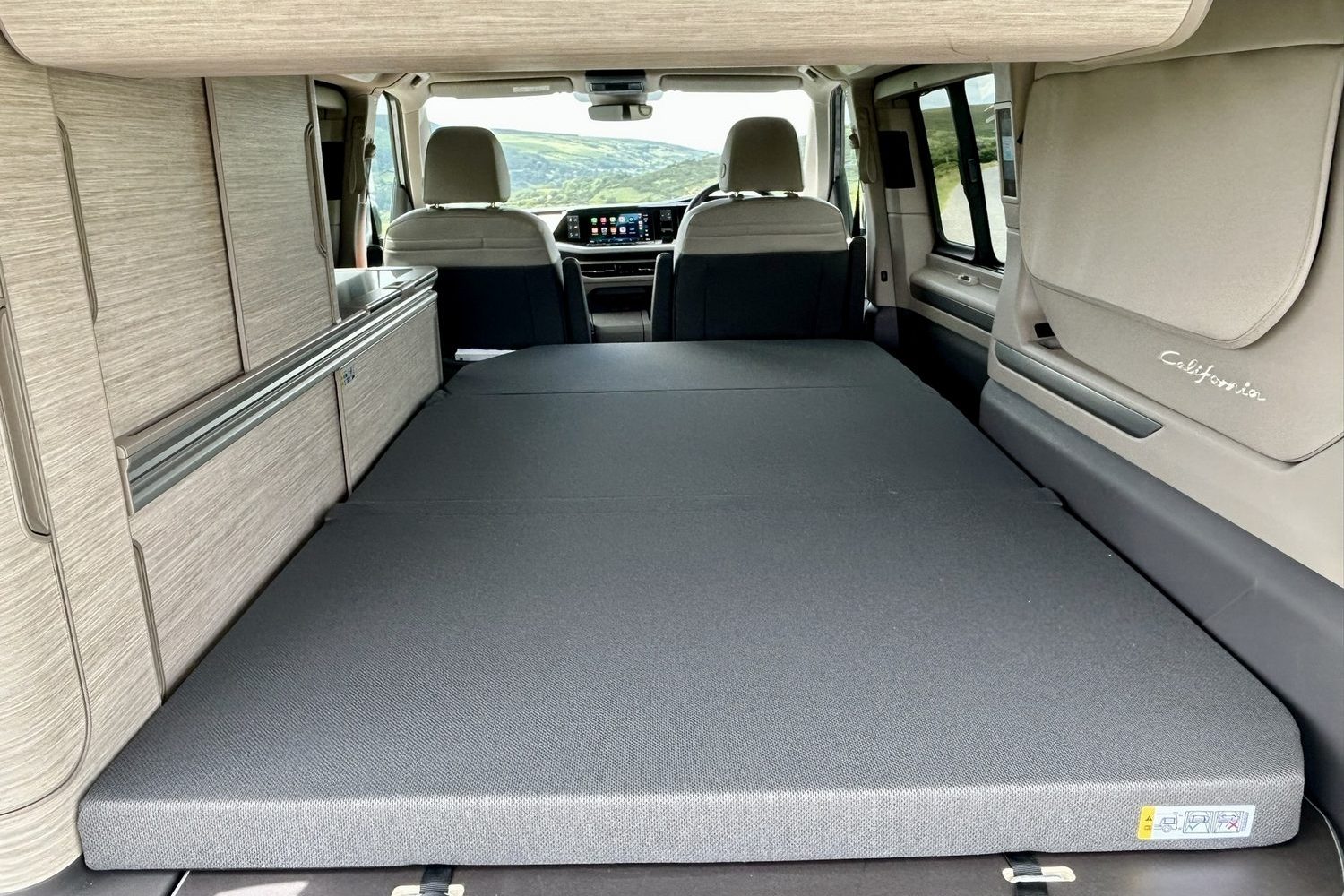
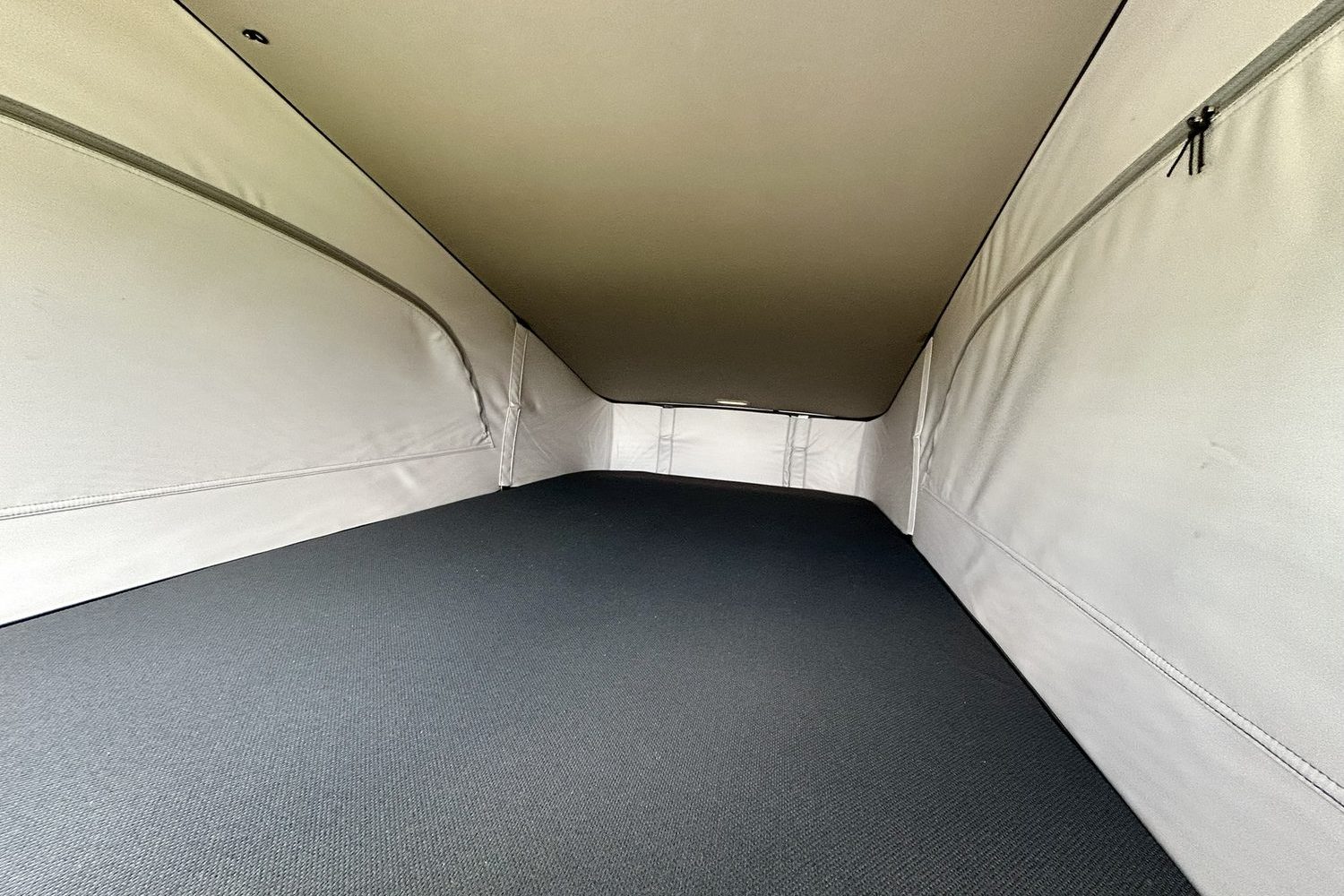
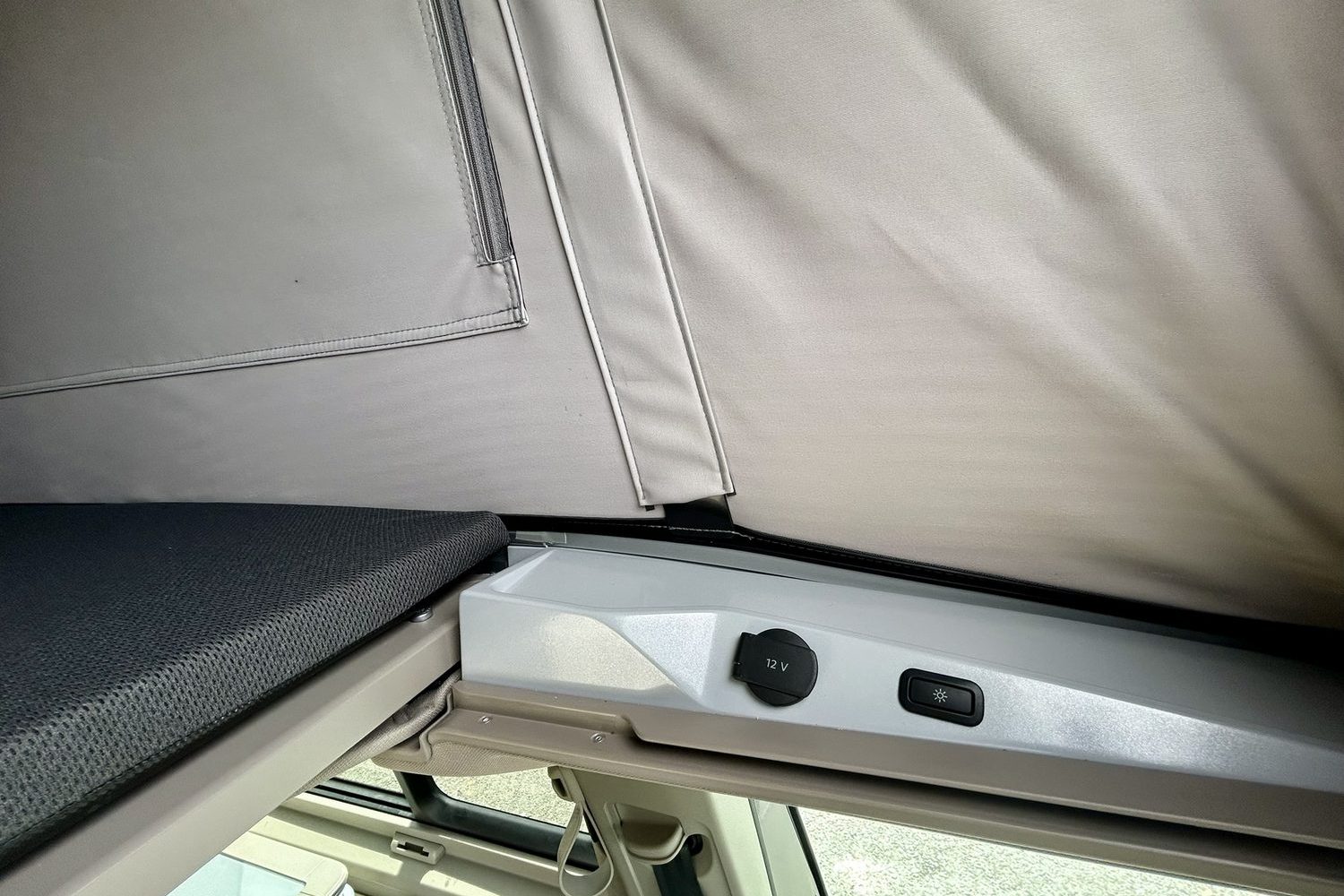
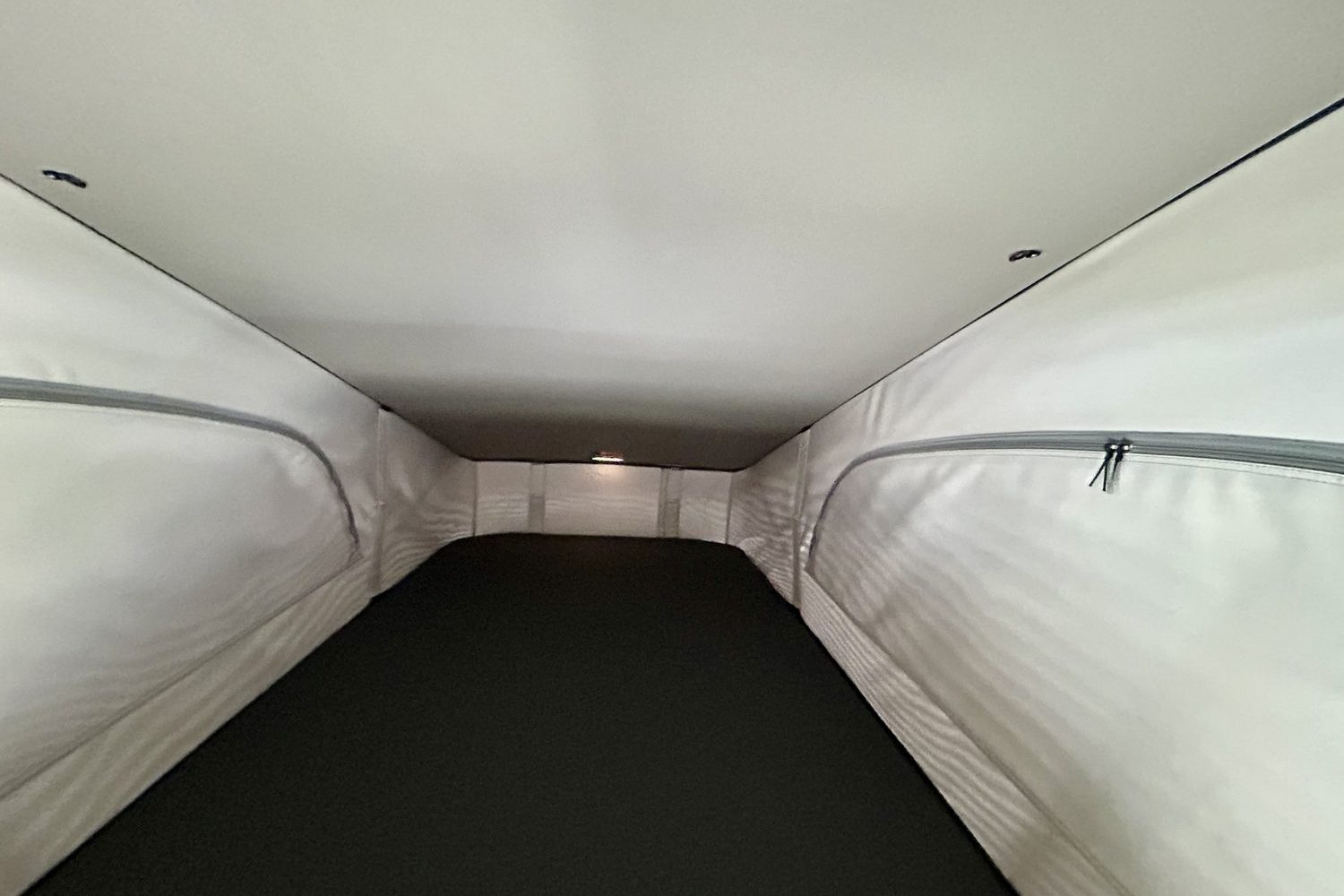
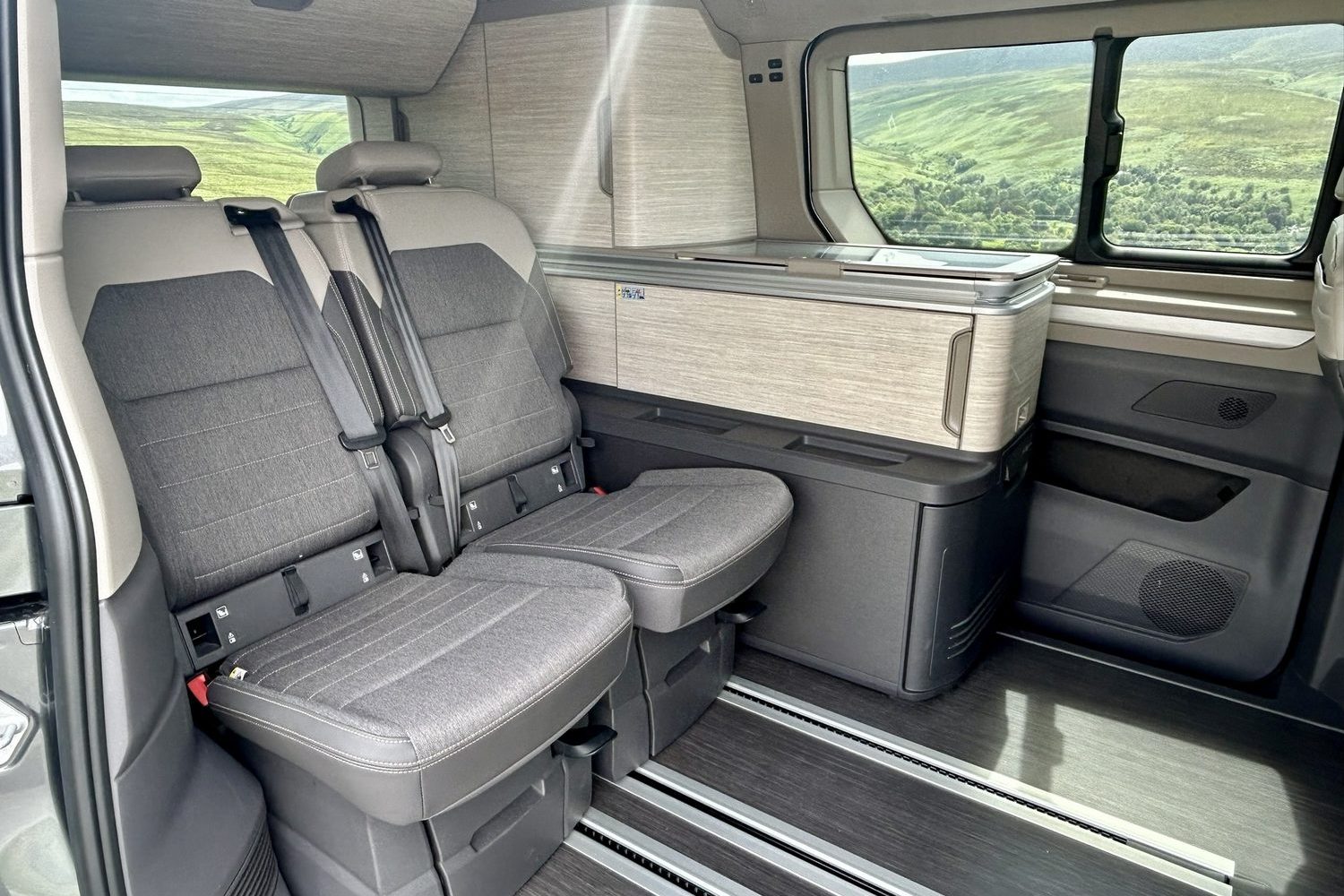
Central heating, on a camping trip? Well, that's one of the joys of the Volkswagen California. On a small digital touchscreen just by the edge of the folded-out 'downstairs' bed (a slim futon-style mattress that rolls out over the top of the flattened back seats, which is way comfier than it sounds) there's a series of controllers for adjusting the pop-up roof that allows either standing-up space in the living area, or the inner-part of which flips downward to form an even comfier double bed.
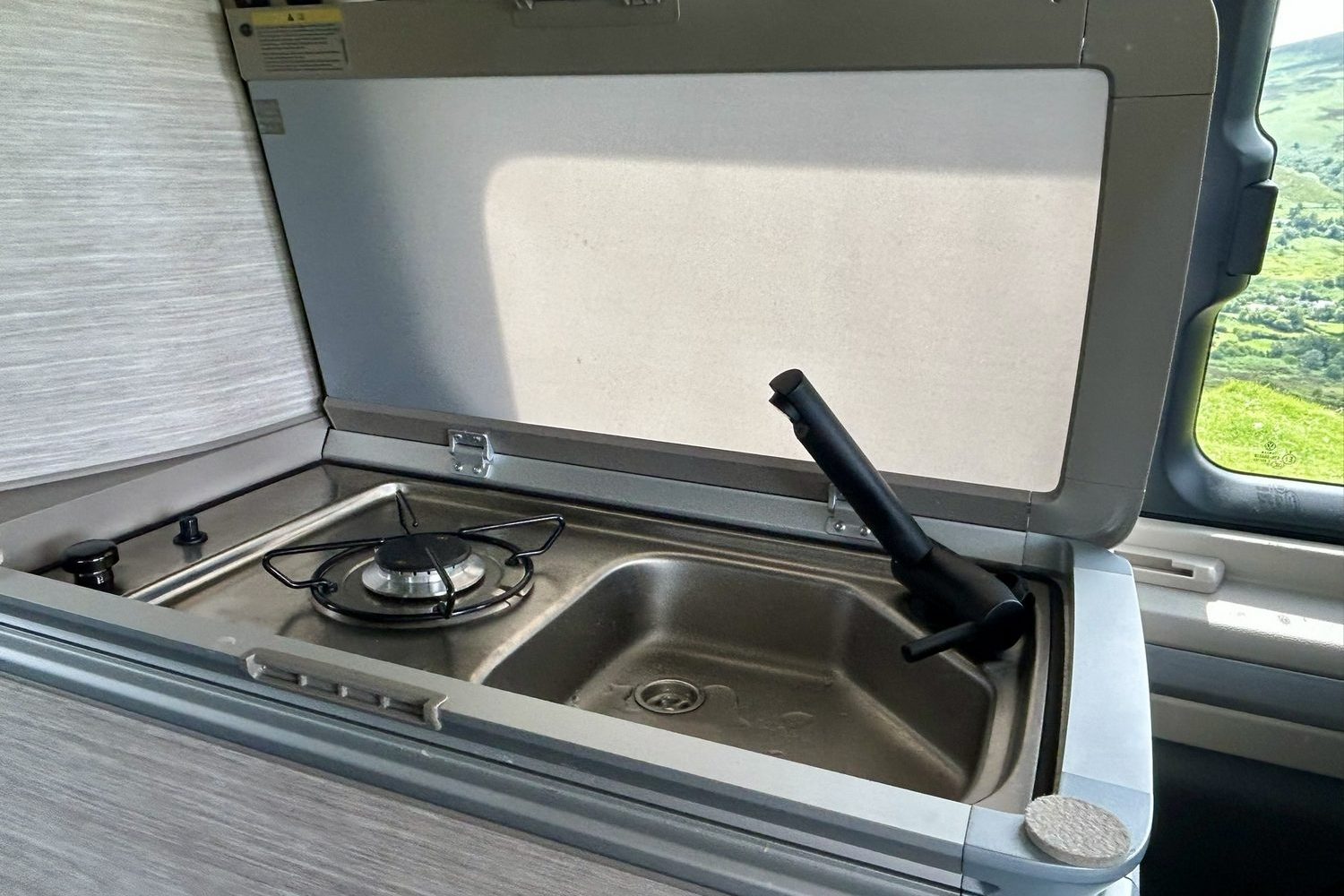
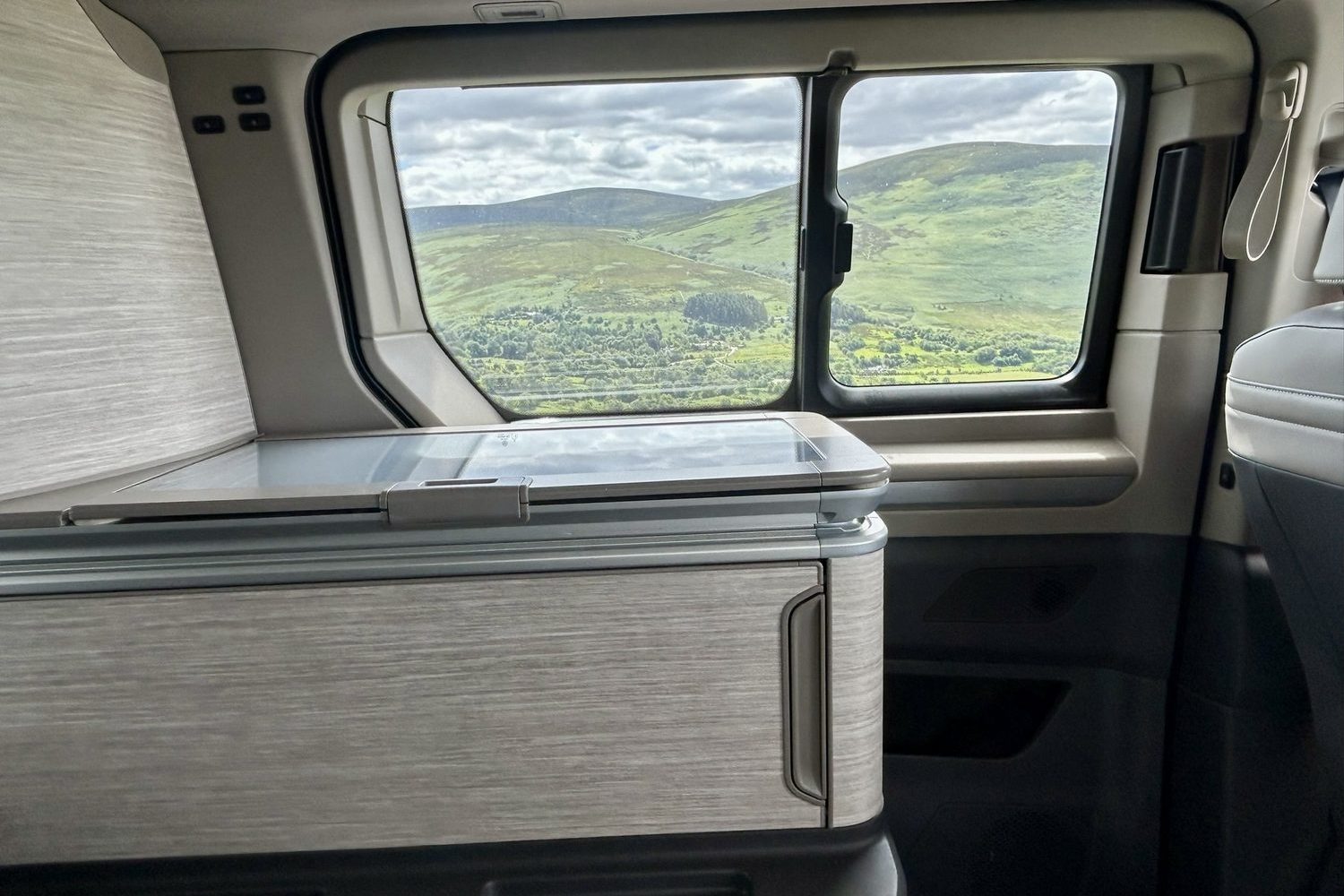
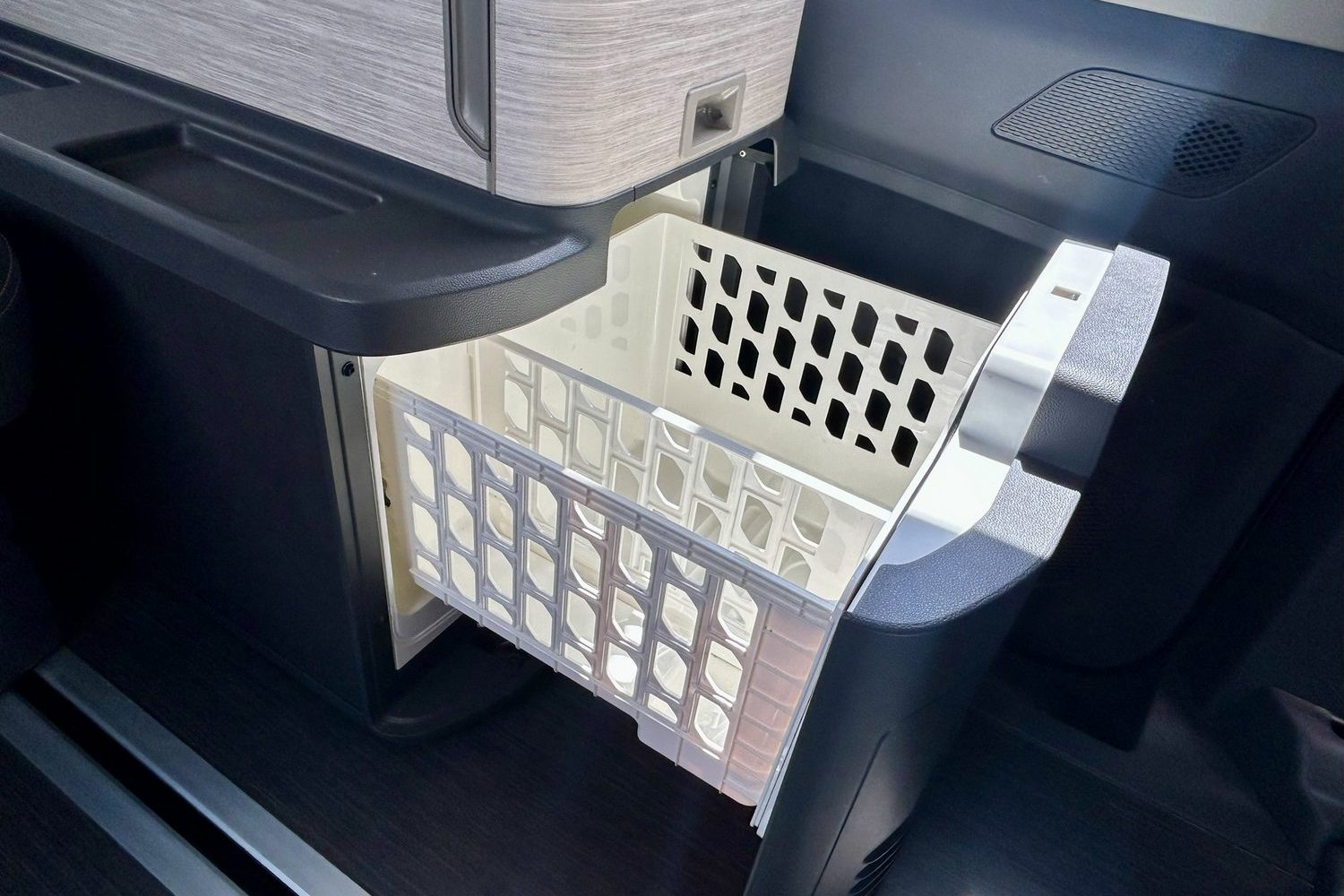
The touchscreen system also manages the slide-out fridge that lives under the small sink and single-burner gas cooker and, as I mentioned, the heating. Turn that on and the California's living quarters turn toasty-warm in an instant, but you will run down the leisure battery fast if you do that, and with no external electric power at this campsite, that's not a great plan.
I've chosen to sleep in the 'downstairs' bed because although the fractionally deeper mattress of the upper bed is a bit comfier, it's warmer and cosier down here. However, there's no loo.
This is a good thing, on the whole. I've camped before in the bigger, roomier Volkswagen Grand California - based on the massive Crafter van - which does have a built-in shower and toilet, but that becomes a liability when you remember that there's no external plumbing so everything goes into a cartridge, which has to be emptied. This cartridge, about the size and shape of a carry-on suitcase, must be lugged to the 'sluice point' of a campsite to be divested of its inglorious cargo, which it will do with a sound I can only describe as “blork” and a smell that I just can't describe. No thanks.
So, right now, I have two choices. I briefly consider the 'Lorry Driver's Lucozade' option of filling up an empty bottle of water, but figure that's just gross and defeatist, and so pull on jeans, jacket and boots and make the lonely, dark walk to the camp toilets.
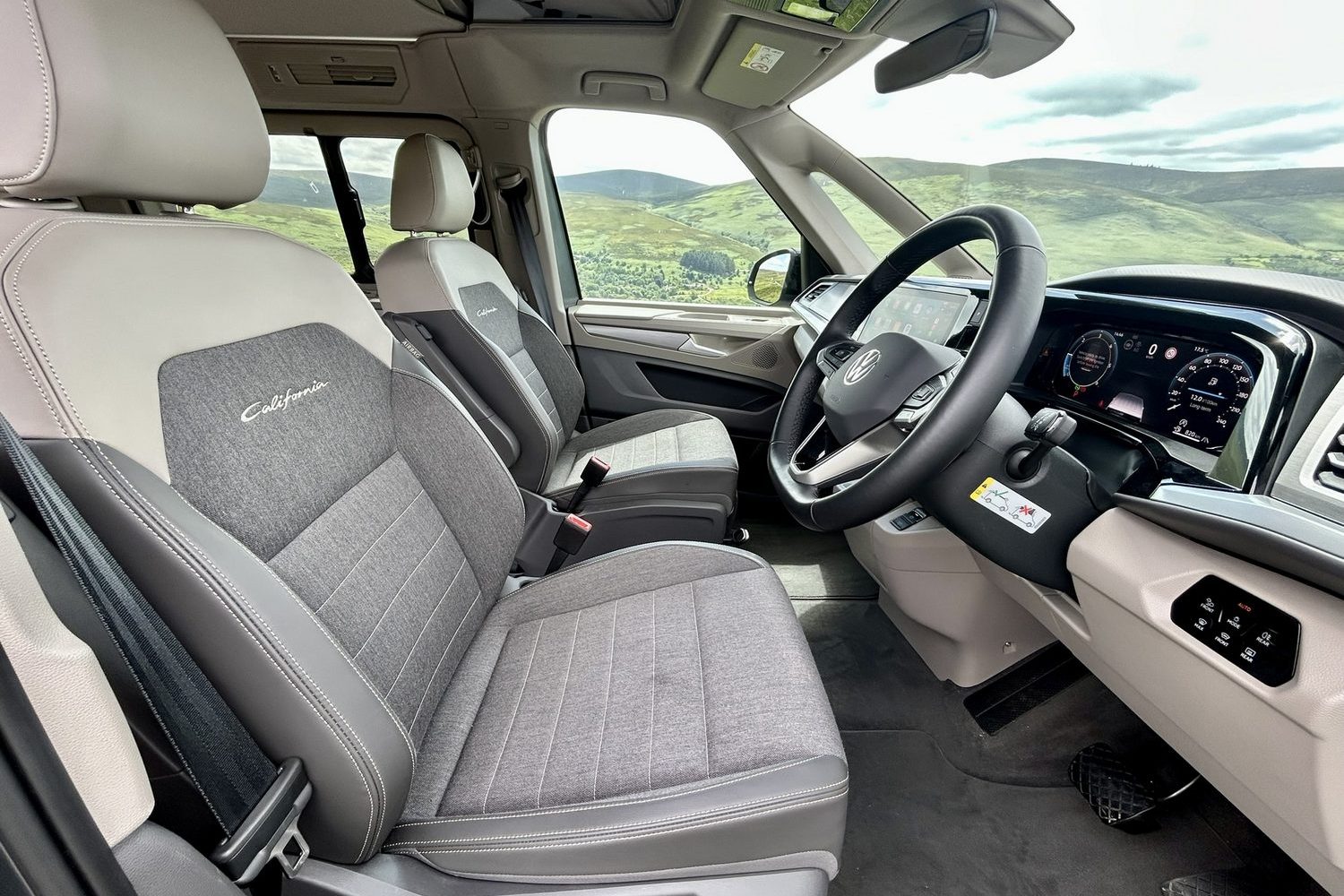
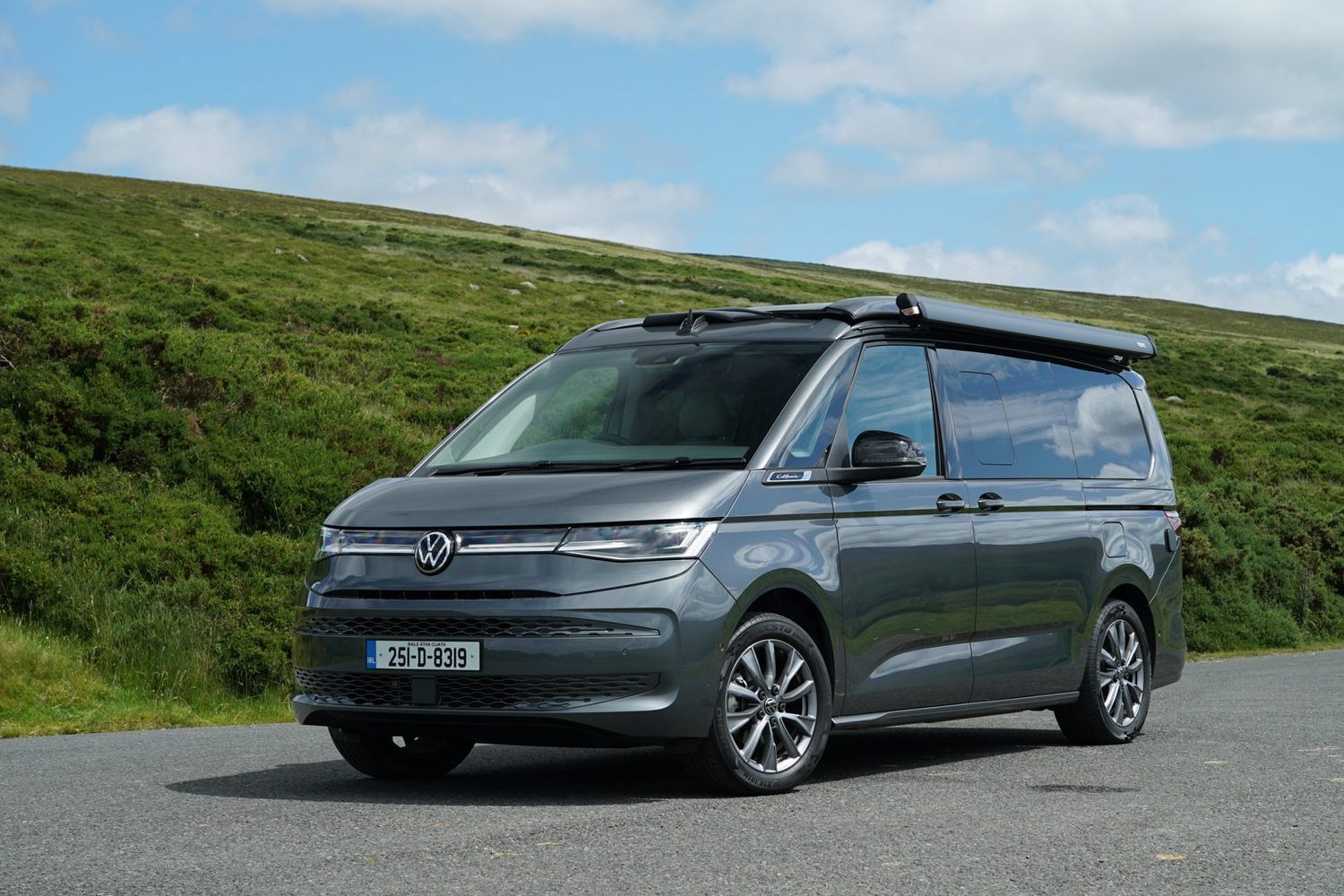
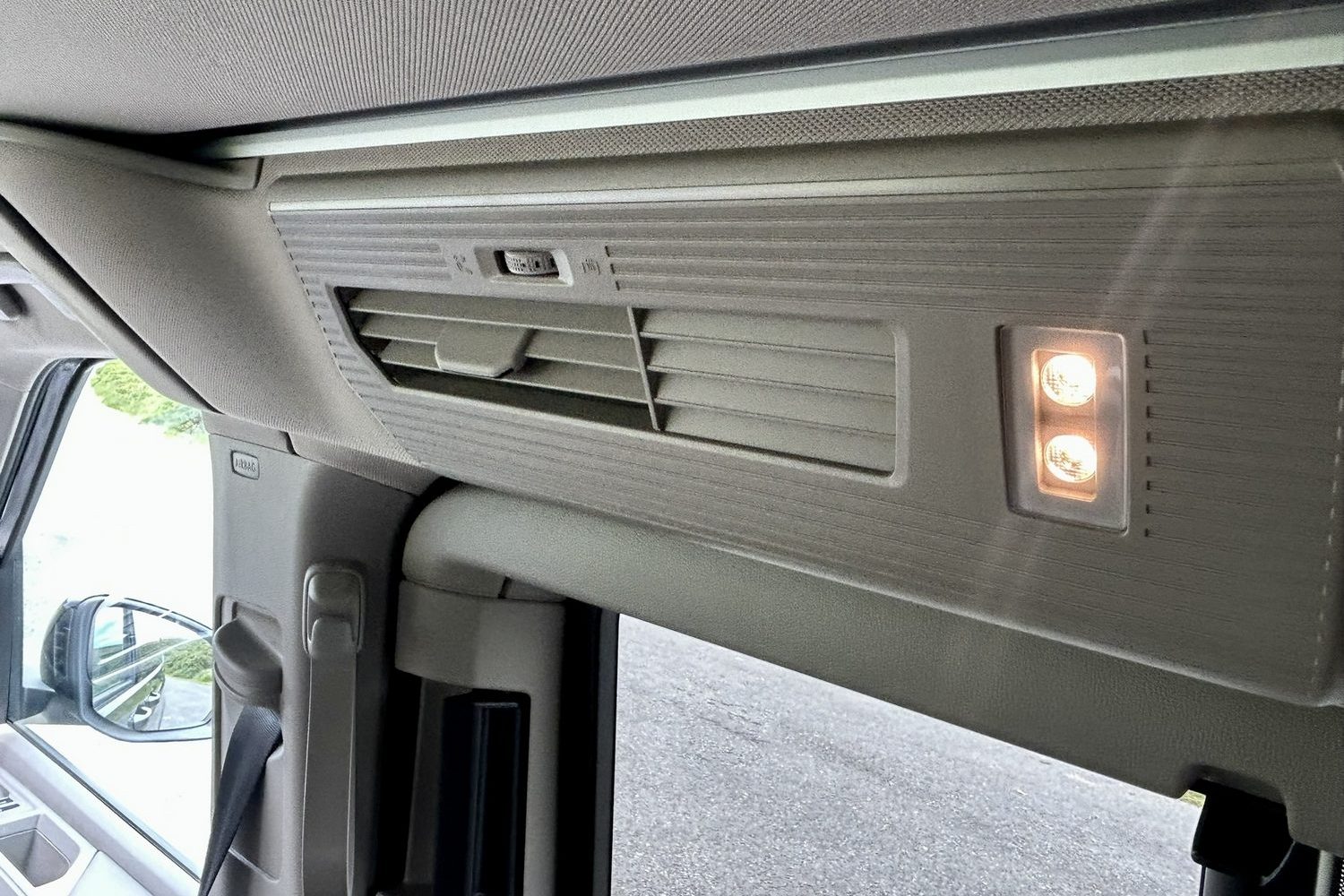
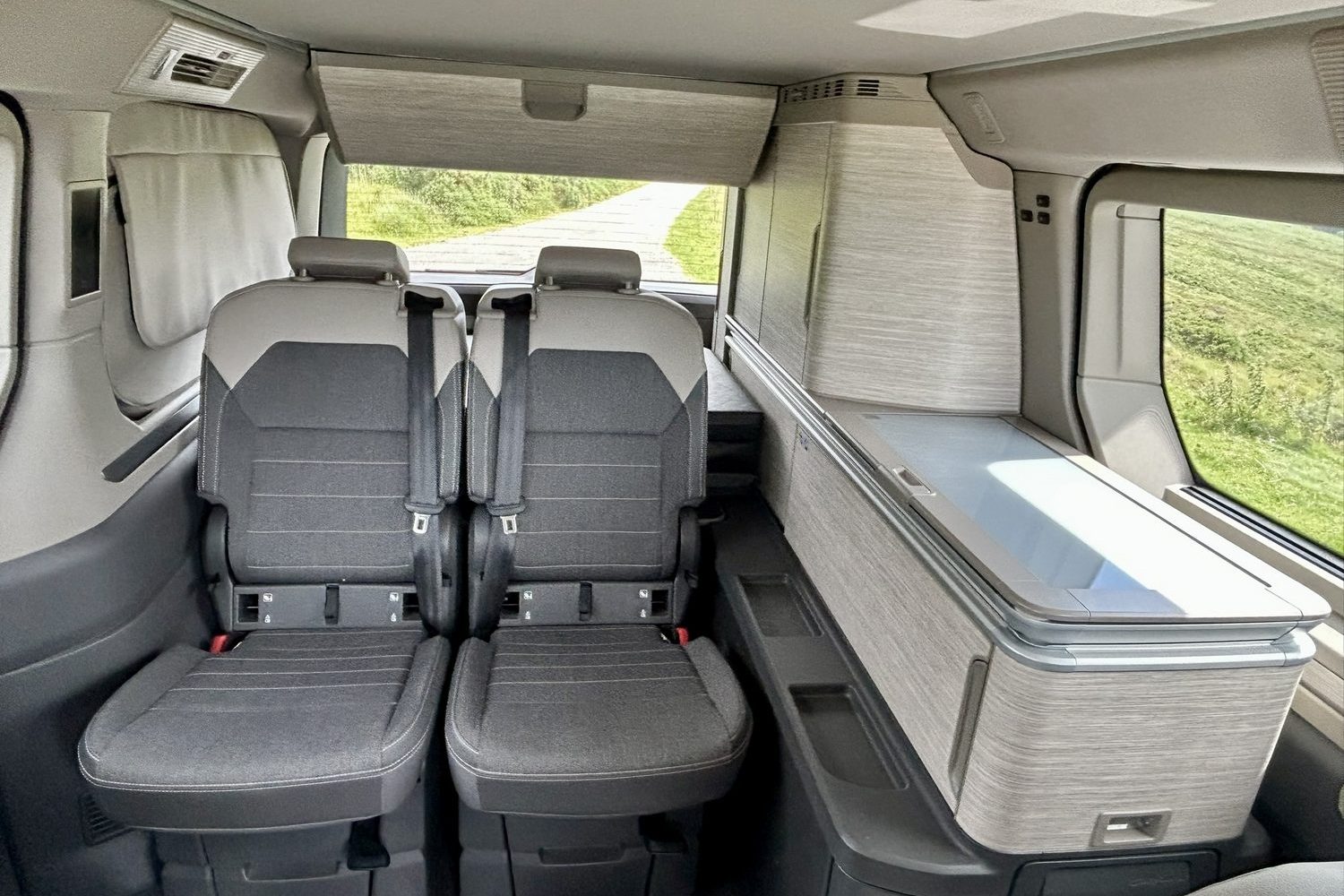
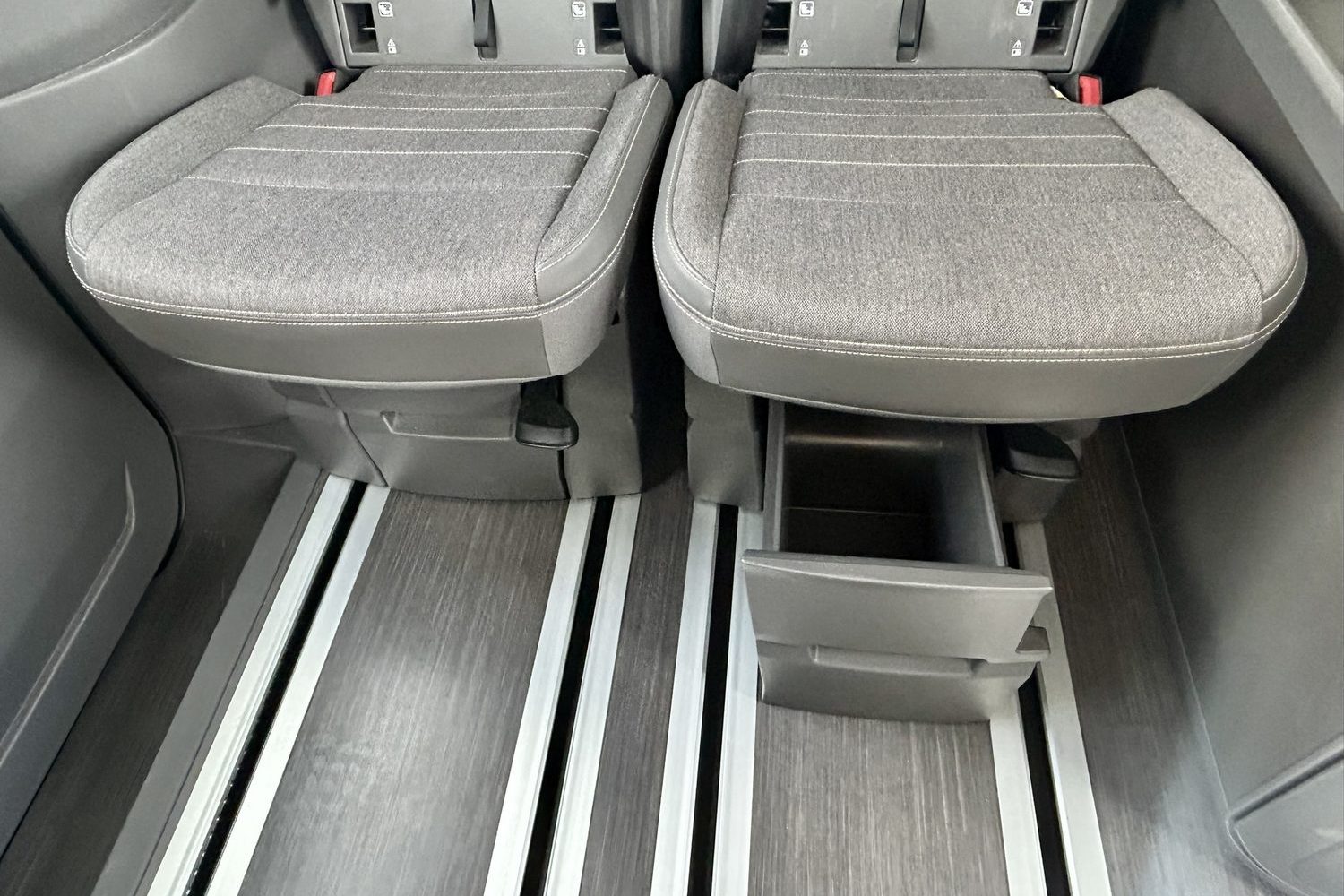
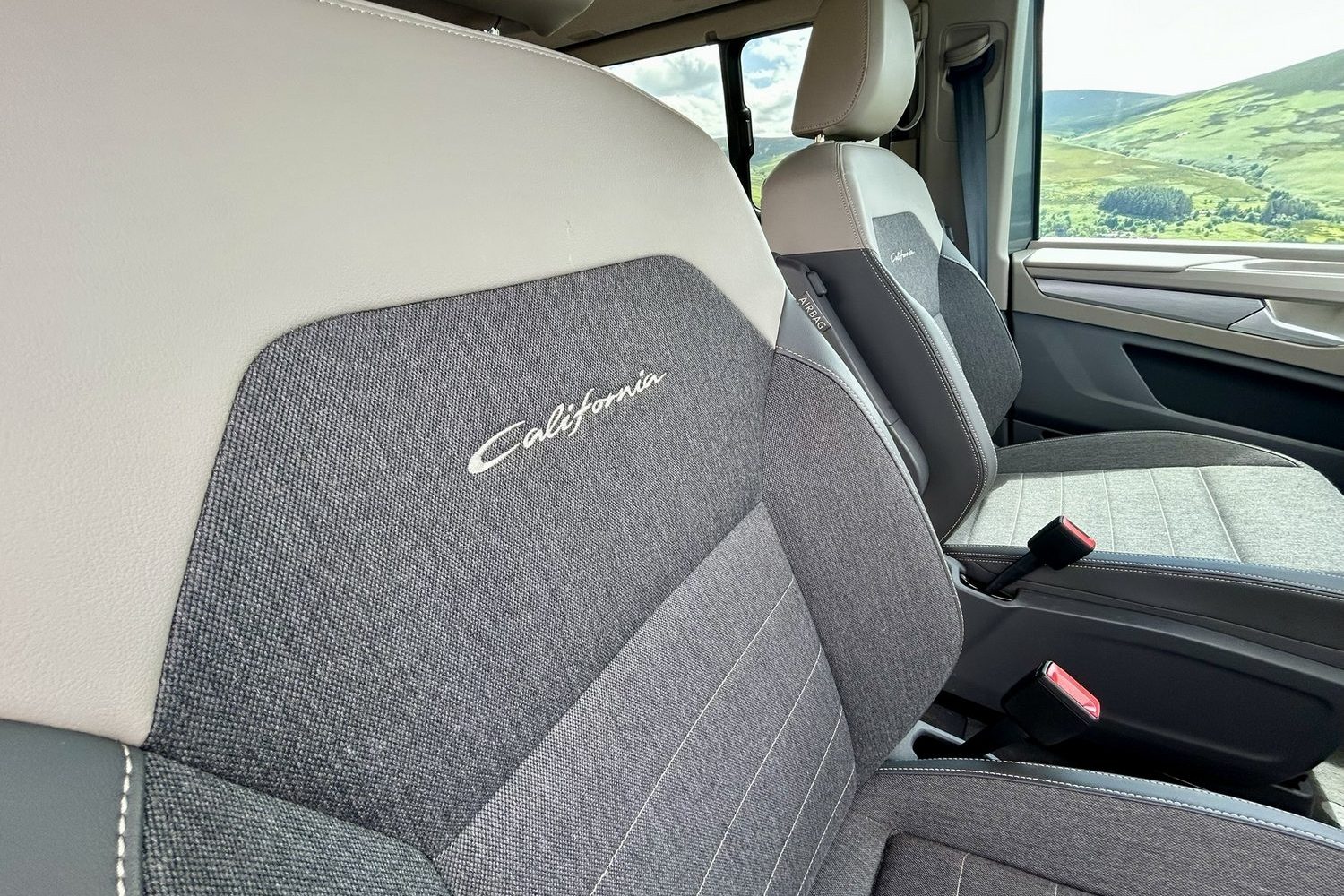
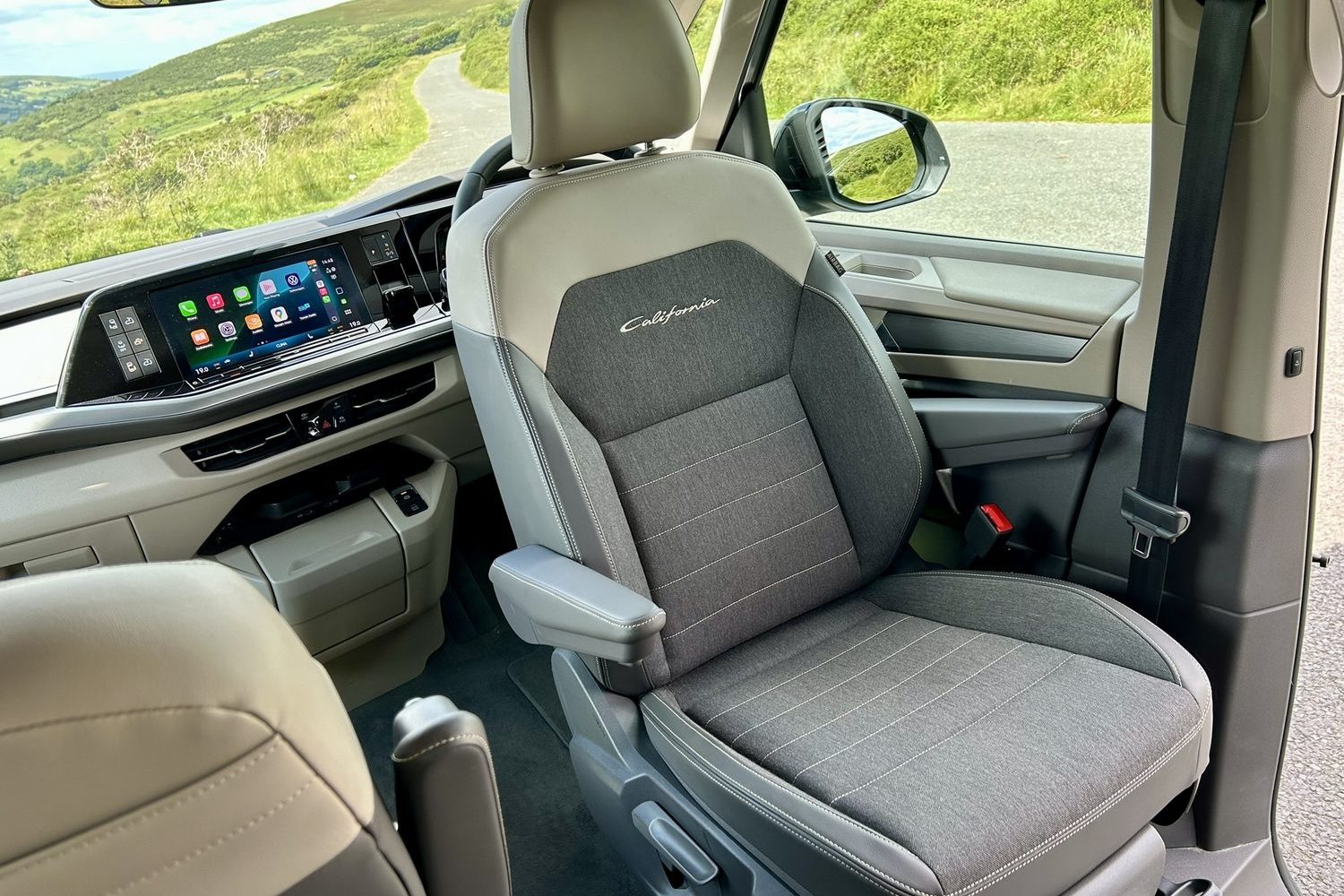
Back in the California, you can immediately see one advantage of the switch from the old Transporter-van-based model to this version, based on the car-like Multivan. Thanks to a longer wheelbase, there's a bit more stand-up-and-move-around space when the bed is folded out and the front seats have been swivelled around into their lounge position, so it's much easier to get set for bed once again. The little touch-sensitive LED lights built into the edge of the roof are also a godsend; so easy to flick on or off when necessary.
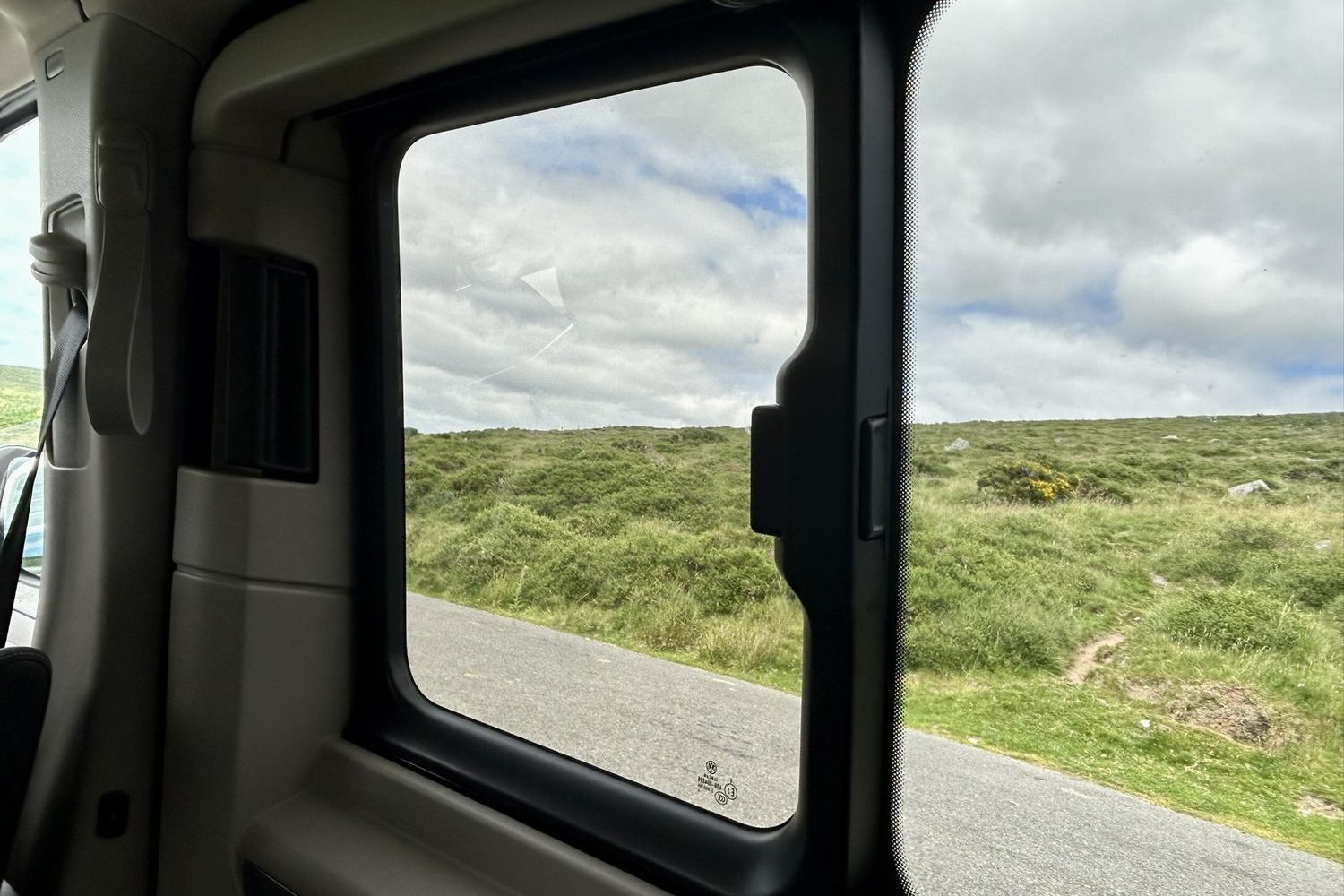
When you're not worrying about a spilling-over bladder, the sleeping bit of the California is actually a rather wonderful place to be. It feels snug and enveloping, secure and comforting even when outside the wind is whipping up and the rain is lashing down. There are neat blinds built into the side windows and the rear screen, and handy magnetic clip-on curtains for the windscreen and front windows. Once these are all in place, you feel utterly at home in your small, but useful space.
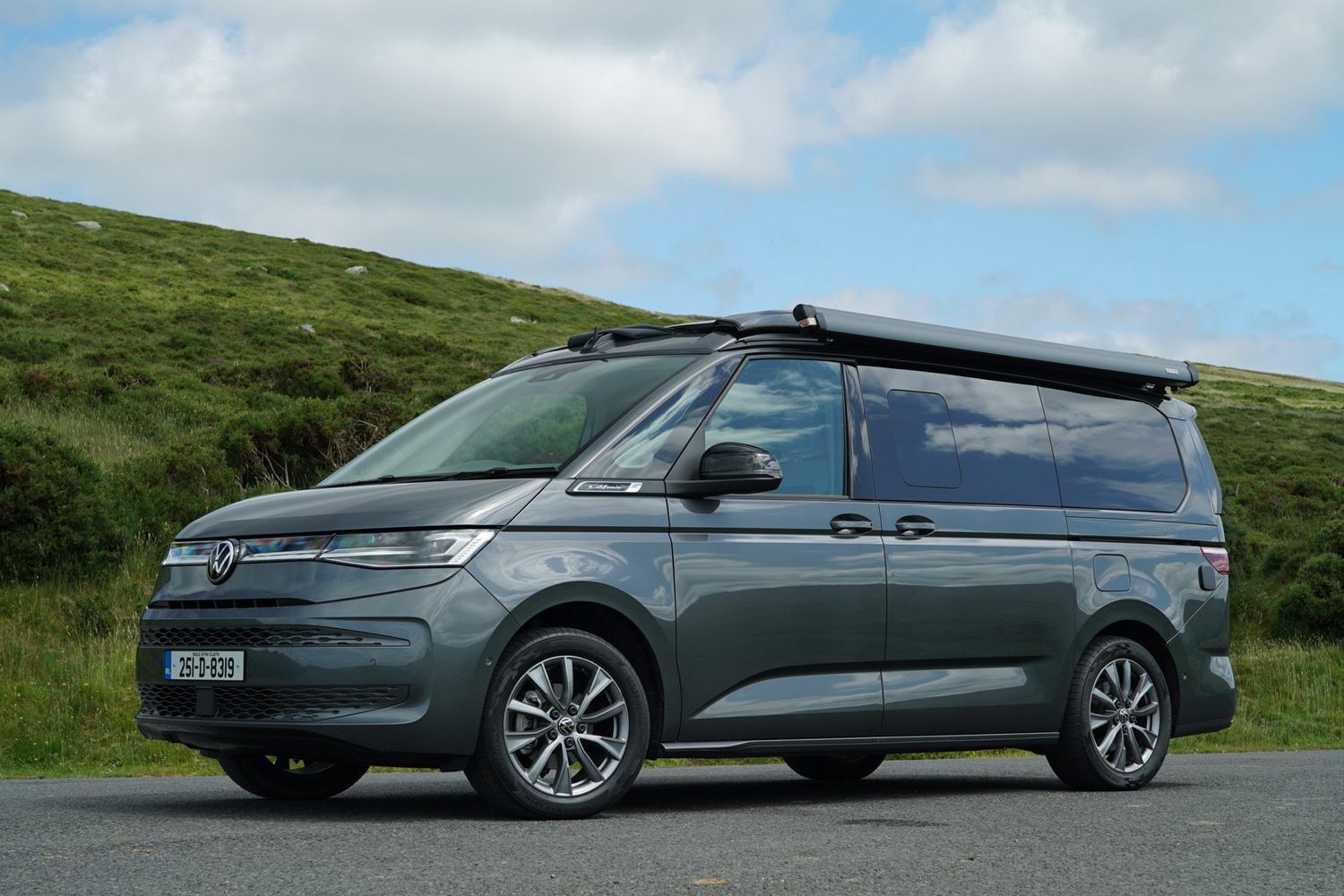
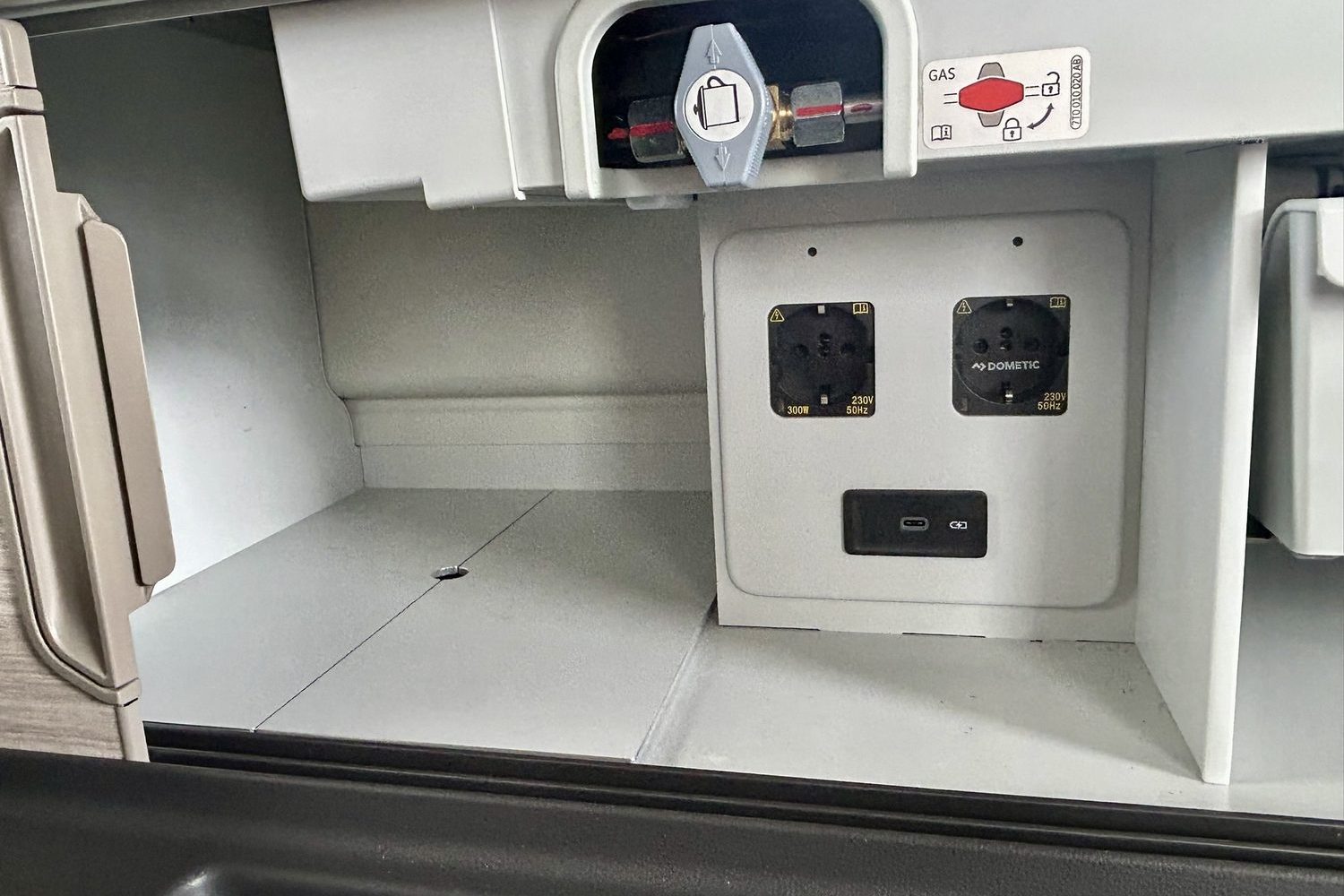
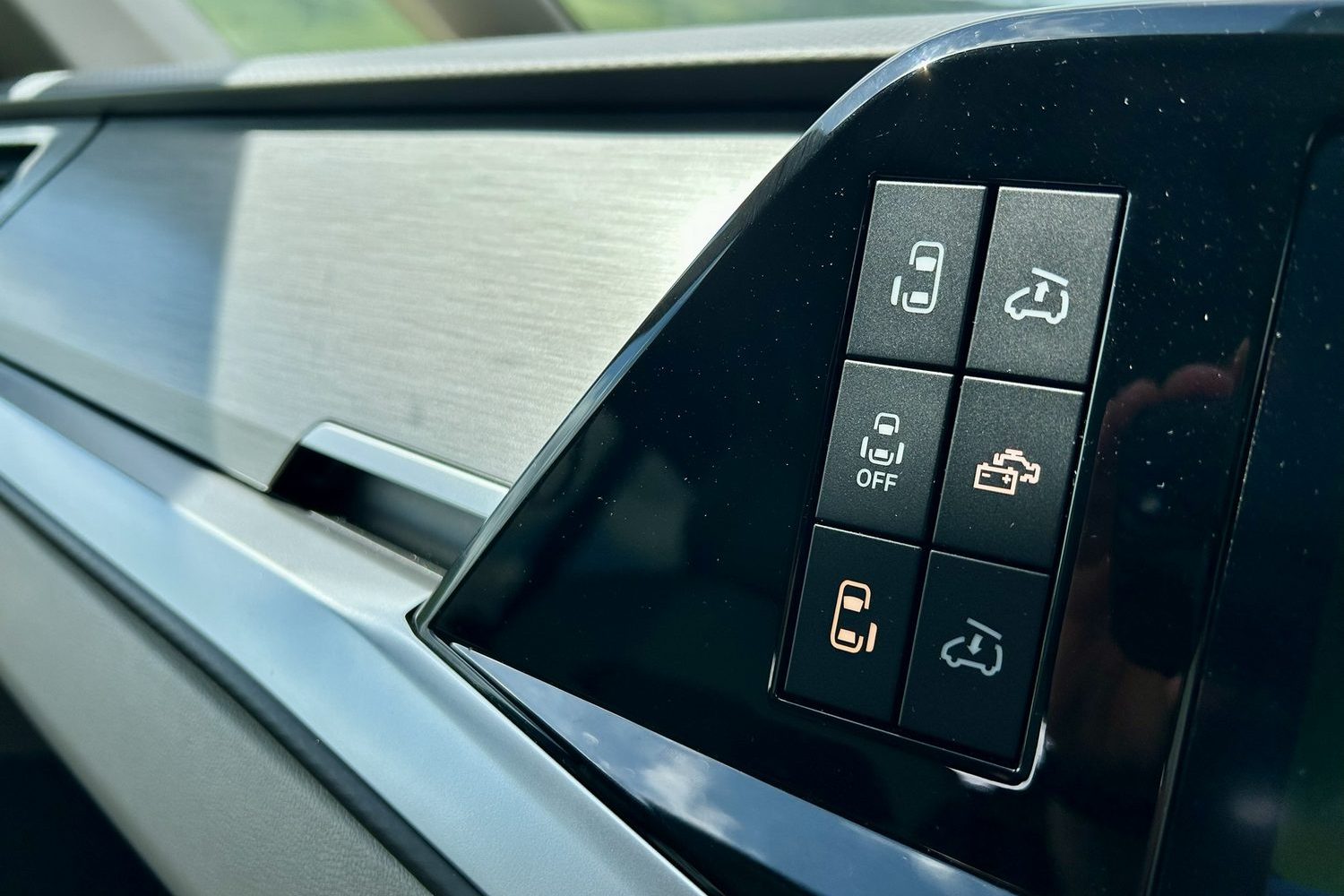
Is it a bit less useful than before? Well, certainly VW's camper designers decided on a compromise of sorts - previously, the California only ever had a sliding side door on one side, the driver's side, as the kitchen section took up all of the left-hand wall. Now, that section has been chopped, slightly, to leave space to get in and out through a second sliding side door (electrically actuated in our test car).
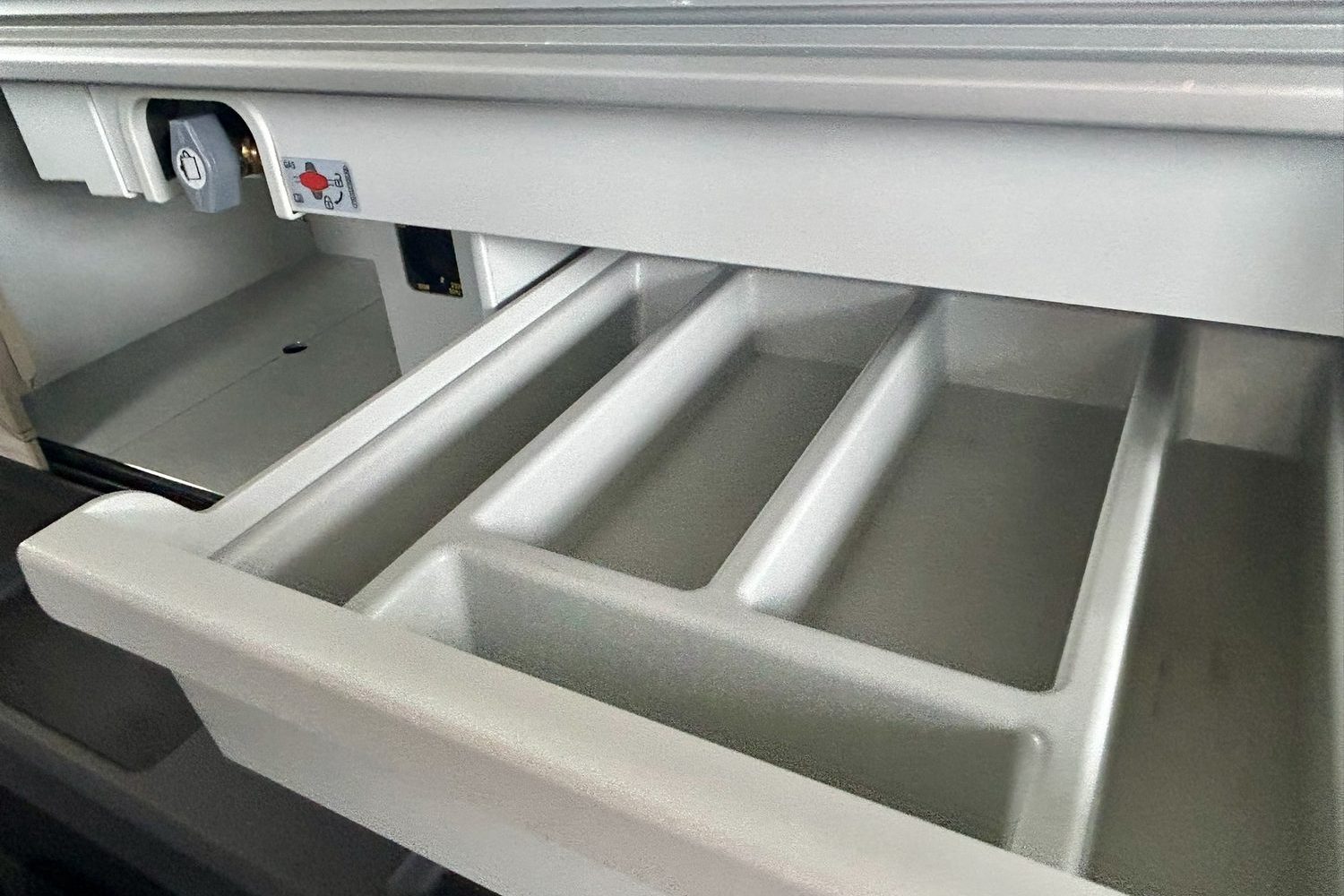
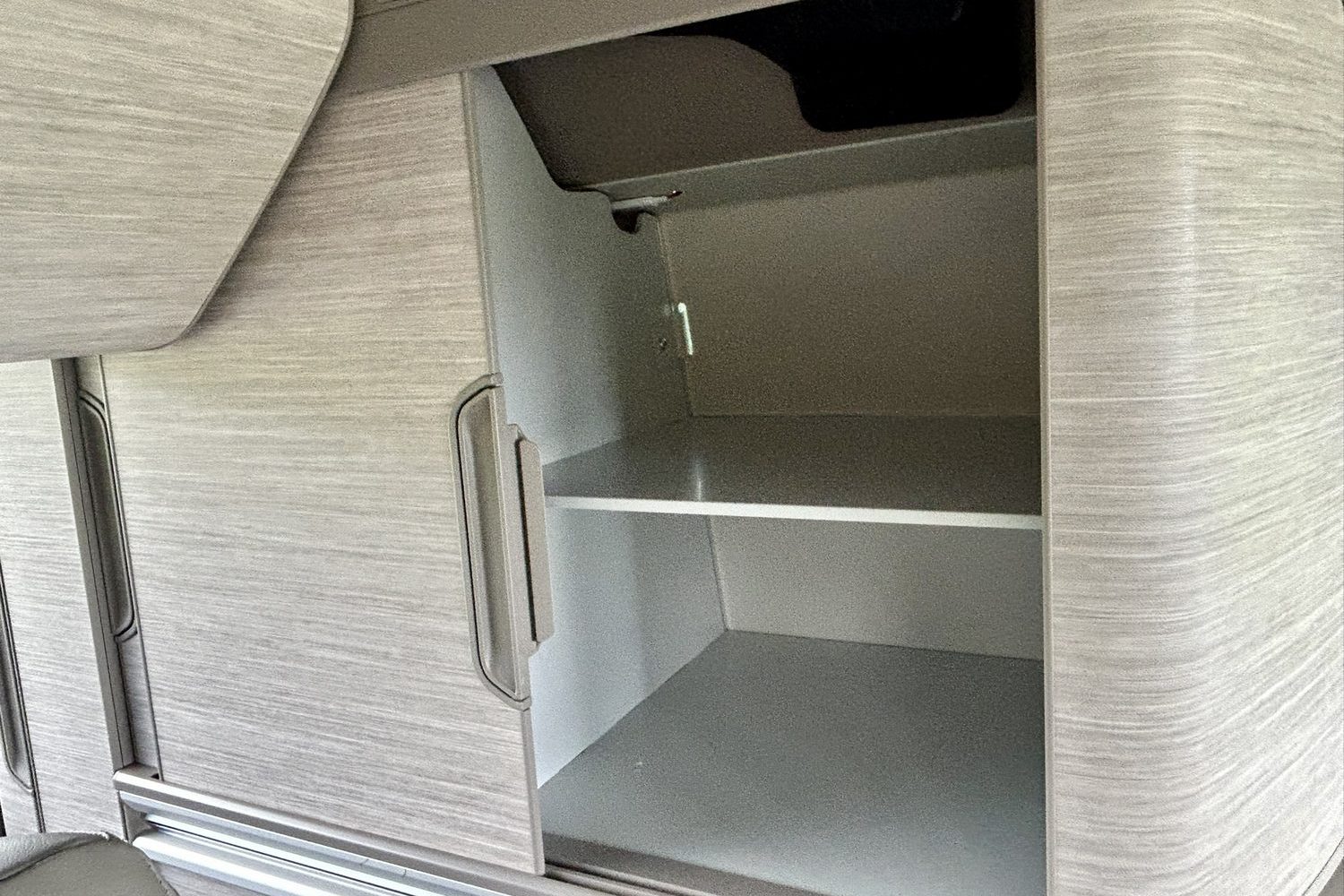
That's really handy, especially when you're using the California as a car, not a home, but it does mean a bit less storage space and the burner count for the cooker hob is reduced from two to one. It's an acceptable compromise, I reckon. Certainly, travelling one-up, I didn't really notice the downgrade in space, but I guess if you were going camping with four people on board (that's the maximum the seats will allow, unless you get the basic Beach version, which has three back seats instead of two) then you'll have to pack more carefully.
No matter how carefully you pack, the cupboards always seem to rattle and clatter over bumps, but this Multivan California is certainly easier to drive than the old commercial-vehicle-based versions. On the way home from my stay-away, I had to take on a six-hour drive from Northamptonshire in England, where I was attending a big history festival, to Edinburgh, where I had to collect some stuff from storage.
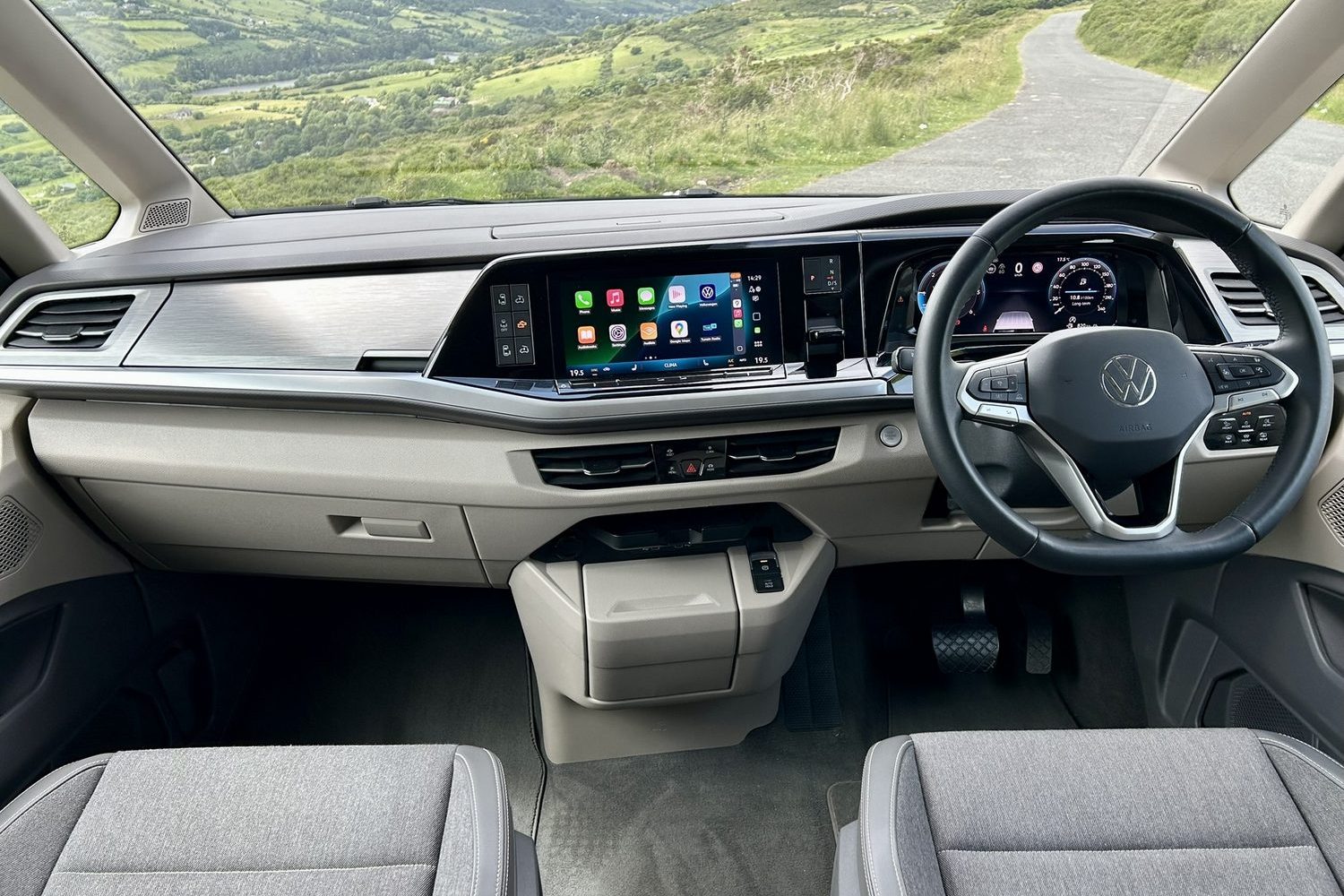
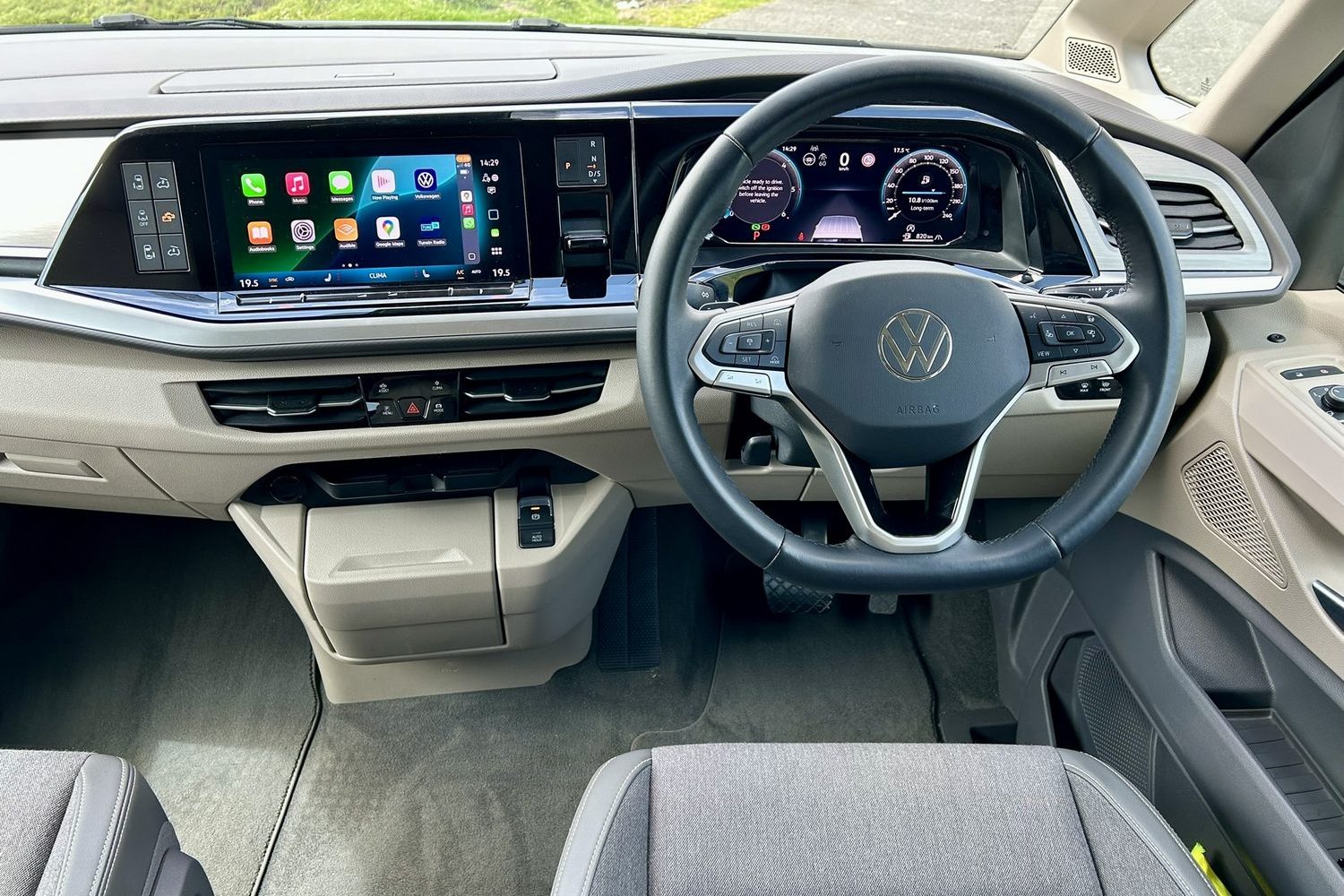
In a Transporter California, that journey would likely have been far less comfortable and easy on the nerves than it was in this Multivan California. It's not quite car-like to drive, but it's definitely more refined overall. Economical too - I averaged 6.5 litres per 100km, compared to the 9.0 l/100km I would have used in the Transporter model. Yes, that's in an old-school 150hp diesel, but there is a plug-in hybrid version on the way too.
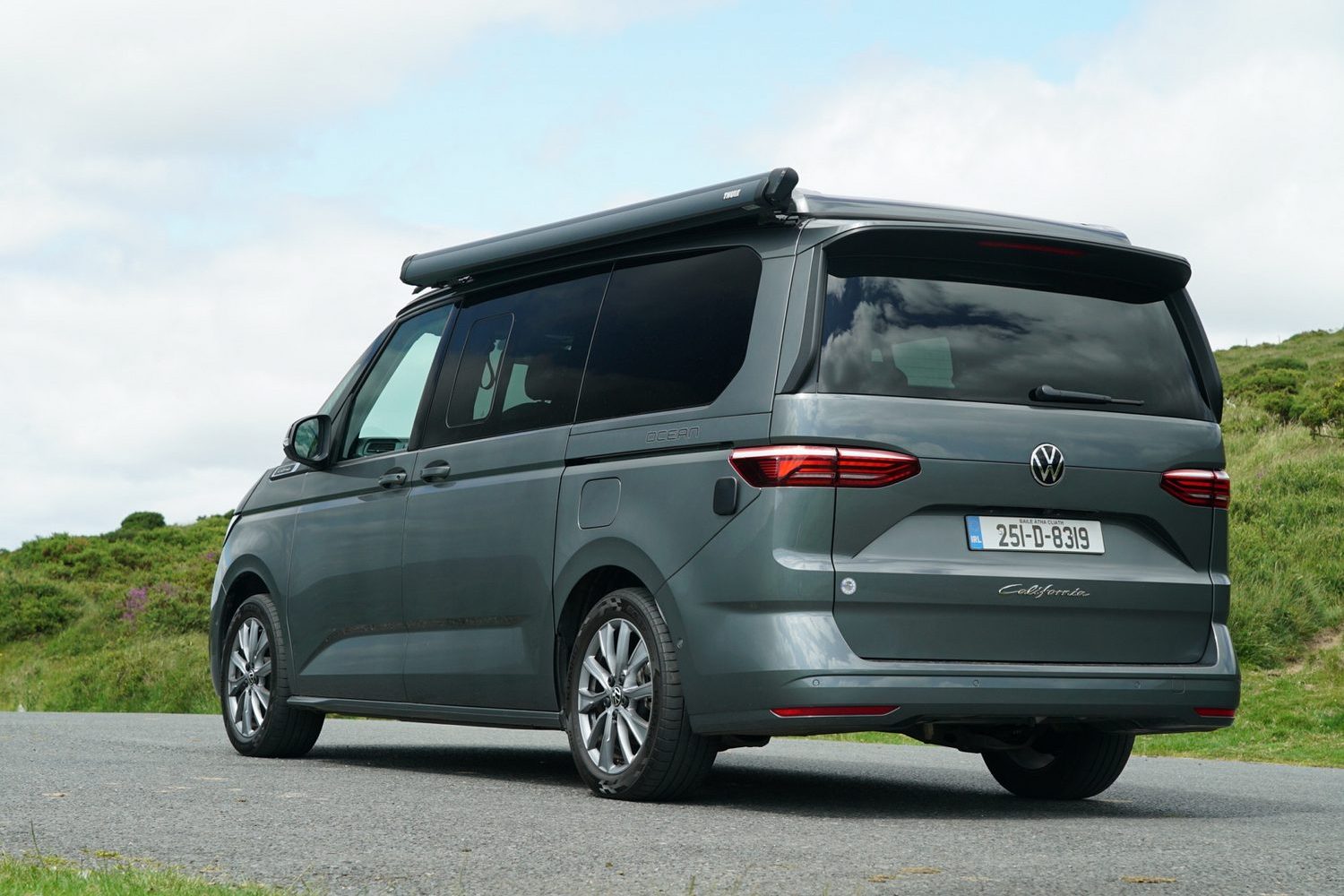
That's all well and truly ahead of me though. Right now, it's 3.20am and I'm drifting gently back to sleep. Beyond those blinds is a big field, and beyond that field some big tents which in a few hours will be full of interesting people discussing history. Beyond those, the entire world awaits. The California has changed, but it still seems like the best way to explore that big ol' world.

Video player loading.
Video unavailable. Watch on YouTube
If there is anything about this story we have not covered, you can avail of our expert advice service via the Ask Us Anything page.