

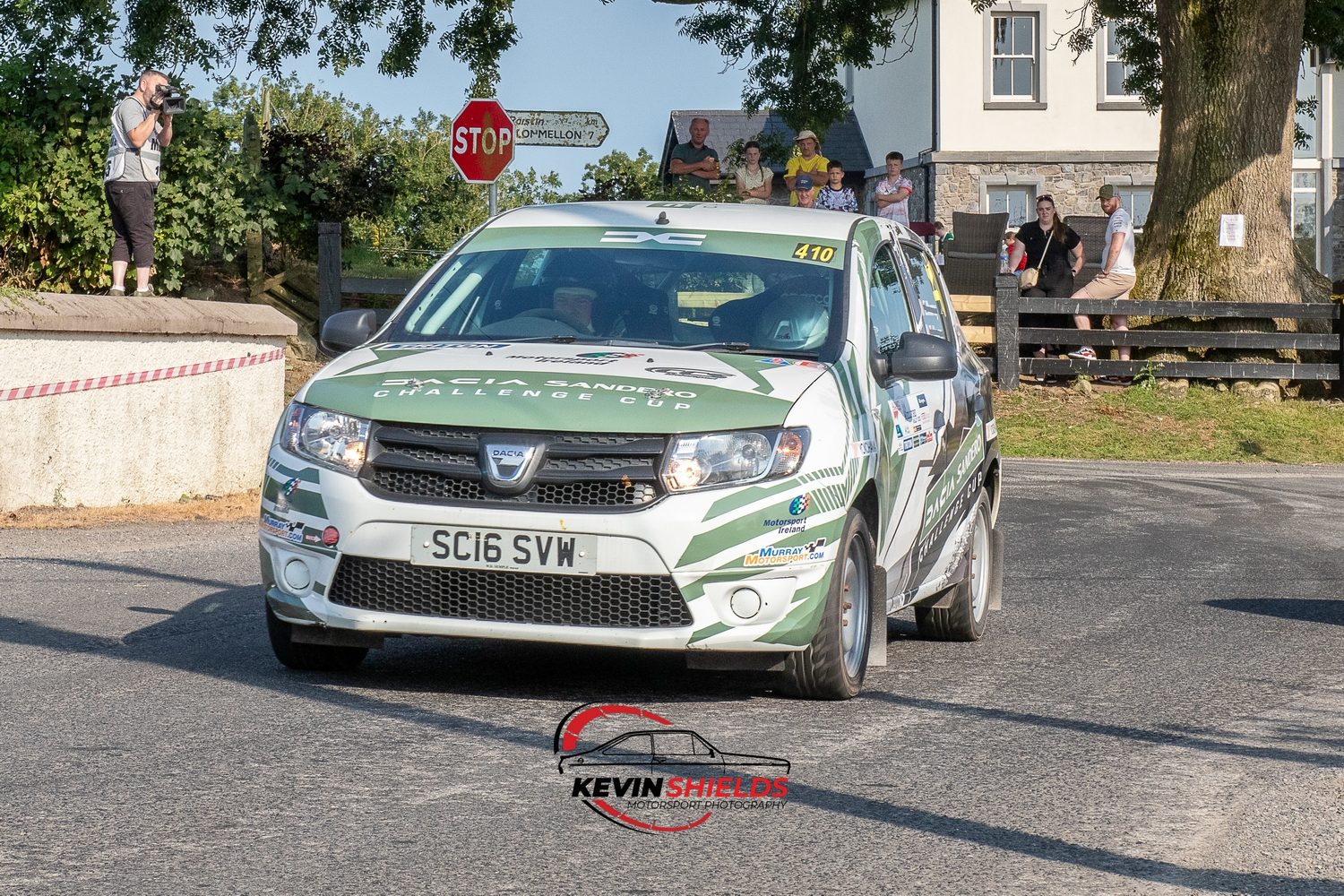
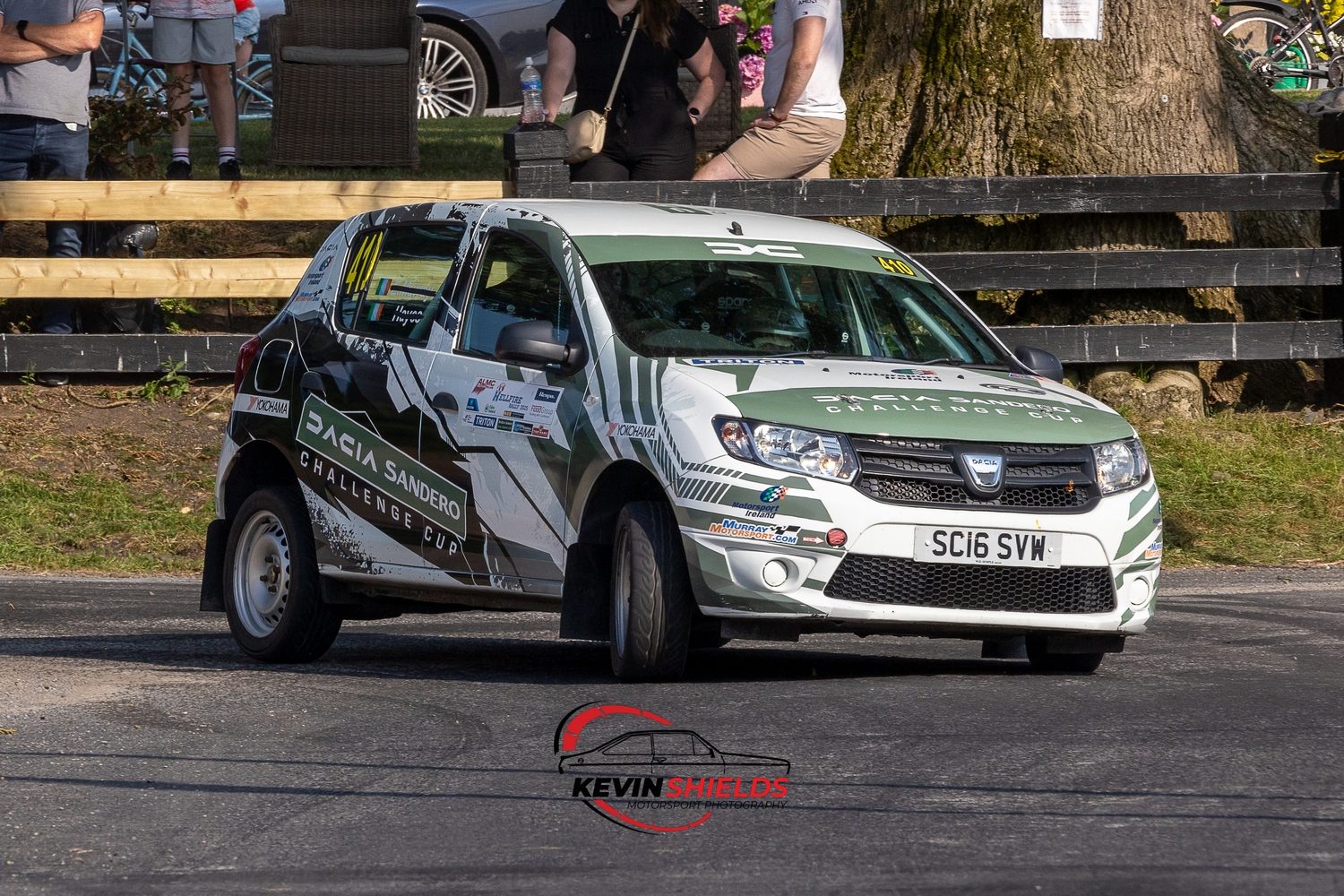
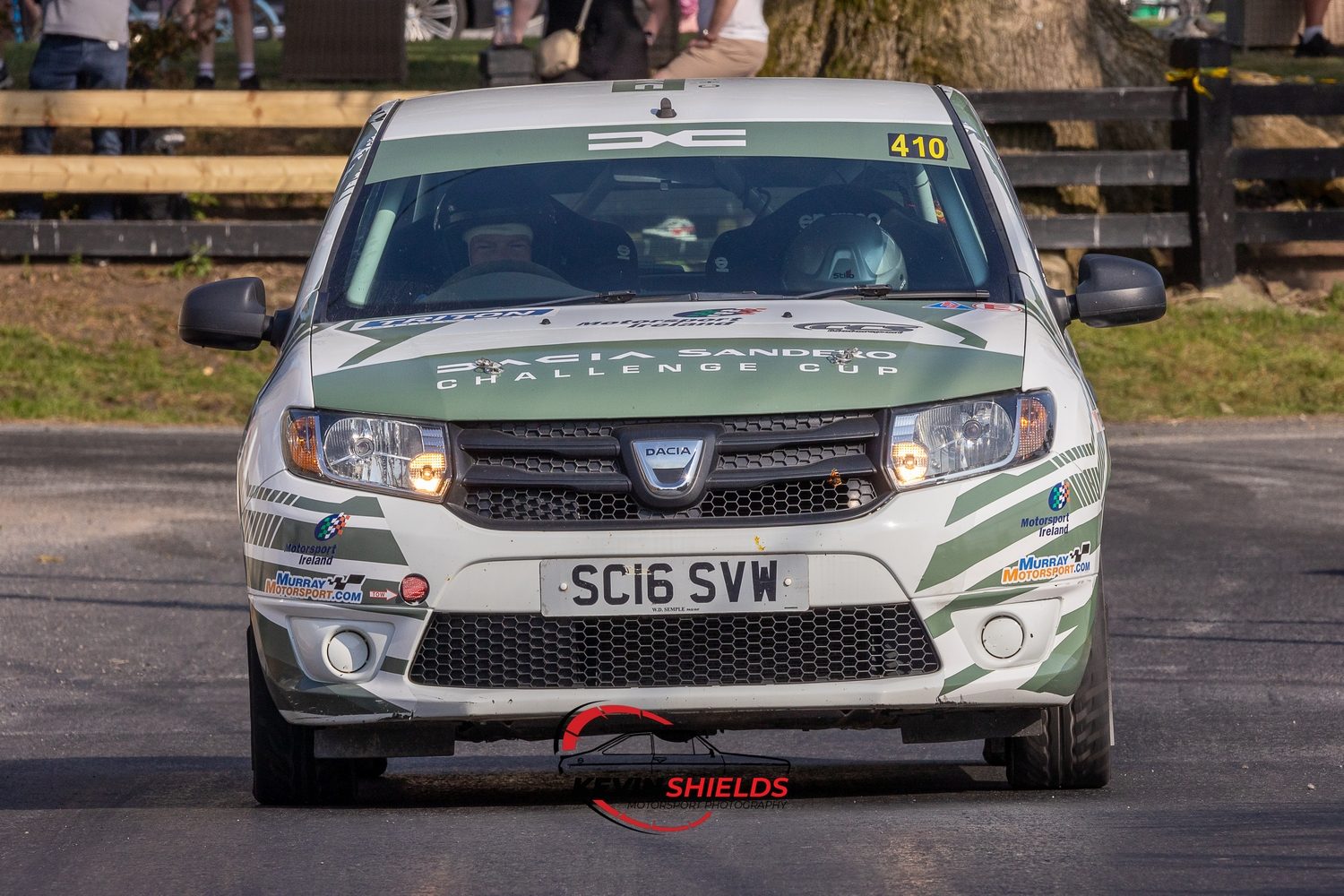
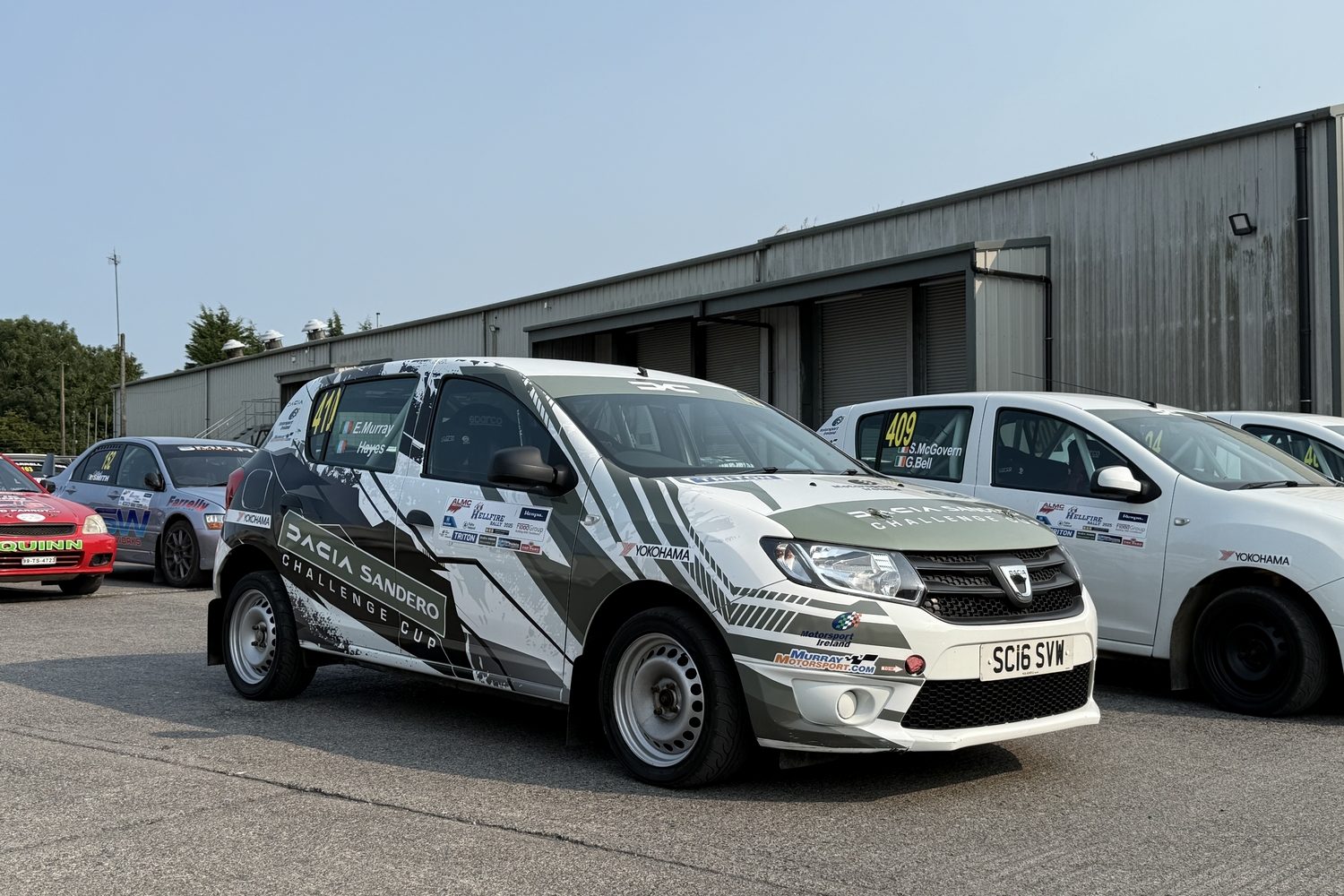
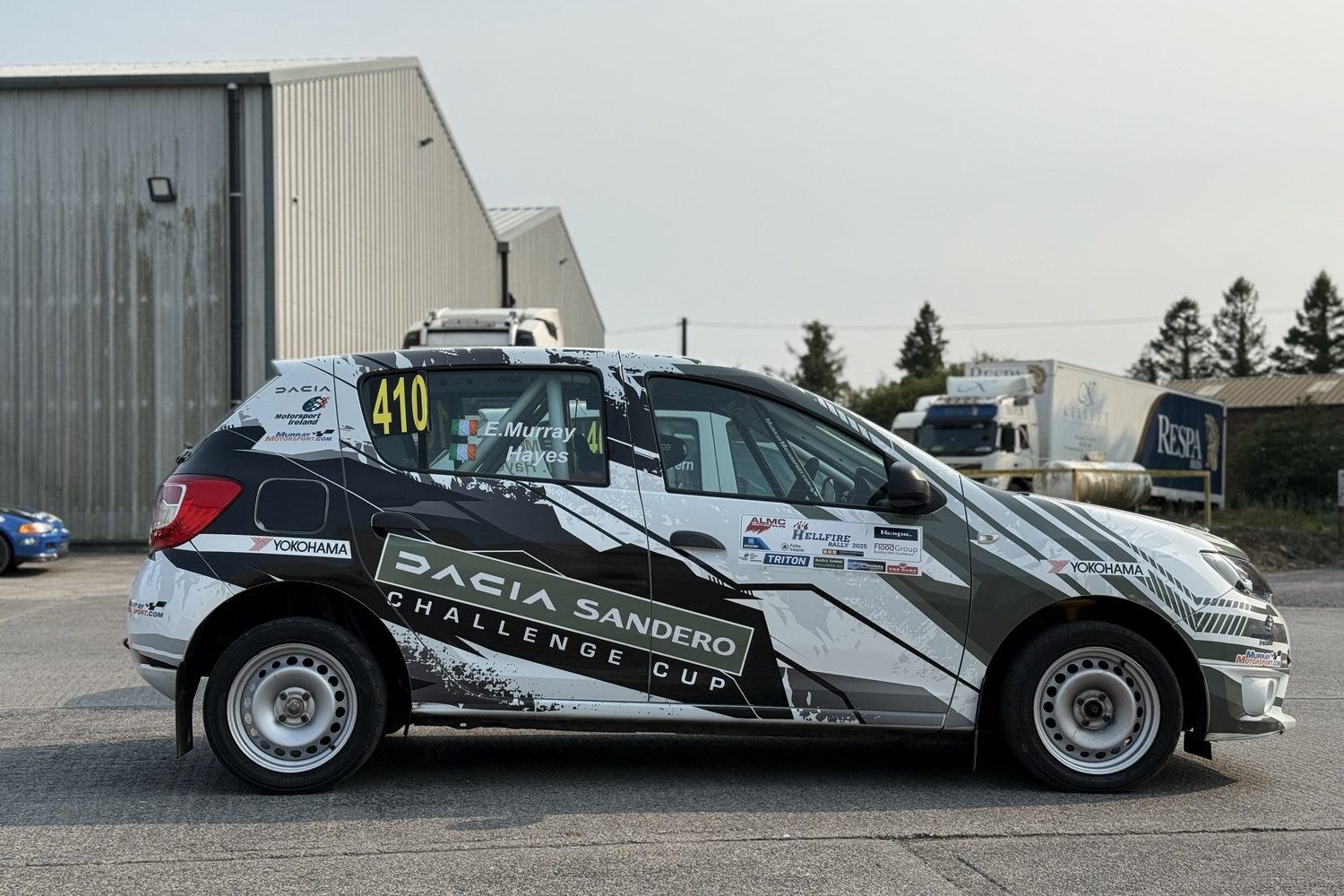
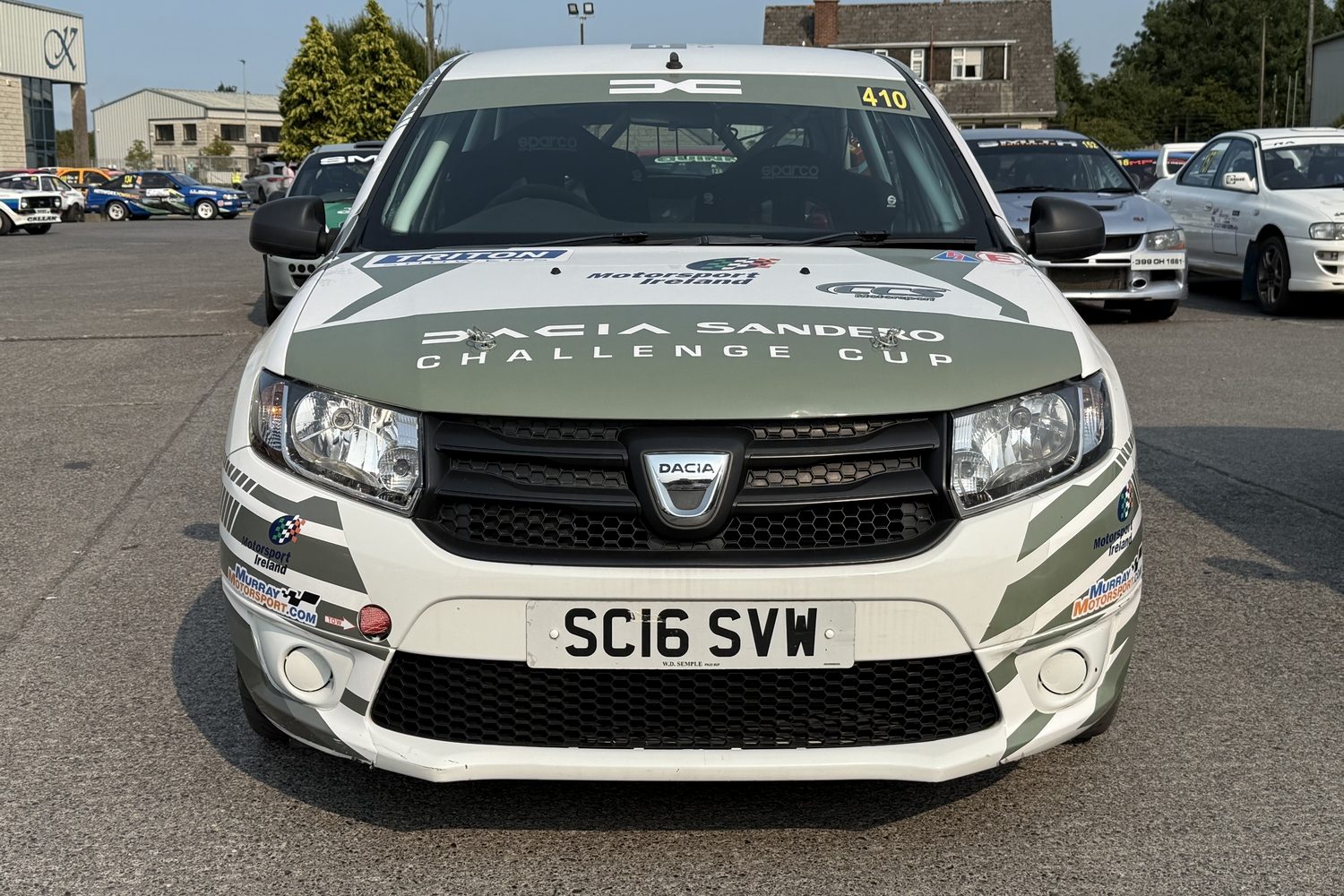
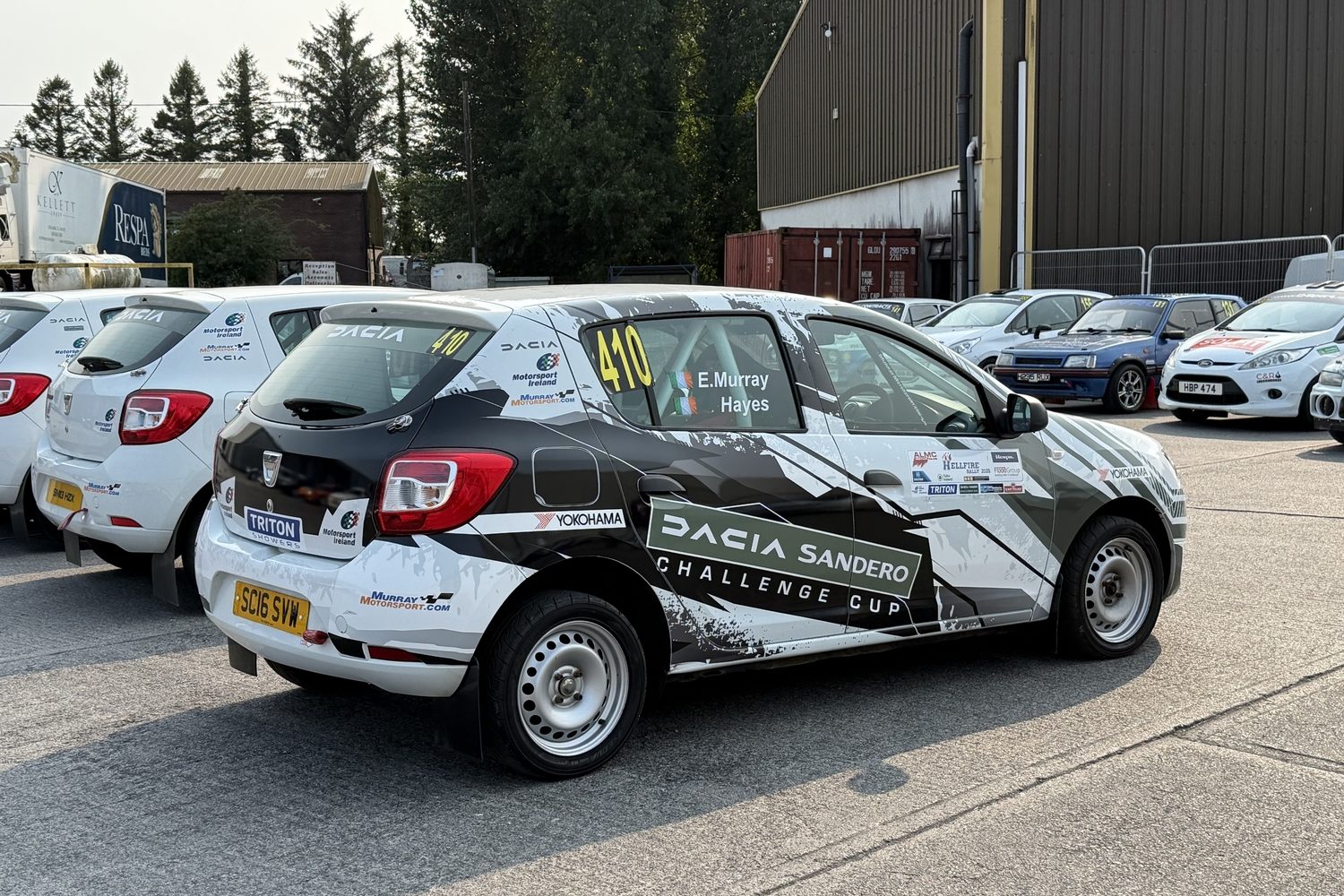
Welcome to the exhilarating world of rallying, but at a far more affordable level than has been seen for some time. Welcome to the Dacia Sandero Challenge Cup.
A class that was years in the making
This (2025) is the first year of the one-make Dacia championship, but it was over four years in the making. Motorsport Ireland set out to create a new entry-level class for rallying to bring down the cost to get started in the sport. Research led to discussions with Motorsport Ireland's counterpart in Spain, Real Federación Española de Automovilismo (RFEDA), which introduced the Dacia Sandero Rallye Cup in 2014, indicating that the Sandero could be the perfect candidate due to its widespread availability, low cost and, just as importantly, its durability. Declan O'Keeffe, Championship Manager, tells us the engine and gearbox are effectively unbreakable.
Cedar Group, the distributor for Dacia in Ireland, soon became involved and Trevor Toner, the COO and a long-time rally enthusiast, oversees the relationship. His involvement goes beyond what is strictly necessary as he attends most rounds and is very much part of the 'family'.
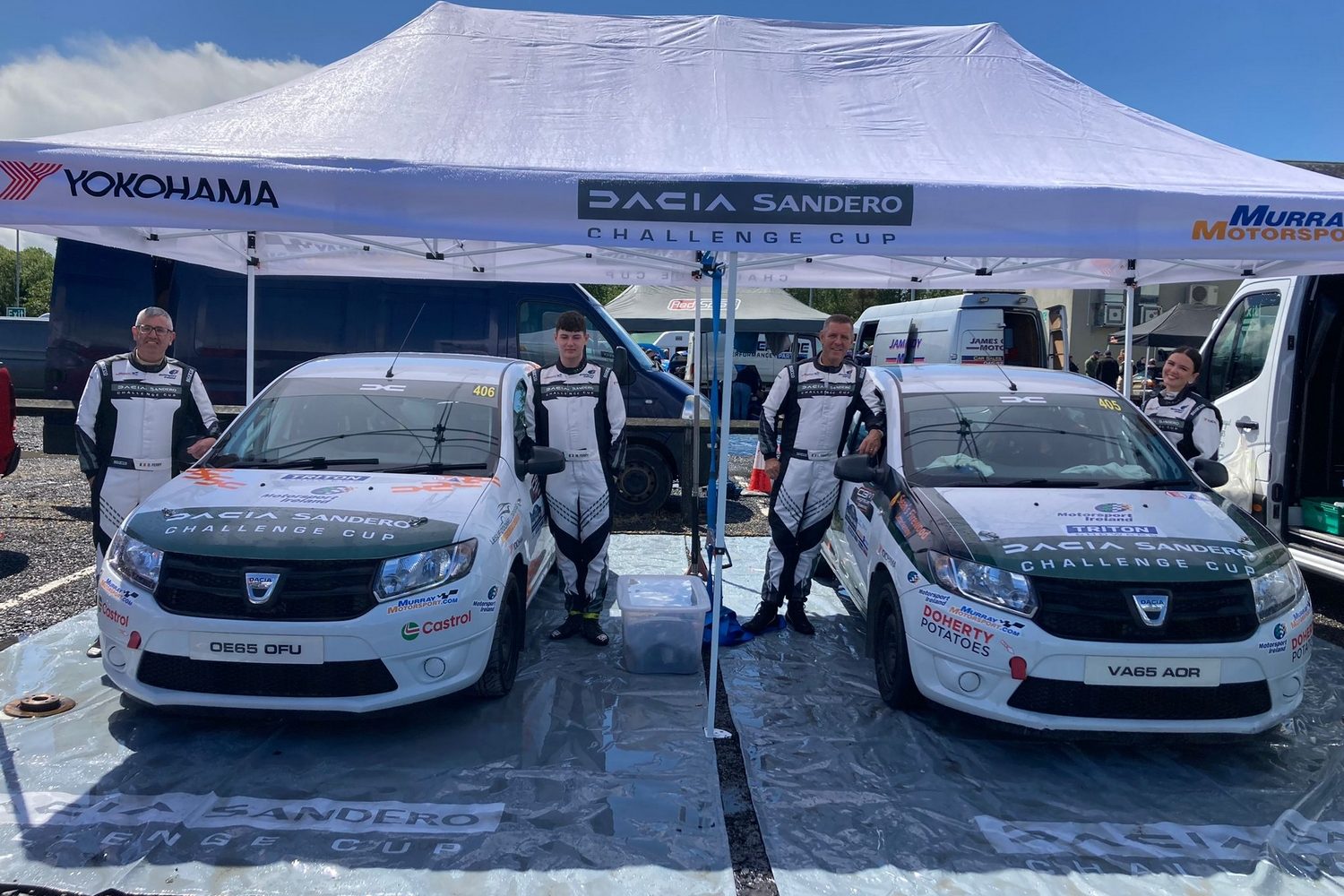
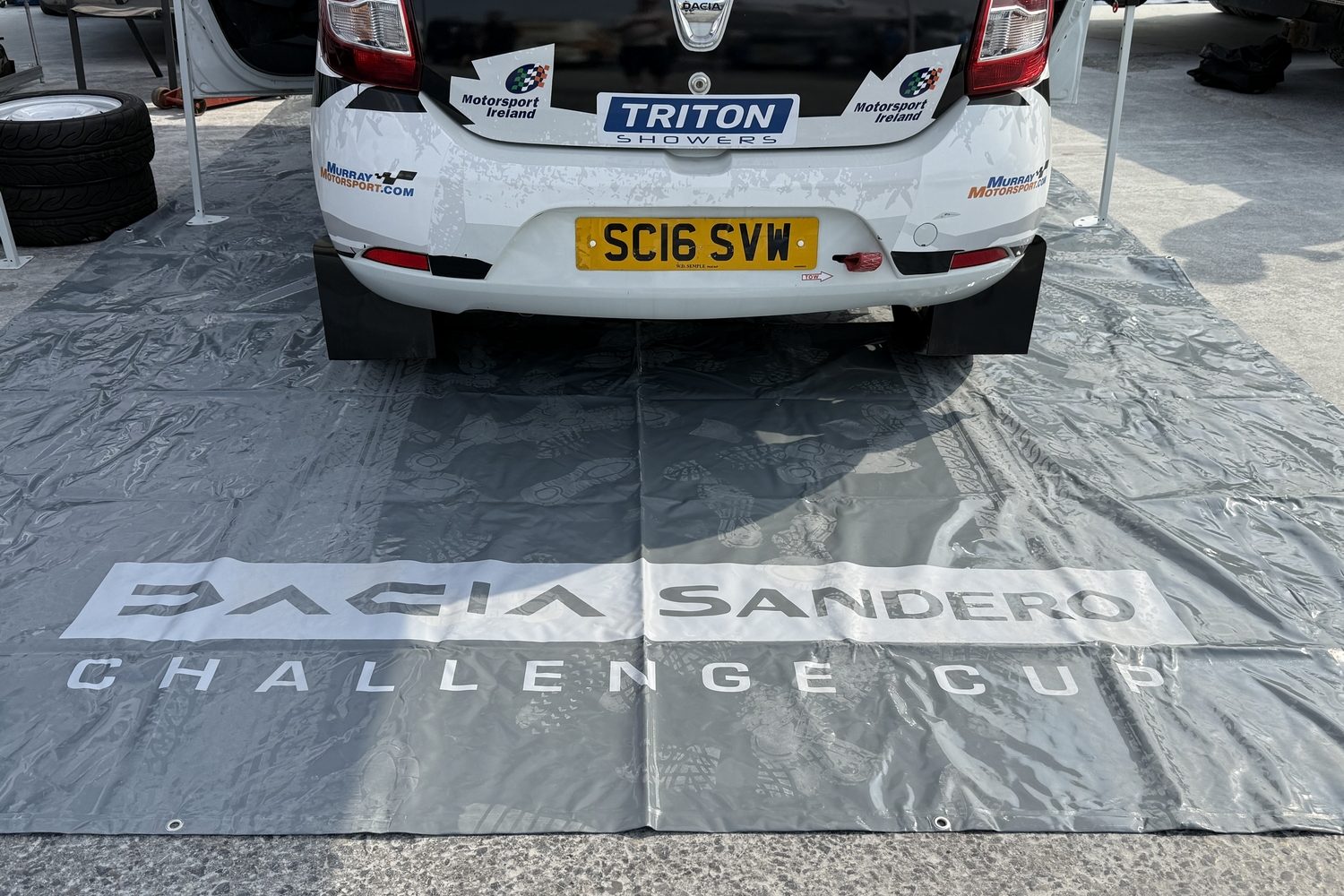
Dacia spends approximately €2,500 per competitor, as each receives a high-quality race suit, branded jacket and hat, along with branded groundsheets, banners and even an awning for use in the service area.
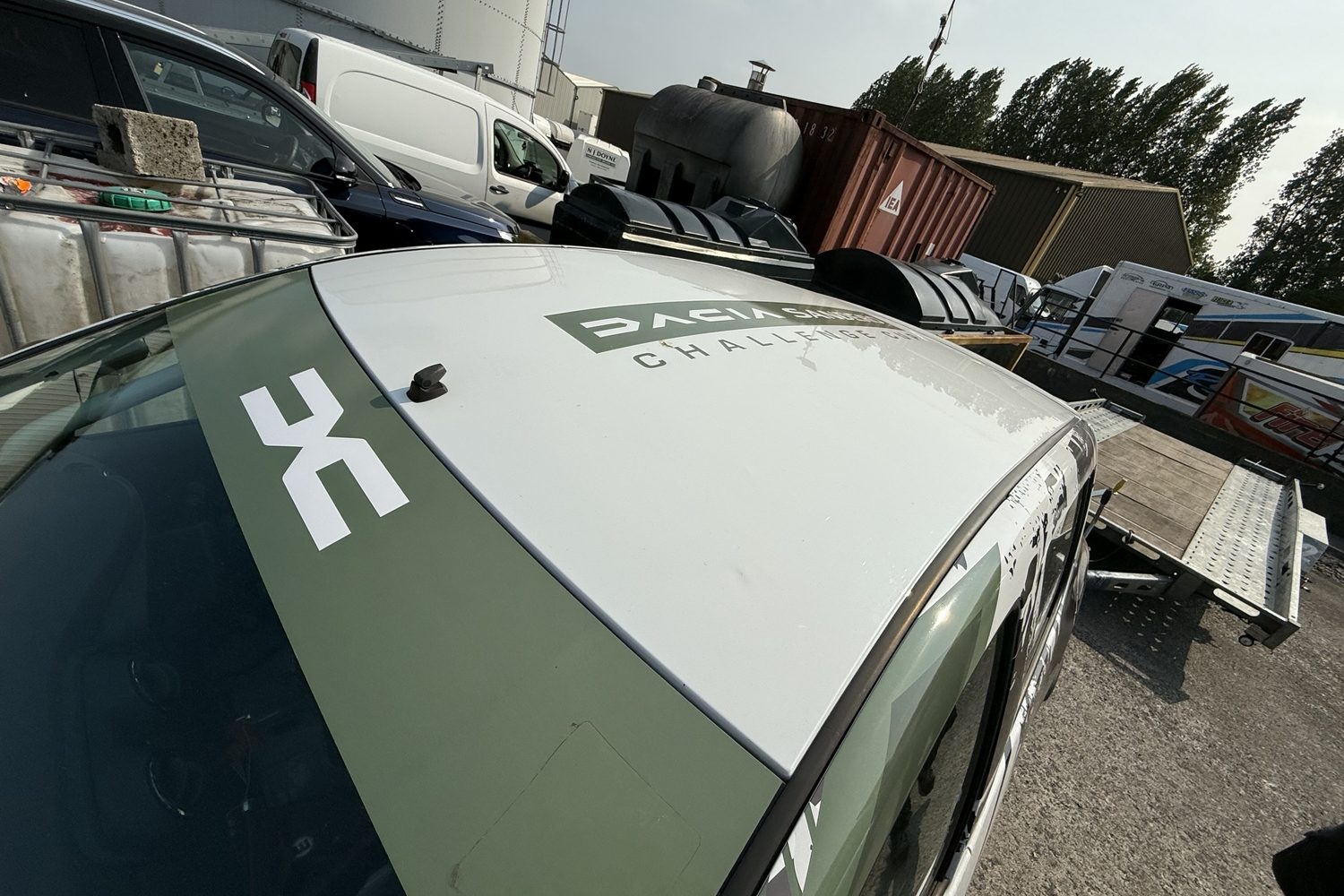
In return, aside from the positive coverage, Dacia's local dealers get involved when a rally comes to town, while some have even sponsored individual competitors. To make the most of the hundreds of spectators milling around, Dacia has added the championship livery to a Duster that accompanies the cars in the service area and there will be various trophies also provided by the firm.
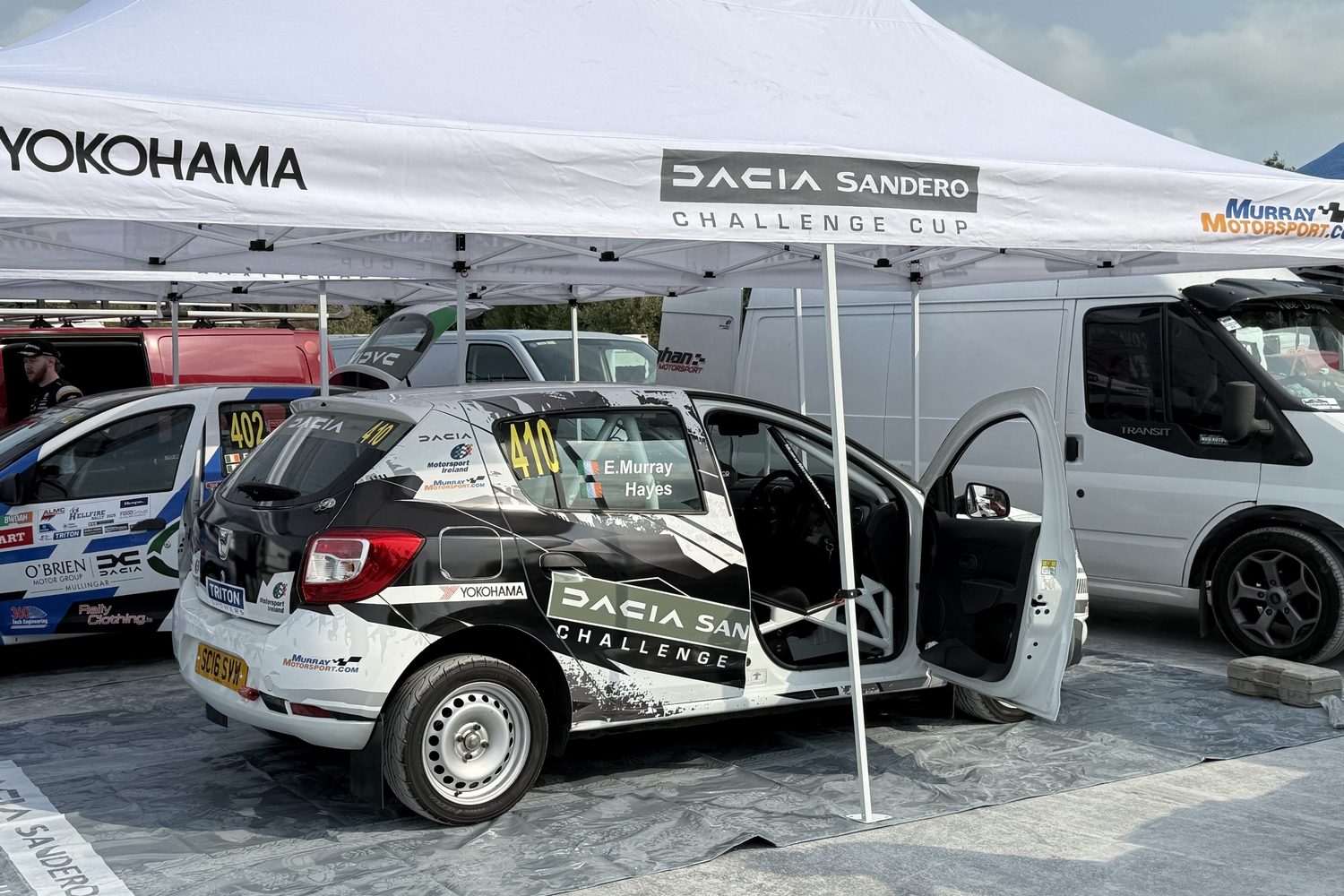
For his part, Toner emphasises the “smart value” approach of today's Dacia brand, where it's not just about being the cheapest. That concept certainly pervades the rally operation, displaying professionalism closer to that of the top runners, but affordable enough for nearly anybody to have a go.
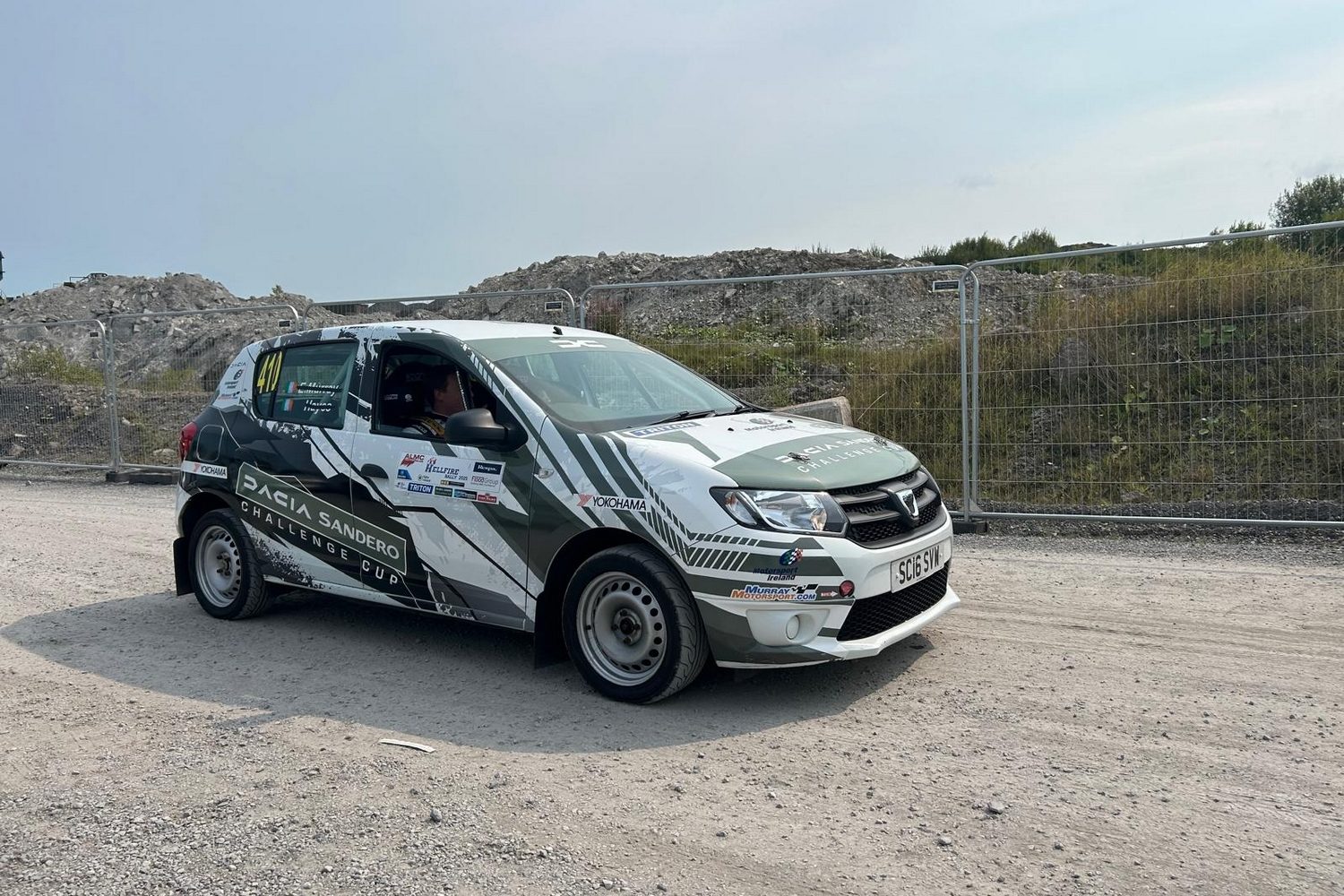
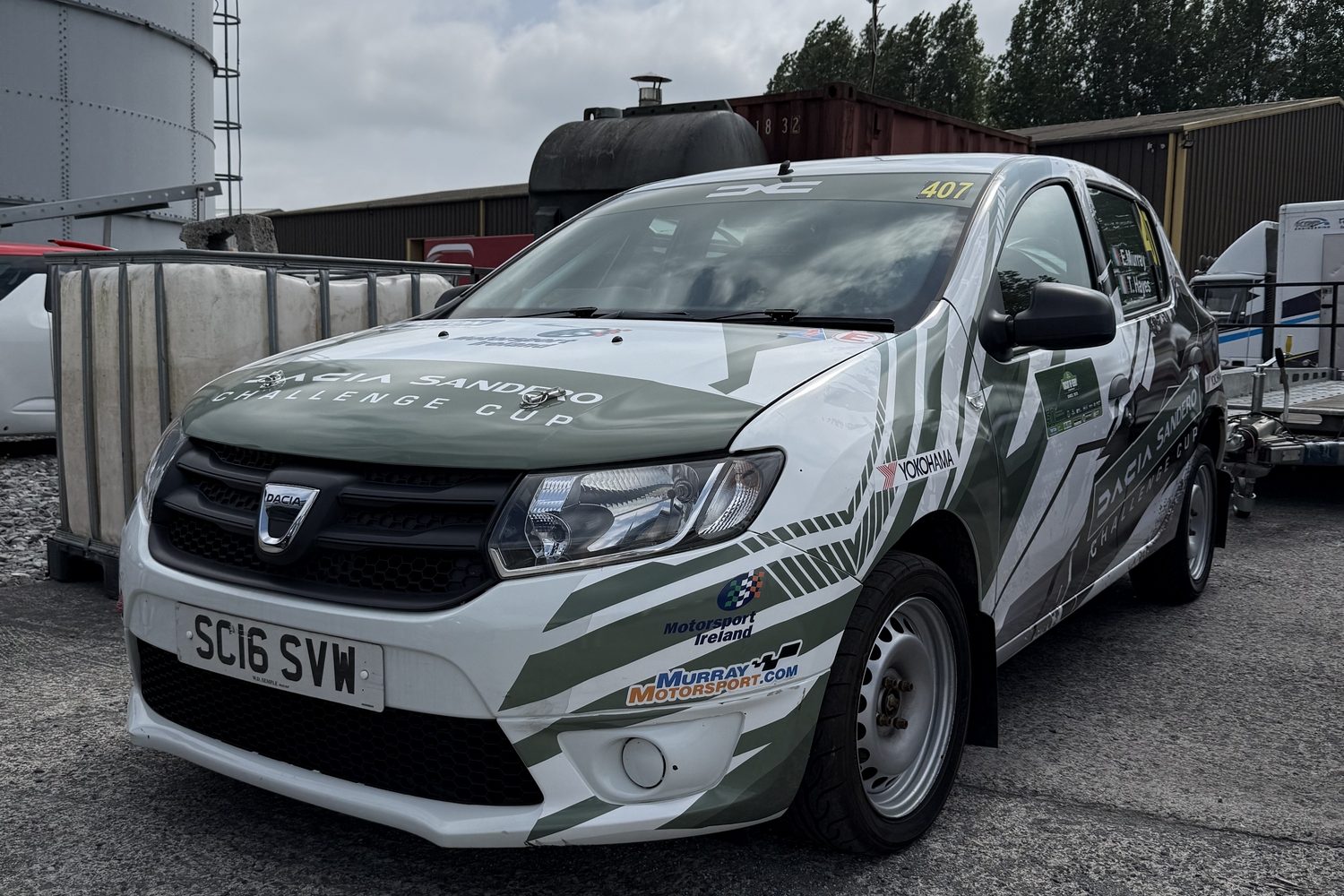
A Dacia Sandero made for rallying
Of course, a suitable vehicle is needed in the first place. The formula is designed to eliminate the possibility of inequalities in the cars as much as possible, so success is all about the driver and co-driver skills.
A Dacia Sandero made between 2013 and 2017 is required, as sold in the UK or Ireland. It must be powered by the 1.2-litre petrol engine and have one of five variants of a five-speed manual gearbox fitted.
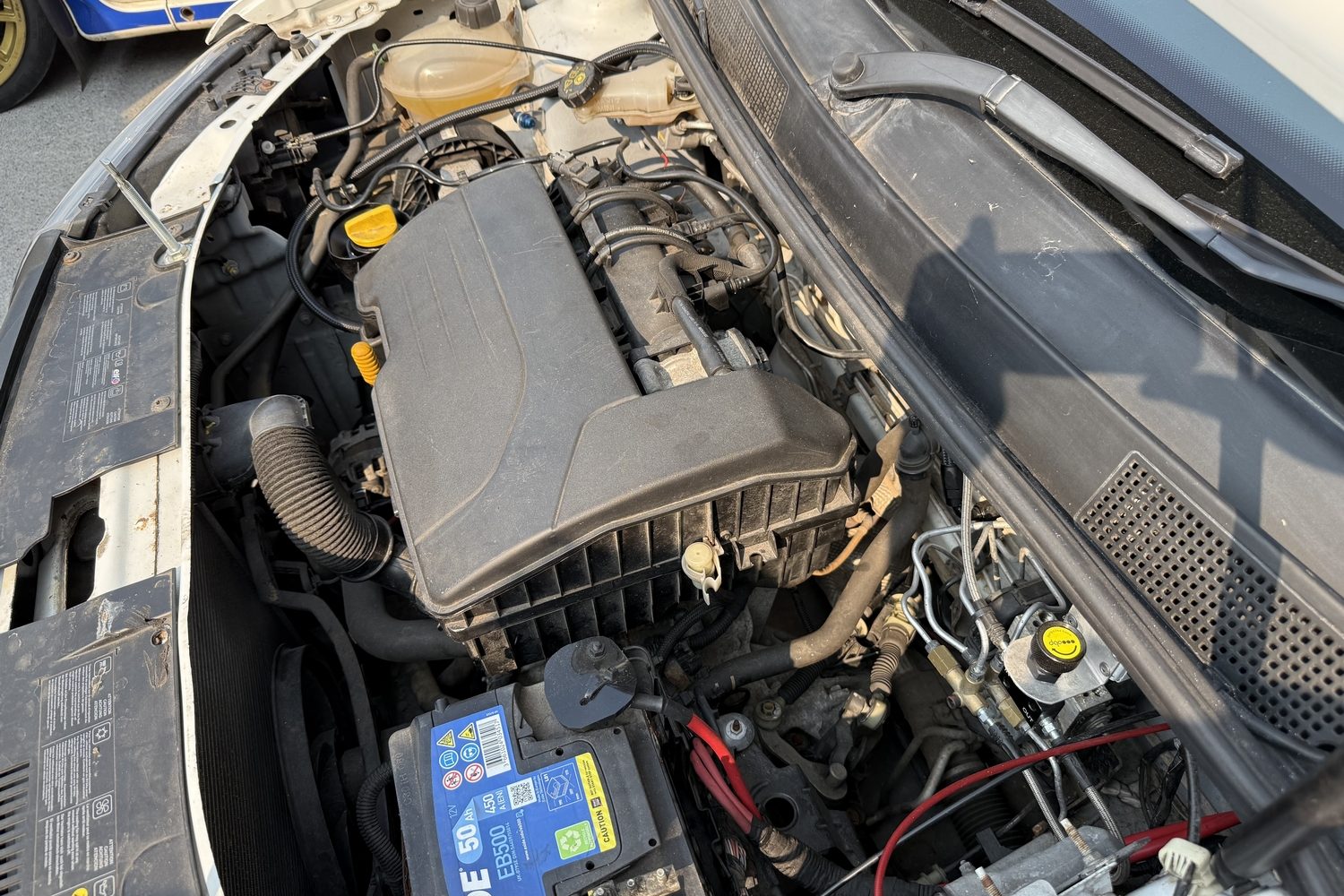
During the build process, the ECU (Engine Control Unit) is provided to the Championship Scrutineer for remapping. This adds an extra 5hp to the production-car's 75hp and removes the immobiliser. Interestingly, at any given rally, the scrutineer can choose to swap ECUs between cars without notice, to reduce the chances of anyone trying to cheat.
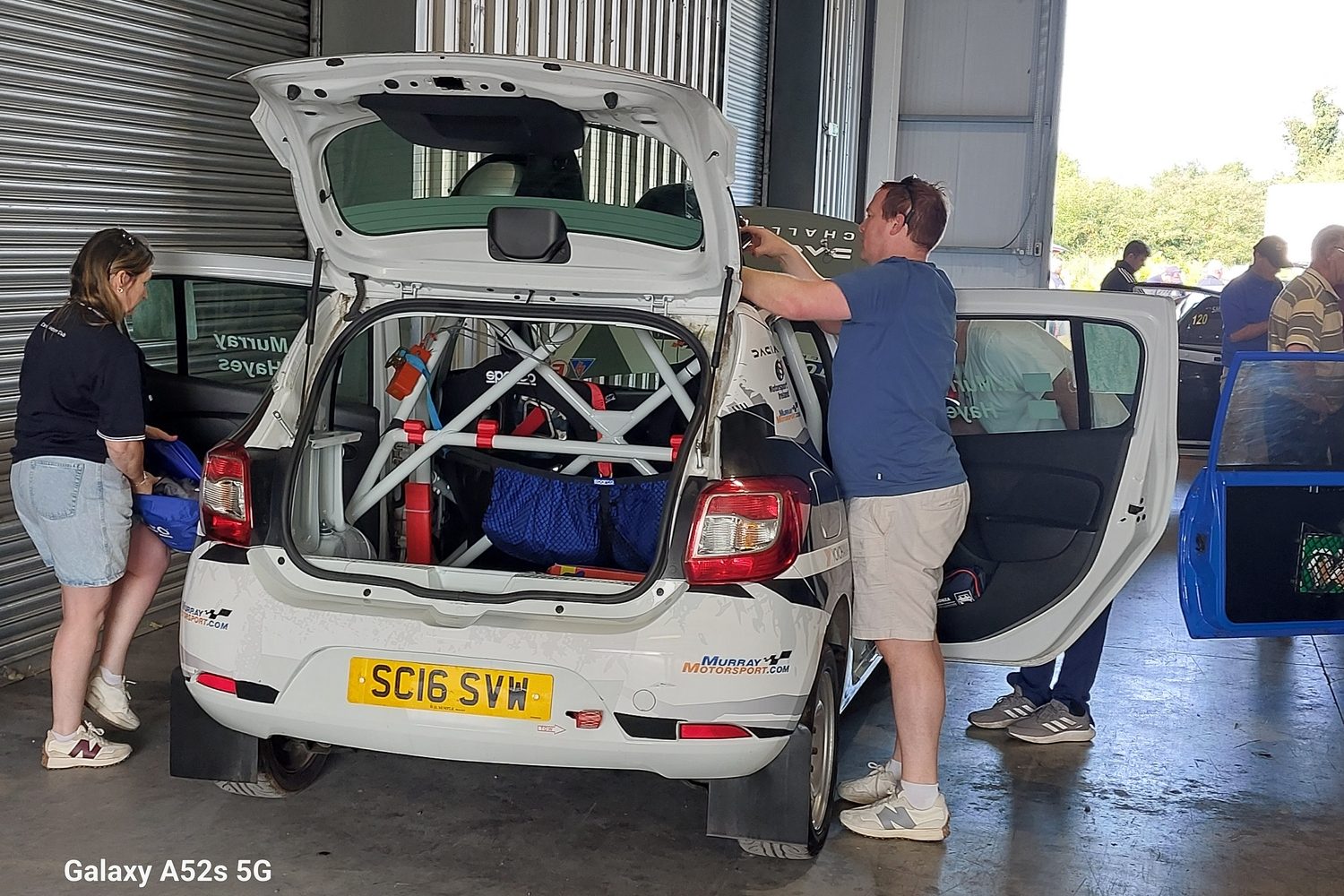
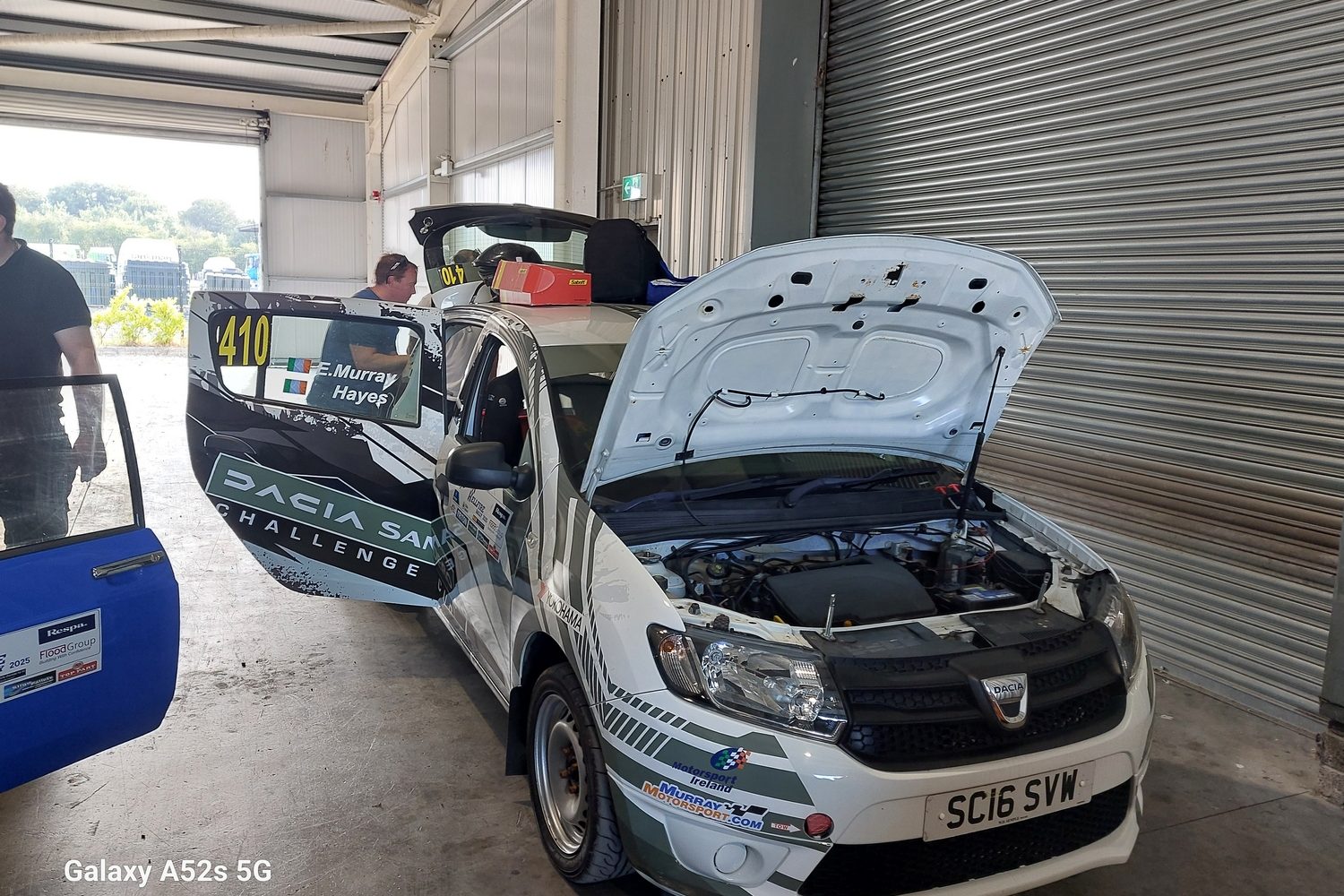
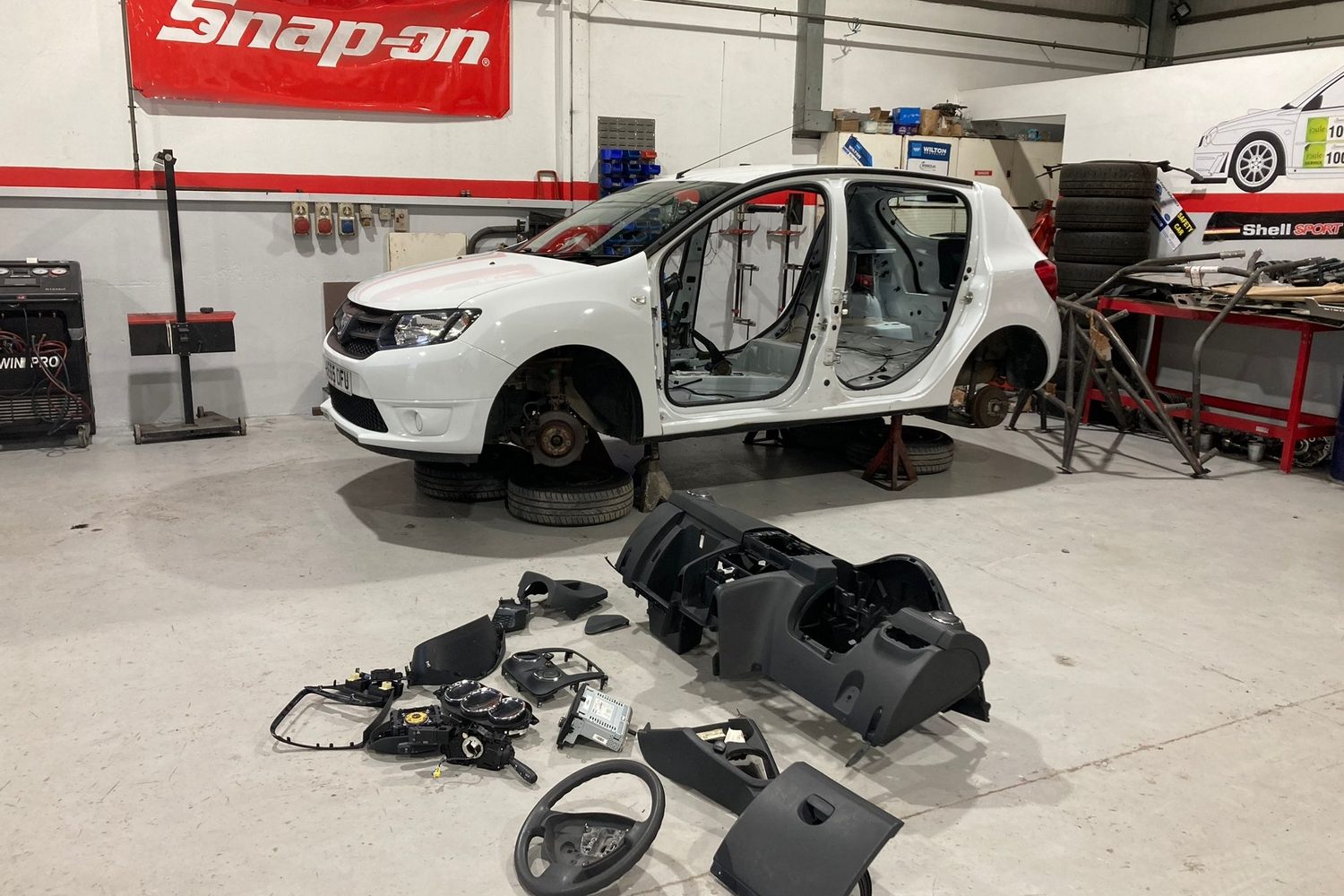
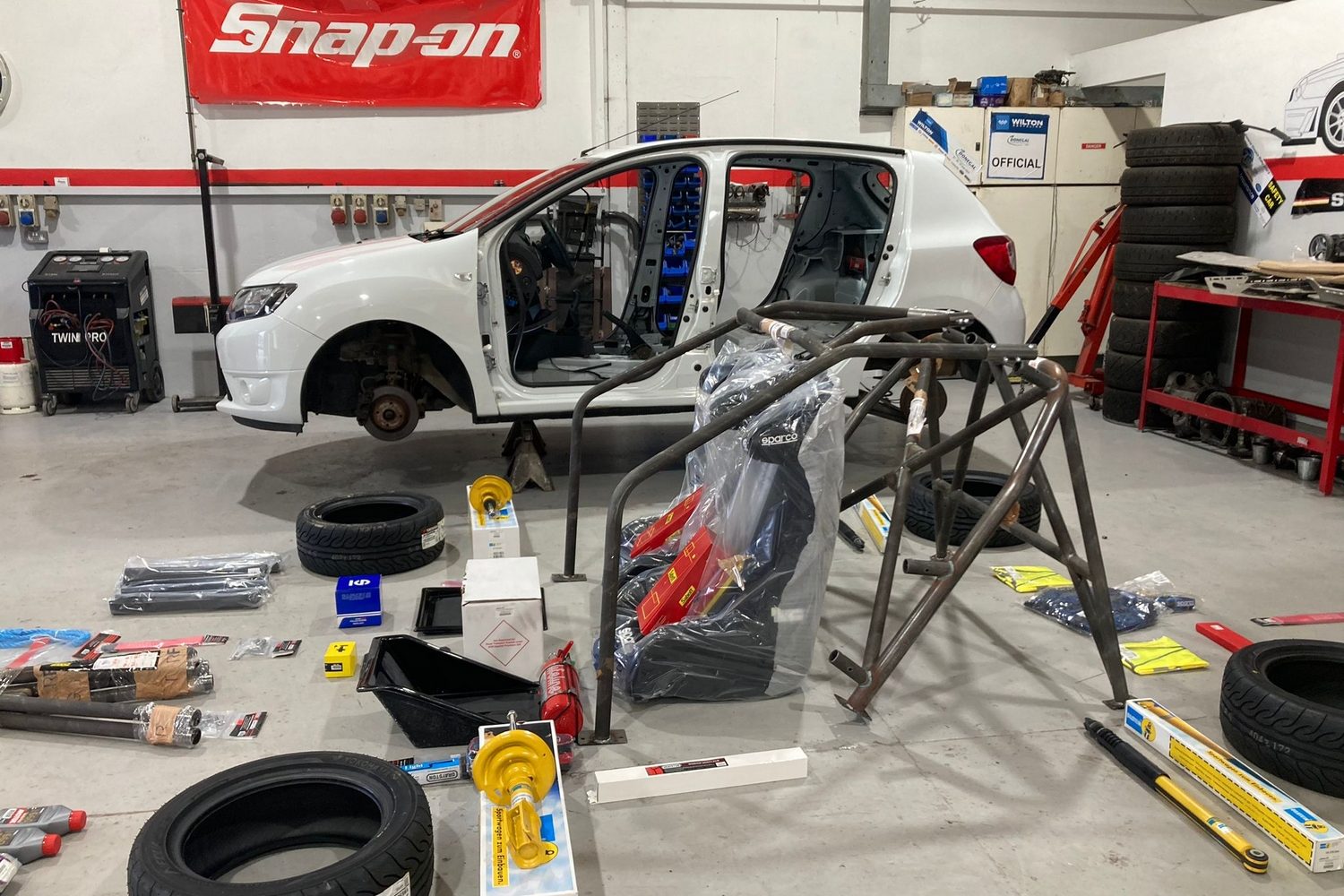
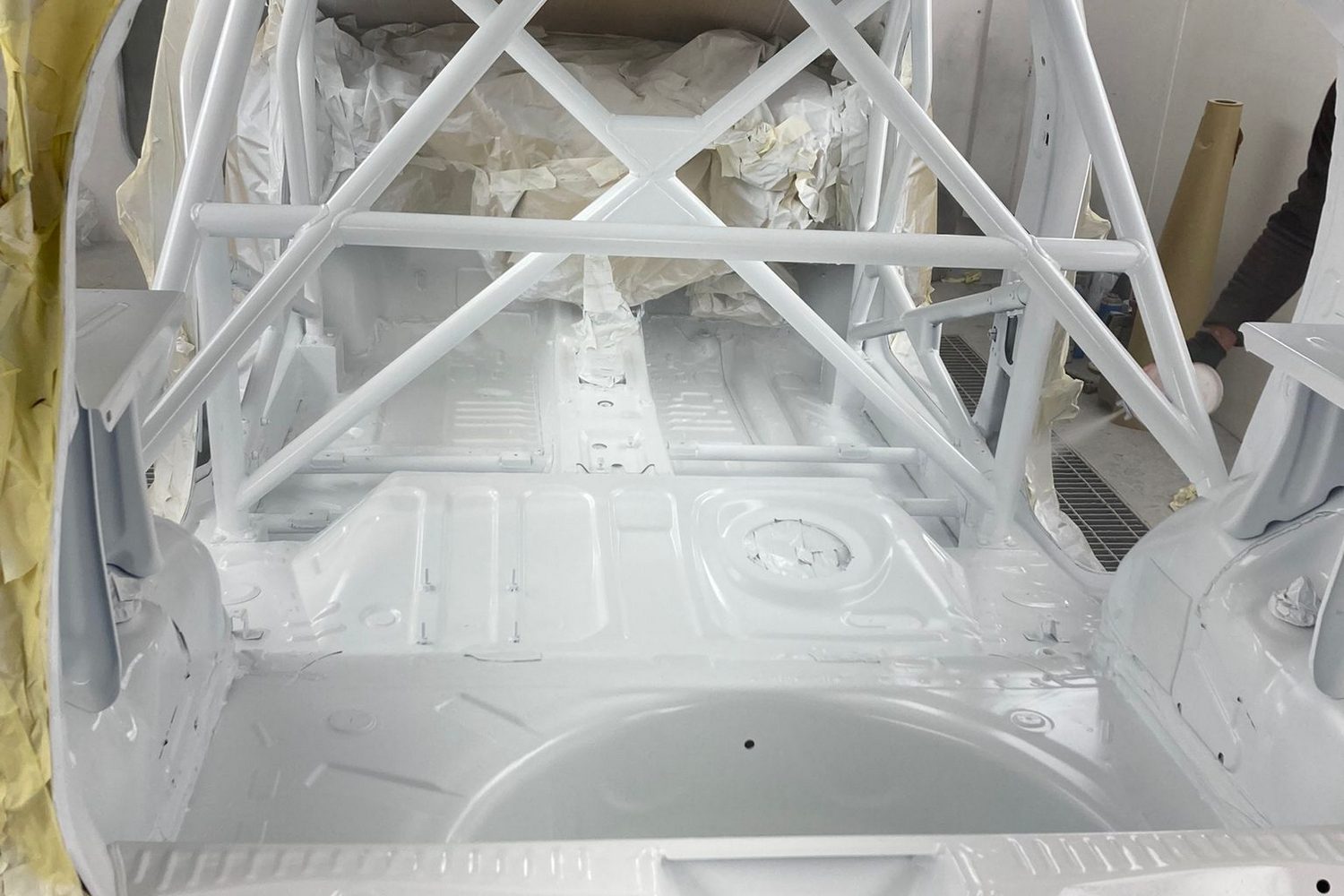
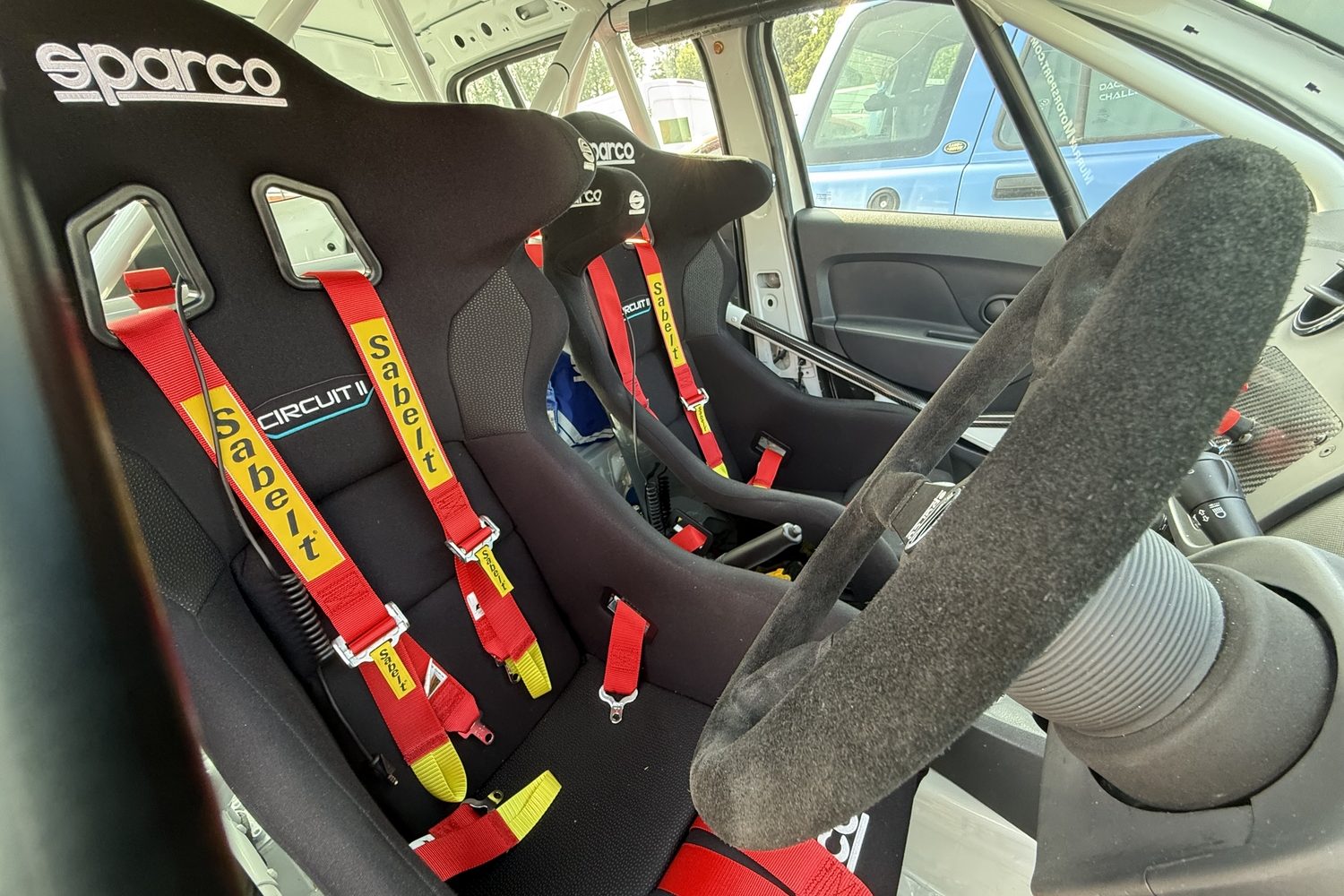
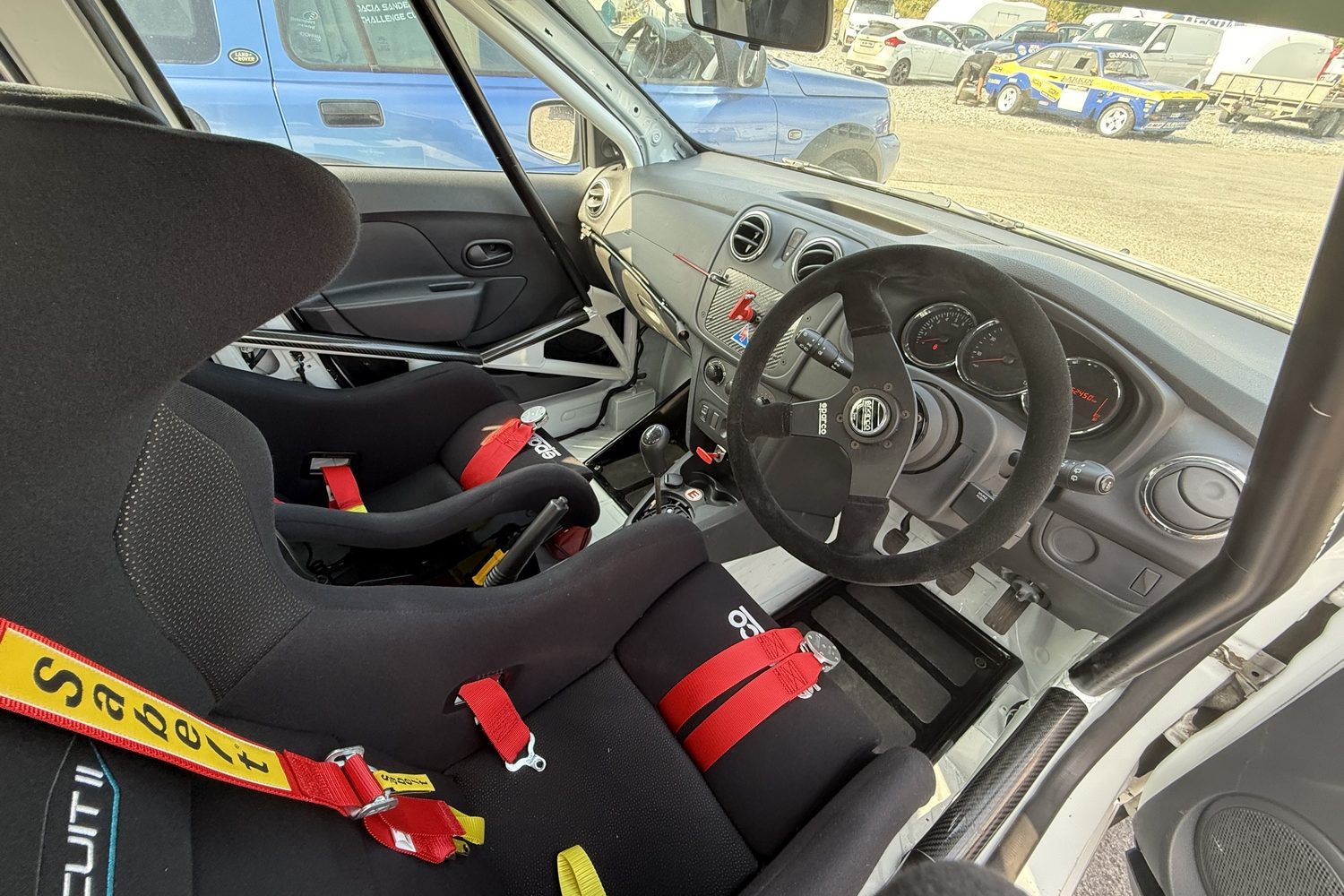
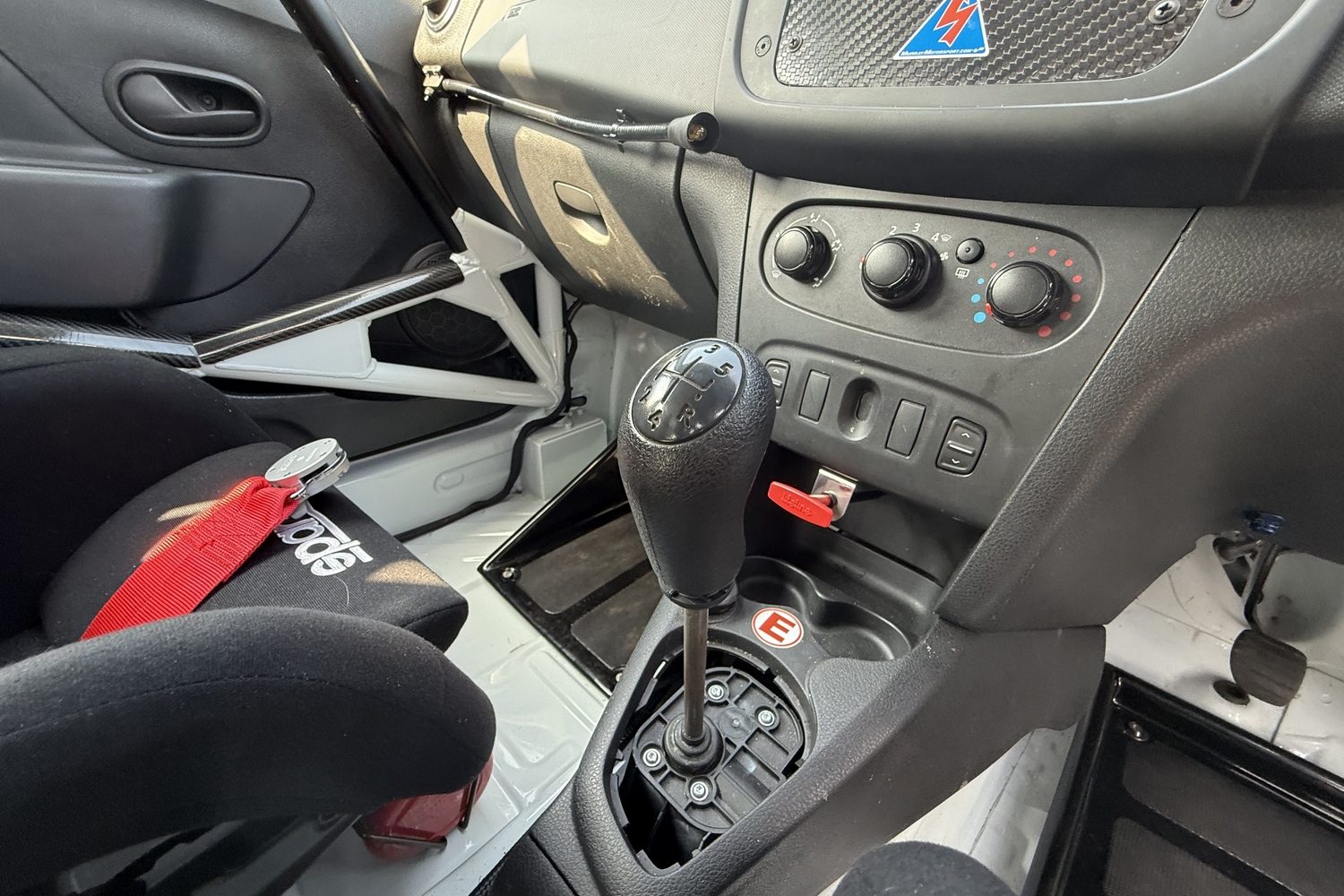
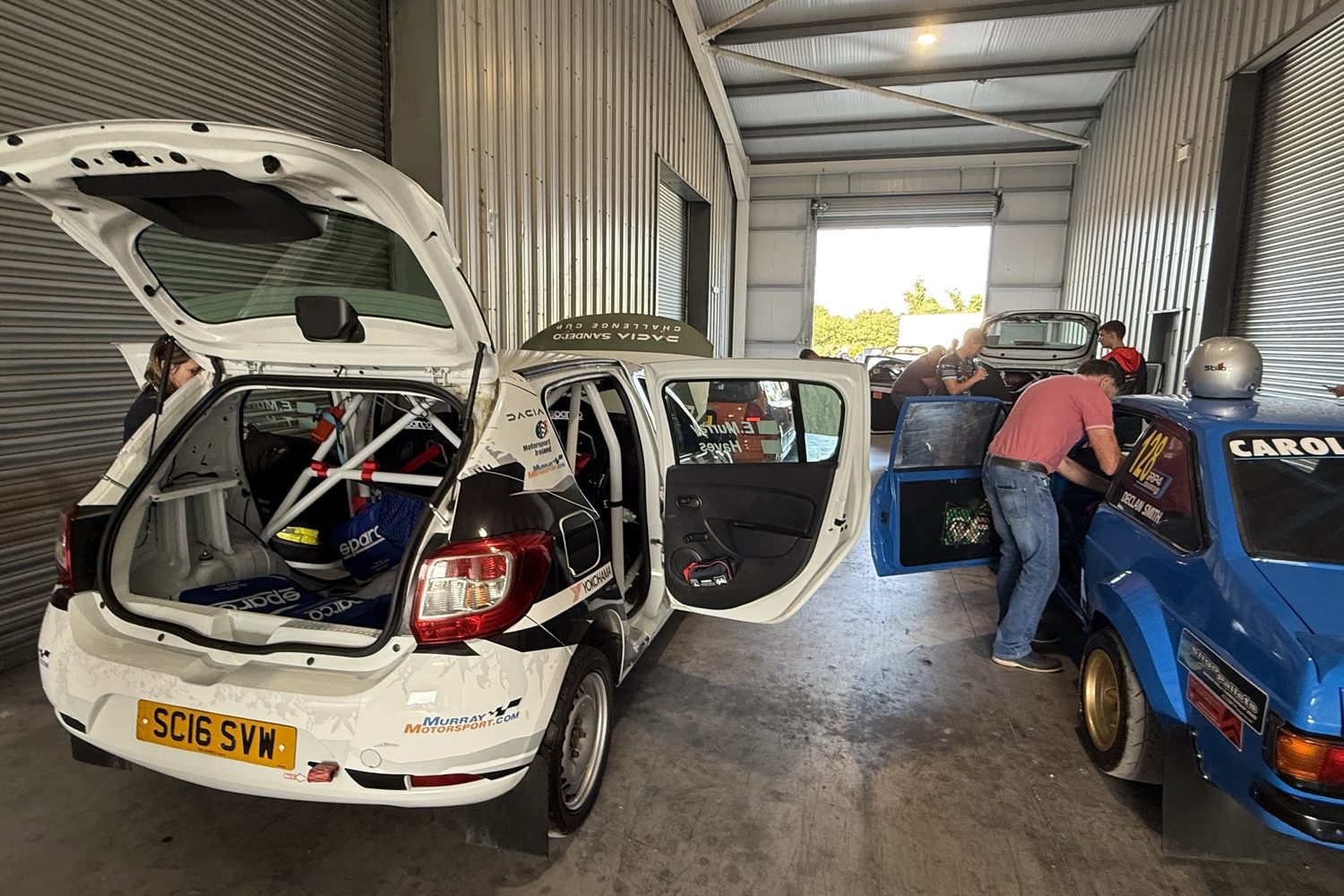
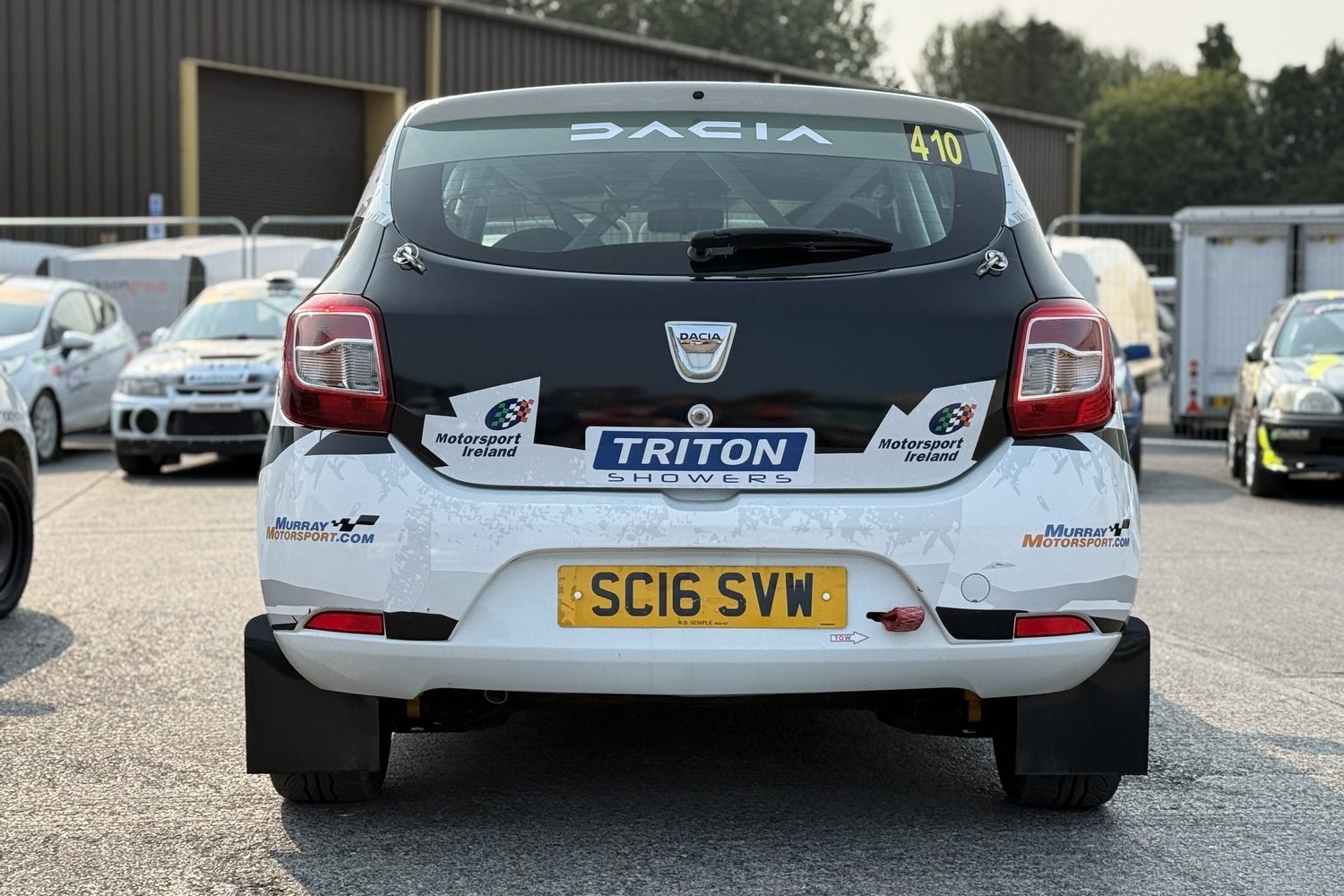
All competitors building a Sandero rally car for the championship must purchase the Dacia Sandero Rally Kit from Murray Motorsport and fit all of its parts to their car. This list is extensive and includes a reassuringly serious-looking OMP roll cage bolted onto reinforced mounting points with padding applied where you might whack your head. A lovely Sparco steering wheel is also part of the kit. Unsurprisingly, all airbags are removed from the car.
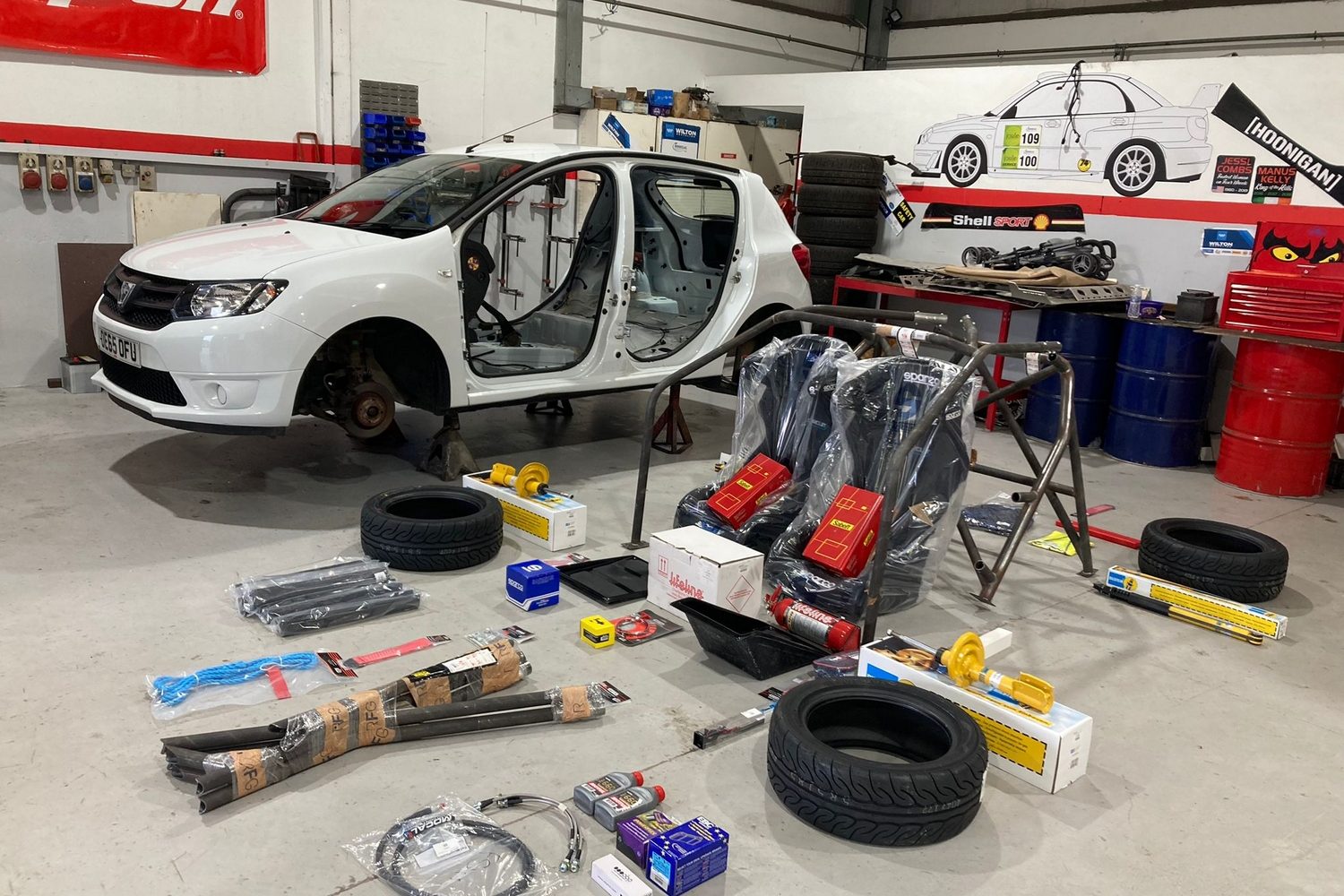
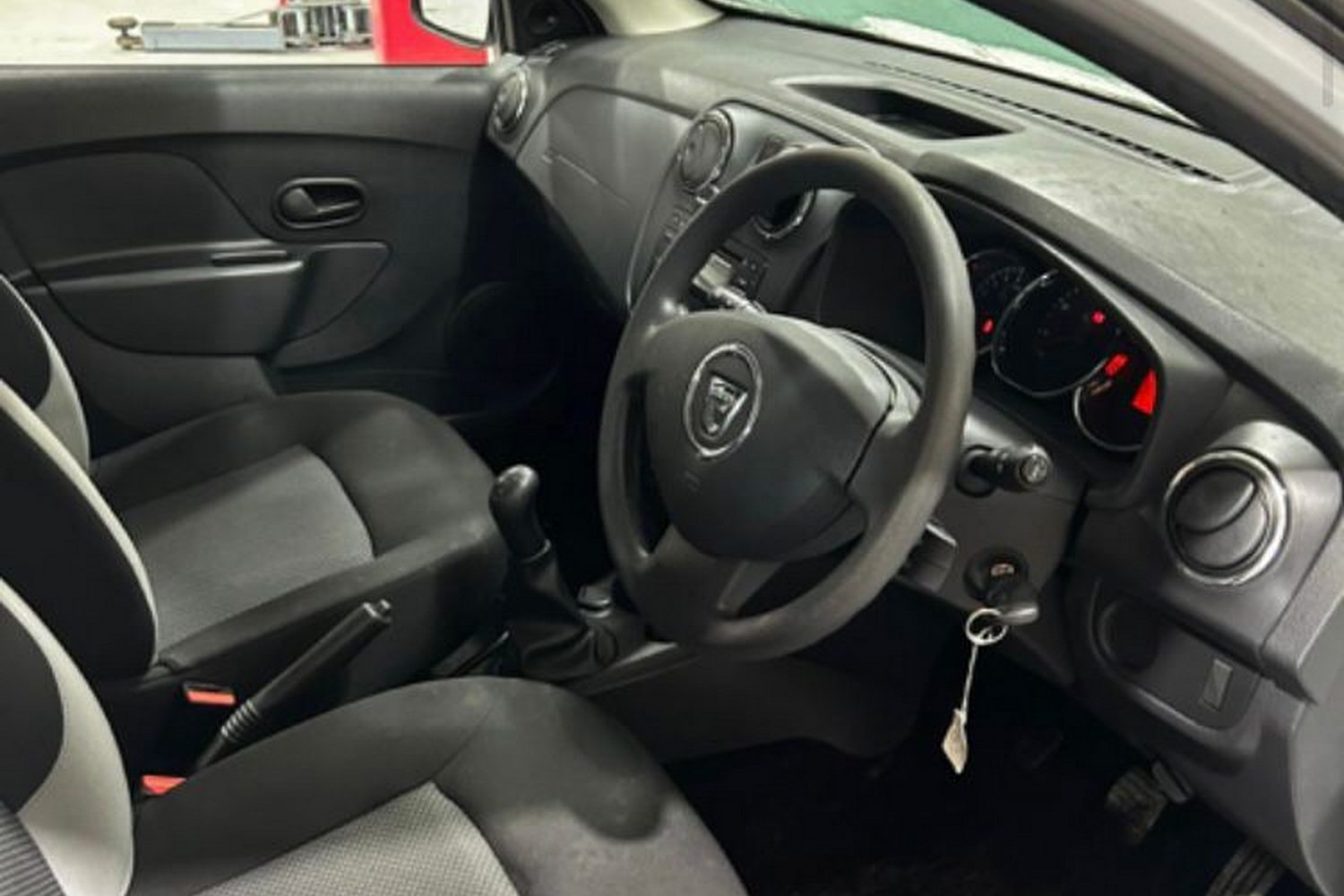
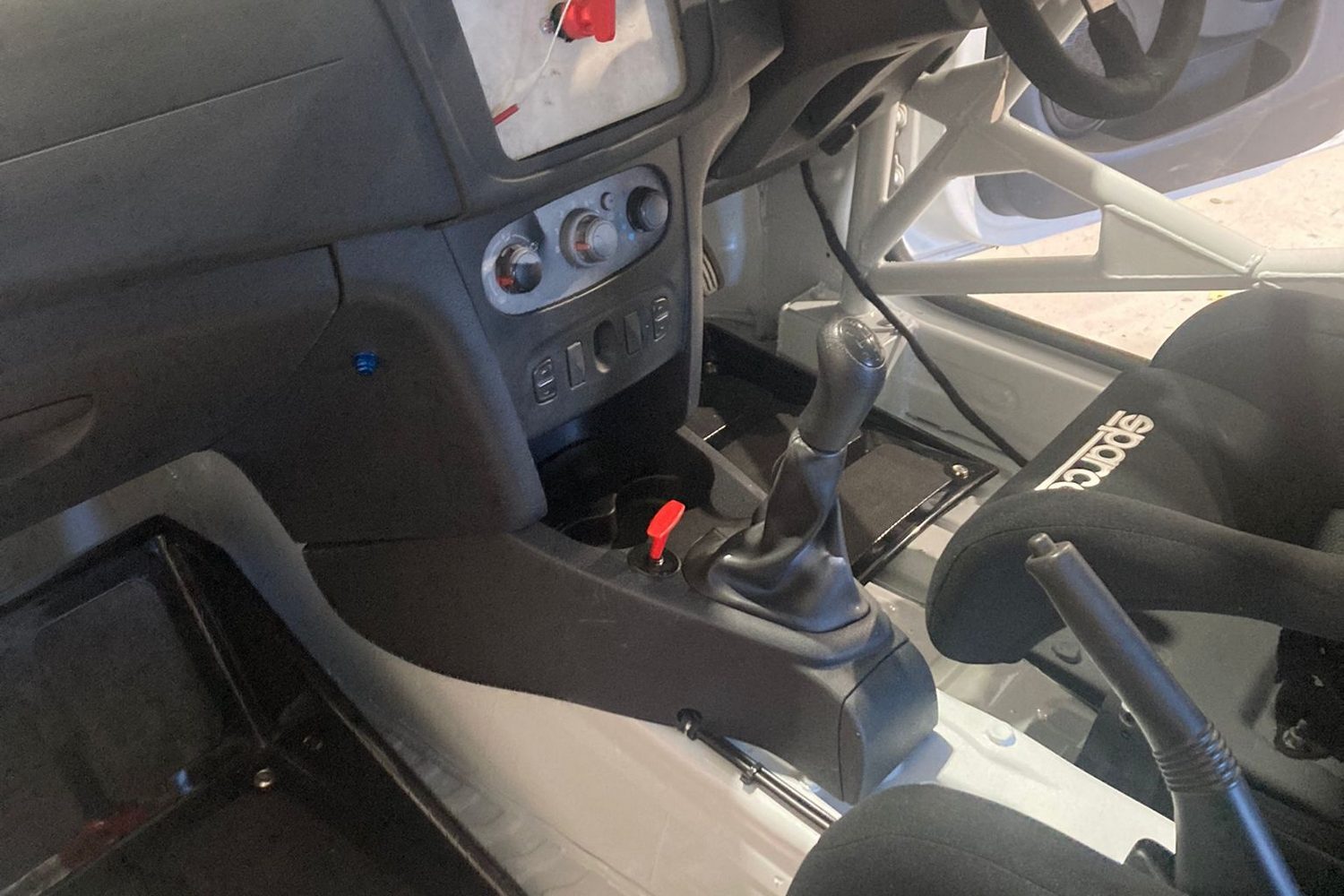
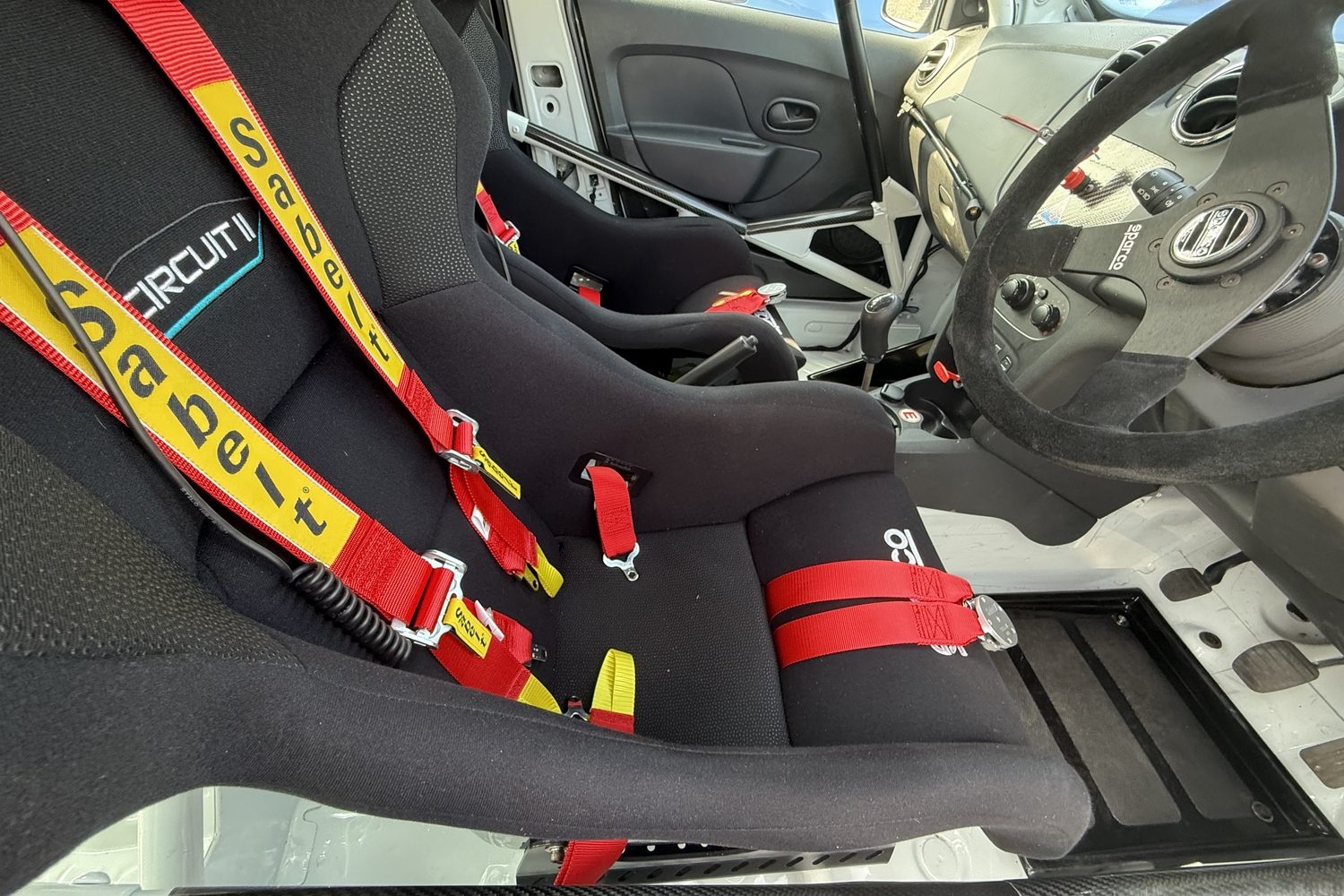
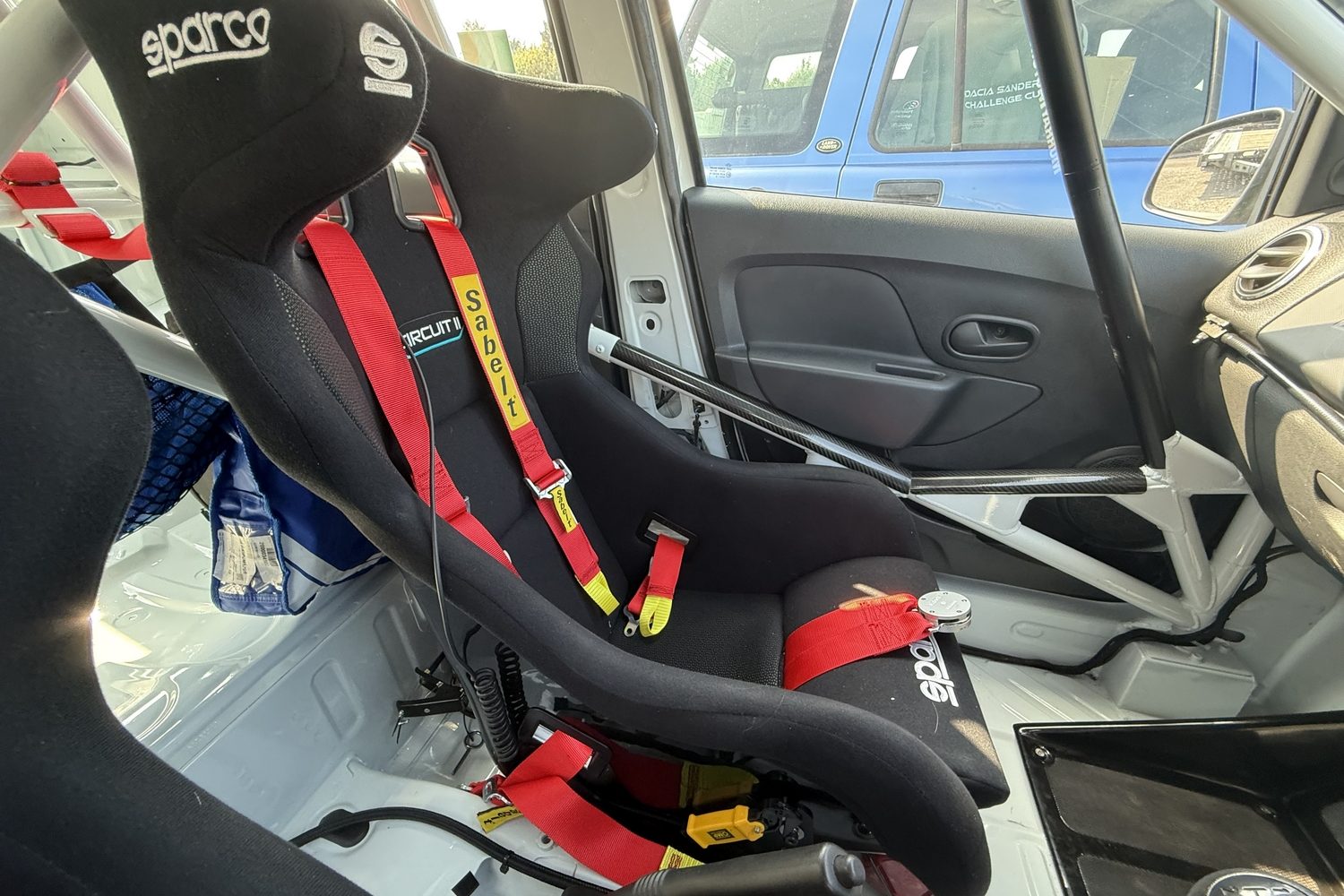
Other than the dashboard, (most of the) door cards and gear lever, the majority of the Sandero's cabin is stripped back to the metal. A pair of proper Sparco race seats are bolted to steel frames featuring HANS-compatible Sabelt harnesses. Unnervingly, there are harness cutters also provided - should you find yourself upside down and not able to release yours or your co-driver's belts.
Other sobering safety equipment included in the kit includes plumbed-in and handheld fire extinguishers and an electrical isolation system, along with more familiar items such as hi-vis vests, a warning triangle and a first-aid kit. Less obvious is the side window security film kit, which is designed to stop the side glass shattering in the event of a crash.
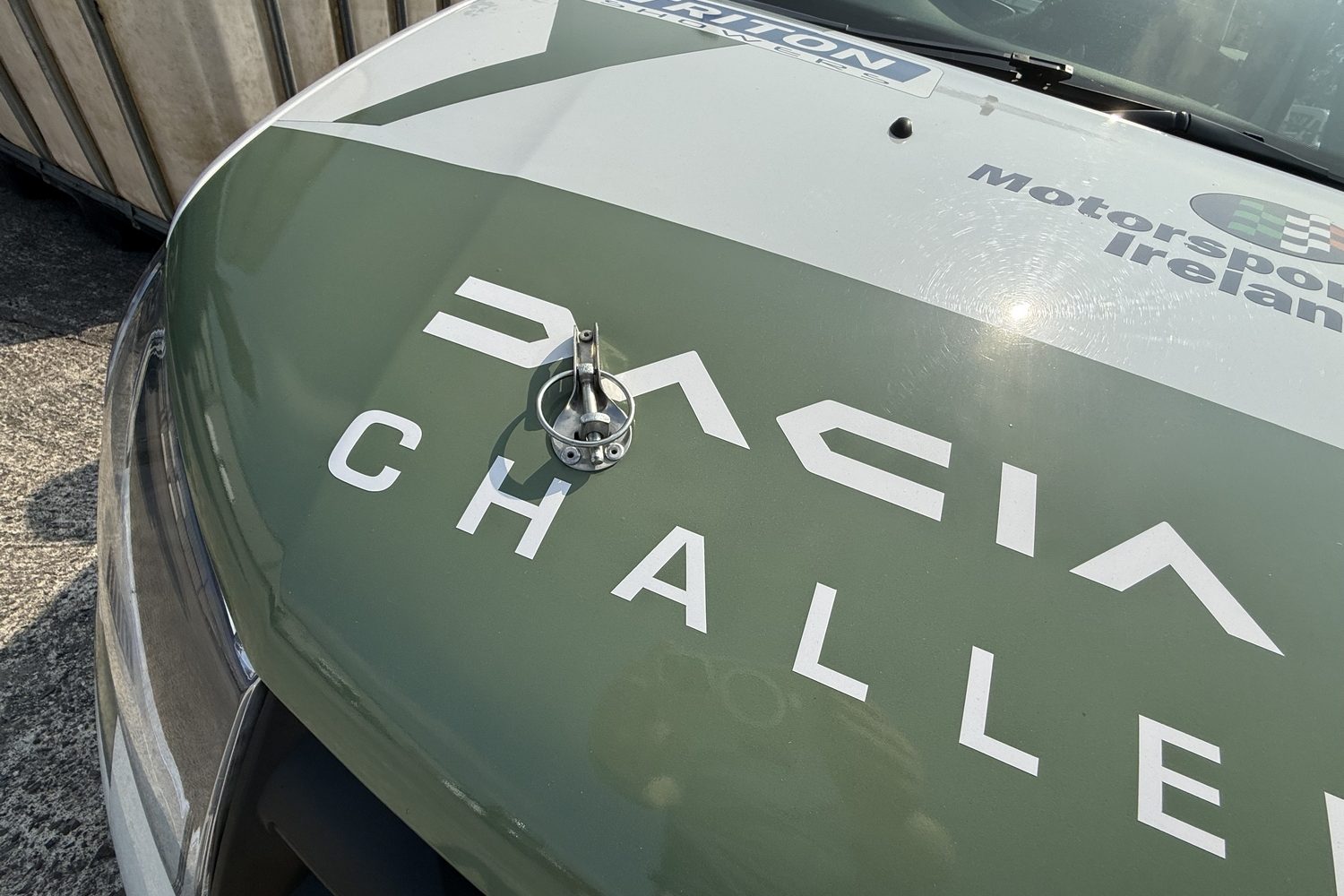
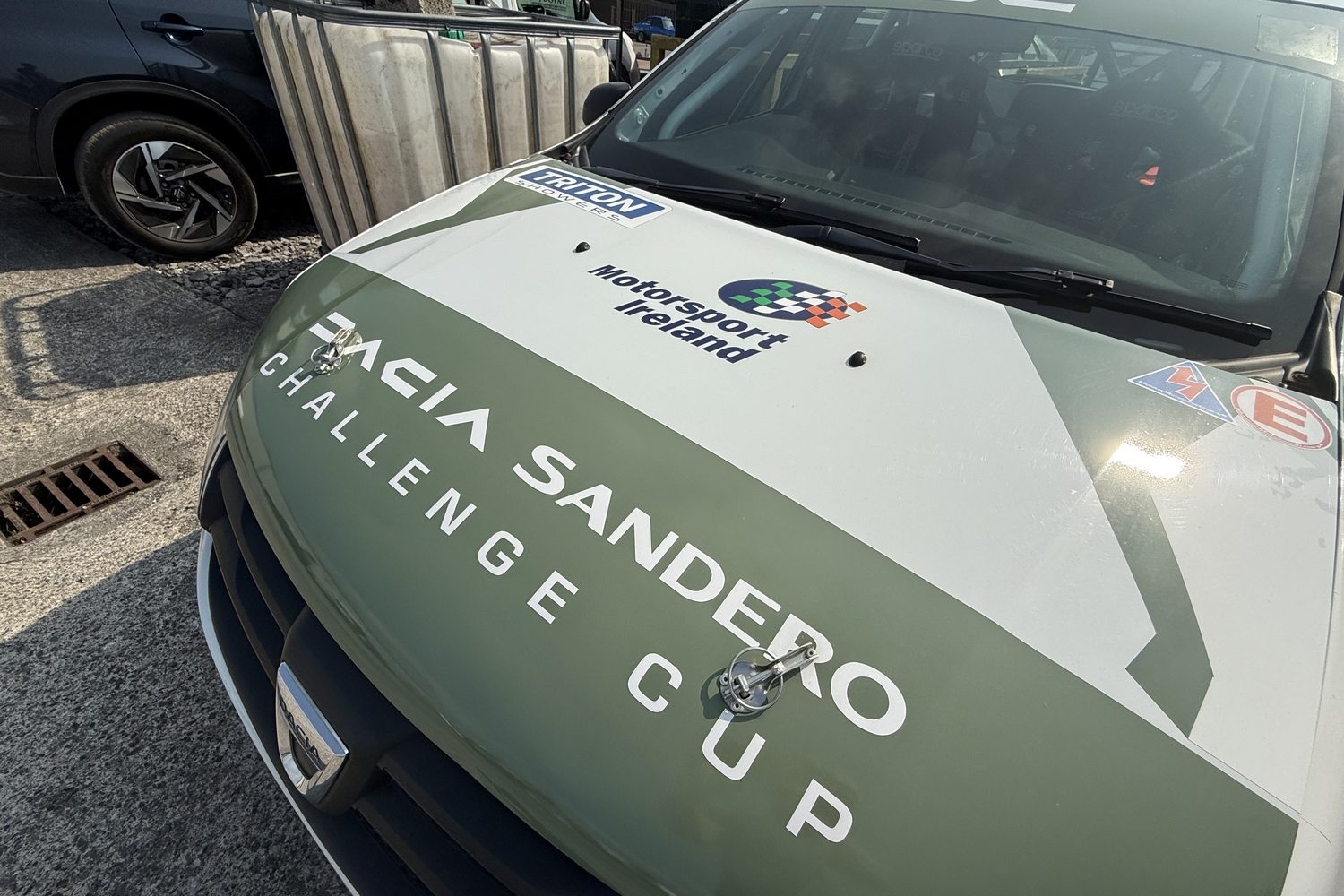
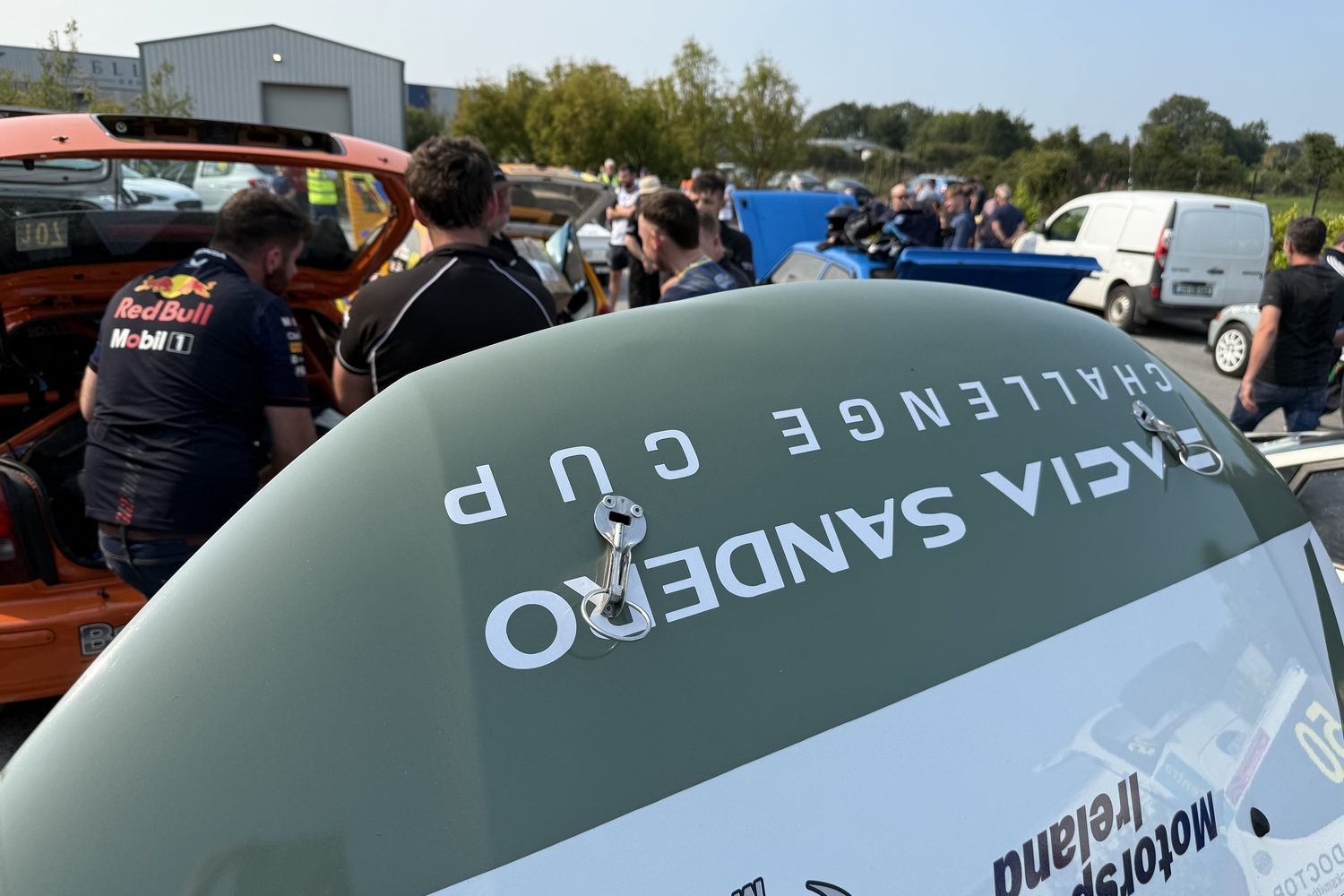
Any form of automatic locking or central locking must be removed, and the bonnet and rear hatch are secured using the provided pin fasteners.
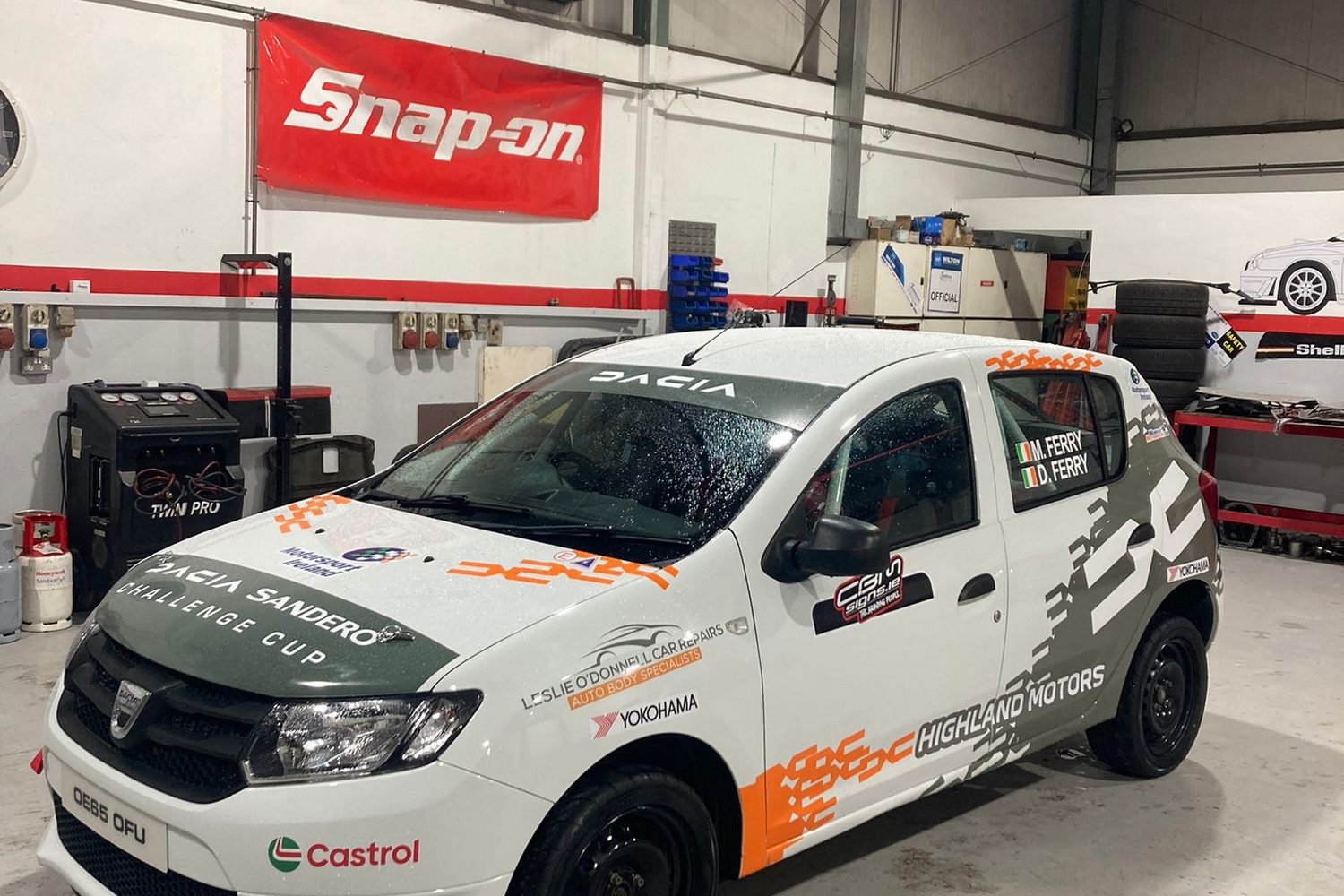
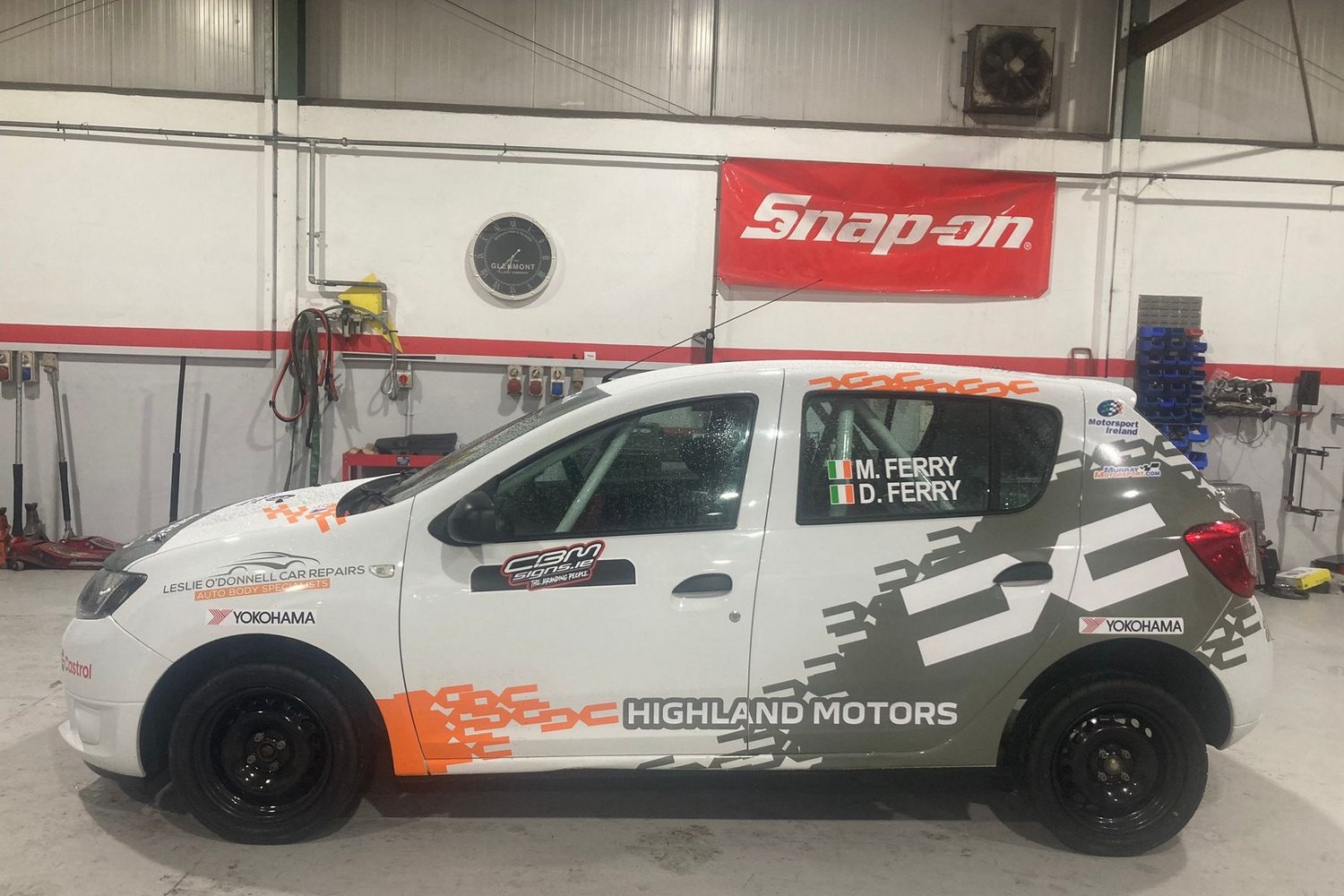
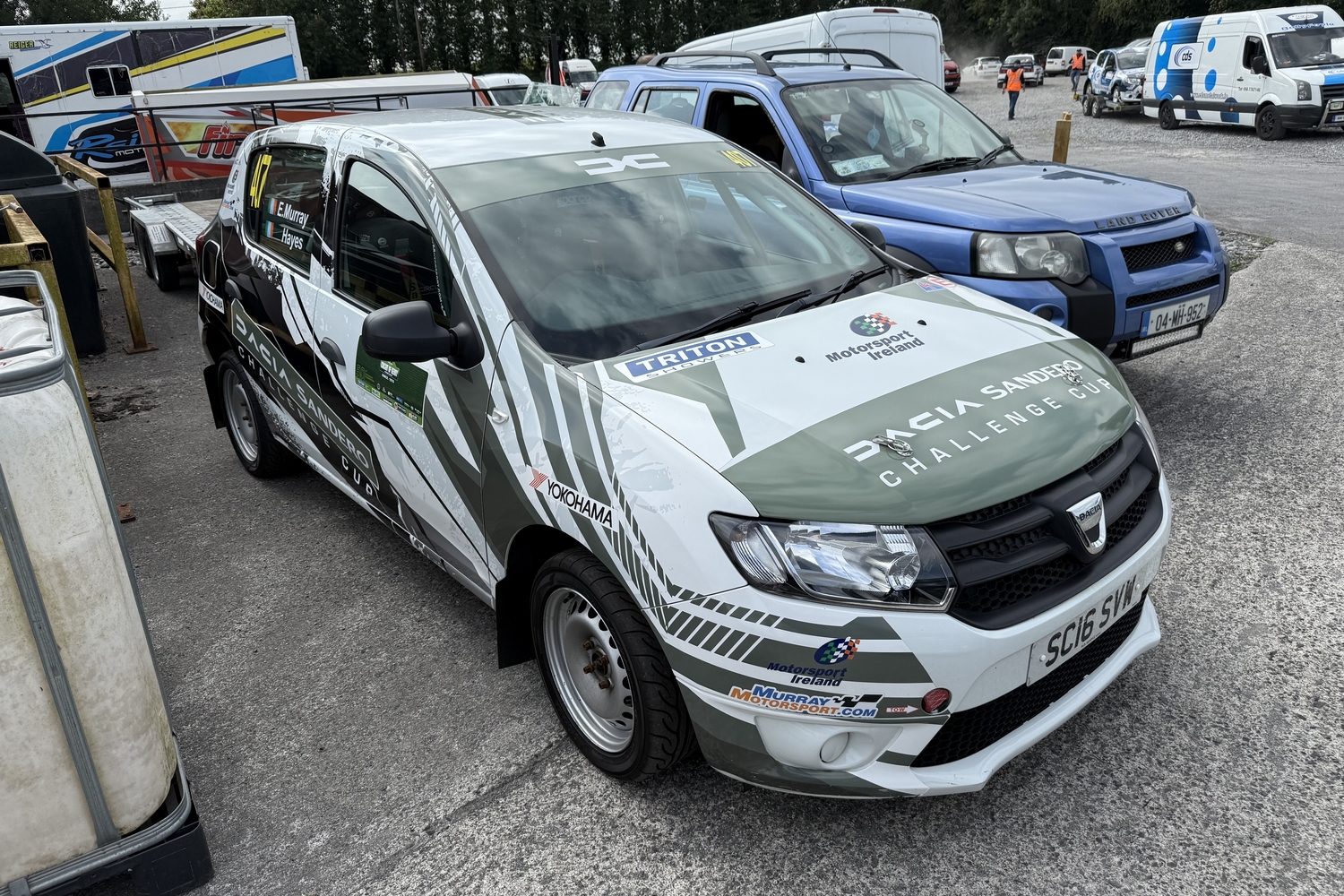
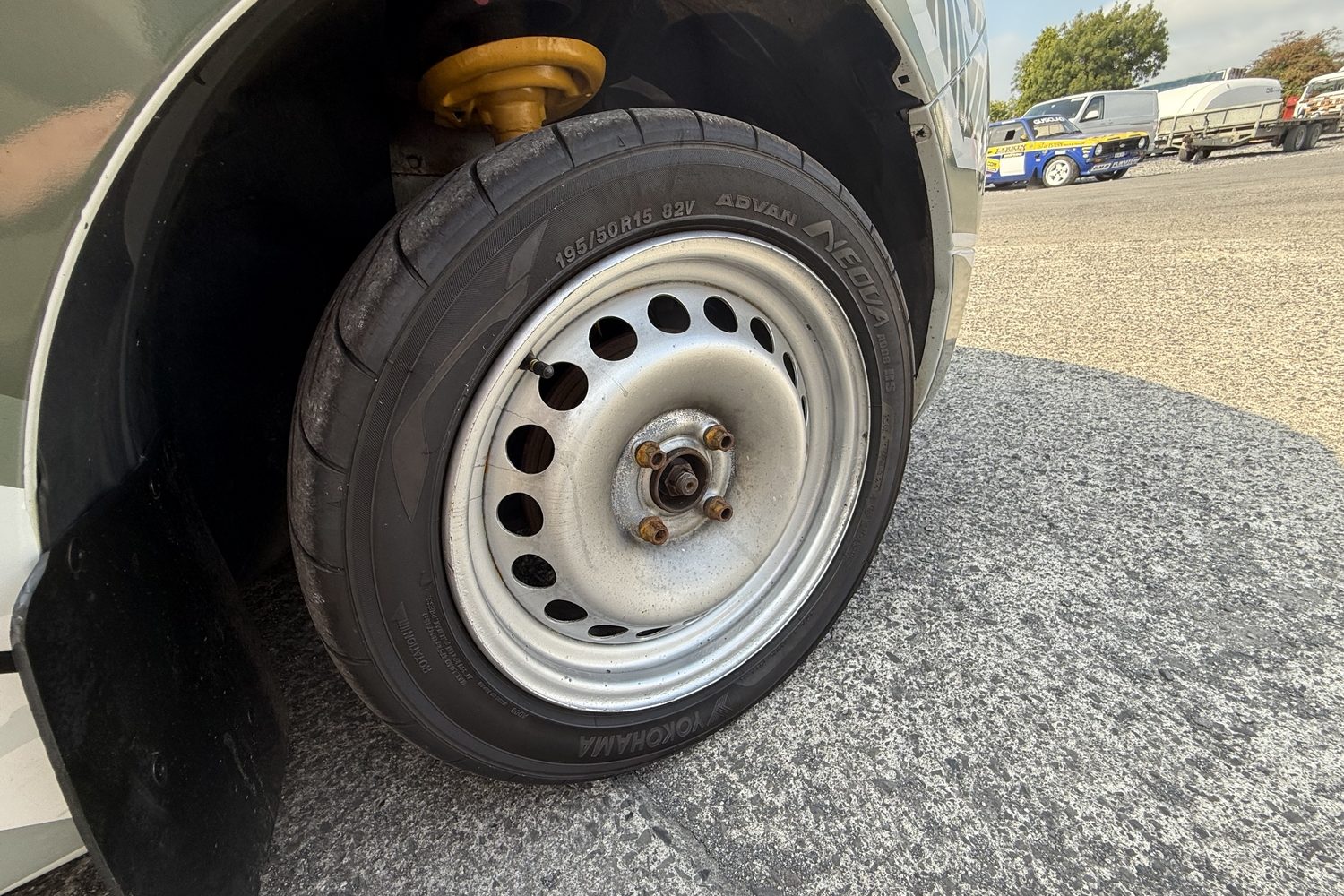
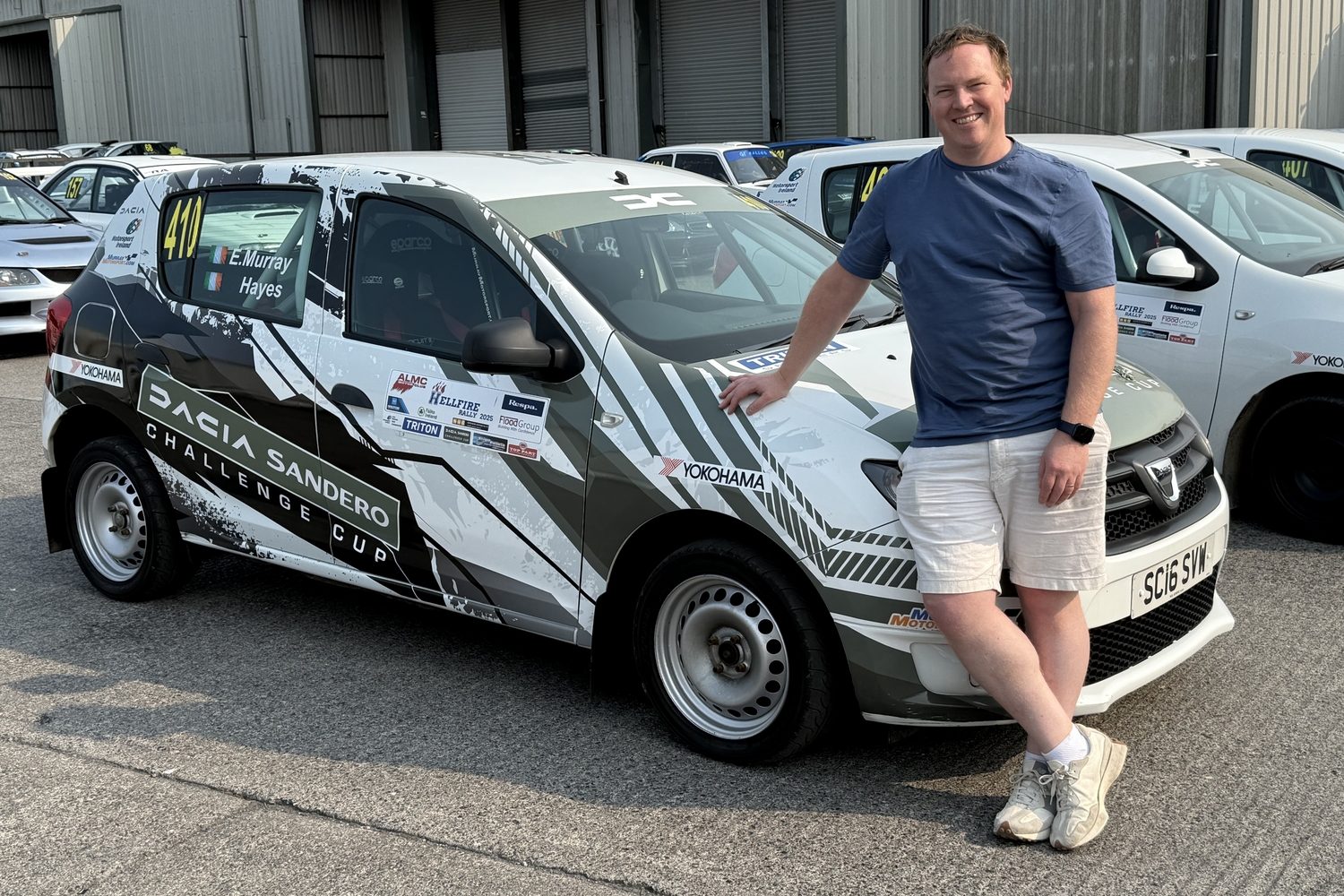
Externally, all cars must feature a certain number of championship decals and mudflaps, though the Sandero can be fitted with any of the 15-inch wheel designs originally available on the production car. The tyres are controlled though, and they're a Yokohama Advan design, which again must be bought through Murray Motorsport.
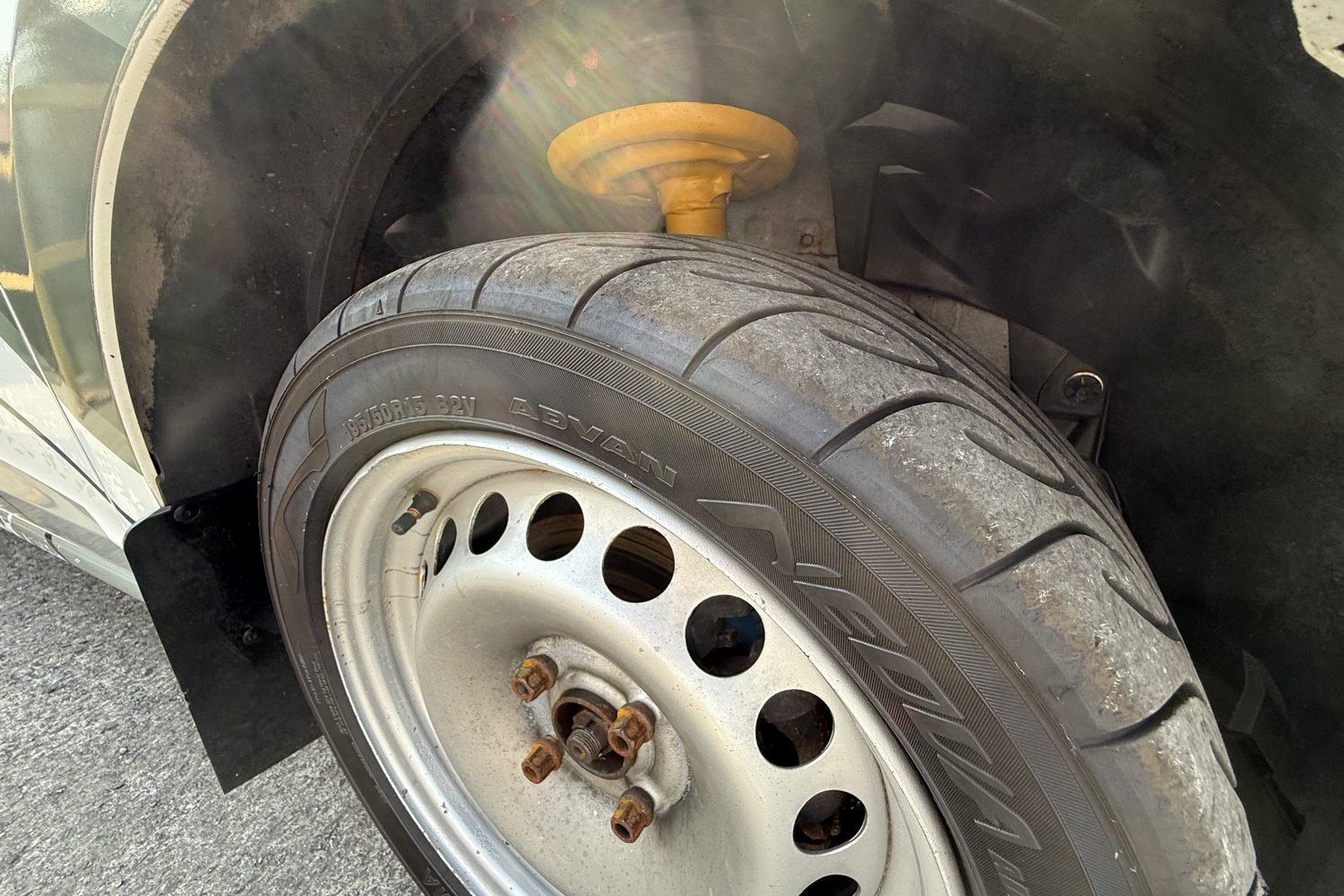
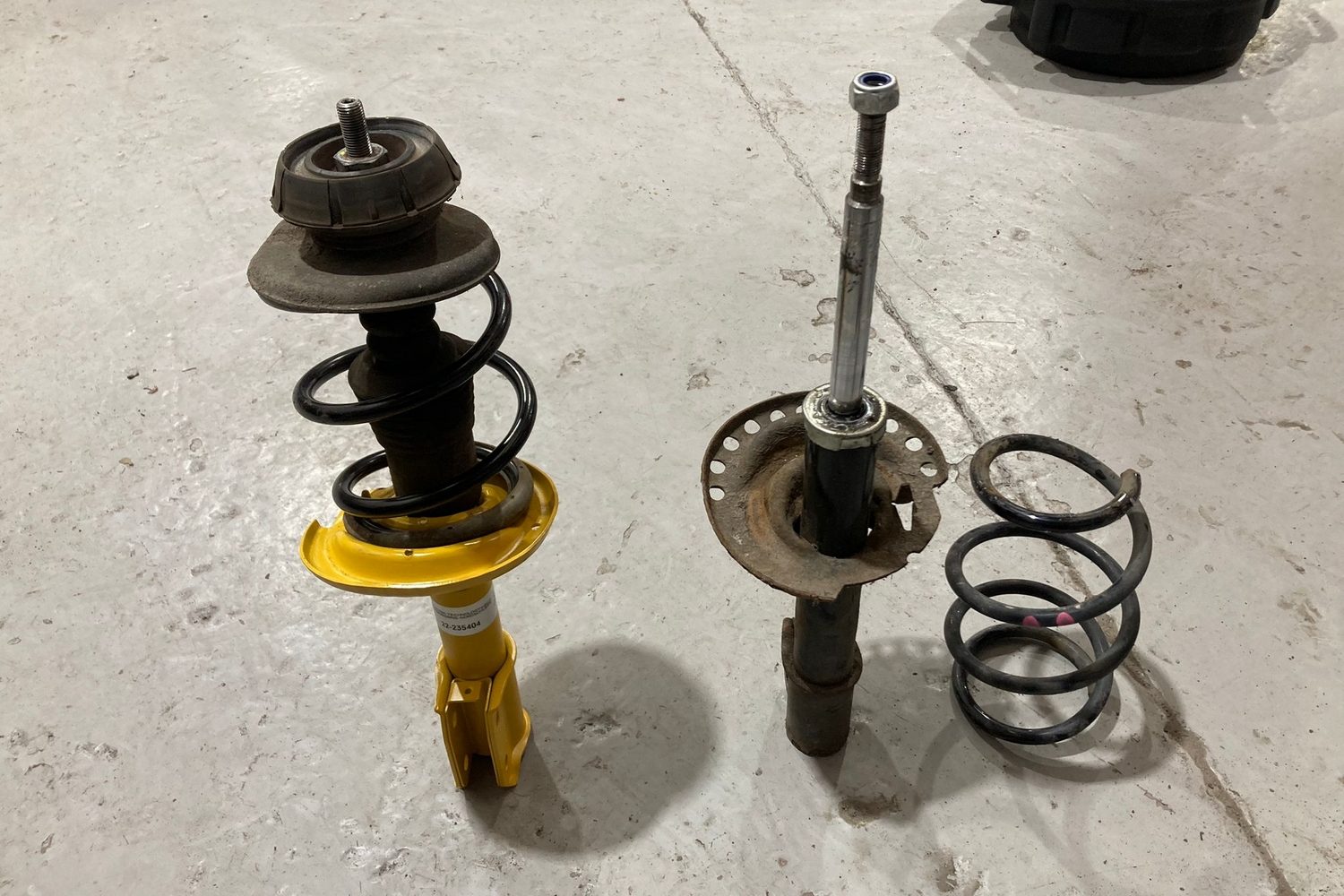
The brakes and suspension upgrades allowed are also included in the kit. Bilstein dampers replace the standard items, and there's a Powerflex wishbone bushing kit as well to firm up body control. EBC brake pads and shoes are employed, while the flexible brake hoses are replaced by braided items. The anti-lock braking system is bypassed, competition brake fluid is added and there's even adjustable brake bias installed.
And so, the humble Sandero is transformed into what appears to be a proper competition car.
Murray Motorsport built the first 'prototype' for the series (the car we're driving, as it happens), but would-be competitors can build their own if they wish. All cars will be subject to scrutiny before getting the all-important logbook and then key components are sealed.
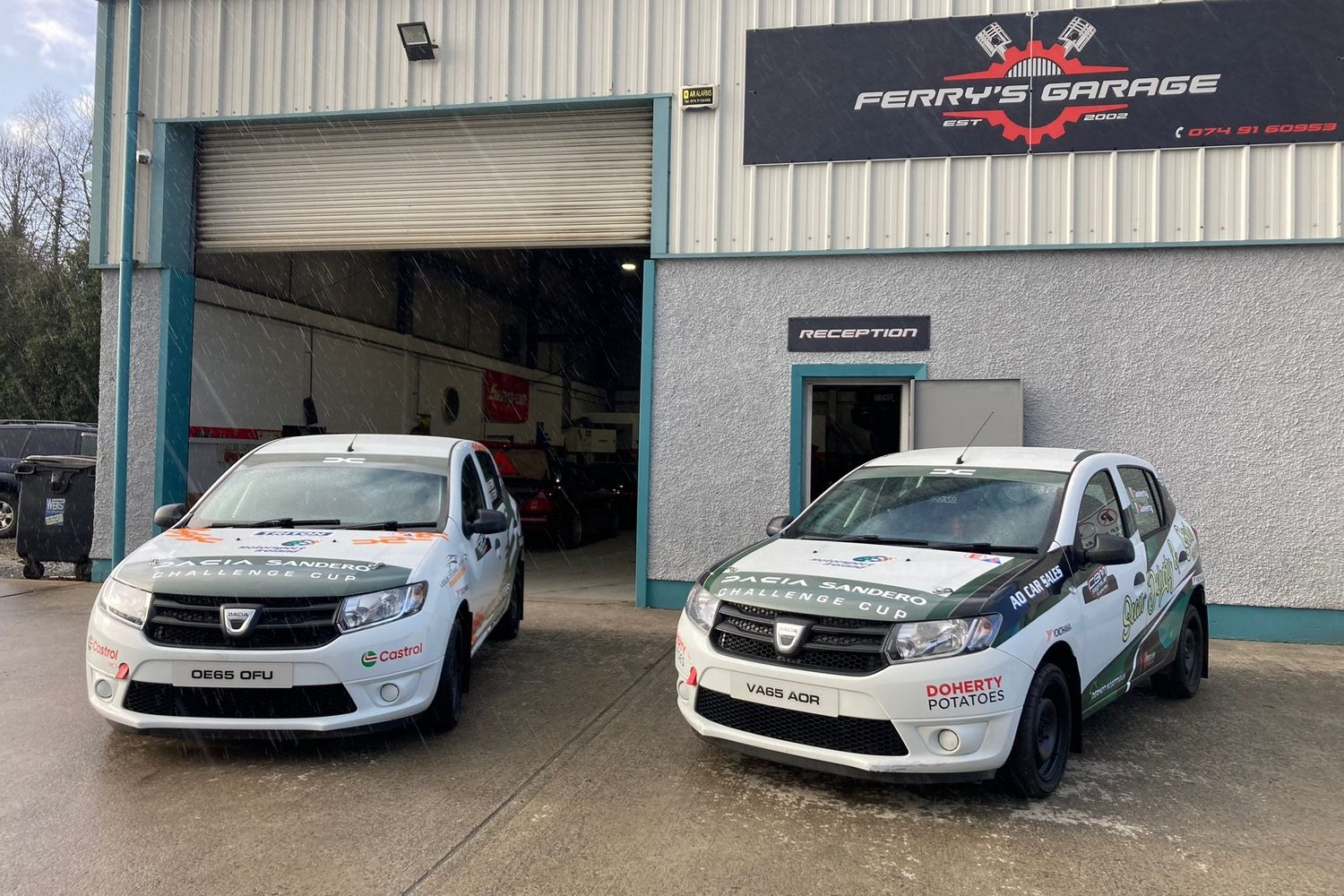
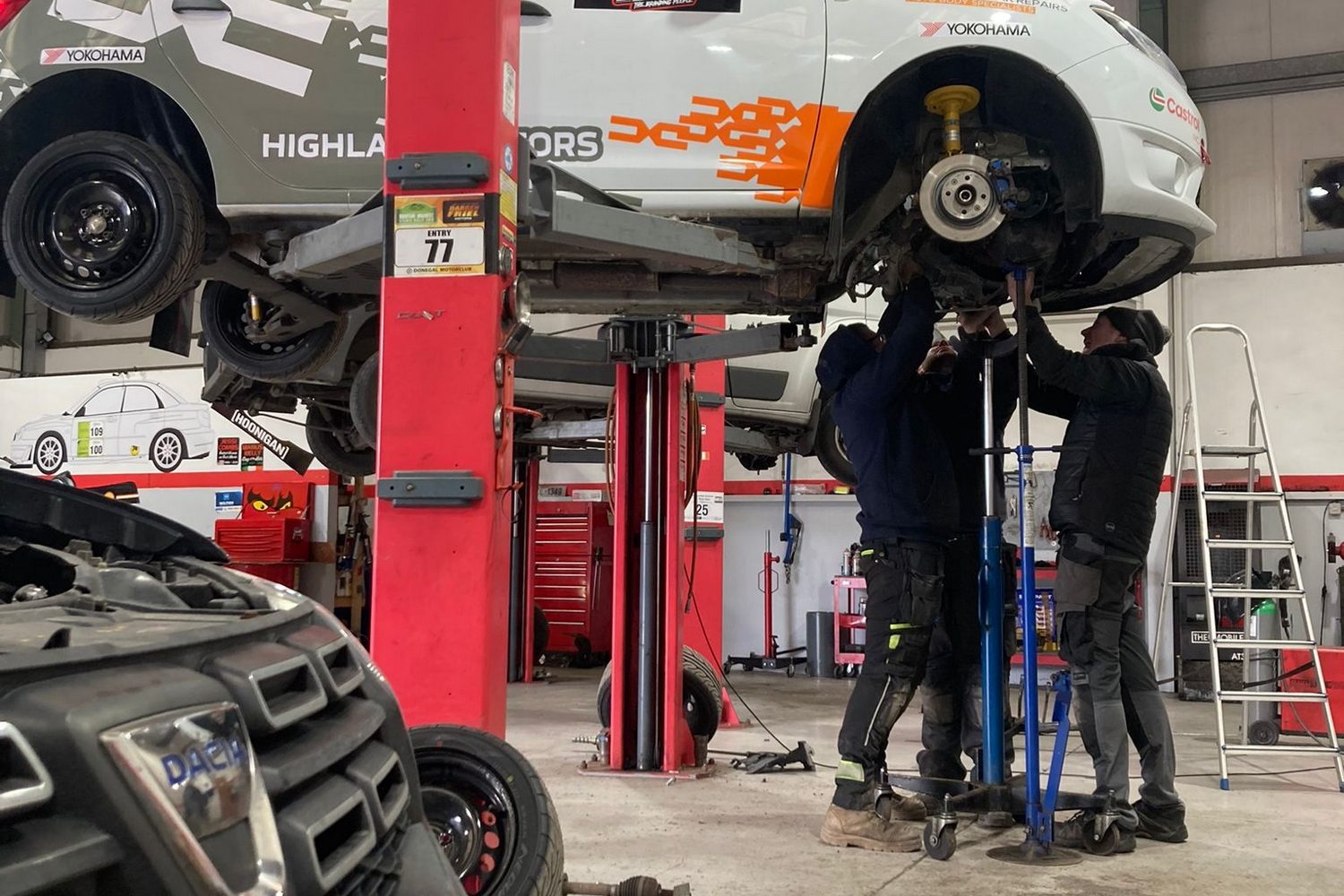
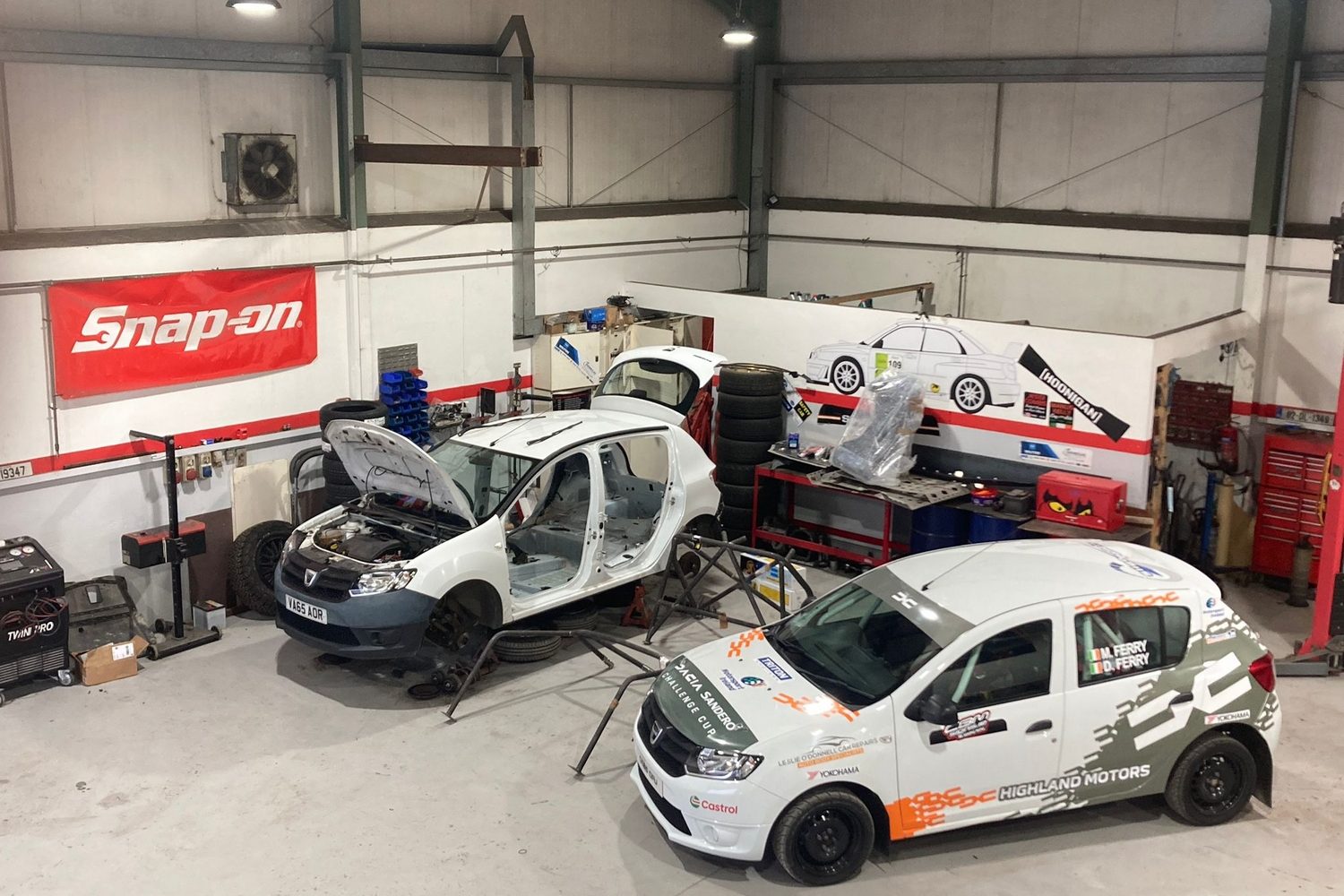
Denis Ferry of Ferry's Garage in Letterkenny is competing in one of three cars his garage has already built, and they have several more on the way for customers. Depending on the cost of the donor car, it's possible to build a car ready to race from as little as €10,000.
That's not pocket change but given that those competing in the top tiers of amateur rallying in Ireland drive cars worth in the region of €250,000, and that there are few rally cars that cost less than €40,000 ready to race, it's no wonder the series has been a success already.
How to become a rally driver
You can't just build a rally car and rock up to an event and take part, though. Strict licencing rules from Motorsport Ireland are in place to ensure everyone's safety, and to learn all the rules and regulations, you must take part in a Rally Training Day before obtaining your licence.
Two places in Ireland do this - Rally School Ireland in Monaghan and Rally Connection in Waterford. With time getting tight before my target date of competing, I managed to get a spot in Waterford, and it's highly recommended to allow plenty of time for the process.
Tom Kenneally, owner of the business and a keen rally driver himself, greets us early in the morning deep in the countryside in Waterford. There's a collection of rally cars sitting idly on the edge of a mini stage of sorts, but we're not allowed near those for a while yet as the day starts with introductions and a serious look at all the safety equipment.
We're a small group and it's a relaxed environment, helped by Tom's easy-going nature. There's a teenager with his dad spectating (Junior classes allow competitors that don't even have a road-car driving licence to take part); an experienced motorsport mechanic looking to get into the rally driver's seat for the first time in a forestry-rally-prepped Ford Sierra he just bought; and another that has been taking part in night-navigation rallies for a while and is exploring the possibility of going rallying. He has an eye on the Dacia Sandero championship as it happens.
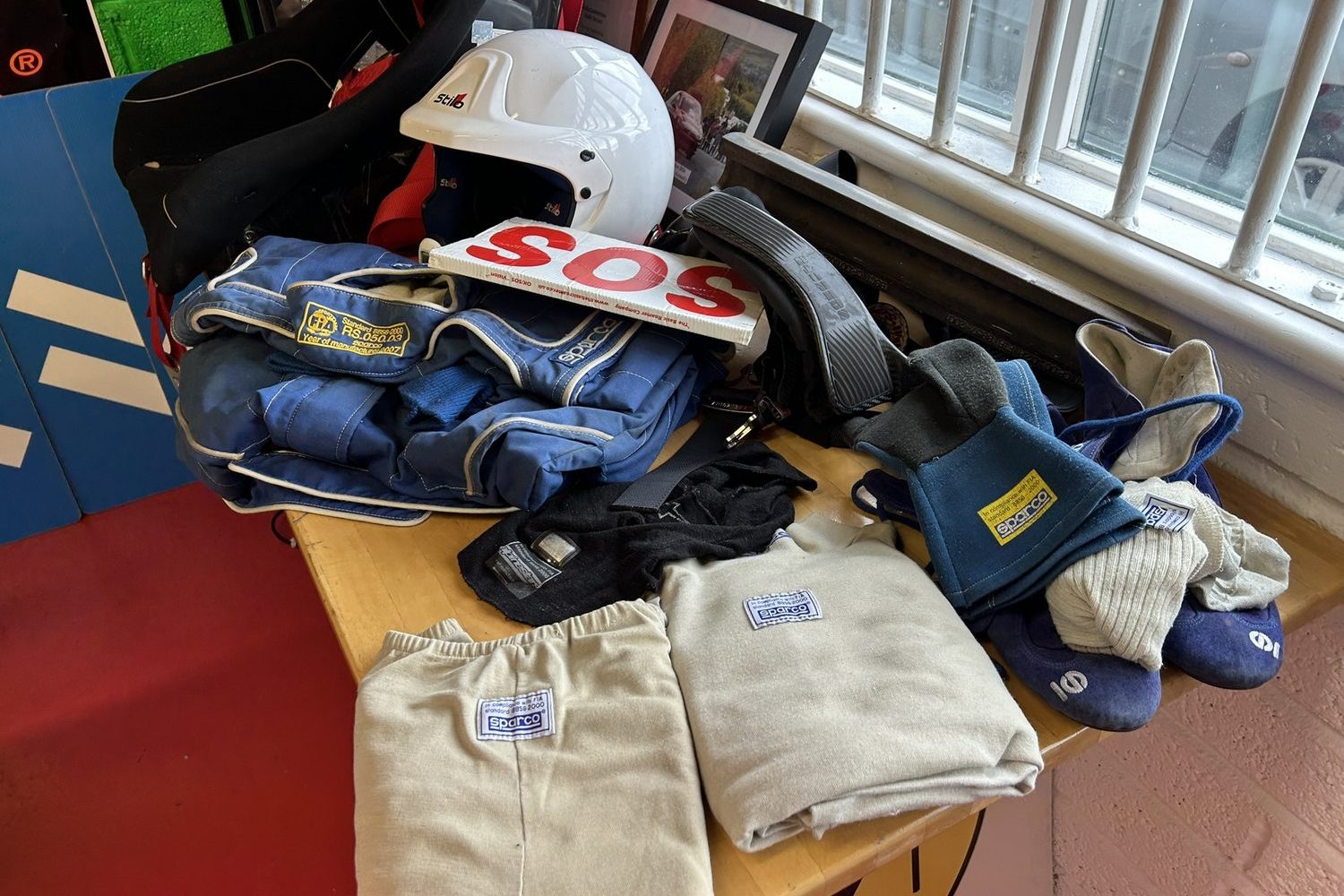
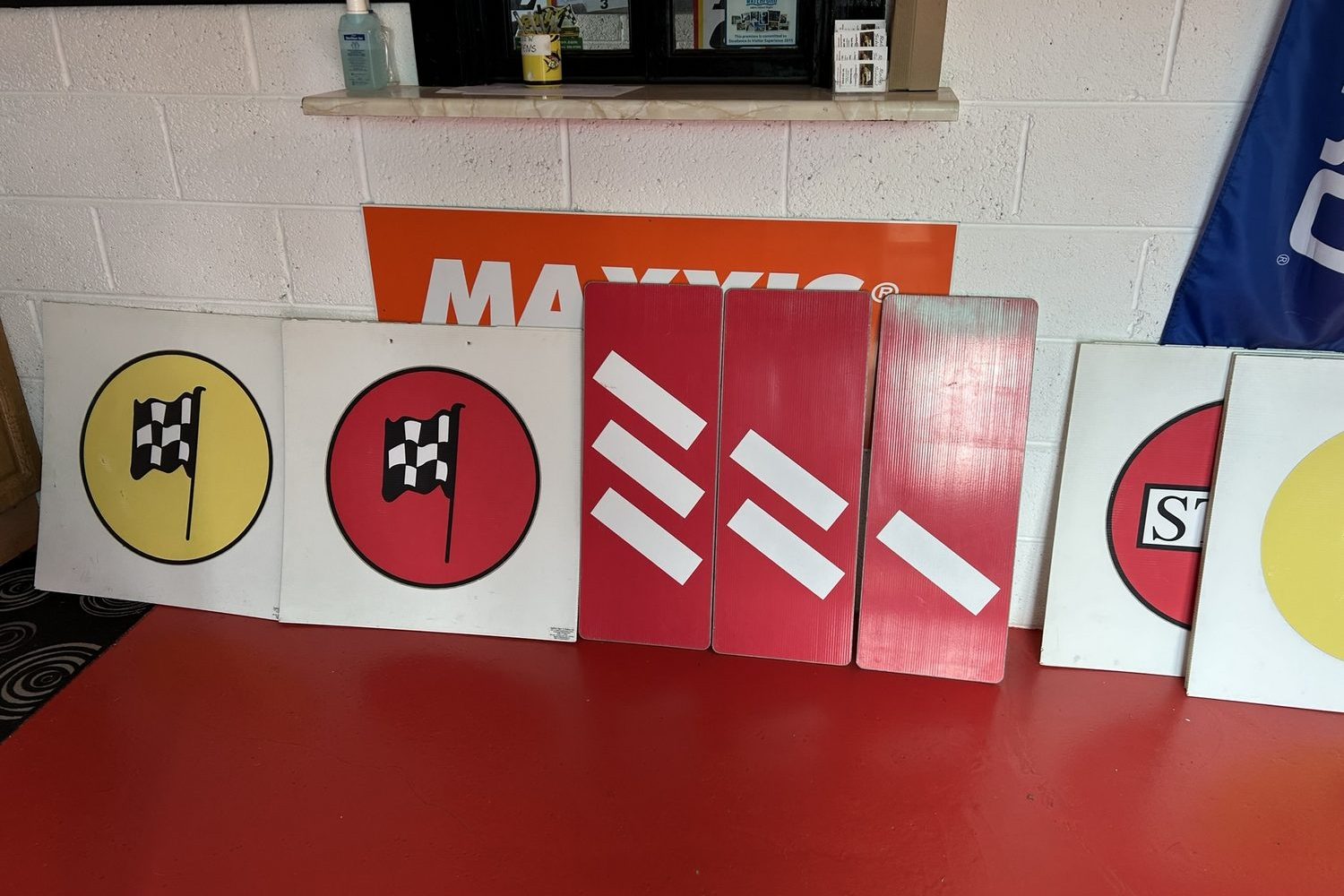
After a few hours in the classroom learning what all the symbols and signs mean, and discovering the massive number of volunteers required to manage even a small local rally, we're finally left behind the wheel to prove we're not a danger to ourselves or others.
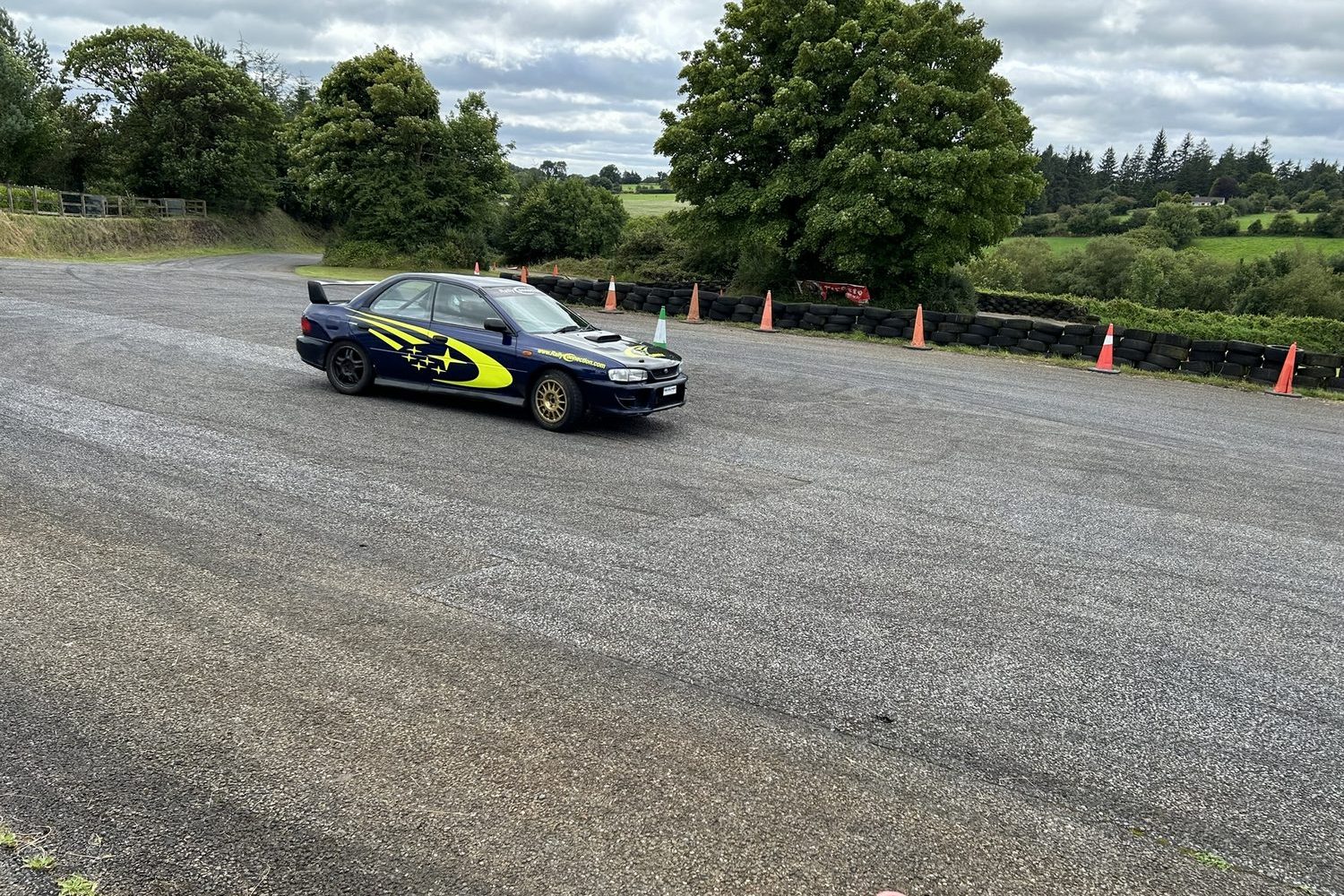
Tom has an immaculate Mk II Escort parked outside, but he laughs when I suggest we'll be driving that. It's for sale if anyone is interested... There's a rear-drive Subaru on hand, but as my first rally with be in the front-wheel-drive Dacia, it makes sense for me to drive a front-drive vehicle for this part of the day.
Given how often we get to drive cars on tracks in this job, I'm no stranger to driving quickly, but even so it's clear there's a lot to learn about driving a rally car, and Tom improves my steering technique through hairpins in particular. The car isn't fast, but it's still a lot of fun.
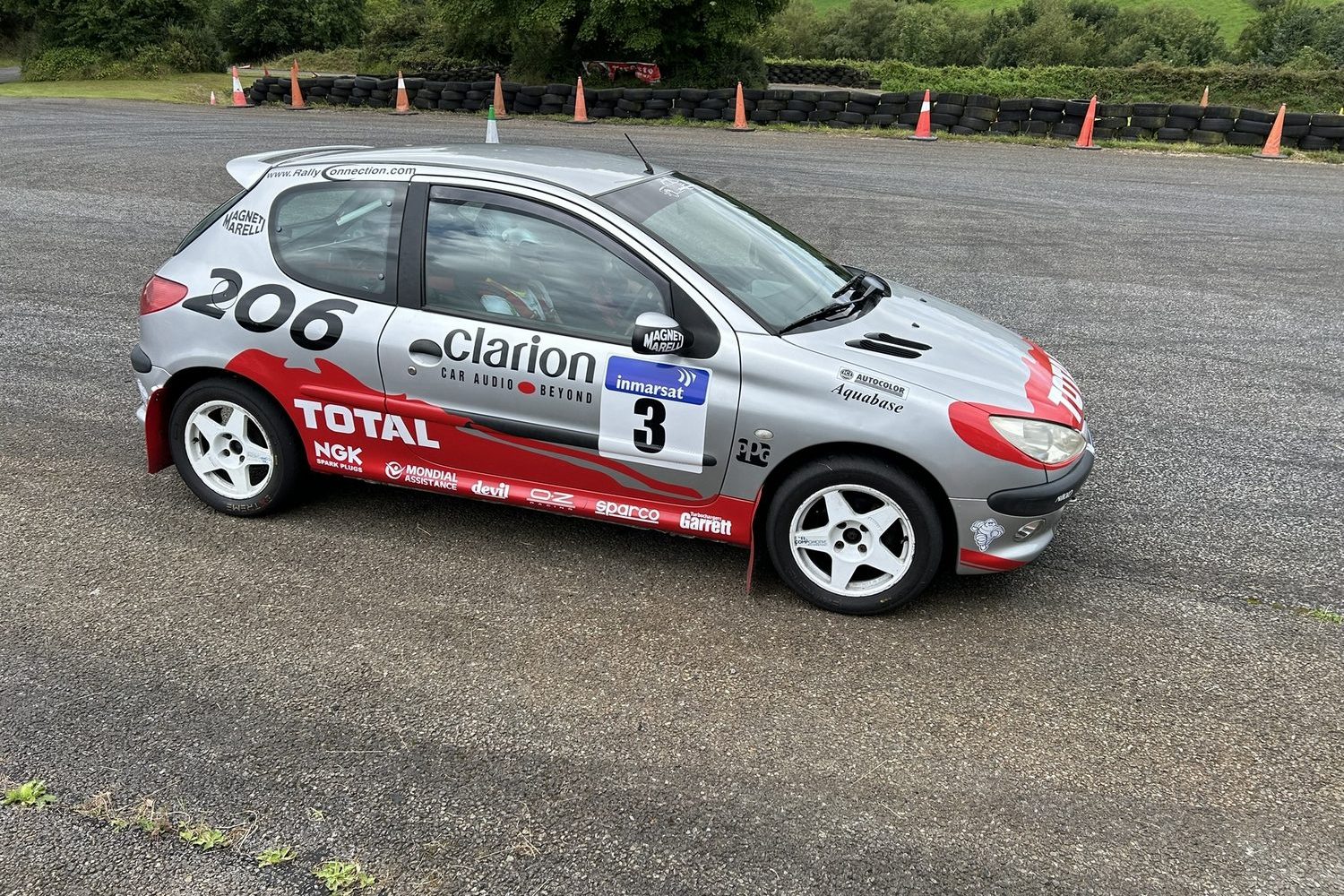
While I made no mistakes as such, and the multiple-choice written exam following the driving wasn't too taxing, it was still a relief at the end of the day to receive an official stamp on my application form, meaning that I effectively had my National B rally licence.
The amount of information covering the detailed rules and regulations was bewildering at first, but it certainly hammered home the point that rallying is dangerous. It also revealed there's a lot more to a rally than turning up and driving quickly, as there's a large element of timekeeping to the event. Thankfully there are two people in a rally car at any one time.
The importance of a good co-driver
And while I had some appreciation for the importance of a co-driver before going into this process, I would now suggest that the co-driver is at least as critical to a safe and successful rally as the driver themselves.
It isn't just the pace notes, which I'll come to, but the rules, regulations and timekeeping. Not to mention navigating the road routes. Dacias are in general quite well-equipped, but there's no Apple CarPlay or navigation in the rally car...
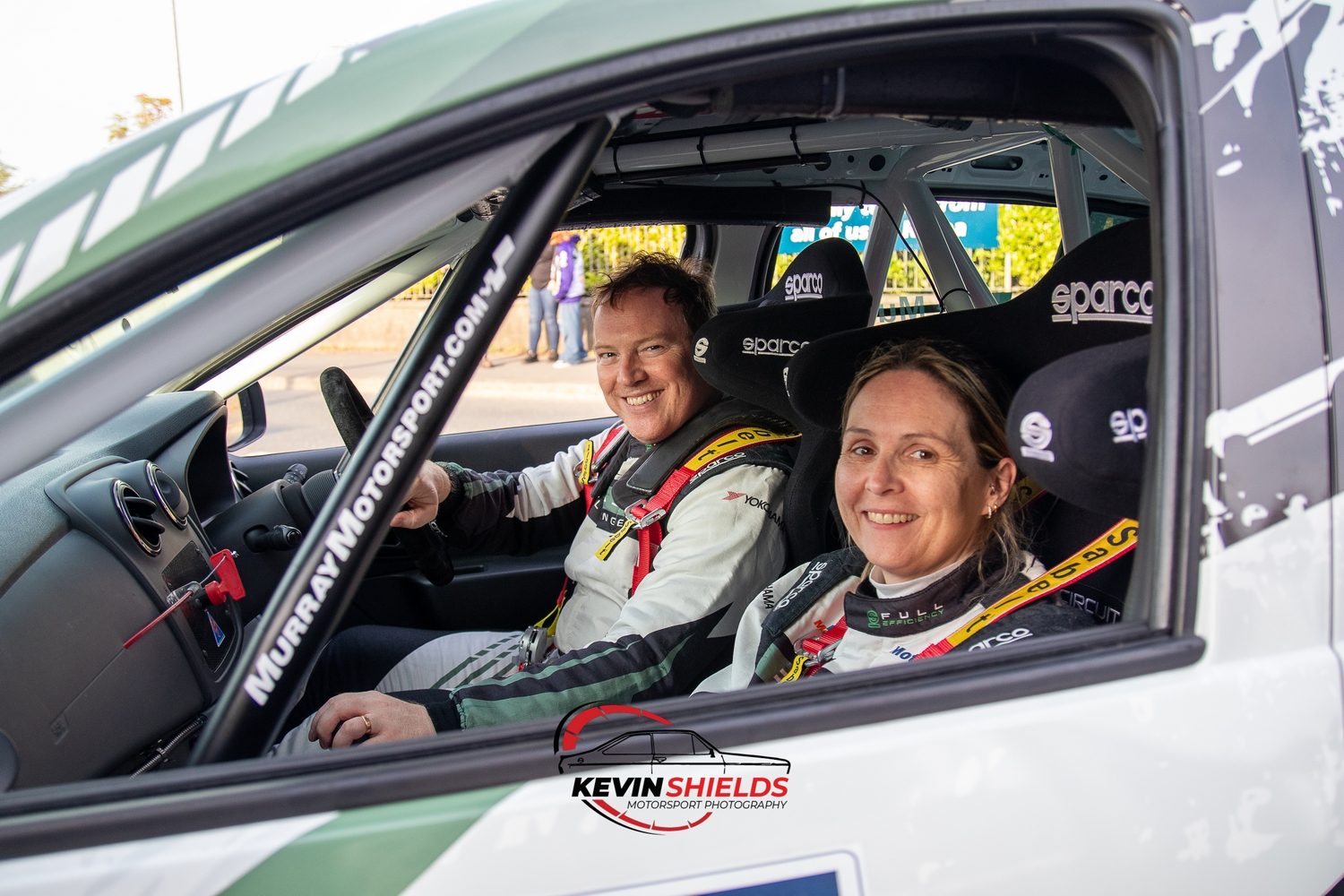
Luckily, Carrie Ryan - Championship Registrar - volunteered to “sit beside me” (as it's called in rallying circles). Carrie is a vastly experienced co-driver and her involvement with the Dacia championship means she knows the cars and how everything runs on the day of the rally inside out, too, which was invaluable for a newbie like me.
In the lead up to the ALMC Hellfire Stages Rally, Carrie did all the legwork in terms of submitting our entry and ensuring the paperwork was in order.
An introduction to the recce and pace notes
First job of the weekend when it arrived was the reconnaissance - or recce as most people call it. While the stage pace notes are available ahead of time, there are strict rules about when and how you conduct a recce. Break those rules and you'll potentially not be allowed to take part at all. “Oh, I was just going for a bit of a drive, and I happened upon the stage” won't cut it, for example.
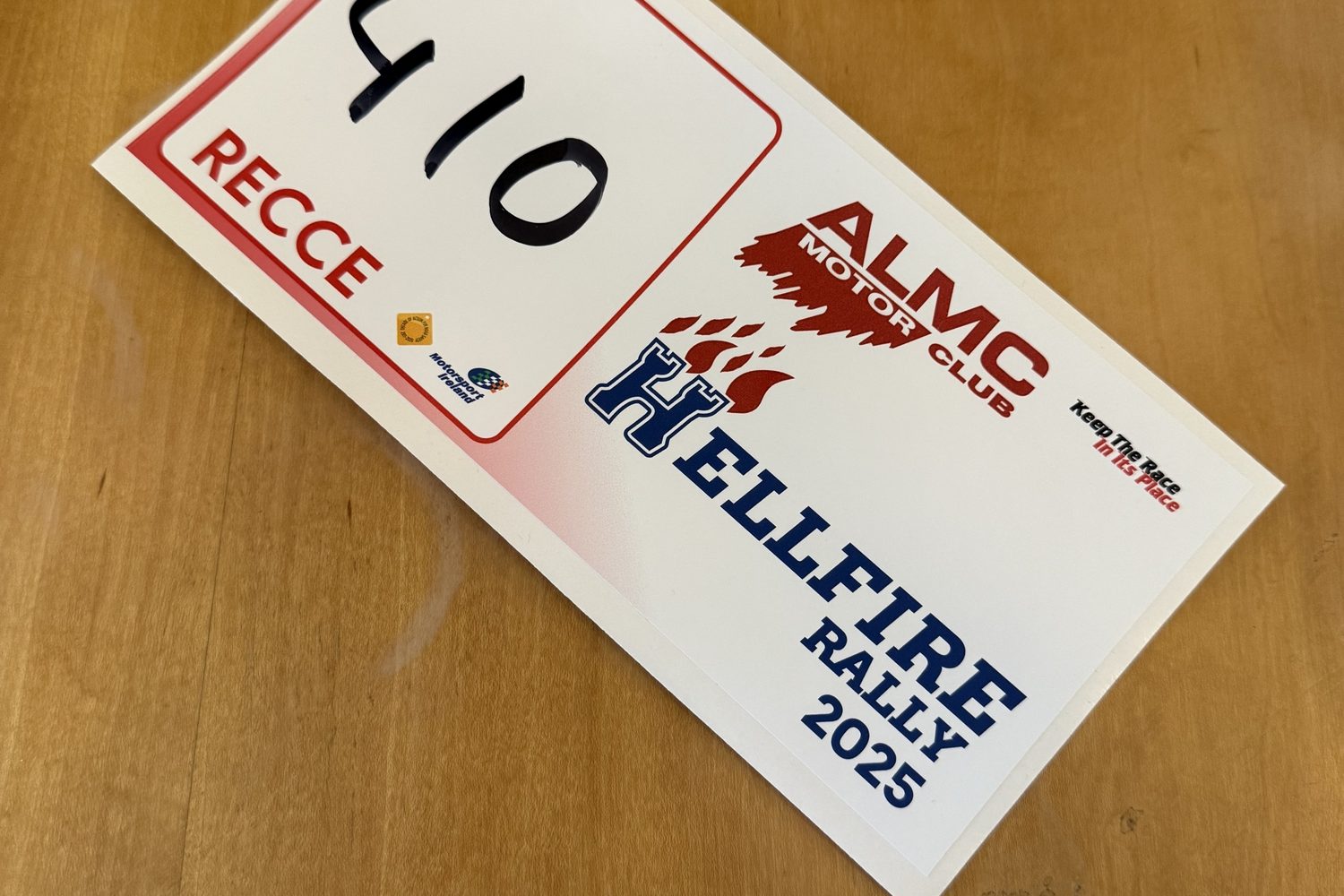
The day before the rally, we signed on at rally HQ (the old cinema in Oldcastle, Meath) for the recce. Most of the day is allowed for this, but crucially, each competitor is only allowed do each stage a maximum of three times. What's more, this is carried out in a road car, not the rally car, and the stages are not closed to the public. Hence a blanket 60km/h limit.
At first, that sounds a little pointless, but it soon becomes clear that it's an instrumental part of the weekend. Most crews buy pace notes prepared by one of two companies specialising in them, and they're incredibly good, but there's nothing quite like seeing the road surface and corners for yourself, even at low speed.
For a novice like me, it was also a brilliant, unhurried introduction to listening to pace notes. Carrie expertly adjusted her delivery to the low speed, while we took our time to discuss anything unusual along the way to watch out for. Most will use this as a way to gain valuable seconds when at full pace.
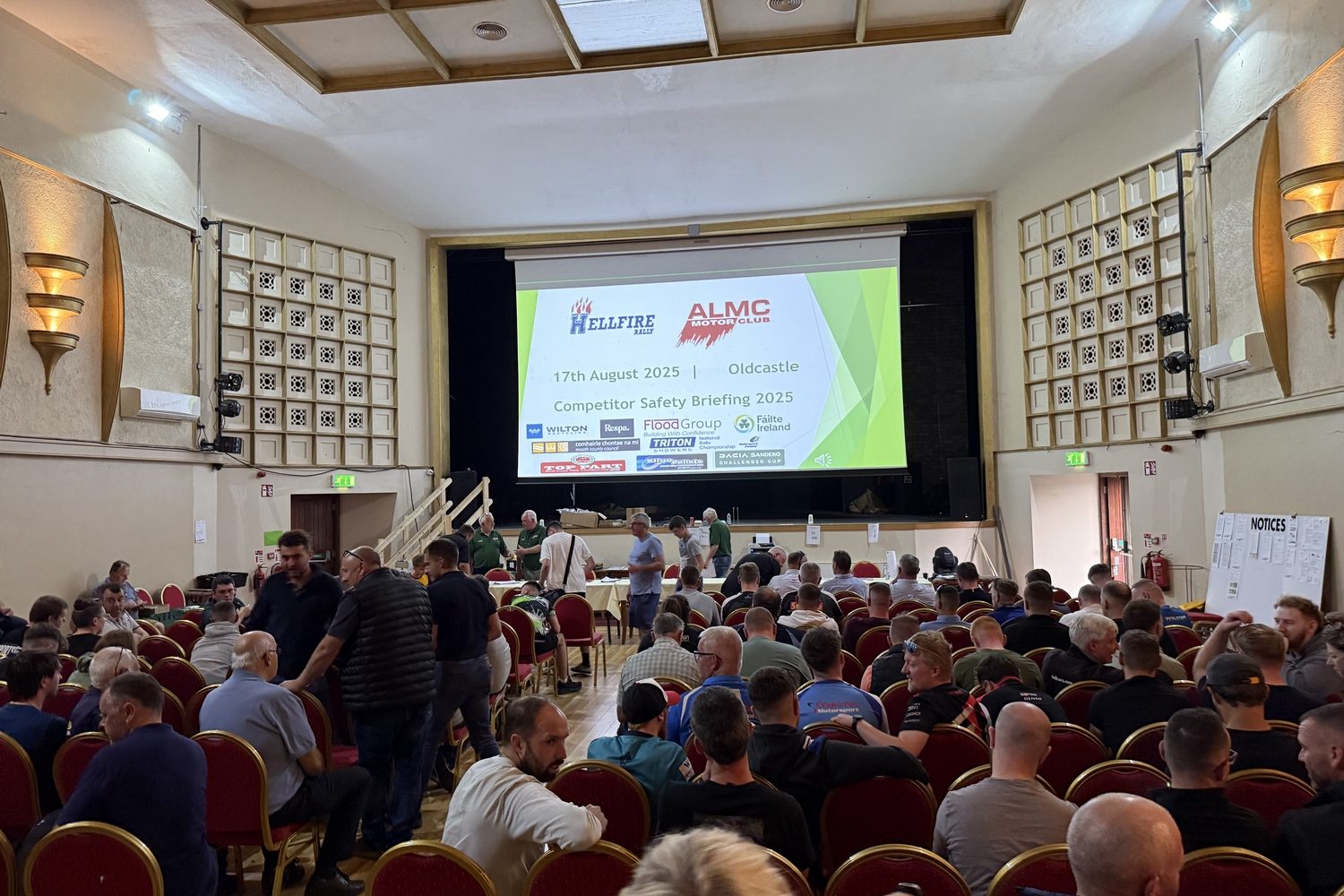
You've probably heard the constant stream of instructions coming from a co-driver during in-car footage from a rally. There are two different approaches, depending on how you think. We chose “high number is fastest”, meaning, for example, that a turn marked as 6 is flat out, while a 2 is generally a slow ninety-degree bend.
There's much more to it than that, as I soon learned, as supplementary notes to the number and direction add to the information being thrown at you. Some ensure you don't cut a corner where it would be unsafe to do so; others helpfully suggest which part of the road to rise a crest or jump at; and then there are modifications to the default numbers as well. So, for instance, you could have a “fast 4 left opens left over crest” which tells the driver it's almost as fast as a “5” if taken properly, but to stay on the left side of the road over the crest.
If that sounds like a lot to take in, well, it is. Even at slow speeds, with no time pressure, my head is melted by the end of the day. While I don't yet know how I'll take all this on board at full speed, I am at least reassured that there are no deadly dangerous sections to the rally, as the stages are flowing and the road surface good for the most part.
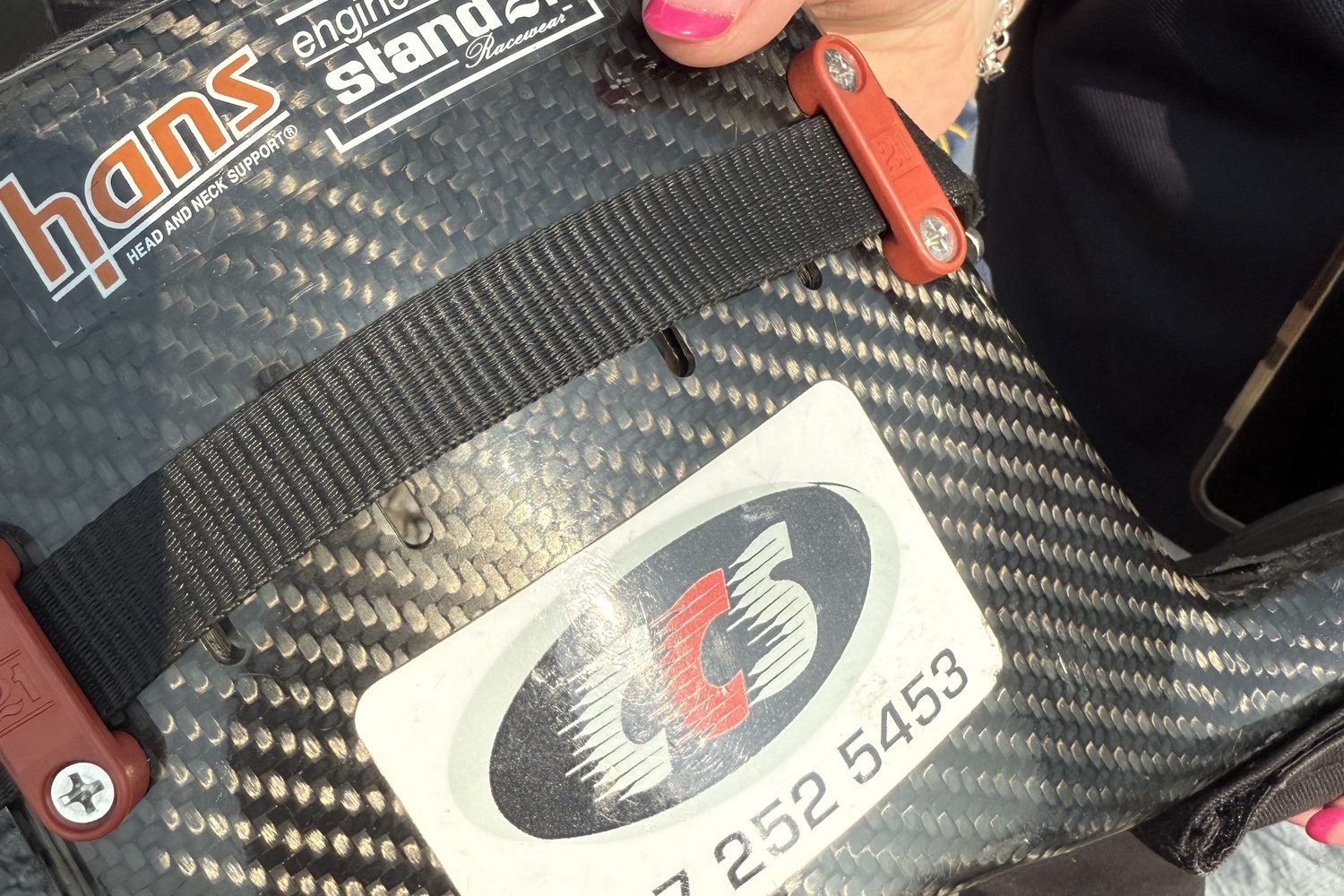
By this point, I've not even seen 'my' steed for the weekend, never mind driven it. My only chance to do so will be between the trailer park and the mechanical scrutineering. On the way, I pick up my helmet and HANS (Head And Neck Support) device from Chris at CCS Race n' Rally. This is an vital rental service to those that have yet to invest in the considerable expense of an approved helmet and HANS device.
Next, we get our GPS tracker that all competitors must fit to their cars. It allows the organisers track each crew in real time, predominantly to ensure their safety and that of those following behind. If you stop on a stage for any reason, you need to let the organisers know immediately by pressing the OK button if all is well, for example, though there are supplementary buttons to inform everyone that the car is on fire, that the stage is blocked or that the crew need emergency medical attention. This is a more sophisticated system than the old OK/SOS boards, though the latter are still in use as a backup.
With the tracker in place, we join the queue for scrutineering and excitement builds as we share space with a wide variety of rally cars, the air full of competition engine sounds and smells.
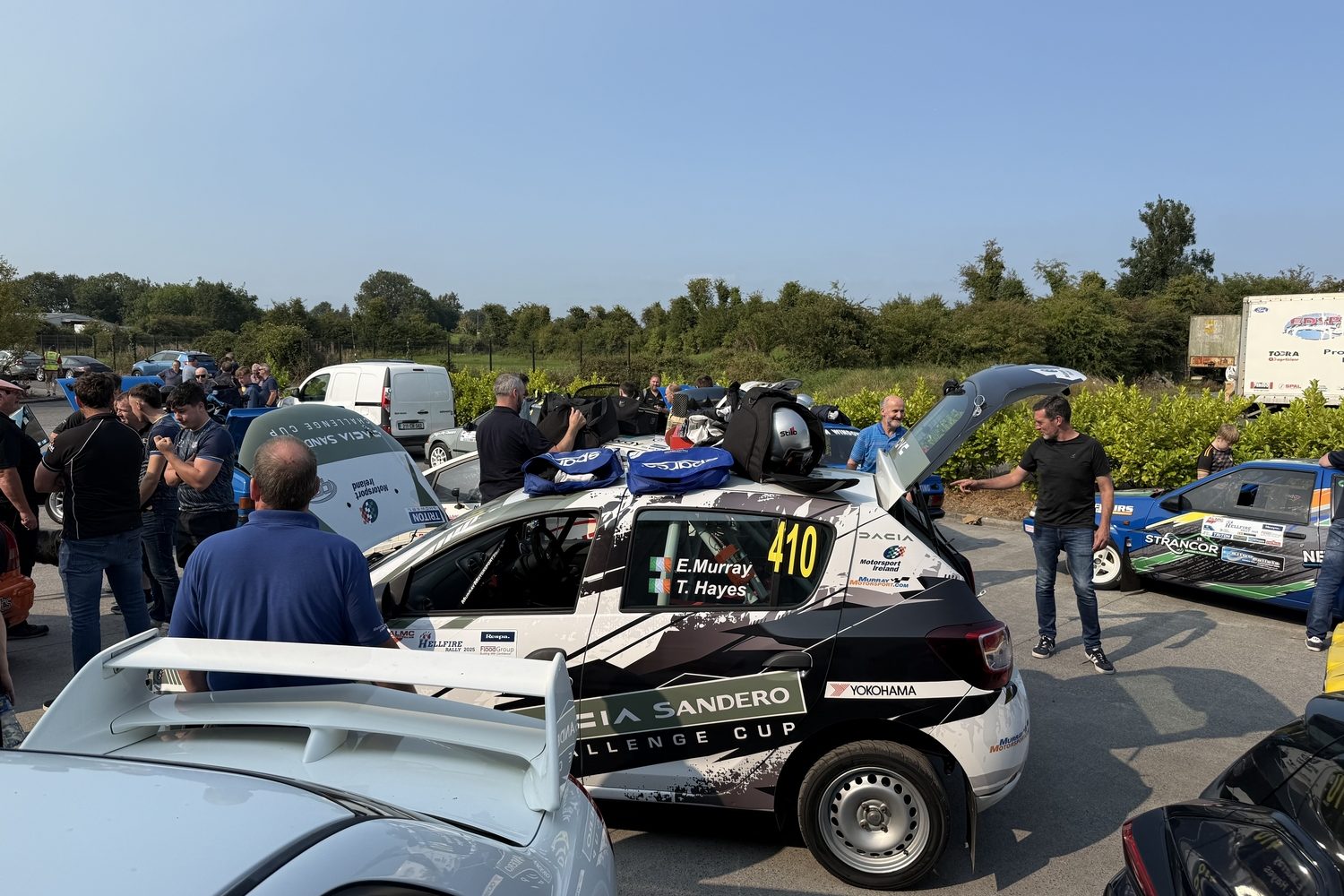
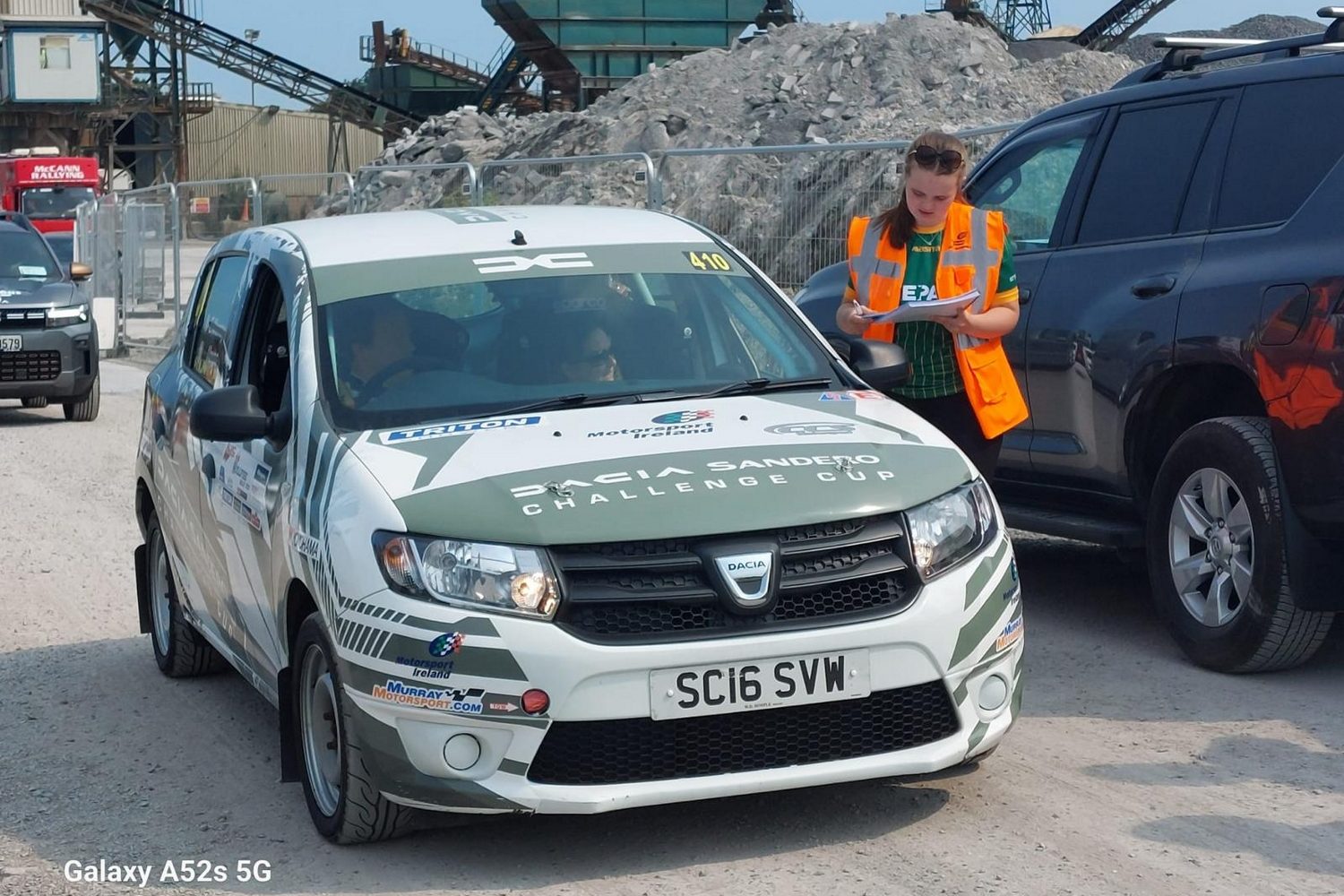
This is where the car is inspected to ensure it adheres to the rules of the class, while our own safety equipment, down to our fireproof underwear (not yet worn this weekend, I might add), is also examined to ensure it conforms to the correct standards.
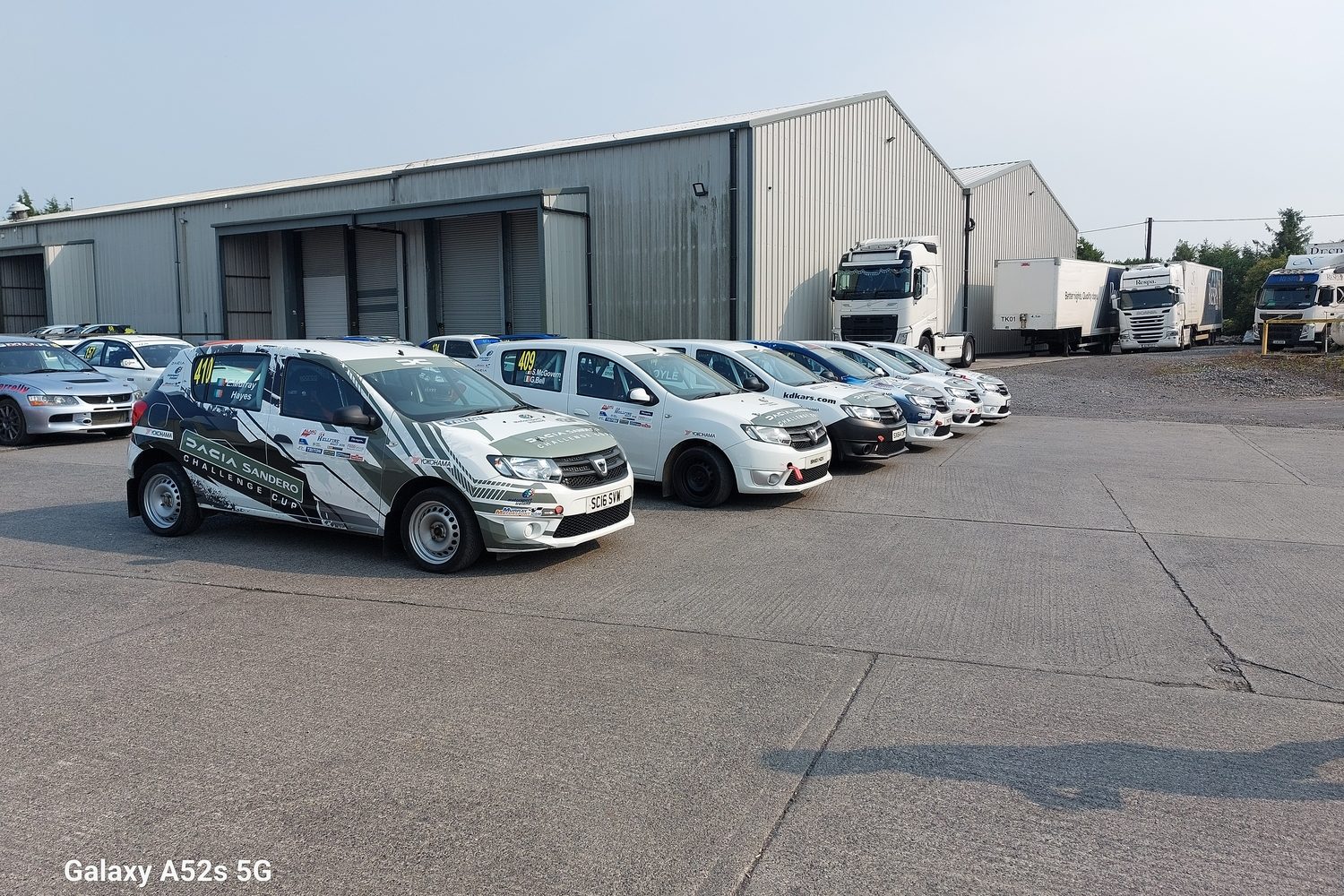
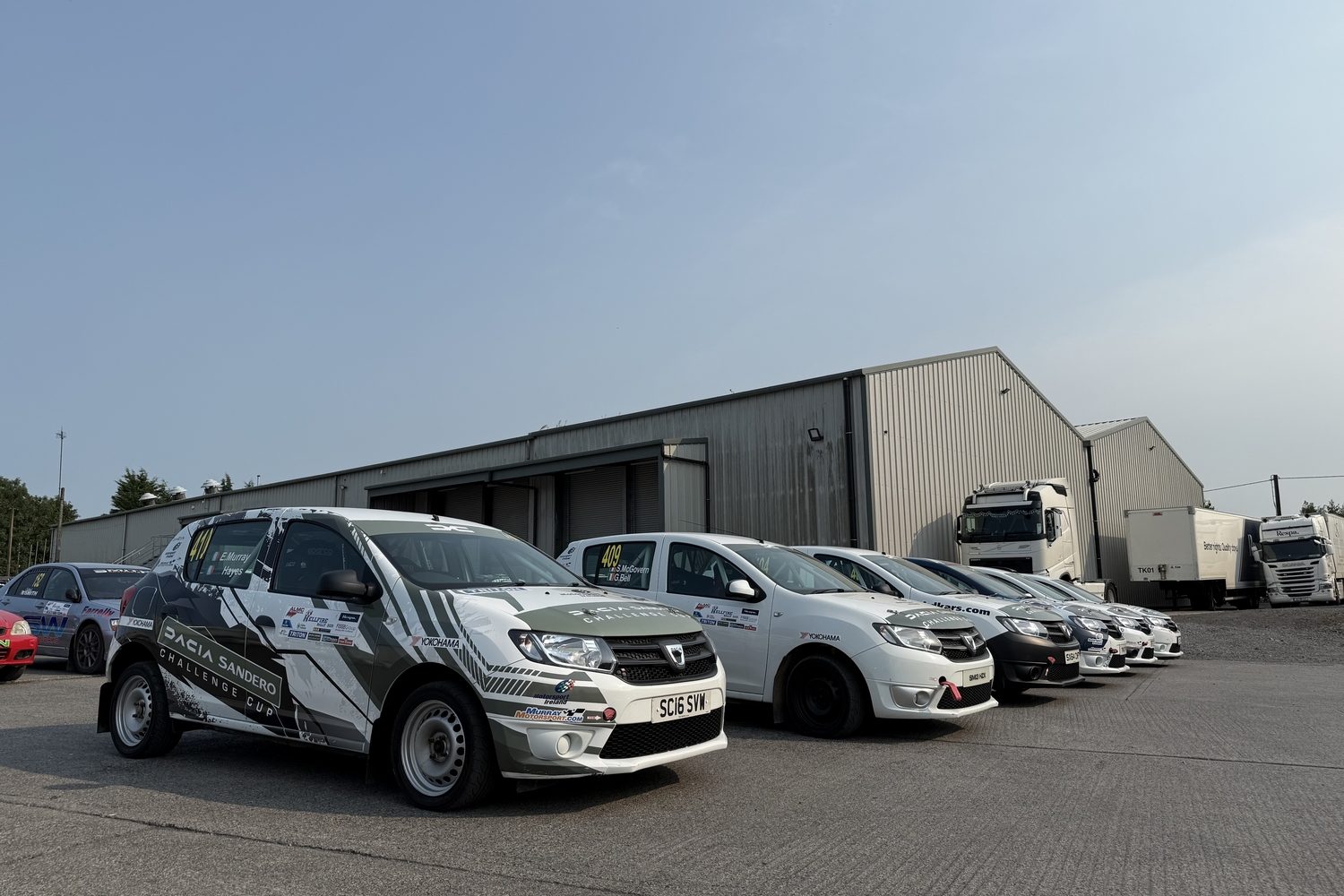
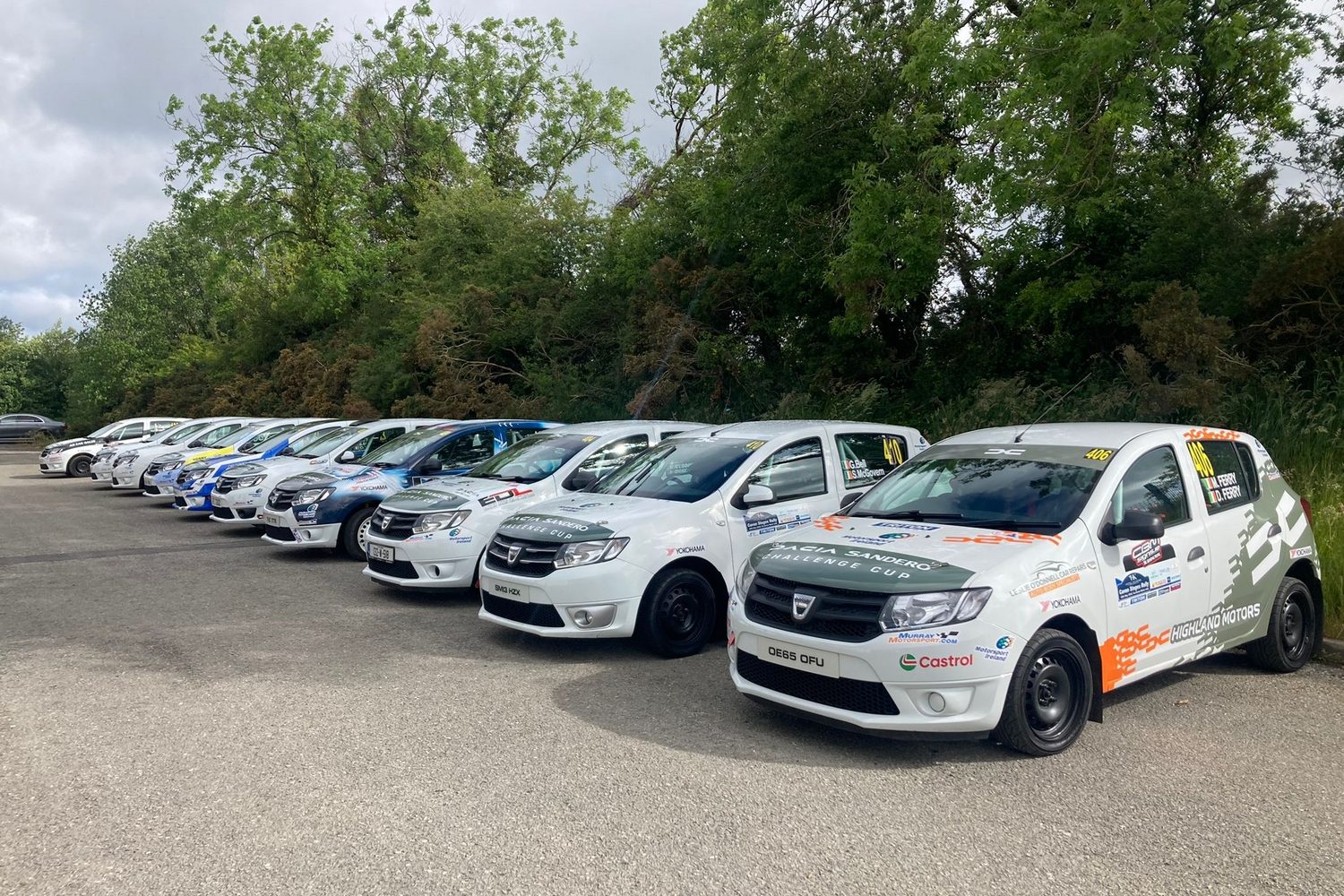
There are no issues to report, and I drive the car to 'Parc Ferme', lining it up alongside all the other Dacia Sanderos to await the next day. On the way there I fill the fuel tank from a local petrol station to give us one less job to do. Looks like we're all set.
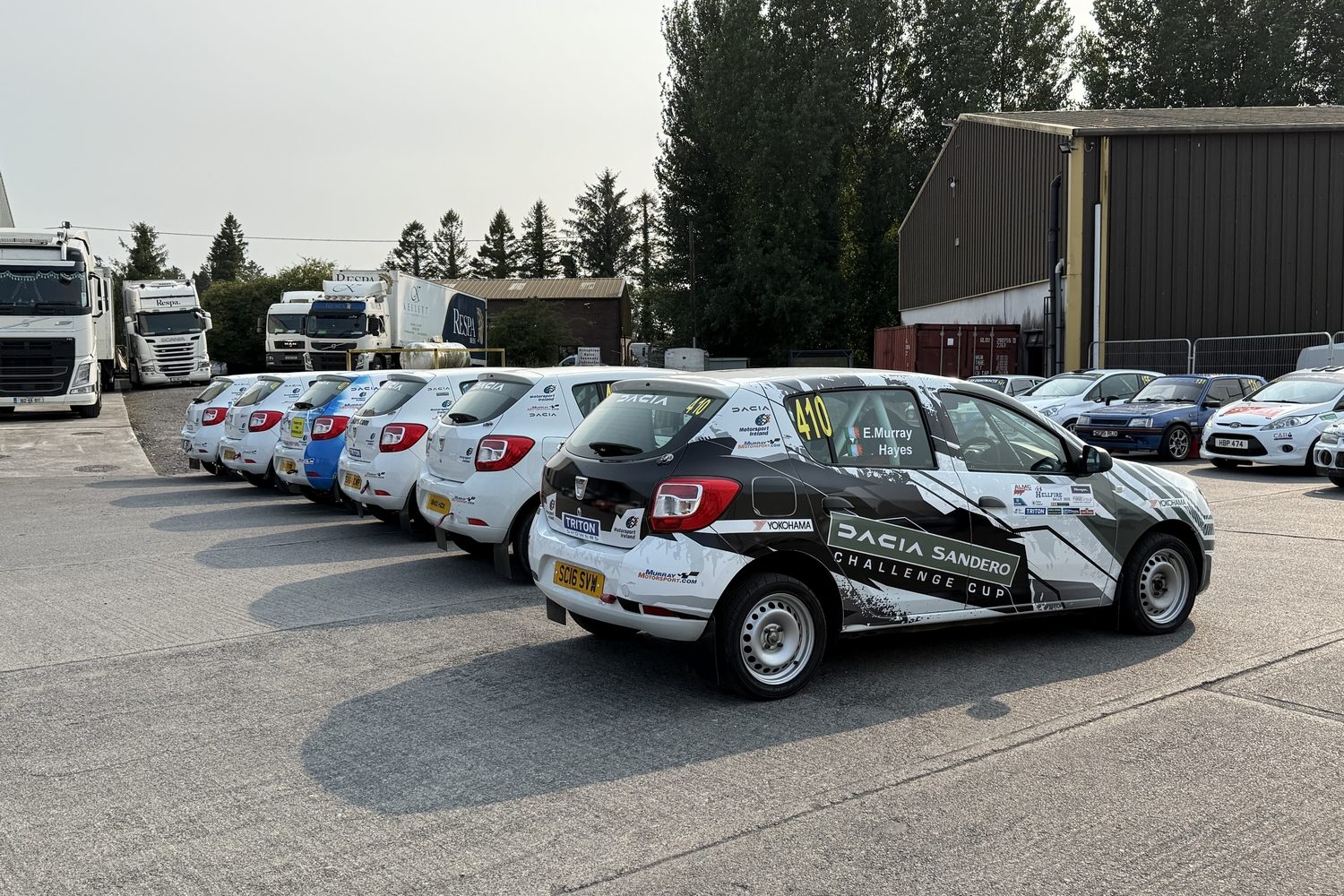
The big day
After all the planning and preparation, the morning of the rally turns out to be incredibly relaxed. Rallies generally have three stages run three times in a day, but the Dacia championship doesn't take part until the second run, joining once all the other cars have left service.
This means the competitors have time to hang out together in the service area (part of a quarry on this occasion), and there's a real sense of camaraderie that seems to be lacking from the rest of the rally. The organisers of the Dacia championship usually manage to carve out their own section of the service area so all the crews can park near each other for the day.
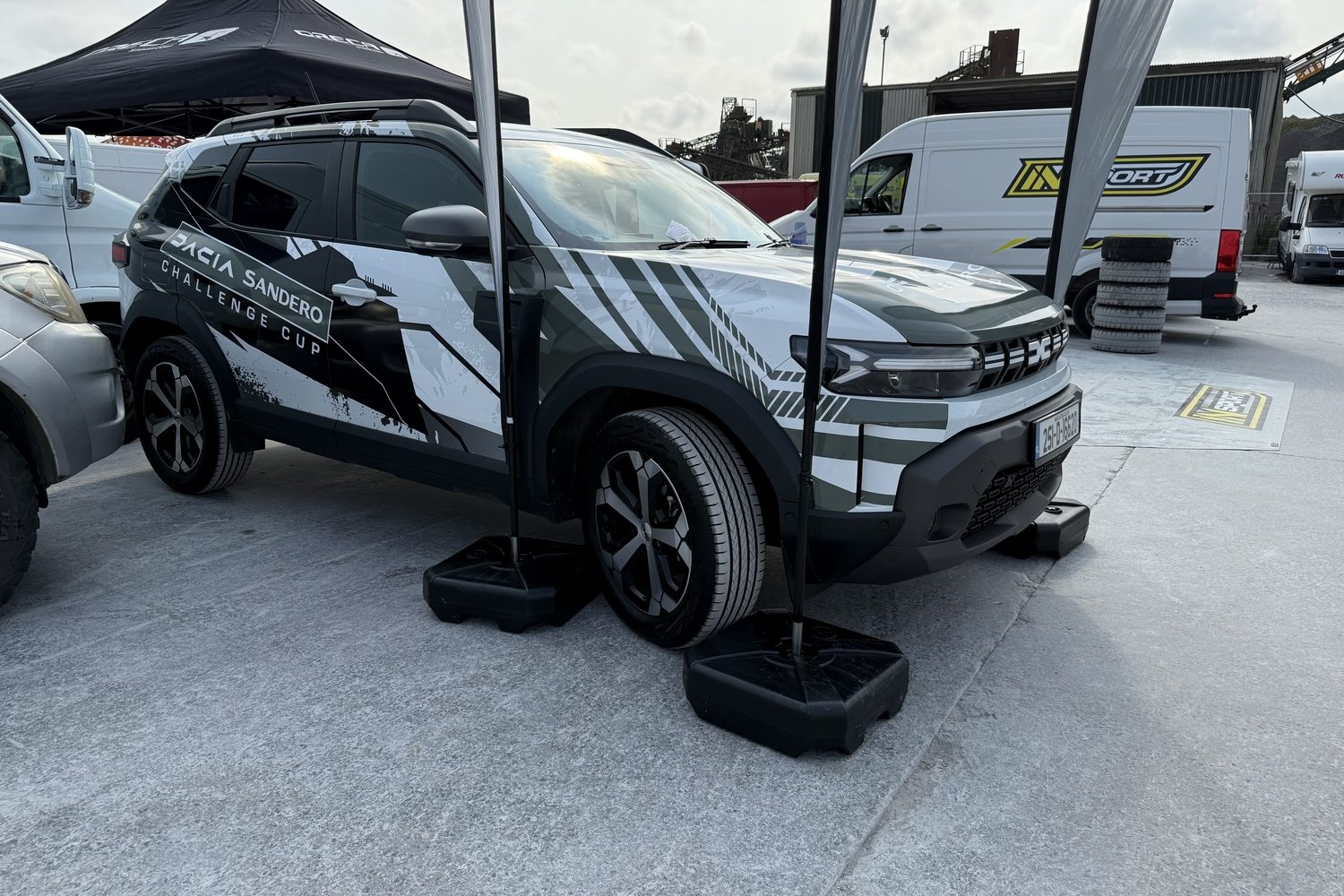
That's no mean feat given the packed and higgledy-piggledy nature of the service area, with semi-professional servicing trucks and car lifts mixing it with those that don't even have a ground sheet. And all the while there's seemingly constant movement of cars itching to get out onto the stages, while members of the public walk freely through all the mayhem.
The Dacia operation looks smart and impressive given the number of cars and the championship branding everywhere. And there's a strong flow of interested parties stopping by to ask questions about the cars and the championship in general.
Few of the Dacia crews have any work to be done to the cars at this stage, other than tweaking of the tyre pressures perhaps, but there's a real sense of community among the group, despite intense competition at the top of the table. Everyone is willing to chat and talk about their experiences, while it's also commonplace to share parts and tools.
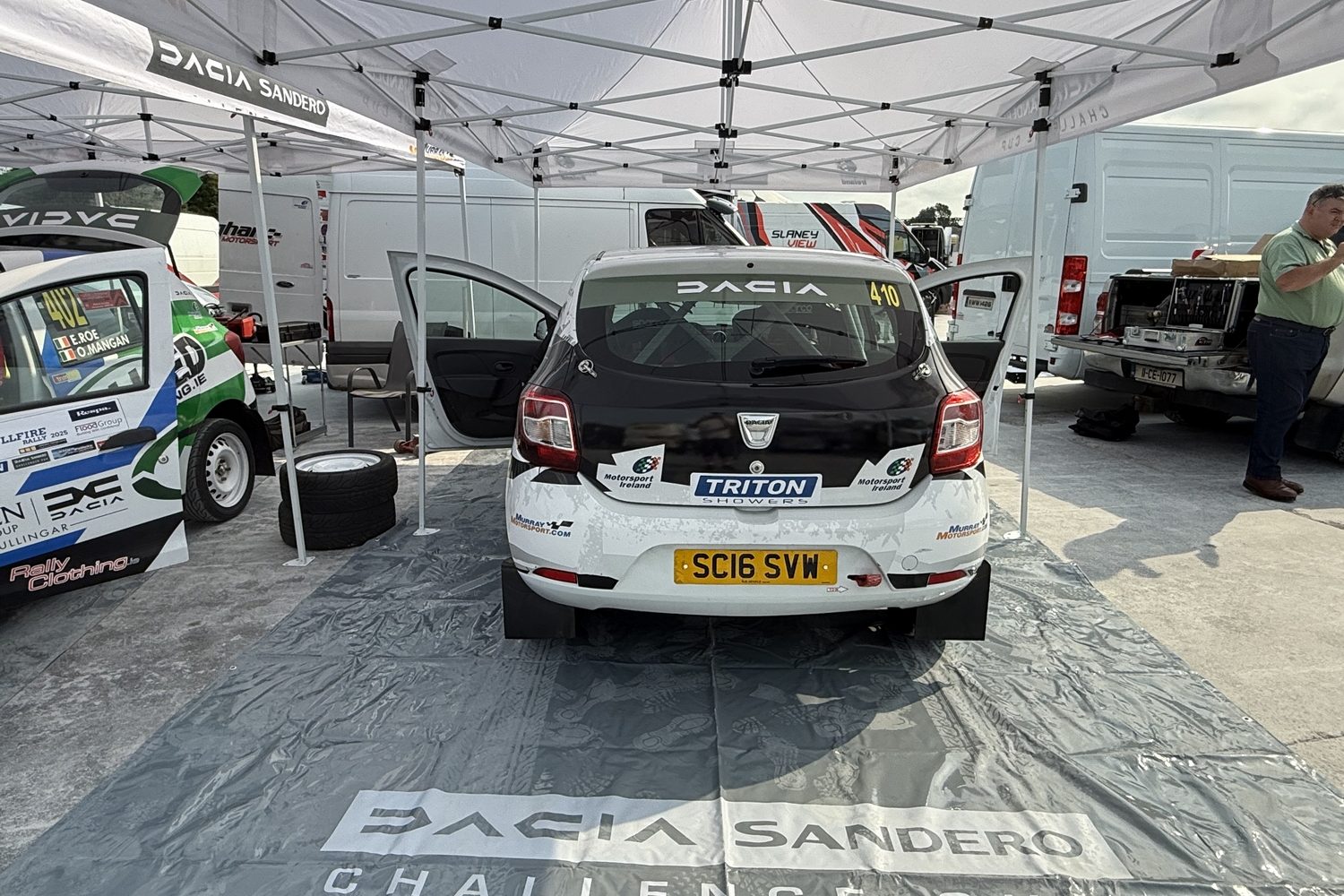
Before I know it, it's time to get suited up so I don my fireproof socks, fireproof long johns, fireproof top, Dacia-branded race suit, fireproof gloves and boots. I'm melting in the heat before I set foot in the car to adjust the six-point harness to the recommended “too tight for comfort” level.
The first time I try to get in with a helmet and HANS device on is comical. Not only is the gap in the roll cage quite small, but there are side panels on the seats for protection that get in the way when you're just trying to get in. Carrie's husband, Tom (our volunteer mechanic for the weekend) quite literally kicks me into the car. I strap in and take a deep breath. Carrie hands me my water bottle as she prepares the notes, relaxed and comfortable in an environment she's very familiar with.
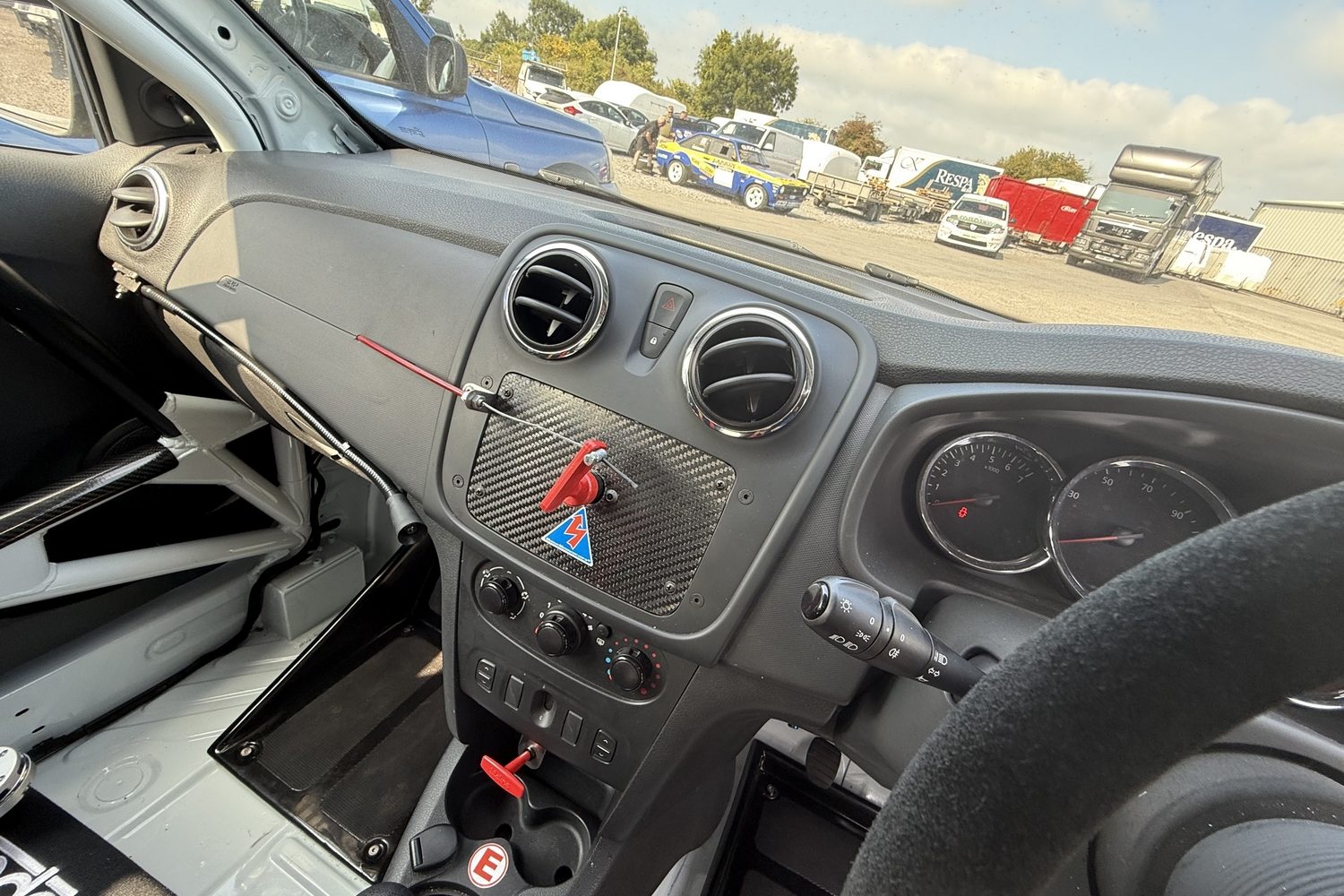
I turn off the electric isolator and twist the ignition key to fire the engine up. Given how it's almost a standard engine, it's remarkably loud. Blame the lack of sound deadening for that and, though the cars must run their standard catalytic converters. The exhausts have been loudened a tad to ensure that spectators can hear them coming as well.
It's getting very real
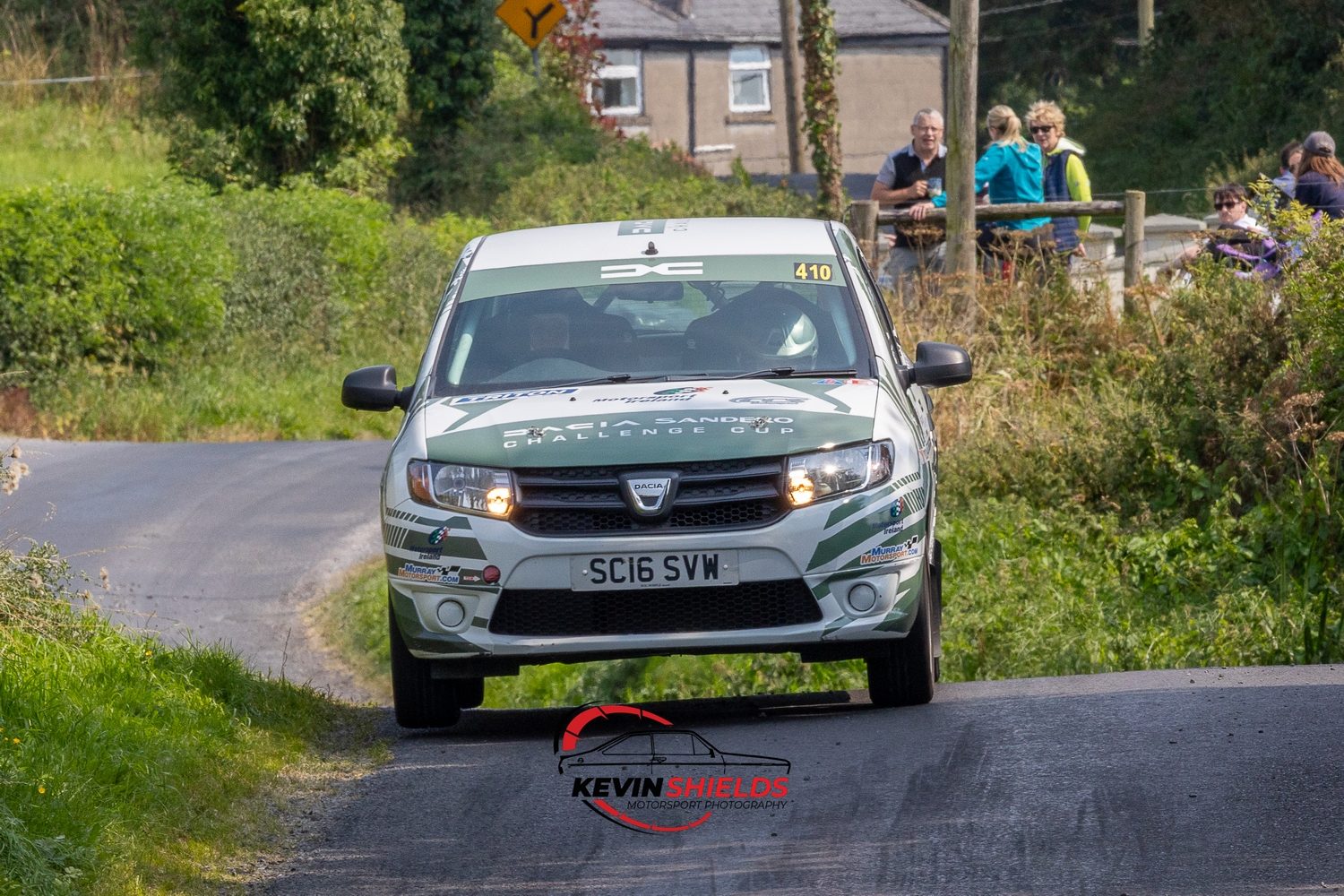
There's a good deal of road noise and various clonks and rattles from the interior as we make our way out of service on the road towards our first stage. Even running at the back of the rally (the very very back in my case) you feel like a minor celebrity as marshals wave you through busy junctions and small kids cheer you on.
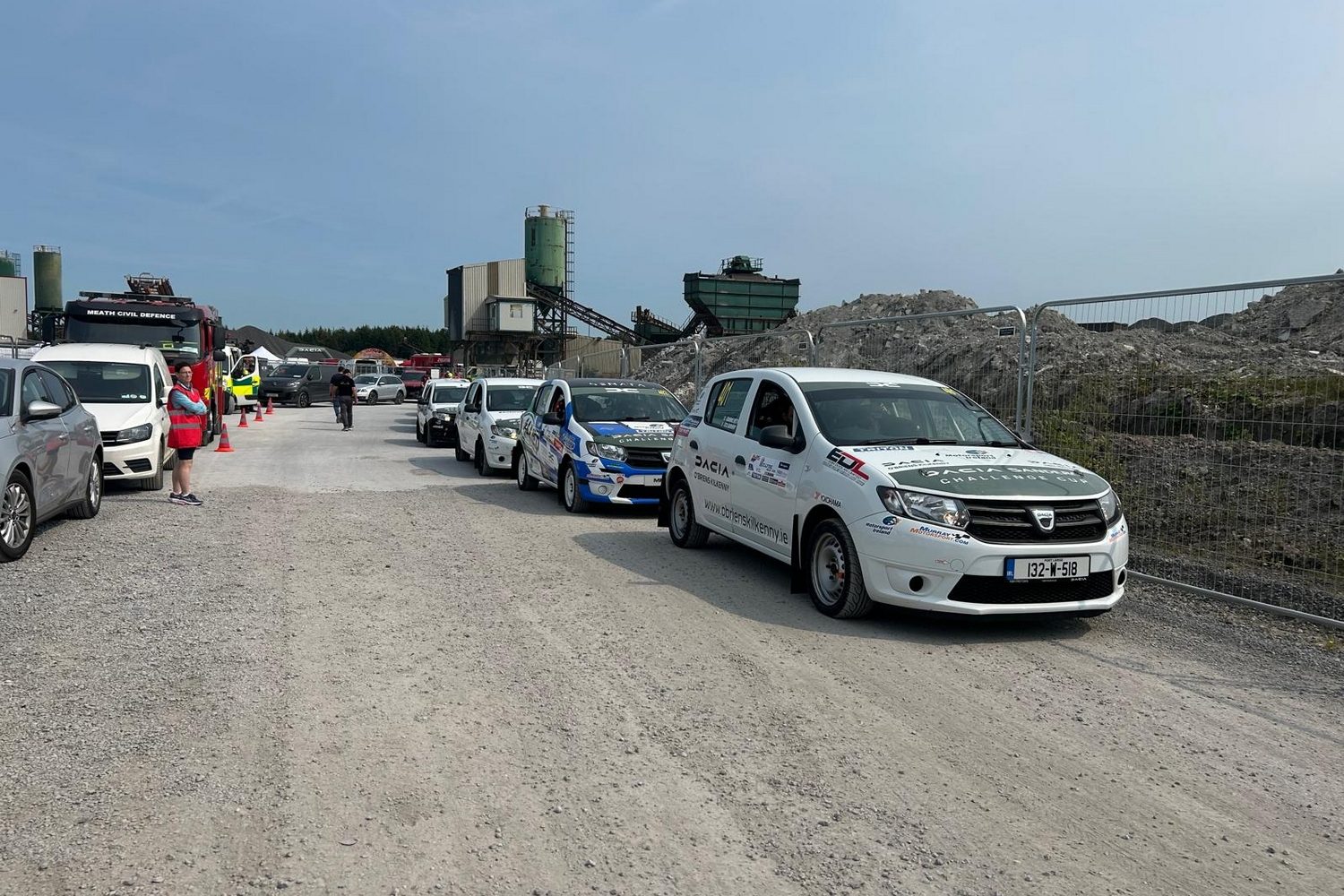
Then we enter the first closed road section at the entrance to the stage and join the queue of rally cars awaiting their start time. Now things are getting serious as we can hear competitors ahead of us beginning their timed runs. I have to admit being nervous at this point, but thankfully there's no more waiting around and before I know it, we're inching forward to the starting beam and Carrie is counting me down.
“15... 10... 5, 4, 3, 2, 1, go go go...” It's difficult to recall the first stage in any detail now, though I do remember slowing down too early a few times and not quite processing the pace notes quickly enough. Nonetheless, a little more than six minutes later we're past the 'flying finish' board and I've completed my first ever rally stage. It doesn't matter that I'm slower than everyone else in the field at this stage, as I'm completely on a high.
Stages two and three are longer and require more concentration, but my confidence in the car's abilities and my trust in the pace notes are increasing with every kilometre. Having trained myself to always be able to stop in the distance I can see when driving on country roads such as these, it's a complete reset for my brain to believe that I can in fact take the blind crest ahead at full speed, because the co-driver says so.
We head back to service after three stages and there are smiles all round. Very few cars need any attention. Saying that, given how little fuel 'my' Sandero has consumed with half the rally gone, I'm regretting brimming the tank and adding all that extra weight. Don't worry: I made sure everyone present heard me complaining about this as one of my many excuses for not quite being on the pace...
My earlier nerves are replaced by excitement as it's time to tackle the stages once more and I'm thrilled to knock 25 seconds off my time for the first, with another 22-second improvement on the second.
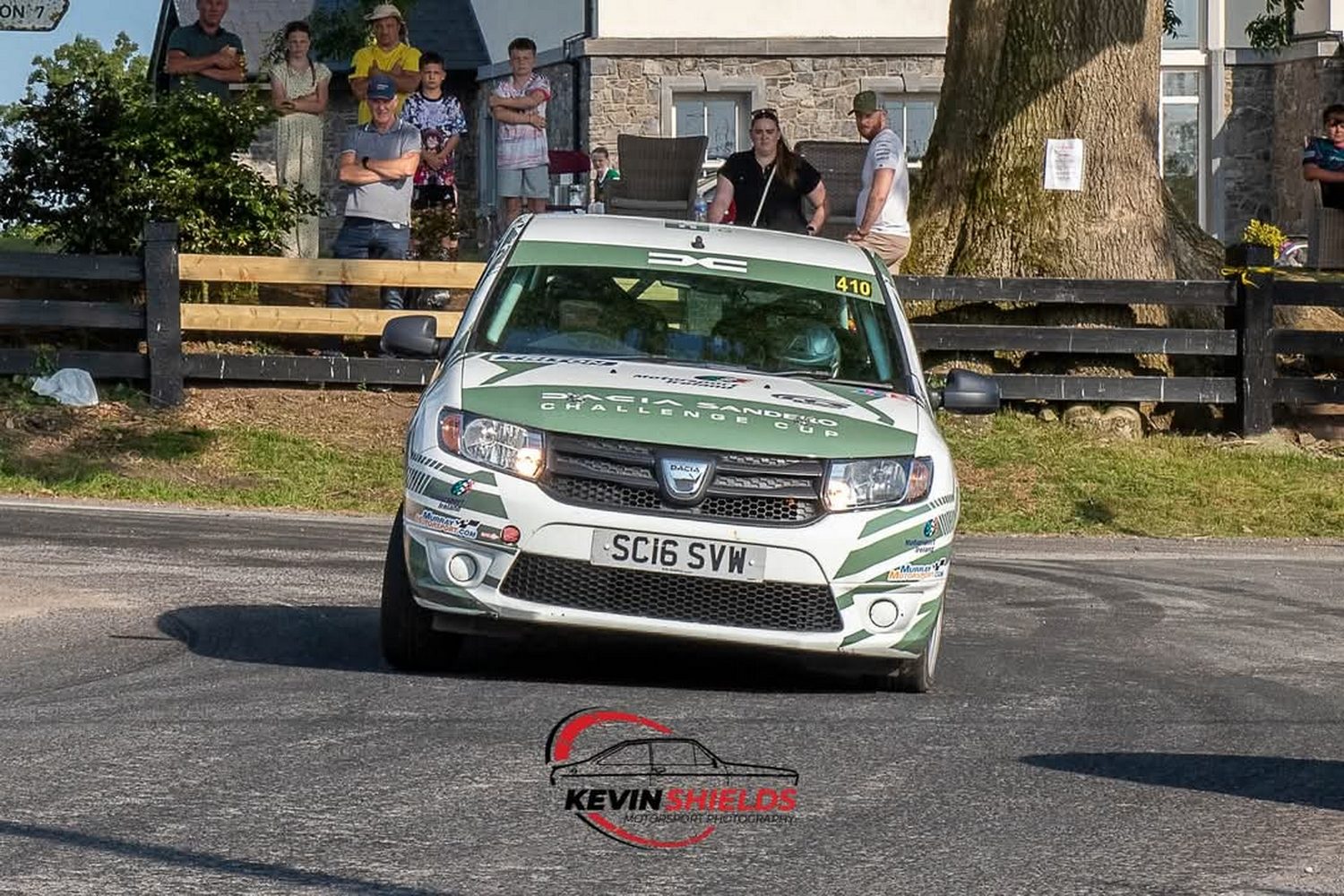
The Sandero is just brilliant. Thanks in part to its low weight (about 1,200kg), it turns into a corner smartly, brakes smoothly and solidly from high speeds (despite drum brakes on the back) and neatly lands after the countless crests and jumps dotting the ALMC Hellfire Stages. It's what I'd call a “friendly” chassis, which is easy to drive and very safe.
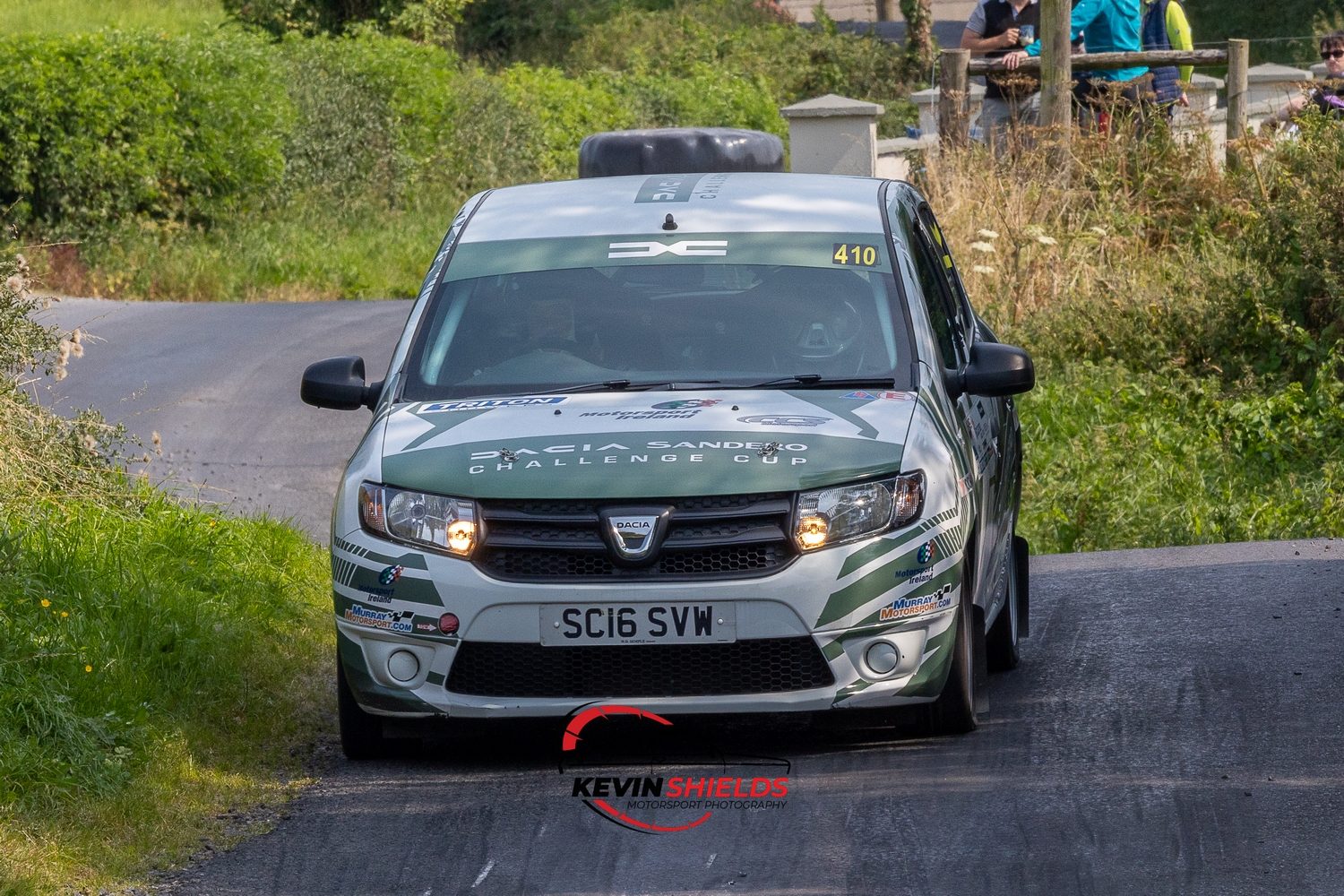
An outright lack of power only really makes itself felt if you let the speed drop too far, as it feels quick enough for narrow country roads at full pelt. The trick to putting fast times in is no doubt carrying the Sandero's hard-won momentum through the bends. That takes time to perfect, and while I didn't have the heart to tell my kids I placed last in the rally (“ninth in class” sounds much better), it mattered not a jot, as I came away from the experience with as big a smile on my face as anyone else taking part.
The real contenders
Cillian Doherty and his co-driver, Tommy Cuddihy won the Dacia class in the ALMC Hellfire Stages, beating championship rivals Oscar Mangan and Elva Roe by just 19.9 seconds overall. Fourth and fifth places on the day were separated by half a second, with sixth place just another seven seconds behind, showing how closely contested it is.
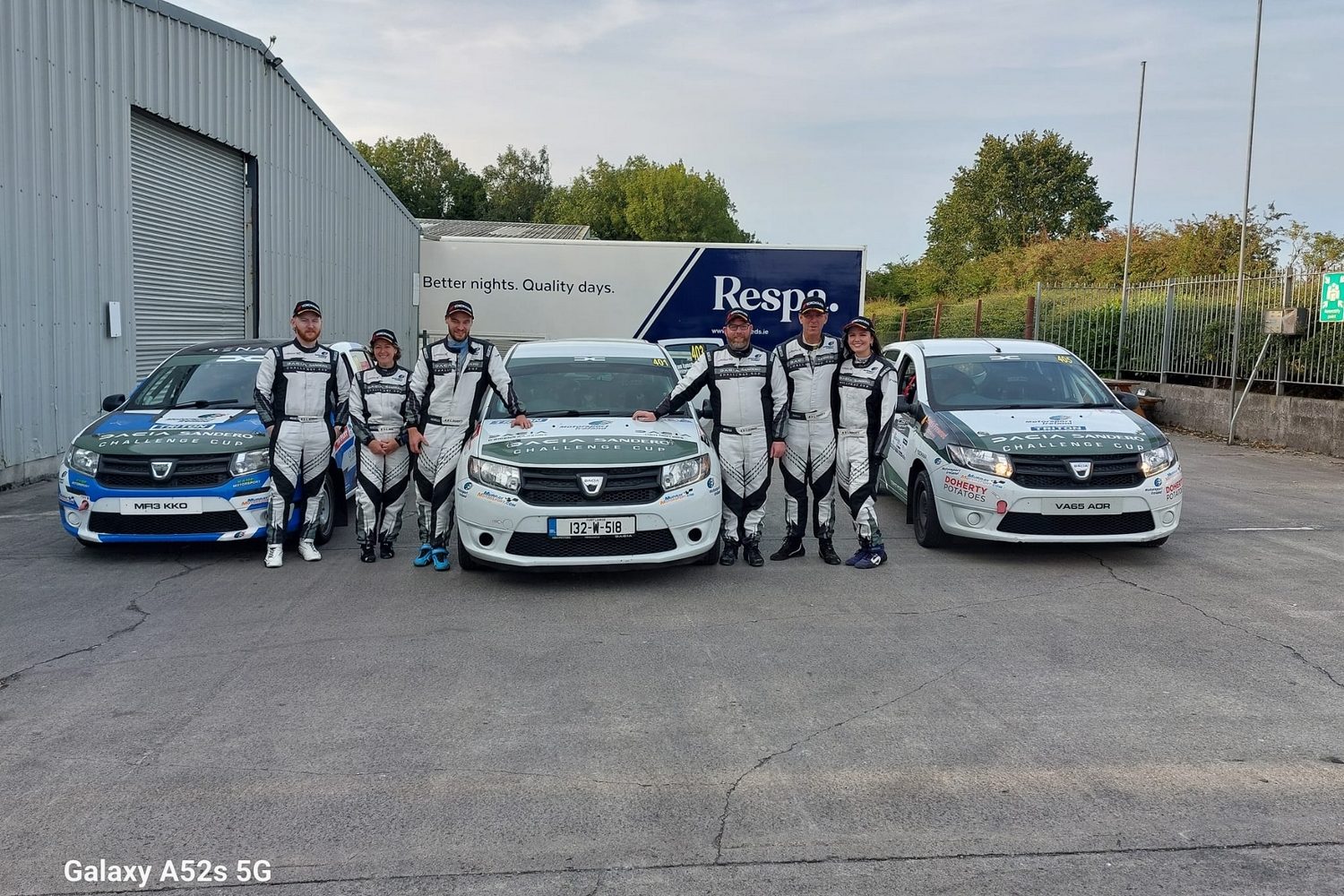
The championship now moves to the Clare Stages Rally on 7 September, before the last round near Bantry in the Fastnet Stages Rally on 26 October. There's plenty to play for yet given there are bonus points for starting the final two rounds and for competing in all rounds.
The real winner here, though, is Irish rallying. Motorsport Ireland and Dacia have crafted a fantastic new entry-level formula that will open the sport up to way more people, dramatically dropping the price of competing while reenergising the sport with a closeknit community.
There's room for a maximum of 25 cars to compete in the Dacia class at each rally, and the series is confirmed for three years so far. We wouldn't be surprised to see it oversubscribed before the end of that time, and for it to far outlive those three years. Give it a go; you won't regret it. And nor will you quite believe how much fun you can have with just 80hp.
A few words of thanks
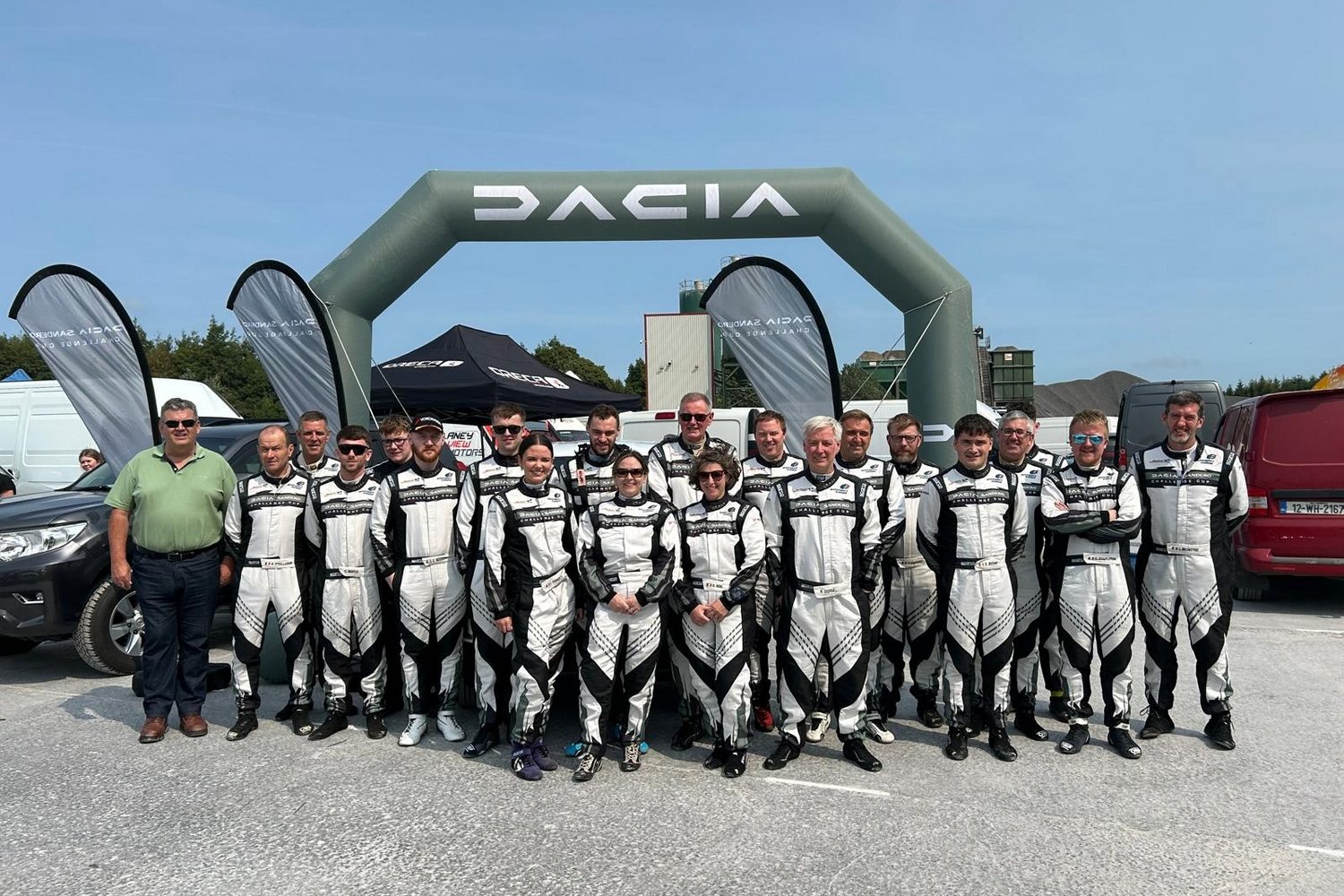
A massive thanks to Trevor Toner, Declan O'Keeffe and Carrie Ryan for making the opportunity to see the Dacia Sandero Challenge Cup from a novice rally driver's perspective possible. Same to everyone at Motorsport Ireland and indeed the Cedar Group.
Thank you to Chris at CCS Race n' Rally for the loan of the helmet and HANS device and to Kevin Shields Rally Photography for the action shots shown here.
Last, and certainly not least, a huge shout out to the hundreds of marshals that volunteer their time at every rally to make the whole thing feasible in the first place.
More reading
Motorsport Ireland's guide to getting a rally driving licence
Official Dacia Sandero Challenge Cup website
If there is anything about this story we have not covered, you can avail of our expert advice service via the Ask Us Anything page.