


Exterior & design of the 2026 Yangwang U9
- Striking appearance
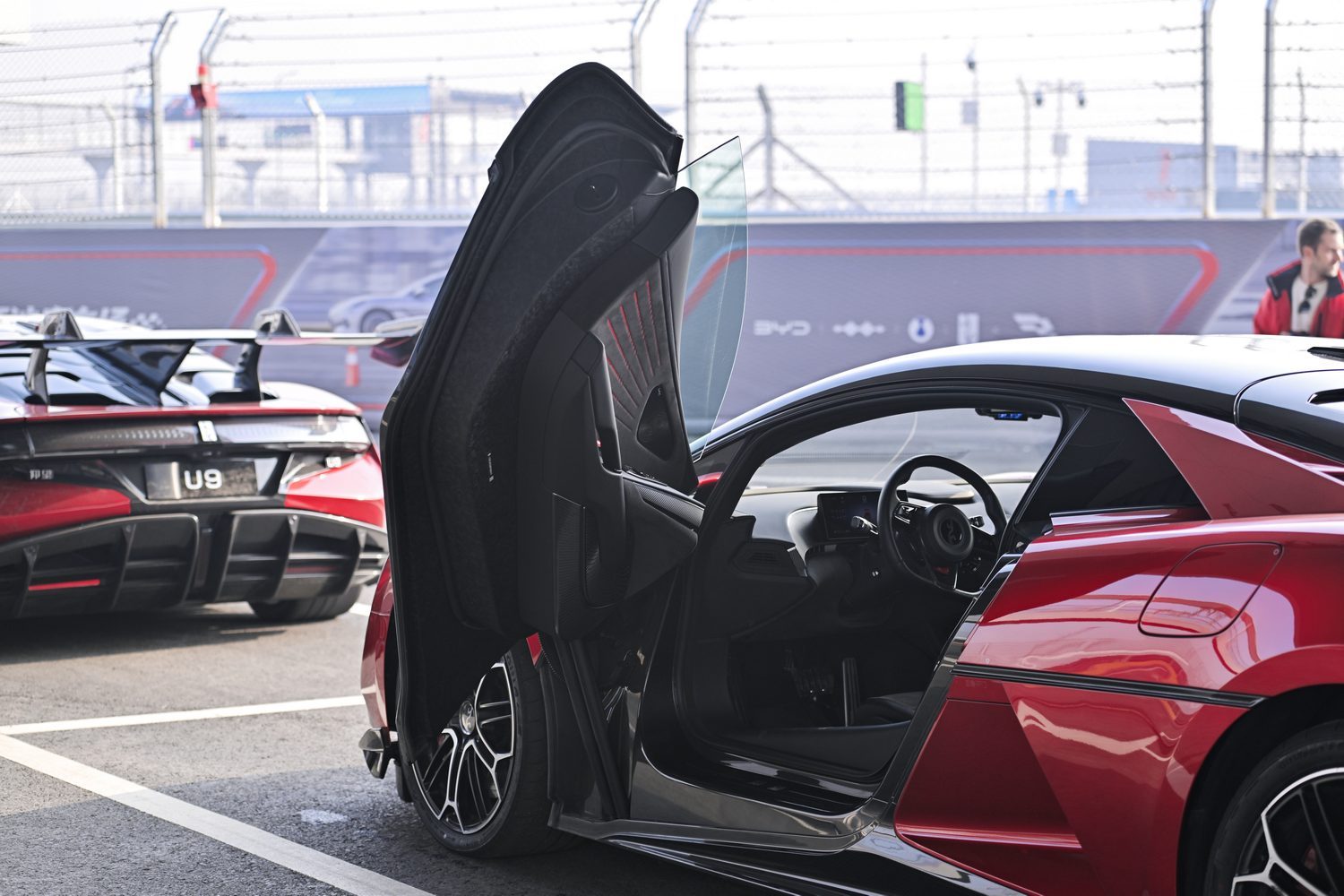
- Doors open upwards
- Spoiler and rear blade bring visual drama

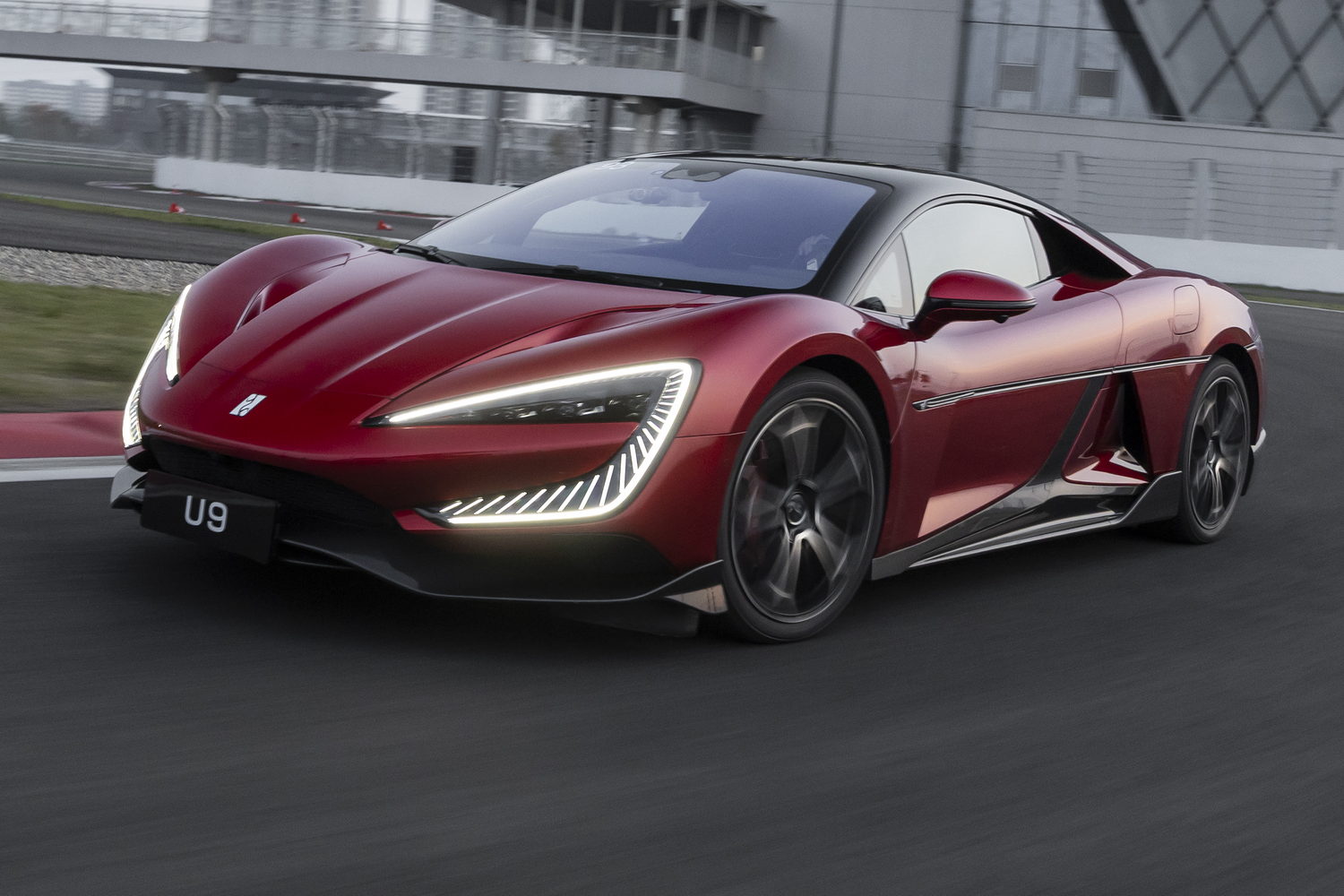
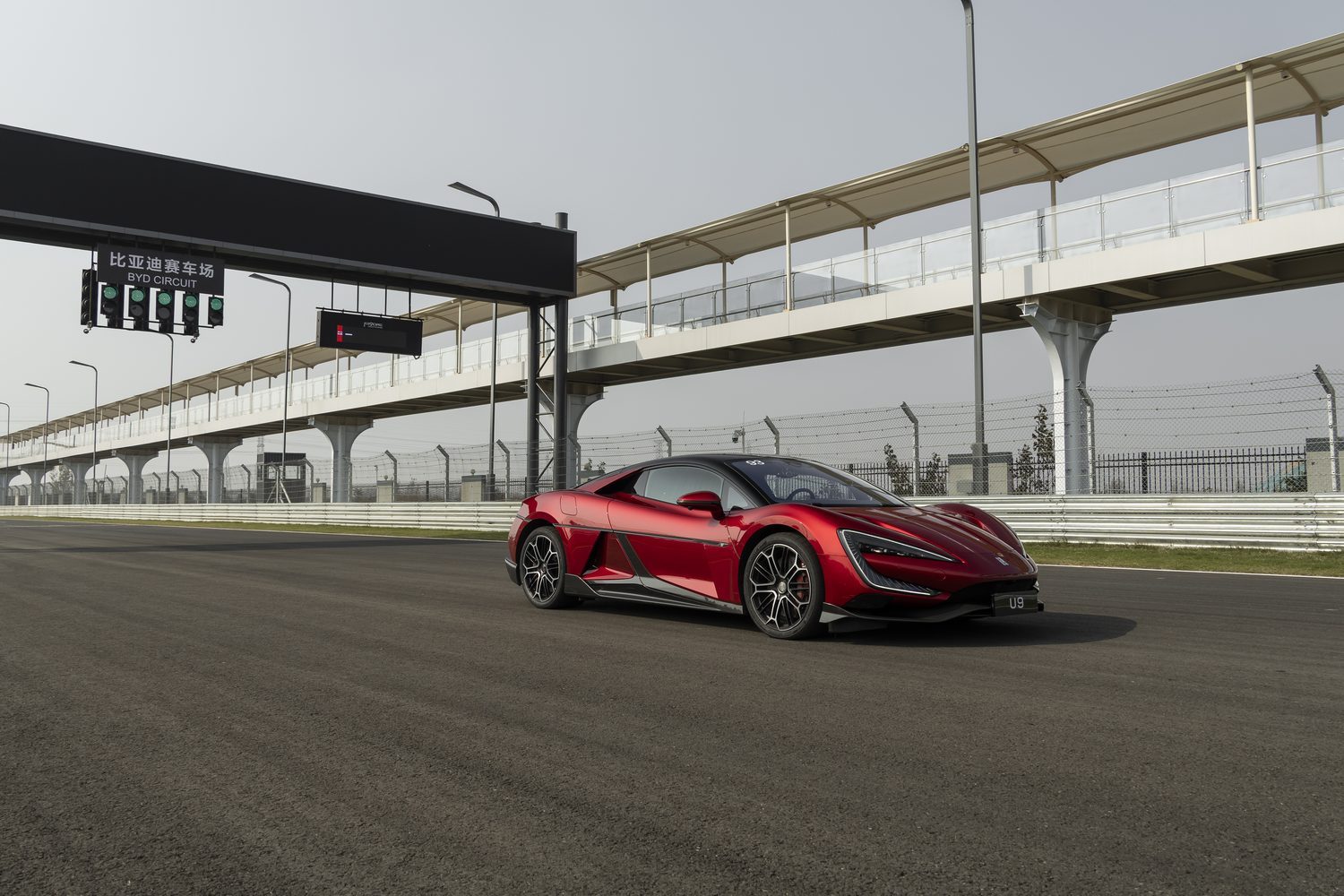
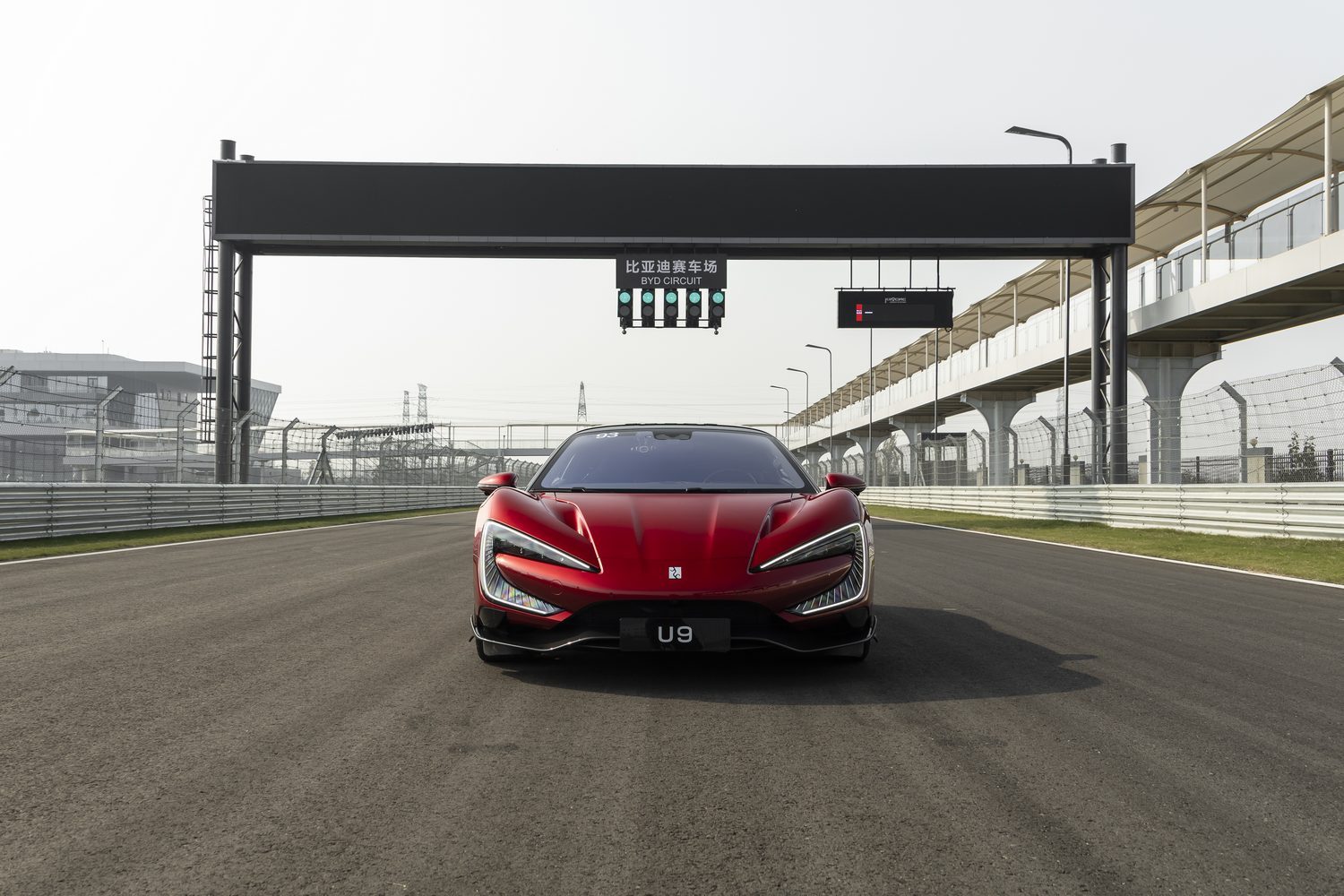
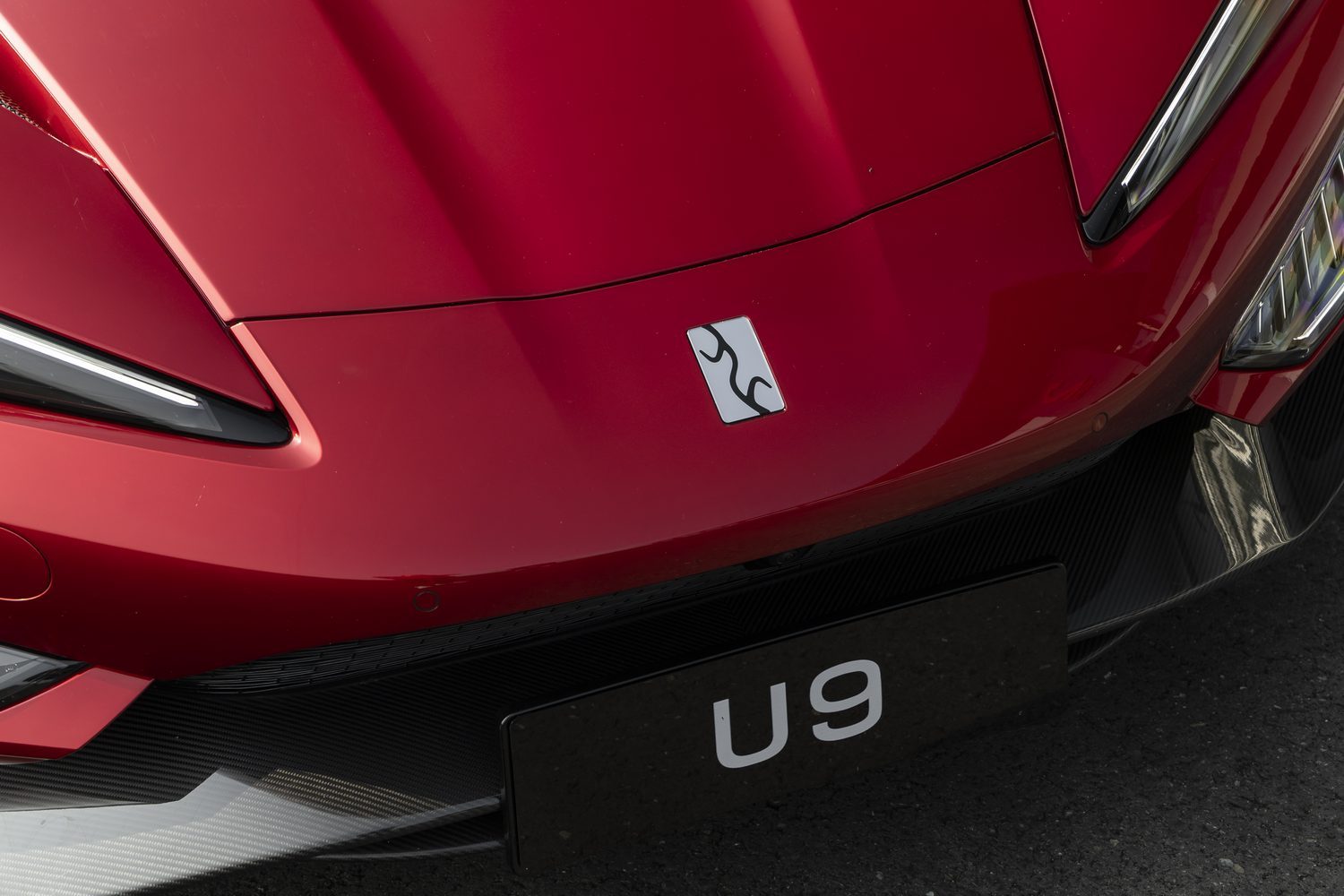
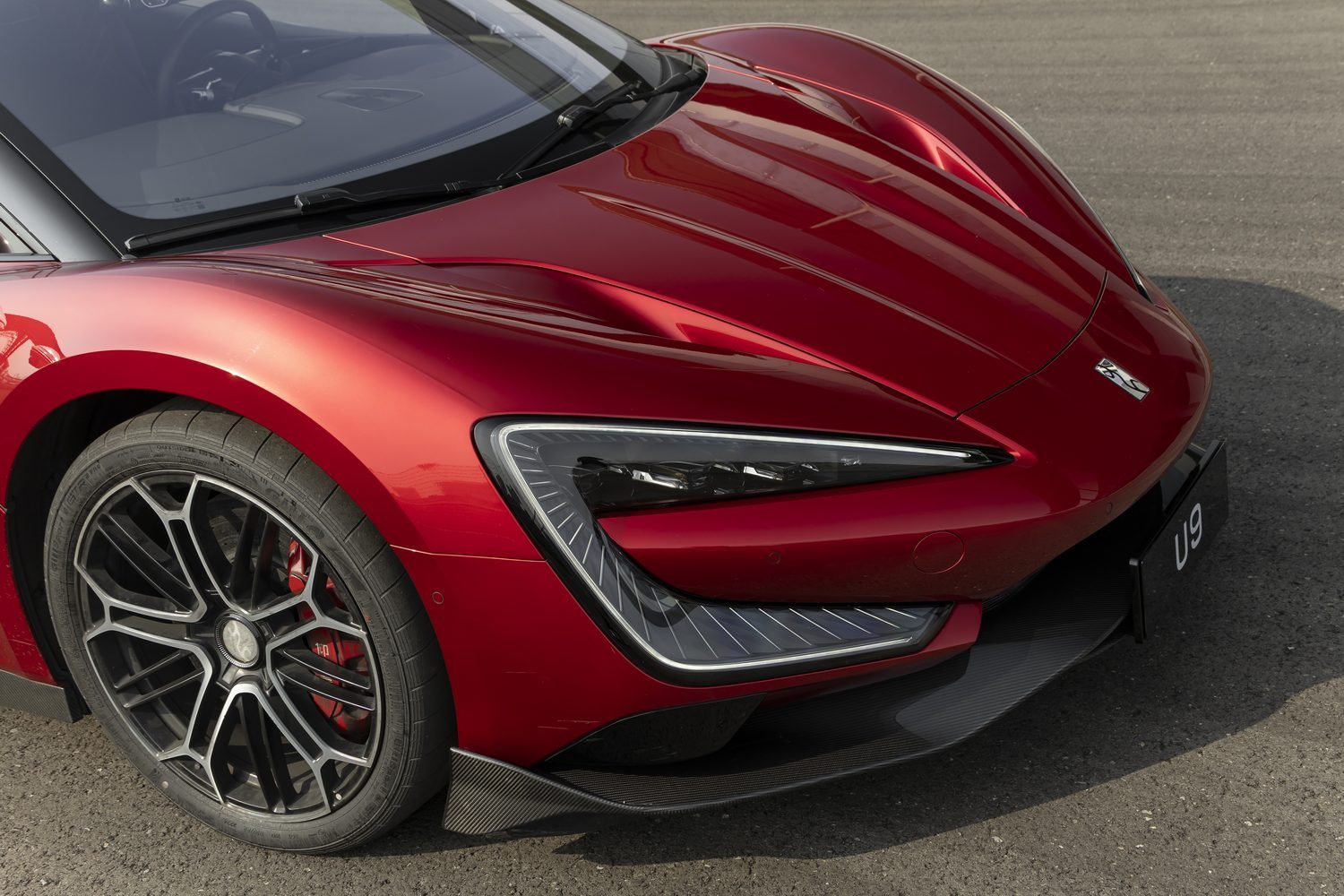
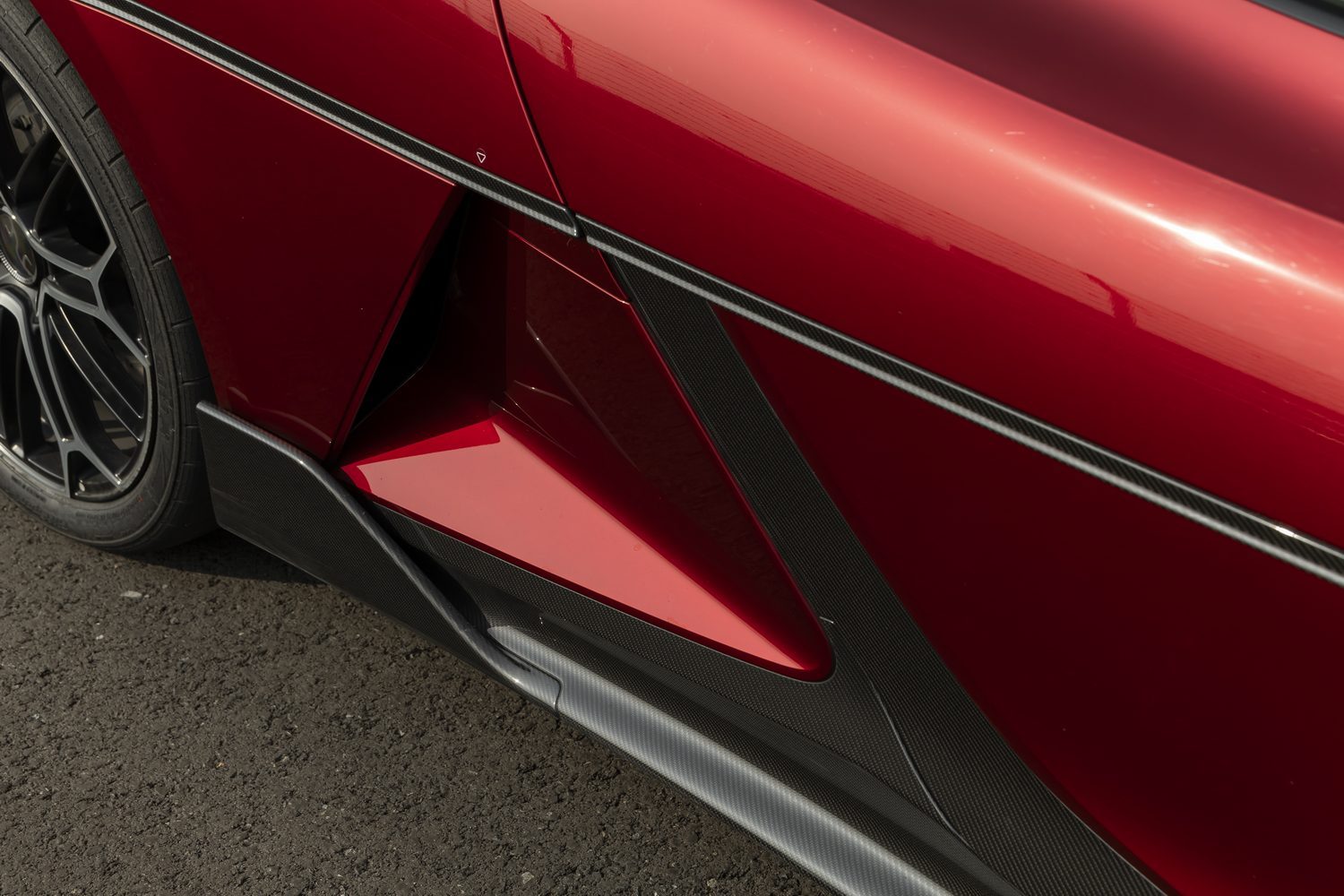
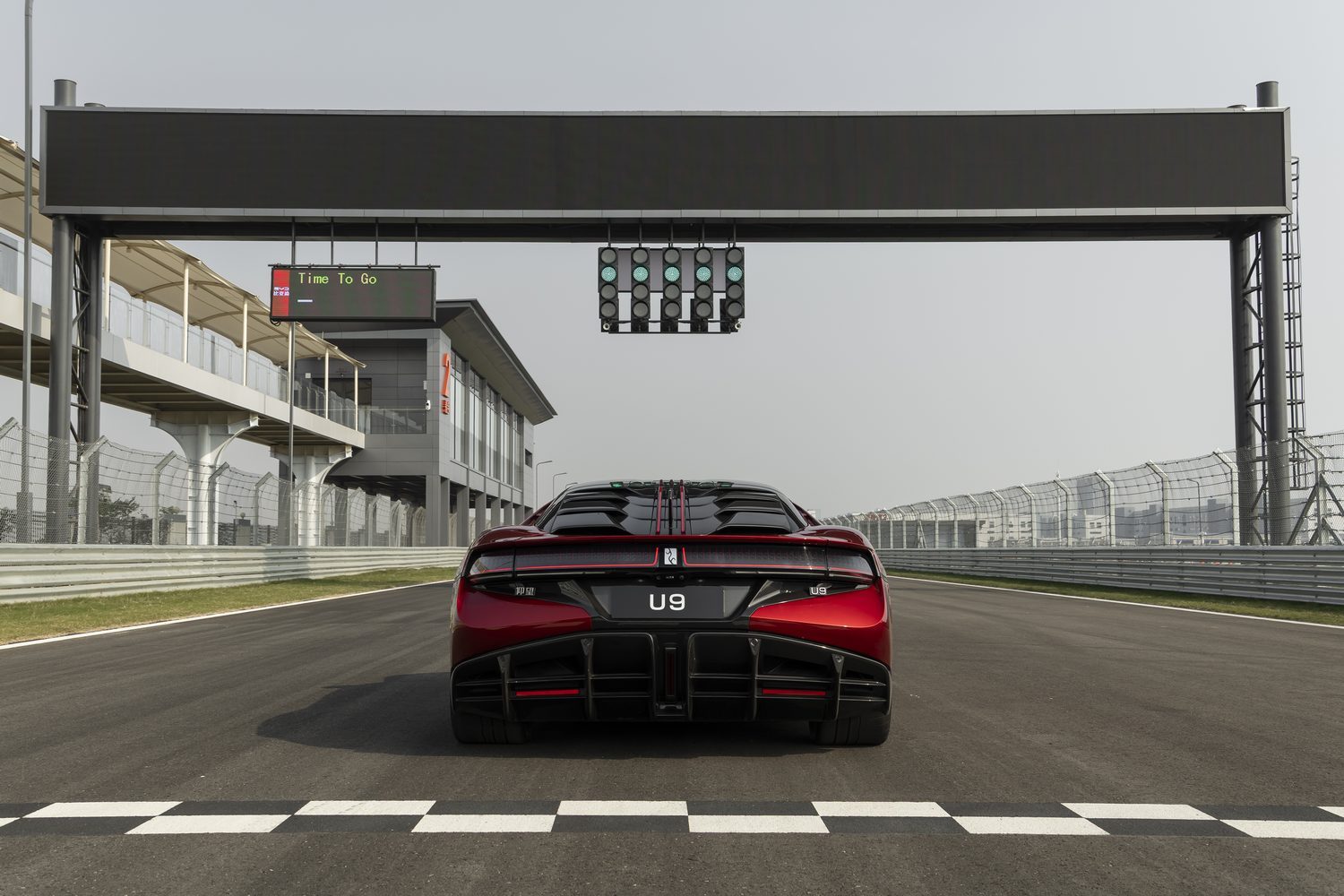
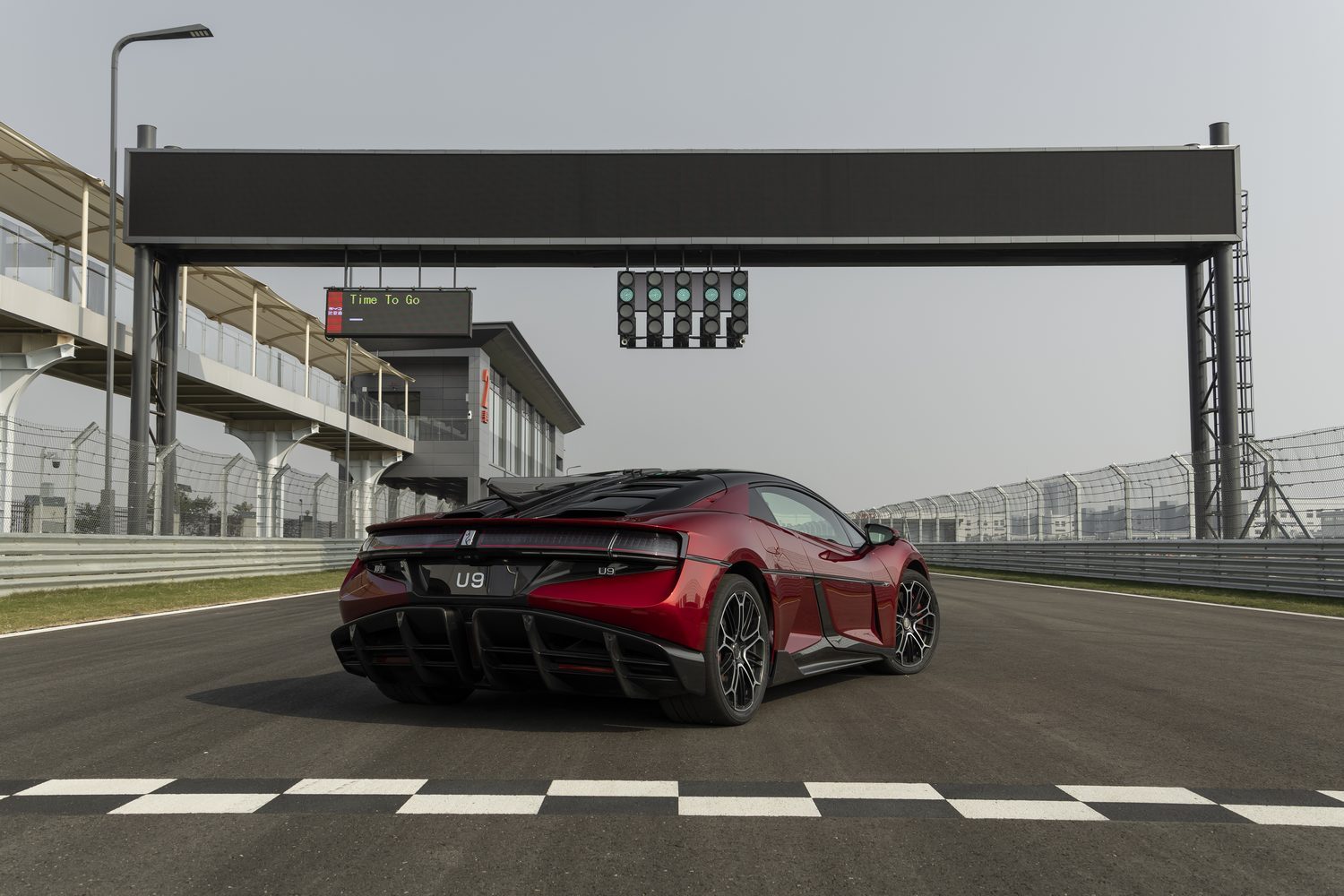
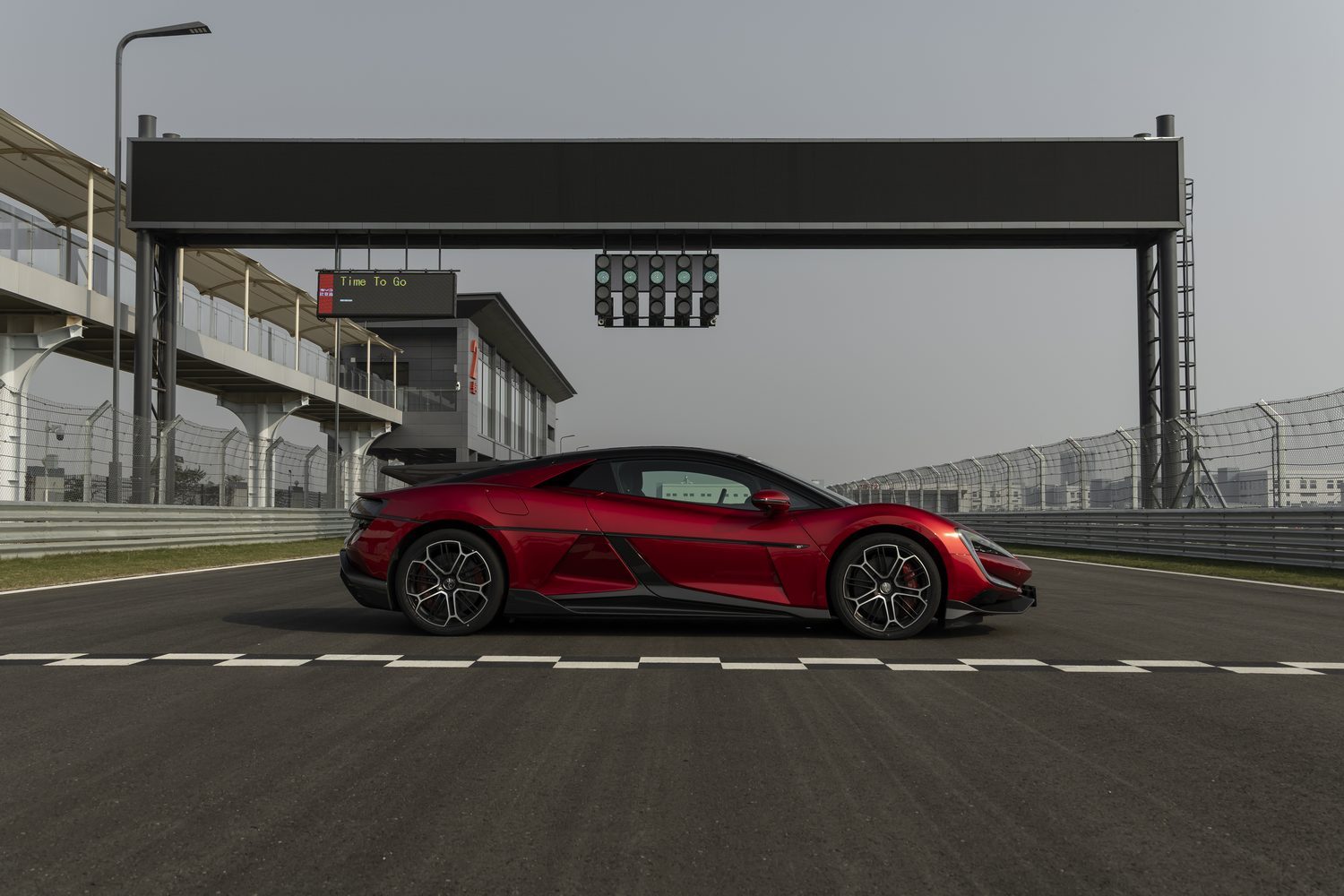
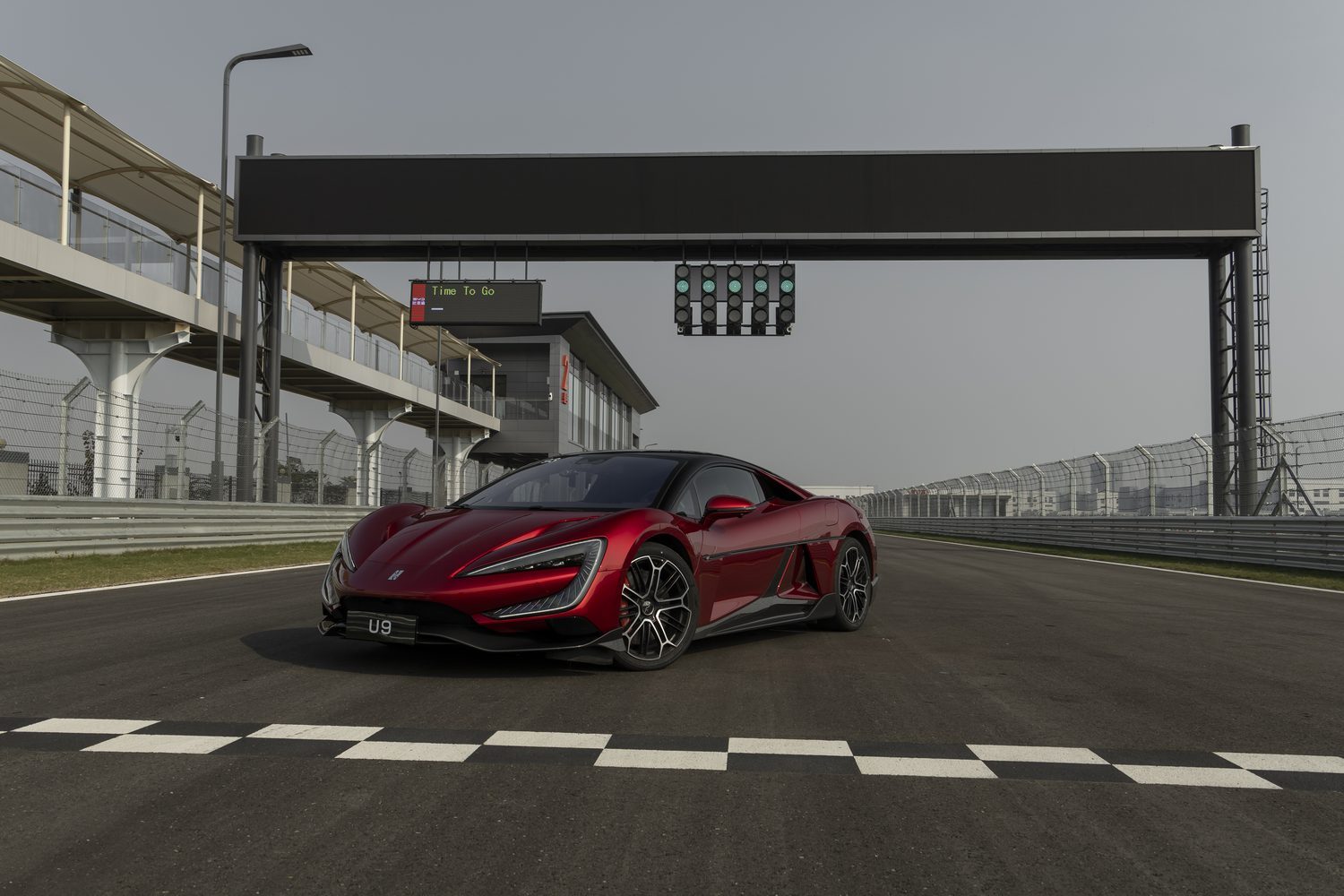
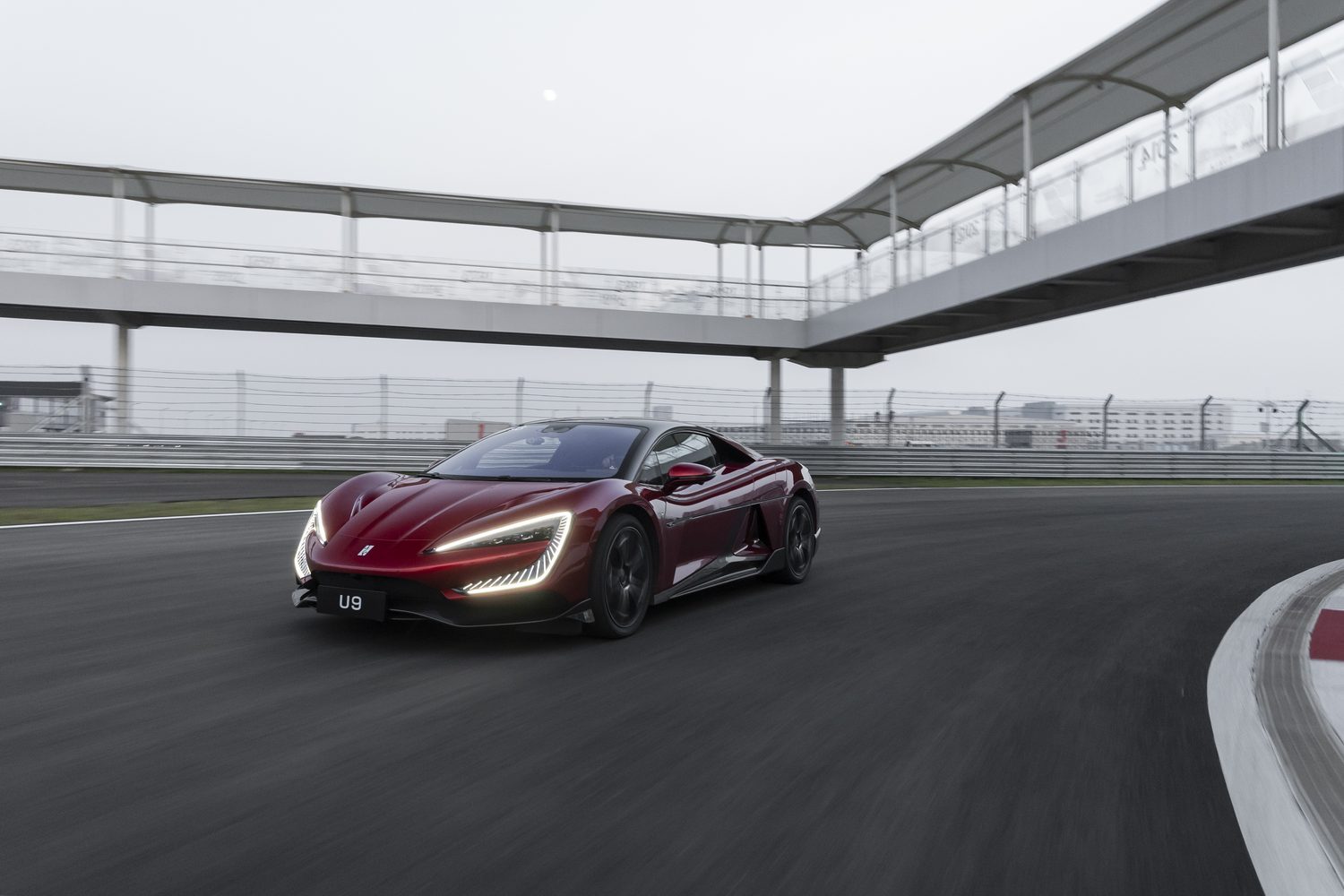
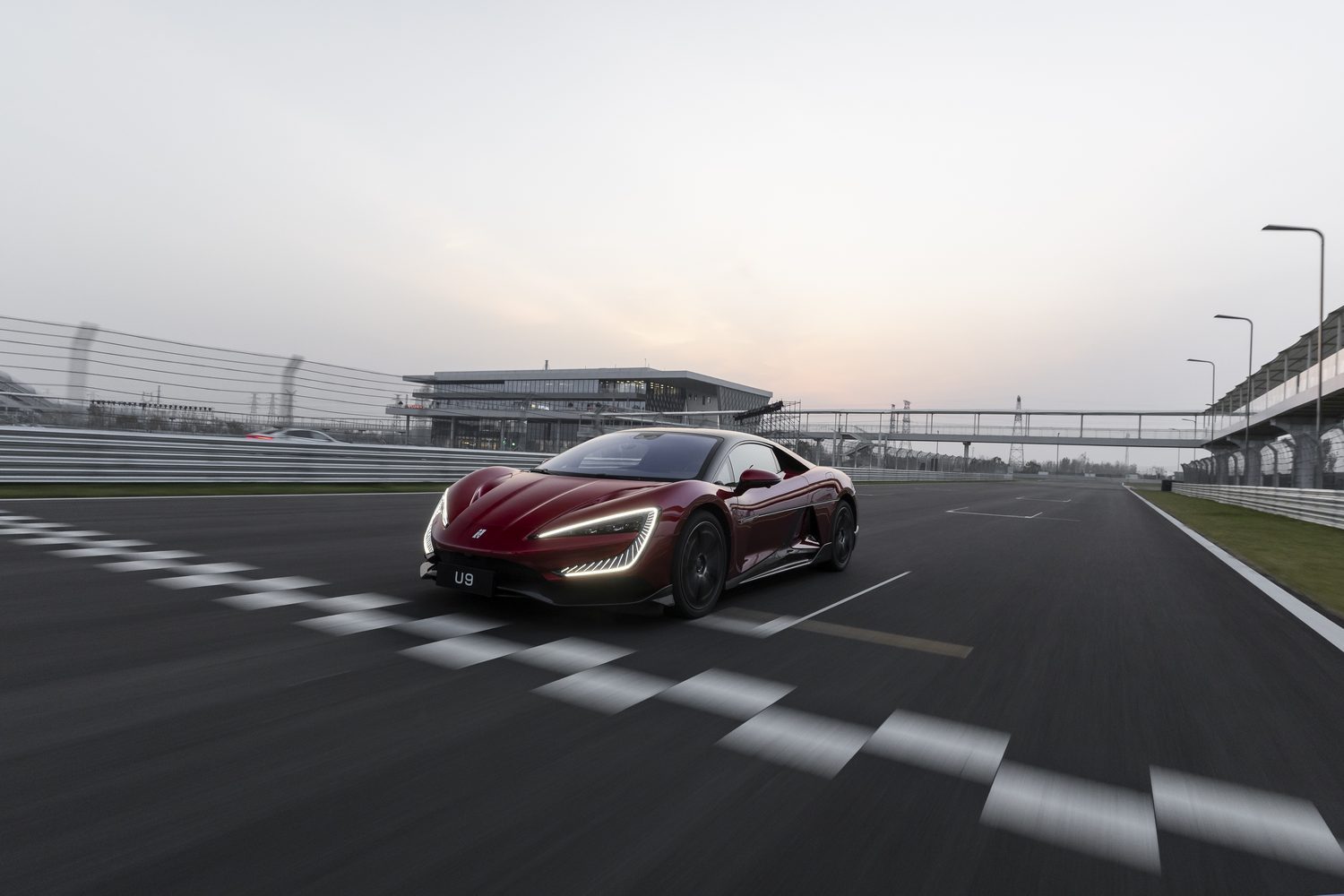
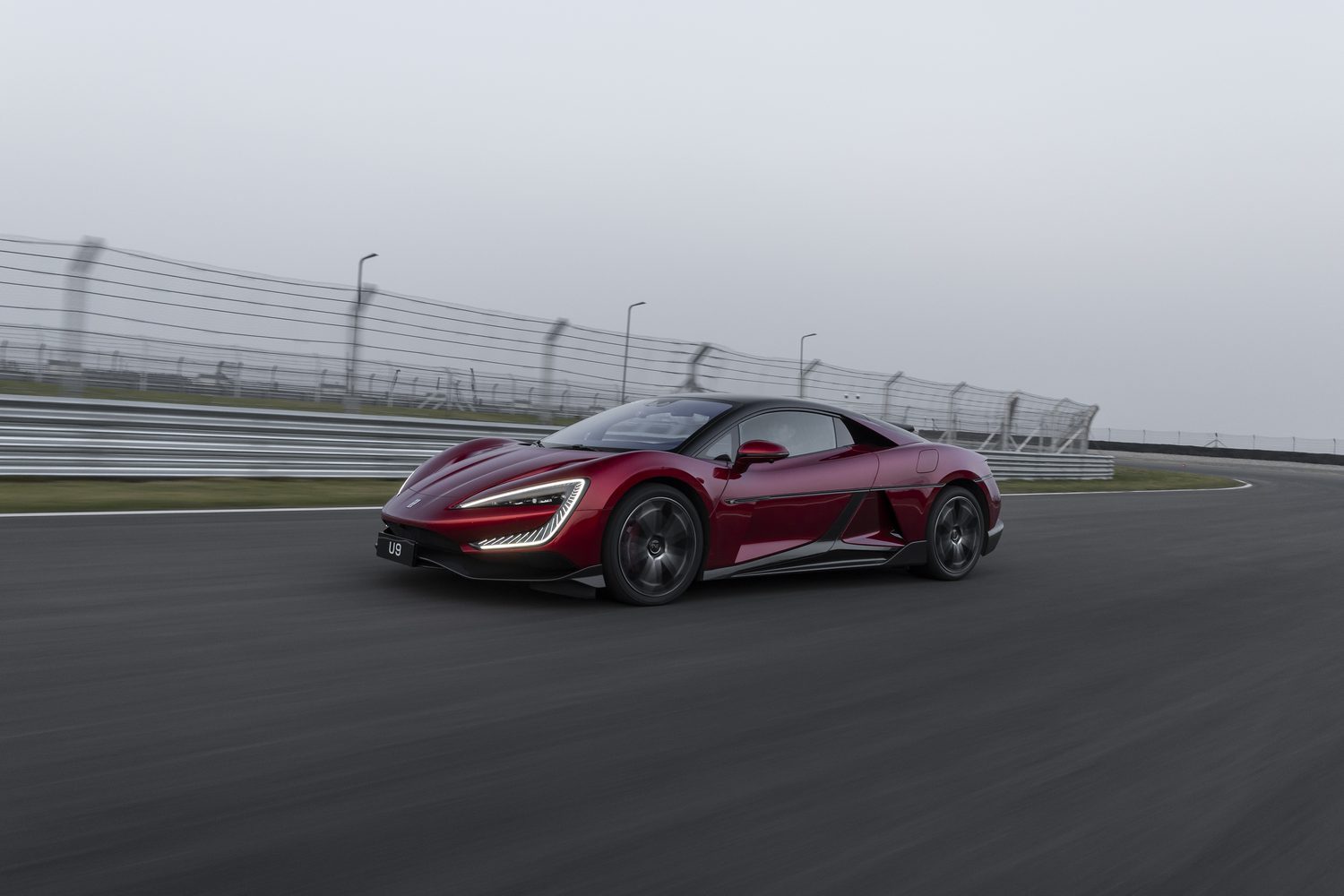
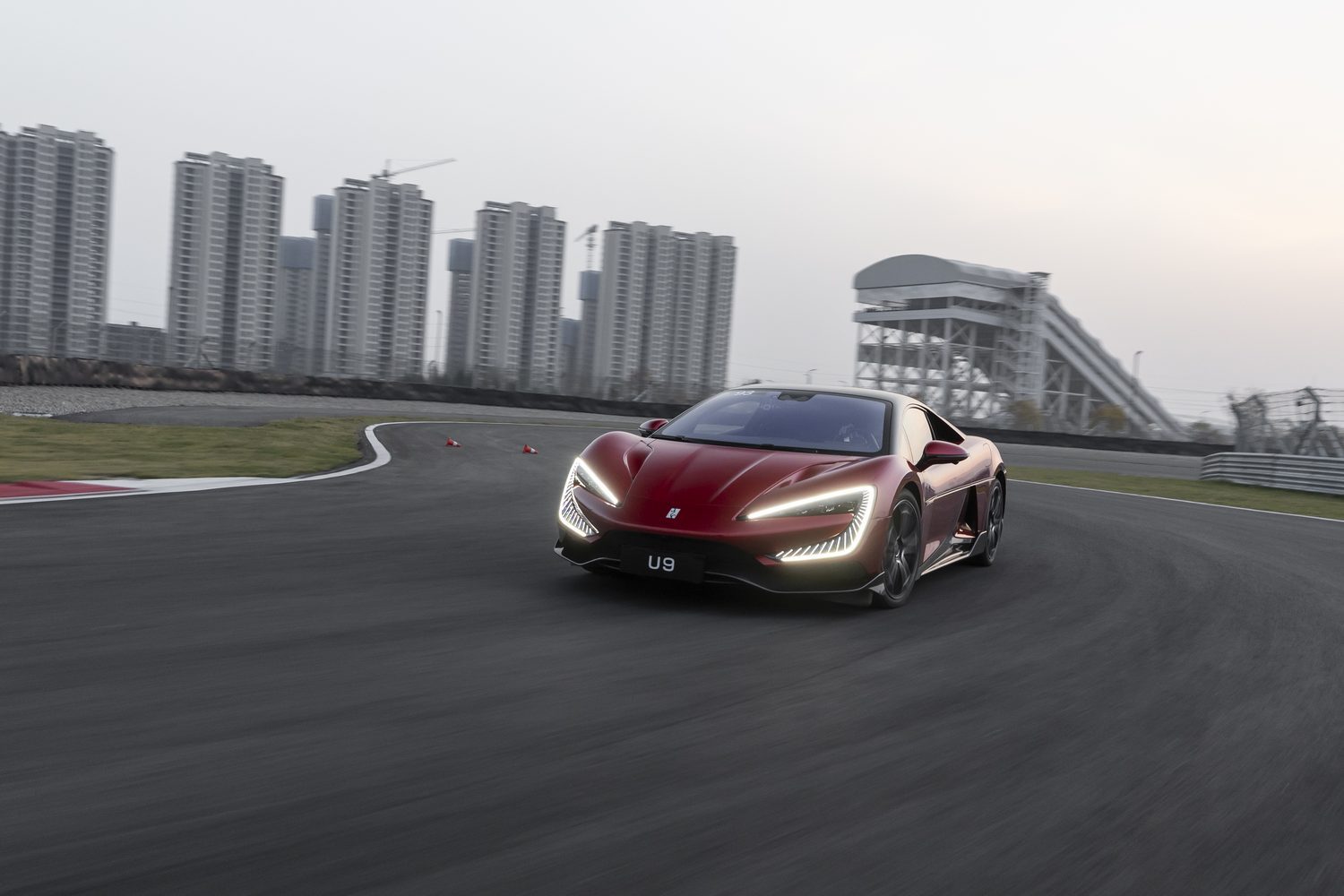
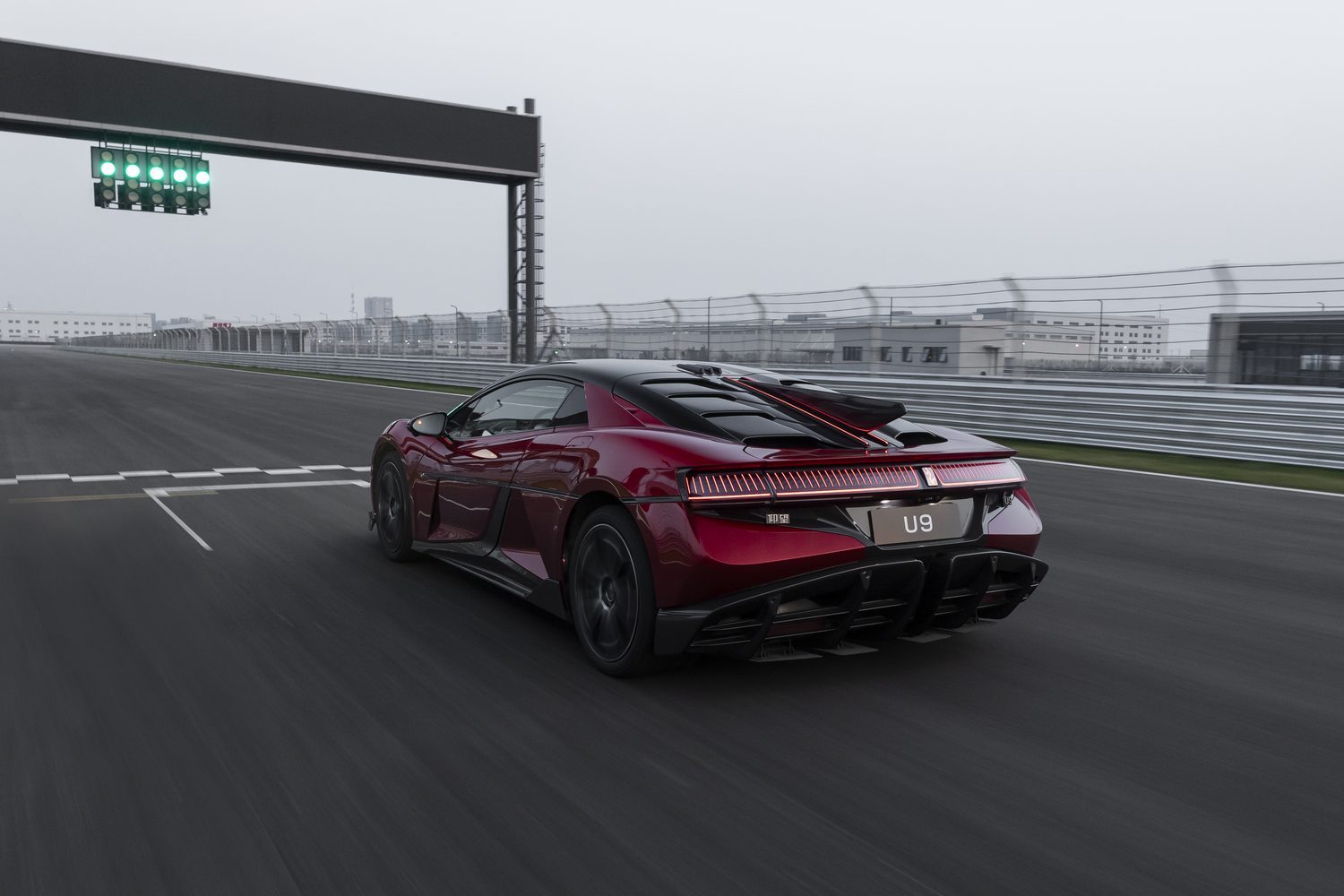
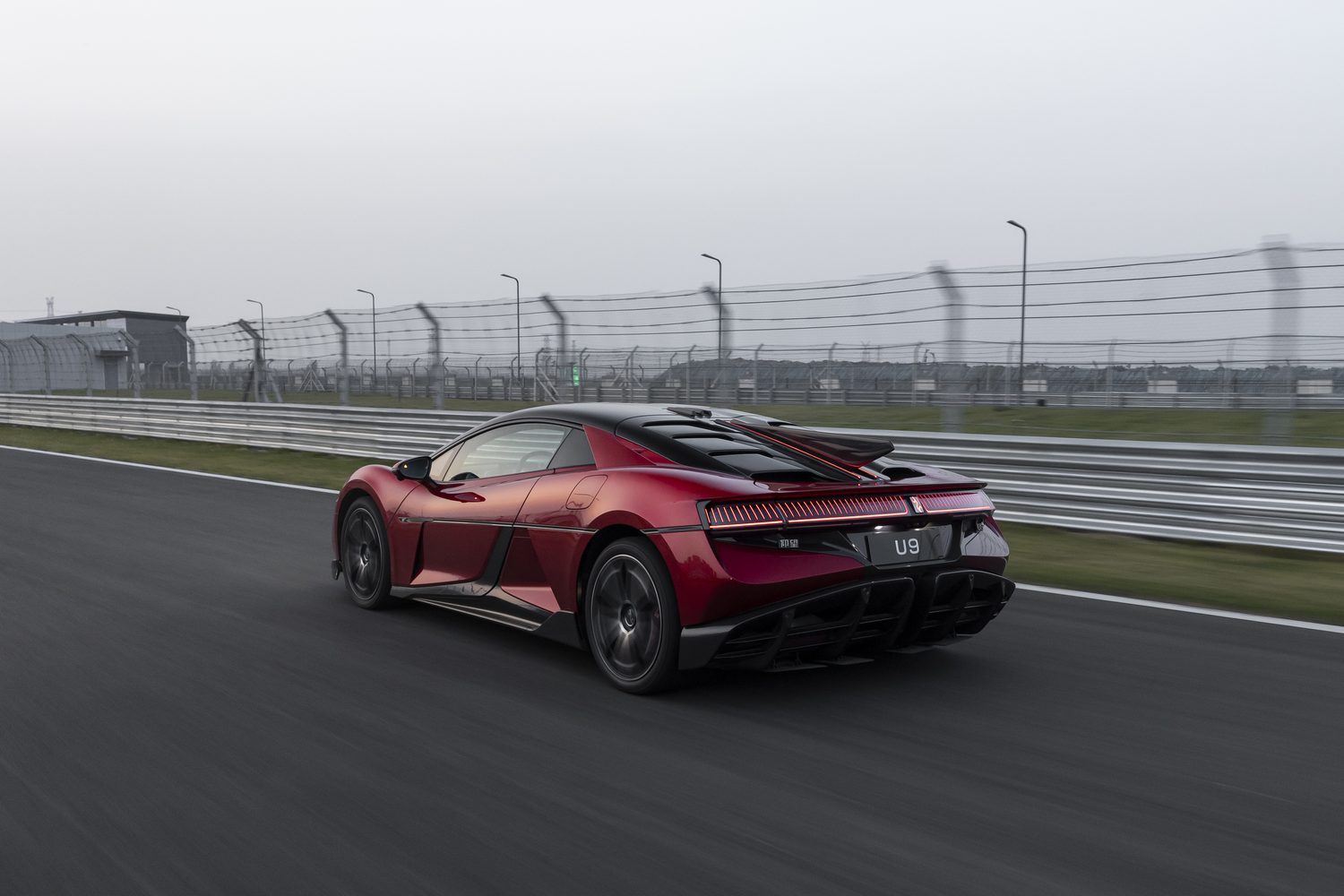
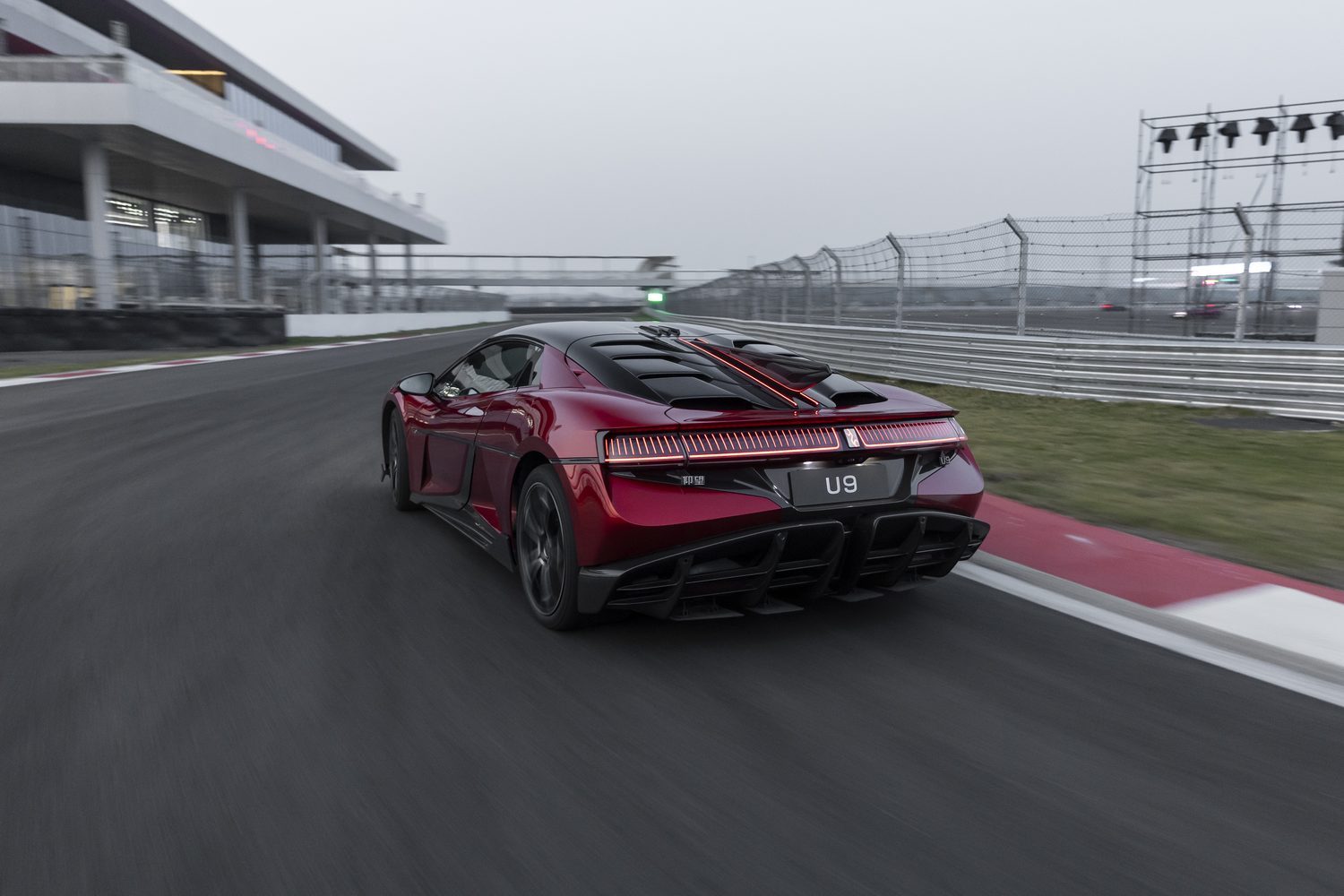
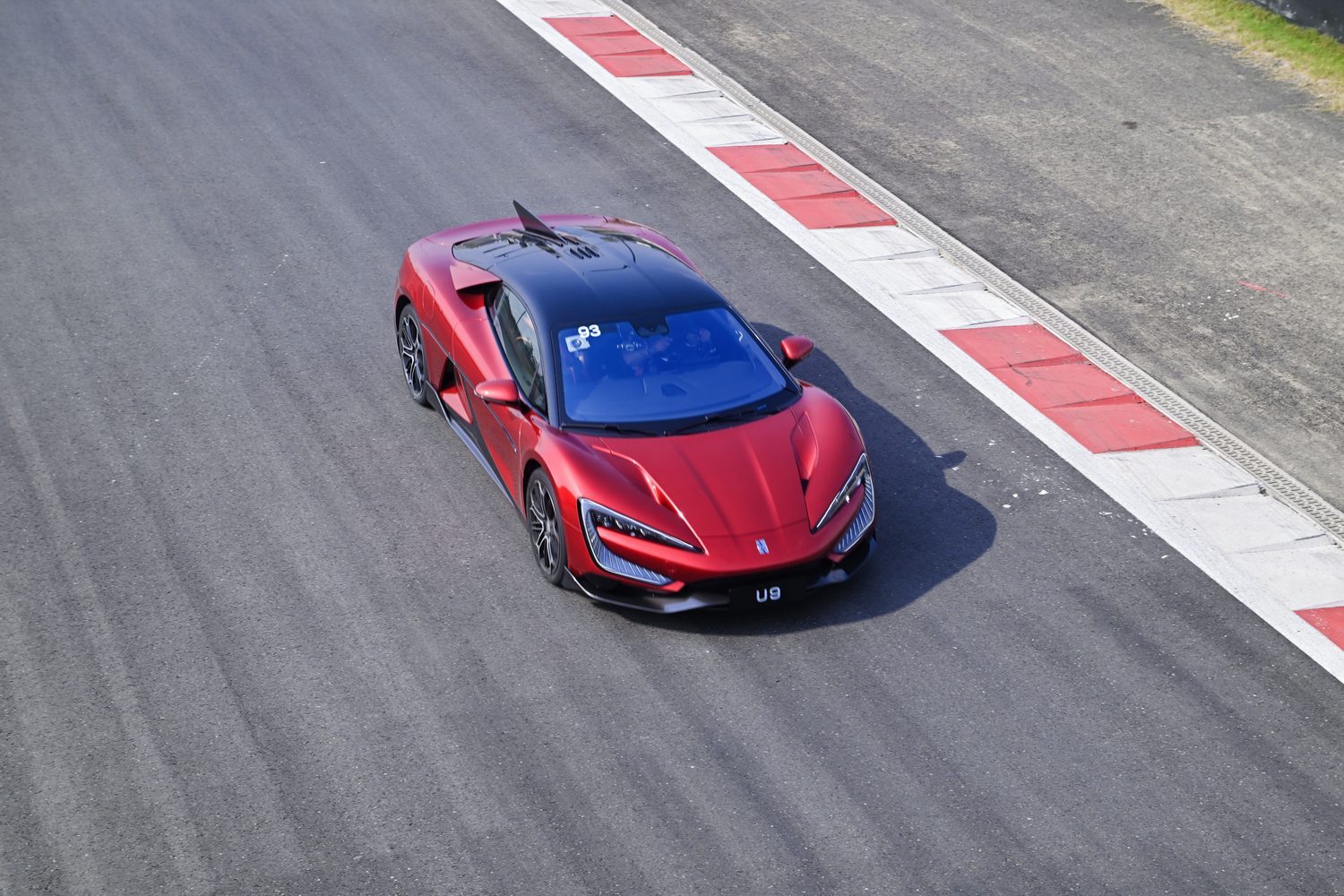
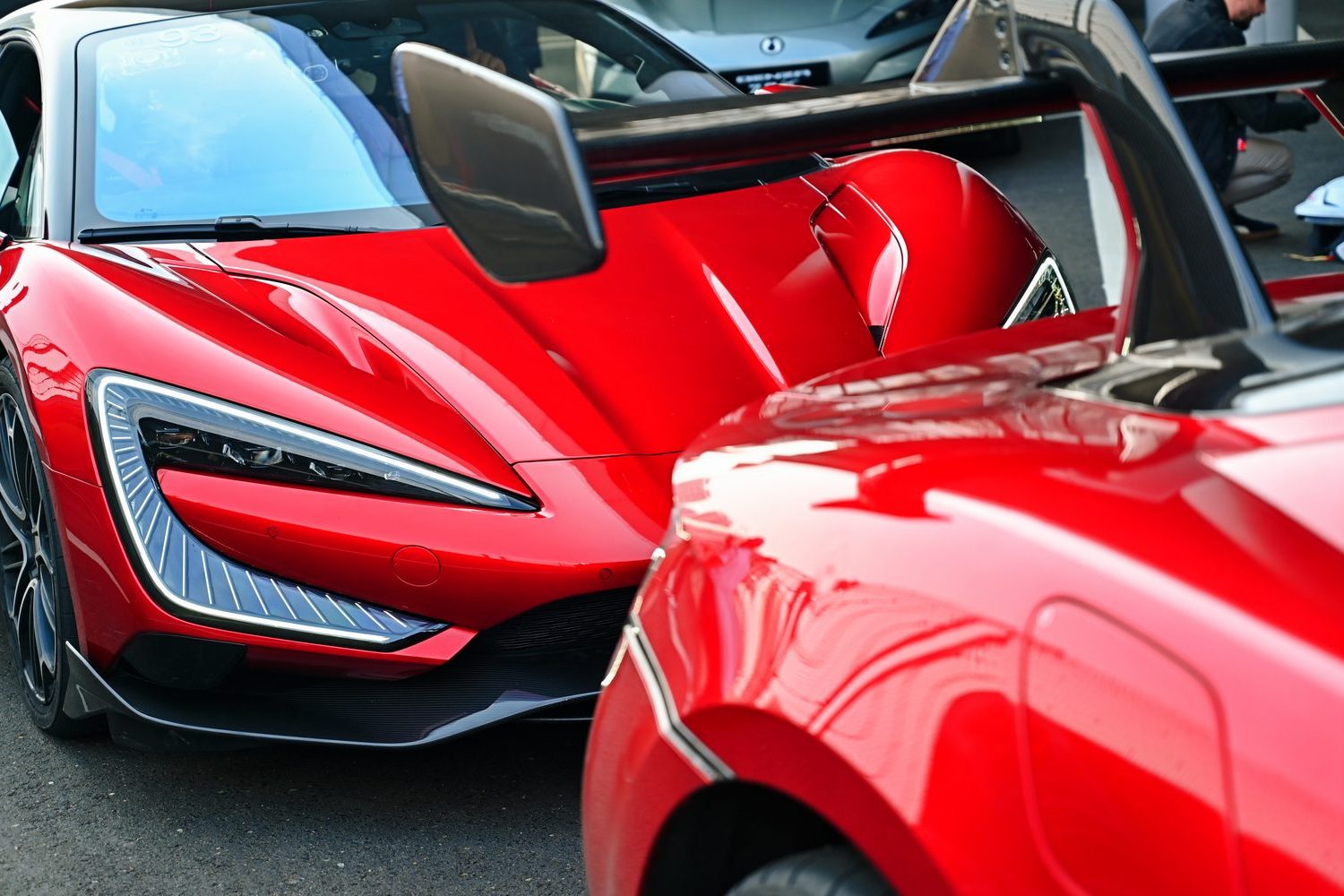
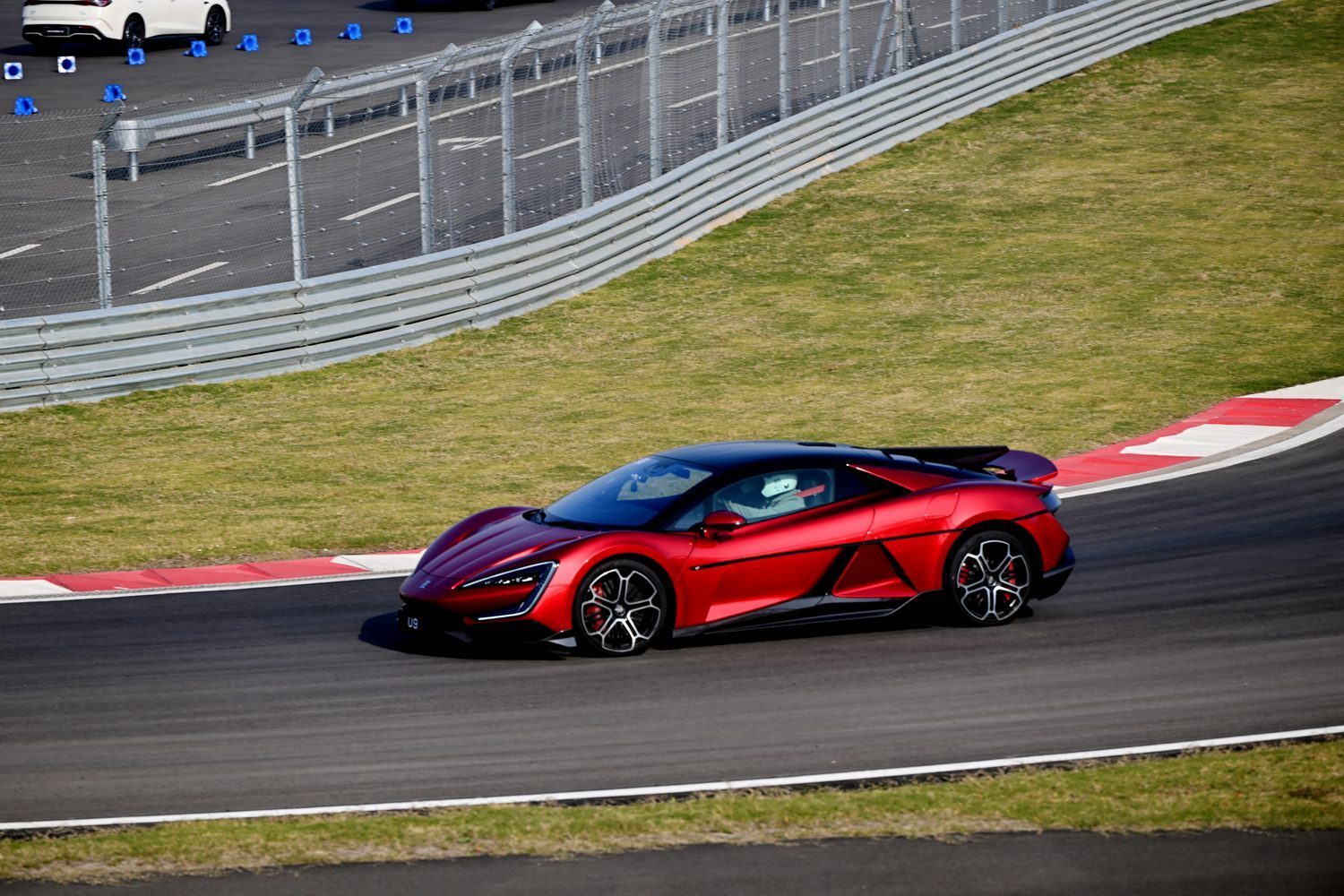
For a first-time effort from such a fledgling company, the Yangwang U9 is really good looking. It is maybe a little bit derivative of other supercars and hypercars if you stare at it long enough, with hints of both Lotus and even Koenigsegg about it from various aspects, but it has its own signature features to give the U9 a clear identity.
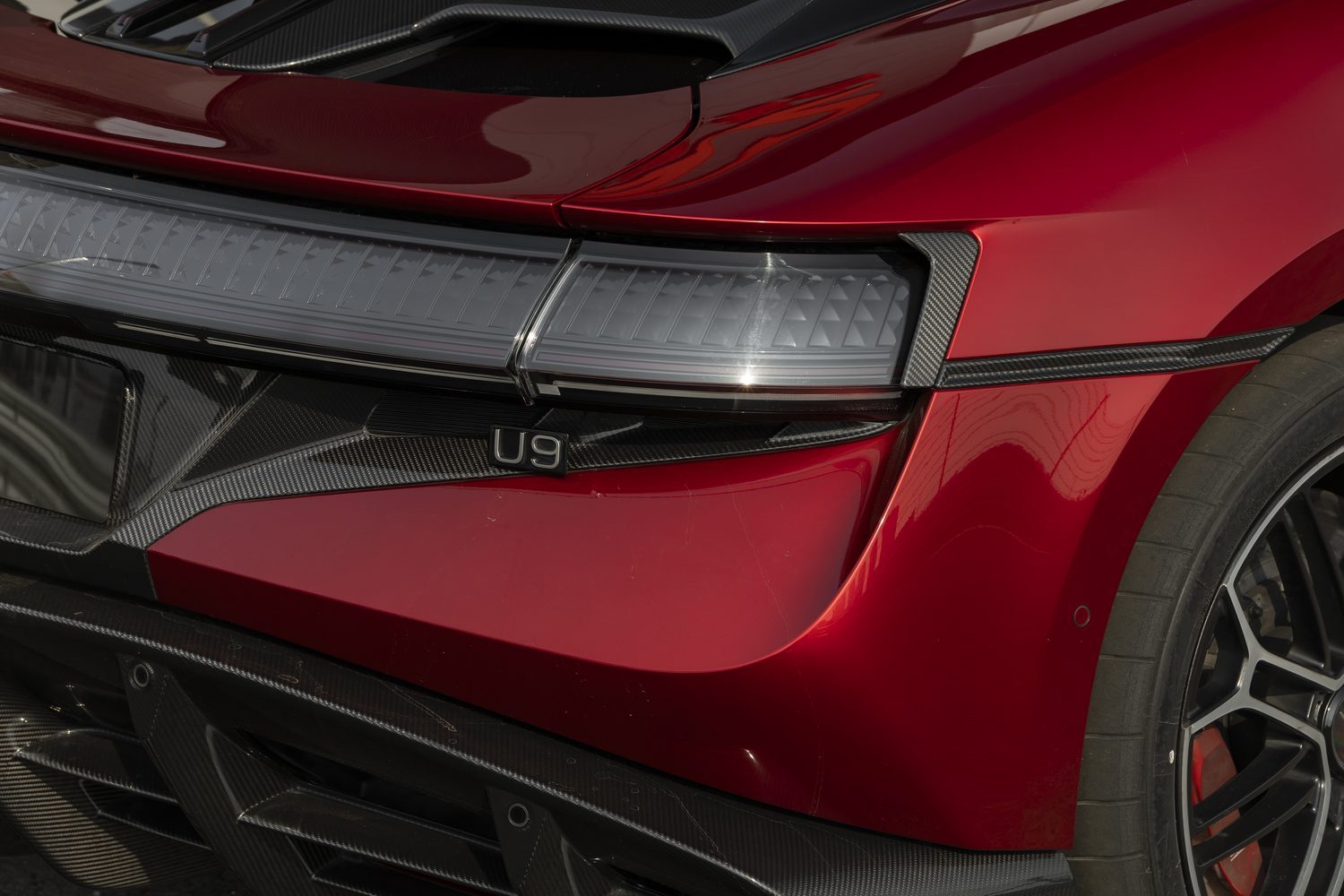
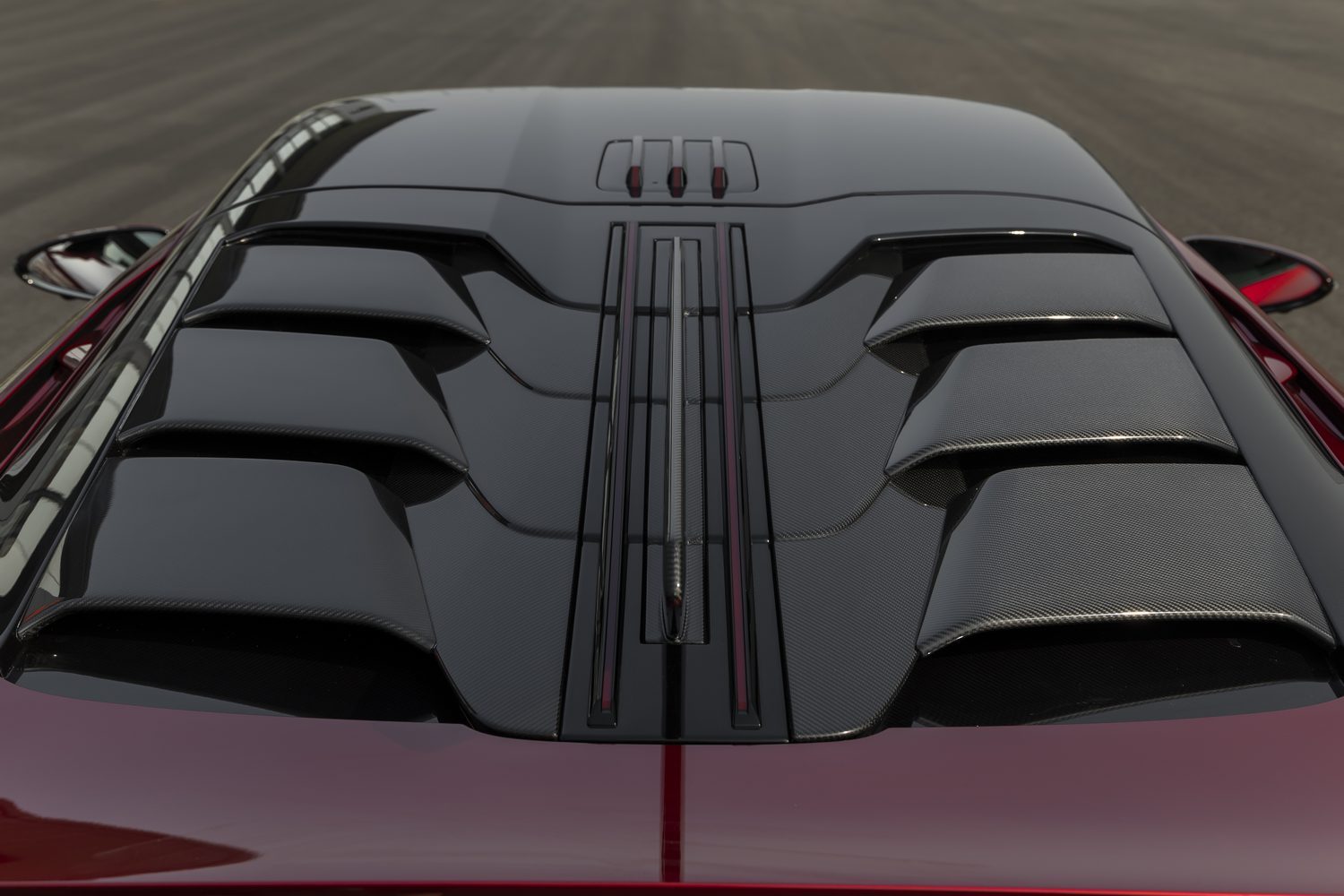
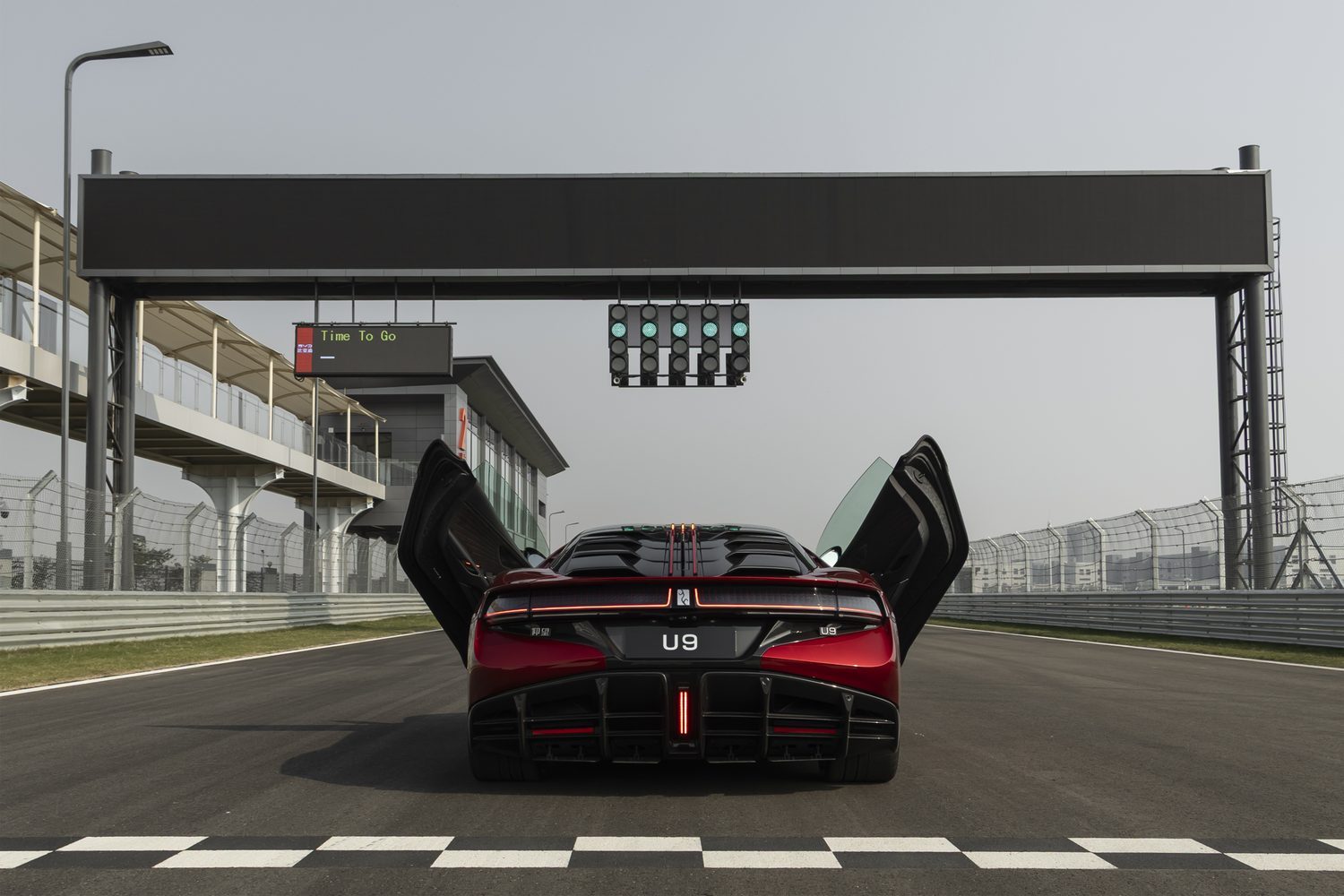
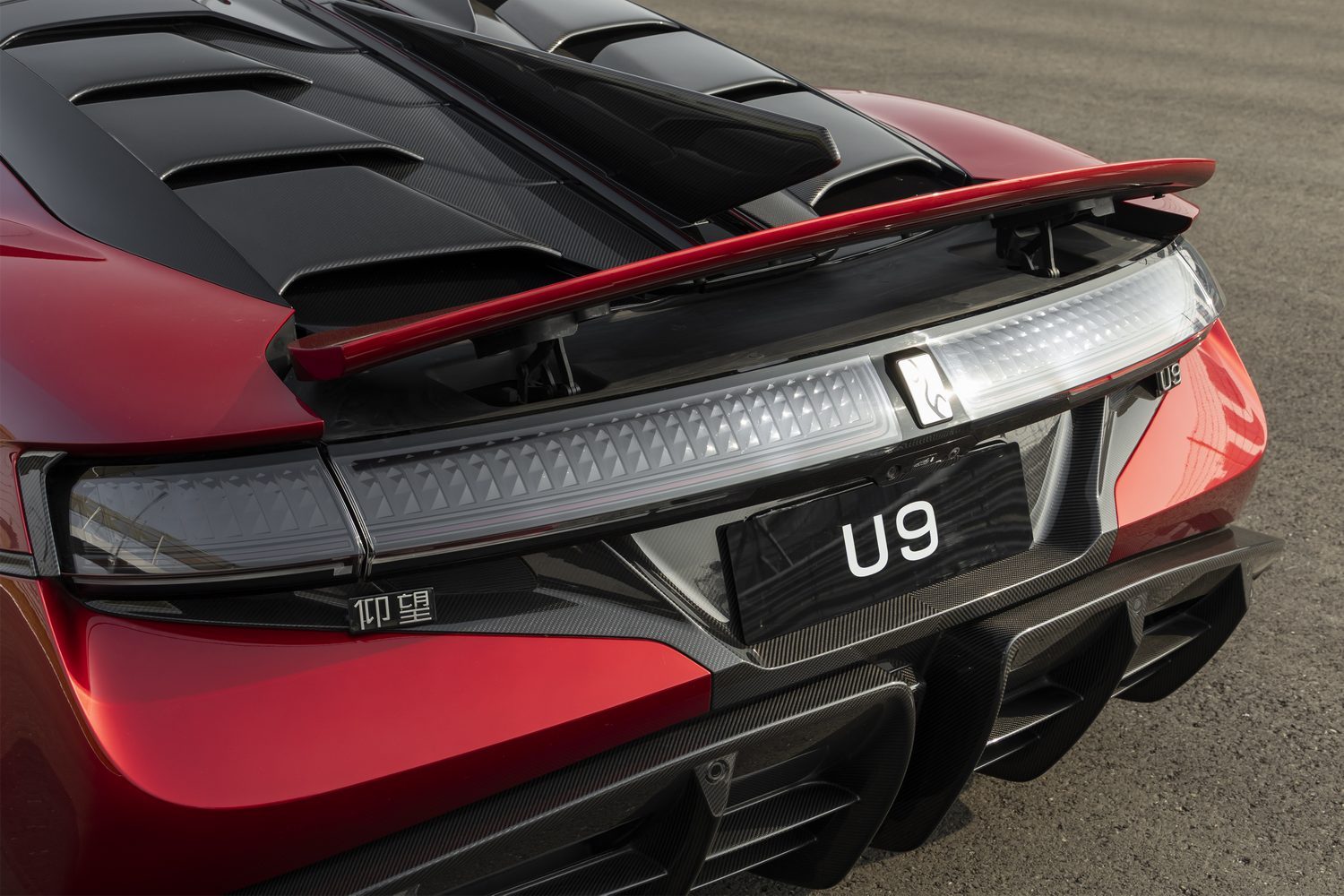
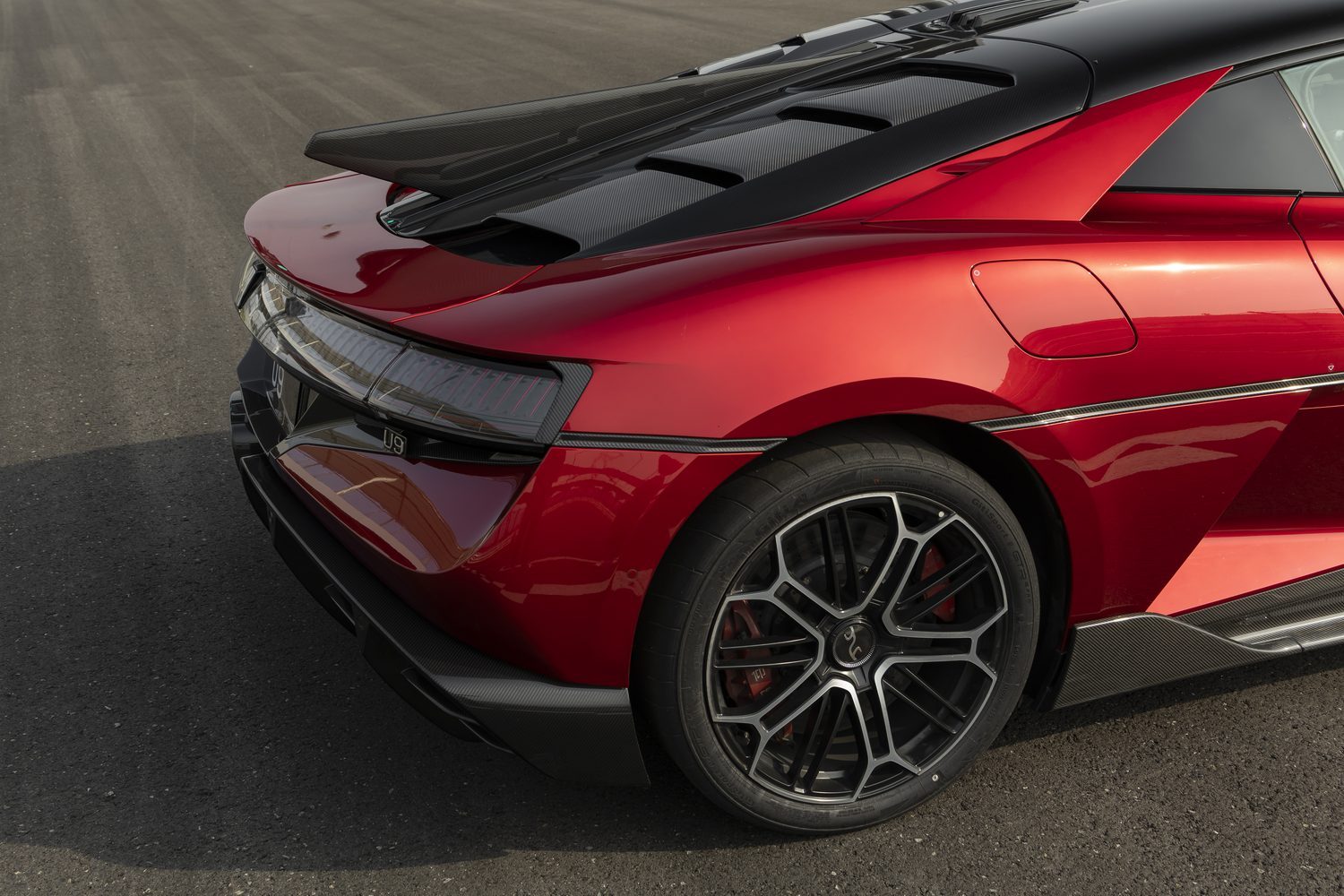
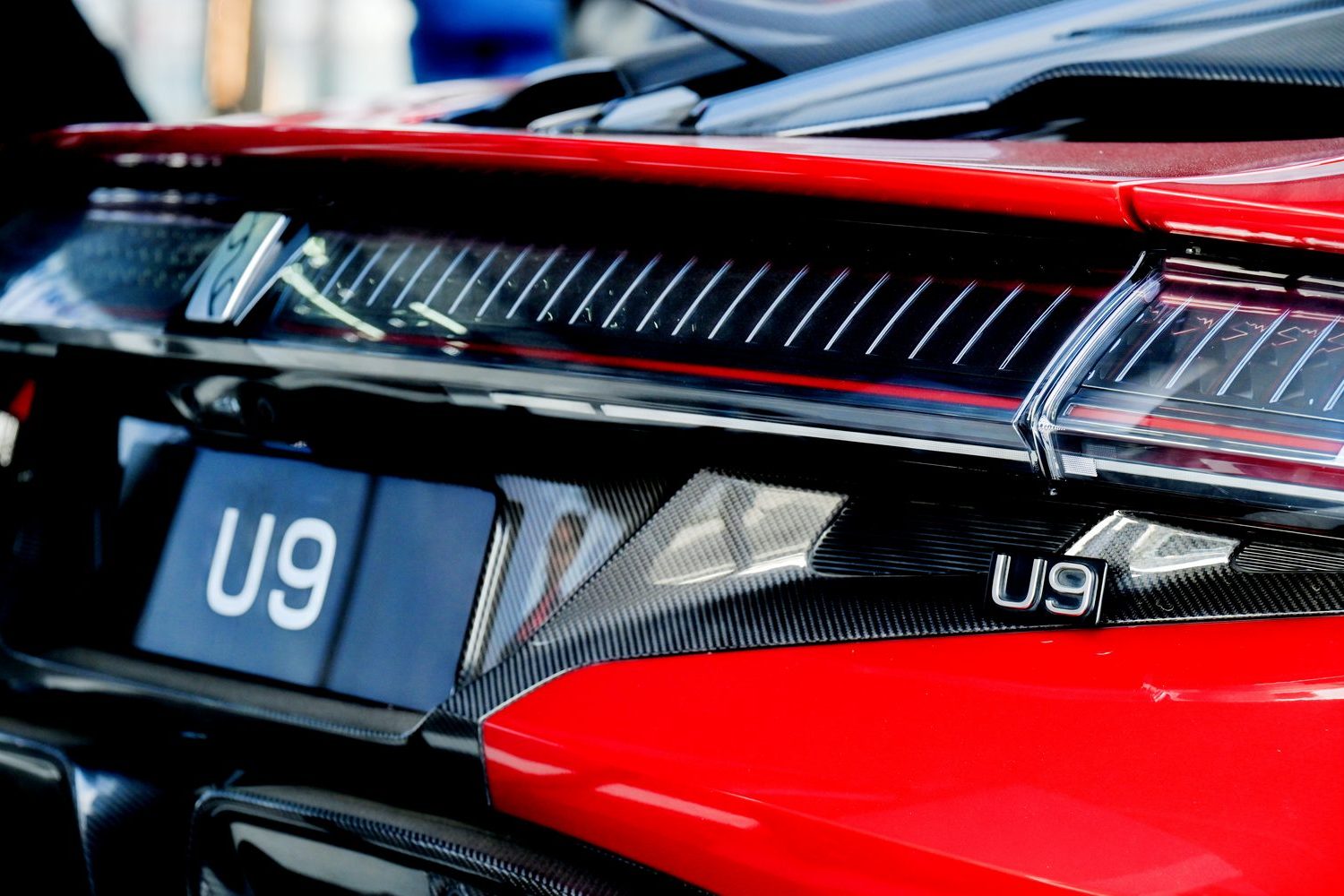
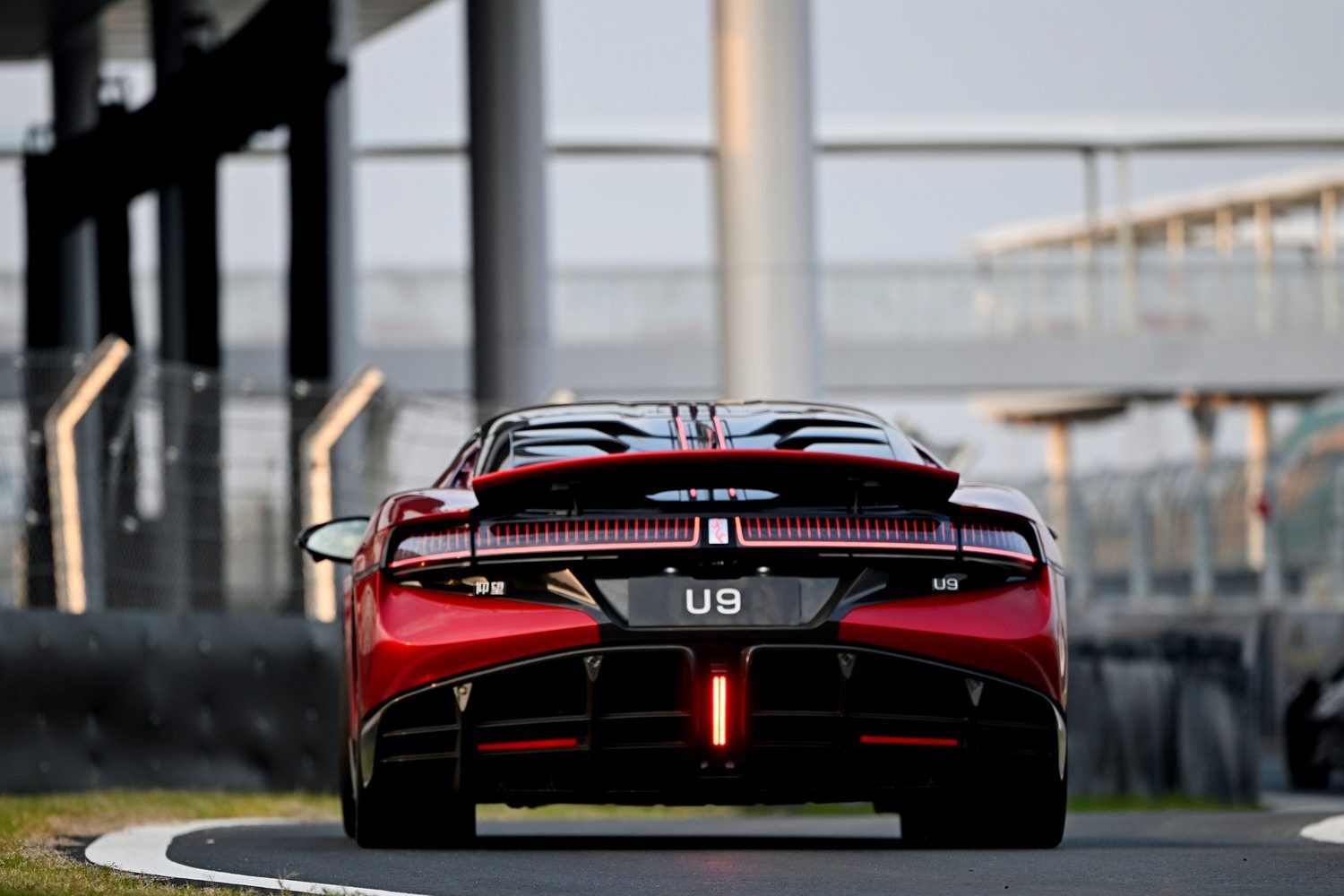
These include the large bracket-shaped front light clusters, the 'Interstellar' full-width rear-light signature, twin high-level brake lights running up the rear, and of course the defining item on the U9: its stability fin mounted to the upper section of the car.

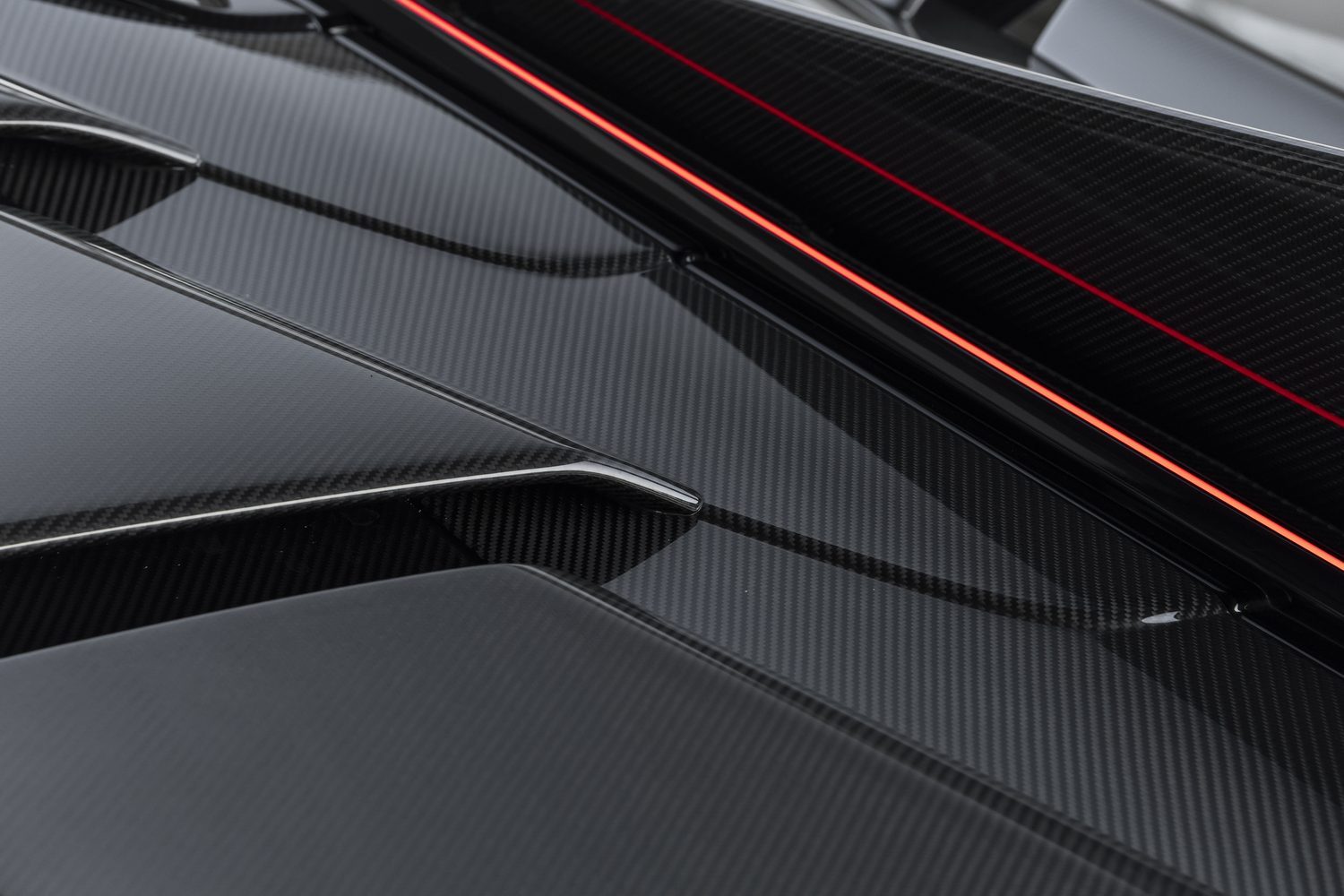
From there, you can either have the vehicle with a four-stage adjustable spoiler and active diffuser too, an arrangement which can generate up to 200kg of downforce as required, or the rather more appealing swan-neck carbon-fibre affair - and that'll create up to 280kg of downforce at speed.
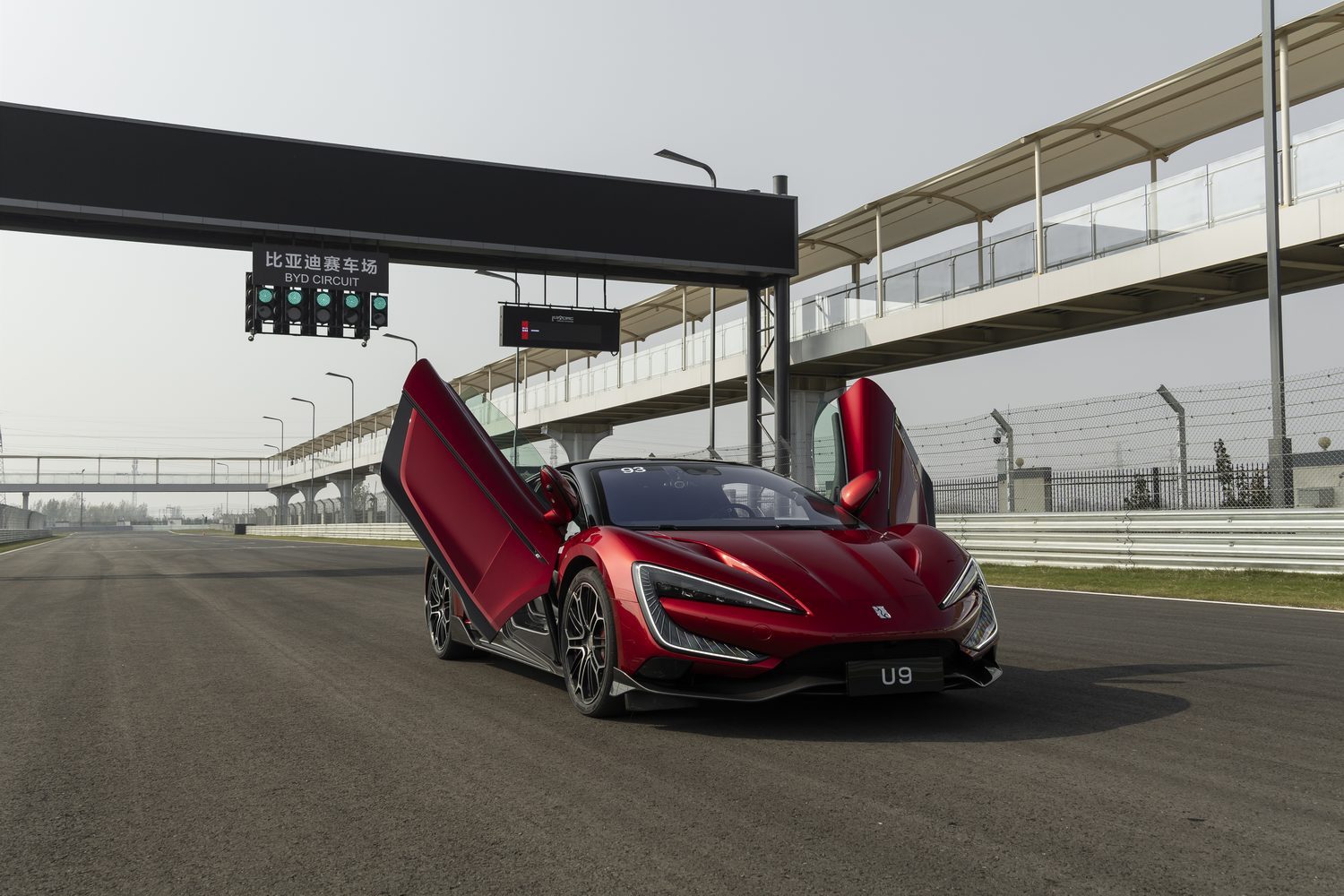
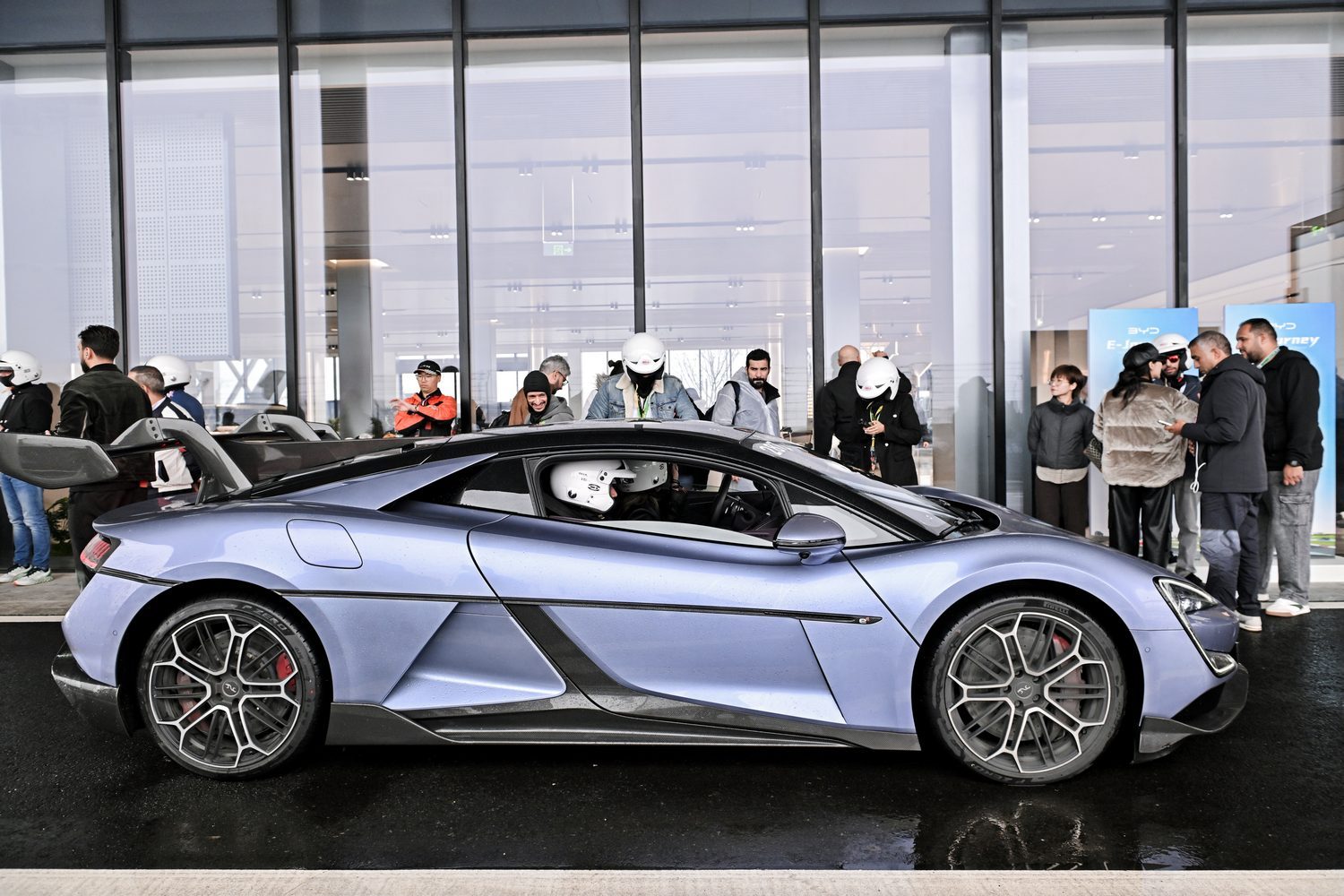
To complete the look, the doors of the U9 open upwards for the full theatrical effect, while this standard car sits on 21-inch wheels which nicely fill the arches.

Dimensions of the 2026 Yangwang U9
- Length:
- 4,966mm
- Width:
- 2,029mm
- Height:
- 1,295mm
- Wheelbase:
- 2,900mm
Paint colours for the 2026 Yangwang U9

Although we haven't got the full palette for the U9, we do know that various colours available for it include a light blue, as well as red, purple and orange - all properly eye-catching supercar hues. It should also be offered in the monochromatic range too, so expect white, silver, grey and black options for the more conservative.
Interior, practicality, tech & comfort of the 2026 Yangwang U9
- Twin screens for interface
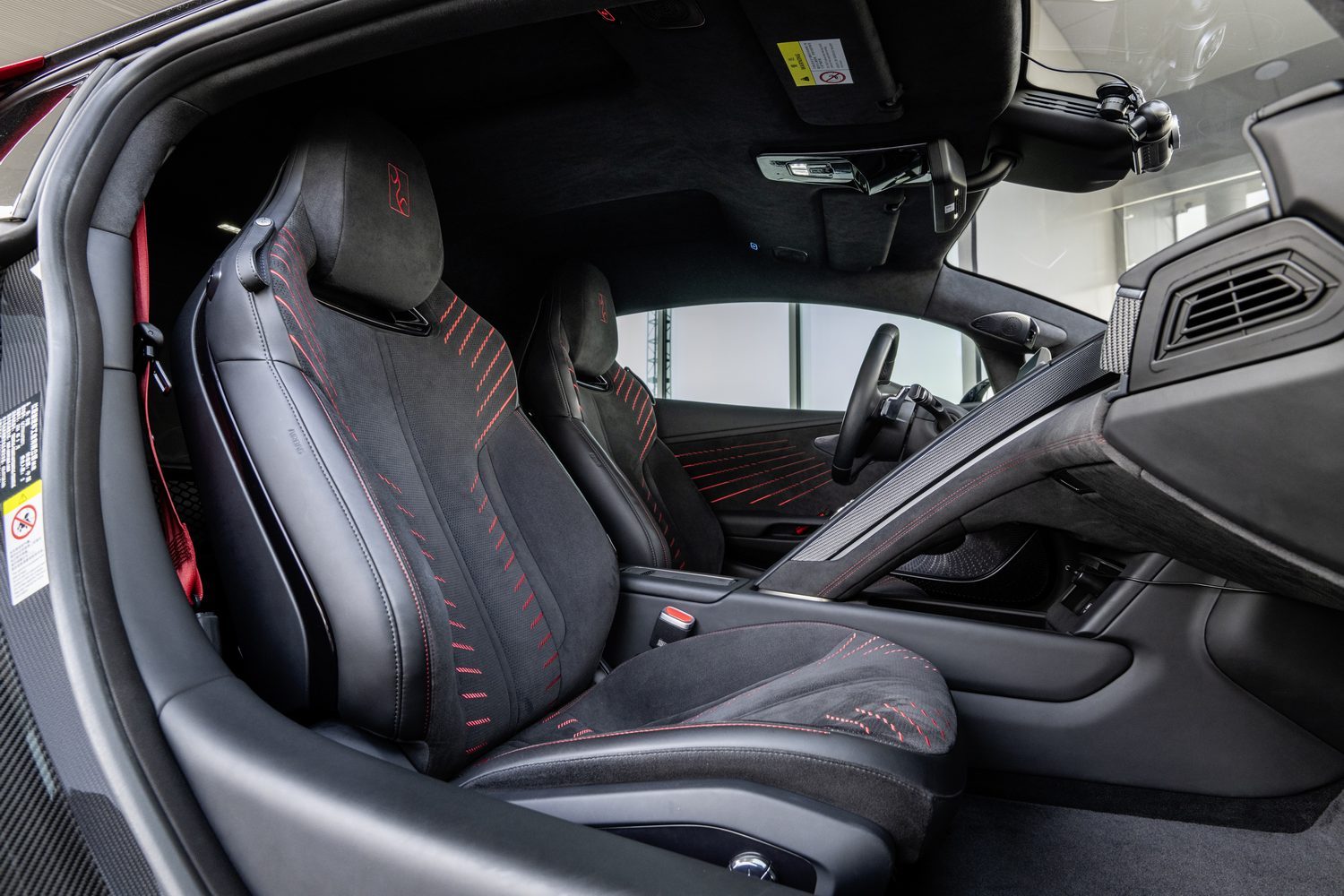
- Low-set seating in true supercar style
- Quality feels largely fine

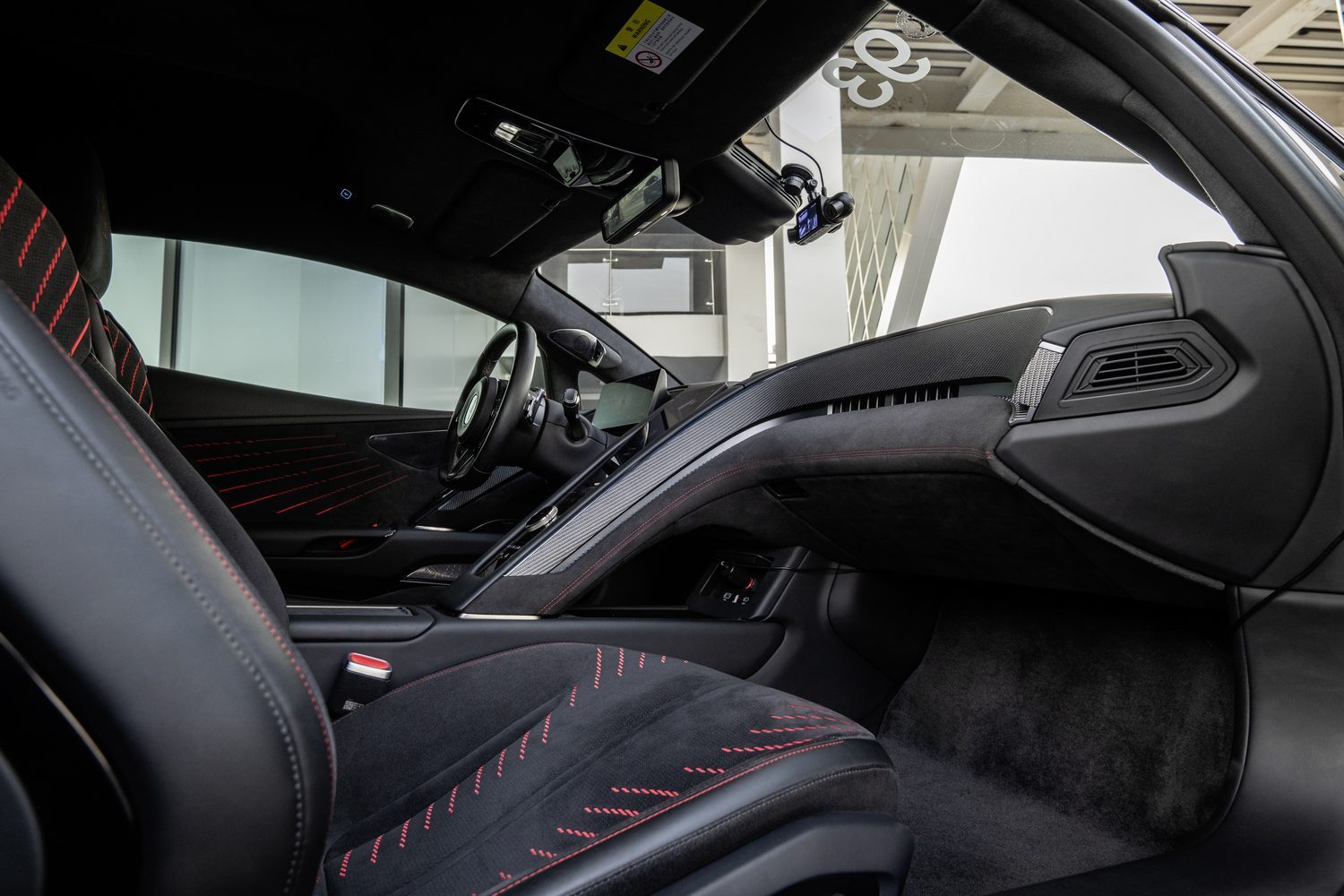
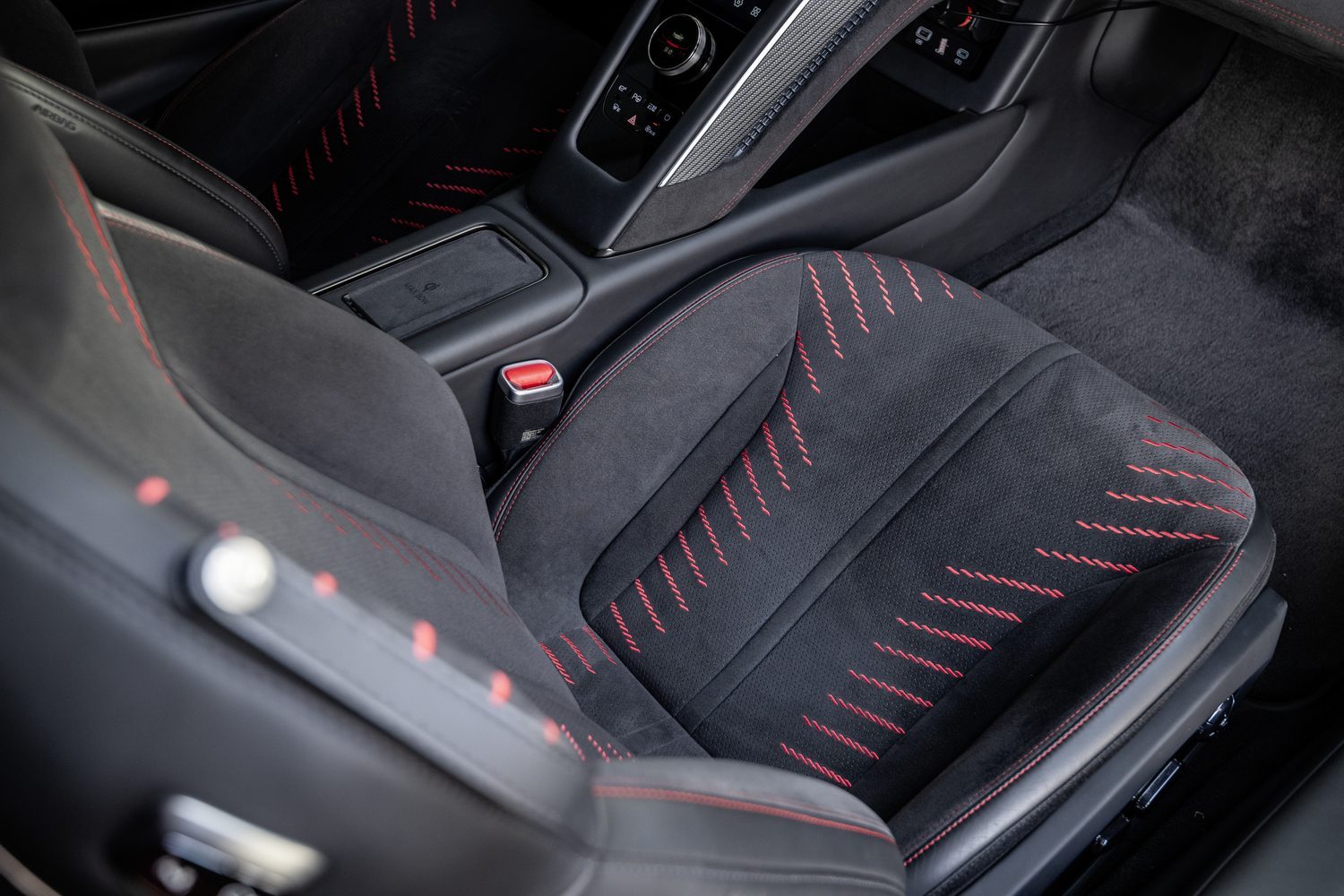
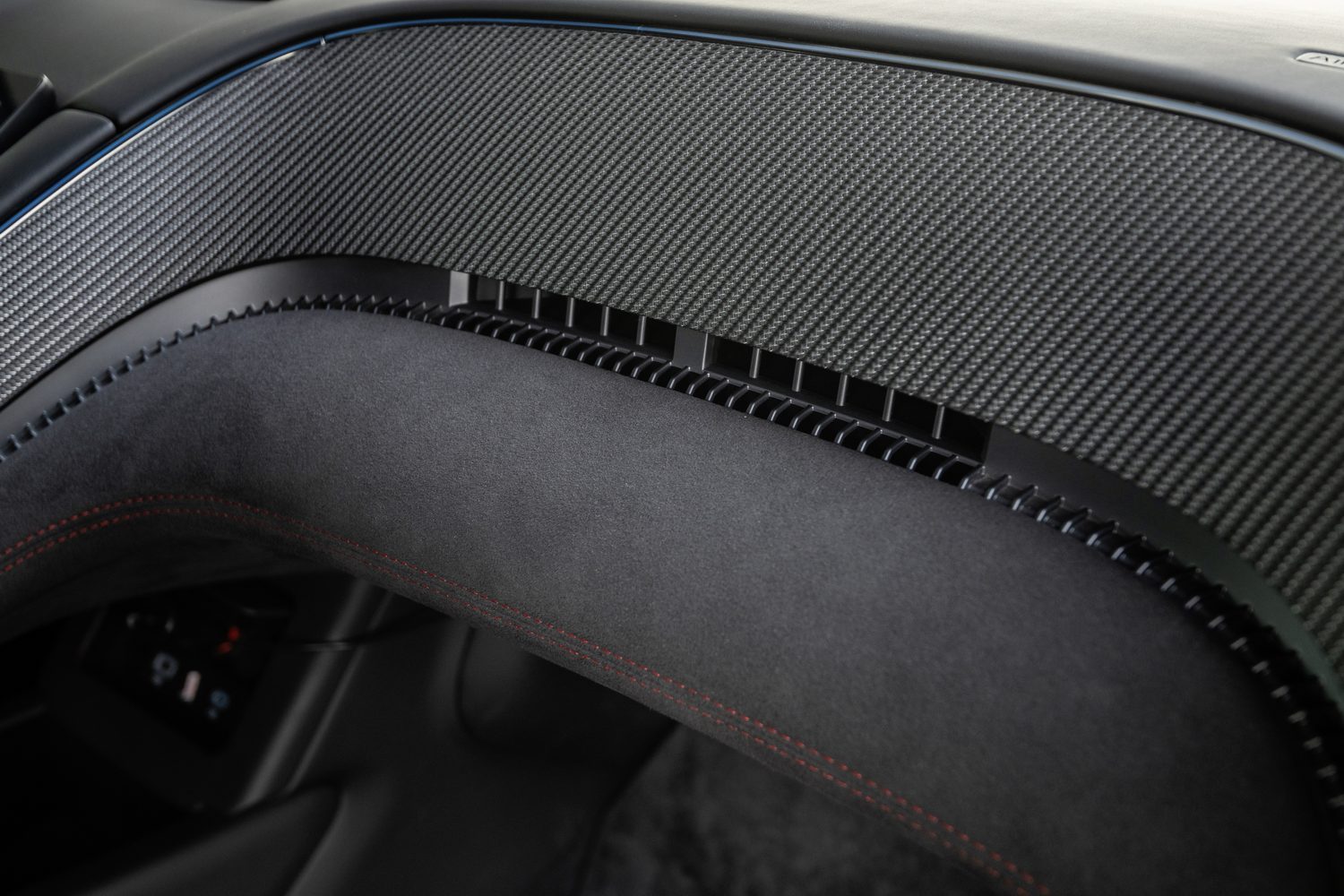
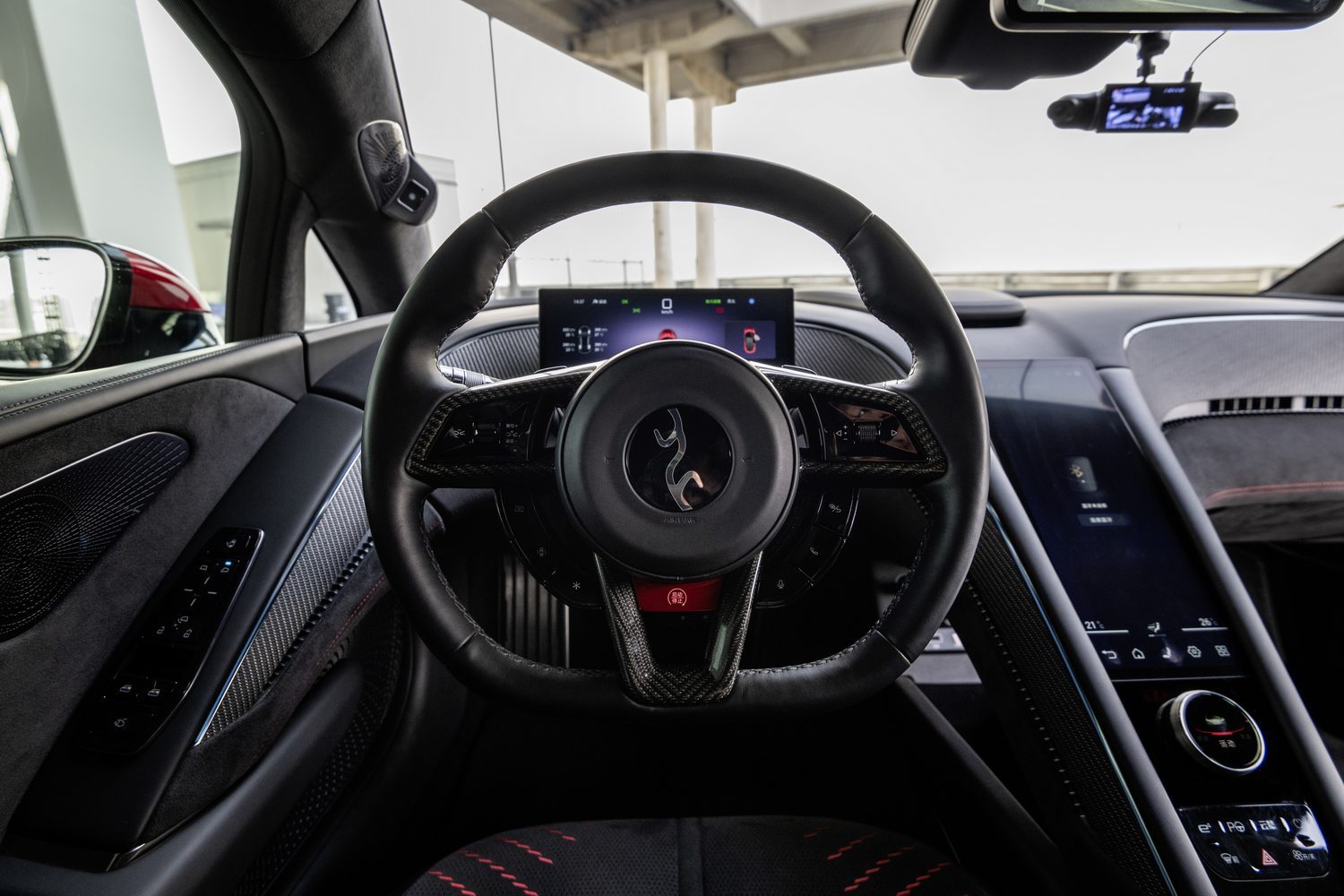
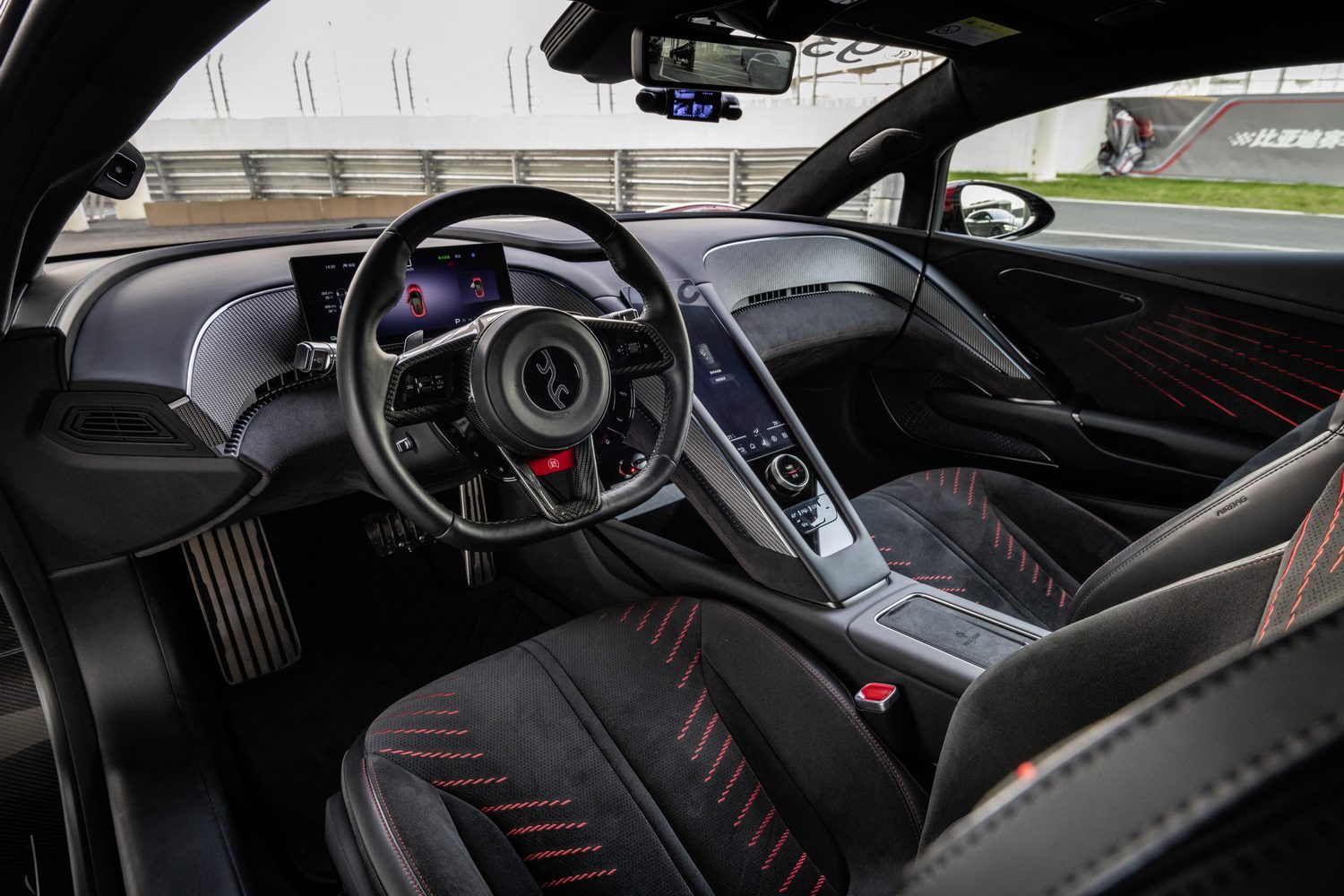
The passenger compartment of the Yangwang U9 is a pleasant blend of the technological and the purposefully sporty, without too much in the way of overtly distracting showmanship. Admittedly, from our very brief time in the car, we didn't manage to give the cabin a thorough appraisal, but from these initial impressions the Chinese supercar's interior doesn't appear to be a letdown.
Getting comfortable in the driver's seat
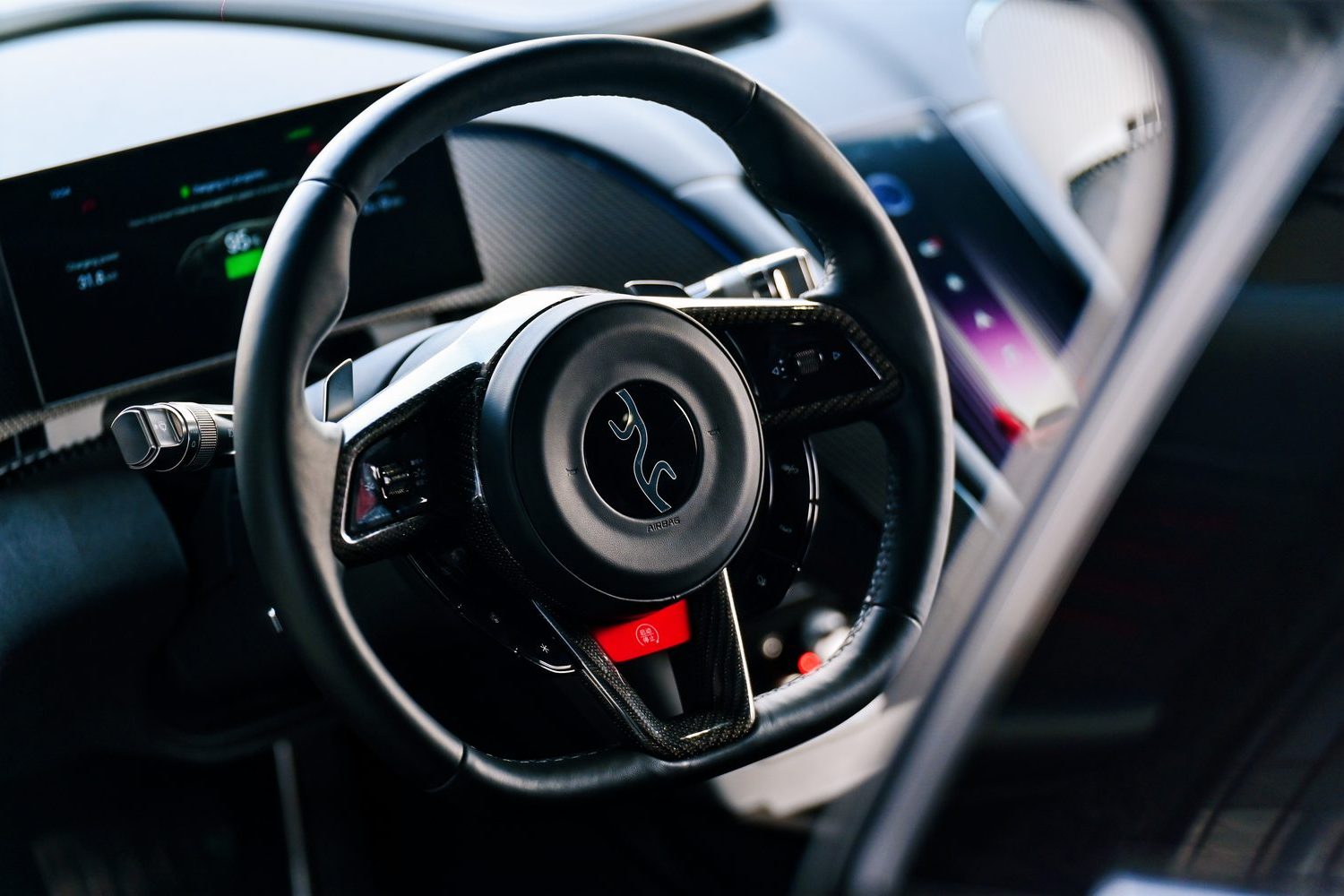
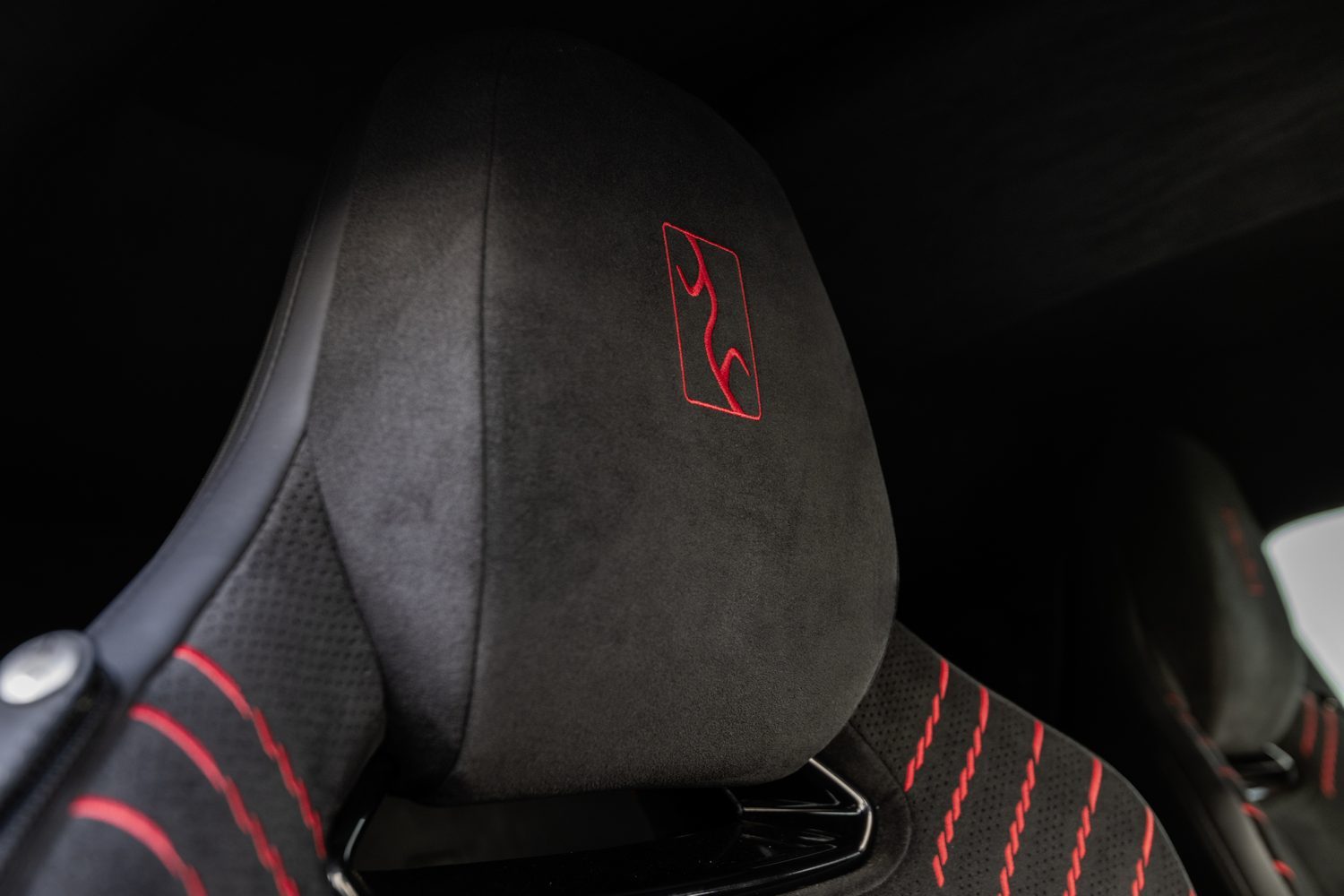
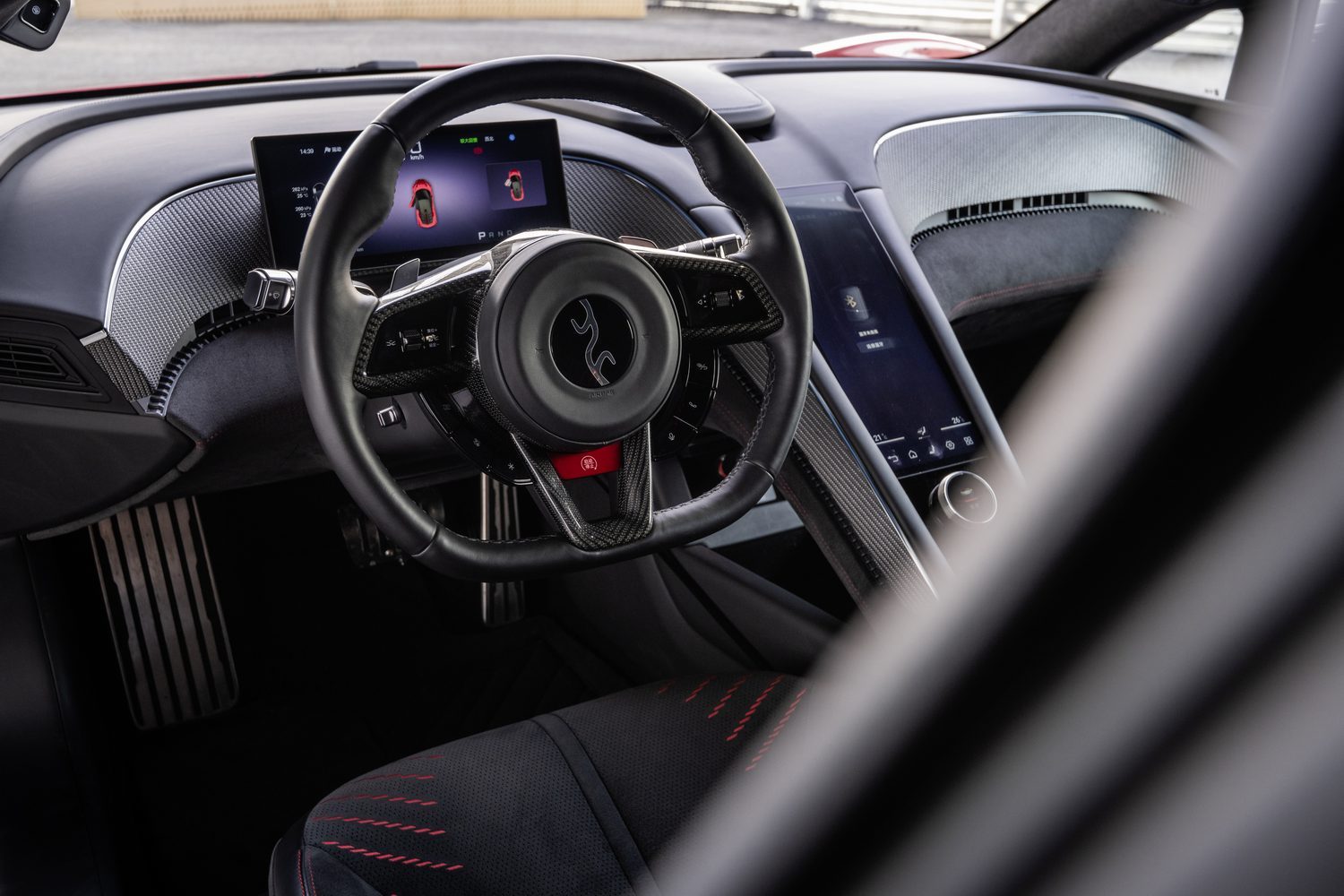
With full electric adjustment of the supportive bucket seats and also the steering column, attaining a good driving position behind the Yangwang's flat-bottomed steering wheel isn't too tricky - once you're into the vehicle, that is.

We had to clamber aboard with a racing helmet on, and frankly the door aperture is small and low, so it wasn't the most graceful of manoeuvres. However, assuming most people will never drive the U9 on track, you can probably disregard this observation.
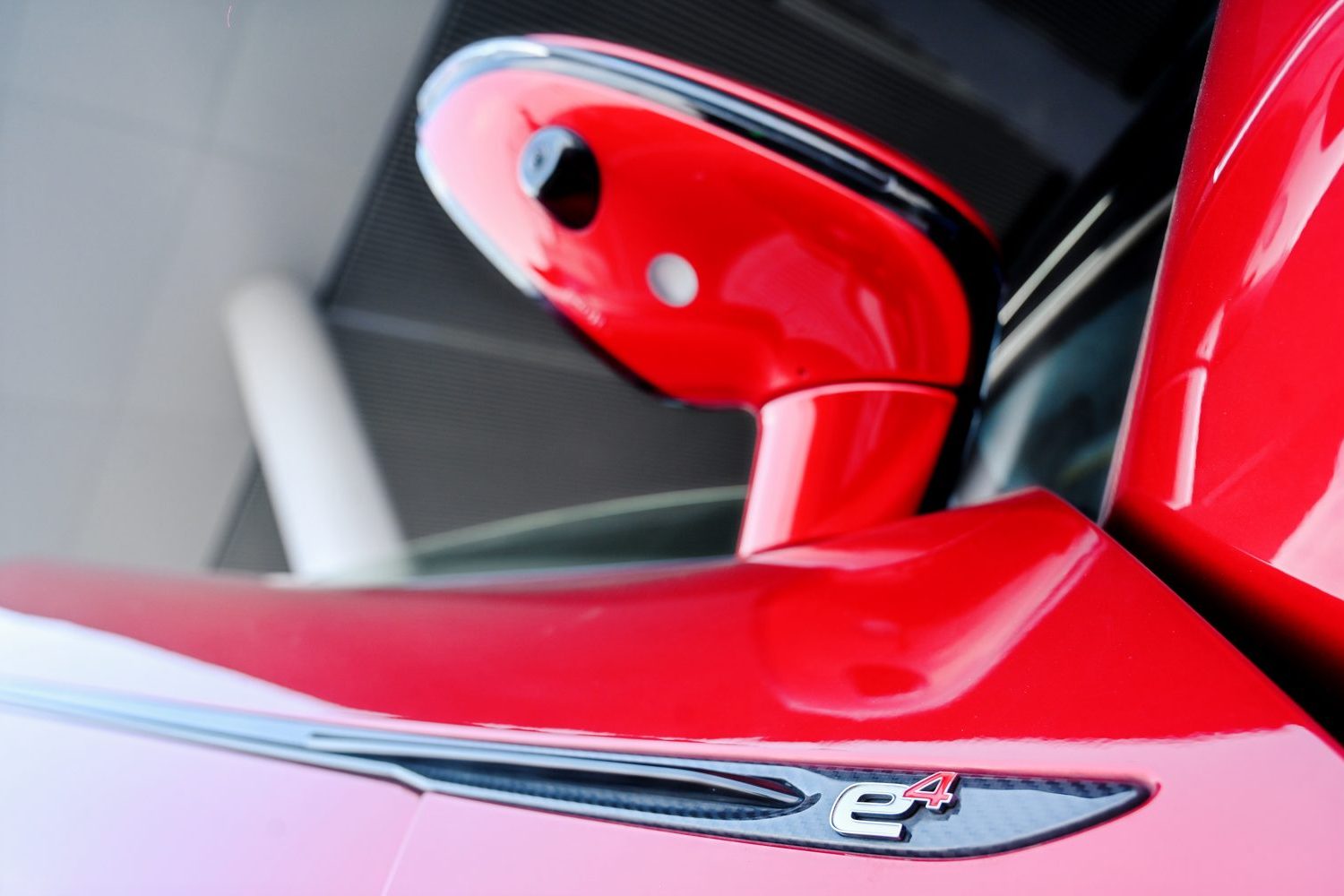
One thing that should be obvious from looking at the exterior of the car is that the view presented by the interior mirror is a camera feed. There's so much paraphernalia on the sloping rear of the Yangwang that a traditional glass item would be about as much use as a chocolate teapot.

What with the swan-neck spoiler, twin vertical high-level brake lights and the superb longitudinal fin, a rear windscreen is simply not a possibility on this car.
Infotainment and technology
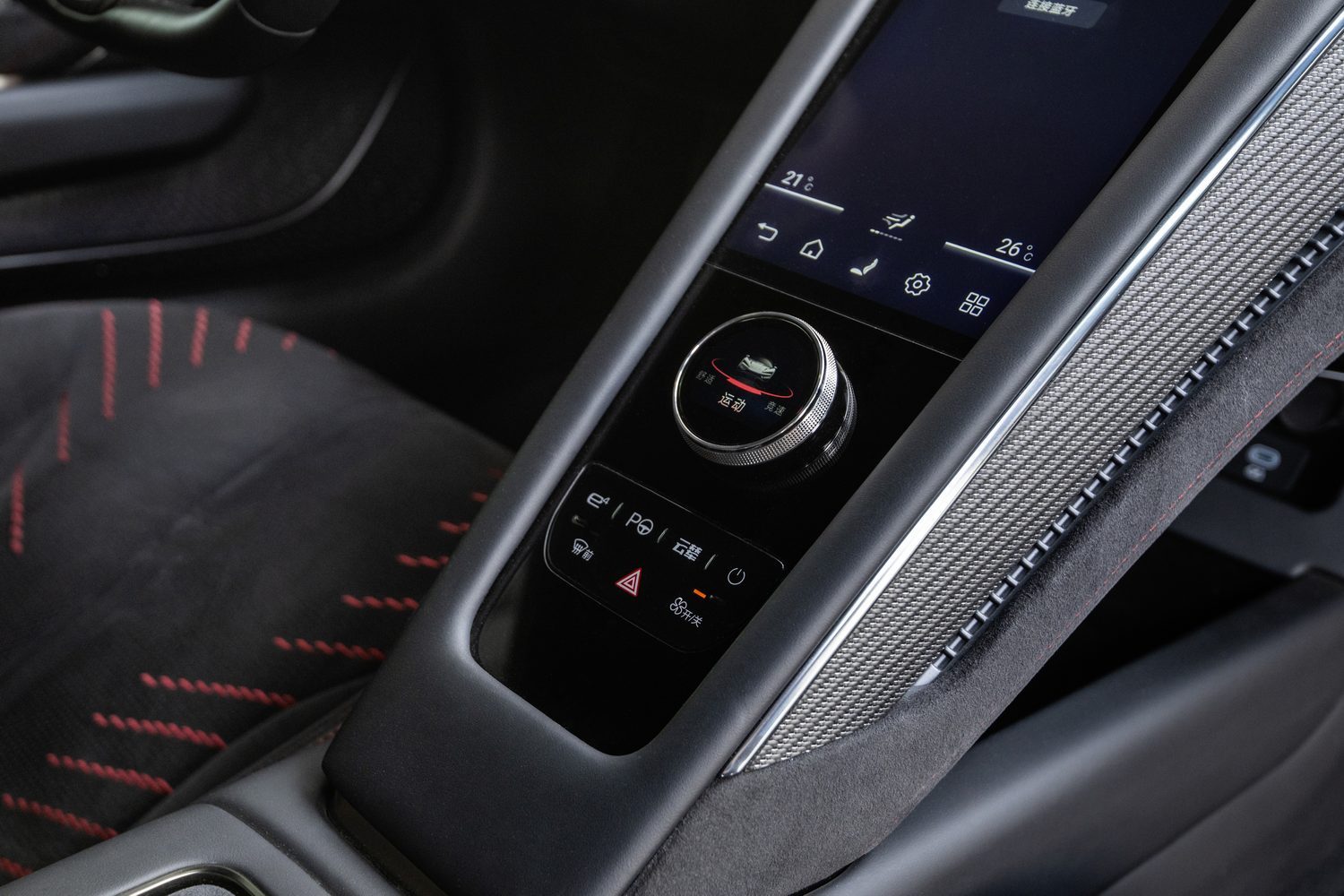
Yangwang fits a 12.3-inch mini-LED central infotainment screen and a 10.25-inch mini-LED instrument cluster too, with these controlled by a 4nm 5G chip jointly developed between BYD itself and Qualcomm.

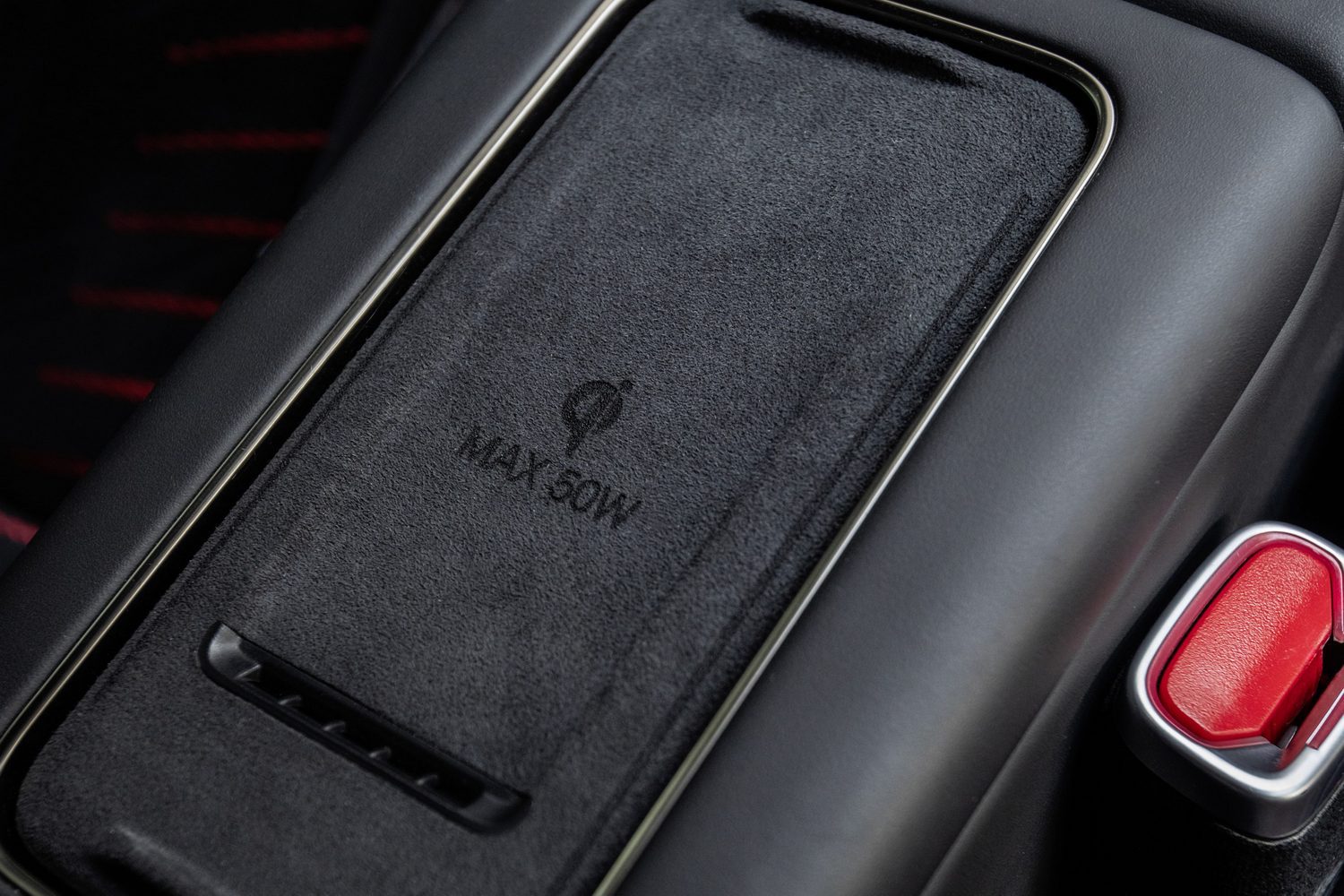
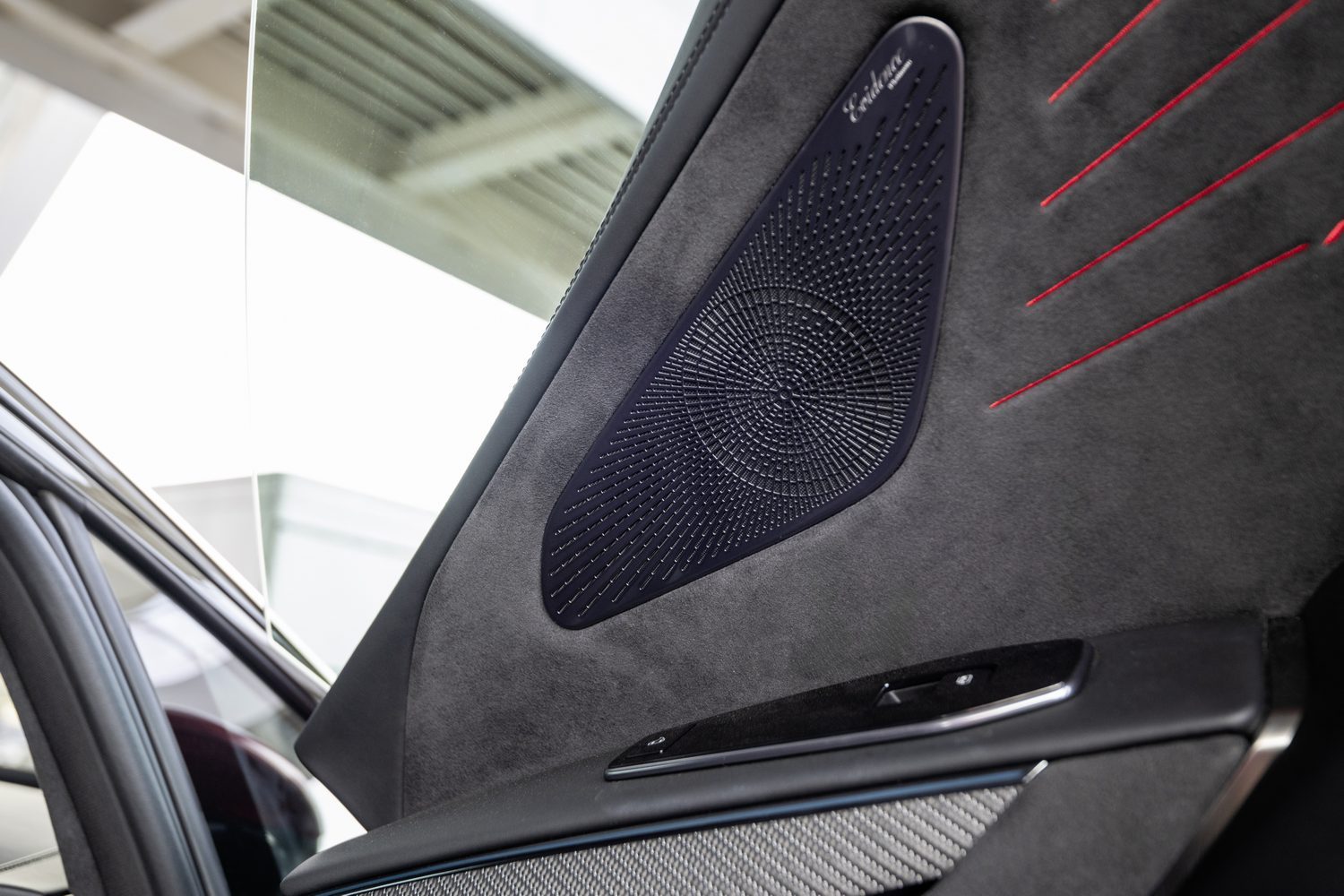
This, as suggested, gives the U9 5G connectivity, while further tech highlights include a Dynaudio Platinum Evidence 12-speaker high-end audio system, 127-colour ambient interior lighting and a 50-watt wireless charging pad for smartphones.
To be fair, as we were concentrating on piloting the Yangwang U9 around BYD's test track at its facility outside Zhengzhou in China, we didn't really operate the in-car infotainment much at all - so we'll report back on its overall functionality, as and when we get the chance to drive this EV for a longer period of time.
Practicality around the cabin
Again, this was a brief track test of the U9 at a busy international event where the two cars available were in huge demand, so we didn't exactly get the chance to have a good look around at every area of functionality within the Yangwang's cabin.

However, on first glance, it doesn't look like the most practical of vehicles, even by the low standards of supercars. There's an under-dash storage area created by the angle of the centre console and a small cubby in the central armrest area, but the door pockets are tiny. You do, at least, get a glovebox, which is not always a given in this class of vehicle.
Performance of the 2026 Yangwang U9
- Up to 3,019hp in the Xtreme model
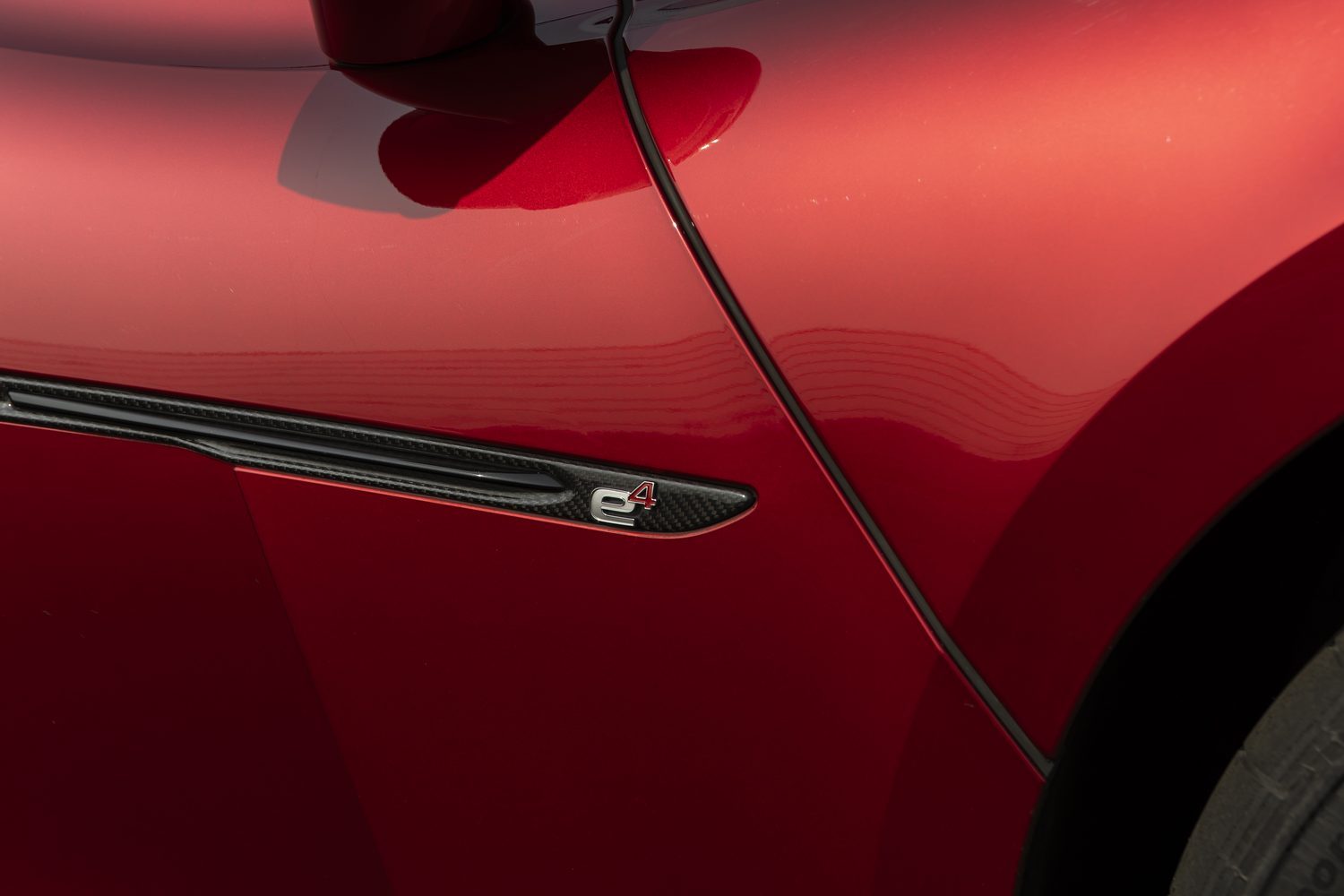
- Uses Yangwang's 'e4' quad-motor set-up
- Astoundingly fast in a straight line

There will be two main powertrain choices for the Yangwang U9: the regular car, which is what we're testing here and which comes with a thundering 1,306hp, backed up by 1,680Nm of torque; or the record-holding Xtreme, which switches out the four 240kW motors of the regular car for a quartet of propulsion units which generate 555kW each.
That means a peak output of 3,019hp, which makes it the most powerful production car on the planet as at the time of writing.

It's also the fastest, because a Yangwang U9 Xtreme has been officially clocked at the Papenburg test track in Germany, in September 2025, recording a maximum velocity of 496.22km/h.
And the regular model, which is what we drove, is hardly slow either. It can do 0-100km/h in less than 2.4 seconds and go on to a top speed of as near as makes no difference 392km/h.

Driving the standard version of the Yangwang U9 on track
As we've alluded to, we got just a handful of laps of BYD's test track to see what the U9 could do. And one of those circuits was a sighting lap, conducted at a modest pace in a 'ducks-and-drakes' formation behind a lead U9 driven by a BYD test driver.

Nevertheless, the initial signs are highly promising. There's lots of carbon fibre used in the construction of the Yangwang supercar, for its chassis, for its brakes and for its spoiler (among more), and it's also only fitted with a modest-sized battery for something with so much power. Yet despite the company's best efforts at keeping the mass down, it still comes in at almost 2.5 tonnes in all specifications.
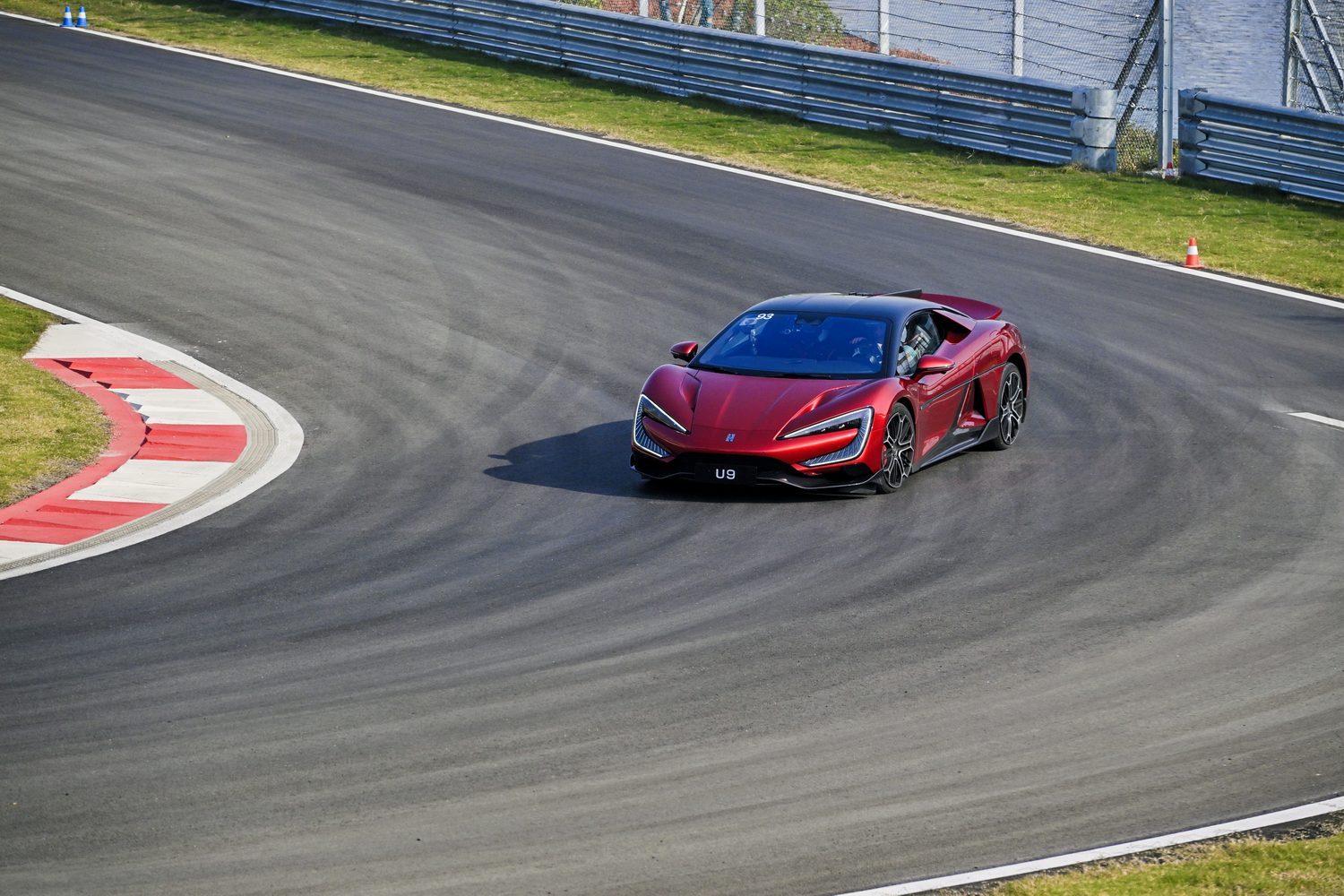
Thankfully, it feels nimble and alert, turning in keenly with steering that's informative and direct too. It also has mammoth stopping power with those carbon discs, although if we'd say anything, we'd point out it might have too much stopping power.

As in, the first time you brush the brakes, it can feel like you've fully anchored-on. More than one Yangwang slammed violently to a halt while leaving the pits as drivers unfamiliar with the car's braking power obviously pressed the left-hand pedal that bit too hard. The brakes' servo assistance could do with dialling down a notch.
Once you're up to speed, though, the brakes feel reasonably progressive and utterly trustworthy, so the next star of the show is the 'DiSus-X' intelligent active body control. This can make the Yangwang U9 do all sorts of weird tricks, like dancing on the spot in time to music or even jumping clean in the air (no, really), but its primary focus is providing a superb blend of body control with reasonable ride comfort and rolling refinement.

Now, we only drove it on a super-smooth 1.76km track that's only a few months old, so trying to discern anything reasonable about its relative level of ride comfort, in and amongst its top-end competition, would be an exercise in futility.
But the way it stayed nice and level as we hurled it into corners at high speed, while admirably resisting understeer or feeling like we were asking a huge amount of weight to do dynamic things it didn't want to do, was seriously commendable.
So while it was only a fleeting kinematic glimpse at what the Yangwang U9 can do, the heartening news is that this is not just some straight-line super-speed merchant which has no finesse or agility when the corners come.
Instead, it feels like a fully fledged and highly polished supercar that should give the established European elite some sleepless nights.
Range, battery, charging and running costs of the 2026 Yangwang U9
- 80kWh blade battery is the only option
- Fab 500kW DC charging speed, low AC rate
- Range measured to Chinese standards

Yangwang will sell the U9 electric supercar with one battery size and the two monster power outputs, which means we'd suggest the battery is really not big enough.
Indeed, the range quoted for this 1,306hp model might seem OK for something with four powerful motors, but it was ratified on a Chinese measurement method that skews the reality - so the Yangwang might only be a very short-range machine in the real world.
Battery options and official range
One of BYD's 'Blade' lithium-ion phosphate (LFP) batteries can be found installed in the Yangwang U9, with a usable capacity of 80kWh. That's not what you'd call gigantic by modern standards, and certainly not if you're going to install almost a megawatt's worth of electric motors into even the 'base-spec' car, motors which will greedily guzzle at the power pack's reserves and drain them in short order if you start using the car's huge level of performance.

Thus, the 450km official range looks very impressive… until you note that was measured on the China light-duty vehicle test cycle (CLTC). This is an efficient bench-test that is as long in duration as the much more widely used WLTP cycle, but it's conducted at much lower average and maximum speeds - giving far more favourable official results to EVs tested under its auspices than WLTP would.
Therefore, it would be more realistic to expect the 1,306hp U9 to have a maximum range nearer 300km on WLTP than 450km, and less than that if you're a lead-footed driver.
Charging up the Yangwang U9
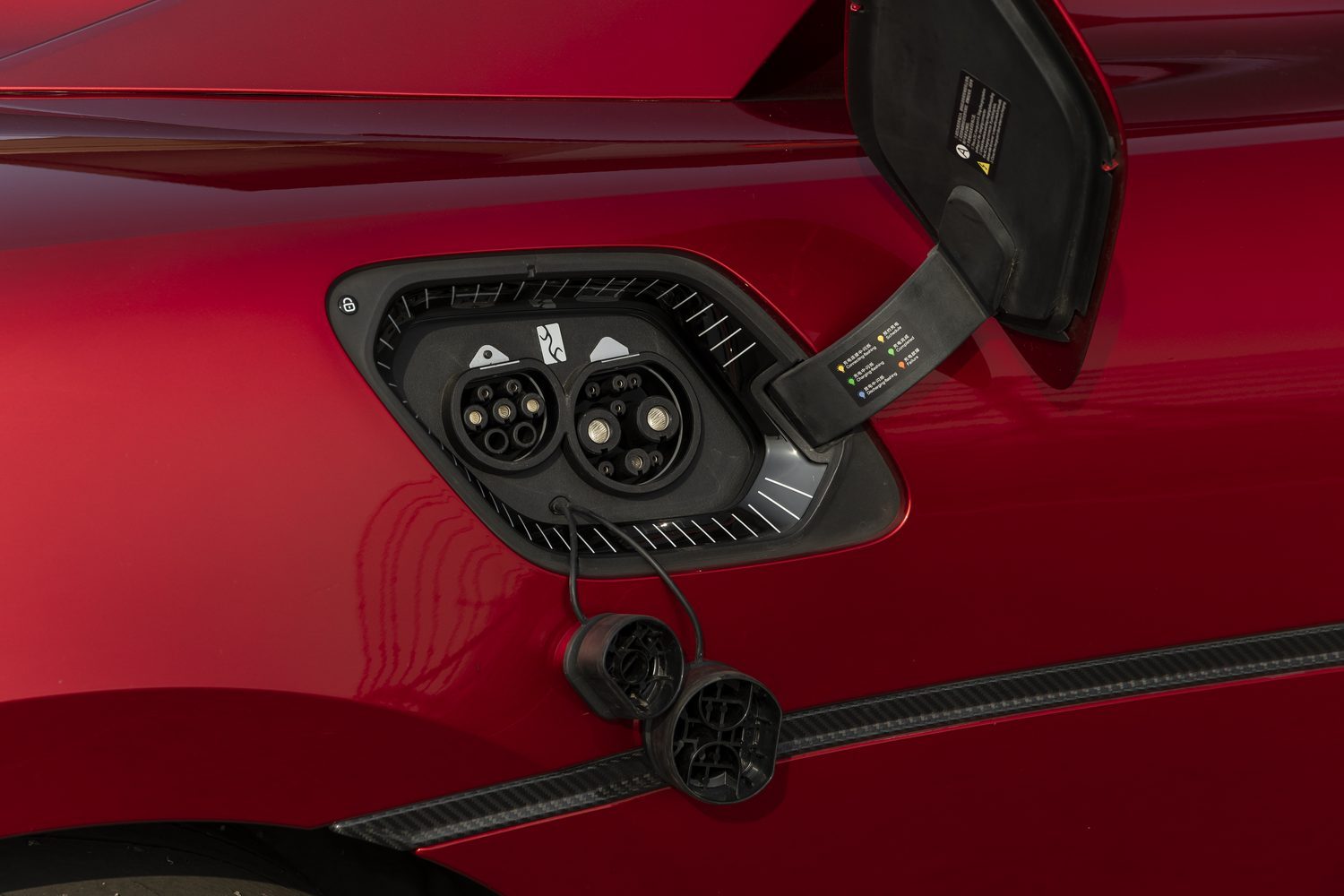
The regular U9 sits on an 800-volt architecture while the Xtreme is the first production car with a 1,200-volt platform. Either way, the claimed peak charging rate is 500kW on DC, which means a 30-80 per cent battery top-up would only require ten minutes of electrical hook-up.
That said, this is countered by the Yangwang only accepting a maximum of 7kW on AC (rather than 11kW or even 22kW). A full charge on a wallbox would be somewhere in the region of 11 or 12 hours.

Yangwang U9 warranty
We don't know what Yangwang's warranty or service cover will be like but extrapolating from BYD's European standard of cover - which applies here in Ireland - we'd expect the six-year, 150,000km standard vehicle warranty to be carried over to the U9.
There should also be an eight-year guarantee on the drive units, with the same distance limit, while the battery is covered for up to eight years and 200,000km.
Irish pricing & rivals to the 2026 Yangwang U9
- Availability yet to be confirmed
- Could be relatively inexpensive
- Established competitors have more badge credibility

The two big questions here are: will the Yangwang U9 even come to Ireland? And, if so, how much will it cost?
A lot of this is guesswork, then. But in its homeland, the regular U9 retails for about €230,000 on a direct exchange. And we've got a better chance of it coming to Ireland than you might think, because it's going to make it to the UK - the nearest right-hand-drive market to our own.
As it's faster, more powerful and, from an EV architecture perspective, more advanced than any of its key rivals, getting it here for €300,000 or so would still represent something of a bargain. Of course, on the flipside buyers at this level expect a degree of heritage and marque desirability, and Yangwang has neither of those things - yet.
So whether you're only considering purely electric rivals at this exalted level, or indeed more traditional supercars and hypercars with petrol power, the U9 will need to prove itself as very, very good to drive over an extended period to be truly worthwhile.
Aside from the usual high-power Porsches, McLarens, Lamborghinis and Ferraris that populate this stratosphere of the car world, there are ultra-exotic monsters like the Koenigsegg Gemera, Bugatti Tourbillon and Hennessy F5 Venom Evolution which have some form of combustion engine onboard, as well as electric competition in the form of the Rimac Nevera R, Lotus Evija and Pininfarina Battista - all of which represent the sorts of glitteringly talented cars from which the Yangwang U9 is going to have to prise well-heeled buyers. Remember, though: it is the fastest car in the world.

Verdict - should you buy the 2026 Yangwang U9?
We couch our verdict here in the terms that the Yangwang U9 is still some way from even turning up for sale in this part of the world, while we've only had a very tantalising taster of what it's capable of. There's clearly much to like, including its outrageous speed and spry chassis, but has Yangwang got the sort of 'label clout' that's going to make the U9 a success in Europe? That, for now, remains to be seen.
FAQs about the 2026 Yangwang U9
Is the Yangwang U9 offered with a variety of powertrains?
No, it is sold purely as an electric vehicle, with no petrol or hybrid alternatives to choose from. There will be an entry-level U9 with 1,306hp, and another called the Xtreme which has more than 3,000hp.
Is the Yangwang U9 all-wheel drive?
Yes, as it uses the company's 'e4' platform which puts one electric motor in each wheel of the vehicle. Clever torque control then determines how the U9 handles and puts its power down to the road.
Does the Yangwang U9 have any special features?
Its DiSus-X intelligent active control can make the U9 'dance' on the spot, lifting up and diving down at each corner with notable movements. It can also drive on three wheels if you need it to, in the wake of a puncture to a tyre. And the DiSus-X set-up can even make the car jump: it'll bunny-hop on the spot, which is nothing more than a party trick, but when it is moving at speed it can also 'leap' obstacles, such as big potholes in the road.
Is Yangwang independent or related to another manufacturer?
Yangwang is part of the BYD group, which is already familiar to Irish buyers. BYD also has Denza and Fangchengbao in its ranks, although we won't get the latter in Europe. In the simplest terms, if you think of BYD as being similar to Volkswagen in terms of market positioning and pricing, then Denza is the equivalent of Audi, and Yangwang is more like a Bentley rival.
Want to know more about the 2026 Yangwang U9?
If there's anything about the new Yangwang U9 we've not covered, or you'd like help in choosing between it and other cars, you can avail of our expert advice service via the Ask Us Anything page.